gods

The Aztec Gods: A Who’s Who of the Mexica Cosmos

From Quetzalcoatl the Feathered Serpent to the bloodthirsty Huitzilopochtli, the Aztec pantheon was vast, violent and surprisingly flexible. Plus, learn how the Flower Wars provided (semi) willing fodder for human sacrifices. 

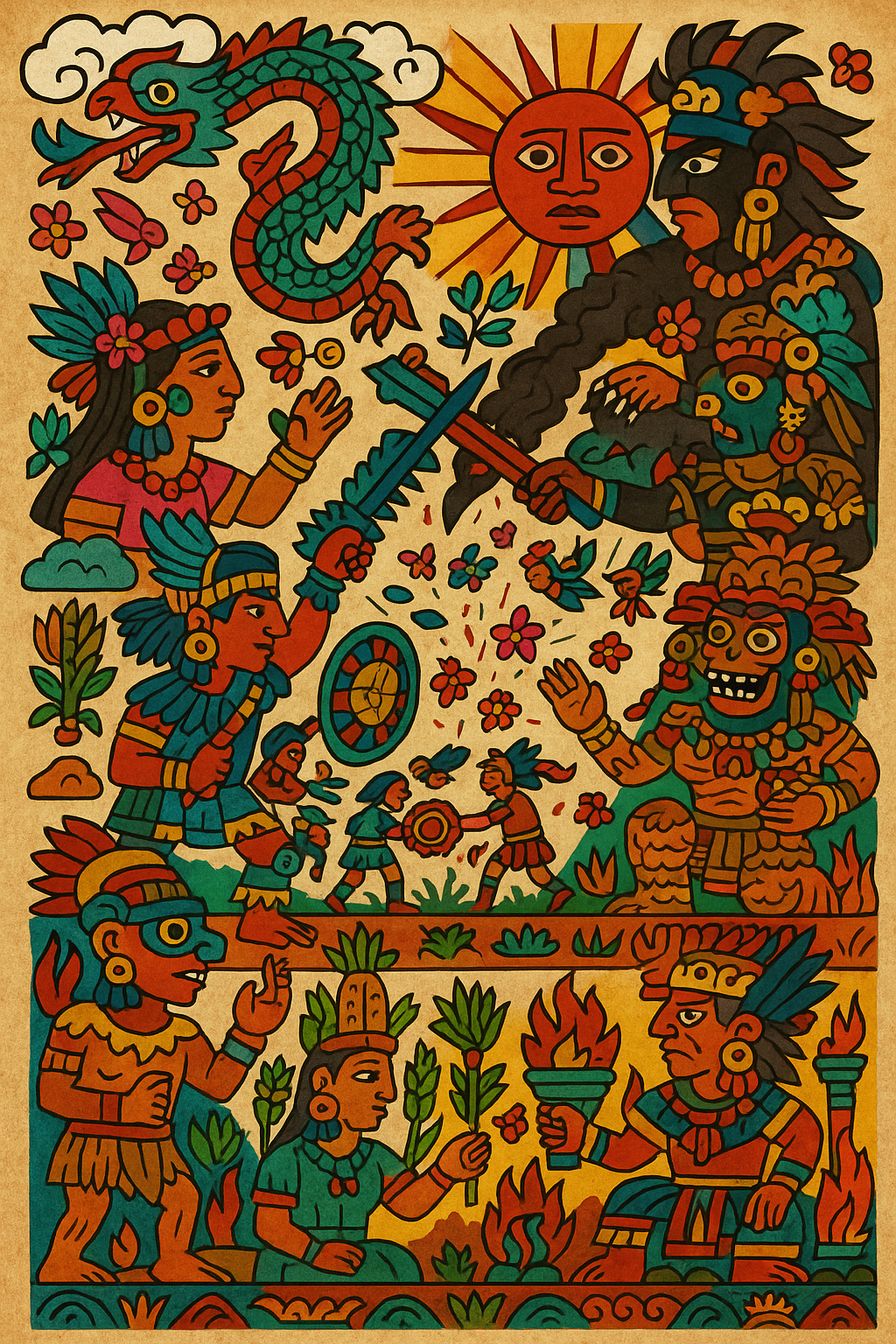
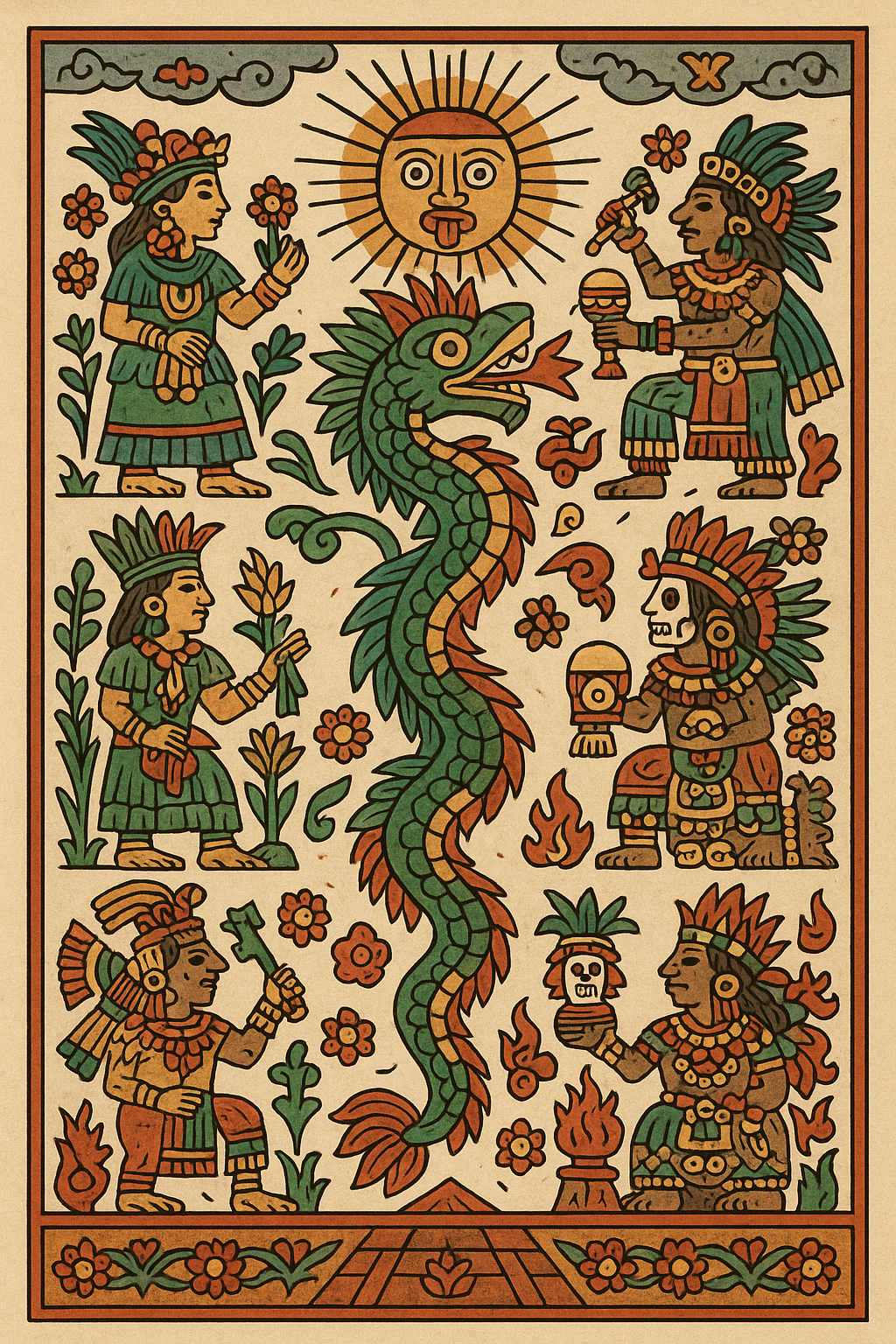
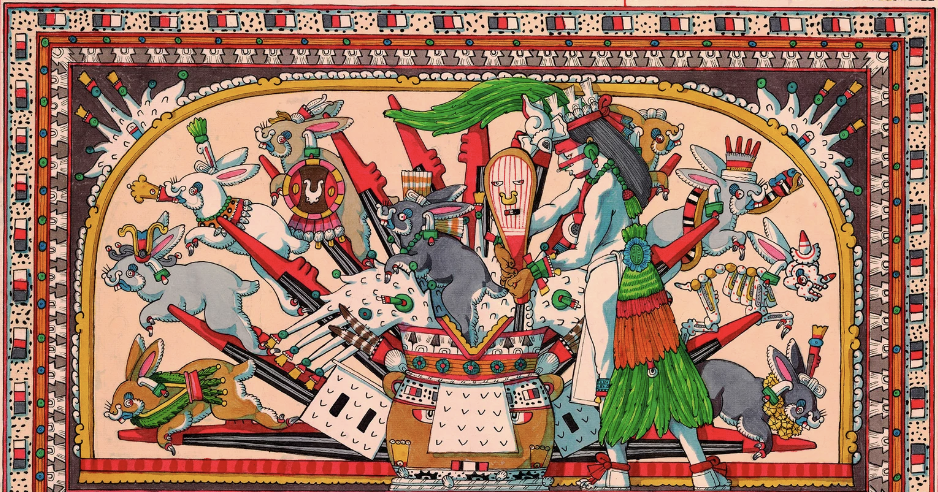
Various Aztec gods line up on the left and right, while two warriors fight in a Flower War

The Mexica treated war as an opportunity for cultural accumulation, much like the Mongols did a few centuries earlier. Every conquest came with new foods, new customs, new technology and, often, new deities. If another city had a rain god who seemed to get better results, the Mesoamerican people didn’t see worshipping him as blasphemy — they saw it as smart.

“In many defeated nations we discovered new gods or novel manifestations of our known gods, and, if they appealed to us, our armies brought home copies of their statues for us to set in our own temples,” Gary Jennings writes in his 1980 novel Aztec

Every ritual — whether it involved flowers, animals or human hearts — was a way to keep the cosmic machinery running.

Blood was the power source of the sun. To let that flow stop would be like unplugging the universe.

It’s a tradition that goes back to at least Ancient Rome. Why destroy another civilization’s gods when you can just add them to your own pantheon? 

The Spanish, of course, were appalled (never mind how many Catholic beliefs originated in so-called pagan celebrations like Yule). They arrived preaching one true God — and promptly rolled out the Father, the Son, the Holy Ghost, the Virgin Mary, angels, apostles and a saint for every stubbed toe and lost key. 

“I have heard you Christians complain of our ‘multitudes’ of gods and goddesses,” Jennings writes later, before his narrator adds, “I have counted and compared. I do not believe that we relied on so many major and minor deities as you do — the Lord God, the Son Jesus, the Holy Ghost, the Virgin Mary — plus all those other Higher Beings you call Angels and Apostles and Saints, each of them the governing patron of some single facet of your world, your lives, your tónaltin [fate], even every single day in the calendar. In truth, I believe we recognized fewer deities, but we charged each of ours with more diverse functions.”

What a dig! While Europeans obsessed over keeping heaven in order, the Mexica embraced divine chaos — a spiritual ecosystem where gods could merge, borrow faces and change form as easily as the world itself.

The Aztec Gods, A to Z 

(Well, Actually C to X)

Aztec mythology wasn’t built on tidy hierarchies. It instead embraced glorious contradiction — gods who could be both creators and destroyers, lovers and warriors, rainmakers and flood-bringers. To keep things simple (or at least alphabetized), here’s a guide to the divine cast that kept the sun burning, the corn growing, and the sacrifices right on schedule.

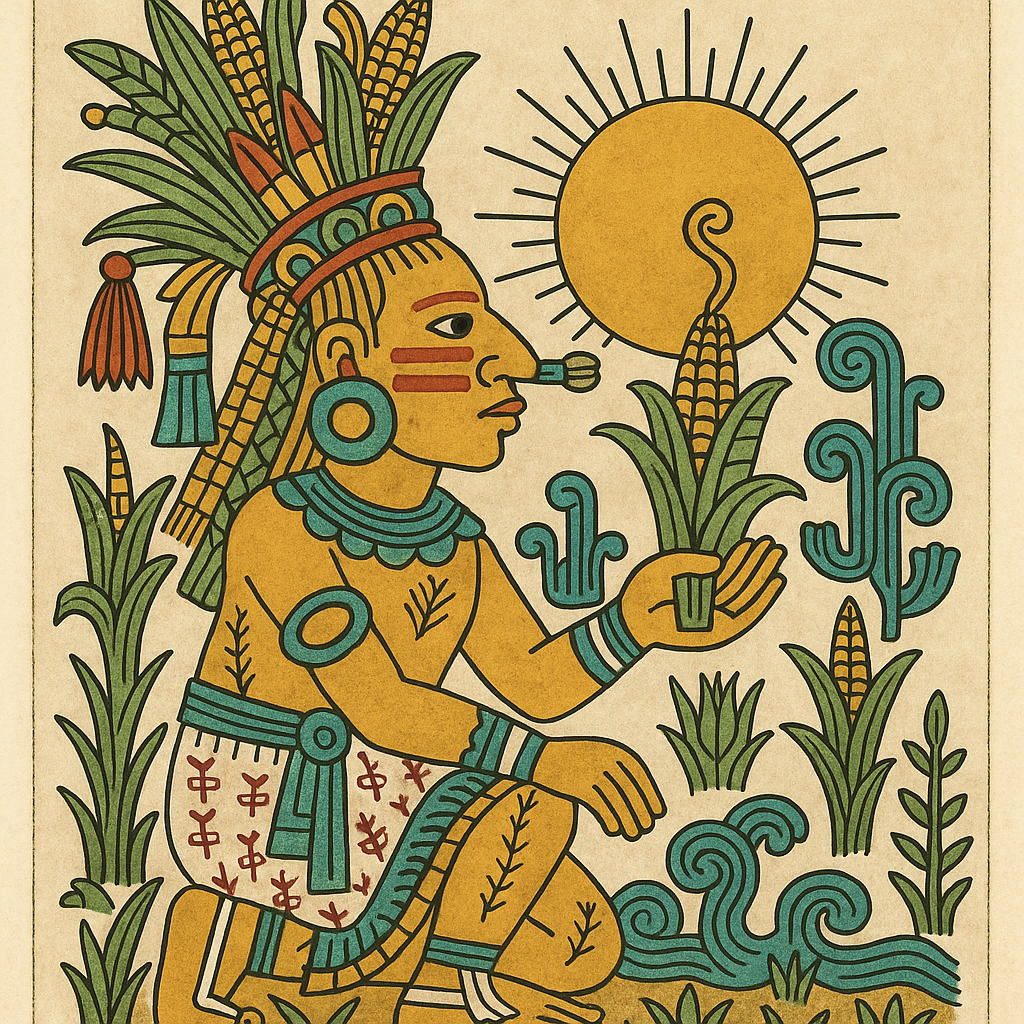
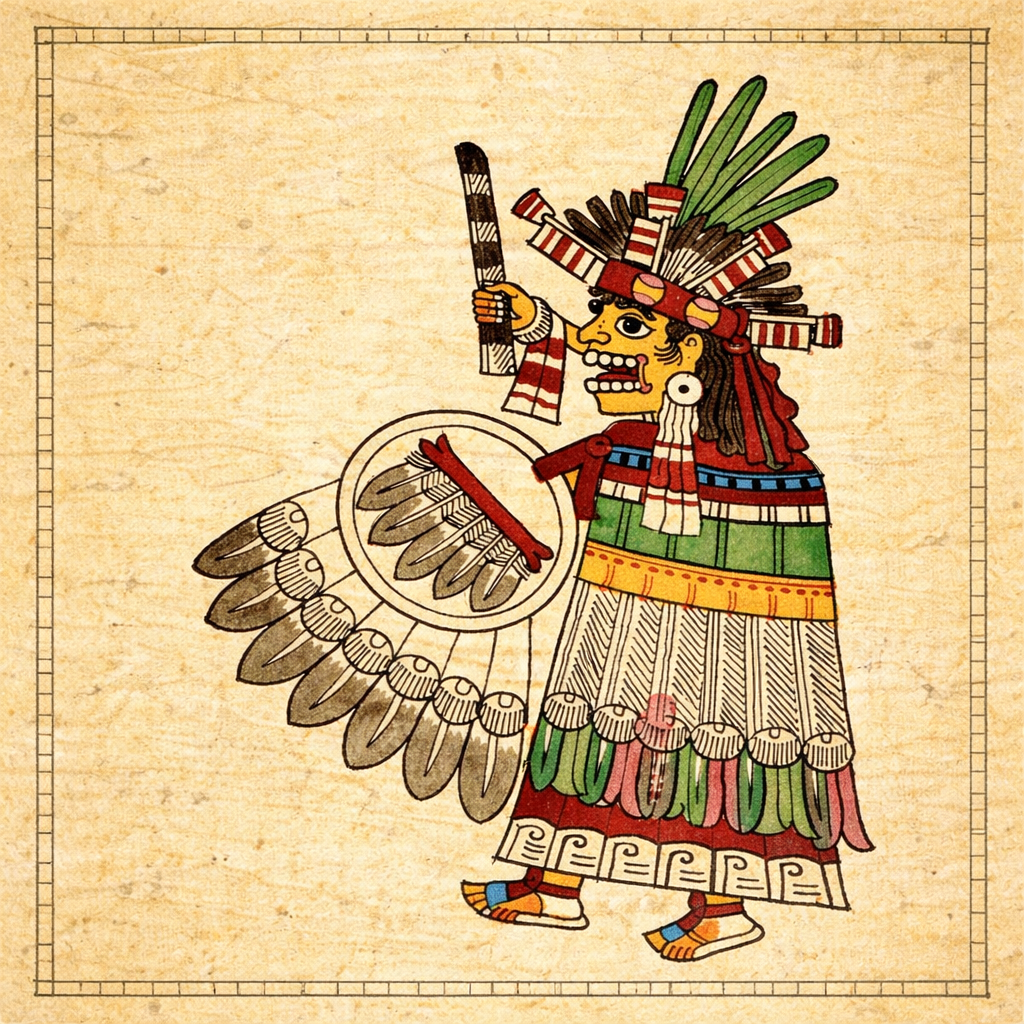
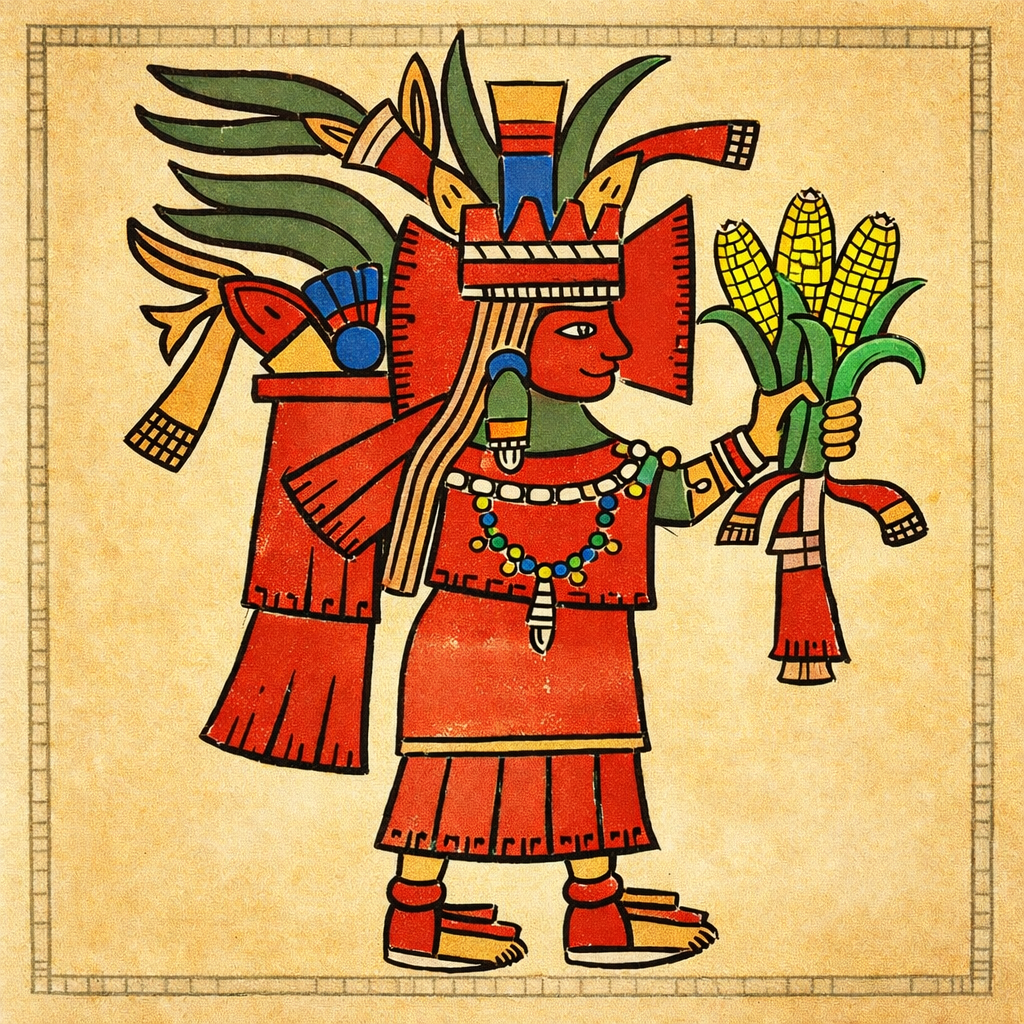
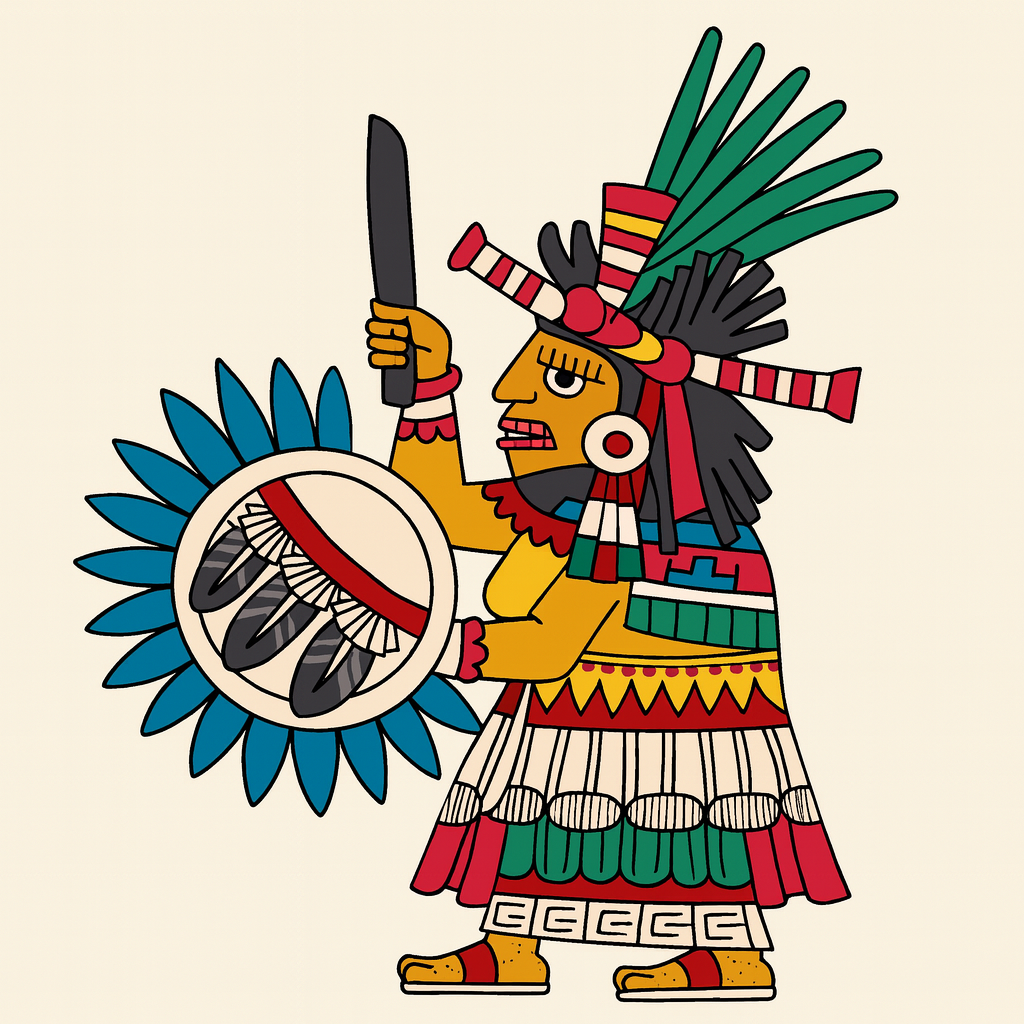
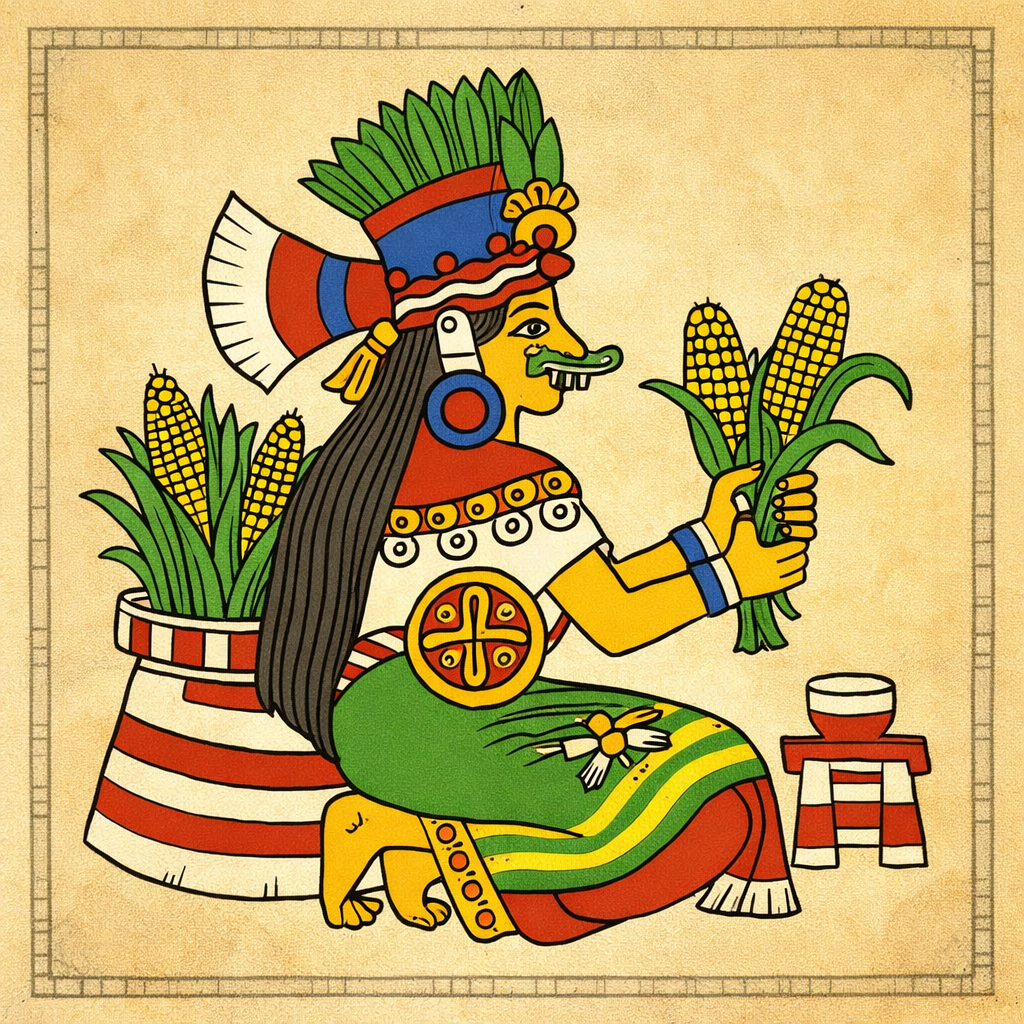
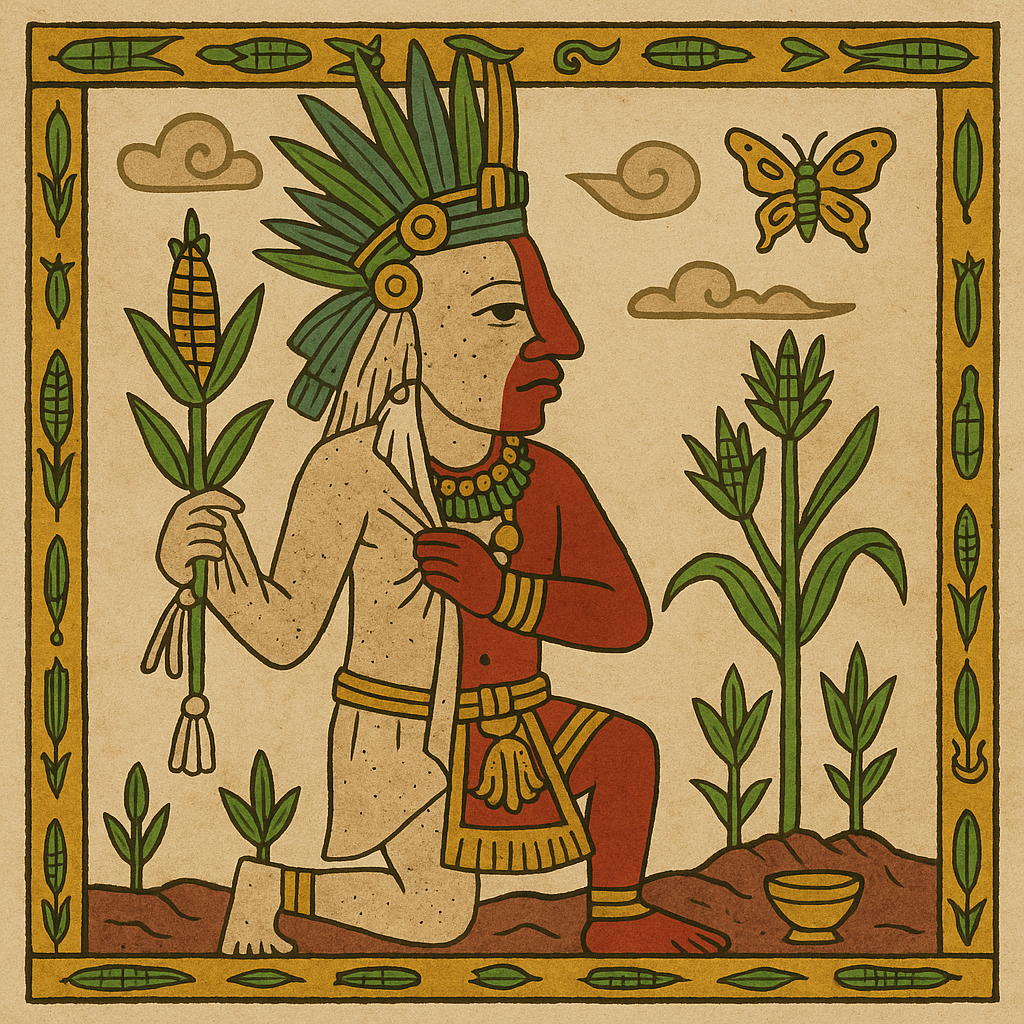
The Aztec god Centeotl, holding corn under the sun

Centeotl

“God of Maize”

Pronunciation: Sen-teh-o-tull

Domain: Corn, sustenance, harvest

Vibe: The dependable one — always shows up for dinner

Story: Centeotl was the golden core of Aztec life, the maize god whose body quite literally fed the people. According to the Florentine Codex, Quetzalcoatl tore open the earth to bring corn to humankind, and from that soil Centeotl sprouted — divine, delicious and essential.

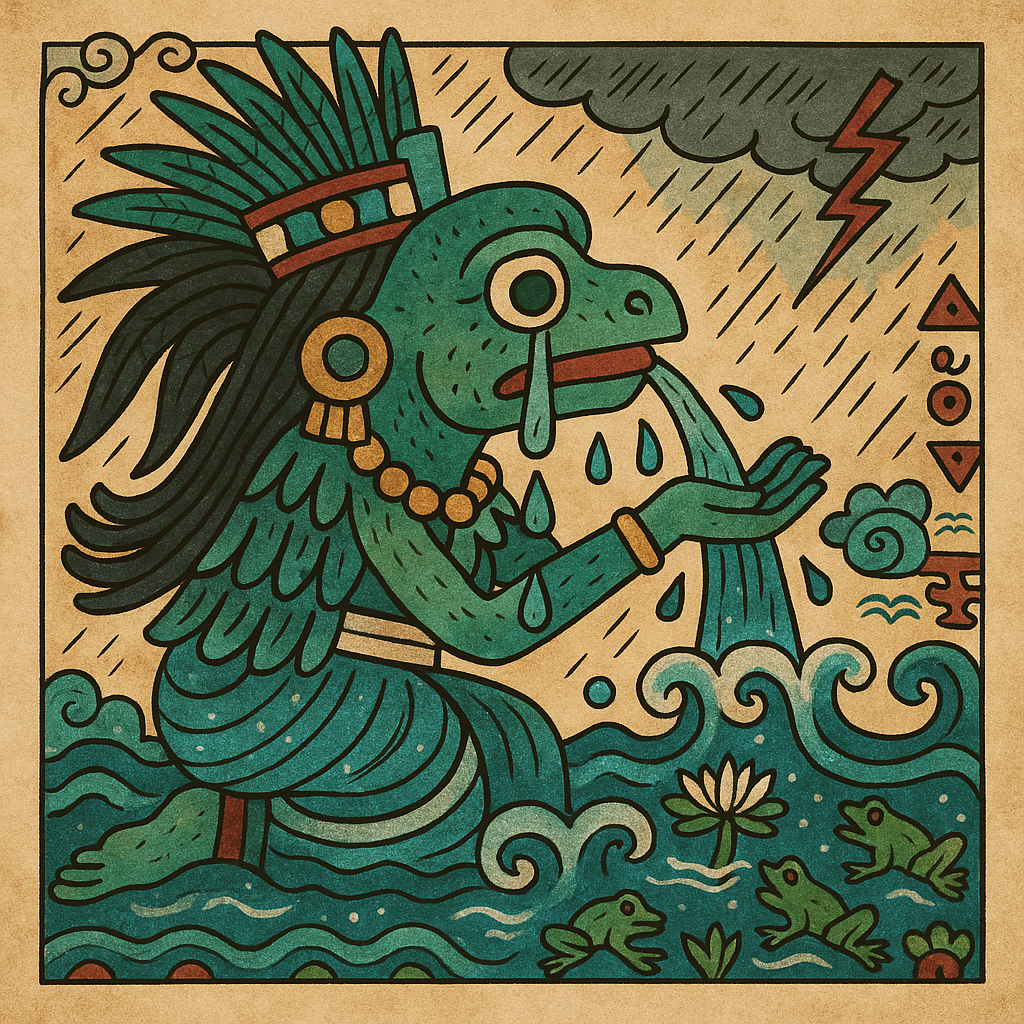
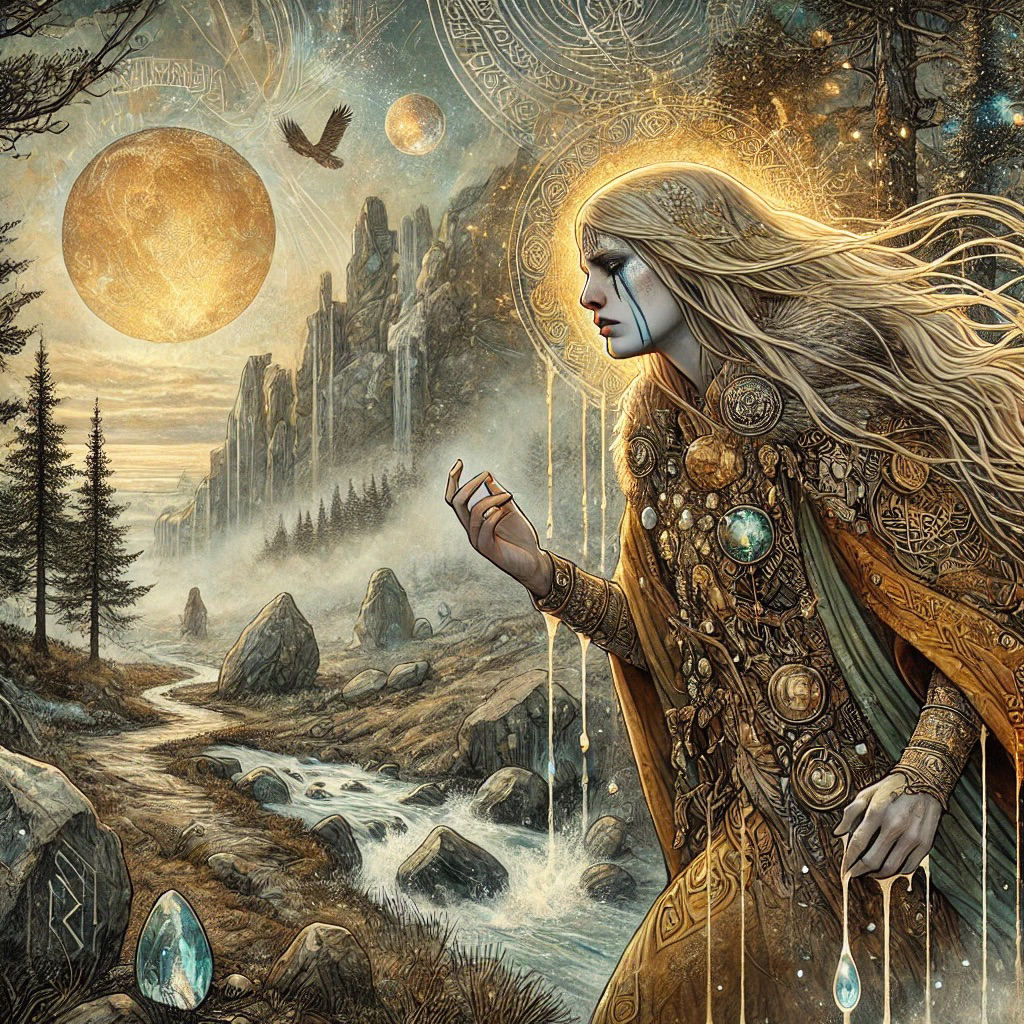
Amphibian-faced Aztec goddess Chalchiuhtlicue in a storm, crying and creating the seas with frogs in it

Chalchiuhtlicue

“She of the Jade Skirt”

Pronunciation: Chal-chee-oot-lee-kweh

Domain: Rivers, lakes, seas, childbirth

Vibe: The goddess of good water and bad  wmoods

Story: Chalchiuhtlicue ruled over every flowing thing — from gentle rivers to catastrophic floods. One myth says she once loved humanity so much she wept for them, and her tears flooded the world. The survivors, naturally, turned into fish. 

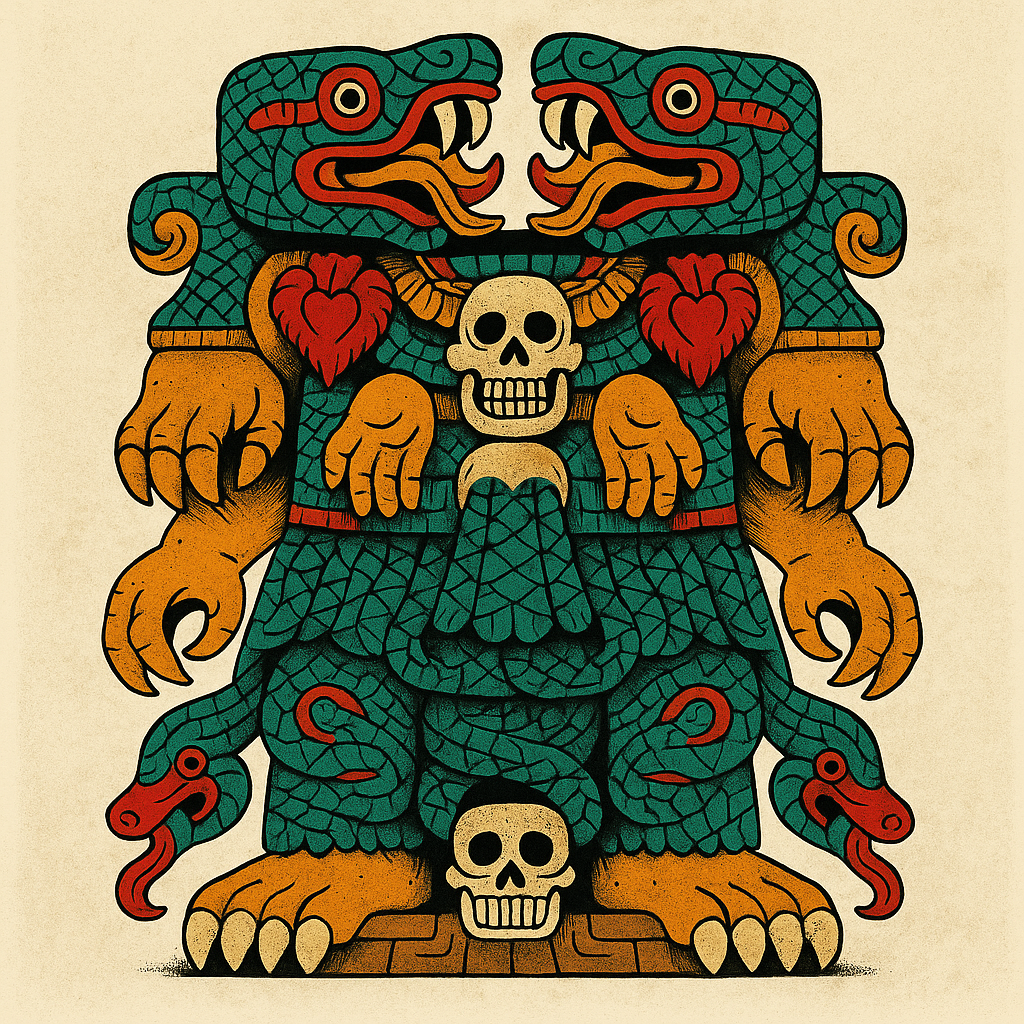
The Aztec goddess Coatlicue, whose head has been cut off and is now two twining serpents with multiple hands and skulls

Coatlicue

“She of the Serpent Skirt”

Pronunciation: Ko-aht-lee-kweh

Domain: Earth, life and death, motherhood

Vibe: The cosmic mom you do not want to disappoint

Story: Coatlicue was the ultimate Earth mother — nurturing yet terrifying. She wore a skirt of snakes and a necklace of severed hands and hearts (sharing a fashion sense with the Hindu goddess Kali). When her daughter Coyolxauhqui and 400 sons plotted to kill her, they struck off her head — but from the gushing wound sprang two serpents whose fanged mouths met to form her new face. And Coatlicue’s unborn child Huitzilopochtli burst forth from her womb, fully armed, and ended that rebellion fast. 

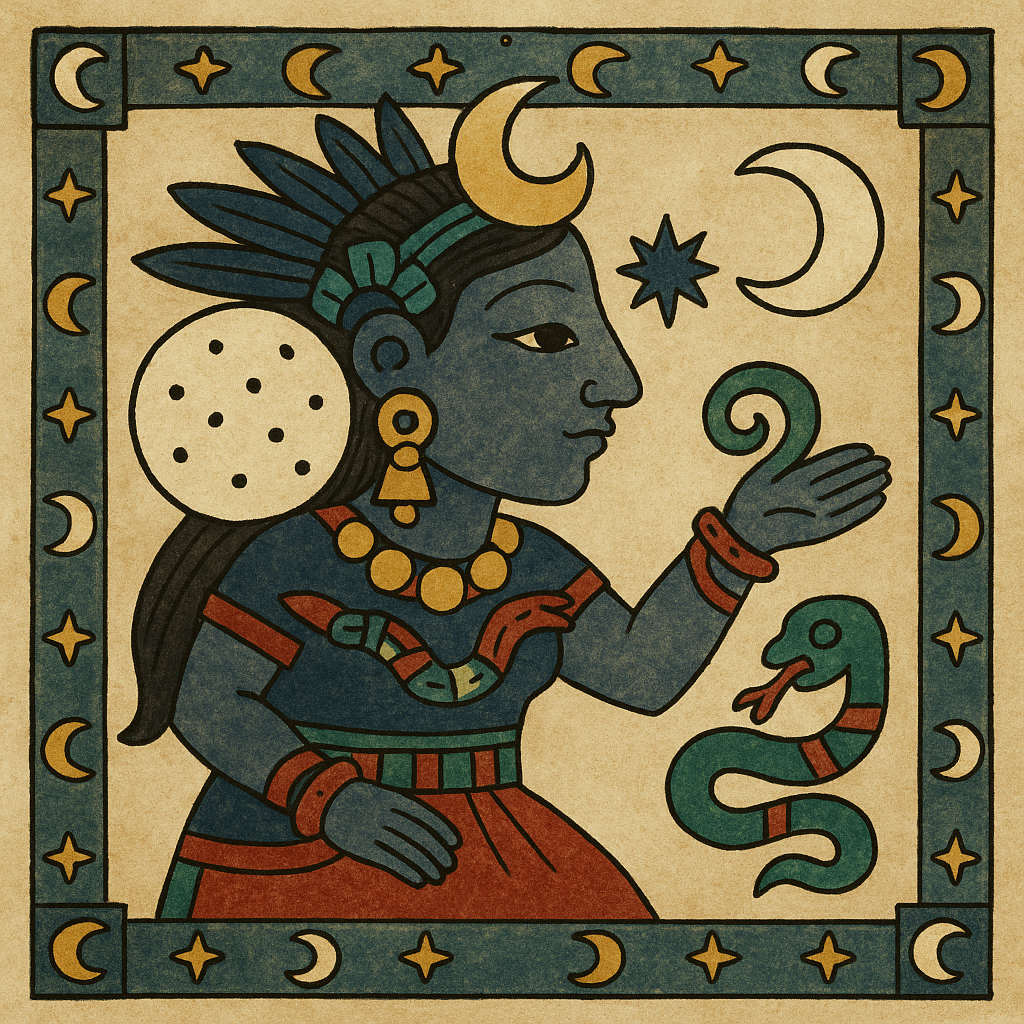
The Aztec goddess Coyolxauhqui, with a snake and phases of the moon

Coyolxauhqui

“Bells on Her Cheeks”

Pronunciation: Koy-ol-shau-kee

Domain: The moon

Vibe: The rebel who lost, but still owns the night 

Story: Coyolxauhqui led her siblings in a failed coup against their mother, Coatlicue, only to be dismembered by her newborn brother, Huitzilopochtli — a mythic explanation for the moon’s fragmented phases.

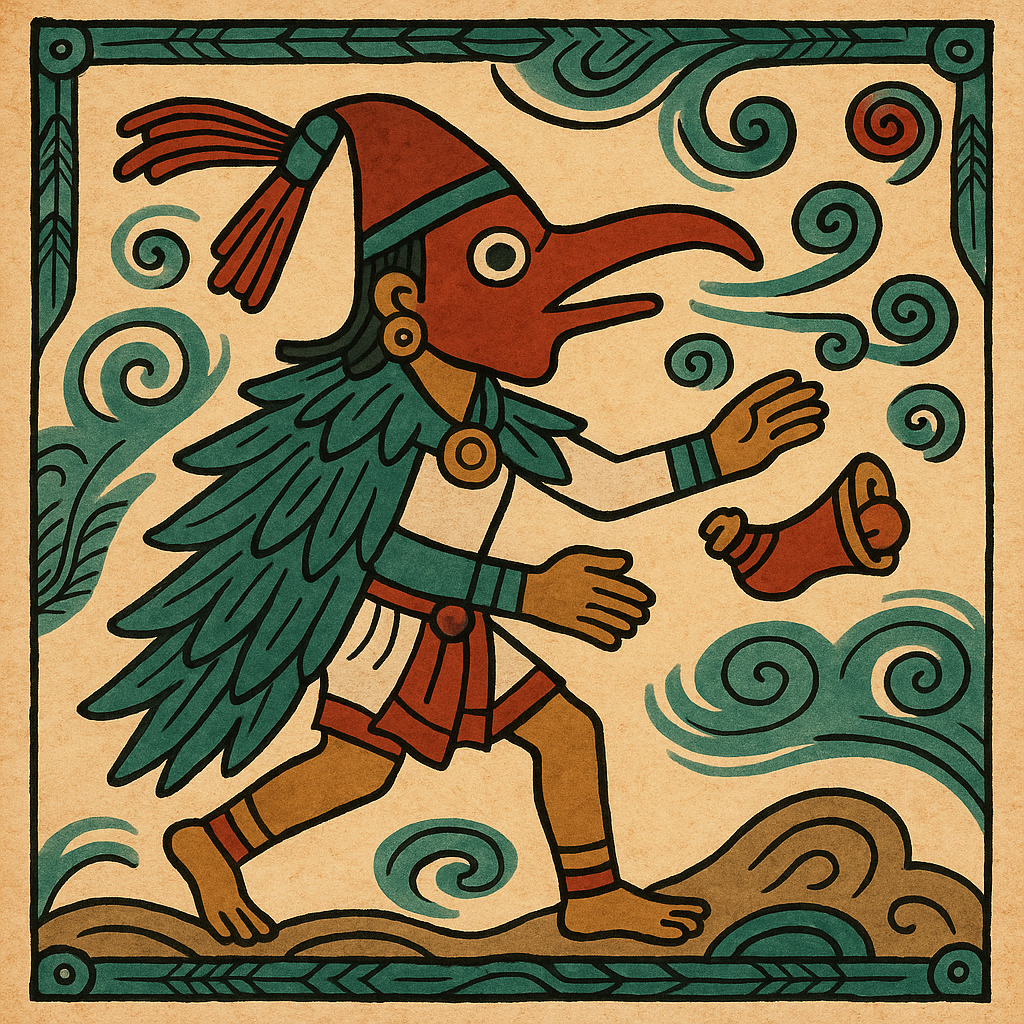
Aztec god Ehécatl, with his distinctive pointed-beak mask and the wind blowing all around him

Ehécatl

“He Who Is the Wind”

Pronunciation: Eh-heh-katull 

Domain: Wind, breath, motion, life

Vibe: The chill cousin who shows up, stirs things up and vanishes again

Story: Ehécatl is the wind god — a breezy form of Quetzalcoatl himself. When the newly created sun refused to move, Ehécatl blew across the heavens to push it into motion. His temples were round so the wind could pass through, a clever architectural touch in a city built on geometry. The man was literally the breath of life — and sometimes, the breath of fresh air everyone needed.

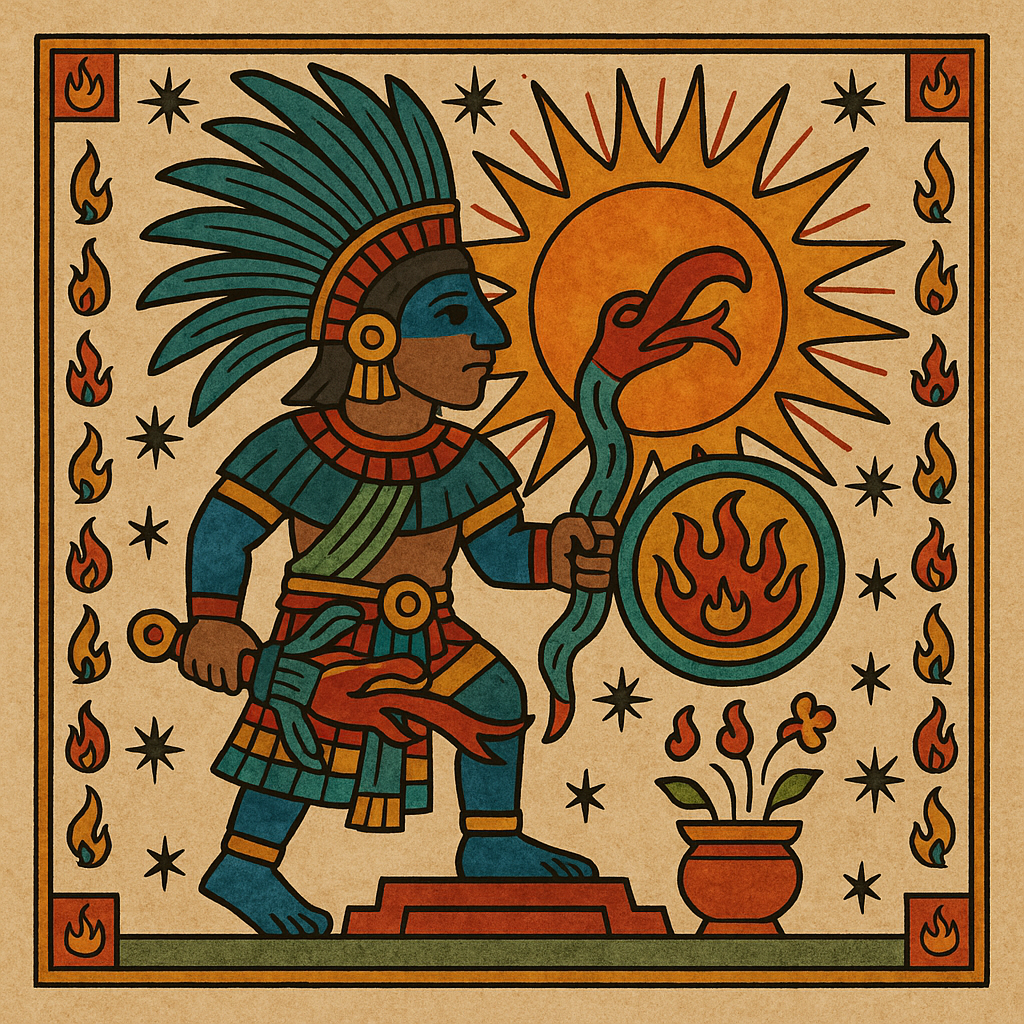
Aztec god Huitzilopochtli with feathered headdress, staff, sword, blue painted face and fire imagery

Huitzilopochtli

“Left-Handed Hummingbird” or “Hummingbird of the South”

Pronunciation: Weets-ee-loh-pohch-tuhlee

Domain: War, the sun, the destiny of the Mexica

Vibe: The overachiever with a bloody habit

Story: Huitzilopochtli was the Mexica’s personal war god and the reason they believed themselves unstoppable. Born in a blaze of feathers and fury, he beheaded his sister Coyolxauhqui moments after his birth and tossed her body down the mountainside — symbolizing the sun’s daily triumph over the moon. He needed blood to keep shining, and the Aztecs were more than happy to supply it.

Ilamatecuhtli

“The Old Lady”

Pronunciation: Ee-lah-mah-teh-koo-tlee

Domain: Age, endings, childbirth, dry corn, the turning of the year

Vibe: The venerable (and sometimes scary) grandmother

Story: Ilamatecuhtli was the Earth Mother in her oldest form — not nurturing like Teteoinnan, not frantic like Coatlicue, but ancient, heavy and utterly unavoidable. She ruled the cold, solemn month of Tititl, when people fasted, moved quietly, and lived in fear, as though Death herself was walking past their doors.

Women who died in childbirth were honored as fierce, restless spirits called the cihuateteo during this season, their cries believed to haunt crossroads at night. They belonged to Ilamatecuhtli, who understood both the agony of labor and the final stillness of death. She was the end of the cycle, the crack in the seed before it sprouts again, the winter before the earth remembers how to bloom. 

Itzcoliuqui, the Aztec god, blindfolded, with a bizarre conical, curved head, and white skin with bumps all over it.

Itztlacoliuhqui

“Curved Obsidian Blade”

Pronunciation: Eets-koh-lee-oo-kee

Domain: Cold, punishment, winter, misfortune

Vibe: The burnt-out star who pissed off the wrong person 

Story: Itztlacoliuhqui is literally the embodiment of bad vibes. But he wasn’t always this way. He used to be a radiant god of light, the Lord of the Dawn, Venus as Morning Star, until he either insulted the sun, Tonatiuh, or accidentally loosed an arrow at him. The sun’s response was instant: a burst of searing fire. The blow broke his nose, warped his face into a permanent curve, and transformed him into the frigid, shadowy deity of winter. He’s often shown blindfolded or bent, carrying a staff like a frozen wanderer. He represents the moment when light collapses into darkness — and the consequences of making mortal enemies.

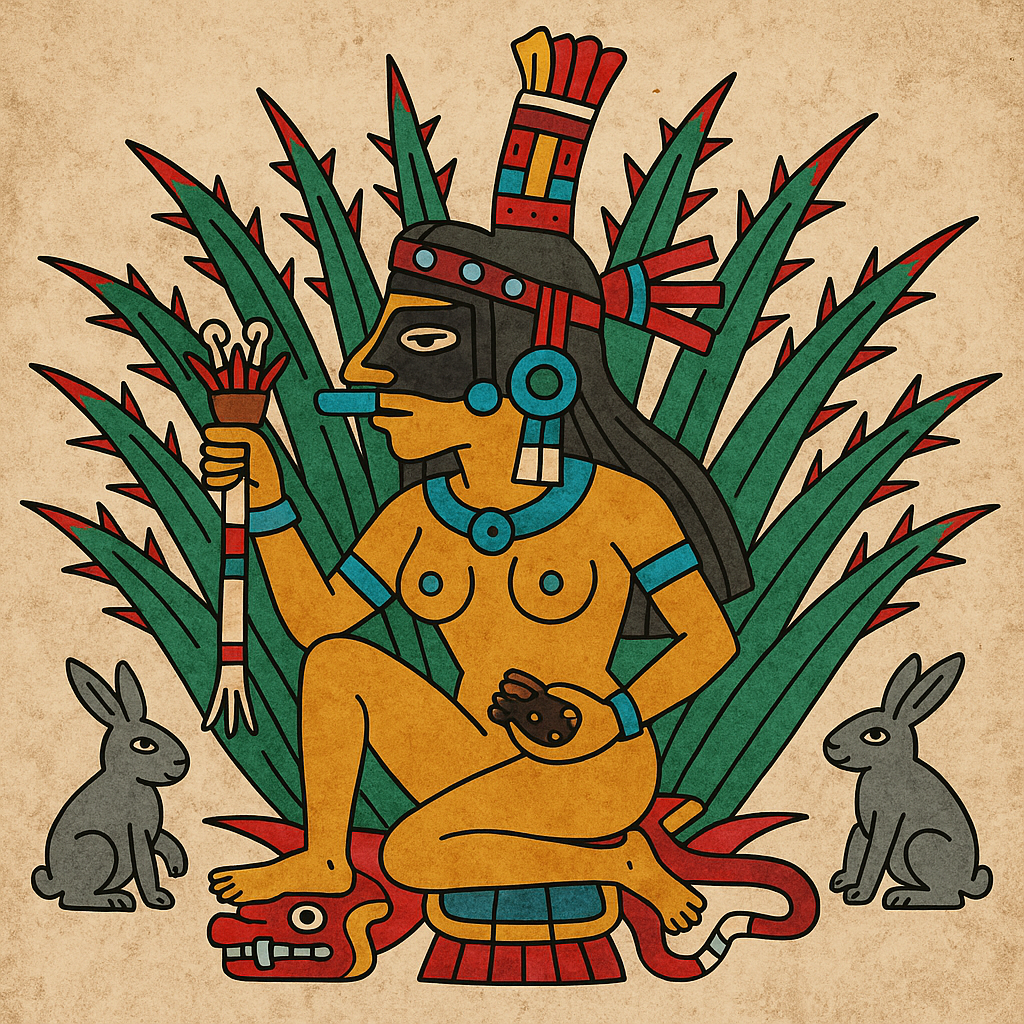
The bare-chested Aztec goddess Mayahuel, with spiky agave behind her and two rabbits

Mayahuel

“Goddess of the Agave”

Pronunciation: My-yah-well

Domain: Agave, pulque, nourishment, fertility

Vibe: The star-crossed lover

Story: Mayahuel is the spirit of the agave plant — the source of food, fiber, healing sap and the sacred drink pulque. Her family practices an extreme form of helicopter parenting: They’re star demons who’ve forbidden Mayahuel to leave the heavens. But Quetzalcoatl falls for her and the two hide by merging into a forked tree. When the goddess’ family finds them, they tear Mayahuel apart, scattering her pieces across the soil. Where they land, the maguey grows — resilient, sharp-edged and impossible to uproot.

Because the plant came from her body, every harvest was an act of reverence. The sap that fermented into pulque belonged to her. Agave and pulque folklore shows how deeply the plant shaped everything from spirituality to social rituals in Mesoamerica.

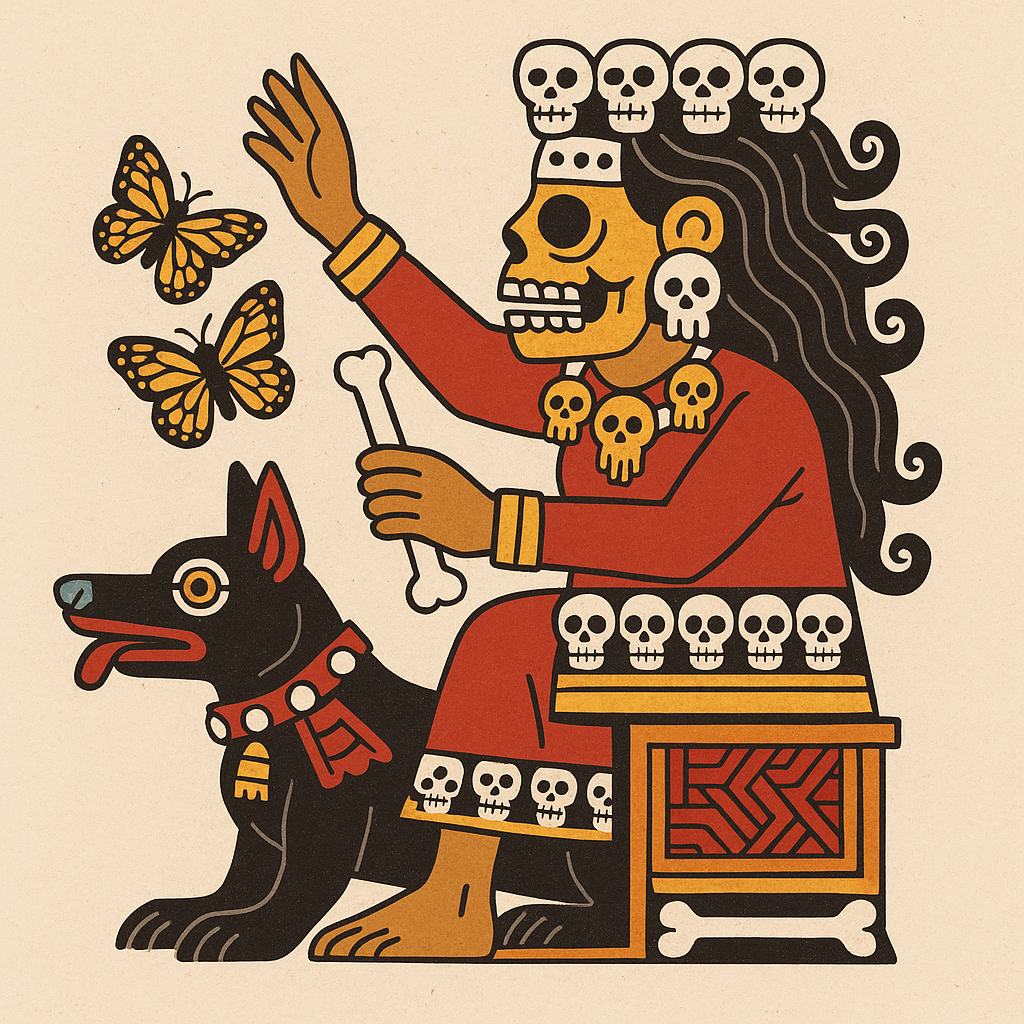
Aztec goddess Mictecacihuatl on throne, her face skeletal, wearing skulls, with a hairless dog and butterflies

Mictecacihuatl

“Lady of the Dead”

Pronunciation: Meek-teh-kah-see-wah-tull

Domain: Death, the underworld, ancestors, bones

Vibe: The goth aunt who keeps every receipt — and by receipts, we mean bones

Story: She rules the underworld with quiet authority — no drama, no shouting, just a stare that sees straight through flesh to your skeleton. She and her husband, Mictlantecuhtli, oversee Mictlan, the final destination for most souls. Festivals in her honor later blended with Catholic All Souls’ celebrations and evolved into Día de los Muertos — meaning she’s the spiritual grandmother of the holiday that remembers the dead with candles, food and marigolds.

The skeletal Aztec god Mictlantecuhtli, lord of the underworld, holding a bone and surrounded by skulls

Mictlantecuhtli

“Lord of the Underworld”

Pronunciation: Meek-tuhlahn-teh-koot-lee

Domain: Death, the afterlife

Vibe: Surprisingly chill about mortality

Story: Mictlantecuhtli ruled Mictlan, the nine-layered underworld where most souls went after death — more for bureaucracy vs. punishment. The journey took four years, with challenges like mountains that crashed together and rivers of blood. When Quetzalcoatl came to borrow bones to make humanity, Mictlantecuhtli agreed — and then tried to trip him on the way out. 

The Aztec god and goddess Ometecuhtli and Omecihuatl, wearing headdresses and holding symbols in a circle, codex style

Ometecuhtli and Omecihuatl

“Our Lord and Lady of Duality”

Pronunciation: Oh-meh-teh-koot-lee / Oh-meh-see-wah-tuhl

Domain: Creation, balance, masculine and feminine forces 

Vibe: The original power couple. Divine yin and yang — a sort of Adam and Eve for the Mexica.

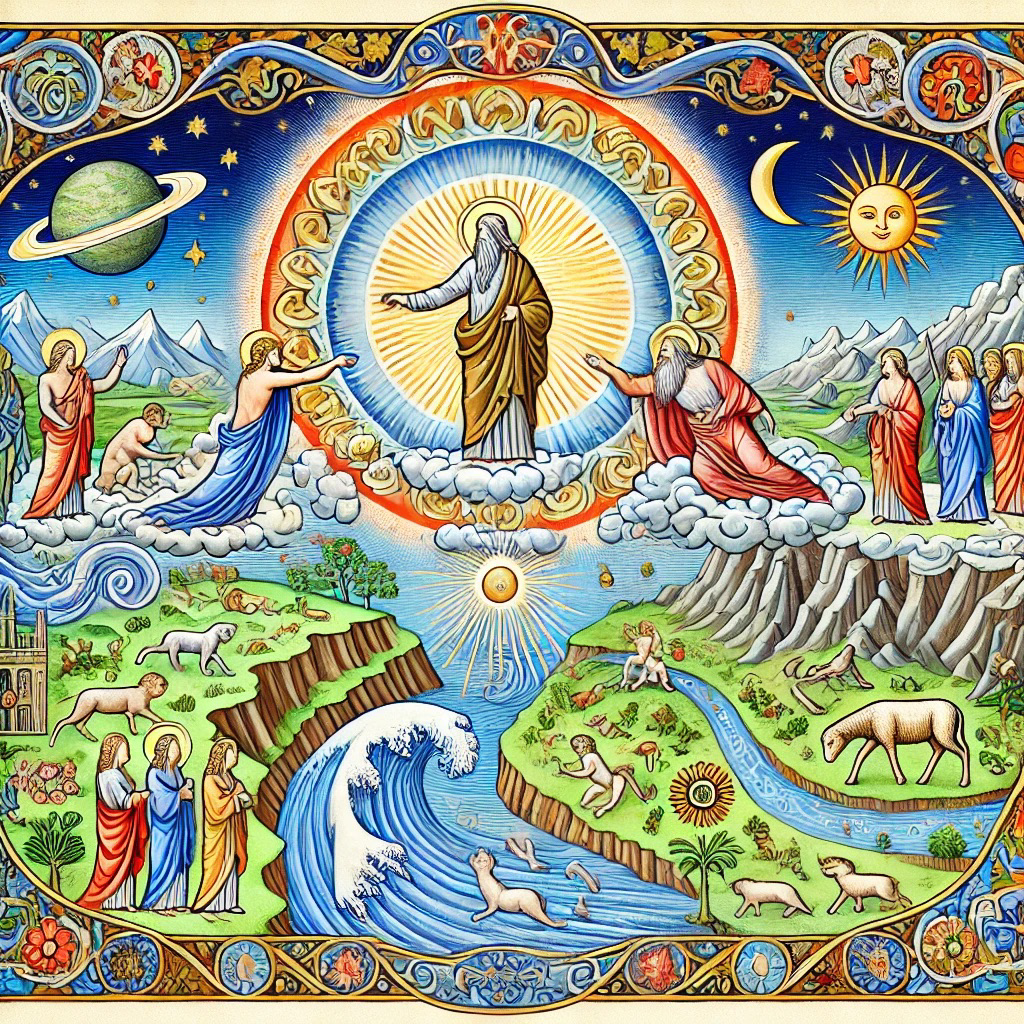
Story: Before there was sun, moon or time itself, there was Ometecuhtli and Omecihuatl. Living in the highest heaven, they embodied the balance of existence. Together, they created the four great gods (Quetzalcoatl, Tezcatlipoca, Tlaloc and Xipe Totec), setting the cosmic wheels in motion. Creation wasn’t a solo act; it was a duet.

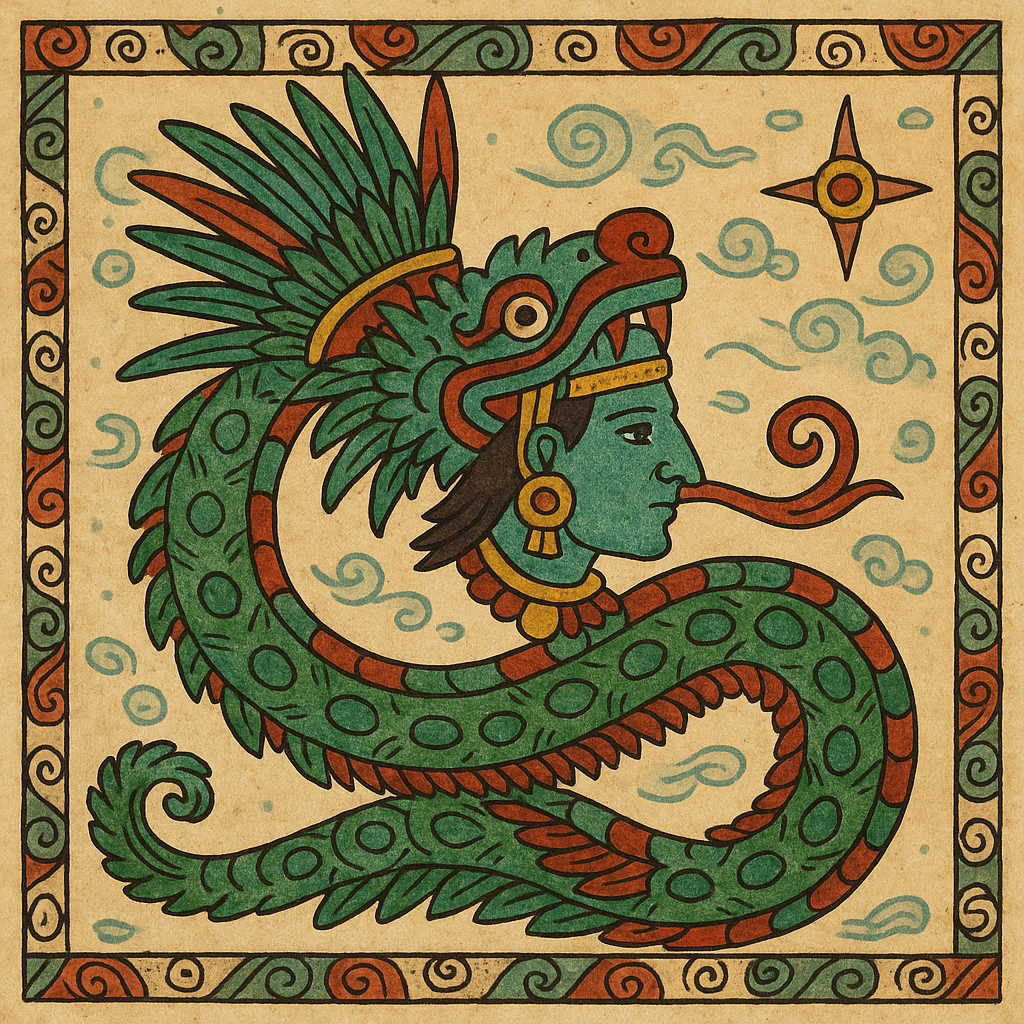
Feathered serpent Aztec god Quetzalcoatl, with a human head emerging from the snake mouth

Quetzalcoatl

“Feathered Serpent”

Pronunciation: Ket-sahl-koh-ah-tuhl

Domain: Wind, knowledge, art, life, creation

Vibe: The philosopher who tried to make everyone chill

Story: Quetzalcoatl was the thoughtful one — a feathered serpent who preferred wisdom to warfare. He gave humans knowledge, maize and calendars, which is more than most gods manage before breakfast. Trickster rival Tezcatlipoca once got him drunk and shamed him into exile; some legends say he sailed east, promising to return. When the Spanish landed, later chroniclers swore the Mexica mistook Cortés for him. 

Aztec god Teteoinnan, with arrows across her breasts, feathered headdress and codex-style swirls

Teteoinnan

“Mother of the Gods”

Pronunciation: Teh-teh-oh-ee-nahn

Domain: Fertility, death, renewal

Vibe: Brutal, maternal, unstoppable

Story: Teteoinnan was the primordial Earth Mother — the one who birthed the gods and demanded blood to keep creation fertile. During the festival of Ochpaniztli, “the Sweeping,” a woman chosen to represent her was pampered for days, then shot to death by arrows. Her skin was flayed and worn by a priest, symbolizing the earth shedding its old season so a new one could grow. Teteoinnan was life itself: the womb and the tomb, the soil that feeds and devours.

Aztec god Tezcatlipoca, with blue and black painted face, holding a mirror among smoke, with a celestial black panther

Tezcatlipoca

“Smoking Mirror”

Pronunciation: Tes-kaht-lee-poh-kah

Domain: Night, chaos, destiny, trickery

Vibe: The original frenemy — chaos with cheekbones

Story: Tezcatlipoca was Quetzalcoatl’s equal and opposite — the shadow to his light. With his obsidian mirror, he could see into hearts and futures, which made him the ultimate gossip. One myth has him turning into a jaguar to destroy the world, just to prove a point. The Aztecs loved him for it; he reminded them that fate has teeth.

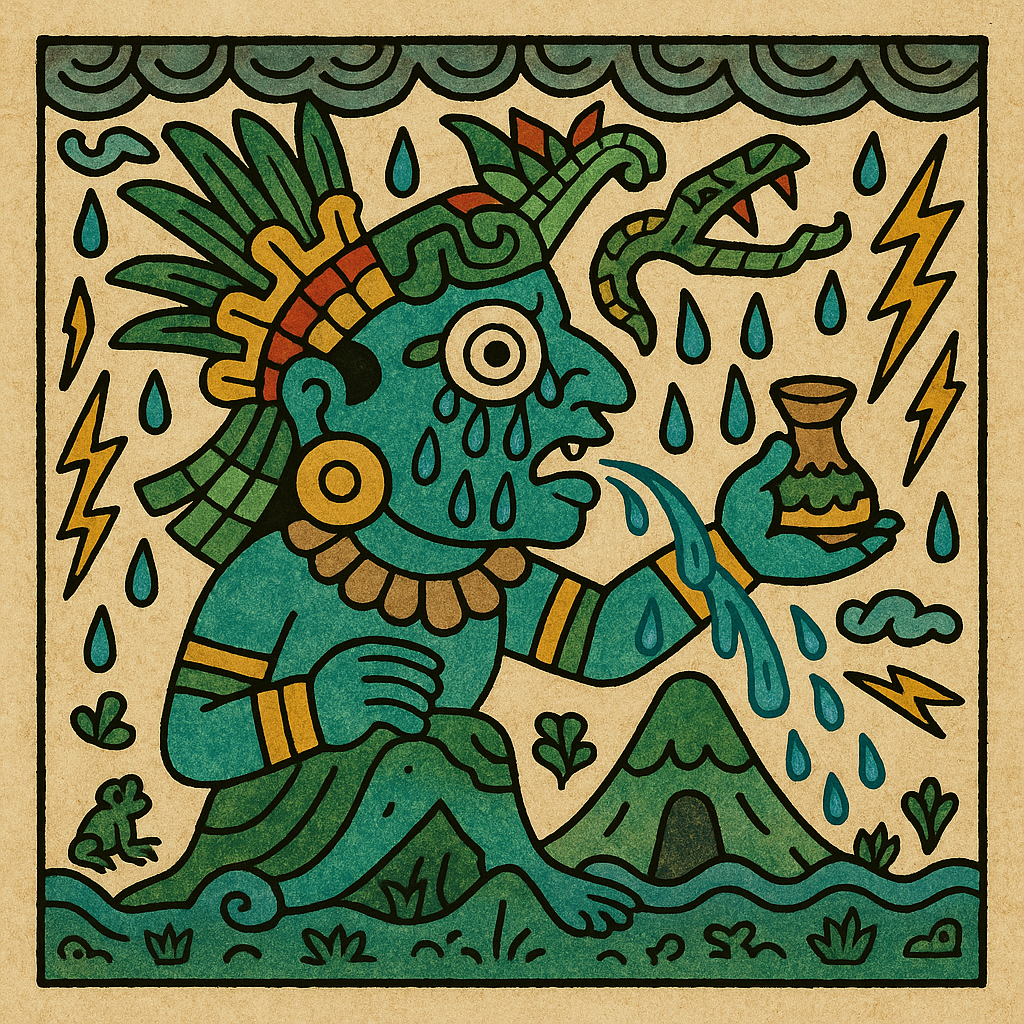
Bug-eyed Aztec god Tlaloc with blue skin, spouting water with lightning and a mountain, holding a small vessel

Tlaloc

“He Who Makes Things Sprout” (possibly)

Pronunciation: Tuhlah-lok

Domain: Rain, storms, fertility

Vibe: The moody meteorologist

Story: Tlaloc could bless or drown with equal enthusiasm. Farmers adored him; everyone else kept a respectful distance. Children were sometimes sacrificed in his honor, their tears believed to bring rain. Archaeologists have found offerings of tiny skeletons near his temple, a haunting reminder that the weather is often a matter of life and death.

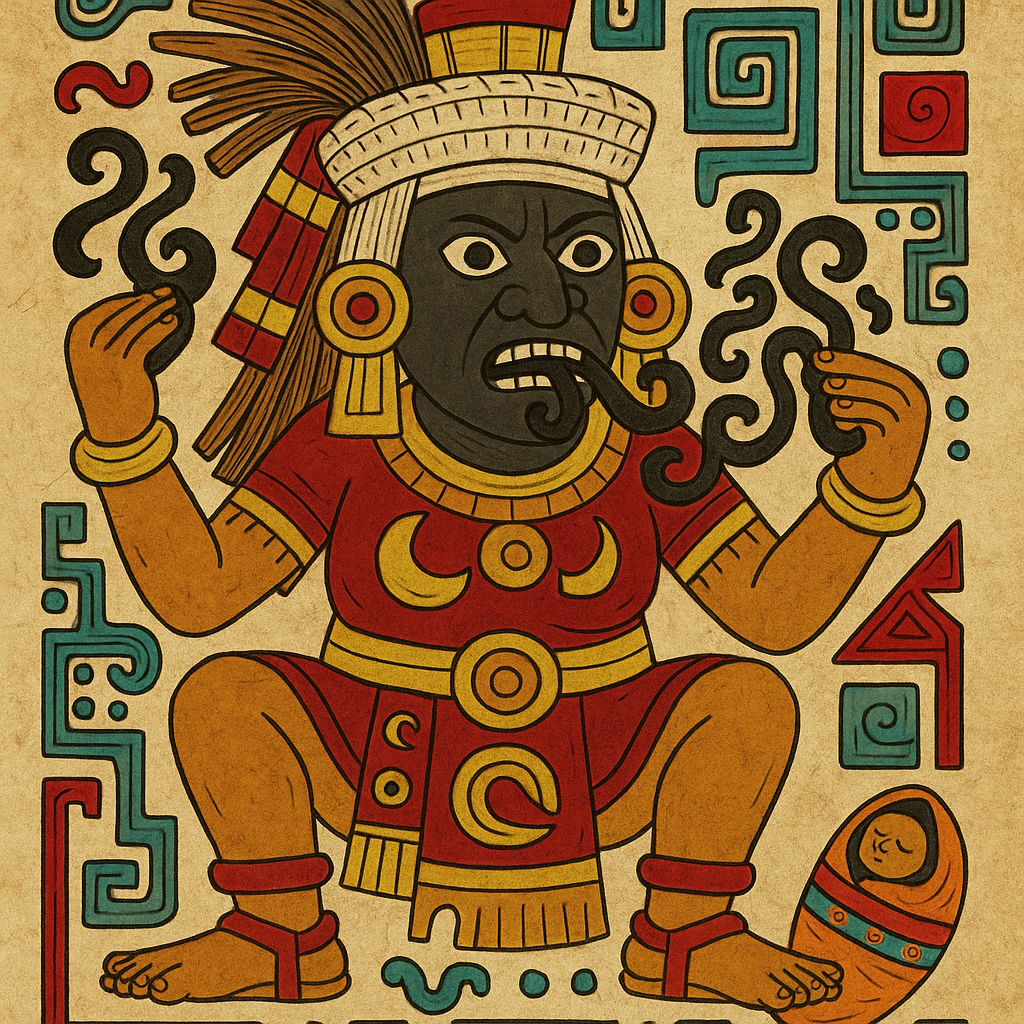
Aztec goddess Tlazolteotl, squatting, face painted black, consuming black swirls, a baby at her foot

Tlazolteotl

“Goddess of Filth”

Pronunciation: Tuhlah-zohl-teh-o-tuhl

Domain: Sin, purification, lust, confession

Vibe: The confessor — sharp-tongued, forgiving and uncomfortably honest

Story: Tlazolteotl was the goddess of both sin and cleansing. People confessed their moral missteps to her once in their lifetime, and she “ate” their spiritual filth, leaving them pure again. Basically the Aztec equivalent of Jesus Christ taking away the sins of the world — only with black face paint, dirty rags and rotten food.

Aztec god of the sun Tonatiuh, tongue out

Tonatiuh

“The Radiant One”

Pronunciation: Toh-nah-tee-uh

Domain: The sun (the current one — there were four before him)

Vibe: The jock who knows the world literally revolves around him

Story: Tonatiuh is the fifth sun — the version we live under now. The Aztecs believed the universe had been destroyed and reborn four times already, and keeping Tonatiuh burning required constant human sacrifice. If the flow of hearts stopped, so would the sun. No pressure, humanity.

The Aztec god Xipe Totec, putting on someone's flayed skin in a cornfield while a butterfly flies by

Xipe Totec

“Our Lord, the Flayed One”

Pronunciation: Shee-peh Toh-tek

Domain: Renewal, spring, agriculture, goldsmiths

Vibe: Horrifying but optimistic

Story: Xipe Totec wore human skin to symbolize the shedding of the old and the rebirth of the new. Each spring, priests honored him by donning the flayed skin of sacrificial victims until it decayed — a vivid, if disturbing, metaphor for renewal. He was terrifying, but also proof that life always grows back.

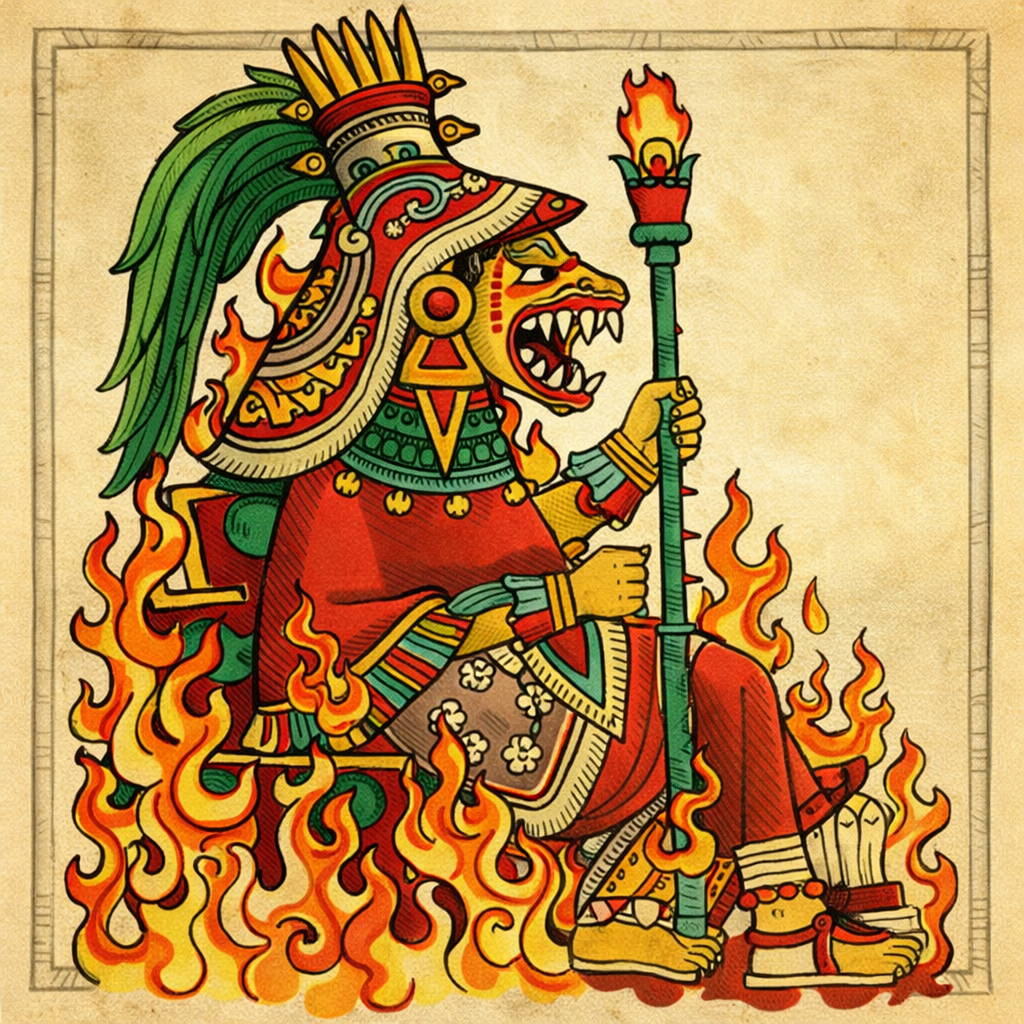
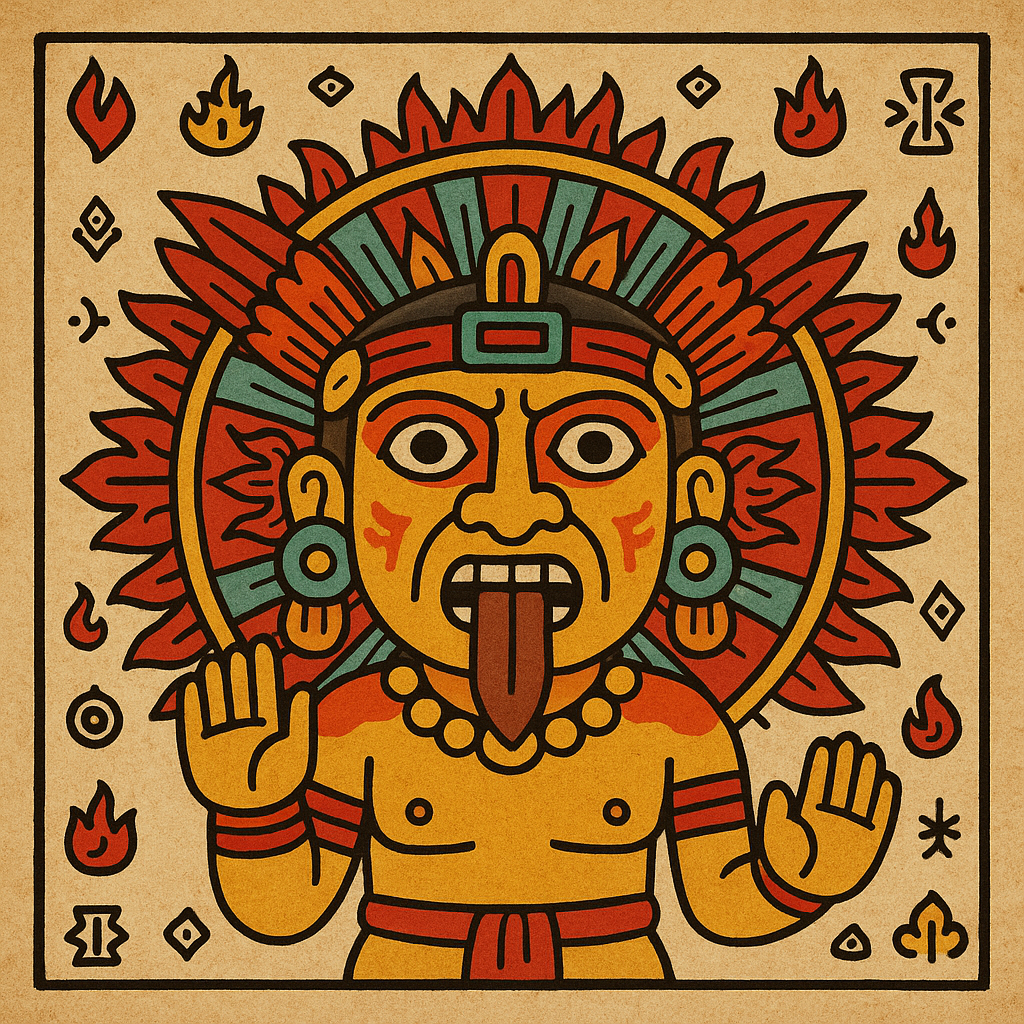
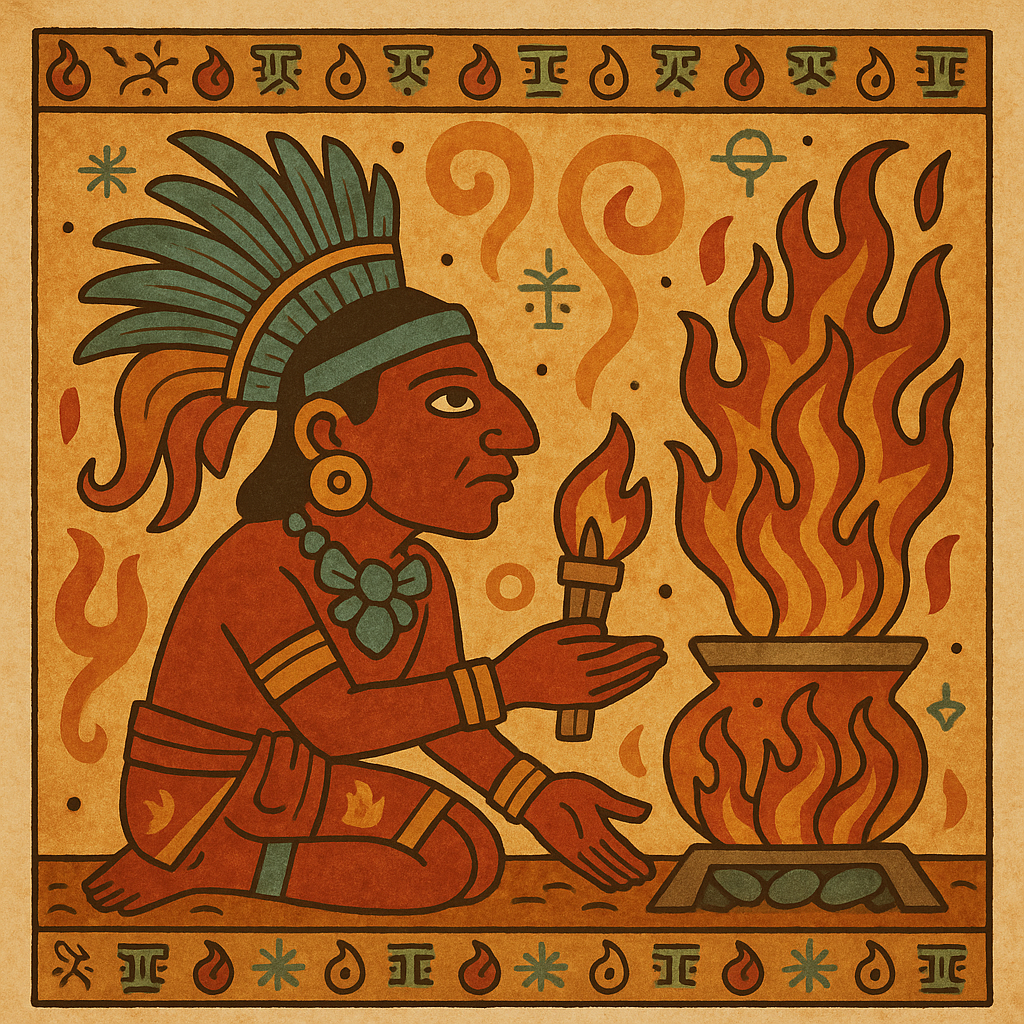
Aztec god Xiuhtecuhtli wears a feathered headdress and holds a torch to light a flaming cauldron

Xiuhtecuhtli

“Turquoise Lord”

Pronunciation: Shee-ooh-teh-koot-lee

Domain: Fire, time, renewal

Vibe: The spark that keeps the universe’s pilot light on

Story: Xiuhtecuhtli rules over fire and time — the heart of every hearth and the flame that ties life together. Every 52 years, the Aztecs extinguished all the blazes in the empire for the New Fire Ceremony, then rekindled it atop a sacrificial victim’s chest to reboot the cosmic clock. A bit extreme, but supposedly effective.

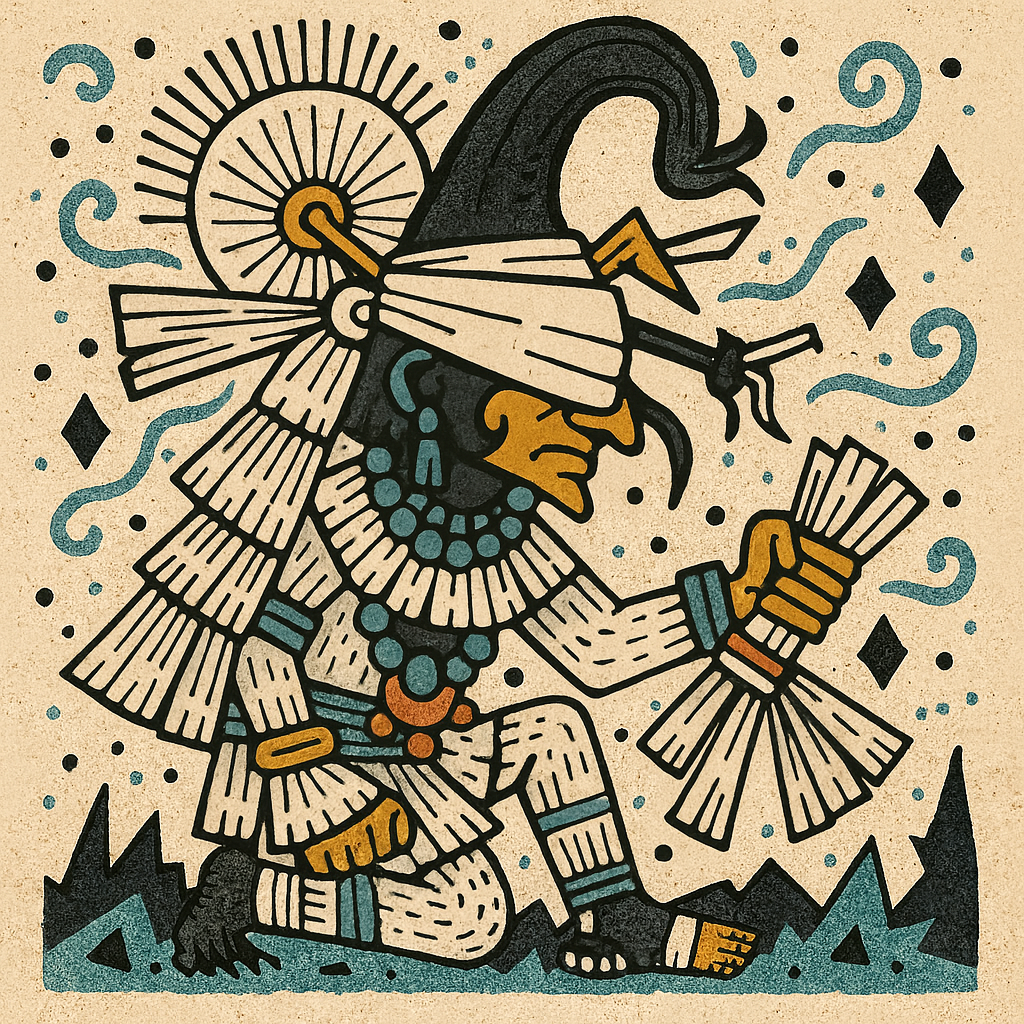
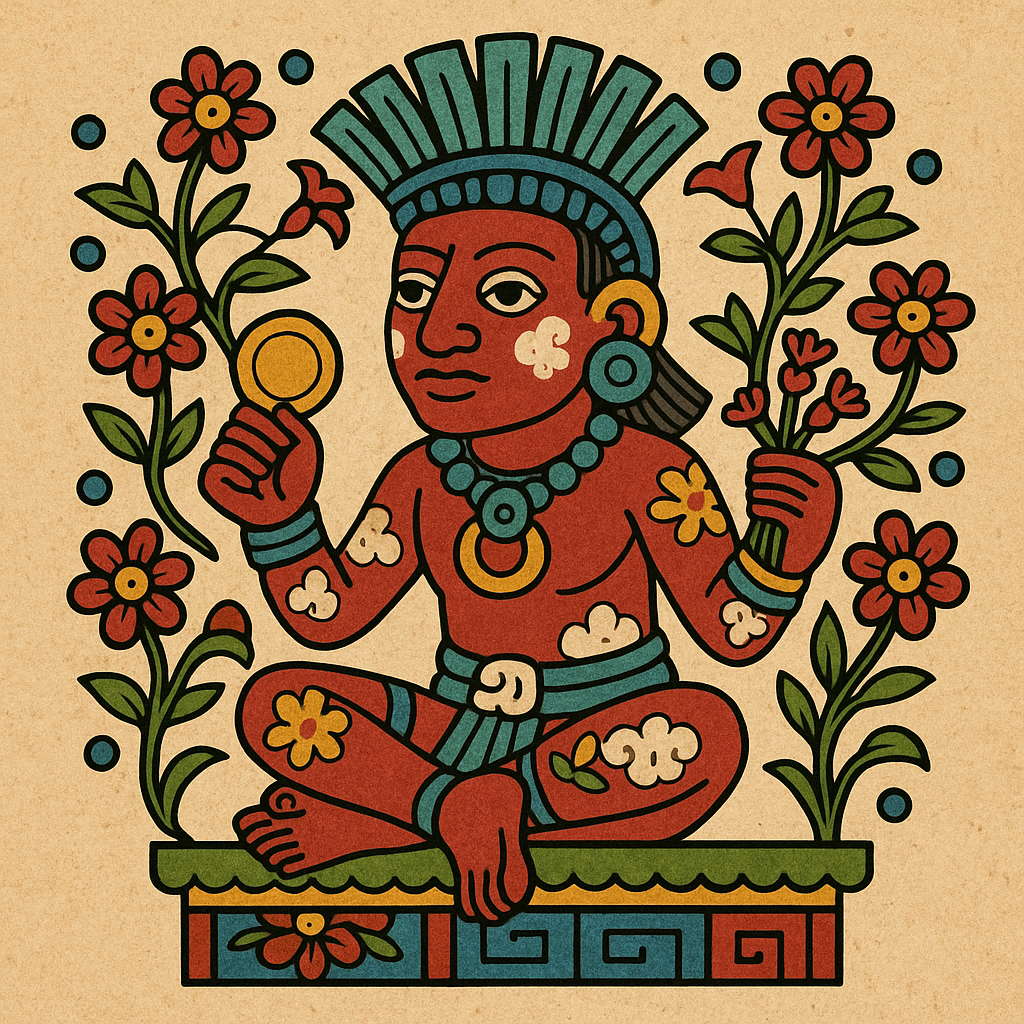
The Aztec god Xochipilli sitting cross-legged, holding flowers, in a drug trance

Xochipilli

“Flower Prince”

Pronunciation: Soh-chee-pee-lee

Domain: Pleasure, art, dance, song and sacred intoxication

Vibe: The good time guy — who’s always got the good stuff

Story: Xochipilli ruled over music, poetry and hallucinogenic ecstasy. His statues show him in blissful trance, covered in carvings of psychoactive plants like morning glory and mushrooms. Scholars debate whether he’s communing with fellow gods or just having an incredible trip. Either way, he’s the patron of joy.

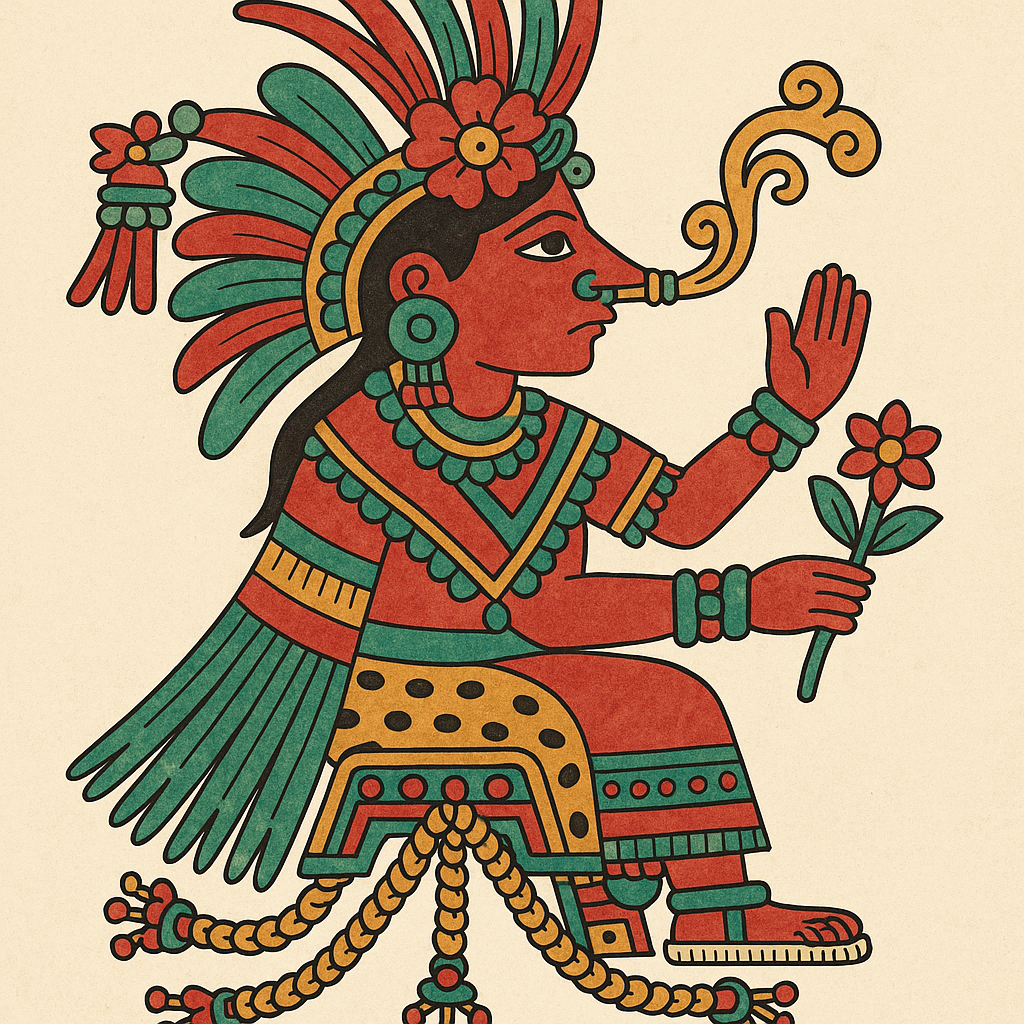
Aztec goddess Xochiquetzal, with feathered outfit and nose plug, sitting on stools with braided ropes

Xochiquetzal

“Precious Flower”

Pronunciation: Soh-chee-ket-sahl

Domain: Love, beauty, fertility, female sexuality, arts

Vibe: The divine muse with petals and power

Story: Xochiquetzal ruled over everything pleasurable: love, sex, beauty, art and weaving (opinions differ on how fun that last one is). She was beauty incarnate, the kind people write terrible poetry about. Naturally, this led to drama: At one point Tezcatlipoca abducted her, proving that even gods make bad romantic decisions. Worshiped by artists and universally adored, she was the eternal muse — always in bloom.

An Aztec priest in feathered headdress stands atop a temple holding a human heart up to the sky near a smoking brazier

Aztec Offerings: Blood and Blossoms

For the Mexica, the gods needed constant nourishment to keep creation from falling apart. In a universe born from divine sacrifice, the only fitting offering was more of the same.

The Florentine Codex, compiled by Franciscan friar Bernardino de Sahagún and his Nahua collaborators between 1540 and 1577, is a 12-book encyclopedic record of Aztec culture, language and religion created to document and ultimately aid in converting indigenous peoples after the Spanish conquest.

According to the codex, every ritual — whether it involved flowers, animals or human hearts — was a repayment, a way to keep the cosmic machinery running. Blood was the power source of the sun. The gods had given their own essence to ignite the world. To let that flow stop would be like unplugging the universe.

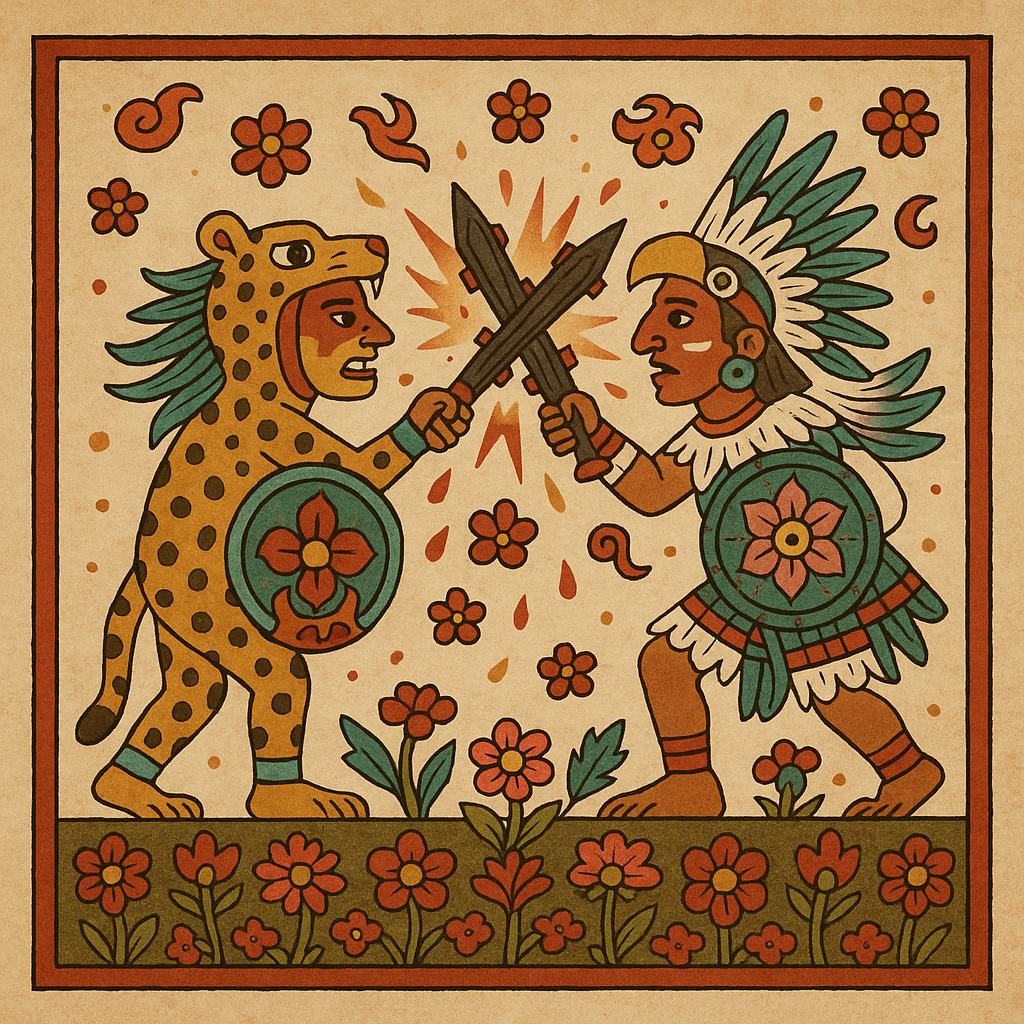
A jaguar skin-clad warrior fights one dressed like an eagle, clashing swords in one of the Flower Wars to obtain sacrificial hostages

The Flower Wars (Xochiyaoyotl)

The Aztecs even had a word for the ultimate warrior’s death: xōchimiquiztli, the “flowery death.” Dying in battle or on the sacrificial stone wasn’t seen as tragedy but transcendence. To fall for Huitzilopochtli or Tonatiuh was to bloom forever in the sky, your soul reborn as a hummingbird or butterfly chasing the rising sun.

And the gods demanded a lot of blood. So the indigenous peoples of Mesoamerica came up with an interesting proposal: battles not for conquest but purely to feed the gods. These ritualized clashes between city-states — most famously Tenochtitlan and Tlaxcala — were called the Flower Wars. The goal wasn’t land or wealth; it was captives.

The Mexica believed these chosen warriors made the best offerings: brave, beautiful and unafraid. To die in one of these sacred battles was an honor. As The Florentine Codex notes, they were “debt payments” to the gods — each body a line item in the cosmic ledger.

It sounds kind of poetic — if you ignore the gruesome obsidian knives carving out all those still-beating hearts.

Yet within that brutality lived a strange kind of grace. The Aztecs saw the world as a vast cycle of giving and renewal. Flowers wilted, rain fell, the sun rose again — and so did life. In their eyes, blood was just another bloom, proof that everything beautiful demands something in return. 

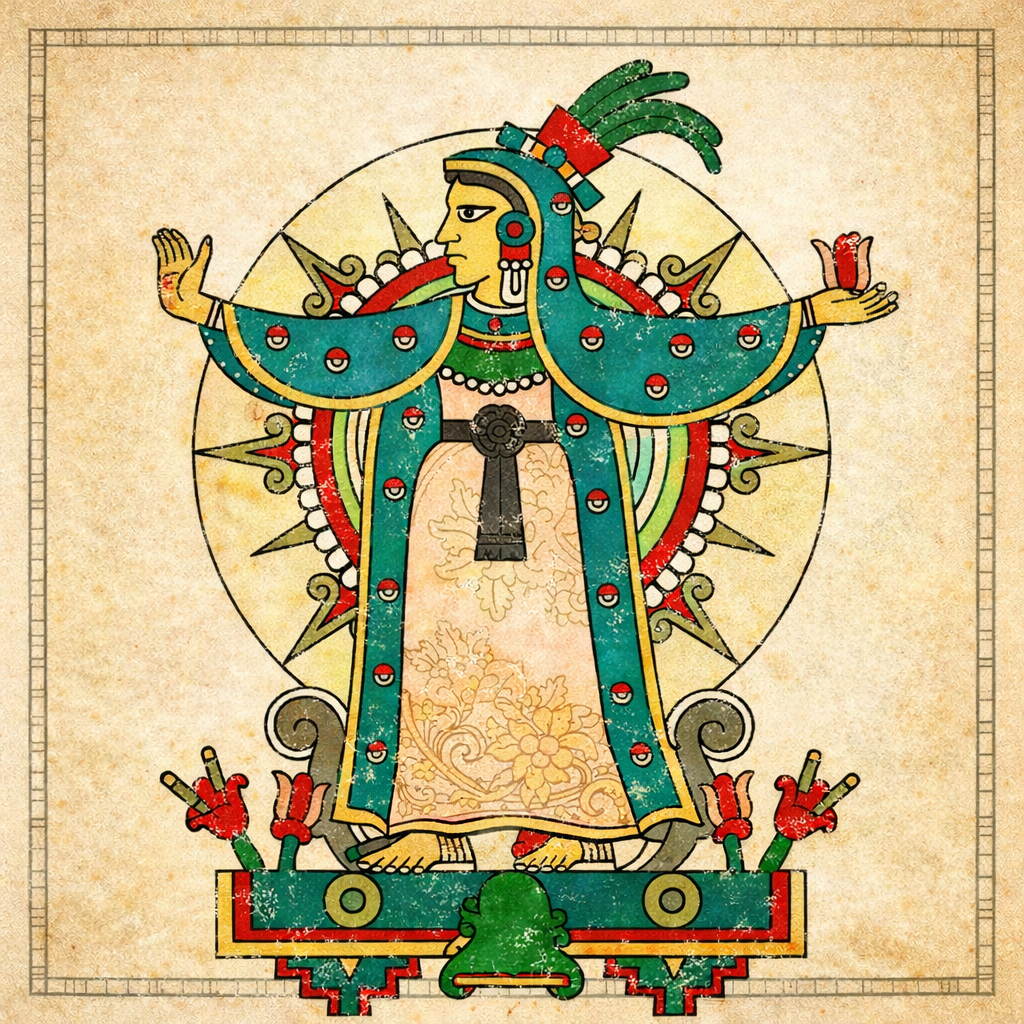
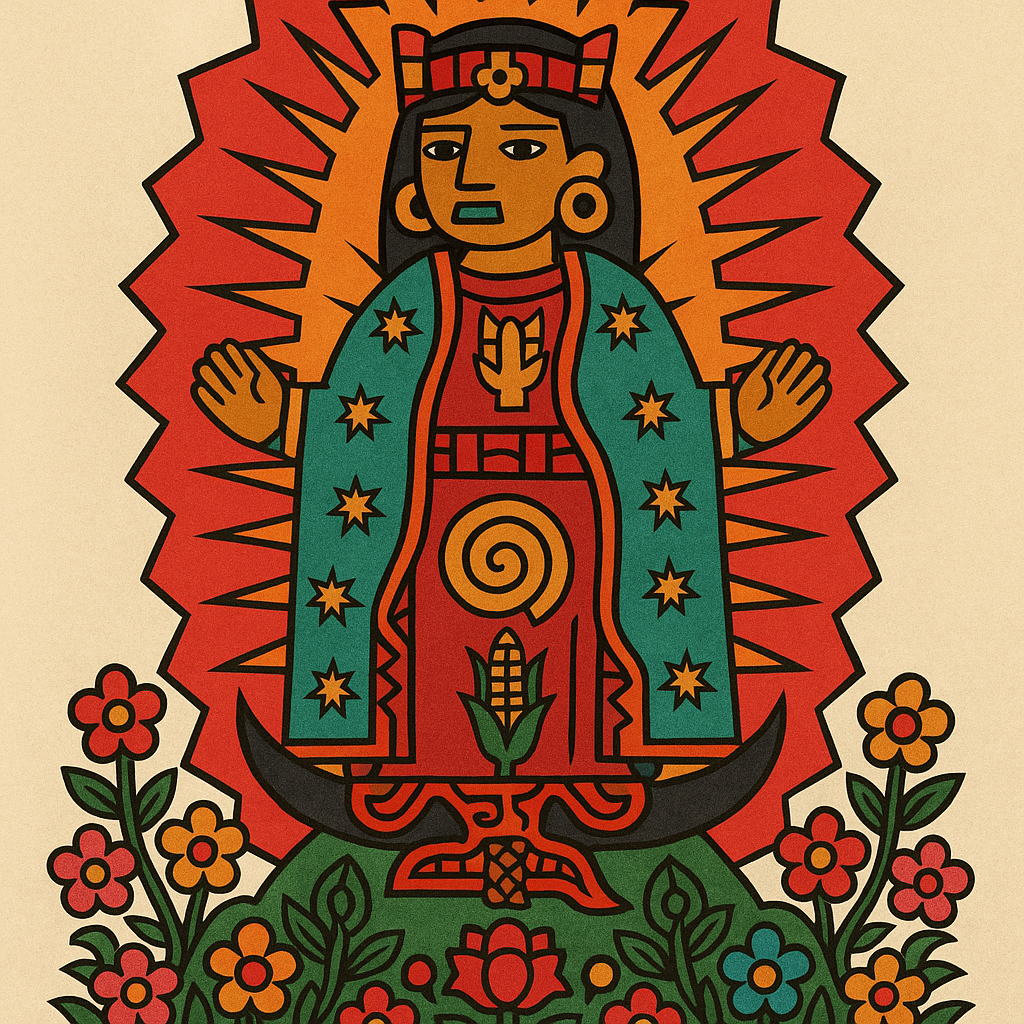
An Aztec goddess Tonantzin who has been appropriated into the Virgin Mary

Tonantzin: The Reverend Mother Who Became the Virgin Mary

If you climb Tepeyac Hill, on the north side of Mexico City, at sunrise, people say you can still feel her presence.

Before the Spanish ever arrived, the Mexica made pilgrimages up that hill to honor Tonantzin (Toh-nahn-tseen), “Our Revered Mother.” 

But the name wasn’t tied to one figure. It was a title, a crown shared by the great mother goddesses:

  • Coatlicue when she was fierce

  • Teteoinnan when she was the ultimate authority

  • Chalchiuhtlicue when she flowed with kindness

Then the conquest happened. The Spanish tore down her temple and built a church on the exact same hill dedicated to the Virgin Mary

They expected the indigenous people to move on. They didn’t. The locals kept making pilgrimages, lighting candles and praying — but they kept calling the Virgin Mary Tonantzin.

Fray Bernardino de Sahagún, a Franciscan friar, lost his mind over it, writing “This appears to be a Satanic device to mask idolatry,” in his Historia General de las Cosas de Nueva España. 

Tonantzin is the Aztec mother goddess who survived colonization by putting on a new outfit. –Wally

The Norse Gods: The Deities Who Knew They Would Die

Meet the Norse gods: a fierce pantheon of warlike deities, doomed heroes and mischief-makers. Learn about Odin, Thor, Loki, Freyja, and Ragnarök, the end of the world they can't escape.

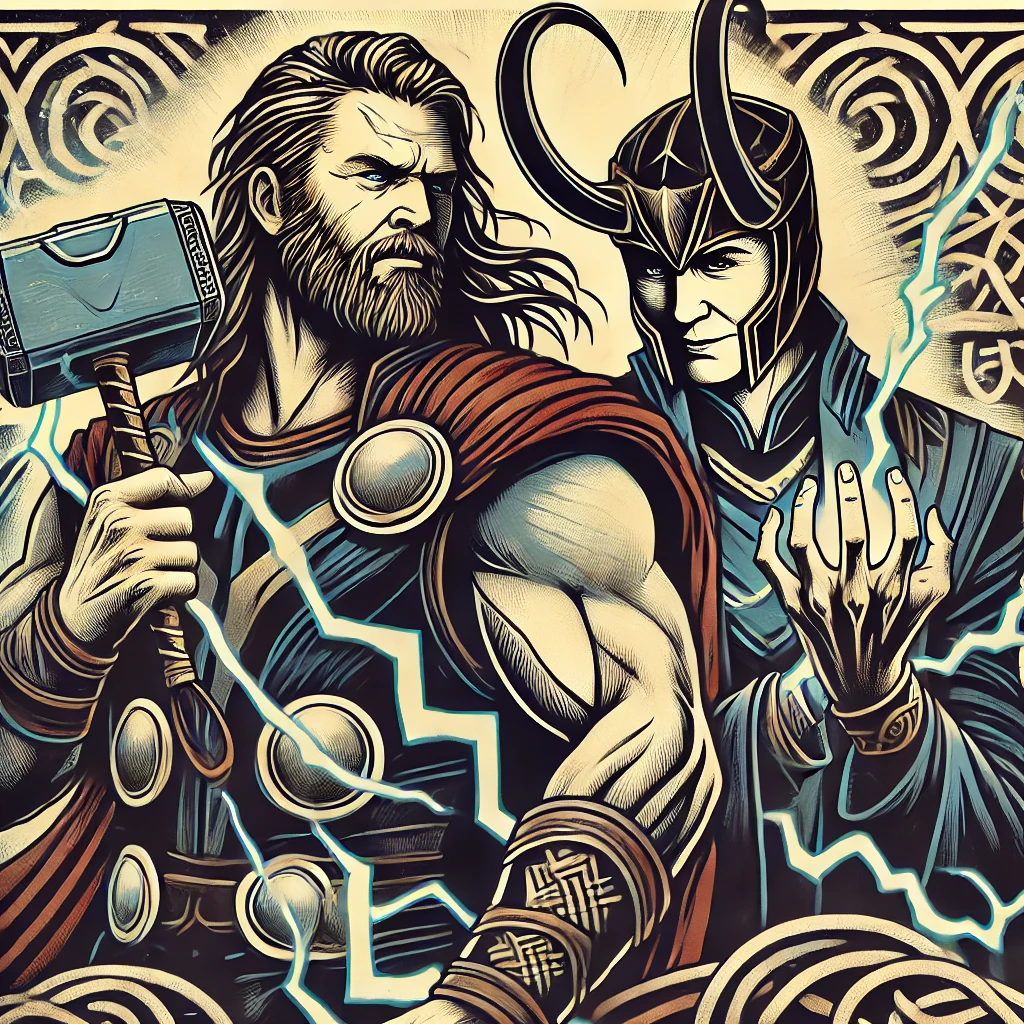
Thor holds his hammer and Loki works his magic

The Norse gods don’t rule from some shining eternal paradise. They sit in Asgard, a realm of feasting halls and battle scars, knowing full well that doom is coming. They drink, they fight, they love, and they scheme — but above all, they live with the knowledge that one day, it all ends in fire and ruin. 

The Norse gods aren’t distant, perfect figures sitting on golden thrones.

They struggle, they fail, they sacrifice, and they rage against the inevitable. They’re larger than life — until they die. 

Unlike the gods of other mythologies, the Norse deities aren’t immortal in the traditional sense. They age, they can die, and they know how the story ends: Ragnarök, the final battle, where most of them are fated to perish.

But until then? They shape the cosmos, meddle in human affairs, and prove that gods the world over have complicated relationships, questionable choices and a flair for the dramatic.

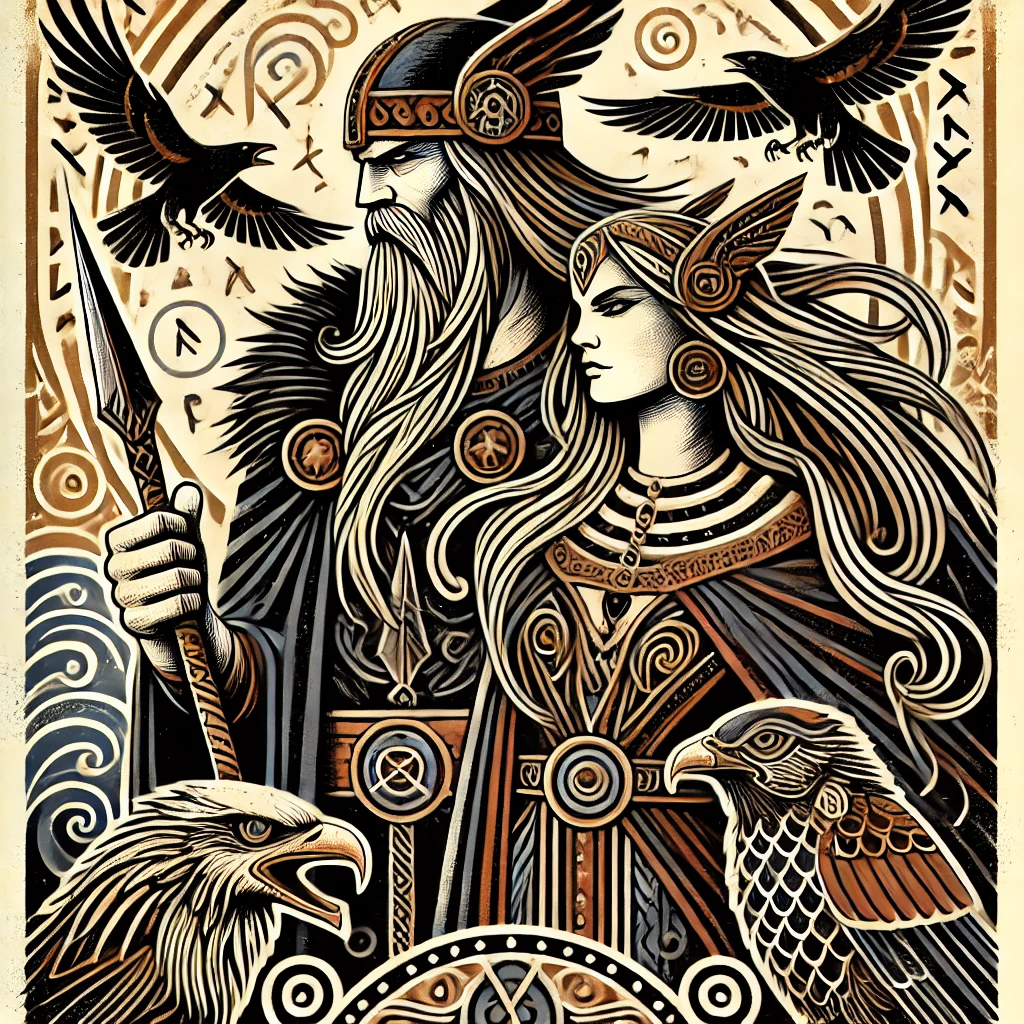
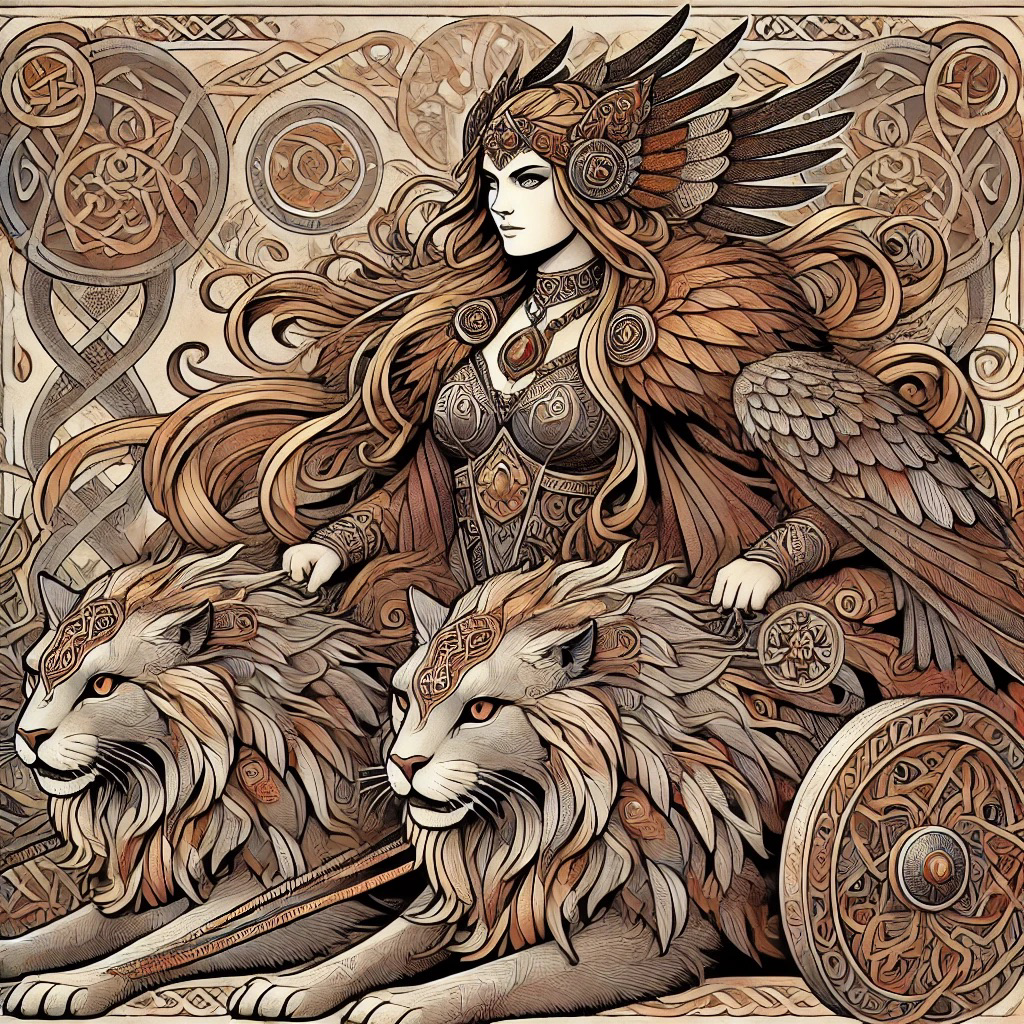
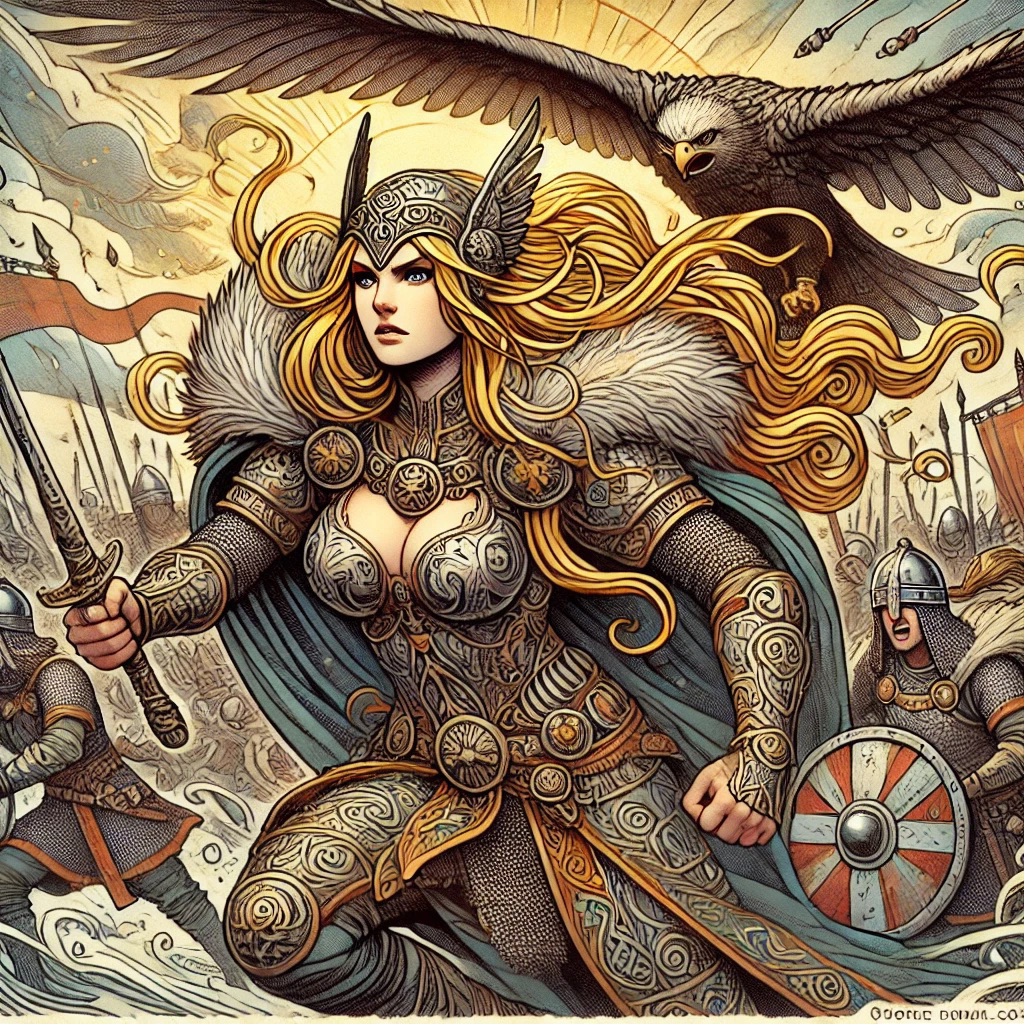
A Norse god and goddess look fierce, with ravens and eagles around them

A Tale of Two Tribes: The Aesir and the Vanir

The Norse gods are divided into two distinct groups:

The Aesir: The warlike, ruling gods of Asgard. Odin, Thor and Loki belong to this camp, focusing on battle, wisdom and power.

The Vanir: The gods of nature, fertility and prosperity. Freyja, Freyr and Njord are part of this mysterious older group.

The two groups weren’t always allies. They started out as enemies, locked in a brutal war that ended in a truce and an exchange of hostages. The Aesir and Vanir eventually merged into a single pantheon, but their differences remain: One is bound by war and fate; the other by nature’s cycles.

Now, let’s meet the major players.

Norse gods and the animals associated with them, including a raven and wolf

The Norse Pantheon: A Who’s Who of the Gods of Norse Mythology 

ODIN

Dominion: Wisdom, war, death

Gave up an eye for knowledge

THOR

Dominion: Thunder, strength, protection

Wields the hammer Mjölnir

LOKI

Dominion: Trickery, shapeshifting

Fathered a giant wolf, serpent and eight-legged horse

FREYJA

Dominion: Love, magic, battle

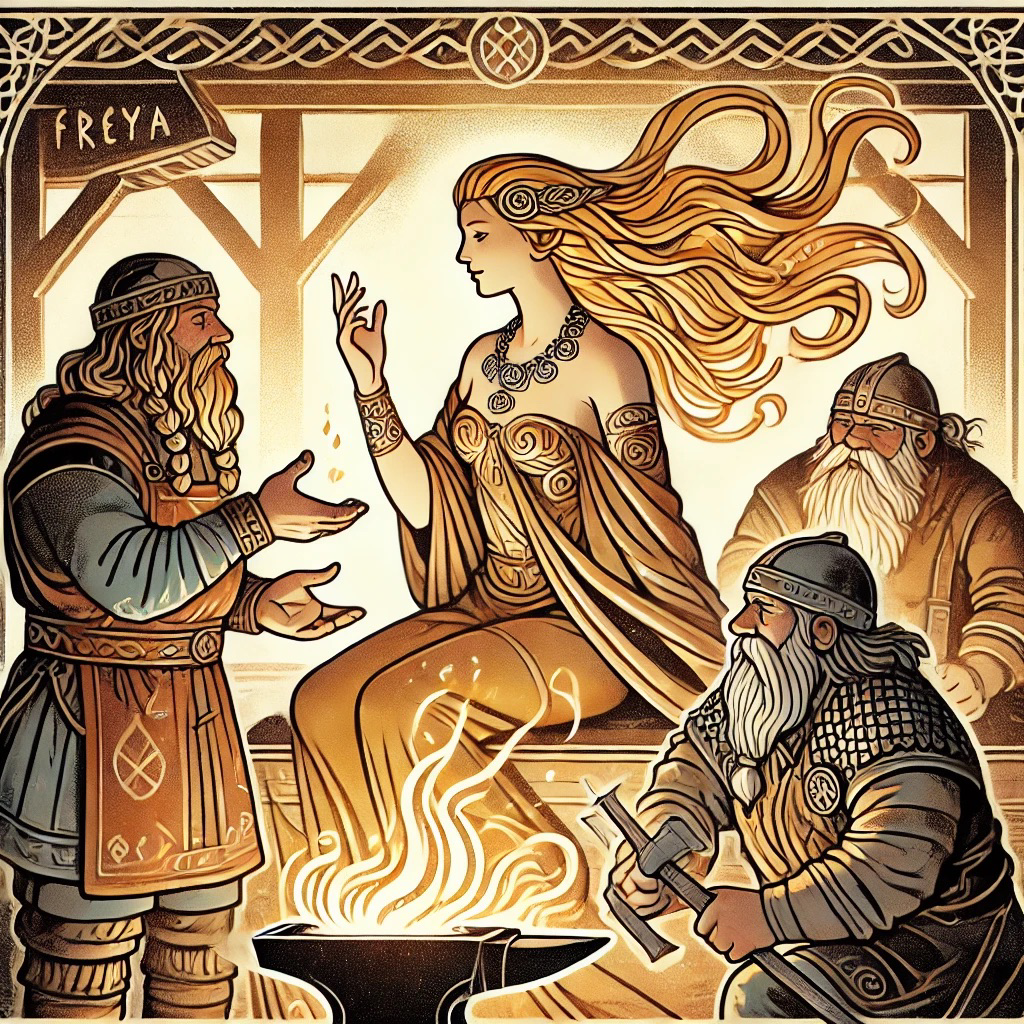
Slept with four dwarves to get a necklace

FREYR

Dominion: Fertility, prosperity, peace

Has a golden boar and a self-fighting sword

TYR

Dominion: Justice, law, sacrifice

Lost his hand to the giant wolf Fenrir

BALDER

Dominion: Light, beauty, hope

Was killed by a mistletoe arrow

HEIMDALL

Dominion: Guardianship, perception

Has golden teeth and guards the Rainbow Bridge

FRIGG

Dominion: Fate, foresight, motherhood

Can see the future but doesn't speak of it

NJORD

Dominion: Sea, wind, wealth

Hated living in the mountains with his wife

HODR

Dominion: Darkness, mystery

Accidentally killed his brother Balder

HEL

Dominion: Death, the underworld

Rules over those who die of illness or old age

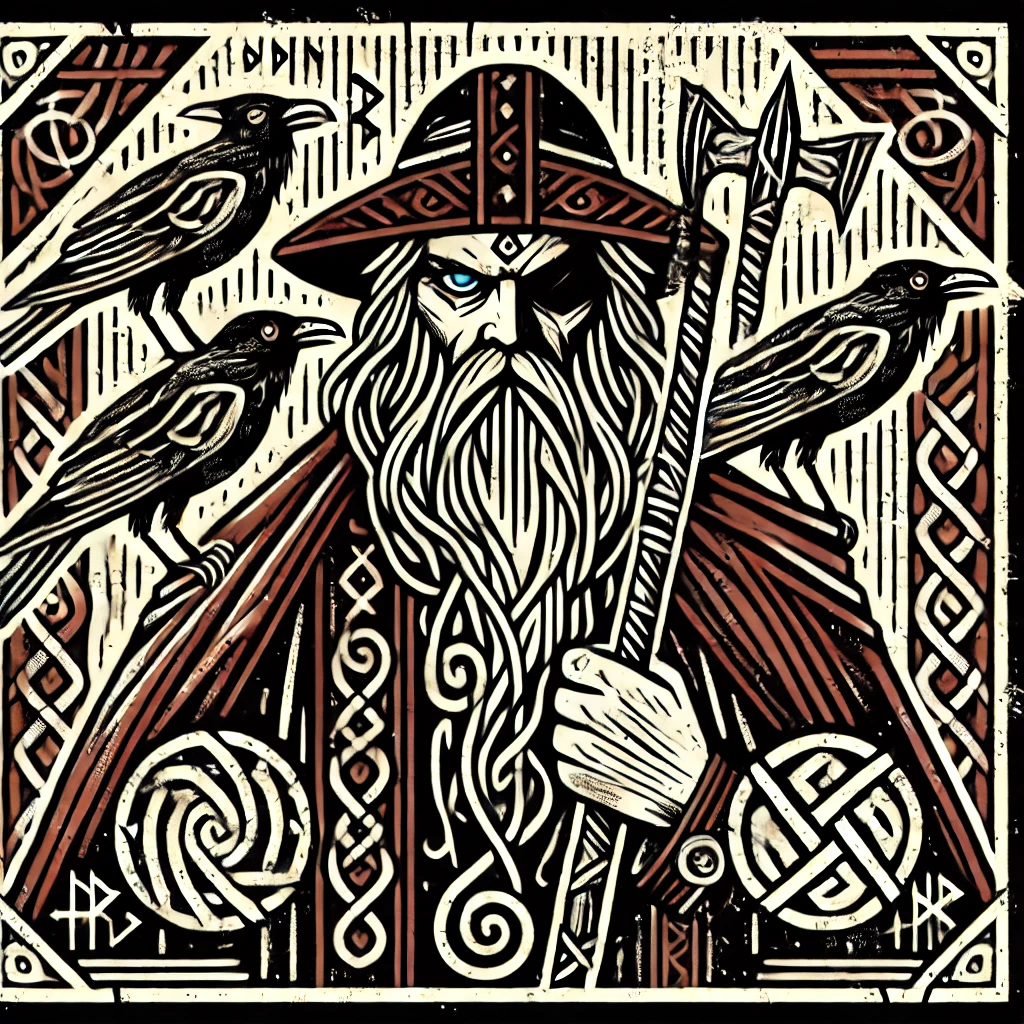
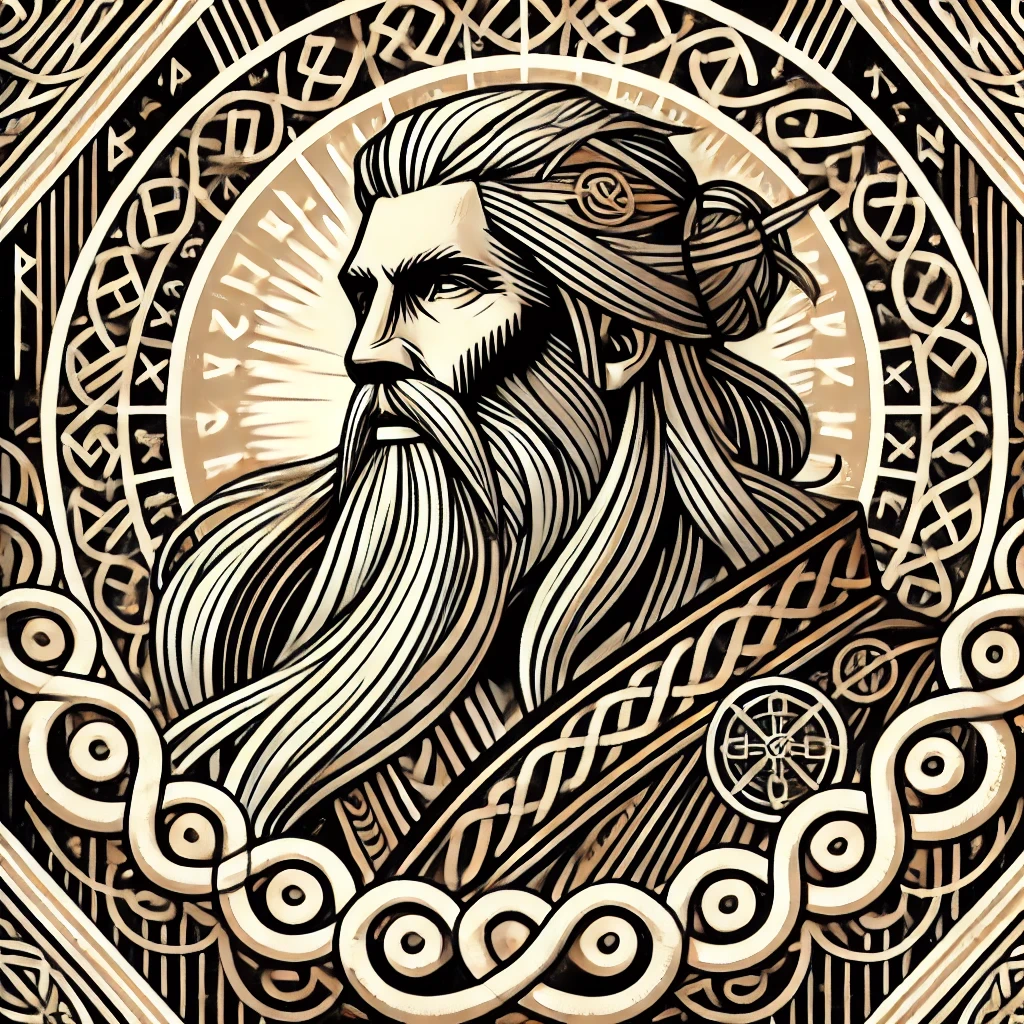
The Norse god one-eyed Odin with his ravens around him

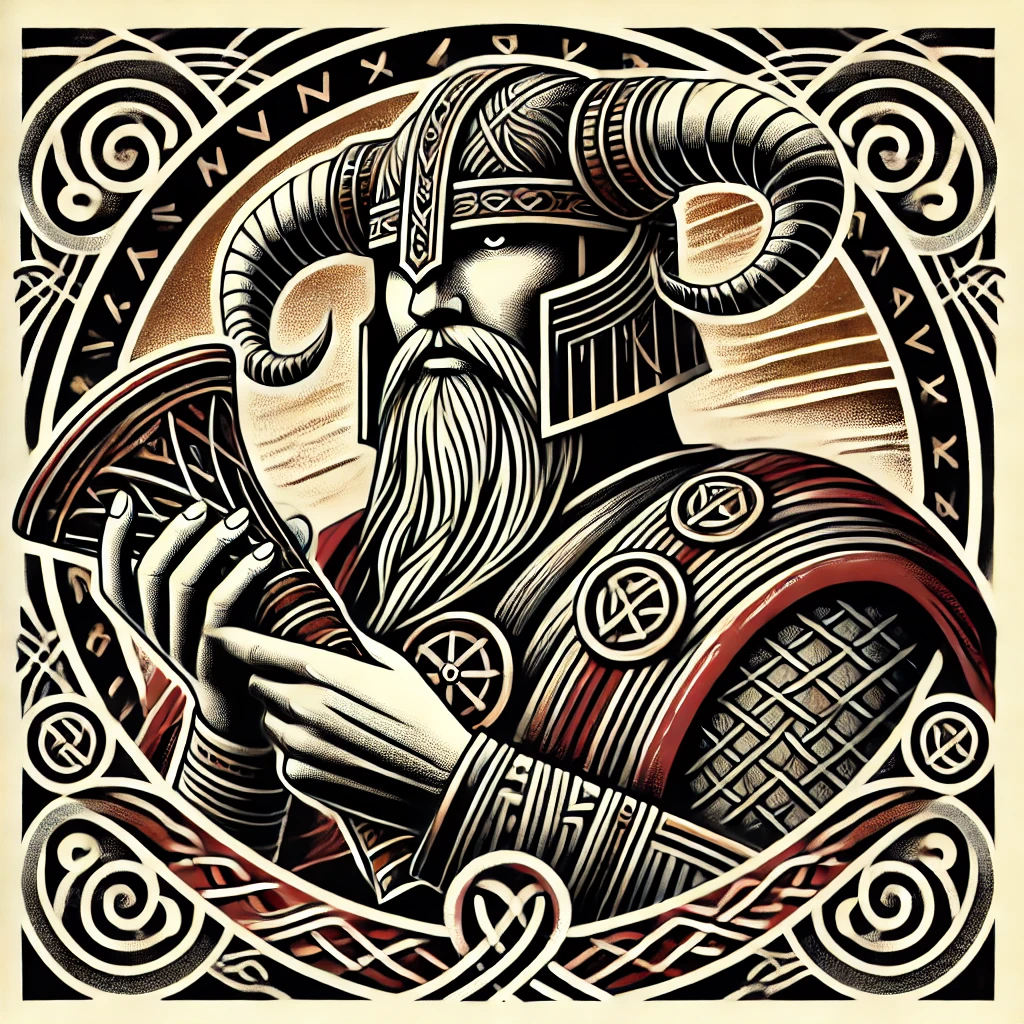
Odin

Divine Dominion: Wisdom, war, poetry, death and generally knowing more than everyone else

Temperament and Tendencies: Odin isn’t your typical benevolent all-father. He’s the kind of guy who trades his own eye for knowledge and thinks that’s a fair deal. He wanders the world in disguise, testing mortals with riddles and cryptic wisdom, all while hoarding every scrap of magical power he can get his hands on. He’s half battle god, half poetry nerd, and 100% obsessed with avoiding his own fate — though deep down, he knows it’s inevitable.

Signature Style:

  • Gungnir, a spear that never misses its mark

  • Huginn and Muninn, his two ravens who fly across the world gathering intel. Basically, his personal spy network

  • Sleipnir, an eight-legged horse that is technically his grandchild, thanks to Loki’s … creative approach to problem-solving

Inner Circle:

  • Frigg, his wife, who knows the future but refuses to tell him

  • Thor, his muscle-bound son who solves everything with his hammer

  • Loki, his brother and occasional worst enemy

  • The Valkyries, his elite warrior-maidens who collect the souls of fallen fighters for the heavenly hall of Valhalla

Saga-Worthy Moment: He once hanged himself from the World Tree for nine days just to unlock the secrets of the runes. Talk about commitment.

Ragnarök Status: Doomed. He’ll go head-to-head with Fenrir, the giant wolf, and it will not end well for him.

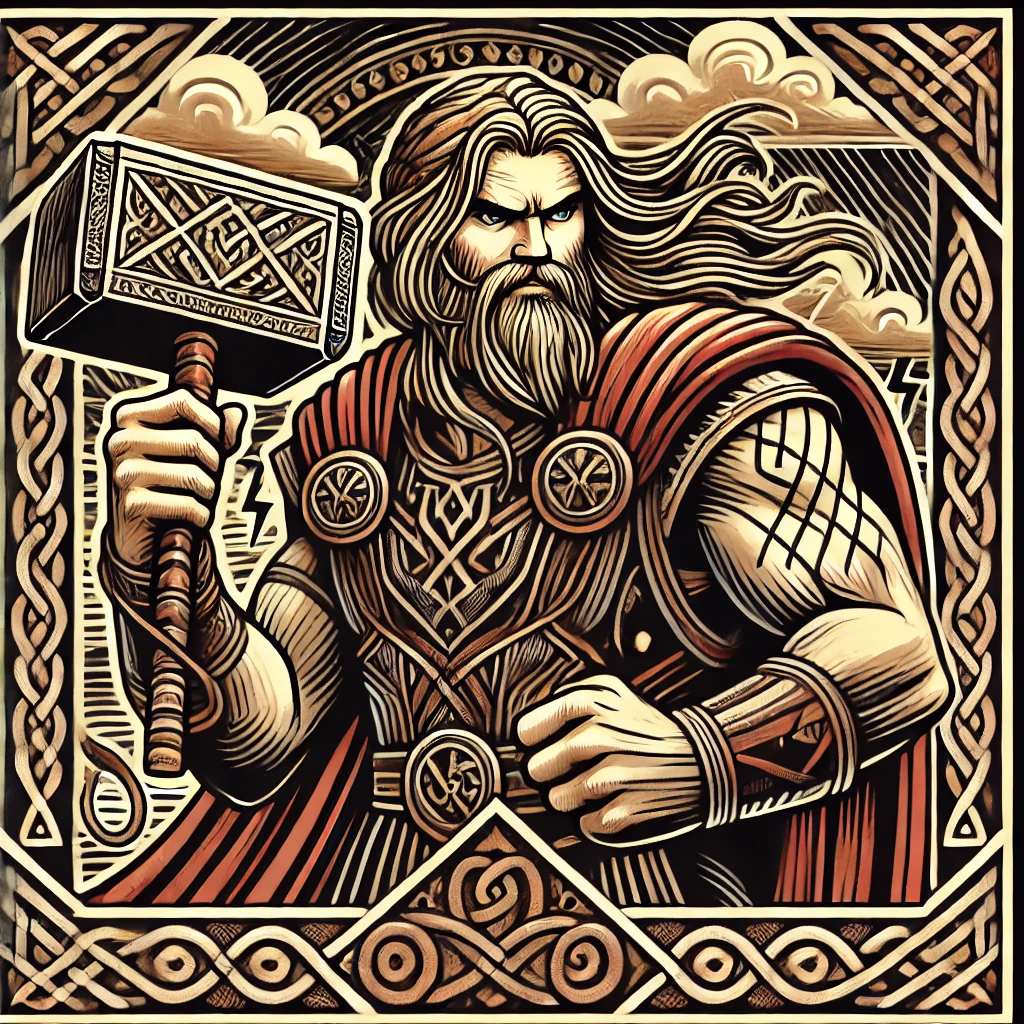
The Norse god Thor, holding his hammer in a border of runes

Thor

Divine Dominion: Thunder, strength, protection and smashing things really hard

Temperament and Tendencies: Thor is the kind of guy who kicks down doors instead of knocking. He’s loud, boisterous, fiercely loyal and completely incapable of subtlety. He’s the gods’ first line of defense against giants, trolls and anyone who looks at Asgard funny. Despite being a god of war, he has a soft spot for mortals — probably because they cheer the loudest when he shows up swinging his hammer.

Signature Style:

  • Mjölnir, his hammer, which always returns to his hand after being thrown

  • A magic belt that doubles his strength

  • A chariot pulled by two immortal goats, which he occasionally eats and then resurrects the next day

Inner Circle:

  • Sif, his wife, best known for her golden hair (which Loki once shaved off, and somehow survived)

  • Odin, his complicated father figure

  • Loki, his on-again, off-again adventure buddy who causes 95% of his problems

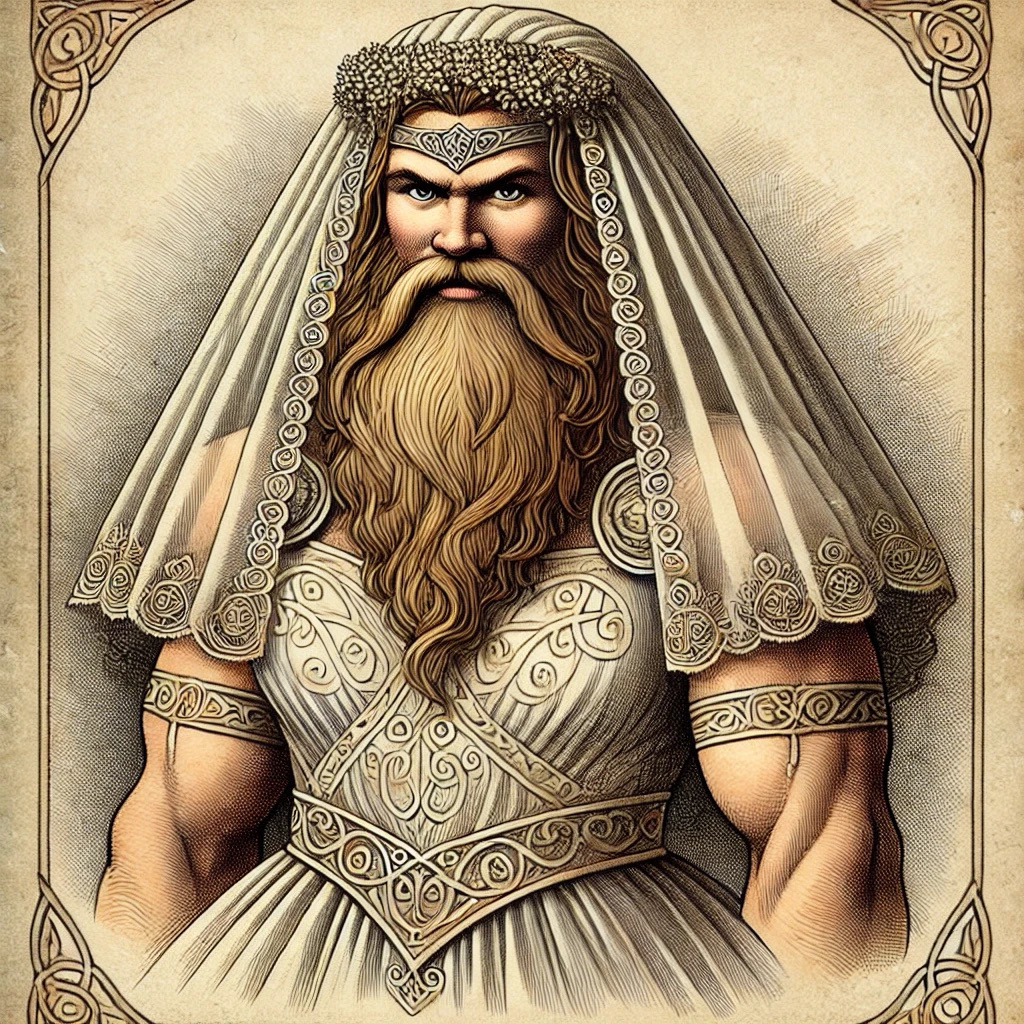
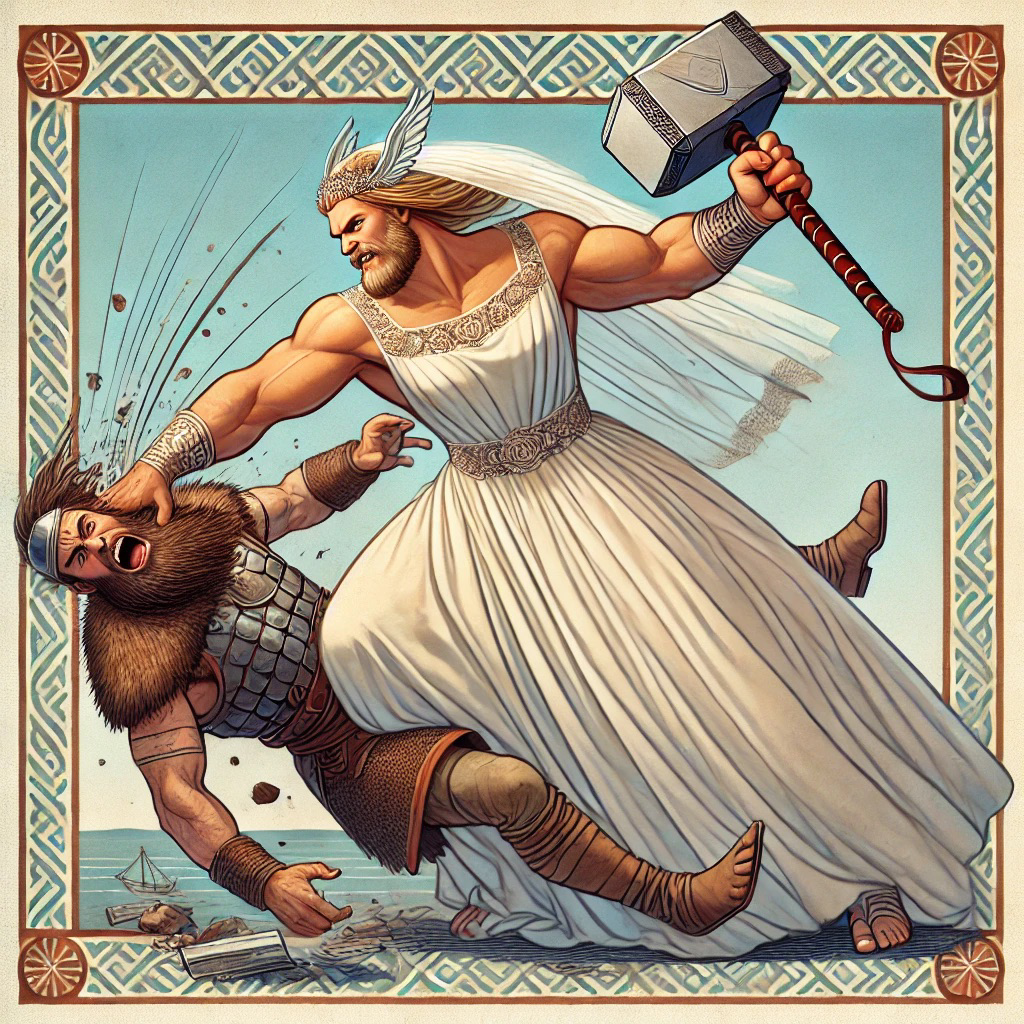
Saga-Worthy Moment: Once had to disguise himself as a bride to retrieve his stolen hammer. It ended in a massacre — but not before some very uncomfortable moments with the groom.

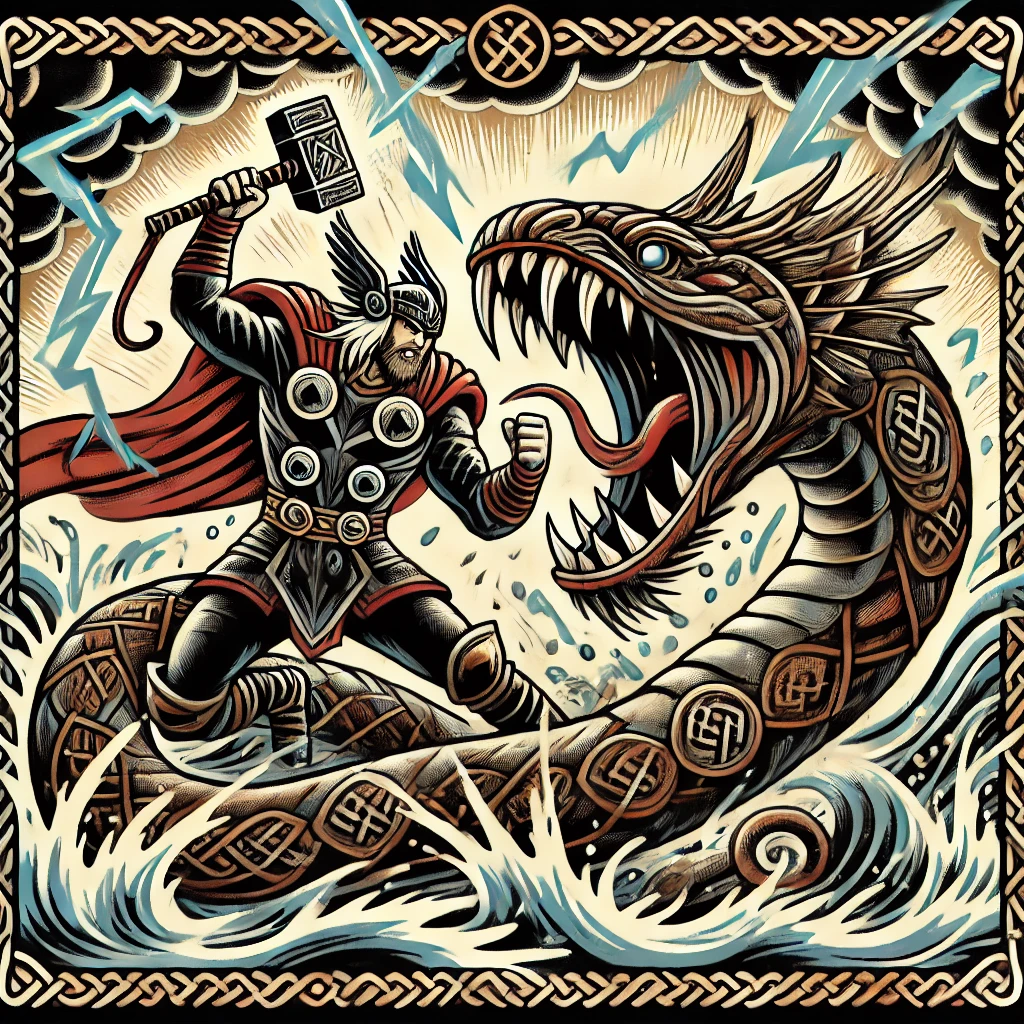
Ragnarök Status: Will go down swinging against Jörmungandr, the world-serpent — he kills it but dies shortly after from its venom

MORE: Norse Mythology That the Movie Thor: Ragnarok Got Wrong

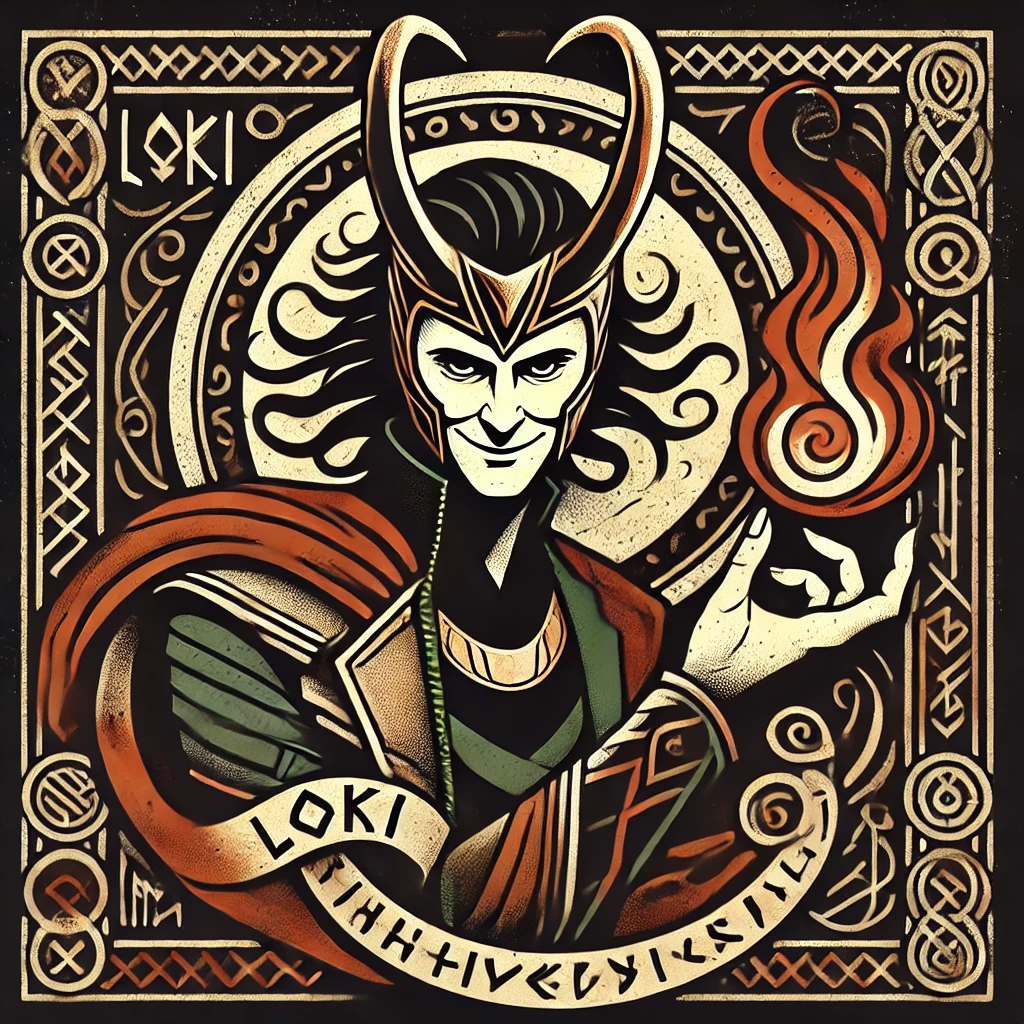
Loki, the Norse trickster god, wearing his horned helmet and conjuring fire in his hand, smiling mischievously

Loki

Divine Dominion: Trickery, chaos, fire and making bad decisions seem fun

Temperament and Tendencies: Loki is equal parts hilarious and horrifying. One minute he’s pulling off an elaborate prank on Thor, and the next, he’s indirectly responsible for the downfall of the gods. He’s a shapeshifter, a smooth talker and a chaos magnet. He’s technically Odin’s brother but doesn’t really fit in with the rest of the Aesir — probably because he keeps switching sides.

Signature Style:

  • Shapeshifting into literally anything, from a fish to a fly to, infamously, a female horse. (Yes, this is how Odin’s eight-legged horse was born. No, we don’t talk about it)

  • A silver tongue, which gets him both into and out of trouble

  • A flair for the dramatic, because being subtle is boring

Inner Circle:

  • Odin, when they’re on good terms

  • Thor, when they’re not trying to kill each other

  • His wife, Sigyn, who’s way too patient for her own good

Saga-Worthy Moment: Loki once gatecrashed a feast at the underwater hall of the giant and master brewer Ægir, where he insulted every god in attendance, bragged about sleeping with half of them, and aired everyone’s dirty laundry in verse — all while very drunk. When Thor finally stormed in and threatened to hammer Loki into paste, the trickster decided it was probably time to leave. This delightful trainwreck of a roast is known as Lokasenna, or Loki’s Flyting. 

Ragnarök Status: Will lead the charge against the gods and go down in a final showdown with Heimdall.

THINK NORSE MYTHOLOGY IS CRAZY? Wait’ll you get a load of this tale of incest, lettuce and jizz from Egyptian mythology!

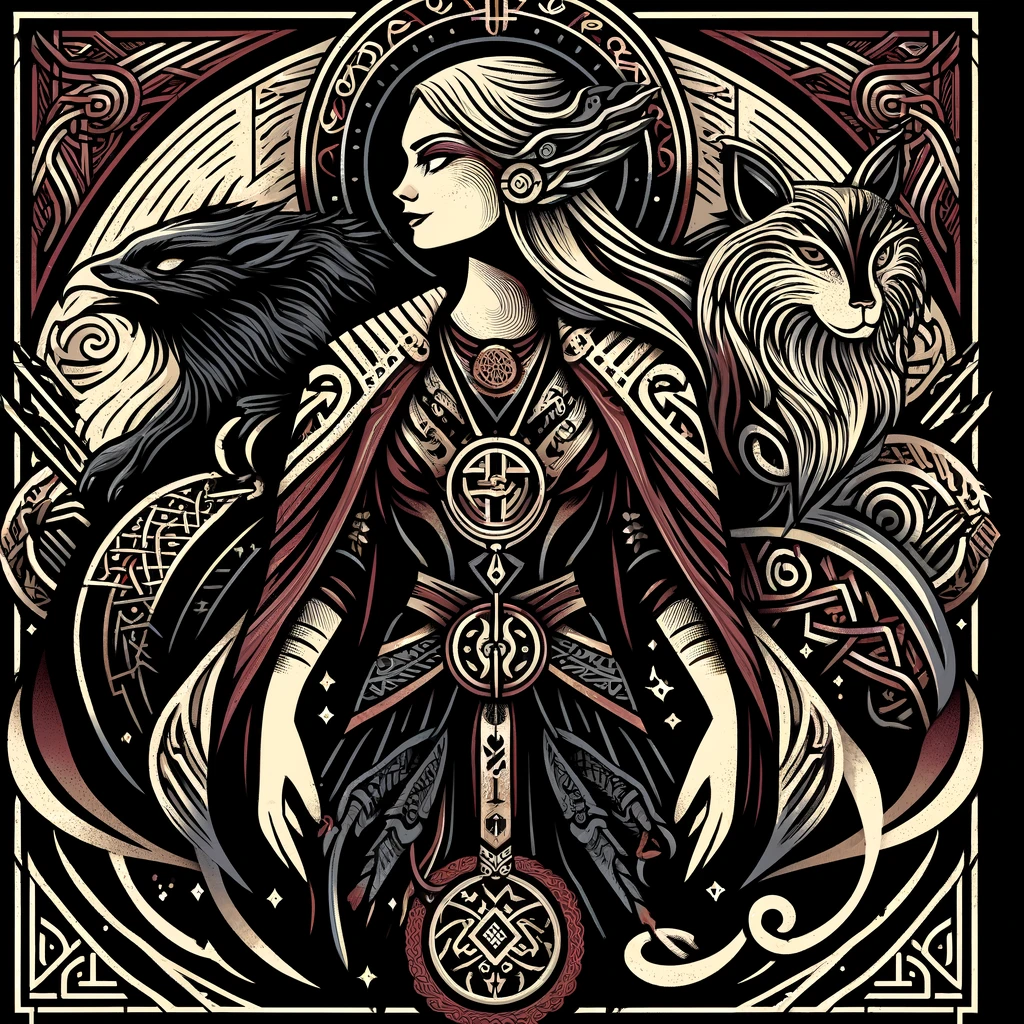
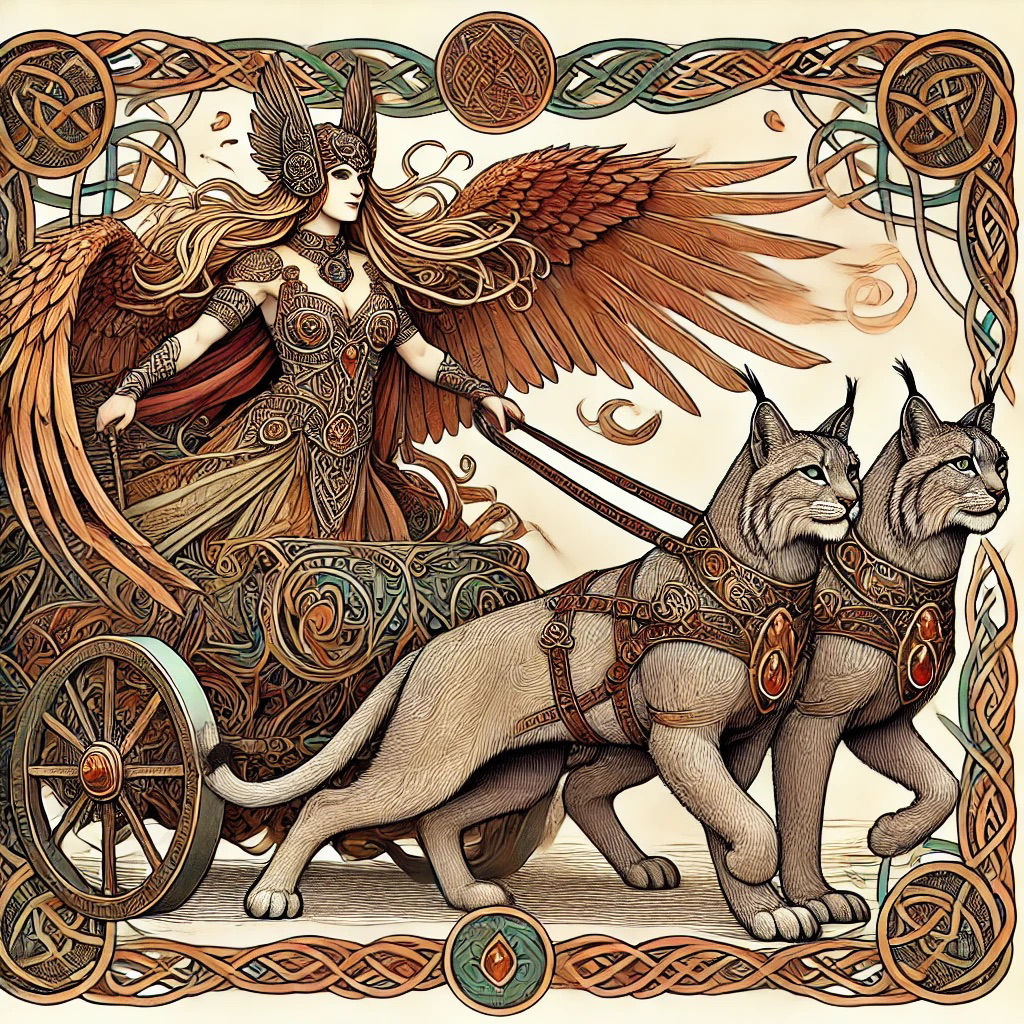
The Norse goddess Freyja, with a raven and cat

Freyja

Divine Dominion: Love, beauty, war, magic and getting whatever she wants

Temperament and Tendencies: Freyja’s not your typical love goddess. Sure, she’s beautiful and enchanting — but she’s also a battle-hardened warrior who rides into combat and takes half the fallen warriors before Odin gets his pick. She’s also the queen of sorcery, which makes her both alluring and utterly terrifying.

Signature Style:

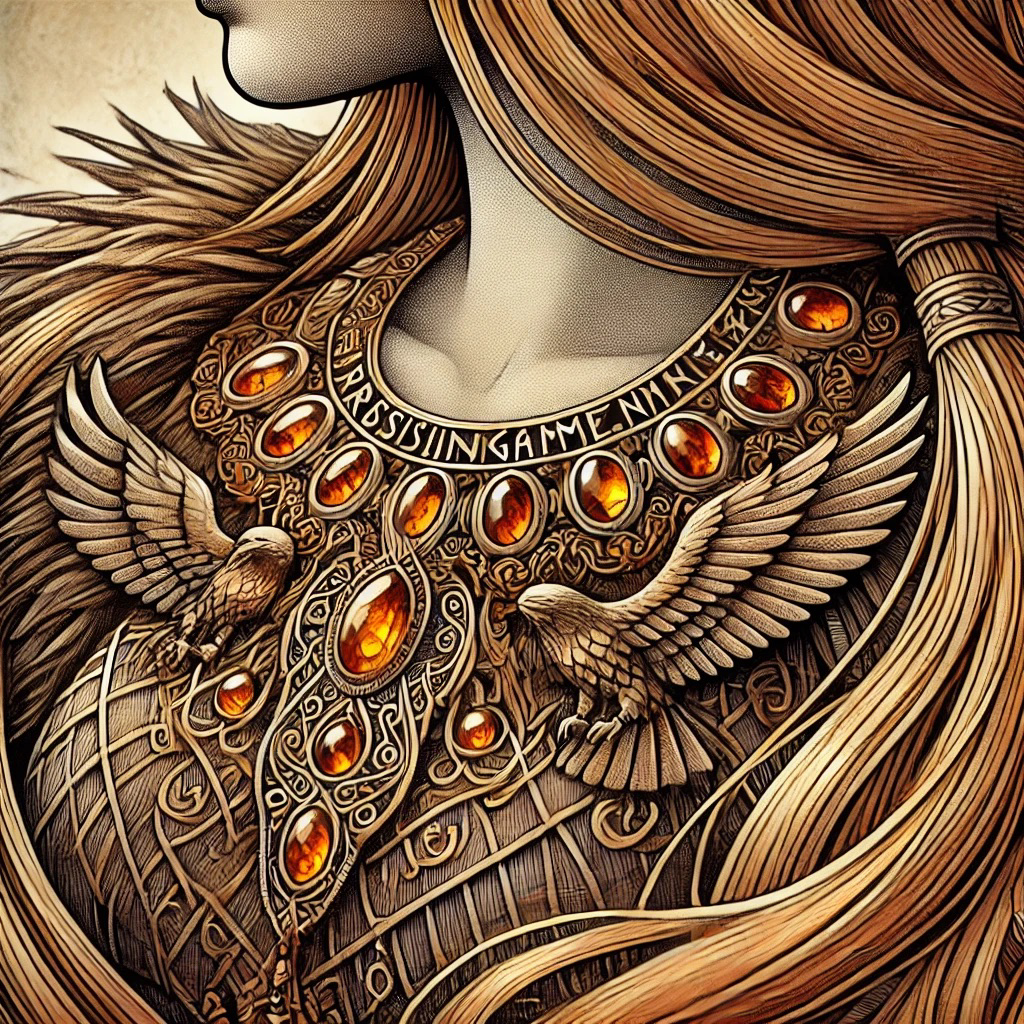
  • Brísingamen, a dazzling necklace that she definitely didn’t have to sleep with four dwarves to obtain. (Except she did)

  • A chariot pulled by two big cats, because dogs are overrated

  • A falcon-feathered cloak, allowing her to fly

Inner Circle:

  • Freyr, her twin brother, also associated with fertility and prosperity

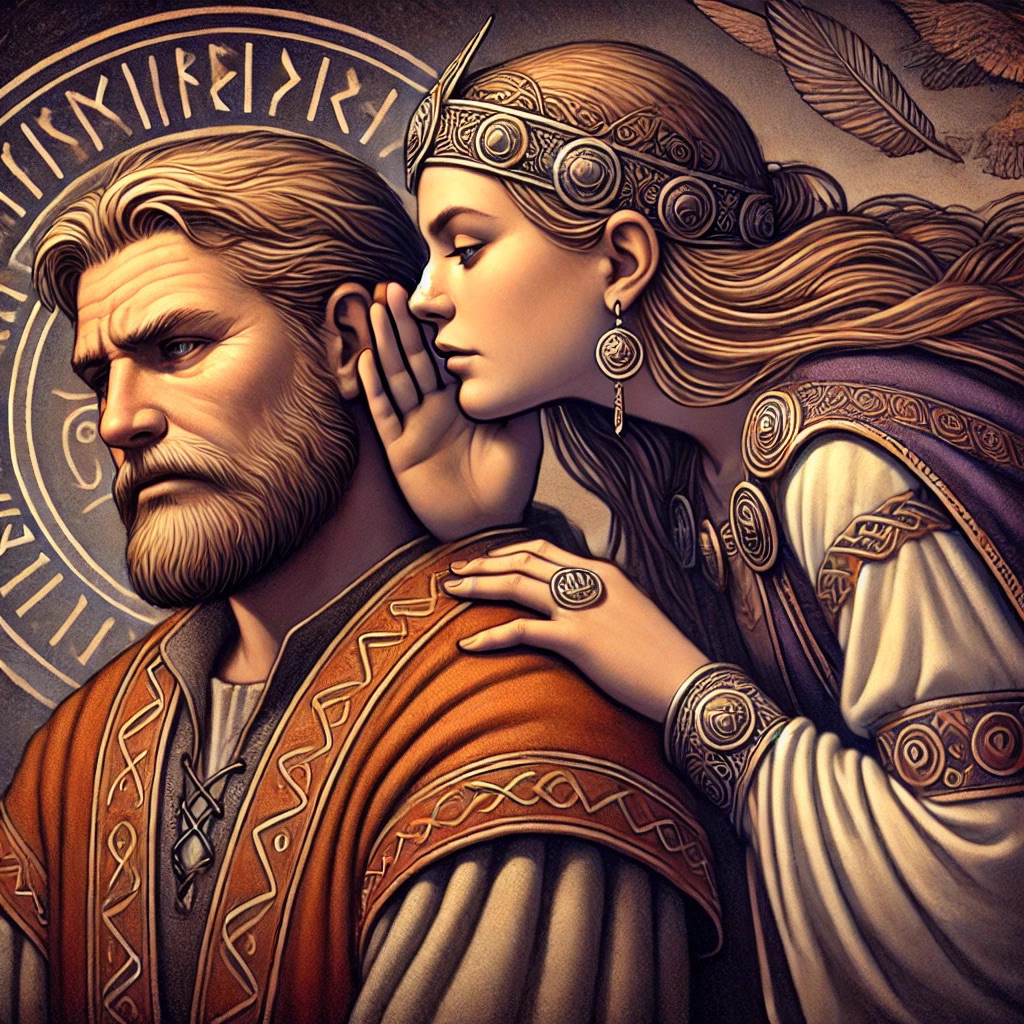
  • Odin, who learned magic from her

  • A lot of broken-hearted lovers

Saga-Worthy Moment: Once turned down a marriage proposal from a giant so dramatically that Thor had to step in and smash things.

Ragnarök Status: Unclear. She might survive — because no one tells Freyja what to do.

LEARN MORE about Freyja

The Norse god Freyr smiles and pets his golden boar while his swords floats next to him

Freyr

Divine Dominion: Fertility, prosperity, peace and romantic decisions that haunt you forever 

Temperament and Tendencies: Freyr is one of the Vanir, a fertility god with a soft spot for beautiful women and good harvests. Unlike his battle-happy Aesir cousins, Freyr prefers peace, feasting and abundance — but when love strikes, he goes full disaster romantic.

Signature Style:

  • A magic sword that fights on its own (which he gave away to impress a girl… Great call)

  • Gullinbursti, a glowing golden boar that pulls his chariot

  • An aura of extremely fertile energy — the kind that makes crops grow just by being near them

Inner Circle:

  • Freyja, his twin sister and occasional partner-in-crime

  • Njord, their laidback sea god dad

  • Gerðr, the giantess he fell for so hard, he handed over his magic weapon

Saga-Worthy Moment: At Ragnarök, Freyr goes into battle unarmed because of that whole sword-for-love swap, and gets absolutely wrecked by Surtr, the fire giant.

Ragnarök Status: Heroic, but very dead

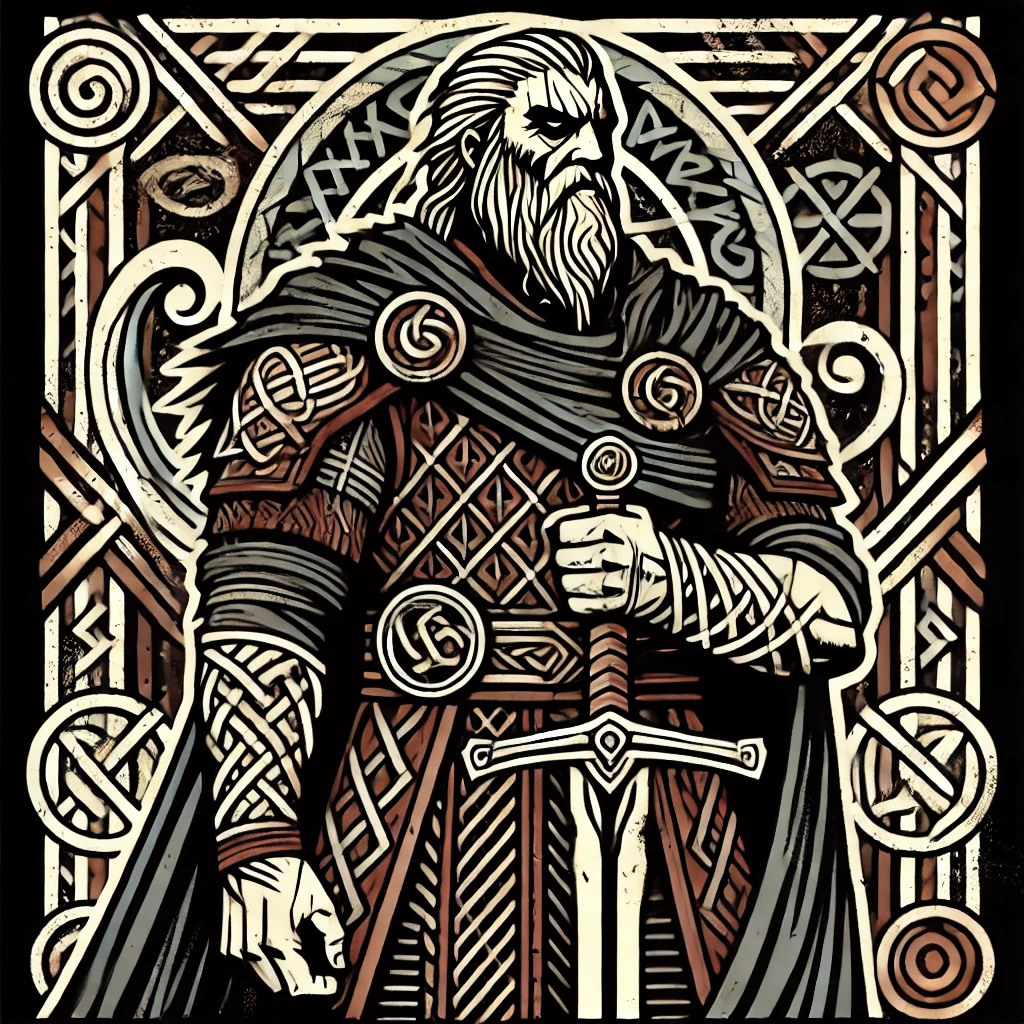
The Norse god Tyr clutches his sword, looking stern, surrounded by runes

Tyr

Divine Dominion: Justice, law, honorable combat and making the ultimate sacrifice

Temperament and Tendencies: Tyr is the god you call when things need to be done the right way. He’s honorable, courageous, and possibly the only Norse god who actually thinks before acting. Unlike Thor, who solves problems with a hammer blow, and Odin, who solves them with riddles, Tyr solves them with logic and sheer willpower — and sometimes, by personally sacrificing body parts.

Signature Style:

  • A missing hand, courtesy of Fenrir the giant wolf. (More on that in a second)

  • A sword, because even a god of justice needs a way to back it up with force

  • An aura of quiet competence, which makes him stand out in a pantheon full of drama

Inner Circle:

  • Odin, when things need a legal expert

  • The other gods, when they need someone to do the hard job

  • Not Fenrir, for obvious reasons

Saga-Worthy Moment: The gods needed to bind Fenrir, the monstrous wolf who would one day help destroy the world. The wolf, being somewhat intelligent, refused to let them tie him up unless one of them put their hand in his mouth as collateral. Tyr immediately stepped up, fully aware of how this was going to end. Sure enough, the second Fenrir realized he was tricked, he bit down — and Tyr didn’t even flinch.

Ragnarök Status: Will fight Garm, the underworld’s monstrous hound, in a final battle. The result? Mutual destruction. But honestly, that’s just how Tyr rolls.

The golden Norse god Balder, ringed by runes

Balder

Divine Dominion: Light, purity, joy and making everyone love him (too much)

Temperament &land Tendencies: Balder is the golden boy of the Norse pantheon — literally. He’s charming, kind, handsome and basically too good for this world (which, spoiler alert, is a problem). Everyone adores him: gods, mortals, even inanimate objects — except for Loki, of course.

Signature Style:

  • Glowing with divine radiance, because normal beauty isn’t enough

  • Wearing the best armor ever, because Frigg, his mother, made everything in existence promise not to harm him. (Again, almost everything)

  • Being the center of attention, mostly because the gods liked to throw things at him just to watch them bounce off

Inner Circle:

  • Frigg and Odin, his doting parents

  • Hodr, his blind twin brother

  • Literally everyone (again, except Loki)

Saga-Worthy Moment: Thanks to his mother’s magical oath, nothing in existence could hurt Balder. The gods turned this into a game, throwing weapons at him and laughing as they bounced off. Enter Loki, who found the one thing Frigg forgot to make swear an oath: mistletoe. He handed a mistletoe-tipped arrow to Balder’s blind brother, Hodr, and guided him to shoot. Balder died instantly, and everyone lost their minds.

Ragnarök Status: Already dead, but he’ll make a glorious return after the world ends, because Balder always gets a happy ending.

Heimdall, the Norse god, wears a helmet with horns curving down and holds his horn

Heimdall

Divine Dominion: Guardianship, foresight and being literally the most alert being in existence

Temperament and Tendencies: Heimdall is the guy who never sleeps. He’s the guardian of Bifröst, the rainbow bridge, and his one job is to watch for any threats to Asgard. And he does it very well — his hearing is so sharp he can hear grass grow, and his vision is so good he can see across the realms. Basically, he’s the divine equivalent of a security system cranked up to 11.

Signature Style:

  • The Gjallarhorn, the horn he will blow when Ragnarök begins

  • Golden teeth, cuz why not?

  • A sword — he’s not just standing guard for fun

Inner Circle:

  • Odin, because somebody has to be responsible

  • The other gods, when they actually listen to his warnings

Saga-Worthy Moment: One day, when the world finally starts crumbling, Heimdall will blow the Gjallarhorn, signaling the beginning of the end. And after a lifetime of standing guard, he’ll finally step into battle against Loki himself in a legendary duel where both will die.

Ragnarök Status: As mentioned, he’ll go out in the ultimate grudge match against Loki. No survivors.

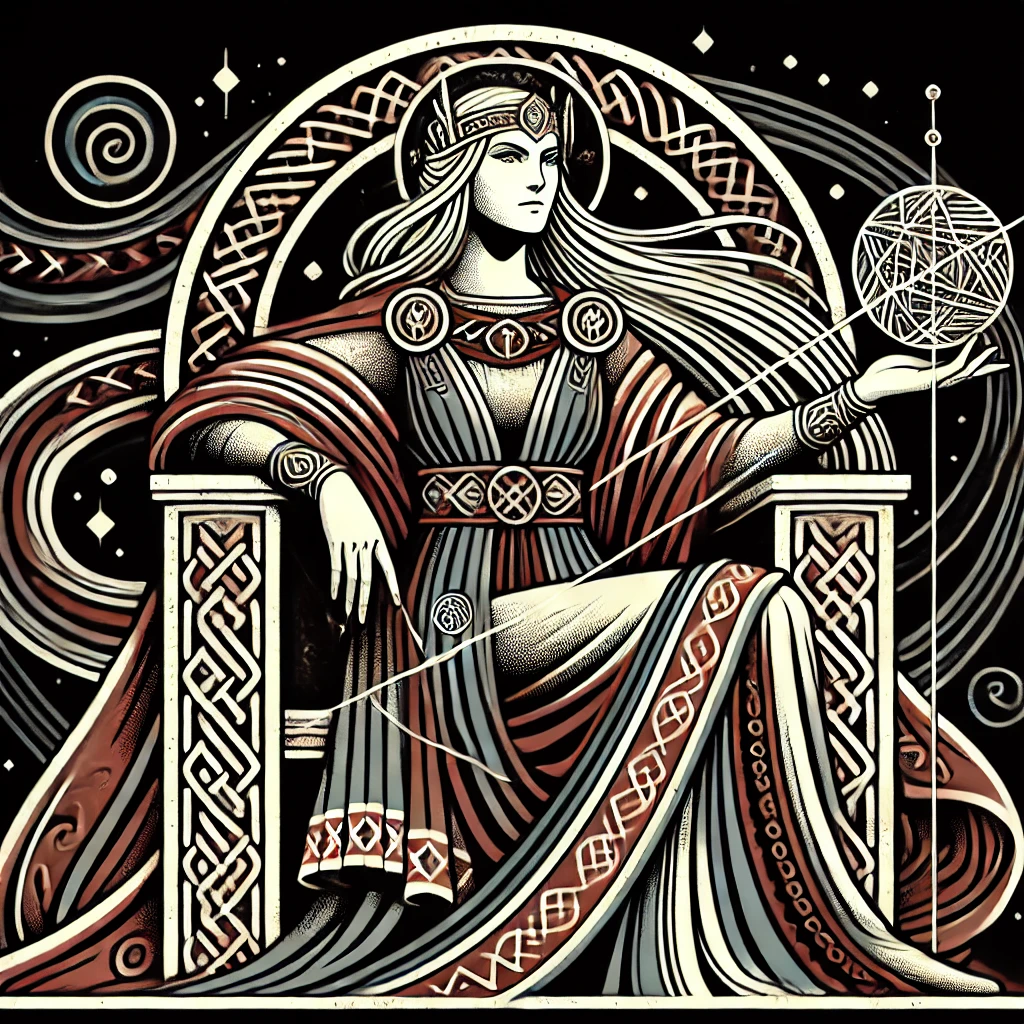
The Norse goddess Frigg sits regally in her throne, weaving fate itself

Frigg

Divine Dominion: Fate, motherhood, marriage and knowing absolutely everything — but keeping it to herself

Temperament and Tendencies: Frigg is the ultimate quiet power player. As Odin’s wife and queen of the Aesir, she has the gift of foresight; she knows exactly how everything will end. But does she share this knowledge? Absolutely not. Instead, she spends her time weaving the threads of fate and occasionally trying (and failing) to save her golden boy, Balder. 

Signature Style:

  • A spindle and distaff, because fate doesn’t weave itself

  • A throne right next to Odin, where she sees everything

  • A talent for making oaths happen, which works great — until Loki finds a loophole

Inner Circle:

  • Balder, her beloved son (RIP)

  • Odin, her mysterious, wandering husband

  • A host of minor goddesses who help her manage fate

Saga-Worthy Moment: She got everything in existence to swear an oath not to harm Balder … except for mistletoe. That one oversight set off the entire apocalypse countdown.

Ragnarök Status: Survives (but she already knew that) 

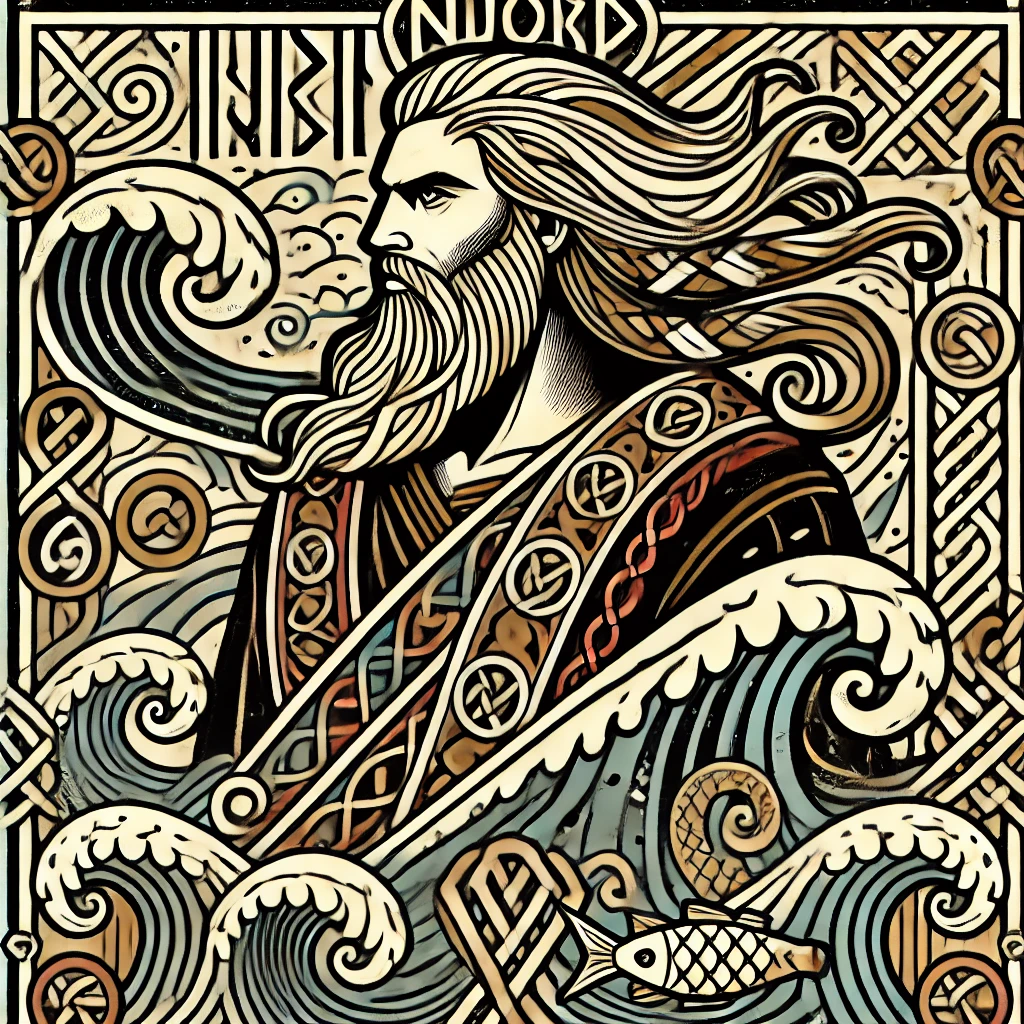
The Norse god of the sea, Njord, stands amid waves and runes

Njord

Divine Dominion: The sea, wealth, boats and awkward family vacations

Temperament and Tendencies: Njord is chill. He’s a sea god who just wants everyone to be rich, happy and sailing the open waves. But thanks to an arranged marriage with Skadi, a snow-loving giantess, his life is one long compromise between the beach and the mountains. Spoiler: Nobody’s happy.

Signature Style:

  • A ship that can sail on land if needed

  • An eternal tan, because sea gods don’t do SPF

  • A lot of treasure — the sea is a profitable business

Inner Circle:

  • Freyr and Freyja, his beloved kids

  • Skadi, his extremely outdoorsy ex

Saga-Worthy Moment: He and his wife, Skadi, agreed to split their time between his beach house and her mountain lodge. Both hated each other’s homes, so they split up, making Njord the god of divine irreconcilable differences.

Ragnarök Status: Not really a fighter, so he might just float off into the sunset

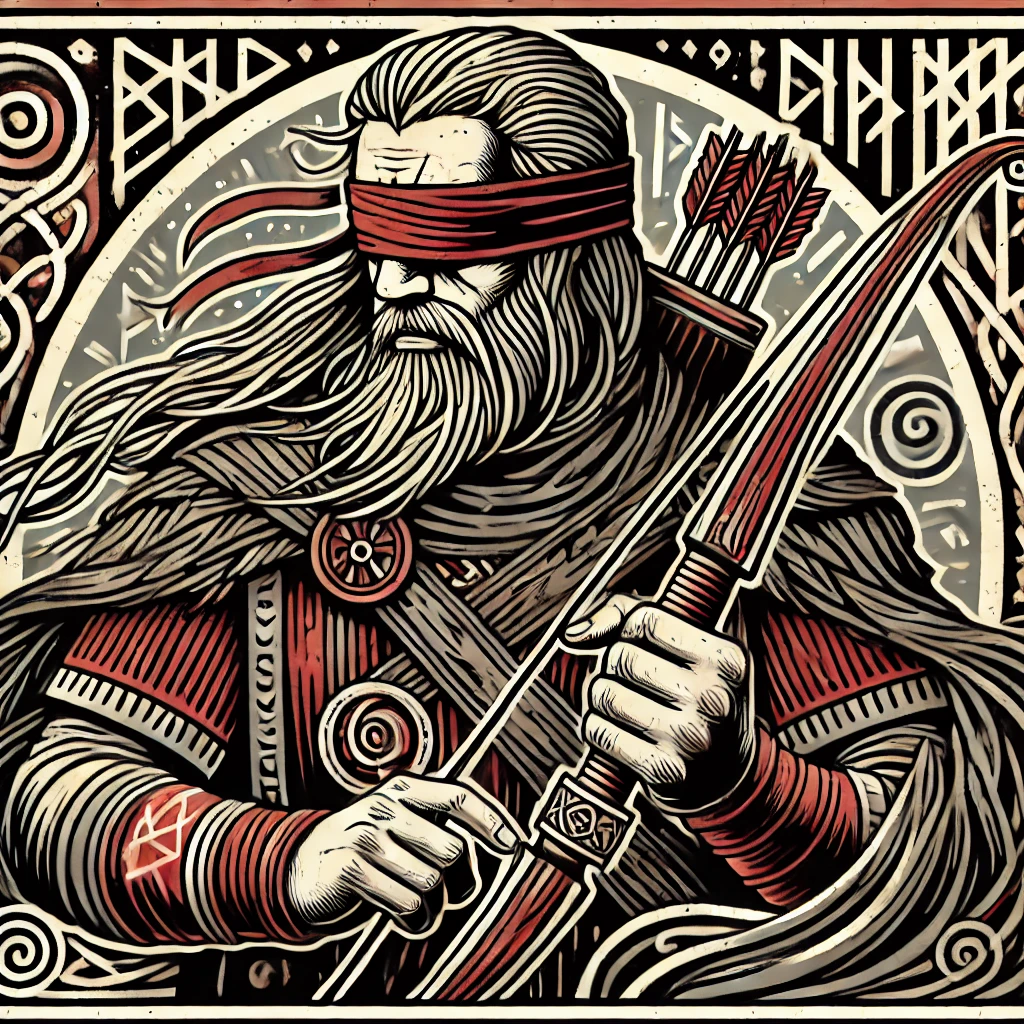
The blindfolded and blind Norse god Hodr, holding his bow

Hodr

Divine Dominion: Darkness, tragic accidents and being way too trusting of Loki

Temperament and Tendencies: Hodr is kind-hearted but doomed, born blind and destined to kill his own brother Balder — which is super-awkward because they actually liked each other. But the gods don’t even blame him. They all know it was Loki’s fault.

Signature Style:

  • A bow and arrow, because nothing could possibly go wrong handing that to a blind guy

  • A general vibe of tragic inevitability

  • Being the saddest pawn in the whole mythology game

Inner Circle:

  • Balder, his ill-fated brother

  • Frigg, his mom, who really tried her best

  • Loki, who hands him the murder weapon like some cosmic prank gone too far

Saga-Worthy Moment: When the gods played their “let’s throw stuff at Balder” game, Hodr got handed a mistletoe-tipped arrow by Loki, who kindly helped him aim. Instant tragedy.

Ragnarök Status: Already dead before Ragnarök even starts. A true overachiever in cosmic misfortune.

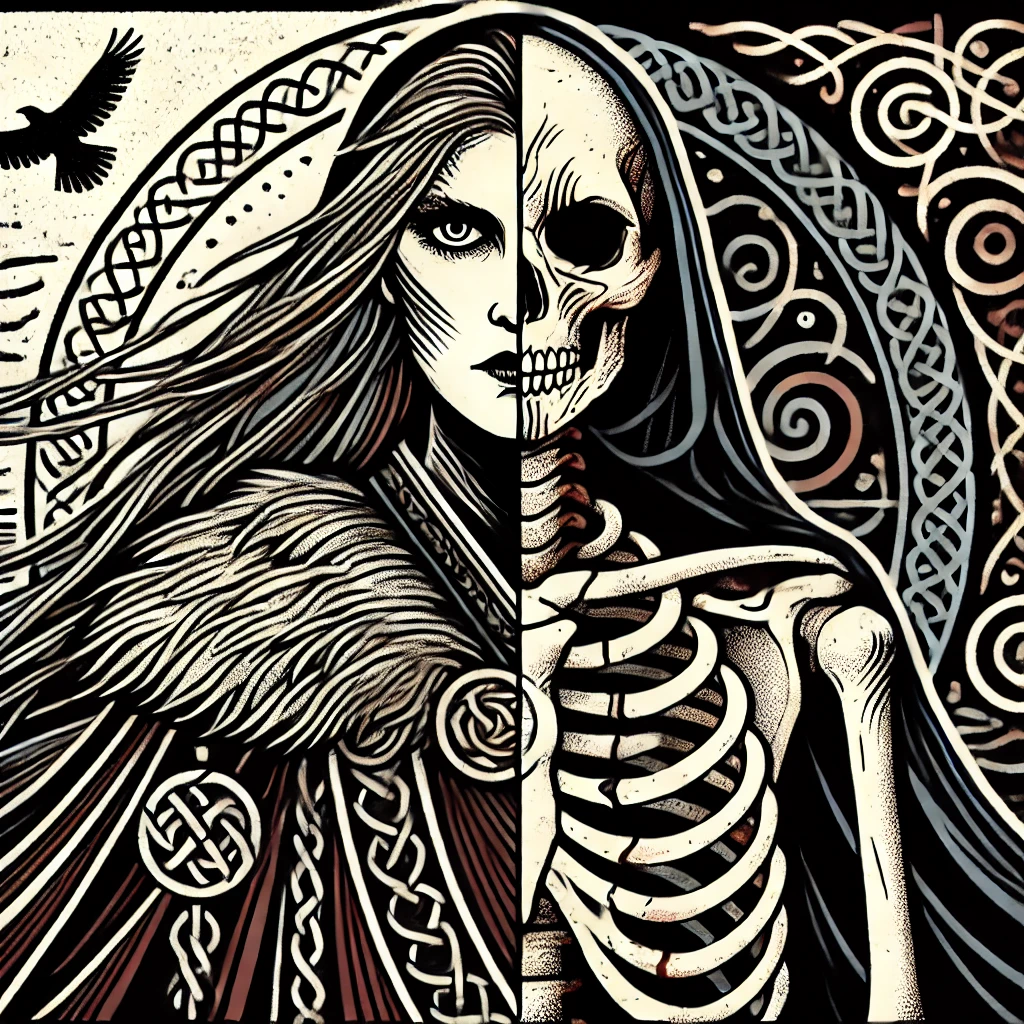
Hel, the Norse goddess of the underworld, half beautiful woman, half skeleton

Hel

Divine Dominion: The underworld, death, and giving zero fucks about your feelings

Temperament and Tendencies: Hel is half living woman, half rotting corpse, which really sets the tone. Unlike the fiery torment of some afterlives, Helheim is more of a cold, dreary waiting room for souls who didn’t die in battle. Hel’s not really cruel; she just doesn’t give a shit.

Signature Style:

  • A kingdom named after herself, because branding matters

  • An expression that says, “This meeting could’ve been an email.”

  • A general air of “why are you bothering me?”

Inner Circle:

  • Loki, her dad, who barely visits

  • The dead, who don’t exactly have options

Saga-Worthy Moment: When Balder died, Hermod (Odin’s other son) rode into Helheim to beg Hel to release him. Hel said sure — if literally everything in the world would weep for him. When one giantess (Loki in disguise, naturally) refused, she slammed the gates shut and went back to not caring.

Ragnarök Status: Stays put in Helheim, because she has a kingdom to run, thank you very much.

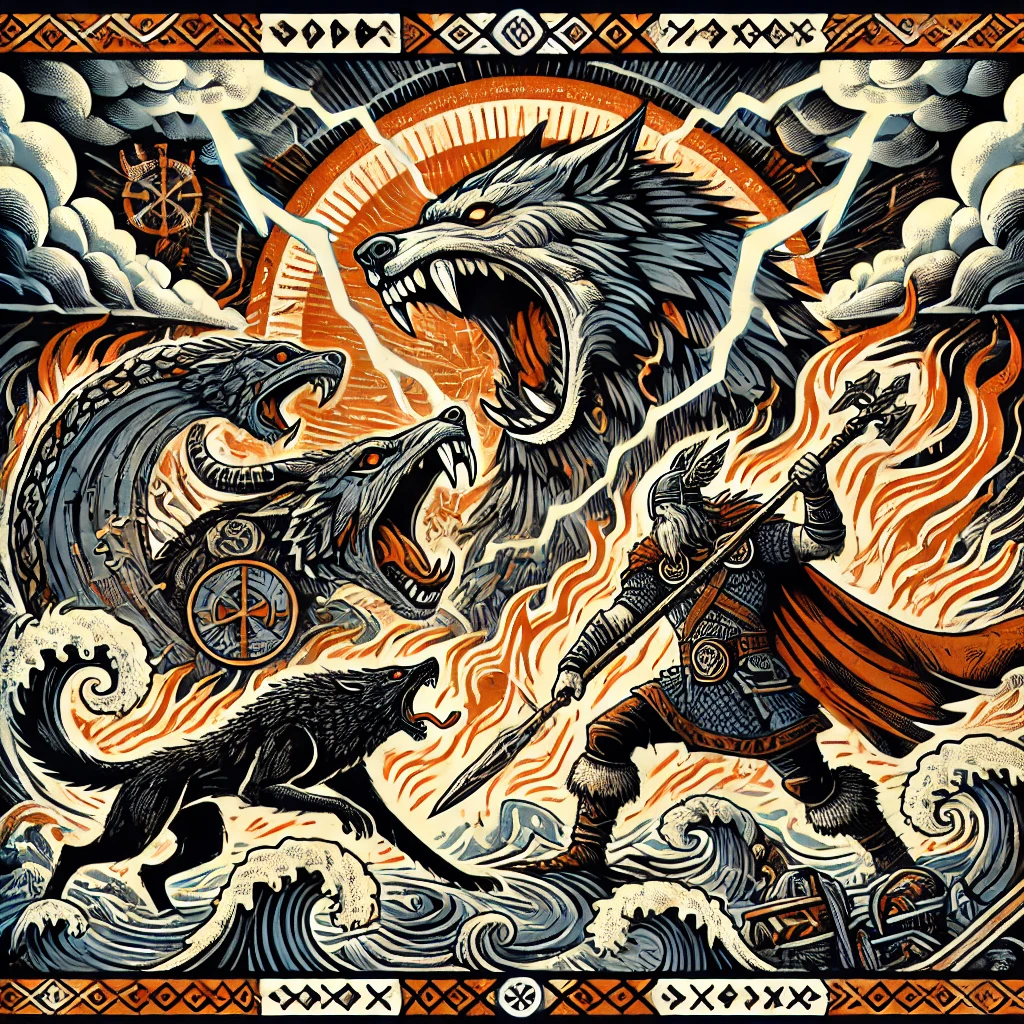
The Norse gods battle monsters, including giant wolves and serpents during Ragnarök, the end of the world

The Norse Pantheon: Gods of Glory and Doom

The Norse gods are a paradox: mighty yet mortal, powerful yet doomed. Unlike the serene and eternal deities of other mythologies, they live in the shadow of an ending they can’t escape. 

But rather than despair, they fight harder, love wilder and drink deeper. They’re warriors, tricksters, rulers and seers, but above all, they’re beings who embrace their fate and make every moment count.

And maybe that’s what makes them so compelling. The Norse gods aren’t distant, perfect figures sitting on golden thrones. They struggle, they fail, they sacrifice, and they rage against the inevitable. They’re larger than life — until they die. 

So raise a horn of mead, toast to the Aesir and Vanir, and remember: Even gods can fall, but legends live forever. –Wally


The Major Hindu Gods and Goddesses

Hinduism is said to have millions of gods — but in practice, a few dozen take center stage. Here’s your guide to the most significant deities and avatars, including Shiva, Ganesha, Vishnu, Saraswati, Krishna, Hanuman, Lakshmi and Kali.

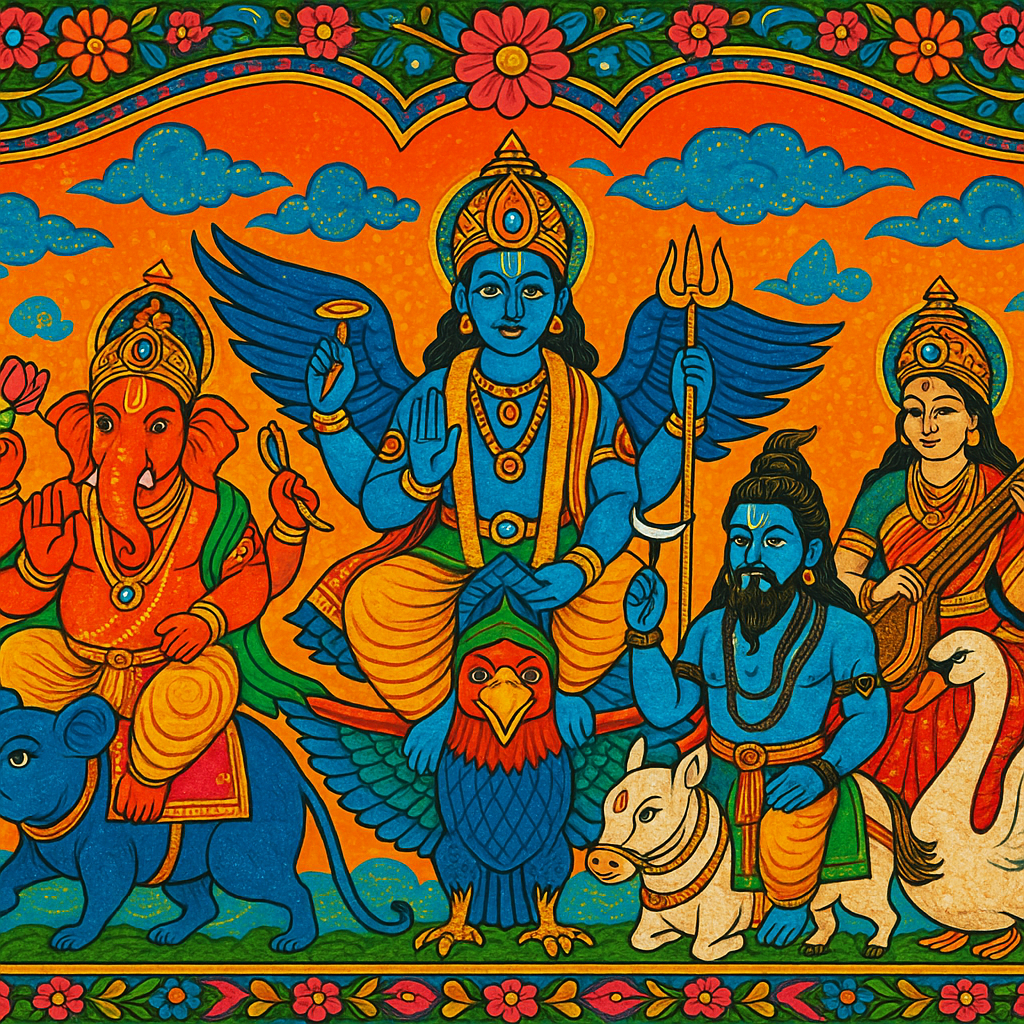
Ganesha on his mouse, Vishnu on Garuda, Shiva on the Nandi Bull and Saraswati on her swan

If you’ve ever heard that Hinduism has “330 million gods,” you might picture an endlessly expanding pantheon with so many characters you could spend a lifetime learning about them all. 

The truth is more layered. That astronomical number isn’t a census so much as a poetic way of saying the divine is infinite, manifesting in countless forms and aspects. 

In practice, certain deities emerge again and again — in temple carvings, festival processions, devotional songs and stories passed down through generations.

Many Hindu gods have skin glowing in hues beyond the human — deep blue for cosmic infinity, gold for radiance, green for life itself.

Multiple arms signal their boundless power, each hand holding a weapon, tool, lotus or blessing.

Some are worshipped as supreme in their own right; others are venerated as avatars, or incarnations, of the same cosmic force. You might see the same god in wildly different guises — gentle one moment, ferocious the next — depending on the story being told. And while millions of forms may exist in theory, a core roster of perhaps 20 or so names dominates the Hindu spiritual and cultural imagination.

Here, we’ve gathered the most prominent Hindu gods and goddesses. You’ll meet gods who ride lions, owls, bulls and even mice; goddesses who create, nurture and destroy; and divine heroes whose epics have shaped centuries of art, music and philosophy. 

While each deity is unique in their own way, you’ll notice certain recurring themes that mark their divinity. Many are crowned with halos of light, their skin glowing in hues beyond the human — deep blue for cosmic infinity, gold for radiance, green for life itself. Multiple arms signal their boundless power, each hand holding a weapon, tool, lotus or blessing. They are adorned with jewels and garlands, their forms draped in silks that ripple like clouds or sunlight. At their side waits a faithful vahana, an animal mount whose nature mirrors the god’s own — be it the fierce lion, the graceful swan or the humble mouse. These shared elements form a visual language of the divine, instantly recognizable across temples, paintings and stories.

Whether you’re new to Hindu mythology or deepening your familiarity, consider this your guided tour of the celestial VIP list.

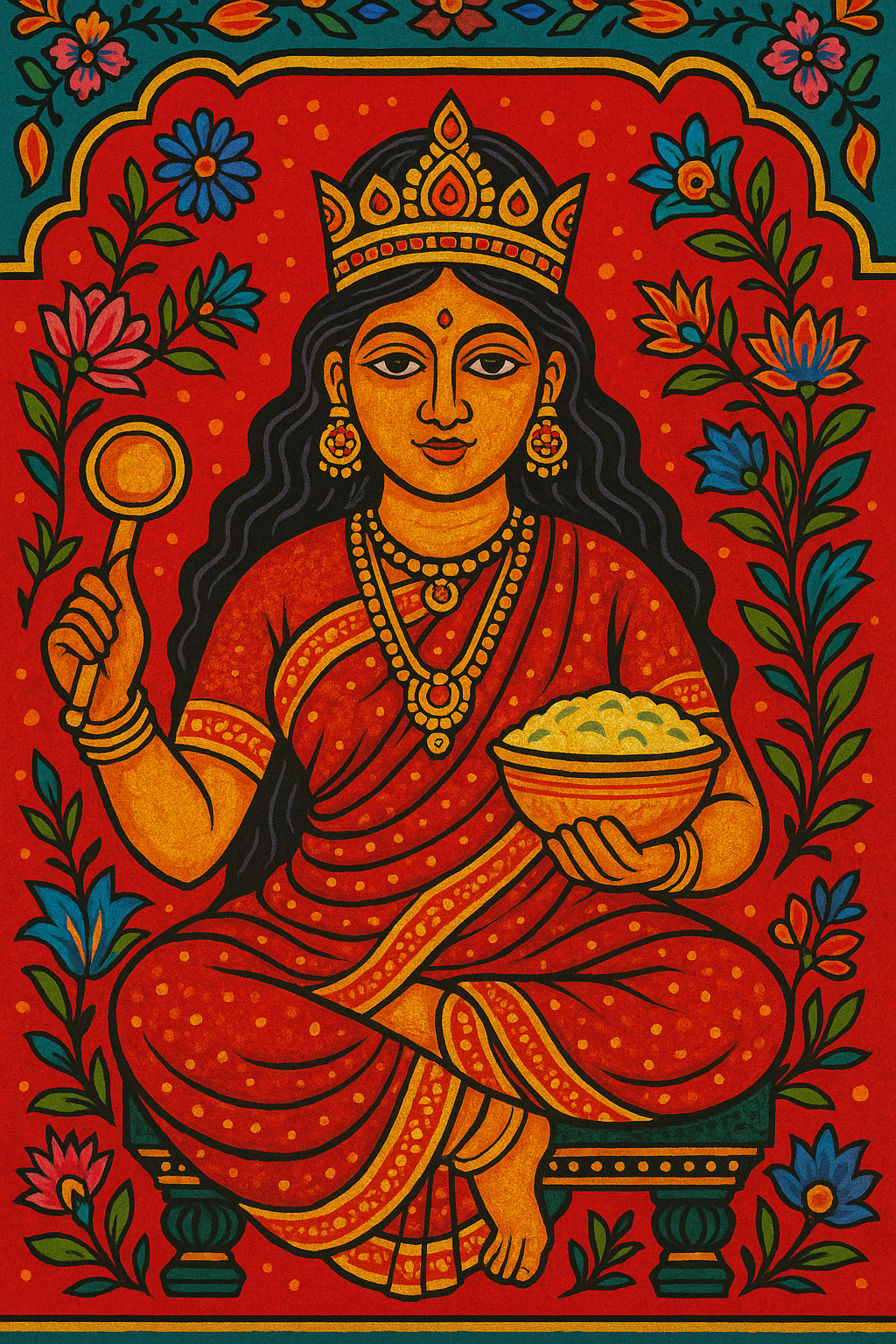
The Hindu goddess Annapurna, holding a ladle and bowl of food

Annapurna

The goddess who feeds the world

Domain: Nourishment, food, abundance, hospitality

Symbolism: Golden ladle for the act of serving, bowl of food for sustenance, grain for prosperity, kitchen hearth for the warmth of home

Appearance: Annapurna’s beauty is that of comfort — the kind that draws you in from the cold and fills your bowl before you can ask. Her skin glows with the warmth of an autumn harvest, and her dark hair falls in glossy waves beneath a golden crown. She wears a crimson sari edged in gold, the color of ripened grain in the sun, and jewels that glint like the first sparks from a cooking fire. In one hand, she holds a golden ladle; in the other, a bowl brimming with food, the eternal promise that no soul will go hungry in her presence.

Mount/Vahana: None traditionally. She’s often depicted seated in a kitchen or temple setting. 

Mythological role: Annapurna is a form of Parvati, born to remind even Shiva that life cannot be lived on renunciation alone. When Shiva once declared that the world was an illusion — including the need for food — she disappeared, and the earth grew barren. Only when hunger touched every being did Shiva seek her out. Finding her in Varanasi, he humbled himself, and she served him a meal with her own hands. From then on, she became the goddess of nourishment, the one who teaches that the spiritual and the physical are inseparable.

Consort and family: As a form of Parvati, she’s the wife of Shiva and mother of Ganesha and Kartikeya.

Associated festivals: Annapurna Jayanti (celebrating her birth), observed mainly in northern India

Worship and significance: Devotees seek Annapurna’s blessings for a plentiful harvest, a stocked kitchen and the generosity to feed others. Her temples often serve prasada (sanctified food) to all who come, without question of wealth or status.

Fascinating fact: The Annapurna temple in Varanasi is one of the few where food — rather than flowers or incense — is the primary offering.

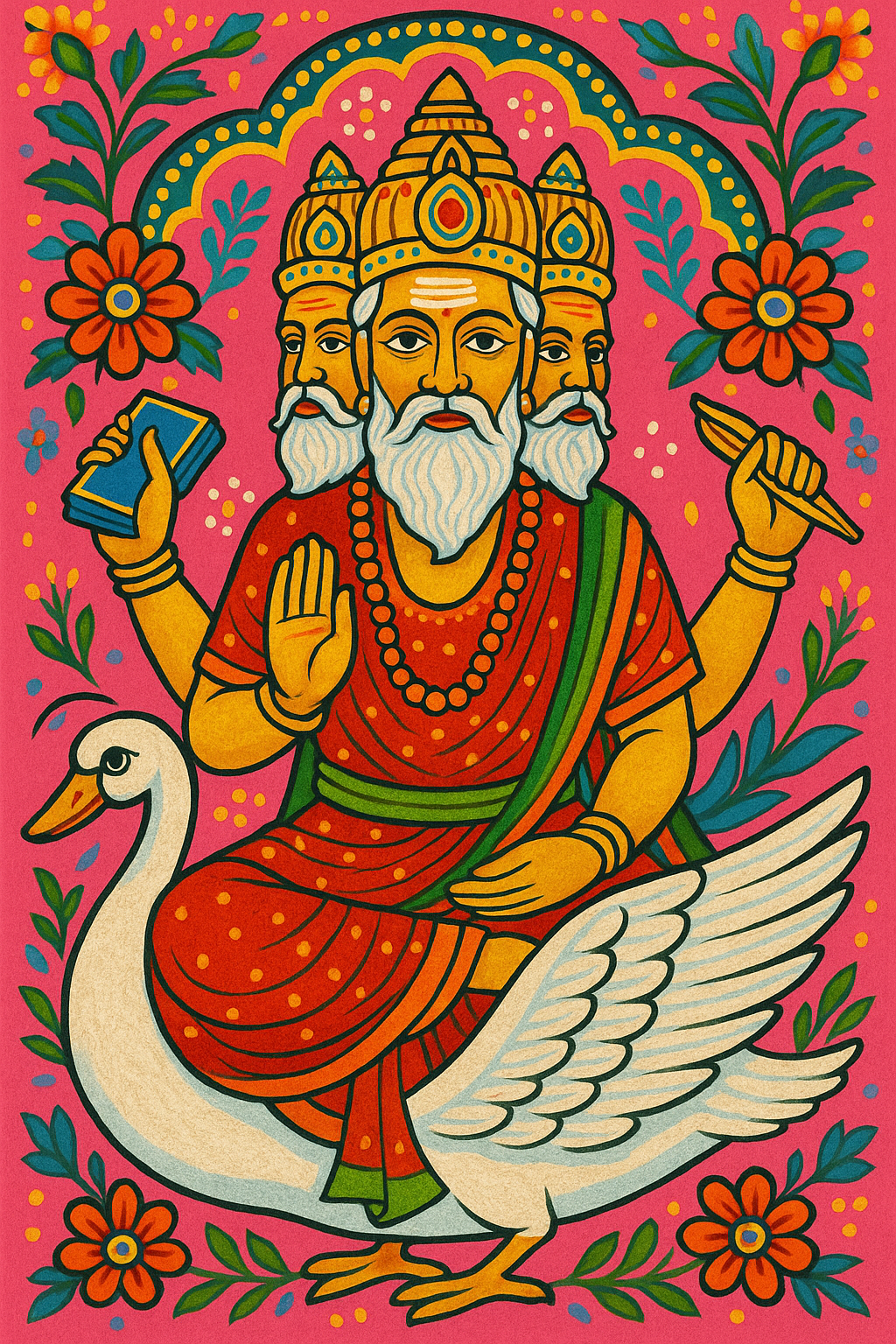
The multi-faced Hindu god Brahma, holding text and riding his swan Hamsa

Brahma

The creator, architect of the universe

Domain: Creation, knowledge, the cosmic order

Symbolism: Four heads gazing in all directions, each reciting one of the Vedas; a water pot holding the seed of life; the lotus, symbol of the universe’s unfolding

Appearance: Imagine an elderly yet ageless figure, his beard as white as the snows of the Himalayas, his skin glowing with the faint blush of dawn. Brahma wears robes the color of the rising sun — deep pinks and reds, shimmering with gold threads that catch the light. His four heads turn in unison, surveying all corners of the cosmos. Each face holds a calm, wise expression, as if they’ve already seen all possible futures. In one hand, he holds the Vedas, the sacred knowledge of the universe; in another, a mala (prayer beads) that he uses not for devotion, but for counting the endless cycles of creation and destruction.

Mount/Vahana: A swan named Hamsa, symbolizing discernment and wisdom. The swan is said to be able to separate milk from water, just as Brahma discerns truth from illusion. In art, Hamsa often glides beside him, wings lifted as if in mid-takeoff, ready to carry him across the endless skies.

Mythological role: Brahma’s story begins in a lotus — but not just any lotus. It sprouted from the navel of another god, Vishnu, as he lay upon the cosmic ocean, and from that lotus, Brahma emerged. He became the craftsman of reality, shaping the heavens, Earth and all beings. And yet, despite his monumental role, Brahma is one of the least-worshipped gods in Hinduism. Myth has it this is due to a curse: After a quarrel with Shiva and an act of deceit to prove his supremacy, Brahma lost the right to have temples dedicated to him. Today, there are only a handful of temples in the world where he is the main deity, the most famous being in Pushkar, Rajasthan. He is, though, often found inside spirit houses on Bali

Consort and family: Saraswati, goddess of wisdom, is his wife and creative partner — her music and intellect inspiring his act of creation.

Associated festivals: Brahmotsavam in Tirupati carries his name but actually honors Vishnu; Kartik Purnima in Pushkar celebrates him directly.

Worship and significance: As the origin point of creation, Brahma represents knowledge, beginnings and the birth of ideas — whether that’s the universe itself or the spark of inspiration in a human mind.

Fascinating fact: Each of Brahma’s days lasts 4.32 billion human years. At the end of one of his “days,” the universe dissolves into the cosmic ocean, only to be re-created when he awakens. In other words, even the universe has a bedtime.

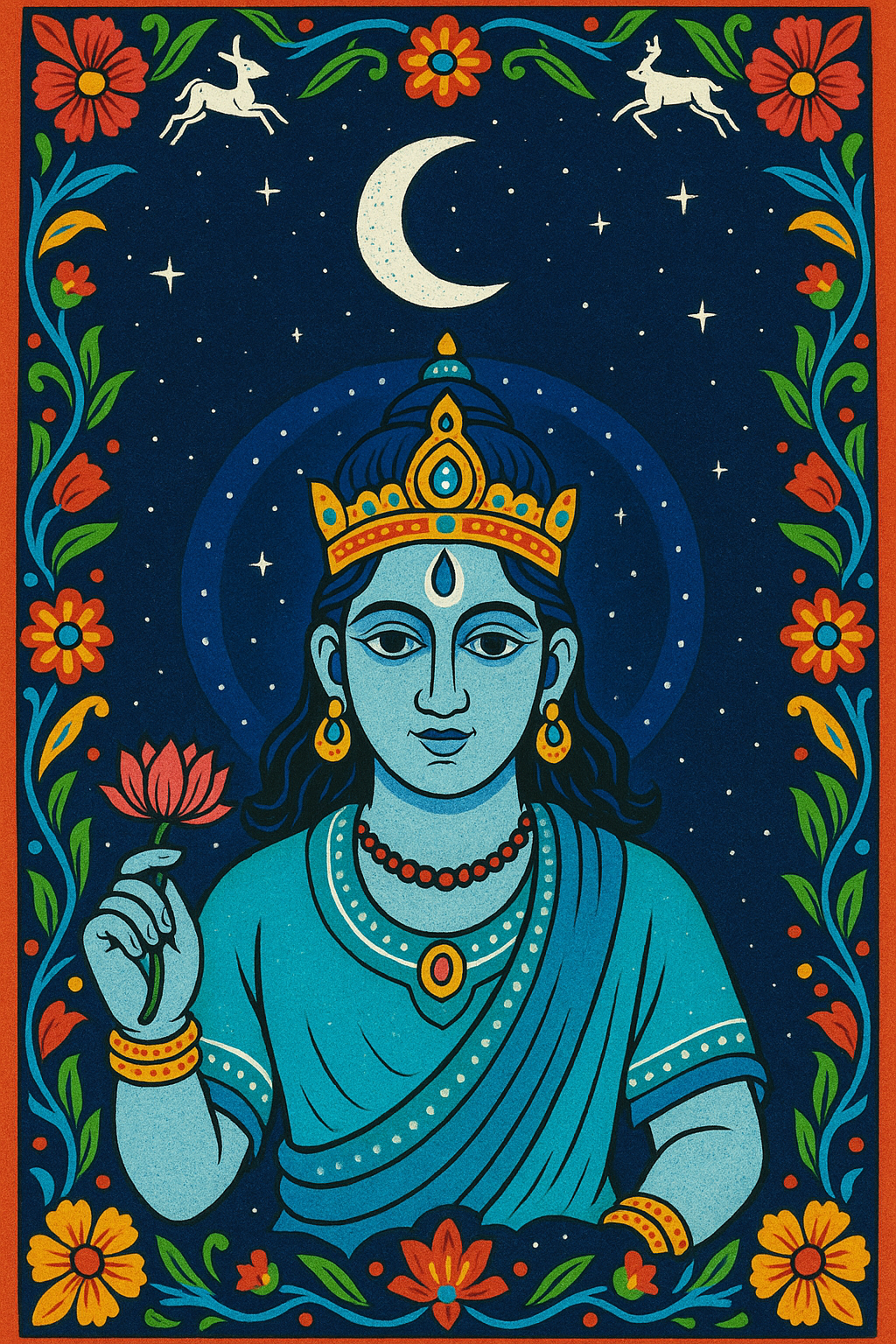
Chandra, the Hindu moon god, under a crescent moon, holding a flower

Chandra

The moon god, keeper of time and tides

Domain: The moon, time, fertility, the mind and the life-giving elixir soma

Symbolism: The luminous crescent moon, the night sky strewn with stars, a chariot pulled by antelopes, and the cool radiance that soothes the earth after the heat of day

Appearance: Picture the night as a velvet canopy, deep navy and speckled with pinpricks of silver light. Cutting through that darkness is Chandra’s chariot — sleek, gleaming, and drawn by a team of pure white antelopes. Chandra has a youthful face, his skin glowing with the pale luminescence of moonlight reflected on water. His black hair flows beneath a crown that holds a crescent moon, its tips like delicate silver horns. Draped in garments of pearl white and soft blue, he carries a lotus, symbol of purity, and his eyes have a dreamy calm that mirrors the gentle pull he exerts on the tides.

Mount/Vahana: A shining chariot drawn by 10 white antelopes (or, in some traditions, horses with antelope heads). The choice of mount reflects agility, swiftness and the moon’s ability to traverse the heavens with grace.

Mythological role: Chandra’s presence in the sky is more than decoration; he is the very heartbeat of time in the Hindu calendar. The waxing and waning of his light marks the rhythm of festivals, rituals and agricultural cycles. But his myths are not without drama. In one tale, Chandra married the 27 daughters of Daksha, the starry “nakshatras” or lunar mansions, but favored one, Rohini, above the rest. His neglect angered Daksha, who cursed him to fade away. This curse explains the moon’s waning phase — until the gods intervened to let him regain his strength, creating the cycle of waxing and waning we see each month.

Chandra is also tied to the sacred drink soma — in some traditions, he is soma personified, the elixir that nourishes gods and mortals alike. When he disappears at the new moon, it is said he is being “drunk” by the gods, only to be reborn and replenished.

Consort and family: Married to the 27 nakshatras, with Rohini as his most beloved. In some myths, he fathers Budha (the planet Mercury, not to be mistaken with the Buddha) with the goddess Tara, sparking a celestial scandal.

Associated festivals: Karva Chauth, where married women fast until they see the moon; Sharad Purnima, celebrating Chandra’s brightest, most benevolent light of the year.

Worship and significance: Chandra governs the mind and emotions in Vedic astrology, influencing calmness, creativity and romance. He is called upon for mental clarity, fertility blessings and the soothing of emotional storms.

Fascinating fact: While most gods have one vahana, Chandra’s chariot is pulled by not one but 10 antelopes, a detail that adds a touch of otherworldly strangeness (and a nod to Santa Claus) to his midnight ride.

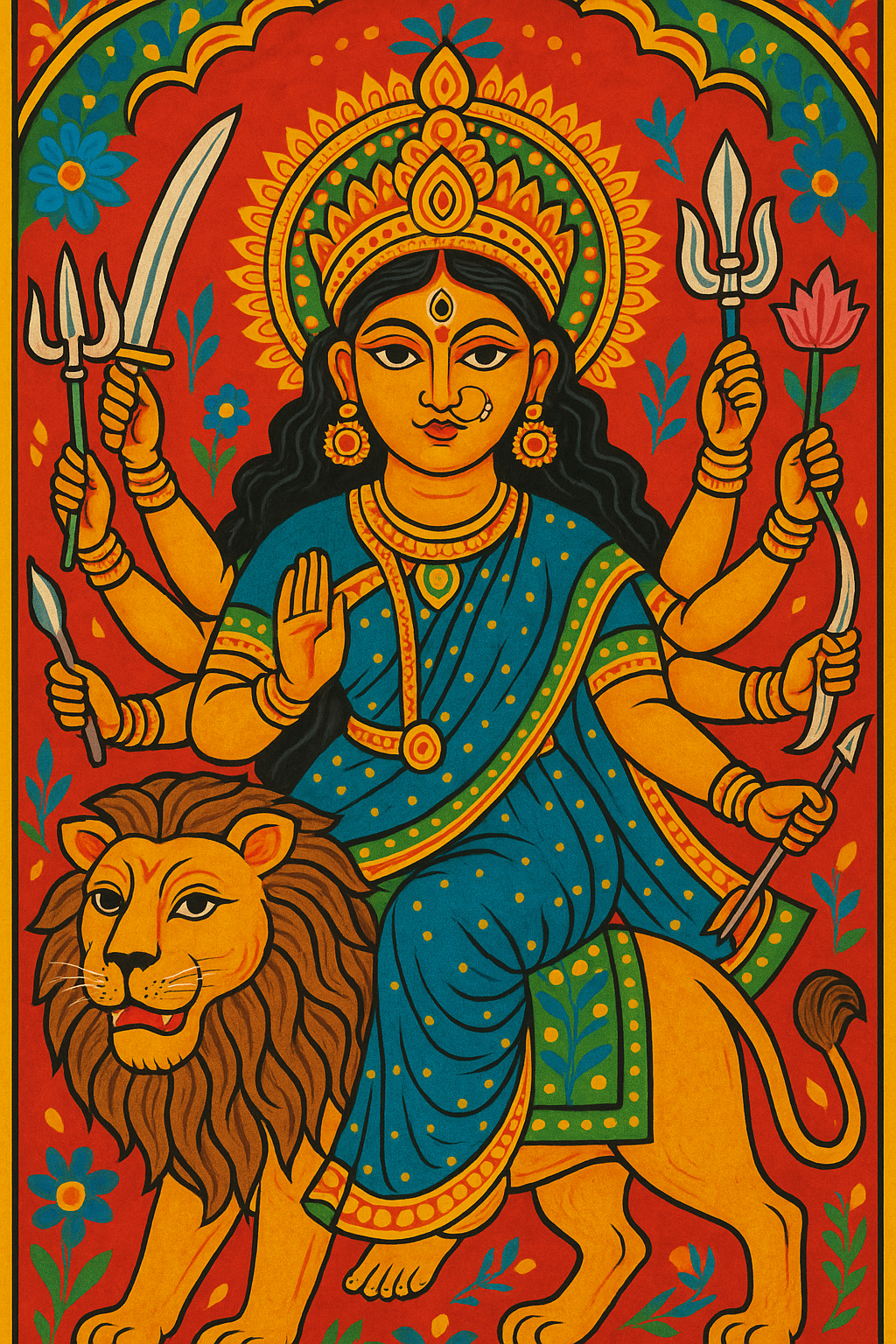
Multi-armed Hindu goddess Durga, holding weapons and riding a lion

Durga

The invincible mother, warrior goddess of cosmic balance

Domain: Protection, destruction of evil, strength, righteousness, the embodiment of shakti (divine feminine power)

Symbolism: Ten arms each bearing a weapon from the gods, the lion or tiger as her mount, and the serene smile of a warrior who knows the battle is already won

Appearance: The horizon burns with gold and crimson light, the air trembling as the roar of a lion cuts through the clamor of war. On its back sits Durga — radiant, unflinching, crowned with a gleaming diadem that catches the sun like fire. Her skin glows like molten gold, and her eyes are wide and steady, reflecting the calm at the heart of a storm. Each of her 10 arms moves with divine precision: One looses an arrow, another swings a sword, another raises a conch to rally her allies. Each weapon was a gift from a god, entrusted to her when they realized no male deity could defeat the demon Mahishasura.

Mount/Vahana: A lion or tiger, symbolizing power, fearlessness and the ferocity needed to destroy evil. In many images, her mount is mid-leap, claws bared, charging into battle beside her.

Mythological role: Durga’s most famous tale is her battle with Mahishasura, a shape-shifting buffalo demon who could not be killed by man or god. For nine days and nights, she fought him, her weapons flashing like lightning. On the 10th day, she struck the final blow, the demon collapsing at her feet. This victory is celebrated as Vijayadashami (the Day of Victory), and the nine nights of battle as Navratri. But Durga isn’t just a warrior — she’s also a compassionate mother and a guardian of the innocent, protecting the world from forces that disrupt cosmic order.

Consort and family: Considered an aspect of Parvati, wife of Shiva, and mother to Ganesha and Kartikeya. In her warrior form, she stands apart, representing the untamed energy that even the gods must revere.

Associated festivals: Durga Puja, Navratri, Vijayadashami — all filled with dancing, music and processions of her image returning to the water from which she came.

Worship and significance: Durga is called upon for courage, protection and the strength to face seemingly insurmountable challenges. Her image is often placed at thresholds or in vehicles as a ward against danger.

Fascinating fact: In many depictions, Durga is shown skewering Mahishasura at the exact moment he shifts from buffalo to human form — symbolizing her mastery over chaos itself, striking at the perfect moment when the enemy is most vulnerable.

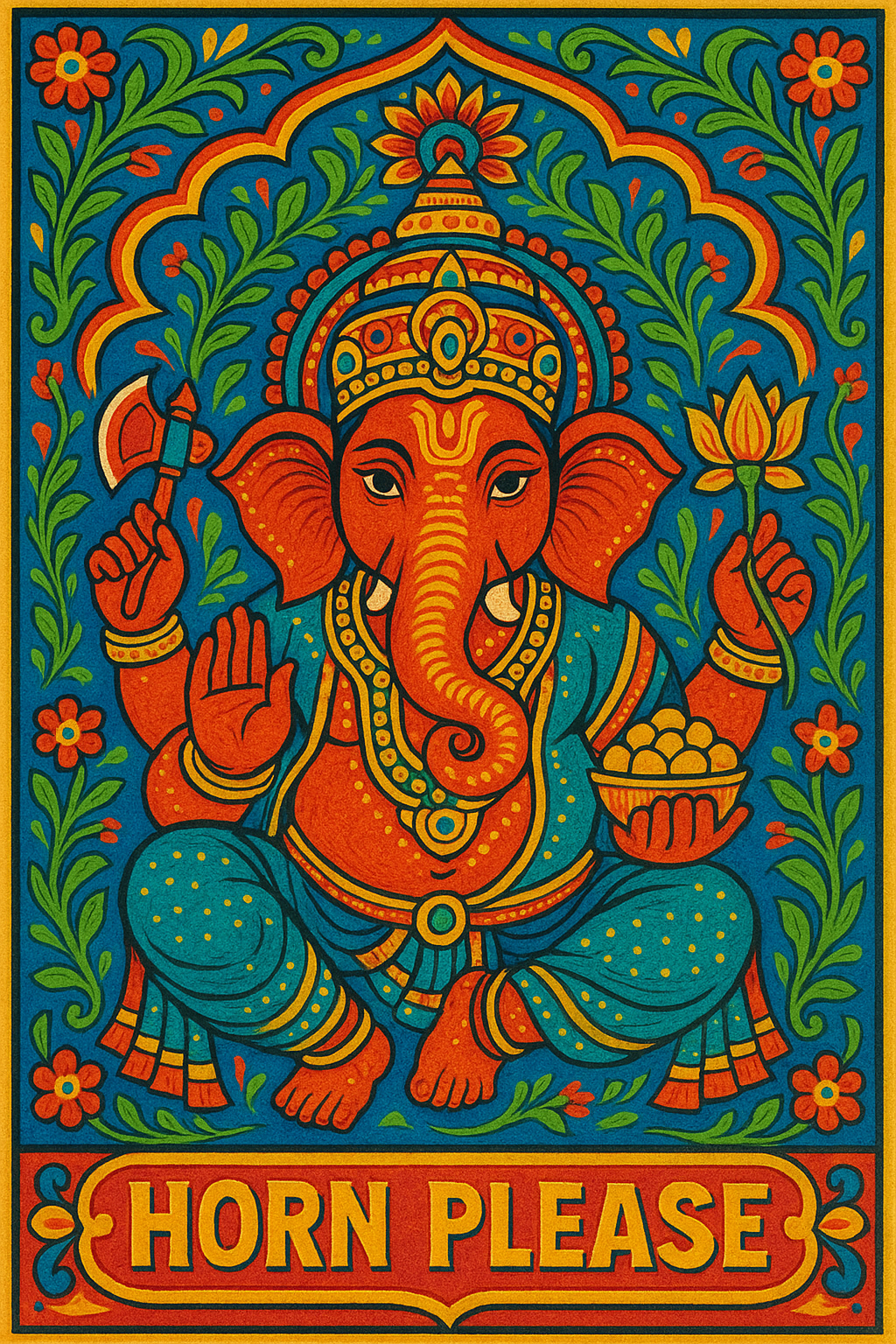
The elephant-headed Hindu god Ganesha, in the style of India truck art

Ganesha

The granter of boons, remover of obstacles, lord of beginnings and wisdom

Domain: Wisdom, intellect, new ventures, success, remover of obstacles both physical and spiritual

Symbolism: Elephant head (wisdom and memory), large ears (listening deeply), small eyes (focus), a curved trunk (adaptability), broken tusk (sacrifice for knowledge), a sweet dumpling known as modak (reward of spiritual pursuit)

Appearance: A figure that makes everyone smile. Ganesha sits with the casual ease of someone who has already solved your problems before you’ve spoken them aloud. His elephant head is grand yet gentle, with eyes that crinkle in amusement and ears spread like open hands, ready to catch every prayer. His skin is often a warm pink or golden hue, adorned with rich silks in reds and yellows, gold bangles chiming softly at his wrists. One hand raises in blessing; another holds a sweet modak, its conical shape a symbol of spiritual rewards. Another hand may wield an axe, to cut away attachments, while the fourth carries a rope, to draw devotees closer to their goals.

Mount/Vahana: A small, humble mouse named Mushika. At first glance, it seems absurd — an enormous god riding a tiny creature — but the symbolism is deliberate. The mouse represents desires, which can gnaw endlessly if unchecked. Ganesha, in riding it, shows mastery over impulses, and the ability to reach even the smallest corners of the mind where obstacles hide.

Mythological role: Ganesha’s origin stories are as colorful as his depictions. In the most popular version, Parvati fashioned him from the turmeric paste she used for bathing, breathing life into the boy to guard her privacy. When Shiva, her husband, returned and found this unknown child blocking his way, he beheaded him in a fit of divine rage. Realizing his mistake, Shiva replaced the head with that of the first creature he found — an elephant — and bestowed upon Ganesha the role of guardian of thresholds, beginnings and new journeys.

He appears in countless tales, often outwitting gods and demons alike with his quick thinking. One famous story tells how he won a race around the world against his brother Kartikeya by circling his parents, declaring that they were his whole world — a victory earned through wisdom, not speed.

Consort and family: Son of Shiva and Parvati, brother to Kartikeya. In some traditions, married to Siddhi (spiritual power) and Buddhi (intellect).

Associated festivals: Ganesh Chaturthi: a 10-day celebration where clay idols of Ganesha are immersed in water, symbolizing both his arrival and return to the divine realm.

Worship and significance: Ganesha is invoked at the start of all endeavors — whether building a temple, writing a book or opening a shop. His image is often placed above doorways, on business ledgers and on the dashboards of cars, ensuring smooth beginnings and safe journeys. As Vighnaharta, the remover of obstacles, and Varada, the granter of boons, he is the god to whom devotees turn when seeking success, blessings and protection.

Fascinating fact: The broken tusk has several explanations. In one, Ganesha broke it off to use as a quill for writing the epic Mahabharata as the sage Vyasa dictated it, agreeing never to stop until the work was complete. The sacrifice turned a blemish into an eternal symbol of devotion to knowledge.

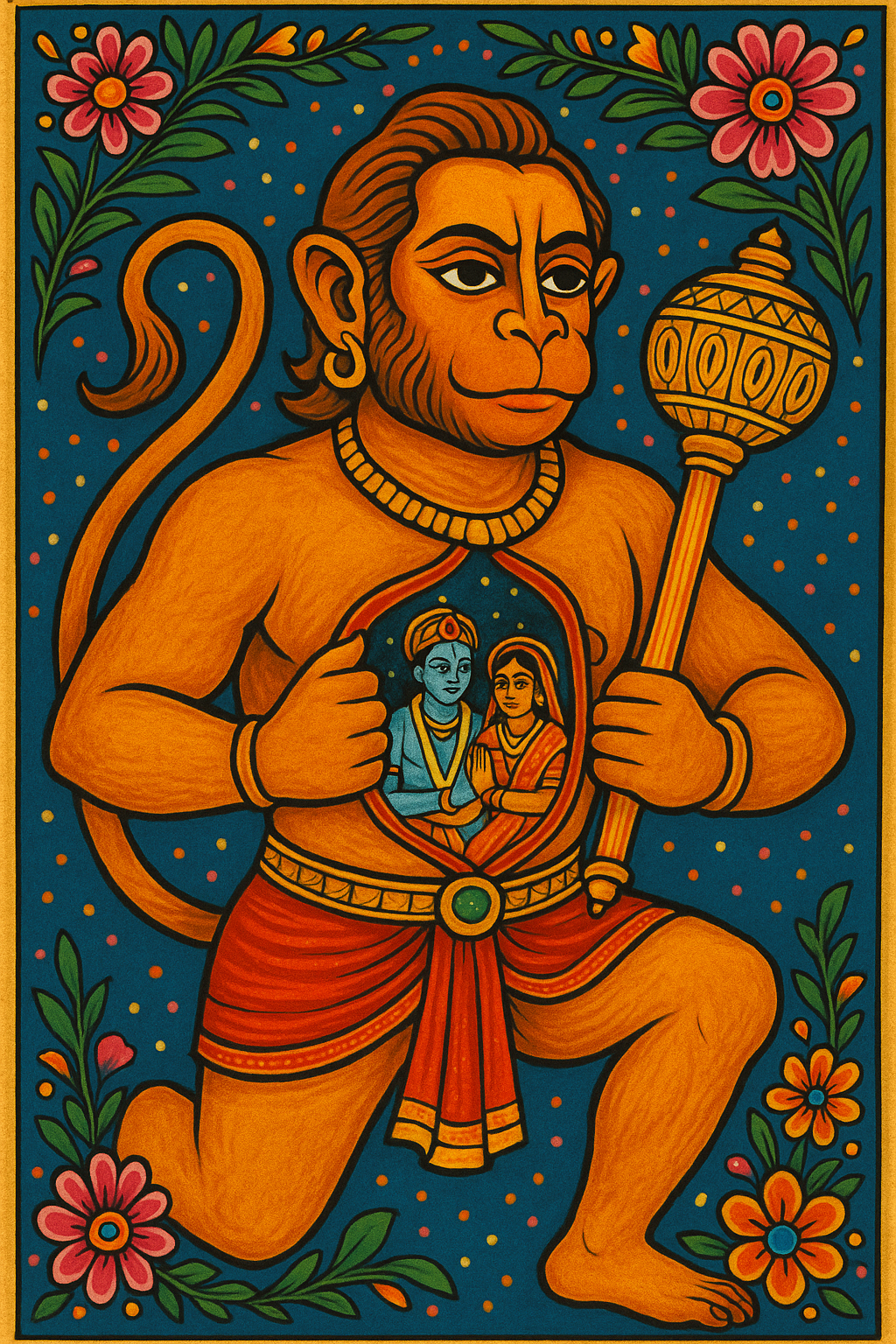
Hanuman, the Hindu monkey god, holding a mace and opening his chest to reveal Rama and Sita

Hanuman

The monkey god, embodiment of strength and devotion

Domain: Courage, loyalty, protection, selfless service

Symbolism: The gada (mace) for strength, the mountain he carries for resourcefulness, and his open chest revealing the images of Rama and Sita — a literal heart of devotion

Appearance: A figure with the face of a monkey but the stance of a seasoned warrior — broad shoulders, a long curling tail, eyes full of determination. Hanuman’s skin is often rendered in shades of deep gold or copper, his muscles taut with power earned through ascetic discipline. He wears a simple dhoti, sometimes red, sometimes saffron, with golden ornaments that catch the light as he moves. His most striking image is not when he wields his mace or leaps across the sea, but when he tears open his chest to reveal the divine couple Rama and Sita glowing inside — proof that they live in his heart.

Mount/Vahana: None in the traditional sense; Hanuman’s own supernatural strength, speed, and ability to leap vast distances make him his own transport. In art, he’s often shown soaring through the air, wind whipping through his fur.

Mythological role: Hanuman’s story is woven tightly into the Ramayana. Born to Anjana and blessed by the wind god Vayu, he displayed superhuman powers from childhood — once leaping to catch the sun, mistaking it for a fruit. As an adult, he becomes the devoted ally of Rama in the quest to rescue Sita from Ravana. His feats include burning the city of Lanka with his flaming tail, carrying an entire mountain of herbs to heal Lakshmana, and crossing oceans in a single bound. Yet for all his power, Hanuman is known for humility — he never seeks glory for himself, only the success of Rama’s mission.

Consort and family: Celibate by choice, devoting all his energy to service and devotion. Son of Anjana and the wind god Vayu.

Associated festivals: Hanuman Jayanti, celebrated with recitations of the Hanuman Chalisa and offerings of sindoor (vermilion powder).

Worship and significance: Hanuman is called upon for strength in adversity, courage in the face of danger, and protection from evil influences. Temples dedicated to him often have devotees chanting his name or circling the shrine for blessings.

Fascinating fact: Hanuman’s name means “disfigured jaw” — a reference to the childhood incident where Indra struck him with a thunderbolt when he tried to grab the sun, injuring his jaw but also awakening his divine powers.

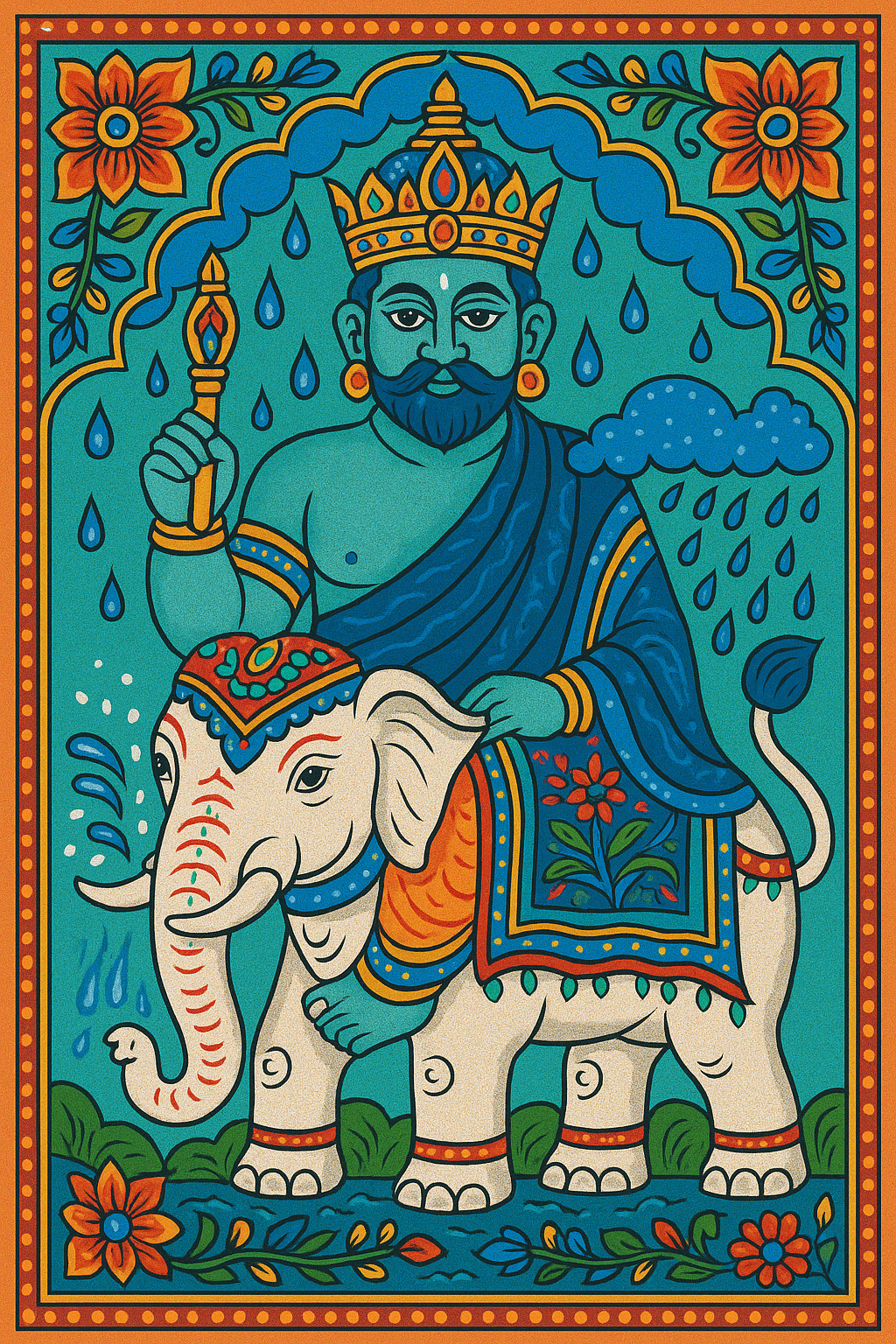
Rain falls on the Hindu god Indra, riding a white elephant

Indra

King of the heavens, wielder of the thunderbolt

Domain: Rain, storms, war, kingship, protection of cosmic order (ṛta)

Symbolism: The Vajra (thunderbolt) for irresistible power, Airavata the elephant for strength and majesty, rain clouds for life-giving abundance, the rainbow for divine promise

Appearance: Indra stands tall and broad-shouldered, the bearing of a warrior-king in every line of his frame. His skin glows with the vitality of fresh rain on sunlit stone, and his eyes flash with the quicksilver of lightning. A golden crown rests on his brow, studded with gems that mirror the colors of the sky — sapphire for the clear day, opal for the gathering storm. Draped in silks the color of storm clouds, he carries the Vajra, forged from the bones of the sage Dadhichi, a weapon that can shatter even the mightiest foe.

Mount/Vahana: Airavata, the great white elephant, vast as a mountain and crowned with four tusks. His steps shake the earth, and from his trunk he sprays water that feeds the clouds, heralding the monsoon.

Mythological role: Indra is the king of the Devas and ruler of Svarga, the heavenly realm. In the Vedic age, he was the supreme god, the bringer of rain and the breaker of drought. His most famous legend tells of his battle with Vritra, the serpent-demon who had imprisoned the world’s waters. Riding Airavata and wielding the Vajra, Indra struck Vritra down, freeing the rivers and restoring life to the land. Later myths show him as both hero and flawed figure — brave in battle, quick to defend the gods, yet prone to pride and desire.

Consort and family: Married to Shachi (also called Indrani), queen of the heavens. Son of the sky-god Dyaus and the dawn goddess Prithvi in some accounts, though genealogies vary.

Associated festivals: While Indra is less central in modern Hindu worship, he’s honored in certain regional festivals, such as Indra Jatra in Nepal, which celebrates him as the god of rain and the harvest.

Worship and significance: Once the chief deity of the Rigveda, Indra’s prominence has shifted over time. But he remains a powerful symbol of leadership, protection and the life-giving force of rain. Farmers and warriors alike have invoked his name for victory and survival.

Fascinating fact: In some Balinese traditions, Indra is seen as a mediator between gods and humans — a role that has parallels in the island’s legends of Barong and Rangda, the eternal dance of protection and destruction.

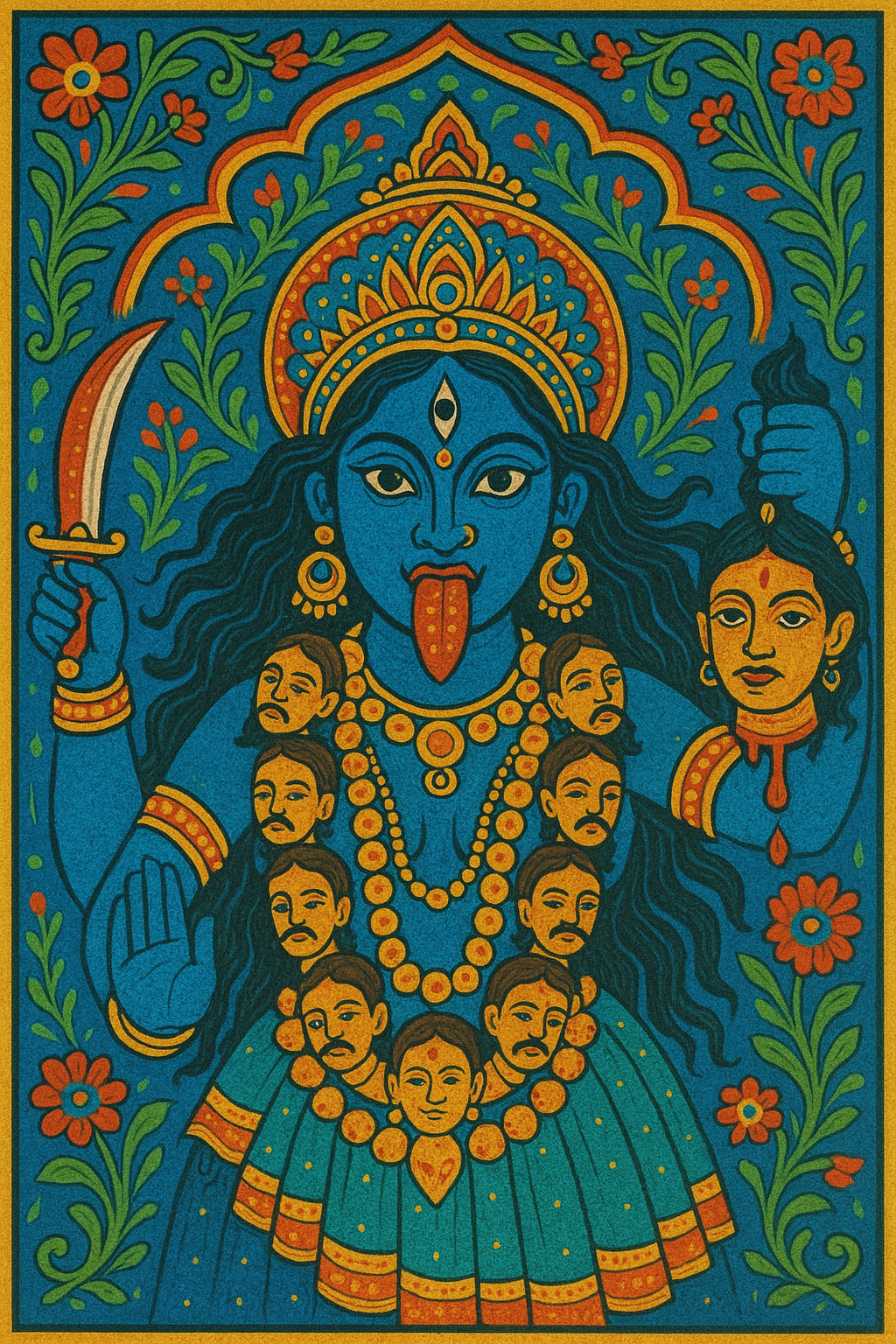
The blue-skinned Hindu goddess Kali, her tongue out, holding a sword and a decapitated head, wearing a necklace of heads

Kali

The fierce mother, devourer of time, destroyer of illusions

Domain: Destruction of evil, liberation, transformation, time, empowerment

Symbolism: Garland of severed heads (knowledge gained through ego’s destruction), skirt of severed arms (detachment from action), lolling red tongue (shock and raw power), weapons and a severed demon head in her hands (victory over darkness)

Appearance: Kali does not arrive quietly. She bursts into the battlefield like a storm let loose, her skin the color of midnight, absorbing all light. Her hair streams wild and unbound, a living halo of chaos, and her eyes blaze like twin suns at the moment of apocalypse. Around her neck hangs a grisly garland — fifty severed heads, each representing a Sanskrit letter, a reminder that all speech and creation eventually dissolve into silence.

Her skirt is a belt of severed arms, trophies from foes, but also a symbol that the fruits of action belong to the divine, not to the ego. In two hands she holds weapons: a sword and a trident; in another, she clutches the freshly severed head of a demon, its blood still dripping onto the ground. Her other hands are extended in gestures of blessing and reassurance, an unsettling reminder that the one who destroys also protects.

Mount/Vahana: None in her most iconic form — Kali’s arrival is so sudden and overwhelming that she needs no mount. In some regional depictions, she is associated with jackals or rides upon the corpse of a demon, symbolizing her mastery over death itself.

Mythological role: Kali’s most famous appearance comes in the battle against the demon Raktabija. Each drop of his blood that hit the earth produced another demon, making him nearly impossible to kill. Kali’s solution was both brilliant and terrifying: she tore through the battlefield, drinking his blood before it could touch the ground, consuming him entirely.

But her ferocity once threatened to tip into total annihilation. In a victory frenzy, she rampaged across the world until Shiva lay down in her path. Stepping on him, she realized what she was doing — her tongue darting out in shock. That moment is immortalized in her most famous pose: foot on Shiva’s chest, tongue out, eyes wide, the destroyer stopped by compassion.

Consort and family: Considered a form of Parvati, consort of Shiva, though in her aspect as Kali she often acts alone.

Associated festivals: Kali Puja, coinciding with Diwali in Bengal; Navratri in her fierce aspect.

Worship and significance: Kali is worshipped not for gentle blessings, but for transformation — she burns away illusions, attachments, and fears. Devotees come to her to destroy what is holding them back, knowing the process may be as fierce as she is.

Fascinating fact: In Tantric traditions, Kali is not feared but embraced as the ultimate reality — the womb and the tomb, creation and destruction in one. Her darkness is not evil, but the infinite void from which all life emerges and to which it returns.

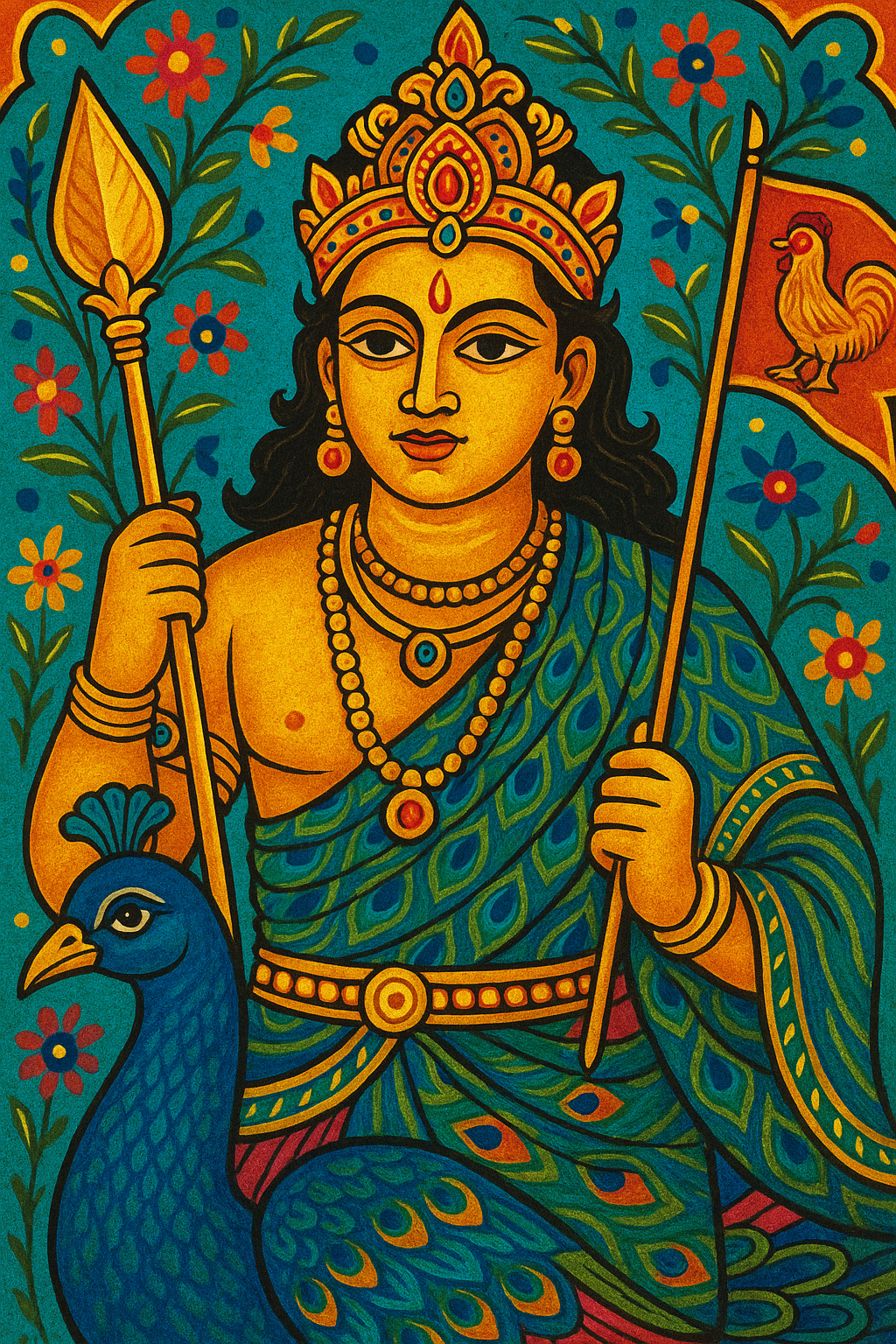
Hindu god Kartikeya (aka Murugan) riding a peacock, and holding a spear and a flag with a rooster on it

Kartikeya (aka Murugan)

The youthful warrior, commander of the divine army

Domain: War, victory, wisdom, leadership, guardianship of dharma

Symbolism: Spear (vel) for piercing ignorance, peacock for pride mastered, rooster emblem for dawn and vigilance.

Appearance: Kartikeya is the god of youth and vigor, and it shows in every depiction. He’s sometimes depicted with six faces (a nod to his birth story, below), though most often as a youth with a single handsome face. His skin glows like burnished gold, his features sharp and confident, with eyes that flash like drawn steel. His hair falls in dark waves past a diadem encrusted with rubies, and his body is draped in fine silks the color of peacock feathers. Across his chest gleams a golden chain, and in one hand he holds the vel, a spear so perfectly balanced it seems to float in his grasp.

The vel was a gift from his mother Parvati, forged from her own shakti (divine power), and it never misses its mark. In his other hand he may carry a small banner emblazoned with a rooster, whose crowing heralds the light that drives away the night’s dangers.

Mount/Vahana: A regal peacock named Paravani, feathers iridescent with blues and greens that shimmer like oil on water. The peacock is a symbol of beauty and vanity mastered — its sharp talons and fierce beak a reminder that elegance does not preclude ferocity. In many depictions, the peacock tramples a serpent beneath its claws, representing the conquest of harmful desires and ego.

Mythological role: Kartikeya was born for battle. When the demon Tarakasura could only be slain by Shiva’s son, the gods sought to bring Shiva and Parvati together. From their union came six sparks of fire, carried by the river Ganga to a lotus pond, where they became six infants. The celestial nymphs known as the Krittikas nurtured them, and when Parvati embraced all six at once, they merged into one child with six faces — a tradition that gave him an alternate name Shanmukha, “Six-Faced One.”

He grew to be the general of the gods’ army, leading them to victory against Tarakasura. In South India, he is celebrated as Murugan, the patron of Tamil culture and poetry, embodying both the scholar and the warrior.

Consort and family: Son of Shiva and Parvati, brother to Ganesha. In some traditions, he’s married to Valli and Devasena.

Associated festivals: Thaipusam, Skanda Shashti, Panguni Uthiram — celebrated with grand processions, kavadi offerings such as pots of milk, and feats of devotion.

Worship and significance: Kartikeya is invoked for courage, clarity and success in competition. In Tamil Nadu, devotees climb hills barefoot to reach his temples, mirroring the god’s own journey to conquer the heights of battle.

Fascinating fact: In some depictions, Kartikeya’s peacock mount is shown turning its head to watch him closely, as if taking silent instruction — a visual metaphor for the disciplined control of power and pride.

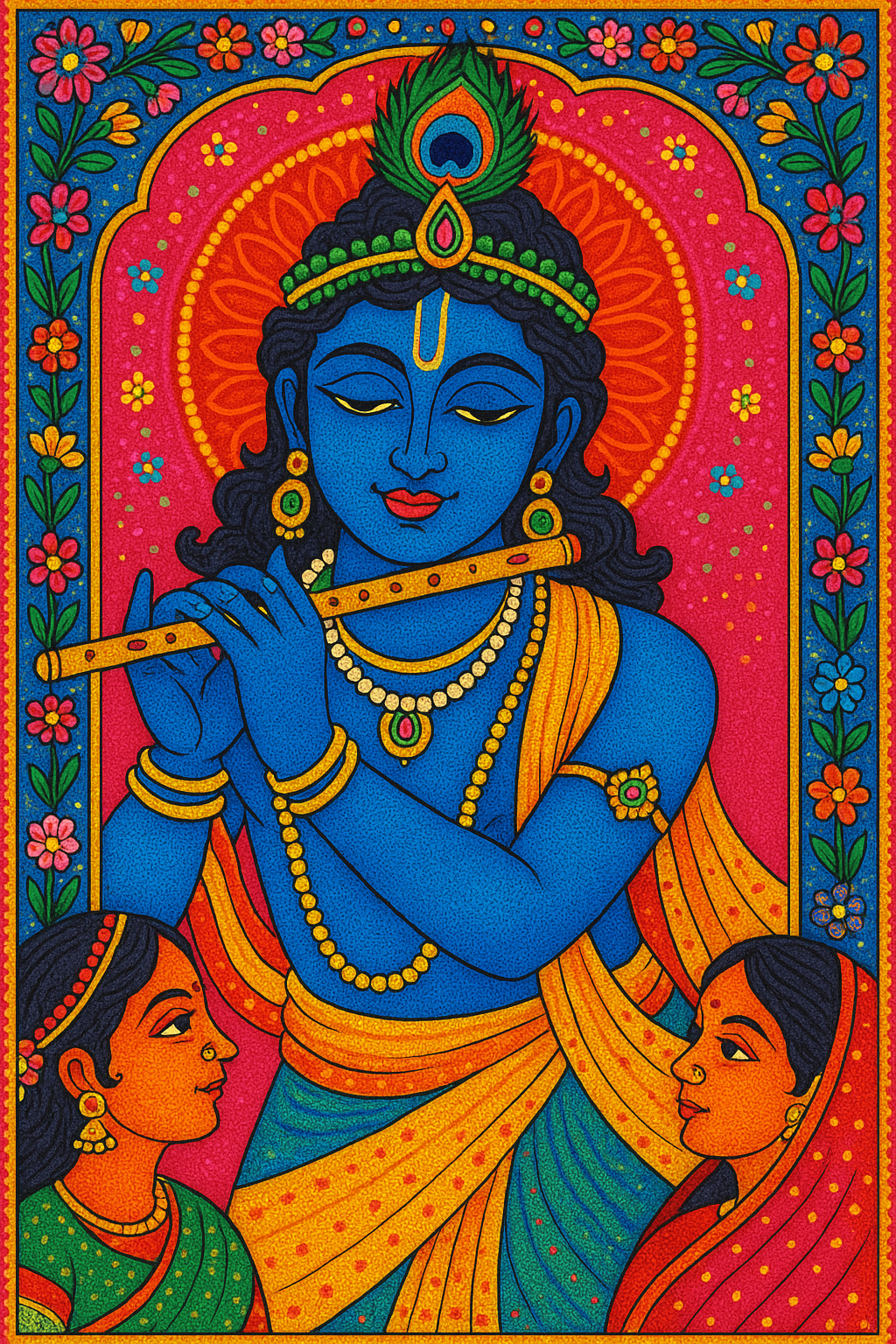
Dreamy-eyed, blue-skinned Hindu avatar Krishna plays his pipe while female cowherds look on

Krishna

The divine lover, cowherd and protector of dharma

Domain: Love, compassion, joy, divine play (lila), protection of the righteous

Symbolism: Flute for the music of the soul, peacock feather for beauty and grace, cows for abundance and gentleness, yellow garments for the light of divinity

Appearance: Krishna’s beauty is the kind that makes time pause. His skin is the deep blue of monsoon clouds, luminous and alive, as if it holds the promise of rain. His eyes are dark and playful, holding secrets he’ll never tell outright; instead, he lets them slip in song. Around his head rests a crown woven with fresh peacock feathers, shimmering emerald and sapphire. He wears a yellow pitambara (silken dhoti) that moves like sunlight caught in a breeze.

He holds his flute to his lips, coaxing a melody so sweet that cows stop grazing, rivers change their course to listen, and hearts — even those hardened by pride — begin to soften. At his feet, the gopis (cowherd girls) stand transfixed, drawn not just to his beauty but to the boundless love it reflects.

Mount/Vahana: None. Krishna’s life is pastoral; he walks among cows in the town of Vrindavan, accompanied by the sound of ankle bells and the laughter of companions. In battle, he drives the warrior Arjuna’s chariot as a guide rather than a mounted warrior.

Mythological role: Krishna’s story spans from playful trickster to statesman and philosopher. As a child, he stole butter from every household, earning the nickname Makhan Chor (“Butter Thief”), and once lifted the massive Govardhan Hill on his finger to shelter villagers from a storm sent by the rain god Indra. As an adult, he becomes the moral compass and strategist of the Mahabharata, delivering the Bhagavad Gita to Arjuna on the eve of battle: a discourse on duty, devotion and the eternal soul that has shaped Hindu philosophy for millennia.

But Krishna is also the god of lila — divine play. His romances with Radha and the gopi cowherd girls work also as metaphors for the soul’s yearning for union with the divine.

Consort and family: Beloved of Radha; in later life, married to Rukmini and other queens of the legendary city of Dwaraka. Son of Vasudeva and Devaki, raised by Nanda and Yashoda.

Associated festivals: Janmashtami (his birth), Holi (the festival of colors, recalling his playful smearing of colors on Radha)

Worship and significance: Krishna is worshipped as the supreme personality of godhead in many traditions. Devotees seek him for joy, love and guidance, whether in the innocence of childhood games or the gravity of moral decisions.

Fascinating fact: Krishna’s flute, called Murali, gets its power from the divine breath that flows through it, reminding devotees that we are instruments for the divine will when we let go of ego.

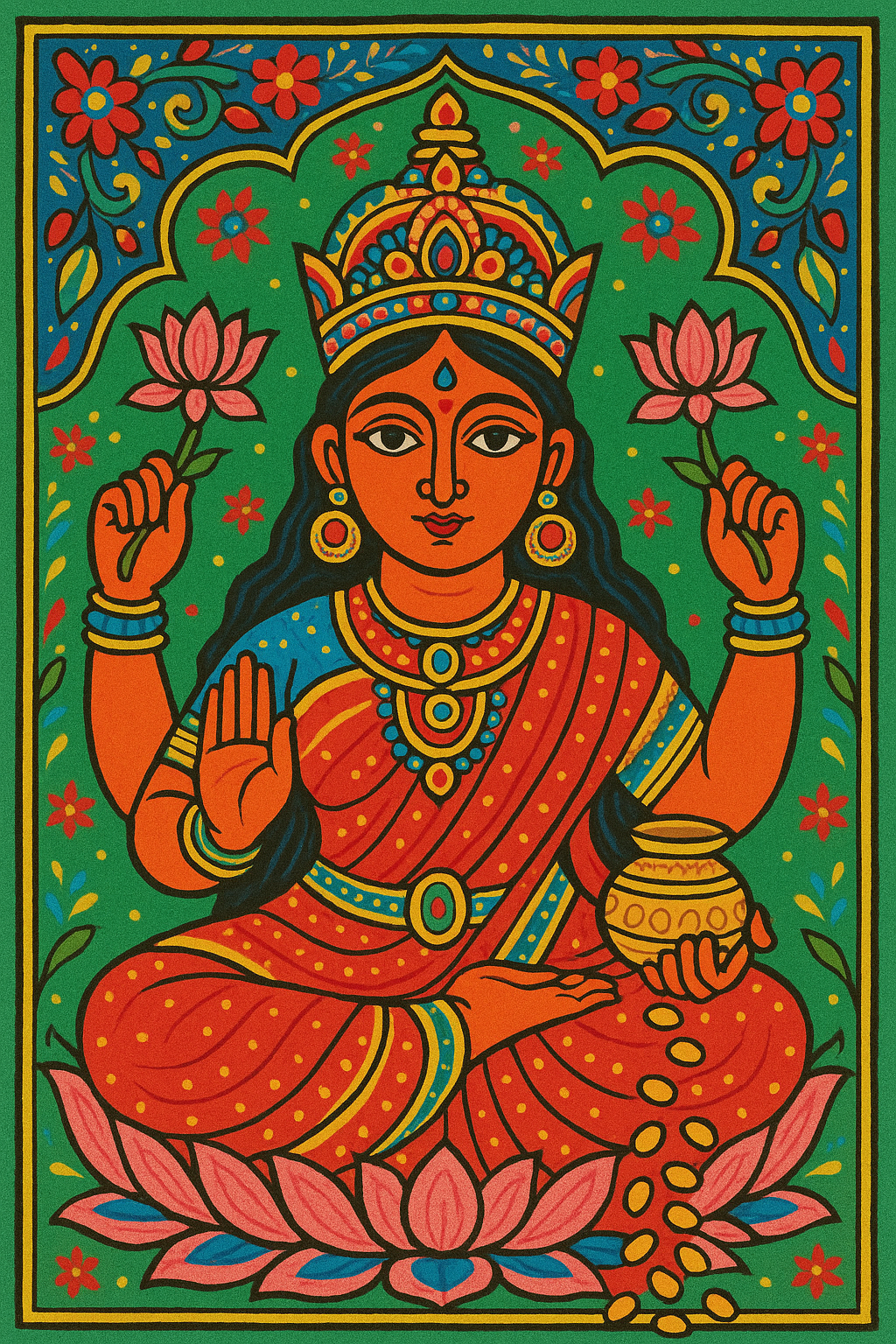
Hindu goddess Lakshmi holds lotuses and a pot, which coins flow from her hand as a sit atop a lotus

Lakshmi

The radiant goddess of fortune, beauty and abundance

Domain: Wealth, prosperity, good fortune, fertility, spiritual abundance

Symbolism: Lotus flowers for purity and spiritual awakening, gold coins flowing from her palms for prosperity, elephants for royal authority and generosity

Appearance: Lakshmi is the very embodiment of grace — a vision bathed in light as if she herself is the sunrise breaking over still waters. Her skin glows with a golden warmth, and she wears a red sari embroidered with gold thread, the fabric rippling like firelight. Each movement is deliberate and fluid, like the gentle opening of a lotus.

In most depictions, she stands or sits upon a blooming lotus floating on the cosmic ocean, the petals cupping her like a throne. Two of her four hands hold lotuses, their long stems rising gracefully; the other two extend in blessing, one palm open in reassurance, the other pouring an endless stream of gold coins that pile into shimmering mounds at her feet. The air around her is alive with elephants spraying water from golden vessels, symbols of strength and auspiciousness.

Mount/Vahana: An owl, symbolizing wisdom and the ability to see through darkness. Though rarely emphasized in modern depictions, the owl reminds devotees that wealth without wisdom can lead to downfall — Lakshmi’s blessings must be balanced with discernment.

Mythological role: Lakshmi emerged fully grown from the churning of the cosmic ocean (Samudra Manthan), radiant and carrying a lotus. The gods and demons had worked together to churn the ocean for the nectar of immortality, but it was Lakshmi’s appearance that became the crowning blessing of their labor. She chose Vishnu as her eternal consort, and from then on accompanied him in every incarnation — as Sita to his Rama, as Rukmini to his Krishna.

True prosperity, she teaches, includes health, love, knowledge and spiritual growth. In some stories, she tests the worthiness of those who seek her, disappearing from households where greed and injustice reign.

Consort and family: Wife of Vishnu; in his earthly incarnations, she is born alongside him.

Associated festivals: Diwali, especially Lakshmi Puja, when homes are cleaned, lit with lamps, and decorated to welcome her

Worship and significance: Lakshmi is one of the most widely worshipped deities in Hinduism. Businesses open their books in her name, households pray to her for stability, and farmers seek her blessing for fertile fields.

Fascinating fact: In southern India, Lakshmi is sometimes depicted in eight forms known as Ashtalakshmi, each representing a different type of wealth — from material prosperity to courage, fertility and knowledge.

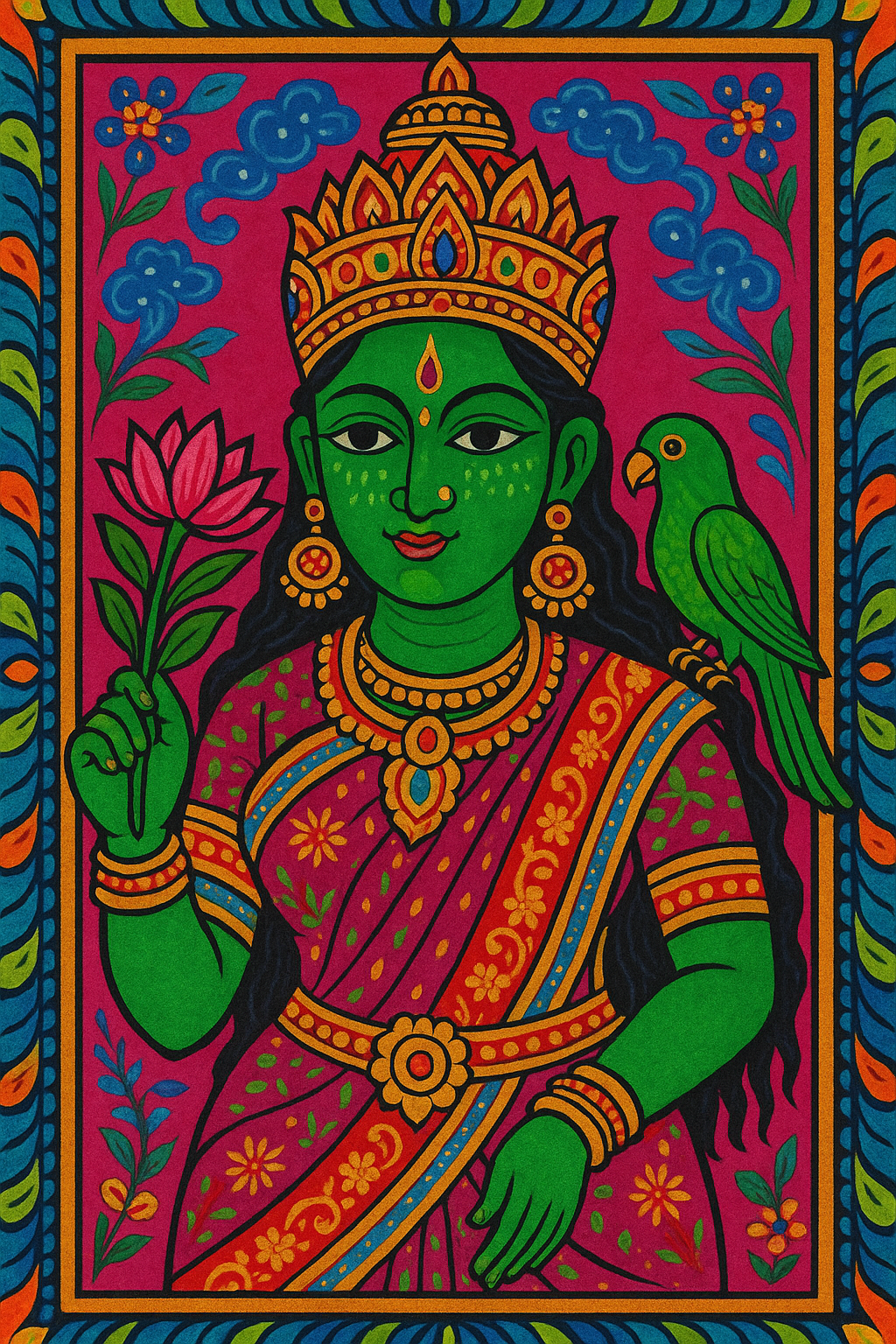
Green-skinned Hindu goddess Meenakshi holds a flower while a parrot perches on her shoulder

Meenakshi

The warrior-queen and fish-eyed goddess of Madurai, one of the oldest continuously inhabited cities in the world 

Domain: Fertility, prosperity, protection of Madurai, righteous rule

Symbolism: Green skin for life and abundance, fish-shaped eyes for watchfulness and grace, crown for sovereignty, parrot for love and divine speech

Appearance: Meenakshi’s beauty is unlike any other — her skin glows a vivid green, like new rice shoots after the rain, a sign of the fertile abundance she brings. Her almond-shaped eyes, long and luminous, are said to resemble fish — always open, never blinking, guarding her people as a fish watches over its young. She wears royal silks in deep magenta and gold, and a towering crown studded with rubies and emeralds. In one hand she holds a bouquet of lotuses; in the other, a parrot perches, its feathers bright as new leaves, whispering divine secrets into her ear.

Mount/Vahana: Often depicted standing rather than riding, but sometimes shown with a parrot or lion as her companion.

Mythological role: Born to the king and queen of Madurai after a divine promise from the gods, Meenakshi entered the world with three breasts — a sign she was destined for greatness. Prophecy foretold that the extra breast would vanish when she met her future husband. A fierce warrior, she led armies to conquer neighboring lands, never defeated in battle. When she encountered Shiva in his form as Sundareshwarar, her third breast disappeared, and they were wed in a grand ceremony that united divine power with royal rule.

Consort and family: Married to Shiva (as Sundareshwarar) and worshipped alongside him. Considered an incarnation of Parvati

Associated festivals: Meenakshi Thirukalyanam (her celestial wedding), Chithirai Festival in Madurai

Worship and significance: Meenakshi is the heart of Madurai’s spiritual life, enshrined in the colossal Meenakshi Amman Temple, whose gopurams (gateway towers) rise like jeweled mountains over the city. She is both a tender mother and an unflinching protector, blessing devotees with prosperity while defending her city with warrior strength.

Fascinating fact: In Tamil tradition, parrots are symbols of eloquence and divine love, repeating sacred mantras and carrying messages between the human and divine realms.

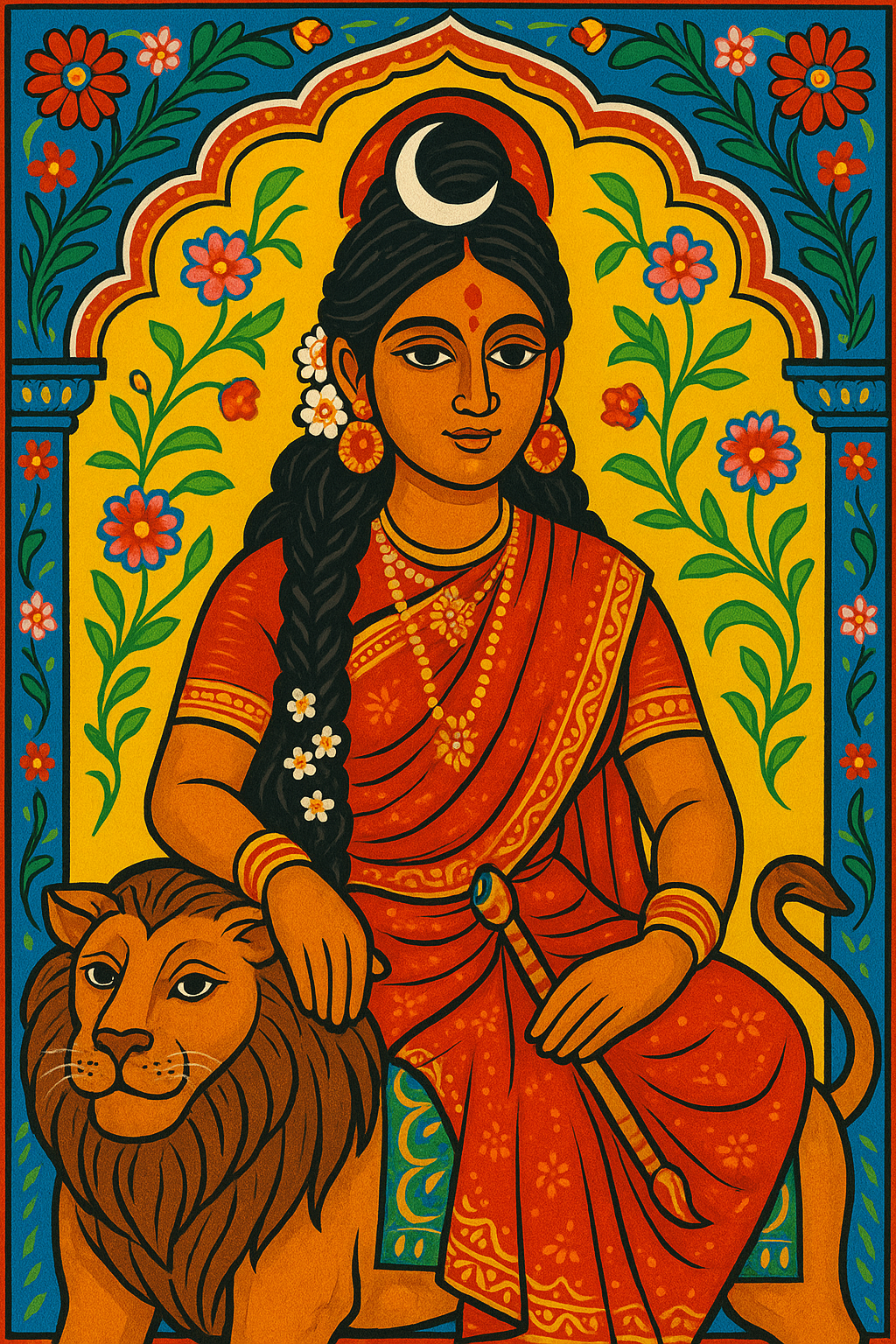
The Hindu goddess Parvati, with a crescent moon and flowers inher hair, sitting on her mount, a lion

Parvati

The gentle mother, devoted wife and wellspring of divine energy

Domain: Love, fertility, marital devotion, spiritual power (shakti)

Symbolism: Lotus for purity, mirror for self-knowledge, red garments for passion and vitality, and her many forms — from nurturing Annapurna to fierce Durga and terrifying Kali.

Appearance: Parvati’s beauty is the quiet kind — like a lamp’s steady flame, constant and unwavering. Her skin glows with the warm bronze of sunlit earth, and her large, compassionate eyes seem to see through pretenses straight to the heart. She wears a red sari edged in gold, its color speaking of both love and strength, and her long black hair is often braided and adorned with fresh flowers. A crescent moon, borrowed from her husband Shiva, sometimes gleams in her hair, a sign of their eternal bond.

When she sits beside Shiva atop Mount Kailash, she radiates the warmth that softens his ascetic severity. Yet within that serenity is the power of all the goddesses — the potential to become the lion-riding Durga or the dark, storm-eyed Kali when the world needs defending.

Mount/Vahana: Lion or tiger, representing courage, power and her latent warrior nature. While gentle in her most common form, her vahana is a reminder that she carries within her the force to vanquish evil.

Mythological role: Parvati’s love story with Shiva is one of devotion and persistence. Born as the daughter of the mountain king Himavan, she fell in love with Shiva, the god of destruction, who was lost in deep meditation. Her devotion was tested by years of austerity and trials, until Shiva finally accepted her as his wife. Together, they are the divine couple whose union balances ascetic withdrawal and earthly engagement.

As a mother, Parvati is nurturing yet fiercely protective — the one who fashioned Ganesha from her own body and defended her privacy against even Shiva himself. Her many forms represent the full spectrum of the feminine divine: the giver of food as Annapurna, the destroyer of demons as Durga, the liberator as Kali.

Consort and family: Wife of Shiva, mother of Ganesha and Kartikeya

Associated festivals: Teej (celebrating marital devotion), Navratri (in her various forms)

Worship and significance: Parvati is worshipped by women for marital happiness, fertility and family well-being. She’s also invoked for strength and balance, as she embodies the union of compassion and power.

Fascinating fact: In one tale, Parvati playfully covered Shiva’s eyes from behind, unaware that without his gaze, the universe was plunged into darkness. To restore the balance, she transformed into her radiant golden form, Mahagauri, bringing light back to the cosmos.

Hindu goddess Radha holds a floral garland and pot near a river and flowers

Radha

The eternal beloved, embodiment of devotion

Domain: Divine love, spiritual longing, union with the divine

Symbolism: Lotus for purity of heart, veil for modesty, pastoral settings for the soul’s journey, and her inseparable connection to Krishna as the soul is to a deity

Appearance: Radha’s beauty is the kind that pulls at the heart — not through grandeur, but through the quiet ache of longing. Her skin is luminous, her eyes large and dark, holding both joy and the weight of separation. She wears a flowing lehenga in deep crimson or midnight blue, adorned with golden embroidery that catches the sun. A long veil frames her face, shifting with the breeze as she moves through the meadows of the town of Vrindavan.

In art, she’s almost always shown glancing toward Krishna, her posture poised between approach and retreat. Her hands may cradle a garland of fresh jasmine meant for him, or a pot of butter she will let disappear into his thieving hands. The landscape around her — the river Yamuna, the blossoming kadamba trees — seems to bend subtly toward her, as if drawn to the devotion she radiates.

Mount/Vahana: None. Radha moves through the pastoral world on foot, walking the same cow-trodden paths as Krishna, her presence transforming the fields and forests into sacred space.

Mythological role: Radha’s love for Krishna is the gold standard of devotion in Hinduism — selfless, unbound by social convention and beyond the reach of time. Though she’s not mentioned in the earliest scriptures, later devotional literature, especially in the Bhagavata Purana and the poetry of Jayadeva’s Gita Govinda, elevates her to demigod status. She’s the human soul (jivatma) yearning for reunion with the supreme soul (paramatma), her longing for Krishna standing in for humanity’s longing for the divine. 

Their relationship is one of pure connection. Even when separated, Radha feels Krishna’s presence in every breath, and her yearning is considered even more powerful than the joy of union — for it keeps the heart in constant remembrance of the beloved.

Consort and family: Beloved of Krishna; often depicted as his spiritual counterpart rather than a worldly consort

Associated festivals: Rasa Lila reenactments during Holi and Janmashtami; Radhashtami, celebrating her birth

Worship and significance: Radha is worshipped alongside Krishna in many temples, especially in the Gaudiya Vaishnava tradition, where she’s revered as the source of Krishna’s joy. Devotees seek her grace to cultivate pure, unconditional love for the divine.

Fascinating fact: In some traditions, Radha is considered an incarnation of Lakshmi, born to be Krishna’s eternal companion. Her name is often invoked first in chants — “Radhe Krishna” — as if to approach the beloved through the one who knows him best.

Blue-skinned Hindu hero Rama holds a bow with a quiver of arrows on his back, surrounded by flowers

Rama

The noble prince, upholder of dharma, the right way of living 

Domain: Virtue, moral duty, justice, kingship, protection of the righteous

Symbolism: Bow and arrow for readiness and skill in battle, blue skin for divine origin, simple yet regal garments for humility in leadership

Appearance: Rama stands with the quiet authority of a man who knows his strength and has no need to boast. His skin is the rich blue of a twilight sky, his posture upright and composed. He wears a golden crown that catches the sun, yet his garments are simple — the saffron robes of an exile rather than the ornate silks of a king. Across his shoulder rests a quiver of arrows, and in his hand, his bow is always ready, a natural extension of himself rather than an ornament.

His expression is calm, even in the face of war. There’s a gentleness in his gaze that belies the steel in his resolve — a leader whose strength lies as much in compassion as in martial skill. In art, he is often shown alongside Sita, Lakshmana and Hanuman, forming the ideal vision of a harmonious household and righteous rule.

Mount/Vahana: Rama has no permanent animal mount. In the Ramayana, he travels on foot, by chariot, or with the aid of allies like Hanuman. His lack of a vahana underscores his humanity — the idea that righteousness and divine purpose can be lived out in the mortal world without supernatural crutches.

Mythological role: Rama’s life is told in the epic Ramayana, where he is born as the prince of Ayodhya, the seventh avatar of Vishnu, sent to destroy the demon king Ravana. When his stepmother’s scheming leads to his exile, he accepts the decree without anger, honoring his father’s word above his own comfort. For 14 years, he roams the forests with Sita and his younger brother, Lakshmana, defending sages and villages from demons.

The defining trial of his life comes when Sita is abducted by Ravana. With the help of Hanuman and an army of vanaras (monkey warriors), Rama wages war on the island kingdom of Lanka, eventually killing Ravana and restoring order. His reign after returning to Ayodhya is remembered as Rama Rajya — an era of justice, peace and prosperity.

Consort and family: Husband of Sita, brother to Lakshmana, Bharata and Shatrughna. Son of King Dasharatha and Queen Kaushalya

Associated festivals: Rama Navami (his birth), Diwali (marking his return to Ayodhya

Worship and significance: Rama is revered as the perfect man — a warrior without cruelty, a ruler without arrogance, a husband without neglect. Devotees seek his blessing for moral clarity and the strength to act in accordance with dharma, even when it is costly.

Fascinating fact: In some folk retellings, Rama’s bow was so powerful that only he could lift it — he proved his worth to marry Sita by stringing it with effortless grace, a feat no other suitor could manage.

Saraswati plays her lute while sitting on a large white lotus in the water, as a swan swims by

Saraswati

The serene muse, goddess of wisdom, music and the arts

Domain: Knowledge, learning, speech, music, poetry, truth

Symbolism: Veena (lute) for harmony and creativity, white lotus for purity of mind, flowing river for the unending stream of wisdom, swan for discernment

Appearance: Saraswati is the embodiment of clarity and calm — a vision in white, untouched by the dust of greed or the heat of passion. Her skin is pale and luminous, her long hair flowing like dark silk down her back. She wears a simple white sari with a golden border, the fabric so light it moves like water when she shifts. A garland of fresh jasmine hangs around her neck, and her forehead is marked with the tilak of concentration.

In her hands, she cradles the veena, each note she plays carrying the resonance of cosmic truth. A white lotus blooms beneath her feet, symbolizing the mind’s ability to rise unstained from the muddy waters of ignorance. Behind her, the gentle current of a river often winds through the scene — a reminder of her origin as the goddess of the Saraswati River, whose sacred waters nourished the Vedic civilization.

Mount/Vahana: Swan (hamsa), representing the ability to separate truth from falsehood. In some depictions, she rides a graceful peacock, whose beauty is balanced by its vigilance against snakes — a metaphor for guarding wisdom against corruption.

Mythological role: Saraswati is said to have been present at creation itself, when Brahma called upon her to bring order to the chaos. With her wisdom, she gave names to all things, creating speech and language. She is the inspiration behind poetry, the patron of scholars, and the divine voice that flows through musicians’ hands.

Her presence is subtle yet essential — in mythology, gods and mortals alike call upon her before embarking on intellectual or creative endeavors. Without Saraswati, knowledge remains dormant; with her, it becomes luminous and transformative.

Consort and family: In some traditions, consort of Brahma; in others, she stands alone as an independent force. 

Associated festivals: Vasant Panchami, when devotees dress in yellow, offer her flowers, and keep books and instruments before her image for blessing

Worship and significance: Students, artists and seekers of truth invoke her for clarity of mind and eloquence of speech. Unlike deities who grant material boons, Saraswati bestows treasures that cannot be spent — the kind that grow the more they are shared.

Fascinating fact: It’s considered inauspicious to ask Saraswati for wealth, as she is believed to leave when greed enters. In some households, her image is kept in a quiet corner, away from noisy celebration, to honor her preference for peaceful contemplation.

The Hindu god Shiva in a tiger skin, with a cobra around his neck, a third eye on his forehead, holding weapons, with his Nandi bull nearby

Shiva

The great ascetic, destroyer of illusions, lord of transformation

Domain: Destruction (as renewal), transformation, meditation, time, cosmic balance

Symbolism: Trident (trishula) for the three aspects of existence (creation, preservation, destruction), crescent moon for mastery over time, serpent for fearlessness, river Ganga flowing from his hair for life-giving power, drum (damaru) for the cosmic sound of creation

Appearance: Shiva’s presence is both serene and terrifying — the stillness of a mountain and the force of a storm. His skin is the cool ash-gray of cremation grounds, reminding all that life is temporary and death only a doorway. His hair is long and matted into jata dreads, coiled high upon his head to cradle the Ganga as it flows down from the heavens. A crescent moon glints among his locks, its silver light softening the fire of his third eye.

Around his neck rests a coiled cobra, unmoving, its forked tongue tasting the air — a symbol of Shiva’s mastery over fear and death. His eyes, when open, seem to look through lifetimes; when closed, they turn inward, diving into the infinite void. He wears a tiger skin around his waist, signifying his victory over animal instincts, and rudraksha beads for spiritual focus. In his hand, the trident gleams like lightning, and at his side the damaru beats out the rhythm to which the universe dances.

In his most iconic form, Shiva appears as Nataraja, the Lord of the Dance. With one leg lifted in a graceful arc and the other pressing down on the dwarf of ignorance, Apasmara, Shiva performs the tandava — the cosmic dance of creation, preservation and destruction. In his four arms he has fire, the damaru drum, a gesture of protection, and a hand pointing to his raised foot, offering liberation. Encircled by a halo of flames, Nataraja is a vision of the universe in motion: every heartbeat, every birth and every dissolution bound together in a rhythm that never ceases.

Mount/Vahana: Nandi, the white bull — a symbol of strength, virility and unwavering devotion. Nandi is Shiva’s constant companion, often depicted kneeling in reverence, facing the entrance of Shiva’s temples.

Mythological role: Shiva is one-third of the Hindu Trimurti, alongside Brahma the creator and Vishnu the preserver. His role as destroyer is often misunderstood; he ends cycles so new ones can begin, clearing away stagnation. He’s the patron of ascetics, yogis and those who seek truth beyond illusion.

His stories are as varied as they are powerful: swallowing the deadly poison (halahala) churned from the cosmic ocean to save creation — the act that turned his throat blue and earned him the name Neelkanth; unleashing his third eye to burn desire to ashes; dancing the Tandava, a cosmic performance that both creates and destroys worlds.

Consort and family: Husband of Parvati; father of Ganesha and Kartikeya

Associated festivals: Maha Shivaratri, when devotees fast, chant and keep vigil through the night in his honor.

Worship and significance: Shiva is worshipped in the form of the lingam, a phallic symbol of divine energy and creative potential. Devotees seek his blessing for liberation from worldly attachments and the courage to face transformation.

Fascinating fact: In many villages, Shiva is considered the most approachable of the great gods — Bholenath, the simple lord — quick to grant blessings to anyone who approaches him with sincerity, regardless of status or ritual precision.

The Hindu god Shukra rises a white horse, holds a staff and caries a jar while demon heads surround him

Shukra

The teacher of demons, master of resurrection

Domain: Wealth, pleasure, diplomacy, resurrection, the planet Venus

Symbolism: The staff for wisdom, the water pot for life-giving knowledge, Venus for beauty and prosperity

Appearance: Shukra’s presence is calm yet commanding, with skin like polished sandalwood and eyes that gleam with patient intelligence. His white beard and flowing hair mark the wisdom of ages, while his garments shimmer with the soft sheen of silver — the light of Venus caught in fabric. In one hand he holds a danda (staff), in the other a kamandalu (water vessel) said to carry the sacred nectar of life itself.

Mount/Vahana: Often depicted seated on a white horse or in a chariot drawn by eight horses, each representing a different aspect of worldly desire.

Mythological role: Shukra serves as the guru to the asuras (often translated as “demons”), guiding them with cunning strategy and unmatched knowledge of the cosmos. His most prized possession is the Sanjivani Vidya, the secret art of reviving the dead — a gift from Shiva after intense penance. This power has tipped the scales in many battles, forcing the devas (gods) to find new ways to win. Despite his loyalty to the asuras, Shukra is also revered by humans seeking prosperity, charm and the ability to turn rivals into allies.

Consort and family: Married to Jayanti, daughter of Indra; father of Devayani, whose own stories weave through the Mahabharata

Associated festivals: Shukravar (Fridays), dedicated to Venus, are considered auspicious for his worship. 

Worship and significance: Followers seek Shukra’s blessing for wealth, harmonious relationships and diplomatic skill — but also for protection against enemies, knowing his allegiance to the asuras makes him an expert in countering adversaries.

Fascinating fact: In astrology, Shukra is linked to artistic talent and sensual pleasures; those under his favor are said to possess irresistible charm and an eye for beauty.

The Hindu heroine Sita sits on a lotus and holds a flower

Sita

The steadfast queen, born of the earth and emblem of virtue

Domain: Purity, devotion, courage, self-sacrifice, the ideal of righteous womanhood

Symbolism: Lotus for grace and spiritual beauty, the Earth as her mother, fire as a test of truth, her role as Rama’s equal in love and suffering

Appearance: Sita’s beauty is quiet but unshakable — the kind that deepens the longer you look. Her skin carries the glow of fresh earth after rain, and her eyes, large and steady, hold both tenderness and the weight of trials endured. She wears silks in shades of gold and crimson, with a long veil that frames her face and flows down her back like a stream of sunlight. Jewels gleam lightly at her wrists and neck, never ostentatious, as if she wears them more from tradition than vanity.

In art, she is often shown beside Rama, her posture dignified but never submissive — her head high, her gaze calm. In exile, she appears barefoot among the forest trees, her sari plain, her only ornaments the garlands of flowers she strings with her own hands.

Mount/Vahana: None. Sita’s journeys are always made on foot or by chariot, sharing the same path as her companions. Her lack of a mount reflects her role as an equal partner in hardship rather than a divine figure set apart from mortal trials.

Mythological role: Sita’s life is told in the Ramayana. Found as an infant in a furrow while King Janaka was plowing the fields, she is said to be the daughter of Bhumi Devi, the Earth goddess herself. She grows to marry Rama after he wins her hand by stringing the great bow of Shiva — a feat no other suitor could accomplish.

Her devotion to Rama is absolute: When he’s exiled to the forest for 14 years, she insists on joining him, trading palace comforts for the rigors of wilderness. Her greatest trial comes when she’s abducted by the demon Ravana and held captive in Lanka. Despite months of pressure, she remains unshaken in her loyalty, her only comfort the hope of Rama’s arrival.

After her rescue, she endures the Agni Pariksha, the trial by fire, to prove her purity. In later life, when her character is doubted once more, she chooses to return to the embrace of her mother, the Earth, which parts to receive her — a final act of dignity and self-possession.

Consort and family: Wife of Rama, daughter of King Janaka and Queen Sunaina

Associated festivals: Sita Navami, celebrated especially in Mithila, her birthplace.

Worship and significance: Sita is revered as the ideal of marital devotion, but also as a figure of resilience and moral strength. She embodies the idea that true virtue remains intact, even in the face of injustice.

Fascinating fact: In some folk traditions, Sita is worshipped as an incarnation of Lakshmi, born to accompany Vishnu’s avatar Rama in his earthly mission — making her both queen and goddess.

The Hindu god Vishnu rides the eagle Garuda

Vishnu

The preserver and protector of cosmic order

Domain: Preservation, protection of dharma, restoration of balance, compassion

Symbolism: Conch (shankha) for the sound of creation, discus (chakra) for the mind’s sharpness and the destruction of evil, mace (gada) for strength, lotus (padma) for purity rising from the world’s chaos

Appearance: Vishnu’s form is majestic yet serene — the steady, unshakable center of the universe. His skin is the rich blue of the deepest ocean, his eyes calm pools that seem to hold the reflection of the cosmos itself. He’s adorned in golden silk garments and an abundance of jewels — armlets, necklaces, a crown studded with rare gems — yet nothing about him feels over the top. It’s as if the wealth of creation naturally rests upon him.

In his four hands, he holds his eternal emblems: the lotus, delicate and alive; the mace, heavy with power; the discus, spinning and radiant like a miniature sun; and the conch, ready to sound the victory of righteousness. His posture is relaxed but alert, the quiet readiness of a ruler who acts when the time is right.

Mount/Vahana: Garuda, the mighty eagle, with a wingspan that can blot out the sun. Garuda’s golden feathers flash like lightning as he soars, carrying Vishnu effortlessly across the three worlds: the heavens, the Earth and the underworld. He’s both mount and ally, a living embodiment of speed, loyalty and fearlessness.

Mythological role: Vishnu is the preserver of the Hindu Trimurti, standing alongside Brahma the creator and Shiva the destroyer. His duty is to maintain cosmic balance, stepping into the world whenever evil threatens to overwhelm good. To do this, he takes on avatars — earthly incarnations — to set things right. These include Rama, the noble prince; Krishna, the divine lover and strategist; Narasimha, the man-lion who burst from a pillar to save his devotee; and many others.

When not incarnated, Vishnu rests upon the infinite serpent Ananta (Shesha), floating on the cosmic ocean. From his navel grows the lotus that births Brahma, showing that preservation isn’t separate from creation but intertwined with it.

Consort and family: Married to Lakshmi, goddess of wealth and prosperity, who accompanies him in each of his avatars

Associated festivals: Vaikuntha Ekadashi, Janmashtami (for Krishna), Rama Navami (for Rama)

Worship and significance: Vishnu is worshipped across India in many forms, from the grandeur of temple idols to the small household shrines where his avatars are honored. Devotees seek him for protection, moral clarity, and the assurance that no matter how dark the times, the preserver will arrive.

Fascinating fact: Vishnu’s discus, the Sudarshana Chakra, is said to move at the speed of thought and can cut through anything — but it only strikes when guided by righteousness, never in anger or vanity. –Wally


Secrets of the Seven Wonders of the Ancient World

Author Bettany Hughes shares surprising truths about the Great Pyramid, the Hanging Gardens of Babylon and other Wonders of the Ancient World. 

A collection of the Seven Wonders of the Ancient World, including the Pyramid of Giza, Mausoleum, Colossos, Hanging Gardens, statue of Zeus, Alexandria Lighthouse and Temple of Artemis at Ephesus

Quick — name the Seven Wonders of the Ancient World.

Struggling? You’re not alone.

Most people can’t list them all. Some guess the Colosseum or Stonehenge. Others don’t realize that only one still stands. 

These weren’t just impressive buildings and sculptures.

They were bold declarations of power — a Hellenistic highlight reel that reflected the ambition and reach of Alexander the Great’s world.

In her 2024 book The Seven Wonders of the Ancient World: An Extraordinary Journey Through History’s Greatest Treasures, historian Bettany Hughes peels back the mythology and reveals the politics, poetry and propaganda behind these wonders. These weren’t just impressive buildings and sculptures. They were bold declarations of power — a kind of Hellenistic highlight reel that reflected the ambition and reach of Alexander the Great’s world.

MORE: 3 Times Alexander the Great Wasn’t So Great

The oldest surviving version of the list was scribbled on a scrap of papyrus used to wrap a mummified body in Ancient Egypt. 

Most could be visited on a single, well-planned trip through the eastern Mediterranean. This was the ancient world’s first viral travel list — and its message was clear: Look upon our works, ye mortals, and marvel.

Workers transport limestone on the Nile to cover the Great Pyramid of Giza, seen with a metal capstone

1. The Great Pyramid of Giza: A Resurrection Machine by the Nile

If you visit the Great Pyramid today, you’ll likely see a heat-blasted monument rising from a stretch of ochre desert. But what if we’ve been picturing it all wrong? Hughes urges us to reimagine the Giza Plateau not as barren but as bursting with life: “Where we see desertion, imagine an abundance of clover and thousands of homes; where there are sands, waterways; where there is emptiness, tens of thousands of workers in loincloths and linen kilts. Where there are now neutral horizons, there was once hectic color; where piles of collapsed stone, dwarf-pyramids and sloping, mudbrick mastaba tombs. Where desert, gravid green.”

Built around 2550 BCE and once faced in polished white limestone, the Great Pyramid would have shimmered with a blinding brilliance. 

It wasn’t just a royal tomb; it was a “resurrection machine,” a literal launchpad to the afterlife. This machine served a higher cosmic purpose: to guarantee Egypt’s prosperity by ensuring the pharaoh’s rebirth. The fate of the world literally depended upon Khufu’s afterlife. 

And the engineering behind it still leaves modern minds gasping. Standing 480 feet tall and weighing in at roughly 6.5 million tons, the pyramid used about 2.3 million blocks of limestone, each hauled into place over a quarter of a century. Its interior space alone could swallow London’s St. Paul’s Cathedral, Westminster Abbey, St. Peter’s Basilica in the Vatican, and the cathedrals of Milan and Florence — with room to spare.

A historic etching of the construction of the Great Pyramid of Giza in Egypt, a Wonder of the Ancient World

Despite theories ranging from alien intervention to lost technologies, Hughes focuses on the human marvel of it all: tens of thousands of anonymous laborers working 10-hour days, 52 weeks a year, over decades — moving one block every two to three minutes. Current estimates suggest around 20,000 workers were active on the plateau at any given time, likely using a combination of sledges, rollers, ramps and perhaps even early hydraulic lifts. Still, the exact method remains elusive: “The engineering and construction of the Pyramid — the way these blocks were shaped, lifted and set in place — has confounded researchers for centuries, triggering miles’ worth of parchment and paper, and now volumes of iCloud storage,” Hughes writes. “It is a conundrum that obsesses the modern world — taxing the minds of engineers, architects, archaeologists, surveyors, even mediums.”

It’s also easy to forget that this was a riverfront wonder. In Khufu’s day, the Nile flowed much closer to Giza, hugging the Pyramid complex for most of the year, and sometimes lapping its very foundations. What we now see as isolation was once a place of movement and connection — a grand riverside attraction.

Capped with a golden or electrum pyramidion that caught the sun’s rays and hurled them back to the heavens, the Great Pyramid symbolized the original mound of creation — the divine moment when the world emerged from chaos. It was cosmic.

Greenery on the fortified walls known at the Hanging Gardens of Babylon, an Wonder of the Ancient World

2. The Hanging Gardens of Babylon: Myth, Monument or Mistranslation?

Of all the Seven Wonders, the Hanging Gardens of Babylon remain the most mysterious — and possibly the most fictional. Unlike the Great Pyramid, whose stones still scrape the sky, the Gardens leave us with no ruins, no universally agreed-upon site, and plenty of questions. Did they even exist?

If they did, the Hanging Gardens would have bloomed sometime in the 6th century BCE, during the reign of Nebuchadnezzar II — the great Babylonian king who ruled from 605 to 562 BCE and who is most often credited with their creation. That attribution, though, rests more on later tradition than contemporary evidence.

MORE: Nebuchadnezzar, King Josiah and the Formation of Jewish Law

And the evidence is where things get messy. Hughes lays out the problem clearly: Neither Herodotus nor Xenophon — Greek chroniclers who actually visited Babylon — mention the Gardens. Not once. That silence is thunderous. Even the East India House Inscription, a beautifully preserved 20-inch-wide slab chronicling the many accomplishments of Nebuchadnezzar II, makes no mention of them — no garden at all, hanging or otherwise.

So what gives?

Hughes suggests we may be looking for something too specific. What if the gardens weren’t separate from Babylon’s famed walls but were part of them — verdant terraces that flowed from the fortifications and palatial structures themselves? In many ancient lists, it’s actually Babylon’s walls that earn the “Wonder” designation, not the elusive Gardens. That ambiguity raises the possibility that what we now call the “Hanging Gardens” may have been a poetic misunderstanding — a mistranslated marvel.

The Hanging Gardens of Babylon, with the Tower of Babel in the distance

And yet, the idea of the Gardens persists — not just because they would’ve been beautiful, but because they captured something deeper and darker about humanity’s emerging relationship with nature. These were not serene rooftop retreats. They were feats of engineering and control, power disguised as paradise.

“Whatever they were, however wondrous, the Hanging Gardens of Babylon would not have been idylls,” Hughes writes. “They would have been exquisite, exacting expressions of potency, expressions of belief, manifestations of ingenuity and the start of a dangerously dominating relationship with the natural world.”

Whether built in Babylon or borrowed from memories of Nineveh, the Hanging Gardens endure because they symbolize an idea: that nature could be bent into spectacle. And that idea, as Hughes suggests, has echoed through every empire since.

MORE: Controversial Theories About the Tower of Babel

A multi-breasted statue of Artemis stands in front of her Temple at Ephesus, a Wonder of the Ancient World

3. The Temple of Artemis at Ephesus: Sanctuary of Stone and Wildness

Of all the ancient world’s architectural achievements, none left the poet Antipater of Sidon more breathless than the Temple of Artemis. Around 140 BCE, he wrote, “I have set eyes on the very wall of lofty Babylon, supporting a chariot road, and the [statue of] Zeus by the Alpheios [in Olympia], and the Hanging Gardens, and the Colossus of Helios, and the huge labor of the steep pyramids, and the vast tomb of Mausolos; but when I saw the temple of Artemis, reaching up to the clouds, these other marvels dimmed, they lost their brilliance, and I declared, ‘Look, apart from Olympus itself, the sun has never shone on anything that can compare to this!’”

Constructed around 550 BCE and rebuilt in grander fashion after a devastating fire in 356 BCE, the Artemision — as it was called in classical sources — was the first of the Seven Wonders to be accessible to all people, not just royalty. And it was the only one where women, both mythic and mortal, stood at the center of its story.

The original temple was incinerated on a sweltering July night — the very night Alexander the Great was born. In fact, the Greek world couldn’t help but connect the two events: “Tongues wagged: Artemis — goddess of nature and childbirth — it was whispered, was so busy in northern Greece, super-birthing a world-class megalomaniac, she neglected her earthly temple home,” Hughes writes. 

MORE: Alexander the Great: 8 WTF Facts About His Early Life

The arsonist was a man named Herostratus, likely a desperate slave who torched the temple to immortalize his own name — and, ironically, succeeded. The Ephesians tried to erase him completely. Speaking his name was made a capital crime. But history, being what it is, remembered him anyway.

The rebuilt temple was a marvel: 425 feet long, 225 feet wide — nearly twice the size of the Parthenon that would follow it 150 years later. It featured 127 columns, each 60 feet high, and some capped by a skylight above the central cult statue. The structure marked the first true colonnaded Greek temple, laying the architectural blueprint for millennia to come.

The Temple of Artemis at Ephesus, with painted column bases and frieze at the top, a Wonder of the Ancient World

Here, Artemis wasn’t the graceful huntress of Louvre sculptures. She was Asiatic Artemis, a wild guardian of beasts, bearing the mystery and fertility of the Earth. She was a goddess of contradictions — pure yet primal, distant yet intimately present.

“Artemis in the mythology of the Greeks was an unusual goddess, a female figure who stood apart from the rutting sexuality that was the norm of ancient life and myth,” Hughes writes. “The story went that on the eve of her wedding, Artemis begged her father Zeus to allow her not to marry. In most cultures at this time, women were controlled, either by having to have sex, or by not being allowed to. Artemis’s agency, and her choice, makes her attractively odd. She was a virgin, whose sphere was consummation.”

Her image, kept hidden behind a curtain in the sanctuary, was likely a wooden plank known as a xoanon — treated as a living being. It was washed in seawater, anointed in fig milk or grape juice, adorned with clothes and gold, and lovingly cared for in a process called kosmeis — the root of our word cosmetics.

The cult of Artemis was largely female-led. Young women, or parthenoi, took part in the rites. But the high priests — the megabyzoi — were eunuchs, men who had castrated themselves in service to the goddess. Their female counterparts, the melissae, were the “honey women,” underscoring the deep associations between Artemis, fertility and nature’s sweetness.

Ephesus itself had become one of the largest and busiest cities in the ancient world, its port capable of hosting over 800 ships. That accessibility helped the temple’s fame spread far and wide. It was a religious sanctuary, a political hub and — crucially — a bank. Like many temples of the time, it safeguarded vast stores of wealth and knowledge. To violate the temple was to risk divine wrath.

The mythic presence of Amazons — female warriors who were said to have founded the site — was inescapable. Their likenesses adorned the temple’s façade, doorframes and rooftop sculptures. Bronze statues of Amazons stood with short chitons, bare breasts, crescent shields and battleaxes — some even depicted with wounds.

“The Temple of Artemis is a Wonder with diverse genetic makeup and influences from both East and West within its deity, its design and its dogma,” according to Hughes. “It is a work of mankind, trying to understand the power of the natural world and the power of women.”

And Artemis herself? Her statue was encrusted with bees, lions, griffins, cows, horses and sphinxes — a tapestry of creatures and symbols. Her front was thick with mysterious swellings: ostrich eggs? Pollen sacks? Breasts? Testicles? Bags of gold? The goddess resisted definition. She contained multitudes.

Topping her cylindrical polos crown was an image of the temple itself. A shrine of power, mystery and the wild feminine, the Artemision stood as a defiant celebration of life’s most primal forces.

The massive seated statue of Zeus in his temple in Olympia, holding Winged Victory in one hand and a staff in the other

4. The Statue of Zeus at Olympia: God Made Monument

Epictetus, a Stoic philosopher, captured just how beloved the Statue of Zeus had become by the 1st century CE: “The wish to witness the ancient masterpiece of Phidias was so intense, that to die without having seen it was considered a huge misfortune,” he wrote in Discourses

The statue of Zeus at Olympia glowed with godly gravitas inside the sanctuary’s darkened temple. A creation of the sculptor Phidias, it was a divine father made colossal: Zeus, King of the Gods, father of Artemis and Apollo, products of the rape of the titaness Leto. The statue wasn’t meant to comfort. It was meant to awe.

“Of course, in a place where men were attempting to become godlike, the ultimate god took the form of the ultimate man,” Hughes writes. 

Built between 438 and 430 BCE, the statue was made of the most extravagant materials available: gleaming hippopotamus ivory for skin, gold for hair and beard, ebony, bone, polished stone and glass. 

The giant statue of Zeus at Olympia, a Wonder of the Ancient World

“Measuring the size of a three-story home (41 feet, on his pedestal rising over 44 feet tall), and yet seated, crouching, with his head skimming the ceiling, like Alice in Wonderland after taking her Drink Me spiked potion, the godhead must have seemed extraordinarily intimidating,” Hughes adds. “It was said that if he stood up, this Zeus would ‘unroof’ his temple-home.”

The throne featured six statues of Nike, the goddess of victory, marching up the legs. The arms of the seat were sobering sphinxes. The struts featured Herakles slaughtering Amazons to seize their queen’s girdle. The side panels showed Artemis and Apollo massacring Niobe’s children for her pride. And at Zeus’s feet? A stool supported by snarling lions — another Amazonian battlefield carved beneath.

“The message was clear: Olympia, and its Holy of Holies were, in every sense, somewhere that weakness was abhorred, for Zeus’s domain, there were only winners and losers,” Hughes explains. 

In Zeus’ right hand stood a 6-and-a-half-foot statue of Nike, also made of ivory and gold. In his left: a scepter topped by a gleaming eagle. His hair curled in heavy golden locks onto his shoulders, while his ivory skin was oiled daily to prevent cracking in the damp climate. That oil pooled in a limestone basin at his feet — creating a dark twin of the god.

The temple that housed Zeus at Olympia was a masterpiece of Doric architecture, designed by Libon of Elis and completed in 456 BCE with the spoils of war. Zeus’ likeness, modeled after Homer’s verses in The Iliad, captured the very image of cosmic authority. It was said Zeus could start an earthquake just by furrowing his brow. 

A wooden framework supported the ivory plating, carefully soaked in vinegar and sculpted into seamless sheets. Recent research by Kenneth Lapatin confirms the intricacy of this process — and the ingenuity of the ancients who achieved it.

When Roman Emperor Caligula ordered the statue’s decapitation in 41 CE so he could replace the god’s head with his own, Zeus reportedly laughed. The scaffolding collapsed, and days later, Caligula was assassinated — after having dreamed of the deity he sought to deface.

After standing for nearly 1,000 years, the statue was eventually moved to Constantinople, where it burned in a city-wide fire around 476 CE. Olympia’s pride, a masterpiece honored for generations, was reduced to ash.

And yet, Zeus lived on — not just in memory, but in iconography. The Byzantine depiction of Christ Pantokrator, “Ruler of All,” seated on a throne with glowering brow and commanding presence, bore a striking resemblance to Phidias’s Zeus. The divine father had been reborn.

The impressive Mausoleum of Halikarnassos, with a large base, a temple-like structure, stepped pyramid and chariot on top

5. The Mausoleum of Halikarnassos: A Monument to Power, Grief and Glittering Excess

It was a tomb so grand it gave its name to every monumental tomb that followed. But the Mausoleum of Halikarnassos — final resting place of Mausolos, satrap-king of Karia — wasn’t just massive. It was mesmerizing. A collision of Greek elegance, Persian grandeur and Anatolian symbolism, built between 361 and 351 BCE on the sun-soaked coast of modern-day Turkey.

This Wonder fused the influences of East and West: Ionian and Doric architectural styles mingled with the dramatic scale and symmetry of Persian rock-cut tombs. Hughes notes that Karia, the region where Halikarnassos sat, was a culture of blendings — borrowing, reimagining and innovating in equal measure. And the Mausoleum was its masterpiece.

“This giant tomb came to be thought of as wonderful because it was trumpeted as embodying a faithful woman’s selfless devotion to her husband-brother, a sign that the brilliance of some men is to devastate women by dying,” she writes. 

Indeed, much of its fame came from the story of Artemisia II, Mausolos’ sister and wife, who reportedly grieved so hard she mixed his ashes into her wine. But beneath the romance lay a structure of staggering ambition: a 145-foot-tall marble confection built atop a limestone terrace stretching over 785 feet — about half the height of Big Ben, and nearly the length of two football fields.

The Mausoleum of Halikarnassos by the water, a Wonder of the Ancient World

The base consisted of a rectangular podium roughly 100 by 125 feet wide. Above that, 36 columns ringed the structure, echoing the layout of the Temple of Artemis. On top of the colonnade rose a stepped pyramid of 24 tiers, leading to a grand pedestal. And at the very top? A chariot drawn by four thrashing horses, almost certainly carrying statues of Mausolos and Artemisia themselves — a couple who have been put quite literally on a pedestal.

Designed by architect-sculptor Pytheos and possibly other elite artists of the day — Scopas, Bryaxis, Leochares and Timotheus among them — the Mausoleum was both a sculpture gallery and a piece of architectural theater. Its blocks were polished to a glass-like sheen. Carvings depicted Mausolos hunting, receiving ambassadors, honoring the gods and leading battles — scenes real and imagined. Life, as Mausolos wanted it remembered, in full pageantry. 

We tend to think of ancient structures as white, but many were actually a riot of color — and the Mausoleum certainly was. “Funerary monuments in particular favored color — there was a sense that the polychrome experience brought the dead back to some kind of life,” Hughes informs us. “Mausolos’ tomb would have been a firework in the sky.”

And what fireworks: white marble, then bluish limestone adorned with over 120 human and animal figures — all progressing toward a seated Mausolos before a great doorway. Was this his entrance to the afterlife? Above this level, imported white marble from Athens depicted brutal battle scenes, including — once again — Amazons, a recurring motif in Wonder architecture.

A ring of lions likely prowled the pyramid’s base. The decorative program celebrated domination, but also wildness and ritual. Priestesses in clinging, diaphanous dresses, their bodies visible beneath the folds, hint at ecstatic Bacchic rites. 

Skulls unearthed at the site suggest mass animal sacrifice during the burial — a slaughter of sheep, oxen, lambs, birds. Where now there are thistles and butterflies, there were once streams of blood.

Threads of gold found among the ruins may have once wrapped the king’s cremated remains. 

A spring near the site was famed in antiquity for its uncanny power to make men infertile or effeminate. That same spring inspired Ovid’s tale of the creation of Hermaphrodite: the son of Hermes and Aphrodite, lured into its waters by a nymph, merging into one being of two sexes.

The Mausoleum was a place where myth, sex, sacrifice, politics and grief all coalesced. A wonder of death, yes — but pulsing with the messy, lavish power of life.

The giant statue of the Colossus of Rhodes, a sun god rising above the island's port

6. The Colossus of Rhodes: Bronze Giant, Fallen God

The Colossus of Rhodes is perhaps the most misunderstood Wonder. Popular imagination has long insisted it stood legs astride the harbor entrance, torch in hand, as ships passed beneath. But that towering figure, feet apart across a 390-foot waterway, is pure fantasy — a medieval myth that held the world’s imagination hostage for 800 years. (It even inspired the Titan of Braavos in George R.R. Martin’s Game of Thrones.)

In reality, the Colossus never straddled the harbor. It likely stood higher up, on the city’s acropolis, towering above the bustling port of Rhodes. This was Helios — the pre-Olympian sun god — cast in bronze and iron, gleaming in the Aegean light.

Standing an estimated 108 feet tall, the statue was a staggering feat of ancient engineering. Built in the early 3rd century BCE and completed around 280 BCE, it had a skeleton of iron and a polished bronze skin. Just one of its digits — a single toe, say — was said to be larger than most full-sized statues.

The Colossus of Rhodes, a Wonder of the Ancient World, seen straddling the harbor

Unlike Zeus’ patriarchal presence, Helios pulsed with youthful ambition. “Whereas the Zeus at Olympia thundered, his luxurious beard the signifier of a mature man in Greek culture, Rhodes’ Wonder, the un-bearded, tousled, soft-lipped Helios, had the dangerous energy of a young, unpredictable man poised to do great things,” Hughes writes. 

And given the era, it’s hard not to see the influence and inspiration of Alexander the Great in the statue’s features and commanding pose. Rhodes had resisted a siege by one of Alexander’s successors — and the Colossus was both a victory monument and a symbol of sun-blessed resilience.

Kolossos is a Greek word — possibly of Asiatic origin — that originally meant simply “statue.” But this statue rewrote the definition. It was never just a likeness. It was legend in metal, a city’s pride forged into form.

“This was a wonder that became legendary within weeks of its completion,” Hughes says. 

Created by the sculptor Chares of Lindos — and possibly influenced by the legendary Telchines, mythical inventors of metalwork — the statue took 12 years to complete. It was cast in sections, working from the feet upward. Each foot stood on a marble plinth around 60 feet wide and 10 to 15 feet thick.

And then it fell.

Around 227 BCE — just 60 or so years after it was completed — a devastating earthquake struck Rhodes. The city walls crumbled, the coastline dropped by 3 feet, and the Colossus came crashing down. It broke at the knees and was never re-erected. 

The fragments, enormous and awe-inspiring, lay scattered for centuries — longer than the statue ever stood. According to later sources, the tumbled Helios remained visible until the 7th century CE, when its remains were finally melted down for scrap. So much for immortality.

And that legend has never quite gone cold.

The Lighthouse of Alexandria, a Wonder of the Ancient World, at night, ablaze and topped by a statue of Zeus

7. The Lighthouse of Alexandria: Fire, Mirrors and the Edge of the World

Unlike the short-lived Colossus of Rhodes, the Lighthouse of Alexandria stood tall for over 1,500 years — a marvel of geometry, ingenuity and sheer ambition. Built beginning around 297 BCE and completed over the course of 15 years, this towering wonder rose more than 400 feet above the bustling twin harbors of Alexandria, Egypt, making it the second tallest structure in the ancient world after the Great Pyramid.

It was astonishing. A stacked sequence of geometric forms — square, octagonal, circular — constructed from marble and local limestone, sheathed in red granite shipped down the Nile from the scorched quarries of Aswan. Some blocks stretched 36 feet long and weighed 75 tons. The tower was crowned with a 50-foot statue, almost certainly of Zeus Soter (Zeus the Savior), watching over the seas like a divine lighthousekeeper.

Its beacon could be seen for over 37 miles — a flaming furnace at night, and during the day, sunlight reflected off massive copper mirrors. It was both a feat of engineering and a performance of cosmic authority. Ships approaching Alexandria’s treacherous coast — battered by crosswinds, stalked by hidden rocks — were guided by this shimmering sentinel, the Pharos.

It was built of red granite, which is usually a dull pink, but could turn an iridescent purple  in desert light. “The ancients must have believed red granite brought with it some kind of sorcerer’s power,” Hughes muses. 

An engraving of the Lighthouse of Alexandria in Egypt, a Wonder of the Ancient World

The tower’s structure was just as beguiling: a 1,115-by-1,115-foot base with fortified brick walls and turrets; an interior ramp and hoist system to ferry fuel and supplies; and an eight-sided middle tier symbolizing the compass winds. Above that, a cylindrical chamber topped with the beacon — perhaps powered by naphtha and papyrus, possibly attended by pack animals climbing in pairs.

And the Pharos wasn’t just a lighthouse. It was also a proto-telecom tower, using flashing heliography — ancient Morse code — and possibly even mechanical sound effects. Sculpted Tritons (half-man, half-fish) stood around the structure, possibly blowing horns that served as early sirens, ancient animatronics that altered the city in times of danger.

The lighthouse was initially funded by Ptolemy I — one of Alexander the Great’s most successful generals — and completed under his son, Ptolemy II. It cost an estimated 800 silver talents — over $19 m

illion in today’s money. Built on the island of Pharos, which would lend its name to the structure and eventually become the word for “lighthouse” in multiple languages, the monument embodied Ptolemaic power and vision. It was a glowing stake in the sand, declaring Alexandria the gateway between Africa, Asia and the Mediterranean world.

And for centuries, it worked.

Until 1303 CE, when the Earth shook. An earthquake finally toppled the Pharos, reducing it to ruins and ending one of the longest-standing Wonders of the Ancient World.

MORE: The Major Egyptian Gods and Goddesses

The head of the Colossus of Rhodes has fallen off and lies on the ground

Why the Seven Wonders of the Ancient World Still Matter

All but one of the original Seven Wonders may be long gone — toppled by earthquakes, scavenged for scrap, or buried beneath centuries of sand and myth. But as Hughes makes clear, their true legacy is that they weren’t simply monuments to kings or gods. They were monuments to us — to human ambition, ingenuity, imagination and the drive to build something bigger than ourselves.

The list was specific, political, proudly Hellenistic — showcasing a curated world seen through Greek eyes in the wake of Alexander the Great. And yet, the idea of a Wonder has endured far beyond its original moment.

“Wonders serve a rich triple purpose,” Hughes writes. “They were constructed partly to feed our need for wondrous tales — to experience and talk about the biggest, the best, the tallest, the most strange, the most bold. They encourage a saturation in the now, by submitting to a present, pure sensation of wonder. They remind us of our overwhelming desire to collaborate to create beyond the possibilities of the individual.” 

Even today, the concept of a “wonder” still fuels our storytelling, our bucket lists, our skyscrapers and our sci-fi dreams. Because deep down, we’re still looking to be amazed. Still looking to build what seems impossible. Still wondering. –Wally

MORE: What Was Daily Life Like in Ancient Egypt?

10 Divine Ways Roman Women Were Deified

From mimicking gestures to fertility-loaded iconography, these imperial women followed a set of rules to prove they were literal goddesses. 

Statue of Vibia Sabina, wife of Hadrian

Vibia Sabina, looking every bit the empress — and maybe the goddess. Hadrian gave her honors in death…if not warmth in life.

Questionable hairdos, divine mimicry and the occasional eagle ride to the afterlife — being an imperial woman in Ancient Rome came with flair. Drawing from You Look Divine: Deifying Women in the Roman Empire, a lecture by archaeologist C. Brian Rose at the Art Institute of Chicago, I’m breaking down how Rome turned its empresses into literal goddesses.

A select few imperial women didn’t stop at empress; they were turned into goddesses after death, in a process called apotheosis. And Rose didn’t just walk us through Roman history — he charioted us straight to the heavens. Through sculpture, coinage and other dramatic iconography, here are the most divine highlights.

Apotheosis of Antoninus Pius and Faustina, where the imperial couple ascends to the heavens atop the wings of Eternity

Apotheosis of Antoninus Pius and Faustina, where the imperial couple ascends to the heavens atop the wings of Eternity

How to Become a Goddess (in Ancient Rome)

1. Ride an eagle — or Eternity herself — into the heavens. 

When an empress died, art often showed her literally taking off for the heavens. The preferred transportation? The oldest Roman custom was to depict the soul carried up by an eagle, symbolizing the late empress’ apotheosis (ascension to godhood).

There was another method of transport, though: On the monumental Column of Antoninus Pius, for example, Faustina the Elder, wife of Antoninus, is shown being whisked heavenward by none other than a winged figure of the personification of Eternity (often depicted as a woman but here as a man), with two eagles in tow. Talk about traveling in style!

In short, if you wanted to advertise that a Roman woman became a goddess, you put her on a first-class feathered flight straight to the stars.

Statue of Julia Domna as Ceres, goddess of grain

Julia Domna as Ceres, goddess of grain — serving up imperial fertility with a side of wheat

2. Recycle the pose of a goddess, become a goddess. 

Imitation is the sincerest form of flattery — and in Rome, it was a fast track to divinity. Empresses would borrow the bodies of goddesses (at least in marble). 

Statues of imperial women often copied the poses and symbols of deities so closely that only the heads and inscriptions differed. Julia Domna, for instance, had a statue in Ostia holding wheat and poppies, just like Ceres, goddess of agriculture. In fact, her statue’s body was so generic-goddess that another statue of Empress Sabina used almost the exact same body with a different head and hairdo. 

Statue of the head of Drusilla, Caligula’s sister, sans nose

Drusilla, Caligula’s sister, favorite — and, if whispers are to be believed, something more. After her death, he made her a goddess.

3. Get deified by a doting brother (thanks, Caligula!). 

Sometimes it’s all about who your family is. If your brother happens to be emperor and is just a tiny bit obsessed with you, you might skip the whole virtuous life part and go straight to goddess. 

Case in point: Caligula and his sister Drusilla. When Drusilla died in 38 CE, Caligula was so heartbroken (and unhinged) that he had the Senate declare her a goddess. He bestowed on her the name Diva Drusilla Panthea, meaning “the Divine Drusilla, the All-Goddess.” 

She was the first woman in Roman history to be officially deified by an emperor’s decree.  It didn’t hurt that Caligula fancied himself a living god, too — nepotism at its peak. 

Drusilla’s fast-pass to Mount Olympus shows that in Rome, having a god-maker in the family (even a certifiably crazy one) could trump all other qualifications.

Temple of Antoninus and Faustina in the Roman Forum

Built for Faustina, rededicated to Antoninus — this temple is what happens when a Roman emperor can’t quit his empress, even after death.

4. If you’re really special, you get a temple of your own. 

When an empress was truly exceptional, the Romans gave her the ultimate posthumous honor: a temple on prime real estate. Think of it as the architectural equivalent of landing the cover of Vogue, but for eternity. 

Faustina the Elder was the first to score this distinction. After her deification, Emperor Antoninus Pius built the Temple of Faustina in the Roman Forum in 141 CE, complete with a grand colonnade and priests offering sacrifices in her name.

Statue of the head of Julia Augusta aka Livia

Julia Augusta (Livia) rocking the nodus — a hairstyle so serious it doubled as a public statement: “I’m chaste, powerful and one step from godhood.”

5. Be so virtuous, your hairstyle becomes a symbol of moral purity.

In Roman iconography, a woman’s hairstyle shouted her values to the world. Take Livia Drusilla, Augustus’ wife and the first First Lady of Rome. She pioneered the “nodus” hairstyle — a pudgy roll of hair over the forehead with the rest tied in a bun. 

It looks simple, but it spoke volumes. By choosing the nodus style, Livia presented herself as the embodiment of traditional Roman feminine virtues like pudicitia (modesty) and pietas (duty). 

That conservative ’do was basically a halo of humility. And it caught on: Women across the empire copied it for two or three generations, signaling that they too were modest, dutiful matrons. 

Golden ancient Roman coin with Faustina the Younger and Juno Lucina, goddess of childbirth

Faustina the Younger paired with Juno Lucina, goddess of childbirth — because bearing heirs was a divine duty and a full-time job

6. Fertility becomes your superpower. 

In the Roman imperial playbook, making imperial babies wasn’t just family planning — it was practically a divine service. An empress’ ability to bear children (preferably future emperors) was glorified as a literal superpower that kept Rome strong. 

Many empresses obliged, but Faustina the Younger outdid them all. She and Marcus Aurelius had at least 14 children (yes, 14), including two sets of twins. 

Her prolific motherhood was celebrated far and wide. Upon one daughter’s birth, the mint issued coins depicting Faustina as Juno Lucina, goddess of childbirth. The message was clear: The empress isn’t just having babies, she’s basically a fertility goddess herself. 

Imperial artists would show empresses with a cornucopia to symbolize fruitfulness — and the longer the better. Sometimes a woman was so fertile, she’d be deprived with a double cornucopia. 

Statue of Faustina the Younger as Venus and Marcus Aurelius as Mars

Faustina the Younger as Venus and Marcus Aurelius as Mars — Rome’s ultimate power couple, cast as the gods of love and war

7. Victory and motherhood were a package deal. 

In the Roman mindset, a great empress could multitask on a cosmic level. She wasn’t just Mother of the Imperial House; she could be Mother of the Army, too. 

The idea was that an empress’ virtues off the battlefield (loyalty, fecundity, stability) magically contributed to victory on the battlefield. It sounds like a stretch, but the Romans leaned in. 

Faustina the Younger even got an official title for it: Mater Castrorum, “Mother of the Camp.” In 174 CE, she accompanied Marcus Aurelius to war in the wilds of Central Europe. The honorific implied that Faustina’s motherly care extended to the Roman army, boosting their morale and, by extension, Rome’s victories. 

Bust of Faustina the Elder

Faustina the Elder had courier guilds renaming themselves after her and stage performers dedicating altars — all while she was still alive. Beyoncé who?

8. Gain a cult following (literally) in the provinces. 

If you really wanted a head start on divinity, it helped to have people worshipping you before you died. 

In the eastern provinces of the empire, where imperial cults were all the rage, communities sometimes treated the empress as a living goddess — with the emperor’s blessing, of course. This was savvy PR: It spread loyalty and flattered Rome’s rulers. 

Faustina the Elder enjoyed this rockstar status. In her lifetime, a courier guild in Ephesus renamed itself after her, and over in Puteoli, Italy, a group of stage performers (the scabillarii, who used foot clappers to keep rhythm) went so far as to dedicate an altar in her honor while she was still alive. 

Essentially, Faustina had fan clubs doing daily devotions to her across the empire. Incense, altars, maybe even occasional sacrifices — all for the living empress. 

These provincial admirers weren’t saying she was on par with Jupiter or Juno (let’s not get crazy), but they were laying the groundwork for her eventual deification.

By the time Faustina died and was officially consecrated as Diva, half the empire was already used to treating her as divine. 

Ancient Roman coin of Emperor Galba and Livia as the goddess Diva Augusta

Galba had no dynastic ties, so he borrowed some cred — appearing on a coin with Livia as Diva Augusta, Rome’s eternal empress.

9. Coins acted as your dynastic propaganda. 

Silver denarius of 69 CE: the deified Livia (Diva Augusta) standing with scepter and patera on the reverse. If you wanted to spread a message in ancient Rome, you stamped it on a coin. 

Imperial women found had their new goddess status broadcast through pocket change across the empire. Every coin was like a tiny billboard screaming, “The imperial family is sacred and stable!” 

One dramatic example: in 68–69 CE, during a chaotic civil war, Emperor Galba desperately needed legitimation. So what did he do? He minted coins showing Augusta Livia — wife of Augustus, long dead and deified — on the reverse, with the legend “the divine Augusta.”

By flaunting the protection of Grandma Livia’s divine spirit, Galba hoped to borrow her clout and calm everyone’s nerves about his usurpation. 

Living empresses appeared on coins with allegorical goddesses (Fecunditas, Pietas, Venus Victrix and the like) to nudge the public toward certain conclusions (e.g., “She’s as fruitful as a goddess!” or “She’ll bring victory!”). 

Painted bust of Faustina the Younger

To Roman eyes, Faustina the Younger was more than marble. She was a living presence — painted, perfumed and draped in cloth like the goddess she had become.

10. Your statues get painted and perfumed. 

Those ghost-white marble busts we see in museums? In Ancient Rome, they were painted in full color and sometimes even scented to smell divine. 

Romans treated the images of their gods (and deified emperors or empresses) almost like living beings. Recent research reveals that many Greco-Roman sculptures were not only brightly painted, draped in real cloth, and adorned with jewelry, and even doused in perfumes and fragrant oils. 

So imagine walking into a temple of the deified Empress Faustina: You’d see a statue of her with rosy skin tones and gilded accessories, maybe with her hair painted the rich brown of the real Faustina. The statue might be wearing an actual diadem on her carved marble curls. And the air would be thick with the scent of imported incense or floral oils anointing the statue’s surface. 

Roman statues were multisensory experiences; they looked alive and even smelled “heavenly.” This was all part of maintaining the illusion (or reality, to believers) that the deified woman’s spirit was present and watching. If you were deemed a goddess, you got the full spa treatment for eternity. By

In the end, the Romans believed the gods got around to everyone deserving. An empress could ascend swiftly on a funeral pyre’s eagle, or slowly on the wings of her lasting reputation – either way, divinity was destiny for the worthiest of Roman women. –Wally


Who Is Freyja? The Fierce and Enigmatic Goddess of Norse Mythology

Duality defines Freyja, the Norse goddess of love and war, beauty and death. She’s also a powerful sorceress, wielding seid — magic tied to fate, transformation and prophecy.

The Norse goddess Freyja with her falcon garb and armor in her chariot drawn by two big cats

Duke and I adopted a cat from a shelter named Freya — and quickly fell under her spell. I was always more of a Greek and Roman mythology buff than Norse, so my curiosity was piqued — I wanted to know more about the goddess our new kitty was named after. I dove into learning about the goddess, and it soon became clear that our Freya is every bit as beautiful, fierce and wild as her divine namesake, with both embodying a blend of grace, power and an untamed spirit.

Freyja (as it’s most commonly spelled), the Norse goddess of love, beauty, war and magic, both captivates and unnerves. 

Freyja stands as one of the most captivating figures in Norse mythology — a goddess of dualities who embodies beauty and ferocity, love and war, magic and mystery.
Falcons fly by at the Norse goddess Freyja casts a magic spell by the water

What Does Freyja Look Like?

She’s draped in a cloak of falcon feathers, shimmering with the colors of the sunrise — golden and russet hues that catch the light as she moves. 

Her hair, long and flowing like streams of molten amber, contrasts with eyes that seem to hold the mysteries of the cosmos. 

Adorning her neck is Brísingamen, the legendary necklace forged by dwarves in the depths of the Earth. (See the full myth of the necklace below, in which Freyja whores herself out to dwarves.)

The Norse goddess Freyja with wings spread, rides in her chariot, drawn by two lynx-like cats

Freyja’s Chariot

She commands a chariot drawn by two formidable big cats. These silver-furred creatures, known as Bygul and Trjegul, glide with the grace of wild predators, their eyes glowing with the sharp intelligence and cunning of the goddess they serve. 

The chariot moves as if weightless, whether it glides across the earth or soars through the sky. 

The origin of the Norse goddess Freyja, emerging from the sea at dawn

The Origin of Freyja

Back when the cosmos were still untamed, swirling in chaotic mists and shadows, the Vanir emerged from this primal void — gods and goddesses intrinsically tied to nature’s cycles, ancient and wild. Among them was Freyja, born of the sea god Njörðr and sister to Freyr. 

But Freyja’s birth was unlike any other — rumor has it that she emerged from the crashing waves, fully grown, as the saltwater mixed with the dawn’s first light, setting her hair aglow with a golden sheen. (Sounds quite a bit like Aphrodite, doesn’t it?)

From the very start, Freyja carried a duality within her: a grace that could soothe even the most troubled hearts, and a ferocity that could shake the heavens. 

As she grew, her allure was unmatched, yet it was her wisdom in seiðr, the mysterious Norse magic, that truly set her apart. It was said that she could weave the very threads of fate, bend reality to her will and command the elements themselves. Her presence could sway the tides of war, and her tears, when shed, turned into precious amber, glittering tokens of her sorrow and joy.

The Vanir, Freyja’s original tribe, went to war with the Æsir in a conflict that shook the Nine Realms. To establish peace, Freyja played a key role as a mediator. As part of the truce, the Vanir sent Freyja and her family to live with the Æsir — a gesture that underscored her immense value and the high stakes of the agreement.

She craved adventure, adored beautiful things and was never afraid to wield her formidable powers to get what she wanted. This was a goddess who is as multifaceted as the jewels she wears — beautiful and fearsome, compassionate and unyielding, with a touch of mischievous charm. Just like our cat.

Freyja in full armor, holding a sword on a battlefield, as the Norse goddess of war

Goddess of Love and War

Freyja is a goddess of dualities, straddling seemingly opposing forces with effortless grace. She’s most commonly associated with love, beauty and fertility, but she’s far from a simple goddess of romance. Freyja’s love is fierce and complex, reflecting both the sweetness of new beginnings and the passion that can lead to conflict and heartache. 

Her beauty is more than skin deep, tied to the power she wields and the control she exercises over those who desire her favor. Her role in fertility isn’t just about the growth of crops or even the bearing of children — it’s about the vital force of life itself, the energy that sustains both the Earth and its people.

But Freya’s also a goddess of war, presiding over the battlefield in a role similar to that of Odin. Half of those who die in battle are claimed by Freyja, who takes them to her hall, Fólkvangr, while the other half go to Valhalla. This dual role reflects the Norse view of death, where even in war, the concepts of love, honor and sacrifice are deeply intertwined. Freyja’s warriors are chosen not just for their valor but for the passion with which they lived and fought.

Fólkvangr, the hall of the dead ruled over by the Norse goddess Freyja

Freyja’s power also extends into the realm of magic, specifically seiðr — a type of Norse sorcery associated with fate, transformation and prophecy. She’s said to have taught this art to Odin, a significant detail that underscores her mastery of one of the most feared and revered practices in Norse culture. Seiðr allowed her to manipulate the threads of destiny, control the elements and see into the future, making her both respected and dreaded.

Norse goddess Freyja holds dominion over magic, as runes swirls around her as well as falcons
Norse goddess Freyja, surrounded by runes, sees into the future

Freyja’s Symbols and Associations 

Freyja’s symbols further reflect her complex nature. Brísingamen, her radiant necklace, is a source of power and authority. The cats that draw her chariot embody her independence and mystery, as felines have long been associated with both sensuality and cunning. Her falcon cloak, which allows her to take the form of a bird and fly, represents her ability to traverse the boundaries between worlds — between life and death, love and war, magic and reality.

Finally, Freyja’s association with gold and amber, symbolized by the tears she sheds for her missing husband, ties her to the earth’s treasures. These tears, said to be found along the shores of rivers and forests, show how deeply her emotions are connected to the natural world. 

Freyja’s domains make her one of the most complex figures in Norse mythology — her influence extends across all realms, and through her associations, we see a goddess who embodies the full spectrum of human and divine experience.

Brísingamen, the Norse goddess Freyja's gorgeous necklace

Freyja’s Necklace, Brísingamen

It’s a masterpiece of craftsmanship — each link in the chain engraved with ancient runes of power and protection, glowing with an otherworldly radiance. Inset with gemstones that flicker between deep amber and blood-red, it pulses in time with Freyja’s heartbeat, amplifying her beauty and authority, making even gods and giants bow in awe. And like any good Norse artifact, it has its own name: Brísingamen.

The tale of how Freyja came to possess Brísingamen is a perfect blend of ambition, desire and a touch of scandal — exactly the kind of tale you’d expect from the goddess of love and war.

One evening, Freyja was wandering through the forests of Midgard when her eye caught the glimmer of something extraordinary: a necklace unlike any she had ever seen. It was Brísingamen, forged by four dwarves deep within the earth, and it shone with a brilliance that rivaled the stars. Instantly captivated, Freyja knew she had to have it. But dwarves are a tricky bunch — they aren’t easily bribed with gold or treasures. No, these craftsmen had something else in mind.

When Freyja approached them, the dwarves, grinning slyly, made their offer: sleep with each of them, and the necklace would be hers. Now, Freyja isn’t one to shy away from a deal — especially when something as dazzling as Brísingamen is at stake. She weighed her options, considered the price, and agreed. The deal was struck, she had sex with each dwarf in turn — and the necklace was hers, glittering proudly around her neck. 

Norse goddess Freyja offers herself up dwarves in return for the neckace Brísingamen

But not everyone was thrilled by Freyja’s deal.

Loki, the trouble-making trickster, caught wind of the arrangement and couldn’t resist stirring up trouble. He went straight to Odin, gleefully spilling the beans about how Freyja had “negotiated” for her new accessory. Odin was outraged and demanded the necklace be taken from her as a lesson in humility.

Loki, looking a lot like Tom Hiddleston, steals the necklace Brísingamen from Freyja

Loki, always ready to stir the pot, snuck into Freyja’s hall, slipped past her defenses and stole Brísingamen right from under her nose. When Freyja discovered the theft, she didn’t take it lightly. She stormed into Asgard, confronting Odin with a fury that shook the heavens. 

Odin decreed that if Freyja wanted her precious necklace back, she would have to incite a war. And even if Freyja wasn’t particularly keen on Odin’s terms, she knew she wasn’t walking away from Brísingamen. 

The Norse goddess Freyja whispers into a bearded man's ear to start a war

Now, how to start a war? Freyja took a surprisingly subtle approach. She traveled through villages and courts, planting seeds of jealousy, rivalry and greed. Her whispers acted like a slow poison, and soon, those tiny sparks of discord ignited into flames. Neighbor turned against neighbor, tribes clashed over petty slights, and kings sought expansion through conquest. War was declared, and Freyja got her necklace back. 

The giant Thrym holds up Mjölnir, Thor's hammer, which he has stolen

Freyja and Thor’s Hammer

In another myth, Thor woke up one day to find that his beloved hammer, Mjölnir, had vanished. Now, losing Mjölnir isn’t like misplacing your car keys — it’s a catastrophic event that leaves Asgard vulnerable to all sorts of enemies. 

As Thor fumed and threatened to smash anything in sight, Loki (who else?) volunteered to investigate. Using his usual cunning, Loki discovered that the hammer had been stolen by Thrym, a giant with a particularly thick skull and a bad case of greed. Thrym wasn’t interested in riches or glory, though — he had his eyes set on something far more valuable: Freyja.

Thrym sent a message to the gods: “You want the hammer back? Fine, but I want Freyja as my bride in exchange.” 

When Freyja heard the demand, her face turned scarlet, her eyes blazed, and she unleashed a roar so powerful that it caused the very foundations of Asgard to tremble. 

“Do you really think I’d let myself be bartered off like some prize cow?” she thundered, sending all the gods scrambling for cover. 

With Freyja’s refusal made perfectly clear, the gods had to get creative. They hatched a hairbrained plan that could only work in the world of Norse mythology: Thor would disguise himself as Freyja and trick Thrym into giving back Mjölnir. 

So there he was — Thor, the mighty god of thunder, his bulging muscles squeezed into a bridal gown, wearing a veil that barely concealed his thick beard. Loki, never one to miss out on a prank, gleefully played the role of Thor’s maid of honor and accompanied him to Thrym’s hall.

Thor dressed up as a bride to fool the giant Thrym

When Thrym saw his “bride,” he was thrilled — though a little confused by Freyja’s sudden appetite, as she devoured platter after platter of food and drained barrels of ale in one sitting. Loki, quick on his feet, explained that Freyja hadn’t eaten in days, out of excitement for her wedding. Dim-witted Thrym was sold and brought out the hammer as part of the wedding ceremony.

The moment Mjölnir was placed in “Freyja’s” lap, the charade was over. Thor ripped off his veil, seized the hammer, and with a single swing, sent Thrym and his cronies flying. The feast turned into a battlefield, with Thor gleefully smashing his way through the giant’s hall while Loki cackled in the background.

Thor, dressed in a wedding dress as Freyja, used Mjölnir, his hammer, to kill the giant Thrym

The gods returned to Asgard victorious, hammer in hand and no bride sacrificed. And Freyja? She watched the whole spectacle from afar with an amused smirk. 

A giant uses the stallion Svadilfari to build Asgard's defences

Freyja as the Price of Asgard’s Defences

As we have seen, Freyja’s beauty and allure were legendary, which made her a target for unwanted attention — particularly from giants, who always seemed to be scheming for ways to get their hands on her. One such tale involves a giant who came to Asgard with an offer the gods couldn’t refuse…or so he thought.

The giant approached the gods with a bold proposition: He would build a wall around Asgard strong enough to keep out any enemy — an impenetrable fortress that could withstand even the fiercest of attacks. In return, he demanded three things: the sun, the moon and — most importantly — Freyja as his bride. Now, the gods weren’t exactly thrilled about the idea of losing the sun and moon, but the thought of handing over Freyja? Unthinkable.

Still, they figured they could outsmart the giant. After all, he was offering a monumental task, and they were confident that no one could complete such a project in the tight deadline they’d impose. The gods agreed to the deal but insisted that the wall had to be finished within a single season. Thinking they’d bought themselves an easy win, they relaxed…until the giant started making serious progress.

What they hadn’t anticipated was that the giant had a secret weapon: his powerful stallion, Svadilfari, who was hauling massive stones at lightning speed. As the deadline drew near, the gods realized they were in deep trouble. Freyja, fuming at the thought of being handed over like a prize, made it clear that if this deal went south, heads would roll. Literally.

Desperate for a solution, the gods turned to Loki, the trickster they could always count on for a scheme, however unconventional.

Loki didn’t disappoint. “Leave it to me,” he said with a sly grin, already hatching a plan.

That night, under the cover of darkness, Loki transformed himself into a sleek, graceful mare. His shimmering coat caught the moonlight as he trotted toward Svadilfari, the giant’s powerful stallion, who was tirelessly hauling massive stones for the wall.

Svadilfari, enchanted by the sight of this new and alluring horse, immediately lost interest in his work. Loki, in mare form, whinnied coyly, flicked his tail, and galloped into the forest. The stallion, spellbound, followed without hesitation.

The Norse trickster god Loki, disguised as a mare, seduces the stallion Svadilfari, luring him into the woods

What happened in the woods isn’t certain, but let’s just say Loki as a mare was just a bit too entrancing. He ended up pregnant and gave birth to Sleipnir, an extraordinary eight-legged horse with unmatched speed and strength. Sleipnir would go on to become Odin’s trusted steed, capable of crossing realms and outrunning the wind itself.

Meanwhile, with the horse gone, the giant’s progress slowed to a crawl. 

Enraged and realizing he’d been duped, the giant revealed his true form. It was terrifying to behold: His once humanoid features twisted and expanded, his body swelling to an immense size. His skin turned a dark, stony gray, cracked and weathered like ancient rock, with jagged ridges jutting from his shoulders and spine. His eyes burned like molten lava, seething with fury, and his hands became massive, clawed appendages capable of crushing stone. Veins of fiery red pulsed across his body, as if his rage was fueling him from within, and his voice thundered like an earthquake as he roared his fury, shaking the very ground beneath him.

A giant of Norse myth in its true form of jagged rocks and molten lava

But before he could make a move, Thor swooped in and took care of the problem the way he usually does — with a swift blow from Mjölnir, turning the giant into rubble. Crisis averted, the gods celebrated, and Freyja remained free, much to her relief.

Óðr, husband of the Norse goddess Freyja, wandering the worlds

Óðr, Freyja’s Wandering Husband

Freyja is married to Óðr (pronounced “Oh-thur”), a figure shrouded in mystery. His identity has long been debated by scholars. Some suggest that he’s another aspect of Odin, given the similarity in their names and roles as wanderers. If that’s true, it would make Freyja and Frigg — Odin’s wife, and a wise, reserved goddess of domestic life — two sides of the same coin, representing different aspects of a single goddess. 

Óðr, a mysterious figure even by Norse standards, was known for his wanderlust. For reasons unknown, he left Freyja, vanishing into the far reaches of the world. Heartbroken but determined, Freyja set out on a relentless quest to find him, traveling through every corner of the Nine Realms.

In her search, Freyja disguised herself many times, using her falcon cloak to fly over mountains, seas and distant lands. Her journey took her through realms of both gods and mortals, and wherever she went, she asked after Óðr. Yet her search was filled with more questions than answers, and with every door she knocked on, the trail seemed to grow colder. As the days turned into months and the months into years, Freyja’s sorrow became legendary.

The tears she shed in her search turned into shimmering gold or amber as they hit the ground. These tears were found scattered across forests and shores, becoming treasured jewels sought after by mortals and gods alike. Even in her despair, Freyja’s presence brought beauty into the world, a fitting symbol for a goddess whose love and pain are intertwined.

The Norse goddess Freyja cries as she searches for her husband, Óðr, walking past a stream

Despite the depth of her love and the lengths she went to, Freyja’s search for Óðr was ultimately fruitless. Whether he ever returned or remained lost to her, the myths don’t say clearly. What they do tell us, though, is that Freyja’s longing became a part of who she is: a goddess who, despite her formidable powers and fierce independence, knows the sting of loss. It’s this complexity that makes Freyja one of the most relatable figures in Norse mythology. She’s both the mighty goddess who commands the battlefield and the grieving wife searching for the one she loves.

Interestingly, despite her marriage, Freyja remains a goddess whose love is sought after by many. Giants, gods and dwarves alike have tried to win her hand or bargain for her favor. Yet, even when she strikes deals, it’s always on her terms, showcasing her autonomy and power within relationships. Whether she’s using her beauty to achieve her goals or fiercely guarding what she holds dear, Freyja’s never reduced to just a love interest. 

The tale of Freyja’s search for her lost husband, Óðr, is one of longing, resilience, and the deep, bittersweet love that lies at the heart of her myth. Unlike the larger-than-life battles or witty escapades of other gods, this story reveals a more poignant side of the fierce goddess, one that resonates with the universal pain of losing someone dear.

The Norse goddess of beauty, war and magic, Freyja

Freyja, Goddess of Dualities

Freyja stands as one of the most captivating figures in Norse mythology — a goddess of dualities who embodies beauty and ferocity, love and war, magic and mystery. Her stories remind us that power comes in many forms: the strength to fight, the wisdom to weave destiny, and the resilience to seek what’s lost. Much like our own Freya, who prowls the house with a mix of wild grace and playful charm, the goddess Freyja continues to enchant and inspire. –Wally
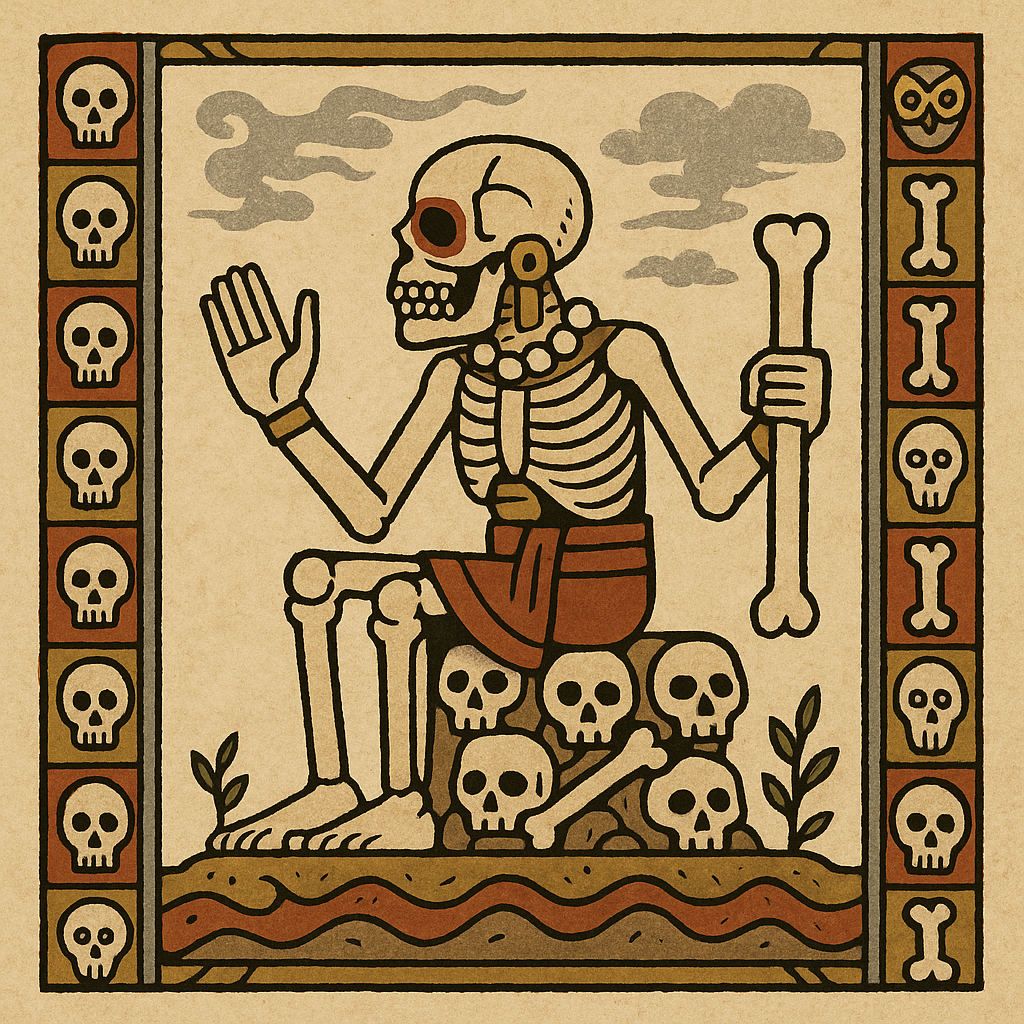
Controversial Takes on the Creation: Rethinking the Genesis Story

Explore the Genesis creation story through the lens of symbolic timelines, ancient mythological influences, and the evolving dialogue on gender roles and the imago Dei. 

It all starts with a void, a formless, dark abyss. Then, a single command — “Let there be light” — kicks off the creation of the universe. In a mere seven days (or was it?), God separates light from darkness and land from sea, populates the animal kingdom and eventually crafts humanity in his image. It’s a tale almost everyone knows, but beneath its simplicity lies a world of debate, alternative interpretations and a bit of controversy.

Things get even more interesting when you look at the original Hebrew. The word for God here is Elohim, which is a plural noun.

So what gives?

The Cosmic Timeline: Literal Days or Epic Metaphor?

While many people believe that Genesis lays out a precise timeframe — six 24-hour days followed by a well-earned divine rest — others argue that this timeline is more symbolic. 

Let’s recall that the Bible isn’t a science textbook. The Old Testament was composed by various authors over many centuries, reflecting a range of perspectives and historical contexts. Many scholars believe that large portions were never intended to be taken literally, but were instead written as symbolic narratives or moral lessons.

The Day-Age Theory

One interpretation, known as the Day-Age Theory, suggests that each “day” represents a long epoch rather than a 24-hour time period. This perspective attempts to reconcile the biblical narrative with scientific understandings of the age of the universe. Advocates of this view point out that the Hebrew word used in Genesis, yom, can refer to different lengths of time, depending on the context.

This discussion enriches the Genesis narrative by allowing for interpretations that align with both ancient cultural contexts and modern scientific perspectives. For example, on the third day, God separated the land from the sea — an event that, according to this view, could have unfolded over millennia.

Other Ancient Myths: Genesis in a Broader Context

The Genesis creation story isn’t a one-of-a-kind tale; it’s more like a remix of the ancient world’s greatest hits. Back in the day, everyone from the Babylonians to the Egyptians had their own origin stories, where gods shaped the world. 

One of the most famous of these is the Babylonian Enuma Elish, a myth dating back to the 2nd millennium BCE.

In both Genesis and the Enuma Elish, creation begins in a world of water and darkness. Genesis opens with “the Spirit of God hovering over the waters” (Genesis 1:2), while the Enuma Elish starts with the mingling of the freshwater god Apsu and the saltwater goddess Tiamat. 

The key difference lies in how order is brought out of this chaos. In the Enuma Elish, creation is the result of a violent divine conflict. The god Marduk slays Tiamat and slices her body in half, using one part to create the heavens and the other to form the earth. In contrast, Genesis depicts an orderly and peaceful process: God speaks, and creation happens. The text emphasizes that the world is brought into being through divine command rather than conflict. 

The Divine Council and the Elohim Mystery

Another similarity lies in the presence of a divine council. In both Genesis and the Enuma Elish, the idea of a higher assembly is present. Genesis hints at this in phrases like, “Let us make man in our image” (Genesis 1:26), which have led some scholars to suggest that the pluralization in the text is alluding to a divine council. In the Enuma Elish, Marduk consults with a council of gods before he takes action. 

Things get even more interesting when you look at the original Hebrew. The word for God here is Elohim, which is a plural noun. So what gives? Is this a slip-up, a relic from polytheistic roots or a majestic way to express the fullness of God? 

Gender Roles and the Imago Dei

Genesis 1:27 famously states, “So God created man in His own image, in the image of God He created him; male and female He created them.” This single verse has sparked endless debates about what it means to be made in God’s image and what it implies about gender roles. Is the imago Dei (image of God) about physical form, moral capacity, the ability to rule or something else entirely? And does the verse suggest that men and women were created as equal partners, or is there an embedded hierarchy that reflects traditional patriarchal structures?

Some scholars, like Phyllis Trible, argue that this verse in Genesis 1 speaks to an egalitarian creation — where male and female are equal partners from the outset, challenging the patriarchal interpretations that became more prevalent later in history. In her book God and the Rhetoric of Sexuality, Trible contends that the language used here emphasizes a shared humanity and mutuality between men and women. The simultaneous creation of male and female in God’s image resists any notion of hierarchy, positioning both as equal bearers of divine likeness and true partners.

The Creation Sequence in Genesis 2: Hierarchy or Partnership?

However, interpretations shift when moving to Genesis 2, where the creation of Eve from Adam’s rib introduces what some see as a declaration of male supremacy. In this version, Adam is created first, given the command to name the animals, and then put to sleep so that Eve can be made from his side. For many, this sequence has been used to argue that men hold a leadership role over women, with Eve’s creation from Adam symbolizing her derivative nature.

Bruce Waltke, in his book Genesis: A Commentary, explores how this narrative has been employed regarding gender roles. There are two schools of thought: Those who support a complementarian view argue that the sequence indicates a divinely ordained leadership role for men, while those who support egalitarianism emphasize the unity and mutual dependence expressed in the phrase “bone of my bones and flesh of my flesh” (Genesis 2:23).

Another angle in this debate revolves around what it means to bear the image of God in relation to rulership. Genesis 1:26 says, “Let us make man in our image, after our likeness. And let them have dominion over the fish of the sea and over the birds of the heavens and over the livestock and over all the earth and over every creeping thing that creeps on the earth.”

The plural “them” suggests that both male and female share in this dominion. John H. Walton, in The Lost World of Genesis One, argues that rulership is a key aspect of what it means to be made in God’s image, and that this dominion is intended to be a joint responsibility. The image of God in humanity is primarily functional, emphasizing our role as God’s representatives on Earth, with male and female equally in charge.

As Trible and others have pointed out, the so-called “curse” of patriarchy in Genesis 3, where God tells Eve, “Your desire shall be for your husband, and he shall rule over you” (Genesis 3:16), is framed as a consequence of the Fall, not a prescriptive mandate for all time. Trible argues that this shift is a distortion of the original egalitarian ideal and that the redemption of humanity should seek to restore the balance intended in the creation narratives.

The demonization of Eve (and, by extension, all women) continues in the telling of the Garden of Eden and the Fall of Man

The Creation Story: Timeless, Yet Ever-Evolving

The Genesis creation story may be ancient, but its interpretations continue to evolve. From questions about the cosmic timeline to debates over the roles of men and women, these texts invite us to look deeper, challenging us to explore the intersections between faith, history and science. 

The conversation is far from over — and maybe that’s the point. Genesis opens with the words, “In the beginning,” reminding us that even in our understanding, we’re still at the start of a much larger journey. –Wally
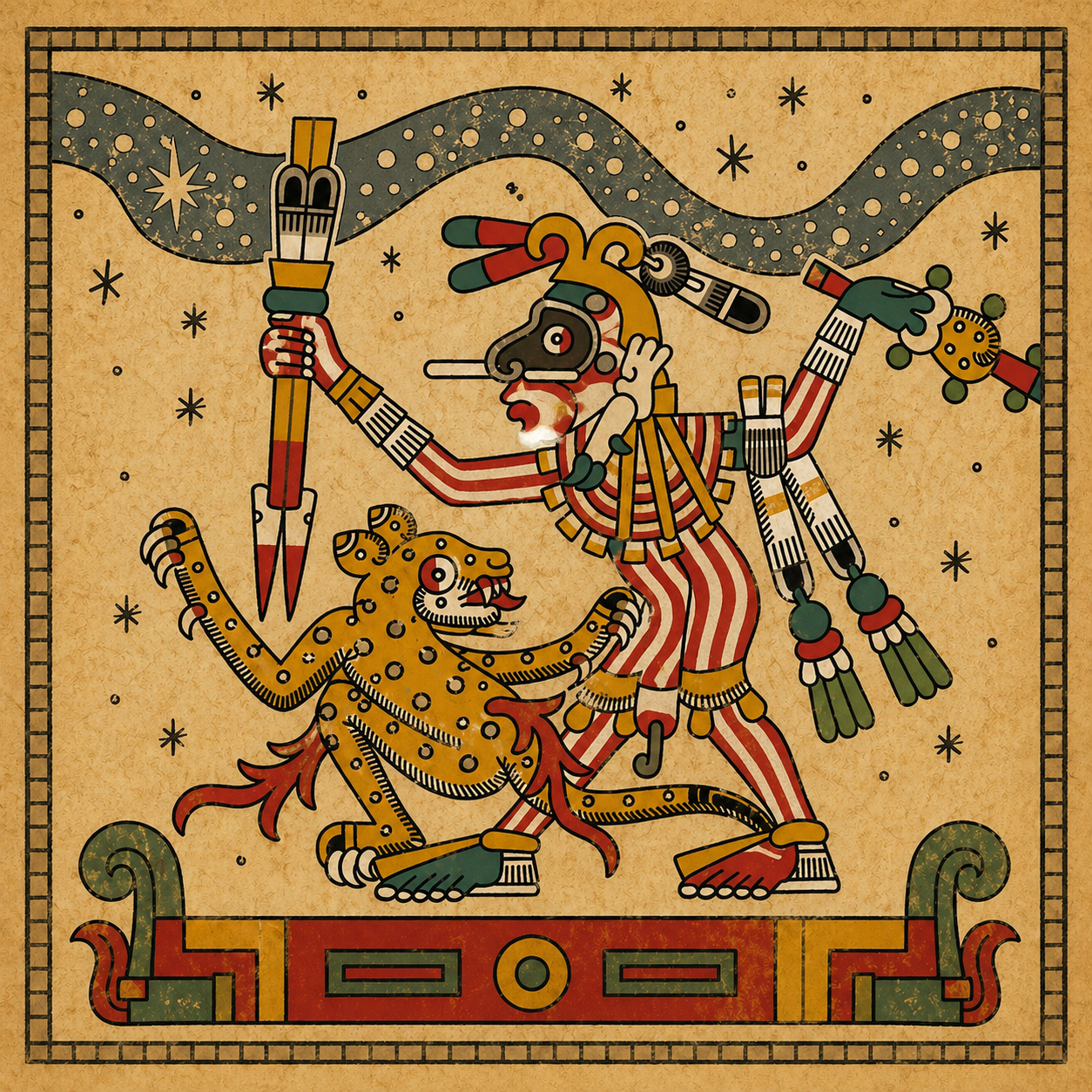
Descriptions of God’s Body in the Bible

From his massive member to a horned head, there are plenty of references to God having a corporal body in the Old Testament. Some shocking findings from “God: An Anatomy.”

God, surrounded by angels, reaches a finger out to a nude Adam in Michelangelo's Creation of Adam on the ceiling of the Sistine Chapel in Rome

Perhaps the most famous depiction of God is this detail of the Creation of Adam, painted by Michelangelo on ceiling of the Sistine Chapel.

What does God look like? 

Most people nowadays probably fall into two camps: those who say God is incorporeal, an entity without form — and those who imagine him as Michelangelo painted him, a powerful if elderly man with a flowing white beard and a penchant for long white robes.  

Those who think of God as bodiless haven’t paid enough attention to their Old Testament, though. In fact, the first clue is right there…in the beginning.

“So God created mankind in his own image, in the image of God he created them; male and female he created them” (Genesis 1:27). 

That means God is humanlike — or should I say, humans are godlike?

It’s not so strange that God had a body. All his fellow gods did, from his competition in the Middle East to the pantheons of Ancient Egypt, Greece and Rome. 

God (Yahweh) as described throughout the Old Testament, an old man with a muscular, battle-scarred build and red skin

Add up all the descriptions of God in the Old Testament, and you get a red-skinned, powerfully built older man.

So what does he look like? Take all the Old Testament mentions of God, add them together and here’s what you get, according to Francesca Stavrakopoulou in her 2022 book God: An Anatomy:

A supersized, human-shaped body with male features and shining, ruddy-red skin, tinged with the smell of rainclouds and incense. His broad legs suggest he was accustomed not only to straining, leaping and marching, but sitting and standing resolutely stiff, posing like a ceremonial statue. His biceps bulge. His forearms are hard as iron. There are faint indentations around his big toes, left by thonged sandals. Beneath his toenails there are traces of human blood, as though he has been trampling on broken bodies, while the remnants of fragrant grass around his ankles suggest strolls through a verdant garden. The slightly lighter tone of the skin on his thighs indicates he was most often clothed, at least down to his knees, if not his ankles. Minute fibers of fine fabric — a costly linen and wool mix — indicate that his clothing was similar to the vestments of high-status priests. His penis is long, thick and carefully circumcised; his testicles are heavy with semen. His stomach is swollen with spiced meat, bread, beer and wine. The chambers of his heart are deep and wide. His fingers are stained with an expensive ink, and there are remnants of clay under his fingernails. On his arms are faint scars left from the grazes of giant fish-scales, and the crooks of his elbows, slightly sticky with a salty oil, bear the imprint of swaddling bands, suggesting he has cradled newborn babies. Traces of the tannery fluid used by hide-workers wind in a stripe around his left arm and down to the palm of his hand — a residual substance left by a long leather tefillin strap.

His thick hair is oiled with a sweet-smelling ointment, and shows evidence of careful styling: the hair-shafts suggest it was once separated and curled into thick ropes, while slight marks on the back of his scalp indicate it has been partly pinned beneath some sort of headgear, and his forehead is marked with the faint impression of a tight band of metal. Although his beard reaches beneath his chin, it has been neatly groomed, while his mustache and eyebrows are thick and tidy. The hair on his head and face shimmers — first dark with blue hues, like lapis lazuli, then white and bright, like fresh snow. And one glance, he has the beard of his aged father, the ancient Levantine god El; in another, it is the stylized beard of a youthful warrior, like the deity Baal. His ears are prominent, and their lobes are pierced. His eyes are thickly lined with kohl. His nose is long, its nostrils broad — the scent of burnt animal flesh and fragrant incense lingers inside them. His lips are full and fleshy, his mouth large and wide. It is at once the mouth of a devourer and a lover. His teeth are strong and sharp, his tongue is red hot. His saliva is charged with a blistering heat. The back of his throat is a vast, airy chamber, once humming with life. Below it is an opening of a cavernous gullet. Shadowy scraps of another powerful being, the dusty underworld king, cling to its walls.

God aka Yahweh as described in the Bible, with gray hair and beard, muscular red skin and a white robe

The depictions of Yahweh in the Bible are disparate, but some common themes emerge.

Quite a picture, eh? All these details appear in various books of the Old Testament. Here’s a sampling.

The Garden of Eden, a painting by Lucas Cranach der Ältere

God liked to walk in the Garden of Eden with Adam and Eve … before they dared to eat of the Tree of Knowledge of Good and Evil.

Walking and Talking With God

Later in Genesis, Adam and Eve have eaten of the forbidden fruit and hide from God when they hear him “walking in the garden.”

Enoch, Noah and Abraham go for walks with God as well — as did Moses. Sure, God showed up as a burning bush when they first met, but after that, “the Lord used to speak to Moses face to face, as one speaks to a friend” (Exodus 33:11). 

God appearing as an old man in the burning bush to Moses

Yahweh first showed himself as a burning bush to Moses, but after a while they became good friends and would often take walks together.

Holy Shit! God’s Ground Rules 

With all that walking, God had to be careful he didn’t step in something unpleasant. 

When the Israelites flee Egypt en route to the Promised Land during the Exodus, God declares, “You shall have a designated area outside the camp to which you shall go; with your utensils you shall have a trowel; when you relieve yourself outside, you shall dig a  hole with it and then cover up your excrement, because Yahweh your God walks in your camp” (Deuteronomy 23:12-14). 

Apparently his omniscience doesn’t extend to knowing how to avoid excrement. It’s heartening to know that God steps in shit just like we do. 

Ezekiel's vision of God in the cherubim chariot with hybrid monsters and cherubs as described in the Old Testament, painted by Raphael

The prophet Ezekiel saw God in a chariot supported by hybrid heavenly creatures.

The Cherubim Chariot 

After the Babylonians destroyed and plundered the Temple, the worshippers of Yahweh surely wondered if their god had also been vanquished. So the book of Ezekiel offers up a scene of Yahweh’s escape. He is seated on his supersized throne, using the Ark of the Covenant as his footstool (!). Cherubim (not the chubby baby angels you’re thinking of but four-winged celestial beings with four faces — that of a man, lion, eagle and cherub) perch upon wheels and bear the throne aloft. 

The Eternal Father, a painting by Guercino (Giovanni Francesco Barbieri)

You didn’t want to be on Yahweh’s bad side; he was prone to violent reactions — including stomping people to death.

God’s Stomping Grounds

But God doesn’t only walk and rest his feet. Sometimes he goes on a murderous rampage. Yahweh marches back from a massacre in the enemy kingdom of Edom: “I trampled down peoples in my anger, I crushed them in my wrath, and I poured out their life blood on the earth,” he tells a sentry in Isaiah 63:6. 

“This is a god who has felt the crunch of bones and skulls under his feet; the warm, wet mulch of human flesh around his ankles; the heart spray of blood on his legs,” Stavrakopoulou writes.

Isaiah's vision of God in the Temple

In Isaiah’s vision of God, is that a massive robe filling the Temple — or something more phallic?

God’s Genitals on Display

A couple of prophets even boasted of seeing God’s oversized genitals — and yes, this is all in the Bible. Isaiah, in the middle of the 8th century BCE, entered the inner sanctum of the Jerusalem Temple, where he beheld a surprising sight. 

“My eyes have seen the King, Yahweh of Hosts!” the prophet declares in Isaiah 6:1. “I saw the Lord sitting on a throne, tall and lofty! His lower extremities filled the temple!”

But the Hebrew word he used for “lower extremities” was shul, which actually means “genitals,” Stavrakopoulou informs us. (It’s worth pointing out that many scholars argue that the word actually means the hem of a robe.)

So Isaiah is saying he saw God naked — and, um, let’s just say he was impressed. I guess we shouldn’t be surprised to learn that God’s hung. 

Another prophet, Ezekiel, describes a much stranger encounter: He sees God and focuses on what “looked to be his motnayim” — another Hebrew word for genitals, Stavrakopoulou writes. He looks above and below and sees the rest of the Lord’s body engulfed in flames (Ezekiel 1:27). 

I’m not sure why Ezekiel seems hesitant about if he’s looking at God’s groin or not — perhaps all that fire is blinding him a bit — but heavens knows Isaiah had no doubts about what he was seeing. 

A small statues of the Ancient Egyptian god Min, with an enormous erection

The Ancient Egyptian god Min was usually depicted as having a massive erection.

‘The Imposing Erect Virility’ of the Gods

As shocking as this might seem, depictions and stories of gods having erections were common at the time these Bible books were written. A carving of the Egyptian god Min at Luxor Temple, for example, shows the fertility deity with a massive hard-on as he greets Alexander the Great. 

“In the ancient cultures of southwest Asia [Stavrakopoulou’s non-Western-centric terminology for the Middle East], a sizable penis, and even its occasional overt exhibition, did not render male deities less godly, but appropriately divine. The imposing erect virility of masculine gods was vividly celebrated in these ancient societies and the religious literature they produced,” Stavrakopoulou writes. “[T]he penises of ancient southwest Asian gods embodied a conspicuous and powerful hyper-masculinity deemed essential to the ordering, fruitfulness and well-being of the cosmos and its inhabitants.”

Cain Fleeing from the Wrath of God (The Body of Abel Found by Adam and Eve)

Cain, who killed his brother, Abel, might have been God’s son, not Adam’s!

Cain’s Baby Daddy Isn’t Adam…But God?!

Most of us assume that Adam and Eve had children — but if you look at the Bible, Eve declares that Cain at least was actually the offspring of her and God: “I have procreated with Yahweh!” she shouts in Genesis 4:1. 

“The more literal translation of the Hebrew is rarely seen,” Stavrakopoulou writes. “Most renderings of this verse default to a theologically fudged interpretation, so that Eve is merely presented as claiming that Yahweh has ‘helped’ her to ‘acquire a man,’ as any good fertility god might.”

God the Father, a painting by Jacob Herreyn

Yahweh, like the Greek gods, who had sex with many unwilling women, could be prone to lust.

God as a Sexual Predator 

In the book of Hosea, God not only has a body — he actually gets it on with a young woman who’s the personification of Israel. 

“Here, Israel is a capricious teenager whose sexual allure so intoxicates God, he falls to scheming obsessively and possessively to make her his wife,” Stavrakopoulou writes. “‘I will take her walking into the wilderness and speak to her heart … and there she will cry out.’ 

“These words betray more than the romantic fantasy of a love-struck deity,” she continues. “God’s language here marks a shift from passion to threat: In claiming he will ‘seduce’ her, he uses a Hebrew expression more usually employed in the Bible to describe the rape of captive women.”

This idea of God as a sexual predator — or even just a sexual being — has been problematic for centuries, and that’s certainly true with our current sensibilities. 

“Theologically, the sexual grooming and graphic violence God inflicts on his young wife is immensely difficult for some modern-day believers to reconcile with their idealized constructs of God,” Stavrakopoulou says. “But for many Jewish and Christian readers, it is more specifically the graphic portrayal of a sexually actively deity that has proved unbearable: It has been mistranslated, dismissed as ‘mere’ allegory, or simply ignored.”

Foreign books are immensely dependent upon their translations — all the more essential for the Bible, a book so many people take literally. That’s what makes this softening of the original message so alarming. 

“In standard modern translations of the Tanakh [the Hebrew Bible] and the Christian Bible, the graphic sexual imagery of these troubling texts is softened or obscured with sanitized vocabulary and clunky euphemisms,” Stavrakopoulou writes. 

Yahweh's butt is seen out of his red robe, when he shows it to Moses, as described in the book of Exodus

Yahweh knew Moses couldn’t handle seeing him all in his glory — so he offered just a peek of his cheeks.

God Shows Moses His Glorious Backside 

Up on Mount Sinai, Moses asks God to reveal himself: “How shall it be known that I have found favor in your sight, I and your people?” he asks in Exodus 33:16-18. “Please, show me your Glory.”

But God says that Moses can’t handle his awesomeness — he’ll only allow him to see his backside. It’s the same term used elsewhere in the Bible to describe the buttocks of an animal, according to Stavrakopoulou. 

God adds that no mortal could gaze upon his face and live. “In its narrative context, it is a capricious assertion, for Yahweh and Moses have already enjoyed a number of conversations ‘face to face’ — and Moses has survived,” Stavrakopoulou points out. 

Like other deities of the Middle East, Yahweh’s body is engulfed in a dazzling aura: He is “wrapped in light as with a garment” and “clothed with glory and splendor.” 

It’s all too easy to think of these descriptions as hyperbolic — but they’re meant to be taken literally, Stavrakopoulou asserts. 

Top of a statue of Moses showing his long beard and the horns he got after seeing God

Whether they were literal or beams of light, Moses came back from a convo with God bearing horns.

The Glory of God Makes Moses Horny

“In Exodus, however, God’s luminescent backside clearly gives off something more powerful than a wondrous afterglow. When Moses finally descends from the Holy Mountain, clutching the Ten Commandments, his own face is startlingly transformed,” Stavrakopoulou writes. “But quite how is a matter of some debate, for the ancient Semitic root of the Hebrew term used to describe this transformation probably means ‘horn,’ but is also associated with light. The earliest translations of this peculiar story indicate that, from at least the 3rd century BCE, Moses was understood to have developed horn-like rays of light, so that his face beamed with a divine radiance. Other ancient scholars would assume Moses’ face literally grew horns — a symbol of the divine elsewhere in the Bible — giving rise to startling medieval images of Moses as a double-horned being. Either way, Moses undergoes a bodily transformation so profound that the Israelites cannot look him in the face and are afraid to go near him. Moses’ visual encounter with God has left its mark on him, rendering him more divine than human.”

Moses' Testament and Death, painted by Luca Signorelli

Poor Moses never entered the Promised Land — but was it God who took the care to bury him?

God the Gravedigger

Moses seems to have been the Old Testament character with the most face time with God. And that lasted right up until the moment of his death. The poor guy — being a favorite of Yahweh doesn’t get you much. Moses dramatically led the exodus of escaped Israelite slaves out of Egypt, delivered the Ten Commandments and wandered the desert for 40 years. Finally, the time has come to enter the Promised Land. But, in a shocking twist, God shows Moses the beautiful sight of their hard-earned payoff — and then tells him to literally drop dead: “Moses, the servant of Yahweh, died there in the land of Moab, at Yahweh’s command. And he buried him in the valley in the land of Moab” (Deuteronomy 34:5-6). 

“In the book of Deuteronomy, Moses’ gravedigger is God himself,” Stavrakopoulou writes. “Appalled by the idea that God could contaminate himself with the impurity of a corpse — even the corpse of so holy a man as Moses — some Jewish and Christian translators corrected what they perceived to be an error in the text: ‘he buried him’ simply became ‘he was buried’ or ‘they buried him,’ leaving generations of readers to assume that mourning Israelites or weeping angels had performed Moses’ mortuary rites, rather than God himself.”

The horned Middle Eastern ancient god Baal

Baal, one of Yahweh’s biggest rivals in the ancient Middle East

God Gets Horny

It’s an image that wouldn’t sit well with most modern Christians or Jews — especially given its connections to the Devil and demons — but one of the earliest descriptions of God describes him as having horns. “God, who brought [Israel] out of Egypt, has horns like a wild ox!” the prophet Balaam declares in Numbers 23:22. 

“In the Western imagination, a horned being tends to conjure images of the diabolical, and the grotesque. From the man-eating bull-headed Minotaur of Greek myth to the cloven-hooved goat-faced Devil of Christianity, horns have long served as a hallmark of horror,” Stavrakopoulou writes. “But in the world of the very ancient gods, horns were the most prestigious and alluring manifestations of divinity, and most deities would be equipped with them.”

Horns were a sign of power, designating that the gods who sported them “were beings of bullish virility and ferocious strength,” Stavrakopoulou explains. 

Yahweh on fire, breathing flames, as described in Isaiah 30 in the Old Testament

There’s a horrific description of a fiery God — right before he gobbles up a roasted king of Assyria.

The Nose Knows: God’s Wrath and a Kingly BBQ

“The God of the Bible was particularly proud of his nose,” Stavrakopoulou tells us. “In his lengthy monologue on Mount Sinai, he reels off a list of his best qualities, not only describing himself as merciful, gracious and abounding in steadfast love and faithfulness, but ‘long-nosed,’ too.” 

This is a way of saying he has deep nostrils, she says — meaning slower breathing, and by extension, being patient and slow to anger. 

But once that temper raged, you didn’t want to be anywhere near him. 

In the book of Isaiah, a seer spies Yahweh in the distance, his nose ablaze, “his lips full of fury, his tongue a devouring fire; his breath an overflowing stream, reaching up to the neck!” (Isaiah 30:27-28). 

What’s God up to? Oh, just sacrificing an Assyrian king upon a pyre and feasting on his charred corpse.

The ancient Levantine deity El

The Ancient Almighty: God’s Golden Years 

Our current image of God as a powerful older man comes from a portrayal in Daniel 7:9-10 from the 2nd century BCE. As Stavrakopoulou states, “God himself remains a picture of perpetual purity: Enthroned, in fiery splendor, and surrounded by thousands of divine courtiers, he is called ‘an Ancient of Days,’ dressed in robes ‘white as snow,’ with hair ‘like a lamb’s wool.’”

Again, this iconography is borrowed from neighboring deities, including El, whom Stavrakopoulou describes as Yahweh’s father — before Yahweh was retrofitted as the sole true god. El’s (and Yahweh’s) gray hair and beard were seen as signs of immortality and wisdom. 

Unseen and Unsculpted: The Theological Dance Around God’s Corporality

When thinking about this article, I realized something that shocked me: While I’ve seen a few paintings of God — Michelangelo’s Sistine Chapel depiction of God (looking suspiciously like Zeus) reaching out to Adam springs to mind — I couldn’t think of a single sculpture of him.

Part of this is due to the fact that the mentions of God as having a body in the Bible make many Christians uncomfortable. They want the only depiction of God as corporeal to be that of Jesus. 

“Those troublesome verses in the scriptures attesting to God’s body would be smoothed, smothered or superseded by new interpretive frameworks and some fancy philosophical footwork,” Stavrakopoulou writes. “A favorite tactic employed by early Christian theologians was simply to reduce all biblical references to God’s body to the symbolic.” 

Even further back than that, after the Jerusalem Temple had been rebuilt in the 5th century BCE, Yahweh’s worshippers understood all too well the vulnerability and lack of transcendence of a corporeal god. 

It was around this time one of the Ten Commandments became “You shall not make for yourself a carved image.”

Once a vividly described giant, God lost his body. 

God the Father, a painting by Ludovico Mazzolino

Are there few statues of God because one of the Ten Commandments forbids “carved images”?

And therein lies the main controversy around God: An Anatomy. The book has ignited a theological firestorm, dragging Yahweh off his lofty pedestal and into the gritty, grimy realm of human physicality. Some scholars are applauding Stavrakopoulou’s daring approach, while others are reaching for the nearest exorcism manual.

Biblical scholar Joel Edmund Anderson isn’t holding back. On his blog, Resurrecting Orthodoxy, he accuses Stavrakopoulou of having a “tin ear to the literary artistry and nuance of the biblical texts,” arguing that her interpretations are overly literal and lack proper contextual grounding. 

So, even though many Christians believe everything in the Bible to be literal, they prefer to skip over references to God’s form — it’s all too close to those pagan deities. Team Symbolic has won out; no one really talks too much about God’s body nowadays. It seems that the divine anatomy lesson is one lecture most would rather miss. –Wally

Where the Heck Did the Easter Bunny Come From?

Hopping through the history of the Easter Bunny, from pagan rituals to modern-day celebrations. Along the way, we’ll make some egg-citing discoveries about his birth as a fertility symbol and the origin of dyed eggs and Easter baskets.

Two cute little tan bunnies in an Easter basket by colored Easter eggs on the grass

Who knew the Easter Bunny evolved from the animal companion of a pagan goddess?

I once sponsored a child in India. His name was Papu Magi, and I regularly wrote him letters, sharing U.S. customs. When Easter rolled around, I explained how a giant human-sized bunny sneaks into our homes at night and leaves baskets filled with candy and colored eggs.

It wasn’t until I had written it out that I realized how bizarre some of our holiday traditions truly are. This got me thinking: How did we come up with the Easter Bunny?

It makes you wonder if most Christians realize the holiday dedicated to the resurrection of their savior is actually named for a pagan goddess.
Black and white vintage photo of women in dresses holding ribbons around a maypole

Young women dance around a phallic maypole to increase their fertility — another pagan spring tradition.

A Pagan Origin: How the Easter Bunny and Dyed Eggs Became Symbols of Spring Celebrations

The origins of the Easter Bunny, as well as dyed eggs, can be traced back to ancient pagan rituals that celebrated the arrival of spring, including Ostara. Still practiced as a Wiccan holiday, Ostara is a celebration of the spring equinox. It’s named after the Germanic goddess Eostre, who some scholars deduce was associated with the dawn, fertility and new beginnings. (It makes you wonder if most Christians realize the holiday dedicated to the resurrection of their savior is actually named for a pagan deity).

Caveat: Hard evidence about Eostre is lacking, and the goddess remains shrouded in mystery. Much of what’s reported on her is conjecture.

Her first mention comes from a famous monk, the Venerable Bede, in 731 CE, who wrote that the Anglo-Saxons called April Eosturmonath, or Eostre Month, in honor a pagan goddess worshiped at that time.

The German goddess of the spring, Eostre, with plants in her hair, an owl on her shoulder and holding a white rabbitl

Easter gets its name from Eostre, a pagan goddess of the spring.

These rites of spring were full of festive merrymaking, including dancing around maypoles, drinking mead and worshiping rabbits.

Yup, that’s right: Bunnies were a key figure in these celebrations. In pagan traditions, the rabbit was seen as a symbol of fertility and new life — no real surprise, given their well-deserved reputation for rapid reproduction.

During these springtime celebrations, people would decorate eggs, believing them to have the power to bring new life and prosperity to those who ate them. Using natural dyes made from flowers and other plants, they created eggs in a variety of hues. And, as crazy as it might sound, rabbits were said to be responsible for laying colored eggs.

Illustration of the Easter Bunny sitting on Jesus' lap under a tree

Do Jesus and the Easter Bunny belong in the same holiday?

Hopping Into Easter: The Christian Origins of the Easter Bunny and Its Symbolism of Resurrection

The Easter Bunny may have its roots in pagan traditions, but it also had a significant place in Christian beliefs. The early Christians in Europe adopted many pagan customs and blended them with their own religious practices, which is how the Easter Bunny eventually found its way into the Christian tradition.

Meme showing Christ on the cross saying "When did this....." next to a picture of a bunny and decorated Easter eggs in the grass with the text, "Become this?"

Much as with Christmas, some Christians bemoan the commercialization of the Easter holiday.

I’m not sure that many Christians today connect the commercial aspects of Easter with the religious ones (there’s a parallel to Santa and Christmas), but back in the day, early Christians associated the rabbit, and all of its spring rebirth symbolism, with Jesus’ resurrection.

It seems that Karen Swallow Prior, a professor of Christianity and culture at Southeastern Baptist Theological Seminary, agrees. “There’s nothing wrong with dressing up in pastels, hiding eggs or consuming large amounts of chocolate,” she wrote in an op-ed in The Washington Post. “But if the fluffy white bunny takes precedence over the crucified and resurrected Lord, we’ve missed the point.”

Illustration of white bunny inside an Easter basket filled with flowers and eggs

Easter baskets came about from a pagan tradition to carry offerings to the goddess of spring.

The History of Easter Baskets: From Pagan Offerings to Sweet Treats

Easter baskets are a staple of the holiday, but how did they become a part of the Easter tradition? It turns out that the origin of the Easter basket is also closely tied to the pagan celebrations of spring.

In pagan traditions, baskets were used to carry offerings to the goddess of spring, including eggs, thought to increase fertility. Over time, the baskets became a symbol of the bounty of spring and were filled with all sorts of goodies, like flowers, fruit and vegetables.

Vintage Easter card of brown bunny pulling a giant purple egg with a bow around it and filled with other colored eggs and pink flowers

Well, no wonder the Easter Bunny decided to switch to baskets!

As the Easter basket evolved, so did its contents. Today, they’re most often filled with candy (including a chocolate rabbit, which kids will disturbingly bite its ears off of) and other treats, filled by the Easter Bunny himself during a nocturnal visit — again, another connection to Santa Claus. 

It’s hard to tell exactly when the Easter Bunny became adult-sized and anthropomorphic, but it seems like it might have happened around the 1950s.

Hare Today, Easter Bunny Tomorrow: Tracing the Evolution of the Beloved Easter Mascot

The Easter Bunny has been a beloved symbol of the holiday for centuries, but have you ever wondered how it evolved into the oversized, anthropomorphic creature we know today? 

He didn’t start out that way. The hare, a smaller relative of the rabbit, was revered by ancient cultures for its speed, agility and ability to reproduce, and was often associated with the moon and the goddess of fertility. A study from 2020 draws a direct connection between Eostre and her association with the hare.

Vintage Easter card showing a bunny holding hands and dancing with a girl in a red and white dress by colorful Easter eggs

Bunnies and colored eggs have long been symbols of spring, representing new life.

As the hare became associated with pagan spring celebrations, it eventually evolved into the Easter Bunny we know today. This transformation was likely influenced by the German tradition of the Osterhase, a hare who laid eggs for children on Easter morning.

Jacob Grimm, one of the famous Brothers Grimm who collected oral folklore throughout Germany, said in 1835 that the Easter hare was associated with Eostre, or Ostara, as she would have been called in ancient German.

Vintage Easter card showing four bunnies wearing colored eggs and holding paws and dancing in a row

At some point, the Easter Bunny grew in size and children were told he visits their homes at night (much like Santa) to leave them candy-filled Easter baskets.

Vintage cards from the late 1800s to early 1900s show a lot of rabbits, but it seems like it wasn’t until the 1950s or so that the Easter Bunny became more and more human-like. Perhaps families or malls started having someone dress up like the Easter Bunny for photo opportunities. And despite the fact that the Easter Bunny became bipedal and reached 6 feet or so (not counting the ears), most kids believe he can’t actually talk. 

Then again, it might have come down to marketing as a gimmick to help sell candy. “The Easter Bunny was created out of whole cloth by the confectionary industry,” claims David Emery, who writes for the fact-check site Snopes.

Sepia vintage photo of brown Easter Bunny with its arms wrapped around two crying kids on a couch

In another connection to Christmas, it has become a tradition to terrorize children by making them sit on the Easter Bunny’s lap for a photo.

Today, the Easter Bunny is a staple of the holiday, sometimes depicted wearing clothes — most often a vest and bowtie — and carrying baskets of eggs and treats.

To quote the M&M’s commercial, a fave of mine as a kid in the ’80s: “Thanks, Easter Bunny! Bawk! Bawk!” –Wally
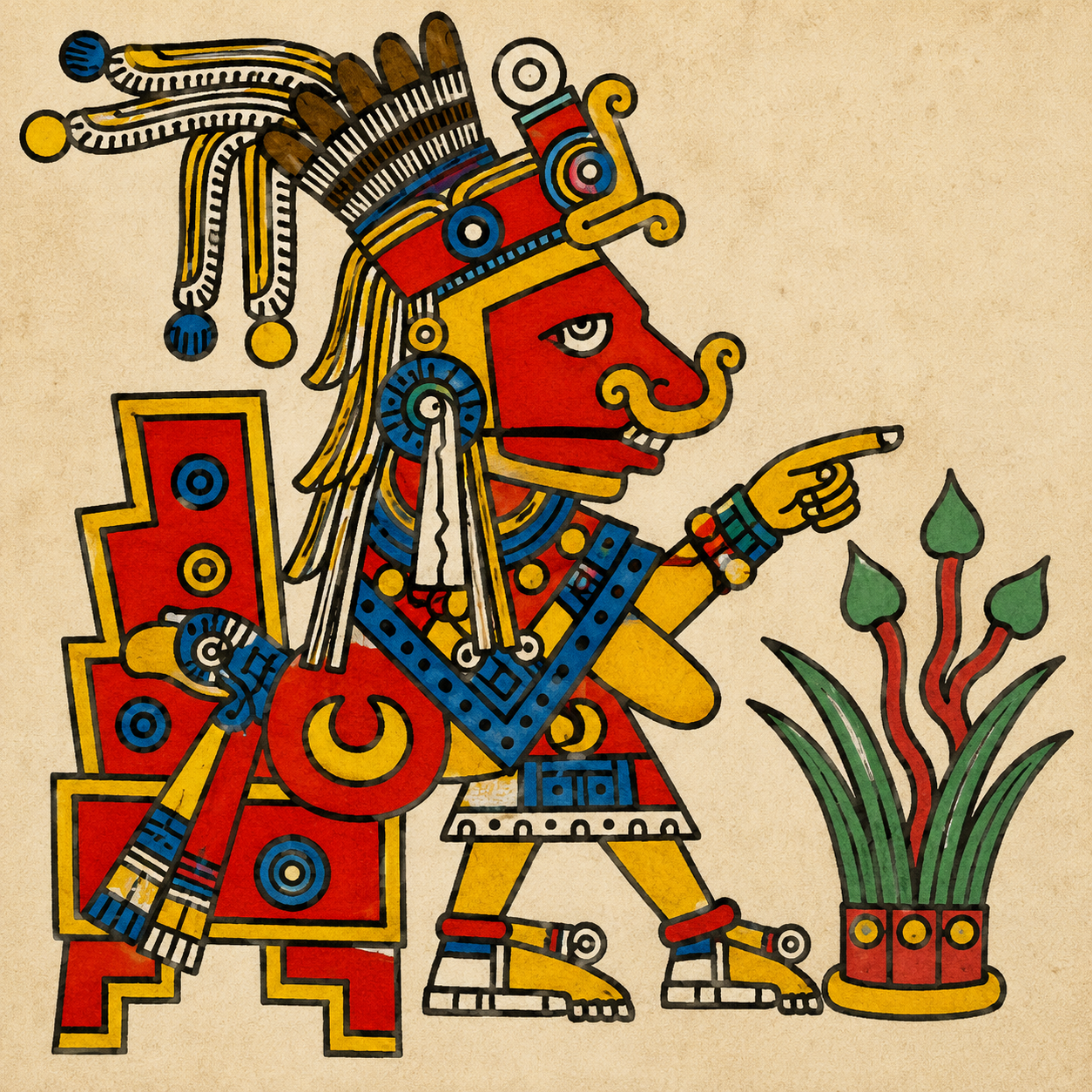
Agave Mythology and Pulque Folk Tales

Mesomaerican legends, including Mayahuel and Ehécatl’s doomed love, drunk Tlacuache the possum and 400 rabbits suckled on pulque.

Goddess Mayahuel in an agave lactating pulque for her 400 rabbits offspring who get drunk

Mesoamerican myths are pretty crazy. Take the fertility goddess Mayahuel, who lactated pulque, which intoxicated the 400 rabbits she gave birth to.

Aside from being a source of sustenance, the agave, or maguey as it’s referred to in Mexico, was revered and respected as a sacred plant by the ancient peoples of Mesoamerica. 

The desert succulent is distinguished by a rosette of strong fleshy leaves that radiate from the center of the plant. Fibers from its tough spiny leaves were used to make rope or fabric for clothing, and the barbed tips made excellent sewing needles. Devotees and priests would pierce their earlobes, tongues or genitals with the thorns and collect the blood as an offering to the gods. An antiseptic poultice of maguey sap and salt was used in traditional medicine and applied to wounds. The plant is also the source of pulque, a beverage made from its fermented sap, and many years later, distilled as mezcal and tequila. 

Illustration of person treating a head wound with agave

Agave being used to treat a head wound

As a final act, the maguey poetically blooms in the final throes of its life cycle. A mutant asparagus-like stalk emerges from the center of the plant, reaching 25 to 40 feet high before it flowers and dies. 
Drink of the Gods

In Aztec times, the milky and sour mildly alcoholic beverage was highly prized and strictly limited to consumption by a select few, including priests, pregnant women, the elderly and tributes offered up for ritual sacrifice. The priests believed that the resulting intoxication put them in an altered state and allowed them to communicate directly with the gods. The consequences of illegally imbibing outside of this group were so serious that the convicted faced death by strangulation. 
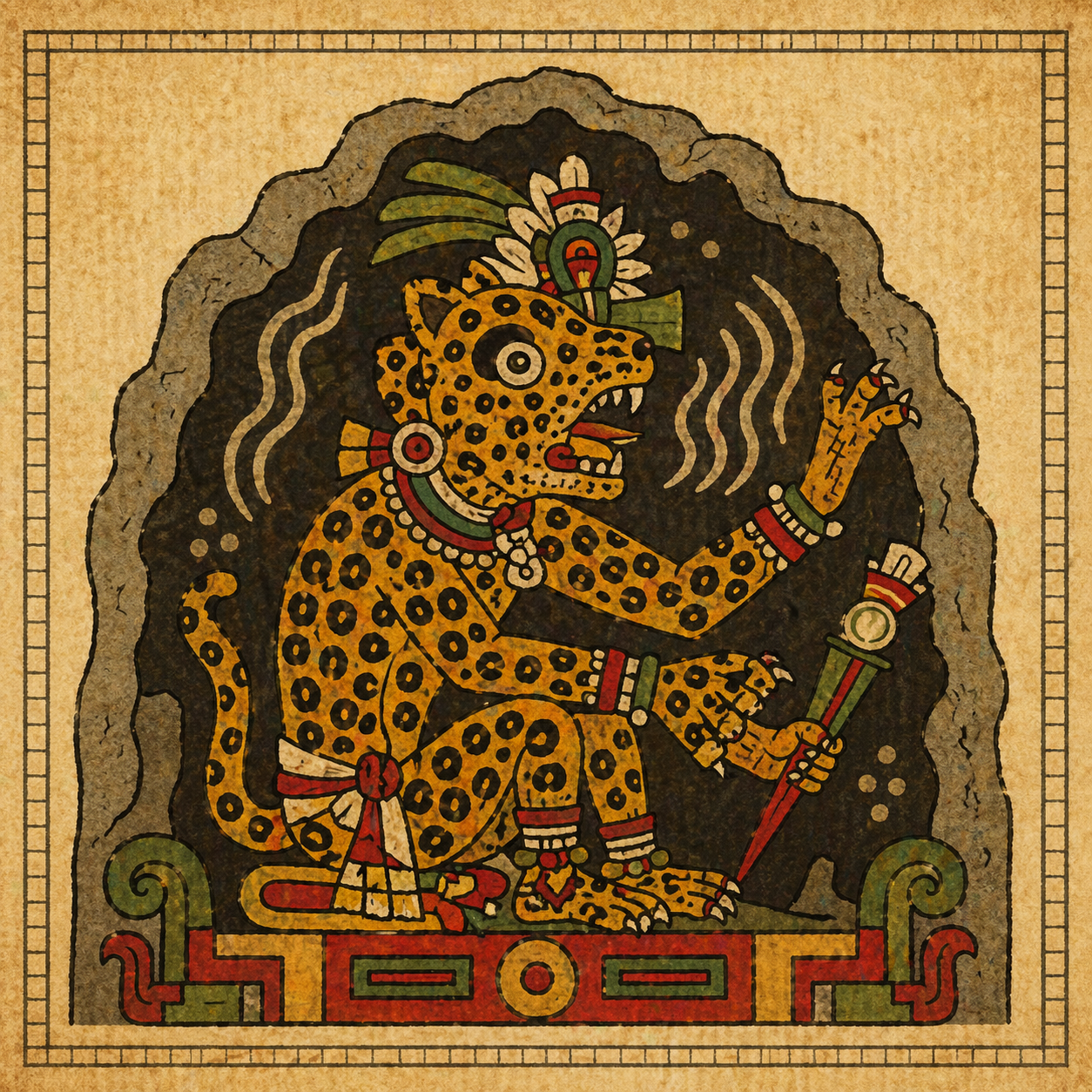
So what are the myths and folklore stories about agave and pulque? As with myths around the world, there are multiple variations, and while researching stories about agave I found myself falling down a rabbit hole. I couldn’t quite decide what the definitive versions were, so here are my interpretations.

Aztec goddess Mayahuel

The gorgeous (personally we don’t see it) Mayahuel was rescued from her evil grandmother, then torn apart and fed to demons, before eventually becoming the first agave.
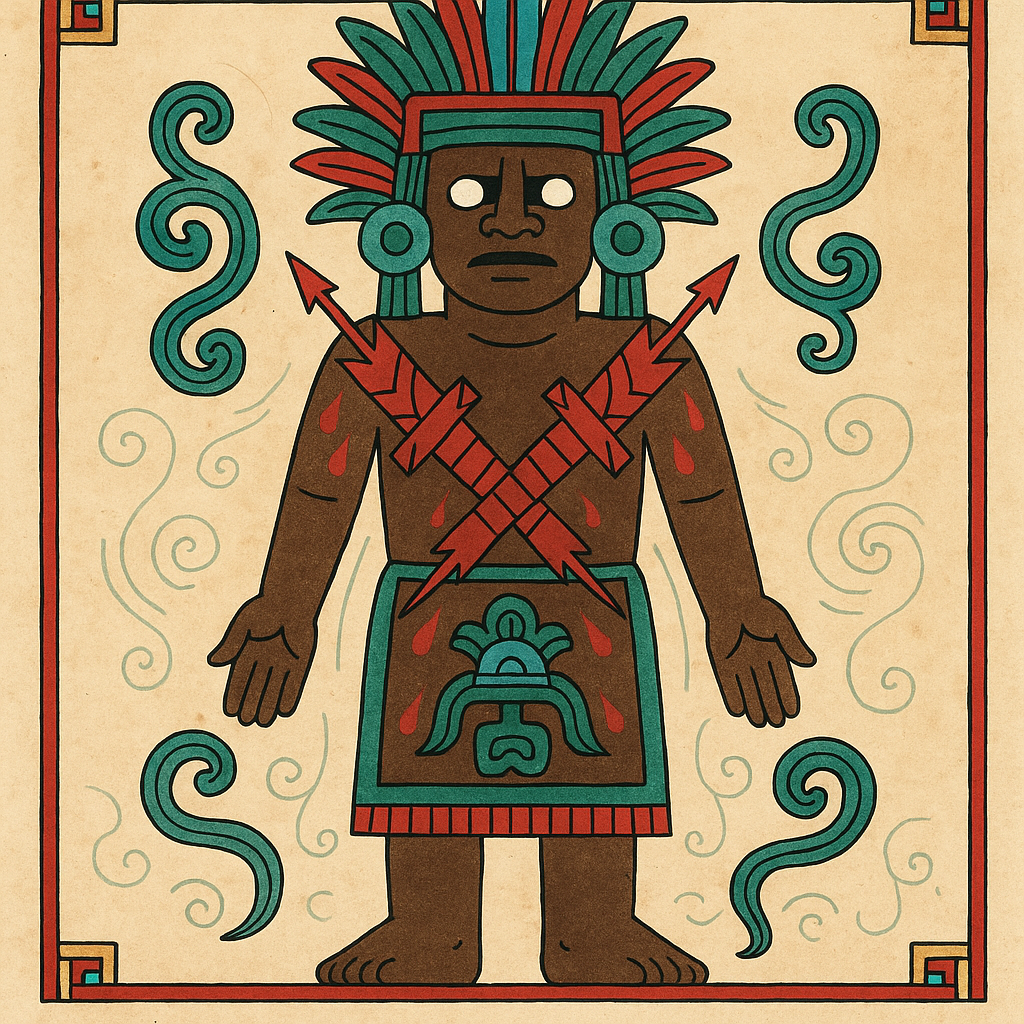
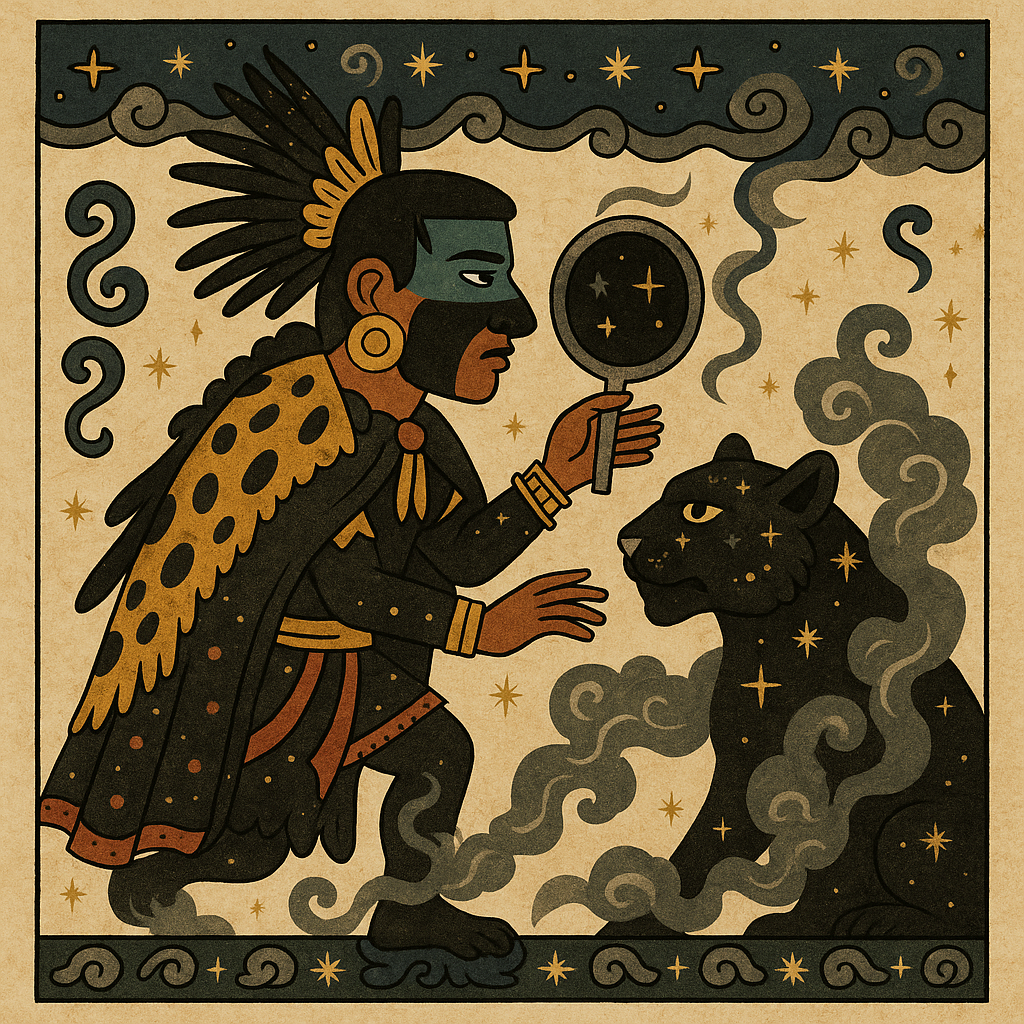
The Legend of Mayahuel, Whose Lovely Bones Became the First Agave

When the universe as we know it was formed, so too was a ferocious and bloodthirsty race of light-devouring demons known as tzitzimime. It was said that life ebbed from their fleshless female forms. They were easily recognizable by their shiny black hair, skeletal limbs ending in clawed hands, and blood red tongues resembling a sacrificial knife wagging from their gaping maws. Their wide-open starry eyes allowed them to see through the darkness. 

Aztec demon tzitzimime with claws and dripping blood from its mouth

The tzitzimime were ferocious demons who sucked light and life from this world.

These monstrous beings ruled over the night sky and wore gruesome necklaces loaded with severed human hands and hearts — trophies from the steady diet of human sacrifices required to appease them. 

The tzitzimime cloaked the earth in darkness, and in return for ritual bloodshed, permitted the sun to rise and move across the sky. It’s a fair guess to say that a large number of lives were lost, as the Aztecs believed that if darkness won, the sun would be lost forever, the world would end, and the tzitzimime would descend from the skies and gobble up humankind. 

Aztecs pour sacrifices of human blood over a tzitzimime demon

The tzitzimime demons were insatiable for sacrifices of human blood.

Hidden in the sky among the tzitzimime was a beautiful young maiden by the name of Mayahuel. Mayahuel was imprisoned by her grandmother, Tzitzímitl, the oldest and most malevolent demoness of the brood.

Tzitzímitl’s insatiable desire for human sacrifice angered Ehécatl, the god of wind and rain. 

One evening he rose up into the night sky to confront her, but instead discovered Mayahuel. Struck by her beauty, he immediately fell in love and convinced her to descend from the heavens to become his paramour. 

Ehecatl, Aztec god of wind and rain

Ehécatl, god of wind and rain, tried his best to save poor Mayahuel from Tzitzimitl.

When Tzitzímitl discovered that Mayahuel was missing, she exploded into a violent rage and commanded her demon servants to find her granddaughter. The pair assumed the form of trees and stood side by side so that their leaves would caress one another whenever the wind blew.

Time passed, but their disguise was no match for the furious Tzitzímitl. The sky turned gray with clouds that heralded a major storm, followed by lightning and thunder. When the evil spirit finally found Mayahuel, she tore her from the ground and fed her to her legions of tzitzimime. 
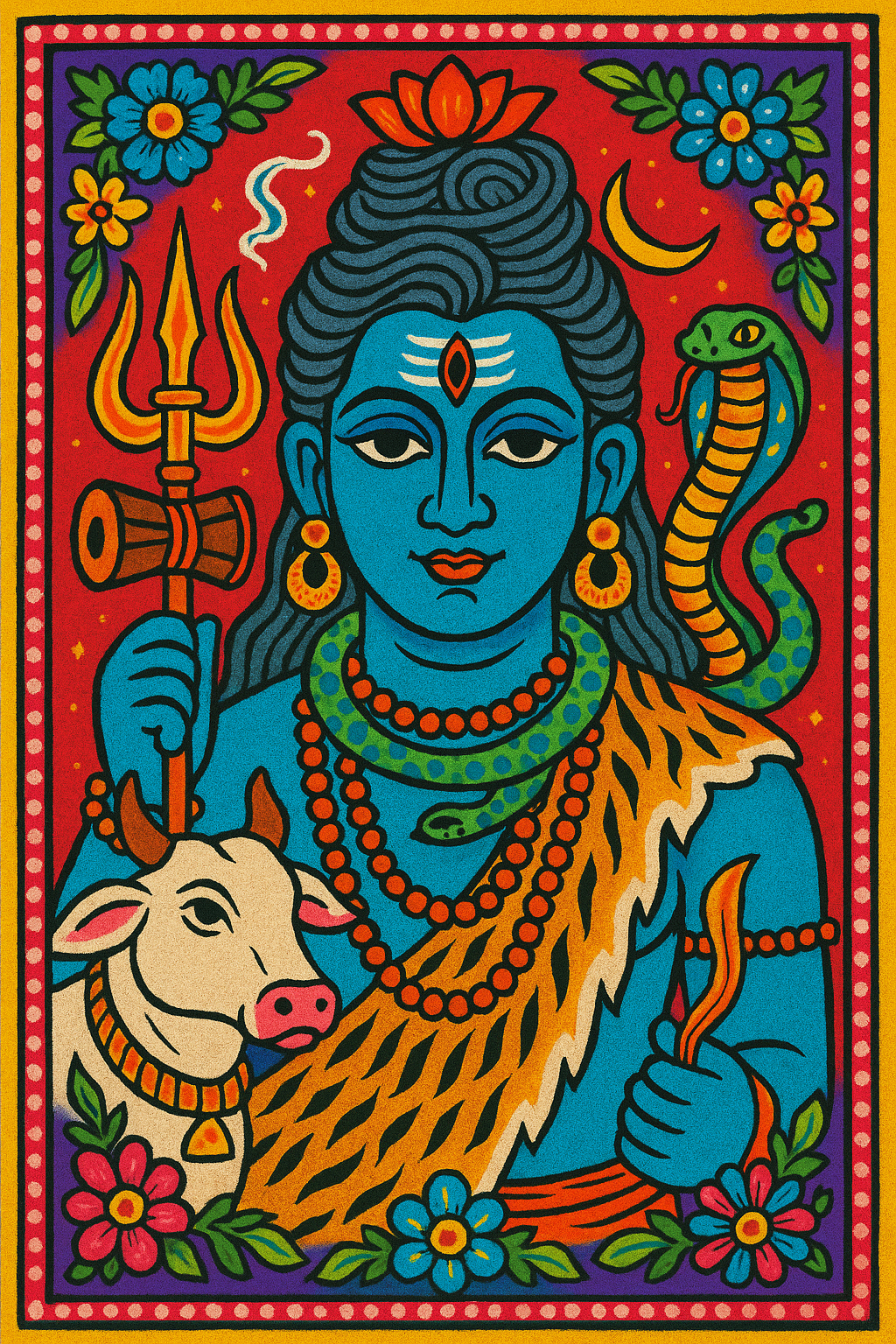
Demoness Tzitzimitl, a skeleton with Aztec headdress, claws, long tongue, necklace of human hearts and hands and a snake coming out under her tunic

The skeletal demoness Tzitzímitl with her necklace of severed human hearts and hands

Ehécatl was unharmed. He avenged Mayahuel’s death by killing Tzitzímitl and returned light to the world. Still overcome with grief, he gathered the bones of his beloved and buried them in a field. As his tears saturated the arid soil, Mayahuel’s remains transformed and emerged from the earth as the first agave. After getting a taste of the elixir that came from the plant, Ehécatl decided to share his creation with humankind. 

Tlacuache the possum god with rivers on its back

For some reason, the possum god Tlacuache was responsible for creating the course of rivers. They’re curvy because he got drunk on pulque.

The Tale of Tlacuache: Why a River Runs Its Course

Another Mesoamerican tale connects pulque with the creation of rivers. According to the story, Tlacuache, a possum god, was responsible for assigning the course of rivers. While going about his day foraging for food, he happened upon an agave. Using his human-like hands, he dug into one of its leathery leaves. A sweet honeyed sap oozed from the cuts, and Tlacuache stuck his snout into the maguey and lapped up the liquid with glee. 

After having his fill, he returned to his den and dreamt of returning to the plant the next day. Tlacuache had a remarkable talent for finding food and remembering exactly where it was found. What he didn’t know, though, is that the nectar had fermented overnight and now contained alcohol. The marsupial accidentally overindulged and became intoxicated. Finding himself disoriented, he stumbled and wandered this way and that, until he eventually found his way home. 
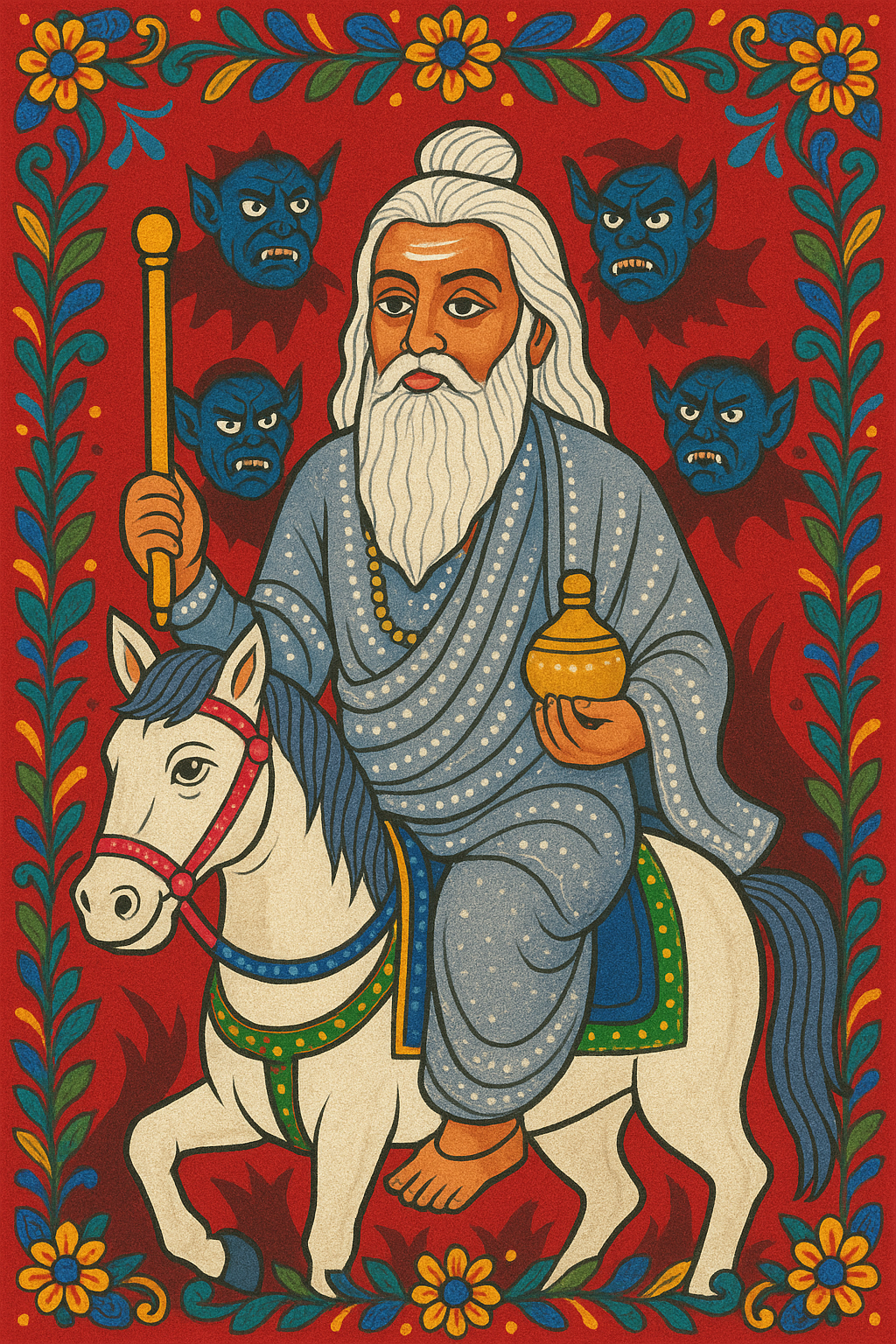
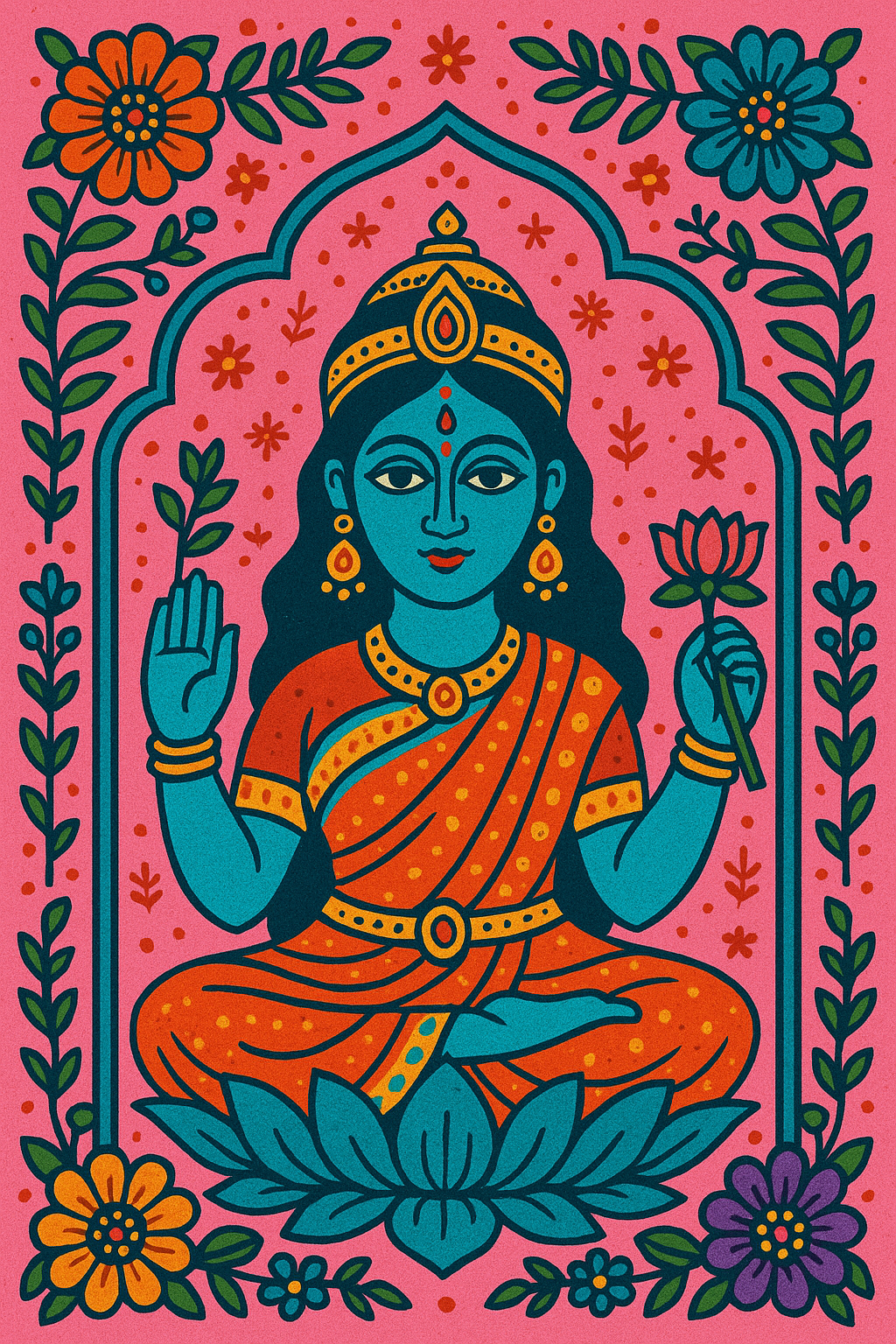
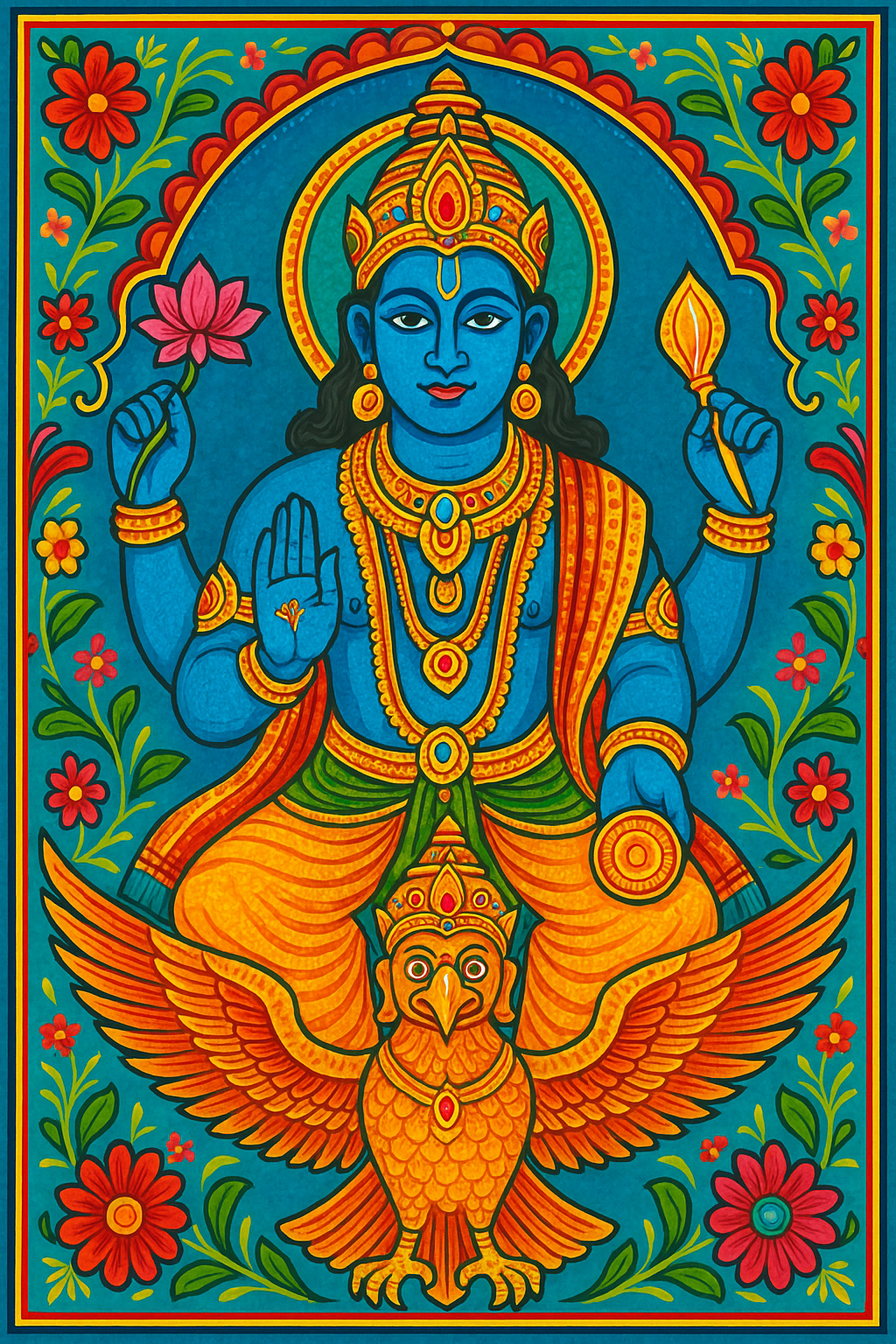
Over time, Tlacuache’s circuitous meandering was reflected in his work. Any river in Mexico that bends or doesn’t follow a straight line was due to Tlacuache drinking pulque and plotting the river’s course while he was tipsy. In fact, some say he was the very first drunk.

Aztec goddess Mayahuel suckling a fish

Suck on this: The fertility goddess Mayahuel didn’t have milk in her breasts — she had pulque.

Pulque Breast Milk and being drunk as 400 Rabbits

Last but not least is the fantastical story of the mythical 400 drunken rabbits whose behavior even Beatrix Potter would have found excessive. 

In Aztec mythology, Patecatl was the Lord of 13 Days and the credited discoverer of the squat psychedelic peyote cactus. One evening, he and Mayahuel, who in this story is a fertility goddess, had a no-strings-attached tryst, resulting in an unusual pregnancy. Months later, the proud mother bore a litter of 400 fluffy little bunnies. 

Naturally, being the goddess of the agave, Mayahuel’s multiple breasts lactated pulque, which she used to nourish her children. It’s safe to say that her divine offspring didn’t understand the concept of moderation and were frequently found in various states of inebriation. 

Mayahuel had a one-night stand with the Lord of 13 Days — and ended up having a litter of 400 rabbits!

The 400 rabbits each depict a different stage of inebriation.

The siblings were known as the Centzon Totochtin and represented the varying degrees of intoxication one can attain while under the influence of alcohol. One of the children, Ometochtli (Two Rabbit), a god who represented duality, was associated with that initial burst of courage that comes after a couple of drinks. Conversations feel more important, and everyone around you becomes more attractive. His brother Macuiltochtli (Five Rabbit) was one of the gods of excess — the equivalent of having too much of a good thing, and waking up the next day with a pounding headache. 

Ometochtli, or Two Rabbit, an Aztec god of drunkenness

Ometochtli, or Two Rabbit, was the god of the courage you get after a couple of drinks — and the start of beer-goggling.

Macuiltochtli, or Five Rabbit, representing drinking to excess

This fellow is going to regret being like Macuiltochtli, or Five Rabbit, and drinking to excess. He’s gonna be hungover tomorrow.

Did you know card about the Aztec expression "drunk as 400 rabbits"

If you’re drunk as 400 rabbits, you’re beyond wasted.

For the Aztecs, the concept of infinity started at 400. A couple of drinks is OK; consuming your body weight in booze not so much. Moral of the story: If you drink more than you can handle, whether you’re a small animal or otherwise, you’ll be carried away by a colony of 400 rabbits. –Duke


Learn How Mezcal Gets Made

Another drink made from the agave, mezcal is much more artisanal than tequila, with numerous factors influencing the taste of each batch — and that’s what makes it so interesting.

Click here