From mimicking gestures to fertility-loaded iconography, these imperial women followed a set of rules to prove they were literal goddesses.
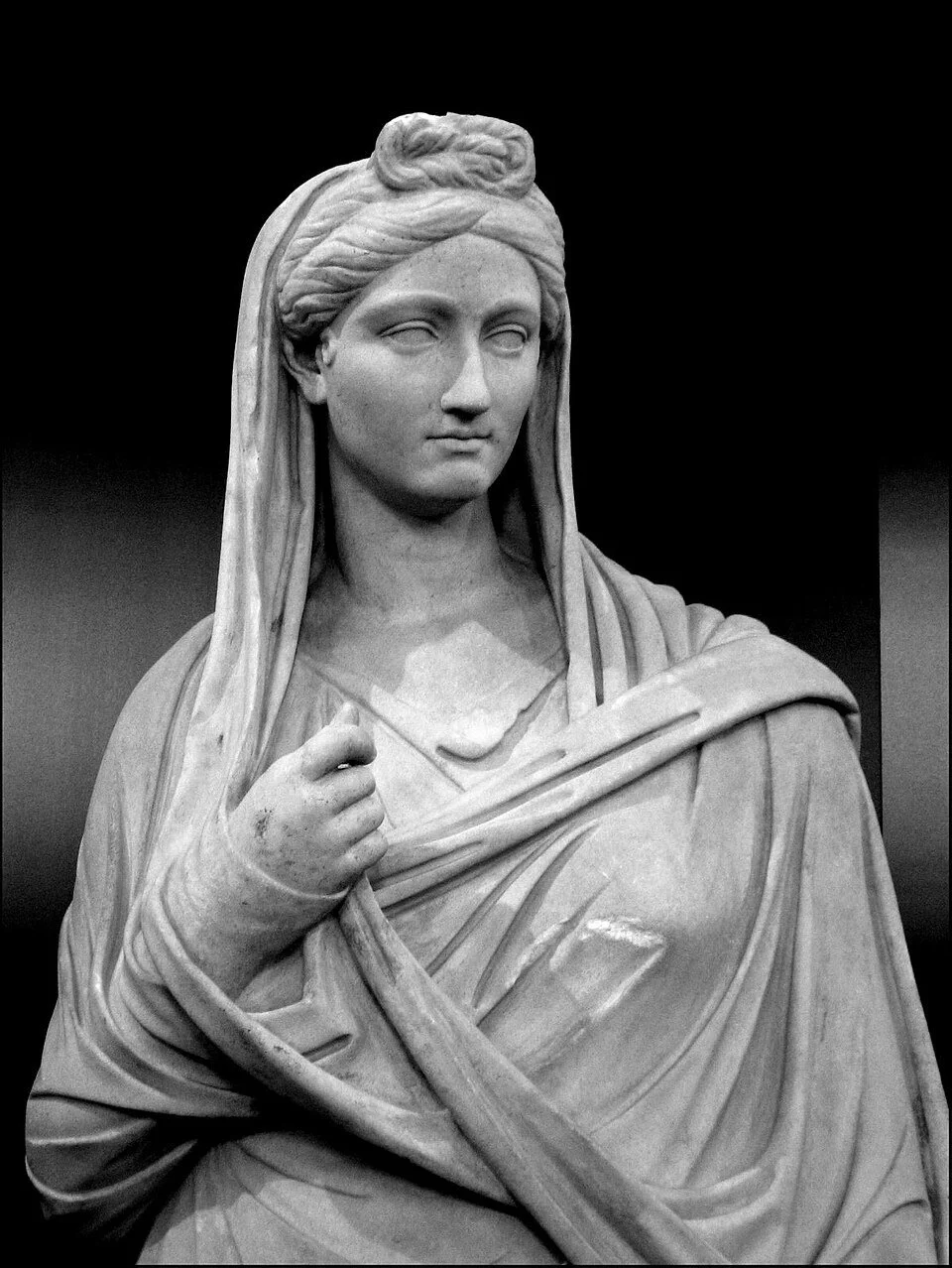
Vibia Sabina, looking every bit the empress — and maybe the goddess. Hadrian gave her honors in death…if not warmth in life.
Questionable hairdos, divine mimicry and the occasional eagle ride to the afterlife — being an imperial woman in Ancient Rome came with flair. Drawing from You Look Divine: Deifying Women in the Roman Empire, a lecture by archaeologist C. Brian Rose at the Art Institute of Chicago, I’m breaking down how Rome turned its empresses into literal goddesses.
A select few imperial women didn’t stop at empress; they were turned into goddesses after death, in a process called apotheosis. And Rose didn’t just walk us through Roman history — he charioted us straight to the heavens. Through sculpture, coinage and other dramatic iconography, here are the most divine highlights.
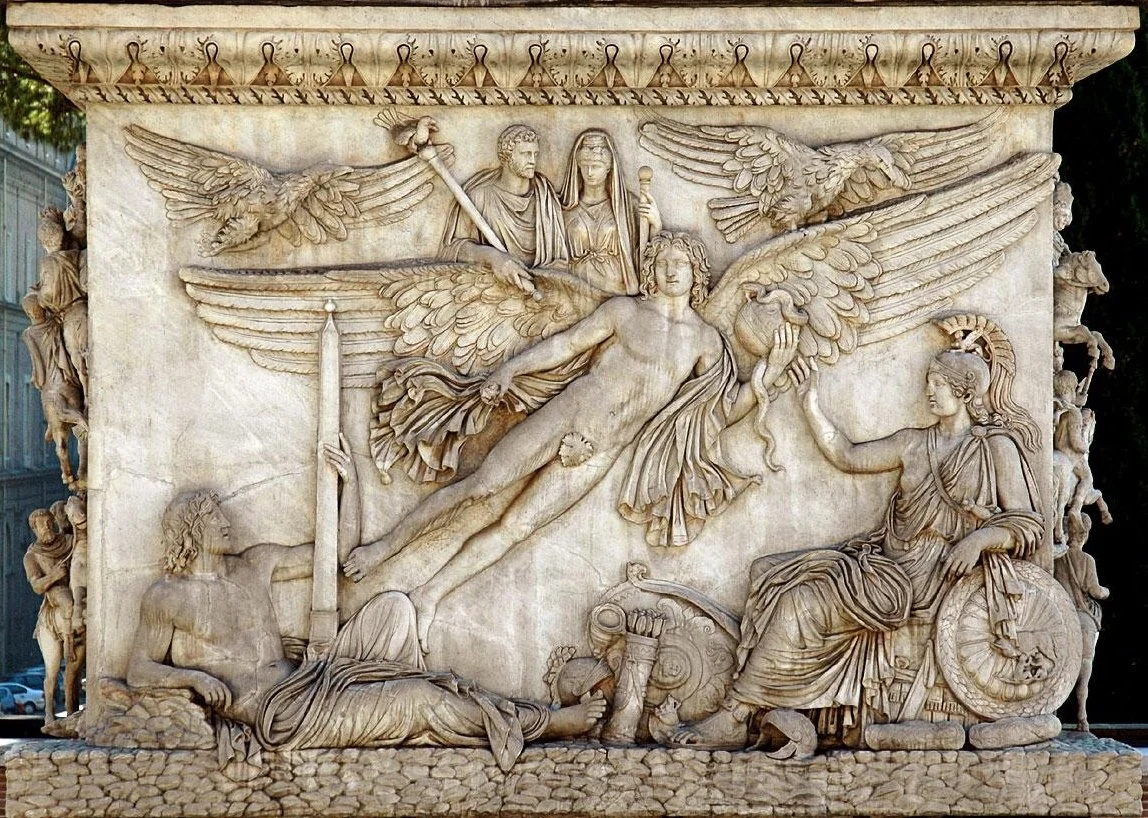
Apotheosis of Antoninus Pius and Faustina, where the imperial couple ascends to the heavens atop the wings of Eternity
How to Become a Goddess (in Ancient Rome)
1. Ride an eagle — or Eternity herself — into the heavens.
When an empress died, art often showed her literally taking off for the heavens. The preferred transportation? The oldest Roman custom was to depict the soul carried up by an eagle, symbolizing the late empress’ apotheosis (ascension to godhood).
There was another method of transport, though: On the monumental Column of Antoninus Pius, for example, Faustina the Elder, wife of Antoninus, is shown being whisked heavenward by none other than a winged figure of the personification of Eternity (often depicted as a woman but here as a man), with two eagles in tow. Talk about traveling in style!
In short, if you wanted to advertise that a Roman woman became a goddess, you put her on a first-class feathered flight straight to the stars.
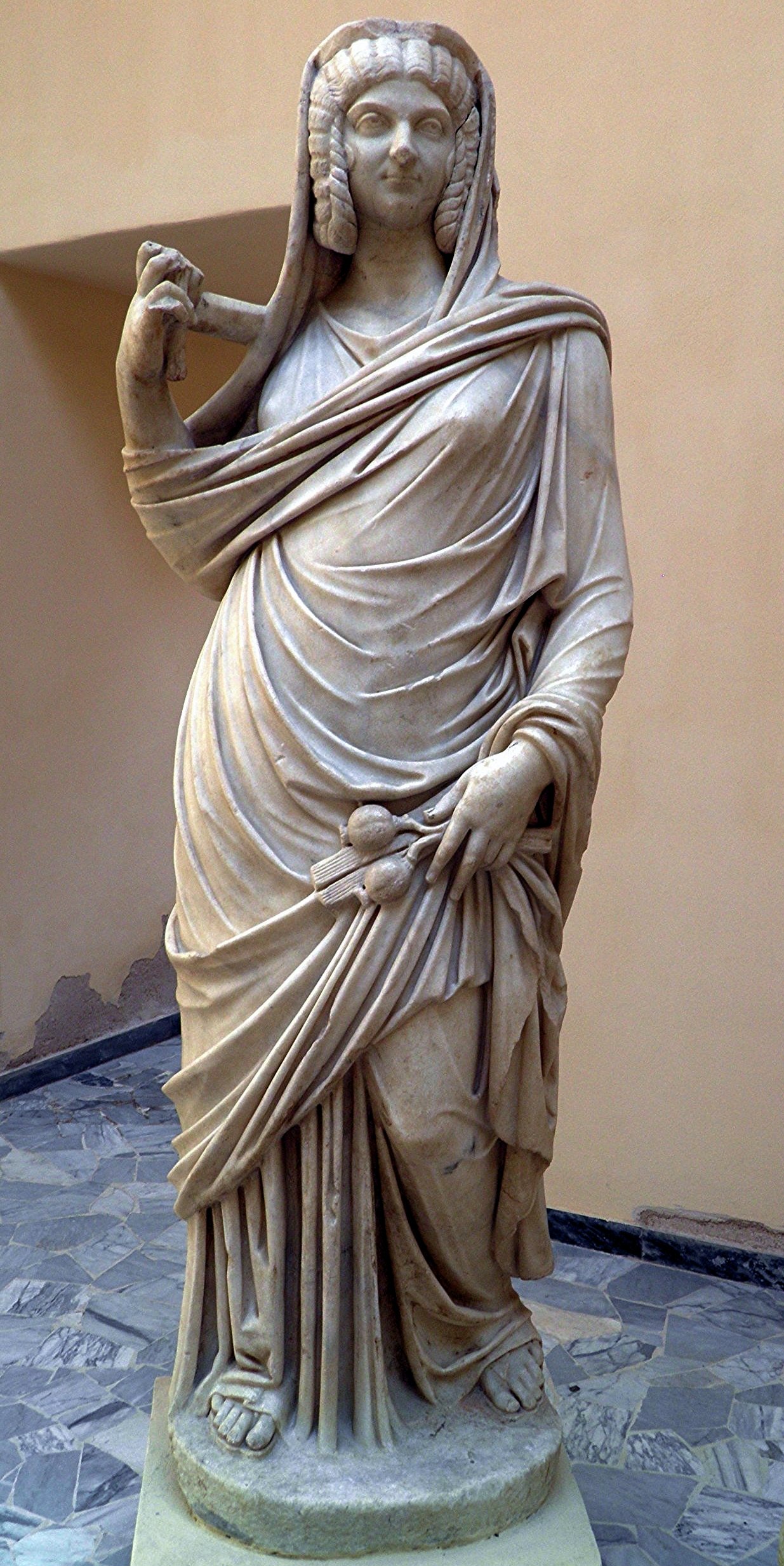
Julia Domna as Ceres, goddess of grain — serving up imperial fertility with a side of wheat
2. Recycle the pose of a goddess, become a goddess.
Imitation is the sincerest form of flattery — and in Rome, it was a fast track to divinity. Empresses would borrow the bodies of goddesses (at least in marble).
Statues of imperial women often copied the poses and symbols of deities so closely that only the heads and inscriptions differed. Julia Domna, for instance, had a statue in Ostia holding wheat and poppies, just like Ceres, goddess of agriculture. In fact, her statue’s body was so generic-goddess that another statue of Empress Sabina used almost the exact same body with a different head and hairdo.
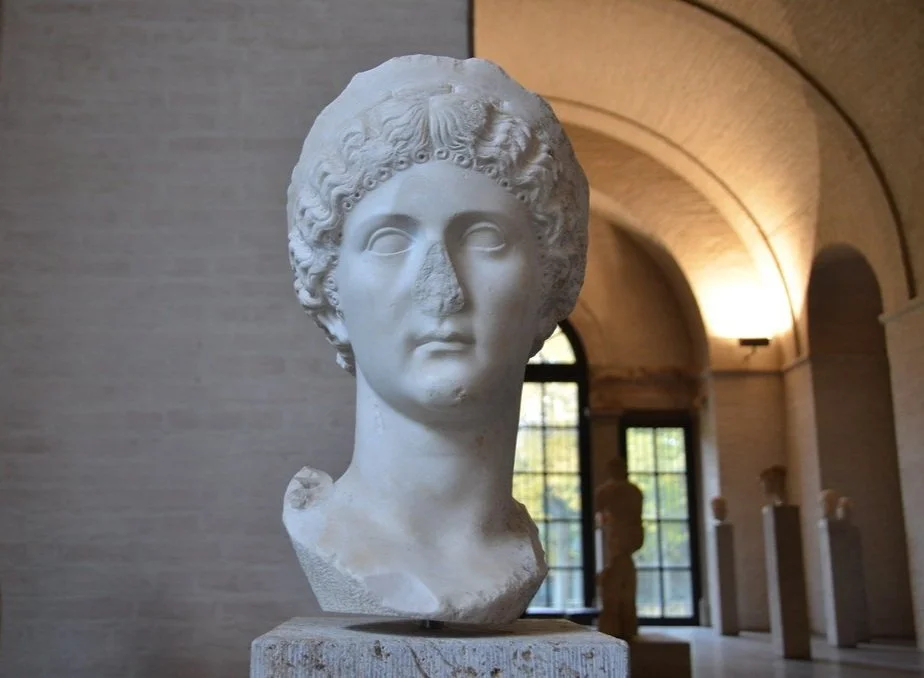
Drusilla, Caligula’s sister, favorite — and, if whispers are to be believed, something more. After her death, he made her a goddess.
3. Get deified by a doting brother (thanks, Caligula!).
Sometimes it’s all about who your family is. If your brother happens to be emperor and is just a tiny bit obsessed with you, you might skip the whole virtuous life part and go straight to goddess.
Case in point: Caligula and his sister Drusilla. When Drusilla died in 38 CE, Caligula was so heartbroken (and unhinged) that he had the Senate declare her a goddess. He bestowed on her the name Diva Drusilla Panthea, meaning “the Divine Drusilla, the All-Goddess.”
She was the first woman in Roman history to be officially deified by an emperor’s decree. It didn’t hurt that Caligula fancied himself a living god, too — nepotism at its peak.
Drusilla’s fast-pass to Mount Olympus shows that in Rome, having a god-maker in the family (even a certifiably crazy one) could trump all other qualifications.
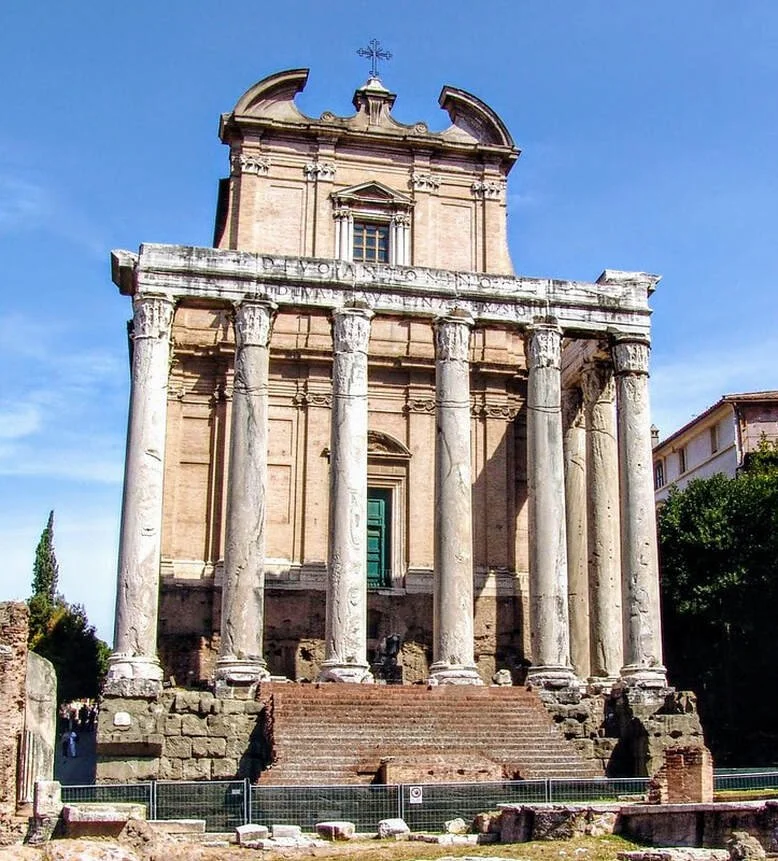
Built for Faustina, rededicated to Antoninus — this temple is what happens when a Roman emperor can’t quit his empress, even after death.
4. If you’re really special, you get a temple of your own.
When an empress was truly exceptional, the Romans gave her the ultimate posthumous honor: a temple on prime real estate. Think of it as the architectural equivalent of landing the cover of Vogue, but for eternity.
Faustina the Elder was the first to score this distinction. After her deification, Emperor Antoninus Pius built the Temple of Faustina in the Roman Forum in 141 CE, complete with a grand colonnade and priests offering sacrifices in her name.
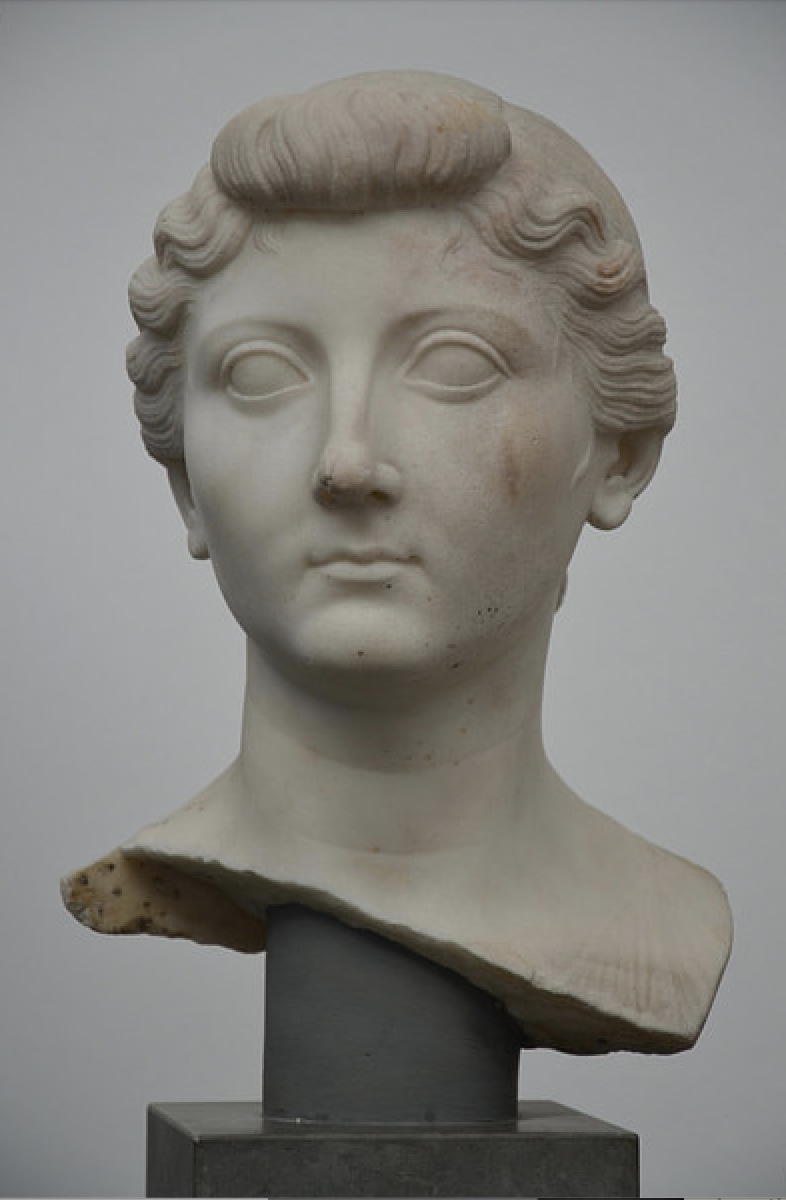
Julia Augusta (Livia) rocking the nodus — a hairstyle so serious it doubled as a public statement: “I’m chaste, powerful and one step from godhood.”
5. Be so virtuous, your hairstyle becomes a symbol of moral purity.
In Roman iconography, a woman’s hairstyle shouted her values to the world. Take Livia Drusilla, Augustus’ wife and the first First Lady of Rome. She pioneered the “nodus” hairstyle — a pudgy roll of hair over the forehead with the rest tied in a bun.
It looks simple, but it spoke volumes. By choosing the nodus style, Livia presented herself as the embodiment of traditional Roman feminine virtues like pudicitia (modesty) and pietas (duty).
That conservative ’do was basically a halo of humility. And it caught on: Women across the empire copied it for two or three generations, signaling that they too were modest, dutiful matrons.
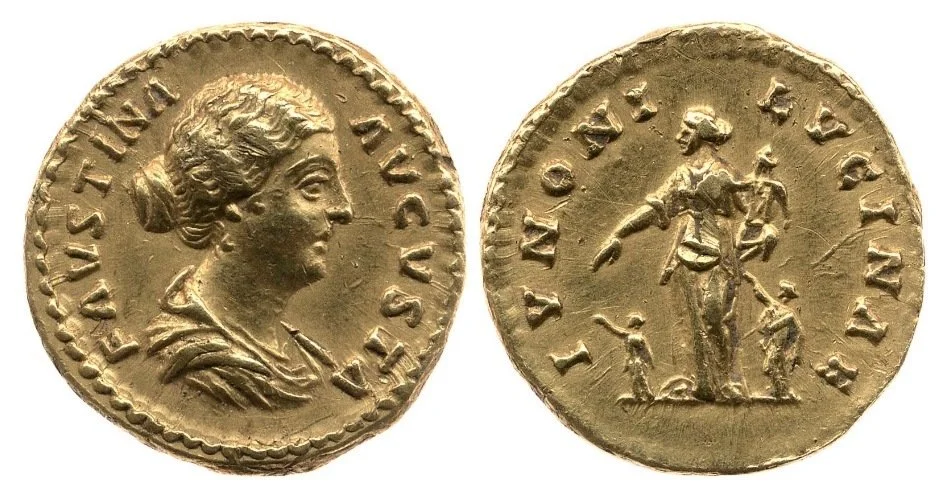
Faustina the Younger paired with Juno Lucina, goddess of childbirth — because bearing heirs was a divine duty and a full-time job
6. Fertility becomes your superpower.
In the Roman imperial playbook, making imperial babies wasn’t just family planning — it was practically a divine service. An empress’ ability to bear children (preferably future emperors) was glorified as a literal superpower that kept Rome strong.
Many empresses obliged, but Faustina the Younger outdid them all. She and Marcus Aurelius had at least 14 children (yes, 14), including two sets of twins.
Her prolific motherhood was celebrated far and wide. Upon one daughter’s birth, the mint issued coins depicting Faustina as Juno Lucina, goddess of childbirth. The message was clear: The empress isn’t just having babies, she’s basically a fertility goddess herself.
Imperial artists would show empresses with a cornucopia to symbolize fruitfulness — and the longer the better. Sometimes a woman was so fertile, she’d be deprived with a double cornucopia.
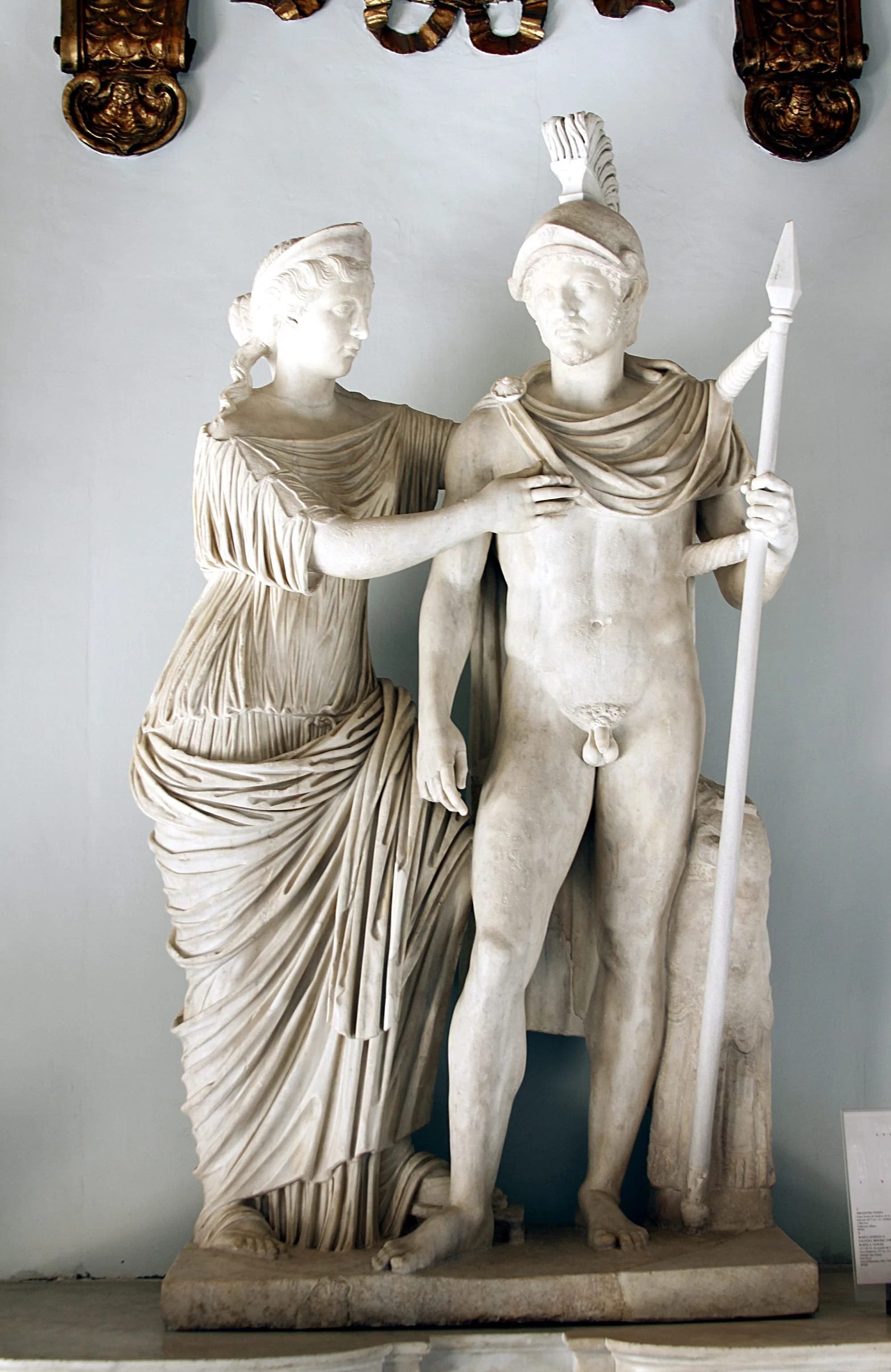
Faustina the Younger as Venus and Marcus Aurelius as Mars — Rome’s ultimate power couple, cast as the gods of love and war
7. Victory and motherhood were a package deal.
In the Roman mindset, a great empress could multitask on a cosmic level. She wasn’t just Mother of the Imperial House; she could be Mother of the Army, too.
The idea was that an empress’ virtues off the battlefield (loyalty, fecundity, stability) magically contributed to victory on the battlefield. It sounds like a stretch, but the Romans leaned in.
Faustina the Younger even got an official title for it: Mater Castrorum, “Mother of the Camp.” In 174 CE, she accompanied Marcus Aurelius to war in the wilds of Central Europe. The honorific implied that Faustina’s motherly care extended to the Roman army, boosting their morale and, by extension, Rome’s victories.
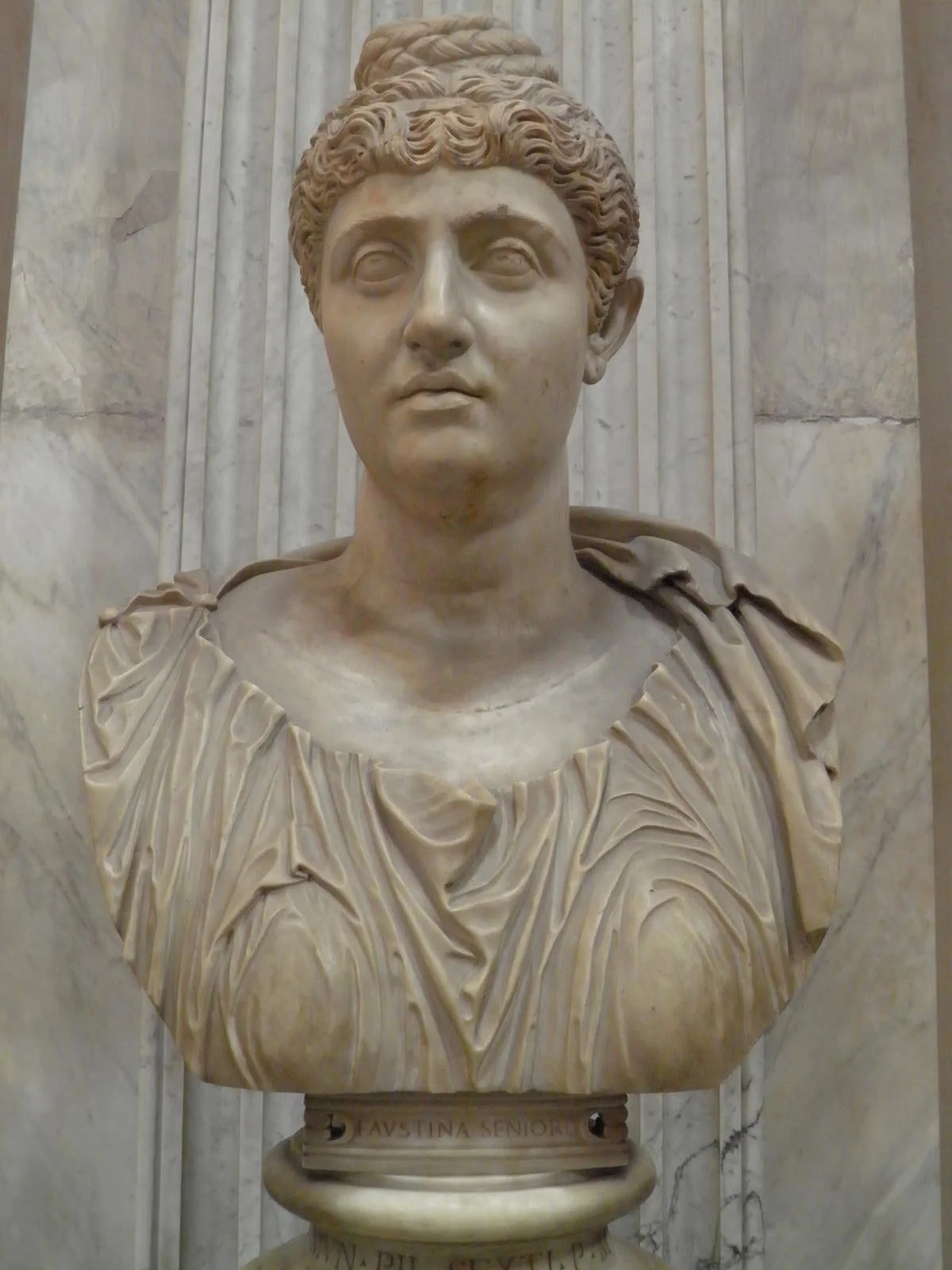
Faustina the Elder had courier guilds renaming themselves after her and stage performers dedicating altars — all while she was still alive. Beyoncé who?
8. Gain a cult following (literally) in the provinces.
If you really wanted a head start on divinity, it helped to have people worshipping you before you died.
In the eastern provinces of the empire, where imperial cults were all the rage, communities sometimes treated the empress as a living goddess — with the emperor’s blessing, of course. This was savvy PR: It spread loyalty and flattered Rome’s rulers.
Faustina the Elder enjoyed this rockstar status. In her lifetime, a courier guild in Ephesus renamed itself after her, and over in Puteoli, Italy, a group of stage performers (the scabillarii, who used foot clappers to keep rhythm) went so far as to dedicate an altar in her honor while she was still alive.
Essentially, Faustina had fan clubs doing daily devotions to her across the empire. Incense, altars, maybe even occasional sacrifices — all for the living empress.
These provincial admirers weren’t saying she was on par with Jupiter or Juno (let’s not get crazy), but they were laying the groundwork for her eventual deification.
By the time Faustina died and was officially consecrated as Diva, half the empire was already used to treating her as divine.

Galba had no dynastic ties, so he borrowed some cred — appearing on a coin with Livia as Diva Augusta, Rome’s eternal empress.
9. Coins acted as your dynastic propaganda.
Silver denarius of 69 CE: the deified Livia (Diva Augusta) standing with scepter and patera on the reverse. If you wanted to spread a message in ancient Rome, you stamped it on a coin.
Imperial women found had their new goddess status broadcast through pocket change across the empire. Every coin was like a tiny billboard screaming, “The imperial family is sacred and stable!”
One dramatic example: in 68–69 CE, during a chaotic civil war, Emperor Galba desperately needed legitimation. So what did he do? He minted coins showing Augusta Livia — wife of Augustus, long dead and deified — on the reverse, with the legend “the divine Augusta.”
By flaunting the protection of Grandma Livia’s divine spirit, Galba hoped to borrow her clout and calm everyone’s nerves about his usurpation.
Living empresses appeared on coins with allegorical goddesses (Fecunditas, Pietas, Venus Victrix and the like) to nudge the public toward certain conclusions (e.g., “She’s as fruitful as a goddess!” or “She’ll bring victory!”).
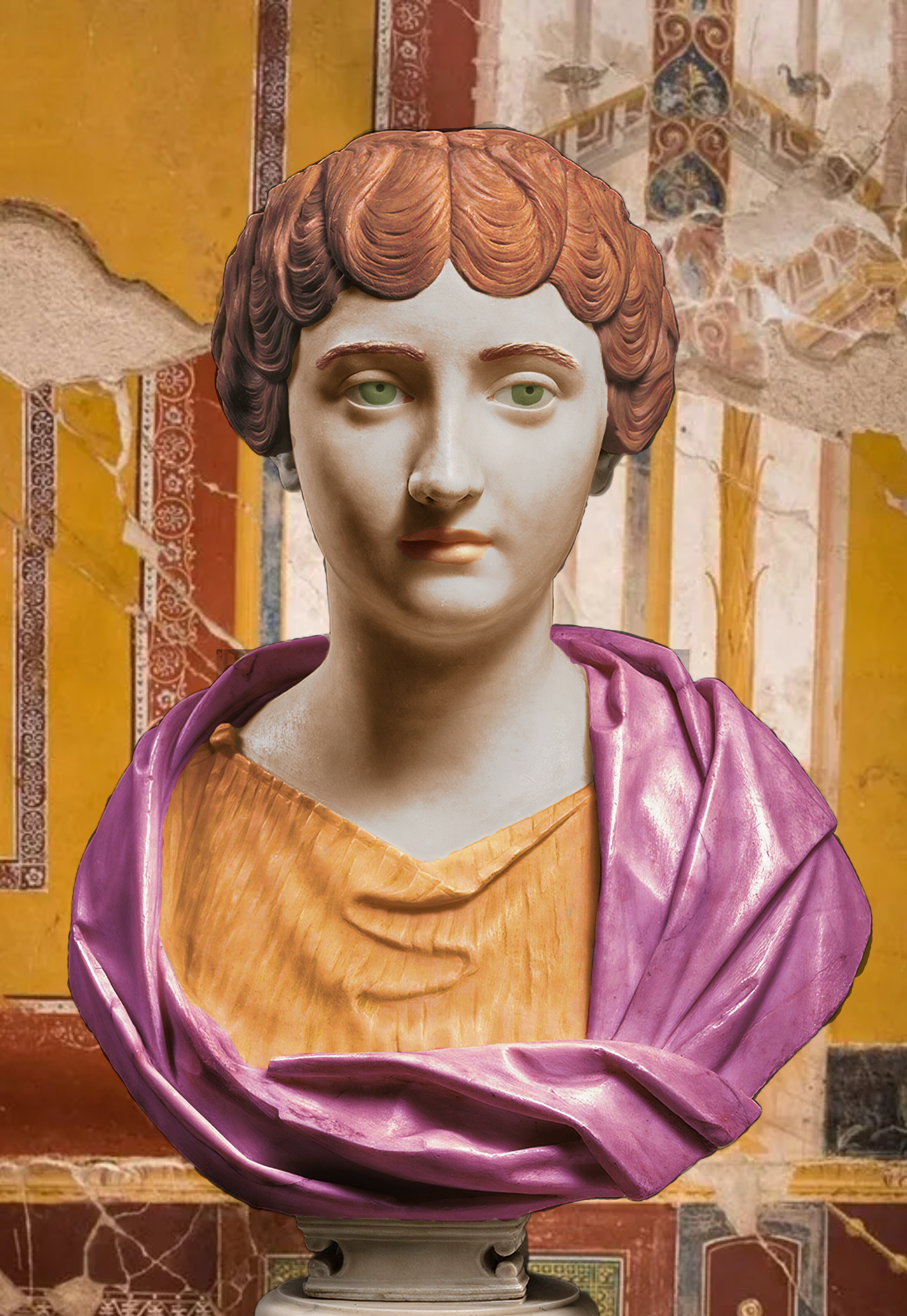
To Roman eyes, Faustina the Younger was more than marble. She was a living presence — painted, perfumed and draped in cloth like the goddess she had become.
10. Your statues get painted and perfumed.
Those ghost-white marble busts we see in museums? In Ancient Rome, they were painted in full color and sometimes even scented to smell divine.
Romans treated the images of their gods (and deified emperors or empresses) almost like living beings. Recent research reveals that many Greco-Roman sculptures were not only brightly painted, draped in real cloth, and adorned with jewelry, and even doused in perfumes and fragrant oils.
So imagine walking into a temple of the deified Empress Faustina: You’d see a statue of her with rosy skin tones and gilded accessories, maybe with her hair painted the rich brown of the real Faustina. The statue might be wearing an actual diadem on her carved marble curls. And the air would be thick with the scent of imported incense or floral oils anointing the statue’s surface.
Roman statues were multisensory experiences; they looked alive and even smelled “heavenly.” This was all part of maintaining the illusion (or reality, to believers) that the deified woman’s spirit was present and watching. If you were deemed a goddess, you got the full spa treatment for eternity. By
In the end, the Romans believed the gods got around to everyone deserving. An empress could ascend swiftly on a funeral pyre’s eagle, or slowly on the wings of her lasting reputation – either way, divinity was destiny for the worthiest of Roman women. –Wally
MORE ART INSTITUTE OF CHICAGO