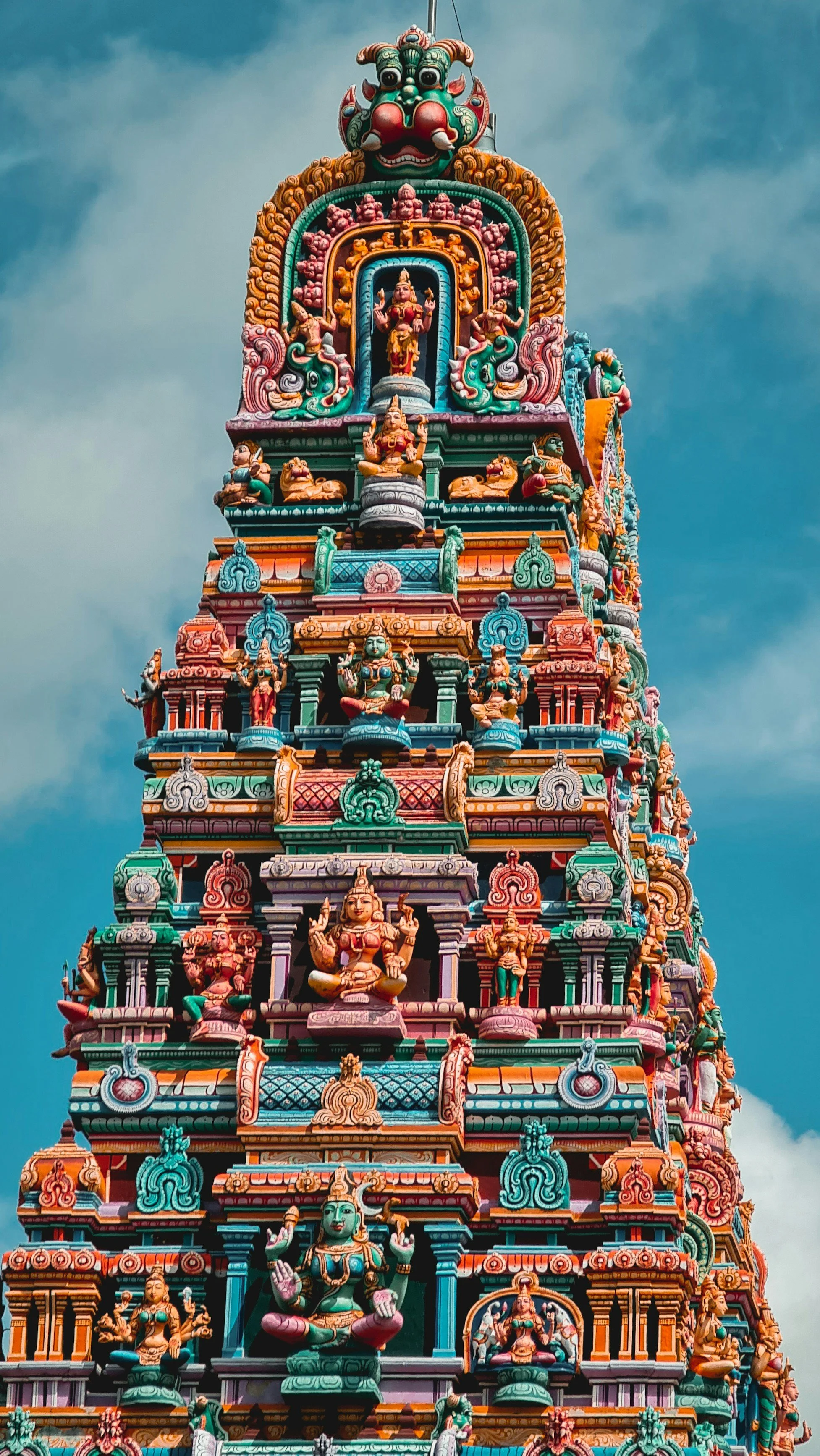
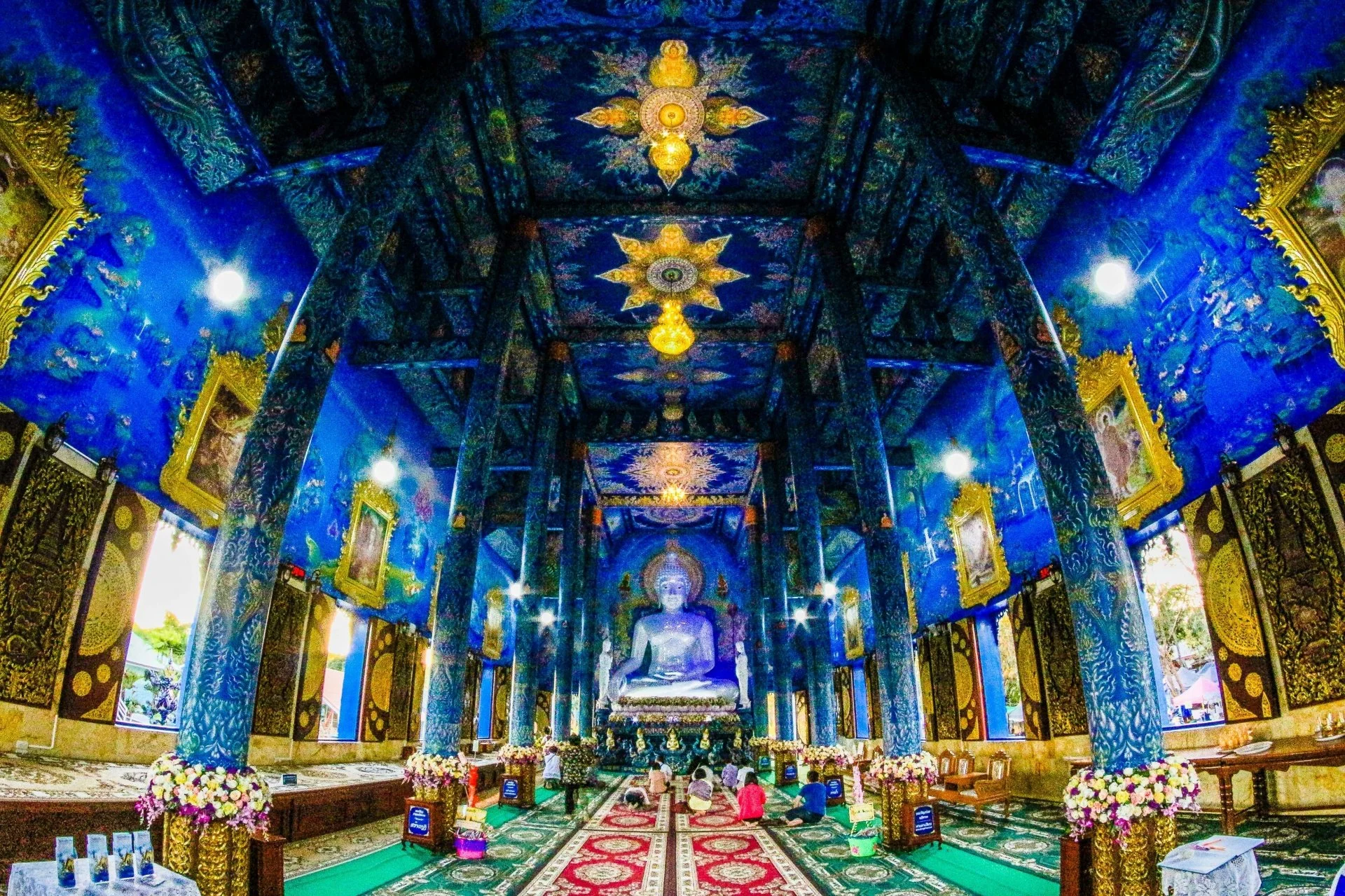
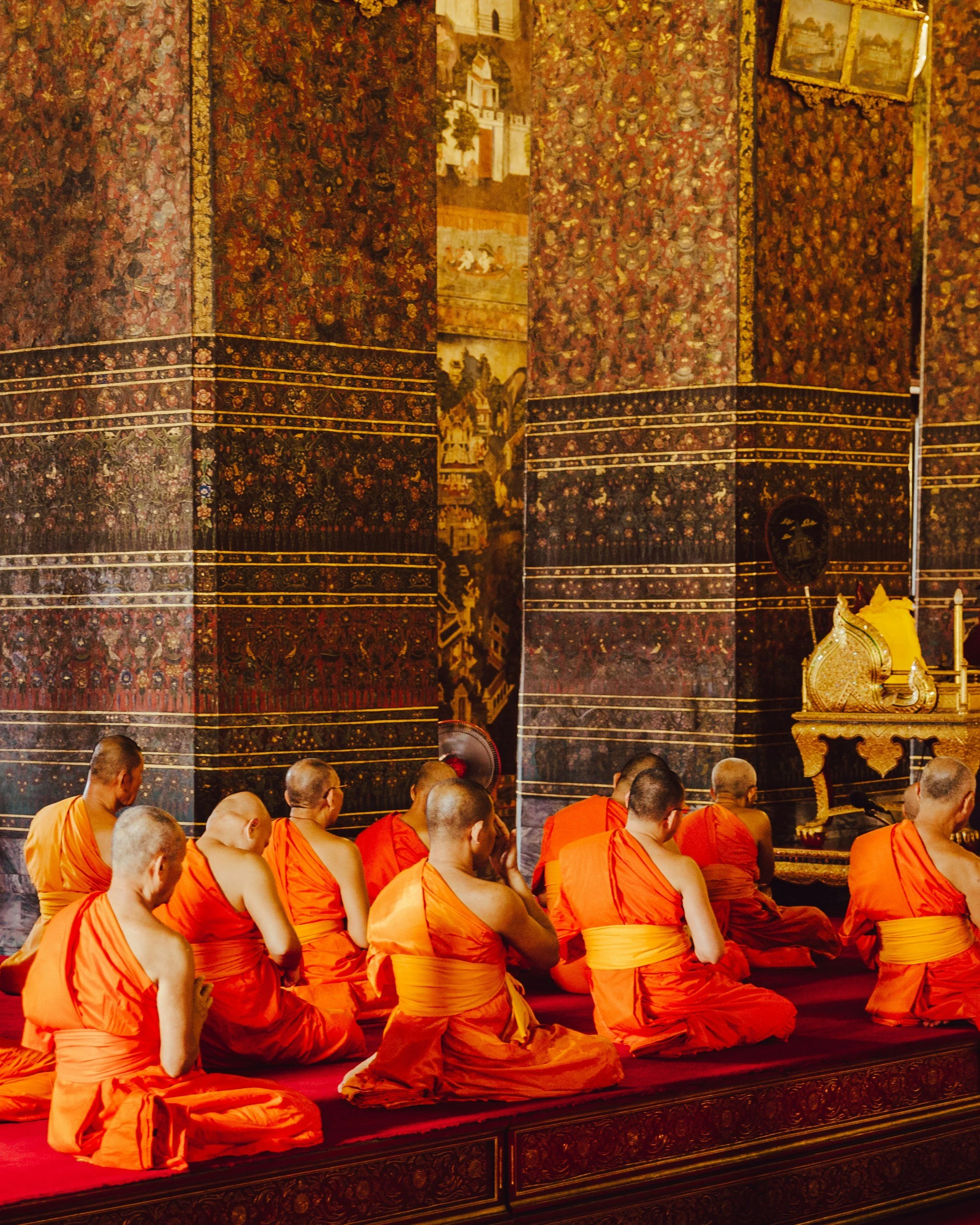
temples

Old City Chiang Mai: Culture, Markets and Routes for Tourists

Discover the Old Town of Chiang Mai, where ancient temples, vibrant markets and scenic walking routes bring Thailand’s Lanna heritage to life.

The Old City of Chiang Mai is a living testament to a rich cultural heritage and history. With its ancient temples, charming streets and bustling markets, it offers a perfect blend of tradition and modern life. 

The city’s old walls and moat, which once protected it, now provide a scenic backdrop to the vibrant cultural scene. From serene Buddhist temples to lively night bazaars, there’s something for everyone. We’ll explore the best cultural sites, markets and walking routes in Chiang Mai’s Old City, offering helpful tips for tourists looking to fully experience the essence of this historic location.

As with any popular tourist destination, it’s important to stay aware of your surroundings and ensure personal safety. Travelers should be cautious of potential scams or fraudulent activities that could arise during their visit. For those unfamiliar with the term, white collar crime (คือ) refers to financial crimes like fraud or embezzlement, which can affect both locals and tourists alike. Understanding the risks will help you have a safe and enjoyable trip.

Historical Value and Culture of the Old City Chiang Mai

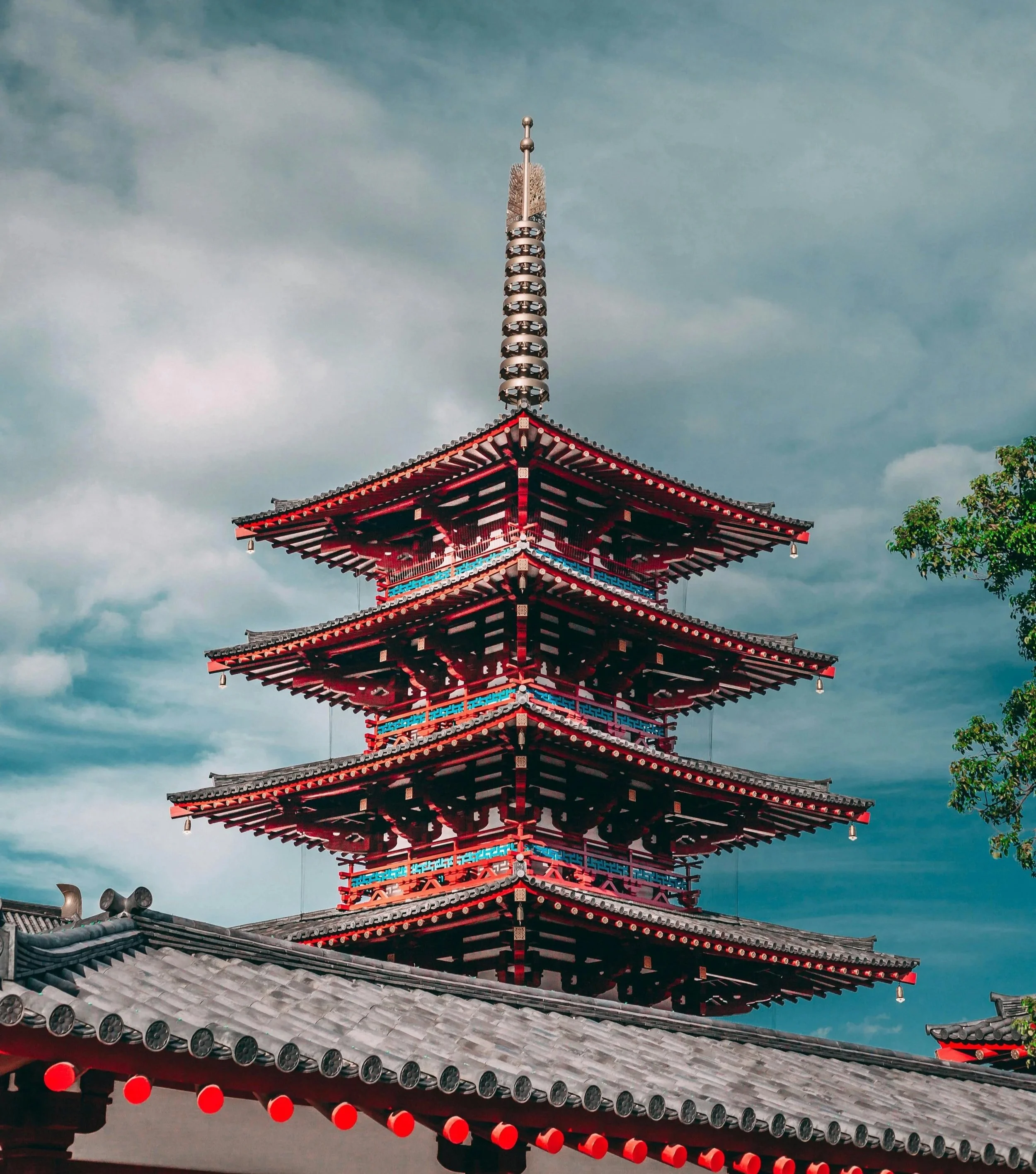
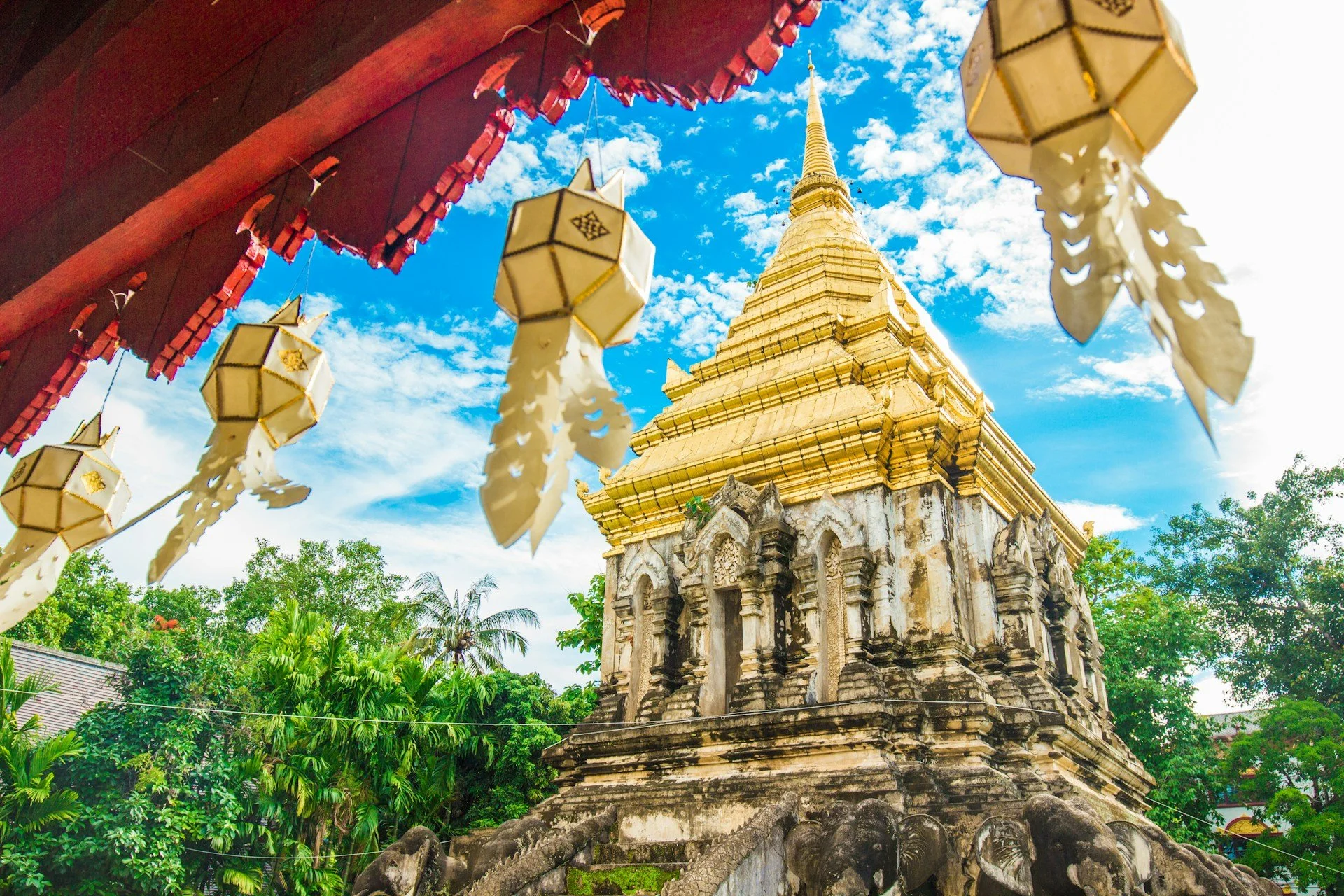
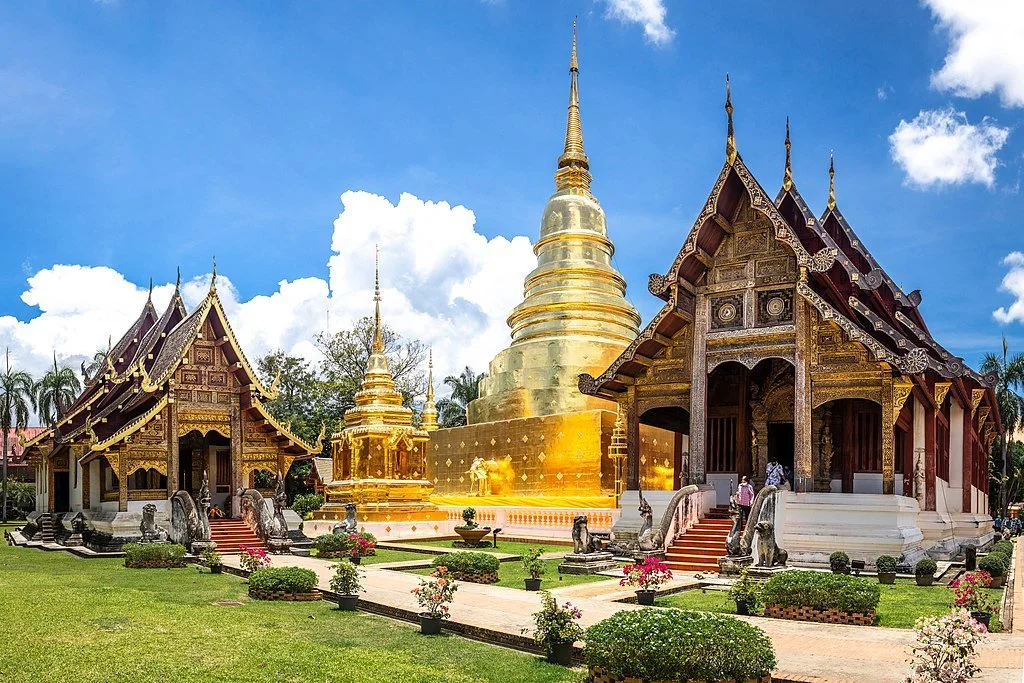
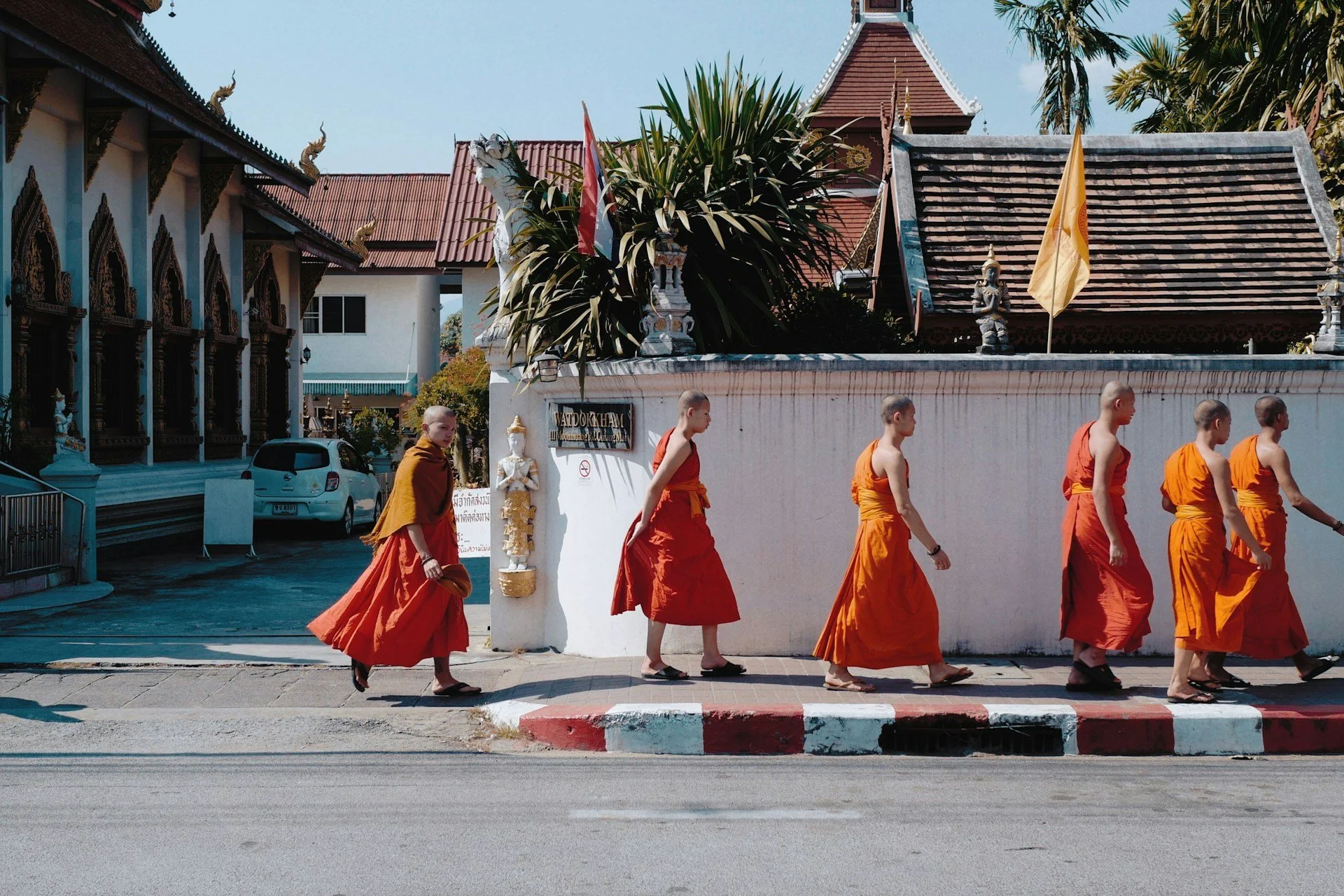
Chiang Mai is one of the oldest and most culturally rich cities in Thailand. The Old City of Chiang Mai, surrounded by a moat and walls, is a true open-air museum that attracts tourists with its history and architecture. Here, ancient temples and pagodas have been preserved, most of which were built in the style of the Lanna Kingdom. The temples of Wat Phra Singh and Wat Chedi Luang are just a couple of the many sacred sites worth visiting.

A walk through the streets of the Old City allows you to feel the atmosphere that has been preserved from ancient times. The city blends tradition with modernity: On one street, you can see ancient temples, while on another, you will find modern cafés and shops. This contrast creates a special atmosphere that attracts travelers from all over the world.

MORE: Find these off-the-beaten-path Chiang Mai temples

Main Markets and Local Attractions of Chiang Mai

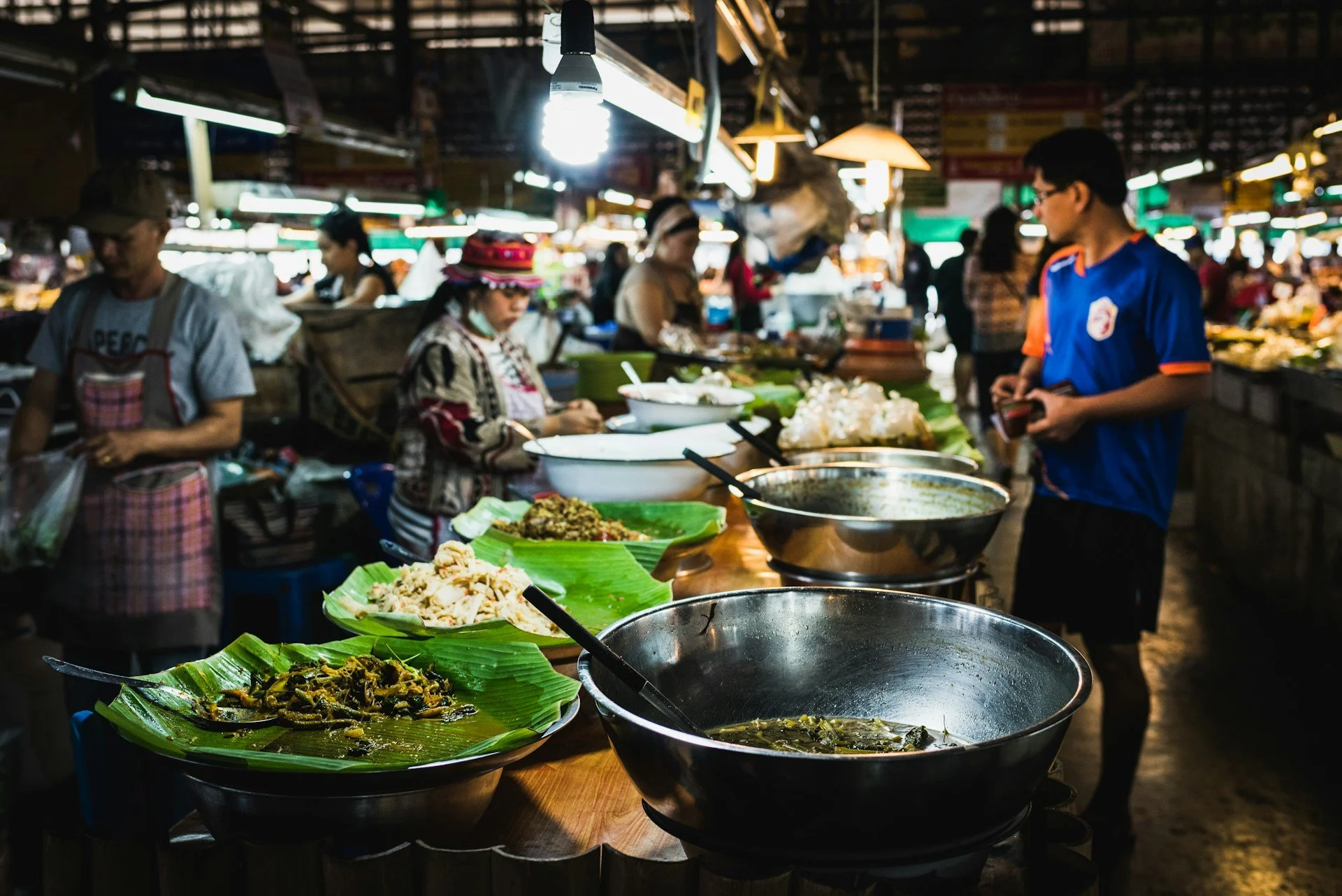
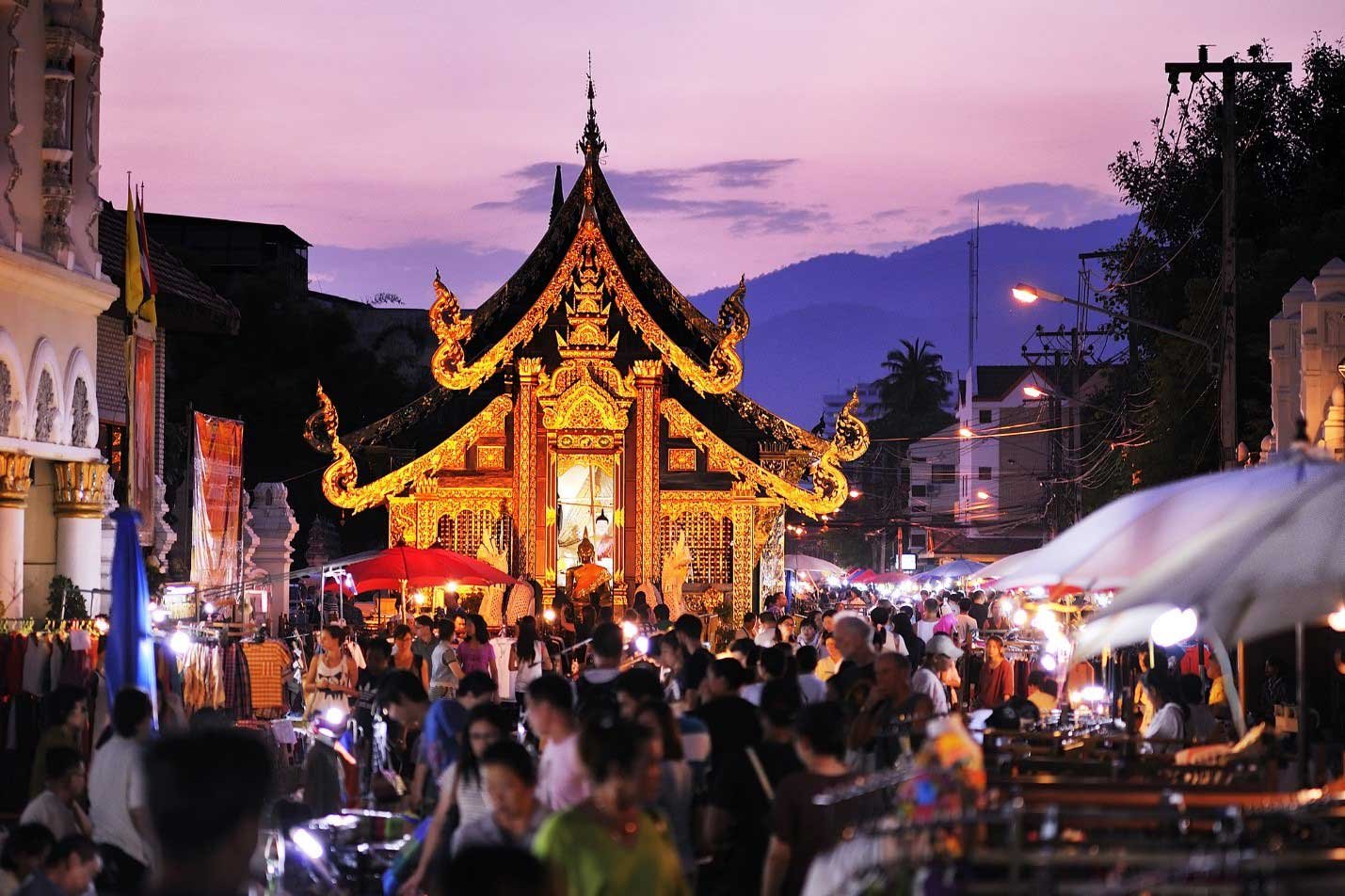
Chiang Mai is known for its markets, which are an integral part of local culture. The day market, known as Chiang Mai Rat, is where tourists can buy souvenirs, local products and handmade goods. However, the most famous is the Chiang Mai Night Market, which operates from evening until late at night. This is a great place to purchase unique items such as leather goods, silverware, textiles, and also to enjoy local street food.

MORE: Where is the best street food in Chiang Mai?

In addition to the markets, Chiang Mai has several museums, such as the Art Museum and the National Museum of Chiang Mai. All of these places provide an excellent opportunity to learn more about the culture and history of the region.

To fully enjoy the atmosphere of the city, it is recommended to visit these markets early in the morning or later in the evening, when the temperature is more comfortable and the number of tourists is lower.

Chiang Mai Walking Routes and Excursions

Walking through the Old City of Chiang Mai is a wonderful way to enjoy its atmosphere. For those who enjoy walking, there are several interesting routes that allow you to see all the major attractions of the city — especially if you want to see the Thai Buddhist temples of Chiang Mai. For cyclists, there are designated bike routes that pass through green areas and offer the opportunity to get acquainted with the local nature.

You can also participate in guided tours that help you understand the culture and history of the city more deeply. For those who prefer independent routes, there is the option of hiring a guide who will tell you about historical sites and traditions of the region.

For tourists who prefer safe areas, the Old City is an ideal choice, as most tourist attractions are within walking distance and you can peacefully stroll through the quiet streets.

Useful Information for Travelers and Legal Aspects

Chiang Mai is a safe place for travel, but there are always some safety aspects to consider. For visitors to Thailand, a visa is required for many countries, so it is important to take care of obtaining it in advance. It is also crucial to have medical insurance for the trip, which will cover any unforeseen expenses in case of illness or accidents.

Additionally, it is important to be informed about the legal aspects of staying in Thailand. For example, crimes related to financial manipulation or illegal activities can result in serious consequences. White collar crime in Thailand refers to crimes related to fraud, corruption, and other financial violations. It is important to comply with local laws to avoid legal troubles.

Also, remember that if legal issues arise in Thailand, you can turn to Interpol Thailand for consultation and assistance in resolving legal problems. This will help ensure your safety while staying in the country. –Anatoly Yarovyi


Anatoly Yarovyi is a Ukrainian attorney and human rights advocate with over 20 years of experience. He holds masters of laws (LL.M.) from Ivan Franko National University of Lviv and Stanford University, specializing in international law and extradition cases.

Secrets of the Seven Wonders of the Ancient World

Author Bettany Hughes shares surprising truths about the Great Pyramid, the Hanging Gardens of Babylon and other Wonders of the Ancient World. 

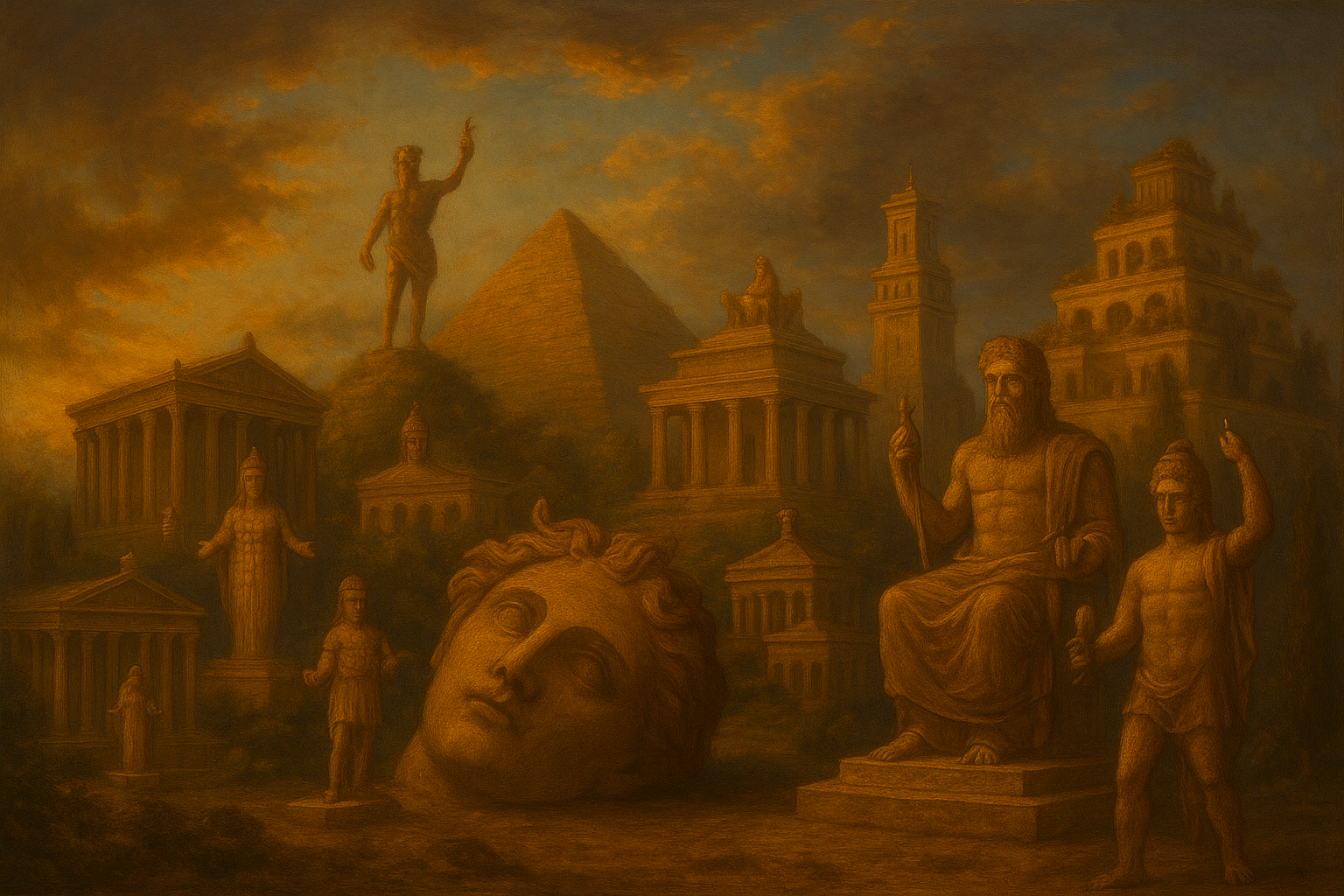
A collection of the Seven Wonders of the Ancient World, including the Pyramid of Giza, Mausoleum, Colossos, Hanging Gardens, statue of Zeus, Alexandria Lighthouse and Temple of Artemis at Ephesus

Quick — name the Seven Wonders of the Ancient World.

Struggling? You’re not alone.

Most people can’t list them all. Some guess the Colosseum or Stonehenge. Others don’t realize that only one still stands. 

These weren’t just impressive buildings and sculptures.

They were bold declarations of power — a Hellenistic highlight reel that reflected the ambition and reach of Alexander the Great’s world.

In her 2024 book The Seven Wonders of the Ancient World: An Extraordinary Journey Through History’s Greatest Treasures, historian Bettany Hughes peels back the mythology and reveals the politics, poetry and propaganda behind these wonders. These weren’t just impressive buildings and sculptures. They were bold declarations of power — a kind of Hellenistic highlight reel that reflected the ambition and reach of Alexander the Great’s world.

MORE: 3 Times Alexander the Great Wasn’t So Great

The oldest surviving version of the list was scribbled on a scrap of papyrus used to wrap a mummified body in Ancient Egypt. 

Most could be visited on a single, well-planned trip through the eastern Mediterranean. This was the ancient world’s first viral travel list — and its message was clear: Look upon our works, ye mortals, and marvel.

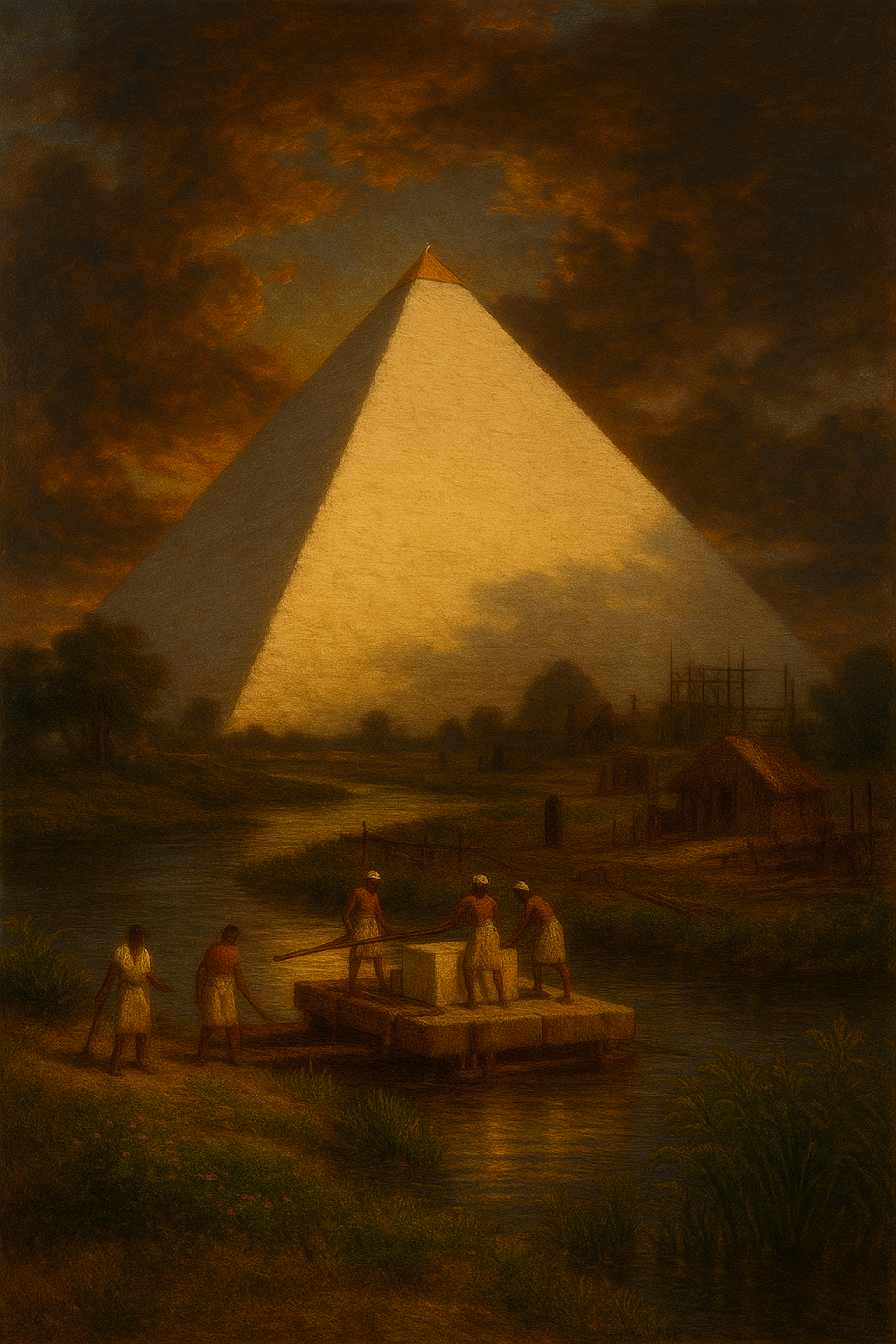
Workers transport limestone on the Nile to cover the Great Pyramid of Giza, seen with a metal capstone

1. The Great Pyramid of Giza: A Resurrection Machine by the Nile

If you visit the Great Pyramid today, you’ll likely see a heat-blasted monument rising from a stretch of ochre desert. But what if we’ve been picturing it all wrong? Hughes urges us to reimagine the Giza Plateau not as barren but as bursting with life: “Where we see desertion, imagine an abundance of clover and thousands of homes; where there are sands, waterways; where there is emptiness, tens of thousands of workers in loincloths and linen kilts. Where there are now neutral horizons, there was once hectic color; where piles of collapsed stone, dwarf-pyramids and sloping, mudbrick mastaba tombs. Where desert, gravid green.”

Built around 2550 BCE and once faced in polished white limestone, the Great Pyramid would have shimmered with a blinding brilliance. 

It wasn’t just a royal tomb; it was a “resurrection machine,” a literal launchpad to the afterlife. This machine served a higher cosmic purpose: to guarantee Egypt’s prosperity by ensuring the pharaoh’s rebirth. The fate of the world literally depended upon Khufu’s afterlife. 

And the engineering behind it still leaves modern minds gasping. Standing 480 feet tall and weighing in at roughly 6.5 million tons, the pyramid used about 2.3 million blocks of limestone, each hauled into place over a quarter of a century. Its interior space alone could swallow London’s St. Paul’s Cathedral, Westminster Abbey, St. Peter’s Basilica in the Vatican, and the cathedrals of Milan and Florence — with room to spare.

A historic etching of the construction of the Great Pyramid of Giza in Egypt, a Wonder of the Ancient World

Despite theories ranging from alien intervention to lost technologies, Hughes focuses on the human marvel of it all: tens of thousands of anonymous laborers working 10-hour days, 52 weeks a year, over decades — moving one block every two to three minutes. Current estimates suggest around 20,000 workers were active on the plateau at any given time, likely using a combination of sledges, rollers, ramps and perhaps even early hydraulic lifts. Still, the exact method remains elusive: “The engineering and construction of the Pyramid — the way these blocks were shaped, lifted and set in place — has confounded researchers for centuries, triggering miles’ worth of parchment and paper, and now volumes of iCloud storage,” Hughes writes. “It is a conundrum that obsesses the modern world — taxing the minds of engineers, architects, archaeologists, surveyors, even mediums.”

It’s also easy to forget that this was a riverfront wonder. In Khufu’s day, the Nile flowed much closer to Giza, hugging the Pyramid complex for most of the year, and sometimes lapping its very foundations. What we now see as isolation was once a place of movement and connection — a grand riverside attraction.

Capped with a golden or electrum pyramidion that caught the sun’s rays and hurled them back to the heavens, the Great Pyramid symbolized the original mound of creation — the divine moment when the world emerged from chaos. It was cosmic.

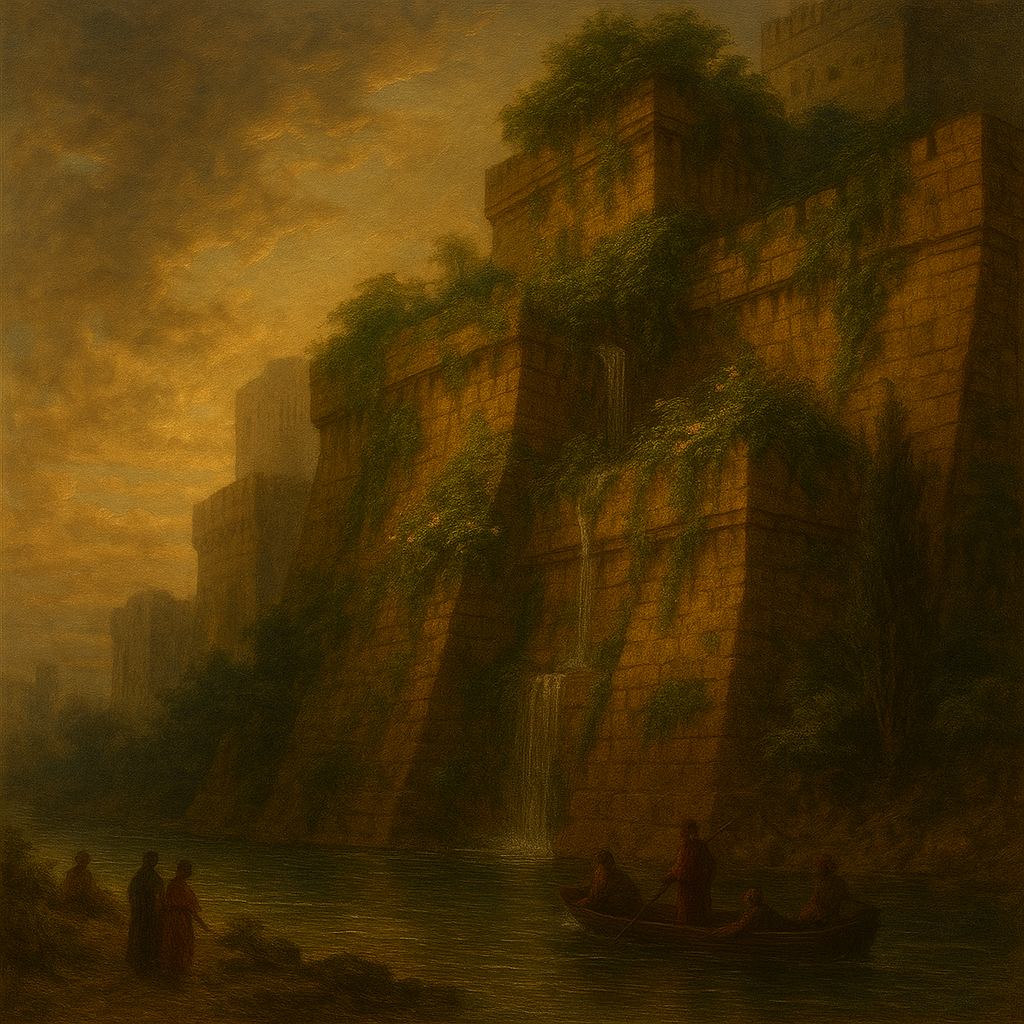
Greenery on the fortified walls known at the Hanging Gardens of Babylon, an Wonder of the Ancient World

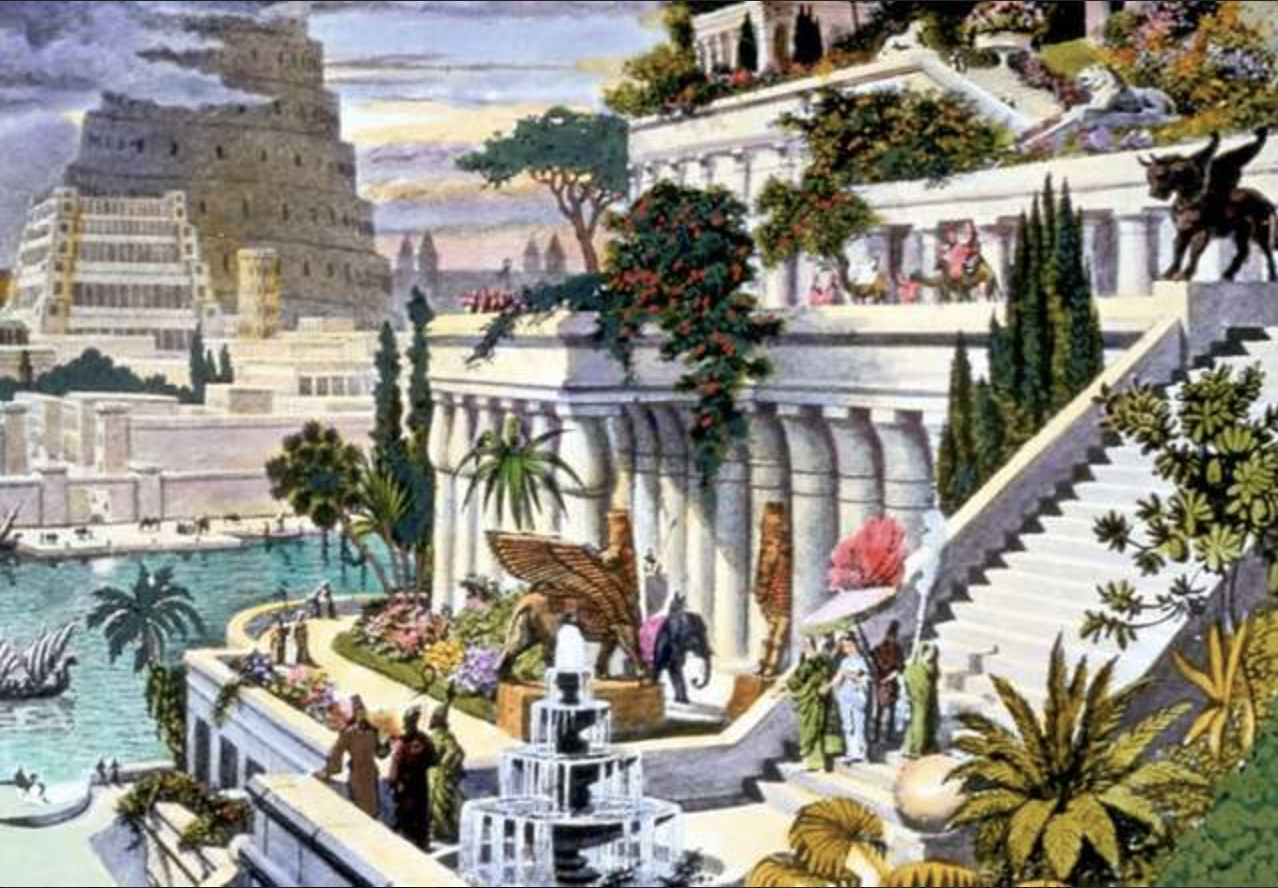
2. The Hanging Gardens of Babylon: Myth, Monument or Mistranslation?

Of all the Seven Wonders, the Hanging Gardens of Babylon remain the most mysterious — and possibly the most fictional. Unlike the Great Pyramid, whose stones still scrape the sky, the Gardens leave us with no ruins, no universally agreed-upon site, and plenty of questions. Did they even exist?

If they did, the Hanging Gardens would have bloomed sometime in the 6th century BCE, during the reign of Nebuchadnezzar II — the great Babylonian king who ruled from 605 to 562 BCE and who is most often credited with their creation. That attribution, though, rests more on later tradition than contemporary evidence.

MORE: Nebuchadnezzar, King Josiah and the Formation of Jewish Law

And the evidence is where things get messy. Hughes lays out the problem clearly: Neither Herodotus nor Xenophon — Greek chroniclers who actually visited Babylon — mention the Gardens. Not once. That silence is thunderous. Even the East India House Inscription, a beautifully preserved 20-inch-wide slab chronicling the many accomplishments of Nebuchadnezzar II, makes no mention of them — no garden at all, hanging or otherwise.

So what gives?

Hughes suggests we may be looking for something too specific. What if the gardens weren’t separate from Babylon’s famed walls but were part of them — verdant terraces that flowed from the fortifications and palatial structures themselves? In many ancient lists, it’s actually Babylon’s walls that earn the “Wonder” designation, not the elusive Gardens. That ambiguity raises the possibility that what we now call the “Hanging Gardens” may have been a poetic misunderstanding — a mistranslated marvel.

The Hanging Gardens of Babylon, with the Tower of Babel in the distance

And yet, the idea of the Gardens persists — not just because they would’ve been beautiful, but because they captured something deeper and darker about humanity’s emerging relationship with nature. These were not serene rooftop retreats. They were feats of engineering and control, power disguised as paradise.

“Whatever they were, however wondrous, the Hanging Gardens of Babylon would not have been idylls,” Hughes writes. “They would have been exquisite, exacting expressions of potency, expressions of belief, manifestations of ingenuity and the start of a dangerously dominating relationship with the natural world.”

Whether built in Babylon or borrowed from memories of Nineveh, the Hanging Gardens endure because they symbolize an idea: that nature could be bent into spectacle. And that idea, as Hughes suggests, has echoed through every empire since.

MORE: Controversial Theories About the Tower of Babel

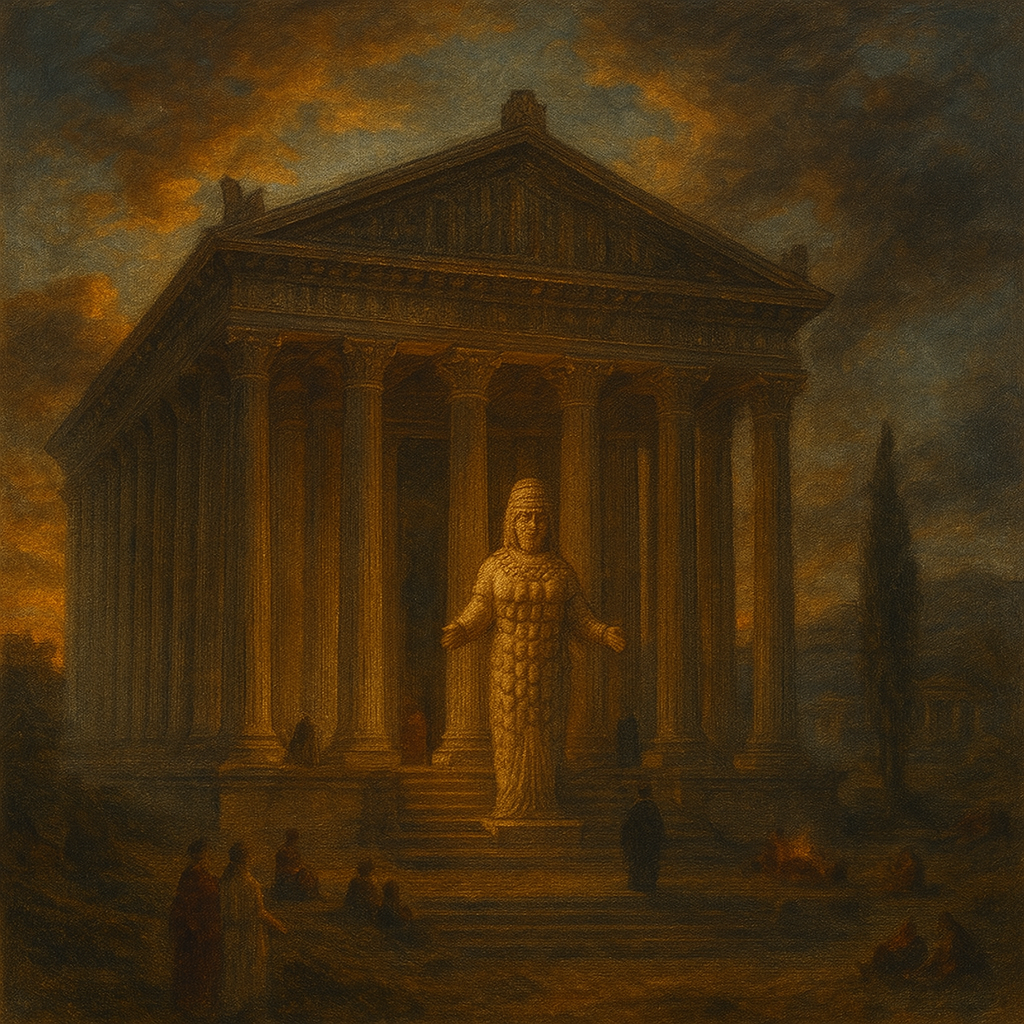
A multi-breasted statue of Artemis stands in front of her Temple at Ephesus, a Wonder of the Ancient World

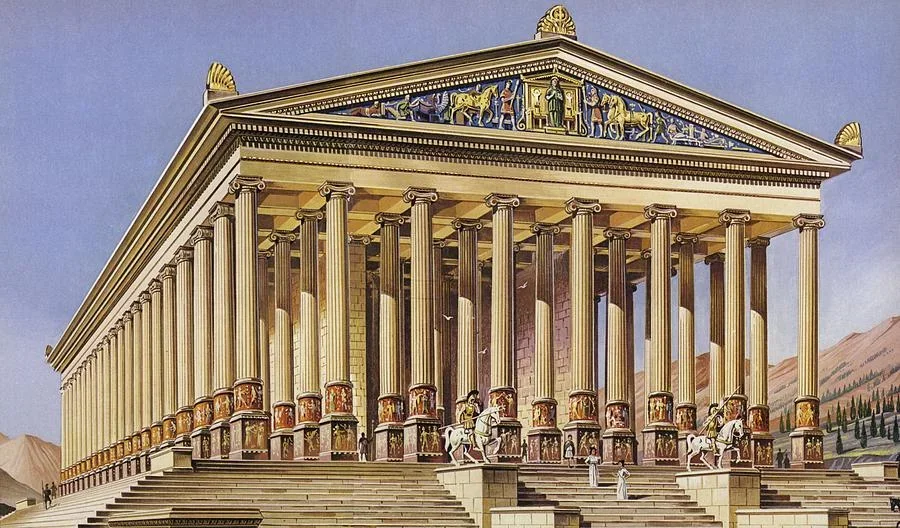
3. The Temple of Artemis at Ephesus: Sanctuary of Stone and Wildness

Of all the ancient world’s architectural achievements, none left the poet Antipater of Sidon more breathless than the Temple of Artemis. Around 140 BCE, he wrote, “I have set eyes on the very wall of lofty Babylon, supporting a chariot road, and the [statue of] Zeus by the Alpheios [in Olympia], and the Hanging Gardens, and the Colossus of Helios, and the huge labor of the steep pyramids, and the vast tomb of Mausolos; but when I saw the temple of Artemis, reaching up to the clouds, these other marvels dimmed, they lost their brilliance, and I declared, ‘Look, apart from Olympus itself, the sun has never shone on anything that can compare to this!’”

Constructed around 550 BCE and rebuilt in grander fashion after a devastating fire in 356 BCE, the Artemision — as it was called in classical sources — was the first of the Seven Wonders to be accessible to all people, not just royalty. And it was the only one where women, both mythic and mortal, stood at the center of its story.

The original temple was incinerated on a sweltering July night — the very night Alexander the Great was born. In fact, the Greek world couldn’t help but connect the two events: “Tongues wagged: Artemis — goddess of nature and childbirth — it was whispered, was so busy in northern Greece, super-birthing a world-class megalomaniac, she neglected her earthly temple home,” Hughes writes. 

MORE: Alexander the Great: 8 WTF Facts About His Early Life

The arsonist was a man named Herostratus, likely a desperate slave who torched the temple to immortalize his own name — and, ironically, succeeded. The Ephesians tried to erase him completely. Speaking his name was made a capital crime. But history, being what it is, remembered him anyway.

The rebuilt temple was a marvel: 425 feet long, 225 feet wide — nearly twice the size of the Parthenon that would follow it 150 years later. It featured 127 columns, each 60 feet high, and some capped by a skylight above the central cult statue. The structure marked the first true colonnaded Greek temple, laying the architectural blueprint for millennia to come.

The Temple of Artemis at Ephesus, with painted column bases and frieze at the top, a Wonder of the Ancient World

Here, Artemis wasn’t the graceful huntress of Louvre sculptures. She was Asiatic Artemis, a wild guardian of beasts, bearing the mystery and fertility of the Earth. She was a goddess of contradictions — pure yet primal, distant yet intimately present.

“Artemis in the mythology of the Greeks was an unusual goddess, a female figure who stood apart from the rutting sexuality that was the norm of ancient life and myth,” Hughes writes. “The story went that on the eve of her wedding, Artemis begged her father Zeus to allow her not to marry. In most cultures at this time, women were controlled, either by having to have sex, or by not being allowed to. Artemis’s agency, and her choice, makes her attractively odd. She was a virgin, whose sphere was consummation.”

Her image, kept hidden behind a curtain in the sanctuary, was likely a wooden plank known as a xoanon — treated as a living being. It was washed in seawater, anointed in fig milk or grape juice, adorned with clothes and gold, and lovingly cared for in a process called kosmeis — the root of our word cosmetics.

The cult of Artemis was largely female-led. Young women, or parthenoi, took part in the rites. But the high priests — the megabyzoi — were eunuchs, men who had castrated themselves in service to the goddess. Their female counterparts, the melissae, were the “honey women,” underscoring the deep associations between Artemis, fertility and nature’s sweetness.

Ephesus itself had become one of the largest and busiest cities in the ancient world, its port capable of hosting over 800 ships. That accessibility helped the temple’s fame spread far and wide. It was a religious sanctuary, a political hub and — crucially — a bank. Like many temples of the time, it safeguarded vast stores of wealth and knowledge. To violate the temple was to risk divine wrath.

The mythic presence of Amazons — female warriors who were said to have founded the site — was inescapable. Their likenesses adorned the temple’s façade, doorframes and rooftop sculptures. Bronze statues of Amazons stood with short chitons, bare breasts, crescent shields and battleaxes — some even depicted with wounds.

“The Temple of Artemis is a Wonder with diverse genetic makeup and influences from both East and West within its deity, its design and its dogma,” according to Hughes. “It is a work of mankind, trying to understand the power of the natural world and the power of women.”

And Artemis herself? Her statue was encrusted with bees, lions, griffins, cows, horses and sphinxes — a tapestry of creatures and symbols. Her front was thick with mysterious swellings: ostrich eggs? Pollen sacks? Breasts? Testicles? Bags of gold? The goddess resisted definition. She contained multitudes.

Topping her cylindrical polos crown was an image of the temple itself. A shrine of power, mystery and the wild feminine, the Artemision stood as a defiant celebration of life’s most primal forces.

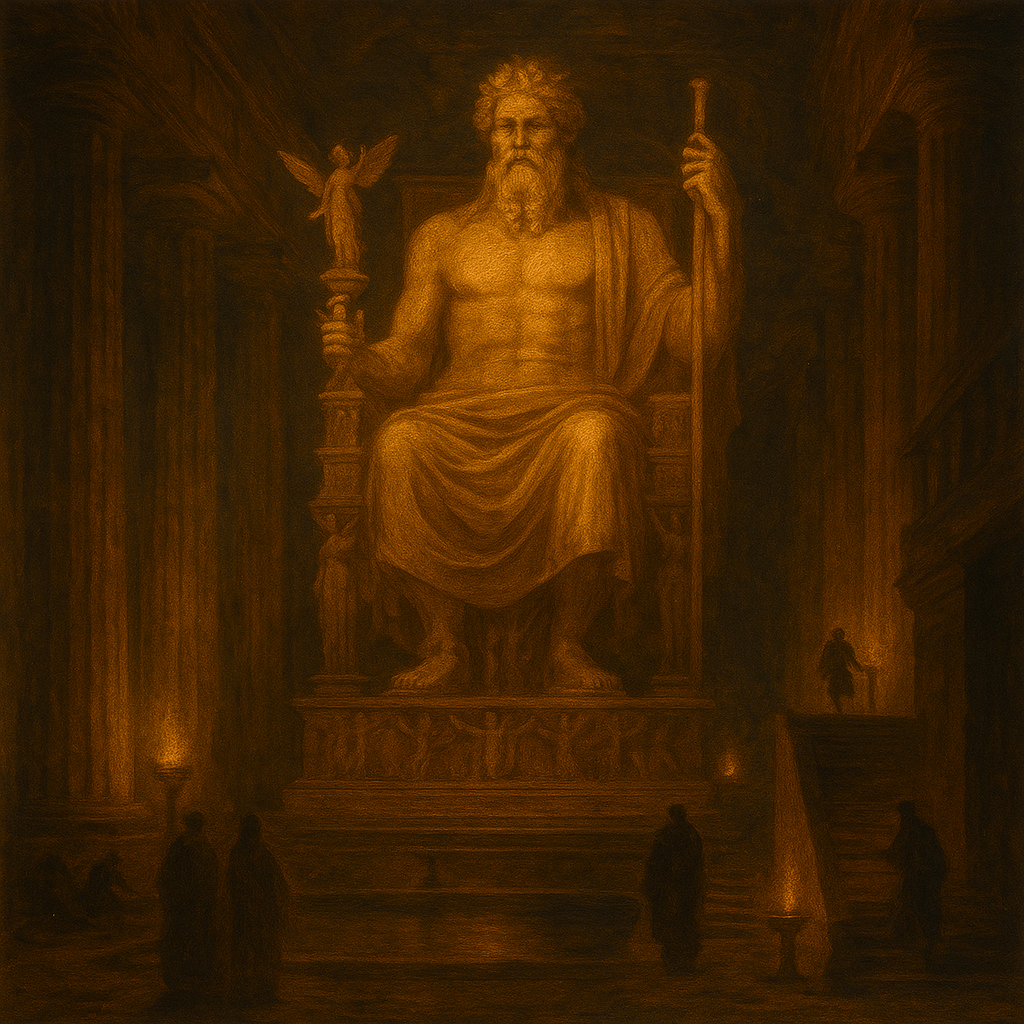
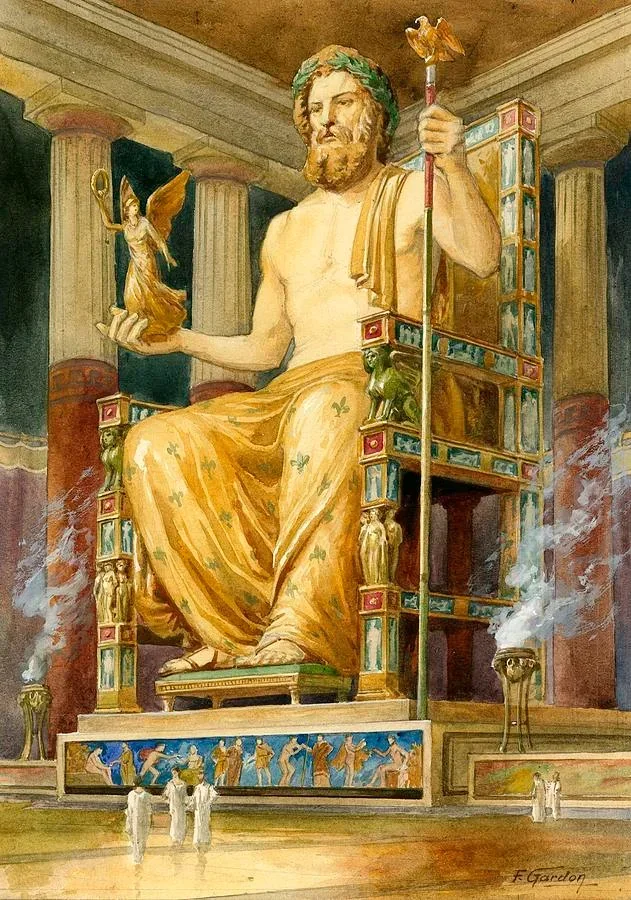
The massive seated statue of Zeus in his temple in Olympia, holding Winged Victory in one hand and a staff in the other

4. The Statue of Zeus at Olympia: God Made Monument

Epictetus, a Stoic philosopher, captured just how beloved the Statue of Zeus had become by the 1st century CE: “The wish to witness the ancient masterpiece of Phidias was so intense, that to die without having seen it was considered a huge misfortune,” he wrote in Discourses

The statue of Zeus at Olympia glowed with godly gravitas inside the sanctuary’s darkened temple. A creation of the sculptor Phidias, it was a divine father made colossal: Zeus, King of the Gods, father of Artemis and Apollo, products of the rape of the titaness Leto. The statue wasn’t meant to comfort. It was meant to awe.

“Of course, in a place where men were attempting to become godlike, the ultimate god took the form of the ultimate man,” Hughes writes. 

Built between 438 and 430 BCE, the statue was made of the most extravagant materials available: gleaming hippopotamus ivory for skin, gold for hair and beard, ebony, bone, polished stone and glass. 

The giant statue of Zeus at Olympia, a Wonder of the Ancient World

“Measuring the size of a three-story home (41 feet, on his pedestal rising over 44 feet tall), and yet seated, crouching, with his head skimming the ceiling, like Alice in Wonderland after taking her Drink Me spiked potion, the godhead must have seemed extraordinarily intimidating,” Hughes adds. “It was said that if he stood up, this Zeus would ‘unroof’ his temple-home.”

The throne featured six statues of Nike, the goddess of victory, marching up the legs. The arms of the seat were sobering sphinxes. The struts featured Herakles slaughtering Amazons to seize their queen’s girdle. The side panels showed Artemis and Apollo massacring Niobe’s children for her pride. And at Zeus’s feet? A stool supported by snarling lions — another Amazonian battlefield carved beneath.

“The message was clear: Olympia, and its Holy of Holies were, in every sense, somewhere that weakness was abhorred, for Zeus’s domain, there were only winners and losers,” Hughes explains. 

In Zeus’ right hand stood a 6-and-a-half-foot statue of Nike, also made of ivory and gold. In his left: a scepter topped by a gleaming eagle. His hair curled in heavy golden locks onto his shoulders, while his ivory skin was oiled daily to prevent cracking in the damp climate. That oil pooled in a limestone basin at his feet — creating a dark twin of the god.

The temple that housed Zeus at Olympia was a masterpiece of Doric architecture, designed by Libon of Elis and completed in 456 BCE with the spoils of war. Zeus’ likeness, modeled after Homer’s verses in The Iliad, captured the very image of cosmic authority. It was said Zeus could start an earthquake just by furrowing his brow. 

A wooden framework supported the ivory plating, carefully soaked in vinegar and sculpted into seamless sheets. Recent research by Kenneth Lapatin confirms the intricacy of this process — and the ingenuity of the ancients who achieved it.

When Roman Emperor Caligula ordered the statue’s decapitation in 41 CE so he could replace the god’s head with his own, Zeus reportedly laughed. The scaffolding collapsed, and days later, Caligula was assassinated — after having dreamed of the deity he sought to deface.

After standing for nearly 1,000 years, the statue was eventually moved to Constantinople, where it burned in a city-wide fire around 476 CE. Olympia’s pride, a masterpiece honored for generations, was reduced to ash.

And yet, Zeus lived on — not just in memory, but in iconography. The Byzantine depiction of Christ Pantokrator, “Ruler of All,” seated on a throne with glowering brow and commanding presence, bore a striking resemblance to Phidias’s Zeus. The divine father had been reborn.

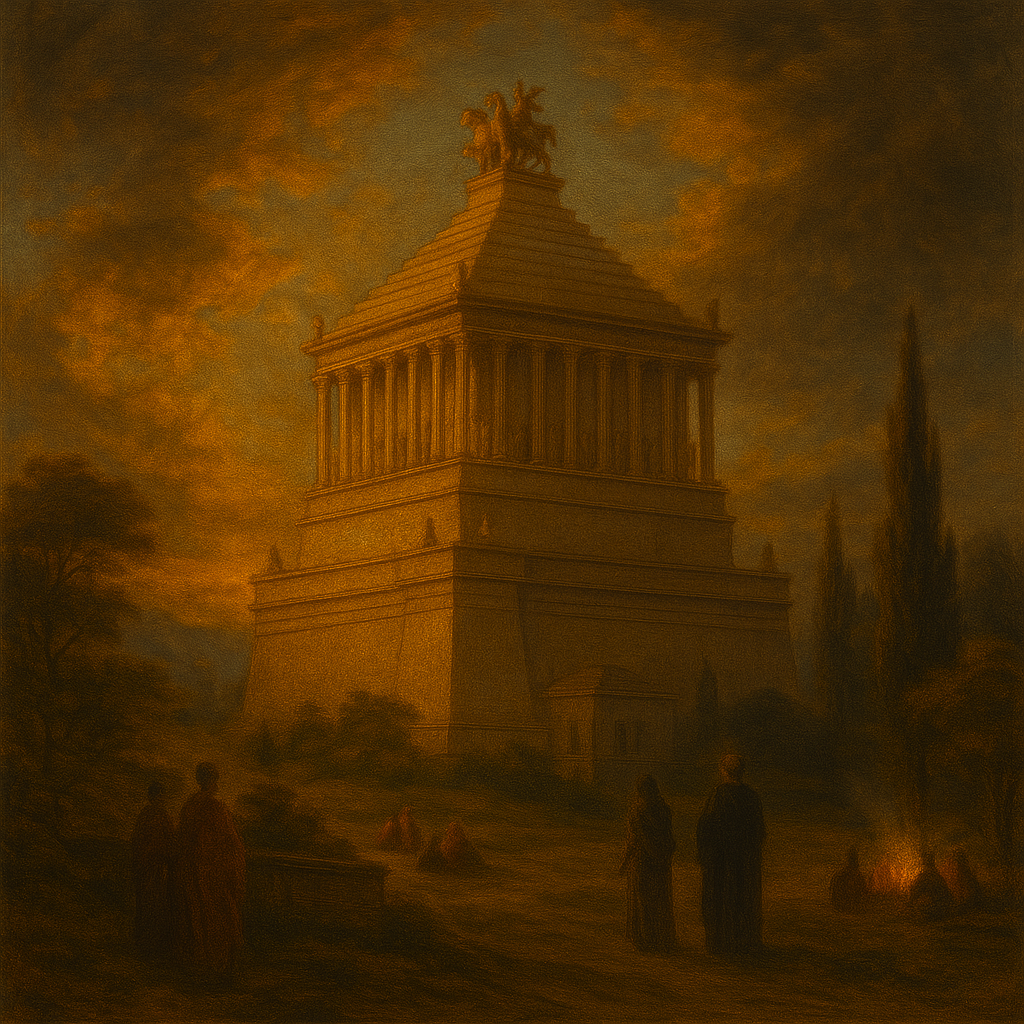
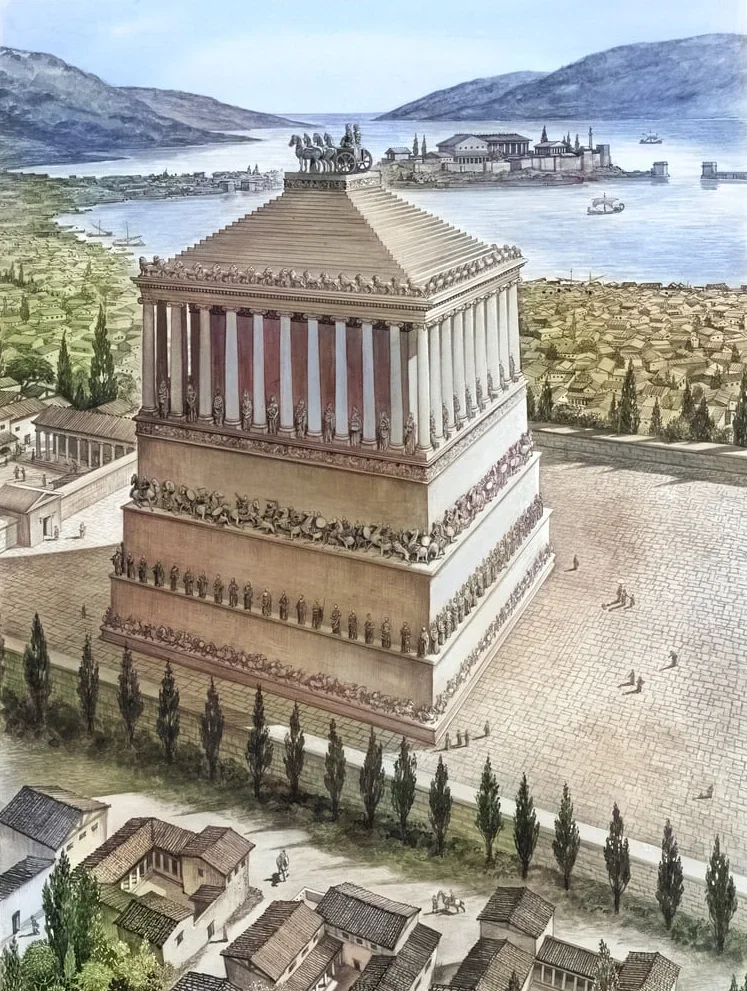
The impressive Mausoleum of Halikarnassos, with a large base, a temple-like structure, stepped pyramid and chariot on top

5. The Mausoleum of Halikarnassos: A Monument to Power, Grief and Glittering Excess

It was a tomb so grand it gave its name to every monumental tomb that followed. But the Mausoleum of Halikarnassos — final resting place of Mausolos, satrap-king of Karia — wasn’t just massive. It was mesmerizing. A collision of Greek elegance, Persian grandeur and Anatolian symbolism, built between 361 and 351 BCE on the sun-soaked coast of modern-day Turkey.

This Wonder fused the influences of East and West: Ionian and Doric architectural styles mingled with the dramatic scale and symmetry of Persian rock-cut tombs. Hughes notes that Karia, the region where Halikarnassos sat, was a culture of blendings — borrowing, reimagining and innovating in equal measure. And the Mausoleum was its masterpiece.

“This giant tomb came to be thought of as wonderful because it was trumpeted as embodying a faithful woman’s selfless devotion to her husband-brother, a sign that the brilliance of some men is to devastate women by dying,” she writes. 

Indeed, much of its fame came from the story of Artemisia II, Mausolos’ sister and wife, who reportedly grieved so hard she mixed his ashes into her wine. But beneath the romance lay a structure of staggering ambition: a 145-foot-tall marble confection built atop a limestone terrace stretching over 785 feet — about half the height of Big Ben, and nearly the length of two football fields.

The Mausoleum of Halikarnassos by the water, a Wonder of the Ancient World

The base consisted of a rectangular podium roughly 100 by 125 feet wide. Above that, 36 columns ringed the structure, echoing the layout of the Temple of Artemis. On top of the colonnade rose a stepped pyramid of 24 tiers, leading to a grand pedestal. And at the very top? A chariot drawn by four thrashing horses, almost certainly carrying statues of Mausolos and Artemisia themselves — a couple who have been put quite literally on a pedestal.

Designed by architect-sculptor Pytheos and possibly other elite artists of the day — Scopas, Bryaxis, Leochares and Timotheus among them — the Mausoleum was both a sculpture gallery and a piece of architectural theater. Its blocks were polished to a glass-like sheen. Carvings depicted Mausolos hunting, receiving ambassadors, honoring the gods and leading battles — scenes real and imagined. Life, as Mausolos wanted it remembered, in full pageantry. 

We tend to think of ancient structures as white, but many were actually a riot of color — and the Mausoleum certainly was. “Funerary monuments in particular favored color — there was a sense that the polychrome experience brought the dead back to some kind of life,” Hughes informs us. “Mausolos’ tomb would have been a firework in the sky.”

And what fireworks: white marble, then bluish limestone adorned with over 120 human and animal figures — all progressing toward a seated Mausolos before a great doorway. Was this his entrance to the afterlife? Above this level, imported white marble from Athens depicted brutal battle scenes, including — once again — Amazons, a recurring motif in Wonder architecture.

A ring of lions likely prowled the pyramid’s base. The decorative program celebrated domination, but also wildness and ritual. Priestesses in clinging, diaphanous dresses, their bodies visible beneath the folds, hint at ecstatic Bacchic rites. 

Skulls unearthed at the site suggest mass animal sacrifice during the burial — a slaughter of sheep, oxen, lambs, birds. Where now there are thistles and butterflies, there were once streams of blood.

Threads of gold found among the ruins may have once wrapped the king’s cremated remains. 

A spring near the site was famed in antiquity for its uncanny power to make men infertile or effeminate. That same spring inspired Ovid’s tale of the creation of Hermaphrodite: the son of Hermes and Aphrodite, lured into its waters by a nymph, merging into one being of two sexes.

The Mausoleum was a place where myth, sex, sacrifice, politics and grief all coalesced. A wonder of death, yes — but pulsing with the messy, lavish power of life.

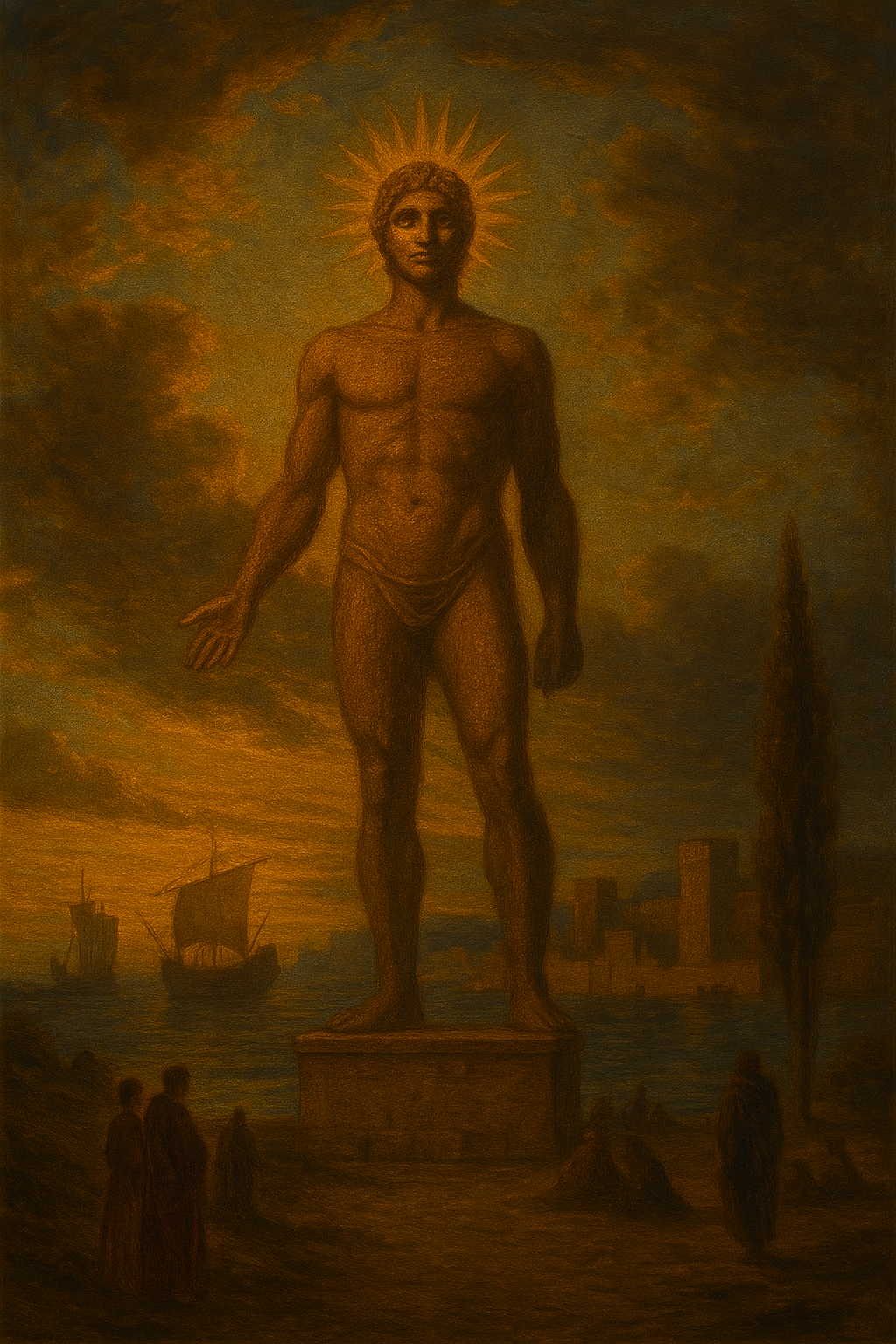
The giant statue of the Colossus of Rhodes, a sun god rising above the island's port

6. The Colossus of Rhodes: Bronze Giant, Fallen God

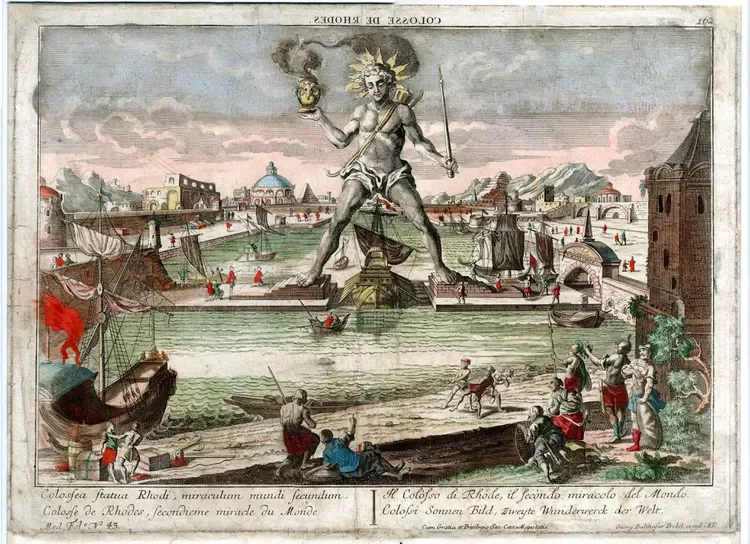
The Colossus of Rhodes is perhaps the most misunderstood Wonder. Popular imagination has long insisted it stood legs astride the harbor entrance, torch in hand, as ships passed beneath. But that towering figure, feet apart across a 390-foot waterway, is pure fantasy — a medieval myth that held the world’s imagination hostage for 800 years. (It even inspired the Titan of Braavos in George R.R. Martin’s Game of Thrones.)

In reality, the Colossus never straddled the harbor. It likely stood higher up, on the city’s acropolis, towering above the bustling port of Rhodes. This was Helios — the pre-Olympian sun god — cast in bronze and iron, gleaming in the Aegean light.

Standing an estimated 108 feet tall, the statue was a staggering feat of ancient engineering. Built in the early 3rd century BCE and completed around 280 BCE, it had a skeleton of iron and a polished bronze skin. Just one of its digits — a single toe, say — was said to be larger than most full-sized statues.

The Colossus of Rhodes, a Wonder of the Ancient World, seen straddling the harbor

Unlike Zeus’ patriarchal presence, Helios pulsed with youthful ambition. “Whereas the Zeus at Olympia thundered, his luxurious beard the signifier of a mature man in Greek culture, Rhodes’ Wonder, the un-bearded, tousled, soft-lipped Helios, had the dangerous energy of a young, unpredictable man poised to do great things,” Hughes writes. 

And given the era, it’s hard not to see the influence and inspiration of Alexander the Great in the statue’s features and commanding pose. Rhodes had resisted a siege by one of Alexander’s successors — and the Colossus was both a victory monument and a symbol of sun-blessed resilience.

Kolossos is a Greek word — possibly of Asiatic origin — that originally meant simply “statue.” But this statue rewrote the definition. It was never just a likeness. It was legend in metal, a city’s pride forged into form.

“This was a wonder that became legendary within weeks of its completion,” Hughes says. 

Created by the sculptor Chares of Lindos — and possibly influenced by the legendary Telchines, mythical inventors of metalwork — the statue took 12 years to complete. It was cast in sections, working from the feet upward. Each foot stood on a marble plinth around 60 feet wide and 10 to 15 feet thick.

And then it fell.

Around 227 BCE — just 60 or so years after it was completed — a devastating earthquake struck Rhodes. The city walls crumbled, the coastline dropped by 3 feet, and the Colossus came crashing down. It broke at the knees and was never re-erected. 

The fragments, enormous and awe-inspiring, lay scattered for centuries — longer than the statue ever stood. According to later sources, the tumbled Helios remained visible until the 7th century CE, when its remains were finally melted down for scrap. So much for immortality.

And that legend has never quite gone cold.

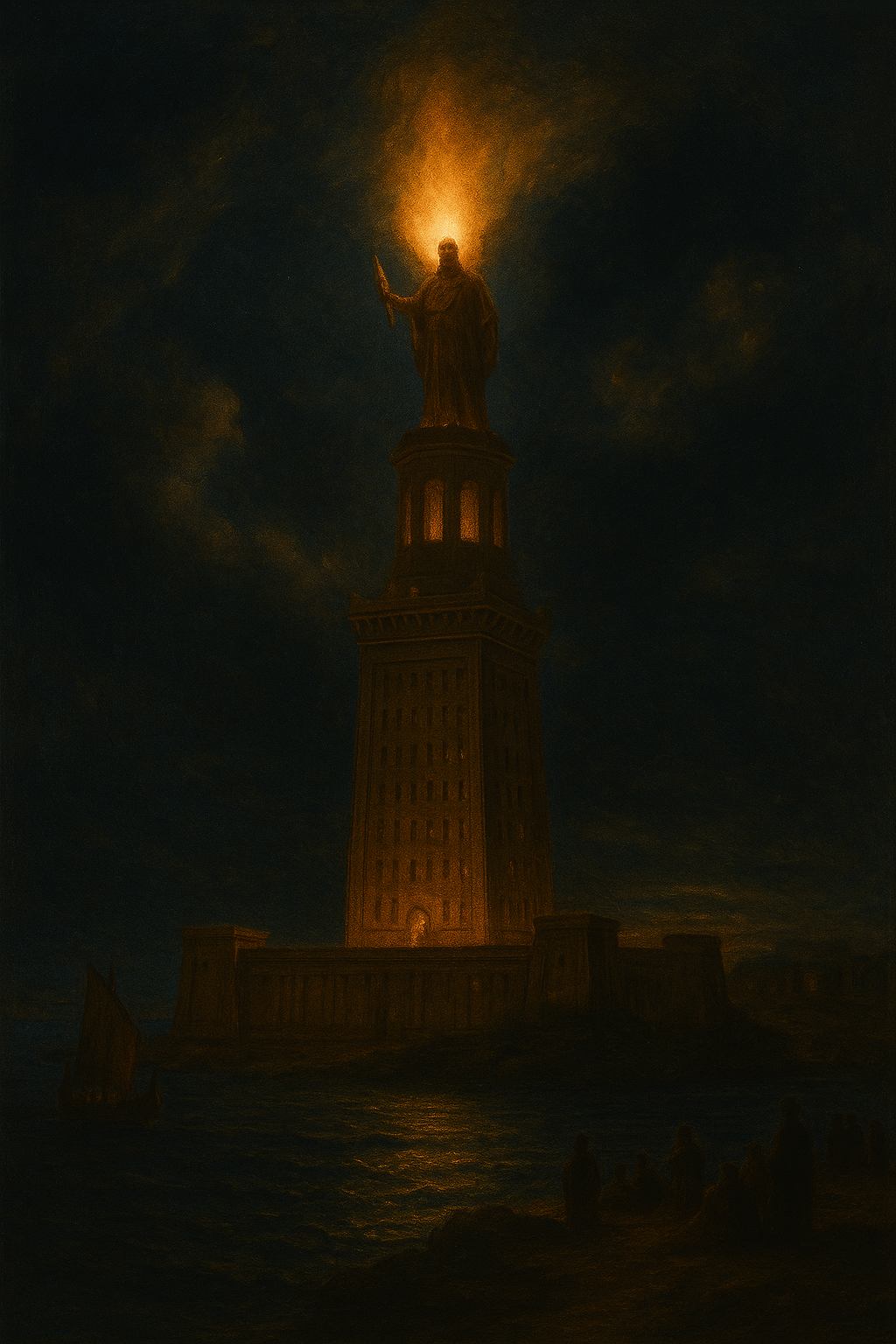
The Lighthouse of Alexandria, a Wonder of the Ancient World, at night, ablaze and topped by a statue of Zeus

7. The Lighthouse of Alexandria: Fire, Mirrors and the Edge of the World

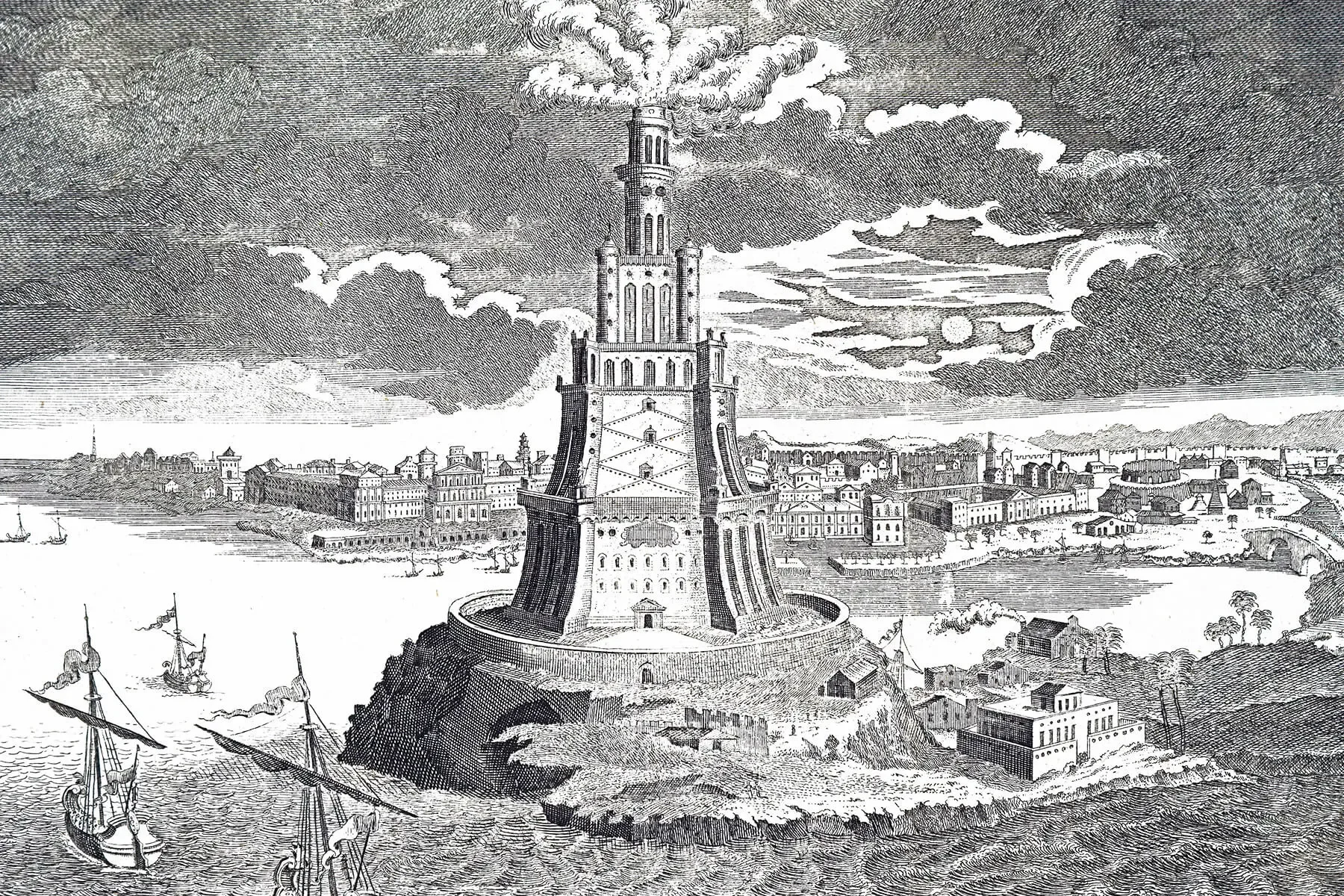
Unlike the short-lived Colossus of Rhodes, the Lighthouse of Alexandria stood tall for over 1,500 years — a marvel of geometry, ingenuity and sheer ambition. Built beginning around 297 BCE and completed over the course of 15 years, this towering wonder rose more than 400 feet above the bustling twin harbors of Alexandria, Egypt, making it the second tallest structure in the ancient world after the Great Pyramid.

It was astonishing. A stacked sequence of geometric forms — square, octagonal, circular — constructed from marble and local limestone, sheathed in red granite shipped down the Nile from the scorched quarries of Aswan. Some blocks stretched 36 feet long and weighed 75 tons. The tower was crowned with a 50-foot statue, almost certainly of Zeus Soter (Zeus the Savior), watching over the seas like a divine lighthousekeeper.

Its beacon could be seen for over 37 miles — a flaming furnace at night, and during the day, sunlight reflected off massive copper mirrors. It was both a feat of engineering and a performance of cosmic authority. Ships approaching Alexandria’s treacherous coast — battered by crosswinds, stalked by hidden rocks — were guided by this shimmering sentinel, the Pharos.

It was built of red granite, which is usually a dull pink, but could turn an iridescent purple  in desert light. “The ancients must have believed red granite brought with it some kind of sorcerer’s power,” Hughes muses. 

An engraving of the Lighthouse of Alexandria in Egypt, a Wonder of the Ancient World

The tower’s structure was just as beguiling: a 1,115-by-1,115-foot base with fortified brick walls and turrets; an interior ramp and hoist system to ferry fuel and supplies; and an eight-sided middle tier symbolizing the compass winds. Above that, a cylindrical chamber topped with the beacon — perhaps powered by naphtha and papyrus, possibly attended by pack animals climbing in pairs.

And the Pharos wasn’t just a lighthouse. It was also a proto-telecom tower, using flashing heliography — ancient Morse code — and possibly even mechanical sound effects. Sculpted Tritons (half-man, half-fish) stood around the structure, possibly blowing horns that served as early sirens, ancient animatronics that altered the city in times of danger.

The lighthouse was initially funded by Ptolemy I — one of Alexander the Great’s most successful generals — and completed under his son, Ptolemy II. It cost an estimated 800 silver talents — over $19 m

illion in today’s money. Built on the island of Pharos, which would lend its name to the structure and eventually become the word for “lighthouse” in multiple languages, the monument embodied Ptolemaic power and vision. It was a glowing stake in the sand, declaring Alexandria the gateway between Africa, Asia and the Mediterranean world.

And for centuries, it worked.

Until 1303 CE, when the Earth shook. An earthquake finally toppled the Pharos, reducing it to ruins and ending one of the longest-standing Wonders of the Ancient World.

MORE: The Major Egyptian Gods and Goddesses

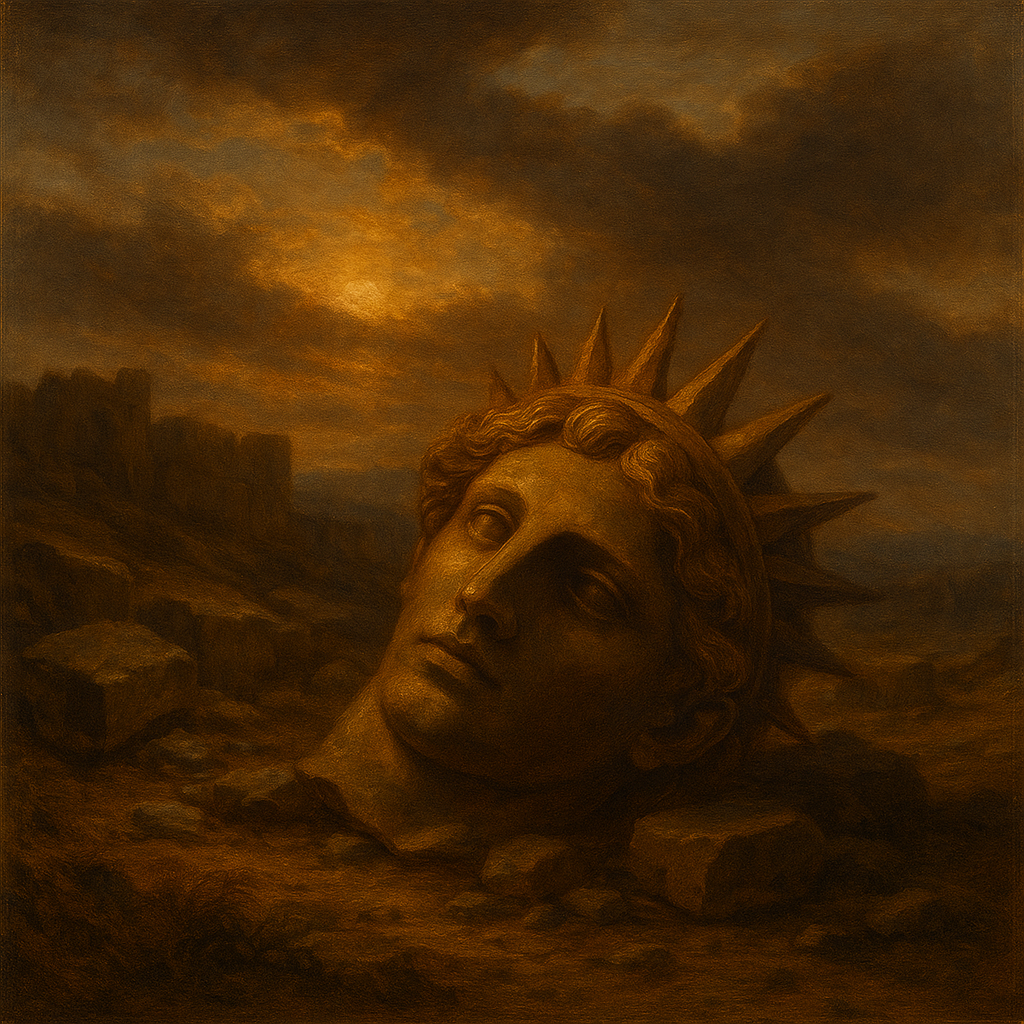
The head of the Colossus of Rhodes has fallen off and lies on the ground

Why the Seven Wonders of the Ancient World Still Matter

All but one of the original Seven Wonders may be long gone — toppled by earthquakes, scavenged for scrap, or buried beneath centuries of sand and myth. But as Hughes makes clear, their true legacy is that they weren’t simply monuments to kings or gods. They were monuments to us — to human ambition, ingenuity, imagination and the drive to build something bigger than ourselves.

The list was specific, political, proudly Hellenistic — showcasing a curated world seen through Greek eyes in the wake of Alexander the Great. And yet, the idea of a Wonder has endured far beyond its original moment.

“Wonders serve a rich triple purpose,” Hughes writes. “They were constructed partly to feed our need for wondrous tales — to experience and talk about the biggest, the best, the tallest, the most strange, the most bold. They encourage a saturation in the now, by submitting to a present, pure sensation of wonder. They remind us of our overwhelming desire to collaborate to create beyond the possibilities of the individual.” 

Even today, the concept of a “wonder” still fuels our storytelling, our bucket lists, our skyscrapers and our sci-fi dreams. Because deep down, we’re still looking to be amazed. Still looking to build what seems impossible. Still wondering. –Wally

MORE: What Was Daily Life Like in Ancient Egypt?

How to Plan a Day Trip and Itinerary From Singapore to Batam

From ferries to temples, beach thrills to seafood feasts, this Batam itinerary shows how to turn a single day off into a full-blown island adventure.

Nongsa Point Marina Resort in Batam, Indonesia, with palm trees and a marina

Batam, Indonesia is only a 45-minute ferry ride from Singapore — but feels like a world away.

Looking to escape Singapore for the day? Just hop a ferry, and in under an hour, you’ll find yourself in Batam, Indonesia — a land of temples, bargain shopping, watersports and seafood so good it should probably be illegal.

Whether you’re craving a low-key weekend or a one-day recharge, this itinerary has you covered — start to finish.

Batam offers a rare combo: It’s affordable and exciting. Rest, relaxation and thrill-seeking all show up to play.

Think of it as Bali’s scrappy little sibling.
The cityscape of water and skyscrapers of Singapore at sunset

Escape the hustle and bustle of Singapore with a day trip to Batam Island in Indonesia.

Why visit Batam?

Batam is the largest island in Indonesia’s Riau Archipelago, tucked between the Strait of Singapore and the South China Sea. It’s close enough for a day trip, but far enough to feel like you’ve actually gone somewhere else entirely. 

Fast ferries from Singapore’s HarbourFront Terminal make the crossing in about 45 minutes — though if you’re not sea-savvy, pack some ginger candy (or, let’s be honest, Dramamine).

The Majestic fast ferry

So why go? Because Batam offers a rare combo: It’s affordable and exciting. Rest, relaxation and thrill-seeking all show up to play. Think of it as Bali’s scrappy little sibling.

A fat Buddha statue by greenery at Maha Vihara Duta Maitreya Temple in Batam, Indonesia

Morning: Temple visits and tax-free shopping

Ferry to Batam

Hop aboard a Majestic Ferry from Singapore’s HarbourFront Centre. You’ll land at either Batam Center or Sekupang Ferry Terminal — both good jumping-off points for a full day of fun.

Maha Vihara Duta Maitreya Temple

Start your day with some peace and perspective. This Buddhist temple is one of Southeast Asia’s largest and most serene. Even if you’re spiritually agnostic, it’s hard not to be charmed by the rows of laughing Buddhas and you can fuel up at the in-house vegetarian café.

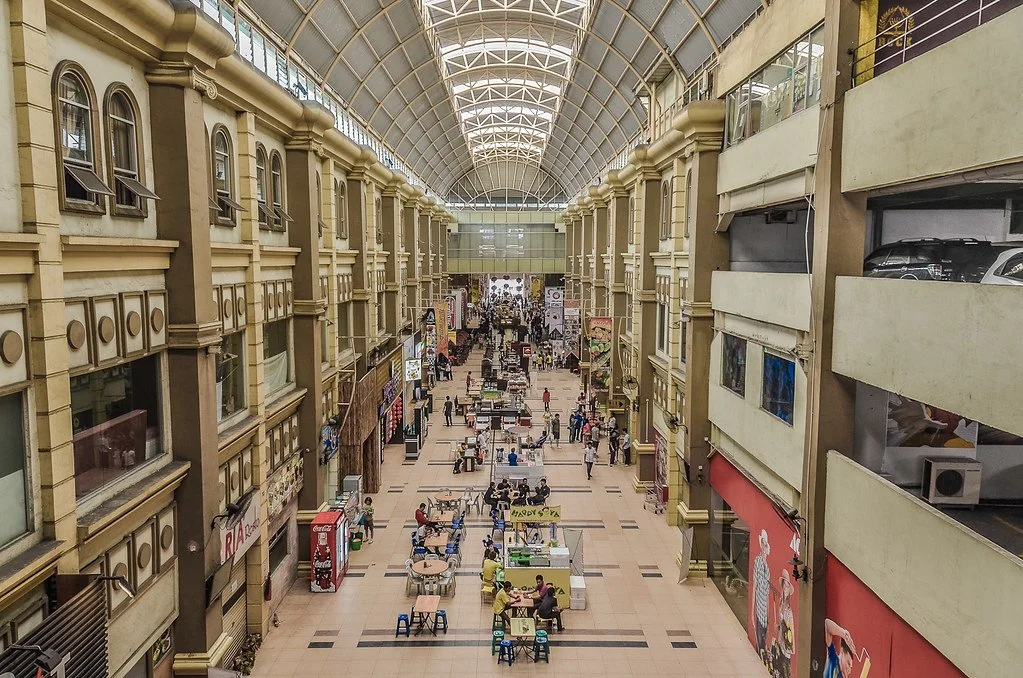
Nagoya Hill Shopping Mall in Batam, Indonesia

Nagoya Hill Shopping Mall

Next, dive into Batam’s consumer paradise. Nagoya Hill is a magnet for duty-free deals: Think cosmetics, electronics, local snacks and souvenirs. It’s also a prime spot to sample regional bites before the beach calls.

A boat on the sand near a table on Nongsa Beach, Batam, Indonesia

Afternoon: Beaches, boats and a feast of seafood

Nongsa Beach

Clear water. White sand. The occasional person flying overhead on a parasail. Nongsa is your go-to for jetskiing, banana boating or simply lazing like a lizard on a lounger.

Golden Prawn 933

It’s practically a crime to visit Batam and skip the seafood. Golden Prawn 933 is a local legend — slamming fresh prawns, sweet crabs and gong-gong (that’s sea snail, if you’re curious). Come hungry and mildly prepared to regret how much you order.

Silhouettes of a couple holding hands at sunset on a pier in Batam, Indonesia

Evening: Sunset strolls and seaside dining

When the sun starts to dip, so should you — into a massage chair or maybe just a beachside lounge. Hit a spa, sip something fruity, or just breathe in that salty air with a grin.

Dinner tip: Plenty of restaurants near the coast serve up fusion cuisine — Indonesian flavors with a splash of Continental flair. Add a glass of wine or a cocktail, and you’ve officially turned a day trip into a vacation.

Jembatan Tengku Fisabilillah bridge in Batam, Indonesia

Plan Your Batam Escape

Whether it’s a quick escape or a full weekend reset, Batam delivers. Ferries run frequently, the itinerary writes itself, and the seafood is to die for. –Vivek Singh

Fall Foliage in Japan: A Guide to Experiencing the Spectacular Koyo

Discover the best places for autumn in Japan, including Hokkaido, Nikko, Fuji Five Lakes, Kyoto and Tokyo. Plus, you’ll fall for these  cultural traditions and travel tips.

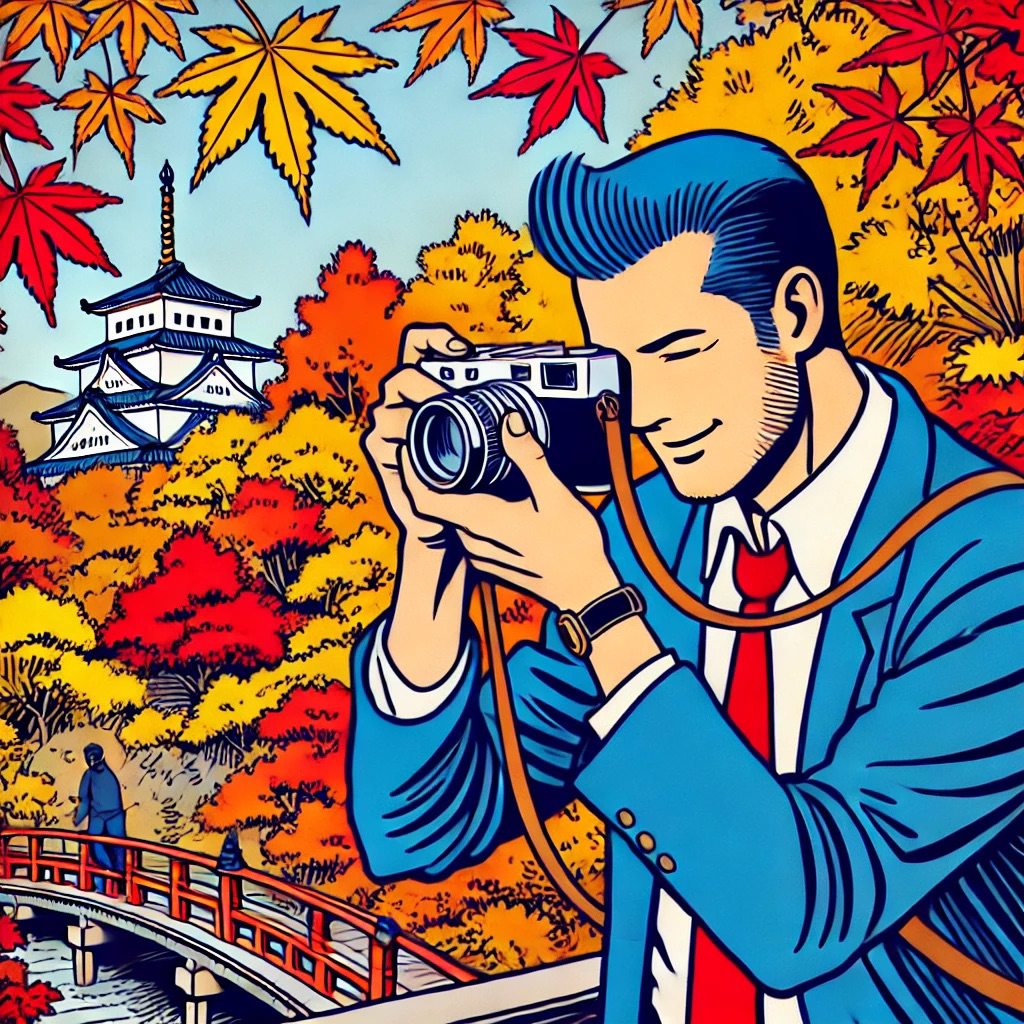
A handsome man in suit takes pictures of the fall foliage near a bridge and temple in Japan

Japan in fall is a spectacle of vibrant colors and cultural traditions, with every corner of the country bursting into hues of red, orange and yellow. Known as koyo, the brilliant display of autumn leaves makes this the perfect time to soak up Japan’s natural beauty. But if you’re aiming for the best fall foliage spots and wondering about cultural traditions tied to the season, don’t worry — I’ve got you covered.

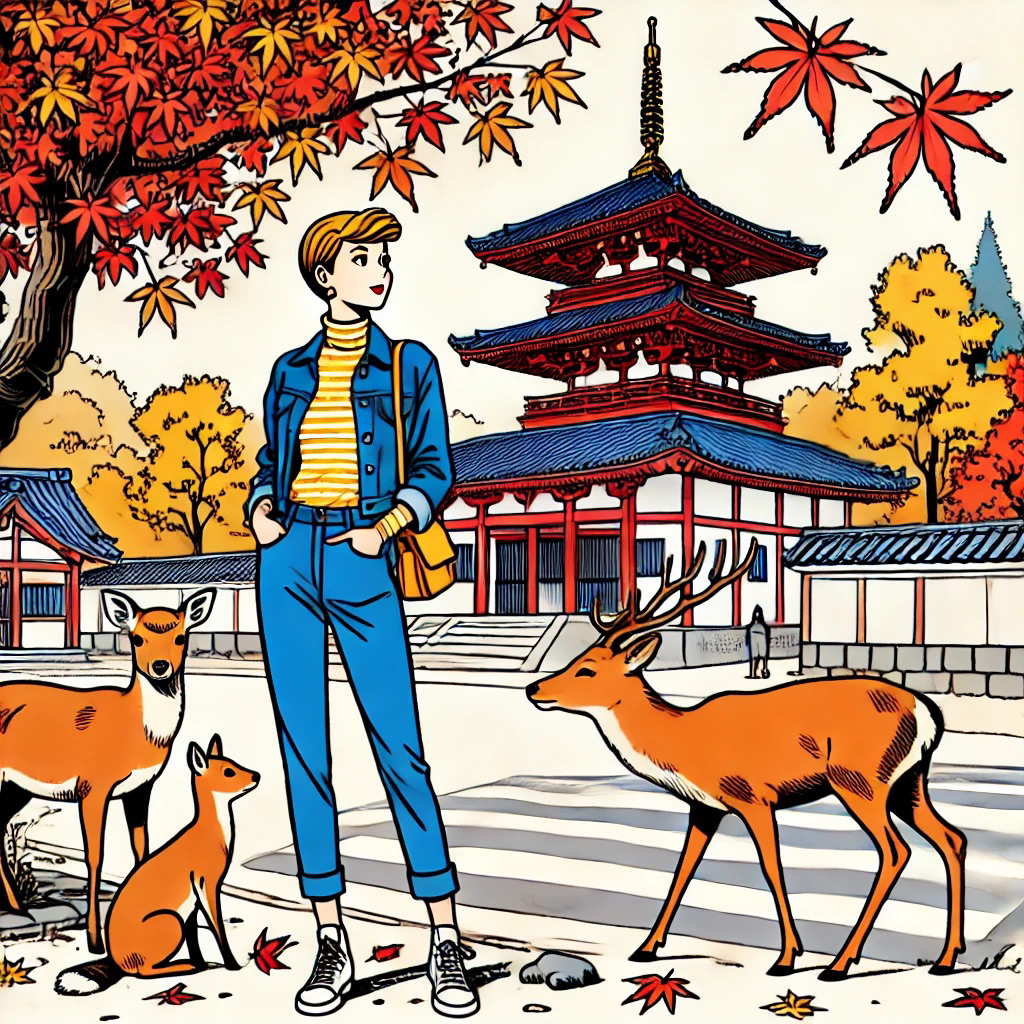
A hip young woman admires a temple and fall foliage near friendly deer at Nara, Japan
Known as koyo, the brilliant display of autumn leaves makes fall the perfect time to soak up Japan’s natural beauty.

Before heading off, make sure you check the Japan fall foliage forecast for the year so you hit the peak time for those autumn hues. Now, let’s dive into the top spots for fall foliage viewing, starting with the early birds all the way to the late bloomers. 

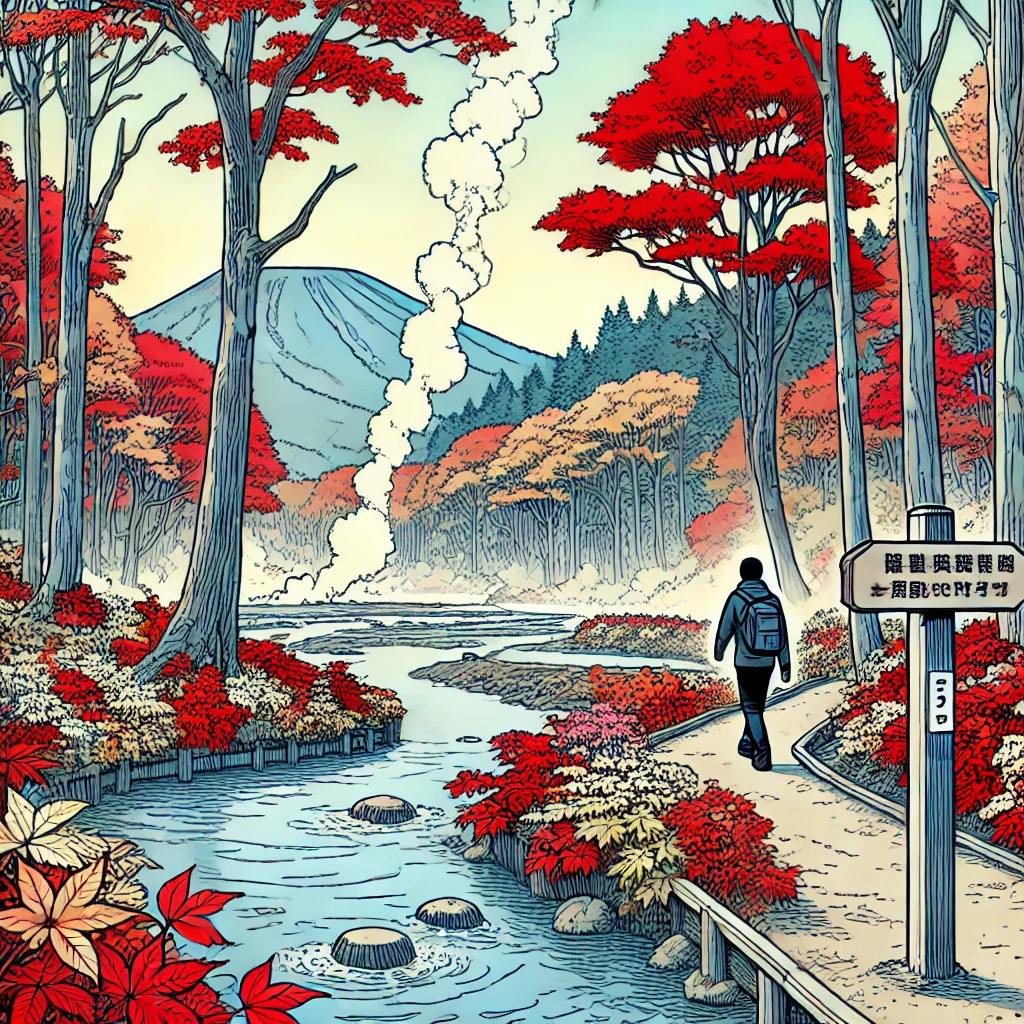
A man hikes near hot springs and red autumn foliage in Hokkaido, Japan

Hokkaido

Japan’s northernmost island, Hokkaido, is home to Daisetsuzan National Park, one of the first places to catch the autumn colors. Starting mid-September, you can hike around Kogen Onsen for a kaleidoscope of leaves. Just don’t forget your bear safety orientation — these woods are home to some of Japan’s most curious critters. Another fall gem? Noboribetsu, known for its eerie “Hell Valley,” where volcanic hot springs and bubbling pools make for a steamy, surreal leaf-viewing experience.

A backpacker stands by a waterfall amid fall foliage with a mountain in the background in Kikko, Japan

Nikko

Nikko offers one of the longest koyo seasons in Japan. The leaf-changing magic starts mid-October near the waterfalls, before spreading in golden waves across Senjogahara Marshland and up to Lake Chuzenji. The stunning contrast of colors against the blue waters is definitely a sight you don’t want to miss.

A backpacker stands by the water, with Mount Fuji in the distance, admiring the fall foliage of Fuji Five Lakes, Japan

Fuji Five Lakes

With Mount Fuji towering above, the Fuji Five Lakes region is undeniably a showstopper. In early November, the northern shores of Lake Kawaguchiko are prime for leaf viewing, with the snow-capped peak looming in the background. If you’re feeling adventurous, this could be your basecamp for a late fall climb.

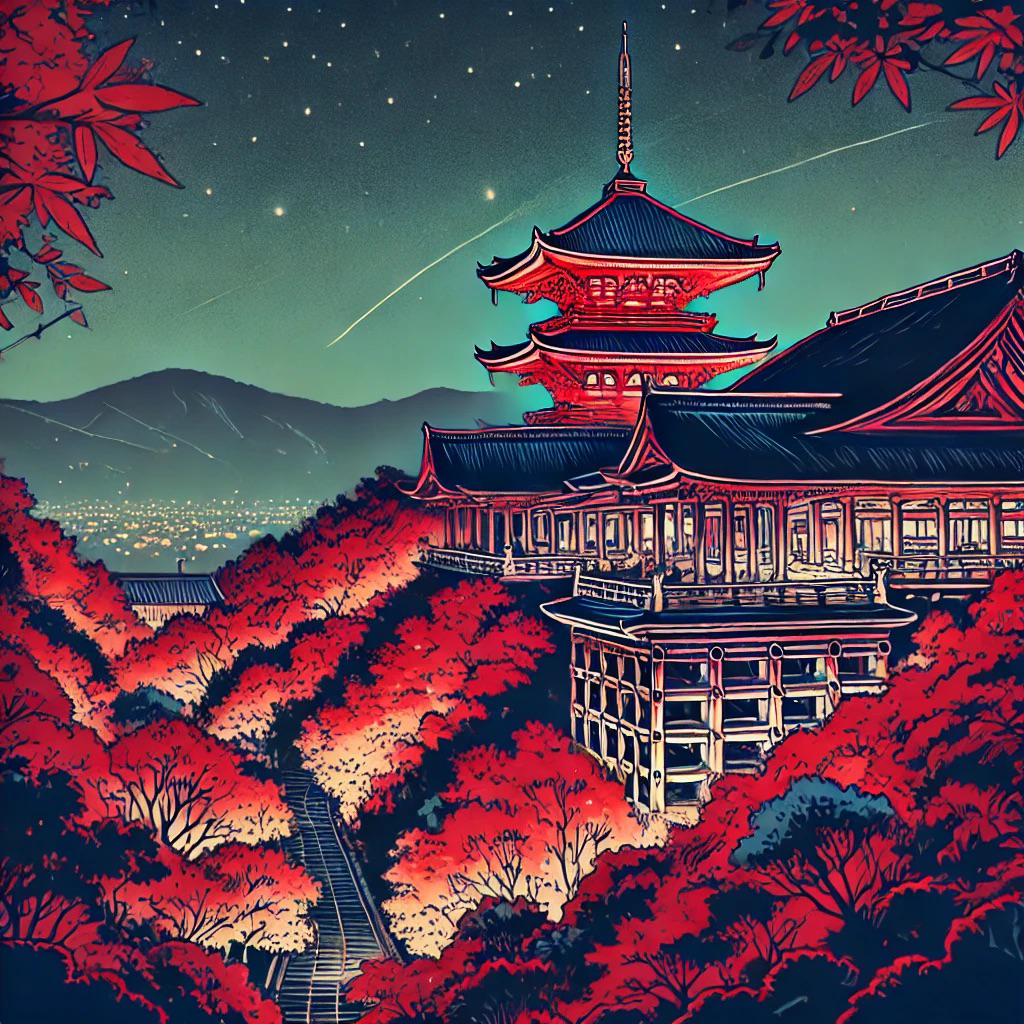
Shooting stars soar above Kiyomizu-dera Temple in Kyoto, Japan, the area awash in red fall foliage

Kyoto

Kyoto, with its historic temples and gardens, steals the show in mid-to-late November. Arashiyama, known for its bamboo grove, becomes even more magical when framed by autumn colors — yes, the same spot you’ve seen in Memoirs of a Geisha. Kiyomizu-dera Temple, perched above a sea of crimson leaves, offers stunning views, and its nighttime illuminations give the foliage an otherworldly glow.

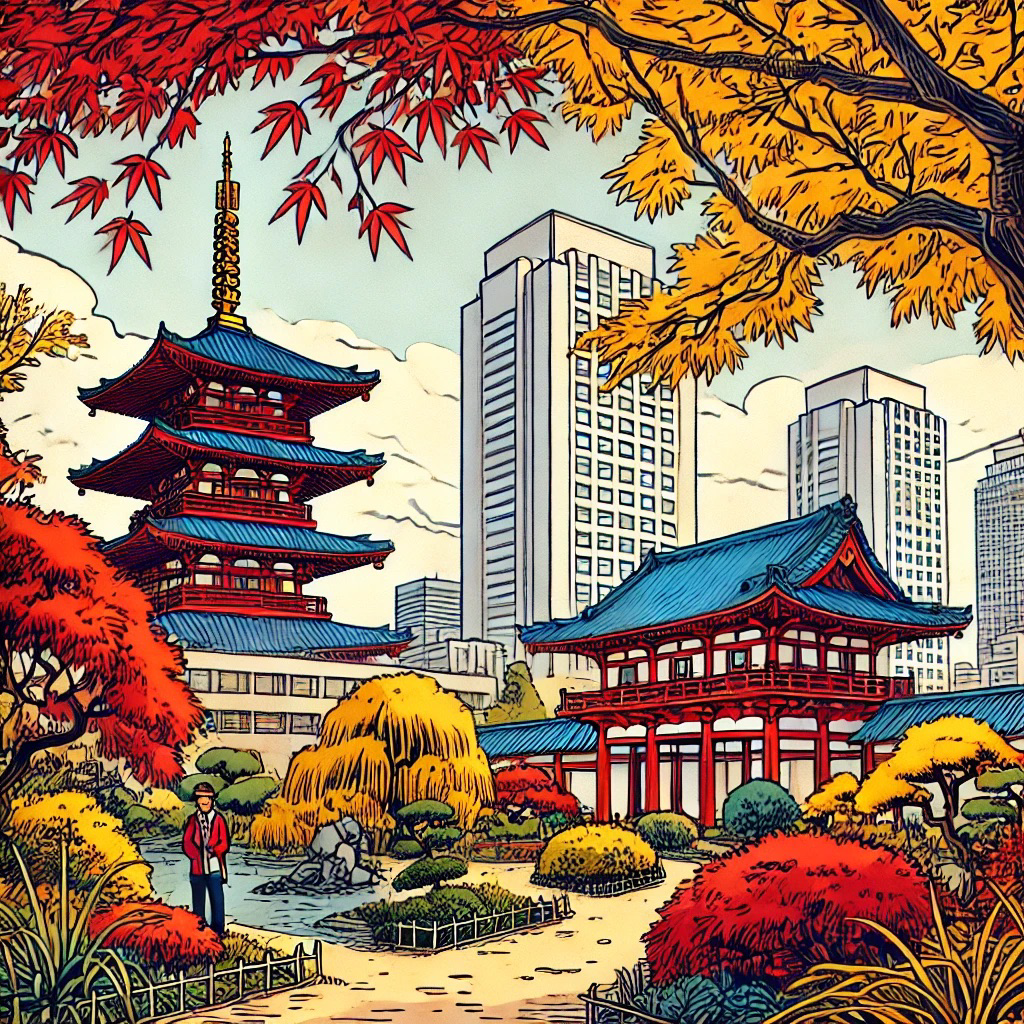
Shinjuku Gyoen National Garden, with temples and fall foliage amid the skyscrapers of Tokyo, Japan

Tokyo

Even Tokyo gets in on the action. By late November, Shinjuku Gyoen National Garden lights up with reds and yellows, offering a stunning mix of Japanese, English, and French-style gardens. Meanwhile, Koishikawa Korakuen Gardens showcase fiery maple leaves reflected in its serene ponds, blending nature with traditional Japanese design for a peaceful retreat in the city.

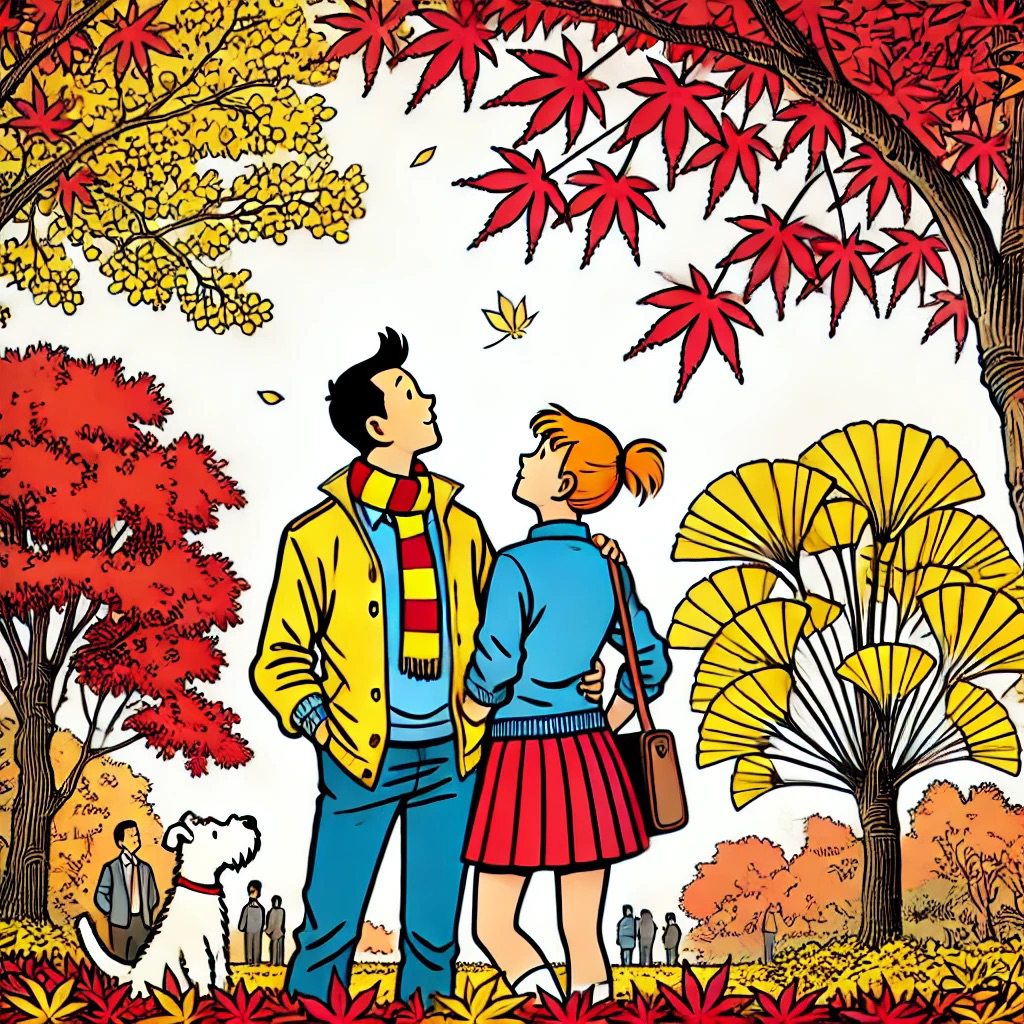
A couple with a white dog look up at the maple and gingko trees during fall in Japan

Types of Trees You’ll See for Japanese Fall Foliage

Japanese maple (momiji): The star of the season, momiji trees light up the landscape with their fiery red leaves, becoming the very symbol of autumn in Japan.

Ginkgo: With their distinctive fan-shaped leaves turning a brilliant yellow, ginkgo trees are a common sight in cities, parks and temples and lining streets.

Rowan and larch: Adding splashes of orange and yellow, these trees round out the autumn palette, with larch standing out as the only conifer that drops its needle-shaped leaves for the season.

A train cruises through the mountains and countryside of Japan, with the trees showing fall colors

How to Get Around for Japan’s Fall Foliage

Japan Rail Pass: The perfect ticket to hop between major cities and regions. If you’re planning to cover a lot of ground with long-distance trips, this is both a convenient and cost-effective option.

Public transportation: In bustling cities like Tokyo and Kyoto, the train and bus networks make getting around a breeze. 

Car rental: When you’re heading to more remote spots like Nikko or Hokkaido, a rental car gives you the freedom to escape the crowds and explore at your own pace.

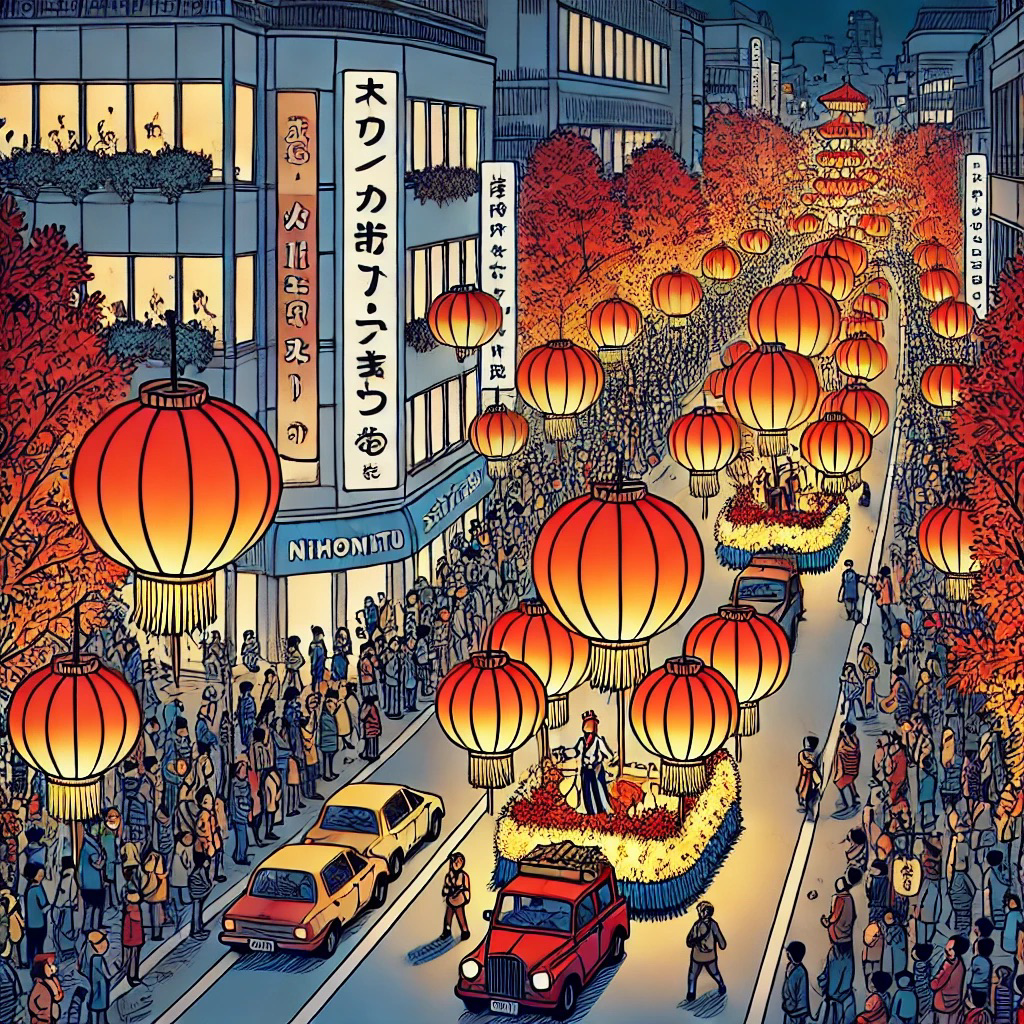
Nihonmatsu Lantern Festival in Fukushima, Japan

Cultural Traditions for Koyo

The Japanese don’t just admire the leaves — they “hunt” them. Momiji-gari, which literally translates to “autumn leaf hunting,” is all about appreciating the vivid colors, particularly those of the maple tree. And don’t be surprised if you spot some maple leaf tempura on menus — it’s a sweet seasonal treat.

The fall harvest also means festivals. Kyoto’s Jidai Matsuri on October 22 brings history to life with participants donning costumes from different periods of Japan’s past. Meanwhile, the Nihonmatsu Lantern Festival in Fukushima lights up the streets with floats covered in glowing red lanterns — it’s a sight not to be missed.

A couple eats sushi with chopsticks on a picnic near a stream amid the fall foliage of Japan, with a fox nearby

Travel Tips for Fall Foliage in Japan

Plan ahead. 
With autumn being a prime time for visitors, accommodations fill up fast. Be sure to book early and keep an eye on foliage forecasts to catch the peak colors.

Layer your clothing. 
The temperatures swing throughout the day, so dressing in layers will keep you comfortable no matter the weather.

Respect local customs. 
Temples and shrines hold a special place in Japanese culture. When visiting, be sure to follow local traditions and show proper etiquette. This might mean taking off your shoes before entering temple buildings, avoiding loud conversations, refraining from taking photos in restricted areas, and bowing to show respect when entering and leaving holy places.

A gay couple walk down a lane under trees in the fall in Japan

On the Hunt for Fall Foliage 

Japan’s autumn certainly wows with its colors — but it’s also the culture, festivals and history that make this season so special. So grab your camera, plan your trip and get ready to “hunt” some of the most stunning fall views the world has to offer. –Julia Hill 


NATURE’S MARVELS

Top 5 Must-Visit Attractions in Chennai

Take a leisurely walk on Marina Beach, marvel at Kapaleeswarar Temple, discover treasures at the Government Museum, unwind at Elliot’s Beach and spot wildlife at Guindy National Park — all in Tamil Nadu’s capital.

Aerial view of Chennai, India with the Kapaleeshwarar Temple dominating the skyline

Formerly known as Madras, Chennai, the capital of the state of Tamil Nadu, is India’s fourth-largest city. Located on the Coromandel Coast of the Bay of Bengal, the city serves as the gateway to South India and is as diverse and colorful as its namesake plaid. 

From the awe-inspiring 7th century Hindu temple dedicated to Shiva, to bustling street markets and serene beaches, Chennai captivates visitors with its blend of rich traditions, old heritage and contemporary wonders. Be sure to add these five must-see locations, where natural beauty, history and one-of-a-kind culture come together to make for an unforgettable trip. 

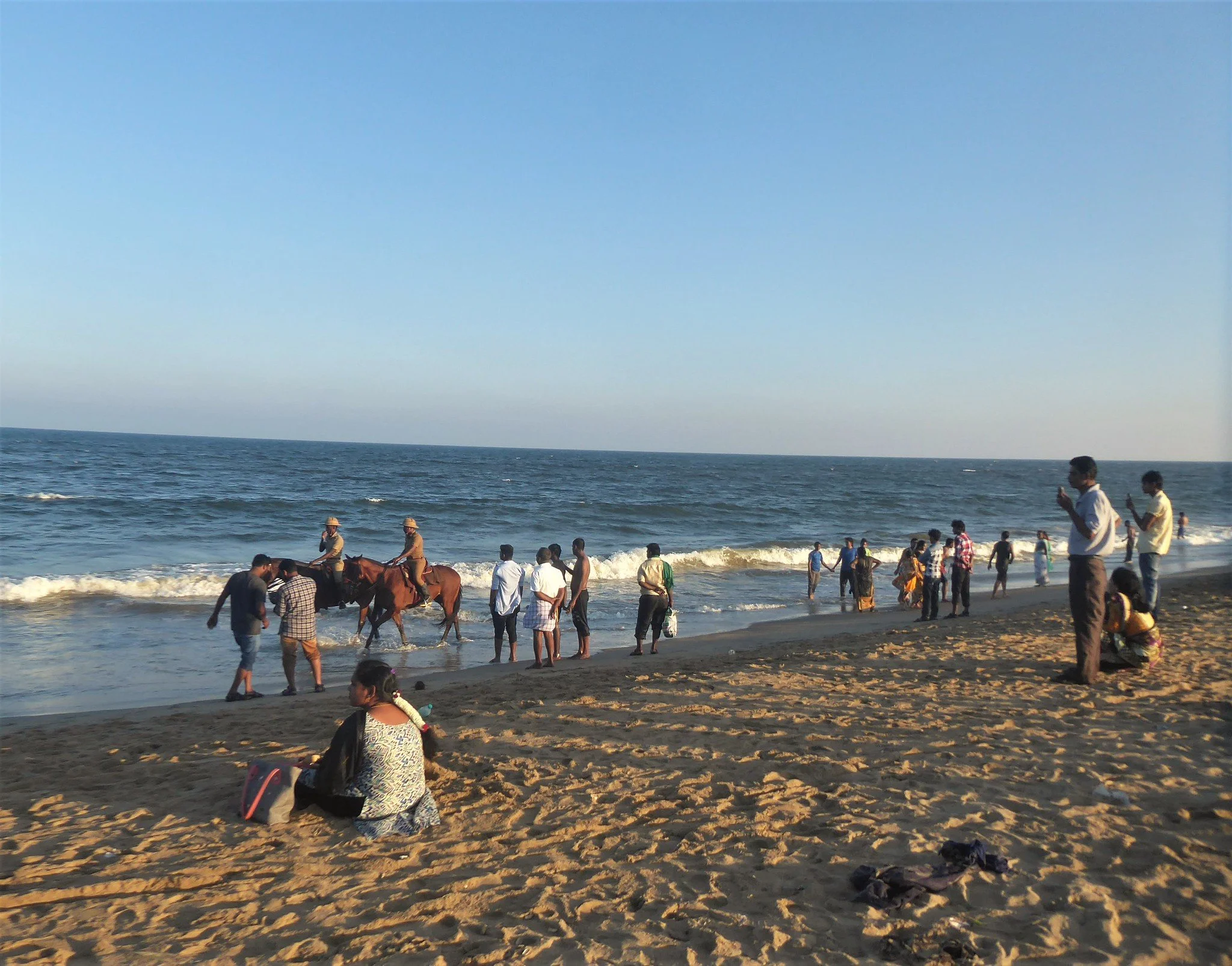
People and two horses on Marina Beach in Chennai, India

Marina Beach

1. Marina Beach: A Haven of Serenity

Stretching along the Coromandel Coast, Marina Beach, or simply the Marina, is a popular spot, where both locals and visitors can enjoy the second-longest urban beach in the world. 

Looking out over the Bay of Bengal reveals a seemingly endless body of turquoise-colored water, while its eight-mile (13-kilometer) expanse of golden sand beckons you to take off your shoes and feel the waves lapping at your feet. But you shouldn’t plan on going into the water. This beach is only for walking — swimming is prohibited, as the undercurrent is considered too strong.

The Marina is also the site of a variety of festivals, delicious street food, and souvenir and handicraft shops. 

You can also explore Fort St. George, located at the north end of the beach. Historically known as White Town, it was built in 1639 by the British East India Company and served as the epicenter of the growing city of Madras. 

Pale yellow neo-classical exterior of Fort St. George in Chennai, India

Fort St. George

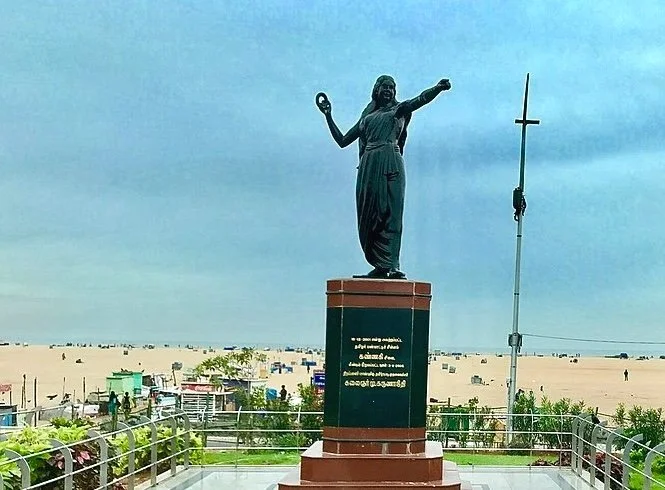
Be sure to look out for the statue of Kannagi, the heroine and central character from the Tamil epic Silapathikaram, holding an anklet in her hand and demanding justice. 

Statue of the heroine Kannagi, with an outstretched arm on Marina Beach in Chennai, India

Statue of the heroine Kannagi on Marina Beach

I recommend visiting the beach at dusk to enjoy the sunset or at dawn to see the sunrise, when the sky takes on an intense orange hue. 

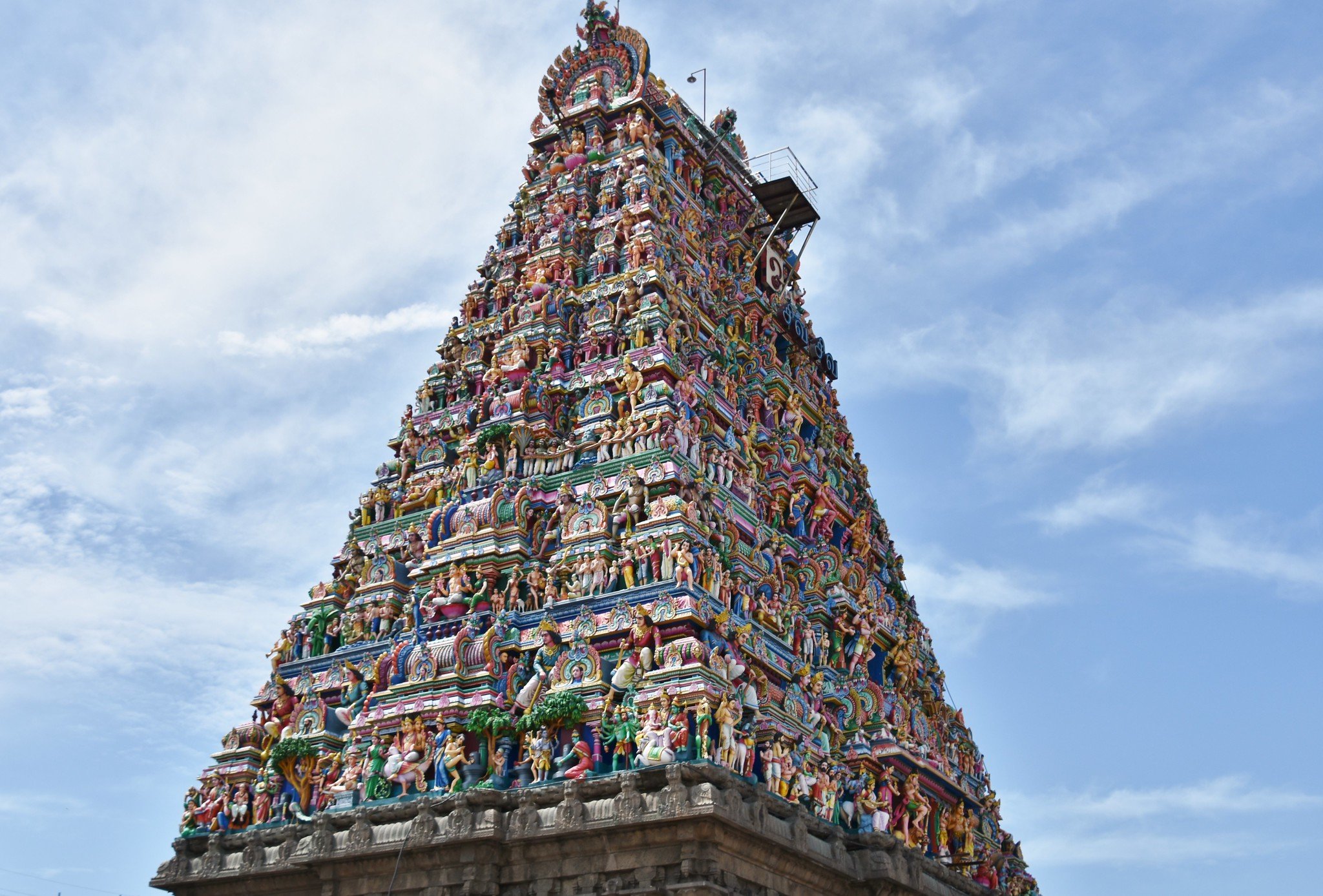
Rainbow-colored top of Kapaleeshwarar Temple with intricate carvings entirely covering it in Chennai, India

Kapaleeshwarar Temple

2. Kapaleeshwarar Temple: A Sacred Architectural Marvel

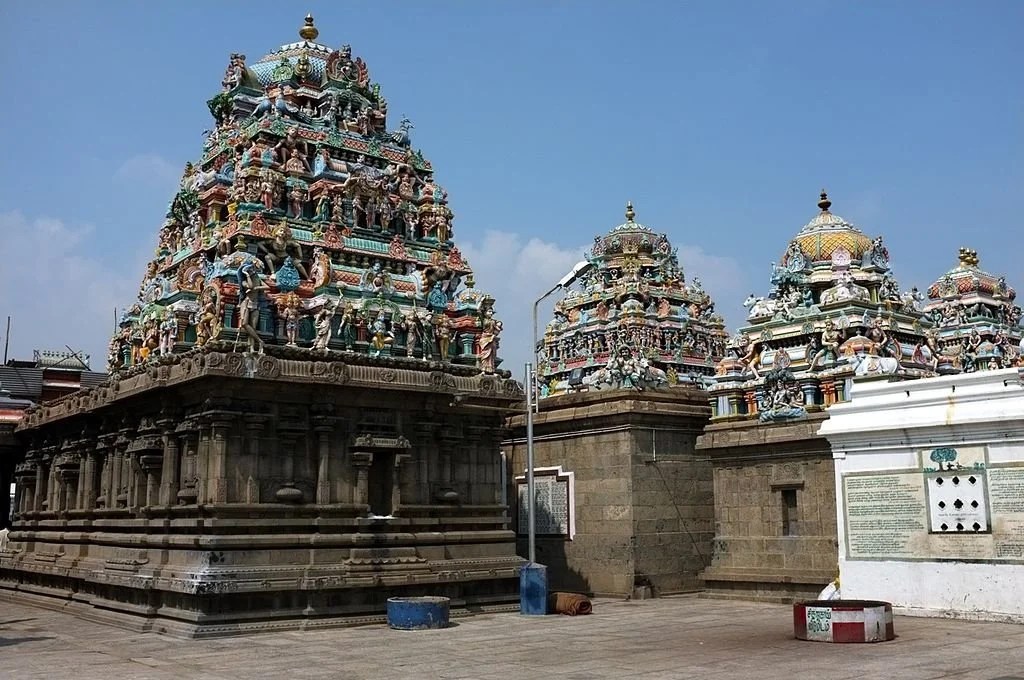
One of Chennai’s most well-known landmarks, Kapaleeshwarar Temple is dedicated to Arulmigu Kapaleeshwarar, an incarnation of Lord Shiva, and his consort, Karpagambal, an embodiment of the goddess Parvati. 

The ancient temple is a testament to the city’s remarkable architectural legacy, combining elements of Dravidian and Pallava styles. You can’t help but be captivated by its monumental gopura, or main temple tower. 

The Kapaleeshwarar temple complex

At 131 feet tall (40 meters) the richly decorated structure is covered with vibrantly colored sculptures depicting scenes from Hindu mythology.

Past the grounds of the temple, the winding alleyways of the Mylapore neighborhood provide a sensory adventure. Explore the lively marketplaces, where kiosks brim with brilliantly colored fabrics, traditional handicrafts and aromatic spices.

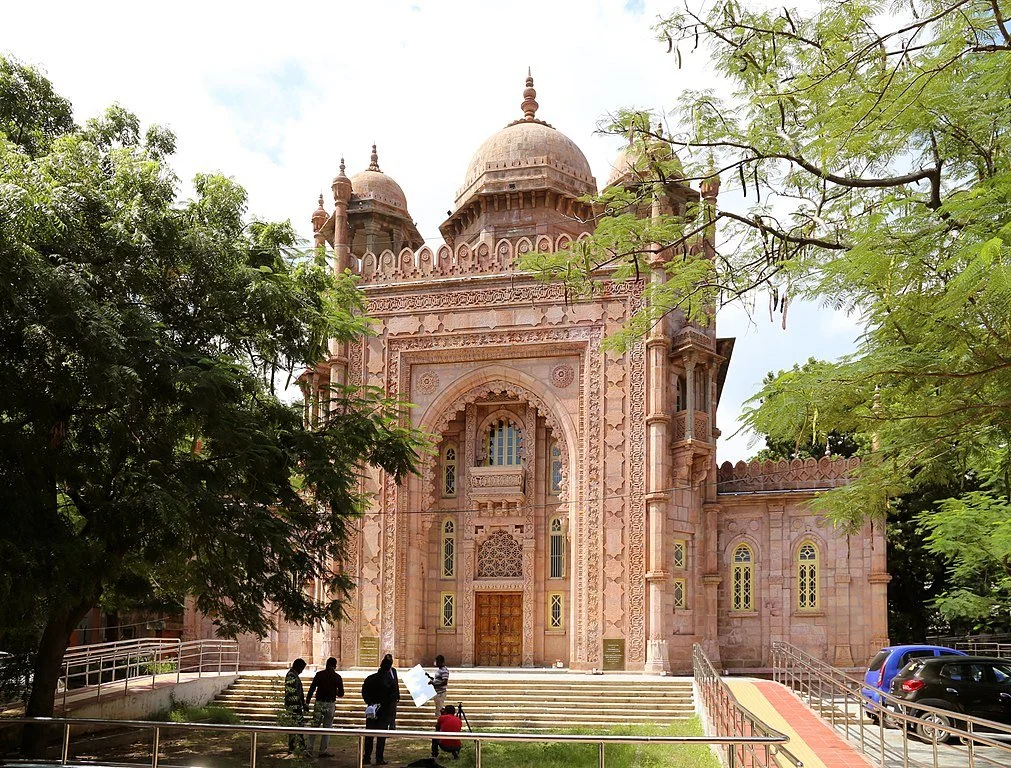
The neo-Mughul exterior of the Government Museum in Chennai, India

The Neo-Mughal façade of the Government Museum in Chennai

3. Government Museum: A Trove of Cultural Treasures

The Government Museum complex has an impressive collection of artifacts and sculptures from the major South Indian periods, ranging from 2nd century BCE Buddhist sculptures to 16th century work from the Hindu kingdom of Vijayanagar. Each exhibit reveals an intriguing story as you meander through the galleries, illuminating the customs, artistic expressions and lifestyles of those who formerly inhabited this part of the country.

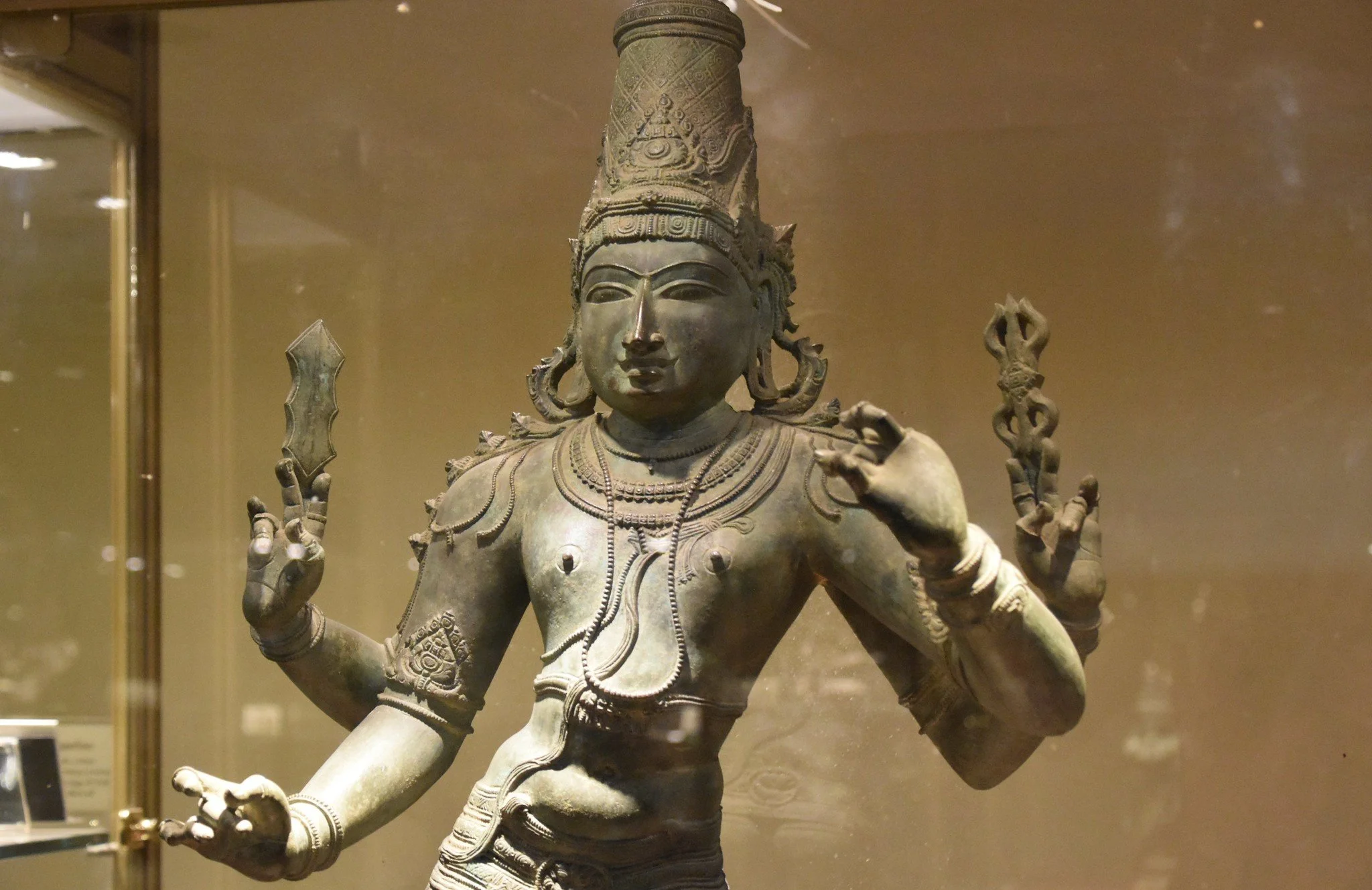
13th century bronze statue of Ardhanarishvara, the androgynous incarnation of Shiva and Parvati, in the Government Museum of Chennai

13th century bronze statue of Ardhanarishvara at the Government Museum

Its collection of coins, ceramics and other antiquities provides a window into the region’s rich past. Especially breathtaking are the magnificent bronze sculptures produced during the Chola dynasty. Their exquisite craftsmanship depicts gods and goddesses from the Hindu pantheon, including the striking bronze of Ardhanarishvara, the androgynous incarnation of Shiva and Parvati.

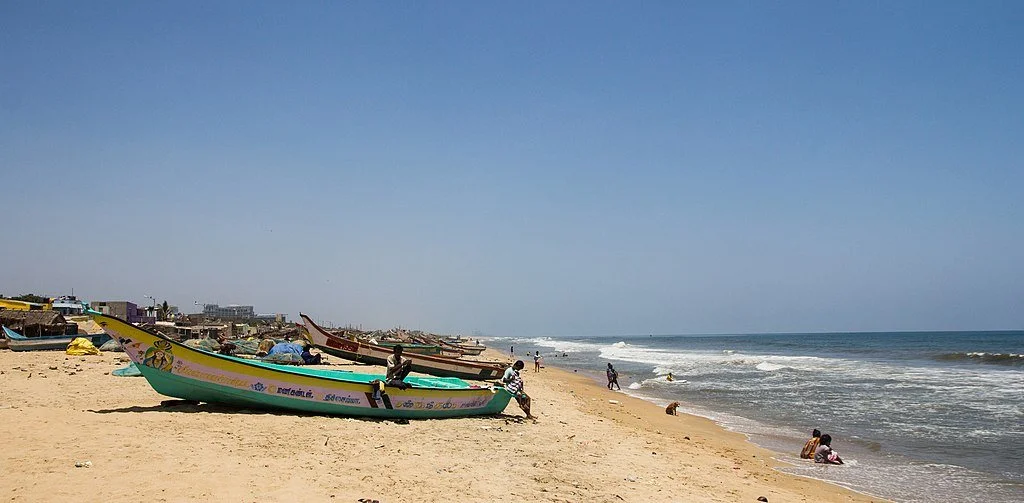
Teal and white boat on the sand and some people at Elliot's Beach in Chennai, India

Ellitot’s Beach

4. Elliot’s Beach: A Peaceful Spot to Reset

Named after the colonial-era magistrate Edward Francis Elliot, the laidback Elliot’s Beach offers a tranquil escape from the crowds of Marina Beach. This peaceful retreat can be found in the upscale Besant Nagar residential neighborhood and is a favorite hangout for locals, particularly the younger crowd.

The soothing sounds of lapping waves and refreshing ocean breeze will instantly calm your senses as you approach this serene stretch of sand. In often-hectic India, you’ll welcome the opportunity to slow down and appreciate the beauty of the present moment. It’s a great spot to watch the sun rise, too.

For those seeking a more active experience, Elliot’s Beach offers a variety of watersports and activities, including surfing and kayaking. 

If the water isn’t your thing, there are plenty of cafés, restaurants and boutique shops nearby.

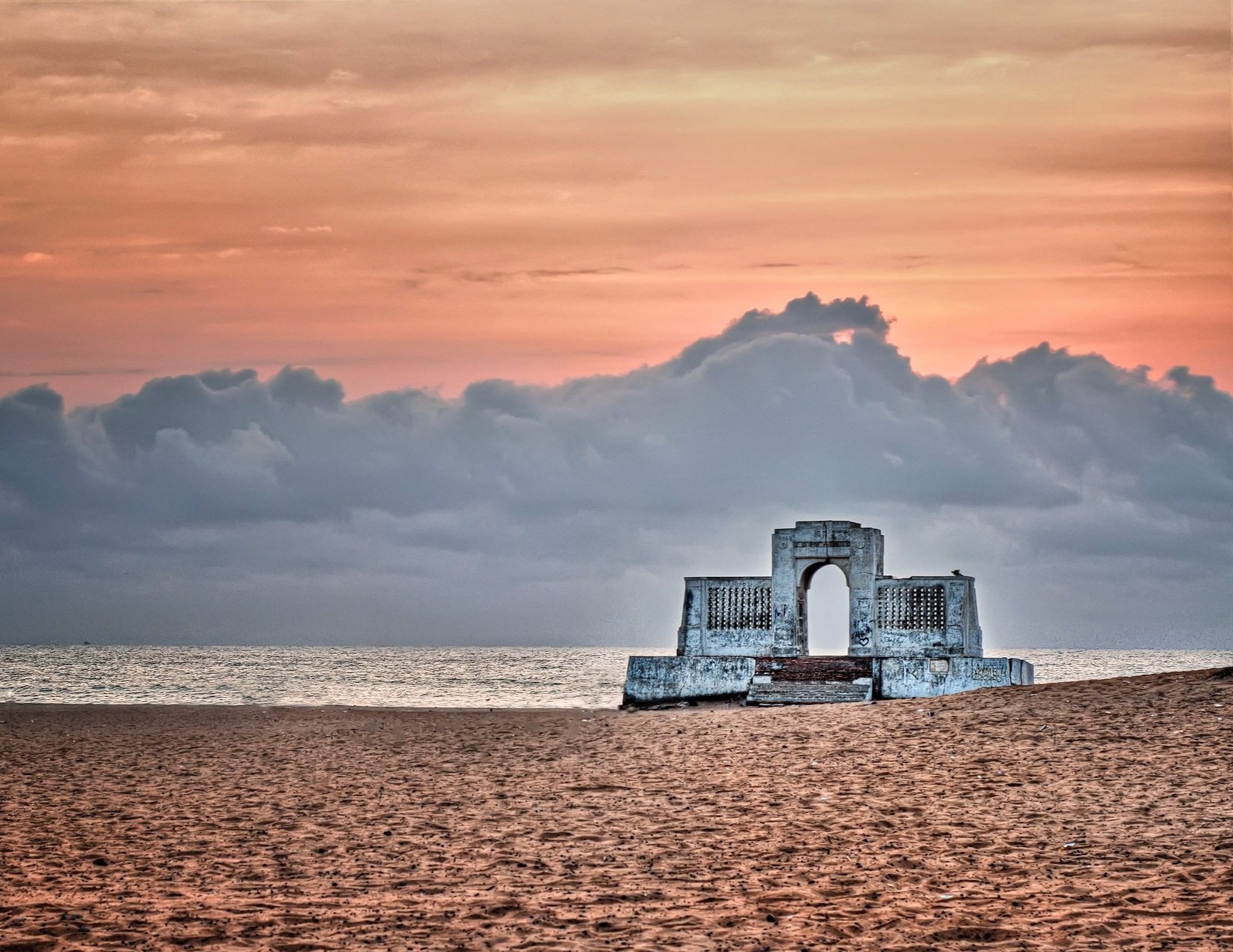
The arched Karl Schmidt Memorial on Elliot's Beach in Chennai, India, at sunset

Karl Schmidt Memorial

While you’re here, stop and admire the gleaming white memorial dedicated to Karl Schmidt, a Danish sailor who drowned in the 1930s while attempting to save the life of a girl struggling against the tide.

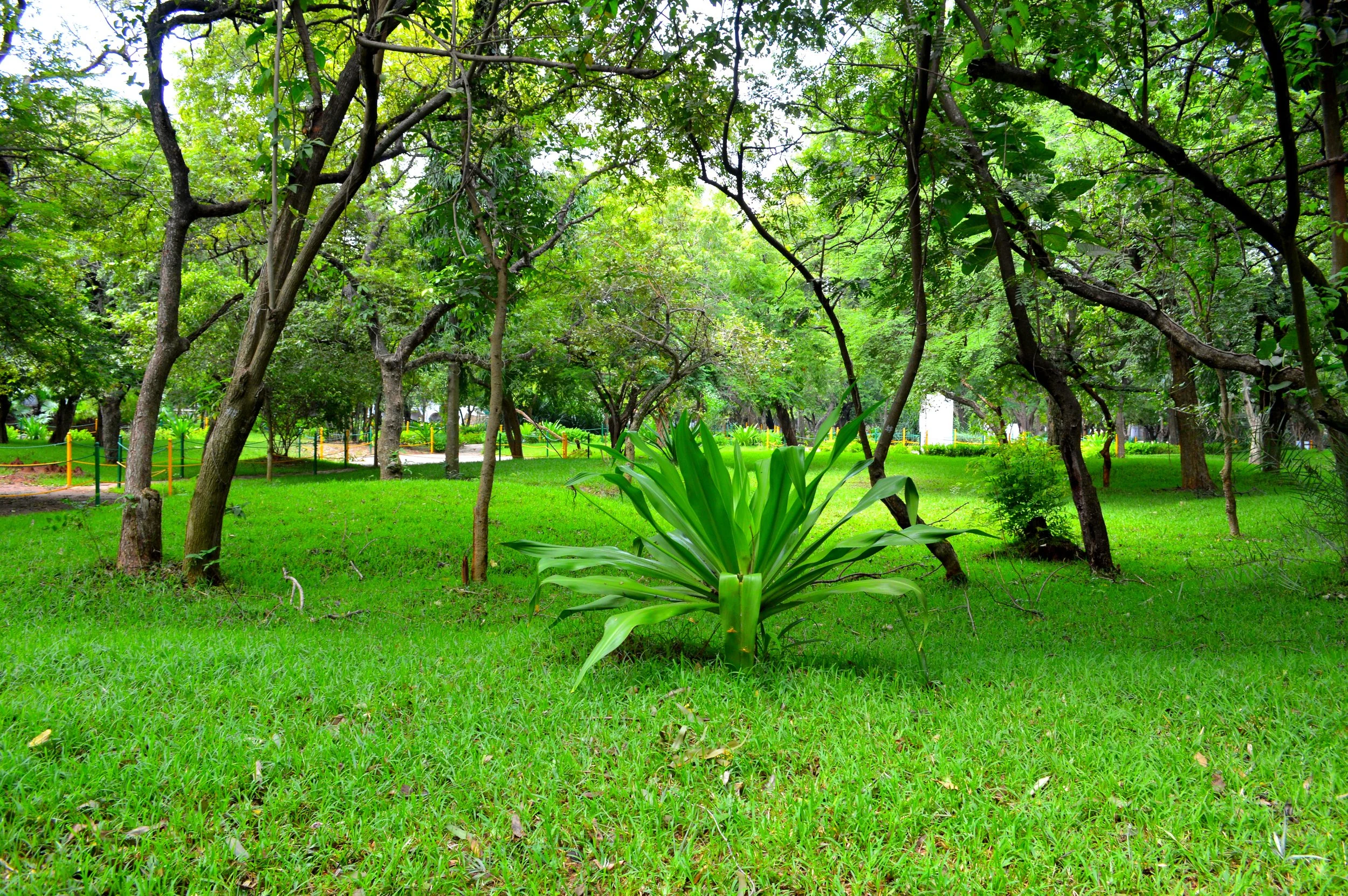
Bright green grass, plants and trees in Children's Park in Guindy National Park, Chennai, India

Guindy National Park

5. Guindy National Park: A Green Oasis in the City

Amid Chennai’s bustling cityscape, the lush sanctuary of Guindy National Park calls out to adventurers and nature enthusiasts to experience the tranquil embrace of the natural world. The sounds of the city fade away as you enter the park, replaced by the soothing melody of rustling leaves and chirping birds.

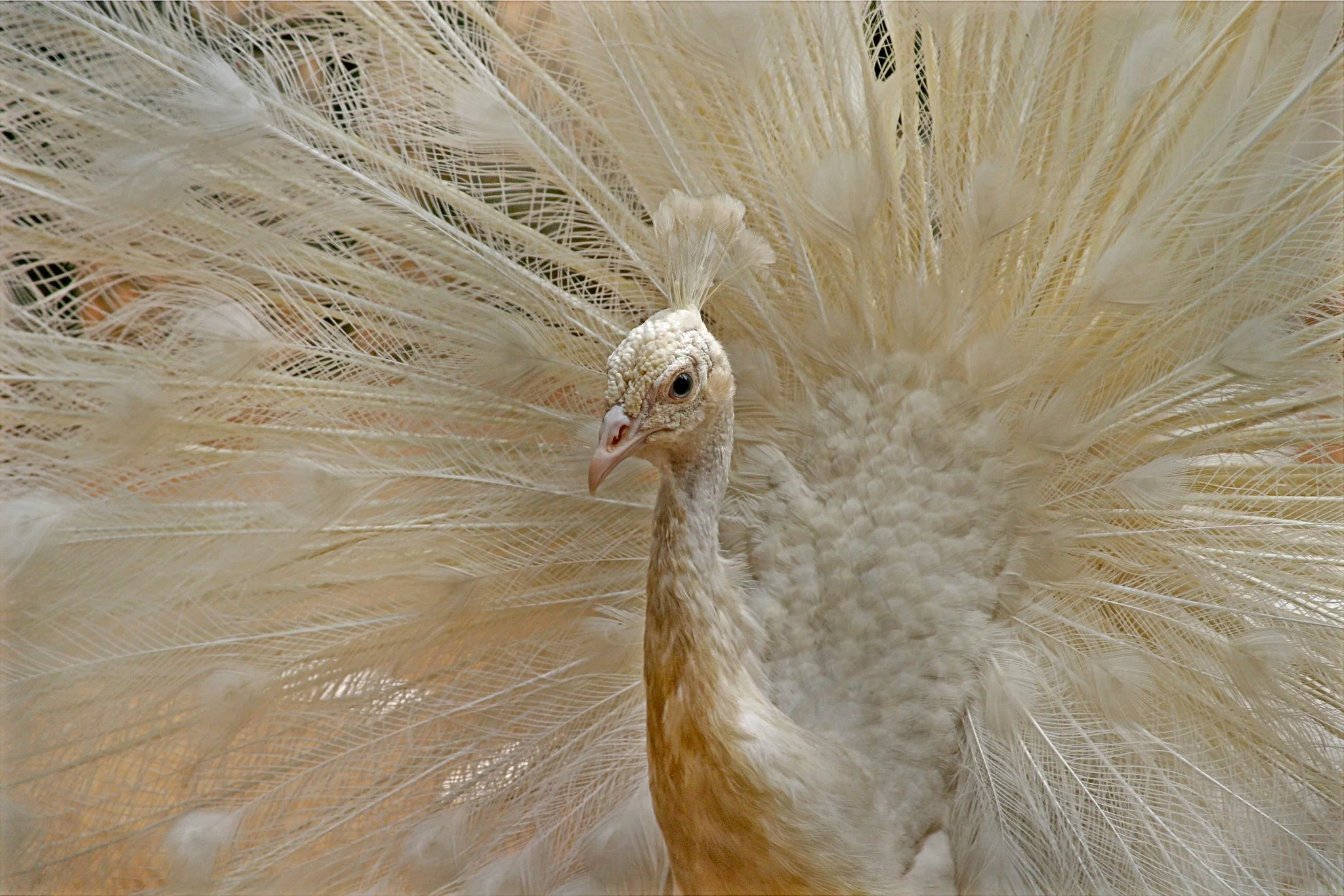
A white peacock at Guindy National Park

Embark on a hike or bike ride along the network of well-maintained trails weaving through scrub and forest. In addition to the verdant foliage, keep an eye out for a wide variety of animals, including spotted deer, blackbucks, serpent eagles and Indian star turtles.

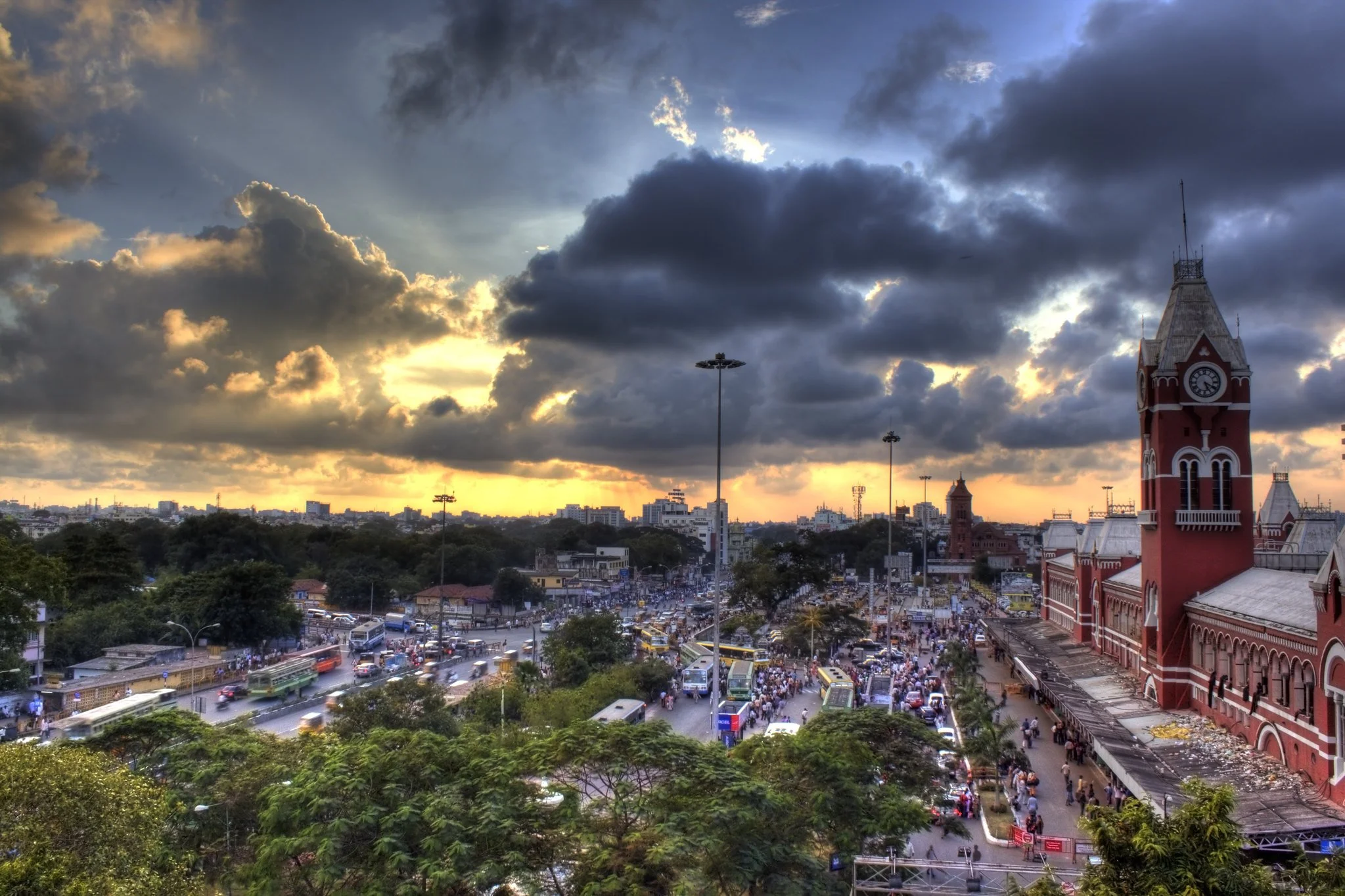
Red brick Chennai Railway Station with tall clock tower and nearby streets at twilight

Chennai Central Railway Station

Natural Wonders and Historical Treasures: Something for Everyone

Chennai offers a variety of activities to suit every traveler’s taste. Whether you seek the tranquility of the sea or the bustling energy of its vibrant temple complexes, this captivating city promises an unforgettable time for all who visit. –Jonathan Rastogi

Off the Beaten Path: Discovering Cambodia’s Lesser-Known Destinations

Escape the crowds at Angkor Wat and Phnom Penh and discover Cambodia’s hidden treasures in Battambang, Mondulkiri, Koh Rong Samloem, Kratie and Kep. Pristine beaches, colonial charms, wildlife, waterfalls, crab dishes — and the bamboo train — await adventurous travelers. 

Angkor Wat is an astounding experience — but if you want to escape the crowds, there are many other amazing adventures to be had in Cambodia.

Cambodia is an enchanting country to visit, where ancient temples, lush landscapes and warm hospitality await. 

While popular destinations like Phnom Penh and Angkor Wat draw crowds of tourists each year, there are various lesser-known areas that offer an authentic Cambodian experience. Discover some of Cambodia’s hidden gems — where you can escape the tourist crowds and immerse yourself in the true essence of this captivating country.

But first things first. Unless you live in one of eight neighboring nations in Southeast Asia, Cambodia requires a visa to enter. Apply for your visa today and start planning your trip.

Street in Battambang, Cambodia, with colonial-influenced hotel and man on motorbike

With its colonial-era charm, Battambang has a wealth of attractions both within the city limits and beyond.

Battambang: A Charming City With a Rich Colonial History

Nestled in the northwest region of Cambodia is the charming city of Battambang. It’s known for its well-preserved colonial architecture, like Sala Khaet, the former governor’s residence, which stands on the west bank of the Sangkae River. It was commissioned by the last Thai governor of Battambang in 1905 and used by the French until 1953, when Cambodia became independent.

Another notable heritage building is the bright yellow National Bank of Cambodia, a fully restored villa that previously housed a pawn shop and radio station.

If you’re a history buff, you’ll definitely want to check out the Battambang Provincial Museum. This well-curated museum contains a collection of artifacts from the surrounding Ankorian-era temples, including lintels and statuary. 

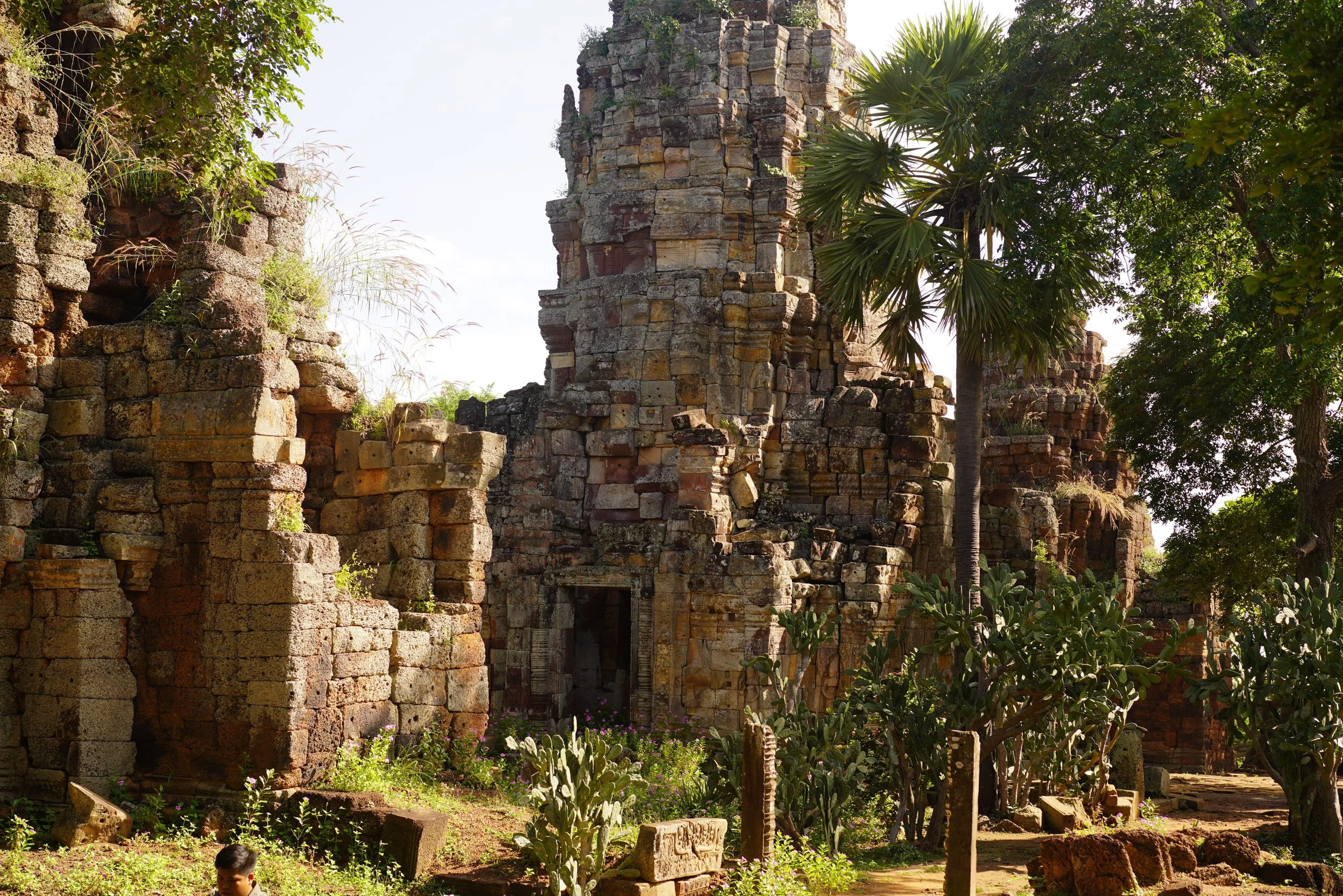
Hire a tuk-tuk, a motorized rickshaw, and head six miles north of the city center to the ruins of Wat Ek Phnom, an 11th century Hindu temple with sandstone carvings built during the reign of King Suryavarman I. The relief on the temple’s central tower depicts the mythic Churning of the Ocean of Milk — an epic tug-of-war between the gods, demons and a serpent in a battle to obtain the elixir of immortality.

Plus, there’s a towering seated Buddha statue and an active Buddhist temple on the grounds. Its interior features serialized paintings that cover the walls and ceiling, telling the Buddha’s life story. 

The amazing stone ruins of an ancient temple, Wat Ek Phnom, in Battambang, Cambodia

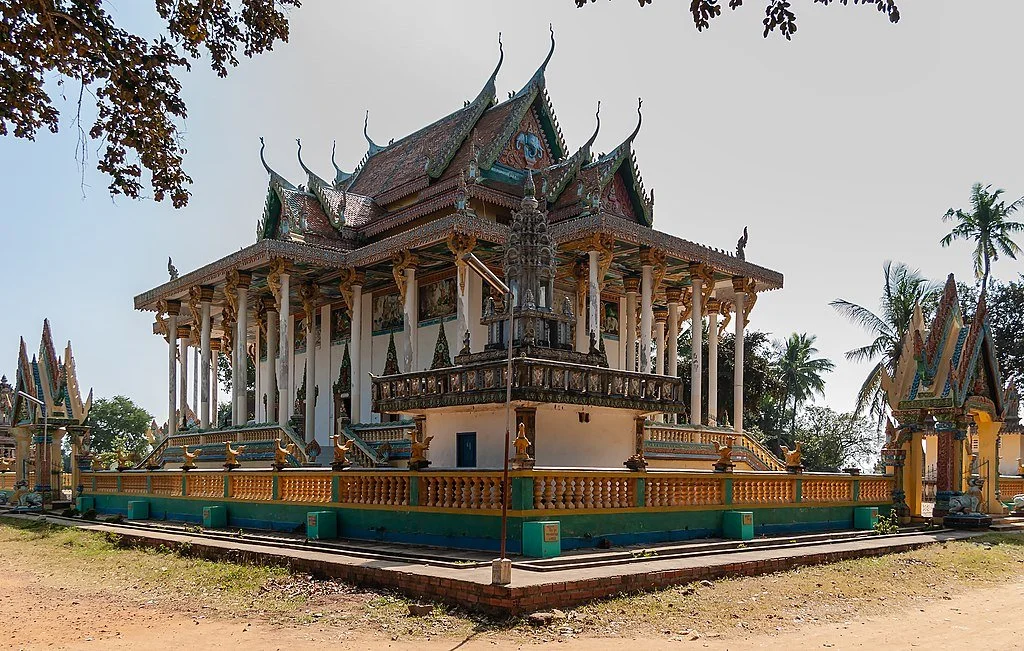
The super-cool ruins of Wat Ek Phnom, an ancient Hindu temple

The new temple of Wat Ek, with thin white pillars, green base and pointed roof in the Thai style

A newer temple stands on the grounds of Wat Ek Phnom.

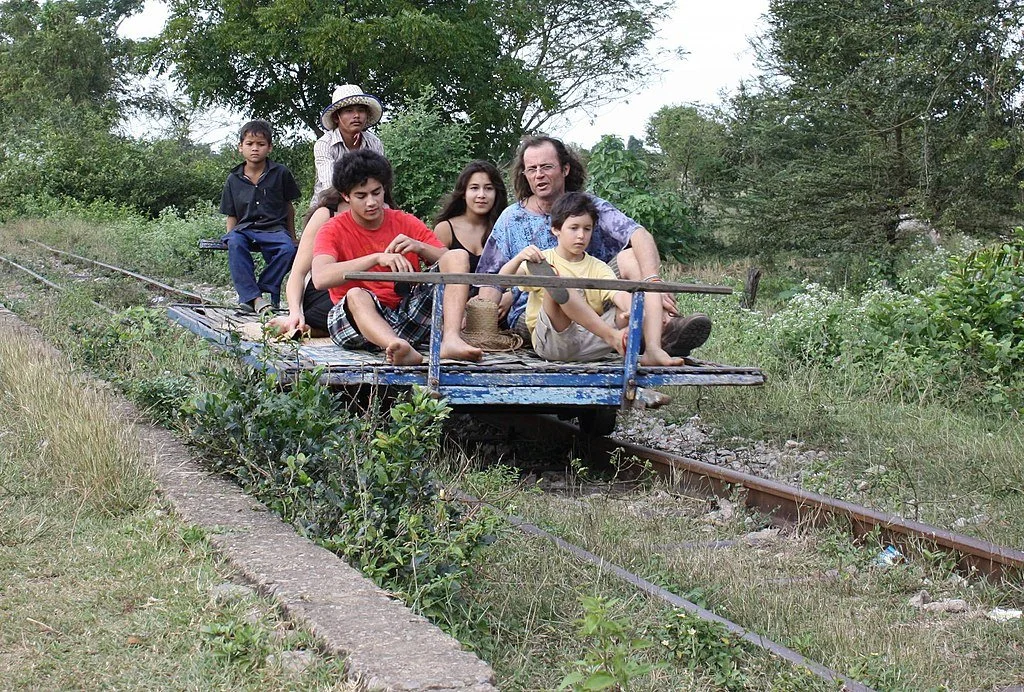
Looking for a thrill? Take a ride on the famous norry, or bamboo train, an unusual mode of transportation. People, rice and livestock are shuttled back and forth on squat wooden platforms placed on top of a wheeled metal carriage and powered by a small engine. The train cruises along an old track at about 35 mph, offering breathtaking views of the countryside. You’ll pay $5 per person to the villagers operating the train once you reach your destination. It’s a small price to pay for a unique and thrilling experience!

Family, with hippie dad, mom and two boys, riding the bamboo train with driver in white hat and young boy, in Battambang, Cambodia

If you’re in Battambang, you’ve gotta take a ride on the bamboo train!

If you’re hungry after a day of exploring the city and its surroundings, try the regional specialty mee kola. It’s a delicious dish of stir-fried rice noodles and soy sauce, served with papaya, cucumber, pickles, bean sprouts, other vegetables, fragrant herbs and crushed peanuts.

The serene riverside setting and relaxed atmosphere make Battambang an ideal place to unwind and experience the authentic side of Cambodia. 

How to get there: Battambang is a three-hour drive west of Siem Reap, or a 90-minute boat ride across Tonlé Sap, the largest lake in Southeast Asia.


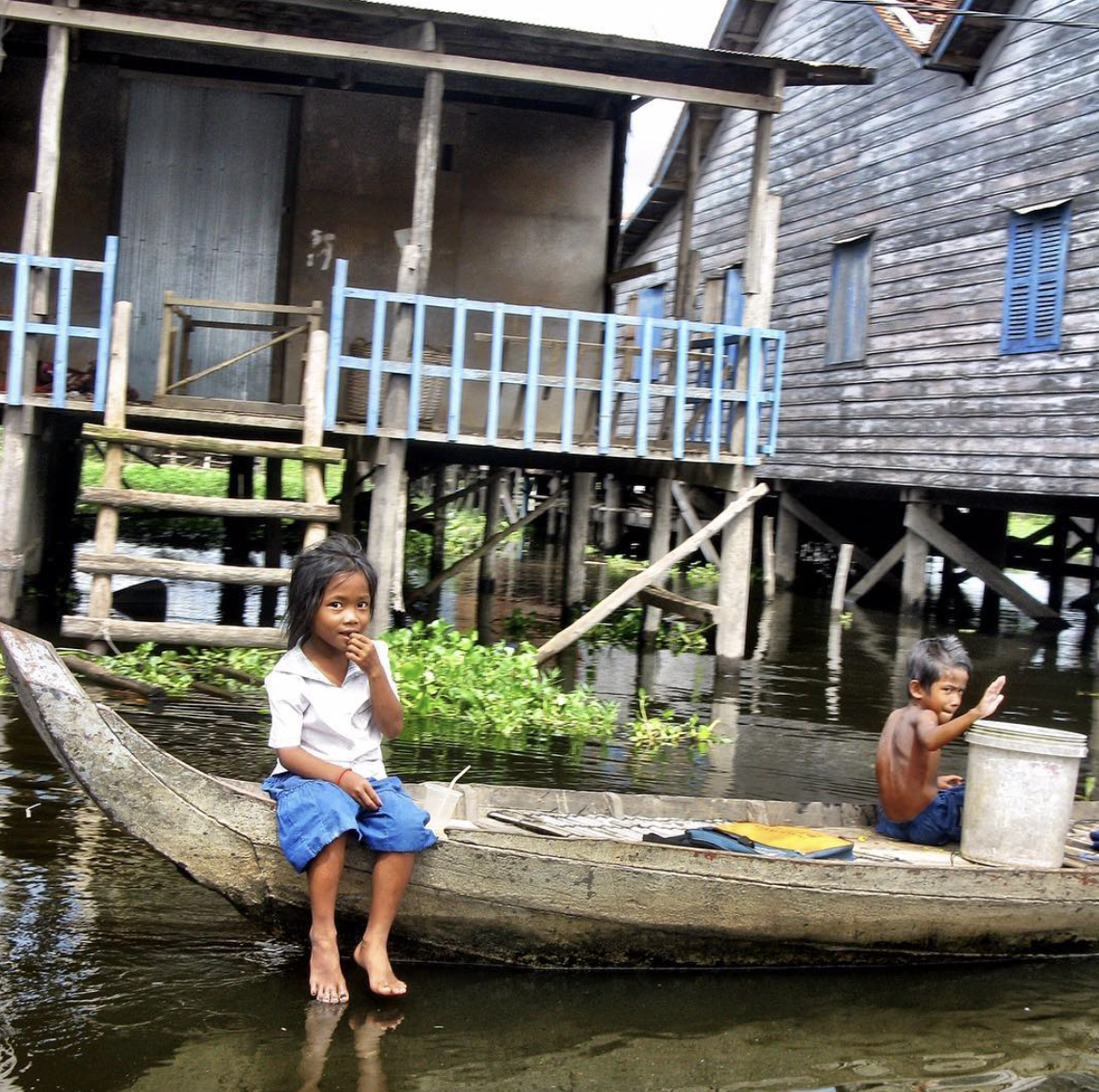
Young girl and boy sit on small canoe-like boat in a floating village in Tonle Sap lake, Cambodia

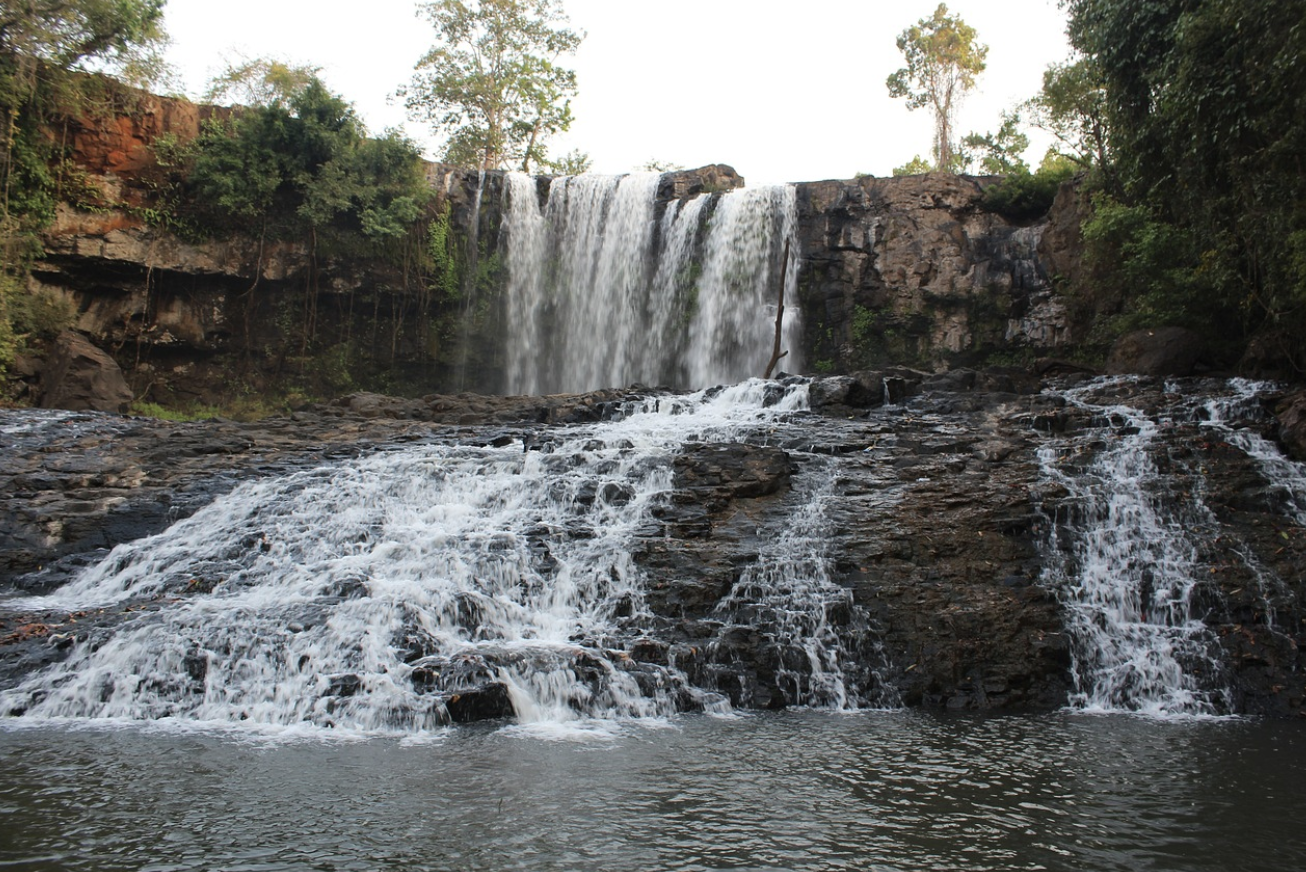
Bou Sra Waterfall cascading over rocks in Cambodia

Bou Sra Waterfall

Mondulkiri: An Off-the-Beaten-Path Outdoor Adventure

The remote province of Mondulkiri in eastern Cambodia is home to breathtaking waterfalls, lush jungles and rolling hills. Trek through the picturesque landscape and encounter the wildlife, including gibbons and elephants. 

For a truly authentic experience, take a tour of a Bunong hill tribe village with a local guide. Learn about their agricultural fields, spirit forests and burial grounds, all of which are living places of social, spiritual and historical importance.

Bunong hill tribe women stand in doorway, one with a child on her back at small wooden home with large thatched roof

Take a tour of a Bunong hill tribe village and learn about their customs.

Looking for a relaxing day in the great outdoors? Hire a tuk-tuk for the day and head to Bou Sra Waterfall, 31 miles (50 kilometers) outside of Sen Monorom. Pack a lunch to go and enjoy a picnic in the shade of the trees. After lunch, cool off in the pools beneath the upper waterfall. Even if you don’t take the plunge, the spray from the waterfall is a great way to cool down on a hot day. 

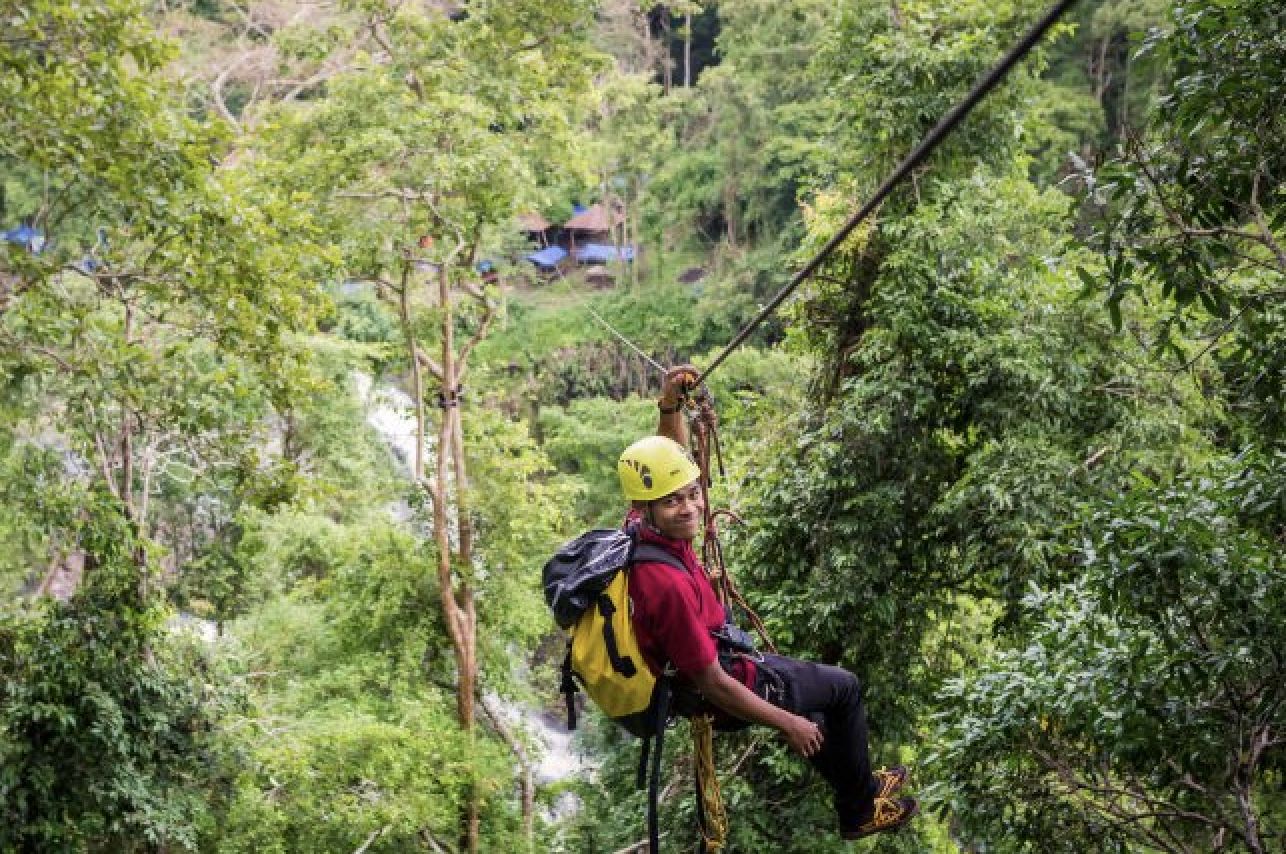
If you’re feeling more adventurous, try the Mayura Zipline. This seven-zipline course takes you as high as 500 feet (150 meters) above the waterfall — that’s the equivalent of a 45-story building! — making it one of the highest ziplines in Asia. Soar through the jungle canopy and get a bird’s-eye view of the waterfall.

Man in yellow helmet and red shirt smiles as he hangs on zipline high above the Bou Sra Waterfall in Cambodia

Brave souls can zipline 500 feet above the waterfall!

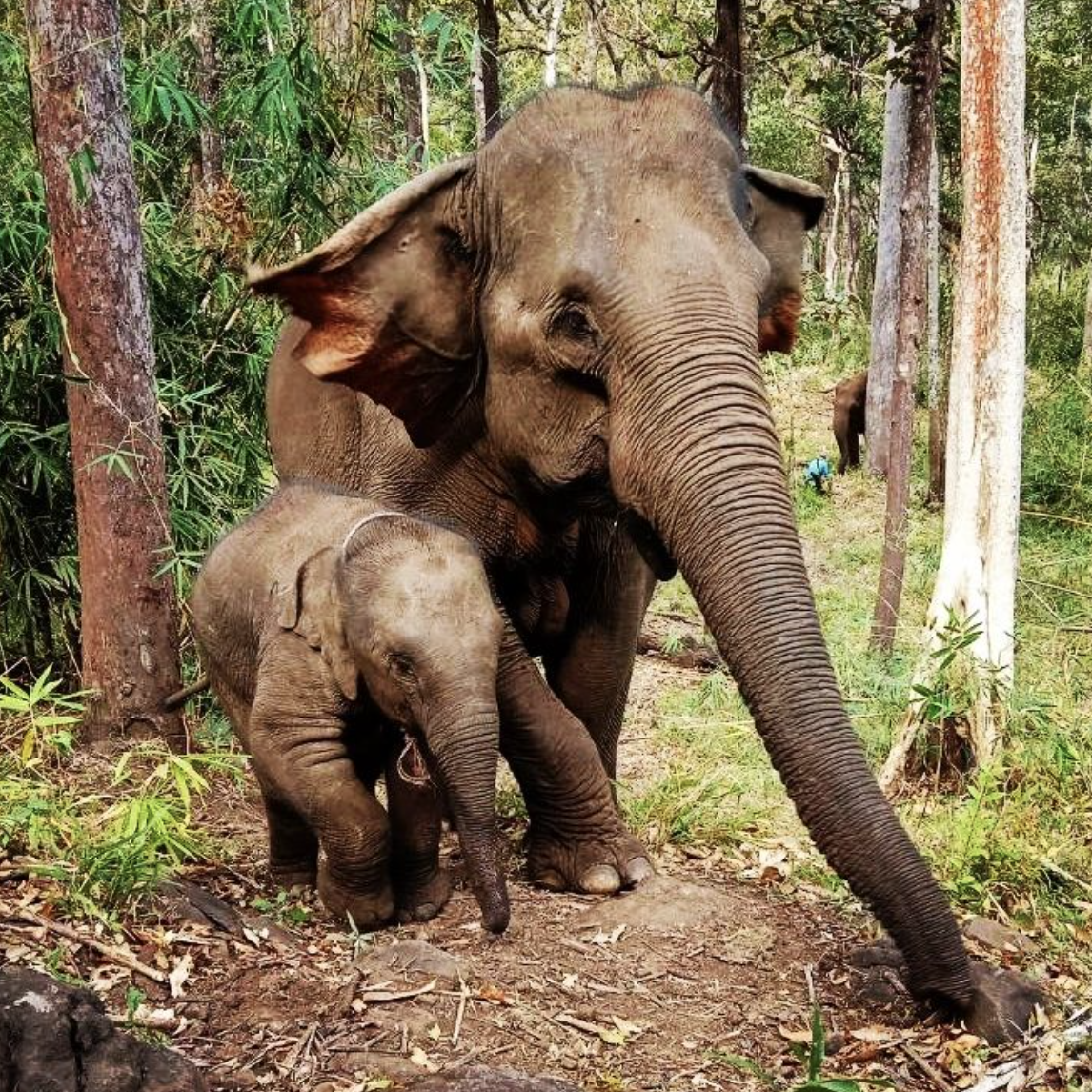
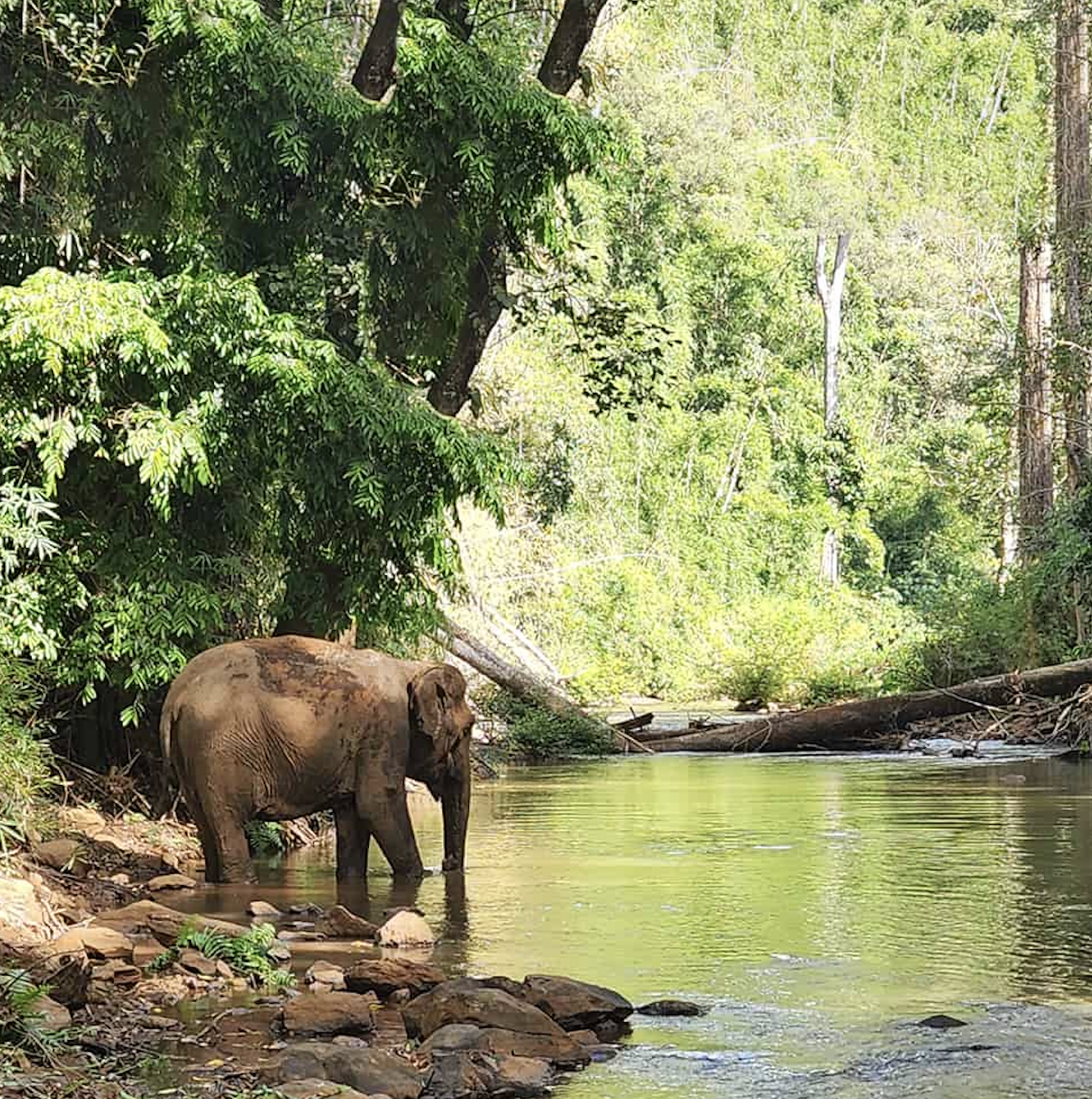
The Elephant Valley Project (EVP) is a nonprofit organization that rescues and rehabilitates retired Asian elephants. They work to protect these pachyderms by allowing them to roam freely within a 1,200-hectare habitat, while providing medical care. Day trips to the sanctuary usually involve two walks through the forest, learning about these amazing creatures and enjoying a buffet lunch overlooking the forest canopy.

Mother elephant with baby at the Elephant Valley Project sanctuary in Cambodia

Two of the well-cared-for members of the Elephant Valley Project sanctuary family

EVP is a great place to learn about elephants and their conservation. You’ll get to see them up close and personal, and learn about their natural behaviors — as well as have the opportunity to support their care and rehabilitation.

How to get there: Mondulkiri is a five-and-a-half-hour drive northeast of Phnom Penh. You can hire a taxi or take an express bus or minivan.


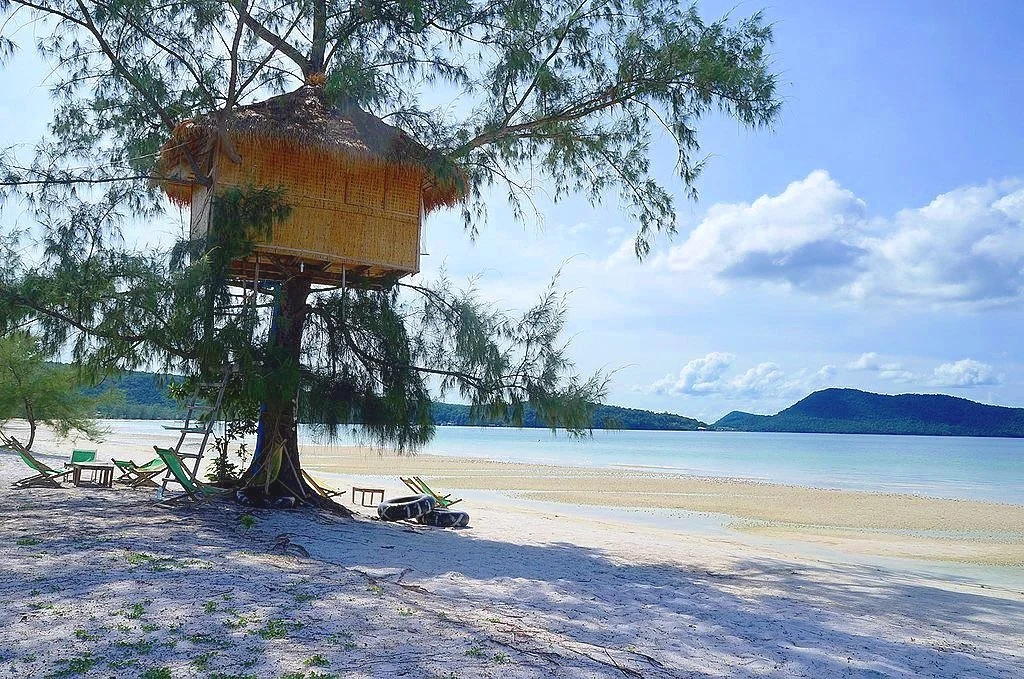
Treehouse on beautiful white sand beach on Koh Rong Sanloem island in Cambodia

Literally escape from it all at the untouched island of Koh Rong Samloem.

Koh Rong Samloem: An Unspoiled Tropical Paradise 

Have you ever dreamed of escaping to a secluded island? With a bit of planning, you can! Koh Rong Samloem, a small island 14 miles (23 kilometers) off the southwest coast of Cambodia, is the perfect getaway. Unlike its more developed neighbor, Koh Rong, this island remains largely unspoiled and untouched.

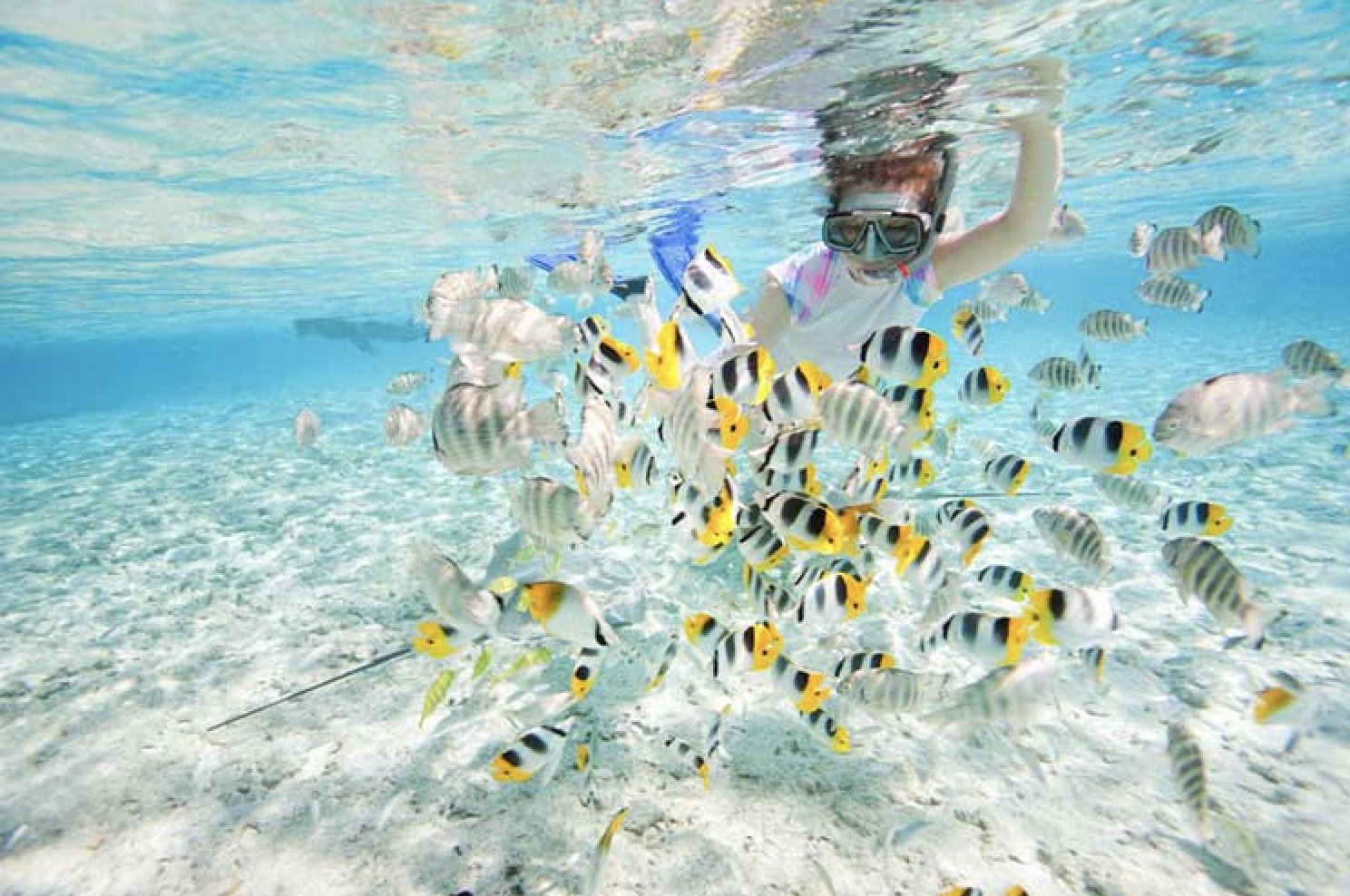
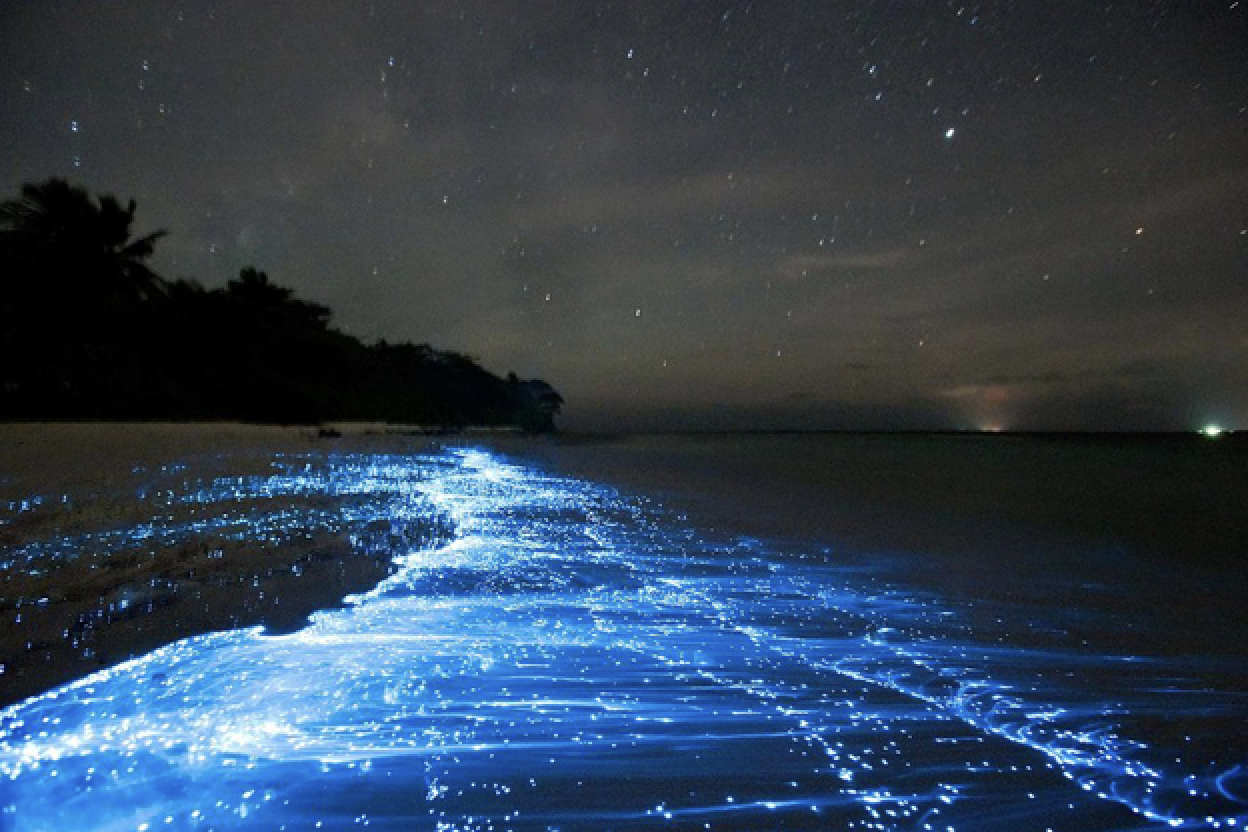
Here, you can lounge on pristine white sand beaches and enjoy a cocktail or two. Go snorkeling in the crystal-clear waters and explore vibrant coral reefs. And at night, head back to the beach to witness amazing bioluminescent plankton. 

Child snorkels by white, yellow and black fish in the crystal-clear waters of Koh Rong, Cambodia

Just look at the crystal-clear water and those colorful fish!

Astounding blue bioluminescent plankton washing on the shore at night on Koh Rong in Cambodia

Head back to the beach at night to see breathtaking blue bioluminescent plankton washing ashore.

How to get there: Heads up: The only way to get to Koh Rong Samloem is via a one-and-a-half-hour ferry ride from Sihanoukville. If you’re staying in Siem Reap, you can take a 50-minute direct flight to Sihanouk International Airport. From there, you can hail a tuk-tuk or taxi to take you to the ferry terminal. Alternatively, you can take a six-or-so-hour bus ride or private taxi from Phnom Penh.

Tourist boat plies the Mekong River in Kratie, Cambodia, with Irrawaddy dophins swimming nearby

While in Kratie, you have to look out for the endangered Irrawaddy dolphins.

Kratie: A Gem on the Mekong River

Situated along the banks of the Mekong, Kratie is a small town known for its incredible wildlife — most notably, the endangered Irrawaddy dolphins. Take a boat tour to observe these gentle creatures in their natural habitat for a truly magical experience.

You can also rent a bike and explore the peaceful countryside to admire the sleepy villages, traditional stilt houses, rice fields and lotus farms. Be sure to visit Wat Sorsor Muoy Roy, the 100-Column Pagoda. Then, grab a beer and watch one of the epic Mekong sunsets. 

Kratie offers a glimpse into rural Cambodian life and a chance to witness the wonders of nature up close. 

How to get there: Kratie is 149 miles (240 kilometers) north of Phnom Penh, and is roughly a four-hour drive from there. 

Pink umbrellas line the beach with a few sunbathers and jetskis in Kep, Cambodia

Relax on the beach in the seaside town of Kep.

Kep: A Coastal Delight

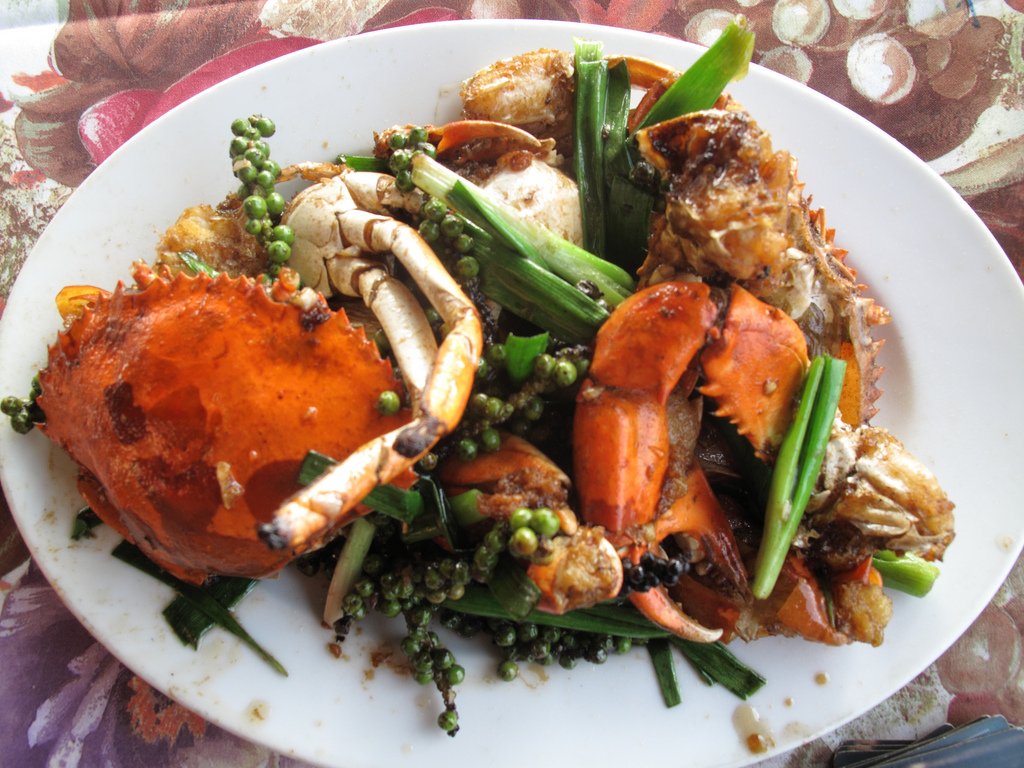
For a blend of coastal beauty and culinary delights, head to Kep, a charming seaside town located in southern Cambodia. Known for its fresh seafood, Kep is a paradise for any foodie. Expect an abundance of fresh shrimp and mouth-watering crab (try it with Kampot pepper), while enjoying unforgettable views of the Gulf of Thailand. 

A plate of Kampot pepper crab, with scallions and round green vegetable, a speciality of Kratie, Cambodia

Try the most popular local dish, Kampot pepper crab.

Explore the lush jungle trails of Kep National Park, hike to the gorgeous Kep Beach or visit the iconic abandoned villas that showcase the rich history of the old colonial beach resort.

Before or after heading into the park, be sure to stop in Led Zep Café, a short distance from the park entrance. They offer maps and snacks for hikers, as well as delicious crepes and sandwiches for anyone looking for a quiet lunch spot with a nice view.

Return to Kep and visit Sothy’s Pepper Farm to learn how the rare Kampot peppercorn is produced — considered by many to be the finest pepper in the world. It’s named after its region of production, just like Vidalia onions, Bourbon whiskey and Roquefort cheese.

How to get there: Kampot is 14 miles (22 kilometers) from Kep, or a 30-minute tuk-tuk ride.

Rescued elephant wades in the water in the lush, green jungles of Mondulkiri, Cambodia

The Hidden Gems of Cambodia 

Cambodia is a treasure trove of amazing sites just waiting to be discovered. Whether you’re seeking natural beauty, relaxation, cultural immersion or just to get away from the crowds, the lesser-known areas of Cambodia offer a truly authentic experience. –Sally Giles

4 Spectacular Historical Monuments in India — Besides the Taj Mahal

Take a tour of some lesser-known but utterly awesome temples across India: the Golden Temple of Amritsar, Meenakshi Temple, Palitana Temples and Birla Mandir.  

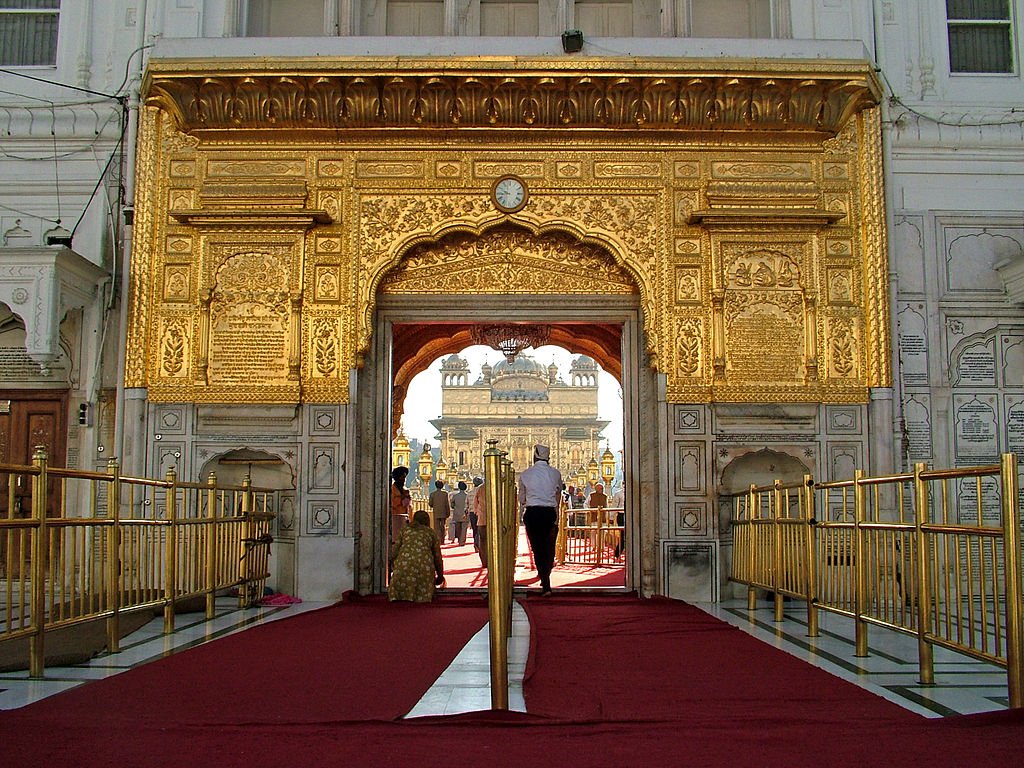
Intricately carved golden entrance to the Golden Temple in Amritsar, India

The majestic entrance to the Golden Temple in Amritsar. It’s time for the Taj Mahal to stop hogging the spotlight.

Ask anyone to name one thing they know about India and you’re likely to hear the same thing every time: the Taj Mahal.

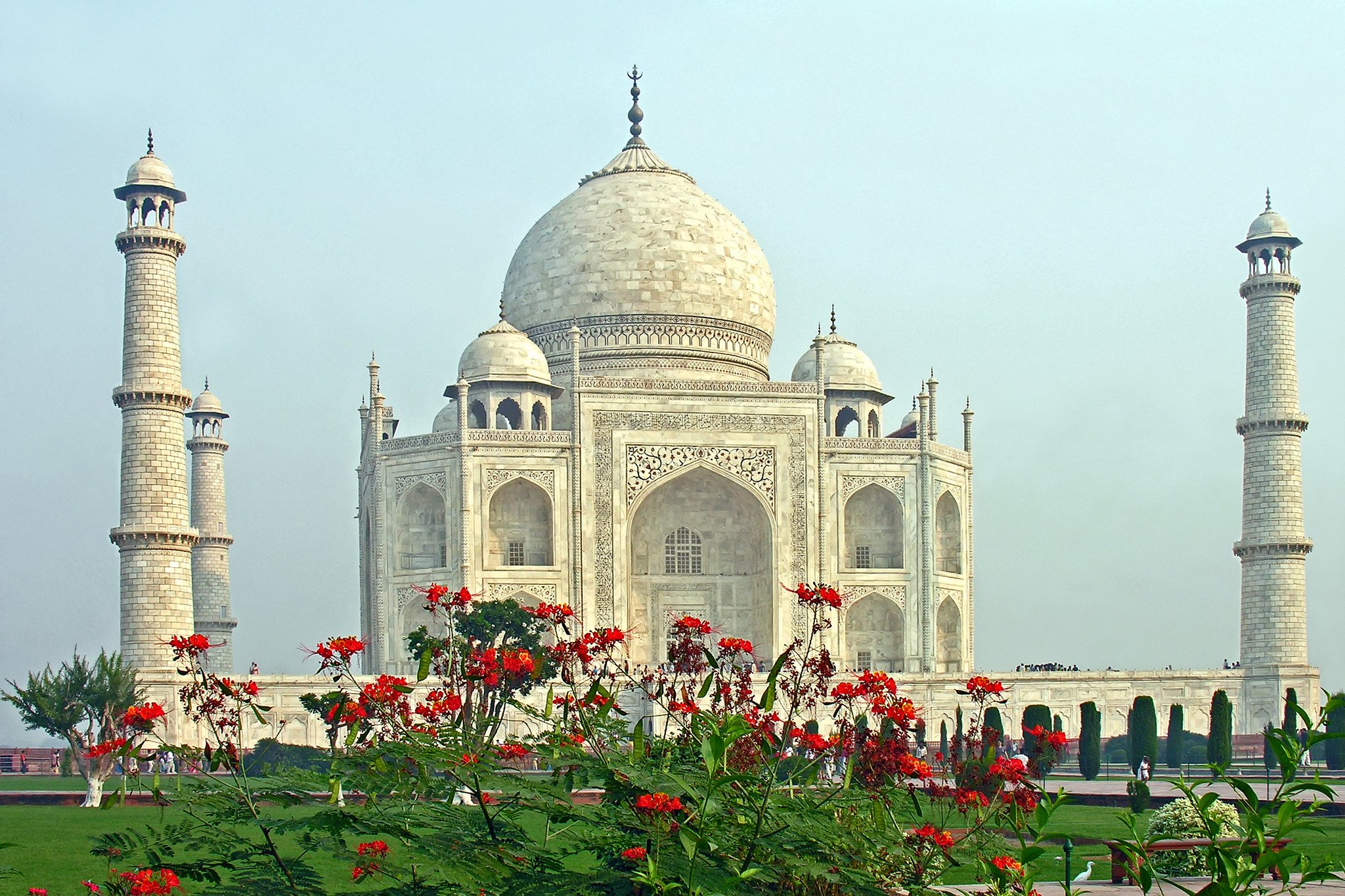
The Taj Mahal in India, with red roses in the forefront

The Taj Mahal is beautiful — but isn’t by any means the only impressive site to see in India.

Built between 1631 and 1648 by the Mughal emperor Shah Jahan as a testament to his love for his favorite wife, this iconic tourist attraction is as synonymous with India as the Eiffel Tower is with Paris, and Big Ben is with London. But amidst the understandable fanfare, travelers to India may be overlooking a host of other exciting historical monuments.

Here are four of the most beautiful and culturally significant locations in India — other than that famous marble mausoleum. One thing all these sites have in common: They’re some of the most underappreciated monuments in the country.

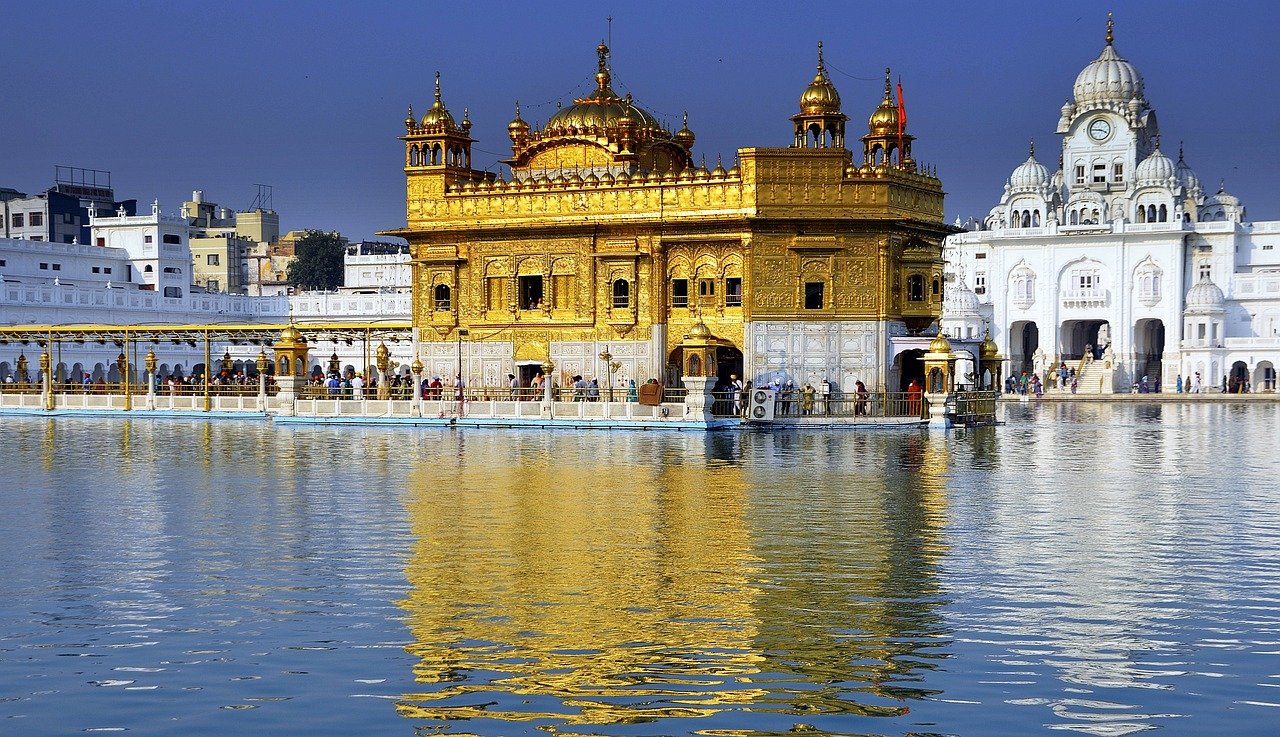
The Golden Temple of Amritsar in India on the water with a white palace next to it

The Golden Temple

Location: Amritsar, Punjab

History: Completed in 1589, this iconic structure stands as a symbol of immense significance for Sikhism. As the name suggests, the temple is adorned with a resplendent golden coating — at least since 1830, when Maharaja Ranjit Singh overlaid the sanctum with gold leaf. Located in the city of Amritsar, the Golden Temple is surrounded by the tranquil Sarovar, a sacred pool of holy water.

Why it’s so cool: The temple’s exquisite architecture and serene ambiance pair with harmonious prayers and hymns to create a soul-stirring experience. 

Fun fact: The Golden Temple is not only a place of worship but also a symbol of equality and community service. The temple houses the world’s largest community kitchen, called the Langar, where volunteers serve free meals to thousands of visitors daily, regardless of their caste, religion or social status. This inspiring tradition embodies the core values of Sikhism, emphasizing equality, compassion and selfless service.

Travel tip: Consider joining one of the escorted tours that traverse the northern regions of India. Amritsar is well-connected and can be easily reached by various means of transportation. 

While visiting the Golden Temple, it’s advised to dress modestly and for women to cover their head as a sign of respect. Before entering the temple complex, take a moment to cleanse your feet at the designated washing area as a ritualistic purification.

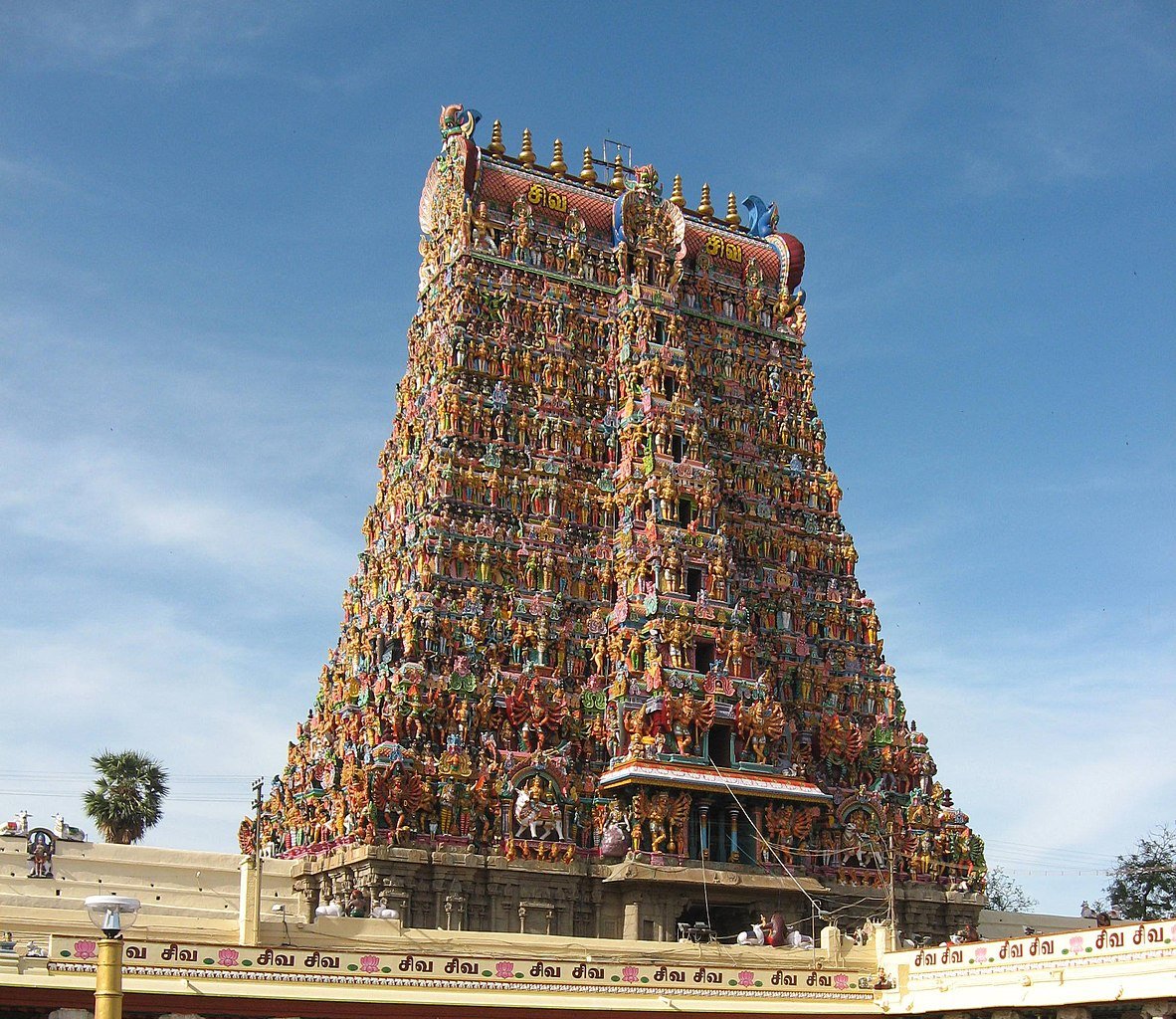
Meenakshi Temple in India, composes of multiple layers, getting smaller as they go up, each covered with very colorful statues of Hindu deities and creatures

Meenakshi Temple

Location: Madurai, Tamil Nadu

History: Step into a world where ancient legends and vibrant hues intertwine at the awe-inspiring Meenakshi Temple. The roots of this remarkable monument stretch back to the 6th century, when an ancient temple first graced this sacred site. Between 1190 and 1205, the current Meenakshi Temple was built, incorporating and expanding upon its historical foundations. 

Why it’s so cool: While the Taj is serene and understated, Meenakshi has an enchanting kaleidoscope of colors that adorn its 14 gopurams. These towering pyramidal structures, perched over the temple entrances, are resplendent with 3,000-some intricate carvings and statues, from celestial deities to mythical creatures.

Fun fact: The temple is not only dedicated to Meenakshi (an avatar of Parvati, the Hindu goddess of love, beauty and fertility), but also Sundareshwarar, an avatar of her consort, Lord Shiva. The complex houses shrines for both deities, symbolizing the divine union of feminine and masculine energies.

Travel tip: From Madurai Junction Railway Station, it’s a 10-minute walk to the temple grounds. Again, dress respectfully. Consider engaging a guide who can illuminate the temple’s fascinating history, legends and the symbolic significance behind its vibrant colors.

Palitana Temple group peeking above the treetops in Gujarat, India

Palitana Temples

Location: Shatrunjaya hills near Palitana in Bhavnagar district, Gujarat

History: Nestled amidst the hills of Gujarat, the Palitana Temples comprise a colossal collection of over 800 sacred buildings that dot the mountainous landscape. These temples, built around the 11th century, hold immense significance for followers of Jainism, drawing thousands of pilgrims from around the world who embark on a spiritual journey of devotion and enlightenment.

Why they’re so cool: Prepare to be awestruck by the sheer magnitude of the Palitana Temples, as they create an ethereal landscape of spirituality and architectural splendor. The journey to these sacred shrines is a testament to the unwavering faith of Jain followers, who ascend a staggering 3,500 steps to reach the base of the temples. The sight of hundreds of temples scattered across the hills creates a mesmerizing panorama that is truly awe-inspiring.

Fun fact: Palitana holds the distinction of being the world’s largest cluster of Jain temples. This extraordinary complex is a sanctuary for Jain devotees, with each temple showcasing intricate carvings, vibrant colors, and architectural marvels. The temples serve as a testament to the spiritual devotion of the Jain community and provide a serene sanctuary for introspection and reverence.

Travel tip: The temples can be conveniently accessed by taking the Western Railway line from major cities like Delhi, Chennai and Kolkata. The nearest cities, Ahmedabad and Bhavnagar, located approximately 25 kilometers away, offer transportation connections to Palitana. 

Be prepared for the ascent to the temples by wearing comfortable shoes and carrying water. If climbing the stairs is not an option, you can hire a palanquin in the town at the base of the hills and get carried up. 

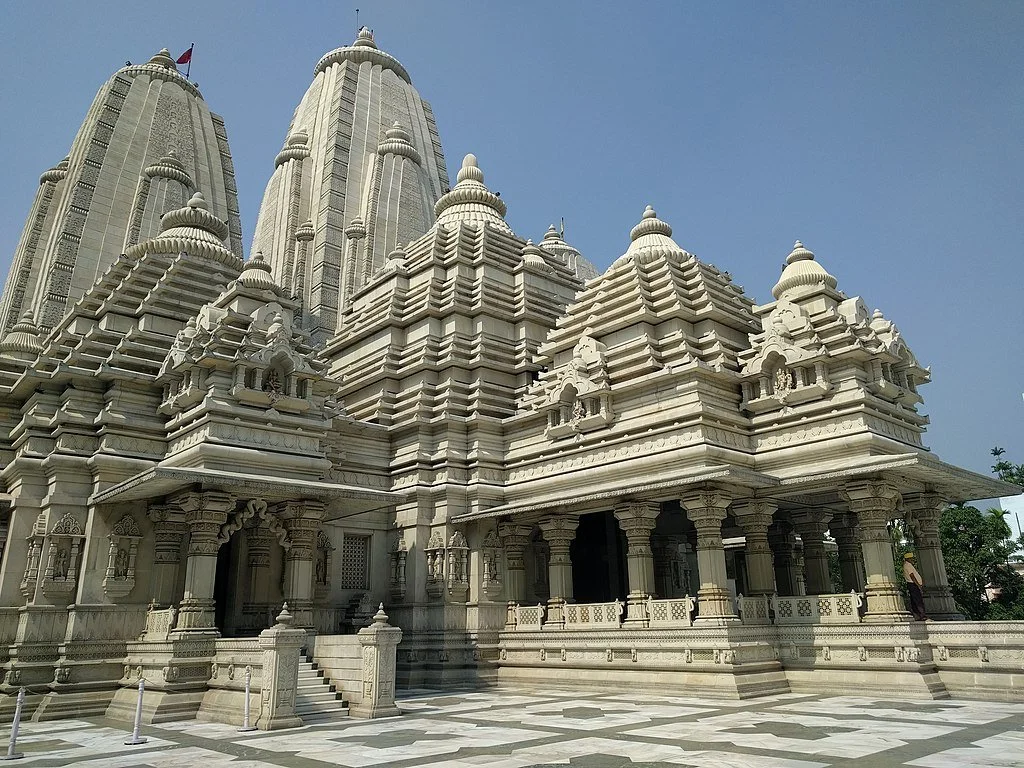
Birla Mandir Kolkata, a multilayered white temple in India

Birla Mandir Kolkata

Location: Ashutosh Chowdhury Avenue, Kolkata, West Bengal

History: The illustrious Birla family commissioned the temple, which was constructed from 1970 to 1996. Carved out of pristine white marble and sandstone, this architectural gem emanates a celestial radiance when the midday sun casts its rays upon it. A symbol of devotion and artistic brilliance, Birla Mandir stands as another testament to India’s rich religious heritage.

Why it’s so cool: Venture inside to discover a realm of intricate statues and carvings dedicated to Hindu avatars of the god Vishnu, such as Lord Krishna and Radha. The exquisite craftsmanship and attention to detail bring these divine figures to life, evoking a sense of reverence and spiritual tranquility.

Fun fact: Across India, there are 14 temples bearing the name Birla Mandir. Each is a testament to the philanthropic efforts of the Birla family, who have contributed significantly to the construction of these sacred spaces. However, the Kolkata Mandir stands out as a pinnacle of aesthetic beauty. Just make sure you’re planning to visit the right one!

Travel tip: You can easily reach the temple by taxi or bus tour from the city. Remember to dress modestly when entering the temple. And be aware that the temple is closed for much of the day. Go early or go late: It opens from 5:30 a.m. to 11 a.m., then closes. It reopens in the evening, from 4:30 p.m. to 11 p.m. 

Multi-armed Hindu god with headdress and mustache as part of the very elaborate, very colorful facade of Meenakshi Temple in India

A carving of Virabhadra, a fierce form of the god Shiva, as part of the crowded and colorful façade of Meenakshi Temple

India, Beyond the Taj Mahal

While I wholeheartedly recommend experiencing the majestic beauty of the Taj Mahal during your sojourn in India, turning a blind eye to these other captivating destinations would be nothing short of a crime. These lesser-known gems deserve a spot on your travel bucket list. –Andrew Ellison

The Beautiful Bahai Temple in Chicago

What is Baha’i? What’s the history of the Baha’i Temple in Wilmette, Illinois?

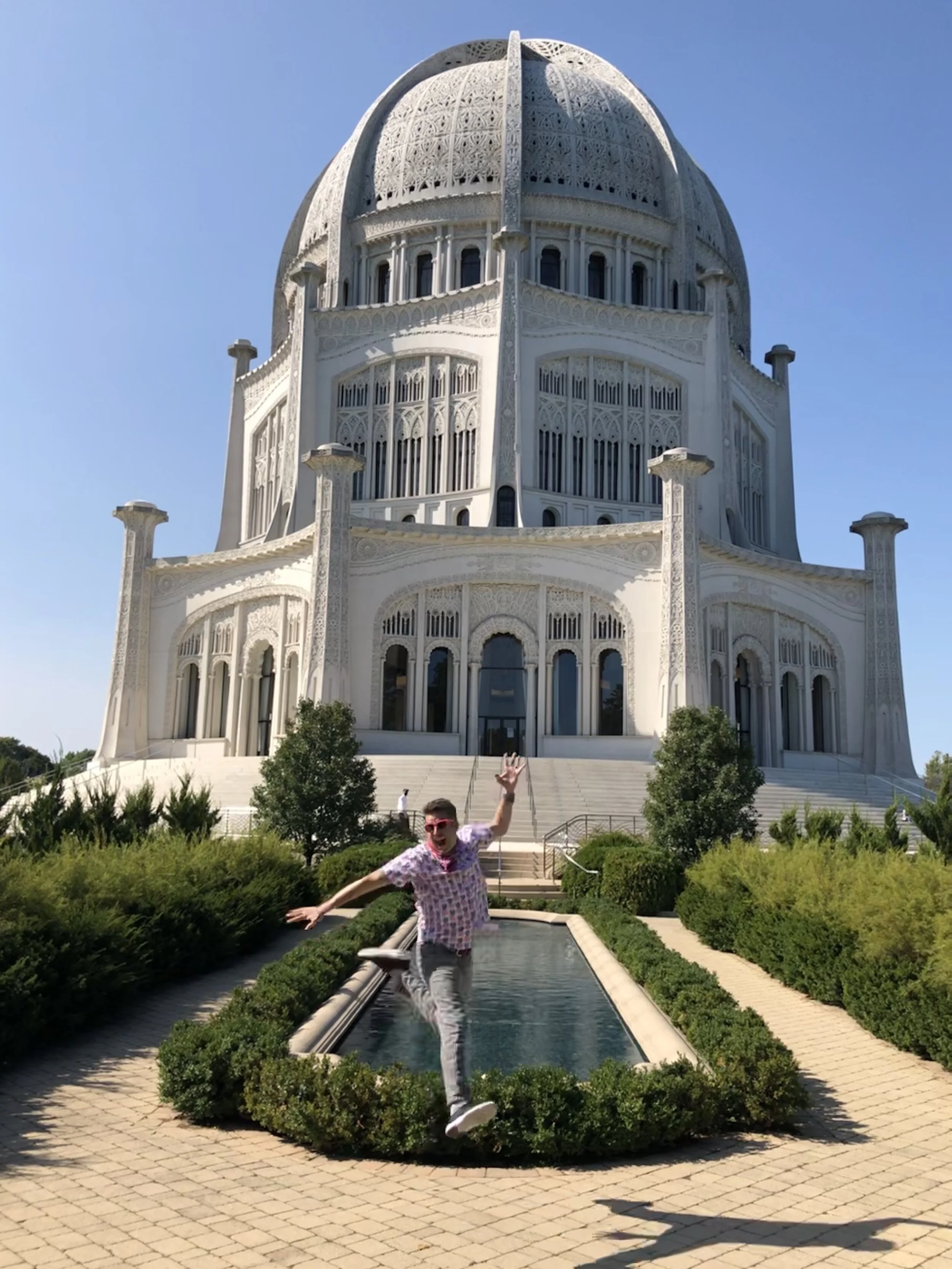
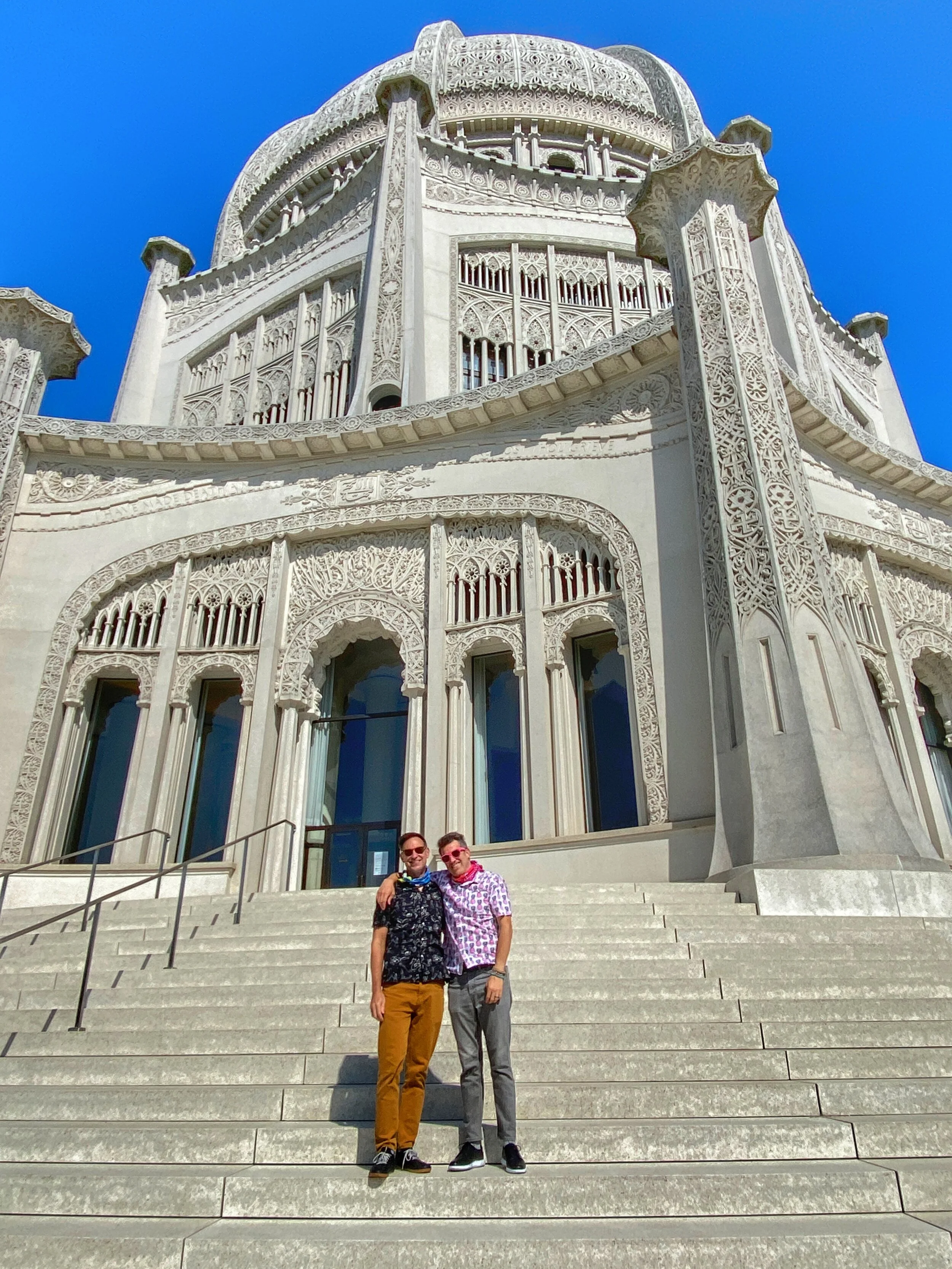
The beauty of the Bahai’i Temple makes Wally jump for joy.

The beauty of the Bahai’i Temple makes Wally jump for joy.

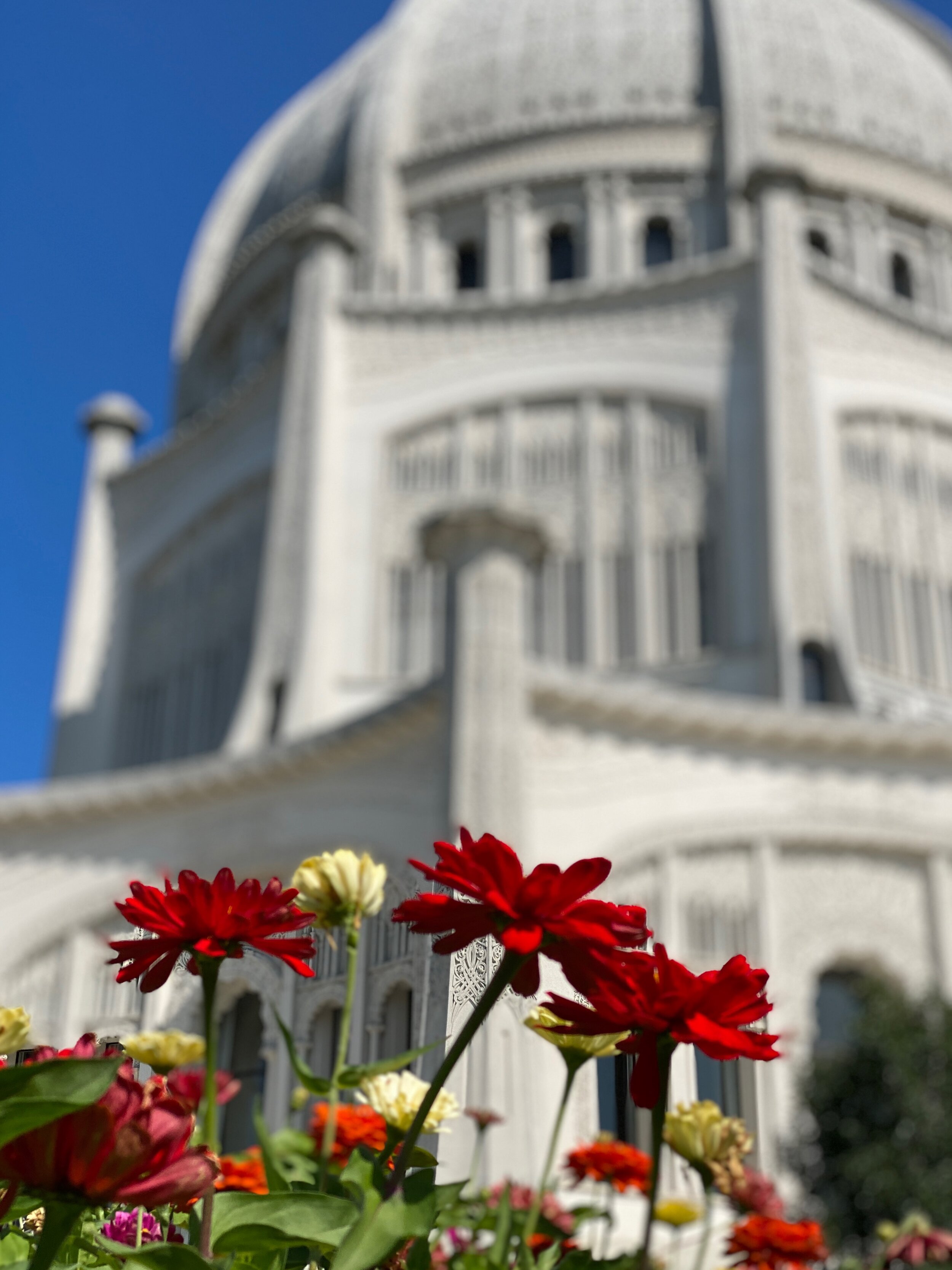
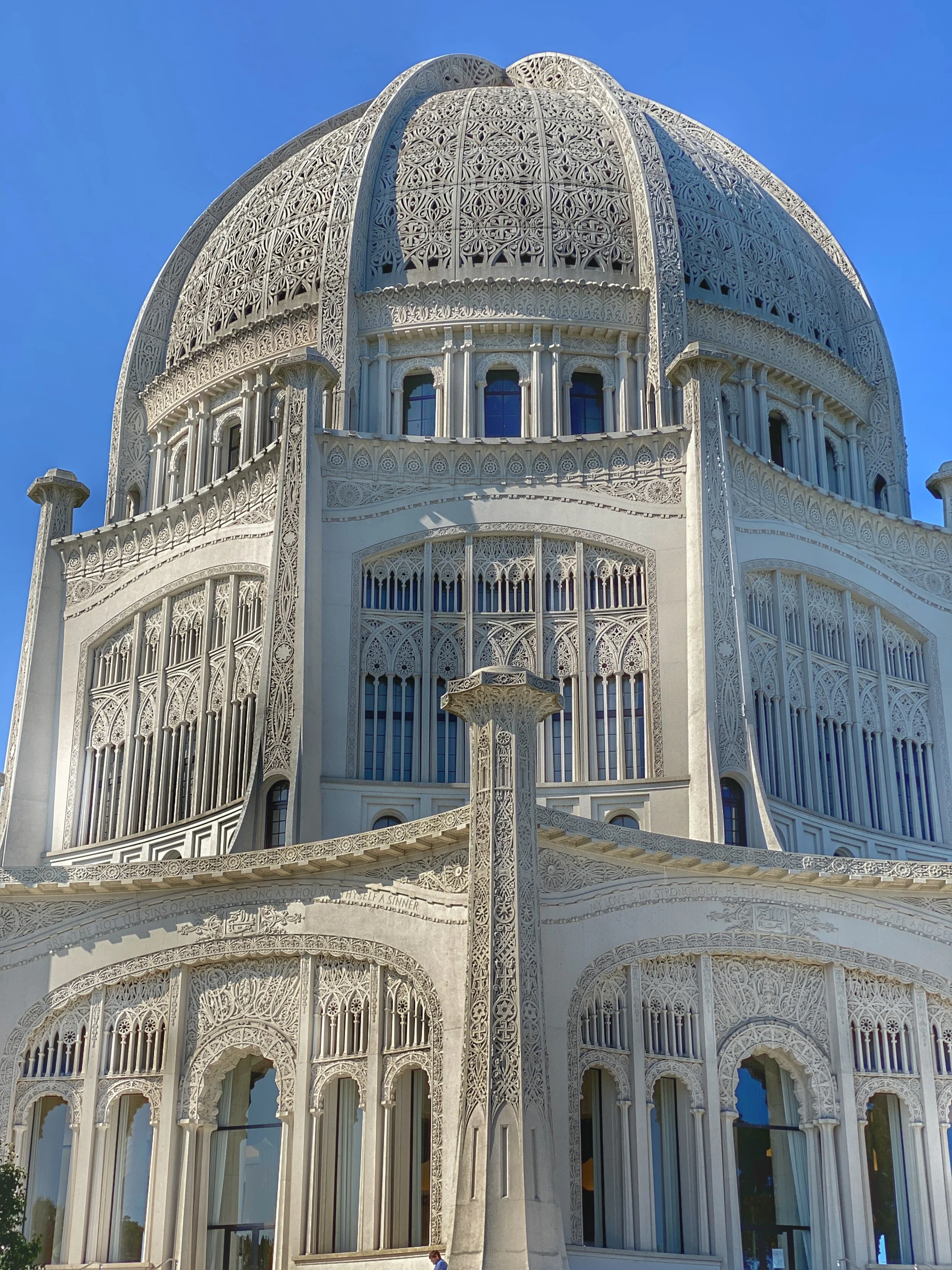
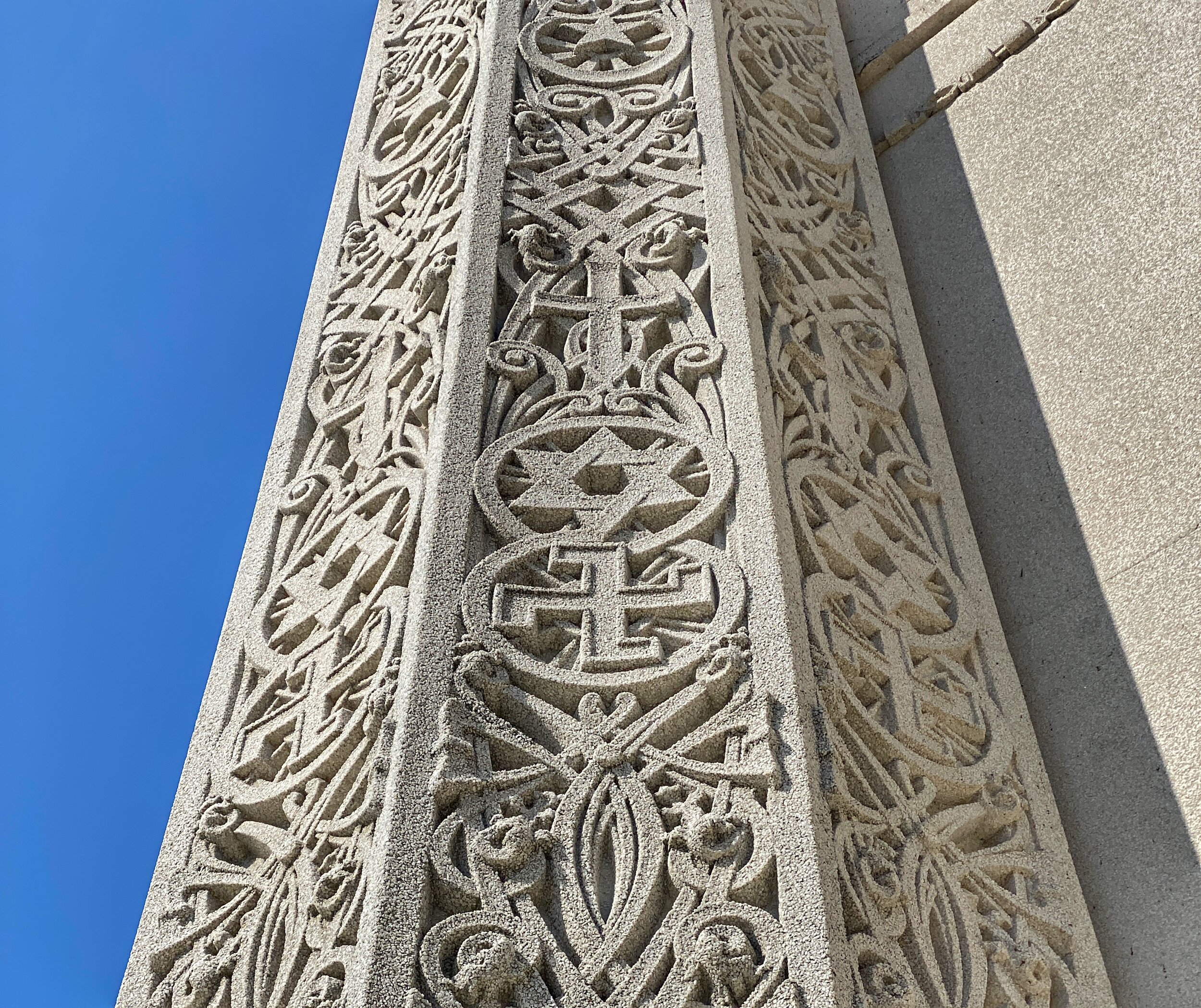
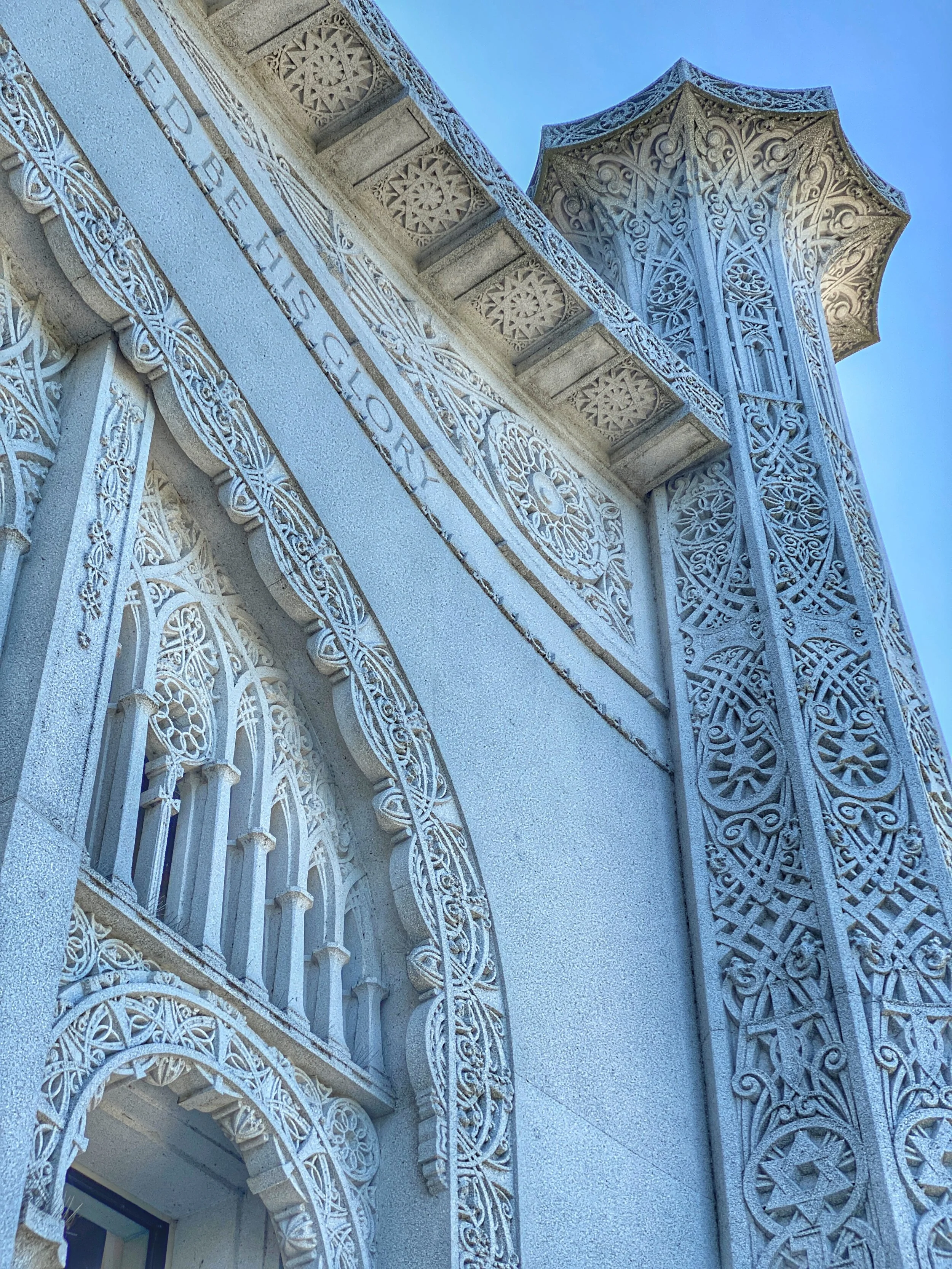
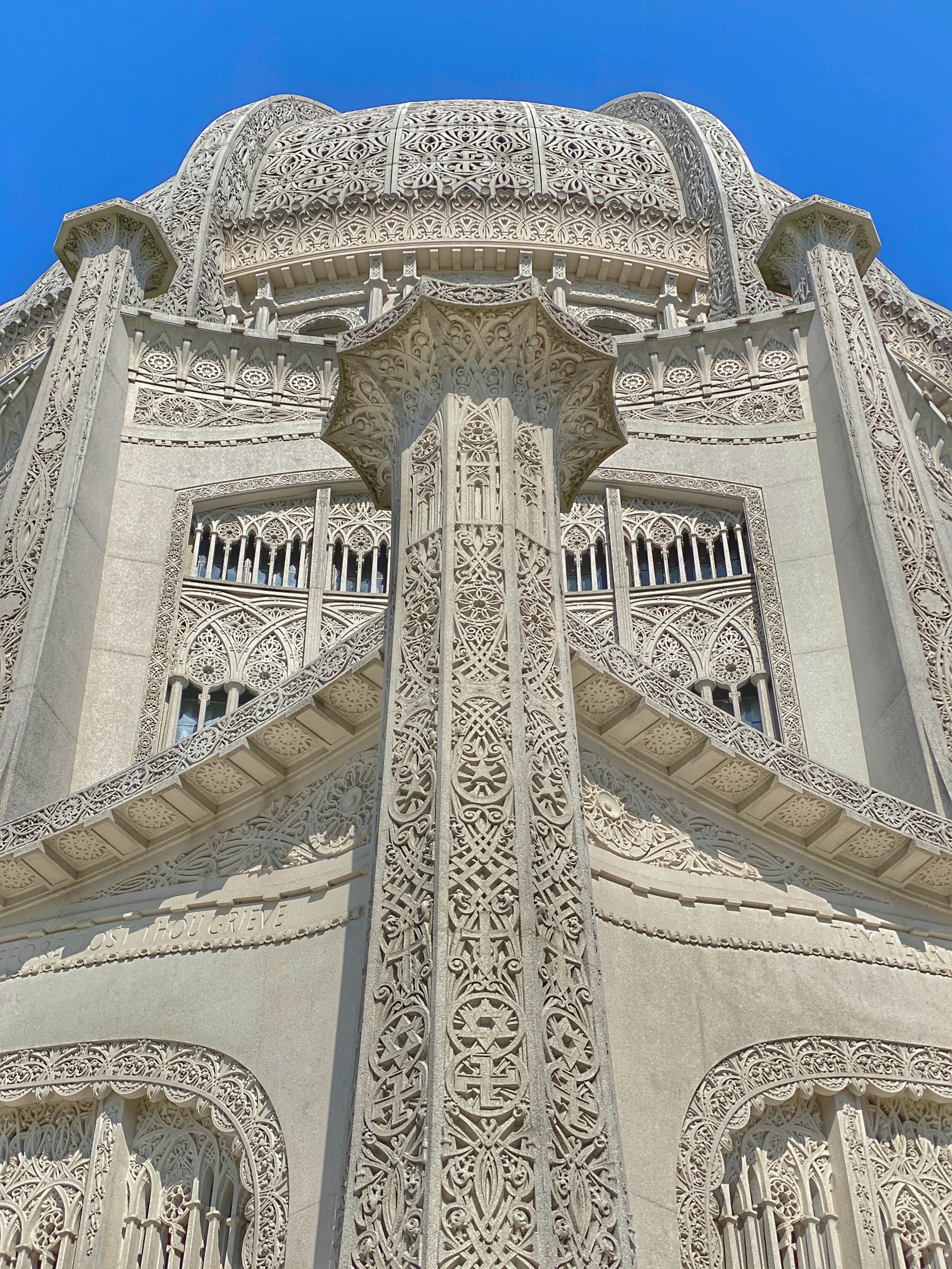
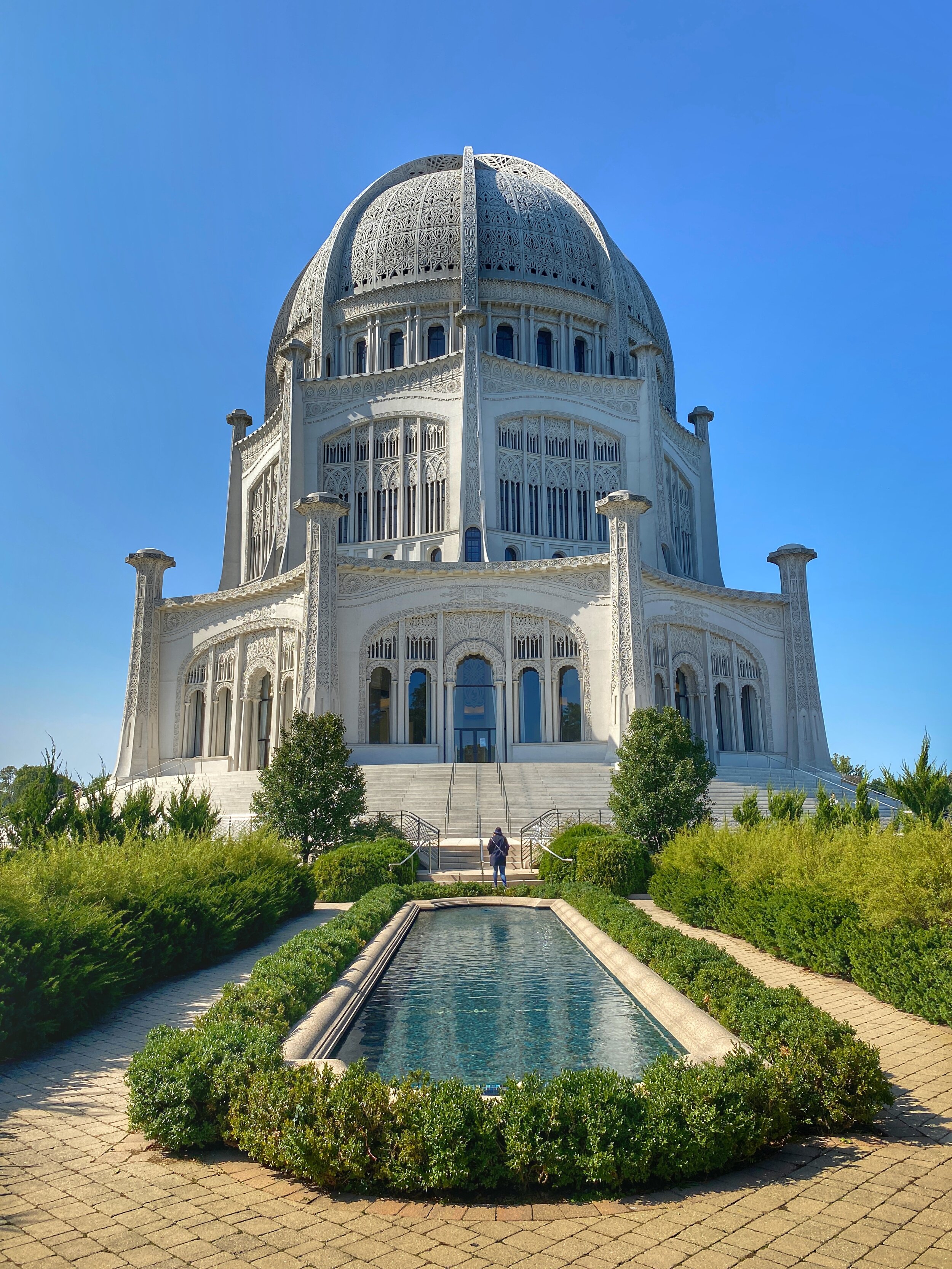
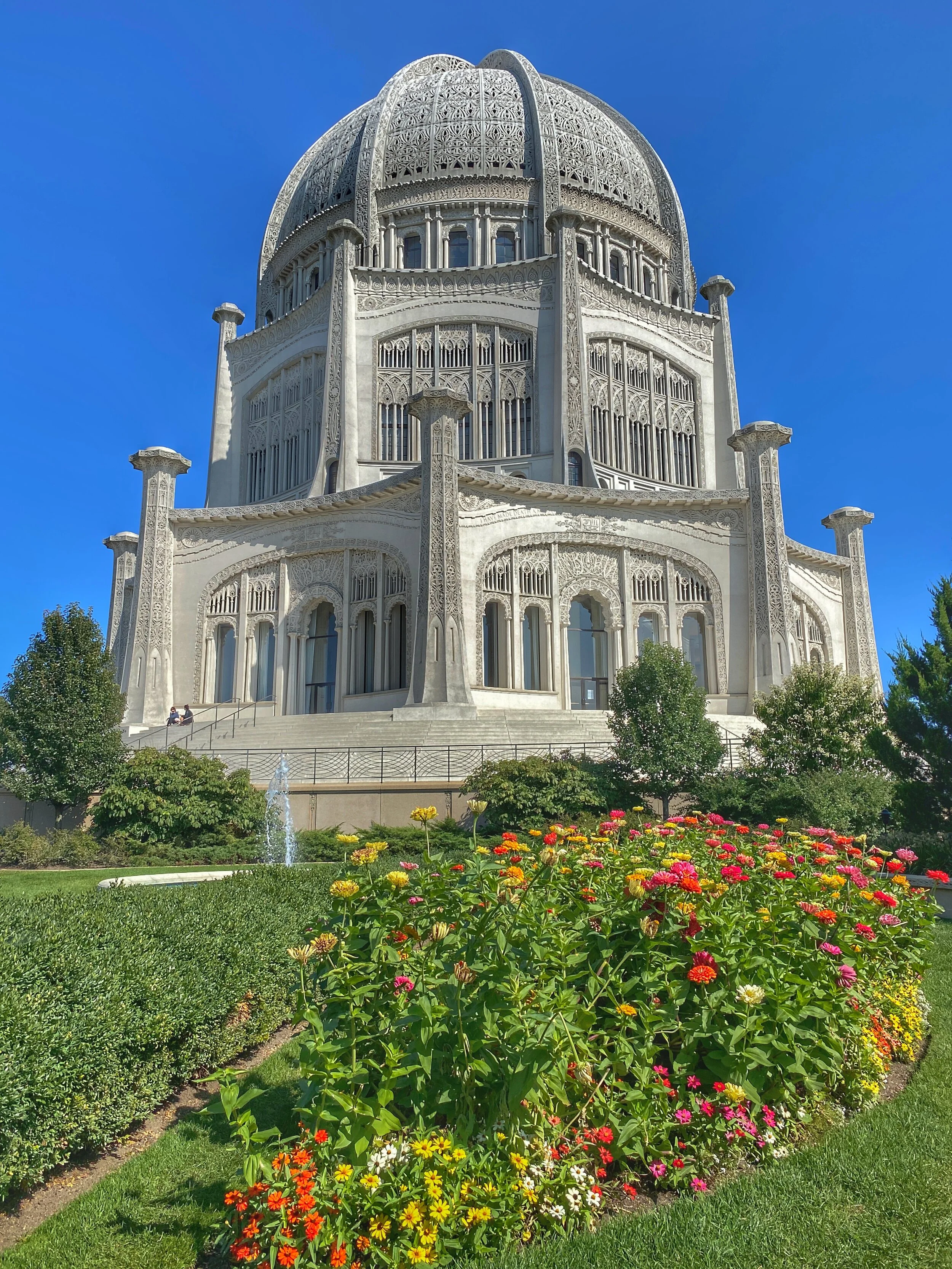
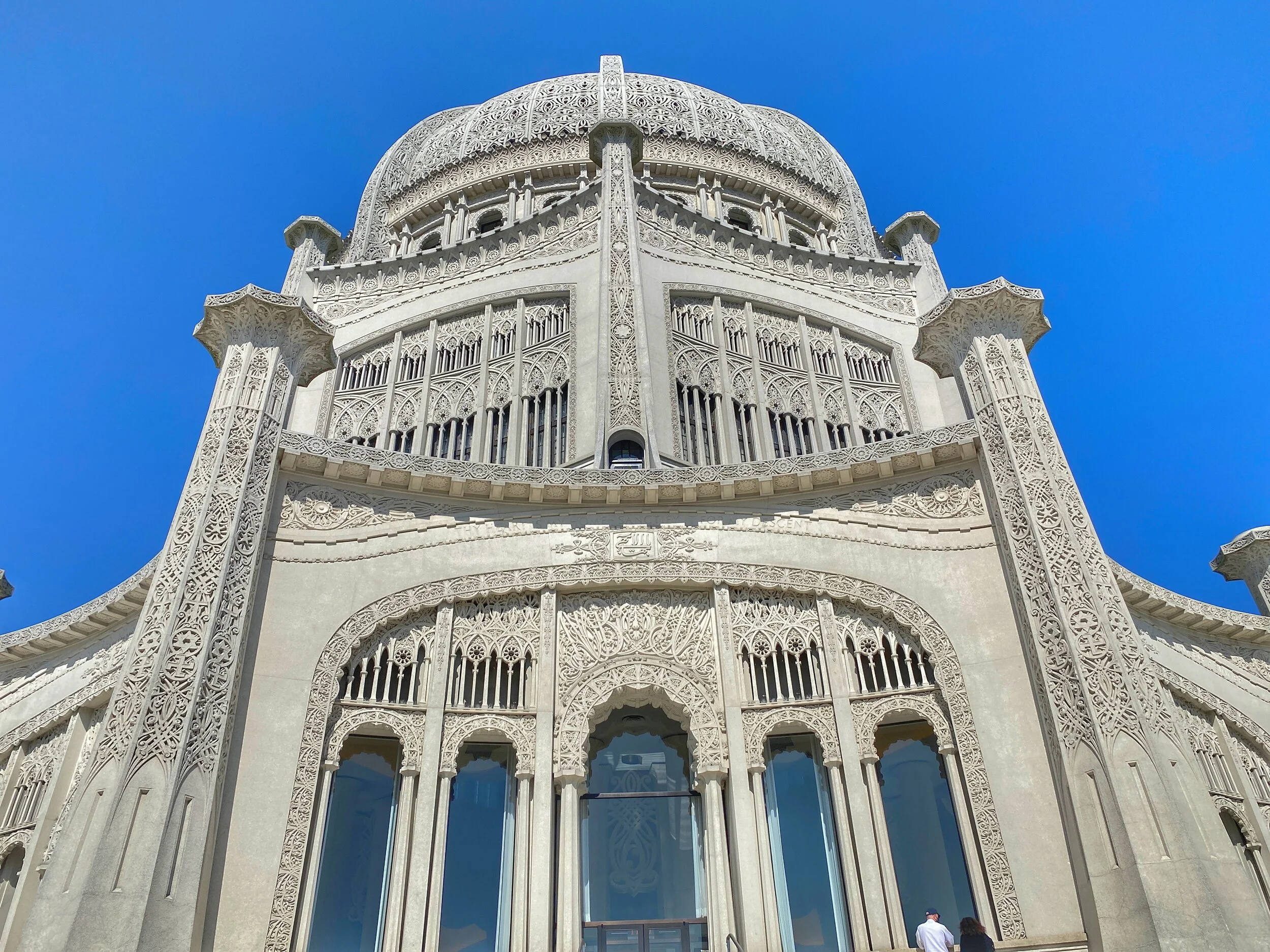
Those of us who live in the Chicago area are familiar with the Baha’i Temple — though most know nothing about the religion itself. We’ve seen glimpses of the structure on the North Shore and have been drawn to it, where we discover that it’s a gorgeous building that makes for a pleasant visit to spend a short time wandering its gardens and admiring its intricate stonework. 

Which is exactly what we did one weekend with our friend Kate during the COVID-19 pandemic. We weren’t able to go inside the temple, but to be honest that’s not too big a disappointment. The interior isn’t all that impressive — a large, open space that’s unadorned, in stark contrast to the ornate exterior. OK, the interior of the dome is gorgeous. But that’s the extent of the beauty inside, I promise. 

The Earth is but one country, and mankind its citizens.
— Bahá’ulláh, founder of Bahá’í
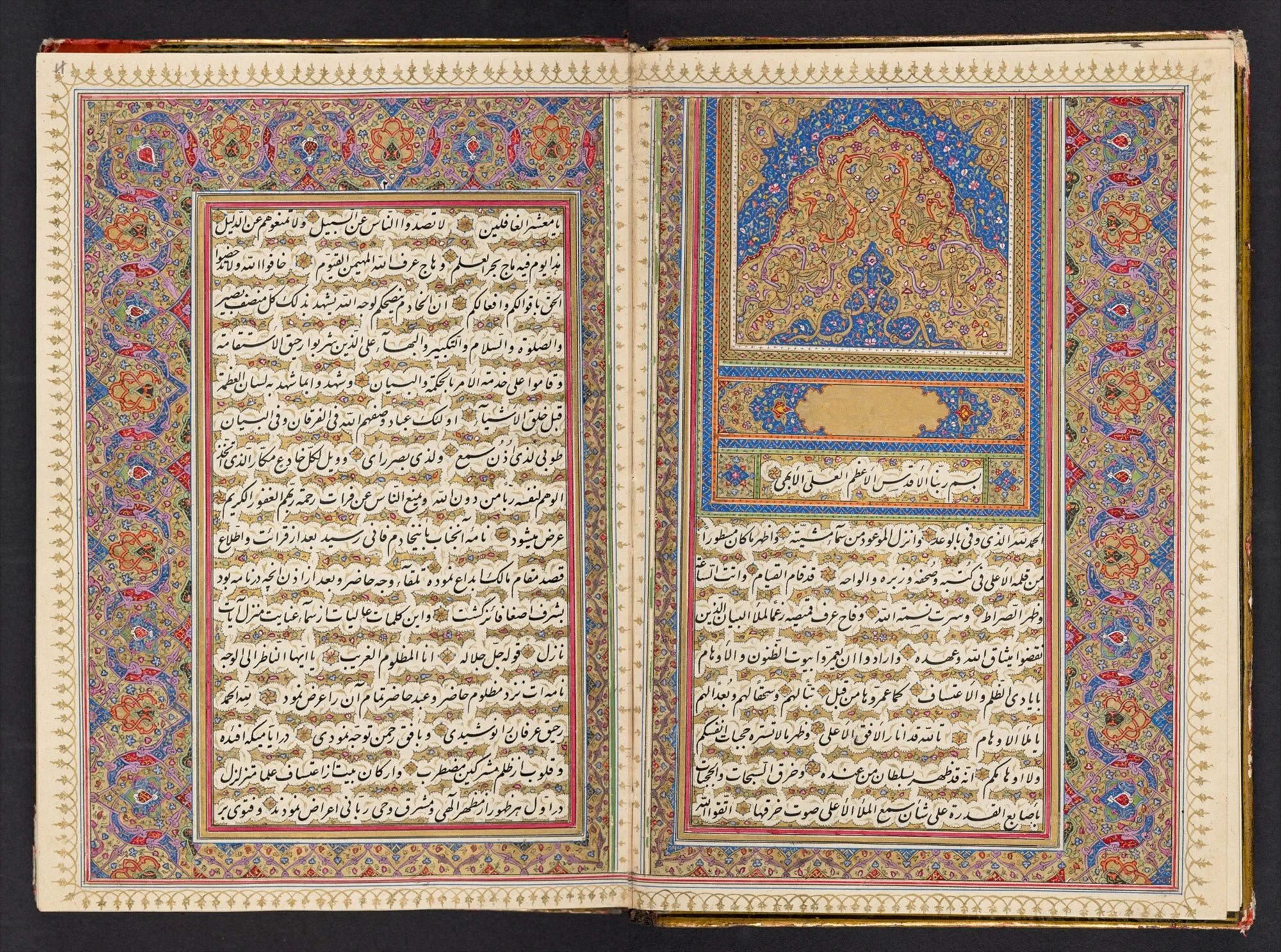
An illuminated manuscript of Baha’u’llah’s writings that was presented to the British Museum in 1913

An illuminated manuscript of Baha’u’llah’s writings that was presented to the British Museum in 1913

What is the Bahá’í religion?

It’s a relatively new faith, having emerged in the Middle East in the 1840s. A Persian teacher known as Bahá’ulláh preached a religion founded on the principles of peace, equality and the unity of humankind. Sounds nice, doesn’t it? 

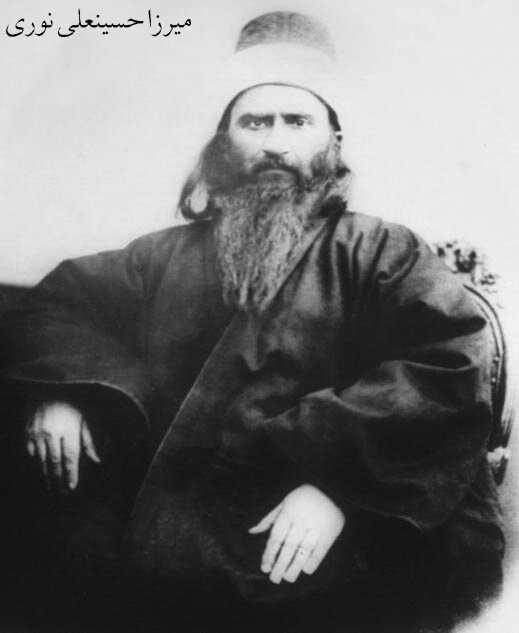
Bahá’ulláh, the founder of the Baha’i faith, might look stern — but he was really all about peace, love and understanding.

Bahá’ulláh, the founder of the Baha’i faith, might look stern — but he was really all about peace, love and understanding.

To Baha’is, the soul is eternal and should be illuminated by focusing on kindness, generosity, integrity, truthfulness, humility and selflessness. That’s exactly what this world needs more of, if you ask me.

At a Parliament of the World’s Religions meeting in Chicago in 1893, the United States was introduced to Baha’i. (By the way, it’s pronounced “Buh-high.”) Despite being proclaimed as one of the world’s fastest growing religions, it never caught on big time, and I’d wager that most Americans aren’t familiar with the faith. 

But by 1900, there were about 1,000 Baha’is living in the U.S. and Canada. Worldwide, the faith’s adherents now number around 5 million.

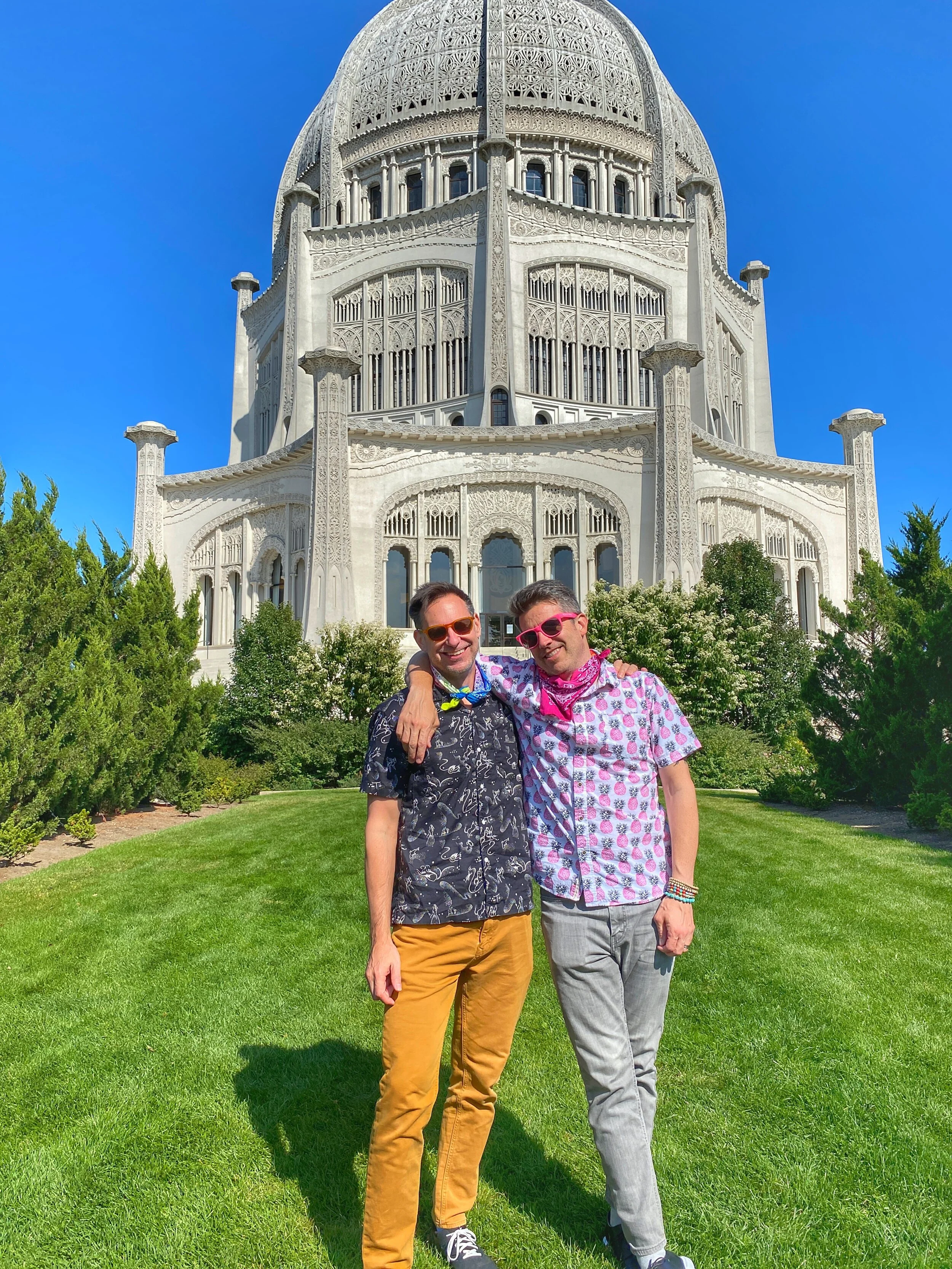
Duke and Wally spent a pleasant day with their friend Kate, circling (and admiring) the Baha’i Temple.

Duke and Wally spent a pleasant day with their friend Kate, circling (and admiring) the Baha’i Temple.

Do they have a prophet or savior like Mohammed or Jesus?

Like Muslims, the Baha’i believe that Mohammed, as well as Jesus (along with Abraham, Moses, Buddha, Krishna and Zoroaster, for that matter) was a prophet — just not God’s final prophet. Divine revelation, to them, is not final but ongoing; there will be other prophets in the future. Maybe the next one will be female.

The Baha’i faith sees all people as equal — a view that doesn’t fit with conservative Islam — and has led to persecution since its inception.

The Baha’i faith sees all people as equal — a view that doesn’t fit with conservative Islam — and has led to persecution since its inception.

How have Baha’i been treated over the years?

It’s sad that a religion that preaches acceptance has suffered so much oppression and violence. Perhaps it’s telling that no temple exists in Iran, the birthplace of the faith. The Baha’i messages of religious tolerance, gender equality, universal education, and elimination of all prejudice and racism don’t jibe well with many conservative religious entities, and the faith is viewed as a heretical branch of Islam. As such, countries including Yemen, Egypt and Afghanistan have persecuted and imprisoned Baha’is on the sole grounds of their beliefs. And Iran has a history of torturing and killing Baha’is, closing their schools, banning their literature, and denying their rights and marriages.

Worship for Baha’is is very personal and freeform, devoid of rituals and clergy.

Worship for Baha’is is very personal and freeform, devoid of rituals and clergy.

What is worship like for Baha’i?

The freeform, personal worship certainly won’t appeal to everyone, especially those who find comfort in religious rituals. My ex became interested in Baha’i, but the lack of any sort of pomp and circumstance never appealed to me. I have always been more drawn to Wicca, which has a similar acceptance of all faiths, seeing them as symbols, but has the flair of magic spells.

In keeping with the Baha’i philosophy of egalitarianism, everyone is welcome at their temples, and there isn’t any clergy. Ceremonies happen on only a few holy days each year. Typical worship consists of sitting there quietly, praying or meditating on your own. 

It’s also encouraged to get involved in social projects in your community. 

The COVID pandemic meant most people had to stay closer to home, so Wally and Duke headed up to give the Baha’i Temple another visit.

The COVID pandemic meant most people had to stay closer to home, so Wally and Duke headed up to give the Baha’i Temple another visit.

What is the Chicago Baha’i Temple’s history?

It began with the purchase of a couple of plots of land along Lake Michigan in 1907, north of Chicago in what is now the town of Wilmette. Because it was funded by individual contributions, the project was delayed, much like Gaudí’s La Sagrada Família cathedral in Barcelona, Spain (which is still being built, by the way). The Chicago Baha’i Temple was further held up by the two World Wars and the Great Depression. The foundation stone was laid in 1920 and construction ended with the temple’s formal dedication in 1953. 

The temple was built from 1920 to 1953 and is composed of a variety of architectural styles.

The temple was built from 1920 to 1953 and is composed of a variety of architectural styles.

Who designed the Chicago Baha’i Temple?

Louis Bourgeois, a French Canadian who had been a Baha’i for over a decade at the time, got the commission. He wanted the building’s design to reflect the beliefs of the faith: the oneness of humanity and the unity of all religions. To really run with this symbolism, he designed a conglomerate of various architectural styles: Neoclassical symmetry, Gothic ribbing, a Renaissance dome, Romanesque clerestory and Islamic arabesques on pillars that hint at minarets. And while that sounds like an unpleasing Frankensteinian mishmash, it somehow all comes together gracefully.

The carvings on the nine pillars feature symbols of the world’s biggest religions: the Christian cross, the Jewish Star of David, the Islamic star and crescent moon — even the swastika of Hinduism, Buddhism and Jainism. 

That swastika causes a lot of controversy — but that’s just because people don’t understand that Buddhists and Hindus have used that symbol long before the Nazis co-opted it.

That swastika causes a lot of controversy — but that’s just because people don’t understand that Buddhists and Hindus have used that symbol long before the Nazis co-opted it.

Bourgeois’ vision was to create “a gathering place for all humanity.” When describing his design, the architect said, “There are combinations of mathematical lines, symbolizing those of the universe, and in their intricate merging of circle into circle, and circle within circle, we visualize the merging of all religions into one.”

Ornate scrollwork depicting symbols from major world religions covers the building’s façade.

Ornate scrollwork depicting symbols from major world religions covers the building’s façade.

What’s with the repetition of the number nine?

To a Baha’i, nine is the most sacred number. As the highest single digit, it’s a potent symbol of comprehensiveness as well as unity. In addition to the nine columns, there are nine entrances, nine verses above the doors and alcoves and nine fountains. 

Each column is topped by a nine-pointed star, the symbol of Baha’i.

The nine columns around the exterior are each topped with a nine-pointed star, the symbol of the Baha’i faith.

The nine columns around the exterior are each topped with a nine-pointed star, the symbol of the Baha’i faith.

Small pools and fountains surround the Baha’i Temple.

Small pools and fountains surround the Baha’i Temple.

How many Baha’i temples are there?

The original idea was to have one house of worship on each inhabited continent (sorry about your luck, Antarctica), and the one in Wilmette, known as the Mother Temple of the West, remains the only one in North America. It’s also the oldest Baha’i temple in the world. (The first temple was built in Ashkhabad, modern-day Turkmenistan, in 1908 but was commandeered by the Soviets and later badly damaged by an earthquake before being demolished in 1963.)

The temple outside of Chicago is the only one on the continent and is supposed to serve all of North America.

The temple outside of Chicago is the only one on the continent and is supposed to serve all of North America.

Here’s a list of Baha’i temples around the world:

Other national or local Baha’i houses of worship are planned for the Democratic Republic of Congo, Papua New Guinea, Cambodia, India, Kenya, Colombia and Vanuatu.

If you’re in the Chicago area, consider a trip north of the city to visit the Baha’i Temple.

If you’re in the Chicago area, consider a trip north of the city to visit the Baha’i Temple.

What about the gardens?

The gardens are an essential design element at all the temples. There’s one in front of each of the nine entrances to the temple, featuring rectangular as well as rounded elements, revealing influences both Western and Eastern.

Wandering through the gardens with our friend Kate, we kept circling the temple, admiring its beauty. The circumambulation can be meditative.

Who’d have thought that the delicate beauty of the Baha’i Temple was achieved using concrete?!

Who’d have thought that the delicate beauty of the Baha’i Temple was achieved using concrete?!

What is the Chicago temple made of?

Would you believe that various materials were suggested, including limestone, granite, terracotta and even aluminum, before they decided upon concrete?

This didn’t go over so well, as people feared the material lacked beauty. But a fifth-generation stone carver named John Earley devised a technique inspired by Italian mosaics. He exposed the larger pebbles in the aggregate of the mixture, which gave the concrete an unusual warmth. And when you see the final product nowadays, there’s no denying its lacelike beauty that seems to glow, earning its nickname as the Temple of Light and Unity.

Sadly, neither Bourgeois nor Earley lived to see the temple’s completion. –Wally

Kate wasn’t the biggest fan of this shot. “It looks like you’re in front of some office building,” she said. Wally looked at the pic and replied, “That’s some office building!”

Kate wasn’t the biggest fan of this shot. “It looks like you’re in front of some office building,” she said. Wally looked at the pic and replied, “That’s some office building!”

Bahá'í House of Worship
100 Lindon Ave.
Wilmette, IL 60091


Ancient Egyptian Words You Should Know

Do you know your ba from your ka? What’s a vizier? How about a cartouche? Our handy glossary of Ancient Egyptian terms will have you speaking like a pharaoh in no time.

How many Ancient Egyptian terms can you spot in this image?

How many Ancient Egyptian terms can you spot in this image?

The terms we use to describe the religion, history and artifacts of Ancient Egypt are a strange mishmash of words that have French, Greek, English, Arabic — and yes, sometimes even Egyptian — origins.

Talk Like an Egyptian 

As you read more about the fascinating and complex world of Ancient Egypt, it helps to familiarize yourself with the terms that come up the most often. It’s probably a good idea to bookmark this page for easy reference — especially if you’re considering a visit. 🤗 

ankh.jpg

ankh: The hieroglyphic symbol for life, similar to a cross but with a loop in place of the upper arm. It was especially popular in jewellery and on temple carvings, where it was held in the hands of deities or being given by them to the pharaoh, to represent their power to sustain life and to revive human souls in the afterlife.

atef.jpg

atef: The atef crown was made up of the White Crown of Upper Egypt with red ostrich feathers on either side. It was worn by the god of the underworld, Osiris.

ba.jpg

ba: The ba is, essentially, the concept of the soul. Depicted as a bird with a human head, it could leave a person’s tomb to fly about. 

barque.jpg

barque: These thin boats that curve up at either end were the transports of the gods, especially during festival processions. In temple sanctuaries, models of barques held statues of a deity. When a pharaoh died, a barque would transport them on their way to becoming a god.

bookofthedead.jpg

Book of the Dead: This is the modern name ascribed to a collection of 200 hymns, rituals and spells that allowed the deceased to travel safely through the underworld and enter the afterlife. Ancient Egyptians knew it as the Spells for Going Forth by Day.

canopicjars.jpg

canopic jars: Four containers used to store the preserved internal organs of the deceased (the lungs, stomach, liver and intestines) extracted during the mummification process. Each jar was topped with the head of one of the god Horus’ sons.

cartouche.jpg

cartouche: The oval frame that surrounds the name of a king, queen or god in inscriptions.

coffintexts.jpg

Coffin Texts: Collected during the First Intermediate Period, around 2134-2040 BCE, these 1,185 incantations and other forms of religious writing were inscribed on coffins to help the deceased navigate the afterlife, providing maps of the underworld and the best way to avoid dangers on one’s way to paradise.

deshret.jpg

deshret (or Red Crown): The crown, with a square base that curved upward into a point and had a coil spiraling out in front, was worn by the rulers of Lower Egypt.

djed.jpg

djed: A representation of the spine, it symbolized stability. A djed amulet was often placed in coffins, where the backbone of the deceased would lay, to ensure eternal life. During a Sed festival, the pharaoh, with the help of priests, would raise a djed column. 

duat.jpg

Duat: The underworld, home of the gods Osiris, Anubis and Ma’at, as well as many grotesque monsters. The sun deity Ra travels through the Duat every night, where he battles the serpent Apep, or Apophis. This is where a deceased person’s soul travels for judgment. 

eyeofhorus.jpg

Eye of Horus (aka udjat eye or wedjat eye): A falcon’s eye that acts as a protective talisman and symbolizes rebirth after death. Its origins lie in a myth where the evil god Set plucks out one of his nephew Horus’ eyes

faience.jpg

faience: A powdered quartz paste that ranges in color from turquoise to teal. Modeled and sometimes fired, it was commonly used for jewelry, pottery and sculptures.

hedjet.jpg

hedjet (or White Crown): The crown of Upper Egypt, it’s often irreverently (but accurately) described as looking like a bowling pin.

hieroglyphs.jpg

hieroglyphs: Think of them as the emojis of their day. Often mistakenly called hieroglyphics, they make up the system of pictorial writing used in Ancient Egypt. Though they sometimes represented the actual objects they depicted, hieroglyphs usually stood for particular sounds. 

horusname.jpg

Horus name: Beginning in the Predynastic Period, pharaohs would take on an additional name, cementing their relationship with the falcon-headed god Horus. The pharaoh oversaw their entire country and, like the bird of prey, could strike at enemies below. 

hypostylehall.JPG

hypostyle hall: The reception area of a temple. Originally, most would have had a roof over rows of densely packed columns with capitals depicting palms, papyri or lotuses to represent the lush island of creation.

ka.jpg

ka: The best way to describe this is as a soul — it’s someone’s other self, what makes them unique. It’s with a person throughout their life, but upon death the ka and the body become separate. The body has to be preserved, and the ka nourished, or it will starve and cease to exist. It’s represented as a human with upraised arms — or just the arms raised at a 90-degree angle. 

khepresh.jpg

khepresh (or Blue Crown): Often worn by pharaohs when going into war, the khepresh was a blue headpiece with a uraeus on the brow.

kohl2.png

kohl: Black powder made from galena ore (the chief source of lead) mixed with oil and used as an eyeliner by women and men.

loweregypt.jpg

Lower Egypt: The Ancient Egyptian worldview was upside-down compared to ours. Lower Egypt was the northern half of Egypt, so called because the Nile flows north before entering the Mediterranean Sea. Its capital was Memphis.

maat.jpg

ma’at (aka maat): The principle of balance and cosmic order, personified by a goddess of the same name. It was a pharaoh’s duty to rule according to ma’at.

mammisi.JPG

mammisi: A birth house, where a woman would go to deliver a child and recover for two weeks or so. These chapels were often situated in front of a temple and were said to be where a god had been born.

mastaba.jpg

mastaba: A type of tomb first created in the Old Kingdom. From the Arabic word for “bench,” they were rectangular and flat-roofed, with a substructure belowground. As time went on, architects stacked stories atop them, leading to step pyramids and, eventually, the triangular pyramids like those at Giza.

nemes.jpg

nemes: A striped head covering worn by pharoahs. It covered the brow and skull, hung down on the side to rest on the shoulders, and was drawn together in the back in a sort of ponytail. King Tut was a fan. 

openingofmouth.png

Opening of the Mouth: A ceremony held at the tomb, where the mouth of a mummy was symbolically opened so the dead could use their senses in the afterlife.

opetfestival.png

Opet: A festival held during the inundation, or flooding of the Nile. The statue of the chief god Amun would travel upon a barque from his sanctuary at Karnak to Luxor Temple.

papyrus.png

papyrus: The writing surface used by Egyptian scribes. Derived from the pith of the stalks of papyrus, which grew along the banks of the Nile, the plant was also used to make boats, sandals, baskets and rope. 

pectoral.jpg

pectoral: An elaborate necklace that covered much of the chest.

pharaoh.jpg

pharaoh: The supreme ruler of Ancient Egypt. He or she (there are a few times when a woman took the throne, like the remarkable Hatshepsut) was considered a god.

pschent.jpg

pschent (or the Double Crown): A combination of the deshret and hedjet crowns, it showed that the pharaoh controlled both Lower and Upper Egypt.

pylon.jpg

pylon: A massive gateway leading into a temple. Some held rooms, like the one for the harem at Medinet Habu.

pyramidtexts.jpg

Pyramid Texts: The earliest religious texts of Ancient Egypt. These spells, religious beliefs and myths were inscribed on the walls of Fifth and Sixth Dynasty pyramids (2465-2150 BCE). They were used to magically transform the deceased into the god of the afterlife, Osiris. Composed of 2,217 spells grouped into 714 “utterances,” they gave way to the Coffin Texts.

rekhyt.jpg

rekhyt: A stylized lapwing bird with wings spread and human arms raised in adoration, representing the general populace or the pharaoh's subjects. When depicted on the walls of ancient temples, it signified that the public was allowed in that area. 

sarcophagus.jpg

sarcophagus: A large stone container that held a mummy's coffin. Its name comes from the Greek sarkophagos, meaning “flesh-eater.”

sedfestival.jpg

Sed: A festival of rejuvenation that renewed the powers of a pharaoh, it was usually — but not always — held in their 30th year of rule.

senet.png

senet: A game played in Ancient Egypt. No one knows the rules, but they think it was a bit like chess. Pieces were usually fashioned from animal bone or clay. 

shabti.jpg

shabti (also shawabti or ushabti): A small mummy statuette of a servant placed in tombs that could be magically brought to life to perform tasks for the deceased in the afterlife.

sistrum.jpg

sistrum: A sacred rattle made of a wood, metal or clay frame set loosely with crossbars strung with small metal discs. It was shaken during ritual dances for the goddess Hathor and later Isis.

sphinx.jpg

sphinx: A mythological beast with the body of a lion that usually had the head of a pharaoh or god. The famous one sits outside Cairo at Giza. 

stele.jpg

stele (also stela): An upright slab of stone that served as a monument, inscribed with religious or historical text.

upperegypt.jpg

Upper Egypt: The southern half of the kingdom of Ancient Egypt. It’s called Upper Egypt because the Nile River flows northward, from Upper to Lower Egypt. Its capital was Thebes.

uraeus.jpg

uraeus: A rearing cobra in a threatening pose that represented divine authority, worn as a crown or head ornament by Ancient Egyptian divinities and rulers. It showed that the pharaoh had the protection of the goddess Wadjet, the patroness of Lower Egypt.

vizier.jpg

vizier: The second in command after the pharaoh. The role held many responsibilities, including administration of the government, security, judgement and the safety of the empire.

wasscepter.png

was scepter: A staff that’s often forked at the bottom and topped with the head of a creature, possibly the Bennu bird, a mythological heron who wears the atef crown. Carried by gods and pharaohs, the was scepter stood for power and dominion. –Wally

The Temple of Literature in Hanoi and Its Confucius Connection

Looking for things to do in Hanoi? Walk through the five courtyards of Van Mieu and Quoc Tu Giam, Vietnam’s oldest national university. 

A pair of stone steles outside the main gates instructed everyone — even the emperor — to dismount their horses before entering the compound. It’s not as much of a concern nowadays.

A pair of stone steles outside the main gates instructed everyone — even the emperor — to dismount their horses before entering the compound. It’s not as much of a concern nowadays.

One of the perks of staying in Hanoi’s Old Quarter is that its many attractions are within walking distance. 

En route to one of the must-see destinations, the Temple of Literature, Wally, our friend Vanessa and I passed a shop selling trendy men’s short sleeve shirts. Sadly, even an XL in Vietnam would have been too small. 

The Temple of Literature is this way — but who’s right? Wally or Vanessa?

The Temple of Literature is this way — but who’s right? Wally or Vanessa?

We also passed the Imperial Citadel of Thang Long on our way to the temple. 

confucius.jpg

The Temple of Literature was built to honor Confucius, who strived to have his followers live up to their ideal selves.

Quoc Tu Giam University

Van Mieu, the temple-cum-university, is located in the Dong Da district, a leafy green neighborhood about a 35-minute walk from the Prince II Hotel, where we were staying.

The temple was originally conceived and built in 1070 to honor Chinese philosopher Confucius.

A mere six years later, Quoc Tu Giam, literally translated as the “Temple of the King Who Distinguished Literature,” was established within the complex. The prestigious academy opened in 1076 to teach the doctrines of Confucius and his 72 disciples to the royal family and elite members of society before opening its doors to bright commoners in 1253. Students accepted into Van Mieu’s Quoc Tu Giam attended for three to seven years. The curriculum was influenced by Imperial China and involved rigorous study in classical Chinese literature, poetry and penmanship. 

The man who says he can and the man who says he can’t are both usually right.
— Confucius

The core of Confucianism is aimed at creating the ideal man, emphasizing the disciplines of social, ethical and political conduct. It’s believed that if everyone followed these principles, the right balance would be attained, and social order would prevail. 

Five courtyards lead through the complex.

Five courtyards lead through the complex.

Making an Entrance: the Great Portico

One of the first things you’ll see as you approach the historic structure is the impressive two-tiered main temple gate, Van Mieu Mon. The grand portico contains three doorways. The largest is in the center and was traditionally reserved for the emperor. To the left is a stylized relief of the “Tiger of the Mountain” and to the right, the “Dragon in the Cloud.” These flank the main doorway and represent symbols of the power of the king and the success of students and past scholars. 

The second level holds a bronze bell that was rung when a notable person entered the temple complex. For some reason, it didn’t ring when we came in.

The three pathways beyond run the entire length of the complex. 

Van Mieu’s design and layout are based upon Qufu, the birthplace of Confucius, located in the northeastern province of Shantung, China. Visitors take the central path, which leads to Dai Trung Mon, an open-air pavilion supported by red painted columns. Atop the middle of the roof, two carp with raised tails flank a gourd-shaped vase. 

templeofliteraturebonsai.jpg

Bonsai trees are planted in the temple grounds.

The Five Courtyards 

The Temple of Literature is divided into a total of five courtyards. Behind its high brick walls are a pair of courtyards where students would relax among the ancient trees and manicured lawns. 

In the center of the second courtyard is the Khue Van Cac, the Constellation of Literature pavilion. Khue is the name of the brightest star in the constellation of 28 in the Milky Way. The square wooden structure is supported by four white stone columns and has an elaborate terra cotta-tiled double roof. Its circular windows with spoke-like slats symbolize radiating suns. 

templeofliteraturewell.jpg

Well of Heavenly Clarity? More like Pond of Murky Greenness.

Muddy Waters at the Well of Heavenly Clarity

Wally, Vanessa and I passed through the Khue Van Cac and entered a third courtyard, where we found Thien Quang Tinh, the Well of Heavenly Clarity. Ironically it’s neither clear nor a well, but rather a large basin of murky green water. 

Le Cour des Steles, as the French would say, as it was back in 1890.

Le Cour des Steles, as the French would say, as it was back in 1890

A similar shot of the Well of Heavenly Clarity, this one from the 1970s.

A similar shot of the Well of Heavenly Clarity, this one from the 1970s

Thien Quang Tinh and the Doctors’ Steles

Two great halls stand to either side of Thien Quang Tinh, containing the treasured stone steles placed atop the backs of turtle statues. In Vietnamese culture, turtles are a symbol of wisdom and longevity. 

templeofliteratureturtles.JPG

These tombstone-like monuments honor graduates and sit atop turtles, which represent wisdom.

The names commemorate more than 1,300 students who attained doctoral ranks in the triennial royal court exams held at Quoc Tu Giam and provide details about the greatness of the monarch issuing the exam, as well as some regional history. Over time, the turtles’ foreheads have become burnished by the touch of thousands of hands — it was considered good luck for students to rub the heads of the statues before their exams. 

confuciusdisciples.jpg

Shrines to two of Confucius’ followers

The Ceremonial Hall and Sanctuary of Great Success

The fourth courtyard is where you’ll find the Ceremonial Hall and Dai Bai Duong, the Sanctuary of Great Success, which was once considered so sacred that even the emperor was forbidden entry. Today, anyone may enter.

Inside is an elaborately decorated altar to Confucius and his four disciples Yanhui, Mencius, Zisi and Zheng Shen. One each side stands a bronze crane atop a turtle’s back.

templeofliteraturecrane.JPG

Wally loves a giant crane — but feels bad for the poor turtle it’s standing on.

templeofliteratureconfuciusshrine.jpg

The Sanctuary of Great Success houses a shrine to Confucius.

portedelagrandereussite.jpg

This part of the temple was once so sacred that even the emperor was forbidden entry. Today, you’re free to roam about its confines.

From University to Pagoda of Crows

The fifth and final courtyard is where the actual university, Quoc Tu Giam, once stood. It lay abandoned when the French arrived in 1883 and was referred to pejoratively by them as the Pagoda of Crows since a flock of the black birds nested in an old mango tree on the site. The French razed the original building to accommodate the sick and wounded during wartime.

templeofliteraturewally.jpg

The roots of a massive banyan tree allow Wally to take a dramatic shot.

templeofliteratureduke.jpg

Duke taking a break while exploring the temple

Today, there are several exhibits within the reconstructed academy, including a statue of Chu Van An, one of the academy’s rectors and a beloved figure in Vietnamese history for his dedication to teaching. 

Fortunately, the Temple of Literature has retained most of its original architectural style and character through multiple wars and restorations. It was declared a monument historique in 1906 by the French administration and restored by the École Française d’Extrême-Orient in 1920. Admission is 30,000 Vietnamese dong, or about $1.30. –Duke


templeofliteratureroof.jpg

A dragon undulates along the rooftop of the sanctuary.

Temple of Literature
58 Quốc Tử Giám
Văn Miếu
Đống Đa
Hà Nội 100000
Vietnam