Why did God really scatter humanity at Babel? A tale of ambition, jealousy, power — and the tower that dared to reach the heavens.

The Tower of Babel by Pieter Bruegel the Elder, 1563
The story of the Tower of Babel is one of humanity’s earliest and most ambitious projects — a symbol of both unity and defiance.
In Genesis, after Noah gets drunk and curses his grandson Canaan, the whole world spoke a single language and, as people settled in the plains of Shinar, they devised a plan: “Come, let us build ourselves a city and a tower with its top in the heavens” (Genesis 11:4). Their goal? To make a name for themselves and prevent being scattered across the Earth.
But their ambition drew the attention of God. Observing their progress, he said, “Behold, they are one people, and they all have one language … and nothing that they propose to do will now be impossible for them” (Genesis 11:6). And so, to disrupt their hubris, God confused their language, making it impossible for them to understand each other. The tower was abandoned, and the place became known as Babel.
This brief but powerful narrative has sparked centuries of debate. What was so dangerous about this unified human effort? And does the name Babel hint at a deeper meaning? Let’s explore the surprising theories surrounding this ancient tale.
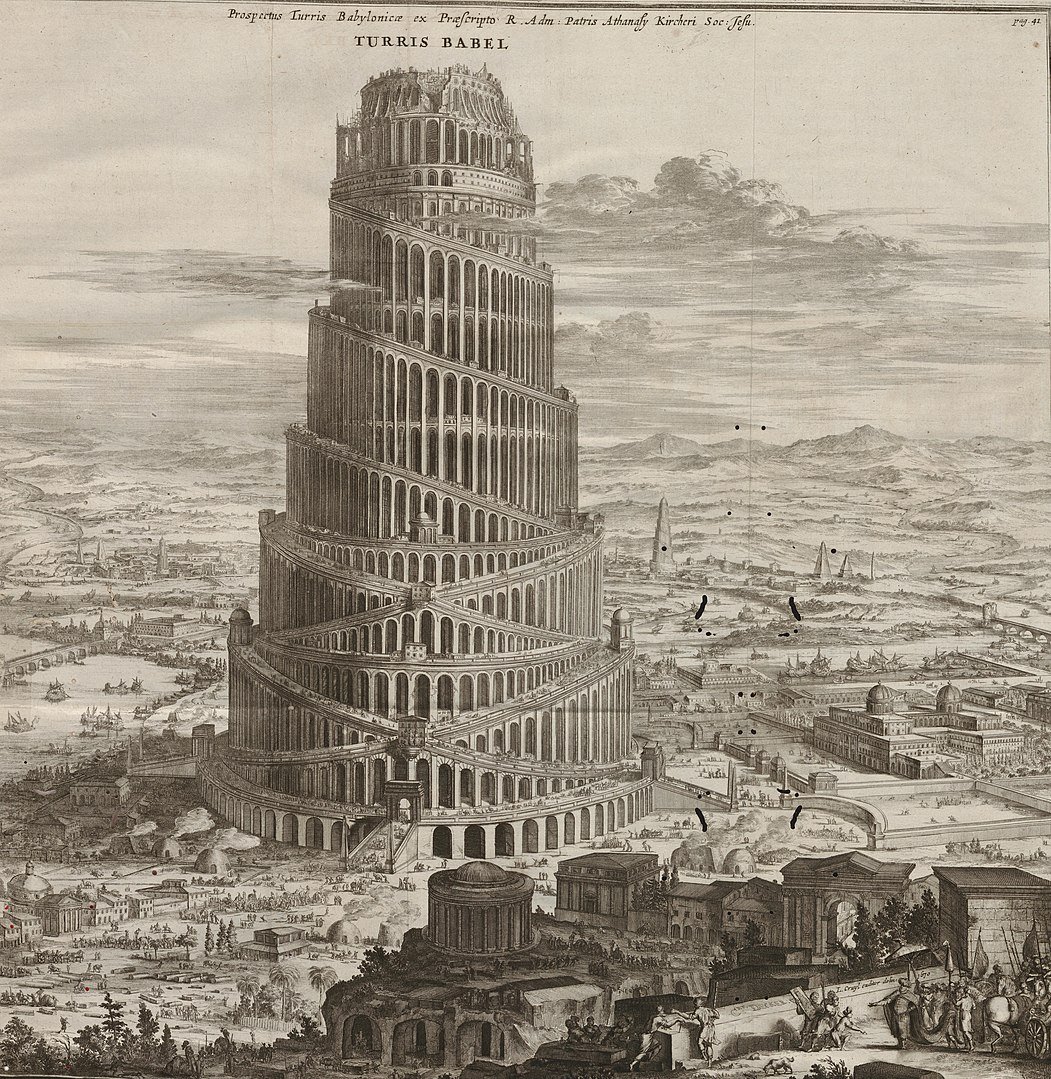
Turris Babel by Athanasius Kircher, 1679
Babel: What’s in a Name?
The name “Babel” plays a central role in this story, and its meaning has intrigued scholars for centuries. Genesis 11:9 tells us, “Therefore its name was called Babel, because there the Lord confused the language of all the Earth.” The Hebrew word balal, meaning “to confuse,” is a fitting explanation for the chaos that ensued when languages were divided. But there’s more to the name than a simple pun.
Historically, Babel is associated with Babylon, one of the most powerful cities in ancient Mesopotamia. In Akkadian, the word Bab-ilu means “Gate of the God(s),” which gives the story an ironic twist. What was meant to be a gateway to the divine became a symbol of divine judgment. Scholars like John H. Walton, in Ancient Near Eastern Thought and the Old Testament, suggests that the story reflects a jab at Babylon, a city known for its monumental architecture and imperial power.
In this context, the Tower of Babel may not just be a story of human pride but also a critique of Babylon’s attempts to centralize control and elevate itself to divine status. As the story unfolds, the name Babel takes on layers of meaning — confusion, divine intervention and the limits of human ambition.
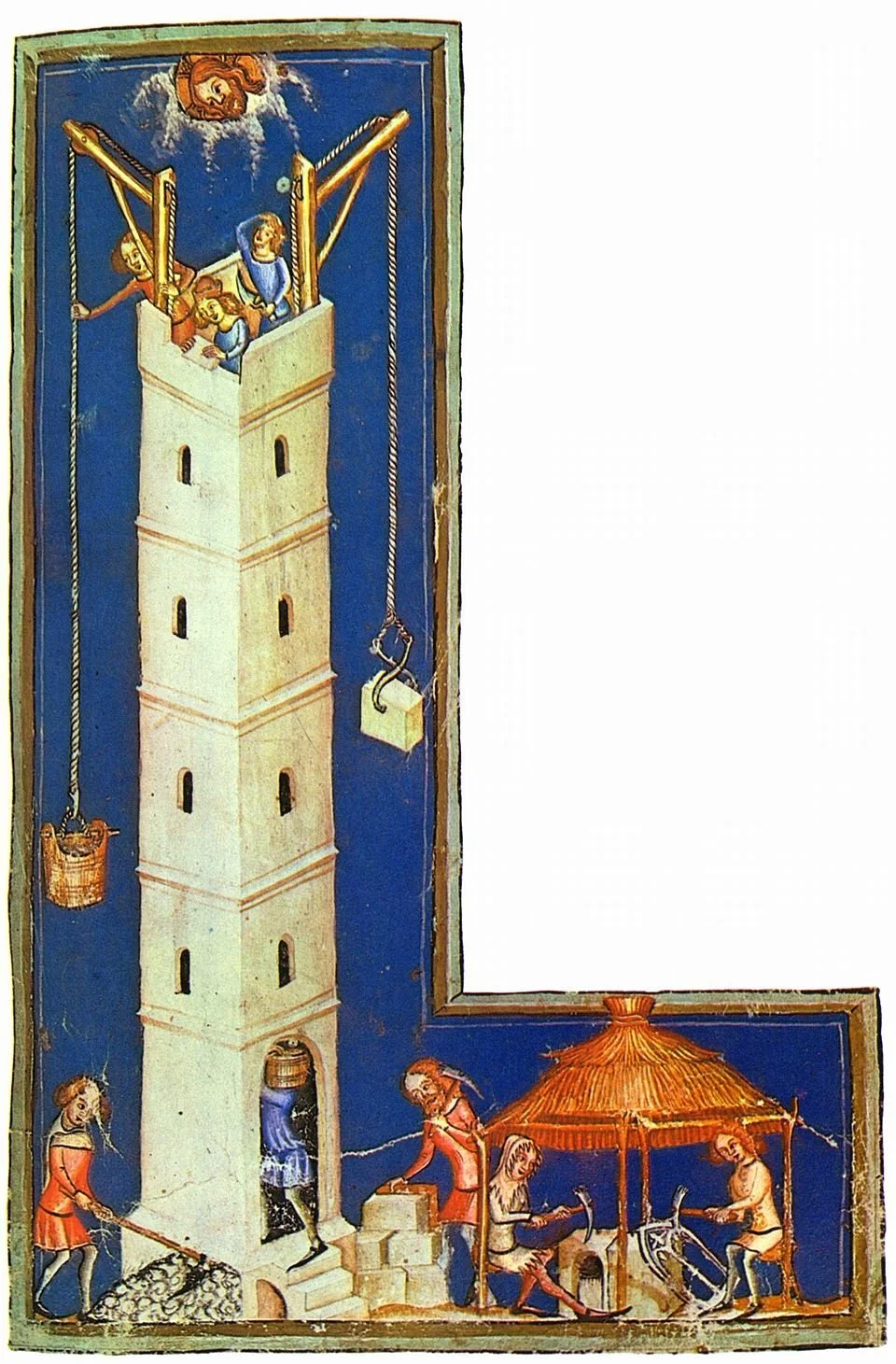
From a manuscript of Rudolf von Ems’ Weltchronik, circa 1370s
The Tower: Architectural Marvel or Symbol of Tyranny?
What exactly was the Tower of Babel? Some see it as a simple architectural wonder, a testament to early human ingenuity. Others, however, argue that it was more symbolic — a representation of a dangerous kind of unity, one that leaned toward tyranny.
Scholars like André Parrot, in The Tower of Babel, point out that the tower could have been modeled after the ziggurats of Mesopotamia. These massive stepped structures weren’t just places of worship; they were symbols of power, often commissioned by rulers to display their authority and connection to the divine. In the case of Babel, the tower may have been a political statement as much as a religious one — a way for the people of Shinar (modern-day Iraq) to consolidate their power and make a name for themselves.
Bruce K. Waltke, in Genesis: A Commentary, takes this a step further, suggesting that the story represents a critique of human arrogance and centralized control. By attempting to build a tower “with its top in the heavens,” humanity was essentially overstepping its bounds, aiming to control not just the Earth, but the heavens, too. For God, much like with Adam and Eve in the Garden of Eden, and that tempting fruit from the Tree of Knowledge, this was an example of human overreach. It also revealed mankind’s potential for tyranny. The scattering of people and languages, then, was more about disrupting a dangerous concentration of power.
Was the Tower of Babel merely a marvel of human engineering, or was it a warning about the dangers of unchecked ambition and centralized control? The story leaves room for both interpretations.
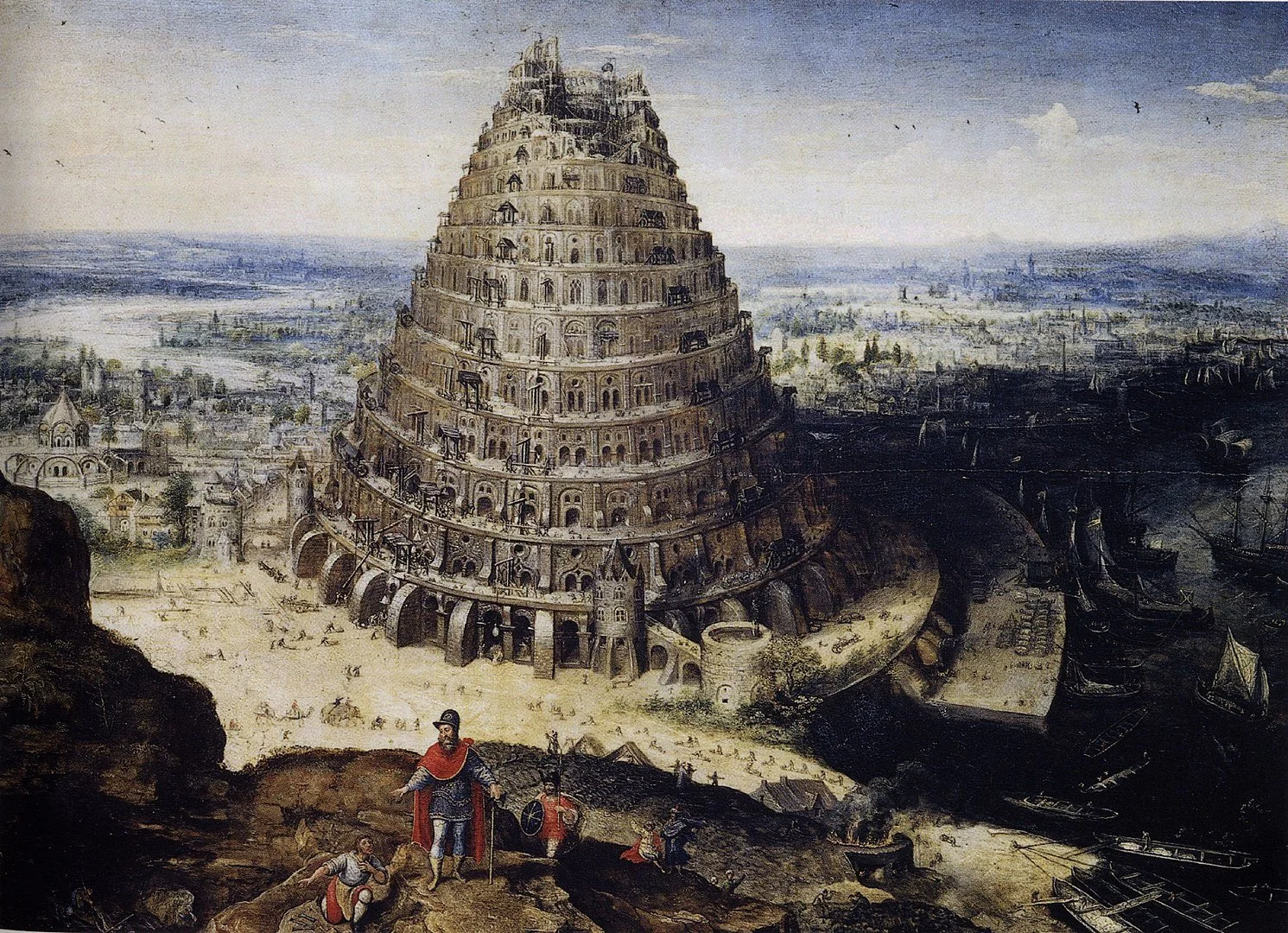
Tower of Babel by Lucas van Valckenborch, 1594
A Test of Unity or Divine Jealousy?
At the heart of the Tower of Babel story is a question: Why did God intervene? Was it simply a matter of preventing human overreach, or was there something more behind his actions? Some scholars argue that God’s decision to divide humanity was a way of protecting us from ourselves, while others suggest it could reflect a more unsettling aspect of divine jealousy.
The Babel story could represent God’s concern over humanity’s growing self-sufficiency. By working together with one language and a unified purpose, humanity was moving toward a level of technological and social advancement that might have made us too self-reliant — possibly even eliminating the need for divine authority. The creation of numerous languages, then, served as a divine check on human ambition, ensuring that we remain dependent on God’s guidance. (I’m not sure why he hasn’t stepped in since, say, with the rise of AI.)
In other words, God was acting jealous and petty. Whether seen as protective or punitive, the confusion of languages suggests that unity without divine blessing was considered dangerous. Was it out of care or control that God intervened? Scholars continue to debate the deeper motivations behind this ancient narrative.
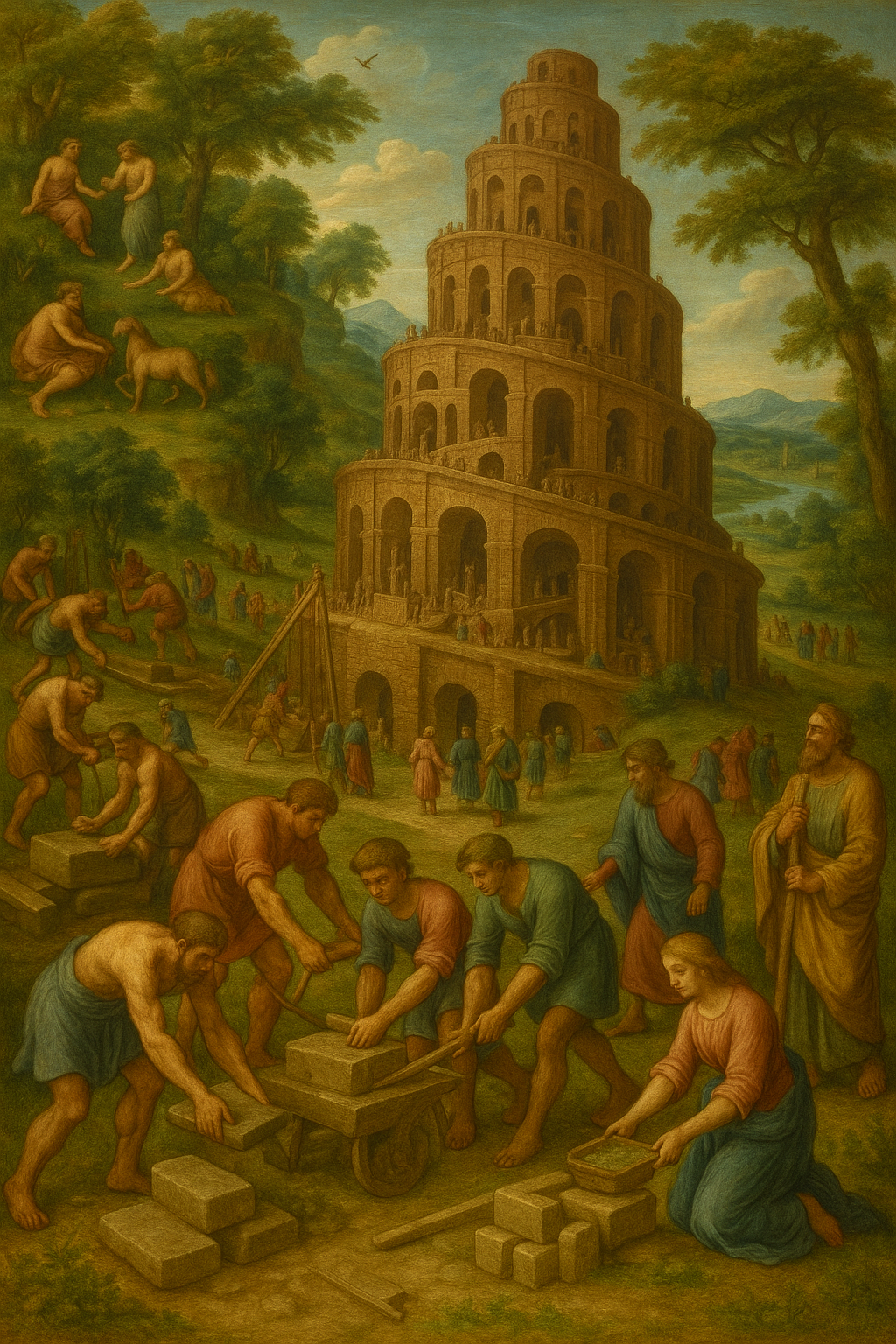
The Tower as a Return to Eden?
Could the Tower of Babel have been more than just a display of human ambition? Some scholars suggest that it represented humanity’s attempt to re-create the unity they once experienced in the Garden of Eden: a world where they lived in harmony with each other and with God.
Phyllis Trible, in Texts of Terror: Literary-Feminist Readings of Biblical Narratives, explores the idea that the Babel project symbolized a desire to return to the original state of unity that existed before the Fall. In Eden, humanity walked in close proximity to God, speaking a divine language, free of conflict and strife. By building a tower “with its top in the heavens,” humans may have been trying to reclaim that lost connection and regain their place alongside the divine.
RELATED: What Does God Look Like?
John H. Walton, in The Lost World of Genesis One, sees things a bit rosier. He argues that God’s disruption of the Babel project was actually a protective act. After the Fall, humans were no longer capable of re-creating Eden through their own efforts. God’s scattering of people and languages could be seen as a way to prevent a repeat of the Fall — protecting humanity from trying to reenter a paradise they could no longer access without divine intervention.
RELATED: Controversial Takes on Cain and Abel
In this light, Babel becomes a story about the limits of human power and the dangers of trying to forcefully regain what was lost in Eden. The scattered languages and divided nations reflect the reality that Eden, and its perfect unity, is gone — at least until a new kind of divine reconciliation can be achieved.
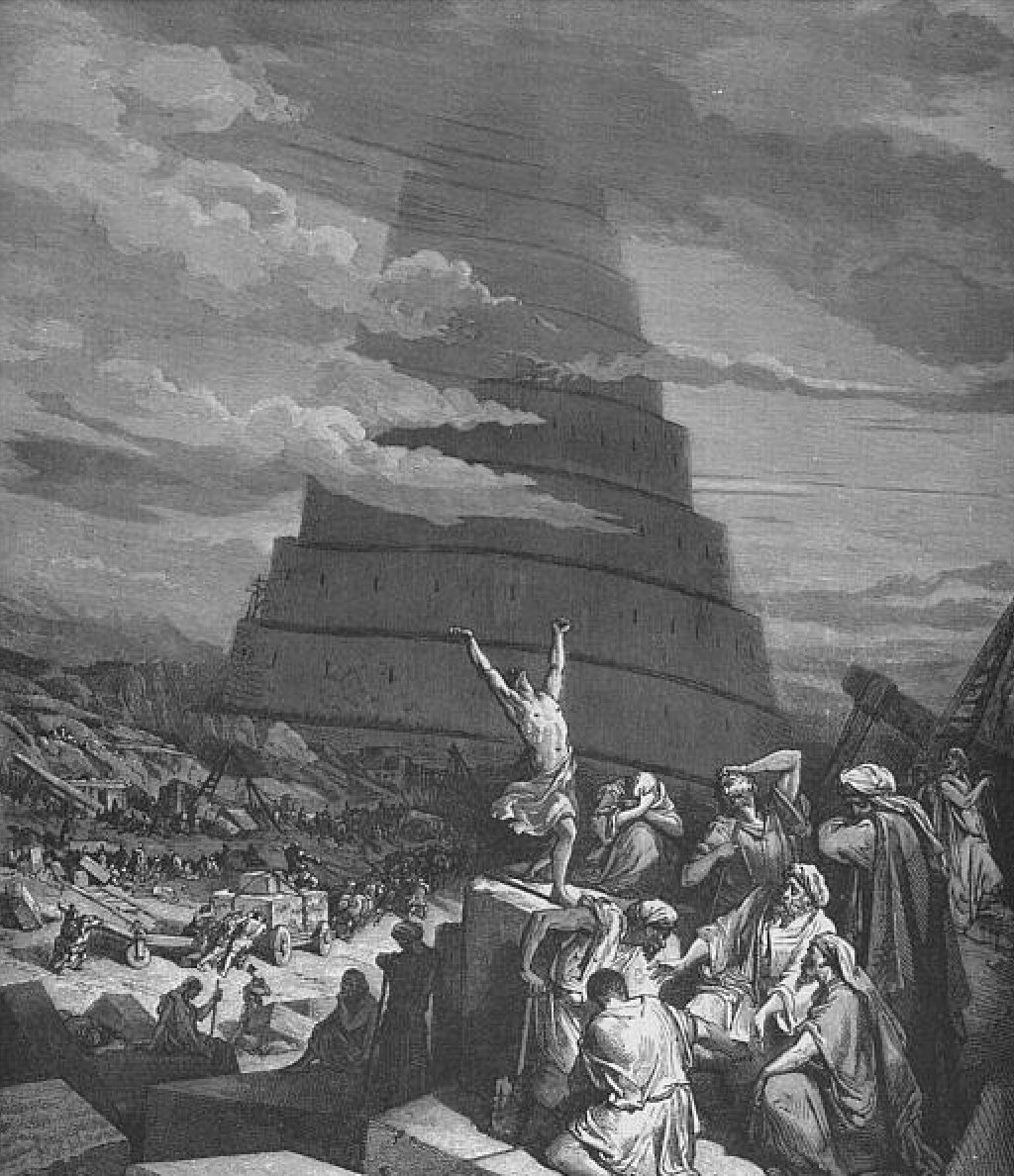
The Confusion of Tongues by Gustave Doré, 1866
The Role of Language: Tool of Power or Divine Gift?
Language plays a crucial role in the story of Babel. The multiplying of languages is God’s method of halting the ambitious project. But what does this division of tongues truly represent? Was it a curse to fracture human unity, or could it be seen as a divine gift, ensuring cultural diversity and preventing totalitarianism?
Some scholars think that the confusion of languages was a political move. By disrupting a single language, God introduced a tool that ensures division and decentralization, preventing any one group from gaining unchecked power over the world.
In this view, language becomes a form of control. It prevents unified rebellion or dominance by any one people, a theme that would echo through later biblical stories of empires rising and falling.
Others, like Joseph Blenkinsopp in Creation, Un-Creation, Re-Creation, propose that language diversity could be seen as part of God’s larger plan for humanity. Rather than cursing humanity with confusion, the diversity of languages allowed for cultural richness, individuality and the development of multiple civilizations. This theory suggests that pre-Babel unity wasn’t a utopian ideal, but rather a stifling form of uniformity. The multiplying of languages, then, might represent a divine gift that celebrates diversity and human potential in new and unexpected ways.
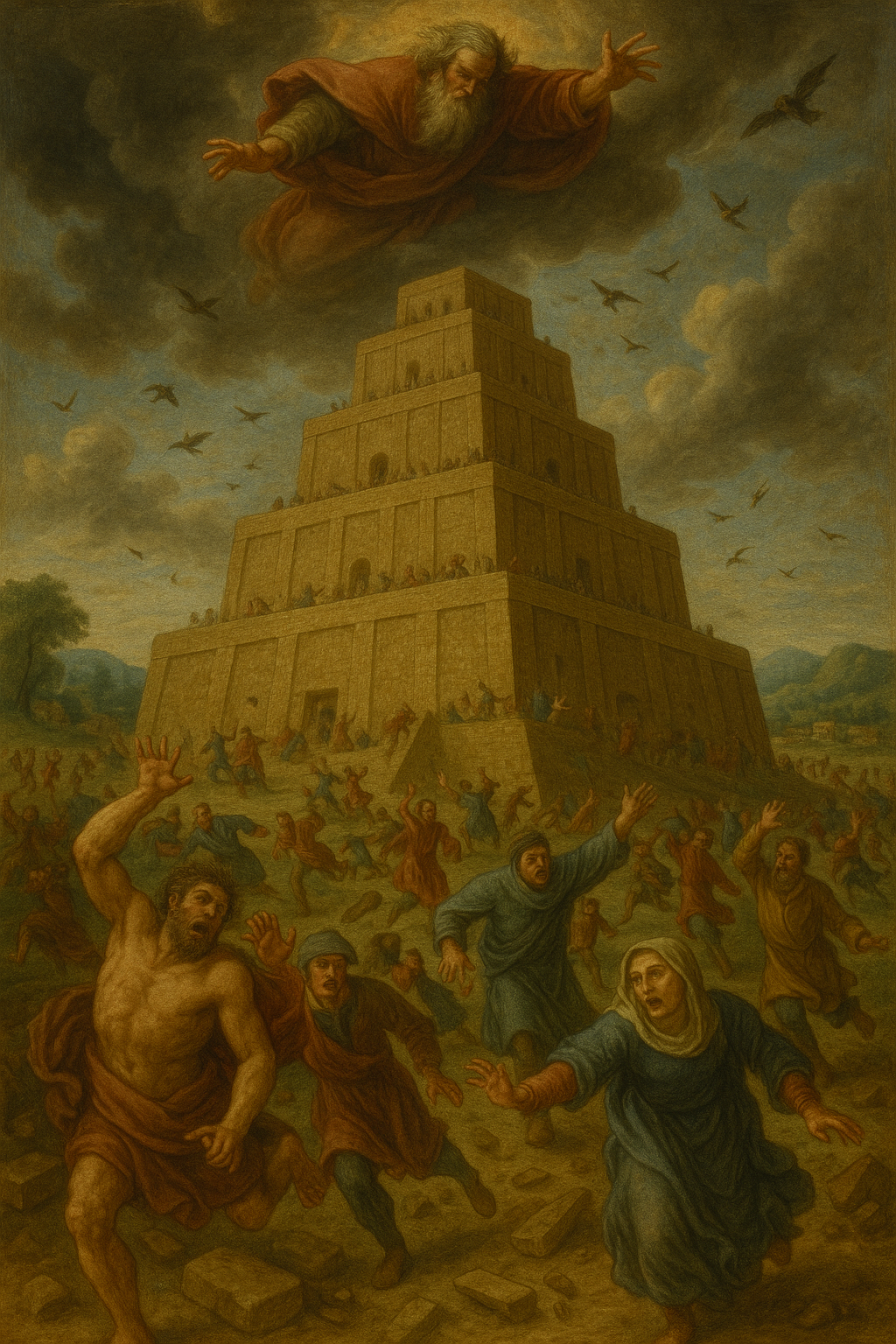
Theological Implications of Babel: Was God’s Action Justified?
The Tower of Babel story raises profound theological questions about the nature of God’s intervention. Was the scattering of people and languages a necessary measure to protect humanity, or was it an example of divine overreach? Scholars remain divided on whether God’s actions in this story reflect wisdom … or an overly controlling approach to human progress.
Walter Brueggemann, in Genesis: Interpretation: A Bible Commentary for Teaching and Preaching, interprets God’s scattering of the people as a protective act. He suggests that God saw humanity’s unified ambition as leading toward potential self-destruction. By disrupting their efforts, God prevented them from becoming too powerful and overstepping their natural limits, much like the consequences faced in Eden. As God observed, “Nothing that they propose to do will now be impossible for them” (Genesis 11:6). In this view, divine intervention was an act of mercy, keeping humanity from a path that could have led to another downfall.
On the other hand, David J.A. Clines, in The Theme of the Pentateuch, offers a more critical perspective. Clines questions whether God’s disruption of human progress was truly necessary. What if humanity had been allowed to continue its work, even if it led to failure? This view suggests that God’s intervention may have been a way to maintain divine authority, ensuring that humanity could never challenge or rival God’s position. In this reading, the confusion of languages represents a limit imposed by God — not on humanity’s safety, but on its potential.
These contrasting perspectives raise a larger question: Was God justified in scattering humanity and fragmenting their language — or was it an overreaction to a collective project that may have been doomed to fail on its own? As with many Old Testament stories, the answer depends on how you interpret divine-human relationships and the boundaries between freedom and control.
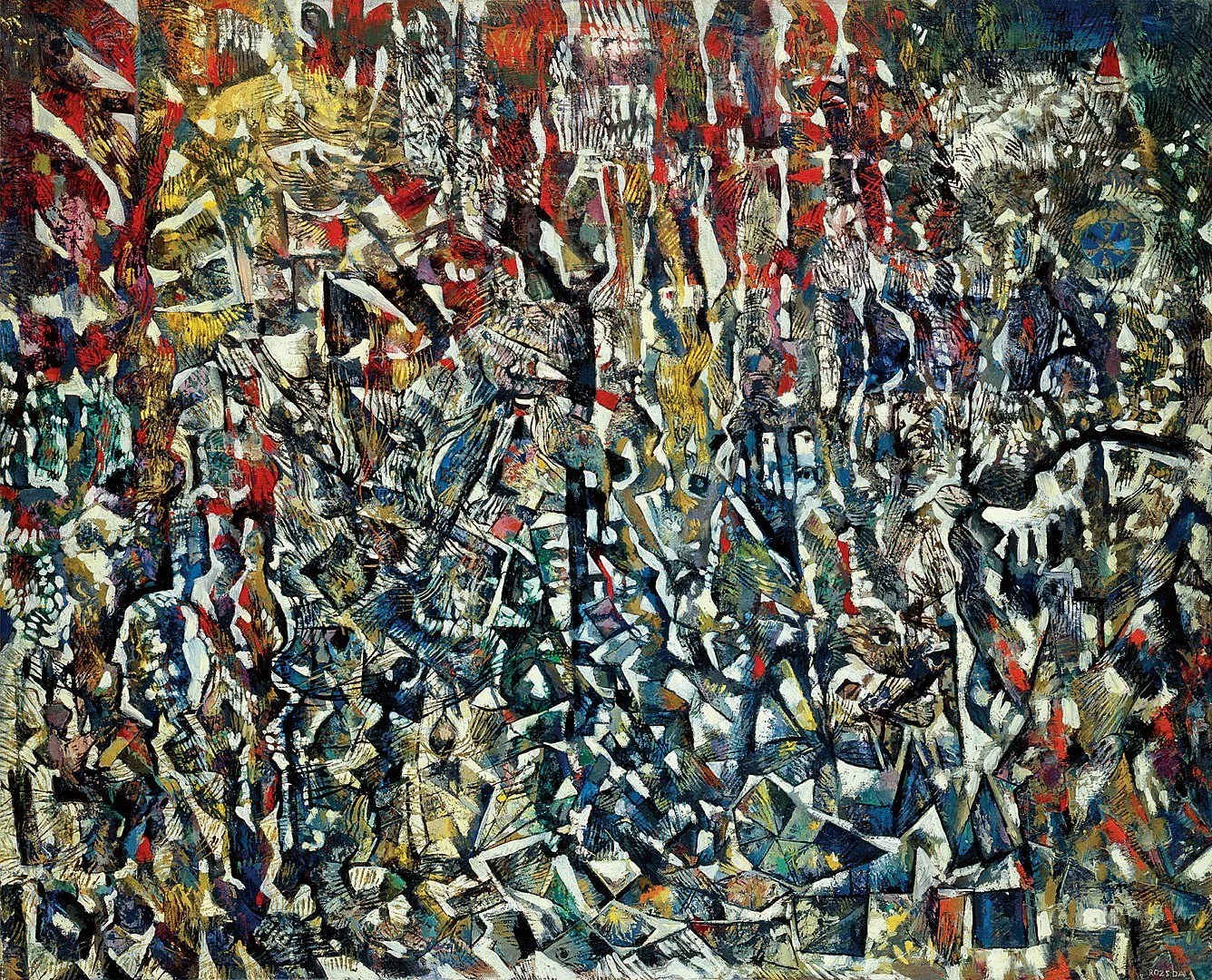
Tower of Babel by Endre Rozsda, 1958
Babel’s Legacy
The Tower of Babel story is often seen as a straightforward tale about human pride and divine punishment. But as we’ve explored, it’s anything but simple. From questions about the true meaning of Babel’s name to debates over whether God’s actions were protective or controlling, this ancient narrative touches on themes of unity, power and the human desire for greatness. Was Babel a symbol of technological tyranny, a return to Eden, or an expression of divine jealousy? Each theory offers new insights into the relationship between humanity and the divine.
Ultimately, the Tower of Babel reminds us that the limits placed on human ambition — whether through language or culture — aren’t just about division, but about the complexity of freedom. As people reached for the heavens, they were brought back to earth, scattered, perhaps not as punishment but as a way to preserve our potential for diversity, creativity and growth.
The conversation around Babel continues — in a variety of languages. –Wally