aztec

Human Sacrifice, Cannibalism & Cosmic Calendars: 20 Shocking Facts About Ancient Mesoamerica

From floating gardens to skull racks and chocolate money, Mesoamerican civilizations like the Aztec, Maya and Olmec were rewriting the rules of society — often with obsidian blades.
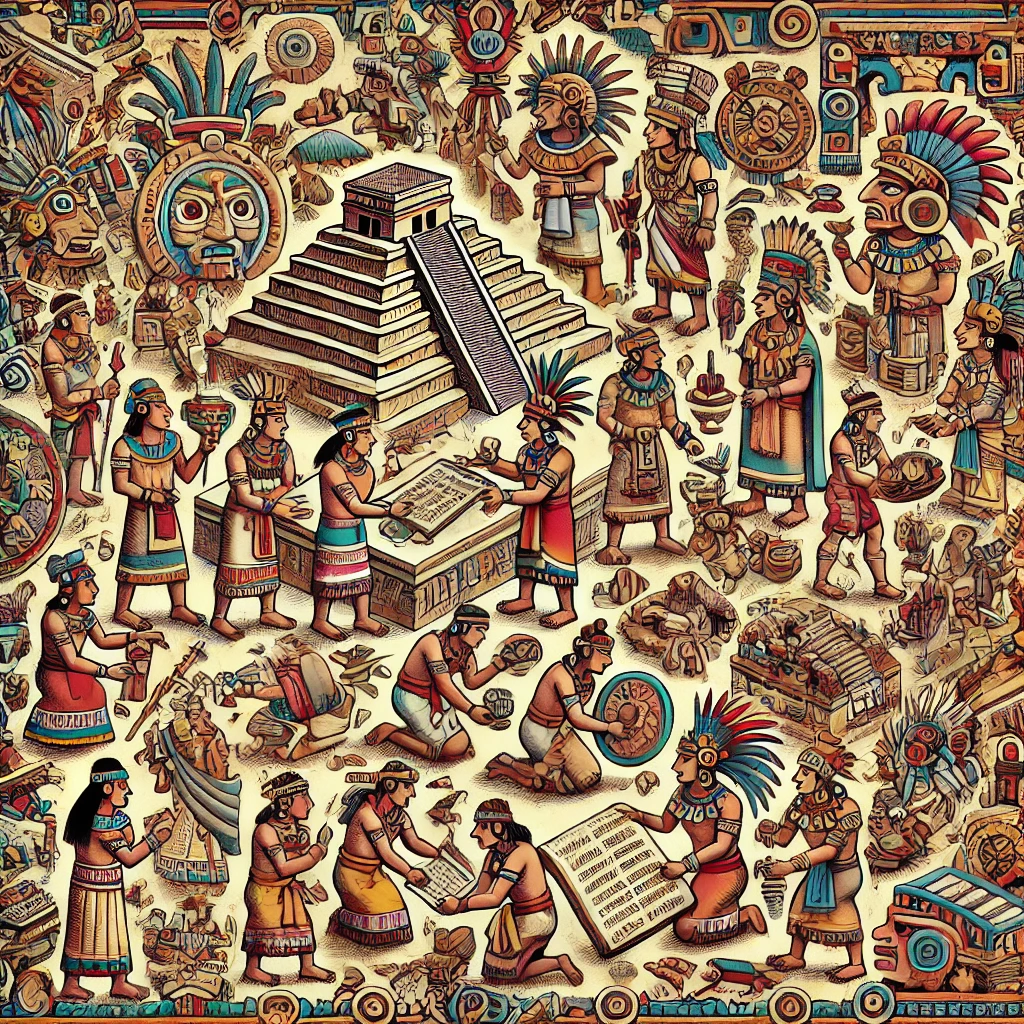
A busy ancient Mesoamerican scene, filled with people, a stepped pyramid, a codex, feathered headdresses and people going about their days

Imagine a world where chocolate is money, cities align perfectly with the stars, and rituals involve hearts ripped from chests to keep the sun from falling out of the sky. 

Welcome to Mesoamerica, where civilizations like the Maya and Aztecs shaped the Americas while rewriting the rules of what it means to build and believe — with a whole lot of human sacrifice thrown in.

With a swift motion, the heart is ripped from the chest, still beating, and offered to the heavens.
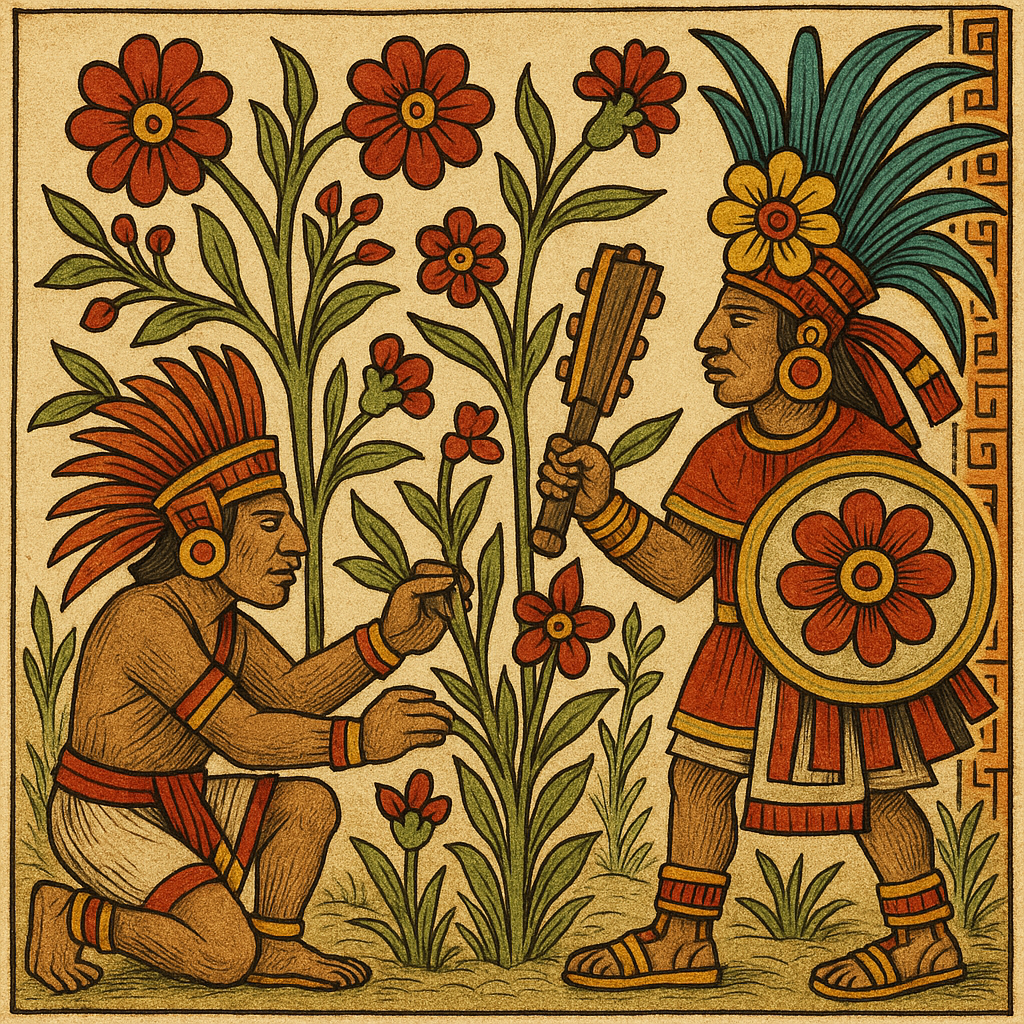
An Aztec man gardens a flower garden while another is a warrior and holds a sword and shield

While Europe was still playing with iron and forgetting how to write, Mesoamerican civilizations were busy creating some of the most awe-inspiring — and downright shocking — traditions and innovations the world has ever seen. 
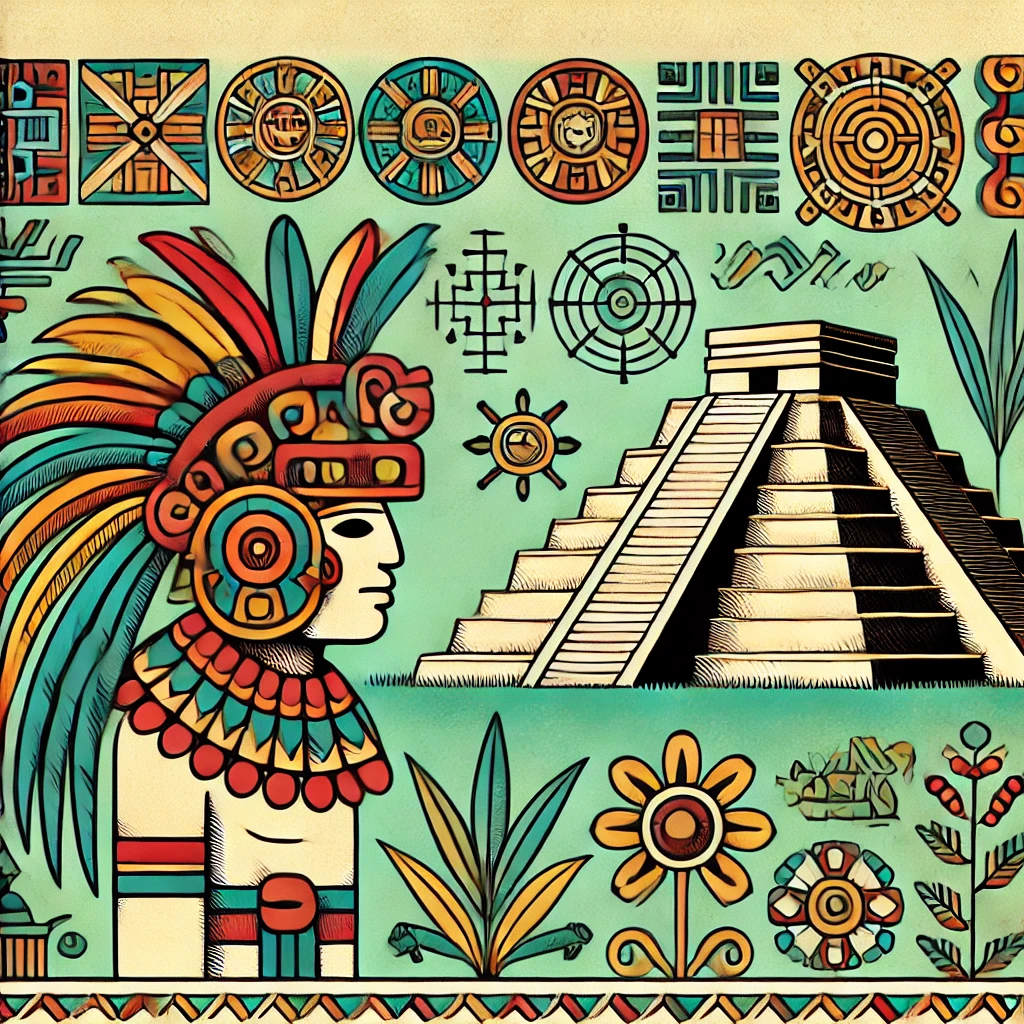
A codex style illustration of an Aztec man in feathered headdress by symbols and a stepped pyramid

What Was Mesoamerica?

Mesoamerica is actually more of a concept than anything. It refers to the region and cultures that flourished in what is now Mexico and parts of Central America before the Spanish arrived. This includes legendary civilizations like the Olmec (the OGs), Maya (astronomers extraordinaire), and Aztec (master builders and blood-offerers).

Think of Mesoamerica as a sort of Silicon Valley of the ancient world — where everyone was innovating, connecting and competing to outdo each other in art, agriculture and, sometimes, human sacrifice.

With that in mind, let’s dive into the 20 most shocking facts about early Mexican cultures.
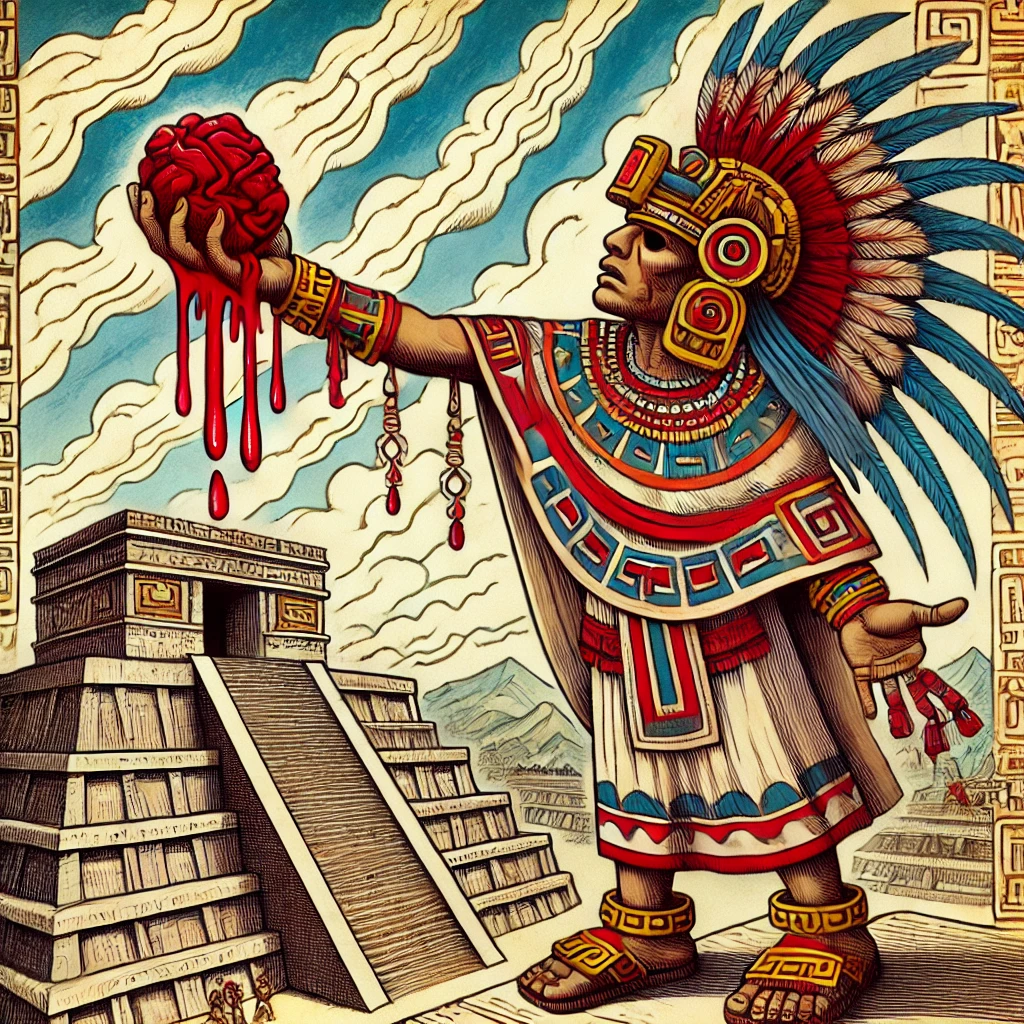
An Aztec priest holds up a bloody human heart as a sacrifice in front of a stepped stone pyramid

1. Human Sacrifice: The Price of the Sunrise

Worshippers would stand at the base of the towering Templo Mayor in Tenochtitlan, the heart of the Aztec empire. The air is thick with incense, the chants of priests echo across the plaza, and thousands of onlookers gather, awaiting the most sacred act of devotion. At the apex of the temple, a victim lies on a stone altar, surrounded by priests in jaguar and eagle costumes. The sun climbs higher in the sky as the priest raises an obsidian blade. With a swift motion, the heart is ripped from the chest, still beating, and offered to the heavens.

To the Aztecs, human sacrifice was a brutal necessity. They believed the gods had sacrificed themselves to create the world, and in return, humanity owed a debt of blood. One of the major Aztec gods, Huitzilopochtli, the sun deity and patron of warriors, required nourishment to continue his battle against darkness. Without regular sacrifices, the sun would stop rising, plunging the world into chaos. In one particularly shocking event, at the consecration of the Templo Mayor in 1487, it’s said that 20,000 people were sacrificed over four days.

This practice wasn’t isolated to the Aztecs, though. Other Mesoamerican cultures, like the Maya, also performed human sacrifice, albeit on a smaller scale. While horrifying by modern standards, this ritual was deeply spiritual and tied to the very fabric of their worldview: a cosmos fueled by cycles of life, death and renewal. For the Aztecs, each drop of blood spilled was a gift to keep the universe alive.
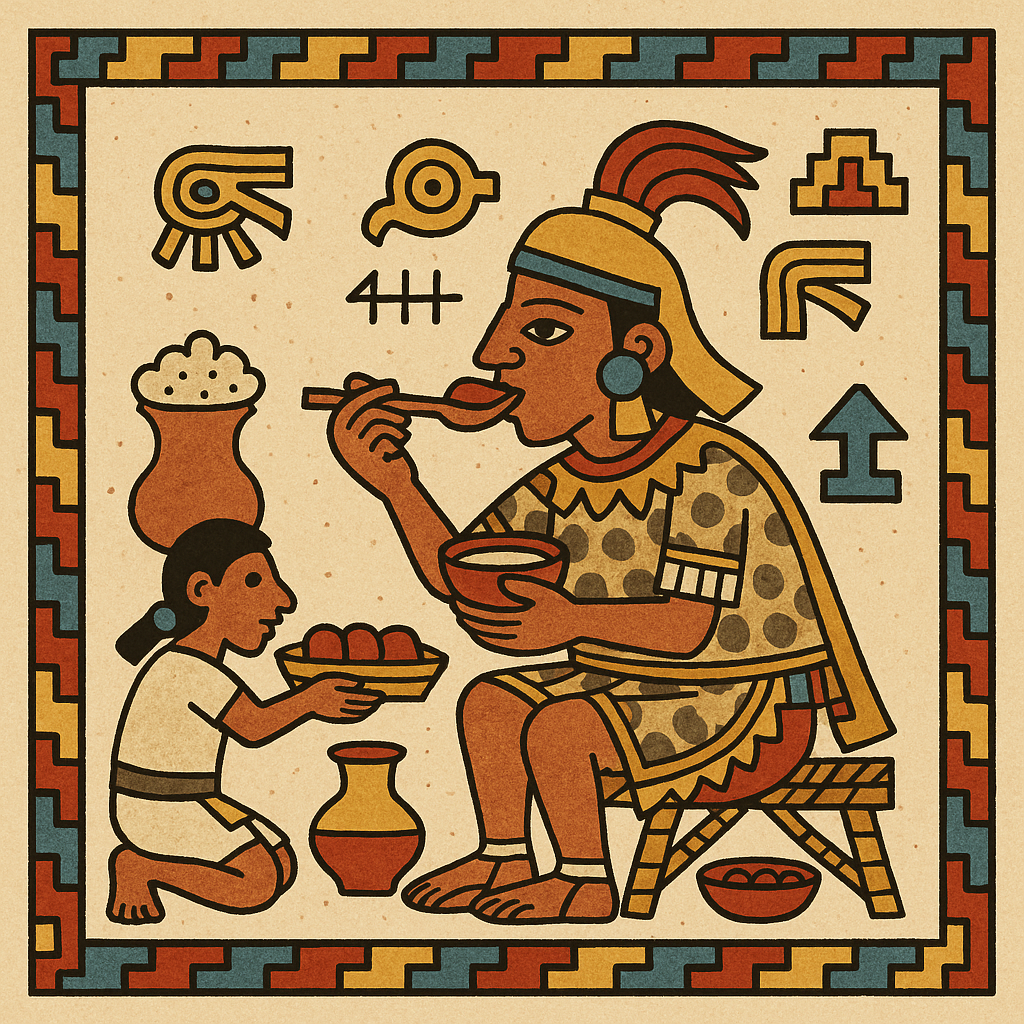
An Aztec warrior eats the body of someone he captured in a battle as a servant kneels, serving him

2. Cannibalism: A Taste of Divinity

At a royal feast in the Aztec capital, Tenochtitlan, among the tamales, chili-spiced sauces and cups of frothy chocolate, there might also have been something far more unsettling: human flesh. Reserved for priests, rulers and warriors, the consumption of sacrificial victims wasn’t a matter of hunger but of holiness. The Aztecs believed that by eating the flesh of those offered to the gods, they could absorb divine energy, making themselves closer to the deities they worshipped.

Cannibalism in Mesoamerican cultures is one of the most debated and misunderstood aspects of their society. Archaeological evidence and Spanish accounts suggest that the practice, while rare, was tied to specific rituals. For example, in ceremonies honoring the god Xipe Totec, victims were flayed, and their flesh was symbolically eaten to embody regeneration and agricultural fertility. While early Spanish chroniclers exaggerated the extent of cannibalism to demonize indigenous cultures, the underlying spiritual rationale was entirely alien to European sensibilities.
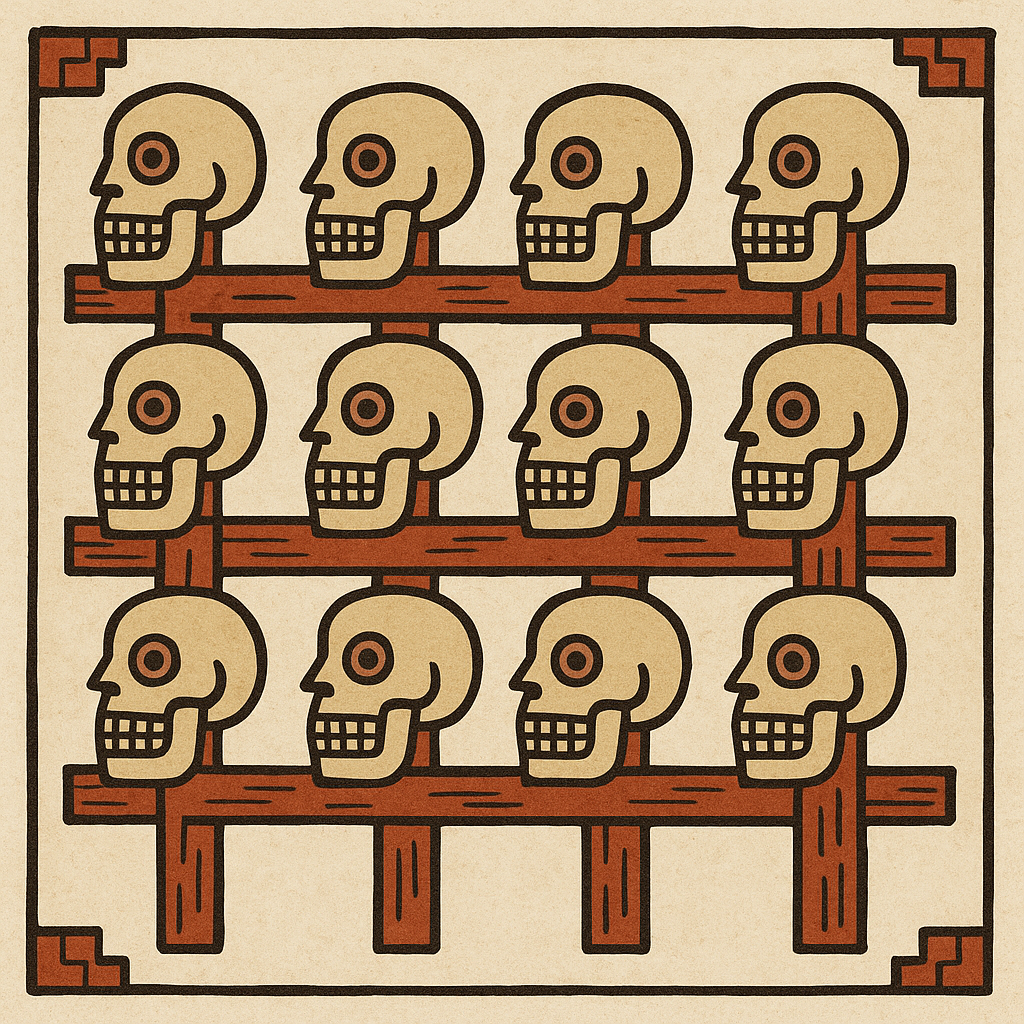
A Mesoamerican tzompantli skull rack

3. Tzompantli Skull Racks: Death on Display

In the bustling city of Tenochtitlan, visitors couldn’t miss the tzompantli. These towering racks, studded with human skulls, lined temple courtyards like grim trophies. For the Aztecs, the tzompantli was both an offering to the gods and a message to outsiders: This was a society willing to go to unimaginable lengths for their beliefs. Spaniards who arrived in the 16th century were shocked by the sight, their writings painting vivid pictures of thousands of skulls, bleached white by the sun, staring back at them.

But the tzompantli wasn’t just about intimidation. The Aztecs saw the skull as a sacred vessel of life’s essence, a way to honor the sacrifice made by those who gave their lives for the gods. Recent archaeological excavations in modern-day Mexico City uncovered one such skull rack, confirming its immense size and intricate construction. Researchers found skulls arranged with holes drilled through them, strung together like beads on a macabre necklace.
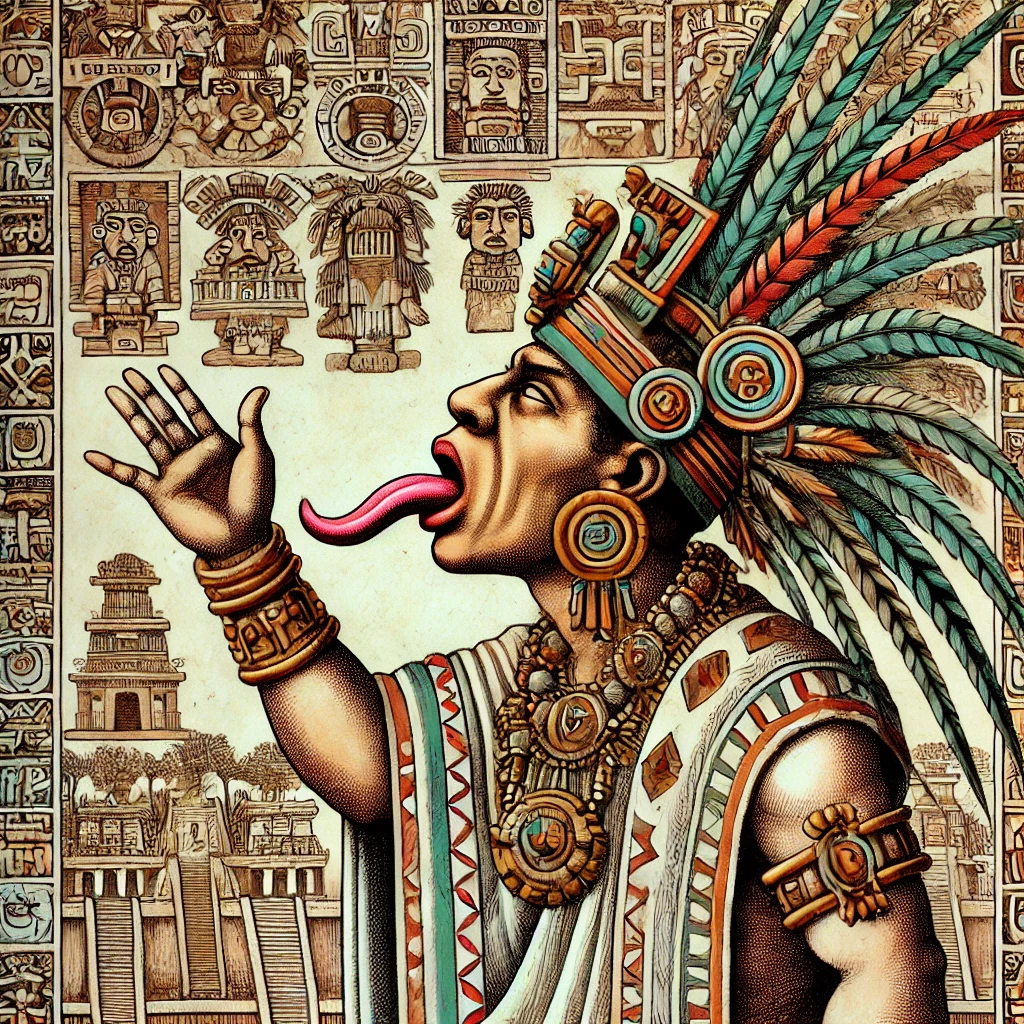
An Aztec priest sticks out his tongue to be pierced as part of a bloodletting ritual

4. Bloodletting: Cutting Close to the Cosmos

The sharp sting of an obsidian blade, the drip of crimson onto sacred ground — this was devotion in Maya and Aztec culture.

While human sacrifice grabbed the headlines (and the hearts), bloodletting was far more common and deeply personal. Priests, rulers and even commoners pierced tongues, earlobes or limbs — sometimes with stingray spines — to feed the gods their own life force. During festivals, entire communities might bleed in unison, hoping to secure a good harvest or protection from catastrophe.

Why would anyone willingly endure such pain? For Mesoamericans, blood was the most sacred substance, a direct connection to the gods. By offering their own blood, they reaffirmed their role as intermediaries between the divine and the mortal. 
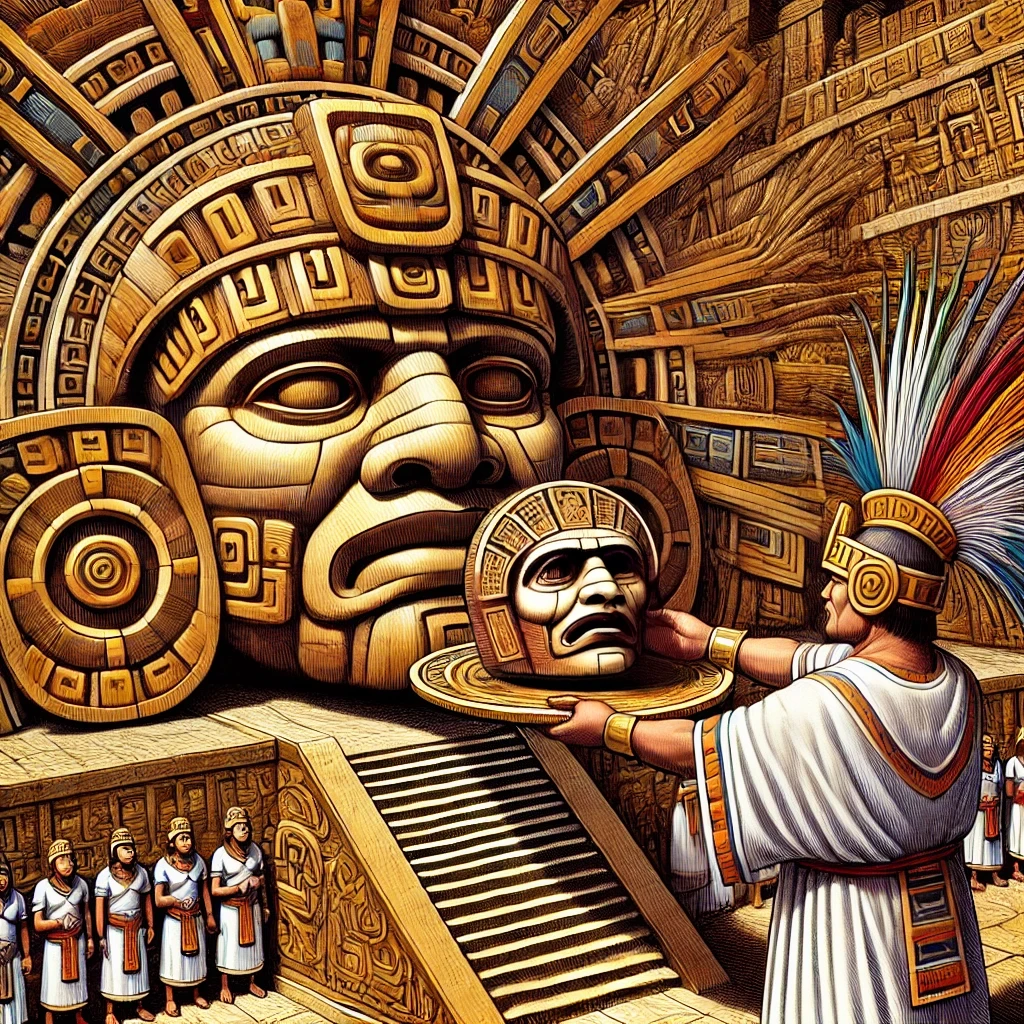
An Aztec priest offers a head on a platter to Huitzilopochtli, the sun god, in his temple, with a row of attendants

5. Ritual Dismemberment: Offering to Many Gods

The calm after a sacrifice was often short-lived. In certain ceremonies, the Aztecs didn’t stop at removing the heart; they dismembered the victim’s body. Priests would scatter the parts across different temples and altars, each piece an offering to a specific god. A hand might be given to Xochipilli, the god of art and pleasure, while a head would go to Huitzilopochtli, the sun god.

To the Aztecs, this was cosmic bookkeeping. Each god had unique responsibilities, from rain to war, and each needed their share of devotion to keep the world functioning. Archaeological digs have uncovered evidence of these practices, with bones showing deliberate markings consistent with ritual dismemberment. Some temples even had distinct areas for specific body parts, suggesting an organized system for distributing offerings.

To the Aztec, these offerings were acts of love, ensuring the gods’ goodwill and the world’s continued existence.
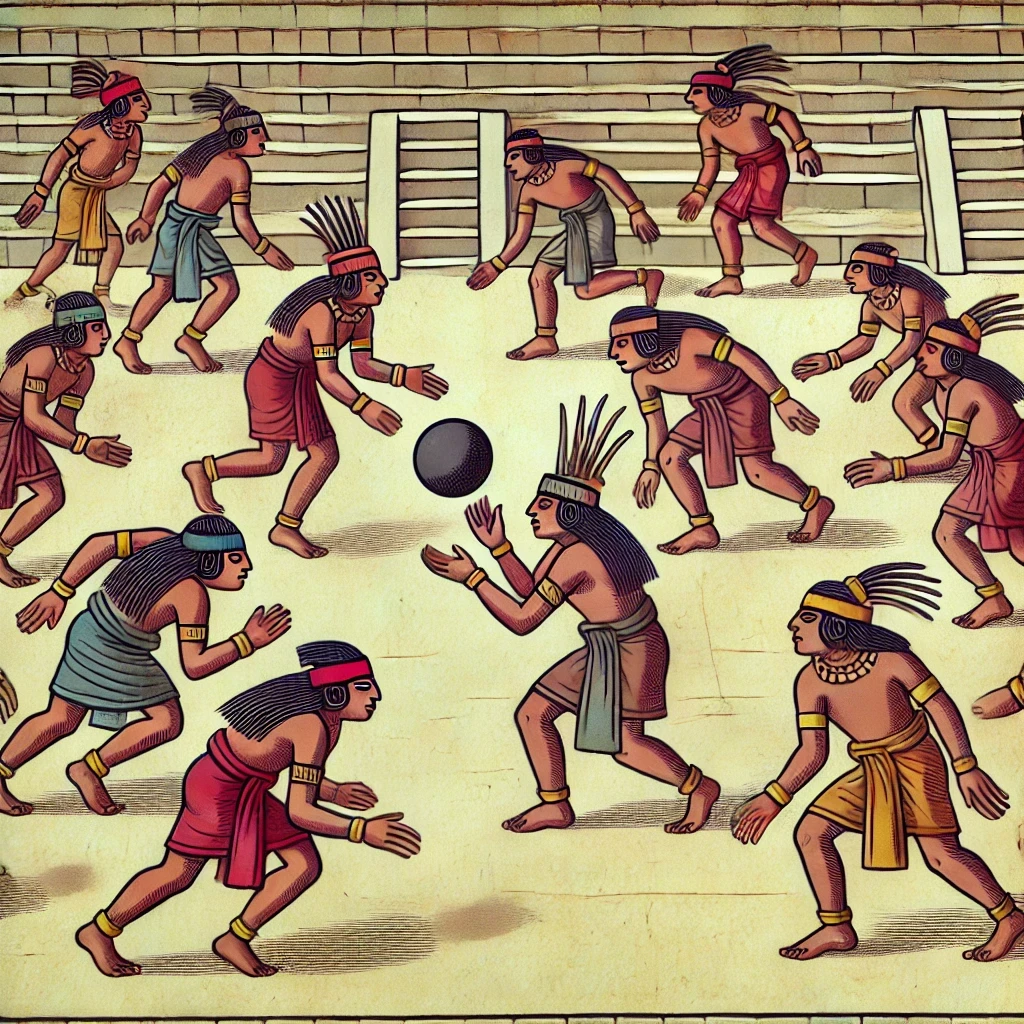
Mesoamerican men play the ollamaliztli ballgame

6. Ollamaliztli: The Ballgame With Fatal Stakes

The ball bounces against a stone hoop, echoing across the court. Two teams of players, drenched in sweat, leap and twist, desperate to keep the rubber ball in play. The stakes couldn’t be higher: Losing could mean death.

The Mesoamerican ballgame, ollamaliztli, played by cultures like the Maya and Aztecs, was more than a game; it was a ritual symbolizing the eternal battle between life and death. Ollamaliztli was often played to honor gods or mark significant events, such as a military victory. While not all games ended in sacrifice, some did — especially during rituals. Archaeologists have found ball courts with murals depicting bound captives, suggesting that losing teams or their captains were sometimes offered as sacrifices.

The game itself was no small feat. The ball, made of solid rubber, could weigh up to 10 pounds, and players couldn’t use their hands or feet to touch it — only their hips, shoulders or thighs. Injuries were common, and the pressure of knowing your life might be on the line made the stakes even higher. 

Today, remnants of ball courts dot Mesoamerica, standing as haunting reminders of a sport where victory and survival were often intertwined.
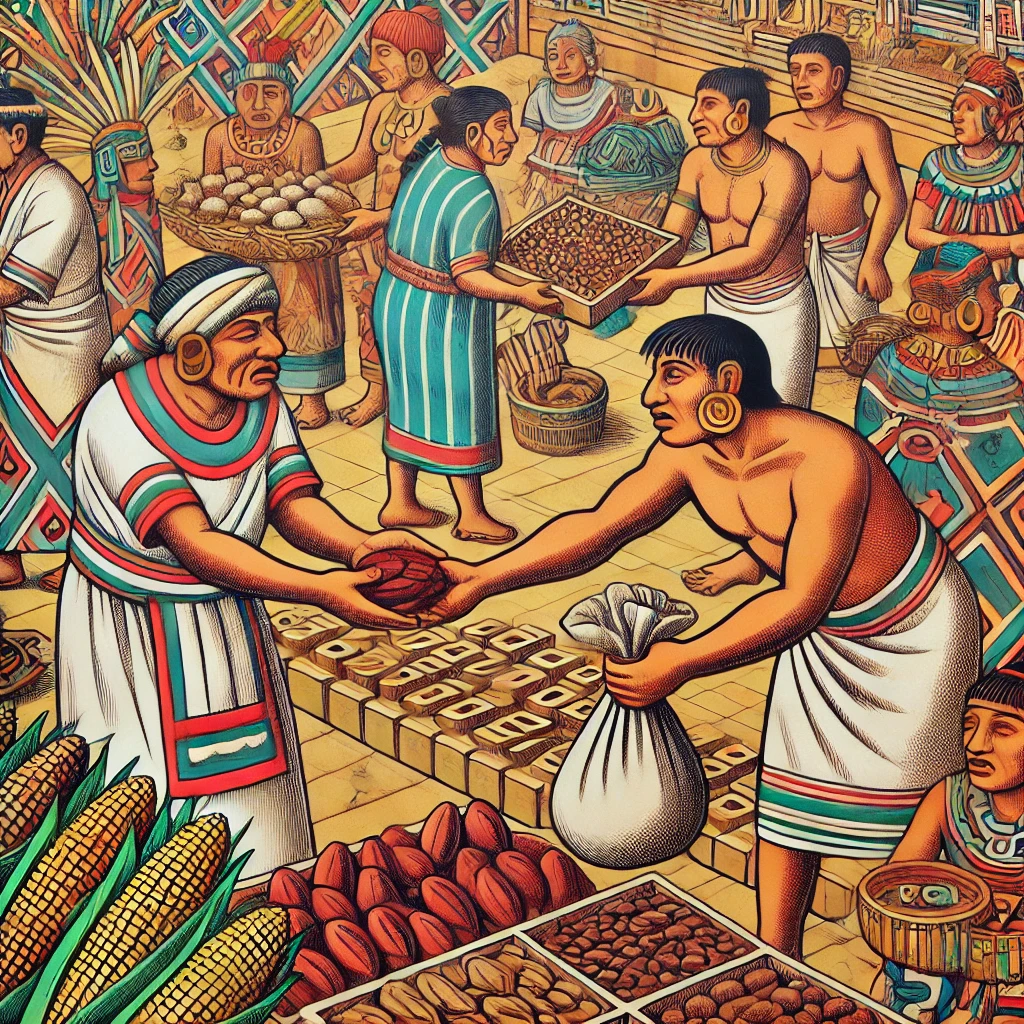
A Mesoamerican market, with people trading cocoa for goods

7. Chocolate as Currency: Divine and Delicious

You walk into a bustling marketplace in Tenochtitlan, the Aztec capital, and instead of coins jingling in pockets, traders pass around cacao beans. Need a turkey? That’ll cost 100 beans. A tamale? Just three. In Mesoamerica, chocolate wasn’t just a treat — it was wealth.

The Maya were among the first to cultivate cacao, considering it a gift from the gods. The Aztecs took it a step further, turning the beans into a form of currency. But cacao also held immense religious significance. Priests drank chocolate in sacred rituals, often mixing it with chili, maize or honey. This wasn’t your typical hot chocolate, though; it was a frothy, bitter elixir meant to connect mortals with the divine.

For the Aztecs, chocolate represented luxury, spirituality and power. Its association with the gods elevated it beyond mere sustenance, making it a cornerstone of their economy and culture. 
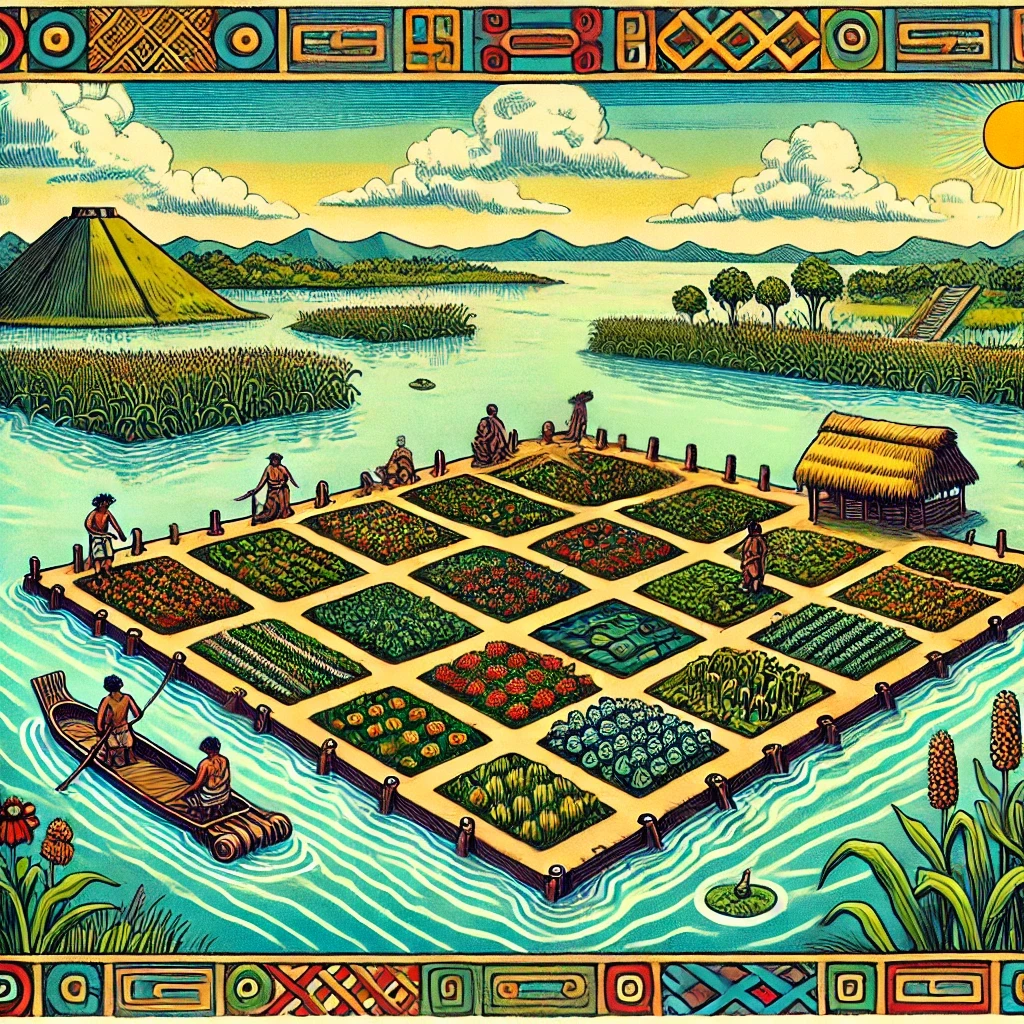
A chinampa floating garden in ancient Mesoamerica, divided into sections to grow a variety of plants and crops in a canal, while two people in a boat paddle past and a pyramid is seen nearby

8. Chinampa Floating Gardens: Ancient Environmentalism

Faced with limited farmland, the Aztecs invented chinampas — ingenious floating gardens — to feed their massive population. You can still glide through some of the original canals at Xochimilco, where this ancient innovation lives on.

Chinampas were artificial islands made of woven reeds and mud, anchored in the shallow lakes around the city. These gardens were incredibly fertile, producing crops like maize, beans, squash and flowers. A single chinampa could yield up to seven harvests per year, an efficiency unmatched even by today’s standards.

The Aztecs created a self-sustaining ecosystem, where canals provided irrigation and fish fertilized the soil. Modern scientists marvel at the environmental brilliance of chinampas, which could inspire solutions to today’s agricultural challenges. 
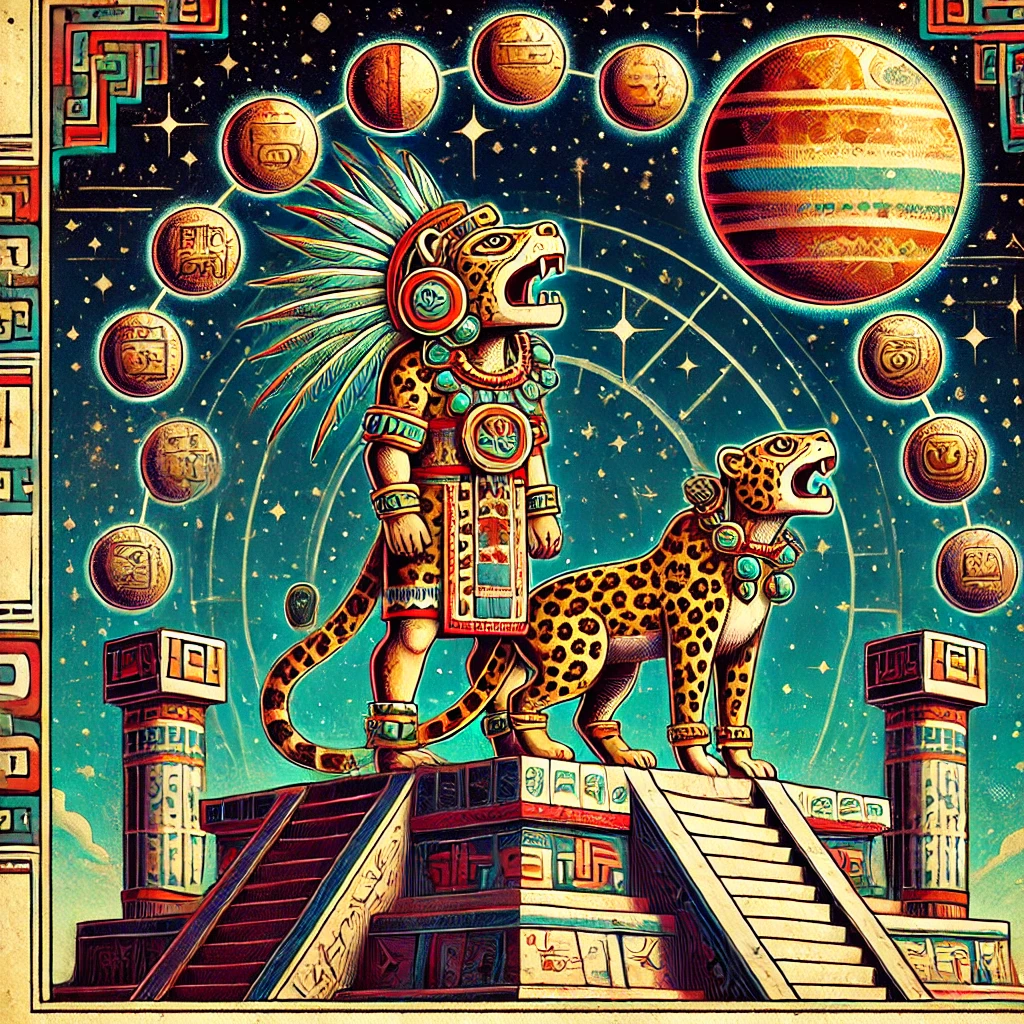
A priest in a jaguar mask by an actual jaguar have astronomical planets and symbols float above their heads in the night sky

9. Astronomy: The Stars Were Their Guide

It’s midnight in a Maya city, and the stars shine brightly. A priest, adorned in jaguar pelts and jade, carefully watches the movements of the planet Venus. For the Maya, astronomy was a divine map, guiding everything from farming to warfare.

Maya astronomers meticulously tracked celestial bodies, creating some of the most accurate calendars in human history. Their Long Count calendar, famously misinterpreted as predicting the world’s end in 2012, was a tool for tracking vast stretches of time. They predicted eclipses with stunning precision and understood the 584-day cycle of Venus, which they associated with war and sacrifice.

Cities like Chichen Itza in modern-day Mexico were aligned with celestial events, such as the equinox. On these days, the shadow of the sun forms a serpent slithering down the temple of Kukulkan. For the Maya, this was a powerful reminder that the gods were always watching — and that humanity’s actions were written in the stars.
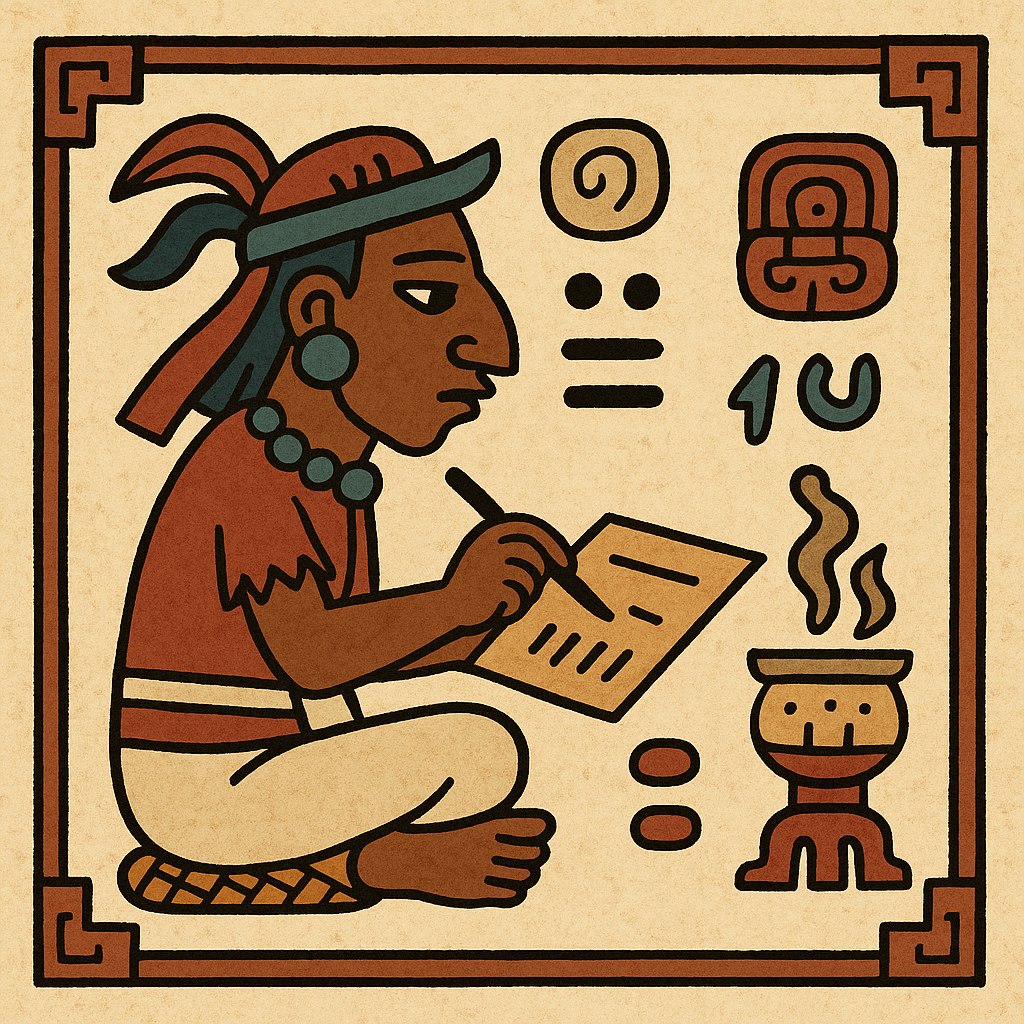
A Maya scribe writes on parchment near a brazier, with the symbol for zero above his head

10. Advanced Mathematics: Zeroing In on Genius

While medieval Europe was fumbling with clunky Roman numerals, the Maya were crafting a sophisticated base-20 numerical system centuries ahead of their time. Even more groundbreaking, they independently invented zero, a concept that revolutionized mathematics across the world.

The Maya used their numerical system for everything from complex architecture to astronomical calculations. Their hieroglyphs represented numbers with dots and bars, and a shell symbol for zero — a groundbreaking idea that enabled them to calculate vast stretches of time. This mathematical prowess was essential for creating their famous calendars, which tracked both earthly and cosmic cycles.
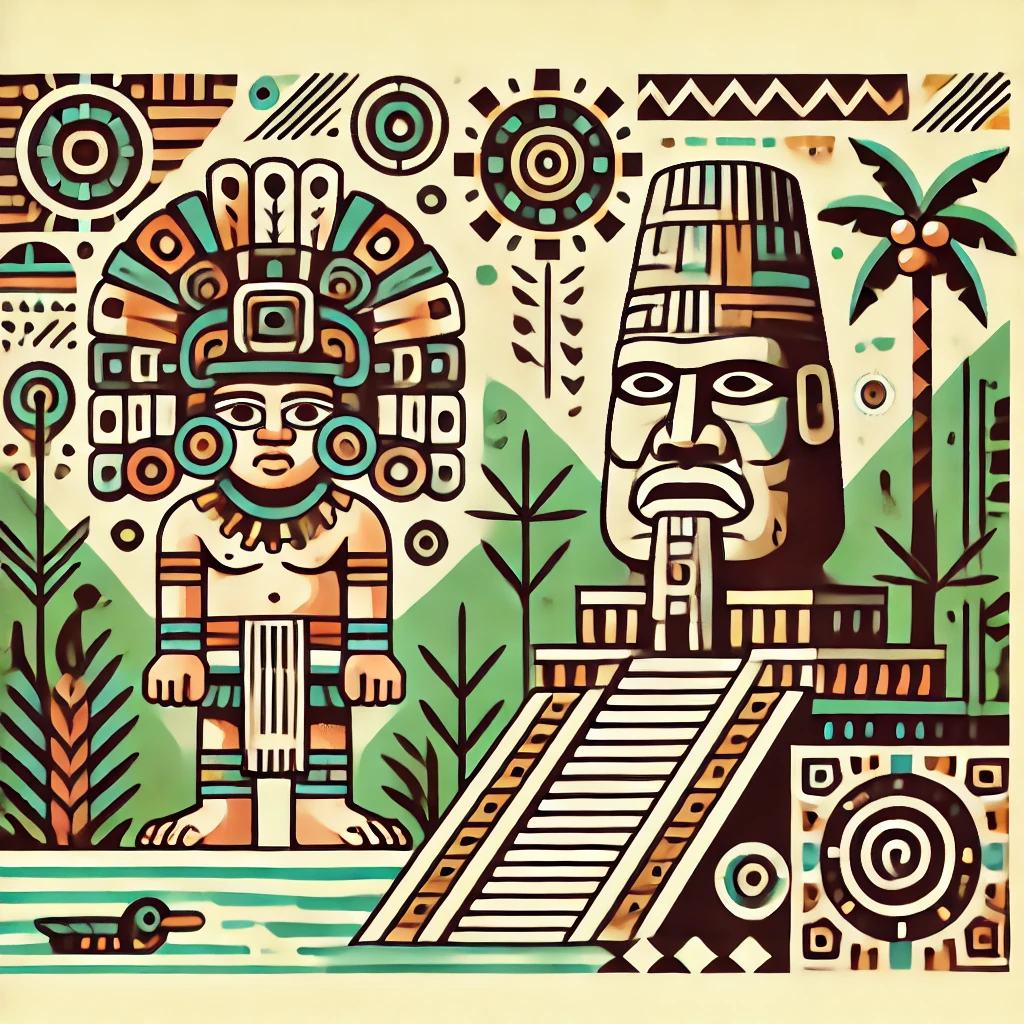
A Mesoamerican rule with an elaborate headdress stands near his temple, which has a huge head atop it

11. Burial of Kings in Pyramids: A Royal Afterlife

Deep inside a pyramid in Palenque in Chiapas, Mexico, archaeologists uncovered the tomb of K’inich Janaab’ Pakal, one of the greatest Maya rulers. His jade death mask gleamed in the flickering torchlight, surrounded by treasures meant to guide him into the afterlife. For the Maya, burial honored the dead in their journey to the underworld, a sacred act steeped in ritual and grandeur.

Unlike the Egyptians, who mummified their rulers, the Maya focused on elaborate tombs. These often included jade ornaments, intricate carvings, and offerings of food, pottery and incense. Pakal’s sarcophagus lid, for example, depicts him descending into the underworld, surrounded by mythological imagery that tells the story of his divine lineage.

These tombs weren’t just graves; they were political statements. By aligning their burials with religious symbolism, rulers reinforced their connection to the gods, ensuring their legacy endured both on Earth and in the spiritual realm. Each pyramid was a monument that acted as a doorway between worlds.
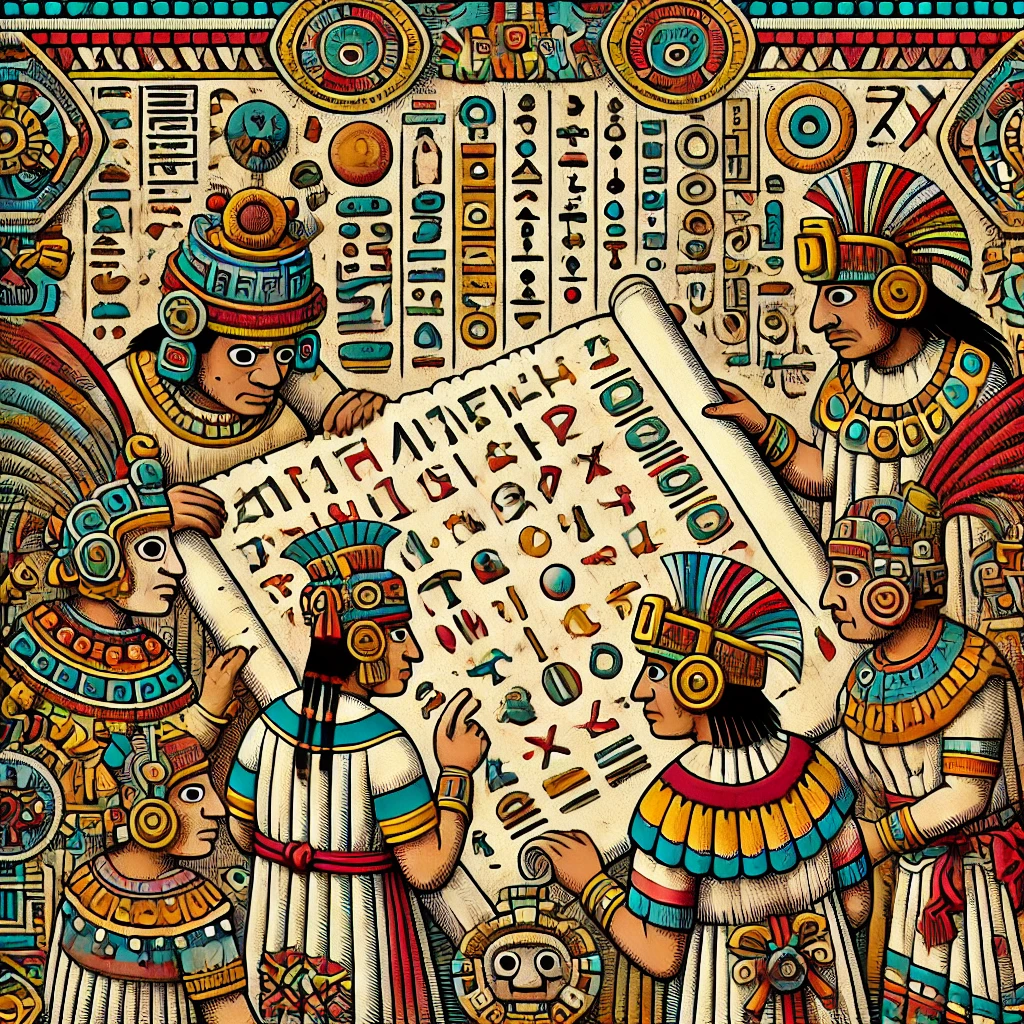
Ancient Mesoamericans crowd around a large codex, with pictographs all around

12. Codices: Books of the Gods

Imagine holding a book that contains the secrets of the universe, the history of kings and the rituals to summon rain. That’s what Mesoamerican codices represented: sacred texts painted on bark paper or deerskin, filled with colorful glyphs and stunning illustrations.

The Aztecs, Maya and Mixtec used codices to record everything from genealogy to religious ceremonies. These books were read by priests and rulers, who used them to guide decisions and communicate with the divine. Sadly, the Spanish destroyed the vast majority of these texts during the conquest, believing them to be works of the devil. Of the thousands of codices once created, only a handful survive today, including the Dresden Codex and the Codex Borgia.

Each surviving codex offers a glimpse into a lost world, revealing the complexity of Mesoamerican thought and artistry. These were living documents, bridging the human and the divine. The destruction of these texts remains one of the greatest tragedies of the conquest, a loss of knowledge we can only begin to fathom.
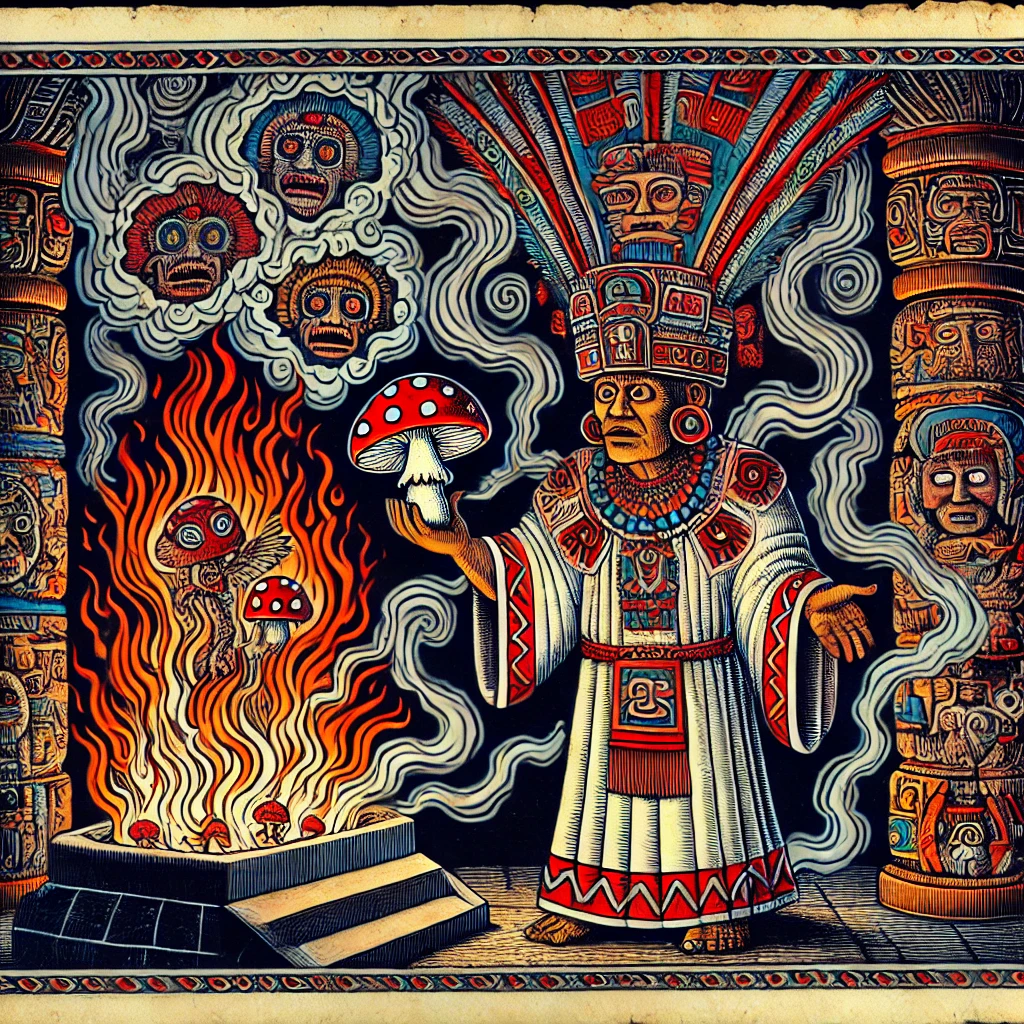
A Mesoamerican priest holds a mushroom, while others burn in a temple, while he hallucinates faces in the smoke

13. Hallucinogens in Rituals: Unlocking the Divine

The fire crackled in the dim light of the temple, smoke swirling around a priest seated cross-legged, a small cup of pulque — a fermented agave drink — in one hand and a bundle of morning glory seeds in the other. As he consumed the seeds, his breathing slowed, his vision blurred, and he began to see the gods. For the Maya, Aztecs and other Mesoamerican cultures, hallucinogens weren’t recreational; they were sacred tools, gateways to the divine.

Psychoactive plants like peyote, psilocybin mushrooms and the seeds of morning glory vines (tlitliltzin) played a central role in ceremonies. Priests and shamans believed these substances opened pathways to cosmic truths, allowing them to communicate with deities, interpret omens and guide their communities. The experience was deeply spiritual, often accompanied by chants, prayers and rhythmic drumming, reinforcing the connection between the mortal and divine.

Modern scientists have confirmed the psychoactive properties of these plants and their ability to alter consciousness. Even today, the Mazatec, descendants of the ancient Mixtec, continue rituals involving hallucinogens, preserving their connection to the sacred. 
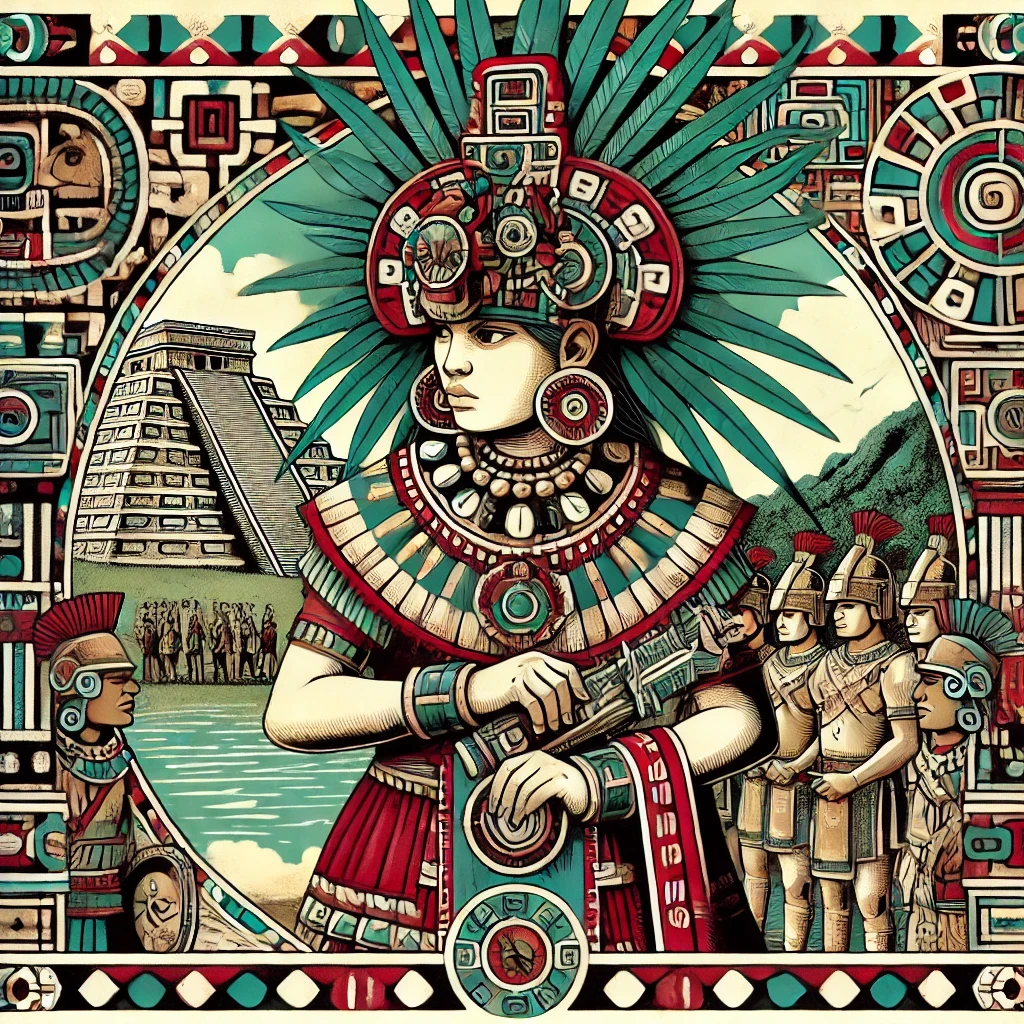
An ancient Mesoamerican woman ruler, in featured headdress and dress, with warriors, a canal and a stepped pyramid around her

14. Women as Leaders: Power in Unexpected Places

The Mesoamerican world is often painted as a patriarchal society, dominated by kings and warriors. But dig a little deeper, and you’ll find powerful women shaping history from the shadows — and sometimes, from the throne.

In Maya society, women could rule in their own right. Lady Six Sky of Naranjo, for example, was a queen who led military campaigns and revitalized her city’s influence. And in Mixtec culture, women were often depicted as priestesses, warriors and even co-rulers, standing alongside men in both politics and religion.

These women were integral to the fabric of their societies. While their stories are often overshadowed by their male counterparts, their legacies endure in ancient texts, carvings and oral traditions.
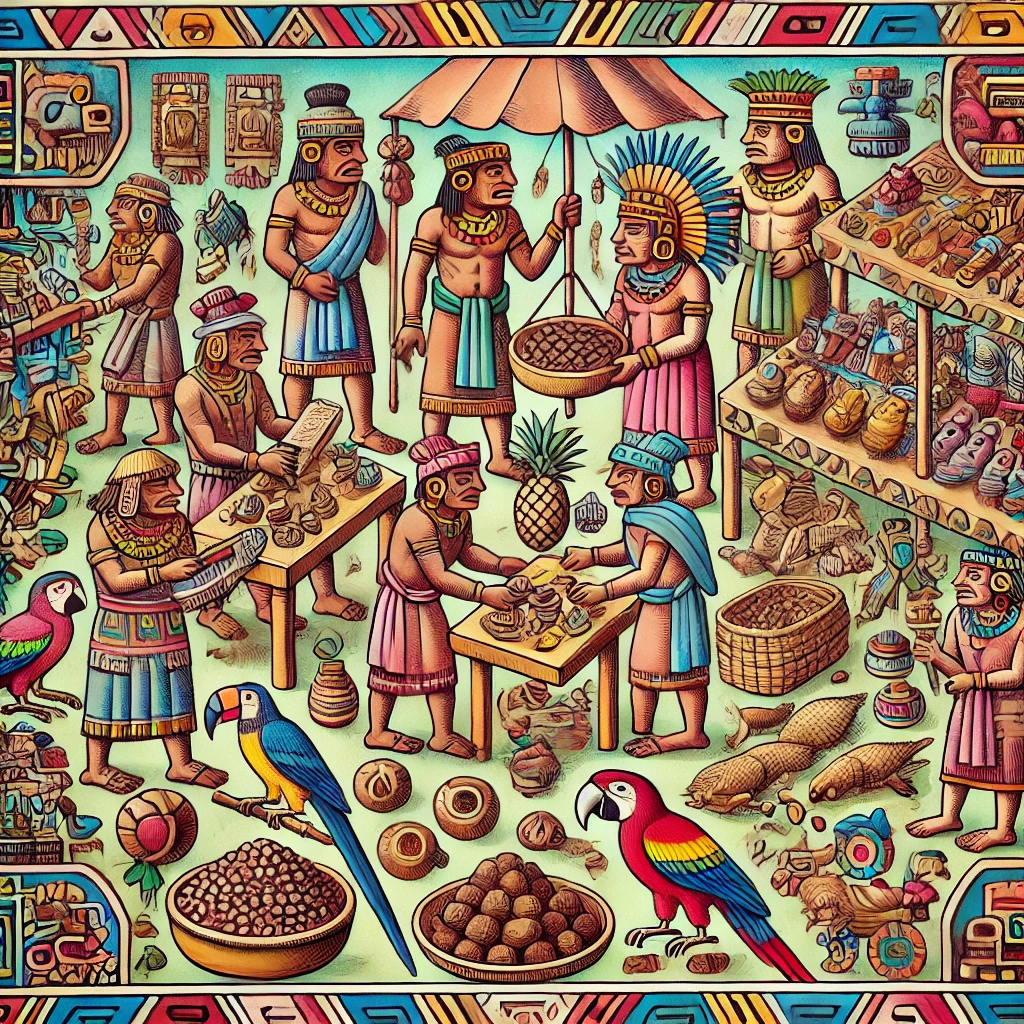
A busy Mesoamerican marketplace, with tropical birds and people trading for produce and other items

15. Trade Networks: A Marketplace Across the Americas

Picture a bustling marketplace where merchants trade obsidian from central Mexico, turquoise from the American Southwest, and feathers from tropical jungles. This was the Mesoamerican trade network — an intricate web of commerce that connected cultures across thousands of miles.

The Aztecs had professional traders called pochteca, who ventured into distant lands to bring back luxury goods as well as information. These merchants doubled as spies, gathering intelligence for the empire. Goods exchanged included cacao, salt, jade, textiles and live animals like macaws. 

The Maya, meanwhile, traded along rivers and coastlines, using massive dugout canoes to transport goods.

These trade networks reveal a highly interconnected world, centuries before European contact. They weren’t just exchanging items but also ideas, technologies and cultural practices. Innovation wasn’t confined to one city or empire, but was shared across Mesoamerica, creating a vibrant, collaborative civilization.
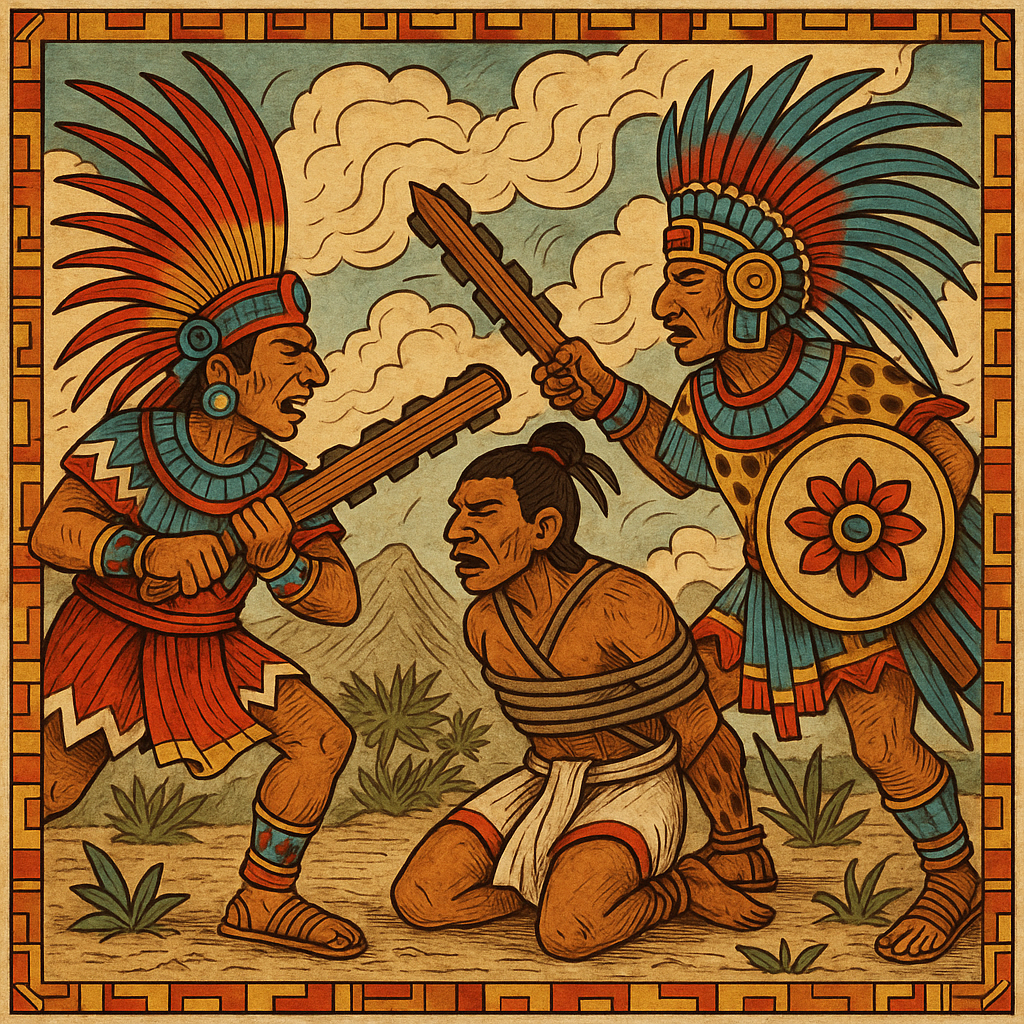
Two warriors fight in an Aztec flower war, near a prisoner who has been tied up

16. Flower Wars: Fighting for Sacrifice Victims

In the Aztec world, war wasn’t always about conquest — it was about feeding the gods. Known as flower wars, these prearranged battles were fought not to expand territory but to capture prisoners for sacrifice. Think of it as a grim, divine version of capture the flag.

The idea behind a flower war was simple: The gods required blood to sustain the universe (see above), and the noblest offering was a captured warrior. These battles were fought with precision and ritual, often involving ornate costumes and weapons designed to wound rather than kill. The goal wasn’t to destroy the enemy but to bring back their strongest fighters as living sacrifices.

This practice highlights the unique relationship between war and religion in Aztec society. For them, the battlefield was sacred ground, where the fate of the cosmos was decided. The concept of flower wars reveals the Aztecs’ belief in sacrifice as an honorable exchange between mortals and gods, where even the defeated played a crucial role in cosmic harmony.
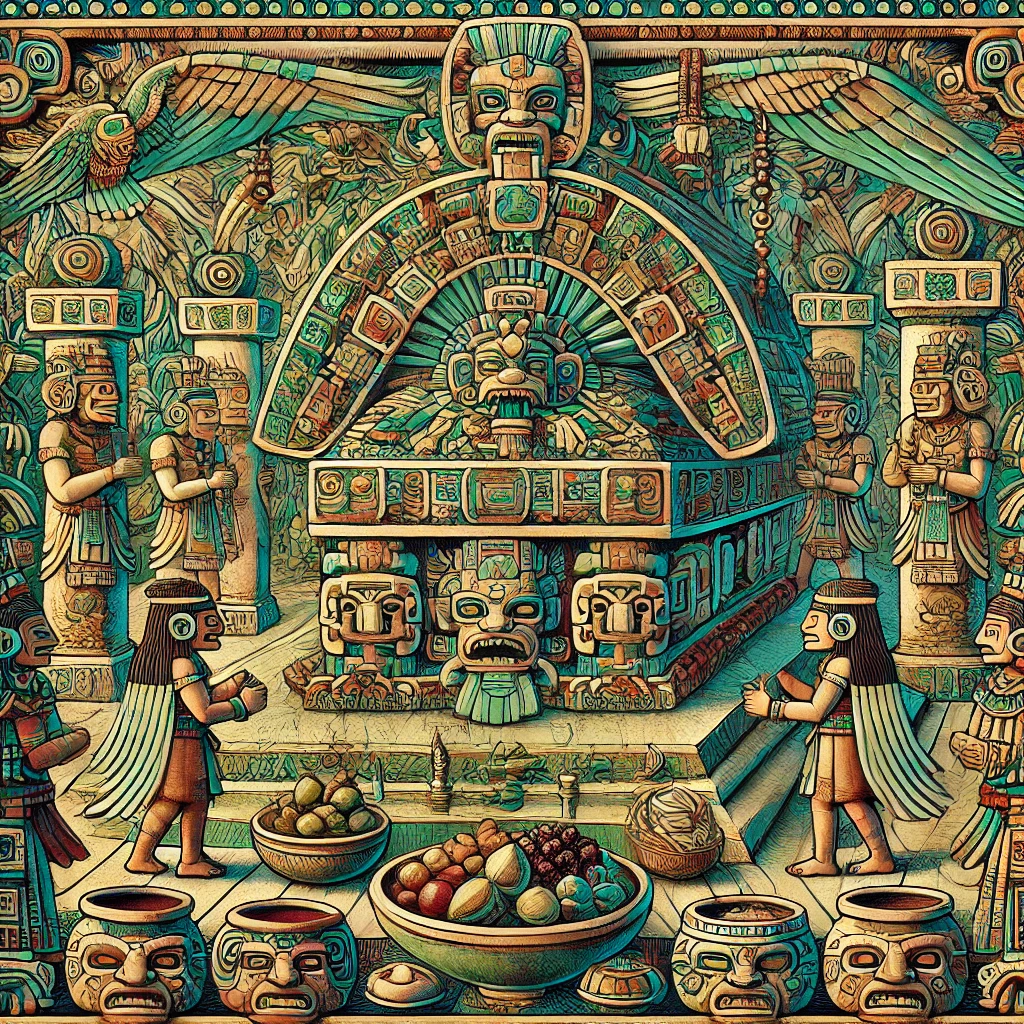
People offer fruit at an elaborately carved and painted Mesoamerican temple

17. Urban Centers of Stone: Predating European Cities

Before London had cobblestone streets or Paris had a skyline, cities like Teotihuacan in central Mexico were thriving metropolises. With a population that likely reached over 200,000 at its peak, Teotihuacan was one of the largest cities in the ancient world, rivaling the size of Rome.

Teotihuacan, whose name means “The Place Where Gods Were Created,” was meticulously planned. It boasted wide avenues, towering pyramids, multi-story apartment complexes and a sophisticated drainage system. The Pyramid of the Sun and Pyramid of the Moon dominated the skyline, their purpose tied to celestial events and rituals. Meanwhile, smaller neighborhoods housed artisans, merchants and farmers, creating a cosmopolitan hub of culture and commerce.

What’s even more impressive? Teotihuacan’s influence spread far beyond its borders, shaping the cultures of the Maya, Zapotec and others. Archaeological evidence suggests its trade routes extended thousands of miles, making it not just a city but a cultural and economic powerhouse. Its sophistication proves that long before European colonization, Mesoamerica had already mastered the art of urban living.
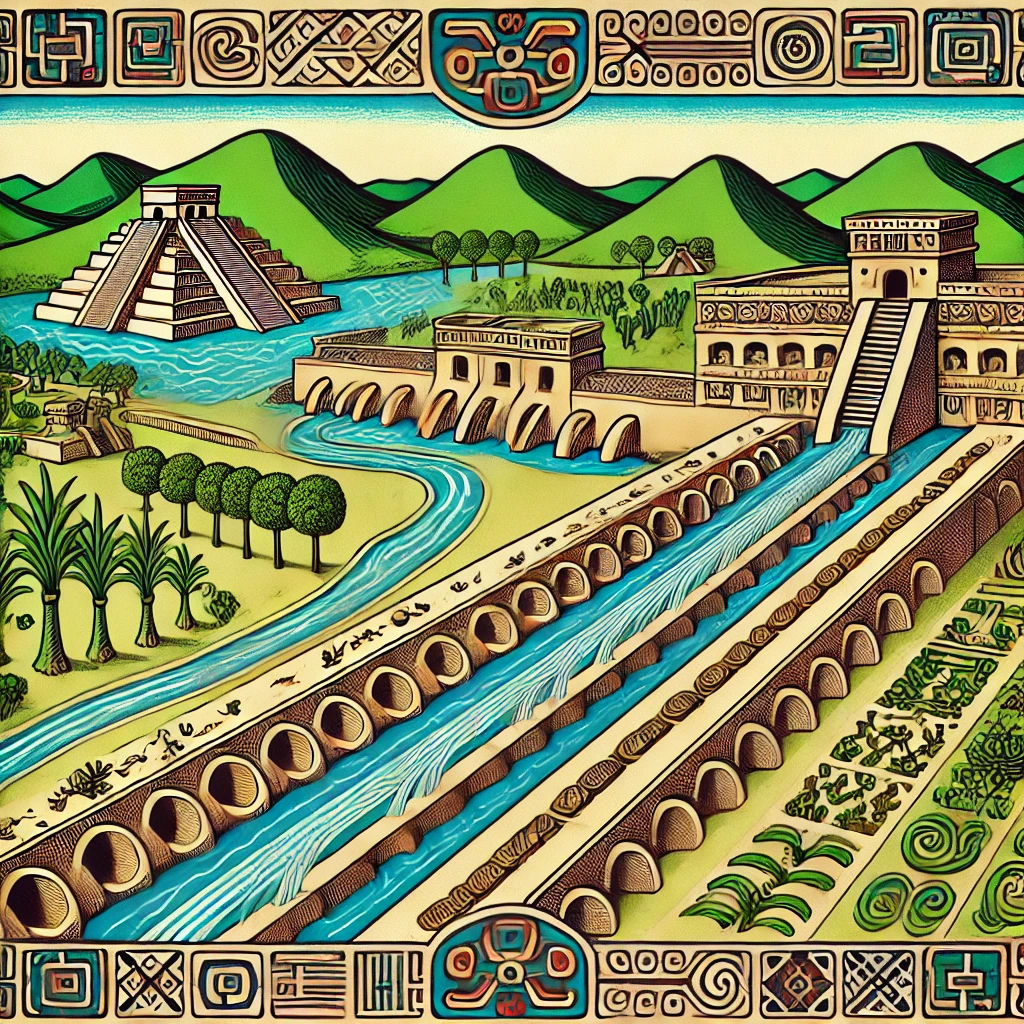
Aztec waterways, including canals, running past gardens, a temple and stone structures, with grassy hills in the background

18. Advanced Water Management: Engineering Marvels

In Tenochtitlan, the Aztec capital, advanced water management turned a swampy island into a thriving metropolis.

The Aztecs built aqueducts to bring fresh water into the city from nearby springs, ensuring a reliable supply for drinking, bathing and irrigating crops. They also constructed dikes and canals to control flooding during the rainy season. One of the most remarkable projects was the dike built by the engineer Nezahualcoyotl, a massive barrier that separated fresh and brackish water in Lake Texcoco.

These innovations allowed Tenochtitlan to support a population of over 200,000 people — comparable at the time to Paris, Constantinople and Beijing. The city’s water management was practical as well as beautiful, with canals crisscrossing neighborhoods and floating gardens providing food and greenery. 

A hairless Mexican dog surrounded by a naked man from behind, two skeletons and other symbols of Mesoamerican afterlife

19. The Aztec Love for Pets: Companions of Life and Death

While many associate the Aztecs with grand temples, fierce warriors and intricate rituals, they also had a tender side: their deep connection to animals. Domesticated dogs, particularly the Xoloitzcuintli (Xolo), held a special place in Aztec society. These hairless dogs were believed to guide their owners’ souls through the underworld to Mictlan, the final resting place for most Aztecs. Often, these loyal companions were buried alongside their owners to fulfill this sacred role. (Xolos were also a favorite food at special feasts like weddings.)

But dogs weren’t the only animals cherished by the Aztecs. Turkeys (huehxolotl), macaws and parakeets were kept as pets, not solely for their feathers or meat, but also for companionship. Macaws, with their bright plumage, were often seen as symbols of beauty and vibrancy, while turkeys held religious significance. These animals frequently appeared in Aztec art, codices and ceremonies, bridging the connection between the natural and spiritual worlds.
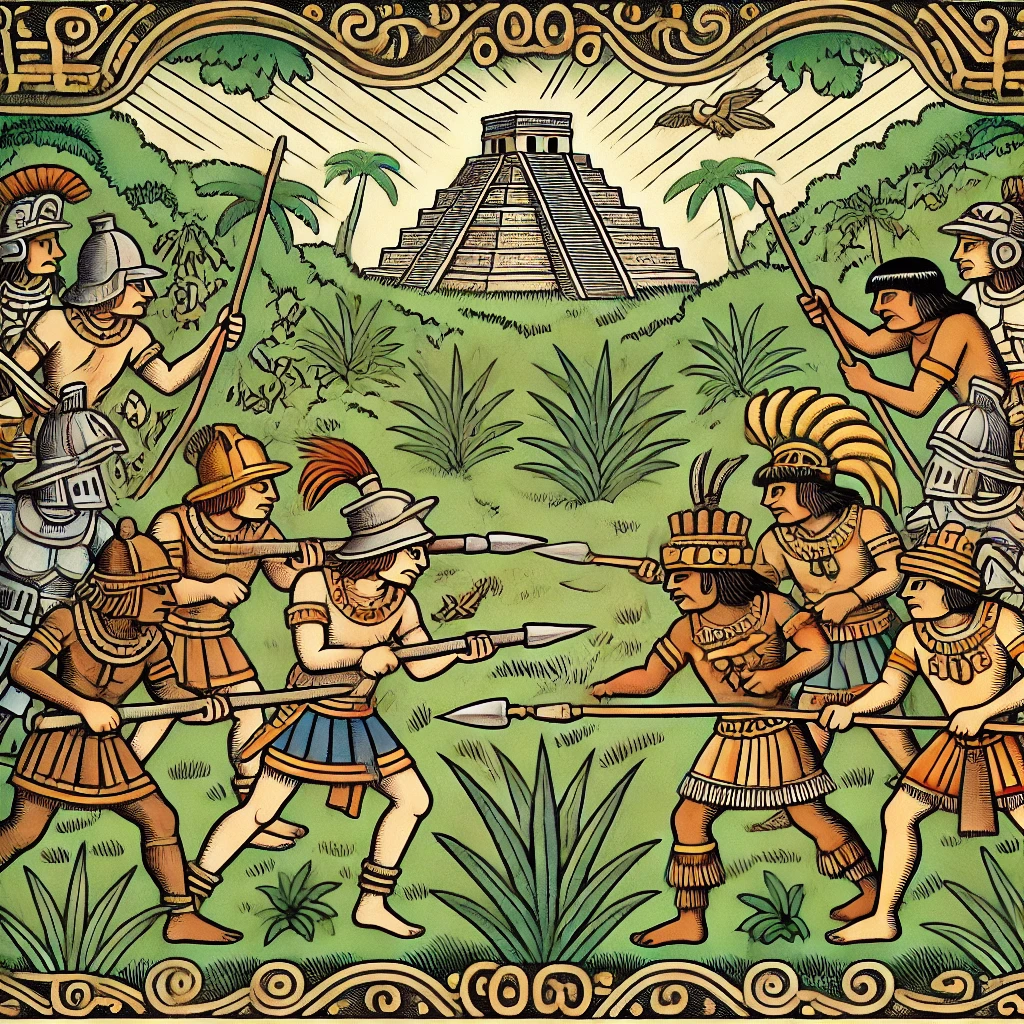
Mesoamerican warriors fight Spanish conquistadors in armor by a stepped pyramid

20. Resistance to Colonization: A Legacy of Defiance

When Hernán Cortés marched into Mexico in 1519, he may have toppled the Aztec Empire, but indigenous resistance didn’t end there. The Maya, for example, fought Spanish domination for centuries, with conflicts like the Caste War of Yucatán lasting well into the 19th century.

One of the most remarkable stories of defiance comes from the Maya city of Tayasal, which remained independent until 1697 — nearly two centuries after the fall of Tenochtitlan. Using guerrilla tactics and their knowledge of the jungle, the Maya outlasted wave after wave of Spanish expeditions. Even after their cities were conquered, they preserved their culture through language, art and traditions, subtly resisting assimilation.

Despite centuries of conquest and colonization, their legacy lives on — not just in history books but in the vibrant traditions and identities of modern Mexico and Central America.
A Mesoamerican priest in feathered headdress holds a disc over a vessel at an elaborately carved and painted altar

Like Blood for Chocolate: What Mesoamerica Left Behind

The civilizations of Mesoamerica built stunning pyramids and created impressive calendars. They were innovators, dreamers and survivors. Their world was one of astonishing ingenuity, spiritual devotion and cosmic balance. While some aspects of their culture may seem shocking to us today, they remind us that history isn’t always comfortable — but it’s always worth exploring. –Wally
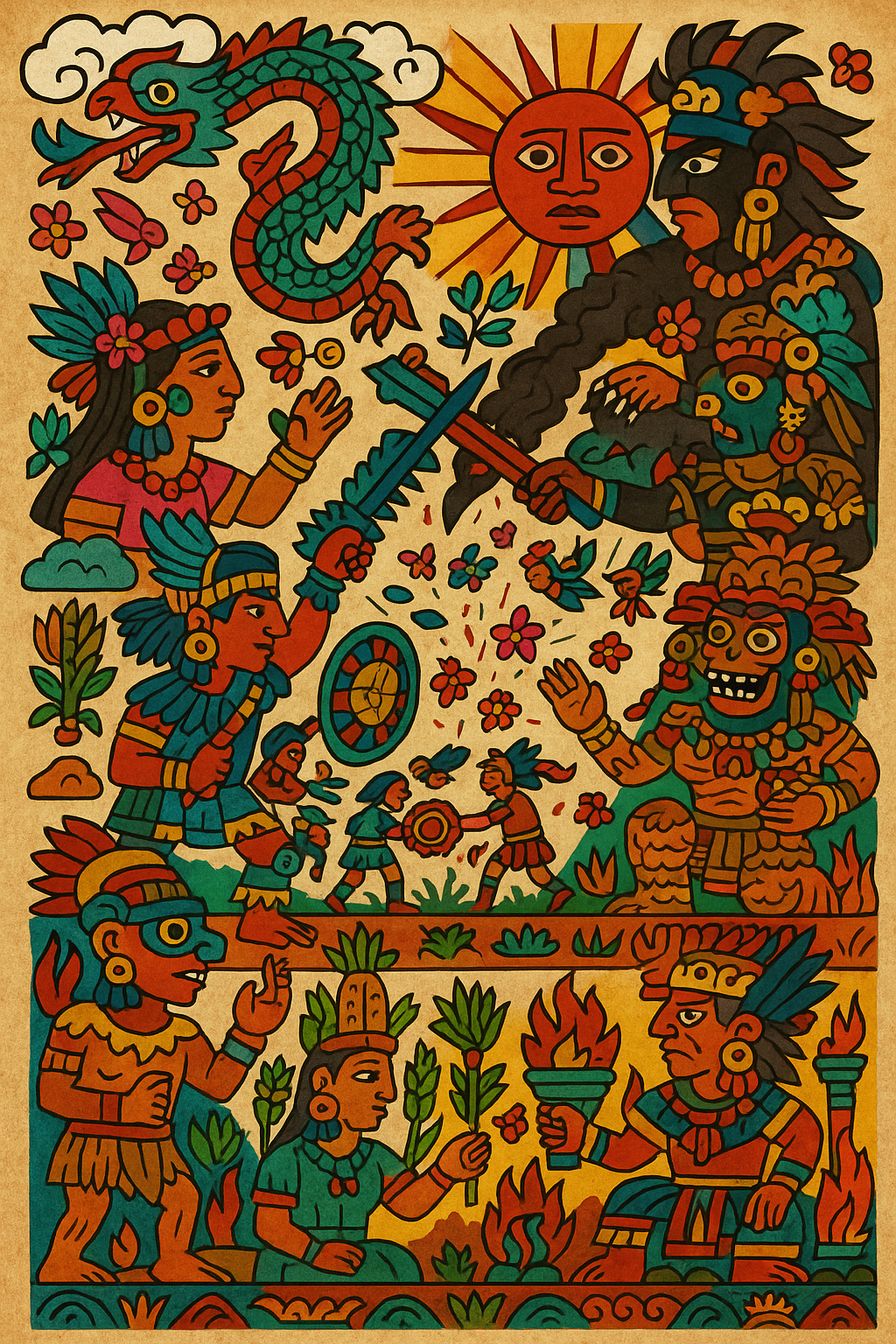
The Aztec Gods: A Who’s Who of the Mexica Cosmos

From Quetzalcoatl the Feathered Serpent to the bloodthirsty Huitzilopochtli, the Aztec pantheon was vast, violent and surprisingly flexible. Plus, learn how the Flower Wars provided (semi) willing fodder for human sacrifices. 

Various Aztec gods line up on the left and right, while two warriors fight in a Flower War

The Mexica treated war as an opportunity for cultural accumulation, much like the Mongols did a few centuries earlier. Every conquest came with new foods, new customs, new technology and, often, new deities. If another city had a rain god who seemed to get better results, the Mesoamerican people didn’t see worshipping him as blasphemy — they saw it as smart.

“In many defeated nations we discovered new gods or novel manifestations of our known gods, and, if they appealed to us, our armies brought home copies of their statues for us to set in our own temples,” Gary Jennings writes in his 1980 novel Aztec

Every ritual — whether it involved flowers, animals or human hearts — was a way to keep the cosmic machinery running.

Blood was the power source of the sun. To let that flow stop would be like unplugging the universe.

It’s a tradition that goes back to at least Ancient Rome. Why destroy another civilization’s gods when you can just add them to your own pantheon? 

The Spanish, of course, were appalled (never mind how many Catholic beliefs originated in so-called pagan celebrations like Yule). They arrived preaching one true God — and promptly rolled out the Father, the Son, the Holy Ghost, the Virgin Mary, angels, apostles and a saint for every stubbed toe and lost key. 

“I have heard you Christians complain of our ‘multitudes’ of gods and goddesses,” Jennings writes later, before his narrator adds, “I have counted and compared. I do not believe that we relied on so many major and minor deities as you do — the Lord God, the Son Jesus, the Holy Ghost, the Virgin Mary — plus all those other Higher Beings you call Angels and Apostles and Saints, each of them the governing patron of some single facet of your world, your lives, your tónaltin [fate], even every single day in the calendar. In truth, I believe we recognized fewer deities, but we charged each of ours with more diverse functions.”

What a dig! While Europeans obsessed over keeping heaven in order, the Mexica embraced divine chaos — a spiritual ecosystem where gods could merge, borrow faces and change form as easily as the world itself.

The Aztec Gods, A to Z 

(Well, Actually C to X)

Aztec mythology wasn’t built on tidy hierarchies. It instead embraced glorious contradiction — gods who could be both creators and destroyers, lovers and warriors, rainmakers and flood-bringers. To keep things simple (or at least alphabetized), here’s a guide to the divine cast that kept the sun burning, the corn growing, and the sacrifices right on schedule.

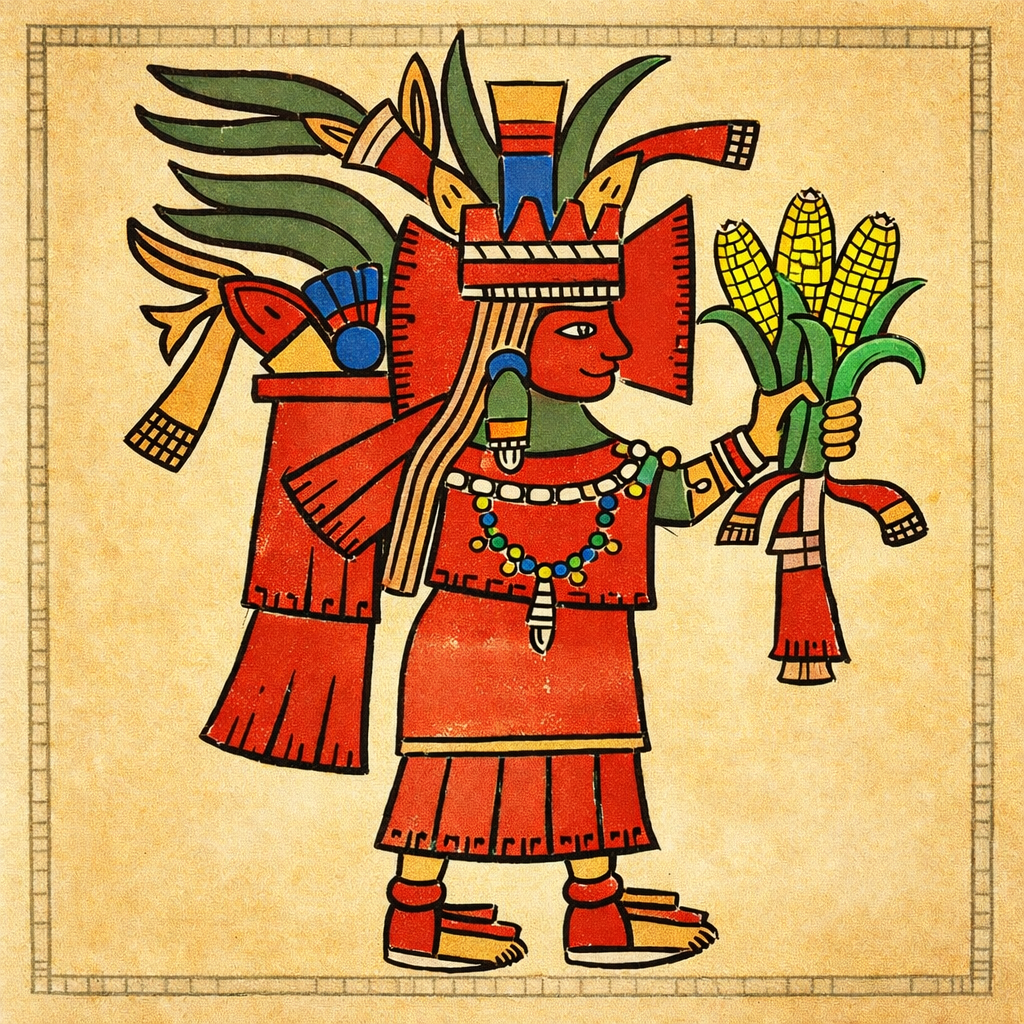
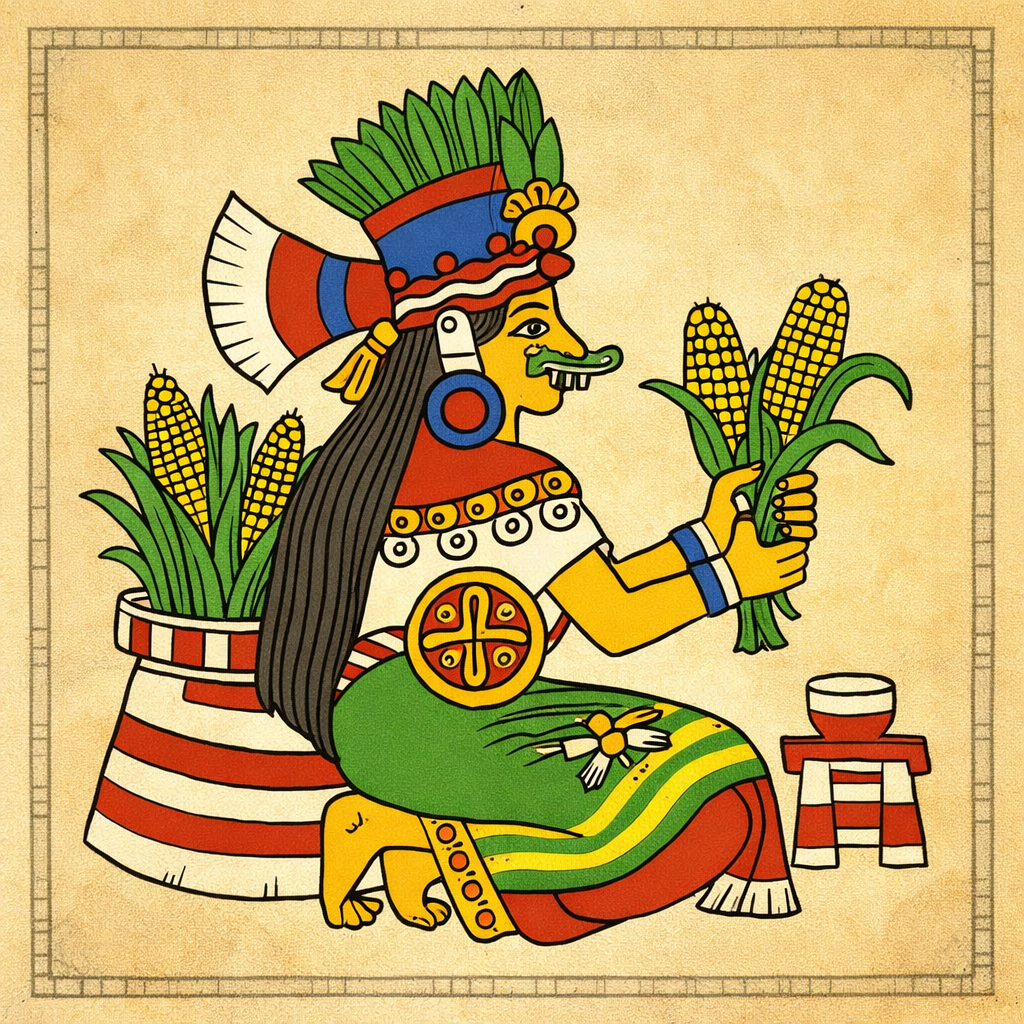
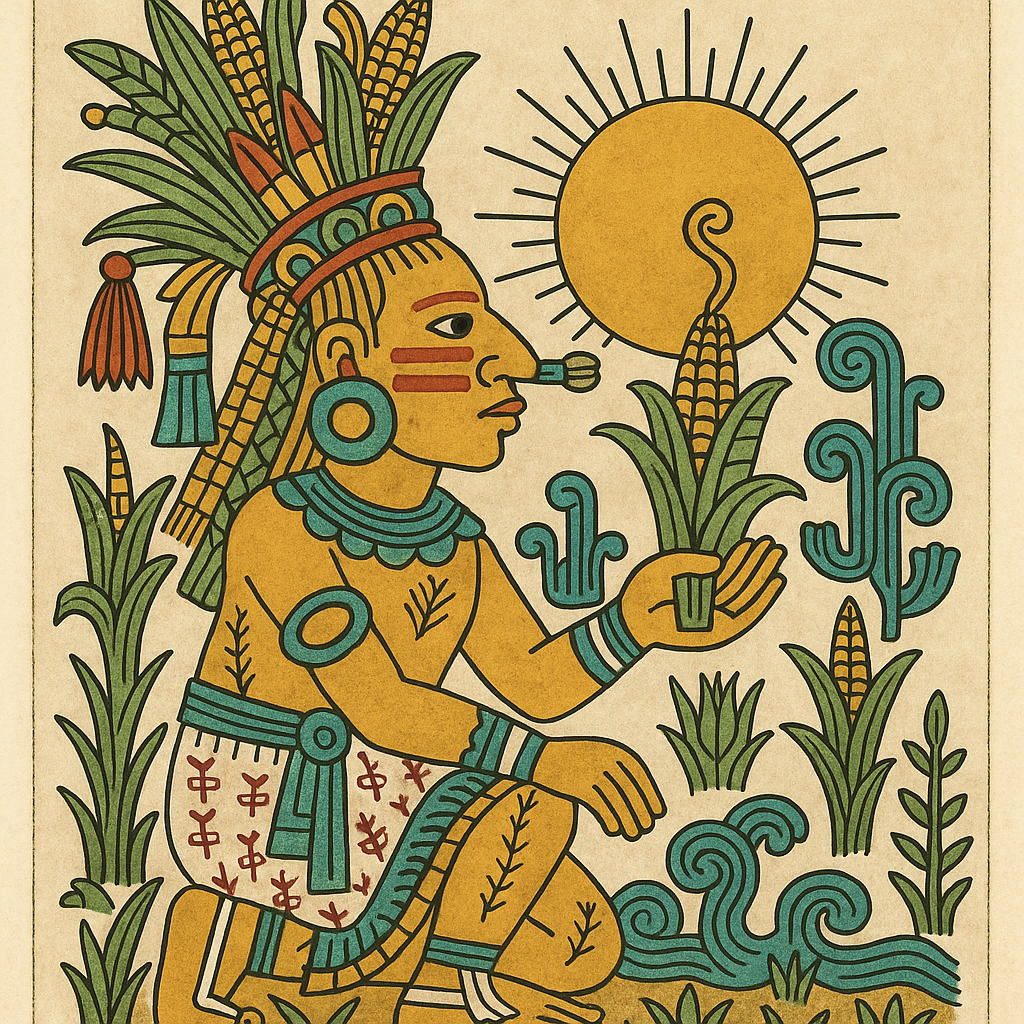
The Aztec god Centeotl, holding corn under the sun

Centeotl

“God of Maize”

Pronunciation: Sen-teh-o-tull

Domain: Corn, sustenance, harvest

Vibe: The dependable one — always shows up for dinner

Story: Centeotl was the golden core of Aztec life, the maize god whose body quite literally fed the people. According to the Florentine Codex, Quetzalcoatl tore open the earth to bring corn to humankind, and from that soil Centeotl sprouted — divine, delicious and essential.

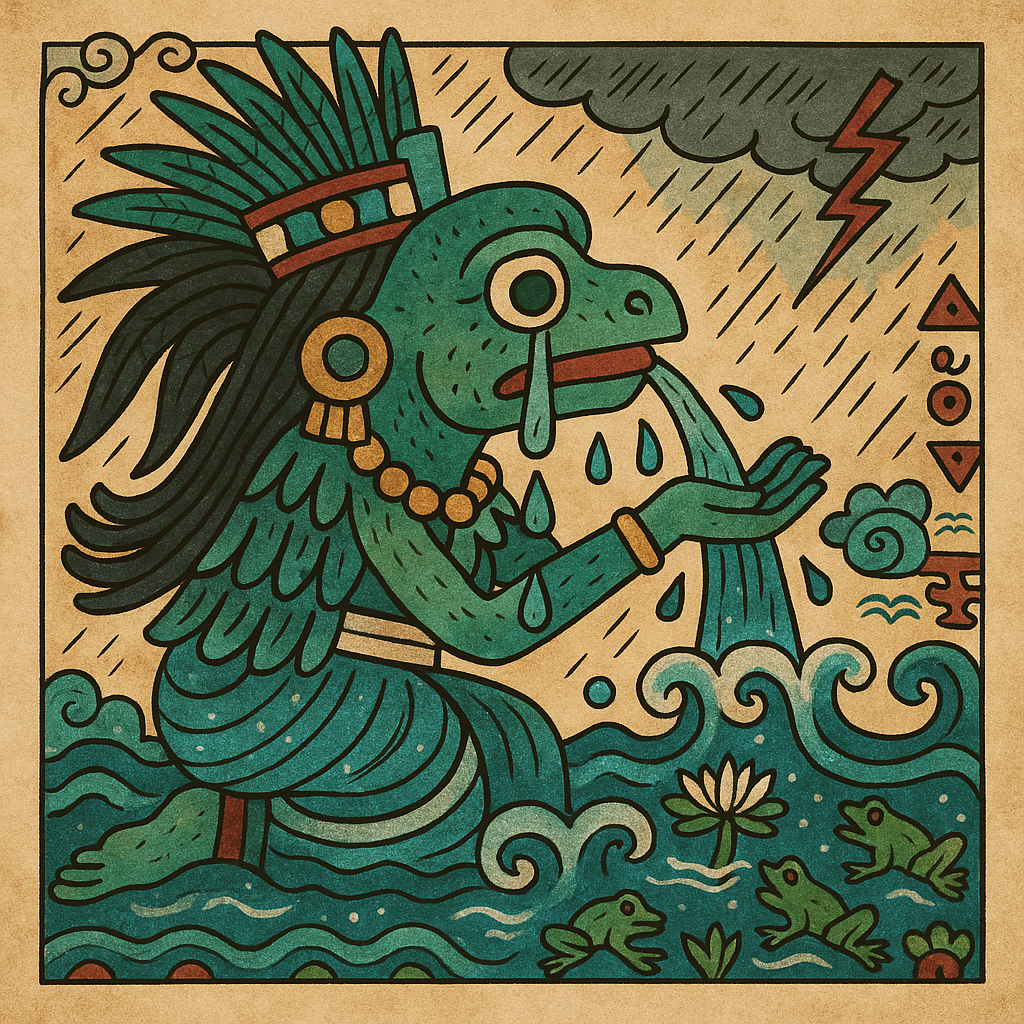
Amphibian-faced Aztec goddess Chalchiuhtlicue in a storm, crying and creating the seas with frogs in it

Chalchiuhtlicue

“She of the Jade Skirt”

Pronunciation: Chal-chee-oot-lee-kweh

Domain: Rivers, lakes, seas, childbirth

Vibe: The goddess of good water and bad  wmoods

Story: Chalchiuhtlicue ruled over every flowing thing — from gentle rivers to catastrophic floods. One myth says she once loved humanity so much she wept for them, and her tears flooded the world. The survivors, naturally, turned into fish. 

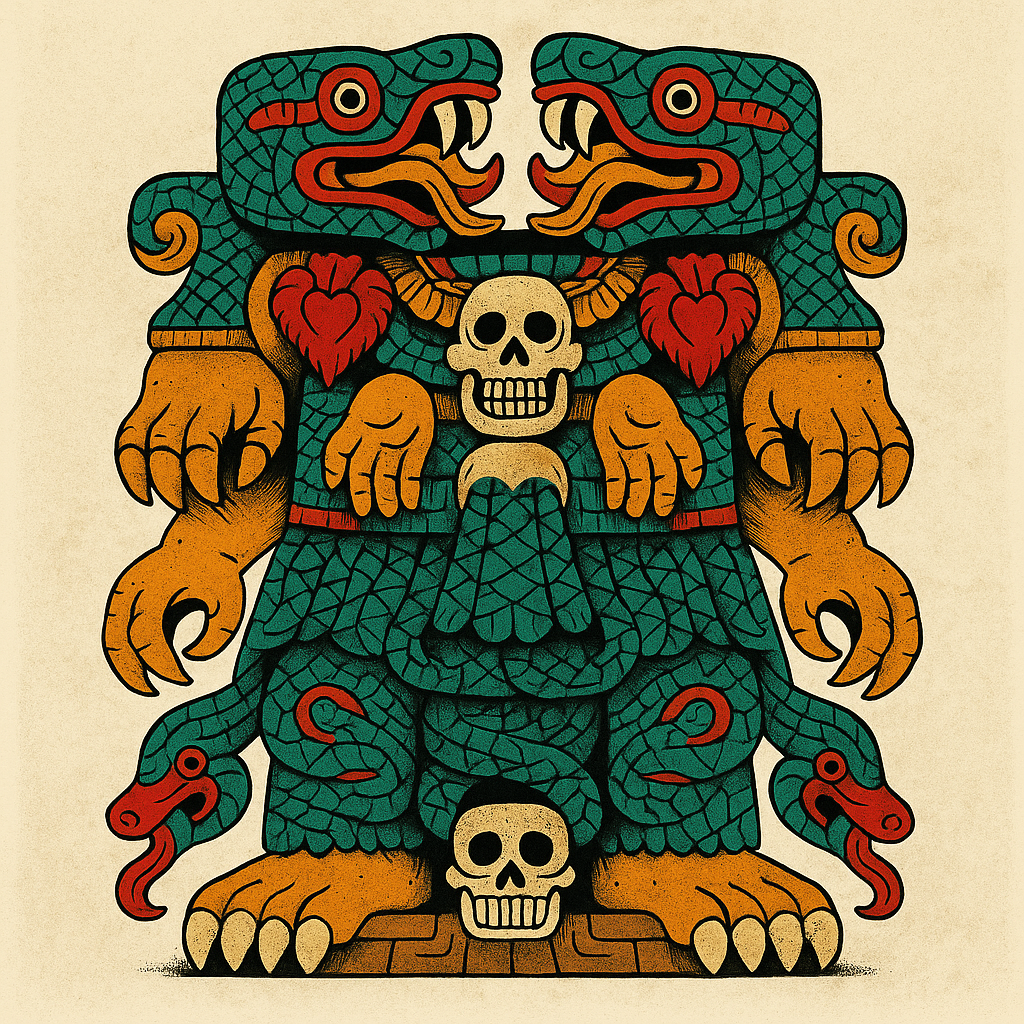
The Aztec goddess Coatlicue, whose head has been cut off and is now two twining serpents with multiple hands and skulls

Coatlicue

“She of the Serpent Skirt”

Pronunciation: Ko-aht-lee-kweh

Domain: Earth, life and death, motherhood

Vibe: The cosmic mom you do not want to disappoint

Story: Coatlicue was the ultimate Earth mother — nurturing yet terrifying. She wore a skirt of snakes and a necklace of severed hands and hearts (sharing a fashion sense with the Hindu goddess Kali). When her daughter Coyolxauhqui and 400 sons plotted to kill her, they struck off her head — but from the gushing wound sprang two serpents whose fanged mouths met to form her new face. And Coatlicue’s unborn child Huitzilopochtli burst forth from her womb, fully armed, and ended that rebellion fast. 

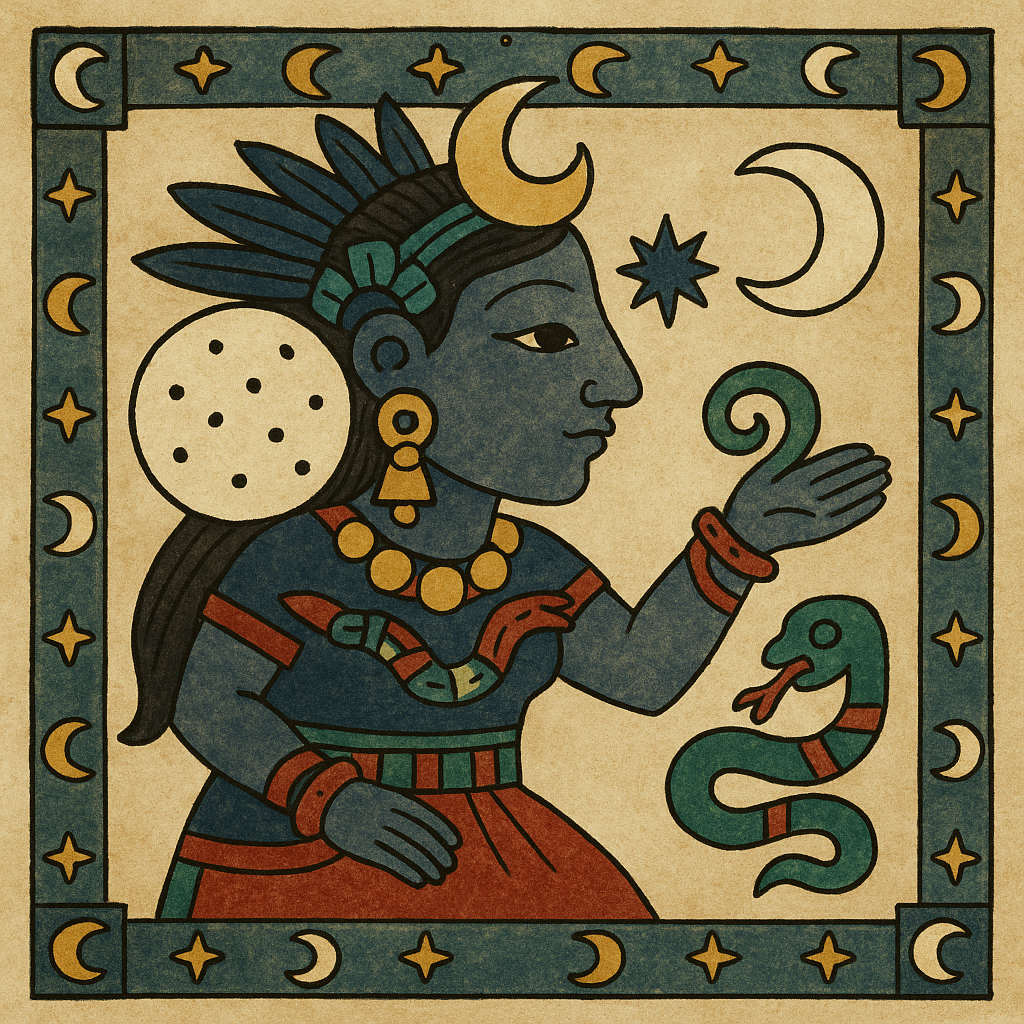
The Aztec goddess Coyolxauhqui, with a snake and phases of the moon

Coyolxauhqui

“Bells on Her Cheeks”

Pronunciation: Koy-ol-shau-kee

Domain: The moon

Vibe: The rebel who lost, but still owns the night 

Story: Coyolxauhqui led her siblings in a failed coup against their mother, Coatlicue, only to be dismembered by her newborn brother, Huitzilopochtli — a mythic explanation for the moon’s fragmented phases.

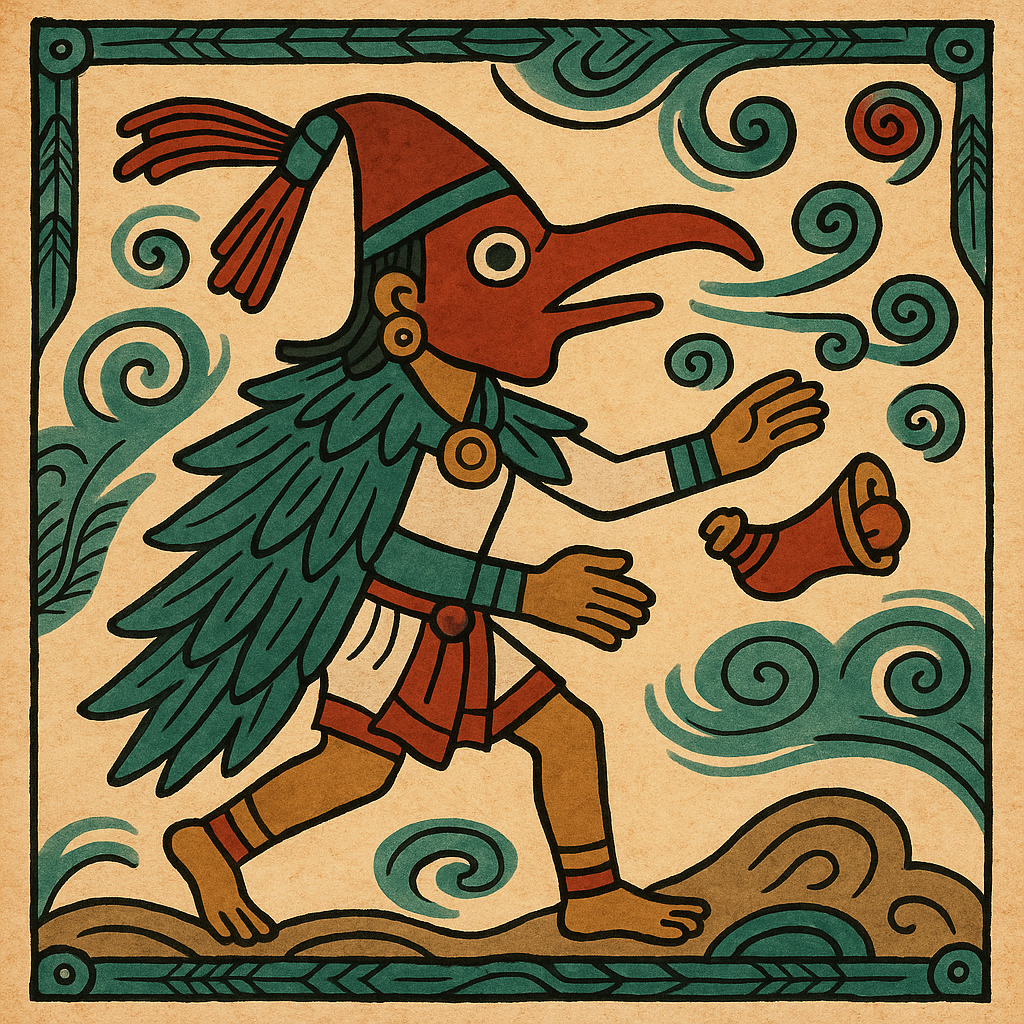
Aztec god Ehécatl, with his distinctive pointed-beak mask and the wind blowing all around him

Ehécatl

“He Who Is the Wind”

Pronunciation: Eh-heh-katull 

Domain: Wind, breath, motion, life

Vibe: The chill cousin who shows up, stirs things up and vanishes again

Story: Ehécatl is the wind god — a breezy form of Quetzalcoatl himself. When the newly created sun refused to move, Ehécatl blew across the heavens to push it into motion. His temples were round so the wind could pass through, a clever architectural touch in a city built on geometry. The man was literally the breath of life — and sometimes, the breath of fresh air everyone needed.

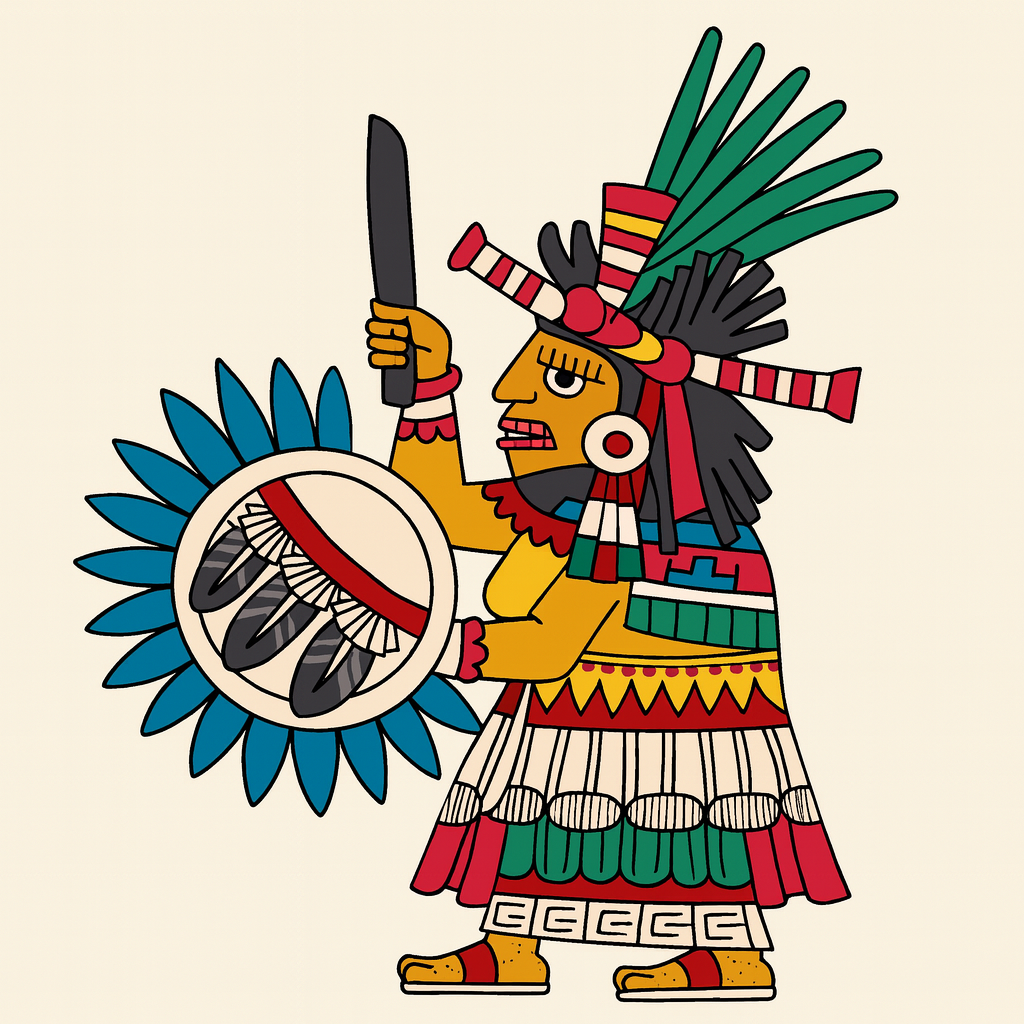
Aztec god Huitzilopochtli with feathered headdress, staff, sword, blue painted face and fire imagery

Huitzilopochtli

“Left-Handed Hummingbird” or “Hummingbird of the South”

Pronunciation: Weets-ee-loh-pohch-tuhlee

Domain: War, the sun, the destiny of the Mexica

Vibe: The overachiever with a bloody habit

Story: Huitzilopochtli was the Mexica’s personal war god and the reason they believed themselves unstoppable. Born in a blaze of feathers and fury, he beheaded his sister Coyolxauhqui moments after his birth and tossed her body down the mountainside — symbolizing the sun’s daily triumph over the moon. He needed blood to keep shining, and the Aztecs were more than happy to supply it.

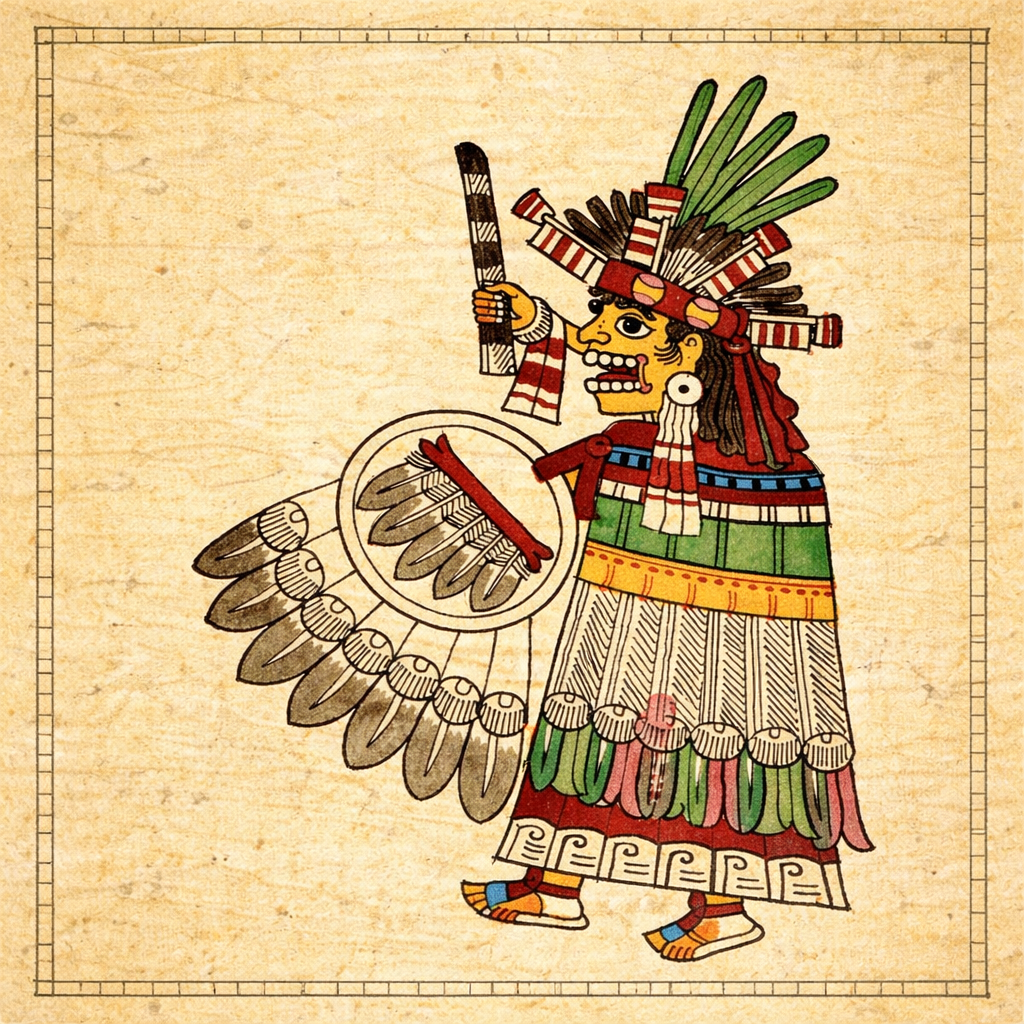
Ilamatecuhtli

“The Old Lady”

Pronunciation: Ee-lah-mah-teh-koo-tlee

Domain: Age, endings, childbirth, dry corn, the turning of the year

Vibe: The venerable (and sometimes scary) grandmother

Story: Ilamatecuhtli was the Earth Mother in her oldest form — not nurturing like Teteoinnan, not frantic like Coatlicue, but ancient, heavy and utterly unavoidable. She ruled the cold, solemn month of Tititl, when people fasted, moved quietly, and lived in fear, as though Death herself was walking past their doors.

Women who died in childbirth were honored as fierce, restless spirits called the cihuateteo during this season, their cries believed to haunt crossroads at night. They belonged to Ilamatecuhtli, who understood both the agony of labor and the final stillness of death. She was the end of the cycle, the crack in the seed before it sprouts again, the winter before the earth remembers how to bloom. 

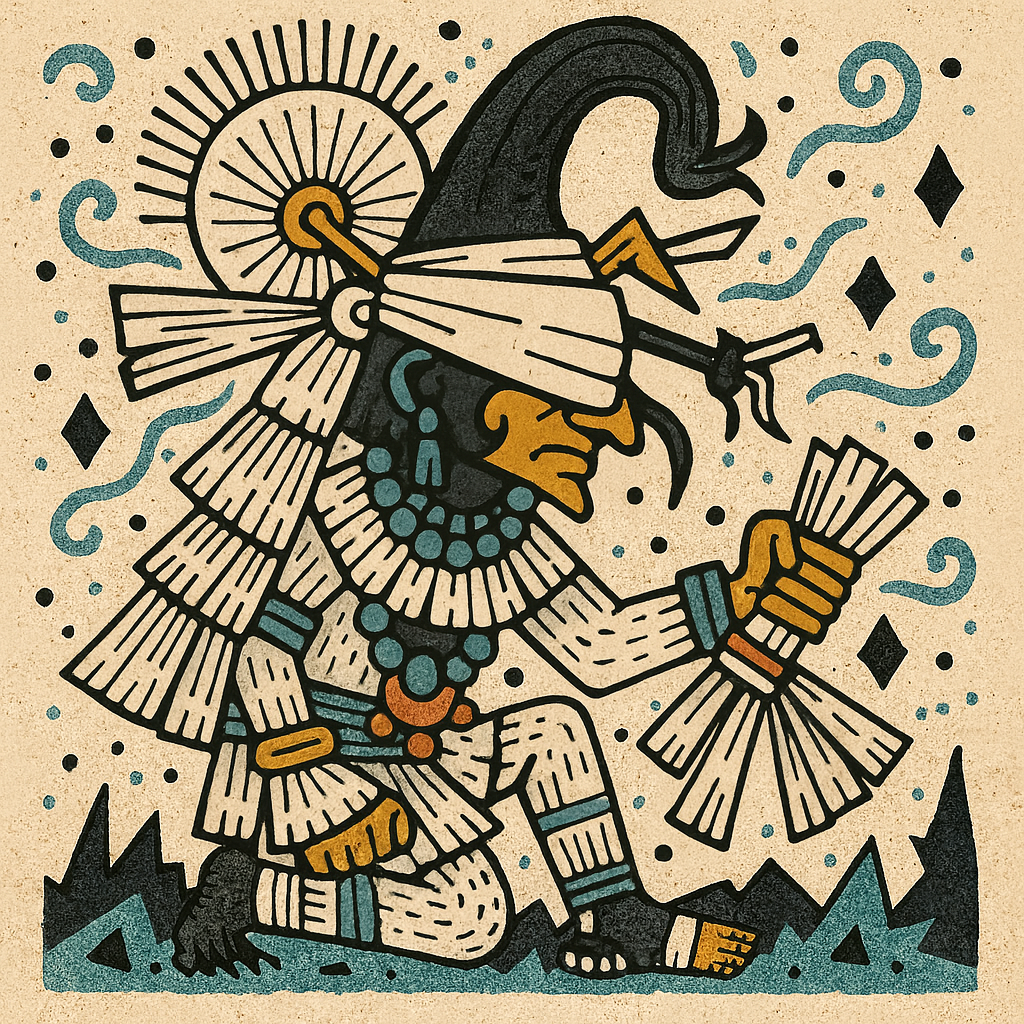
Itzcoliuqui, the Aztec god, blindfolded, with a bizarre conical, curved head, and white skin with bumps all over it.

Itztlacoliuhqui

“Curved Obsidian Blade”

Pronunciation: Eets-koh-lee-oo-kee

Domain: Cold, punishment, winter, misfortune

Vibe: The burnt-out star who pissed off the wrong person 

Story: Itztlacoliuhqui is literally the embodiment of bad vibes. But he wasn’t always this way. He used to be a radiant god of light, the Lord of the Dawn, Venus as Morning Star, until he either insulted the sun, Tonatiuh, or accidentally loosed an arrow at him. The sun’s response was instant: a burst of searing fire. The blow broke his nose, warped his face into a permanent curve, and transformed him into the frigid, shadowy deity of winter. He’s often shown blindfolded or bent, carrying a staff like a frozen wanderer. He represents the moment when light collapses into darkness — and the consequences of making mortal enemies.

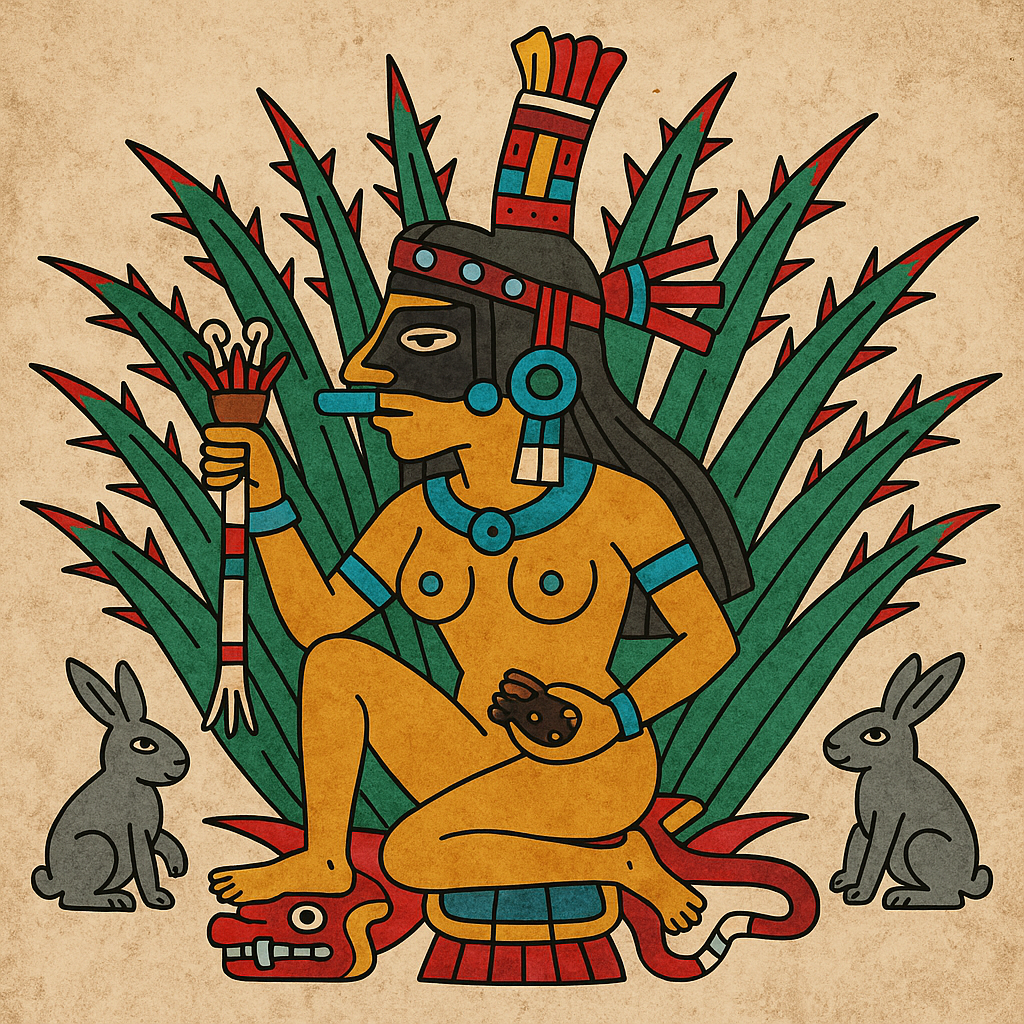
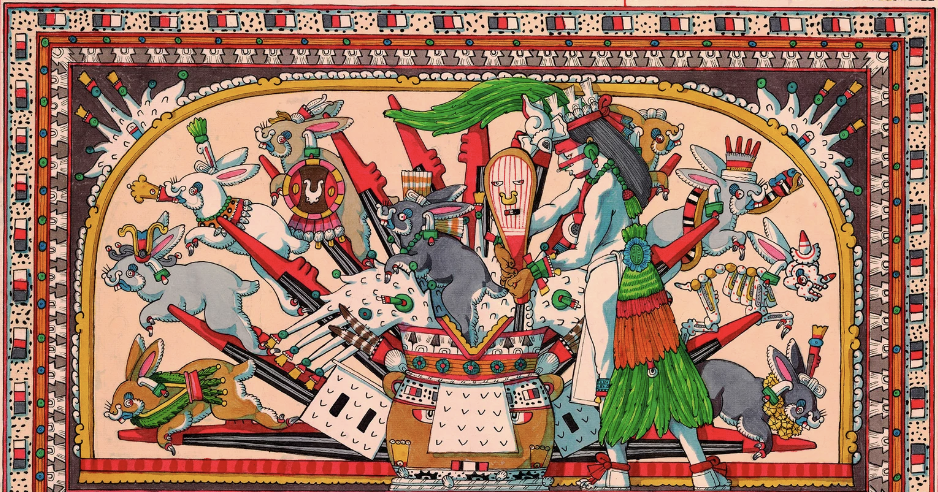
The bare-chested Aztec goddess Mayahuel, with spiky agave behind her and two rabbits

Mayahuel

“Goddess of the Agave”

Pronunciation: My-yah-well

Domain: Agave, pulque, nourishment, fertility

Vibe: The star-crossed lover

Story: Mayahuel is the spirit of the agave plant — the source of food, fiber, healing sap and the sacred drink pulque. Her family practices an extreme form of helicopter parenting: They’re star demons who’ve forbidden Mayahuel to leave the heavens. But Quetzalcoatl falls for her and the two hide by merging into a forked tree. When the goddess’ family finds them, they tear Mayahuel apart, scattering her pieces across the soil. Where they land, the maguey grows — resilient, sharp-edged and impossible to uproot.

Because the plant came from her body, every harvest was an act of reverence. The sap that fermented into pulque belonged to her. Agave and pulque folklore shows how deeply the plant shaped everything from spirituality to social rituals in Mesoamerica.

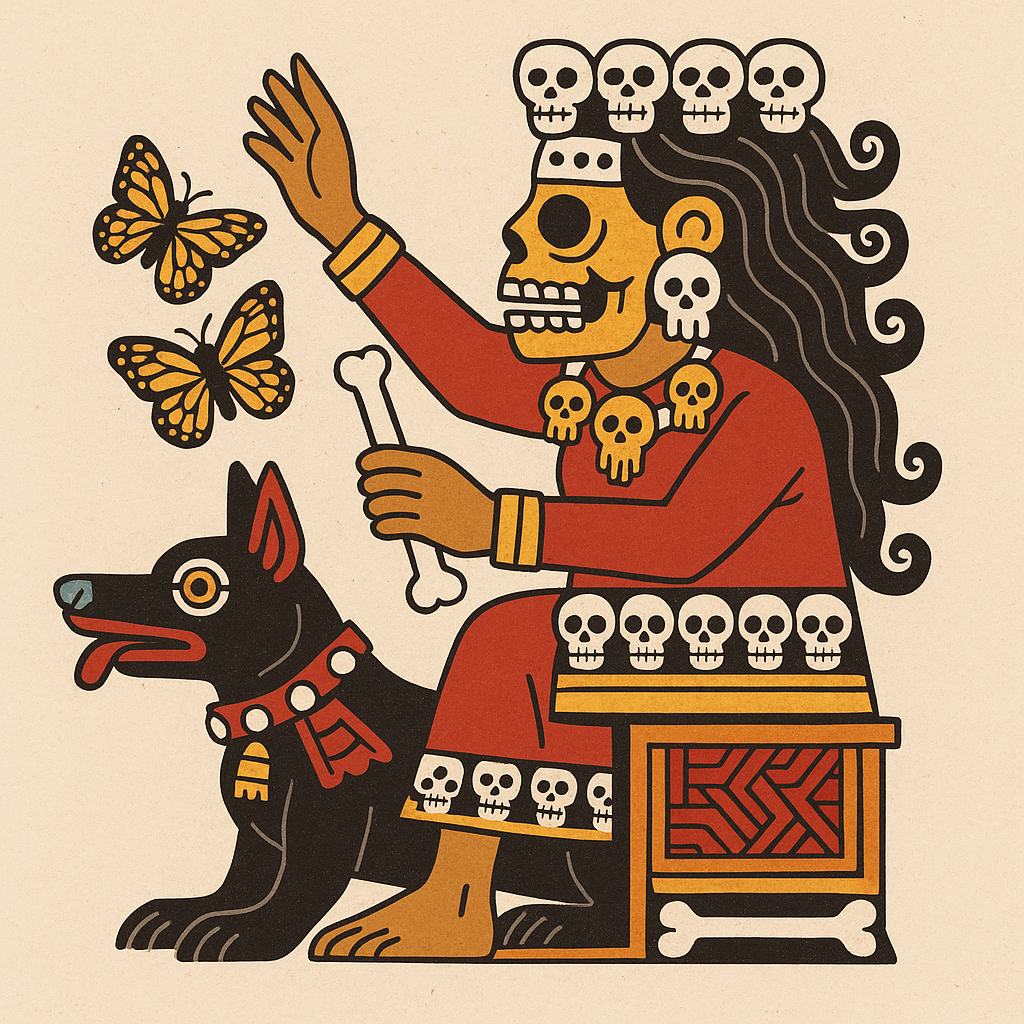
Aztec goddess Mictecacihuatl on throne, her face skeletal, wearing skulls, with a hairless dog and butterflies

Mictecacihuatl

“Lady of the Dead”

Pronunciation: Meek-teh-kah-see-wah-tull

Domain: Death, the underworld, ancestors, bones

Vibe: The goth aunt who keeps every receipt — and by receipts, we mean bones

Story: She rules the underworld with quiet authority — no drama, no shouting, just a stare that sees straight through flesh to your skeleton. She and her husband, Mictlantecuhtli, oversee Mictlan, the final destination for most souls. Festivals in her honor later blended with Catholic All Souls’ celebrations and evolved into Día de los Muertos — meaning she’s the spiritual grandmother of the holiday that remembers the dead with candles, food and marigolds.

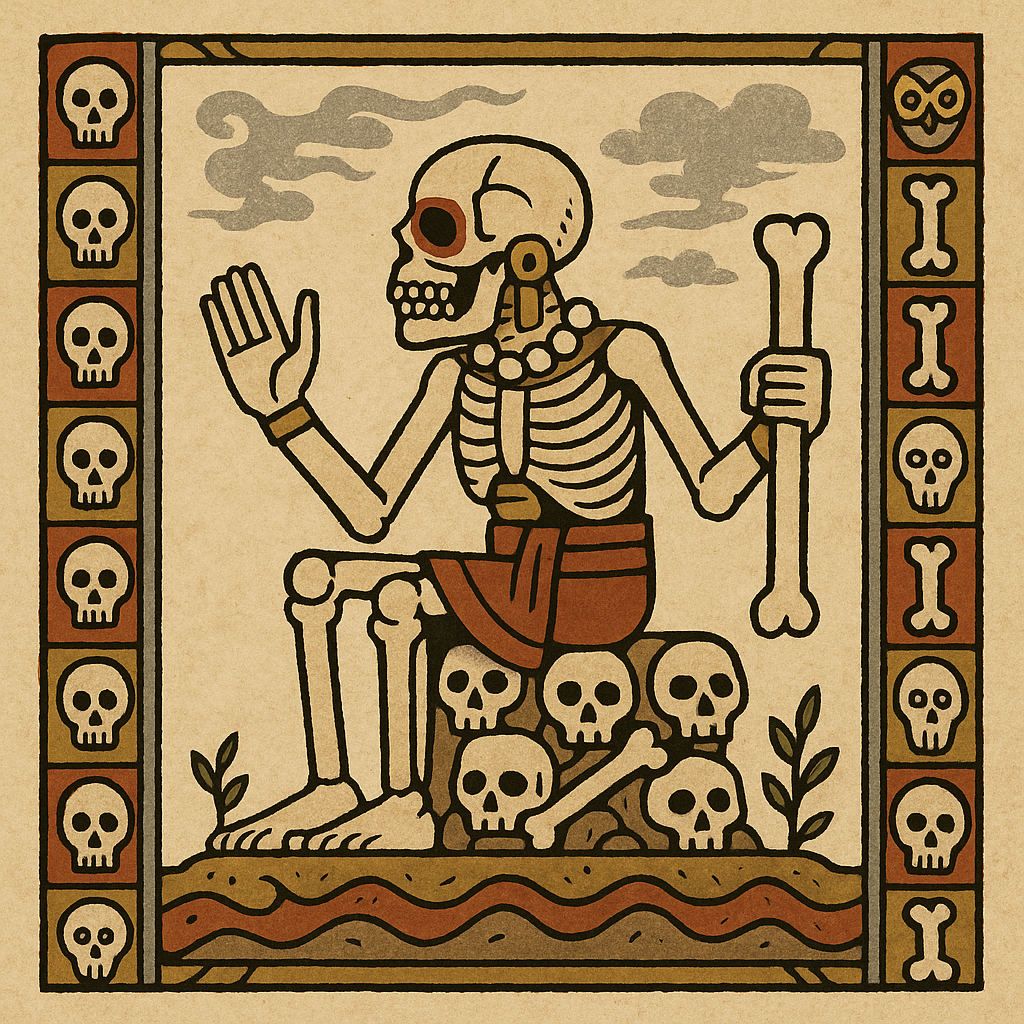
The skeletal Aztec god Mictlantecuhtli, lord of the underworld, holding a bone and surrounded by skulls

Mictlantecuhtli

“Lord of the Underworld”

Pronunciation: Meek-tuhlahn-teh-koot-lee

Domain: Death, the afterlife

Vibe: Surprisingly chill about mortality

Story: Mictlantecuhtli ruled Mictlan, the nine-layered underworld where most souls went after death — more for bureaucracy vs. punishment. The journey took four years, with challenges like mountains that crashed together and rivers of blood. When Quetzalcoatl came to borrow bones to make humanity, Mictlantecuhtli agreed — and then tried to trip him on the way out. 

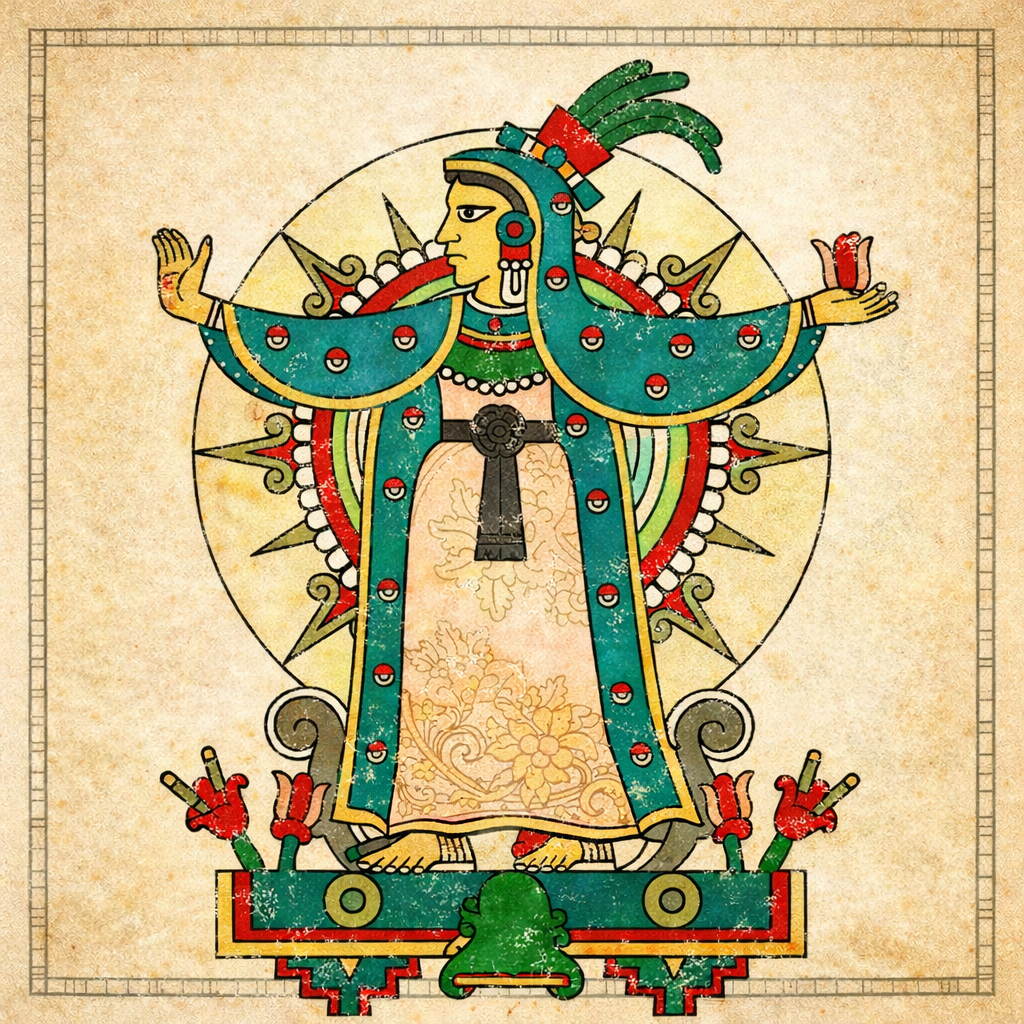
The Aztec god and goddess Ometecuhtli and Omecihuatl, wearing headdresses and holding symbols in a circle, codex style

Ometecuhtli and Omecihuatl

“Our Lord and Lady of Duality”

Pronunciation: Oh-meh-teh-koot-lee / Oh-meh-see-wah-tuhl

Domain: Creation, balance, masculine and feminine forces 

Vibe: The original power couple. Divine yin and yang — a sort of Adam and Eve for the Mexica.

Story: Before there was sun, moon or time itself, there was Ometecuhtli and Omecihuatl. Living in the highest heaven, they embodied the balance of existence. Together, they created the four great gods (Quetzalcoatl, Tezcatlipoca, Tlaloc and Xipe Totec), setting the cosmic wheels in motion. Creation wasn’t a solo act; it was a duet.

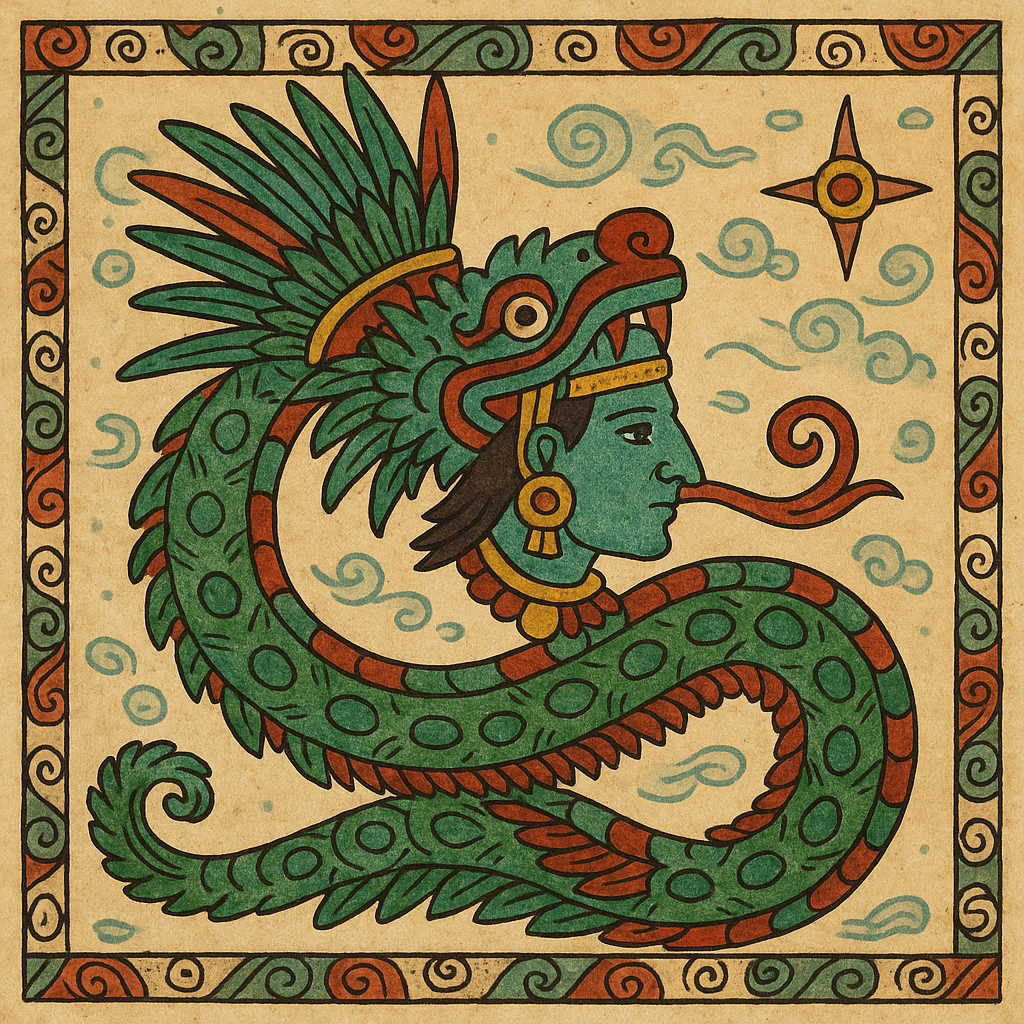
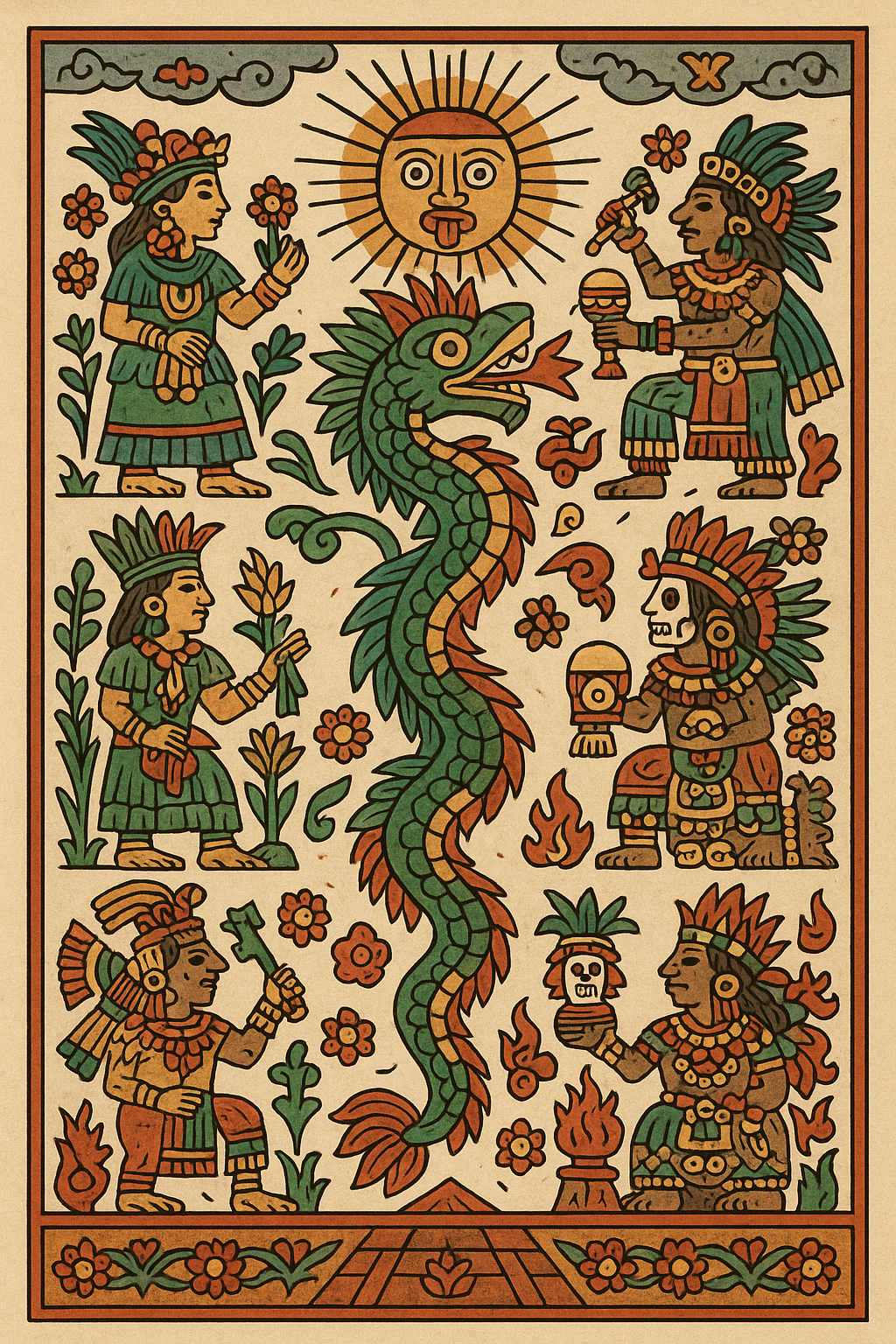
Feathered serpent Aztec god Quetzalcoatl, with a human head emerging from the snake mouth

Quetzalcoatl

“Feathered Serpent”

Pronunciation: Ket-sahl-koh-ah-tuhl

Domain: Wind, knowledge, art, life, creation

Vibe: The philosopher who tried to make everyone chill

Story: Quetzalcoatl was the thoughtful one — a feathered serpent who preferred wisdom to warfare. He gave humans knowledge, maize and calendars, which is more than most gods manage before breakfast. Trickster rival Tezcatlipoca once got him drunk and shamed him into exile; some legends say he sailed east, promising to return. When the Spanish landed, later chroniclers swore the Mexica mistook Cortés for him. 

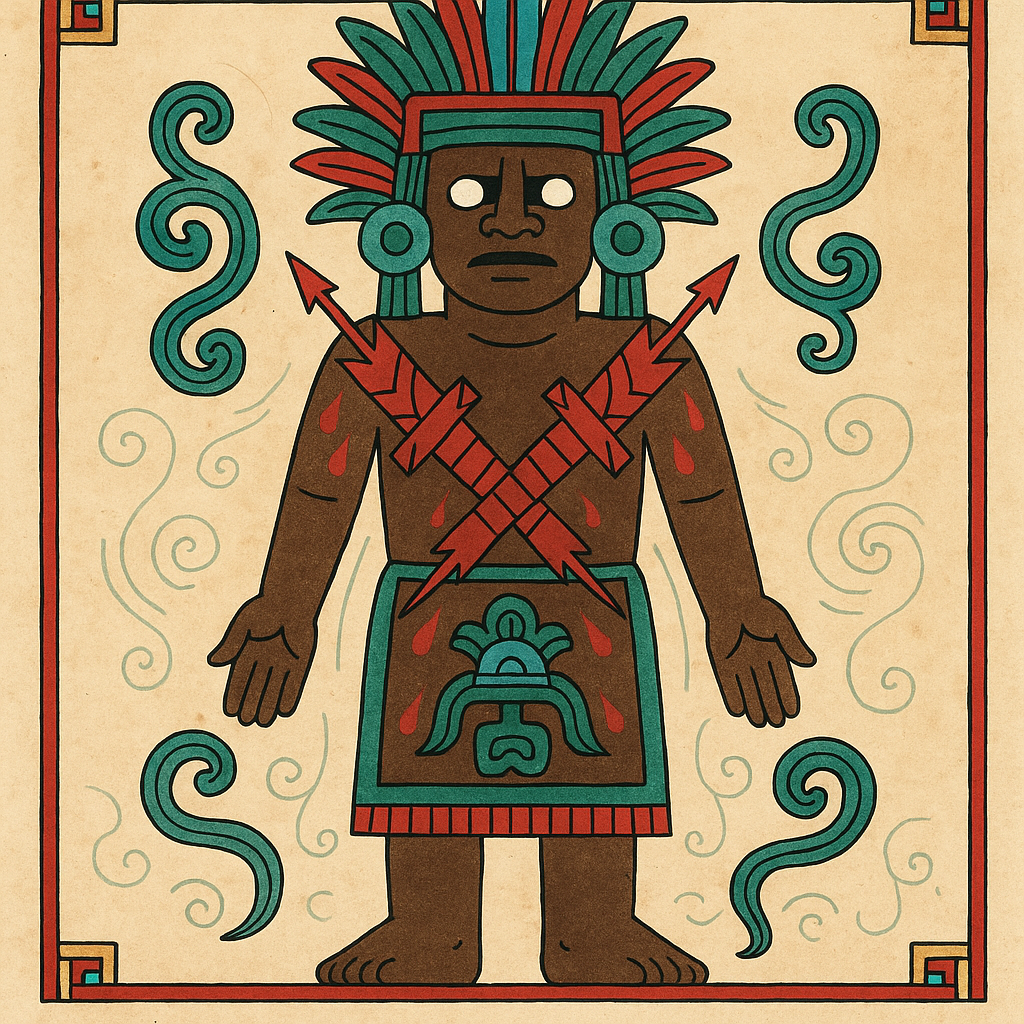
Aztec god Teteoinnan, with arrows across her breasts, feathered headdress and codex-style swirls

Teteoinnan

“Mother of the Gods”

Pronunciation: Teh-teh-oh-ee-nahn

Domain: Fertility, death, renewal

Vibe: Brutal, maternal, unstoppable

Story: Teteoinnan was the primordial Earth Mother — the one who birthed the gods and demanded blood to keep creation fertile. During the festival of Ochpaniztli, “the Sweeping,” a woman chosen to represent her was pampered for days, then shot to death by arrows. Her skin was flayed and worn by a priest, symbolizing the earth shedding its old season so a new one could grow. Teteoinnan was life itself: the womb and the tomb, the soil that feeds and devours.

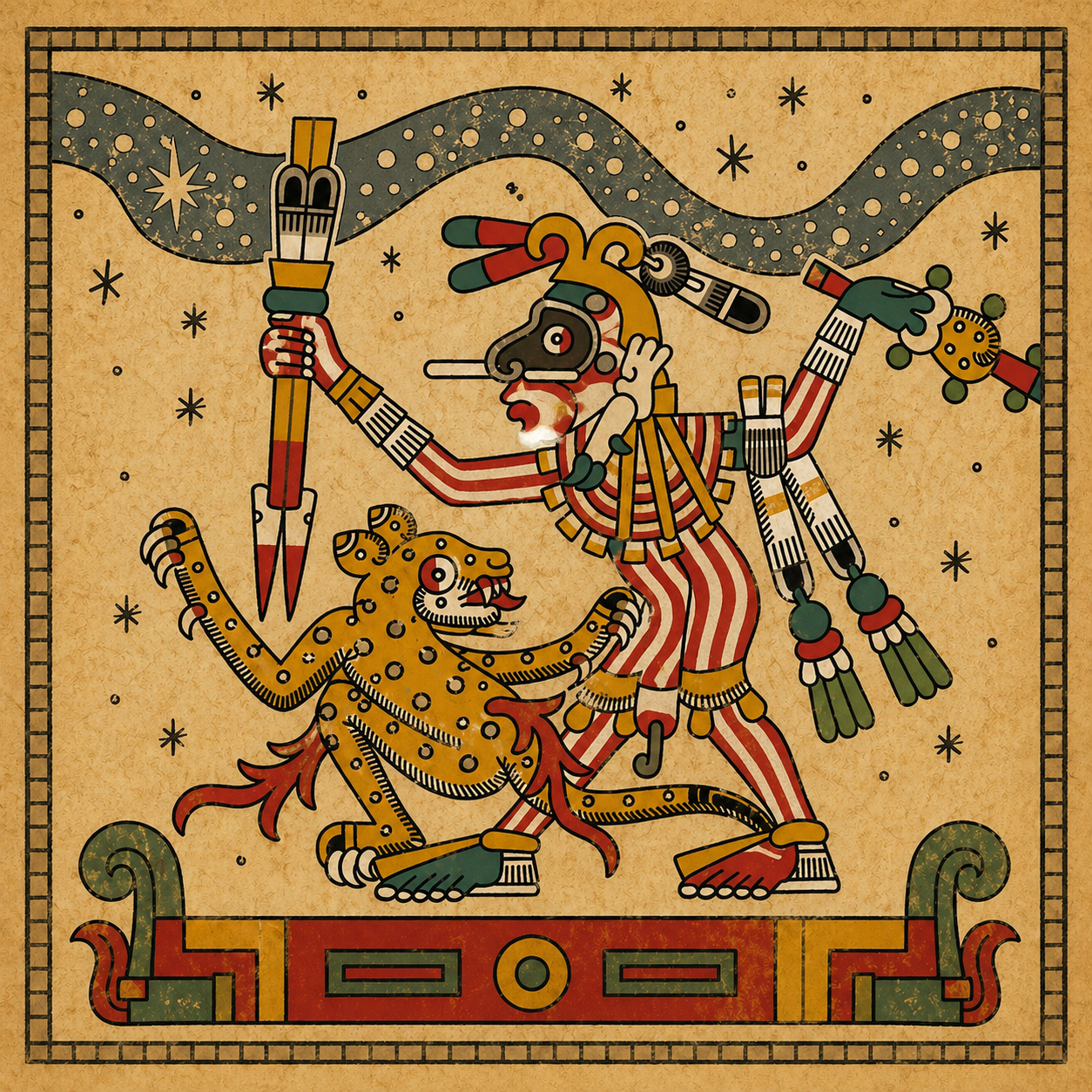
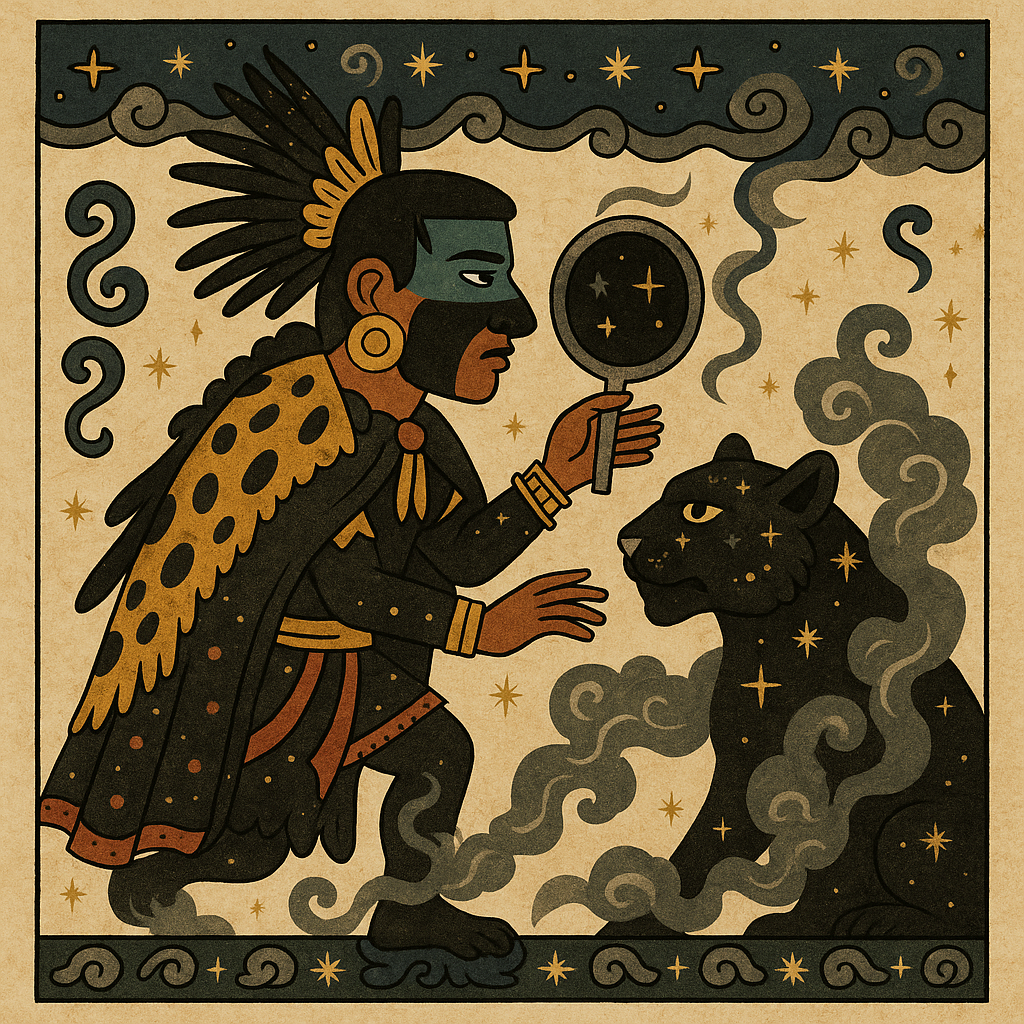
Aztec god Tezcatlipoca, with blue and black painted face, holding a mirror among smoke, with a celestial black panther

Tezcatlipoca

“Smoking Mirror”

Pronunciation: Tes-kaht-lee-poh-kah

Domain: Night, chaos, destiny, trickery

Vibe: The original frenemy — chaos with cheekbones

Story: Tezcatlipoca was Quetzalcoatl’s equal and opposite — the shadow to his light. With his obsidian mirror, he could see into hearts and futures, which made him the ultimate gossip. One myth has him turning into a jaguar to destroy the world, just to prove a point. The Aztecs loved him for it; he reminded them that fate has teeth.

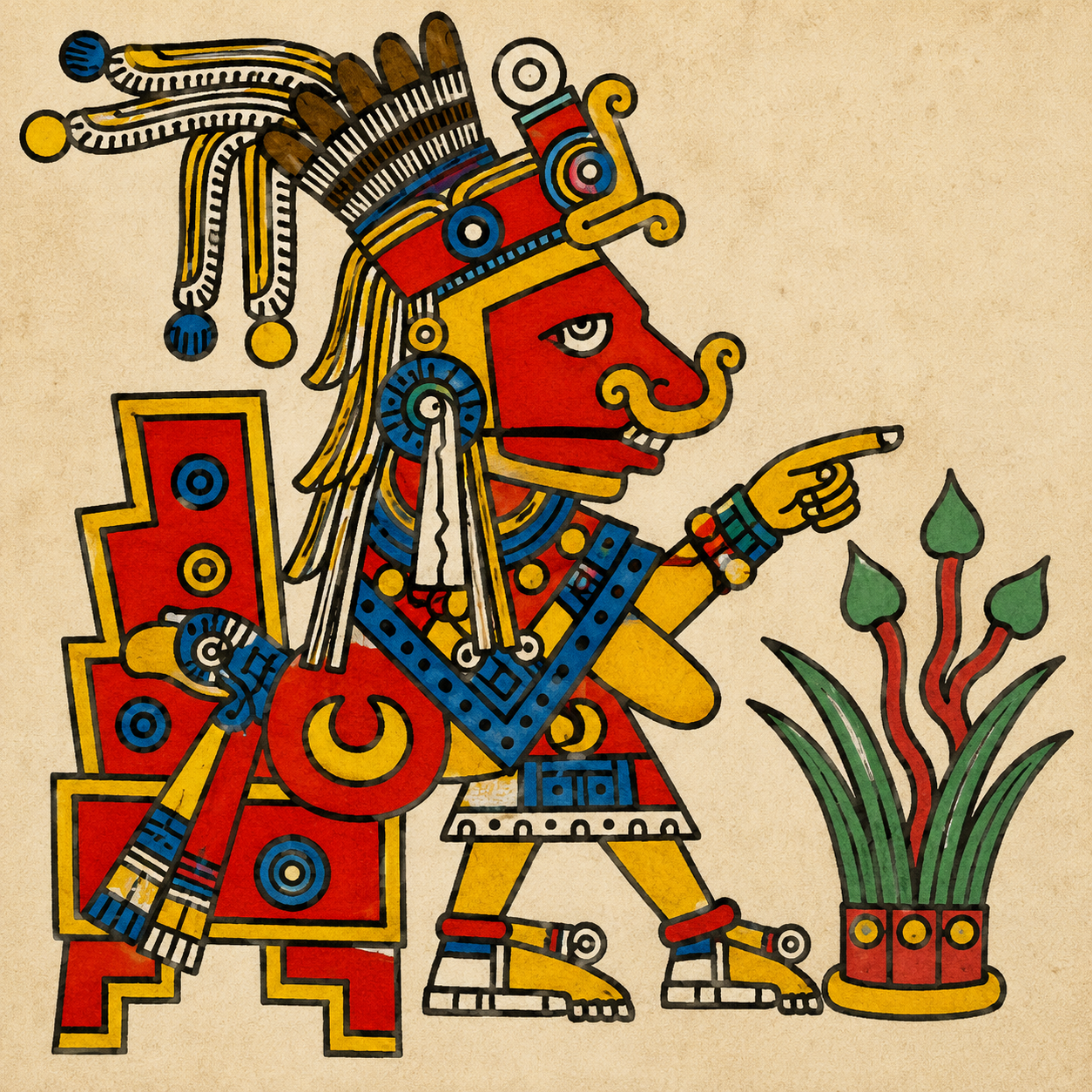
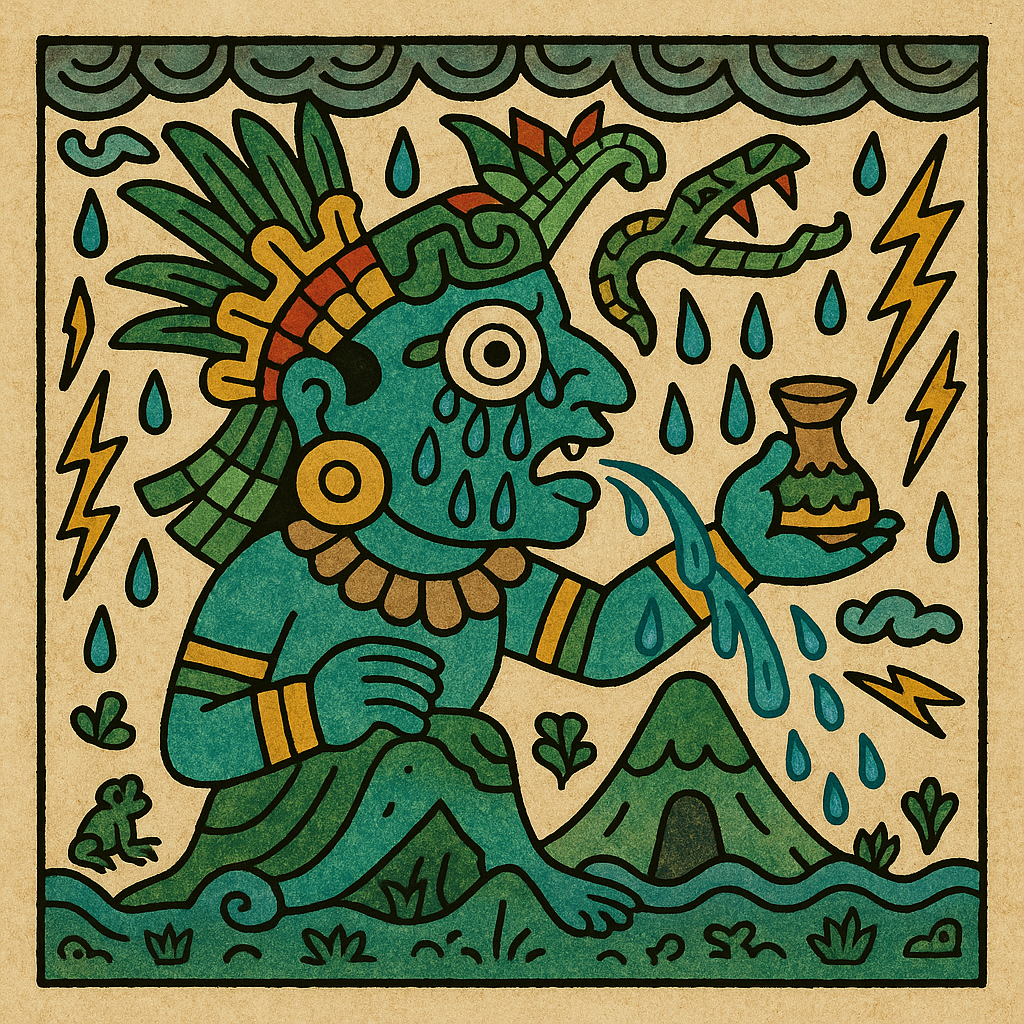
Bug-eyed Aztec god Tlaloc with blue skin, spouting water with lightning and a mountain, holding a small vessel

Tlaloc

“He Who Makes Things Sprout” (possibly)

Pronunciation: Tuhlah-lok

Domain: Rain, storms, fertility

Vibe: The moody meteorologist

Story: Tlaloc could bless or drown with equal enthusiasm. Farmers adored him; everyone else kept a respectful distance. Children were sometimes sacrificed in his honor, their tears believed to bring rain. Archaeologists have found offerings of tiny skeletons near his temple, a haunting reminder that the weather is often a matter of life and death.

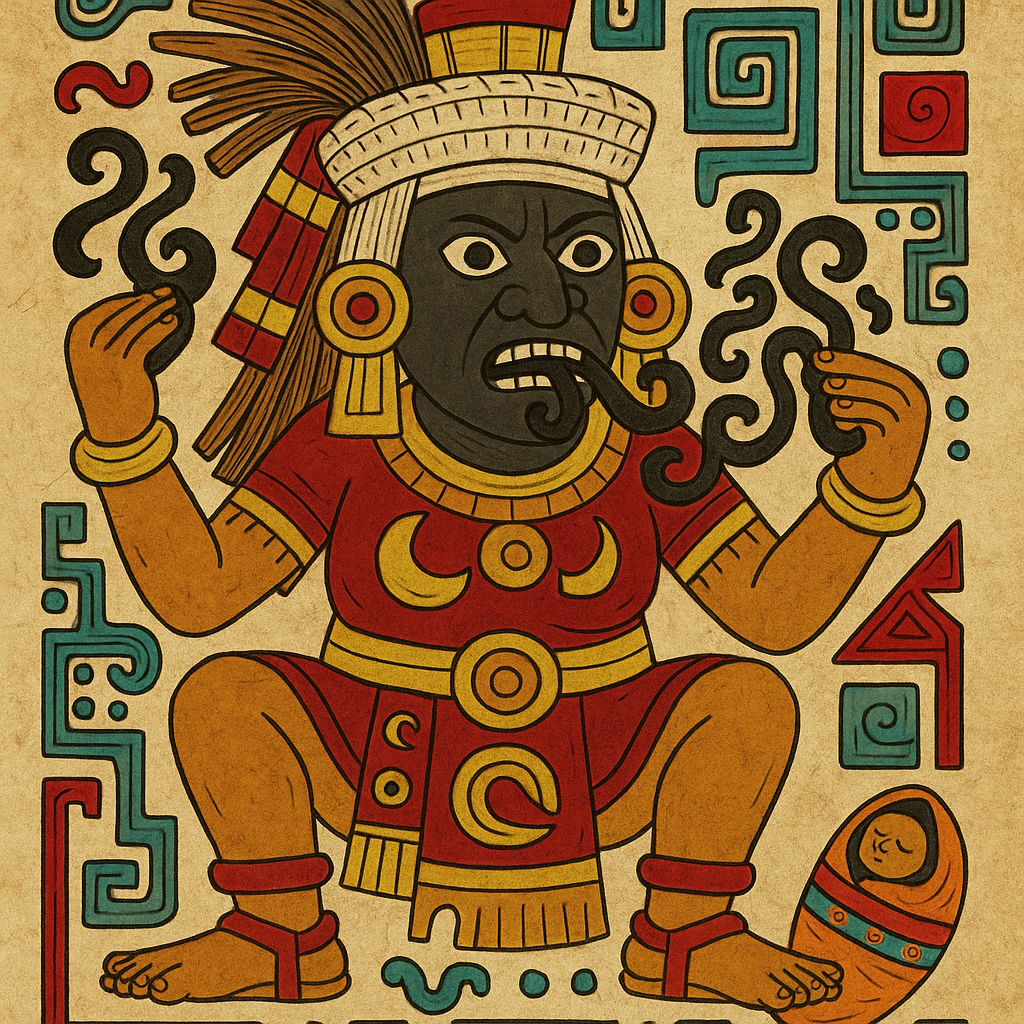
Aztec goddess Tlazolteotl, squatting, face painted black, consuming black swirls, a baby at her foot

Tlazolteotl

“Goddess of Filth”

Pronunciation: Tuhlah-zohl-teh-o-tuhl

Domain: Sin, purification, lust, confession

Vibe: The confessor — sharp-tongued, forgiving and uncomfortably honest

Story: Tlazolteotl was the goddess of both sin and cleansing. People confessed their moral missteps to her once in their lifetime, and she “ate” their spiritual filth, leaving them pure again. Basically the Aztec equivalent of Jesus Christ taking away the sins of the world — only with black face paint, dirty rags and rotten food.

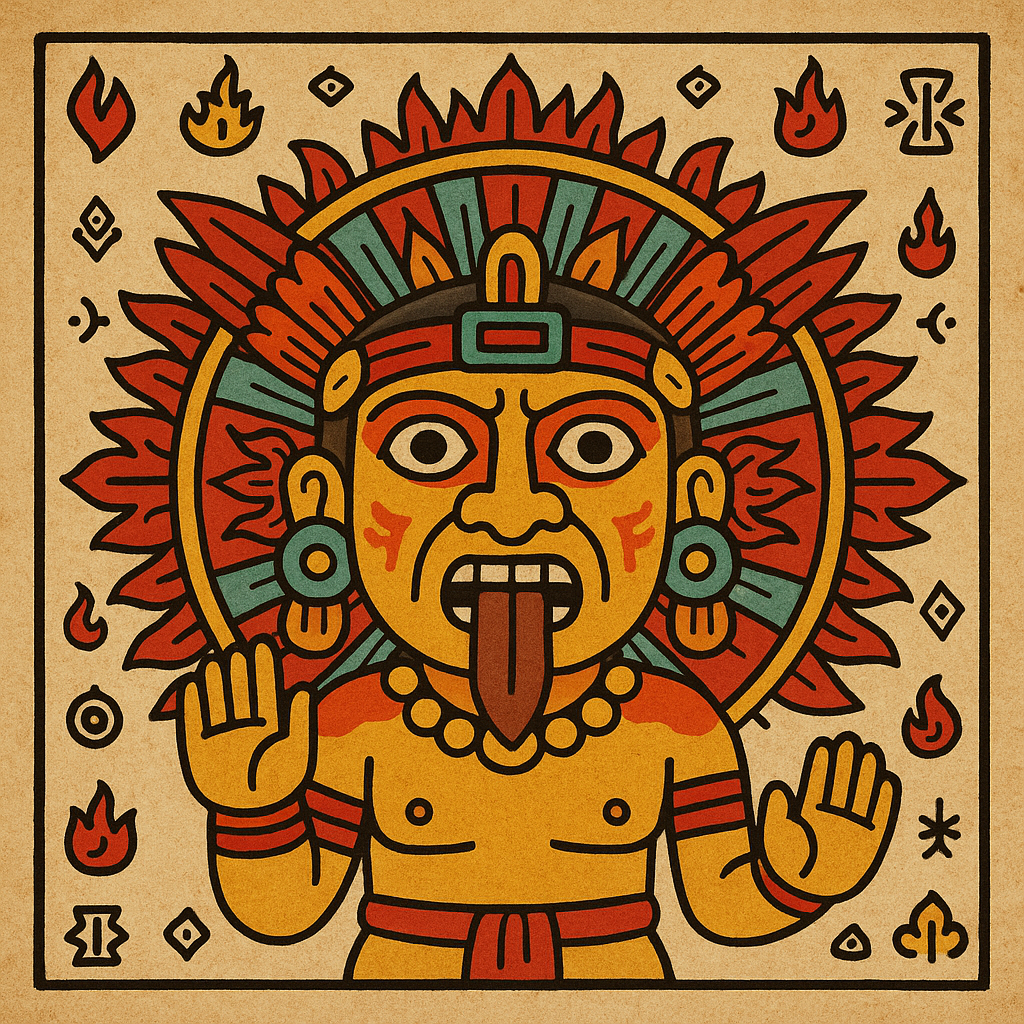
Aztec god of the sun Tonatiuh, tongue out

Tonatiuh

“The Radiant One”

Pronunciation: Toh-nah-tee-uh

Domain: The sun (the current one — there were four before him)

Vibe: The jock who knows the world literally revolves around him

Story: Tonatiuh is the fifth sun — the version we live under now. The Aztecs believed the universe had been destroyed and reborn four times already, and keeping Tonatiuh burning required constant human sacrifice. If the flow of hearts stopped, so would the sun. No pressure, humanity.

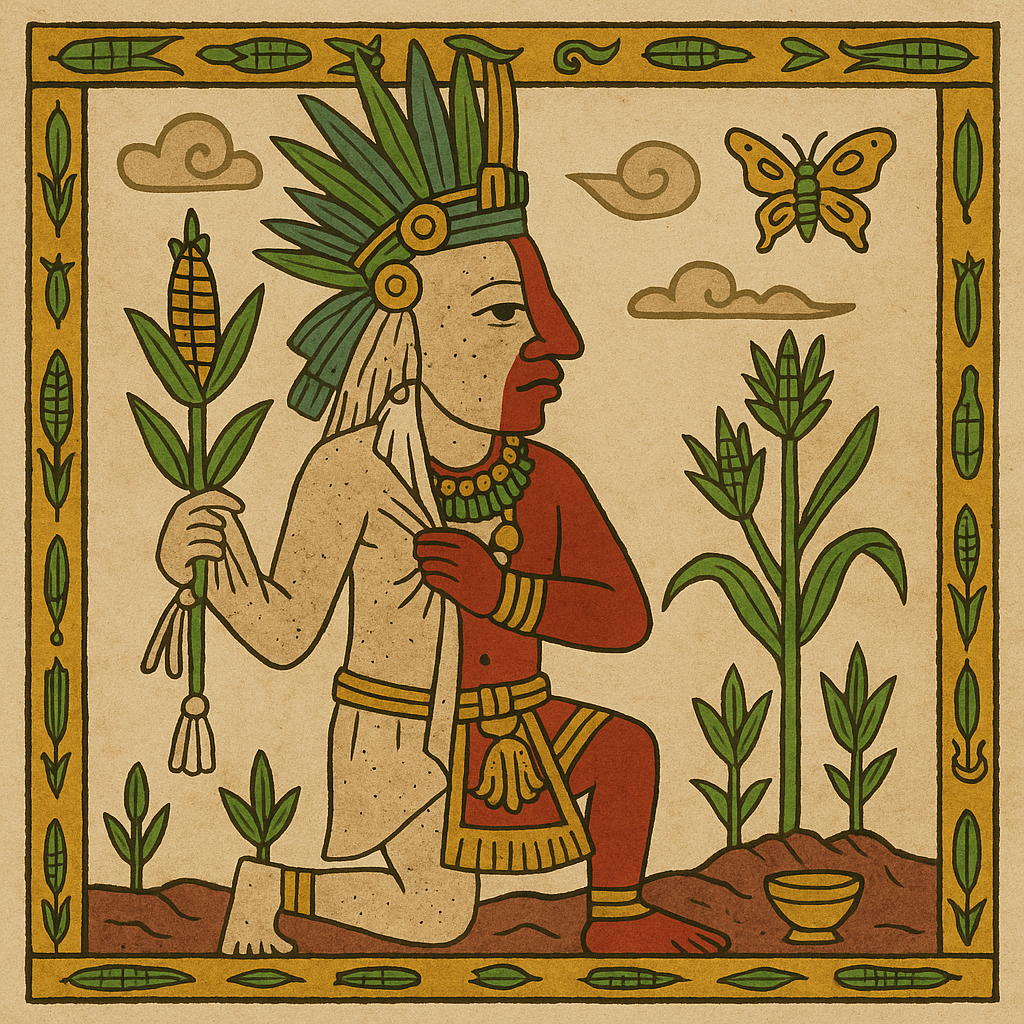
The Aztec god Xipe Totec, putting on someone's flayed skin in a cornfield while a butterfly flies by

Xipe Totec

“Our Lord, the Flayed One”

Pronunciation: Shee-peh Toh-tek

Domain: Renewal, spring, agriculture, goldsmiths

Vibe: Horrifying but optimistic

Story: Xipe Totec wore human skin to symbolize the shedding of the old and the rebirth of the new. Each spring, priests honored him by donning the flayed skin of sacrificial victims until it decayed — a vivid, if disturbing, metaphor for renewal. He was terrifying, but also proof that life always grows back.

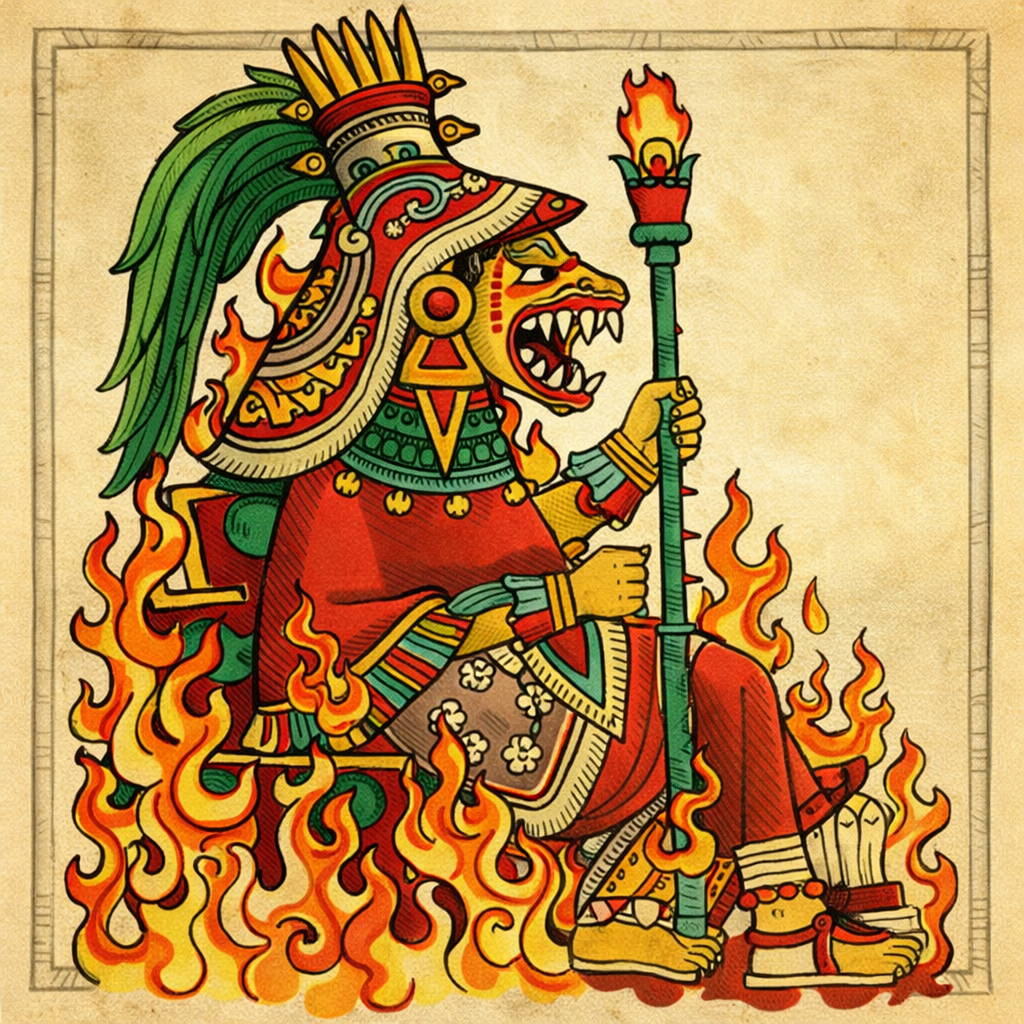
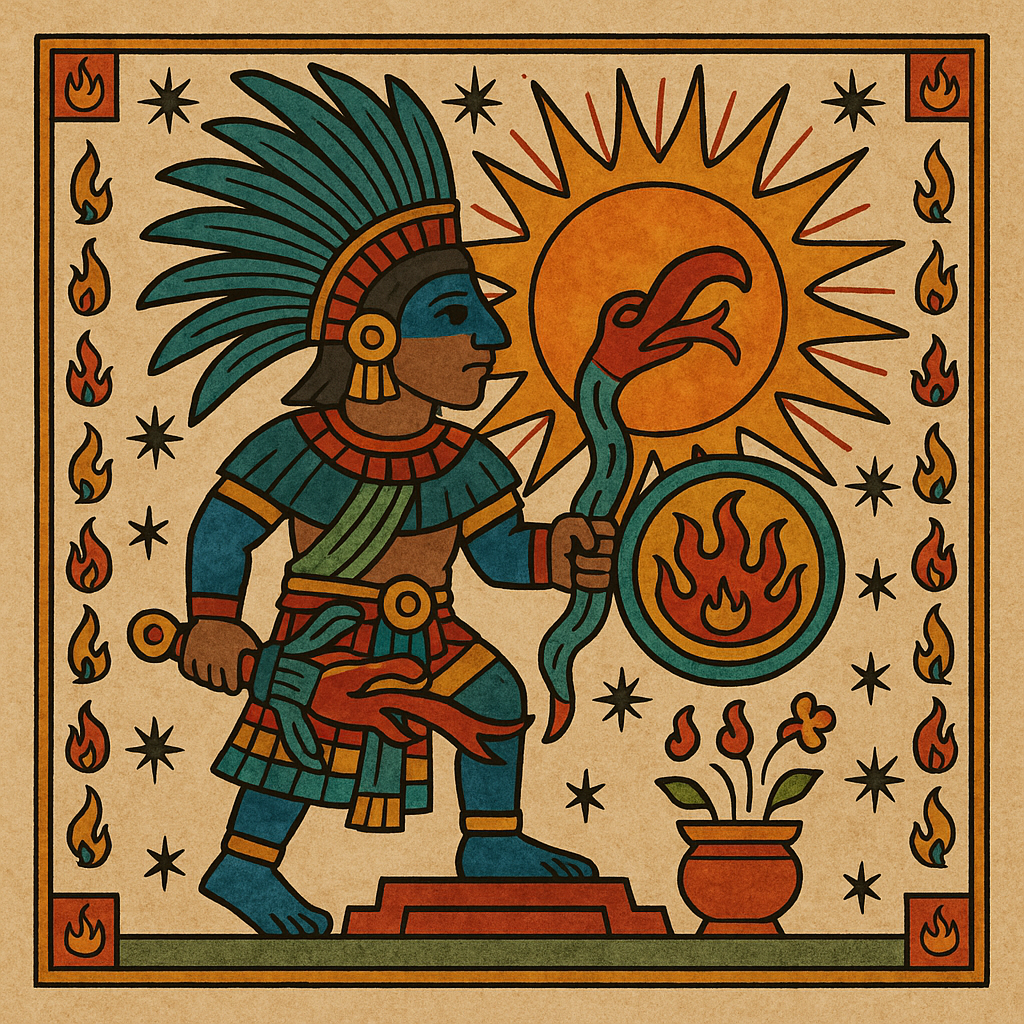
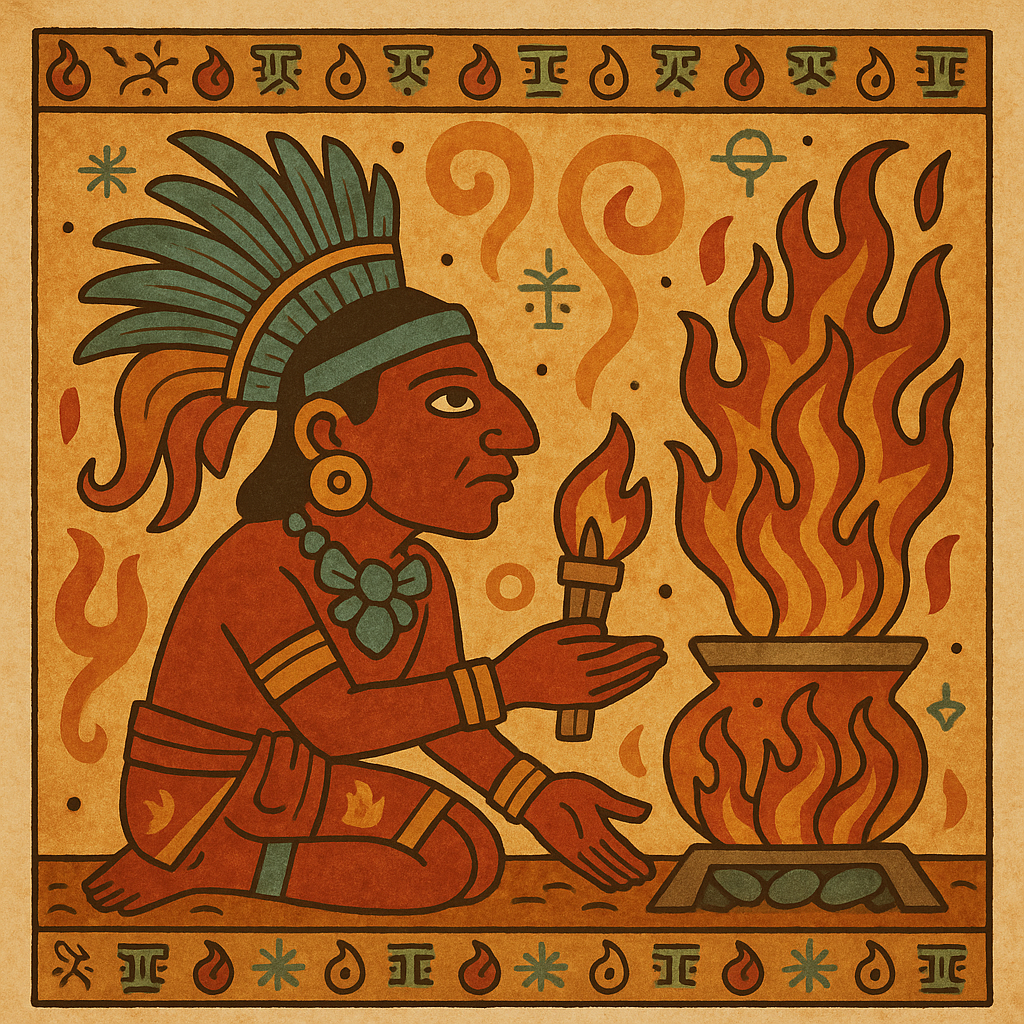
Aztec god Xiuhtecuhtli wears a feathered headdress and holds a torch to light a flaming cauldron

Xiuhtecuhtli

“Turquoise Lord”

Pronunciation: Shee-ooh-teh-koot-lee

Domain: Fire, time, renewal

Vibe: The spark that keeps the universe’s pilot light on

Story: Xiuhtecuhtli rules over fire and time — the heart of every hearth and the flame that ties life together. Every 52 years, the Aztecs extinguished all the blazes in the empire for the New Fire Ceremony, then rekindled it atop a sacrificial victim’s chest to reboot the cosmic clock. A bit extreme, but supposedly effective.

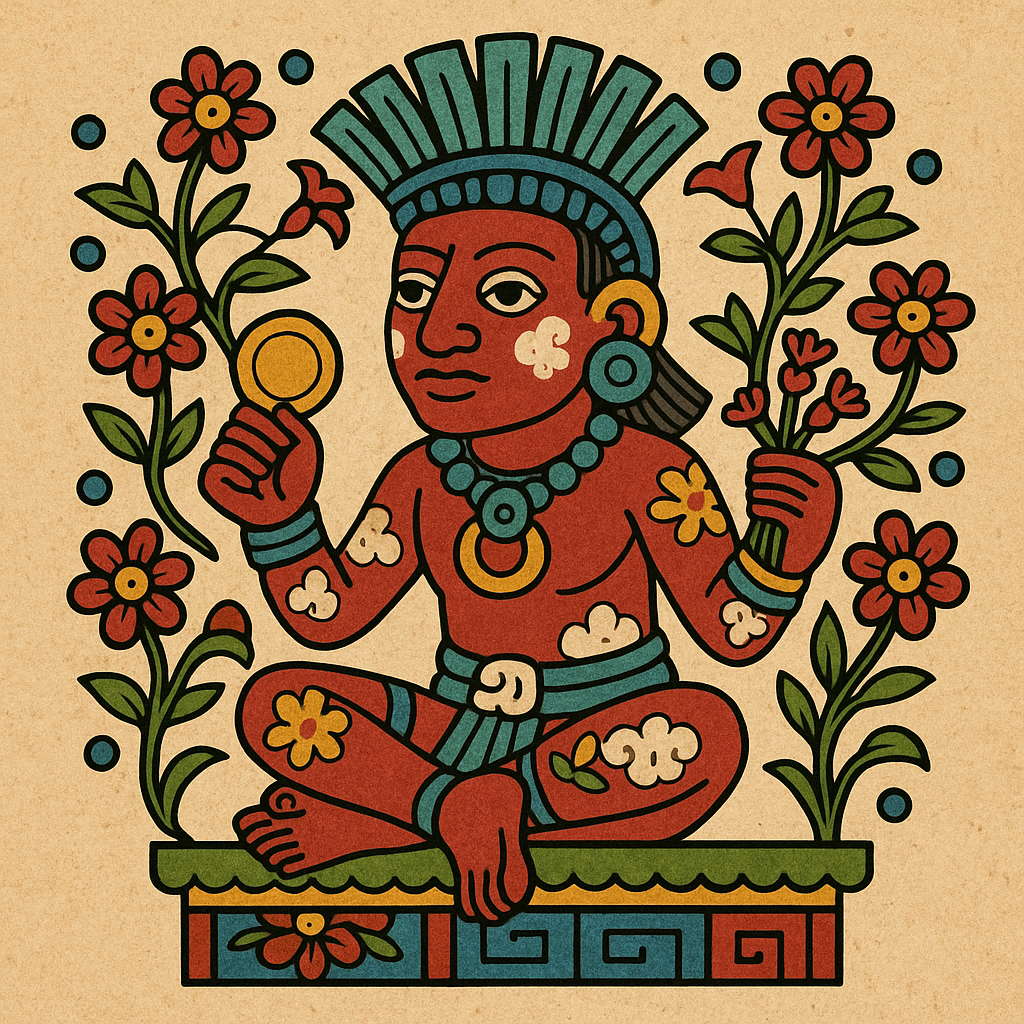
The Aztec god Xochipilli sitting cross-legged, holding flowers, in a drug trance

Xochipilli

“Flower Prince”

Pronunciation: Soh-chee-pee-lee

Domain: Pleasure, art, dance, song and sacred intoxication

Vibe: The good time guy — who’s always got the good stuff

Story: Xochipilli ruled over music, poetry and hallucinogenic ecstasy. His statues show him in blissful trance, covered in carvings of psychoactive plants like morning glory and mushrooms. Scholars debate whether he’s communing with fellow gods or just having an incredible trip. Either way, he’s the patron of joy.

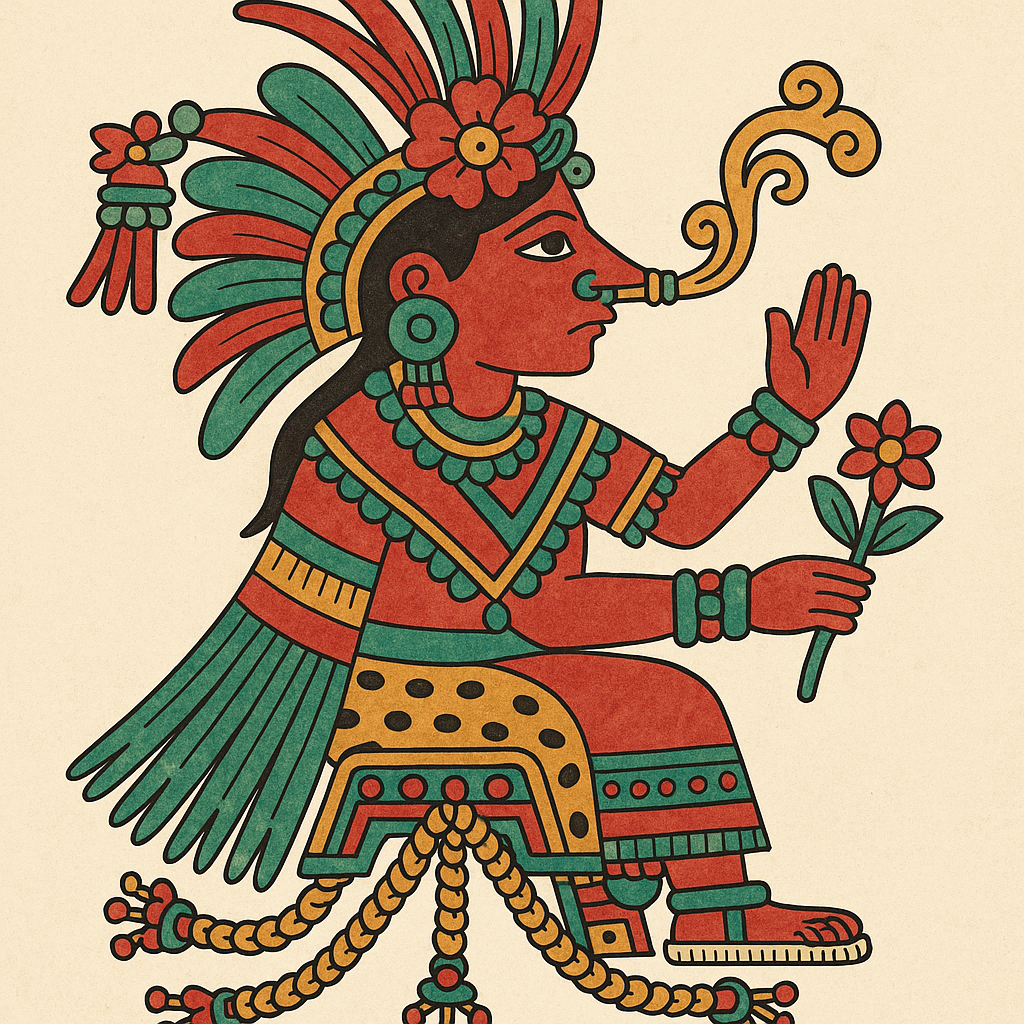
Aztec goddess Xochiquetzal, with feathered outfit and nose plug, sitting on stools with braided ropes

Xochiquetzal

“Precious Flower”

Pronunciation: Soh-chee-ket-sahl

Domain: Love, beauty, fertility, female sexuality, arts

Vibe: The divine muse with petals and power

Story: Xochiquetzal ruled over everything pleasurable: love, sex, beauty, art and weaving (opinions differ on how fun that last one is). She was beauty incarnate, the kind people write terrible poetry about. Naturally, this led to drama: At one point Tezcatlipoca abducted her, proving that even gods make bad romantic decisions. Worshiped by artists and universally adored, she was the eternal muse — always in bloom.

An Aztec priest in feathered headdress stands atop a temple holding a human heart up to the sky near a smoking brazier

Aztec Offerings: Blood and Blossoms

For the Mexica, the gods needed constant nourishment to keep creation from falling apart. In a universe born from divine sacrifice, the only fitting offering was more of the same.

The Florentine Codex, compiled by Franciscan friar Bernardino de Sahagún and his Nahua collaborators between 1540 and 1577, is a 12-book encyclopedic record of Aztec culture, language and religion created to document and ultimately aid in converting indigenous peoples after the Spanish conquest.

According to the codex, every ritual — whether it involved flowers, animals or human hearts — was a repayment, a way to keep the cosmic machinery running. Blood was the power source of the sun. The gods had given their own essence to ignite the world. To let that flow stop would be like unplugging the universe.

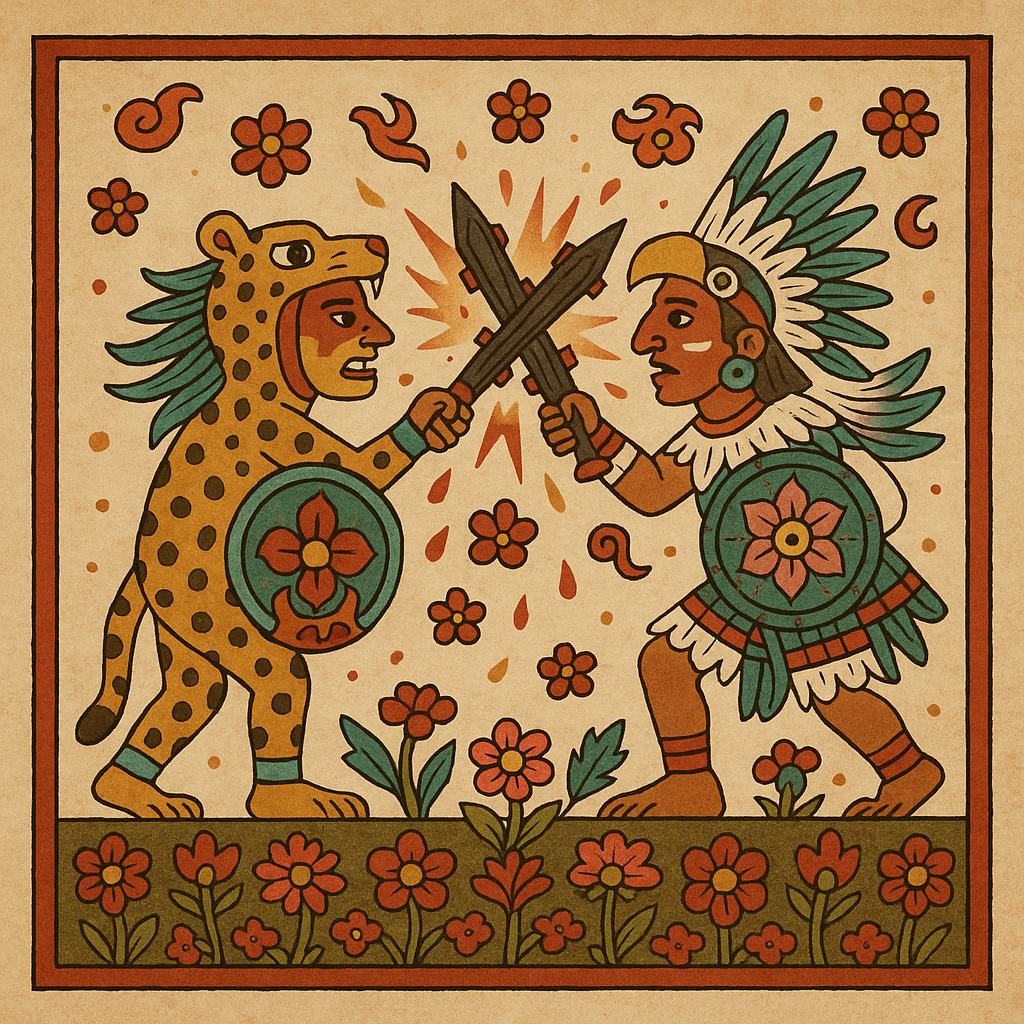
A jaguar skin-clad warrior fights one dressed like an eagle, clashing swords in one of the Flower Wars to obtain sacrificial hostages

The Flower Wars (Xochiyaoyotl)

The Aztecs even had a word for the ultimate warrior’s death: xōchimiquiztli, the “flowery death.” Dying in battle or on the sacrificial stone wasn’t seen as tragedy but transcendence. To fall for Huitzilopochtli or Tonatiuh was to bloom forever in the sky, your soul reborn as a hummingbird or butterfly chasing the rising sun.

And the gods demanded a lot of blood. So the indigenous peoples of Mesoamerica came up with an interesting proposal: battles not for conquest but purely to feed the gods. These ritualized clashes between city-states — most famously Tenochtitlan and Tlaxcala — were called the Flower Wars. The goal wasn’t land or wealth; it was captives.

The Mexica believed these chosen warriors made the best offerings: brave, beautiful and unafraid. To die in one of these sacred battles was an honor. As The Florentine Codex notes, they were “debt payments” to the gods — each body a line item in the cosmic ledger.

It sounds kind of poetic — if you ignore the gruesome obsidian knives carving out all those still-beating hearts.

Yet within that brutality lived a strange kind of grace. The Aztecs saw the world as a vast cycle of giving and renewal. Flowers wilted, rain fell, the sun rose again — and so did life. In their eyes, blood was just another bloom, proof that everything beautiful demands something in return. 

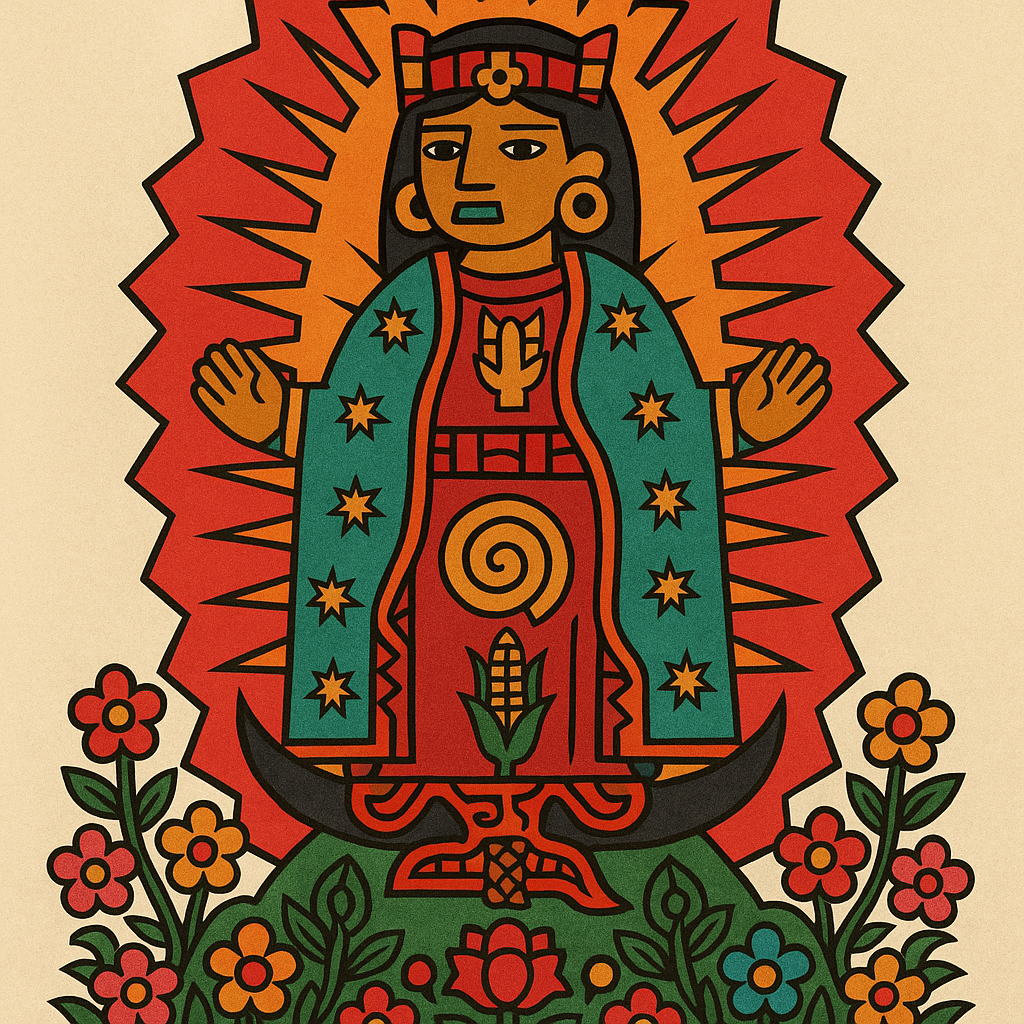
An Aztec goddess Tonantzin who has been appropriated into the Virgin Mary

Tonantzin: The Reverend Mother Who Became the Virgin Mary

If you climb Tepeyac Hill, on the north side of Mexico City, at sunrise, people say you can still feel her presence.

Before the Spanish ever arrived, the Mexica made pilgrimages up that hill to honor Tonantzin (Toh-nahn-tseen), “Our Revered Mother.” 

But the name wasn’t tied to one figure. It was a title, a crown shared by the great mother goddesses:

  • Coatlicue when she was fierce

  • Teteoinnan when she was the ultimate authority

  • Chalchiuhtlicue when she flowed with kindness

Then the conquest happened. The Spanish tore down her temple and built a church on the exact same hill dedicated to the Virgin Mary

They expected the indigenous people to move on. They didn’t. The locals kept making pilgrimages, lighting candles and praying — but they kept calling the Virgin Mary Tonantzin.

Fray Bernardino de Sahagún, a Franciscan friar, lost his mind over it, writing “This appears to be a Satanic device to mask idolatry,” in his Historia General de las Cosas de Nueva España. 

Tonantzin is the Aztec mother goddess who survived colonization by putting on a new outfit. –Wally
Animal Symbolism in Pre-Columbian Pottery at the Museo Nacional de Antropología

The meanings behind monkeys, jaguars, ducks, bats, dogs and other animals in Mesoamerican myths as depicted in pre-Columbian artifacts at the National Museum of Anthropology in Mexico City.

Coati sculptures of pre-Columbian pottery at the Museo Nacional de Antropología

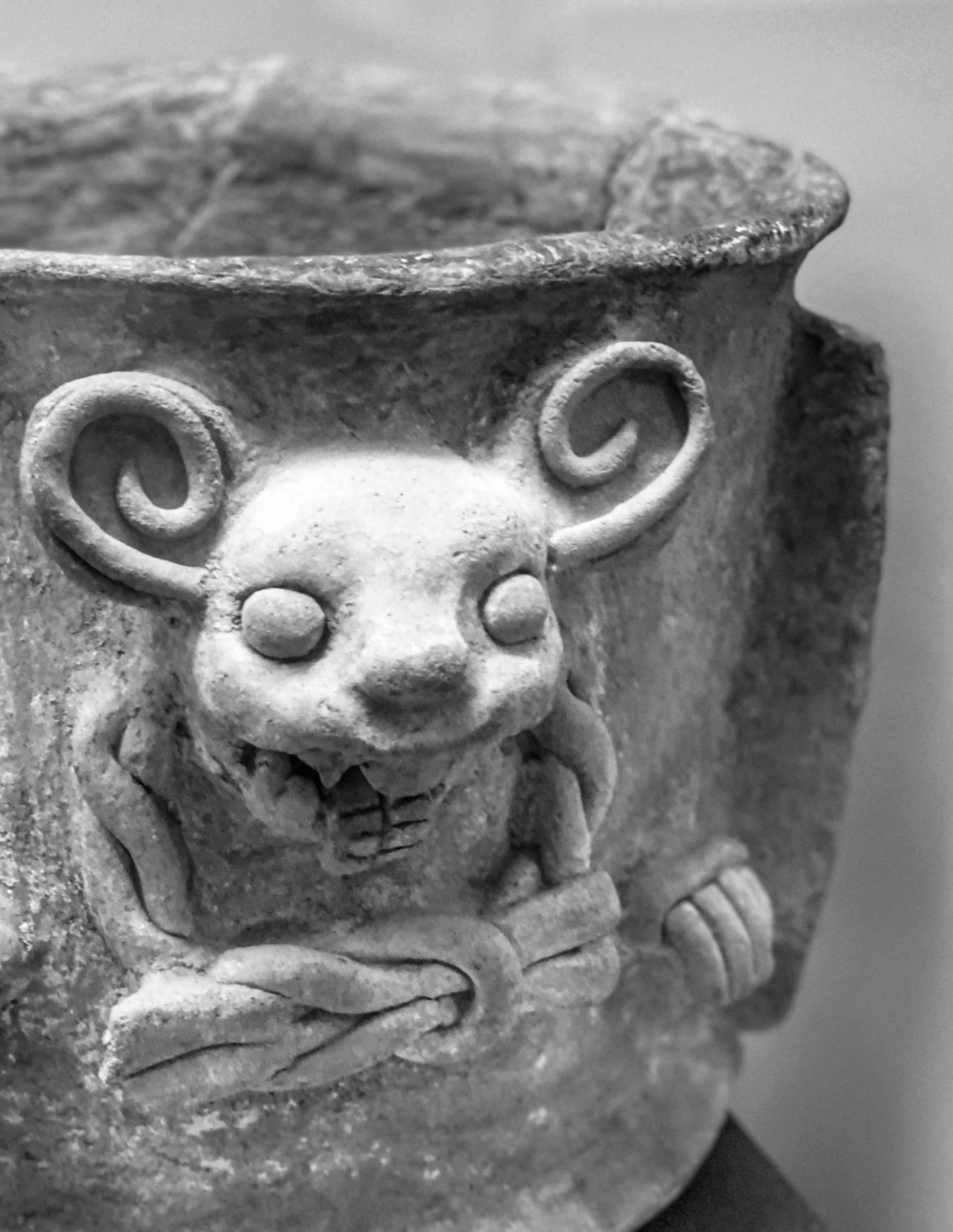
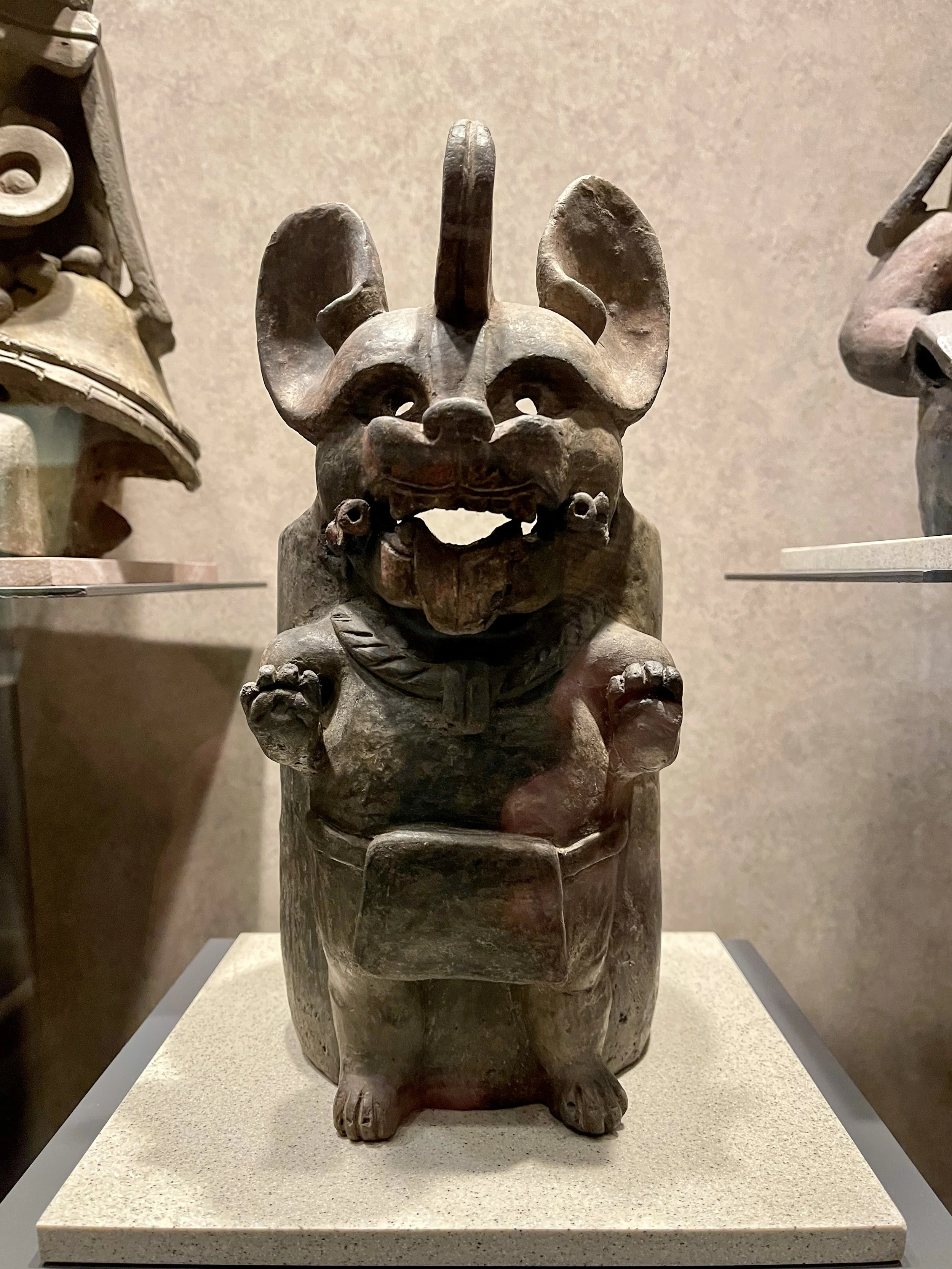
A lot of the exhibits at the National Museum of Anthropology in CDMX depict animals — each of which held symbolic meaning for the ancient peoples of Mexico.

Something that’s always fascinated me about ancient cultures are the similarities in beliefs with other civilizations around the world. Despite being oceans apart, many shared highly developed civilizations and a deep reverence for the natural world. 

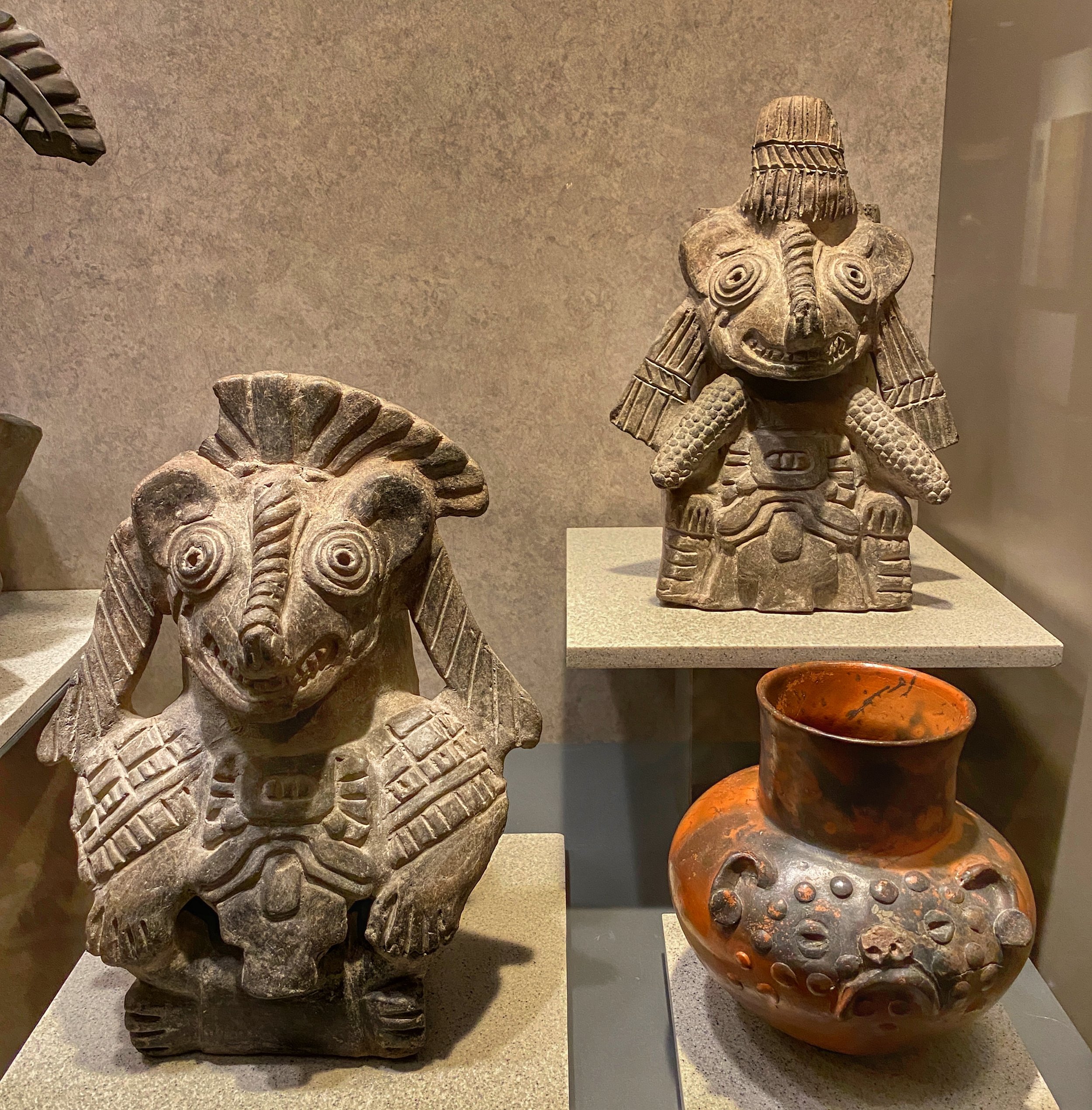
We saw this in action during our last visit to Mexico City, when we finally made it to the Museo Nacional de Antropología. The scale and scope of the galleries at the museum is dizzying. Wally and I don’t like to overdo it, so we spent half a day just wandering through the first floor. One of the highlights for me was the large number and variety of Mesoamerican animal-shaped effigy vessels on display. Like other ancient societies, the pre-Columbian peoples believed that certain animals embodied a spiritual energy in which sacred beings manifested themselves. 
Conquistadors developed such an appetite for Xoloitzcuintli Mexican hairless dogs that they nearly ate them into extinction. 

These ritual objects were not used in everyday life; they were often placed in tombs as burial goods. Animals played a key role at all levels of society and symbolically linked the three cosmic realms of the universe: the heavens, earth and underworld.
Stone Aztec calendar at the Museo Nacional de Antropología

Aztec cosmology posited that time is cyclical — and that we’re in the Fifth Sun, the final cycle of the world.

Here Comes the (Fifth) Sun

According to the Aztec legend of the Fifth Sun, time is cyclical. Four suns, or eras, have passed, created by a different deity and successively destroyed. Each cycle included inhabitants who died or transformed into various creatures, including monkeys, turkeys, dogs and fish. Our present world happens to be the Fifth Sun. 

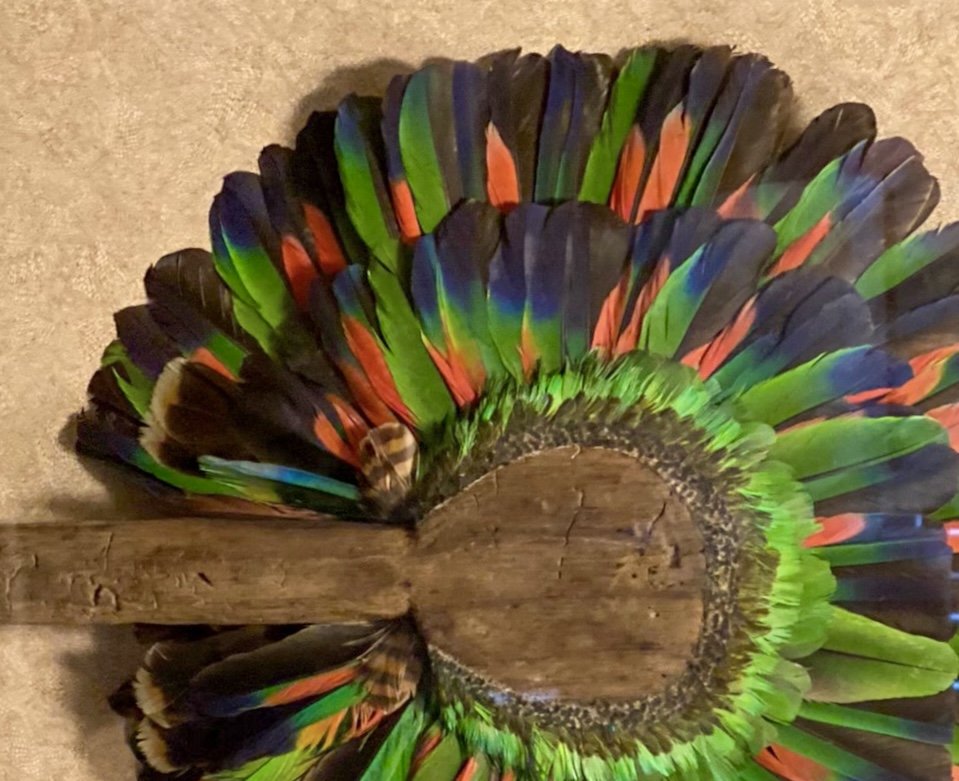
Brightly colored feathers were used in religious ceremonies.

The pre-Columbian people used animals for a variety of purposes. Parrots and macaws, for example, provided a source of food as well as prized blue-green plumage used to adorn headdresses. However, animals also held great symbolic significance. They served as cultural and cosmic metaphors based on their habitat and natural features. 

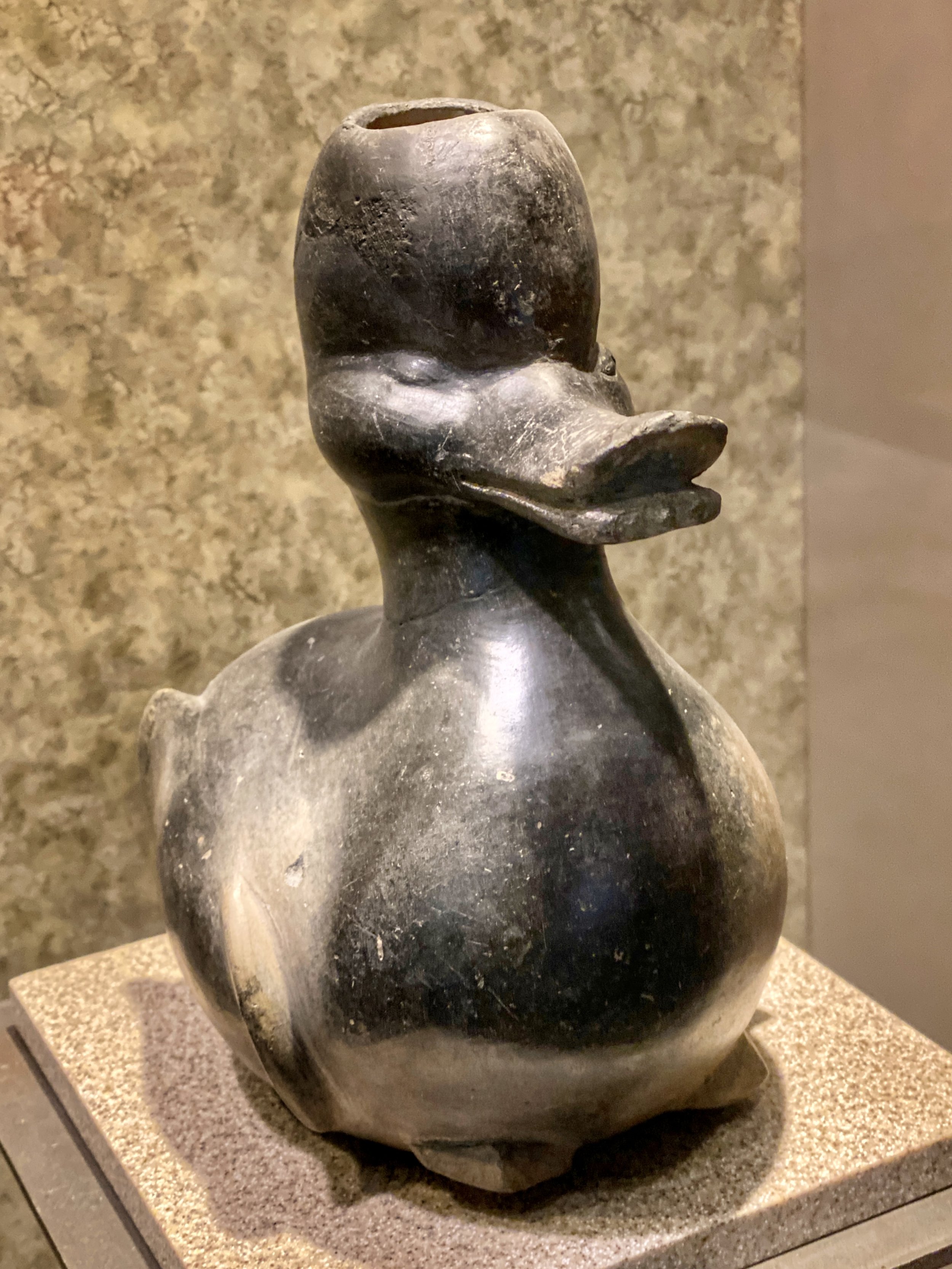
Duck pre-Columbian pottery at the Museo Nacional de Antropología

Ducks were particularly holy to Mesoamericans, as they moved between three realms: water, the sky and land.

Just Ducky

Birds symbolized the celestial realm, the sun and moon in particular, and were considered messengers between the natural and spiritual worlds. 

Ducks were particularly holy, perhaps because they ticked all the boxes: They can fly, walk on land and dive underwater, possessing the ability to travel freely between these different spheres. 

Ducks and related birds were also associated with the wind god Ehécatl (pronounced “Eh-heh-ka-tul”), one of the avatars of Quetzacoatl, the great plumed serpent. The deity was frequently portrayed with a duckbill-like appendage on his face, which he used to summon the winds. 

The Maya considered bodies of water to be pathways to the Underworld. Ducks and other waterfowl were ritualistically sacrificed, eaten and used to ward off demons.
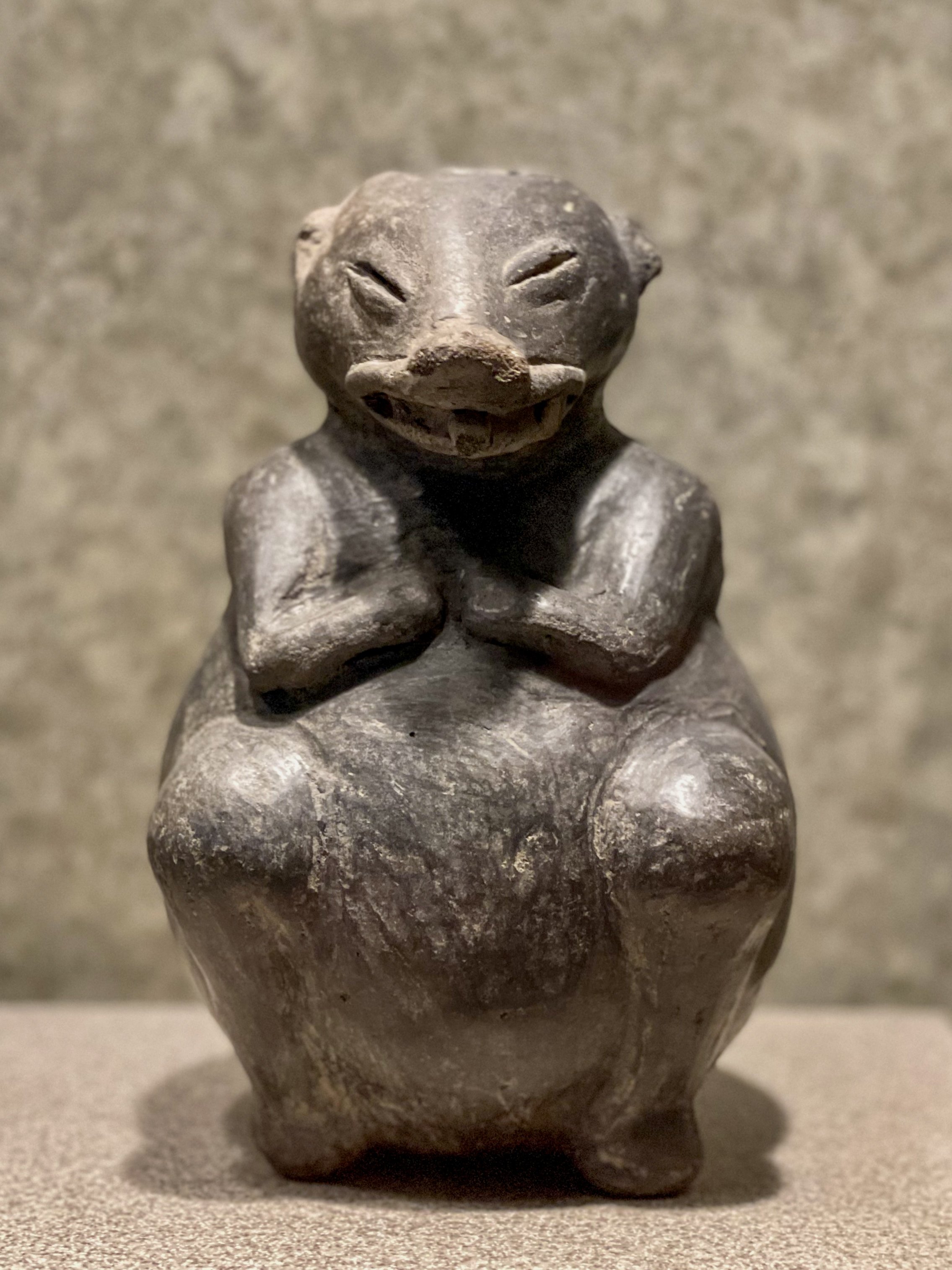
Coatimundi pre-Columbian pottery at the Museo Nacional de Antropología

This little guy represents a coatimundi, which figures in a Mayan myth that involved a decapitated head in the Underworld.

Coati Encounters of the First Kind

The coatimundi, or coati, are members of the raccoon family. They have distinct mask-like markings on their faces, resembling a combination of kinkajou, anteater, raccoon and bear cub. 

In the Popol Vuh, the sacred text of the Maya, a bat rips off the head of Hunahpu, one of the Hero Twins, and takes it to the ball court of Xibalbá (the Underworld) to be used in place of a rubber ball. A coati fashions a fake head from a calabash squash and places it on the shoulders of the headless hero. Hanapu’s brother Xbalanque places Hanapu’s head back on his shoulders, and the brothers succeed in defeating the Lords of Xibalbá.

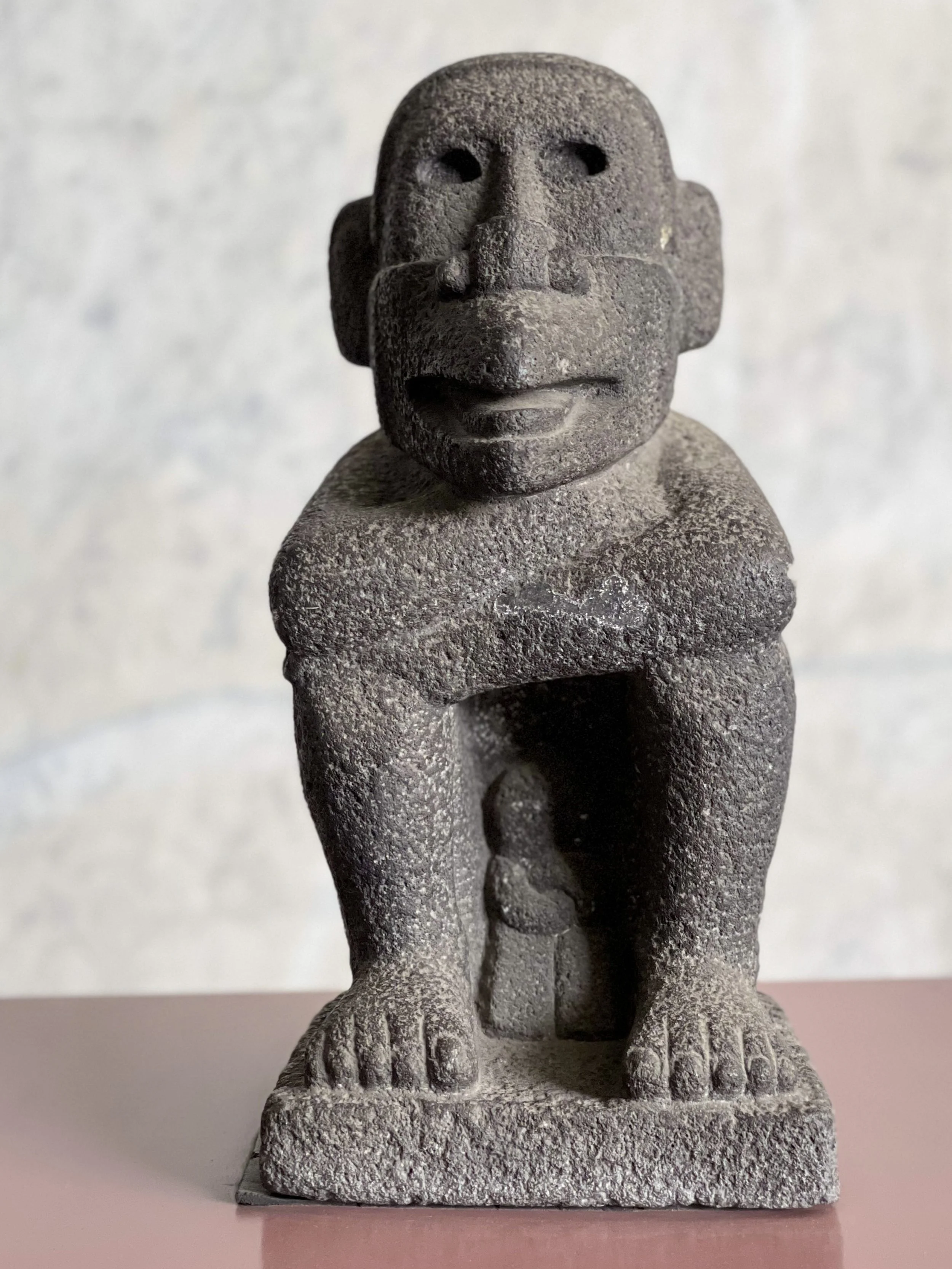
Sitting monkey pre-Columbian pottery at the Museo Nacional de Antropología

Monkeys represented the good (luck and joy) and the bad (immorality).

Monkeys: Sacred Simians 

Spider and howler monkeys are the two most common species native to the tropical lowlands of Mexico. Playful and social in nature, these nimble primates live in the high forest canopy and are mankind’s closest living relative. They were symbols of good fortune and joy, as well as pleasure and immorality — the latter of which was punishable by death. Monkeys were domesticated and kept as pets by both Zapotec and Aztec nobility and weren’t used for food or sacrifice. 

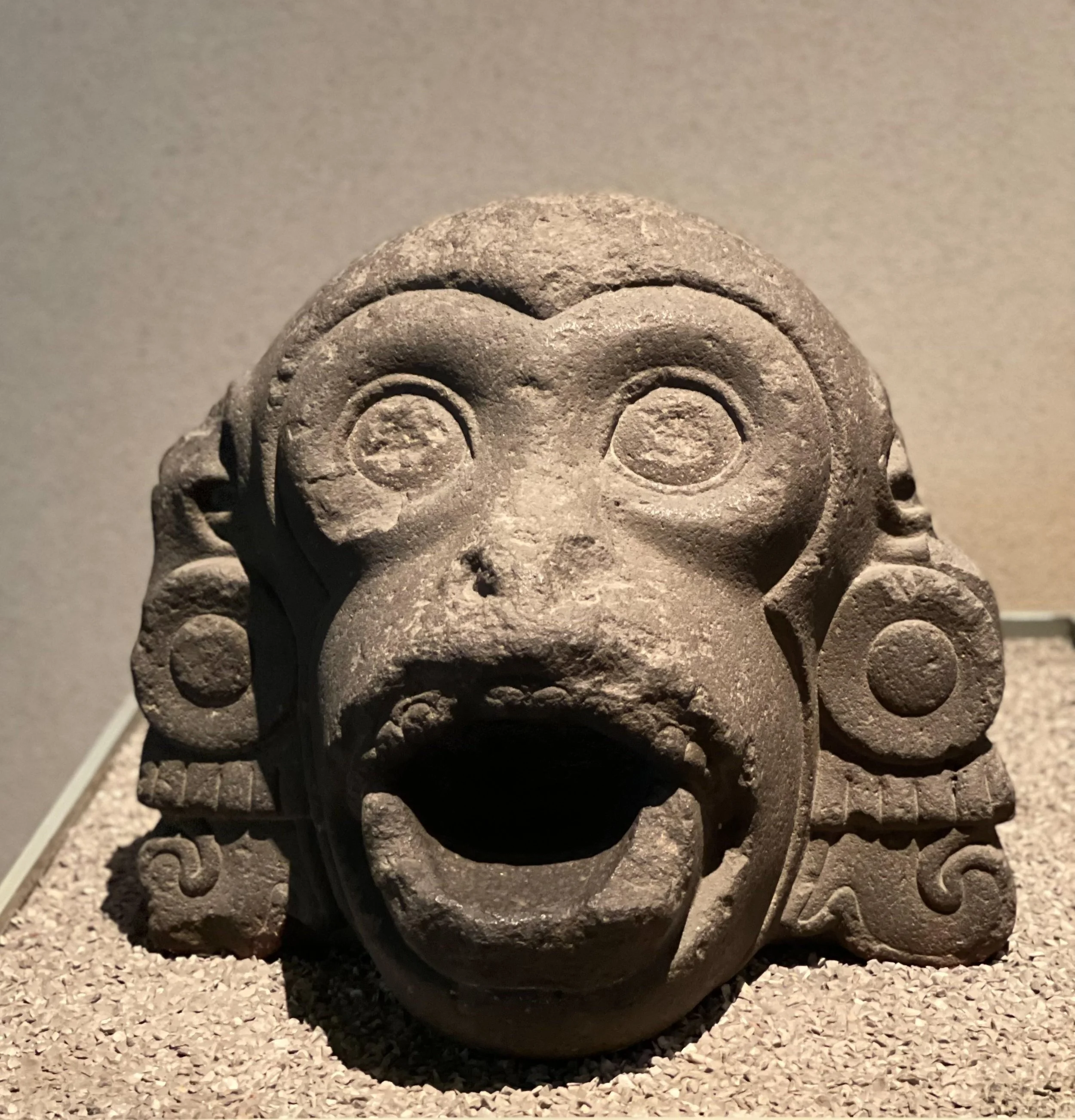
Head of monkey pre-Columbian pottery at the Museo Nacional de Antropología

The “leftovers” of the Second Sun cycle of the universe were turned into jabbering monkeys.

Statue of Ehecatl the god of the wind at the Museo Nacional de Antropología

Ehecatl, the Aztec god of the wind, was associated with monkeys.

Monkeys were also associated with the Aztec wind god Ehécatl. According to the legend of the Fifth Sun, the disobedient survivors of the Second Sun, whose cataclysmic end included hurricanes and floods, were transformed into monkeys by Ehécatl. Deprived of the ability to speak, they were condemned to emit meaningless noises for the rest of their existence. 

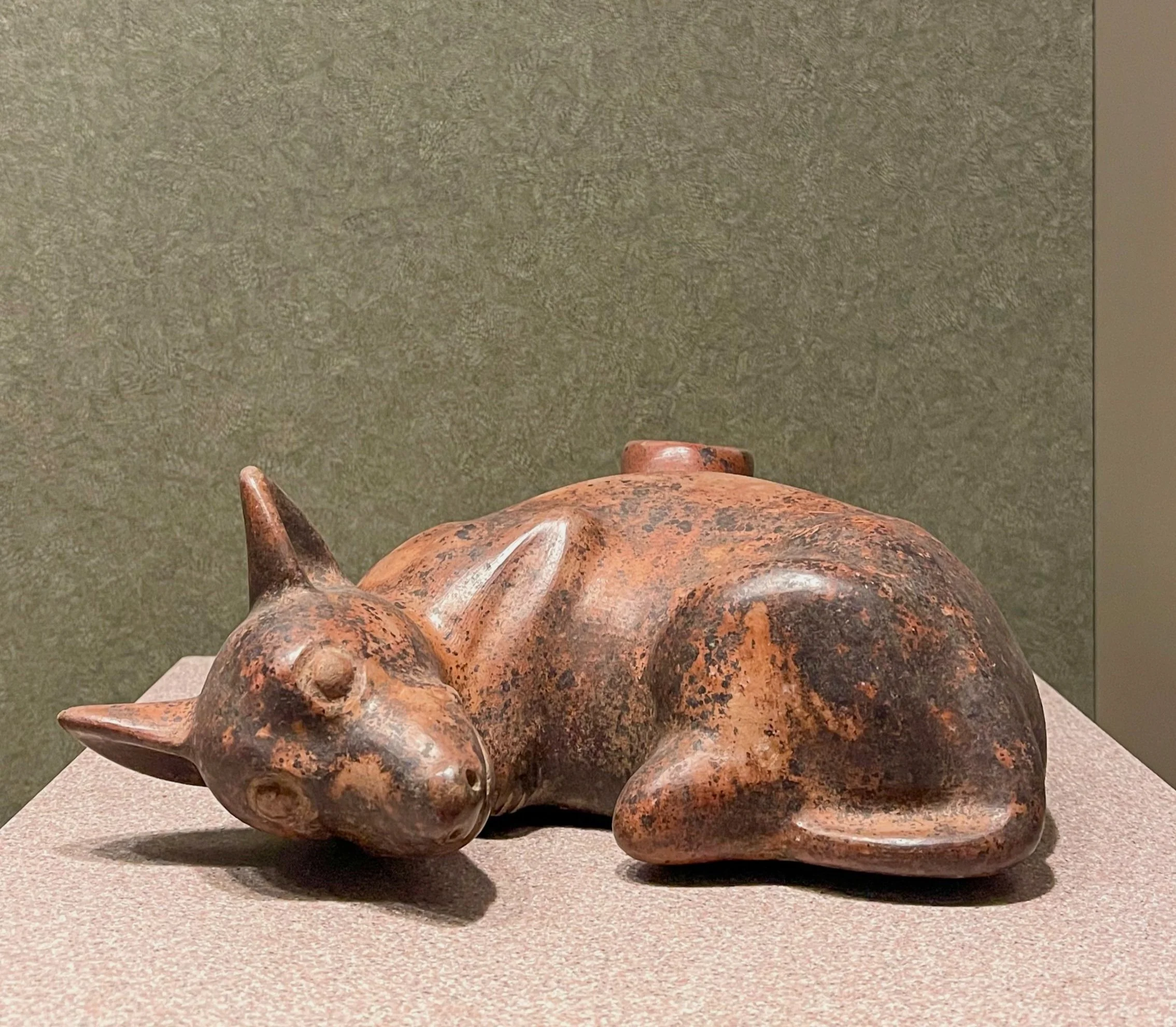
Xoloitzcuintli dog pre-Columbian pottery at the Museo Nacional de Antropología

A person’s spirit would hold onto a Xoloitzcuintli dog’s tail to be guided through the Underworld.

Dogs Truly Are Man’s Best Friend
Before the Chihuahua became the most popular dog breed from Mexico, there was the hairless Xoloitzcuintli (pronounced “Show-low-eats-queent-lee”). This breed got its name from Xolotl, the god of lightning and death, and itzcuintli, dog. To the ancient Aztec and Maya, the canine was created by Xolotl to guard the living and guide the souls of the dead through the perils of Mictlán, the Underworld. Deceased souls held onto the dogs’ tails as they led their owners through the afterlife. They were also bred as a source of food — in fact, the conquistadors developed such an appetite for them that they nearly ate them into extinction. 
The most common depictions of Xoloitzcuintles take the form of small ceramic vessels known as Colima dogs for the modern state of Mexico where they are commonly found. More than a few of these red clay objects are depicted with chubby bodies — this may be an indication that they were fattened up to be eaten.

Frida Khalo and Diego Rivera owned a brood of Xolos, and Wally and I saw a few sunning themselves at el Museo Dolores Olmedo, which houses a large collection of works by this famous duo.

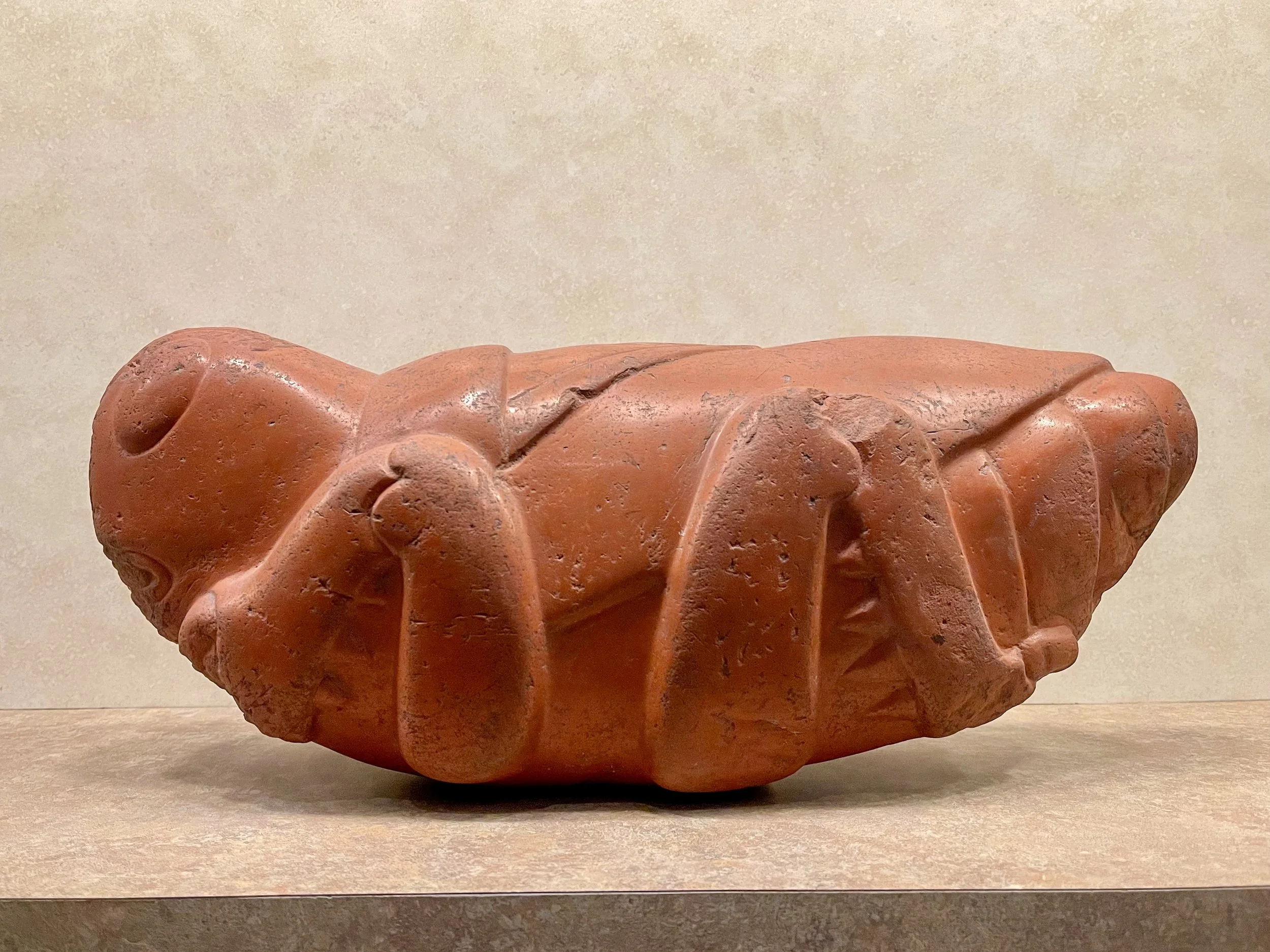
Grasshopper pre-Columbian pottery at the Museo Nacional de Antropología

Grasshoppers were associated with agriculture and fertility — but could also mean destruction.

The Grasshopper: the Insect That Sings for Its Supper

The name of Chapultepec Park, where the Museo Nacional de Antropología is located, comes from Náhuatl for “Hill of the Grasshopper.” This hill rises from the center of the park, was a sacred place for the Aztec and is where Chapultepec Castle stands. 

Grasshoppers were associated with agriculture and fertility and were associated with the period following the annual rainfall, which brought an abundance of the insects. 

In addition to their symbolic importance, the Aztec snacked on chapulines, cooking them on clay surfaces with spices. 

To the Mexica, they represented the duality of abundance vs. destruction: Drought triggers the solitary grasshopper to become social, changing color from green to yellow and black. Under such conditions, they move in swarms, devouring crops and vegetation.

Bat on bowl of pre-Columbian pottery at the Museo Nacional de Antropología

Bats were paired with the Underworld, which was accessible via the caves they live in.

Bats Out of Hell

Bats are nocturnal creatures that travel the sky by night and hide in caves by day, which Mesoamericans believed were portals to the Underworld. 

Bat pre-Columbian artifact at the Museo Nacional de Antropología

The stuck-out tongue on this bat statue hinted at the creature’s blood-sucking nature and connected it to the practice of human sacrifice.

The Zapotec venerated the god Camazotz, who had the head of a bat and was associated with night, death and sacrifice. Most likely due to the sanguinary diet of the vampire bat, native to most regions of Mexico, where it feeds on the blood of mammals, the creature became associated with rites of bloodletting and human sacrifice practiced to honor the gods and secure bountiful harvests. 

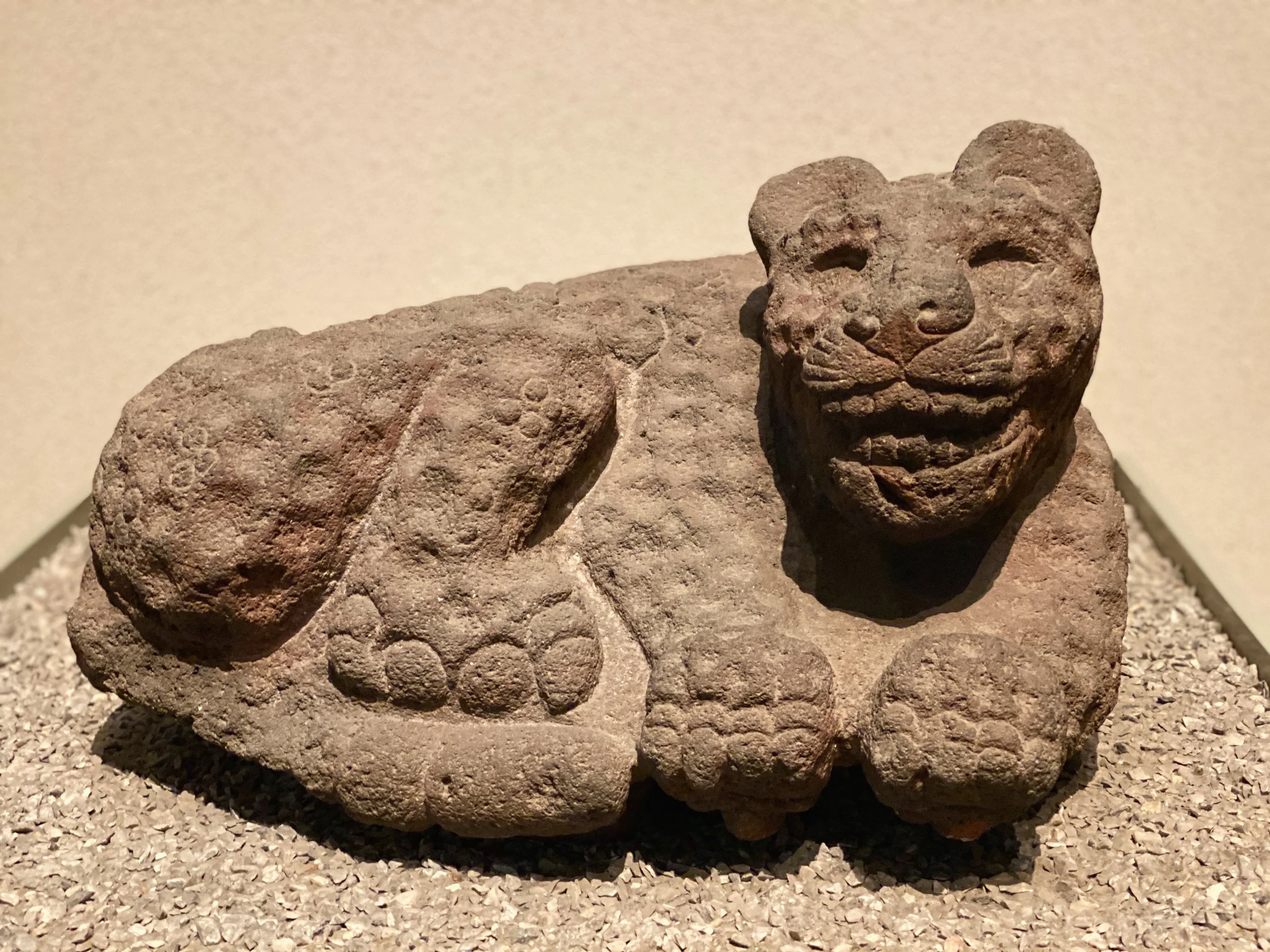
Jaguar pre-Columbian pottery at the Museo Nacional de Antropología

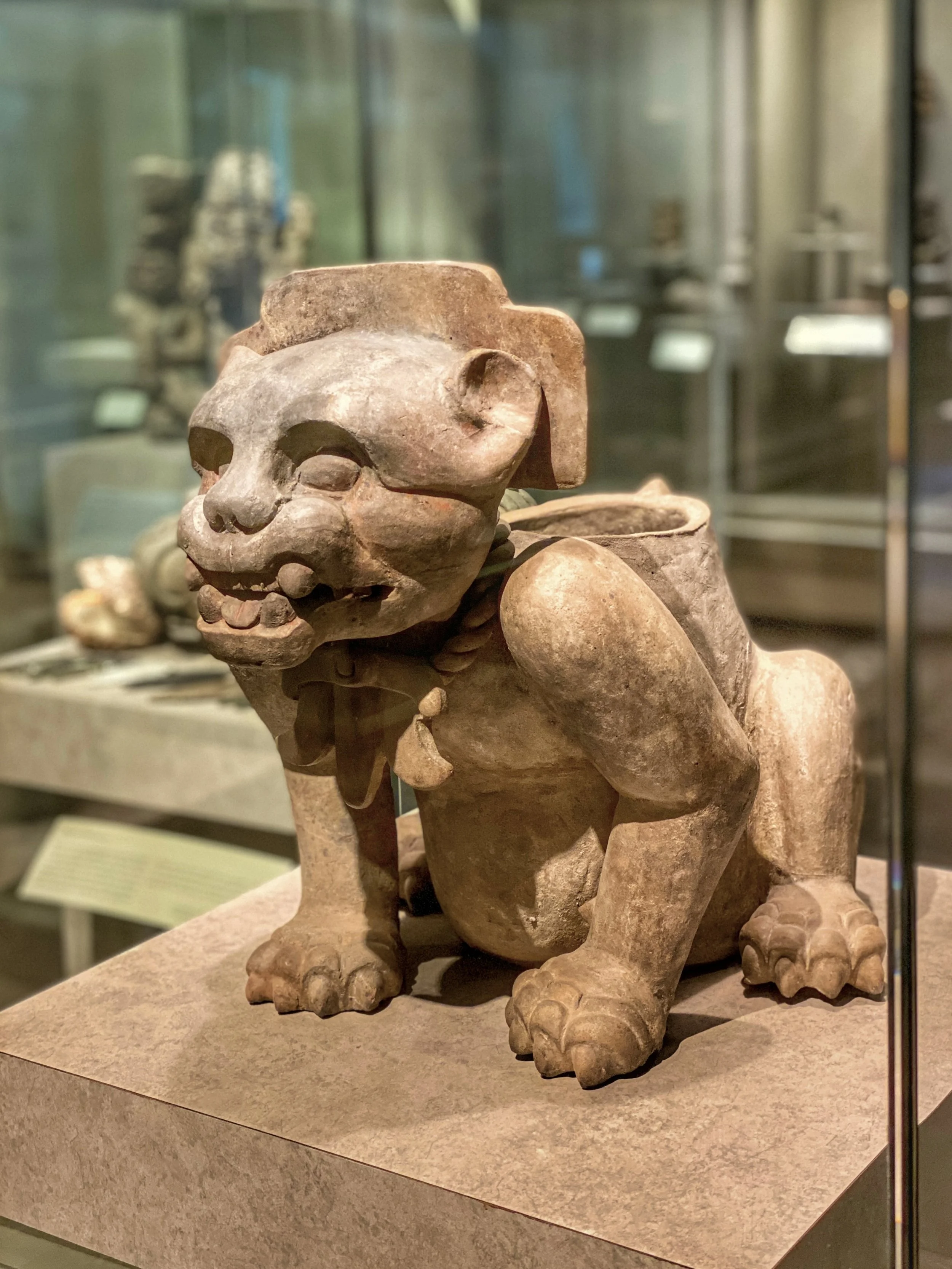
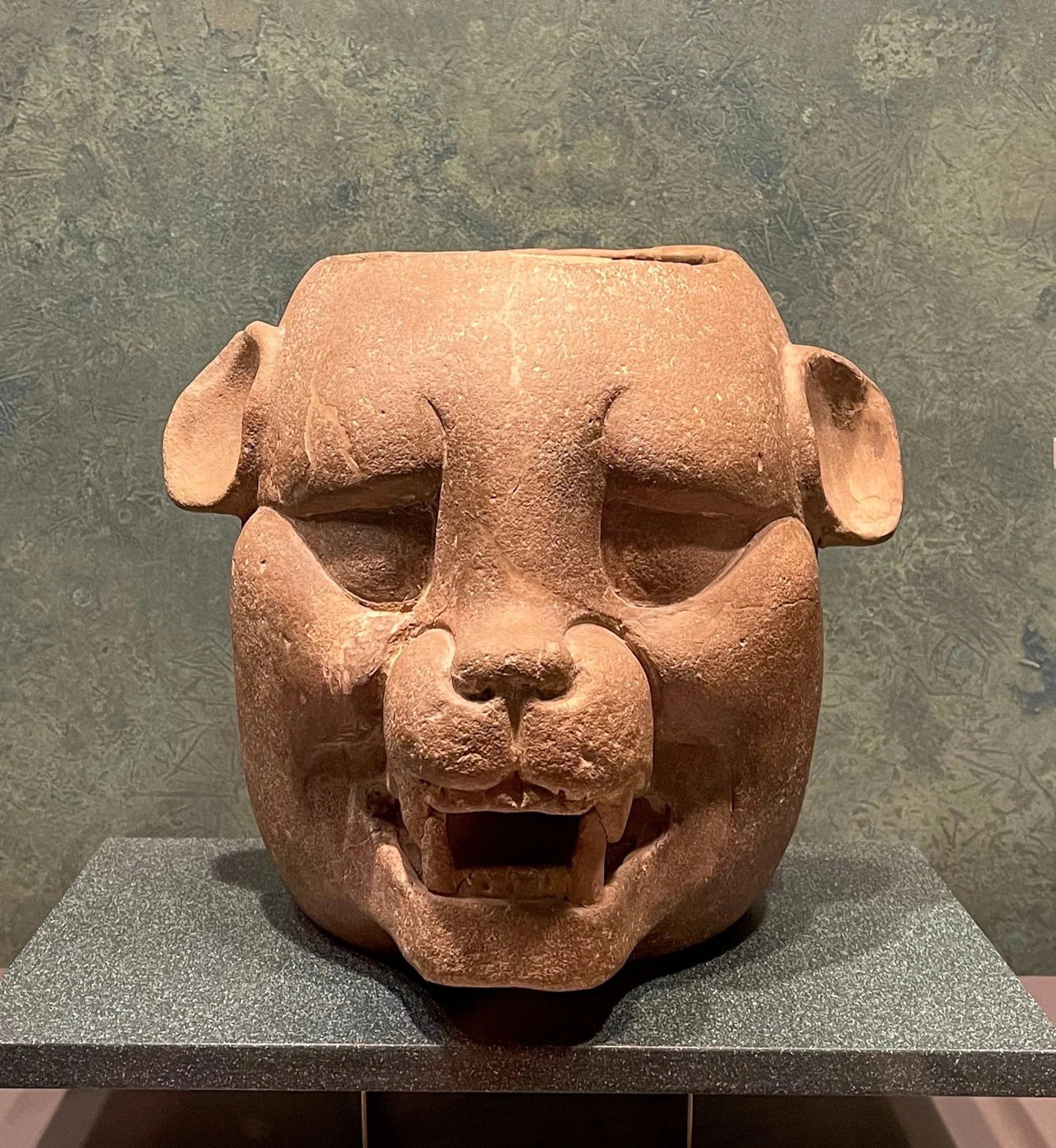
A common symbol in ancient Mesoamerica, the jaguar was linked to power and protection from evil.

Jaguars Hit the Spot(s)

The jaguar was one of the most important sacred symbols of power, ferocity and protection from evil. According to Mexica lore, a jaguar and an eagle both sacrificed themselves to bring light to the world, and in doing so became gods. 

Jaguars were believed to have the ability to travel between the worlds.

Laying jaguar pre-Columbian pottery at the Museo Nacional de Antropología

The Maya connected the jaguar’s spots with heavenly lights.

The jaguar is closely associated with the “night sun” (the sun during its nightly trip through the Underworld) and darkness as well. As such, the big cat was thought to have the ability to move between the worlds of the living and the dead. The Maya venerated the feline, seeing heavenly lights in its spots. –Duke