restaurants

Mexico City Travel Guide: Best Things to Do in CDMX, Neighborhoods & Itinerary

Everything you need to plan a Mexico City vacation, from where to stay and what to eat to museums, architecture, markets and hidden gems across CDMX.

Wally and Duke pose in cutouts of Frida Kahlo and Diego Rivera

Frida and Diego, err, Wally and Duke offer up this guide to CDMX.

I hesitate to write this guide. Sure, I could rave about Mexico City for days — but that’s exactly the problem. I don’t want it to get too popular. There’s something special about CDMX that feels like a secret, and every time someone returns, I ask, “Did you love it?” The answer is always a resounding yes. It’s a city with undeniable magic. But maybe it’s time we stop singing its praises quite so loudly before it gets overrun and loses its charm. (And it’s already well on its way, as the recent protests against expats and digital nomads, who have driven up rents and fast-tracked gentrification, can attest.)

For one thing, Mexico City is an embarrassment of riches, with enough history, art and culture to keep even the most seasoned traveler captivated for weeks on end. Like Paris, you can spend a week here and barely scratch the surface. With every neighborhood offering something unique — from the bohemian charm of Coyoacán to the vibrant streets of La Condesa — there’s an endless amount to explore.

To help you navigate this sprawling city, we’ve organized our guide by neighborhood, highlighting the best markets, museums, landmarks, restaurants and quirky spots that make CDMX unforgettable. Whether you’re hunting for artisan crafts, enjoying a peaceful moment at a museum, or getting a little creeped out at the Island of the Dead Dolls on the canals of Xochimilco, this guide will take you through the gems that make Mexico City one of the most thrilling destinations in the world. 

Just accept the fact that you’ll just have to pick the things that appeal to you the most, knowing that you can’t hit them all — and that you have a reason for coming back. 

Click on any of the links for deeper dives into these spots. 

Centro Histórico
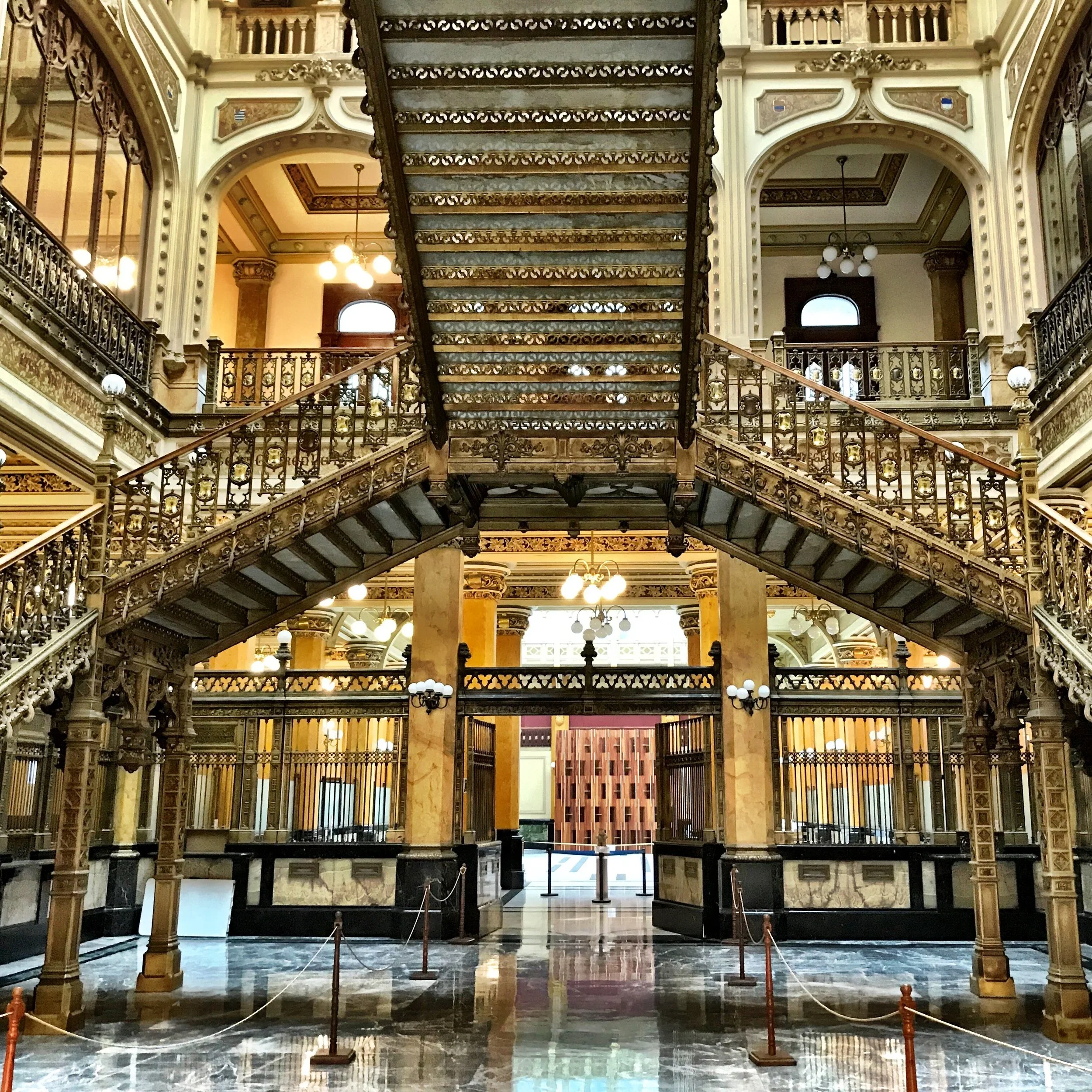
The famous staircase inside Palacio Postal in Mexico City's Centro

Most Instagrammable Places in Centro

Our guide to the most Instagrammable spots in Mexico City’s Centro takes you through one of CDMX’s most photogenic neighborhoods, where colonial architecture, Art Nouveau landmarks and modern public art collide. Our self-guided photo tour begins at the Sinagoga Histórica, whose unassuming façade gives way to a stunning folk art-inspired sanctuary, before continuing to the Antiguo Colegio de San Ildefonso, birthplace of the Mexican muralism movement. Along the way, stop for lunch on the rooftop at La Casa de las Sirenas, overlooking the Catedral Metropolitana and (unimpressive) Templo Mayor, then admire the cathedral’s lavish Baroque interior before wandering past the tiled façade of the Casa de los Azulejos.

Next, duck into the Gran Hotel Ciudad de México to marvel at its soaring stained-glass ceiling, then don’t miss the spectacular Palacio Postal, where twin gilded staircases and intricate brasswork make it one of the city’s most photogenic interiors. From there, cross to Sears for the iconic view of the Palacio de Bellas Artes dome before wrapping up with the Hemiciclo a Benito Juárez in Alameda Central and the striking red pyramids of Fuente de Vicente Rojo just across the street.
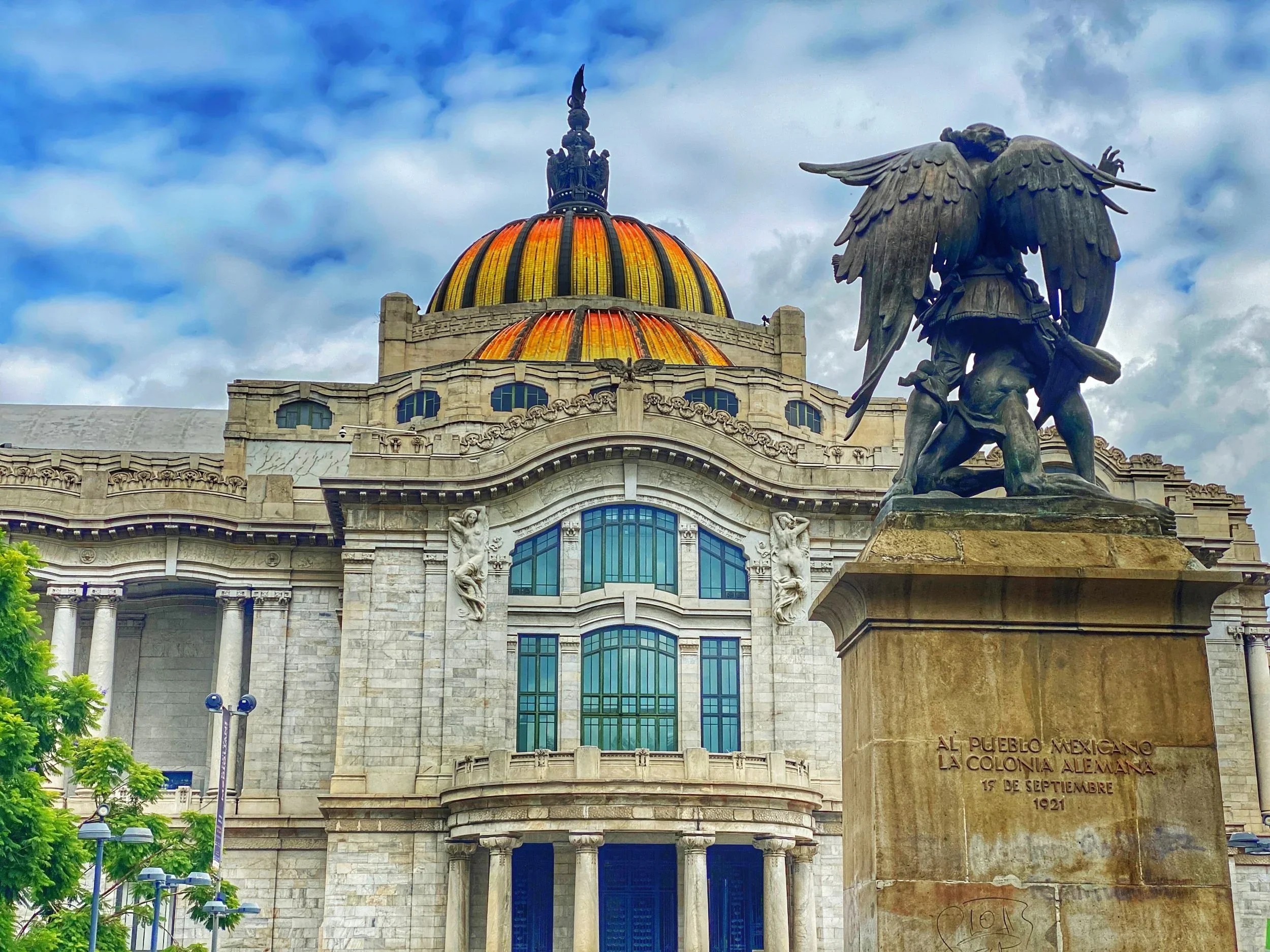
A statue in front of the orange and yellow domed Palacio de Bellas Artes in Mexico City's Centro neighborhood

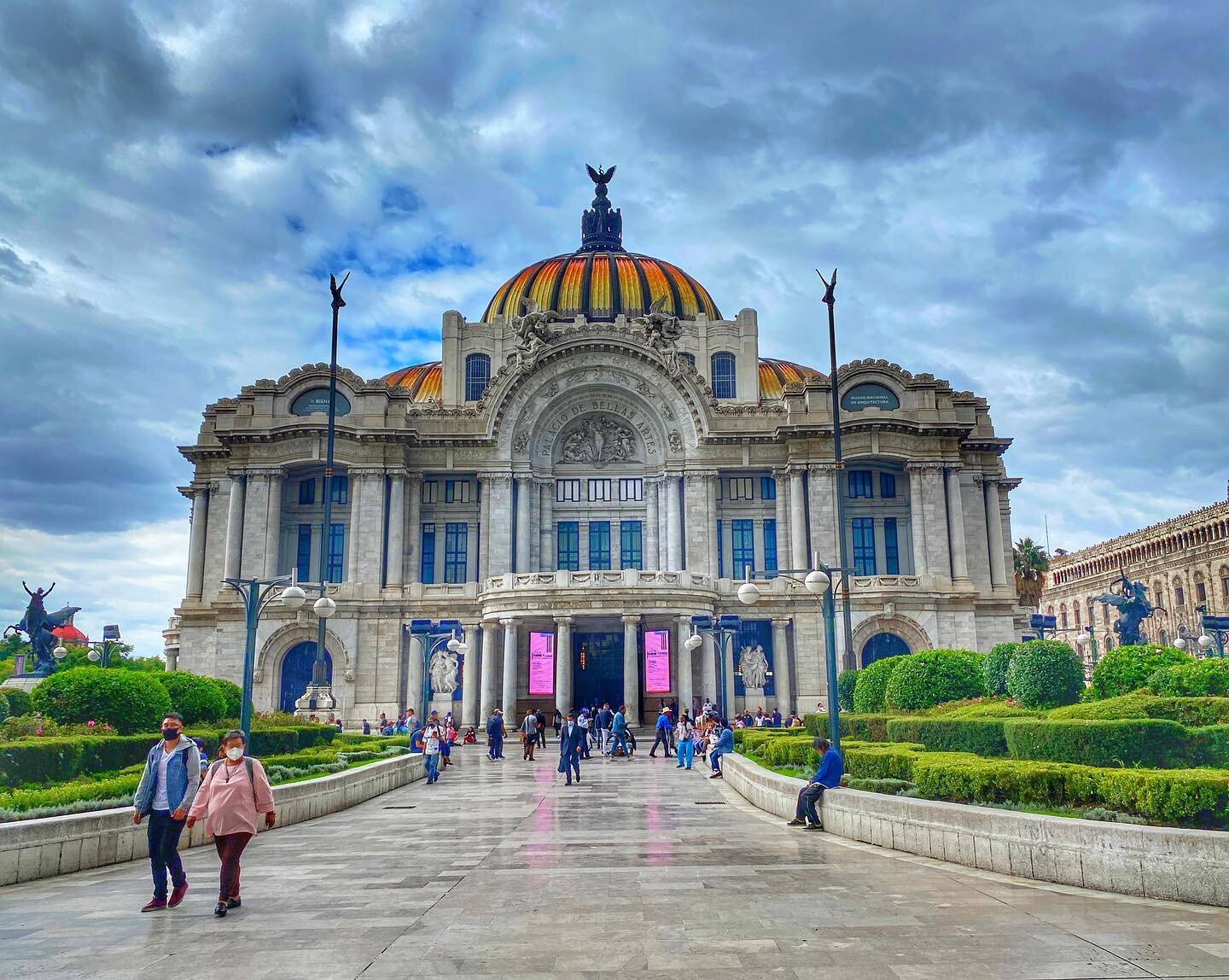
Palacio de Bellas Artes

From the outside, the Palacio de Bellas Artes is a stunning Art Nouveau dome-topped palace glowing across Centro Histórico; inside, it’s home to Mexico’s premier opera house, the National Museum of Architecture, and a renowned collection of murals that provoke as much as they awe. We first glimpsed its golden crown from across the street, taking in the best view from Sears department store. But on another visit, we dove into the heart of the building, to find that in the Palacio’s mural museum, Mexico’s famous large-scale artists — Rivera, Orozco and David Alfaro Siqueiros — don’t hold back.

Rivera’s Man, Controller of the Universe takes center stage, revisiting his controversial commission for the Rockefeller Center — destroyed for depicting Lenin. Here, Karl Marx and Charles Darwin rub shoulders. Meanwhile, Orozco’s Catharsis unleashes a dystopia where naked bodies and mechanical beasts clash, featuring the infamous La Chata, a grinning prostitute, who adds to the mural’s disturbing reputation. Each mural tells a story, whether it’s Siqueiros’ dream of Cuauhtémoc defeating the conquistadors or Rivera’s sly digs at White tourists and their clichés in Carnival of Mexican Life. The collection is edgy and bold, and it’s impossible to walk away without feeling like the walls just had the last word.
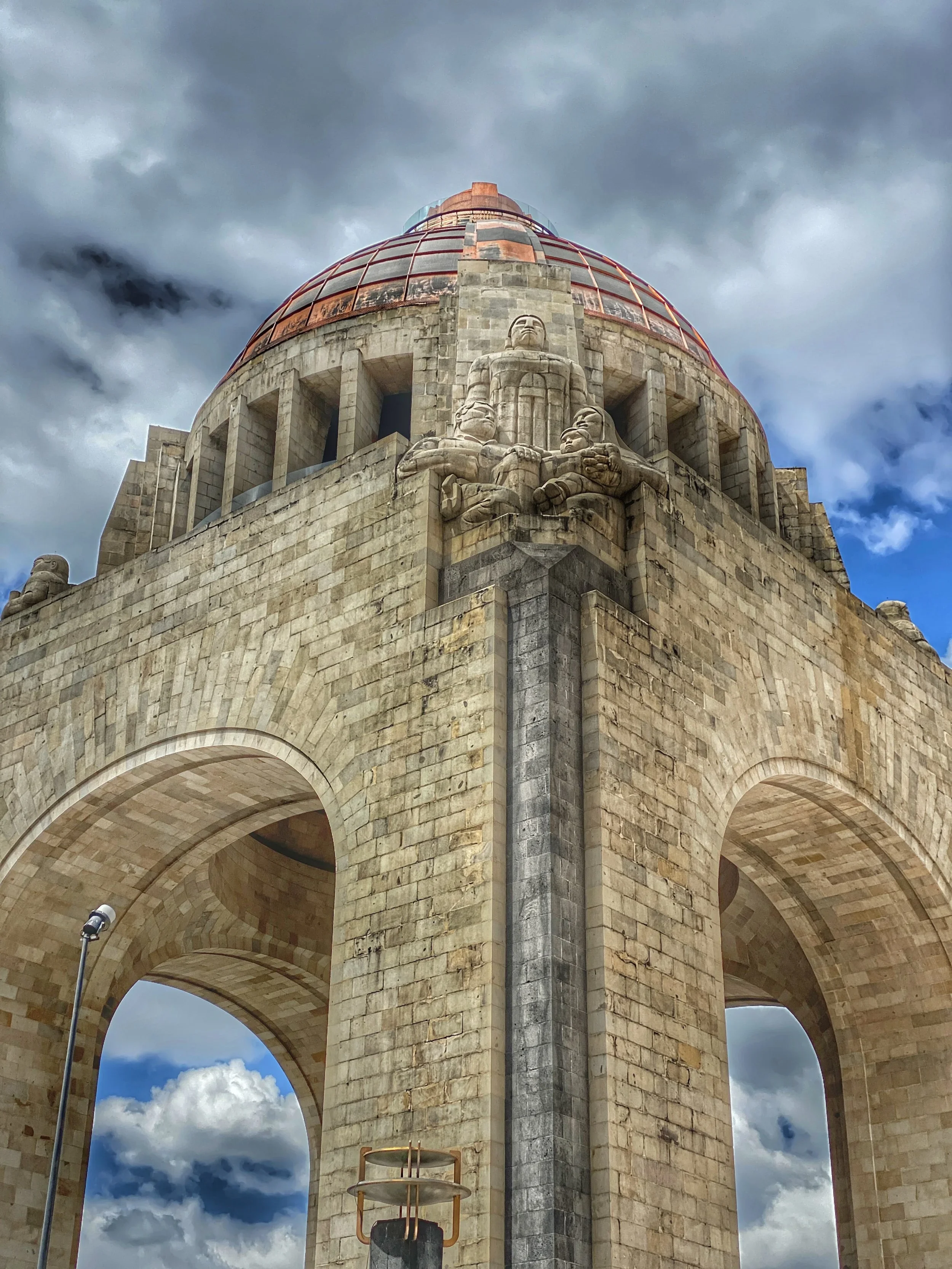
The top of the Monumento a la Revolución in Mexico City

Monumento a la Revolución

The Monument to the Revolution is a triumphal arch with some serious swagger. Originally destined to be the Palacio Legislativo Federal, the grand project was abandoned when the Mexican Revolution took center stage. For two decades, the half-built structure just sat there, rusting away. But then architect Carlos Obregón Santacilia had a better idea: turn that mess into a towering 220-foot icon, now the tallest triumphal arch in the world. Take that, Arc de Triomphe!

Today, the monument wears many hats: mausoleum, observation deck and revolutionary museum, with a little copper-clad cupola action thrown in for good measure. The glass elevator ride up the center is worth it for the views alone, but the exposed steel innards are also worth checking out. 

Meanwhile, down below, the National Museum of the Revolution does its best to impress with its “avant-garde” exhibits (we’ll take their word for it). 

Outside, the Plaza de la República buzzes with vendors selling everything from T-shirts to street snacks, and the sunken garden gives you a breather from the city’s chaos.

Chapultepec Park
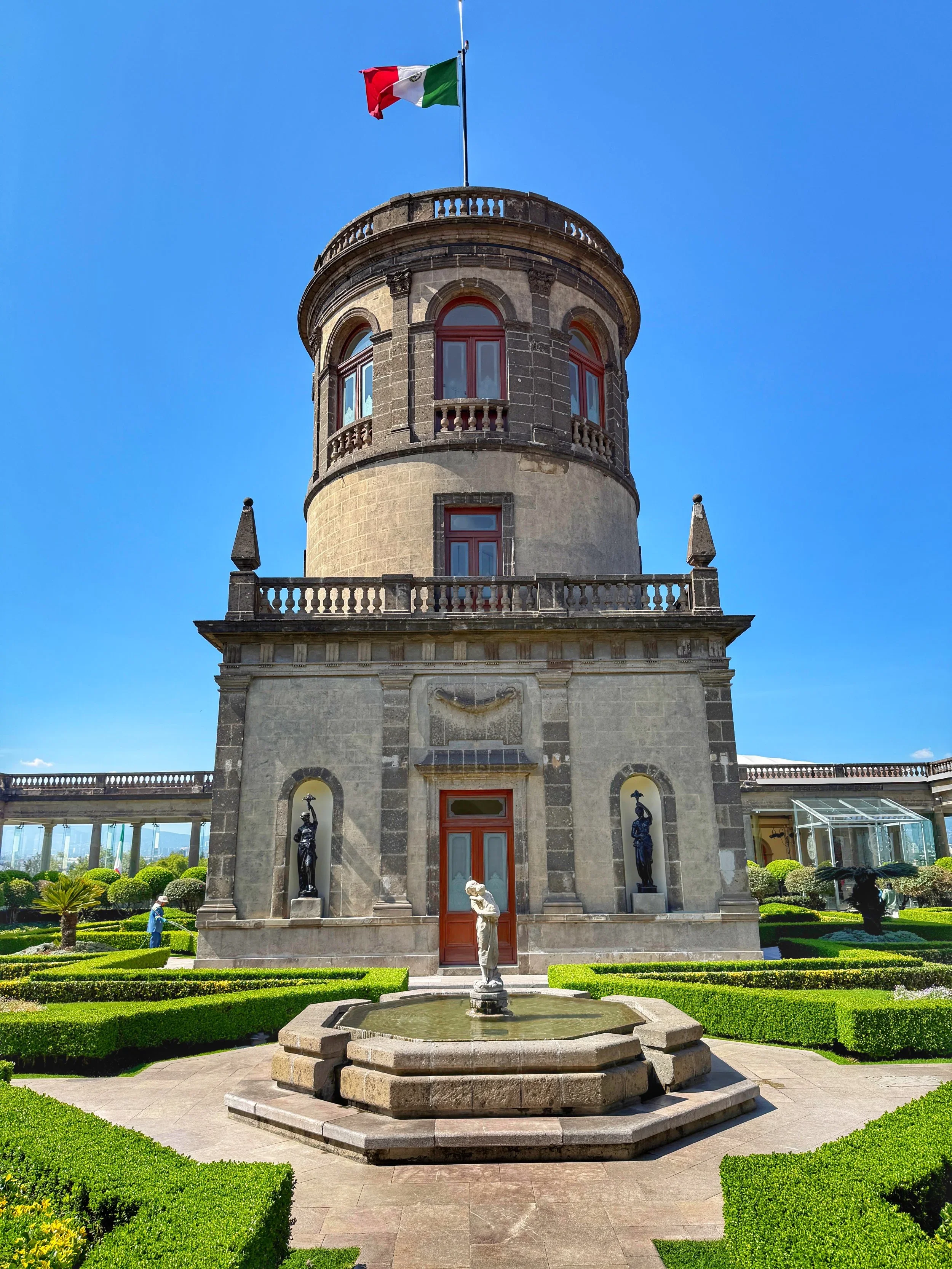
The rooftop garden and observatory tower by a fountain and hedges in Mexico City's Chapultepec Castle

Chapultepec Castle

A castle in the middle of Mexico City? Yes, really — perched atop Chapultepec Hill, this once-imperial palace is now a museum, a monument and a mood. From its sweeping views to its storybook staircases, Chapultepec Castle delivers drama at every turn.

On our visit, we followed the winding hilltop path, dodging packs of schoolchildren to reach the gates. Once inside, things get surreal. French chandeliers, trompe-l’œil ceilings, and checkerboard floors speak to its time as Emperor Maximilian and Empress Carlota’s royal residence, when the castle played dress-up as a European palace. And don’t miss the stained glass gallery of Muses and the rooftop garden.

The castle also houses the National Museum of History — and the exhibits remind you that while emperors played house, revolutionaries were gearing up to take it all down. Cases hold Aztec codices, colonial relics and revolutionary banners. It’s a crash course in Mexico’s past, where empires rose, ideals clashed, and the culture kept reinventing itself.
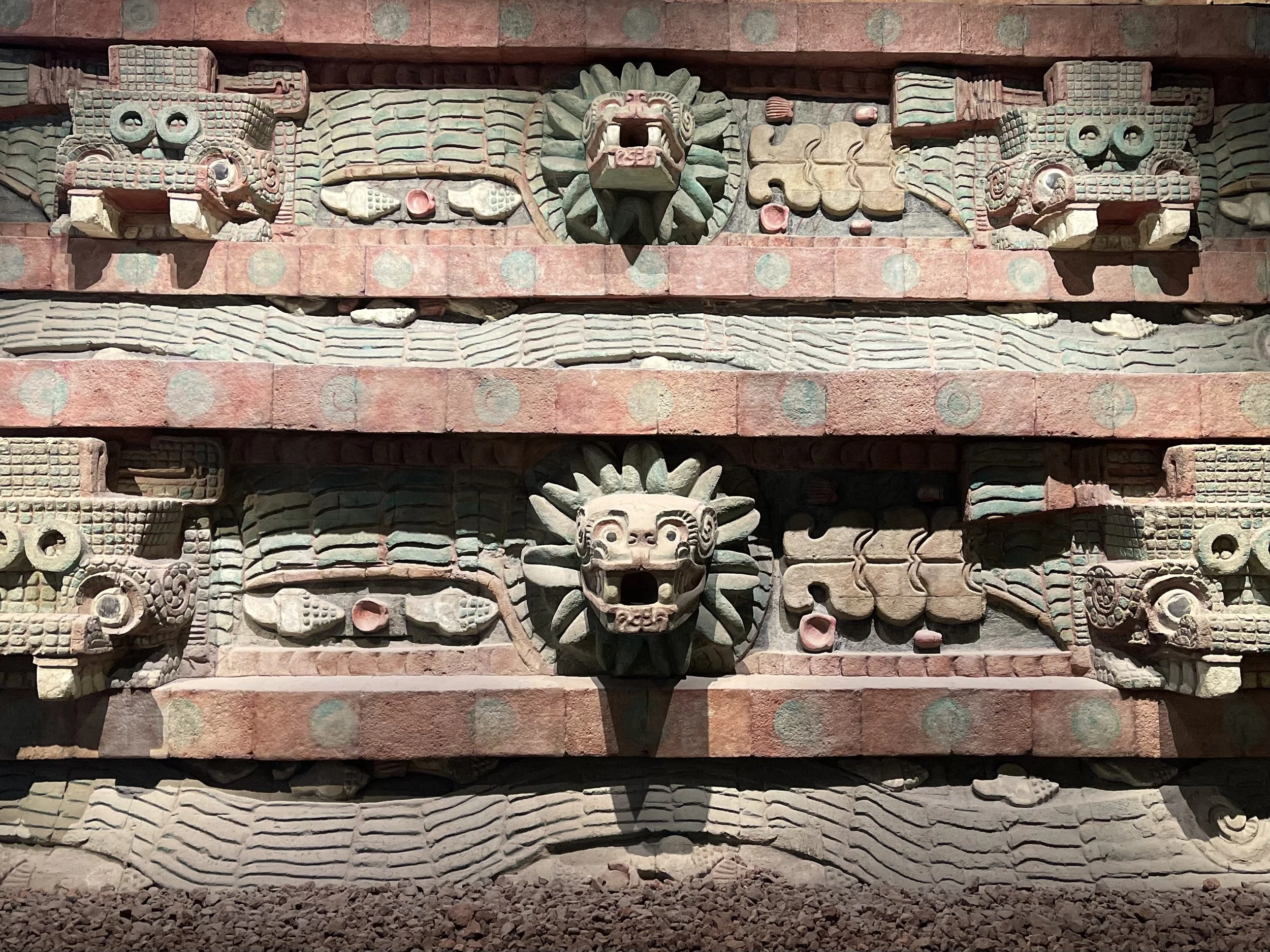
Animal heads and other carvings on parts of an Aztec temple in CDMX's Museo Nacional de Antropología

Museo Nacional de Antropología

The museum doesn’t wait until the galleries to wow you — its massive umbrella fountain out front rains spectacle on everyone walking in. Inside, soaring halls hold colossal Olmec heads, Aztec sun stones and Maya stelae — alongside delicate figurines that speak to everyday life. Every gallery plunges you deeper into the civilizations that shaped Mexico long before the Spanish arrived. My favorite part: Various galleries lead outside, where you feel like you’ve stumbled into the jungle and discovered an ancient temple and artifacts.

Another highlight? The way animals come to life in pottery and sculpture, each one symbolizing something sacred, fierce or divine. Here’s what we uncovered about animal symbolism in pre-Columbian pottery.

And if you’re drawn to the darker corners of history, don’t miss the exhibits on burial rituals and offerings. From jade beads in the mouths of the dead to xolo dogs sacrificed as guides to the afterlife, the museum doesn’t shy away from the raw power of the death cults of Ancient Mexico.

La Condesa
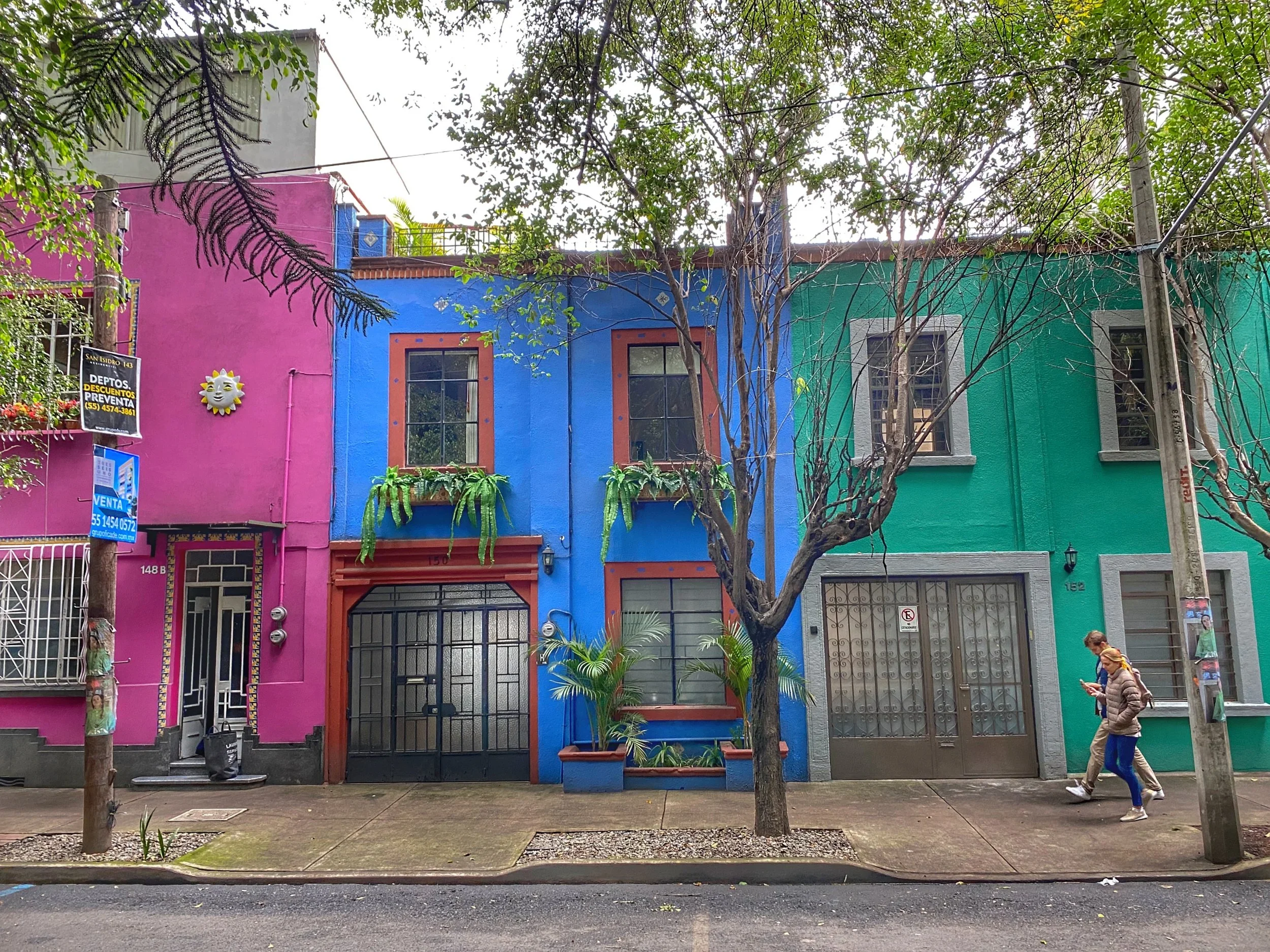
Brightly colored buildings in CDMX's La Condesa neighborhood

Morning in La Condesa

Start your morning in La Condesa, where Avenida Amsterdam’s tree-lined oval leads you past Art Deco gems and green spaces that feel worlds away from the city’s hustle. The avenue’s curving path traces the outline of an old racetrack. As you stroll, keep an eye out for the architectural detail: Streamline Moderne façades and stylish mansions make every turn a feast for the eyes.

For breakfast, we recommend Frëims, tucked inside a renovated 1920s home. The sun-drenched patio is perfect for savoring a coffee or one of their fresh juice blends, while admiring the mural. Fuel up on something like the lemon ricotta pancakes or huevos benedictinos, then take a leisurely walk over to Parque México. This green space, once home to an elite jockey club, now offers a mix of dog walkers, skaters and public art, like the Fountain of the Pitchers, which immortalizes Luz Jiménez as the iconic indigenous beauty of the 1920s. Whether you’re there for a stroll or just people-watching, La Condesa’s vibe is pure magic.

Where to stay in La Condesa
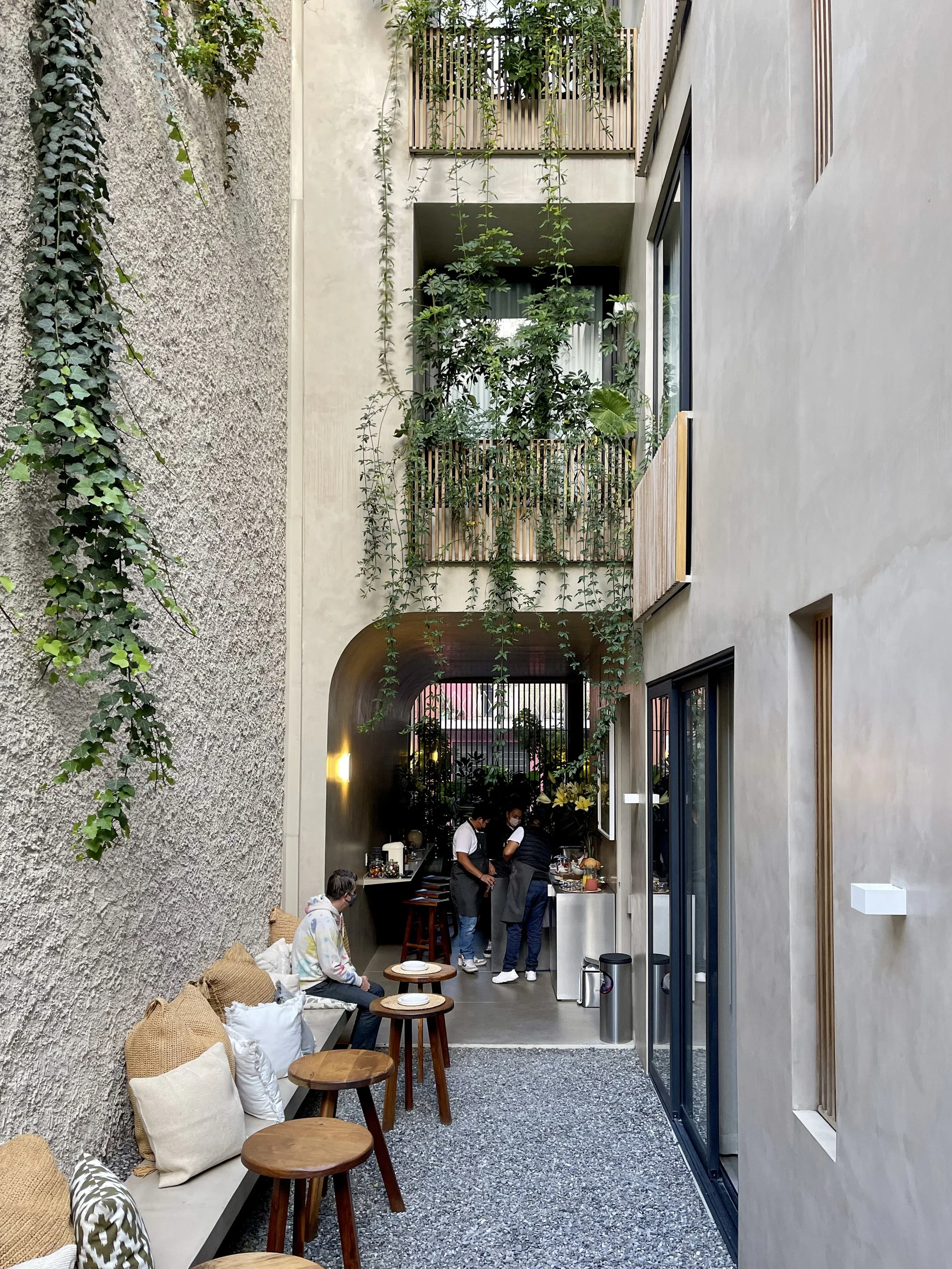
The interior courtyard / eating area with stones and plants trailing off balconies at Octavia Casa in Mexico City, Mexico

Octavia Casa

Octavia Casa is where minimalist design meets boutique charm, offering a chic retreat from the mellow bustle of La Condesa. The hotel’s teak lattice façade and the tropical plants spilling out over the concrete and glass exterior provide a touch of nature in the urban landscape. It’s a natural extension of the Octavia fashion brand, with spaces inspired by the label’s understated style, brought to life through thoughtful details like chukum stucco walls and muted earth tones that give each room an airy, welcoming vibe.

Mornings begin with a breakfast buffet of fresh fruit, pastries and handmade mugs. The staff go above and beyond, from a surprise birthday bottle of wine to Silvia’s heartfelt hugs. Evenings bring a different ambiance, with candlelight and libations on offer, perfect for winding down after a day of exploring CDMX. It’s hard not to feel special here, especially when you happen to be sharing the space with stars like Natalia Lafourcade.

Where to eat in La Condesa
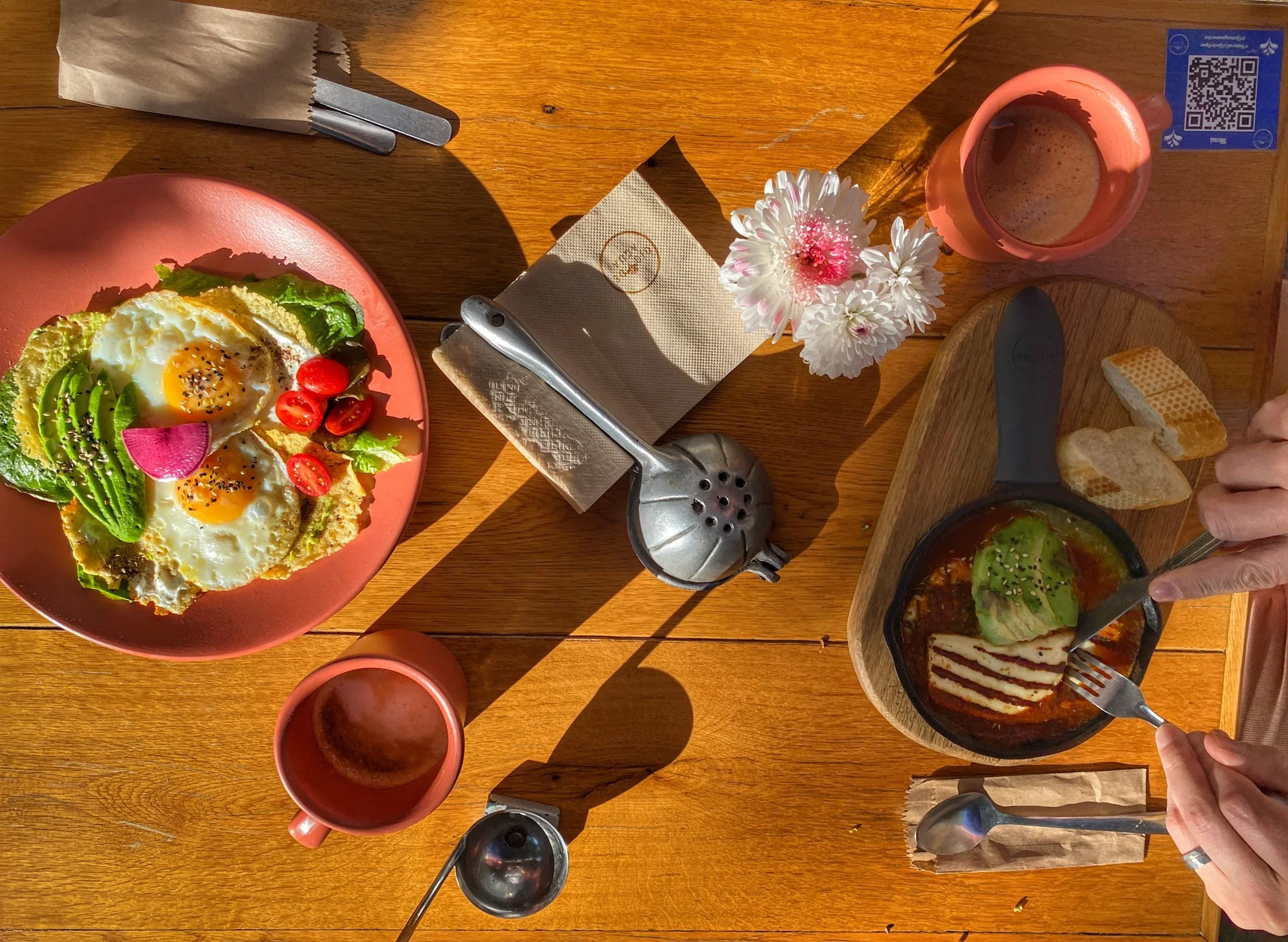
Breakfast dishes from Ojo de Agua in La Condesa, Mexico City

Ojo de Agua

Ojo de Agua in La Condesa is where health-conscious meets delicious. Situated near the lush Avenida Amsterdam and Plaza Citaltépetl, this fast casual café has a bright, fresh vibe and a fruit stand right inside. Named after a Michoacán town, the restaurant channels a commitment to living well, celebrating fresh ingredients in dishes that don’t skimp on flavor. The interior is casual chic, with Mudéjar-style tiles, big windows and plenty of natural light, while the outdoor seating is perfect for soaking up the neighborhood’s morning buzz.

The menu has something for everyone, from açaí bowls to cinnamon roll French toast, but we couldn’t resist the savory options. The santos ahogados, with its poached eggs, grilled panela and two salsas over a heart-shaped hoja santa leaf, brought a rich balance of flavors, while the huevos Polanco paired eggs with avocado purée and a za’atar-spiced jocoque. With Queen’s “Bohemian Rhapsody” playing in the background and fresh juice from the bar to finish things off, Ojo de Agua left us feeling fully satisfied and ready to take on CDMX.

Roma

Where to stay in Roma
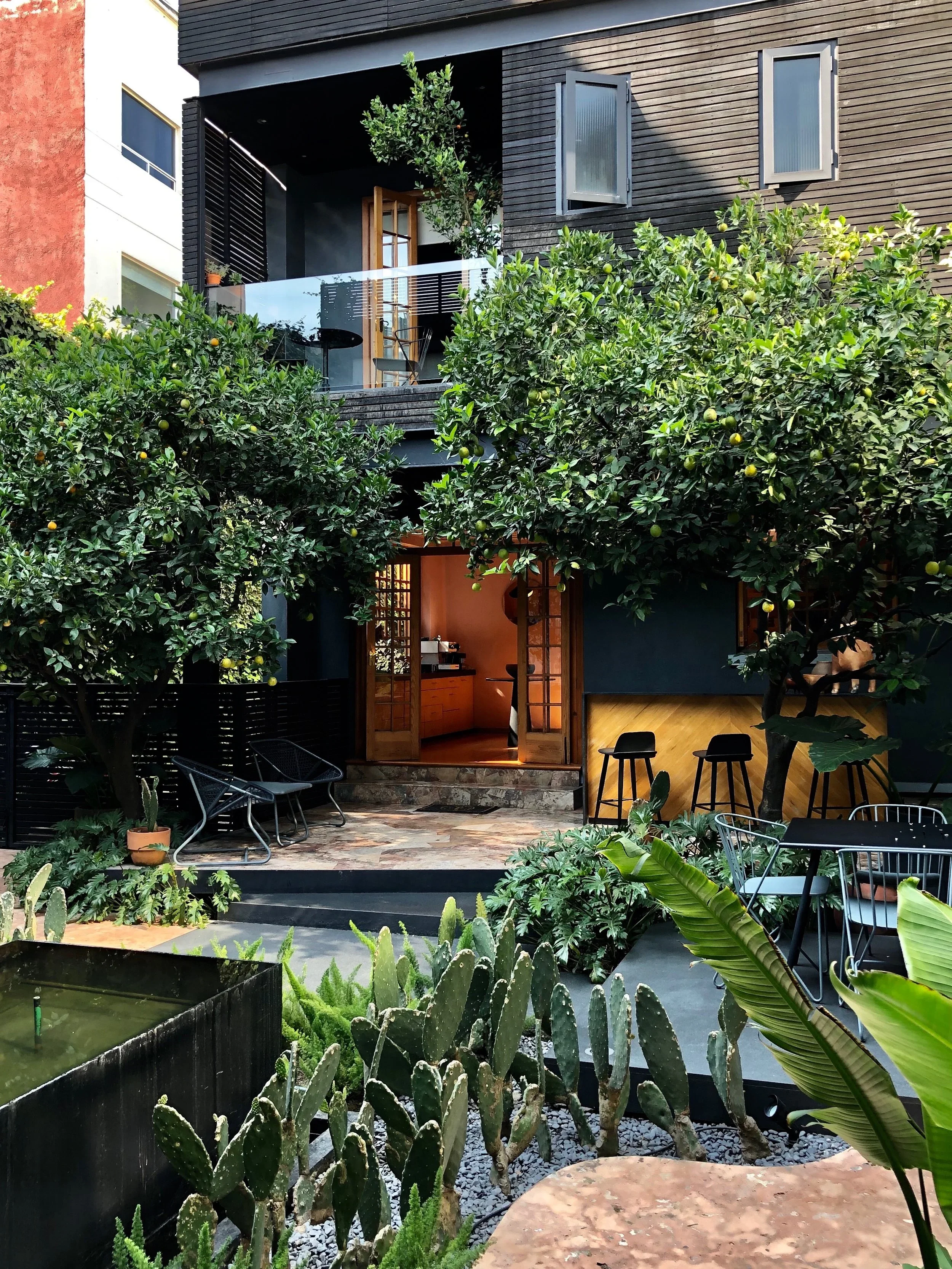
The backyard of Ignacia Guest House in Mexico City, with cacti, a water feature, bar and trees

Ignacia Guest House

Ignacia Guest House in Colonia Roma is a sophisticated blend of historic charm and modern elegance, tucked away in one of Mexico City’s most picturesque neighborhoods. The meticulously restored 1913 mansion captures the spirit of the area with its Neoclassical and Art Nouveau touches, while the modern wing adds a sleek contrast of glass and steel. Named after the beloved housekeeper who spent more than 70 years living and working in the home, Ignacia’s story is woven into every detail, from the Oaxacan cactus garden she planted to the woodcut portraits of her displayed in the lobby. We stayed in the Azul suite, which features reclaimed bowling alley maple floors and Carrara marble bathroom fixtures, providing the perfect mix of rustic and luxe.

The daily breakfast menu, crafted from Ignacia’s original recipes, offers a delicious start to the day, complete with fresh pastries and locally sourced ingredients. We especially loved the cocktail hour, where we sampled mezcal-infused drinks with sal de gusano (worm salt) and even tried crispy chapulines (grasshoppers) — because when in Rome… or, Roma. The courtyard patio is a central hub for socializing, shaded by ivy-covered walls and overlooked by the glass corridor that connects the new and old buildings. As much as the architecture and gardens enchanted us, it was the warm and welcoming staff who truly made us feel at home. 

Coyoacán
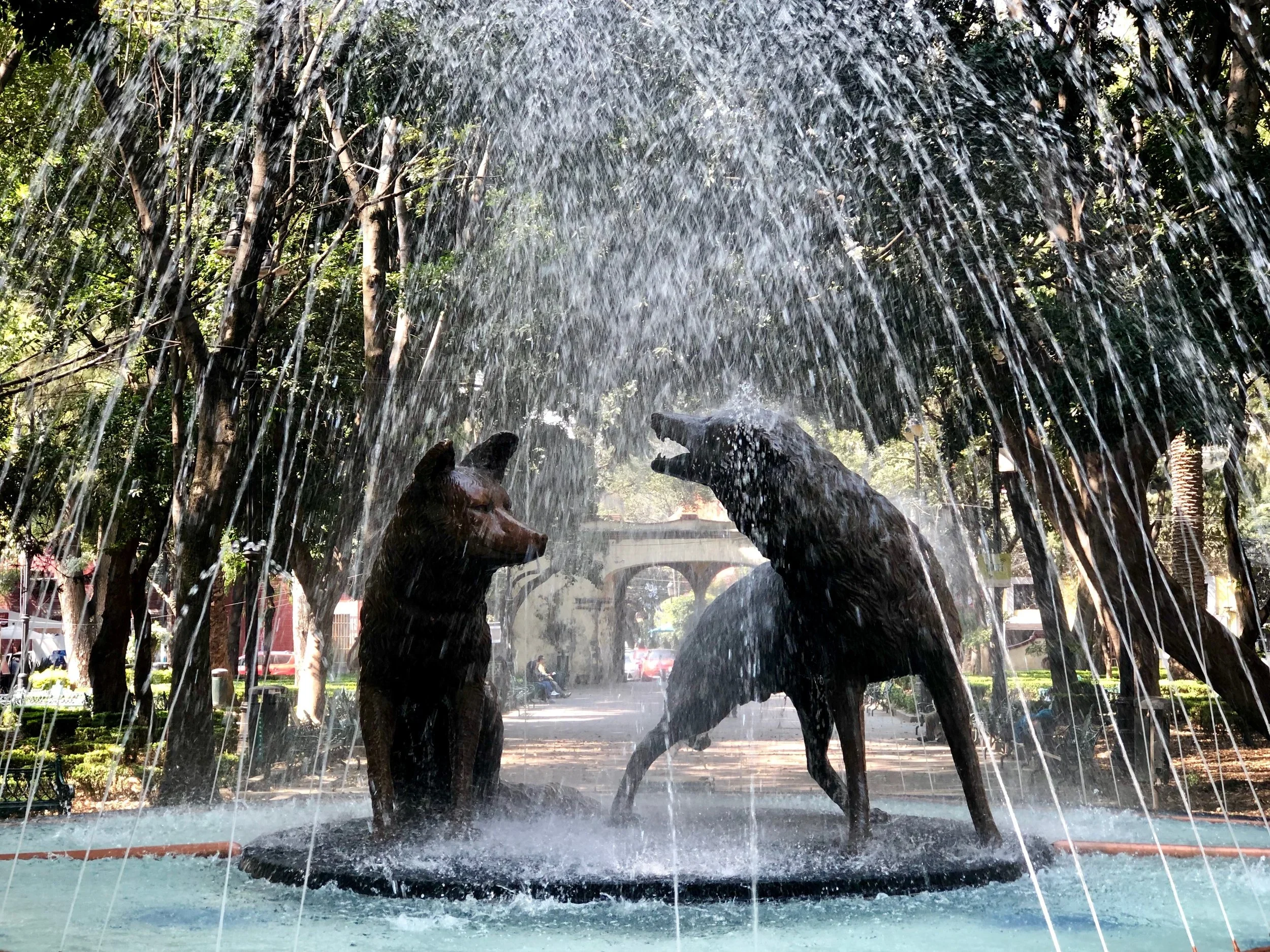
The fountain of two wolves in the square of Coyoacán in Mexico City

Wandering Coyoacán

An afternoon in Coyoacán offers a perfect mix of history, culture and a bit of boho chic. Start in Plaza Hidalgo, where the Fuente de los Coyotes splashes in the heart of a classic colonial square, and balloon vendors and palm-leaf crickets are part of the scene. Nearby, Los Danzantes serves up dishes like cricket croquetas and mezcal cocktails, perfect for people-watching while soaking up the bohemian vibe.

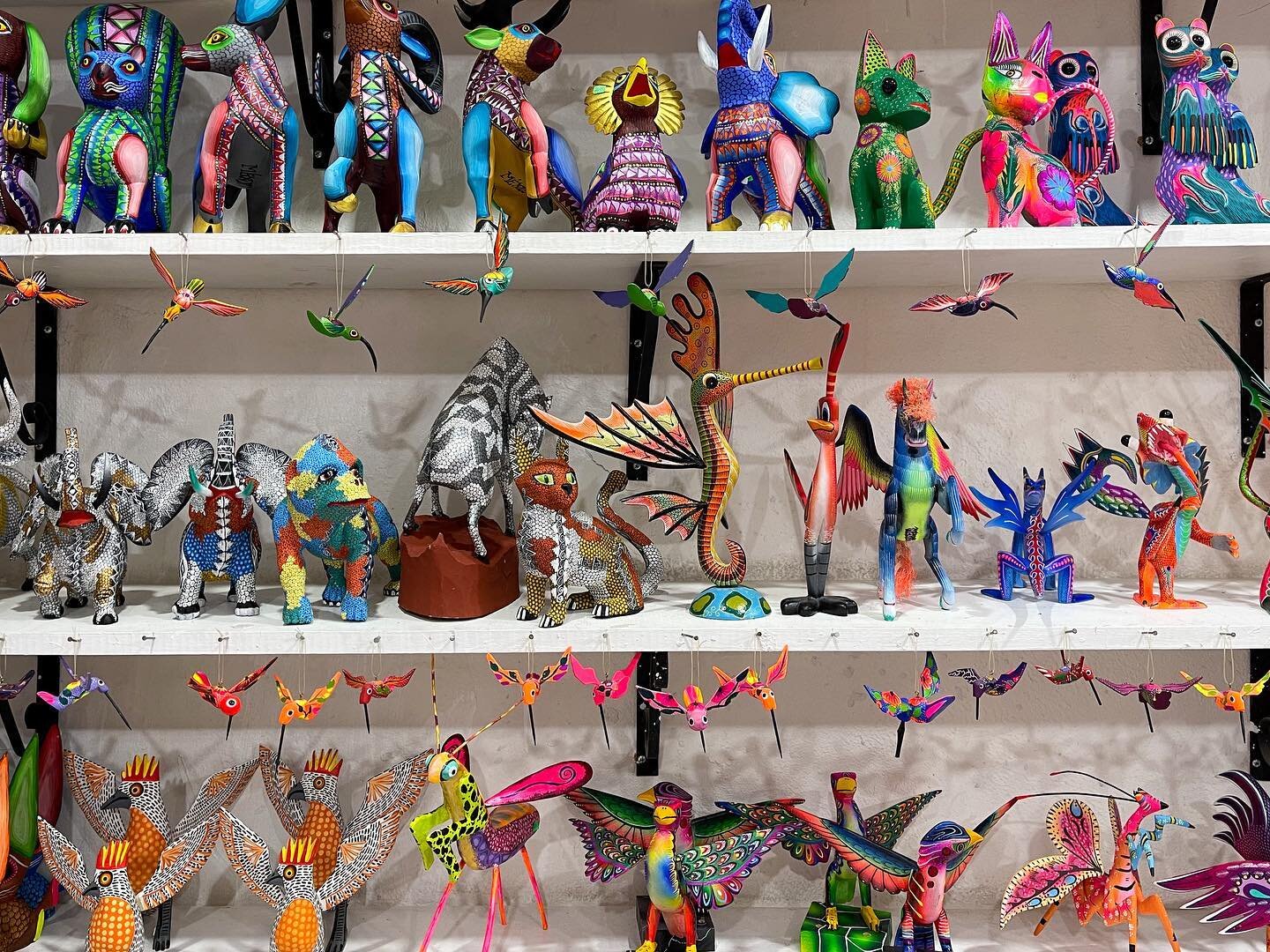
Wander into the Mercado Artesanal Mexicano for quirky souvenirs like Oaxacan alebrijes or oddball folk art, then recharge at Panadería Pública with a coffee and a guava pastry. Just a short stroll away, Plaza de la Conchita offers a quiet escape, where the 16th century chapel holds stories of Hernán Cortés’ time in the neighborhood. Finish at Frida Kahlo Park, where topiary animals greet you and teenagers practice salsa moves under bougainvilleas, and a mural by Dan Silva adds a burst of color. Coyoacán’s charm is irresistible, making it easy to see why artists and dreamers have called it home.
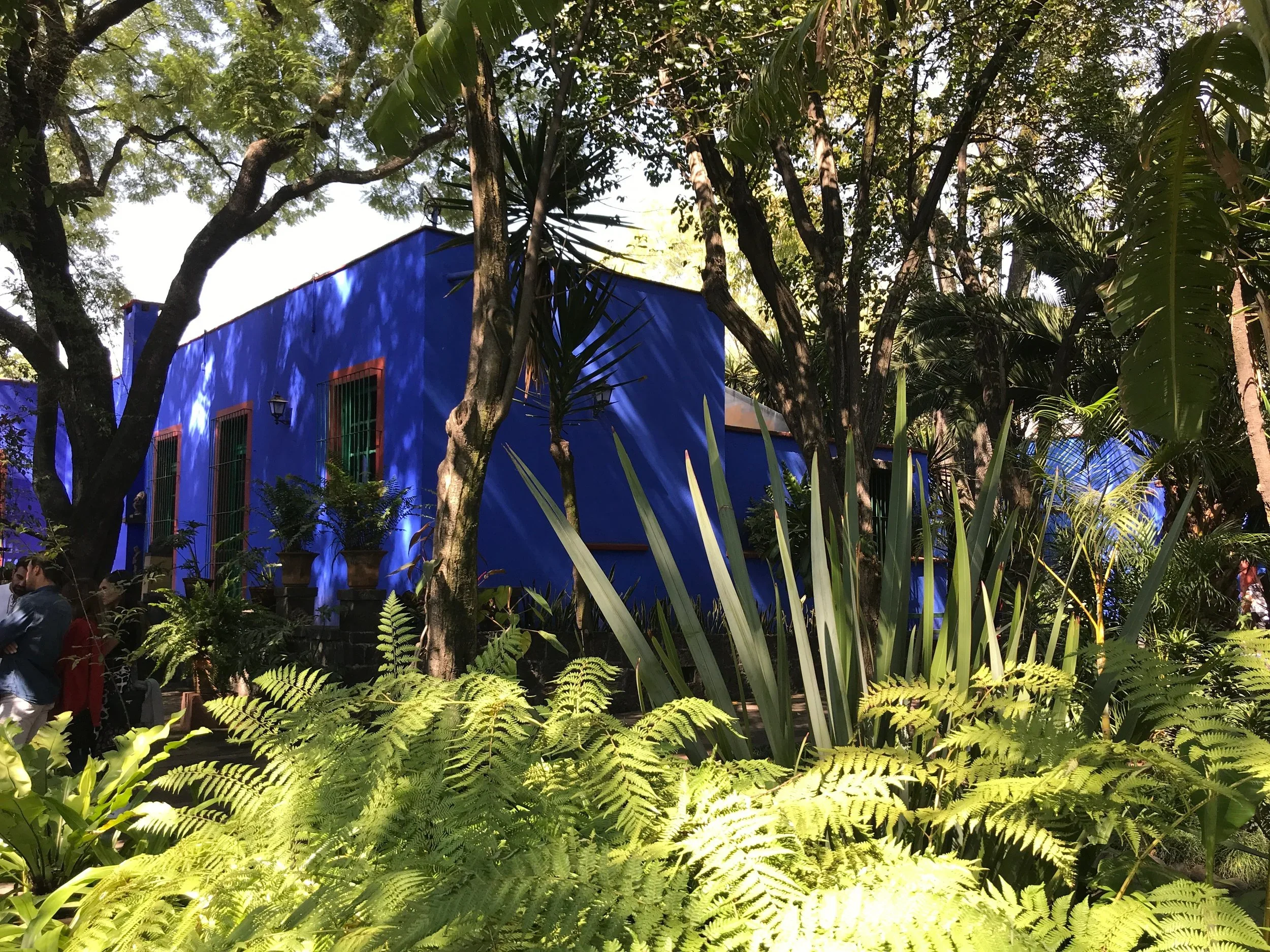
The bright blue Casa Azul, Frida Kahlo's family home, surrounded by greenery, in CDMX

La Casa Azul: The Frida Kahlo Museum

La Casa Azul, or the Frida Kahlo Museum, is as bold and layered as the artist herself, with its vibrant cobalt walls and eclectic blend of art, artifacts, and personal relics. The iconic blue-painted house in Coyoacán offers a glimpse into the world of Frida and Diego Rivera, where the bohemian spirit comes alive in the courtyard’s botanical garden and the interiors filled with papel picado, Tehuana dresses, and intricate folk art. We recommend booking tickets well in advance and arriving early to avoid the hours-long wait; it’s worth it to step inside this iconic space where Kahlo’s personality radiates from every corner.

From her wheelchair and easel to her night bed with a mirror overhead—where she painted while bedridden—La Casa Azul tells the story of an artist who turned pain into beauty. The house is filled with fascinating details, like the miniature clay mugs spelling out “Frida” and “Diego” above the stove, or the ashes resting in a pre-Columbian urn beside her bed. Beyond the personal spaces, you’ll find rooms with her lesser-known artworks, a display of her distinctive wardrobe, and even a pyramid of pre-Columbian sculptures Rivera added to the garden. The whole experience leaves a lasting impression, as if you’ve walked through the pages of Frida’s life story, with every object and plant bearing witness to her creative and resilient spirit.
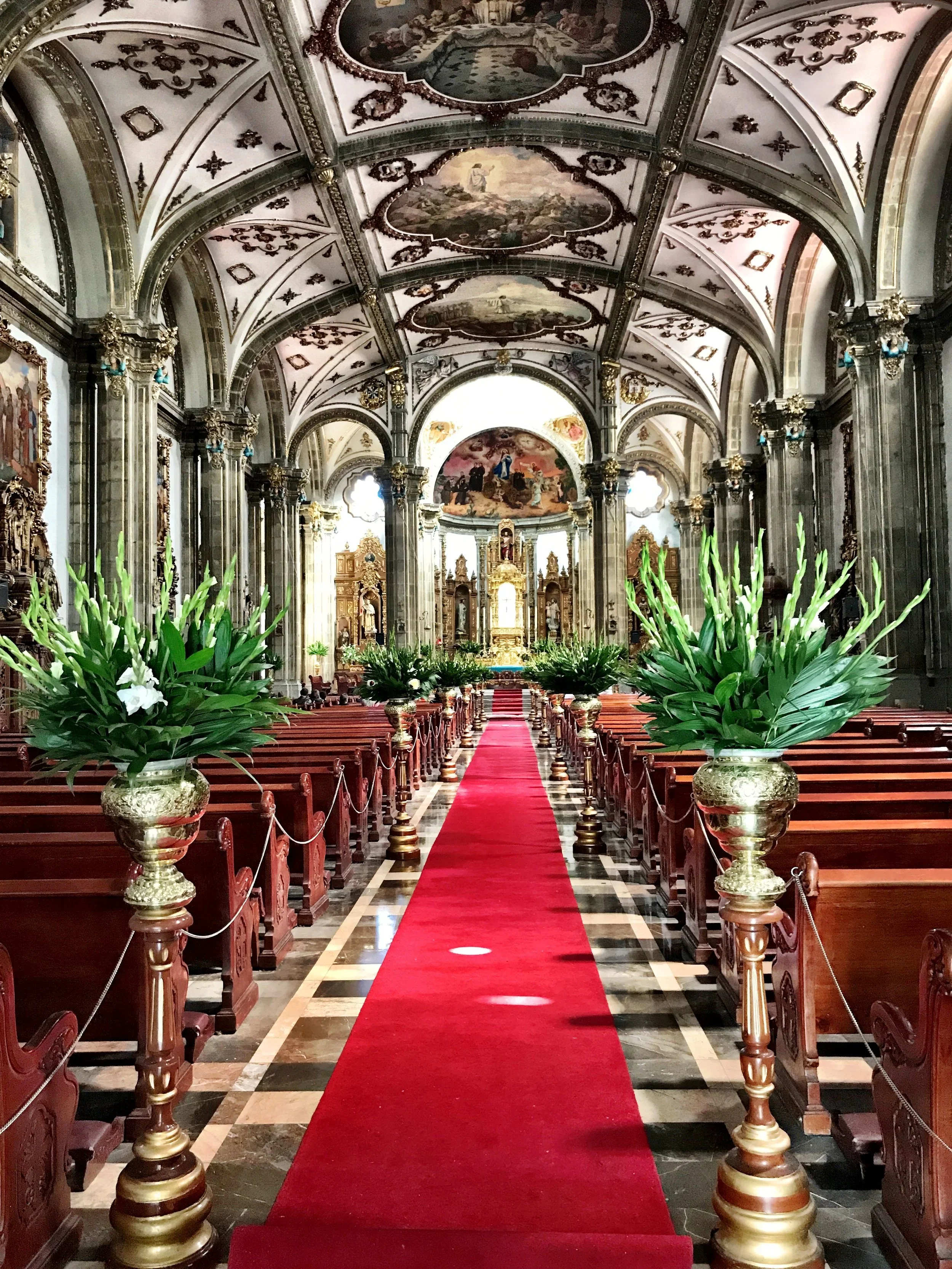
Murals on the ceiling, arches, pews and a red carpet runner inside Parroquia San Juan Bautista in Mexico City

Parroquia San Juan Bautista

Parroquia San Juan Bautista, or La Iglesia de Coyoacán, is a captivating piece of Spanish colonial history nestled in Mexico City’s bohemian Coyoacán neighborhood. Built between 1527 and 1552 on the site of an Aztec noble school, the church’s relatively plain Herrerian-style exterior belies the ornate Baroque splendor within. Step inside, and you’re greeted by gilded altars, frescoed ceilings depicting Christ’s life, and an array of small chapels, including the opulent Chapel of the Rosary.

The church is full of fascinating details, from the creepy yet compelling Cristo de los Milagros, adorned with healing charms, to niche statues and elaborate ornamentation that evoke Mexico’s blend of indigenous and Catholic traditions. Don’t miss wandering the peaceful cloisters out back, where Nahuatl-speaking converts were once baptized. La Iglesia de Coyoacán is not just a church; it’s a glimpse into the neighborhood’s layered history and enduring cultural richness. Read more here.
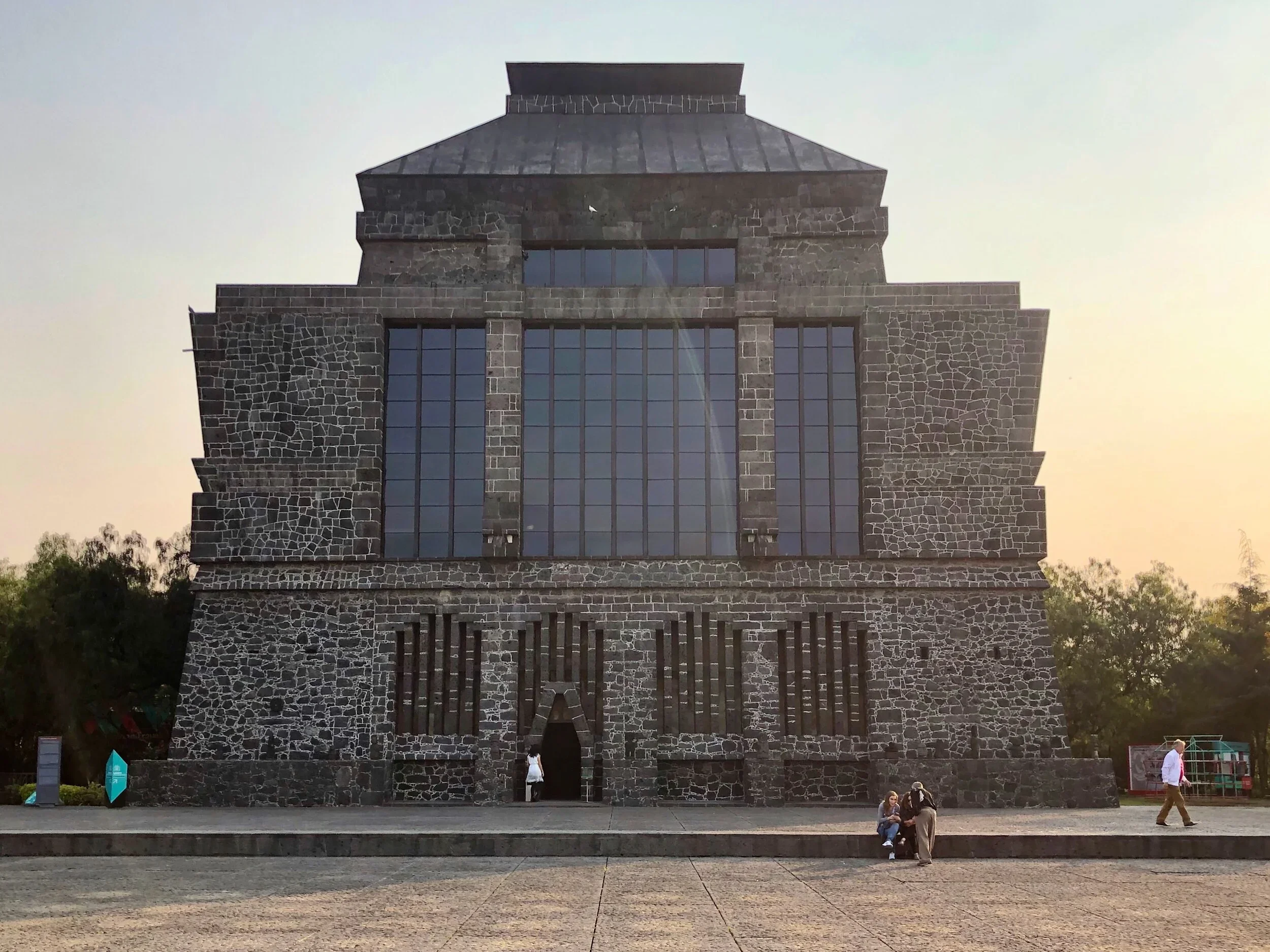
The stone exterior of Museo Anahuacalli at sunset

Museo Anahuacalli

The Anahuacalli Museum is unlike any other—a temple-like structure housing Diego Rivera’s vast collection of pre-Hispanic artifacts. Built on the rugged volcanic rock of El Pedregal, this black basalt museum rises like a Mesoamerican pyramid, surrounded by myth and history. Rivera envisioned it as a place to contemplate Mexico’s ancient past, with over 50,000 artifacts collected over his lifetime, though only a fraction is displayed. The museum’s dim and cool interior, lit by alabaster windows, creates an otherworldly atmosphere, while colorful ofrendas and papier-mâché alebrijes burst against the stone.

Inside, narrow staircases lead you up through galleries filled with Zapotec, Maya, Aztec, and Olmec relics, culminating in Rivera’s art studio on the sunlit second floor, where you can see studies for his controversial murals. The rooftop terrace offers a stark contrast to the dark confines below, with panoramic views of CDMX. Rivera’s passion for the past comes to life here, where mythological mosaics, jaguar statues, and Mesoamerican symbolism honor Mexico’s ancient heritage. It’s an unforgettable experience that feels as much like stepping into a temple as it does a museum.

San Ángel
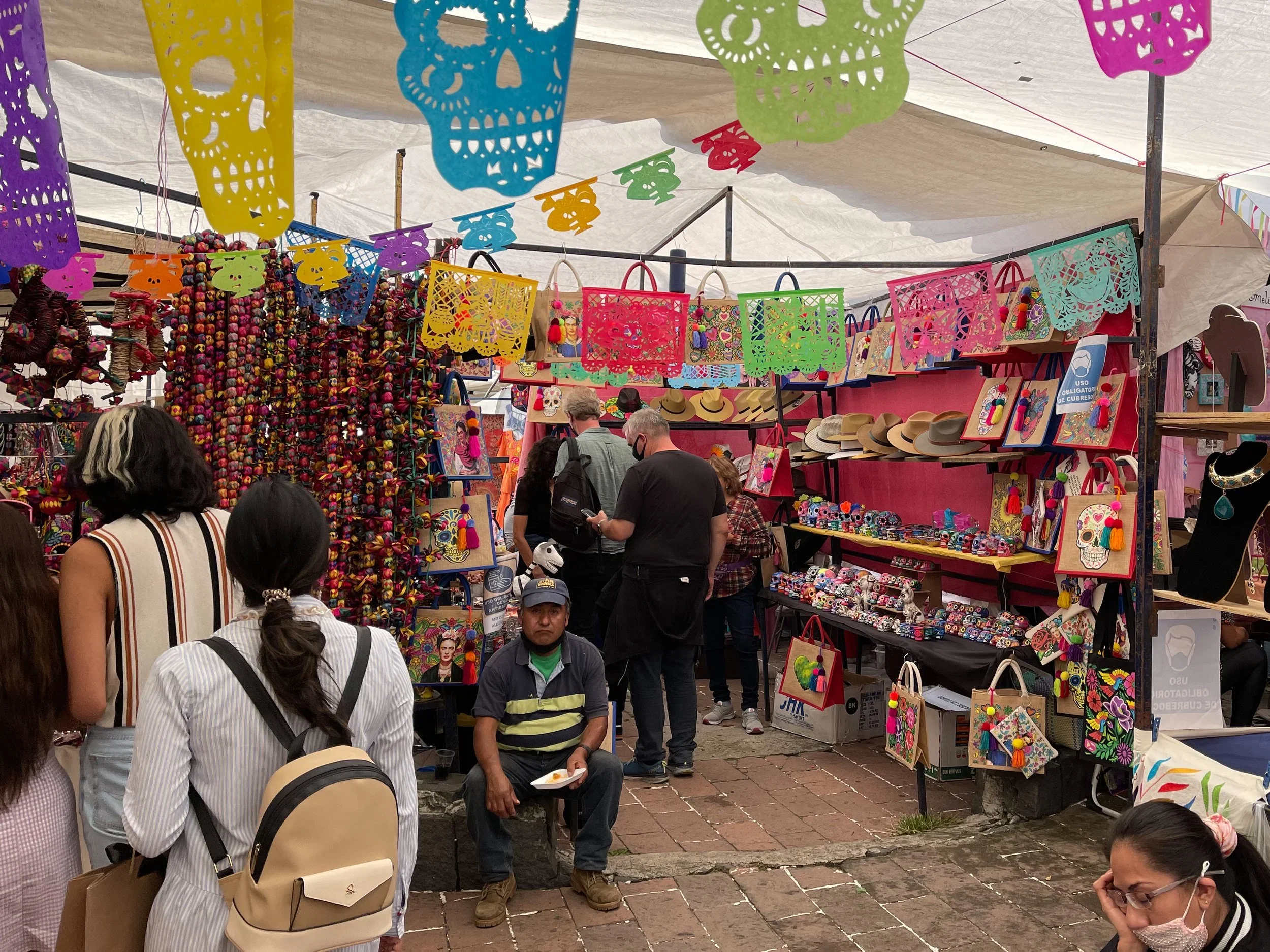
Paper skulls hang by craft vendors at the Bazar Sábado in San Angel, Mexico City

Bazar Sábado

The Bazar Sábado in San Ángel is a Saturday-only spectacle that fills the historic streets with artisans, craft stalls, and cultural treasures. The cobblestone lanes and colonial architecture set the scene for browsing unique wares, from vivid alebrijes and handpainted ceramics to quirky Day of the Dead memorabilia. Founded in 1960, the bazaar has grown into a beloved tradition, with its epicenter located in a central courtyard where you can also grab a bite or sip a local craft brew, like a Monstruo de Agua beer—a must-try for its unusual ingredients and axolotl-themed branding.

Though the market can get busy, a friendly “con permiso” helps you navigate the crowded stalls. Don’t miss browsing nearby shops like Cerámica San Germán, where the traditional meets the artistic, or grabbing a molcajete for your guacamole needs. The cupolas of Nuestra Señora del Carmen loom overhead, hinting at San Ángel’s rich history, complete with mummies and macabre relics in the crypt below. Whether you’re drawn to crafts, ceramics, or quirky curiosities, Bazar Sábado promises a vibrant and eclectic day out in CDMX’s most enchanting neighborhood.
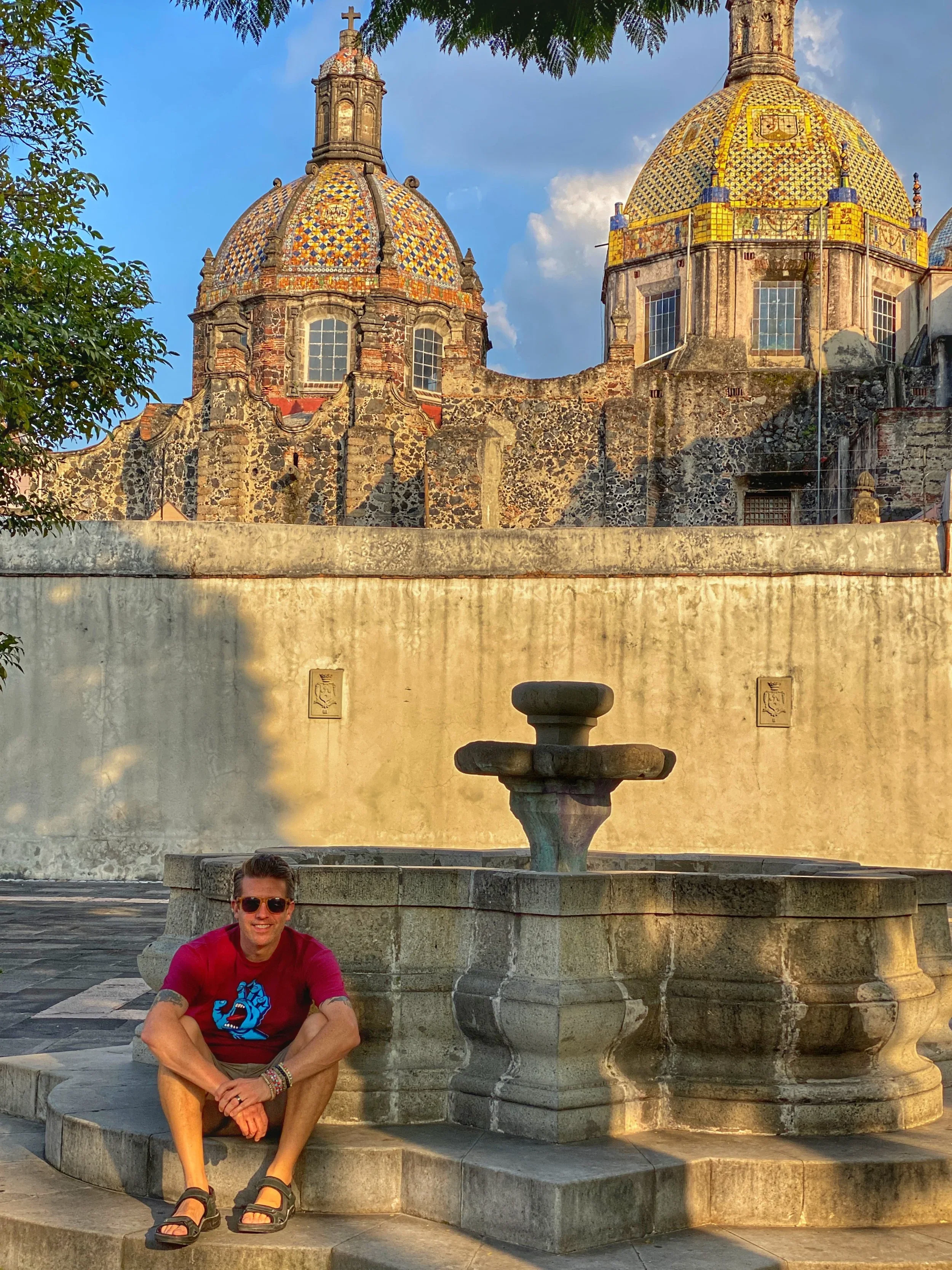
A man sits by the fountain at Nuestra Señora del Carmen in the San Angel neighborhood of CDMX

Nuestra Señora del Carmen

Nuestra Señora del Carmen in San Ángel is a captivating glimpse into Colonial Baroque architecture, with its faded domes tiled in vibrant patterns and gilded altarpiece that balances opulence with austerity. The church was founded for the Discalced Carmelites, a curious order known for their vow of shoelessness, established in the 16th century by Saint Teresa of Avila. Its history stretches back to the early 1600s, and the Carmen Complex encompasses more than just the church itself—it’s a former monastery and convent, now a museum where you can even find mummies lurking in the catacombs.

The church’s story doesn’t shy away from drama. After the War of Reform, when Mexico’s Liberal forces stripped the Catholic Church of its vast properties, parts of the complex were repurposed into everything from prisons to barracks. Today, the ornate interior of Nuestra Señora del Carmen stands in contrast to its unassuming façade, offering plenty to explore, from offshoot chapels to quiet corners for reflection. Whether you’re there for the architecture or just trying to catch a glimpse of those creepy mummies, this church is a must-see when wandering through the historic, tree-lined streets of San Ángel.
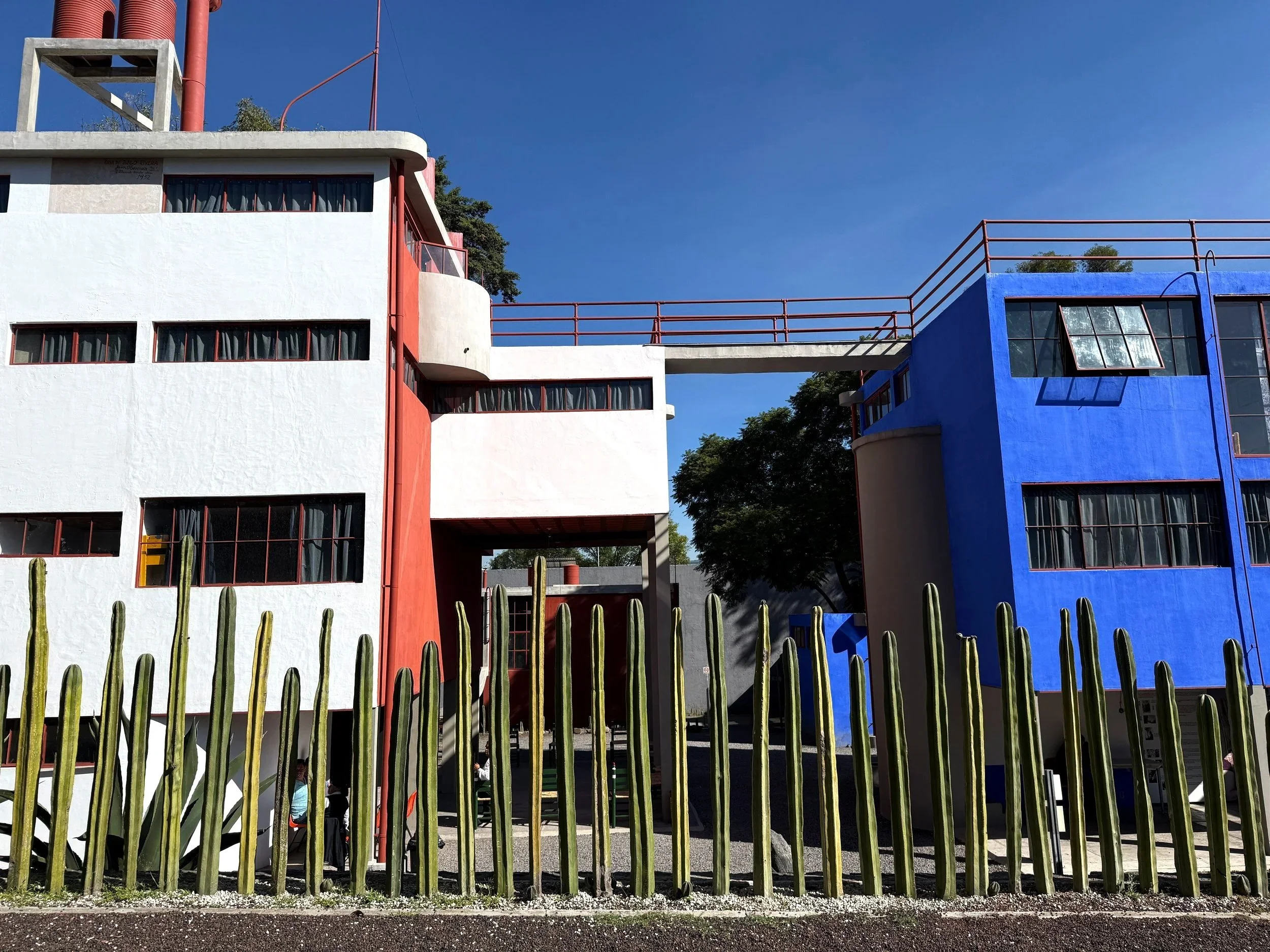
Diego Rivera & Frida Kahlo Studio House

While most visitors flock to Casa Azul—and rightly so—the duo’s other home in San Ángel offers a quieter, more architectural glimpse into their tangled lives. Designed by Juan O’Gorman in bold modernist style, the Museo Casa Estudio Diego Rivera y Frida Kahlo features two separate houses: one bright and spacious for Diego, the other small and cramped for Frida. Connected only by an outdoor stairwell and a narrow bridge, it’s a layout that feels like a metaphor—and a bit of a slap. Frida, who lived with chronic pain and mobility issues, had to climb steep steps just to see her husband.

Inside, Diego’s studio is full of light, murals-in-progress, and towering papier-mâché figures. Frida’s space is noticeably more austere—tight, plain, and edged with a kind of imposed solitude. If Casa Azul is where she found comfort, this house whispers of compromise.

Architectural Marvels in CDMX
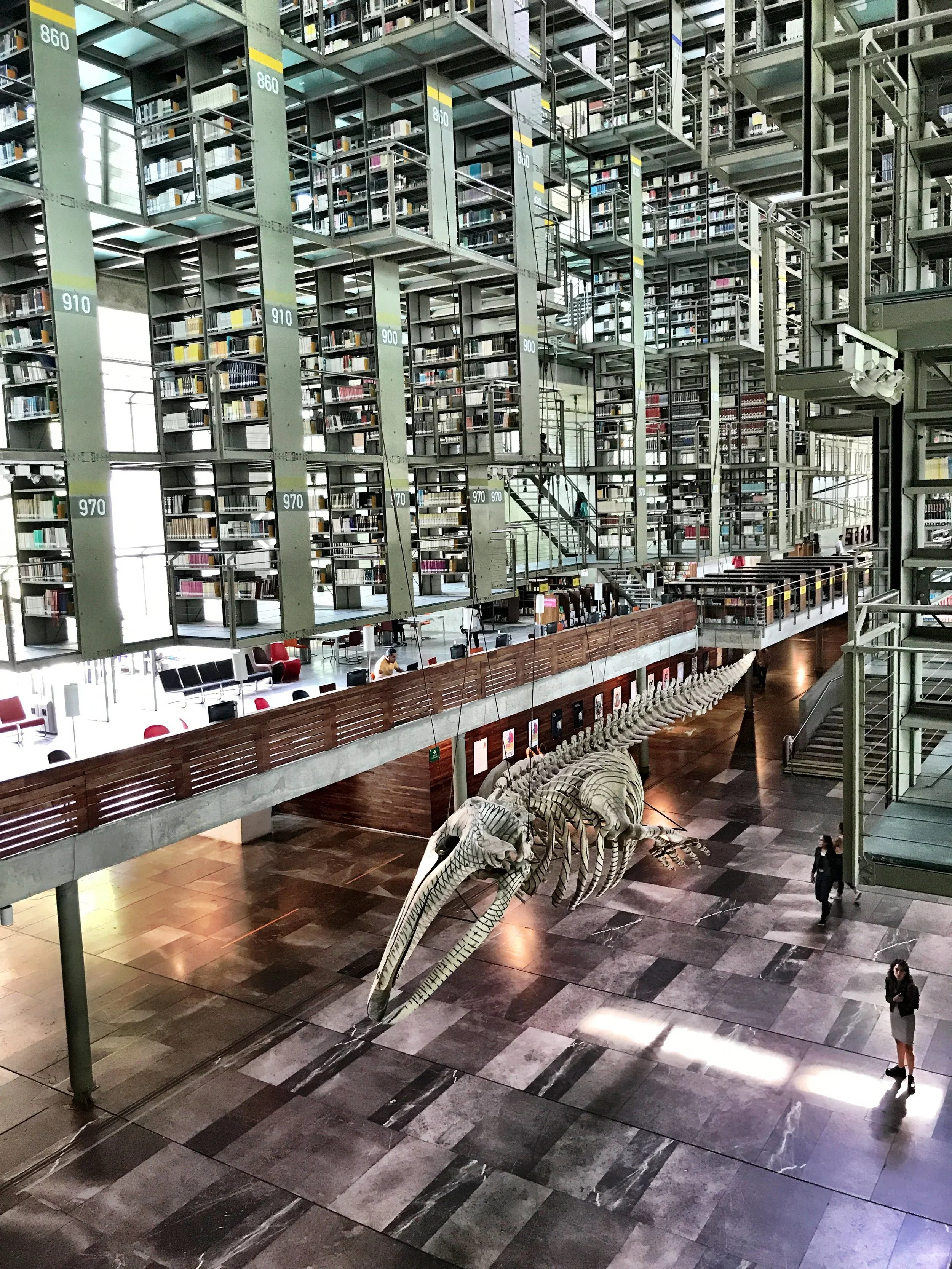
Biblioteca Vasconcelos

Biblioteca Vasconcelos is a must-see, offering an otherworldly experience in the Buenavista neighborhood of Mexico City. Designed by Alberto Kalach, the library’s floating metal and glass bookshelves create an intricate, maze-like space that seems to defy gravity. From the moment you step inside, it’s like entering a cathedral of knowledge, with sunlight streaming through louvered panels, casting an ethereal glow on the translucent walkways. The sensation is thrilling—and a little terrifying—as you navigate the thin, steel-framed floors that hover above the atrium.

Adding to the library’s allure is Gabriel Orozco’s “Mobile Matrix,” a mesmerizing installation featuring the skeleton of a gray whale, its bones intricately etched with thousands of mechanical pencil circles. Suspended mid-air, the piece echoes the library’s daring design, blurring the line between museum and reading space. After soaking in the modern architecture and art, venture into the surrounding botanic park for a breath of fresh air, or take a short walk to explore the nearby Kiosco Morisco, a colorful pavilion that serves as the perfect counterpoint to the library’s futuristic vibe.
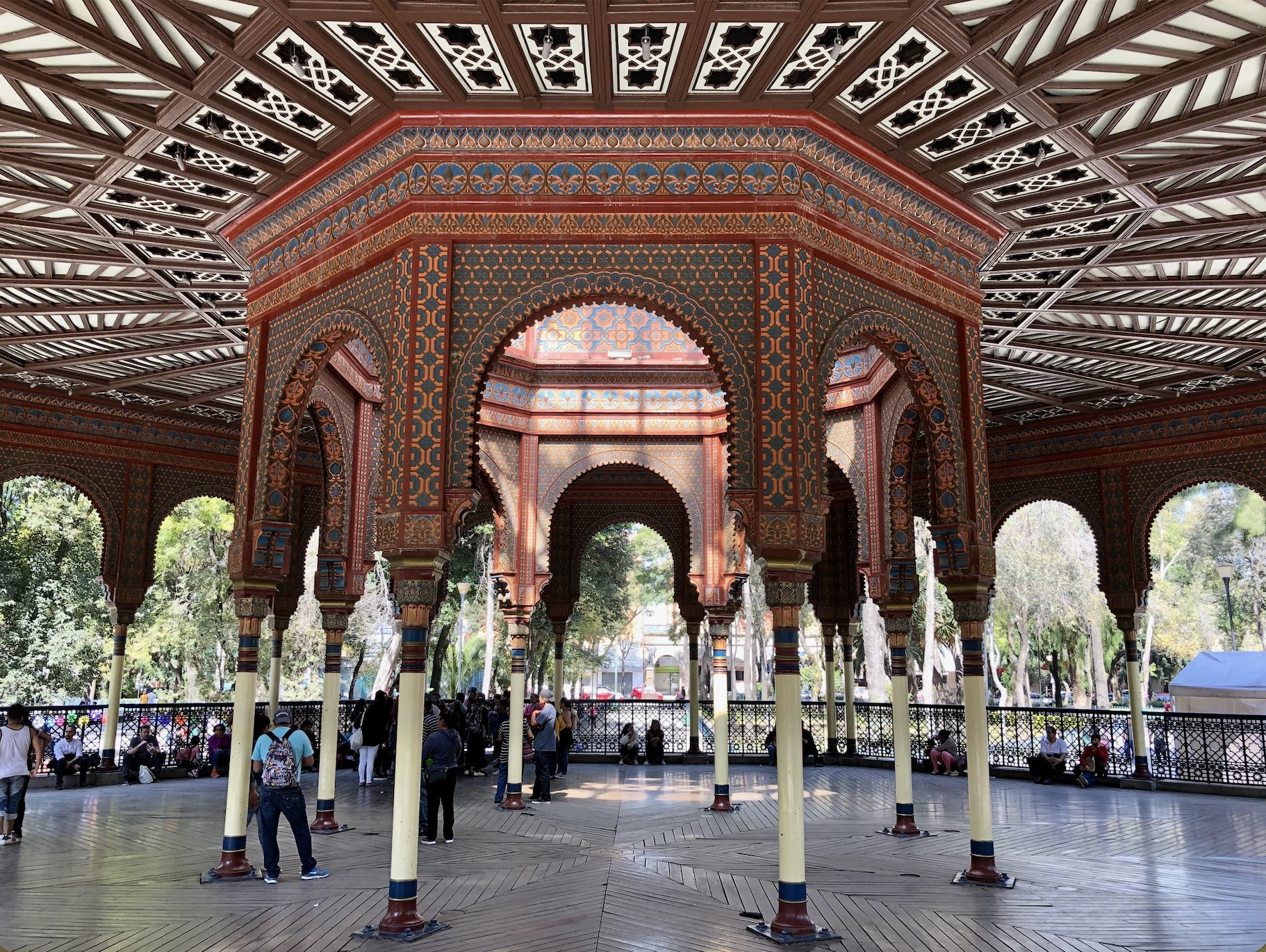
The Kiosko Morisco in Mexico City, Mexico

Kiosko Morisco

Kiosko Morisco, tucked away in the charming neighborhood of Santa María la Ribera, is a hidden gem with a fascinating past. This 19th-century Moorish-style pavilion, designed by José Ramón Ibarrola, was originally built for the 1884 World’s Industrial and Cotton Centennial Exposition in New Orleans. After its star turn on the world stage, the pavilion was relocated to Mexico City, where it has since become a beloved part of the local landscape. Featuring ornate arches, slender columns, and a striking bronze eagle devouring a snake atop the dome, this architectural wonder reflects Mexico’s rich cultural history with a touch of Spanish flair.

Now sitting proudly at the center of the Alameda de Santa María park, the Kiosko Morisco draws visitors with its vibrant colors, elegant design, and relaxed atmosphere. Whether you’re watching locals dance salsa beneath its arches or simply soaking in the beauty of its intricate patterns, this pavilion offers a glimpse into Mexico City’s storied past. Stop by for a leisurely afternoon and take in the beauty of this remarkable relic while exploring the laid-back barrio that surrounds it.
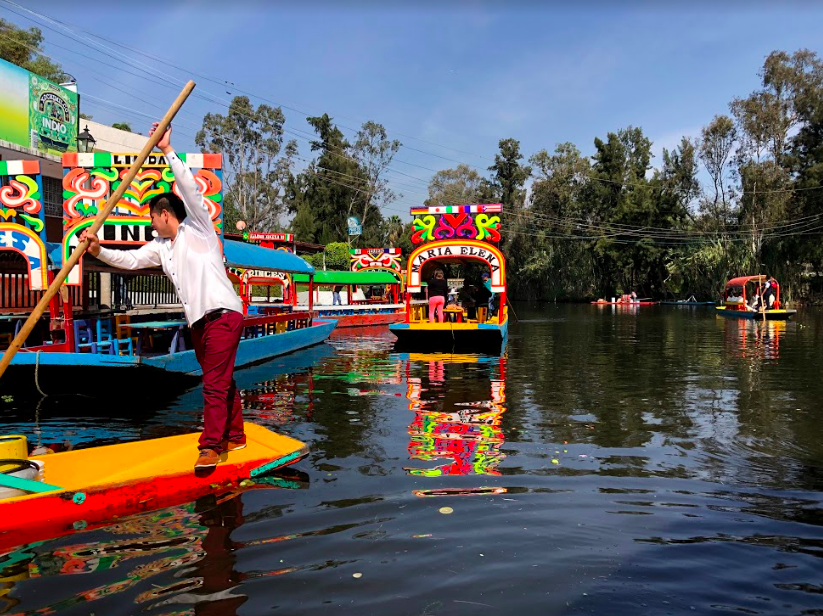
A man paddles one of the flat-bottomed boats that cruise the canals of Xochimilco outside of CDMX

Xochimilco

Xochimilco’s canals are a surreal slice of Aztec history in modern-day CDMX, where colorful trajineras glide past floating gardens called chinampas. Renting one of these vibrant boats is like having your own portable party—complete with a long table for snacks and drinks. We kicked off our trip at Embarcadero Nuevo Nativitas, perfect for accessing the infamous Isla de las Muñecas, where eerie dolls dangle from trees to appease a young girl’s restless spirit.

Cruising these ancient waterways, you’ll encounter everything from floating food vendors selling quesadillas to impromptu mariachi performances. The early hours are ideal for beating the crowds, but brace yourself for the chaotic boat traffic as the day goes on. It’s a magical and slightly macabre experience that brings the rich history and quirky charm of Xochimilco to life. 

Dolls and stuffed animals are nailed to a tree on the Island of the Dead Dolls on an island in Xochimilco, CDMX

The Island of the Dead Dolls

Just south of Mexico City in the Xochimilco canals lies la Isla de las Muñecas aka the Island of the Dead Dolls, an unsettling attraction draped in local legend. It’s said that a little girl drowned there under mysterious circumstances, and the island’s caretaker, Don Julián Santana Barrera, began hanging dolls he found floating in the canal to appease her restless spirit. Over the years, he amassed a bizarre collection of dolls, many decayed and missing limbs, creating a macabre shrine to the lost soul. In 2001, Don Julián himself drowned in the very spot where he had found the girl’s body.

When we visited, we couldn’t resist adding our own contribution to the legend. We brought a doll from Chicago and placed it on a toy car under a bower on the island. It’s now known as “la negrita en el carro,” one of only two foreign dolls on the island. Be sure to keep an eye out for her when you visit!

La Isla de las Muñecas is one of the eeriest destinations in CDMX and a must-see for fans of the supernatural and strange. Tours from Embarcadero Nuevo Nativitas offer a closer island option, while the original site takes around four hours round-trip. Don’t forget to bring a doll of your own as an offering!

Nearby 
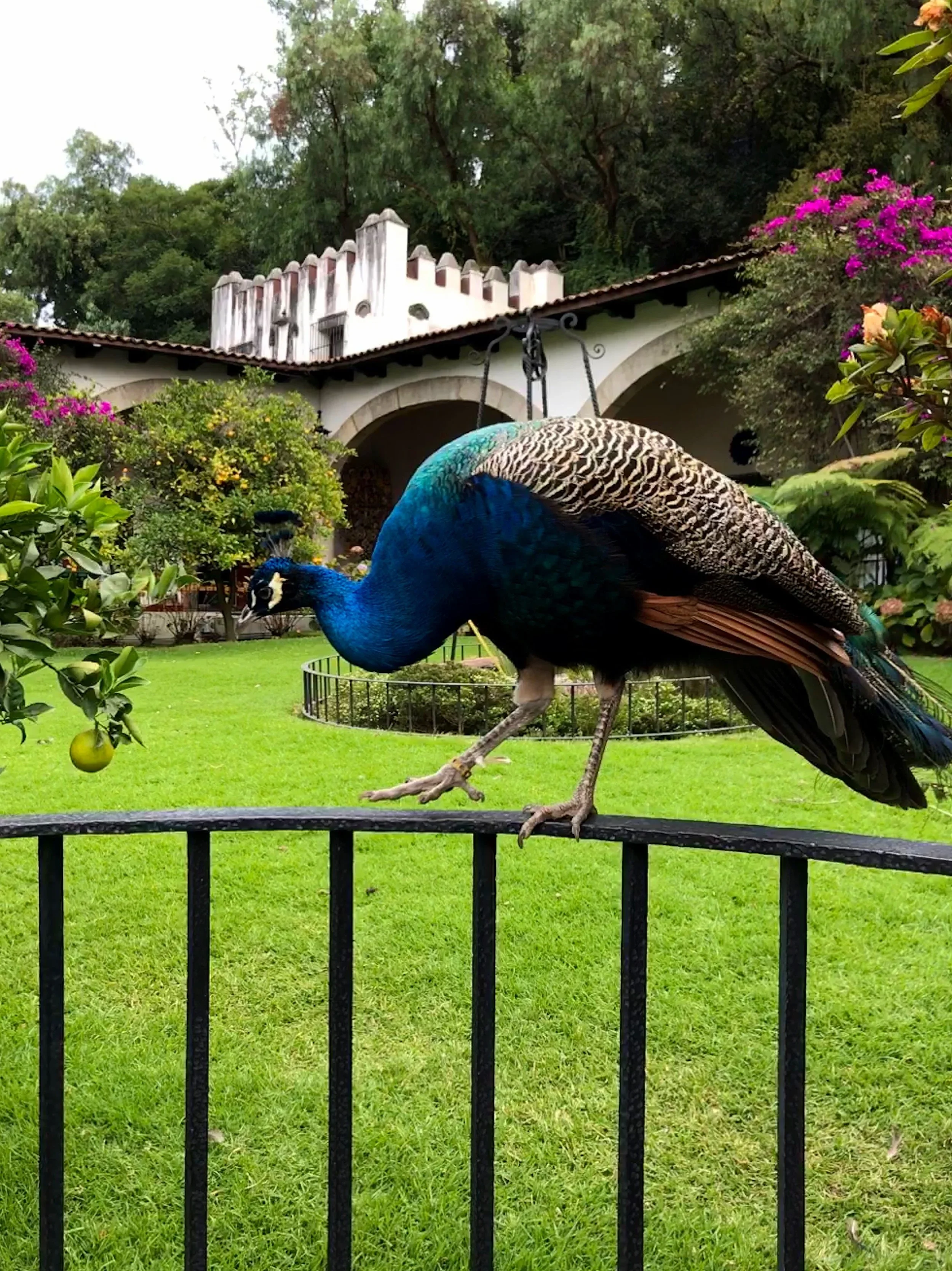
A peacock perches on a metal fence at the Museo Dolores Olmedo in CDMX

Museo Dolores Olmedo

NOTE: Sadly, a familial dispute has led to the (hopefully temporary) closure of the Museo Dolores Olmedo. When last we heard, it was set to reopen in 2026. Say a little prayer to Santa Frida — this is an amazing excursion that should be open to the public. 

The Museo Dolores Olmedo is an enchanting oasis that merges art, history, and whimsy on a sprawling 16th-century hacienda in Xochimilco. From the moment you arrive, you’re greeted by flocks of peacocks roaming the lush grounds, strutting their iridescent feathers like they own the place. The estate itself is worth the visit, with its colonial charm and gardens of dahlias, agaves, and bougainvilleas, offering a glimpse into the grandeur of old Mexico. But it’s not all just eye candy—the museum also houses the largest private collection of Diego Rivera’s work, plus several pieces by Frida Kahlo, including her distinctive small-format paintings and traditional Tehuana dress.

Inside, Rivera’s masterpieces span multiple rooms, showcasing his evolution from post-Impressionism to Cubism, while Olmedo’s pre-Columbian collection adds a layer of ancient mystique, with Colima dog effigies that once guided spirits through the Aztec underworld. The hacienda’s playful side shines through in the Day of the Dead ofrendas, where traditional and modern elements blend seamlessly, reflecting Olmedo’s inventive spirit. Don’t forget to swing by the Xoloitzcuintli enclosure, home to the adorably odd Mexican hairless dogs that roam the grounds like living relics. Whether you’re an art lover, history buff, or just here for the peacocks, the Museo Dolores Olmedo will surprise and charm you at every turn.
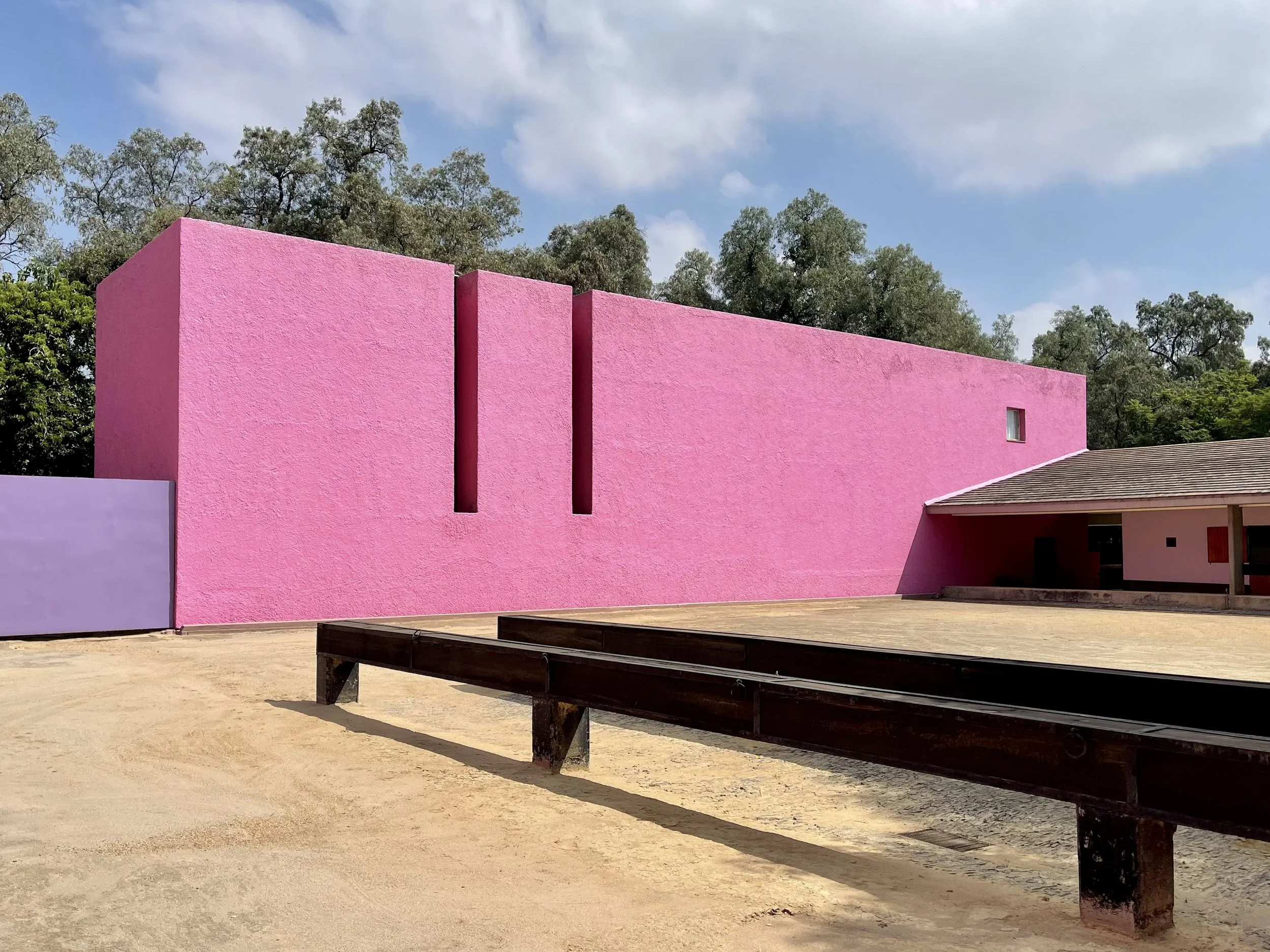
Purple and pink walls by the stables of Cuadra San Cristóbal architect Luis Barragán outside CDMX

Barragán Architecture Tour

Luis Barragán (1902–1988) didn’t just design buildings—he created spaces that stirred the soul. A poetic modernist and the only Mexican architect to win the Pritzker Prize, Barragán took the clean lines of European architecture and infused them with color, silence, shadow, and stillness. His homes, fountains, and public works reflect a love of introspection and nature—a legacy that’s best experienced in person.

To really understand Barragán, we recommend booking a tour with the Traveling Beetle, which took us from city outskirts to surreal spaces, all in a tomato-red VW bus. 
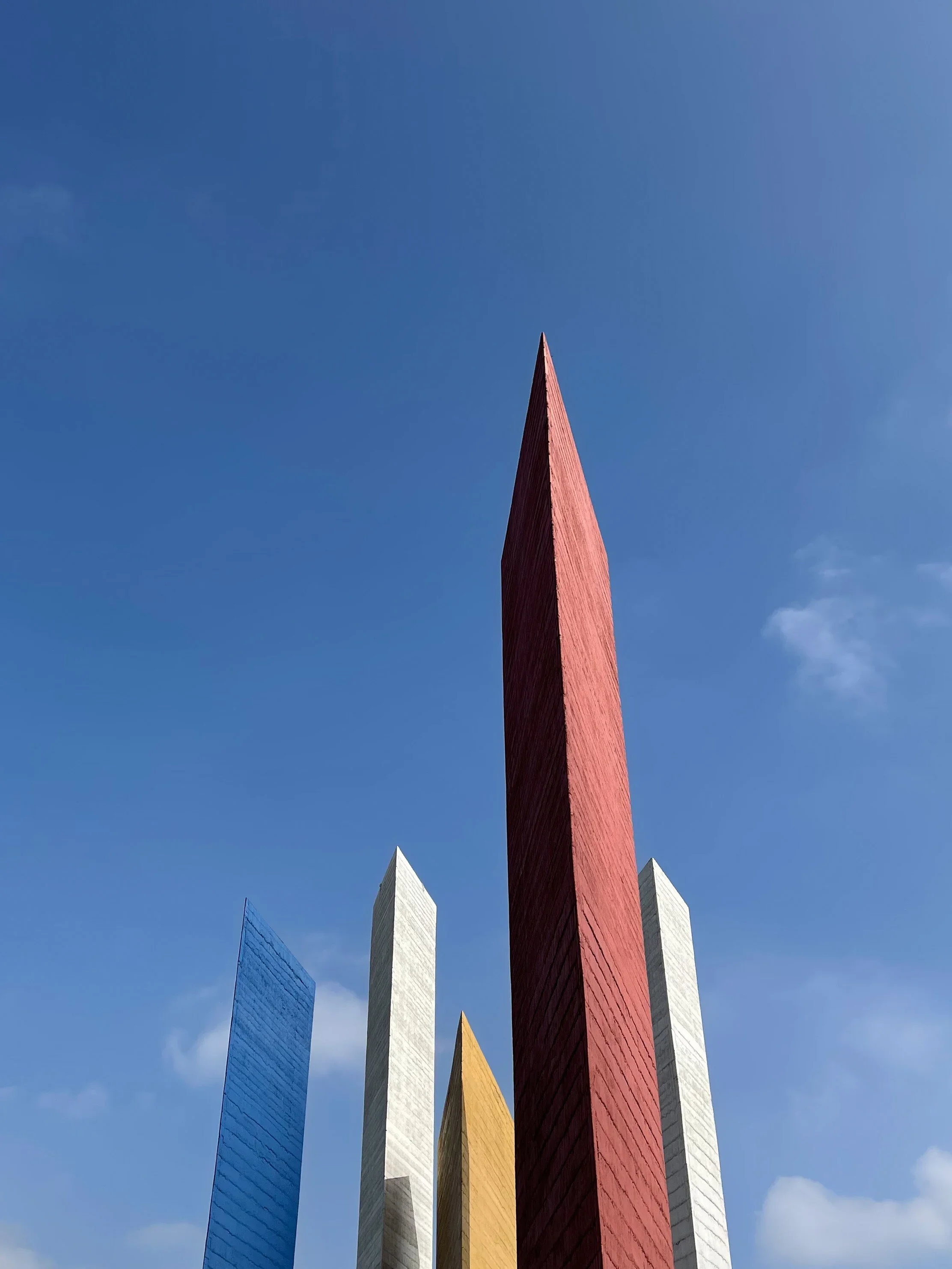
The blue, white, yellow and red thin sculptural Torres de Satélite by the architect Luis Barragán outside of CDMX

Torres de Satélite

You’ll spot them first from the freeway—five towering columns in blue, red, yellow, and white. These are the Torres de Satélite, co-designed with sculptor Mathias Goeritz, and they mark the edge of a planned community that never quite came to be. But the towers endure, bold and mysterious, like sentinels from another dimension. They aren’t just monuments—they’re Barragán’s modernist exclamation point.
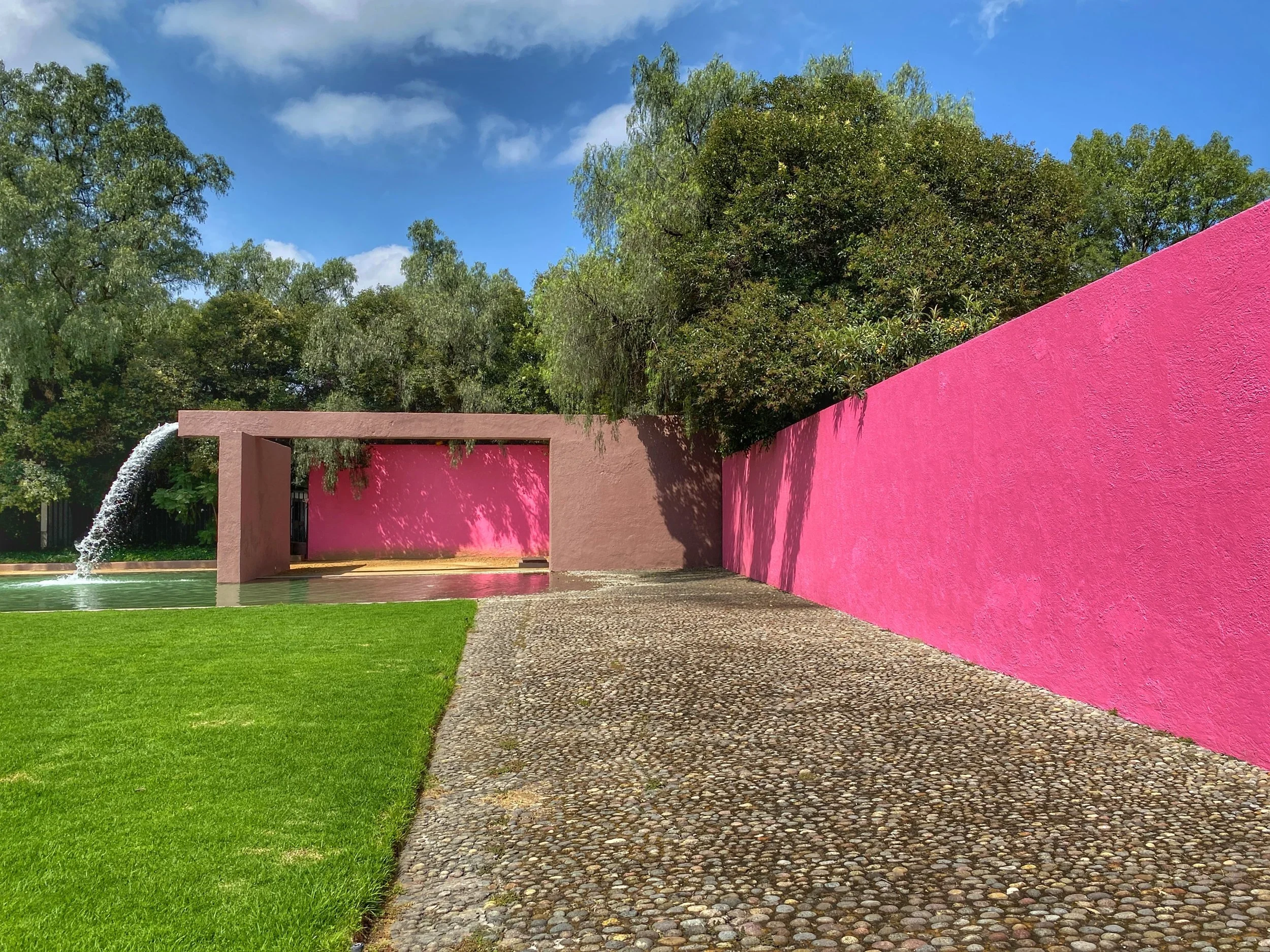
Modernist pink walls and cascading water at the Fuente de los Amantes by architect Luis Barragán outside Mexico City

Fuente de los Amantes

Hidden in a quiet corner of the San Cristóbal subdivision, the Fuente de los Amantes (Lovers’ Fountain) speaks in whispers. The aqueduct releases water once a day into the rectangular basin below, where two simple stone figures sit—one gazing, the other waiting. It’s classic Barragán: deceptively simple, achingly emotional. A place to contemplate connection, longing, and the kind of love that waits in silence.
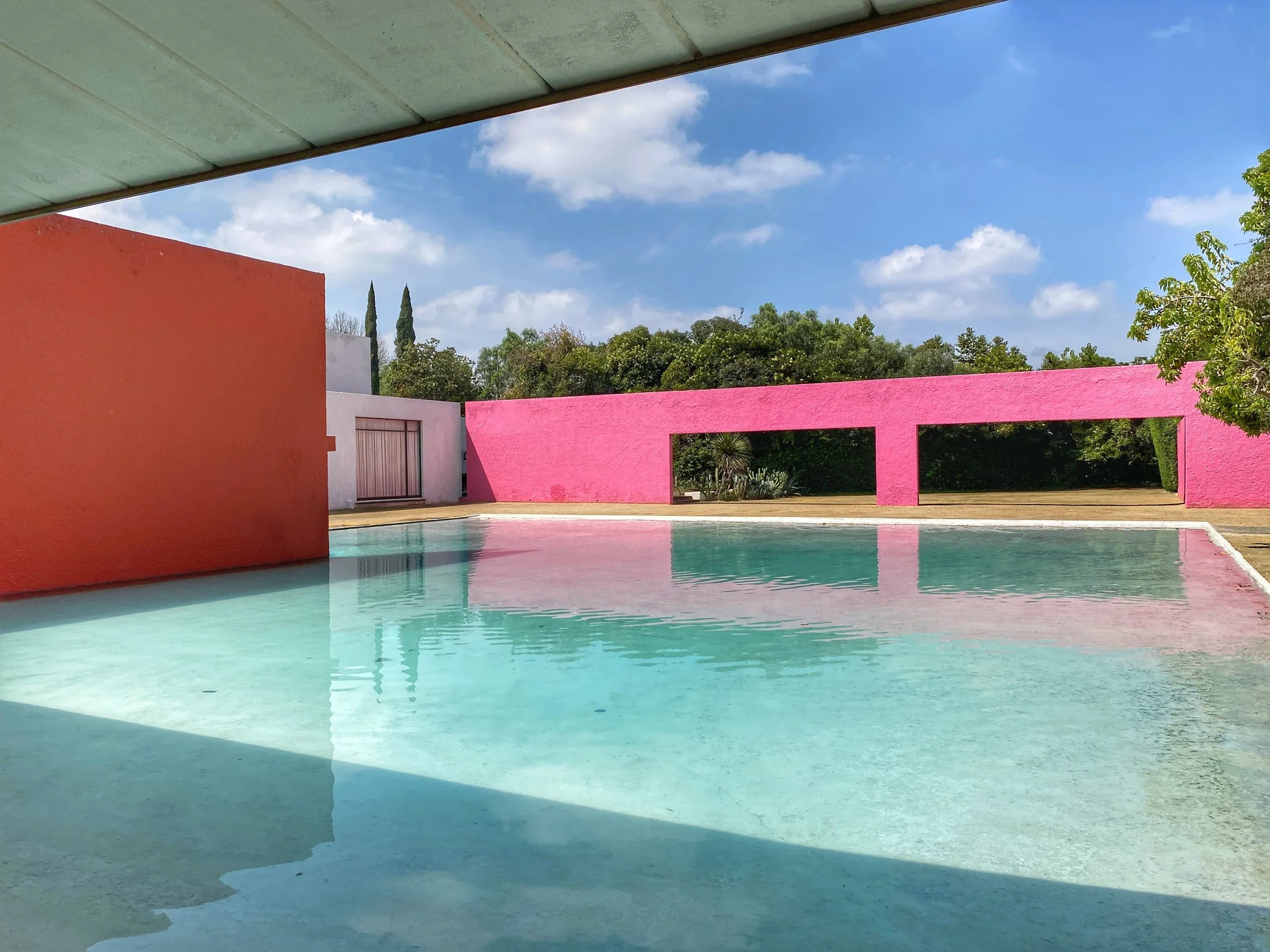
A pool by brightly colored minimal modern walls at Cuadra San Cristóbal byarchitect Luis Barragán outside of CDMX

Cuadra San Cristóbal

This is the showstopper. From the outside, Cuadra San Cristóbal feels like a fortress—flat pink walls, geometric cutouts, no hint of what’s inside. But step into the courtyard and it unfolds like a fever dream: a long pink wall set against cobalt pools, fountains built for horses, and trees erupting through carefully placed openings. It’s the kind of space that doesn’t just look beautiful—it makes you feel something. Even the horses seem to know they’re walking through art.
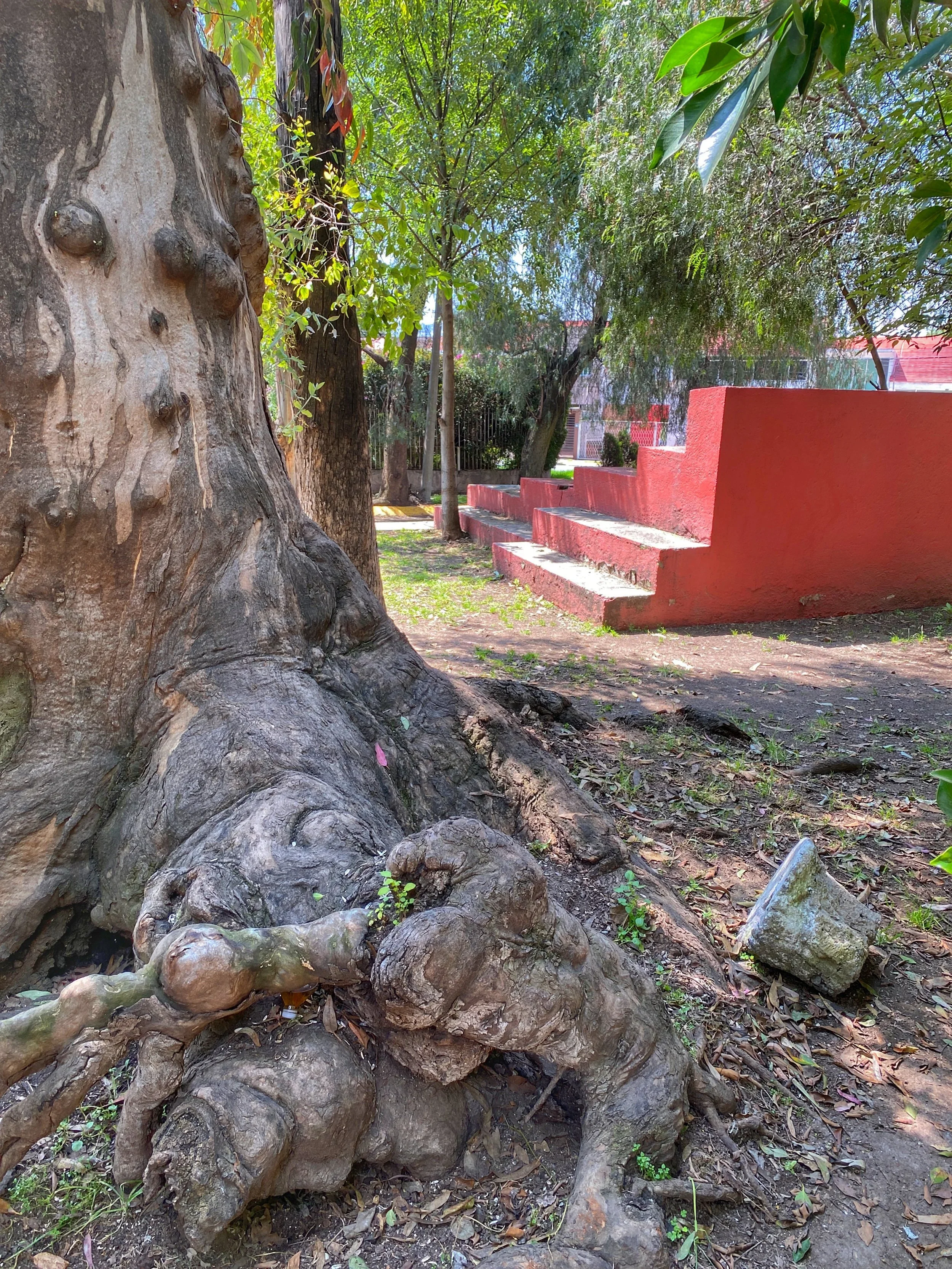
Gnarled eucalyptus tree and stepped structure by Barragán at Paseo de los Gigantes and Plaza del Bebedero outside CDMX

Paseo de los Gigantes and Plaza del Bebedero

The name Paseo de los Gigantes isn’t a metaphor, it’s literal. Those majestic, gnarled eucalyptus trees — unyielding and grand — are the giants the path is named for. Once part of a glamorous social scene where Barragán hosted horsing events, today the park feels forgotten — overgrown, faded — but no less haunting. From their bark to their scale, the trees still command attention. As you continue, you reach the Plaza del Bebedero, anchored by a long, empty horse trough fountain and framed by stark white and indigo walls where light and shadow play like whispered memories of its past.

Best Restaurants in CDMX
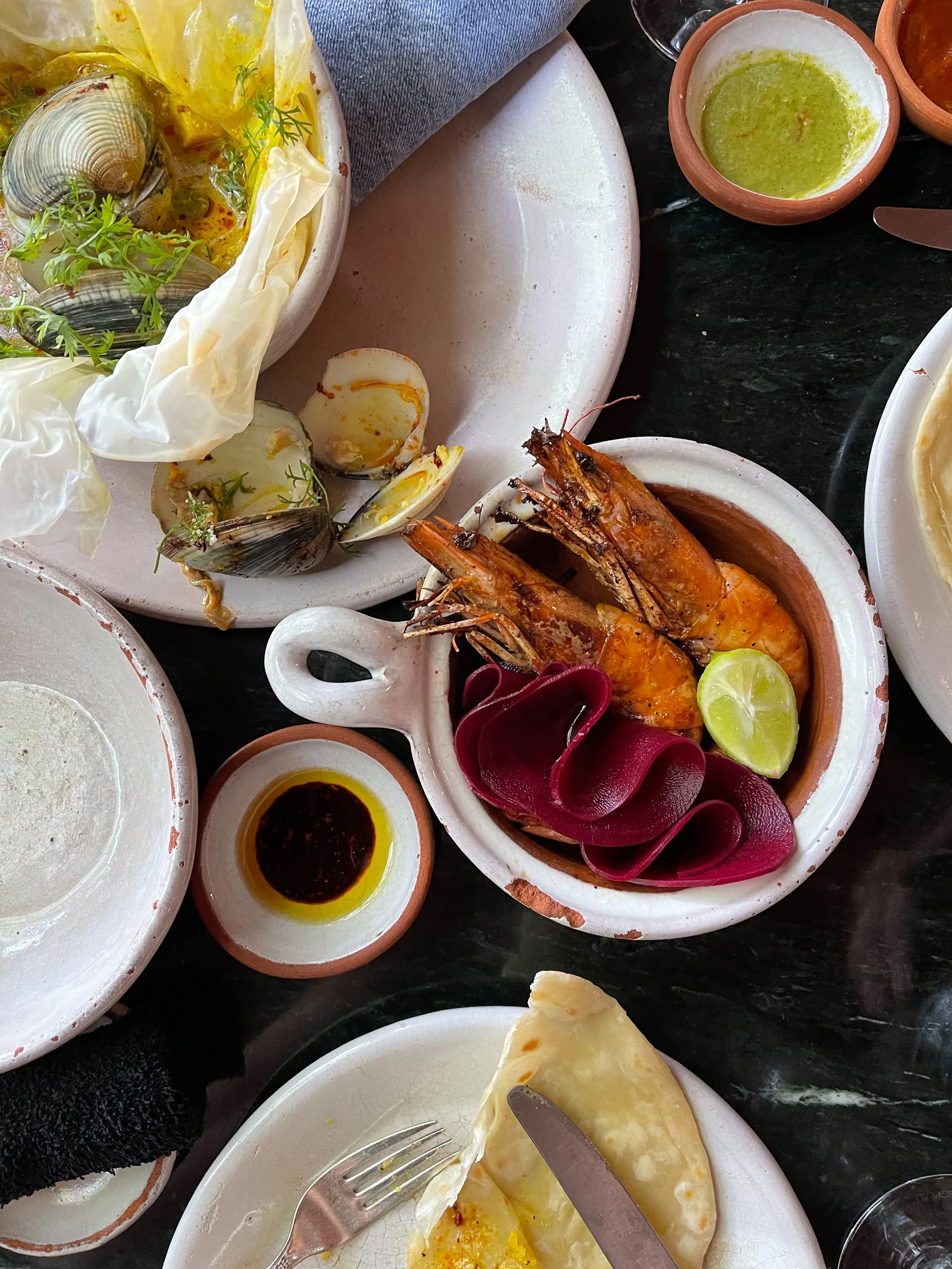
Two shrimp in a small bowl amid lunch at  Masala y Maíz in CDMX

Masala y Maíz

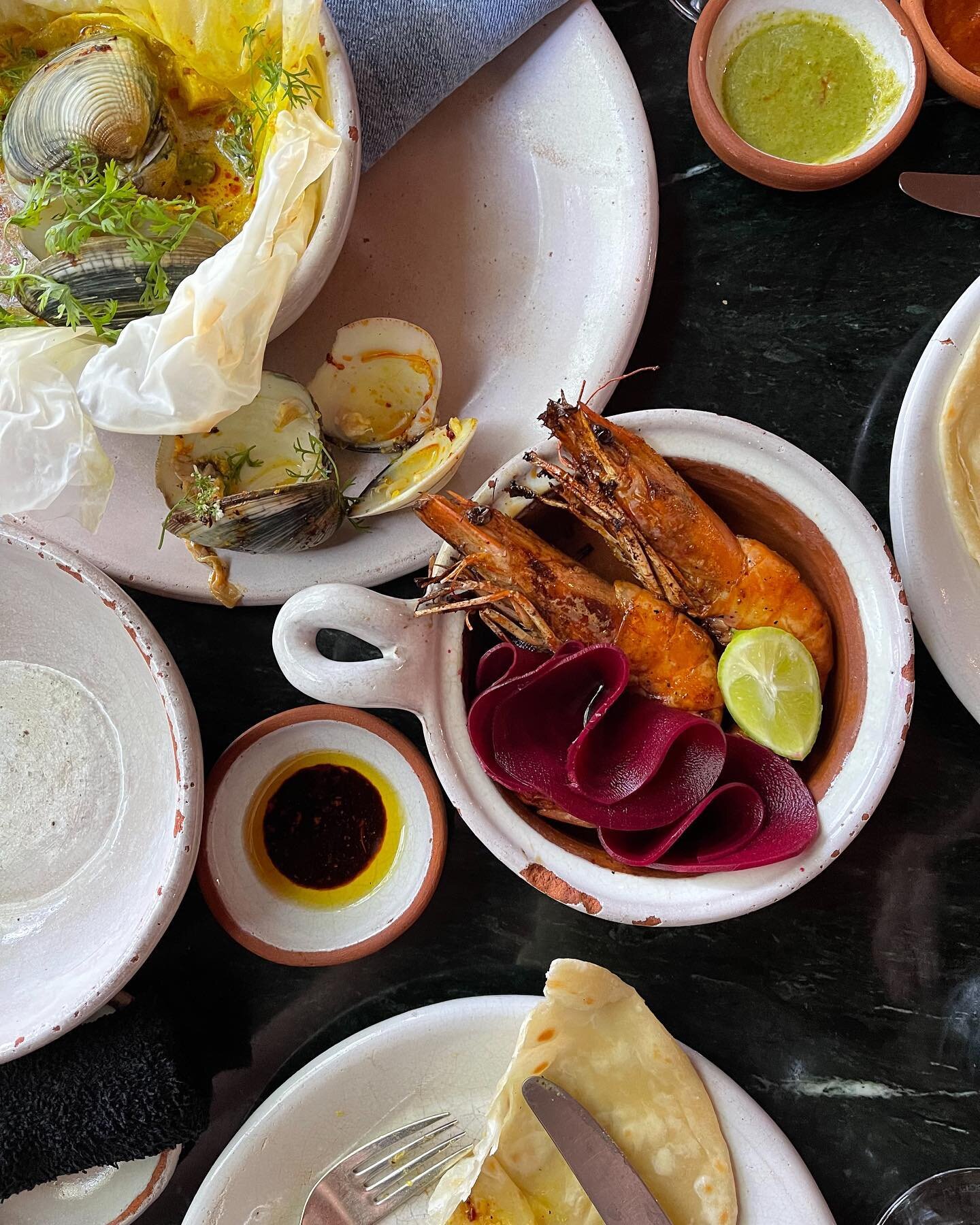
Masala y Maíz serves one of the most memorable meals we've had anywhere in the world. The husband-and-wife team behind the restaurant blends Mexican, South Asian and East African culinary traditions into dishes that somehow feel both inventive and deeply rooted in history. Every course surprised us, from brisket-filled samosas and vibrant chaat to chile-rubbed shrimp with vanilla ghee and clams simmered in turmeric, coconut milk and tomato masala.

Just as impressive as the food is the philosophy behind it. The owners have built a restaurant committed to fair labor practices, ethical sourcing and fostering a healthier restaurant culture—values that shine through in every aspect of the experience. Pair your meal with one of their excellent natural wines, and it's easy to see why Masala y Maíz remains one of our favorite restaurants in Mexico City.

Quirky Attractions in CDMX

A doll painted half black, half red as the Santeria deity Lucero at the Sonora witch market in CDMX

Witch’s Market at Mercado Sonora

If creepy, offbeat shopping is your thing, the witch market at Mercado Sonora in Mexico City is an absolute must-see. Tucked away in the market’s back left corner, this bizarre bazaar offers everything from potions to voodoo dolls, making it the ultimate mix of brujería and Catholic kitsch. Santa Muerte figures sit next to baby Jesus statues, and spells for love or money come in bottles of neon liquid you probably shouldn’t drink.

The aisles are tight, chaotic, and filled with the scent of sage. While navigating the labyrinthine stalls, you’ll find unsettling trinkets like Lucero Mundo dolls with sewn-shut eyes or macabre fur balls that defy description. It’s not for the faint of heart, but if you’re into all things witchy, Mercado Sonora is a slice of dark magic in CDMX. 

Shopping in CDMX
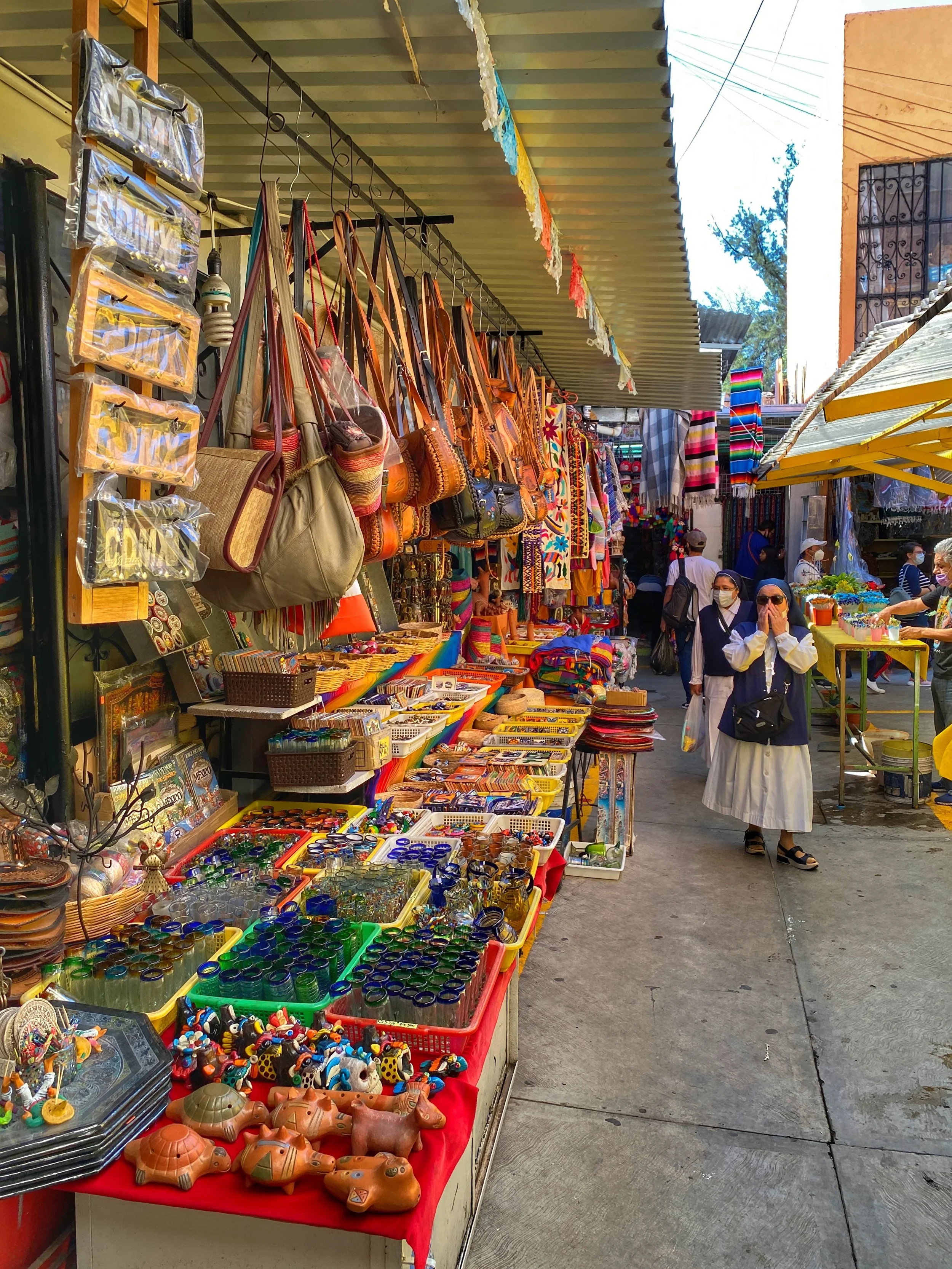
Nuns walk through the handicraft market of La Ciudadela in CDMX

Mercado de Artesanías La Ciudadela is a paradise for folk art and handicrafts lovers, offering a treasure trove of arte popular from all over Mexico. This sprawling market is packed with stalls selling everything from Oaxaca’s vibrant alebrijes and intricate Otomi textiles to pre-Columbian-style clay sculptures that rival museum pieces. It’s impossible to see it all in one go, so take your time and maybe even ask for a discount if you’re buying multiple items.

When you need a break from browsing, head to Fonda Carmelita, the market’s cantina, for traditional Mexican food and a refreshing margarita. It’s the perfect spot to recharge before diving back into the market’s colorful chaos. Don’t miss this iconic shopping destination whenever you’re in Mexico City — we never do.
The Ultimate Melbourne Food Guide: Where to Eat, Drink and Wander

Our Melbourne foodie tour covers the best restaurants, cafés and neighborhoods, plus insider tips on where to eat in Melbourne without wasting a meal.

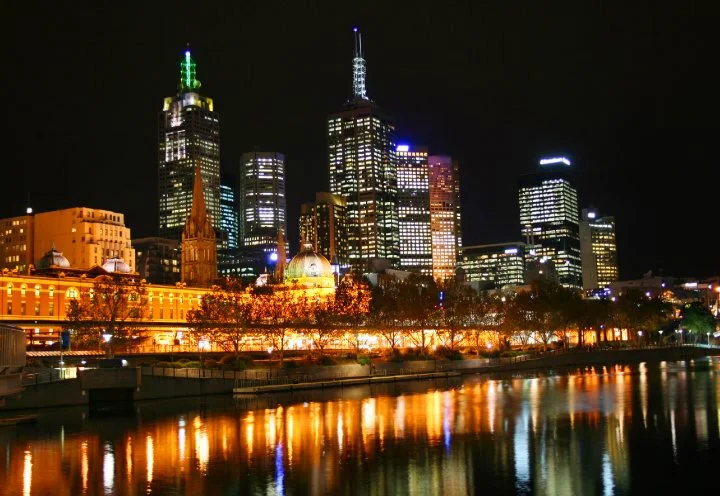
Melbourne, Australia skyline at night, with lights reflecting on the water

Melbourne doesn’t just have a food scene. It has opinions. About coffee. About pasta. About dumplings. About wine. About the proper way to spend a Saturday afternoon. This is a city where locals will happily debate the merits of rival cafés while standing within sight of three excellent ones.

Fortunately, Melbourne earns every bit of its foodie reputation.

Whether you’re wandering hidden laneways, exploring eclectic neighborhoods or lingering along the waterfront, you’ll quickly realize the city’s greatest attraction isn’t any one restaurant. It’s the sheer variety. One minute you’re splurging on a tasting menu, the next you’re squeezing into a tiny café that serves one of the best coffees you’ve ever had.

My favorites range from morning must-visits to late-night classics. One of the things I love most is how dramatically each neighborhood changes the experience. You can spend the day hopping between polished riverside dining in Southbank, chef-driven neighborhood restaurants in Fitzroy, and easy, no-frills favorites in Richmond — all without feeling like you’ve been eating in the same city.

In Melbourne, eating isn’t something you squeeze between sightseeing. It is the sightseeing.

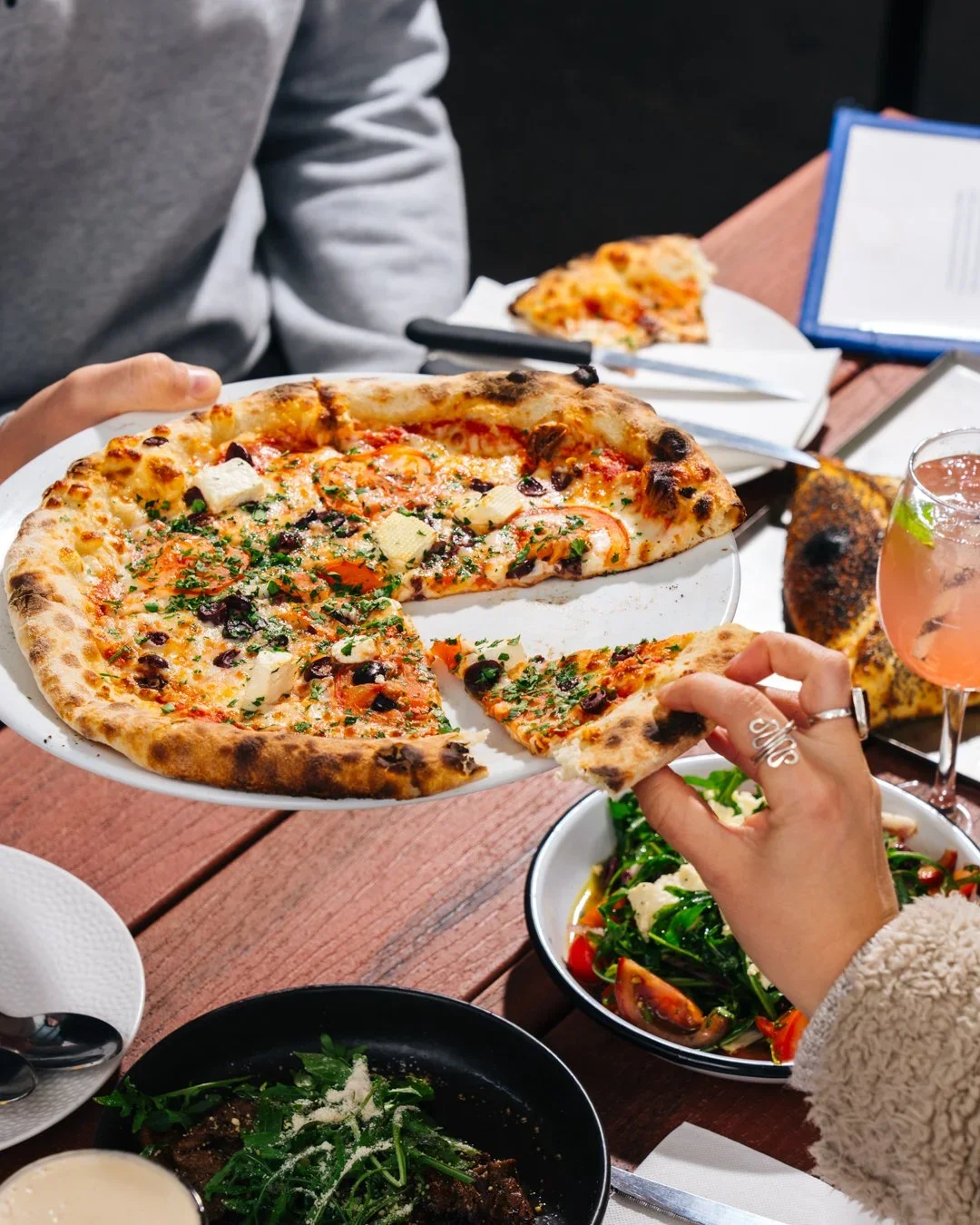
A person takes a piece of pizza while dining at the Lady of St Kilda in Melbourne, Australia

The Lady of St Kilda

Planning Your Melbourne Food Tour: What to Know Before You Go

Planning a Melbourne food crawl is mostly about deciding where you’re willing to loosen your belt. The logistics, though, matter more than you might think. If you’ve booked several restaurants over a long weekend, even little delays can throw off the schedule. Many travelers choose travel insurance for added peace of mind.

Popular restaurants across the CBD (central business district) and inner-city neighborhoods book up quickly, especially on weekends. Distances also have a funny way of looking shorter on a map than they feel in real life. Between traffic, crowded sidewalks and Melbourne’s famously busy tram network, getting from Fitzroy to Richmond or Southbank often takes longer than expected. Build a little breathing room into your plans.

Of course, Melbourne also has a habit of wrecking carefully planned itineraries — in the best possible way. You’ll duck into a café for “a quick coffee,” discover a wine bar next door, overhear someone recommending a dumpling spot across town, and suddenly it’s four hours later. Frankly, that’s what I’d consider a successful day.

If you’re planning a food-focused weekend in Melbourne, book the places you absolutely don’t want to miss, then leave enough room for spontaneous discoveries.

The Must-Visit Food Precincts in Melbourne

Every Melbourne neighborhood has its own personality. Rather than chasing one “best” restaurant, it’s worth exploring several precincts to experience just how different the city’s food culture can feel from one block to the next.

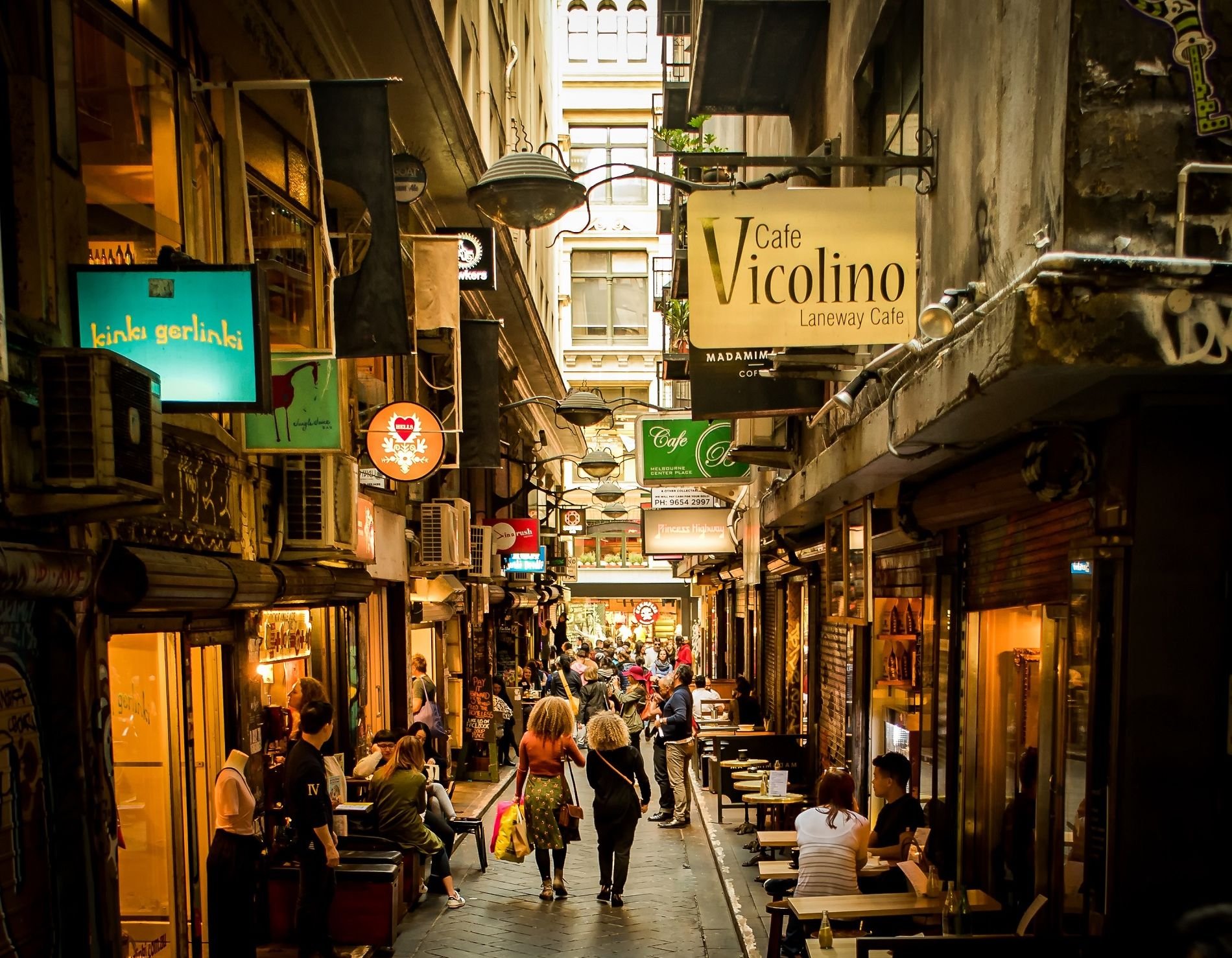
The Laneways in the CBD of Melbourne, Australia

CBD Laneways

Hidden Restaurants & Late-Night Bites

The CBD laneways are where Melbourne’s culinary reputation really comes to life. They’re packed with hidden restaurants, tucked-away bars and enough excellent food to make getting slightly lost feel like part of the experience.

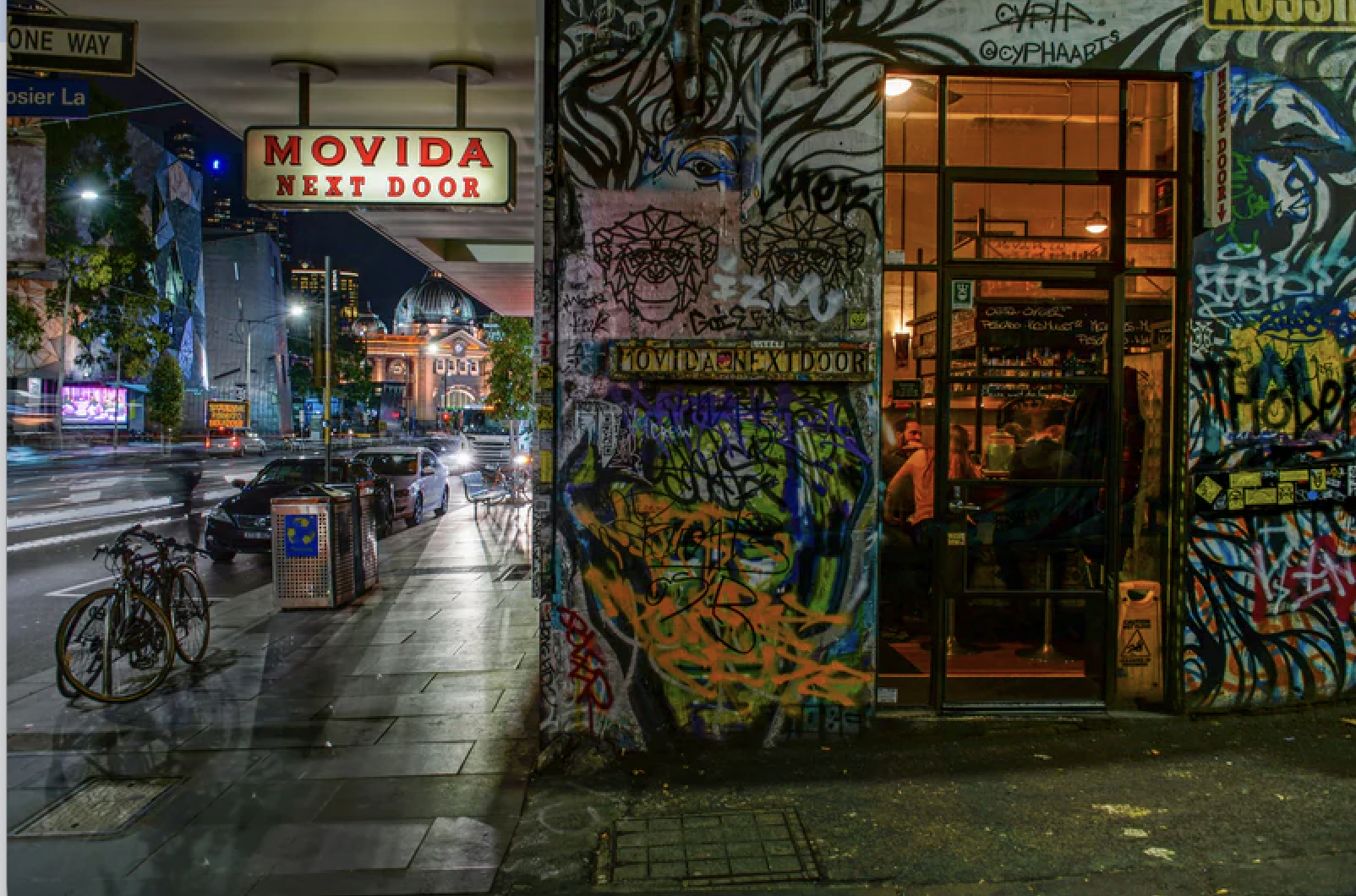
Grafitti-covered exterior of Movida restaurant in the Laneways of Melbourne, Australia

MoVida on Hosier Lane remains one of the city’s standout Spanish restaurants. It’s priced toward the premium end of the spectrum, and reservations are highly recommended, especially on Friday and Saturday evenings. A leisurely weekday lunch offers a much more relaxed experience.

Just around the corner, Marameo brings modern Italian cooking to Russell Place with an atmosphere that’s lively without feeling overdone. Outdoor laneway seating adds to the charm, but evenings fill quickly. Earlier dinner reservations make conversation much easier.

Looking for something more casual? Degraves Street is a Melbourne classic. You'll find bustling cafés, affordable brunches and people-watching that rivals any menu. Arrive before 9 a.m. if you’d rather spend your morning eating than waiting in line.

The laneways aren’t famous because they’re hidden. They’re famous because they’re packed with places worth discovering.

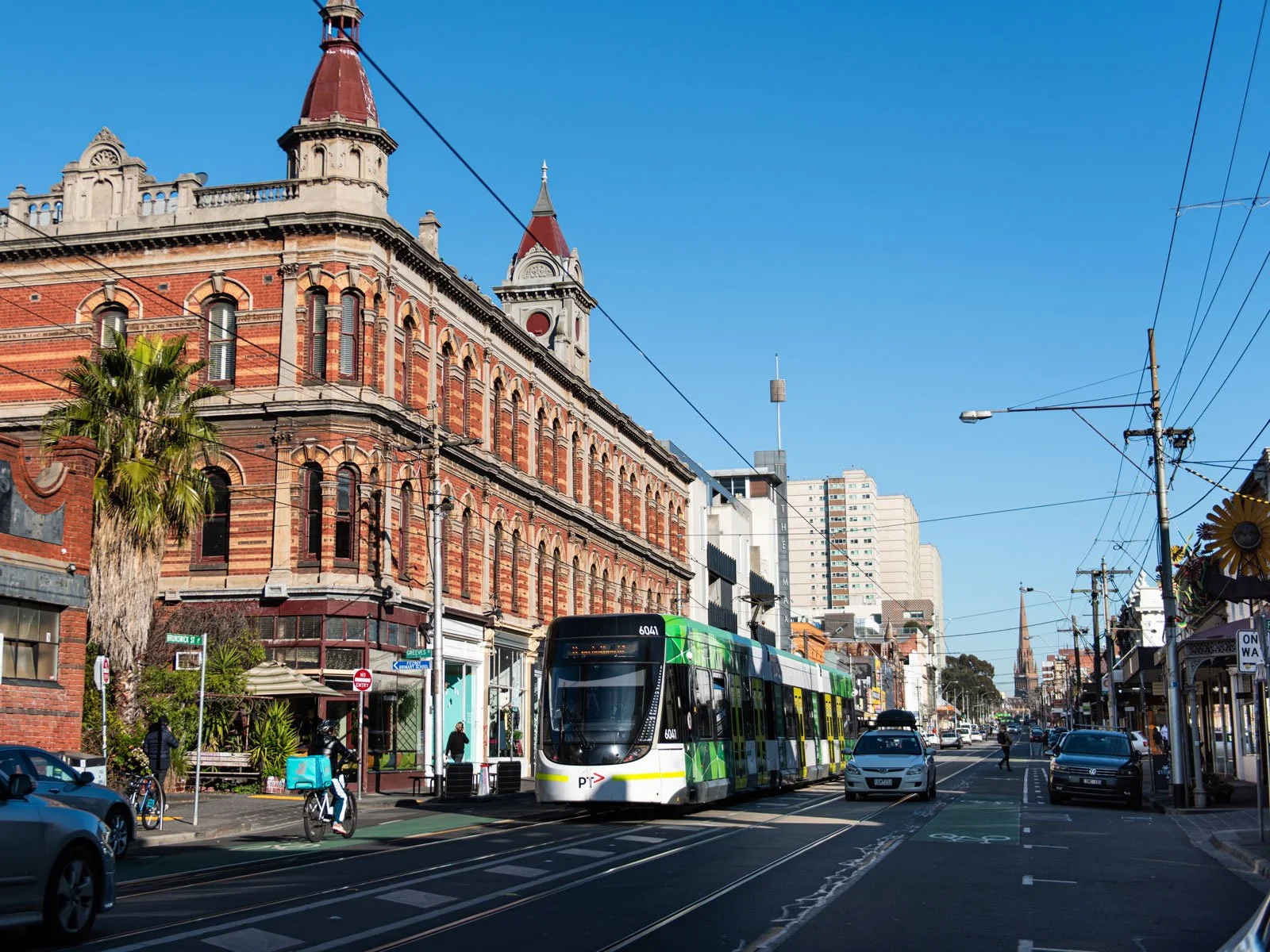
A street with bus and historic building in Fitzroy, Melbourne, Australia

Fitzroy

Creative Dining & Small Bars

Fitzroy is where Melbourne gets a little artsy, a little scruffy and exceptionally good at dinner. Expect inventive menus, natural wine, independent restaurants and at least one place you’ll wish existed back home.

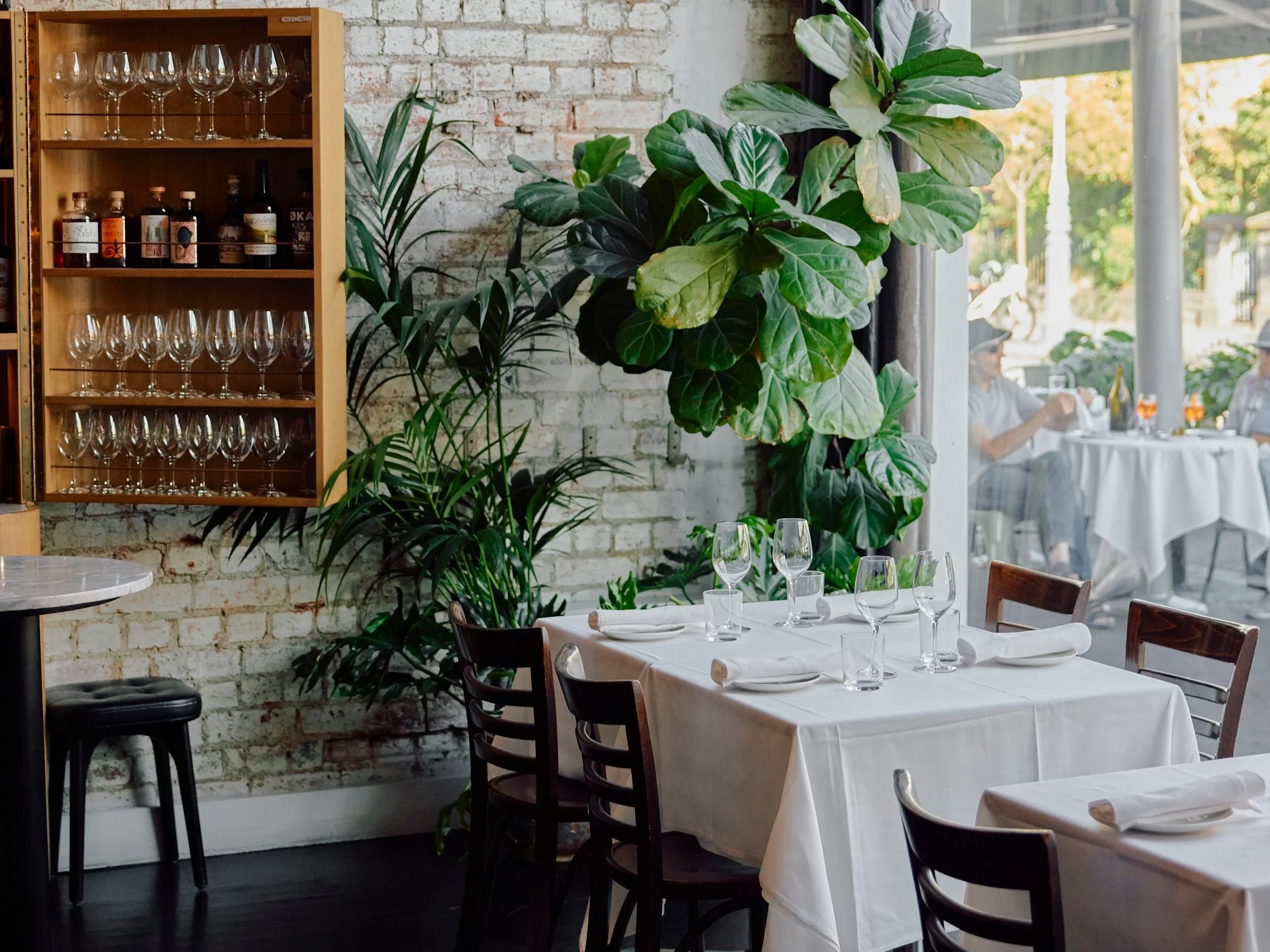
A white tablecloth-covered table  near a cupboard with win glasses at Cutler in Melbourne, Australia

Cutler offers an upscale tasting-menu experience that rewards planning ahead. Weekend reservations often disappear weeks in advance, while a midweek dinner tends to feel more relaxed.

Bon Ap’ Petit Bistro delivers classic French-inspired cooking in a more approachable setting. Lunches and Sunday evenings are ideal if you’re hoping to avoid peak crowds.

One of the best things about Fitzroy is that dinner rarely ends with dinner. It’s the sort of neighborhood where one drink turns into three, and suddenly you’re hopping between intimate bars until the wee hours.

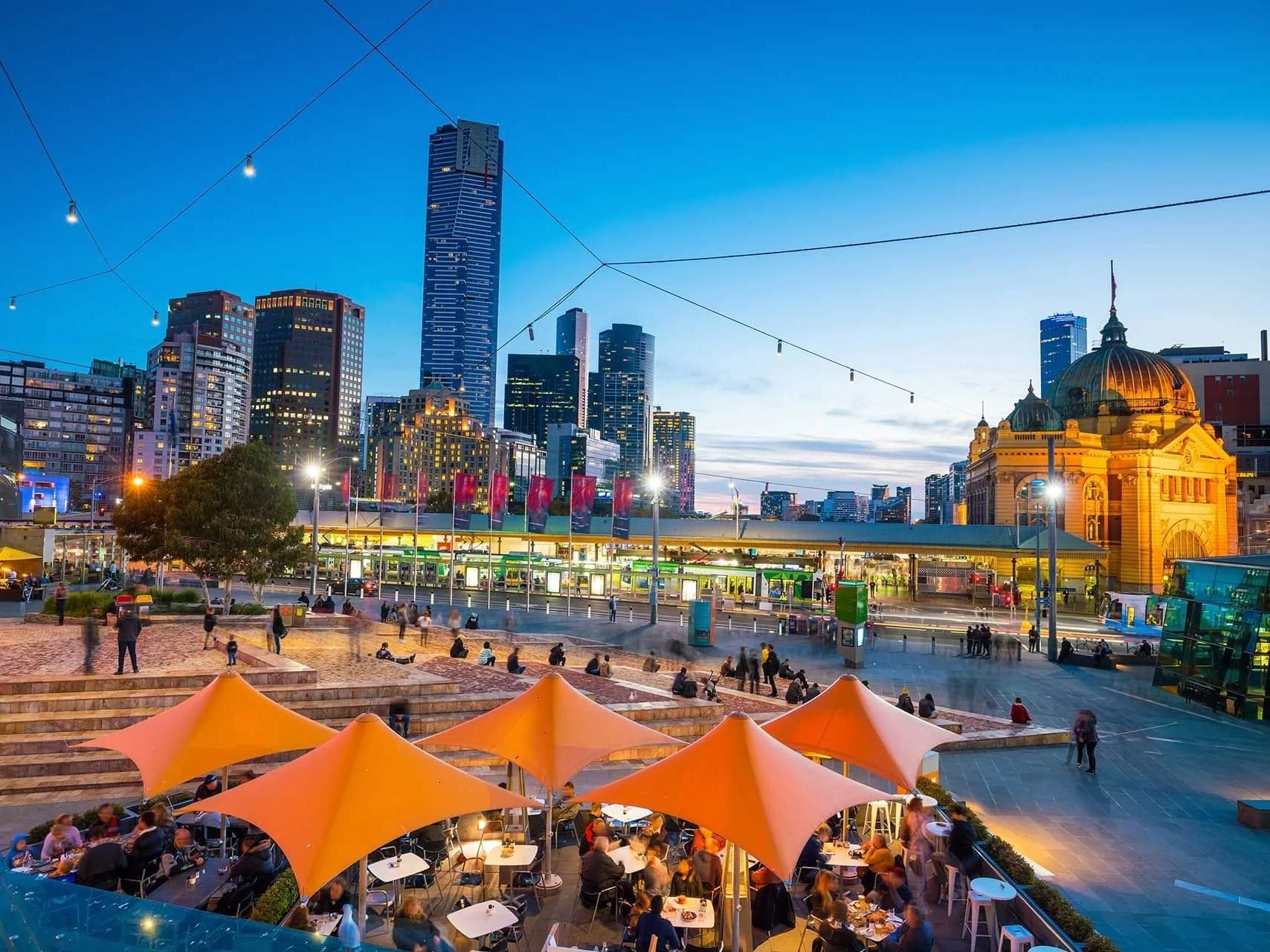
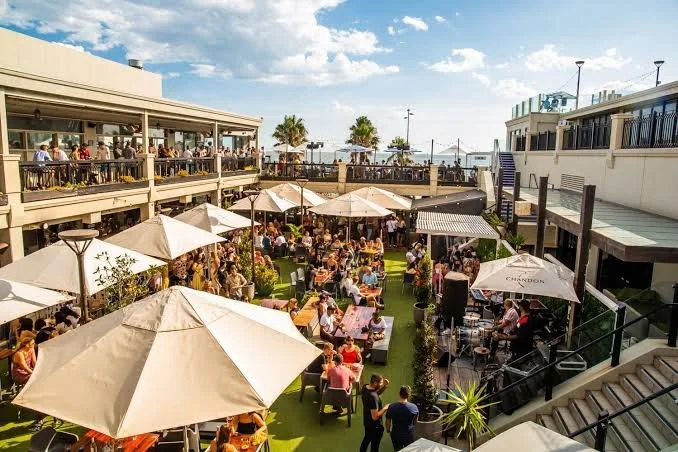
Diners eat under umbrellas by a station in Southbank, South Melbourne, Australia

Southbank & South Melbourne

Elevated Dining Experiences

Southbank trades hidden laneways for skyline views and polished dining rooms.

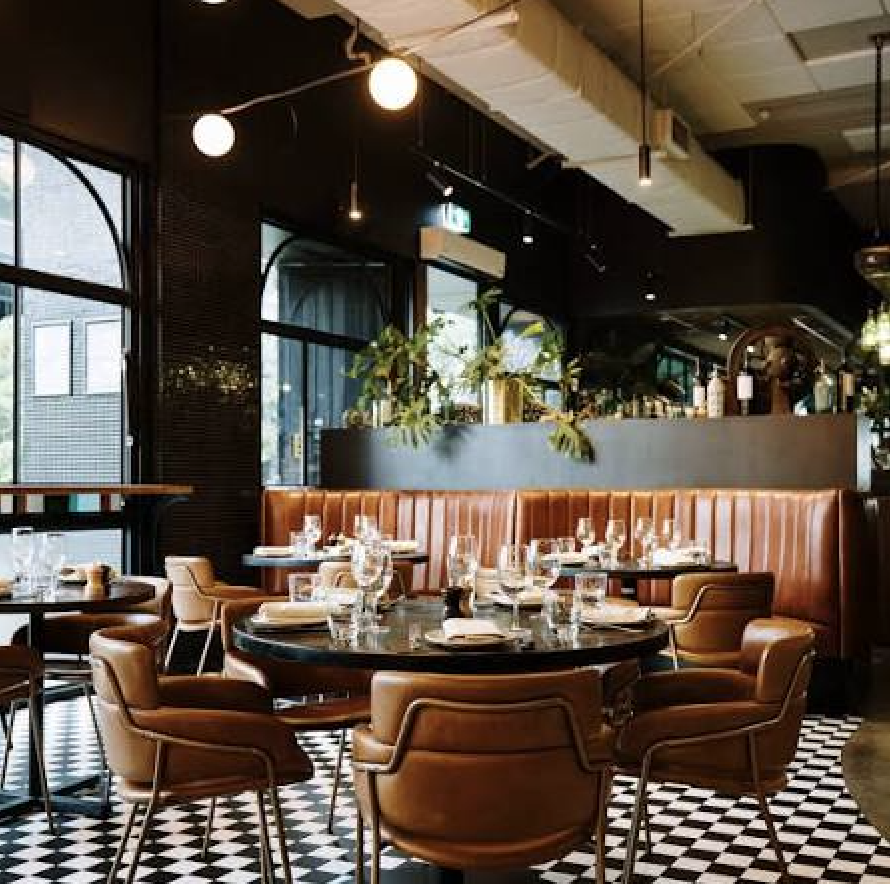
Black and white checkered floor and leather seating at Asado in Melbourne, Australia

Asado specializes in Argentine-inspired cooking over open fire and delivers one of the area’s better special occasion meals. Reservations are essential on weekends, though earlier evening bookings tend to be easier to secure.

Nearby, the Deck Southbank offers a more casual riverside alternative. It’s a great lunch stop or early dinner if you’d like to enjoy the waterfront before the nightlife crowds arrive.

Southbank rewards travelers who plan ahead — but once you’re seated with a river view, you’ll be glad you did.

A wide street in Richmond,  Melbourne, Australia

Richmond

Asian Fusion & Local Favorites

Richmond rarely slows down. Anchored by Swan Street and Victoria Street, it’s one of Melbourne’s busiest dining neighborhoods, filled with locals, sports fans and visitors all chasing excellent food.

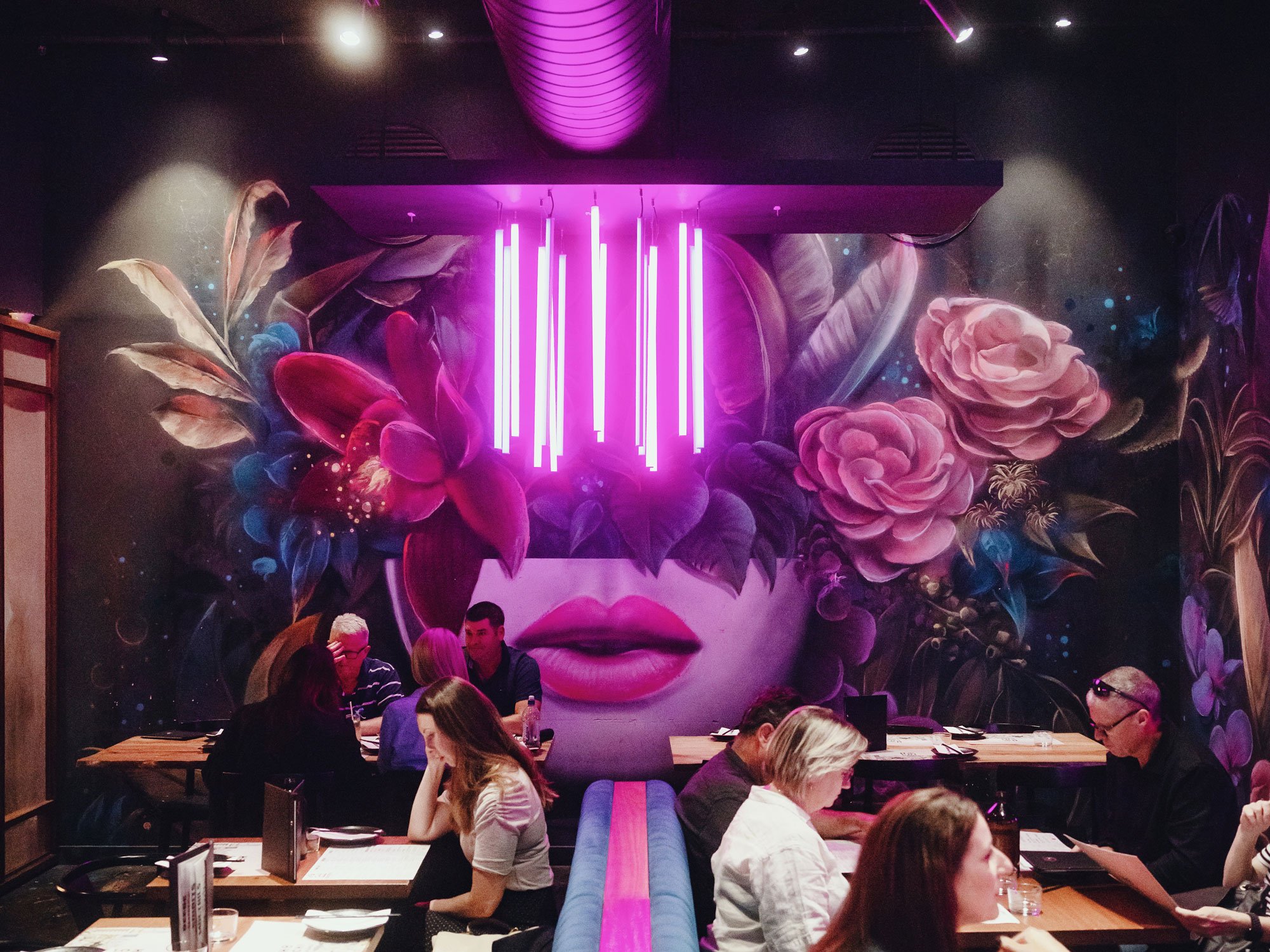
Pink neon lights hang from the ceiling by a cool mural with a woman's head filled with flowers at Hochi Mama in Melbourne, Australia

Hochi Mama remains one of Richmond’s standout modern Asian restaurants. Mid-priced, energetic and almost always busy, it’s exactly the kind of place worth joining the line for.

For something quieter, Tartine delivers elegant French-inspired cuisine in a surprisingly serene dining room. It’s better suited to lingering over dinner than grabbing a quick lunch, and weekday reservations offer the calmest experience.

Richmond has a habit of turning dinner into drinks without anyone really planning for it.

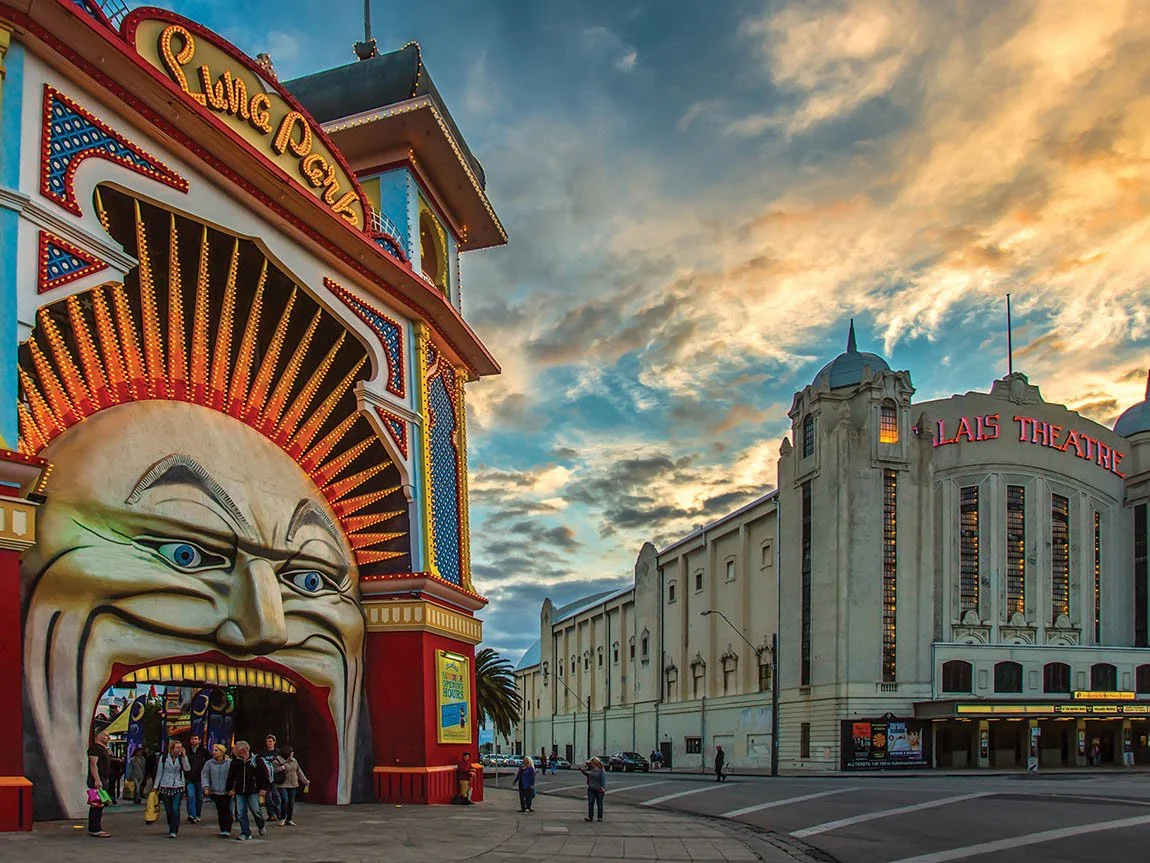
People exit through a giant mouth at Luna Park, next to a theater in St Kilda, Melbourne, Australia

St Kilda

Coastal Dining & Weekend Eats

St Kilda moves at a different pace altogether. The beach encourages long brunches, lazy afternoons and dinners that naturally drift into sunset walks along the waterfront.

Diners eat under umbrellas at Republica St Kilda Beach

Republica St Kilda Beach pairs sweeping water views with one of the neighborhood’s liveliest dining scenes. An early dinner lets you enjoy the atmosphere before weekend crowds arrive.

The Lady of St Kilda offers a more relaxed alternative with an excellent brunch menu and approachable prices. Weekdays provide the best chance to settle in without feeling rushed.

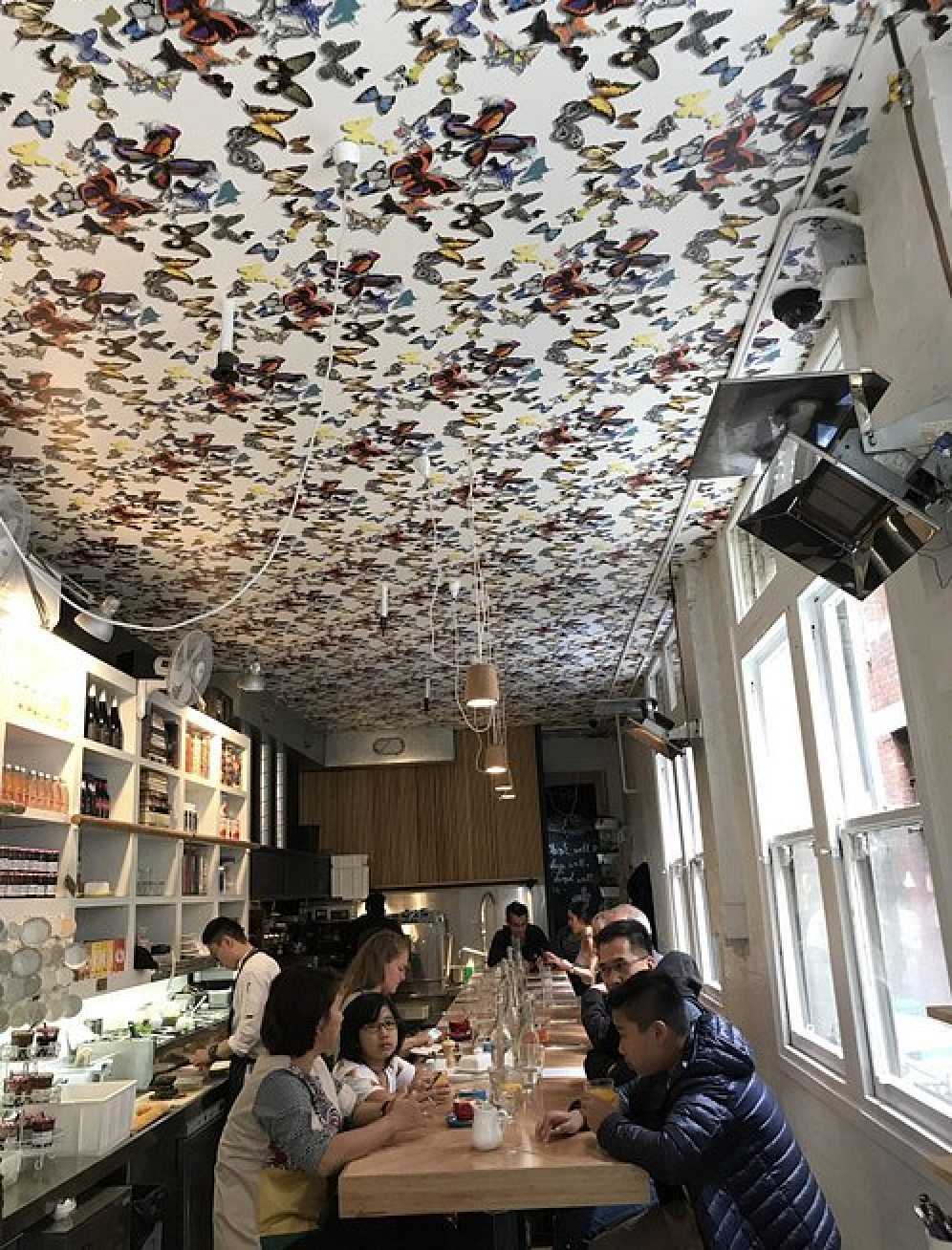
People sit at tables under a ceiling covered with butterfly stickers at Hardware Société in Melbourne, Australia

Hardware Société

Coffee Culture: Where Melbourne Does It Best

If someone tells you Melbourne takes coffee seriously, they’re underselling it.

Coffee here isn’t simply a morning ritual — it’s civic identity.

The remarkable thing isn’t that you’ll find outstanding cafés. It’s that the standard is so consistently high that even an unassuming neighborhood coffeeshop has a decent chance of serving one of the better flat whites you’ve had all year.

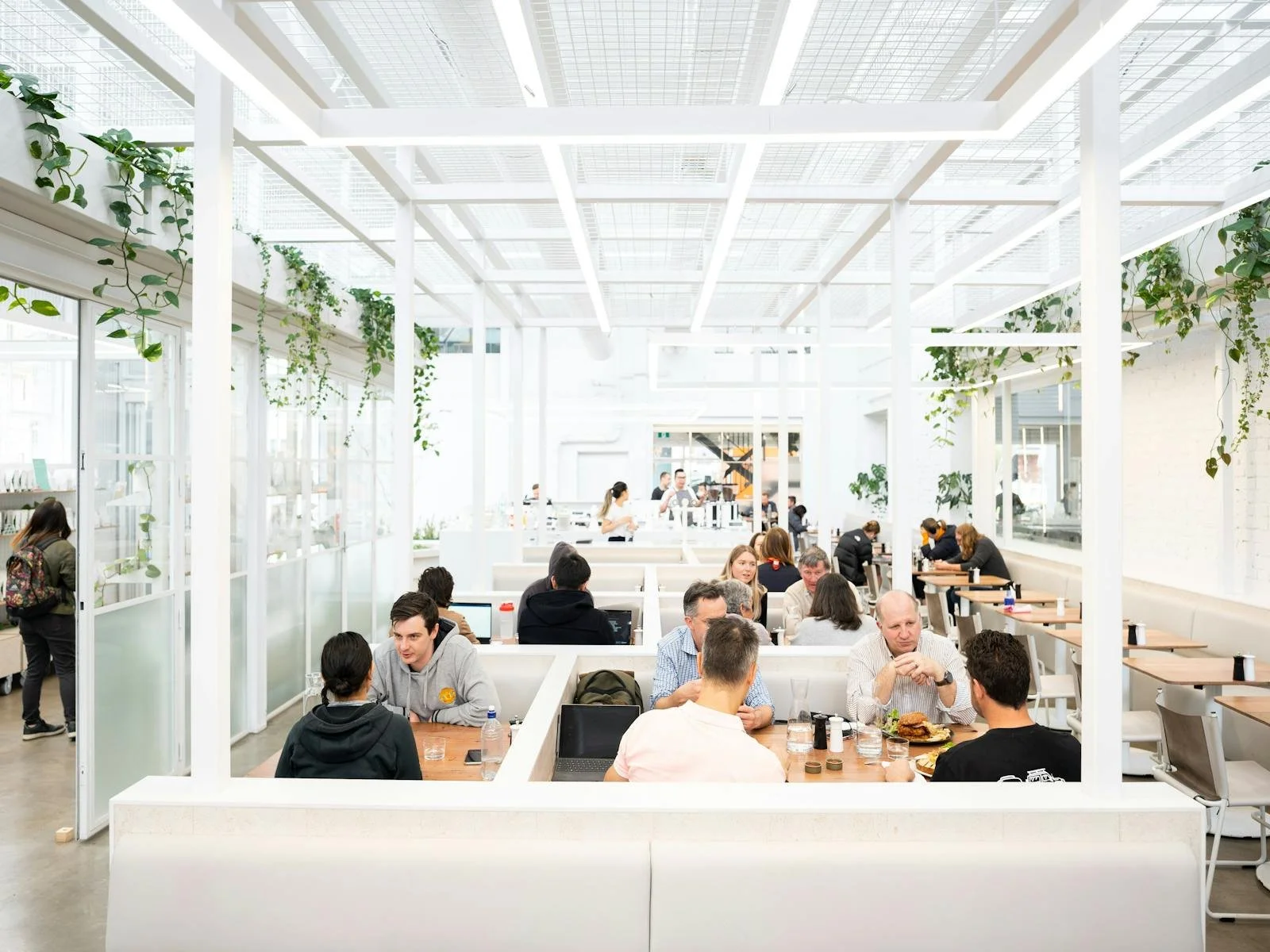
White modern designed booths filled with patrons at Industry Beans in Melbourne, Australia

Industry Beans

Hardware Société continues to be one of the CBD’s premier brunch destinations, while Industry Beans helped define Melbourne’s third-wave coffee movement with beautifully designed spaces and consistently excellent coffee. Prices are slightly higher than a standard café, yet the combination of atmosphere, presentation, and consistency means it rarely feels like you’re overpaying — some places feel expensive even when they’re not, and this is one of them.

Beyond the headline names, neighborhood cafés throughout Carlton, Richmond and South Melbourne quietly uphold the city’s reputation every single day. Ask a local for their favorite coffeeshop and you'll probably get five different answers — and they’ll all be worth trying.

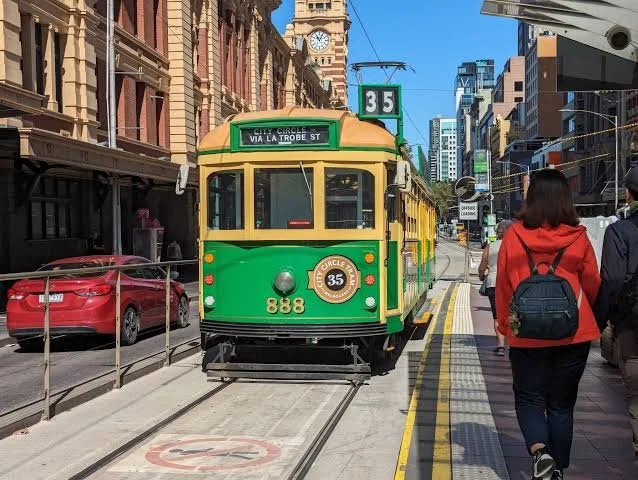
A woman walks along the sidewalk in Melbourne, Australia, as a green historic tram approaches

Getting Around Melbourne’s Food Scene Efficiently

Melbourne’s restaurant neighborhoods function almost like individual villages connected by trams.

The tram network makes crossing the CBD remarkably easy, while rideshares become useful later in the evening or when you’re hopping between farther-flung neighborhoods.

Many of the city’s best dining districts — including Fitzroy, Carlton and the CBD — are compact enough to explore entirely on foot. Focus on one neighborhood at a time rather than zigzagging across the city, and you’ll spend more time eating and less time commuting.

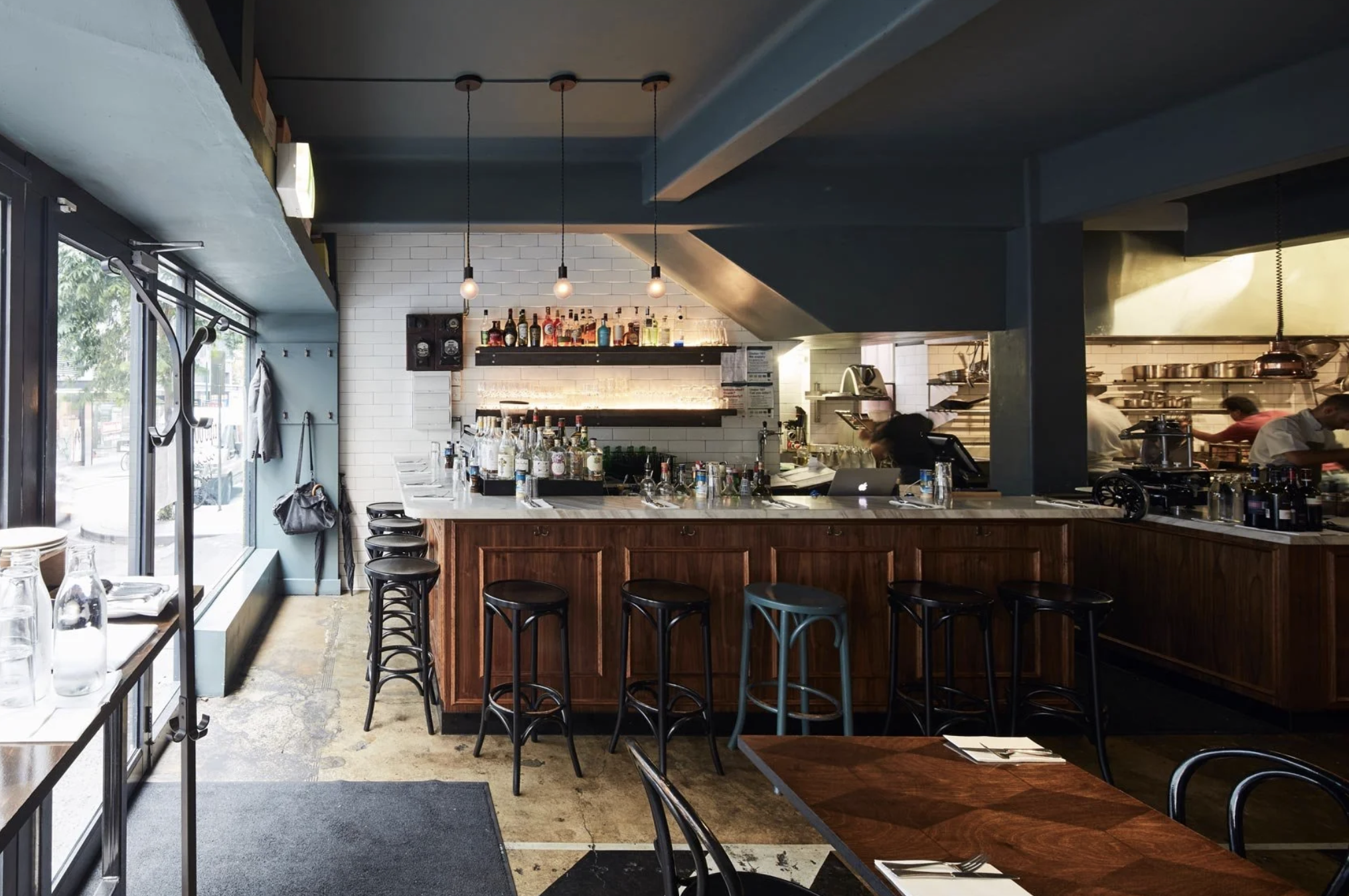
The interior of Tipo 00 in  Melbourne, Australia, including the bar

Tipo 00

Why Melbourne Is One of Australia’s Ultimate Food Destinations

Some of Melbourne’s most memorable restaurants aren’t places you stumble upon. They’re the ones you deliberately plan your trip around.

Attica in Ripponlea sits firmly in that category. Frequently regarded as one of Australia’s finest restaurants, it’s a true destination dining experience. Reservations require planning, but for many visitors it’s the meal they’ll remember long after they’ve flown home.

Tipo 00 remains one of the CBD’s hottest reservations, serving exceptional pasta in an intimate dining room, where early lunch or dinner bookings offer the best chance of snagging a table.

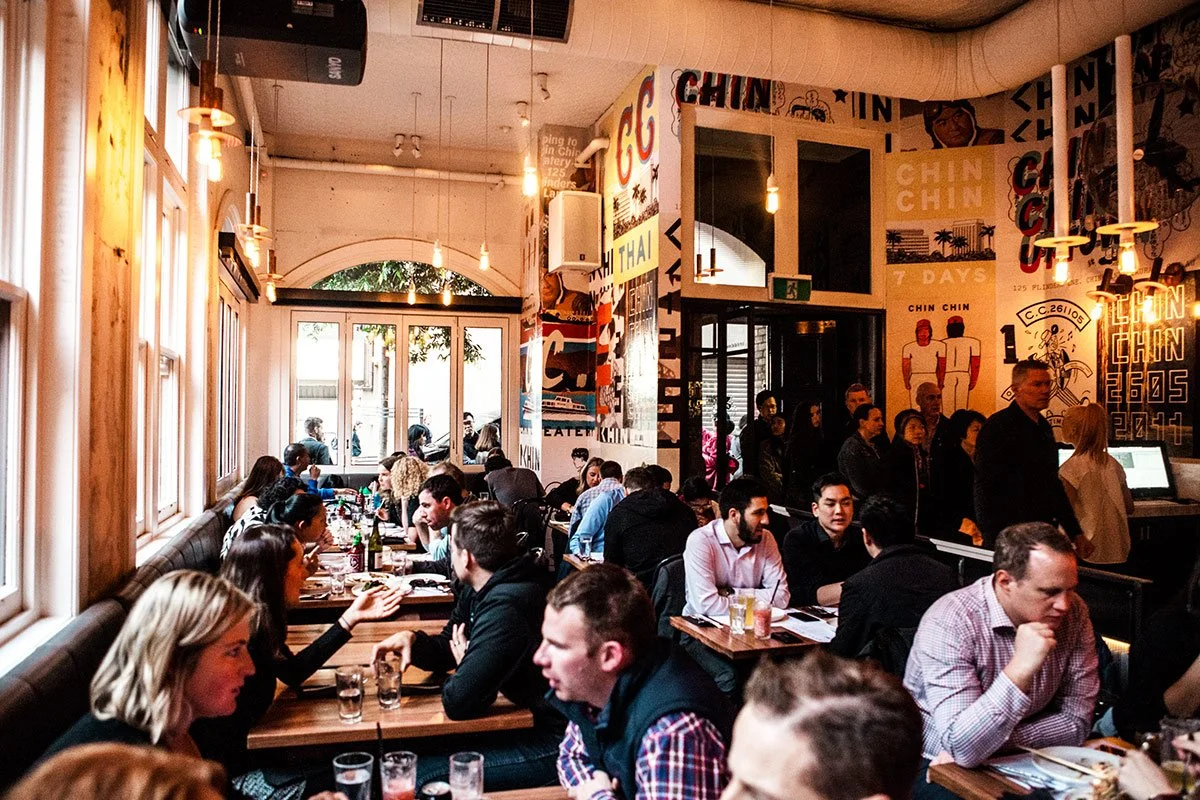
Meanwhile, Chin Chin continues to embody modern Melbourne dining: bold flavors, lively crowds and queues that somehow never seem to discourage anyone. The line is simply considered part of the experience.

These are the restaurants where anticipation becomes part of the meal itself.

Diners fill up the tables in Chin Chin in Melbourne, Australia

Chin Chin

Plan Your Melbourne Foodie Trip With Confidence

The best meal you have in Melbourne probably won’t be the one you’ve spent months researching.

It’ll be the tiny café you wandered into after taking a wrong turn. The neighborhood wine bar someone recommended over lunch. The restaurant you almost skipped because the line looked intimidating.

Do your homework. Book the places that matter. Leave room for detours.

Melbourne is exceptionally good at rewarding them. –Rob Hanson


Before you book, make sure you’ve picked the right neighborhood. Our guide to the best luxury hotels in Melbourne for every type of traveler can help you find a stay that matches your travel style, whether you’re going for food, art or a little bit of everything.

Why You Should Explore Waiheke Island in New Zealand

Planning a trip to Waiheke Island from Auckland? Discover wineries, beaches, food, day trip tips and the best time to visit New Zealand’s most relaxing island escape.

Some destinations demand spreadsheets. Waiheke Island demands a deep breath.

Just across the water from Auckland in the Hauraki Gulf, this small New Zealand island manages the rare trick of feeling both convenient and completely removed from real life. You step off the ferry expecting a pleasant day trip and instead encounter a lifestyle — slower conversations, longer lunches, and the creeping realization that you’ve checked the time exactly once since arriving.

Waiheke isn’t dramatic in a bucket-list way. It doesn’t overwhelm you with monuments or itineraries. It simply stacks together coastal scenery, good wine, excellent food and a creative, sun-washed atmosphere until your nervous system quietly recalibrates.

If you’re planning a trip to New Zealand, this is the place where you stop trying to see everything and finally just exist somewhere.

Where Is Waiheke Island?

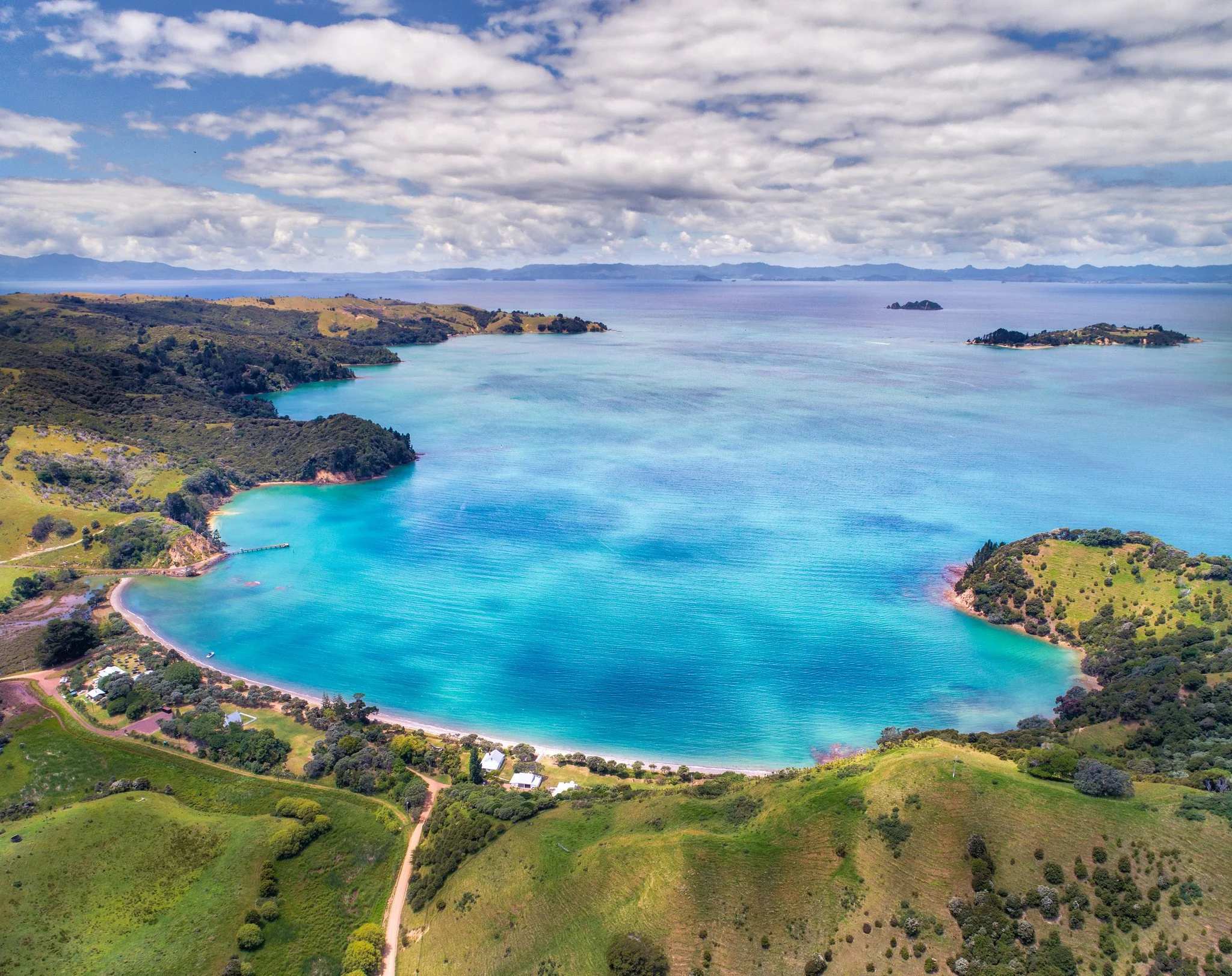
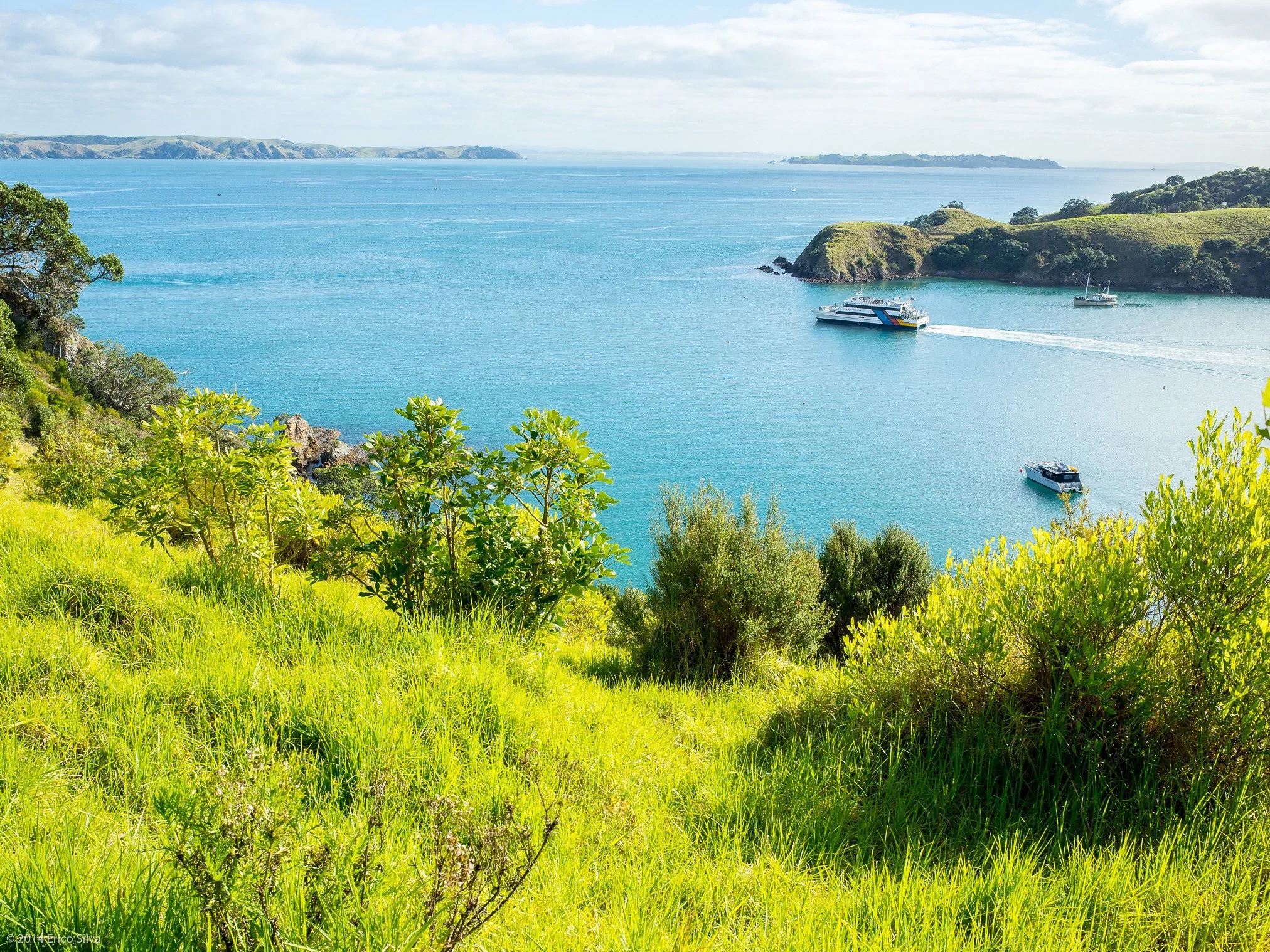
Waiheke Island sits about 11 miles (18 kilometers) off Auckland’s North Island (Te Ika-a-Māui), making it one of the easiest escapes in Aotearoa, the Māori name for New Zealand, which translates to “Land of the Long White Cloud.”

Ferries run regularly from downtown Auckland and take roughly 40 minutes — shorter than many airport commutes, yet psychologically far enough to convince your brain you’ve gone on holiday.

Once you arrive, getting around is simple. Local buses connect villages, beaches and vineyards, and taxis are easy to find. But the best way to get around is to hire a vehicle from a reliable car rental Waiheke Island service so you can roam at your own pace — which is very much the point here.

The Best Things to Do on Waiheke Island

Waiheke doesn’t overwhelm you with attractions; it spreads them out so the day unfolds naturally. A beach leads to a winery, which leads to a long lunch, which leads to “one last stop” that becomes sunset.

1. Wineries and Wine Tours on Waiheke Island

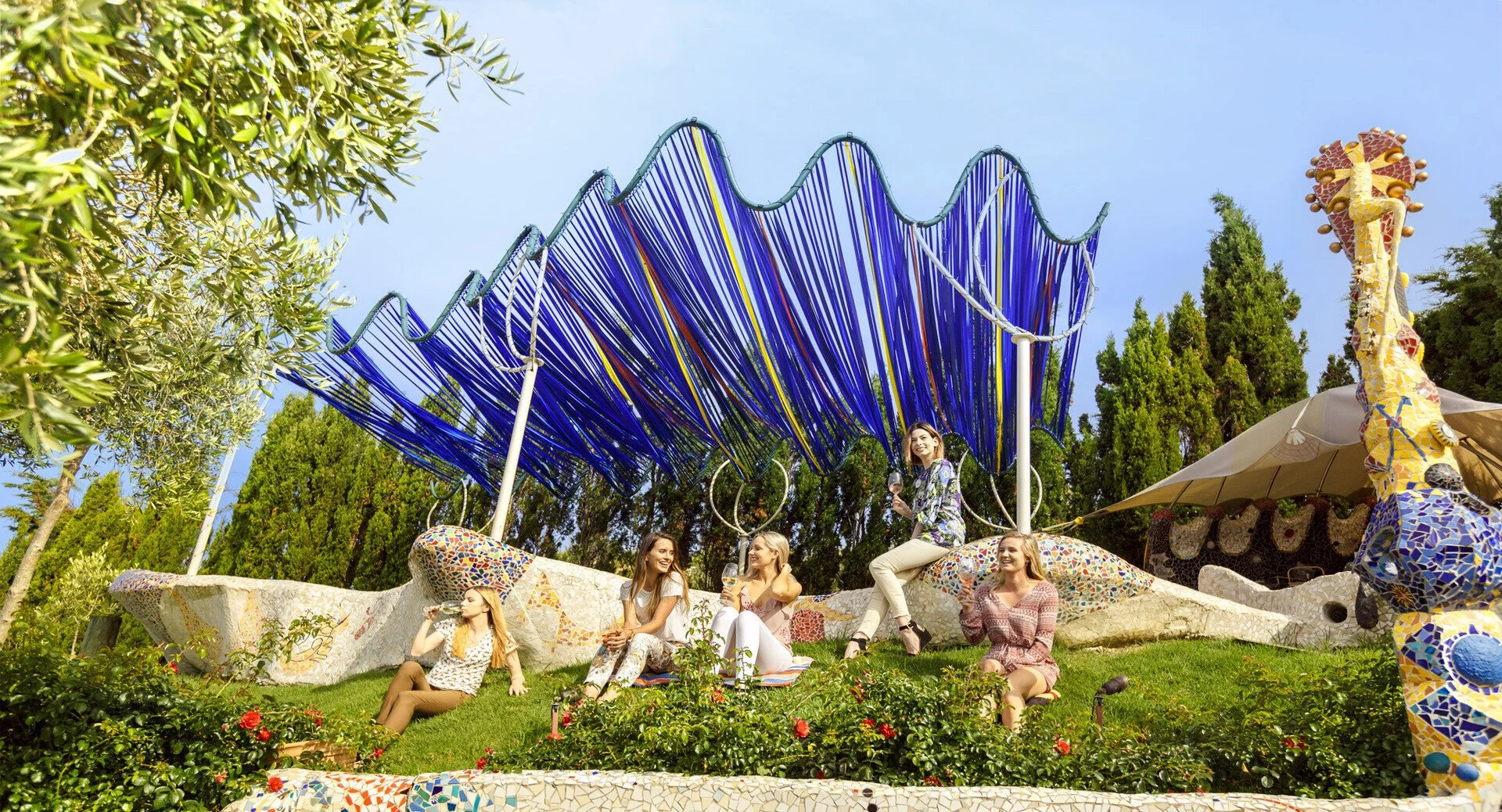
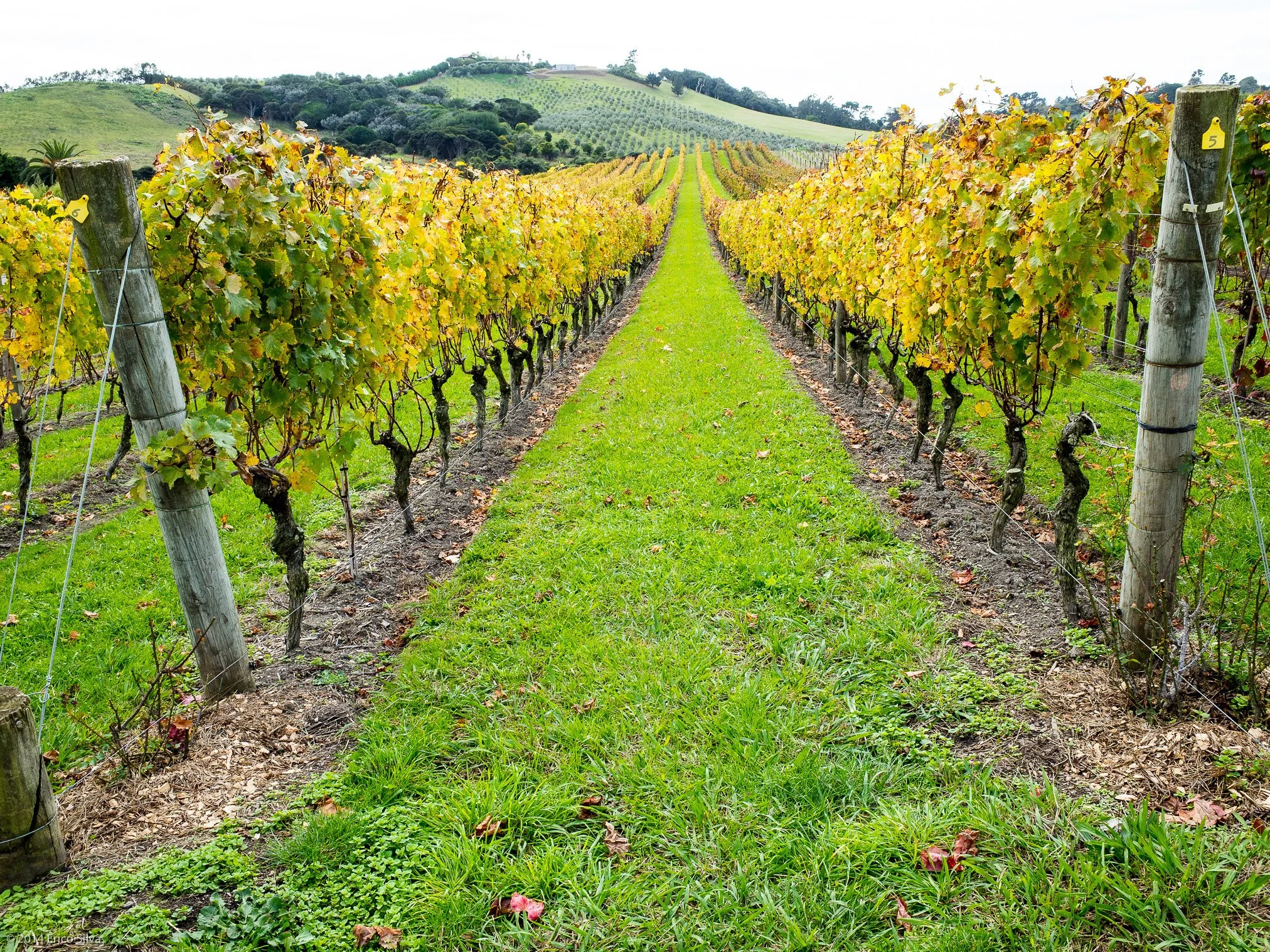
Wine is Waiheke’s unofficial language. With more than 30 vineyards, the island specializes in Bordeaux-style reds along with Syrah and Chardonnay shaped by maritime air and mineral-rich soil.

Cable Bay and Stonyridge are classics for a reason — tastings come with sweeping views, relaxed conversations and lunches that quietly extend into afternoon.

The goal here isn’t to rush through tastings. It’s to sit, linger and accept that plans have been gently cancelled by a glass of something local.

2. Waiheke Island Beaches

Waiheke’s beaches are less about spectacle and more about usability — the kind you actually spend hours on.

  • Oneroa Beach: central, scenic and walkable to cafés and shops

  • Onetangi Beach: wide, sandy and ideal for a long swim
    Palm Beach: quieter and residential

  • Enclosure Bay: sheltered and often blissfully empty

You’ll notice a pattern: Nobody seems in a hurry to leave.

3. Food on Waiheke Island Worth Planning Around

Food here leans seasonal, local and coastal: seafood, produce and menus that pair naturally with nearby vineyards.

Ki Māha Restaurant sits along Onetangi Beach and fully commits to the elegant seaside-dining fantasy. Meanwhile, Casita Miro offers relaxed tapas overlooking vines — the sort of place where lunch quietly becomes late afternoon.

Waiheke doesn’t try to be a food capital. It simply cooks extremely well in beautiful places.

4. Art, History and Small Discoveries on Waiheke Island

Beyond wine and sand, Waiheke has an artsy undercurrent, with galleries and studios scattered across the island reflecting a creative local community.

History also makes an appearance at the Stony Batter WWII tunnels and gun emplacements, surprisingly dramatic against peaceful coastal scenery.

And if you’re there on a Saturday, the Waiheke Ostend Market (which runs 8 a.m. to 1 p.m.) is perfect for wandering or picking up produce, crafts and the unofficial sport of buying snacks you absolutely don’t need.

Is Waiheke Island Worth a Day Trip from Auckland?

Yes — especially if you catch an early ferry. You can swim, visit a vineyard and be back in the city by evening.

But Waiheke improves exponentially with time. Stay overnight, and the island shifts from excursion to atmosphere. Day trippers leave, dinners stretch longer, and the entire place exhales.

Who Will Love Waiheke Island?

Almost everyone, but especially:

  • Couples wanting relaxed romance rather than big-city energy

  • Food and wine travelers

  • Solo travelers seeking safe, low-stress exploration

  • Families with older kids who enjoy beaches and outdoors

  • Anyone who secretly wants a vacation that doesn’t feel scheduled

Best Time to Visit Waiheke Island

There’s no bad season — only different moods.

Summer (December to February): warm swimming weather and lively atmosphere

Spring and Autumn (September to November; March to May): ideal for hiking and wine tasting, with fewer crowds

Winter (June to August): quieter, cheaper accommodation and cozy vineyard lunches

In other words: Pick your preferred vibe, not just the weather.

The Real Reason to Visit Waiheke Island

Waiheke Island isn’t about ticking boxes. It’s about removing them.

You arrive planning a day trip. You leave wondering why life isn’t always structured around ferries, vineyards and ocean air. And that — more than any specific attraction — is why the island works.

Some destinations entertain you.

Waiheke quietly convinces you to slow down. –Lucy Mitchell

Paws and Poke: 4 Dog-Friendly Restaurants in Hawaii You’ll Love

Sip, snack and stay paw-sitive! From craft brews to oceanfront views, these 4 dog-friendly spots in Hawaii — Brew’d, Oli’s, Lava Java and Appetito — welcome you and your pooch.

A woman with a flower behind her ear and a blue and white sundress eats on a waterfront patio in Hawaii at sunset

Picture this: You and your pup, paws in the sand, the salty breeze in your hair (or fur), soaking up that island magic. Hawaii isn’t just a paradise for sun-seekers — it’s a dog’s dream, too. From sandy beaches where tails wag freely to trails that welcome four-legged explorers, the Aloha State rolls out the red carpet for those who travel with pets.

And when it’s time to refuel? You don’t have to leave your furry best friend behind. Hawaii is home to plenty of dog-friendly restaurants where you can sip, snack and savor the moment — pup in tow. Whether you’re after craft beer, oceanfront coffee or a pizza-and-wine night, these four spots make dining with dogs in paradise a breeze. Bone appétit!

A man with beard and tattoo sleeves drinks a beer at a brew pub, his pomeranian on the table with him

1. Brew'd Craft Pub

📍 3441 Waialae Avenue
Suite A 
Honolulu, Hawaii
USA
808-732-2337

Looking for a paws-itively great pub experience in Hawaii? Brew’d Craft Pub is the ulti-mutt spot for beer lovers and their four-legged besties. With over 20 taps and more than 30 different beers, your toughest decision will be what to sip first.

Not a beer person? No worries — this spot has something for every taste, including local ciders, seltzers and a signature cocktail menu that’ll have you wagging your tail.

But let’s get one thing straight — this isn’t just a watering hole. Brew’d has a menu that goes beyond basic pub grub. Sink your teeth into fish tacos, prime rib or classic fish & chips. Veggie lovers can dig into the Szechwan cauliflower, and if you’re after a sidekick to your meal, the smoked brisket and spicy chicken sliders are top dog.

Brew’d doesn’t just tolerate pups — it rolls out the red carpet for them. The pub’s owner makes it clear on social media (and in real life): dogs are welcome! The staff is always ready to serve you and your furry plus-one, and with a spacious outdoor seating area—complete with shade and a short fence to keep things cozy — you and your pup can kick back in style.

So, if you’re sniffing around for a laid-back pub with great drinks, tasty bites, and a dog-friendly attitude, Brew’d Craft Pub is the place to be. Cheers, and give your good boy (or girl) a treat from us! 

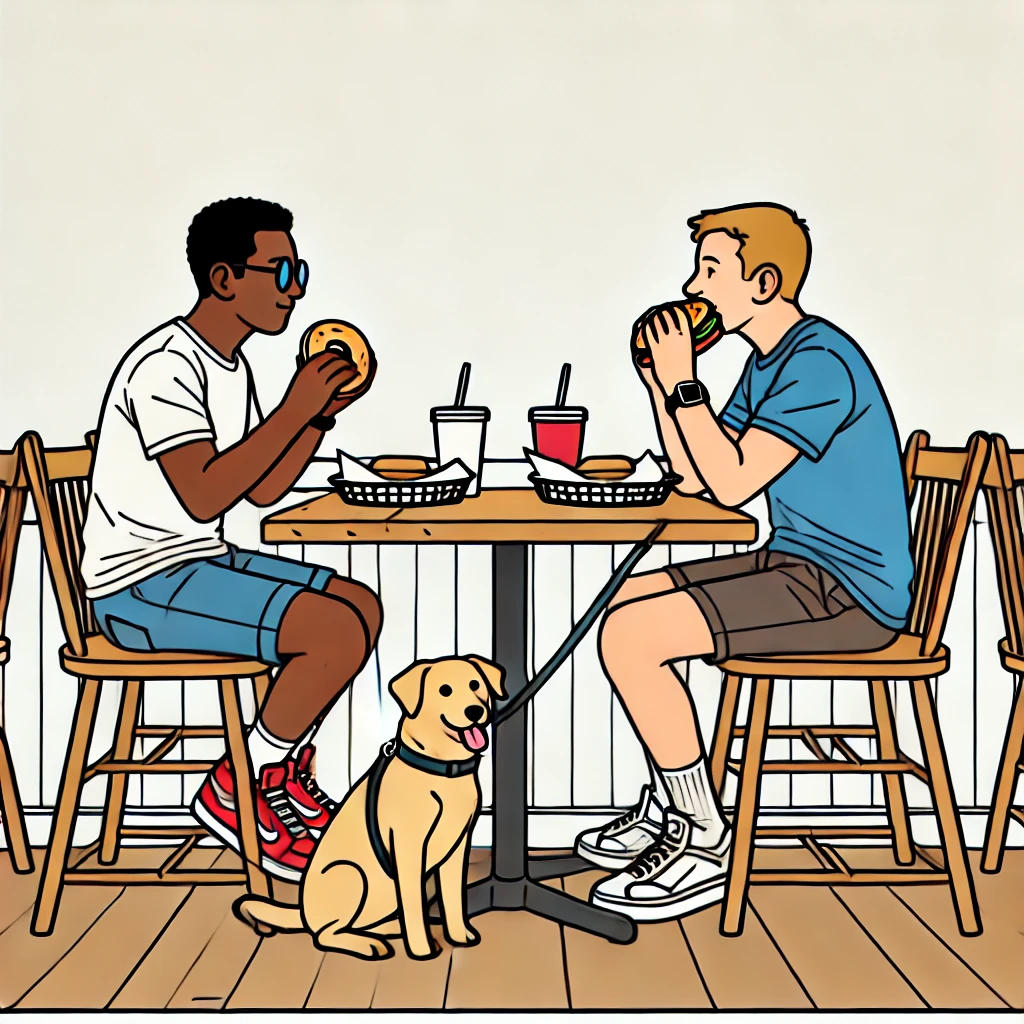
Two men eat at a white-walled cafe with their dog in Hawaii

2. Oli’s Kitchen

📍 1009 University Avenue
Suite MP2 
Honolulu, Hawaii
USA
808-387-0457

Looking for a spot where you and your pup can dig in without any side-eye? Oli’s Kitchen, a locally owned gem that opened in 2024, is already fetching rave reviews. Tucked near Puck Alley in the heart of Honolulu, this laidback eatery serves up local flavors that’ll have both visitors and locals drooling (hopefully just metaphorically).  

Oli’s is all about fresh, island-sourced ingredients, ensuring every bite brings a real taste of Hawaii. The menu? A paws-itively delicious lineup featuring crowd favorites like breakfast burritos and the peanut butter banana stuffed French toast — because why should Elvis have all the fun?  

The bright, airy interior means you won’t feel like you’re playing a game of musical chairs with your fellow diners. And yes, dogs are welcome — as long as they’re on a leash. With plenty of room to stretch out, your pup won’t have to squeeze under the table like the sneaky little snack thief they probably are.  

Bonus? It’s BYOB all day, every day. Just note that a cork and ice fee may apply — because even paradise comes with fine print.  

Regulars keep barking about Oli’s friendly service, relaxed vibe, and refreshingly low noise levels. Whether you’re fueling up for an adventure or winding down after a day of tail-wagging fun, this is one Honolulu hotspot you’ll want to sit and stay at.  

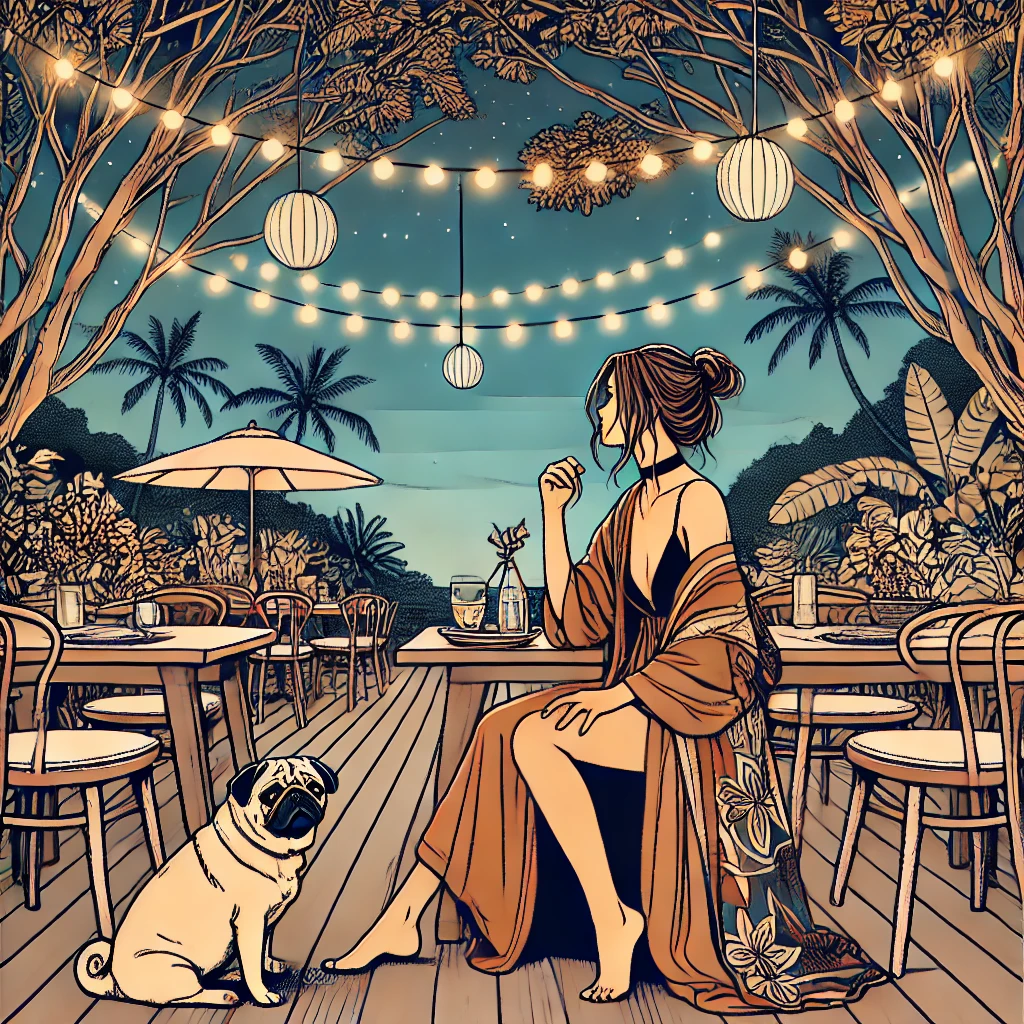
A barefoot woman in a flowing coverup sits with her pug in the evening on a restaurant patio, with lights strung overhead

3. Island Lava Java

📍 75-5801 Ali'i Drive
Building 1 
Kailua, Hawaii
USA
808-300-5672

If you’re looking for a meal with a view and a seat for your doggie, Island Lava Java in Kailua-Kona is a great choice. This family-owned, dog-friendly hotspot has built a reputation on fresh, locally sourced ingredients and a warm, welcoming atmosphere.  

Start your day with their 100% estate-grown Kona coffee, paired with house-baked pastries and desserts so fresh, even your pup might be tempted to beg. The menu is packed with Hawaiian goodness, featuring free-range Big Island chicken, grass-fed beef and organic goat cheese, all sourced directly from local farmers.  

The real treat? Dining on the breezy outdoor patio with its stunning ocean views. Each table comes with an umbrella for shade, so you and your four-legged friend can kick back in comfort. The staff here are paws-itively accommodating — don’t be surprised if they bring out a bowl of water for your dog before you even ask.  

Whether you’re fueling up for an adventure or just looking to soak in the ocean air with your best friend by your side, Island Lava Java is a must-visit for coffee lovers, foodies and dog devotees alike.  

Two chic women drink red wine and eat pizza with their chow chow at a restaurant in Hawaii

4. Appetito Craft Pizza & Wine Bar

📍 150 Kaiulani Avenue
Honolulu, Hawaii
USA
808-922-1150

Looking for a stylish night out without leaving your furry best friend behind? Appetito, located on the first floor of the Outrigger Ohana East Hotel on Kaiulani Avenue, serves up elevated Italian cuisine in a chic, laidback setting — with a dog-friendly twist.  

The outdoor seating area is as impressive as the menu, making it the perfect spot for a romantic dinner, a classy night out, or just treating yourself to some top-notch pizza and pasta — all with your four-legged dining companion by your side.  

Despite its casual vibe, Appetito doesn’t skimp on elegance. From the attentive service to the beautifully plated dishes, everything here is served with a touch of sophistication. The menu is stacked with crave-worthy options like Margherita pizza, steak frites with garlic sauce, spicy meatballs and Italian salami pizza — each as delicious as the next.  

And if you think an upscale spot like this wouldn’t do happy hour, think again. Appetito offers a generous three-hour happy hour from 3 p.m. to 6 p.m., so you can sip on wines, cocktails and more without breaking the bank.  

With free Wi-Fi, a welcoming atmosphere for kids and dogs alike, and the option to reserve your table ahead of time, Appetito is proof that you can have fine dining, fantastic drinks and a fido-friendly experience — all in one spot.

A man sips a drink on a restaurant patio in Hawaii, with the ocean in the background, palm trees overhead, sun umbrellas and a golden retriever

Paradise for Pups and Their People

Hawaii isn’t just a dream destination for humans — it’s a tail-wagging paradise for dogs, too. With its breezy beaches, scenic trails and dog-friendly patios, the Aloha State makes it easy to explore with your four-legged travel buddy by your side.
Of course, a well-behaved pup makes for an even smoother trip. Many visitors take advantage of Hawaii dog training services to ensure their companions stay confident and well mannered on new adventures. Programs like Sit Means Sit help dogs brush up on their skills, making everything from beach strolls to restaurant patios a breeze. Details available here.

Whether you’re hiking volcanic trails, lounging oceanside or sipping cocktails at a dog-friendly café, Hawaii offers an unforgettable experience for both you and your pooch. After all, the best adventures are the ones you can share. –Taylor Reed

Middle Eastern Food and Culture in NYC

From vibrant festivals to hidden culinary gems, New York City celebrates Middle Eastern heritage with a rich mosaic of food, music and tradition.

People sit at tables in a Middle Eastern cafe in NYC

Walking through New York City can feel like traveling through a world atlas, and nowhere is that more evident than in the way this metropolis serves up Middle Eastern culture. From the spice-laden dishes of Astoria’s bustling streets to the honey-drenched baklava beckoning from Brooklyn bakeries, the city is steeped in rich flavors and stories that stretch across continents. But where should you start, when the options are as expansive as NYC itself?

NYC offers a Middle Eastern experience that goes far beyond food.

It’s a tapestry of culture — woven with spices, songs and stories — that invites you to take a bite, sip or step into its world.
Two women sit at a table in a Middle Eastern cafe, eating falafal wraps and other items

A Middle Eastern Culinary Tour of NYC

Astoria, Queens is the heartbeat of this culinary journey, offering everything from Palestinian musakhan (spiced roast chicken served on flatbread) at Al-Sham to Egyptian koshari (layers of rice, lentils and macaroni, topped with a spicy tomato sauce and fried onions) at Mum Feteer And don’t miss the quirky Kabab Cafe, where Chef Ali’s grilled lamb chops — and his lively personality — are equally unforgettable.

Across the East River, Manhattan’s West Village holds treasures like Mamoun’s Falafel, where tipsy late-night revelers have savored falafel sandwiches since the ’70s (a steal at $3.50). 

Over in Brooklyn, Tanoreen in Bay Ridge turns Palestinian classics into contemporary works of art under the expert hand of Chef Rawia Bishara. Yemen Café & Restaurant is another Brooklyn favorite, offering fragrant mandi rice (spiced, with slow-cooked meat) and warm, crusty flatbread. 

Lines of dancers at an Arab American festival in New York City

Festivals and Events: Celebrating Middle Eastern Heritage Year-Round

Every April, Arab American Heritage Month lights up NYC with events like the Arab American Bazaar in Brooklyn, where the scent of donutlike ka’ak rings fills the air as dabke dancers draw crowds into their rhythmic spell. The New York Arabic Orchestra’s hauntingly beautiful performances bring centuries-old melodies to life, leaving audiences entranced.

Even Broadway nods to this heritage — score Aladdin the musical tickets, and you’ll find yourself exploring how tales like The Arabian Nights have woven themselves into Western culture. With its riot of color and clever wordplay, Aladdin is a vibrant reminder of the Middle East’s influence on global storytelling.

Lanterns hang above a Middle Eastern spice market in NYC

Markets and Meze: Where to Shop for Authentic Ingredients

If cooking is your love language, NYC’s Middle Eastern markets are your playground. Sahadi’s on Atlantic Avenue reigns supreme, with barrels of olives and stacks of Turkish delight ready to inspire your next mezze spread. 

In Manhattan, Kalustyan’s spices up any recipe with saffron from Iran and lentils from Turkey, while Astoria’s Aladdin offers freshly baked pita and tangy shanklish cheese. 

And head to Little Egypt in Queens for halal meats and speciality store items like spicy harissa sauce and molokhia leaves.  

A father and son at a Middle Eastern sweets shot in New York

Shopping at these markets is an adventure. Vendors chat animatedly in Arabic, the air is filled with the warm scent of cardamom, and if you’re lucky, you might leave with a free sample of gooey kanafeh.

Two men have drinks and pastries at a Middle Eastern coffeeshop in NYC

The Coffee Culture: Sipping Traditional Arabic Coffee in NYC

Arabic coffee is a ritual. In NYC, that tradition finds a home in coffeehouses, where emphasis is placed on both the brew and the experience. This is just the opposite of the takeout attitude held by most New Yorkers, who find Arabic coffee requires one to sit, sip and savor it. 

The coffeehouse is a communal space where news is exchanged, arguments are hashed out, and laughter rings in the air. 

Steinway Street in Astoria — Manhattan’s Little Arabia — is lined with cafés like Al Sham, where patrons linger over cardamom-infused brews paired with sticky baklava. 

In Brooklyn, Layla blends modern aesthetics with tradition. Order an Arabic coffee and a basbousa semolina cake, and you might just end up in a spirited conversation with the barista. 

These coffeehouses act as hubs of connection and culture — and perhaps all that caffeine is how New York earned the nickname the City That Never Sleeps.

Men shop at a Middle Eastern market in New York City

From Spices to Stories: Savoring the Soul of NYC’s Middle Eastern Culture 

From the fiery flavors of musakhan to the rich brew of Arabic coffee, NYC offers a Middle Eastern experience that goes far beyond food. It’s a tapestry of culture — woven with spices, songs and stories — that invites you to take a bite, sip or step into its world. 

Whether you’re chasing falafel in the West Village, wandering through a spice market or settling in with a finjan of coffee, you’re experiencing more than just the cuisine. You’re savoring history, community and the vibrant soul of a culture that continues to shape New York City in countless ways. –David Fox

Weird and Wonderful Woodstock, New York

Woodstock unplugged: The site of the 1969 music festival is an artsy, laidback town in the Hudson Valley, where cool shops, great eats and local treasures abound.

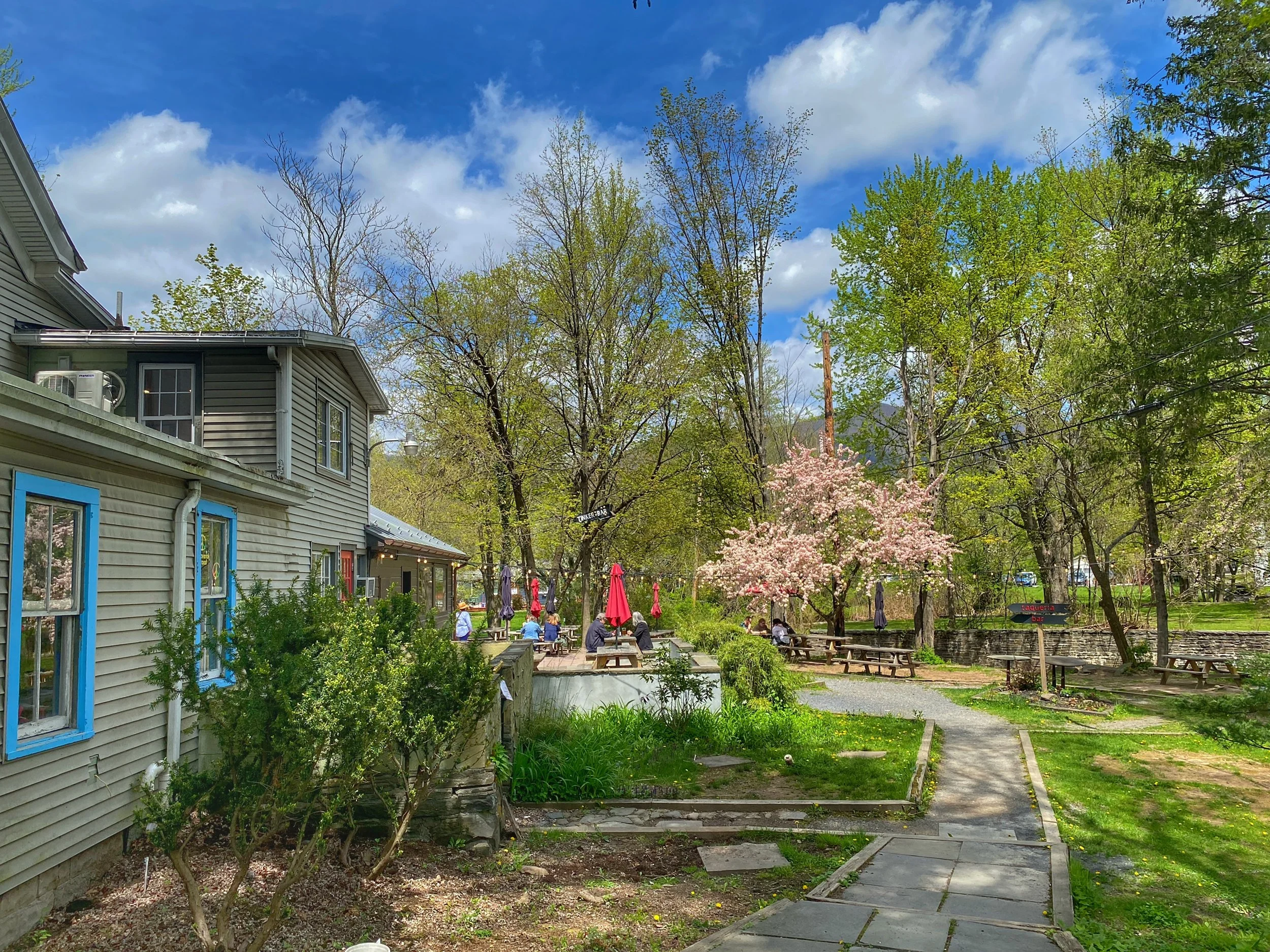
The side of a shop and path leading to the back patio of Tinker Taco in Woodstock, NY

A glimpse of the adorable backyard of Tinker Taco along Tannery Brook in Woodstock, New York

When you hear the name Woodstock, do you picture Snoopy’s little yellow sidekick from the Peanuts comic strip, or do peace-loving hippies, patchouli and that legendary rock and folk music festival held in the summer of 1969 come to mind?

Well, here’s the twist, man: Technically, the historic lovefest didn’t even happen in Woodstock! It actually took place on a 600-acre dairy farm, in the neighboring town of Bethel, about 60 miles southwest. Although it was a success in terms of cultural significance, it was a logistical failure — there wasn’t enough food or enough toilets. But according to Wally, they were high, they were hippies, and they couldn’t have cared less.

Despite this misconception, I imagine Woodstock had a better ring to it than Bethel, and the name stuck. 

Three men stand on Tannery Brook Bridge in Woodstock, New York

Papa, Wally and Duke on Tannery Brook Bridge, enjoying their time in Woodstock, New York

Woodstock’s laidback, artistic spirit continues to evolve and thrive, and this small town, nestled in the foothills of the Catskill Mountains along the Hudson River, turned out to be exactly the vibe we were looking for during our four-day Hudson Valley weekend.

Read on for our list of our favorite spots along Mill Hill Road and Tinker Street in the charming burg of Woodstock, including a couple of recommendations on where to stop and refuel along the way. 

Tinker Street and Mill Hill Road

The main thoroughfares of Woodstock are Tinker Street and Mill Road, a walkable stretch lined with locally owned shops, restaurants, galleries and other businesses catering to residents and visitors alike. 

The lawn, barn and seating at The Mud Club in Woodstock, NY

The Mud Club 

We started our day at the Mud Club (a nod to the famously muddy aforementioned festival in Bethel). We headed straight to the hulking brown barn to order four of their Montreal-style bagels from the service window. 

Three men stand in front of the signs on the barn at the takeout window of The Mud Club in Woodstock, NY

Established in 2017 by brothers Nicolas and Gray Ballinger, along with their father Doug, their irregularly shaped hand-rolled bagels are briefly poached in honey-sweetened water and baked in a wood-fired oven, resulting in a bagel with a crisp exterior and a denser chew than a New York-style bagel. 

A man and woman ride a large trike at the Mud Club, Woodstock, NY

The Mud Club vibe? Think rustic yet quirky mountain lodge with a side of artisanal coffee. Their rotating selection of single-origin beans, sourced from regions like Ethiopia, Kenya, Peru and Honduras, expertly roasted by Brooklyn-based Mud Club, are sure to satisfy even the most discerning caffeine connoisseur.

The Mud Club
43 Mill Hill Road

Exterior of Bread Alone Bakery in Woodstock, NY

Bread Alone Bakery

You know what they say: Man cannot live on bread alone. But if we did — we’d be happy getting our sustenance at Bread Alone. Even though we had already eaten bagels at Mud Club, we couldn’t resist stopping at this local bakery. What started as an entrepreneurial endeavor by artisan baker and educator Daniel Leader in the early ’80s, with loaves being sold out of the trunk of the family station wagon, has grown into a trailblazing bakery with a big following, with additional locations in Boiceville and Rhinebeck. 

This is the place to find an assortment of breads made with certified organic grains milled in Halifax, Pennsylvania, along with a pastry counter filled with sweet and savory treats. I purchased a chocolate caramel cake to enjoy later for Wally’s birthday, and trust me — it was a winner!

Bread Alone Bakery
22 Mill Hill Road

Exterior of Candlestock, with small tree, red mushrooms and white picket fence with fake flames in Woodstock, NY

Candlestock

Beyond the white picket fence with yellow flame-topped posts at 16 Mill Hill Road is Candlestock, a one-of-a-kind family-owned business offering a wide selection of beeswax, drip and handmade candles in every shape, size and color imaginable. 

Drip Mountain, a large creation made of dripped candle wax under black light at Candlestock in Woodstock, NY

Wally and I purchased a few hand-dipped tapers and were in awe of the impressive, rainbow-colored “Drip Mountain,” a towering 8-foot-high by 3-foot-wide wax creation dramatically lit by blacklight that has been steadily growing since 1969. 

Candlestock
16 Mill Hill Road

Exterior of The Golden Notebook in Woodstock, NY, with books in the front windows

The Golden Notebook 

This small but impressive independently owned bookshop, named after the original owner’s favorite Doris Lessing novel, has been a local staple for nearly five decades. Among the shelves and tables, you’ll find a mix of popular and rare titles spanning both fiction and nonfiction, as well as a selection of signed books and graphic novels by acclaimed author Neil Gaiman. His writing often features darkly whimsical themes, complex characters and richly imagined worlds.

A section at the front of the shop is dedicated to local history and the surrounding Hudson Valley, with a selection that highlights the region’s storied past. 

Whether you’re looking for books for adults or children, you’ll easily find your next read among the thoughtfully curated selections on display.

The Golden Notebook
29 Tinker Street

Timbuktu 

You’ve probably heard or even uttered the phrase, “from here to Timbuktu” to describe a faraway place. Well, just a few doors down from the Golden Notebook is a shop with that name, filled with global and one-of-a-kind goods. You’ll find a diverse array of handmade home goods, pillows, quilts and jewelry by the shop’s owner, Jaime Surgil. Wally and I especially loved the whimsical aquatint etchings by New York-based artist Stephen Francis Duffy. Whether you’re browsing or buying, you’re likely to leave this boutique feeling inspired.

Timbuktu
2 Tannery Brook Road

Woodstock Leisure Syndicate 

When Wally and I spotted a sign across the street with two bears hugging beneath a radiant moon, we had to check it out. It turned out to be tied to the concept shop Woodstock Leisure Syndicate, a collaborative project by the design duo Grant Krajecki and Ryan Kelly.

The shop is housed in the historic Old Forge House, a building that formerly served as the village blacksmith’s workshop and home. Stop by to browse quilted seating upholstered in nylon, as well as apparel, books, artwork and chunky, oversized Grey Ant eyewear — designed in New York by Krajecki and produced in Italy. I especially loved their playful take on the classic smiley logo, with “NY” for the eyes and “Woodstock” forming the smile. It’s available as a patch, tie-dyed T-shirt and super soft hoodie.

Woodstock Leisure Syndicate 
54C Tinker Street

The bar at Tinker Taco, with lights hanging down above it

Tinker Taco

By this time, we had worked up an appetite and decided to try the cute spot we had seen earlier. Plus, you can never go wrong with Mexican. 

To reach Tinker Taco, you have to walk behind the Old Forge. It’s a relaxed, order-at-the-bar-and-find-a-seat kind of place. We chose a picnic table on the banks of Tannery Brook, a stream that runs through town. 

Two frozen margaritas at Tinker Taco in Woodstock, New York

The tortillas are handmade from local non-GMO corn, and the taco options range from chicken to barbacoa to vegetarian. Plus, the frozen margaritas are muy ricas!

Tinker Taco
54 Tinker Street

Exterior of the Village Green B&B, a white building with red trim, with a crazy sculpture out front, in Woodstock, NY

Village Green Bed & Breakfast 

In the center of Woodstock, you’ll find a small square and a charming storybook Victorian B&B. Known as the Village Green, it features the fantastical assemblages Merlin and Fantasy Boy, whose faces are embellished with hundreds of lustrous glass beads and whose bodies are covered in ceramic figurines, which instantly caught our attention. 

"Fantasy Boy," a sculpture made of small figurines, in Woodstock, New York

Village Green Bed & Breakfast
12 Tinker Street 

Tinker Toys Too

Tinker Toys Too, named after the street, not the toy, has been delighting kids of all ages for over three decades, thanks to its owner, Suki Beeh. Whether you’re looking for stuffed animals, storybooks, or educational wooden puzzles and games, you’ll find imaginative items throughout the store. Every shelf is filled with a delightful selection of classic and new toys, from Colorforms to Kewpie-like Sonny Angel figurines. These are toys made to last for years of play and discovery.

Tinker Toys Too
5 Mill Hill Road

St. John, a sculpture of a torso with half a face, half a skull, at WAAM gallery in Woodstock, NY

WAAM (Woodstock Artists Association & Museum) 

WAAM, bam, thank you ma’am! This gallery is a great spot if you’re looking for a break from shopping. Since 1919, WAAM has been showcasing an eclectic mix of local talent and celebrating Woodstock’s long history as an arts haven. Whether you’re into paintings, sculptures or photography, there’s always something fresh to catch your eye. The museum also houses an impressive permanent collection, featuring works by notable artists like Milton Avery and Yasuo Kuniyoshi, giving you a peek into the creative roots that helped shape this quirky town. There’s a $10 suggested donation. 

WAAM (Woodstock Artists Association & Museum)
28 Tinker Street

A white houselike shop with bright orange and purple entryway at Casa Ziki, in Woodstock, NY

Casa Ziki

The eye-catching entrance of Casa Ziki drew us in like a brightly colored flower attracting a pair of hummingbirds. There was no turning back once we saw the Georgian-style pediment, awash in a combination of tangerine and lavender — a custom design by the local duo Headspace. It definitely sets the tone for what awaits within. 

Brightly colored art and housewares for sale at Casa Ziki

This modern homewares boutique, with locations in Brooklyn and Woodstock, is co-owned by wife and husband Sylvanna Kiss and Sasha Zinshtein. Inside, you’ll find a colorful selection of well-designed décor, playful accessories, lighting, art and pieces by local makers. Whether you’re shopping for yourself or someone else, you won’t regret stopping by.

Casa Ziki
35 Mill Hill Road

Worn leather sofas, a natural wood table and large plants inside the cocktail bar Early Terrible in Woodstock, NY

Early Terrible

We ended our delightful day in Woodstock at Early Terrible, the wine and cocktail bar and sister property next door to the Mud Club. A twisted column topped with a silver tankard and a peculiar-looking ogre (or perhaps a golem or troll?) peeking out from behind it marked the start of the gravel path that led us there.

VIntage chandeliers hang from gnarled wood branches that form a canopy over the patio of Early Terrible in Woodstock, NY

The interior is dark and moody, while the patio fits in with the whimsical aesthetic that’s simultaneously rustic and glam. It’s filled with delightful details, from glittering disco balls and weathered wood planks to tufted leather couches and ornate cut-glass chandeliers. 

A sprawling root structure climbs above the bar and stretches outward, leaving you feeling as if you’ve followed Alice down the rabbit hole and tumbled into a magical place.

The cocktail menu offers an imaginative selection of signature drinks. I ordered the Smoke Signals, a blend of Banhez mezcal, a dash of amaro, tamarind purée and pineapple in a glass rimmed with a smoky house-made chili salt, while Wally opted for the Bramble, a refreshing concoction made with gin, crème de cassis and lemon juice. My parents each ordered beer, and the four of us shared a wood-fired sourdough pizza. Note: If you’re visiting on a weekday, don’t get your hopes up — pizza is only served on the weekends.

Early Terrible
45 Mill Hill Road

A man and woman sit on a bench at The Mud Club, Woodstock, NY

Feeling Groovy

Woodstock turned out to be our favorite spot in the Hudson Valley. The town’s blend of artistic spirit, quirky shops and laidback atmosphere make it the perfect place to explore and chill. Whether you’re browsing the boutiques or taking in some local art, it’s hard not to fall under Woodstock’s groovy spell. –Duke

To Tip or Not to Tip? A Traveler’s Guide to Global Tipping Etiquette

We unravel the mystery of tipping customs around the world and explore tipping history to ensure you tip appropriately wherever you go.

Keeping up with the local etiquette of different destinations can be tough when you travel. While some countries expect you to leave gratuity no matter the kind of service provided, others will be shocked to see even a small amount of cash has been left at the end of a meal.

While you’ll encounter different customs in different places, it’s important to get it right no matter where you are. 

Tipping can be important to ensure workers receive fair compensation — but it could also be argued that it’ll only act to further encourage this culture of underpayment.
Paper cutout style illustration of the origins of tipping in Tudor England

Where did tipping begin?

Tipping, the ancient art of showing appreciation with cold, hard cash, has been around since the Middle Ages. In Tudor England, it began with masters tipping their servants for a job well done. Later, houseguests would begin to offer tips, too — and eventually, workers across the country were receiving them in commercial establishments.

A couple hundred years later, tipping reached the Americas. Here, the practice has a more controversial history. In the late 1800s, previously enslaved people began seeking paid work. But their wages were so low that they were essentially unable to live on the amount they received (sound familiar?). Rather than offering their workers a fairer wage, employers chose to promote tipping to customers as a way to subsidize their workers’ incomes.

Paper cutout style illustration showing servers and those at a restaurant in Colonial America

Similarly, the spread of colonialism brought with it the culture of tipping to each corner of the world that it reached — and as such, the practice can be found in countries all across the globe today.

Paper cutout style illustration showing a map of the Earth, with currencies and servers at the bottom

Where should you tip?

Tipping is common in countries across Europe — but in establishments where it’s expected, a service charge is usually included in the bill. Similarly, tips are often shared between an entire staff rather than being received by one individual — making it hard if you want to tip only the staff member who has served you.

For the most part, not tipping in European countries isn’t seen as a big deal. It’s generally reserved for excellent service in a restaurant, and you’re usually only expected to leave a maximum of 10% of your overall bill.

Paper cutout style illustration of people eating at a restaurant with a server in the middle

In North America, on the other hand, tipping is very important — in fact, it’s considered rude not to leave a tip of at least 20%. This applies not only in restaurants, but in bars, hotels, salons, transport services, tour services and, essentially, anywhere else in which you’re in receipt of a service or some kind of assistance.

In recent years, particularly with the rise of digital payment systems, there’s been a noticeable shift towards higher tipping expectations in the United States. These point-of-sale devices often prompt customers to leave tips of 20%, 25% or even 30%, even in settings where tipping wasn’t traditionally expected, like at counter service or for takeout. This phenomenon, sometimes referred to as “tipflation,” has led many consumers to feel pressured into tipping more generously due to the social pressure of these preset suggestions and the ease of adding a tip with a simple tap on a screen​.

Paper cutout style illustration of people eating at a sushi restaurant in Japan

Some countries take an entirely opposite approach. In Hong Kong and Japan, tipping can actually be seen as insulting. Here, great service is the standard and norm, so workers don’t expect extra compensation for going above and beyond. Tourist companies sometimes accept tips — but you should offer gratuity discreetly.

Paper cutout style illustration of the Middle East, showing cafes and domed buildings and minarets

Countries in the Middle East and Africa have a similar approach to tipping as in North America. In Qatar, Saudi Arabia and the United Arab Emirates, for instance, tips are always expected. In Dubai in particular, an additional 15-20% gratuity is customary on top of any service charge. Countries such as Jordan and Morocco also expect around 15-20%. In places that get a lot of tourism, such as Egypt, a service charge is generally added, and you’re not expected to leave anything on top of that.

As tipping customs vary greatly from place to place, it’s important to always research before you travel. Norms and customs change over time, so it’s best to familiarize yourself with the local expectations before you venture abroad.

Paper cutout style illustration of hands, peoples, buildings, money and flowers

Why is tipping important?

Because the practice of tipping is rooted in colonialism and slavery, it’s something that should be considered carefully — cultural norms should be respected wherever you travel.

All in all, whether you tip typically comes down to personal preference. In some parts of the world, such as certain states in the U.S., employers are still allowed to pay their workers less than the national minimum wage, so long as their income is subsidized with tips. In cases like these, tipping can be important to ensure workers receive fair compensation — but it could also be argued that it’ll only act to further encourage this culture of underpayment.

If you’re ever unsure about whether or not to tip while traveling, you could conduct some online research, ask other travelers or speak to a tourist board about local etiquette. 

Master the art of tipping, and you’ll win hearts and minds across the globe. –Andrew Ellison

Bali: Luxury Travel in Paradise

Explore Bali’s top luxury destinations, including private villas, opulent resorts, fine dining and lavish experiences.

A pool ringed by lights with palm trees and a wooden overlook structure at twilight on Bali

Bali isn’t just a destination to experience sandy beaches and lush tropical splendor. Beyond its beguiling cultural heritage of sacred temples and enchanting water gardens, it’s also home to some of Asia’s finest resorts, where unparalleled luxury and exceptional service await.

As I browsed through breathtaking locations, I couldn’t help but daydream of staying at one of these striking accommodations, surrounded by the island’s stunning beauty.

Bali has long been a magnet for travelers seeking a blend of culture, natural beauty and unforgettable experiences.

With this trifecta, it’s easy to see why Bali belongs on your bucket list.

Join me as we delve into the sophisticated allure of the Island of Gods. You just might find your next escape. 

Multi-tiered Balinese temple on small island with flowers and hedges

Bali: A Top Luxury Destination

Bali has long been a magnet for travelers seeking a blend of culture, natural beauty and unforgettable experiences. With this trifecta, it’s easy to see why Bali belongs on your bucket list.

But first, let’s address the formalities. Bali Visa Pro makes getting your visa a breeze, taking care of all the paperwork so you can focus on planning an unforgettable stay. Trust me: Starting your vacation stress-free sets the perfect tone for the luxury that awaits you.

Luxury pool with thatched covered seating area, chaises longues and palm trees on Bali

Must-Visit Bali Luxury Destinations

Check out these destinations in Bali where you’ll find exotic accommodations and thrilling experiences. Get your notepad ready!

The green terraced rice terraces of Tegalalang in Ubud, Bali

Ubud

Stay in Ubud, the island’s vibrant cultural hub. Surrounded by rice fields, rivers and jungle, Ubud offers a mix of culture, adventure and relaxation. 

Start your day with a serene morning yoga session at a world-class retreat, then wander through the famous Sacred Monkey Forest. Art enthusiasts shouldn’t miss a private gallery tour for an intimate look at Balinese artistry. It’s never a bad idea to pamper yourself and book a massage treatment at a high-end spa. And don’t forget the photogenic Tegalalang Rice Terraces — take a leisurely walk (or an exhilarating swing) over the terraced fields.

Brightly colored umbrellas on the beach at sunset in Seminyak on Bali

Seminyak

If beach vibes are more your style, head to Seminyak. This trendy area is filled with upscale boutiques and fine dining spots, making it a haven for those who love to shop and dine in style. While the nightlife pulses with energy, its laidback daytime vibes are what truly set this destination apart.

Nusa Dua

Located on the eastern coast of the Bukit Peninsula, Nusa Dua is considered one of the island’s most peaceful and luxurious destinations. Imagine yourself on a helicopter tour, soaring over the Uluwatu Temple — the dramatic coastline, towering cliffs and ocean views are simply breathtaking from above. This exhilarating experience will stay with you for years to come.

Luxury pool on Bali

Luxury Resorts and Villas in Bali

When it comes to accommodations, Bali offers an abundance of options. Here are a few of my picks:

Looking down on Bvlgara Resort Bali at sunset

Bvlgari Resort Bali

Situated atop the rugged cliffs near Uluwatu, one of the island’s most sacred temples, the Bvlgari Resort Bali exemplifies elegance and serenity. Resembling a quaint Italian cliffside village, this sanctuary features 59 villas connected by cobblestone pathways. Every standalone bungalow features a spacious outdoor pavilion, stunning ocean vistas and a private plunge pool. The resort seamlessly blends Italian design with Indonesian materials, such as volcanic stone and bangkirai wood.

Indulge in world-class amenities, including an oceanfront spa, where treatments are inspired by traditional Balinese techniques. Savor exquisite cuisine at Il Ristorante, where chef Luca Fantin presents Italian dishes with a modern twist, or enjoy the international fare at the all-day Sangkar diner.

Bvlgari Resort Bali
Jalan Goa Lempeh
Banjar Dinas Kangin 
Uluwatu
Bali

Terrace seating area with water ring over palm trees at the Four Season Resort Bali at Sayan

Four Seasons Resort Bali at Sayan

Nestled among the tropical greenery of the Ayung River valley, the Four Seasons Resort at Sayan is the pinnacle of private luxury. Guests are welcomed to the complex via a dramatic footbridge that leads to an elliptical lotus pond, suspended high above the verdant jungle canopy and the rushing waters of the Ayung River, before descending to the reception area.

Accommodations range from opulent suites to private villas with infinity pools that overlook the serene river. Fun fact: Julia Roberts stayed here while filming Eat Pray Love. The resort offers an array of unforgettable experiences, from whitewater river rafting adventures to traditional Balinese healing sessions at the Sacred River Spa. Dine at Ayung Terrace, which boasts innovative dishes showcasing seasonal, local ingredients and panoramic views of the lush gardens, river and jungle beyond. Plus, the resort is a 15-minute drive to Ubud.

Four Seasons Resort Bali at Sayan

Jalan Raya Sayan
Sayan
Kecamatan Ubud
Kabupaten Gianyar
Bali

Woman floats in the pool extending over the cliff at Oneeighty day club at The Edge Bali

The Edge

Perched between the cliffs and the sea, The Edge lives up to its name. The exclusive resort offers a selection of private villas, each with its own infinity pool and personal butler.

Unwind with a cocktail or a glass of wine at the Cliff Bar, where glass panels in the floor provide stunning views of the crystal-clear waters of the Indian Ocean. You can also relax at the Oneeighty day club, which features a glass-bottom pool that extends 20 feet (6 meters) beyond the cliff’s edge.The resort also offers a luxurious onsite spa and world-class dining options, including a candlelit dinner at chef Ryan Clift’s subterranean 22-seat The Cave restaurant, ensuring a stay that’s nothing short of extraordinary.

The Edge
Jalan Pura Goa Lempeh
Banjar Dinas Kangin
Pecatu
Uluwatu
Bali

Beautiful seating area under thatched roof with ornate woodwork and sofa by pool at night on Bali

Bali Private Beachfront Villas and Wellness Retreats

If privacy is your priority, consider renting a private beachfront villa. Many of these villas come with dedicated staff, including a private chef, ensuring a comfortable and luxurious experience.

For a wellness escape, it’s hard to imagine a better destination than Bali. Many luxury retreats offer personalized programs that include nutrition, yoga and meditation, all tailored to your specific needs. These offerings provide a holistic approach to relaxation and overall wellbeing, making Bali the ultimate haven for rejuvenation.

Chefs prepare meals at Locavore NXT in Bali

Locavore NXT

Fine Dining in Bali

Bali’s culinary scene promises a tantalizing array of flavors and settings, promising a feast for both the palate and the soul. One standout is Locavore NXT in Ubud, where chefs create dishes using locally sourced ingredients that celebrate Bali’s rich culinary heritage.

Another must-visit is Nelayan at the Belmond resort. Imagine your toes in the sand, the soothing sound of gentle waves in the background, while you savor a meal prepared by some of the island’s most skilled chefs.

Whether marking a special occasion or seeking an indulgent escape, these exceptional eateries promise moments of culinary bliss that linger long after the last bite.

Towering Hindu decorations of dried flowers arch over a street in Bali

Bali Luxury Transport

Getting around Bali can be an experience in itself. A private driver offers comfort and convenience, allowing you to explore the island at your own pace. And if you’re seeking something really special, sailing on a private yacht is ideal for exploring remote beaches and secluded islands.

Balinese temple on rocky outcropping on beach

Indulgent Bali 

In Bali, splendor awaits at every turn. With Bali Visa Pro, your journey begins effortlessly, allowing you to focus on the extraordinary adventures that await. From deluxe resorts and villas to exclusive tours and experiences, Bali promises a vacation like no other.

Whether you’re planning a romantic getaway, a wellness retreat or simply seeking life’s finer pleasures, Bali has it all. Remember, meticulous planning and expert services can turn a good trip into an extraordinary one. –Sadie Smith

Las Setas de Sevilla FAQ: Seville’s Wooden Wonderland

Everything you need to know about the futuristic mushroom marvel Metropol Parasol in Plaza de la Encarnación.

Las Setas in Seville

One minute you’re walking down one of the shopping thoroughfares of Sevilla, Spain, and the next you come upon a plaza with mesmerizing, undulating woven wooden structures that look like a grove of gigantic mushrooms. It’s as if you’ve stepped into a fairy tale (or a Dr. Seuss book).

That’s exactly why this quirky sculpture, officially named Metropol Parasol, will always be known as Las Setas, or the Mushrooms, to locals and tourists alike. (Sort of like how no one calls the iconic silver sculpture in Chicago by its real name, Cloud Gate — it’s the Bean.)

It’s as if you’ve stepped into a fairy tale (or a Dr. Seuss book).

Here are some of the most frequently asked questions about Las Setas.

People gather and hang out under the Setas in Seville

Why is Las Setas called Metropol Parasol?

Las Setas (aka Setas de Sevilla) is officially named Metropol Parasol. “Metropol” highlights the sculpture’s urban significance and integration into Sevilla’s cityscape, while “Parasol” refers to its umbrella-like structure, which provides much-needed shade in the scorching Andalusian climate.

People walk and sit on benches under Las Setas in Seville

What is the history of Las Setas in Seville?

The history of Las Setas de Sevilla begins with the need to renovate la Plaza de la Encarnación, which had become neglected. (You’d never know it now, as it’s surrounded by boutique shops and restaurants.) 

In 2004, an international competition was held to redesign the square, and German architect Jürgen Mayer’s innovative wooden structure took the prize. 

The project, completed in 2011, aimed to revitalize the area by combining modern architecture with the preservation of historic Roman ruins found during construction.

Las Setas de Sevilla is more than just an architectural wonder; it’s a lesson in urban transformation. It’s about taking risks, breaking molds and creating spaces that blend the old with the mind-bogglingly new. Sevilla’s got its historical charms — but Las Setas shows it’s also got its finger on the pulse of modern innovation. The once-sleepy Plaza de la Encarnación is now wide awake. 

A column of Las Setas in Seville, with people underneath

When was Las Setas built? How long did it take to build?

From groundbreaking in 2005 to its grand opening in 2011, Las Setas’ journey was more of a marathon than a sprint. What accounted for the delays? Blame it on the unexpected yet fascinating archaeological finds beneath its feet. Turns out, building over centuries-old ruins isn’t exactly a walk in the park.

Some of the ruins in the Antiquarium under Las Setas in Sevilla

What are the architectural ruins below Las Setas de Sevilla?

Beneath the whimsical wooden canopy of Las Setas lies a treasure trove of ancient history. As the construction for this modern marvel began, builders unearthed significant archaeological ruins, revealing Sevilla’s layered past. 

This subterranean wonderland, known as the Antiquarium, showcases remnants from the Roman Empire, including mosaics, pottery and foundations of buildings dating back to the 1st century CE. Visitors can also glimpse traces of a 12th century Islamic Almohad house, bridging Sevilla’s Roman and Moorish eras.

Two rounded outcroppings of Las Setas in Sevilla and the plaza

What inspired the design of Las Setas?

Imagine what would happen if the vaults of the Seville Cathedral and local ficus trees had a baby. That’s Las Setas for you — a unique design that not only catches the eye but also connects nature to urban life.

Mayer wanted the sculpture to be not only striking but functional. “How do you approach a space that’s supposed to become the revitalized heart of a city?” he asked in 032c magazine. “The biggest asset that one can have, for three quarters of the year, is shade. So we tried out different geometric ideas, and in the end we decided on these circular elements that counter and respond to the variables of the square in a flexible way. It doesn’t seem rigid.”

Closeup of the crisscrossed woodwork of Las Setas in Sevilla

What is Las Setas made of?

Las Setas de Sevilla is made of laminated timber. It holds the honor of being the world’s largest wooden structure, crafted of pine from Finland and coated with polyurethane for durability. 

The intricate honeycomb design consists of wooden lattices draped over columns. More than 3,400 wooden and concrete pieces were fit together like a gigantic jigsaw puzzle.

Who knew a bunch of wood planks could look so cool?

How much did Las Setas cost to build?

The construction of Las Setas de Sevilla cost about 100 million euros — ballooning significantly from its original €86 million budget. This substantial investment covered the innovative design, the use of high-quality laminated timber and the various facilities housed within the structure, including an archaeological museum, a market and event spaces.

The top walkway of Las Setas de Sevilla lit up purple at night

Can you go to the top of Las Setas in Seville?

Yes, you can go to the top of Las Setas.

An elevated 380-yard (350-meter) walkway allows you to saunter around and through the parasols, offering dizzying views of Sevilla’s classic rooftops and plazas. The walkway culminates at the topmost mushroom cap, almost 80 feet (24 meters) high, featuring a viewing platform where you can pretend you’re royalty surveying your kingdom below.

Visitors can access this area via elevators housed in the concrete columns of the structure.

Two boys sit on the steps of Las Setas in Sevilla

How can I buy tickets for Las Setas de Sevilla?

Ready to explore this mushroom wonderland? Tickets to visit the top of Las Setas start at €5 (free for kids under 6), with options to add a sprinkle of virtual reality or a dash of audio guide to your experience for €3 each. 

You can buy them online, or onsite in the lower level.

Las Setas de Sevilla lit up purple, blue and green at night

What are the opening hours of Las Setas?

Las Setas de Sevilla is open from 10 a.m. to 11 p.m., making it the perfect spot for both early birds and night owls. Just keep in mind it’s closed on major holidays — because even mushrooms need a day off.

People dine outside in the plaza by Las Setas in Sevilla

Where to eat at Las Setas?

The dining options at and near Las Setas de Sevilla are as eclectic and exciting as the structure itself. Here’s a rundown of some spots that range from casual bites to more refined dining:

1. La Mala Brunch: Located right under Las Setas, this gem serves up Mediterranean and healthy bites for a casual brunch or tapas session. Think avocado toast (with oversized wooden mushrooms).

2. Ibericos Vera: Right inside the Mercado de la Encarnación, this stall offers traditional Spanish tapas. Good for a quick, delicious bite.

3. Cervecería La Sureña: Serving up cuisine from the South of Spain, this bar is great for an affordable lunch or evening drinks with a killer view.

4. Tropiqual: Tired of tapas? If you’re craving sushi or steak, this upscale option works for when you’re feeling a bit fancy.

5. La Gorda de Las Setas: Offering Mediterranean and Spanish dishes, this spot is perfect for enjoying tapas with a side of architectural awe.

6. LaSanta: A short walk from Las Setas, this spot serves international and Mediterranean dishes in a casual setting.

7. Burro Canaglia Bar & Resto: Dishes up Italian food in a stylish atmosphere. Perfect for when you’re wanting pizza or pasta.

8. Patio San Eloy: A casual bar serving tapas. Great for a budget-friendly yet tasty meal.

9. Doña Encarna: This chic spot offers traditional local fare that’s even better than your abuelita makes.

10. Virgen Coffee: The best place to grab a quick coffee break, making some of the best lattes in Seville.

11. Tablao Flamenco Las Setas: Combine your meal with a show. Enjoy live flamenco performances along with signature cocktails and traditional Andalusian flavors for an immersive cultural experience.

The children's play area under Las Setas in Sevilla

What’s there to do at Las Setas besides enjoying the view?

Really, Las Setas de Sevilla is a cool urban square to hang out in, people-watch or read on a bench. Children ride bikes and clamber about the small playlot. 

But beyond its spectacular views, Las Setas is a treasure trove of history with the Antiquarium, where ancient Roman and Moorish artifacts are displayed. Tickets are €2.

And don’t miss the light show — a nightly spectacle that turns the structure into a glowing piece of rainbow-hued art.

People hang out under Las Setas in Sevilla

Where is Las Setas located in Seville?

Las Setas is in the Plaza de la Encarnación, a central square in Sevilla. It’s about a 10-minute walk due north of the cathedral. 

What events are held at Las Setas in Seville?

Las Setas hosts a variety of events throughout the year, including cultural performances, art exhibitions, concerts and markets. The elevated plaza and the shaded areas below are versatile spaces used for different types of public and private events, making it a vibrant community hub in Sevilla.

People under Las Setas in Sevilla, including a woman in a flowing skirt and a little girl on a pink bike

Why was Las Setas controversial?

Las Setas didn’t sprout superfans overnight — it also grew a fair share of controversy. Critics argued that its modern design clashed with Sevilla’s historic aesthetic. Plus, the project’s high cost — rumored to hit the €100 million mark — didn’t sit well in a country there the economy was taking a siesta. 

And the local Muslim community thought the Mushrooms looked a bit too phallic for their tastes. 

Despite the initial pushback, Las Setas has ripened into a beloved icon of the city, showing that even the most divisive fungi can find their fan base. 

The undulating, waffle-like Las Setas in Sevilla

Las Setas: Sevilla’s Fungal Fantasia

So, there you have it — Las Setas in a nutshell. It’s weird, wonderful and unapologetically Sevilla. Whether you’re a history buff, an architecture enthusiast or just someone in search of the perfect Instagram backdrop, Las Setas is a can’t-miss spectacle. –Wally


Mansions, Monuments and Museums of the Plaza de Jerónimo Páez in Córdoba

While exploring the historic quarter of Córdoba, Spain, admire the Palacio de los Páez de Castillejo and Casa del Judío before you stop in the archaeological museum.

It’s easy to understand why Córdoba’s entire historic quarter earned its UNESCO World Heritage Site designation in 1985. As Wally and I explored the narrow cobblestone streets of la Judería, the city’s former Jewish quarter, our wanderings led us to charming plazas that opened up to reveal historic homes and restaurants with inviting outdoor seating, where you can sit and relax with the locals. 

Among these squares is Plaza de Jerónimo Páez, named after a descendant of the influential Cordobesan family responsible for the Renaissance-style Palacio de los Páez de Castillejo and the equally historic Casa del Judío. Having endured years of neglect, the plaza was renovated in the 1990s, when the archaeological museum was expanded.

During the city’s era of Roman occupation, known as Corduba at that time, this square served as the entertainment district, boasting one of the largest theaters in the empire. The partial remains of this historic structure are now displayed beneath the modern Archaeological and Ethnological Museum of Córdoba, located next to the atmospheric 16th century Palacio de los Páez de Castillejo.

White arches with columns on two levels with greenery in the courtyard of the Palacio de los Páez de Castillejo

From palace gardens to private residence to school to museum, the Palacio de los Páez de Castillejo has had a rich history.

Palacio de los Páez de Castillejo

What initially caught our attention as we walked through the square was the gloriously decayed sandstone façade of the Palacio de los Páez de Castillejo family — aptly named, considering their surname, Castillejo, translates to “Little Castle” — which is essentially what this home was.

Two headless statues of women by leafy top of a Roman column at the Palacio de los Páez de Castillejo

A pair of life-size marble korai, female figures dressed in long tunics, and a Corinthian capital with acanthus leaves creates a striking vignette.

Roman mosaic at the Palacio de los Páez de Castillejo

This lovely Roman mosaic includes motifs such as interlaced Solomon’s knot, vines, pomegranates and crescent-shaped pelta shields.

Man in red, black and white t-shirt and sunglasses stand in Mudejar niche at the Palacio de los Páez de Castillejo

One of the many beautiful Mudéjar-style niches with scalloped arches within the palace courtyard — and the equally dashing Wally. 

The residence was renovated in the 16th century by Luis Páez de Castillejo and stands on the grounds of what were once the gardens of Ybrahim Ben Nacer Alfaqui’s palace. In 1538, he commissioned the prominent Spanish architect Hernán Ruiz II to oversee the redevelopment of the main courtyard, Renaissance-style façade and sculpted railing of the main staircase. Ruiz II collaborated with his father, Hernán Ruiz the Elder, on the contentious construction of the Capilla Mayor within the Mosque-Cathedral of Córdoba.

Two sihouettes on purple cloth above a square stone at the Palacio de los Páez de Castillejo

The silhouettes on the cloth added a modern art feel to this area of the courtyard.

Besides serving as the Páez de Castillejo residence, the building was used as a school at the end of the 19th century, known as the Polytechnic Academy. And in 1959, it became the Archaeological and Ethnological Museum of Córdoba.

Thoracata of Cordoba, a statue of a warrior without its head, arms or legs at the Palacio de los Páez de Castillejo

This impressive sculpture, known as the Thoracata of Córdoba and named after a type of Roman battle armor, depicts the massive torso of a hero — possibly Aeneas in his escape from Troy — wearing an intricate breastplate adorned with a pair of griffins.

Its exterior is similar to Ruiz II’s work on the Puerta del Puente, the principal gateway to the Roman Bridge in town, and, like the monument, was designed in the style of a triumphal arch. Among its notable features are a pair of porticos supported by Doric columns, with heroic figures positioned between them. Above the entablature, classical figures hold the family coat of arms. This imagery aimed to immortalize the Páez de Castillejo family as the living embodiment of discipline, loyalty and self-sacrifice to the people of Córdoba. 

Gorgeously carved sandstone staircase and Roman mosaic at the Palacio de los Páez de Castillejo

This staircase features a sandstone railing designed by Hernán Ruiz II as well as a Roman mosaic depicting rearing horses drawing a chariot.

View of the courtyard of the Palacio de los Páez de Castillejo

Be sure to go through that gorgeous gateway — it’s free and only takes a short while to stroll around the courtyard.

Initially, Wally and I stood there, gawking and uncertain about entering, but after we saw a man speaking to the guard stationed at the entrance, we decided to ask about the building. The guard informed us that it’s an extension of the modern archaeological museum and welcomed us to take a look around the interior courtyard. We walked around the first courtyard, which is dedicated to Roman archaeology, including mosaics and sculptures. However, unlike the adjacent institution, the artifacts on display here are not clearly marked.

Casa del Judio exterior

Although it’s not open to the public, the exterior of Casa del Judío is worth pausing to take a look at.

Casa del Judío

Over the centuries, the enigmatic building located across from the Palacio de los Páez de Castillejo has been inextricably linked to the Castilian royal family and the generations of noble lineages connected to them, including the Sousa, Haro, Armenia and Cárdenas families.

Originally a Mudéjar palace, the stately manor is also called the Palacio del Duque de Medina Sidonia, or the Palace of the Duke of Medina Sidonia. For, it was within these walls that the bastard son of Juana de Sousa and Henry II of Castile, Enrique de Castilla y de Sousa, aka the first duke of Medina Sidonia, was born.

Two people by a motorcycle seen behind tree and with glimpse of the Casa del Judio

While eating at La Cavea, we spotted a cool couple in front of the Casa del Judío.

Although it’s not open to the public, you can still admire its ceramic-tiled roof, vibrant fuchsia bougainvilleas and square tower with a hipped roof enclosed by a latticework screen. To the left of the doorway, sheltered by greenery, is a bronze bust perched atop a marble plinth immortalizing the Roman poet Marcus Annaeus Lucanus (39-65 CE), better known in English literature as Lucan. 

Lucan was the nephew of the philosopher-statesman Lucius Annaeus Seneca (Seneca the Younger). He attracted the favorable attention of the Roman emperor Nero but conspired with Gaius Calpurnius Piso in a scheme to assassinate Nero and install Piso as his successor. Ultimately, its failure led to Lucan’s arrest and his subsequent suicide at the age of 26. 

Today the home is more commonly referred to by locals as la Casa del Judío, or in English, the Jew’s House, in reference to Elie J. Nahamias, a Judeo-Greek businessman and its most recent owner, who passed away in 1994. Nahamias was a descendant of the pre-exile Sephardic communities that inhabited the Iberian Peninsula and assembled an impressive library of printed books and manuscripts spanning six centuries of Jewish history. His collection is held by the Library of the Alliance Israélite Universelle based in Paris, France. And although the property is privately owned by his children, you can still admire its beautiful exterior.

Saffron-framed white cafe La Cavea in Cordoba

A cute location and a good option if you want a snack or drink while visiting the archeological museum — but otherwise you can find better food elsewhere in town.

Café-Bar La Cavea

The center of the square is taken up with a casual resturant, with tables placed under the shade of trees (with white umbrellas an additional barrier from the heat when needed), all sitting amid broken remnants of Roman columns. When we stopped by, there was live music, with a performer taking up station by the fountain.

Top-down view of grilled cuttlefish on a messy cafe table

Beware choco! Although our Spanish friends say it’s actually good, this one was rubbery and flavorless. If you really want to cringe, do a search for “cuttlefish.”

While the café gets points for its setting, the food didn’t impress us — especially since we ordered calamari but where told they had choco instead, which is very close. Imagine our dismay when we discovered that it not only looked like and and was practically the size of a bleached, deflated football, it tasted like one, too. (Wally had also made the mistake of Googling what cuttlefish look like, which didn’t do him any favors). I was recovering from heat stroke, so he choked down as much choco as he could before giving up.

Sebqa tile relief at the Palacio de los Páez de Castillejo

Detail of an intricately carved Mudejar relief featuring sebqa work, a decorative technique characterized by the repetition of geometric and vegetal forms.

Hidden Gems

Our wanderings through the historic Plaza de Jerónimo Páez offered glimpses into Córdoba’s rich history, through its ruins, artifacts and storied mansions. This square is no longer the bustling entertainment district it was when it was home to one of the largest theaters in the Roman Empire. But it still captivates visitors with its antique structures and inviting energy. Be sure to admire your surroundings before you head into the archeological museum, which is worth visiting. –Duke

Plaza de Jerónimo Páez