shopping

Confident Card Management for Travelers Navigating International Expenses

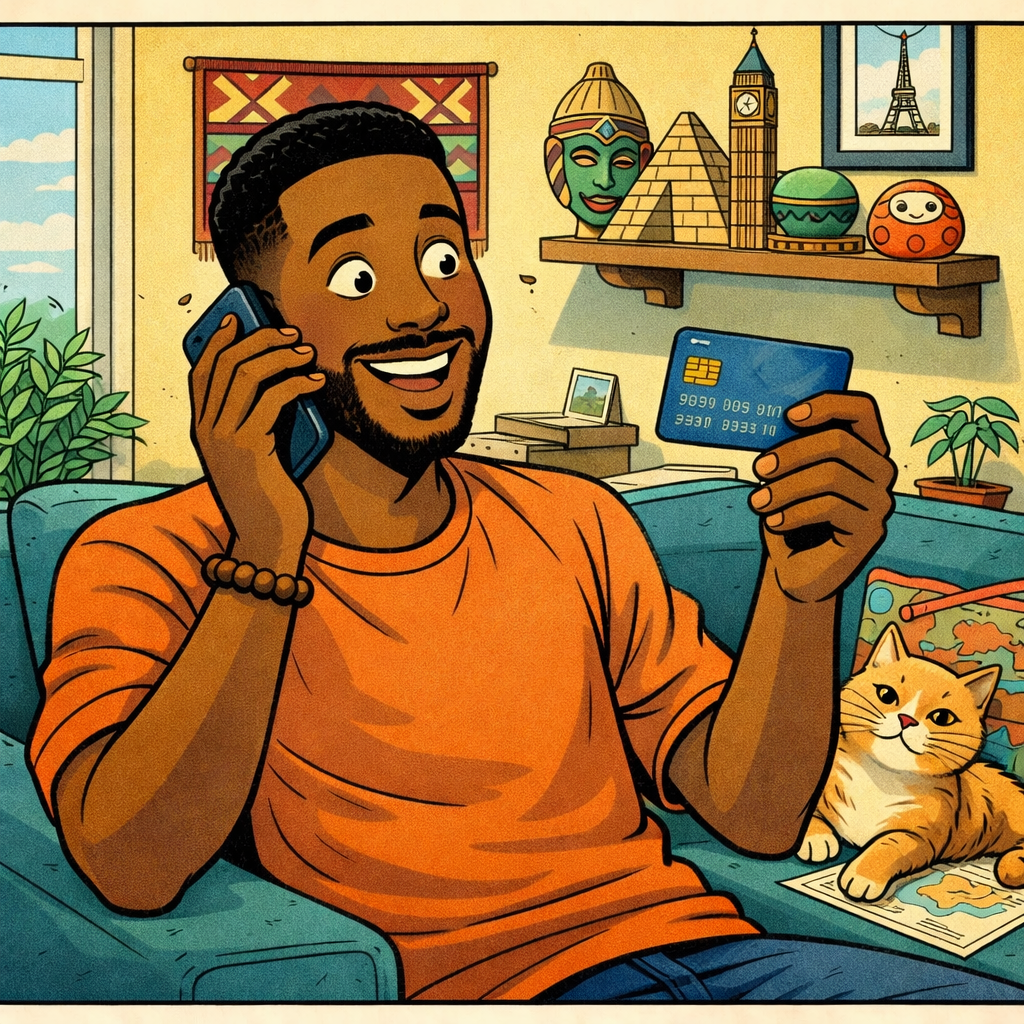
Travel teaches you many things. How fragile your credit limit is abroad tends to be one of the faster lessons. Here’s what credit card management actually means when you’re traveling.

Credit card management sounds like something you do once a year with a spreadsheet and good intentions. In reality, it’s the ongoing practice of keeping your cards — credit, debit, prepaid — usable, visible and dependable when money is moving in unfamiliar systems.

At home, poor card management is inconvenient. On the road, it’s disruptive.

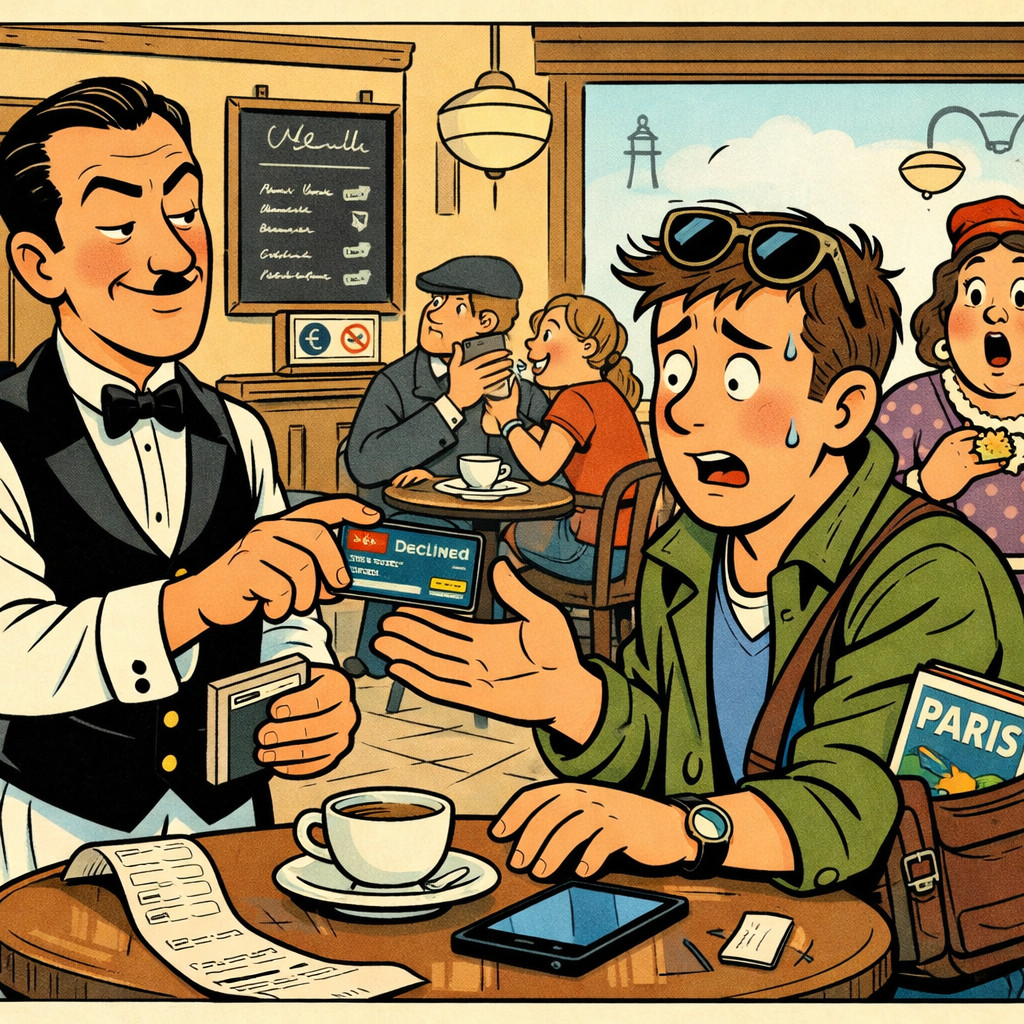
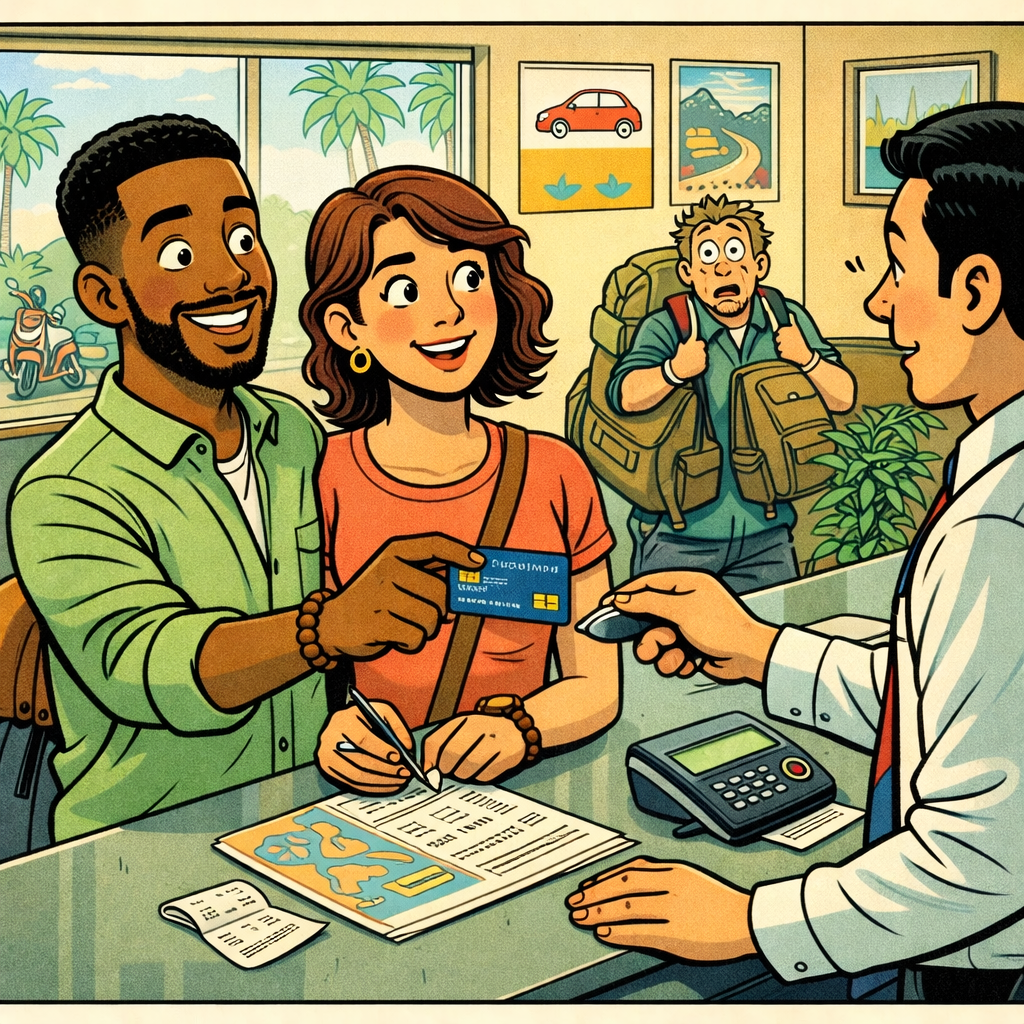
Because when your card fails abroad, it rarely fails quietly. It fails in front of a hotel desk, a rental counter, or a waiter who has already brought the check and is now waiting.

When your card fails abroad, it rarely fails quietly. It fails in front of a hotel desk, a rental counter, or a waiter who has already brought the check and is now waiting.

Credit Crunch Moments Abroad

It usually starts with a hotel.

You’ve paid in advance. You’ve checked in. Everything seems fine — until you realize the property has placed a pre-authorization that quietly eats a chunk of your available credit. Then the rental car does the same. Then a restaurant charge posts as pending. Then currency conversion nudges a number just far enough to matter.

None of this is unusual. Almost none of it is explained.

Suddenly, your “plenty of room” credit limit is very much in play.

This is why card management matters more once you cross a border: International travel compresses time, money and margin for error. Charges stack faster. Holds linger longer. And the systems deciding what’s “normal” behavior are no longer familiar.

The Invisible Mechanics Draining Your Available Credit

Travelers often assume their balance tells the whole story. It doesn’t.

What affects your usable credit abroad includes:

  • Pre-authorizations that remain pending for days

  • Currency fluctuations that change final settled amounts

  • Merchant batching delays that make charges appear late

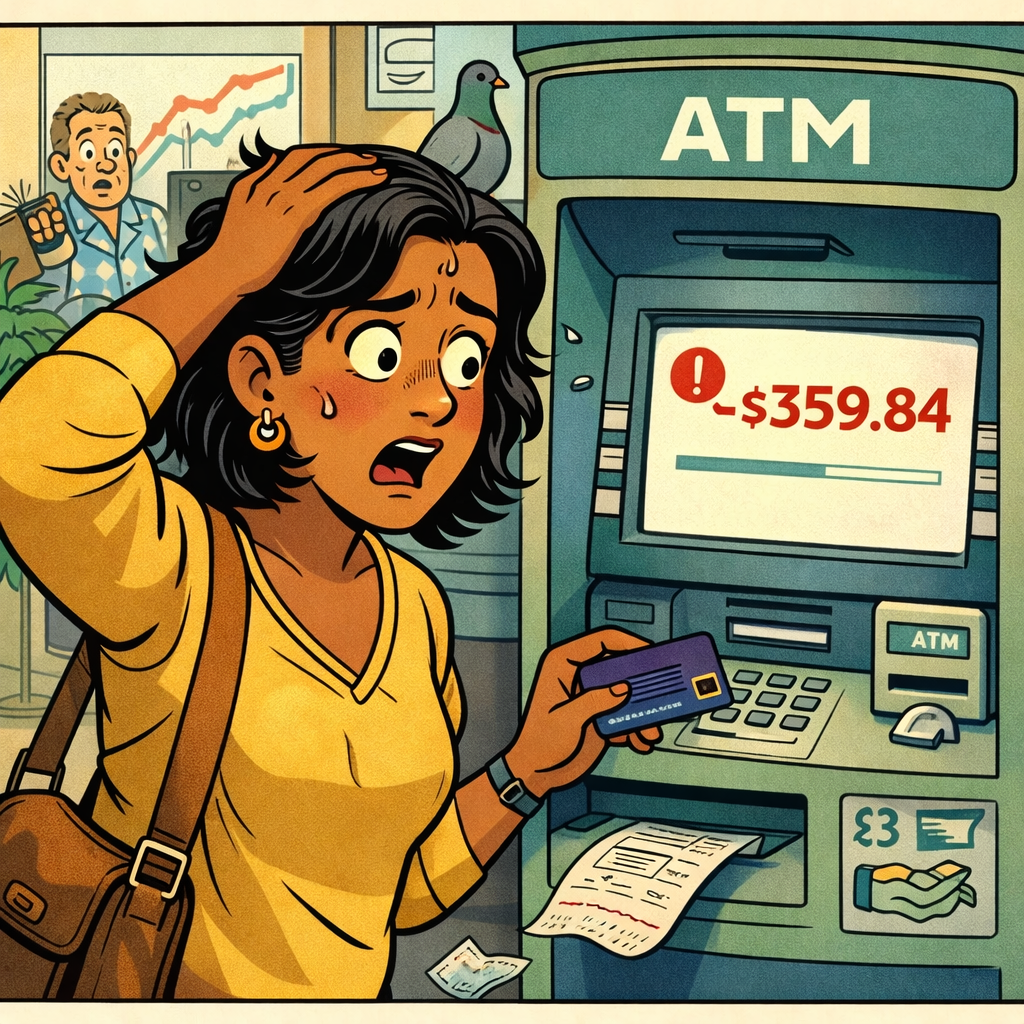
  • ATM and foreign transaction fees that post separately

Individually, these are minor. Together, they quietly reduce flexibility — especially if you’re relying on one card or traveling close to your limit.

What many people don’t realize: You can “have money” — and still be unable to use it.

When Things Go Sideways

Then there are the moments that actually raise your pulse.

  • A card freeze triggered by foreign spending patterns

  • A declined transaction for something essential

  • A banking app that won’t load because you’re on hotel Wi-Fi in a stone building from 1742

In these moments, card management stops being theoretical. It becomes logistical triage.

The travelers who stay calm aren’t luckier. They’re prepared.

Credit Confidence Starts Before the Airport

Good card management is front-loaded.

Before traveling internationally, experienced travelers:

  • Check available credit, not just balances

  • Review limits and upcoming payments

  • Notify banks of travel plans (yes, it still helps)

  • Pack at least one backup card on a different network

This isn’t paranoia. It’s redundancy — the same principle that makes travel adapters and offline maps a good idea.

After the Trip, the Work Isn’t Over

What happens after you return matters just as much.

Foreign charges can post days later. Holds don’t always release immediately. Fees sometimes appear after you’ve mentally closed the trip.

Strong post-travel credit card management means:

  • Paying balances promptly

  • Paying more than the minimum when possible

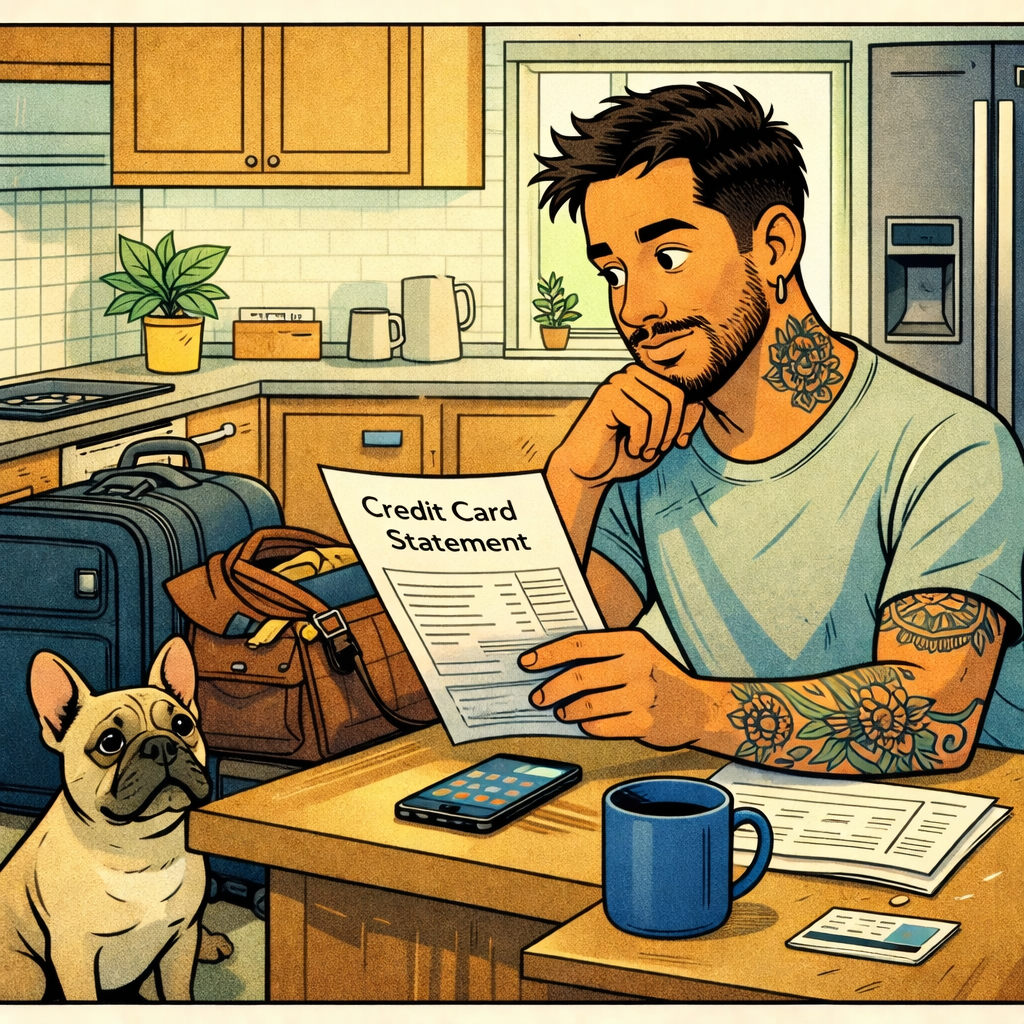
  • Reviewing statements for delayed or duplicate charges

  • Letting your credit recover quickly from temporary usage spikes

This is how one trip doesn’t quietly echo into your financial life for months.

The Tools That Actually Earn Space on Your Phone

This is where modern card management gets easier.

Mobile banking apps give travelers real-time visibility into balances, pending transactions and available credit — which is far more useful than checking statements after the fact.

Spending alerts, instant card freezes and secure authentication features reduce risk when something feels off.

Budgeting and currency-conversion tools add another layer of clarity, especially when you’re moving between countries with different pricing norms.

And digital wallets — Apple Pay, Google Pay — aren’t just convenient. They reduce physical card exposure and often process more smoothly abroad than plastic alone.

Why Seasoned Travelers Never Carry Just One Card

Payment infrastructure varies wildly by country. When it comes to international travel:

Some places expect chip and PIN.
Others default to contactless with low transaction caps.
Some terminals reject cards for reasons no one can explain.

Multiple cards mean:

  • A fallback if one is declined or frozen

  • Compatibility across networks and verification systems

  • The ability to spread spending and manage utilization

The insight here is subtle but important: Card management is about making sure you have options.

Credit Confidence on the Go

International travel will always involve financial friction — holds, fees, delays and the occasional decline. The difference between stress and confidence is understanding how those systems behave and planning accordingly.

When travelers manage cards proactively, use tools that provide real-time awareness, and build in redundancy, money becomes a background system instead of a recurring problem.

And if that still feels like too much to navigate alone, a trusted financial professional can help create a strategy that supports both travel habits and long-term credit health.

Because the best travel memories come from what you saw, ate and wandered into — not from the moment your card didn’t work and everyone was watching. –Mashum Mollah


Mashum Mollah is the founder and CEO of Blog Management. He also runs the site Blogstellar.

Q&A with Manuel Dreesmann, Founder of Atelier Madre in Barcelona

Full-grain, vegetable-tanned leather from local tanneries, zero-waste habits, and a design philosophy that owes more to architecture than fashion all come together here, one piece at a time.

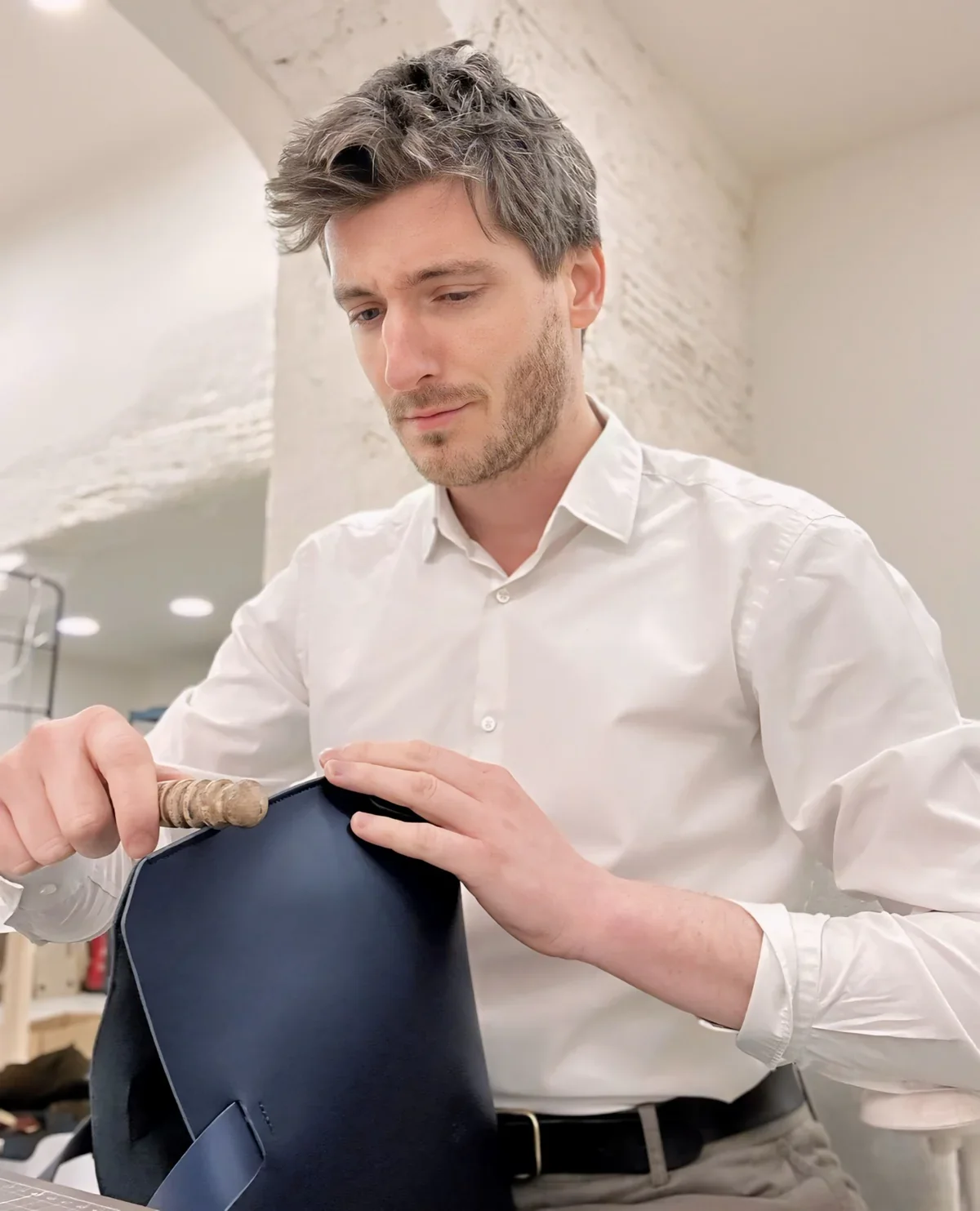
Manuel Dreesmann, founder of Atelier Madre, handcrafts a laptop sleeve in navy blue leather

Before Atelier Madre became one of the most quietly beautiful leather studios in Barcelona, Spain, it was just Manuel Dreesmann, a few hides and a belief that good design should feel as honest as it looks. 

He started the project back in 2018, tinkering with leather for friends and curious strangers online, and by 2021 he had opened a combined workshop and store on Carrer del Rec in the El Born neighborhood — the kind of space you wander into thinking you’ll browse for five minutes and end up staying far longer just watching the craft happen. 

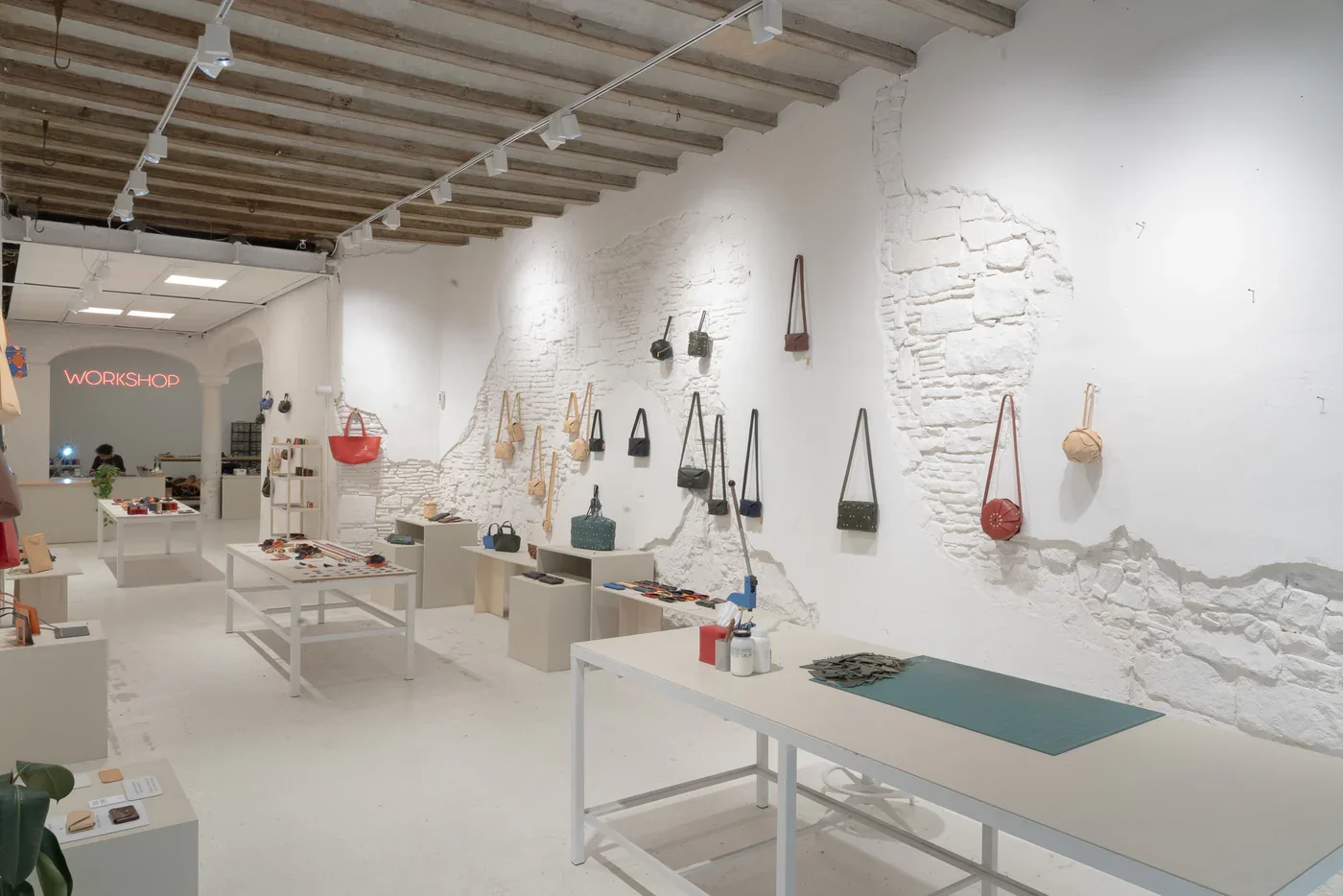
Today the shelves hold a small but striking family of pieces: structured bags, minimalist wallets, sleeves for laptops and tablets, desk mats, key holders, even tiny accessories cut from the very last offcuts. 

Founder Manuel Dreemann answered our questions about how it all began, what “handmade” really means to him, and why Barcelona remains the perfect home for his quietly obsessive little atelier — even its name, cleverly formed by taking the beginning of his first and last name to create the Spanish word for “mother.” –Wally

A woman wears a tan leather belt bag from Atelier Madre

How did Atelier Madre get started? What was the defining moment that set the brand’s direction?

I’d been doing leather projects as a hobby for a while. When Covid ended, I started looking at spaces to rent and, by accident, found the atelier we’re in now. I’d renovated spaces before, so I knew that with some work I could turn it into something of my own.

At first I didn’t even plan to run it as a shop. I saw it more as a place to design and make things, mainly because my home workspace had become too small. But the atelier had a front door to the street, so I opened it and let people walk in.

In the beginning it was quiet. Mostly just me. I listened to the few people who came, got to know them, adjusted products, added new ones. Slowly the room filled up: with visitors, pieces on the shelves, and eventually people helping.

I didn’t have a big master plan for where it should go, and I still don’t. I treat it as a daily practice: See what happens, learn from it and steer accordingly.

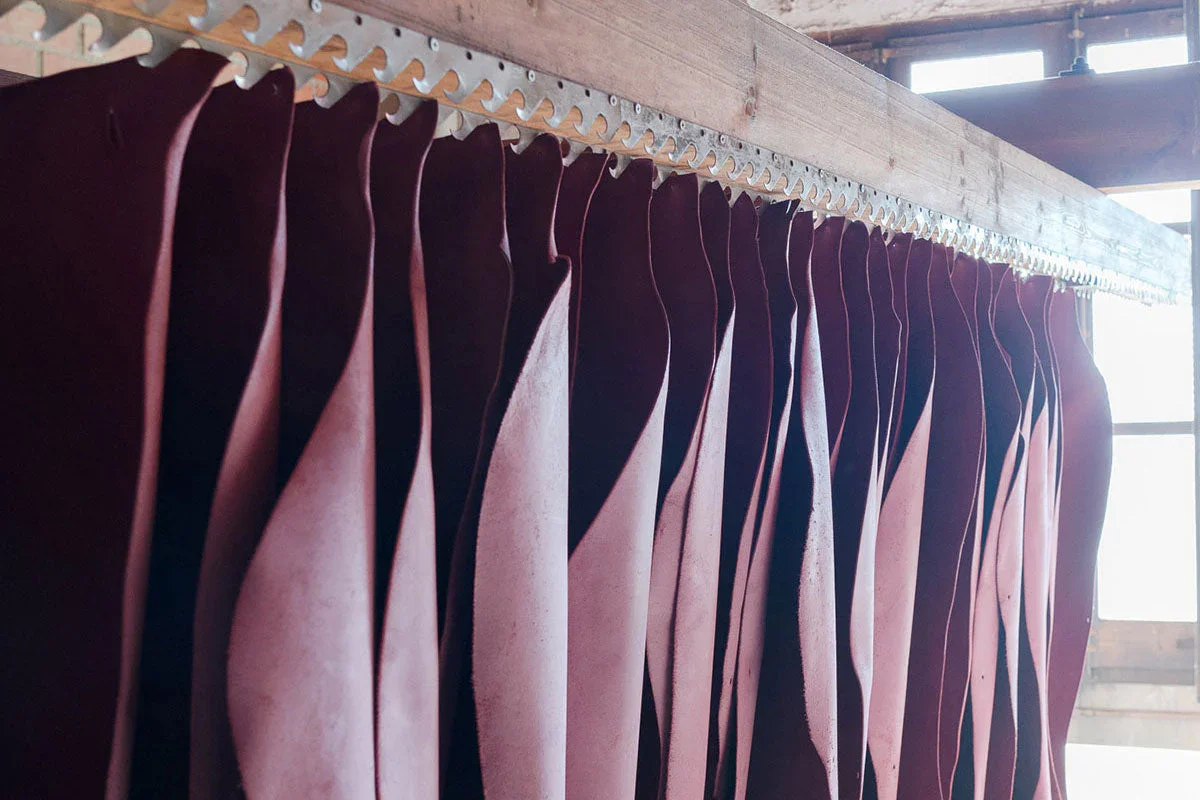
Pieces of leather hang at a tannery

Could you walk us through a typical piece’s journey from hide to finished product?

I don’t come from the leather or fashion world. I taught myself by doing: reading, watching, testing, ruining pieces and starting again. 

With a very small budget, I took the train to a town near Barcelona where they still make good vegetable-tanned leather. I bought a few hides, went back to the atelier, and started cutting and selling.

Today the process is basically the same, just more structured:

We buy full-grain, vegetable-tanned hides from those tanneries around Barcelona and keep a small stock of standard colors in the atelier.

Sometimes other brands overproduce, so we take their leftover hides. Many of our “standard” colors started life as someone else’s surplus.

Every product starts with selecting the right part of the hide: avoiding scars where needed, using natural marks where they add character.

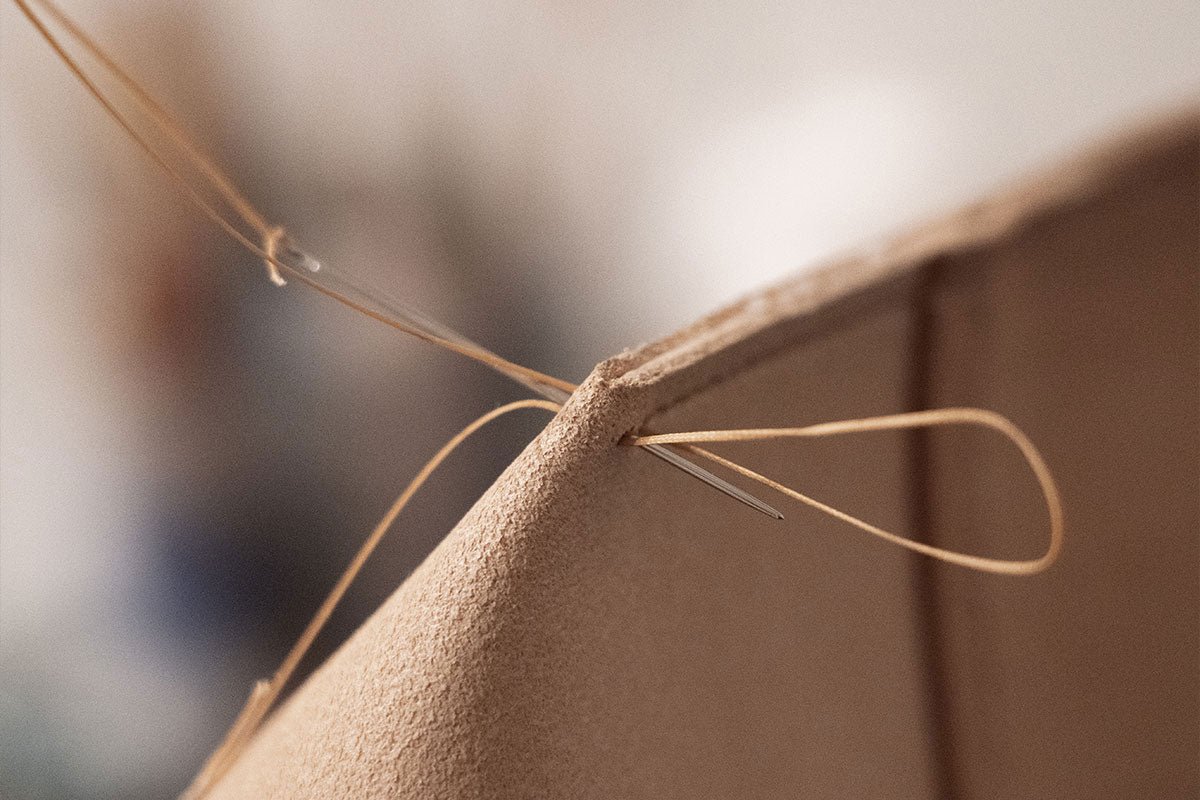
From there we cut the patterns, prepare the edges, glue and stitch the layers, then finish the edges and attach hardware.

Each piece gets a final check, a quick cleanup, and goes onto the shelf or into a box.

All of this happens in the same space people walk into from the street. Some come to buy, some just to watch us work, and some are happy just looking through the window.

A man pulls a laptop out of its handcrafted leather sleeve from Atelier Madre

What design philosophy guides you when creating a new bag or accessory?

Before I start designing, there are already constraints. Everything has to be possible in our own atelier, with our team, our machines and our materials.

That is very different to brands where design is completely free and production happens somewhere else. My job is to create pieces that people actually want to use, within the limits of what we can honestly make ourselves.

I can’t deny my German roots; there is a strong pull towards structure and coherence. Nothing is decorative for its own sake. The shapes are closer to architecture than to fashion. The products should age with pride, and ideally, when you look at them in 50 years, they still feel contemporary.

A closeup of a leather product from Atelier Madre being sewn

How does Atelier Madre approach responsible sourcing, production and longevity of its pieces?

I started alone, so I built the workspace in a way I would actually want to work in myself.

Apparently it’s not the worst place to be, because every time we hire, we receive hundreds of applications from all over the world and can choose the right fit. For me, that is the first filter for ethics: people genuinely want to work here.

Everything happens in one open space. Customers see the machines, the hides, the people, the mess. There’s not much room for pretending.

For sourcing, we work with tanneries in Igualada. We know them, we visit them, and they work under European regulations for labor and chemical standards. We prefer full-grain, vegetable-tanned hides and we keep the supply chain as short as possible.

We also try not to waste material. We use every piece of leather we bring in. Larger parts become bags, sleeves and mats; smaller ones become wallets and accessories; and the very last offcuts end up as earrings.

Longevity is probably the most important part. In four years, only a handful of customers have come back with issues. When something does fail, we repair or help them fix it. If a product can be worn, used and repaired for many years, it’s more honest than talking about sustainability in abstract terms.

A woman with a tan leather croissant-shaped purse from Atelier Madre

What does being based in Barcelona contribute to your brand identity, craft and community?

Most of us made a very deliberate choice to come to Barcelona. Our team is from different parts of the world, and so are many of our visitors. That constant movement brings a natural exchange of cultures into the atelier every day.

Like many harbor cities, Barcelona has always been a place of trade, crossing paths and relatively open minds. You feel it in the streets: People come and go, test ideas, start projects.

It’s a good environment for a small, slightly obsessive workshop.

In terms of “influence,” we are quite inward-looking. We focus more on improving what we do inside the atelier than on following what happens outside. There’s a long list of things to refine here: processes, products, how we work together. Barcelona gives us the context and the people, but most of the work is quietly done at the workbench.

A woman with a small tan leather backpack from Atelier Madre

What are the biggest challenges you face in small-batch, handcrafted leather goods today?

The way we work is, by design, not very efficient. There’s no production line. Each piece is made by exactly one person, start to finish. Combined with the fact that we produce in Barcelona, it creates a very different business model to most of the fashion industry. The challenge is to make this viable and still keep the quality where we want it.

Sourcing is the other big topic. As a small brand, it’s difficult to access the level of hardware and components we’re looking for. Finding the right buckles, zippers or metal parts can take months.

In the beginning we also had to convince suppliers to even work with us and to believe that we weren’t just a short-lived project. That part doesn’t show in the final product, but it’s a big part of making it possible.

A dog wears a leather kerchief-like collar from Atelier Madre

Could you tell us about one of your favorite artisan or workshop moments that exemplifies your work?

There was a family visiting our workshop once. They had come from far away, I think from Kuwait, because friends had told them to visit us while they were in Barcelona.

They chose a few pieces and we started finishing them at the workbench. A bit later, the children came back inside and stood very close to the table, watching every step in silence.

We started talking and they told us their story: Their father had recently passed away, and this was their first trip together as a family since then.

It felt very special that they chose to spend that moment in our atelier. When I think about what our work can mean, I often picture those children at the workbench and imagine the family using those bags somewhere in the world.

A woman wears a brown leather purse with strap from Atelier Madre

What stories or feedback from customers resonate most with you?

Because the store and the studio are the same space, a lot of the connection just happens on its own. People walk in, see us working, ask questions, watch for a while. Some get something personalized, some just talk. A lot of locals come back regularly, even if they don’t need anything, just to say hi. 

Many of our customers find us through friends, or because someone told them, “You should go there while you’re in Barcelona.” Those are the stories I like most: people coming straight from the airport with their luggage because a friend insisted they visit.

With international customers, we mostly stay in touch through email and social media. They send photos of their bags or sleeves after a few years, with scratches, marks and the shape of their daily life. Those messages are the ones that stay with me. It’s less about perfect feedback and more about seeing that the piece is actually being used and has become part of their routine.

A man wears the Saka leather bag with strap from Atelier Madre

Looking ahead, what are the next steps or aspirations for Atelier Madre?

We have a very long list of products we would like to design and make. The idea is not to rush through it, but to build a collection slowly, with pieces that can stay for many years.

At the same time, we are trying to translate the feeling people get in the atelier to our online presence. How the space looks, how we work, how materials behave over time. The website and our photography are still work in progress.

On social media, we are still testing what feels right: formats, frequency, how much of ourselves we show. One of our main goals is to use these channels to connect people through craft, not just to post product photos.

Sharing our story on a platform like this can help by giving more people a clear view into this world: showing the making, the people, and the way the products are actually used. If that comes across, it supports very well where we want to go.

A woman holds an espresso cup and a red leather laptop case

What’s something about Barcelona you’d advise travelers? Any hidden gem spots near the atelier?

If you’re visiting Barcelona, take time to explore the independent ateliers, especially around El Born and Gràcia. These neighborhoods are full of small workshops and studios where the person serving you is often the one who designed and made the piece.

Around our atelier, it’s worth simply walking the side streets and stepping into any place that looks like real work happens there: leather, ceramics, jewelry, print. What you take home becomes less of a generic souvenir and more a reminder of a conversation, a workshop, a person. That usually stays with you longer than anything else.

MORE: The Hidden Gems of Barcelona

The Atelier Madre showroom with leather purses and other items in Barcelona, Spain

Atelier Madre

Carrer del Rec 20
08003 Barcelona
Spain


Oficina Marques: A Cool Collaboration in Lisbon

The playful atelier in the Bairro Alto neighborhood turns recycled materials, folklore and everyday objects into irresistible art.

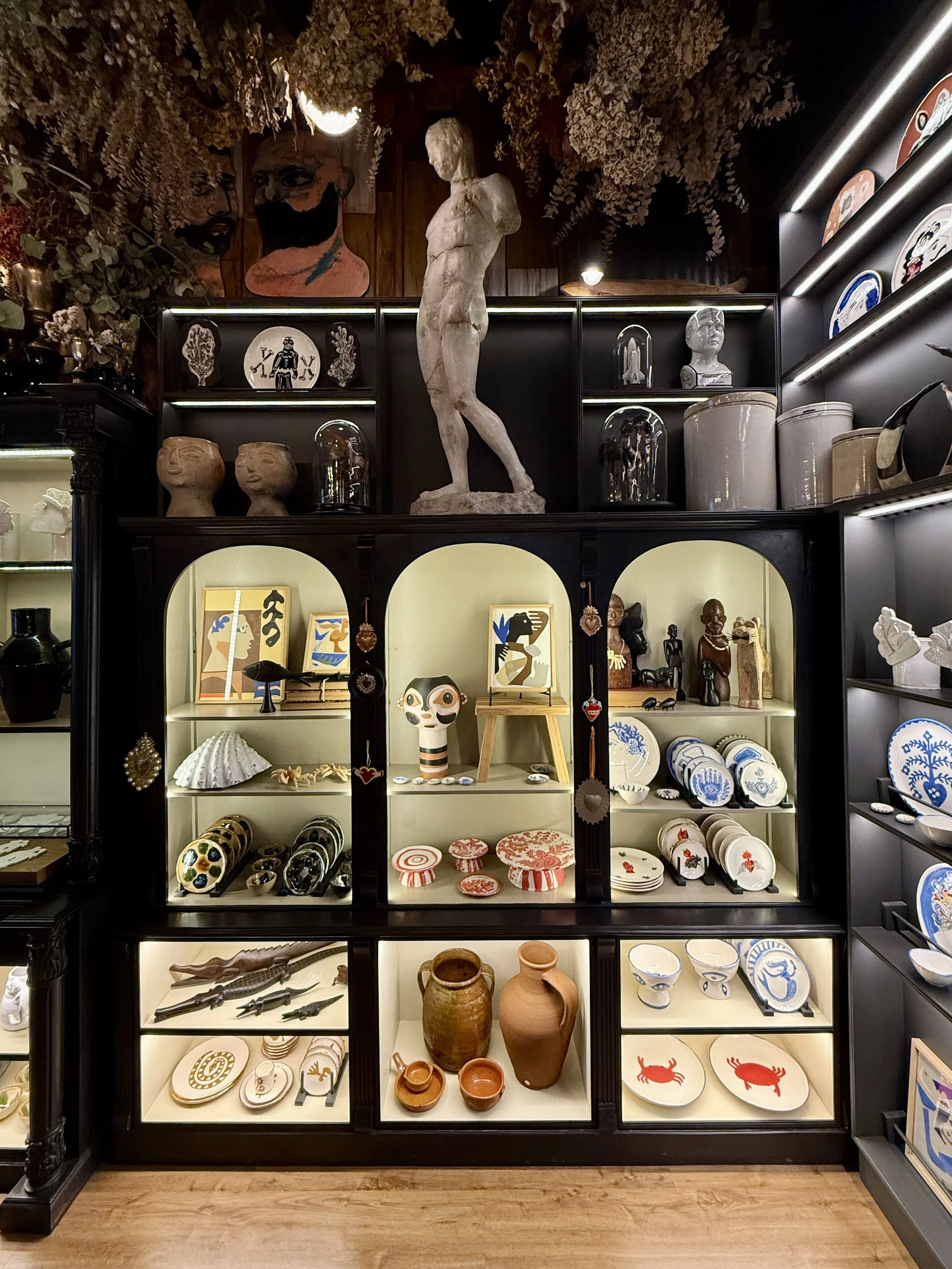
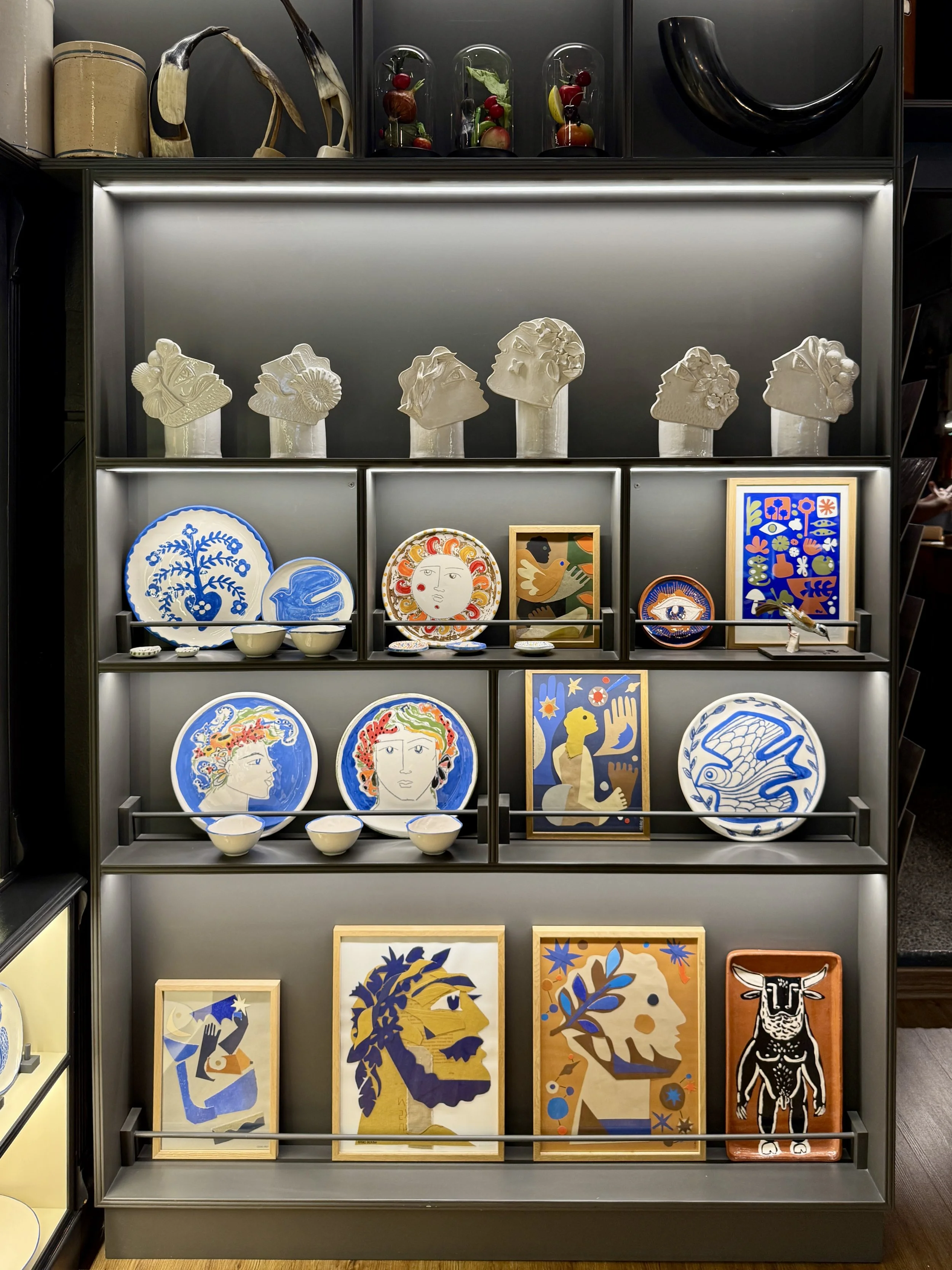
A statue stands atop a cabinet filled with painted ceramics at Oficina Marques shop in Lisbon

When planning a trip, we always start big, with days packed with places we want to see. But once we arrive, reality (and time and exhaustion) usually means scaling back and shifting things around a bit.

One destination that didn’t get cut from our Lisbon list: Oficina Marques, a gallery and shop in Bairro Alto, one of the city’s oldest neighborhoods and, remarkably, one left relatively untouched by the 1755 earthquake. 

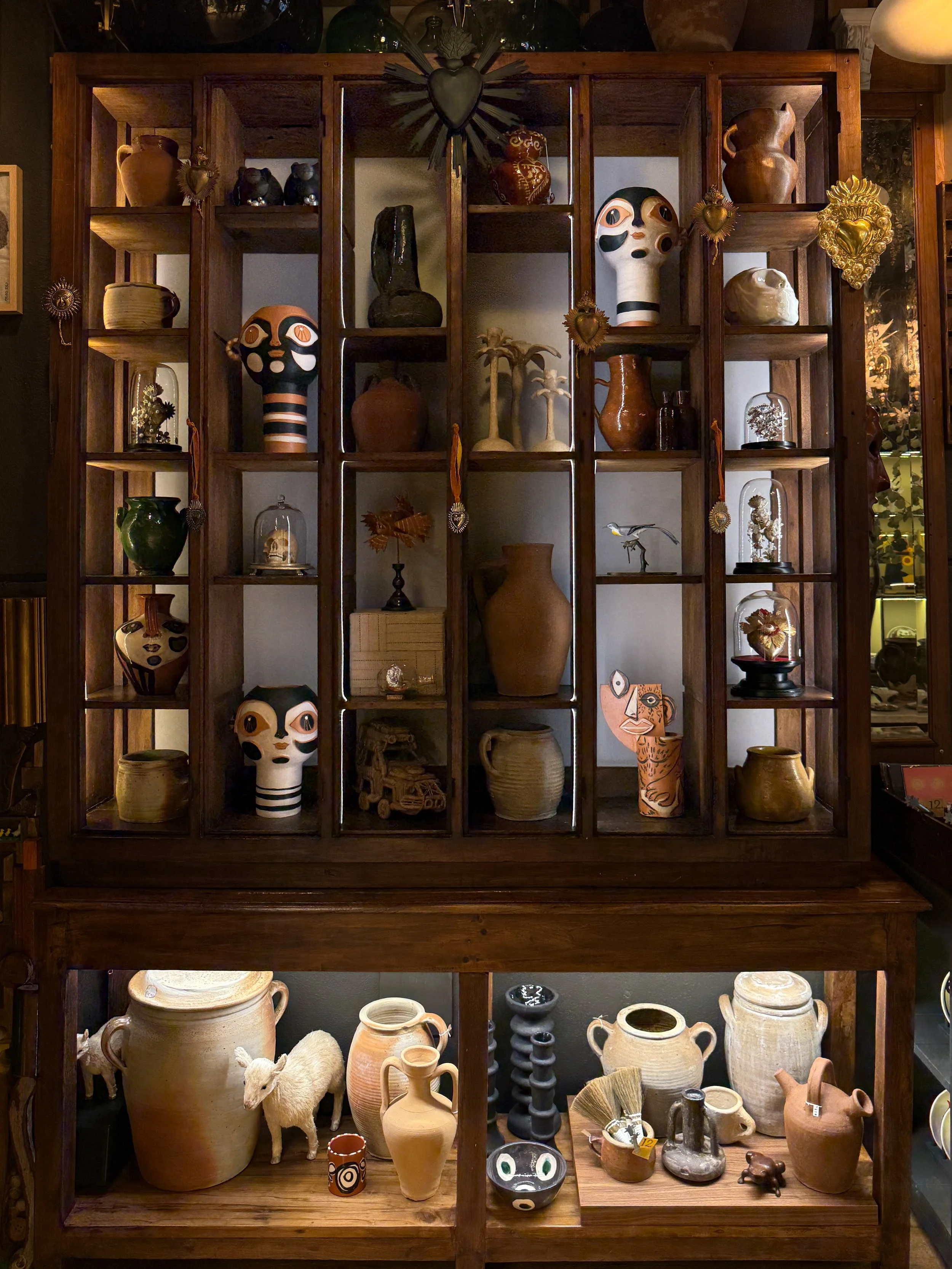
The shop feels like a cabinet of curiosities — brimming with original art and objects crafted in the adjacent workshop.

I first came across their atelier through a feature in Surface’s Design Dispatch newsletter about Lisbon Design Week. I was instantly drawn to their playful aesthetic, and when I showed my husband, Wally, their Instagram, he was sold, too. 

Ceramic heads, painted plates and paintings of Greek mythological figures on the shelves at Oficina Marques in Lisbon

The Creative Duo Behind Oficina Marques

The studio is led by the creative duo Gezo Marques and José Aparício Gonçalves, whose distinctive style draws inspiration from the natural world and embodies the motto “tusa de viver” — the irrepressible desire to live. Their work explores several themes including: Mar (Sea), Mato (Forest), Corpo (Body), Fé (Faith), and Lisboa (Lisbon), each offering a window into how they see life, place and the materials they transform into art.

Oficina means “workshop” in Portuguese, a nod to the handmade nature of their work, while Marques comes from the surname of one of its founders, Gezo, grounding the studio’s name in both craft and personal identity. Their atelier is located in the Interpress building, a former printing and distribution center for newspapers and magazines that was gradually transformed into a vibrant creative hub filled with studios, workshops and galleries. 

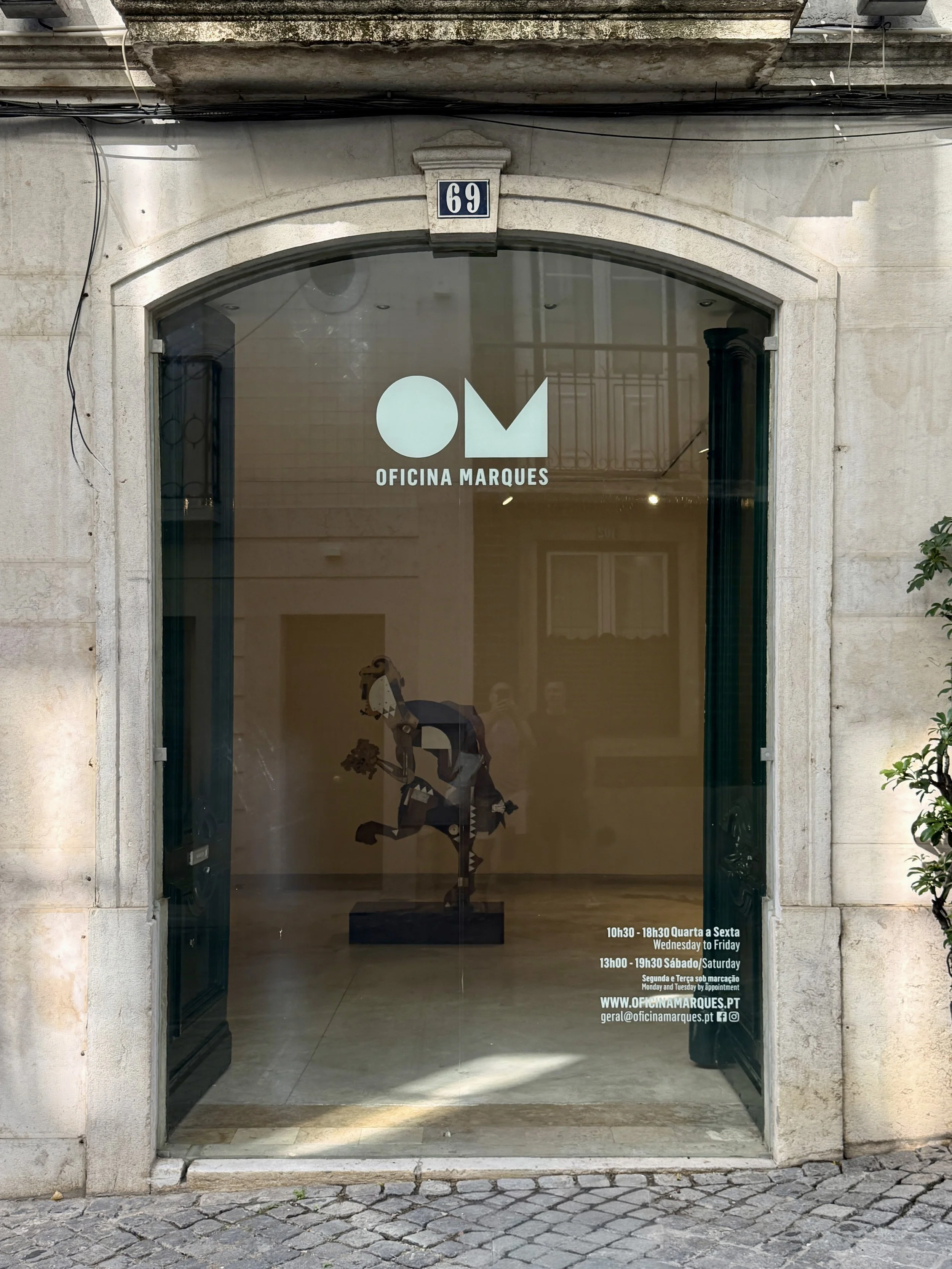
The glass door with OM on it at Oficina Marques in Lisbon, Portugal

A Visit to Oficina Marques

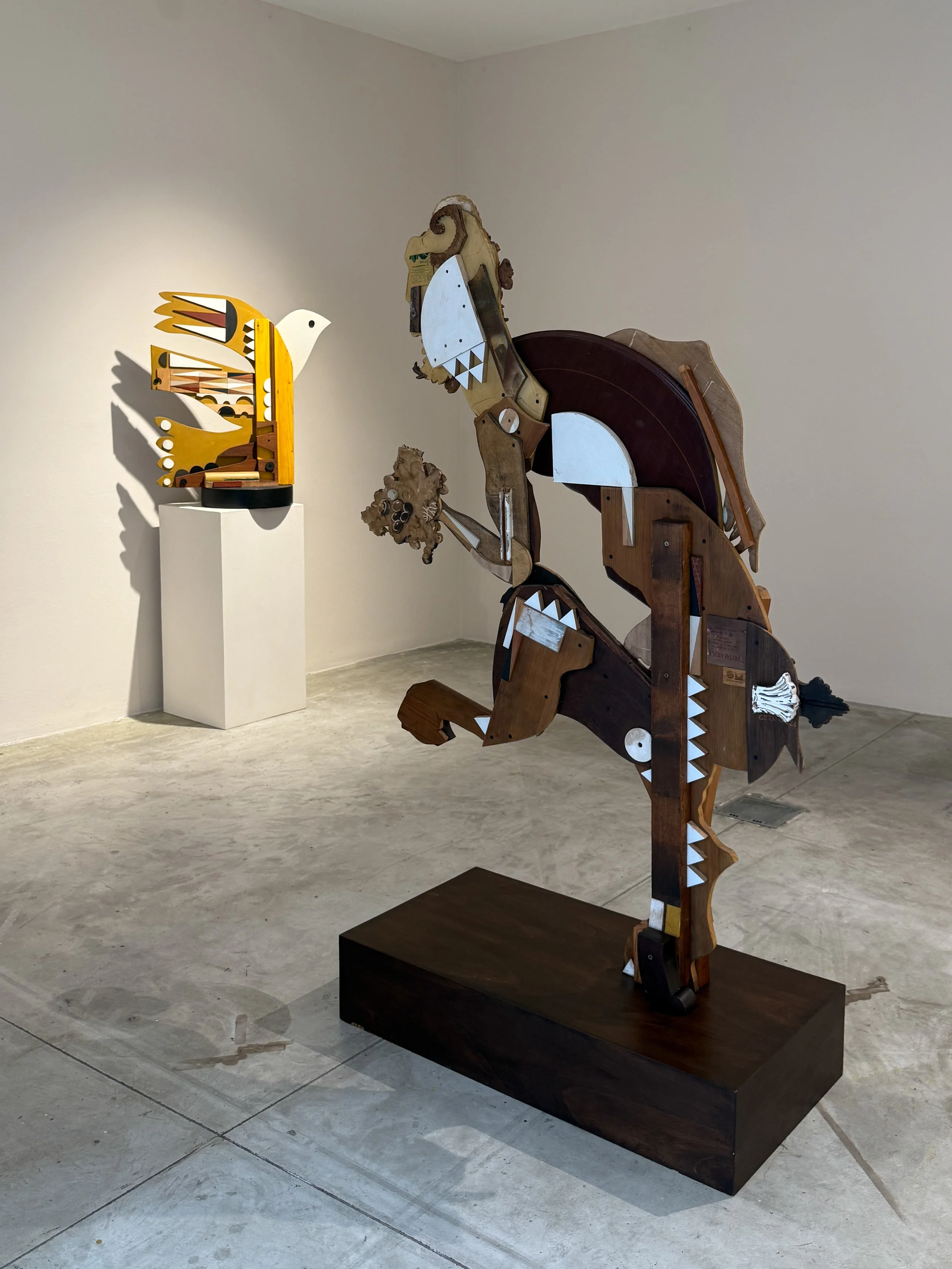
When we arrived, the gallery space held a few assemblages made from recycled materials and a couple of framed tile panels. As we looked around, José, one of the founders, popped in and explained that the embossed white and green tile panels were developed in collaboration with Viúva Lamego to celebrate the factory’s 175th anniversary. The partnership resulted in Arcádia, a collection of geometric forms inspired by the mythical Greek utopia, where dryads, nymphs and shepherds lived in harmony with nature. He went on to mention that a temple-like installation of those tiles by Spacegram Studio had been on display in the gallery during Design Week. 

While the gallery itself was filled with a few larger pieces, the adjoining shop felt like a cabinet of curiosities — brimming with original art and objects crafted in the adjacent workshop. Bundles of dried amaranthus, eucalyptus and hydrangea hung from the ceiling, perfuming the air with a faint, earthy sweetness. 

A faun and bird made of recycled wood at Oficina Marques gallery in Lisbon, Portugal

The shelves held an eclectic mix of items: ceramic face vessels and glass cloches filled with curious scenes — the Virgin Mary surrounded by seahorses, starfish and coral; a saint on horseback slaying a dragon-like creature, with a troop of toy soldiers poised for battle at his feet. Hand-painted plates of varying sizes were set among a plaster cast of a classical male nude, along with primitive carved wooden crocodiles, African tribal statuettes, and glinting tin ex-voto hearts — all arranged with a discerning curatorial eye.

We were debating between a small blue-and-white plate with an open hand and another featuring a bare-chested minotaur when I noticed a pair of weathered wooden pieces hanging on the wall, each shaped like a raised hand with symbols etched into the fingers. One was inscribed with the words “Love You,” and the other “Fuck You.” It was at that moment I “went rogue,” as Wally would later say. Without consulting my husband, I looked over at José and said, “We’ll take these.”

José smiled and explained that he and Gezo had found the pieces while out on the beach, scavenging for materials to use in their work. The two boards, he told us, fit together perfectly — a reflection of life’s many dualities. 

After José carefully wrapped our purchase, he invited us to step into his and Gezo’s workshop. We were honored to catch a glimpse of their imaginative world — a place shaped by creations that invite you to think, to feel, to wonder and to imagine. 

And honestly, in a world that can feel heavy with pessimism, a little more levity is just what we all need. –Duke

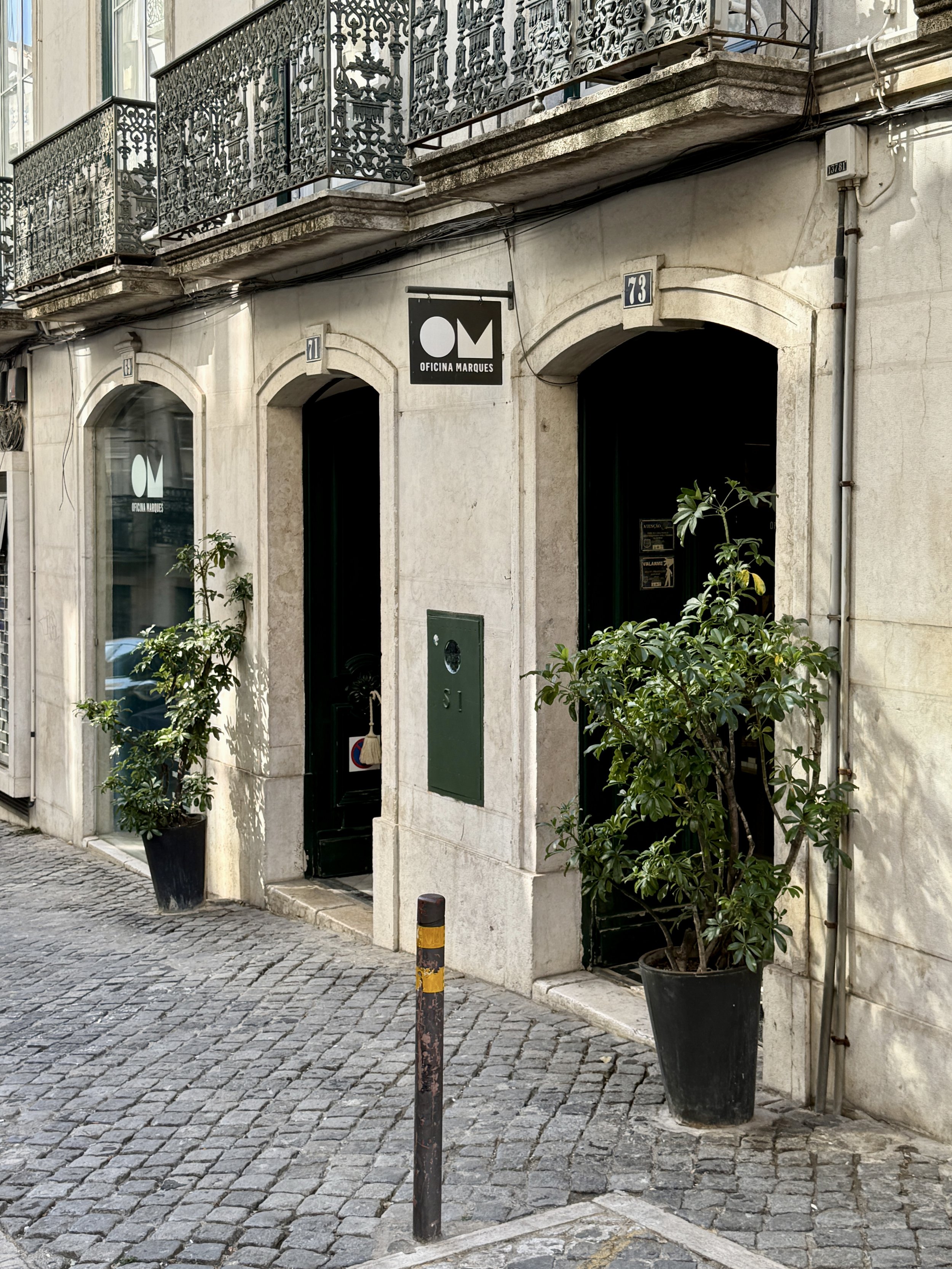
The exterior of Oficina Marques in Lisbon, Portugal, with potted plants and a sidewalk made of square stones

Oficina Marques

Rua Luz Soriano 71
1200-246 Lisbon
Portugal


How to Plan a Day Trip and Itinerary From Singapore to Batam

From ferries to temples, beach thrills to seafood feasts, this Batam itinerary shows how to turn a single day off into a full-blown island adventure.

Nongsa Point Marina Resort in Batam, Indonesia, with palm trees and a marina

Batam, Indonesia is only a 45-minute ferry ride from Singapore — but feels like a world away.

Looking to escape Singapore for the day? Just hop a ferry, and in under an hour, you’ll find yourself in Batam, Indonesia — a land of temples, bargain shopping, watersports and seafood so good it should probably be illegal.

Whether you’re craving a low-key weekend or a one-day recharge, this itinerary has you covered — start to finish.

Batam offers a rare combo: It’s affordable and exciting. Rest, relaxation and thrill-seeking all show up to play.

Think of it as Bali’s scrappy little sibling.
The cityscape of water and skyscrapers of Singapore at sunset

Escape the hustle and bustle of Singapore with a day trip to Batam Island in Indonesia.

Why visit Batam?

Batam is the largest island in Indonesia’s Riau Archipelago, tucked between the Strait of Singapore and the South China Sea. It’s close enough for a day trip, but far enough to feel like you’ve actually gone somewhere else entirely. 

Fast ferries from Singapore’s HarbourFront Terminal make the crossing in about 45 minutes — though if you’re not sea-savvy, pack some ginger candy (or, let’s be honest, Dramamine).

The Majestic fast ferry

So why go? Because Batam offers a rare combo: It’s affordable and exciting. Rest, relaxation and thrill-seeking all show up to play. Think of it as Bali’s scrappy little sibling.

Tip: Getting connected before you go can save headaches once you’re across the water. Holafly’s eSIM in Bali offers easy mobile service in Indonesia without the usual roaming hassles.

A fat Buddha statue by greenery at Maha Vihara Duta Maitreya Temple in Batam, Indonesia

Morning: Temple visits and tax-free shopping

Ferry to Batam

Hop aboard a Majestic Ferry from Singapore’s HarbourFront Centre. You’ll land at either Batam Center or Sekupang Ferry Terminal — both good jumping-off points for a full day of fun.

Maha Vihara Duta Maitreya Temple

Start your day with some peace and perspective. This Buddhist temple is one of Southeast Asia’s largest and most serene. Even if you’re spiritually agnostic, it’s hard not to be charmed by the rows of laughing Buddhas and you can fuel up at the in-house vegetarian café.

Nagoya Hill Shopping Mall in Batam, Indonesia

Nagoya Hill Shopping Mall

Next, dive into Batam’s consumer paradise. Nagoya Hill is a magnet for duty-free deals: Think cosmetics, electronics, local snacks and souvenirs. It’s also a prime spot to sample regional bites before the beach calls.

A boat on the sand near a table on Nongsa Beach, Batam, Indonesia

Afternoon: Beaches, boats and a feast of seafood

Nongsa Beach

Clear water. White sand. The occasional person flying overhead on a parasail. Nongsa is your go-to for jetskiing, banana boating or simply lazing like a lizard on a lounger.

Golden Prawn 933

It’s practically a crime to visit Batam and skip the seafood. Golden Prawn 933 is a local legend — slamming fresh prawns, sweet crabs and gong-gong (that’s sea snail, if you’re curious). Come hungry and mildly prepared to regret how much you order.

Silhouettes of a couple holding hands at sunset on a pier in Batam, Indonesia

Evening: Sunset strolls and seaside dining

When the sun starts to dip, so should you — into a massage chair or maybe just a beachside lounge. Hit a spa, sip something fruity, or just breathe in that salty air with a grin.

Dinner tip: Plenty of restaurants near the coast serve up fusion cuisine — Indonesian flavors with a splash of Continental flair. Add a glass of wine or a cocktail, and you’ve officially turned a day trip into a vacation.

Jembatan Tengku Fisabilillah bridge in Batam, Indonesia

Plan Your Batam Escape

Whether it’s a quick escape or a full weekend reset, Batam delivers. Ferries run frequently, the itinerary writes itself, and the seafood is to die for. –Vivek Singh

48 Hours in Tel Aviv: A Whirlwind of Sun, Spice and Shenanigans

Explore Tel Aviv’s top spots — Old Jaffa, Carmel Market, Tel Aviv Museum of Art and Rothschild Boulevard — in this two-day guide to Israel’s cultural capital.

Tel Aviv, Israel — where ancient history meets cutting-edge cool, and where the scent of falafel competes with the salty Mediterranean breeze. If you’ve only got 48 hours in Israel’s most vibrant city, buckle up. This is going to be a ride filled with beachside bliss, street art and enough hummus to make you consider a second stomach.

With a mix of history, beach life and some of the best food on the planet, Tel Aviv delivers an unforgettable 48-hour adventure.
Nachalat Binyamin, a street filled with murals, vendors, and artists in Tel Aviv, Israel

Day 1: Culture, Cuisine and Cocktails

Morning to Afternoon: Tel Aviv Walking Tour

Start your adventure with an extensive Tel Aviv walking tour because the best way to get to know a city is by pounding its pavements. Begin in Old Jaffa, the city’s ancient port, where cobbled alleys wind past centuries-old stone buildings, contemporary art galleries, and a view of the sea so stunning it might make you cancel your return flight.

Next stop: Carmel Market (Shuk HaCarmel) — a sensory overload of colors, smells and sounds. Here, you’ll sample Israel’s greatest hits: falafel so crispy it whispers sweet nothings as you bite in, silky hummus that could convert the most devout carnivore, and juicy fruit that make you question why produce at home tastes like disappointment.

Wrap up the tour on Nachalat Binyamin, Tel Aviv’s artsy, free-spirited street. Think vibrant murals, handcrafted jewelry, and street performances that range from mesmerizing to what did I just watch?

Late Afternoon: Beach Bliss

You’ve walked, you’ve eaten, you’ve marveled at murals. It’s time to chill. Head to Frishman Beach or Gordon Beach, where the sand is soft, the sea is inviting, and the beach bars are more than happy to provide you with a cold Goldstar beer or a fruity cocktail. Whether you choose to dip in the water, stretch out on a lounger, or just people-watch the absurdly fit Tel Avivians, this is your moment to relax.

Evening: Rothschild Boulevard and Nightlife Adventures

As the sun sets, it’s time to dress up (or at least put on your best linen shirt) and hit Rothschild Boulevard. This tree-lined stretch is Tel Aviv’s nightlife heart, packed with buzzing bars, sleek restaurants and cocktail joints that take mixology very seriously. Start at Bellboy, a speakeasy-style bar where drinks come with a side of theatrical flair. Hungry? Grab dinner at one of the city’s contemporary restaurants before diving headfirst into Tel Aviv’s legendary nightlife, where the party doesn’t stop until the sun threatens to rise again.

Day 2: Art, Markets and Mediterranean Magic

Morning: Sunrise Stroll and Coffee With a View

The Mediterranean is at its best in the morning — peaceful, golden, and just begging for an early walk or bike ride along the Tel Aviv Promenade (Tayelet). Join the locals for a jog (or let’s be real, sip coffee while watching them jog). Grab a strong Israeli espresso or a cafe hafuch (Israel’s answer to a cappuccino) at a beachside café — and let the sea breeze work its magic.

Late Morning: Tel Aviv Museum of Art

After basking in nature’s masterpiece, head to one of Tel Aviv’s actual masterpieces: the Tel Aviv Museum of Art. A haven for art lovers, it showcases Israeli and international works in a stunningly modern building. Bonus: It’s also an excellent excuse to escape the midday heat.

The charming, flower-filled neighborhood of Neve Tzedek in Tel Aviv, Israel

Lunch: The Bohemian Beauty of Neve Tzedek

Wander over to Neve Tzedek, Tel Aviv’s most picturesque neighborhood. Think charming boutiques, cute cafés and Instagrammable corners at every turn. Stop at Suzana, where the Mediterranean and Israeli flavors come together in a beautiful dance of fresh ingredients, fragrant spices, and just the right amount of tahini drizzle.

Afternoon: Treasure Hunting in Jaffa Flea Market

Jump in a taxi and head to Jaffa’s Flea Market (Shuk Hapishpeshim), a mix of vintage finds, quirky souvenirs, and stalls filled with everything from antique trinkets to trendy clothing. Bargaining is expected, so channel your inner haggler and walk away with a one-of-a-kind keepsake.

Evening: Sunset at Namal Tel Aviv

End your whirlwind 48 hours with dinner by the sea at Namal Tel Aviv, the city’s revamped port district. Picture lively restaurants, sunset views, and fresh Mediterranean seafood that tastes like it was caught five minutes ago. 

Extra Tips for Your Tel Aviv Adventure

Getting Around: The city is incredibly walkable, but electric scooters and bikes make zipping around even easier.

Best Time to Visit: March through May and September to November offer perfect weather — hot enough for the beach, but not melt-into-the-sidewalk hot.

Local Vibe: Tel Avivians are friendly, chatty, and not big on personal space — expect warm interactions and lots of hand gestures.

With a mix of history, beach life and some of the best food on the planet, Tel Aviv delivers an unforgettable 48-hour adventure. Whether you’re haggling in Jaffa, sipping cocktails on Rothschild, or simply staring at the Mediterranean in pure bliss, one thing’s for sure — this city knows how to make an impression. –Lucy Roberts

Starland District: Savannah’s Funky, Artsy Playground

Savannah’s coolest neighborhood, the Starland District, is a quirky haven brimming with creativity. 

I love Broughton Street — don’t get me wrong. This upscale thoroughfare, with shops like the Paris Market, the Savannah Bee Company and Urban Outfitters, has an undeniable charm. 

But I wanted something edgier, fresher and a little less polished. Enter the Starland District, a neighborhood born from the bones of an old dairy at the end of the ’90s and now pulsing with creativity.

The Starland District: a neighborhood born from the bones of an old dairy and now pulsing with creativity.
A mural of flowers saying, "Am I dreaming?" in the Starland District in Savannah

History of the Starland District

In 1999, two SCAD (Savannah College of Art and Design) graduates, Patrick Shay and Eric Saller, stumbled upon the derelict Starland Dairy, a once-bustling pasteurized milk plant that had been abandoned for years. The dairy, established in the early 1900s and adorned with an iconic red star, had become a canvas for graffiti and a symbol of neglected Savannah. 

Rather than tearing it down, like any good SCAD student, they saw potential in its crumbling walls and industrial charm. With a love for historic preservation, they bought the two-block complex for a modest sum and set to work.

Their vision was simple yet radical: transform the decaying dairy into a community space for artists, creatives and entrepreneurs. Over time, the Starland Dairy became a hub for studios, galleries and workshops, injecting new life into the surrounding neighborhood. The district took its name from this centerpiece, with the “Starland” moniker honoring the dairy’s heritage.

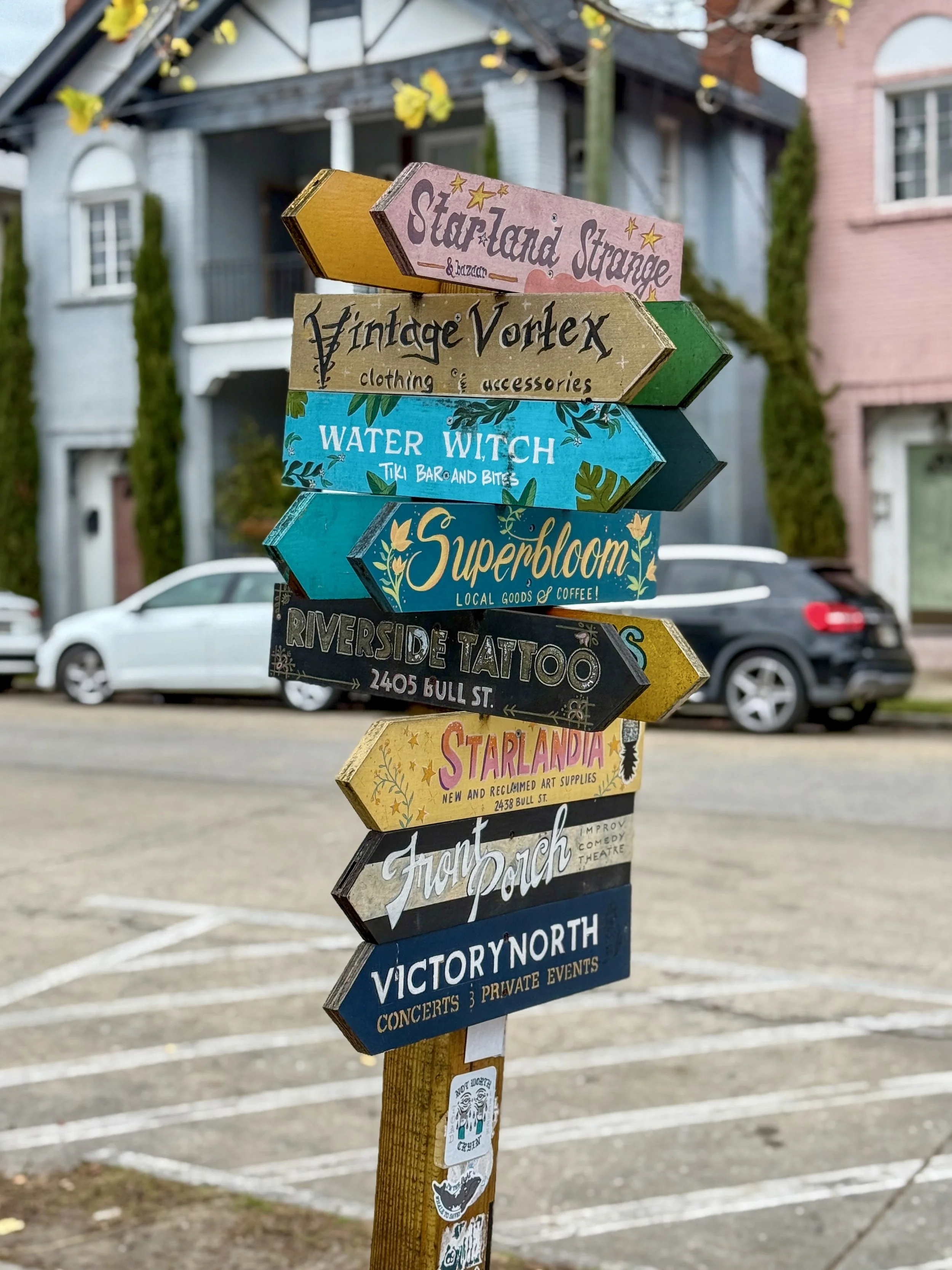
A signpost pointing to various attractions in the Starland District in Savannah, Georgia

Today, the Starland District remains an eclectic haven where SCAD students, local artists and Savannah’s quirkier residents converge. It’s colorful, messy in the best way and delightfully rebellious. Between the murals, mismatched furniture on café patios and the unmistakable hum of creativity, this neighborhood feels alive in a way that’s entirely its own. Exactly what I was craving.

Highlights of the Starland District 

Facade of Starland Strange & Bazaar, with it's pink exterior and vibrant painting path and stairs

Starland Strange & Bazaar

📍 17 West 41st Street

“It’s less curiosity shop and more Anthropologie,” I told Duke as we peered through the window of Starland Strange & Bazaar, closed for the day (Monday, for those taking notes). Instead of shrunken heads and oddities, we spotted racks of stylish women’s clothing and tables with boho-chic housewares. And because Starland loves a quirky twist, there’s also an ice cream shop inside.

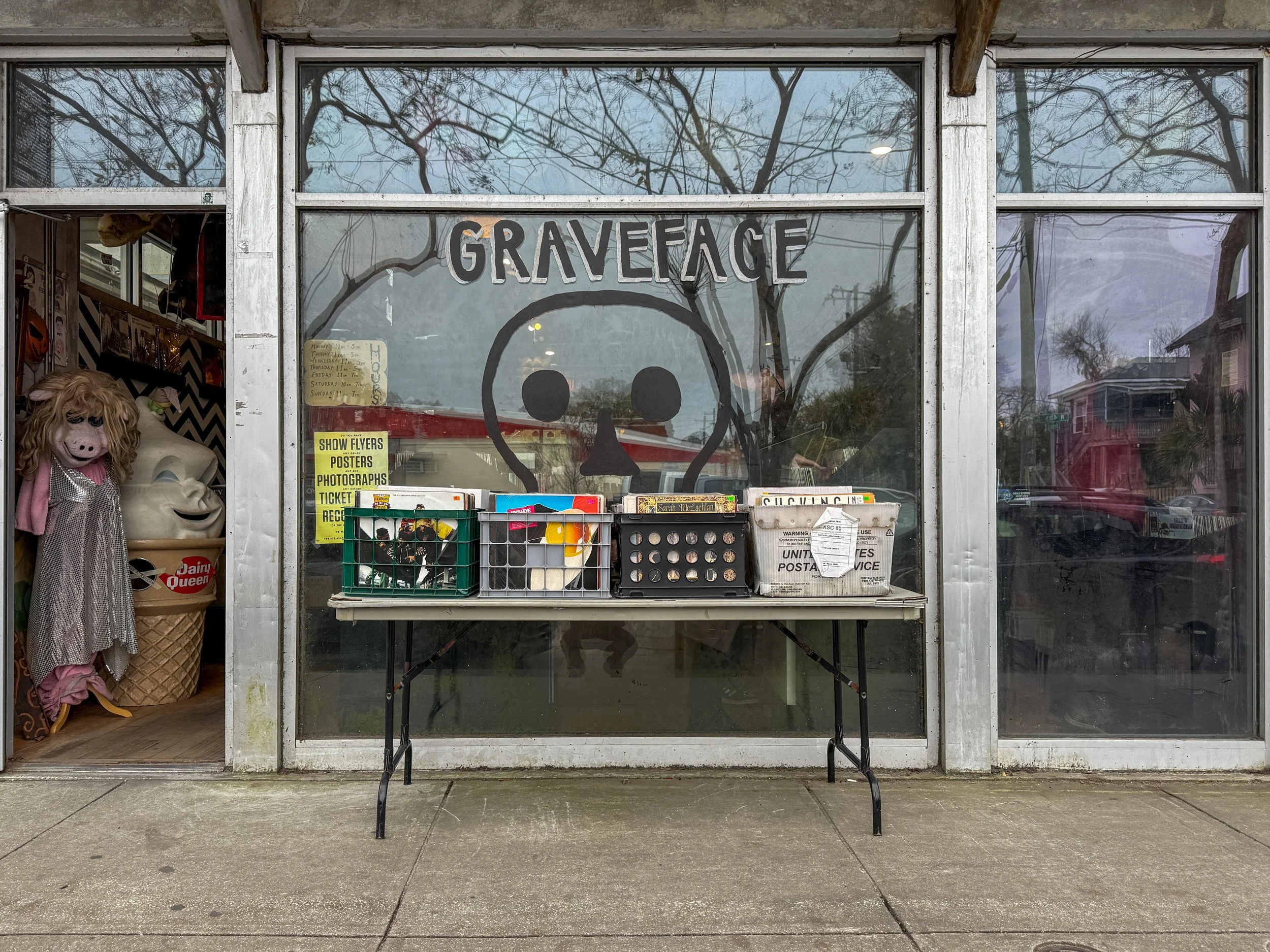
Exterior of Graveface Records in the Starland District in Savannah, Georgia

Graveface Records & Curiosities

📍 5 West 40th Street

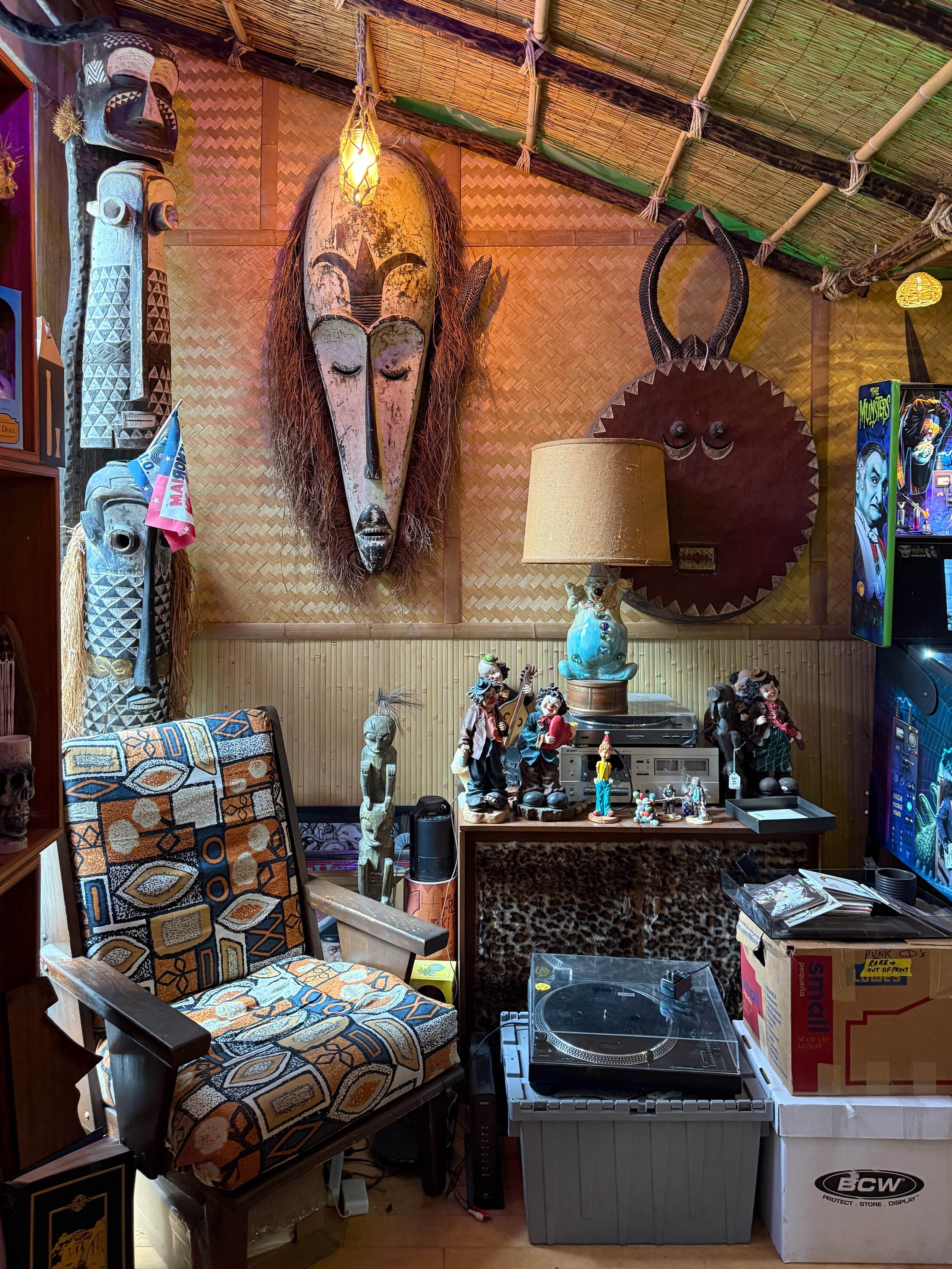
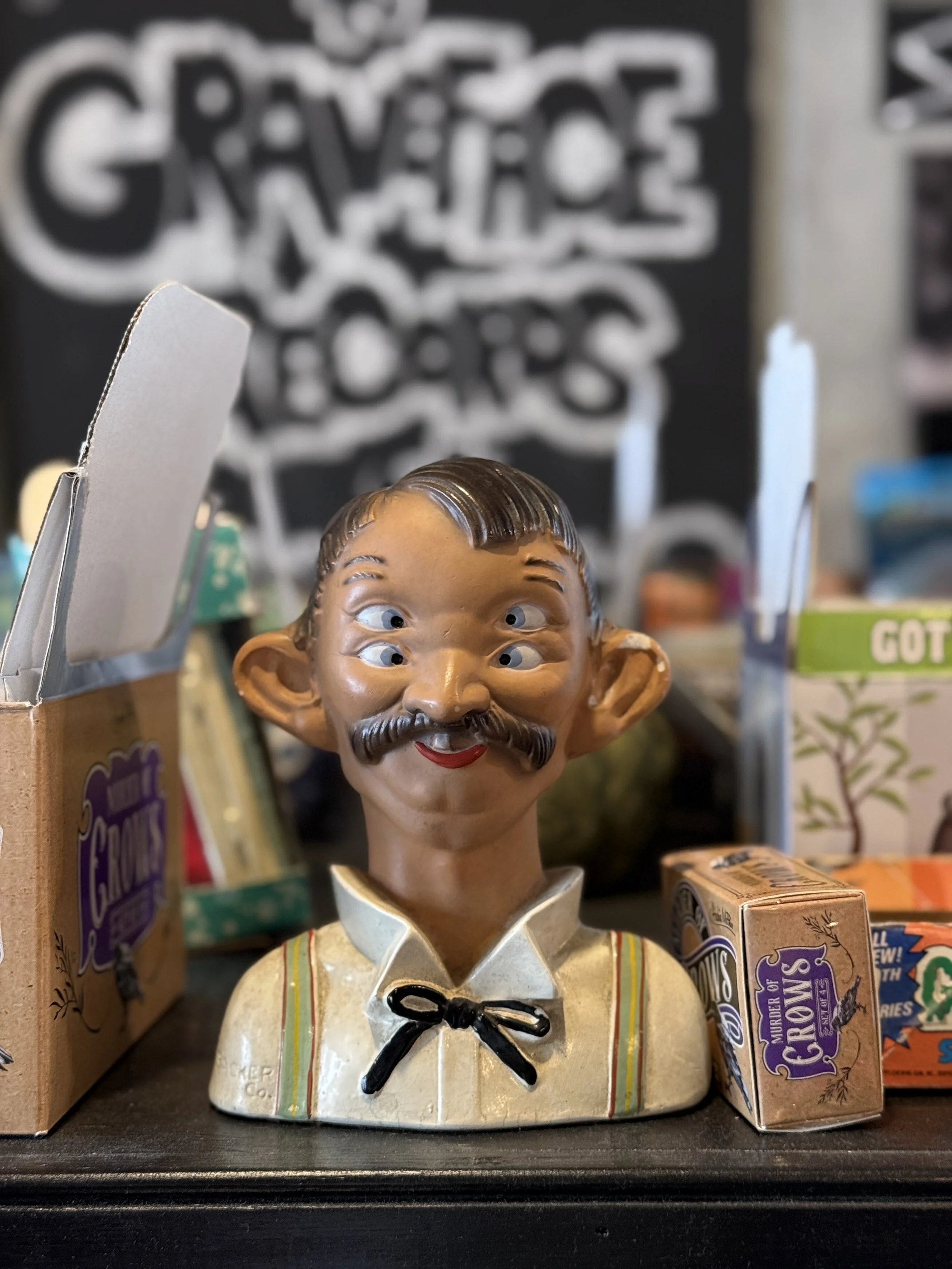
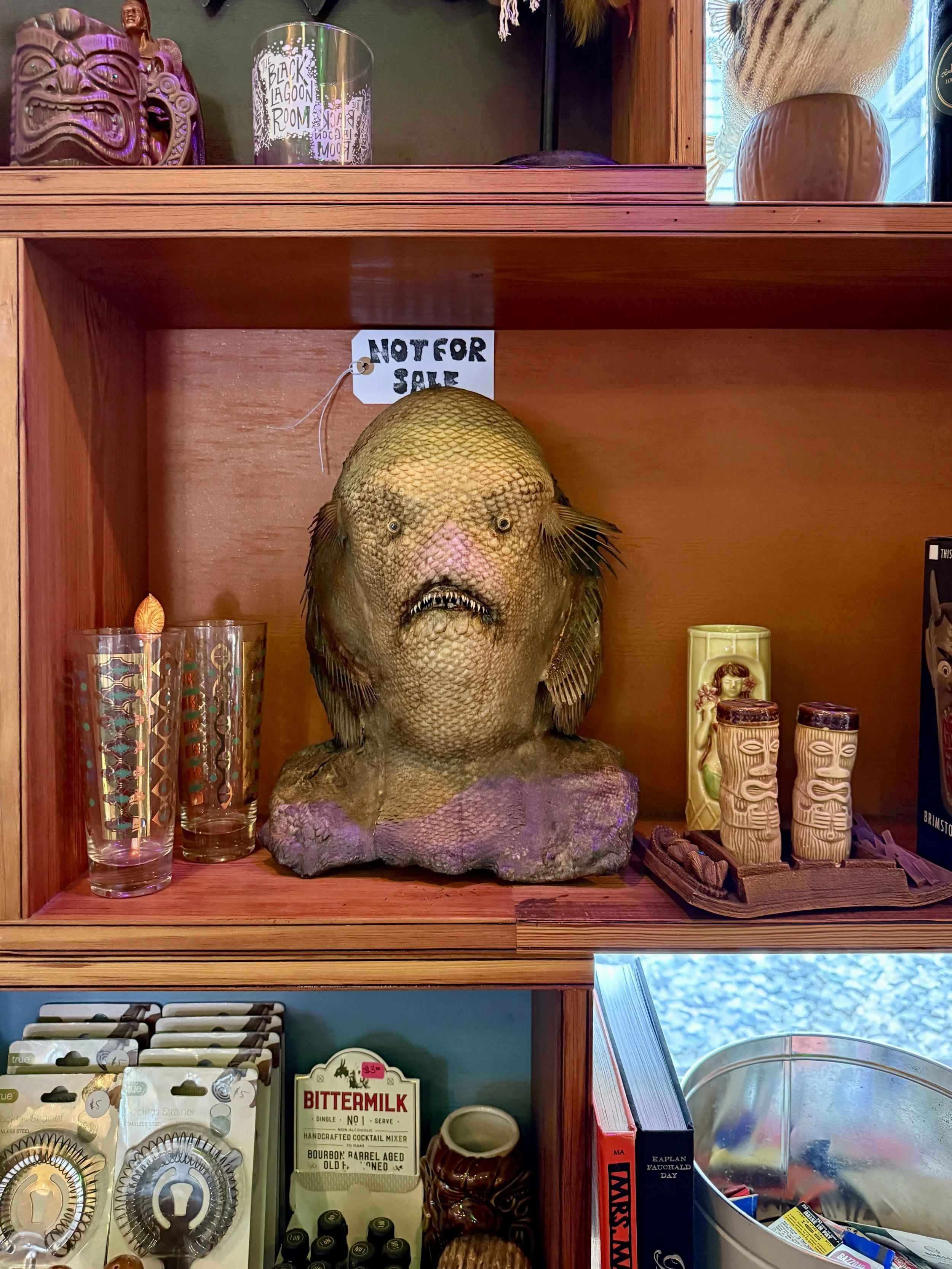
Part record store, part curiosity shop, Graveface is a delightful Wonderland of vinyl and weirdness. The records I was interested in were all around $20 to $30), but it was the curiosities that grabbed our attention: vintage taxidermy, antique Ouija boards and other objects you can’t decide if they’re creepy or cute. It’s like stepping into your cool goth cousin’s attic. 

African masks and quirky antiques at Graveface Records in the Starland District in Savannah, Georgia
A bust of a man with four eyes and mustache at Graveface Records in the Starland District in Savannah, Georgia
A fishman looking like the Creature from the Black Lagoon on a shelf at Graveface Records in Savannah (not for sale)

Note: The Graveface Museum, located across town and owned by the same guy, showcases a fascinating collection of horror-themed artifacts, vintage pinball machines and true crime memorabilia.

The facade of Flora and Fauna cafe, with blue window frames and aqua tiles in the Starland District in Savannah, Georgia

Flora and Fauna

📍 2401 Bull Street

This French-inspired café sits right on the corner and feels like a postcard come to life. The Jessica’s chicken salad sandwich was great, but let me tell you about Duke’s mushroom conserve baguette: earthy, savory, life-changing. It wasn’t just a sandwich; it was a spiritual experience. Pair it with a latte and one of their delectable pastries, and soak in the sunny, vintage vibes. It’s the kind of place where you make new friends standing in line and time seems to slow down (until you realize you’ve devoured the entire baguette in under five minutes).

Facade of Starlandia art supply store, with magenta paint, yellow stars and a rainbow flag in Savannah, GA

Starlandia

📍 2438 Bull Street

Forget those fancy-schmancy overpriced art stores; this place is an artist’s paradise. Starlandia lets you buy and sell used art supplies, so it’s a treasure hunt every time. Brushes, paints, canvases, elastic to make bracelets — they’ve got it all, often for a fraction of the cost. I even found a stash of gently used books. Oh, and don’t forget to say hi to the tiny shrimp swimming around in their tank by the register. 

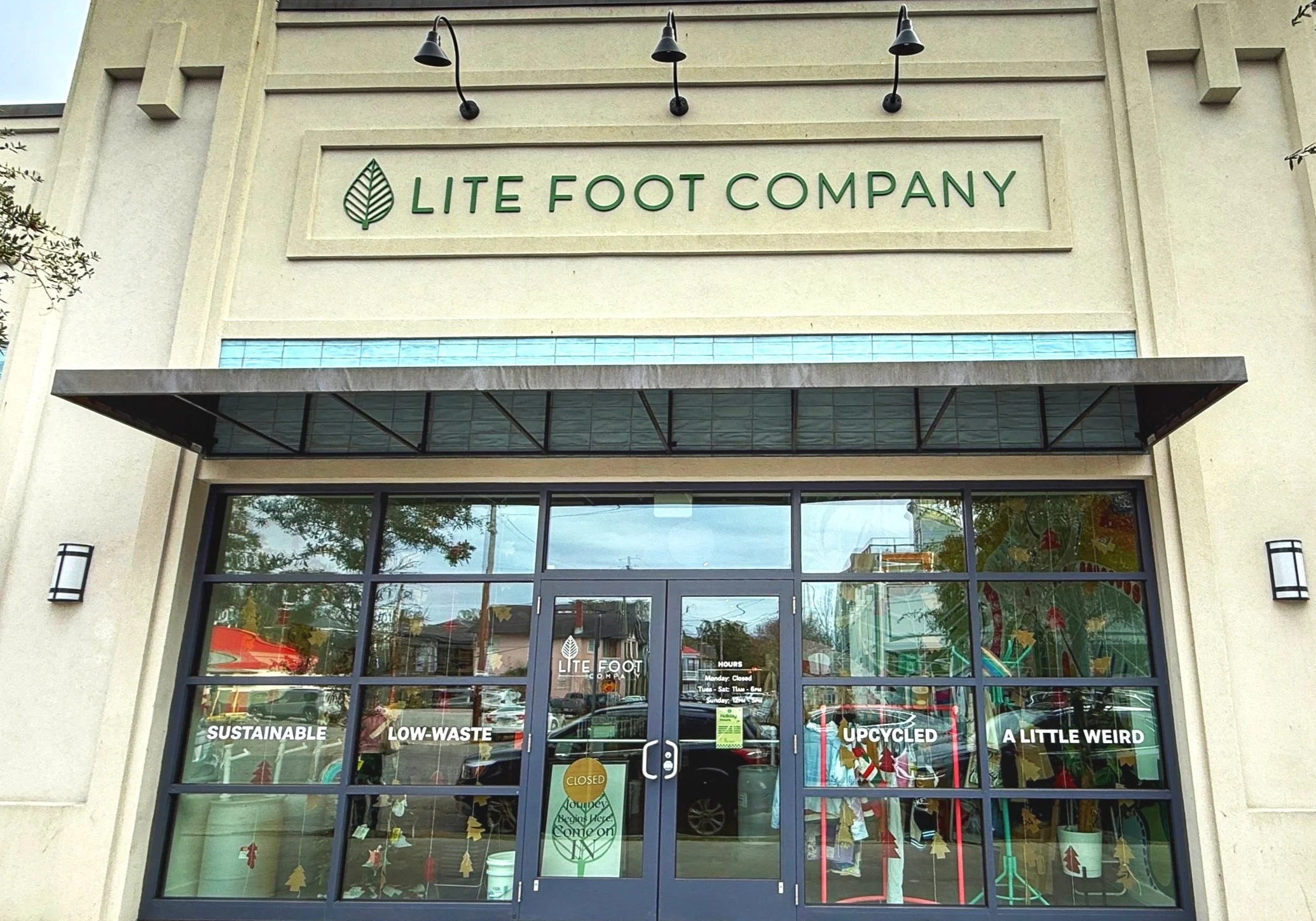
Facade of Lite Foot Company in the Starland District in Savannah, Georgia

Lite Foot Company

📍 2400 Bull Street

Going green has never looked so stylish. We weren’t quite sure what the Lite Foot Company was — but we certainly didn’t realize it was a go-to for eco-friendly everything. Think reusable straws, biodegradable glitter and chic tote bags that state, “I care about the planet.” It’s the kind of place that makes you want to upcycle your life and live sustainably ever after.

Exterior of the Wormhole dive bar in the Starland District in Savannah, Georgia

The Wormhole

📍 2307 Bull Street

A dive bar with personality, the Wormhole is a no-frills spot where you can catch all sorts of live music, comedy or the occasional karaoke night. It’s the kind of place where the drinks are strong, the crowd is diverse, and the vibe is unpretentious. Their lineup is always surprising — one night, it’s punk rock, the next, stand-up comedians testing their material.

Brick facade of Arts Southeast in the Starland District in Savannah, Georgia

Arts Southeast

📍 2301 Bull Street

Carrying the Starland torch, Arts Southeast is a dynamic hub for the city’s creative community. Established in 2014 by local artists, it offers 26 private artist studios, the Ellis Gallery for rotating exhibitions, and the On::View Artist Residency, which provides artists with high-visibility studio space to engage with the public. This nonprofit organization is  dedicated to making Savannah a cultural destination, hosting community events like the monthly First Friday Art March, fostering a vibrant and supportive environment for both emerging and established artists.

Glass facade of the Water Witch tiki bar in the Starland District in Savannah, Georgia

Water Witch

📍 2220 Bull Street

Water Witch tiki bar, named after the ill-fated U.S.S. Water Witch — a Civil War-era gunboat with a reputation for attracting bad luck — channels its legendary spirit into bold cocktails and an unforgettable atmosphere. Whether you’re in the mood for a classic Mai Tai or something bold and original, this is where your taste buds get to travel. Soak in the island-inspired charm, perfect for date night or catching up with friends — no SPF required. 

Teal painted facade with cream columns of the Vault in an old bank building in Savannah, GA

The Vault Kitchen & Market

📍 2112 Bull Street

Housed in a renovated historic bank building, the Vault effortlessly blends industrial charm with sleek modern design. The menu is just as inspired as the setting, featuring everything from sushi rolls to dumplings to creative entrées that leave your tastebuds begging for more. Whether you’re here for the incredible cocktails or the vibe, the Vault delivers. Perfect for date night or a lunch with friends, this spot is as chic as it is delicious.

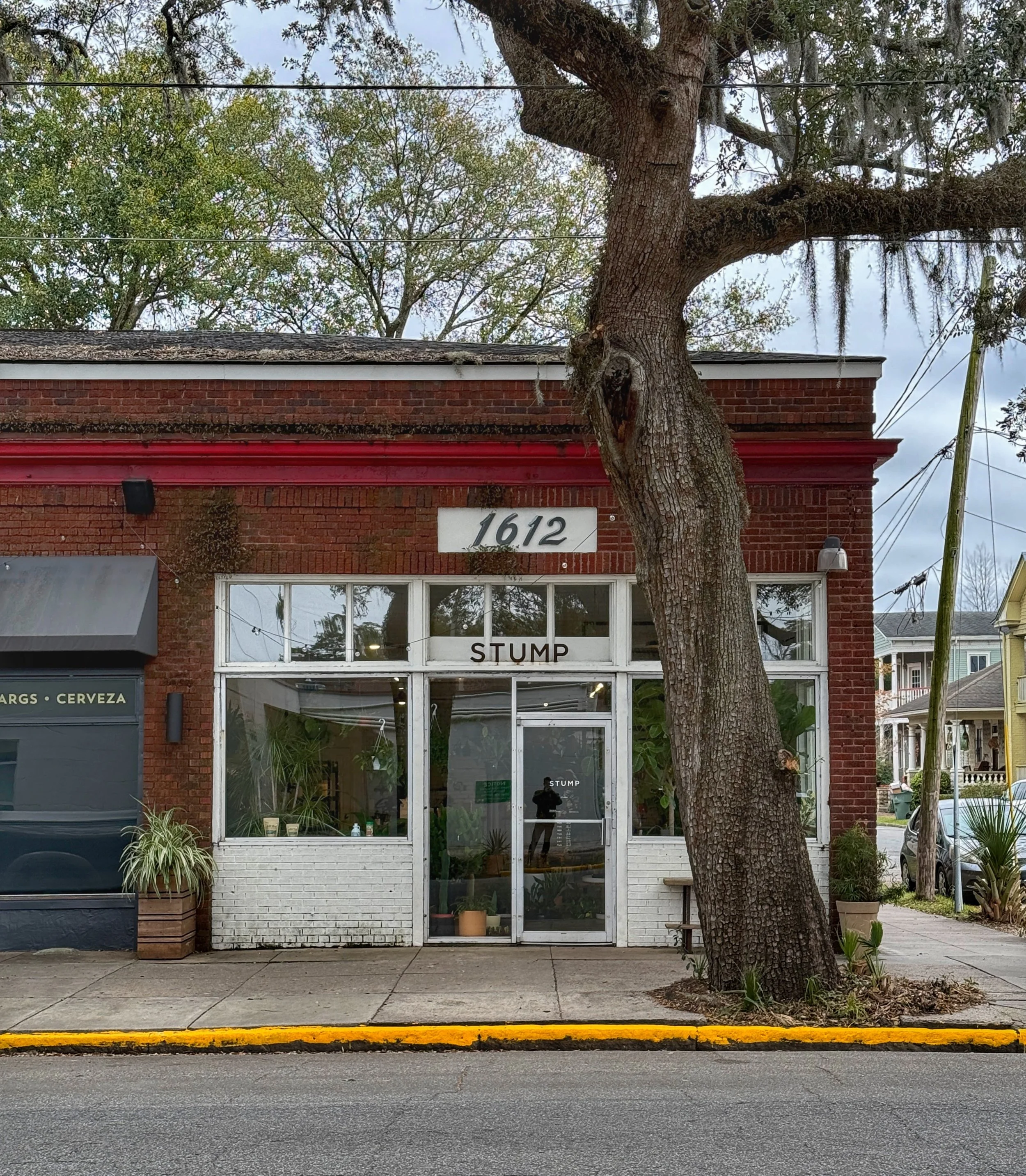
Facade of Stump plant shop, with brick and a tree out front in Savannah

Stump

📍 1612 Bull Street

Plant lovers, rejoice! Stump is a boutique plant shop specializing in rare and gorgeous greenery. Whether you’re looking for a monstera that’ll take over your living room or a low-maintenance succulent, they’ve got you covered. The staff is knowledgeable, so even if you’re a notorious plant killer, they’ll set you up for success. 

Stump also offers First Friday workshops, where plant lovers can get hands-on tips for caring for greenery, create their own terrariums, or learn the art of plant styling in a fun and welcoming setting.

Exterior of Woof Gang pet supply shop in Savannah, with pink below and turquoise up top

Woof Gang

📍 1601 Bull Street

If you’re traveling with a furry friend — or have a special dog in your life — this place is a must. Woof Gang offers gourmet treats (think dog-friendly cupcakes), premium toys and grooming services. It’s basically a day spa for your pet.

Annex of gingerbread Victorian house that's now E. Shave Booksellers in the Starland District in Savannah, Georgia

E. Shaver Booksellers

📍 1919 Bull Street

This bookstore is a reader’s paradise. The shelves are divided into well-curated sections, and there’s a small bar in the back serving coffee and cocktails. Bonus: It’s an annex of a historic gingerbread-style home, giving it an extra layer of charm. It’s the kind of place you’ll “stop by for five minutes” and emerge from two hours later with a pile of books and a latte (or prosecco) buzz.

Interior of E. Shaver Bookseller, with tables and shelves filled with books, and tables and chairs, in Savannah, Georgia

They host a variety of monthly book clubs by genre, including sci-fi and fantasy, romance, mystery, graphic novels and even one devoted to Jane Austen.  

Additionally, their podcast, Pull Your Shelf Together, features co-owners Melissa Taylor and Jessica Osborne discussing their latest reads and offering book recommendations.

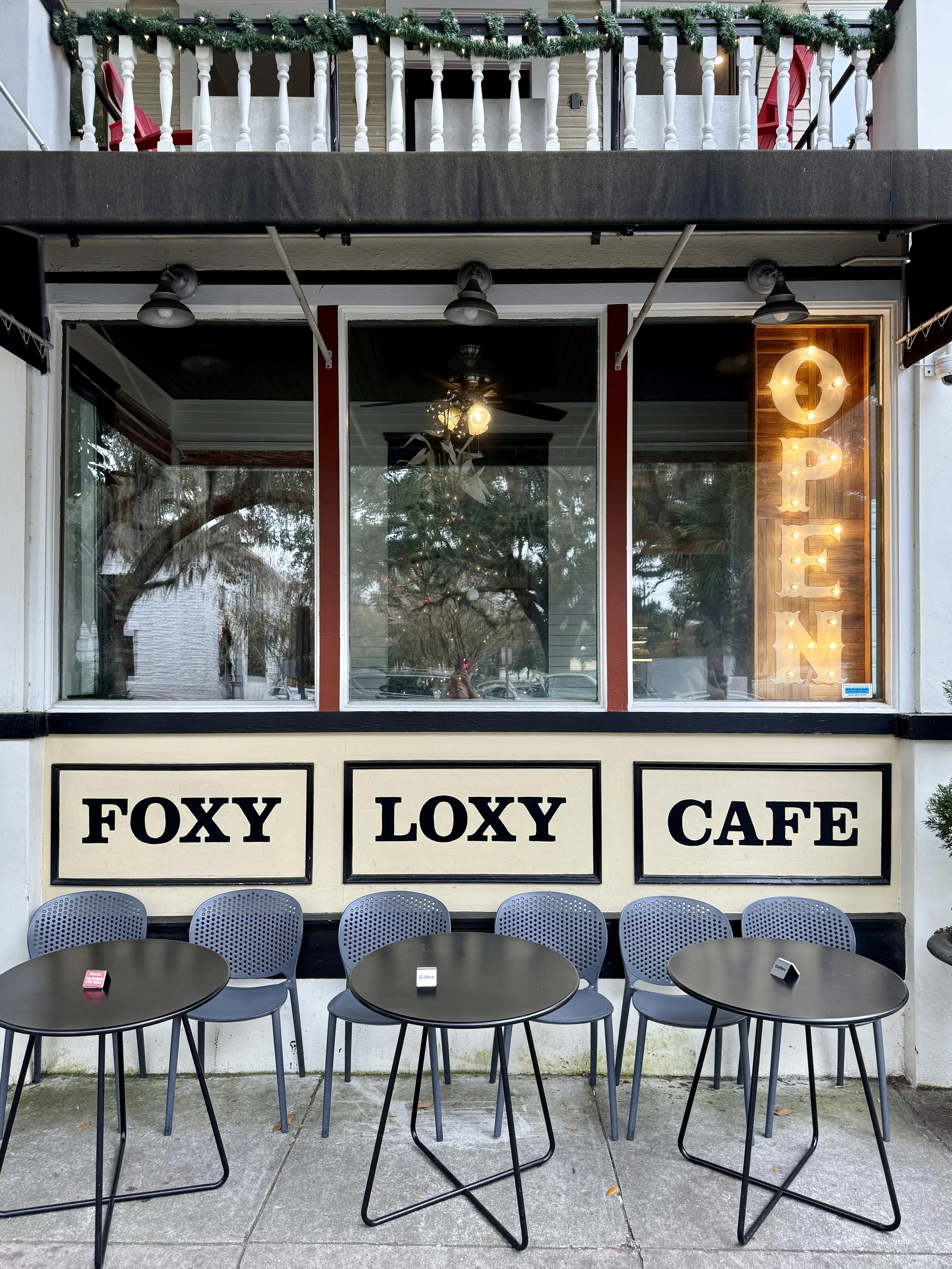
Front of Foxy Loxy Cafe, with a glowing Open sign, and small round black tables and chairs in Savannah, GA

Foxy Loxy Cafe

📍 1919 Bull Street

A sister establishment to the bookstore, the café offers Tex-Mex-inspired bites, craft coffee and a selection of wines. What sets it apart is the spacious backyard, complete with twinkling lights and fire pits — perfect for sipping a cortado or enjoying their famous tacos al fresco. They often host live music and s’more-themed Fire & Wine Saturdays, making it a true community gem.

Facade of With Love Tattoo in a brightly painted Victorian house in the Starland District in Savannah, Georgia

With Love Tattoo

📍 1917 Bull Street, Suite A

Most tattoo parlors embrace the edgy in their iconography, but this one leans into the cutesy. With Love Tattoo is where artistry meets ink. Known for its diverse team of talented artists, the studio specializes in creating custom pieces tailored to each client’s unique vision — whether you’re into delicate line work, bold traditional designs or intricate black-and-grey realism. The shop’s warm, welcoming vibe makes it as inviting for first-timers as it is for tattoo veterans. Even if you’re not ready for ink, the artwork on display is worth a visit.

Exterior of Neighborhood Comics, with a discount cart out front, in Savannah, Georgia

Neighborhood Comics

📍 1205 Bull Street

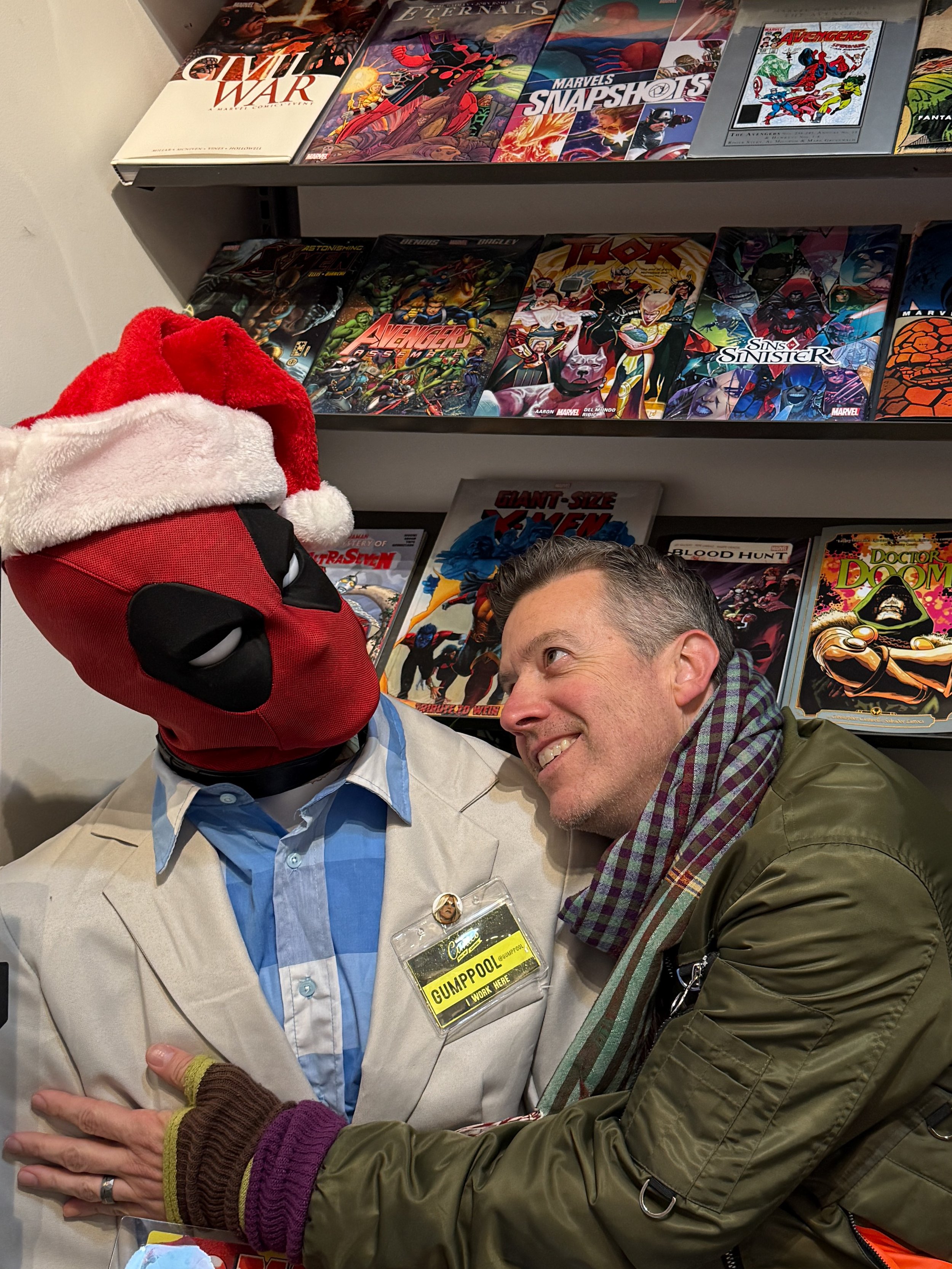
Neighborhood Comics caters to hardcore collectors and casual readers alike, with a mix of indie comics, graphic novels and pop culture merchandise. The staff is passionate and always ready to help you find your next fave read. Quirky displays are set up throughout the store — Wally was particularly smitten with the one of Deadpool as Forrest Gump.

Wally gazes lovingly up at Deadpool dressed as Forrest Gump, in Neighborhood Comics in Savannah, Georgia

They also feature a monthly artist-in-residence program, giving local and visiting comic artists a space to create, showcase their work and connect with fans.

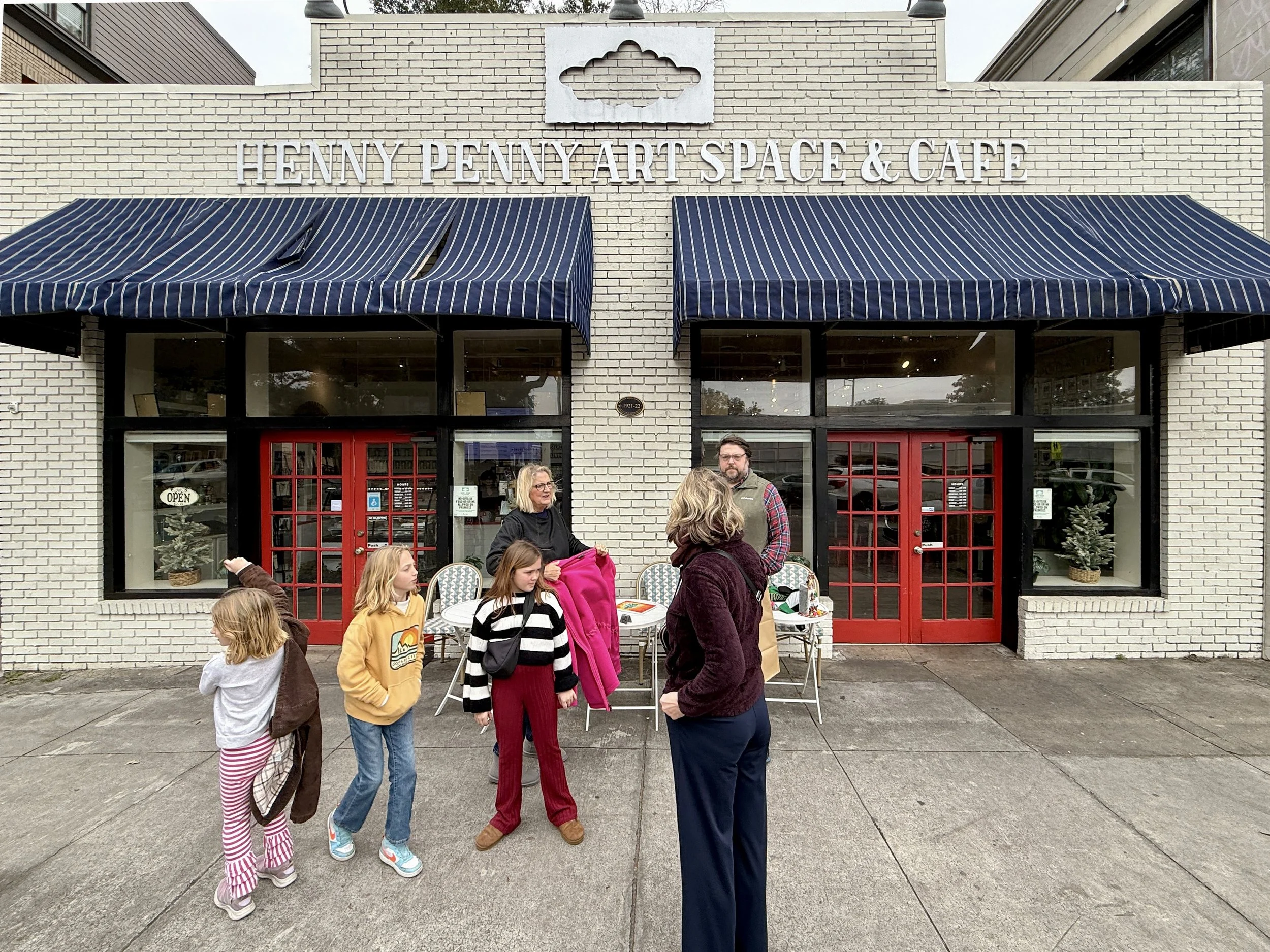
Henny Penny Art Space & Cafe

📍 1514 Bull Street

This family-friendly café is equal parts cozy coffeeshop and creative playground. There’s a full menu of specialty coffees and baked goods, including vegan donuts. They regularly host art classes for kids, so parents can sip a latte while their little ones explore their inner Picasso. The art on display is often created by local children, giving the place a sweet, community-focused vibe.

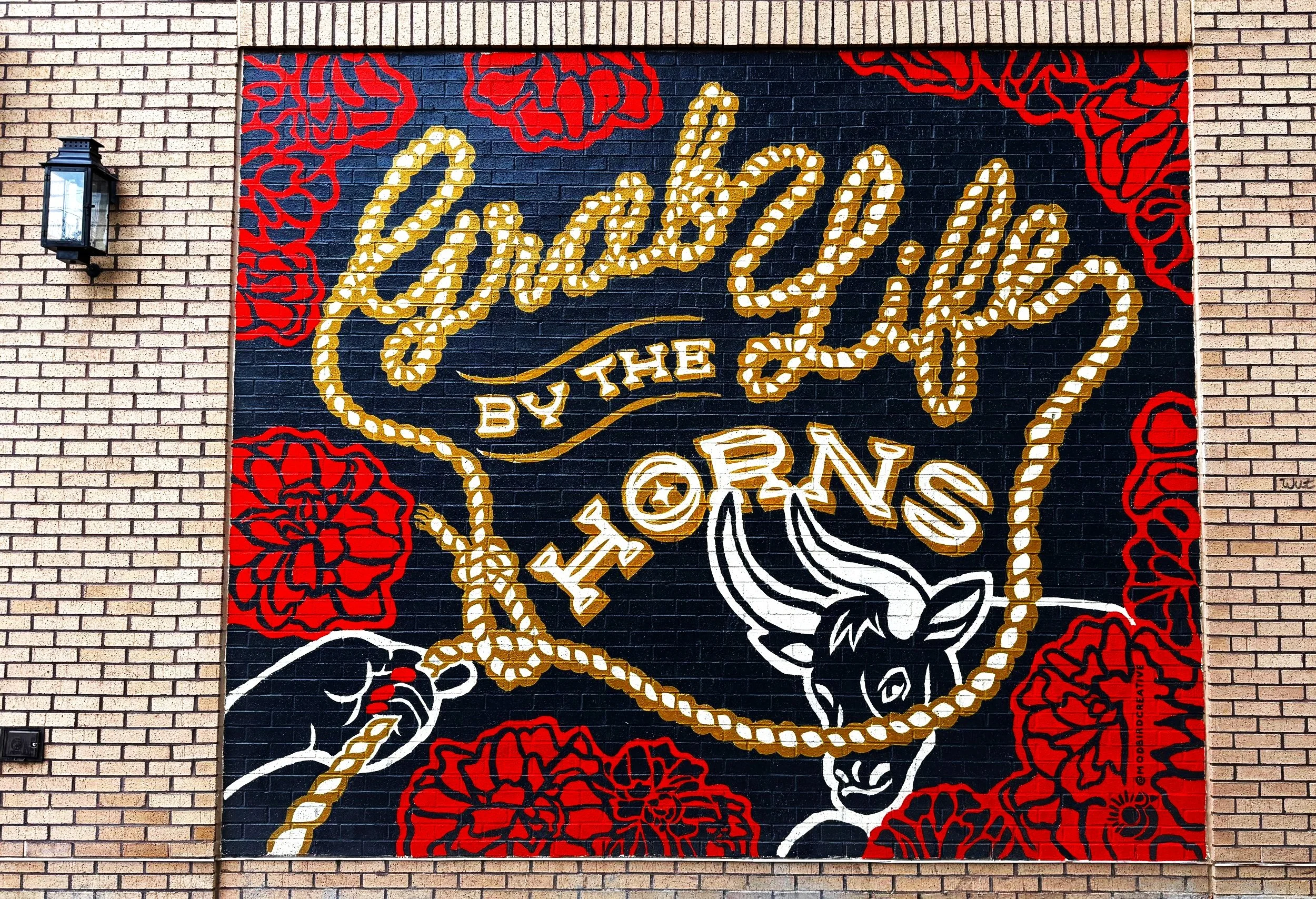
Mural of flowers, lasso and bull that reads, "Grab life by the horns" in Starland, Savannah, Georgia

Star Attractions of Starland in Savannah 

Starland District is Savannah at its quirkiest and most creative. It’s a hood where every corner holds a surprise — and possibly a new friend. So skip the usual downtown haunts and come see what all the buzz is about. –Wally

Weird and Wonderful Woodstock, New York

Woodstock unplugged: The site of the 1969 music festival is an artsy, laidback town in the Hudson Valley, where cool shops, great eats and local treasures abound.

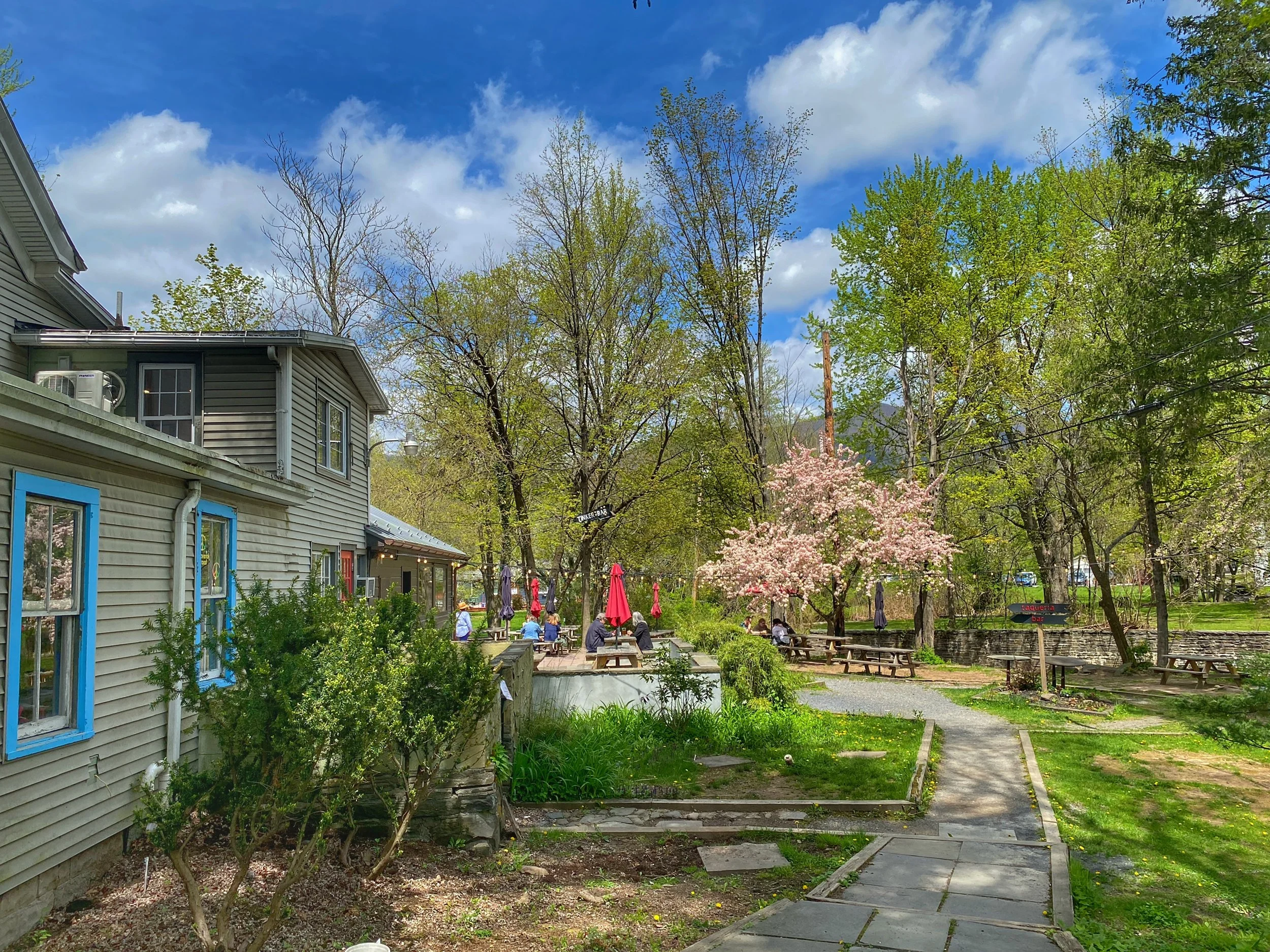
The side of a shop and path leading to the back patio of Tinker Taco in Woodstock, NY

A glimpse of the adorable backyard of Tinker Taco along Tannery Brook in Woodstock, New York

When you hear the name Woodstock, do you picture Snoopy’s little yellow sidekick from the Peanuts comic strip, or do peace-loving hippies, patchouli and that legendary rock and folk music festival held in the summer of 1969 come to mind?

Well, here’s the twist, man: Technically, the historic lovefest didn’t even happen in Woodstock! It actually took place on a 600-acre dairy farm, in the neighboring town of Bethel, about 60 miles southwest. Although it was a success in terms of cultural significance, it was a logistical failure — there wasn’t enough food or enough toilets. But according to Wally, they were high, they were hippies, and they couldn’t have cared less.

Despite this misconception, I imagine Woodstock had a better ring to it than Bethel, and the name stuck. 

Three men stand on Tannery Brook Bridge in Woodstock, New York

Papa, Wally and Duke on Tannery Brook Bridge, enjoying their time in Woodstock, New York

Woodstock’s laidback, artistic spirit continues to evolve and thrive, and this small town, nestled in the foothills of the Catskill Mountains along the Hudson River, turned out to be exactly the vibe we were looking for during our four-day Hudson Valley weekend.

Read on for our list of our favorite spots along Mill Hill Road and Tinker Street in the charming burg of Woodstock, including a couple of recommendations on where to stop and refuel along the way. 

Tinker Street and Mill Hill Road

The main thoroughfares of Woodstock are Tinker Street and Mill Road, a walkable stretch lined with locally owned shops, restaurants, galleries and other businesses catering to residents and visitors alike. 

The lawn, barn and seating at The Mud Club in Woodstock, NY

The Mud Club 

We started our day at the Mud Club (a nod to the famously muddy aforementioned festival in Bethel). We headed straight to the hulking brown barn to order four of their Montreal-style bagels from the service window. 

Three men stand in front of the signs on the barn at the takeout window of The Mud Club in Woodstock, NY

Established in 2017 by brothers Nicolas and Gray Ballinger, along with their father Doug, their irregularly shaped hand-rolled bagels are briefly poached in honey-sweetened water and baked in a wood-fired oven, resulting in a bagel with a crisp exterior and a denser chew than a New York-style bagel. 

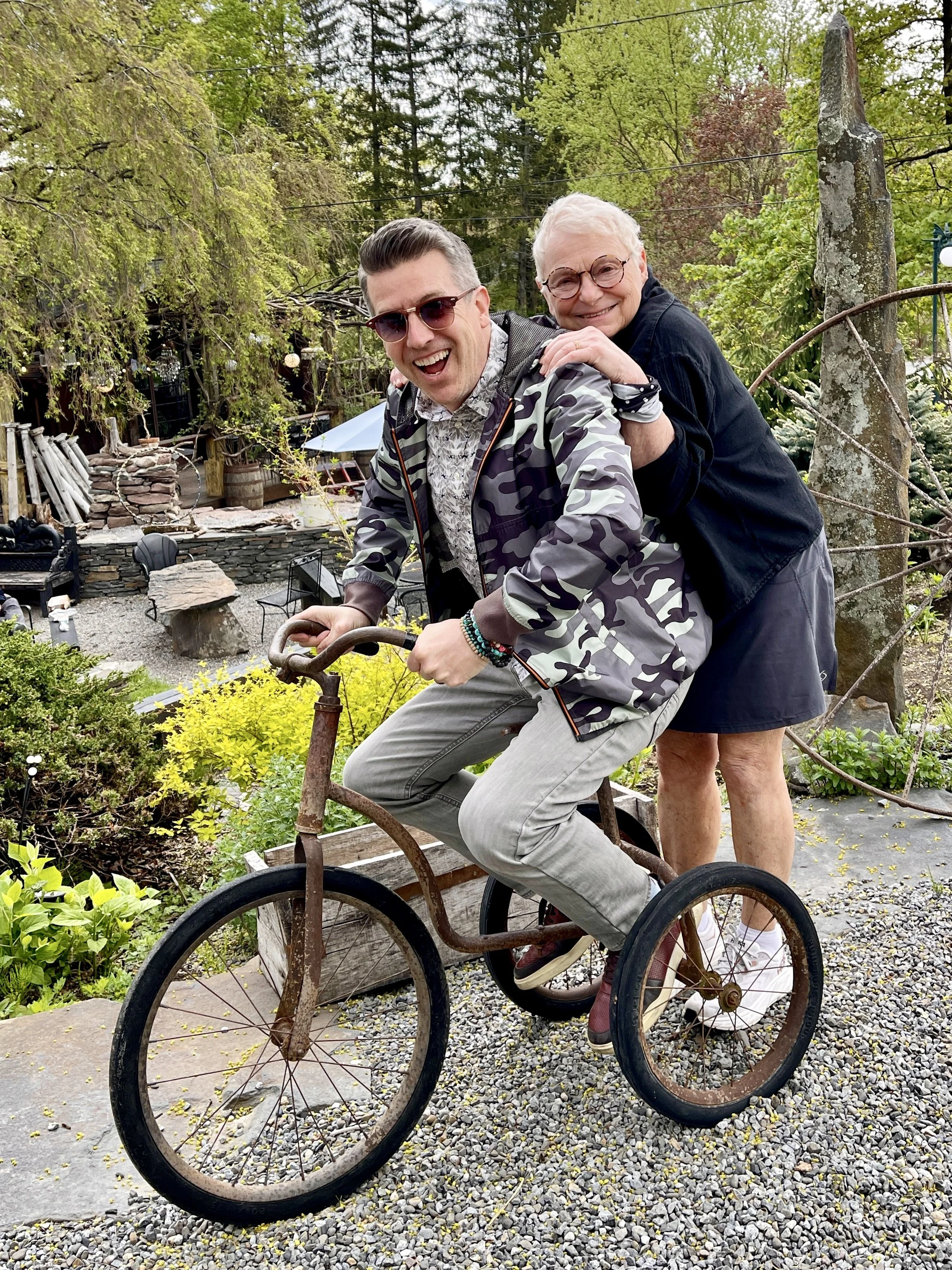
A man and woman ride a large trike at the Mud Club, Woodstock, NY

The Mud Club vibe? Think rustic yet quirky mountain lodge with a side of artisanal coffee. Their rotating selection of single-origin beans, sourced from regions like Ethiopia, Kenya, Peru and Honduras, expertly roasted by Brooklyn-based Mud Club, are sure to satisfy even the most discerning caffeine connoisseur.

The Mud Club
43 Mill Hill Road

Exterior of Bread Alone Bakery in Woodstock, NY

Bread Alone Bakery

You know what they say: Man cannot live on bread alone. But if we did — we’d be happy getting our sustenance at Bread Alone. Even though we had already eaten bagels at Mud Club, we couldn’t resist stopping at this local bakery. What started as an entrepreneurial endeavor by artisan baker and educator Daniel Leader in the early ’80s, with loaves being sold out of the trunk of the family station wagon, has grown into a trailblazing bakery with a big following, with additional locations in Boiceville and Rhinebeck. 

This is the place to find an assortment of breads made with certified organic grains milled in Halifax, Pennsylvania, along with a pastry counter filled with sweet and savory treats. I purchased a chocolate caramel cake to enjoy later for Wally’s birthday, and trust me — it was a winner!

Bread Alone Bakery
22 Mill Hill Road

Exterior of Candlestock, with small tree, red mushrooms and white picket fence with fake flames in Woodstock, NY

Candlestock

Beyond the white picket fence with yellow flame-topped posts at 16 Mill Hill Road is Candlestock, a one-of-a-kind family-owned business offering a wide selection of beeswax, drip and handmade candles in every shape, size and color imaginable. 

Drip Mountain, a large creation made of dripped candle wax under black light at Candlestock in Woodstock, NY

Wally and I purchased a few hand-dipped tapers and were in awe of the impressive, rainbow-colored “Drip Mountain,” a towering 8-foot-high by 3-foot-wide wax creation dramatically lit by blacklight that has been steadily growing since 1969. 

Candlestock
16 Mill Hill Road

Exterior of The Golden Notebook in Woodstock, NY, with books in the front windows

The Golden Notebook 

This small but impressive independently owned bookshop, named after the original owner’s favorite Doris Lessing novel, has been a local staple for nearly five decades. Among the shelves and tables, you’ll find a mix of popular and rare titles spanning both fiction and nonfiction, as well as a selection of signed books and graphic novels by acclaimed author Neil Gaiman. His writing often features darkly whimsical themes, complex characters and richly imagined worlds.

A section at the front of the shop is dedicated to local history and the surrounding Hudson Valley, with a selection that highlights the region’s storied past. 

Whether you’re looking for books for adults or children, you’ll easily find your next read among the thoughtfully curated selections on display.

The Golden Notebook
29 Tinker Street

Timbuktu 

You’ve probably heard or even uttered the phrase, “from here to Timbuktu” to describe a faraway place. Well, just a few doors down from the Golden Notebook is a shop with that name, filled with global and one-of-a-kind goods. You’ll find a diverse array of handmade home goods, pillows, quilts and jewelry by the shop’s owner, Jaime Surgil. Wally and I especially loved the whimsical aquatint etchings by New York-based artist Stephen Francis Duffy. Whether you’re browsing or buying, you’re likely to leave this boutique feeling inspired.

Timbuktu
2 Tannery Brook Road

Woodstock Leisure Syndicate 

When Wally and I spotted a sign across the street with two bears hugging beneath a radiant moon, we had to check it out. It turned out to be tied to the concept shop Woodstock Leisure Syndicate, a collaborative project by the design duo Grant Krajecki and Ryan Kelly.

The shop is housed in the historic Old Forge House, a building that formerly served as the village blacksmith’s workshop and home. Stop by to browse quilted seating upholstered in nylon, as well as apparel, books, artwork and chunky, oversized Grey Ant eyewear — designed in New York by Krajecki and produced in Italy. I especially loved their playful take on the classic smiley logo, with “NY” for the eyes and “Woodstock” forming the smile. It’s available as a patch, tie-dyed T-shirt and super soft hoodie.

Woodstock Leisure Syndicate 
54C Tinker Street

The bar at Tinker Taco, with lights hanging down above it

Tinker Taco

By this time, we had worked up an appetite and decided to try the cute spot we had seen earlier. Plus, you can never go wrong with Mexican. 

To reach Tinker Taco, you have to walk behind the Old Forge. It’s a relaxed, order-at-the-bar-and-find-a-seat kind of place. We chose a picnic table on the banks of Tannery Brook, a stream that runs through town. 

Two frozen margaritas at Tinker Taco in Woodstock, New York

The tortillas are handmade from local non-GMO corn, and the taco options range from chicken to barbacoa to vegetarian. Plus, the frozen margaritas are muy ricas!

Tinker Taco
54 Tinker Street

Exterior of the Village Green B&B, a white building with red trim, with a crazy sculpture out front, in Woodstock, NY

Village Green Bed & Breakfast 

In the center of Woodstock, you’ll find a small square and a charming storybook Victorian B&B. Known as the Village Green, it features the fantastical assemblages Merlin and Fantasy Boy, whose faces are embellished with hundreds of lustrous glass beads and whose bodies are covered in ceramic figurines, which instantly caught our attention. 

"Fantasy Boy," a sculpture made of small figurines, in Woodstock, New York

Village Green Bed & Breakfast
12 Tinker Street 

Tinker Toys Too

Tinker Toys Too, named after the street, not the toy, has been delighting kids of all ages for over three decades, thanks to its owner, Suki Beeh. Whether you’re looking for stuffed animals, storybooks, or educational wooden puzzles and games, you’ll find imaginative items throughout the store. Every shelf is filled with a delightful selection of classic and new toys, from Colorforms to Kewpie-like Sonny Angel figurines. These are toys made to last for years of play and discovery.

Tinker Toys Too
5 Mill Hill Road

St. John, a sculpture of a torso with half a face, half a skull, at WAAM gallery in Woodstock, NY

WAAM (Woodstock Artists Association & Museum) 

WAAM, bam, thank you ma’am! This gallery is a great spot if you’re looking for a break from shopping. Since 1919, WAAM has been showcasing an eclectic mix of local talent and celebrating Woodstock’s long history as an arts haven. Whether you’re into paintings, sculptures or photography, there’s always something fresh to catch your eye. The museum also houses an impressive permanent collection, featuring works by notable artists like Milton Avery and Yasuo Kuniyoshi, giving you a peek into the creative roots that helped shape this quirky town. There’s a $10 suggested donation. 

WAAM (Woodstock Artists Association & Museum)
28 Tinker Street

A white houselike shop with bright orange and purple entryway at Casa Ziki, in Woodstock, NY

Casa Ziki

The eye-catching entrance of Casa Ziki drew us in like a brightly colored flower attracting a pair of hummingbirds. There was no turning back once we saw the Georgian-style pediment, awash in a combination of tangerine and lavender — a custom design by the local duo Headspace. It definitely sets the tone for what awaits within. 

Brightly colored art and housewares for sale at Casa Ziki

This modern homewares boutique, with locations in Brooklyn and Woodstock, is co-owned by wife and husband Sylvanna Kiss and Sasha Zinshtein. Inside, you’ll find a colorful selection of well-designed décor, playful accessories, lighting, art and pieces by local makers. Whether you’re shopping for yourself or someone else, you won’t regret stopping by.

Casa Ziki
35 Mill Hill Road

Worn leather sofas, a natural wood table and large plants inside the cocktail bar Early Terrible in Woodstock, NY

Early Terrible

We ended our delightful day in Woodstock at Early Terrible, the wine and cocktail bar and sister property next door to the Mud Club. A twisted column topped with a silver tankard and a peculiar-looking ogre (or perhaps a golem or troll?) peeking out from behind it marked the start of the gravel path that led us there.

VIntage chandeliers hang from gnarled wood branches that form a canopy over the patio of Early Terrible in Woodstock, NY

The interior is dark and moody, while the patio fits in with the whimsical aesthetic that’s simultaneously rustic and glam. It’s filled with delightful details, from glittering disco balls and weathered wood planks to tufted leather couches and ornate cut-glass chandeliers. 

A sprawling root structure climbs above the bar and stretches outward, leaving you feeling as if you’ve followed Alice down the rabbit hole and tumbled into a magical place.

The cocktail menu offers an imaginative selection of signature drinks. I ordered the Smoke Signals, a blend of Banhez mezcal, a dash of amaro, tamarind purée and pineapple in a glass rimmed with a smoky house-made chili salt, while Wally opted for the Bramble, a refreshing concoction made with gin, crème de cassis and lemon juice. My parents each ordered beer, and the four of us shared a wood-fired sourdough pizza. Note: If you’re visiting on a weekday, don’t get your hopes up — pizza is only served on the weekends.

Early Terrible
45 Mill Hill Road

A man and woman sit on a bench at The Mud Club, Woodstock, NY

Feeling Groovy

Woodstock turned out to be our favorite spot in the Hudson Valley. The town’s blend of artistic spirit, quirky shops and laidback atmosphere make it the perfect place to explore and chill. Whether you’re browsing the boutiques or taking in some local art, it’s hard not to fall under Woodstock’s groovy spell. –Duke

Gorgeous Guanajuato: The Ultimate Day Trip From San Miguel de Allende

A one-day itinerary for travelers looking to experience the best of Guanajuato City, including the Museo de las Momias, the Teatro Juárez and the funicular to the Pipila Monument and overlook.

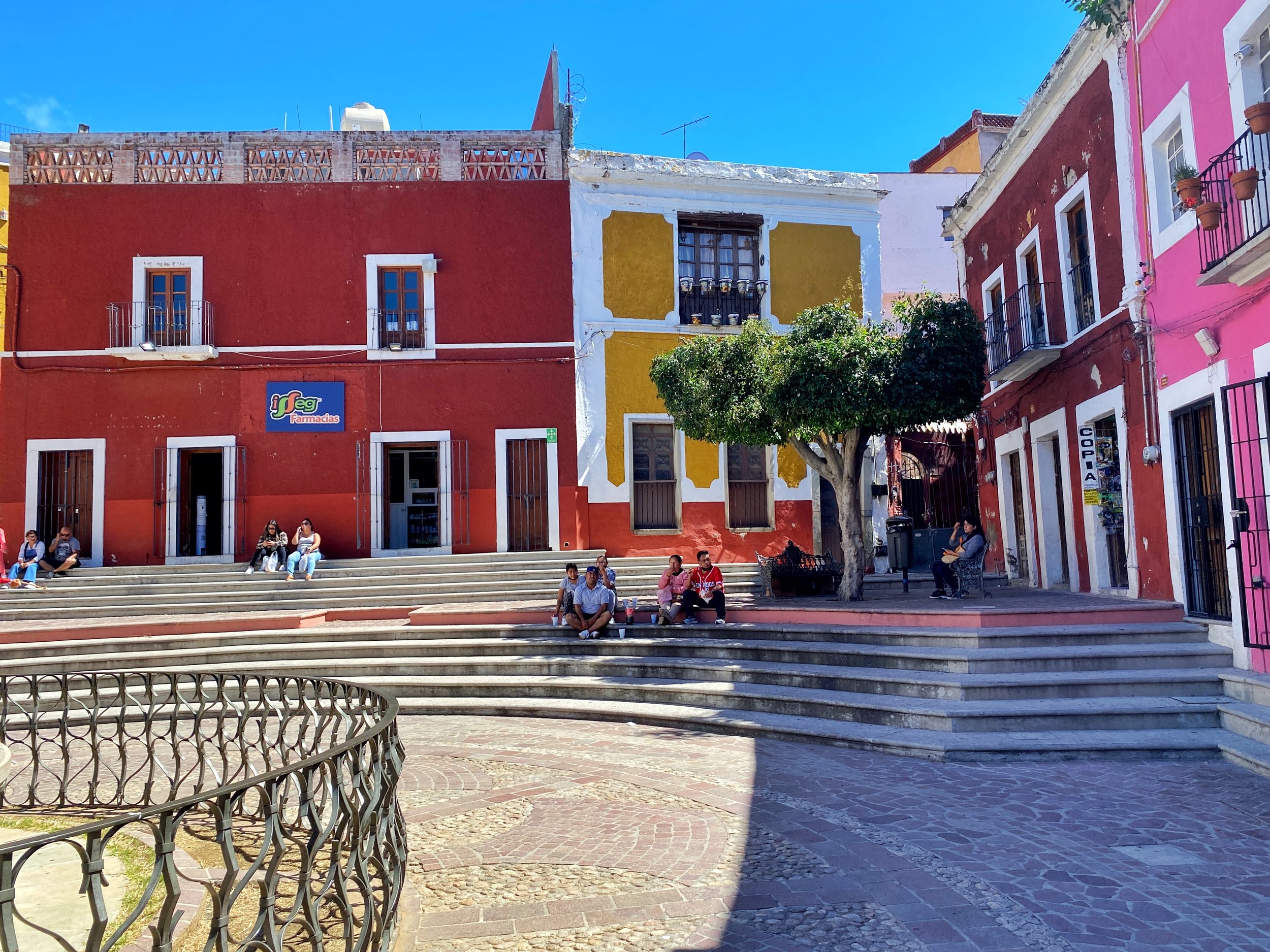
Colorful buildings in town square with rounded fence and people sitting on steps by tree in Guanajuato, Mexico

If you’re staying in San Miguel de Allende, you’ve gotta take a day trip to Guanajuato — and we’ve got the perfect itinerary for you.

Even if you’re not into displays of desiccated corpses, the charming and colorful capital of Guanajuato, Mexico has plenty to offer. It makes for a delightful day trip from the tourist hotspot San Miguel de Allende. 

The sights in Guanajuato are equal parts beautiful and bizarre.
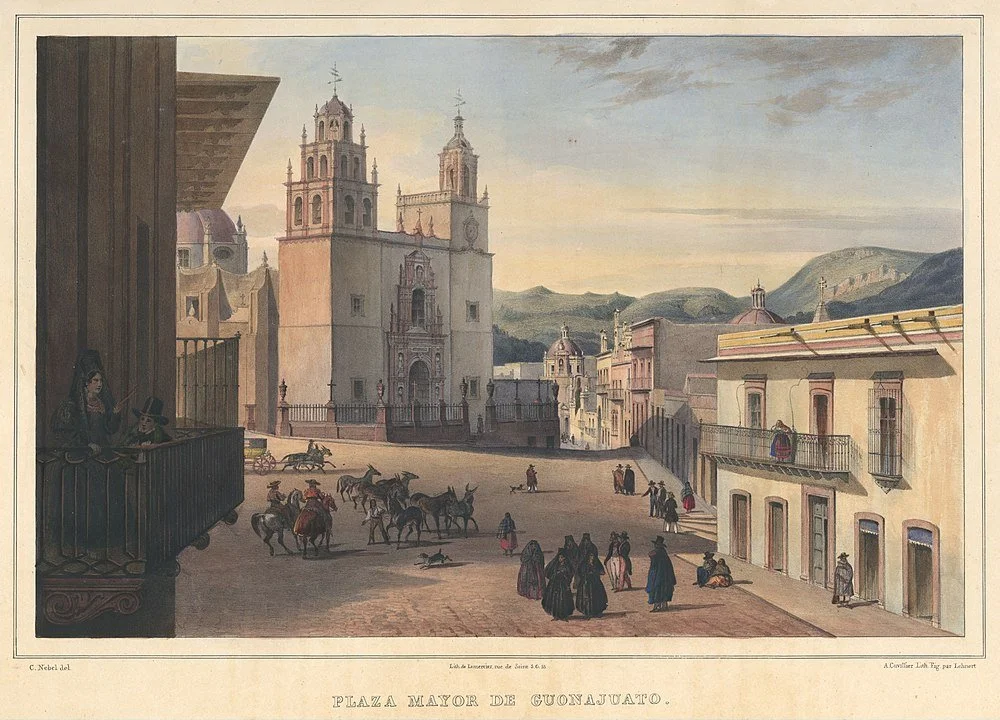
Historic illustration of the Plaza Mayor de Guanajuato, Mexico, showing the church, other buildings, cattle and people walking and riding horses

A Brief History of Guanajuato

Originally inhabited by indigenous groups, the region was conquered by the Spanish, and the town of Guanajuato was incorporated in 1554. 

Like San Miguel, Guanajuato was an important and wealthy colonial city due to the region’s large silver deposits. It played a pivotal role in Mexico’s struggle to break the Spanish yoke. The city was the site of the first major battle of the Mexican War of Independence, which took place in 1810. Guanajuato also played a significant role in the Mexican Revolution, which began in 1910 — it was the site of the first battle (which the revolutionaries won).

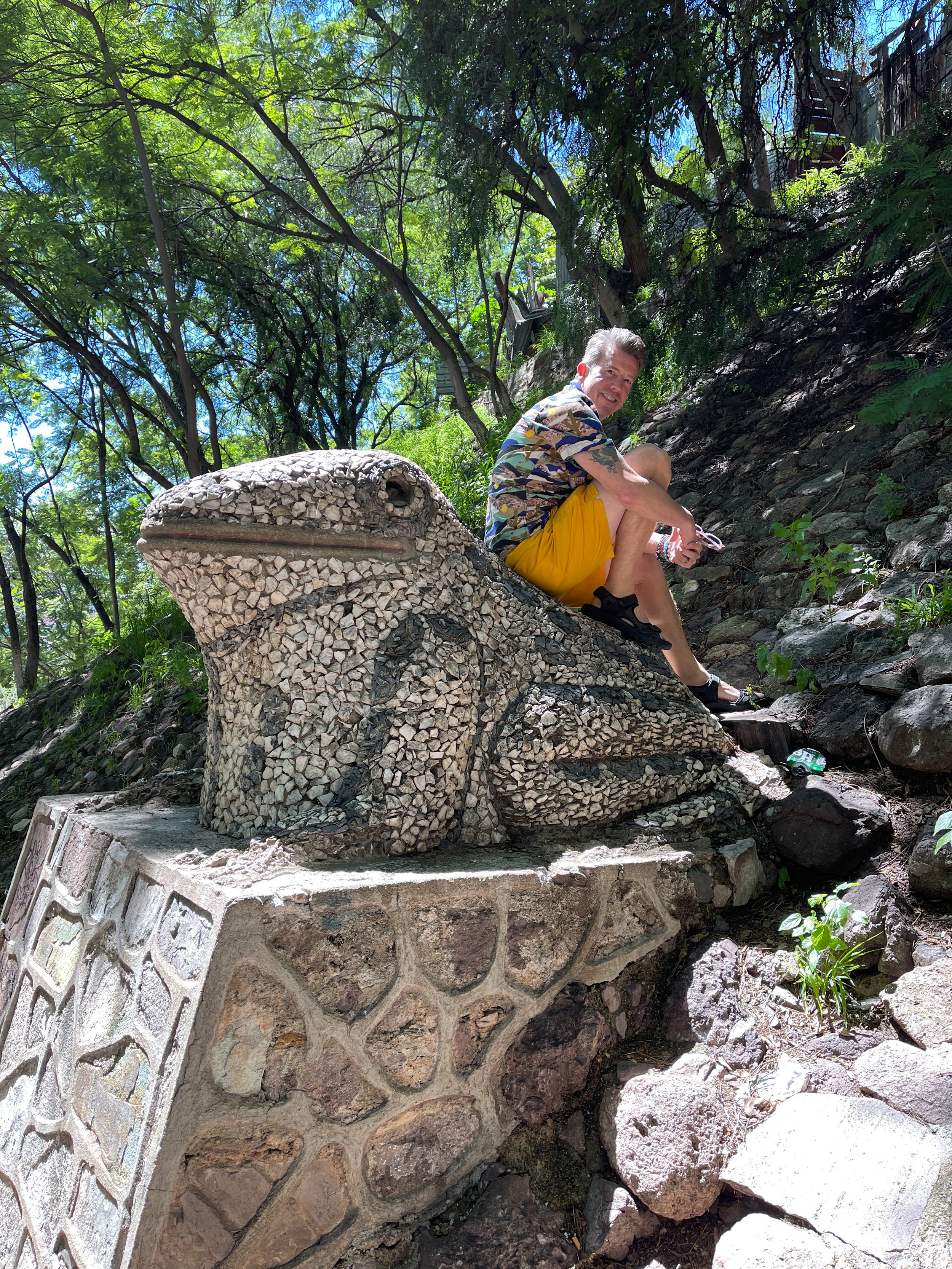
Man in yellow shorts sits on a large mosaic stone statue of a frog amidst trees in Guanajuato, Mexico

Hop to it! Follow this walking tour of charming and quirky Guanajuato.

Guanajuato Day Trip Itinerary

With this tried-and-true one-day itinerary, you’ll experience the best of colorful and quirky Guanajuato, taking in the top attractions, flavors and vistas that this charming city has to offer.

Start your day at the Mummy Museum, then head to the Plaza of the Frogs before strolling along the main street of town. Here are the places we recommend stopping at, before ending with a funicular trip to overlook this incredible mountain town. With its vibrantly painted buildings and lively plazas, Guanajuato is one of Mexico’s most beautiful colonial towns.

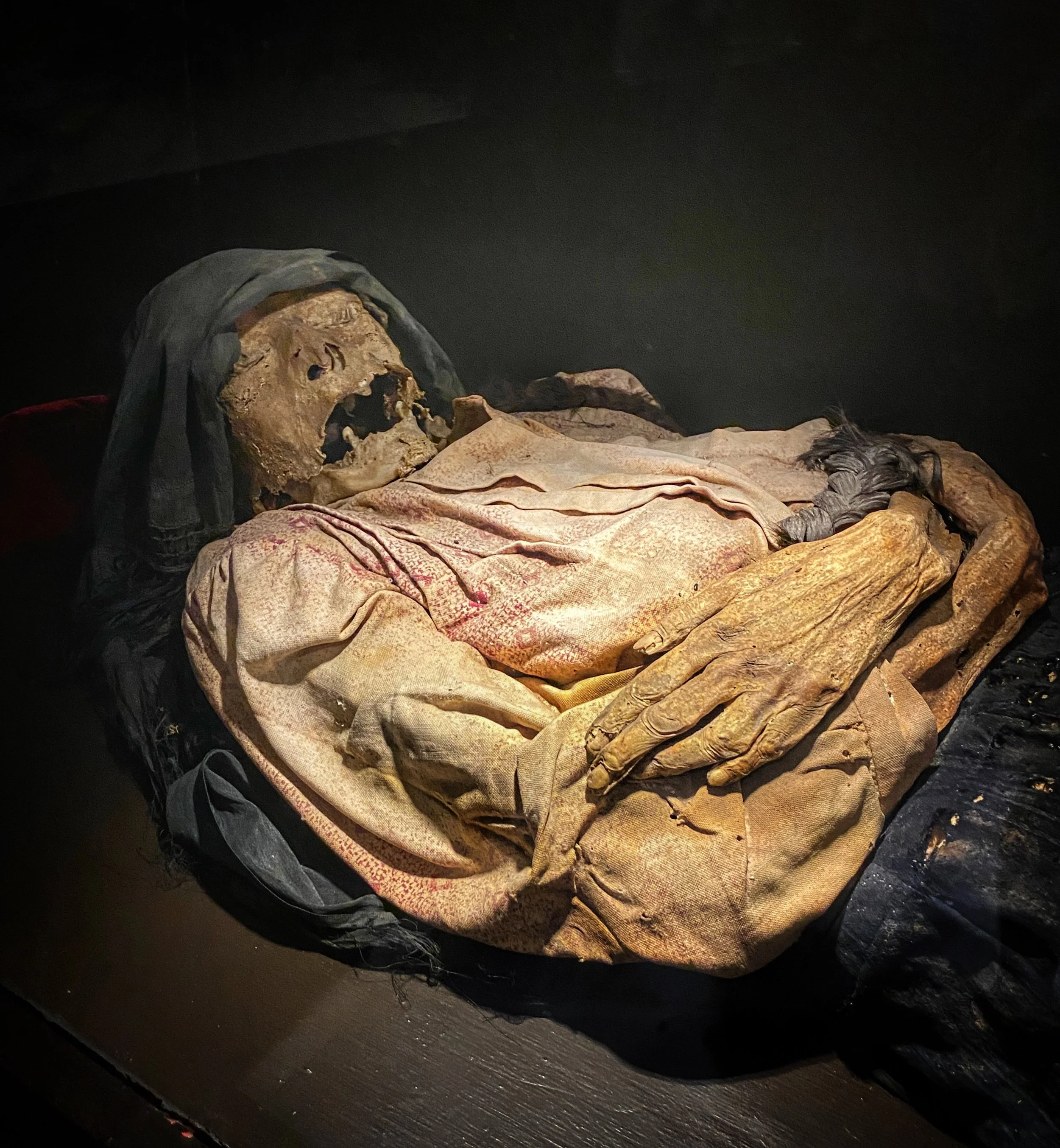
A horrific, naturally preserved corpse, desiccated hands crossed over its chest, mouth open with a few teeth left, wearing a pink top and a blue headdress in the Mummy Museum of Guanajuato

Museo de las Momias

Looking for a bit of spook-tacular fun? The Museo de las Momias has you covered. In our estimation, this is the town’s main attraction. The macabre museum features the desiccated husks of some of the city’s former residents who couldn’t pay their burial tax, were dug up and discovered to be naturally mummified due to the arid climate. It’s a morbidly fascinating experience that’s not for the faint of heart.

LEARN MORE: The Haunting and Horrific Mummy Museum of Guanajuato

Explanada del Panteón Municipal s/n

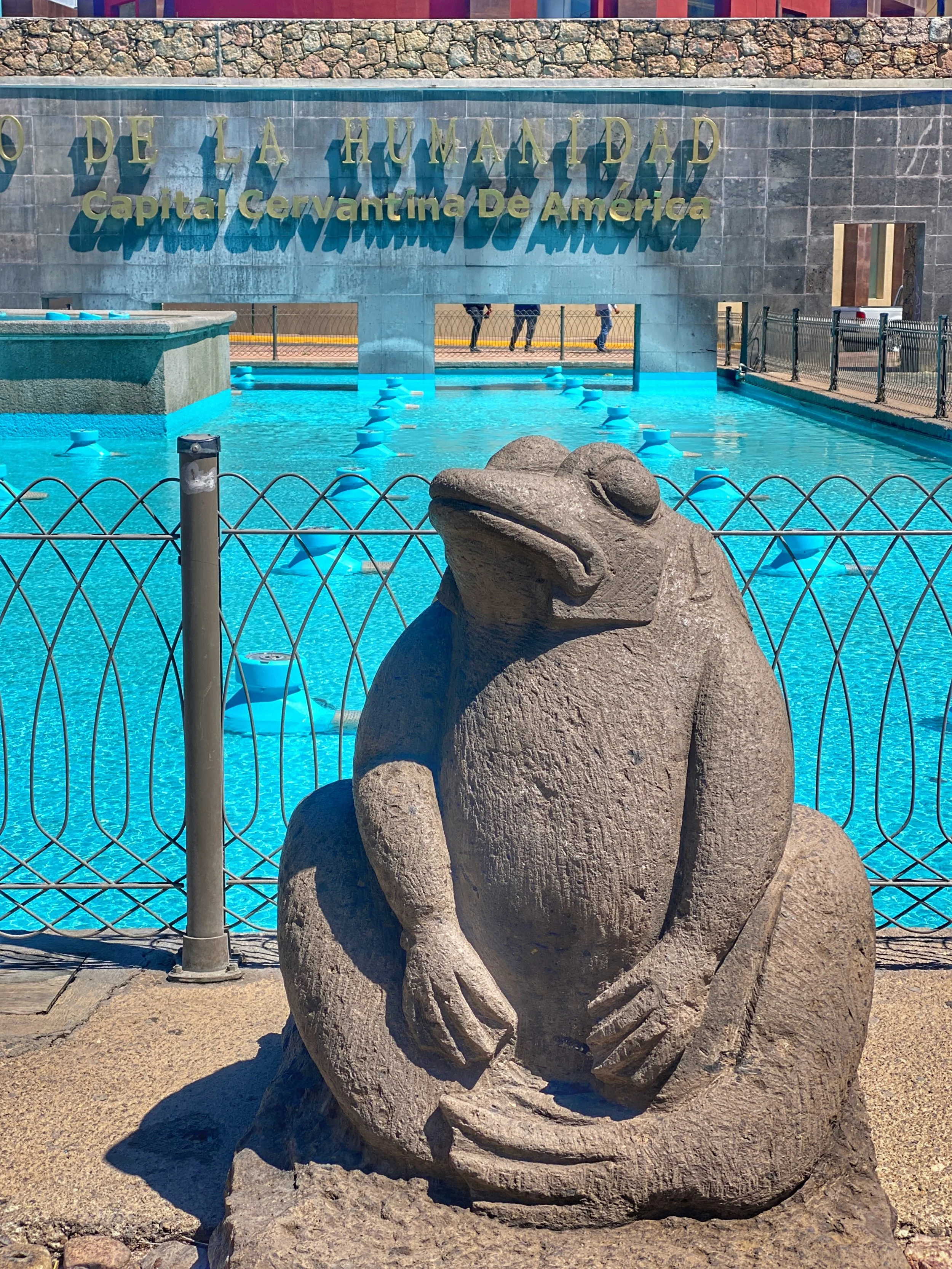
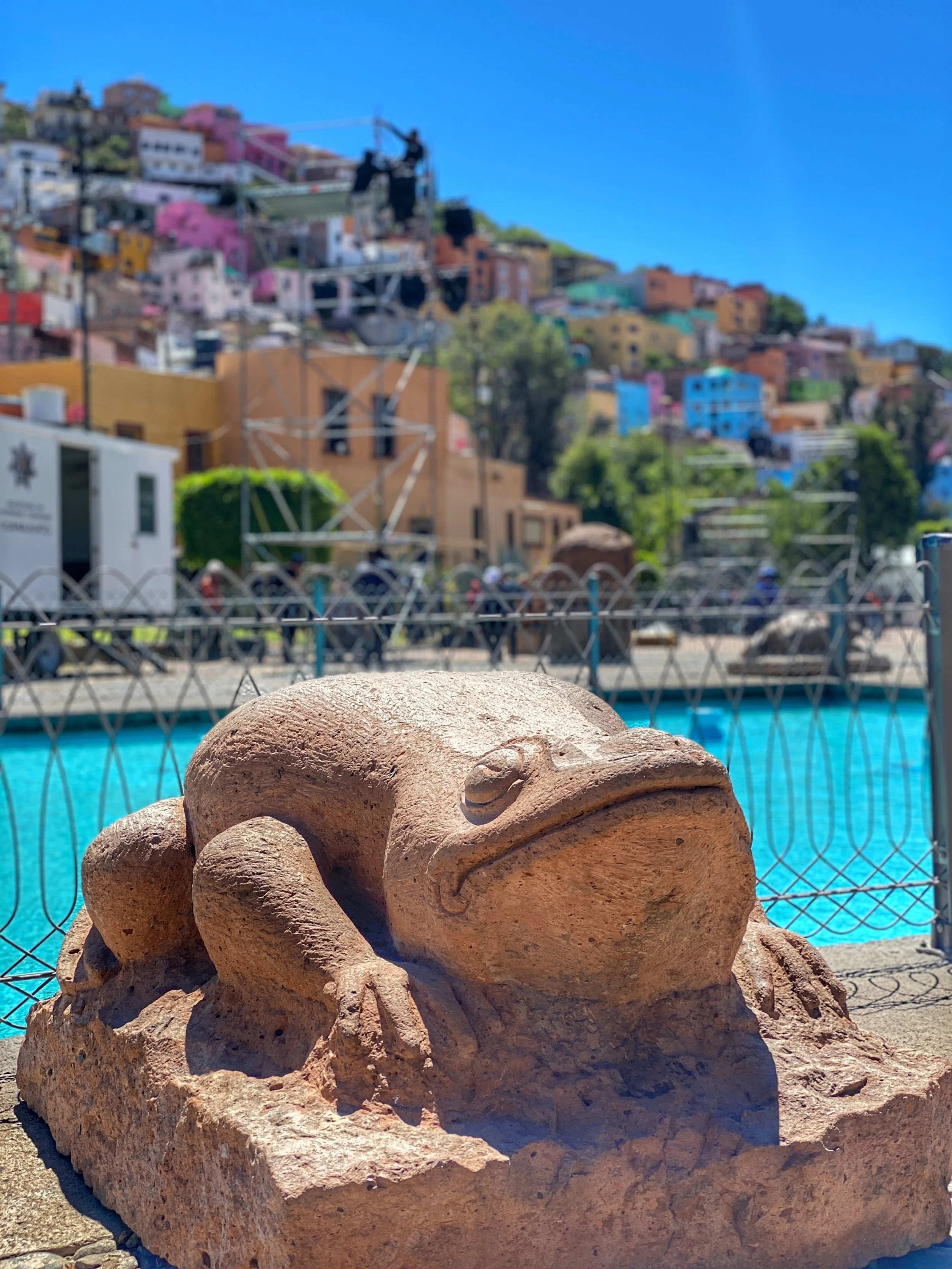
Stone frog statue in front of turquoise pool-like fountain in the Plaza de las Ranas, Guanajuato, Mexico
Frog statue in front of the turquoise fountain in Guanajuato, Mexico, with colorful buildings lining the hillside behind it

Plaza de las Ranas

Hop on over to Plaza de la Hermandad, also known as Plaza de las Ranas (Frog Plaza). The centerpiece is a fountain created by French sculptor Gabriel Guerra and installed in 1893. It looks a bit like a swimming pool, but the stars of the show are the whimsical frog statues made of stone that decorate the open plaza. 

Why frogs? The name Guanajuato comes from the indigenous Purépecha words Quanax-Huato, which means “Place of the Frogs.” One theory is that the town took its name from a pair of colossal boulders resembling giant frogs. Seeing this as an auspicious sign, the Purépecha decided to settle here. They were a powerful empire that dominated western Mexico prior to the Spanish conquest. 

Fun fact: Guanajuato was the birthplace of Mexican muralist Diego Rivera, who referred to himself as “el Sapo-Rana,” the Frog-Toad. 

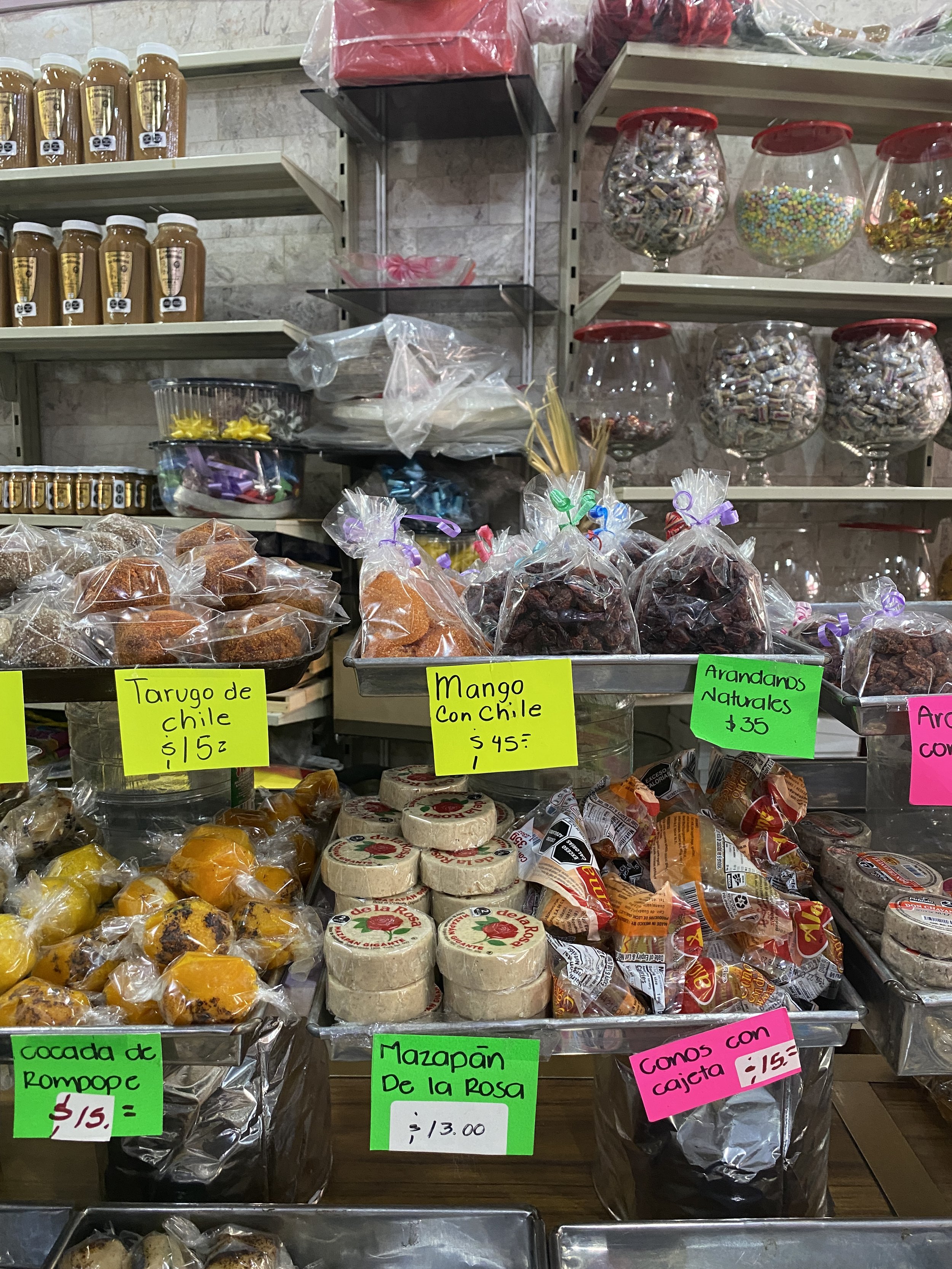
Shelves of candy and other snacks for sale at Galerena Dulces Tipicos de Guanajuato

Galereña Dulces Típicos de Guanajuato

Want something sweet? Next stop: Galereña Dulces, a candy store that’s been around since 1865. They’ve got all kinds of traditional Mexican sweets — but don’t get your hopes up about mummy gummies. Much to our dismay, those don’t exist. 

The cellophane-wrapped caramel-colored confections we found are actually known locally as charamuscas. They’re a type of hard candy made from spun boiled cane sugar twisted into a mummy figure shape. Which, now that I think about it, these gnarly, crunchy versions are actually more fitting. 

Avenida Benito Juárez 188

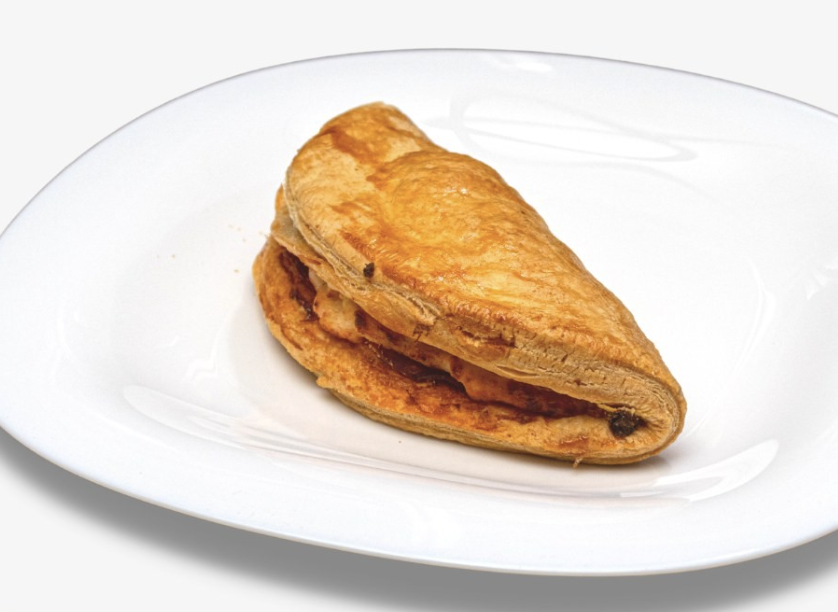
Empanada on white plate from Empanadas MiBu in Guanajuato, Mexico

Empanadas MiBu

Feeling a bit peckish? Time for a snack at Empanadas MiBu. I always say: If there’s a Heaven, there will be empanadas up there. These tasty little pockets of joy come in all sorts of varieties, from savory (rajas con queso are my fave) to sweet (you can never go wrong with Nutella), and are the perfect snack to munch on while exploring the city. They’re made to order and served in paper bags, making them the perfect handheld food to eat on the go. 

Avenida Benito Juárez 65-A

Stone archway with steps and colonnade that leads into Jardin Reform in Guanajuato, Mexico

Jardín Reforma

Escape the hustle and bustle of the city by taking a stroll through this serene park that’s just past Empanadas MiBu. Head through the classical arch into a tranquil oasis that’s surprisingly peaceful for being mere steps off the city’s main drag. The loudest sound you’re likely to hear here is the gurgling of the fountain in the center or the chirping of birds.

Round blue fountain in Jardin Reforma, with colorful buildings on the hill behind in Guanajuato, Mexico
Entrance to G&G Cafe in the corner of Jardin Reforma in Guanajuato, Mexico, with table under umbrella, streetlamp, chalkboard sign and bookshelf by yellowish building

Be sure to pop into G&G Cafe, the coffeeshop in the corner of this small park, if you need a caffeine fix. 

The bright yellow facade and red dome of Our Lady of Guanajuato with blue sky and green hedge and pink rose bushes

Basilica of Our Lady of Guanajuato

Continue down Avenida Benito Juarez until it turns into De Paz. The yellow Basílica Colegiata de Nuestra Señora de Guanajuato, dedicated to the city’s patroness, Our Lady of Guanajuato, is hard to miss. The yellow edifice stands proudly on the historic Plaza de la Paz (Plaza of Peace), the main square. However, unlike most Spanish colonial cities, the plaza is not a square but a triangle, to better fit Guanajuato’s hilly geography. 

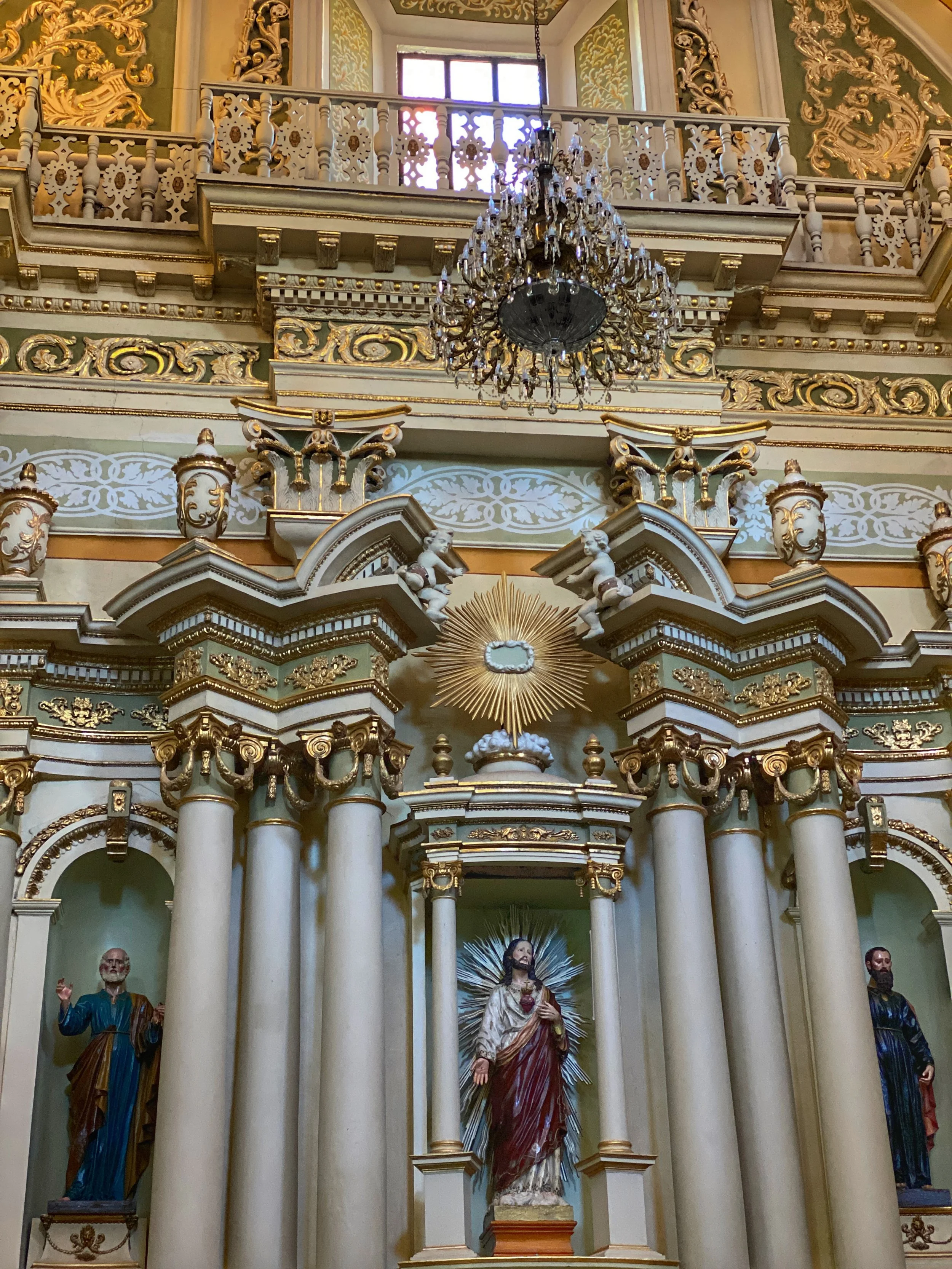
Interior of Our Lady of Guanajuato church with chandelier, gold gilding, columns and statue of Christ with the Sacred Heart

The church’s façade was designed in the Mexican Baroque style and is adorned with carvings of saints and features two bell towers and a red clay dome. The interior is just as impressive, with soaring arches, intricate gold leaf detailing and a stunning main altar that encompasses the local likeness of the Virgin Mary. 

Calle Ponciano Aguilar 7

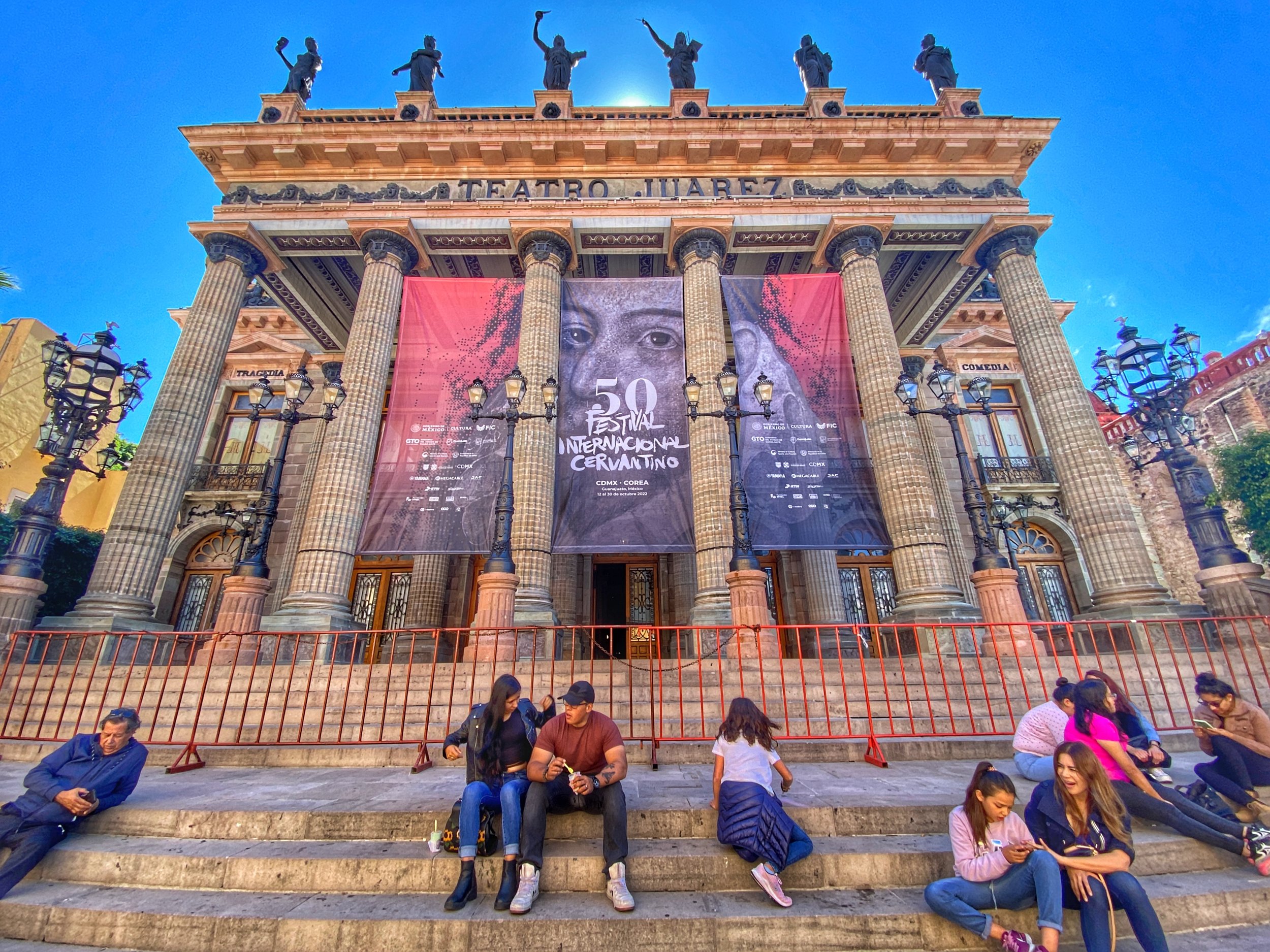
People sitting on the front steps of the Teatro Juarez, which looks like a Greek temple, with columns statues of the Muses on the top, with a sign for the Cervantino Festival

Teatro Juárez

While you’re in the vicinity, stop by the Teatro Juárez, a majestic Neoclassical theater, built from 1872 to 1903. Bronze statues of the Greek Muses, who represent the arts and sciences, stand on the roof.

We didn’t get a chance to go inside, but it looks impressive, awash in red velvet and gold details, with a colorful ceiling motif in the Neo-Mudéjar style, a nod to the mix of Spanish and Arab design popular in the South of Spain.

The landmark hosts a wide variety of performances, from concerts and operas to plays, international movies and dance. It has served as the main venue of the Festival Internacional Cervantino since 1972. 

De Sopena 10

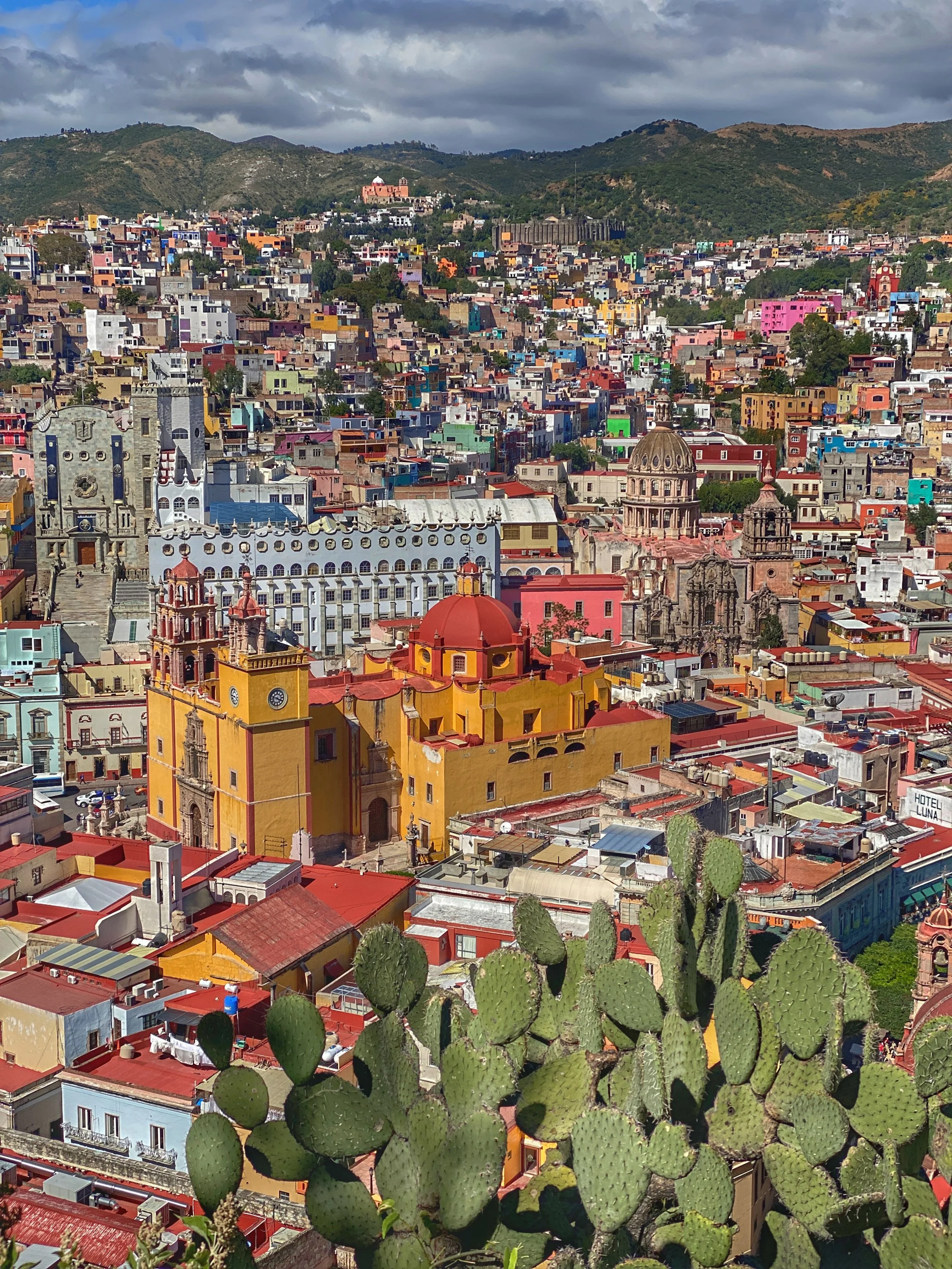
The town of Guanajuato, Mexico seen from the Overlook, with cacti in the foreground and the colorful buildings of the city, including the yellow church

Funicular and El Pipila Monument 

End your stroll through town with a ride on the funicular. The station is close by the Teatro Juárez. A cable car system built in 2001 takes you up the hill to an overlook and costs 60 pesos (about $4) for a roundtrip ticket. We had to stand in line for a bit, but it was worth the wait. The ride up is pretty fun — but the view is breathtaking. I was utterly captivated by the hilly landscape and the colorful, densely clustered  patchwork of buildings that stretched out before us. I leaned against the railing and gazed out at it for a long time. It’s easy to see why the enchanting city center is a UNESCO World Heritage Site.

Pro tip: When facing the city below, head off to right for a less-crowded viewing platform above the basilica.

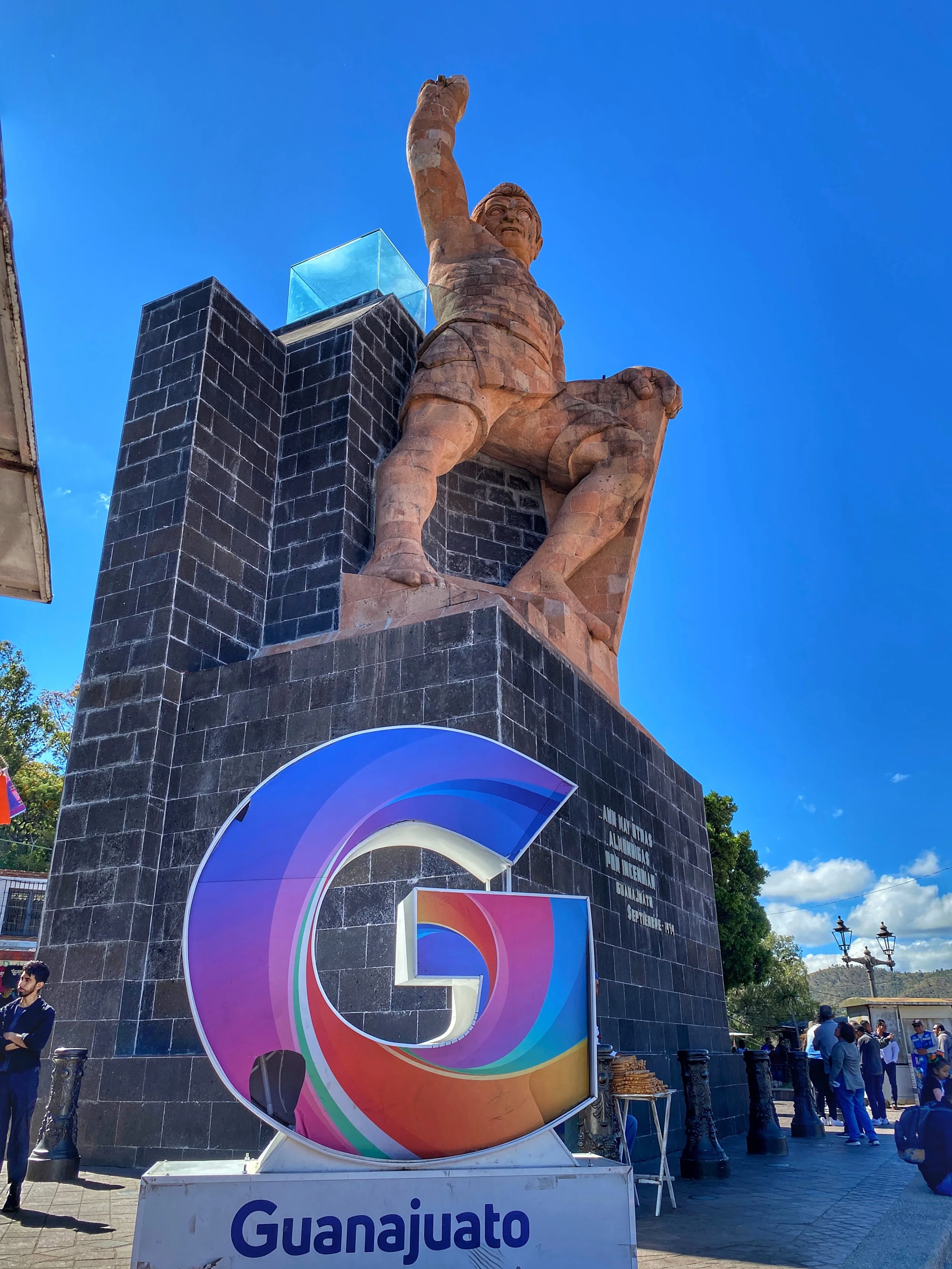
El Pipila monument of the man with his arm raised above a big G for Guanajuato on the overlook above the city

Crowds of tourists and locals gather in the shadow of the El Pipila monument, a towering 80-foot statue built in 1939 to commemorate a hero of the Mexican War of Independence.

So who exactly was this Pipila fellow? His real name was Juan José de los Reyes Martínez, who, during the siege of Guanajuato, crawled towards the Alhóndiga de Granaditas, a granary used as a fortress by Spanish troops. He had a large stone slab used to grind corn (a pipila — hence his nickname) on his back. Once he reached the door, he used the stone to break it down, allowing the rebel forces to enter and defeat the Spanish troops.

De La Constancia 17

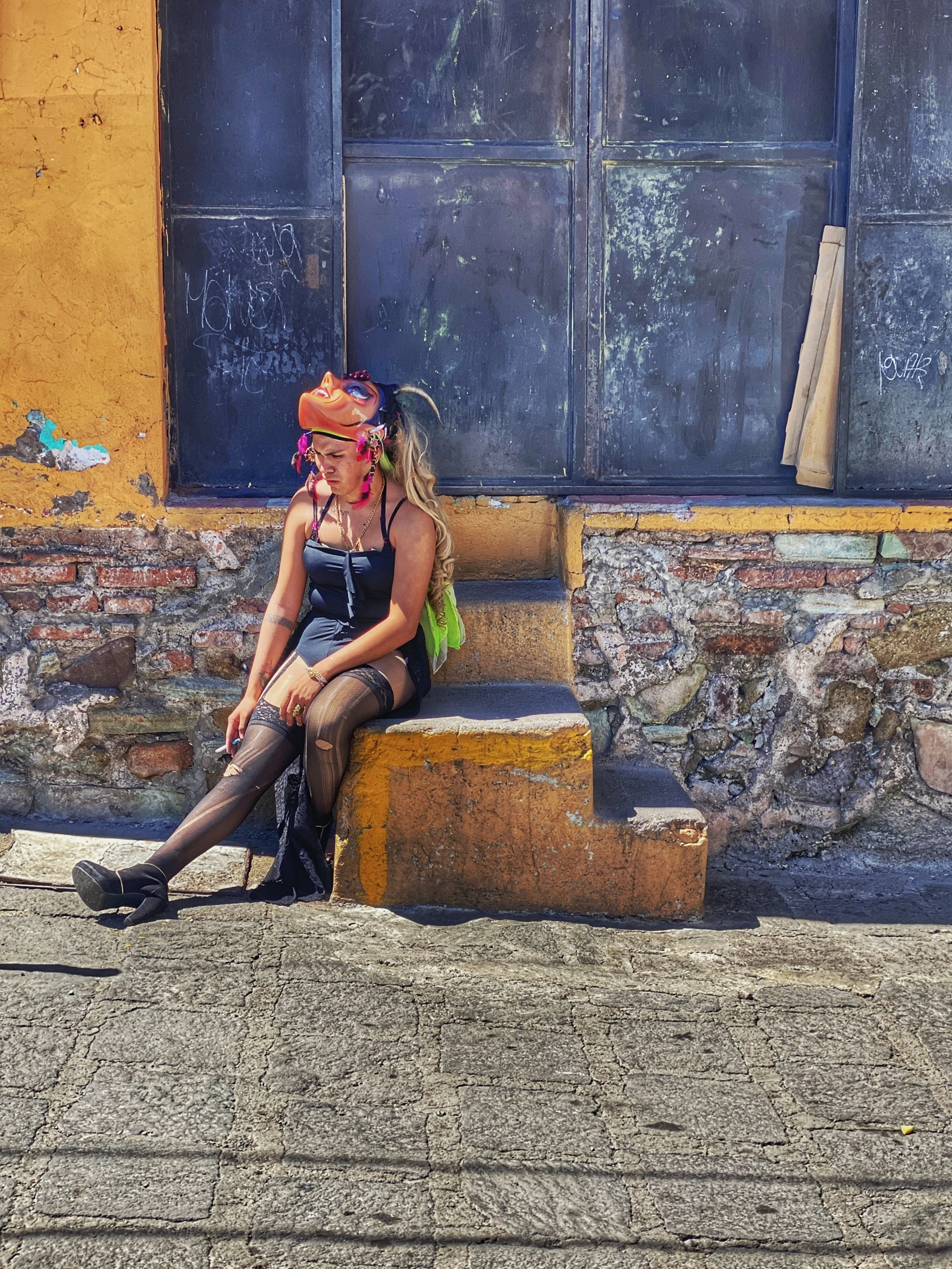
Man in drag, black high heels, torn hose, little black dress, with mask with blond-haired wig atop his head, sitting on step smoking in Guanajuato, Mexico

Outside the Mummy Museum, we watched a performance of men in drag mock-fighting. The sights in Guanajuato are equal parts beautiful and bizarre.

SMA Day Trip

All told, we spent about four hours in Guanajuato. We hired a driver from San Miguel de Allende through our hotel’s concierge. The ride is an hour and a half each way. We got dropped off at the Mummy Museum and then texted our driver at the end of the day once we on our way back down on the funicular.

From truly disturbing to truly delightful, Guanajuato is a day trip not to miss. –Wally

Oddities Flea Market: A Bizarre Bazaar of Unforgettable Finds

Regina and Ryan Cohn’s warped brainchild is a fantastic journey of curious collectibles.

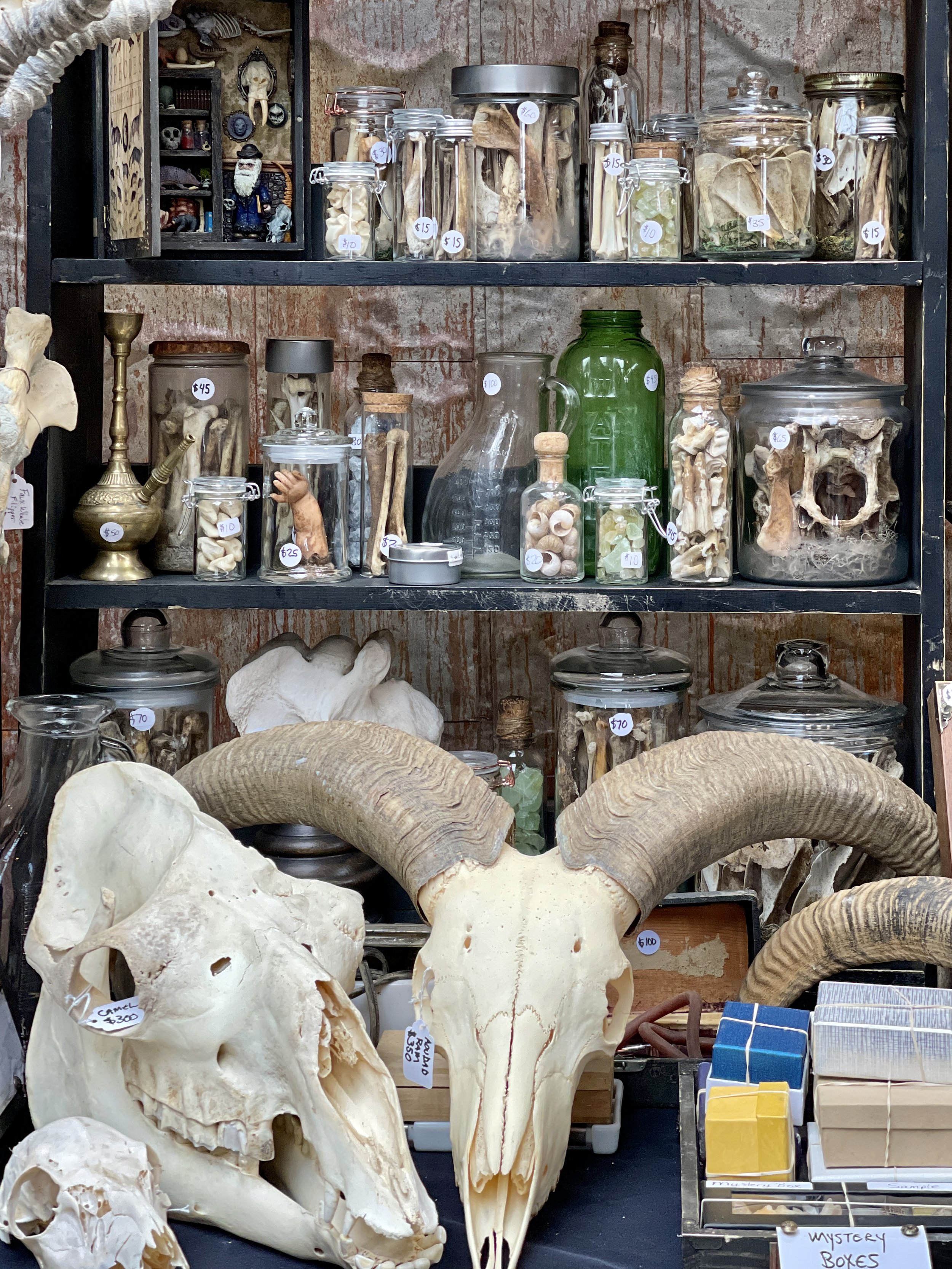
Shelves with small glass containers of bones and animal skulls at Oddities Flea Market

The Oddities Flea Market is filled with items to start your own cabinet of curiosities.

When I asked Wally about attending the Oddities Flea Market, an event that brings together vendors from all over the country to sell their unusual wares, his answer was a resounding yes. (Actually, he probably looked at me and said, “Uh, duh.”)

We knew we were kindred spirits when we met — but before Wally, I identified as a minimalist. He’s a maximalist and loves collecting things. Turns out that when a minimalist moves in with a maximalist, you end up with just a little bit more stuff. I decided to embrace the aesthetic and figure out ways to creatively curate vignettes. Eventually, I succumbed and became a maximalist, too. 

Our burgeoning collection of oddities consists of a human skull named Malachi that’s supposedly a World War II trophy, a taxidermied squirrel with an Elizabethan lace collar, a two-headed African fetish figure, or nkondi, stuck full of nails, and a mummified llama fetus our friend Hugo picked up for Wally in Ecuador — to name just a few. 

When it came to the fair, I wasn’t sure what to expect. I knew that local chef Halee Raff of Hardbitten would be there with her elevated and colorful riff on Pop-Tarts, as well as Woolly Mammoth, one of our favorite shops in the Andersonville neighborhood, but other than that I wasn’t sure what we’d find. 

Allison Fretheim Ceramics booth at the Oddities Flea Market in Chicago

Vendors from around the country have booths at the market.

Embracing the Strange: The Birth of the Oddities Flea Market

The Oddities Flea Market was founded by Regina and Ryan Cohn about six years ago. Ryan was well-versed in buying and collecting antiques and oddities while Regina was making a name for herself in fashion. They combined their passions into a traveling emporium that celebrates the weird and wonderful. 

Their first market launched in 2017 and introduced the concept of oddity collecting to the general public at the now-shuttered Brooklyn Bazaar. Since then, the Cohns have expanded to additional markets in Los Angeles and Chicago. “It’s only the second time we’ve been to Chicago,” Ryan told us. “So it was a nice reintroduction.”

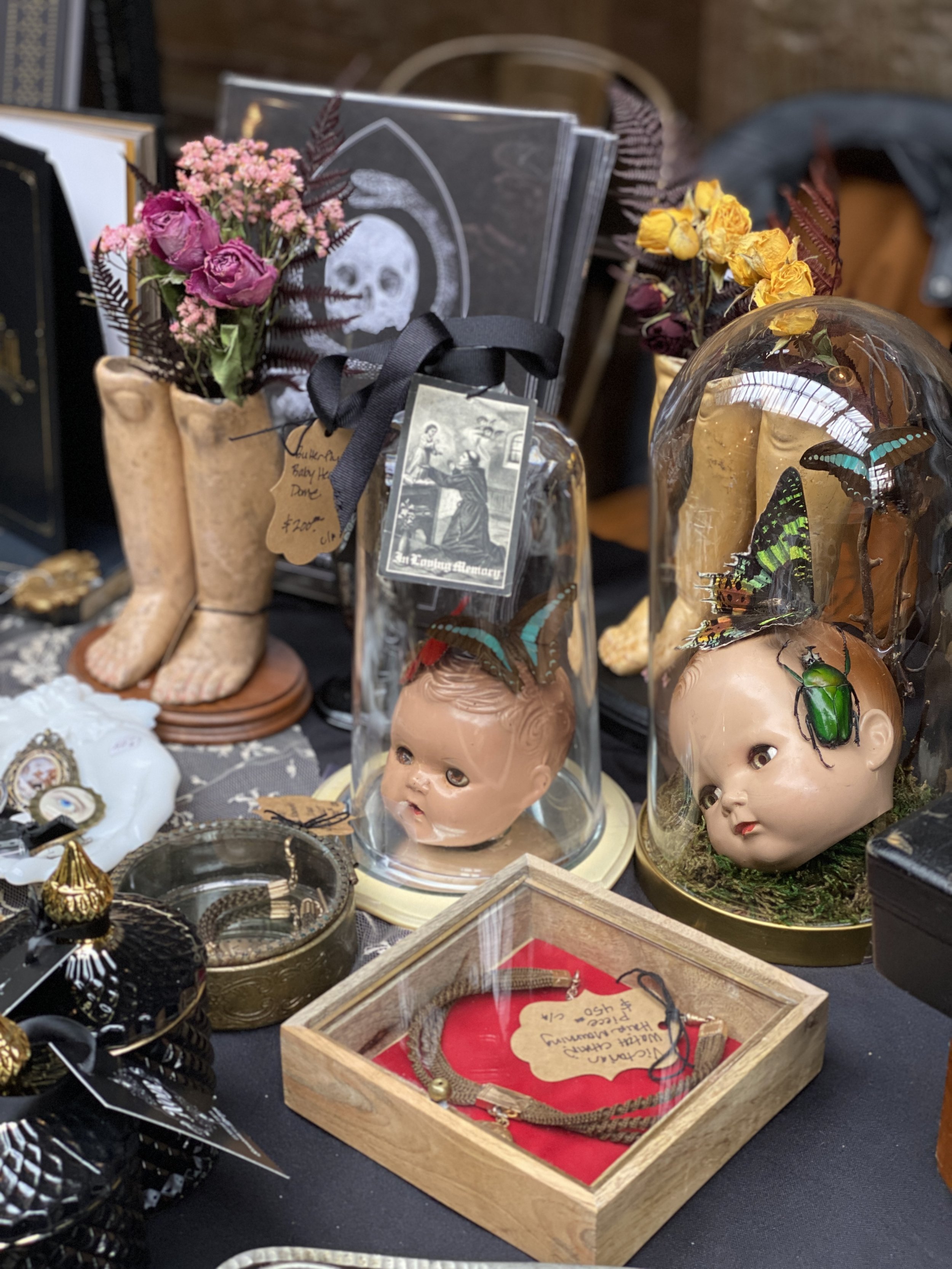
Doll parts with flowers and bugs and ephemera from Sideshow Gallery's booth at the Oddities Flea Market

I am doll parts: some of the creepy-cute creations from Sideshow Gallery

This year the Chicago market was held over two days in April at Morgan Manufacturing. The red brick building predates the Great Chicago Fire of 1871 and acts as an industrial chic event space in the hip West Loop neighborhood. 

We weren’t alone in our curiosity for curiosities. When we arrived at 11 a.m. for VIP early access, there was already a small queue forming. Some lucky attendees had planned ahead and signed up to take a cat skeleton articulation class taught by Ryan. By the time we had gotten our tickets, the workshop was sold out. Next time. Maybe. 

Container of four death masks at the Wooly Mammoth booth at the Oddities Flea Market

Death masks on display from Wooly Mammoth

Not for the Faint of Heart: Entering the Fair

After checking in, we passed a booth which featured a selection of T-shirts and totes for sale (black, of course). We took a closer look and noticed that the screen-printed images were of Ryan’s personal work — Beauchêne, also known as the art of the exploded human skull.

The soundtrack for the event was provided by Dead Animal Assembly Plant, spinning songs near the entrance, with a backdrop of projections of creepy vintage cartoons. 

Dead Animal Assembly Plant DJs spin records with a large projection of classic cartoons above on white curtains

Spooky and silly classic cartoons played above DJs from Dead Animal Assembly Plant.

Wally and I couldn’t help but salivate as we passed by the selection of Hardbitten’s delectable baked goods. Nearby, the sophisticated cocktail bar offered a variety of specialty drinks, each with an intriguing name: Memento Mori, Sideshow, the Veneration, Wunderkammer. No judging, but it was a bit early for us to imbibe. If you were seeking a caffeine fix, Spiritus Coffee from Lombard, Illinois was the place to go.

Plates stacked with Hardbitten bakery's pop-tarts at Oddities Flea Market

A seclection of Hardbitten’s treats, including their riffs on Pop-Tarts

We wandered through the market, discovering an impressive variety of wondrous wares: natural history specimens, taxidermy (both artistic and traditional), creative jewelry and a few truly macabre specimens. Here are a few of our favorites. 

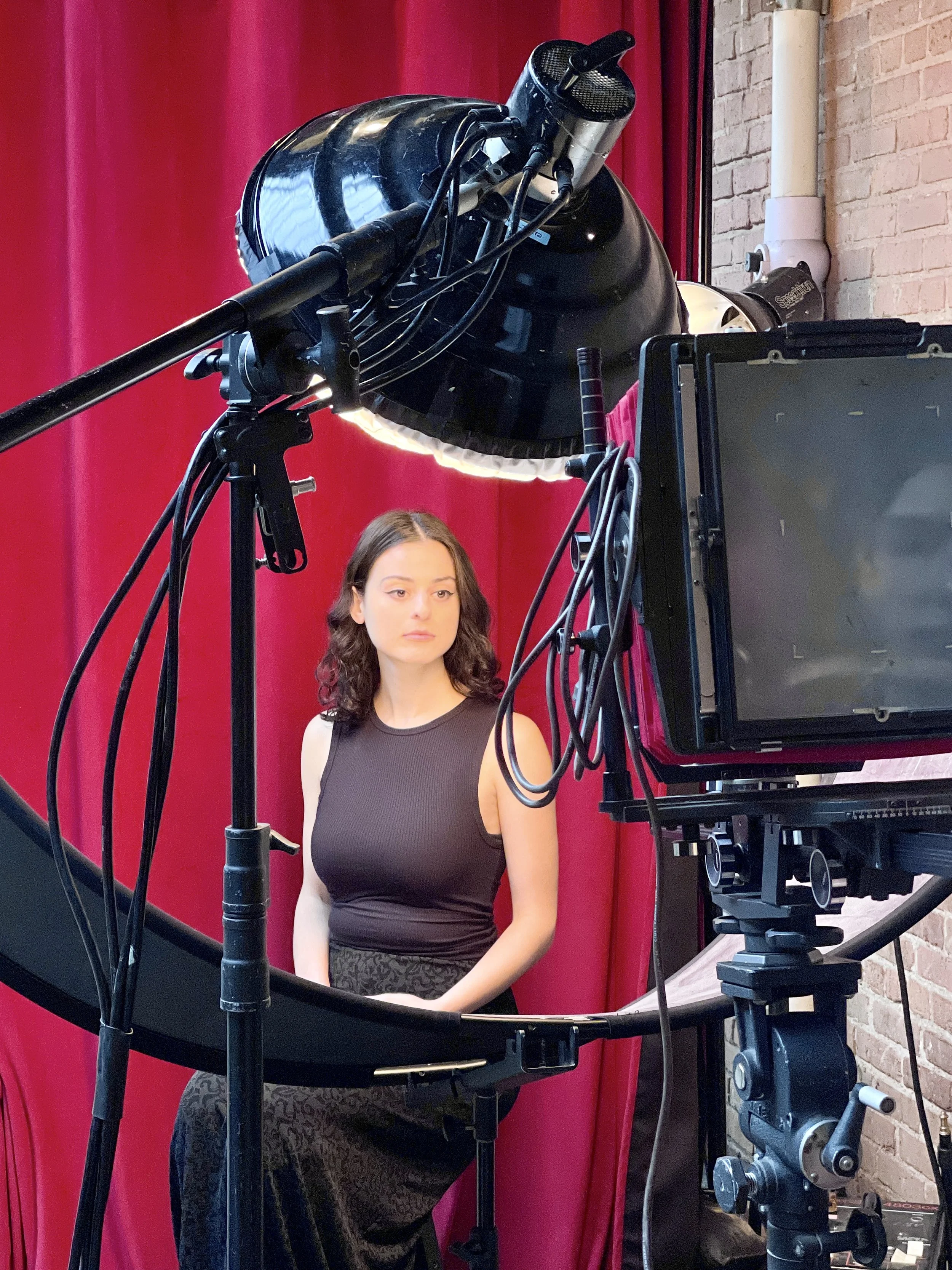
Young woman in black dress posing in front of large camera and light for Blkk Hand tintype photo

A woman poses for her tintype photo from Blkk Hand.

A Handful of Shadows: Blkk Hand

St. Paul-based photographer Carla Alexandra Rodriguez uses an old-school process known as wet-plate collodion to create eerily beautiful tintype portraits. This method, which dates back to the 1850s, requires precise chemistry, accurate timing and a classic large-format camera. 

Silver nitrate is used in the processing of tinplate photography and is a highly reactive chemical that can cause skin to turn black if it’s not handled properly. Her studio, Blkk Hand takes its name from this phenomenon — and is why Carla always wears gloves when working. 

Tintype photo of long-haired couple being developed by Blkk Hand photography

Nora Past, seen in a developing tintype photo, assisted at the booth.

How’s it work? The process begins with coating a metal plate with a collodion solution that contains a mixture of alcohol, ether and silver nitrate. Each plate is exposed to light in the camera, which converts the silver nitrate to silver metal. 

This challenging and time-consuming method produces incredibly detailed images with an ethereal quality, capturing the beauty of a moment in a way that no other type of photography can.

Selection of artistic curious from Momento Mori at the Oddities Flea Market

Memento Mori Los Angeles co-sponsored the flea market.

Death Becomes Them: Memento Mori Los Angeles

Our favorite booth at the flea market belonged to Memento Mori Los Angeles, run by Brad and Deidre Hartman, a Cali-based duo who create beautiful and macabre works of art. Their pieces are a reminder of the inevitability of death, while also celebrating the beauty of life.

Among their fascinating objects were skulls, insects, crystals, jewelry, and an assortment of devotional candles featuring musical artists like Siouxsie Sioux and Nick Cave. We were mesmerized at the offerings, including a riff on the infamous Fiji mermaid hoax, a glass cloche containing human teeth and a basket filled with supple leathered purses made from genuine cane toads. I was skeptical at first when I picked one up to examine it — but it was definitely real. Don’t feel too bad, though. These amphibians were originally introduced as a means of pest control, but ended up becoming an invasive species. So now, instead of eating cane beetles, they’re just hanging out as purses and looking cute. I suppose there are worse fates. 

Replica of the Fiji mermaid and other oddities on table at flea market

A replica of the Fiji mermaid, a Witchling chick and other artistic takes on taxidermy from Memento Mori Los Angeles

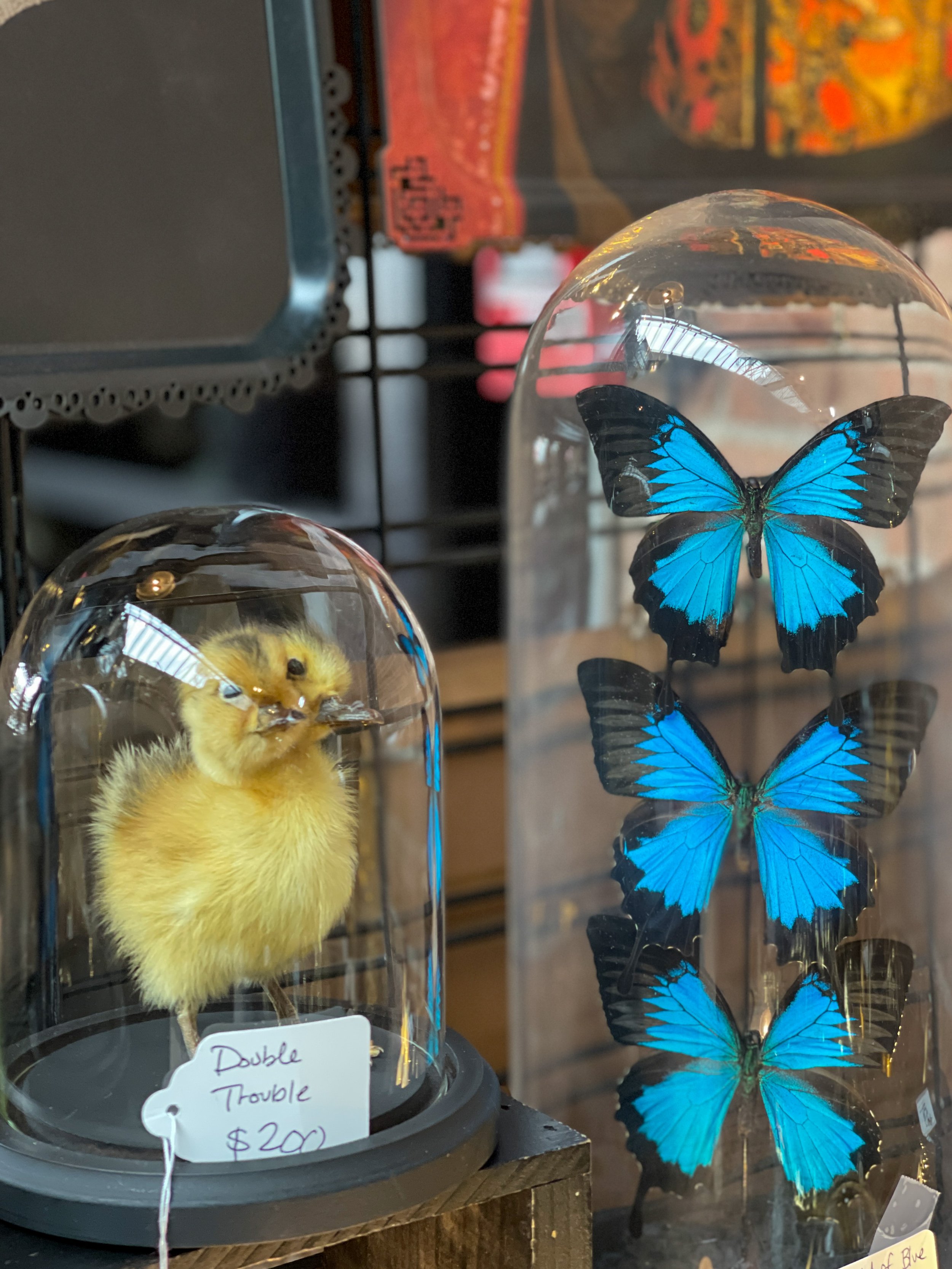
I was particularly drawn to their Witchlings, yellow ducklings wearing tiny witch hats, as well as a two-headed duckling called Double Trouble. Brad and Deidre’s work is a reminder to live life to the fullest and to appreciate the beauty that surrounds us, even in death.

Odds and Ends booth of fake taxidermied heads of animals on plates at the Oddities Flea Market

Playful fake taxidermied heads on display at the Odds and Ends booth

Faux Real: Odds and Ends 

We stopped by Odds and Ends, featuring the work of Atlanta-based Chloë Grass, who creates quirky faux taxidermy trophies and other oddities. She studied at the Arts University Bournemouth in the U.K., where she honed her skills in prosthetics sculpting and special effects makeup.

I loved her double-headed lamb, which was both cute and creepy. (I’m realizing I have a thing for two-headed creatures.) It was definitely a conversation starter, and I couldn’t help but smile when I saw it. Chloë’s creations reflect my favorite type of art: whimsical and a little bit weird.

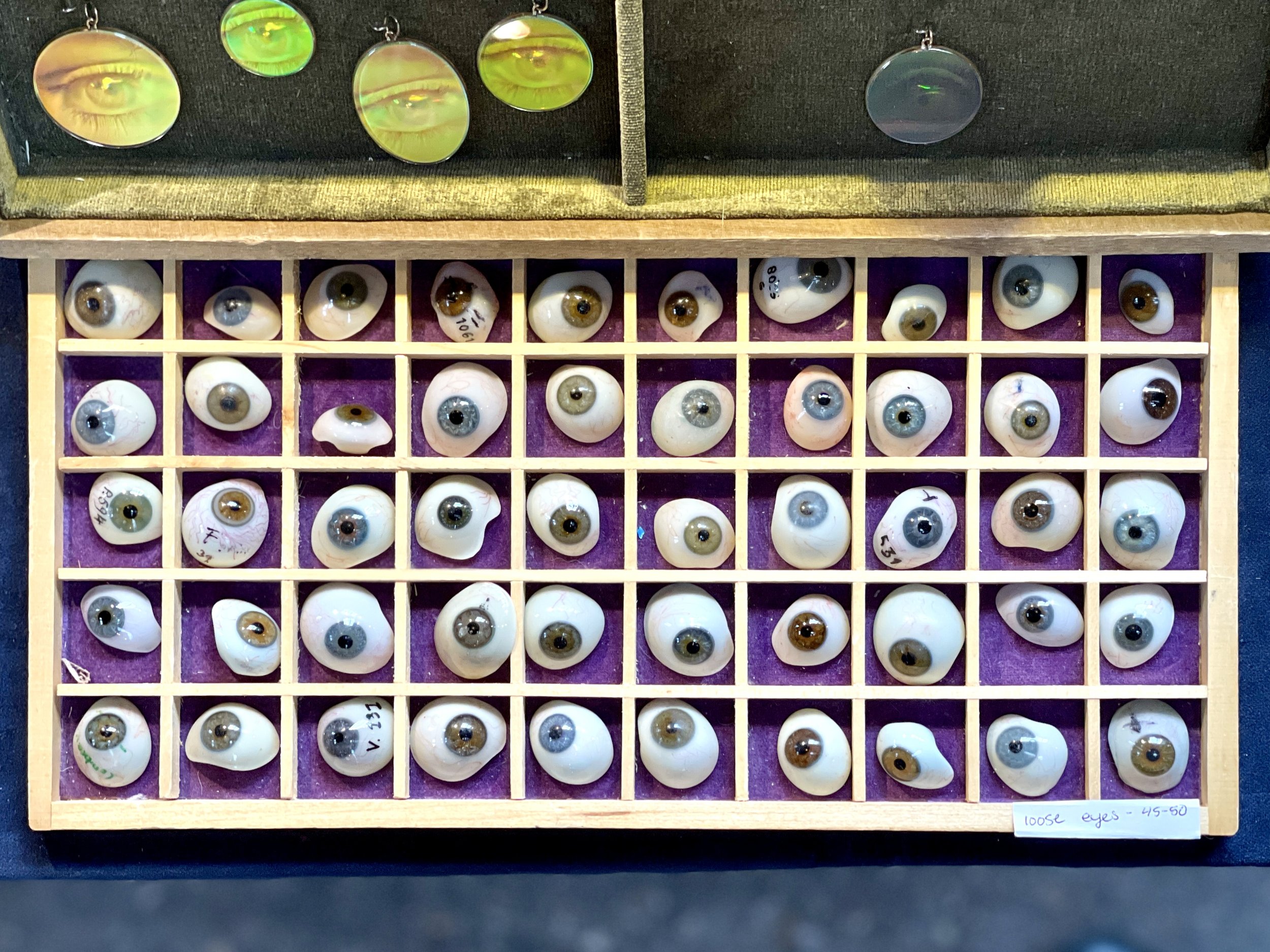
Container filled with vintage glass eyes

A selection of vintage fake eyes at Eyeba’s booth

I Only Have Eyes for You: Eyeba

We were blown away by Brooklyn-based jeweler Amanda Maer Huan’s booth at the flea market, Eyeba. She takes antique prosthetic eyes and sets them in sterling silver to create rings, pendants and other fine jewelry.

As we browsed her wares, Amanda gave us a brief education on the myth of the round glass eye. While the visible portion of the prosthesis appears round, the part that sits within the eye socket is actually curved like a pasta shell. They’re custom-made to match the size and color of the wearer’s functioning eye. 

Container of silver rings with fake eyes in them from Eyeba

Windows to your soul? Amazing rings from Eyeba

The rings were hypnotic. I had to literally drag Wally away.

Deadskull Curio booth at the Oddities Flea Market, with skulls, bottles, masks and other macabre items

Deadskull Curio had the most macabre offerings at the market.

A Portal to Another World: Deadskull Curio 

Deadskull Curio was the most global booth at the Oddities Flea Market. It had everything from hand-carved wood masks to antique Asian marionette puppets to Tibetan kapala skull cups. They even had black and white morgue and crime scene photos from the 1960s, vertebrae and a horrific preserved cat’s head in a jar of formaldehyde.

Photo of dead woman in her coffin from the 1960s

The collection of death photos had a warning

The booth is owned by Paul Abrahamian, who, randomly, competed in two seasons of Big Brother. He was a cool guy who was obviously passionate about his collection. Items were flying off the shelves as we were looking at them — but we decided to pass on the cat’s head specimen. It would have been like having a pet cemetery in our living room, and we’re not sure our cat Bowzer would have appreciated it.

Teacup reading "Syphilitic" from Miss Havisham's Curiosities

The saucy teacups from Miss Havisham’s Curiosities were inspired by the owner’s cheeky grandmother.

Steeped in Humor: Miss Havisham’s Curiosities 

Miss Havisham's Curiosities is a line of insult teacups created by Melissa Johnson. The idea was inspired by two sources: the jilted bride trapped in time in Charles Dickens’ novel Great Expectations, and Melissa’s grandmother, who expressed herself by writing offensive things on broken or chipped teacups with nail polish and then selling them at her antique shop.

On the outside, these teacups are proper, often vintage, china. But on the inside, they’re hiding naughty surprises: cheeky insults written in cursive:  “Syphilitic,” “No one likes you!” and “Not today, Satan!” The teacups are the perfect way to spill the tea and say what you really mean…without actually having to say it.

Artwork by Katie Gamb showing girl in ghost costume standing in forest of poison plants

Hidden in the Poison Forest, 2021

We were drawn to Katie Gamb’s artwork because of its twee yet sinister quality.

Sugar and Spice, But Not Everything Nice: Katie Gamb 

Katie Gamb is a Milwaukee-based artist who creates whimsical and macabre worlds in her illustrations. Her work is a love letter to a childhood spent lost in books, where animals, humans and monsters like skeletons all live together in a world of wonder. As Wally and I looked at her work, I turned to him and said, “They’re adorable at first glance — but they get a little creepy when you look closer.”

“That’s exactly what I go for,” Katie said, smiling at us.

Artwork by Katie Gamb showing cute skeleton surrounded by plants and birds, including one in its ribcage

My Heart’s Still Beating, 2019

Like much of the art we appreciate, Gamb’s works tread the line between creepy and cute.

One piece depicted a bird fluttering within the rib cage of a skeleton, while another showed a girl dressed as a ghost in a forest of poisonous plants. Katie’s imagination is a portal to a strange and wondrous world, where anything is possible. I regret not circling back to purchase a sticker featuring a sad cat playing an accordion with a feather sticking out of its mouth.

Katie’s work reminds us that the world isn’t always as it seems. There’s beauty in the darkness.

Artwork by Feral Femme Rachaela DiRosaria of freak show-themed wooden boxes at the Oddities Flea Market

Feral Femme Art’s booth evoked a freakshow from the past with interactive artworks.

Step Right Up, Folks: Feral Femme Art

We ended the show at the Feral Femme Art booth, with a conversation with Rachaela DiRosaria, a New Orleans-based folk artist who creates assemblages that evoke the nostalgia of Depression-era circus and sideshow advertising. Their hand-painted figures and moveable parts bring these sideshow performers and circus freaks to life. 

Rachaela DiRosaria and Zach Wager from Dead Animal Assembly Plant at the Oddities Flea Market

Artist Rachaela DiRosaria posing with Zach Wager, who spun records at the market.

Feral Femme art of woman suspended over bed of nails with "Inveterate" at the top

Inveterate

Feral Femme art showing angry clown with open mouth

Funhouse

Feral Femme art showing tattooed woman

The Tattooed Woman

Rachaela’s work is infused with a dark humor that’s both playful and unsettling — an interactive stagecraft of delight.

Two-headed duckling and blue butterflies in cloches at Memento Mori's booth at the Oddities Flea Market

Double Trouble has found a new home amid the other oddities chez Duke and Wally.

After making our way through the different vendors, I turned to Wally and said, “I’d like to go back and get Double Trouble. Are you cool with that?” To which Wally replied, “Obvi.” 

Exploring the Oddities Flea Market was a quirky adventure that appealed to our inner freaks, and we’re glad we had the chance to attend. 

The next iteration will be held at the Globe Theatre in LA on October 7, 2023 — a perfect day, in my humble opinion, as it’s also my birthday.  –Duke

Oaxaca Day Trip to Tlacochahuaya and Teotitlán del Valle

First stop: the Iglesia de San Jerónimo Tlacochahuaya, with its heavenly rustic painted interior. Then on to Teotitlán del Valle for lunch at Tlamanalli and gorgeous candles from Casa Viviana.

Three niches with the Virgin Mary in the middle in old church with rustic painting of flowers on the wall at Templo Tlacochahuaya in Mexico

This amazing church in San Jerónimo Tlacochahuaya, with its rustic paintings, is en route to the natural wonder of Hierve el Agua.

To say that there’s a vast amount of things to do and see in Oaxaca is an understatement. So when Wally and I agreed to take a day trip to Hierve el Agua, a natural mineral spring where water collects in clifftop pools, I insisted that we make a few stops along the way. 
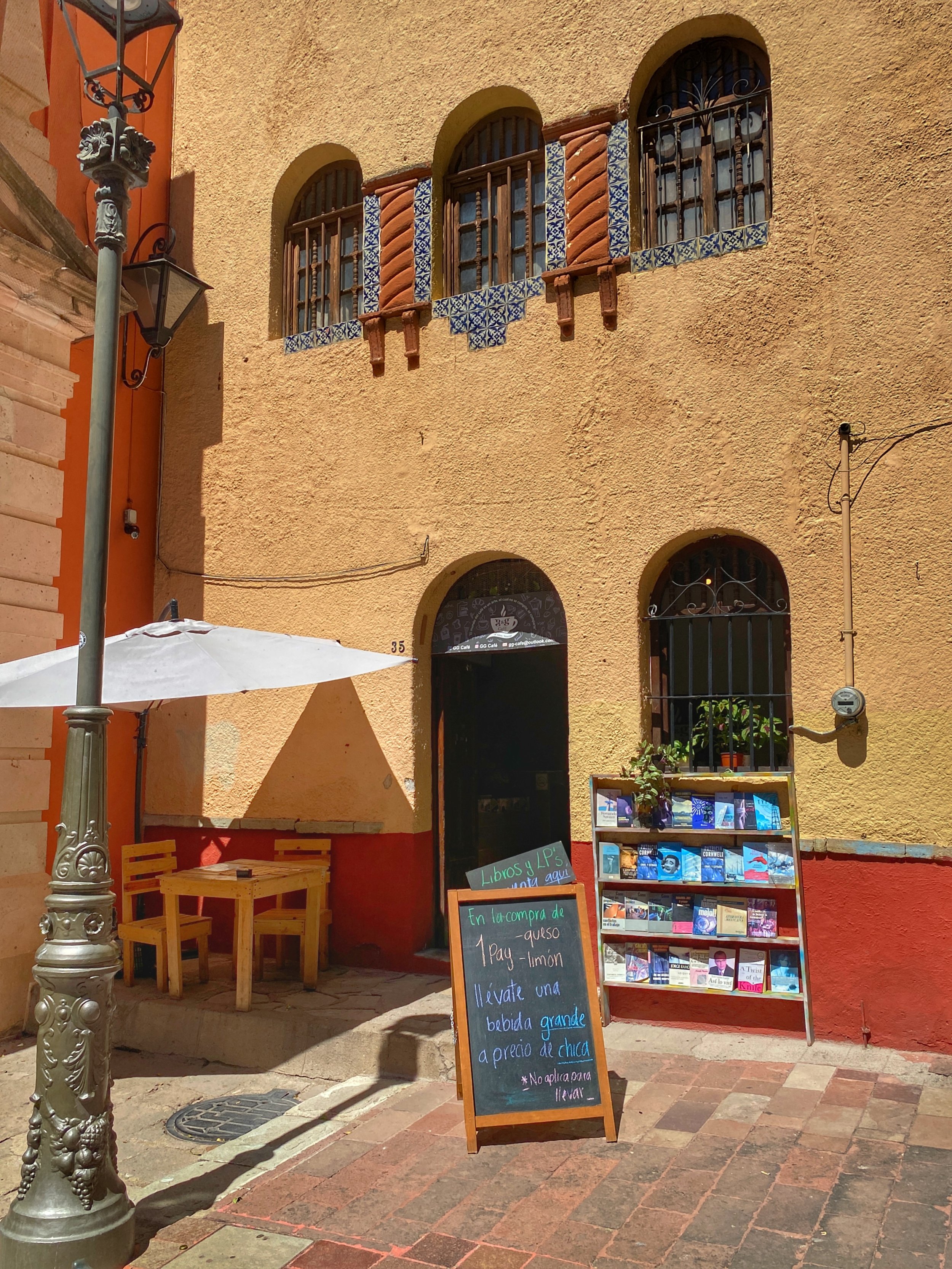
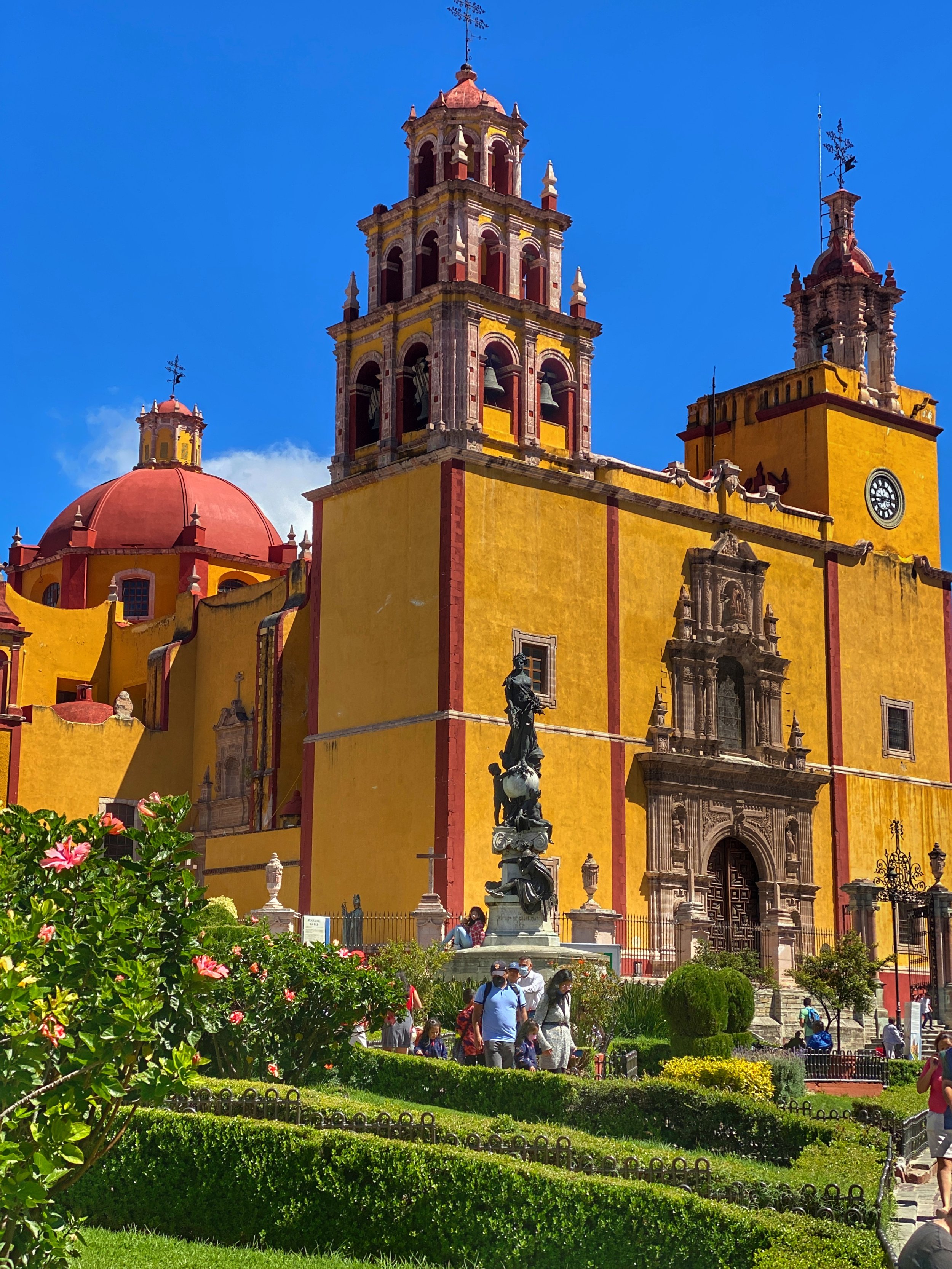
Driving is the best way to get around outside of town, and our friend Kevin, an expat living in Oaxaca de Juárez, kindly agreed to rent a car. 

Inside car, part of the driver seen, looking out windshield at herd of cattle on dirt road in Oaxaca, Mexico

While driving in Oaxaca, you might have to stop to let herds of cattle pass by.

Tan dog mounts a black dog in small town in Oaxaca, Mexico

You also might see stray dogs in flagrante delicto.

We set out early and met him and his friend David at Alamo Rent a Car, which was a short walk from Casa Antonieta, where we were staying in Centro. 

After a few minutes of waiting in line and filling out paperwork, we were ready to begin our adventure. It helped having a friend familiar with renting a vehicle in Oaxaca. 

The lowdown: It cost us $75 for the day, including insurance. 

Alamo Rent a Car
Mariano Matamoros 203 A
Ruta Independencia
Centro 68000 
Oaxaca de Juárez

Iglesia de San Jerónimo Tlacochahuaya exterior with wooden cross in foreground

You can’t miss the church — it dominates the small village of San Jerónimo Tlacochahuaya.

Iglesia de San Jerónimo Tlacochahuaya: A Rustic Church Painted With Symbolism 

Our first stop, about a half hour southeast from Centro Oaxaca, was the 16th century Iglesia de San Jerónimo Tlacochahuaya, aka the Templo de Tlacochahuaya, the centerpiece of the village of the same name. Try pronouncing it as “Tella-kocha-huh-why-uh” — a name that basically means “In the Swamp.” This is because the town is located in a valley surrounded by mountains, which makes it prone to flooding. 

The pueblo was founded by a Zapotec warrior by the name of Cochicahuala, which translates to “He Who Fights by Night.”

Statue of Jesus on a donkey used in processions by stack of red, blue and yellow plastic stools in corner of the entryway of Templo de Tlacochahuaya

A sculpture of Jesus on a donkey, representing how he entered Jerusalem, sits in the back corner of the iglesia and is used during a Palm Sunday procession.

We parked the car and walked along the outer wall surrounding the church. I could hear the rhythmic beat and swirling melody of an unseen drummer and woodwind player, which to me sounded a bit like music from a Renaissance Faire. This set the mood for our visit — it was like stepping back in time to an older, slower-paced pre-modern world.   

The church’s main façade is made up of twin bell towers, pilasters (low-relief columns that project slightly from the surface), a split pediment and niches with sculptures of various saints. An image of Saint Jerónimo, or Saint Jerome, the church’s patron, is depicted above the central doorway, with God’s trumpet directed to his ear. 

Side chapel with floral motif painted walls, group of paintings and window at Iglesia de San Jerónimo Tlacochahuaya

All of the walls inside the Templo Tlacochahuaya are covered with red, blue and tan painted designs.

Rustic painting of St. Mark with lion, book and quill on wall at Iglesia de San Jerónimo Tlacochahuaya

This fresco portrait depicts Saint Mark seated atop a winged lion (which is actually a symbol of Venice, Italy).

San Jerónimo’s heavenly hand-painted interiors are a mix of Baroque and indigenous pre-Hispanic imagery. These include plants and flowers that arc overhead like garden arbors. Tones of blue were achieved using indigo extracted from the leaves of the plant and pink blush tones from cochineal, an insect that feeds on nopal cactus and produces the color carmine red.

Gilded main altar and painted walls at Iglesia de San Jerónimo Tlacochahuaya

We had driven all the way here — we weren’t going to let a Do Not Enter sign prevent us from popping in.

Flowers in front of statue of Jesus at the Iglesia de San Jerónimo Tlacochahuaya

Offerings of flowers fill one smaller altar inside the chruch.

The main altarpiece is a stunning example of Plateresque style, which comes from the Latin word platearius, which means “silversmith.” A gilded golden masterpiece, the retablo includes a painting depicting the moment when Christ’s body was removed from the cross to be taken away for burial, and is attributed to Juan de Arrué, one of the most renowned religious artists of Mexico’s colonial era. 

Gilded niche with Christ bleeding on the cross against floral background with paintings of saints on either side in Tlacochahuaya Temple

Wooden carvings, oil paintings, gilded frames and simplistic paintings create lovely vignettes.

Statue of Virgin Mary with sacred heart, blue robe and halo against gilded altar of Iglesia de San Jerónimo Tlacochahuaya

A statue of the Virgin Mary with the Sacred Heart

We had only been inside for a short time before we were chased out by one of the church’s caretakers. The man spoke to us rapidly in Spanish that was too difficult for me to understand. Kevin mentioned that he thought the man may have been asking for a donation. In hindsight, it probably was due to the fact that there was a No Pasar sign posted at the entrance, which I had missed but Wally had pointedly ignored as we entered. 

Iglesia de San Jerónimo Tlacochahuaya
Calle Unión 17
San Jerónimo Tlacochahuaya


Three cooks seen from behind in yellow tiled open kitchen at Tlamanalli restaurant in Oaxaca, Mexico

The Mendoza sisters cook indigenous Zapotec cuisine at their restaurant, Tlamanalli.

A Taste of Zapotec Tradition at Tlamanalli 

After visiting the church, we got back into the car. As we headed out of town, we saw two dogs having sex. We weren’t sure what kind of omen that was. At any rate, we were headed to our next stop, Teotitlán del Valle, 20 minutes away, and a short detour to the northeast. The artistic enclave is known for its high-quality woven goods — and candles (but more on that later). 

Three men sitting on staircase at Tlamanalli restaurant in Teotitlán del Valle, Mexico

Duke, Kevin and Wally sit on the staircase in the center of Tlamanalli.

First up: a delicious lunch at Tlamanalli. The restaurant came highly recommended by our primary care physician, Ross Slotten, who shares our passion for travel. The restaurant has been serving patrons for over three decades. 

Using ancient culinary techniques and recipes that have been passed down through generations, Tlamanalli is co-owned and run by Maestra Abigail Mendoza Ruiz and her sisters, Marcelina, Rufina, Rosario and Adelina. The menu pays homage to indigenous Zapotec cuisine, a legacy that Mendoza Ruiz is recognized for internationally. The space, which is low-key and humble, feels like a large home, a deeply personal space that honors their familial bond. 

The menu is limited and written on a small chalkboard. Wally and I each ordered the quesadillas de calabaza (pumpkin quesadillas) and washed it down with a cold beer. 

Chalkboard menu at Tlamanalli in Teotitlán del Valle

The menu is written on a chalkboard —and note that you can only pay in cash.

Two men smiling at a table at Tlamanalli restaurant in Teotitlán del Valle

Tlamanalli makes a great stop for lunch (and shopping) en route to Hierve el Agua.

A prominent feature of the establishment is its large open kitchen, which was designed by Mendoza Ruiz. The restaurant is off to one side of the central staircase, and the other side is a shop selling a wide variety of handmade items. We can never say no to artisan-made goods and ended up purchasing a plate with a mermaid sporting perky raised-relief breasts, a candle holder in the shape of an axolotl and a small winged ceramic devil ensnared by a serpent. 

A smiling Abigail Mendoza Ruiz with a pan in her yellow tiled kitchen at Tlamanalli

The adorable Abigail Mendoza Ruiz, whipping up dishes with her sisters in the restaurant’s open kitchen.

The restaurant is spacious and offers ample seating. However, we weren’t visiting during peak season, and due to the popularity of the spot, you might want to plan ahead and make reservations. 

Open: 10 a.m. to 4 p.m. 

Reservations recommended 

Tlamanalli
39 Avenida Juárez
Teotitlán del Valle


Ornate flower-shaped colorful candles for sale at Casa Viviana in Teotitlán del Valle

Gorgeous handmade candles at Casa Viviana

Waxing Poetic About a Master Candlemaker: Casa Viviana 

The real reason I wanted to visit Teotitlán was to meet the master candlemaker at Casa Viviana. 

The legendary artisan and her family live on a quiet unpaved road. The only indication that we were at the right spot was a sign hanging outside an unassuming door leading into the living quarters, workshop and store.

But when we arrived, the front door was locked. We knocked loudly — I really didn’t want to go away disappointed — and eventually the door opened and we were led into the central courtyard. 

Turns out we had interrupted a family celebration. But Doña Viviana Alávez, the matriarch of the family, graciously welcomed us into her shop. 

Back of candlemaker at Casa Viviana, with gray hair braided and connected with blue ribbons..

Viviana herself came out to help us, briefly leaving a family party. We love the local tradition of connecting two long braids with ribbons.

Viviana is recognized as one of the grand masters of Oaxacan folk art. Her family has been making handmade beeswax candles for over 300 years. These remarkable works of art are mostly used for traditional celebrations, including baptisms, engagements, weddings and funerals. 

Colorful handmade candles shaped into flowers at Casa Viviana in Teotitlán del Valle

Many of Viviana’s candles are bought for special occasions.

When we visited, Viviana didn’t have any big tapers left — the elaborate 4-foot-tall constructions I had seen in images and videos online. (Perhaps it was for the best — I’m not sure how we would have gotten one home.) 

She did, however, have a variety of small intricate flower candles. The candles are known as velas tradicionales de concha, for the delicate shell-like shapes of their ornamentation and are made from wax that is cut, shaped and dyed with natural colorants like cochineal (red), indigo (blue) and pericón (yellow), which are added to the beeswax. 

After some deliberation, we purchased a few of the small traditional velas to give as gifts as well as one shaped like a lily and one shaped like a cactus that came in a small ceramic pot for ourselves. The candles came to about $7.50 each — a small price to pay for these works of art. 

Viviana hold two pink candles she has made

The maestra herself: Viviana holds two of her works.

Nopale cacti hang from the ceiling above a loom at Casa Viviana in Teotitlán del Valle

We passed a loom with nopal cactus paddles above it (those white bits are actually cochineal bugs used to make red dye).

Open: 11 a.m. to 6 p.m. (but maybe call ahead)

Casa Viviana 
Absalo s/n
Teotitlán del Valle 

Bright pink jacaranda bush and fence post cacti against brick wall in Oaxaca, Mexico
Small wooden chair against white adobe wall in small town in Oaxaca, Mexico

With our purchases safely packaged by Doña Viviana, we said our goodbyes and returned to the car. It was time for us to continue our trip to the popular tourist destination of Hierve el Agua. –Duke