colonia san ángel

Mexico City Travel Guide: Best Things to Do in CDMX, Neighborhoods & Itinerary

Everything you need to plan a Mexico City vacation, from where to stay and what to eat to museums, architecture, markets and hidden gems across CDMX.
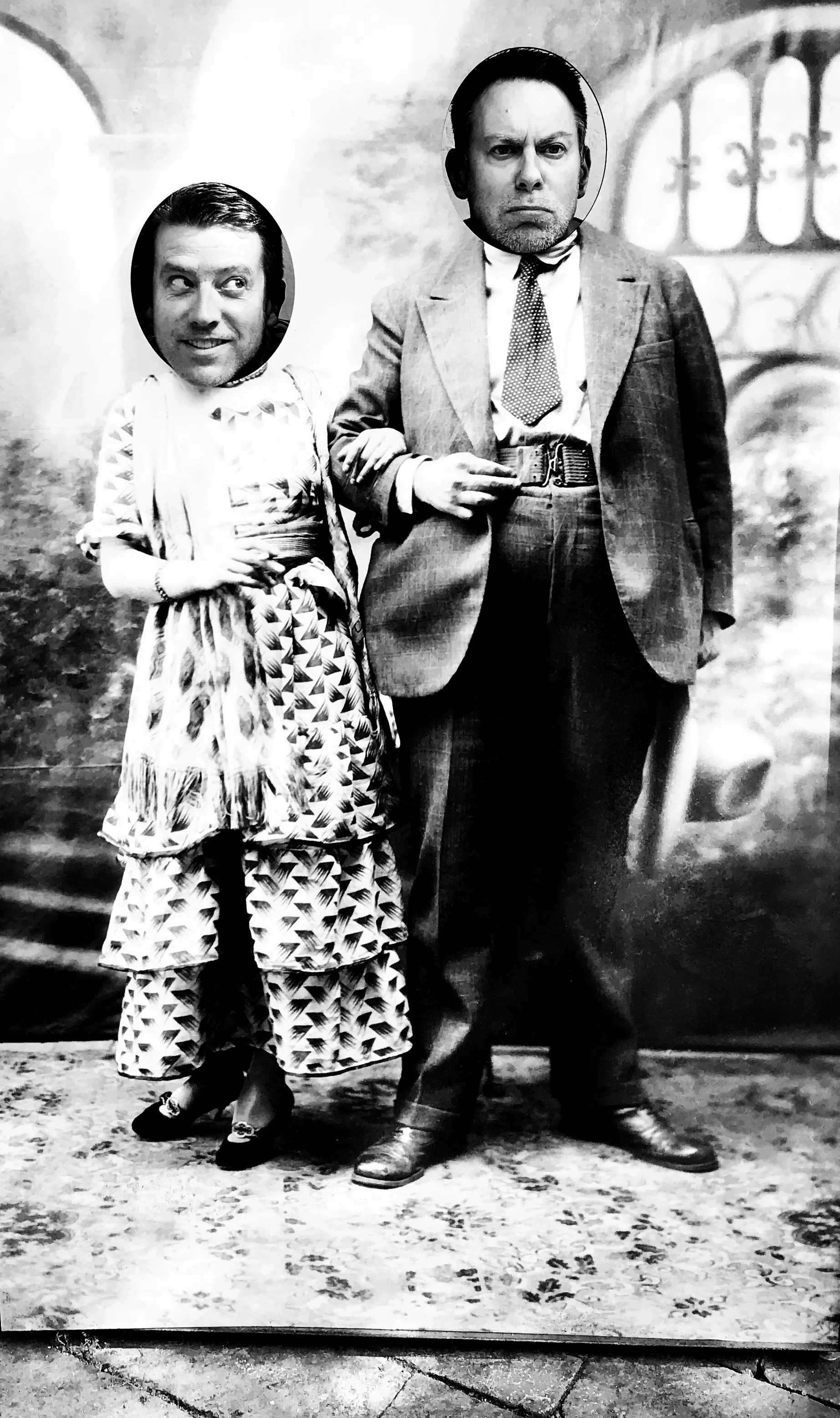
Wally and Duke pose in cutouts of Frida Kahlo and Diego Rivera

Frida and Diego, err, Wally and Duke offer up this guide to CDMX.

I hesitate to write this guide. Sure, I could rave about Mexico City for days — but that’s exactly the problem. I don’t want it to get too popular. There’s something special about CDMX that feels like a secret, and every time someone returns, I ask, “Did you love it?” The answer is always a resounding yes. It’s a city with undeniable magic. But maybe it’s time we stop singing its praises quite so loudly before it gets overrun and loses its charm. (And it’s already well on its way, as the recent protests against expats and digital nomads, who have driven up rents and fast-tracked gentrification, can attest.)

For one thing, Mexico City is an embarrassment of riches, with enough history, art and culture to keep even the most seasoned traveler captivated for weeks on end. Like Paris, you can spend a week here and barely scratch the surface. With every neighborhood offering something unique — from the bohemian charm of Coyoacán to the vibrant streets of La Condesa — there’s an endless amount to explore.

To help you navigate this sprawling city, we’ve organized our guide by neighborhood, highlighting the best markets, museums, landmarks, restaurants and quirky spots that make CDMX unforgettable. Whether you’re hunting for artisan crafts, enjoying a peaceful moment at a museum, or getting a little creeped out at the Island of the Dead Dolls on the canals of Xochimilco, this guide will take you through the gems that make Mexico City one of the most thrilling destinations in the world. 

Just accept the fact that you’ll just have to pick the things that appeal to you the most, knowing that you can’t hit them all — and that you have a reason for coming back. 

Click on any of the links for deeper dives into these spots. 

Centro Histórico
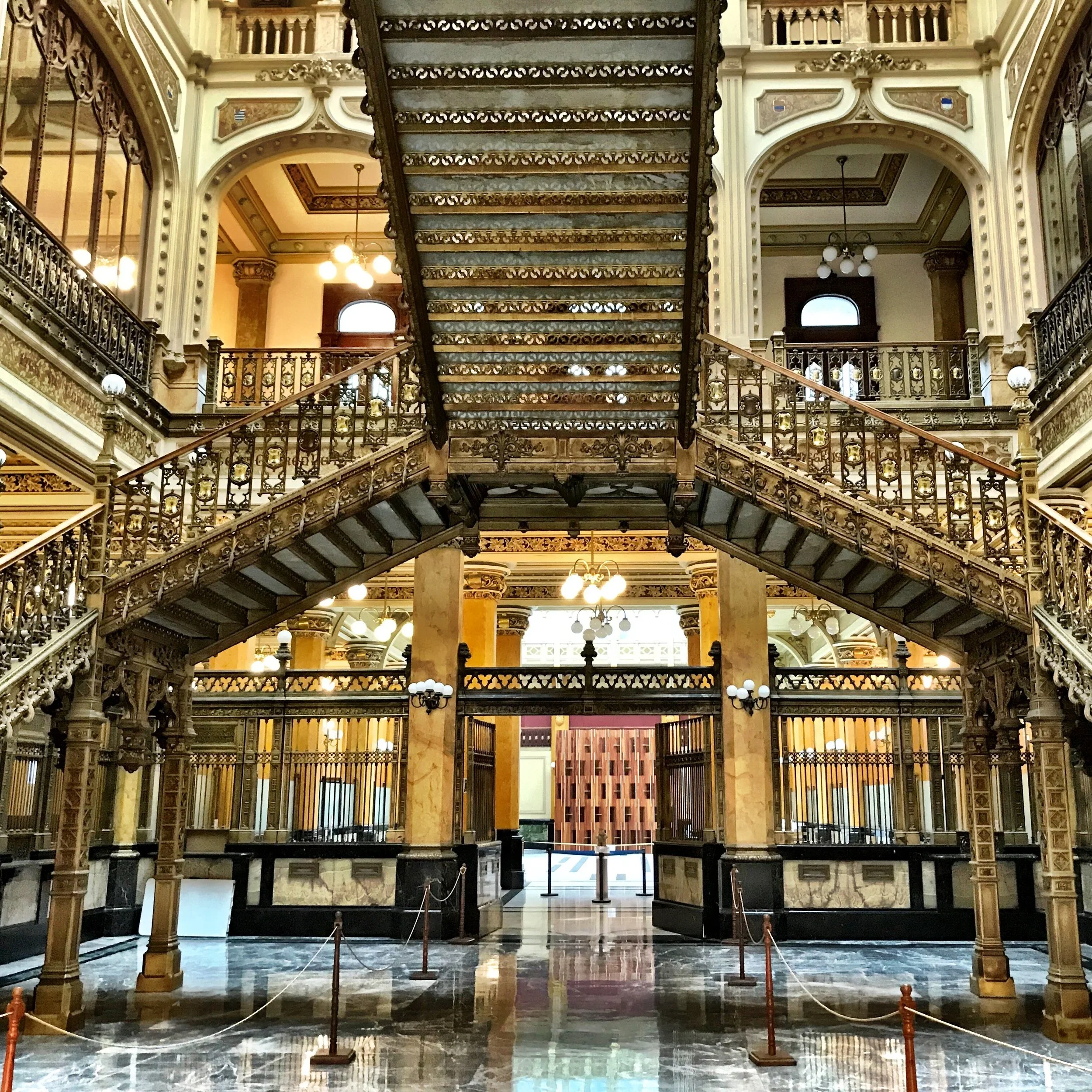
The famous staircase inside Palacio Postal in Mexico City's Centro

Most Instagrammable Places in Centro

Our guide to the most Instagrammable spots in Mexico City’s Centro takes you through one of CDMX’s most photogenic neighborhoods, where colonial architecture, Art Nouveau landmarks and modern public art collide. Our self-guided photo tour begins at the Sinagoga Histórica, whose unassuming façade gives way to a stunning folk art-inspired sanctuary, before continuing to the Antiguo Colegio de San Ildefonso, birthplace of the Mexican muralism movement. Along the way, stop for lunch on the rooftop at La Casa de las Sirenas, overlooking the Catedral Metropolitana and (unimpressive) Templo Mayor, then admire the cathedral’s lavish Baroque interior before wandering past the tiled façade of the Casa de los Azulejos.

Next, duck into the Gran Hotel Ciudad de México to marvel at its soaring stained-glass ceiling, then don’t miss the spectacular Palacio Postal, where twin gilded staircases and intricate brasswork make it one of the city’s most photogenic interiors. From there, cross to Sears for the iconic view of the Palacio de Bellas Artes dome before wrapping up with the Hemiciclo a Benito Juárez in Alameda Central and the striking red pyramids of Fuente de Vicente Rojo just across the street.
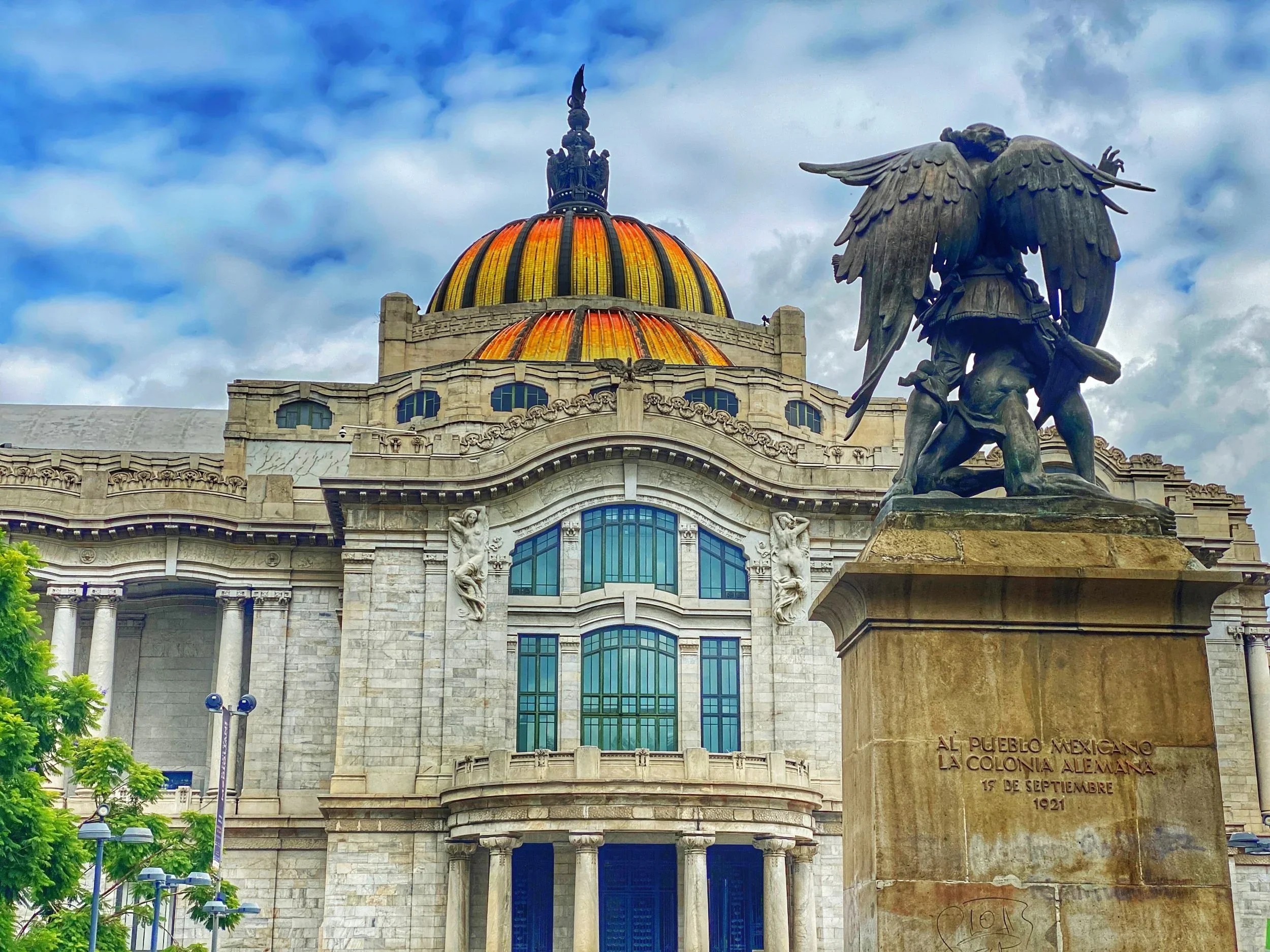
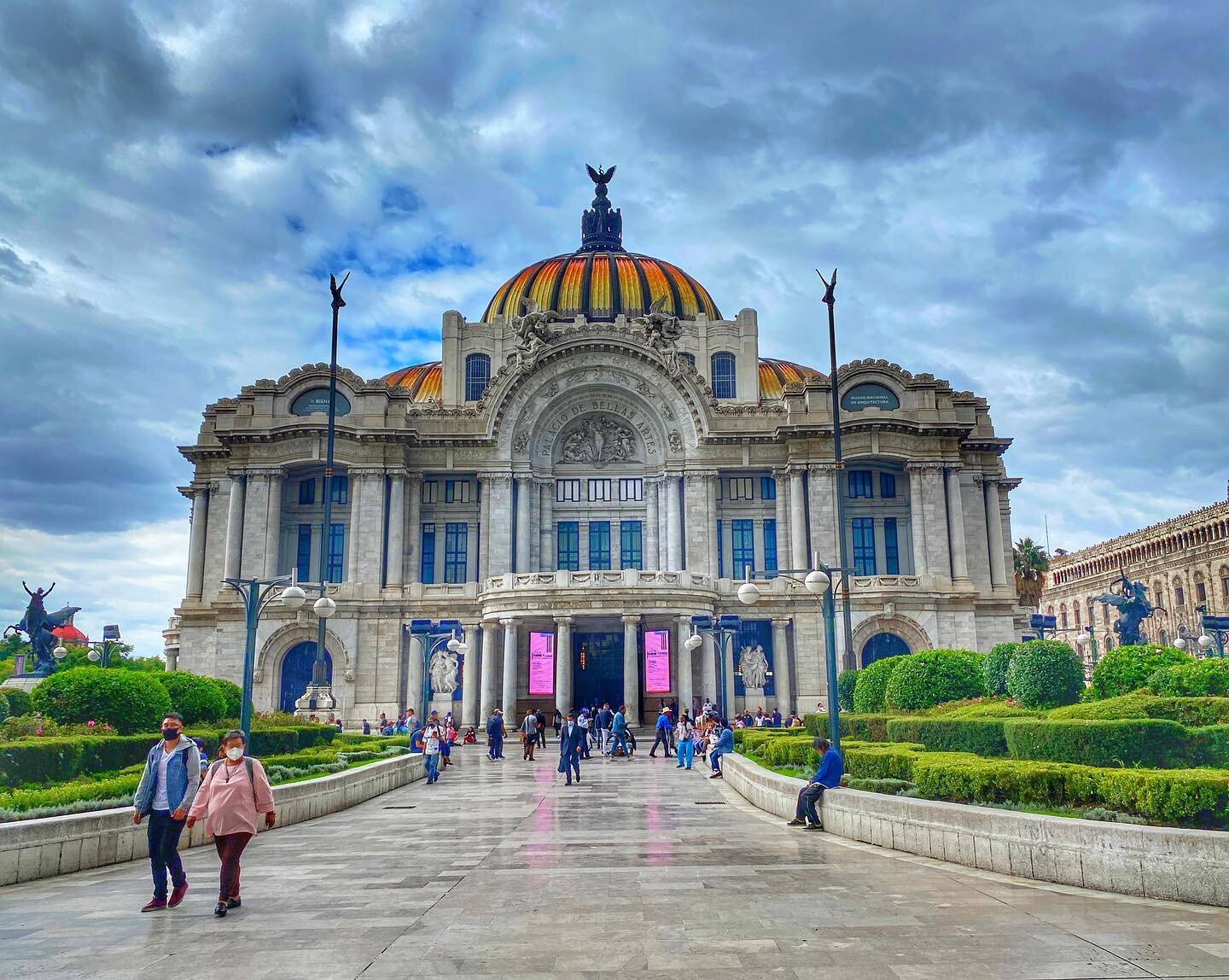
A statue in front of the orange and yellow domed Palacio de Bellas Artes in Mexico City's Centro neighborhood

Palacio de Bellas Artes

From the outside, the Palacio de Bellas Artes is a stunning Art Nouveau dome-topped palace glowing across Centro Histórico; inside, it’s home to Mexico’s premier opera house, the National Museum of Architecture, and a renowned collection of murals that provoke as much as they awe. We first glimpsed its golden crown from across the street, taking in the best view from Sears department store. But on another visit, we dove into the heart of the building, to find that in the Palacio’s mural museum, Mexico’s famous large-scale artists — Rivera, Orozco and David Alfaro Siqueiros — don’t hold back.

Rivera’s Man, Controller of the Universe takes center stage, revisiting his controversial commission for the Rockefeller Center — destroyed for depicting Lenin. Here, Karl Marx and Charles Darwin rub shoulders. Meanwhile, Orozco’s Catharsis unleashes a dystopia where naked bodies and mechanical beasts clash, featuring the infamous La Chata, a grinning prostitute, who adds to the mural’s disturbing reputation. Each mural tells a story, whether it’s Siqueiros’ dream of Cuauhtémoc defeating the conquistadors or Rivera’s sly digs at White tourists and their clichés in Carnival of Mexican Life. The collection is edgy and bold, and it’s impossible to walk away without feeling like the walls just had the last word.
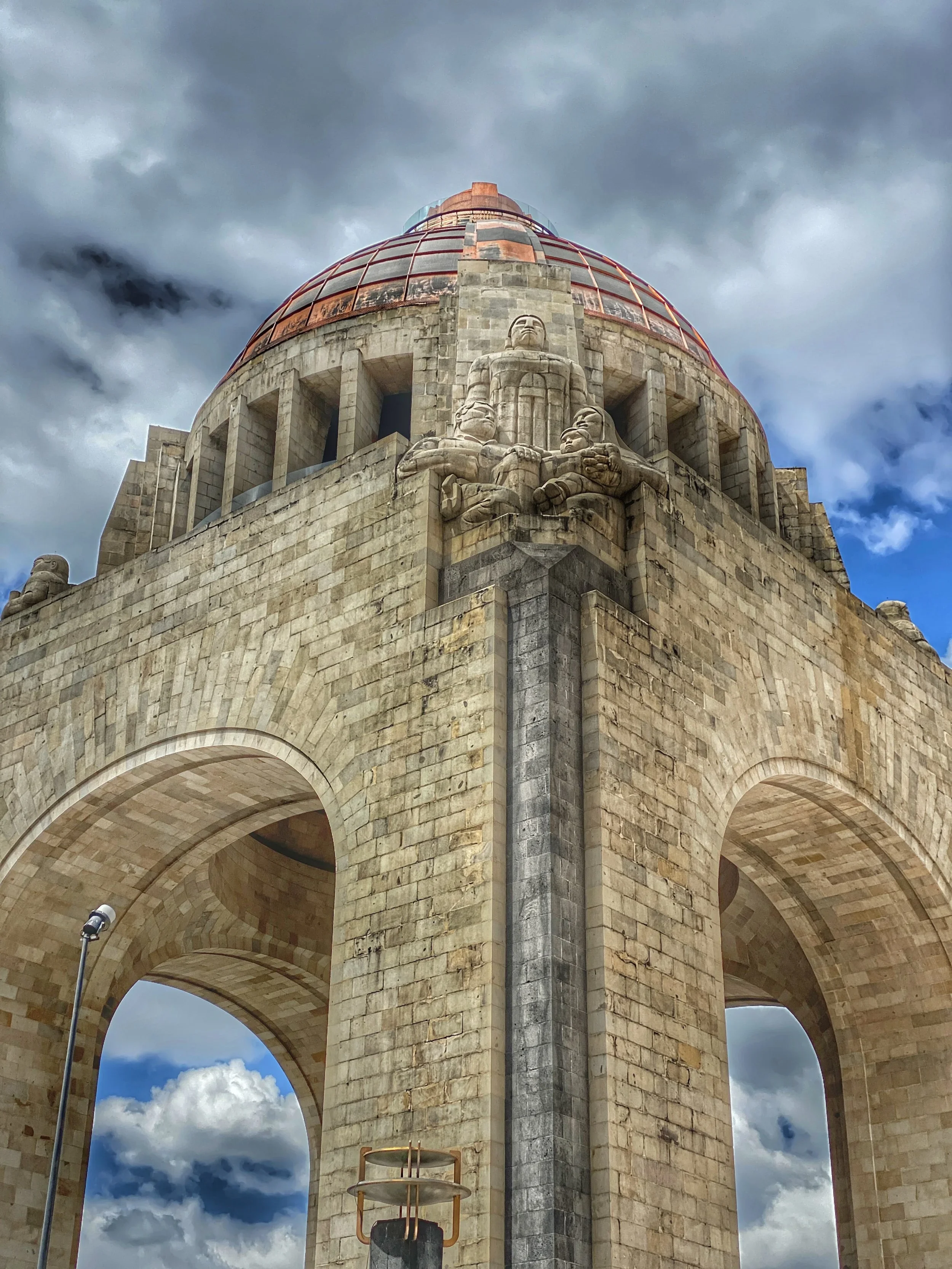
The top of the Monumento a la Revolución in Mexico City

Monumento a la Revolución

The Monument to the Revolution is a triumphal arch with some serious swagger. Originally destined to be the Palacio Legislativo Federal, the grand project was abandoned when the Mexican Revolution took center stage. For two decades, the half-built structure just sat there, rusting away. But then architect Carlos Obregón Santacilia had a better idea: turn that mess into a towering 220-foot icon, now the tallest triumphal arch in the world. Take that, Arc de Triomphe!

Today, the monument wears many hats: mausoleum, observation deck and revolutionary museum, with a little copper-clad cupola action thrown in for good measure. The glass elevator ride up the center is worth it for the views alone, but the exposed steel innards are also worth checking out. 

Meanwhile, down below, the National Museum of the Revolution does its best to impress with its “avant-garde” exhibits (we’ll take their word for it). 

Outside, the Plaza de la República buzzes with vendors selling everything from T-shirts to street snacks, and the sunken garden gives you a breather from the city’s chaos.

Chapultepec Park
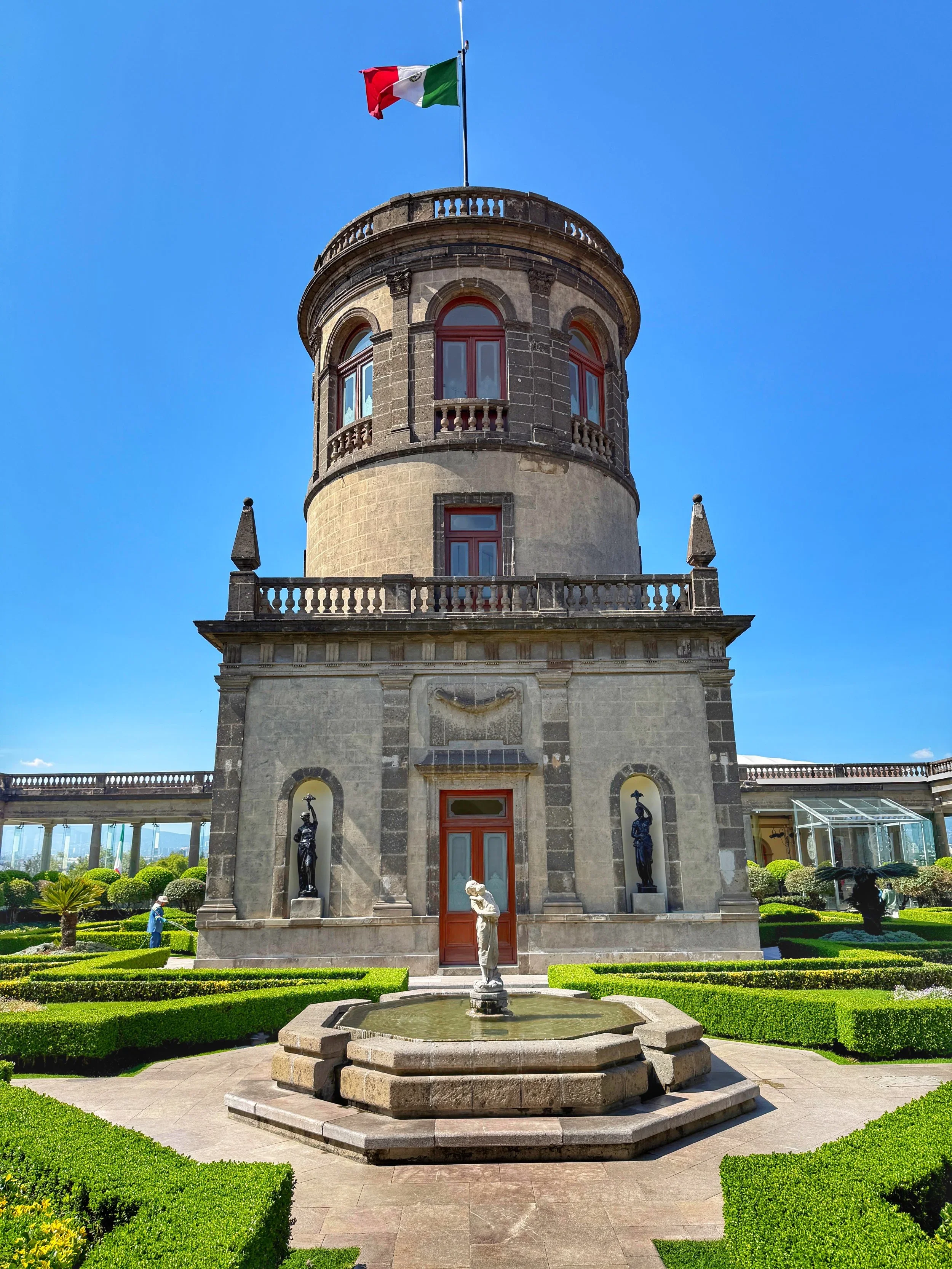
The rooftop garden and observatory tower by a fountain and hedges in Mexico City's Chapultepec Castle

Chapultepec Castle

A castle in the middle of Mexico City? Yes, really — perched atop Chapultepec Hill, this once-imperial palace is now a museum, a monument and a mood. From its sweeping views to its storybook staircases, Chapultepec Castle delivers drama at every turn.

On our visit, we followed the winding hilltop path, dodging packs of schoolchildren to reach the gates. Once inside, things get surreal. French chandeliers, trompe-l’œil ceilings, and checkerboard floors speak to its time as Emperor Maximilian and Empress Carlota’s royal residence, when the castle played dress-up as a European palace. And don’t miss the stained glass gallery of Muses and the rooftop garden.

The castle also houses the National Museum of History — and the exhibits remind you that while emperors played house, revolutionaries were gearing up to take it all down. Cases hold Aztec codices, colonial relics and revolutionary banners. It’s a crash course in Mexico’s past, where empires rose, ideals clashed, and the culture kept reinventing itself.
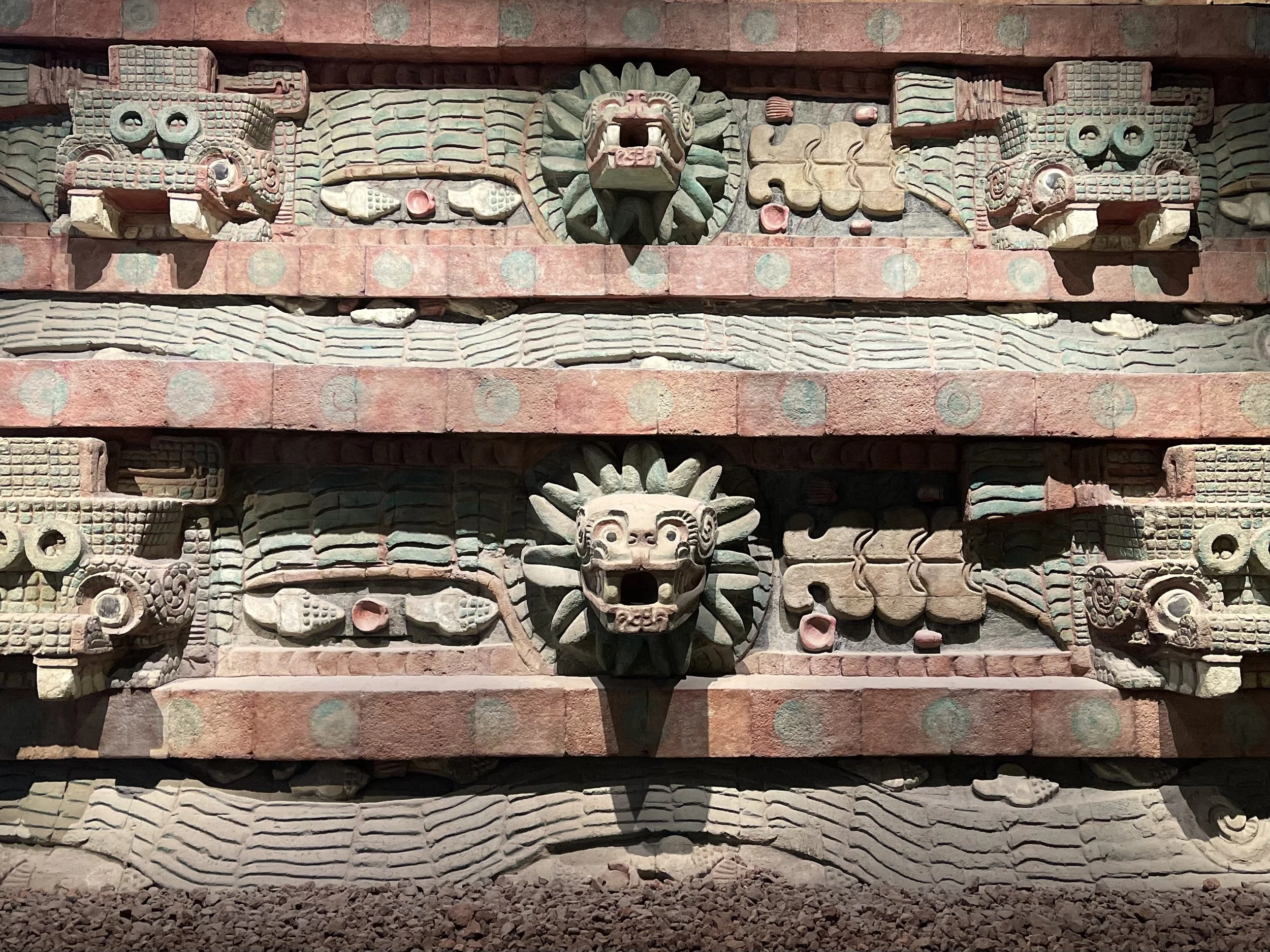
Animal heads and other carvings on parts of an Aztec temple in CDMX's Museo Nacional de Antropología

Museo Nacional de Antropología

The museum doesn’t wait until the galleries to wow you — its massive umbrella fountain out front rains spectacle on everyone walking in. Inside, soaring halls hold colossal Olmec heads, Aztec sun stones and Maya stelae — alongside delicate figurines that speak to everyday life. Every gallery plunges you deeper into the civilizations that shaped Mexico long before the Spanish arrived. My favorite part: Various galleries lead outside, where you feel like you’ve stumbled into the jungle and discovered an ancient temple and artifacts.

Another highlight? The way animals come to life in pottery and sculpture, each one symbolizing something sacred, fierce or divine. Here’s what we uncovered about animal symbolism in pre-Columbian pottery.

And if you’re drawn to the darker corners of history, don’t miss the exhibits on burial rituals and offerings. From jade beads in the mouths of the dead to xolo dogs sacrificed as guides to the afterlife, the museum doesn’t shy away from the raw power of the death cults of Ancient Mexico.

La Condesa
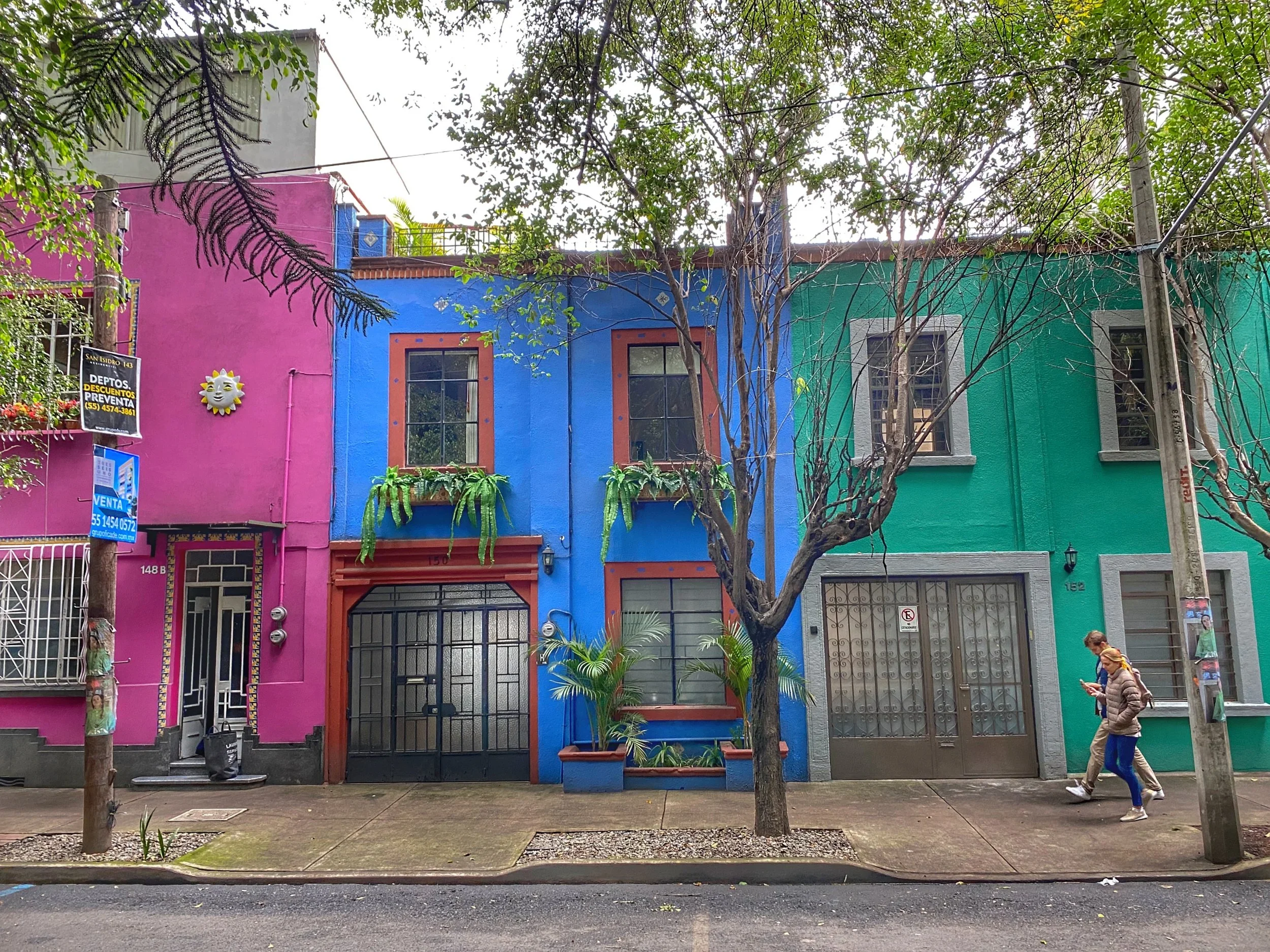
Brightly colored buildings in CDMX's La Condesa neighborhood

Morning in La Condesa

Start your morning in La Condesa, where Avenida Amsterdam’s tree-lined oval leads you past Art Deco gems and green spaces that feel worlds away from the city’s hustle. The avenue’s curving path traces the outline of an old racetrack. As you stroll, keep an eye out for the architectural detail: Streamline Moderne façades and stylish mansions make every turn a feast for the eyes.

For breakfast, we recommend Frëims, tucked inside a renovated 1920s home. The sun-drenched patio is perfect for savoring a coffee or one of their fresh juice blends, while admiring the mural. Fuel up on something like the lemon ricotta pancakes or huevos benedictinos, then take a leisurely walk over to Parque México. This green space, once home to an elite jockey club, now offers a mix of dog walkers, skaters and public art, like the Fountain of the Pitchers, which immortalizes Luz Jiménez as the iconic indigenous beauty of the 1920s. Whether you’re there for a stroll or just people-watching, La Condesa’s vibe is pure magic.

Where to stay in La Condesa
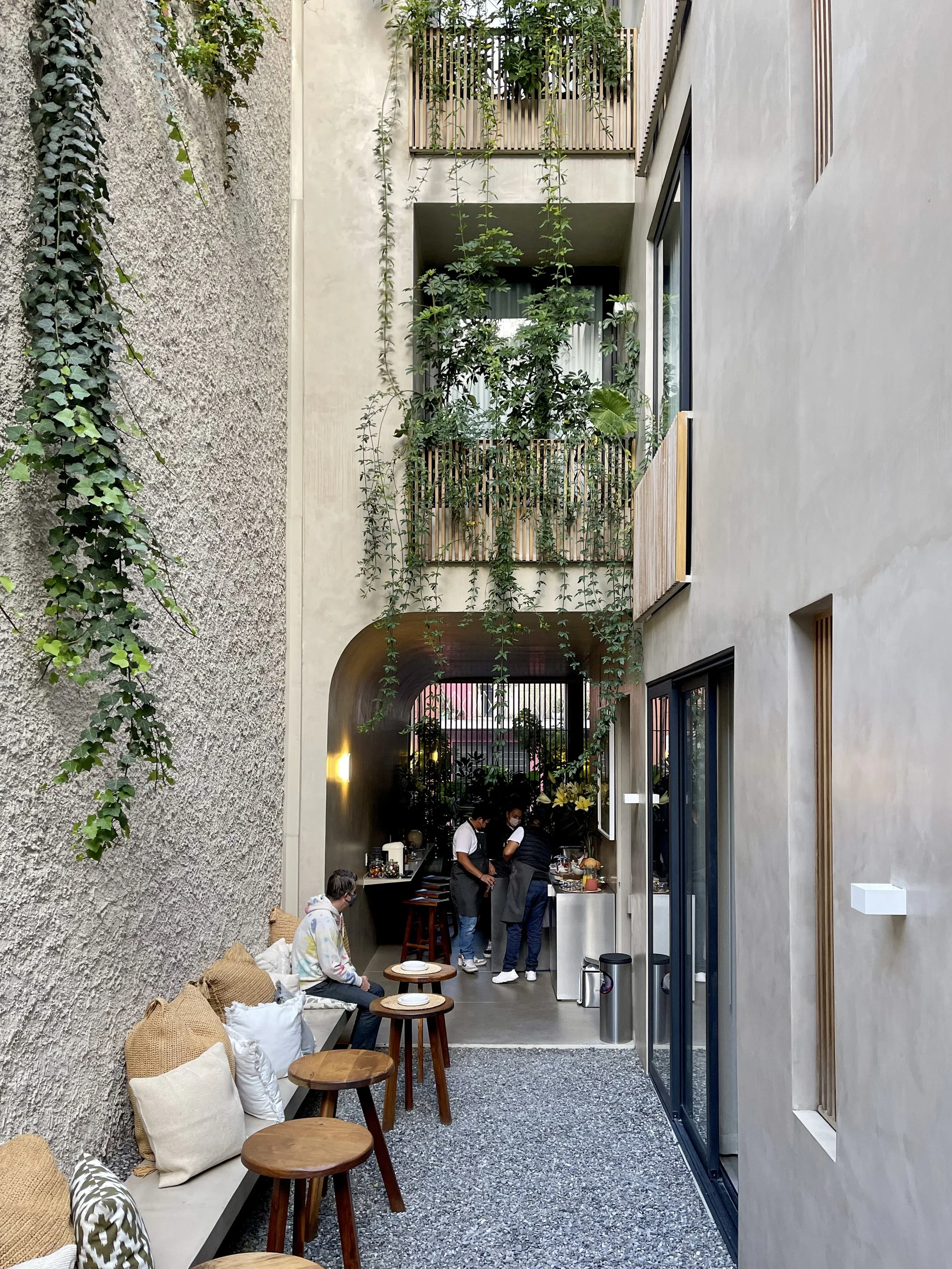
The interior courtyard / eating area with stones and plants trailing off balconies at Octavia Casa in Mexico City, Mexico

Octavia Casa

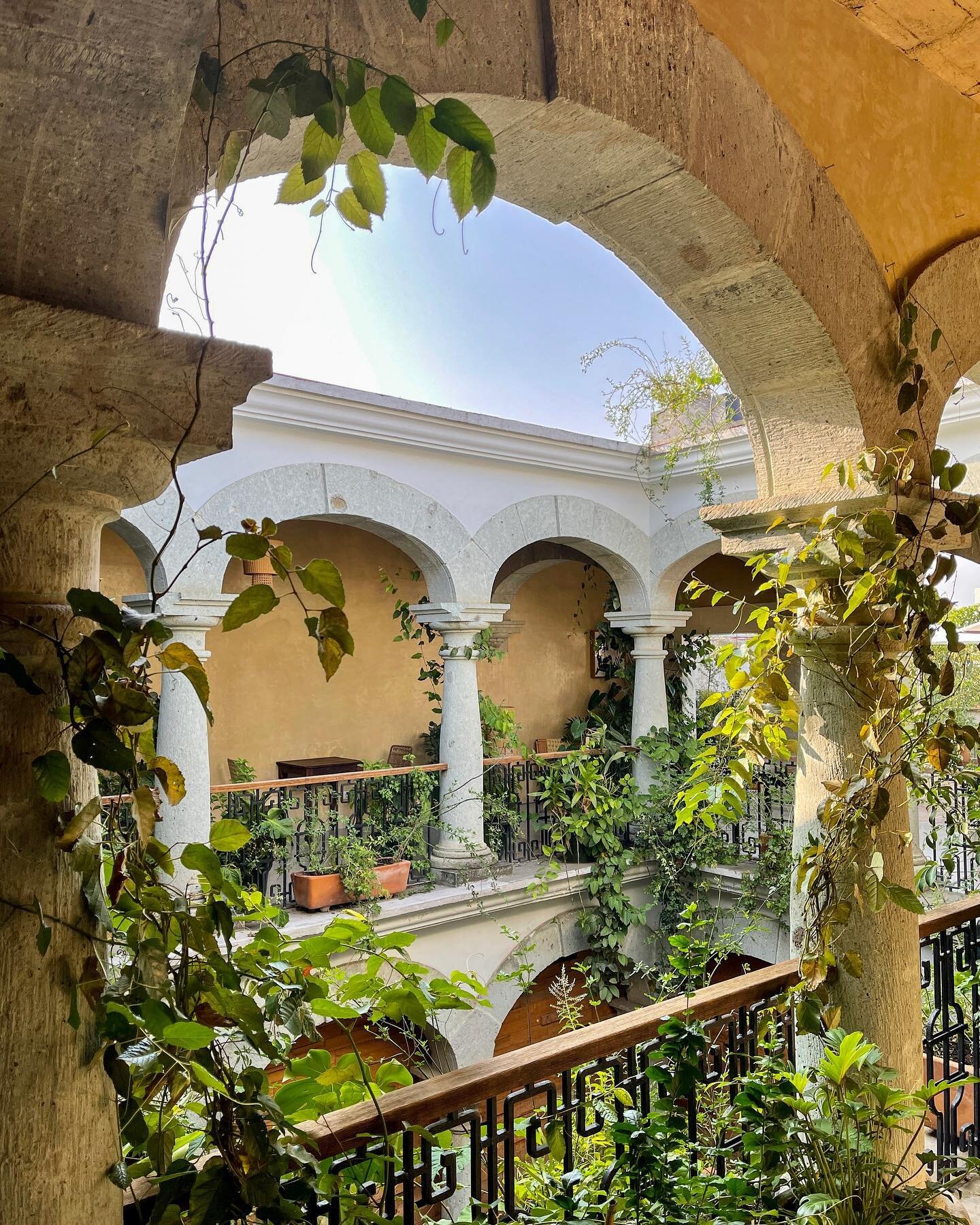
Octavia Casa is where minimalist design meets boutique charm, offering a chic retreat from the mellow bustle of La Condesa. The hotel’s teak lattice façade and the tropical plants spilling out over the concrete and glass exterior provide a touch of nature in the urban landscape. It’s a natural extension of the Octavia fashion brand, with spaces inspired by the label’s understated style, brought to life through thoughtful details like chukum stucco walls and muted earth tones that give each room an airy, welcoming vibe.

Mornings begin with a breakfast buffet of fresh fruit, pastries and handmade mugs. The staff go above and beyond, from a surprise birthday bottle of wine to Silvia’s heartfelt hugs. Evenings bring a different ambiance, with candlelight and libations on offer, perfect for winding down after a day of exploring CDMX. It’s hard not to feel special here, especially when you happen to be sharing the space with stars like Natalia Lafourcade.

Where to eat in La Condesa
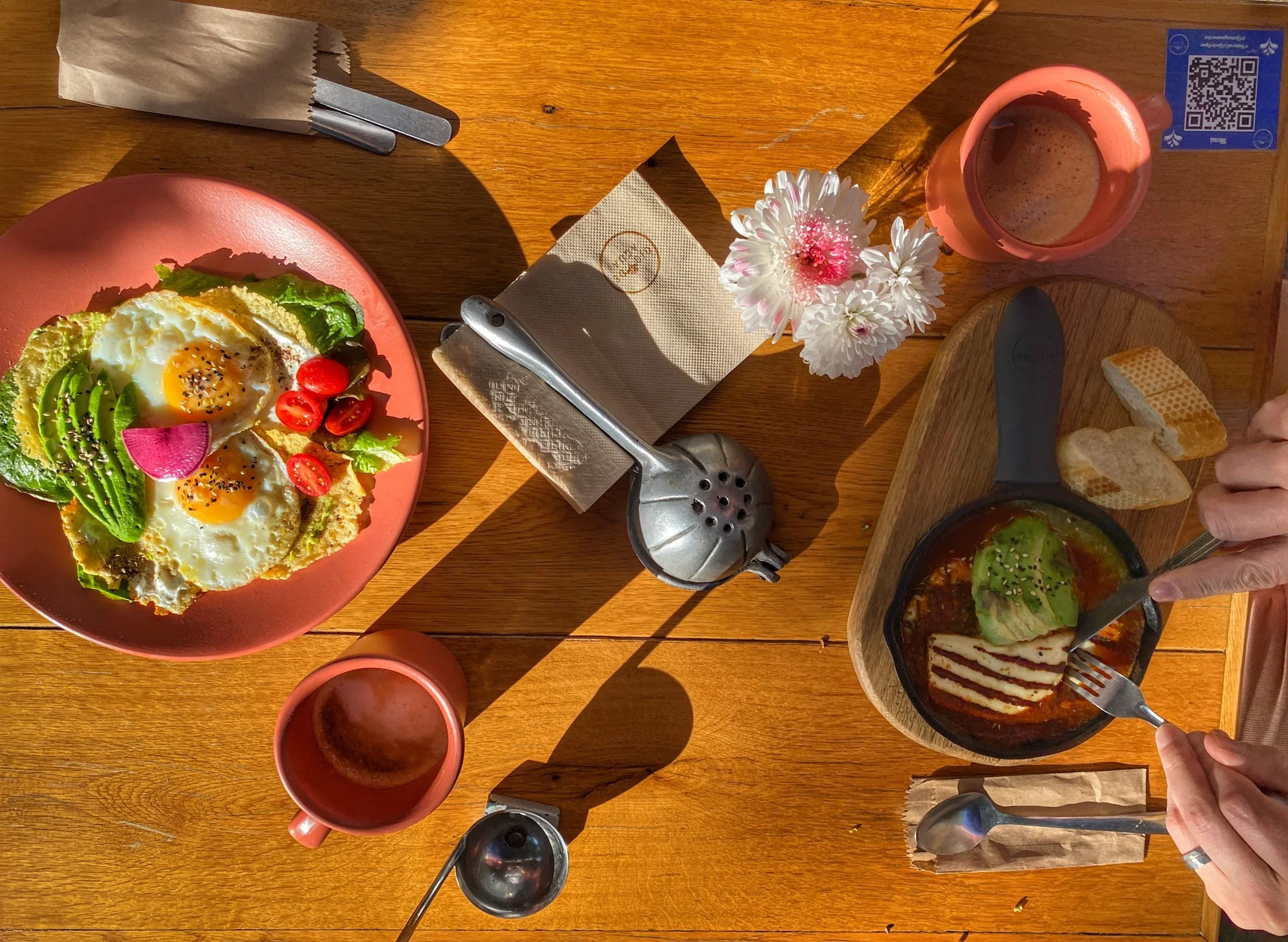
Breakfast dishes from Ojo de Agua in La Condesa, Mexico City

Ojo de Agua

Ojo de Agua in La Condesa is where health-conscious meets delicious. Situated near the lush Avenida Amsterdam and Plaza Citaltépetl, this fast casual café has a bright, fresh vibe and a fruit stand right inside. Named after a Michoacán town, the restaurant channels a commitment to living well, celebrating fresh ingredients in dishes that don’t skimp on flavor. The interior is casual chic, with Mudéjar-style tiles, big windows and plenty of natural light, while the outdoor seating is perfect for soaking up the neighborhood’s morning buzz.

The menu has something for everyone, from açaí bowls to cinnamon roll French toast, but we couldn’t resist the savory options. The santos ahogados, with its poached eggs, grilled panela and two salsas over a heart-shaped hoja santa leaf, brought a rich balance of flavors, while the huevos Polanco paired eggs with avocado purée and a za’atar-spiced jocoque. With Queen’s “Bohemian Rhapsody” playing in the background and fresh juice from the bar to finish things off, Ojo de Agua left us feeling fully satisfied and ready to take on CDMX.

Roma

Where to stay in Roma
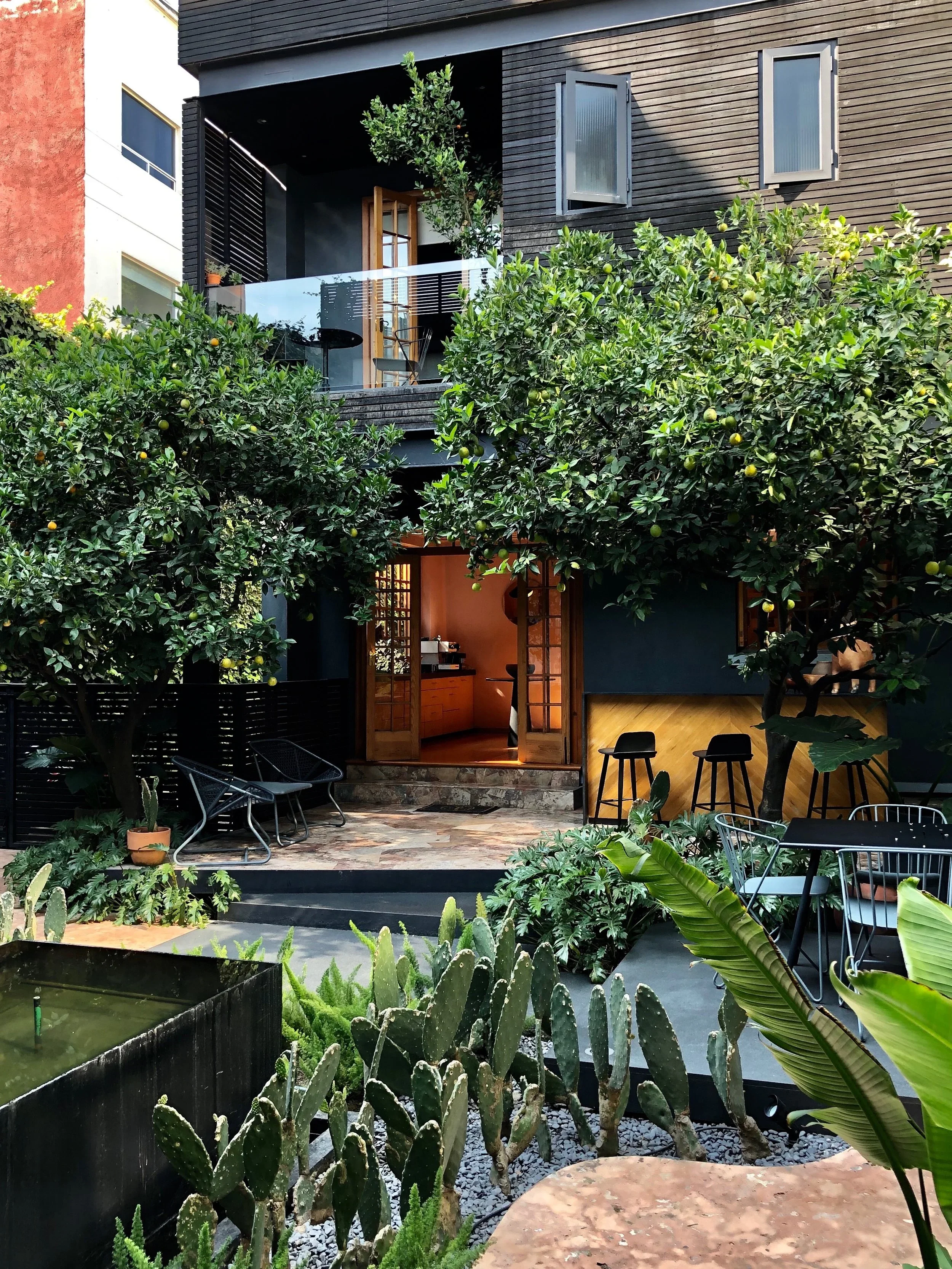
The backyard of Ignacia Guest House in Mexico City, with cacti, a water feature, bar and trees

Ignacia Guest House

Ignacia Guest House in Colonia Roma is a sophisticated blend of historic charm and modern elegance, tucked away in one of Mexico City’s most picturesque neighborhoods. The meticulously restored 1913 mansion captures the spirit of the area with its Neoclassical and Art Nouveau touches, while the modern wing adds a sleek contrast of glass and steel. Named after the beloved housekeeper who spent more than 70 years living and working in the home, Ignacia’s story is woven into every detail, from the Oaxacan cactus garden she planted to the woodcut portraits of her displayed in the lobby. We stayed in the Azul suite, which features reclaimed bowling alley maple floors and Carrara marble bathroom fixtures, providing the perfect mix of rustic and luxe.

The daily breakfast menu, crafted from Ignacia’s original recipes, offers a delicious start to the day, complete with fresh pastries and locally sourced ingredients. We especially loved the cocktail hour, where we sampled mezcal-infused drinks with sal de gusano (worm salt) and even tried crispy chapulines (grasshoppers) — because when in Rome… or, Roma. The courtyard patio is a central hub for socializing, shaded by ivy-covered walls and overlooked by the glass corridor that connects the new and old buildings. As much as the architecture and gardens enchanted us, it was the warm and welcoming staff who truly made us feel at home. 

Coyoacán
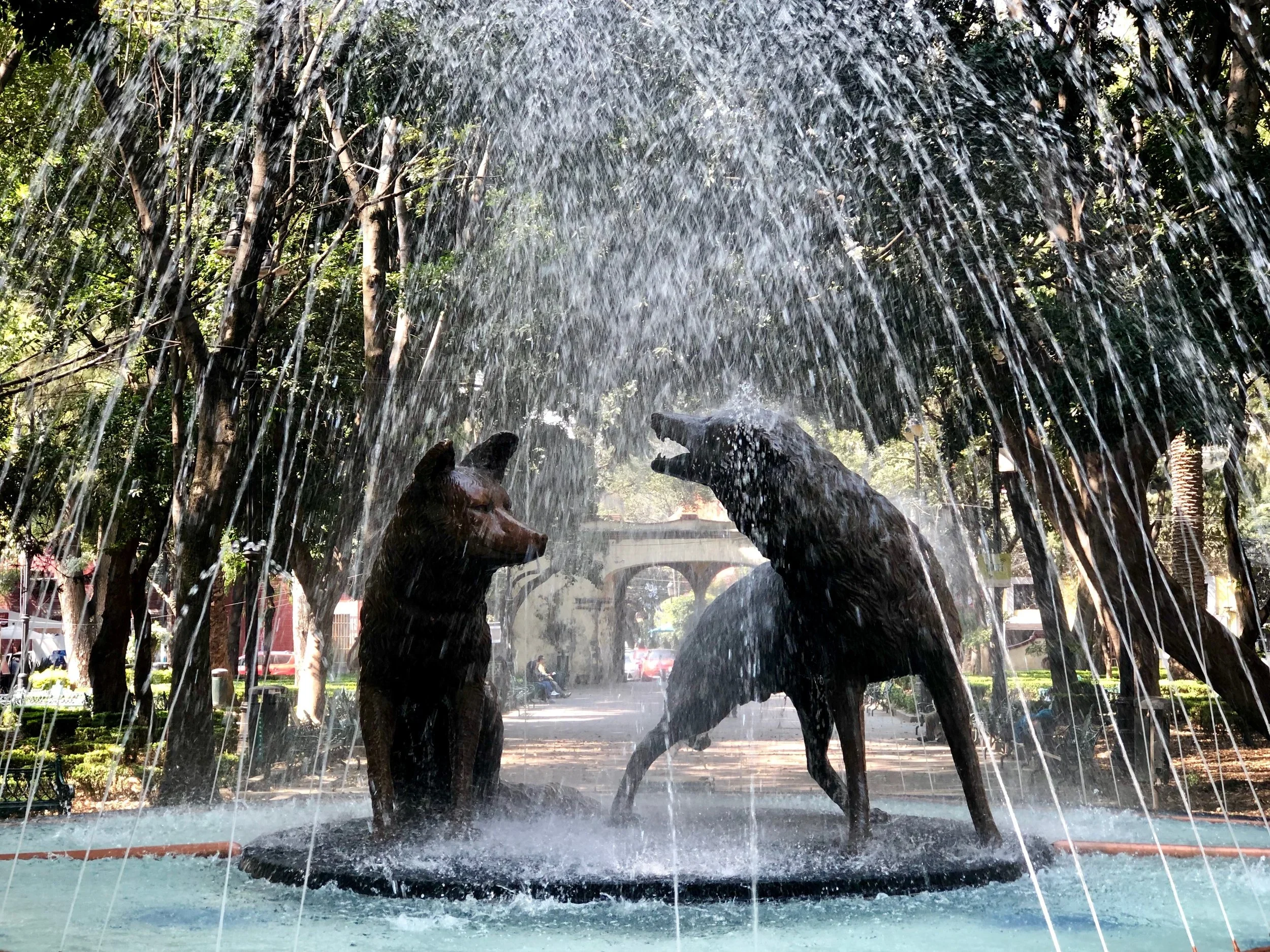
The fountain of two wolves in the square of Coyoacán in Mexico City

Wandering Coyoacán

An afternoon in Coyoacán offers a perfect mix of history, culture and a bit of boho chic. Start in Plaza Hidalgo, where the Fuente de los Coyotes splashes in the heart of a classic colonial square, and balloon vendors and palm-leaf crickets are part of the scene. Nearby, Los Danzantes serves up dishes like cricket croquetas and mezcal cocktails, perfect for people-watching while soaking up the bohemian vibe.

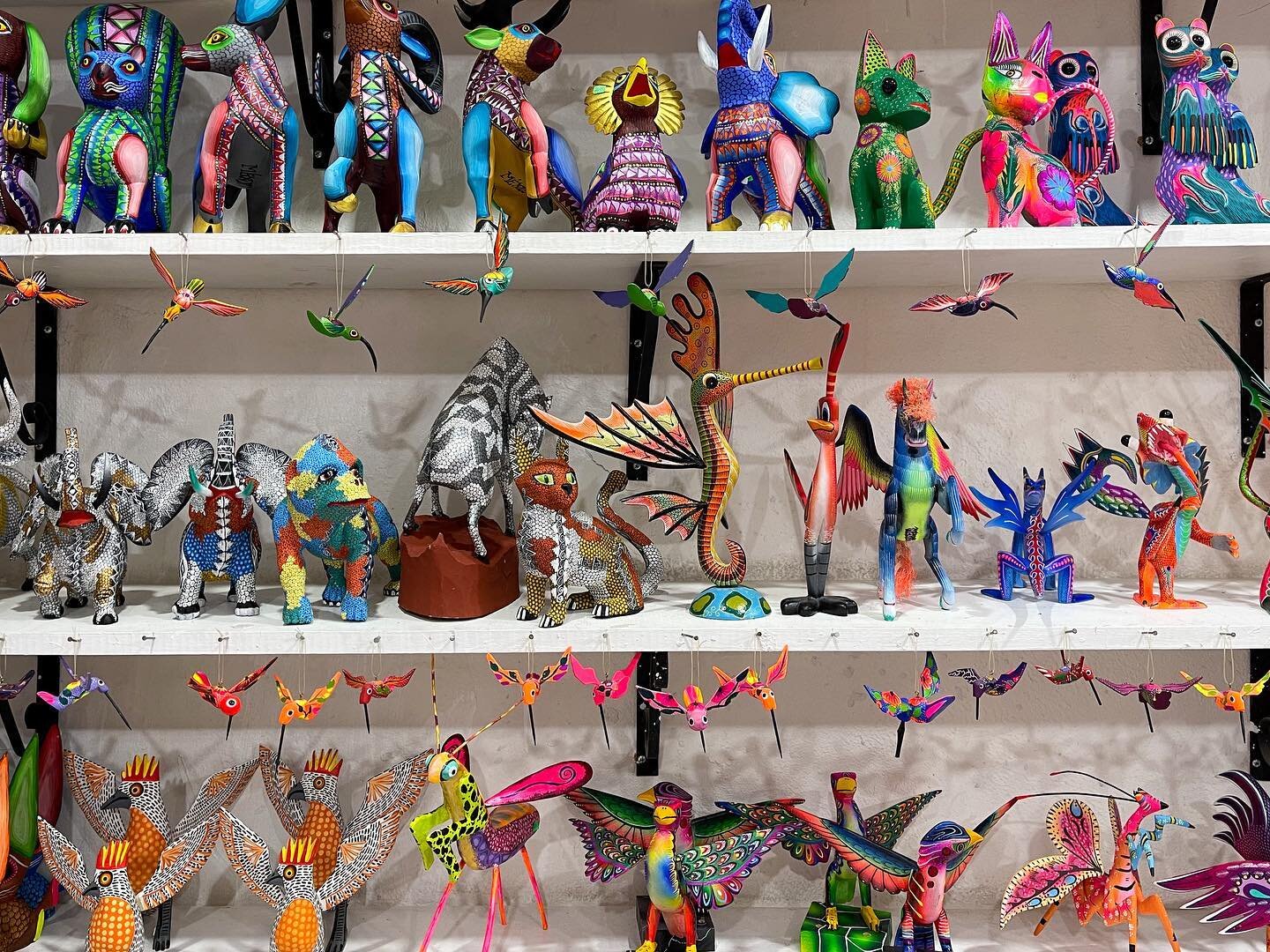
Wander into the Mercado Artesanal Mexicano for quirky souvenirs like Oaxacan alebrijes or oddball folk art, then recharge at Panadería Pública with a coffee and a guava pastry. Just a short stroll away, Plaza de la Conchita offers a quiet escape, where the 16th century chapel holds stories of Hernán Cortés’ time in the neighborhood. Finish at Frida Kahlo Park, where topiary animals greet you and teenagers practice salsa moves under bougainvilleas, and a mural by Dan Silva adds a burst of color. Coyoacán’s charm is irresistible, making it easy to see why artists and dreamers have called it home.
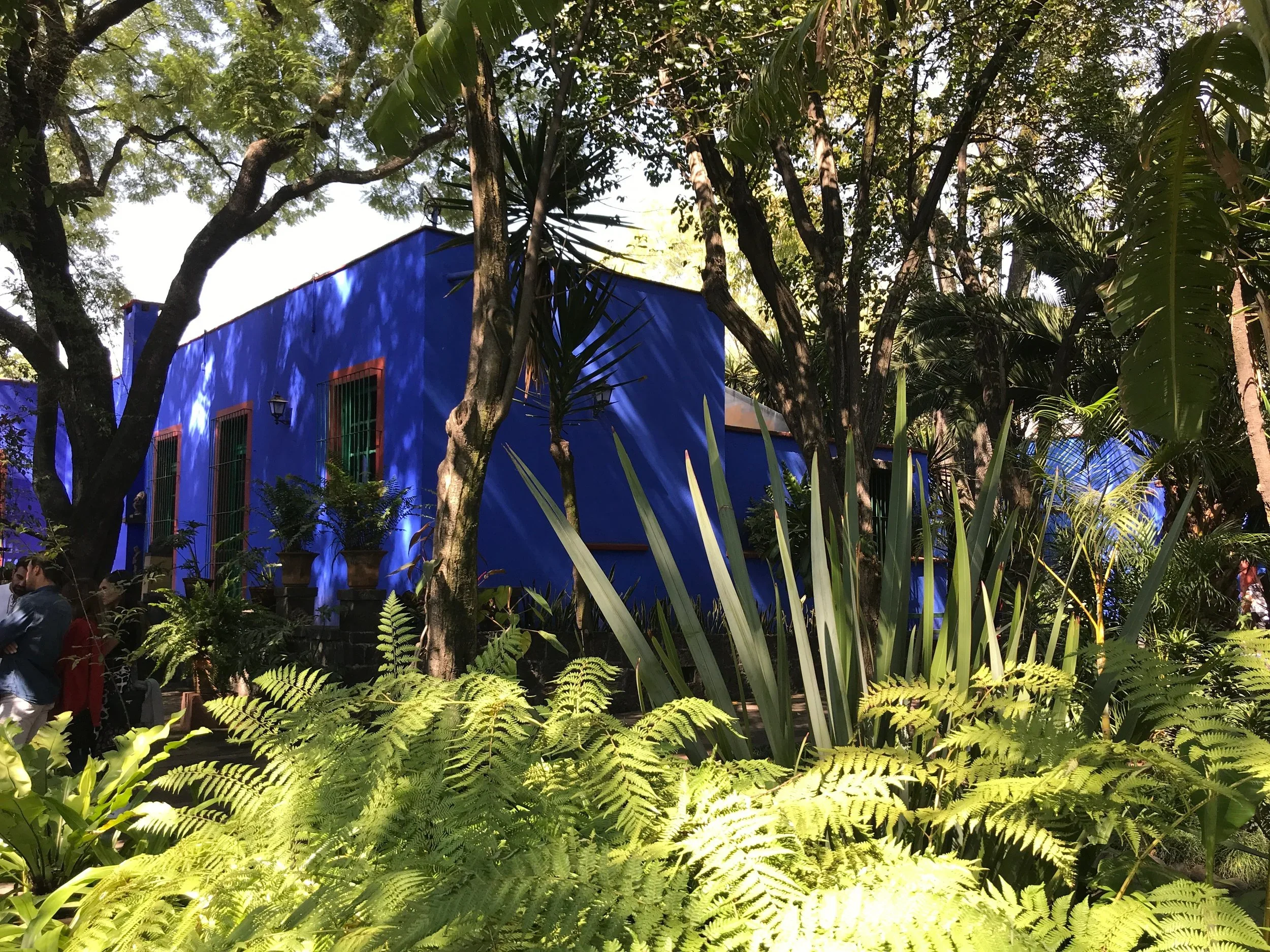
The bright blue Casa Azul, Frida Kahlo's family home, surrounded by greenery, in CDMX

La Casa Azul: The Frida Kahlo Museum

La Casa Azul, or the Frida Kahlo Museum, is as bold and layered as the artist herself, with its vibrant cobalt walls and eclectic blend of art, artifacts, and personal relics. The iconic blue-painted house in Coyoacán offers a glimpse into the world of Frida and Diego Rivera, where the bohemian spirit comes alive in the courtyard’s botanical garden and the interiors filled with papel picado, Tehuana dresses, and intricate folk art. We recommend booking tickets well in advance and arriving early to avoid the hours-long wait; it’s worth it to step inside this iconic space where Kahlo’s personality radiates from every corner.

From her wheelchair and easel to her night bed with a mirror overhead—where she painted while bedridden—La Casa Azul tells the story of an artist who turned pain into beauty. The house is filled with fascinating details, like the miniature clay mugs spelling out “Frida” and “Diego” above the stove, or the ashes resting in a pre-Columbian urn beside her bed. Beyond the personal spaces, you’ll find rooms with her lesser-known artworks, a display of her distinctive wardrobe, and even a pyramid of pre-Columbian sculptures Rivera added to the garden. The whole experience leaves a lasting impression, as if you’ve walked through the pages of Frida’s life story, with every object and plant bearing witness to her creative and resilient spirit.
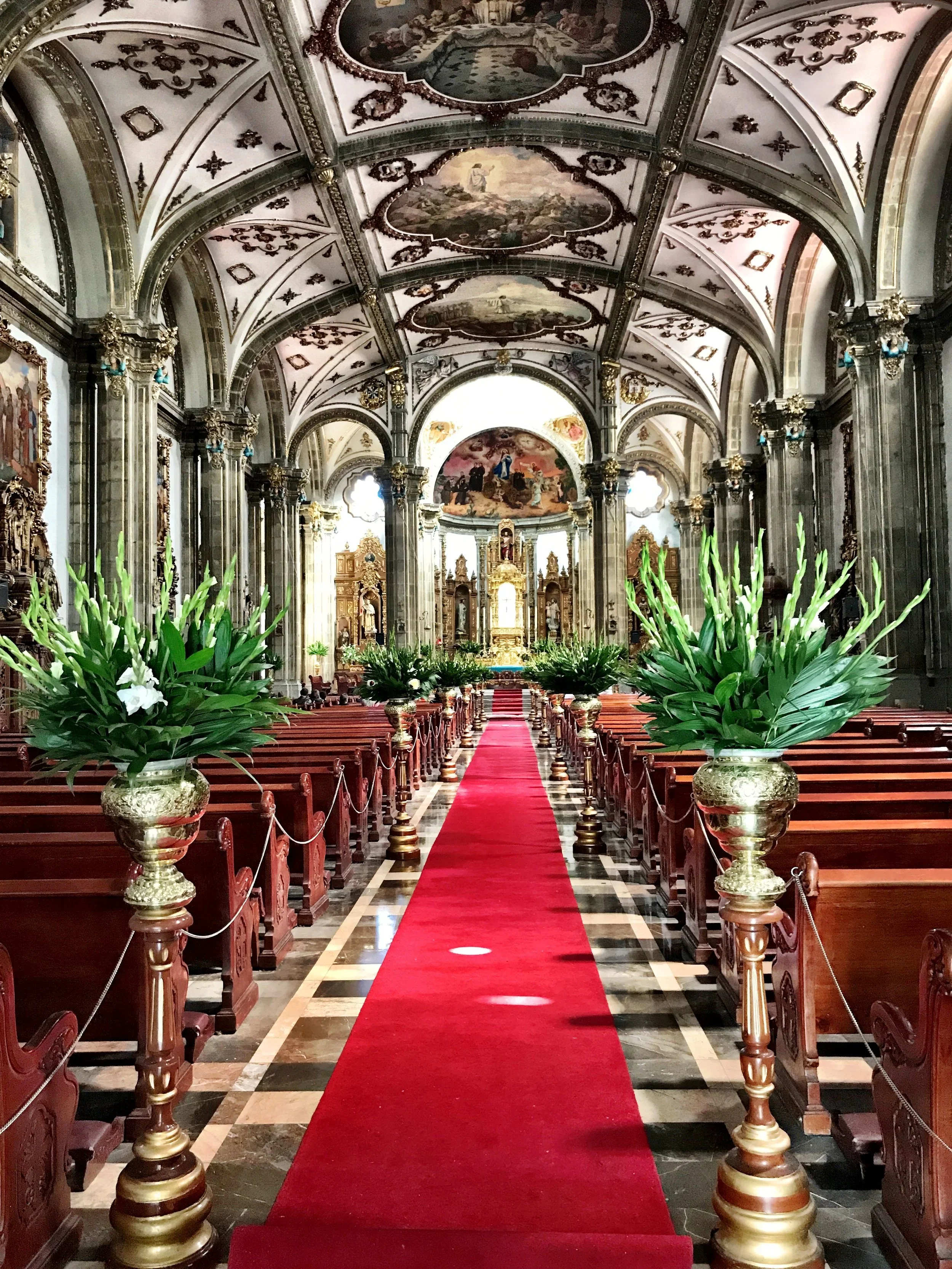
Murals on the ceiling, arches, pews and a red carpet runner inside Parroquia San Juan Bautista in Mexico City

Parroquia San Juan Bautista

Parroquia San Juan Bautista, or La Iglesia de Coyoacán, is a captivating piece of Spanish colonial history nestled in Mexico City’s bohemian Coyoacán neighborhood. Built between 1527 and 1552 on the site of an Aztec noble school, the church’s relatively plain Herrerian-style exterior belies the ornate Baroque splendor within. Step inside, and you’re greeted by gilded altars, frescoed ceilings depicting Christ’s life, and an array of small chapels, including the opulent Chapel of the Rosary.

The church is full of fascinating details, from the creepy yet compelling Cristo de los Milagros, adorned with healing charms, to niche statues and elaborate ornamentation that evoke Mexico’s blend of indigenous and Catholic traditions. Don’t miss wandering the peaceful cloisters out back, where Nahuatl-speaking converts were once baptized. La Iglesia de Coyoacán is not just a church; it’s a glimpse into the neighborhood’s layered history and enduring cultural richness. Read more here.
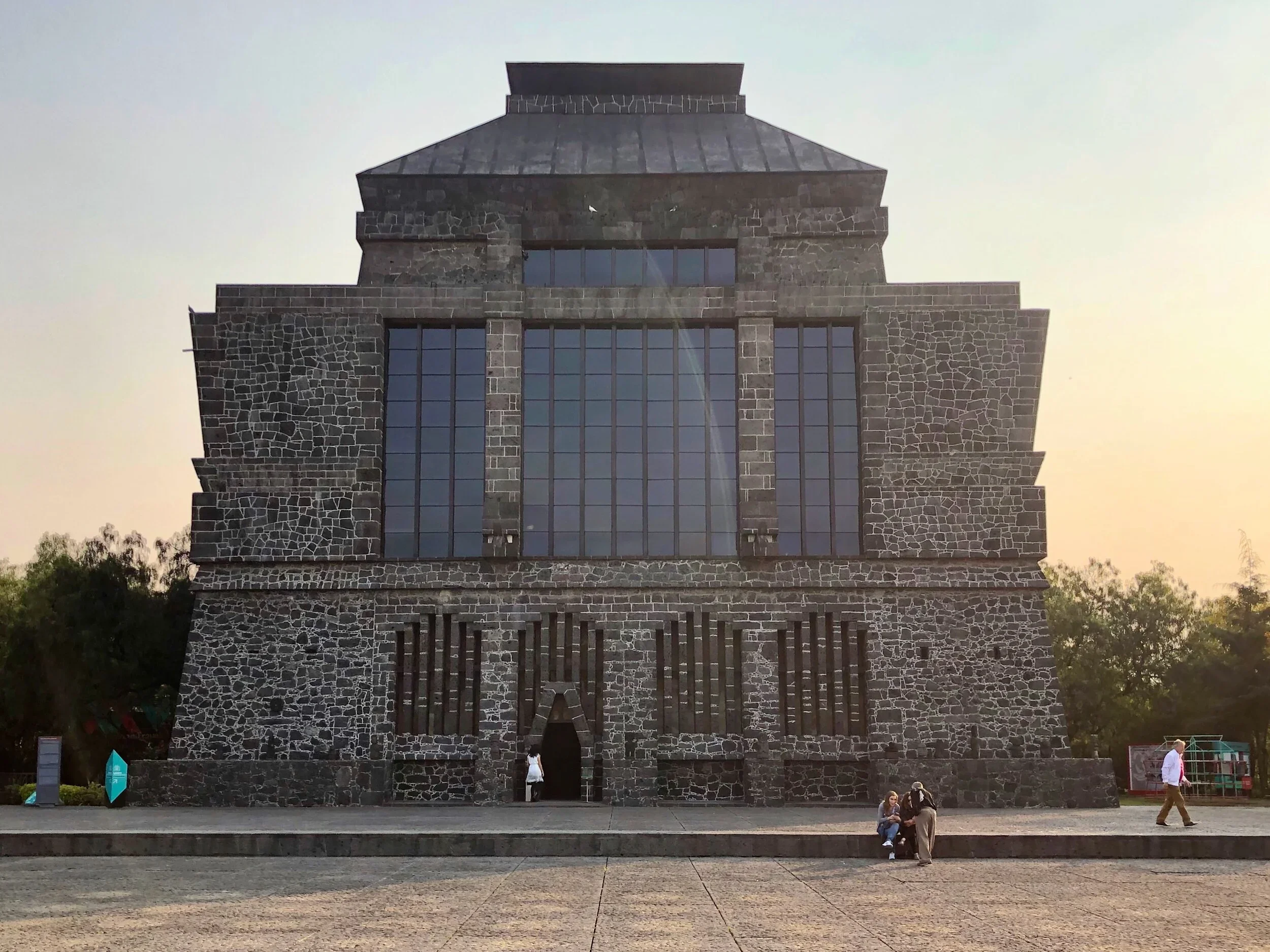
The stone exterior of Museo Anahuacalli at sunset

Museo Anahuacalli

The Anahuacalli Museum is unlike any other—a temple-like structure housing Diego Rivera’s vast collection of pre-Hispanic artifacts. Built on the rugged volcanic rock of El Pedregal, this black basalt museum rises like a Mesoamerican pyramid, surrounded by myth and history. Rivera envisioned it as a place to contemplate Mexico’s ancient past, with over 50,000 artifacts collected over his lifetime, though only a fraction is displayed. The museum’s dim and cool interior, lit by alabaster windows, creates an otherworldly atmosphere, while colorful ofrendas and papier-mâché alebrijes burst against the stone.

Inside, narrow staircases lead you up through galleries filled with Zapotec, Maya, Aztec, and Olmec relics, culminating in Rivera’s art studio on the sunlit second floor, where you can see studies for his controversial murals. The rooftop terrace offers a stark contrast to the dark confines below, with panoramic views of CDMX. Rivera’s passion for the past comes to life here, where mythological mosaics, jaguar statues, and Mesoamerican symbolism honor Mexico’s ancient heritage. It’s an unforgettable experience that feels as much like stepping into a temple as it does a museum.

San Ángel
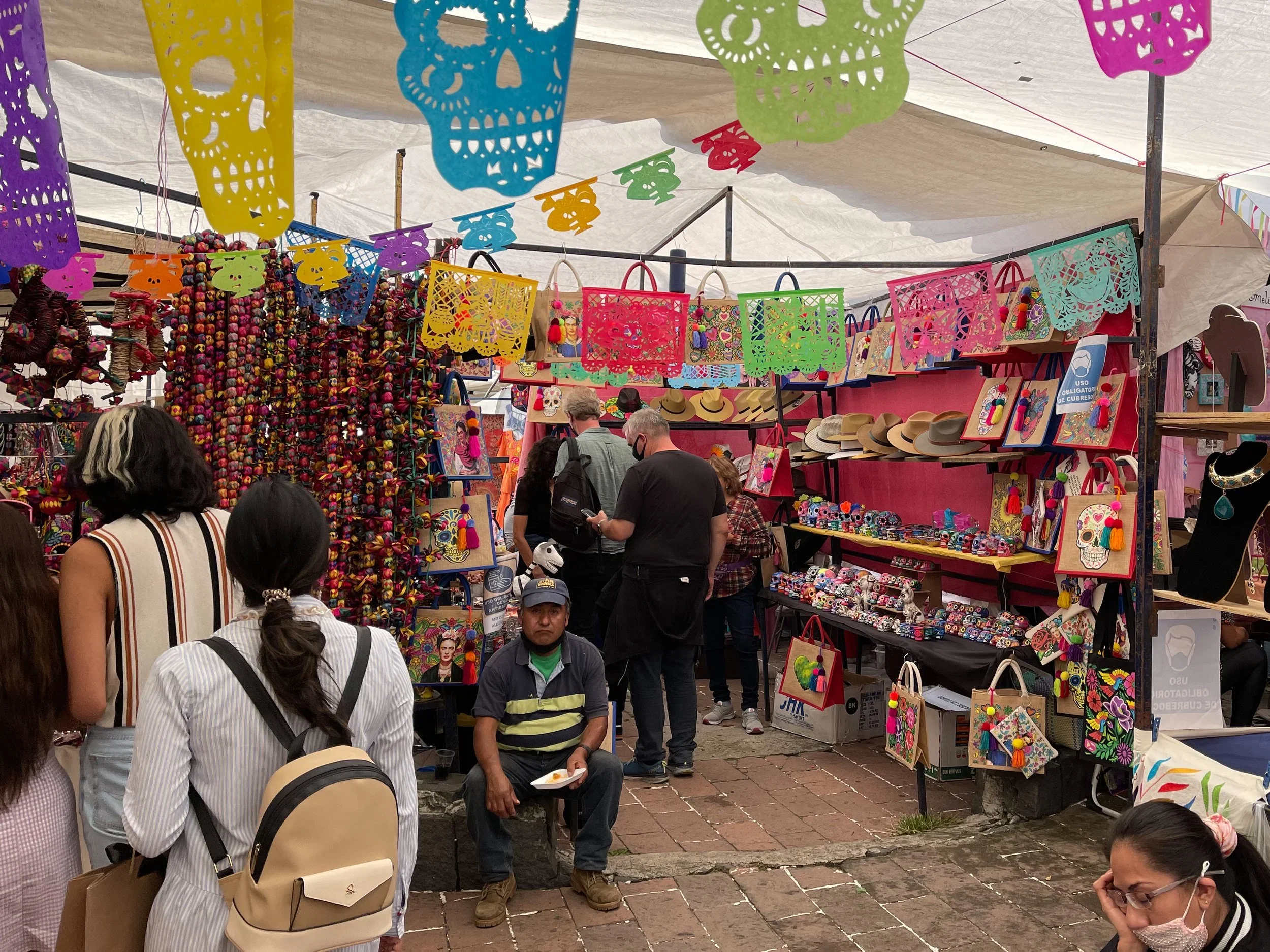
Paper skulls hang by craft vendors at the Bazar Sábado in San Angel, Mexico City

Bazar Sábado

The Bazar Sábado in San Ángel is a Saturday-only spectacle that fills the historic streets with artisans, craft stalls, and cultural treasures. The cobblestone lanes and colonial architecture set the scene for browsing unique wares, from vivid alebrijes and handpainted ceramics to quirky Day of the Dead memorabilia. Founded in 1960, the bazaar has grown into a beloved tradition, with its epicenter located in a central courtyard where you can also grab a bite or sip a local craft brew, like a Monstruo de Agua beer—a must-try for its unusual ingredients and axolotl-themed branding.

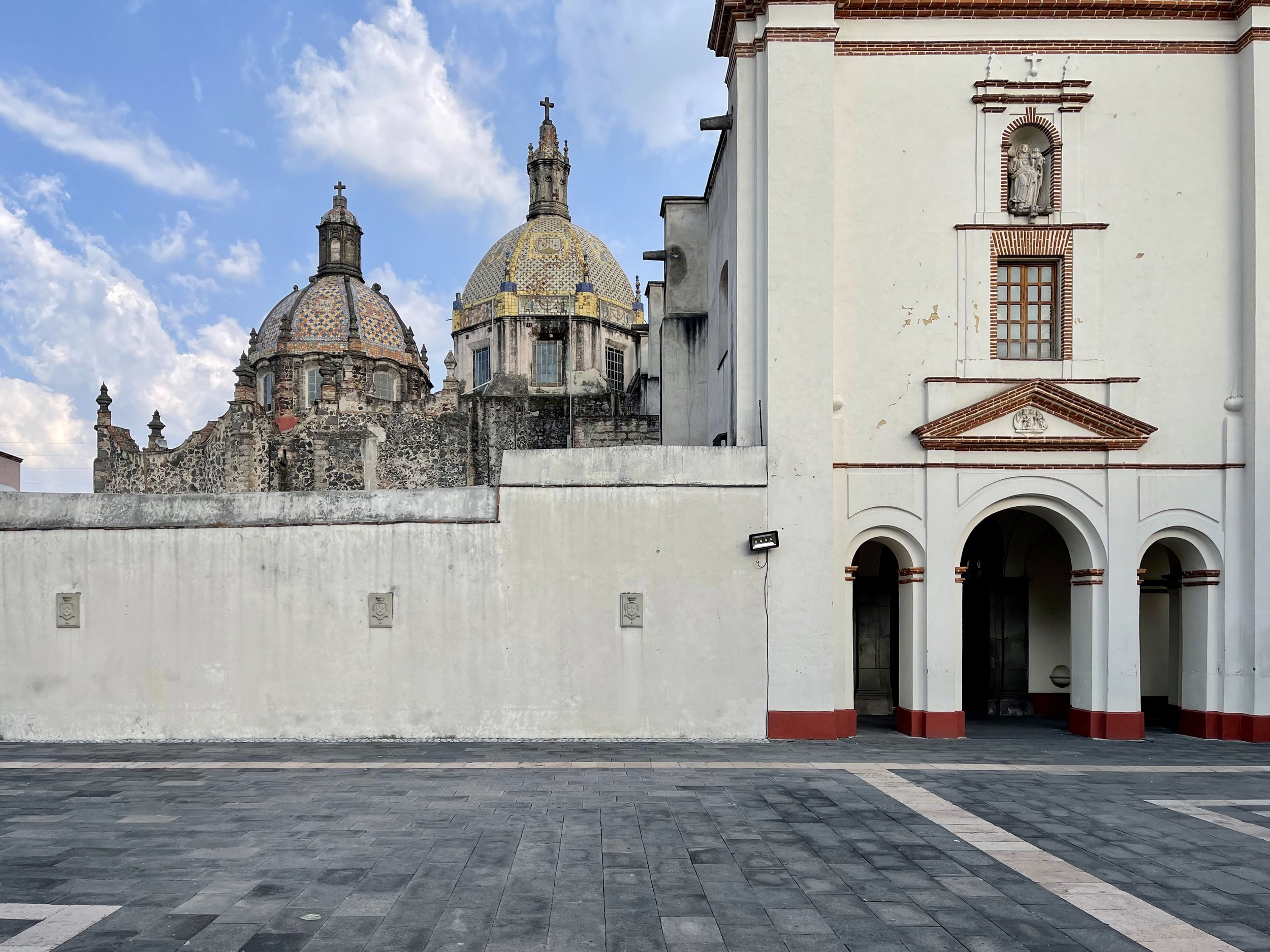
Though the market can get busy, a friendly “con permiso” helps you navigate the crowded stalls. Don’t miss browsing nearby shops like Cerámica San Germán, where the traditional meets the artistic, or grabbing a molcajete for your guacamole needs. The cupolas of Nuestra Señora del Carmen loom overhead, hinting at San Ángel’s rich history, complete with mummies and macabre relics in the crypt below. Whether you’re drawn to crafts, ceramics, or quirky curiosities, Bazar Sábado promises a vibrant and eclectic day out in CDMX’s most enchanting neighborhood.
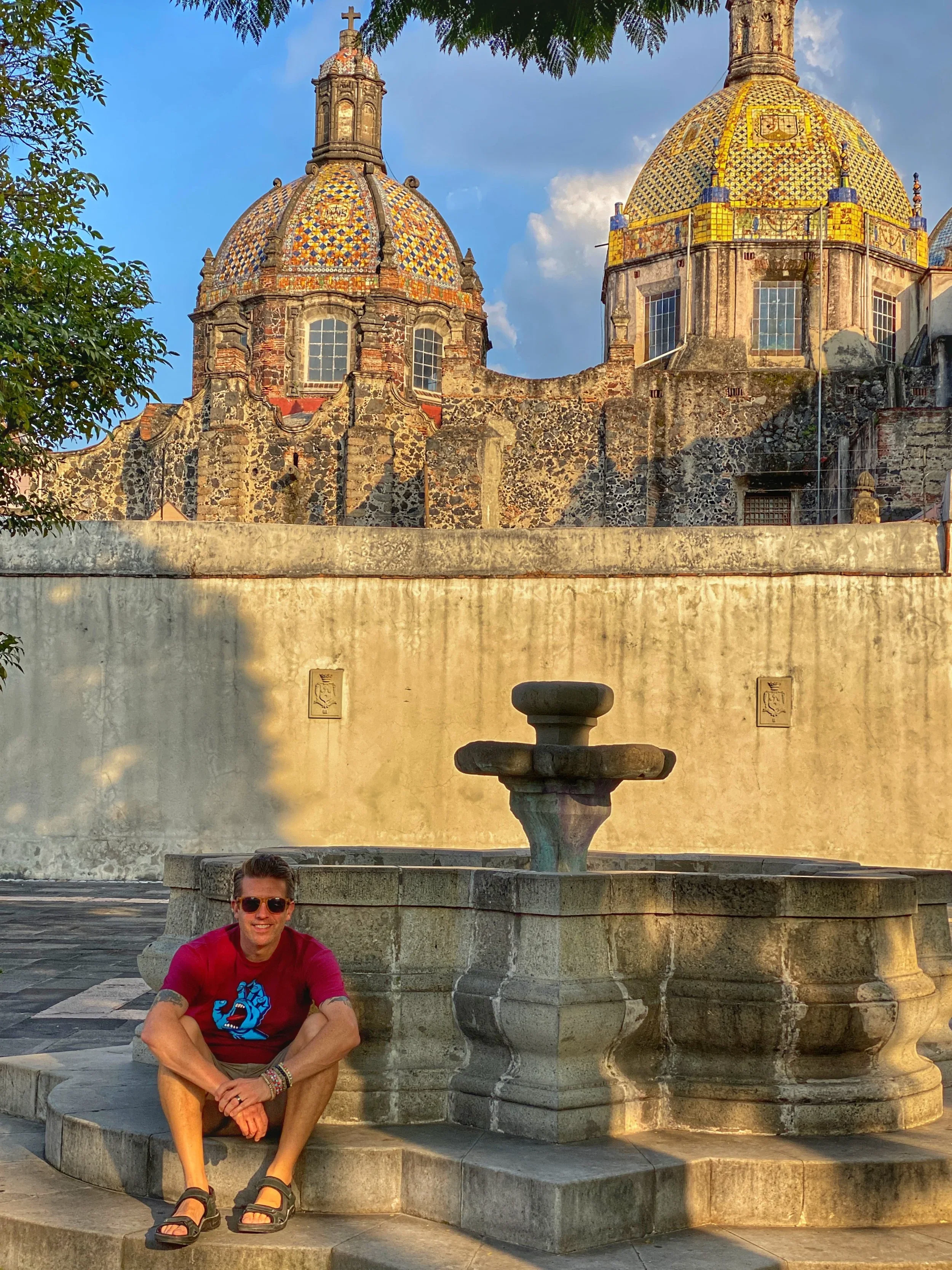
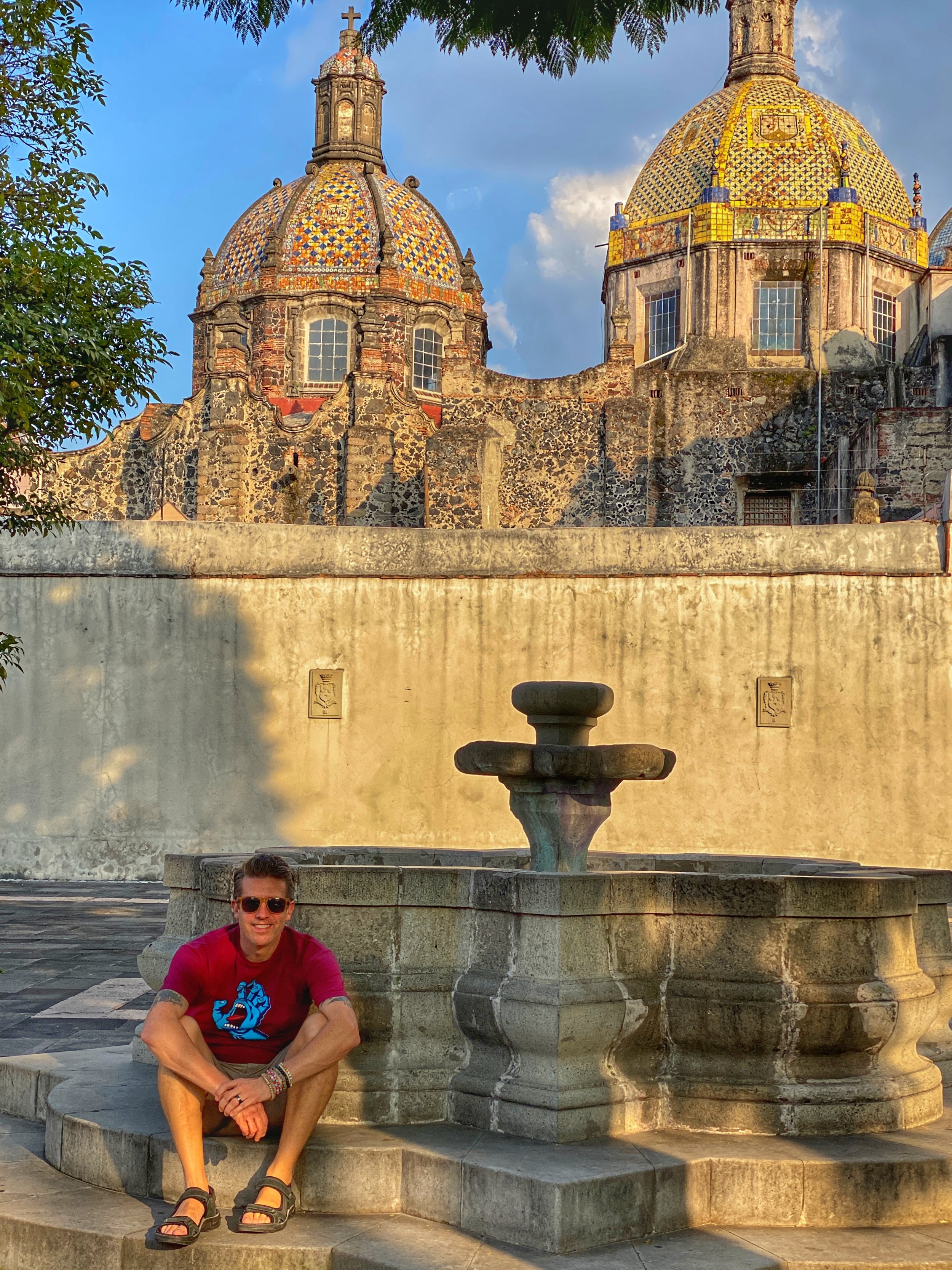
A man sits by the fountain at Nuestra Señora del Carmen in the San Angel neighborhood of CDMX

Nuestra Señora del Carmen

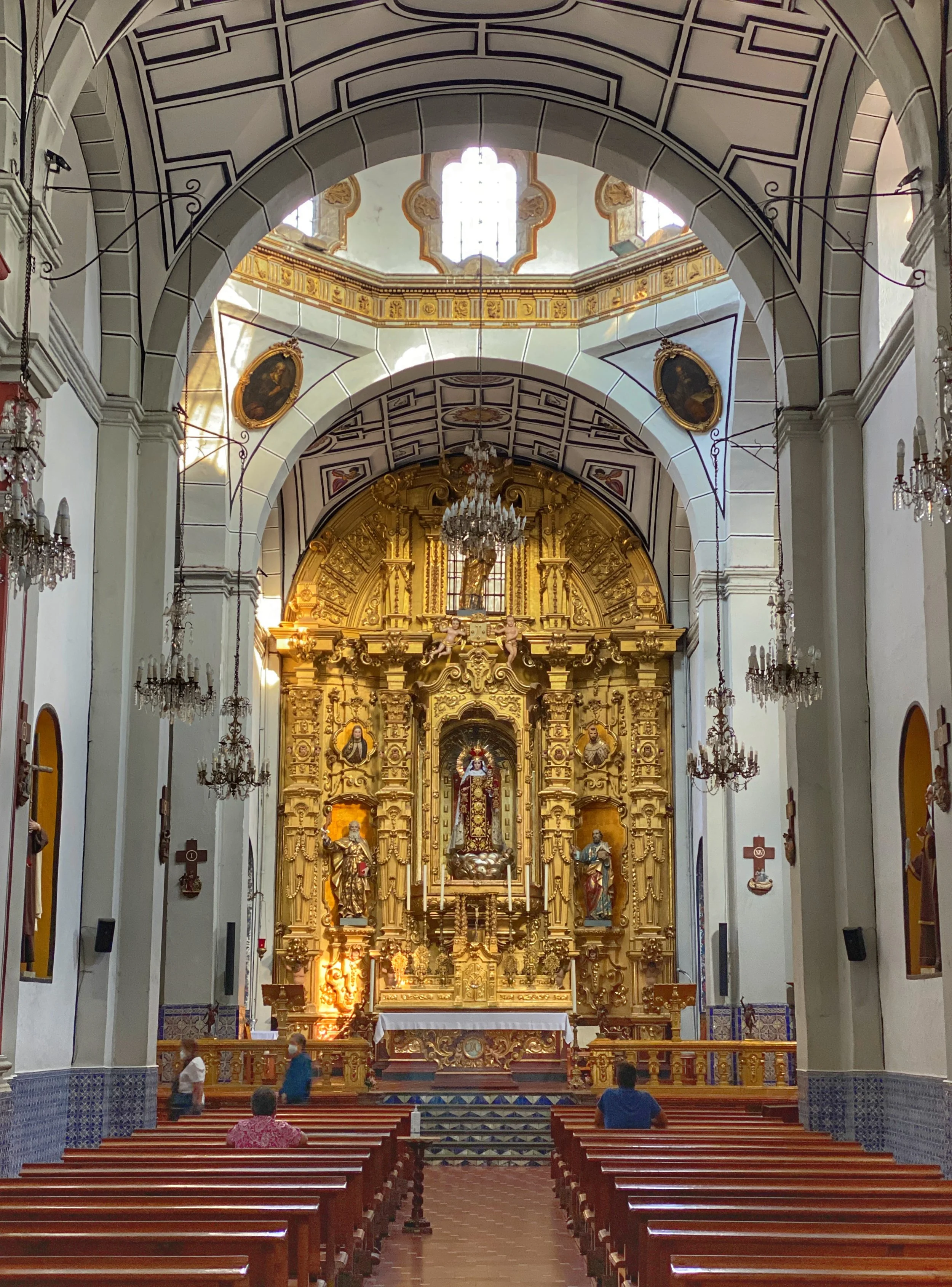
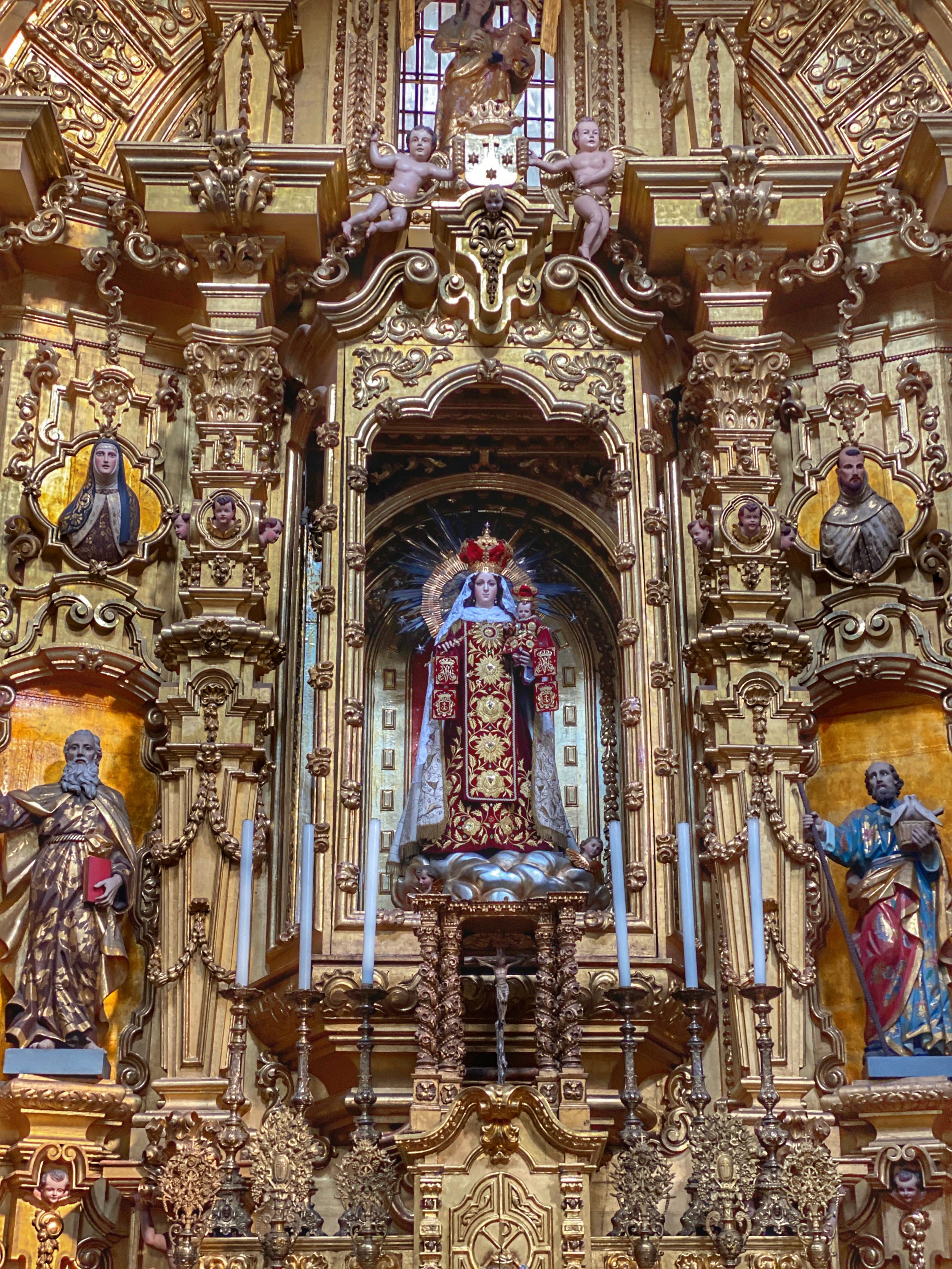
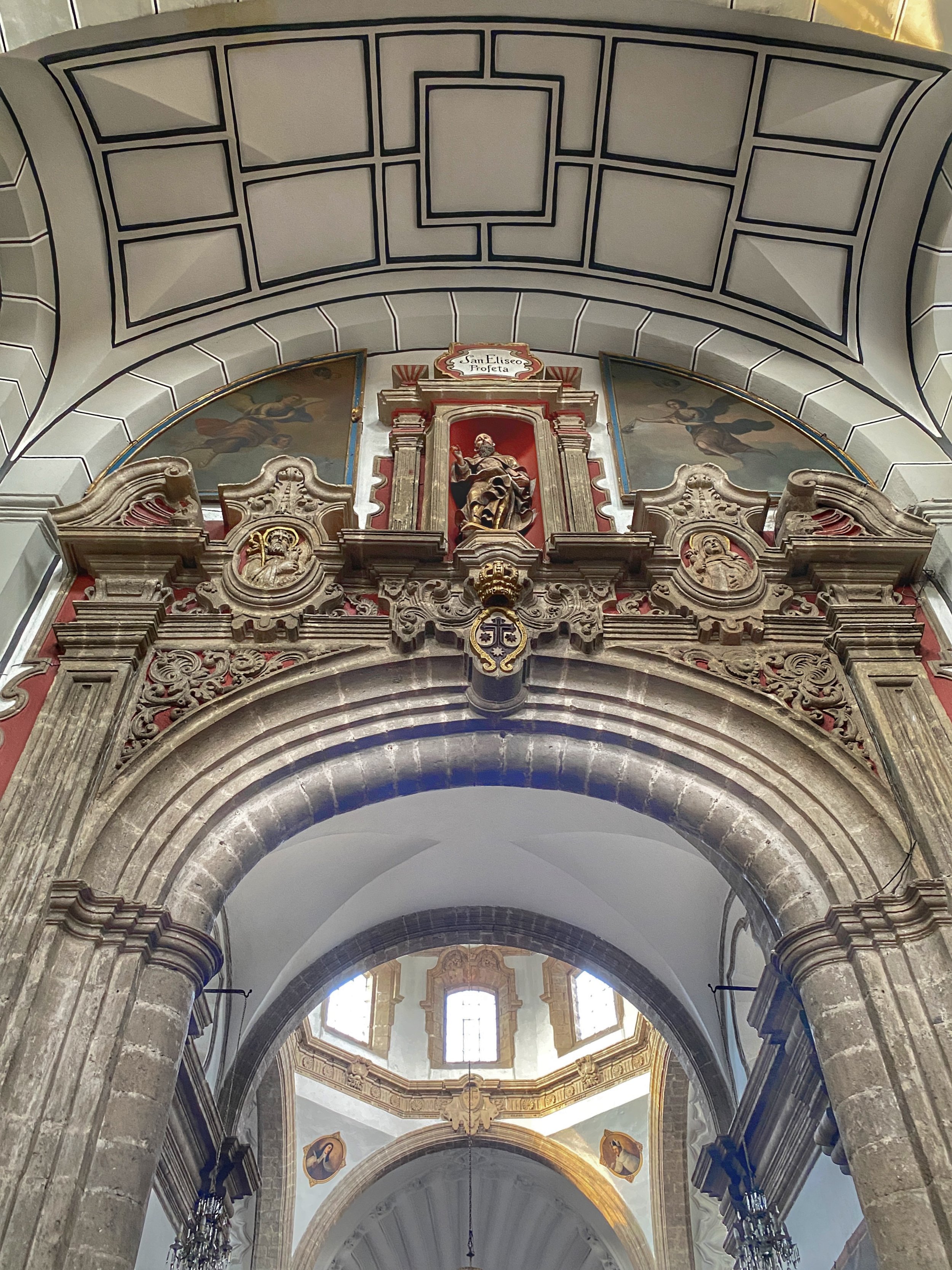
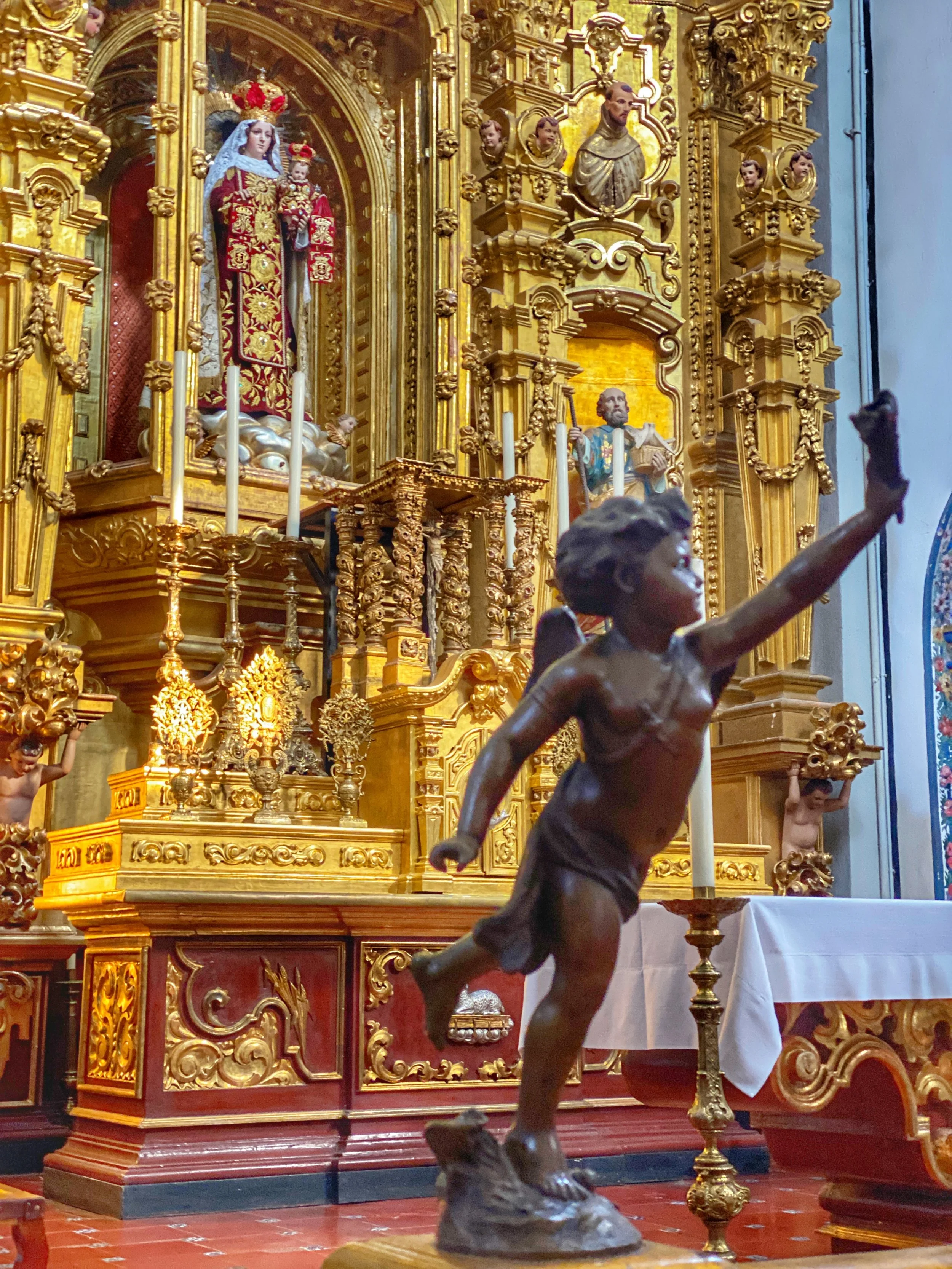
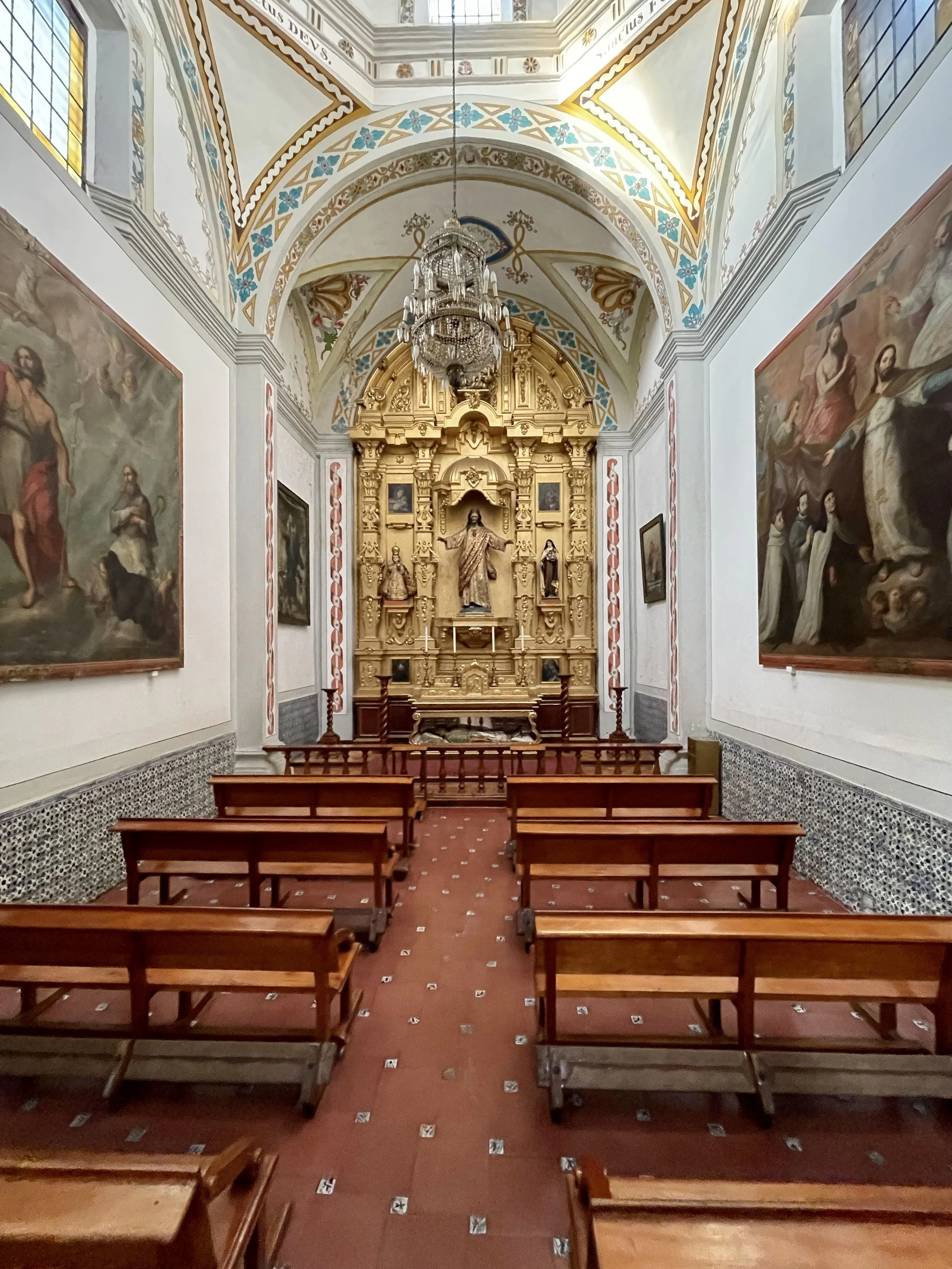
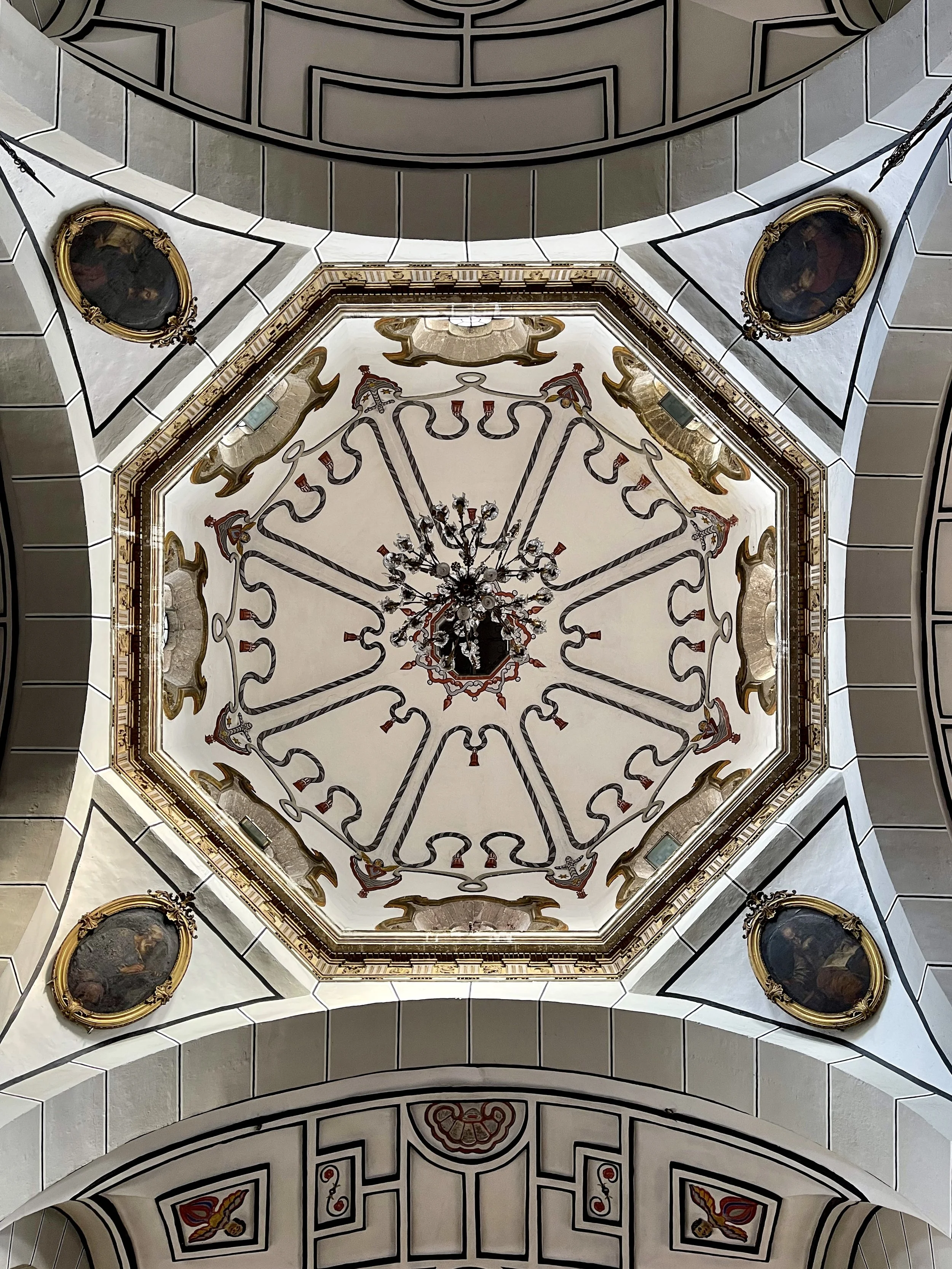
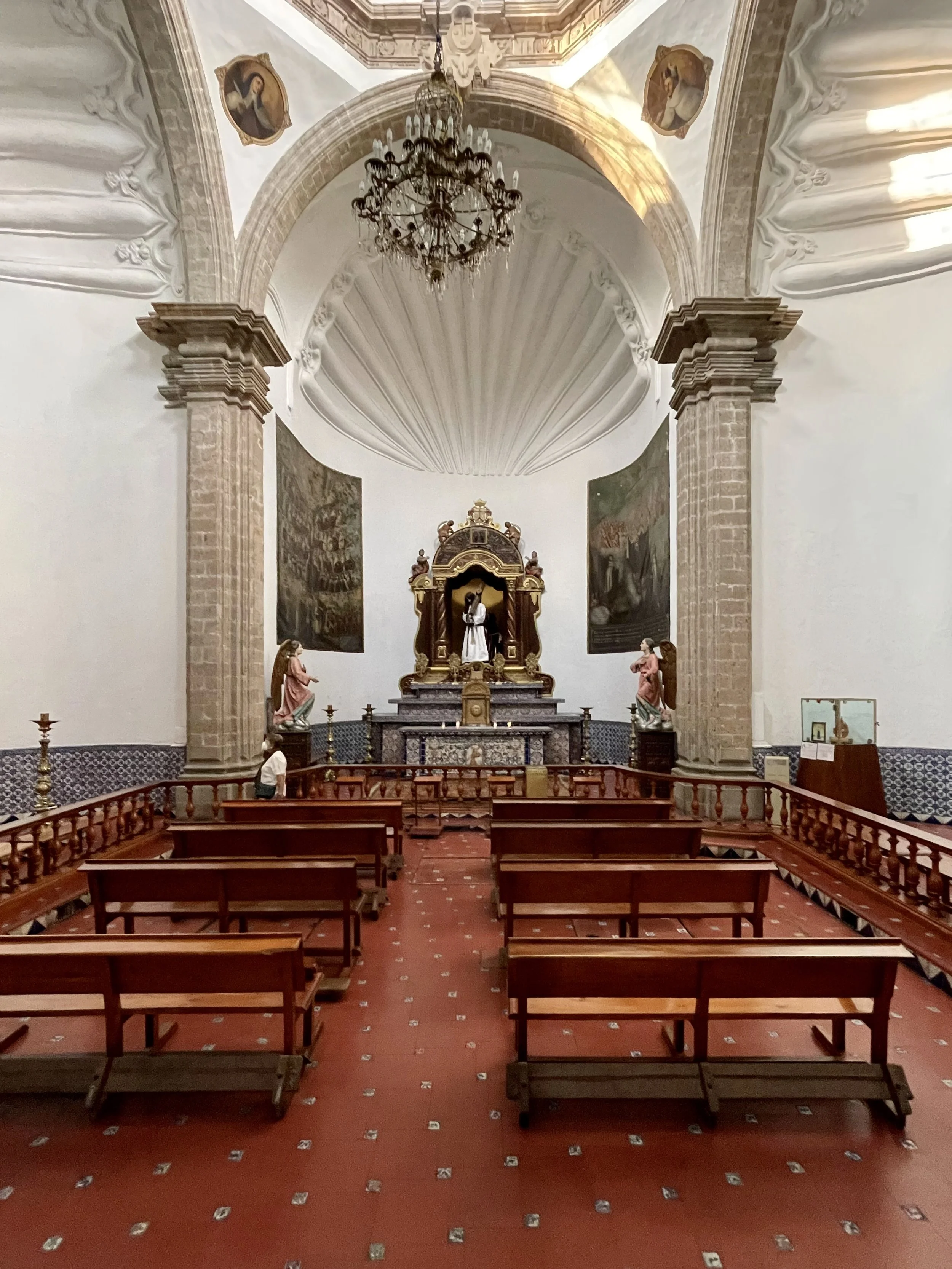
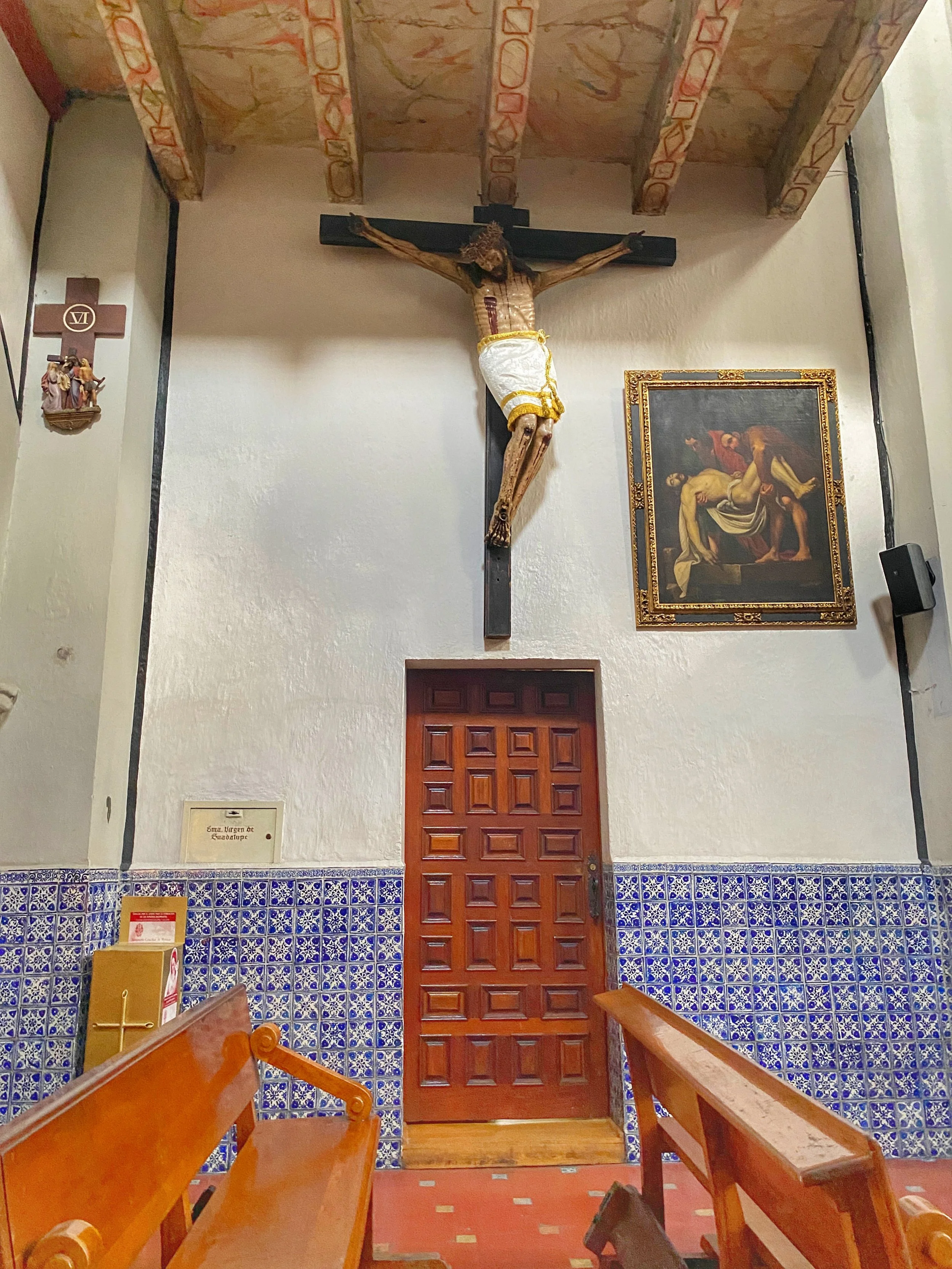
Nuestra Señora del Carmen in San Ángel is a captivating glimpse into Colonial Baroque architecture, with its faded domes tiled in vibrant patterns and gilded altarpiece that balances opulence with austerity. The church was founded for the Discalced Carmelites, a curious order known for their vow of shoelessness, established in the 16th century by Saint Teresa of Avila. Its history stretches back to the early 1600s, and the Carmen Complex encompasses more than just the church itself—it’s a former monastery and convent, now a museum where you can even find mummies lurking in the catacombs.

The church’s story doesn’t shy away from drama. After the War of Reform, when Mexico’s Liberal forces stripped the Catholic Church of its vast properties, parts of the complex were repurposed into everything from prisons to barracks. Today, the ornate interior of Nuestra Señora del Carmen stands in contrast to its unassuming façade, offering plenty to explore, from offshoot chapels to quiet corners for reflection. Whether you’re there for the architecture or just trying to catch a glimpse of those creepy mummies, this church is a must-see when wandering through the historic, tree-lined streets of San Ángel.
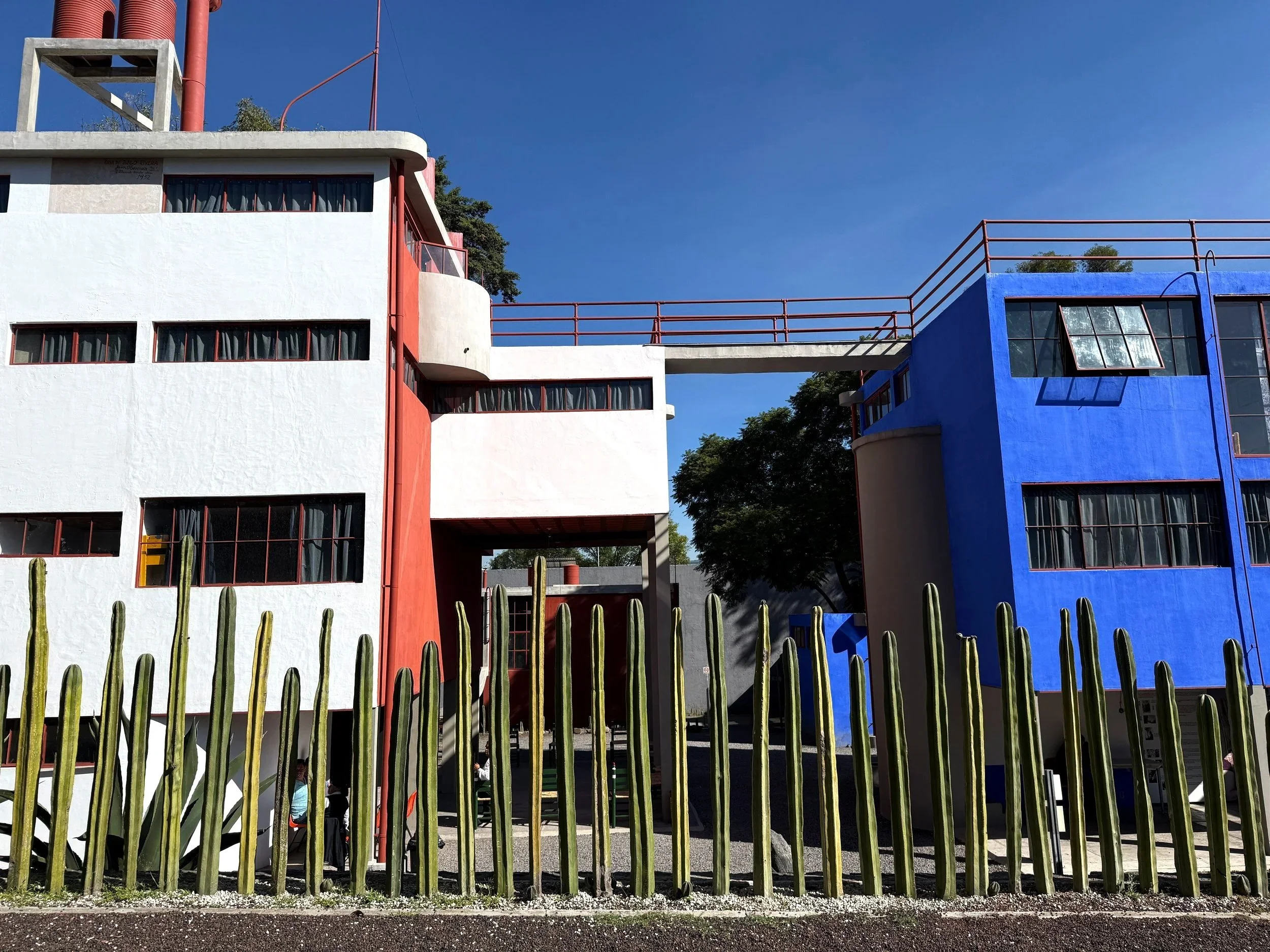
Diego Rivera & Frida Kahlo Studio House

While most visitors flock to Casa Azul—and rightly so—the duo’s other home in San Ángel offers a quieter, more architectural glimpse into their tangled lives. Designed by Juan O’Gorman in bold modernist style, the Museo Casa Estudio Diego Rivera y Frida Kahlo features two separate houses: one bright and spacious for Diego, the other small and cramped for Frida. Connected only by an outdoor stairwell and a narrow bridge, it’s a layout that feels like a metaphor—and a bit of a slap. Frida, who lived with chronic pain and mobility issues, had to climb steep steps just to see her husband.

Inside, Diego’s studio is full of light, murals-in-progress, and towering papier-mâché figures. Frida’s space is noticeably more austere—tight, plain, and edged with a kind of imposed solitude. If Casa Azul is where she found comfort, this house whispers of compromise.

Architectural Marvels in CDMX
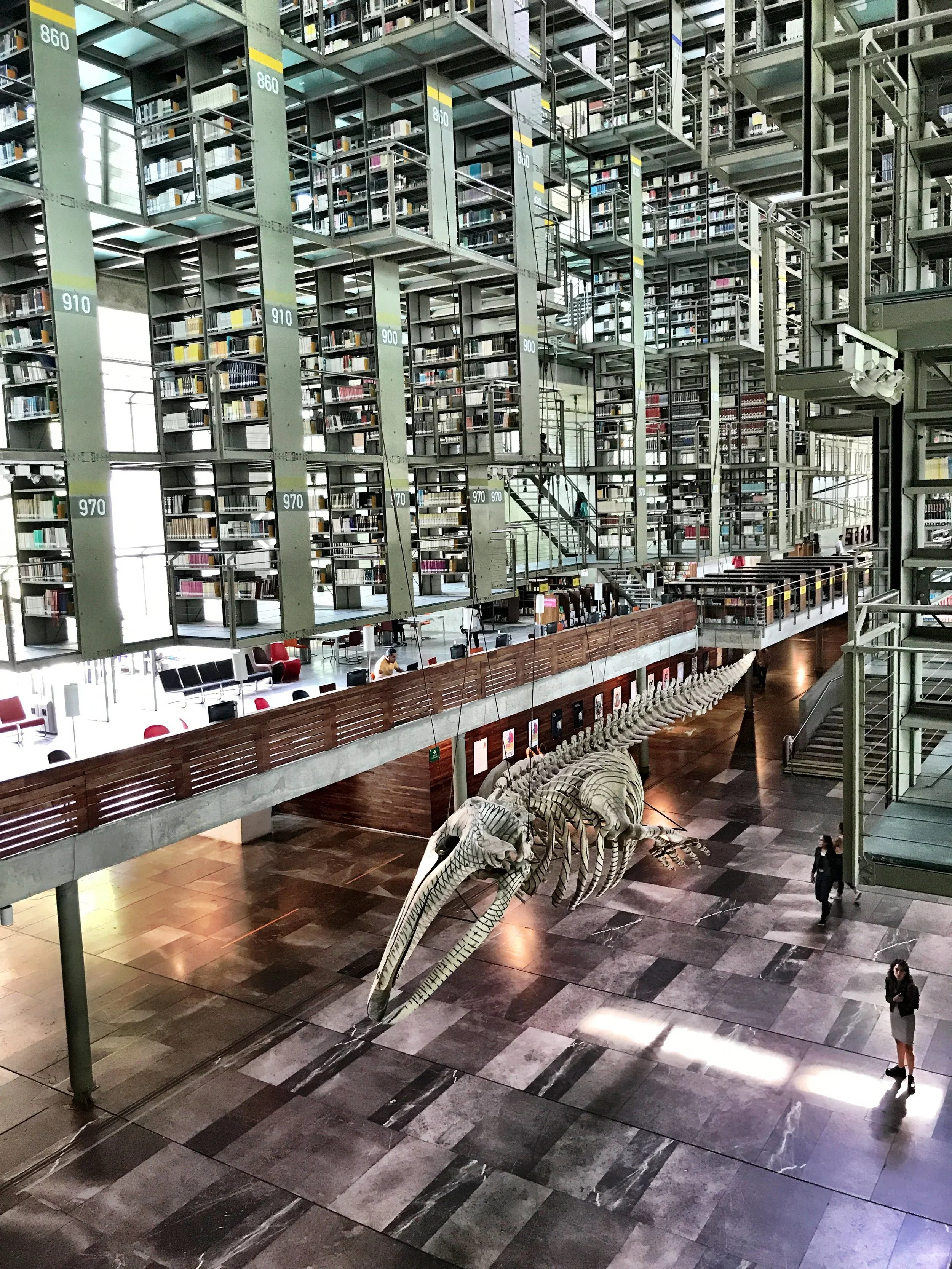
Biblioteca Vasconcelos

Biblioteca Vasconcelos is a must-see, offering an otherworldly experience in the Buenavista neighborhood of Mexico City. Designed by Alberto Kalach, the library’s floating metal and glass bookshelves create an intricate, maze-like space that seems to defy gravity. From the moment you step inside, it’s like entering a cathedral of knowledge, with sunlight streaming through louvered panels, casting an ethereal glow on the translucent walkways. The sensation is thrilling—and a little terrifying—as you navigate the thin, steel-framed floors that hover above the atrium.

Adding to the library’s allure is Gabriel Orozco’s “Mobile Matrix,” a mesmerizing installation featuring the skeleton of a gray whale, its bones intricately etched with thousands of mechanical pencil circles. Suspended mid-air, the piece echoes the library’s daring design, blurring the line between museum and reading space. After soaking in the modern architecture and art, venture into the surrounding botanic park for a breath of fresh air, or take a short walk to explore the nearby Kiosco Morisco, a colorful pavilion that serves as the perfect counterpoint to the library’s futuristic vibe.
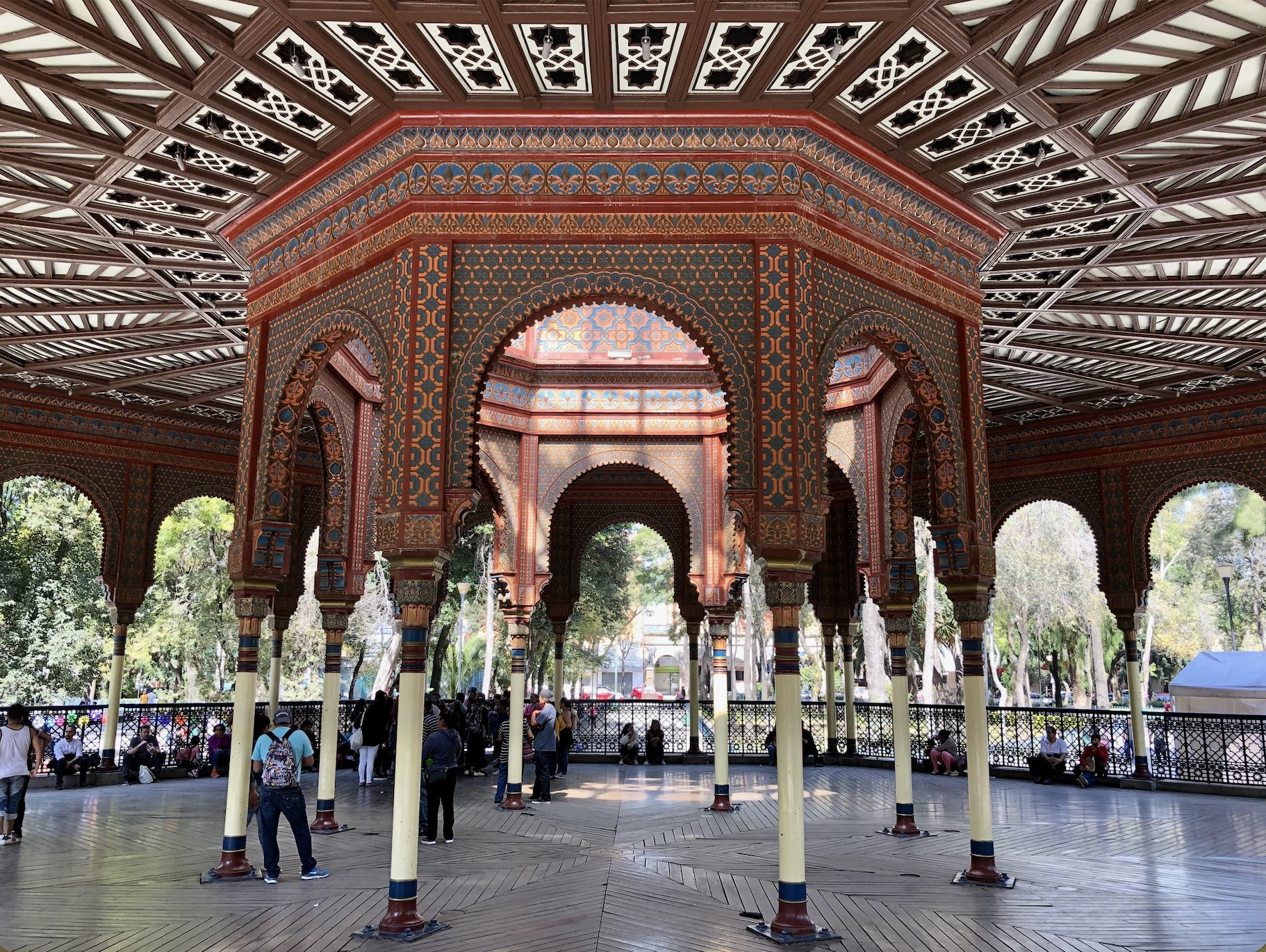
The Kiosko Morisco in Mexico City, Mexico

Kiosko Morisco

Kiosko Morisco, tucked away in the charming neighborhood of Santa María la Ribera, is a hidden gem with a fascinating past. This 19th-century Moorish-style pavilion, designed by José Ramón Ibarrola, was originally built for the 1884 World’s Industrial and Cotton Centennial Exposition in New Orleans. After its star turn on the world stage, the pavilion was relocated to Mexico City, where it has since become a beloved part of the local landscape. Featuring ornate arches, slender columns, and a striking bronze eagle devouring a snake atop the dome, this architectural wonder reflects Mexico’s rich cultural history with a touch of Spanish flair.

Now sitting proudly at the center of the Alameda de Santa María park, the Kiosko Morisco draws visitors with its vibrant colors, elegant design, and relaxed atmosphere. Whether you’re watching locals dance salsa beneath its arches or simply soaking in the beauty of its intricate patterns, this pavilion offers a glimpse into Mexico City’s storied past. Stop by for a leisurely afternoon and take in the beauty of this remarkable relic while exploring the laid-back barrio that surrounds it.
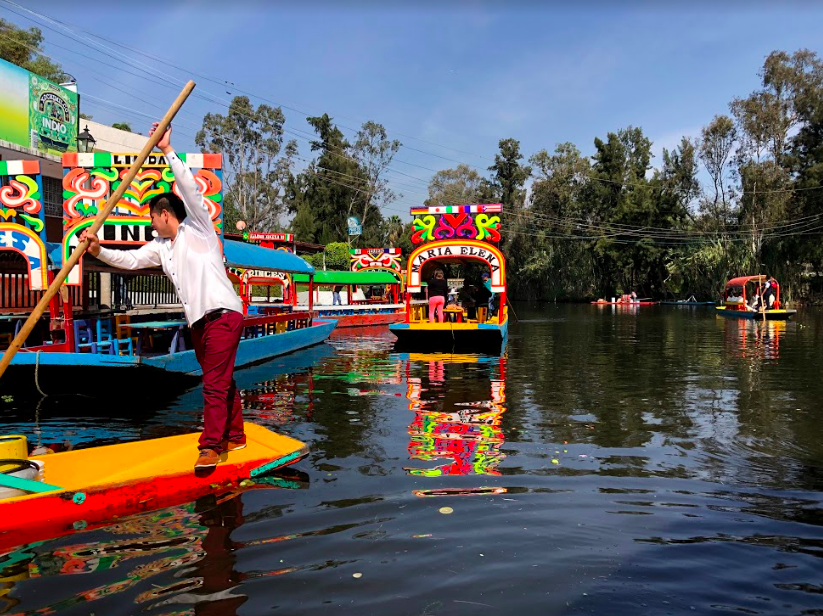
A man paddles one of the flat-bottomed boats that cruise the canals of Xochimilco outside of CDMX

Xochimilco

Xochimilco’s canals are a surreal slice of Aztec history in modern-day CDMX, where colorful trajineras glide past floating gardens called chinampas. Renting one of these vibrant boats is like having your own portable party—complete with a long table for snacks and drinks. We kicked off our trip at Embarcadero Nuevo Nativitas, perfect for accessing the infamous Isla de las Muñecas, where eerie dolls dangle from trees to appease a young girl’s restless spirit.

Cruising these ancient waterways, you’ll encounter everything from floating food vendors selling quesadillas to impromptu mariachi performances. The early hours are ideal for beating the crowds, but brace yourself for the chaotic boat traffic as the day goes on. It’s a magical and slightly macabre experience that brings the rich history and quirky charm of Xochimilco to life. 
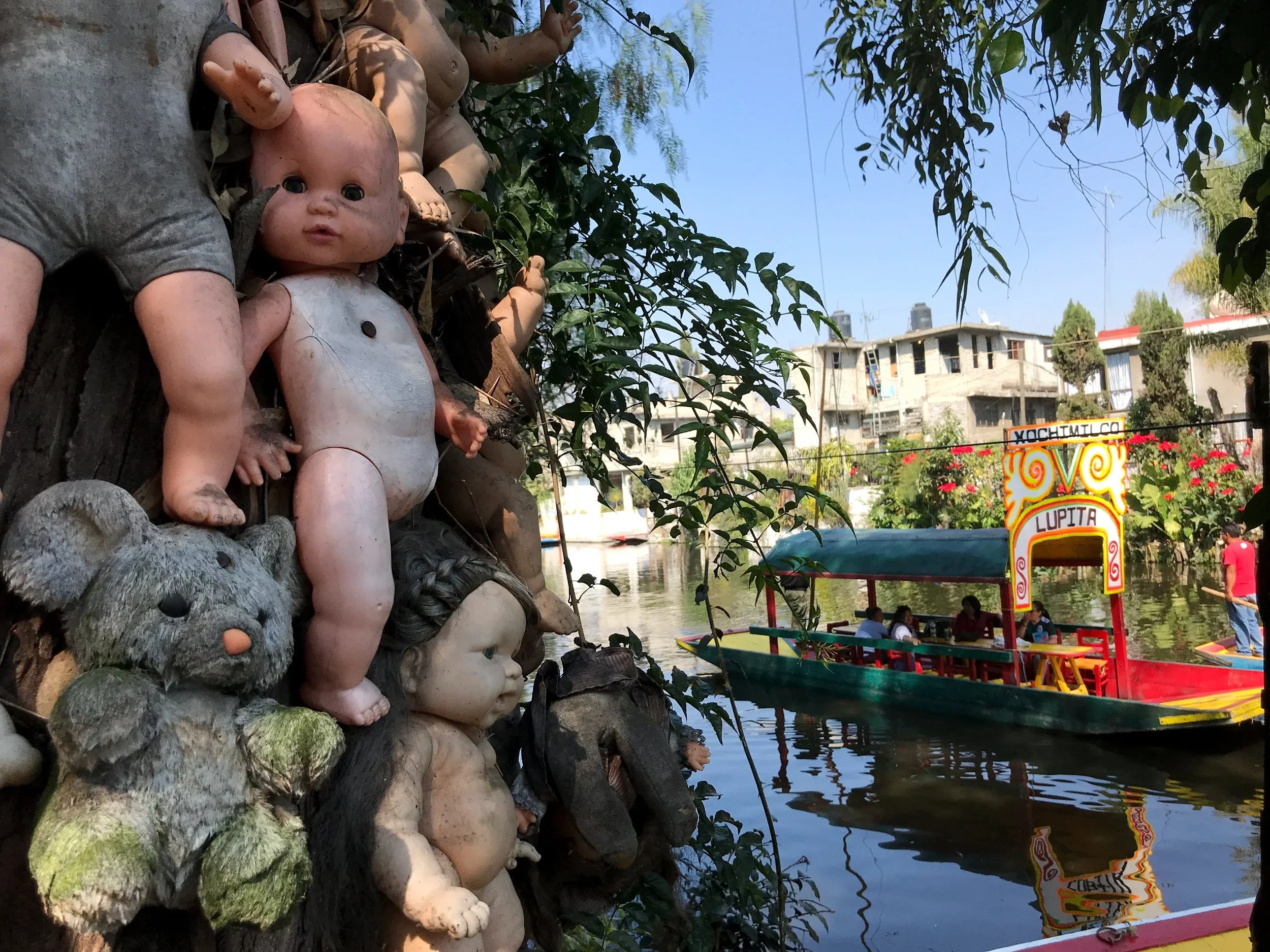
Dolls and stuffed animals are nailed to a tree on the Island of the Dead Dolls on an island in Xochimilco, CDMX

The Island of the Dead Dolls

Just south of Mexico City in the Xochimilco canals lies la Isla de las Muñecas aka the Island of the Dead Dolls, an unsettling attraction draped in local legend. It’s said that a little girl drowned there under mysterious circumstances, and the island’s caretaker, Don Julián Santana Barrera, began hanging dolls he found floating in the canal to appease her restless spirit. Over the years, he amassed a bizarre collection of dolls, many decayed and missing limbs, creating a macabre shrine to the lost soul. In 2001, Don Julián himself drowned in the very spot where he had found the girl’s body.

When we visited, we couldn’t resist adding our own contribution to the legend. We brought a doll from Chicago and placed it on a toy car under a bower on the island. It’s now known as “la negrita en el carro,” one of only two foreign dolls on the island. Be sure to keep an eye out for her when you visit!

La Isla de las Muñecas is one of the eeriest destinations in CDMX and a must-see for fans of the supernatural and strange. Tours from Embarcadero Nuevo Nativitas offer a closer island option, while the original site takes around four hours round-trip. Don’t forget to bring a doll of your own as an offering!

Nearby 
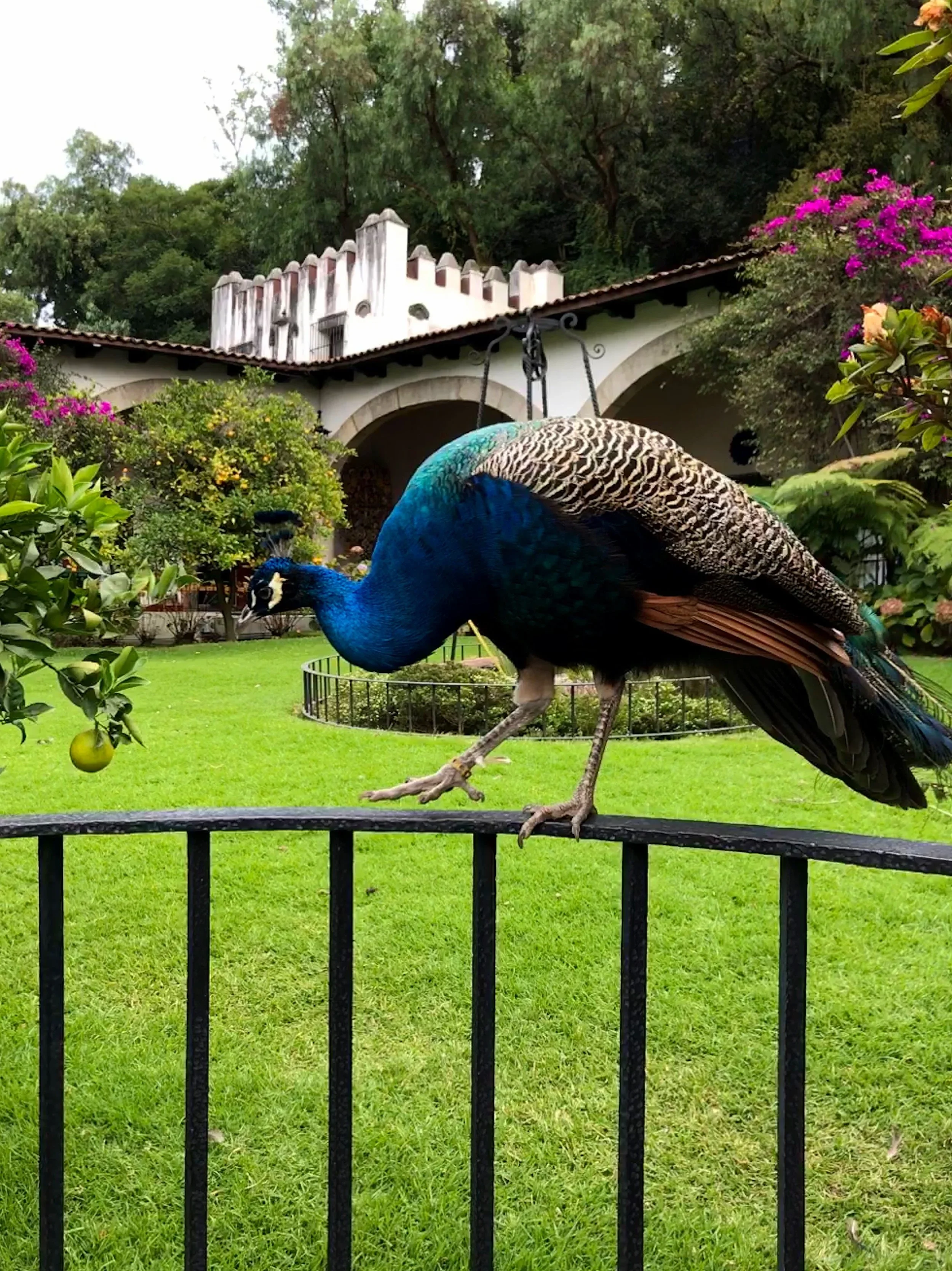
A peacock perches on a metal fence at the Museo Dolores Olmedo in CDMX

Museo Dolores Olmedo

NOTE: Sadly, a familial dispute has led to the (hopefully temporary) closure of the Museo Dolores Olmedo. When last we heard, it was set to reopen in 2026. Say a little prayer to Santa Frida — this is an amazing excursion that should be open to the public. 

The Museo Dolores Olmedo is an enchanting oasis that merges art, history, and whimsy on a sprawling 16th-century hacienda in Xochimilco. From the moment you arrive, you’re greeted by flocks of peacocks roaming the lush grounds, strutting their iridescent feathers like they own the place. The estate itself is worth the visit, with its colonial charm and gardens of dahlias, agaves, and bougainvilleas, offering a glimpse into the grandeur of old Mexico. But it’s not all just eye candy—the museum also houses the largest private collection of Diego Rivera’s work, plus several pieces by Frida Kahlo, including her distinctive small-format paintings and traditional Tehuana dress.

Inside, Rivera’s masterpieces span multiple rooms, showcasing his evolution from post-Impressionism to Cubism, while Olmedo’s pre-Columbian collection adds a layer of ancient mystique, with Colima dog effigies that once guided spirits through the Aztec underworld. The hacienda’s playful side shines through in the Day of the Dead ofrendas, where traditional and modern elements blend seamlessly, reflecting Olmedo’s inventive spirit. Don’t forget to swing by the Xoloitzcuintli enclosure, home to the adorably odd Mexican hairless dogs that roam the grounds like living relics. Whether you’re an art lover, history buff, or just here for the peacocks, the Museo Dolores Olmedo will surprise and charm you at every turn.
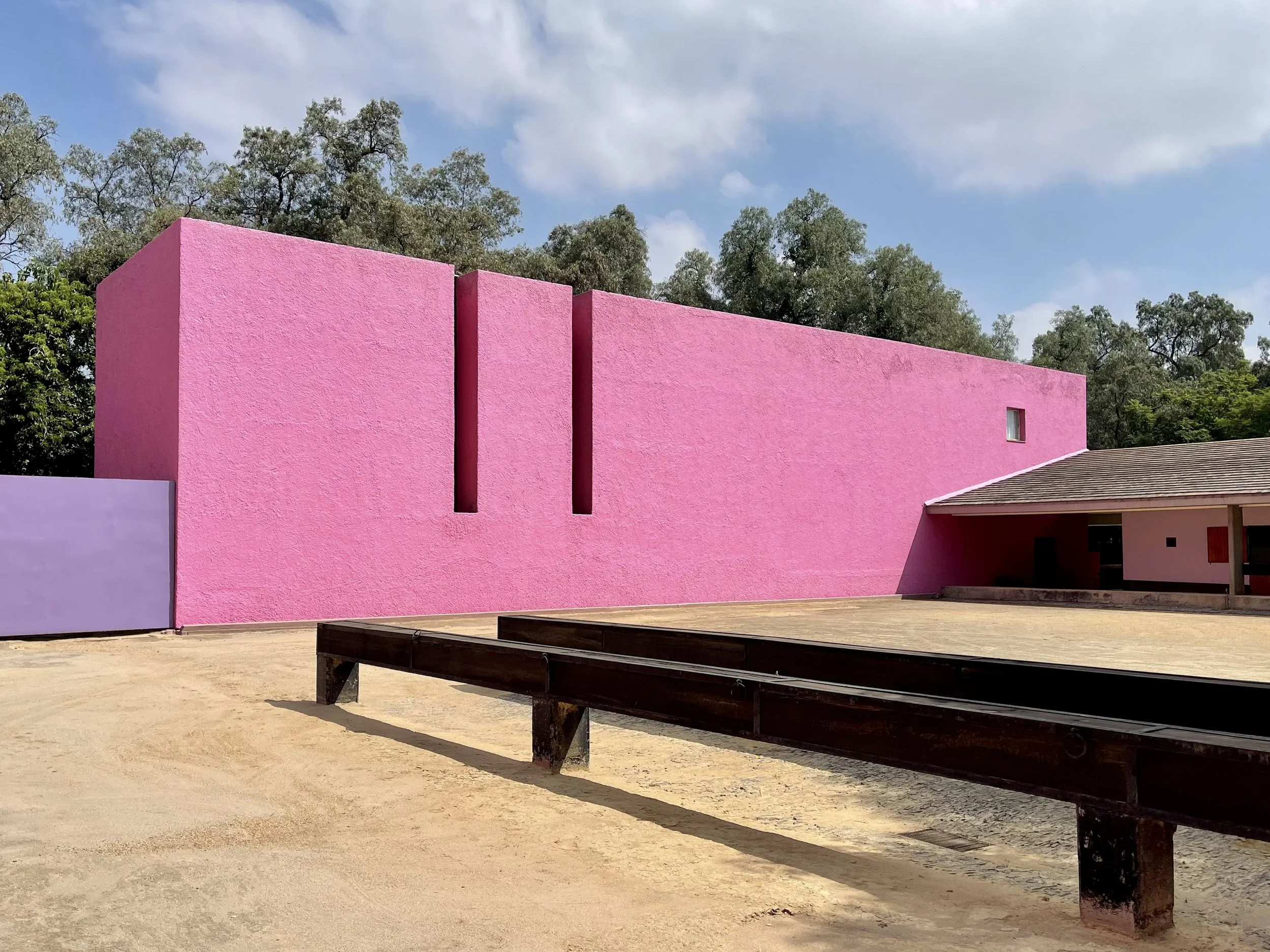
Purple and pink walls by the stables of Cuadra San Cristóbal architect Luis Barragán outside CDMX

Barragán Architecture Tour

Luis Barragán (1902–1988) didn’t just design buildings—he created spaces that stirred the soul. A poetic modernist and the only Mexican architect to win the Pritzker Prize, Barragán took the clean lines of European architecture and infused them with color, silence, shadow, and stillness. His homes, fountains, and public works reflect a love of introspection and nature—a legacy that’s best experienced in person.

To really understand Barragán, we recommend booking a tour with the Traveling Beetle, which took us from city outskirts to surreal spaces, all in a tomato-red VW bus. 
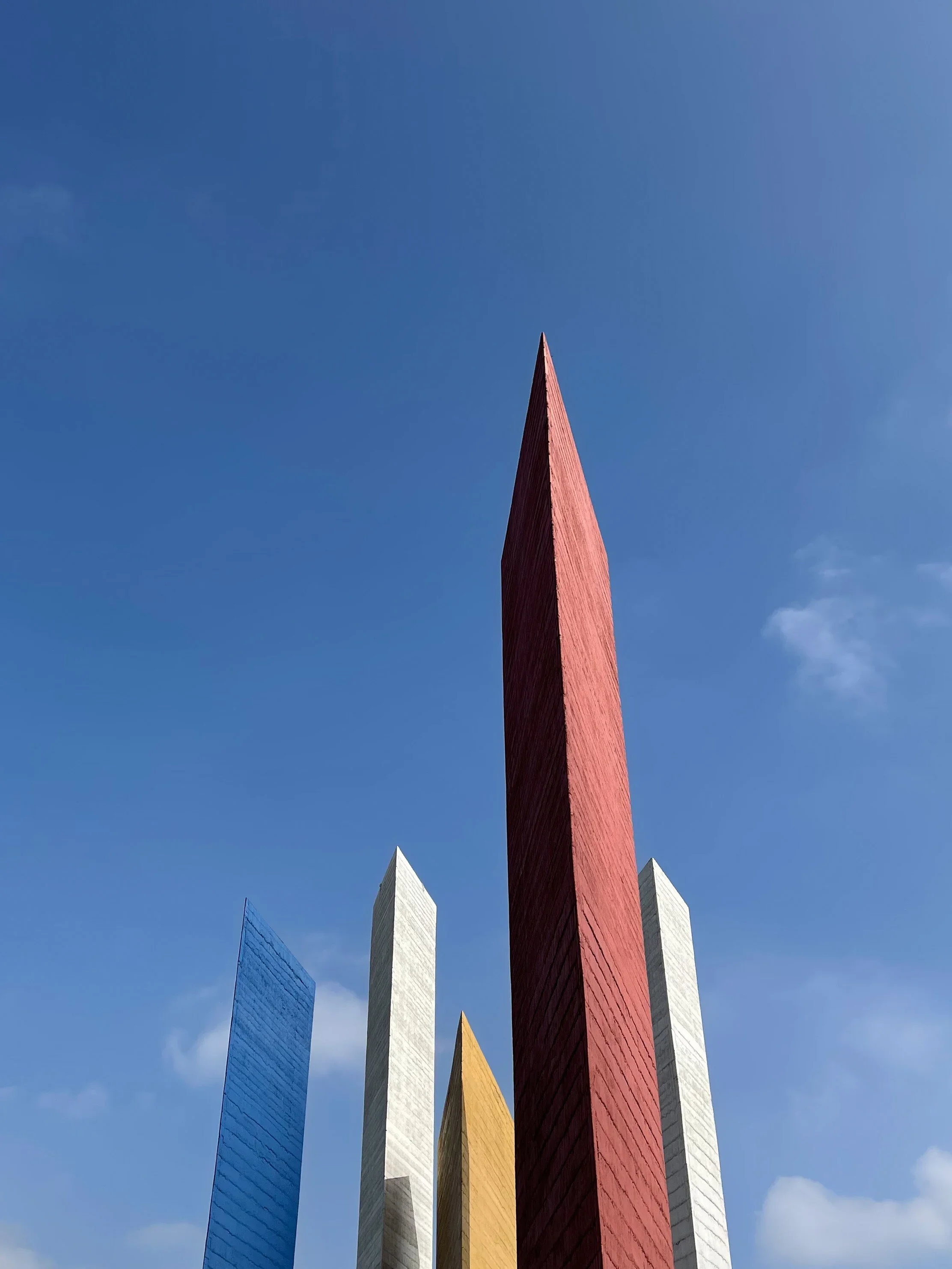
The blue, white, yellow and red thin sculptural Torres de Satélite by the architect Luis Barragán outside of CDMX

Torres de Satélite

You’ll spot them first from the freeway—five towering columns in blue, red, yellow, and white. These are the Torres de Satélite, co-designed with sculptor Mathias Goeritz, and they mark the edge of a planned community that never quite came to be. But the towers endure, bold and mysterious, like sentinels from another dimension. They aren’t just monuments—they’re Barragán’s modernist exclamation point.
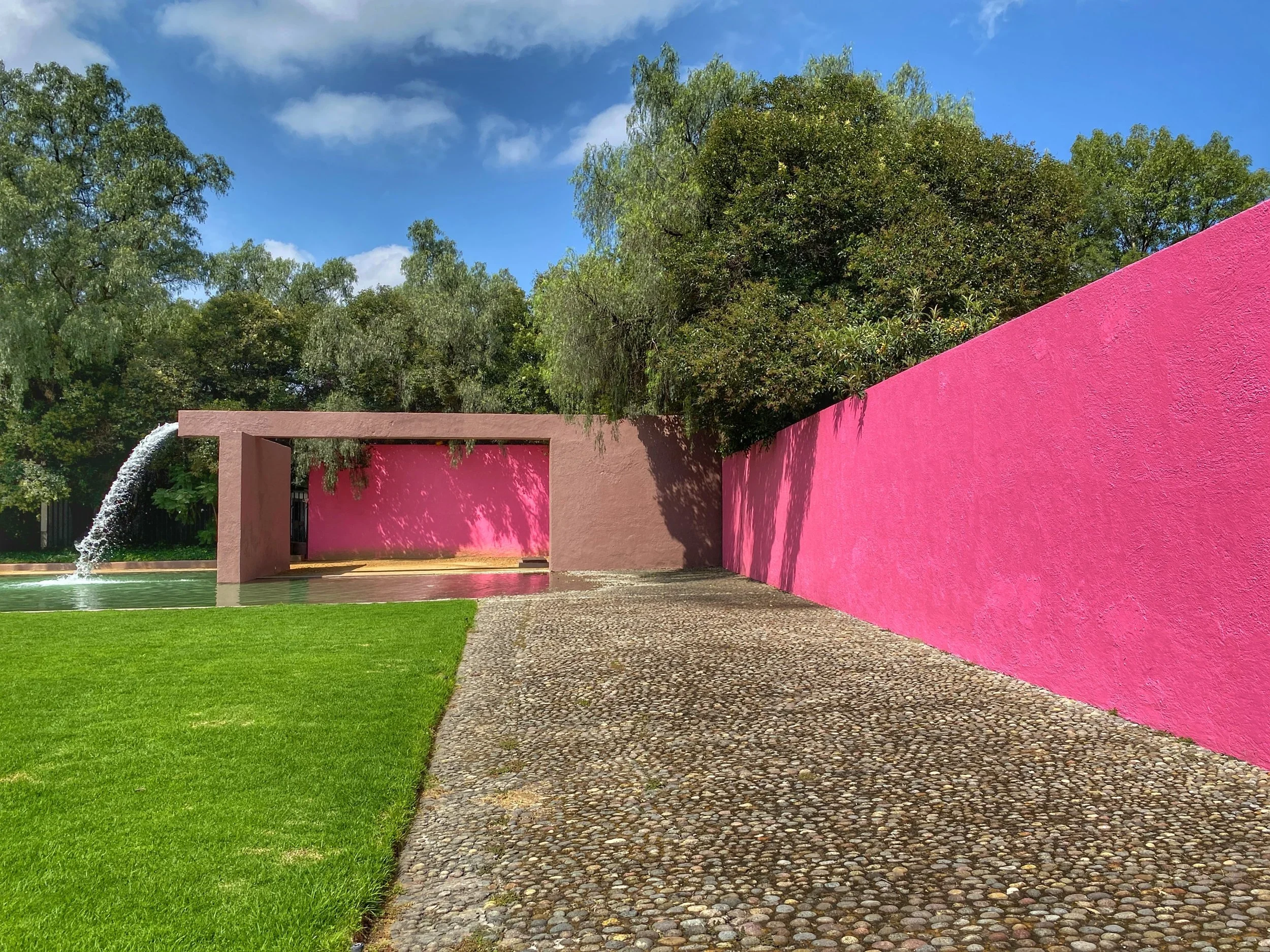
Modernist pink walls and cascading water at the Fuente de los Amantes by architect Luis Barragán outside Mexico City

Fuente de los Amantes

Hidden in a quiet corner of the San Cristóbal subdivision, the Fuente de los Amantes (Lovers’ Fountain) speaks in whispers. The aqueduct releases water once a day into the rectangular basin below, where two simple stone figures sit—one gazing, the other waiting. It’s classic Barragán: deceptively simple, achingly emotional. A place to contemplate connection, longing, and the kind of love that waits in silence.
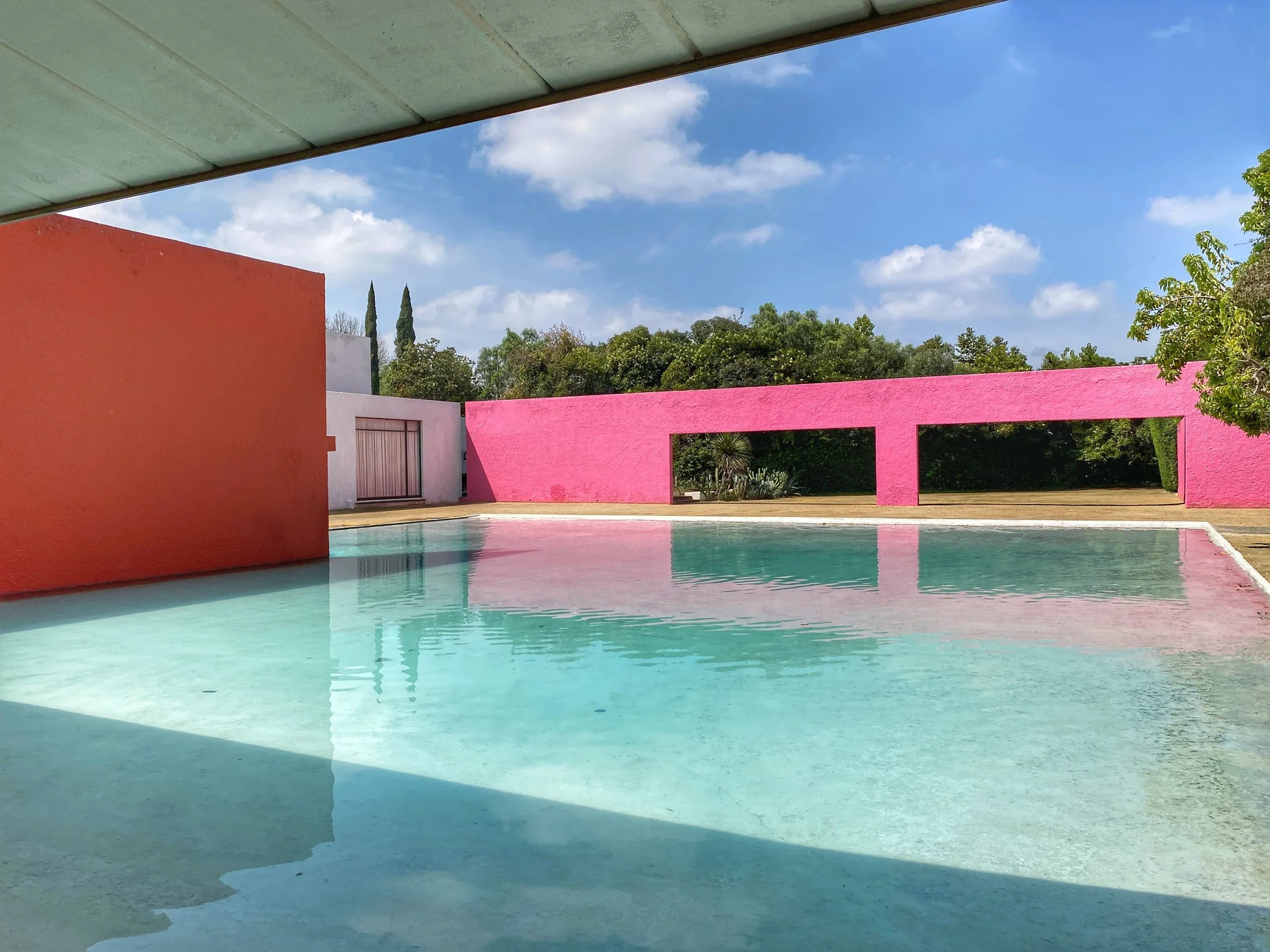
A pool by brightly colored minimal modern walls at Cuadra San Cristóbal byarchitect Luis Barragán outside of CDMX

Cuadra San Cristóbal

This is the showstopper. From the outside, Cuadra San Cristóbal feels like a fortress—flat pink walls, geometric cutouts, no hint of what’s inside. But step into the courtyard and it unfolds like a fever dream: a long pink wall set against cobalt pools, fountains built for horses, and trees erupting through carefully placed openings. It’s the kind of space that doesn’t just look beautiful—it makes you feel something. Even the horses seem to know they’re walking through art.
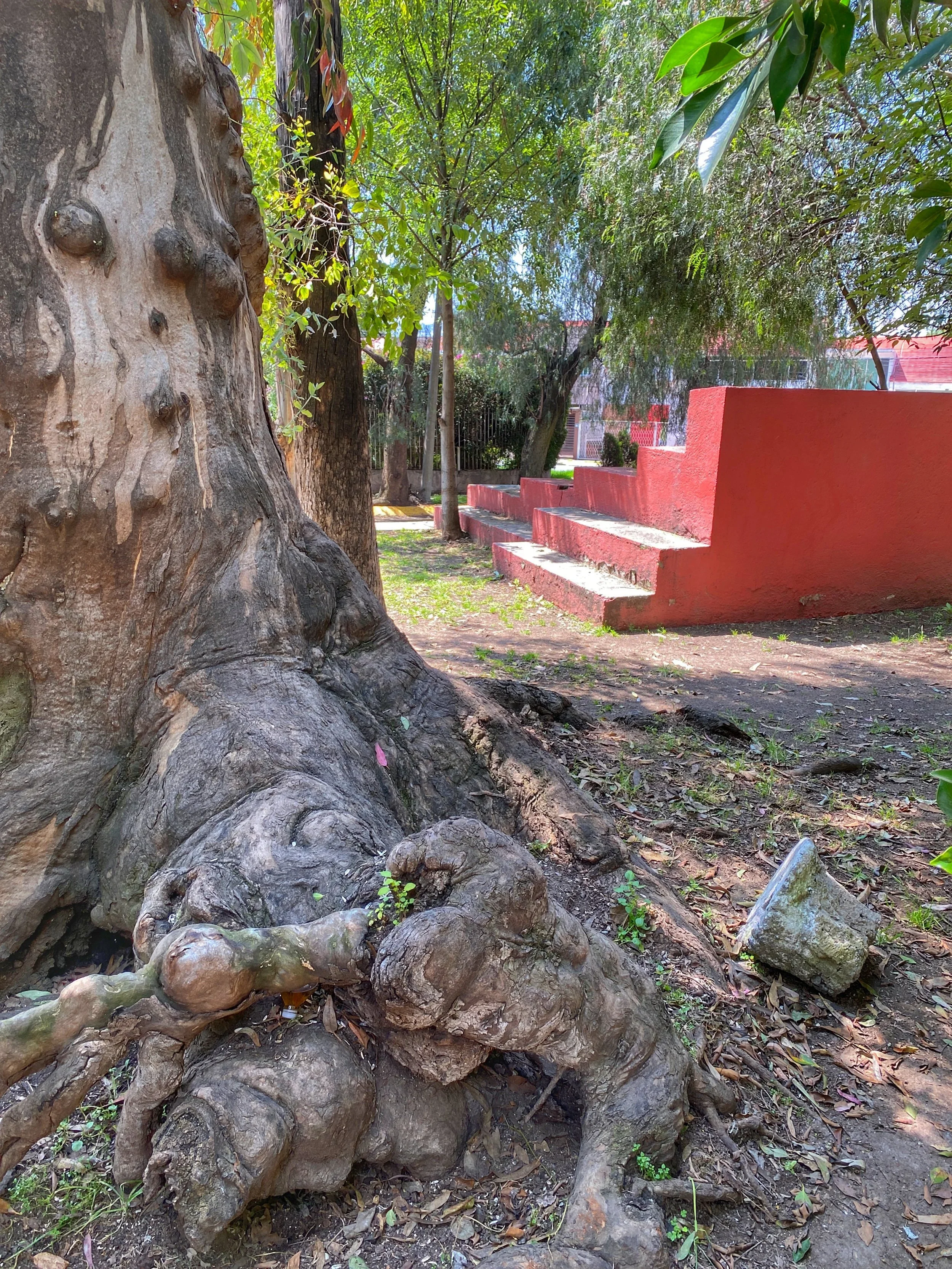
Gnarled eucalyptus tree and stepped structure by Barragán at Paseo de los Gigantes and Plaza del Bebedero outside CDMX

Paseo de los Gigantes and Plaza del Bebedero

The name Paseo de los Gigantes isn’t a metaphor, it’s literal. Those majestic, gnarled eucalyptus trees — unyielding and grand — are the giants the path is named for. Once part of a glamorous social scene where Barragán hosted horsing events, today the park feels forgotten — overgrown, faded — but no less haunting. From their bark to their scale, the trees still command attention. As you continue, you reach the Plaza del Bebedero, anchored by a long, empty horse trough fountain and framed by stark white and indigo walls where light and shadow play like whispered memories of its past.

Best Restaurants in CDMX
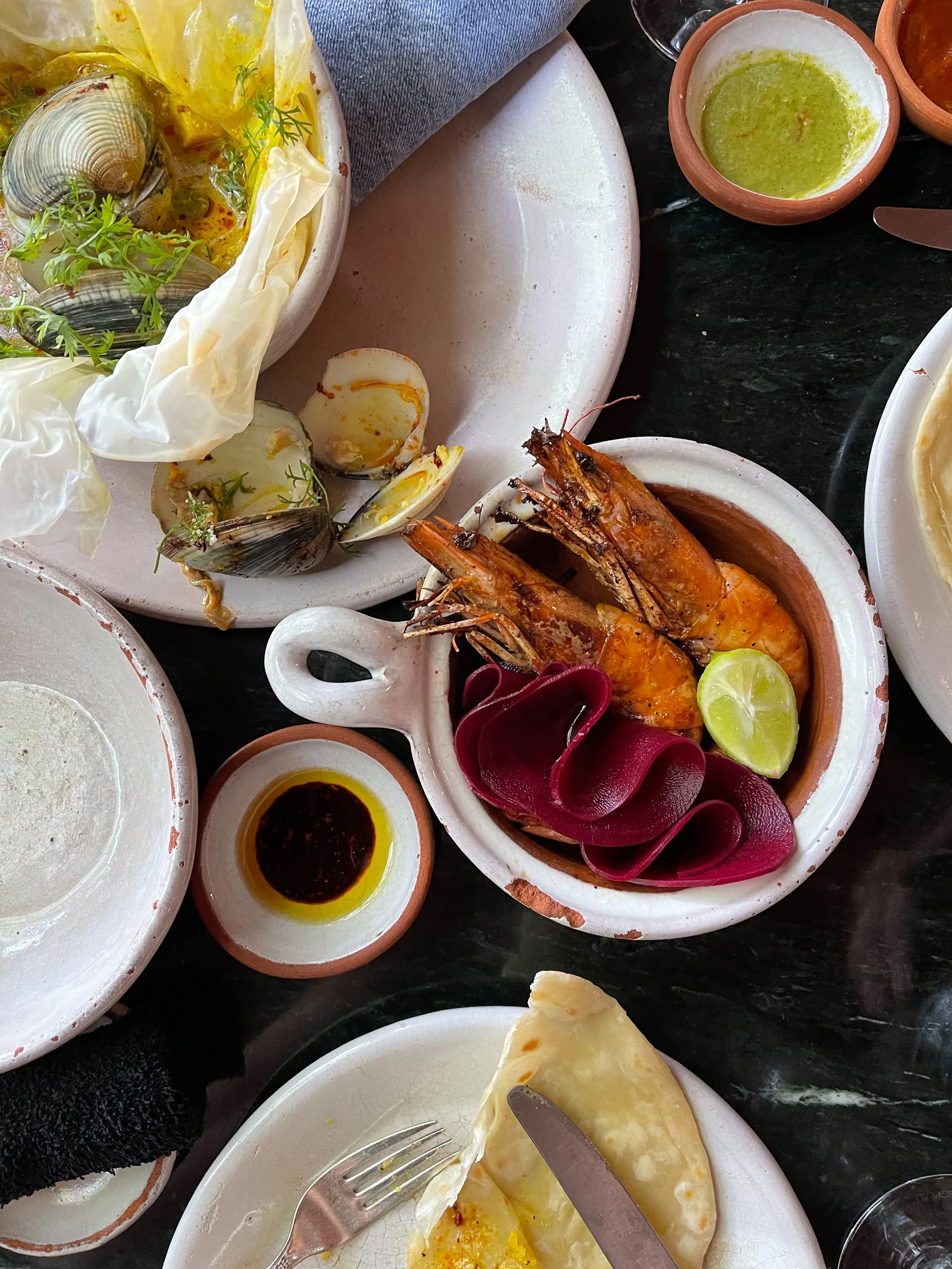
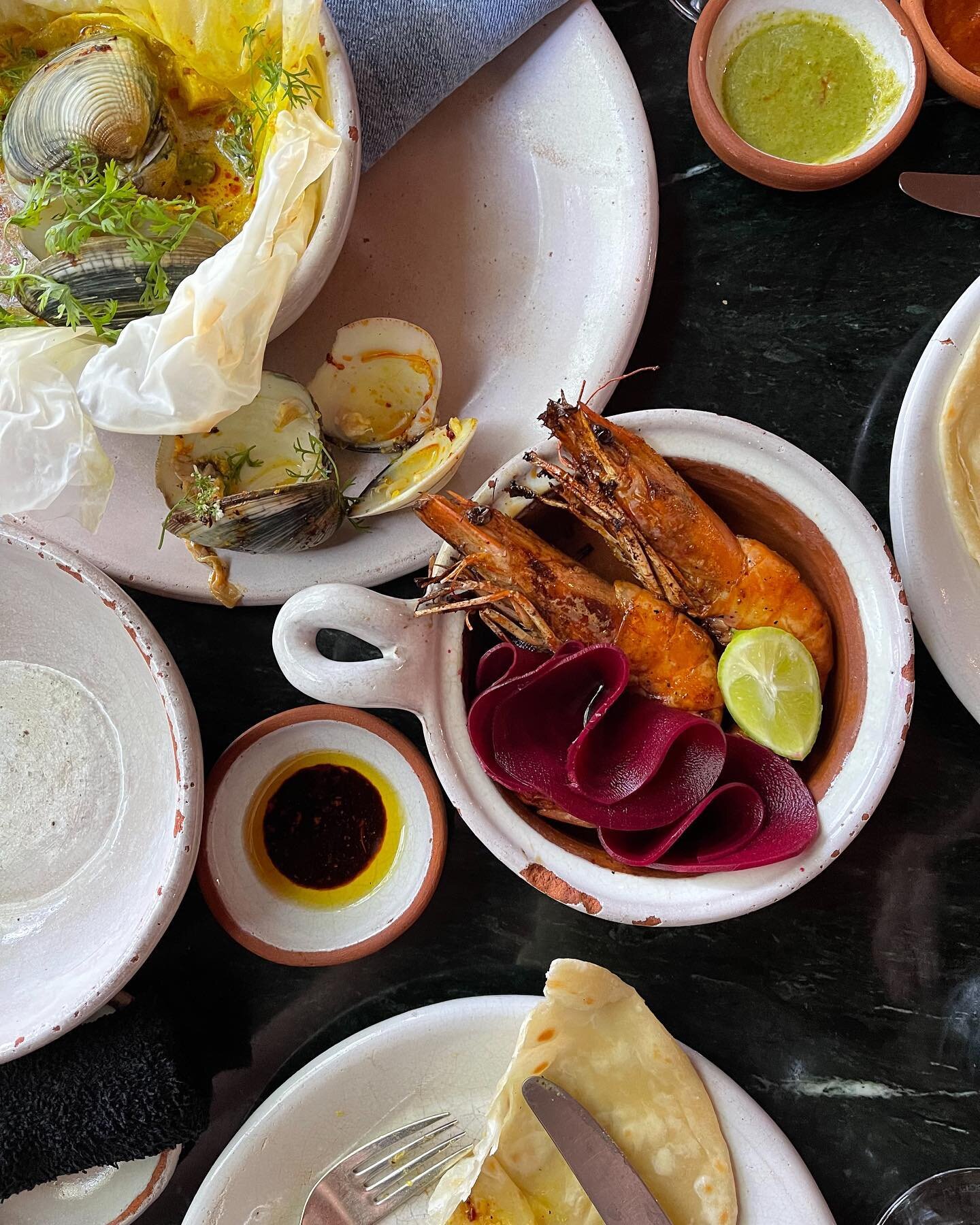
Two shrimp in a small bowl amid lunch at  Masala y Maíz in CDMX

Masala y Maíz

Masala y Maíz serves one of the most memorable meals we've had anywhere in the world. The husband-and-wife team behind the restaurant blends Mexican, South Asian and East African culinary traditions into dishes that somehow feel both inventive and deeply rooted in history. Every course surprised us, from brisket-filled samosas and vibrant chaat to chile-rubbed shrimp with vanilla ghee and clams simmered in turmeric, coconut milk and tomato masala.

Just as impressive as the food is the philosophy behind it. The owners have built a restaurant committed to fair labor practices, ethical sourcing and fostering a healthier restaurant culture—values that shine through in every aspect of the experience. Pair your meal with one of their excellent natural wines, and it's easy to see why Masala y Maíz remains one of our favorite restaurants in Mexico City.

Quirky Attractions in CDMX
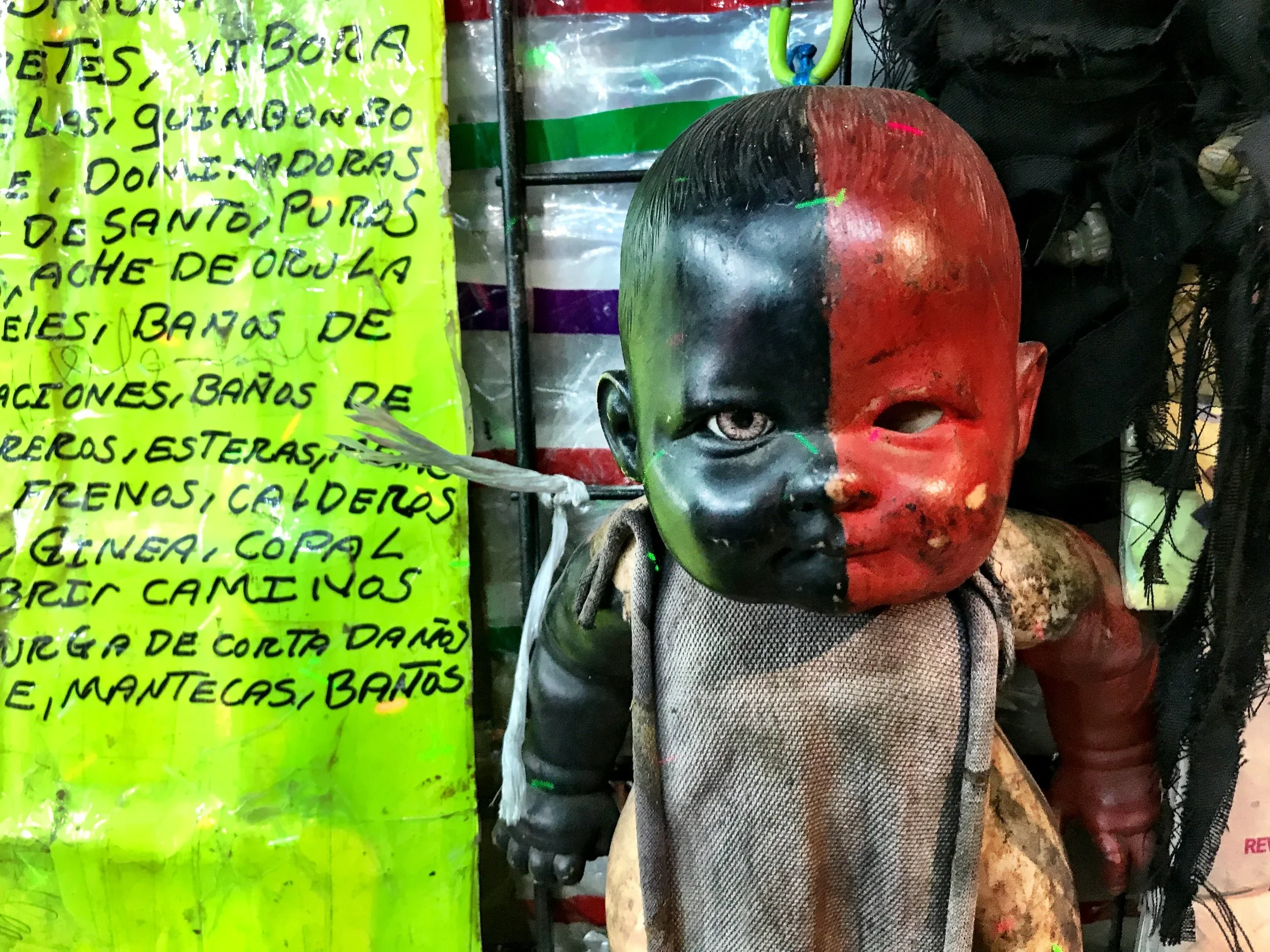
A doll painted half black, half red as the Santeria deity Lucero at the Sonora witch market in CDMX

Witch’s Market at Mercado Sonora

If creepy, offbeat shopping is your thing, the witch market at Mercado Sonora in Mexico City is an absolute must-see. Tucked away in the market’s back left corner, this bizarre bazaar offers everything from potions to voodoo dolls, making it the ultimate mix of brujería and Catholic kitsch. Santa Muerte figures sit next to baby Jesus statues, and spells for love or money come in bottles of neon liquid you probably shouldn’t drink.

The aisles are tight, chaotic, and filled with the scent of sage. While navigating the labyrinthine stalls, you’ll find unsettling trinkets like Lucero Mundo dolls with sewn-shut eyes or macabre fur balls that defy description. It’s not for the faint of heart, but if you’re into all things witchy, Mercado Sonora is a slice of dark magic in CDMX. 

Shopping in CDMX
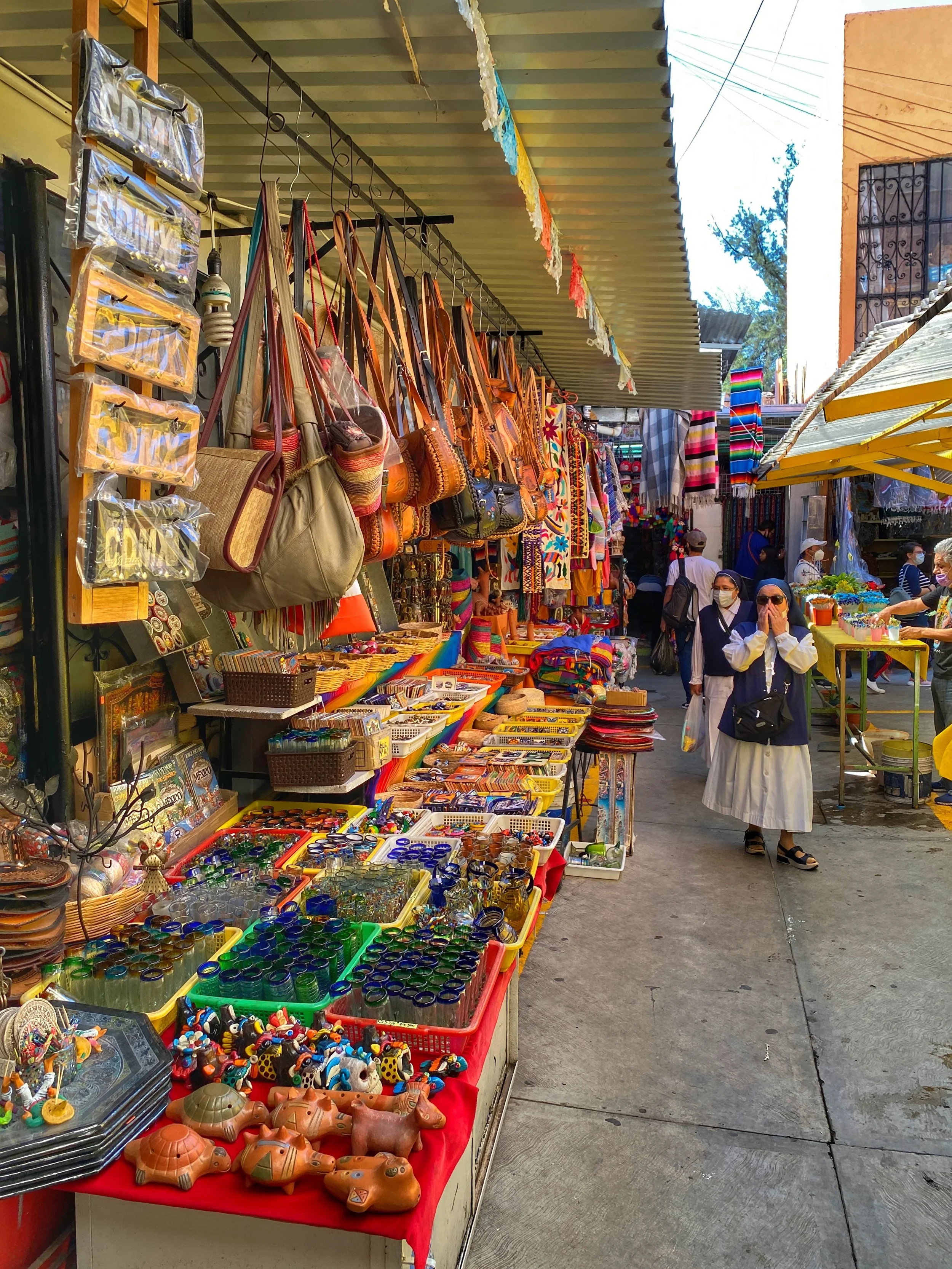
Nuns walk through the handicraft market of La Ciudadela in CDMX

Mercado de Artesanías La Ciudadela is a paradise for folk art and handicrafts lovers, offering a treasure trove of arte popular from all over Mexico. This sprawling market is packed with stalls selling everything from Oaxaca’s vibrant alebrijes and intricate Otomi textiles to pre-Columbian-style clay sculptures that rival museum pieces. It’s impossible to see it all in one go, so take your time and maybe even ask for a discount if you’re buying multiple items.

When you need a break from browsing, head to Fonda Carmelita, the market’s cantina, for traditional Mexican food and a refreshing margarita. It’s the perfect spot to recharge before diving back into the market’s colorful chaos. Don’t miss this iconic shopping destination whenever you’re in Mexico City — we never do.

Diego Rivera and Frida Kahlo House-Studio Museum

The studio and home of prolific artists Diego Rivera and Frida Kahlo at the Museo Casa Estudio Diego Rivera y Frida Kahlo wows as a striking example of 1930s Mexican modernist architecture. 

Fence post cacti lined up in front of Diego Rivera's modern white and red studio and home in the San Angel neighborhood of Mexico City

You definitely have to tour Casa Azul and Anahuacalli Museum — but this site is also worth visiting if you have time.

When Wally and I talk to friends about our travels in CDMX, the conversation often turns to the places we’ve seen, and the places on our list for our next trip. 

One of the places I’d been wanting to visit was the Museo Casa Estudio Diego Rivera & Frida Kahlo, the former home and studio of two of the city’s most revered artists — though I’d argue that Frida has eclipsed Diego in fame since their deaths in the 1950s. It felt like a fitting comeuppance for how he treated her. But more on that later. 

Whenever Frida wanted to visit Diego, she had to pull herself up an exterior floating staircase and cross a narrow footbridge.

Diego had specifically requested this to make it difficult for Frida to enter his studio (and see his adulterous dalliances). 

Their tumultuous relationship undoubtedly checked the “it’s complicated” box.

San Ángel: An Escape From the City

The historic house museum is located in San Ángel, an enchanting neighborhood southwest of Mexico City. Once a separate municipality, San Ángel served as a retreat for wealthy families who built grand country homes to escape the chaos of city life during the rise of the Industrial Revolution. Ancient lava flows shaped this rugged terrain, where its cobbled streets and colonial estates were eventually consumed by the ever-expanding sprawl of Mexico City.

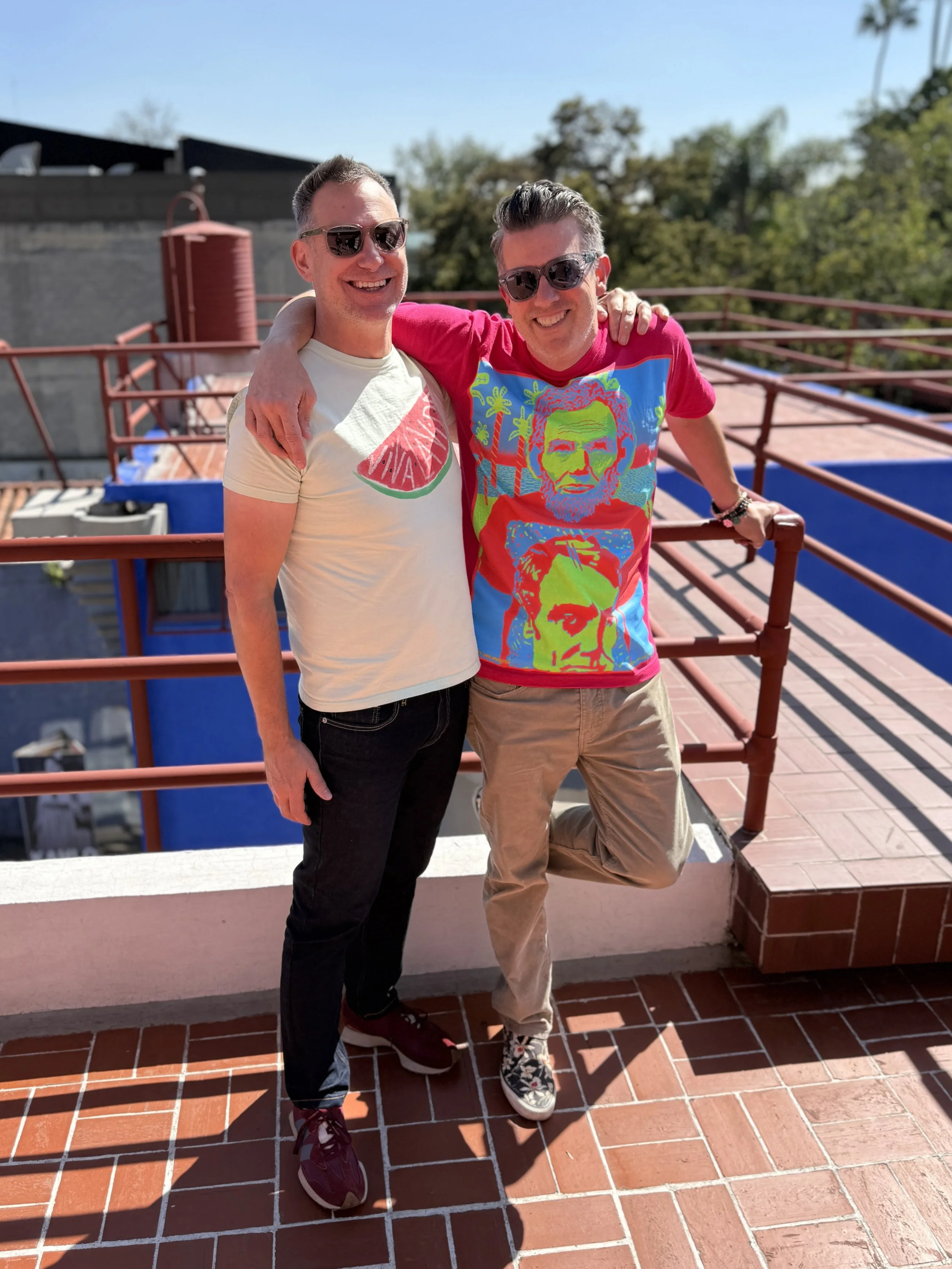
Duke and Wall stand on the rooftop terrace of Diego's house and the walkway that leads to Frida's

Duke and Wally stand on the terrace by the walkway that connected Diego’s home to Frida’s.

We planned our visit to coincide with the Bazar Sábado, a weekly market held on Saturdays, where artists and artisans set up shop and sell their wares. 

Our Uber driver dropped us off at the museum’s entrance on Calle Diego Rivera. As we waited for our guide, we couldn’t help but notice valets dressed in traje de charro, the traditional attire of mariachis, running past us in pairs. They were undoubtedly heading to the entrance of the nearby San Ángel Inn to park arriving cars. Known for its restaurant, the historic inn is a favorite dining spot for both locals and tourists, especially on weekends.

Museo Casa Estudio Diego Rivera y Frida Kahlo, with Diego's white home connected to Frida's blue one by high walkway

O'Gorman's Mexican fence post cactus barriers (and modern aesthetic) pissed off his traditional neighbors.

Wally and I walked to the front of the property, which faces Avenida Altavista. In our opinion, the best view of the two buildings is from across the avenue. On the left is the big house, a boxy white and red structure with a distinctive sawtooth roof and water tanks, which once served as the residence and studio of the plus-sized muralist Rivera. 

It’s linked at roof level by a narrow walkway and contrasted by the little house, the vivid blue home on the right, which belonged to his unibrowed surrealist painter wife, Kahlo.
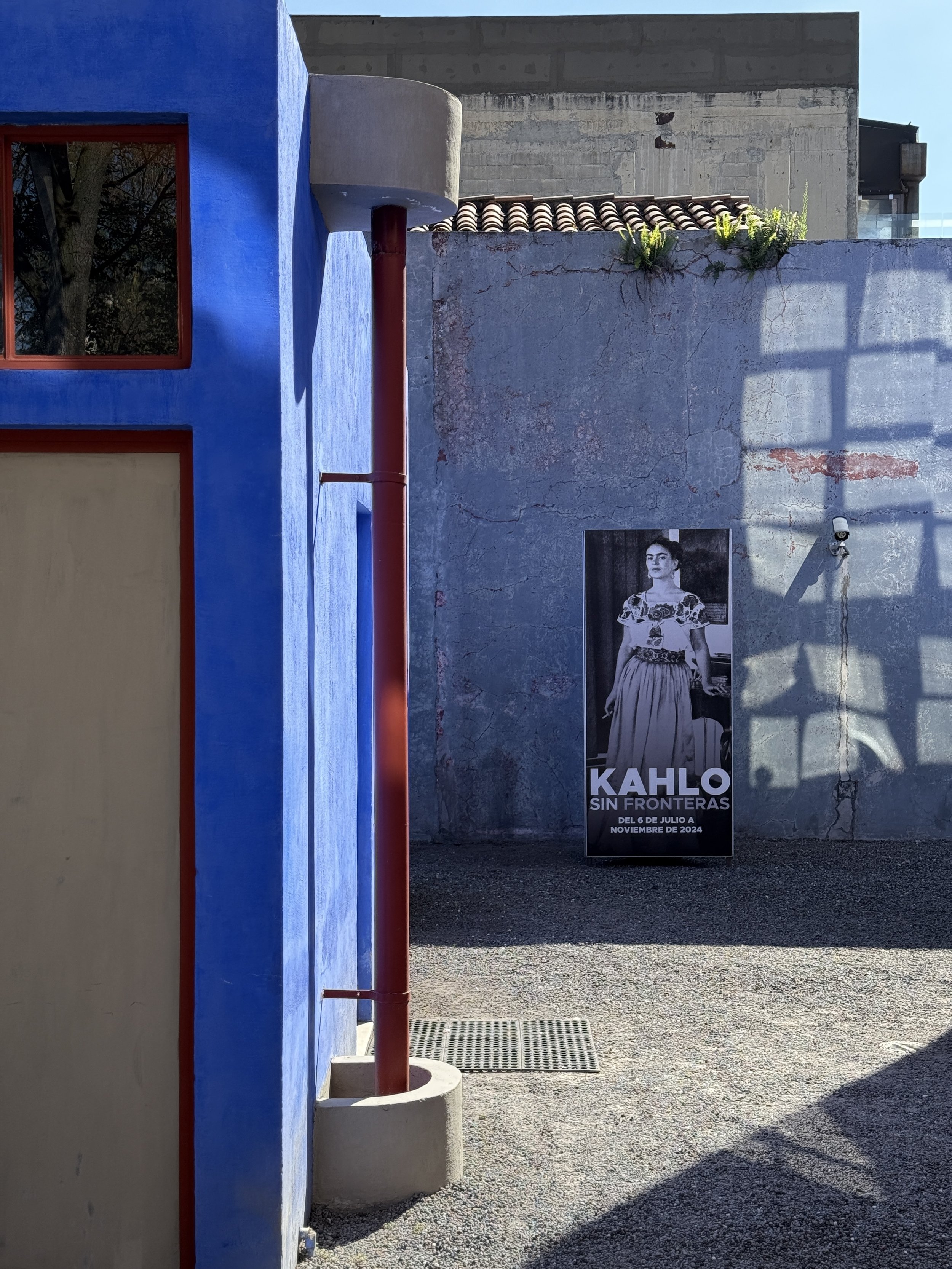
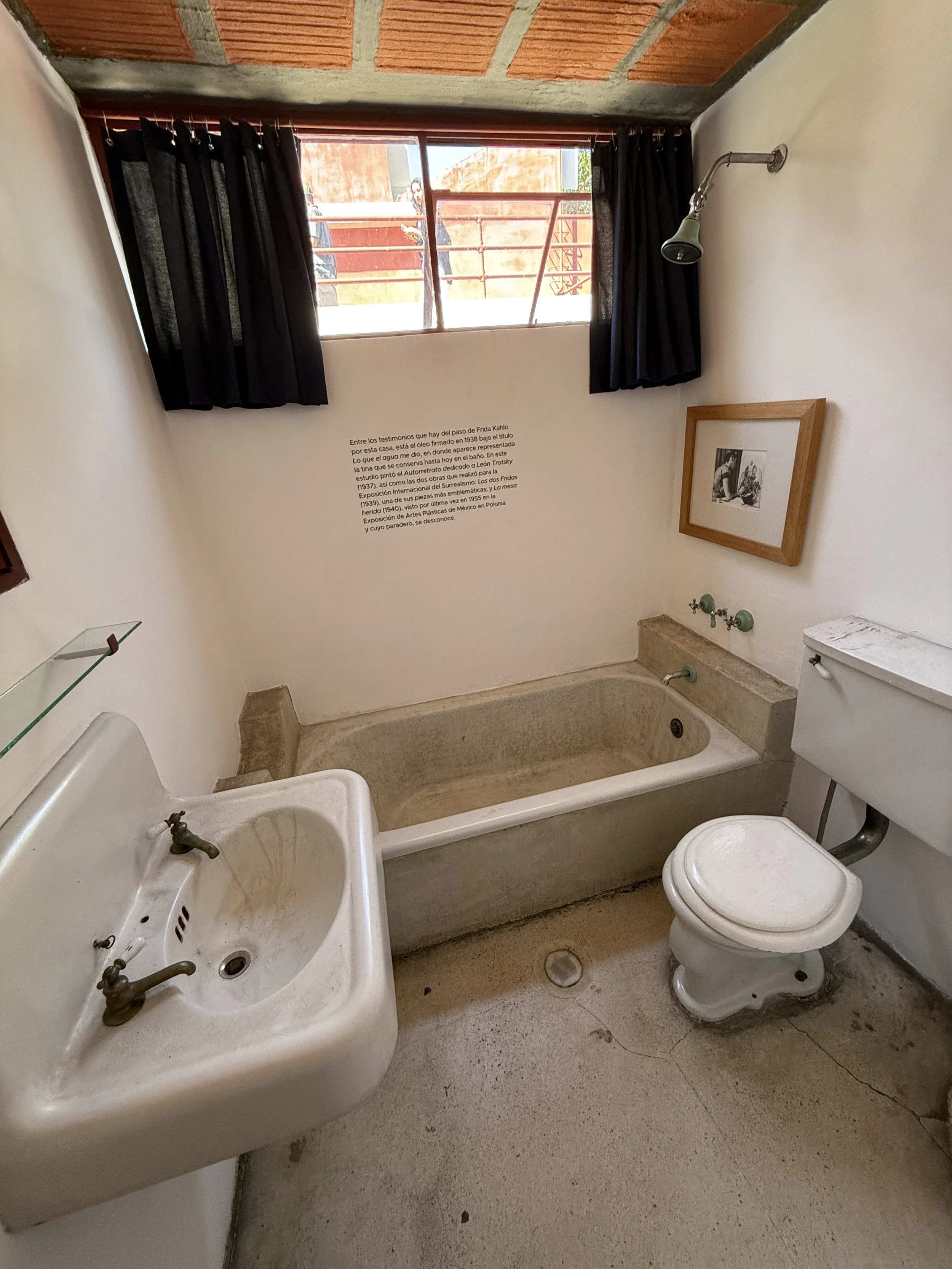
The bathroom and a poster of Frida at Museo Casa Estudio Diego Rivera y Frida Kahlo in CDMX

The building that now serves as the restrooms originally functioned as a darkroom for Kahlo’s father, Guillermo.
Not the Blue House: The History of Diego and Frida’s San Ángel Studio Home

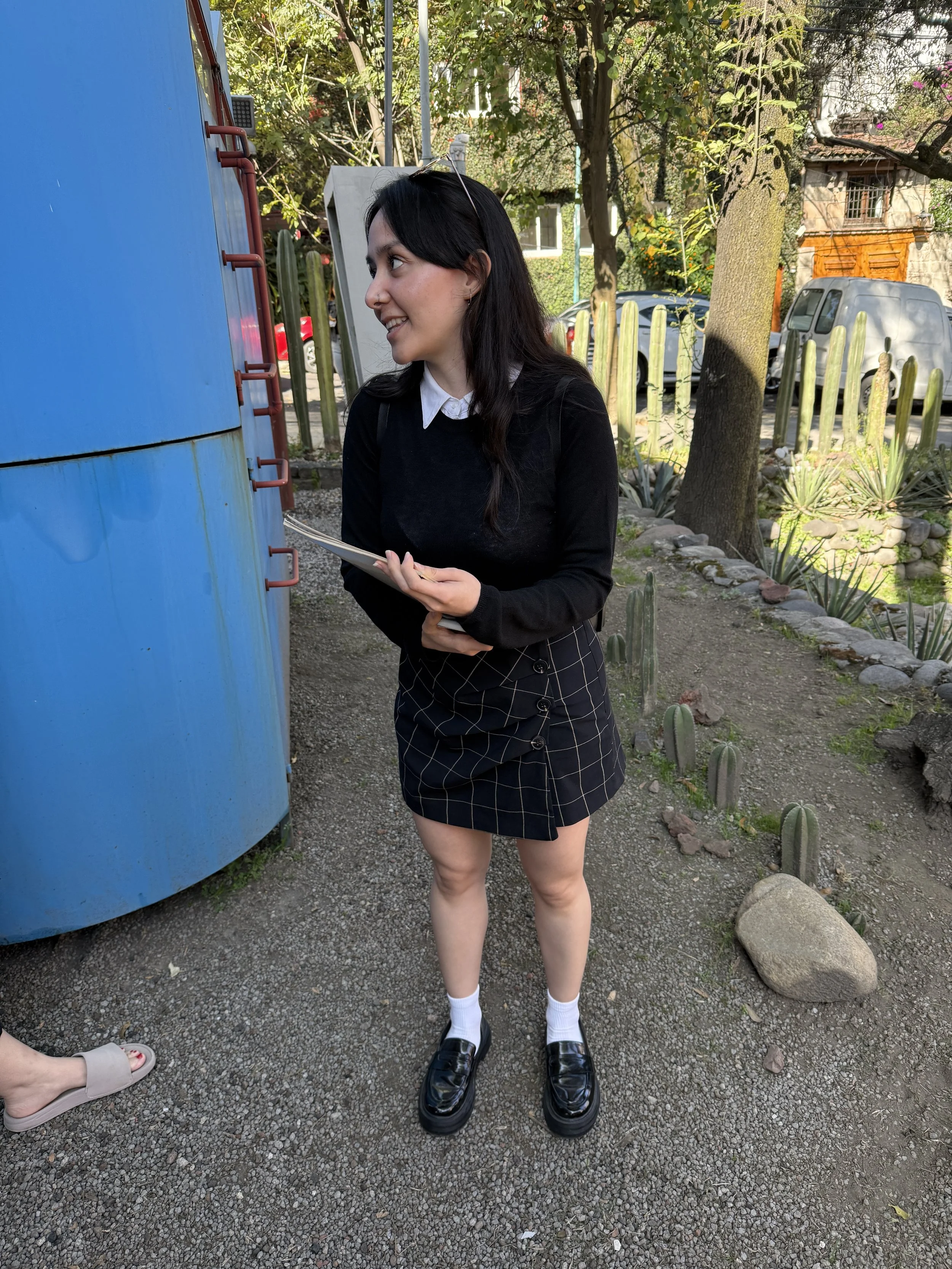
When the site opened at 10 a.m., we met our guide, Fernanda, in the museum’s courtyard. She resembled a proto-punk Japanese schoolgirl, with her nose ring and dressed in a long-sleeve white shirt under a black sweater, grid-pattern miniskirt fastened with oversized buttons and shiny black loafers. Joining us were a couple from Alabama celebrating their pandemic-postponed honeymoon and a towering white-haired man on a business trip from Germany who had added a day for sightseeing. 

Before the tour began, Fernanda asked how many of us had visited Casa Azul, Kahlo’s family home in the boho Coyoacán neighborhood. She explained that a lot of visitors show up here thinking they’re about to see the Blue House.

“It’s important to understand the difference,” Fernanda explained, “because that’s the house where she was born and where she returned after divorcing Rivera in December 1939.” 

She continued, “Here, there isn’t much furniture — it’s more of a photographic history. But what makes this site significant is the architecture of these three buildings.”

Fernanda, a tour guide at the Museo Casa Estudio Diego Rivera y Frida Kahlo in San Angel Inn, CDMX

Our charming tour guide, Fernanda, was an expert on O’Gorman, Rivera and Kahlo.

Kahlo only lived here for six years. The couple moved into the home in January 1934 after Rivera was essentially forced to return to Mexico following the controversy surrounding his mural at Rockefeller Center, Man at the Crossroads. The mural, which included a depiction of Vladimir Lenin, led the Rockefellers to order its destruction and terminate Rivera’s commission. Rivera later re-created the mural in Mexico City. This version, titled Man, Controller of the Universe, can be seen at the Palacio de Bellas Artes murals in Mexico City.

Kahlo and Rivera remarried in December 1940, a year after their divorce, at San Francisco City Hall in California; however, she never returned to San Ángel. Her declining health made it more practical for her to remain in the beloved house of her childhood, la Casa Azul, which now serves as a popular attraction. This house offers a comprehensive glimpse into her life, showcasing her furniture and personal belongings. Rivera, however, lived in the studio home until his death in 1957.

In 1981, the National Institute of Fine Arts (INBA) acquired the houses from Rivera’s daughter, Ruth Rivera Marín, and, after nearly 16 years of restoration, it opened to the public. And three decades later, INBA acquired the Cecil O’Gorman House and incorporated it into the museum campus.

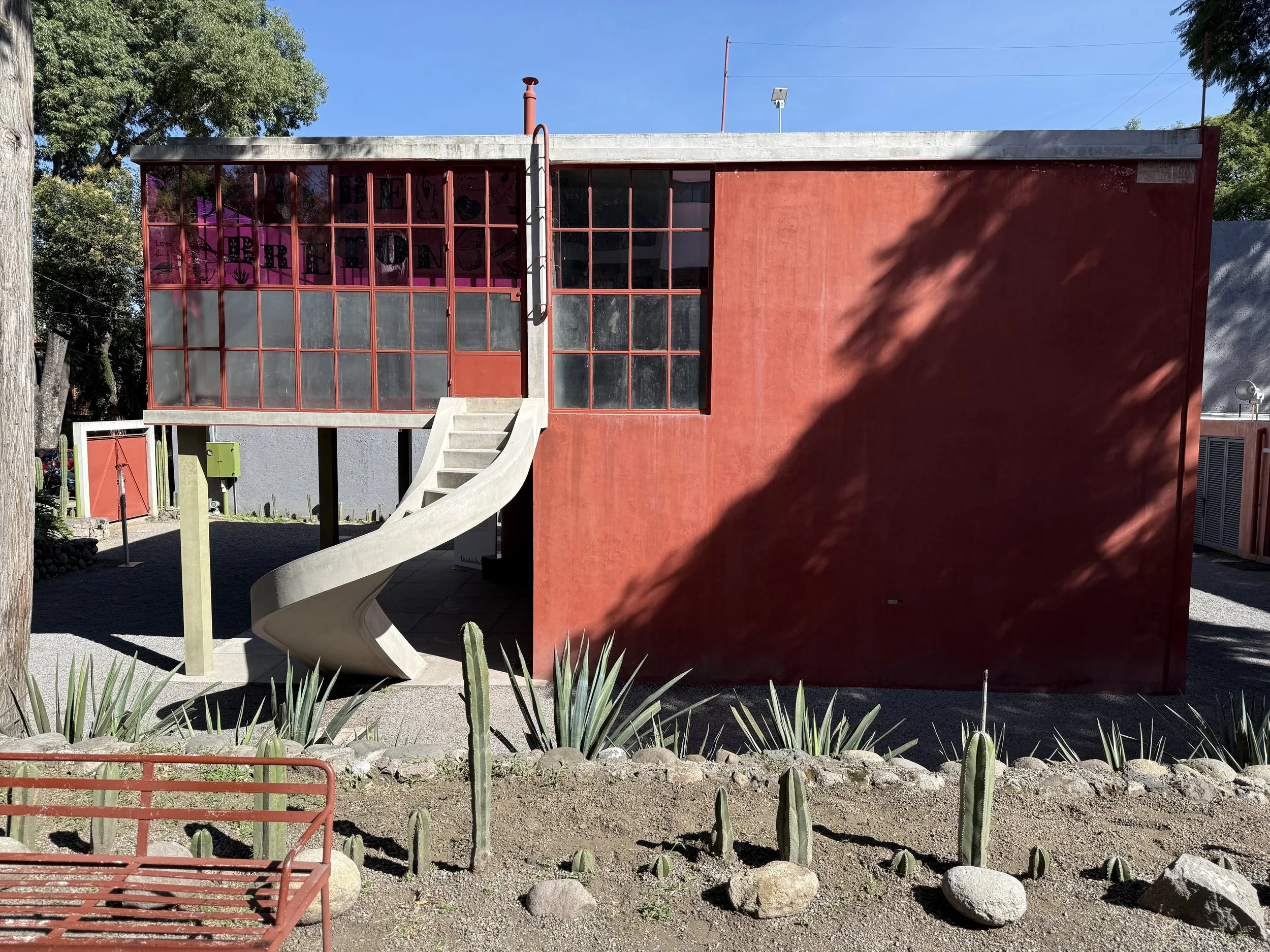
A wall of windows, pilotis and a curving exterior staircase at the Cecil O'Gorman House

You can imagine Juan O’Gorman’s bold modernist design didn’t go over so well with the neighbors, who lived in colonial-style homes.

Cecil O’Gorman House 

Thanks to his interest in sports, Juan O’Gorman was the first to discover that the pair of tennis courts belonging to the San Ángel Inn were for sale.

In 1929, the aspiring 24-year-old architect purchased the plot at 81 Las Palmas, now Calle Diego Rivera, using money he had earned as chief draftsman at Carlos Obregón Santacilla’s atelier. 

He then began constructing a revolutionary dwelling inspired by Swiss architect Le Corbusier, whose work he had studied at the Universidad Nacional Autónoma de México (UNAM). The design adhered to the principle that buildings should be created solely based on their purpose and function. 

Nearly a century later, the structure remains one of the earliest examples of functionalist architecture in Latin America. Its stripped-back, utilitarian design was radical for its time, standing in sharp contrast to the surrounding 18th century colonial homes.

A closeup of the exterior concrete staircase at the O'Gorman House in San Angel Inn, CDMX

An exposed concrete spiral staircase swirls up the side of O’Gorman’s house.

By 1930, O’Gorman had completed the Cecil O’Gorman House, which, according to his autobiography, he designed as a home and studio for his father. 

But that’s not the whole story. 

His father, the Irish painter Cecil Crawford O’Gorman, was an avid collector of colonial art and antiques. He already owned a spacious hacienda nearby and had no interest in downsizing to the modernist glass box that his son had built. In reality, it’s likely that O’Gorman designed the house to showcase his architectural ideas and intended it to serve as a prototype for low-income housing, though the project never came to fruition.

Elevated on pilotis, slender columns that raise the reinforced concrete structure off the ground, this innovative construction method eliminated the need for traditional load-bearing walls, allowing O’Gorman to incorporate an entire wall of articulated glass windows. 

Access to the second floor is provided by an external spiral staircase, but unfortunately, it was closed during our visit due to the installation of an upcoming exhibition.

Side view of the brick red Cecil O'Gorman House in CDMX

We weren’t able to go upstairs in the O’Gorman House because they were setting up for a new exhibition.

Like Rivera, O’Gorman had socialist inclinations and sought to challenge the norms of his time. He wasn’t just building a home — he was making a declaration of functionalist design amid the traditional architecture that characterizes much of San Ángel.

The neighbors were said to be outraged, demanding that his architectural degree be revoked. 

The locals didn’t care for the home’s curb appeal, either. Enclosed by Pachycereus marginatus, a tall columnar cactus, also known as Mexican fence post cactus, and landscaped with agaves, it reflected the aesthetic of an indigenous Mexican village rather than the prevailing manicured European style.

Rivera, on the other hand, appreciated O’Gorman’s vision. He commissioned him to construct a similar pair of homes for himself and his wife, Kahlo, on the adjacent lot. 

A model of the Museo Casa Estudio Diego Rivera y Frida Kahlo complex inside the O'Gorman House

A model of the property inside the O’Gorman House.

Inside, what formerly served as the dining room and kitchen now holds a glass case with a scale model of the trio of buildings as well as a series of photographs by Cristina Kahlo-Alcalá, Kahlo’s grandniece. Among the photos are images of the hospital gowns Kahlo wore during her stays at the American British Cowdray Hospital in Mexico City, on which she often used to wipe excess paint from her brushes while she painted.

Prepatory sketch on the wall of the mural Entre Filosofia y Ciencia in the O'Gorman House in CDMX

These doodles became the mural Entre Filosofía y Ciencia by O’Gorman.

In 2012, the museum’s restoration team uncovered the sinopia, or preparatory sketch, for the fresco Entre Filosofía y Ciencia (Between Philosophy and Science) on a layer of lime plaster beneath where the completed mural by O’Gorman originally stood. The fresco was purchased by Banco Nacional de México in 1957 and, when it’s not traveling, can be found in the Museo Foro Valparaíso.

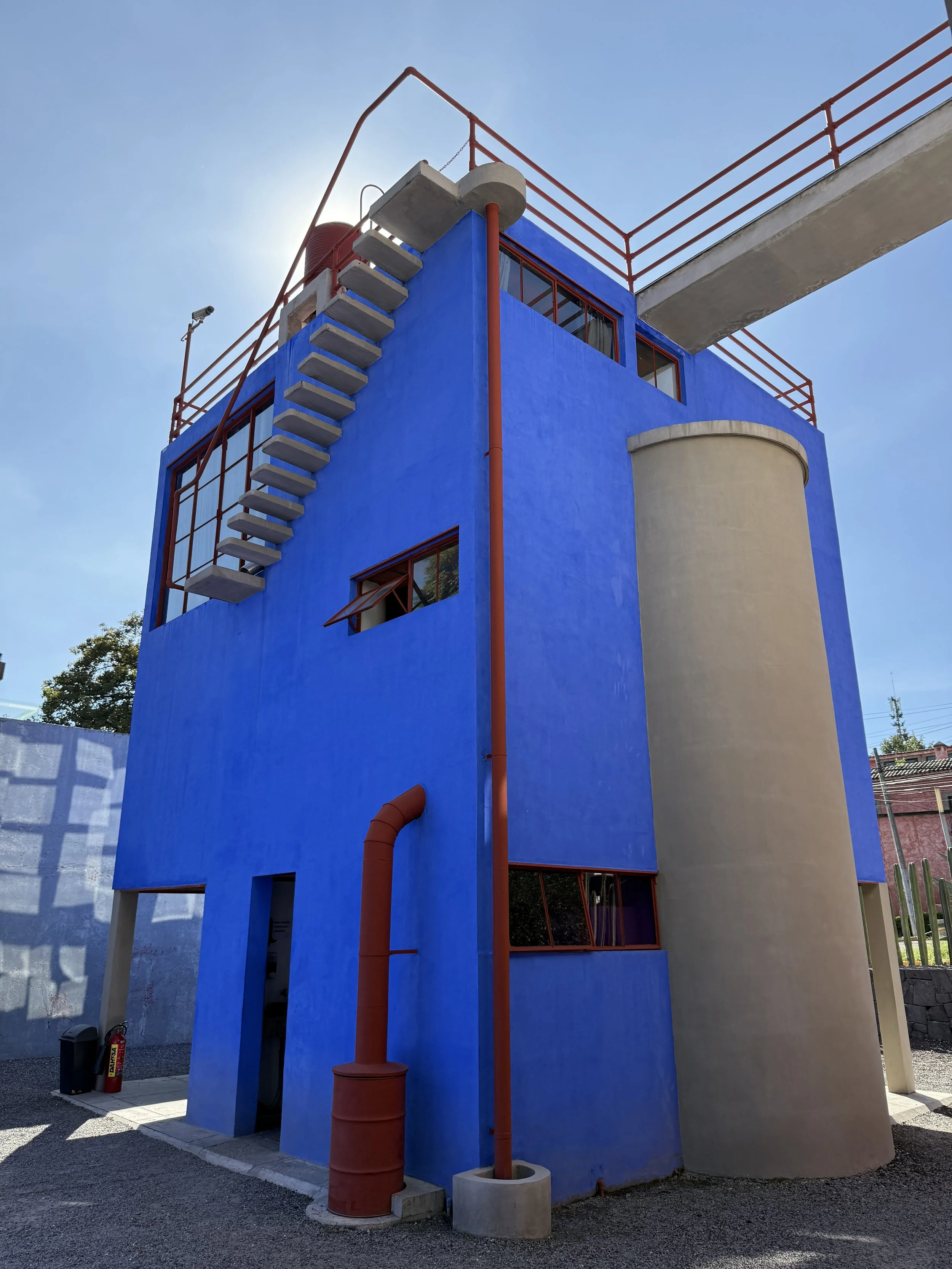
The floating exterior staircase and walkway at Frida's blue house at the Museo Casa Estudio Diego Rivera y Frida Kahlo, CDMX

Recall that Frida had leg and back issues, and imagine her having to walk up and down this floating staircase onto her roof and then across the walkway to get to Diego’s house.

Frida and Diego’s Complicated Relationship 

After we exited the Cecil O’Gorman House, Fernanda directed our attention to the floating staircase perched on the exterior of Kahlo’s house. Its tubular steel handrail leads from the second floor studio windows to the rooftop terrace. We couldn’t believe anyone would have used those stairs — especially Kahlo, whose chronic health issues significantly impaired her mobility. 

As a child, Kahlo contracted polio, which left her right leg weakened and deformed. Then, as a teenager, she was in a horrific accident when the bus she was riding collided with a trolley car. The impact left her with a fractured spine, and a handrail pierced her body, entering through her back and exiting through her pelvis.

RELATED: 9 Fascinating Facts About Frida

Yet, whenever she wanted to visit Rivera, she had to pull herself up those stairs and cross the narrow footbridge. Rivera had specifically requested this particular feature from O’Gorman to make it difficult for Kahlo to enter his studio (and see his adulterous dalliances). 

Their tumultuous relationship undoubtedly checked the “it’s complicated” box. It was a marriage strained by mutual jealousy and infidelity. Rivera didn’t fit society’s standards of handsome — Kahlo nicknamed him el Sapo-Rana (Toad-Frog) — but his fame, confidence and charisma made him irresistible to many women. 

Some visitors in the small courtyard in front of Diego's studio and house at the Museo Casa Estudio Diego Rivera y Frida Kahlo

Tour groups meet in the small courtyard in front of Diego’s house.

Rivera’s House and Studio

In my opinion, the most fascinating part of the museum is Rivera’s house. It still contains some of the original furniture and artwork from when he lived there. 

The bedroom has a set of small windows high on the wall, which limited the amount of direct sunlight and helped keep the room cool. Next to the bed, there’s a pair of shoes, an enamel bedpan and a leather suitcase sitting atop the woven coverlet, awaiting its next trip. An articulated gooseneck task lamp and a small bust of Chairman Mao sit on the olive green-painted nightstand, with a watercolor landscape by Rivera hanging above it.

Diego's bedroom at the Museo Casa Estudio Diego Rivera y Frida Kahlo, CDMX

Diego’s bedroom

Like his bedroom, the studio was mostly left as it was at the time of Rivera’s death. The main section, with its double-height space, was perfect for large works and transportable murals. The design facilitated easy handling of the panels, allowing them to be moved in and out of the studio through the folding windows.

Our favorite pieces among the personal items were Rivera’s collection of larger-than-life cartonería (papier-mâché) figures. Known in Mexico as Judases, these brightly colored effigies, with features like oversized or abnormally small heads and stubby limbs, commanded the room with their massive presence. Originally, these figures were depictions of Judas Iscariot, the apostle who betrayed Jesus Christ. Rivera’s collection includes devils, skeletons and other fantastical creatures, which were traditionally burned, exploded or flogged on the Saturday before Easter. 

Diego's papier-mache Judases at the Museo Casa Estudio Diego Rivera y Frida Kahlo

Some of Diego’s collection of papier-mâché Judases in his studio

Many of these larger-than-life-sized effigies were created by the Mexican folk artist Carmen Caballero Sevilla. One Holy Week, Rivera visited the Mercado Abelardo Rodríguez and was impressed with Sevilla’s Judas figures and invited her to work in his studio in San Ángel. (He admired the working class, which is why he often wore overalls.)

Metal skeletons on the wall in Diego's studio at the Museo Casa Estudio Diego Rivera y Frida Kahlo

Cool metal skeletons covered the walls.

Two of Diego's Judas figures in his studio at the Museo Casa Estudio Diego Rivera y Frida Kahlo

Diego collected handicrafts like these Judases.

Brushes and trays with reserves of dried paint remain exactly as Rivera had left them, offering a glimpse into his creative process. Among them were shelves with jars of pigments that reflect his color palette — including Paris Green, a highly toxic emerald green powder made from copper and arsenic. 

Glass jars of colorful powders used to make paint in Diego's studio at the Museo Casa Estudio Diego Rivera y Frida Kahlo

Diego’s paints line the shelves of his studio but have long since dried up.

There are bookcases filled with pre-Hispanic and indigenous folk art. On one of the easels was a painting of the Latin American actress Dolores del Río, who was rumored to have slept with both Rivera and Kahlo. 

A painting of Dolores del Rio by Diego stands by a work table in Rivera's studio at the Museo Casa Estudio Diego Rivera y Frida Kahlo

Diego painted Dolores del Rio, a beautiful Latin American actress who is said to have slept with his as well as Frida.

Fernanda pointed out a papier-mâché torito, a little bull, hanging high above us. She explained that this tradition dates back to the mid 19th century. These creations are mounted on a kind of scaffolding that rests on the wearer’s shoulders, stuffed with fireworks like roman candles and bottle rockets, which are set alight as part of the annual festival in the town of Tultepec honoring Saint John of God, the patron saint of (what else?) fireworks makers. 

Sound dangerous? It sure is — but that didn’t stop Fernanda’s brother from participating in one. And he has the burns to prove it. 

Our group followed Fernanda up the staircase to the second floor, where we could take in a full view of the studio. Fernanda explained that this was the very spot where Kahlo discovered Rivera with her younger sister Cristina — an incident that became the proverbial last straw, which led to their separation and brief divorce. It wasn’t Rivera’s or Kahlo’s numerous indiscretions that caused the rift; it was the fact that Rivera was having an affair with her closest confidant.

Just off the landing, we entered Rivera’s private office, a space with a desk and a typewriter and additional bookcases filled with pieces from his prolific collection of pre-Hispanic artifacts, an obsession that can be seen at the Anahuacalli Museum in Coyoacán

A small gray typewriter sits on a desk with shelves of pre-Columbian artifacts in Diego's office at the Museo Casa Estudio Diego Rivera y Frida Kahlo

Diego’s typewriter and some of the pre-Columbian artifacts he loved to collect.

From Rivera’s office, a door opened onto the rooftop terrace and the narrow bridge connecting his former residence to Kahlo’s. However, Fernanda quickly dismissed any thoughts of taking the infamous floating stairs. Instead, we followed her back through Rivera’s office and down the staircase to the courtyard below.

Side view of the blue home where Frida lived at the Museo Casa Estudio Diego Rivera y Frida Kahlo

Frida’s house leaves much to be desired — but at least O’Gorman painted it the vibrant blue of her beloved family home, Casa Azul.

Kahlo’s House

Our group paused outside Kahlo’s house as Fernanda pointed out an interesting feature: a carnelian red painted garbage chute extending from the second floor, connected to a steel drum barrel. Its purpose? To collect kitchen waste.

By this time, the site had grown much busier, with dozens of visitors streaming in and out of the buildings.

The rooms inside Kahlo’s house were noticeably smaller and compact than those in Rivera’s, in large part because there wasn’t an open studio space. Unlike her husband’s residence, Kahlo’s house was devoid of decorative objects or furniture, leaving the space feeling even more austere.

The tiny kitchen exemplified functional design, featuring a concrete countertop with a gas cooktop, a small sink, and the opening of the chute that connected to the steel barrel outside. 

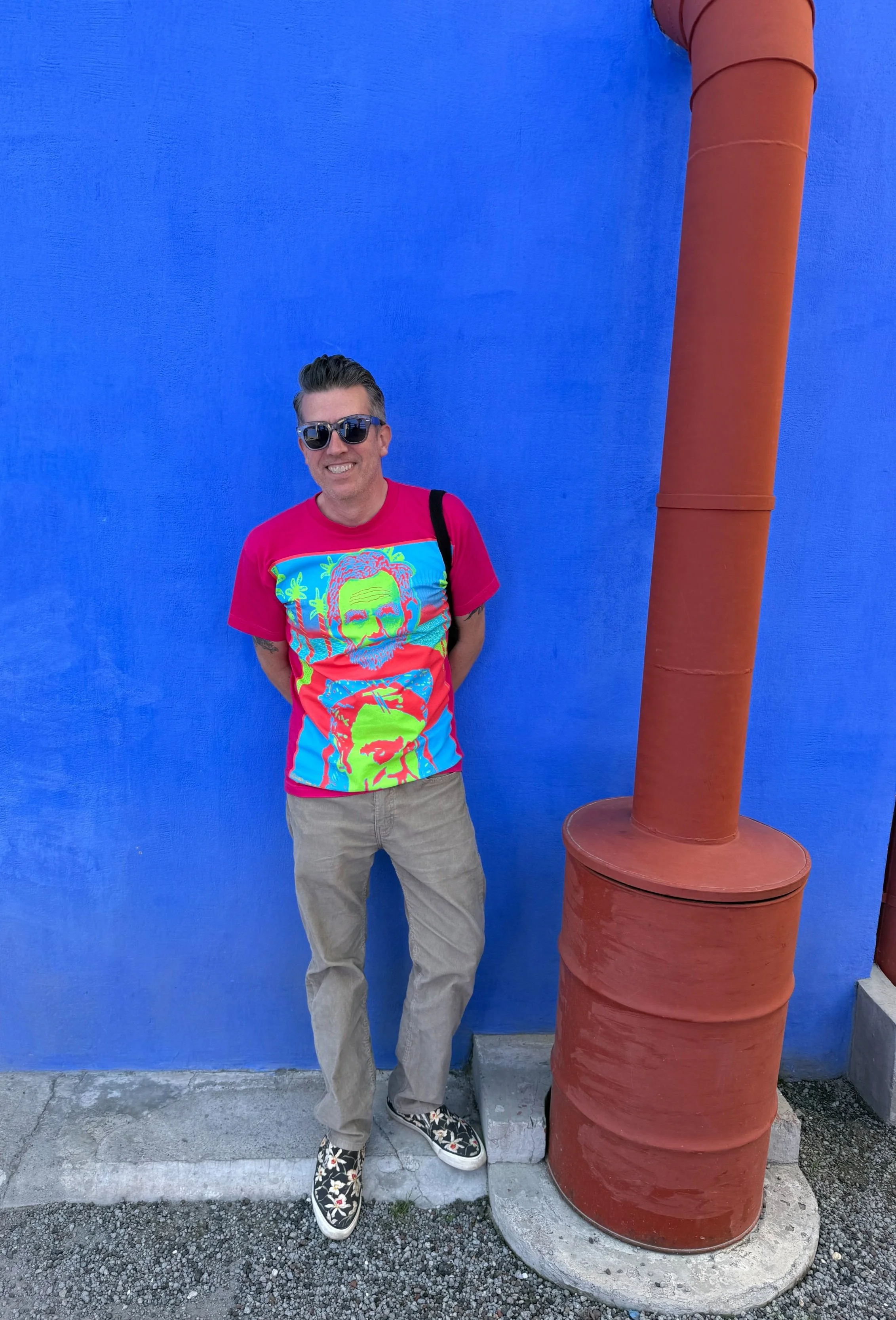
Wally leans against the blue wall of Frida's house by the kitchen garbage chute at the Museo Casa Estudio Diego Rivera y Frida Kahlo

A man from Germany insisted Wally pose for a picture in his bright T-shirt to contrast with the blue of Frida’s house, next to the kitchen garbage chute.

We peeked into the modest bathroom, the very space where Kahlo’s 1938 oil painting, Lo que el agua me dio (What the Water Gave Me), was conceived. Fernanda told us that there weren’t any good spaces for Frida to paint in her home, so she chose the bathroom, which had better lighting. 

The bathroom in Frida's house at the Museo Casa Estudio Diego Rivera y Frida Kahlo in San Angel, CDMX

Frida’s home is small and dark, so she preferred to paint in the bathroom. One of her most famous works, Lo que el agua me dio, came from this period.

Wally paused in front of a framed letter that Kahlo had written to Hungarian-born photographer Nickolas Muray, with whom she shared a decade-long, on-again, off-again relationship, and read this poignant sentence aloud: “Please forgive me for having phoned you that evening. I won’t do it anymore.”

One of the glass cases in Kahlo’s house displays an open copy of the book Complete Anatomy of Man by Martín Martínez, and included a handwritten dedication from Kahlo to Dr. Juan Farill, the surgeon who performed seven spinal surgeries on her. 

The final room we explored was her small bedroom — a fitting conclusion to our visit. The room was concealed behind thick black drapery that we had to pull aside to enter. Inside, an installation by Cristina Kahlo-Alcalá features numerous lightboxes  illuminating Kahlo’s medical records from the American British Cowdray Hospital. The air in the room felt heavy and still, with the slow rhythmic sound of a heartbeat emanating from a hidden speaker. 

We knew beforehand about Diego and Kahlo’s turbulent relationship. But standing in the dark, claustrophobic space Diego had O'Gorman design as her home was a different kind of gut punch. It was hard not to feel the weight of it — the realization that someone as fiercely powerful as Kahlo could be confined like this by a man who claimed to love her. It really shook us, and we didn’t linger.

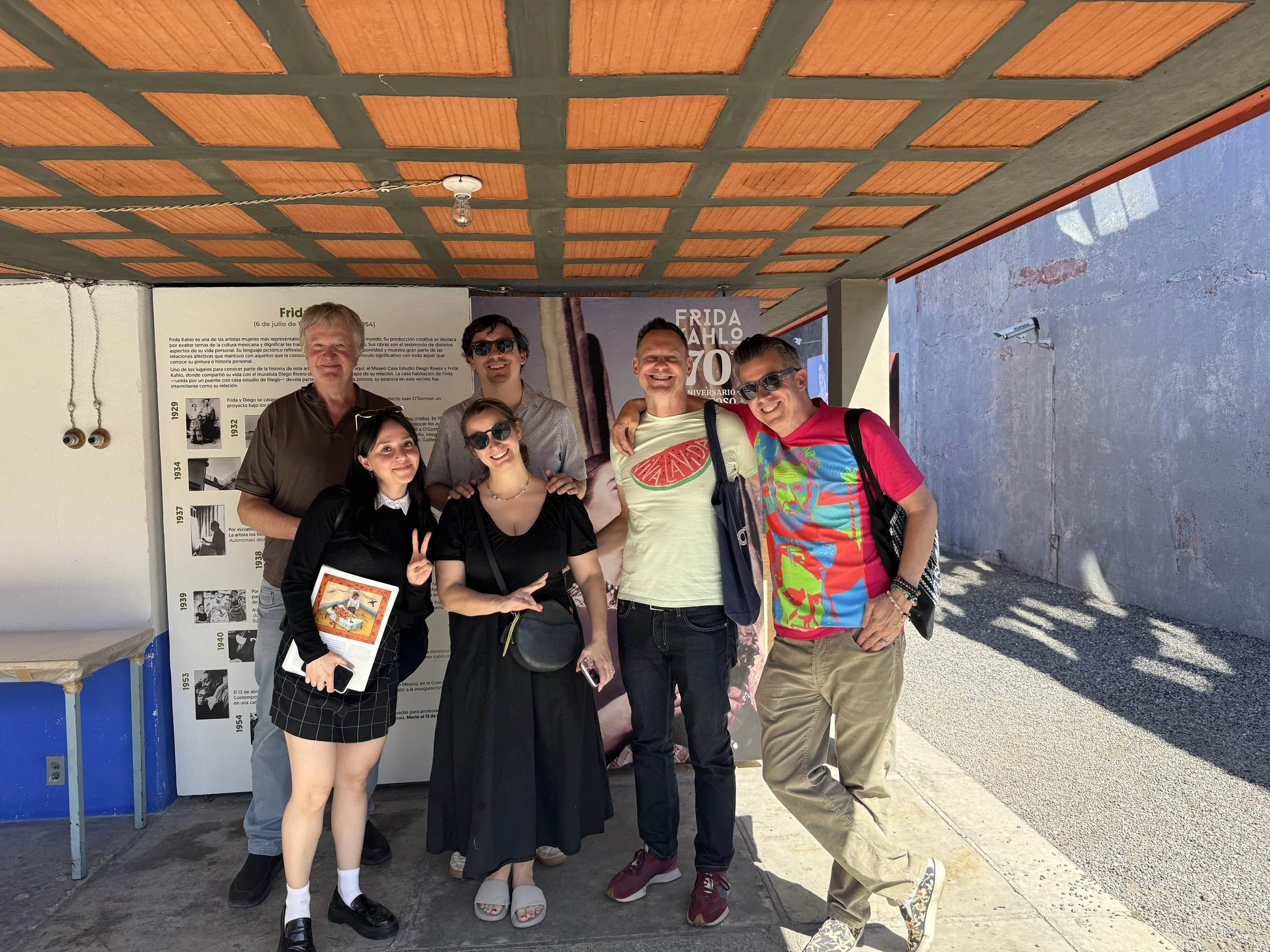
A tour group and their guide pose under the entrance to Frida's house at the Museo Casa Estudio Diego Rivera y Frida Kahlo

Our group poses under the entrance to Frida’s house.

Know before you go

We purchased tickets prior to our trip through a site called Tiqets. At $30 per person it’s definitely more than the $2 price of general admission, but we felt it was worth it. 

Our guide, Fernanda, was charming and incredibly knowledgeable, offering all the insights we could have hoped for about the site. She didn’t shy away from discussing the complexities of Rivera and Kahlo’s relationship either. And even though the tour was scheduled to last an hour, she stayed with us for an hour and 45 minutes, never once making us feel rushed.

The museum is open Tuesday through Sunday from 10 a.m. to 5:30 p.m.

Admission is 40 pesos for adults, while children under 13 and seniors can enter for free. On Sundays, admission is free for everyone. –Duke

A view of the brick red exterior and wall of windows at Diego's house at the Museo Casa Estudio Diego Rivera y Frida Kahlo

Floor-to-ceiling windows opened wide to allow transport of Rivera’s large-scale mural panels into and out of his studio. 

Museo Casa Estudio Diego Rivera y Frida Kahlo

Diego Rivera s/n
San Ángel Inn
Álvaro Obregón
01060 CDMX
Mexico


Catch the Bazar Sábado While You Can

The ephemeral San Ángel market in Mexico City is worth saving a Saturday for.

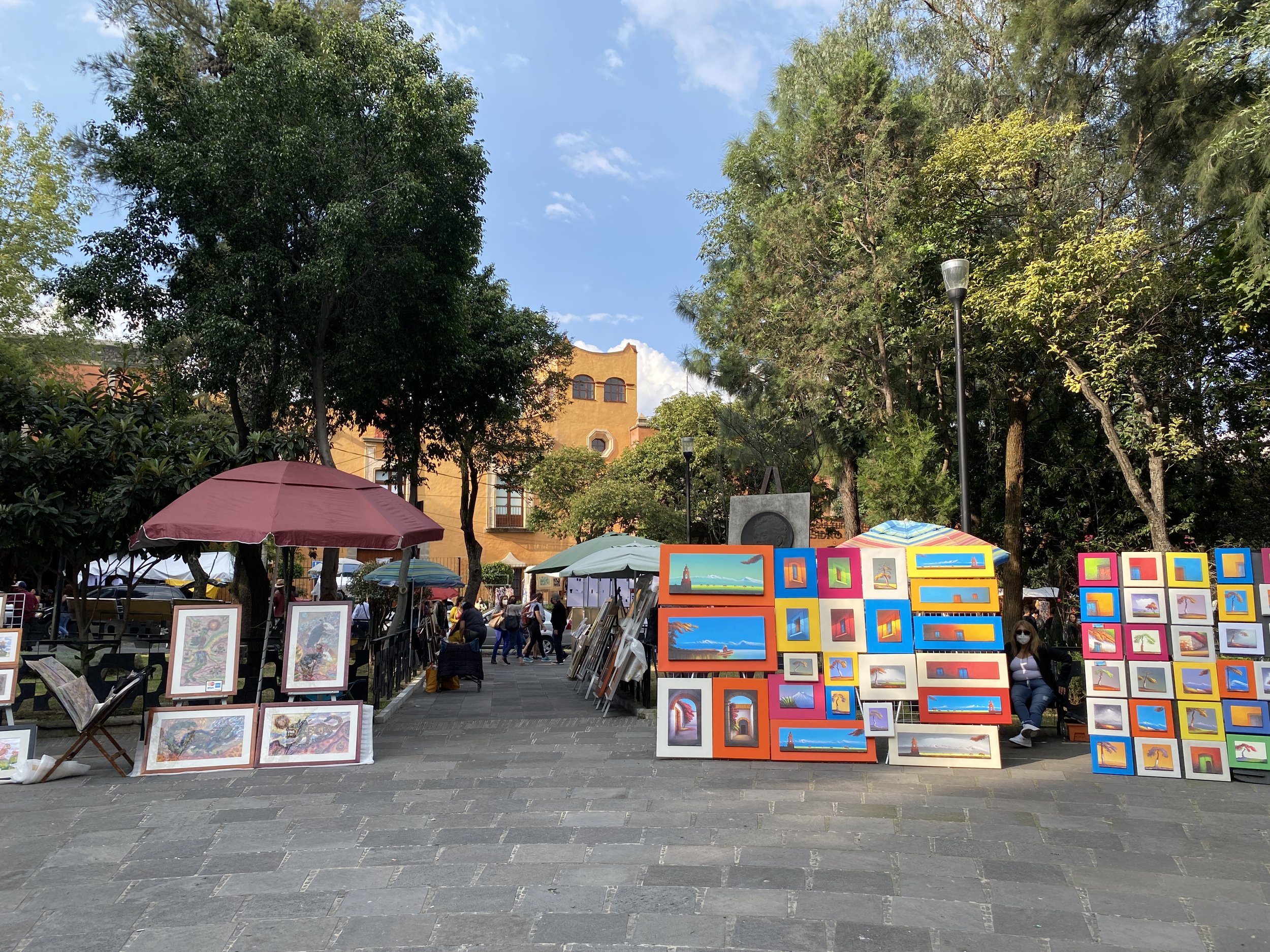
Paintings for sale outside at the Bazar Sábado

Handicrafts, artworks, pottery and other goodies are on sale at the Saturday Bazaar — one day a week only.

Unlike the village of Brigadoon, which rises out of the Scottish mist once every 100 years, the no-less-enchanting Bazar Sábado in the colonia (neighborhood) of San Ángel in Mexico City bursts into life every Saturday. An artisanal market rises and fills the hilly cobblestone streets, Plaza del Carmen and surrounding shops.

Originally, the colonia, located southwest of Centro, the city center, was a weekend retreat for Spanish nobles, who built their 19th century colonial-style homes here. 

The enchanting Bazar Sábado in San Ángel bursts into life every Saturday. The artisanal market fills the hilly cobblestone streets, plaza and surrounding shops.
Market stalls selling handicrafts at the Bazar Sábado

The handicraft portion of the bazaar lines the street.

Shopping in San Ángel, CDMX

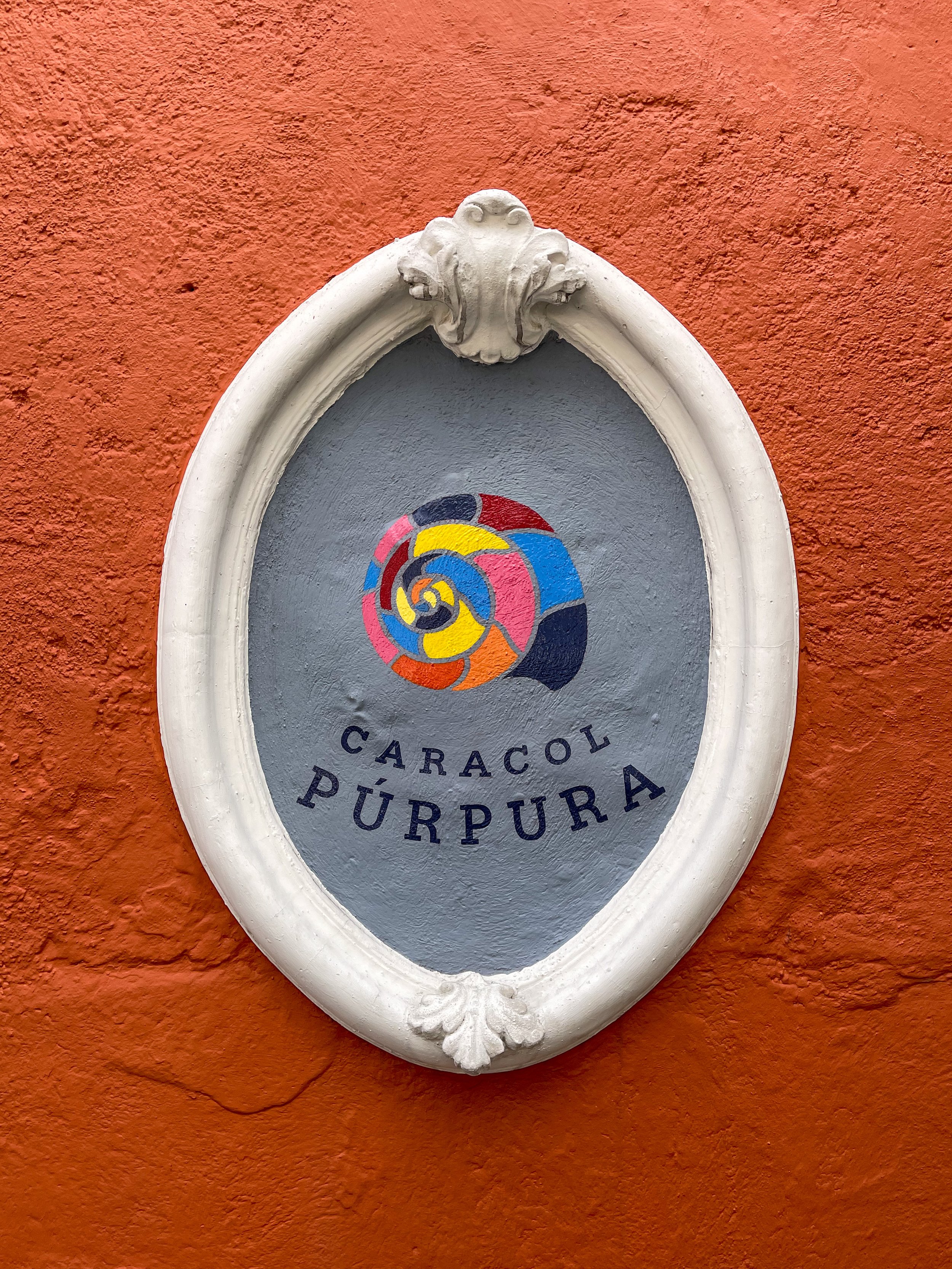
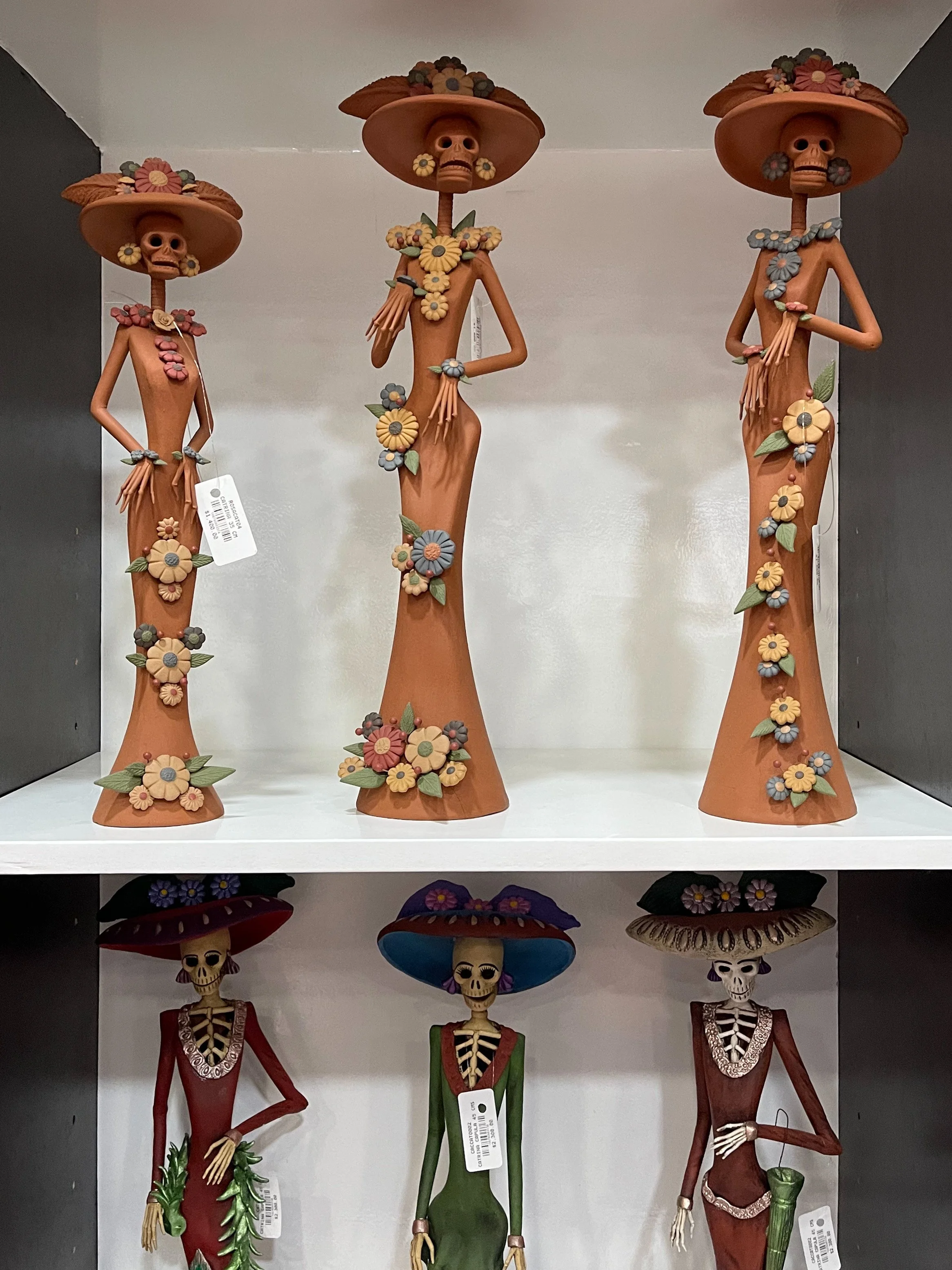
A few of the shops, including Caracol Púrpura, have beautiful contemporary and traditional objects for sale but were too expensive for us. We wanted to take some pictures to write about their shop but they told us no photos when they saw us getting ready to take a few snaps. We managed to capture a few anyway — we are the Not So Innocents Abroad after all! 

Sign of the store Caracol Púrpura

A high-end shop in San Ángel

No photos allowed!

Catrinas for sale at Caracol Púrpura

Long and lean Catrinas

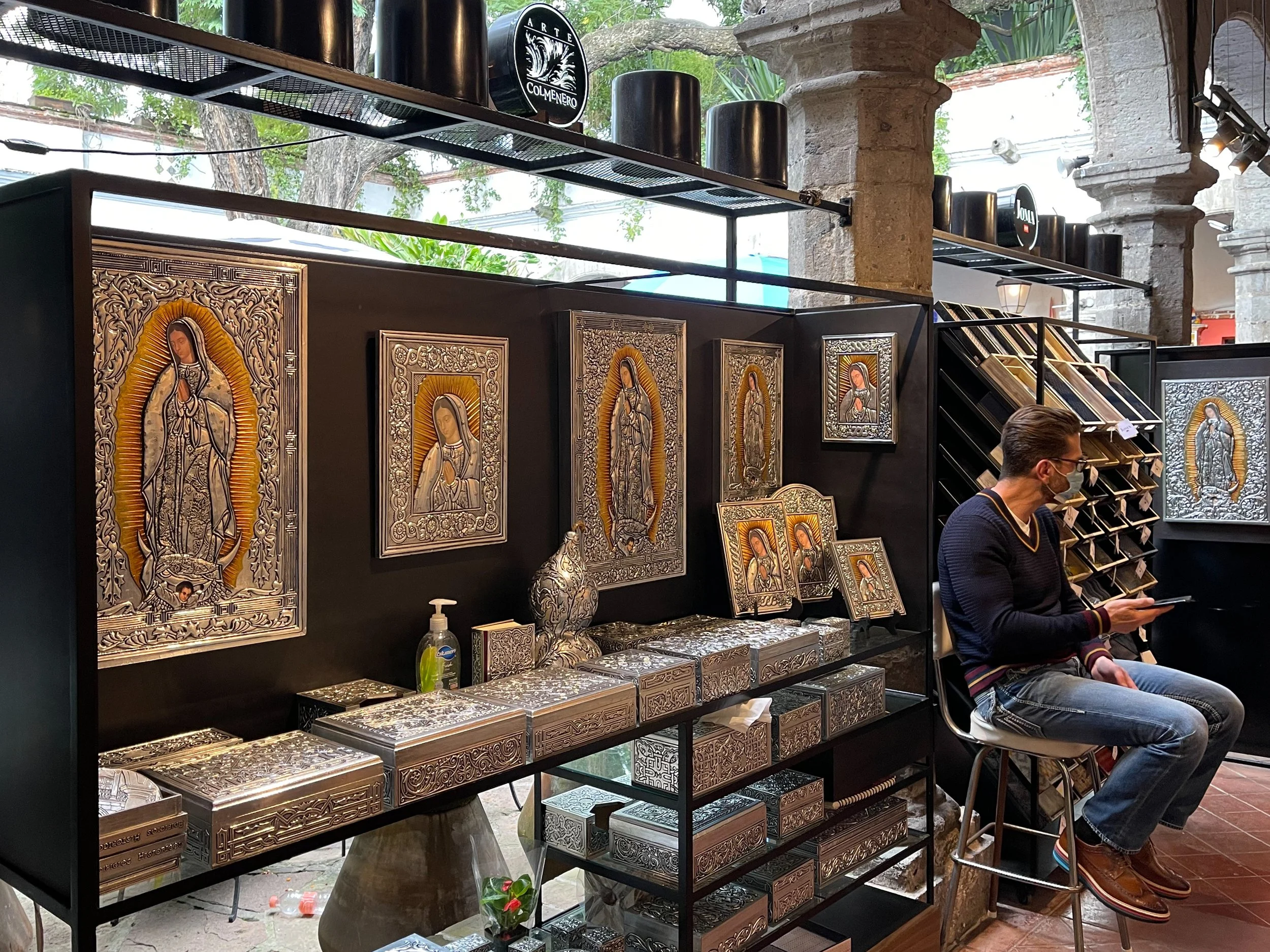
Man selling pressed tin artwork of the Virgin Mary at the Bazar Sábado

Pressed tin depictions of the Virgin Mary

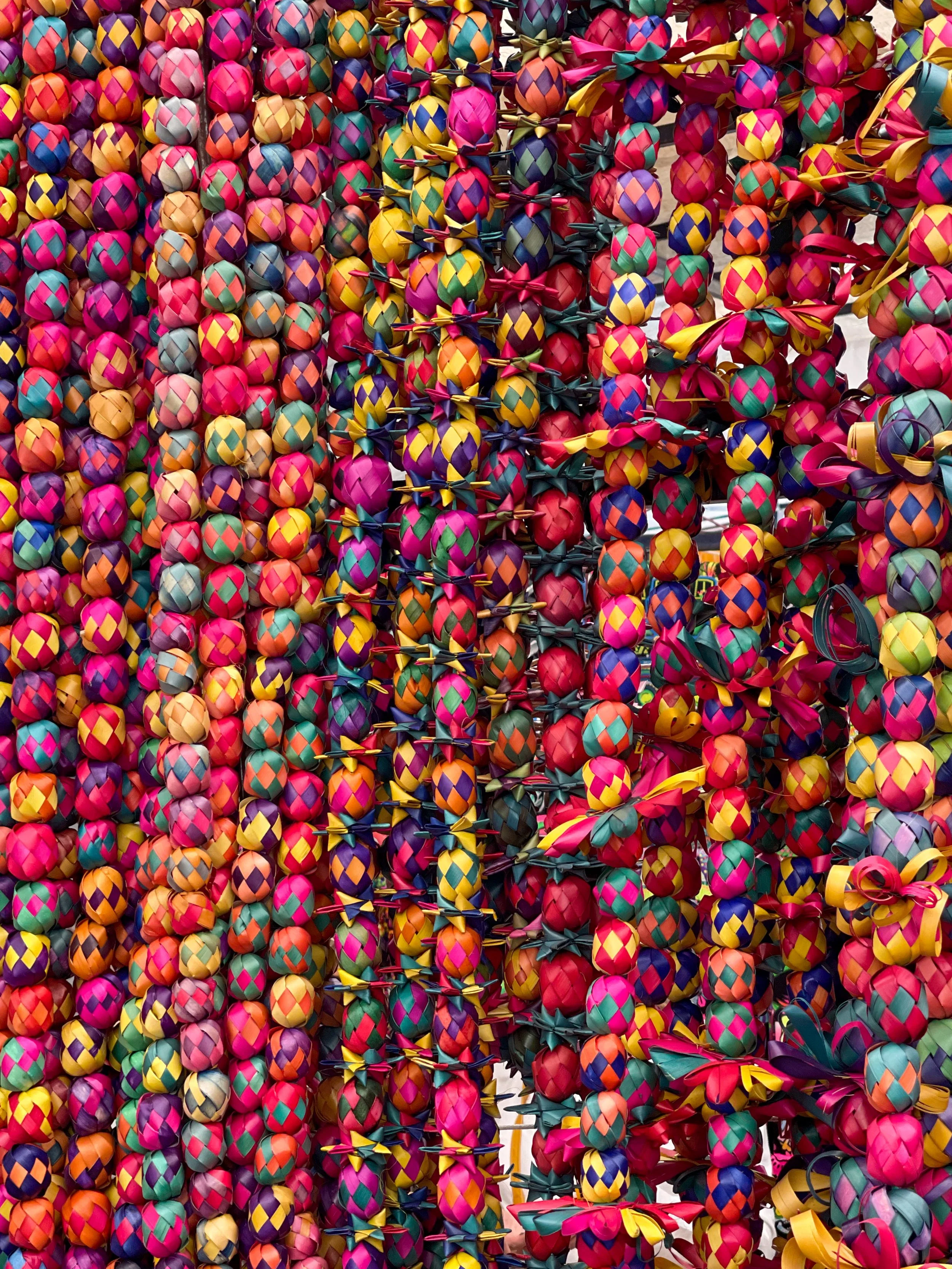
Colorful woven garlands at the Bazar Sábado

Colorful garlands woven from palm leaves

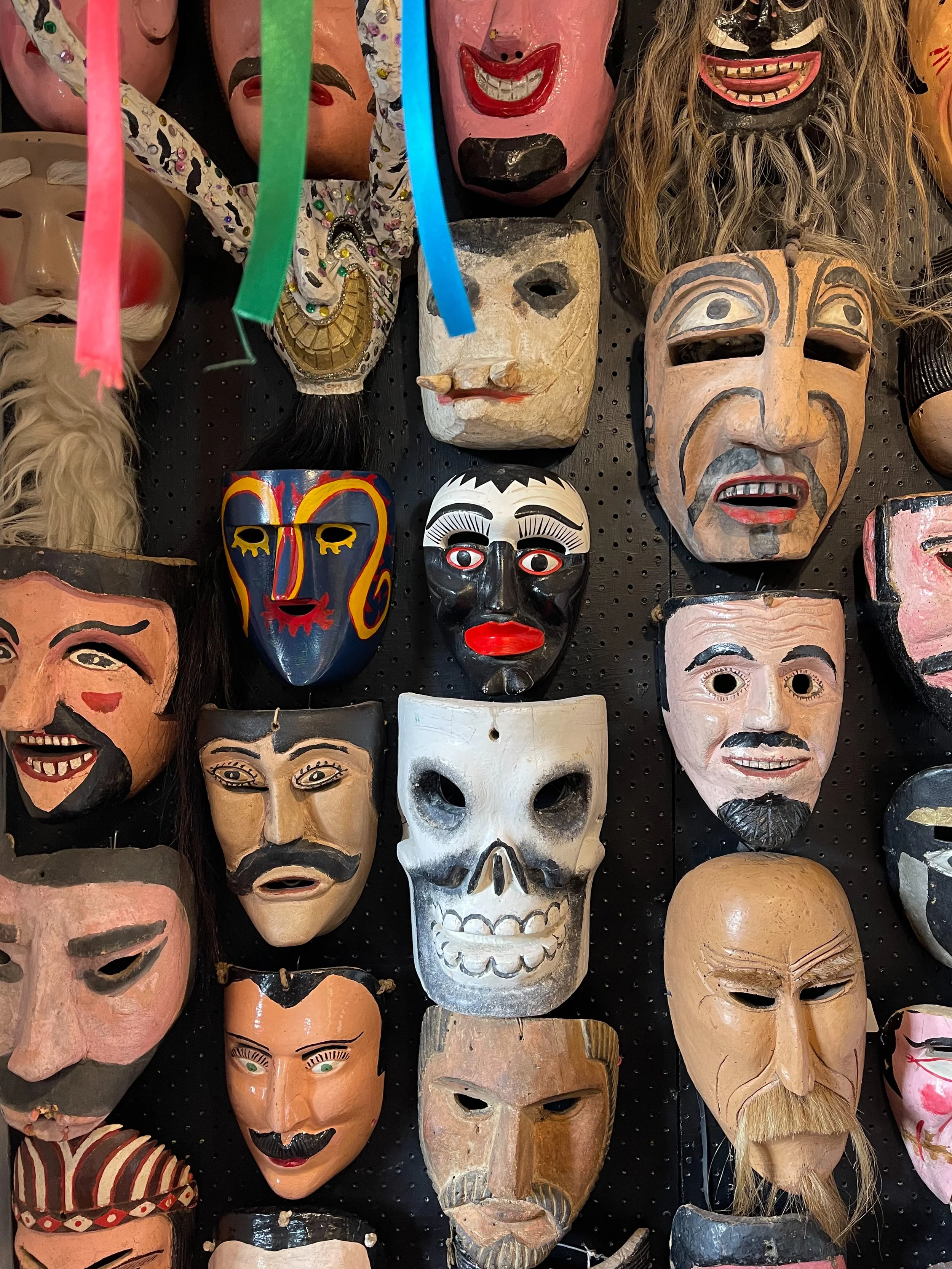
Painted masks for sale at the Bazar Sábado

A fun selection of masks for sale

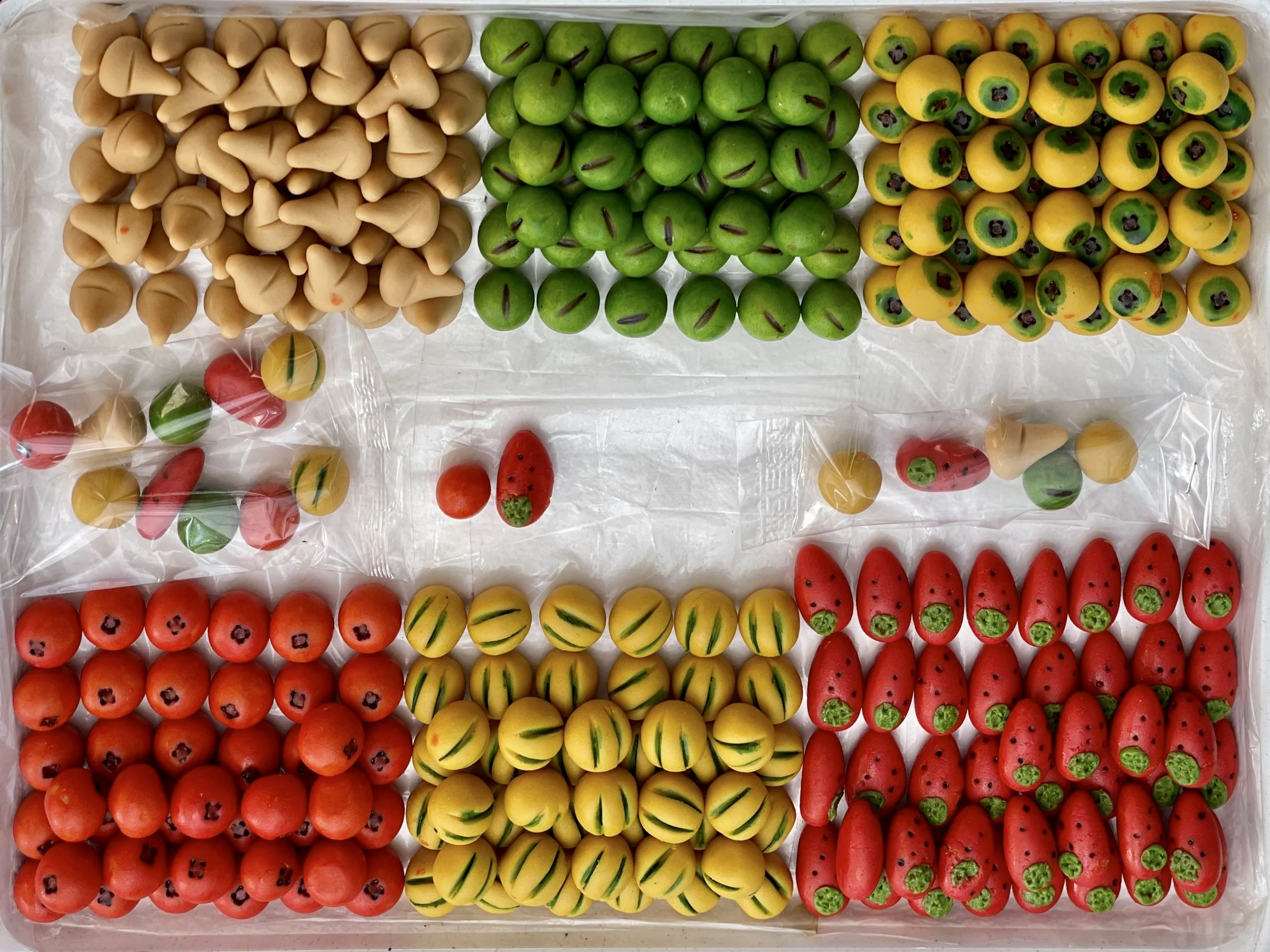
Marzipan fruit at el Bazar Sábado

These adorable tiny fruits are made of marzipan.

The next shop we entered was called Paskwarho. While Wally and I looked at a display of hand-painted dishware, we met Arturo, an expat and cofounder, who relocated from Chicago. I’m assuming that my Midwestern accent and Spanglish tipped him off. He kindly said to me that even after living in the country for many years he still doesn’t understand everything that’s said to him. 

We bought a papier-mâché skull rattle with an articulated jaw that was handmade by one of the women who works in the shop as well as a burnt orange and white casserole baking dish hand-painted in the capulineado style, a pointillist flower pattern named after the town where they’re made. 

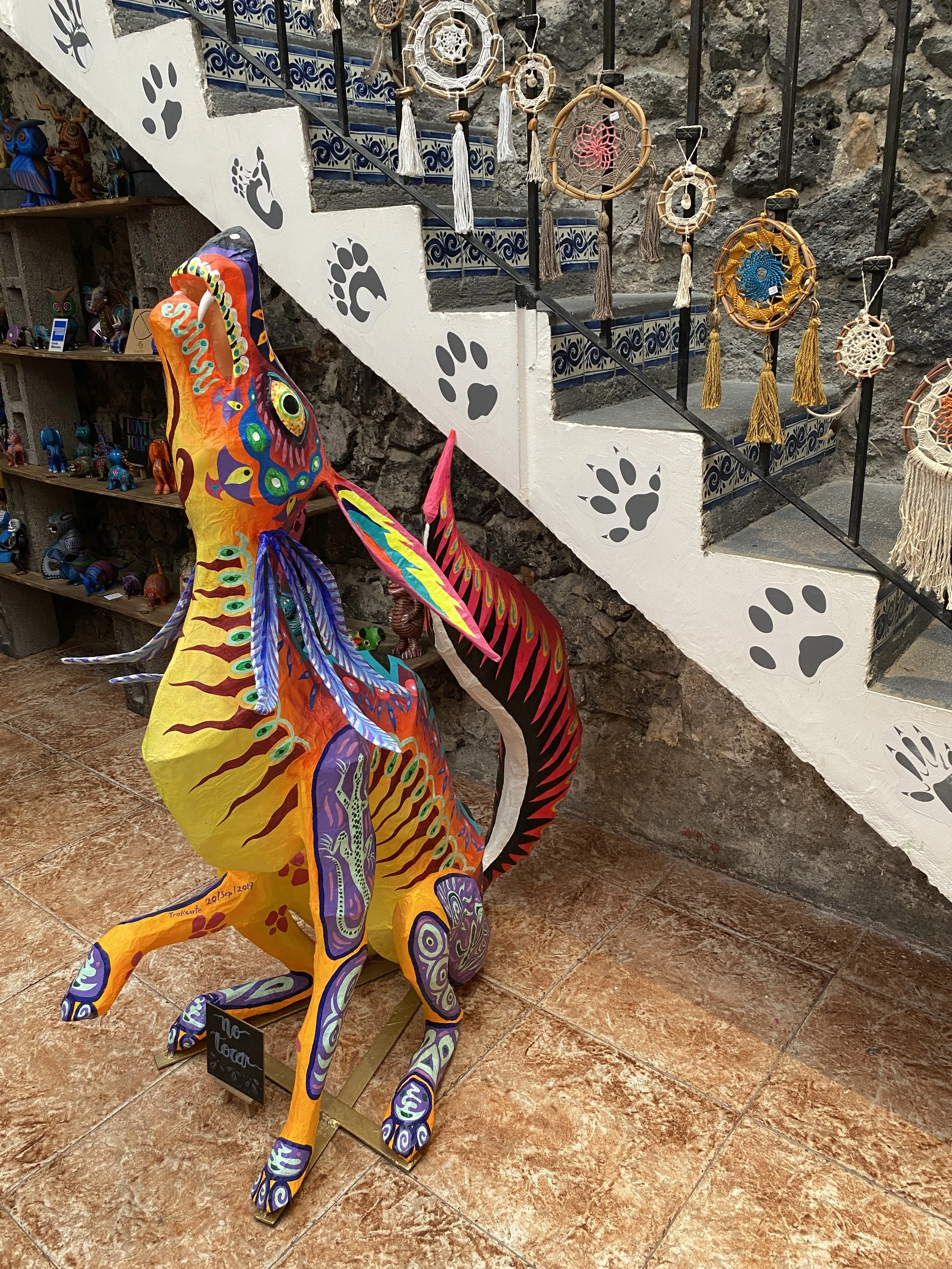
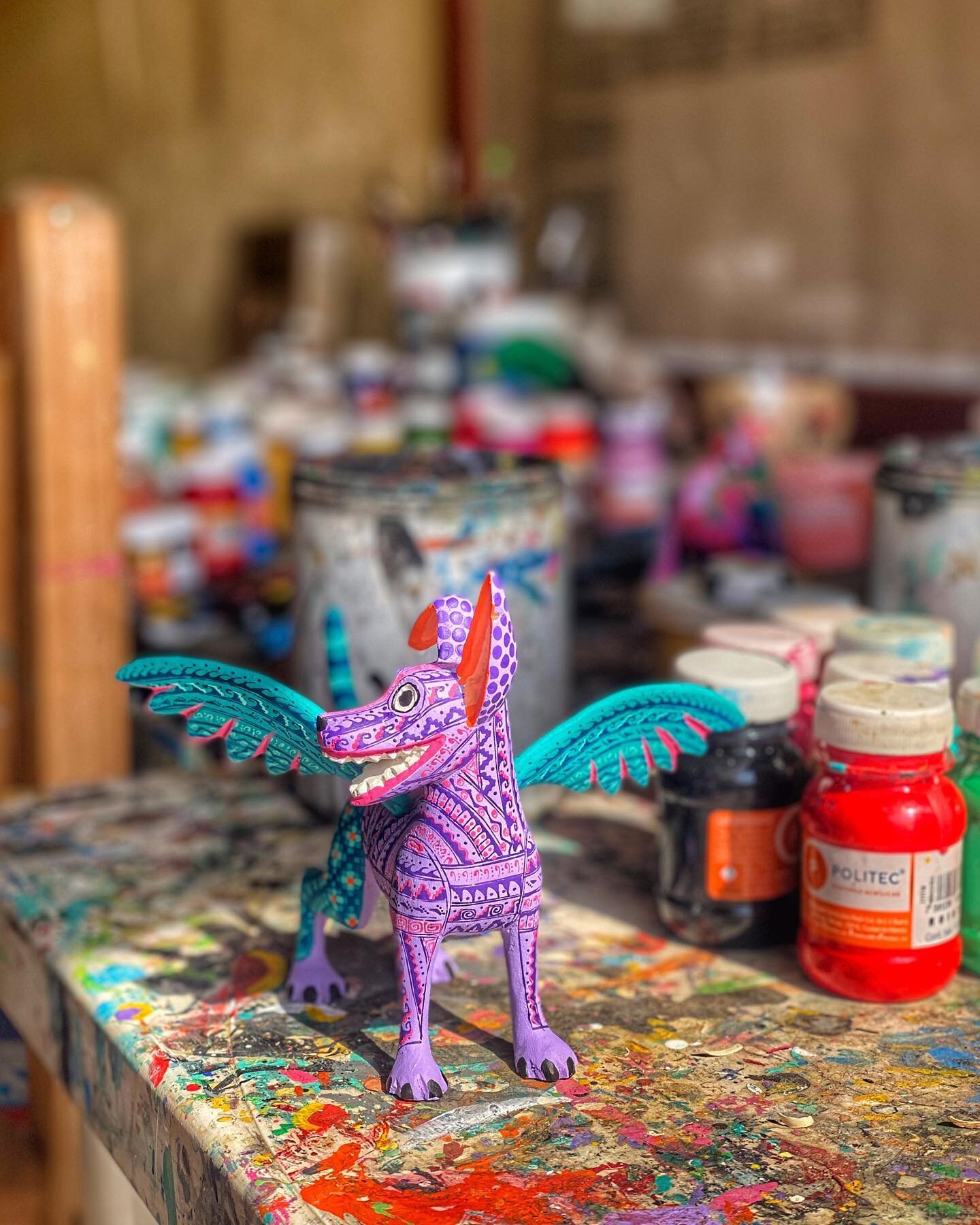
Colorful howling wolf alebrije by stairs

A large howling wolf alebrije — fantastical Mexican folk art creatures

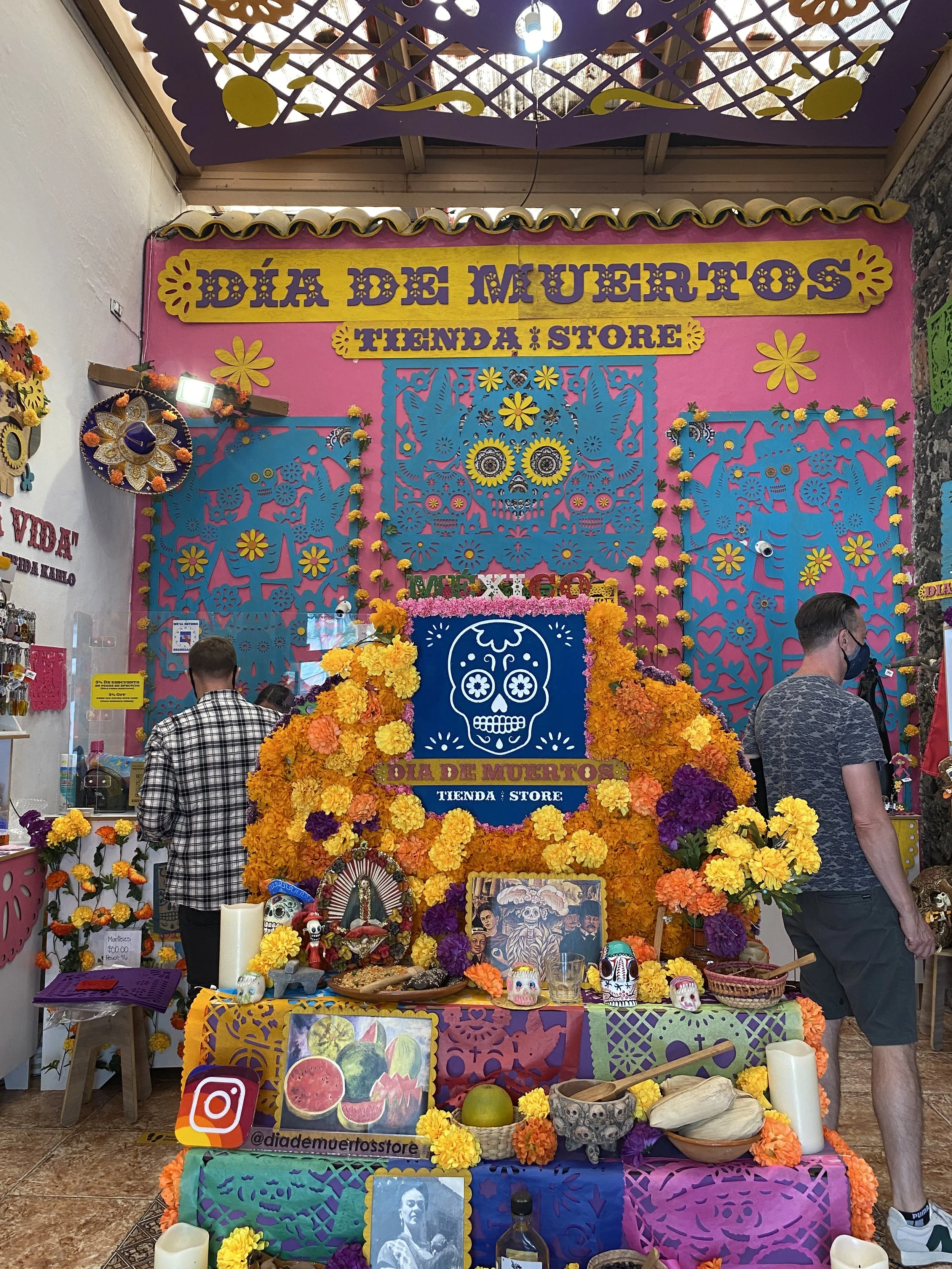
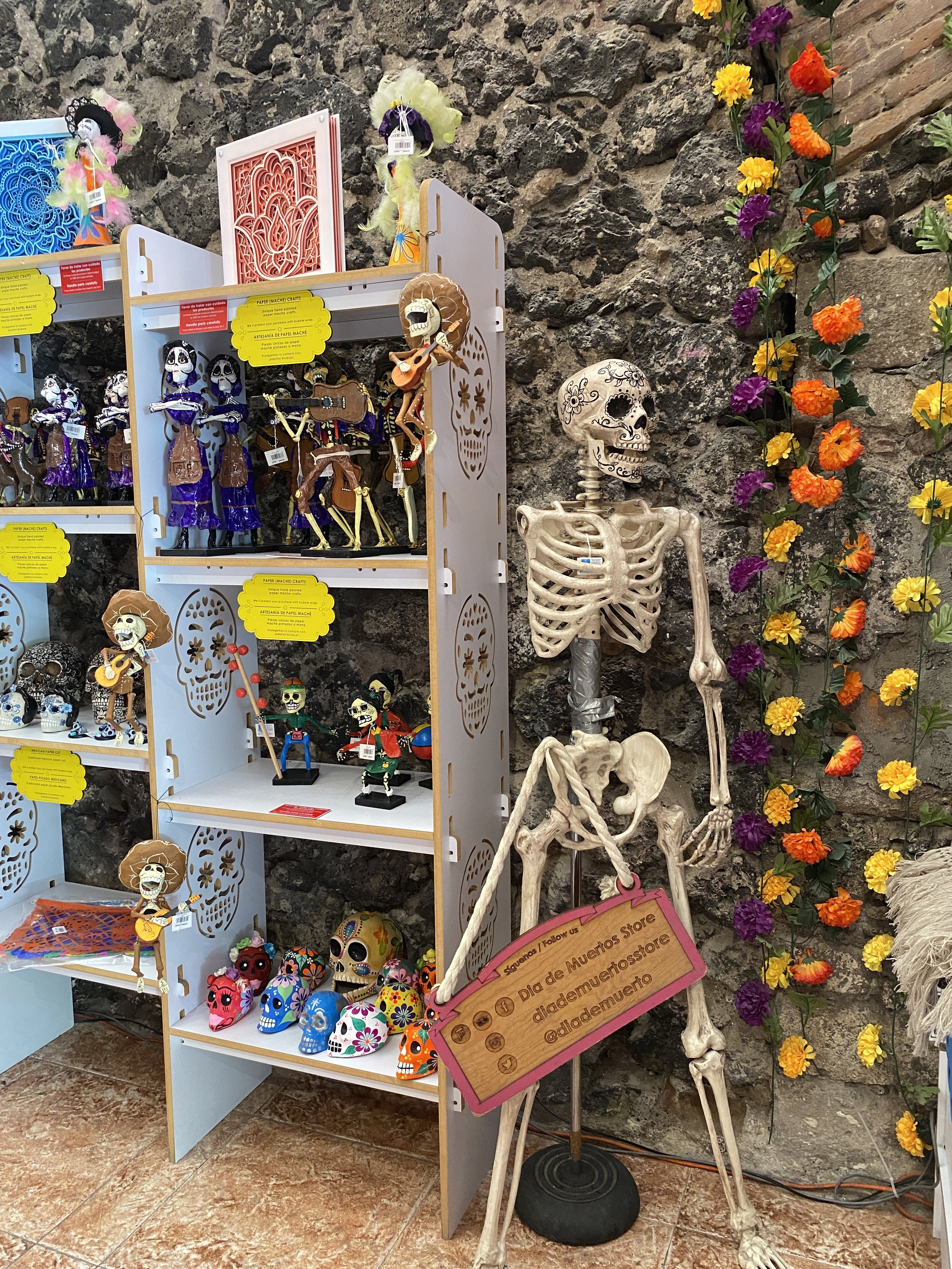
Día de Muertos tienda at the Bazar Sábado

A store devoted to Día de Muertos

Skeletons, skulls and catrinas for sale at the Bazar Sábado

Skeletons, skulls and marigolds

Artisans Galore

Outside are a multitude of tented stalls selling everything from handicrafts to jewelry to pottery and more. We purchased a couple of T-shirts and a change purse to keep our growing collection of coins.

The market can get crowded, but uttering a simple, apologetic, “Con permiso” goes a long way and will help you pass others politely. It’s like saying, “Excuse me” in English. 

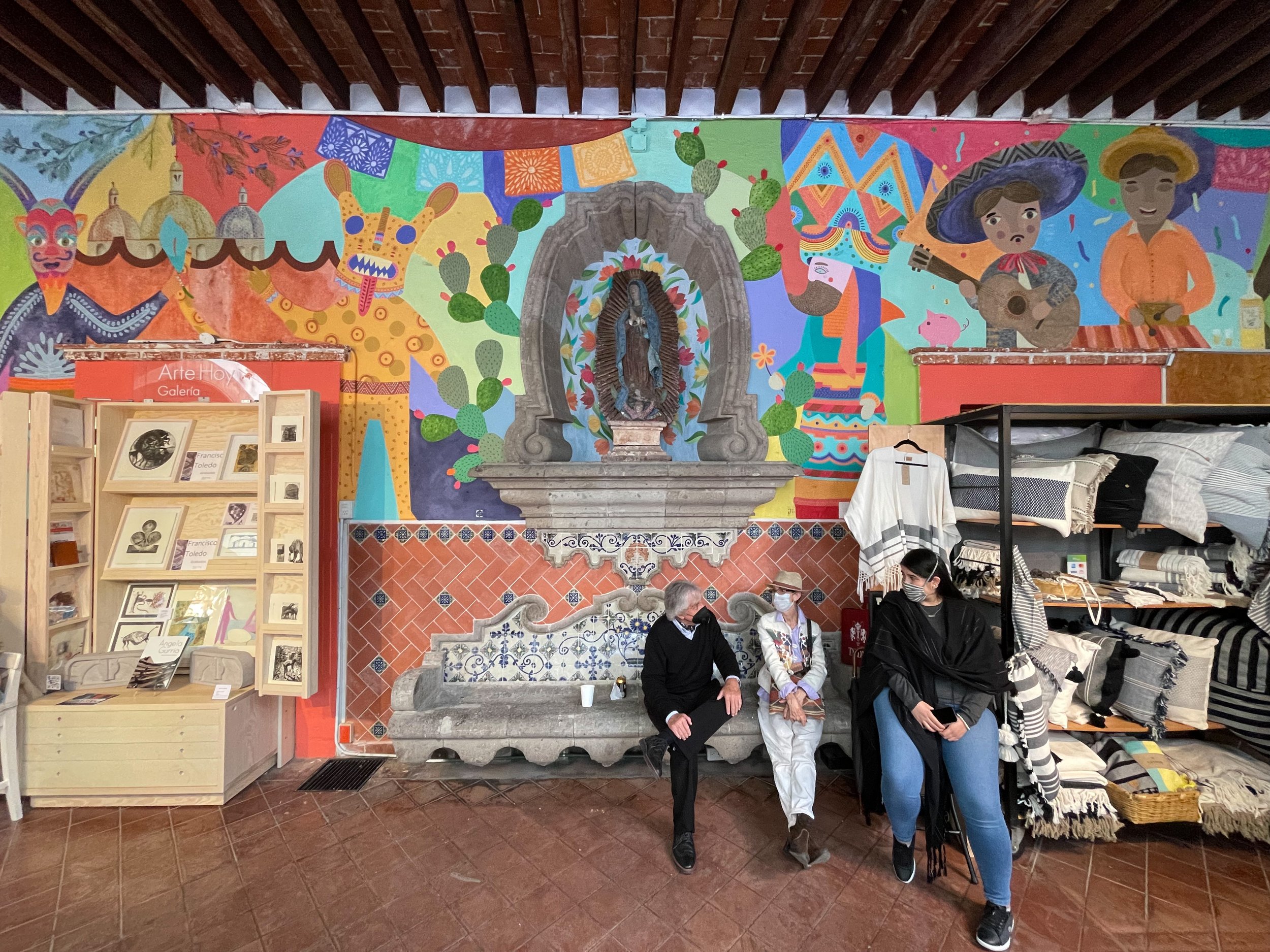
People sitting below mural at el Bazar Sábado

A delightful mural in the building that houses part of the Bazar Sábado

The Bazar Sábado was founded in 1960 as the first of its kind before relocating to its current home in 1965 and contains hundreds of artists and an open-air interior courtyard with a restaurant. After taking our temperature and offering us hand sanitizer, we were permitted to enter. 

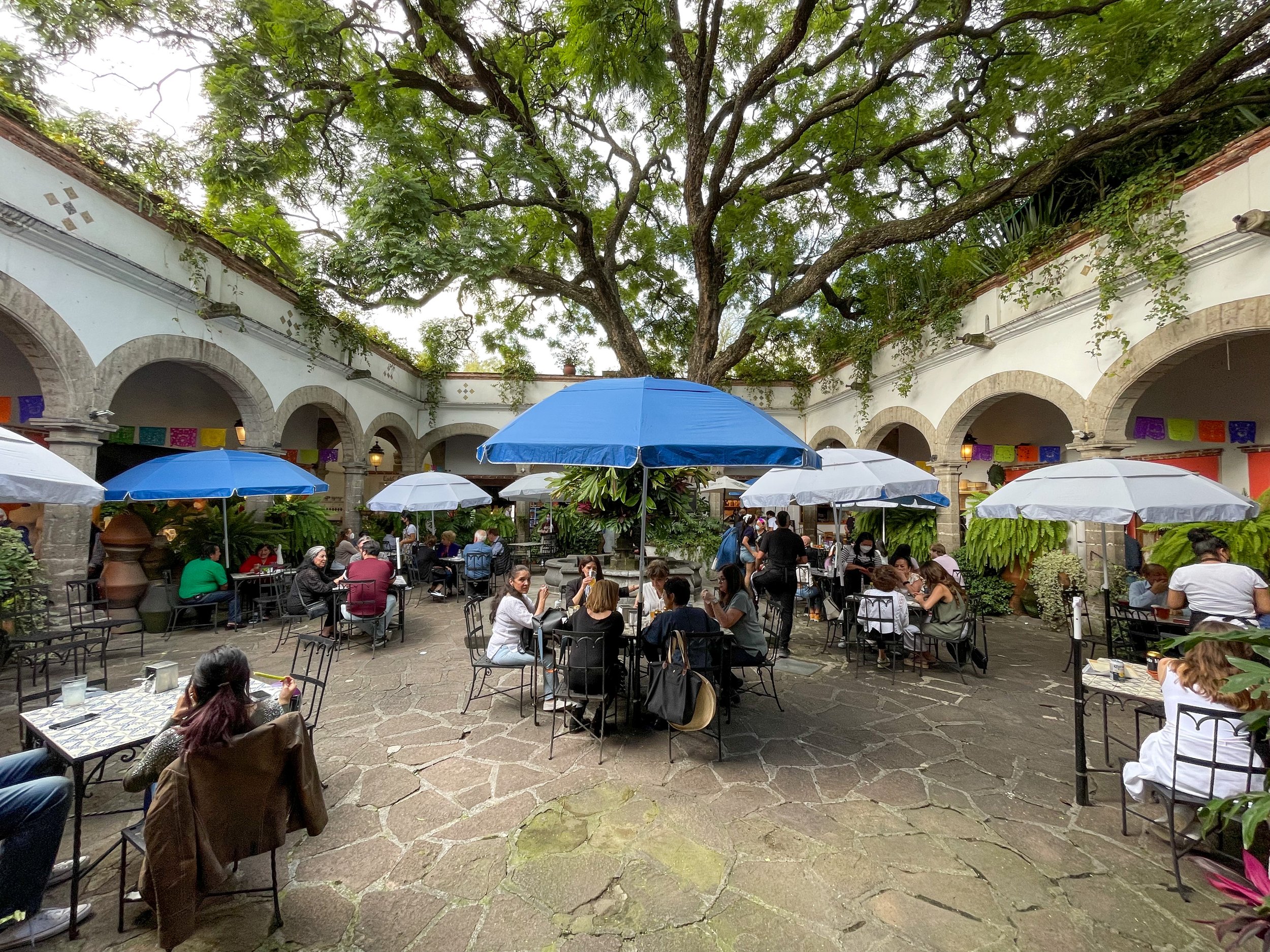
Courtyard restaurant with large tree at the Bazar Sábado

There’s a restaurant in the central courtyard, where women cook up meals on large griddles.

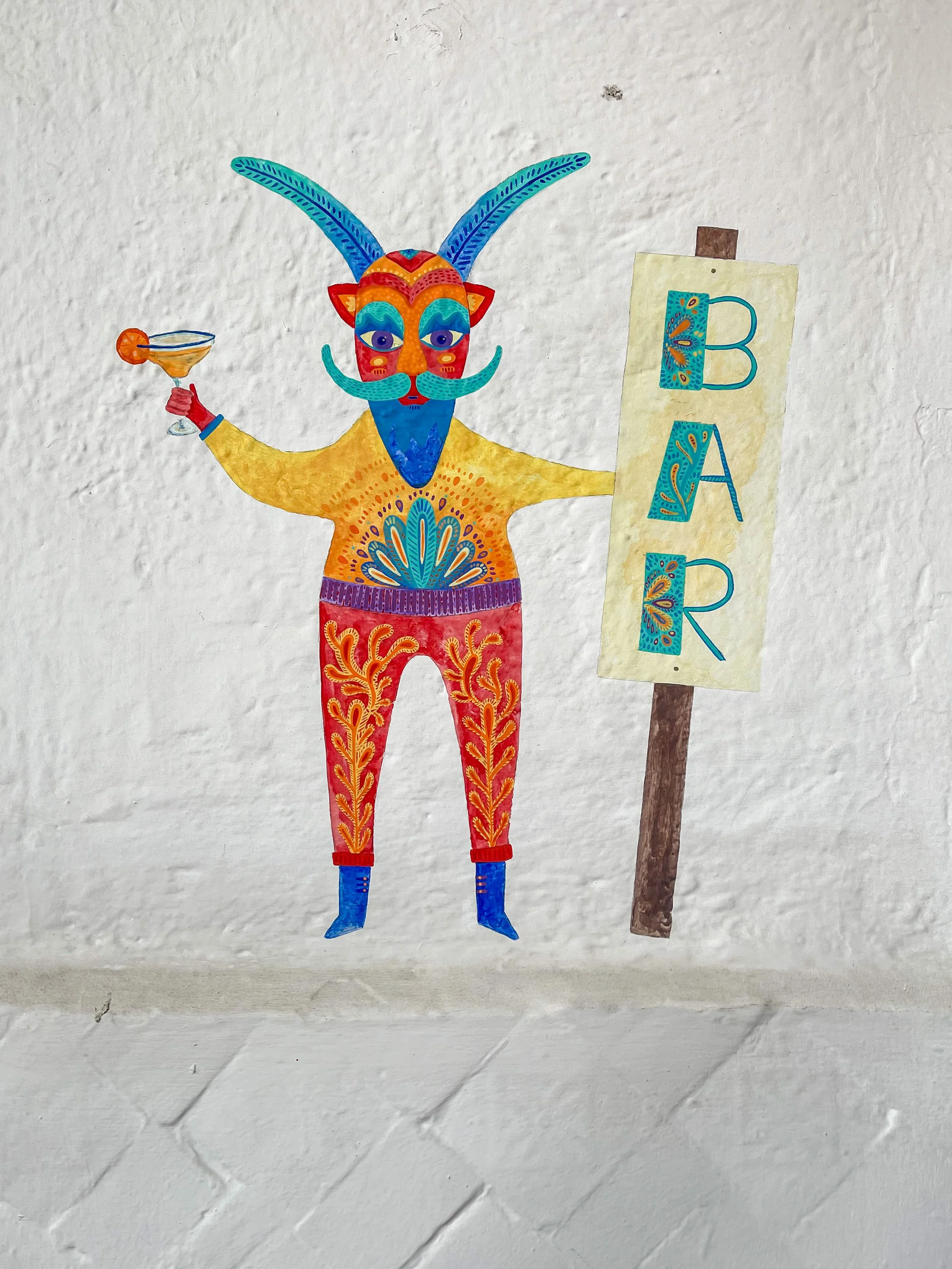
Sign that says "Bar" with monster drinking a margarita

Follow the sign.

Woman and man drinking at bar in the Bazar Sábado

And grab a drink at the small bar.

A devilishly cool sculpture hanging in one of the rooms adjoining the courtyard

We found a stand for Cervecería Monstruo de Agua, a Mexico City-based microbrewery offering a distinctive range of beers. They were one of my favorite discoveries on this visit. I had purchased a couple of bottles of Sugoi, a blonde ale brewed with agave, ginger and lemongrass at a small beer shop in La Condesa. I mean, who can resist a brand whose mascot is an axolotl, an amphibian with a long tail, six hornlike appendages and bulging eyes and whose name translates as “water monster” in Náhuatl? Not us! We ended up buying a small round glass with the creature embossed on it. 

Whimsical animal sculptures

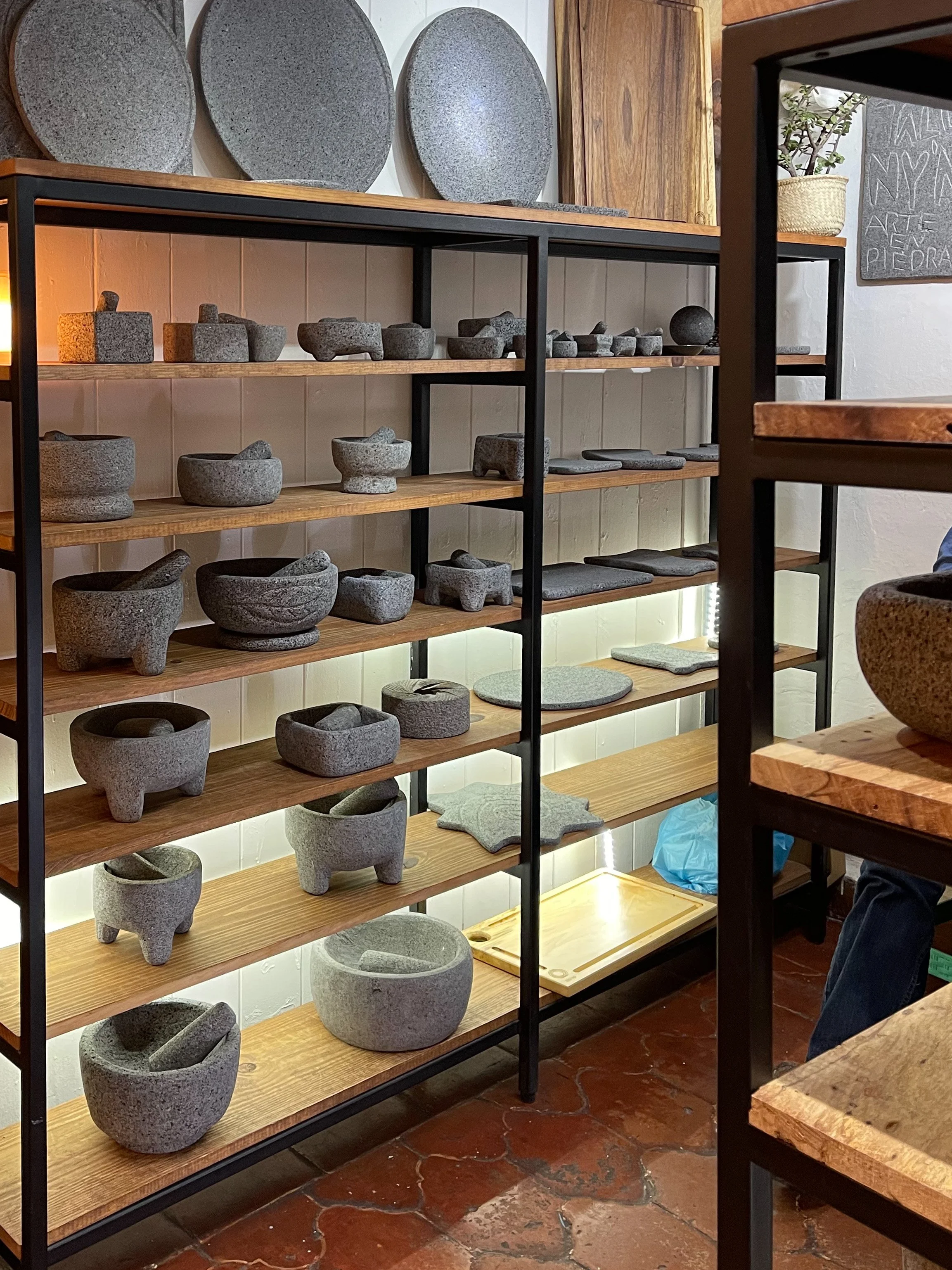
Volcanic rock pottery at the Bazar Sábado

Molcajetes made of volcanic stone are a must for home-made guacamole.

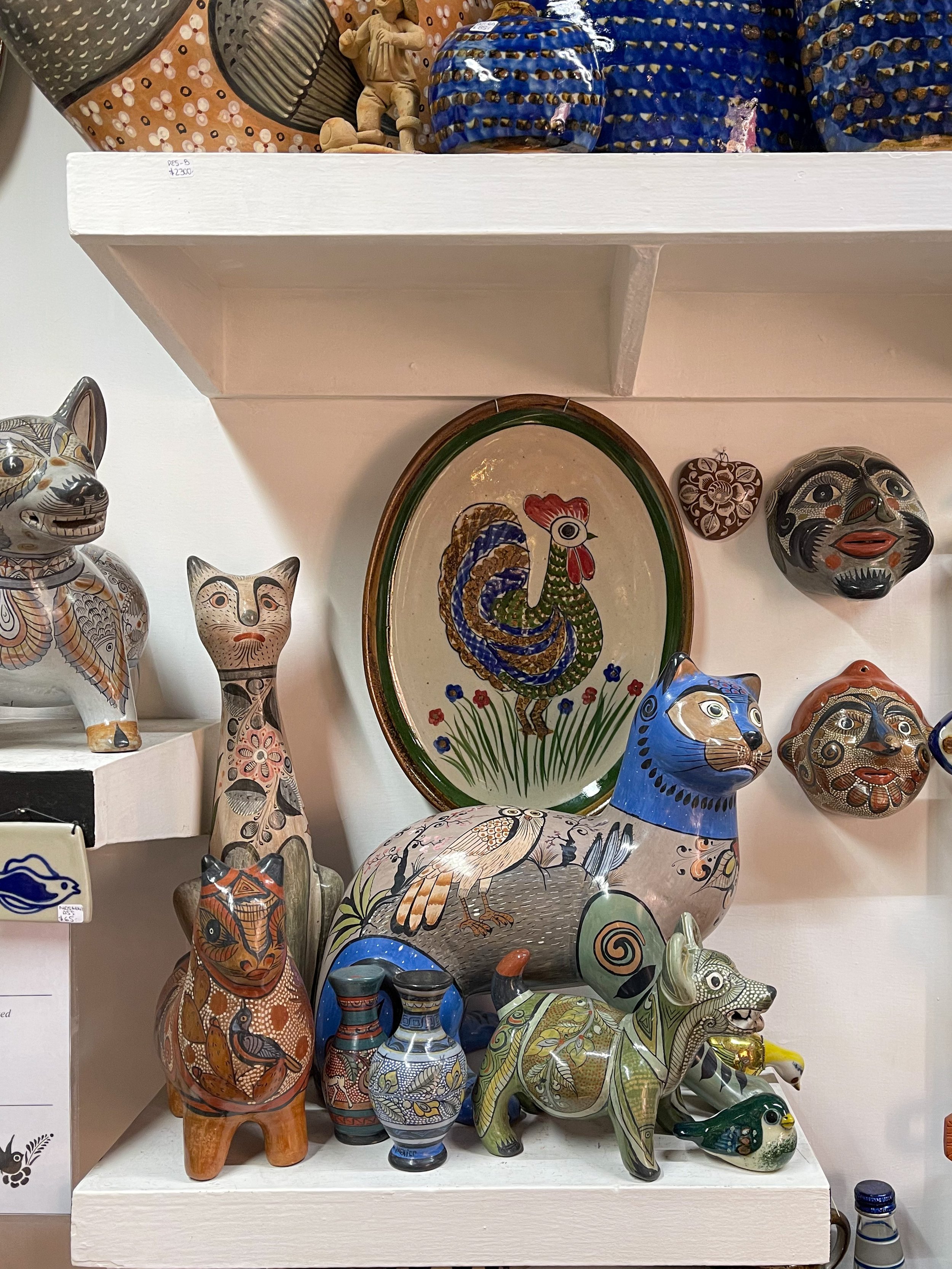
We were delighted to discover Cerámica San Germán, a shop filled with traditional hand-painted ceramics and stoneware from the town of Tonalá. We purchased several bowls and a plate depicting the nahual, a jaguar-like cat with a smiling face. 

Also of note were the wares of Silva Dufour. I loved the colors and satin-finish glazes of their ceramic objects, which included scarab beetles and contemporary interpretations of traditional helmet masks. 

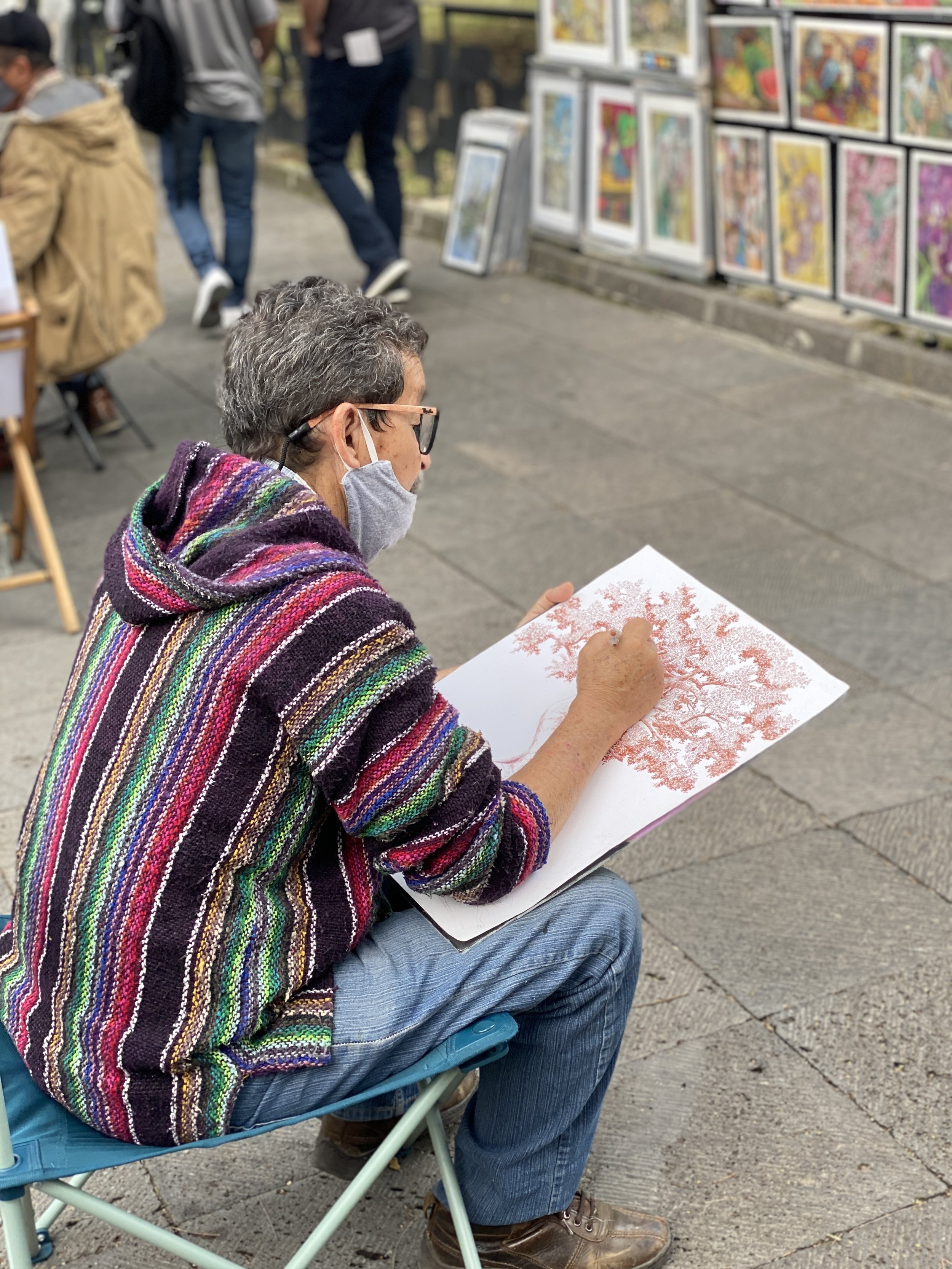
Artist working on a drawing outside at the Bazar Sábado

One of the artists at work

When we exited the bazaar, we brought the unfinished open bottles of Monstruo de Agua with us. An elderly local artist in the park, which is filled with painters selling their artworks, told us that it’s prohibited to drink alcohol outside. I’m not sure the police would have noticed, but we returned to the building to finish our beers. Better to err on the side of caution than to risk violating the law in another country. 

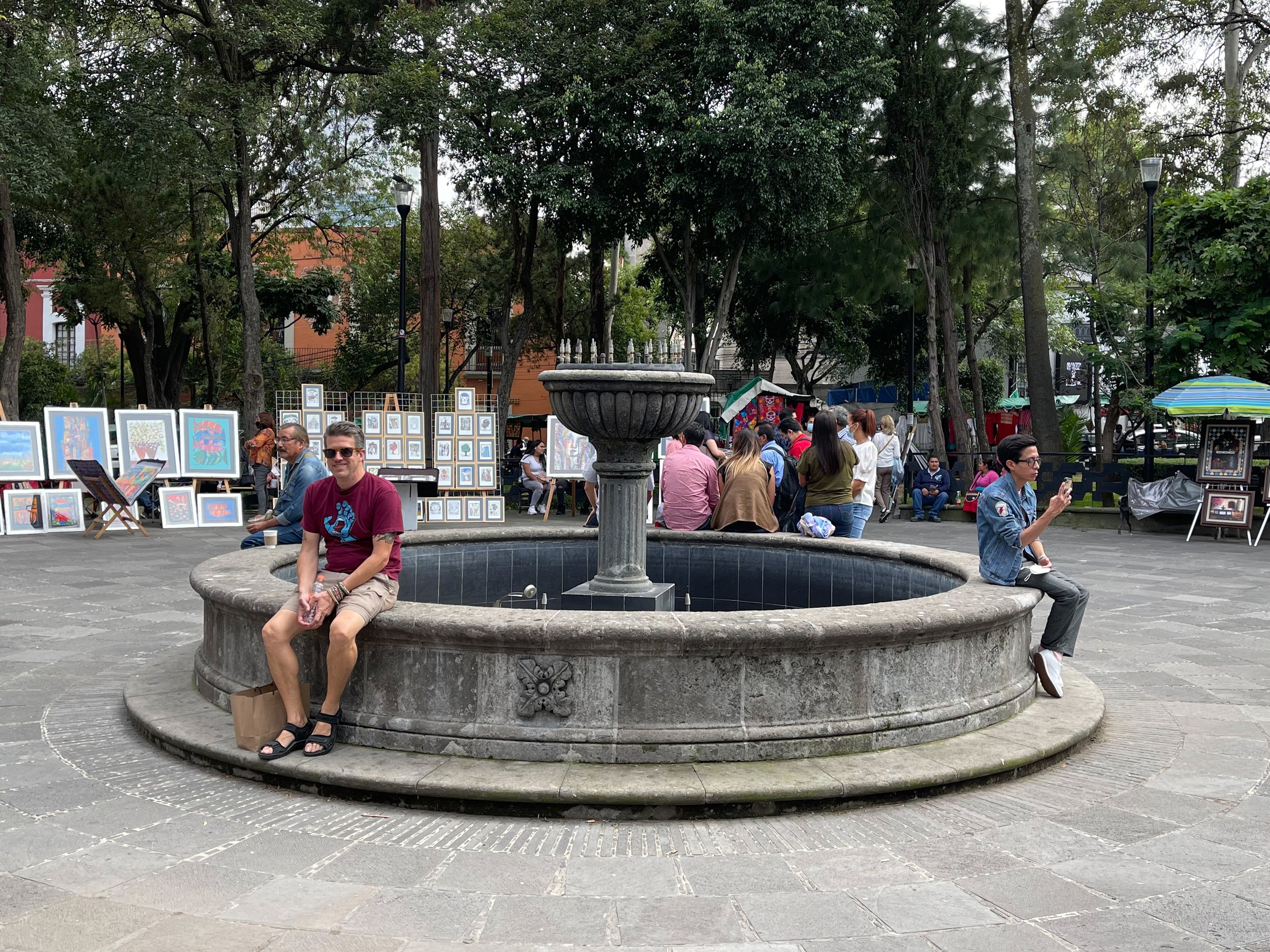
Men sitting on fountain in plaza of el Bazar Sábado

The plaza with this fountain is surrounded by artists selling paintings.

Luchadore masks for sale at Bazar Sábado

Which luchador mask would you choose?

Wally purchased a few desiccated Roses of Jericho (aka resurrection plants) from a street vendor as gifts for his coworkers, and we wandered down the hill into Happening, a store and gallery that carried cool clothes and objects from local artists and designers. While there I saw La Escalera, a bold graphic print by Boston-born, Mexico City-based artist Sophie Greenspan. Wally remarked that it reminded him of the modern architecture of Luis Barragán, which we had experienced earlier in the day on a tour with The Traveling Beetle. 

The impressive tiled cupolas of Nuestra Señora del Carmen are visible from the end of the thoroughfare — just a stone’s throw from the bustling market area. 

We’ll definitely return to San Ángel on our next trip to CDMX (we’re utterly smitten), especially for the basement crypt at the Templo y Museo del Carmen to see the mummified bodies of wealthy donors to the Carmelite order. And for a chance to view the embalmed severed hand of former Mexican President Álvaro Obregón in the basement of the WWI monument to him. Who knew such a charming neighborhood held such gruesome secrets? –Duke


El Bazar Sábado

Plaza San Jacinto 11
San Ángel
Álvaro Obregón
01000 Ciudad de México
CDMX
Mexico

Nuestra Señora del Carmen in San Ángel, Mexico City

A tour of this Colonial Baroque Catholic church built for the Discalced Carmelites in one of CDMX’s most charming neighborhoods.

Man in front of Nuestra Señora del Carmen in San Ángel, Mexico City

Wally’s a bit obsessed with the domes of Nuestra Señora del Carmen in San Ángel in Mexico City.

Those domes! Those wondrous brightly tiled domes! I didn’t want to stop looking at them. There was something captivating about their faded glory. 

We spotted them in our Uber en route to el Bazaar Sábado, the Saturday Market in the charming CDMX colonia (neighborhood) of San Ángel. 

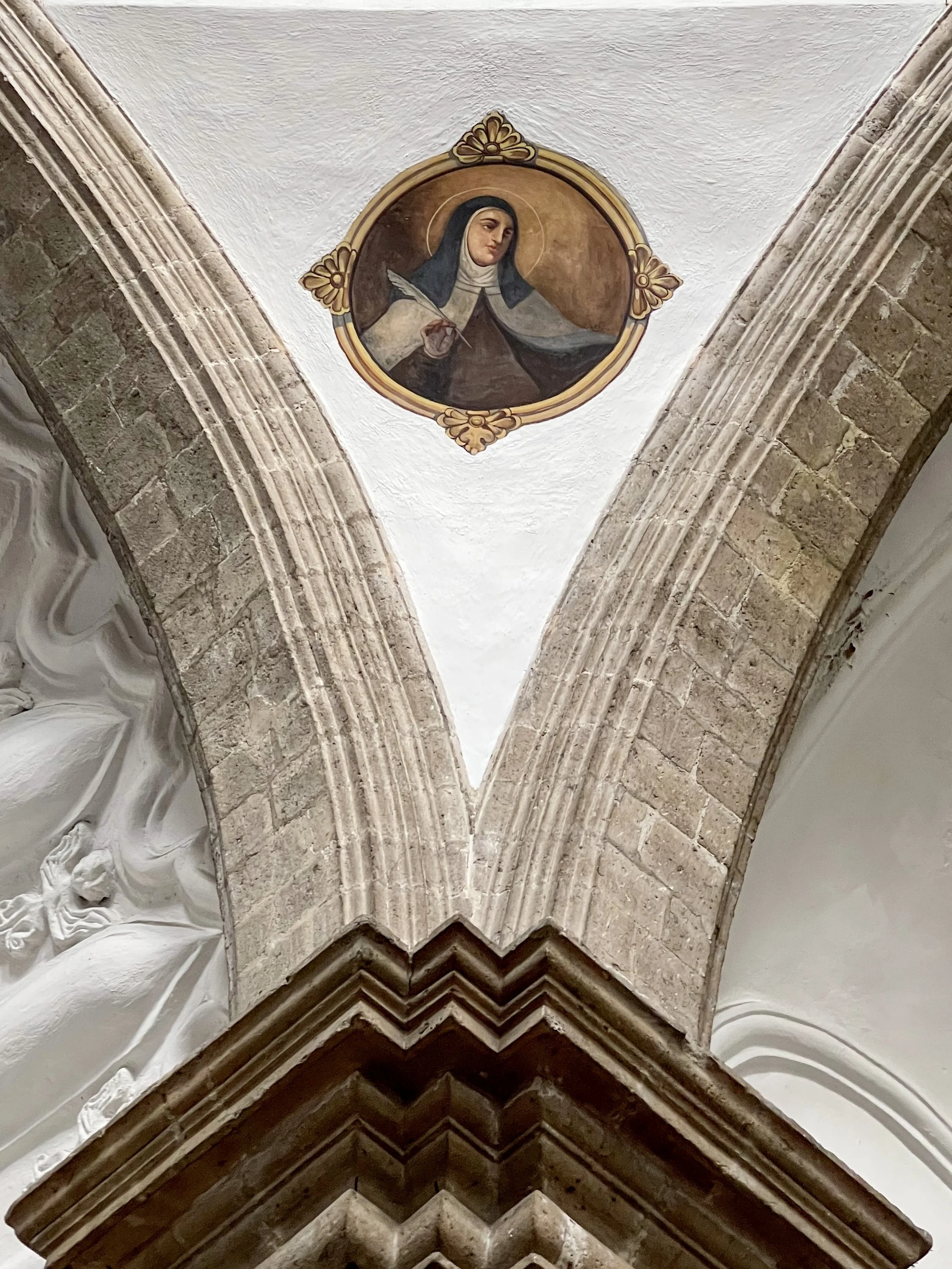
Nuestra Señora del Carmen was built for the strangely named order of Discalced Carmelites (known colloquially as Barefoot Carmelites for their tendency to forgo footwear). 
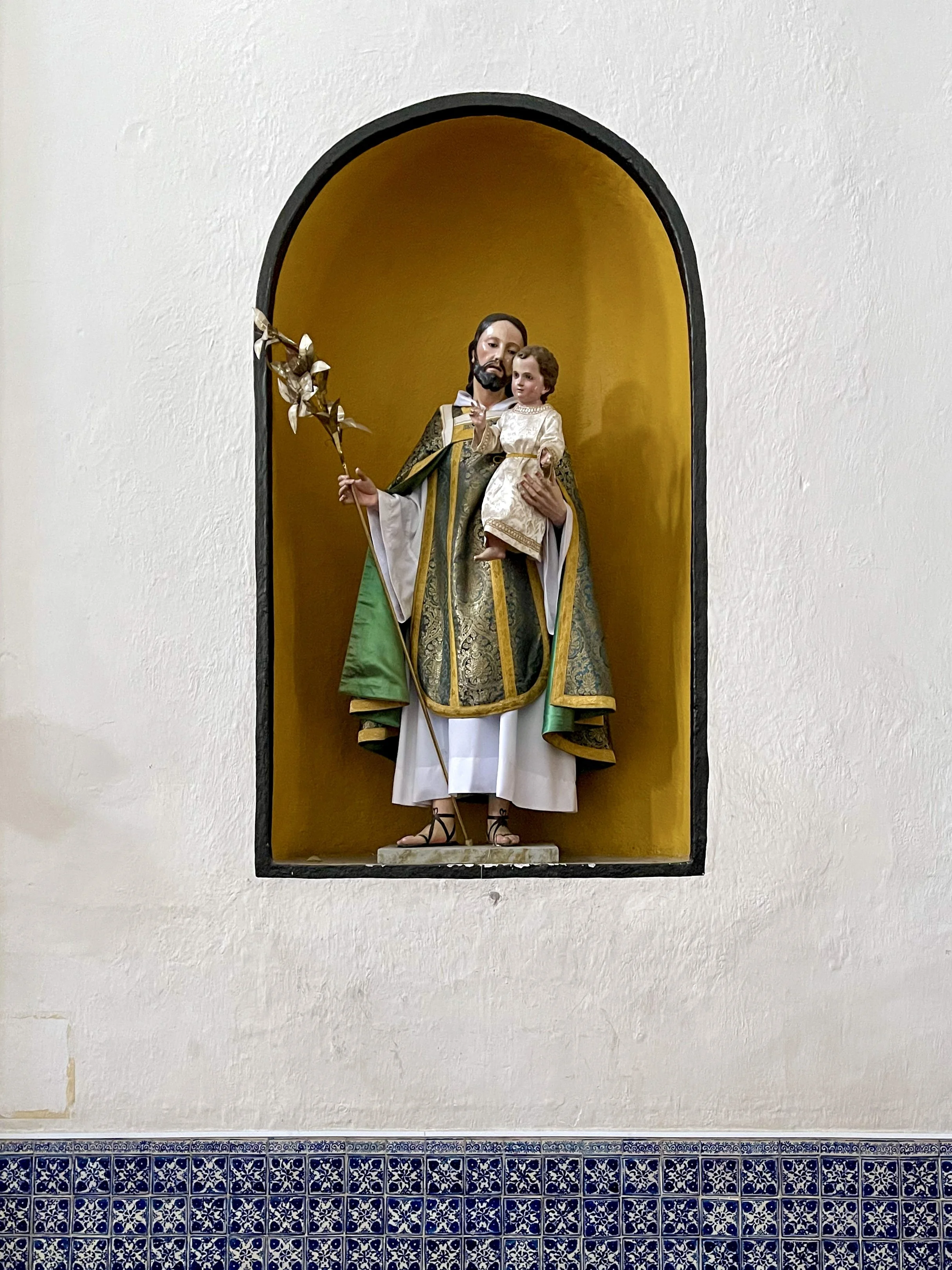
Saint in niche at Nuestra Señora del Carmen in San Ángel, Mexico City
Saint with child in niche at Nuestra Señora del Carmen in San Ángel, Mexico City
Interior of Nuestra Señora del Carmen in San Ángel, Mexico City

The church was founded for the order of Discalced Carmelites (aka the Barefoot Carmelites).

So, after we finished shopping at the market (and being told we couldn’t drink our beers while walking through the square outside), Duke and I knew we had to explore the church at the base of the hill. And thankfully, unlike in the States, we’ve found churches in Mexico to be unlocked any time we’ve wanted to go in. 

Exterior of Nuestra Señora del Carmen in San Ángel, Mexico City

The church is designed in the Baroque Colonial style — with a plain façade and an ornate gilded altarpiece.

The Discalced Carmelites: Barefoot but Not Pregnant 

Design and construction of Nuestra Señora del Carmen was overseen by Fray Andrés de San Miguel between 1615 and 1626 for the strangely named order of Discalced Carmelites (known colloquially as Barefoot Carmelites for their tendency to forgo footwear). The order was established in 1562 by Saint Teresa of Avila, an epileptic Roman Catholic nun. 

The Barefoot Carmelite nuns stayed in their cloisters, “above all to lead a life of unceasing prayer in silence and solitude,” according to their official website

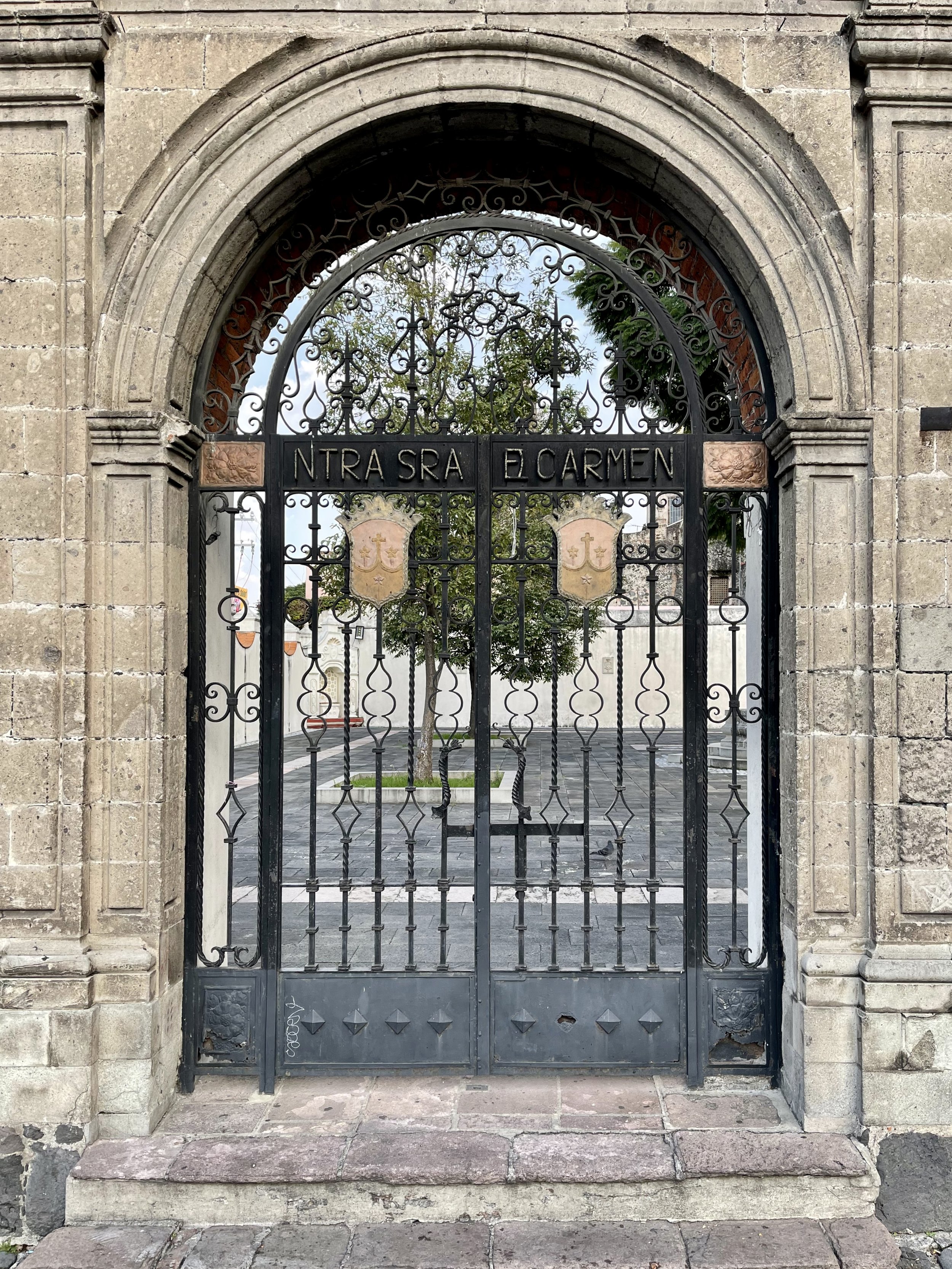
Gate of Nuestra Señora del Carmen in San Ángel, Mexico City

There’s more to the Carmen Complex than the church — including mummies!

El Carmen Complex

We weren’t able to wander the entire grounds, which includes a former convent and monastery that’s now a museum (complete with mummies!). 

The property extended quite far, and the scenic orchards are part of what attracted the aristocracy to make the neighborhood its home — giving birth to the colonia of San Ángel. 

The complex was taken over by the government after the War of Reform, which was fought between the Liberals and Conservatives from 1857 and 1860. The lefties won and subsequently greatly diminished the power of the Catholic Church, stripping it of most of its property. The local school was shut down and was used by the town council. Parts of the Carmelite grounds became a prison and barracks. 

The church, also known as the Templo del Carmen de San Ángel, is in the Colonial Baroque style — somehow austere in parts, such as the façade, and yet over-the-top ornate in others (that altarpiece!). 

Altarpiece at Nuestra Señora del Carmen in San Ángel, Mexico City

The Baroque movement was all about drama — rounded edges and shimmering gold create a dizzying effect.

We spent some time exploring the church and all of its offshoot chapels, trying to be respectful of those praying within. Heavens knows we’ll be back to admire those beautiful domes — and to see the creepy mummies, of course. –Wally

Cherub at altar in Nuestra Señora del Carmen in San Ángel, Mexico City
Cherub in Nuestra Señora del Carmen in San Ángel, Mexico City
Interior of Nuestra Señora del Carmen in San Ángel, Mexico City
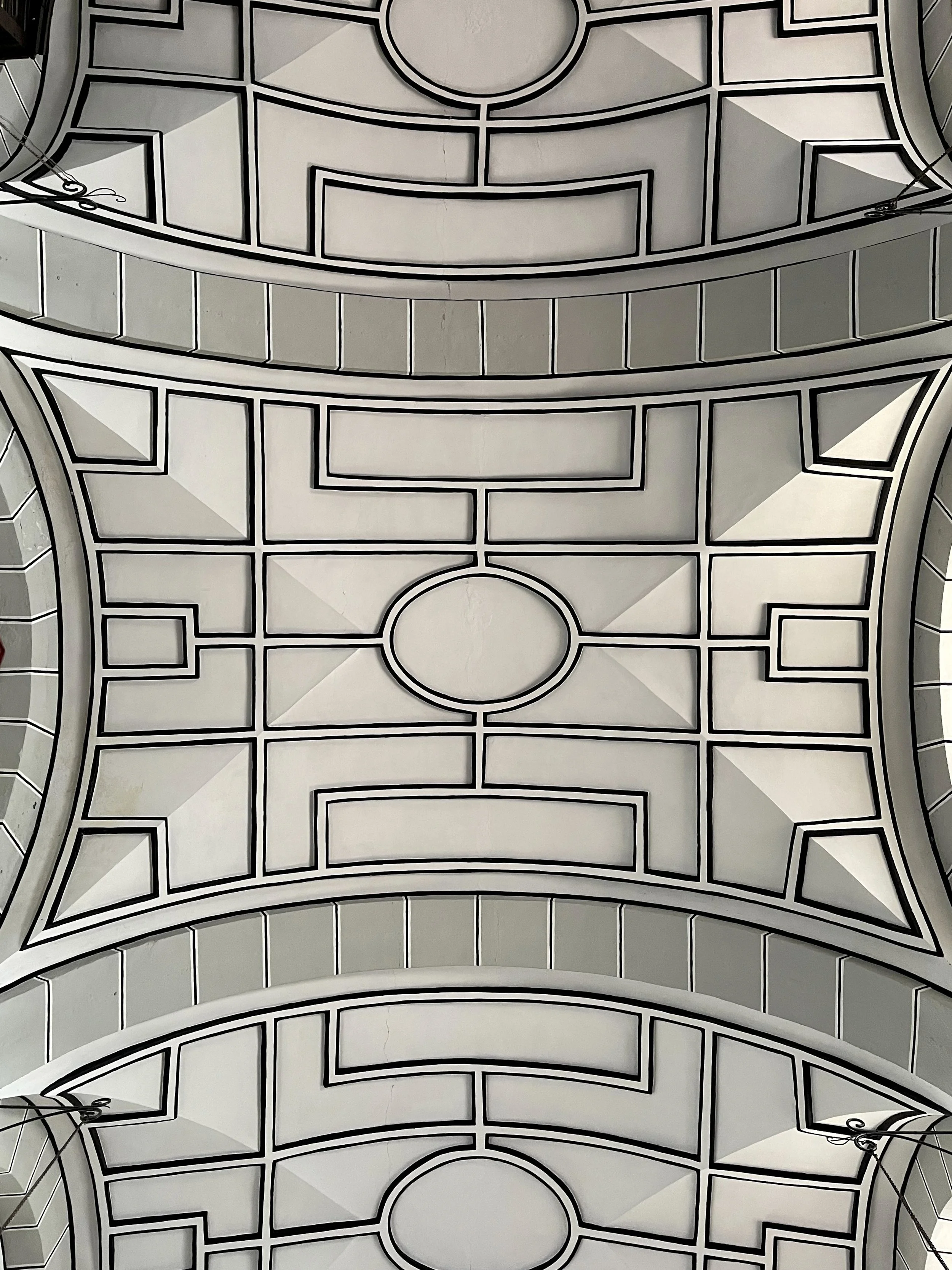
Ceiling at Nuestra Señora del Carmen in San Ángel, Mexico City
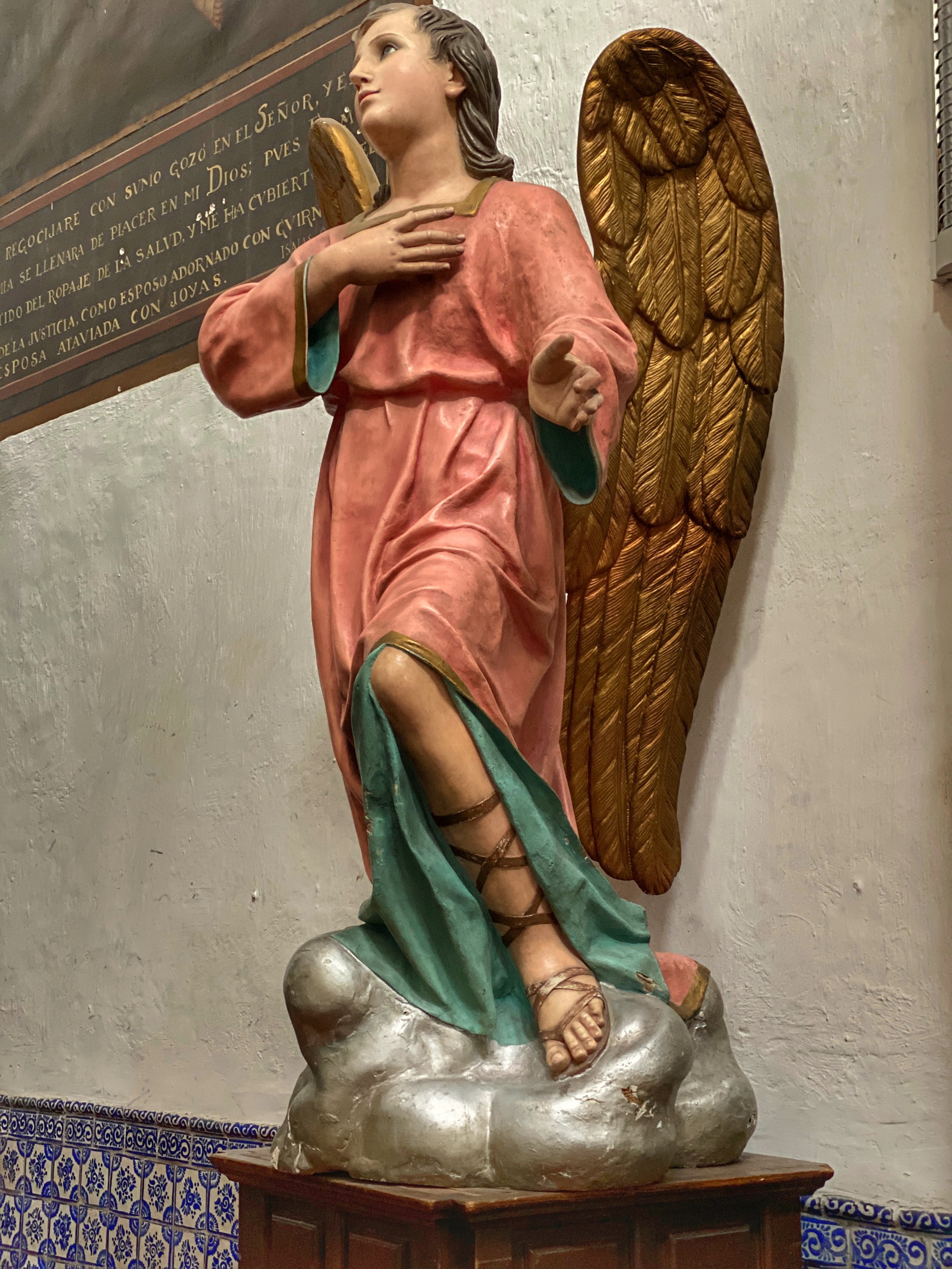
Angel statue at Nuestra Señora del Carmen in San Ángel, Mexico City
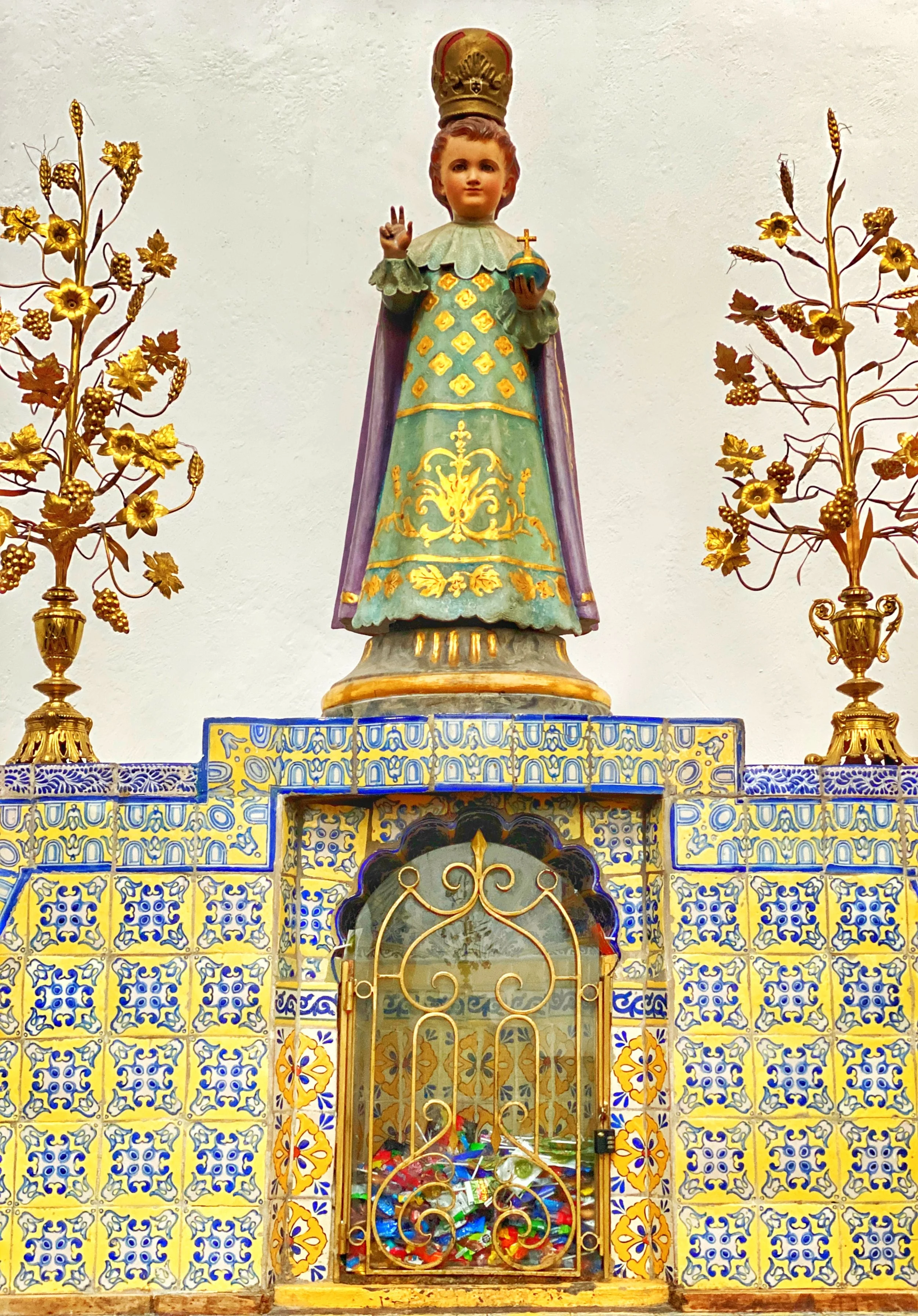
Infant of Prague
Statue of Jesus carrying the cross at Nuestra Señora del Carmen in San Ángel, Mexico City
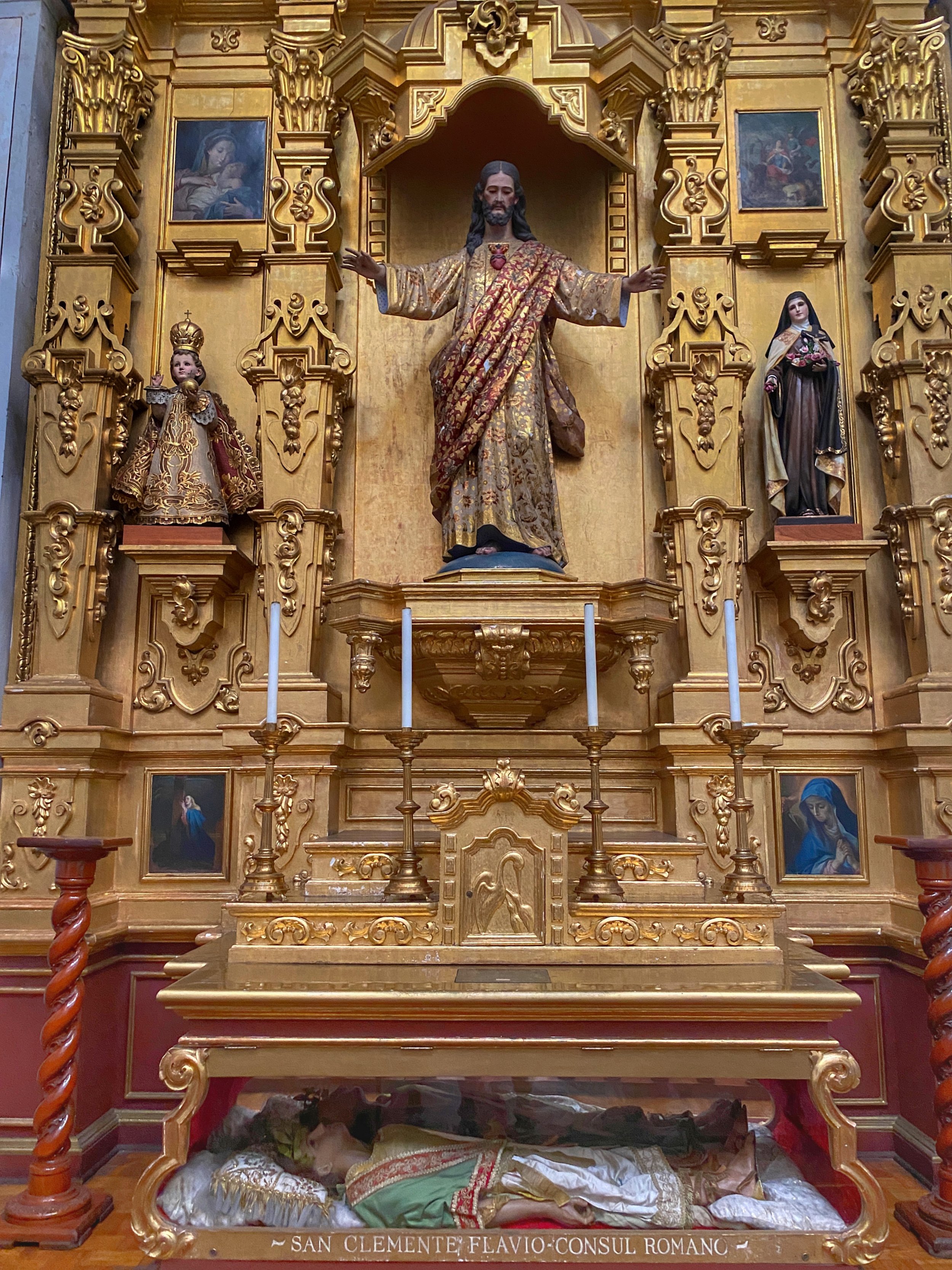
Chapel with San Clemente Flavio in Nuestra Señora del Carmen in San Ángel, Mexico City
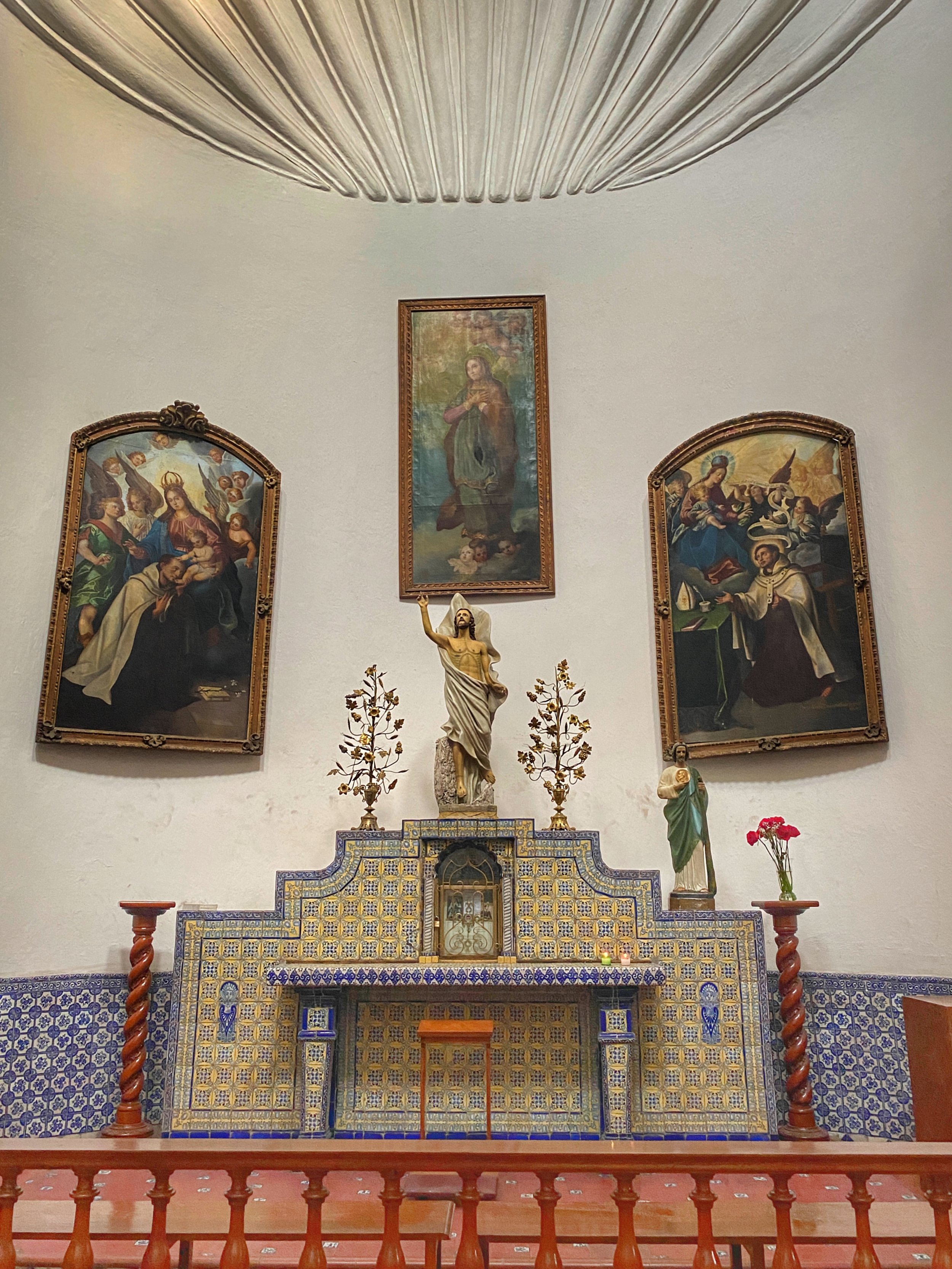
Side chapel at Nuestra Señora del Carmen in San Ángel, Mexico City
Painting of saint in Nuestra Señora del Carmen in San Ángel, Mexico City
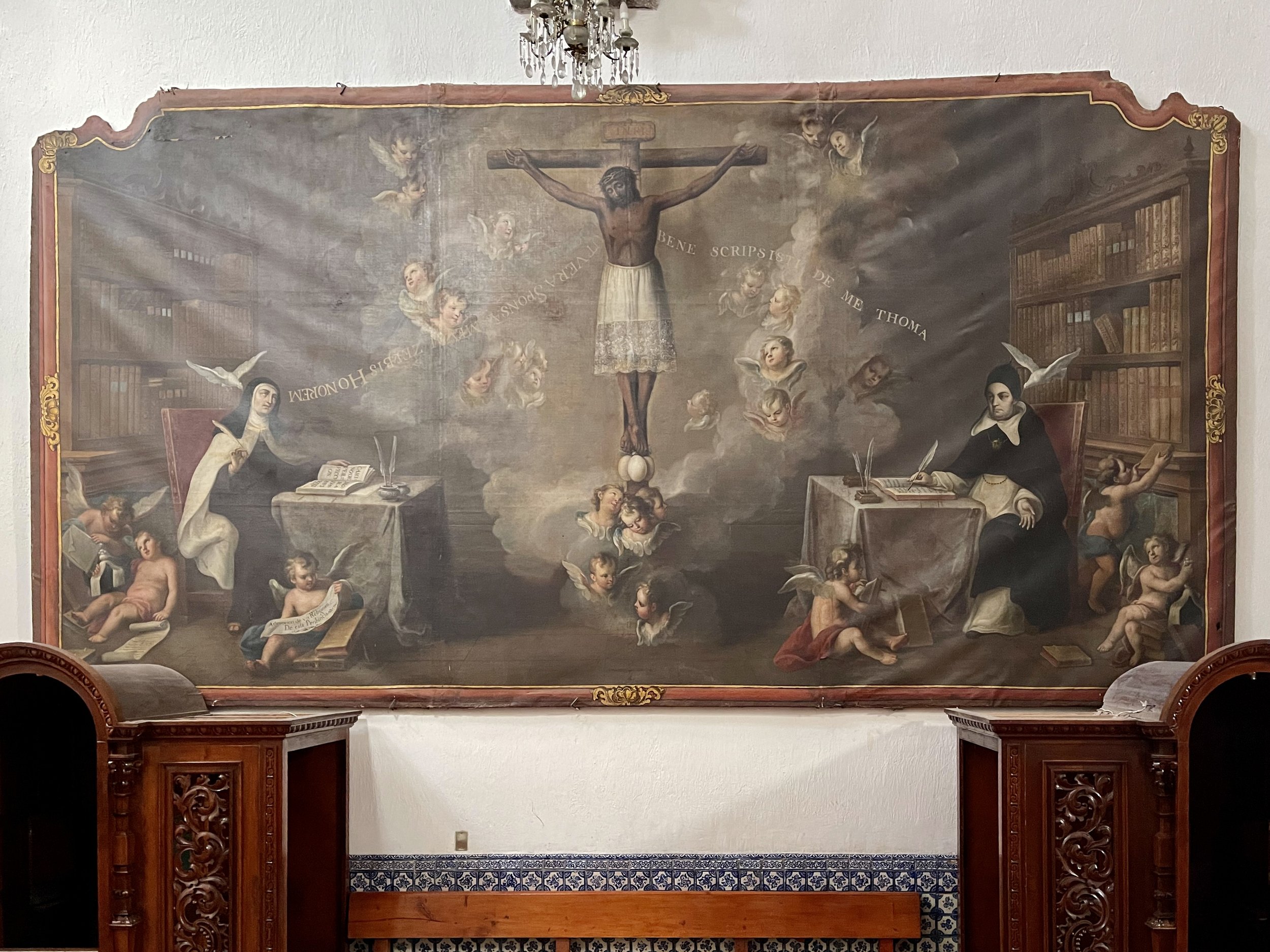
Painting of Christ on the cross in Nuestra Señora del Carmen in San Ángel, Mexico City
Side chapel at Nuestra Señora del Carmen in San Ángel, Mexico City
Crucifix and pews in Nuestra Señora del Carmen in San Ángel, Mexico City
Exterior archway at Nuestra Señora del Carmen in San Ángel, Mexico City
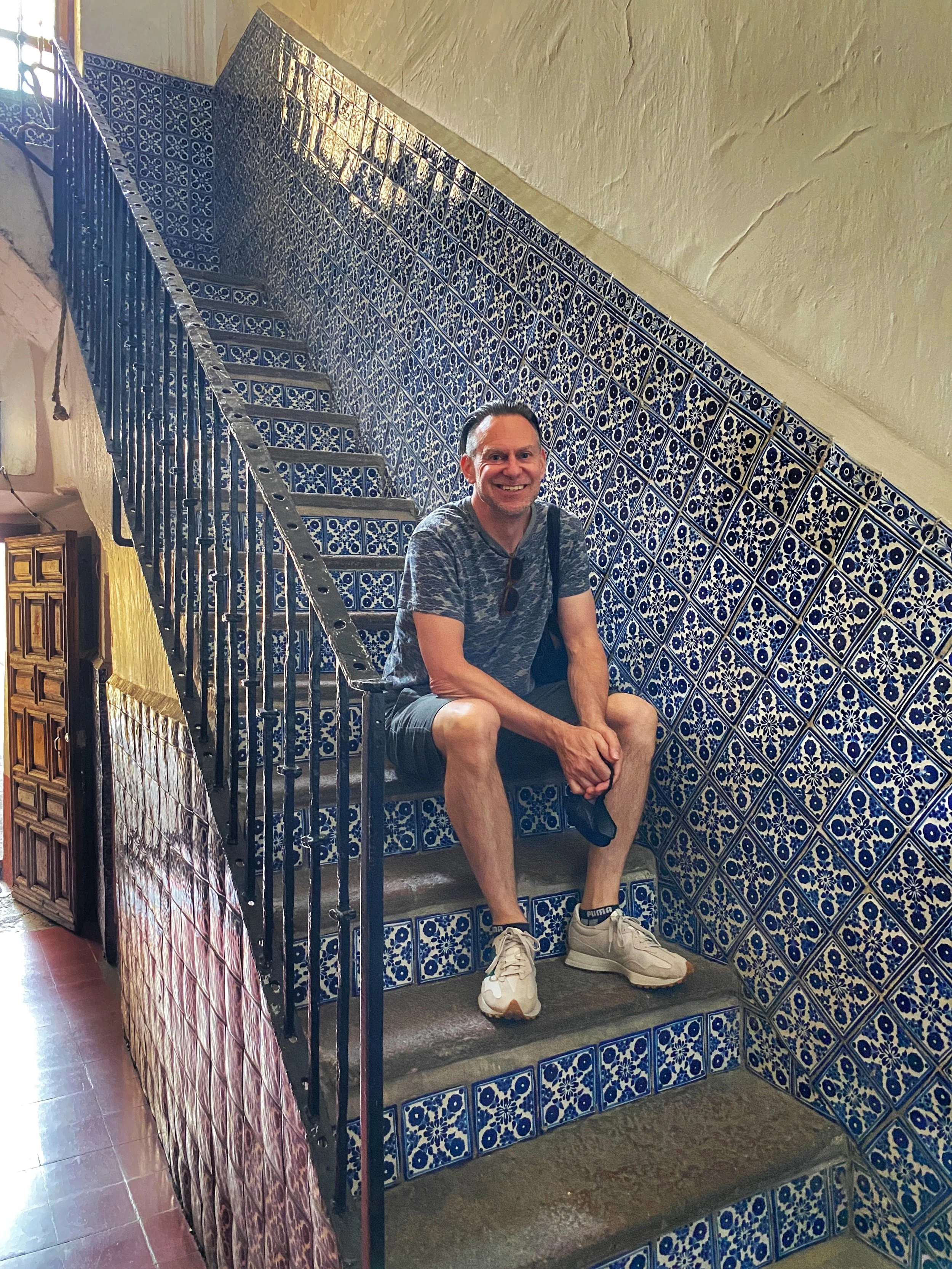
Man on tiled staircase at el Carmen Complex in CDMX

Nuestra Señora del Carmen (Templo del Carmen de San Ángel)

Avenida Revolución s/n
San Ángel
Álvaro Obregón
01000 Ciudad de México
CDMX
México