traditions

Sacred Sips: Unusual Drinking Rituals Around the World

Travel the globe one drink at a time — from sake ceremonies in Japan to vodka toasts in Russia — and explore the sacred drinking rituals that reveal the heart of a culture.
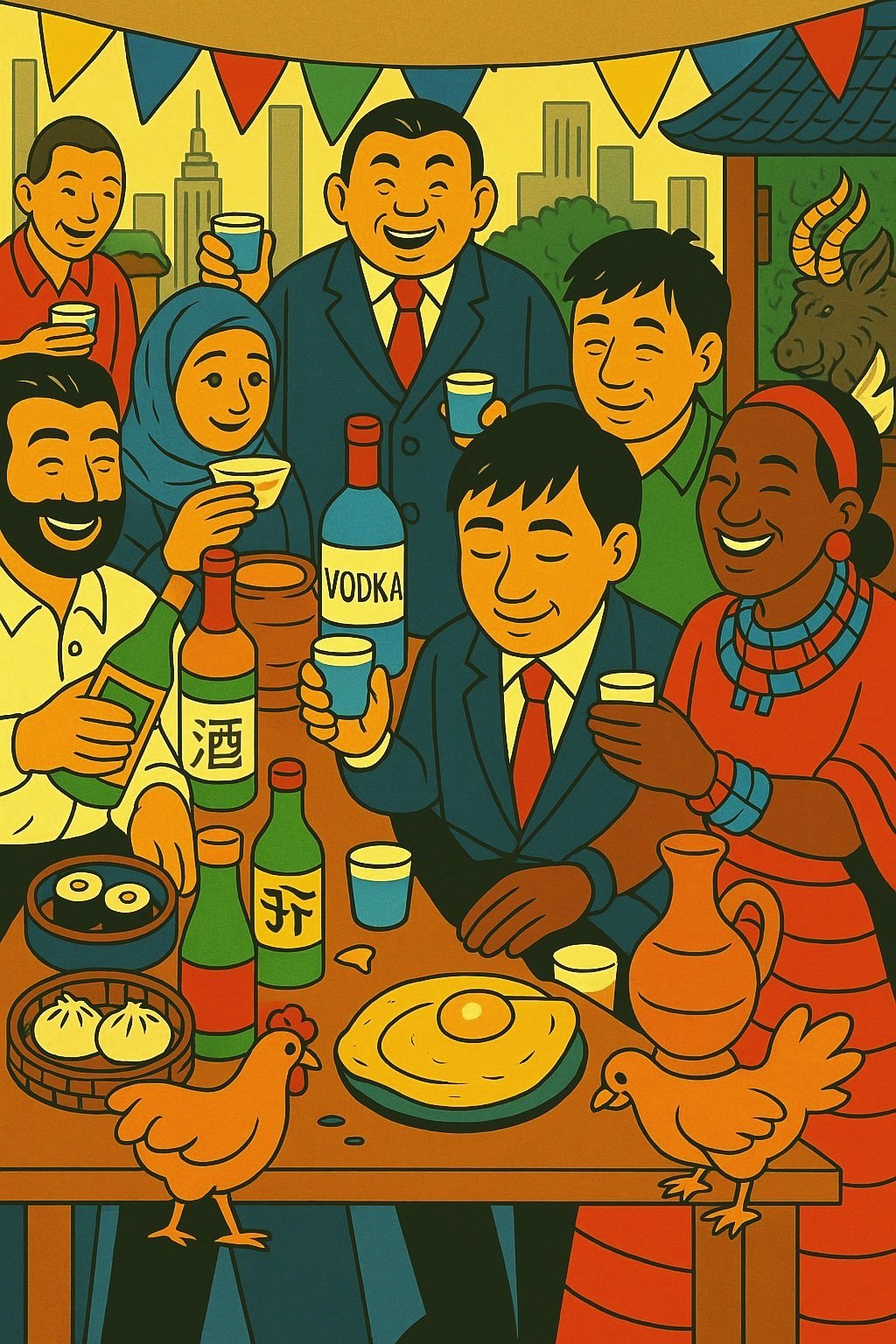
A group of people from around the world crowd around a table, holding traditional drinks from their countries

We’ve all had that moment: reclining on a sun-drenched patio, swirling a chilled drink, maybe a Malibu Bay Breeze, and thinking, Now this is living. But while your fruity cocktail might scream “vacation mode activated,” in many parts of the world, drinking goes far beyond recreation. It's ritual. It’s social glue. It’s ceremony, symbolism and, in some cases, sacred law.

Whether it’s the whisper of steam from a rice wine gourd in Bhutan or the thunderous clink of vodka glasses in Siberia, humanity’s connection to alcohol is as diverse as our languages and landscapes. So, if you're the kind of traveler who likes their libations with a dash of folklore, a twist of history, and a splash of anthropological intrigue, cheers to you. Let’s tour the world, one unusual drinking ritual at a time.
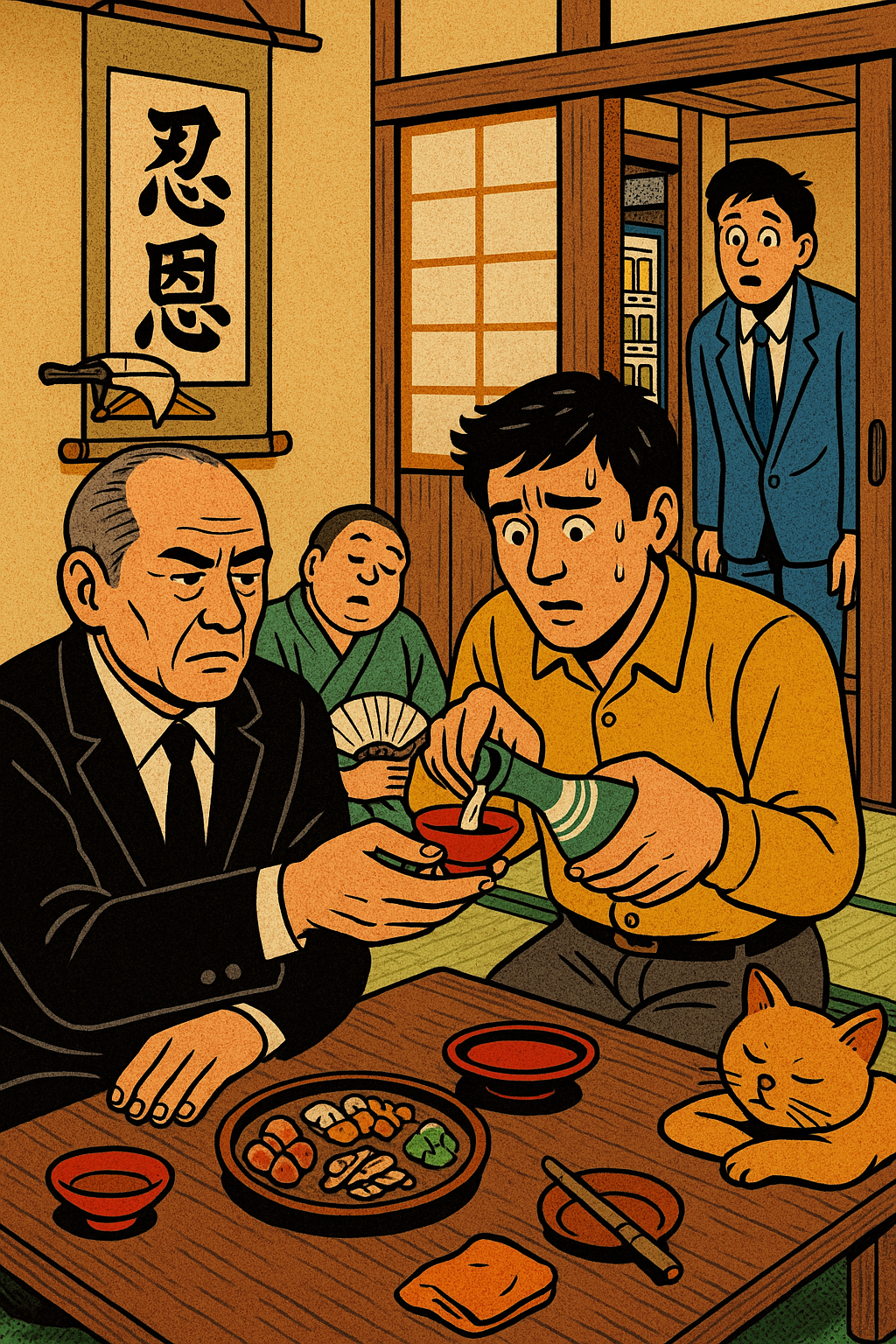
A younger man nervously pours sake for an older man in a suit at a Japanese teahouse, while a man sleeps in the corner and another enters, surprised

1. Japan’s Sakazuki Ceremony: The Art of Mutual Respect

In Japan, drinking isn't just about getting merry — it’s a ballet of etiquette and mutual reverence. Nowhere is this more evident than in the sakazuki ceremony, where two people exchange cups of sake to seal a bond. It can be between friends, business partners or during wedding rituals.

The process involves bowing, pouring for one another, and sipping from each other’s cups. If it sounds intimate, that’s because it is.

But beware: Hierarchy matters. If your boss pours for you, you’d better accept it with both hands and bow like your job depends on it — it just might.
RELATED: A Guide to Experiencing the Spectacular Koyo

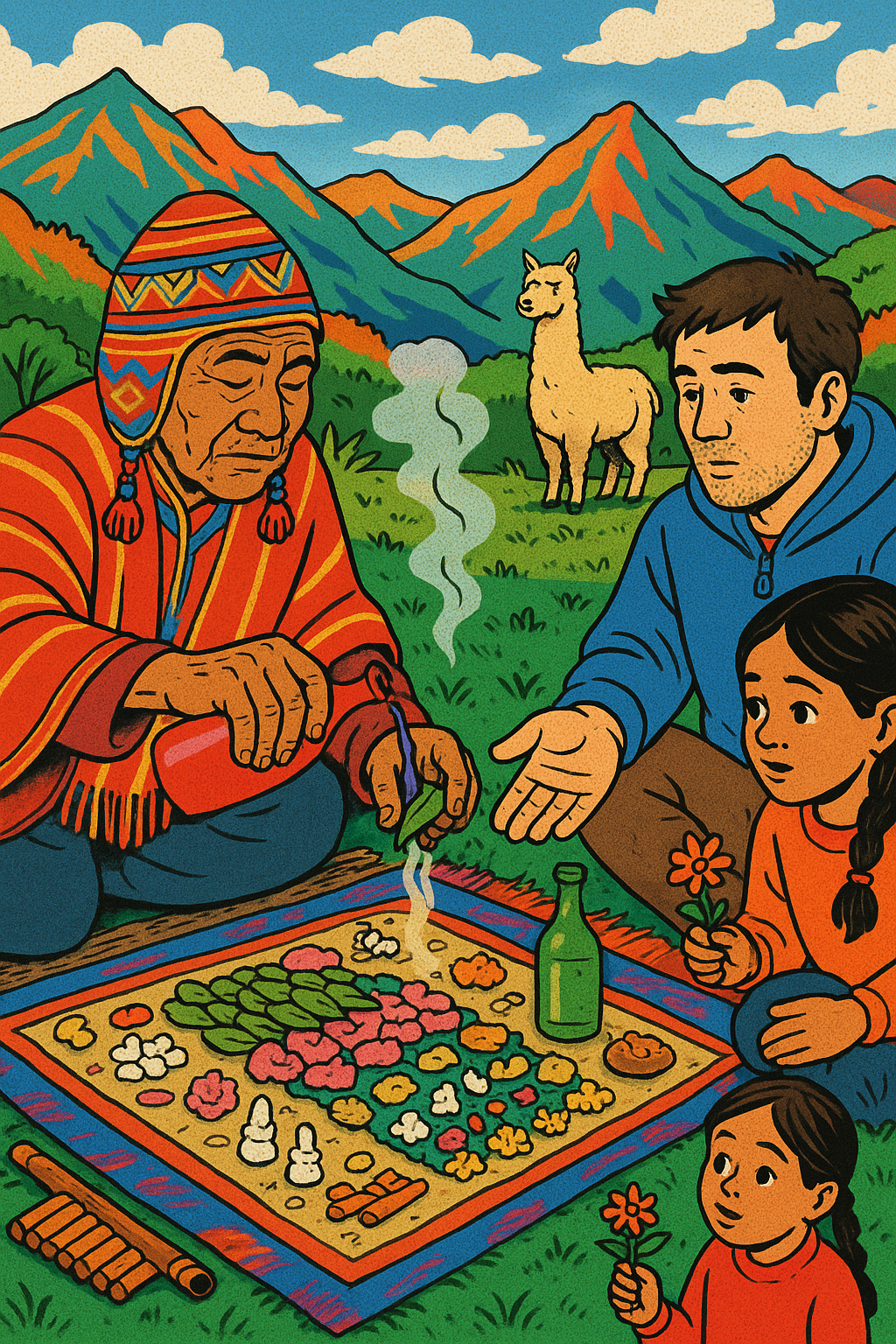
An older Andean man puts some chicha out for Pachamama, the earth goddess, over a spread of nibblies, while girls and a male traveler watch

2. Peru’s Pachamama Offering: A Sip for the Earth

Head into the highlands of Peru, and you’ll quickly learn that no drink enters your body without first blessing the earth. Before sipping chicha (a fermented corn beer), locals spill a few drops onto the ground. This is a symbolic offering to Pachamama, the Andean earth goddess.

This practice isn’t just reserved for locals, though; travelers who show respect are invited to share in the ritual. Just remember: Spill before you sip. Otherwise, you may offend a deity — and your host.

This reverence for nature in drinking rituals speaks to a deeper connection between land, spirituality and celebration. It’s not about intoxication. It’s about inclusion.

RELATED: The Pishtaco of Peru
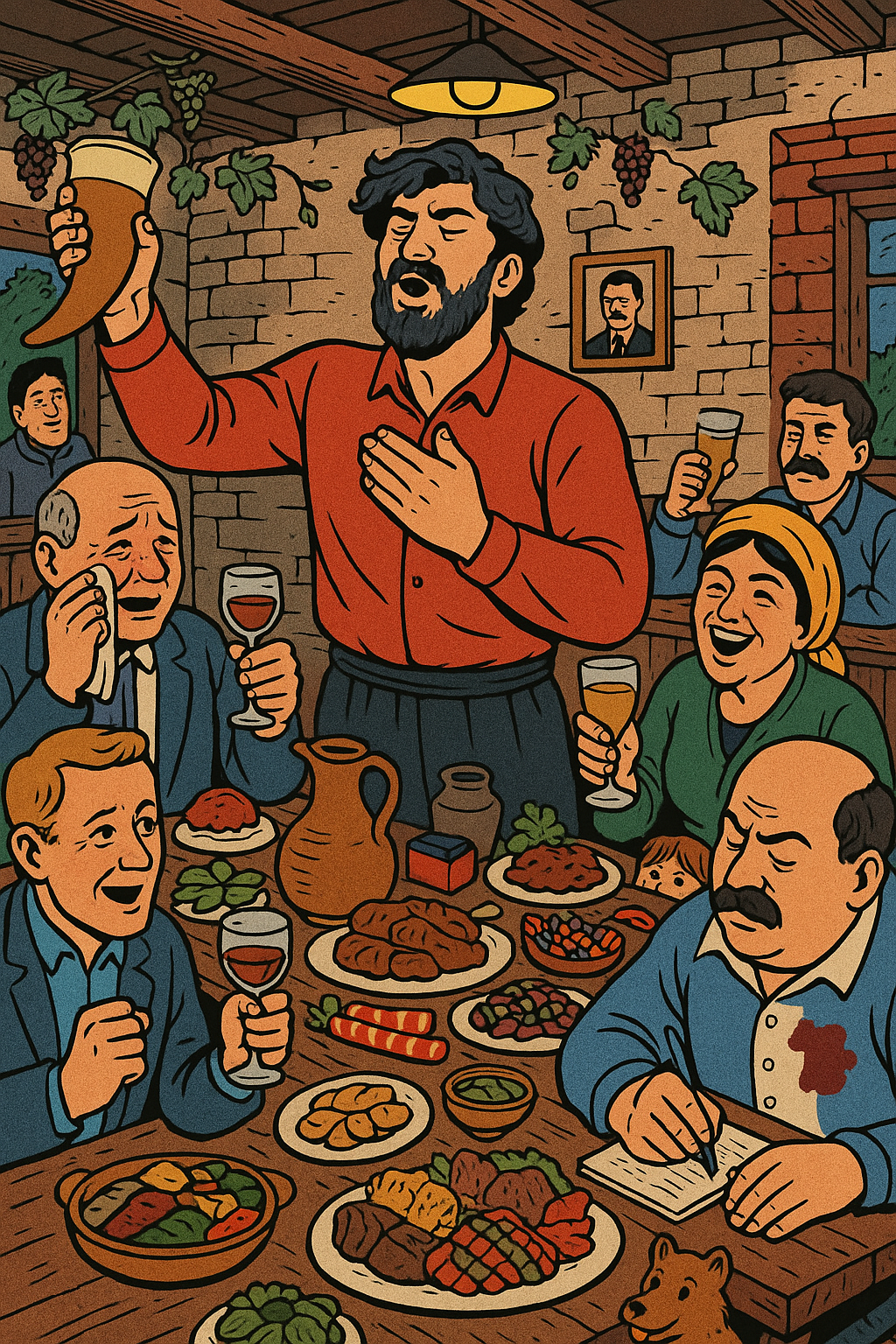
A bearded man stands, holding up a drinking horn, giving a toast, while people around him react

3. Georgia’s Supra: Toasting as a Competitive Art Form

No one toasts like the Georgians. And I mean no one. At a Georgian supra (a traditional feast), the tamada — a sort of designated toastmaster — leads an elaborate series of poetic, philosophical and sometimes comedic toasts that can go on for hours.

Each toast is met with wine horns raised and glasses drained. Guests are expected to participate, and interruptions are frowned upon. This is a structured, sacred ritual of storytelling, memory and reverence, made glorious with amber-toned Georgian wines.

There’s even a formal etiquette to how you hold your glass and how you respond to a particularly moving toast. Think TED Talk meets tavern.
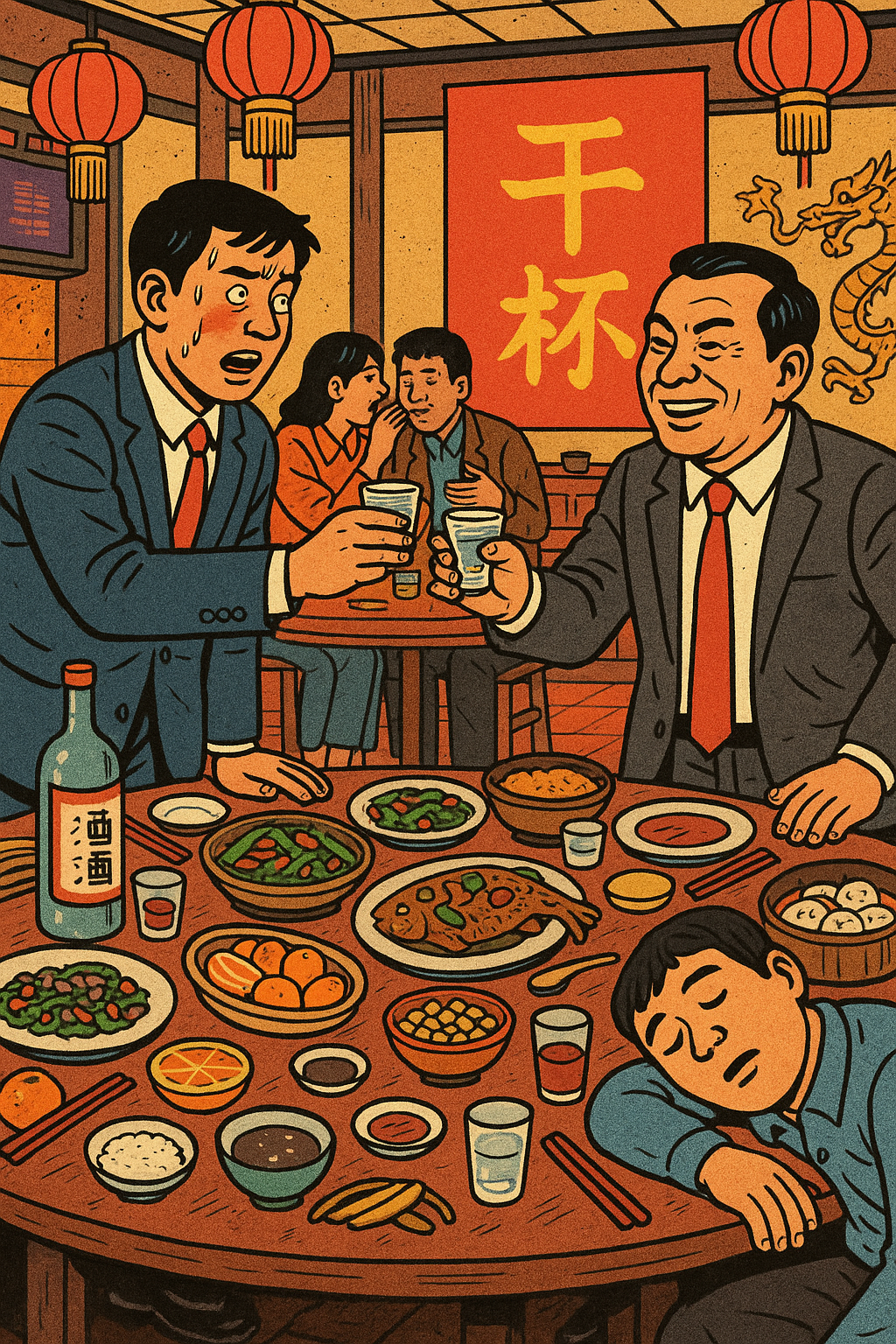
A middle-aged man toasts a nervous, drunken man at a Chinese ganbei ceremony by a table laden with food and a passed-out man, while couple whispers at another table

4. China’s Ganbei: Bottoms Up…or Else

In China, saying “Ganbei!” (干杯) is more than a simple “cheers.” It means “dry cup” — a declaration that you’ll finish your drink in one go. And they mean it.

Refusing a ganbei in a business setting is akin to rejecting a handshake. It’s a test of trust and camaraderie. This ritual can turn business dinners into something closer to drinking marathons, especially when baijiu — China’s fiery sorghum liquor — is involved.

Refusing to finish may offend. Finishing too quickly will win you another round. Good luck.
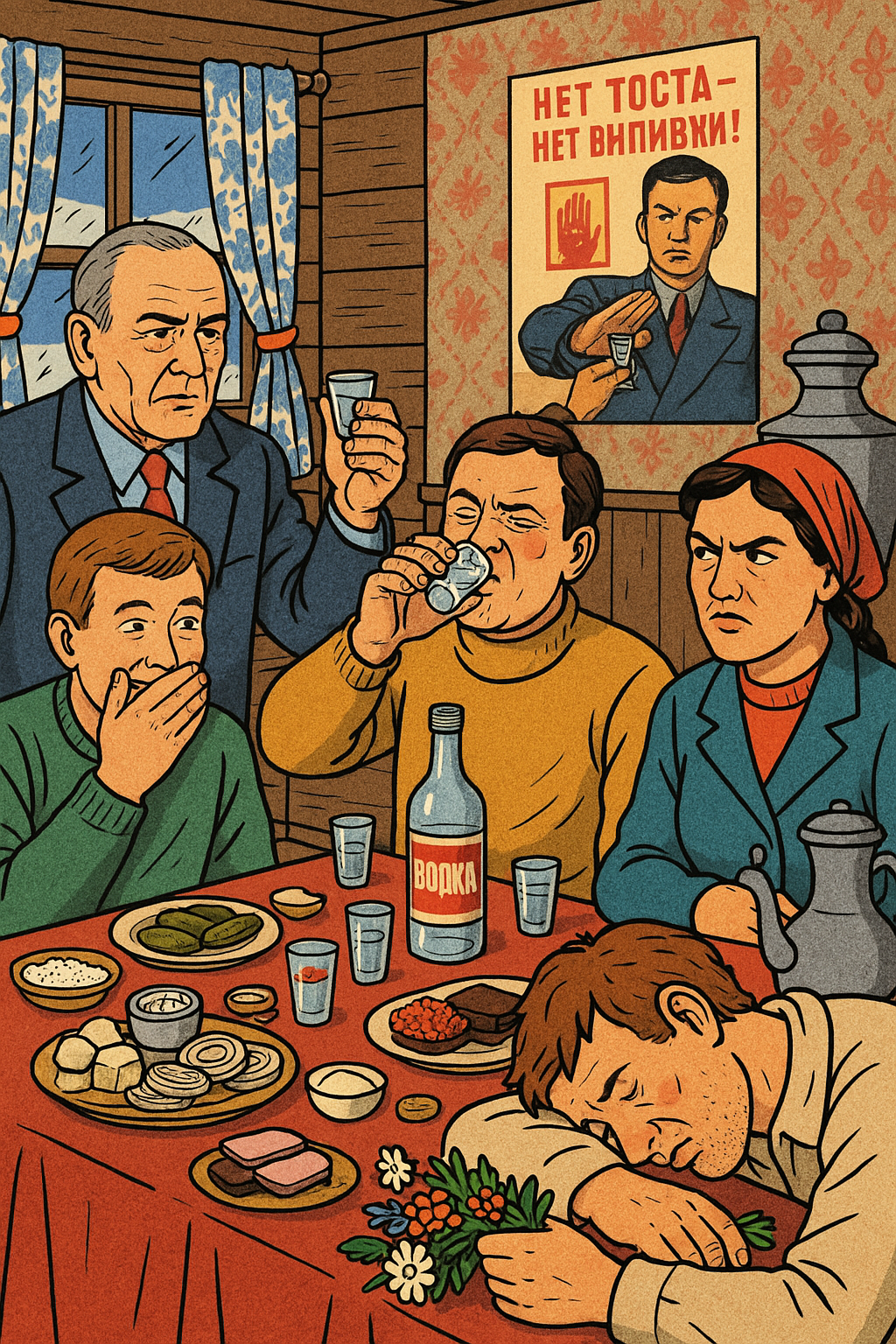
People sit at a table in Russia, drinking vodka, with one man laughing, another passed out and a woman scowling

5. Russia’s Vodka Etiquette: Drink First, Talk Later

If you think you know how to handle your liquor, try keeping up at a Russian celebration. Vodka in Russia is a no-nonsense affair governed by strict cultural codes.

Rule one: Toasts come first. Talking, eating, or even breathing too soon after someone raises a toast is considered rude.

Rule two: Never sip. Vodka is taken as a shot, straight. 

Rule three: Don’t refuse a round unless you’re ill or driving — and even then, prepare to explain yourself.

The act of drinking vodka in a group is deeply tied to expressions of hospitality and trust. It’s about showing heart (“dusha”), courage and belonging.
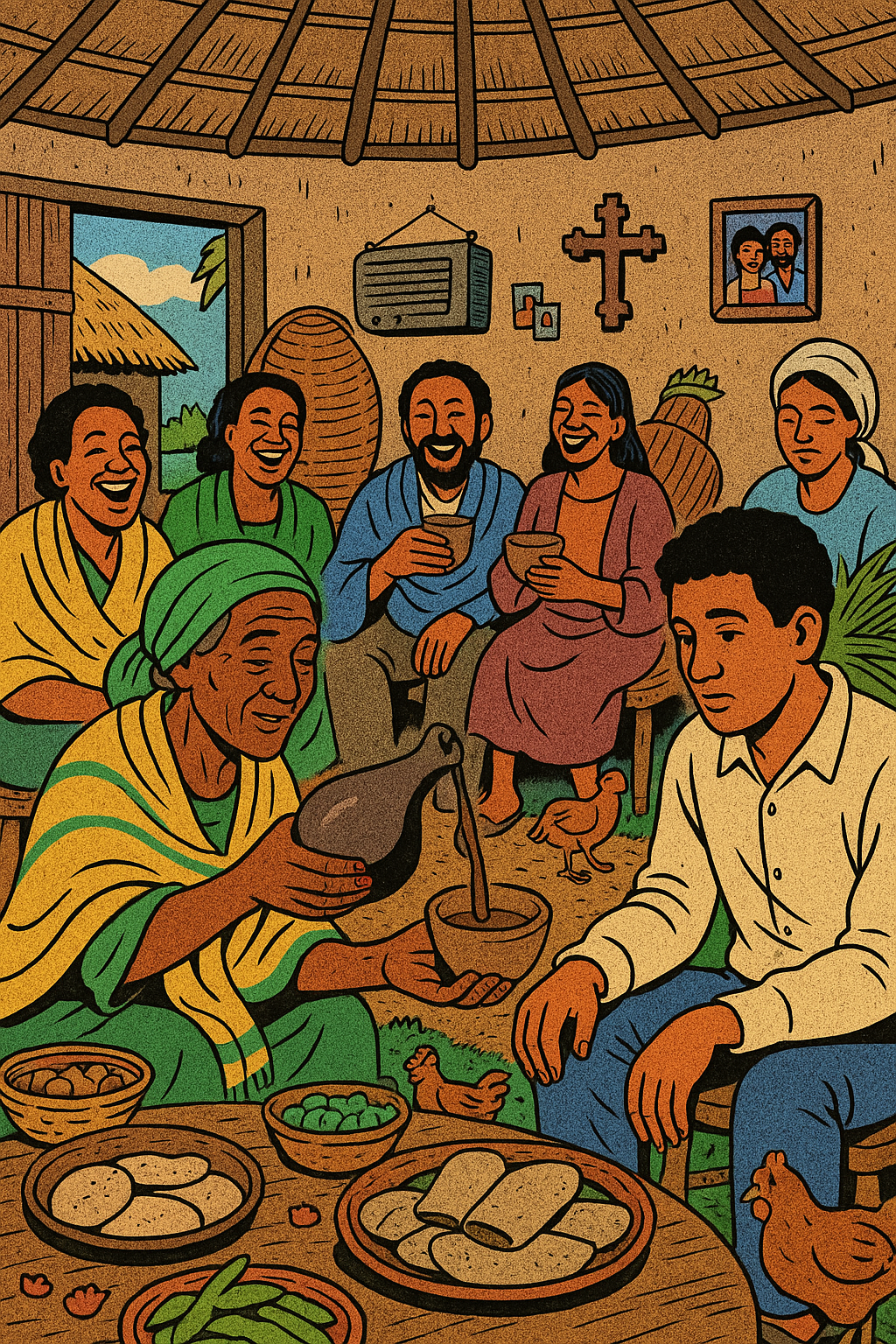
A group of people in an Ethiopian home pour tela by a table with food

6. Ethiopia’s Tela Ceremony: Fermentation Meets Friendship

In Ethiopia, drinking tela, a traditional homemade beer brewed from barley or maize, is a community affair.

Usually made by women and served in small neighborhood gatherings, tela is a ritual of hospitality and kinship. Guests may sit in a circle, drinking from shared containers and swapping stories under woven thatch roofs.

The brewing process itself is communal, passed down through generations, with recipes varying by region and family. Every sip is a testament to shared heritage.
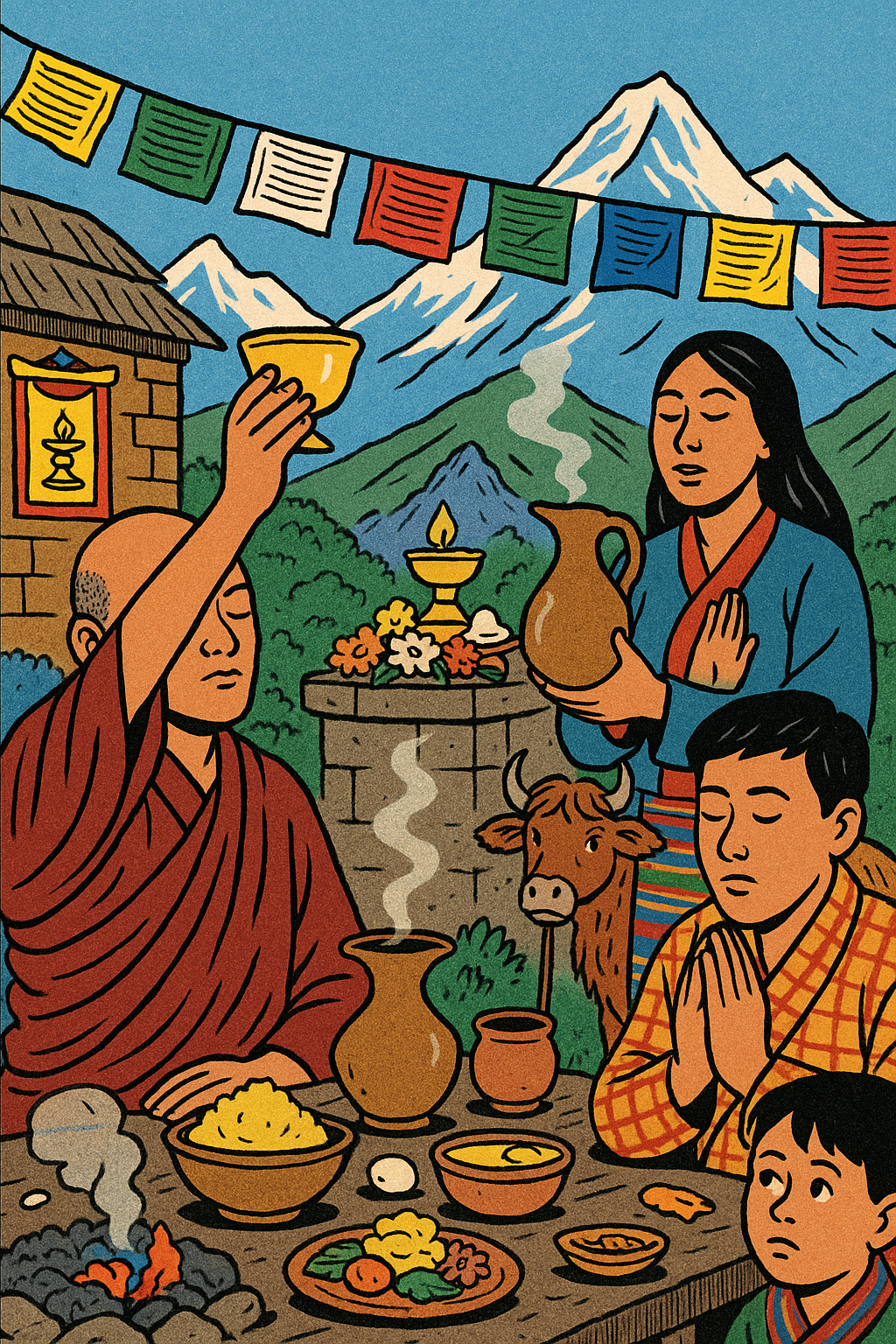
A monk in Bhutan holds up a vessel with ara, while a man prays, a woman holds a pitcher, and a boy and yak look on

7. Bhutan’s Ara Offering: Drink With the Divine

Bhutan isn’t the first place people think of when they imagine booze, but the Himalayan kingdom has its own take: ara, a rice-based liquor made in homes across the country.

When consumed, it’s often part of a lohso ritual: a prayer for peace, prosperity and warding off misfortune. The ara is sometimes mixed with butter and eggs (yes, really), and offered first to deities or the local lama.

While public consumption of ara is discouraged under Bhutanese law, its role in spiritual and community rituals remains deeply ingrained in local life.

RELATED: Bhutan and More of the World’s Most Underrated Adventure Travel Destinations
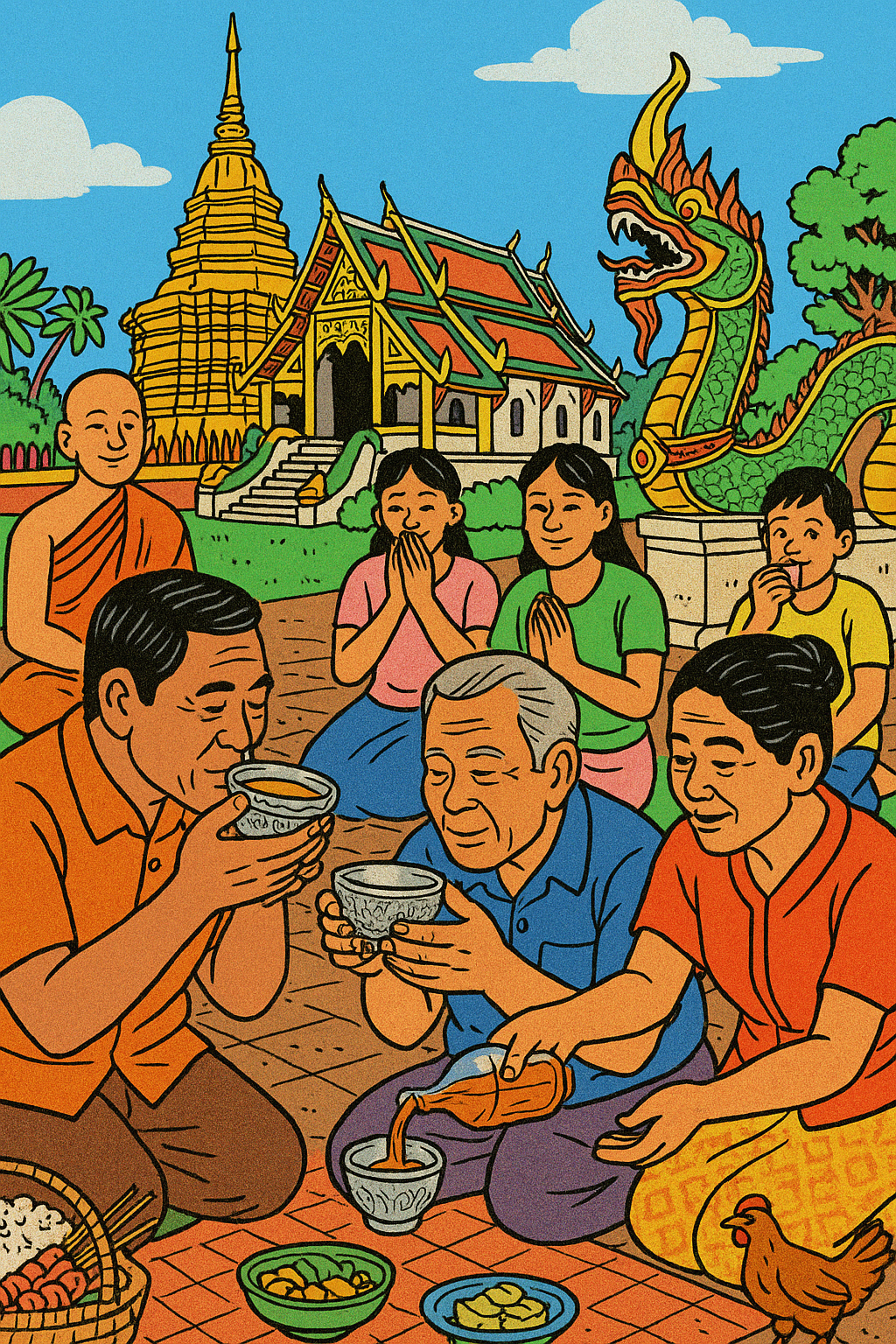
In front of a Thai temple and naga, people drink from silver bowls, while others, including a monk, watch

8. Thailand’s Communal Cups: Sharing in Celebration

At Thai ceremonies, including weddings and Buddhist merit-making rituals, alcohol often plays a social — not sacred — role. However, what stands out is the tradition of communal drinking from shared cups or small silver bowls (khan) at village gatherings.

This ritual fosters connection, trust and a sense of equality. Everyone shares from the same source, rich or poor, old or young.

Interestingly, some of these rituals are fading in urban centers but remain alive in rural areas, preserved by locals who see drinking as part of a holistic spiritual and social life.
RELATED: What’s the Best Chiang Mai Street Food?

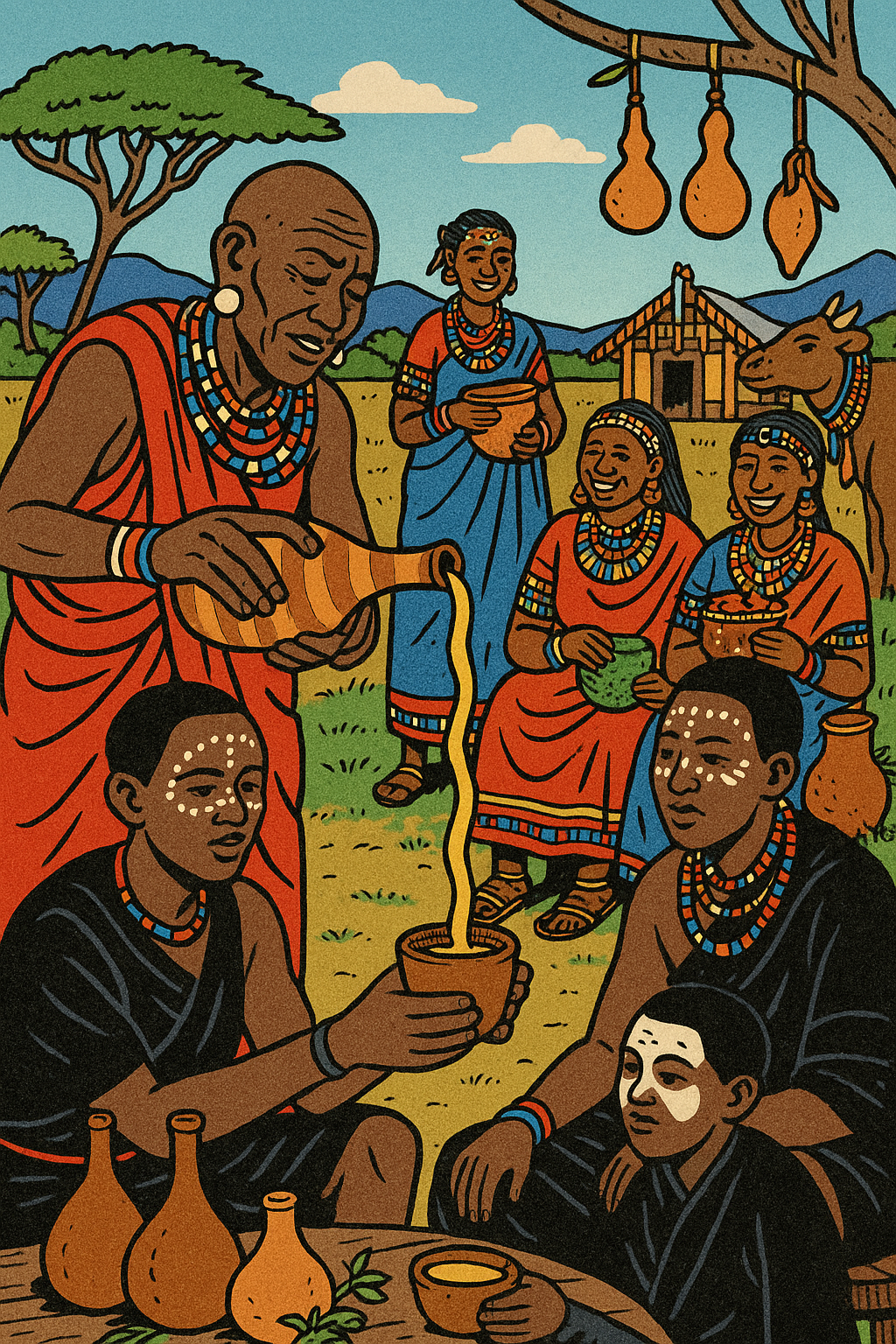
A Maasai man pours honey wine for young men with white face paint during a coming-of-age ceremony in Kenya, while women smile and watch

9. The Maasai’s Honey Wine: From Rite to Rite

In Kenya and Tanzania, the Maasai people brew a traditional honey wine that features prominently in ceremonies such as weddings, age-group initiations and spiritual blessings.

Drinking together symbolizes unity and is believed to strengthen bonds between clans. The brew itself — fermented over days — is thick, sweet and often served in gourds.

While it’s not exported or available commercially, it remains an important cultural practice among the Maasai — one that links heritage, land and rite of passage.

Drinking as Cultural Mirror

Across continents, drinks are more than refreshments; they’re vessels of meaning. They tell stories. They set boundaries. They open doors.

Alcohol has long been used to unite communities, mark transitions, and strengthen social structures—an insight that’s as true today in Peruvian villages as it is in downtown Tokyo.

And this is why the next time you're sipping that refreshing cocktail under a lazy sun, you might reflect on how drinks connect us — not just across tables, but across centuries and civilizations.
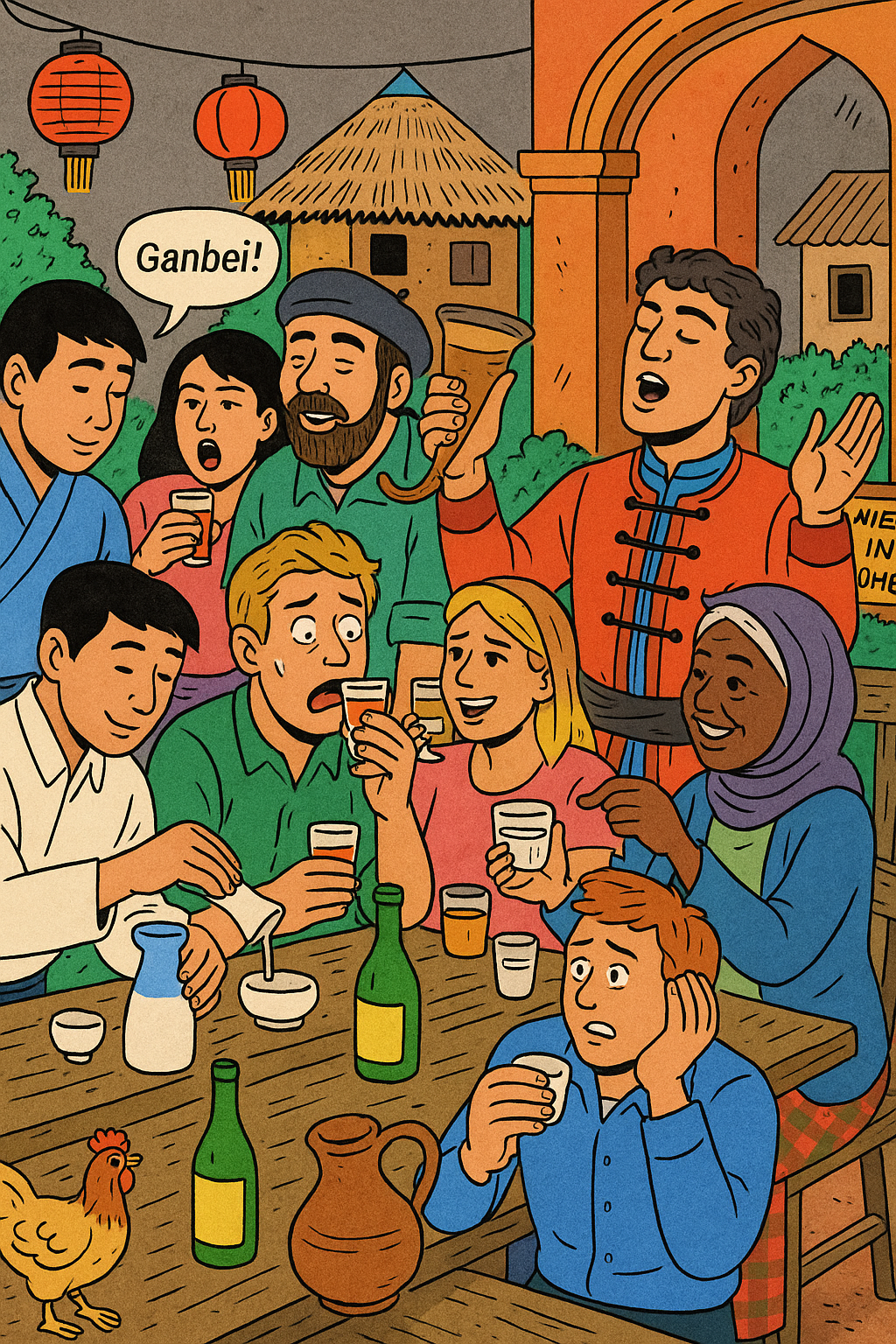
People from around the world try to follow drinking etiquette

Tips for the Culturally Curious Sipper

If you’re planning to engage in local drinking customs during your travels, here are a few do’s and don’ts:

  • DO research ahead: Some rituals have sacred meaning, and missteps can be disrespectful.

  • DON’T chug everything: Unless the culture dictates it (hello, China), pacing is usually fine.

  • DO accept if offered: In many cultures, declining a drink can signal rejection of hospitality.

  • DON’T assume Western norms apply: One person’s toast is another’s offense.

  • DO participate wholeheartedly: The ritual is often more important than the drink itself.

So, here’s to the world’s drinkers — not the binge crowd, but the ceremonial sippers, the storytellers, the sacred pourers. To the women brewing tela in Ethiopia, to the Andean farmers offering chicha to the gods, to the Japanese executives bowing over crystal sake cups.

And to you, fellow traveler, who now understands that sometimes, a drink is just a drink… but sometimes, it’s the soul of a people poured into a glass.

Cheers—or as they say in Georgia, “Gaumarjos!” –Ivana Babic

RELATED: Bizarre Foods Around the World

To Tip or Not to Tip? A Traveler’s Guide to Global Tipping Etiquette

We unravel the mystery of tipping customs around the world and explore tipping history to ensure you tip appropriately wherever you go.

Keeping up with the local etiquette of different destinations can be tough when you travel. While some countries expect you to leave gratuity no matter the kind of service provided, others will be shocked to see even a small amount of cash has been left at the end of a meal.

While you’ll encounter different customs in different places, it’s important to get it right no matter where you are. 

Tipping can be important to ensure workers receive fair compensation — but it could also be argued that it’ll only act to further encourage this culture of underpayment.
Paper cutout style illustration of the origins of tipping in Tudor England

Where did tipping begin?

Tipping, the ancient art of showing appreciation with cold, hard cash, has been around since the Middle Ages. In Tudor England, it began with masters tipping their servants for a job well done. Later, houseguests would begin to offer tips, too — and eventually, workers across the country were receiving them in commercial establishments.

A couple hundred years later, tipping reached the Americas. Here, the practice has a more controversial history. In the late 1800s, previously enslaved people began seeking paid work. But their wages were so low that they were essentially unable to live on the amount they received (sound familiar?). Rather than offering their workers a fairer wage, employers chose to promote tipping to customers as a way to subsidize their workers’ incomes.

Paper cutout style illustration showing servers and those at a restaurant in Colonial America

Similarly, the spread of colonialism brought with it the culture of tipping to each corner of the world that it reached — and as such, the practice can be found in countries all across the globe today.

Paper cutout style illustration showing a map of the Earth, with currencies and servers at the bottom

Where should you tip?

Tipping is common in countries across Europe — but in establishments where it’s expected, a service charge is usually included in the bill. Similarly, tips are often shared between an entire staff rather than being received by one individual — making it hard if you want to tip only the staff member who has served you.

For the most part, not tipping in European countries isn’t seen as a big deal. It’s generally reserved for excellent service in a restaurant, and you’re usually only expected to leave a maximum of 10% of your overall bill.

Paper cutout style illustration of people eating at a restaurant with a server in the middle

In North America, on the other hand, tipping is very important — in fact, it’s considered rude not to leave a tip of at least 20%. This applies not only in restaurants, but in bars, hotels, salons, transport services, tour services and, essentially, anywhere else in which you’re in receipt of a service or some kind of assistance.

In recent years, particularly with the rise of digital payment systems, there’s been a noticeable shift towards higher tipping expectations in the United States. These point-of-sale devices often prompt customers to leave tips of 20%, 25% or even 30%, even in settings where tipping wasn’t traditionally expected, like at counter service or for takeout. This phenomenon, sometimes referred to as “tipflation,” has led many consumers to feel pressured into tipping more generously due to the social pressure of these preset suggestions and the ease of adding a tip with a simple tap on a screen​.

Paper cutout style illustration of people eating at a sushi restaurant in Japan

Some countries take an entirely opposite approach. In Hong Kong and Japan, tipping can actually be seen as insulting. Here, great service is the standard and norm, so workers don’t expect extra compensation for going above and beyond. Tourist companies sometimes accept tips — but you should offer gratuity discreetly.

Paper cutout style illustration of the Middle East, showing cafes and domed buildings and minarets

Countries in the Middle East and Africa have a similar approach to tipping as in North America. In Qatar, Saudi Arabia and the United Arab Emirates, for instance, tips are always expected. In Dubai in particular, an additional 15-20% gratuity is customary on top of any service charge. Countries such as Jordan and Morocco also expect around 15-20%. In places that get a lot of tourism, such as Egypt, a service charge is generally added, and you’re not expected to leave anything on top of that.

As tipping customs vary greatly from place to place, it’s important to always research before you travel. Norms and customs change over time, so it’s best to familiarize yourself with the local expectations before you venture abroad.

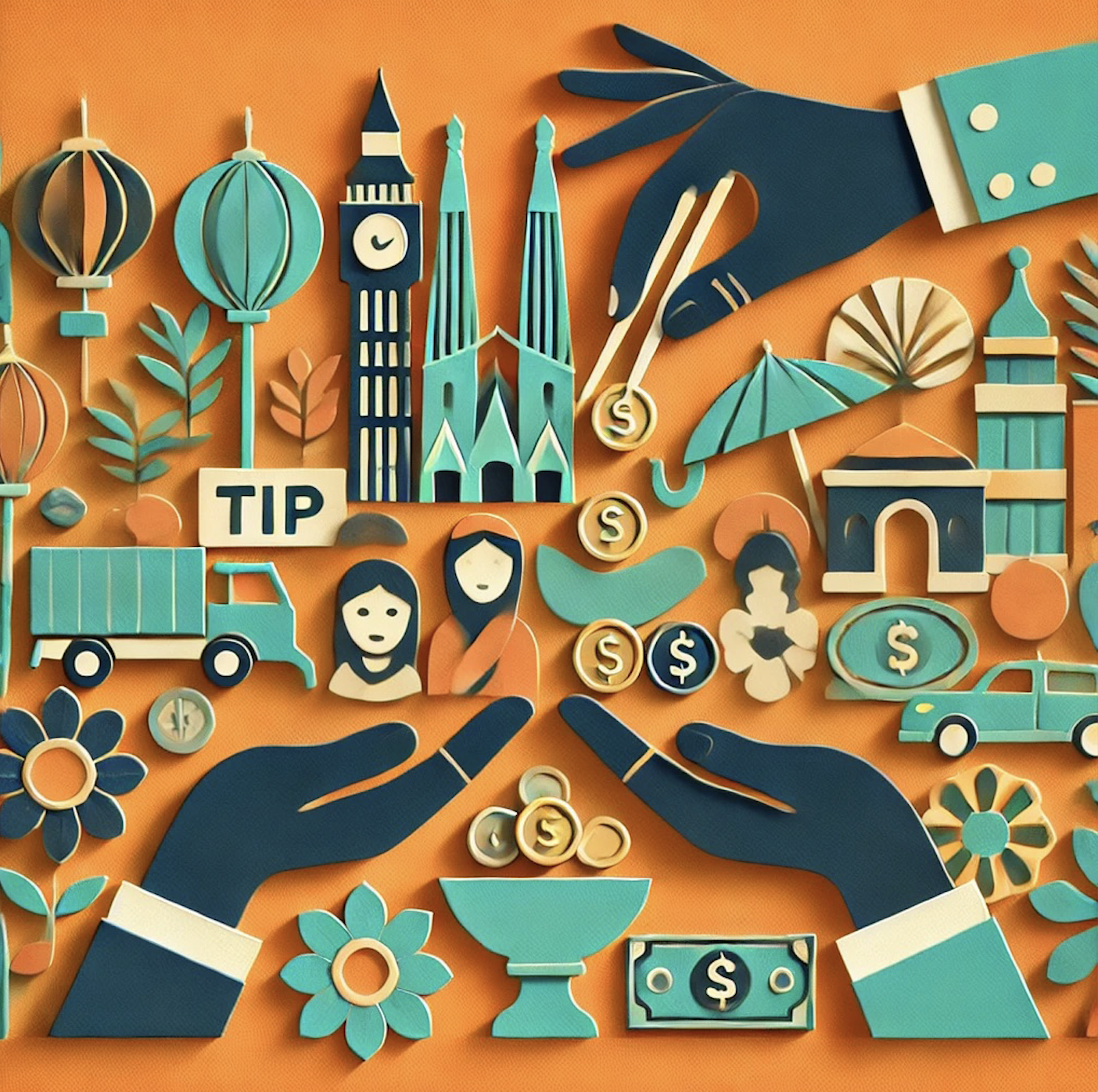
Paper cutout style illustration of hands, peoples, buildings, money and flowers

Why is tipping important?

Because the practice of tipping is rooted in colonialism and slavery, it’s something that should be considered carefully — cultural norms should be respected wherever you travel.

All in all, whether you tip typically comes down to personal preference. In some parts of the world, such as certain states in the U.S., employers are still allowed to pay their workers less than the national minimum wage, so long as their income is subsidized with tips. In cases like these, tipping can be important to ensure workers receive fair compensation — but it could also be argued that it’ll only act to further encourage this culture of underpayment.

If you’re ever unsure about whether or not to tip while traveling, you could conduct some online research, ask other travelers or speak to a tourist board about local etiquette. 

Master the art of tipping, and you’ll win hearts and minds across the globe. –Andrew Ellison

Weird Bali: 7 Crazy Balinese Customs

Cat poop coffee, temples of death and Balinese names are a few of the unusual aspects of Bali culture.

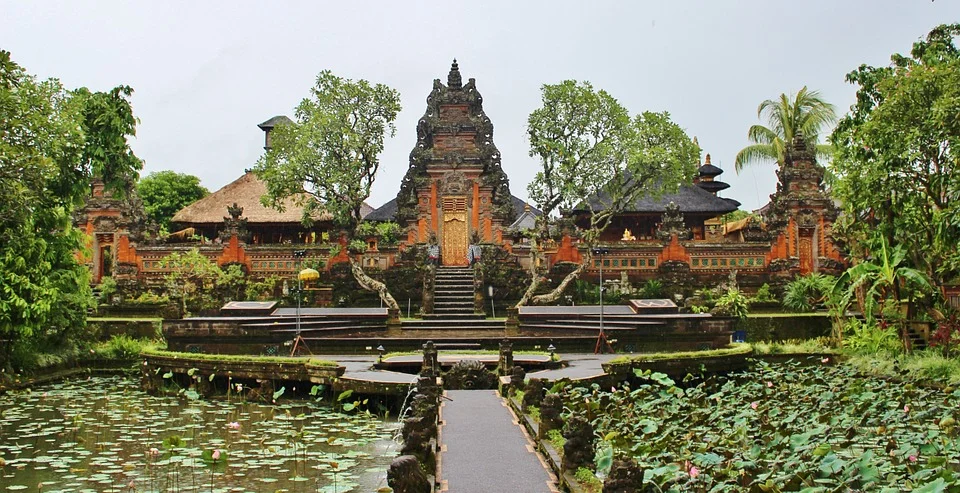
What makes islands so interesting is that they act as closed environments and often adopt their own distinct cultures. It’s curious that Bali is a Hindu island in the midst of the most populous Muslim nation in the world. Its unique religion permeates daily life.

Here’s a sampling of seven unusual things we observed or learned about on our trip to Bali.

The passage of the beans through the civet’s digestive tract, pressed against their anal scent glands makes the resulting coffee to die for.
Kopi luwak, made from the excrement of a cute wild cat, has become a craze. But we recommend boycotting it

Kopi luwak, made from the excrement of a cute wild cat, has become a craze. But we recommend boycotting it

1. A popular coffee on Bali is made from animal poop — and it’s the most expensive coffee on Earth.

Known as kopi luwak, this is essentially coffee beans that have been eaten, digested and shat out by the palm civet, a cute animal that looks like a cross between a wild cat and a mongoose. You’ll see signs for kopi luwak all over Bali, and Duke and I were like, no thank you. The British couple next to us at dinner one night said they quite enjoyed it, though, that the beans were a honeyed color, that the coffee was smooth, and they’d have gotten some if it wasn’t so bloody expensive.

Many poor civets are kept in cages and mistreated to make sure there’s a steady supply of luwak coffee

Many poor civets are kept in cages and mistreated to make sure there’s a steady supply of luwak coffee

Civets are shy, nocturnal creatures that roam coffee plantations at night, eating ripe coffee cherries. They can’t digest the pits, or beans, and poop them out. Somehow locals got it into their heads that the passage through the civet’s digestive tract, pressed against their anal scent glands, somehow makes the resulting coffee to die for.

One of the many places we were offered civet shit coffee. We declined each time

One of the many places we were offered civet shit coffee. We declined each time

What’s sad, though, is that the novelty of kopi luwak has turned into a booming industry, with many coffee farms mistreating the animals. They “suffer greatly from the stress of being caged in proximity to other luwaks, and the unnatural emphasis on coffee cherries in their diet causes other health problems too; they fight among themselves, gnaw off their own legs, start passing blood in their scats, and frequently die,” writes Tony Wild, the man who blames himself for bringing the kopi luwak craze to the West, in The Guardian. Treating an animal like that is just crappy.

There’s a very good chance that half the people in this photo are named Wayan. Seriously!

There’s a very good chance that half the people in this photo are named Wayan. Seriously!

2. All the kids have the same names, depending on their birth order.

As you become acquainted with more and more Balinese locals, you’ll notice something strange: They all seem to have the same name. And it’s not just that certain names are popular, like John and Jennifer in the States — there literally seem to be only a few names on the island to choose from. As bizarre as that seems, that is indeed the tradition on Bali.

In most cases, Balinese parents from the lower caste (that is to say, most of the population) give their children the same names, depending on their birth order — whether or not they’re boys or girls. Firstborns are named Wayan, Putu or Gede; the second-born is Made or Kadek; the third-born is Nyoman or Komang; and the fourth-born is Ketut. What happens if you have five kids? The cycle repeats itself, with the addition of Balik. So the fifth-born would be Waylan Balik, which basically means Waylan Returns.

You’ll meet tons of Wayans and Mades (this last one is pronounced Mah-deh), so how do people know who’s who? Most Balinese add a nickname or middle name. Our driver, for instance, was Made Ada.

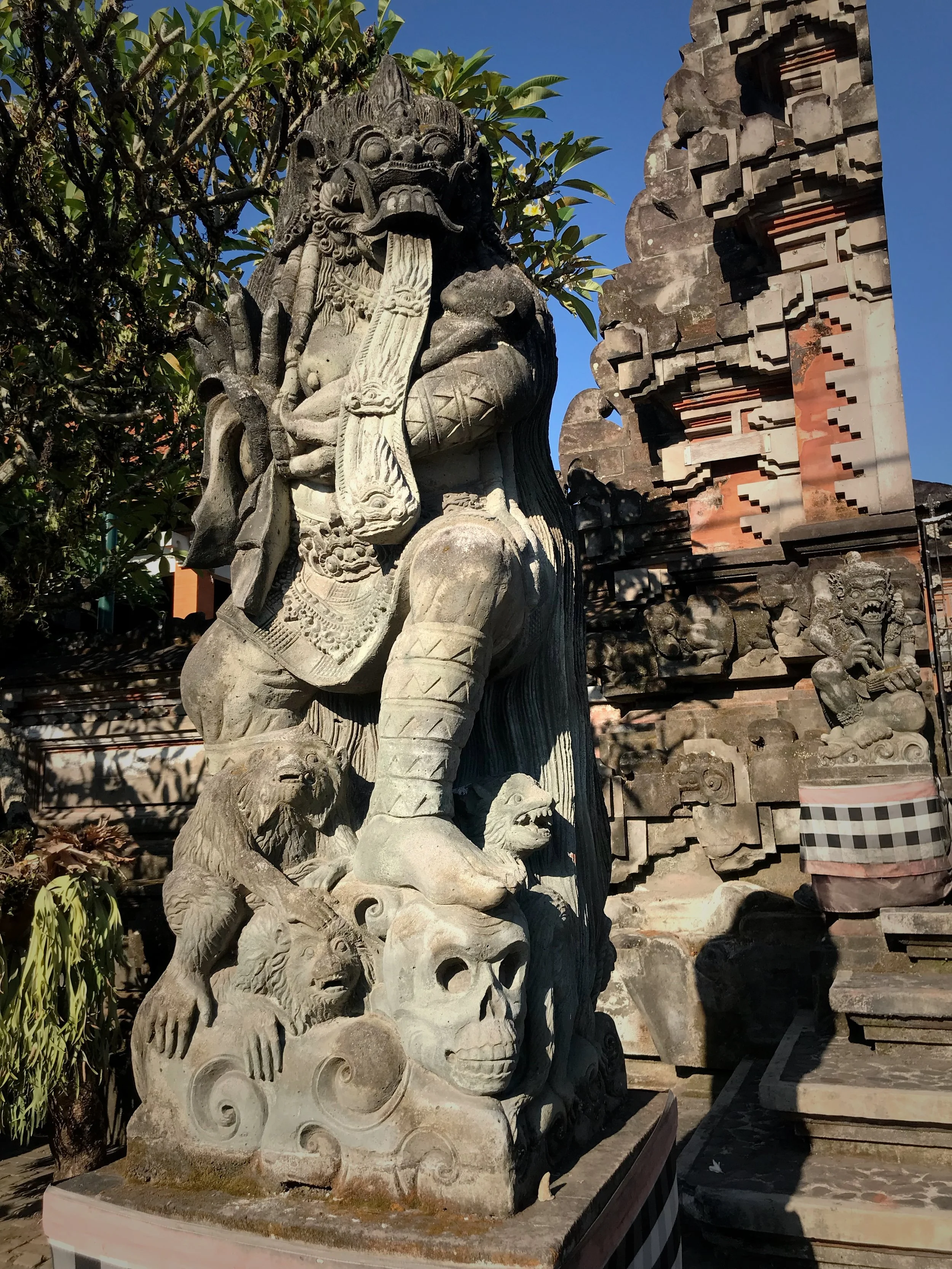
Temples of death on Bali feature frightening statues out front

Temples of death on Bali feature frightening statues out front

3. Every village has at least one temple of death.

Known as pura dalem, every village has at least one death temple, often located in the lowest part of town, facing the sea, which is considered the gateway to the underworld. Bodies are buried in the nearby cemetery, awaiting the purification of a cremation ceremony. Pura dalem, not surprisingly, are typically dedicated to the most gruesome gods and goddesses of the Hindu pantheon: Shiva the Destroyer, Kali, Durga or Rangda.

Many temples of death are dedicated to the demoness Rangda, who has a long tongue, droopy breasts, phallic dreadlocks and a fondness for eating babies

Many temples of death are dedicated to the demoness Rangda, who has a long tongue, droopy breasts, phallic dreadlocks and a fondness for eating babies

Monstrous demonic statues line the entrance — many featuring bulging bug eyes, fierce fangs and large, saggy breasts. Some hold innocent babies in their arms as they stand atop a pile of skulls. These serve as a vivid reminders of what awaits the wicked.


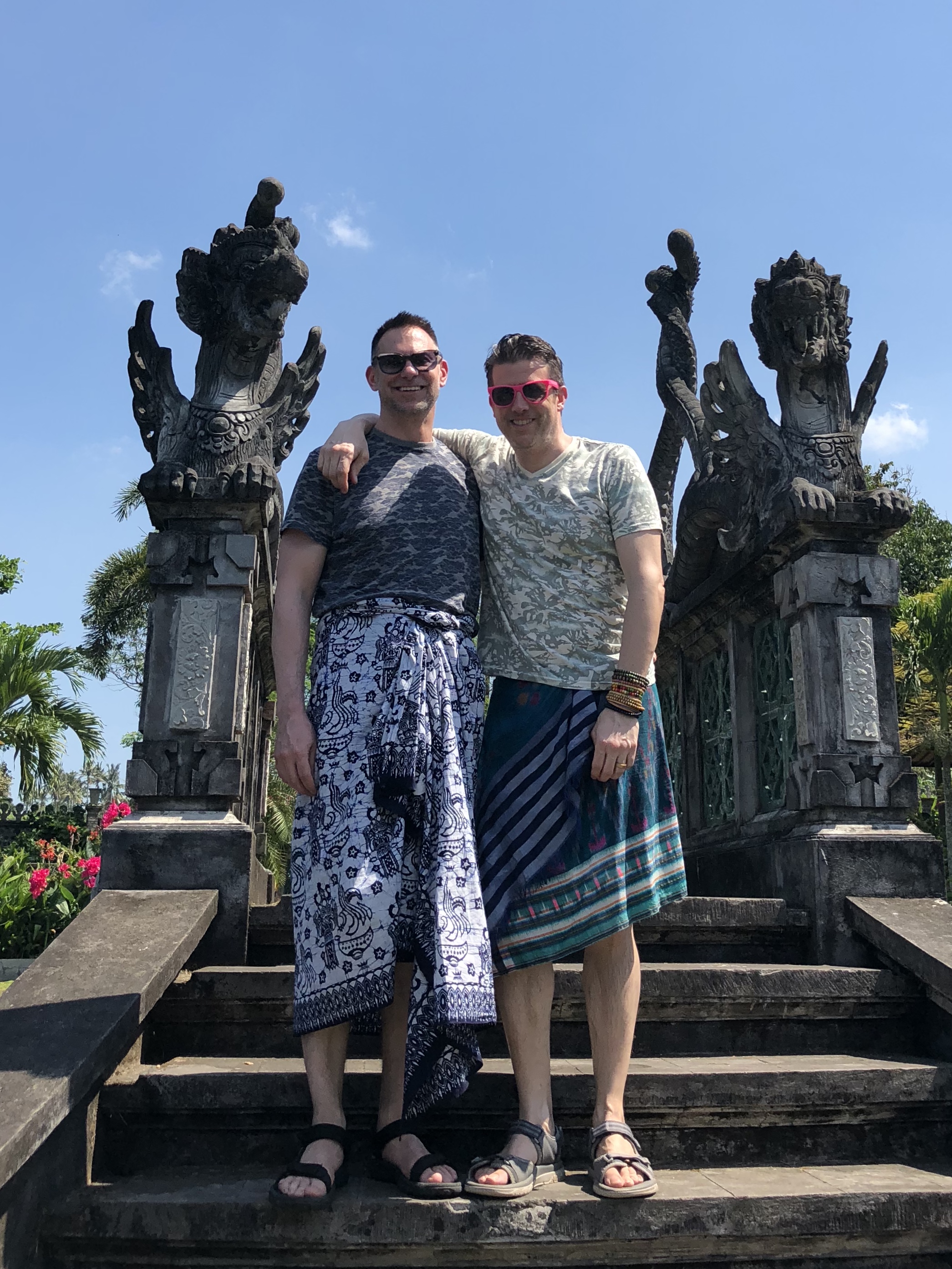
The only thing that would make Duke and Wally even more macho than these sarongs is if they had flowers behind their ears, too

The only thing that would make Duke and Wally even more macho than these sarongs is if they had flowers behind their ears, too

4. Wearing a skirt and tucking a flower behind your ear is thought of as the epitome of masculinity.

At temples on Bali you have to wear a sarong, wrapping these bright cloths around your waist like a long skirt. When I first visited Bali almost two decades ago, I’d wear a sarong every day, and it was common to see local men doing the same. On this visit, though, we only saw one young man wearing a sarong in Ubud (and that’s why I approached him to be our driver for the week).

I’d also pluck a flower and put it behind my ear, having seen temple priests do so. When men on Bali would see me with my sarong and flower, they’d exclaim, “Look at you! You are so masculine!” Bali has got to be the only place on Earth where a man is considered macho for wearing what’s essentially a skirt and a flower behind his ear.

Newborns on Bali are so holy they aren’t allowed to crawl on the ground

Newborns on Bali are so holy they aren’t allowed to crawl on the ground

5. Babies on Bali aren’t allowed to touch the ground for the first three months or so.

Being Hindus, Balinese believe in reincarnation — more specifically, newborns are thought to be the spirit of an ancestor returning to live another life. Because babies are still so close to the sacred realm they came from, they should be venerated. And in a culture where the ground represents all that is demonic and impure, that means newborns aren’t allowed to touch the earth for at least 105 days after birth, and up to 210 in some communities. That’s when the soul officially becomes a part of the child.

At this time, there’s a ceremony called nyabutan or nyambutin, where the baby’s hair is cut off and he or she touches the ground for the first time. It’s often at this time that the child is given its name.

You’ll be a total baller in Bali!

You’ll be a total baller in Bali!

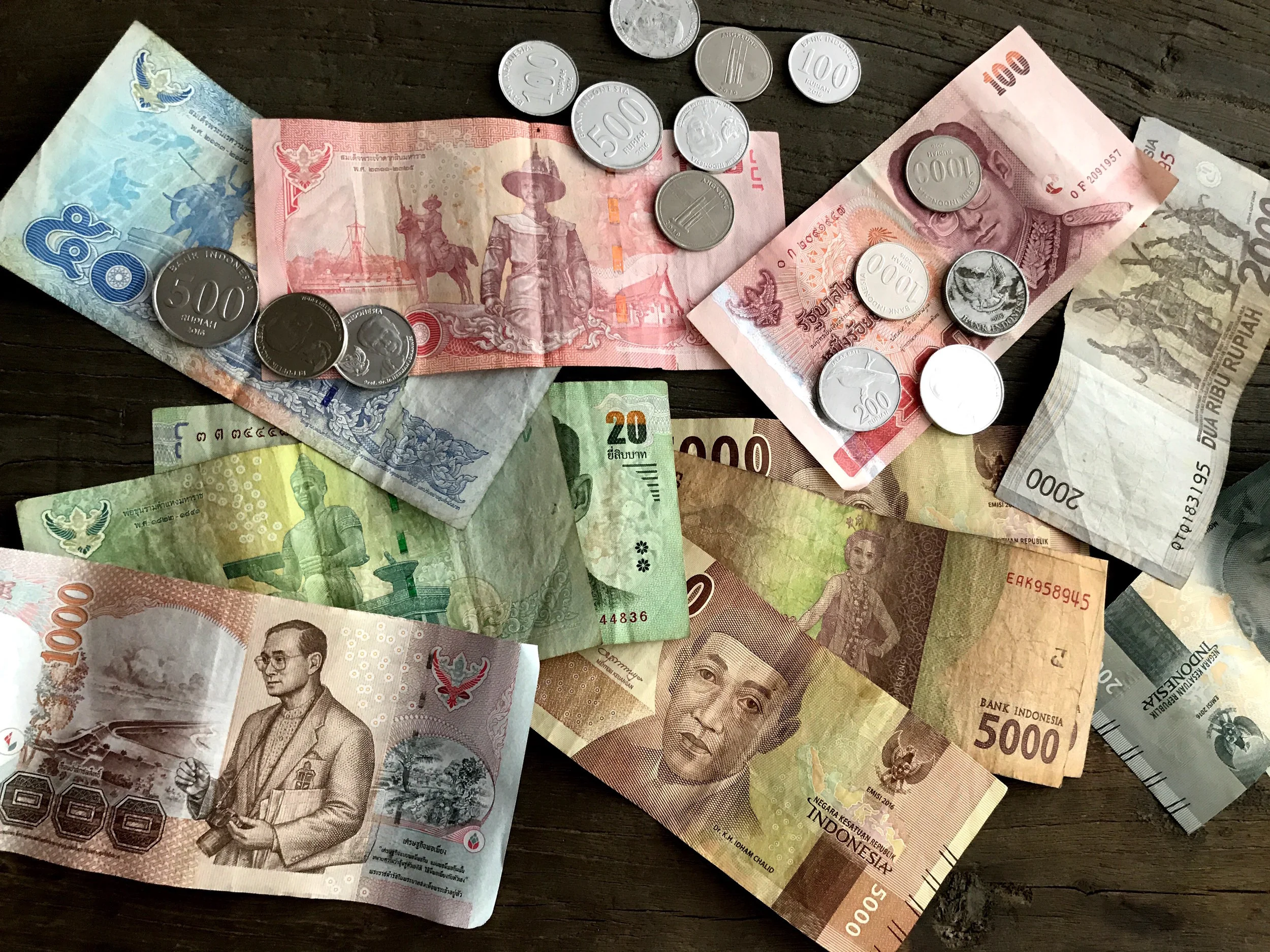
6. In Indonesian currency, you’ll be a multimillionaire.

Literally every time we hit the ATM, we got out the maximum amount: 1.5 million rupiah, which, at the time we visited, was only about $100.

We passed at least four Polo stores in Ubud — and they all seemed to be having a 70% off sale

We passed at least four Polo stores in Ubud — and they all seemed to be having a 70% off sale

Are these officially licensed Ralph Lauren stores? Probably not

Are these officially licensed Ralph Lauren stores? Probably not

7. There are Ralph Lauren Polo stores everywhere.

The preppy look is huge on Bali, at least among tourists. The island is lousy with Polo stores — though they might be of dubious affiliation with the brand. Walking through Ubud, we passed at least six Polo stores. Let the buyer beware: The online consensus is that these deals are too good to be true and are most likely knock-offs. –Wally


5 Strange World Traditions
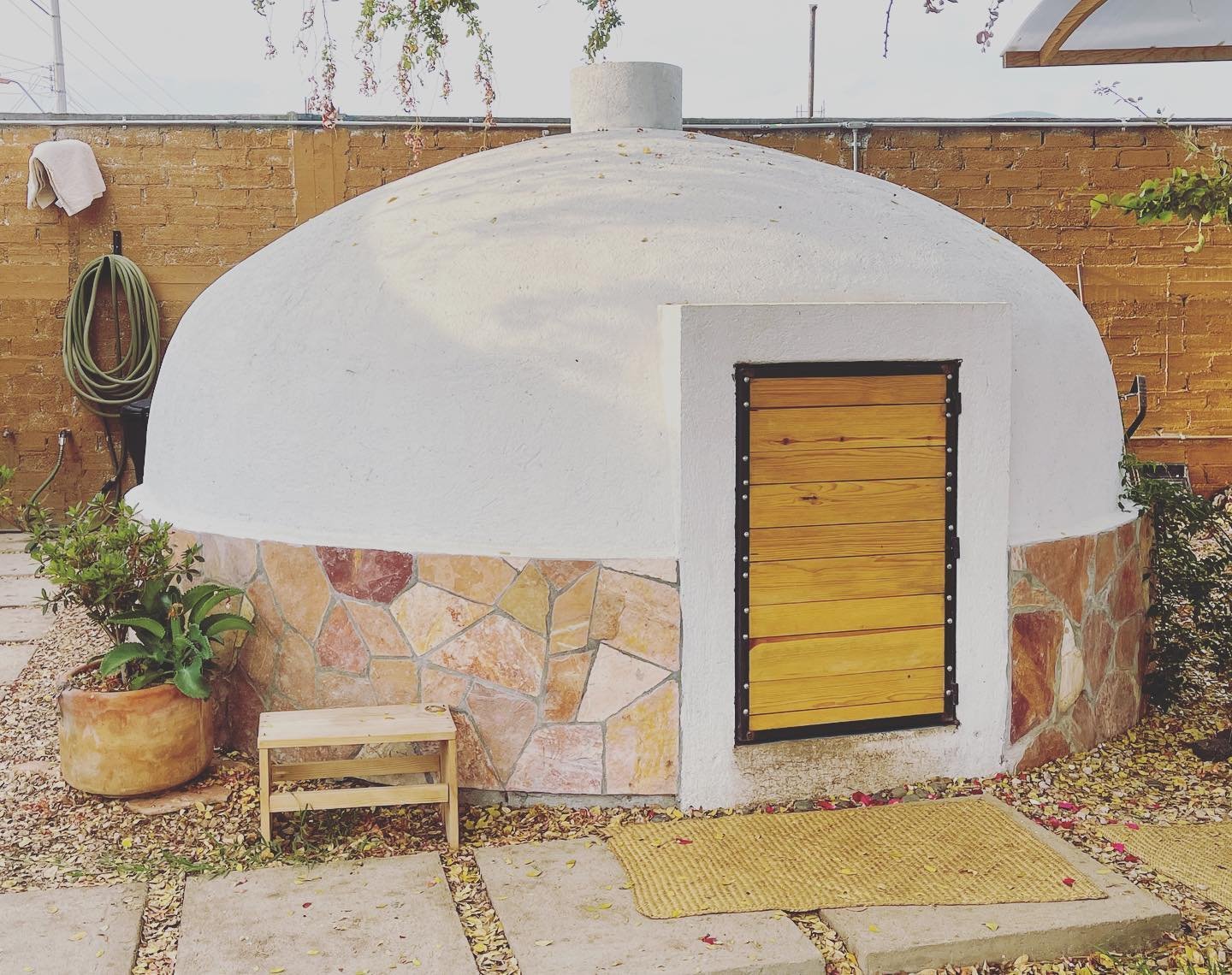
A temple in Ubud on Bali — just don't go in if you're on your period!

A temple in Ubud on Bali — just don't go in if you're on your period!

The more you travel, the more weird traditions you’ll encounter — and that’s some kind of wonderful.


Part of the wonderment of travel is experiencing cultures that are vastly different from your own. It expands your mind; it helps you understand how we’re indelibly shaped by our environments.

It’s easy to fall into the trap of feeling superior, that places that don’t follow our conventions are somehow more barbaric.

“I didn’t fly halfway around the world to not go into any temples just because it’s that time of the month,” she exclaimed.
But that’s what makes world travel so fun. Get out of your comfort zone. See things from another point of view. Travel truly changes you.
Here’s a sampling of some of the strangest customs I’ve experienced on my travels.


On Bali, menstruating women cannot enter Hindu temples.

The idea is that women on their periods are somehow “unclean.” But my friend Christina was having none of it.

“I didn’t fly halfway around the world to not go into any temples just because it's that time of the month,” she exclaimed.
“Hey,” I responded, “I won’t tell if you don’t.”


In Thailand, there’s no concept of the closet for gays.

As hard as this is to believe, this is what I was told by my friend Deb, who was living in Bangkok at the time.
Apparently being gay isn’t something you have to hide in Thailand. Which I suppose means there’s no repression, and you just tell everyone around you when you first realize you have feelings for the same sex.

Honestly, this one still astounds me, and I’m not sure I fully believe it. I feel like it would make Thailand the only country on Earth where it was totally OK to be gay.


In Morocco, men hold hands and kiss hello.

There’s nothing gay about it. But Muslim men are quite physical with each other. It’s not unusual to see two grown men walking arm in arm down the street or even holding hands.

And when they greet each other, they kiss on the cheek. The man who drove us to the Sahara used me to demonstrate the traditional greeting. He kissed me once. Twice. Thrice. Four times! It seemed a bit excessive. I mean, who’s got time for that?


In Sevilla, Spain, you toss your napkins right on the floor.

You stop at a tapas bar for some delicious nibblies, and when you’re done, you nonchalantly throw your soiled napkin onto the ground.

“It took me a while to get used to this,” my friend Jo said. “But honestly — they’d rather you do that than leave them on the bar.”


In Peru, you pour out booze as an offering to Mother Earth.

The Andean people worship the Earth as Pachamama, and whenever they have an alcoholic drink, they pour a bit out to honor her.

“What about if you’re in someone’s home?” I asked my guide one evening at our campsite on the Inca Trail.

“Yes,” he told me.

“What about if you’re at a restaurant?” I asked.

He nodded again. “Yes.”

“It’s kind of like pouring one for your homies,” I said. But he didn’t understand. –Wally