usa

Unusual Natural Wonders of the USA That Are Worth Seeing

Skip the skyline. From Bryce Canyon’s alien rock spires and Yellowstone’s bubbling geysers to the Grand Canyon, Niagara Falls and Hawaii’s volcanic hot springs, these unusual natural wonders reveal the wild, weird beauty of the USA.

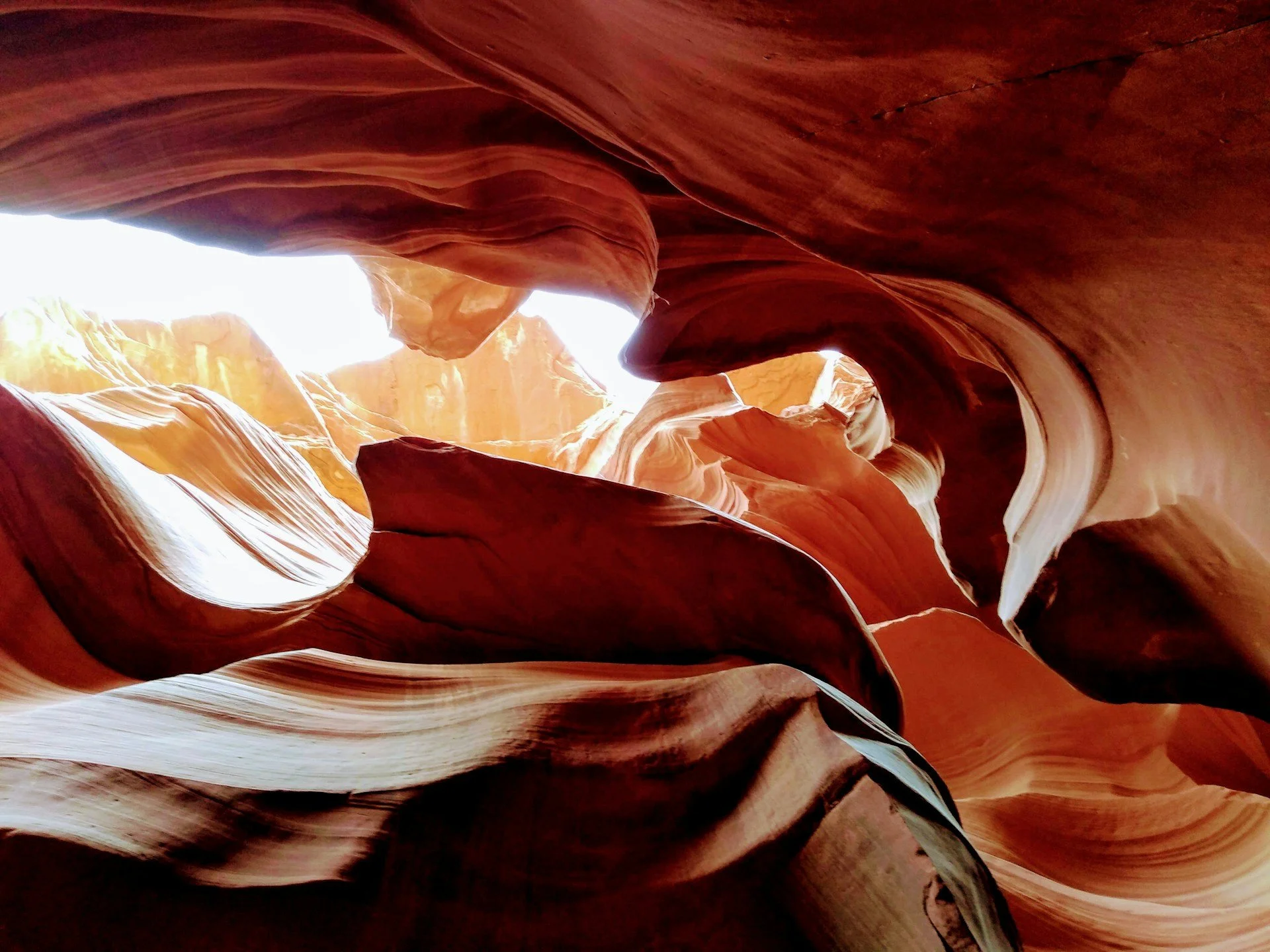
Curving rock formations in Antelope Canyon in Arizona

The United States may be known for cities like New York and Los Angeles, but its landscapes are where things get properly weird — in the best way. From eroded stone spires to volcanic hotbeds and mirror-clear lakes, the country offers natural wonders that feel closer to science fiction than sightseeing. Below are some of the most unusual natural sights in the USA that are genuinely worth the trip.

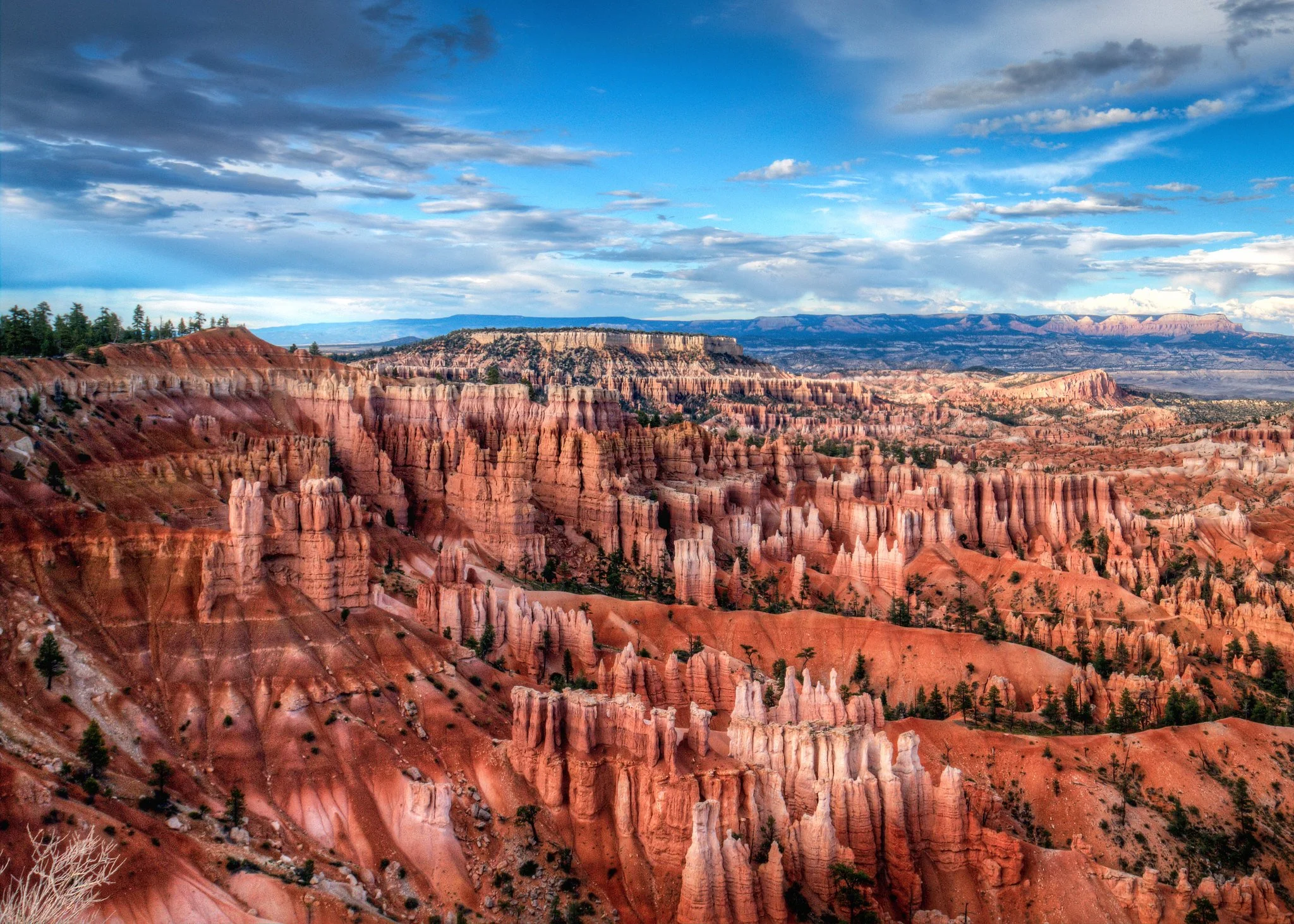
Row after row of hoodoo rock formations at Bryce Canyon in Utah

The Most Amazing U.S. National Parks

America’s national parks are protected spaces that preserve rare ecosystems and showcase landscapes that don’t exist anywhere else on Earth.

Bryce Canyon in Utah is famous for its hoodoos: tall, thin rock spires shaped by centuries of erosion. At sunrise and sunset, the whole canyon glows like it’s lit from within, which explains why people travel halfway around the world just to stare at rocks.

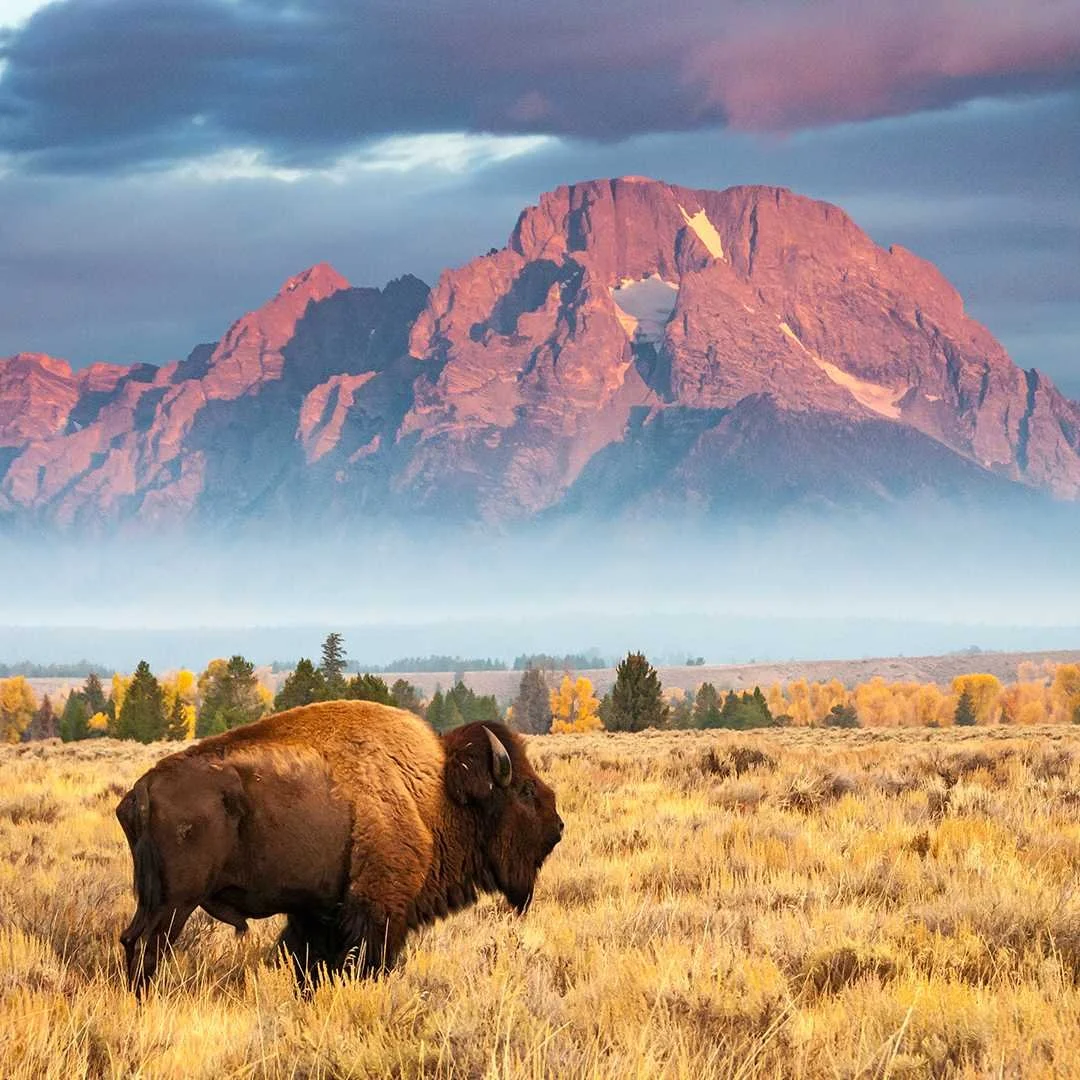
A bison in yellow grass by mountainous rock formations in Grand Teton Park in Wyoming, USA

Then there’s Grand Teton National Park in Wyoming, where jagged peaks rise dramatically above glacial lakes. It’s the kind of place that makes even casual hikers feel outdoorsy and wildly competent.

Tip: If international travel is already on your radar, some travelers explore long-term mobility options like a Dominica passport, which can simplify border crossings and expand where — and how easily — you roam beyond the USA.

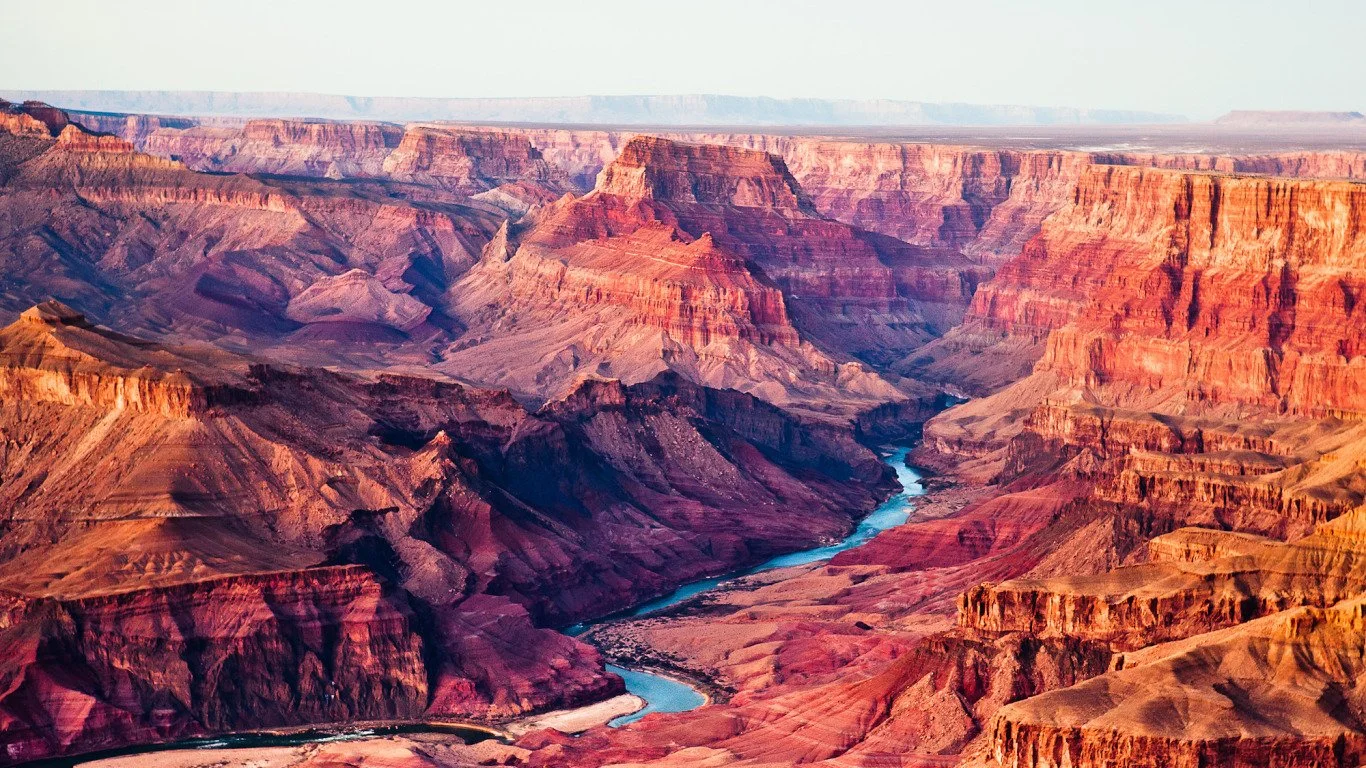
A river running through the Grand Canyon in Arizona

Unique Geological and Natural Formations in the U.S.

The United States doesn’t do subtle geology.

The Grand Canyon in Arizona is a mile-deep reminder that nature has both patience and drama. Carved by the Colorado River over millions of years, it’s vast enough to make photos feel useless and silence feel necessary.

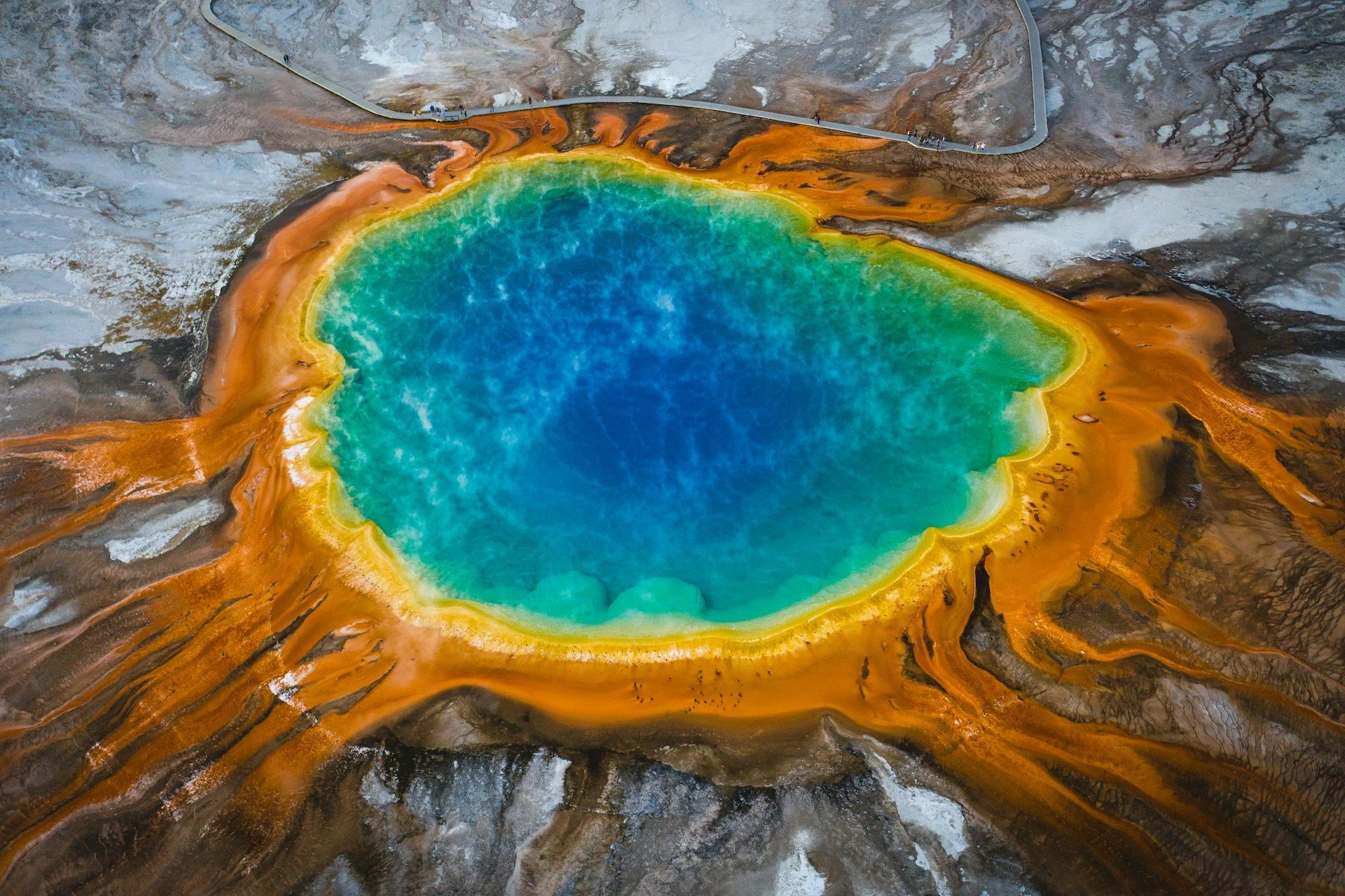
Massive hot spring with blue, green and yellow water inside, at Yellowstone National Park in the U.S.

Yellowstone National Park is another level entirely. Sitting atop one of the largest active volcanic systems on the planet, it’s home to geysers, bubbling hot springs, and surreal mineral colors that look Photoshopped but very much are not.

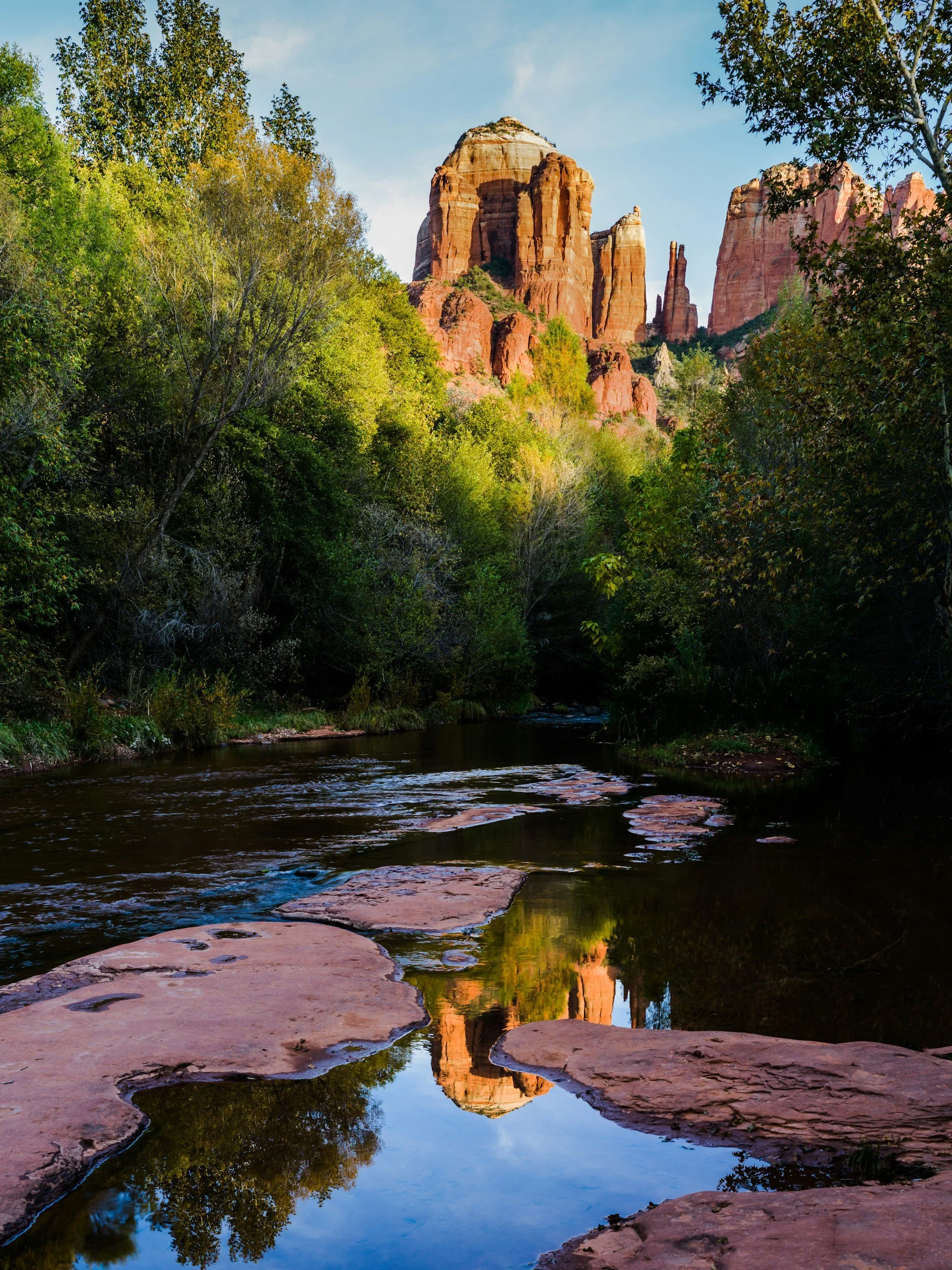
Rock formations and trees, with their reflections in small pools in Sedona, Arizona, USA

Sedona, Arizona rounds out the trio with towering red rock formations that shift color throughout the day. It’s a magnet for photographers, hikers and people who swear the rocks have “energy.” 

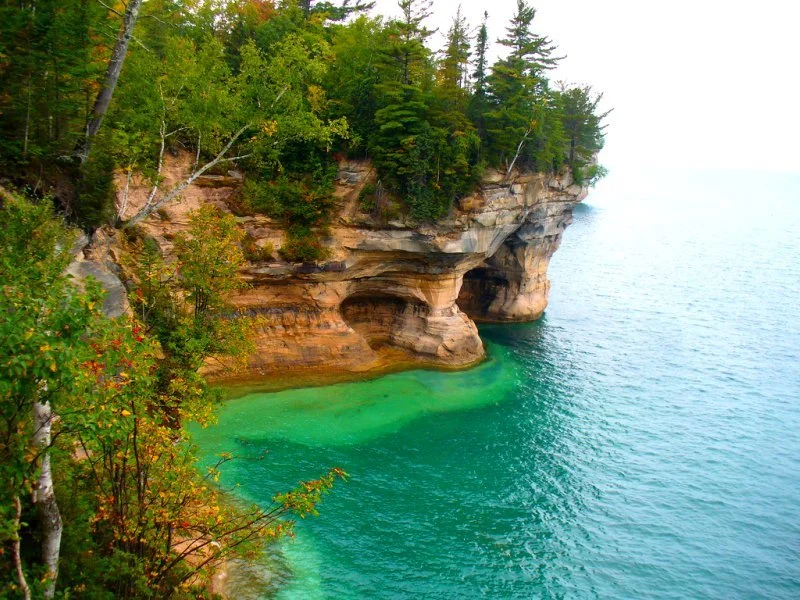
Waterside cliffs with caves and trees above the greenish waters of Lake Superior

Water Wonders of the USA

America’s water features can be just as dramatic as its deserts and canyons.

Lake Superior in Minnesota is so large it behaves like an inland sea, complete with rocky shorelines, shipwrecks and weather that changes its mood fast. It’s beautiful, intimidating and absolutely worth seeing.

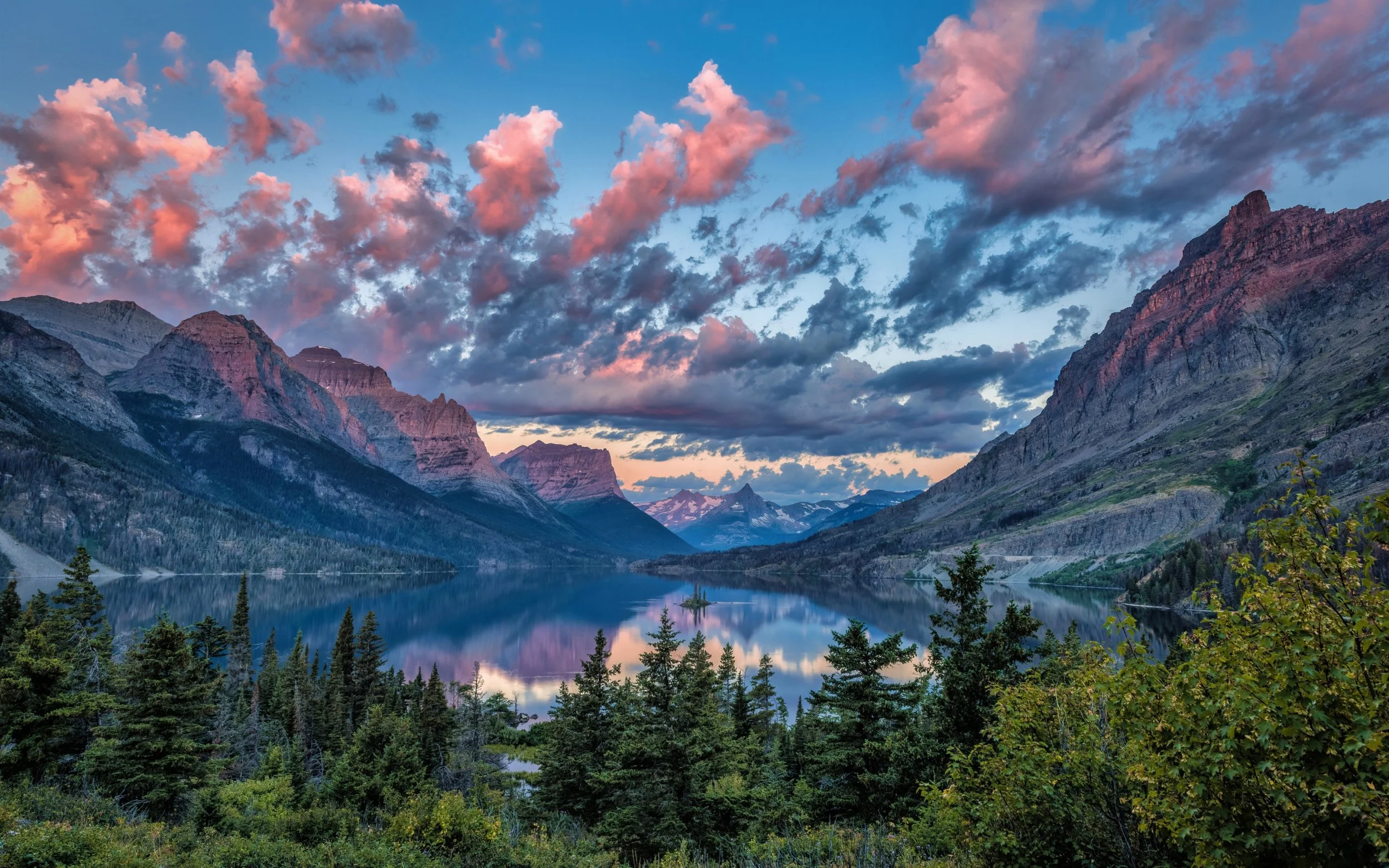
Dramatic mountains, clouds and trees at Saint Mary Lake, Montana, USA

Saint Mary Lake in Montana is famous for its clarity and glacier-fed blues, especially when framed by surrounding mountains. Calm, cold and postcard-perfect.

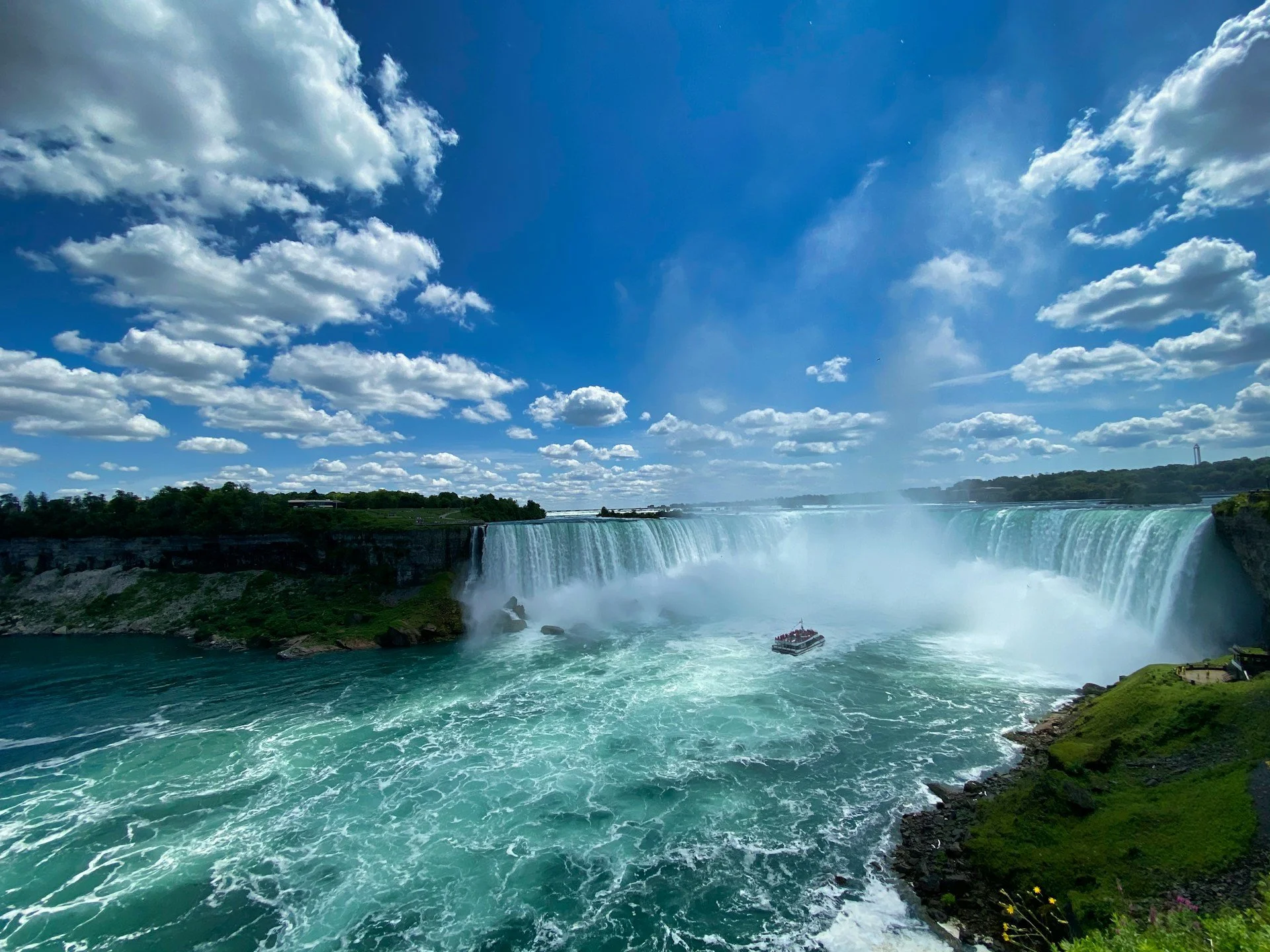
A boat gets near the base of Niagara Falls

And then there’s Niagara Falls. Loud, powerful and unapologetically excessive, it remains one of the most impressive waterfalls in the world. Walking near the falls feels less like sightseeing and more like standing next to a force of nature that doesn’t care about you.

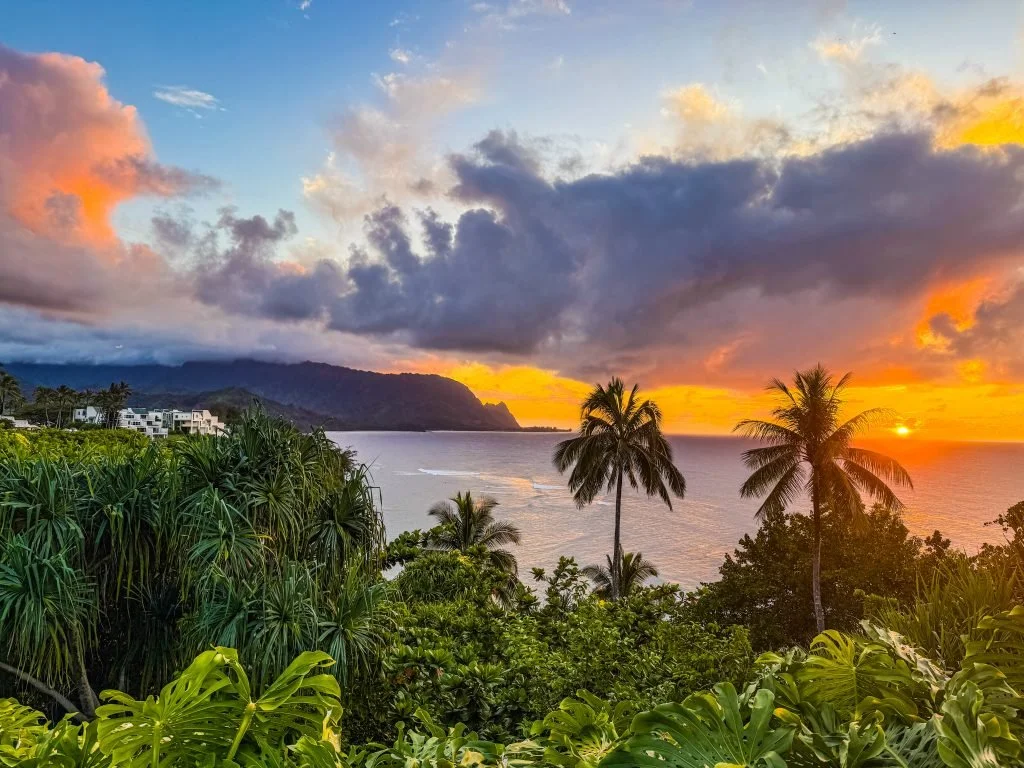
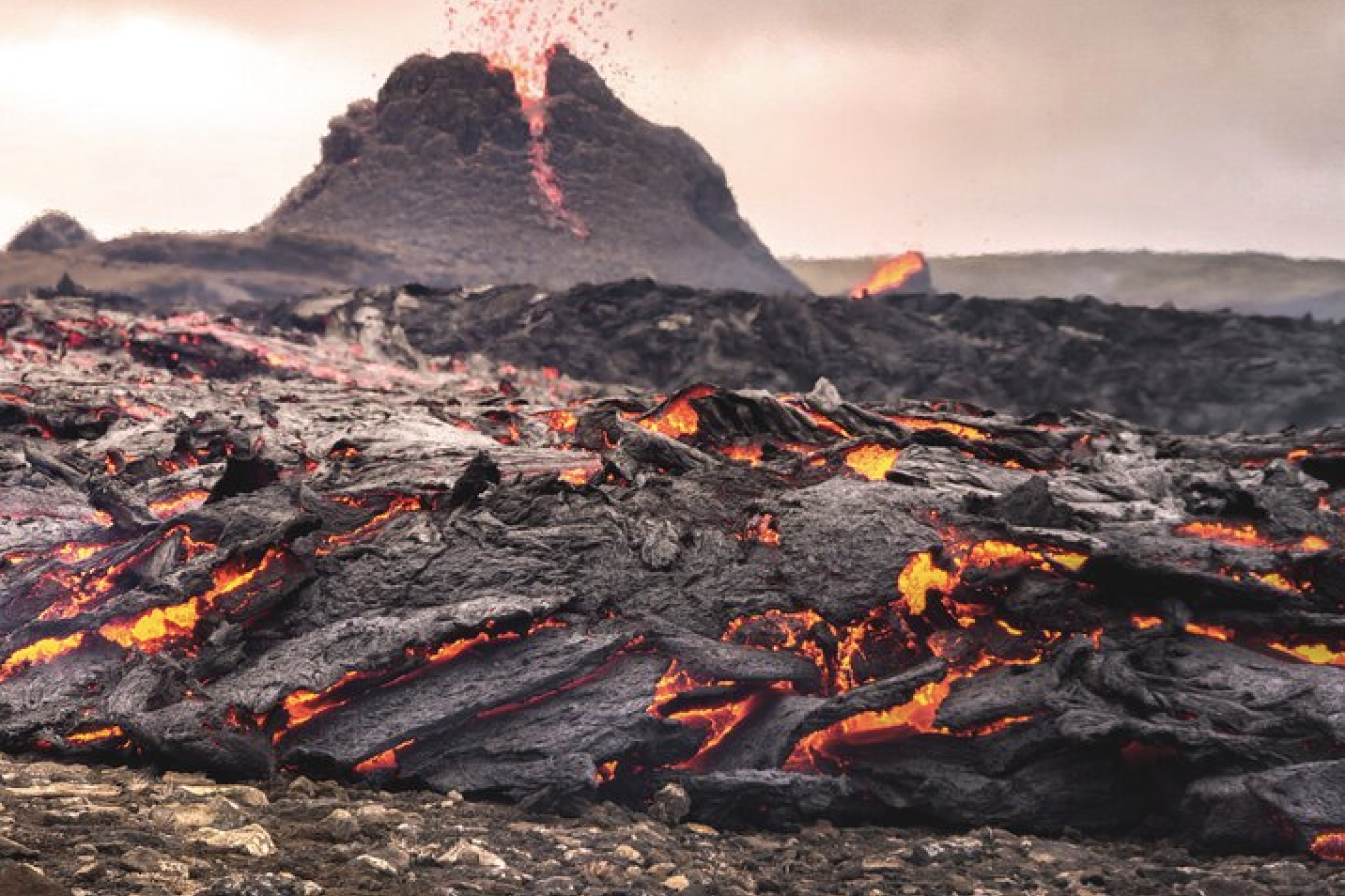
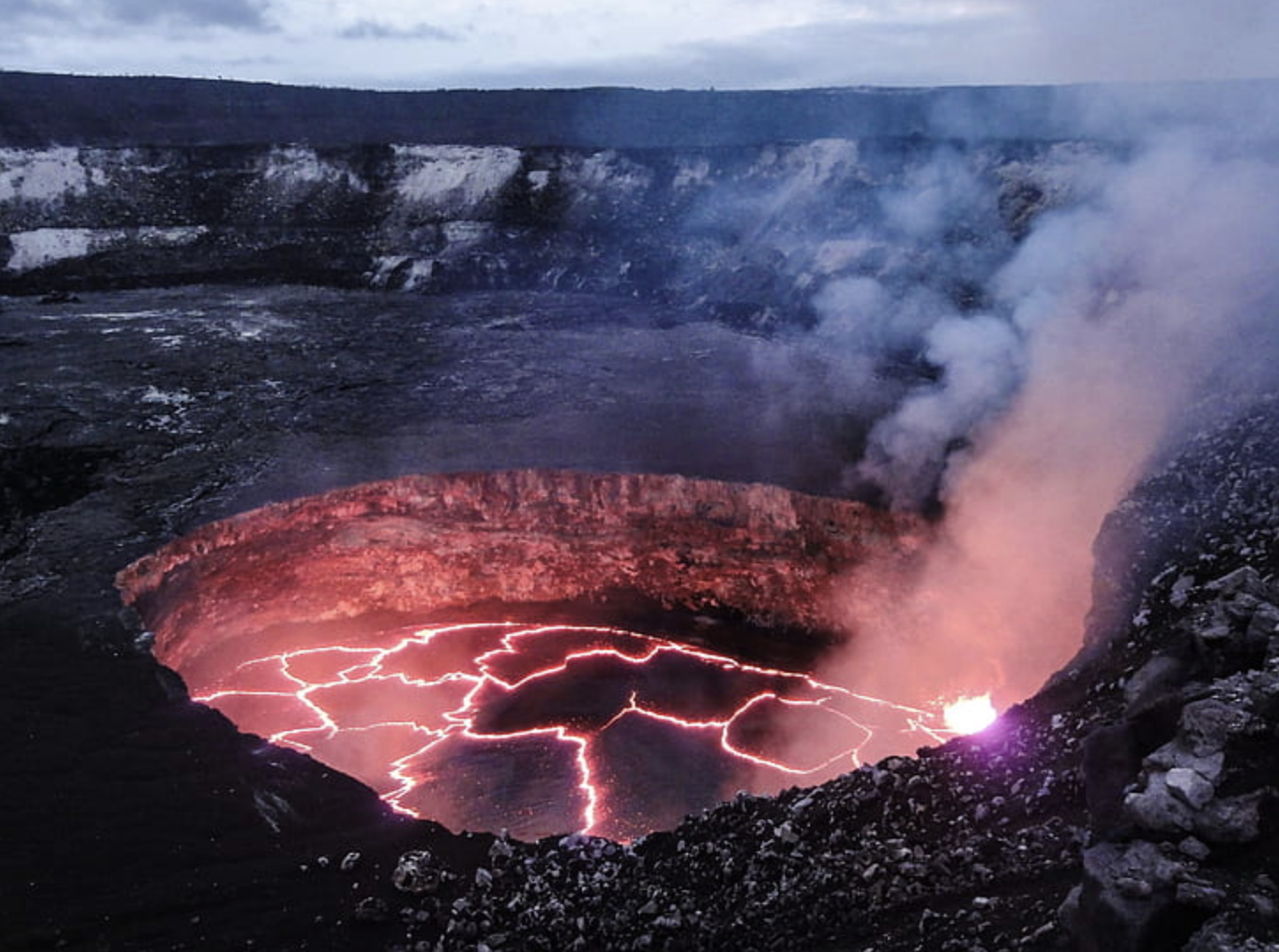
A volcano with lava pool in Hawaii, USA

For geothermal water lovers, Hawaii delivers with hot springs and volcanic landscapes that feel almost prehistoric — a rare blend of relaxation and raw earth energy.

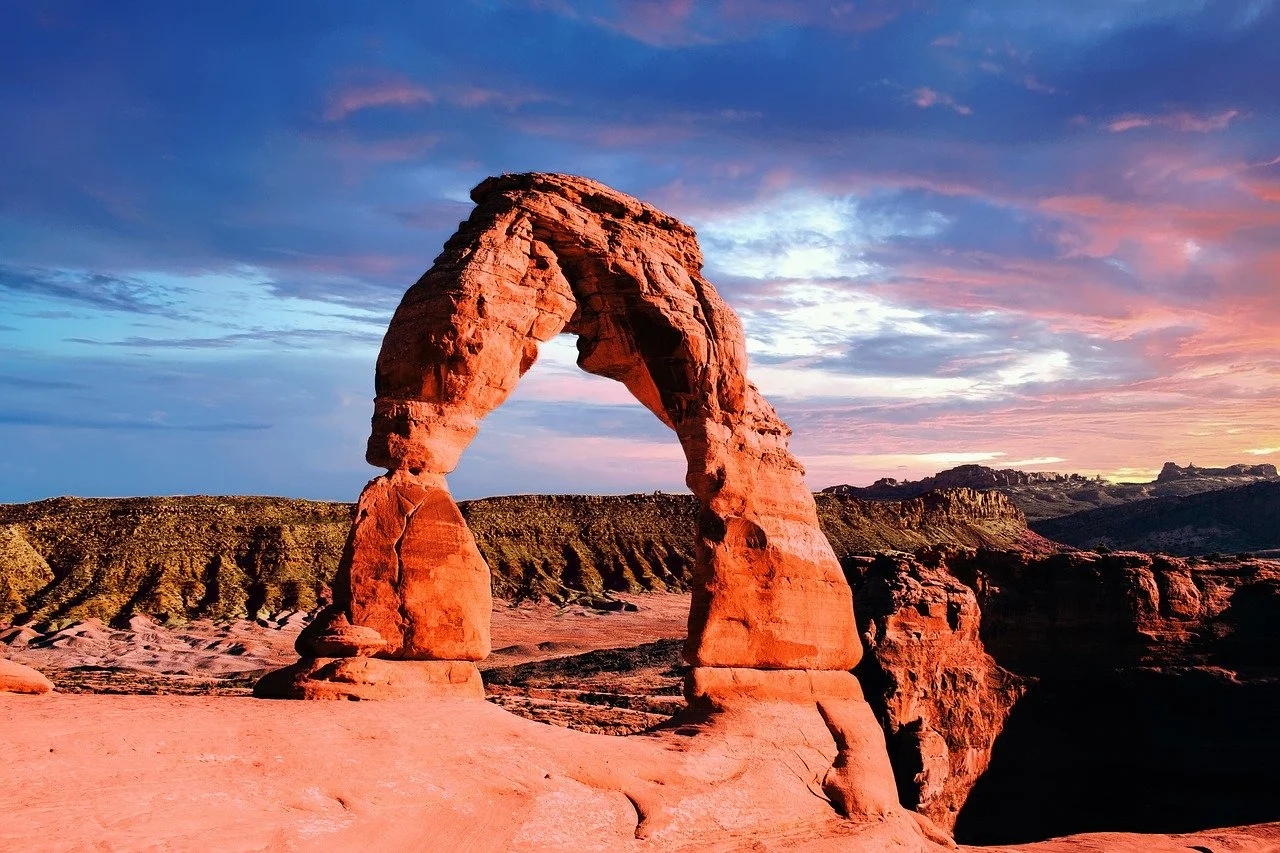
An arch on a clifftop at the Grand Canyon in the United States

Practical Tips for Travelers to U.S. National Parks

Seeing these natural wonders takes more than just showing up. A little planning goes a long way — especially when the landscapes are remote and the distances are large.

  1. Plan your route in advance. Many parks require timed entry, permits or advance reservations during peak seasons. Check before you go so you’re not turned away at the gate.

  2. Think about timing. Summer is prime hiking season, but shoulder seasons like fall and spring often mean fewer crowds and better light. Some parks are magical in winter — if you’re prepared.

  3. Rent a car. Public transportation rarely reaches the most interesting natural sites. A car gives you freedom, flexibility and access to the weird stuff.

  4. Be honest about physical demands. Hiking, kayaking and uneven terrain are common. Bring proper footwear, layers and a realistic sense of your limits.

  5. Don’t ignore legal logistics. If your travel plans extend beyond the U.S. — or you’re thinking more international — consulting global citizen lawyers can help you navigate visas, passports and cross-border travel considerations without surprises.

The cities may get the headlines, but it’s the hoodoos, geysers, canyons, and waterfalls that remind you just how strange — and spectacular — the USA really is. –Anatoly Yarovyi

The Most Popular Flower-Based Destinations Around the World

From cherry blossoms in Japan to lavender fields in Provence, these are the flower-filled destinations travelers plan entire trips around — timing anxiety included.

A fox sits by an old stone wall covered in colorful wildflowers in the English countryside as bird fly overhead

Some trips are built around museums. Others around food, beaches or weather that doesn’t actively try to ruin your plans. And then there are flower trips — the kind that hinge on a narrow window of time, a bit of luck, and a willingness to plan an entire journey around something that might already be gone by the time you arrive.

Flower-based travel is part pilgrimage, part gamble. Show up too early and you’re staring at bare branches or tightly closed buds. Show up too late and the petals are already carpeting the ground, beautiful in their own way but not quite what you came for. That anxiety — the constant checking of bloom forecasts, the obsessive refreshing of social feeds — is part of the appeal.

Around the world, certain flowers have become inseparable from the places that grow them. They shape city identities, define seasons and quietly drive tourism in ways that feel emotional rather than transactional. 

From fleeting cherry blossoms in Japan to marigolds that transform Mexico during Day of the Dead, these are the most popular flower-based destinations around the world — and why travelers keep chasing something so beautifully temporary.

A temple spire and curved bridge over a river in Japan with the cherry trees at full bloom

Cherry Blossoms in Japan

If flower-based travel has a gold standard, this is it.

Cherry blossom season in Japan isn’t just something you stumble into while sightseeing — it’s something people plan years around. Flights are booked with fingers crossed. Hotels fill months in advance. Entire itineraries hinge on a few fragile days when sakura trees briefly do what they’ve always done, indifferent to human schedules.

In cities like Tokyo and Kyoto, cherry blossoms turn everyday spaces into temporary landmarks. Parks, riverbanks and neighborhood streets become gathering places where people picnic under clouds of pink and white petals, fully aware that the moment is already slipping away. 

But Japan’s cherry blossom appeal isn’t limited to the obvious places. Many travelers deliberately skip the most crowded spots, chasing blooms in lesser-known cities or quieter regions where the experience feels more personal, less performative. The flowers are the same; the atmosphere changes completely.

What makes cherry blossoms such a powerful travel draw is their refusal to cooperate. Bloom forecasts are studied obsessively, but weather still wins. A warm spell can speed things up. A cold snap can delay everything. Miss the window by a week, and the trees are already shedding, their petals collecting on sidewalks and water like a beautiful consolation prize.

That uncertainty is exactly the point. Cherry blossom season taps into something deeper than scenery — it’s about impermanence, attention and showing up when it matters. The flowers don’t last, and that’s why people keep coming back, hoping to catch them at just the right moment next time.

When to go:
Late March through early April, though bloom timing varies by region and year. Southern areas tend to flower earlier; northern regions follow later.

Traveler tips:
Book accommodations well in advance and stay flexible if possible. Consider smaller cities or less-famous parks for a quieter experience, and don’t panic if petals start falling — peak bloom is beautiful, but so is the moment just after.

If autumn leaves are more your thing, try timing a trip with koyo in Japan.

Rows of red, white and yellow tulips by a windmill in the Netherlands

Tulips in the Netherlands

Tulips in the Netherlands occupy a strange space between nature and choreography.

For a few weeks each spring, the countryside turns into a living color chart. Red, yellow, pink and purple fields stretch toward the horizon with a precision that feels faintly suspicious, as if someone went out overnight with a ruler and a vision board. Which, historically speaking, isn’t far off. Tulips here thrive under planning, patience and a national fondness for order.

Keukenhof gets most of the attention, and for good reason. Its displays feel almost theatrical — rows of blooms arranged with such care they verge on surreal. Yet the real magic happens once you leave the gates behind. Beyond the gardens, tulip fields take over entire regions, lining rural roads and canals in broad, unapologetic stripes. This is the version best experienced slowly, preferably by bike, with plenty of stops just to stare.

Tulips have been woven into Dutch identity for centuries, from economic obsession to cultural shorthand. They appear everywhere — souvenirs, postcards, tourism campaigns — standing in for the country itself. 

Timing remains the only wildcard. Tulip season moves quickly and without apology. Arrive too early and the fields sit quietly green. Arrive too late and the flowers have already been cut back, their work complete. The reward goes to travelers willing to plan carefully and accept that the window stays narrow for a reason.

When to go:
Mid-March through early May, with peak blooms usually landing in April. Weather determines everything.

Traveler tips:
Keukenhof earns its reputation, but the countryside delivers the scale. Rent a bike or explore towns near Lisse to see the fields up close. Early mornings and overcast days often bring richer colors and fewer crowds.

EXPLORE MORE: A Benelux Itinerary

Rows of lavender growing in a field in Provence, France, with a stone house nearby

Lavender in Provence, France

For a brief stretch of summer, the landscape in Provence shifts into something almost unreal. Hills roll out in soft purples and silvers, neat rows of lavender stretching toward stone farmhouses and distant mountains. The scent hangs in the air, impossible to ignore, turning even a simple drive into a sensory experience.

Unlike flowers that cluster in parks or gardens, lavender defines the countryside itself. It’s woven into the region’s identity. Villages, roads and fields all participate, making Provence feel temporarily transformed rather than decorated.

Timing is everything. Lavender season is short and unforgiving. Arrive too early and the fields are still green, quietly preparing. Arrive too late and the harvest has already begun, leaving behind trimmed stems and a faint echo of what was there just days before. Travelers plan entire itineraries around this window, knowing the payoff lasts only weeks.

What draws people back year after year is the completeness of the experience. Lavender isn’t just pretty — it’s something you smell, feel and remember. The color, the heat of summer, the hum of bees in the fields — together they create a moment that feels both abundant and fleeting.

When to go:
Late June through mid-July is peak lavender season, though timing varies slightly by elevation and location

Traveler tips:
Base yourself near smaller villages rather than major cities to be closer to the fields. Early morning and late afternoon offer softer light and fewer crowds. Check local harvest updates before finalizing dates — once cutting starts, the show’s over fast.

BUG OUT: Why the Cicada Became the Symbol of Provence

Bluebells grow along a path leading to a cottage in the English countryside

Bluebells and Cottage Gardens in the United Kingdom

Spring in the UK arrives softly. One day the woods look ordinary. The next, they’re flooded with blue. Bluebells carpet forests and parklands in dense, low waves, transforming familiar paths into something quietly otherworldly, the sort of setting that has inspired centuries of fairy lore. People travel specifically to see them — often returning to the same woods year after year, guarding favorite spots like secrets.

Bluebell season carries real weight here. These flowers signal renewal, nostalgia, and a very specific version of spring that feels deeply tied to place. Walk through ancient woodland at peak bloom and the effect feels almost hushed, as if the landscape expects visitors to lower their voices.

Beyond the woods, flowers define the UK in more cultivated ways. Cottage gardens explode with color as soon as the weather allows, packed with foxgloves, roses, delphiniums and whatever survived winter. Places like the Cotswolds and Cornwall, along with other parts of the English countryside, draw travelers who time their visits around bloom cycles rather than attractions.

Timing remains everything. Bluebells bloom for a narrow window, usually April into early May, and weather decides the exact moment. Miss it and the woods return to green without ceremony. Catch it right and the experience lingers far longer than the walk itself.

For travelers who leave before the season peaks — or who miss it entirely — flowers still carry meaning back home. Many people turn to flower delivery UK services as a way to stay connected to the landscapes they traveled for, even after the blooms fade from view.

When to go:
April through May for bluebells; late spring through early summer for cottage gardens

Traveler tips:
Stick to marked paths in bluebell woods — trampling damages bulbs that take years to recover. Visit early in the morning or on weekdays for a quieter experience, and expect weather to shift plans without warning.

EAT UP: Guide to British Cuisine

Roses grow on a hill above the city of Portland, Oregon, with Mount Hood in the distance

Roses in Portland, Oregon, USA

Not all flower destinations are rural or seasonal escapes. Some are baked directly into a city’s identity.

Portland has been calling itself the City of Roses for more than a century, and unlike many nicknames, this one still holds up. Roses aren’t tucked away on the outskirts or limited to a single bloom window — they’re part of the city’s fabric, climbing fences, lining streets and anchoring public spaces.

The International Rose Test Garden is the obvious centerpiece, perched above the city with views that stretch toward Mount Hood on clear days. Thousands of varieties bloom here each year, carefully tended and quietly competitive, as growers test new roses destined for gardens around the world. It’s formal, yes, but never stuffy. People wander, linger, and treat it less like an attraction and more like a shared backyard.

Timing still matters, but the window is generous. Roses bloom over months rather than days, offering a softer version of flower travel — less gamble, more assurance. It’s a reminder that not every floral pilgrimage has to come with anxiety attached.

When to go:
Late May through September, with peak blooms typically in June and July

Traveler tips:
Visit the rose garden early in the morning or on weekdays for quieter paths. Pair your visit with a walk through nearby Washington Park or a slow neighborhood stroll to see how roses show up beyond the formal garden.

A Mexican cemetery at Dia de los Muertos, with candy skulls, candles and marigolds covering the graves and pathways, with a church in the background

Marigolds in Mexico

Marigolds in Mexico arrive in saturated waves of orange and gold, thick with scent and impossible to ignore. For a short stretch each fall, they flood streets, cemeteries, markets and kitchens, turning everyday places into something charged and ceremonial. 

During Día de los Muertos, marigolds have a job description. Their color and smell guide spirits back home, tracing paths from doorways to altars to graves. You see them scattered like breadcrumbs, piled high around photographs and candles, woven into arches and crowns. Cemeteries like the Panteón 5 de Diciembre in Puerto Vallarta glow after dark, petals catching candlelight while families linger, talk, eat and remember.

Markets feel especially alive during this time. Buckets overflow with marigolds sold by the armful, meant for someone specific rather than general display. These flowers serve memory, grief, humor and affection all at once. The mood holds warmth alongside loss, celebration alongside reverence.

Timing matters intensely. Arrive outside the window, and the marigolds retreat just as quickly as they appeared, taking the altars and processions with them. During Día de los Muertos, entire cities feel temporarily reshaped, as if normal life stepped aside to make room for something older and more intimate.

Travelers return because the experience feels human at its core. Marigolds turn flowers into language — one spoken between generations, across time and through ritual. You leave with the sense that beauty here carries responsibility.

When to go:
Late October through November 2, with celebrations peaking around Día de los Muertos.

Traveler tips:
Move slowly and observe before engaging. Markets offer the fullest sensory experience early in the day, while cemeteries come alive after sunset. Smaller towns often provide deeper, more personal encounters than major cities.

DO YOU BELIEVE IN MAGIC? Samhain Divination Spells

Colorful orchids grow along a path among palm trees in Singapore

Orchids in Singapore

Orchids in Singapore look like something engineered in a lab by someone with a flair for drama. They curl, twist, spike and glow in colors that feel almost synthetic. Some resemble insects. Others look mid-metamorphosis. It’s easy to forget these things grow out of soil. In Singapore, orchids feel closer to science fiction than gardening — which explains why the city embraced them so completely.

Walk through the Singapore Botanic Gardens and the orchid collection feels less like a stroll and more like a catalog of botanical overachievement. Thousands of varieties bloom with unapologetic confidence, each labeled and tracked, as if daring you to question how much control humans can exert over nature. Singapore answers that question decisively.

Gardens by the Bay doubles down on the spectacle. Orchids glow beneath glass domes, backlit and theatrical, performing for visitors who came expecting futuristic architecture and left thinking about flowers instead. It’s maximalist. It’s bizarrely beautiful. It works.

To locals, orchids signal status and ambition. Hybrid blooms get named after visiting dignitaries and world leaders, turning flowers into diplomatic souvenirs. Giving someone an orchid here carries weight. These plants represent polish, progress, and a country very comfortable presenting itself as hyper-competent.

For travelers, orchids offer a rare luxury: certainty. They bloom year-round, immune to weather roulette. Singapore delivers the flowers exactly as promised — strange yet immaculate.

When to go:
Any time. Orchids thrive here year-round.

Traveler tips:
Start at the Singapore Botanic Gardens to see the sheer range, then head to Gardens by the Bay for spectacle. Pay attention to the shapes — orchids here reward close inspection and a slightly unhinged imagination.

SINGAPORE DAY TRIP: Visit Batam

Sunflowers grow among other flowers in the rolling hills of Tuscany at sunset, with a villa in the distance

Sunflowers in Tuscany, Italy

Sunflowers in Tuscany feel almost aggressive in their cheer. They line roads and hillsides in tight formation, huge yellow faces tracking the sun with unnerving enthusiasm. Driving through the countryside during peak bloom turns into a constant exercise in restraint — every few minutes presents another “pull over immediately” moment. Eventually, everyone gives in.

Sunflowers come with scale. Fields stretch wide and loud, unapologetically bright against dusty roads, cypress trees and stone farmhouses. In Italy, flowers have always carried deeper meaning, from religious devotion to seasonal rites of passage, a theme explored in Italian floristry and floral symbolism. The effect feels cinematic, the kind of scenery that convinces people their vacation photos finally match the fantasy.

Sunflowers also fit Tuscany’s rhythm. These fields appear alongside vineyards and wheat, part of a working landscape rather than a curated display. Locals treat them as another seasonal marker, a sign summer has arrived in earnest. 

Timing still calls the shots. Sunflowers bloom quickly and fade just as fast, their faces drooping once the season turns. Catch them at their peak and the countryside feels electric. Miss it and the fields move on without ceremony.

People keep chasing sunflower season because it delivers instant joy. The experience carries zero mystery and full commitment: bold color, warm air, wide-open space. Sometimes that’s exactly what a trip needs.

When to go:
Late June through July, with timing varying slightly, depending on location and weather.

Traveler tips:
Rent a car to explore rural roads freely and expect frequent stops. Early morning and golden hour offer the best light and fewer crowds. Respect private property — the best views often come from the roadside.

Llamas graze among the wildflowers that have popped up in the Atacama Desert in Chile, with flamingos in the water nearby

Wildflowers in the Atacama Desert, Chile

Wildflowers in Chile’s Atacama Desert feel like a practical joke pulled by nature.

Most of the year, the Atacama ranks among the driest places on Earth — a landscape of dust, rock and silence that stretches toward the horizon with zero interest in pleasing visitors. Then, every so often, rain falls. Real rain. Enough to wake seeds that have been waiting patiently underground for years.

When that happens, the desert blooms.

Pink, purple, yellow and white flowers spread across the sand in an event locals call desierto florido. Hillsides and plains erupt into color where travelers expected emptiness. The transformation feels surreal.

This bloom carries real meaning in northern Chile. Locals treat it as a rare gift rather than a guarantee, a reminder that even the harshest landscapes hold quiet potential. People drive long distances to see it, fully aware the window stays brief and unpredictable.

Timing here plays hardball. Blooms depend entirely on rainfall, which varies wildly from year to year. Some years pass with nothing. Other years deliver an explosion that lasts weeks. Visitors arrive hopeful, checking forecasts and local reports, aware that certainty holds no power in this part of the world.

Travelers chase the Atacama bloom because it offers bragging rights and wonder in equal measure. Seeing flowers rise out of a desert famous for refusing life feels like witnessing a secret. Miss it, and the desert returns to its usual self without apology.

When to go:
August through October, only in years with sufficient rainfall. Exact timing changes annually.

Traveler tips:
Follow local Chilean news and park updates closely before planning. Stay flexible with travel dates if possible. Respect protected areas and resist the urge to wander into fragile bloom zones — this spectacle survives best when admired from a distance.

Pink lotuses float on pads in a bay filled with boats and small temples amid large rock formations in Vietnam at twilight

Lotus Flowers in Thailand and Vietnam

Lotus flowers thrive in places that feel calm on the surface and complicated underneath. You see them floating in temple ponds, rising clean and deliberate from murky water, petals intact and serene. In Thailand and Vietnam, lotus flowers carry centuries of meaning — purity, renewal, spiritual discipline — yet they remain deeply ordinary. People buy them on the way to pray. Vendors stack them beside fruit and incense. They exist as part of the daily rhythm rather than a special occasion.

At temples, lotus ponds shape the atmosphere. The flowers soften heat and noise, creating spaces that invite pause. Monks carry lotus buds during ceremonies. Worshippers offer them quietly, often without explanation. 

Lotus flowers also appear far from sacred spaces. They grow in agricultural wetlands, in canals and along roads leading out of cities. In Vietnam, lotus seeds and roots end up in kitchens as often as altars. The flower bridges spiritual and practical life with ease.

Timing matters less here. Lotus season stretches generously across warmer months, and blooms appear daily, opening in the morning and closing by afternoon. 

People remember lotus flowers because they anchor a sense of place. The experience feels quiet, grounded and human — a reminder that beauty can exist alongside routine.

When to go:
May through October, with peak blooms during the warmer, wetter months.

Traveler tips:
Visit temples early in the morning when lotus flowers open and crowds are thinner. Watch how locals interact with them before reaching for a camera. In Vietnam, try lotus tea or dishes using lotus root to experience the flower beyond the visual.

A man puts his arm around another man as they stand in a lavender field, looking out at the sunset

Why Flowers Keep Turning Places Into Destinations

Flower-based travel asks for patience, flexibility and a willingness to miss things. Entire trips hinge on weather patterns, bloom forecasts and timing that refuses to cooperate. And yet people keep coming back for more.

Maybe that’s the point.

Flowers force travelers to surrender control. You plan carefully, arrive hopeful, and accept whatever version of the moment shows up. Sometimes the fields explode with color. Sometimes petals carpet the ground, already slipping into memory. Either way, the experience lands because it belongs to that place, at that moment, and never quite repeats itself.

Across the world, flowers shape how places see themselves and how visitors remember them — from cherry blossoms signaling impermanence in Japan to marigolds guiding memory in Mexico, from meticulously cultivated orchids in Singapore to sunflowers lighting up Tuscan backroads. These destinations stay popular because they offer something temporary, visceral and stubbornly uncommodified.

You can photograph flowers, plan around them, even chase them across continents. You just can’t make them wait for you. And that tension — between preparation and surrender — is what keeps flower travel irresistible. –Wally

’TIS THE SEASON: Spring Festivals Around the World 

Underrated Weekend Getaways From San Diego

Perfect weather. Gorgeous beaches. Ho hum. From Julian to Baja Wine Country, these underrated weekend getaways from San Diego offer desert stars, mountain cabins, Mexican vineyards, retro pool scenes and all the apple pie you can handle.

A palm tree-lined road in San Diego, leading to the water, at sunset

Let’s be honest: Living in San Diego is both a blessing and a trap. Sunshine 300 days a year. Fish tacos everywhere. Beaches that make postcards jealous.

So why on Earth would anyone want to leave?

The thing about living in San Diego is that the constant perfection can start to feel monotonous.

That’s why it’s essential to escape, even if it’s just for a weekend.

Because perfection gets boring. Eventually, even the world’s most ideal climate starts to feel like a screensaver that won’t turn off. And when that happens, you need to swap your palm trees for pine trees, your surfboard for a road map, and your Baja hoodie for something that actually counts as a jacket.

Here’s how to do that — without joining the crowds in L.A. or pretending Joshua Tree isn’t overrun.

Snow covers the ground at Lake Cuyamaca near Julian, California

1. Julian (for Pie, Pines and People Who Think Snow Is a Novelty)

An hour east of San Diego, Julian feels like stepping into a parallel universe where the air smells like apples and nobody owns a surfboard. The town sits in the Cuyamaca Mountains, complete with crisp air, gold rush history and a suspicious number of pie shops.

Go in autumn if you can — apple-picking season turns the place into a Hallmark movie, minus the sappy soundtrack. In winter, there’s even snow. Actual snow! For San Diegans, it’s practically witchcraft.

Stay overnight, hike around Lake Cuyamaca, and leave with the smug glow of someone who “did the mountains this weekend.”

A giant brown snake sculputre in the desert at Borrego Springs, California

2. Borrego Springs (Desert Solitude With Bonus Giant Lizard)

Two hours northeast lies Borrego Springs, the only International Dark Sky Place in California. Translation: The stars are so intense, they look like they’ve been Photoshopped.

By day, explore Anza-Borrego Desert State Park. Think canyons, slot trails and giant metal sculptures scattered through the sand. The 350-foot serpent alone is worth the drive (and the photos).

By night, grab a drink at a local dive, then lean back and watch the Milky Way show off. It’s as close as you’ll get to peace without joining a silent retreat.

Colorful chaise deck chairs by a pool at a Mid-Century Modern home in Palm Springs, California

3. Palm Springs (Mid-Century, Modern Escape)

Palm Springs isn’t exactly a secret, but it remains one of the easiest transformations you can make in a single afternoon: from San Diego surf rat to martini-sipping poolside minimalist.

The desert heat, the Mid-Century design, the ridiculous pool floats — it all works. Rent a retro Airbnb or book a spa hotel, and spend the weekend pretending you’re in a Slim Aarons photo.

Yes, it’s a bit performative. That’s half the fun.

Vineyards in the misty hills of Baja Wine Country in the Valle de Guadalupe, Mexico

4. Baja Wine Country (The World’s Most Chill Vineyard Scene)

Cross the border and drive an hour south into Valle de Guadalupe, Mexico’s not-so-secret wine country. It’s Napa … if Napa cost half as much and didn’t take itself so seriously.

You’ll find open-air restaurants, rolling vineyards and boutique hotels built from reclaimed shipping containers. Order a mezcal cocktail you can’t pronounce, and accept that you’ll probably come home with a few extra bottles.

Pro tip: The sunsets here are the kind that make your phone camera give up and say, “Just live in the moment.”

Trees and a rocky stream near Idyllwild, California

5. Idyllwild (A Forest Hideaway for People Who Still Own Flannel)

Two hours north, tucked into the San Jacinto Mountains, is Idyllwild — a tiny town of artists, hikers and dogs who all seem suspiciously happy. It’s cabin country at its best: pine needles underfoot, jazz bars at night, and trailheads that start behind coffeeshops.

It’s the ideal reset button after a week of traffic, Slack notifications and ubiquitous oceanfront.

A rocky promontory with flowers and palm trees in San Diego overlooks the Pacific Ocean

The Joy of Leaving Paradise

If you’ve ever thought, “I need a vacation from my vacation city,” you get it. The thing about living in San Diego is that the constant perfection can start to feel monotonous. That’s why it’s essential to escape, even if it’s just for a weekend.

You don’t have to plan it from scratch, either. Here’s a curated list of weekend getaways from San Diego that’ll help you find your next mini-adventure — whether that means soaking in a hot tub with mountain views or eating your body weight in pie.

The trick isn’t leaving San Diego forever; it’s remembering that there’s a whole world beyond your idyllic bubble. Sometimes, stepping into the desert or up into the mountains makes you appreciate the beach even more.

And when you roll back into town, tanlines fading and cooler full of wine, you’ll remember why you live here in the first place.

Just don’t tell the tourists that paradise actually gets old. It’ll ruin the mystique. –Shahroz Yousaf


The Sea Loft Treehouses of Deer Island: Sea Pine’s Hidden Gem

Where is Deer Island? This hideaway within Sea Pines Plantation feels like a secret world on stilts. These quirky octagonal “treehouse” villas have roots in radical planning, not just marsh mud.

I was about 12 years old the first time I stumbled upon the enchanting enclave of Deer Island. At the time, my family spent a week vacationing on Hilton Head Island every year, and most afternoons, my brother, the Hollister girls and I would hop on our bikes to explore the winding trails of Sea Pines. We often ended up in Harbour Town for ice cream — but now and then we’d take a detour. And that’s how we found it: the treehouses of Deer Island, hidden away, like something out of a storybook.

Years later, when my parents retired and made Hilton Head their full-time home, my husband, Duke, and I continued the tradition: going for bike rides just like I did as a kid — only now we stop for coffee, frozen cocktails and ice cream. On one of those visits, we discovered a shortcut to Harbour Town. As we pedaled along Calibogue Cay Road, looking for a secret passage to Harbour Town we had heard about, I spotted a small sign and a narrow path disappearing into the woods. Curiosity (and the promise of shade) pulled us in.

Why octagons?

Because they’re practical and poetic. No big blank walls to block views. Every angled facet has a window or sliding glass door, offering wraparound vistas and loads of natural light.

As we emerged from the path, the houses immediately clued us into the fact that we had found a back entrance to Deer Island. This maritime hammock surrounded by salt marsh has its road access at the other end, accessible by a wooden bridge over the colorfully named Heddy Gutter Creek near CQ’s Restaurant. 

The main entrance to Deer Island across from Harbour Town

It’s the houses on Deer Island that immediately capture your attention. Perched among the trees, and built around a central pillar, these octagonal dwellings feel like the Ewok Village on the Forest Moon of Endor. 

But these homes aren’t simply whimsical treehouses. They were part of a bold, eco-conscious vision that redefined coastal development — decades before “sustainable” became a corporate buzzword. The 74 freestanding Sea Lofts were unlike anything else on Hilton Head Island: a cross between futuristic retreat and Swiss Family Robinson hideaway.

How Sea Pines Gave Rise to a Treehouse Island

The story of Deer Island begins in 1956 with developer Charles E. Fraser, who set out to build a different kind of coastal community — one that didn’t pave over paradise to put up a parking lot. A law school graduate with a passion for conservation, Fraser turned his Sea Pines Plantation Company into a proving ground for planning principles that would go on to influence resort communities from Kiawah Island, also in South Carolina, to Costa Rica. (The word “Plantation” was eventually dropped from the name due to its associations with slavery.)

Fraser’s philosophy was simple but radical: Build around nature, not over it. That meant curving roads to preserve trees, designing low-slung homes that blended into the landscape, and enforcing strict architectural guidelines banning bright colors, boxy footprints and big egos.

“We didn’t want to build a resort,” Fraser once said. “We wanted to build a community.”

Sea Pines became a visionary experiment in eco-conscious design as well as a haven for architecture buffs, environmentalists, and anyone who prefers to sleep where the egrets (and alligators) roam.

By the late 1960s, Sea Pines was booming. The iconic red-and-white Harbour Town Lighthouse was completed in 1970, and Hilton Head was quickly becoming a premier coastal destination. Amid this growth, Fraser and his team, including renowned landscape architect Hideo Sasaki and urban designer Stuart Dawson, began sketching out something entirely different: a marshfront community that would feel like a private island while still offering access to nearby beaches, restaurants and shops.

That idea became Deer Island. Completed in 1971, it marked a bold shift in Sea Pines’ residential offerings. Instead of vacation estates, the Sea Lofts were designed to be compact, elevated and unconventional. These octagonal bungalows featured open floor plans that maximized views and minimized environmental impact. Each home overlooks a tidal creek or salt marsh, without disrupting the lush canopy of trees.

Fraser’s team believed the natural landscape should take the lead. While the rest of the island leaned into more conventional development, Deer Island embraced its own quiet charm: no shops, hardly any traffic — just birdsong, breezes and the occasional deer wandering beneath your house. Because, yes, we’ve seen plenty of deer on Deer Island.

Yes, there are plenty of deer on Deer Island — but the treehouses are the stars.

Deer Island Homes: A Style Designed to Disappear

If you’ve ever been to Sea Pines and wondered, “Where are all the houses?” — that’s the point. Deer Island takes that idea to the extreme. From across the marsh, the homes vanish into the canopy. Even up close, you might find yourself squinting through loblolly pines, palmettos and live oaks, trying to spot the angular lines of a Sea Loft villa. These houses were meant to exist in harmony with their surroundings.

Fraser and his team set strict guidelines: low rooflines, muted earthy colors and tree preservation. In fact, if you have to cut down a tree on a Sea Pines property, you’re required to plant new ones to match the original trunk’s diameter in inches. 

The result? A neighborhood that feels like it grew there — even though every detail was carefully planned, down to the last railing. 

Architecturally, it’s a style referred to as Hilton Head Modern, or sometimes, Lowcountry Modern. Think deep overhangs, shaded porches, wide windows and colors inspired by the ubiquitous live oaks. You won’t find any pink stucco or coral trim here. It’s less Miami Beach flash, more Zen retreat in the marsh.

The Octagonal Treehouses of Deer Island

Now let’s talk shape.

The Sea Loft villas are small — roughly 800 to 900 square feet — but they pack a punch. Each is octagonal, lifted one story aboveground on wooden pilings. I’m not the only one who calls them “treehouses,” and while no rope ladders are involved, the vibe is spot on.

Why octagons? Because they’re practical and poetic. No big blank walls to block views. Every angled facet has a window or sliding glass door, offering wraparound vistas and loads of natural light. Inside, the open floor plan and vaulted ceilings make the small footprint feel more spacious. 

And because the homes are up on pilings, you’re always eye level with the birds and squirrels. Beneath the houses, deer graze. As mentioned, the island lives up to its name.

On top of the views, the design is functional. The elevated structure lets floodwaters pass beneath, which is kind of a big deal on a barrier island prone to hurricanes. The shape helps diminish wind during storms. And the materials — often cedar siding, weathered to a silvery brown — hold up beautifully in salt air.

The People Behind the Planning of Deer Island

There may not be a single “starchitect” behind Deer Island, but its DNA can be traced back to a team of forward-thinking planners. Fraser may have been the frontman and public face of the project, but his collaborators included some of the most influential figures in landscape architecture and urban design of the 1960s and ’70s.

Take Sasaki, widely regarded as one of the most influential landscape architects of the 20th century. He believed that good design should serve both people and the planet — a rare point of view at the time. Working alongside his colleague Dawson at Sasaki, Dawson & DeMay, the pair helped shape Sea Pines into a model of what environmentally conscious development could look like. Dawson introduced the concept of “leisure villages” and laid out the roads in short loops, T-intersections and cul-de-sacs — not just to reduce traffic, but to preserve views and soften the human footprint. To this day, planners still point to his designs as best in class.

Supporting players included local landscape architect Joe Harden, who laid out much of Sea Pines’ lush greenery and trails, and Phil Lader, a young planner who later wrote about Fraser’s groundbreaking approach. Even the Sea Pines Architectural Review Board deserves a shoutout; they enforced the color palettes and tree preservation like they were protecting the Mona Lisa.

Still, it all comes back to Fraser. He may not have drawn every line or plotted every trail, but he set the tone — and made sure everyone followed it.

A Living Legacy (With Real Estate Perks)

Fast forward 50 years. Hilton Head has undeniably changed. Sea Pines has grown, the lighthouse area has been completely renovated, and plenty of the early homes have been replaced by larger, multimillion-dollar structures (though they still adhere to his aesthetic).

But not on Deer Island.

Here, the original 74 Sea Loft villas are still standing — weathered, yes, but proudly so. They’ve been updated inside, though, and a few have gotten modest expansions or screened-in porches. But the exteriors? Still hugging trees. Still octagonal. Still charming.

Heddy Gutter Creek. leading out to Calibogue Sound

In an industry where teardown culture reigns, Deer Island is a time capsule that’s only gained value. Buyers today are part of a design legacy. A slice of Sea Pines history. A front-row seat to the marsh.

Prices reflect that. In the past few years, sales have ranged from mid-$600,000 to just over $1 million, depending on the view and renovation level. 

Real estate agents pitch it as immersive natural surroundings” and private tranquility, but you could just say: It feels good here. Like someone actually cared about how people would live — and how the land would look half a century later.

Spoiler: It looks great.

Deer Island: A Small Isle With a Big Idea

Deer Island may be small, but it punches well above its weight — architecturally, historically and spiritually. It’s a place where planners once dared to ask, “What if we didn’t bulldoze the trees?” — and then literally built the homes around (and among) them. A place where you can sip coffee on your deck while snowy egrets and blue herons glide past.

It’s Hilton Head at its most thoughtful. Most peaceful. Most quietly radical.

And in a world where luxury often means “more,” Deer Island whispers a different kind of promise: less square footage, more soul. The kind of place that still feels like a secret.

So if you ever find yourself in Sea Pines, look for that discreet entrance en route to Harbour Town and follow it. See what happens when development makes room for the wild things. You might just find yourself dreaming of life inside one of these architectural marvels like we do. –Wally

The First Homosexuals at Wrightwood 659: Rewriting Art History With a Queer Lens

This powerful global exhibition traces the emergence of queer identity through more than 300 artworks — at a time when LGBTQ+ visibility matters more than ever.

Peace 1 by Zhang Huan, a sculpture of a nude golden man about to ring a large metal bell, at Wrightwood 659 in Chicago, during The First Homosexuals exhibit

Peace 1 by Zhang Huan, 2001

When Wally and I heard about The First Homosexuals: The Birth of a New Identity, 1869–1939 at Wrightwood 659, we were immediately intrigued. We had missed the first iteration, which ran in 2022. This new presentation promised to be larger in scale, and suggested something truly ambitious — a visual journey recontextualizing art history by presenting a wide range of works through a queer lens. 

This exhibition is especially important because it comes at a perilous time when LGBTQ+ voices are increasingly under attack across political and cultural spheres. In the face of bans, restrictions on school curricula, and renewed efforts to limit or erase queer visibility, The First Homosexuals reclaims that space by affirming that queer identity has an enduring, complex and creative legacy. 

“The First Homosexuals” is especially important because it comes at a perilous time when LGBTQ+ voices are increasingly under attack across political and cultural spheres.

I was reminded of Masculin/Masculin, a provocative exhibition Wally and I saw at the Musée d’Orsay in 2013. Drawing primarily from European painting and sculpture, the show turned the traditional male gaze on its head — shifting the focus from the female form, so often idealized in art, to the male nude. By presenting works from 1800 to the early aughts, the show invited viewers to reconsider the male body, not just as a symbol of strength or virility but as an object of desire.

While Masculin/Masculin traced the idealization of the male body in European art, it didn’t place those depictions within the broader context of queer history. The First Homosexuals at Wrightwood 659 takes that next step, expanding the lens across five continents and inviting viewers to consider queerness as something shaped by history, society and culture — often coded, but always present. 

One of the gallery walls with a bench at The First Homosexuals exhibit at Wrightwood 659 in Chicago

The First Homosexuals included more than 300 works by 125 queer artists from 40 countries.

Its point of departure is 1869, when Karl-Maria Kertbeny, an Austrian-Hungarian writer and activist, introduced the term “homosexual” anonymously in a German pamphlet advocating reform of Prussian sodomy laws — a linguistic turning point that shifted same-sex love from act to identity. 

A woman passes by Wrightwood 659, which has U.S. and Ukraine flags and a sign promoting The First Homosexuals exhibit

You’ll definitely need to book ahead (and book early) when you see a show at Wrightwood 659.

Our Arrival at Wrightwood 659 in Lincoln Park

After breakfast at one of our favorite spots, the Bourgeois Pig, Wally and I strolled up the leafy stretch of Wrightwood Avenue in Chicago’s Lincoln Park. We were surprised to find a modest four-story red brick façade at 659. But the small group forming outside and a sign promoting the exhibition reassured us that we were in the right place.

The modern home next to Wrightwood 659 in Chicago

The modern concrete building attached to the exhibit space is actually the home of one of the cofounders of Wrightwood 659.

I initially assumed the gallery’s entrance was through the modern concrete cube next door — but that was actually the private residence of media entrepreneur and philanthropist Fred Eychaner and his husband, Danny Leung. Eychaner is the founder of the Alphawood Foundation, a charitable organization, and cofounder of Wrightwood 659.

Inside, a docent greeted us in the light-filled atrium and explained that the building was constructed in the 1920s as an apartment complex. Despite its external appearance, the interiors have been stripped and radically reimagined by Japanese architect Tadao Ando.

Two floors of Wrightwood 659 with exposed brick and concrete, with the sculpture Peace 1 by Zhang Huan visible

A historic apartment building was reimagined as a striking modern art gallery.

The Tadao Ando-designed stairwell at Wrightwood 659 in Chicago

Architect Tadao Ando transformed the interior with his minimalist design.

We stood in awe of the space’s understated tranquility. Ando preserved the outer walls, which are clad in irregular, weathered Chicago common brick, an earthy contrast to the interior’s sleek geometric simplicity. 

In the far corner, an Escher-like concrete staircase begins its ascent. More than just a functional connector between levels, it serves as a kind of contemplative path, guiding visitors upward in a calm, deliberate rhythm. It’s a signature Ando gesture: structure becoming experience, architecture becoming journey.

Dance to the Berdash by George Catlin

Dance to the Berdash by George Catlin, 1837

Before the Binary: Origins of Queerness

The exhibition unfolds gradually across three floors and eight thematic sections, beginning with “Before the Binary.” This gallery sets the stage for the installation’s sweeping journey, inviting viewers to reconsider how same-sex love and gender diversity have been expressed and celebrated throughout history, long before  queer identity emerged in the form we recognize today.

Prior to the subjugation brought by European colonization, many non-Western cultures regarded same-sex behavior as a fluid part of life rather than a fixed identity. This changed dramatically with the arrival of colonial powers, who introduced prejudices and legal systems and cultural prejudices that criminalized same-sex relationships. Along with this intolerance came a new binary: homosexual and heterosexual — categories rooted in 19th century European science and psychology. These labels spread globally reshaping how people understood desire, identity and themselves.

George Catlin’s painting, Dance to the Berdash, depicts a ceremonial dance performed by the Sac and Fox Nation honoring a “two-spirit” individual. The term berdache, used by Catlin, is an outdated and derogatory French term historically applied to two-spirit people. 

In his journals, Catlin describes the scene as “very funny and amusing,” and expresses bewilderment where a “man dressed in woman’s clothes … driven to the most servile and degrading duties” would be celebrated and “looked upon as medicine and sacred.”

Despite his evident bias, Catlin’s work offers a rare glimpse into the deeply spiritual and cultural roles that two-spirit or third-gender individuals have historically held in many Native American communities.

Portrait of Chevalier d'Eon by Jean Condé

Portrait of Chevalier d'Eon by Jean Condé, published by John Sewell in a 1791 issue of The European Magazine

The Chevalière or Chevalier d’Éon (1728-1810), was an early gender-nonconforming figure and a French diplomat, spy and soldier. 

In 1755, while presenting as a man, d’Éon was sent to Russia disguised as Mademoiselle Lia de Beaumont to persuade Empress Elizabeth I of Russia to ally with France against England and Prussia. From 1777 onward, d’Eon lived publicly as a woman and was officially recognized as such by King Louis XVI.

In this print, d’Éon is portrayed as a middle-aged woman wearing a dark dress with a chemisette, a lace cap and the star of the Order of St. Louis, an honor awarded for distinguished military service and espionage.

As evidence of the shifting political and cultural landscape of the era, d’Éon spent much of her adult life in London, where her gender identity was the subject of constant speculation. It was even the subject of a court trial declaring d’Éon to be a woman, though a surgeon later attested on her death certificate she had “male organs.”

Anacreon and Cupid by Bertel Thorvaldsen

Anacreon and Cupid by Bertel Thorvaldsen, 1824

Bertel Thorvaldsen’s neoclassical Anacreon and Cupid depicts the Ancient Greek poet Anacreon being struck by Cupid’s arrow, causing the older man to fall in love with the youthful god of love. The relief is inspired by Anacreon’s text, Ode III, which ends with Cupid flying away, satisfied he can still attract love with his arrows, while the poet is left alone with his longing. 

The term homosexual didn’t yet exist, and art about the classical past enabled the representation of same-sex eroticism under the guise of historical reference. 

The artist’s nearby ink and graphite sketch literalizes the erotic element of the sculpture, portraying Cupid fondling the poet’s groin. 

In Ancient Greece, the ideal same-sex relationship was seen as one between an older man and a teenage boy. This kind of relationship was tied to ideas about teaching the younger generation how to be good citizens. Same-sex desire was accepted — but only in ways that supported the male-dominated social system.

Portrait of Rosa Bonheur by Anna Klumpke

Portrait of Rosa Bonheur by Anna Klumpke, 1898

Portraits: Icons and Outlaws

“Portraits” features artists who dared to make homosexuality visible long before it was safe or legal to do so. 

American artist Anna Klumpke’s tender pastel portrait captures her partner, Rosa Bonheur, in the final years of the celebrated French painter’s life. The two met in 1895, when Klumpke was 39 and Bonheur was 73. They soon moved in together, and their relationship endured until Bonheur’s death in 1899.

Rosa Bonheur was one of the most renowned animal painters of the 19th century. An independent woman and openly lesbian, she famously obtained official permission from the Paris police to wear men’s clothing — a permit she justified by explaining that traditional women’s attire was impractical for working in stables and slaughterhouses, where she sketched animals for her work.

By the way, there’s a delightful bar, Rosa Bonheur, in Paris, named after this icon. 

Retrato de un Anticuario (Portrait of an Antiquarian) by Robert Montenegro

Retrato de un Anticuario (Portrait of an Antiquarian) by Robert Montenegro, 1926

Roberto Montenegro’s 1926 portrait of antiques dealer Chucho Reyes is rich with visual codes that still resonate in queer iconography today — a limp wrist, a tilted chin and a wry smile. In the foreground, a silver ball subtly reflects the artist’s own face, a quiet but unmistakable act of self-insertion and queer affirmation.

An early figure in the Mexican muralist movement, Montenegro often pushed against the boundaries of revolutionary aesthetics. In a mural for the Secretaría de Educación Pública in Mexico City, his depiction of a nude, androgynous Saint Sebastian drew criticism for being out of step with official nationalist values. 

Montenegro was ultimately compelled to repaint it. In his private commissions, however, he enjoyed greater artistic freedom — freedom he fully embraced in this intimate and symbolically coded portrait.

Portrait of James Baldwin by Beauford Delaney

Portrait of James Baldwin by Beauford Delaney, 1944

In this vibrant portrait, Beauford Delaney depicts the 20-year-old African American author James Baldwin before the writer’s rise to literary fame. Delaney renders Baldwin’s face in expressive strokes of green, yellow and purple, capturing not just likeness but inner light. The two men, both openly gay and trailblazing artists of color, shared a profound, formative bond. 

Baldwin regarded Delaney as a mentor and father figure. Reflecting on Delaney’s influence, he wrote, “The reality of his seeing caused me to begin to see.” 

Though Baldwin would become a powerful voice in the civil rights movement, his open sexuality often left him marginalized within the movement’s leadership.

He went on to become one of the most influential gay writers of the 20th century, penning such landmark works as Giovanni’s Room (1956).

Profile of a Man With Hibiscus Flower (Felíx) by Glyn Philpot

Profile of a Man With Hibiscus Flower (Felíx) by Glyn Philpot, 1932 

This intimate portrait features Felíx, a French Caribbean model who sat for the British artist Glyn Philpot several times in 1932. The composition, with its flattened perspective and floral motif, recalls Paul Gauguin’s canvas Jeune Homme à la Fleur, evoking themes of sensuality and exoticism. While the painting echoes colonial-era visual tropes, Philpot’s broader oeuvre is distinguished by its empathetic and often dignified representations of Black subjects, challenging the stereotypes prevalent in early 20th century European art. 

The Elegant Ball, The Country Dance by Marie Laurencin

Le Bal élégant, La Danse à la campagne (The Elegant Ball, The Country Dance) by Marie Laurencin, 1913

Relationships: Intimate Worlds

The section titled “Relationships” explores the personal and social dimensions of queer lives. From Marie Laurencin’s sensual and playful female imagery to Andreas Andersen’s portrait of his younger brother and his friend, their works reflect the sheer diversity and joy of queer intimacy. 

La Danse (The Dance) by Marie Laurencin

La Danse (The Dance) by Marie Laurencin, 1919

Marie Laurencin (1883-1956), a French Cubist, created an idiosyncratic body of work that excluded men and placed women at the center, something truly revolutionary considering that she worked in Paris, in an environment dominated by male artists. A member of Pablo Picasso’s gang, Laurencin’s unique take on Cubism is particularly evident in The Elegant Ball, The Country Dance, a fragmented and angular portrayal of two women dancing front and center. 

The canvas The Dance illustrates Laurencin’s departure from Cubism and marks the development of her own visual language, one that embraces a softer, more fluid style in which women’s bodies seem to merge and dissolve into one another. Laurencin’s dreamlike, ethereal compositions represent a feminist counterpoint to the stylistic tendencies of the male-dominated Cubist avant-garde.

Interior With Hendrik Andersen and John Briggs Potterin Florence by Andreas Anderson

Interior With Hendrik Andersen and John Briggs Potter in Florence by Andreas Anderson, 1894

The Norwegian painter Andreas Andersen depicts his younger brother, Hendrik and their friend, American painter John Briggs Potter, when the trio were living together in Florence in 1894. To our modern eyes, this is a stunning image of a homosexual relationship — but the reality is that men of this era didn’t think that loving or having sex with other men was abnormal or put them into a sexual category. 

Potter, who eventually married a woman, was close to Isabella Stuart Gardner of the eponymous Boston museum. The exact relationship between Hendrik and Potter isn’t known, though Potter was painted by a number of known queer painters and himself painted portraits of handsome men.

Sueño marinero (Sailor’s Dream) by Gregorio Prieto

Sueño marinero (Sailor’s Dream) by Gregorio Prieto, 1932

Gregorio Prieto was a member of the influential Spanish cohort known as the Generation of ’27, alongside the poet

Federico García Lorca. While his work is well known in Spain, it hasn’t received the recognition it merits. 

Prieto’s two paintings exhibited at Wrightwood exemplify his use of the mannequin as a surrealist trope. Prieto employed mannequins as a metaphor for homoerotic love. Indeed, Sailor’s Dream seems to insinuate the act of oral sex, while Full Moon implies stimulation by hand.

Le Sommeil de Manon (Manon’s Sleep) by Madeleine-Jeanne Lemaire, 1907

Le Sommeil de Manon (Manon’s Sleep) by Madeleine-Jeanne Lemaire, 1907

Changing Bodies, Changing Definitions: Redefining Beauty 

The exhibit then pivots to “Changing Bodies, Changing Definitions, where we witness how the nude evolved in art in relation to shifting conceptions of sexuality. In the 19th century, artists often depicted ambiguously gendered adolescents — but by the early 20th century, those figures gave way to striking portraits of well-muscled men and women. Romaine Brooks’ androgynous nude of her female lover sits alongside Tamara de Lempika’s muscular female nude. 

The French novelist Marcel Proust and his lover, Reynaldo Hahn, referred to Madeleine-Jeanne Lemaire as Maman, or Mother, acknowledging her centrality to queer relationships and networks. Lemaire hosted a regular salon well attended by homosexuals, including Proust, Hahn and others such as Sarah Bernhardt, whose work is also featured in this exhibition.

The close-knit queer relationships that defined Lemaire’s social circle also come through in her painting. While many of her female contemporaries avoided overt eroticism, Lemaire’s Manon’s Sleep presents a nude figure who is neither orientalized nor classicized, her sensuality left unapologetically unframed by allegory or genre.

The recently discarded clothes in the left-hand corner appear to take the shape of a female figure lounging in a chair, perhaps watching the nude woman sleep. Lemaire’s soft color palette, decadent textiles and languid figure also seem to emulate Rococo aesthetics, perhaps in a nod to the genre’s own scenes of erotic subversion.

Nackte Schiffer (Fischer) und Knaben am grünen Gestade (Naked Boatmen [Fishermen] and Boys on the Green Shore by Ludwig von Hofmann

Nackte Schiffer (Fischer) und Knaben am grünen Gestade (Naked Boatmen [Fishermen] and Boys on the Green Shore by Ludwig von Hofmann, 1900

Ludwig von Hofmann enjoyed a prominent career as a painter in the late 19th and early 20th centuries. At the time, Germany — newly unified — looked to Ancient Greece as a cultural model, embracing public nudity as a sign of health, virtue and classical refinement. This free body culture (abbreviated as FKK in German) encouraged public nudity as a sign not of prurient interest, but of health and moral virtue.

Segregated from urban homosexual culture by questions of class and occupation, this image of nude boys and men, while undeniably homoerotic, works hard to de-emphasize its inherent suggestive qualities through a committed attention to labor.

Wrestlers by Thomas Eakins

Wrestlers by Thomas Eakins, 1899

Thomas Eakins, celebrated along with Winslow Homer as two of the finest 19th century American painters, here produced a study for an even bigger painting of a gymnasium featuring, among other scenes, two young men wrestling.

While depicting an actual wrestling move, the painting allows two men a moment of full-body contact that escapes inscription as homosexual. They are, moreover, curiously relaxed, even inert, in what is ostensibly a battle for dominance.

Nu Assis de Profil (Seated Nude in Profile) by Tamara de Lempicka

Nu Assis de Profil (Seated Nude in Profile) by Tamara de Lempicka, 1923

Tamara de Lempicka’s seated nude exists in a space of gender nonconformity, much like the artist herself. The figure’s heavily muscled body and tanned face suggest a masculine presence, perhaps shaped by outdoor labor, while the visible breast and porcelain skin point to a more traditionally feminine traits. The body is angled away from the viewer so as to heighten this sense of indeterminacy.

After moving from Poland to Paris in 1918, Lempicka gained recognition for her Art Deco portraits of glamorous, androgynous figures. Her style and subjects reflect her social circle, which included queer women like the writers Vita Sackville-West and Colette, and her own experiences as an openly bisexual woman.

Venus and Amor by Gerda Wegener

Venus and Amor by Gerda Wegener, 1920

History: Echoes of Antiquity 

One of the most powerful sections, “History,” features works that portray an idealized classical past as an alibi to depict homoerotic imagery. Hans Von Marées’ Five Men in a Landscape feels suspended in a timeless queer utopia, while Rupert Bunny’s muscular Hercules takes on both dragons and sexual subtext. 

Venus and Amor is Gerda Wegener’s vision of lesbian Arcadia. In her uniquely Art Deco style, Wegener depicts a garden populated by the Three Graces, Cupid and Venus, the latter helping Cupid draw his bow. Cupid is represented as distinctly nonbinary, with rosy cheeks and nascent breasts. Like the figure of Puck in Shakespeare’s A Midsummer Night’s Dream, Wegener seems to suggest Cupid’s mischievous nature is connected to his gender transgression. 

When this canvas was completed, Wegener was so popular in France that the government bought three of her works for the Louvre, which are now in the Centre Pompidou collections. 

Sadly, she spent her later years in poverty and died in 1940, shortly after Nazi Germany invaded Denmark.

The Joy of Effort by Robert Tait McKenzie, 1912

The Joy of Effort by Robert Tait McKenzie, 1912

Robert Tait McKenzie was a Canadian physician, educator, athlete and sculptor who became director of athletics at the University of Pennsylvania. He donated hundreds of bronze homoerotic images of athletic young men to UPenn, where many are still on display. 

He was a key figure in sports medicine and rehabilitative medicine, designing prosthetics for wounded soldiers. He extolled the value of exercise early, especially for those who worked primarily with their minds. Despite the undeniable homoeroticism in his work, he was married, as the norms of his time dictated.

Cumulonimbus by Kotaro Nagahara

Cumulonimbus by Kotaro Nagahara, 1909

Kotaro Nagahara (1864-1930) was one of the early innovators of yōga, or Western-style painting, in late 19th-century Japan. The relatively conservative style of his male nudes (note the lack of visible genitals) may reflect the impact of the “nude debate” (ratai ronso) in Japanese art circles in the 1890s. The influence of Western nude painting fueled an intense debate among Japanese artists about the nature of propriety and indecency, and some yoga painters like Kuroda Seiki caused controversy for displaying nude paintings to the public. In this cultural atmosphere, it’s not surprising that Nagahara took a more discreet approach here in obscuring the figure’s genitalia.

Slaves by Gabriel Morcillo

Slaves by Gabriel Morcillo, 1926

Colonialism and Resistance: Imported Shame, Native Pride

But art is never just about aesthetics. In “Colonialism and Resistance,” the exhibition explains how Western imperialism often coded queerness as foreign or degenerate, while simultaneously fetishizing it. A pernicious side effect of colonialism was that Western suppressive ideologies on homosexuality were imposed on conquered lands — many of which went from respecting same-sex relations to writing homophobic laws into their legal codes. 

Gabriel Morcillo’s painting Slaves is a striking example of how Orientalist aesthetics were often used to veil overt homoeroticism. Like many artists of his era, Morcillo employed the exoticized imagery of the so-called “East” to explore themes of male beauty and sensuality, subjects that were daring and even dangerous to depict in the 1920s and early ’30s. He later experienced both the favor and the fallout  of political affiliation: Between 1950 and 1955, he was commissioned by dictator Francisco Franco to paint several portraits, both standing and on horseback. With the arrival of Spain’s democratic Transition, Morcillo was classified as a Francoist, and his work largely vanished from art history books, despite its considerable artistic merit.

L’après-midi (In the Afternoon) by David Paynter

L’après-midi (In the Afternoon) by David Paynter, 1935

David Paynter’s In the Afternoon offers a rare and quietly radical vision of male intimacy in early 20th century South Asian art. Born in 1900 in Sri Lanka (then Ceylon), Paynter was known for merging Western classical techniques with South Asian subjects, often weaving subtle references to same-sex desire into his work.

In this painting, two young men share an intimate gaze, one delicately holding a flower — echoing the sensuality of Gauguin’s Polynesian women but recast through a defiantly queer lens. The image stands in quiet resistance to colonial-era moral codes that had, by that time, already begun to reshape attitudes toward sexuality across South Asia.

Before the British imposed Section 377 of the Indian Penal Code in 1861 — which criminalized “carnal intercourse against the order of nature” — many Asian cultures held more fluid and nuanced understandings of gender and sexuality. Paynter’s work gestures toward that precolonial cultural memory, reclaiming tenderness between men as both natural and beautiful.

La Danza (Dance) by Elisàr von Kupffer

La Danza (Dance) by Elisàr von Kupffer, 1918

Beyond the Binary: Gender, Reimagined

Finally, “Beyond the Binary” delivers what may be the show’s most revelatory section. Featuring more than 60 works, it draws direct connections between early queer and trans identities. 

Among the highlights is one of the first self-consciously trans representations in art: Gerda Wegener’s 1929 portrait of her spouse Lili Elbe. 

This section also includes paintings from the Elisarion, a utopian queer villa in Switzerland. One of these images is believed to depict the first same-sex wedding scene in art history.

Elisàr von Kupfer, who preferred to be called Elisarion, founded a spiritual movement he named Clarism, which rejected the gender binary as a perversion of divine will. Proud of his own feminine physical features, von Kupfer adorned his temple in Minusio, Switzerland, with paintings of similarly androgynous and nonbinary figures. While von Kupffer was a pioneer in challenging gender and sexual norms, he was also a white supremacist, and his work was influenced by Aryanism. He sought to engage Adolf Hitler in correspondence, though there is no evidence that the dictator ever replied. 

In von Kupffer’s utopia, gender was fluid and inclusive — but race, clearly, was not. His example shows how radical views in one realm did not necessarily extend to others.

Untitled (kuchi-e [frontispiece] with artist’s seal Shisen) by Tomioka Eisen

Untitled (kuchi-e [frontispiece] with artist’s seal Shisen) by Tomioka Eisen, 1895

This image was made as an illustration for the novel Sute obuna, an adaptation of the mystery novel Diavola (1885) by the British author Mary Braddon. From the 1880s onward, many European mystery stories were translated into Japanese and adapted to Japanese contexts. This could have the effect of producing unique and humorous juxtapositions between the Japanese characters and their Western mannerisms, as seen in this moment of unexpected male intimacy. Tomioka Eisen was a prolific illustrator during the Meiji Period, trained in ukiyo-e methods. He also produced a small number of erotic works, which were circulated privately.

Lili med fjerkos (Lili With a Feathered Fan) by Gerda Wegener, 1920

Lili With a Feathered Fan by Gerda Wegener depicts her husband, Einar Wegener (who later became Lili Elbe), holding a green feather fan. The painting is significant as an early example of transgender representation in art, created during a period when Lili was beginning to express her gender identity more openly. 

Lili first emerged in 1904 when Gerda asked Einat to pose in women’s clothing after one of her female models failed to show up. This moment marked the beginning of a public and private transformation. In the early ’20s, Lili began living more fully as a woman, and in 1930 she underwent one of the first known gender-affirming surgeries. 

Their relationship inspired the 2015 film The Danish Girl. Tragically, Lili died in 1931 from complications following the final stages of her surgeries. 

Peter (A Young English Girl) by Romaine Brooks
Peter (A Young English Girl) by Romaine Brooks, 1923

Romaine Brooks’ work from this period captures early 20th century lesbian life, with portraits of friends, lovers and fixtures of the queer world she inhabited. Here, Brooks depicts the nonbinary British artist known as Gluck, who also went by the name Peter. Gluck insisted on being addressed as “Gluck, no prefix, suffix or quotes” — rejecting any gendered association with their identity.
Statue of the goddess Athena by a stairwell at The First Homosexuals at Wrightwood 659 in Chicago

Amazing architecture, powerful art, dedicated docents and a relaxed, uncrowded flow make Wrightwood 659 well worth a visit.

Wrightwood 659 Does It Right 

Wrightwood 659 intentionally limits the number of visitors and requires timed-entry tickets purchased in advance. This keeps exhibitions intimate and uncrowded, allowing visitors to reflect deeply without distraction.

The First Homosexuals brings together more than 300 works by 125 queer artists from 40 countries, drawn from over 100 museums and private collections around the globe. Each loaned piece contributes to a sweeping, multifaceted narrative of queer identity, resilience and creativity. 

A table and benches by big windows in a quiet nook at Wrightwood 659 in Chicago

A quiet nook with a view at Wrightwood 659

Wally and I were struck not only by the scale of the exhibition, but by the obvious care with which it was assembled. Every element — from the curation of individual works to the flow of the galleries — felt deeply considered, designed to honor the artists, their histories and the communities they reflect.

We had the added privilege of visiting on a day when docents were present, enriching the experience with personal reflections and deeper context about the artists and their work. Their stories added an intimate, human layer to an already powerful presentation. –Duke

The entrance to Wrightwood 659 gallery

Wrightwood 659

West Wrightwood Avenue
Chicago, Illinois 
USA 


What to Know Before You Go to Meow Wolf’s Radio Tave in Houston

At Radio Tave, reality takes a coffee break. Here are 10 tips to get the most of this kaleidoscopic wormhole of art, lore and immersive weirdness. 

Retro audio equipment by a giant blue head at Meow Wolf Radio Tave in Houston, Texas

Imagine stepping into a radio station from another dimension — one where the airwaves are alive, nothing is quite what it seems, and reality twists like a pretzel. That’s Meow Wolf’s Radio Tave, a 29,000-square-foot mind-bending, neon-drenched fever dream where the usual rules of physics, logic and personal space don’t apply. It’s like doing shrooms without actually doing shrooms — trust me, you don’t need psychedelics to feel like your brain is melting … in the best way possible.

Before heading in, prepare yourself. You might think you’re just visiting a trippy art exhibit, but Radio Tave has other plans. Here’s what you need to know before you tumble down the rabbit hole.

Trust me, you don’t need psychedelics to feel like your brain is melting … in the best way possible.

Note: This post contains spoilers of a sort, as well as images of Meow Wolf Radio Tave. 

Strange trees and computer stations at Meow Wolf Radio Tave in Houston, Texas

1. Engage fully. When in doubt, touch it, open it … and question reality. 

This isn’t a museum. You’re not just here to admire at a safe distance. You’re here to get lost, touch everything, and probably question your grip on reality.

If something seems slightly off, investigate. You might discover a hidden passage, a surreal transmission or a funky relic from another dimension. If that radio sounds like it’s whispering secrets directly into your soul … it absolutely is.

A psychedelic room with an arched entry into a hallway with portraits on the wall

2. Always look for a door (even if it’s not a door). 

In the world of Radio Tave, exits are illusions and illusions are exits. Sometimes a doorway is painted into a mural. Sometimes the handle to another world is just sitting there, waiting for you to open it.

If you find yourself in a room with no way out, take a breath. The escape route is probably hiding in plain sight — maybe inside an everyday object.

A strange car with its hood open at Meow Wolf Radio Tave in Houston, Texas

3. The mystery’s there … but don’t drive yourself crazy trying to solve it. 

There’s lore here. A lot of lore. Something about a radio station lost in time and space, a mysterious force manipulating the airwaves, and an entire reality gone sideways. You can follow the clues if you want to unravel the mystery, but spoiler alert: You’ll never get a full answer.

The designers left about 60% of the story intentionally vague, meaning you’ll pick up eerie transmissions, weird artifacts and cryptic messages that hint at something much bigger … but never quite give you the full picture.

We asked a couple of staffers if there was an official solution to the mystery, and they all sort of looked at us blankly.

So go ahead and chase the story, but don’t stress if you leave with more questions than answers. That’s half the fun.

Looking down at a table and stool space with colorful murals at Meow Wolf Radio Tave in Houston, Texas

4. Try to avoid the crowds — and don’t worry if you get separated.  

Entry is staggered, which helps keep things from feeling too crowded. Show up on time, or risk having to wait for another entry slot.

If you’re with friends, don’t panic if you get separated. This place has a way of pulling people in different directions, and honestly? That’s part of the experience. Make a loose plan, but embrace the chaos. Maybe you’ll end up meeting in the break room — or at the dimension-tearing tornado. 

A trio of cute open-mouthed creatures at Meow Wolf Radio Tave in Houston, Texas

5. Prioritize comfort (your feet will thank you). 

Shoes matter. If you show up in stilettos or flimsy sandals, you’re going to regret it. Stick to sneakers or other comfortable shoes — you’ll be wandering, climbing stairs, and possibly stepping into alternate dimensions.

Mobility-wise, most of the space is accessible, but there are a few places where you might have to step over low thresholds or navigate tight areas. Take the elevator at least once. It’s fun to see where you end up. 

Whimsical neon-lit creatures at Meow Wolf Radio Tave in Houston, Texas

6. Pony up for the glasses. 

Fork over the 2 bucks to get a pair of Chromadepth 3D glasses — and while you don’t have to wear them the entire time, they’re worth pulling out at the right moments.

Some of the painted walls have low-key 3D effects, but that’s just the warmup.

The real magic happens in the more mind-bending spaces, where the glasses crank up the intensity and make everything feel deeper, weirder and way more immersive.

Wear them when you want extra visual chaos, then take them off when you need a break. 

Artwork of dancing woman with eyes crossed out at Meow Wolf Radio Tave in Houston, Texas
A cool chick dancing in a mural at Meow Wolf Radio Tave in Houston, Texas

7. Savor the experience (i.e., put your phone down for a minute!)

Yes, you’re going to want photos. The colors are otherworldly, the visuals are trippy, and if you don’t take at least one deeply confused selfie, did you even go?

But also — be in the moment. Some of the most surreal parts of the experience can’t be captured in a picture or video. The way the sound shifts as you walk through a portal, the eerie sensation of a voice whispering something maybe just for you, the feeling that you’re being watched by something just outside the edge of perception…

Take some shots, sure. But also just let yourself be immersed in the bizarre.

Artwork on the wall of a head with black tears and flaming eyes at Meow Wolf Radio Tave in Houston, Texas
Red collage artwork of bulging eyes by a staircase at Meow Wolf Radio Tave in Houston, Texas

8. Admire the work of local artists. 

Over 100 artists contributed to various aspects of Radio Tave, with more than 50 coming right from Texas.

Keep an eye out for the work of Sam Lao, Dawn Okoro, El Franco Lee II, Gonzo247, Jasmine Zelaya, Loc Huynh and Trenton Doyle Hancock — their murals and installations add another layer of brilliance, storytelling and local soul to the already surreal experience.

If you find yourself staring at a piece of art for an uncomfortably long time, congrats! You’re experiencing Meow Wolf correctly.

Bizarre alien mannequins at the bar at Cowboix Hevven at Meow Wolf Radio Tave in Houston, Texas

9. Get a drink at the Cowboix Hevvven saloon (you’ll need one). 

Inside Radio Tave, you’ll find Cowboix Hevvven, an interdimensional saloon with themed drinks and a chill, quirky vibe. If you need to process what just happened (or just want to sip something colorful in a surreal setting), this is the place. You should definitely stop by — if you’ve ever wanted to step into the Star Wars cantina, this might be the closest you’ll ever get.

An artistic floral mannequin in the main passageway at Meow Wolf Radio Tave in Houston, Texas

10. Exit through the gift shop. 

Let’s be real: The gift shop is pricey. But if you want a souvenir from your brain-melting trip through another dimension, this is your shot.

There are weird and wonderful trinkets, exclusive artwork and surprisingly stylish clothing. My friend got a sweater and socks; I got some stickers.

Even if you don’t buy anything, it’s worth a look — just in case you need a memento of the time you accidentally slipped into another reality and lived to tell the tale.

The cathedral-like beamed ceiling at Saint Arnold microbrewery in Houston, Texas

Bonus tip: Hit Saint Arnold’s before (or after) your journey through the multiverse. 

Whether you need to fuel up before stepping into the unknown or decompress after tumbling through time and space, Saint Arnold Brewing Company is a perfect stop — and it’s right across the street. 

This Houston institution is Texas’ oldest craft brewery, serving up a stellar lineup of beers alongside a menu of hearty eats.

The vibe? A mix of laidback beer garden meets quirky art installation, complete with a funky fleet of decorated cars that feel like they could roll straight into Meow Wolf without missing a beat.

It’s the ideal place to gather your crew, sip something refreshing, and prepare (or recover) from the mind-bending experience that is Radio Tave.

Ductwork snaking in every direction around a monitor at Meow Wolf Radio Tave in Houston, Texas

Radio Tave: Tune In and Trip Out

Radio Tave is hard to describe. It’s more than an art exhibit — it’s an experience. It’s part scavenger hunt, part fever dream, part “Wait, am I actually here or did I just astral-project?”

Whether you dive headfirst into the lore, obsess over the hidden doors, or just vibe with the neon-lit absurdity of it all, you’re in for a wild ride.

So go in with an open mind, comfortable shoes, and absolutely no expectations of logic or reason — and have the time of your (possibly multidimensional) life. –Wally

The exterior of Meow Wolf Radio Tave in Houston, Texas

Meow Wolf Houston: Radio Tave

2103 Lyons Avenue
Building 2
Houston, Texas
USA


Arizona’s Most Unexpected Museums, Collections and Curiosities You Never Knew You Needed

From Phoenix to Flagstaff and Tucson, Arizona’s quirkiest museums celebrate the strange, the surprising and the downright delightful — including castles, miniatures and a spaceship you can sleep in.

Two aliens by the bar at the Space Age Restaurant in Arizona

Space Age Restaurant

Arizona is full of surprises. Beyond the epic landscapes of the Grand Canyon and the saguaro cacti standing tall under desert skies, the state is hiding treasures of a much quirkier variety. Tucked into small towns and side streets are museums that challenge convention, redefine curiosity and embrace the downright odd. 

From tiny worlds that feel magically alive to reptilian tributes and intergalactic roadside stops, these spots don’t just entertain — they leave you marveling at the sheer weirdness and wonder of it all.

And for those travelers tracking both road miles and game day scores, Arizona sportsbooks offer a modern way to stay connected to the action — even while exploring copper cookware collections or UFO-themed motels.
Kids look down at a miniature scene in an octagon on the floor at the Mini Time Machine Museum of Miniatures in Arizona

The Mini Time Machine Museum of Miniatures

Tucson’s Mini Time Machine Museum of Miniatures is a marvel of detail and nostalgia, welcoming visitors into a labyrinth of over 500 tiny scenes that span genres, time periods and fantastical dimensions. Inside, entire Victorian parlors are re-created on a scale that fits in your palm. 

You’ll wander past whimsical fairytale dioramas, snowy holiday villages, pirate coves and medieval castles so intricately constructed you might mistake them for real historical ruins, if not for their size.

The Silver Queen exhibit with a fancy setting at the Mini Time Machine Museum of Miniatures in Tucson, Arizona

Every room in the museum becomes a portal: One minute you’re peeking into a perfectly replicated 18th century salon; the next you’re gazing at a futuristic cityscape with hover cars no bigger than buttons. 

Whether you’re a seasoned collector or a wide-eyed child, it’s impossible not to leave without a new appreciation for craftsmanship at its smallest scale. And somewhere between the dollhouse graveyards and tiny saloons, grownups find themselves grinning like they’re 6 again.

The Mini Time Machine Museum of Miniatures

Phone: 520-881-0606


4455 East Camp Lowell Drive
Tucson, AZ 85712


Copper cookware hanging from the ceiling and other displays at the Arizona Copper Art Museum

Arizona Copper Art Museum

Clarkdale’s Arizona Copper Art Museum celebrates the state’s mining legacy. The sprawling collection features pieces ranging from medieval copper armor and royal cookware to champagne buckets, fireman’s nozzles and intricate decorative tiles. What ties them all together is copper — glinting under soft museum lights, speaking to both history and metallurgy.

Pitchers and other copper items on display at the Arizona Copper Art Museum

Exhibits are curated in ways that surprise and delight. One hallway presents antique kitchen wares gleaming like modern art. Another showcases battlefield gear worn by knights, side-by-side with World War-era artillery shells. It’s a reminder that this reddish metal didn’t just fuel Arizona’s economy — it shaped global culture, war, art and survival.

Every gleam and shimmer is an invitation to reflect on how something so industrial could also be so beautiful.

Arizona Copper Art Museum

Phone: 928-649-1858

849 Main Street
Clarkdale, AZ 86324

The exterior of the Best Western Space Age Lodge in Arizona at sunset

Best Western Space Age Lodge 

Out in Gila Bend, just off I-8, rises one of Arizona’s most delightfully kitschy landmarks: the Best Western Space Age Lodge. With its retro-futuristic design, spaceship signage and UFO murals, it’s part motel, part time capsule — and all in on the space theme.

Palms by the pool at the Best Western Space Age Lodge in Gila Bend, Arizona

Originally opened in the 1960s during the height of the Space Race, the lodge has leaned into its Jetsons-style charm ever since. The rooms are named after celestial bodies, the onsite Space Age Restaurant serves comfort food under a flying saucer ceiling, and the whole place lights up at night like a sci-fi movie set that never quite made it to Hollywood.

You’ll get an affordable stay with a side of pure Americana that’s out of this world. It’s not Area 51 — but it’s arguably the next best thing if you’re cruising through the Arizona desert and want a photo op with an alien.

Best Western Space Age Lodge 

Phone: 928-683-2273

401 East Pima Street
Gila Bend, AZ 85337

The stone exterior of The Museum of Indigenous People in Arizona

The Museum of Indigenous People

The former Smoki Museum in Prescott is both a tribute and a reckoning. Originally founded by a group of White locals who imitated Native American ceremonies, the museum has since undergone a profound transformation. Today, it works to honor and accurately represent indigenous cultures, particularly those from the Southwest.

A clay figure of a woman holding a lot of children, with more on her legs from The Museum of Indigenous People in Arizona

Artifacts include baskets, jewelry and ceremonial dress — displayed with proper context and respect. Educational panels address the museum’s problematic origins head-on, encouraging visitors to reflect on cultural appropriation, reconciliation and responsibility. It’s one of Arizona’s most thought-provoking and evolving cultural centers.

The Museum of Indigenous People

Phone: 928-445-1230

147 North Arizona Avenue
Prescott, AZ 86301

Exterior of The Tombstone Epitaph Newspaper and Museum

The Tombstone Epitaph Newspaper and Museum

In Tombstone — the town too tough to die — you’ll find the Epitaph museum, chronicling one of the most famous newspapers of the Old West. This isn’t just a collection of dusty front pages. It’s a walk through Arizona’s journalistic grit, with stories of gunfights, outlaws and frontier justice printed with inky pride.

A man stands by the printing press at The Tombstone Epitaph Newspaper and Museum as a horse goes by outside

You can see the original press, learn about the life and times of editor John Clum, and even buy reprints of iconic headlines, including coverage of the legendary O.K. Corral shootout. It’s a slice of media history served with a shot of whiskey-flavored nostalgia.

The Tombstone Epitaph Newspaper and Museum

Phone: 520-457-2211

11 South 5th Street
Tombstone, AZ 85638

The sprawling complex of the Museum of Northern Arizona

Museum of Northern Arizona

The Museum of Northern Arizona sits at the edge of the San Francisco Peaks, offering a blend of anthropology, biology and indigenous heritage. From ancient Hopi pottery to fossils of Triassic creatures, the exhibits build a timeline that connects people and planet in an unforgettable arc.

A dinosaur skeleton and other items on display at the Museum of Northern Arizona in Flagstaff

Highlights include breathtaking Navajo textiles, intricate Zuni carvings, and live geology demonstrations that reveal how this rugged terrain came to be. For travelers looking to balance their oddball adventures with a dose of scholarly wonder, this stop in Flagstaff is a must.

Museum of Northern Arizona

Phone: 928-774-5213

3101 North Fort Valley Road
Flagstaff, AZ 86001

Exterior of the Apache Cultural Museum

San Carlos Apache Cultural Museum

The Apache Cultural Museum provides an intimate, deeply personal look at this indigenous band’s history and heritage. Unlike larger institutions, it’s run by local Apache people, and that authenticity pulses through every artifact and story.

Apache artifacts, including a shirt and bowl, on display at the Apache Cultural Museum in Arizona

Weapons, cradleboards, beadwork and historical photos line the walls. But it’s the oral histories — passed from elder to youth — that give the space its heartbeat. Visitors leave not just with facts, but with faces and names, and a deeper respect for what it means to carry cultural identity through centuries of struggle and survival.

San Carlos Apache Cultural Museum

Phone: 928-475-2894

Mile Marker 272
Highway 70
Peridot, AZ 85542

Cacti and yellow flowers at the Tovrea Castle at Carraro Heights in Phoenix, Arizona

Tovrea Castle at Carraro Heights

Tovrea Castle looms over Phoenix like a three-tiered cake sculpted by whimsy and desert dreams. Built in the 1930s by Italian immigrant Alessio Carraro, the structure was intended as a hotel but quickly became a curiosity. Surrounded by 44 acres of cactus gardens, it looks like something out of a surrealist Western film.
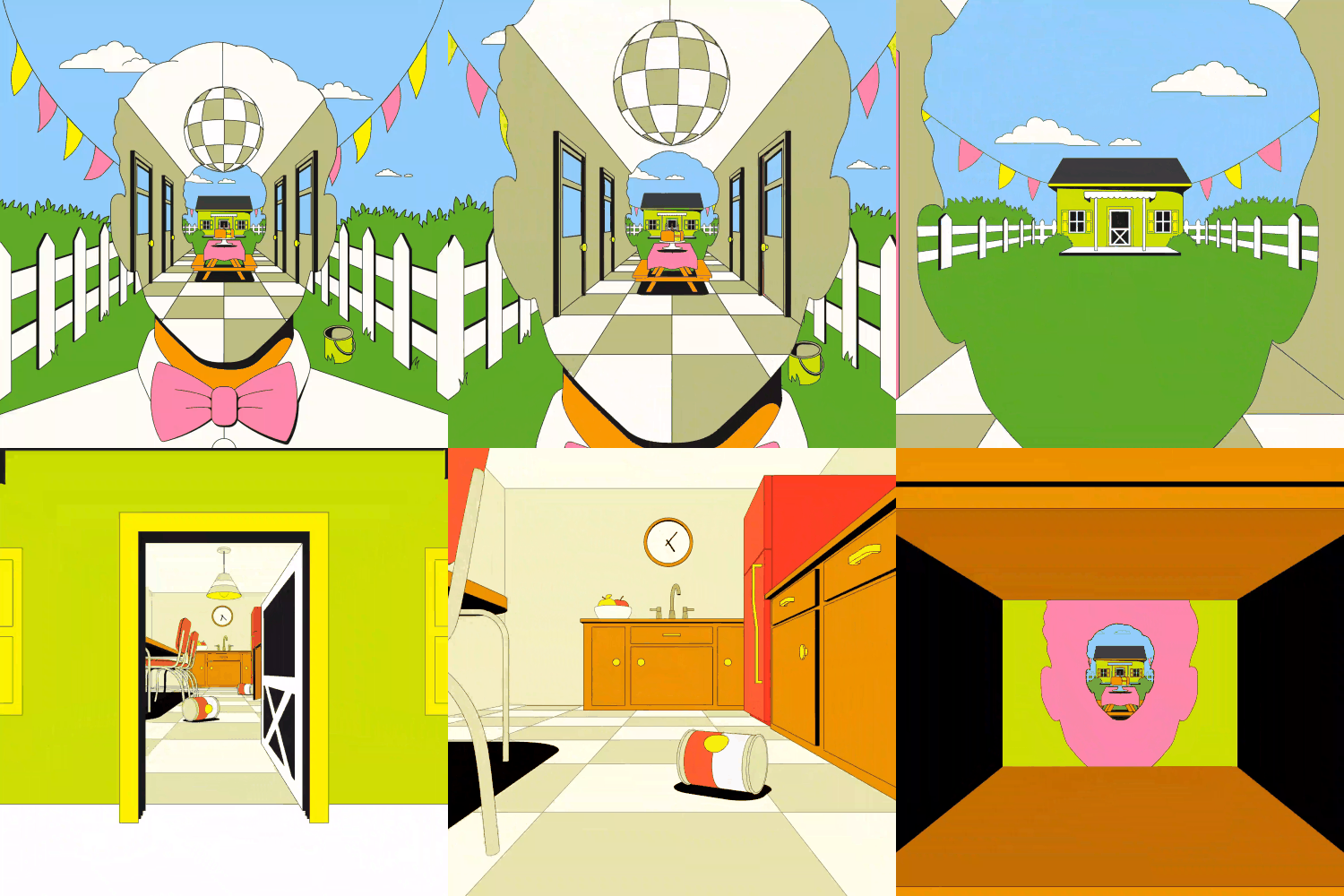
A frieze of a woman bending over backwards above a stone fireplace at Tovrea Castle at Carraro Heights in Arizona

Tours are available by reservation only, adding to its air of exclusivity and mystery. Inside, guests get a look at vintage furnishings and learn the strange history of the Carraro family’s ambitions — and how this castle became one of Arizona’s most iconic roadside silhouettes.

Tovrea Castle at Carraro Heights

Phone: 602-256-3221

5025 East Van Buren Street
Phoenix, AZ 85008

A model of a classic green car sunken in the water as part of Jim Roark's Metal Monsters exhibit at the Museum of Miniatures in Arizona

From Jim Roark’s Metal Monsters exhibit at the Museum of Miniatures

Arizona’s Weird Is Wonderful

Arizona doesn’t hide its oddities. It flaunts them. Each museum, collection or offbeat roadside stop is a love letter to curiosity, eccentricity and stories that don’t fit into mainstream museum walls. Whether you’re marveling at miniature furniture, learning about indigenous customs, or debating alien contact with a man in a tinfoil hat, you’re taking part in a state-sized celebration of the unexpected.

So load up the car, keep your eyes peeled for copper armor and friendly E.T.s, and embrace the wild, weird wonder that’s Arizona’s museum scene.

Frank Lloyd Wright’s Burnham Block: Milwaukee’s Forgotten Vision for Affordable Homes

Wright’s American System-Built Homes still stand on Burnham Block, a quiet testament to his dream of housing for the middle class.

Frank Lloyd Wright's Burnham Block in Milwaukee, Wisconsin

Well before he designed Fallingwater in Pennsylvania, Wright poured his energy into a very different kind of project — producing more than 900 drawings and over 30 standardized model variations for the American System-Built Homes: a line of modest, affordable houses for America’s middle-class families.

So when Wally and I planned a long weekend in Milwaukee, one of our top priorities was visiting the Burnham Block. Tucked between 27th Street and Layton Boulevard, this quiet stretch of West Burnham Street is home to six of Wright’s homes — examples of one of the most ambitious design efforts of his career and the largest collection of this housing style in the country. 

At just 805 square feet, it’s the smallest of any house Wright designed.

Fun fact: The thoroughfare was named after George Burnham, a brick manufacturer and real estate investor in the city. The cream-colored bricks his company produced helped give Milwaukee its nickname, the Cream City. 
Architectural drawing in an ad for American System-Build Houses on Frank Lloyd Wright's Burnham Block

“An American Home” 

After snapping a few photos outside, Wally and I ducked into the gift shop at the back of one of the duplexes currently undergoing restoration. From there we made our way to the front room to join our tour group and meet our docent, Rhonda. Once everyone was settled in, she broke the ice by asking where we were all from, and to our surprise, one family had traveled all the way from Italy.

She asked the group to imagine what a real estate ad might highlight today, and we quickly called out the usual features: square footage, number of bedrooms, location and price — basically everything related to the building itself. 

Holding up a full-page advertisement that ran in the Chicago Tribune in July 1917, titled “You Can Own an American Home” and attributed to then-copywriter Sherwood Anderson, she read the following excerpt aloud:

“There’s a bright, cheerful home waiting for you and your family — better built, excellently planned, far more livable. More beautiful? Yeah, it’ll have that rare thing: genuine architectural beauty, designed by a leader among architects. You select your plan; it’s built to your order. Constructed by a system that guarantees a high-grade building at a known price. In short, an American home.”

Rhonda pointed out that it wasn’t really about any of the features we had mentioned; it was about selling a lifestyle. And one big thing the ad omitted? Wright’s name — and that was no accident. 


A man drapes his arm around a lifesize cutout of Frank Lloyd Wright

Wally’s last name is also Wright, but, sadly, he’s never found a familial link to Frank.

When “Wright” Was a Bad Word

By 1915, the architect’s personal life had become tabloid fodder. In 1909 he had famously abandoned his wife and six children to run off to Europe with Mamah Borthwick Cheney — the wife of a former client and the woman at the center of a scandalous, widely publicized affair. 

Both were still married to their respective spouses when they left. Mamah got a divorce from her husband when they returned, but Wright wouldn’t officially be divorced from his wife, Catherine, for another six years. 

The scandal deepened in 1914, when a servant at Taliesin — Wright’s home and studio in Wisconsin — set fire to the building and axed down Mamah, her two children, and four others as they fled the flames. The tragedy made front-page headlines and further tarnished Wright’s reputation.

Rhonda went on to explain that what most people don’t realize is just how deeply Wright believed in what he called “democratic architecture.” To him the idea was simple: If you had a good job, you should also be able to afford a thoughtfully designed home. But Wright, for all his vision, didn’t quite know how to make that dream scalable. 

A floorplan for the homes along Frank Lloyd Wright's Burnham Block

A Partnership With Arthur Richards

That's where Milwaukee developer Arthur L. Richards came in. He had previously collaborated with Wright on the Hotel Geneva, a lakeside resort that once stood on the shores of Lake Geneva, Wisconsin. Richards had the resources and business network Wright lacked, and he was able to turn the architect's vision into a viable housing project. 

Assuming the advertisement piqued your curiosity, your next stop would be to visit a local distributor. At the time, many young families were buying homes from the pages of mail-order catalogs — think Craftsman-style kits sold by Sears, Roebuck and Co. 

But Wright’s American System-Built Homes were different. They were modern, meticulously detailed, and built to his exacting standards. Customers could choose from roughly 30 standardized models, each offering a range of customizable options, including the floor plan, roof style (flat, hip or gable), custom furniture and art glass windows. You added up your choices, saw the total at the bottom, and that’s what you paid. 

Prices started at $1,875 and rose to about $3,500 once completed — remarkably modest for any home, much less a Wright-designed one, especially given his reputation for commissions that routinely ran over budget. It may sound like a lot for 1915, but homes of comparable size and quality typically sold for 10% to 15% more. This relative affordability was largely due to Richards, whose oversight kept costs down and brought Wright’s designs to a broader market.

To achieve this, the Richards Company pre-cut lumber and other materials in a mill and shipped them to the build site by rail — a method that offered greater efficiency and quality control than traditional site-built construction.

Exterior of the office and gift shop at Frank Lloyd Wright's Burnham Block in Milwaukee

Preserving a Legacy: Restoration Efforts at Burnham Block

Once we had a sense of the project's background, Rhonda led us outside and enthusiastically shared more about this row of homes’ history and significance. Built on speculation between October 1915 and July 1916 the block includes four two-family Flat C (Model 7A) duplexes and two single-family bungalows: one Model B1 with a flat roof and one Model C3 with a hipped roof. 

She highlighted the importance of ongoing preservation efforts, noting that five of the six houses are now owned by Frank Lloyd Wright’s Burnham Block, a nonprofit organization dedicated to the care and stewardship of these historic structures.

“There’s no paid staff,” she told us. “We’re all volunteers. Every single dollar you spend, whether it’s on admission, in the gift shop or as a donation goes directly toward the care of these buildings.”

She went on to explain that the exterior of Duplex 4, the building we had just exited, was restored in 2013 and 2014 with the help of a Save America’s Treasures matching grant. The grant was awarded by the Department of the Interior and is managed by the National Park Service to support the preservation of nationally significant historic sites. Work on the interior, she noted, is still underway. 

“We did get a grant from the government,” she added. “But we’re unsure if we’ll actually receive that money. So for now, we’re kind of on hold, waiting to see what happens.” The hope is that they’ll be able to start restoration efforts on Bungalow Model C3 this year. 

When Richards selected the site for the housing project, it was considered the edge of town — still largely rural and known for its celery fields. An electric streetcar line ran along Burnham Street, connecting the area to the rest of the city. The City Service line provided access to downtown Milwaukee, while the Interurban line extended as far as East Troy. At the time, most people didn’t own cars, but they had access to mass transit, one of the key reasons these homes were built here.  

2720 West Burnham Street, part of Frank Lloyd Wright's Burnham Block in Milwaukee

We paused for a moment in front of 2720 West Burnham Street — the only duplex on the block that isn't owned by the nonprofit.

Rhonda gave us a quick rundown of its history, explaining that a young couple who knew the legacy of the two-flat purchased the property in the early 1980s and converted it into a single-family home with three bedrooms, two bathrooms and a modern kitchen. She added that they installed the art glass windows and red square, a visual element found in many of Wright's designs. Nearly 30 years later, it was sold to its current owner, who now rents it out on Vrbo.

“I’ve been told it sleeps about nine — so if you decide to rent it, don’t forget to invite me!” Rhonda added with a chuckle. 

The exterior of the Model B1 home on Frank Lloyd Wright's Burnham Block in Milwaukee

A Tour of Model B1

A short walk later, we found ourselves standing outside Model B1 at 2714 West Burnham Street. Rhonda affectionately referred to it as the “baby bungalow,” and at just 805 square feet, it’s the smallest of any house Wright designed. It was purchased in 2004 and fully restored to its 1916 appearance in 2008 and 2009. Today, it’s open to the public as a house museum. 

Rhonda shared that the home’s original exterior, like the others, was finished with a material called Elastica stucco. It was manufactured in Chicago and promoted at the time as an affordable and durable option. Initially praised for its smooth appearance, it later proved unreliable and was found to contain asbestos, requiring careful remediation during restoration.

Today, the exterior has been refinished with Pebble Dash — a type of stucco embedded with small stones that are sprayed onto the surface while it’s still wet. The result is a tactile, durable façade that honors the original intent while complying with modern safety standards.

The front room with a small table, lamp and two chairs in Model B1 on Frank Lloyd Wright's Burnham Block

Wright’s Bag of Tricks

Before we even stepped through the front door, we passed beneath a low overhang that extended above the entrance, an unmistakable hallmark of Wright’s design philosophy. It was a classic example of his compress-and-release technique: a moment of spatial compression at the threshold that heightened the sense of openness and volume once inside. 

Crossing that threshold, we entered the living room, the heart of the home, where a central hearth commanded attention. More than just a source of warmth, it was another signature of Wright’s architecture: a symbolic and literal centerpiece meant to anchor family life.

The brick and wood hearth in Model B1 at Frank Lloyd Wright's Burnham Block in Milwaukee

At the front of the room, floor-to-ceiling windows brought in natural light and made the space feel larger. Thanks to the height and placement of the front porch, anyone seated inside could enjoy a sense of openness and connection with the outdoors while still maintaining a sense of privacy, as the porch blocks direct views from passersby. 

This sense of openness was made possible, in part, by Wright’s innovative use of balloon-frame construction, a technique where long vertical studs run continuously from the foundation to the roof. In the American System-Built Homes, these studs are spaced 24 inches apart — wider than the typical 16 inches — based on a 2-foot modular grid. This grid made it easier for Richards’ team of builders to position them with greater flexibility, without needing to rework the structure of the walls.

Built-in shelving and dining table in Model B1 of Frank Lloyd Wright's Burnham Block

Rhonda pointed out that Wright’s design pulled out all the stops to make this tiny house feel larger than it is. By cleverly “stealing space,” the walls flanking the wraparound hearth draw the eye back toward the foyer and the hallway beyond, creating a sense of depth and openness.

She also noted that most of the woodwork inside the house is original. While telling us about the built-in cabinetry in the living room, she explained that it not only acts as a partition but also cleverly accommodates a dining table that can be tucked away or pulled out — transforming the living room into a dining area as needed. 

To the right of the built-in, a doorway leads to the breakfast nook and kitchen. Vertical wooden slats separate the nook, offering a sense of division without fully enclosing the space, another subtle feature that reinforces an overall feeling of openness. 

The kitchen was fitted with wood cabinetry and the most adorable tiny oven I’d ever seen.

A small oven and stovetop in the kitchen of Model B1 on Frank Lloyd Wright's Burnham Block

Rhonda added that the glass fronts on the upper cabinets were intentional: designed to catch and reflect light, they help create the illusion of a larger, airier room.

The private space of the home includes the primary bedroom, a children’s bedroom, a bathroom, and both coat and linen closets (a rare feature in a Wright home). A central light well draws natural light into the core of the house, brightening the interior. 

The main bedroom at Model B1 of Frank Lloyd Wright's Burnham Block
The foot of the bed and a chair in a bedroom of Model B1 at Frank Lloyd Wright's Burnham Block

In the primary bedroom, ukiyo-e Japanese woodblock prints reflect Wright’s long-standing admiration for Japanese art and design, while the children’s room features charming illustrations created by his younger sister, Maginel Wright Enright. 

The exterior side view of Model B1 of Frank Lloyd Wright's Burnham Block in Milwaukee

An American Dream That Never Caught On

This development embodied a bold vision of the American Dream. These homes weren’t just places to live; they were a blueprint for how entire neighborhoods of affordable, well-designed housing might take shape across the country. 

That vision extended far beyond this single block. Wright was never one to think small, and he and Richards imagined these homes not as a one-off experiment but as the beginning of something far-reaching. They envisioned entire subdivisions filled with variations on these models, stretching across the U.S. and into Canada. If everything went according to plan, the project could generate more than a million dollars in revenue. 

The six homes on Burnham Street were completed on July 5, 1916 — just 10 days before Milwaukee hosted a massive Preparedness Parade in support of U.S. involvement in World War I. But the war would soon derail Wright and Richards’ ambitious plans. As building materials were diverted to the war effort and the housing market grew uncertain, their grand project ground to a halt. 

In the end, only about a dozen American System-Built Homes were ever constructed — six on Burnham Street and a handful of others scattered throughout the Midwest. Eventually, Wright and Richards had a falling out, culminating in Wright successfully suing Richards for non-payment. Under their agreement, Wright was to receive royalties for each house sold. But a major flaw in the arrangement was that Richards wasn’t required to report each sale to Wright, making it impossible for Wright to know how many homes were actually built. That lack of transparency, combined with missed payments, led to growing mistrust and ultimately ended their partnership. 

Although the Burnham Block is listed on the National Register of Historic Places, discovering the homes felt like stumbling upon a hidden gem. These aren’t the Wright homes that capture a lot of attention.

Tours are available by reservation only and are led by trained docents who offer insight into the history and design of the homes. –Duke


Before You Go

Phone: 414-368-0060

Admission: $20; children under 16 free

Times: Tours at 11 a.m., 12 p.m., 1 p.m. and 2 p.m.

Tours last about one hour.

Homes along Frank Lloyd Wright's Burnham Block in Milwaukee, Wisconsin

Frank Lloyd Wright’s Burnham Block

2732 West Burnham Street
Milwaukee, Wisconsin
USA


72 Hours in Miami: A Sun-Soaked Escape Done Right

From cafecito in Little Havana to sunset strolls on South Beach, this three-day Miami itinerary covers Wynwood, Biscayne Bay, Coconut Grove and more.

The Miami skyline at night

There’s something about Miami that makes you feel like the main character. Maybe it’s the ocean breeze that hits just right, or the way the sunlight bounces off pastel buildings and into your soul. Whatever it is, it only took one weekend to realize I’d be coming back — and doing it right from the jump.

This is how I made the most of 72 hours in Miami. No fluff, no tourist traps — just beaches, bites and a few well-earned naps.

Two of the Art Deco hotels in South Beach, Miami, Florida, one with blue neon, the other red

Day 1: Landing, Rolling and Recharging

We landed late morning, bleary-eyed but buzzing. Instead of standing in line for rideshares or fumbling with apps, I’d pre-booked a rental — best move I made all trip. Cheap car rental services in Miami aren’t just affordable, they’re freedom on four wheels. Within 30 minutes, we were driving down Collins Ave with the windows down and reggae on the speakers.

The sign of Versailles Restaurant, serving Cuban cuisine, in Little Havana, Miami, Florida

First stop: Versailles Restaurant in Little Havana for a welcome-to-Miami cafecito and some ropa vieja. That hit different after a travel day. The elderly Cuban men playing dominoes outside felt like a scene from a movie, their animated conversations punctuating the afternoon heat.

We checked into a boutique hotel in South Beach, dropped our bags, and wandered the Art Deco district until sundown — neon reflections dancing off wet sidewalks after a surprise storm. The pastel buildings looked like candy in the golden hour light. Then: mojitos, shrimp tacos, and live music at a tucked-away bar that felt more Havana than Florida. The bassist had this infectious energy that had everyone swaying by the second set.

A person stands on a rocky promontory watching the sunrise over the ocean in Miami, Florida

Day 2: Sunrise, Sand and Spontaneity

I woke up early, restless in the best way. Threw on shorts, grabbed a pastelito from a corner café, and hit the sand solo while the city still slept. Watching the sun rise over the Atlantic in Miami is like pressing reset on your nervous system. The beach was empty, except for a few joggers and early fishermen casting their lines into the pink-tinged waves.

Three women walk past colorful murals in Wynwood in Miami, Florida

Later, we drove across the causeway to Wynwood — all murals and matcha. There’s a spot called Panther Coffee that became our HQ for a couple hours before we strolled into local shops and stumbled into a pop-up vinyl fair. Street artists were working on fresh pieces, and the smell of spray paint mixed with the aroma of Cuban coffee created this uniquely Miami sensory cocktail.

An aerial view of Key Biscayne, filled with motorboats, with Miami's skyline in the distance

Because we had the car, we made an impulsive drive down to Key Biscayne. I swear, 30 minutes out of downtown and you feel like you’re on a completely different planet: mangroves, stillness — the kind of quiet that recalibrates you. We spent an hour just walking barefoot along Crandon Park Beach, collecting shells and watching pelicans dive for fish.

A couple of people eat at Greenstreet Cafe in Coconut Grove, Miami, under an ivy-covered peak

Day 3: Brunch, Beaches and One Last Lap

We kicked off our final day with brunch at Greenstreet Café in Coconut Grove. Miami brunch hits different when you’ve got nowhere to be — no timelines, just good food and a table in the shade. The eggs Benedict was perfect, but honestly, it was the people-watching that made the meal memorable — locals walking their dogs, families speaking three languages at once, that effortless Miami energy everywhere.

Powerboats line the canal at Bal Harbour near Miami, with hotels and skyscrapers

Afterward, we took one last drive — just aimless, top 40 hits on shuffle, cruising up the coast past Bal Harbour. I wanted to stretch those final hours as far as they’d go. We stopped at a roadside stand for fresh coconut water, the vendor cracking it open with a machete right in front of us. These are the moments that make a trip unforgettable.

Returning the car was just as smooth as picking it up — no stress, no wasted time. Honestly, it’s one of the biggest travel hacks I’ve picked up lately. If you’re coming to Miami, skip the overpriced taxis and just grab a set of wheels. It’ll change how you experience the city.

People sit under palm trees on the water at a park in Miami, Florida

Miami Nice

Miami doesn’t ask you to do much. Just to show up, stay open, and let the rhythm of the place move through you. If you do it right, even a short trip can feel like a deep breath for your entire being. The city rewards spontaneity and punishes rigid itineraries, so leave room for magic to happen.

And if you’re wondering whether it’s worth renting a car down here? I’ll say this: Three days wasn’t enough. But with the freedom to move, we lived like locals, not visitors. We discovered hidden gems that no guidebook mentioned and created memories that’ll last long after the tan fades.

That’s the whole point. –Graham Waller


The Creepiest Places to Visit in the United States

From a haunted prison to a hotel with its own morgue, here are five terrifyingly popular U.S. destinations for ghost hunters, thrill seekers and paranormal tourists.

Dilapidated crumbling hallway in the Eastern State Penitentiary in Philadelphia

Eastern State Penitentiary in Philadelphia, where solitary confinement originated

For those of us who like our vacations with a side of dread, the U.S. has you covered. Cursed plantations? Check. Derelict prisons? Yep. A floating hotel with a body count? You bet. These are the kinds of places where whispers echo in empty rooms, photos blur for no reason, and something unseen always seems to tug at your shirt.

Whether you’re a seasoned ghost hunter or just want to say you slept in the most haunted hotel in America, these are the must-visit spots that will make your heart race — and maybe stop.

1866 Crescent Hotel & Spa in Eureka Springs, Arkansas

1866 Crescent Hotel & Spa in Eureka Springs, Arkansas

Where the cancer cures were fake, but the bodies were real.

Originally built in 1886, the Crescent Hotel started as a luxury resort — and quickly spiraled into something much darker. After a short-lived first act, it was purchased in 1937 by Norman Baker, a con artist who turned the building into a sham cancer hospital. He operated without a license, performed grotesque procedures, and stored bodies in a basement morgue that still exists.

Women in white dresses and hats stand on the steps of the 1866 Crescent Hotel & Spa in Eureka Springs, Arkansas when it was a college for women

Back when the property was the Crescent College for Women

Guests and ghost hunters report sightings of Baker himself, nurses in old-timey uniforms, and figures wandering the halls at night. Want proof? You can join nightly ghost tours that take you to the most haunted corners of the property — including Baker’s old morgue.

1886 Crescent Hotel & Spa
75 Prospect Avenue
Eureka Springs, Akansas​

The castlelike Eastern State Penitentiary in Philadelphia, Pennsylvania at twilight

Eastern State Penitentiary in Philadelphia, Pennsylvania

Solitary confinement never really ends … if your ghost sticks around.

Once home to over 85,000 inmates — including Al Capone — this Gothic fortress pioneered solitary confinement, which sounded humane in theory and turned out to be more of a psychological torture chamber. The prison operated from 1829 to 1971 and is now a National Historic Landmark.

Historic photo of a worker standing in a cellblock of Eastern State Penitentiary in Philadelphia, Pennsylvania

Its crumbling halls, rusted doors and echoing cellblocks give off a presence that’s hard to ignore. Visitors report disembodied voices, cell doors slamming on their own, and shadowy figures pacing inside locked cells. Cellblock 12 and the guard tower are said to be the most active — if you believe in that sort of thing. And even if you don’t, you’ll probably walk faster through them.

Sounds a bit like the derelict insane asylum attached to the Richardson Hotel in Buffalo, New York, which is also worth touring. 

If you’re also going to Pittsburgh, be sure to creep yourself out at Trundle Manor

Eastern State Penitentiary
2027 Fairmount Avenue
Philadelphia, Pennsylvania

The ocean liner Queen Mary in Long Beach, California at sunset

The Queen Mary in Long Beach, California

All aboard — for a cruise you’ll definitely want to disembark from.

This ocean liner hosted royalty, celebrities and WWII troops — and now ghosts. Docked permanently in Long Beach, the Queen Mary is considered one of the most haunted ships in the world.

A girl is dressed up like the ghost of Jackie, a girl who drowned in the pool on the Queen Mary ship

Say hi to Jackie! She drowned in the pool but now giggles through the hallways.

Visitors regularly report paranormal activity, including screams, slamming doors and the ghost of a crewmember who was crushed by a watertight door in the engine room. Then there’s Jackie, the little girl who allegedly drowned in the pool and now giggles through the halls — creepy kid laughter being the ultimate test of your fight-or-flight response.

If you visit around Halloween (known to witches as Samhain), don’t miss the ship’s Dark Harbor event — a screamfest that brings its haunted legends to life.

​​The Queen Mary
1126 Queens Highway
Long Beach, California

Black and white diagonally striped St. Augustine Lighthouse in St. Augustine, Florida

St. Augustine Lighthouse in St. Augustine, Florida

Helping ships find the shore — and maybe helping spirits climb the stairs.

The current lighthouse was completed in 1874 — but the land has a longer, darker history. Tragedy struck during construction, when two young daughters of the superintendent drowned in the bay. Ever since, strange sightings have haunted the tower.

The spiral staircase inside St. Augustine Lighthouse in St. Augustine, Florida

Visitors report hearing footsteps on the spiral stairs, catching glimpses of shadowy figures, and even being touched by something unseen. The Dark of the Moon tour takes you up the tower at night — just you, a flashlight … and your frazzled nerves.

St. Augustine Lighthouse & Maritime Museum
100 Red Cox Drive
St. Augustine, Florida

Exterior of Myrtles Plantation in St. Francisville, Louisiana

Myrtles Plantation in St. Francisville, Louisiana

Cursed ground, murder and ghosts with unfinished business. Southern hospitality not guaranteed.

The Myrtles has everything you could want in a haunted Southern plantation: hidden pasts, murder, mystery and a good chance of ghostly encounters. Built in 1796, the property is said to be cursed from the start, allegedly located on an indigenous burial ground. Several people died violently here, and stories of hauntings are as thick as the Spanish moss out front.

A grainy photo Chloe, the ghost at Myrtles Plantation in St. Francisville, Louisiana

The enlarged section of this image is said to be the plantation’s famous ghost, a former slave named Chloe.

The most infamous ghost? Chloe — a formerly enslaved woman who was reportedly mutilated for eavesdropping and later hanged after poisoning members of the household. Her apparition has supposedly been caught in photos and is said to still roam the grounds. 

Other spirits include William Winter, shot on the porch in 1871, and his young daughter, who died of yellow fever.

The Myrtles Plantation
7747 U.S. Highway 61
St. Francisville, Louisiana

An aerial view of Eastern State Penitentiary in Philly

An aerial view of Eastern State Penitentiary, which is no longer operational — just attracting visitors who appreciate the macabre.

Haunted Hotspots

Some people go to the beach — others go looking for the ghosts of 19th century criminals. These haunted destinations deliver the perfect mix of history and horror, where the stories are real, the wallpaper is peeling, and the room you booked might come with a ghost you didn’t. –Armughan Zaigham