mexico city

Human Sacrifice, Cannibalism & Cosmic Calendars: 20 Shocking Facts About Ancient Mesoamerica

From floating gardens to skull racks and chocolate money, Mesoamerican civilizations like the Aztec, Maya and Olmec were rewriting the rules of society — often with obsidian blades.

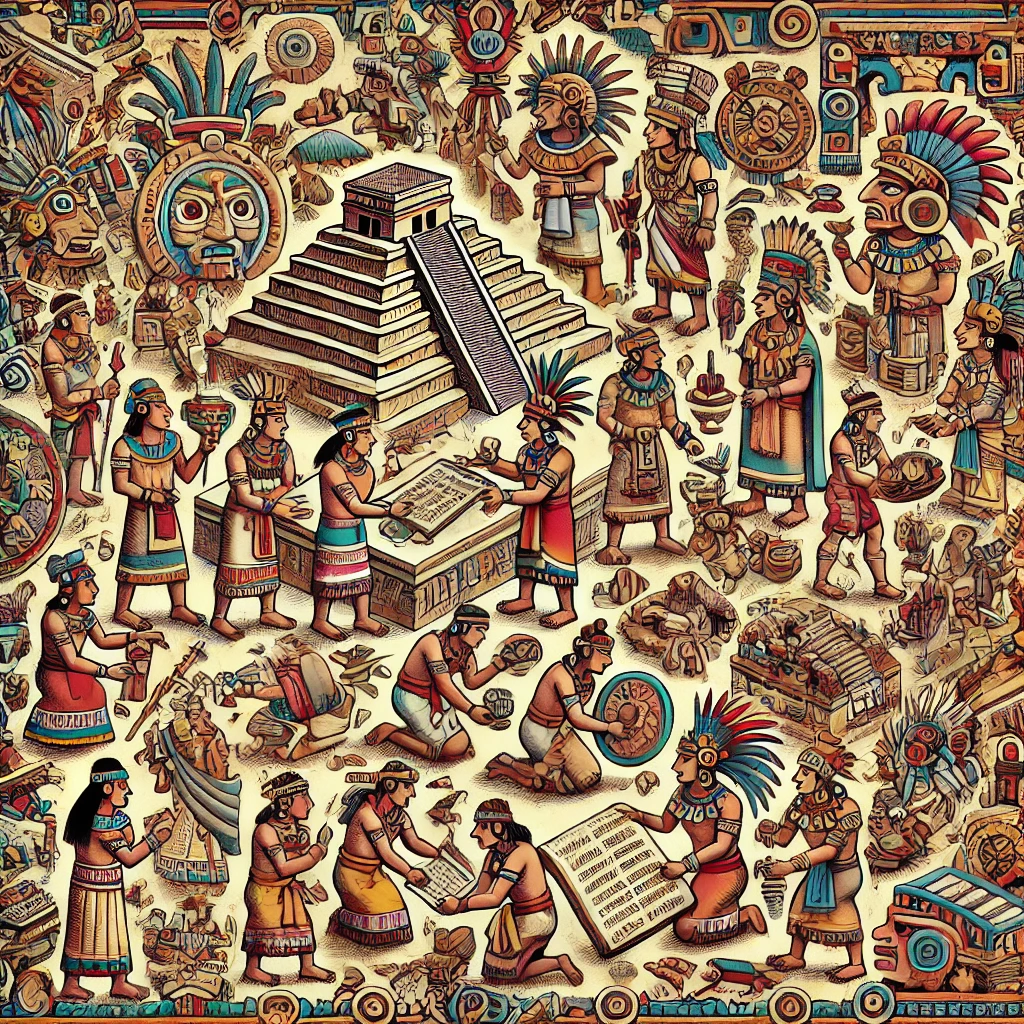
A busy ancient Mesoamerican scene, filled with people, a stepped pyramid, a codex, feathered headdresses and people going about their days

Imagine a world where chocolate is money, cities align perfectly with the stars, and rituals involve hearts ripped from chests to keep the sun from falling out of the sky. 

Welcome to Mesoamerica, where civilizations like the Maya and Aztecs shaped the Americas while rewriting the rules of what it means to build and believe — with a whole lot of human sacrifice thrown in.

With a swift motion, the heart is ripped from the chest, still beating, and offered to the heavens.
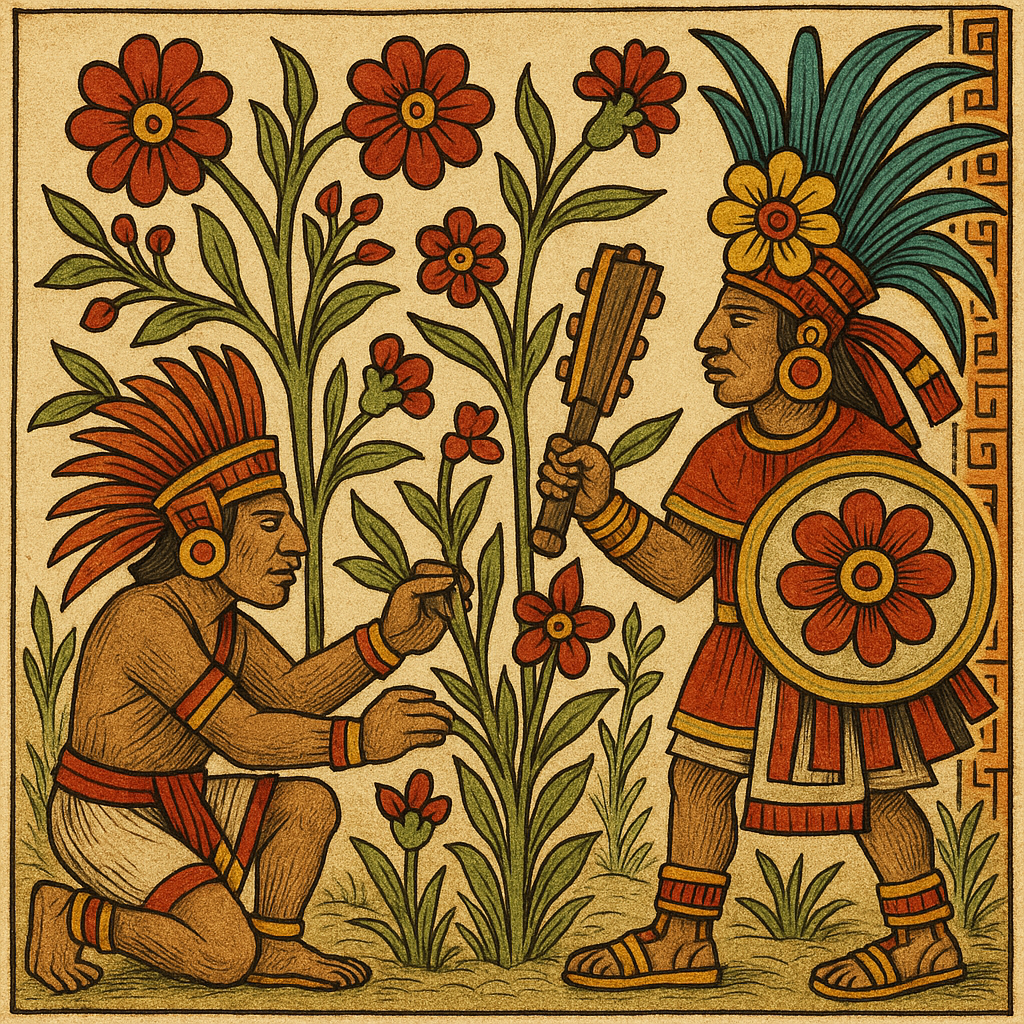
An Aztec man gardens a flower garden while another is a warrior and holds a sword and shield

While Europe was still playing with iron and forgetting how to write, Mesoamerican civilizations were busy creating some of the most awe-inspiring — and downright shocking — traditions and innovations the world has ever seen. 

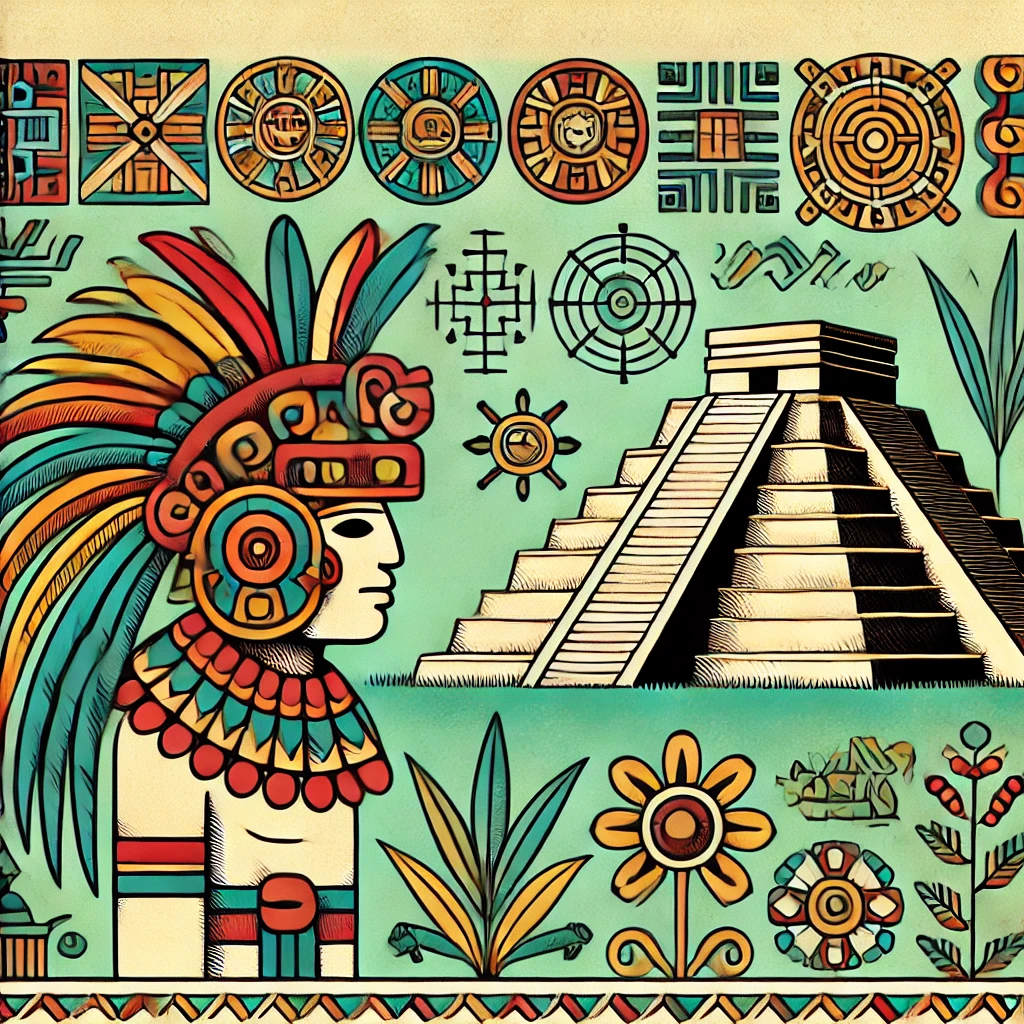
A codex style illustration of an Aztec man in feathered headdress by symbols and a stepped pyramid

What Was Mesoamerica?

Mesoamerica is actually more of a concept than anything. It refers to the region and cultures that flourished in what is now Mexico and parts of Central America before the Spanish arrived. This includes legendary civilizations like the Olmec (the OGs), Maya (astronomers extraordinaire), and Aztec (master builders and blood-offerers).

Think of Mesoamerica as a sort of Silicon Valley of the ancient world — where everyone was innovating, connecting and competing to outdo each other in art, agriculture and, sometimes, human sacrifice.

With that in mind, let’s dive into the 20 most shocking facts about early Mexican cultures.

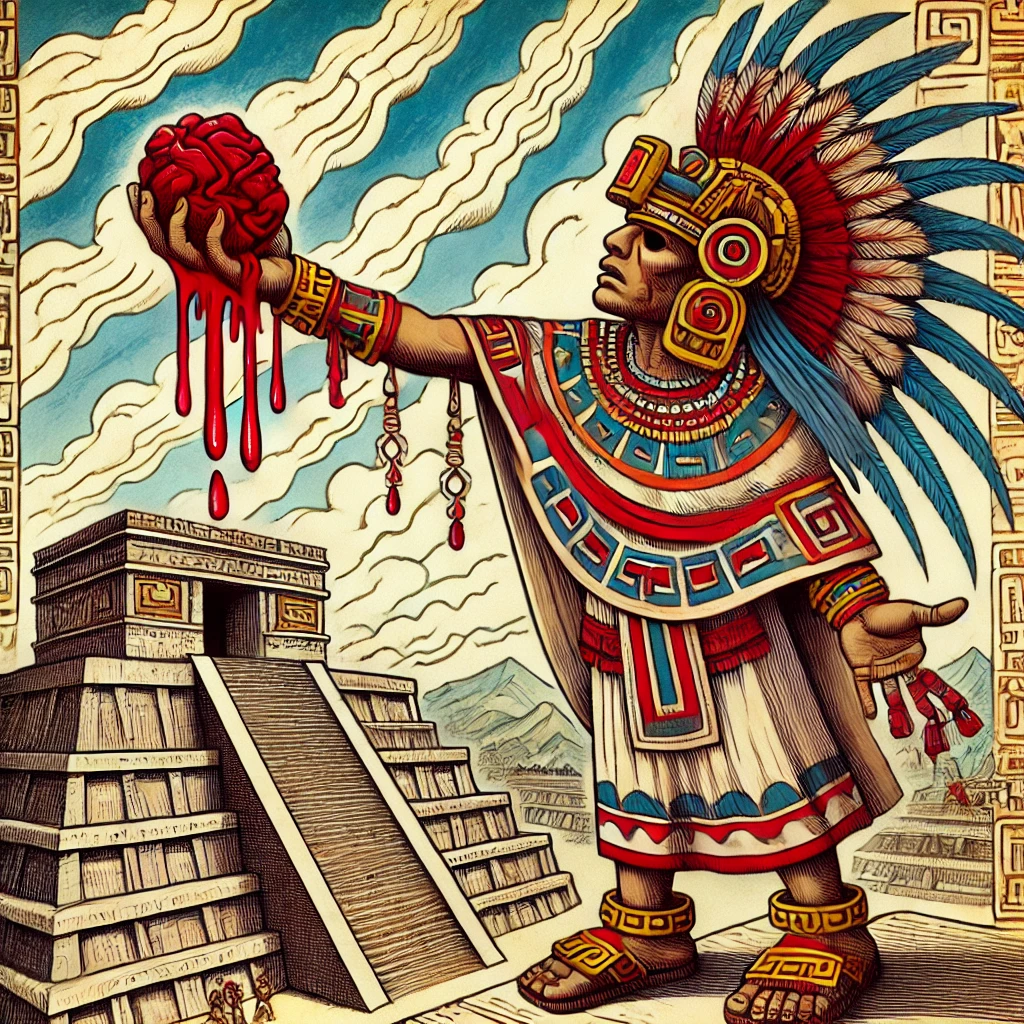
An Aztec priest holds up a bloody human heart as a sacrifice in front of a stepped stone pyramid

1. Human Sacrifice: The Price of the Sunrise

Worshippers would stand at the base of the towering Templo Mayor in Tenochtitlan, the heart of the Aztec empire. The air is thick with incense, the chants of priests echo across the plaza, and thousands of onlookers gather, awaiting the most sacred act of devotion. At the apex of the temple, a victim lies on a stone altar, surrounded by priests in jaguar and eagle costumes. The sun climbs higher in the sky as the priest raises an obsidian blade. With a swift motion, the heart is ripped from the chest, still beating, and offered to the heavens.

To the Aztecs, human sacrifice was a brutal necessity. They believed the gods had sacrificed themselves to create the world, and in return, humanity owed a debt of blood. One of the major Aztec gods, Huitzilopochtli, the sun deity and patron of warriors, required nourishment to continue his battle against darkness. Without regular sacrifices, the sun would stop rising, plunging the world into chaos. In one particularly shocking event, at the consecration of the Templo Mayor in 1487, it’s said that 20,000 people were sacrificed over four days.

This practice wasn’t isolated to the Aztecs, though. Other Mesoamerican cultures, like the Maya, also performed human sacrifice, albeit on a smaller scale. While horrifying by modern standards, this ritual was deeply spiritual and tied to the very fabric of their worldview: a cosmos fueled by cycles of life, death and renewal. For the Aztecs, each drop of blood spilled was a gift to keep the universe alive.

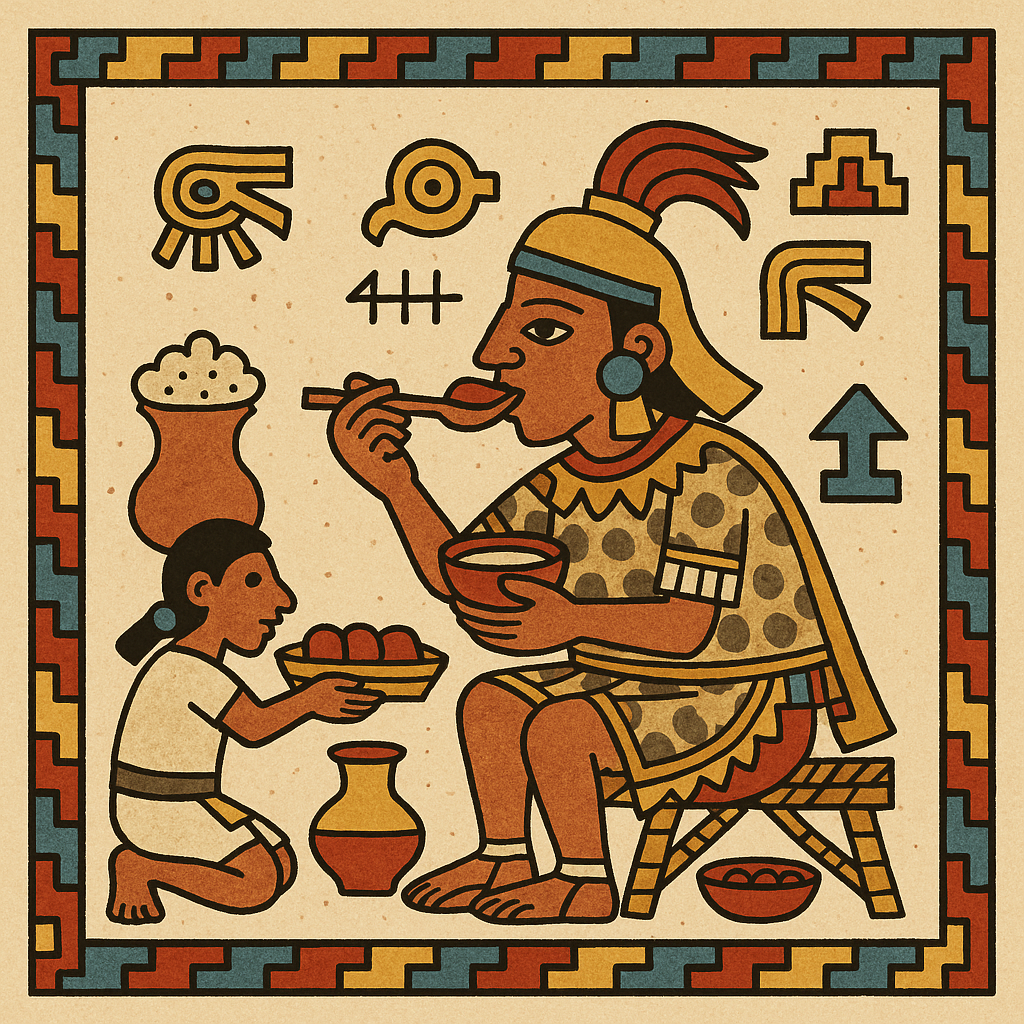
An Aztec warrior eats the body of someone he captured in a battle as a servant kneels, serving him

2. Cannibalism: A Taste of Divinity

At a royal feast in the Aztec capital, Tenochtitlan, among the tamales, chili-spiced sauces and cups of frothy chocolate, there might also have been something far more unsettling: human flesh. Reserved for priests, rulers and warriors, the consumption of sacrificial victims wasn’t a matter of hunger but of holiness. The Aztecs believed that by eating the flesh of those offered to the gods, they could absorb divine energy, making themselves closer to the deities they worshipped.

Cannibalism in Mesoamerican cultures is one of the most debated and misunderstood aspects of their society. Archaeological evidence and Spanish accounts suggest that the practice, while rare, was tied to specific rituals. For example, in ceremonies honoring the god Xipe Totec, victims were flayed, and their flesh was symbolically eaten to embody regeneration and agricultural fertility. While early Spanish chroniclers exaggerated the extent of cannibalism to demonize indigenous cultures, the underlying spiritual rationale was entirely alien to European sensibilities.

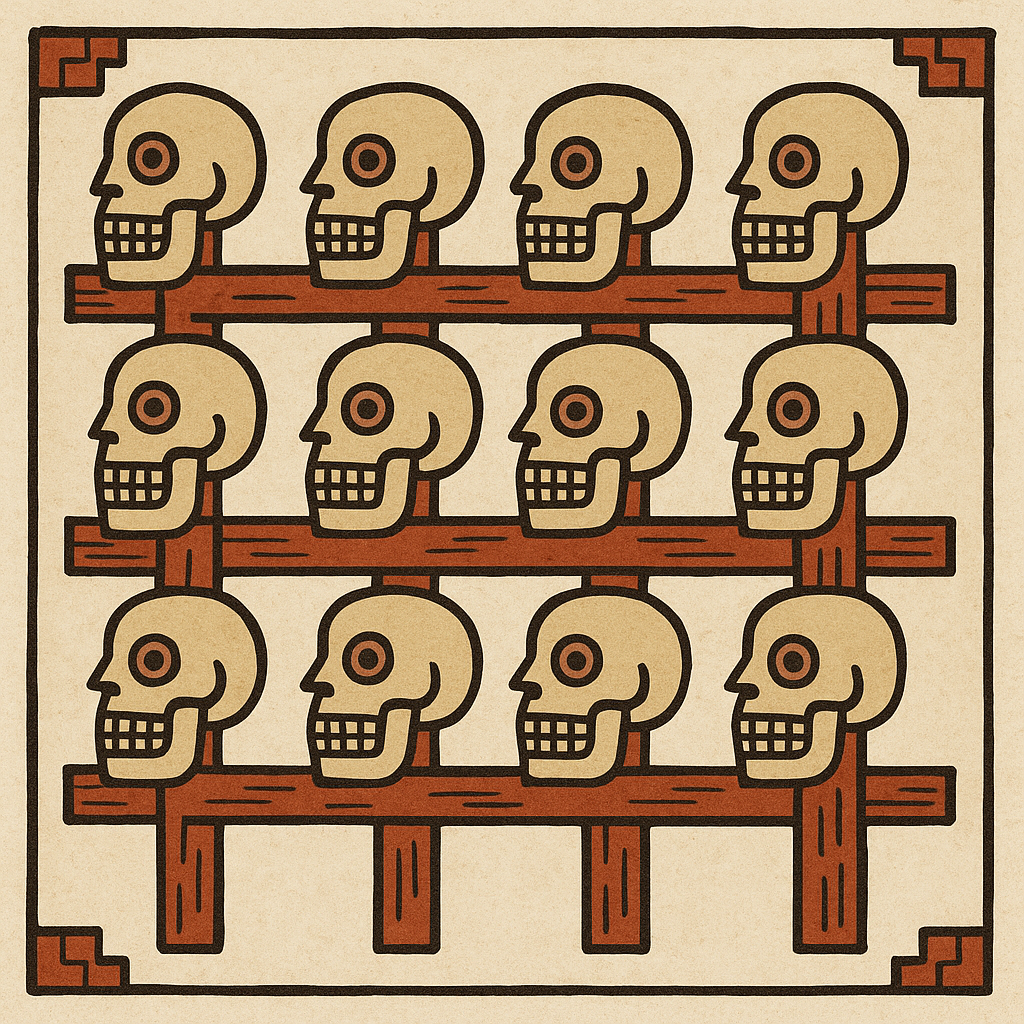
A Mesoamerican tzompantli skull rack

3. Tzompantli Skull Racks: Death on Display

In the bustling city of Tenochtitlan, visitors couldn’t miss the tzompantli. These towering racks, studded with human skulls, lined temple courtyards like grim trophies. For the Aztecs, the tzompantli was both an offering to the gods and a message to outsiders: This was a society willing to go to unimaginable lengths for their beliefs. Spaniards who arrived in the 16th century were shocked by the sight, their writings painting vivid pictures of thousands of skulls, bleached white by the sun, staring back at them.

But the tzompantli wasn’t just about intimidation. The Aztecs saw the skull as a sacred vessel of life’s essence, a way to honor the sacrifice made by those who gave their lives for the gods. Recent archaeological excavations in modern-day Mexico City uncovered one such skull rack, confirming its immense size and intricate construction. Researchers found skulls arranged with holes drilled through them, strung together like beads on a macabre necklace.

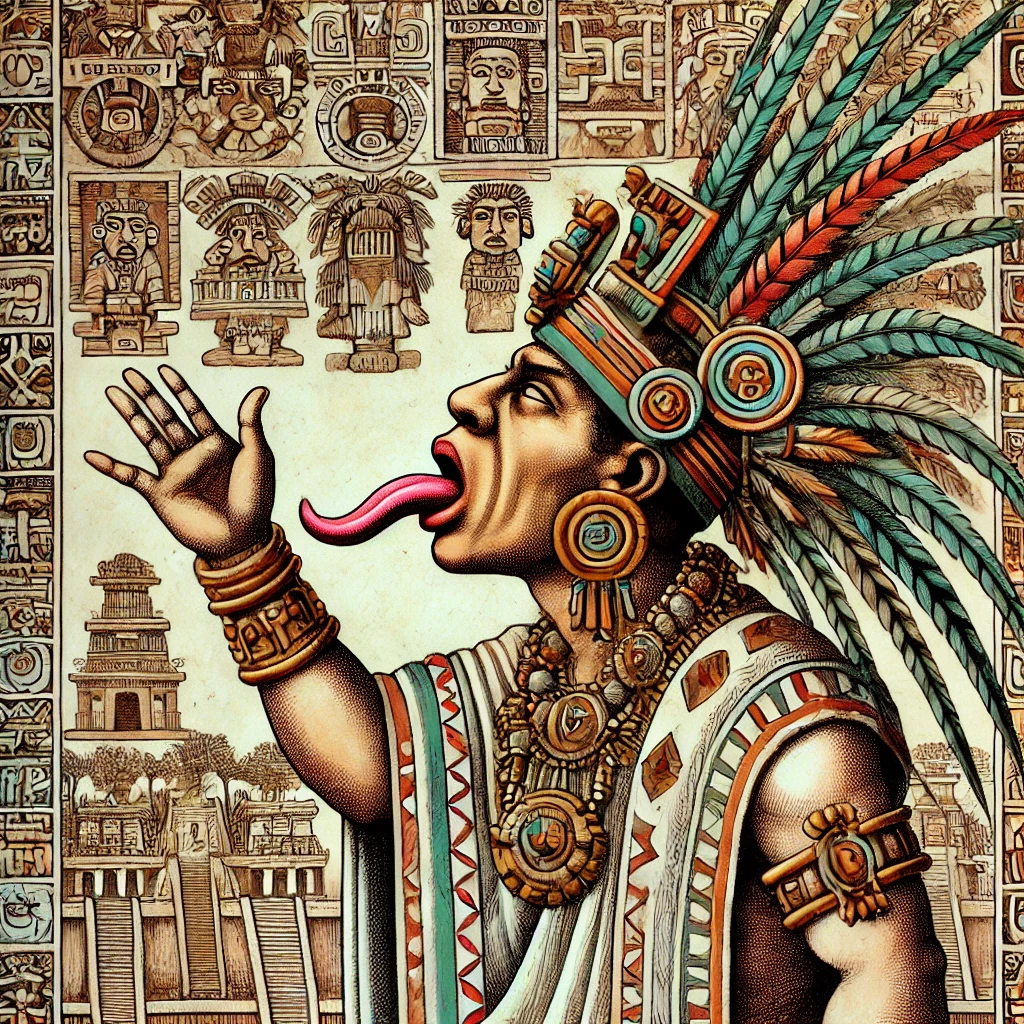
An Aztec priest sticks out his tongue to be pierced as part of a bloodletting ritual

4. Bloodletting: Cutting Close to the Cosmos

The sharp sting of an obsidian blade, the drip of crimson onto sacred ground — this was devotion in Maya and Aztec culture.

While human sacrifice grabbed the headlines (and the hearts), bloodletting was far more common and deeply personal. Priests, rulers and even commoners pierced tongues, earlobes or limbs — sometimes with stingray spines — to feed the gods their own life force. During festivals, entire communities might bleed in unison, hoping to secure a good harvest or protection from catastrophe.

Why would anyone willingly endure such pain? For Mesoamericans, blood was the most sacred substance, a direct connection to the gods. By offering their own blood, they reaffirmed their role as intermediaries between the divine and the mortal. 

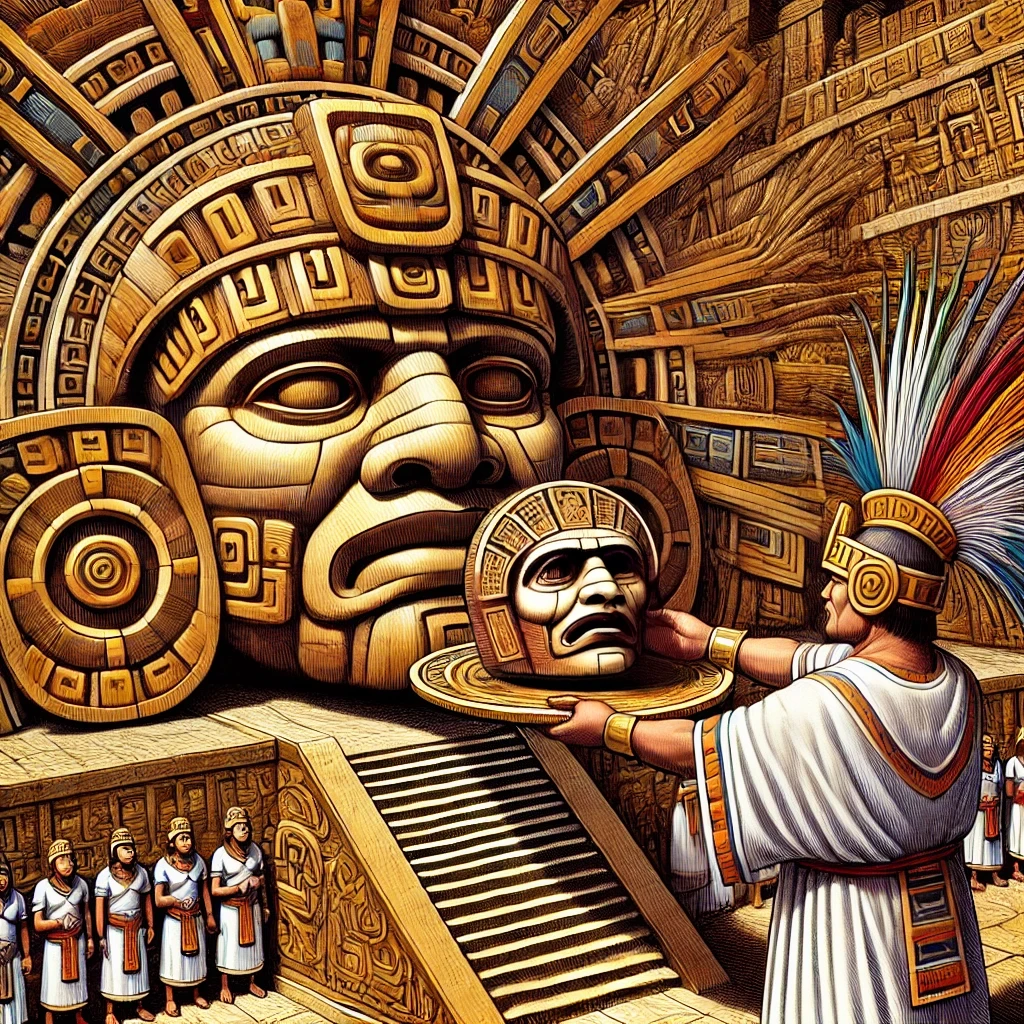
An Aztec priest offers a head on a platter to Huitzilopochtli, the sun god, in his temple, with a row of attendants

5. Ritual Dismemberment: Offering to Many Gods

The calm after a sacrifice was often short-lived. In certain ceremonies, the Aztecs didn’t stop at removing the heart; they dismembered the victim’s body. Priests would scatter the parts across different temples and altars, each piece an offering to a specific god. A hand might be given to Xochipilli, the god of art and pleasure, while a head would go to Huitzilopochtli, the sun god.

To the Aztecs, this was cosmic bookkeeping. Each god had unique responsibilities, from rain to war, and each needed their share of devotion to keep the world functioning. Archaeological digs have uncovered evidence of these practices, with bones showing deliberate markings consistent with ritual dismemberment. Some temples even had distinct areas for specific body parts, suggesting an organized system for distributing offerings.

To the Aztec, these offerings were acts of love, ensuring the gods’ goodwill and the world’s continued existence.

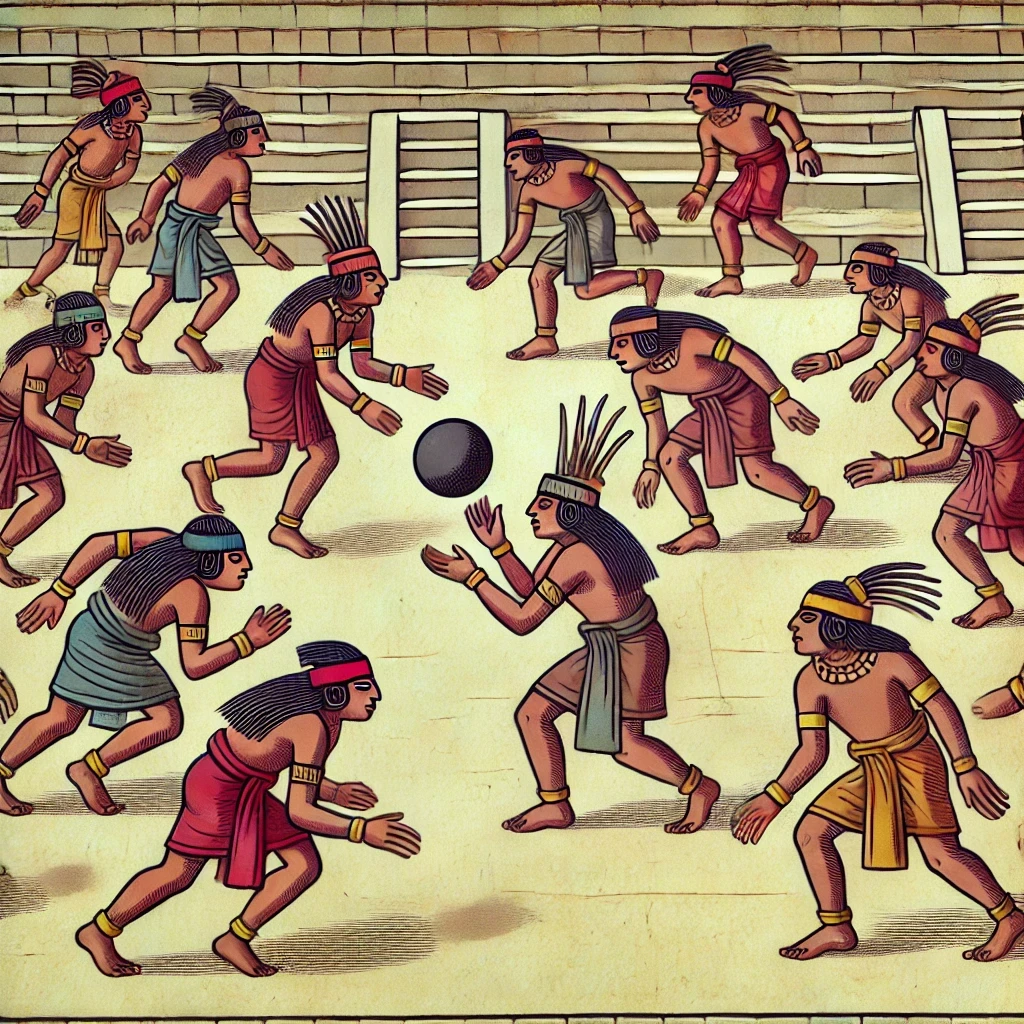
Mesoamerican men play the ollamaliztli ballgame

6. Ollamaliztli: The Ballgame With Fatal Stakes

The ball bounces against a stone hoop, echoing across the court. Two teams of players, drenched in sweat, leap and twist, desperate to keep the rubber ball in play. The stakes couldn’t be higher: Losing could mean death.

The Mesoamerican ballgame, ollamaliztli, played by cultures like the Maya and Aztecs, was more than a game; it was a ritual symbolizing the eternal battle between life and death. Ollamaliztli was often played to honor gods or mark significant events, such as a military victory. While not all games ended in sacrifice, some did — especially during rituals. Archaeologists have found ball courts with murals depicting bound captives, suggesting that losing teams or their captains were sometimes offered as sacrifices.

The game itself was no small feat. The ball, made of solid rubber, could weigh up to 10 pounds, and players couldn’t use their hands or feet to touch it — only their hips, shoulders or thighs. Injuries were common, and the pressure of knowing your life might be on the line made the stakes even higher. 

Today, remnants of ball courts dot Mesoamerica, standing as haunting reminders of a sport where victory and survival were often intertwined.

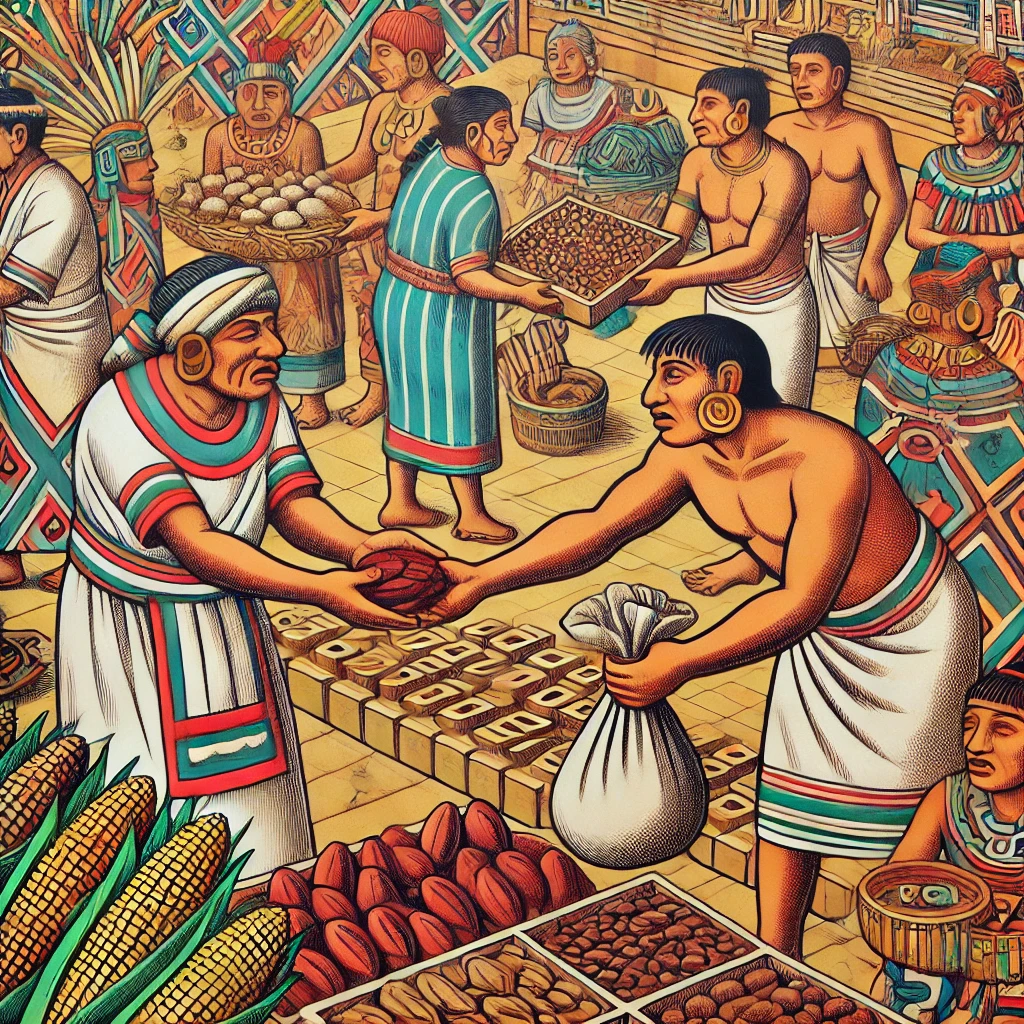
A Mesoamerican market, with people trading cocoa for goods

7. Chocolate as Currency: Divine and Delicious

You walk into a bustling marketplace in Tenochtitlan, the Aztec capital, and instead of coins jingling in pockets, traders pass around cacao beans. Need a turkey? That’ll cost 100 beans. A tamale? Just three. In Mesoamerica, chocolate wasn’t just a treat — it was wealth.

The Maya were among the first to cultivate cacao, considering it a gift from the gods. The Aztecs took it a step further, turning the beans into a form of currency. But cacao also held immense religious significance. Priests drank chocolate in sacred rituals, often mixing it with chili, maize or honey. This wasn’t your typical hot chocolate, though; it was a frothy, bitter elixir meant to connect mortals with the divine.

For the Aztecs, chocolate represented luxury, spirituality and power. Its association with the gods elevated it beyond mere sustenance, making it a cornerstone of their economy and culture. 

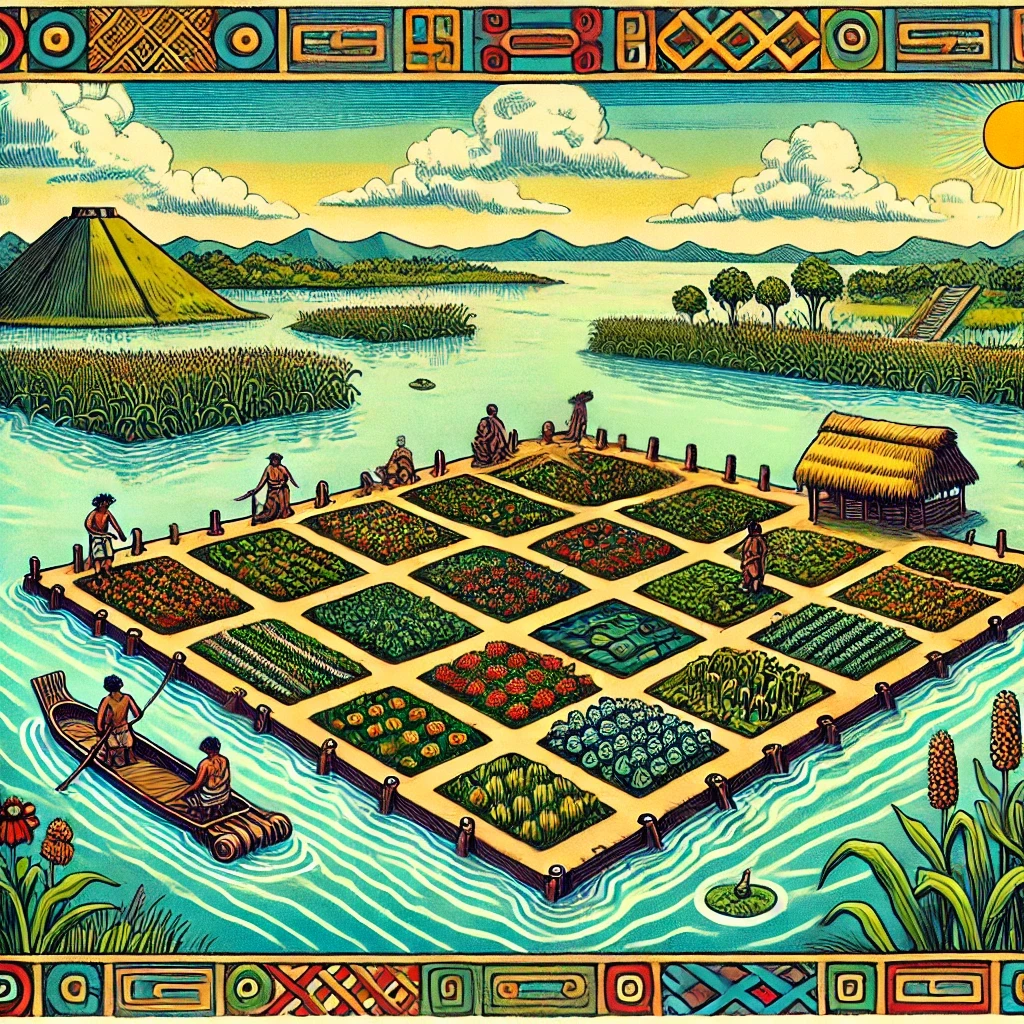
A chinampa floating garden in ancient Mesoamerica, divided into sections to grow a variety of plants and crops in a canal, while two people in a boat paddle past and a pyramid is seen nearby

8. Chinampa Floating Gardens: Ancient Environmentalism

Faced with limited farmland, the Aztecs invented chinampas — ingenious floating gardens — to feed their massive population. You can still glide through some of the original canals at Xochimilco, where this ancient innovation lives on.

Chinampas were artificial islands made of woven reeds and mud, anchored in the shallow lakes around the city. These gardens were incredibly fertile, producing crops like maize, beans, squash and flowers. A single chinampa could yield up to seven harvests per year, an efficiency unmatched even by today’s standards.

The Aztecs created a self-sustaining ecosystem, where canals provided irrigation and fish fertilized the soil. Modern scientists marvel at the environmental brilliance of chinampas, which could inspire solutions to today’s agricultural challenges. 

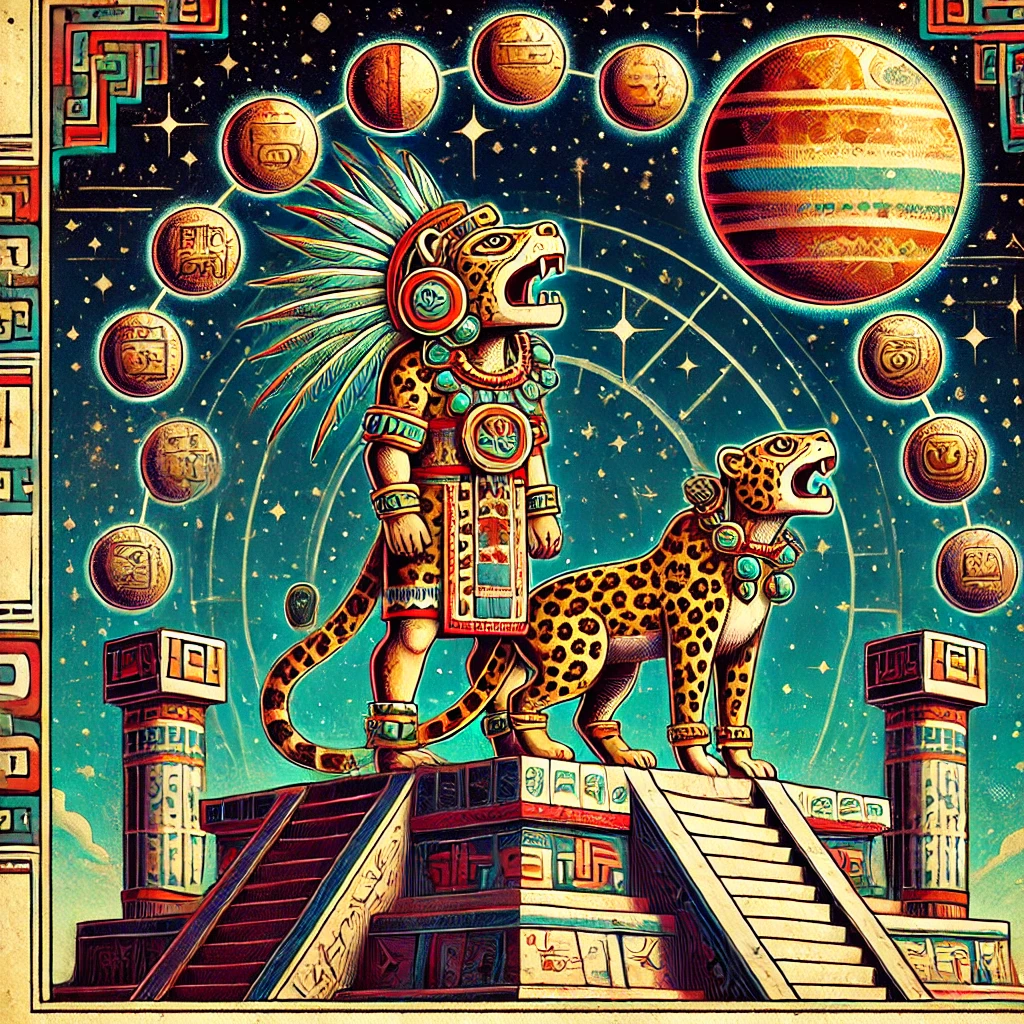
A priest in a jaguar mask by an actual jaguar have astronomical planets and symbols float above their heads in the night sky

9. Astronomy: The Stars Were Their Guide

It’s midnight in a Maya city, and the stars shine brightly. A priest, adorned in jaguar pelts and jade, carefully watches the movements of the planet Venus. For the Maya, astronomy was a divine map, guiding everything from farming to warfare.

Maya astronomers meticulously tracked celestial bodies, creating some of the most accurate calendars in human history. Their Long Count calendar, famously misinterpreted as predicting the world’s end in 2012, was a tool for tracking vast stretches of time. They predicted eclipses with stunning precision and understood the 584-day cycle of Venus, which they associated with war and sacrifice.

Cities like Chichen Itza in modern-day Mexico were aligned with celestial events, such as the equinox. On these days, the shadow of the sun forms a serpent slithering down the temple of Kukulkan. For the Maya, this was a powerful reminder that the gods were always watching — and that humanity’s actions were written in the stars.

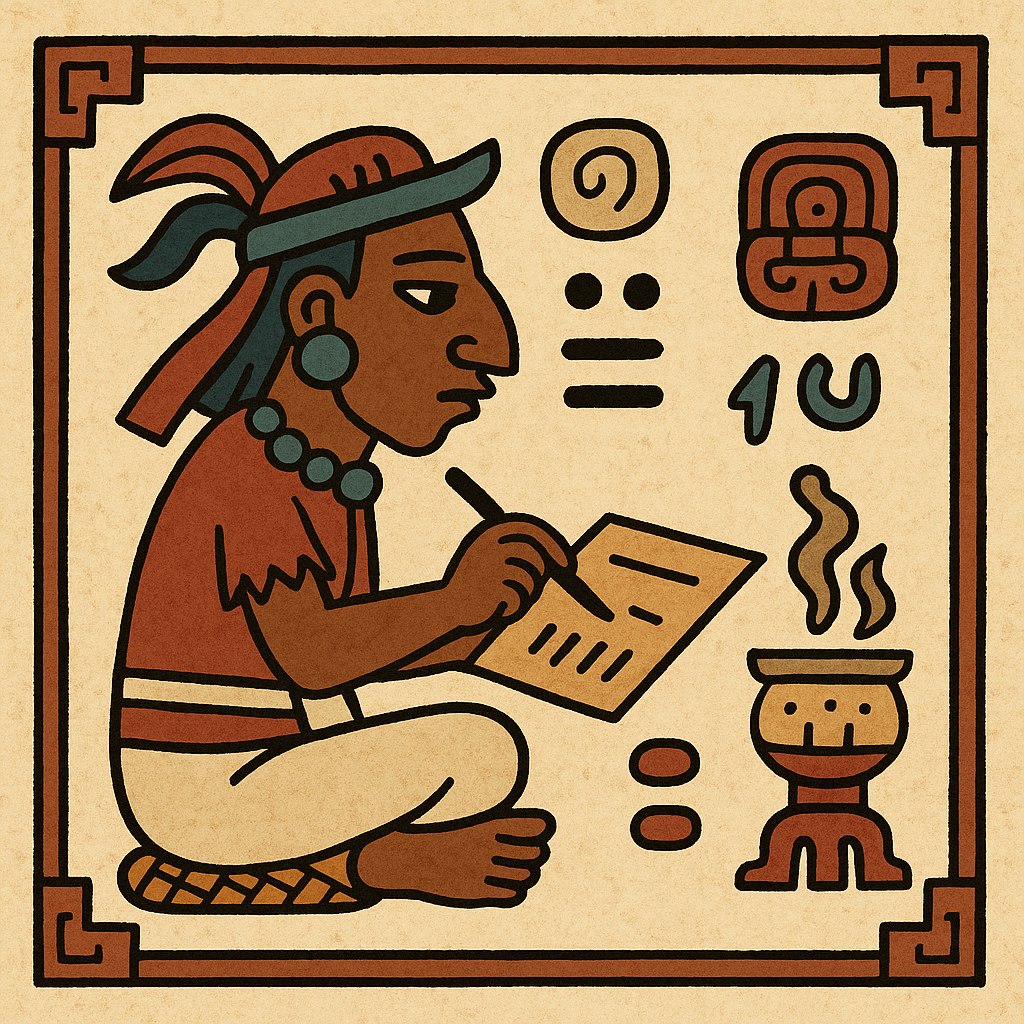
A Maya scribe writes on parchment near a brazier, with the symbol for zero above his head

10. Advanced Mathematics: Zeroing In on Genius

While medieval Europe was fumbling with clunky Roman numerals, the Maya were crafting a sophisticated base-20 numerical system centuries ahead of their time. Even more groundbreaking, they independently invented zero, a concept that revolutionized mathematics across the world.

The Maya used their numerical system for everything from complex architecture to astronomical calculations. Their hieroglyphs represented numbers with dots and bars, and a shell symbol for zero — a groundbreaking idea that enabled them to calculate vast stretches of time. This mathematical prowess was essential for creating their famous calendars, which tracked both earthly and cosmic cycles.

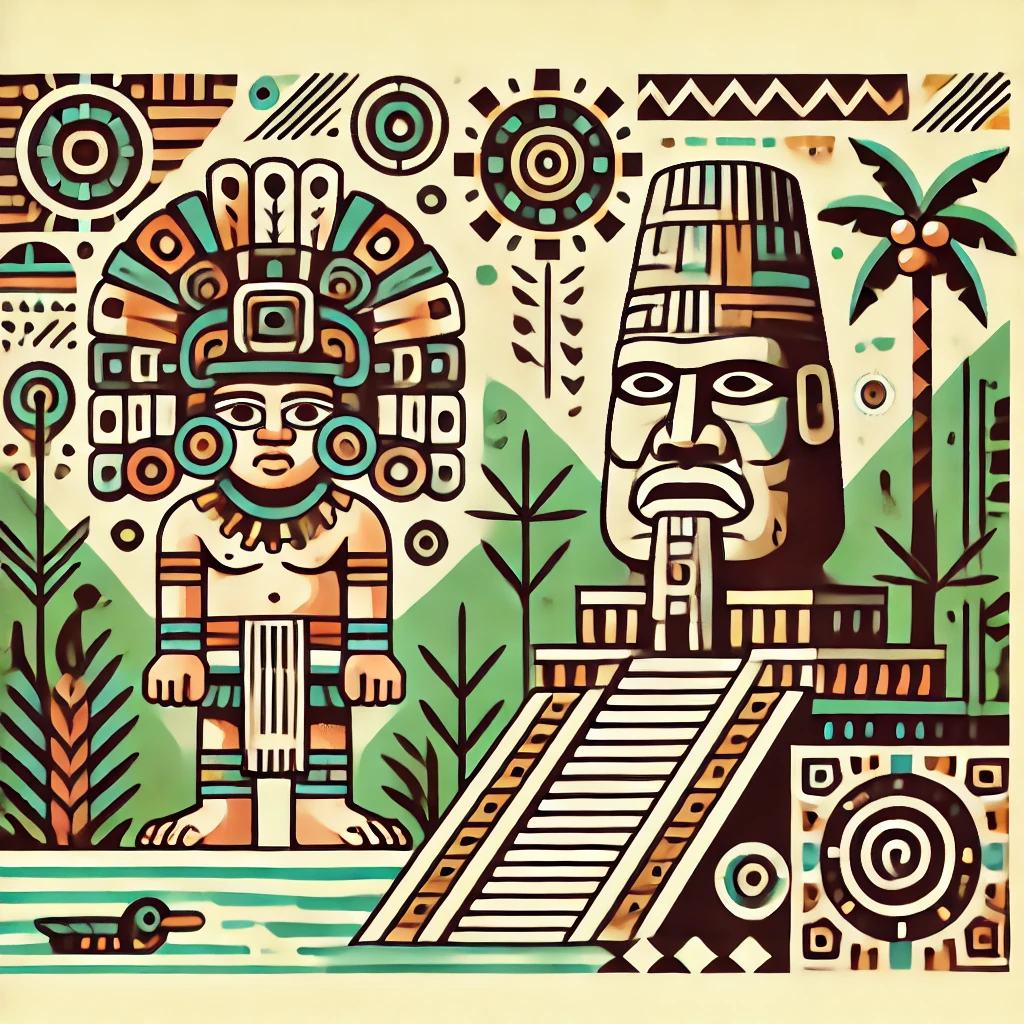
A Mesoamerican rule with an elaborate headdress stands near his temple, which has a huge head atop it

11. Burial of Kings in Pyramids: A Royal Afterlife

Deep inside a pyramid in Palenque in Chiapas, Mexico, archaeologists uncovered the tomb of K’inich Janaab’ Pakal, one of the greatest Maya rulers. His jade death mask gleamed in the flickering torchlight, surrounded by treasures meant to guide him into the afterlife. For the Maya, burial honored the dead in their journey to the underworld, a sacred act steeped in ritual and grandeur.

Unlike the Egyptians, who mummified their rulers, the Maya focused on elaborate tombs. These often included jade ornaments, intricate carvings, and offerings of food, pottery and incense. Pakal’s sarcophagus lid, for example, depicts him descending into the underworld, surrounded by mythological imagery that tells the story of his divine lineage.

These tombs weren’t just graves; they were political statements. By aligning their burials with religious symbolism, rulers reinforced their connection to the gods, ensuring their legacy endured both on Earth and in the spiritual realm. Each pyramid was a monument that acted as a doorway between worlds.

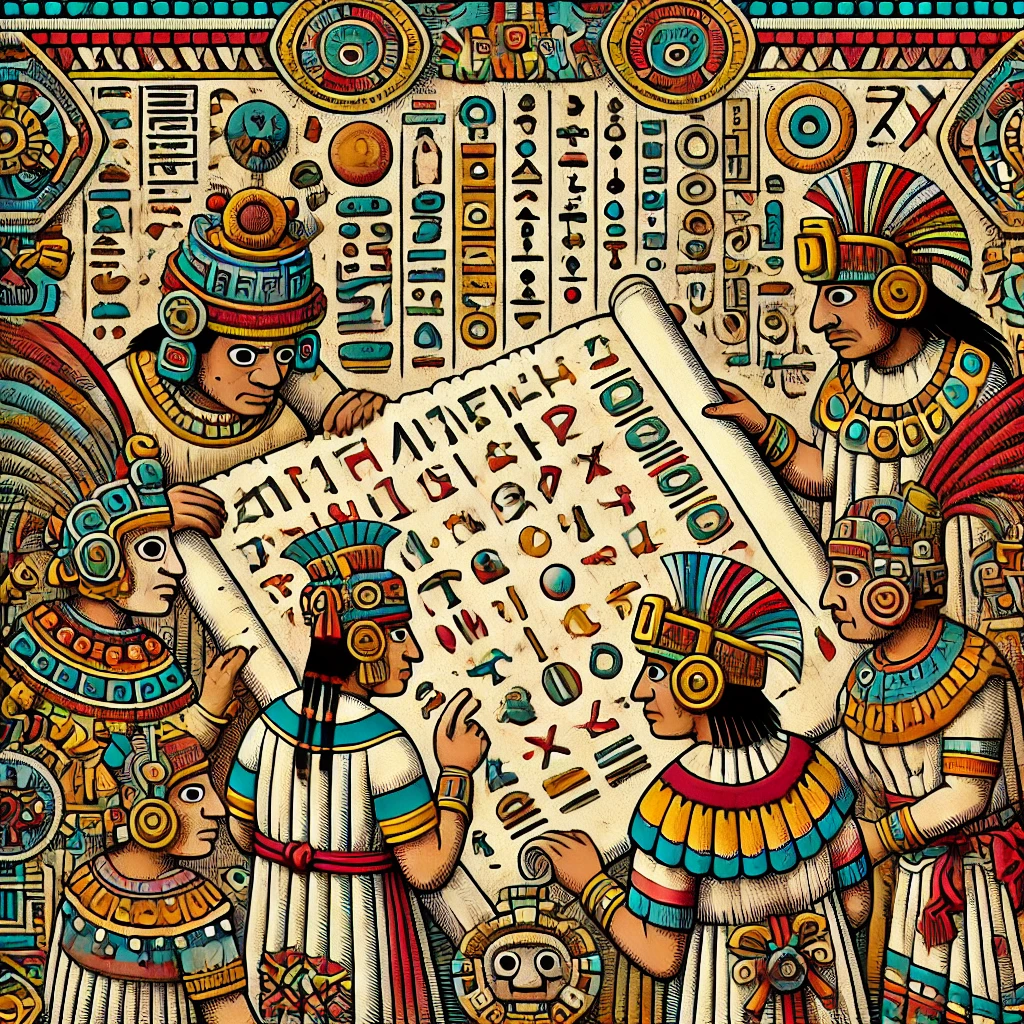
Ancient Mesoamericans crowd around a large codex, with pictographs all around

12. Codices: Books of the Gods

Imagine holding a book that contains the secrets of the universe, the history of kings and the rituals to summon rain. That’s what Mesoamerican codices represented: sacred texts painted on bark paper or deerskin, filled with colorful glyphs and stunning illustrations.

The Aztecs, Maya and Mixtec used codices to record everything from genealogy to religious ceremonies. These books were read by priests and rulers, who used them to guide decisions and communicate with the divine. Sadly, the Spanish destroyed the vast majority of these texts during the conquest, believing them to be works of the devil. Of the thousands of codices once created, only a handful survive today, including the Dresden Codex and the Codex Borgia.

Each surviving codex offers a glimpse into a lost world, revealing the complexity of Mesoamerican thought and artistry. These were living documents, bridging the human and the divine. The destruction of these texts remains one of the greatest tragedies of the conquest, a loss of knowledge we can only begin to fathom.

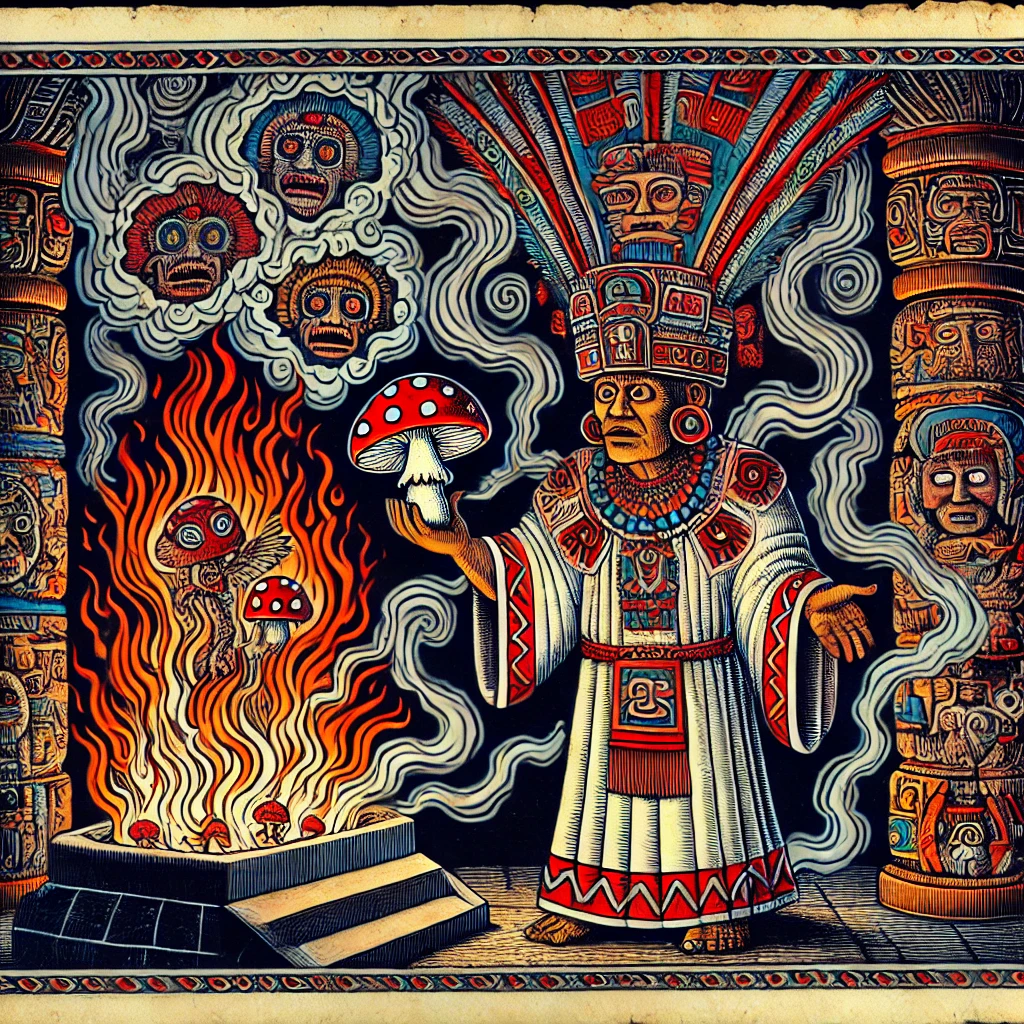
A Mesoamerican priest holds a mushroom, while others burn in a temple, while he hallucinates faces in the smoke

13. Hallucinogens in Rituals: Unlocking the Divine

The fire crackled in the dim light of the temple, smoke swirling around a priest seated cross-legged, a small cup of pulque — a fermented agave drink — in one hand and a bundle of morning glory seeds in the other. As he consumed the seeds, his breathing slowed, his vision blurred, and he began to see the gods. For the Maya, Aztecs and other Mesoamerican cultures, hallucinogens weren’t recreational; they were sacred tools, gateways to the divine.

Psychoactive plants like peyote, psilocybin mushrooms and the seeds of morning glory vines (tlitliltzin) played a central role in ceremonies. Priests and shamans believed these substances opened pathways to cosmic truths, allowing them to communicate with deities, interpret omens and guide their communities. The experience was deeply spiritual, often accompanied by chants, prayers and rhythmic drumming, reinforcing the connection between the mortal and divine.

Modern scientists have confirmed the psychoactive properties of these plants and their ability to alter consciousness. Even today, the Mazatec, descendants of the ancient Mixtec, continue rituals involving hallucinogens, preserving their connection to the sacred. 

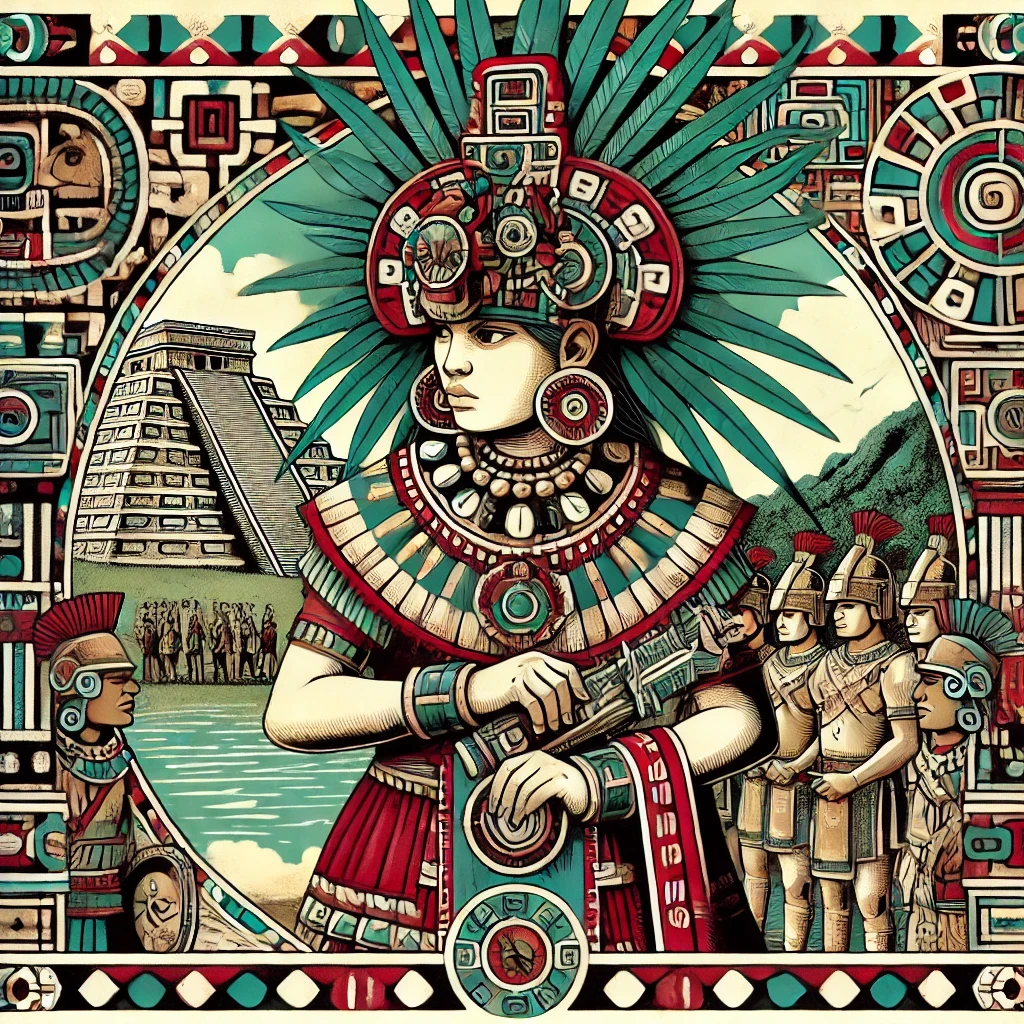
An ancient Mesoamerican woman ruler, in featured headdress and dress, with warriors, a canal and a stepped pyramid around her

14. Women as Leaders: Power in Unexpected Places

The Mesoamerican world is often painted as a patriarchal society, dominated by kings and warriors. But dig a little deeper, and you’ll find powerful women shaping history from the shadows — and sometimes, from the throne.

In Maya society, women could rule in their own right. Lady Six Sky of Naranjo, for example, was a queen who led military campaigns and revitalized her city’s influence. And in Mixtec culture, women were often depicted as priestesses, warriors and even co-rulers, standing alongside men in both politics and religion.

These women were integral to the fabric of their societies. While their stories are often overshadowed by their male counterparts, their legacies endure in ancient texts, carvings and oral traditions.

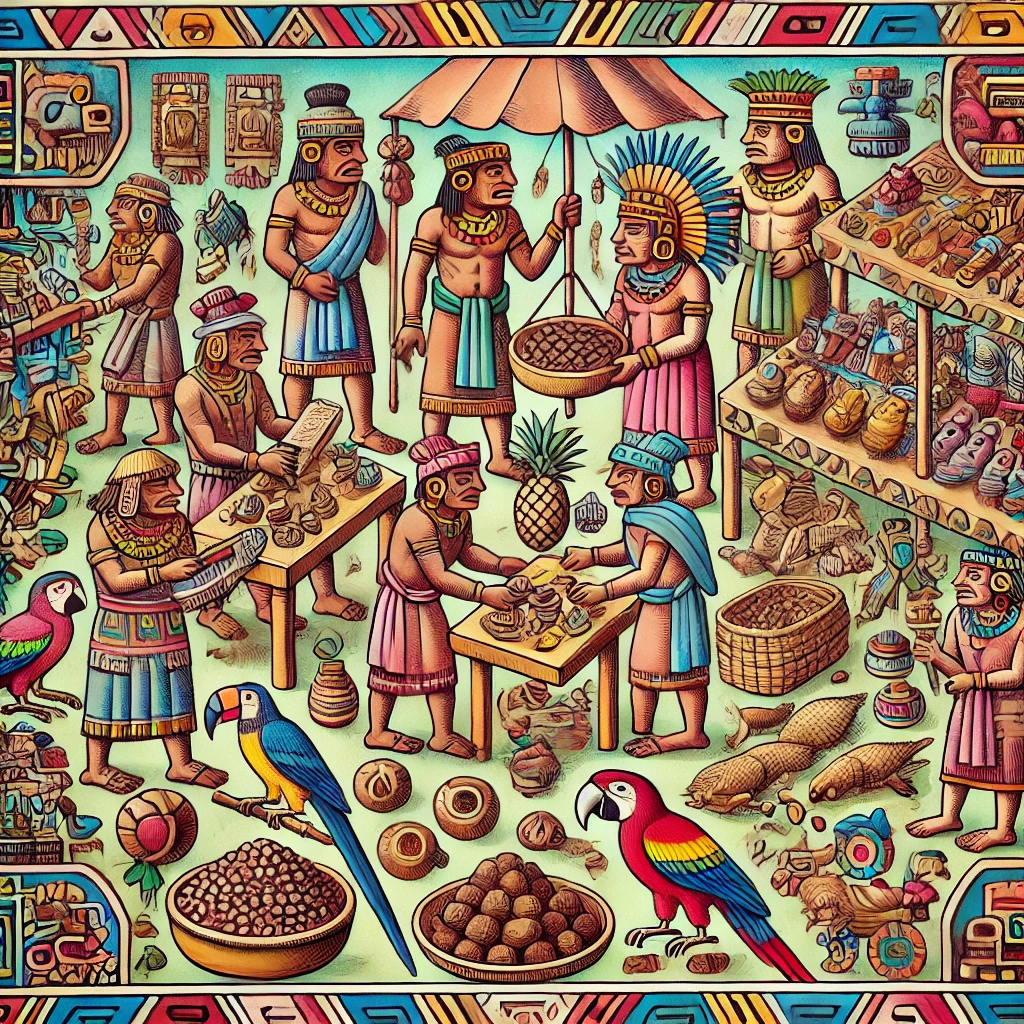
A busy Mesoamerican marketplace, with tropical birds and people trading for produce and other items

15. Trade Networks: A Marketplace Across the Americas

Picture a bustling marketplace where merchants trade obsidian from central Mexico, turquoise from the American Southwest, and feathers from tropical jungles. This was the Mesoamerican trade network — an intricate web of commerce that connected cultures across thousands of miles.

The Aztecs had professional traders called pochteca, who ventured into distant lands to bring back luxury goods as well as information. These merchants doubled as spies, gathering intelligence for the empire. Goods exchanged included cacao, salt, jade, textiles and live animals like macaws. 

The Maya, meanwhile, traded along rivers and coastlines, using massive dugout canoes to transport goods.

These trade networks reveal a highly interconnected world, centuries before European contact. They weren’t just exchanging items but also ideas, technologies and cultural practices. Innovation wasn’t confined to one city or empire, but was shared across Mesoamerica, creating a vibrant, collaborative civilization.

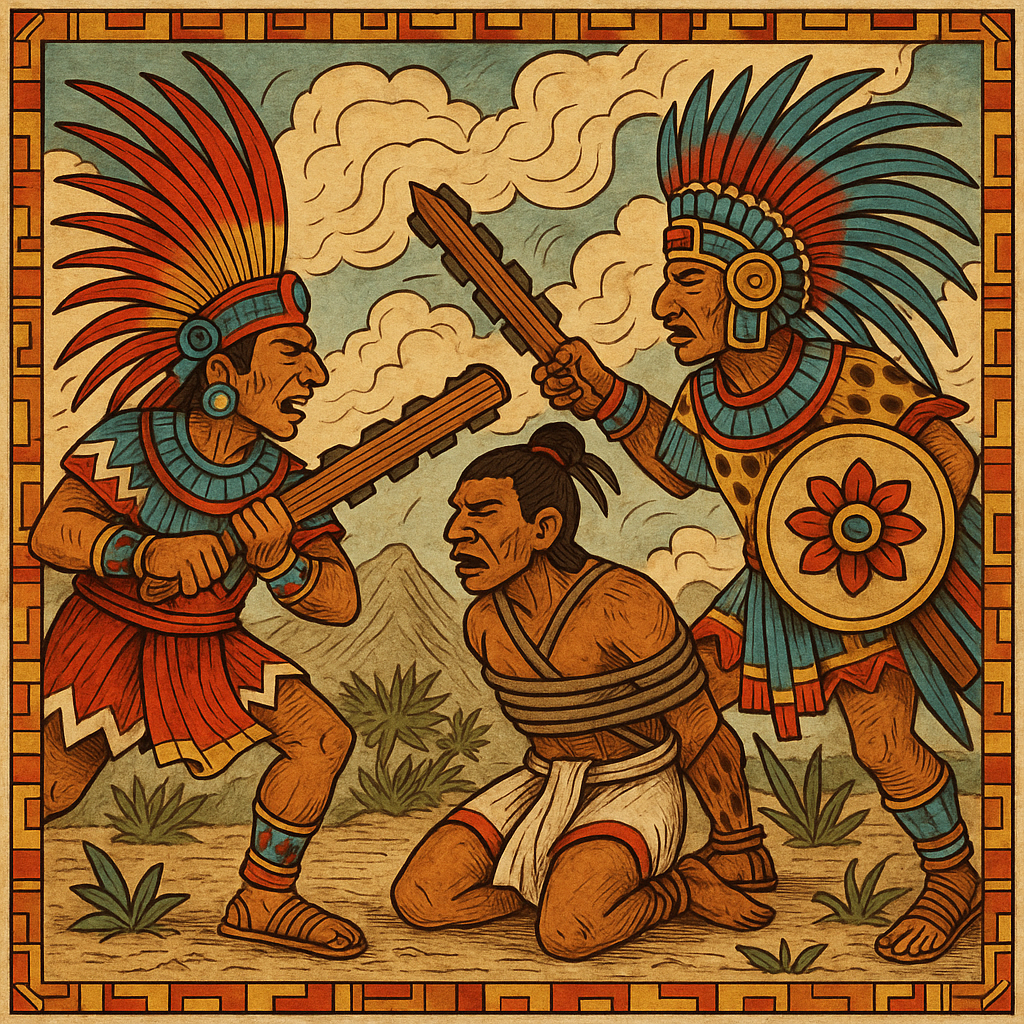
Two warriors fight in an Aztec flower war, near a prisoner who has been tied up

16. Flower Wars: Fighting for Sacrifice Victims

In the Aztec world, war wasn’t always about conquest — it was about feeding the gods. Known as flower wars, these prearranged battles were fought not to expand territory but to capture prisoners for sacrifice. Think of it as a grim, divine version of capture the flag.

The idea behind a flower war was simple: The gods required blood to sustain the universe (see above), and the noblest offering was a captured warrior. These battles were fought with precision and ritual, often involving ornate costumes and weapons designed to wound rather than kill. The goal wasn’t to destroy the enemy but to bring back their strongest fighters as living sacrifices.

This practice highlights the unique relationship between war and religion in Aztec society. For them, the battlefield was sacred ground, where the fate of the cosmos was decided. The concept of flower wars reveals the Aztecs’ belief in sacrifice as an honorable exchange between mortals and gods, where even the defeated played a crucial role in cosmic harmony.

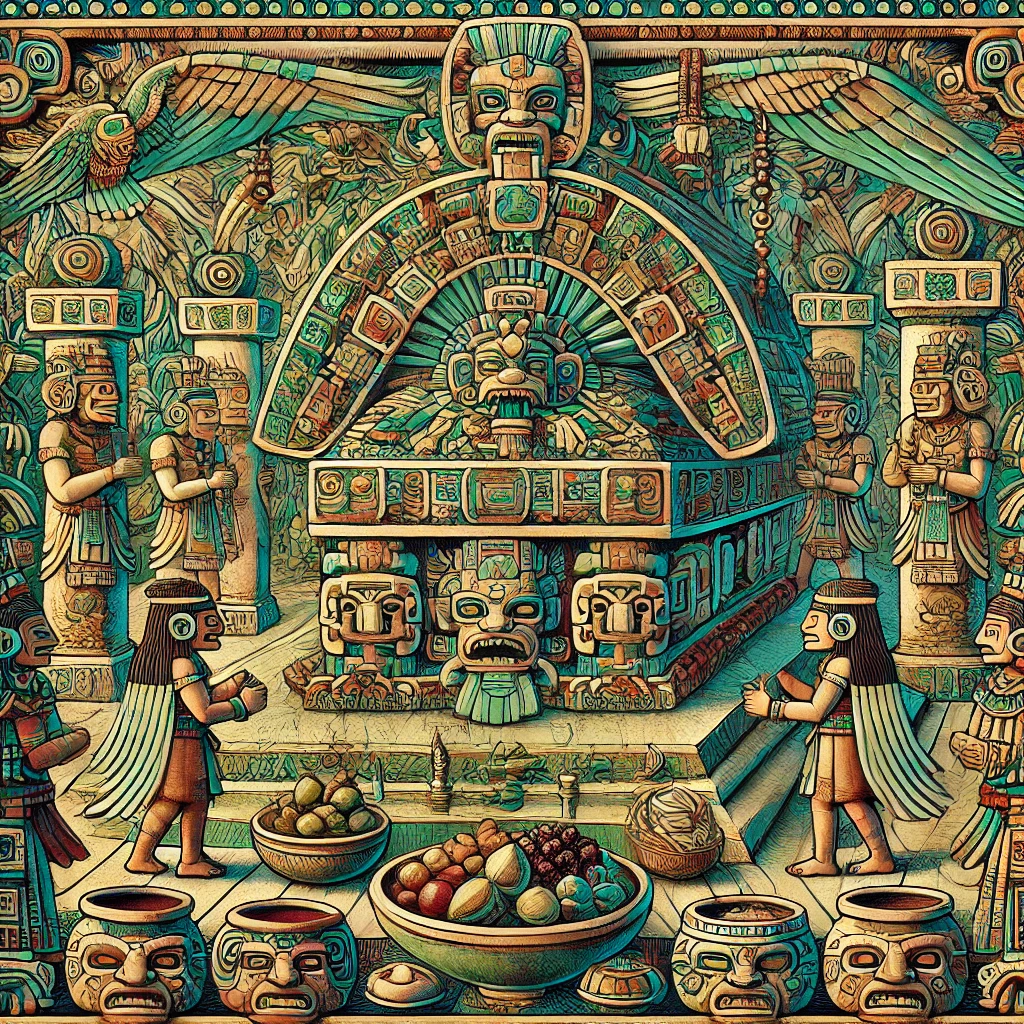
People offer fruit at an elaborately carved and painted Mesoamerican temple

17. Urban Centers of Stone: Predating European Cities

Before London had cobblestone streets or Paris had a skyline, cities like Teotihuacan in central Mexico were thriving metropolises. With a population that likely reached over 200,000 at its peak, Teotihuacan was one of the largest cities in the ancient world, rivaling the size of Rome.

Teotihuacan, whose name means “The Place Where Gods Were Created,” was meticulously planned. It boasted wide avenues, towering pyramids, multi-story apartment complexes and a sophisticated drainage system. The Pyramid of the Sun and Pyramid of the Moon dominated the skyline, their purpose tied to celestial events and rituals. Meanwhile, smaller neighborhoods housed artisans, merchants and farmers, creating a cosmopolitan hub of culture and commerce.

What’s even more impressive? Teotihuacan’s influence spread far beyond its borders, shaping the cultures of the Maya, Zapotec and others. Archaeological evidence suggests its trade routes extended thousands of miles, making it not just a city but a cultural and economic powerhouse. Its sophistication proves that long before European colonization, Mesoamerica had already mastered the art of urban living.

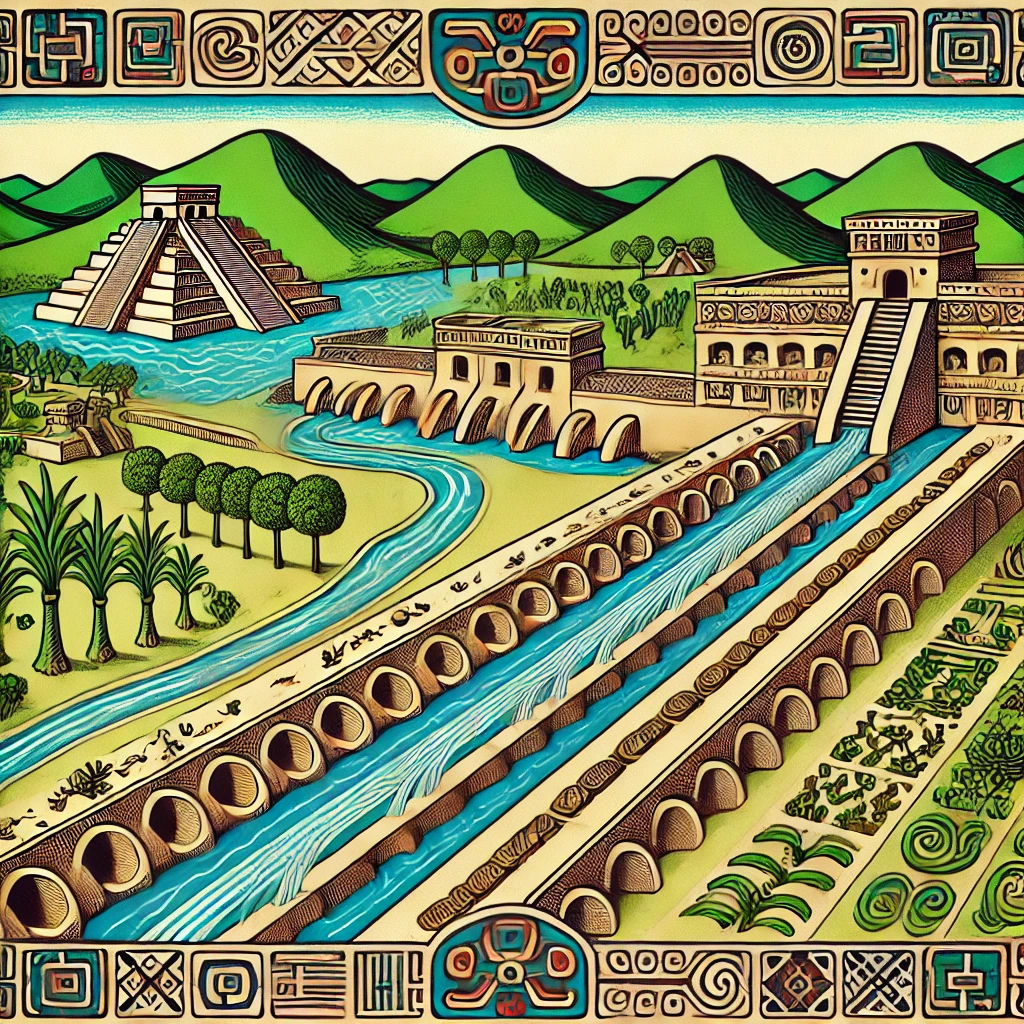
Aztec waterways, including canals, running past gardens, a temple and stone structures, with grassy hills in the background

18. Advanced Water Management: Engineering Marvels

In Tenochtitlan, the Aztec capital, advanced water management turned a swampy island into a thriving metropolis.

The Aztecs built aqueducts to bring fresh water into the city from nearby springs, ensuring a reliable supply for drinking, bathing and irrigating crops. They also constructed dikes and canals to control flooding during the rainy season. One of the most remarkable projects was the dike built by the engineer Nezahualcoyotl, a massive barrier that separated fresh and brackish water in Lake Texcoco.

These innovations allowed Tenochtitlan to support a population of over 200,000 people — comparable at the time to Paris, Constantinople and Beijing. The city’s water management was practical as well as beautiful, with canals crisscrossing neighborhoods and floating gardens providing food and greenery. 

A hairless Mexican dog surrounded by a naked man from behind, two skeletons and other symbols of Mesoamerican afterlife

19. The Aztec Love for Pets: Companions of Life and Death

While many associate the Aztecs with grand temples, fierce warriors and intricate rituals, they also had a tender side: their deep connection to animals. Domesticated dogs, particularly the Xoloitzcuintli (Xolo), held a special place in Aztec society. These hairless dogs were believed to guide their owners’ souls through the underworld to Mictlan, the final resting place for most Aztecs. Often, these loyal companions were buried alongside their owners to fulfill this sacred role. (Xolos were also a favorite food at special feasts like weddings.)

But dogs weren’t the only animals cherished by the Aztecs. Turkeys (huehxolotl), macaws and parakeets were kept as pets, not solely for their feathers or meat, but also for companionship. Macaws, with their bright plumage, were often seen as symbols of beauty and vibrancy, while turkeys held religious significance. These animals frequently appeared in Aztec art, codices and ceremonies, bridging the connection between the natural and spiritual worlds.

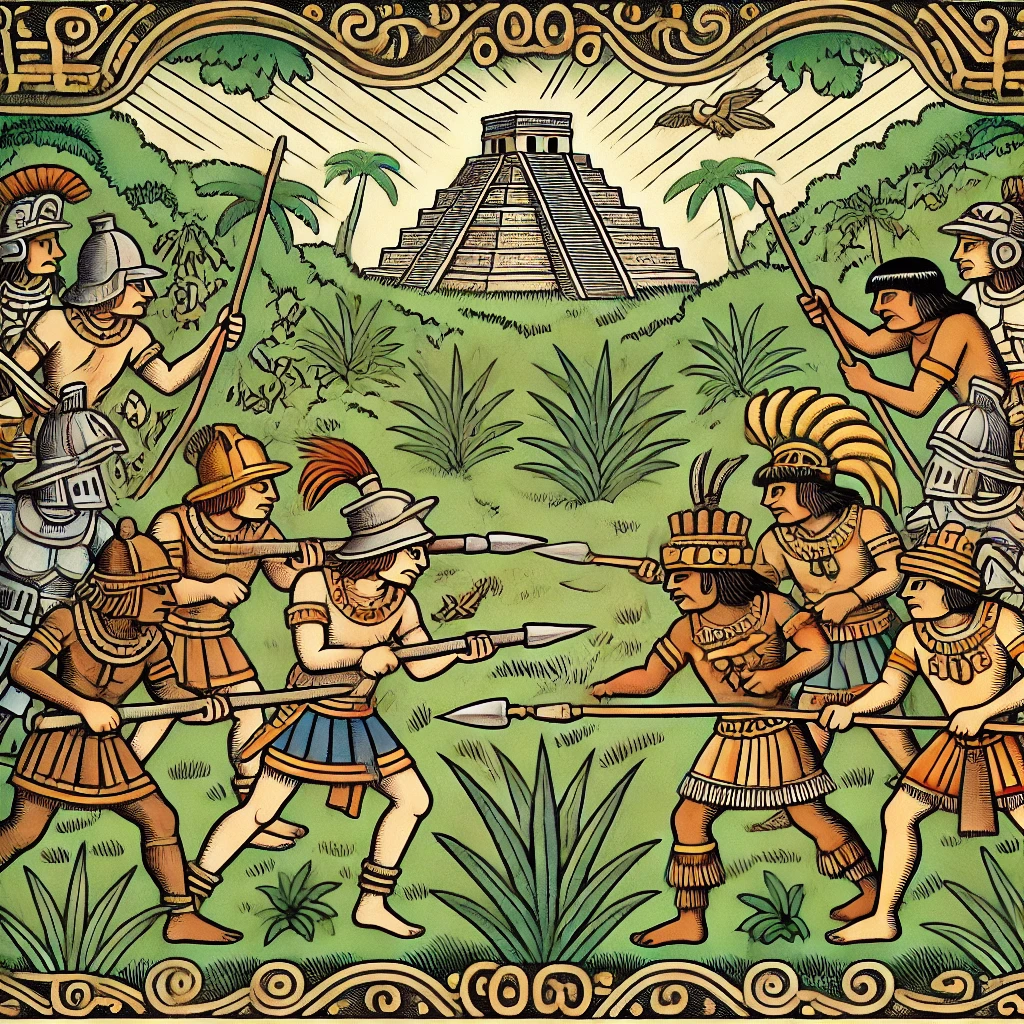
Mesoamerican warriors fight Spanish conquistadors in armor by a stepped pyramid

20. Resistance to Colonization: A Legacy of Defiance

When Hernán Cortés marched into Mexico in 1519, he may have toppled the Aztec Empire, but indigenous resistance didn’t end there. The Maya, for example, fought Spanish domination for centuries, with conflicts like the Caste War of Yucatán lasting well into the 19th century.

One of the most remarkable stories of defiance comes from the Maya city of Tayasal, which remained independent until 1697 — nearly two centuries after the fall of Tenochtitlan. Using guerrilla tactics and their knowledge of the jungle, the Maya outlasted wave after wave of Spanish expeditions. Even after their cities were conquered, they preserved their culture through language, art and traditions, subtly resisting assimilation.

Despite centuries of conquest and colonization, their legacy lives on — not just in history books but in the vibrant traditions and identities of modern Mexico and Central America.

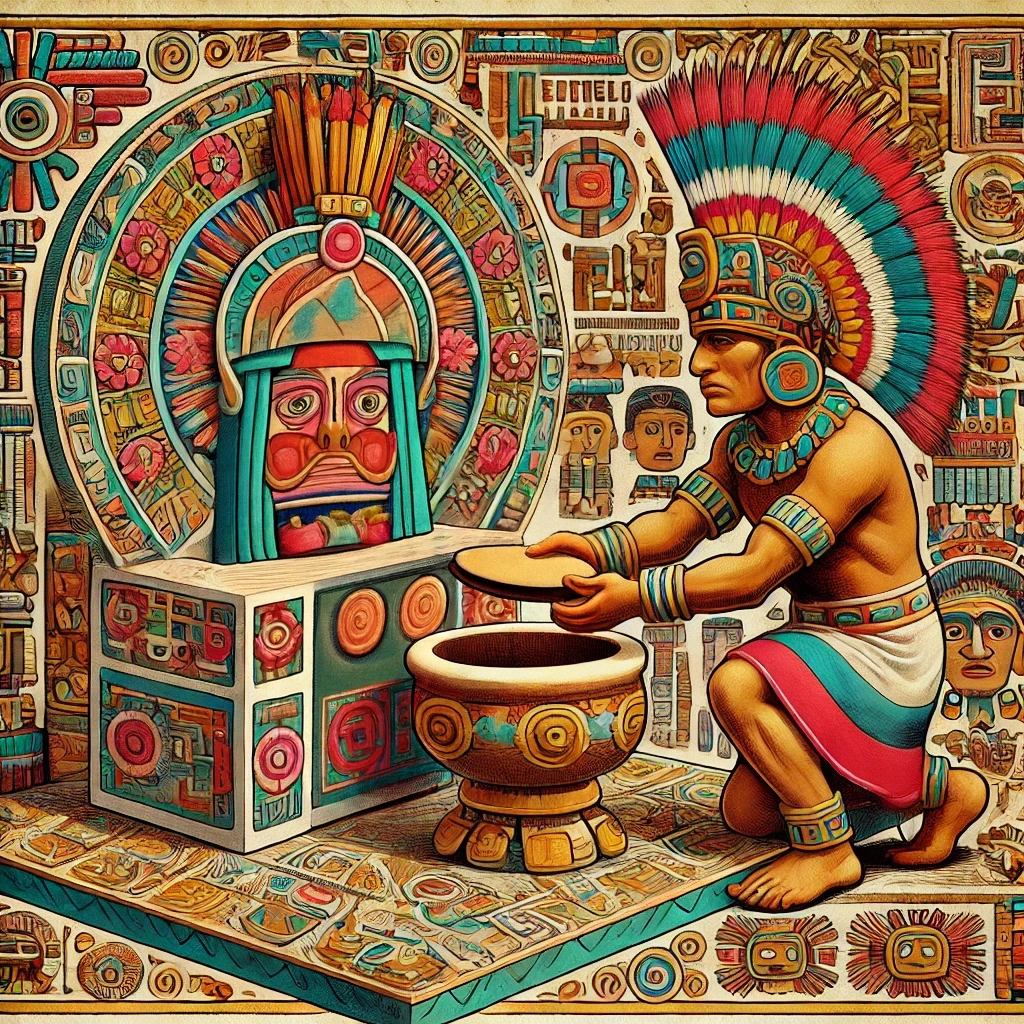
A Mesoamerican priest in feathered headdress holds a disc over a vessel at an elaborately carved and painted altar

Like Blood for Chocolate: What Mesoamerica Left Behind

The civilizations of Mesoamerica built stunning pyramids and created impressive calendars. They were innovators, dreamers and survivors. Their world was one of astonishing ingenuity, spiritual devotion and cosmic balance. While some aspects of their culture may seem shocking to us today, they remind us that history isn’t always comfortable — but it’s always worth exploring. –Wally


Chapultepec Castle’s Lavish Décor and Imperial Intrigue in CDMX

Take a room-by-room tour of Chapultepec Castle — North America’s only royal palace — and uncover the imperial lives of Maximilian, Carlota and Porfirio Díaz in the heart of Mexico City.

Schoolchildren pass by Grasshopper Fountain at Chapultepec Castle in CDMX

The deeper we wandered into Chapultepec Castle, the more it felt like we were stepping back in time. 

It’s the only royal palace in North America that actually housed monarchs: Emperor Maximilian and Empress Carlota, who brought European grandeur, idealism (and a fair share of drama) to Mexico City. Their brief, ill-fated reign left a lasting mark on the castle and the country — a poignant reminder of how imperial ambition once shaped the course of Mexican history.

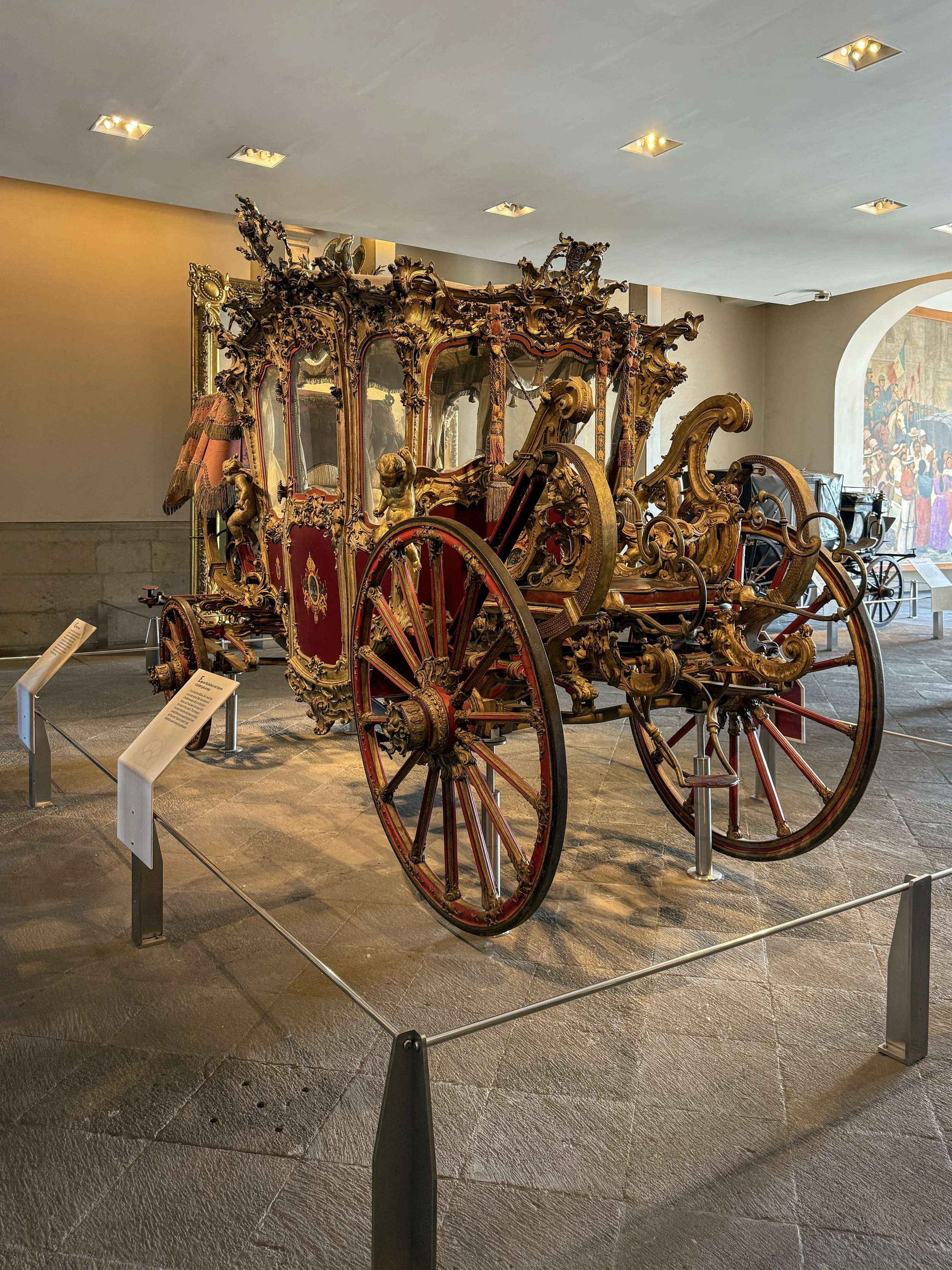
The carriage of Emperor Maximilian and Charlotte at the Alcázar of Chapultepec

This extravagant carriage belonged to Maximilian and Charlotte.

Sala de Carruajes (Carriage Room)

After making our way out of the west wing, which houses the Museo Nacional de Historia, Wally and I found ourselves in the Sala de Carruajes (Carriage Room). This covered space features historic carriages and serves as the main entrance to the Alcázar, or Royal Palace. 

At the center of the room is the royal coach that belonged to Maximilian and Charlotte. Designed for special occasions, the ornate Baroque-style carriage was meticulously fabricated in 1864 by the Cesare Scala workshop in Milan, Italy and later shipped to Mexico. 

Its gold detailing, sculpted cherubs, and doors bearing the coat of arms of the Mexican Empire, an eagle atop a nopal devouring a serpent, beneath an imperial crown — lend the carriage an air of majestic splendor.

According to records from the National Museum of History, the carriage was used only twice, contributing to its near perfect condition. You could almost imagine it rolling through the streets, drawing every eye in its path.

Additionally, a more modest four-wheeled carriage, designed in Paris, France by Henri Binder for everyday transport, is also on display. Originally built for Maximilian, it was adapted for President Benito Juárez. While its wheels kept turning, they no longer carried a king. Maximilian’s imperial crest was replaced with the emblem of the republic — minus the imperial crown.

We spent hours exploring the castle’s magnificent halls, grand stairways and stunning rooms — not to mention the breathtaking views from the top of Chapultepec Hill.

Just beyond the room’s entrance is the first of two large-scale works by Antonio González Orozco, one of the last great artists of the Mexican muralist movement: Entrada Triunfal de Benito Juárez al Palacio Nacional, Acompañando de Su Gabinete (The Triumphal Arrival of Benito Juárez at the National Palace, Accompanied by His Cabinet), painted in 1967.

Nearby is another painting by Orozco: Juárez, Símbolo de la República Frente a la Intervención Francesa (Juárez, Symbol of the Republic Against the French Intervention), which celebrates Juárez’s role in preserving Mexican sovereignty during the French Intervention. His resistance to foreign rule and efforts to restore the republic earned him the Colombian government’s honorific title Benemérito de las Américas (Worthy of the Americas).

Among the other artworks in the room are three equestrian portraits: one of Maximilian of Habsburg, painted in 1865 by French artist Jean Adolphe Beaucé; one of General Mariano Escobedo; and one of General Porfirio Díaz, painted by Spanish soldier and artist José Cusachs in 1901.

Visitors stand in the narrow Sala Introductoria (Introductory Hall) at Chapultepec Castle

A detail of the intricate Baroque plasterwork inside the Sala Introductoria.

Sala Introductoria (Introductory Hall)

Behind the Carriage Room, Wally and I stepped into a long, narrow hallway with wooden floors and a gilt plasterwork ceiling. This elegant corridor is now known as the Sala Introductoria (Introductory Hall), and features placards that tell the stories of its most notable residents, including Maximilian and Charlotte, as well as Díaz. 

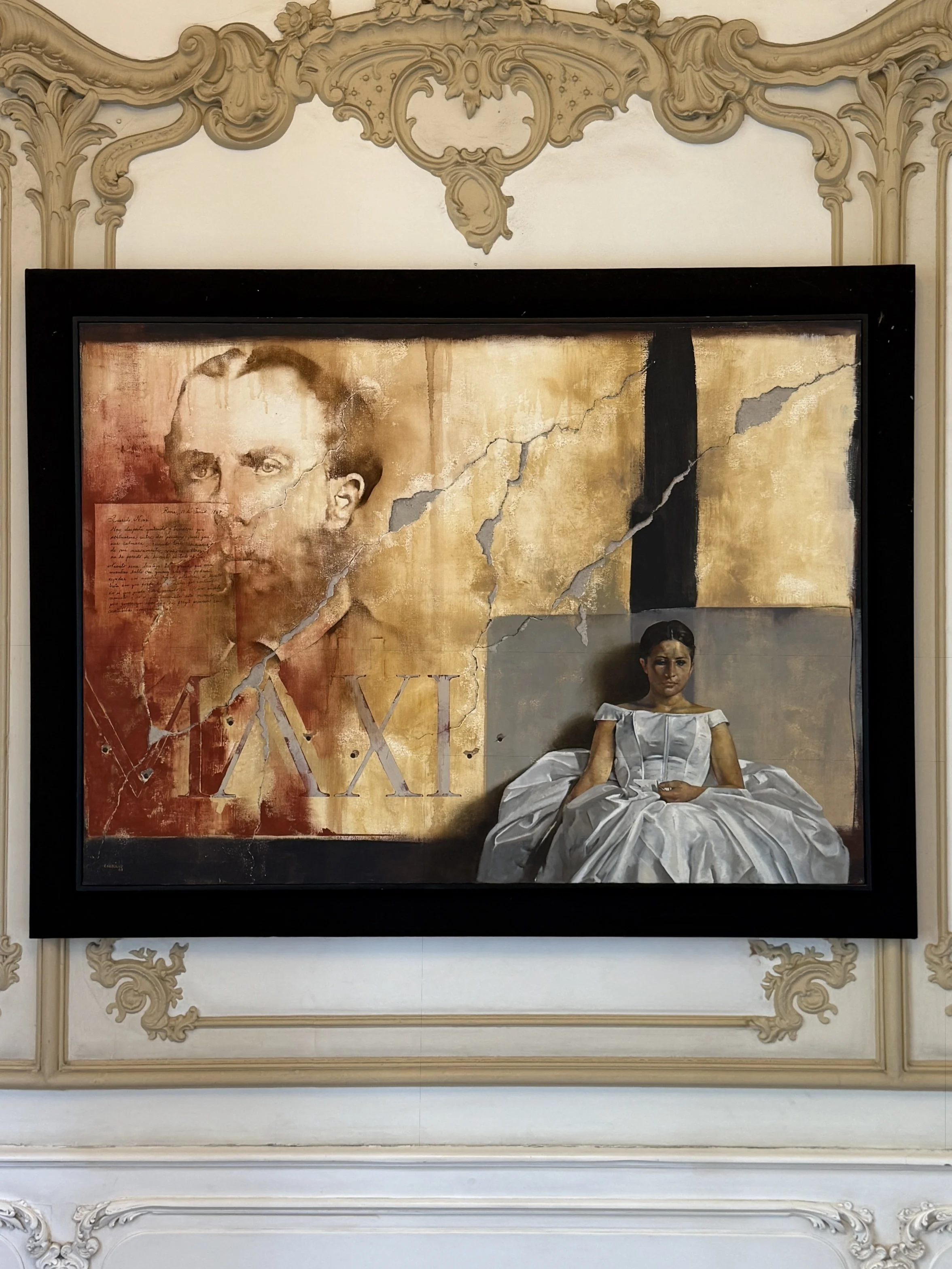
Querido Max (Dear Max) by Miguel Carillo Lara in the Introductory Hall at Chapultepec Castle

Querido Max (Dear Max) by Miguel Carillo Lara, 2003

During Maximilian’s reign, this space served a very different purpose. It was a skittles alley, a game similar to bowling, where players would roll a wooden ball or disc down the hall, aiming to knock over nine pins arranged in a diamond formation. 

Attack on the Castle Chapultepec, a print by Nathaniel Currier from 1848

Attack on the Castle Chapultepec, a print by Nathaniel Currier, 1848

History of Chapultepec Castle

Chapultepec Castle’s appearance was shaped largely by two men: Maximilian I of the Austrian House of Habsburg, who ruled Mexico from 1864 to 1867, and Porfirio Díaz, who took power in 1876 and held onto it for over 30 years. 

Maximilian transformed the castle into a lavish imperial residence, while Díaz, an avid Francophile, despite fighting against the French in the Second Franco-Mexican War, modernized and expanded the structure. The castle remained the official presidential residence until 1934, when President Lázaro Cárdenas relocated the residence to Los Pinos. 

Not long after, on February 3, 1939, Cárdenas declared that Chapultepec Castle would become the National Museum of History. It officially opened to the public on September 27, 1944, during the presidency of Manuel Ávila Camacho.

The Austrian Archduke Ferdinand Maximilian Joseph (future emperor of Mexico) and his wife Charlotte of Belgium

The Austrian Archduke Ferdinand Maximilian Joseph (future emperor of Mexico) and his wife Charlotte of Belgium

The French Intervention in Mexico 

So, how did Mexico come to have an Austrian emperor?

It all started in the 1830s, when France began eyeing Mexico as a place to extend its influence, most notably during the Pastry War (1838–1839), a brief conflict sparked by complaints over damages to French-owned businesses. Although France never established a formal colony, its cultural and economic presence grew, especially in cities like Veracruz and Mexico City.

After years of political turmoil, Mexico’s economy was in ruins. In 1861, President Juárez made a bold move — he suspended all foreign debt payments. European creditors were infuriated, prompting France, Spain and Britain to send troops, determined to collect what they were owed. 

But it soon became clear that France, under Napoleon III, had bigger ambitions than debt recovery. By April 1862, Britain and Spain, unwilling to be drawn into an imperial venture, withdrew, leaving France to pursue its grand designs alone.

Napoleon wanted to establish a French-backed monarchy in Mexico to boost French influence in the Americas and counterbalance the growing power of the United States. 

French troops marched inland, but on May 5, 1862, they ran into stiff resistance at the Battle of Puebla, where Mexican forces under General Ignacio Zaragoza pulled off a stunning victory — a moment still celebrated every Cinco de Mayo.

However, the French regrouped, and returned stronger. By June 1863, they captured Mexico City, and Juárez and his government were forced into exile in the north.

With Mexico under French control, Napoleon needed a suitable European noble to serve as emperor. He found his answer in Archduke Ferdinand Maximilian Joseph of Austria, the younger brother of Emperor Franz Joseph I. As the second son, Maximilian had lived in his brother’s shadow. He was idealistic, ambitious and increasingly disillusioned with his limited role in Europe. 

Departure for Mexico by Cesare dell'Acqua, 1865, showing Maximilian and Charlotte on a boat

Departure for Mexico by Cesare dell'Acqua, 1865. The royal couple head out to rule Mexico — a reign that would be short-lived and would end with Maximilian’s execution in 1867.

Emperor Maximillian Goes to Mexico

At first Maximilian hesitated. But the promise of power and glory in Mexico eventually won him over. With the encouragement of his equally determined wife, Princess Charlotte of Belgium, he accepted Napoleon’s offer. On May 28, 1864, the couple arrived in Mexico to begin their reign as Emperorador Maximiliano I and Emperatriz Carlota of Mexico.

Settling into their new roles, Maximilian and Charlotte chose Castillo de Chapultepec as their imperial residence, overseeing renovations to transform it into a grand European-style palace. They saw themselves as enlightened rulers, destined to bring stability and prosperity to a nation fractured by years of war.

While conservative elites had initially welcomed the monarchy, many Mexicans remained unconvinced. Juárez’s supporters, known as Juaristas, refused to recognize Maximilian’s authority and launched a sustained resistance movement. In an effort to win public support, Maximilian introduced several liberal reforms. These included protections for workers, efforts to limit working hours, and the promotion of fair labor practices. He also issued decrees aimed at restoring land rights to indigenous communities, reversing some of the damage done by earlier liberal reforms that had led to the loss of communal lands.

L'Exécution de Maximilien(The Execution of Emperor Maximilian) by Édouard Manet, 1869

L'Exécution de Maximilien (The Execution of Emperor Maximilian) by Édouard Manet, 1869

The End of the Second Mexican Empire

Ironically, Maximilian proved too liberal for the conservatives who had brought him to power. They hadn’t signed up for an emperor who challenged their privilege and wealth.

As tensions mounted, international pressure began to close in. After the American Civil War ended in 1865, the U.S. government officially recognized Juárez as Mexico’s legitimate leader and strongly urged France to withdraw support. By 1866, under increasing diplomatic pressure from the United States, Napoleon began withdrawing French troops from Mexico, effectively ending armed intervention and leaving Maximilian without critical support. 

Determined not to relinquish power, Charlotte sailed to Europe in July 1866, pleading with Napoleon III, Pope Pius IX and her royal relatives to continue supporting the empire. But her mission failed — and the emotional toll broke her. She suffered a mental breakdown  in Rome and never returned to Mexico.

Back home, Maximilian made his final stand in the city of Querétaro. On May 15, 1867, Republican forces broke through, after one of Maximilian’s own men, Colonel Miguel López, betrayed him. Captured along with his generals Miguel Miramón and Tomás Mejía, he was quickly sentenced to death.

Despite desperate pleas from European monarchs — including his own brother — President Juárez stood firm. Granting a pardon would have weakened his stance and undermined the republic. 

On June 19, 1867, Maximilian and his generals were executed by firing squad on Cerro de las Campanas, the Hill of the Bells, bringing the Second Mexican Empire to a dramatic and final end. (The First Mexican Empire, led by Agustín de Iturbide, had collapsed decades earlier in 1823, after barely two years of shaky rule following independence from Spain.)

Pink and white furniture in the Sala de Lectura (Reading Room) at Chapultepec Castle

A pair of alabaster vases, featuring the coat of arms of the Second Mexican Empire, sit atop pedestals flanking a grand bookcase, while the sideboard holds a bust of French poet and fabulist Jean de La Fontaine. 

Sala de Lectura (Reading Room)

Rooms on the ground floor are accessible from a gleaming black and white marble promenade and have been restored to reflect their appearance during the time of Emperor Maximilian and Empress Charlotte. 

After the skittles alley, the first room we saw was the Sala de Lectura (Reading Room), where Maximilian spent time reading, drafting decrees, and handling both official and personal correspondence. 

As we took it all in, something on the red damask-covered wall caught our eye: a dark, rectangular outline, like a shadow frozen in time. It was clear that a large painting had once hung there. Our curiosity got the best of us, so I did a little digging online later and found out it had been a full-length portrait of Maximilian.

To be honest, this is probably the least impressive of the palace rooms. It’s all uphill from here. Louis XV-style giltwood chairs and a settee, upholstered in Aubusson tapestries, depict scenes from Jean de La Fontaine’s fables. While the term “tapestry” is typically associated with wall hangings, Aubusson’s craftsmanship extends to rugs and furniture upholstery as well.

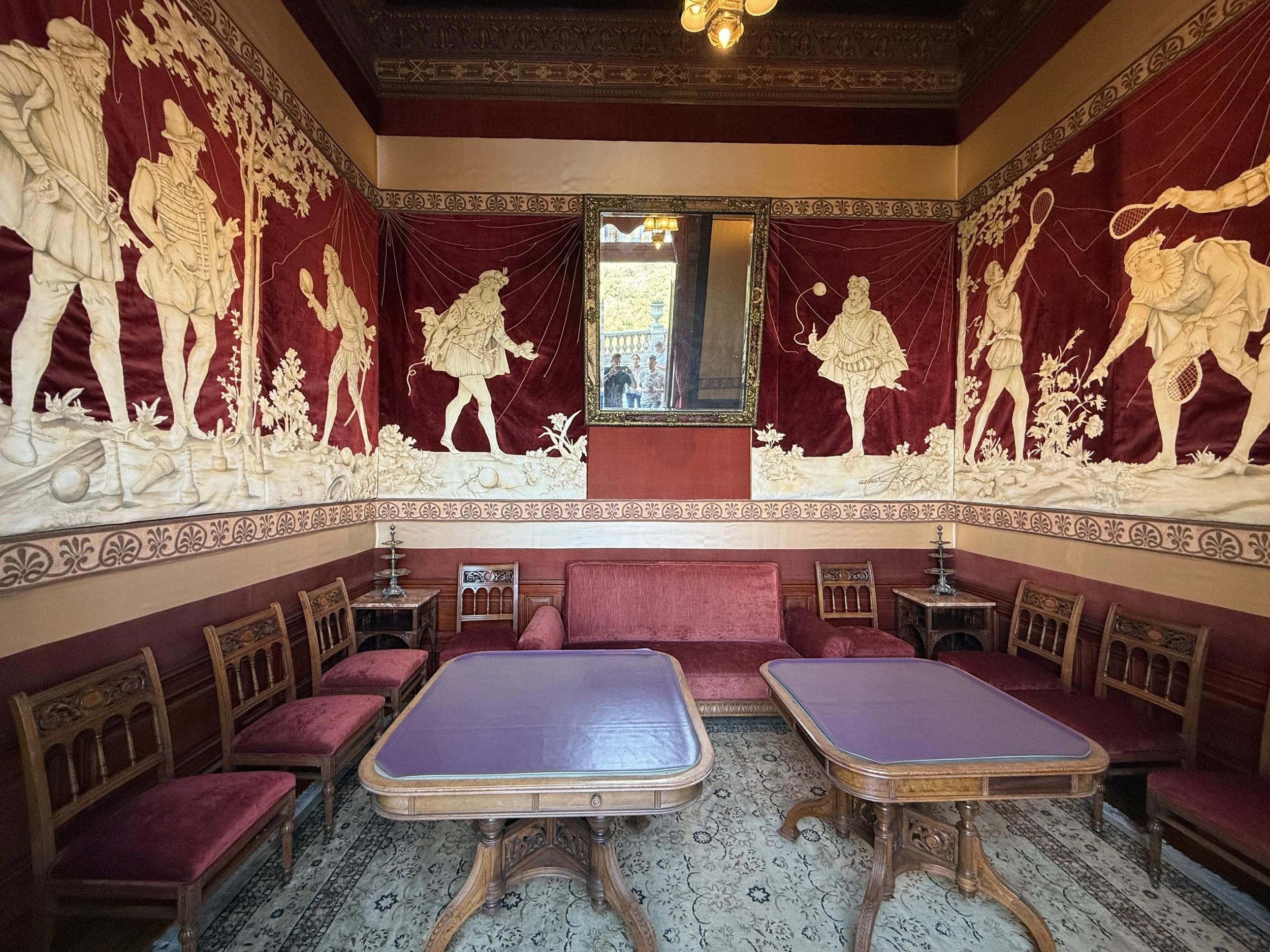
Burgundy and offwhite murals showing noblemen playing games in the Salón de Juego (Game Room) at Chapultepec Castle

The set of tapestries depicting nobleman playing games, fittingly adorning the Game Room, were a gift from Napoleon III to Maximilian for his birthday.

Salón de Juego (Game Room)

The next room was the Salón de Juego (Game Room), which was about half the size of the Reading Room. Its walls were decorated with scenes of noblemen dressed in elaborate 16th century finery — frilly pleated collars, puffed-out pumpkin breeches and cloaks — engaged in games such as badminton, bilboquet (a cup and ball toy) and the aforementioned skittles.

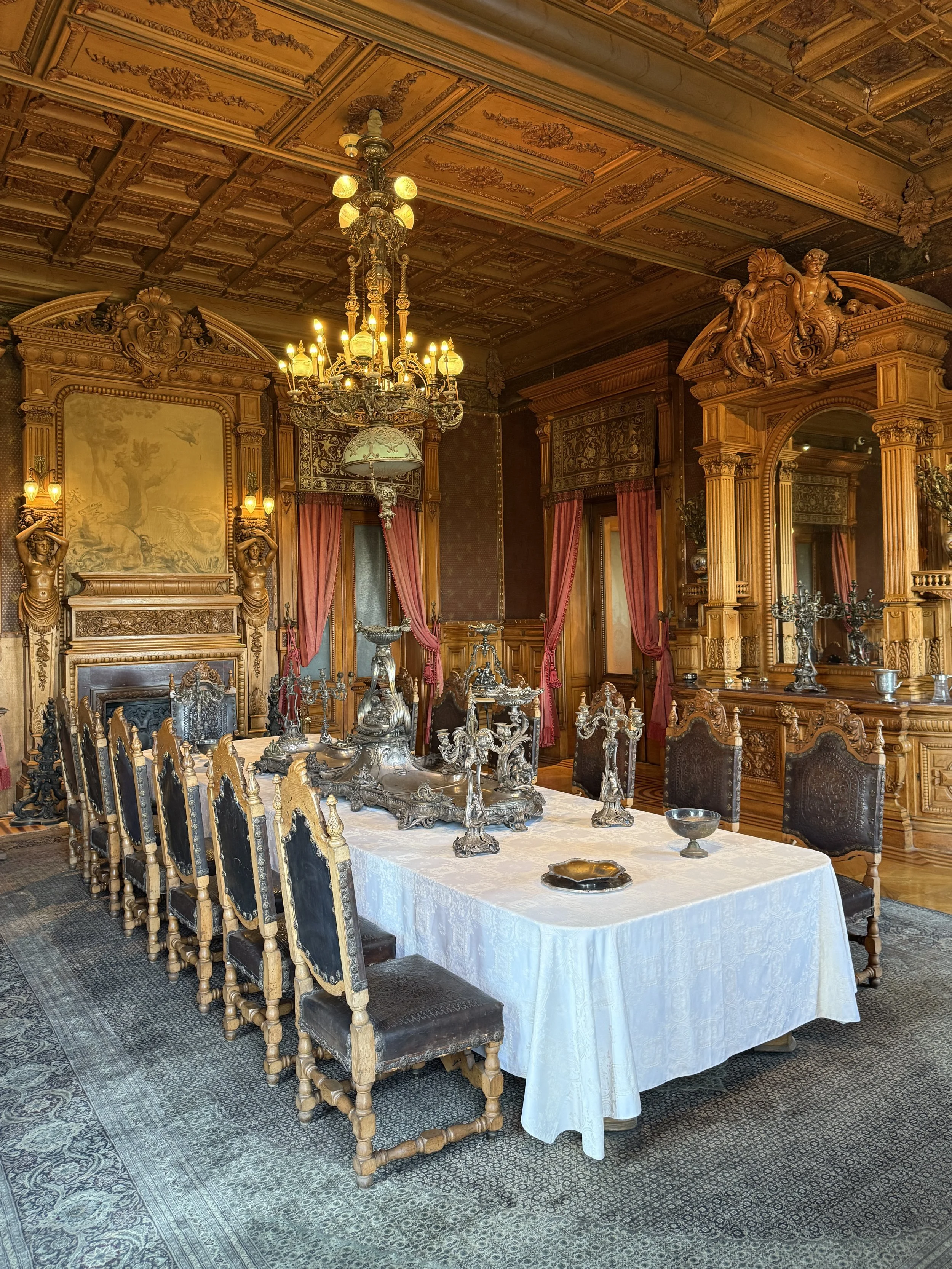
A long table in the Comedor (Dining Room) at Chapultepec Castle

The overmantle bears the eagle and snake coat of arms, while the sideboard features a pair of putti holding Díaz’s seal, ‘RM,’ which stands for República Mexicana.

Comedor (Dining Room)

Immediately following was the Comedor, or Dining Room. The fireplace mantelpiece and sideboards, masterfully handcarved from mahogany by Pedro Téllez Toledo and Epitacio Calvo, were commissioned during the 1880s during Díaz’s presidency. Above the topless caryatids, symbolizing Mexico’s agricultural abundance, hung another elegant Aubusson tapestry, this one depicting a fox and a duck.

The dining table was equally impressive. Tooled leather chairs with nailhead studs surrounded it, and the table itself was set with silver-plated serving pieces and candelabra from Maximilian’s own service — crafted by Christofle of Paris, no less, the same silversmith favored by Napoleon III. 

Salón de Gobelinos (Hall of Gobelins) with a piano and portraits on a pink wall at Chapultepec Castle

The Music Room includes chairs upholstered with tapestries depicting the fables of Jean de La Fontaine and two grand pianos.

Salón de Gobelinos (Hall of Gobelins)

Much to our disappointment, the Salón de Gobelinos (Hall of Gobelins) wasn’t named after mischievous little creatures from folklore, as we had hoped. Instead, it gets its name from the Gobelin family of clothmakers. Their Paris workshop became world-famous, and in this case, the name refers to the aforementioned Aubusson-woven textiles that cover the Louis XV furniture throughout the room.

Salón de Gobelinos (Hall of Gobelins) at Chapultepec Castle

Gazing back at us from the walls were full-length portraits of Maximiliano and Carlota by German painter Albert Gräfe, alongside those of Napoleon III and his wife, Eugénie de Montijo. In the center of the room stood two grand pianos — one French, the other English — which Maximilian and Charlotte once played.

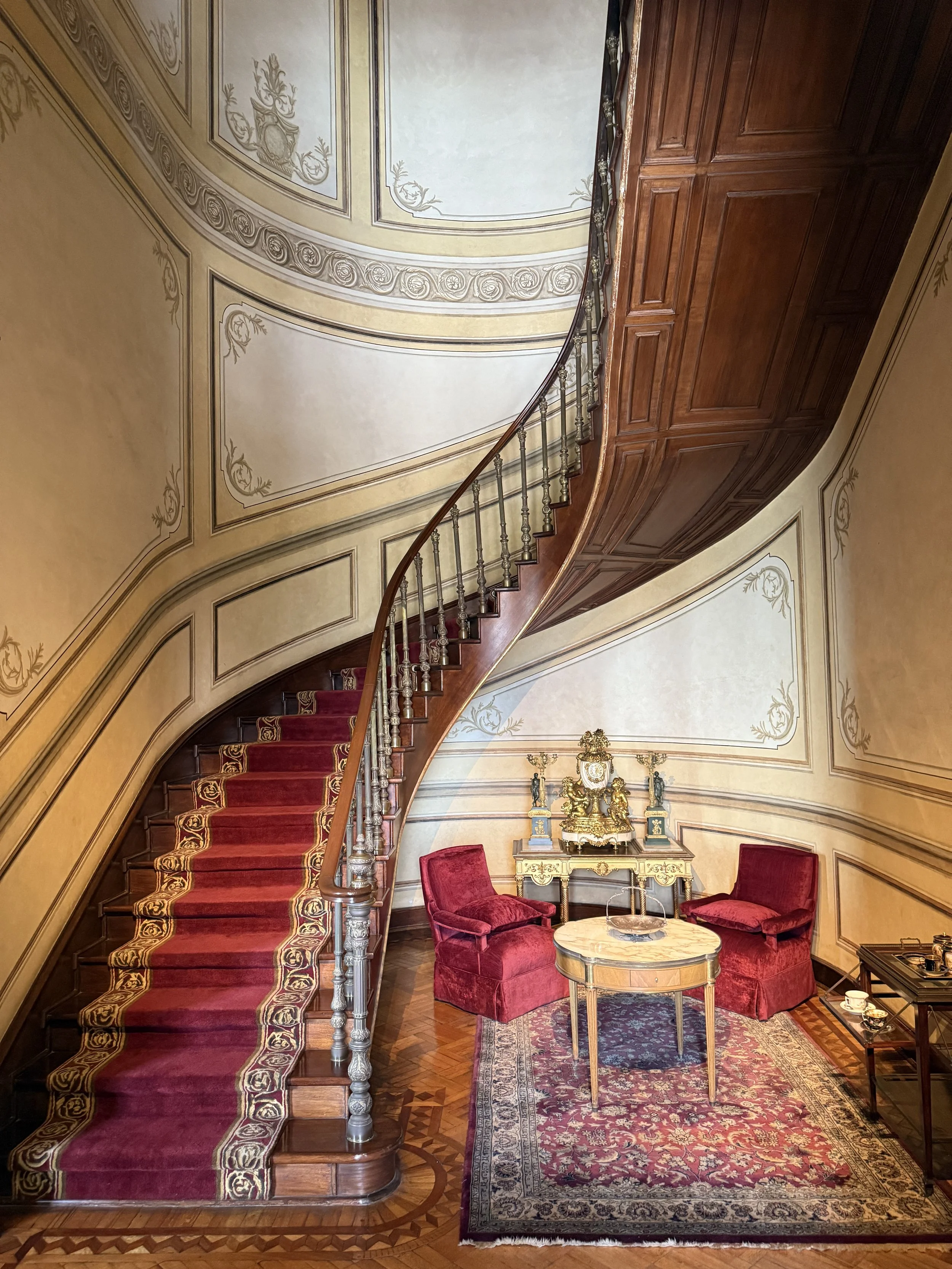
The curving Grand Staircase with red runner and a seating nook at Chapultepec Castle

The spiral staircase adjacent to the elevator was designed by architect Antonio Rivas Mercado. He contributed to the castle’s neoclassical design, transforming it into a grand structure suitable for use as a presidential residence and a venue for official events. Mercado’s influence extended beyond architecture, though; while serving as director of the Academy of San Carlos from 1903 to 1912, he was responsible for granting the scholarship that enabled Diego Rivera to study in Europe for several years. 

The light blue Recámara de Carlota (Charlotte’s Bedroom) at Chapultepec Castle

The brass bed in Carlota’s bedroom displays the coat of arms of Maximilian’s empire.

Recámara y Baño de Carlota (Charlotte’s Bedroom and Bathroom)

The Recámara de Carlota (Charlotte’s Bedroom) was the first in a suite of three rooms once used by the empress herself. Decorated in blue and gold, it features Boulle-style furniture, characterized by intricate inlays of tortoiseshell and brass. At the center stood a brass bed, its headboard topped by an oval medallion featuring the coat of arms of the Second Mexican Empire — an eagle and a snake, flanked by two griffins — while the footboard bears the imperial monogram “MIM” for Maximiliano I de Mexico. 
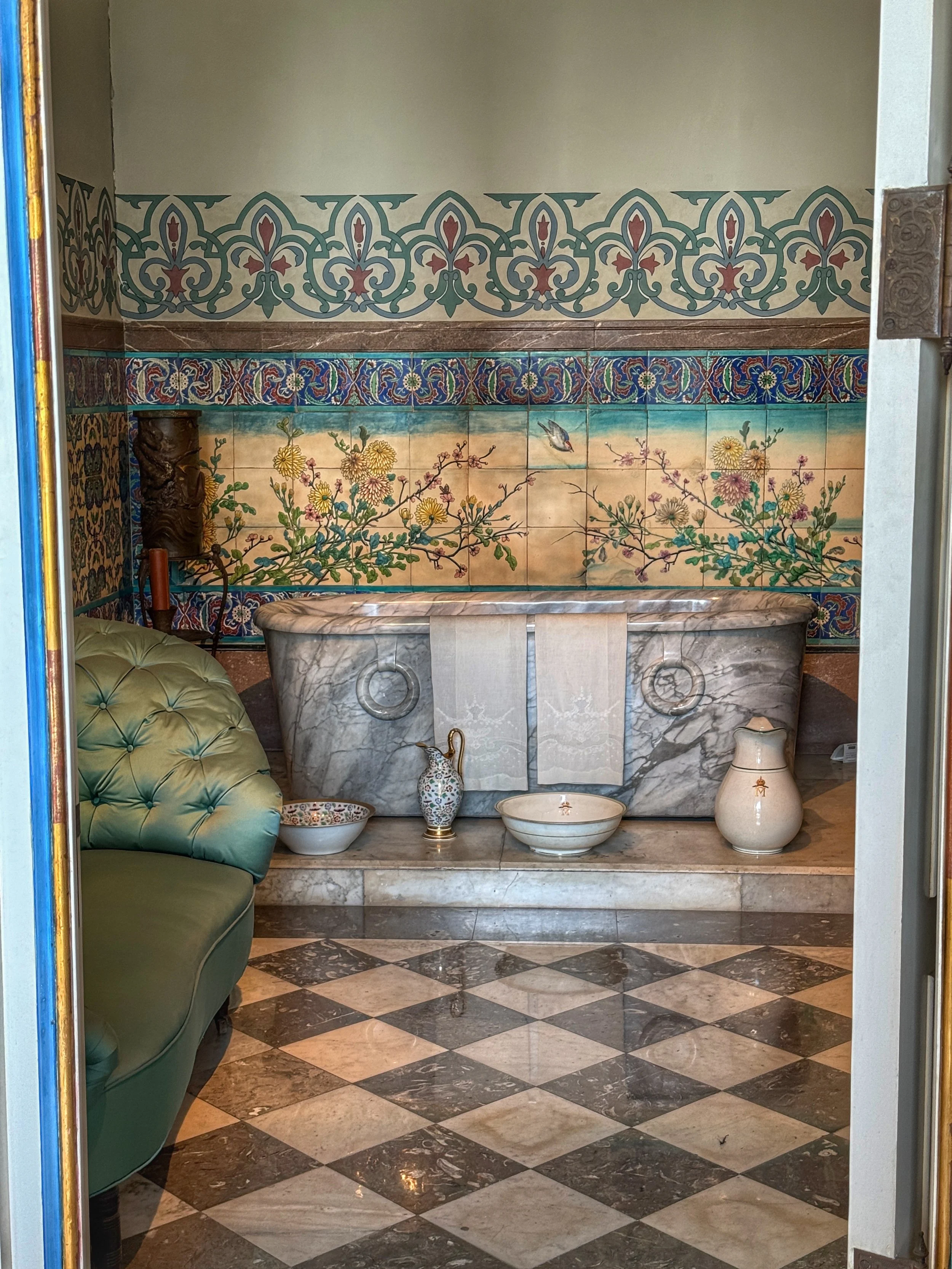
Next to the bedroom was the Baño de Carlota, or Charlotte’s Bathroom, where we saw the massive freestanding marble bathtub commissioned by Maximilian for Charlotte. Hewn from a single block of stone, it was produced by the Fratelli Tangassi workshop, an Italian family of alabaster artisans from Volterra, and exported to the castle at great expense. Standing before it, I could only imagine how much water it must have taken to fill.

A marble bathtub and floral tiles in Charlotte's bathroom at Chapultepec Castle

Behind the tub, tiles imported from China were delicately painted with peonies and cherry blossoms. 

Sala de Estar Carlota (Charlotte’s Sitting Room) at Chapultepec Castle

Charlotte’s sitting room reflected her devout faith, with a rare bust of the Virgin Mary under glass and one of the earliest known images of Our Lady of Guadalupe in the castle’s collection.

Sala de Estar Carlota (Charlotte’s Sitting Room)

Beyond the bathroom was the Sala de Estar Carlota (Charlotte’s Sitting Room). 

As a deeply devout Catholic, she saw her role in Mexico as part of a divine mission, her religious devotion merging with a growing sense of connection to her adopted country. The room reflected her spirituality, with a bust of the Virgin Mary under a glass cloche, a painting of St. Peter’s Basilica in Vatican City, and a small painting of the Virgin of Guadalupe, a powerful national and religious symbol in Mexico.

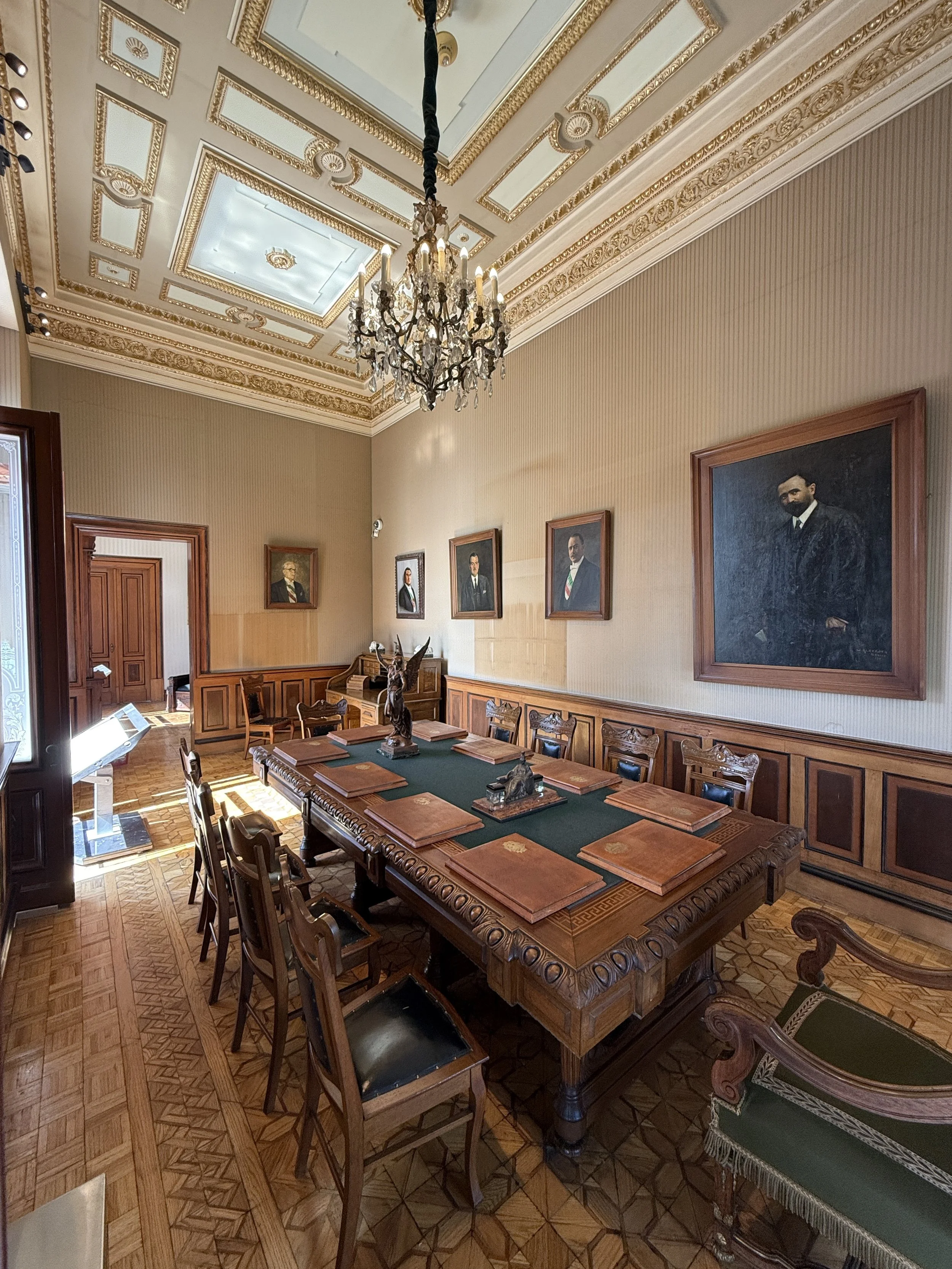
Salón de Acuerdos (Meeting Room) at Chapultepec Castle

With a green velvet tabletop and portraits of past leaders, the Salón de Acuerdos served as a formal space for cabinet discussions after the castle became the president’s official residence.

Salón de Acuerdos (Meeting Room)

Once Chapultepec Castle became the official presidential residence, there was a need for a dedicated space to receive cabinet members, and that’s where the Salón de Acuerdos (Meeting Room) comes in. Designed in the early 20th century, the green velvet tabletops and portraits of past leaders lining the walls make the room feel very presidential. Among those displayed are Presidents Francesco Madero, Álvaro Obregón, Emilio Portes Gil, Pascual Ortiz Rubio and Lázaro Cardenas.

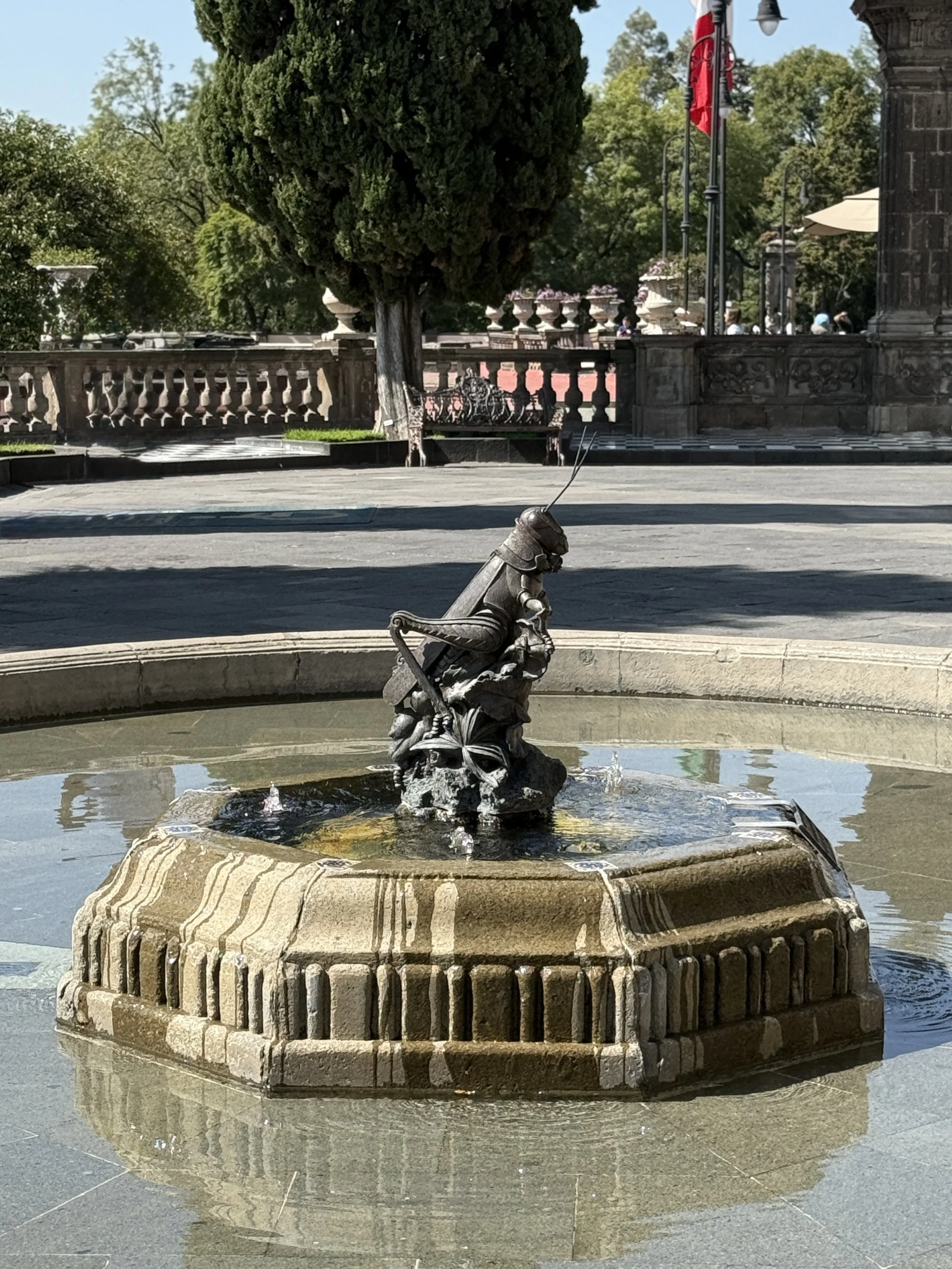
The fountain in the Patio del Chapulín (Courtyard of the Grasshopper) at Chapultepec Castle

The bronze grasshopper atop the Fuente del Chapulín was sculpted by Luis Albarrán y Pilego and installed in 1924.

Patio del Chapulín (Courtyard of the Grasshopper)

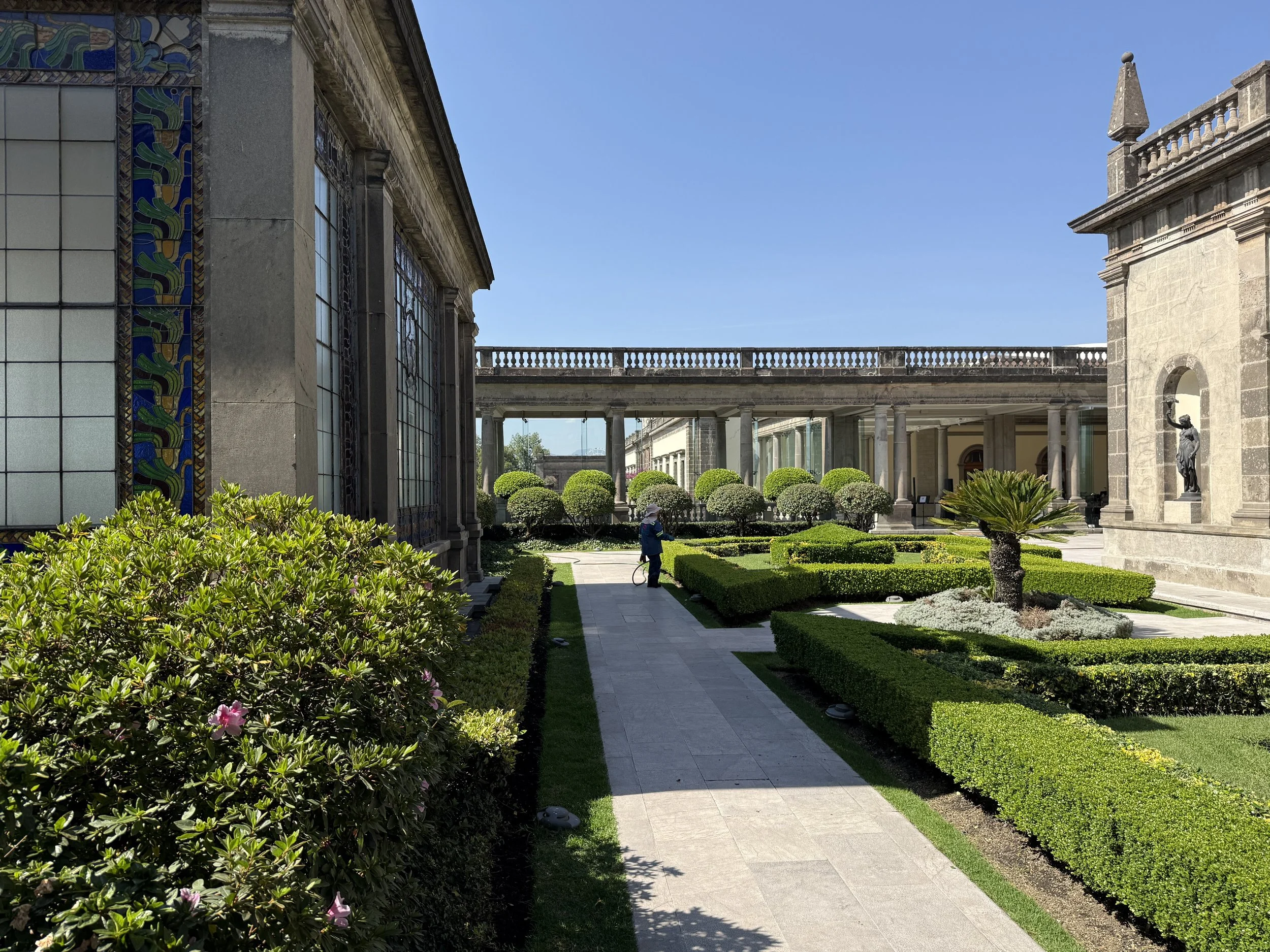
Before climbing to the second floor, we took a moment to explore the Patio del Chapulín (Courtyard of the Grasshopper). Framed by manicured hedges and anchored by the Fuente del Chapulín (Grasshopper Fountain), the courtyard opens onto a balcony terrace with breathtaking views of Mexico City below. 

Statues dedicated to the Niños Héroes stand atop the balustrade at the edge of the Patio del Chapulín at Chapultepec Castle

Six statues dedicated to the Niños Héroes stand atop the balustrade at the edge of the Patio del Chapulín.

Standing atop the terrace balustrade are six statues of the Niños Héroes, created in 1942 by artist Armando Quezada Medrano. They depict the young military cadets who died defending Mexico during the Battle of Chapultepec on September 13, 1847, during the Mexican–American War. Note that these figures are separate from the Altar a la Patria (Altar to the Homeland) monument, also located in Chapultepec Park, although both honor the same brave cadets.

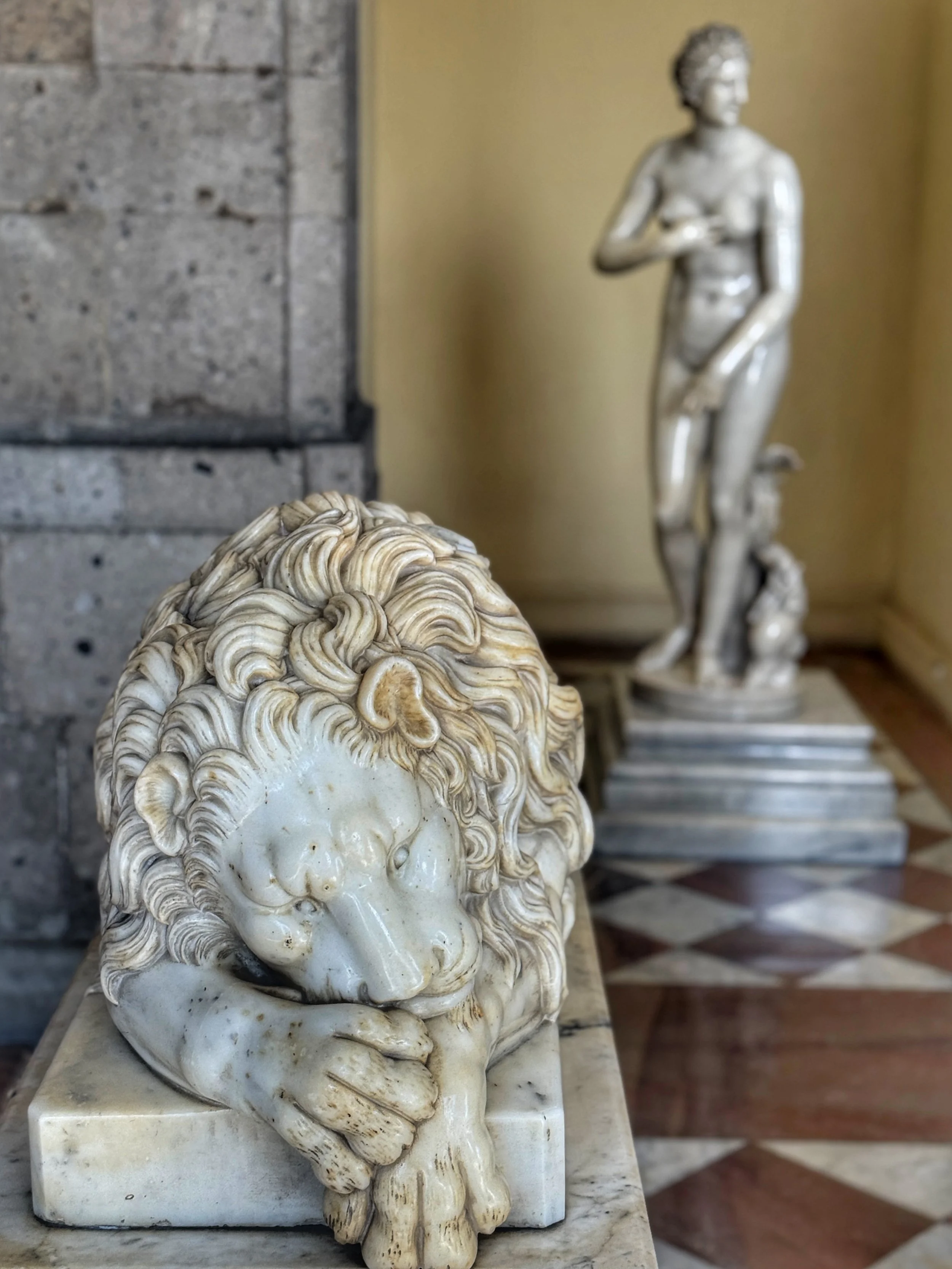
The sweeping Escalera de Leones (Lion’s Staircase) links the first floor to the terraced gardens above. Its steps, carved from Carrara marble, are flanked at the base by two marble lions modeled after Antonio Canova’s monumental mausoleum for Pope Clement XIII in St. Peter’s Basilica at the Vatican. One rests peacefully, while the other stands watchful and alert. 

Marble lion with a statue of a naked woman behind it by a staircase in Chapultepec Castle
A man walks up the Escalera de Leones at Chapultepec Castle

The Escalera de Leones leads to the rooftop gardens and includes stained glass windows installed during the presidency of Venustiano Carranza.

At the top of the staircase, stained glass windows installed during the presidency of Venustiano Carranza (1859–1920) protect the stairwell from the elements. Their designs feature floral and vegetal patterns inspired by the Mexican landscape. One window depicts the glyph of a chapulín (a grasshopper, running with the theme), perched on a hill with flowing water beneath it. The other showcases the Mexican coat of arms. 

The observatory tower in the rooftop gardens at Chapultepec Castle

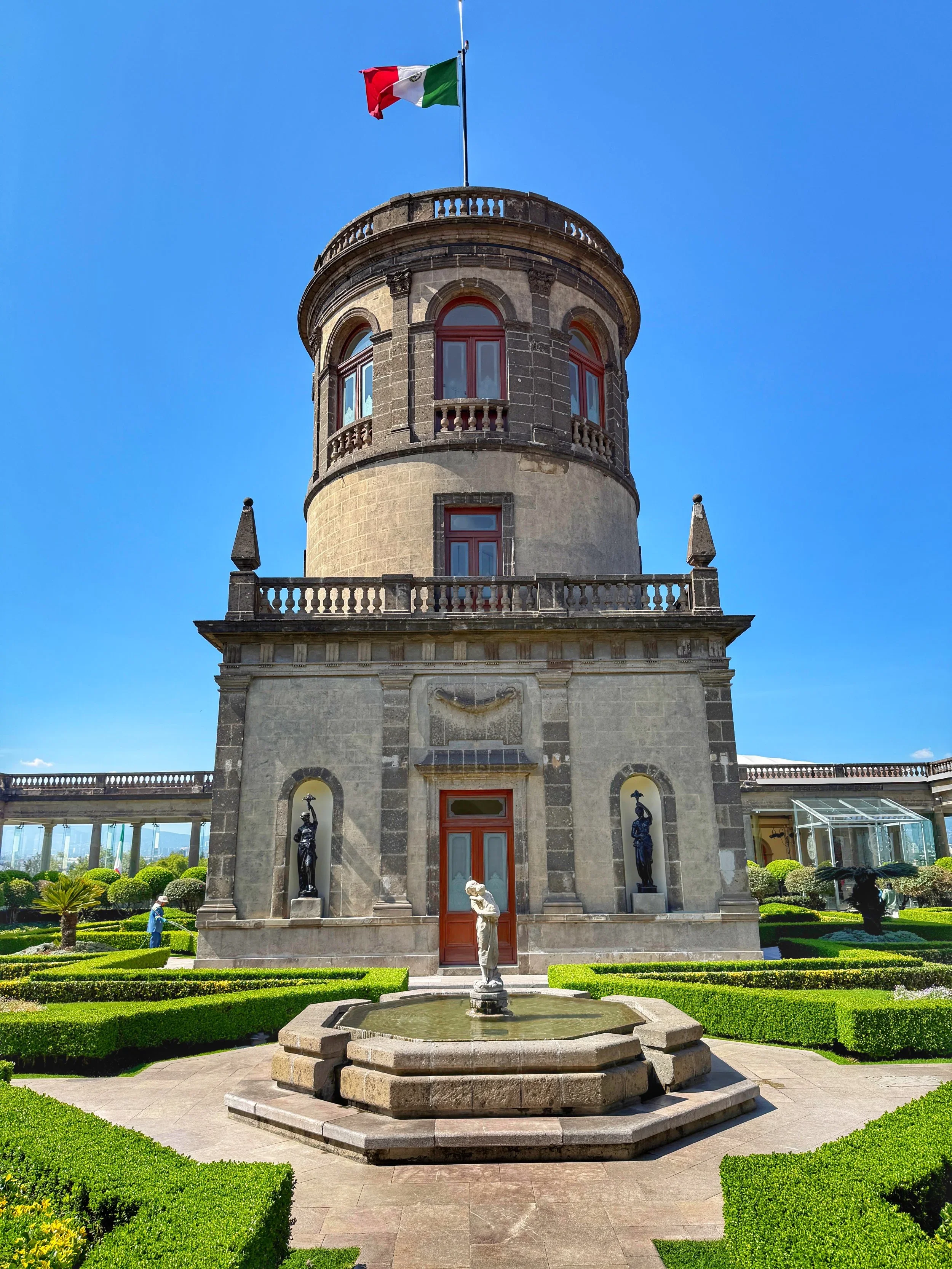
Above the treetops, the Tall Knight keeps watch — first as a military tower, then as Mexico’s gaze turned skyward in 1877, becoming a short-lived but advanced observatory.

Rooftop Gardens

Just beyond are the rooftop gardens designed by Austrian botanist Wilhelm Knechtel during the reign of Emperor Maximilian. At its center stands a tower called the Caballero Alto (Tall Knight), surrounded by neatly trimmed hedges and classical statues. This structure, built around 1842 as part of the Military College, was briefly repurposed in 1877 as an astronomical observatory, complete with meteorological instruments considered cutting-edge for the time.

A fountain in the rooftop gardens at Chapultepec Castle in CDMX

Designed in the 1860s by Austrian botanist Wilhelm Knechtel, these rooftop gardens were part of Maximilian’s vision to bring European elegance to Chapultepec Castle.

Adorning the walls of the elevated garden are colorful frescoes of bacchantes — female followers of Bacchus, the Roman god of wine. Painted in the Pompeian style, these works were created by Santiago Rebull, the court painter of Maximilian and one of the few individuals close to the monarchy who managed to remain in Mexico and even thrive in the subsequent decades under the Republic. He completed four of the figures between 1865 and 1866 during Maximilian’s reign, and nearly three decades later, painted the remaining two in 1894 under the Díaz administration.

A breast falls out of a dress in a fresco of a bacchante in the rooftop gardens of Chapultepec Castle

Nip slip! The bacchae depicted on the walls of the upper terrace were painted by Santiago Rebull in the Neoclassical style, inspired by the 18th century rediscovery of the ancient ruins at Pompeii and Herculaneum.

The day Wally and I visited, an orchestra and a vocalist were rehearsing an aria beneath the terrace pavilion.


Díaz and Chapultepec Castle

During his extended rule as president, Díaz was determined to position Mexico as a modern, forward-thinking nation, and the castle became part of that vision. Under his direction, Chapultepec Castle saw some major upgrades, including the installation of its very first elevator in 1900. It connected the basement, main floor and rooftop, and at the time, it was cutting-edge. In fact, the castle was one of the first buildings in all of Mexico to be outfitted with electricity.

The bedroom of Porfirio Díaz at the Alcázar of Chapultepec in CDMX

Díaz’s bedroom was appointed in French style with Louis XVI furniture.

Recámara de Porfirio Díaz (Bedroom of Porfirio Díaz)

Inside, the Recámara de Porfirio Díaz (Bedroom of Porfirio Díaz) reflects a refined French taste. Though not as lavish as Charlotte’s quarters downstairs, it still impresses with its Louis XVI furnishings: a stately mahogany bed and a pair of cream-colored slipper chairs with scrolled backs and elegant fringe.

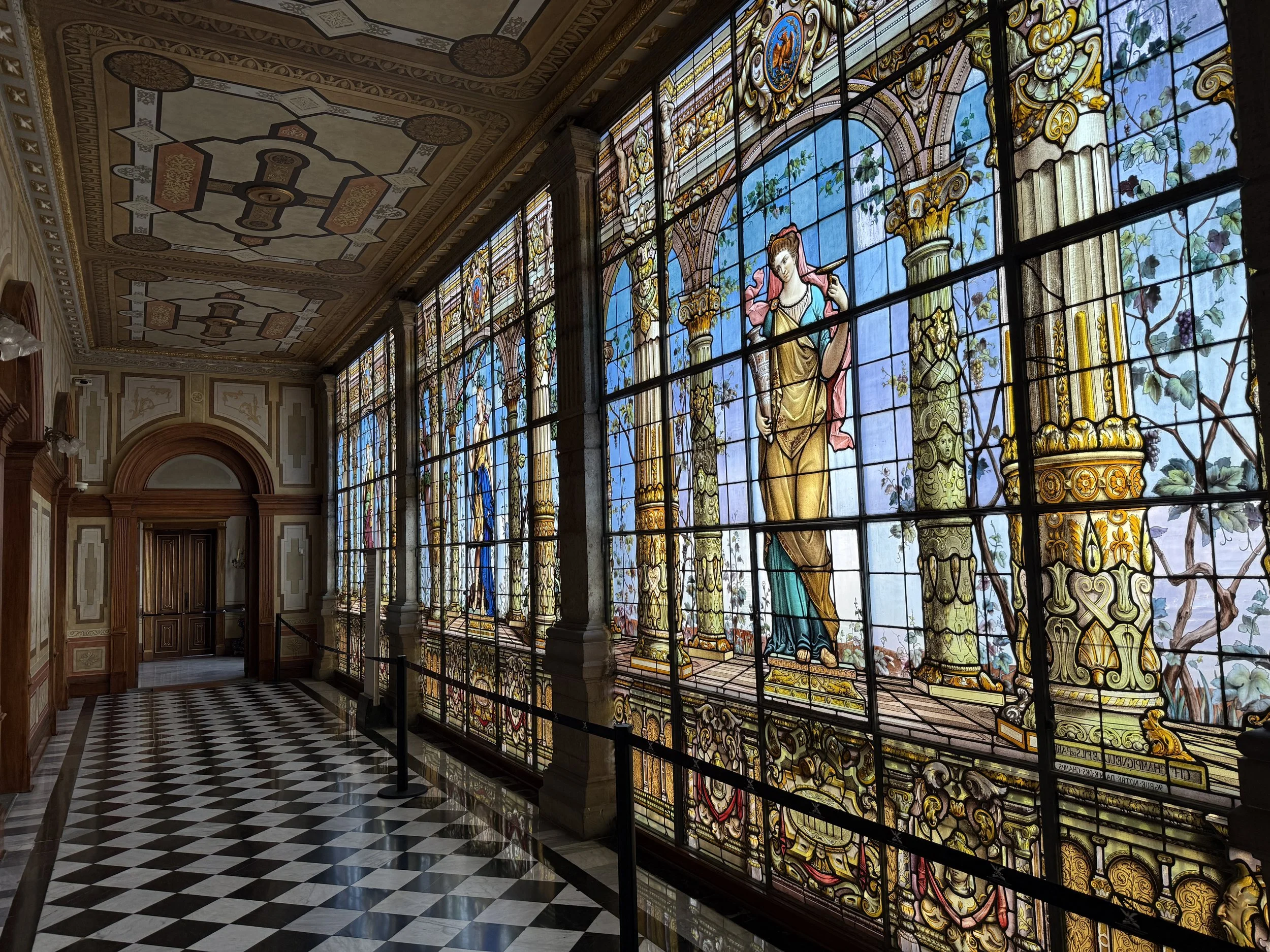
The Galería de Emplomados lined with stained glass windows

The Galería de Emplomados is lined with stained glass windows created by the French firm Champigneulle Fils, and were installed in 1901.

Galería de Emplomados (Stained Glass Gallery)

Beyond Díaz’s bedroom is the Galería de Emplomados (Stained Glass Gallery). Installed in 1901, the grand corridor features five stained glass windows crafted by the renowned French firm Champigneulle Fils, celebrated for their work in churches, palaces, and civic buildings across Europe and Latin America. Spanning nearly 800 square feet, the windows cover half the length and height of the Alcázar’s eastern elevation. Each depicts a nature goddess: Pomona (goddess of fruits), Flora (goddess of flowers), Hebe (bearer of divine nectar and grantor of eternal youth), Diana (goddess of the hunt), and Ceres (goddess of agriculture). 

It would have been the perfect photo op — if not for one particularly self-important visitor, who had commandeered the gallery, barking orders at her poor friend and critiquing every shot like she was Anna Wintour on a Vogue editorial shoot.

The Salón de Embajadores (Hall of Ambassadors) with a glowing chandelier at Chapultepec Castle

The Salón de Embajadores features furniture in the Louis XVI style and plaster painted to look like marble.

Salón de Embajadores (Hall of Ambassadors)

The final Díaz-period room we peered into was the Salón de Embajadores (Hall of Ambassadors) a French-inspired room where Díaz met with diplomats to discuss international relations. Originally Charlotte’s study, the room was repurposed by Díaz as Mexico gained prominence on the world stage, and the castle became a key venue for hosting foreign dignitaries. 

Designer Epitacio Calvo incorporated Baroque and French Neoclassical styles into the room’s furnishings. 

A walkway beyond hedges in the rooftop garden of Chapultepec Castle

Plan Your Visit 

The weather couldn’t have been better for our visit to this incredible landmark. We spent hours exploring its magnificent halls, grand stairways and stunning rooms, not to mention the breathtaking views from the top of Chapultepec Hill. If you’re in Mexico City, this place is an absolute must-see.

Hours:

  • Monday: Closed

  • Tuesday–Sunday: 9 a.m.–5 p.m. (Note: The museum begins clearing rooms at 4:45 p.m.)

Admission:

  • 100 MXN (about $5.50)

  • Free every day for children under 13, seniors 60+, students, teachers, pensioners/retirees, and visitors with disabilities with valid ID

  • Free on Sundays for Mexican nationals and residents

Ticket Purchase:

  • Tickets are sold at the bottom of the hill before the ramp — there aren’t ticket booths at the castle entrance.

  • You can buy your tickets online as well.

Accessibility:

  • The castle offers ramps, elevators and loaner wheelchairs.

  • Visitors with disabilities or those seeking adapted educational tours can arrange assistance by emailing difusion.mnh@inah.gob.mx.

Food & Drink:

  • Food and beverages aren’t permitted inside the castle. You must leave these in a locker at the bottom of the hill. Plan to eat and hydrate before or after your visit.

Two statues of the young military cadets known as the Niños Heroes at Chapultepec Castle

Chapultepec Castle

Primera Sección del Bosque de Chapultepec s/n 
San Miguel Chapultepec
Mexico City 11580
Mexico

Chapultepec Castle’s National History Museum in Mexico City

Perched atop the Hill of the Grasshopper, Chapultepec Castle is the only royal residence in North America. From its imperial past to the revolutionary murals inside, here’s why this must-visit landmark in Chapultepec Park is worth the climb.

Staircase at Chapultepec Castle in CDMX with the mural Alegoría de la Revolución (Allegory of the Revolution) by Eduardo Solares Gutiérrez, 1933

Alegoría de la Revolución (Allegory of the Revolution) by Eduardo Solares Gutiérrez, 1933

They say the third time’s a charm, and on our latest (and yes, third) trip to Mexico City, Wally and I finally made it to the Castillo de Chapultepec (Chapultepec Castle). 

Perched atop the summit of Cerro del Chapulín (Hill of the Grasshopper) in the first section of the vast Bosque de Chapultepec (Chapultepec Forest), this historic site and local landmark is the only castle in North America to have served as a royal residence. It was home to Emperor Maximilian I and Empress Charlotte, the ill-fated rulers of the short-lived Second Mexican Empire — but more on that later. 

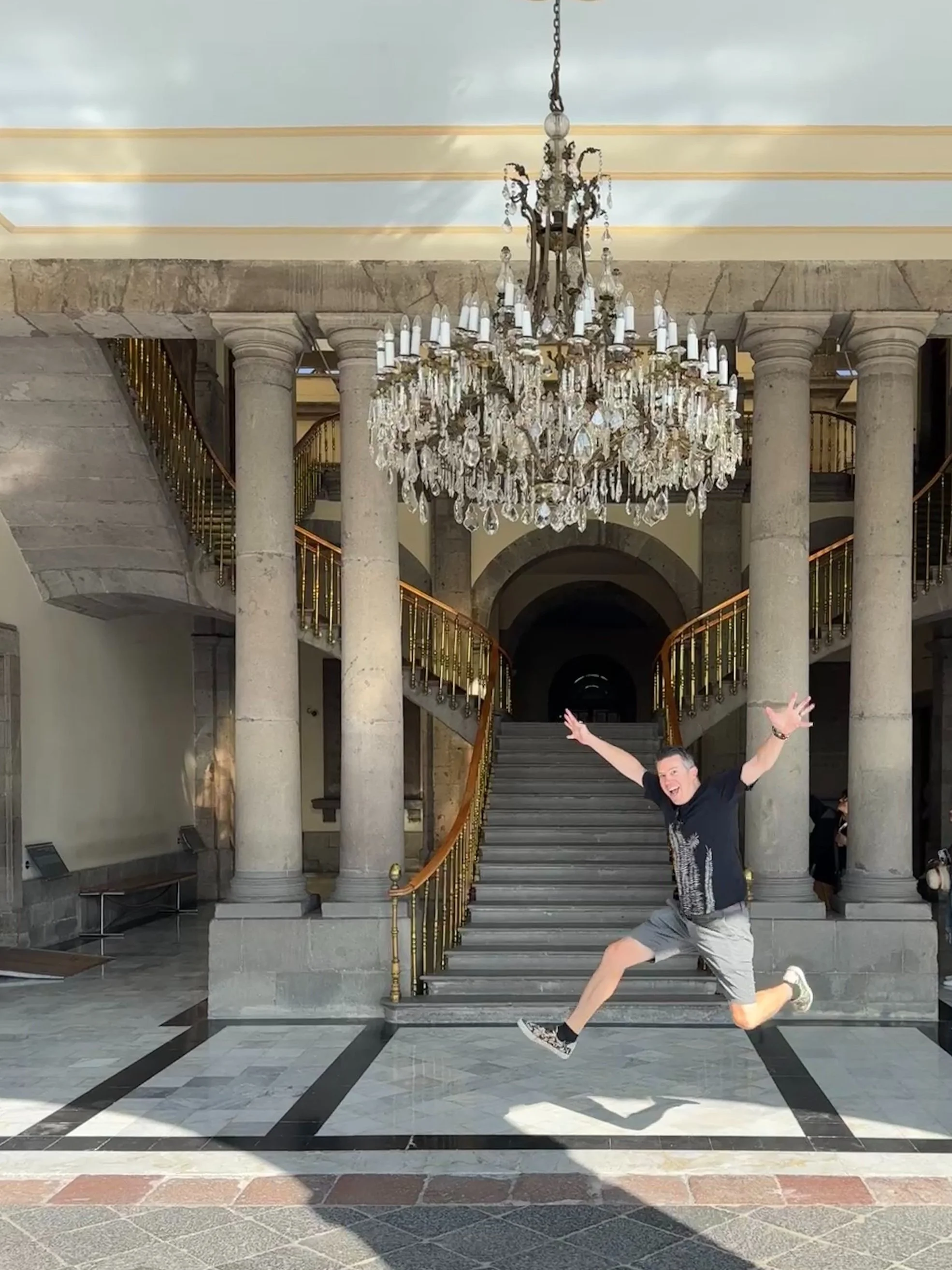
A man jumps in the air under an ornate chandelier by the stairwell in the National History Museum at Chapultepec Castle in CDMX
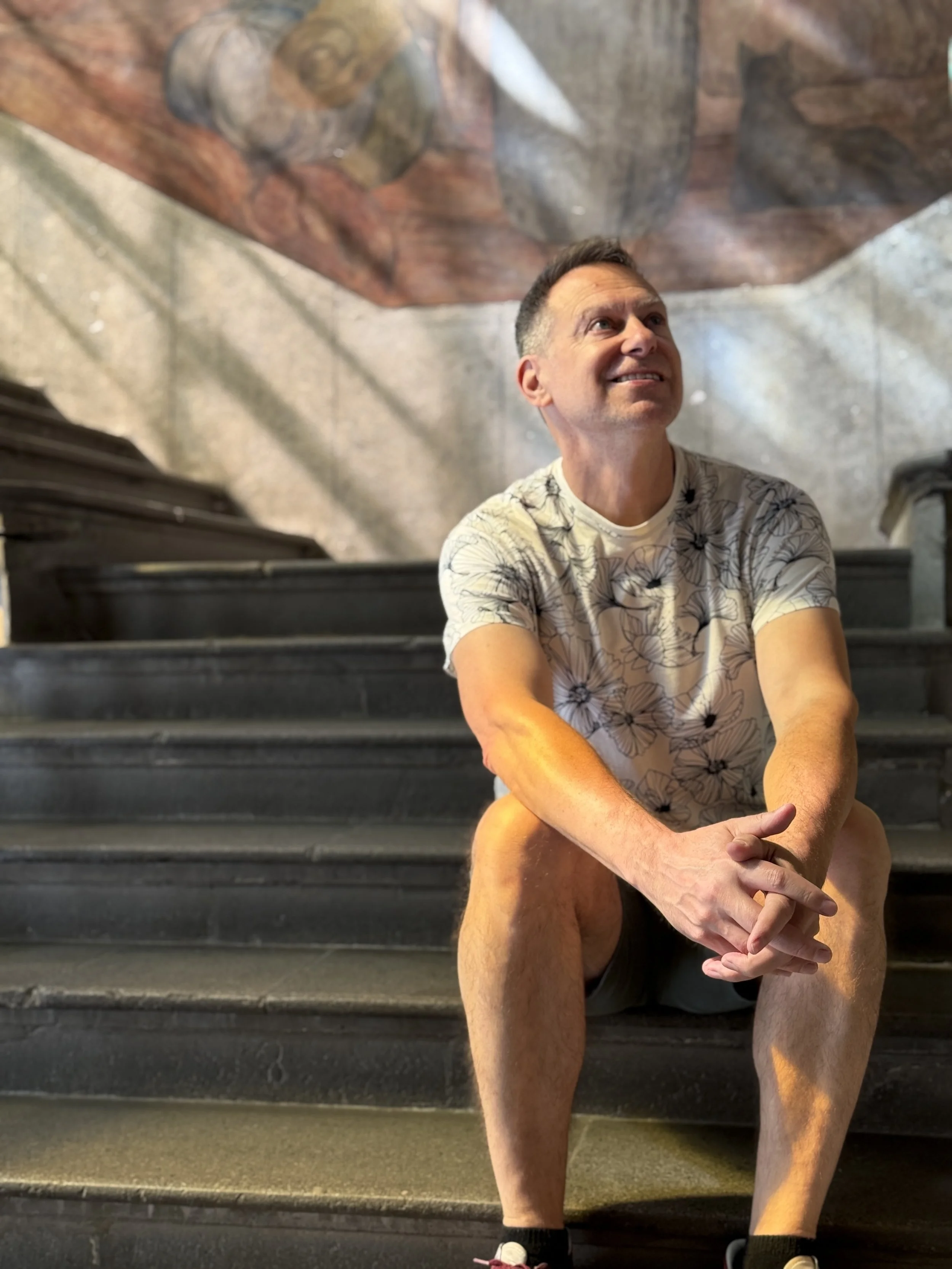
A man sits on the stairs in the National History Museum at Chapultepec Castle in CDMX
Perched atop the summit of the Hill of the Grasshopper, this historic site is the only castle in North America to have served as a royal residence.

Chapultepec itself is one of the oldest and largest public parks in Latin America. Dating back to the pre-Hispanic era and officially designated as a public space in the 16th century, the park underwent major renovations in 1910 to commemorate Mexico’s independence centennial. Today, it spans approximately 2,100 acres — more than twice the size of New York City’s Central Park, one of the largest urban parks in the world. 

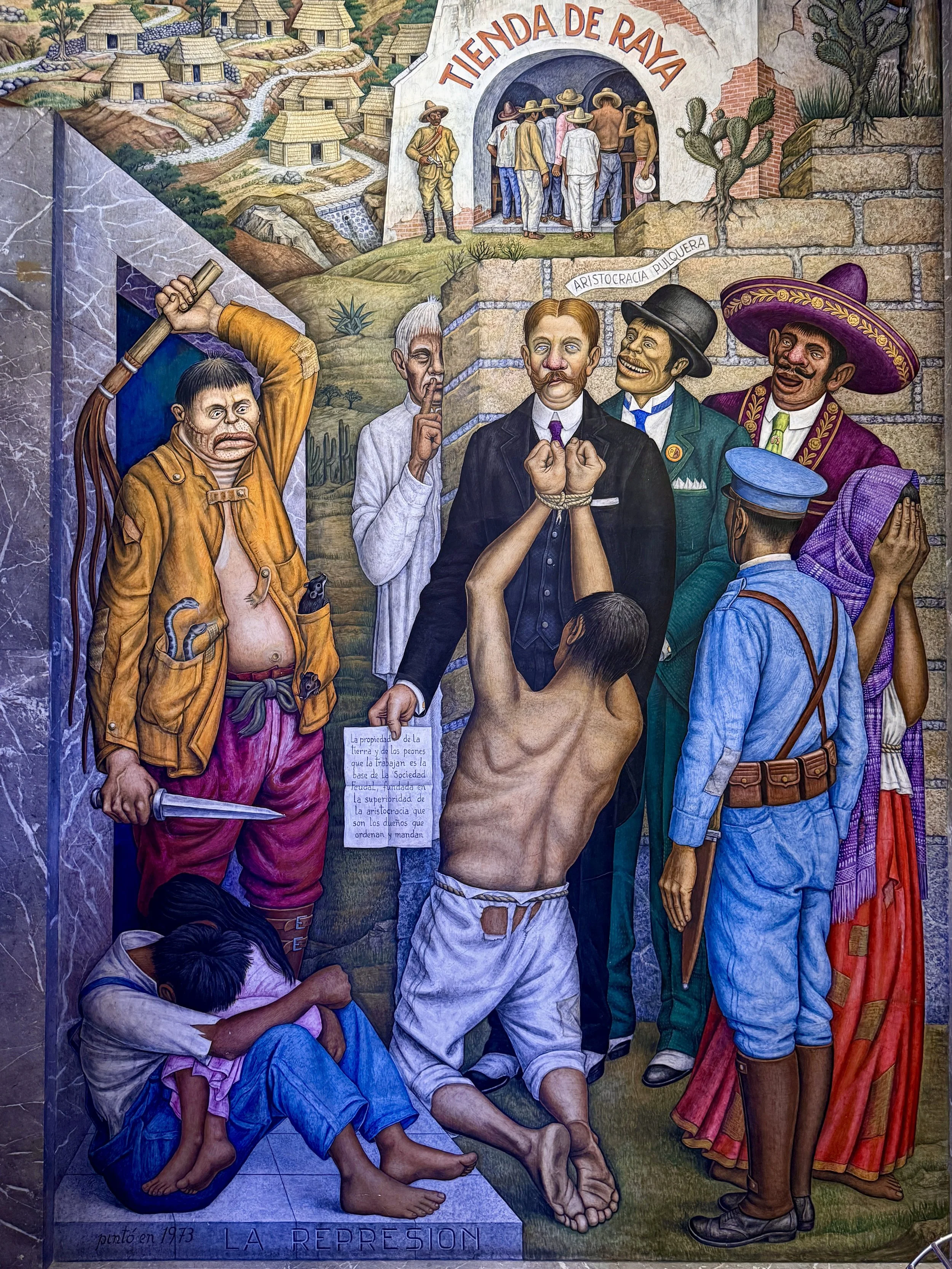
Detail of the right half of the mural La Dictadura y La Represión (Dictatorship and Repression) by Juan O'Gorman

Detail of the right half of the mural La Dictadura y La Represión (Dictatorship and Repression) by Juan O'Gorman — a visual commentary on the transgressions of President Díaz

On our previous visit, we spent hours exploring the first floor of the incredible Museo Nacional de Antropología (National Museum of Anthropology), captivated by its collection of pre-Hispanic artifacts from civilizations like the Aztecs and Maya. 


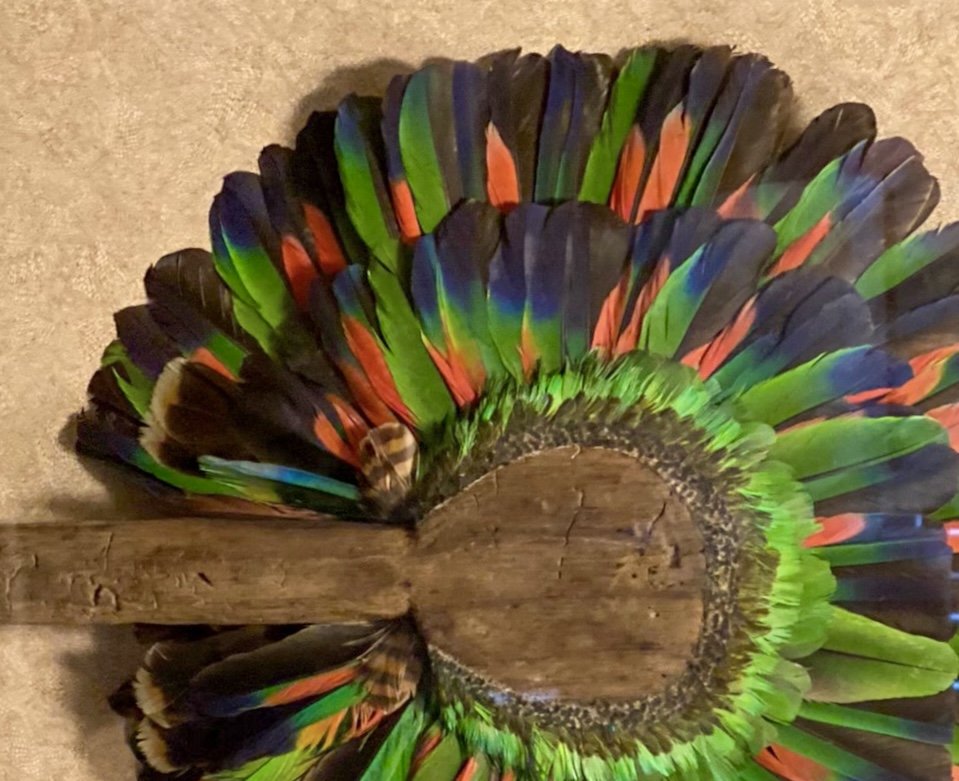
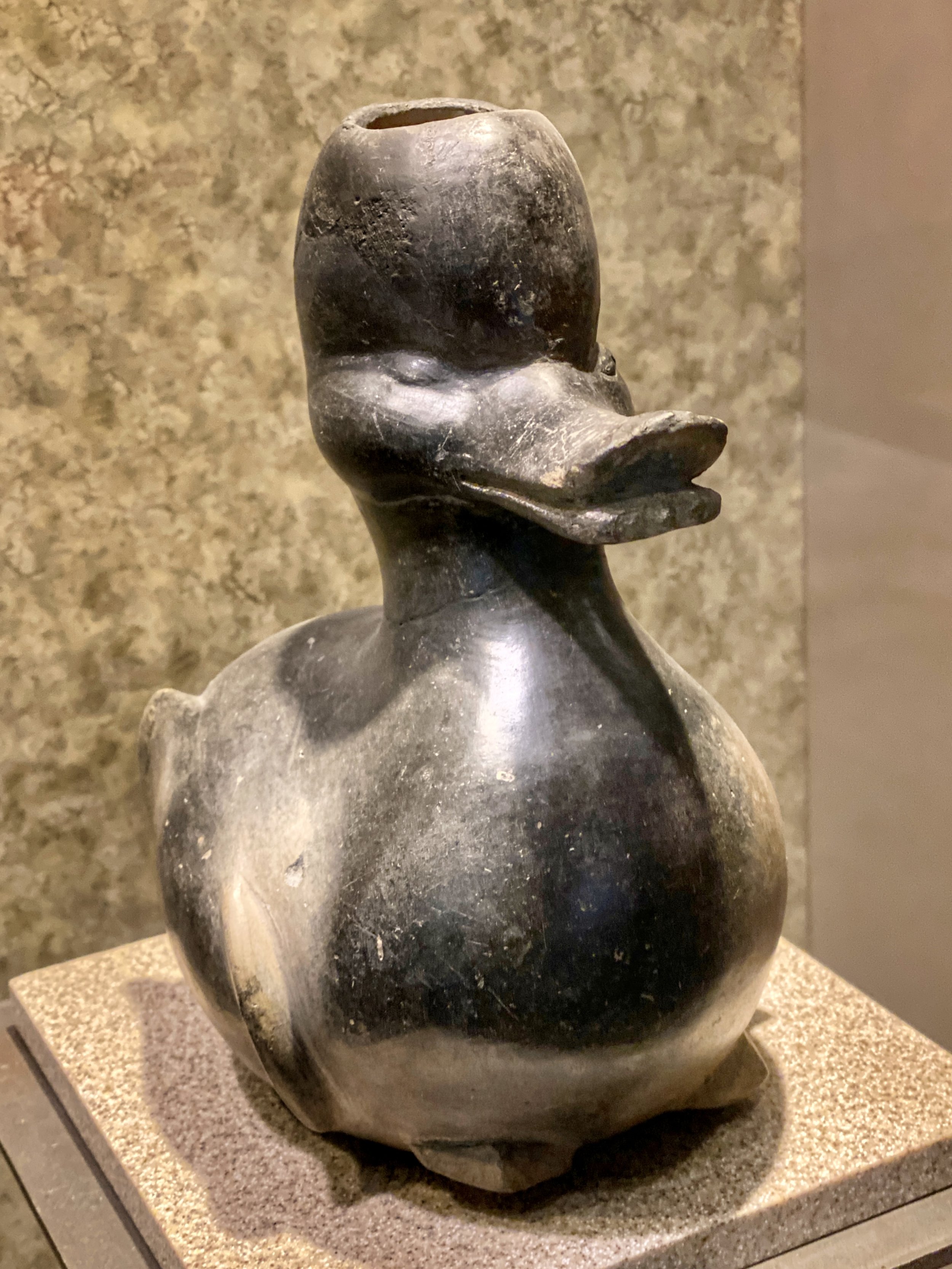
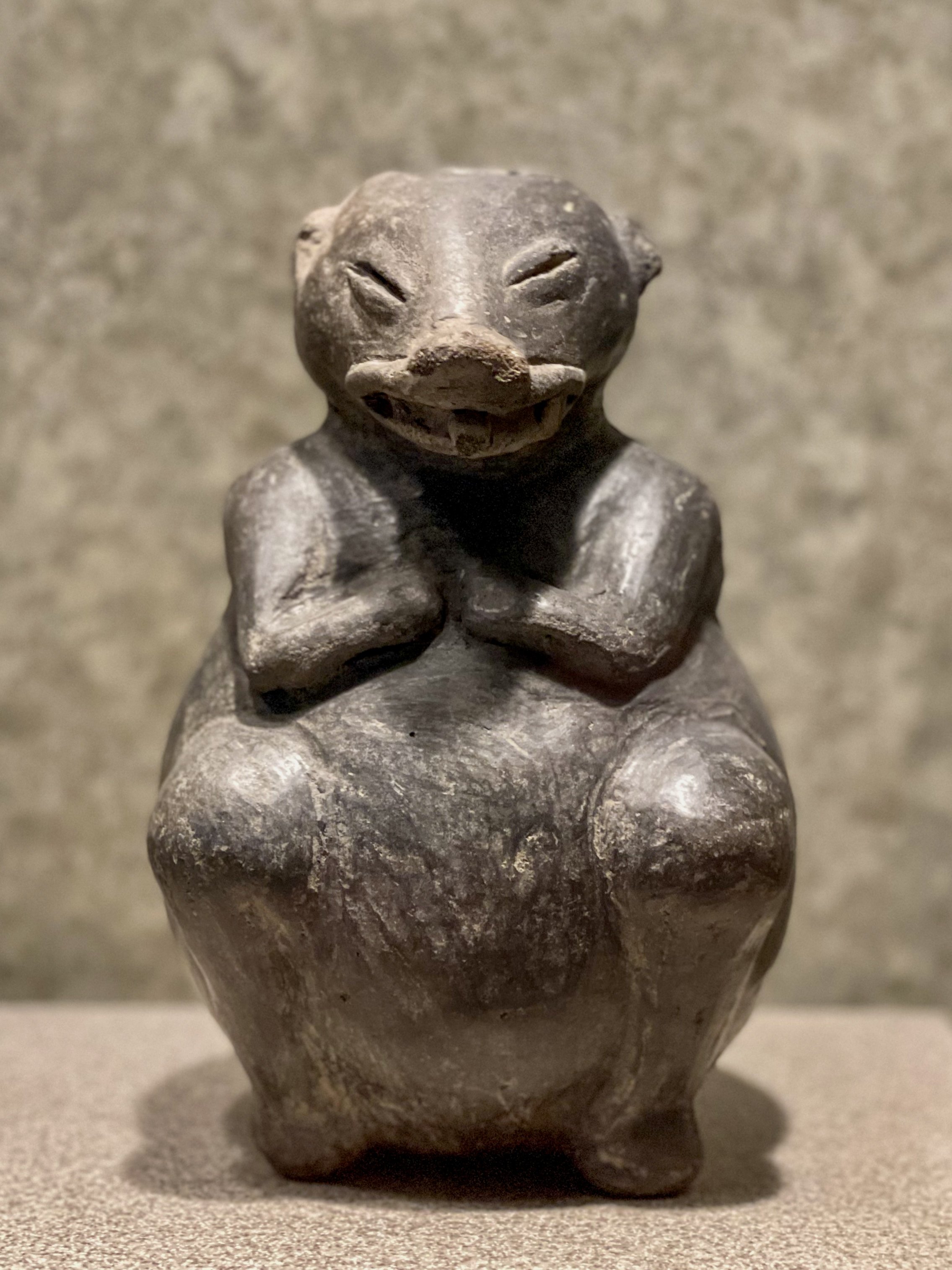
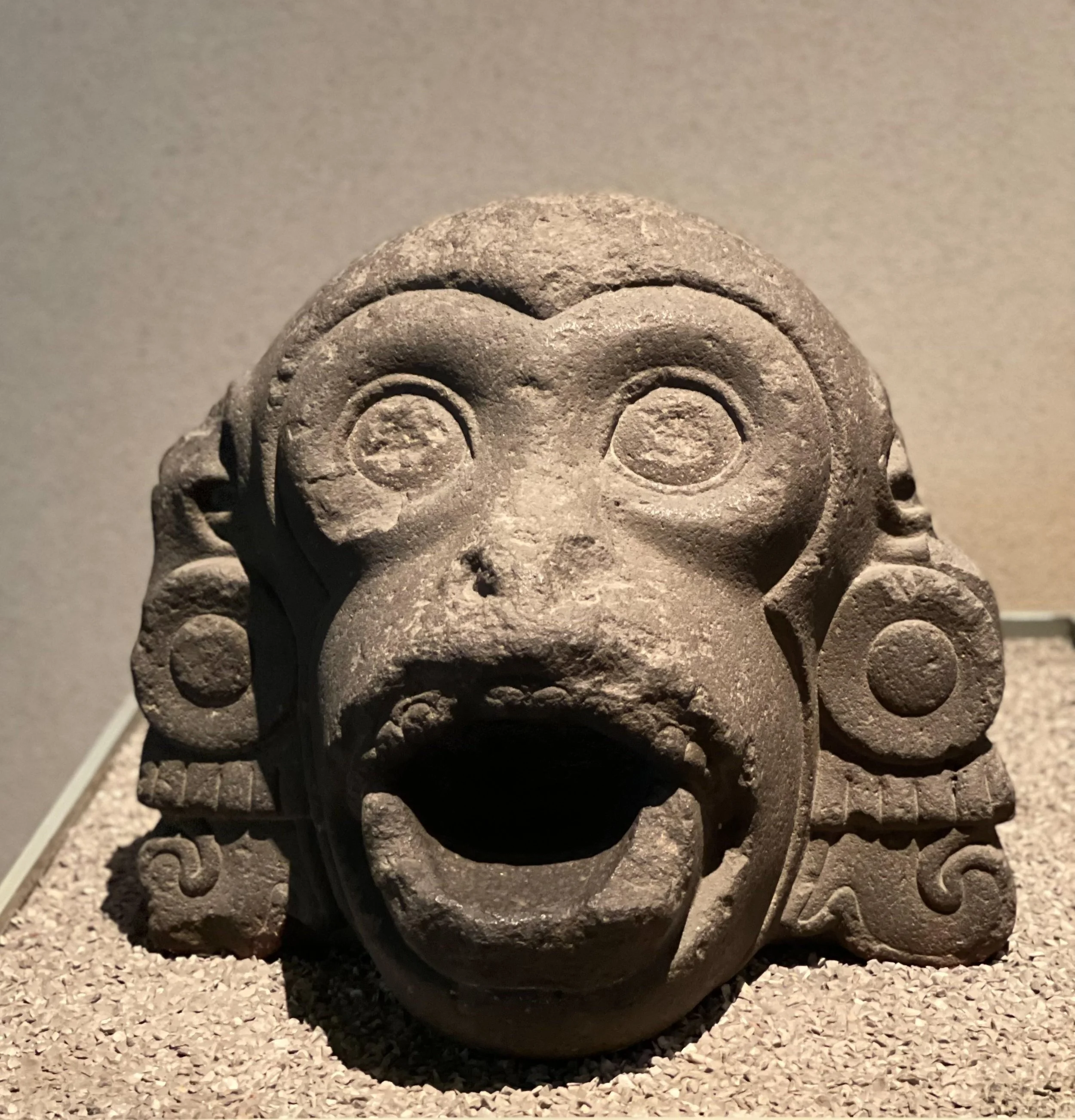
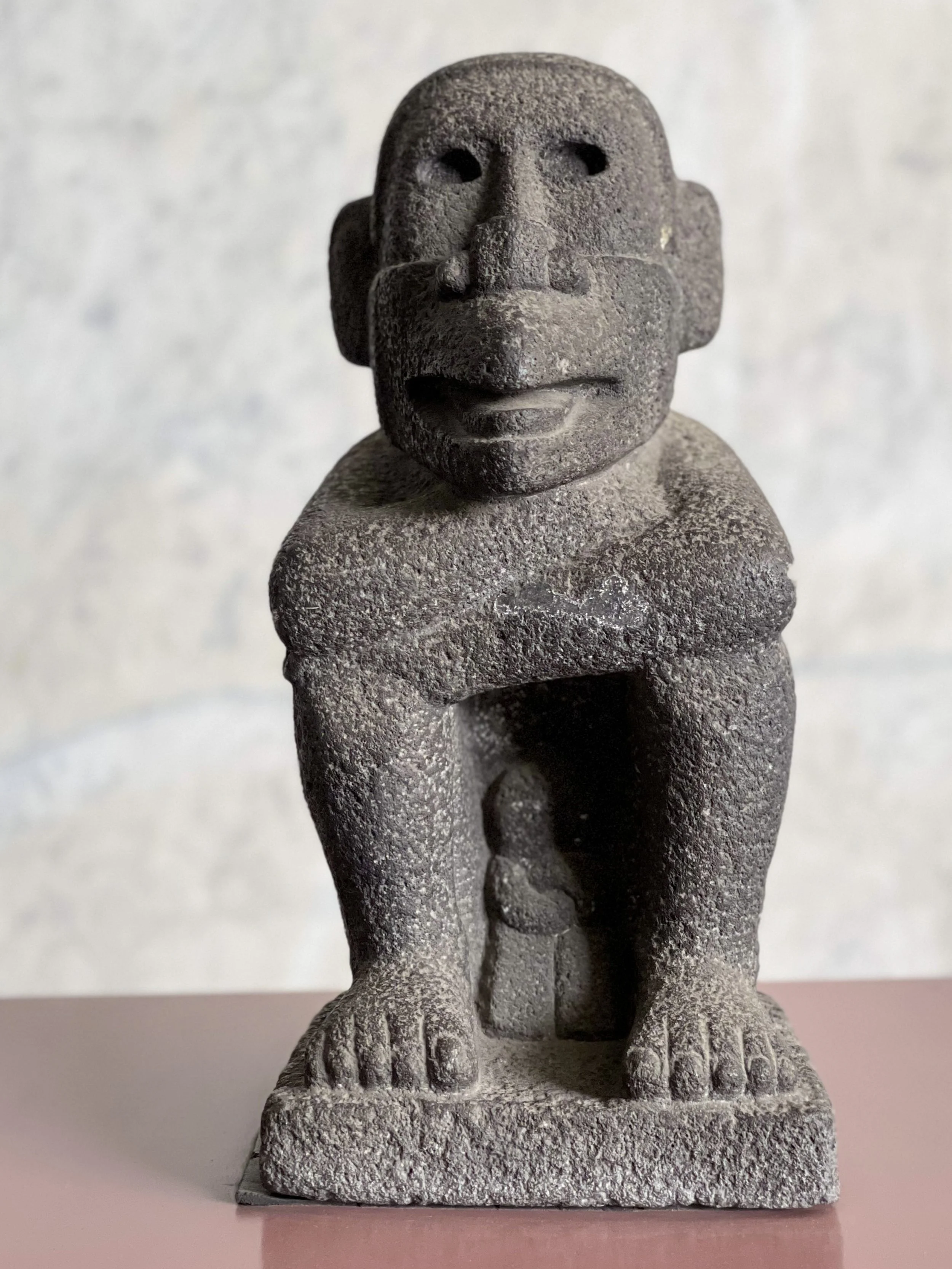
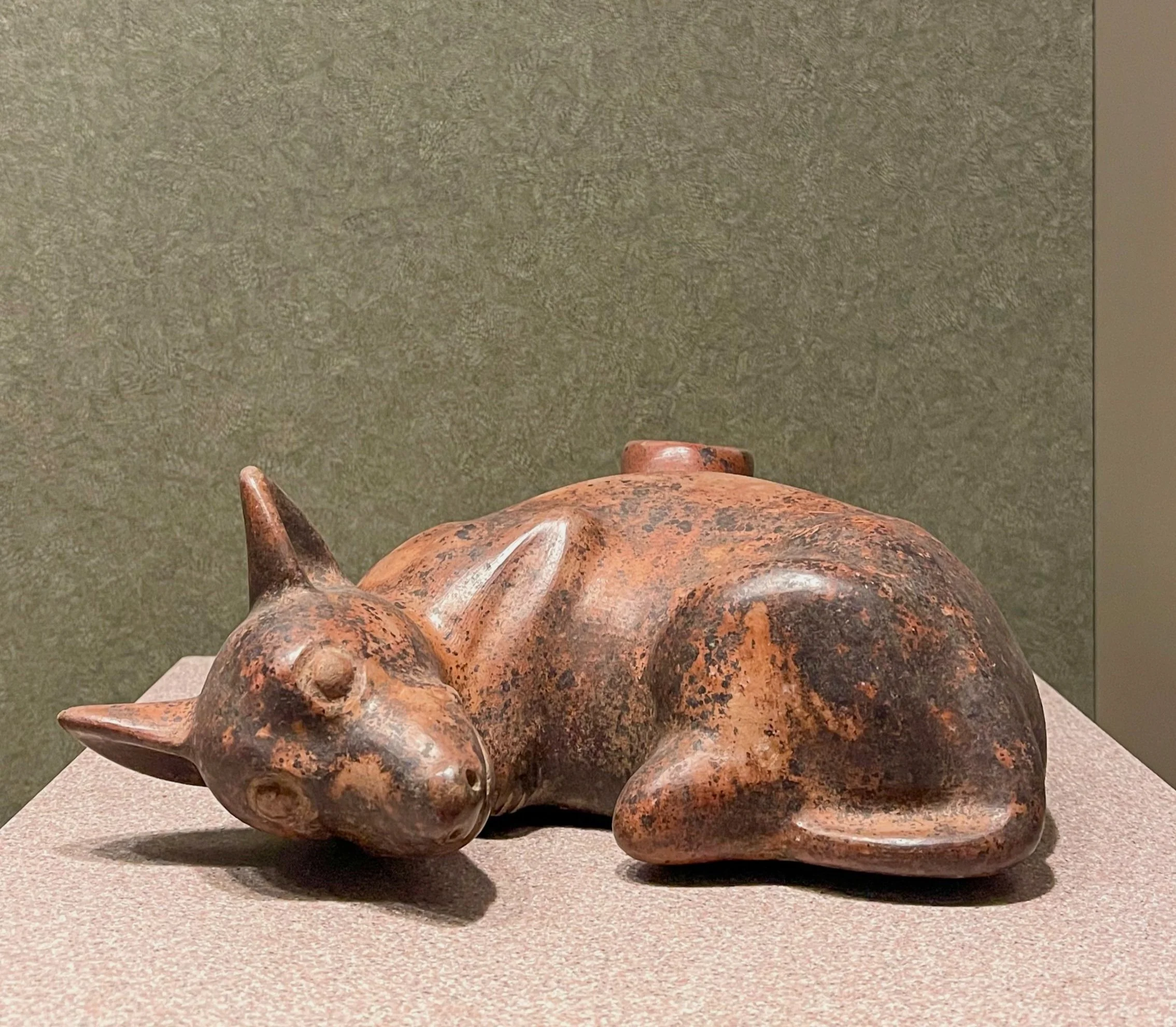
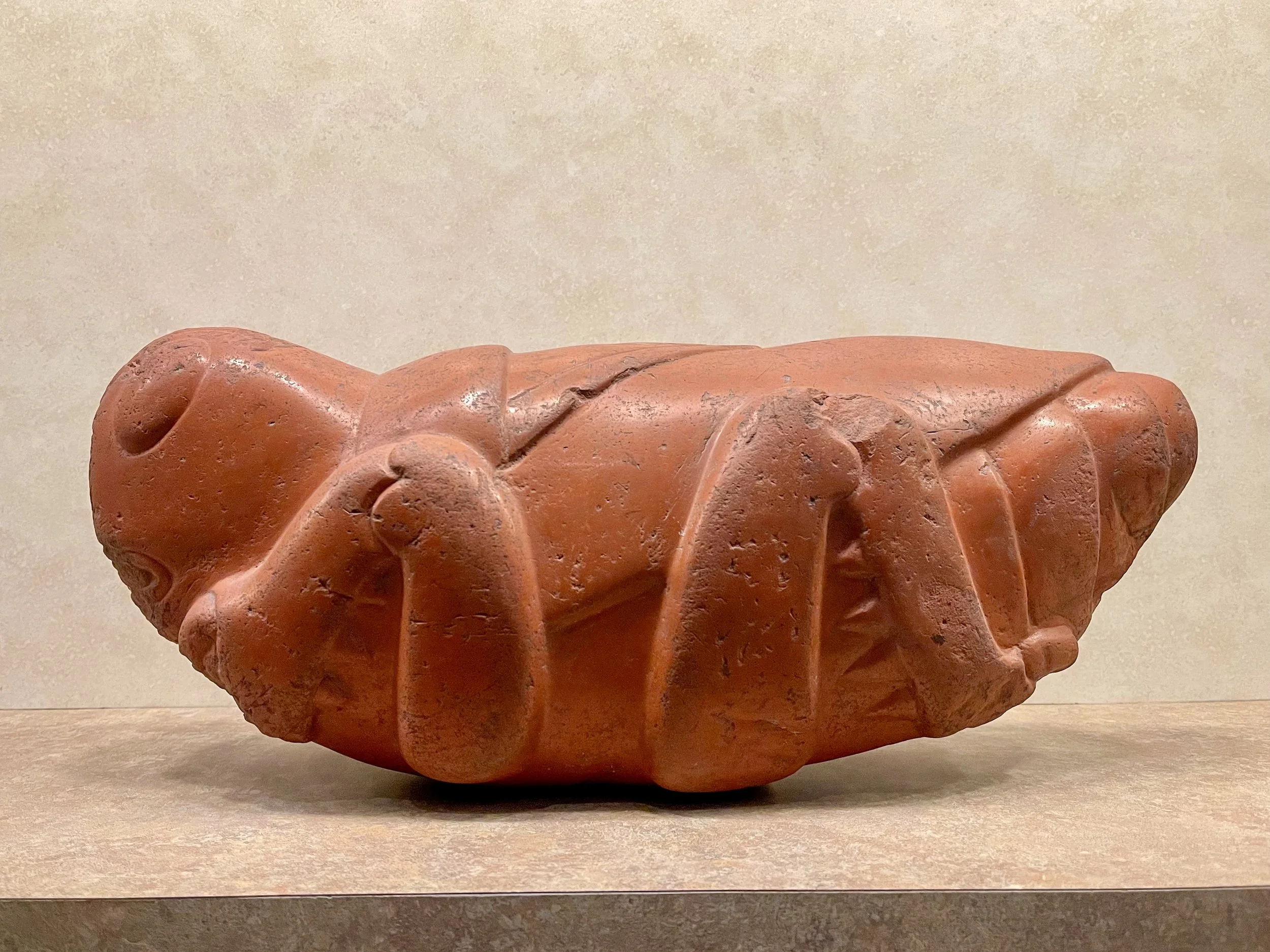
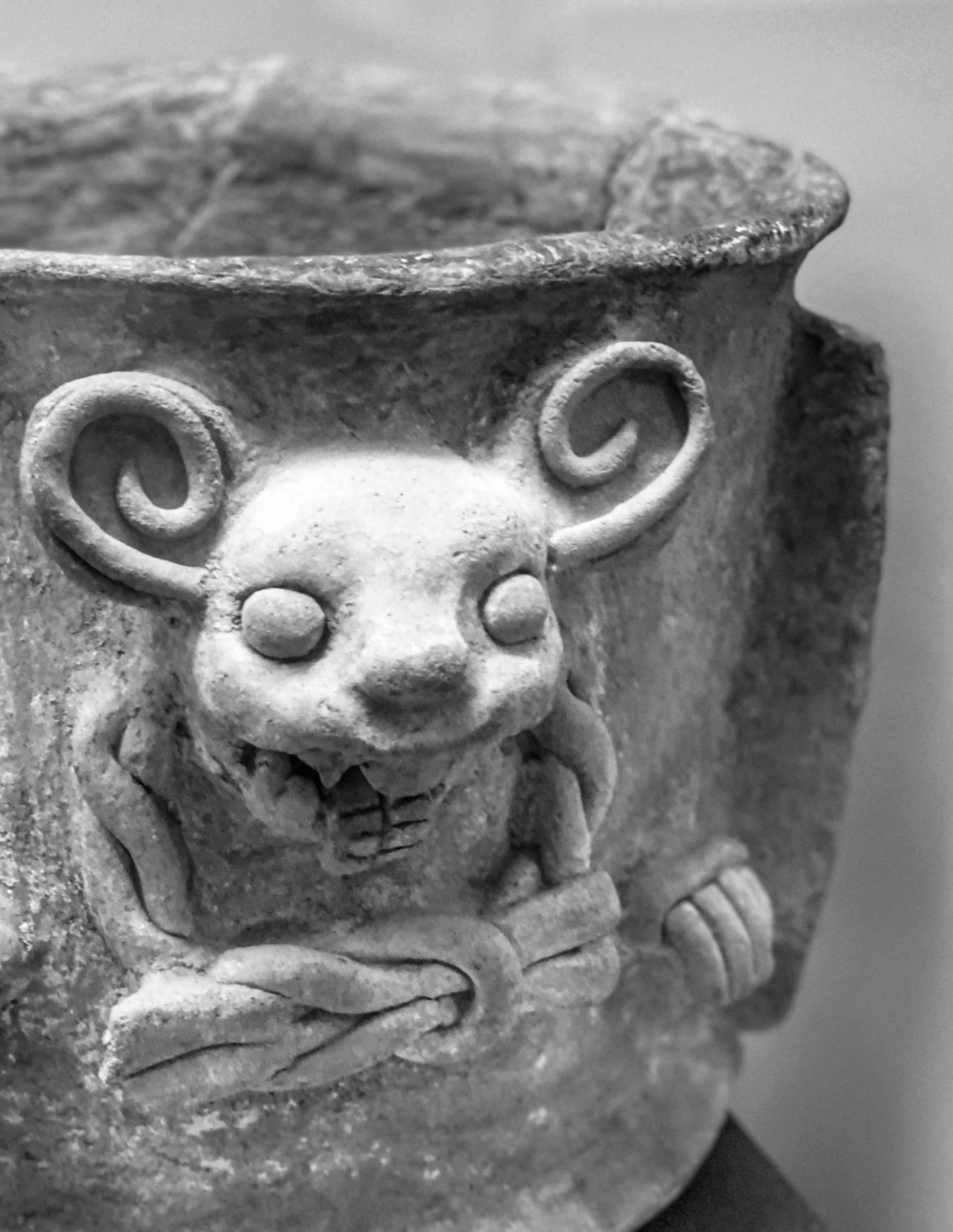
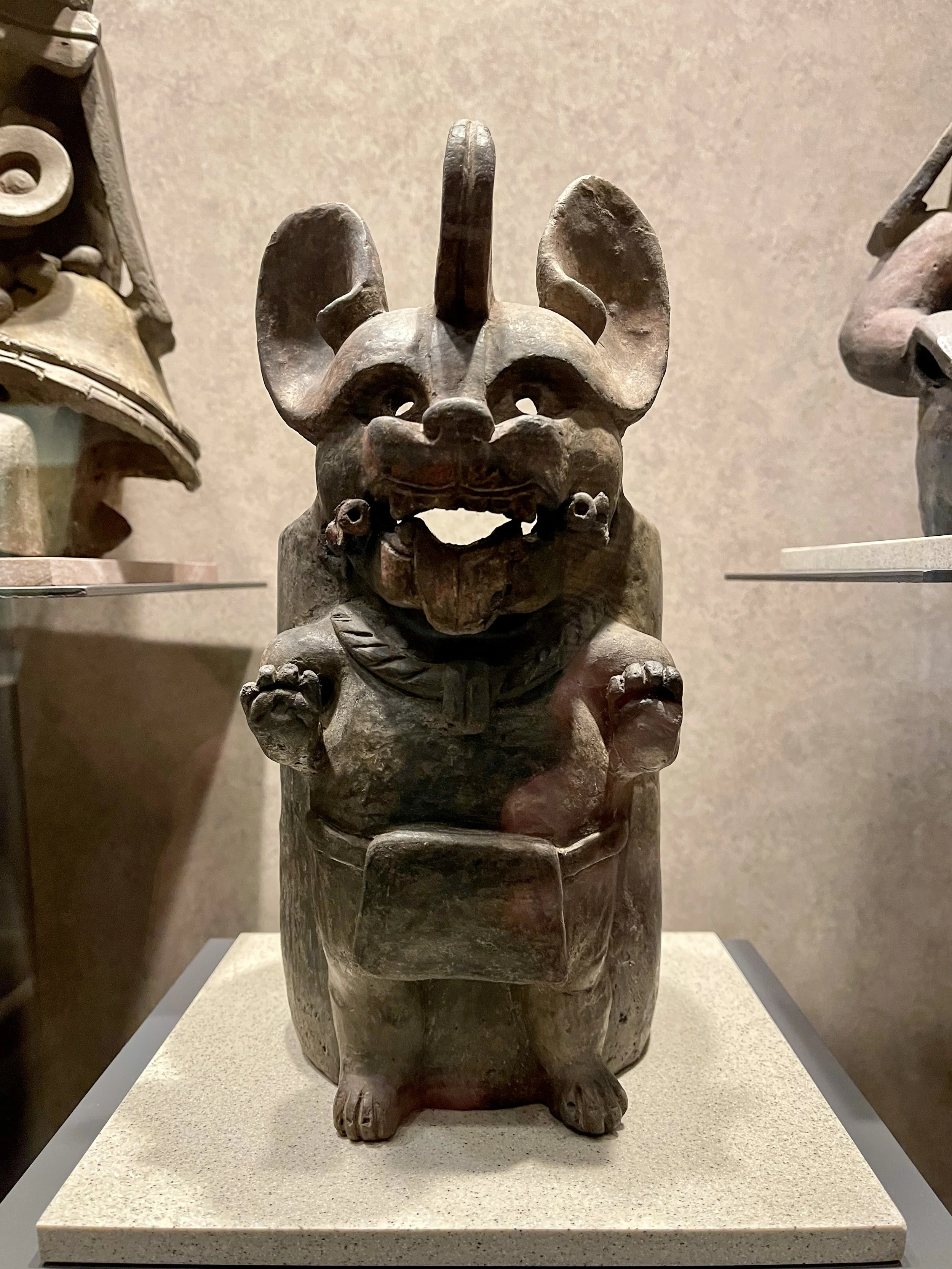
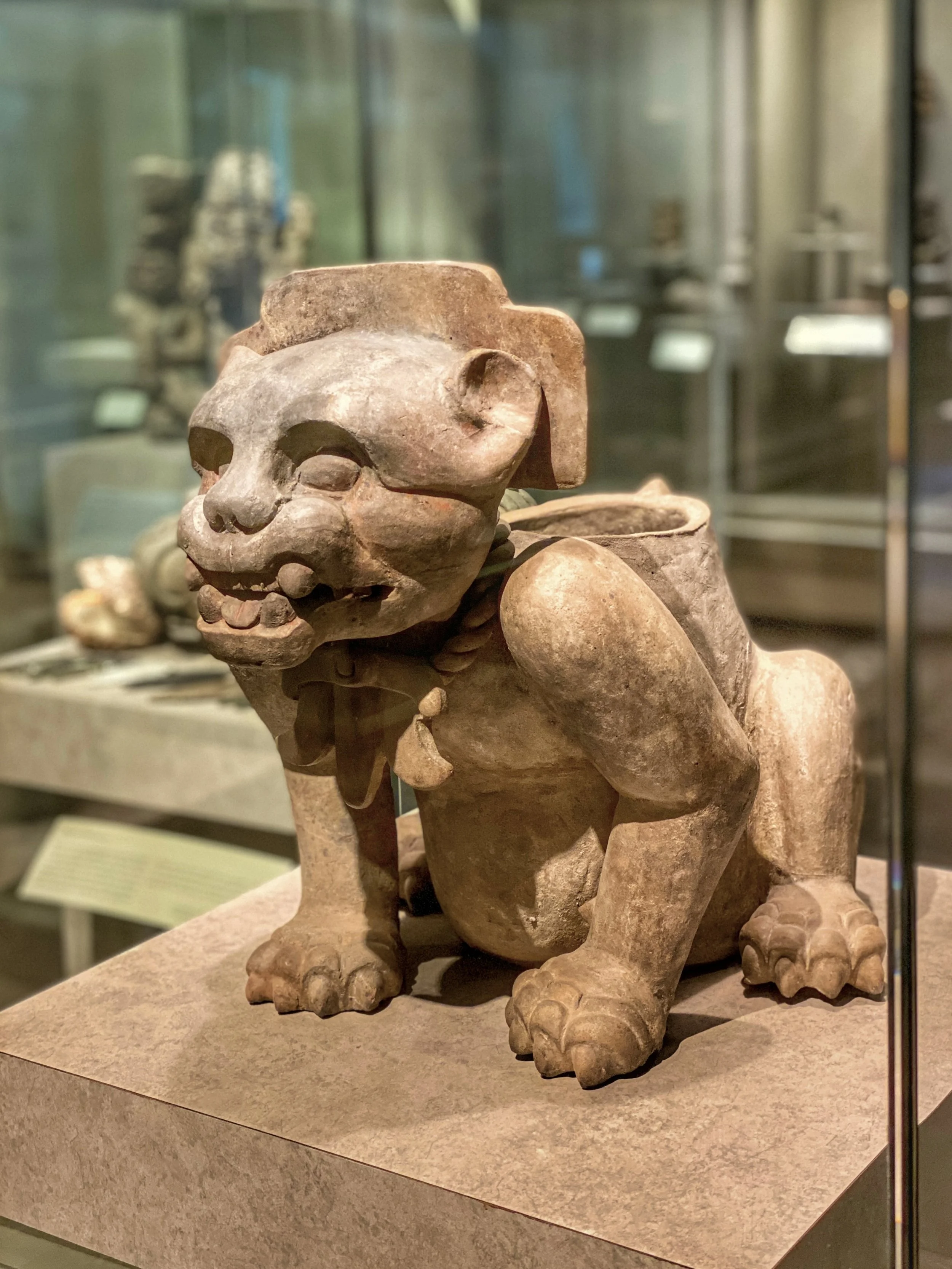
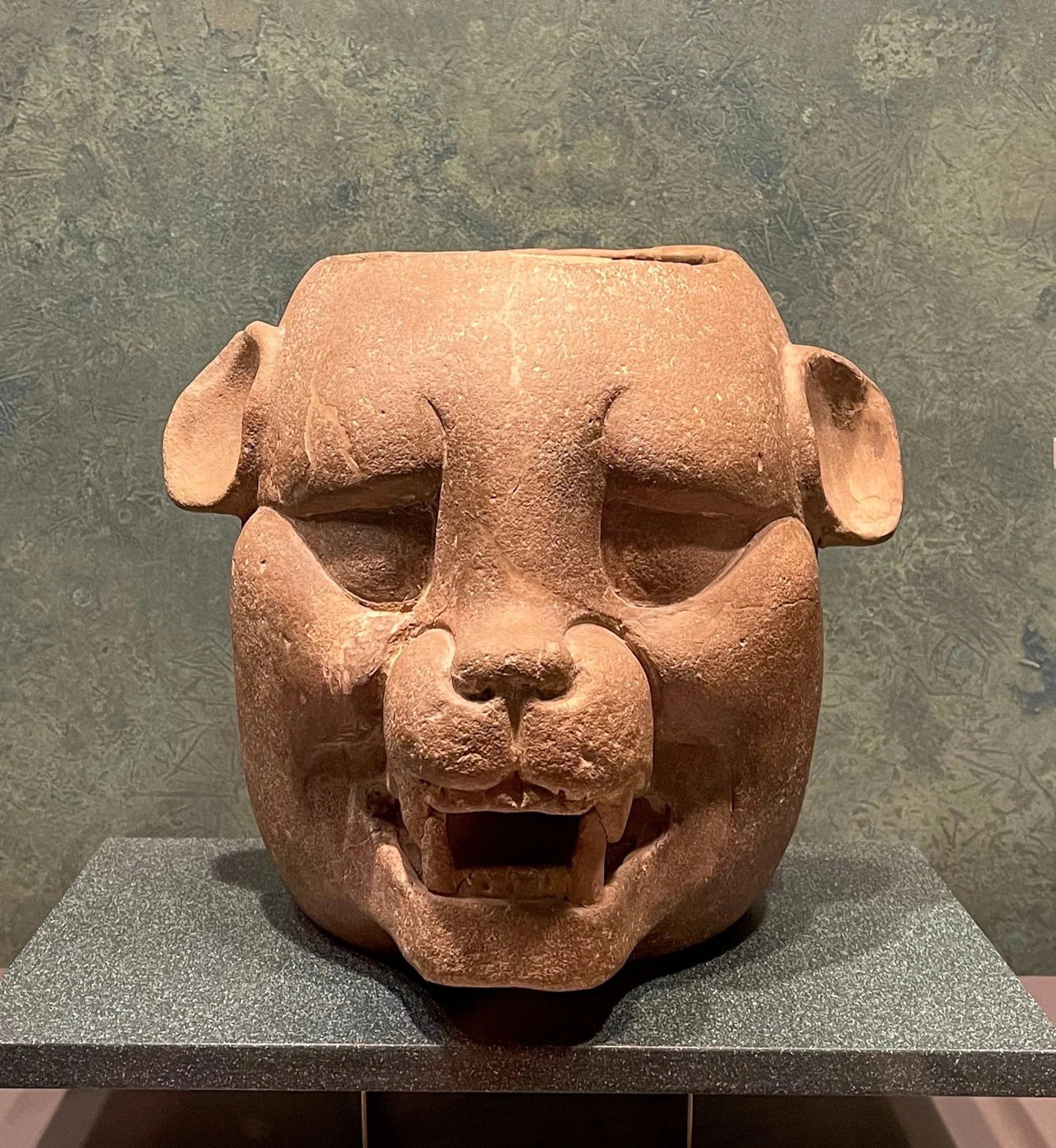
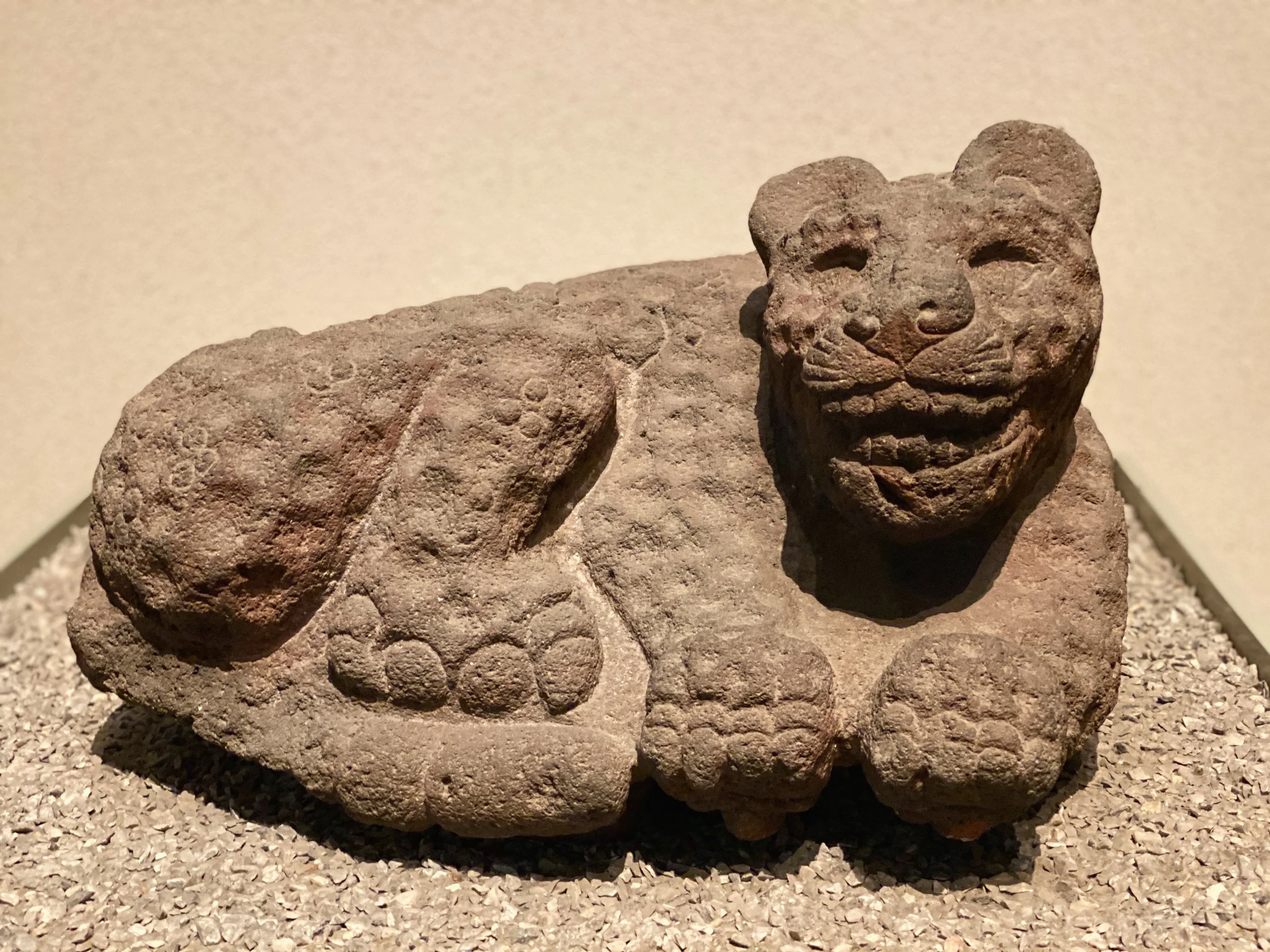
MORE: Explore the Museum of Anthropology’s collections on Animal Pottery and Death Cults of Ancient Mexico


The park is divided into four sections, from historic landmarks to vast green spaces. It’s home to nine major museums covering a wide range of subjects, along with monuments, gardens and countless other fascinating sights. And so far, we’ve barely scratched the surface of Section One. 

Its name comes from the Nahuatl word chapoltepēc, meaning “Hill of the Grasshopper.” But why a grasshopper? The area may have once been full of them, but in Mesoamerican cultures, the insect also symbolized prosperity and good fortune. 

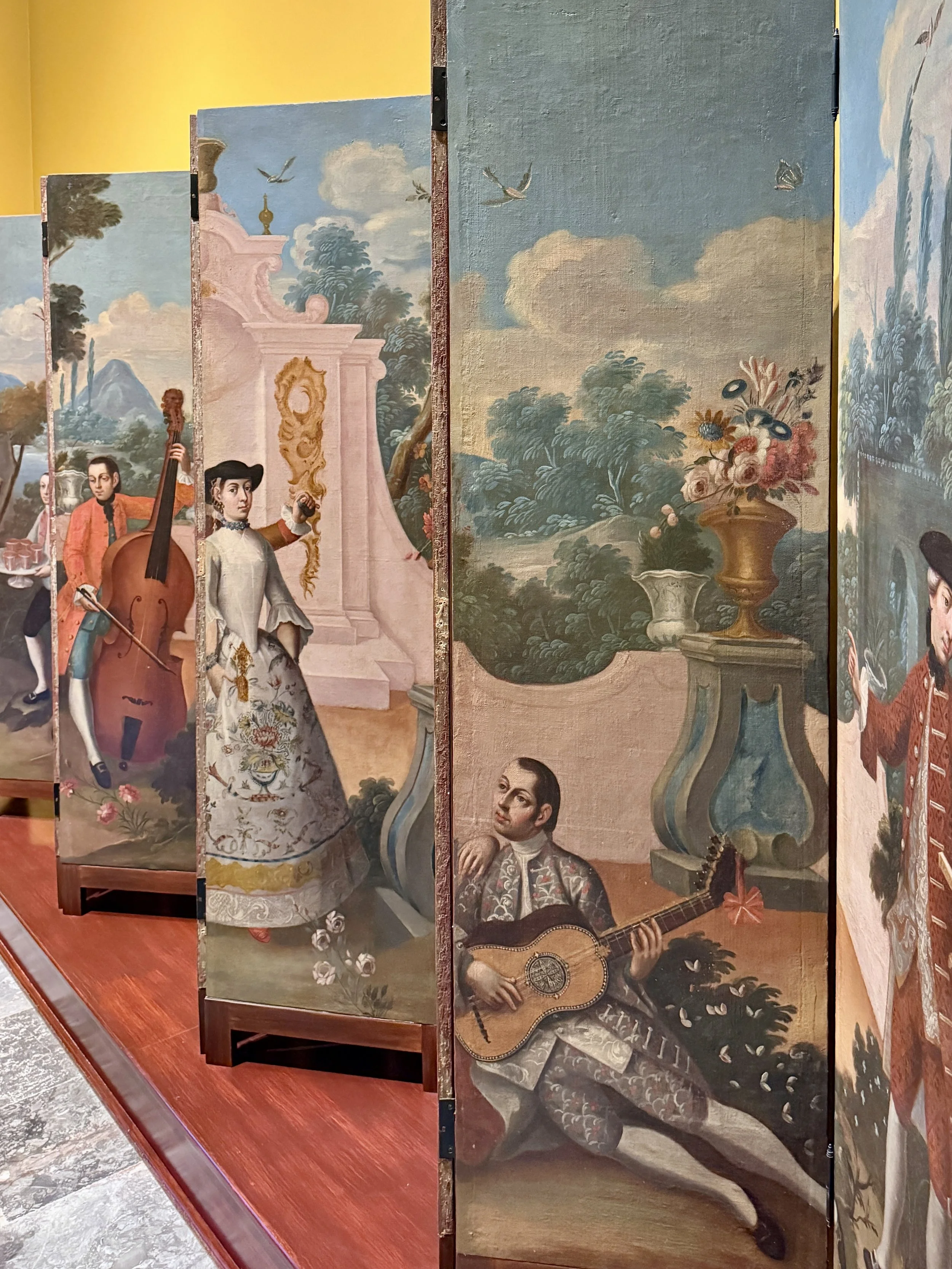
Sarao en un jardin de Chapultepec (Festive Gathering in a Garden at Chapultepec) is a handpainted biombo, or folding screen, from around 1780-1790. It depicts a sarao, a lively social gathering featuring music and dancing that played a key role in courtly and aristocratic life.

Visiting Chapultepec Castle

For this trip, we once again stayed in Colonia Condesa, a charming neighborhood that borders Chapultepec. After breakfast, we set off toward the castle, and about 25 minutes later, we were following one of the pathways leading into the park. Since it was still early morning, the vendors were just beginning to set up. 

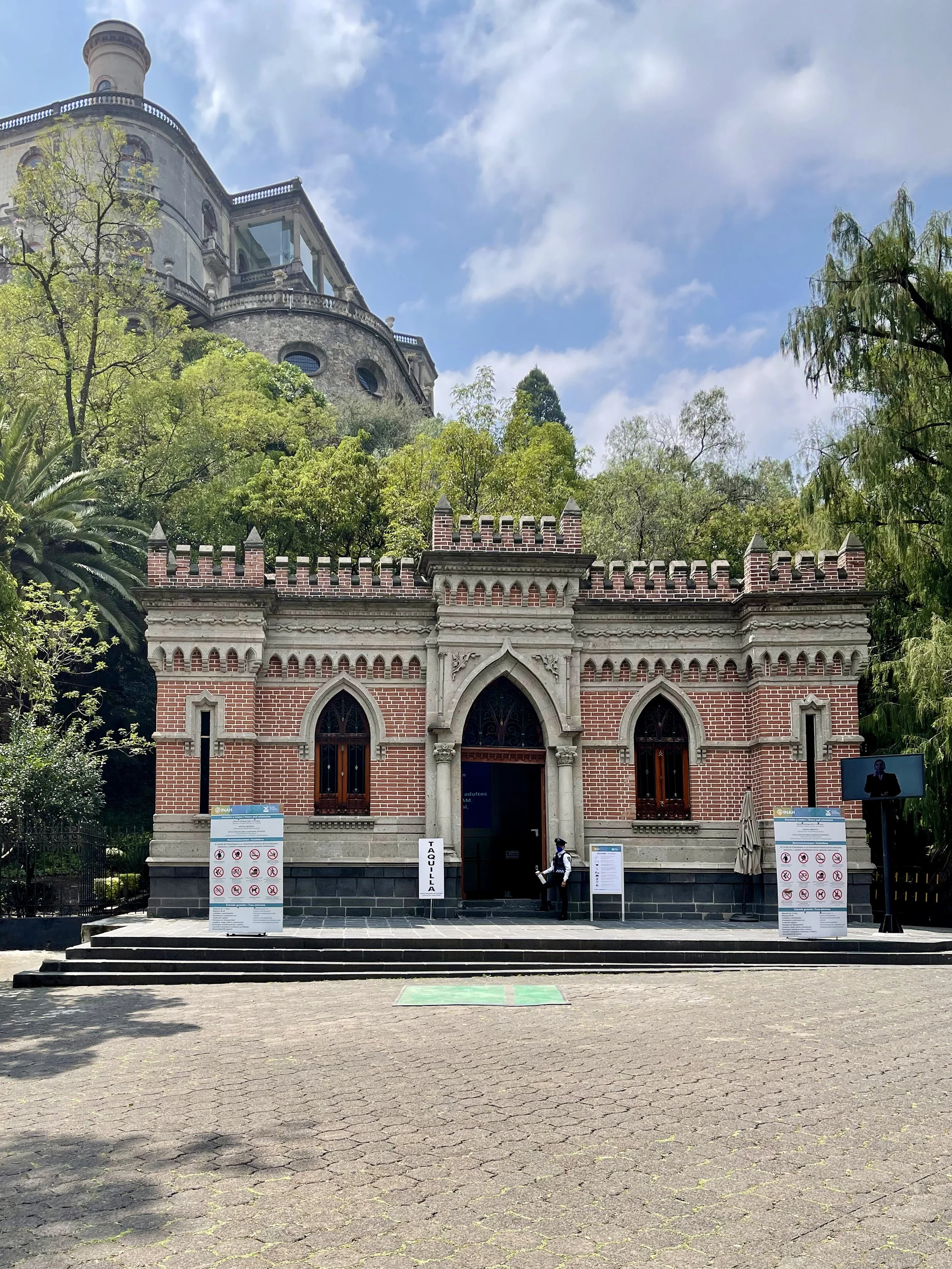
Wally and I stopped by the Old Guard House, a brick building situated at the base of the hill, to verify our tickets with an attendant, which Wally had purchased online the night before. 

The Old Guard House, located at the base of the entrance leading to Chapultepec Castle

You’ll know you’ve arrived at the right place when you see the Old Guard House, located at the base of the entrance leading to Chapultepec Castle.

Note: If you’re carrying bottled water or snacks like we were, be sure to pay for a locker as well. We didn’t realize that food and drink were prohibited inside the castle grounds — and were told at the security checkpoint that we needed to finish or rent a locker to store them.

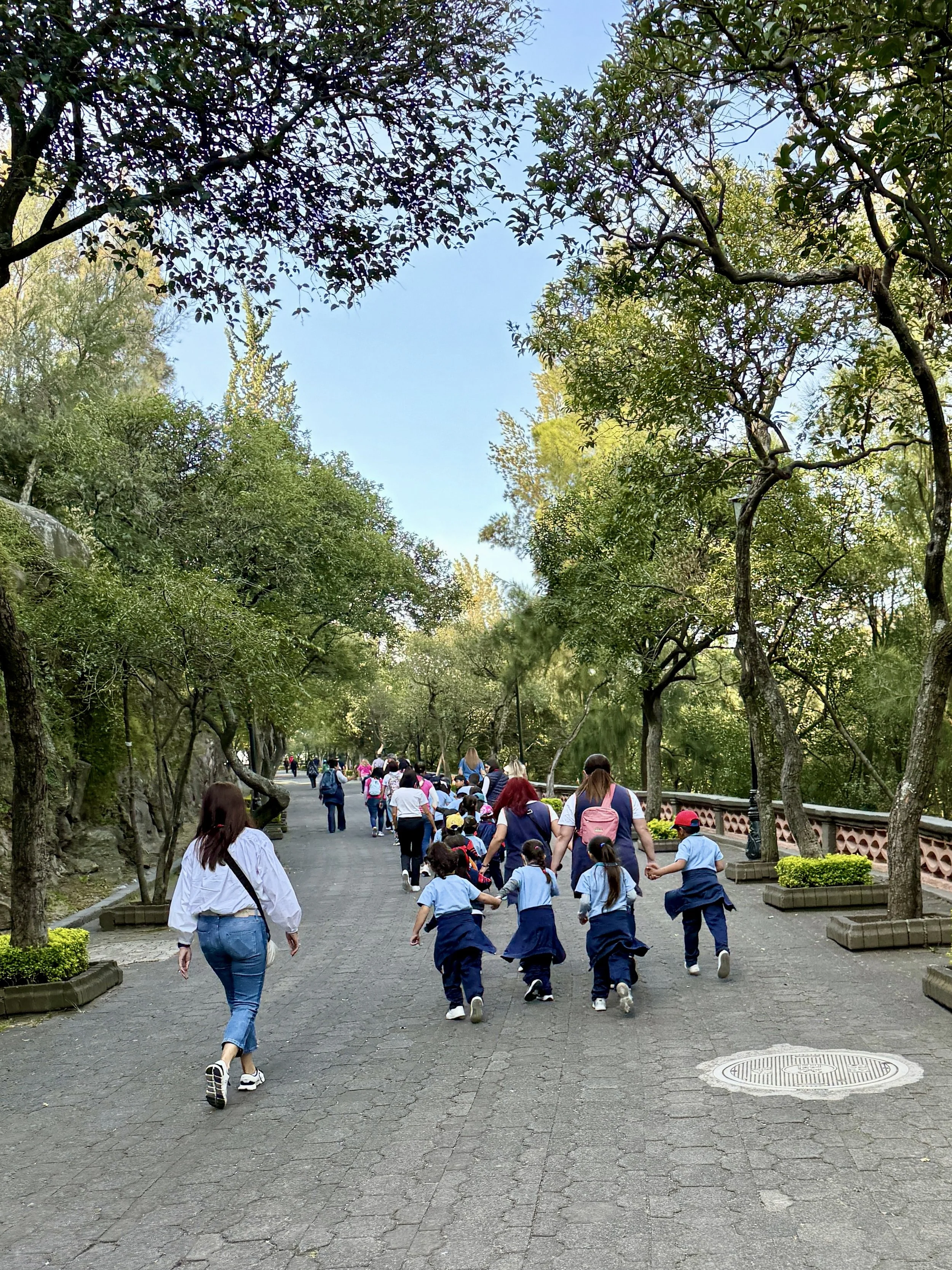
The morning we visited, we got the full experience — a busload of kids arrived at the same time we did, their chaperones struggling to keep them from running and yelling as they excitedly scattered across the path ahead of us. Fortunately, we managed to get ahead of the group and for the most part avoided them once we reached the top. 

Schoolchildren and their chaperones walk up the path to Chapultepec Castle in CDMX

We hurried past the schoolchildren walking up the hill — and mostly avoided them while exploring the castle.

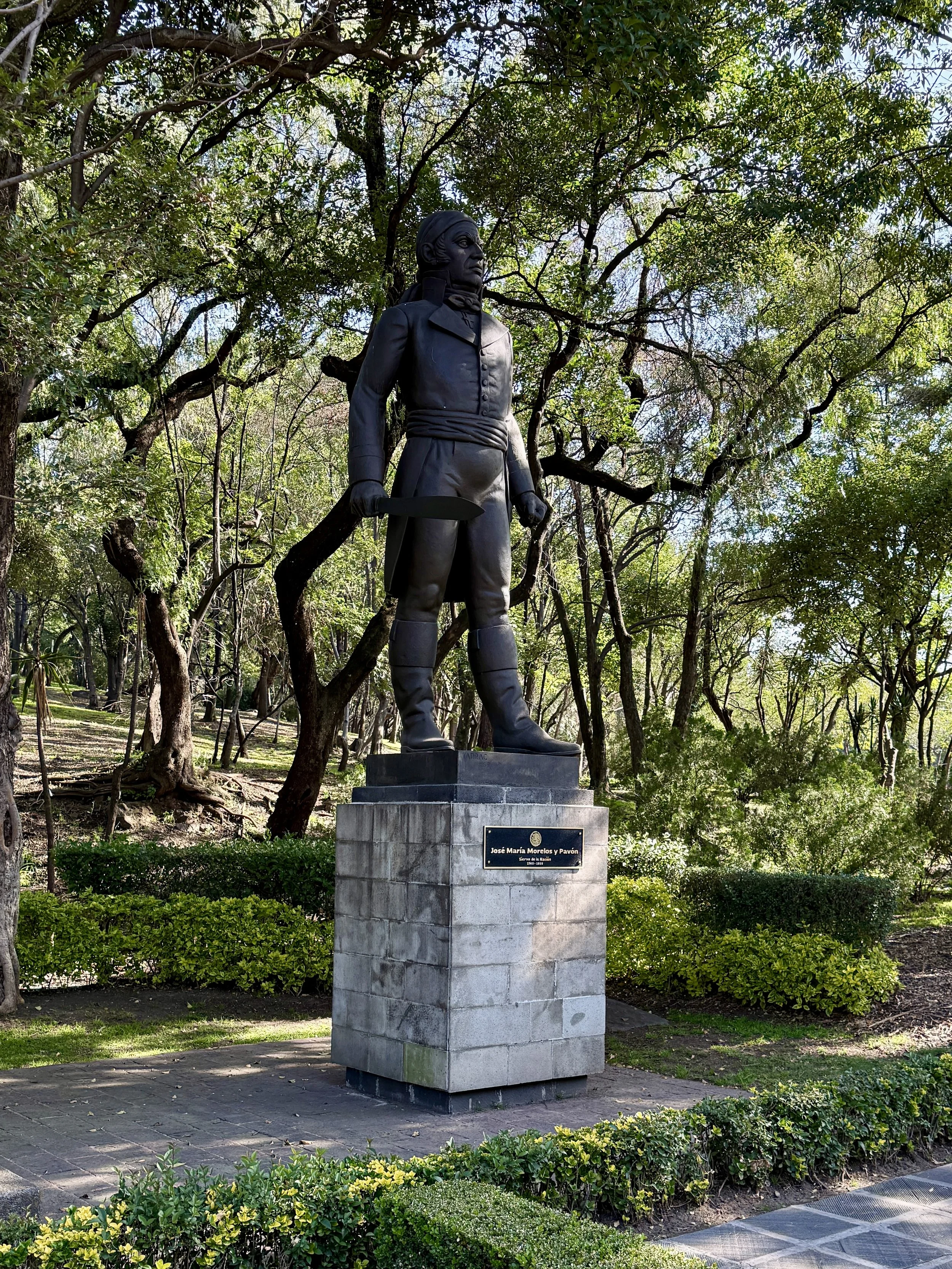
As we continued our ascent to the top, where the castle is located, we passed a bronze statue of José María Morelos y Pavón, created by Spanish sculptor Ángel Tarrach. Morelos, a Catholic priest and revolutionary leader during Mexico’s War of Independence, was ultimately captured by the Spanish army, tried by the Inquisition, and executed by firing squad for treason. Despite his fate, he’s remembered as a champion of the people — a brilliant military strategist and a tireless advocate for a more just society. 

A bronze statue of José María Morelos y Pavón on Chapultepec Hill

A bronze statue of José María Morelos y Pavón, a priest and revolutionary leader, by Ángel Tarrac

Since there’s nowhere to buy tickets at the top of the hill, it’s essential to get them online or at the guard house before making the climb. The security checkpoint at the base of the hill won’t ask for them, but the attendants at the castle gate will. If you forget, you’ll have to trek all the way back down — and trust me, that steep uphill climb is tough enough the first time, especially if you’re still acclimating to Mexico City’s altitude. After all, Chapultepec Castle is located at a height of 7,628 feet (2,325 meters) above sea level. 

Two structures stand atop the Hill of the Grasshopper: to the east, Chapultepec Castle — also known as the Alcázar (Royal Palace) — and to the west, the Museo Nacional de Historia (National Museum of History). Housed in the same building that once served as the military academy, the museum explores nearly 500 years of Mexico’s complex history that are displayed chronologically from the 15th to the 21st century. 

Fun fact: The castle exterior was used as the Capulet mansion in Baz Luhrmann’s Romeo + Juliet from 1996, starring Leonardo DiCaprio and Claire Danes. 

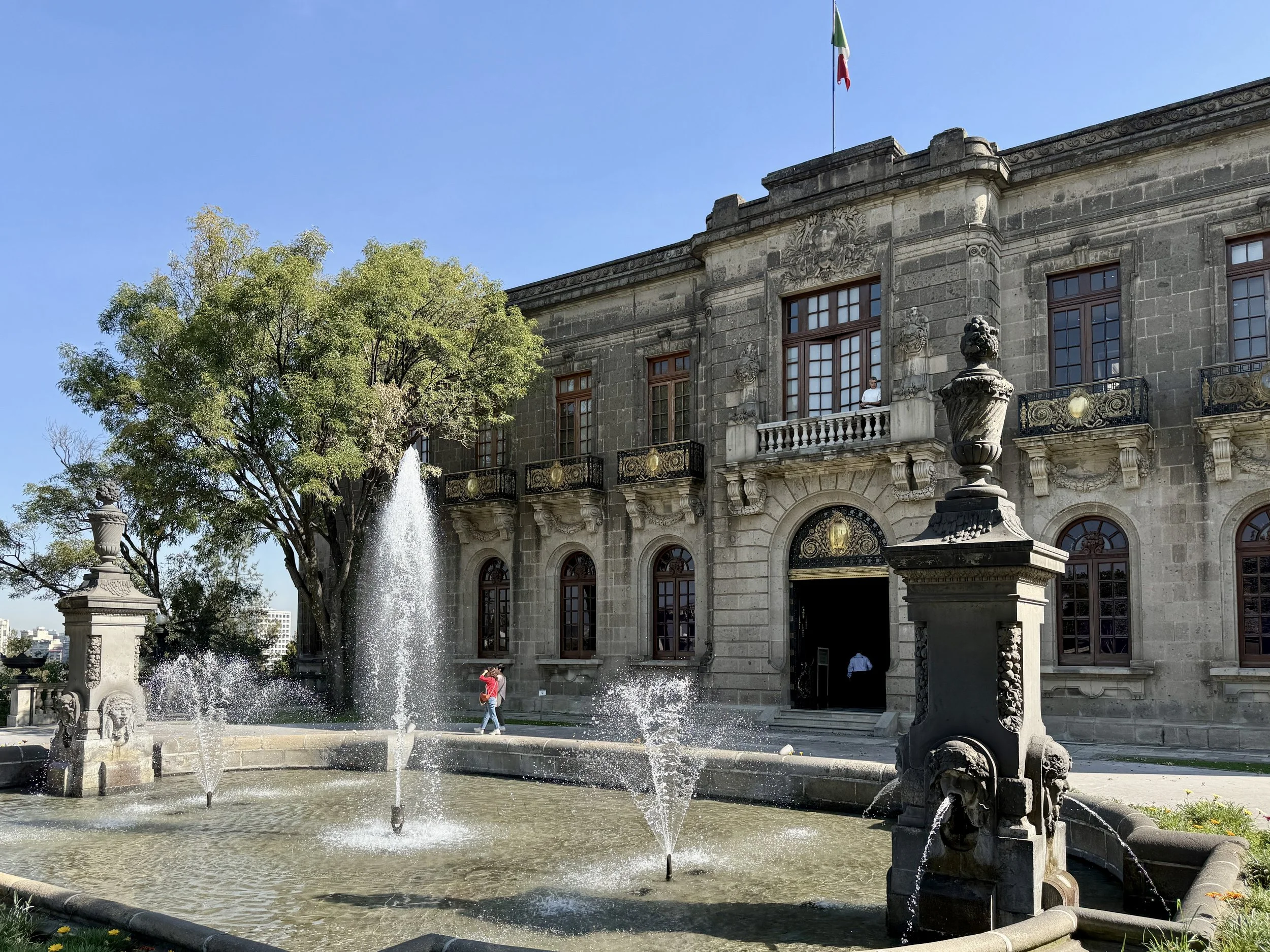
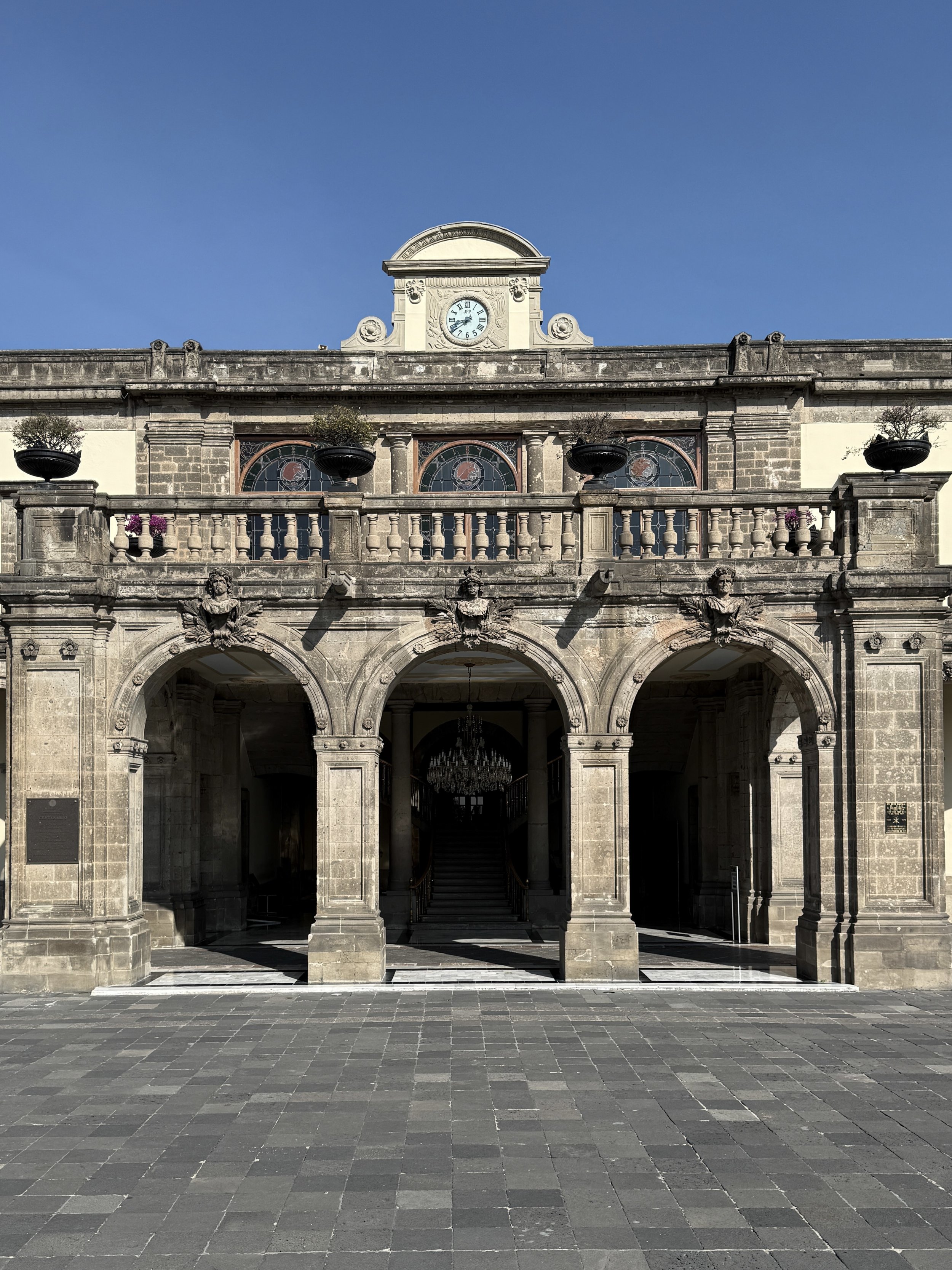
The façade of Chapultepec Castle that houses the National History Museum

The façade of the castle that houses the National History Museum

A Brief History of Chapultepec Castle

Construction of what would become the castillo began in 1785 during the Spanish colonial period. Originally intended as a retreat for Spanish officials, the project was closely associated with Bernardo de Gálvez, the viceroy of New Spain, who governed the territory on behalf of the Spanish crown from 1785 to 1786. 

Before his term as viceroy, Gálvez served as the governor of Spanish Louisiana, where he played a pivotal role in the American Revolution. He led military campaigns that supported General George Washington’s troops, capturing Pensacola, the capital of British West Florida, and effectively removing British influence from the region. His legacy lives on in the place names such as Galveston, Texas, and Galvez Street in New Orleans, Louisiana.

Unfortunately, Gálvez’s service was brief. Before  he could complete the project, he died from yellow fever — known in Mexico as vomito negro because internal bleeding turned the victim’s vomit black. The estate went unfinished. By 1806, the municipal government had taken ownership of the structures, and in 1833, they were converted into the Colegio Militar, a military academy that trained young officers for the Mexican Army.

Today, the grounds are remembered as the site of the Battle of Chapultepec, a pivotal conflict of the Mexican-American War fought on September 12 and 13, 1847. The U.S. was victorious, capturing Chapultepec Castle and paving the way for the fall of Mexico City. 

It was here that six young cadets, ages 13 to 19 — known as Los Niños Héroes (The Boy Heroes) — lost their lives defending the military academy against American forces in one of the war’s final battles.

The war officially ended in 1848 with the Treaty of Guadalupe Hidalgo, a humiliating agreement that forced Mexico to cede over half its territory to the United States. 

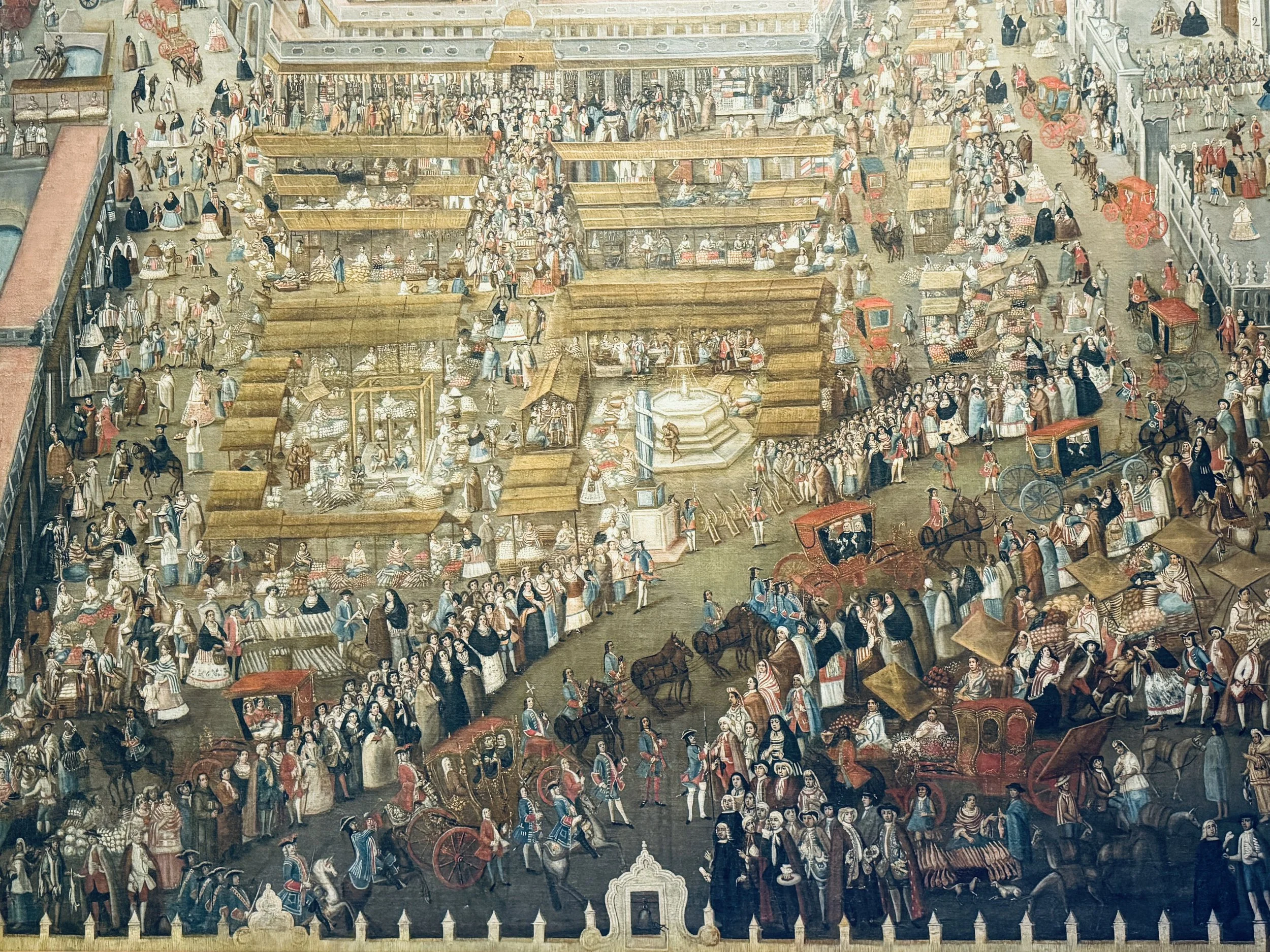
Vista de la Plaza Mayor de la Ciudad de México (View of the Zócalo of Mexico City) by Cristóbal de Villapando, 1695

Vista de la Plaza Mayor de la Ciudad de México (View of the Zócalo of Mexico City) by Cristóbal de Villapando, 1695

Exploring the National History Museum 

As Wally and I stepped through the entrance of the museum, we were awestruck by the double staircase that rose before us. Covering the domed ceiling high above is La Intervención Norteamericana (The North American Intervention), a mural by Gabriel Flores. It depicts Juan Escutia, one of the six Niños Héroes who died defending the academy from invading U.S. forces. According to legend, Escutia leapt to his death from the academy, plunging over the steep rock face of the Hill of the Grasshopper, wrapped in the Mexican flag to prevent it and himself from falling into enemy hands.

The front staircase features the mural Alegoría de la Revolución (Allegory of the Revolution) by Eduardo Solares from 1934

The front staircase features the mural Alegoría de la Revolución (Allegory of the Revolution) by Eduardo Solares from 1934.

There’s another large-scale mural on the staircase, Alegoría de la Revolución (Allegory of the Revolution) painted by Eduardo Solares. This powerful piece depicts a moment from the revolution that overthrew the dictatorial regime of Porfirio Díaz. 

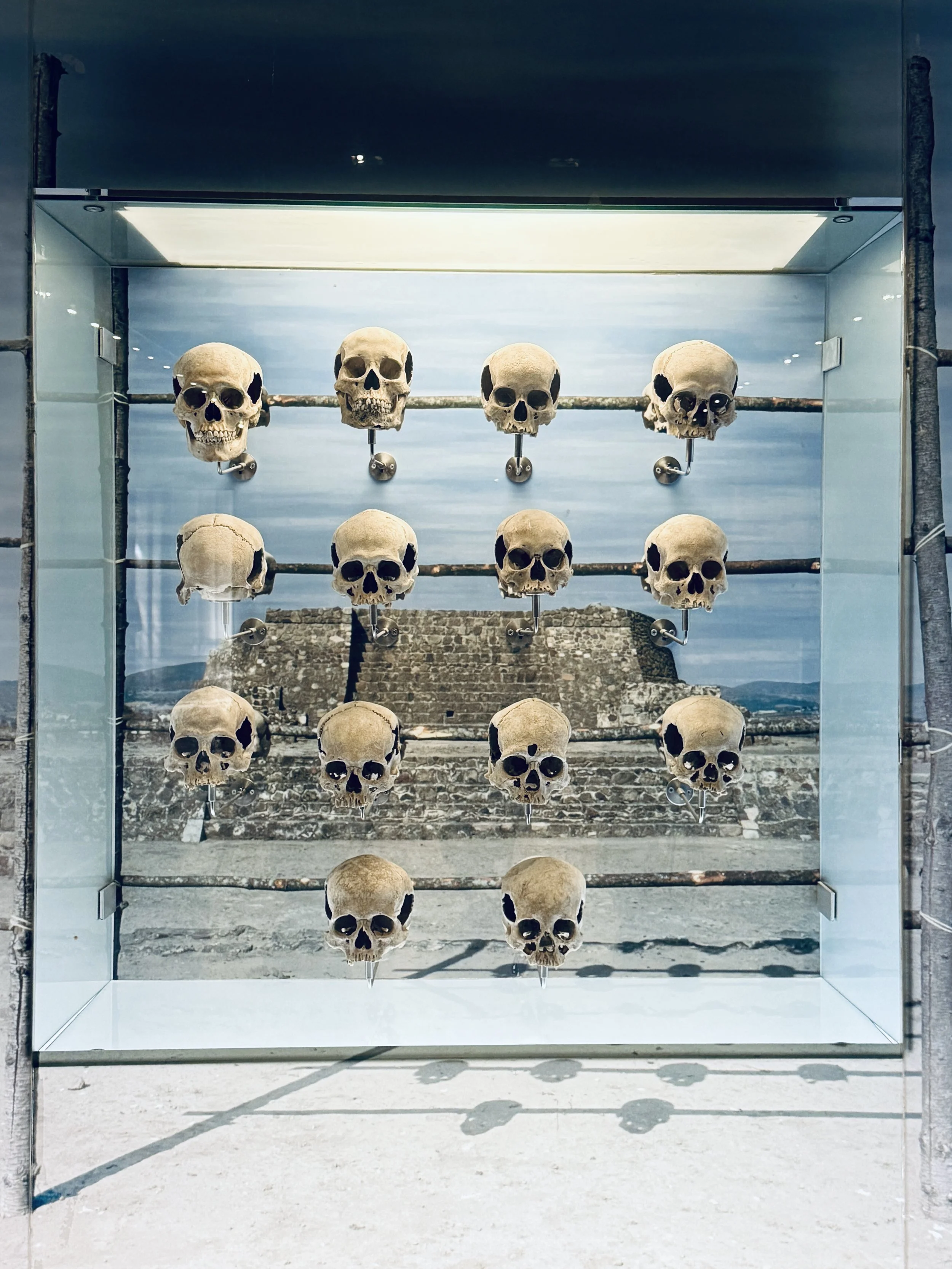
tzompantli — a rack used by the Aztecs to display the skewered skulls of human sacrifices and prisoners of war at the history museum at Chapultepec Castle

Cute décor idea: a tzompantli — a rack used by the Aztecs to display the skewered skulls of human sacrifices and prisoners of war

The Conquest of the Americas

We passed display cases featuring armor worn by the conquistadors and their horses, along with a small 16th century wooden sculpture of the Virgin of Valvanera. According to legend, this likeness is a “true portrait” of the Virgin Mary, carved by Saint Luke and brought to Spain by the disciples of Saint Peter.

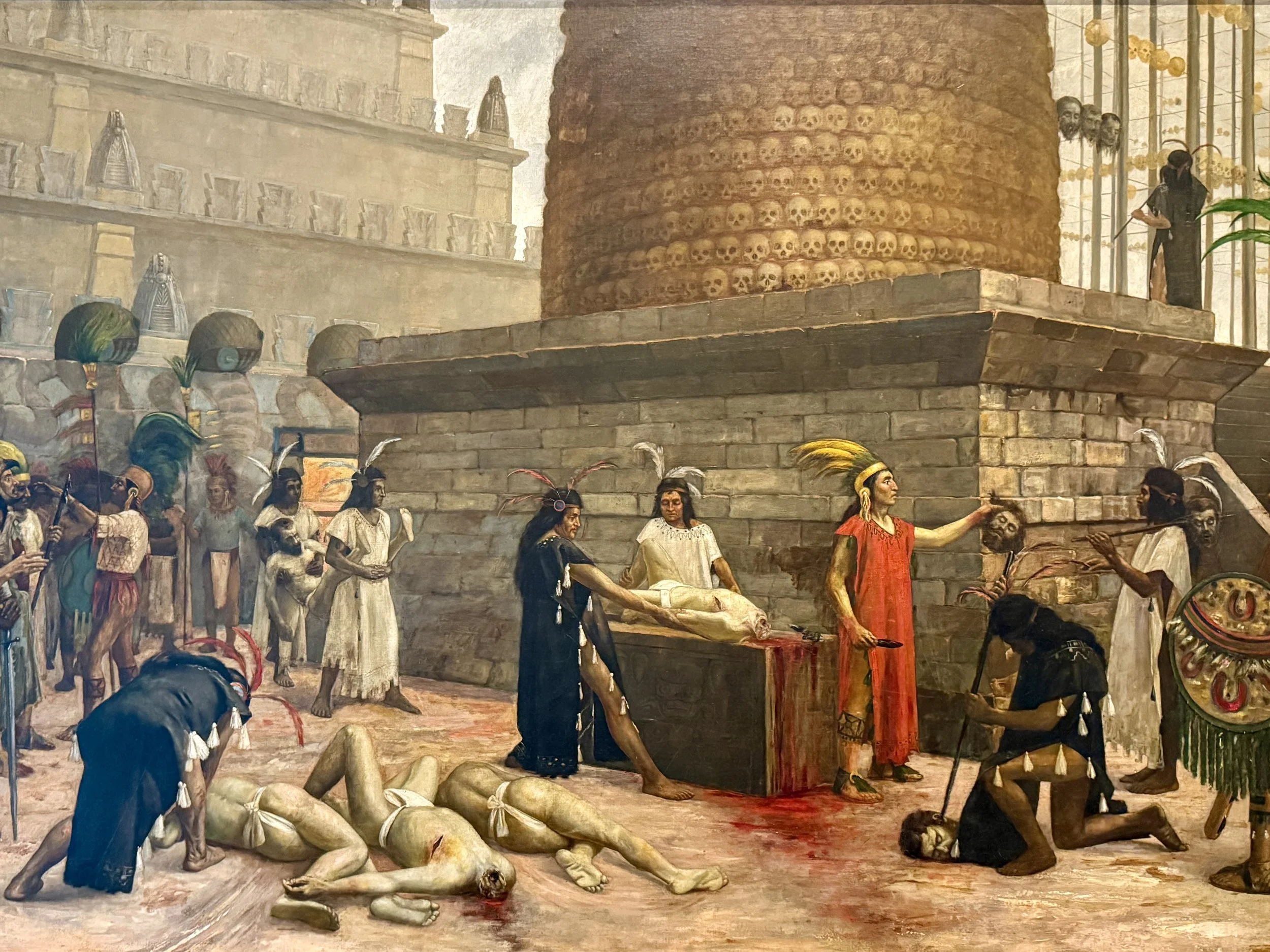
Sacrificio de Españoles por Mexicas (Sacrifice of Spaniards by Mexicas) by Adrian Unzeta, 1898

Sacrificio de Españoles por Mexicas (Sacrifice of Spaniards by Mexicas) by Adrian Unzeta, 1898

While these were fascinating, the installation that stopped us in our tracks was a tzompantli — a rack used by the Aztecs to display the skewered skulls of human sacrifices and prisoners of war. Discovered in 1994 at Tecoaque, an archaeological site in central Mexico whose name translates to “the Place Where They Ate Them” in Nahuatl, this tzompantli is believed to have been built by the Acolhua, allies of the Aztecs. It held the skulls of a defeated Spanish-led convoy captured in 1520 — comprising conquistadors and their indigenous allies, who were ritually sacrificed and quite possibly eaten. 

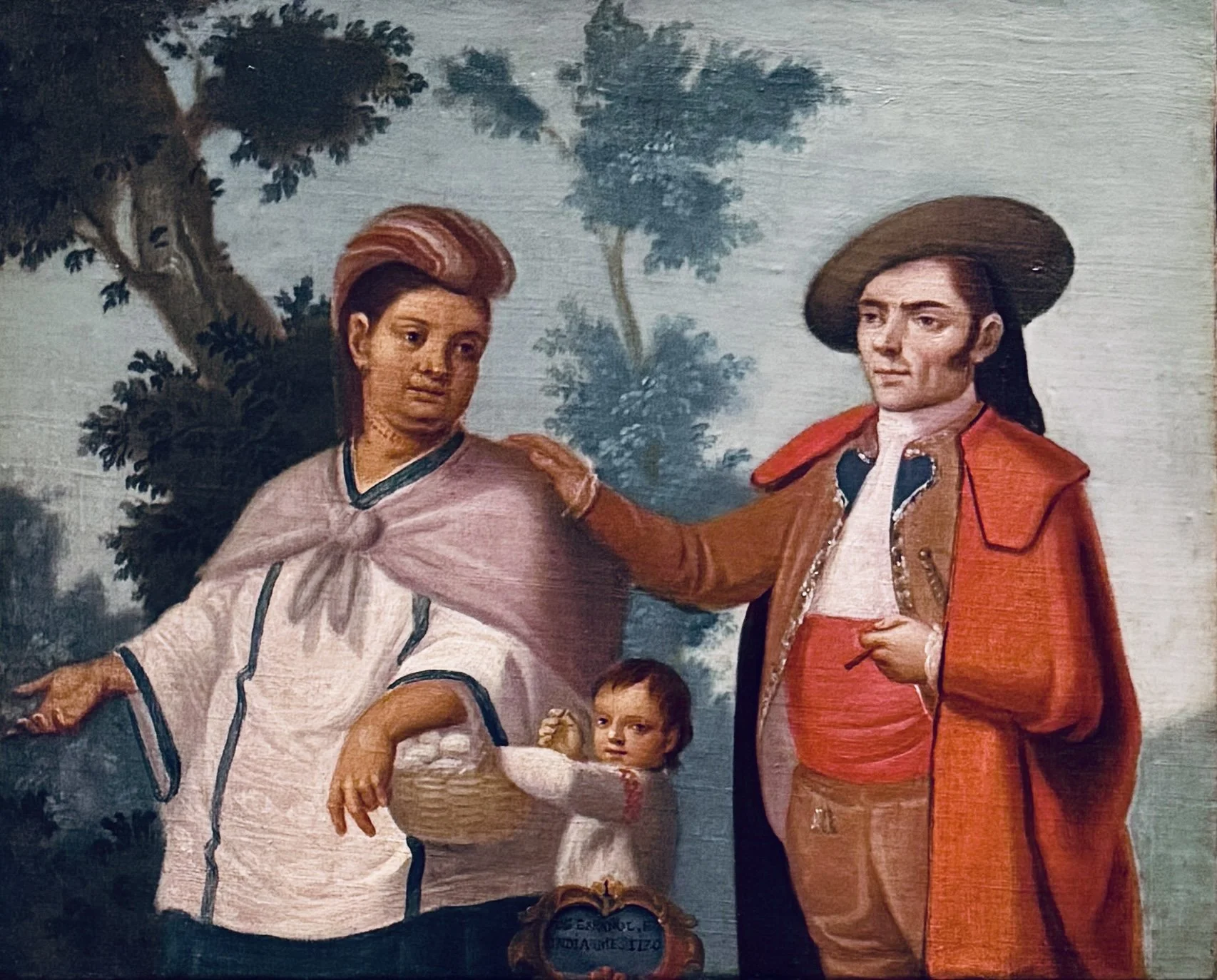
#1 De Español y Indio, Mestizo o Cholo (From Spaniard and Indian, Mestizo or Cholo), depicting the highest-class of the caste hierarchy imposed by the Spanish colonists in Mexico

This image, #1 De Español y Indio, Mestizo o Cholo (From Spaniard and Indian, Mestizo or Cholo), depicts the highest-class of the caste hierarchy imposed by the Spanish colonists.

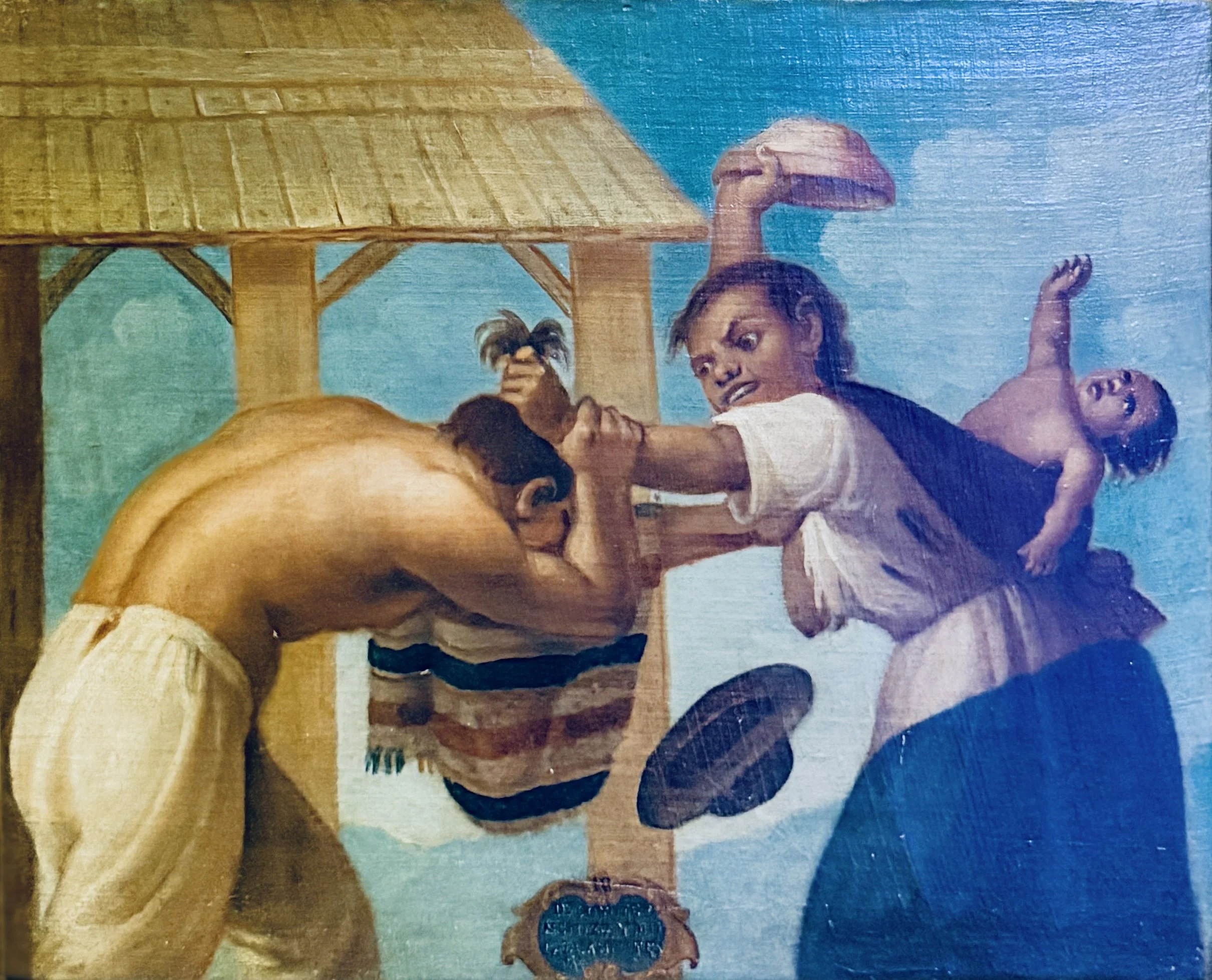
#16 De Coyote, Mestizo y Mulata: Ahí te estás (From Coyote, Mestizo and Mulatto: There you are)

The depiction of the lowest caste in #16 De Coyote, Mestizo y Mulata: Ahí te estás (From Coyote, Mestizo and Mulatto: There You Are) reflects the prejudices of the Spanish invaders.

The Pecking Order of New Spain

In a nearby room, a series of 18th century casta (caste) paintings hung on the wall. 

These 16 scenes depicted the colonial social hierarchy of New Spain, a system imposed by the Spanish government to classify individuals based on ancestry and racial mixing. At the top were Spaniards, both those born in Spain (peninsulares) and those born in the Americas (criollos). Below them were mestizos, people of mixed Spanish and indigenous heritage, and other mixed-race groups, followed by indigenous people and those of African descent. Though rigid in theory, this system allowed some social mobility through wealth,  marriage or official status changes. 

The massive Retablo de la Independencia (Independence Altarpiece) by Juan O’Gorman at the National History Museum at Chapultepec Castle

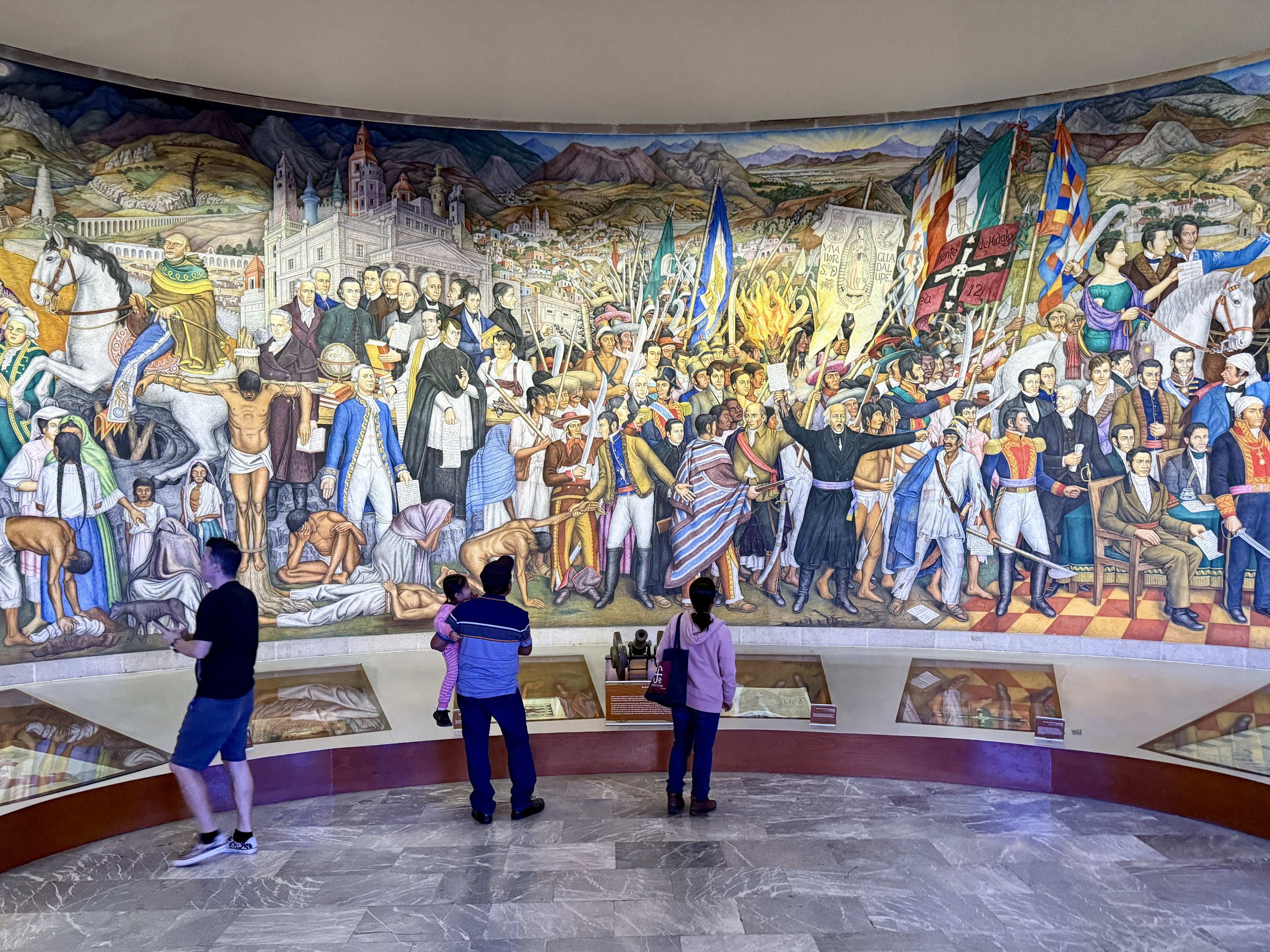
Juan O'Gorman was invited by Antonio Arriaga Ochoa, the director of the National Museum of History, to complete the project that had initially been commissioned by his friend, Diego Rivera, who had died three years earlier in 1957.

The STRUGGLE WAS REAL: MEXICO’S WAR of INDEPENDENCE

The Salón de Independencia (Hall of Independence) features the Retablo de la Independencia (Independence Altarpiece), a monumental mural painted by architect and muralist Juan O’Gorman between 1960 and 1961.  

The mural is divided into four sections, each representing a different stage of the Mexican independence movement. At the center stands the white-haired figure of Miguel Hidalgo y Costilla, dressed in clerical robes and brandishing a torch in his left hand. During Mexico's fight for independence, he took a banner depicting the Virgin of Guadalupe from the Sanctuary of Jesús Nazareno de Atotonilco, using it as the flag for his insurgent army. Look for the flag in the case below the mural. Hidalgo’s call to arms, known as the Grito de Dolores (Cry of Dolores), ignited the fight against Spanish colonial rule.

Nearby, José María Morelos is depicted gripping a sword, with a white bandana tied around his head. Morelos was a key leader in the movement, organizing insurgent forces to abolish slavery and the casta system.

Among other figures, Josefa Ortiz de Domínguez appears wearing a green dress and a purple rebozo (shawl), seated on a white horse and surrounded by indigenous victims of exploitation, hunger and death.


The western terrace, or Patio de Juan de la Barrera, was named in honor of one of the young Mexican cadets who died during the Battle of Chapultepec fighting in the Mexican-American War.

Pergola Terrace, or Patio de Juan Barradas

Wally and I stepped out of the building and into the sunlight-drenched western terrace. A gurgling fountain stood before us and an expansive pergola stretched out to the right, offering shade and views of the park’s artificial lake and city beyond. 

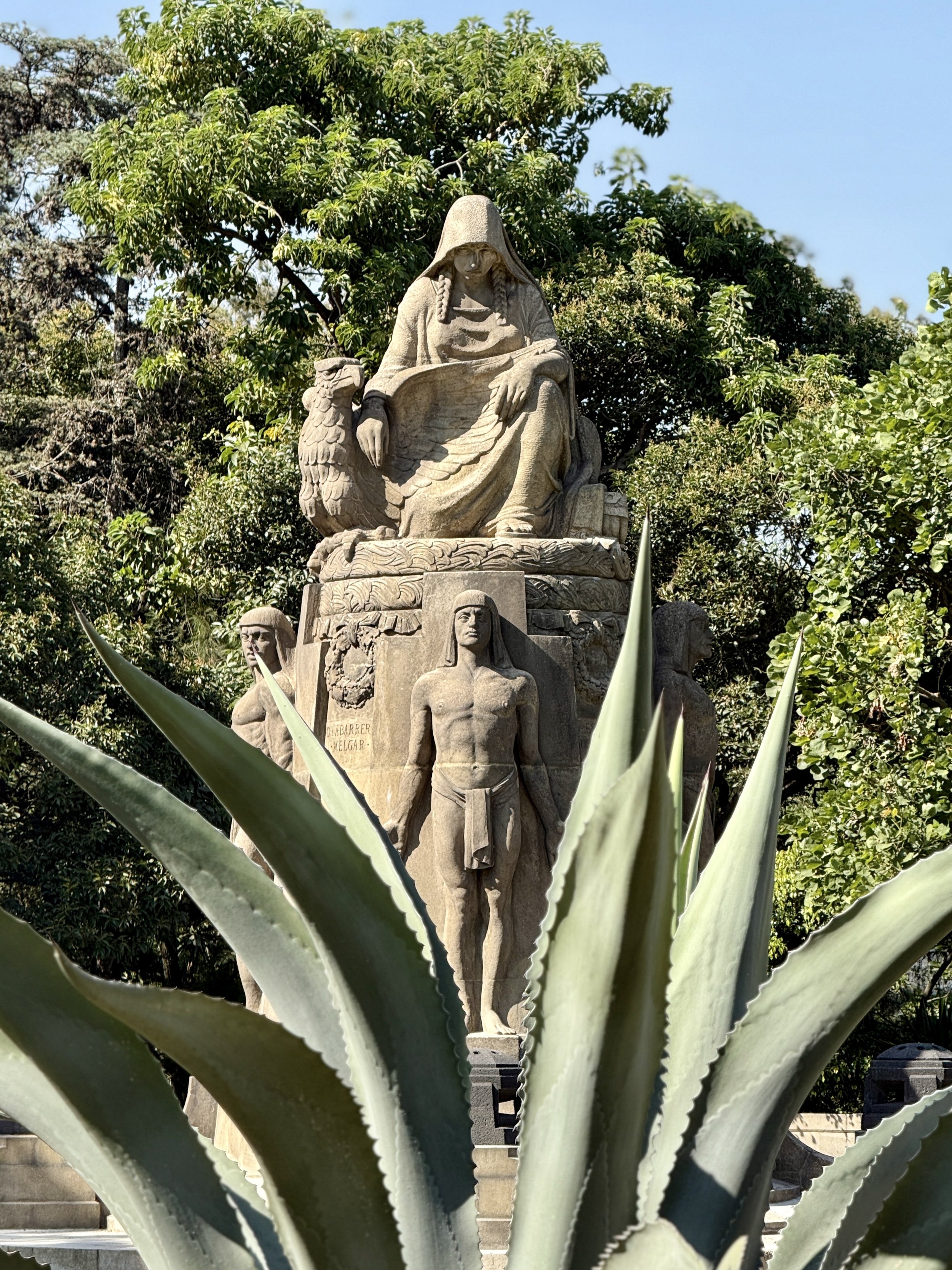
At the back of the garden stands La Madre Patria, Agradecida a sus Hijos Caídos (The Motherland, Grateful to Its Fallen Children), a classical monument commemorating the Niños Héroes. Designed by architect Luis MacGregor Cevallos and sculpted by French-trained Mexican artist Ignacio Asúnsolo, it was inaugurated in 1924.

A giant agave plant in front of the statue La Madre Patria, Agradecida a sus Hijos Caídos (The Motherland, Grateful to Its Fallen Children) behind Chapultepec Castle

Asúnsolo finished the monument to the Niños Héroes in a mere three months, fulfilling President Álvaro Obregón’s request to have it completed and inaugurated before the end of his term.

The top of the pylon-shaped memorial features a solemn veiled matron, an eagle at her side, its wings spread protectively. Encircling them is a coiled, feathered serpent, a creature from pre-Hispanic mythology that symbolizes the deity Questzacoatl and reflects the national coat of arms. Below, four muscular figures of young native warriors clad in loincloths represent a different aspect of sacrifice and struggle, each facing a different direction: Supreme Sacrifice (east), Desperation in Defense (north), Unequal Fight (south) and The Epic (west).

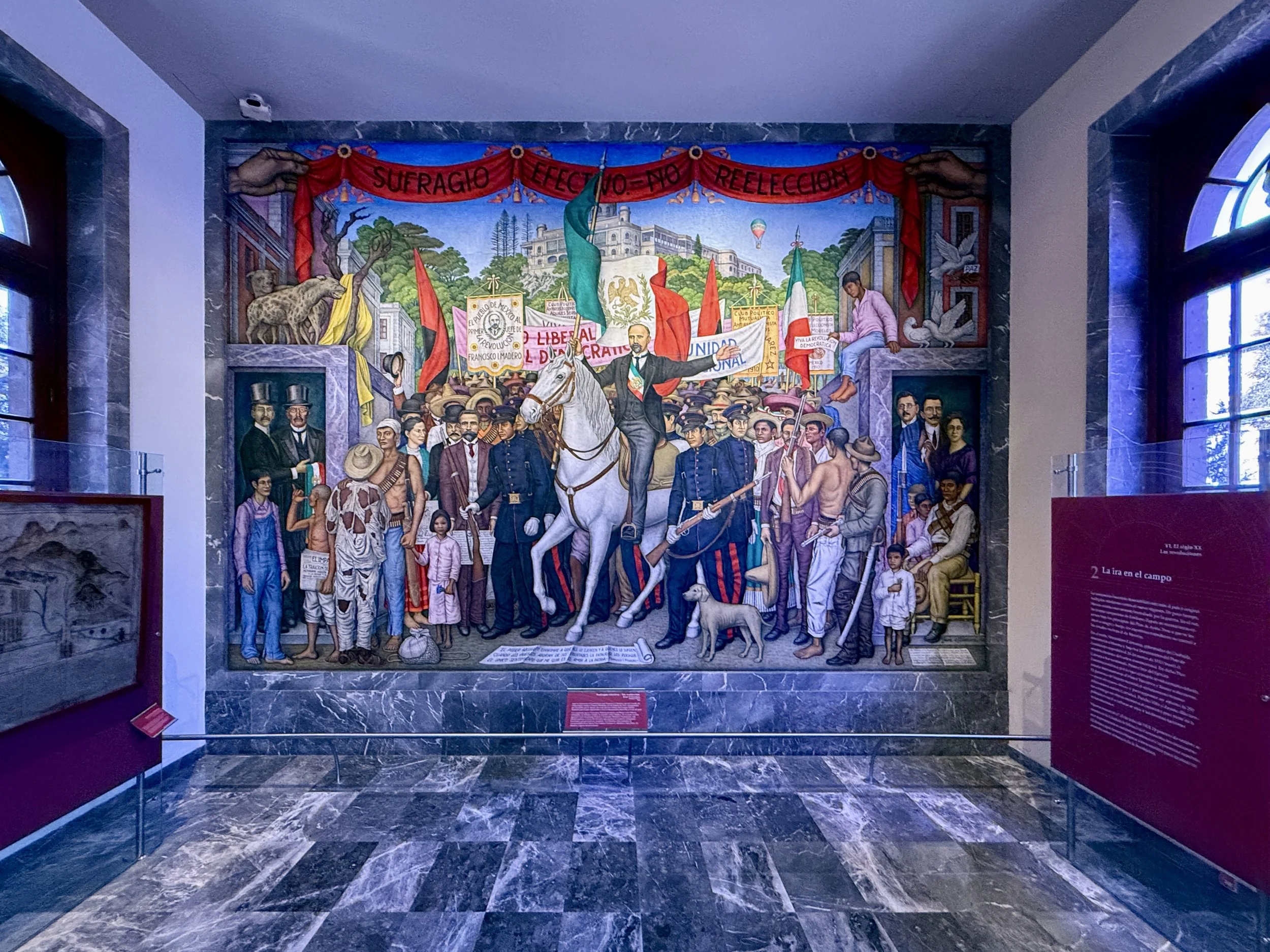
A scene from Retablo de la Revolución (Sufragio Efectivo no Reelección) by Juan O’Gorman at Chapultepec Castle

The mural Sufragio efectivo, no reelección (Effective Suffrage, No Reelection) by Juan O’Gorman is named for the rallying cry of President Francisco I. Madero against the long dictatorship of Porfirio Díaz.

Fall of the Feudal Empire

When we stepped back inside from the terrace, we entered a room to the right, where a series of murals by Juan O’Gorman covered the walls. These paintings depict a turbulent chapter in Mexico’s history — the fall of the Porfirian dictatorship and the revolution that followed.

(Incidentally, O’Gorman wasn’t just a painter — he was also an architect. He designed strikingly modern homes for Frida and Diego, which pissed off the neighbors.)

One of the most striking murals, Sufragio efectivo, no reelección (Effective Suffrage, No Reelection), dominates one of the walls. Part of O’Gorman’s Retablo de la Revolución (Altarpiece of the Revolution), it captures a pivotal moment in the Mexican Revolution: the Marcha de Lealtad (March of Loyalty). At the center, Francisco Madero rides on horseback, wearing the presidential sash across his chest. The mural portrays his journey from Chapultepec Castle to the National Palace on the morning of February 9, 1913, escorted by students of the Military College. This march would mark the beginning of the Decena Trágica (Ten Tragic Days), a coup that would ultimately cost Madero his life.

Madero had risen to power in the wake of the Mexican Revolution, which erupted in 1910 against the long rule of President Porfirio Díaz. Although Díaz modernized Mexico and maintained a period of stability known as the “Pax Porfiriana,” his policies overwhelmingly favored the wealthy and foreign investors while leaving much of the population — especially indigenous communities — trapped in near-servitude. His ousting paved the way for Madero’s election as president, ushering in hopes of democracy and social justice.

But Madero’s time in power was short-lived.

The Decena Trágica was a violent siege that led to his downfall. What began as an armed revolt quickly turned into a bloody standoff in Mexico City, with intense fighting around the National Palace and the Ciudadela armory. In a devastating betrayal, Madero’s own army chief, Victoriano Huerta, turned against him. Forced to resign on February 18, 1913, Madero and Vice President José María Pino Suárez were executed just days later, on February 22, under Huerta’s orders. Their deaths threw Mexico into further chaos, deepening the revolution that would reshape the nation.

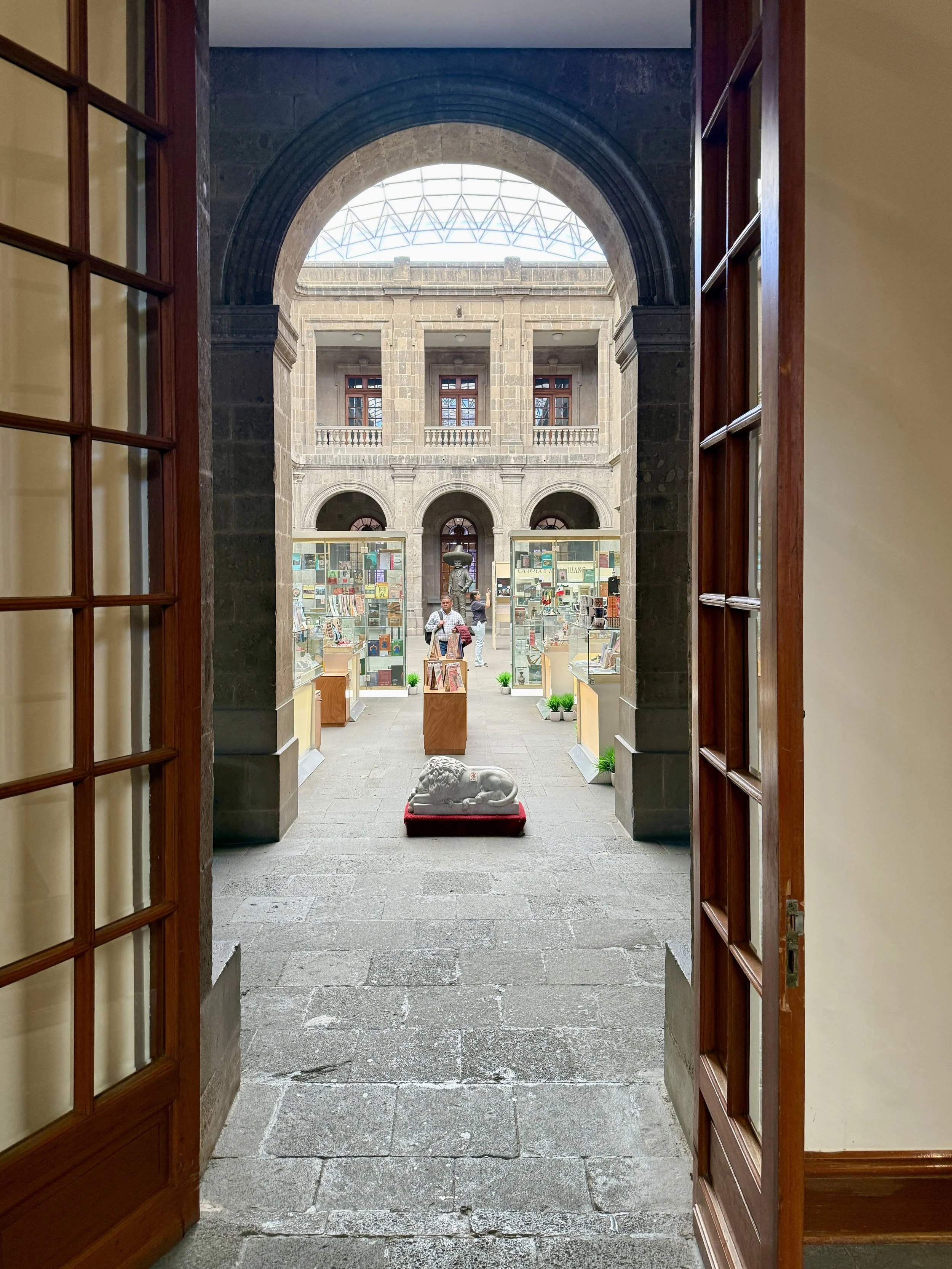
Looking into the gift shop in a central courtyard at Chapultepec Castle

Looking into the gift shop in a central courtyard of this wing of the castle

Cannonball Run to the Gift Shop

The museum shop is located on the ground floor at the center of the Patio de Cañones (Patio of Cannons), so named for the cannons that can be found in the courtyard of the museum. The space is anchored by a sculpture by David Camorlinga dedicated to Emiliano Zapata, a key figure in the Mexican Revolution, known for championing land reform and peasant rights under the rallying cry, “Tierra y Libertad” (Land and Liberty).

The statue Zapata, 100 Años, by David Camorlinga, at the entrance to the Patio of Cannons

The somewhat cartoonish bronze statue of revolutionary leader Emilano Zapata by David Camorlinga can be found in the Courtyard of Canons near the gift shop. The artwork captures Zapata’s defining features, including his iconic walrus mustache and broad-brimmed charro hat.

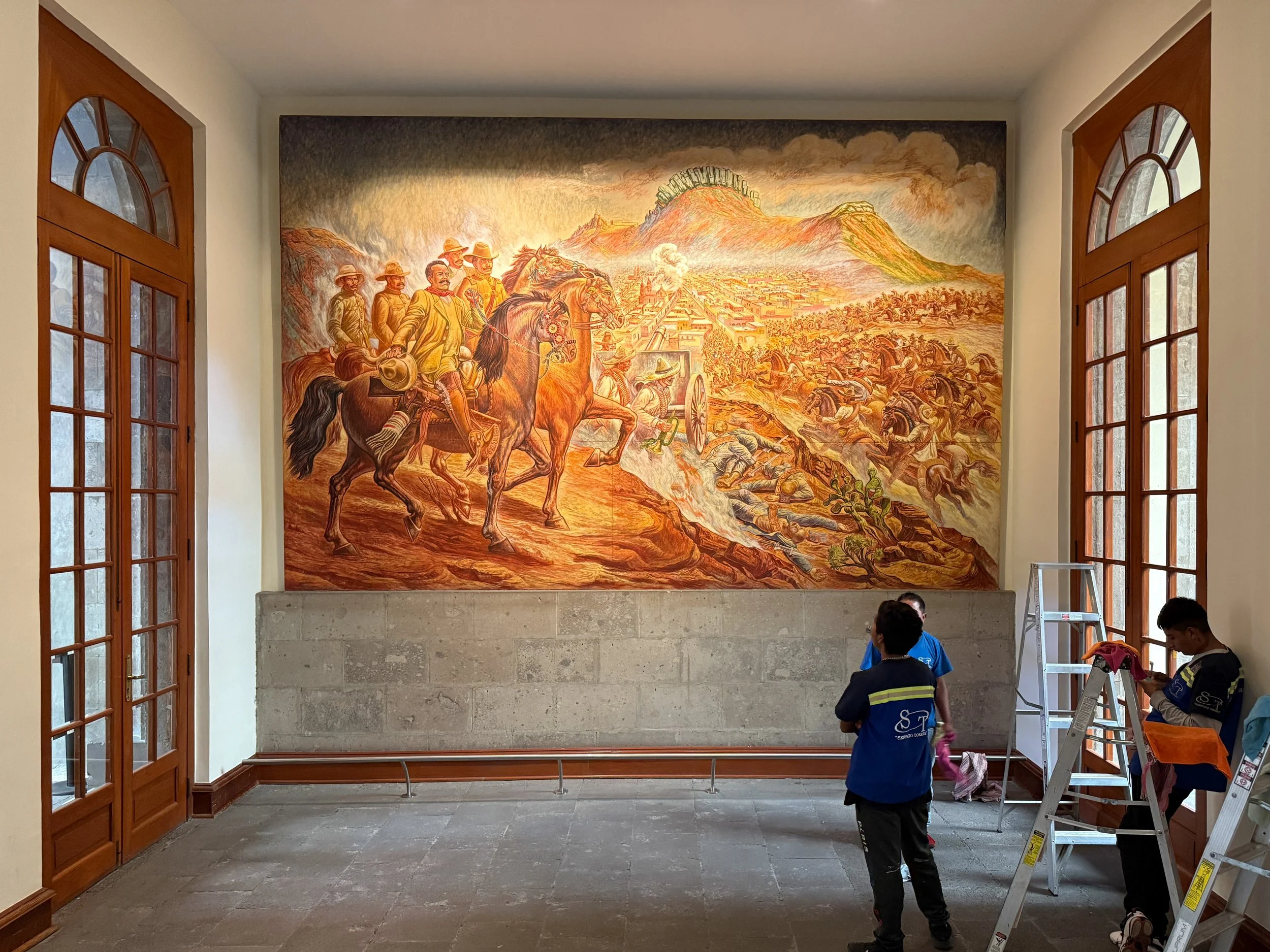
Three men work on renovating the mural Batalla de Zacatecas (Battle of Zacatecas) by Ángel Bolivar from 1965

When we visited, a team was renovating the mural Batalla de Zacatecas (Battle of Zacatecas) by Ángel Bolivar from 1965. 

During our visit, the whimsical and informative temporary exhibit Juárez/Max, Reflejo de dos vidas (Reflection of Two Lives) featured dioramas that told the story of the second Mexican empire, as well as the arrival and establishment of the republic, complete with cute felt Day of the Dead-style dollies of President Benito Juárez, First Lady Margarita Maza, Maximilian von Habsburg, and his wife Princess Charlotte of Belgium.  

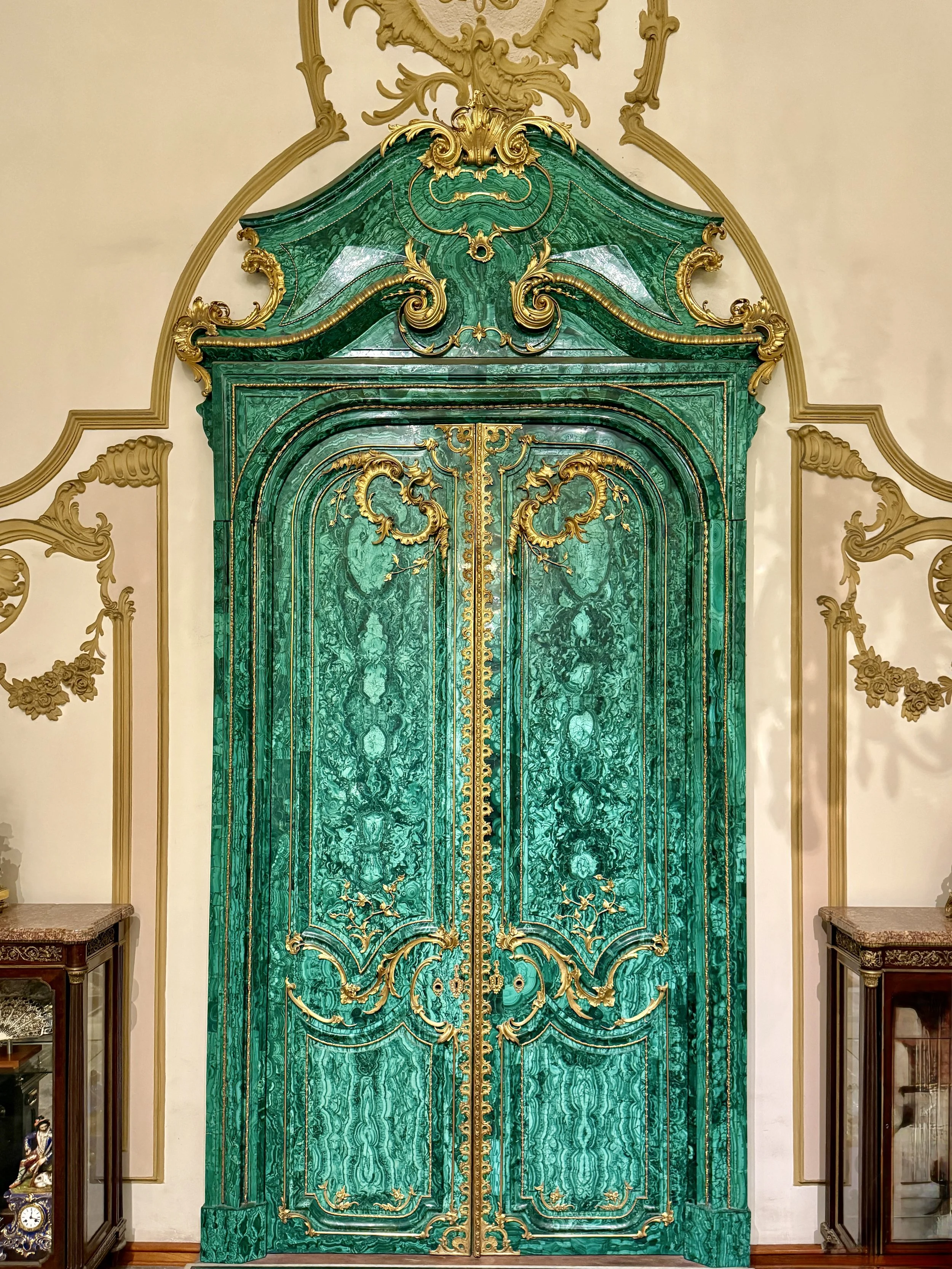
An ornate green door in the Salón de Malaquitas at Chapultepec Castle in CDMX

An ornate door in the Salón de Malaquitas

Green With Envy: Salón de Malaquitas 

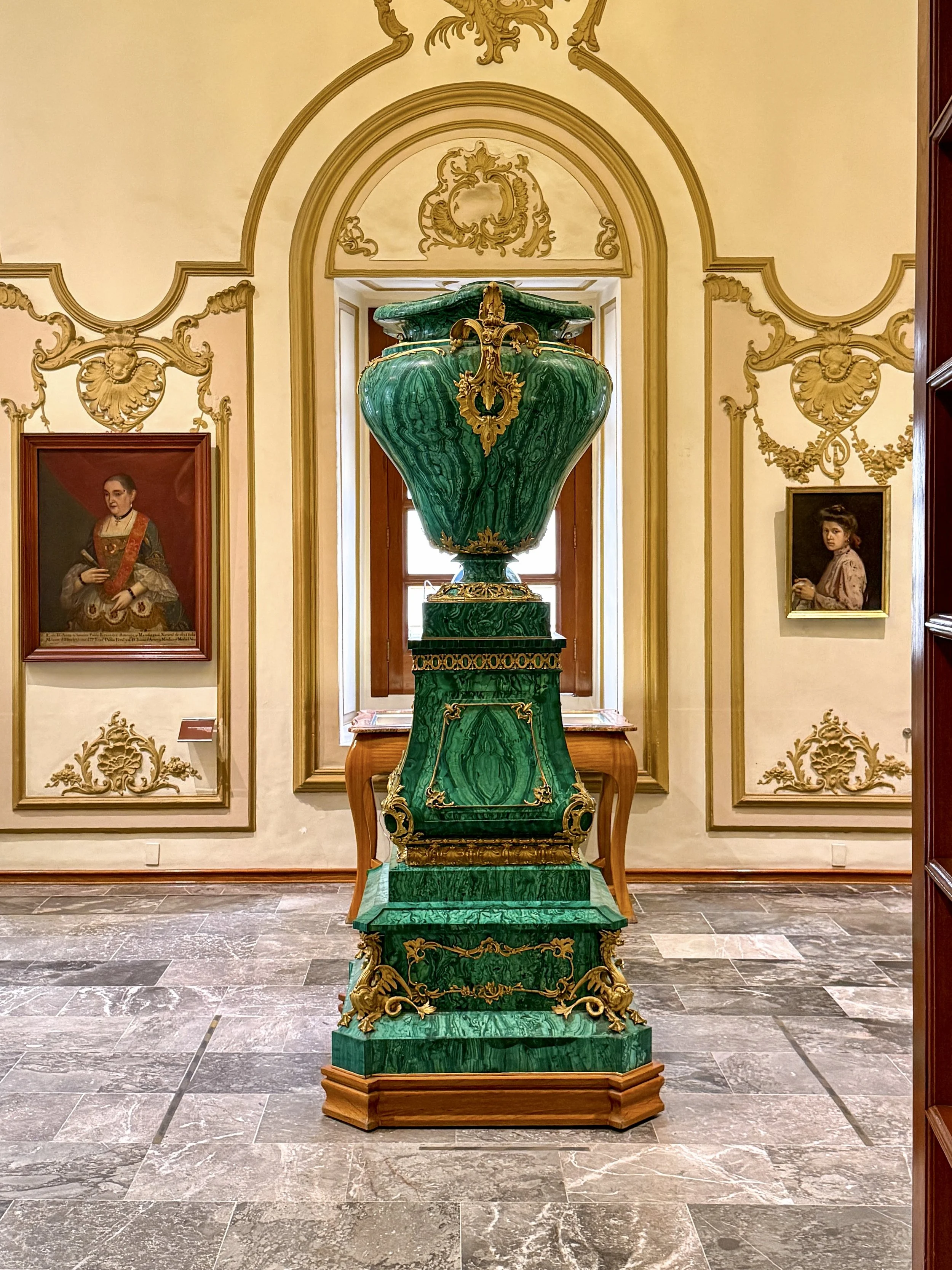
This richly decorated room takes its name from its impressive malaquita (malachite) and gilt metal doors, fountains and vases. They’re actually composed of carefully fitted slivers of malachite that combine to create the illusion of a seamless surface. 

Green malachite urn on a large pedestal by ornate wall decor and paintings in Salon de Malaquitas at Chapultepec Castle

The malachite objets d’art came from Russia, purchased by Díaz from a collection shown at the first World’s Fair in 1851.

These pieces were fabricated at the Imperial Peterhof Lapidary Factory and sent by Tsar Nicholas I to showcase the artistic achievements of Russia at the first World’s Fair in London in 1851. Later, they were purchased by Díaz for the Palacio Nacional before ultimately being installed here. The vibrant green color, with their undulating bands of contrasting hues, come from naturally occurring copper carbonate deposits.

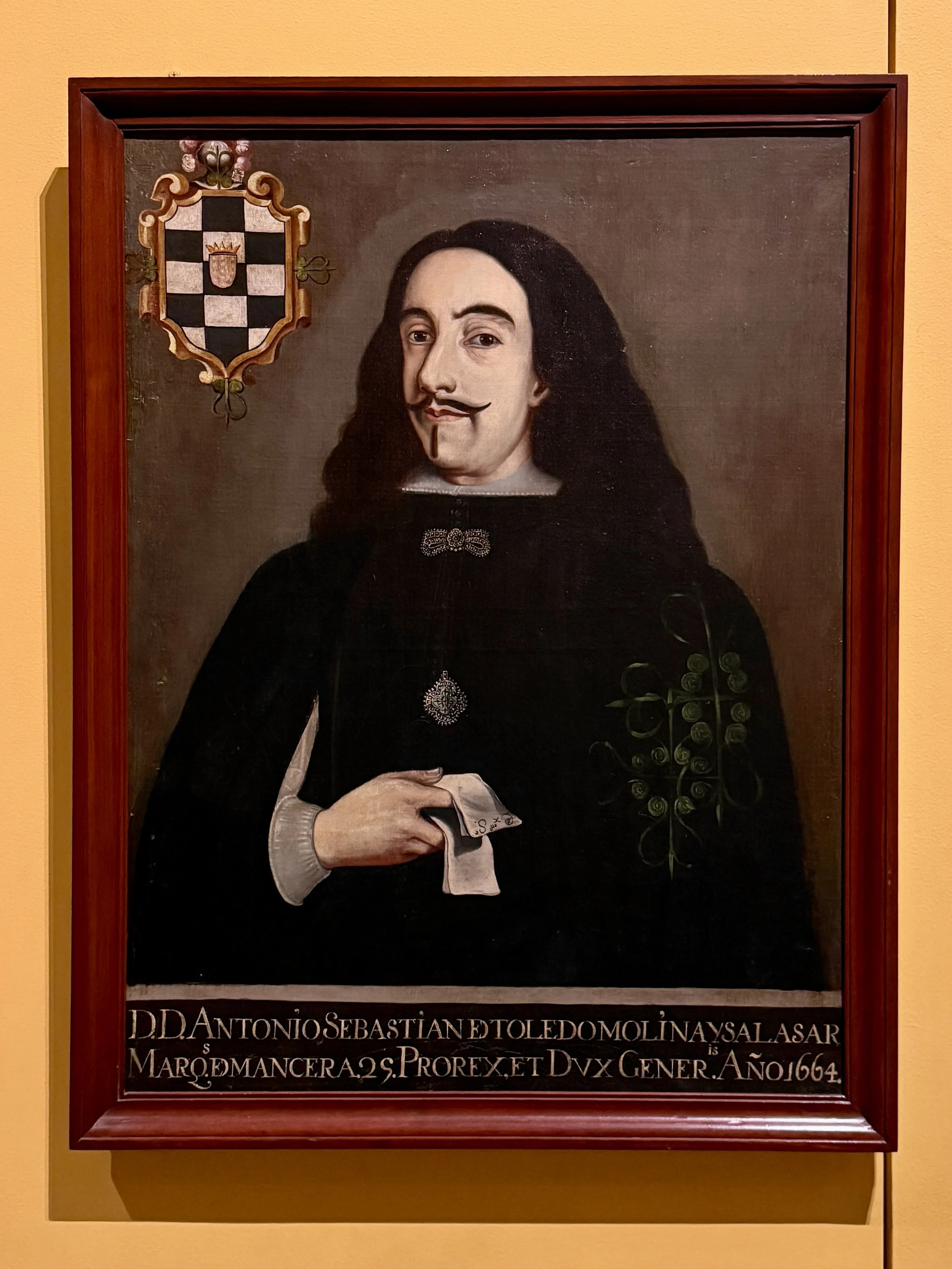
Portrait of Antonio Sebastián Álvarez de Toledo y Salazar in the Salón de Virreyes at Chapultepec Castle

The Salón de Virreyes at Chapultepec Castle displays portraits of all 62 viceroys of New Spain. Among them is Antonio Sebastián Álvarez de Toledo y Salazar, the 18th viceroy, who served from 1664 to 1673.

Salón de Virreyes, the Hall of the Viceroys

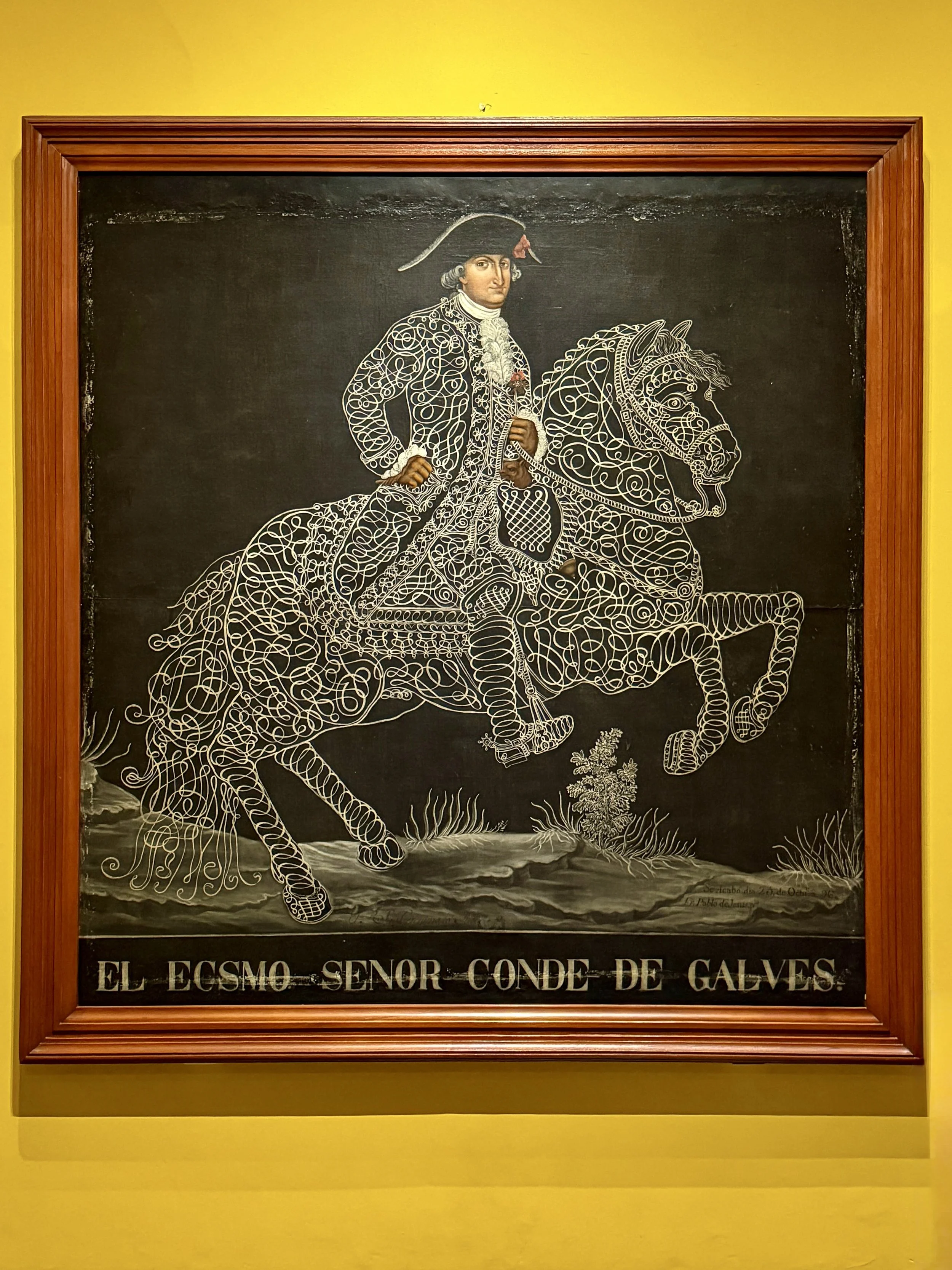
Rounding out the museum is the Salón de Virreyes (Hall of the Viceroys), a gallery showcasing every viceroy who ruled New Spain from 1535 to 1821. It’s fascinating to see how attire and hairstyles evolved over the centuries — but the portrait that stood out most to me was of Bernardo de Gálvez, who governed from 1785 until his early death in November the next year. Created in 1796 by two friars using the sgraffito technique — derived from the Italian graffiare, meaning “to scratch” — this piece feels strikingly modern. While Gálvez’s face, hands and hat are painted, his uniform and prancing horse emerge from an intricate web of white spirals, loops and squiggly lines revealed by the “scratching” or removal of the top layer of paint. 

The surprisingly modern equestrian portrait of Bernardo de Gálvez, the 49th Viceroy of New Spain, was painted in 1796 by two friars: Jerónimo and Pablo de Jesús. 

This room was a fitting close to the National Museum of History as the castle’s buildings sprang forth from viceroyalty and evolved into a spectacular showcase of Mexico City’s past.

With the museum’s murals, artifacts and revolutionary history behind us, we stepped out into the sunlight once more. But Chapultepec Castle wasn’t done with us yet — next, it was on to the imperial side, where Maximilian and Charlotte once reigned in opulence. –Duke

Exterior of the National History Museum with clock at Chapultepec Castle

Museo Nacional de Historia Castillo de Chapultepec

Primera Sección del Bosque de Chapultepec 
San Miguel Chapultepec, C.P. 11580
Delegación Miguel Hidalgo
Mexico City
Mexico


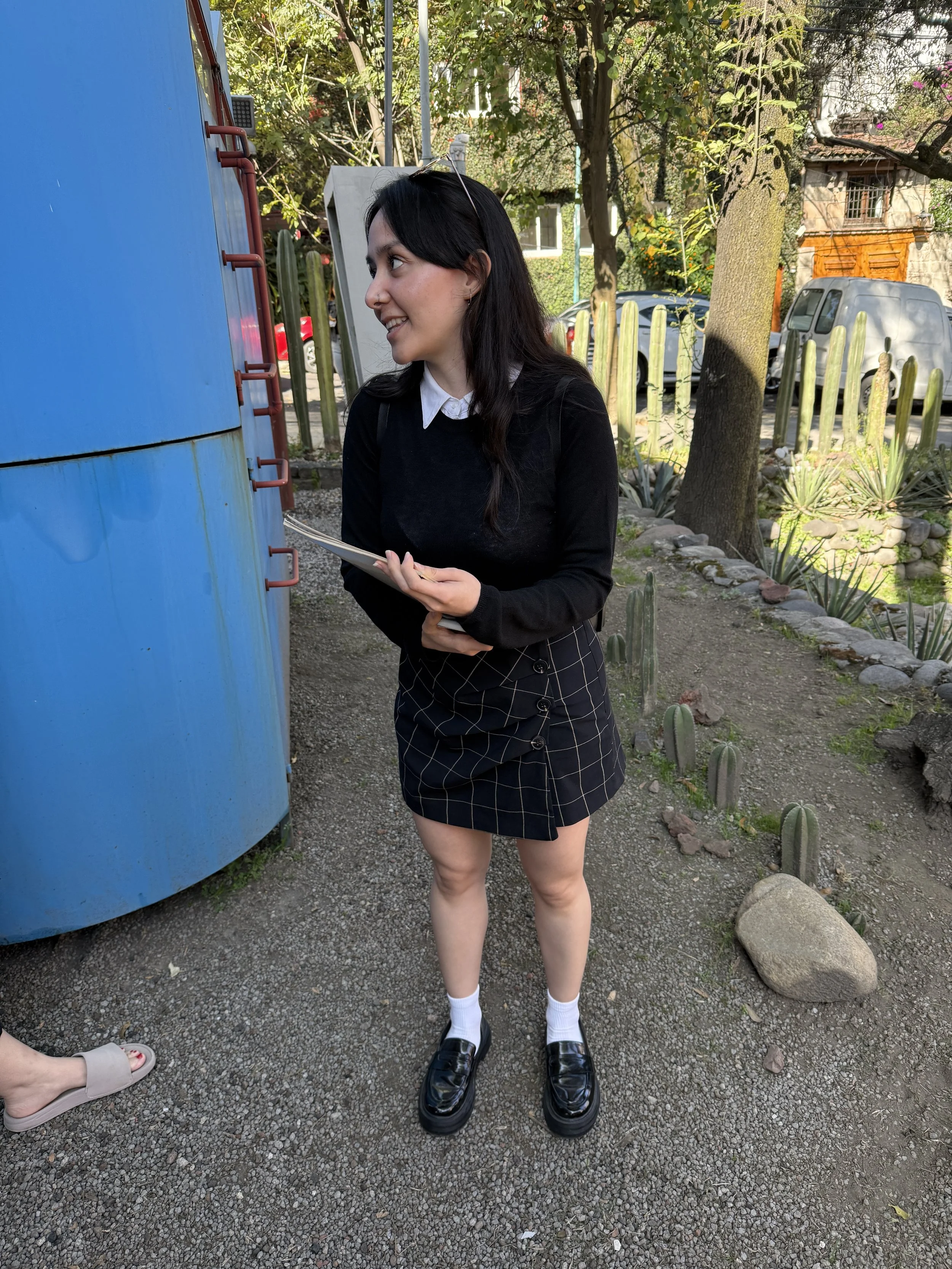
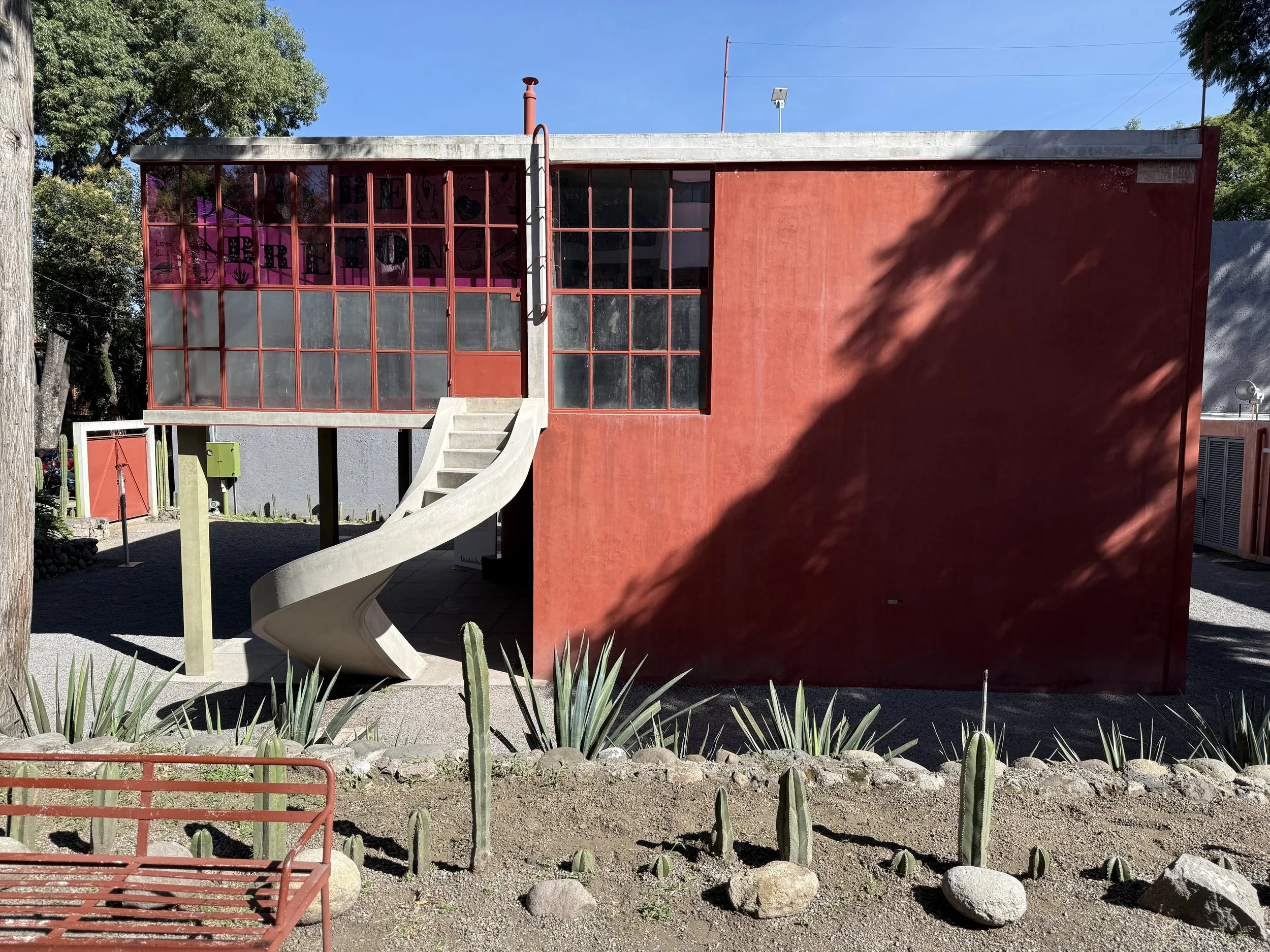
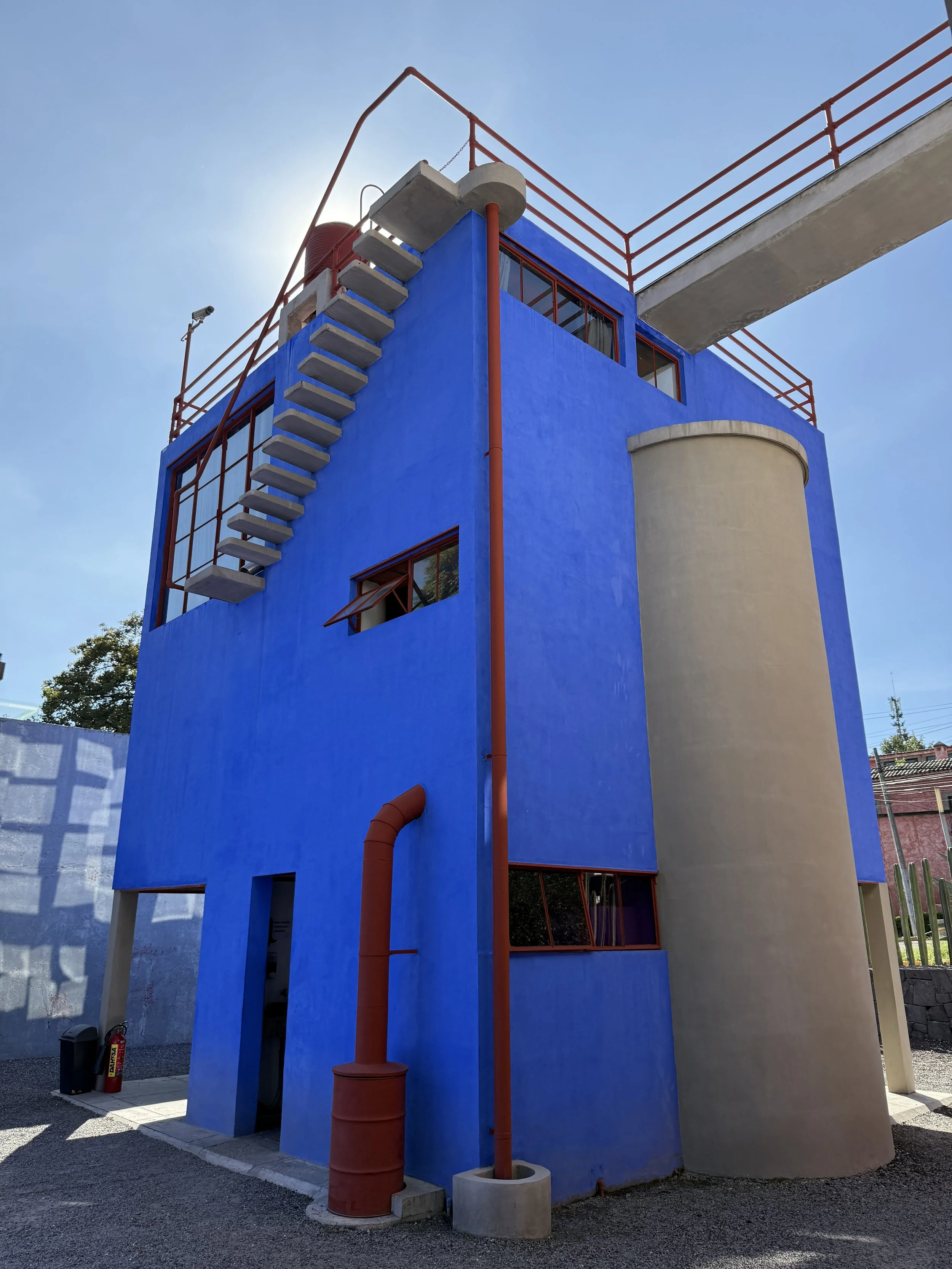
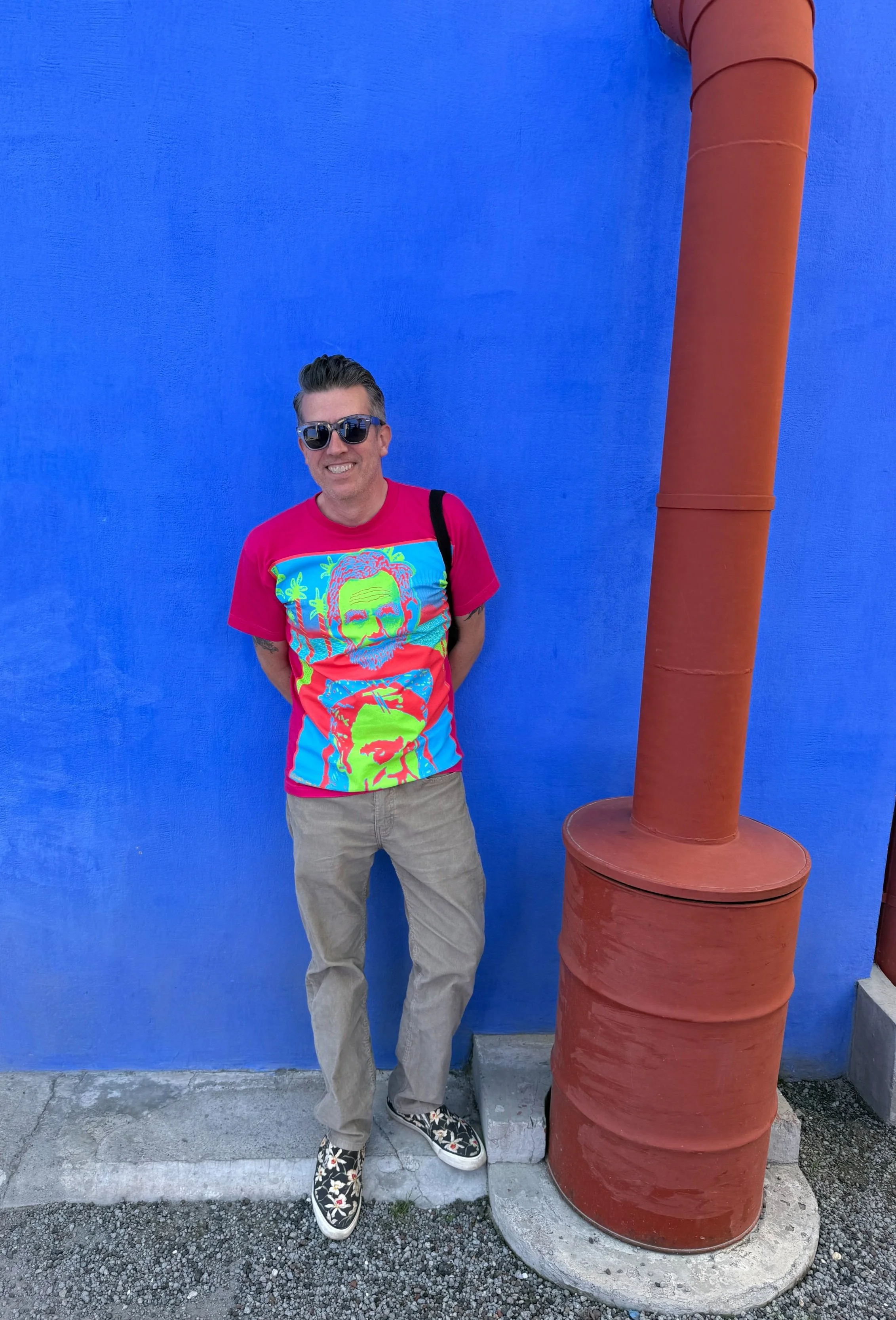
Diego Rivera and Frida Kahlo House-Studio Museum

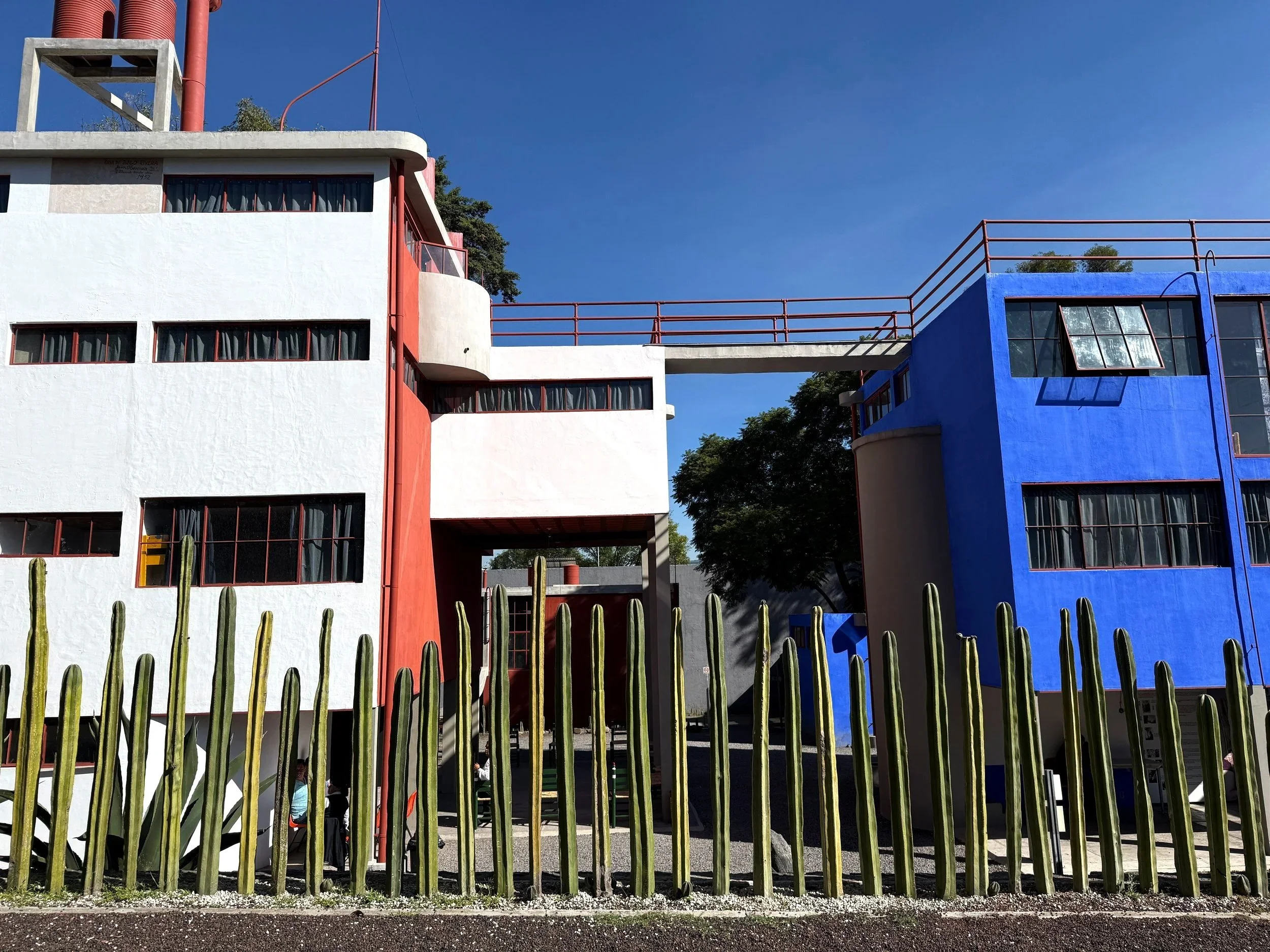
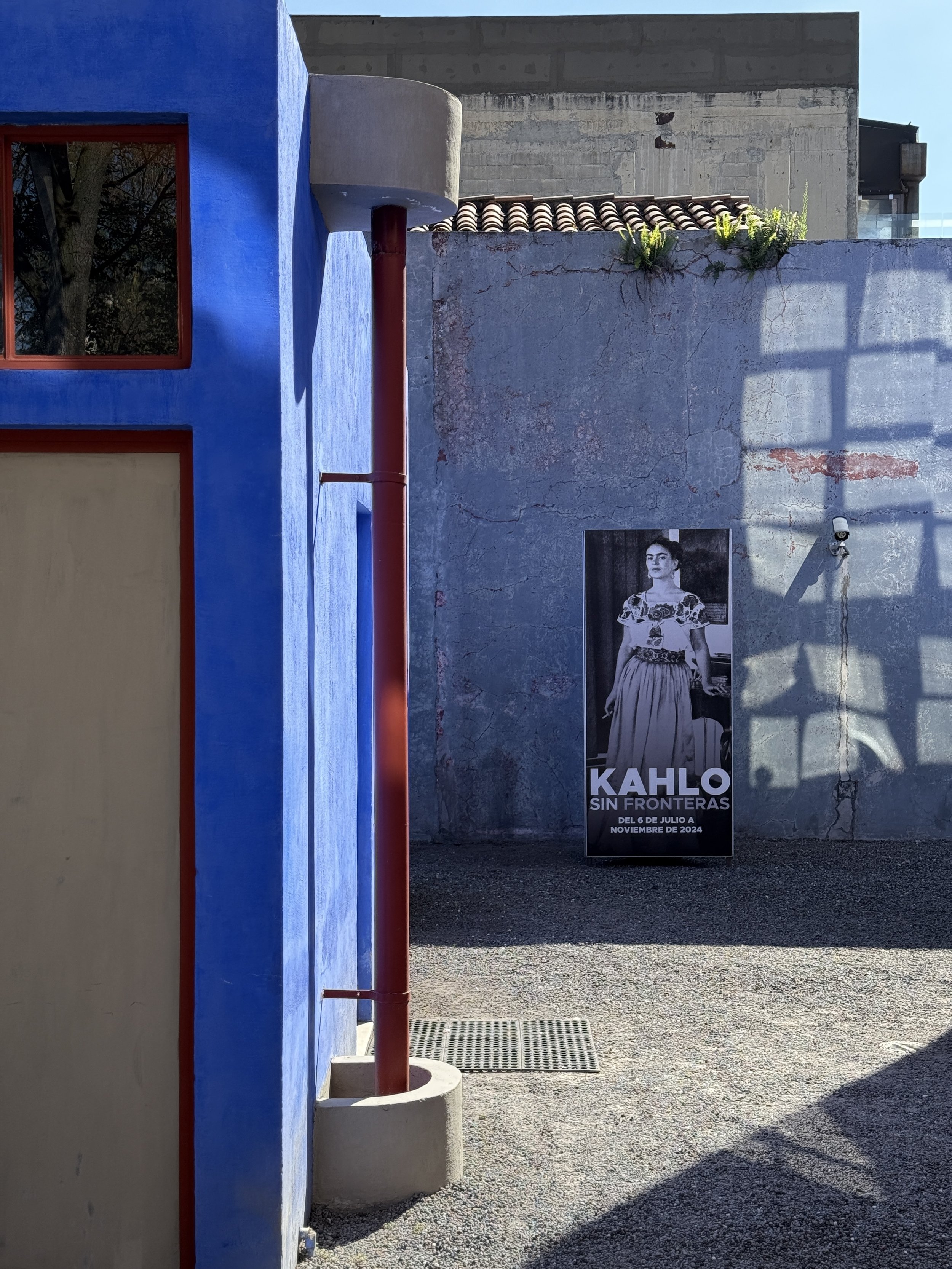
The studio and home of prolific artists Diego Rivera and Frida Kahlo at the Museo Casa Estudio Diego Rivera y Frida Kahlo wows as a striking example of 1930s Mexican modernist architecture. 

Fence post cacti lined up in front of Diego Rivera's modern white and red studio and home in the San Angel neighborhood of Mexico City

You definitely have to tour Casa Azul and Anahuacalli Museum — but this site is also worth visiting if you have time.

When Wally and I talk to friends about our travels in CDMX, the conversation often turns to the places we’ve seen, and the places on our list for our next trip. 

One of the places I’d been wanting to visit was the Museo Casa Estudio Diego Rivera & Frida Kahlo, the former home and studio of two of the city’s most revered artists — though I’d argue that Frida has eclipsed Diego in fame since their deaths in the 1950s. It felt like a fitting comeuppance for how he treated her. But more on that later. 

Whenever Frida wanted to visit Diego, she had to pull herself up an exterior floating staircase and cross a narrow footbridge.

Diego had specifically requested this to make it difficult for Frida to enter his studio (and see his adulterous dalliances). 

Their tumultuous relationship undoubtedly checked the “it’s complicated” box.

San Ángel: An Escape From the City

The historic house museum is located in San Ángel, an enchanting neighborhood southwest of Mexico City. Once a separate municipality, San Ángel served as a retreat for wealthy families who built grand country homes to escape the chaos of city life during the rise of the Industrial Revolution. Ancient lava flows shaped this rugged terrain, where its cobbled streets and colonial estates were eventually consumed by the ever-expanding sprawl of Mexico City.

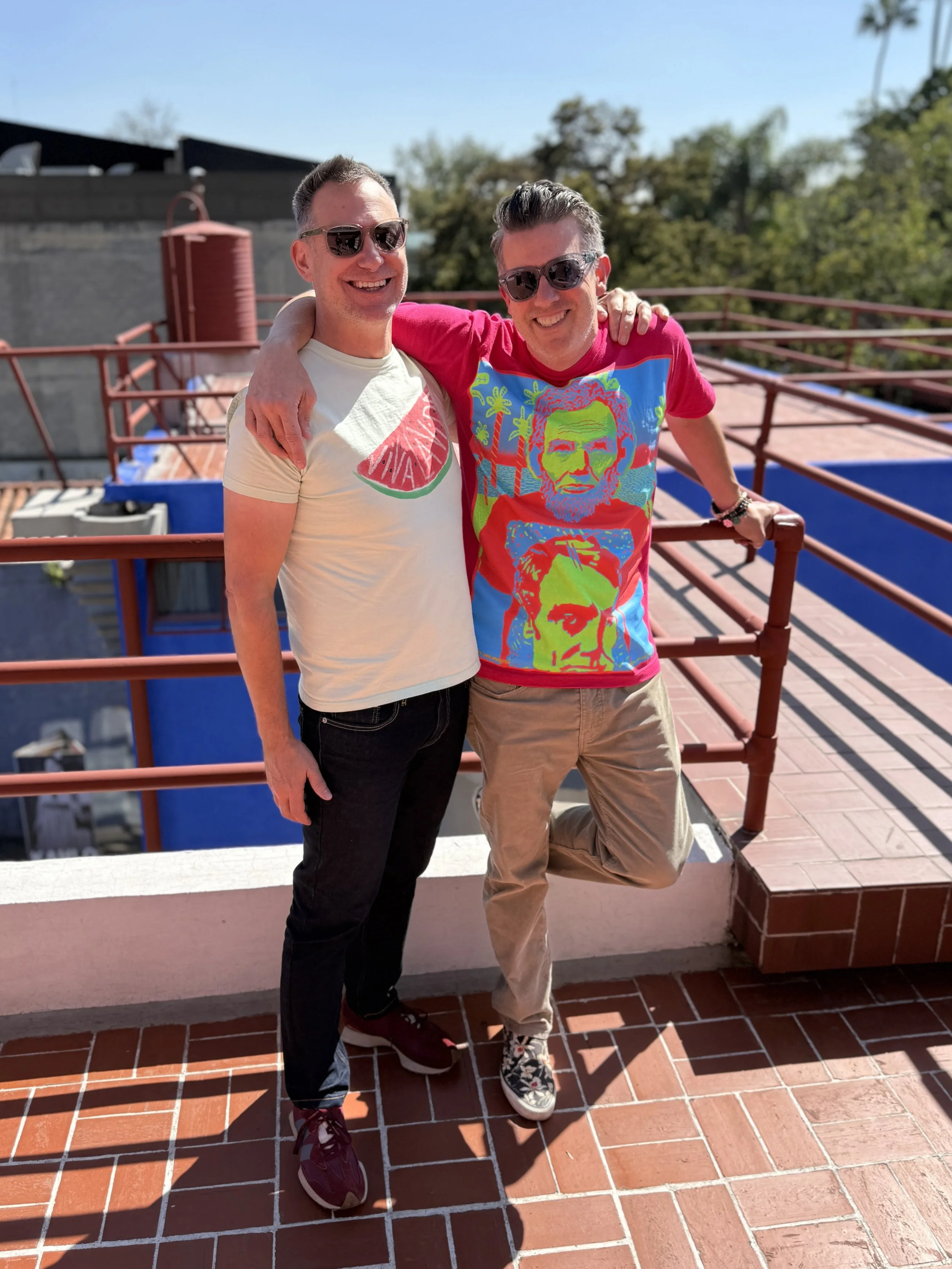
Duke and Wall stand on the rooftop terrace of Diego's house and the walkway that leads to Frida's

Duke and Wally stand on the terrace by the walkway that connected Diego’s home to Frida’s.

We planned our visit to coincide with the Bazar Sábado, a weekly market held on Saturdays, where artists and artisans set up shop and sell their wares. 

Our Uber driver dropped us off at the museum’s entrance on Calle Diego Rivera. As we waited for our guide, we couldn’t help but notice valets dressed in traje de charro, the traditional attire of mariachis, running past us in pairs. They were undoubtedly heading to the entrance of the nearby San Ángel Inn to park arriving cars. Known for its restaurant, the historic inn is a favorite dining spot for both locals and tourists, especially on weekends.

Museo Casa Estudio Diego Rivera y Frida Kahlo, with Diego's white home connected to Frida's blue one by high walkway

O'Gorman's Mexican fence post cactus barriers (and modern aesthetic) pissed off his traditional neighbors.

Wally and I walked to the front of the property, which faces Avenida Altavista. In our opinion, the best view of the two buildings is from across the avenue. On the left is the big house, a boxy white and red structure with a distinctive sawtooth roof and water tanks, which once served as the residence and studio of the plus-sized muralist Rivera. 

It’s linked at roof level by a narrow walkway and contrasted by the little house, the vivid blue home on the right, which belonged to his unibrowed surrealist painter wife, Kahlo.

The bathroom and a poster of Frida at Museo Casa Estudio Diego Rivera y Frida Kahlo in CDMX

The building that now serves as the restrooms originally functioned as a darkroom for Kahlo’s father, Guillermo.

Not the Blue House: The History of Diego and Frida’s San Ángel Studio Home

When the site opened at 10 a.m., we met our guide, Fernanda, in the museum’s courtyard. She resembled a proto-punk Japanese schoolgirl, with her nose ring and dressed in a long-sleeve white shirt under a black sweater, grid-pattern miniskirt fastened with oversized buttons and shiny black loafers. Joining us were a couple from Alabama celebrating their pandemic-postponed honeymoon and a towering white-haired man on a business trip from Germany who had added a day for sightseeing. 

Before the tour began, Fernanda asked how many of us had visited Casa Azul, Kahlo’s family home in the boho Coyoacán neighborhood. She explained that a lot of visitors show up here thinking they’re about to see the Blue House.

“It’s important to understand the difference,” Fernanda explained, “because that’s the house where she was born and where she returned after divorcing Rivera in December 1939.” 

She continued, “Here, there isn’t much furniture — it’s more of a photographic history. But what makes this site significant is the architecture of these three buildings.”

Fernanda, a tour guide at the Museo Casa Estudio Diego Rivera y Frida Kahlo in San Angel Inn, CDMX

Our charming tour guide, Fernanda, was an expert on O’Gorman, Rivera and Kahlo.

Kahlo only lived here for six years. The couple moved into the home in January 1934 after Rivera was essentially forced to return to Mexico following the controversy surrounding his mural at Rockefeller Center, Man at the Crossroads. The mural, which included a depiction of Vladimir Lenin, led the Rockefellers to order its destruction and terminate Rivera’s commission. Rivera later re-created the mural in Mexico City. This version, titled Man, Controller of the Universe, can be seen at the Palacio de Bellas Artes murals in Mexico City.

Kahlo and Rivera remarried in December 1940, a year after their divorce, at San Francisco City Hall in California; however, she never returned to San Ángel. Her declining health made it more practical for her to remain in the beloved house of her childhood, la Casa Azul, which now serves as a popular attraction. This house offers a comprehensive glimpse into her life, showcasing her furniture and personal belongings. Rivera, however, lived in the studio home until his death in 1957.

In 1981, the National Institute of Fine Arts (INBA) acquired the houses from Rivera’s daughter, Ruth Rivera Marín, and, after nearly 16 years of restoration, it opened to the public. And three decades later, INBA acquired the Cecil O’Gorman House and incorporated it into the museum campus.

A wall of windows, pilotis and a curving exterior staircase at the Cecil O'Gorman House

You can imagine Juan O’Gorman’s bold modernist design didn’t go over so well with the neighbors, who lived in colonial-style homes.

Cecil O’Gorman House 

Thanks to his interest in sports, Juan O’Gorman was the first to discover that the pair of tennis courts belonging to the San Ángel Inn were for sale.

In 1929, the aspiring 24-year-old architect purchased the plot at 81 Las Palmas, now Calle Diego Rivera, using money he had earned as chief draftsman at Carlos Obregón Santacilla’s atelier. 

He then began constructing a revolutionary dwelling inspired by Swiss architect Le Corbusier, whose work he had studied at the Universidad Nacional Autónoma de México (UNAM). The design adhered to the principle that buildings should be created solely based on their purpose and function. 

Nearly a century later, the structure remains one of the earliest examples of functionalist architecture in Latin America. Its stripped-back, utilitarian design was radical for its time, standing in sharp contrast to the surrounding 18th century colonial homes.

A closeup of the exterior concrete staircase at the O'Gorman House in San Angel Inn, CDMX

An exposed concrete spiral staircase swirls up the side of O’Gorman’s house.

By 1930, O’Gorman had completed the Cecil O’Gorman House, which, according to his autobiography, he designed as a home and studio for his father. 

But that’s not the whole story. 

His father, the Irish painter Cecil Crawford O’Gorman, was an avid collector of colonial art and antiques. He already owned a spacious hacienda nearby and had no interest in downsizing to the modernist glass box that his son had built. In reality, it’s likely that O’Gorman designed the house to showcase his architectural ideas and intended it to serve as a prototype for low-income housing, though the project never came to fruition.

Elevated on pilotis, slender columns that raise the reinforced concrete structure off the ground, this innovative construction method eliminated the need for traditional load-bearing walls, allowing O’Gorman to incorporate an entire wall of articulated glass windows. 

Access to the second floor is provided by an external spiral staircase, but unfortunately, it was closed during our visit due to the installation of an upcoming exhibition.

Side view of the brick red Cecil O'Gorman House in CDMX

We weren’t able to go upstairs in the O’Gorman House because they were setting up for a new exhibition.

Like Rivera, O’Gorman had socialist inclinations and sought to challenge the norms of his time. He wasn’t just building a home — he was making a declaration of functionalist design amid the traditional architecture that characterizes much of San Ángel.

The neighbors were said to be outraged, demanding that his architectural degree be revoked. 

The locals didn’t care for the home’s curb appeal, either. Enclosed by Pachycereus marginatus, a tall columnar cactus, also known as Mexican fence post cactus, and landscaped with agaves, it reflected the aesthetic of an indigenous Mexican village rather than the prevailing manicured European style.

Rivera, on the other hand, appreciated O’Gorman’s vision. He commissioned him to construct a similar pair of homes for himself and his wife, Kahlo, on the adjacent lot. 

A model of the Museo Casa Estudio Diego Rivera y Frida Kahlo complex inside the O'Gorman House

A model of the property inside the O’Gorman House.

Inside, what formerly served as the dining room and kitchen now holds a glass case with a scale model of the trio of buildings as well as a series of photographs by Cristina Kahlo-Alcalá, Kahlo’s grandniece. Among the photos are images of the hospital gowns Kahlo wore during her stays at the American British Cowdray Hospital in Mexico City, on which she often used to wipe excess paint from her brushes while she painted.

Prepatory sketch on the wall of the mural Entre Filosofia y Ciencia in the O'Gorman House in CDMX

These doodles became the mural Entre Filosofía y Ciencia by O’Gorman.

In 2012, the museum’s restoration team uncovered the sinopia, or preparatory sketch, for the fresco Entre Filosofía y Ciencia (Between Philosophy and Science) on a layer of lime plaster beneath where the completed mural by O’Gorman originally stood. The fresco was purchased by Banco Nacional de México in 1957 and, when it’s not traveling, can be found in the Museo Foro Valparaíso.

The floating exterior staircase and walkway at Frida's blue house at the Museo Casa Estudio Diego Rivera y Frida Kahlo, CDMX

Recall that Frida had leg and back issues, and imagine her having to walk up and down this floating staircase onto her roof and then across the walkway to get to Diego’s house.

Frida and Diego’s Complicated Relationship 

After we exited the Cecil O’Gorman House, Fernanda directed our attention to the floating staircase perched on the exterior of Kahlo’s house. Its tubular steel handrail leads from the second floor studio windows to the rooftop terrace. We couldn’t believe anyone would have used those stairs — especially Kahlo, whose chronic health issues significantly impaired her mobility. 

As a child, Kahlo contracted polio, which left her right leg weakened and deformed. Then, as a teenager, she was in a horrific accident when the bus she was riding collided with a trolley car. The impact left her with a fractured spine, and a handrail pierced her body, entering through her back and exiting through her pelvis.

RELATED: 9 Fascinating Facts About Frida

Yet, whenever she wanted to visit Rivera, she had to pull herself up those stairs and cross the narrow footbridge. Rivera had specifically requested this particular feature from O’Gorman to make it difficult for Kahlo to enter his studio (and see his adulterous dalliances). 

Their tumultuous relationship undoubtedly checked the “it’s complicated” box. It was a marriage strained by mutual jealousy and infidelity. Rivera didn’t fit society’s standards of handsome — Kahlo nicknamed him el Sapo-Rana (Toad-Frog) — but his fame, confidence and charisma made him irresistible to many women. 

Some visitors in the small courtyard in front of Diego's studio and house at the Museo Casa Estudio Diego Rivera y Frida Kahlo

Tour groups meet in the small courtyard in front of Diego’s house.

Rivera’s House and Studio

In my opinion, the most fascinating part of the museum is Rivera’s house. It still contains some of the original furniture and artwork from when he lived there. 

The bedroom has a set of small windows high on the wall, which limited the amount of direct sunlight and helped keep the room cool. Next to the bed, there’s a pair of shoes, an enamel bedpan and a leather suitcase sitting atop the woven coverlet, awaiting its next trip. An articulated gooseneck task lamp and a small bust of Chairman Mao sit on the olive green-painted nightstand, with a watercolor landscape by Rivera hanging above it.

Diego's bedroom at the Museo Casa Estudio Diego Rivera y Frida Kahlo, CDMX

Diego’s bedroom

Like his bedroom, the studio was mostly left as it was at the time of Rivera’s death. The main section, with its double-height space, was perfect for large works and transportable murals. The design facilitated easy handling of the panels, allowing them to be moved in and out of the studio through the folding windows.

Our favorite pieces among the personal items were Rivera’s collection of larger-than-life cartonería (papier-mâché) figures. Known in Mexico as Judases, these brightly colored effigies, with features like oversized or abnormally small heads and stubby limbs, commanded the room with their massive presence. Originally, these figures were depictions of Judas Iscariot, the apostle who betrayed Jesus Christ. Rivera’s collection includes devils, skeletons and other fantastical creatures, which were traditionally burned, exploded or flogged on the Saturday before Easter. 

Diego's papier-mache Judases at the Museo Casa Estudio Diego Rivera y Frida Kahlo

Some of Diego’s collection of papier-mâché Judases in his studio

Many of these larger-than-life-sized effigies were created by the Mexican folk artist Carmen Caballero Sevilla. One Holy Week, Rivera visited the Mercado Abelardo Rodríguez and was impressed with Sevilla’s Judas figures and invited her to work in his studio in San Ángel. (He admired the working class, which is why he often wore overalls.)

Metal skeletons on the wall in Diego's studio at the Museo Casa Estudio Diego Rivera y Frida Kahlo

Cool metal skeletons covered the walls.

Two of Diego's Judas figures in his studio at the Museo Casa Estudio Diego Rivera y Frida Kahlo

Diego collected handicrafts like these Judases.

Brushes and trays with reserves of dried paint remain exactly as Rivera had left them, offering a glimpse into his creative process. Among them were shelves with jars of pigments that reflect his color palette — including Paris Green, a highly toxic emerald green powder made from copper and arsenic. 

Glass jars of colorful powders used to make paint in Diego's studio at the Museo Casa Estudio Diego Rivera y Frida Kahlo

Diego’s paints line the shelves of his studio but have long since dried up.

There are bookcases filled with pre-Hispanic and indigenous folk art. On one of the easels was a painting of the Latin American actress Dolores del Río, who was rumored to have slept with both Rivera and Kahlo. 

A painting of Dolores del Rio by Diego stands by a work table in Rivera's studio at the Museo Casa Estudio Diego Rivera y Frida Kahlo

Diego painted Dolores del Rio, a beautiful Latin American actress who is said to have slept with his as well as Frida.

Fernanda pointed out a papier-mâché torito, a little bull, hanging high above us. She explained that this tradition dates back to the mid 19th century. These creations are mounted on a kind of scaffolding that rests on the wearer’s shoulders, stuffed with fireworks like roman candles and bottle rockets, which are set alight as part of the annual festival in the town of Tultepec honoring Saint John of God, the patron saint of (what else?) fireworks makers. 

Sound dangerous? It sure is — but that didn’t stop Fernanda’s brother from participating in one. And he has the burns to prove it. 

Our group followed Fernanda up the staircase to the second floor, where we could take in a full view of the studio. Fernanda explained that this was the very spot where Kahlo discovered Rivera with her younger sister Cristina — an incident that became the proverbial last straw, which led to their separation and brief divorce. It wasn’t Rivera’s or Kahlo’s numerous indiscretions that caused the rift; it was the fact that Rivera was having an affair with her closest confidant.

Just off the landing, we entered Rivera’s private office, a space with a desk and a typewriter and additional bookcases filled with pieces from his prolific collection of pre-Hispanic artifacts, an obsession that can be seen at the Anahuacalli Museum in Coyoacán

A small gray typewriter sits on a desk with shelves of pre-Columbian artifacts in Diego's office at the Museo Casa Estudio Diego Rivera y Frida Kahlo

Diego’s typewriter and some of the pre-Columbian artifacts he loved to collect.

From Rivera’s office, a door opened onto the rooftop terrace and the narrow bridge connecting his former residence to Kahlo’s. However, Fernanda quickly dismissed any thoughts of taking the infamous floating stairs. Instead, we followed her back through Rivera’s office and down the staircase to the courtyard below.

Side view of the blue home where Frida lived at the Museo Casa Estudio Diego Rivera y Frida Kahlo

Frida’s house leaves much to be desired — but at least O’Gorman painted it the vibrant blue of her beloved family home, Casa Azul.

Kahlo’s House

Our group paused outside Kahlo’s house as Fernanda pointed out an interesting feature: a carnelian red painted garbage chute extending from the second floor, connected to a steel drum barrel. Its purpose? To collect kitchen waste.

By this time, the site had grown much busier, with dozens of visitors streaming in and out of the buildings.

The rooms inside Kahlo’s house were noticeably smaller and compact than those in Rivera’s, in large part because there wasn’t an open studio space. Unlike her husband’s residence, Kahlo’s house was devoid of decorative objects or furniture, leaving the space feeling even more austere.

The tiny kitchen exemplified functional design, featuring a concrete countertop with a gas cooktop, a small sink, and the opening of the chute that connected to the steel barrel outside. 

Wally leans against the blue wall of Frida's house by the kitchen garbage chute at the Museo Casa Estudio Diego Rivera y Frida Kahlo

A man from Germany insisted Wally pose for a picture in his bright T-shirt to contrast with the blue of Frida’s house, next to the kitchen garbage chute.

We peeked into the modest bathroom, the very space where Kahlo’s 1938 oil painting, Lo que el agua me dio (What the Water Gave Me), was conceived. Fernanda told us that there weren’t any good spaces for Frida to paint in her home, so she chose the bathroom, which had better lighting. 

The bathroom in Frida's house at the Museo Casa Estudio Diego Rivera y Frida Kahlo in San Angel, CDMX

Frida’s home is small and dark, so she preferred to paint in the bathroom. One of her most famous works, Lo que el agua me dio, came from this period.

Wally paused in front of a framed letter that Kahlo had written to Hungarian-born photographer Nickolas Muray, with whom she shared a decade-long, on-again, off-again relationship, and read this poignant sentence aloud: “Please forgive me for having phoned you that evening. I won’t do it anymore.”

One of the glass cases in Kahlo’s house displays an open copy of the book Complete Anatomy of Man by Martín Martínez, and included a handwritten dedication from Kahlo to Dr. Juan Farill, the surgeon who performed seven spinal surgeries on her. 

The final room we explored was her small bedroom — a fitting conclusion to our visit. The room was concealed behind thick black drapery that we had to pull aside to enter. Inside, an installation by Cristina Kahlo-Alcalá features numerous lightboxes  illuminating Kahlo’s medical records from the American British Cowdray Hospital. The air in the room felt heavy and still, with the slow rhythmic sound of a heartbeat emanating from a hidden speaker. 

We knew beforehand about Diego and Kahlo’s turbulent relationship. But standing in the dark, claustrophobic space Diego had O'Gorman design as her home was a different kind of gut punch. It was hard not to feel the weight of it — the realization that someone as fiercely powerful as Kahlo could be confined like this by a man who claimed to love her. It really shook us, and we didn’t linger.

A tour group and their guide pose under the entrance to Frida's house at the Museo Casa Estudio Diego Rivera y Frida Kahlo

Our group poses under the entrance to Frida’s house.

Know before you go

We purchased tickets prior to our trip through a site called Tiqets. At $30 per person it’s definitely more than the $2 price of general admission, but we felt it was worth it. 

Our guide, Fernanda, was charming and incredibly knowledgeable, offering all the insights we could have hoped for about the site. She didn’t shy away from discussing the complexities of Rivera and Kahlo’s relationship either. And even though the tour was scheduled to last an hour, she stayed with us for an hour and 45 minutes, never once making us feel rushed.

The museum is open Tuesday through Sunday from 10 a.m. to 5:30 p.m.

Admission is 40 pesos for adults, while children under 13 and seniors can enter for free. On Sundays, admission is free for everyone. –Duke

A view of the brick red exterior and wall of windows at Diego's house at the Museo Casa Estudio Diego Rivera y Frida Kahlo

Floor-to-ceiling windows opened wide to allow transport of Rivera’s large-scale mural panels into and out of his studio. 

Museo Casa Estudio Diego Rivera y Frida Kahlo

Diego Rivera s/n
San Ángel Inn
Álvaro Obregón
01060 CDMX
Mexico


Frida Kahlo and Diego Rivera’s Fascinating Connections to Fallingwater

A seduction at the iconic Frank Lloyd Wright home. The influence of Frida’s home, the Casa Azul. Juan O’Gorman’s insulting mural project. And the Kaufmanns’ role in the Mexican artists’ success. We explore the artistic ties that bind these fascinating personalities.  

Frida standing with The Two Fridas

Imagine visiting Fallingwater, Frank Lloyd Wright’s iconic masterpiece. You’re surrounded by stunning natural beauty, and the architecture is simply breathtaking. 

But what if I told you that two of the most famous Latin American artists, Diego Rivera and Frida Kahlo, were also friends with the Kaufmann family, who commissioned and lived in the home? It’s a story that’s as fascinating as the house itself.

When [Levy] returned to his bedroom, there was Frida — waiting for him!
— Hayden Herrera in "Frida: A Biography of Frida Kahlo"
Edgar sr., Edgar jr. and Liliane Kaufmann standing on the balcony at Fallingwater outside of Pittsburgh, PA

E.J., Edgar jr. and Liliane Kaufmann at Fallingwater, their now-legendary weekend home designed by Frank Lloyd Wright

The Kaufmanns: A Family of Taste and Distinction

Edgar Jonas Kaufmann, or E.J. to his friends, was the head of a well-known Pittsburgh department store family. He was a highly respected businessman, aesthete and philanthropist who, along with his wife, Liliane, turned the family retail empire into a center of culture and fashion. 

Fun fact: The surname Kaufmann fittingly means “merchant” in German. 

As lifelong patrons of the arts, E.J. and Liliane enjoyed spending time with architects, artists and other creatives. Their only child, Edgar Kaufmann jr. (the lowercase “jr.” was his preferred abbreviation), inherited his parents’ love of art. He was particularly interested in modernist design, and he believed that functional objects could also be works of art.

Diego Rivera stands by a study of the mural Man at the Crossroads, which was commissioned by Rockefeller

Diego Rivera standing with a study of his mural-that-was-never-to-be, Man at the Crossroads. Rockefeller, who commissioned it, found it to be a bit too Communist for his tastes.

The family’s weekend home, Fallingwater, was filled with a formidable collection of artworks and objects. If the Kaufmanns weren’t already familiar with the socialist works of Mexican artist Diego Rivera, they most certainly became aware of him when his unfinished mural, Man at the Crossroads, caused a major controversy in 1933. The mural, which featured a portrait of Vladimir Lenin, was commissioned by the Rockefeller family, but they were so outraged by the inclusion of the Marxist leader that they had the mural destroyed. (Rivera’s re-creation, Man, Controller of the Universe, is on display at the Palacio de Bellas Artes in Mexico City.)

Frida Kahlo sits in a chair while her husband, Diego Rivera, stands next to her, with a hand on her shoulder

Frida Kahlo and Diego Rivera had a lot to thank the Kaufmann family for in helping them gain fame.

When the Kaufmanns Met Frida and Diego

It’s possible that the Kaufmanns were introduced to Rivera by John McAndrew, the newly minted curator of the Department of Architecture and Industrial Art at New York’s Museum of Modern Art, aka MoMA. McAndrew visited Fallingwater in 1937 to document the house for the upcoming exhibit, A New House by Frank Lloyd Wright on Bear Run.

A waterfall runs below Fallingwater, the iconic Frank Lloyd Wright house in Western Pennsylvania

Fallingwater has a surprising connection to Frida Kahlo and Diego Rivera.

It’s not hard to imagine that McAndrew would have talked about Rivera to the Kaufmanns during his visit to Fallingwater. McAndrew had previously traveled and studied architecture in Mexico, where he was inspired by the country’s rich cultural heritage. 

E.J. and Liliane were drawn to the rustic charm of Casa Azul, Kahlo’s childhood home in the Coyoacán neighborhood of Mexico City. The Kaufmanns saw it as an antidote to city life and wanted to create a similar sense of peace and tranquility at their weekend home, Fallingwater.

Frida Khalo, wearing shawl and white dress, standing in the garden of her home and studio, the Casa Azul

Frida Kahlo at her home, Casa Azul, which provided inspo for Liliane Kaufmann.

They appreciated the objects that Kahlo had filled her home with, including sculptures by the self-taught Mexican artist Mardonio Magaña. Four of these sculptures are on display at Fallingwater, and a reproduction of one is available for purchase at the Fallingwater museum store. (Completing the loop, a photograph of Fallingwater hangs in the permanent collection at Casa Azul.)

Small sculpture of four people in a circle by Mardonio Magaña at Fallingwater

One of the works by Mexican artist Mardonio Magaña found at Fallingwater

In the 1930s, E.J. and Liliane became patrons of Rivera, and later of Kahlo, his wife. For nearly two years, E.J. provided Rivera with a monthly stipend of $250, totaling $5,000. That’s equivalent to about $86,000 in today’s dollars. Although Rivera never ended up being commissioned to paint anything by the Kaufmanns, he and the couple were friends, and two of his works are on display at Fallingwater.

Profile of a Man Wearing a Hat by Diego Rivera hanging above the red bed in the guest bedroom at Fallingwater

Look for Diego Rivera’s Profile of a Man Wearing a Hat hanging in the guest bedroom at Fallingwater.

Torrid Siesta (El Sueño) by Diego RIvera, of a young girl laying on the ground, hanging at Fallingwater

Torrid Siesta (El Sueño) by Diego Rivera, in the passageway that leads out to the guesthouse at Fallingwater

Profile of a Man Wearing a Hat originally hung in E.J.’s private Wright-designed office at Kaufmann’s sprawling Pittsburgh department store. And Torrid Siesta (El Sueño) was first placed in E.J.’s study on the third floor of the house but was later relocated to its current location on the enclosed bridge that leads out to the guesthouse.

Liliane Kaufmann found Frida Kahlo to be “most interesting.”

A Love of Latin America 

The Kaufmanns’ interest in Latin American culture grew, and in May 1938, Edgar jr. and Liliane took their first trip to Mexico City. The newly reestablished government of Mexico was eager to forge a national identity that promoted its pre-Hispanic heritage to American tourists. 

While there, Junior and Liliane visited Diego and Kahlo at their home and studio in the neighborhood of San Ángel, a modernist structure designed and built by their mutual friend, Juan O’Gorman. It was a place of creativity and conflict. While the couple were both artists, they had very different approaches to their work. Rivera was a well-known and successful muralist, while Kahlo was a more private painter who focused on self-portraits. 

Liliane wrote:

Yesterday we visited Diego Rivera at his home in San Ángel. It is a very interesting house inside and he is a very simple charming man. He showed us a lot of things and took us over to meet his wife who was most interesting. She paints also, very delightfully, and we had a swell time.

At the home and studio, Kahlo played the role of dutiful wife. She also served as Rivera’s secretary, entertaining and courting patrons for him. While Rivera enjoyed socializing with high society, Kahlo resented it. 

Frida Kahlo, wearing lots of rings and a floral headpiece, has her hand on her face and looks down in a sad manner

Don’t be sad, Frida! You’re about to catch a big break!

Frida Kahlo’s Big Break 

It was during this period that Kahlo retreated to Casa Azul, where she developed her commanding signature style. She had a difficult life. She contracted polio when she was 6, which left one leg thinner than the other. And when she was 18, she was in a bus accident that left her severely injured. She hid this by wearing long ruffled skirts, boxy shirts to conceal her surgical corsets and adorned herself with jewelry. Inspired by traditional Mexican indigenous clothing, her style came to represent a patriotic identity and a defiance of traditional gender roles.

Kahlo’s first big break occurred a short time after Liliane and Junior’s visit. In the summer of 1938, Hollywood actor and art collector Edward G. Robinson, famous for playing gangster types in film noirs, purchased four of Kahlo’s paintings for $200 each while vacationing in Mexico City. 

Film still of Edgar G. Robinson clutching his arm by shop window riddled with bullet holes

Edgar G. Robinson might have played tough types in the movies, but he was blacklisted in Hollywood as a Communist and helped launch Kahlo’s art career.

At the time, Kahlo was virtually unknown in the United States and she was always a bit shocked when anyone liked her work. She had often given it away for free, and she later wrote of the Robinson sale:

For me it was such a surprise that I marveled and said, this way I am going to be able to be free; I’ll be able to travel and do what I want without asking Diego for money.

When the French writer and founder of the Surrealist movement, André Breton, included Kahlo among its canon, she refused the label. She said, “I never painted dreams; I painted my own reality.” 

But she did understand the power of marketing. Breton introduced her to Julien Levy, a New York gallery owner who specialized in being the first to present avant-garde artists to American viewers. When Kahlo met him, she knew that he could help her reach a wider audience.

We wish we could see your reaction to Frida Kahlo’s My Birth.

In November 1938, Kahlo’s first solo show at Julien Levy Gallery in New York marked a shift in her artistic career. E.J. and Liliane were in attendance and purchased two of her paintings: My Birth (1932) and Remembrance of an Open Wound (1938). The latter was lost in a fire at the country home of Edgar jr. and his companion, Paul Mayén, sometime in the 1980s. The exhibition was a great success, and Time noted that it was “the flutter of the week in Manhattan.”

The Kaufmanns invited Kahlo and Levy to visit Fallingwater. Biographer Hayden Herrera recounts that Kahlo’s visit was one for the books:

Julien Levy, gallery owner in NYC

The gallery owner Julien Levy, who seems to have gotten lucky with Frida Kahlo at Fallingwater

Once Levy took Frida to Pennsylvania to visit his client and friend Edgar Kaufmann Sr., who, Levy said, wanted to be Frida’s patron. The train ride was everything train rides are supposed to be — a slow but inexorable buildup of erotic anticipation. When they arrived, however, Frida flirted not just with Levy, but with their elderly host and son as well. She was very cavalier with her men, Levy recalled. She liked to play one off against the other, and she would pretend to one suitor that she thought the other was a nuisance or a bore. At bedtime, Levy and the senior Kaufmann tried to wait each other out so as to spend the last moments of the evening in romantic solitude with Frida. When she retired, Fallingwater’s complicated double stairway [the exterior steps up to the guest room] served as the stage for the evening’s drama. After biding his time until he thought everyone was peacefully asleep, Levy emerged from his room and started up one side of the staircase. Much to his astonishment, he found his host climbing the stairs on the other side. Both retreated. The same confrontation took place several times. In the end, Levy gave up. But when he returned to his bedroom, there was Frida — waiting for him!

Liliane and Junior’s continued travels to Mexico laid the groundwork for the fittingly titled Below the Rio Grande, a shoppable exhibit at Kaufmann’s flagship store, which introduced consumers to Mexican antiques and folk art. Some of these items were later incorporated into Fallingwater’s décor. 

Nearly a dozen small pre-Columbian objects can be found in the guesthouse. These were likely gifted to the Kaufmanns by Rivera, who was a passionate collector of pre-Columbian art. During his lifetime Rivera amassed over 50,000 pieces, many of which are housed at the must-visit Anahuacalli Museum in CDMX. 

Landscape: Jalapa, Mexico by José María Velasco hangs in the bedroom of the guesthouse at Fallingwater

Landscape: Jalapa, Mexico by José María Velasco hangs in the bedroom of the guesthouse at Fallingwater.

One of the guesthouse bedrooms features a large oil painting by José María Velasco, a mentor to Diego. The work, entitled Landscape: Jalapa, Mexico, hangs over the bed. Velasco’s artistic endeavors are so esteemed that the Mexican government considers them national monuments. This painting was acquired by the Kaufmann family around 1937 for $500. In 1954, it was hanging in E.J.’s suite at the William Penn Hotel in Pittsburgh, and was moved to its current location by Edgar jr. in 1960.

The Mexican artist Juan O'Gorman, wearing glasses and holding a cigar, leans on a railing

Juan O’Gorman, whose mural commissioned by Edgar Kaufmann Sr. featuring prominent Pittsburgh tycoons below a toilet, was deemed too controversial for the Young Men’s and Women’s Hebrew Association

Kaufmann’s Rockefeller Dreams and Botched Mural

Pittsburgh society was dominated by wealthy families like the Carnegies and Mellons. This made it difficult for the Kaufmanns, who were Jewish, to achieve positions of power and influence. Despite lobbying for many public works projects throughout his life, E.J. saw few of them come to fruition. 

In 1940 he invited the socialist architect, painter and muralist O’Gorman to Pittsburgh to submit a proposal for murals for the interior walls of the Young Men’s and Women's Hebrew Association, of which he was president. 

As a guest of the Kaufmann family, O’Gorman spent a weekend at Fallingwater, which he later described as “one of the most beautiful buildings in the world.” 

When it came to the mural, though, O’Gorman clearly missed the brief: His preparatory sketches for the project portrayed Pittsburgh tycoons Andrew Carnegie, Henry Clay Frick and George Westinghouse as the kings of a polluted plutocracy that arose from consumer capitalism. As if that wasn’t enough, O’Gorman further emphasized his sentiments by prominently featuring an open toilet and a roll of toilet paper above the tableau. 

O’Gorman’s proposed mural was clearly at odds with the organization’s mission to celebrate the moral development of youth. As a result, the project was rejected and O’Gorman returned to Mexico City. As compensation for the failed project, E.J. sent the artist a check to subsidize a mural at the Biblioteca Gertrudis Bocanegra in the town of Pátzcuaro, Mexico. 

Juan O'Gorman's mural at a library in Patzcuraro, Mexico

Even though he kiboshed Juan O’Gorman’s Pittsburgh mural, Edgar Kaufmann footed the bill for this astounding mural in Mexico.

Divided into four sections, the mural vividly depicts the history of the Purépecha people. The first shows the indigenous people before the Spanish conquest; the second, the arrival of the Spanish and the beginning of the conquest; the third shows life after the conquest, when the Purépecha were forced to adopt Spanish customs and religion; and the fourth shows Gertrudis Bocanegra, the martyred heroine of the 1820 War of Independence, her white dress smeared with blood from her execution by firing squad. 

Frida Kahlo's What the Water Gave Me, a painting with her feet in a bathtub filled with imagery, including a volcano and nude women

Frida Kahlo’s What the Water Gave Me

Edgar Jr.’s Artful Encounters, From MoMA to Madonna

Edgar jr. traveled with McAndrew to Mexico in 1939, looking for works of art to include in the MoMA exhibit Twenty Centuries of Mexican Art. The pair recognized Kahlo’s talent, and the show, which opened on May 15, 1940, featured no fewer than three of her paintings: The Two Fridas (1939), What the Water Gave Me (1938) and The Wounded Table (1940). 

The Wounded Table by Frida Kahlo, a painting with Frida seated at a table with her hair lifted and a giant skeleton, children, a deer, blood spatterings and a giant with a tiny head

The Wounded Table by Frida Kahlo

In 1943 Junior purchased and donated Self Portrait With Cropped Hair to the MoMA. The painting is part of the museum’s permanent collection and was conceived shortly after Kahlo’s divorce from Rivera. It’s thought to be a reflection of her feelings of anger, sadness and independence after the separation. Kahlo’s oversized charcoal gray suit (surely Rivera’s) and short haircut are symbols of her rejection of traditional femininity, while the scissors she holds suggest her decision to take control of her own life.

Frida Kahlo's Self Portrait With Cropped Hair, in which the artist wears a gray suit like her ex-husband Diego Rivera's, and has short hair

Self Portrait With Cropped Hair by Frida Kahlo shows the artist after her divorce from Diego Rivera, wearing one of his suits and having chopped off her locks to resemble his hairstyle.

After his parents died, Junior brought Kahlo’s My Birth to his apartment in New York City. The painting is a deeply personal and imaginative work of art, depicting Kahlo’s birth from a dead mother.

According to Fallingwater director Justin Gunther, Edgar jr. had a dry, ironic sense of humor. Case in point: He kept the painting hidden in a closet in his New York apartment, and would only reveal it to his guests at the most unexpected moments. He loved to see the look of surprise on their faces when they saw it for the first time.

Madonna in front of her painting My Birth by Frida Kahlo

Madonna purchased My Birth from Edgar jr. She says you can’t be friends with her if you don’t like it.

In 1987 Edgar jr. sold the painting through his dealer to the pop star Madonna. Although worldly, he didn’t know who she was when he met her, and had planned on selling My Birth to her for just a little more than what his parents had originally paid for it. But his dealer told him, "We can do better than that,” and quoted a much higher figure.

Madonna was later quoted in Vanity Fair saying, “If somebody doesn’t like this painting, then I know they can’t be my friend.” –Duke

The Marvelous (and Controversial) Murals at the Palacio de Bellas Artes in Mexico City

Make the rounds at the Palace of Fine Arts in CDMX’s Centro to see works from some of Mexico’s most famous muralists, including Diego Rivera, José Clemente Orozco and David Alfaro Siqueiros.

This provocative mural was being renovated when we visited the Palacio de Bellas Artes and could only be viewed from across the way.

On our first trip to Mexico City, we only admired the Palacio de Bellas Artes from afar — namely, from the Sears across the street, which affords the best view of that gorgeous Art Nouveau dome, glowing in an ombre that starts with bright saffron and fades to pale yellow. 

Instead, we followed a scavenger hunt of sorts, rambling around Centro in a search for its most Instagrammable spots

The Palacio de Bellas Artes is more than just a pretty façade — there’s a gallery of famous murals inside.

This time, we planned to actually enter the Palacio de Bellas Artes, though we had no idea what lay within. Duke and I were pleasantly surprised to discover that the top floor was devoted to a gallery of murals from some of Mexico’s most famous artists. 

Interior of Palacio de Bellas Artes

The inside of the Palace of Fine Arts in Mexico City isn’t too shabby, either. Be sure to get tickets for the mural museum when you visit.

We purchased our tickets on the ground floor, then climbed the grand staircases up two flights. The murals form a ring around the space, with the center open, letting you look down at the palace’s lobby or admire the murals from afar. When we visited, one of the murals was being restored and we could only see it from across the way.

Sit and admire Diego Rivera’s kooky mural — which Rockefeller rejected.

El Hombre en el Cruce de Caminos o El Hombre Controlador del Universo

Translation: Man at the Crossroads, or Man, Controller of the Universe

Date: Date: 1934

Artist: Diego Rivera

It’s a battle between capitalism, as represented by figures including Charles Darwin (the fellow with a white beard surrounded by animals)…

Detail from Diego's El Hombre en el Cruce de Caminos o El Hombre Controlador del Universo

…and Communism, depicted on the righthand side, with Leon Trotsky, Karl Marx and Friedrich Engels all making appearances.

Fascinating fact: The original Man at the Crossroads was commissioned for the Rockefeller Center in New York City. But when Nelson Rockefeller got wind that it included a depiction of Vladimir Lenin and a Soviet May Day parade, he ordered it destroyed — before it was even completed.


González Camarena’s mural moves from slavery to spiritual liberation.

Liberación o La Humanidad Se Libera de la Miseria

Translation: Liberation, or Humanity Frees Itself From Misery

Date: 1963

Artist: Jorge González Camarena

Fascinating facts: This is a re-creation of a no-longer-existing mural that had been painted on the Edificio Guardiola, where the Bank of Mexico placed its vaults. The first part shows a man tied up in a coffin and a nude tattooed woman to protest agrarian policies after the Mexican Revolution and slavery. The last section to the far right depicts a mestizo woman (someone of indigenous and European blood) — a radiant symbol of spiritual liberation.


Knight in Apoteosis de Cuauhtémoc mural

Siqueiros’ mural presents revisionist history, where an Aztec ruler isn’t conquered by the conquistadors.

Apoteosis de Cuauhtémoc o Cuauhtémoc Redivivo and Tormento de Cuauhtémoc
(Díptico Monumento a Cuauhtémoc)

Translation: Apotheosis of Cuauhtémoc, or Cuauhtémoc Resurrected and Torment of Cuauhtémoc (Monumental Diptych to Cuauhtémoc)

Date: 1951

Artist: David Alfaro Siqueiros

The Aztec ruler Cuauhtémoc had his feet burned until he caved and told the Spanish where to find a treasure trove.

Fascinating facts: One panel shows a revisionist history, what the artist wishes had happened — that the Aztec emperor Cuauhtémoc had defeated the Spanish conquistadors. The other shows what really happened: The ruler was tortured by the Spanish, who burned his feet until he revealed the location of Montezuma’s treasure.


Alegoría del Viento mural at Bellas Artes

Note the personifications of the wind blowing in this Art Deco mural fragment.

Alegoría del Viento o El Ángel de la Paz o La Aviación

Translation: Allegory of the Wind, or The Angel of Peace, or Aviation 

Date: 1928

Artist: Roberto Montenegro

Fascinating facts: This is the only portion of the original Art Deco work at the former Colegio Máximo de San Pedro y San Pablo that survived the humidity. It’s the oldest mural in the collection.  


Man vs. machinery battle it out in Orozco’s bizarre and disturbing mural.

Katharsis o La Eterna Lucha de la Humanidad por un Mundo Mejor

Translation: Catharsis, or Humanity’s Eternal Struggle for a Better World

Date: 1935

Artist: José Clemente Orozco

Detail of La Chata in Katharsis by Orozco

A detail of La Chata, the infamous pug-nosed prostitute in Orozco’s mural

Fascinating facts: Orozco, like his contemporary Diego, was no stranger to controversy, as evidenced by this horrific vision of dystopia. The naked woman, wearing a massive pearl necklace, grins outward and opens her legs to a piece of machinery. She’s known as La Chata (Pug Nose) and has the dubious honor of being considered one of the most repulsive images in art. 


México Folclórico y Turístico by Diego

Rivera’s mural panels poked fun at White tourists and played upon circus themes.

México Folclórico y Turístico and Dictadura
(Políptico Carnaval de la Vida Mexicana)

Translation: Folkloric and Touristic Mexico and Dictatorship (Carnival of Mexican Life Polyptych)

Date: 1936

Artist: Diego Rivera

Section of México Folclórico y Turístico by Diego

There’s a lot to find offensive in these murals, from an officer depicted as a pig to a flag that sports a swastika.

Fascinating facts: Alberto Pani commissioned the series for his Hotel Reforma. But Diego, ever the shit-stirrer, inserted political motifs and unflattering representations of tourists. Pani “touched up” the offensive bits; Diego sued and won, and was allowed to restore his work. But the hotelier put the work into storage, where it remained hidden away until it was sold to the government in 1963 and installed at Bellas Artes. 

Murals are, by their nature, public works of art. If you’re in CDMX’s Centro neighborhood, take a quick spin through the murals of the Palacio de Bellas Artes — and see if you can spot all the controversial sections. –Wally

Exterior of the Palace of Fine Arts in CDMX

Palacio de Bellas Artes
Avenida Juárez s/n
Centro
Cuauhtémoc
06050 Ciudad de México
Mexico


A Perfect Morning in La Condesa, Mexico City

One of CDMX’s hippest hoods has its own distinct vibe with the racetrack-turned-oval-park Avenida Amsterdam and an array of eye-catching Art Deco architecture, green spaces and cafés. 

Colorful buildings along Avenida Amsterdam in Mexico City

If you’re in Mexico City, you’ve got to take a walk around the colorful colonia of La Condesa — especially the pedestrian-friendly, lush Avenida Amsterdam.

At the beginning of the 20th century, Mexico City began to experience the influence of a new international artistic movement, which had great importance in graphic and industrial design, the decorative arts and architecture. What was this revolutionary style? Art Deco, of course. 

Art and design are still a driving force in the hip, pedestrian-friendly neighborhood of La Condesa. Here’s how to spend a pleasant morning in the colonia (neighborhood).

Art and design are a driving force in the hip, pedestrian-friendly neighborhood of La Condesa.
Purple house with sign out front for Avenida Amsterdam in Mexico City

This periwinkle house and sign became a familiar guidepost for us.

1. Go round Avenida Amsterdam and the surrounding streets.

Start your day by heading to Avenida Amsterdam in Hipódromo, the heart of La Condesa. The avenue gets its shape from a former horse racing track. 

Median park along Avenida Amsterdam in Mexico City

Following the old horse racing track, Avenida Amsterdam is now a median green space in the heart of La Condesa.

Stroll along the central pedestrian median of Avenida Amsterdam and stop to gaze at La Fuente de la Glorieta Popocatépetl. The 1927 Art Deco fountain by José Gómez Echeverría is popularly known as the Bomba. The fountain consists of a dome supported by four white columns decorated with tiles. An aperture at the top allows sunlight to illuminate it, if only for a fleeting moment. 

Edificio San Martin in La Condesa, Mexico City

There are lots of Art Deco delights to discover while wandering around La Condesa, including Edificio San Martín.

As you wander this neighborhood, admire the Art Deco and Streamline Moderne doorways and façades of mansions and apartments that line the streets. The San Martin building, designed by Ernesto Ignacio Buenrosto, with its symmetrical entrance and canopy on Avenida México, perfectly characterizes the Art Deco style.

Wally’s all set for brunch at the cozy back patio at Frëims in La Condesa. He and Duke of course loved the mural.

2. Grab breakfast on Frëims’ charming back patio.

Fuel up for the day at one of our favorite spots in La Condesa, Frëims (Avenida Amsterdam 62B). The space occupies the renovated first floor of a former 1920s home reimagined as a bookstore, record shop and restaurant serving food and a variety of coffee drinks. 

We were seated at a table on the sun-dappled patio. While we were there, the gallery and garden wall mural featured a collaborative installation by Colombian artist Sofía Echeverri and Oaxacan illustrator Vero Anaya called The Origins of Knowledge. The artists describe their imaginative pieces as embodying the concept of “soróbora”: the juxtaposition of sorority, a society of women, and ouroboros, the snake that nurtures itself and symbolizes infinity by eating its own tail. 

Lemon pancakes at Freims restaurant

Lemon ricotta pancakes

Eggs Benedict at Freims restaurant

Eggs Benedict

I tried the lemon ricotta pancakes and Wally got his usual huevos benedictinos, paired with a coffee for me and a latte for Wally. We also ordered two Vecinos, a fresh-squeezed juice blend of pear, lime, cucumber and cardamom. 


Facade of Ojo de Agua in La Condesa, CDMX

ANOTHER BREAKFAST OPTION: Ojo de Agua in La Condesa


Dog park in Parque Mexico, Mexico CIty

A large section of Parque México is devoted to a dog park.

3. Take a walk in the park…Parque México, that is. 

Officially Parque San Martín, La Condesa’s large urban park was built on the former site of the elite Jockey Club de México — and everyone refers to it as Parque México now.  Built in 1927 the park is a favorite among families, dog walkers and skateboarders. 

Rollerbladers and others enjoying the Teatro al Aire Libre Coronel Lindbergh in Parque Mexico, Mexico City

This plaza, named for Charles Lindbergh, offers a space for dog walkers, children and rollerbladers to congregate.

Bougainvillea covering a pergola in Parque Mexico, CDMX

Bougainvillea covers the pergola that surrounds the open-air theater.

At the front of the park, there’s a communal space consisting of five pillars topped with a canopy and bordered by a pergola. The exterior walls are covered with graffiti and when we walked by, we watched a group of kids learning to rollerblade.

Fuente de los Cántaros in Parque Mexico in Mexico City

Nice jugs! El Fuente de los Cántaros (Fountain of the Pitchers) was modeled after Luz Jiménez, once the go-to model for indigenous Mexicans.

Standing serenely in front of the open-air Teatro al Aire Libre Coronel Lindbergh, named in honor of the American aviator, is a concrete figure of a nude woman holding a pair of jugs (literally). Known as Fuente de los Cántaros (Fountain of the Pitchers), it depicts Luz Jiménez, who modeled for its creator, José María Fernández Urbina, as well as Diego Rivera and Tina Modotti. She was considered the it girl archetype of the Mexican indigenous woman.

Clock tower fountain in Parque Mexico, CDMX

This clock tower with Art Deco ironwork, designed by Leonardo Noriega, has bells that chime to mark the hour.

Every visitor to Mexico City should spend some time in this colonia — if not use it as a base, as we did, staying in the delightful and chic Octavia Casa. –Duke

Catch the Bazar Sábado While You Can

The ephemeral San Ángel market in Mexico City is worth saving a Saturday for.

Paintings for sale outside at the Bazar Sábado

Handicrafts, artworks, pottery and other goodies are on sale at the Saturday Bazaar — one day a week only.

Unlike the village of Brigadoon, which rises out of the Scottish mist once every 100 years, the no-less-enchanting Bazar Sábado in the colonia (neighborhood) of San Ángel in Mexico City bursts into life every Saturday. An artisanal market rises and fills the hilly cobblestone streets, Plaza del Carmen and surrounding shops.

Originally, the colonia, located southwest of Centro, the city center, was a weekend retreat for Spanish nobles, who built their 19th century colonial-style homes here. 

The enchanting Bazar Sábado in San Ángel bursts into life every Saturday. The artisanal market fills the hilly cobblestone streets, plaza and surrounding shops.
Market stalls selling handicrafts at the Bazar Sábado

The handicraft portion of the bazaar lines the street.

Shopping in San Ángel, CDMX

A few of the shops, including Caracol Púrpura, have beautiful contemporary and traditional objects for sale but were too expensive for us. We wanted to take some pictures to write about their shop but they told us no photos when they saw us getting ready to take a few snaps. We managed to capture a few anyway — we are the Not So Innocents Abroad after all! 

Sign of the store Caracol Púrpura

A high-end shop in San Ángel

No photos allowed!

Catrinas for sale at Caracol Púrpura

Long and lean Catrinas

Man selling pressed tin artwork of the Virgin Mary at the Bazar Sábado

Pressed tin depictions of the Virgin Mary

Colorful woven garlands at the Bazar Sábado

Colorful garlands woven from palm leaves

Painted masks for sale at the Bazar Sábado

A fun selection of masks for sale

Marzipan fruit at el Bazar Sábado

These adorable tiny fruits are made of marzipan.

The next shop we entered was called Paskwarho. While Wally and I looked at a display of hand-painted dishware, we met Arturo, an expat and cofounder, who relocated from Chicago. I’m assuming that my Midwestern accent and Spanglish tipped him off. He kindly said to me that even after living in the country for many years he still doesn’t understand everything that’s said to him. 

We bought a papier-mâché skull rattle with an articulated jaw that was handmade by one of the women who works in the shop as well as a burnt orange and white casserole baking dish hand-painted in the capulineado style, a pointillist flower pattern named after the town where they’re made. 

Colorful howling wolf alebrije by stairs

A large howling wolf alebrije — fantastical Mexican folk art creatures

Día de Muertos tienda at the Bazar Sábado

A store devoted to Día de Muertos

Skeletons, skulls and catrinas for sale at the Bazar Sábado

Skeletons, skulls and marigolds

Artisans Galore

Outside are a multitude of tented stalls selling everything from handicrafts to jewelry to pottery and more. We purchased a couple of T-shirts and a change purse to keep our growing collection of coins.

The market can get crowded, but uttering a simple, apologetic, “Con permiso” goes a long way and will help you pass others politely. It’s like saying, “Excuse me” in English. 

People sitting below mural at el Bazar Sábado

A delightful mural in the building that houses part of the Bazar Sábado

The Bazar Sábado was founded in 1960 as the first of its kind before relocating to its current home in 1965 and contains hundreds of artists and an open-air interior courtyard with a restaurant. After taking our temperature and offering us hand sanitizer, we were permitted to enter. 

Courtyard restaurant with large tree at the Bazar Sábado

There’s a restaurant in the central courtyard, where women cook up meals on large griddles.

Sign that says "Bar" with monster drinking a margarita

Follow the sign.

Woman and man drinking at bar in the Bazar Sábado

And grab a drink at the small bar.

A devilishly cool sculpture hanging in one of the rooms adjoining the courtyard

We found a stand for Cervecería Monstruo de Agua, a Mexico City-based microbrewery offering a distinctive range of beers. They were one of my favorite discoveries on this visit. I had purchased a couple of bottles of Sugoi, a blonde ale brewed with agave, ginger and lemongrass at a small beer shop in La Condesa. I mean, who can resist a brand whose mascot is an axolotl, an amphibian with a long tail, six hornlike appendages and bulging eyes and whose name translates as “water monster” in Náhuatl? Not us! We ended up buying a small round glass with the creature embossed on it. 

Whimsical animal sculptures

Volcanic rock pottery at the Bazar Sábado

Molcajetes made of volcanic stone are a must for home-made guacamole.

We were delighted to discover Cerámica San Germán, a shop filled with traditional hand-painted ceramics and stoneware from the town of Tonalá. We purchased several bowls and a plate depicting the nahual, a jaguar-like cat with a smiling face. 

Also of note were the wares of Silva Dufour. I loved the colors and satin-finish glazes of their ceramic objects, which included scarab beetles and contemporary interpretations of traditional helmet masks. 

Artist working on a drawing outside at the Bazar Sábado

One of the artists at work

When we exited the bazaar, we brought the unfinished open bottles of Monstruo de Agua with us. An elderly local artist in the park, which is filled with painters selling their artworks, told us that it’s prohibited to drink alcohol outside. I’m not sure the police would have noticed, but we returned to the building to finish our beers. Better to err on the side of caution than to risk violating the law in another country. 

Men sitting on fountain in plaza of el Bazar Sábado

The plaza with this fountain is surrounded by artists selling paintings.

Luchadore masks for sale at Bazar Sábado

Which luchador mask would you choose?

Wally purchased a few desiccated Roses of Jericho (aka resurrection plants) from a street vendor as gifts for his coworkers, and we wandered down the hill into Happening, a store and gallery that carried cool clothes and objects from local artists and designers. While there I saw La Escalera, a bold graphic print by Boston-born, Mexico City-based artist Sophie Greenspan. Wally remarked that it reminded him of the modern architecture of Luis Barragán, which we had experienced earlier in the day on a tour with The Traveling Beetle. 

The impressive tiled cupolas of Nuestra Señora del Carmen are visible from the end of the thoroughfare — just a stone’s throw from the bustling market area. 

We’ll definitely return to San Ángel on our next trip to CDMX (we’re utterly smitten), especially for the basement crypt at the Templo y Museo del Carmen to see the mummified bodies of wealthy donors to the Carmelite order. And for a chance to view the embalmed severed hand of former Mexican President Álvaro Obregón in the basement of the WWI monument to him. Who knew such a charming neighborhood held such gruesome secrets? –Duke


El Bazar Sábado

Plaza San Jacinto 11
San Ángel
Álvaro Obregón
01000 Ciudad de México
CDMX
Mexico

Animal Symbolism in Pre-Columbian Pottery at the Museo Nacional de Antropología

The meanings behind monkeys, jaguars, ducks, bats, dogs and other animals in Mesoamerican myths as depicted in pre-Columbian artifacts at the National Museum of Anthropology in Mexico City.

Coati sculptures of pre-Columbian pottery at the Museo Nacional de Antropología

A lot of the exhibits at the National Museum of Anthropology in CDMX depict animals — each of which held symbolic meaning for the ancient peoples of Mexico.

Something that’s always fascinated me about ancient cultures are the similarities in beliefs with other civilizations around the world. Despite being oceans apart, many shared highly developed civilizations and a deep reverence for the natural world. 

We saw this in action during our last visit to Mexico City, when we finally made it to the Museo Nacional de Antropología. The scale and scope of the galleries at the museum is dizzying. Wally and I don’t like to overdo it, so we spent half a day just wandering through the first floor. One of the highlights for me was the large number and variety of Mesoamerican animal-shaped effigy vessels on display. Like other ancient societies, the pre-Columbian peoples believed that certain animals embodied a spiritual energy in which sacred beings manifested themselves. 

Conquistadors developed such an appetite for Xoloitzcuintli Mexican hairless dogs that they nearly ate them into extinction. 

These ritual objects were not used in everyday life; they were often placed in tombs as burial goods. Animals played a key role at all levels of society and symbolically linked the three cosmic realms of the universe: the heavens, earth and underworld.

Stone Aztec calendar at the Museo Nacional de Antropología

Aztec cosmology posited that time is cyclical — and that we’re in the Fifth Sun, the final cycle of the world.

Here Comes the (Fifth) Sun

According to the Aztec legend of the Fifth Sun, time is cyclical. Four suns, or eras, have passed, created by a different deity and successively destroyed. Each cycle included inhabitants who died or transformed into various creatures, including monkeys, turkeys, dogs and fish. Our present world happens to be the Fifth Sun. 

Brightly colored feathers were used in religious ceremonies.

The pre-Columbian people used animals for a variety of purposes. Parrots and macaws, for example, provided a source of food as well as prized blue-green plumage used to adorn headdresses. However, animals also held great symbolic significance. They served as cultural and cosmic metaphors based on their habitat and natural features. 

Duck pre-Columbian pottery at the Museo Nacional de Antropología

Ducks were particularly holy to Mesoamericans, as they moved between three realms: water, the sky and land.

Just Ducky

Birds symbolized the celestial realm, the sun and moon in particular, and were considered messengers between the natural and spiritual worlds. 

Ducks were particularly holy, perhaps because they ticked all the boxes: They can fly, walk on land and dive underwater, possessing the ability to travel freely between these different spheres. 

Ducks and related birds were also associated with the wind god Ehécatl (pronounced “Eh-heh-ka-tul”), one of the avatars of Quetzacoatl, the great plumed serpent. The deity was frequently portrayed with a duckbill-like appendage on his face, which he used to summon the winds. 

The Maya considered bodies of water to be pathways to the Underworld. Ducks and other waterfowl were ritualistically sacrificed, eaten and used to ward off demons.

Coatimundi pre-Columbian pottery at the Museo Nacional de Antropología

This little guy represents a coatimundi, which figures in a Mayan myth that involved a decapitated head in the Underworld.

Coati Encounters of the First Kind

The coatimundi, or coati, are members of the raccoon family. They have distinct mask-like markings on their faces, resembling a combination of kinkajou, anteater, raccoon and bear cub. 

In the Popol Vuh, the sacred text of the Maya, a bat rips off the head of Hunahpu, one of the Hero Twins, and takes it to the ball court of Xibalbá (the Underworld) to be used in place of a rubber ball. A coati fashions a fake head from a calabash squash and places it on the shoulders of the headless hero. Hanapu’s brother Xbalanque places Hanapu’s head back on his shoulders, and the brothers succeed in defeating the Lords of Xibalbá.

Sitting monkey pre-Columbian pottery at the Museo Nacional de Antropología

Monkeys represented the good (luck and joy) and the bad (immorality).

Monkeys: Sacred Simians 

Spider and howler monkeys are the two most common species native to the tropical lowlands of Mexico. Playful and social in nature, these nimble primates live in the high forest canopy and are mankind’s closest living relative. They were symbols of good fortune and joy, as well as pleasure and immorality — the latter of which was punishable by death. Monkeys were domesticated and kept as pets by both Zapotec and Aztec nobility and weren’t used for food or sacrifice. 

Head of monkey pre-Columbian pottery at the Museo Nacional de Antropología

The “leftovers” of the Second Sun cycle of the universe were turned into jabbering monkeys.

Statue of Ehecatl the god of the wind at the Museo Nacional de Antropología

Ehecatl, the Aztec god of the wind, was associated with monkeys.

Monkeys were also associated with the Aztec wind god Ehécatl. According to the legend of the Fifth Sun, the disobedient survivors of the Second Sun, whose cataclysmic end included hurricanes and floods, were transformed into monkeys by Ehécatl. Deprived of the ability to speak, they were condemned to emit meaningless noises for the rest of their existence. 

Xoloitzcuintli dog pre-Columbian pottery at the Museo Nacional de Antropología

A person’s spirit would hold onto a Xoloitzcuintli dog’s tail to be guided through the Underworld.

Dogs Truly Are Man’s Best Friend

Before the Chihuahua became the most popular dog breed from Mexico, there was the hairless Xoloitzcuintli (pronounced “Show-low-eats-queent-lee”). This breed got its name from Xolotl, the god of lightning and death, and itzcuintli, dog. To the ancient Aztec and Maya, the canine was created by Xolotl to guard the living and guide the souls of the dead through the perils of Mictlán, the Underworld. Deceased souls held onto the dogs’ tails as they led their owners through the afterlife. They were also bred as a source of food — in fact, the conquistadors developed such an appetite for them that they nearly ate them into extinction. 

The most common depictions of Xoloitzcuintles take the form of small ceramic vessels known as Colima dogs for the modern state of Mexico where they are commonly found. More than a few of these red clay objects are depicted with chubby bodies — this may be an indication that they were fattened up to be eaten.

Frida Khalo and Diego Rivera owned a brood of Xolos, and Wally and I saw a few sunning themselves at el Museo Dolores Olmedo, which houses a large collection of works by this famous duo.

Grasshopper pre-Columbian pottery at the Museo Nacional de Antropología

Grasshoppers were associated with agriculture and fertility — but could also mean destruction.

The Grasshopper: the Insect That Sings for Its Supper

The name of Chapultepec Park, where the Museo Nacional de Antropología is located, comes from Náhuatl for “Hill of the Grasshopper.” This hill rises from the center of the park, was a sacred place for the Aztec and is where Chapultepec Castle stands. 

Grasshoppers were associated with agriculture and fertility and were associated with the period following the annual rainfall, which brought an abundance of the insects. 

In addition to their symbolic importance, the Aztec snacked on chapulines, cooking them on clay surfaces with spices. 

To the Mexica, they represented the duality of abundance vs. destruction: Drought triggers the solitary grasshopper to become social, changing color from green to yellow and black. Under such conditions, they move in swarms, devouring crops and vegetation.

Bat on bowl of pre-Columbian pottery at the Museo Nacional de Antropología

Bats were paired with the Underworld, which was accessible via the caves they live in.

Bats Out of Hell

Bats are nocturnal creatures that travel the sky by night and hide in caves by day, which Mesoamericans believed were portals to the Underworld. 

Bat pre-Columbian artifact at the Museo Nacional de Antropología

The stuck-out tongue on this bat statue hinted at the creature’s blood-sucking nature and connected it to the practice of human sacrifice.

The Zapotec venerated the god Camazotz, who had the head of a bat and was associated with night, death and sacrifice. Most likely due to the sanguinary diet of the vampire bat, native to most regions of Mexico, where it feeds on the blood of mammals, the creature became associated with rites of bloodletting and human sacrifice practiced to honor the gods and secure bountiful harvests. 

Jaguar pre-Columbian pottery at the Museo Nacional de Antropología

A common symbol in ancient Mesoamerica, the jaguar was linked to power and protection from evil.

Jaguars Hit the Spot(s)

The jaguar was one of the most important sacred symbols of power, ferocity and protection from evil. According to Mexica lore, a jaguar and an eagle both sacrificed themselves to bring light to the world, and in doing so became gods. 

Jaguars were believed to have the ability to travel between the worlds.

Laying jaguar pre-Columbian pottery at the Museo Nacional de Antropología

The Maya connected the jaguar’s spots with heavenly lights.

The jaguar is closely associated with the “night sun” (the sun during its nightly trip through the Underworld) and darkness as well. As such, the big cat was thought to have the ability to move between the worlds of the living and the dead. The Maya venerated the feline, seeing heavenly lights in its spots. –Duke


Nuestra Señora del Carmen in San Ángel, Mexico City

A tour of this Colonial Baroque Catholic church built for the Discalced Carmelites in one of CDMX’s most charming neighborhoods.

Man in front of Nuestra Señora del Carmen in San Ángel, Mexico City

Wally’s a bit obsessed with the domes of Nuestra Señora del Carmen in San Ángel in Mexico City.

Those domes! Those wondrous brightly tiled domes! I didn’t want to stop looking at them. There was something captivating about their faded glory. 

We spotted them in our Uber en route to el Bazaar Sábado, the Saturday Market in the charming CDMX colonia (neighborhood) of San Ángel. 

Nuestra Señora del Carmen was built for the strangely named order of Discalced Carmelites (known colloquially as Barefoot Carmelites for their tendency to forgo footwear). 
Saint in niche at Nuestra Señora del Carmen in San Ángel, Mexico City
Saint with child in niche at Nuestra Señora del Carmen in San Ángel, Mexico City
Interior of Nuestra Señora del Carmen in San Ángel, Mexico City

The church was founded for the order of Discalced Carmelites (aka the Barefoot Carmelites).

So, after we finished shopping at the market (and being told we couldn’t drink our beers while walking through the square outside), Duke and I knew we had to explore the church at the base of the hill. And thankfully, unlike in the States, we’ve found churches in Mexico to be unlocked any time we’ve wanted to go in. 

Exterior of Nuestra Señora del Carmen in San Ángel, Mexico City

The church is designed in the Baroque Colonial style — with a plain façade and an ornate gilded altarpiece.

The Discalced Carmelites: Barefoot but Not Pregnant 

Design and construction of Nuestra Señora del Carmen was overseen by Fray Andrés de San Miguel between 1615 and 1626 for the strangely named order of Discalced Carmelites (known colloquially as Barefoot Carmelites for their tendency to forgo footwear). The order was established in 1562 by Saint Teresa of Avila, an epileptic Roman Catholic nun. 

The Barefoot Carmelite nuns stayed in their cloisters, “above all to lead a life of unceasing prayer in silence and solitude,” according to their official website

Gate of Nuestra Señora del Carmen in San Ángel, Mexico City

There’s more to the Carmen Complex than the church — including mummies!

El Carmen Complex

We weren’t able to wander the entire grounds, which includes a former convent and monastery that’s now a museum (complete with mummies!). 

The property extended quite far, and the scenic orchards are part of what attracted the aristocracy to make the neighborhood its home — giving birth to the colonia of San Ángel. 

The complex was taken over by the government after the War of Reform, which was fought between the Liberals and Conservatives from 1857 and 1860. The lefties won and subsequently greatly diminished the power of the Catholic Church, stripping it of most of its property. The local school was shut down and was used by the town council. Parts of the Carmelite grounds became a prison and barracks. 

The church, also known as the Templo del Carmen de San Ángel, is in the Colonial Baroque style — somehow austere in parts, such as the façade, and yet over-the-top ornate in others (that altarpiece!). 

Altarpiece at Nuestra Señora del Carmen in San Ángel, Mexico City

The Baroque movement was all about drama — rounded edges and shimmering gold create a dizzying effect.

We spent some time exploring the church and all of its offshoot chapels, trying to be respectful of those praying within. Heavens knows we’ll be back to admire those beautiful domes — and to see the creepy mummies, of course. –Wally

Cherub at altar in Nuestra Señora del Carmen in San Ángel, Mexico City
Cherub in Nuestra Señora del Carmen in San Ángel, Mexico City
Interior of Nuestra Señora del Carmen in San Ángel, Mexico City
Ceiling at Nuestra Señora del Carmen in San Ángel, Mexico City
Angel statue at Nuestra Señora del Carmen in San Ángel, Mexico City
Infant of Prague
Statue of Jesus carrying the cross at Nuestra Señora del Carmen in San Ángel, Mexico City
Chapel with San Clemente Flavio in Nuestra Señora del Carmen in San Ángel, Mexico City
Side chapel at Nuestra Señora del Carmen in San Ángel, Mexico City
Painting of saint in Nuestra Señora del Carmen in San Ángel, Mexico City
Painting of Christ on the cross in Nuestra Señora del Carmen in San Ángel, Mexico City
Side chapel at Nuestra Señora del Carmen in San Ángel, Mexico City
Crucifix and pews in Nuestra Señora del Carmen in San Ángel, Mexico City
Exterior archway at Nuestra Señora del Carmen in San Ángel, Mexico City
Man on tiled staircase at el Carmen Complex in CDMX

Nuestra Señora del Carmen (Templo del Carmen de San Ángel)

Avenida Revolución s/n
San Ángel
Álvaro Obregón
01000 Ciudad de México
CDMX
México