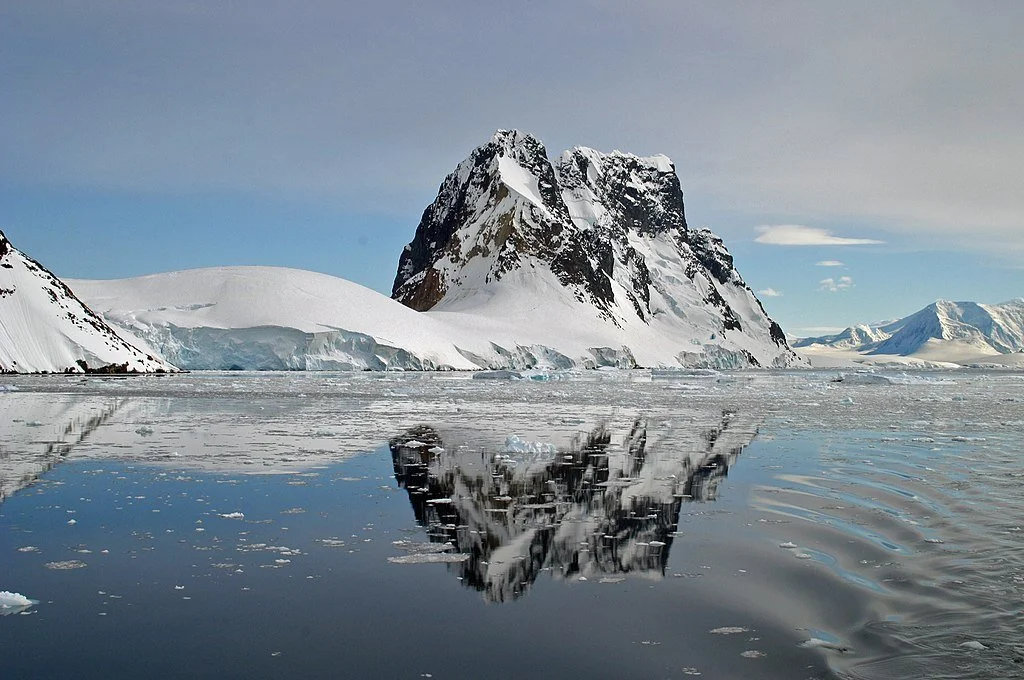
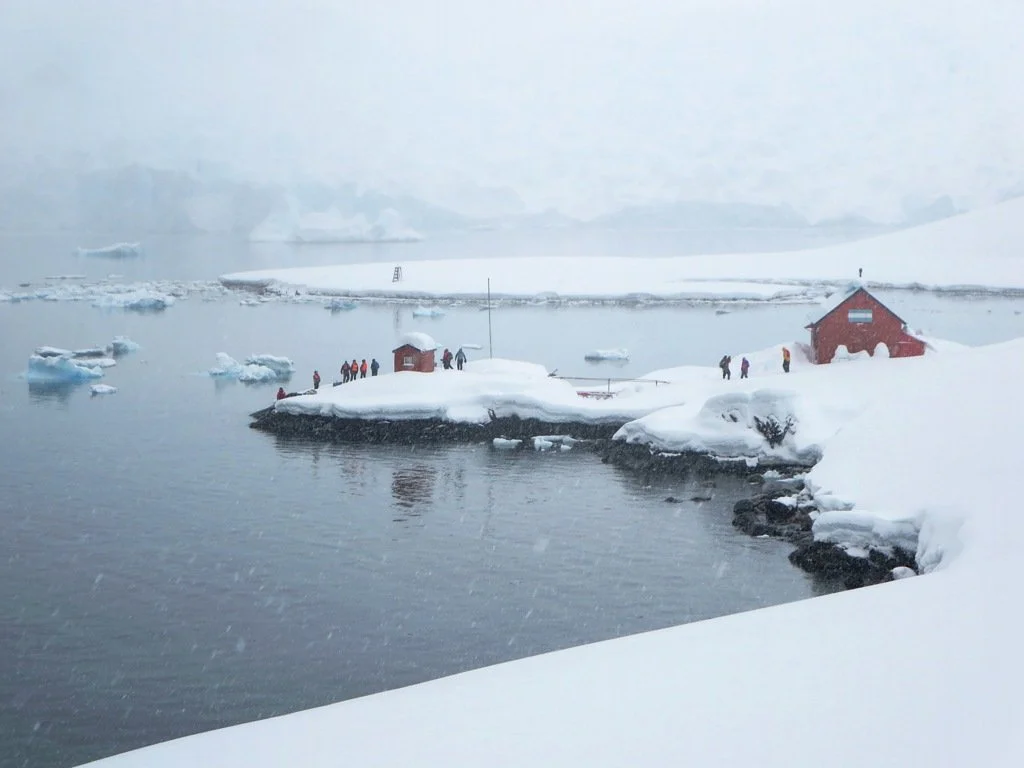
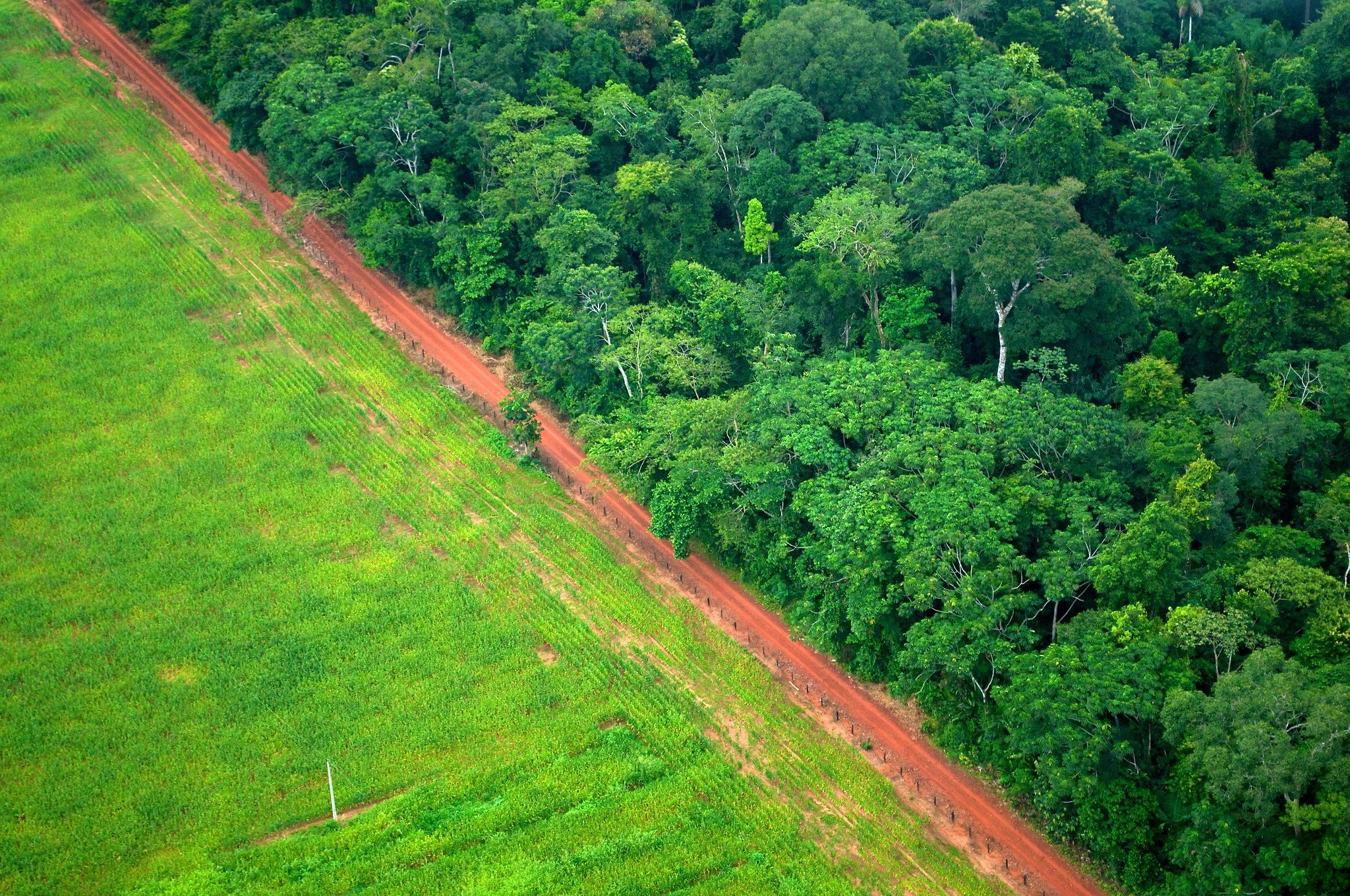
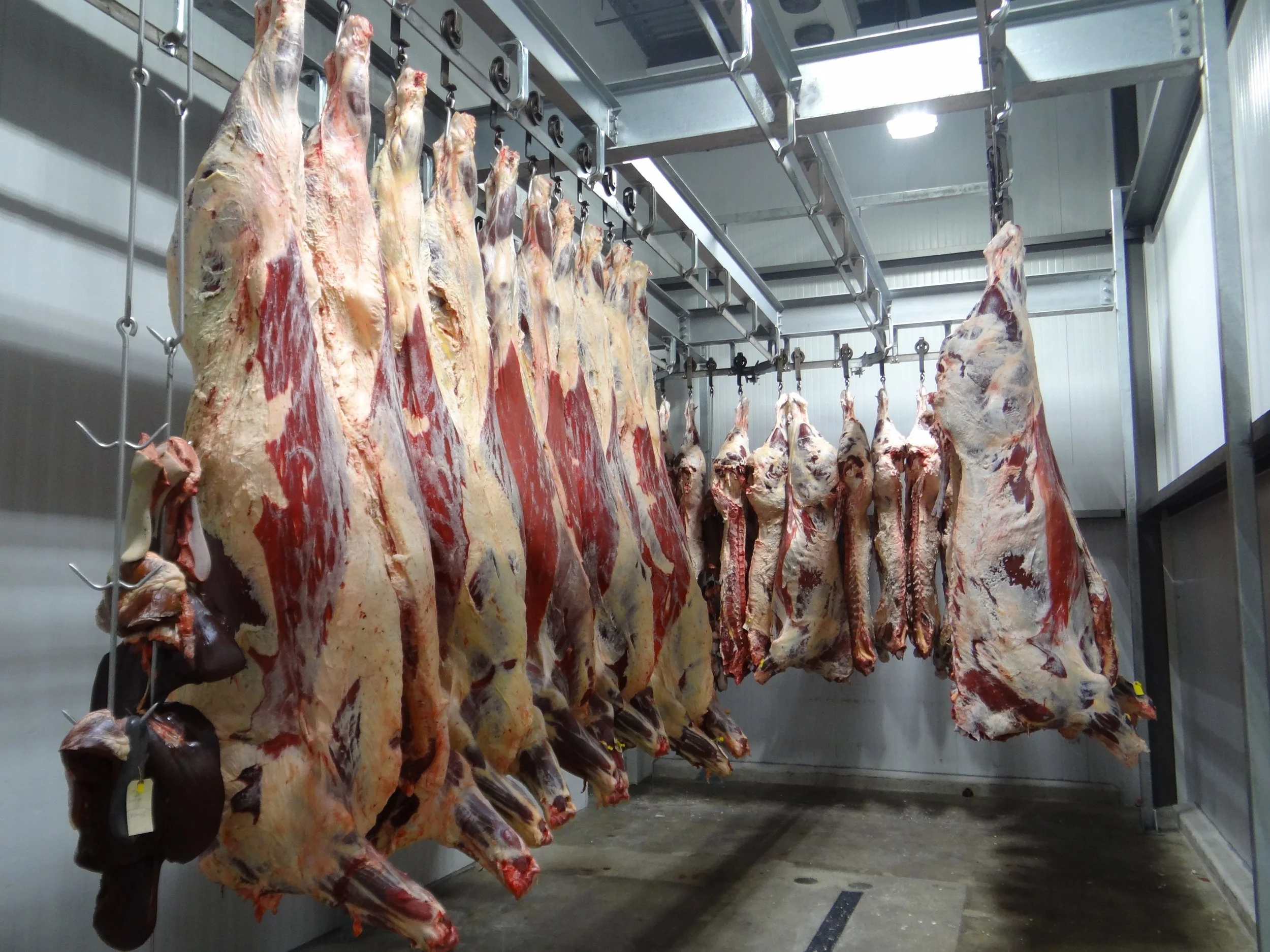
wildlife

The Big Island Is the Hawaii for Couples Who Think They’re Over Hawaii

Plan the perfect Big Island couples getaway with manta ray snorkeling, black sand beaches, Volcanoes National Park and Hawaii’s most scenic drives.
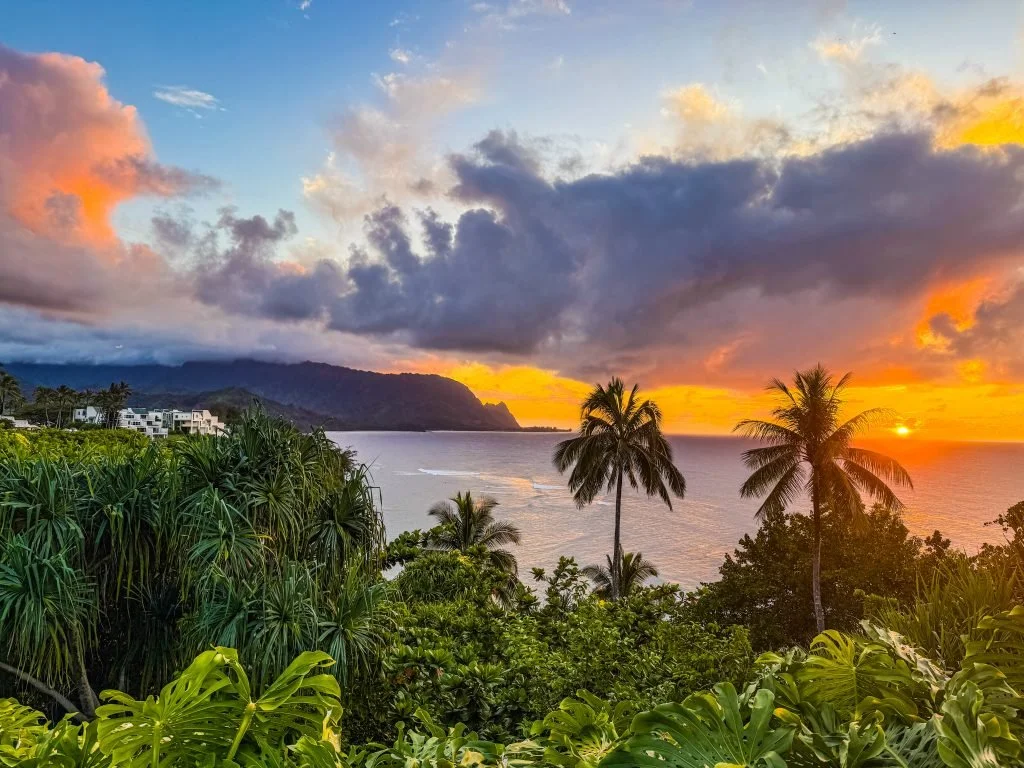
There’s a particular kind of traveler who has done Waikiki once, spent a wedding anniversary fighting for pool chairs in Wailea, and quietly concluded that Hawaii is a beautiful place ruined by everyone else who also read about it. 

If that describes you and your partner, the Big Island is the rebuttal. It works precisely because the island is too large and too strange for crowds to accumulate anywhere except a handful of resort lobbies, and because most visitors never drive more than 30 minutes from their hotel.

I should know. I nearly skipped it.
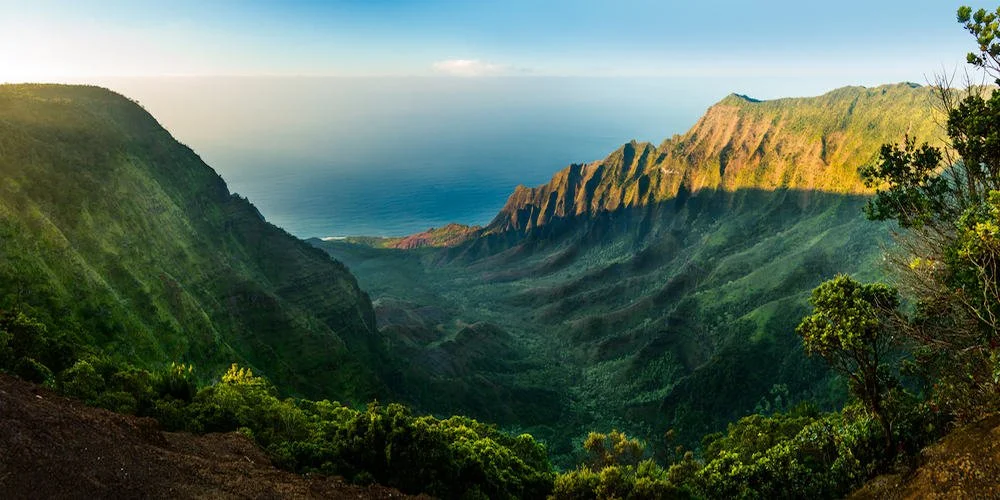
The Island That Doesn’t Feel Like a Resort

The scale changes the math of a trip. The Big Island covers about 4,028 square miles, roughly the size of Connecticut, and holds a population smaller than Anaheim, California. 

The couples who fall for this island are the ones who treat it as a road trip with a hotel attached rather than a resort with an island attached.

Drive 20 minutes in any direction from the Kona resort strip and you’re alone on lava fields, or in coffee country at 1,500 feet in air that smells like roasting beans, or on a black sand beach where the only other visitors are green sea turtles who got there first.

The couples who fall for this island are the ones who treat it as a road trip with a hotel attached rather than a resort with an island attached. That mental flip matters more than any single reservation you will make, and it explains almost everything else in this post.
A Day That Actually Feels Like Yours

A few specifics from my own circling of the island, in the order i’d do them again.

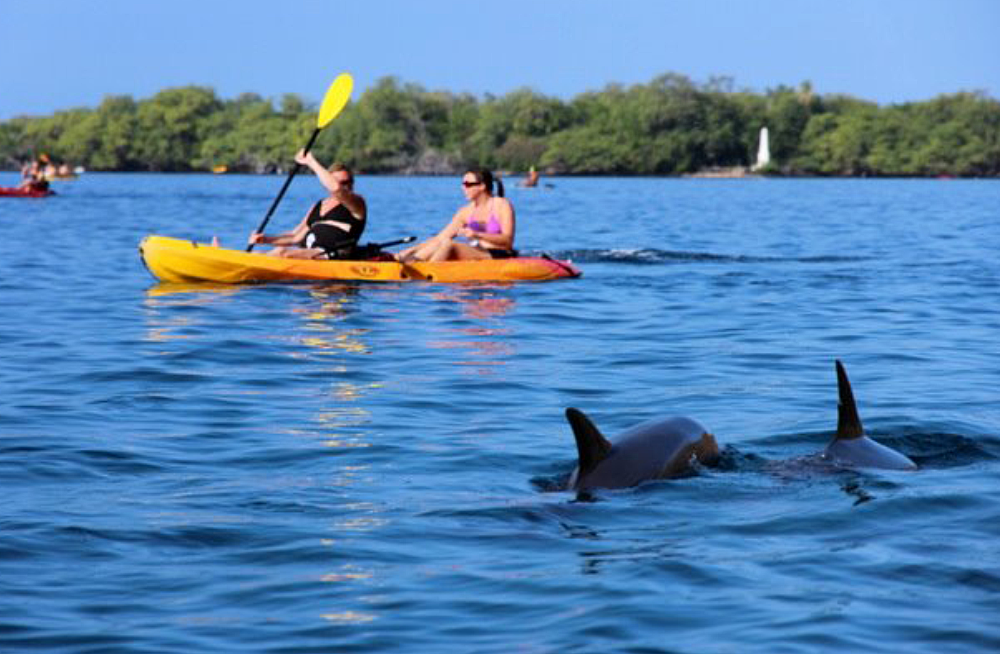
Start with Kealakekua Bay at 7 a.m., kayaking across water so clear you can watch spinner dolphins pass 40 feet below. The afternoon wind arrives around noon and turns the bay to chop, so the early start isn’t optional, and the reward for it is having a marine sanctuary nearly to yourselves.

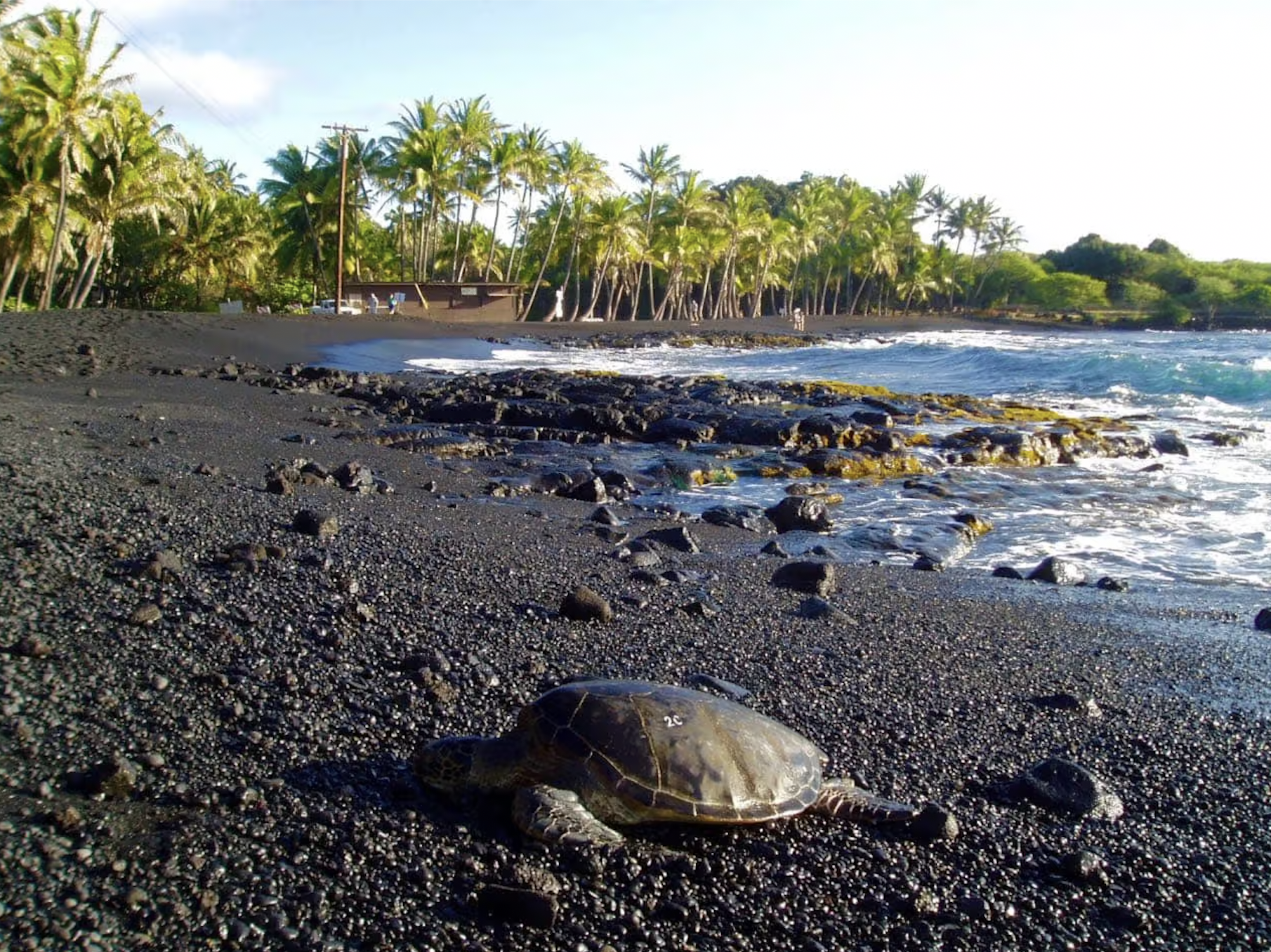
Then drive south through Kau to Punaluu, where the sand is genuinely black and the turtles haul out most afternoons like they own the place — because, legally speaking, they more or less do. 
Continue to South Point, the southernmost spot in the United States, where locals cliff-jump off a 40-foot ledge, and you can decide together that watching counts as participation.

End in Waimea, the upcountry cattle town at 2,670 feet, where paniolo ranching culture predates Texas cowboys by decades. Merriman’s has been doing farm-to-table there since 1988, before the phrase existed on menus, and the drive back down to the coast at dusk, with the Kohala mountains going purple behind you, is the kind of thing you’ll describe to friends (who will assume you’re exaggerating).
Date Night, Rewritten

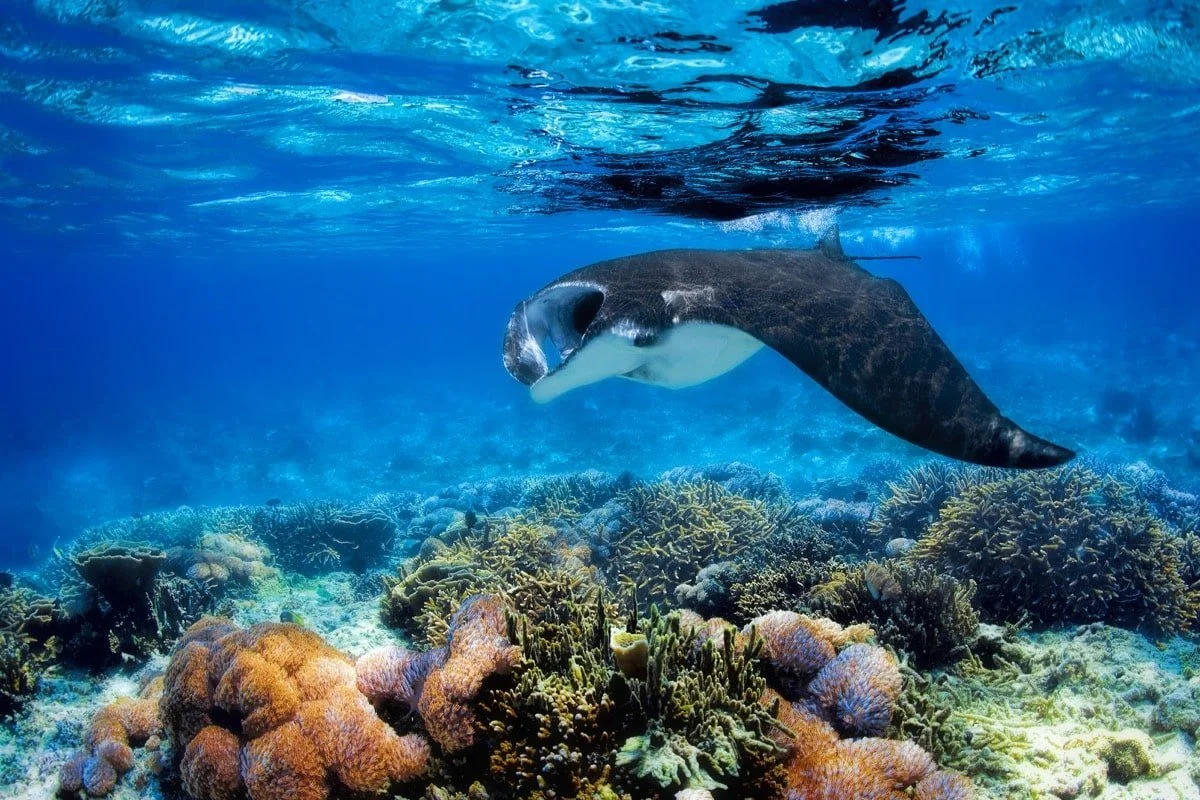
Here’s the evening that outranks every scheduled romantic gesture I’ve attempted anywhere else. Sunset at a Mauna Kea overlook around 6:30 p.m., above the cloud layer, followed by manta ray night snorkeling off Keauhou at 8 p.m.

You float on the surface in dark water, holding a light board, while 14-foot animals somersault a foot beneath your masks with their mouths open, feeding on plankton that the lights attract. 

It’s not what most people mean by date night. That’s exactly the argument for it. The operators run at better than a 90% sighting rate, the whole thing takes two hours, and you’ll talk about it at dinner parties for the next decade.
The Unromantic Logistics That Make It Work

This Big Island punishes improvisation, so handle the boring parts early.

You’ll drive between 60 and 120 miles on any day you do something interesting. The restaurants worth planning around are rarely in the resort corridor. Rideshare coverage thins to nearly nothing past Waikoloa after dark, and more than one couple has ended a romantic evening waiting 90 minutes for a driver who never accepted the ride.

The fix is an easy one: Book a Kona car rental for the entire stay rather than day-by-day, from a local operator that delivers the car to your hotel or the airport. This spares you the arrival-day counter line that eats the first two hours of a five-day trip. 

And if the occasion is an anniversary or honeymoon, it’s worth knowing that a luxury car rental in Kona runs meaningfully less than the equivalent on Maui or Oahu. 

The Queen Kaahumanu Highway at golden hour, lava fields going amber on both sides and the top down, is the single best driving hour in the state. And it costs about what two resort dinners do.

Whatever you book, confirm that the mileage terms cover an island this size. A single loop runs about 220 miles before you add a foot of side trips.
Where to Base and What to Skip on the Big Island

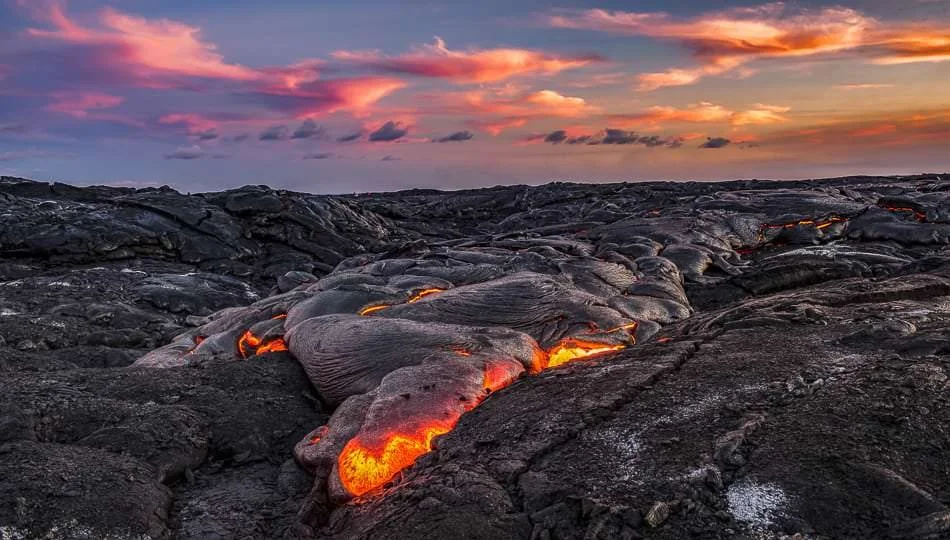
Base on the Kona side for reliable sun and the manta trip. If Kilauea is erupting, add one or two nights in Volcano Village, because falling asleep to a faint red glow over the caldera is worth rearranging a reservation for, and the eruption viewing crowds thin dramatically after 8 p.m.

Skip the impulse to split the trip with a second island. The interisland flight, the second rental car, and the repacking consume a full day of a week you’ll wish was longer. 

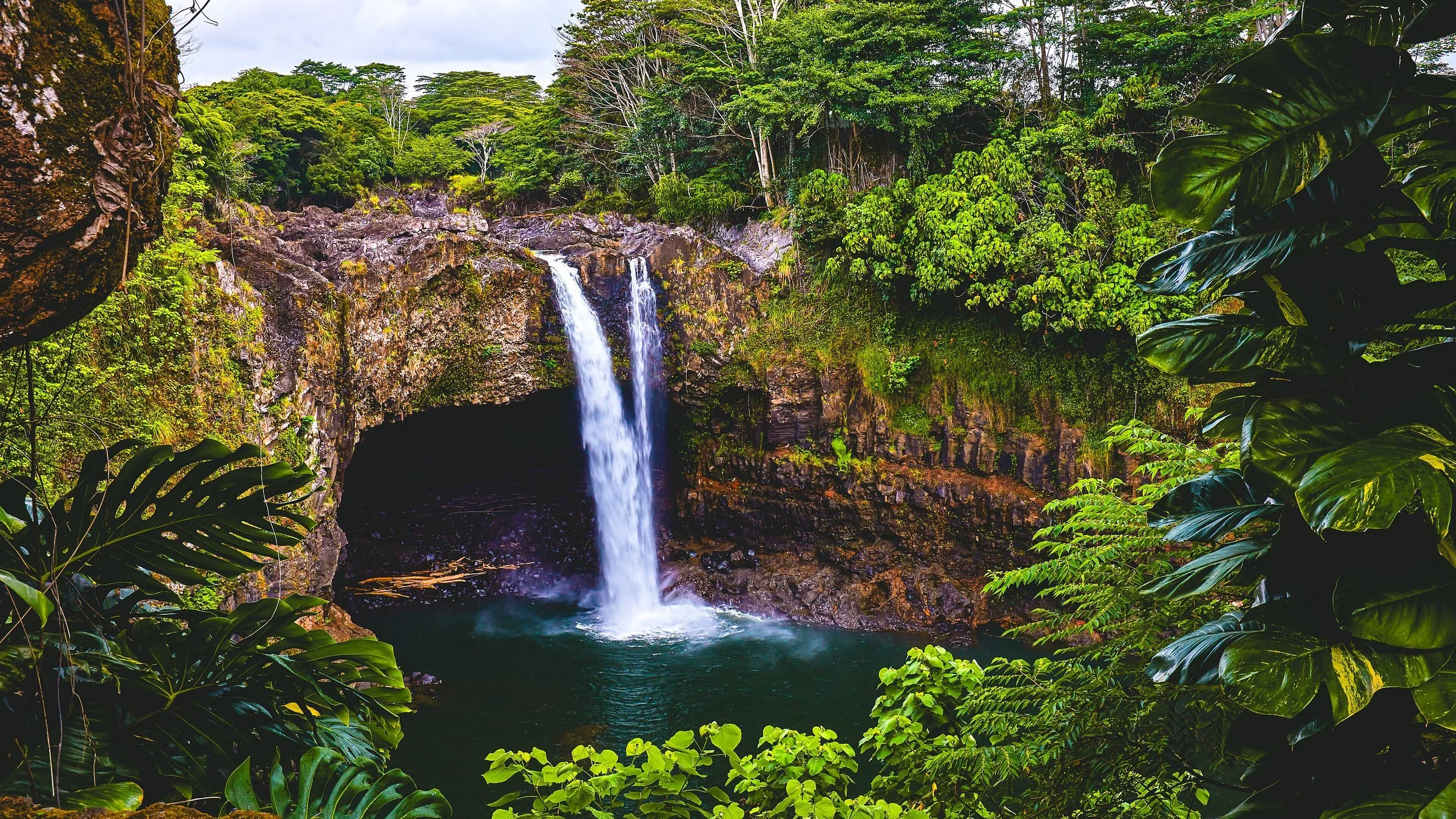
The Big Island keeps producing new versions of itself, rainforest to lava desert to alpine summit, faster than you can experience them.

Hawaii's crowded islands are crowded for defensible reasons. This one just quietly has more, spread across more space, with fewer people standing in front of it. Go before the couples fighting over pool chairs figure that out. –Oliver Brooks
Svalbard vs. Antarctica: Which Polar Adventure Belongs on Your Bucket List?

From polar bears and Arctic fjords to penguins and towering icebergs, discover the key differences between Svalbard and Antarctica travel. 

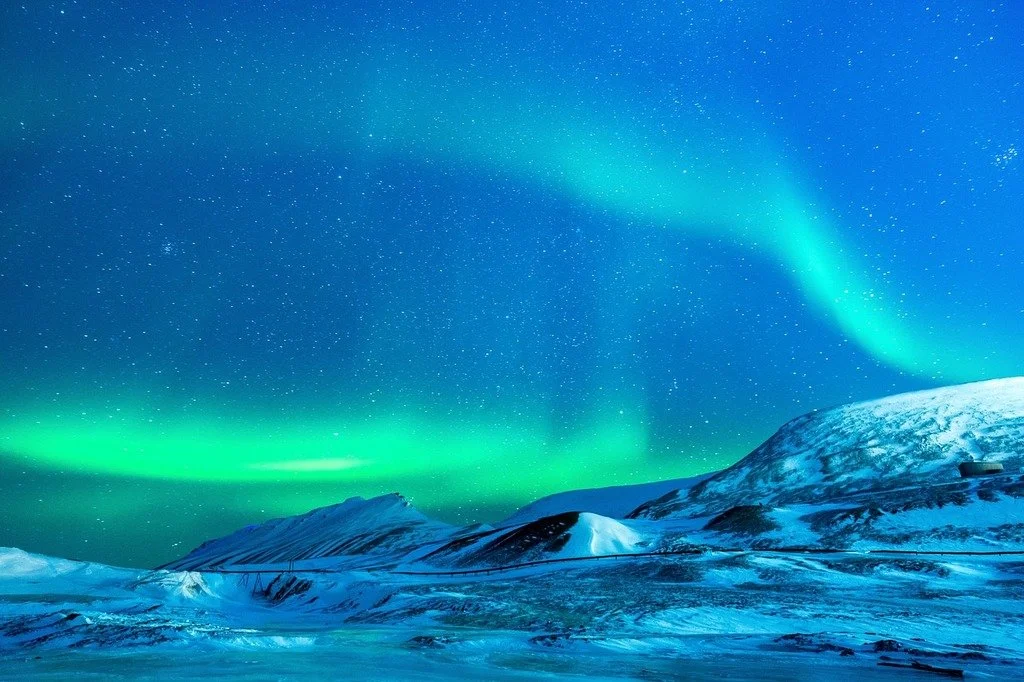
The greenish lights of the Aurora Borealis above the snowy mountains of Svalbard, Norway

Some trips are easy to explain.

A beach week. A city break. A long weekend somewhere warm.

A polar trip is different.

It’s harder to put into words because it isn’t only about where you go. It’s about what happens to you when you get there. The air feels sharper. The sky seems too big. The silence has a kind of weight to it. You notice your own footsteps. You notice the wind. You notice how small you are — but not in a bad way. Winter wilderness travel is intense and mindblowing.

Maybe that’s the real pull of places like Svalbard and Antarctica. They remind you that the world is enormous.

Svalbard shows you how humans live near the edge.

Antarctica reminds you that the edge might be too extreme for humans.

Both destinations sit close to the edge of the map. Both give you ice, wildlife, long horizons and that strange feeling of being far away from your ordinary life. But they aren’t the same trip. Not at all.

Svalbard is in the Arctic. It sits north of mainland Norway, deep in polar bear country, with fjords, glaciers, tundra, old mining history and a small but real community in Longyearbyen. Antarctica is the other end of the planet. It’s a continent of ice, penguins, research stations, wild seas and a kind of silence that feels almost untouched.

So, which one belongs on your bucket list? It depends on what kind of wonder you want to come home with.

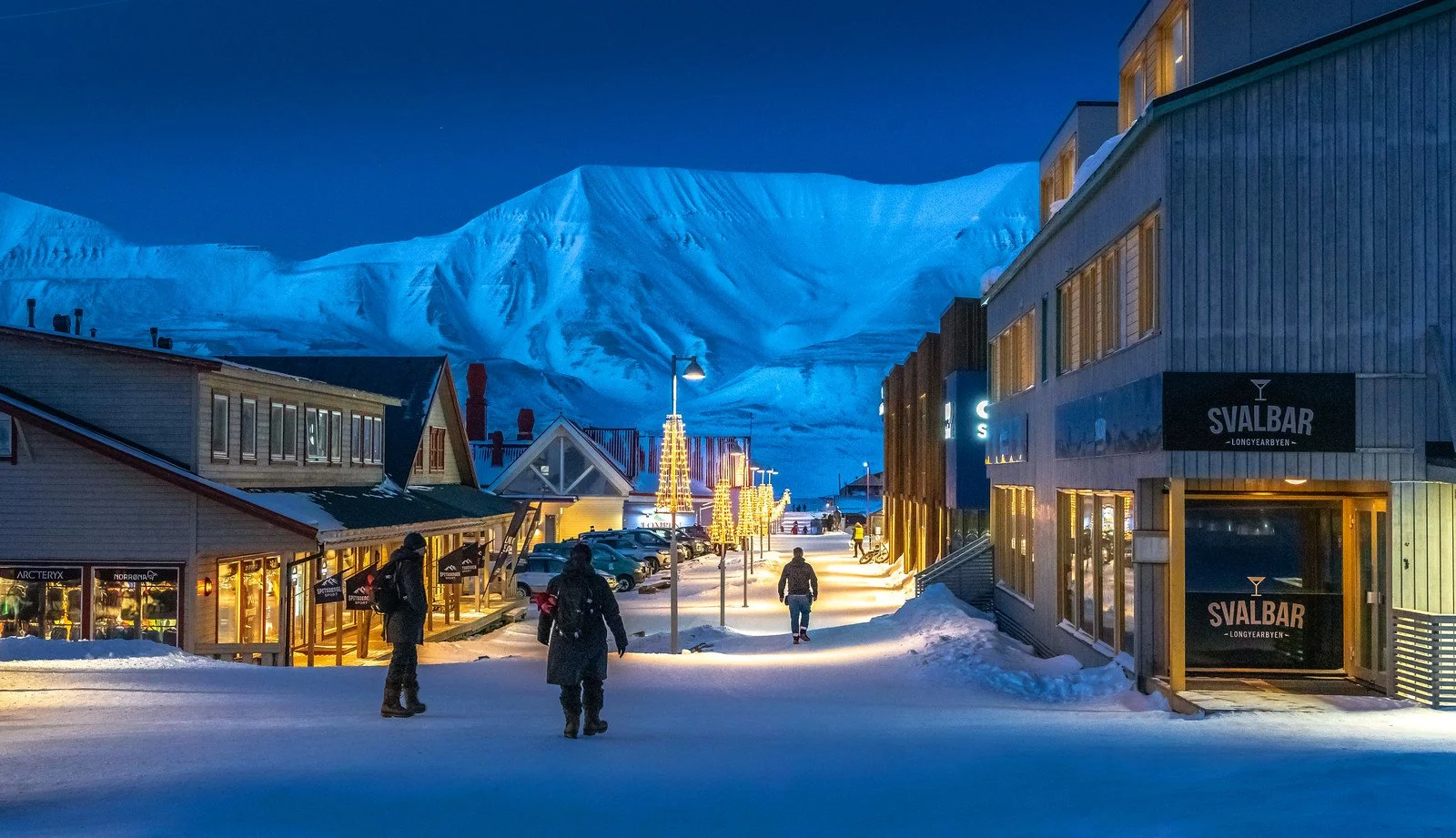
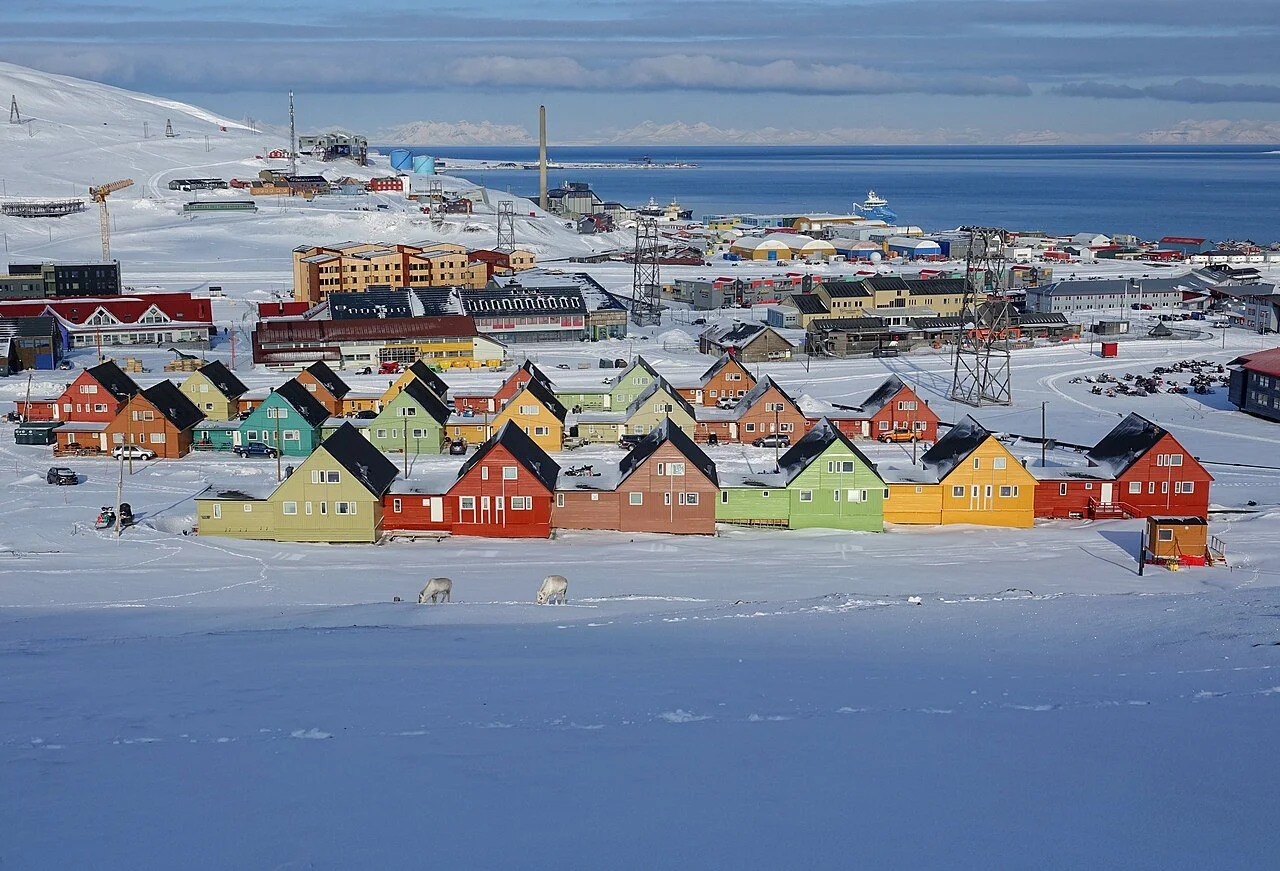
The colorful buildings of Longyearbyen, Norway in Svalbard in the snow

Svalbard Feels Remote But Not Unreachable

Svalbard has this odd, beautiful mix of wildness and daily life. You can land in Longyearbyen, check into a hotel, order coffee and still be very aware that you are in one of the northernmost inhabited places on Earth. There are streets and shops and guides loading gear. There are people walking home from work. And beyond all that, there are mountains, ice, cold water and animals that don’t care about your travel plans.

That contrast gives Svalbard its character. It doesn’t feel staged. It feels lived in.

You can sense that people have had to adapt here. The weather decides things. The light decides things. The seasons aren’t background details; they shape everything. Even before you board a ship or head deeper into the wilderness, you can feel that this place has its own rules.

And honestly, that makes it more interesting.

In summer, the midnight sun changes the whole rhythm of travel. The sky stays bright when your body expects darkness. You may look outside at midnight and see soft light sitting over the fjord, as if the day simply forgot to end.

It’s strange at first. Then it becomes wonderful.

You stop checking the time so much. You stop waiting for evening to close things down. The day stretches out in a way that feels loose and generous. If you’re used to a life of alarms, calendars and constant little deadlines, that can feel almost like a relief.

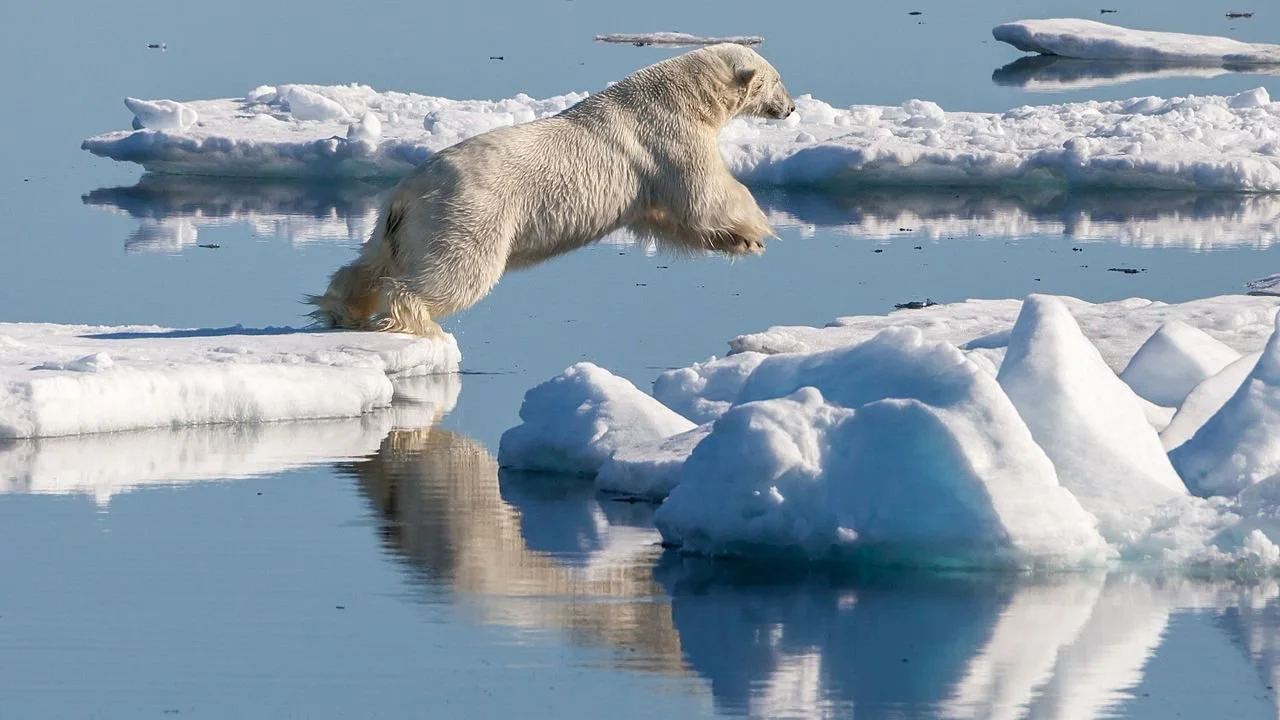
A polar bear jumps from one ice floe to another in Svalbard, Norway

The Arctic Has Its Own Kind of Tension

For many people, Svalbard starts with one dream: a polar bear. Not behind glass. Not in a documentary. A real one, somewhere out on the ice or moving along a distant shore. Of course, no responsible trip can promise that. Wildlife is wildlife. It appears when it appears. Sometimes it doesn’t.

But the possibility changes the way you look. You scan ridges differently. You watch the shoreline. You listen when guides point out tracks or movement. There’s a quiet tension in it, but it’s not fear exactly. It’s respect.

And you feel that respect in your body.

Svalbard isn’t only about polar bears, though. Walruses may be hauled out together in heavy, noisy groups. Arctic foxes can flash across the ground. Reindeer graze in places that look too sparse to support anything. Seals rest near ice. Whales surface and disappear before you fully process what you saw. Seabirds crowd cliffs and fill the air with sound.

It’s not a single big moment. It’s a collection of small ones. That’s part of Svalbard’s charm. You have to pay attention.

For travelers comparing ships, routes and comfort levels, looking closely at the full Arctic cruise price can make the planning feel less vague. In Svalbard, the details matter. The vessel, the guides, the itinerary, the pace of each day and the way the crew approaches the environment all shape what the trip becomes.

Because you’re not just going there to look at ice. You're going there to experience the landscape, not simply observe it.

Antarctica Feels Farther Than Far

Just saying you are going to Antarctica feels serious. It’s not a casual destination. You don’t tack it onto another trip as an afterthought. Most people have to plan for it, save for it, think about it and then commit. That commitment becomes part of the experience.

Many travelers reach Antarctica by sailing from Ushuaia, Argentina, across the Drake Passage. And yes, the Drake has a reputation. Some crossings are calm. Some are rough. Some make you question your life choices for a day and then reward you with a horizon full of ice.

That’s the thing about Antarctica. It makes you earn the arrival.

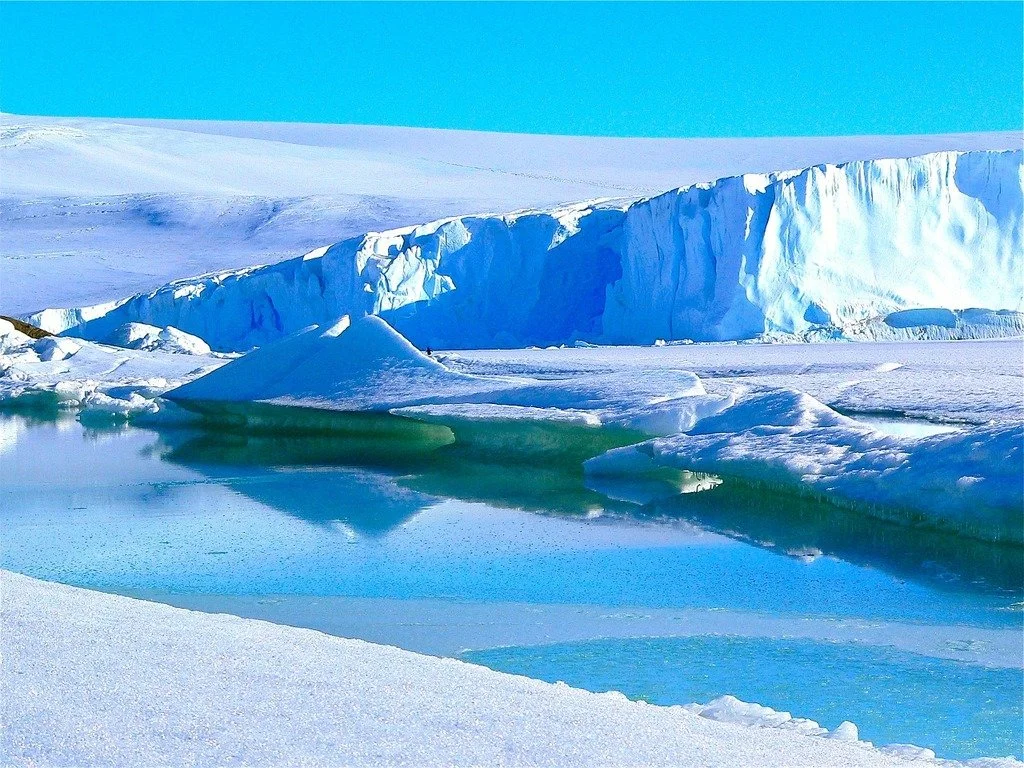
And when the ice finally appears, it doesn’t feel like normal scenery. It feels like the world has changed materials. Icebergs rise out of the water like towers, walls, broken sculptures or pieces of some huge unfinished building. The colors are simple, but they aren’t plain. Blue, white, gray, black, silver. Sometimes a little gold when the light shifts.

You may find yourself standing on deck and saying nothing. Not because you’re bored. Because the place is bigger than your reaction to it.

Penguins Make Antarctica Feel Alive

From far away, Antarctica can sound empty. Ice, wind, ocean, silence.

But then there are penguins. And penguins change everything.

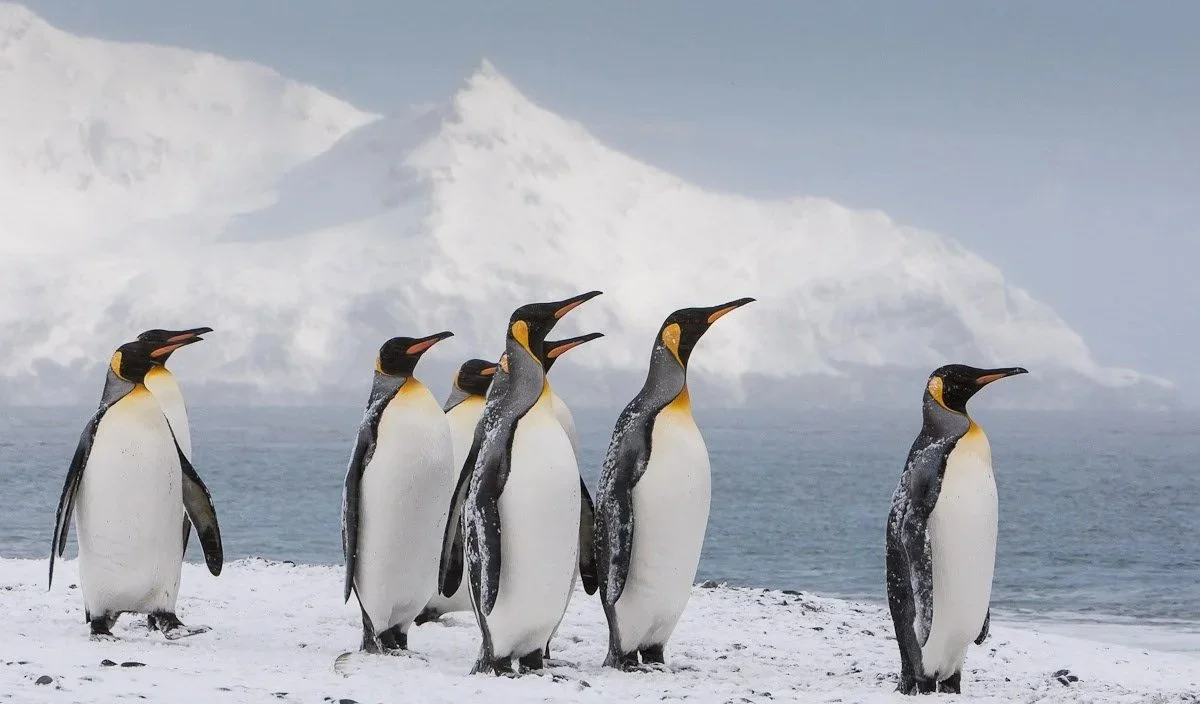
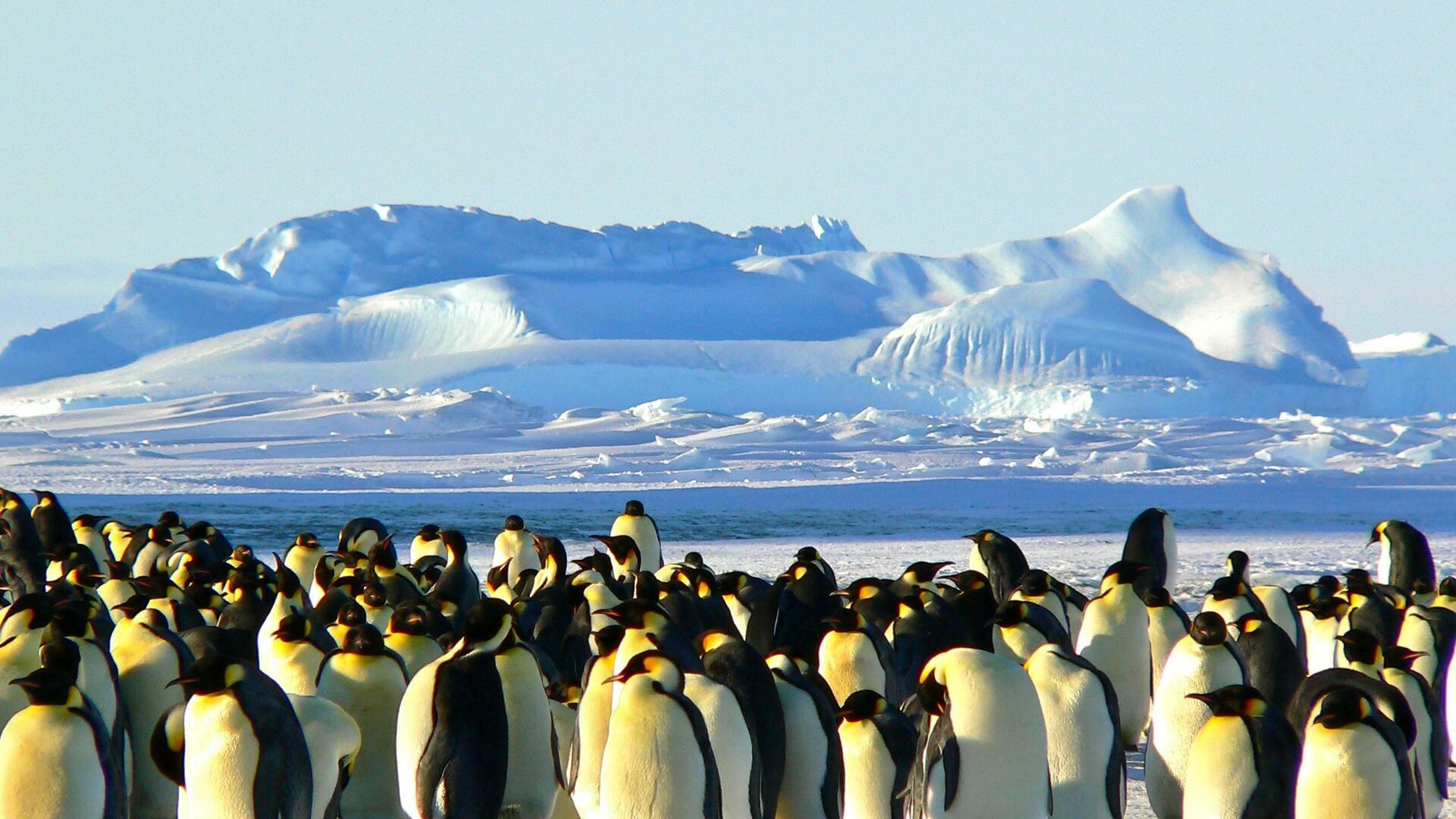
They bring noise, movement, awkwardness, determination and a delightful amount of personality. They slip, shuffle, call, argue, gather, wander and somehow make one of the most extreme places on Earth feel full of life.

There’s something oddly touching about watching them. Maybe it’s because they look so small against the scale of the place. Maybe it’s because they keep going, even when the ground is rough, and the weather isn’t kind. Or maybe we just recognize something familiar in their busyness.

That sounds a little sentimental, I know. But Antarctica does that. It catches people off guard.

You may also see seals resting on ice, whales surfacing near the ship, and seabirds moving through hard wind as if the air belongs to them. In the right season, Antarctica can feel almost crowded with life, even though the landscape itself remains vast and severe.

It’s a strange combination. Harsh and tender at the same time.

What Wildlife Are You Really Hoping For?

This might be the simplest question. 

If your dream is polar bears, choose Svalbard. The Arctic is their home, and even the chance of seeing one responsibly, from a safe distance, brings a kind of electricity to the trip.

If your dream is penguins, choose Antarctica. Penguins don’t live in the Arctic, and polar bears don’t live in Antarctica. That one fact clears away a lot of confusion.

But the answer isn’t always logical. Sometimes you already know. Maybe you’ve pictured a bear moving across sea ice since you were a kid. Maybe you've imagined penguins gathered below blue-white mountains for years. That one image matters.

Travel planning often looks practical from the outside. Dates, routes, budgets, flights, gear. But underneath all that, there’s usually one feeling you’re trying to reach. Run with that.
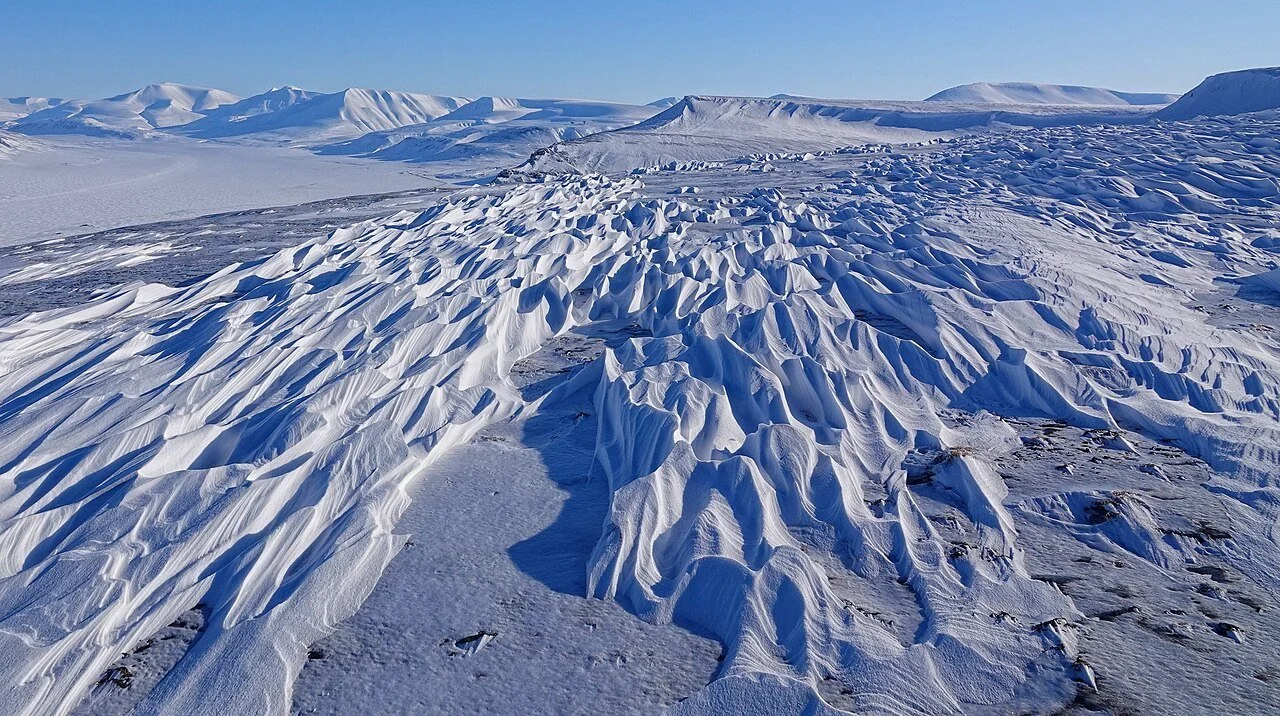
A plain full of snow formations in Svalbard, Norway

Antarctica Is Bigger; Svalbard Is More Layered

If you want ice drama, Antarctica is hard to beat. The scale is almost unreasonable. Glaciers seem endless. Icebergs look carved. Mountains rise out of the cold in sharp black and white. The whole place feels stripped down to the basics of water, ice, rock and sky.

It can overwhelm you. In a good way.

Svalbard works differently. It does have glaciers and sea ice, but it also has tundra, fjords, beaches, dark mountains, old settlements and traces of human history. It doesn’t hit you with one single grand impression. It unfolds.

One day may feel gray and moody, with low cloud over the water. Another may feel bright and open, with birds moving across the sky and light lingering much too late. You might pass an old mining site and then, not long after, see a seal near a sheet of ice. The place keeps changing its tone.

Antarctica feels monumental.

Svalbard feels intimate.

That’s not a perfect rule, but it’s close enough.

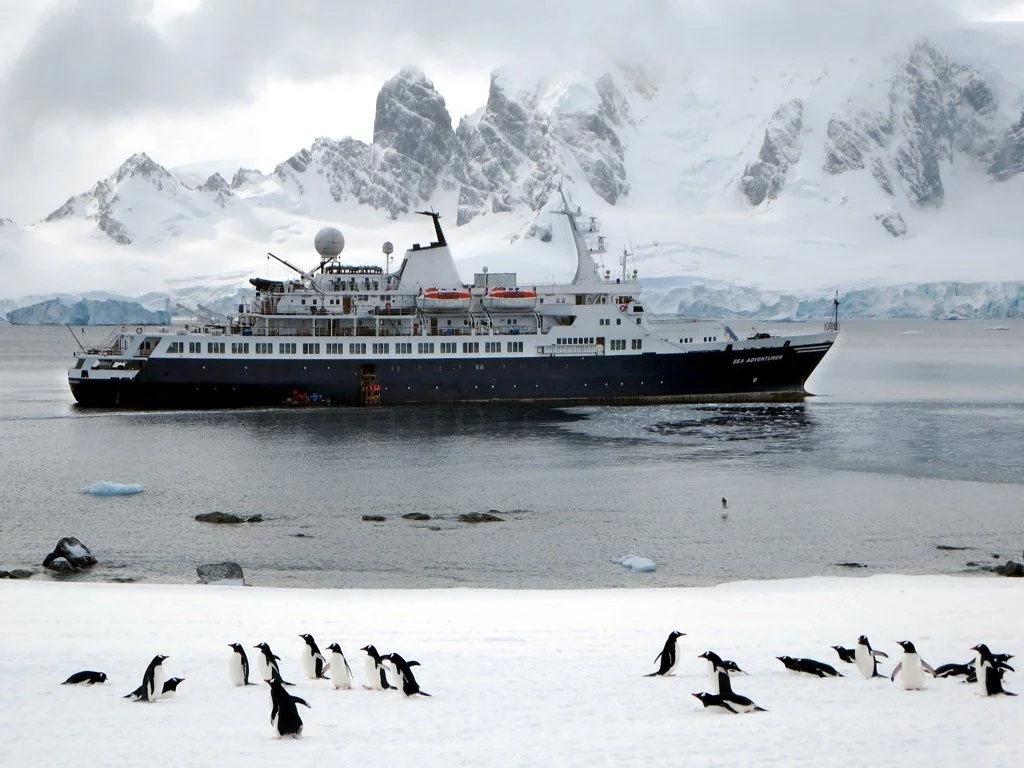
Penguins frolic as a large cruise ship sails by in the Antarctic

Think About the Journey, Not Just the Destination

Svalbard is usually easier to fit into a shorter trip. Most travelers connect through Norway and fly into Longyearbyen. From there, the adventure can begin fairly quickly. You still feel remote, but you don’t usually need the same long sea crossing that defines many Antarctic itineraries.

That makes Svalbard a strong first polar trip for many people.

Antarctica asks for more time. More patience too. Here’s what to know before you plan an Antarctica trip. You need to reach the departure point, cross the Drake Passage, explore and cross back. There’s more travel wrapped around the travel.

For some people, that’s part of the magic. The distance makes Antarctica feel earned. The long approach gives the whole journey a sense of ceremony. For others, it may feel like too much. And that’s fine. Not every bucket list trip has to be the hardest version of itself.

Comfort Isn’t a Small Thing

People sometimes talk about polar travel as if comfort doesn’t matter. It does.

After hours in cold wind, a warm cabin matters. Dry socks matter. A good meal matters. A quiet place to sit with a cup of tea after seeing something extraordinary matters more than you might expect.

The right ship can change the whole experience. So can the right guides. You want people who know the place, respect it and help you notice what you might otherwise miss. 

You also want a pace that lets you actually absorb things. Because what’s the point of going that far if you’re too rushed or too uncomfortable to take it in?

Adventure doesn’t have to mean pretending you’re not tired. Sometimes the best part of the day is coming back cold, windblown and happy, then warming your hands around a mug while everyone quietly processes what they just saw. That’s part of the trip too.

So, Which Place Feels More Personal?

Svalbard often feels more personal because people live there. You can imagine daily life. Someone walking home under winter darkness. Someone stepping outside in summer when the sun is still up at 2 a.m. Someone checking the weather before making even a simple plan. The Arctic isn’t an idea there. It’s everyday reality. There’s something moving about that.

Antarctica feels less personal, but maybe more humbling. It doesn’t make room for ordinary human life in the same way. It doesn’t feel designed around us. That can be uncomfortable at first, then strangely peaceful.

Svalbard shows you how humans live near the edge.

Antarctica reminds you that the edge might be too extreme for humans.

Both lessons stay with you, just in different ways.

Which Polar Adventure Belongs on Your Bucket List?

Choose Svalbard if you want polar bears, Arctic wildlife, fjords, tundra, settlement history and a trip that feels remote without feeling completely disconnected from human life. It’s varied, atmospheric and easier to imagine as a first polar adventure.

Choose Antarctica if you want penguins, huge ice, the seventh continent, and the deep satisfaction of reaching one of the most remote places on Earth. It’s bigger, farther, more demanding and probably more dramatic from start to finish.

The honest answer is that both are worthy.

But if you’re choosing one, start with the image that stays with you. Is it a polar bear under the endless Arctic light? Penguins moving across ice at the bottom of the world? A quiet fjord near midnight? A blue iceberg rising out of dark water?

One of those scenes probably pulls harder than the others. Follow that.

Because in the end, you’re not only choosing between Svalbard and Antarctica. You’re choosing the kind of awe you want to carry home. –Brenda Wanjiku

How to Plan Your Dream Amazon Adventure

Want to explore the largest rainforest on Earth? Should you head to Brazil, Peru or Colombia? Here are 5 tips to make your Amazon trip unforgettable.

A woman in a kayak looks through binoculars at the wildlife of the Amazon
One of the most memorable projects I ever worked on in school was about the Amazon. I remember it vividly: poring over pictures of sloths, parrots and winding rivers, reading about thick-canopied forests teeming with life and secrets. Since then, I’ve kept a close eye on what’s happening in South America and, when possible, have ventured to far-flung, wild places. But the Amazon — well, that’s still in a league of its own. And planning a trip there takes a bit of strategy. 

Few places on Earth compare to the Amazon — and with the right planning, you’ll be ready to discover it in all its intensity and wonder.
Two handsome tattooed men take a selfie on a canopy bridge in the Amazon


Here’s what you need to know to make the most of an adventure that, if done right, will feel like stepping into a whole new world.

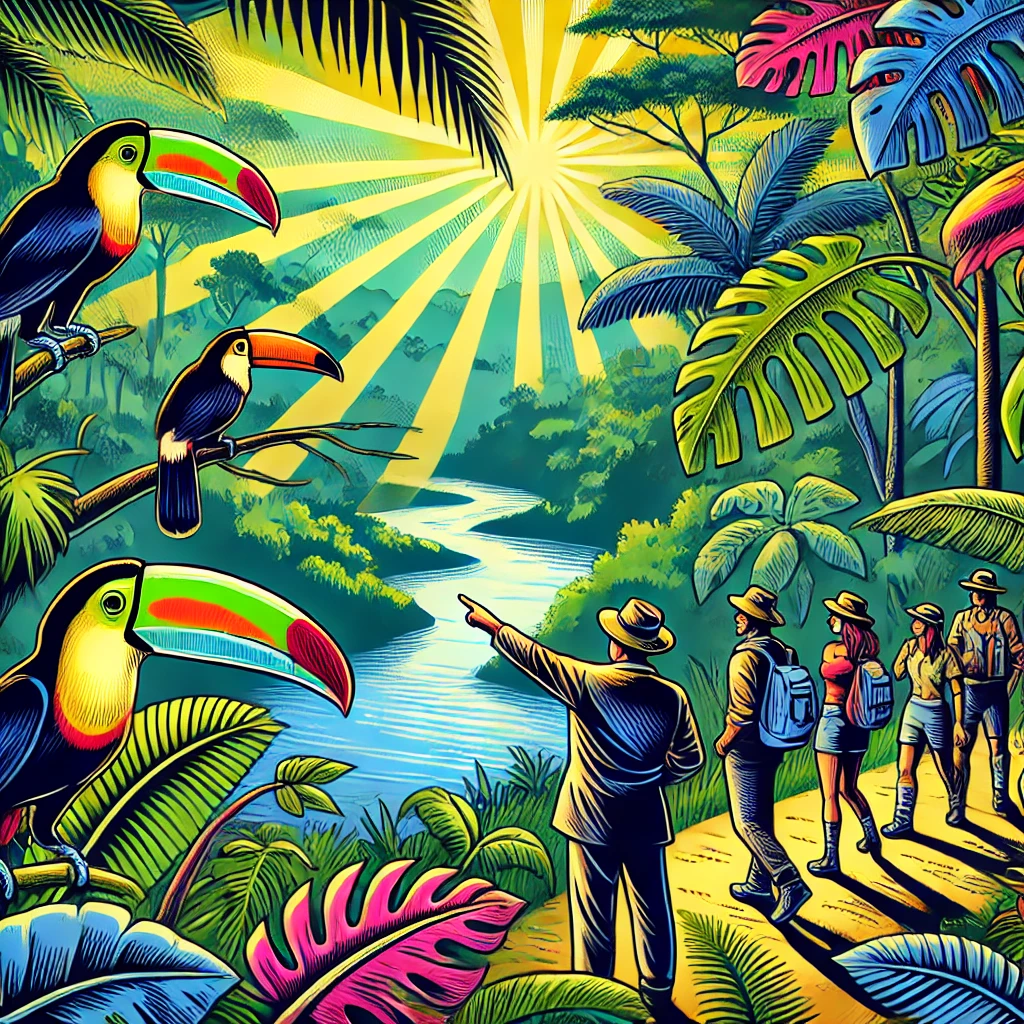
A guide points something out to a group of hikers in the Amazon with toucans perched nearby

1. Determine your adventure style. 

Let’s face it, “the Amazon” conjures up different images for everyone. Are you envisioning a canoe ride through quiet waterways, binoculars in hand, scanning for jaguars? Or are you more inclined toward guided nature hikes, where you can absorb insights on indigenous plants, medicinal herbs and Amazonian lore?

Brazil is your classic jungle adventure, with thrilling treks, wildlife galore and river communities, where you can experience a bit of daily life in the Amazon. Peru and Colombia, on the other hand, have national parks that blend cultural sites with nature, offering the chance to experience a little bit of everything — from visiting wildlife sanctuaries to learning about local customs.
A riverboat cruises down the Amazon while a jaguar and birds look on

2. Decide where in the Amazon you’re headed. 

The Amazon is a sprawling natural giant, stretching across nine countries and more than 2 million square miles. 

So, how do you decide where you want to go? Each Amazonian region offers something a bit different. Brazil’s Manaus is a popular gateway, but Peru offers incredible river cruises, and Ecuador is known for its pristine national parks. The location you choose will shape your experience, so let your interests lead the way. Want to get lost in deep jungle trails? Brazil might be your calling. More interested in a mix of culture, wildlife and guided excursions? Consider starting in Peru or Colombia.

An AI trip planner can be a lifesaver for navigating this decision, helping pinpoint destinations that fit your goals, timeline and budget.

A gay couple hold up a map with tropical birds around them as they plan an Amazon adventure

3. Find flights and accommodations. 

Getting to the Amazon usually starts with a flight into a major city, often São Paulo or Rio de Janeiro if you’re heading to Brazil. From there, you’ll hop on a regional flight to your main Amazonian destination, such as Manaus. For those aiming for Peru, Lima and Cusco serve as gateways to the country’s Amazon regions, with river cruises and jungle lodges that let you dive deep into the wilderness without having to go entirely off-grid.

While the Amazon isn’t a “budget” destination, booking early and looking at various starting points can help keep costs manageable. And if you’re going for Amazon guided tours, they often bundle accommodation and transport, so look for packages that offer flexibility and fit your adventure style. 

Don’t forget: Each region’s climate can vary, so check seasonal weather patterns. For instance, from late spring to early autumn, the dry season is ideal for wildlife spotting and hiking, whereas the wet season offers a lusher, greener landscape.

4. Pack like a pro. 

Packing for the Amazon isn’t quite like packing for your average vacation. It’s not just about comfort; it’s about being ready for any situation. Lightweight, moisture-wicking clothing is a must to handle the jungle’s heat and humidity, but you’ll also want durable hiking gear if you’re planning on hitting the trails. A waterproof jacket is non-negotiable, as are sunblock, a hat and any medications you need for the duration of your stay.

Here are some other important things to check off before you go:

  • Documents: Make sure your passport is current and you’ve got any necessary visas.

  • Vaccinations: Common vaccines like yellow fever are often recommended, along with malaria prevention.

  • Insect repellent: Trust me — you don’t want to skimp here. Stock up on good-quality repellent to keep those pesky bugs at bay.

  • Travel insurance: Medical emergencies in the Amazon are no joke. Make sure you’re covered for any unexpected costs in a remote area.

And be sure to bring a good flashlight, power bank and possibly a GPS for off-the-grid excursions. 

Even your packing strategy should be built for flexibility because in the Amazon, Mother Nature doesn’t always follow your plans. Prepare for a mix of hiking, boating and relaxing by packing a bit of everything — from flip-flops to sturdy boots.

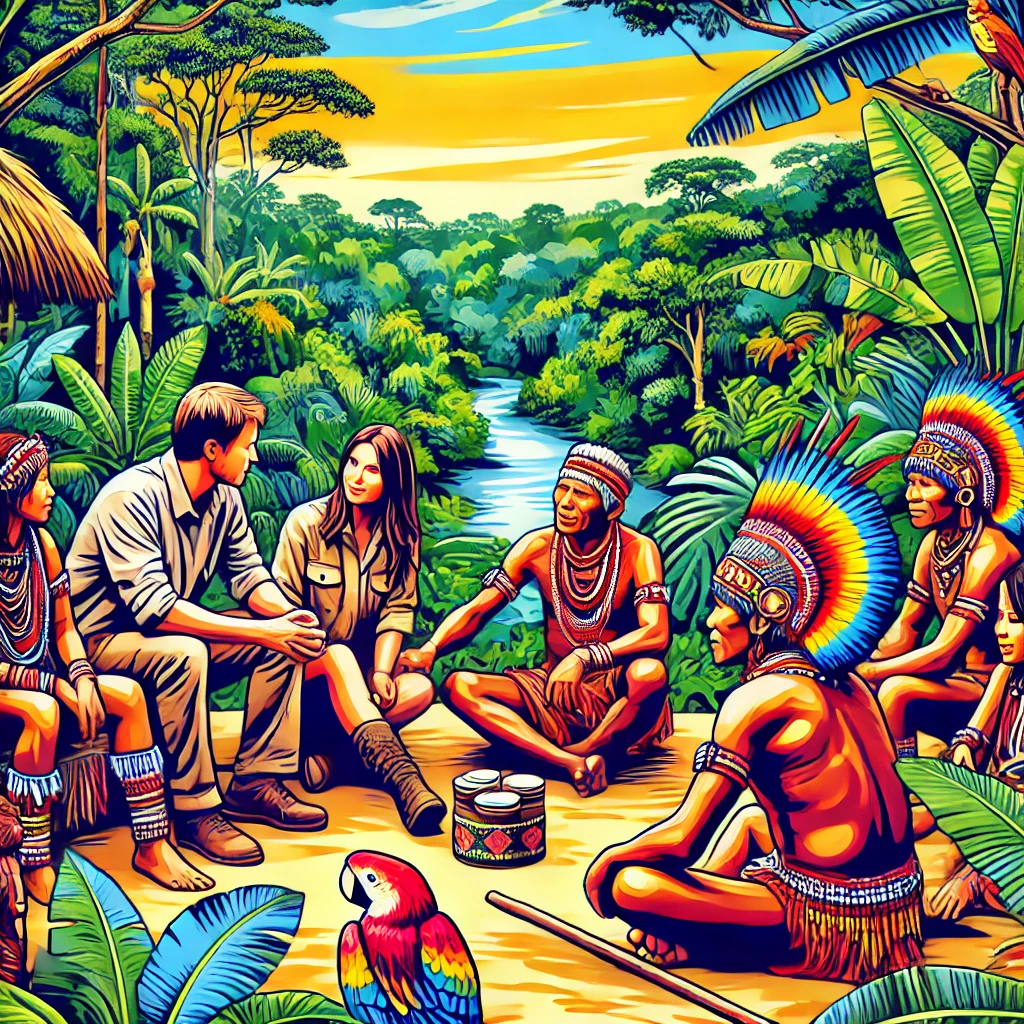
A couple sits in a circle with indigenous Amazonians in colorful feathered headgear

5. Embrace the local culture. 

One of the most rewarding parts of traveling in the Amazon is meeting people who call this vast region home. Tourism, when done thoughtfully, can support the communities and help preserve the forest. Look for ways to engage responsibly. Consider eco-lodges that prioritize sustainability, and always remember that you’re stepping into a place with its own rhythms and traditions.

Understanding and respecting local customs can lead to a richer experience. Many indigenous communities welcome travelers, but it’s always good to know local etiquette. And it doesn’t hurt to learn a few words of Portuguese or Spanish to show your respect and interest.

A girl stands on the bow of a small boat watching the pink dolphins of the Amazon

The Amazon Awaits

Few places on Earth compare to the Amazon, and with the right planning, you’ll be ready to discover it in all its intensity and wonder. So do your research, respect the rainforest and its people, and pack a good amount of curiosity. Get ready for a journey to one of the most unique ecosystems on the planet — one that, with any luck, will leave you a bit changed when you return. –Lucy Roberts

Discover the 12 Best Beaches in New Zealand for a Perfect Getaway

This guide to New Zealand’s beaches, from Piha to Cathedral Cove, has stunning landscapes, surf breaks, wildlife, adventure and family-friendly spots. 

A woman and man lay out on striped towels on a New Zealand beach

New Zealand’s coastline is like nature’s greatest hits album: track after track of jaw-dropping beauty, with a few surprises thrown in. From surfable swells that’ll test even the boldest boarder to hidden coves that feel like they’ve been plucked straight from a postcard, this island nation doesn’t do boring. Whether you’re hunting for waves, family-friendly shores or a little wildlife action, these beaches bring the kind of coastal magic that only New Zealand can offer.

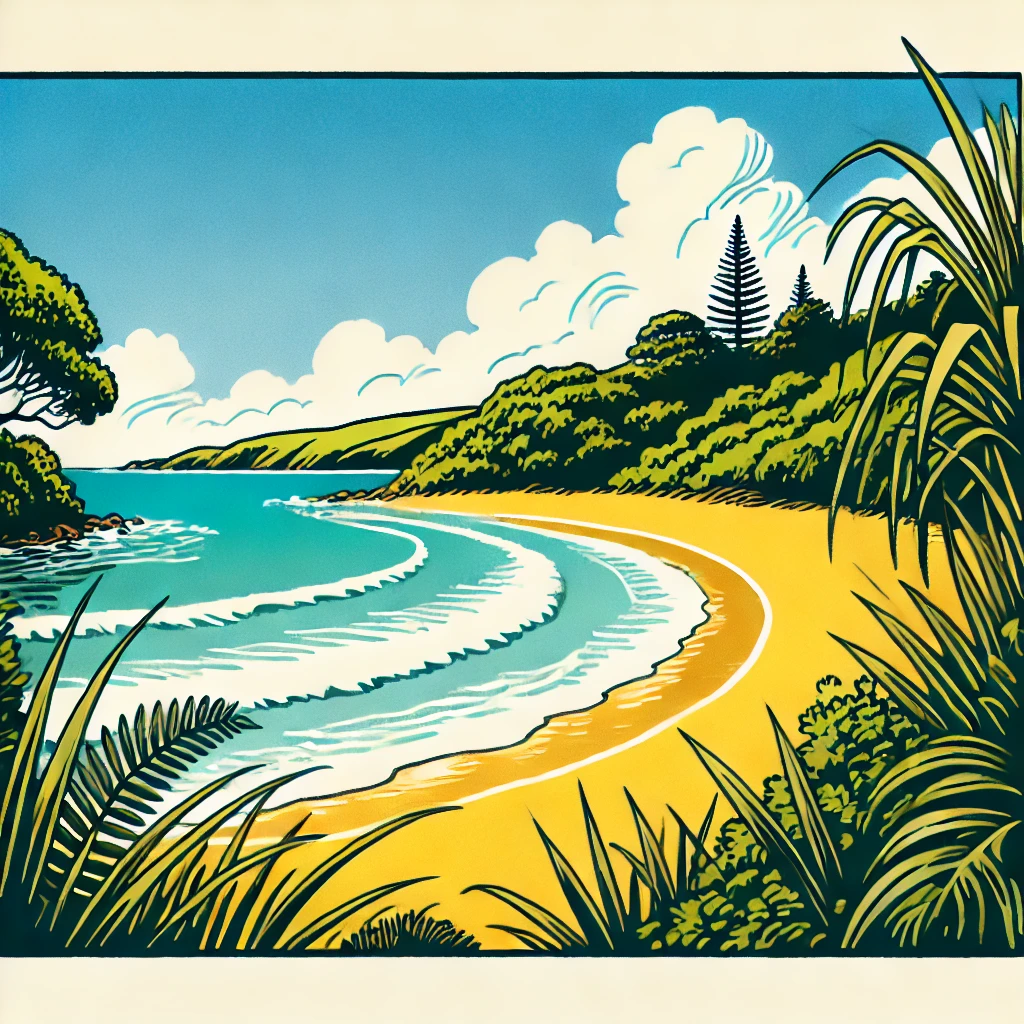
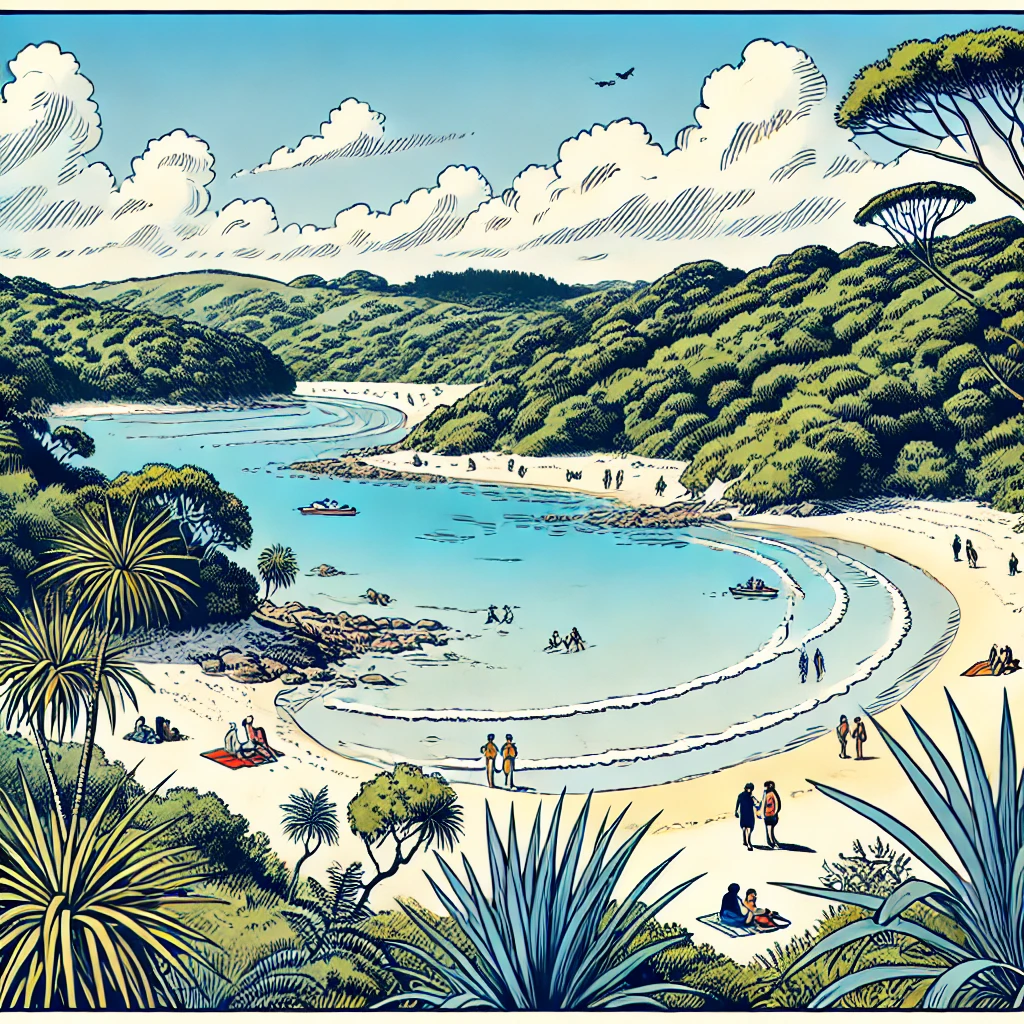
An illustration of a New Zealand beach with lush foliage and golden sand
From surfable swells that’ll test even the boldest boarder to hidden coves that feel like they’ve been plucked straight from a postcard, this island nation doesn’t do boring.

Ready to discover the best beaches in New Zealand? Let’s dive in. 

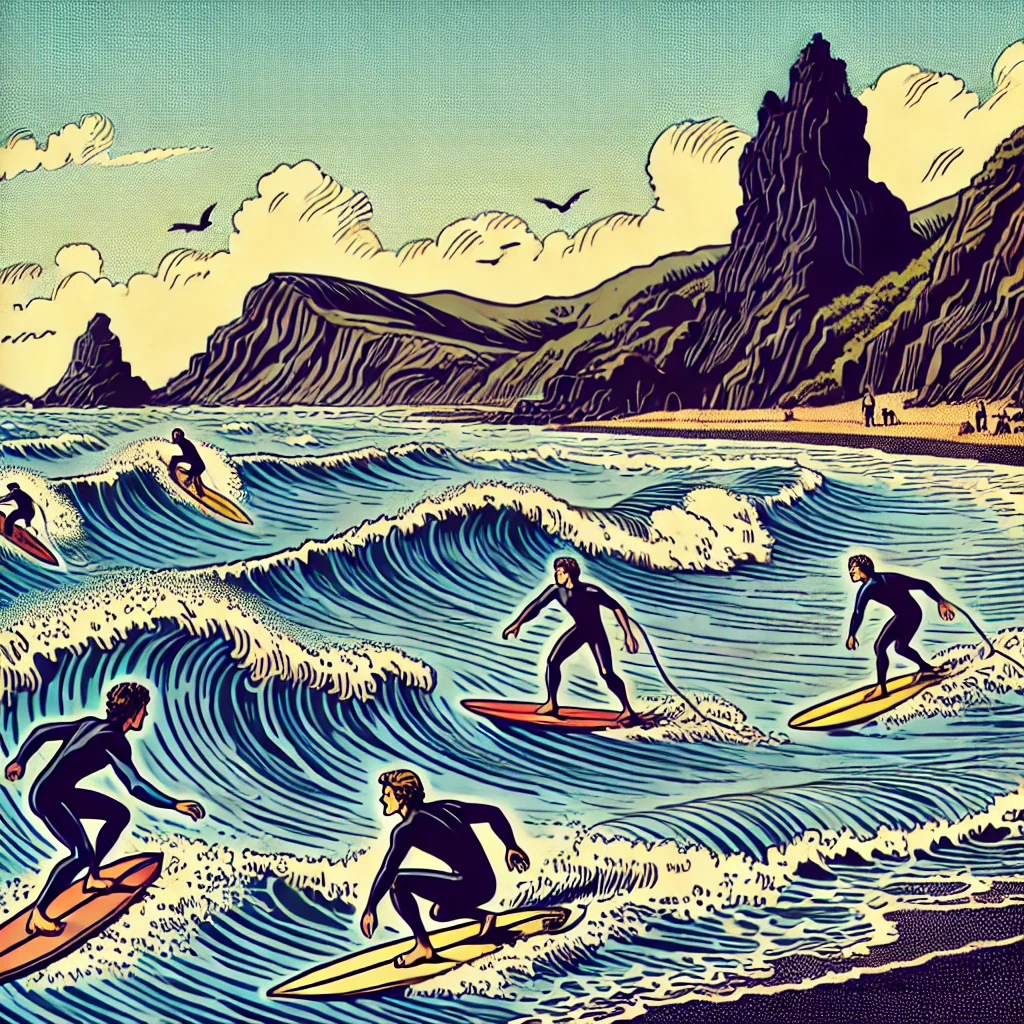
Surfers ride the waves at Piha Beach in New Zealand

1. Piha Beach

One of the most iconic and well-known surf destinations in New Zealand, Piha Beach, is just an hour away from Auckland. Famous for its black volcanic sands and strong waves, Piha draws experienced surfers and other adrenaline junkies from around the globe. Set against a dramatic backdrop, the beach features Lion Rock as a prominent natural landmark.

Apart from surfing, Piha is a great spot for hiking, too, with the Kitekite Falls trail being a highlight. For those searching for a relaxing experience, there are picnic sites, and you can take a long walk along the shoreline. 

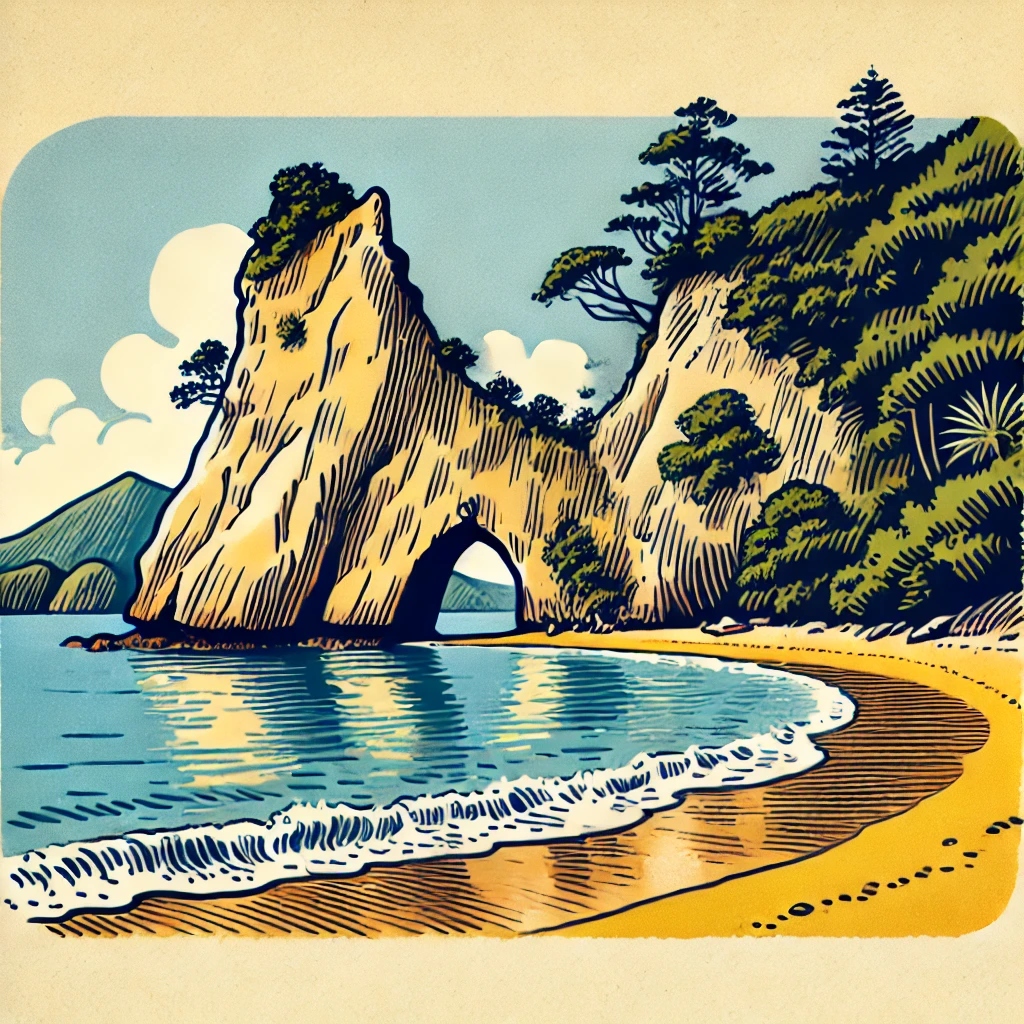
A rocky arch at Cathedral Cove beach in New Zealand

2. Cathedral Cove

One of the most famous beaches in New Zealand, Cathedral Cove is renowned for its natural archway that connects two golden sand coves. This beach is known for its crystal-clear waters and white limestone bluffs, and it can be accessed on foot, boat or kayak.

Snorkeling and kayaking are very popular, and the marine reserve provides good opportunities for anyone wanting to experience both Cathedral Cove and the abundant marine life. Photographers can take in the striking backdrop, which makes this one of the most photogenic beaches in New Zealand and an obligatory stop for anyone visiting the Coromandel Peninsula.

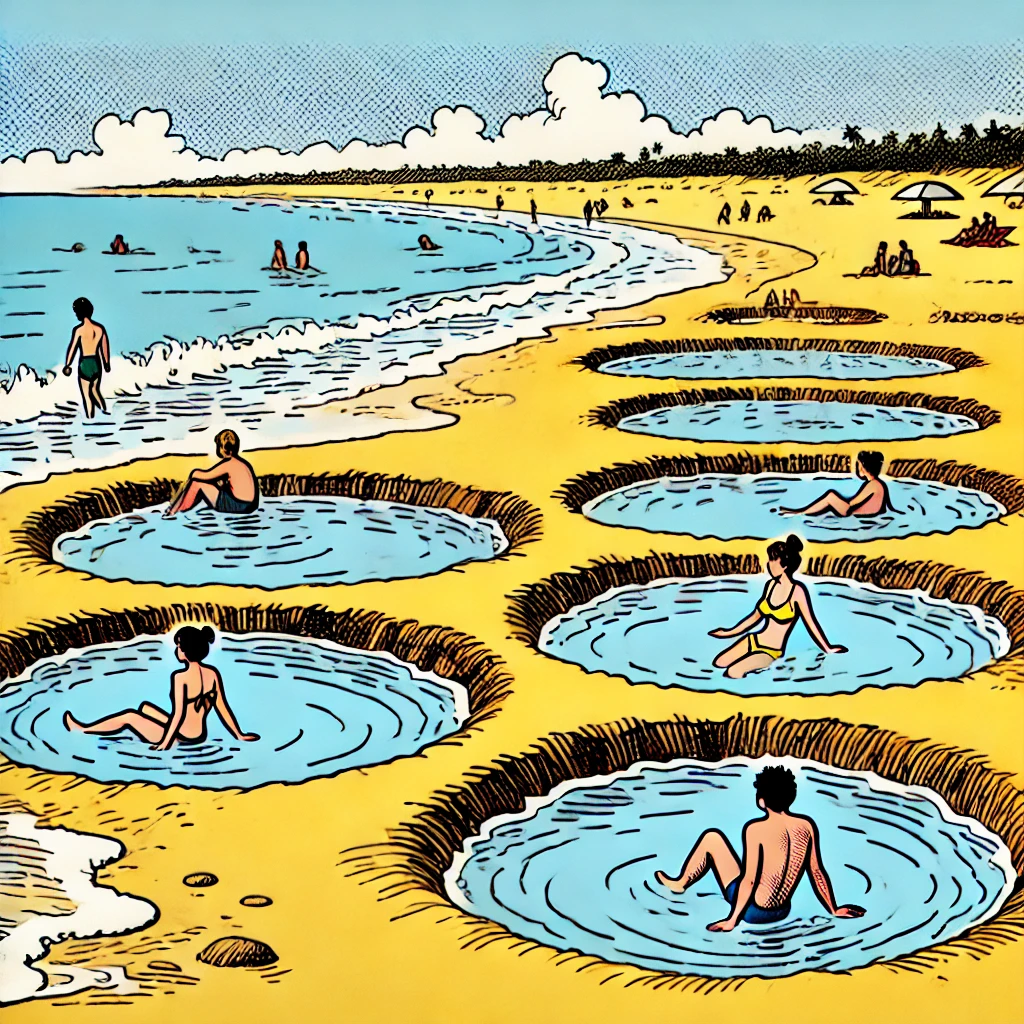
Bathers sit in round hot tub-like pools dug into the sand at Hot Water Beach in New Zealand

3. Hot Water Beach

There’s no other place in the world where you can do what you can at Hot Water Beach. Geothermal activity beneath the sand allows visitors to dig their own hot tub on the shores. This natural spa process takes place during low tide, where hot water rises through the sand, forming countless small private hot tubs.

In addition to this, Hot Water Beach has beautiful scenic views and excellent opportunities for swimming. Get there early to beat the crowds and plan your visit within a four hour window before high tide—otherwise, you won’t be able to experience the hot springs. Its mix of natural tranquility and picturesque views makes it one of the best beaches in New Zealand.

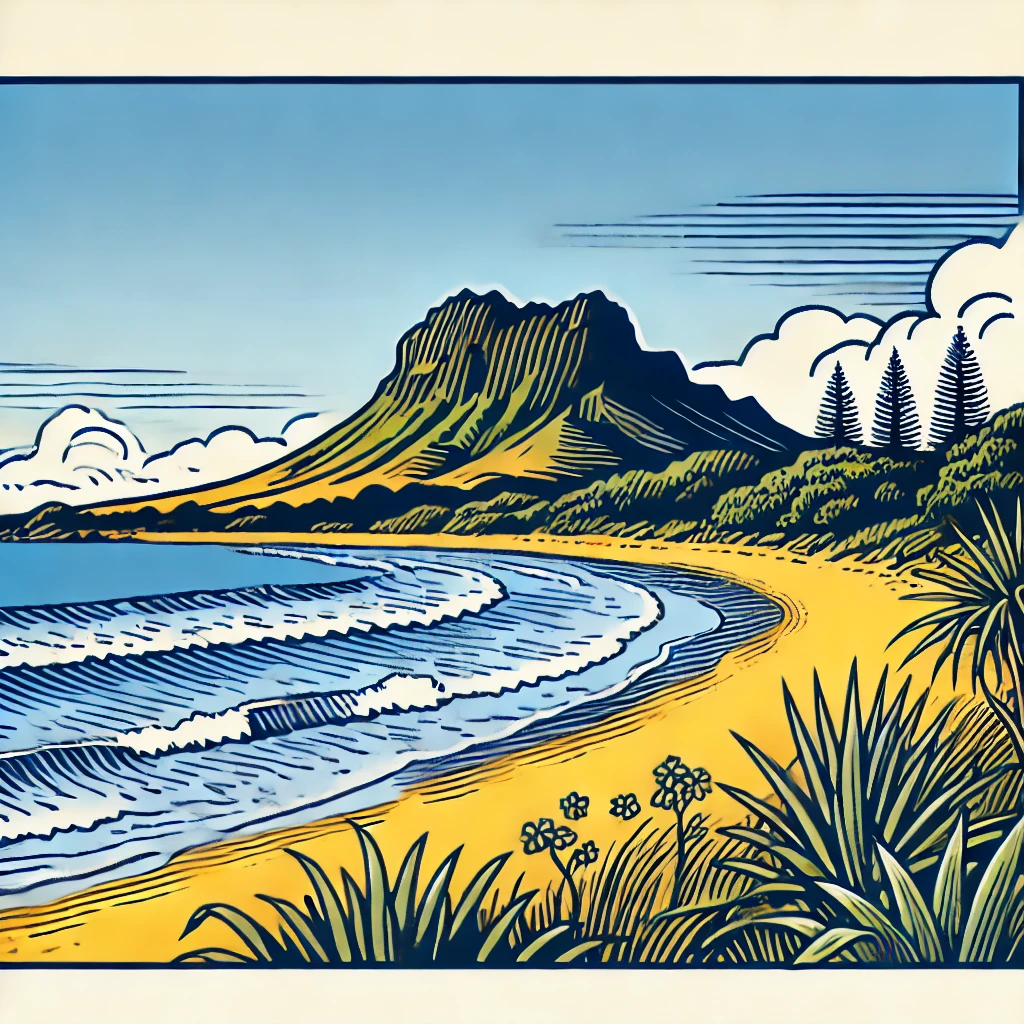
Mount Maunganui Beach in New Zealand

4. Mount Maunganui Beach

Mount Maunganui Beach is a favorite with both locals and tourists. Families love that this beach has long expanses of soft, white sand and calm waters. Mount Maunganui volcano, located nearby, serves as an impressive backdrop and has hiking trails, which makes it a popular destination for beach-goers on the lookout for adventure.

There’s plenty to do at Mount Maunganui Beach, whether you prefer to surf, paddleboard or kiteboard, or just relax in the beachside cafés. Not surprisingly, this is consistently listed as one of the top beaches in New Zealand for relaxation or watersports.

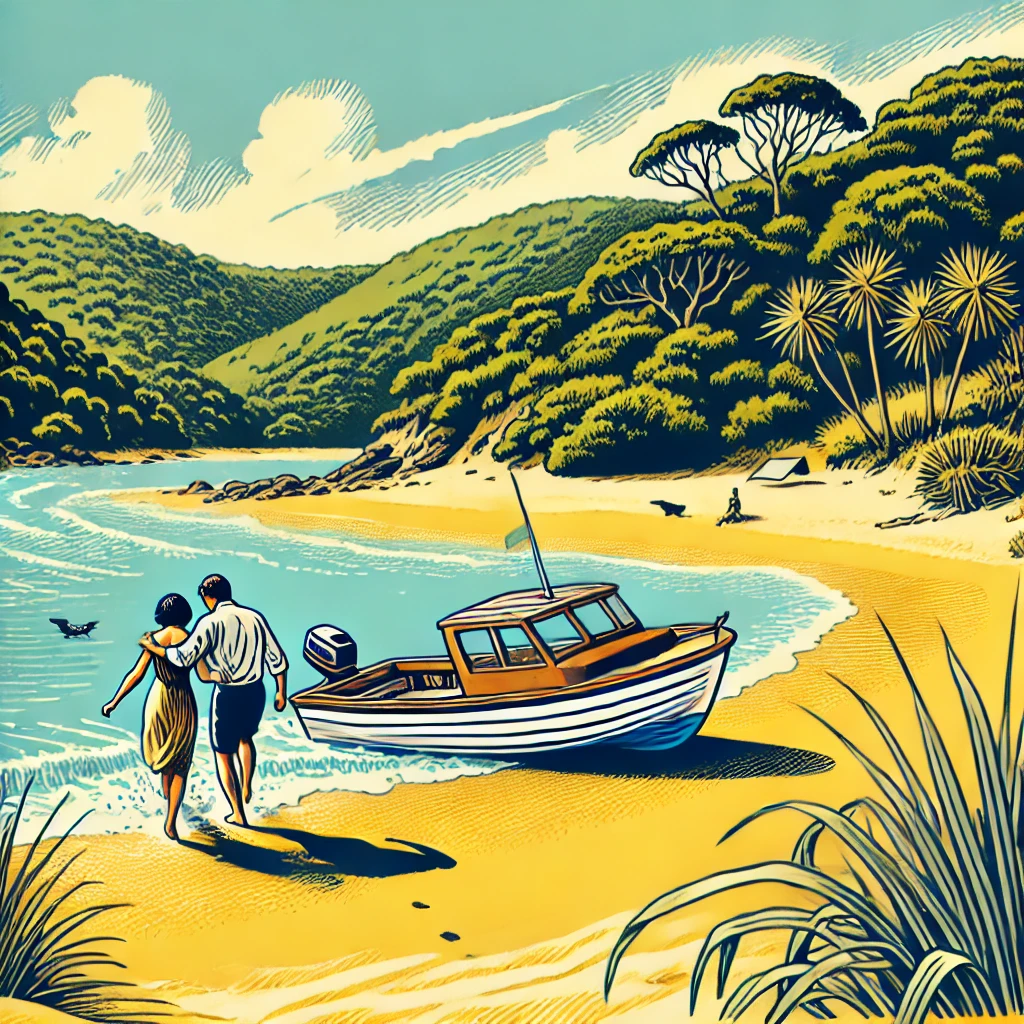
A couple wades in the water by a small boat they've taken to get to New Chums Beach in New Zealand

5. New Chums Beach

New Chums Beach is considered one of the most beautiful beaches in the world for good reason: Only accessible by foot or boat, this untouched paradise remains minimally developed to preserve its natural beauty.

Nestled within native bush, New Chums Beach offers a tranquil escape with its crystal-clear blue waters and golden sands.

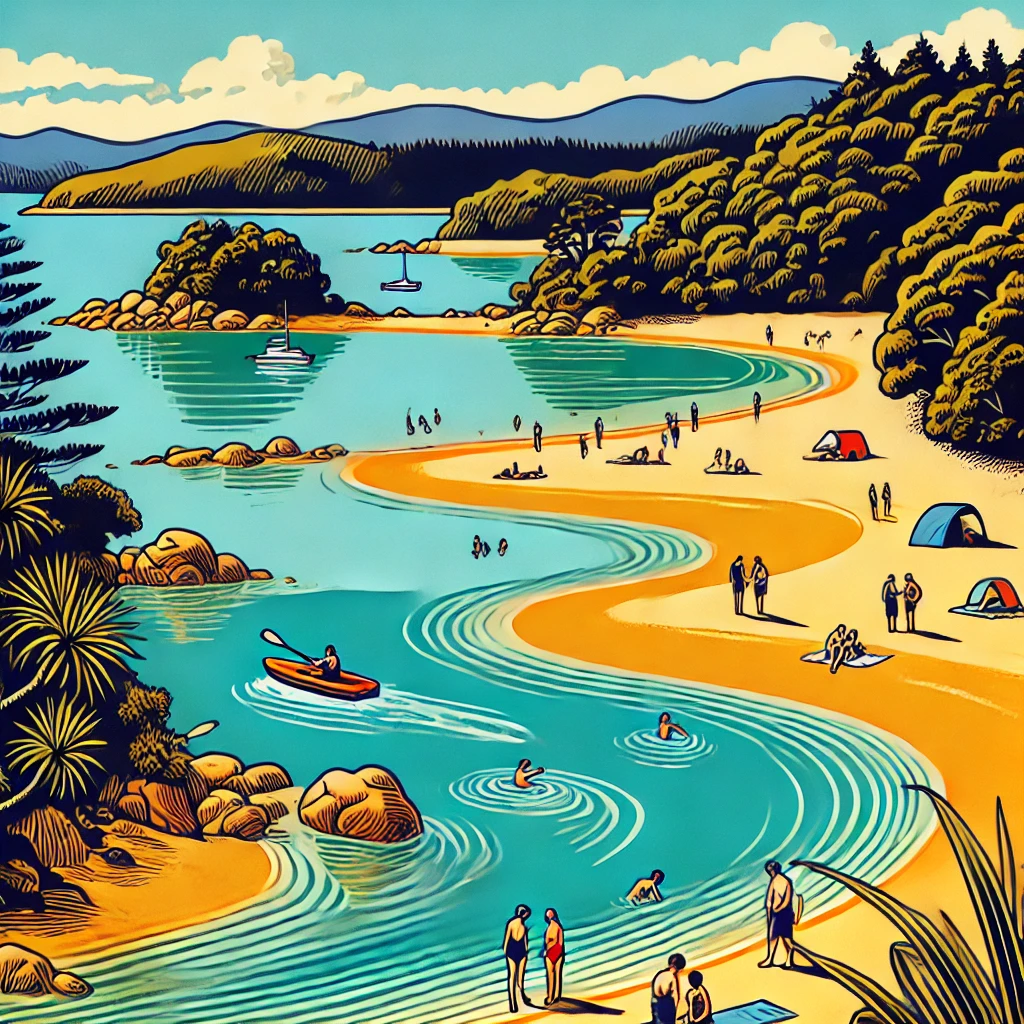
People engage in a variety of activities, including swimming, sunbathing and boating on Kaiteriteri Beach in New Zealand

6. Kaiteriteri Beach

Kaiteriteri Beach is famous for its golden sands and tranquil turquoise waters, serving as a gateway to Abel Tasman National Park. A family favorite, this beach offers calm swimming areas and a variety of watersports, including kayak rentals and paddleboarding.

Kaiteriteri is also a great base for exploring the many natural wonders of Abel Tasman National Park, which is just a short drive away. 

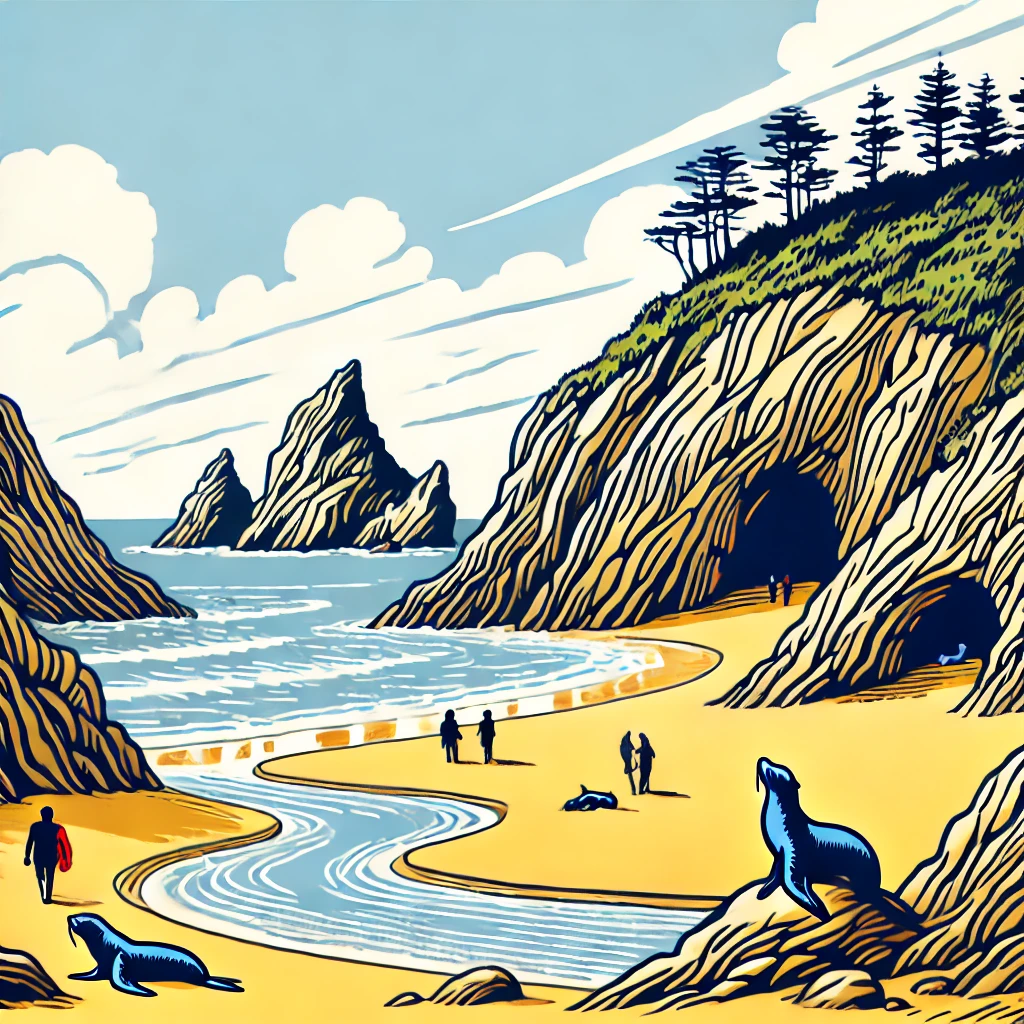
Seals hang out on Wharariki Beach in New Zealand

7. Wharariki Beach

Wharariki Beach is situated in the northernmost part of New Zealand, and you have to travel a long way to get there. But it’s worth the trek: From its towering sea stacks and dunes to the resident seal colonies, this beach is one for all your senses.

Visitors can explore sea caves, often shared with playful seals, or lose themselves in the untamed beauty of the landscape. For nature lovers and photographers craving raw, untouched beauty, few beaches in New Zealand can rival the breathtaking Wharariki Beach.

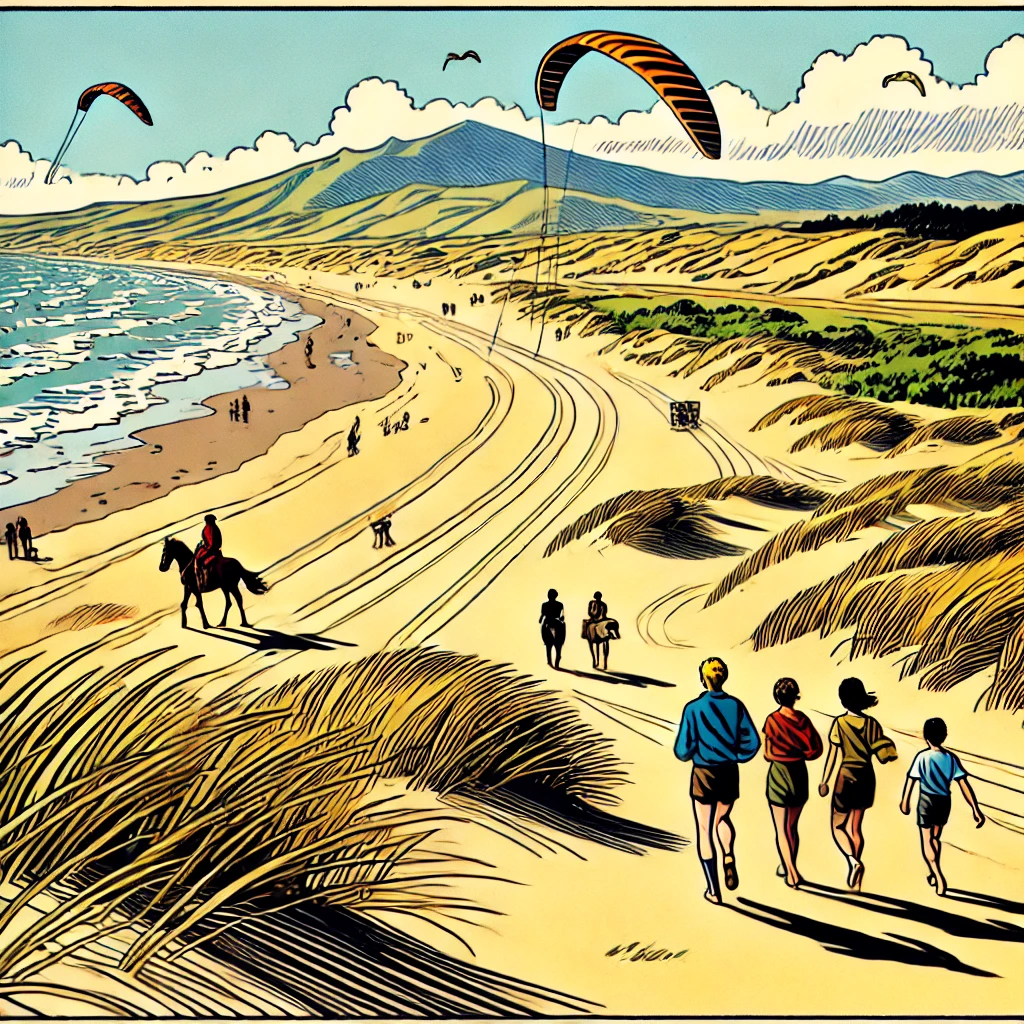
People ride horses, walk along and fly kites on Oreti Beach in New Zealand

8. Oreti Beach

Oreti Beach, located in the southern part of New Zealand, is a vast, windswept stretch of sand that seems to go on forever. Its open spaces and solitude make it a perfect retreat for those who prefer peaceful nature walks over crowded beaches. It feels completely isolated and untouched — making it one of the best beaches in New Zealand for those seeking quiet. 

The wide expanse also draws kite fliers, shell seekers and horseback riders.

Beachgoers enjoy beautiful Tawharanui Beach in New Zealand

9. Tawharanui Beach

A hidden gem, this beach is nestled in Tawharanui Regional Park, located just outside of Auckland. It provides walking trails through stunning native bush, opportunities for wildlife viewing and pristine white sand beaches.

For those looking for a perfect mix of sandy seaside relaxation and bushland adventure, Tawharanui Beach is an ideal choice. Situated within a park conservation area, it’s also one of the best beaches in New Zealand for bird enthusiasts.

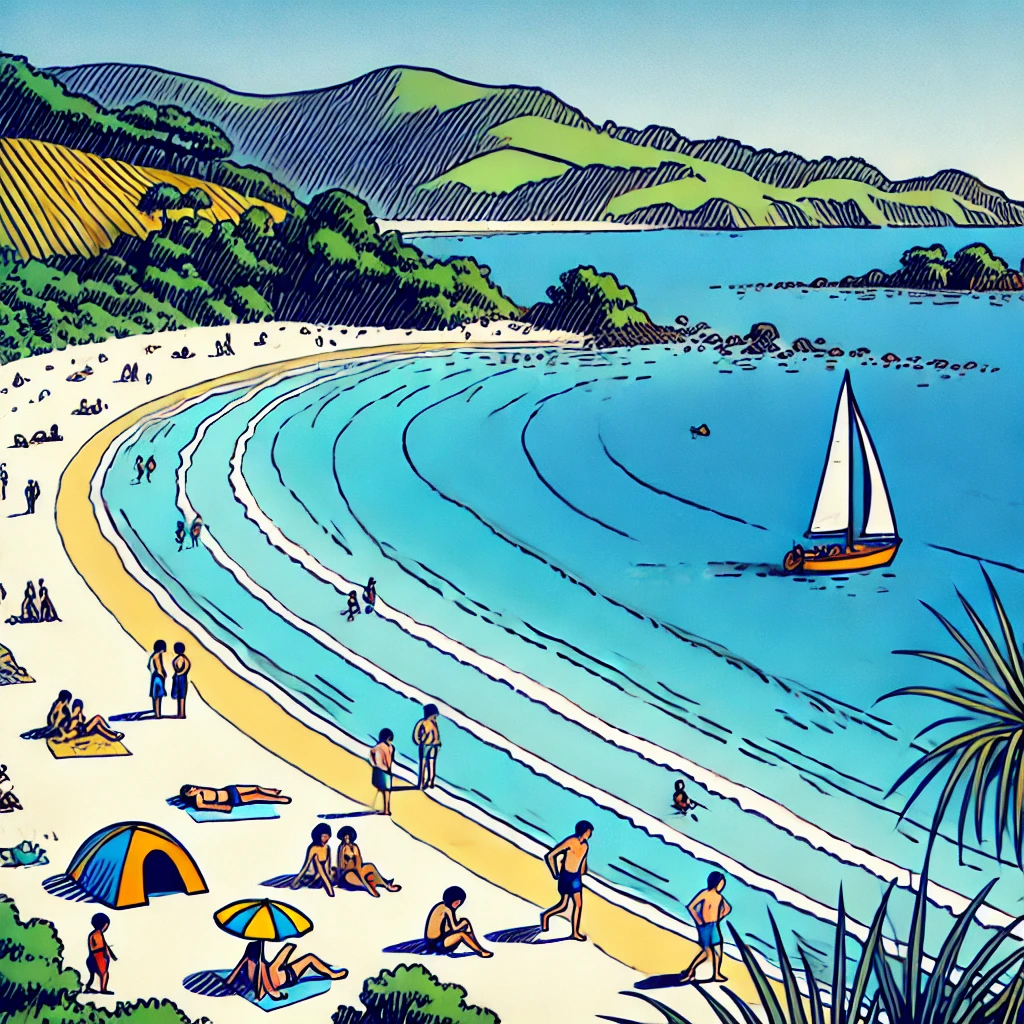
A sailboat sails offshore past the crowded Hahei Beach in New Zealand

10. Hahei Beach

With its soft white sand, the long sweep of Hahei Beach oozes a certain laidback Kiwi summer vibe. A perfect beach for swimming, snorkeling or just soaking up the sun, Hahei is also where you can visit nearby Cathedral Cove, one of the top things to do on New Zealand’s North Island.

Characterized by a friendly community vibe and surrounded by beautiful nature, Hahei Beach is easily one of the best beaches in New Zealand for escaping from it all.

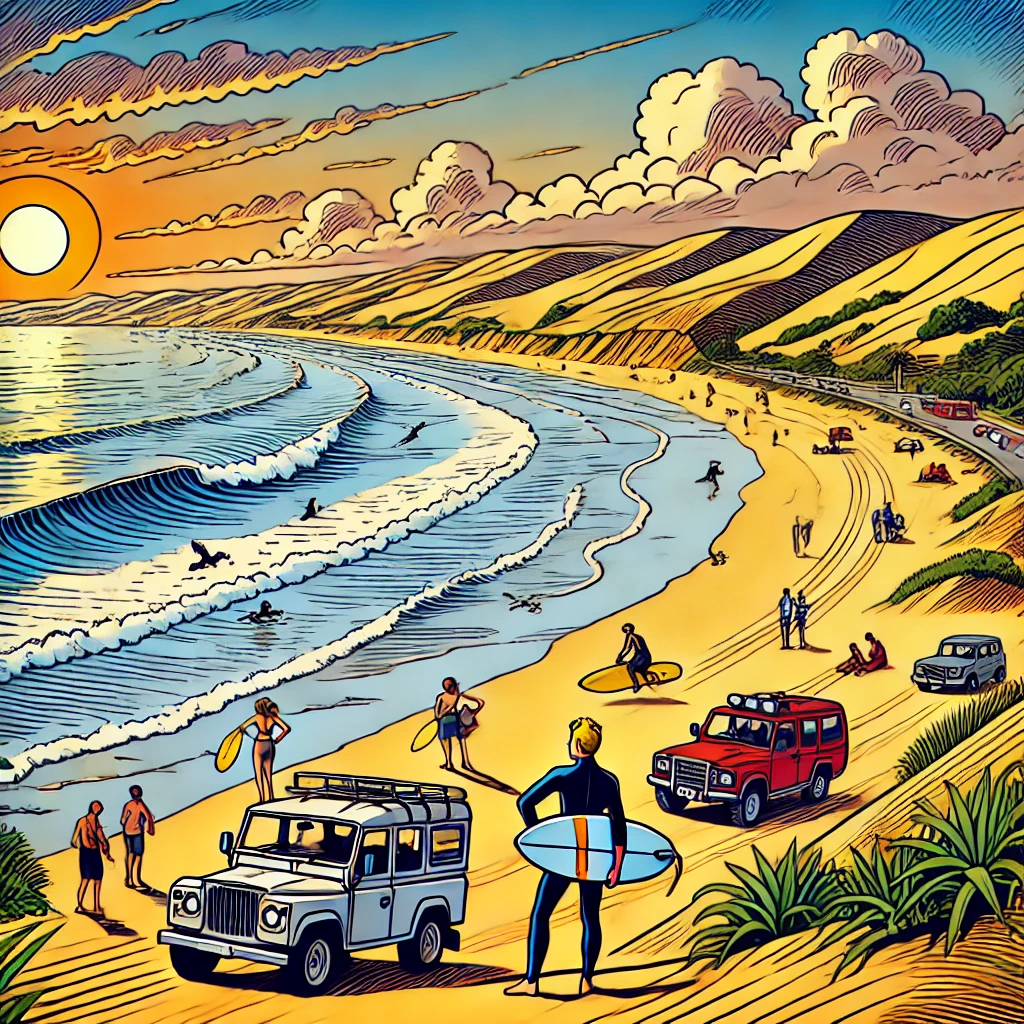
Surfers and four-wheel drivers enjoy Ninety Mile Beach in New Zealand

11. Ninety Mile Beach

Despite its name, Ninety Mile Beach is approximately 55 miles long. This stretch of coast is famous for its stunning sunsets and great surf. The expanse of Ninety Mile Beach allows visitors to get their four-wheel drive on, enjoy some beach fishing or tackle the sandboarding dunes down the road.

With its rugged, wide, and seemingly endless stretches of sand untouched by human development, Ninety Mile Beach is a top destination in New Zealand for road-trippers and adventure seekers.

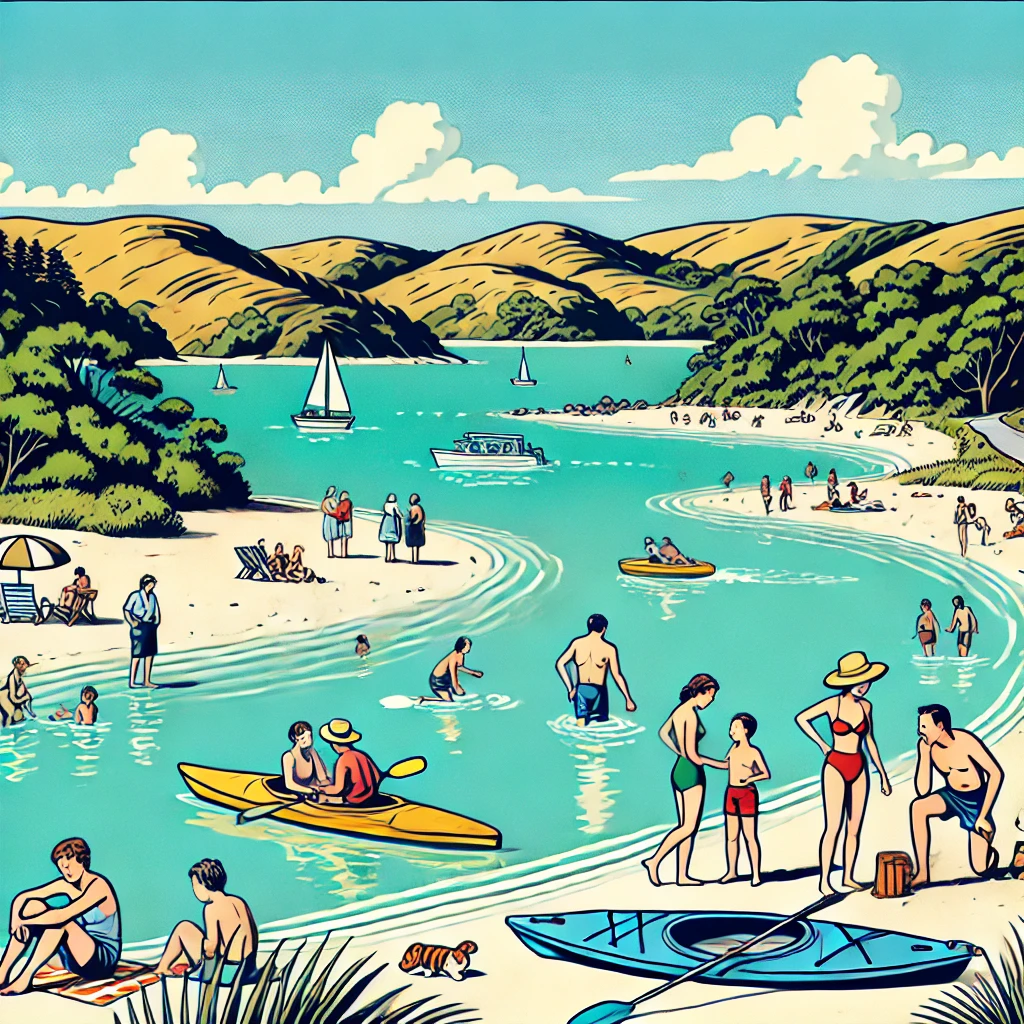
Beachgoers, kayakers and boaters hang out at Matapouri Bay in New Zealand

12. Matapouri Bay

The calm, turquoise waters and white sandy beaches of Matapouri Bay attract both tourists and New Zealand locals. It’s one of Northland’s best family beaches, offering safe swimming, land-based fishing, and opportunities to rent kayaks and paddleboards. 

Note: The nearby Mermaid Pools, natural rock pools that fill with crystal-clear water at high tide, are now closed, as requested by the local Maori tribe. The closure followed severe damage to the area, including littering, erosion,and contamination from people peeing in the pools.

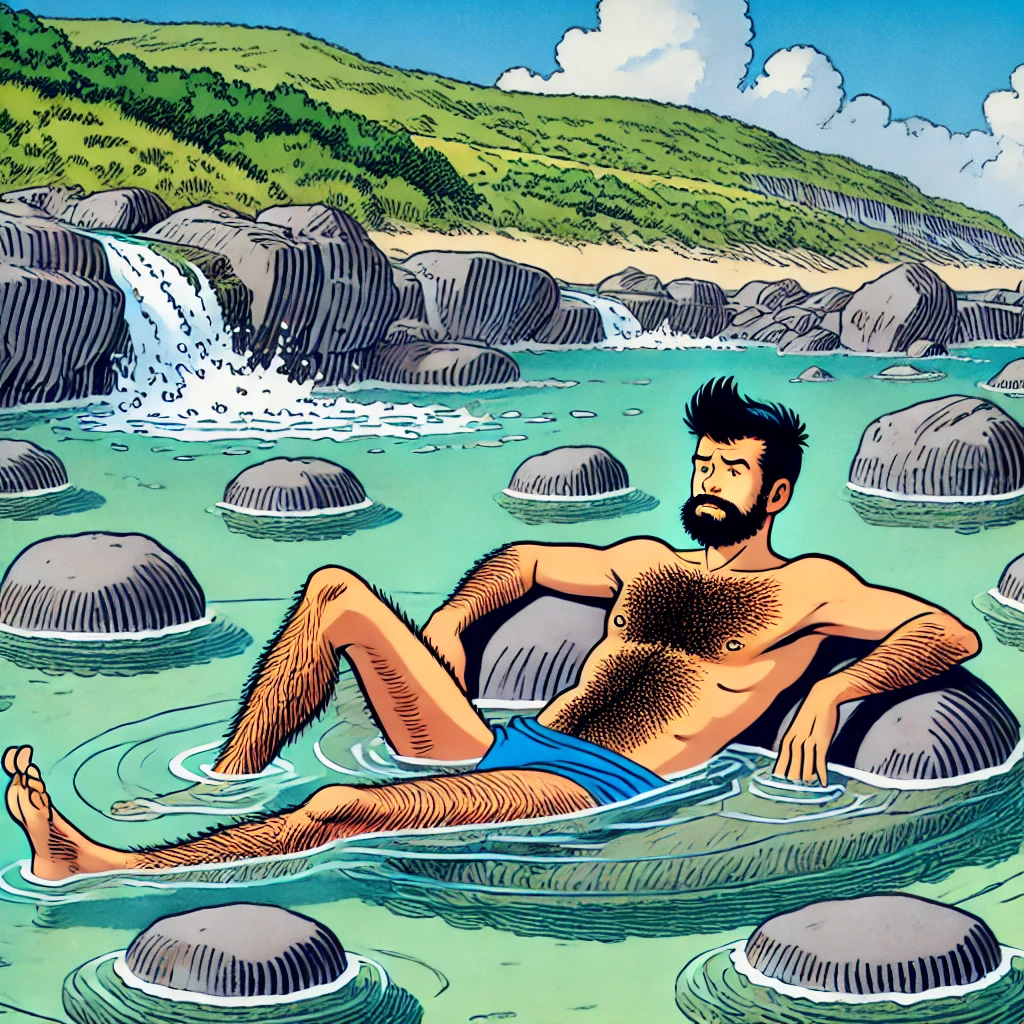
A hairy-chested man hangs out in a mermaid pool in New Zealand

Discover New Zealand’s Diverse and Stunning Beaches

The beaches in New Zealand offer incredible variety, catering to everyone — from thrill-seekers chasing wild waves at Piha to those looking to relax under an umbrella at Matapouri Bay. 

Fit shirtless men hang out on a beach in New Zealand

Several of New Zealand’s best beaches combine adventure, serenity and pure escape. Stretching from the North Island to the South Island, these beaches showcase the diverse landscapes and natural beauty New Zealand is known for. –Mark San Juan

Alaska’s Natural Wonders: An Adventurous Traveler’s Guide to the Last Frontier

The best of Alaska: the glaciers, boreal forests, grizzlies, moose, eagles, orcas and rugged coastlines of the Alaska wilderness.

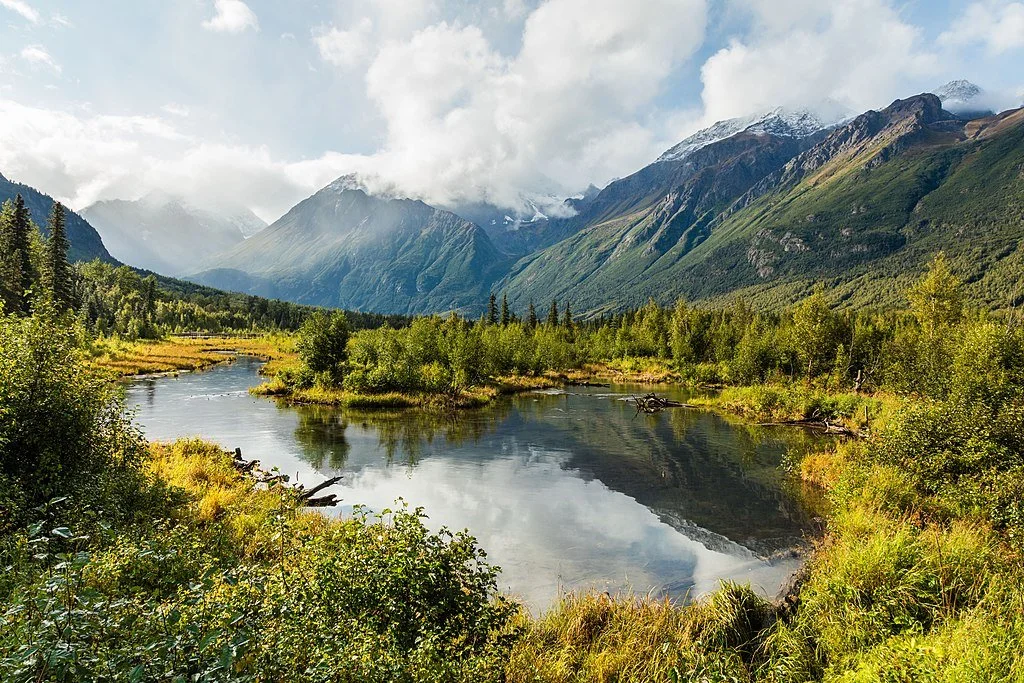
Alaska pond and stream surrounded by greenery with mountains in the background

True explorers can discover the untamed beauty of Alaska: glaciers, forests, wildlife and rugged coastlines.

It’s been referred to as the “Last Frontier” — and for good reason. Alaska is one of the few great wildernesses remaining in the United States. This breathtaking, diverse expanse is an extraordinary spectacle: a diverse landscape of towering glaciers, rugged mountain peaks, vast empty tundras and dramatic coastal plains. It’s one of the most exciting places in the world to explore for adventurous travelers and is packed full of natural wonders waiting to be discovered. 

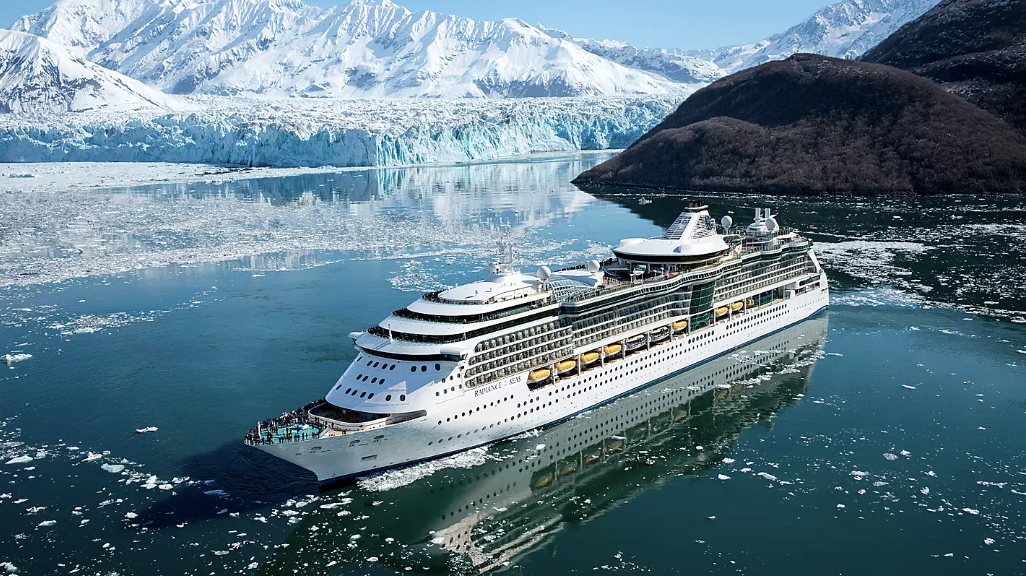
Massive white cruise ship in the ice-filled waters of Alaska with snow-covered mountains in the background

Aboard an Alaskan cruise, every view is a postcard moment.

An Alaskan cruise opens up a world of awe-inspiring beauty and lets you get to the heart of this remote yet stunning corner of the world. Discover the best landscapes of Alaska’s varied and surprisingly diverse wilderness.

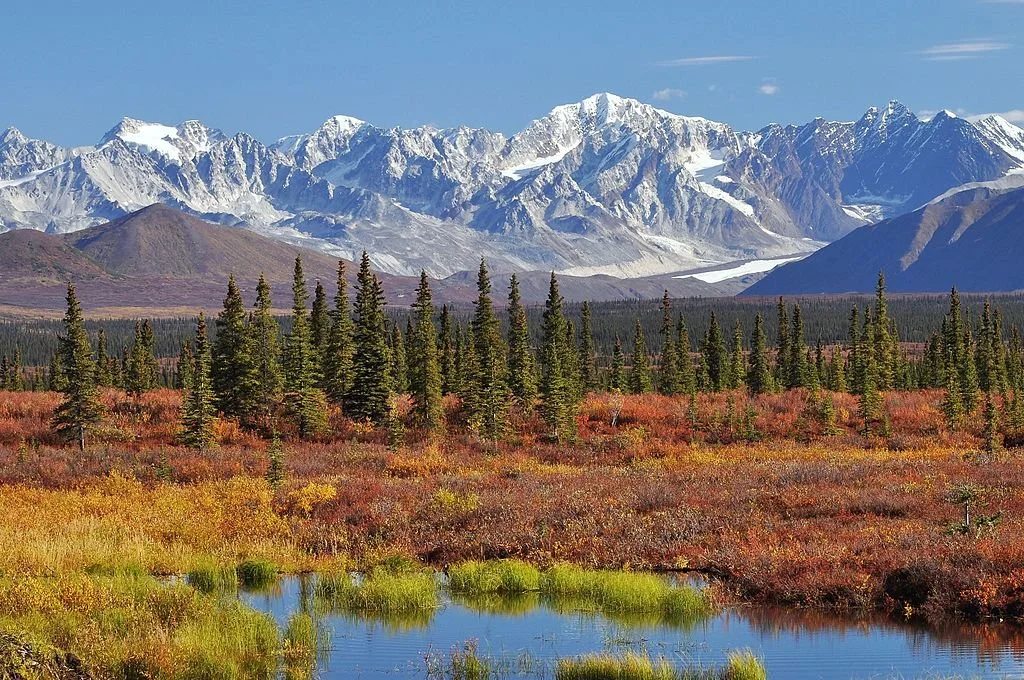
Autumnal tundra with narrow evergreens and snowy mountains of Alaska

Denali, aka Mount McKinley, is the tallest mountain in North America, standing at an impressive height of 20,310 feet (6,190 meters).

Glacier-Carved Mountains

Towering mountain ranges are a constant feature of the Alaskan landscape. Dramatic peaks and rugged ridges dominate the vistas, crowned by snow, ice and glaciers. Some of the continent’s highest summits can be found in the 49th state, including Mount Denali, the tallest mountain in North America. These peaks and valleys, carved over thousands of years by migrating glaciers, are a remarkable place for outdoor enthusiasts to explore, and a great place for hiking, mountaineering and wildlife watching.

Part of a glacier in Alaska slides into the water

Some of the numerous glaciers in Alaska are 30,000 years old!

Majestic Glaciers

Alaska’s glaciers are some of the state’s most popular attractions. The vast ice fields that cover over 100,000 square miles are actually ancient rivers of ice, constantly shifting and imperceptibly flowing, and are responsible for sculpting most of what constitutes the landscape of Alaska. 

While exploring Alaska’s glaciers isn’t for the faint-hearted, a hike over one of these frozen monuments is a unique and breathtaking experience, and you will stand gaping in awe at the towering ice walls, deep crevasses and shimmering blue ice caves. It truly is transcendental. For the less adventurous, a helicopter ride over the ice is also a treat.

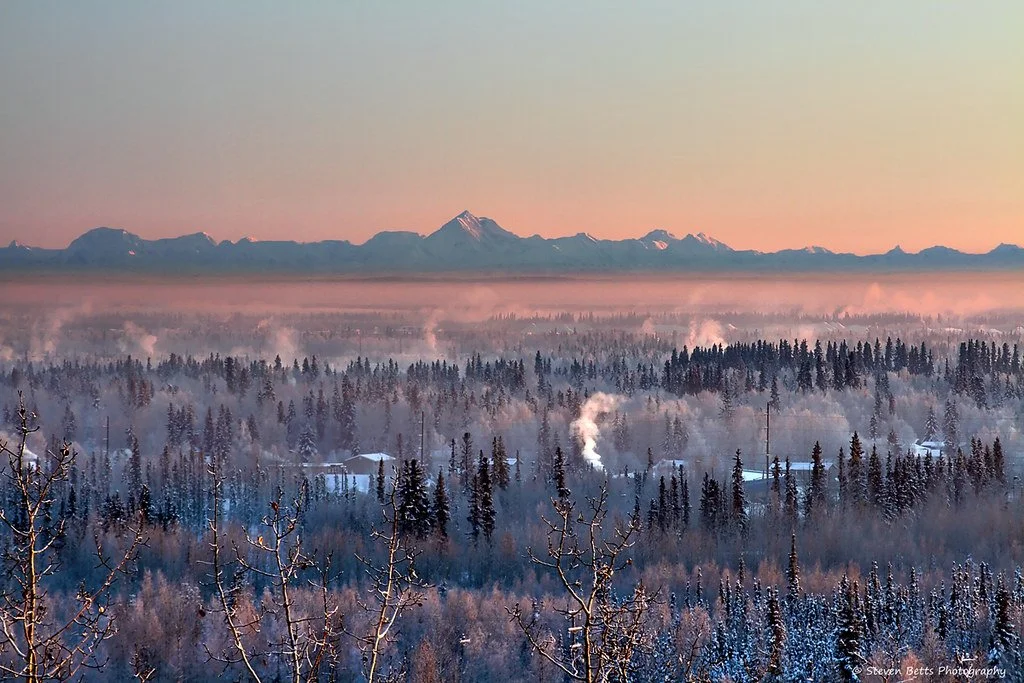
Foggy Alaskan forest at sunset with mountains lining the rose-colored horizon

The boreal forest in Alaska takes up about 65% of the state’s land mass.

Wildlife-Rich Forests

Many people think of Alaska as a barren wasteland, but its boreal forests are actually teeming with life and offer an important habitat for a huge variety of flora and fauna. Enormous stands of spruce, fir and cedar spread far and wide across the state and are home to a remarkable variety of ecosystems and natural beauty.

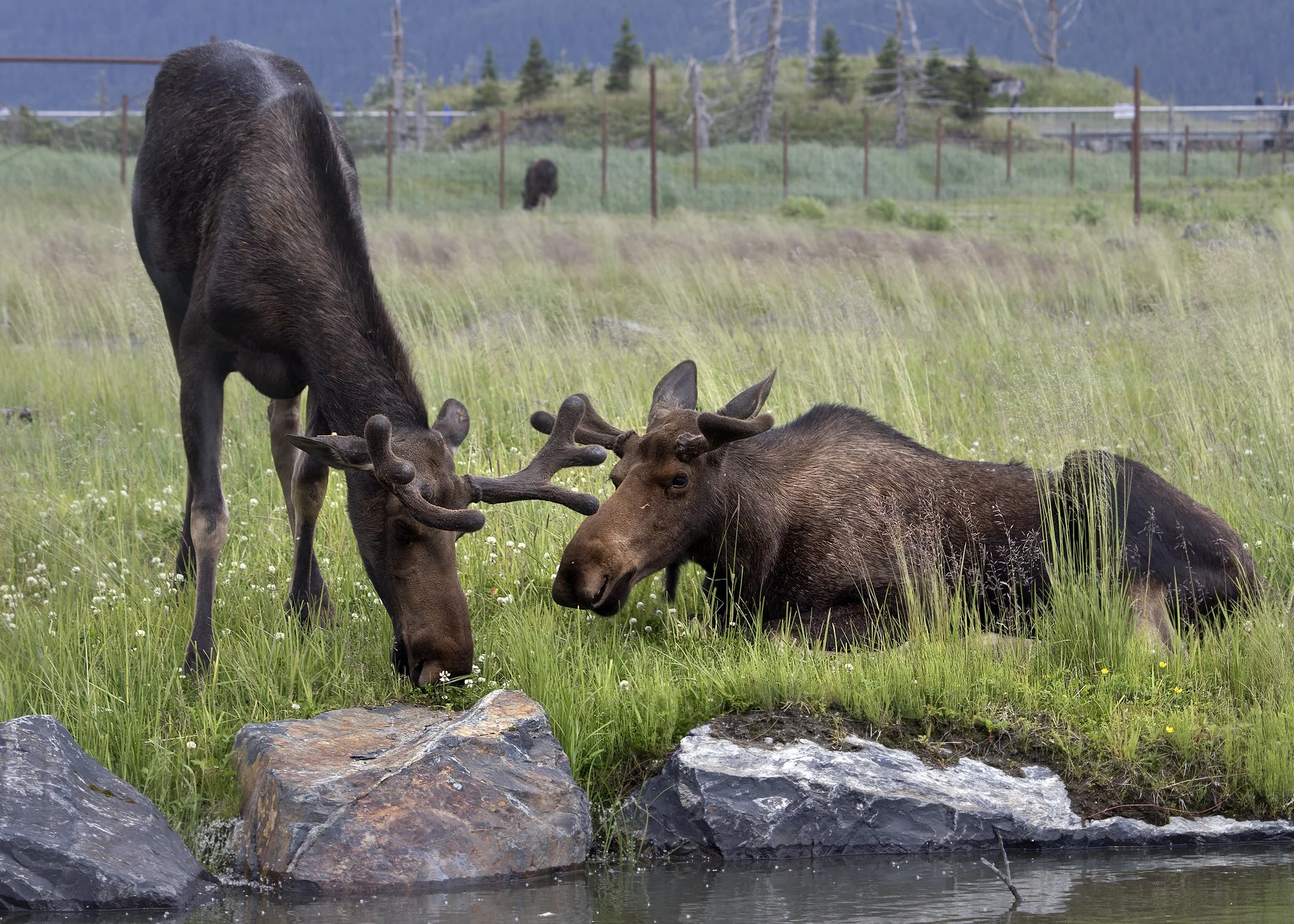
Two moose (one standing, one laying down) in the grass in Alaska

Up to 8,000 moose are hunted every year in Alaska.

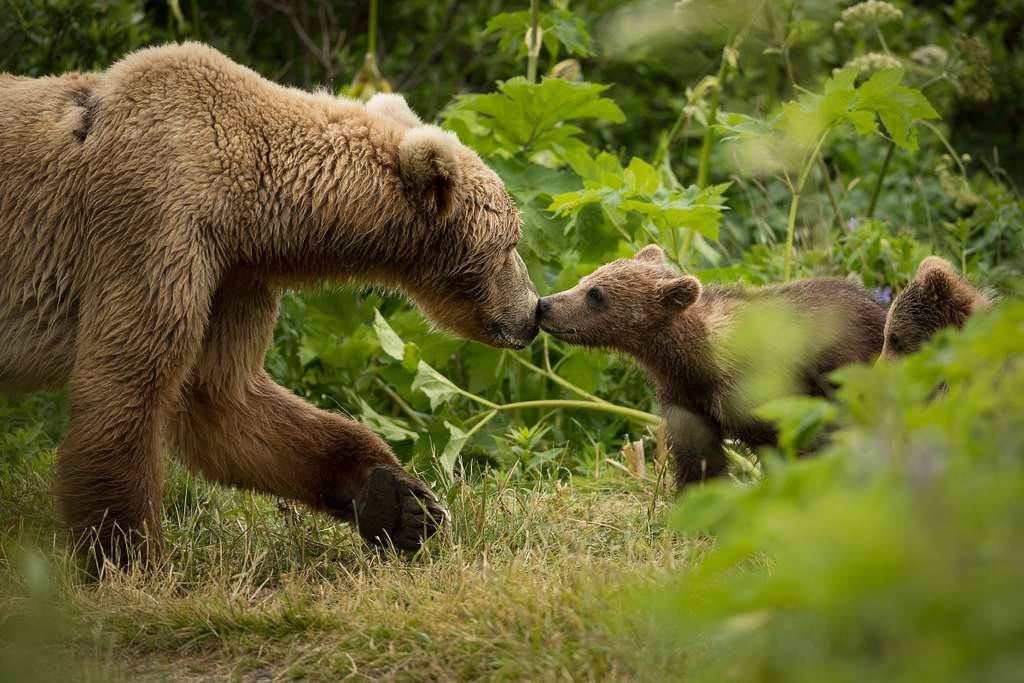
Kodiak bear touches its nose to the nose of its cub in Alaska amid plants

Kodiak are members of the grizzly family and are only found on an archipelago in Alaska.

Filled with meandering rivers, tranquil lakes and pristine wetlands, Alaska’s forests are a wonderful way to see the richness and diversity of the state up close. They also offer the chance to encounter some of the Last Frontier’s most iconic wildlife, including grizzlies, moose, wolves and eagles, as well as some more hidden gems such as caribou, lynx and wolverines. 

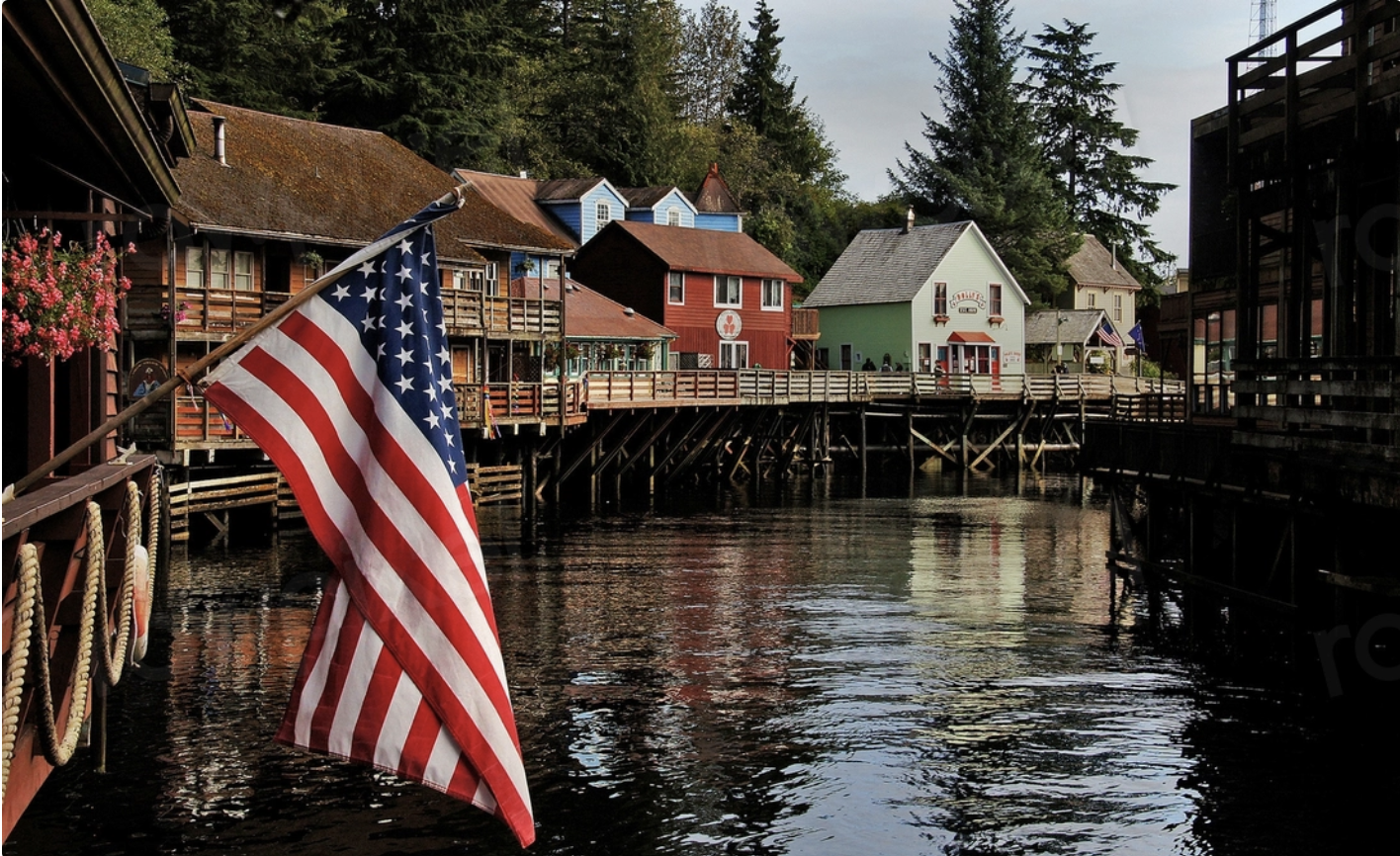
An American flag flies by colorful building on wooden supports over a creek in Ketchikan, Alaska

Ketchikan, known as Alaska’s “first city,” sure looks quaint — but this strip is its historic red light district.
Coastal Marvels

It’s hard to do justice to the rough, rugged magnificence of Alaska’s coastline. Stretching for over 6,600 miles, it stands in stark contrast to the wilderness of the interior, serving up a landscape of rocky cliffs, hidden coves and eye-catching beaches, as well as charming fishing villages and delightful old towns.

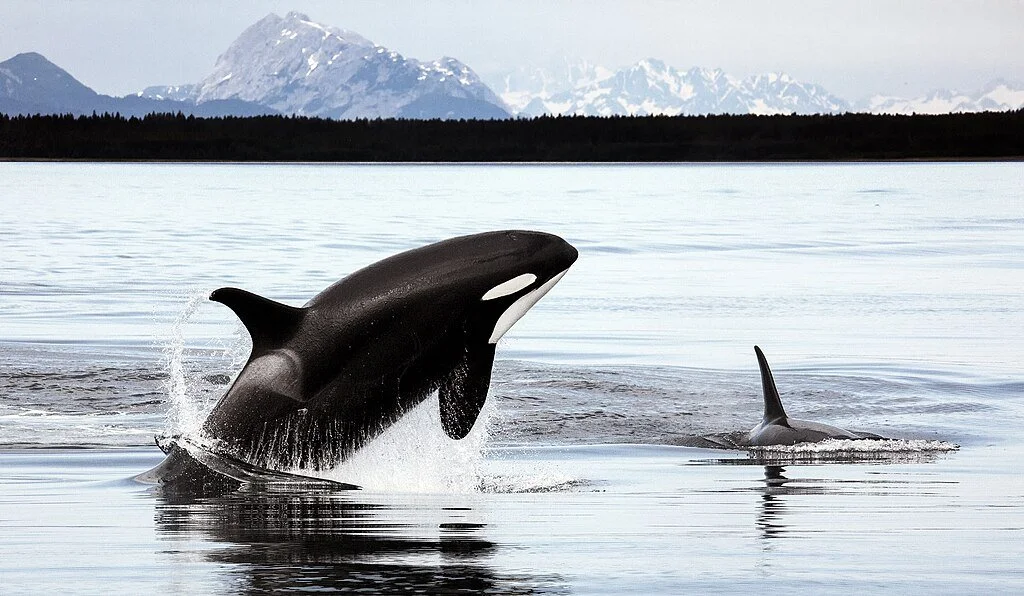
An orca jumps in the water by another with just its fin visible in the waters of Alaska

Orcas, aka killer whales, are actually dolphins. But the other part of their name is apt: They’re apex predators that hunt and consume sharks, baby whales and seals.

The coastline also gives visitors the chance to discover Alaska’s marine marvels, with whale watching a particular highlight. The abundant wildlife just offshore includes orcas, sea otters, dolphins and harbor seals. 

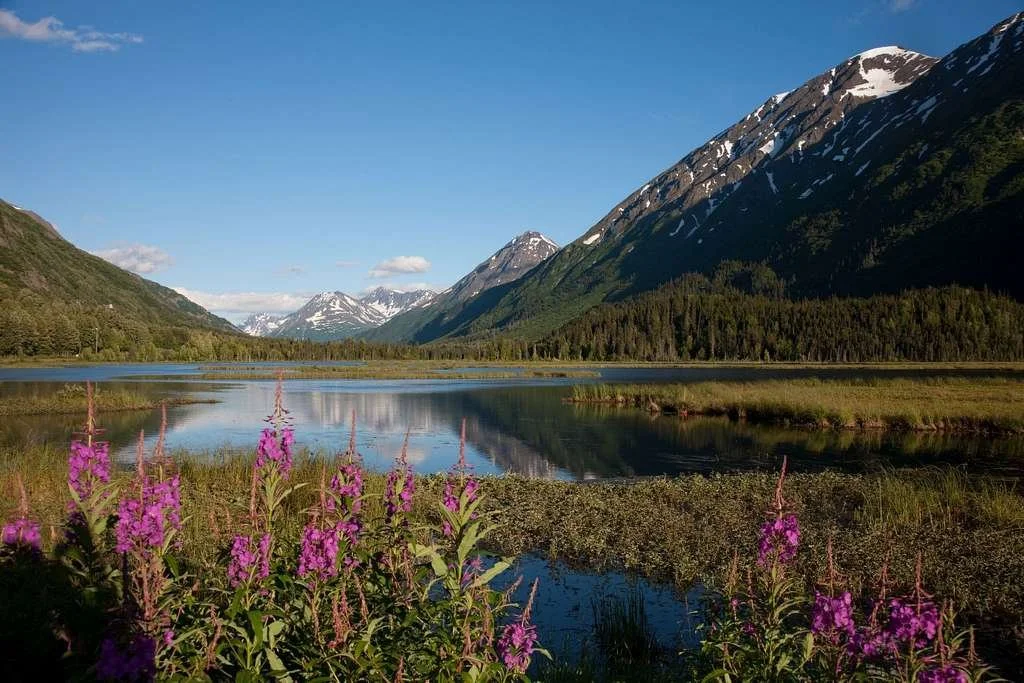
Purple flowers by a pond and snow-flecked mountains in Alaska

Alaska: where adventure meets awe-inspiring beauty.

The beauty and diversity of Alaska’s landscapes cannot be overstated, and a trip to this wonderful state provides adventure, excitement and natural wonders in equal measure. This stunning destination offers a chance to reconnect with nature and should be on every traveler’s bucket list! –Boris Dzhingarov

6 of the Most Unforgettable Galápagos Attractions

What are the coolest things to see in the Galápagos Islands? The giant tortoises of Rancho El Chato, the Bellavista Lava Tunnels, Los Gemelos and the sea lions of Lobería Bay make this a paradise for nature lovers.

A tortoise stands on the rocky shore in the Galapagos Islands

Calling all thrill-seekers! Are you ready to experience the Galápagos Islands like never before? This untouched paradise, situated off the shores of Ecuador, is home to an abundant and awe-inspiring array of wildlife. From giant tortoises to iguanas to penguins, this enchanting destination is a must-visit for nature lovers and adventure seekers alike. 

About 600 miles off the coast of Ecuador in the Pacific Ocean, the remote archipelago of 18 islands and more than 100 small islets was declared a UNESCO World Heritage Site in 1978.

Here are the top six awe-inspiring experiences you won’t want to miss out on during a private Galápagos tour:  

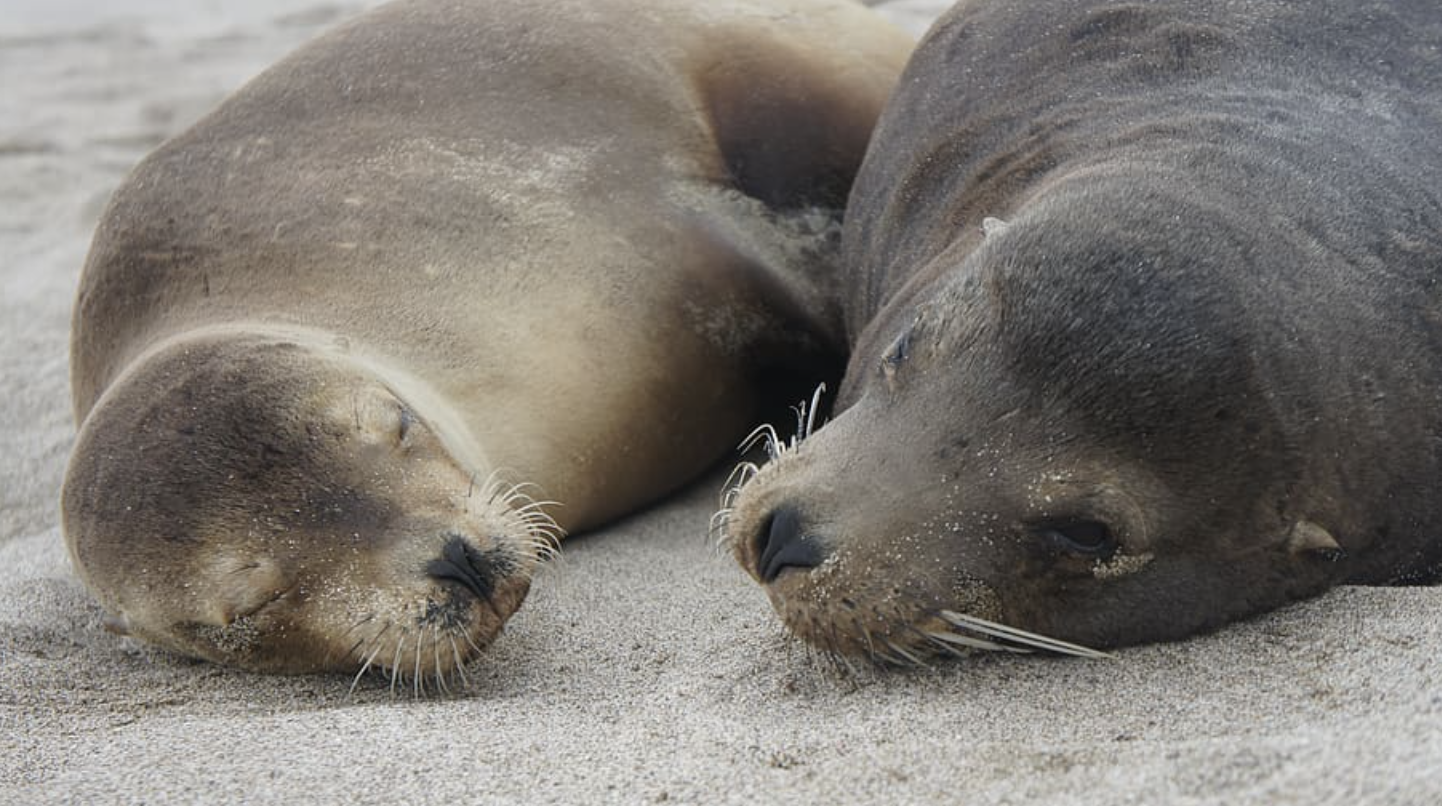
Two sea lions lie in the sand facing each other in the Galapagos Islands

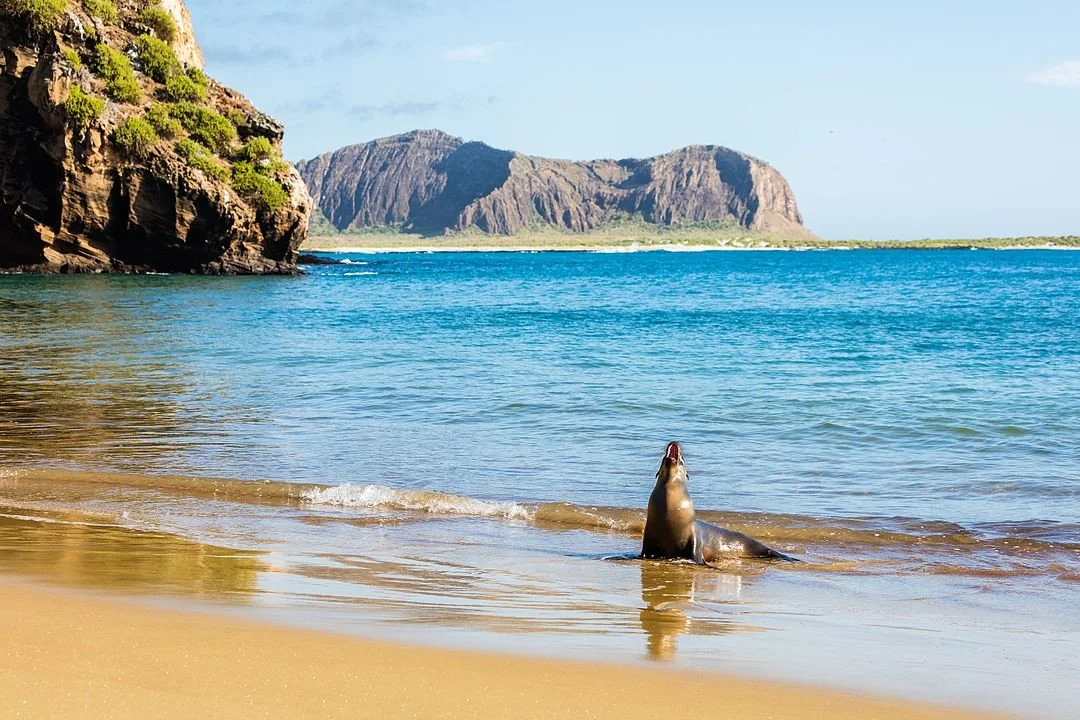
1. Lobería Bay: A Sea Lion’s Paradise

Near Puerto Baquerizo Moreno on the southwestern coast of San Cristóbal Island, Lobería Bay is home to one of the largest sea lion colonies in the Galápagos Islands, and its name, which loosely translates to “Place of the Sea Wolves,” is a fitting one. 

These playful creatures can be seen sunbathing on the rocks, swimming in the ocean and even surfing the waves. Visitors can get up close and personal with the sea lions, but it’s important to remember that they’re wild animals and should be respected.

Adorable tan sea lion stands on the beach in the Galapagos Islands

In addition to sea lions, Lobería Bay is home to a variety of other wildlife, including iguanas, penguins and pelicans. The crystal-clear turquoise waters off the coast are also great for snorkeling and scuba diving: You can see a variety of marine life, such as sharks, rays and colorful fish.

Lobería Bay is a truly special place to witness the spectacle of its namesake inhabitants. Their spirited playfulness and captivating postures make for an unforgettable show.

A bunch of pelicans hope for scraps while fishermen cut up their catches at the Santa Cruz Fish Market in Puerto Ayora

2. Santa Cruz Fish Market: Get Fresh

Located on San Cristóbal’s southern shore in the town of Puerto Ayora, the Santa Cruz Fish Market is a wonderful place to immerse yourself in island culture. Locals come here to select their evening feast among the freshest catches of the day. The market is a hive of activity, with fishermen unloading their boats, vendors hawking their wares and tourists snapping photos. 

You won’t be alone. Pelicans waddle past the counters, and the sea lions poke their heads up beside the sellers stalls to sniff the delicious seafood.

But the real spectacle is the intricate process of weighing and preparing the fish. Yellowtail tunas are hoisted onto scales, groupers are gutted and fileted, and scorpion fish are skinned and cleaned. It’s a fascinating glimpse into the world of commercial fishing, and it’s sure to whet your appetite.

At night, the fish market transforms into an open-air restaurant. The set menu offers a plate of fresh seafood and two sides for a very reasonable price (around $5). 

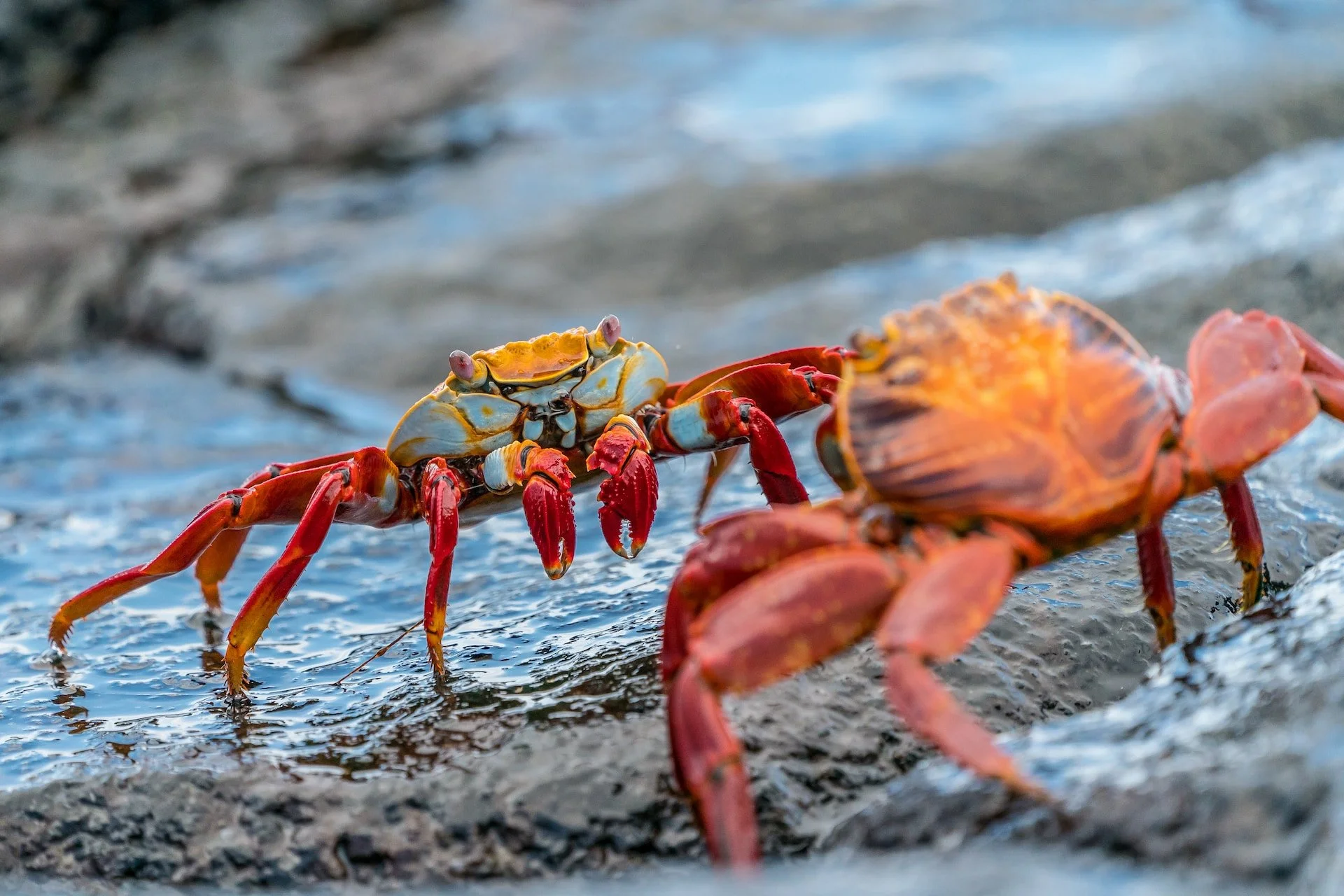
Two bright red Sally Lightfoot crabs face off on the rocks on the beach in the Galapagos Islands

While you’re in the vicinity, head to the black volcanic rock shores to see colonies of brightly colored Sally Lightfoot crabs scuttling about.

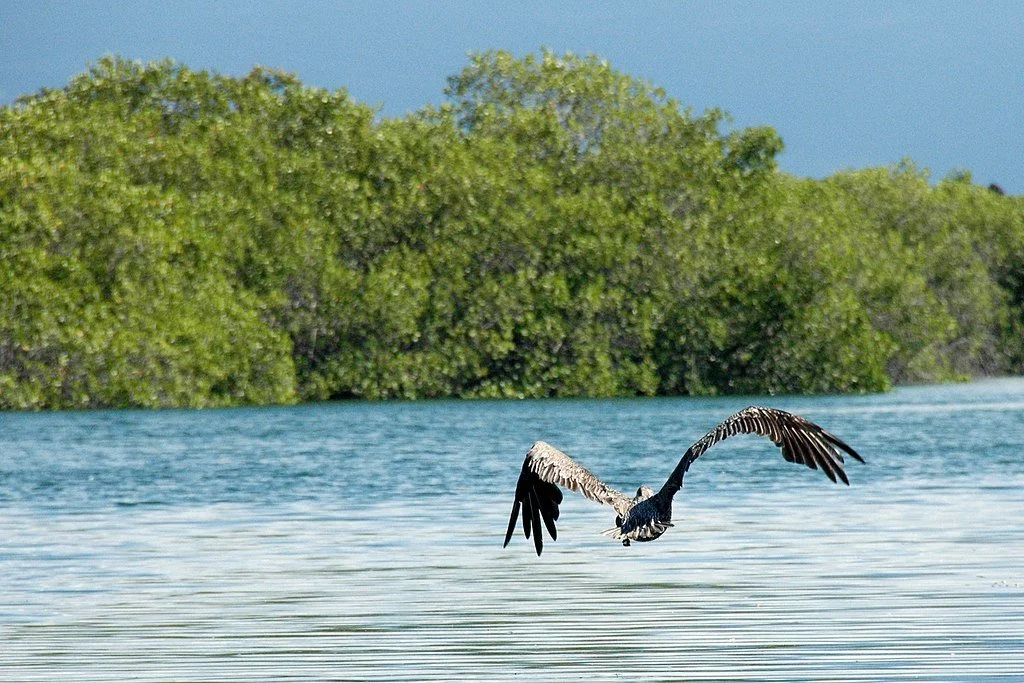
A pelican flies over the water by green foliage in the Wetlands on Isabela Island, Galapagos

3. The Wetlands on Isabela Island: A Birdwatcher’s Paradise

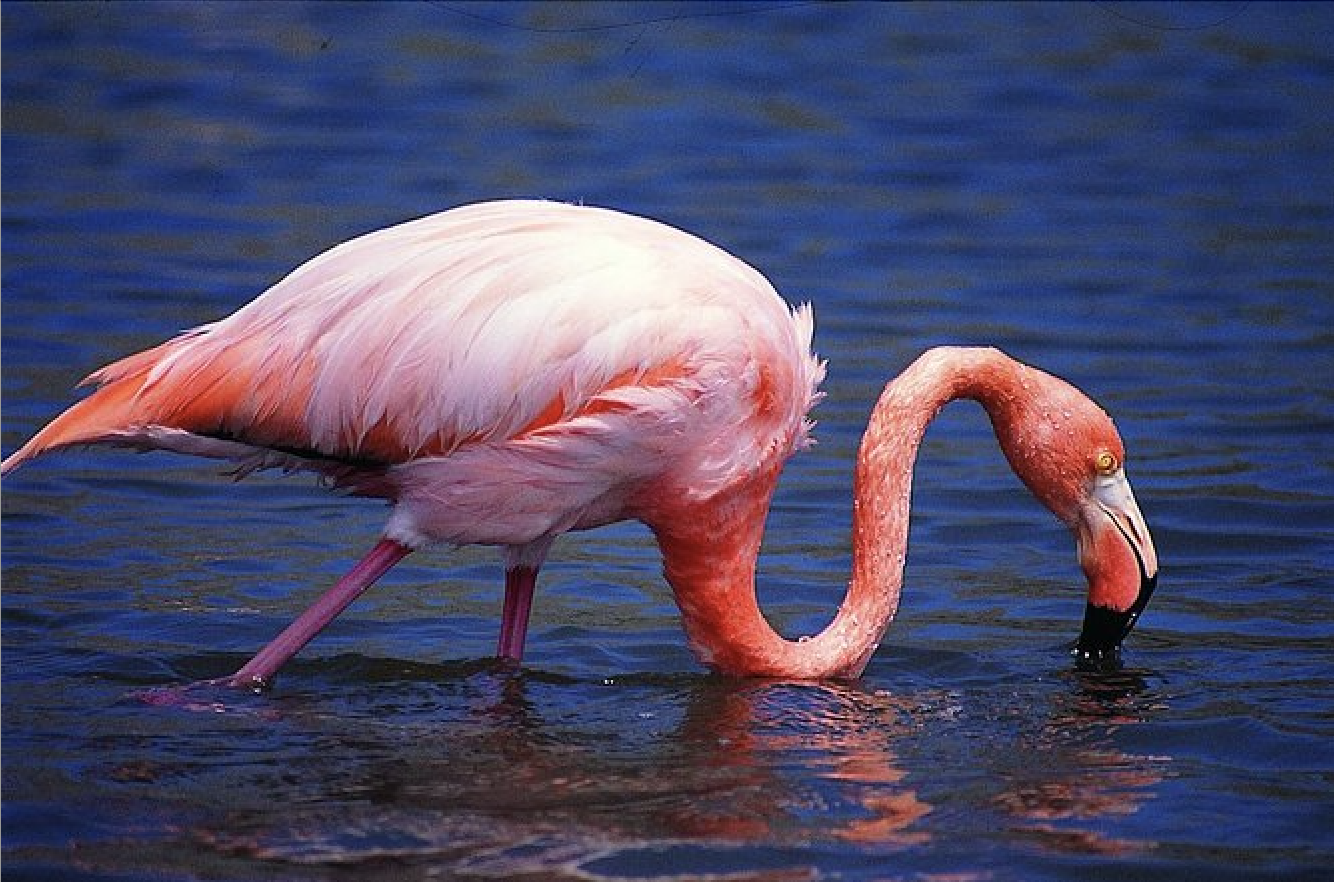
The Isabela Wetlands Complex (Isabela Humedales) is a hidden gem located a short distance from Puerto Villamil on seahorse-shaped Isabela Island. This remarkable ecosystem is home to a diverse array of wildlife, including flamingos, stilts (named for their long legs) and pintail ducks. 

The best way to explore the wetlands is on foot, following the network of boardwalk trails that pass through lakes, lagoons and mangrove swamps. The trails are easy to navigate, making them a great option for even inexperienced hikers.

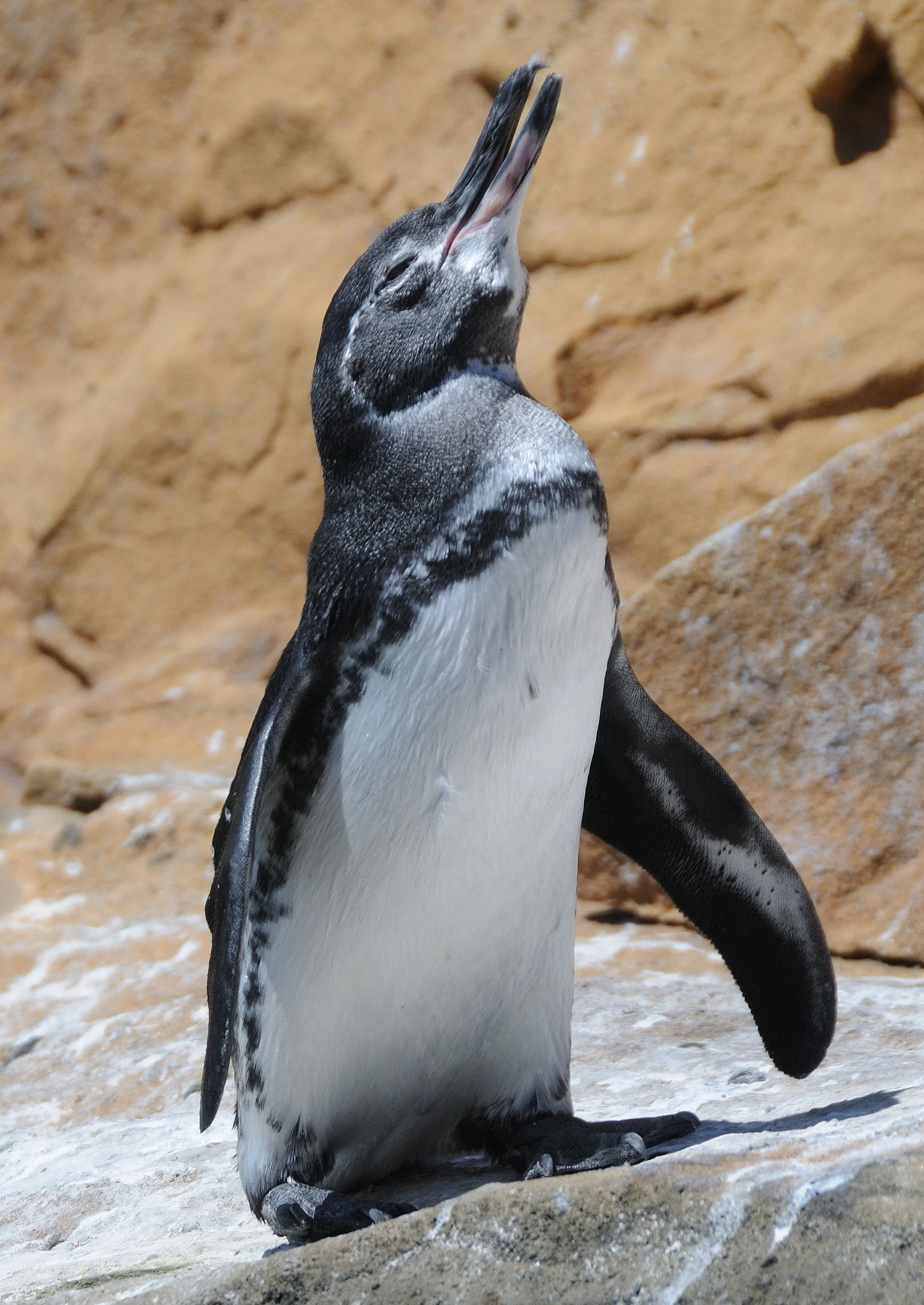
A small penguin lifts its head into the air on rocks in the Galapagos Islands

As you explore the complex, you’ll be amazed by the beauty of the wetland ecosystem. Mangrove trees provide a shady respite from the sun, popular with various plants, insects, amphibians, fish and more. But the real stars of the show are the birds. You can see over 100 species, including some that are found nowhere else in the world. You're likely to see flamingos, flightless cormorants, penguins and gallinules.

A pink flamingo wades in the water, its beak dipping into the ocean in the Galapagos Islands

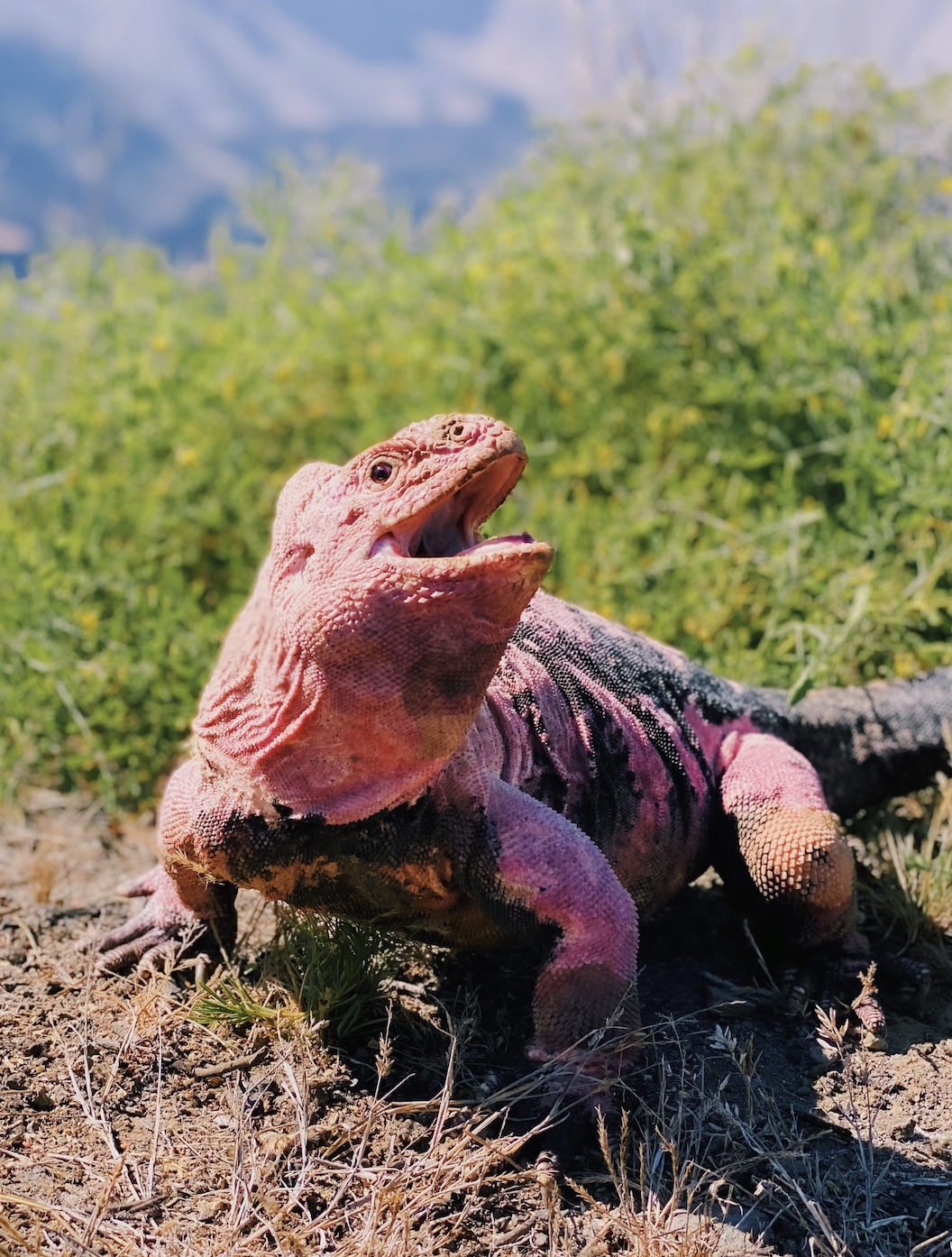
While here, look for the island’s unusual resident, the Conolophus marthae, or pink land iguana. The slopes of Wolf Volcano are the only place on the planet where they live.

Pink land iguana opens its mouth in the brush in the Galapagos Islands

If you’re not a fan of hiking, you can explore the area on a bicycle. However, it’s best to avoid the afternoon, when the sun is at its hottest.

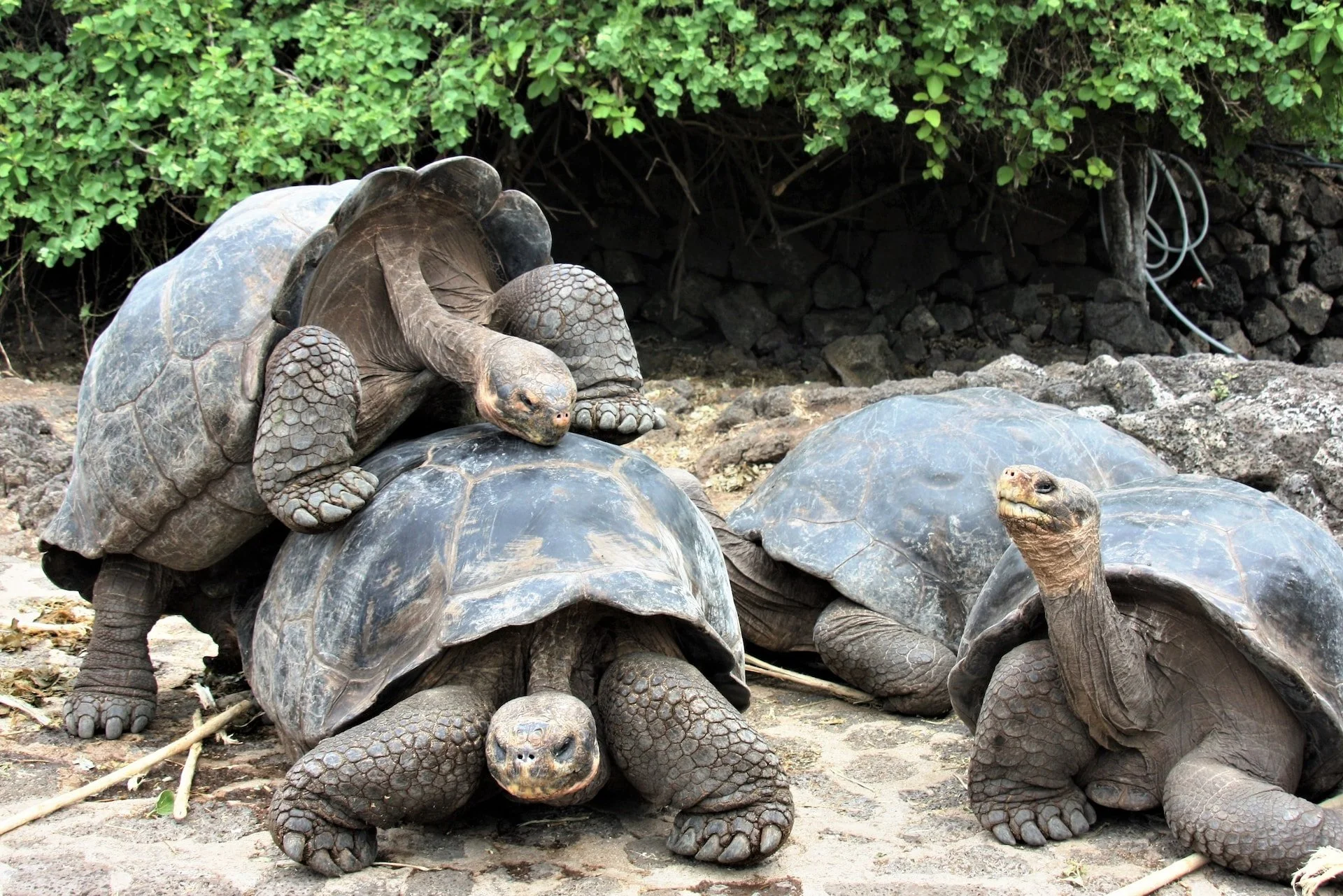
A group of tortoises, including one that is climbing onto another's shell at El Chato Ranch in the Galapagos Islands

4. El Chato Tortoise Reserve: Walking Among Giants 

The Galápagos tortoise is the official mascot of the islands — and for good reason. These majestic, slow-moving creatures are gentle giants, with some specimens weighing up to 550 pounds (250 kilograms). They’re also some of the longest-living invertebrates; the oldest ever recorded was 175 years old!

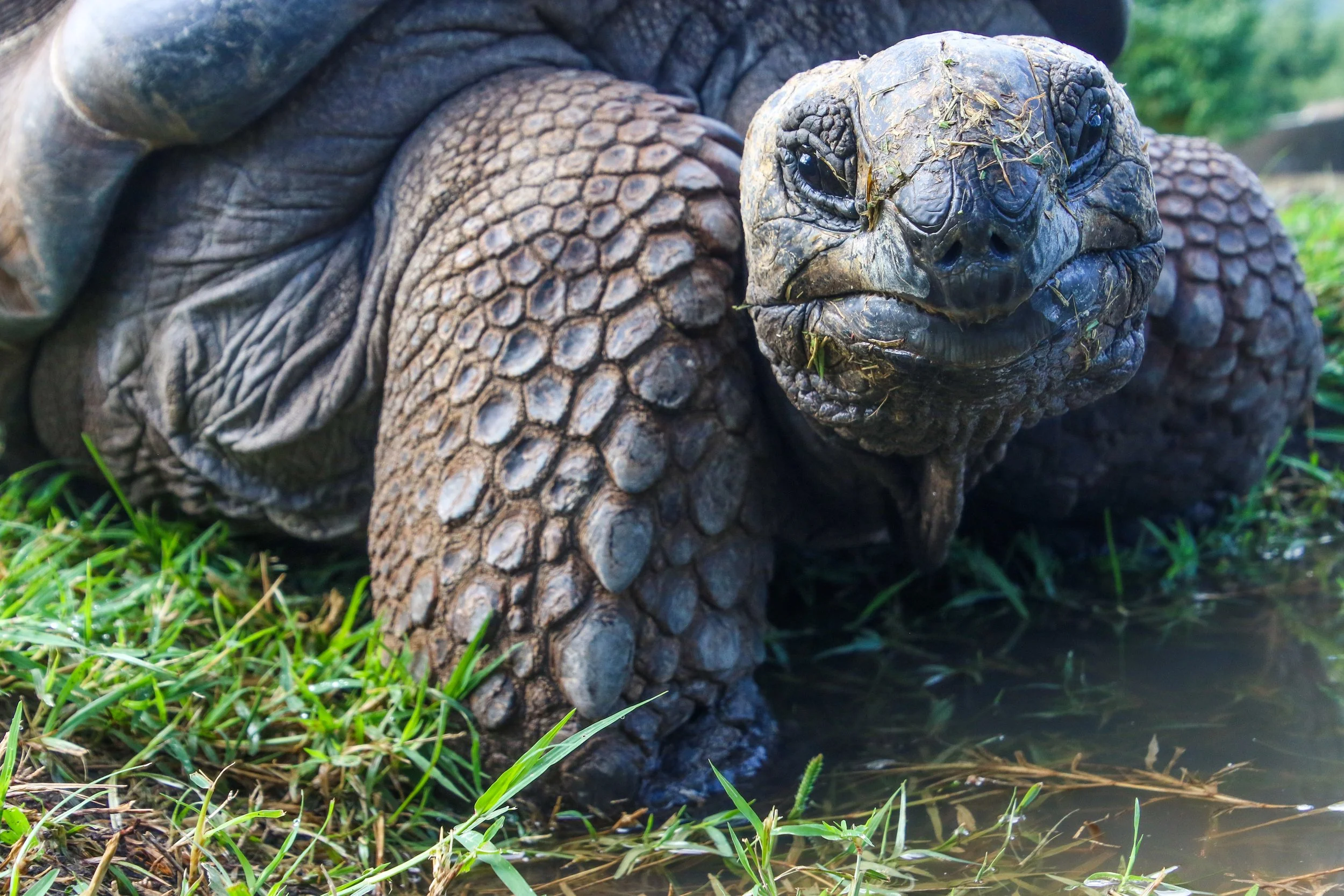
Closeup of tortoise looking straight ahead in grass in the Galapagos Islands

One of the best places to observe them in their natural habitat on Santa Cruz Island at Rancho El Chato. The reserve is located a little over a mile south of the small town of Santa Rosa and covers 29 rolling acres of lush tropical highlands. The ranch’s mission is to provide a sanctuary for this endangered species. The privately owned reserve is home to many free-roaming giant tortoises, as well as Darwin finches and short-eared owls. 

Visitors can hike through the highlands, coming face-to-face with tortoises, as these amazing creatures roam around freely, and learning more about their resilience and longevity. 

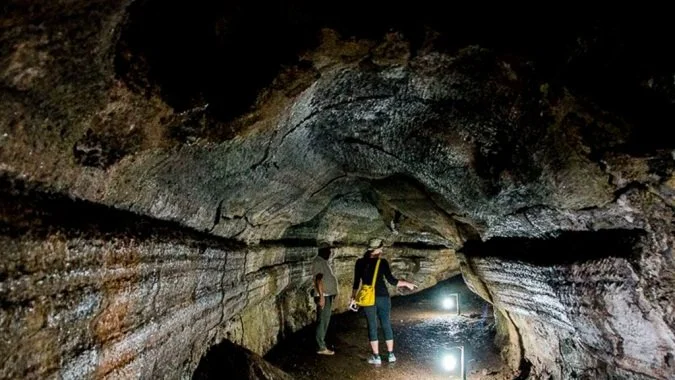
Explorers stand in the striated Bellavista Lava Tunnels in the Galapagos Islands

5. Los Túneles de Bellavista: A Subterranean Wonder

If Puerto Ayora’s your home base, you can find a treasure trove of wonders just beyond its lively fish market, including the subterranean geologic wonders known as Los Túneles de Bellavista, or the Bellavista Lava Tunnels. These underground passages on Santa Cruz Island reveal the sheer magnitude and force of volcanic activity that shaped the Galápagos archipelago.

One of the most popular tunnels can be found near the village of Bellavista. Santa Cruz is the most well-known island for lava flows, which are particularly abundant in the highlands. Visitors can descend underground and marvel at the incredible shapes and formations that were created millions of years ago. 

The tubes were formed as lava flowed over the island’s surface. As the outer layer of lava cooled and hardened, molten magma continued flowing beneath. When the lava drained away, it left behind a series of long cave-like channels.

To get to the Lava Tunnels, you can hire a taxi in Puerto Ayora. The tunnels aren’t well-lit, so be sure to bring a flashlight and wear sturdy shoes, not flip-flops.

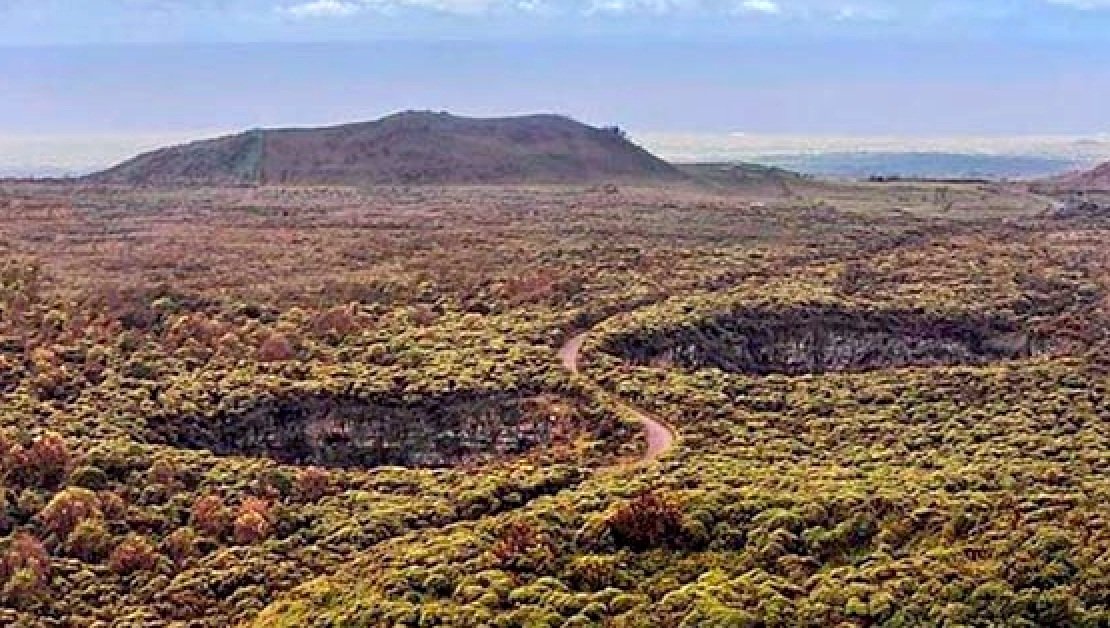
Los Gemelos, two round craters surrounded by forest in the Galapagos Islands

6. Los Gemelos and Scalesia Forest: Twice as Nice

If you’re looking for an adventure that will take your breath away, be sure to add Los Gemelos (The Twins) to your list of must-see places in the Galapagos. These two round craters are located on opposite sides of the main Santa Cruz highway and were formed when lava tunnels collapsed due to erosion and tectonic shifts. Today, they stand as untamed and lush havens, inviting adventurous souls to explore their hidden wonders.

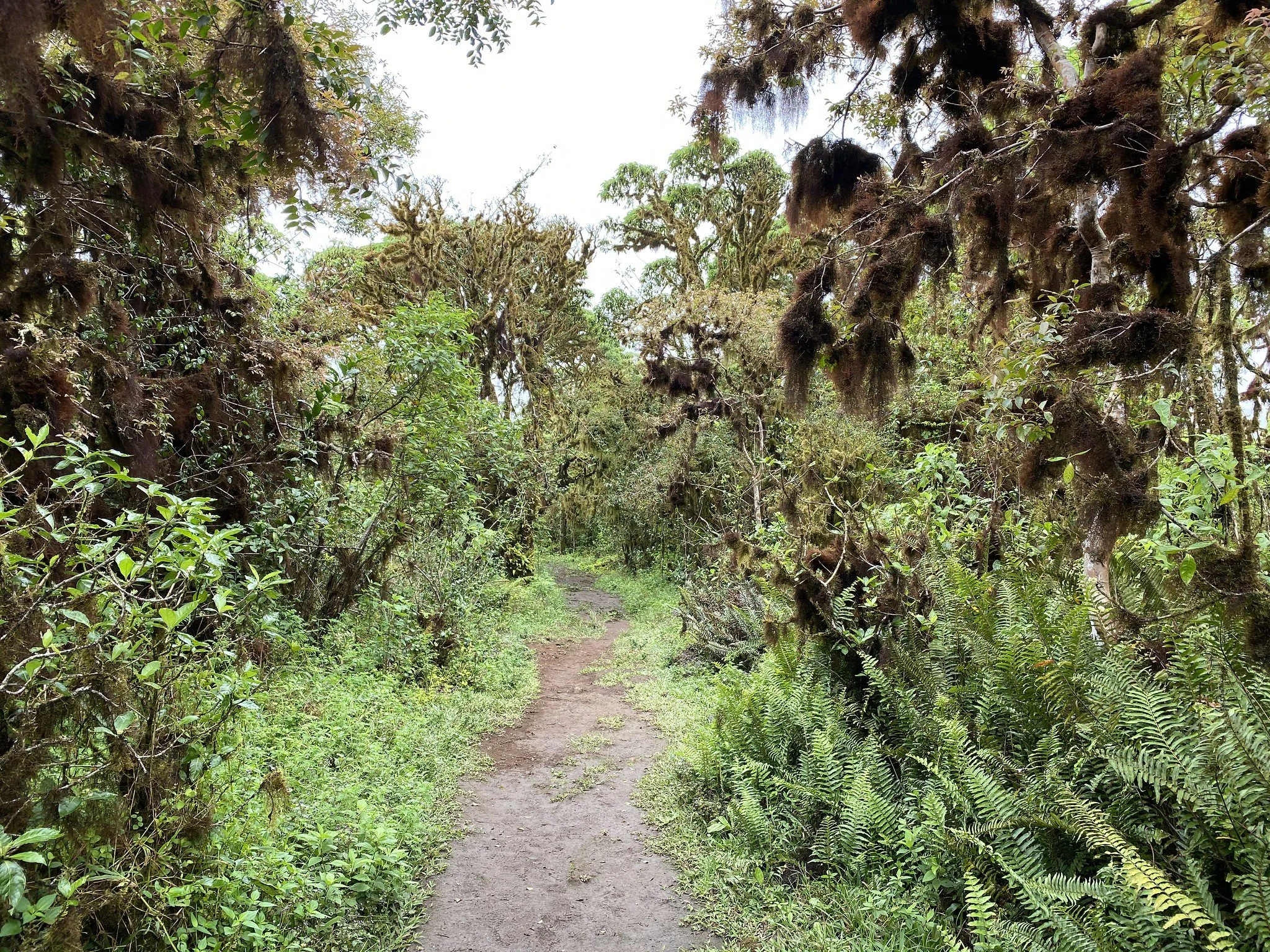
The larger of the two craters is about 410 feet deep (125 meters), and the smaller one is about 82 feet deep (25 meters). Both are surrounded by Scalesia forests. These trees are actually part of the family of plants that includes daisies and sunflowers. Scalesia trees are endangered, and they’re only found in the Galápagos. The forests also have a variety of birds, including the vermilion flycatcher and the Galápagos hawk.

Dirt path leading through lush Scalesia forest by Los Gemelos in the Galapagos Islands

A short hike from the main road leads to the rim of the larger crater. From there, you have a breathtaking view of the crater and the surrounding forest. You can also hike down into the crater, but be sure to wear sturdy shoes and be careful of loose rocks.

Sea lion rears its head on the beach in the Galapagos Islands

The Galápagos: Explore a Natural World of Wonders

The Galápagos Islands are a place of wonder and discovery. With playful sea lions, vibrant fish markets, lava tunnels and mighty tortoises, every corner of this archipelago holds something different to explore. Craft your own itinerary with a private tour of the Galápagos Islands — you’re sure to be captivated by its sheer beauty. –Emilia Stefan

Off the Beaten Path: Discovering Cambodia’s Lesser-Known Destinations

Escape the crowds at Angkor Wat and Phnom Penh and discover Cambodia’s hidden treasures in Battambang, Mondulkiri, Koh Rong Samloem, Kratie and Kep. Pristine beaches, colonial charms, wildlife, waterfalls, crab dishes — and the bamboo train — await adventurous travelers. 

Angkor Wat is an astounding experience — but if you want to escape the crowds, there are many other amazing adventures to be had in Cambodia.

Cambodia is an enchanting country to visit, where ancient temples, lush landscapes and warm hospitality await. 

While popular destinations like Phnom Penh and Angkor Wat draw crowds of tourists each year, there are various lesser-known areas that offer an authentic Cambodian experience. Discover some of Cambodia’s hidden gems — where you can escape the tourist crowds and immerse yourself in the true essence of this captivating country.

But first things first. Unless you live in one of eight neighboring nations in Southeast Asia, Cambodia requires a visa to enter. Apply for your visa today and start planning your trip.

Street in Battambang, Cambodia, with colonial-influenced hotel and man on motorbike

With its colonial-era charm, Battambang has a wealth of attractions both within the city limits and beyond.

Battambang: A Charming City With a Rich Colonial History

Nestled in the northwest region of Cambodia is the charming city of Battambang. It’s known for its well-preserved colonial architecture, like Sala Khaet, the former governor’s residence, which stands on the west bank of the Sangkae River. It was commissioned by the last Thai governor of Battambang in 1905 and used by the French until 1953, when Cambodia became independent.

Another notable heritage building is the bright yellow National Bank of Cambodia, a fully restored villa that previously housed a pawn shop and radio station.

If you’re a history buff, you’ll definitely want to check out the Battambang Provincial Museum. This well-curated museum contains a collection of artifacts from the surrounding Ankorian-era temples, including lintels and statuary. 

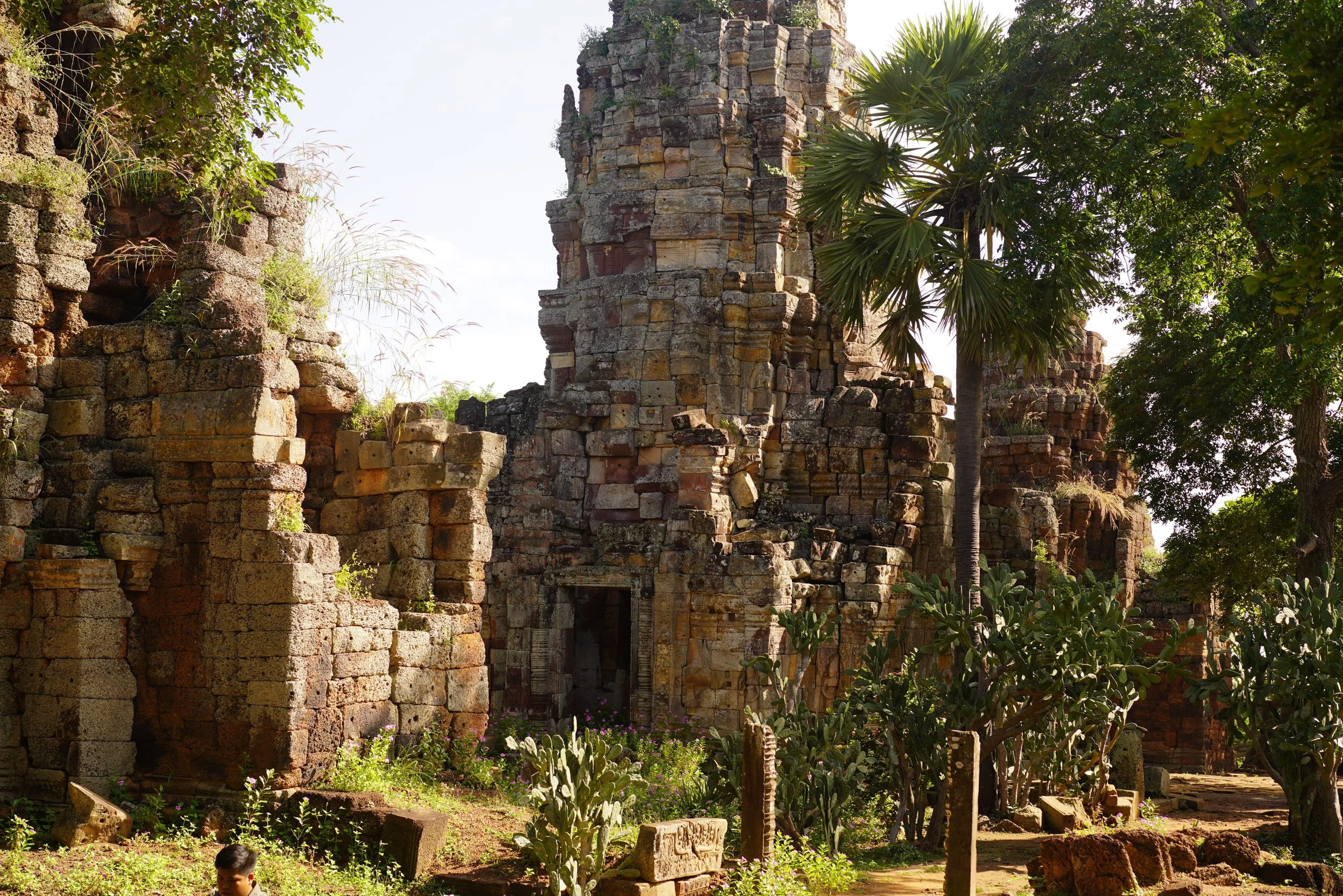
Hire a tuk-tuk, a motorized rickshaw, and head six miles north of the city center to the ruins of Wat Ek Phnom, an 11th century Hindu temple with sandstone carvings built during the reign of King Suryavarman I. The relief on the temple’s central tower depicts the mythic Churning of the Ocean of Milk — an epic tug-of-war between the gods, demons and a serpent in a battle to obtain the elixir of immortality.

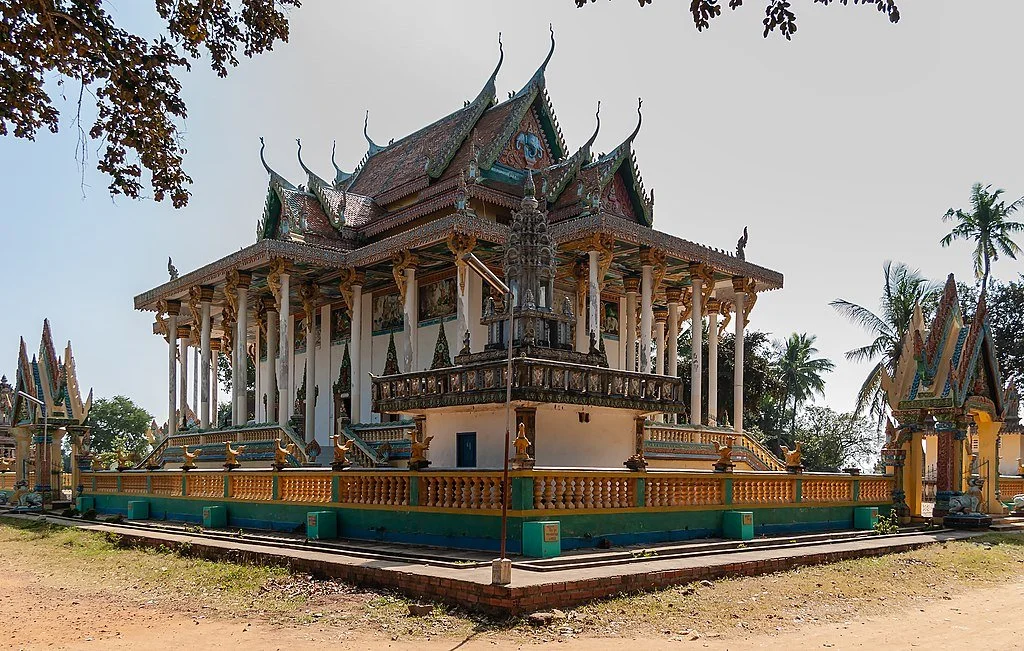
Plus, there’s a towering seated Buddha statue and an active Buddhist temple on the grounds. Its interior features serialized paintings that cover the walls and ceiling, telling the Buddha’s life story. 

The amazing stone ruins of an ancient temple, Wat Ek Phnom, in Battambang, Cambodia

The super-cool ruins of Wat Ek Phnom, an ancient Hindu temple

The new temple of Wat Ek, with thin white pillars, green base and pointed roof in the Thai style

A newer temple stands on the grounds of Wat Ek Phnom.

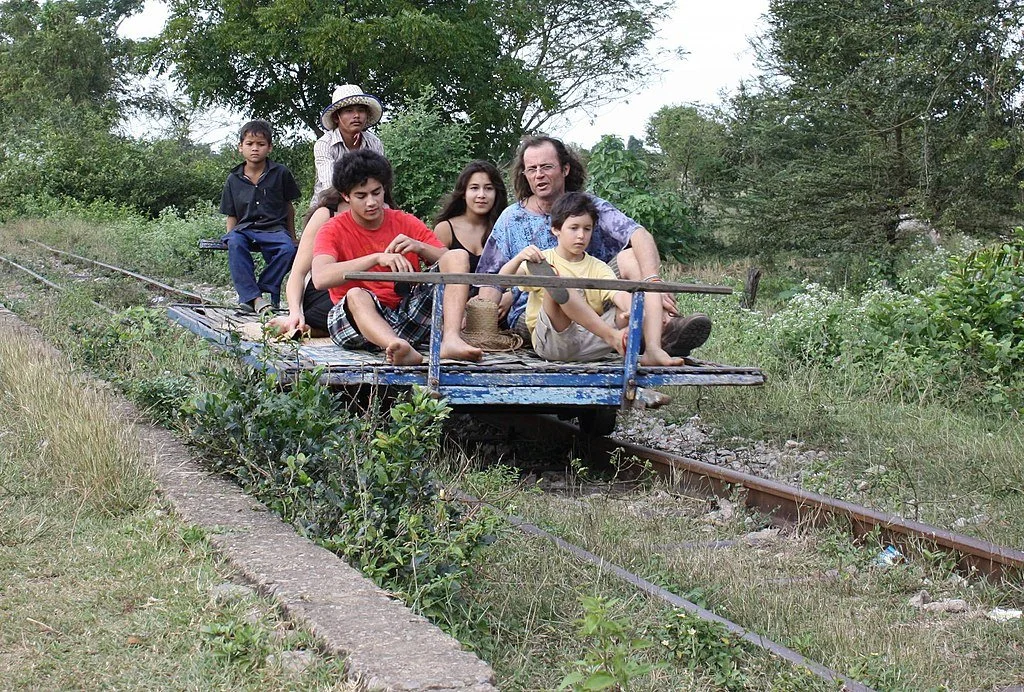
Looking for a thrill? Take a ride on the famous norry, or bamboo train, an unusual mode of transportation. People, rice and livestock are shuttled back and forth on squat wooden platforms placed on top of a wheeled metal carriage and powered by a small engine. The train cruises along an old track at about 35 mph, offering breathtaking views of the countryside. You’ll pay $5 per person to the villagers operating the train once you reach your destination. It’s a small price to pay for a unique and thrilling experience!

Family, with hippie dad, mom and two boys, riding the bamboo train with driver in white hat and young boy, in Battambang, Cambodia

If you’re in Battambang, you’ve gotta take a ride on the bamboo train!

If you’re hungry after a day of exploring the city and its surroundings, try the regional specialty mee kola. It’s a delicious dish of stir-fried rice noodles and soy sauce, served with papaya, cucumber, pickles, bean sprouts, other vegetables, fragrant herbs and crushed peanuts.

The serene riverside setting and relaxed atmosphere make Battambang an ideal place to unwind and experience the authentic side of Cambodia. 

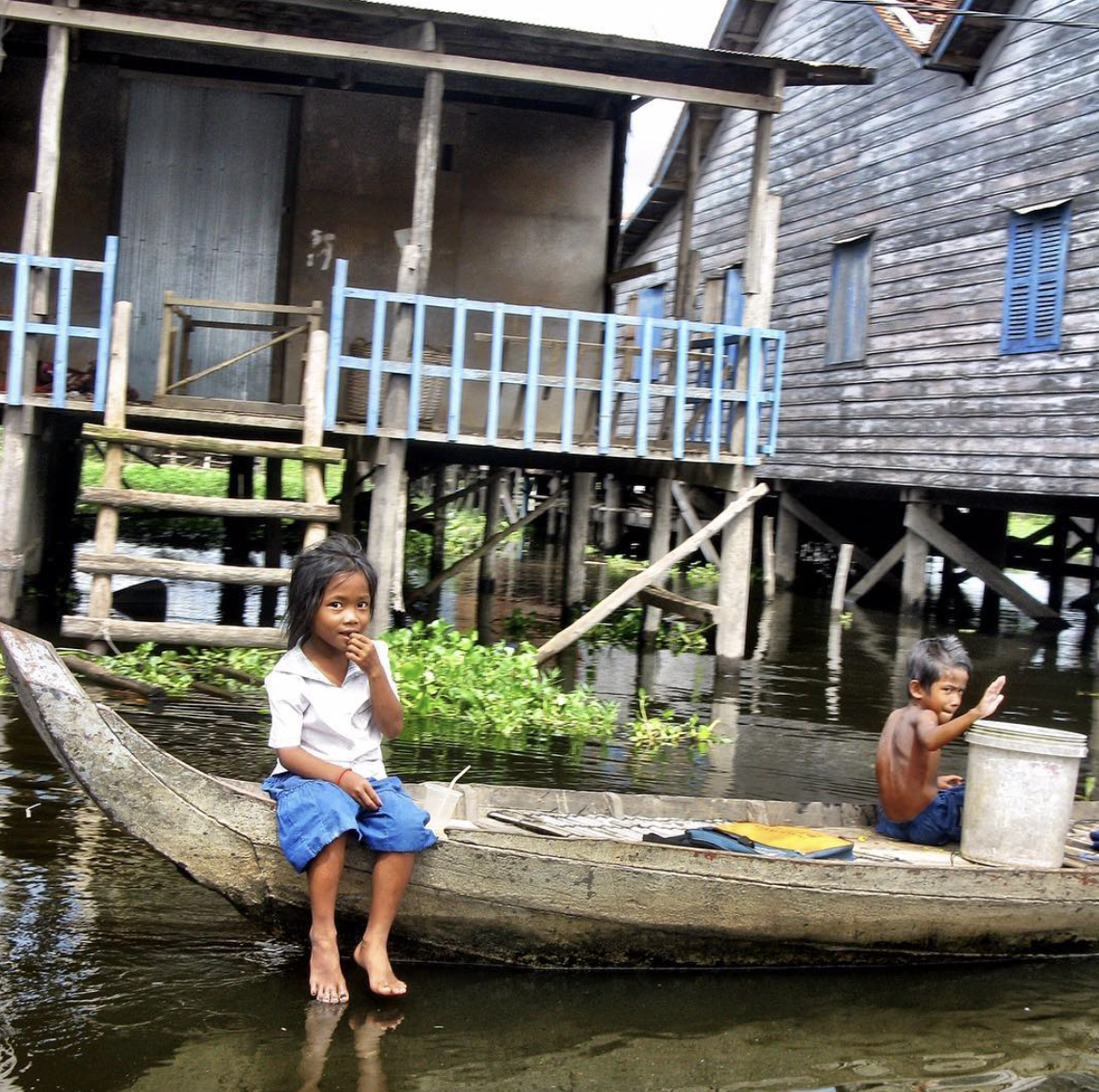
How to get there: Battambang is a three-hour drive west of Siem Reap, or a 90-minute boat ride across Tonlé Sap, the largest lake in Southeast Asia.


Young girl and boy sit on small canoe-like boat in a floating village in Tonle Sap lake, Cambodia

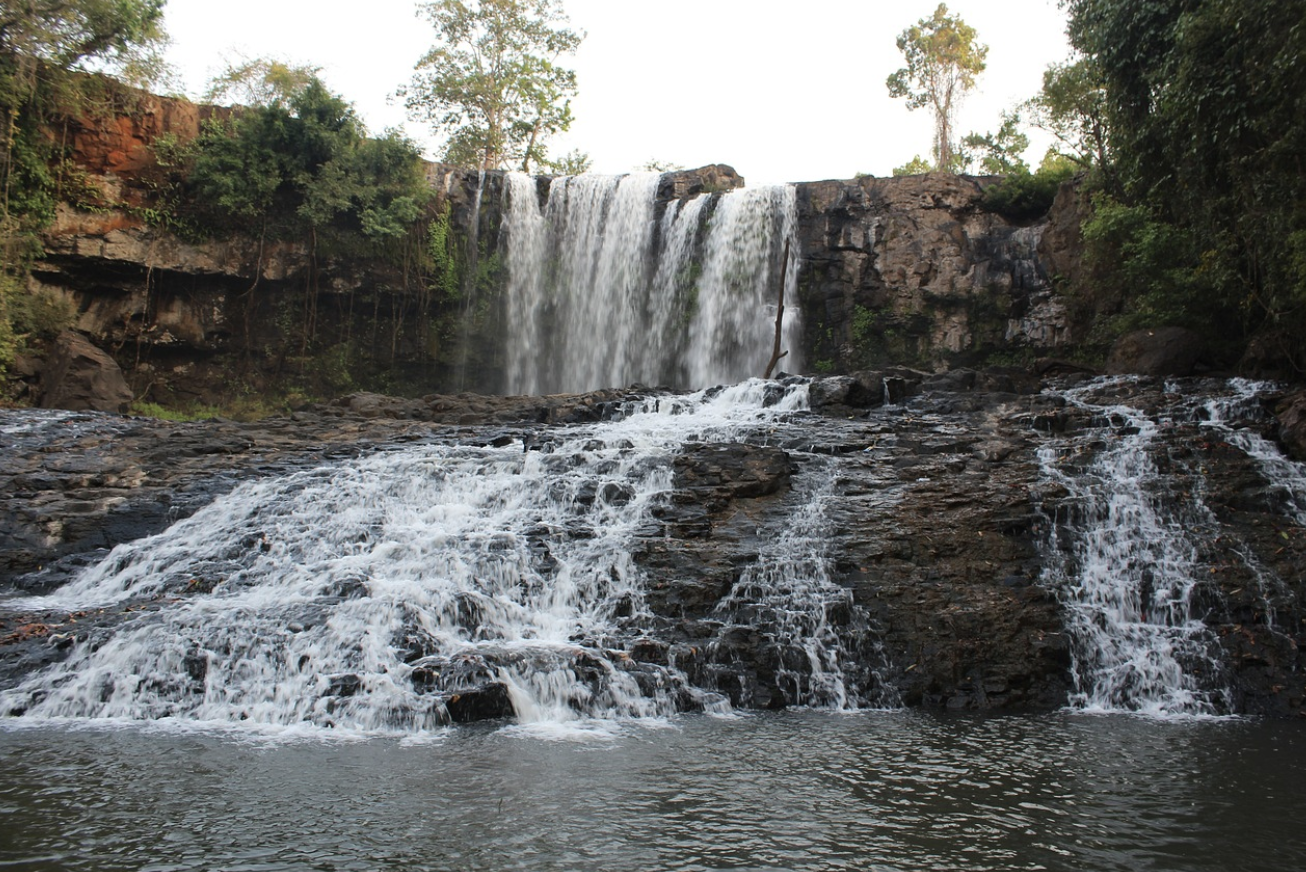
Bou Sra Waterfall cascading over rocks in Cambodia

Bou Sra Waterfall

Mondulkiri: An Off-the-Beaten-Path Outdoor Adventure

The remote province of Mondulkiri in eastern Cambodia is home to breathtaking waterfalls, lush jungles and rolling hills. Trek through the picturesque landscape and encounter the wildlife, including gibbons and elephants. 

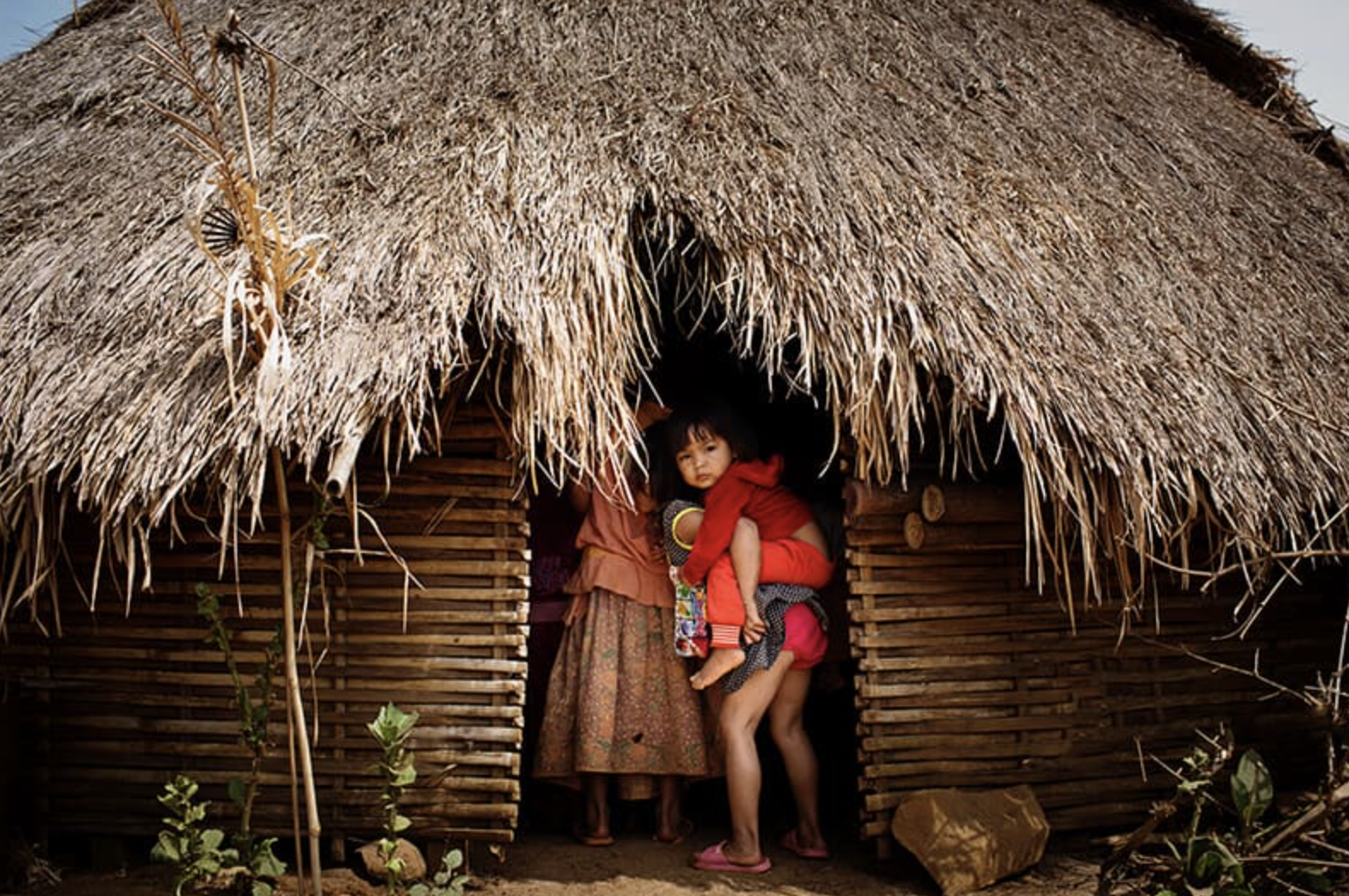
For a truly authentic experience, take a tour of a Bunong hill tribe village with a local guide. Learn about their agricultural fields, spirit forests and burial grounds, all of which are living places of social, spiritual and historical importance.

Bunong hill tribe women stand in doorway, one with a child on her back at small wooden home with large thatched roof

Take a tour of a Bunong hill tribe village and learn about their customs.

Looking for a relaxing day in the great outdoors? Hire a tuk-tuk for the day and head to Bou Sra Waterfall, 31 miles (50 kilometers) outside of Sen Monorom. Pack a lunch to go and enjoy a picnic in the shade of the trees. After lunch, cool off in the pools beneath the upper waterfall. Even if you don’t take the plunge, the spray from the waterfall is a great way to cool down on a hot day. 

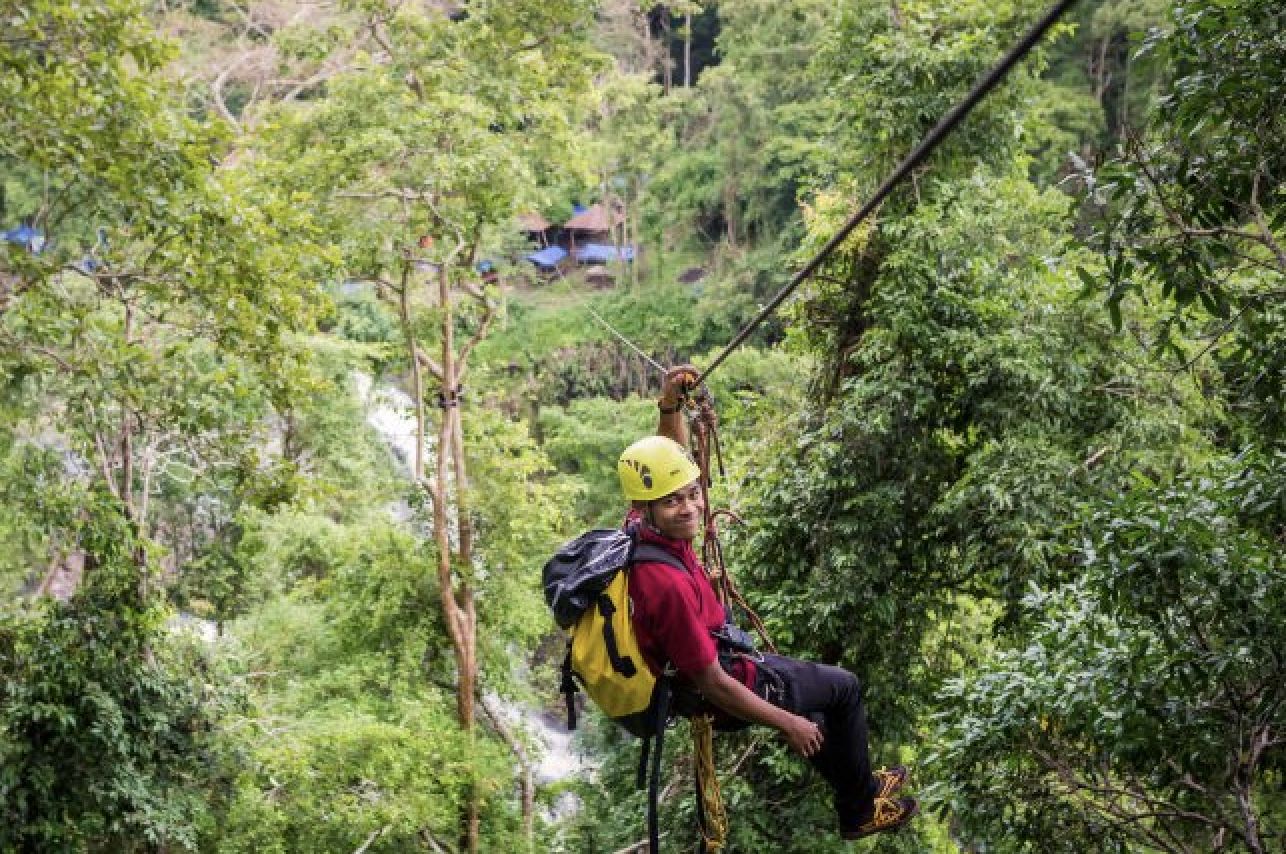
If you’re feeling more adventurous, try the Mayura Zipline. This seven-zipline course takes you as high as 500 feet (150 meters) above the waterfall — that’s the equivalent of a 45-story building! — making it one of the highest ziplines in Asia. Soar through the jungle canopy and get a bird’s-eye view of the waterfall.

Man in yellow helmet and red shirt smiles as he hangs on zipline high above the Bou Sra Waterfall in Cambodia

Brave souls can zipline 500 feet above the waterfall!

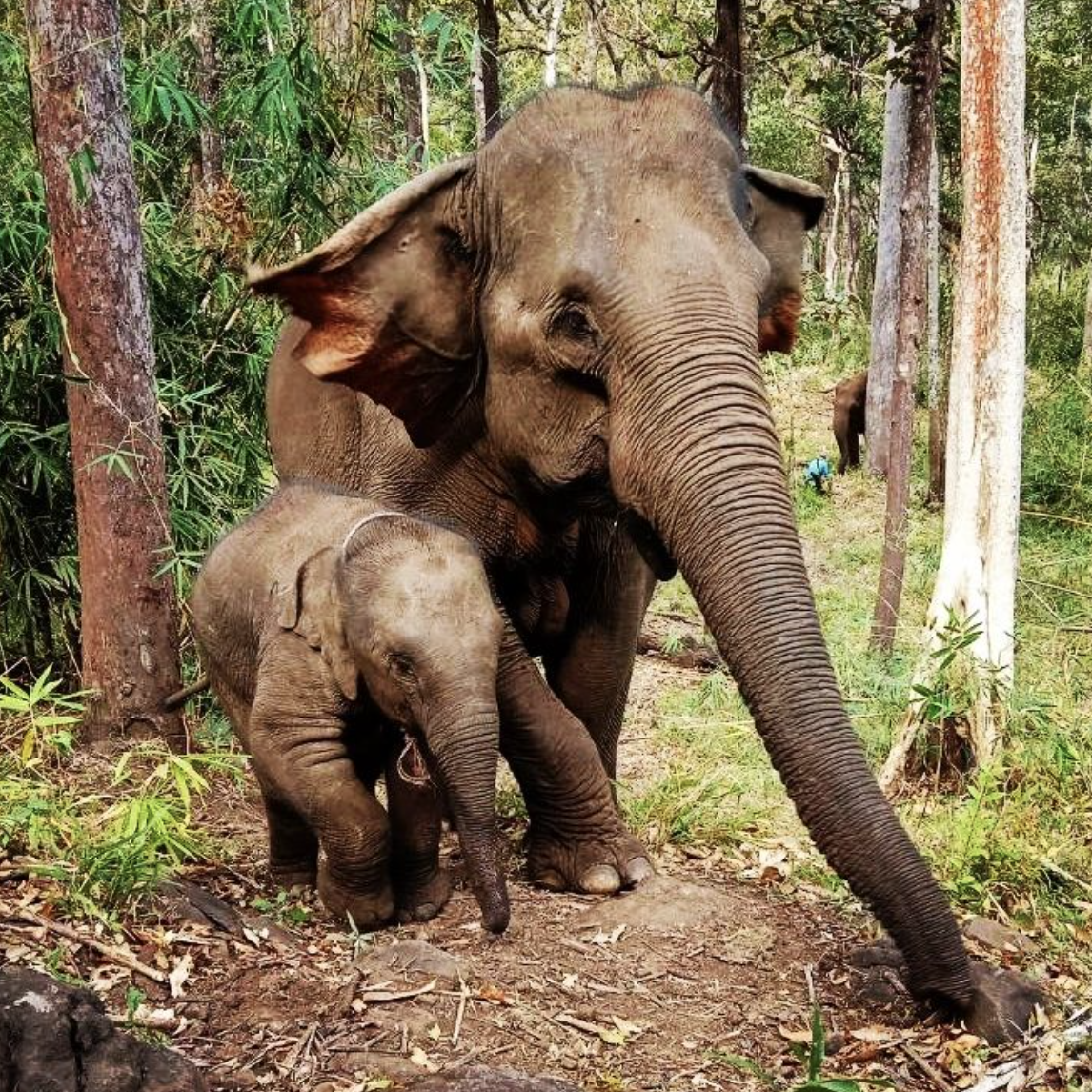
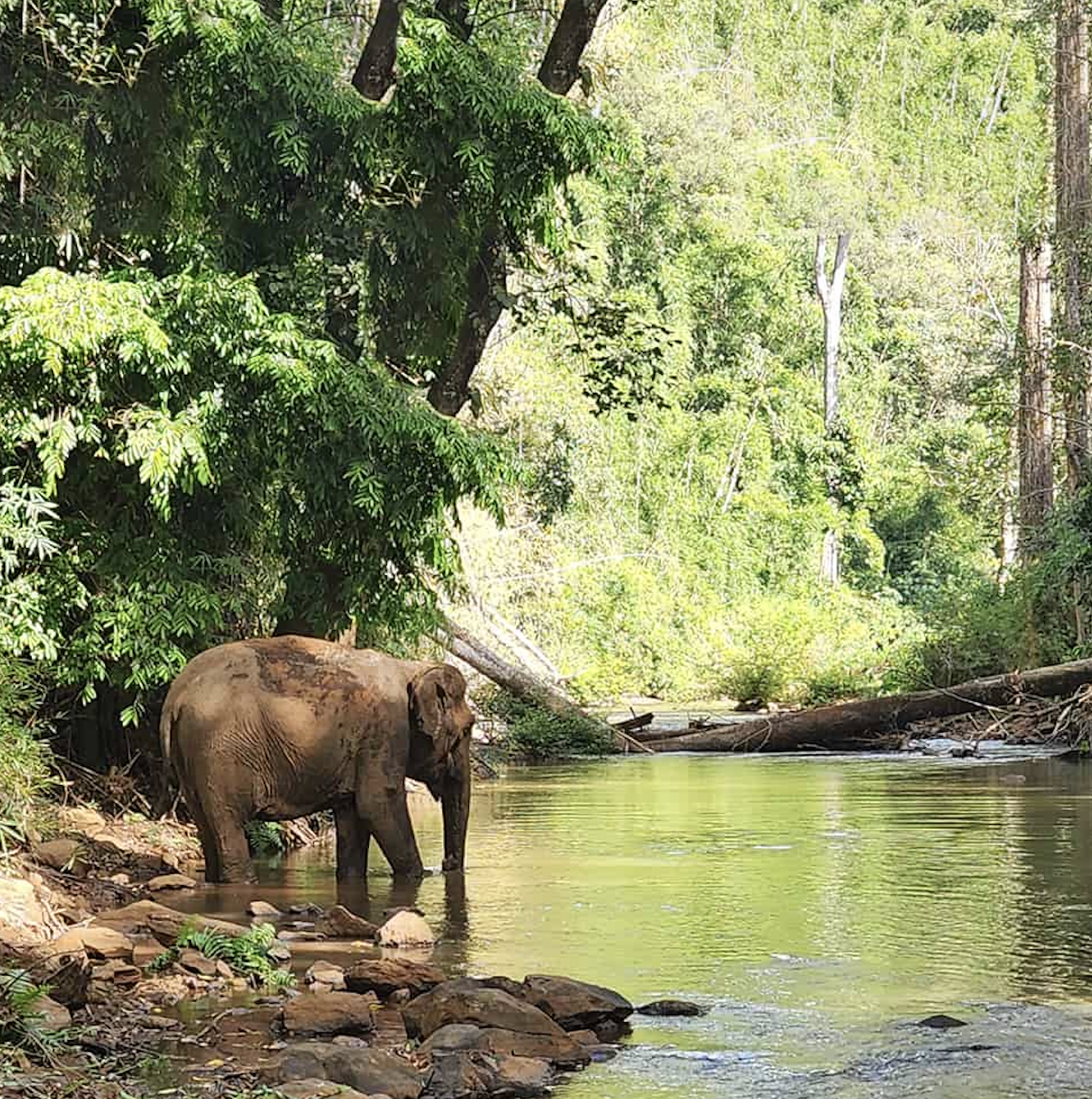
The Elephant Valley Project (EVP) is a nonprofit organization that rescues and rehabilitates retired Asian elephants. They work to protect these pachyderms by allowing them to roam freely within a 1,200-hectare habitat, while providing medical care. Day trips to the sanctuary usually involve two walks through the forest, learning about these amazing creatures and enjoying a buffet lunch overlooking the forest canopy.

Mother elephant with baby at the Elephant Valley Project sanctuary in Cambodia

Two of the well-cared-for members of the Elephant Valley Project sanctuary family

EVP is a great place to learn about elephants and their conservation. You’ll get to see them up close and personal, and learn about their natural behaviors — as well as have the opportunity to support their care and rehabilitation.

How to get there: Mondulkiri is a five-and-a-half-hour drive northeast of Phnom Penh. You can hire a taxi or take an express bus or minivan.


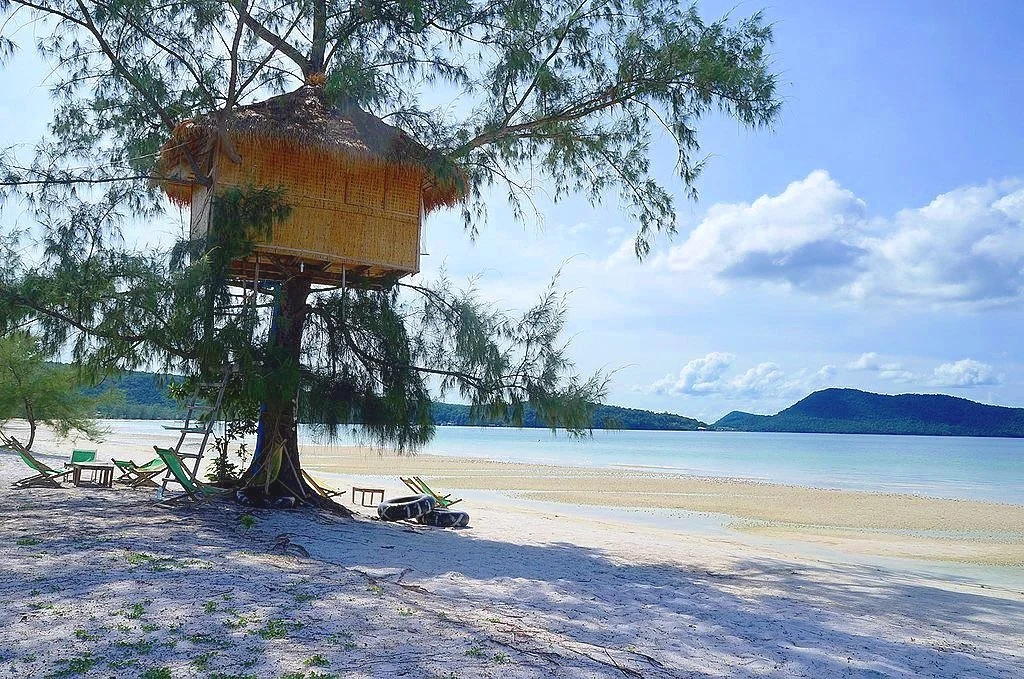
Treehouse on beautiful white sand beach on Koh Rong Sanloem island in Cambodia

Literally escape from it all at the untouched island of Koh Rong Samloem.

Koh Rong Samloem: An Unspoiled Tropical Paradise 

Have you ever dreamed of escaping to a secluded island? With a bit of planning, you can! Koh Rong Samloem, a small island 14 miles (23 kilometers) off the southwest coast of Cambodia, is the perfect getaway. Unlike its more developed neighbor, Koh Rong, this island remains largely unspoiled and untouched.

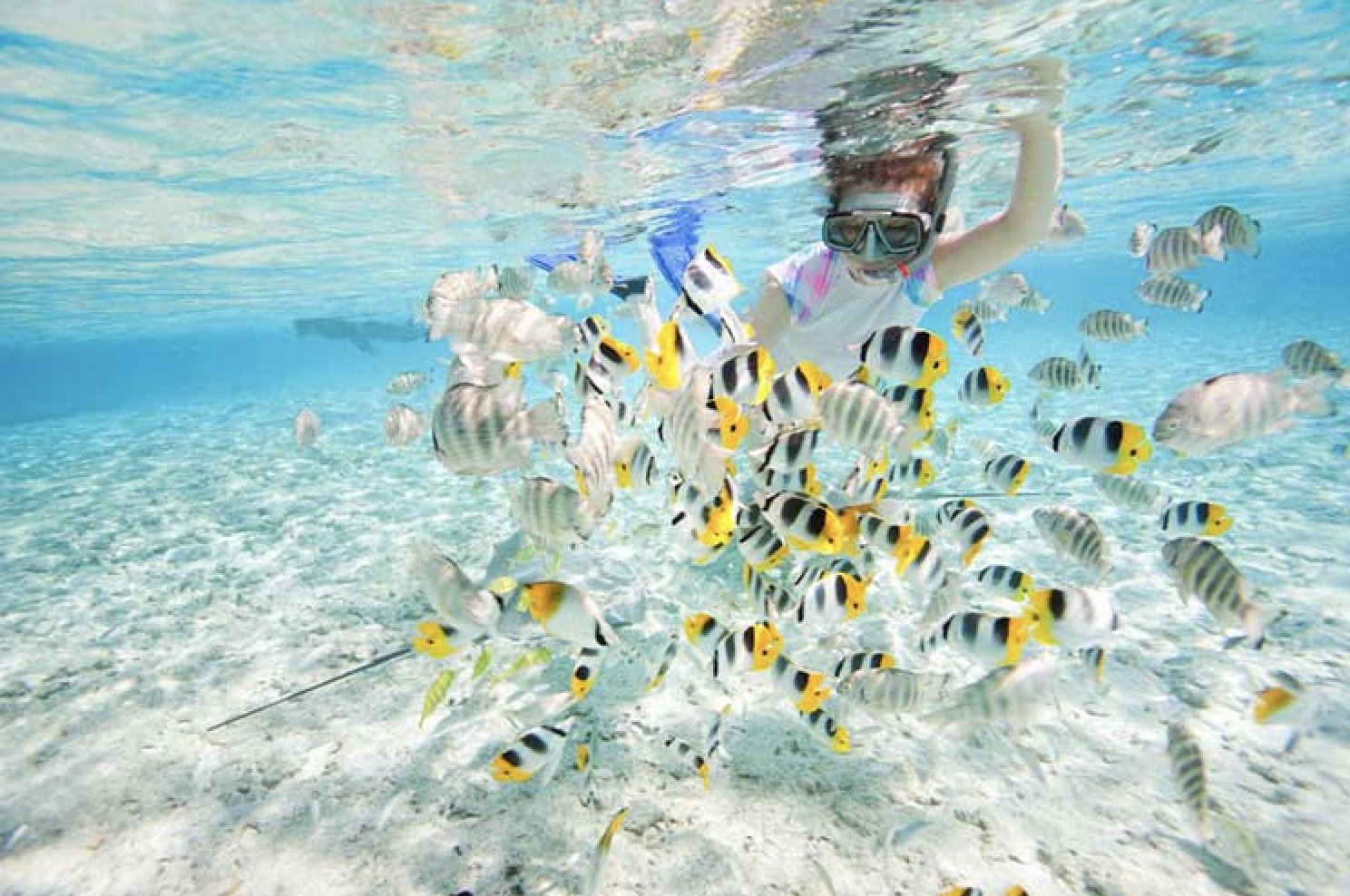
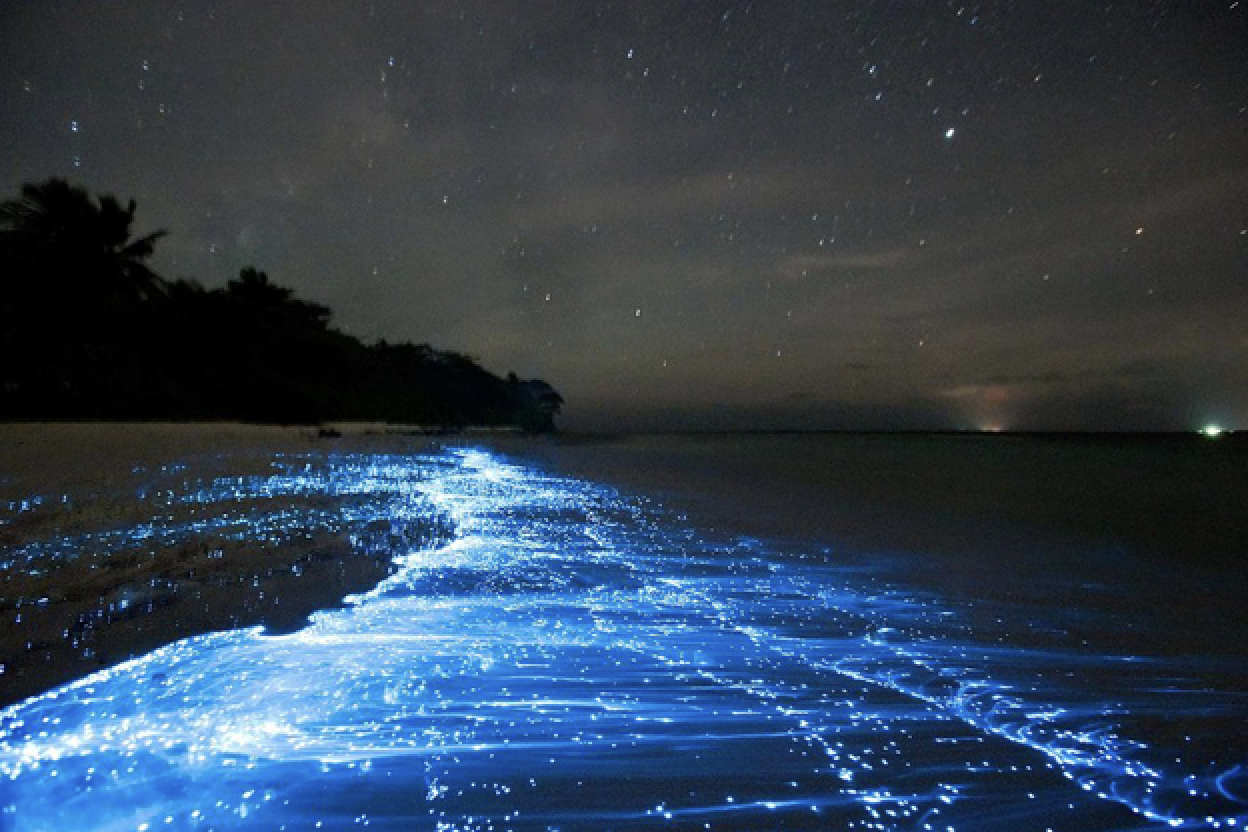
Here, you can lounge on pristine white sand beaches and enjoy a cocktail or two. Go snorkeling in the crystal-clear waters and explore vibrant coral reefs. And at night, head back to the beach to witness amazing bioluminescent plankton. 

Child snorkels by white, yellow and black fish in the crystal-clear waters of Koh Rong, Cambodia

Just look at the crystal-clear water and those colorful fish!

Astounding blue bioluminescent plankton washing on the shore at night on Koh Rong in Cambodia

Head back to the beach at night to see breathtaking blue bioluminescent plankton washing ashore.

How to get there: Heads up: The only way to get to Koh Rong Samloem is via a one-and-a-half-hour ferry ride from Sihanoukville. If you’re staying in Siem Reap, you can take a 50-minute direct flight to Sihanouk International Airport. From there, you can hail a tuk-tuk or taxi to take you to the ferry terminal. Alternatively, you can take a six-or-so-hour bus ride or private taxi from Phnom Penh.

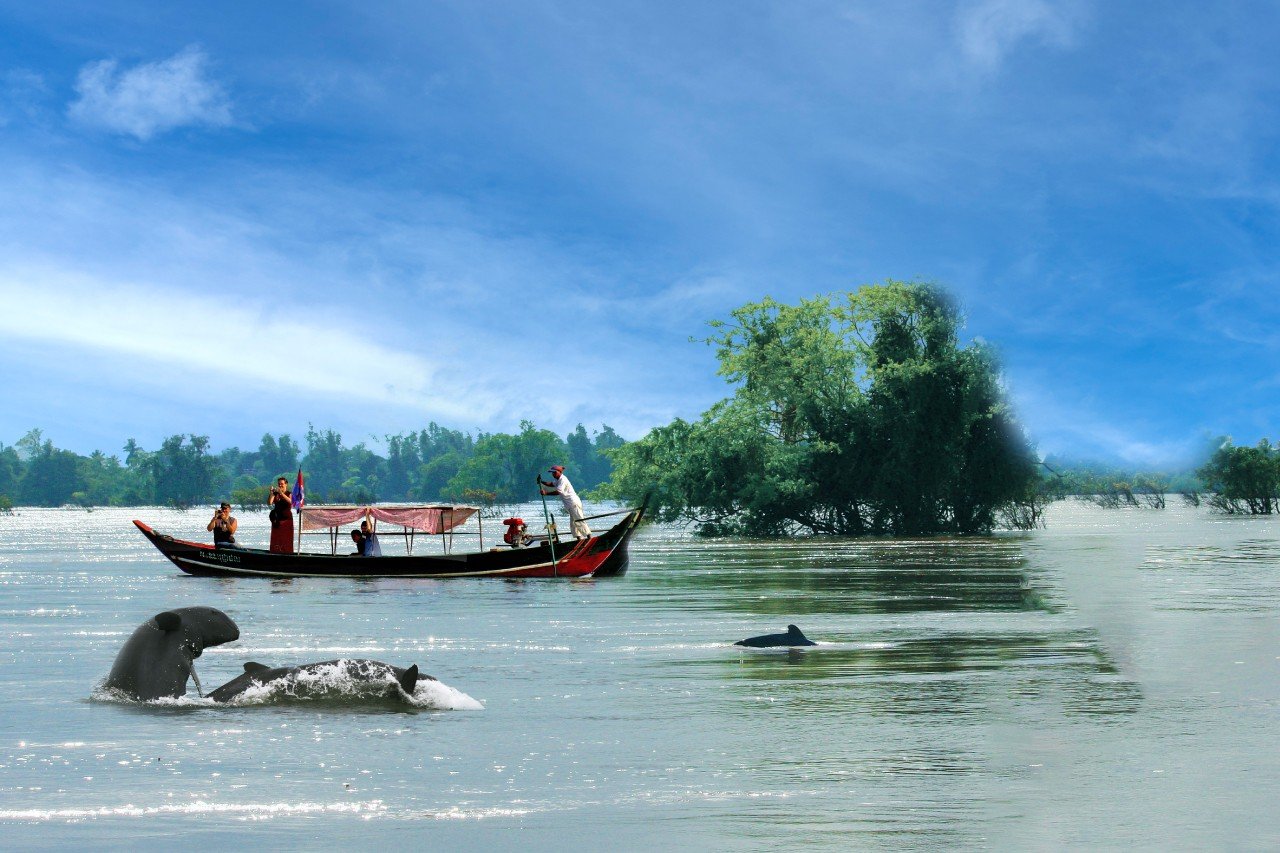
Tourist boat plies the Mekong River in Kratie, Cambodia, with Irrawaddy dophins swimming nearby

While in Kratie, you have to look out for the endangered Irrawaddy dolphins.

Kratie: A Gem on the Mekong River

Situated along the banks of the Mekong, Kratie is a small town known for its incredible wildlife — most notably, the endangered Irrawaddy dolphins. Take a boat tour to observe these gentle creatures in their natural habitat for a truly magical experience.

You can also rent a bike and explore the peaceful countryside to admire the sleepy villages, traditional stilt houses, rice fields and lotus farms. Be sure to visit Wat Sorsor Muoy Roy, the 100-Column Pagoda. Then, grab a beer and watch one of the epic Mekong sunsets. 

Kratie offers a glimpse into rural Cambodian life and a chance to witness the wonders of nature up close. 

How to get there: Kratie is 149 miles (240 kilometers) north of Phnom Penh, and is roughly a four-hour drive from there. 

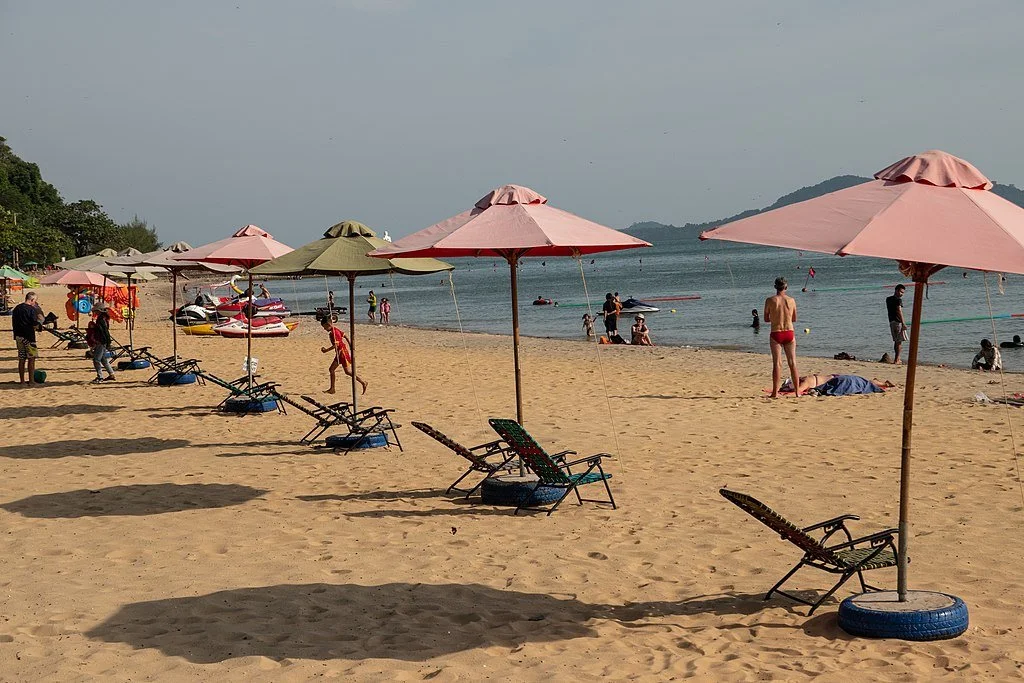
Pink umbrellas line the beach with a few sunbathers and jetskis in Kep, Cambodia

Relax on the beach in the seaside town of Kep.

Kep: A Coastal Delight

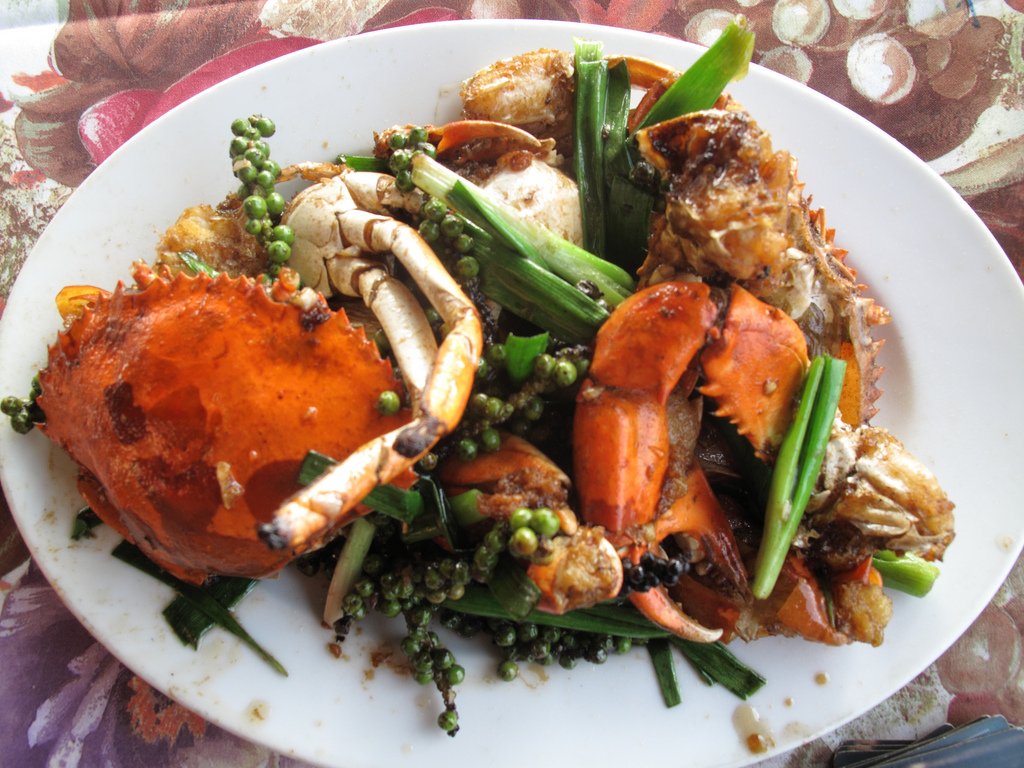
For a blend of coastal beauty and culinary delights, head to Kep, a charming seaside town located in southern Cambodia. Known for its fresh seafood, Kep is a paradise for any foodie. Expect an abundance of fresh shrimp and mouth-watering crab (try it with Kampot pepper), while enjoying unforgettable views of the Gulf of Thailand. 

A plate of Kampot pepper crab, with scallions and round green vegetable, a speciality of Kratie, Cambodia

Try the most popular local dish, Kampot pepper crab.

Explore the lush jungle trails of Kep National Park, hike to the gorgeous Kep Beach or visit the iconic abandoned villas that showcase the rich history of the old colonial beach resort.

Before or after heading into the park, be sure to stop in Led Zep Café, a short distance from the park entrance. They offer maps and snacks for hikers, as well as delicious crepes and sandwiches for anyone looking for a quiet lunch spot with a nice view.

Return to Kep and visit Sothy’s Pepper Farm to learn how the rare Kampot peppercorn is produced — considered by many to be the finest pepper in the world. It’s named after its region of production, just like Vidalia onions, Bourbon whiskey and Roquefort cheese.

How to get there: Kampot is 14 miles (22 kilometers) from Kep, or a 30-minute tuk-tuk ride.

Rescued elephant wades in the water in the lush, green jungles of Mondulkiri, Cambodia

The Hidden Gems of Cambodia 

Cambodia is a treasure trove of amazing sites just waiting to be discovered. Whether you’re seeking natural beauty, relaxation, cultural immersion or just to get away from the crowds, the lesser-known areas of Cambodia offer a truly authentic experience. –Sally Giles

What to Know Before Embarking on an Antarctic Peninsula Cruise

Penguins and glaciers and icebergs, oh my! Pro tips and incredible sights to see in the Antarctic, including Drake Passage, Graham Land, Port Lockroy, Palmer Station, Deception Island, Half Moon Island and Paradise Bay. 

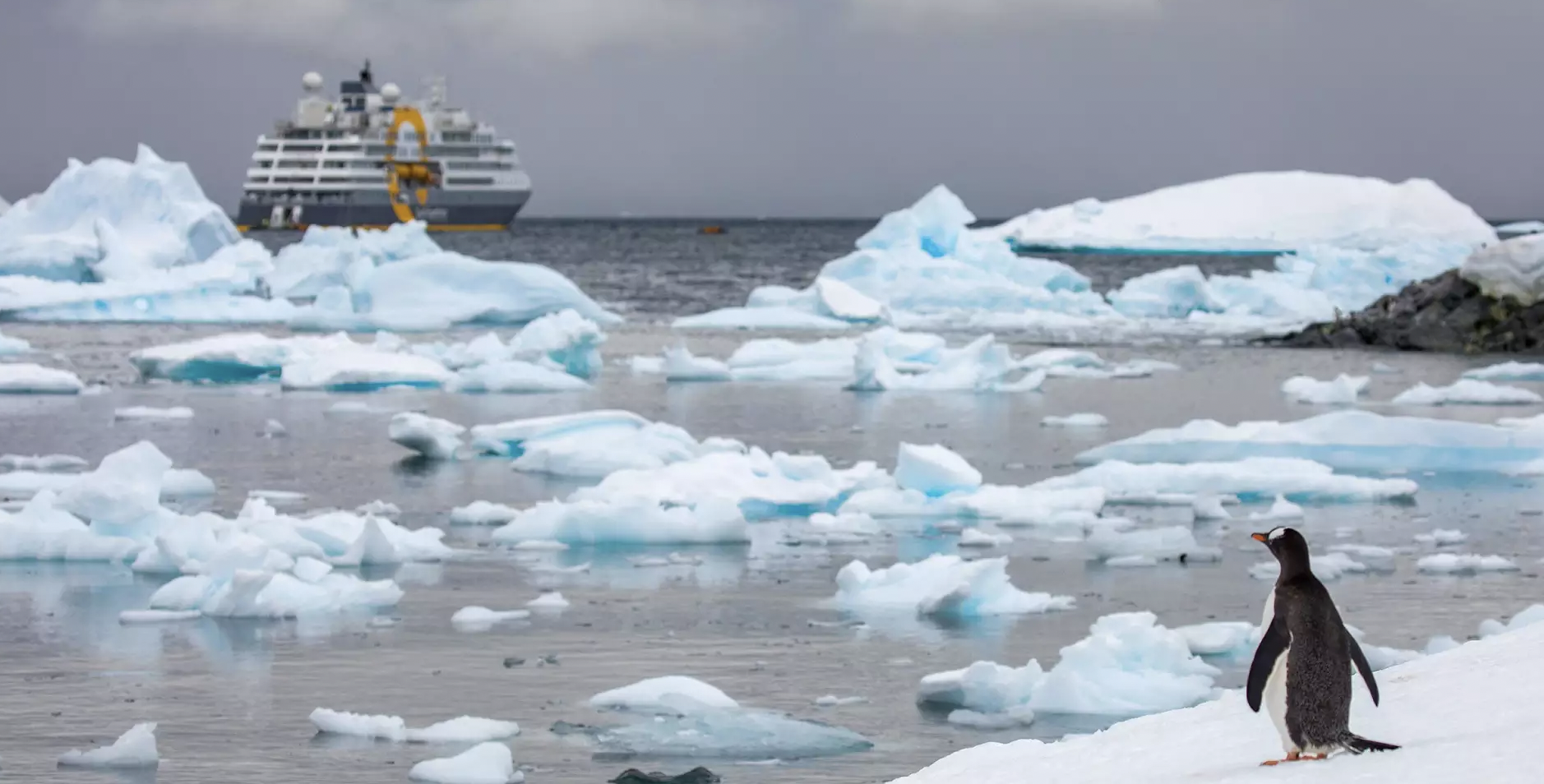
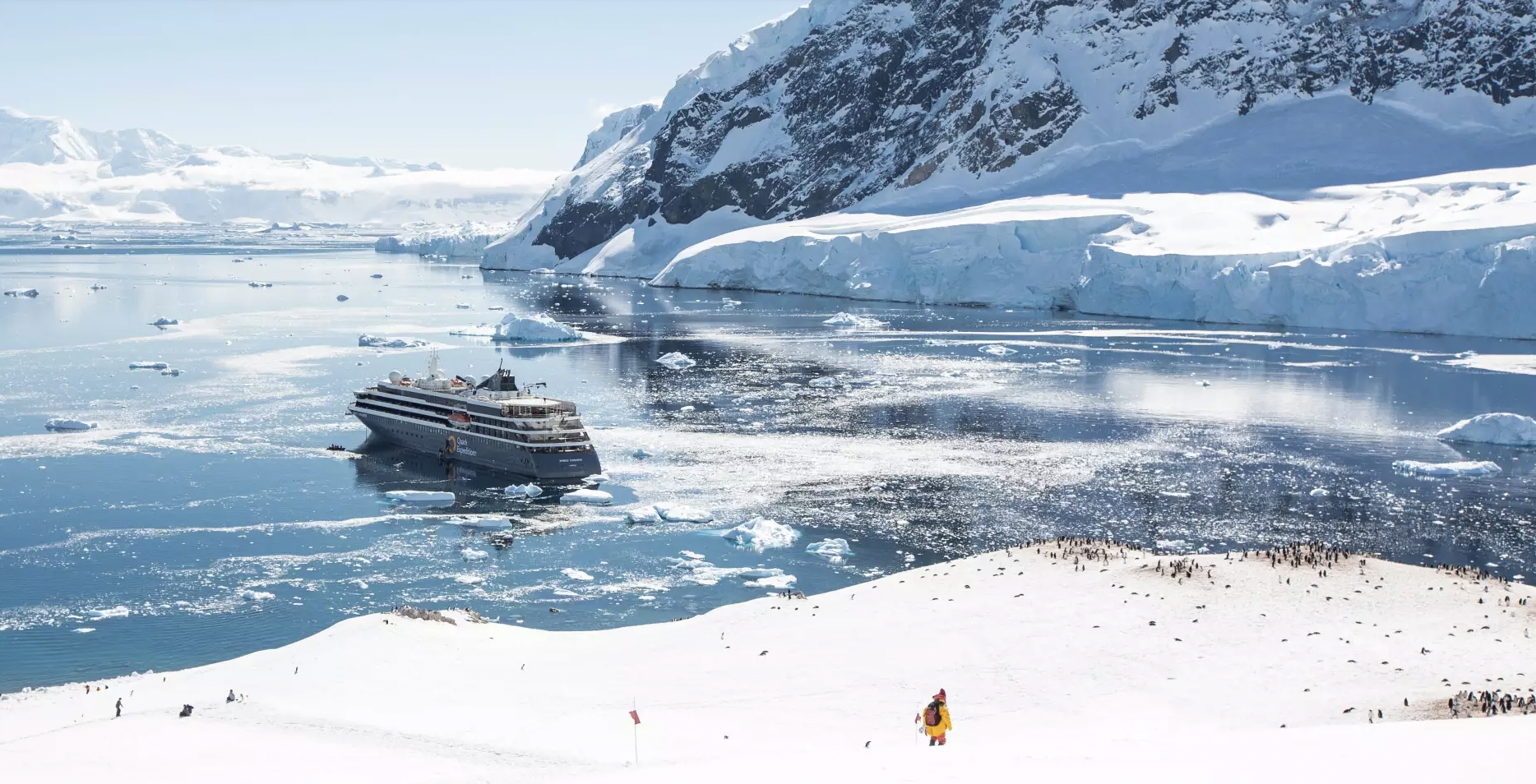
Penguin looks out at icebergs and large cruise ship in the Antarctic
A cruise through the Antarctic isn’t for the faint of heart — but could be the trip of a lifetime.

If you’re an adventure seeker, the Antarctic Peninsula is the ultimate extreme destination. The Antarctic Peninsula, also known as Graham Land or Palmer Peninsula, is the northernmost part of Antarctica and part of the larger West Antarctic Peninsula. It lies about 600 miles south of South America.

The landscape is mountainous, and there are numerous volcanoes in the region. You can expect to see a wide range of wildlife, including emperor penguins, killer whales and seals.

Altitude sickness might not be something you think of when visiting the Antarctic, but the highest point is 2.5 miles above sea level.

Taking an Antarctic Peninsula cruise is the best way to explore this remote, inhospitable region.

Large cruise ship offshore of Antarctic Peninsula, where a person in yellow coat and backpack walks
This isn’t your typical cruise, that’s for sure!

Essential Tips for an Antarctic Peninsula Cruise

Find the right time to go

The best time to take a cruise to the Antarctic Peninsula is during the austral summer, which runs from November to March. During this period, the weather is more stable and the days are longer. 

Sunsets can last up to three hours — making for some spectacular photographs. 

Plus, you’re more likely to see wildlife, as animals are more active during the summer. The first penguin chicks hatch in mid-December, so if you want to catch a glimpse of them, this is the ideal time to go. The whales also begin to arrive in mid-December, and there are plenty of them in January. The ice thins a bit, too, allowing tourists to explore farther south.

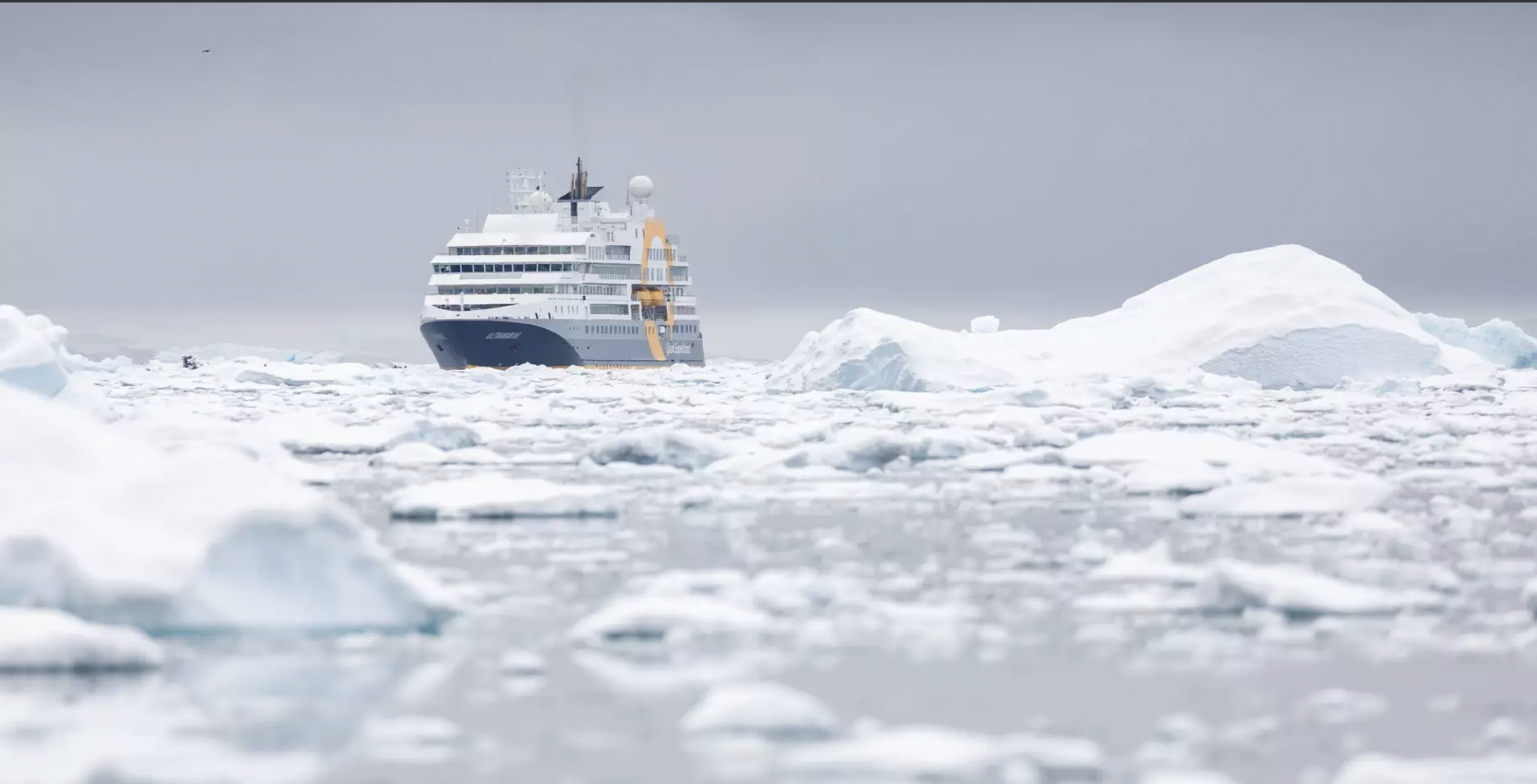
Antarctic cruise ship in ice-filled water

A luxury cruise ship plies the ice-filled water of the Antarctic.

Choose the right cruise. 

Luxury cruise ships are popular as they offer a variety of itineraries and amenities such as all-suite accommodations, fine dining and experienced guides. However, don’t just settle for any cruise. Conduct ample research to decide if a large or small boat is more suitable for your needs.

A top factor to consider when choosing an Antarctic Peninsula cruise is your budget. You should decide first how much you’re willing to spend. You don’t want to go too high and break the bank, but you also don’t want to go too low and risk a subpar experience. With these criteria in mind, you can narrow down your options and find a cruise that best fits your budget and interests. 

Pack properly. 

The Antarctic Peninsula is cold and windy, so it’s essential to pack the right clothes for the trip. Bring lots of layers and wear waterproof winter gear. 

Don’t forget sun protection, as the sun can be very strong even during the cold season.

Bring several pairs of gloves, a hat, a scarf and sunglasses to protect yourself from the elements. Ensure your clothing is comfortable and non-bulky so you can easily move around during shore visits.

Finally, if you’re an amateur photographer, bring enough memory cards and batteries for your camera. 

Pro tip: Pack a power strip, as the cabins on cruise ships usually have limited electrical outlets.

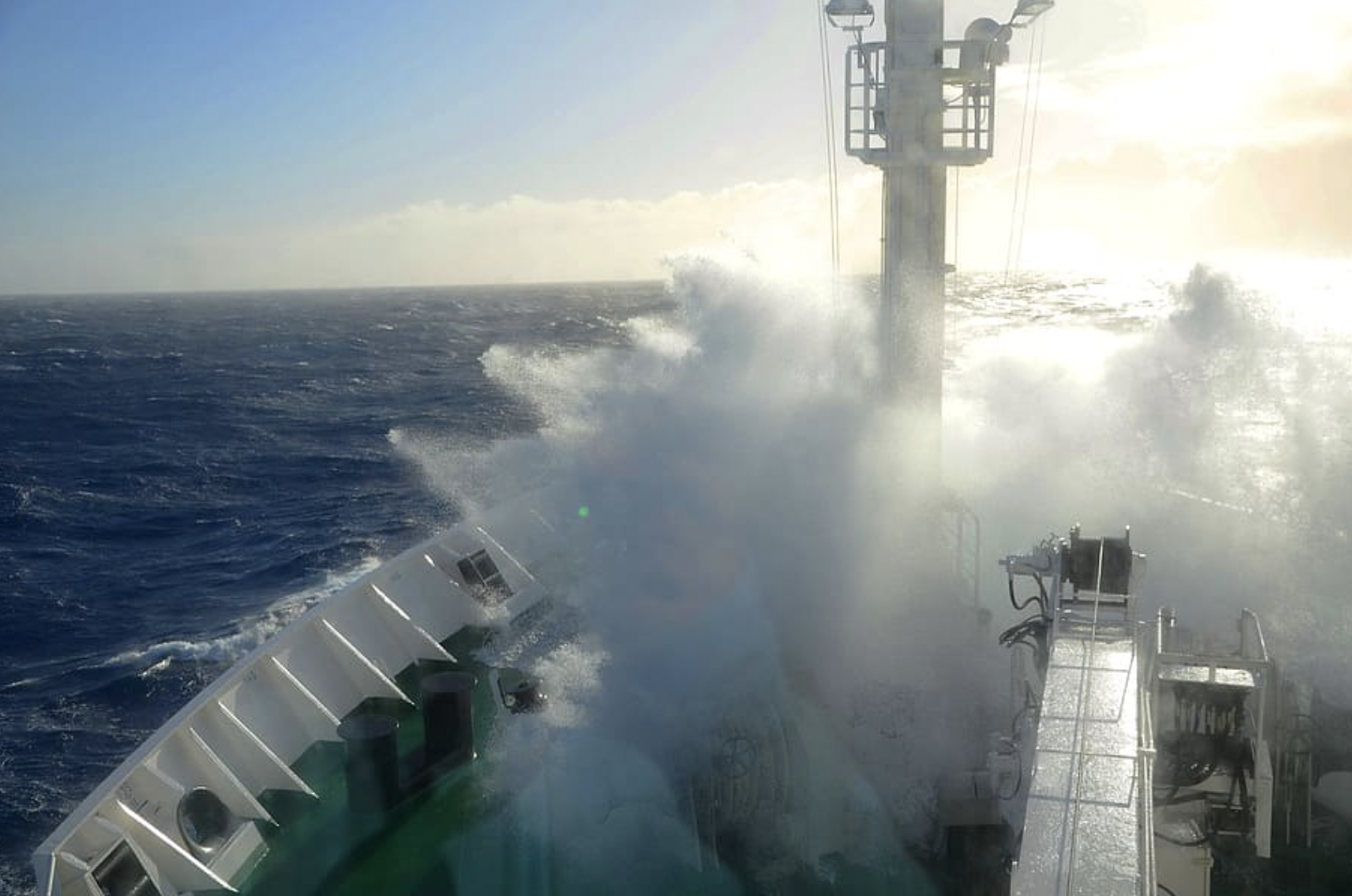
Waves crashing over the bow of a large ship while crossing the Drake Passage

The roughest stretch of water is the Drake Passage — one of the most turbulent areas in the world.

Prepare for rough seas. 

Be ready to face the unique challenges of sea travel, including:

The Drake crossing: To reach the peninsula, your cruise ship will cross the Drake Passage, where the Atlantic and Pacific Oceans meet. This is one of the roughest stretches of sea in the world. So you never know if you’re going to experience the turbulent “Drake shake” or the tranquil “Drake lake.” I recommend contacting your doctor for any advice before you go and packing enough anti-seasickness medication for this stretch.

Altitude sickness: It might not be something you think of, but the highest point in Antarctica is 2.5 miles (over 4,000 meters) above sea level. On top of that, the average temperature in summer is around -13°F. Drier air, less oxygen, intense cold and harsh winds can trigger altitude sickness. The best thing to do is to drink lots of water to keep yourself hydrated. 

Know the Antarctic regulations. 

To minimize environmental impact on the peninsula, the cruise industry participates in detailed environmental assessments. They also must obey international maritime laws and coordinate itineraries through pre-season planning.

While in the Antarctic Peninsula, you have to follow International Association of Antarctica Tour Operators (IAATO) guidelines:

  • Protect the wildlife.

  • Respect restrictions in protected areas.

  • Keep the peninsula pristine. 

  • Respect scientific research stations. 

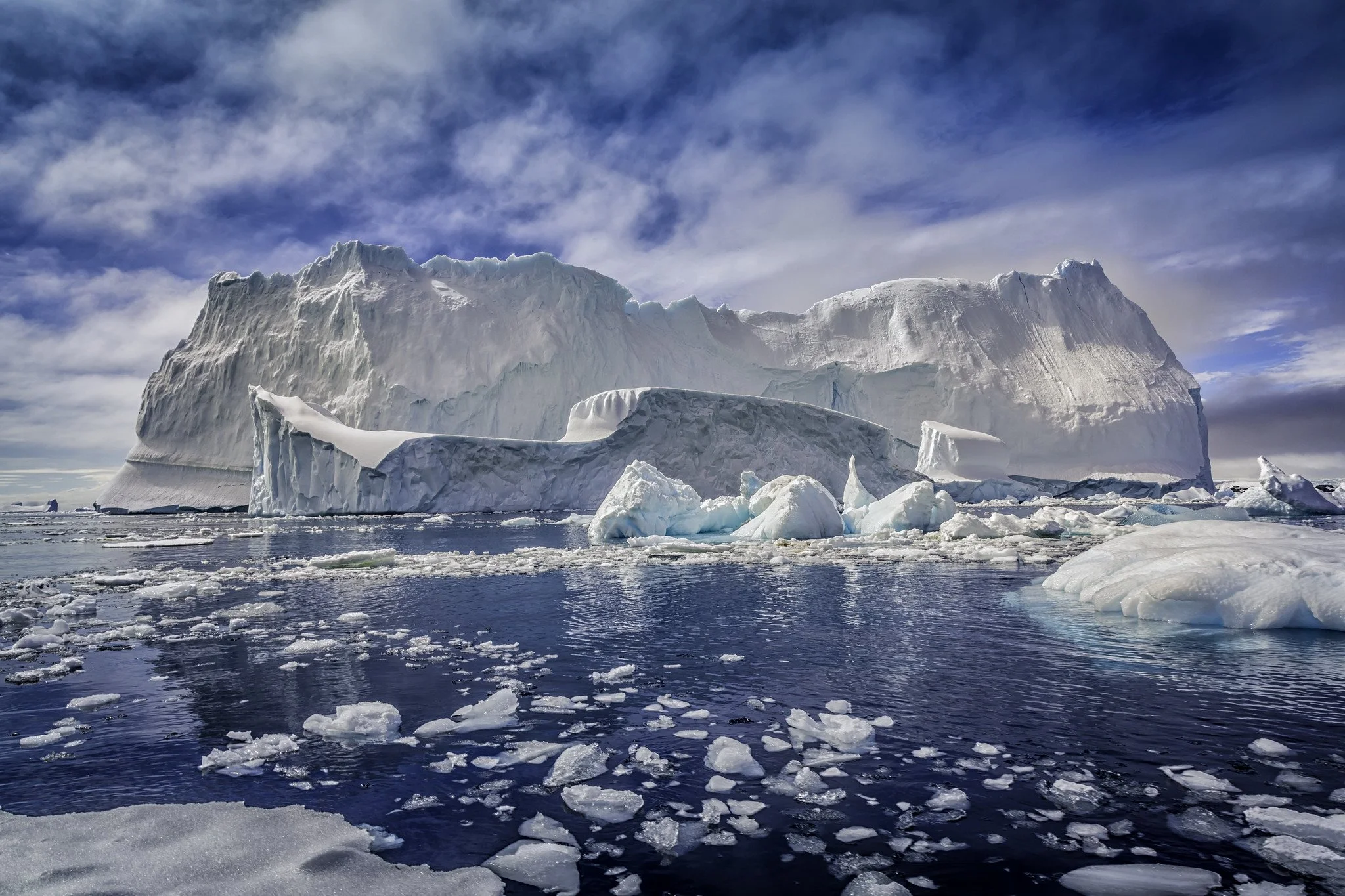
Gorgeous blue skies, waters and icebergs in Antarctica

Thanks to the plays of light in the Antarctic, you can end up with some gorgeous photos.

Photographing the Antarctic Peninsula

There’s no shortage of picturesque views in the Antarctic Peninsula. Here are my tips to capture spectacular photos:

  • During the polar summer, from November to February, the sun stays above the horizon and never sets — a phenomenon known as the midnight sun. Take advantage of the unusual plays of light to take pictures of the same features from different angles and at different times of day.

  • To capture more focused and vibrant photos, use the color contrast between land and sea. The turquoise water will provide an eye-catching backdrop for pictures with icebergs and wildlife.

  • You don’t want your camera to freeze during the expedition, so keep it warm in an insulated case.

Red tents set up in the snow on the Antarctic Peninsula

For the brave, there are outdoor activities on the Antarctic Peninsula, including camping.

Adventure Activities on an Antarctic Peninsula Cruise

Here are some activities to look forward to on the Antarctic Peninsula:

Kayaking: Kayaks are a great way to explore the nearby glaciers and islands up close and personal. Just make sure there are lifejackets and drysuits for this adventure.

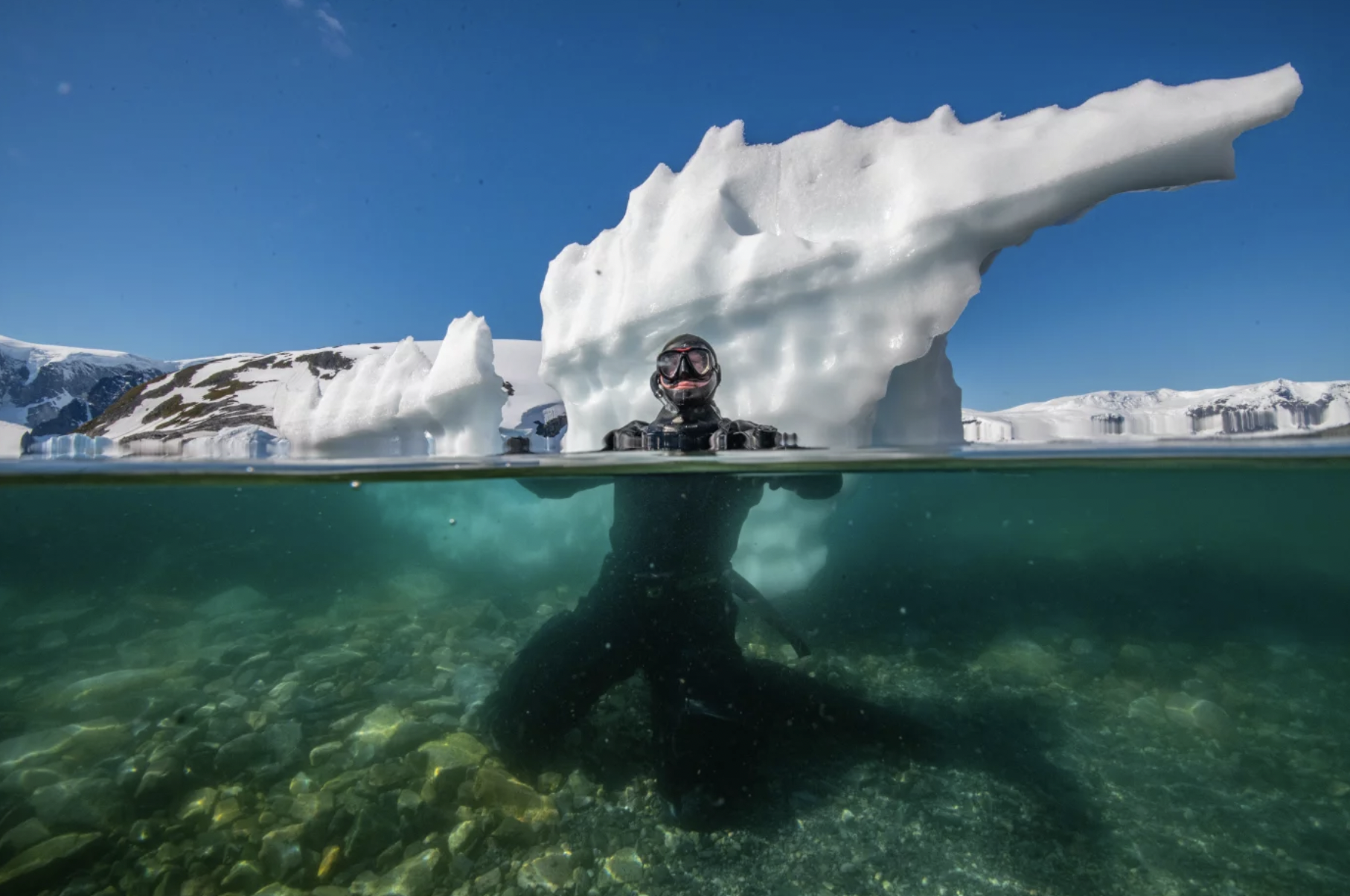
Scuba diver with head out of the water by ice formations in the Antarctic

Believe it or not, diving is an option in the Antarctic.

Diving: For certified divers, you can go 20 meters beneath the surface of the icy water. That should be deep enough to see the fascinating sea life. Whether you can dive largely depends on the weather conditions. 

Camping: Camp overnight in Antarctica under the stars for a once-in-a-lifetime experience. Just be sure to bring thermal underwear, breathable down jackets, turtlenecks, thick socks, and thermal under-gloves or warm mittens.

Hiking and mountaineering: Take guided hikes to explore some of the most stunning landscapes in the world. For experienced climbers, there are also challenging mountains to scale. Pack a pair of sturdy boots with rigid soles. Your tour operator will provide climbing gear, such as ropes. 

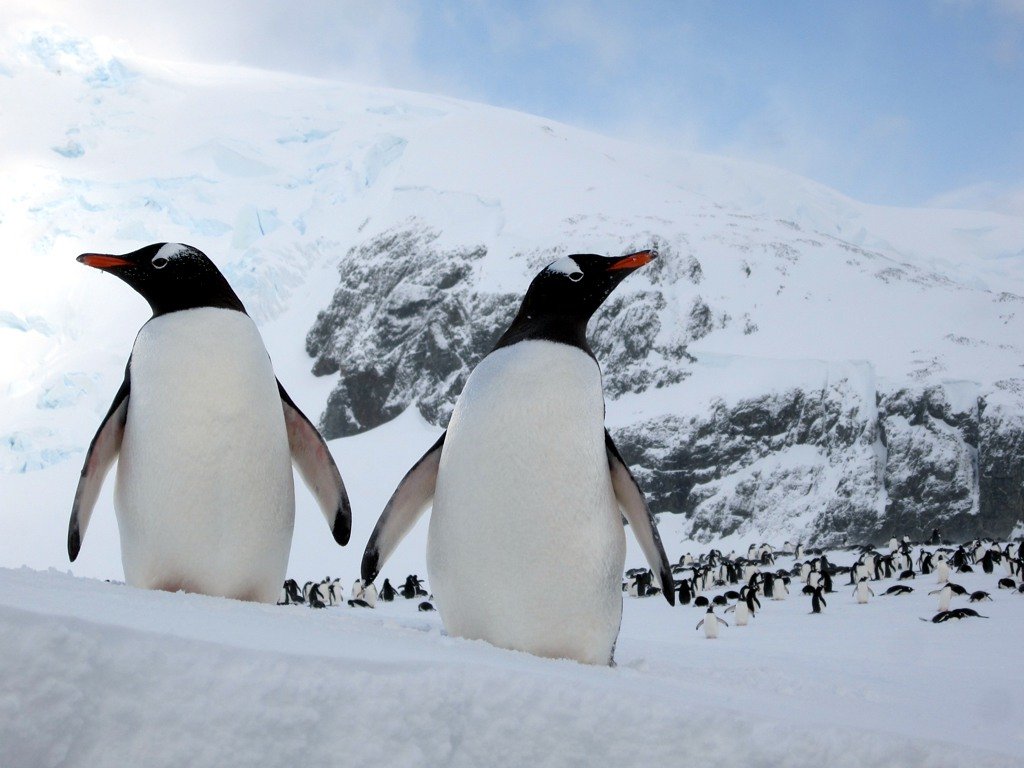
Two gentoo penguins in the foreground, with large group of other penguins on the snowy slopes of Antarctica

Let’s face it: Penguins, like these gentoos, are a big draw of this region.

Sights to See on an Antarctic Peninsula Cruise

Landscapes and Wildlife

Some of the natural wonders to look forward to seeing in Antarctica include:

Unique landscapes: There are many volcanic beaches, frozen tundras and ice caves to explore. Also, melting snow exposes a rugged mountain chain that’s habitat for interesting plant life and invertebrates. 

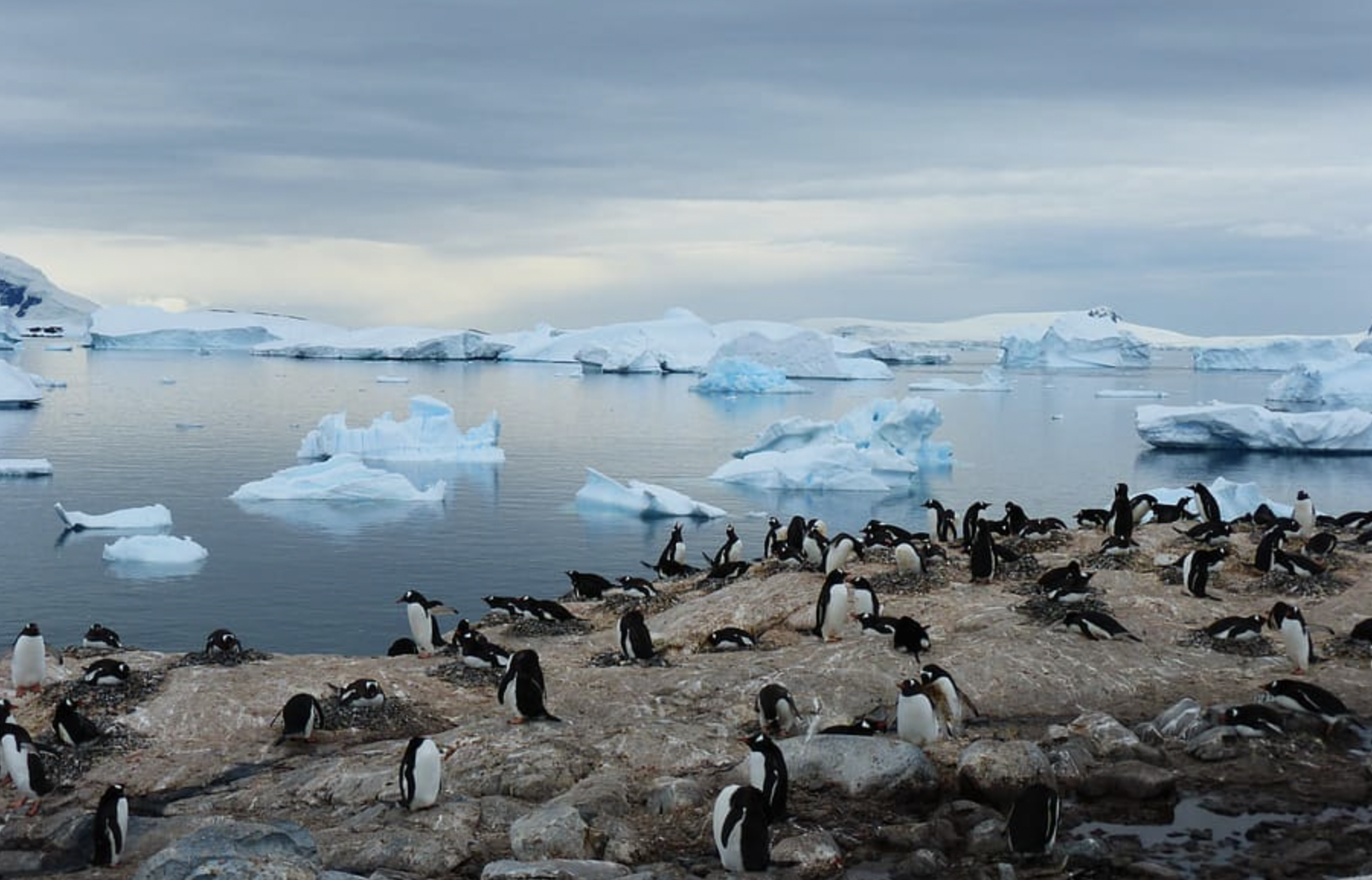
Penguins on the rocks by iceberg-filled water of the Antarctic

In addition to penguins, look out for seals, whales and other seabirds.

Wildlife: The Antarctic Peninsula has numerous wildlife species, including majestic whales and albatrosses and other seabirds. You’re sure to see different types of penguins, including the gentoo, chinstrap and Adélie penguins, as well as crabeater, leopard and Ross seals.

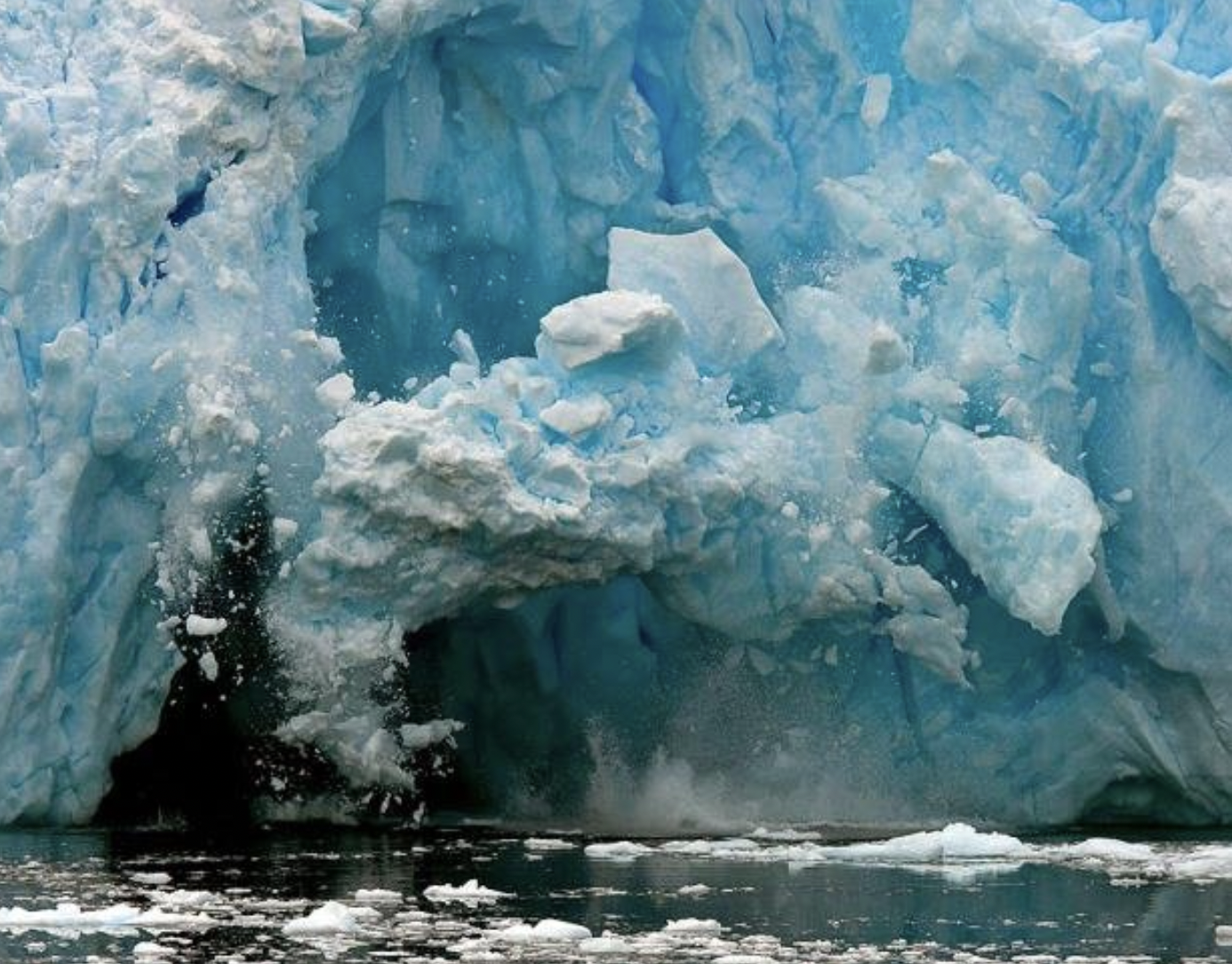
Calving glacier with parts crashing down into Neko Harbor

Neko Harbor is a good spot to try to catch a calving glacier as it sheds massive chunks of ice.

Glaciers: Witness the beauty of massive glaciers, from those towering above Lemaire Channel to the calving ones in Neko Harbor, which shed massive chunks as they go through valleys and deep fjords. Those pieces that have broken off? We call them icebergs. 

Snow-covered rock formation in Lemaire Channel, Antarctica

Lemaire Channel

Giant icebergs: The Antarctic Peninsula is home to some of the world’s largest and most spectacular icebergs. These floating giants are awe-inspiring sights not to be missed.

Red buildings of the Paradise Bay Research Station, with people outside on the snow of the Antarctic Peninsula

Paradise Bay Research Station

Must-Visit Locations on an Antarctic Peninsula Cruise

Deception Island

First discovered by seal hunters in 1820, the island was named for the way it deceived explorers — both by its concealed entry point, called Neptune’s Passage, and by its seemingly safe harbor, Port Foster, which sits within an active volcano. The harbor is actually a caldera, where the top of the volcano collapsed and gives the island its ringlike shape. 

More than 50% of the island is covered by thick glaciers and is home to various wildlife species. The harbor and its black sand beaches are popular destinations for tourists and scientists alike. There are also hot springs, where visitors can take a dip in the 98.6ºF water.

Half Moon Island

Half Moon Island is home to many penguins, seals and seabird species. Part of the South Shetland Islands, Half Moon boasts incredible views made even more spectacular by its crescent shape.

Paradise Bay

Paradise Bay is a popular cruise ship destination and one of the two main Antarctic ports. It’s rich in wildlife, including penguins, seals and whales. It is also home to a research station where visitors can learn more about the Antarctic environment. On a clear day, you can see the snow-covered peaks of Adelaide Island in the distance. 

Historical Sites

Visit abandoned research stations, such as Palmer Station and Port Lockroy, to learn about the history of human exploration and habitation in Antarctica.

These sites offer a fascinating glimpse into the past, with artifacts and photographs from many decades ago providing insight into what it was like to be a scientist in the Antarctic. 

Breathtaking Sunrises and Sunsets

Finally, don’t miss the breathtaking sunrises and sunsets in Antarctica. Get up early to catch the first light of dawn and watch as the sky changes colors from pastel shades to deep orange-red. 

At night, witness the mesmerizing beauty of the stars twinkling above the icy landscape. It’s an experience you’ll never forget! –Kayla Gallocher

Icebergs in the Antarctic, with purplish sky and water

The white of icebergs and glaciers contrast sharply with the beautiful blues and purples of the sky and water.

Preserving the Magic of the Amazon

The largest rainforest on Earth cleans our air and water. But it’s rapidly being destroyed. Here are 3 ways you can help save the Amazon Rainforest — including an ethical visit. 

The largest rainforest on the planet helps keep our air and water clean.

As the world’s biggest rainforest, the Amazon has several functions crucial to our planet’s environmental health. Alarmingly, it’s also one of the foremost victims of the climate crisis. In 2022 alone, 430 square kilometers of the Amazon was destroyed. That’s over 126 times the size of Central Park in New York City.

The Amazon, which produces one-fifth of the Earth’s oxygen, is being cut down at an alarming rate.

Why We Need the Amazon Rainforest

While it comprises only 2% of the world’s landmass, the Amazon is responsible for producing 20% of the oxygen on the planet. One of its primary functions is to sequester carbon — or, in other words, gather large amounts of carbon dioxide and convert them to oxygen. Carbon sequestration benefits us by cleaning air and water sources. The process can even control flooding. This is why the Amazon is rightfully known by the moniker “the Lungs of the Earth.”

Unfortunately, the forest and its inhabitants continue to struggle against several issues. The foremost challenge it faces today is rapid deforestation due to agriculture, mining, logging and construction. 

Ultimately, assertive legislation is key to reversing the damage done to the Amazon. This was made clear when Brazil’s deforestation policies in the mid-2000s eased the rate of destruction in the rainforest, according to a study by the University of Arizona

Yet, while policies play a crucial role in saving the Amazon, there are many ways for you as an individual to contribute to its preservation.

A satellite image that shows the deforestation of the Amazon — the same image from less than a decade ago would have been all dark green.

3 Ways to Help Save the Amazon

In Brazil, beef is raised for consumption on land that was once part of the Amazon.

1. Practice mindful consumption. 

The majority of deforestation efforts come about due to the production of items like paper, wood and beef. 

Minimize your use of paper to help reduce the demand for its production. You can also check for an FSC label to find out if your paper was sourced ethically and doesn’t threaten endangered animals that rely on trees for survival.

Brazil, where 60% of the Amazon is located, is also a major producer of beef. The biggest beef producer in the region, JBS S.A., raises cattle from deforested Amazon land. On the whole, around 70% of the Amazon is deforested to raise cattle for beef. While not everyone wants to be a vegetarian, you can reduce consumption to help decrease the demand for beef production.

Consider volunteering for groups like the Rainforest Action Network that protest against the stealing of indigenous lands and the deforestation of the Amazon.

2. Connect with advocates and organizations. 

There are countless grassroots organizations and initiatives dedicated to preserving the Amazon. For instance, the Rainforest Action Network (RAN) successfully pushed Burger King to stop using rainforest beef. 

You can join local groups in your area or support larger ones like the RAN or Amazon Watch. They can use your help in their efforts to call out and boycott businesses that support deforestation in the region.

If you want to visit the Amazon, make sure you go through a group that focuses on preservation of this valuable natural resource.

3. Make an ethical trip to the Amazon. 

If you want to see Amazon for yourself, be sure to do so in an ethical and respectful manner. After all, just like the Daintree Forest in Australia, the Amazon is also a UNESCO World Heritage Site. To visit the Amazon ethically, look for accommodations that work with environmental preservation initiatives. These providers offer guides and activities that immerse you in the Amazon’s biodiversity. And you might even end up lending a hand to their preservation efforts!

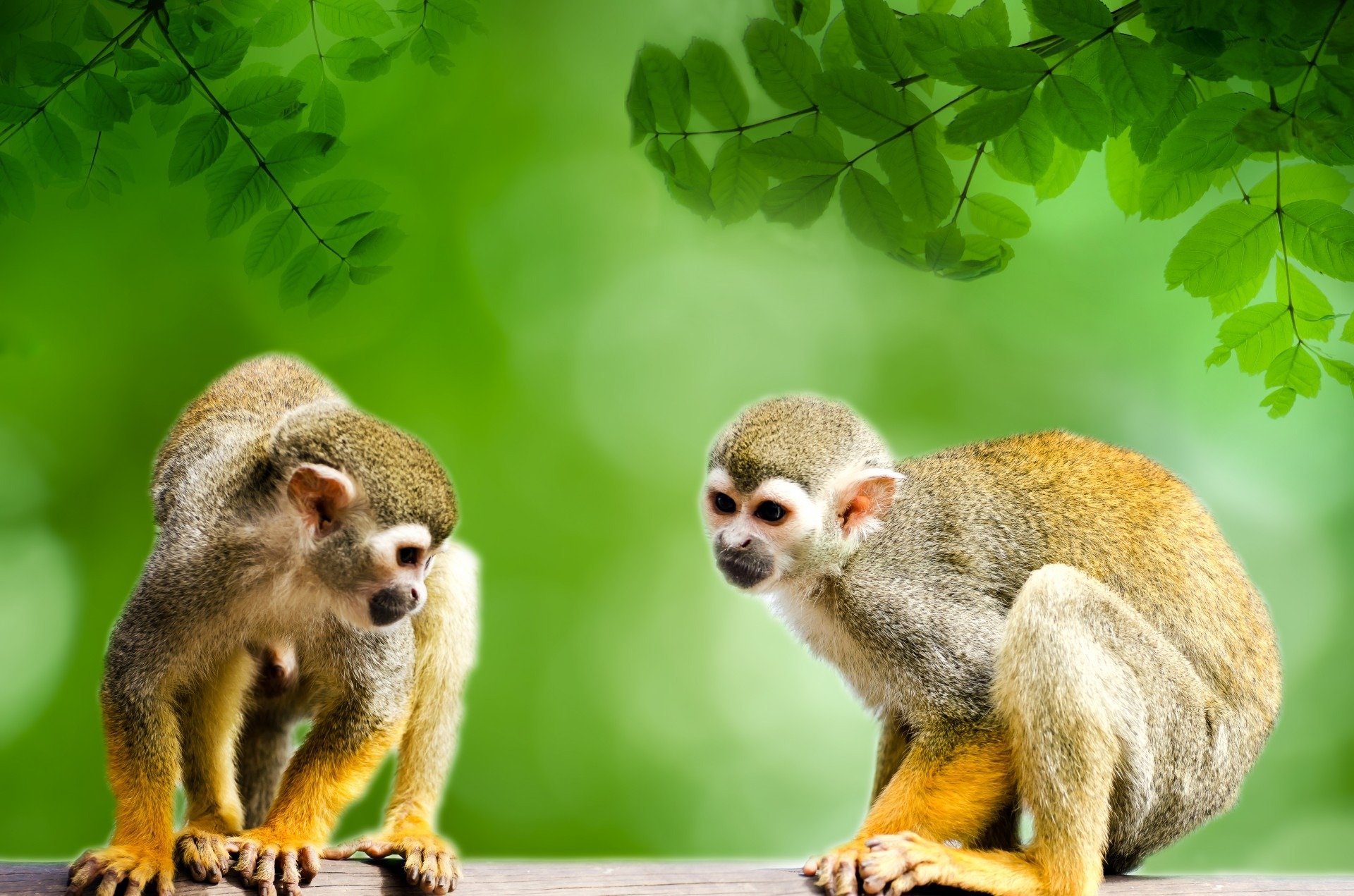
Two adorable squirrel monkeys in the Amazon

These adorable critters, known as squirrel monkeys, are just some of the wildlife you could see in the Amazon.

The paper and beef industries are destroying the largest rainforest on Earth. Do your part to help stop these atrocities.

The Amazon and its rapid degradation is of urgent concern. As it is responsible for several processes that keep the environment in good health, everyone should be involved in helping preserve it. –Alyson Yesha Corbett

48 Hours in Cairns, Australia’s Gateway to the Great Barrier Reef

In addition to the marine wonderland of the Great Barrier Reef, there’s so much to do in the Cairns area — including the Kuranda Scenic Railway, Trinity Inlet and the Cairns Museum — that you’ll have to plan your visit, especially if you’ve only got a couple of days.

Two scuba divers swimming past the Great Barrier Reef

The Great Barrier Reef stretches over an area of 134,634 square miles (344,400 square kilometers) — not surprisingly, it’s the largest coral reef in the world.

Considered one of the Seven Wonders of the Natural World, Australia’s Great Barrier Reef, is home to an incredible diversity of marine life, and a visit to the reef is an unforgettable experience. 

The best jumping-off point to see the largest coral reef on the planet is the city of Cairns, on Australia’s northeast coast. 

With its clear waters and abundance of marine life, the Great Barrier Reef is a truly once-in-a-lifetime experience. 

But as impressive as the Great Barrier Reef is, it’s not the only thing to see in the area. Here’s a guide to making the most of a couple of days in Cairns. 

Man snorkeling the Great Barrier Reef as woman sits on boat

Snorkeling or diving the reef is an experience you’ll never forget.

Start with a snorkeling or diving tour of the Great Barrier Reef. 

If you only have 48 hours in Cairns, be sure to book a snorkeling or diving tour of the reef. The Great Barrier Reef is home to an astonishing variety of marine life, and there’s no better way to see it than up close.

A snorkeling or diving tour will give you the chance to explore the reef at your own pace, but a qualified guide can point out the best bits. With its clear waters and abundance of marine life, the Great Barrier Reef is a truly once-in-a-lifetime experience. 

Riders on a glass-bottom boat looking down at the Great Barrier Reef

If you want to be close to the water but not in it, take a glass-bottom boat tour of the reef instead.

See the reef on a glass-bottom boat tour — or a helicopter ride. 

If snorkeling or diving isn’t your thing, a glass-bottom boat tour is a must if you’re looking for an unforgettable way to experience the Great Barrier Reef. You’ll have the chance to see the reef up close — while staying dry — as you glide over the colorful coral and fish. Be sure to keep an eye out for turtles, manta rays and sharks. If you’re short on time, plenty of tour operators offer half-day or even three-hour tours.

And there’s nothing quite like a helicopter ride for a bird’s-eye view of the reef. You’ll marvel at the size and scale of the reef as you soar over its vast expanse. Helicopter rides typically last around 30 minutes, so they’re perfect if you’re pressed for time. Just be sure to book in advance, as spaces fill up fast.

Lush plant life at the Kuranda rainforest

The Skyrail Rainforest Cableway takes you through lush greenery, where you can see rainbow lorikeets, koalas and cassowaries.

Admire the flora and fauna along the Kuranda Scenic Railway and Rainforest Cableway. 

There’s no time to waste when you only have 48 hours in Cairns. Make the most of your limited time by taking a walk through the rainforest via the Kuranda Scenic Railway. This popular tourist operation offers breathtaking views of the lush rainforest canopy, as well as opportunities to spot some of the area’s wildlife, including koalas, rainbow lorikeets (parrots as colorful as their name suggests) and even a large flightless bird called the cassowary (if you stop off at Birdworld).

The railway is also a great way to learn about the local Aboriginal culture, with guided tours available in several languages. 

And if you’re feeling adventurous, you can even take a dip in one of the many natural swimming holes along the way.

Cairns, Australia CBD with grassy roundabout

Go for a swim in the Esplanade Lagoon, then explore the CBD, the central business district.

Spend the day exploring Cairns CBD. 

To explore the city, start with a visit to the Esplanade Lagoon, where you can take a dip or simply relax on the beach. Then, head to the Cairns Museum to learn about the city’s history and culture.

Hides Corner and plaza in downtown Cairns

Visit a local history museum, the botanic gardens or zipline over a crocodile at Cairns Zoom and Wildlife Dome.

Finish up your day with a walk through the botanic gardens, where you can admire the diverse plant life of Tropical North Queensland. With so much to see and do, you’re sure to have an unforgettable experience when you spend a day exploring Cairns CBD.

Gray tables, lots of plants and the back counter at the patio of The Chambers restaurant in Cairns

The patio at the hip Chambers café, known for its brunch and cocktail bar.

Enjoy a meal at one of the city’s many restaurants or food trucks. 

There’s no denying that food is an important part of the travel experience. Trying new dishes and sampling local specialties is a great way to get a taste for the culture of a place. If you’re short on time but big on appetite, make sure to check out some of Cairns’ best restaurants. 

From casual cafés like Caffiend and the Chambers to fine dining establishments like the French restaurant C’est Bon and Tamarind at the Reef Hotel Casino, there’s something to suit every taste and budget.

For a quick bite, head to one of the city’s many food trucks or grab a slice of pizza from a pizzeria. 

Whether you’re looking for a quick snack or a gourmet meal, Cairns’ restaurants won’t disappoint.

Sunrise over Trinity Inlet, Australia

A gorgeous sunrise over Trinity Inlet

Head to the lookout for views of Cairns and Trinity Inlet. 

If you find yourself in Port Douglas (about an hour up the coast), make sure you stop at the Trinity Bay Lookout. It’s just a short walk from Four Mile Beach, and from here you'll be able to see the city skyline, including the iconic palm trees that line the waterfront.

Trinity Bay Lookout

Climb to the top of the Trinity Bay Lookout for views of Four Mile Beach.

On a clear day, you may even be able to see as far as Double Island off the coast. The lookout also offers stunning views of Mount Whitfield, which is worth hiking to the top of for another vantage point.


Two clownfish hiding in the sea life of the Great Barrier Reef

You might not find Nemo (or any other clownfish) with only two days in Cairns. But plan your itinerary — and make sure you include the Great Barrier Reef.

So there you have it: 48 hours in Cairns doesn’t have to be rushed. By following these tips, you can make sure you have a truly memorable experience, even when time is limited. –Charlie Btallent


Palm trees on beach at Palm Cove, Australia

Aerial view of the city of Adelaide, Australia