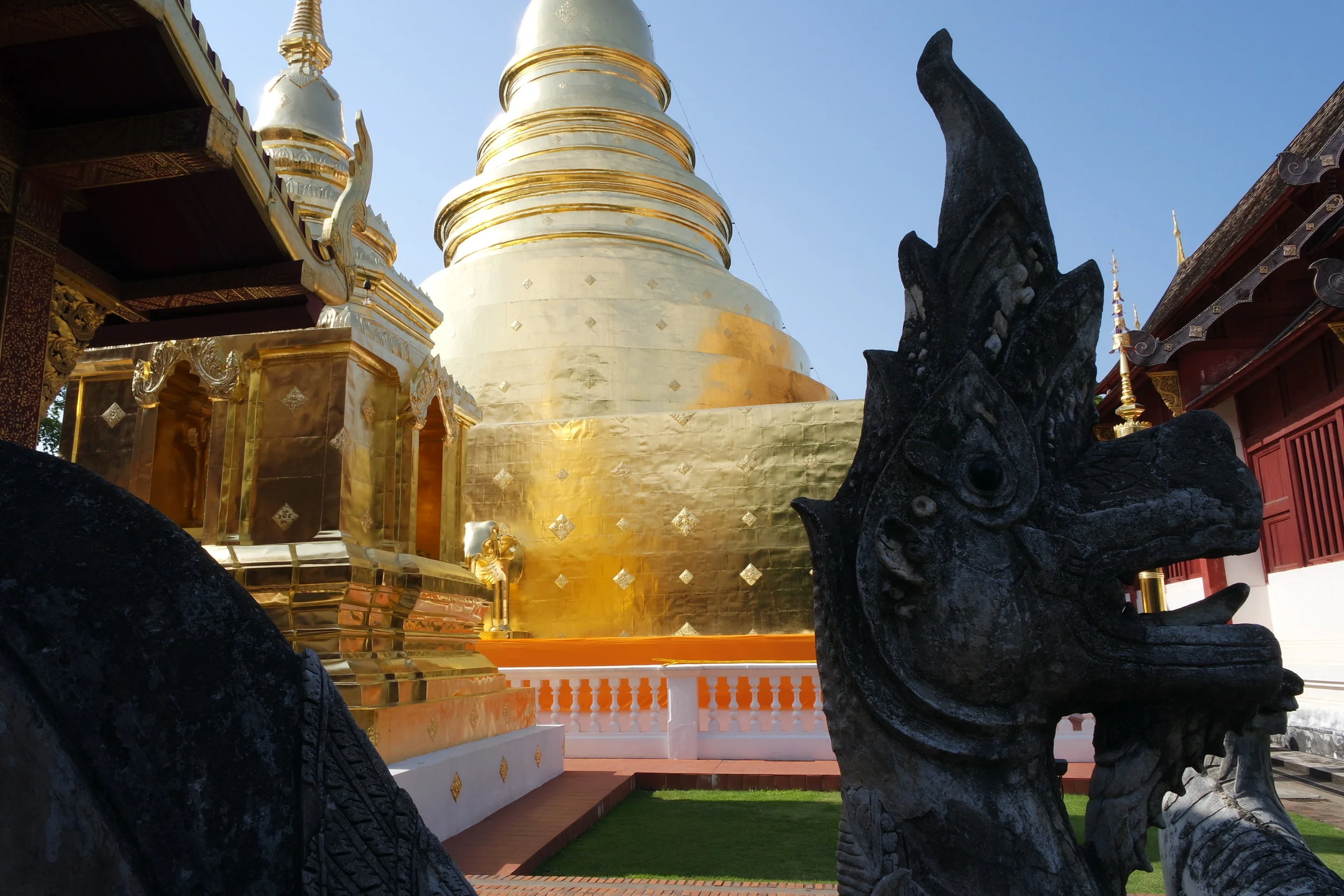
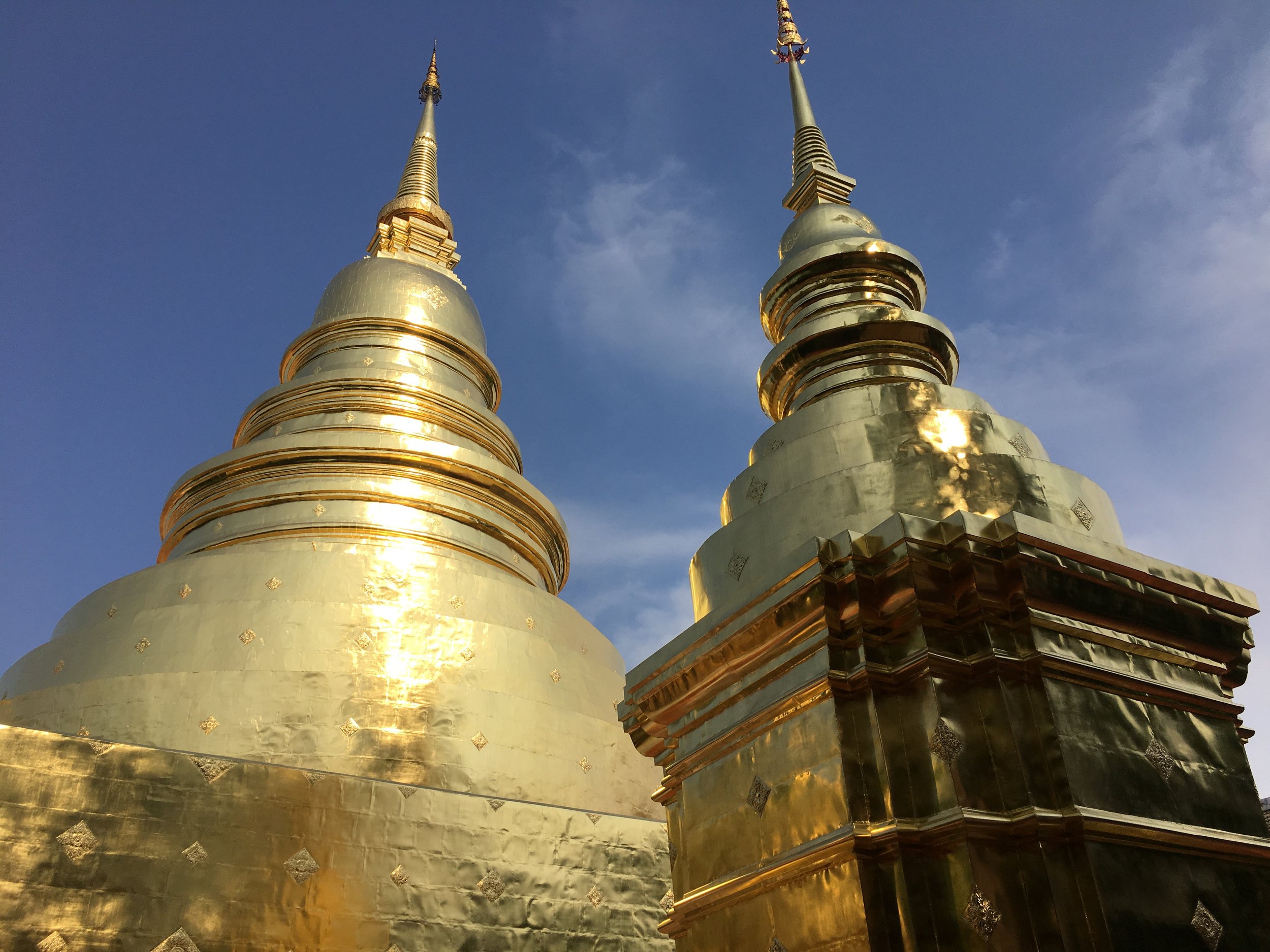
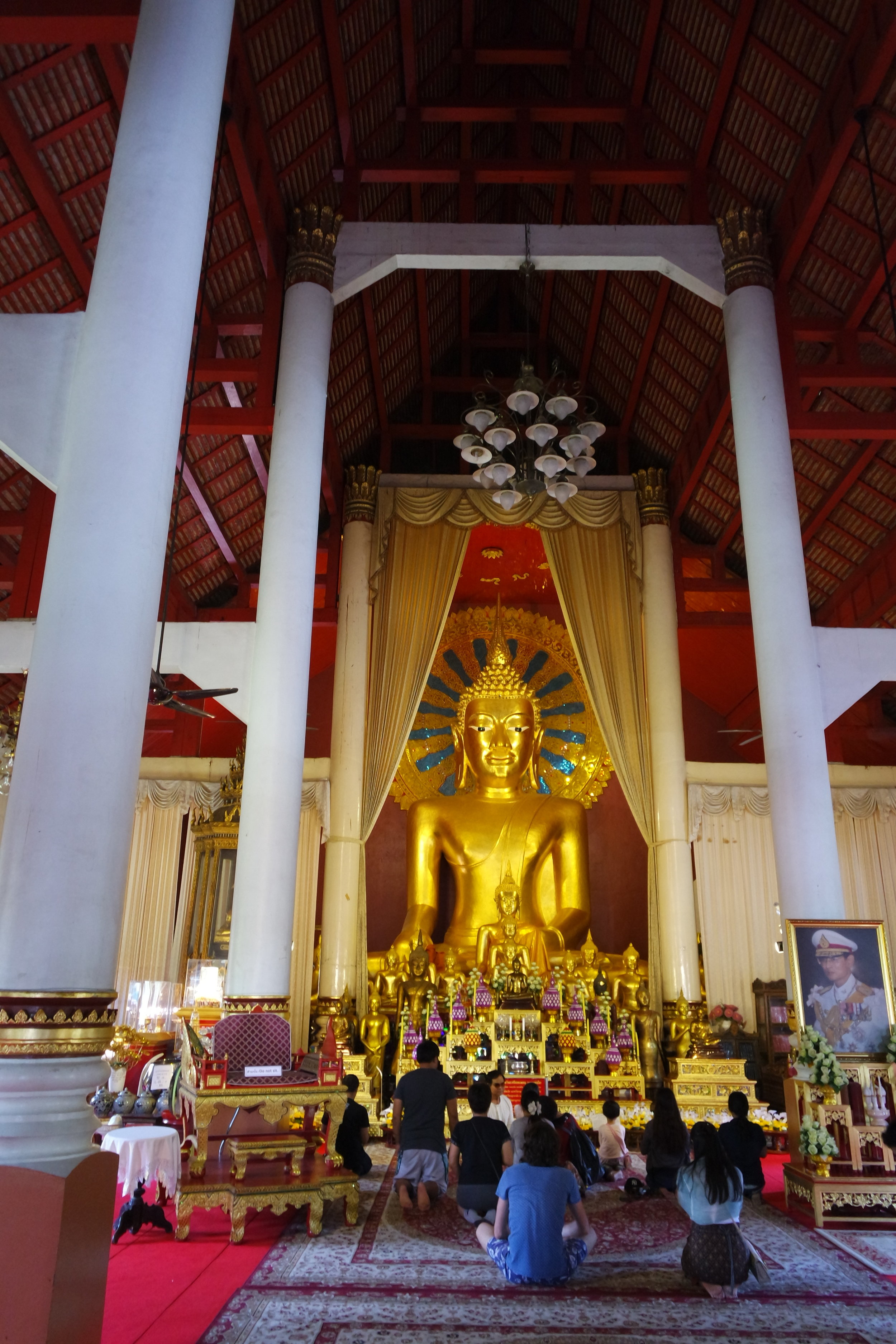
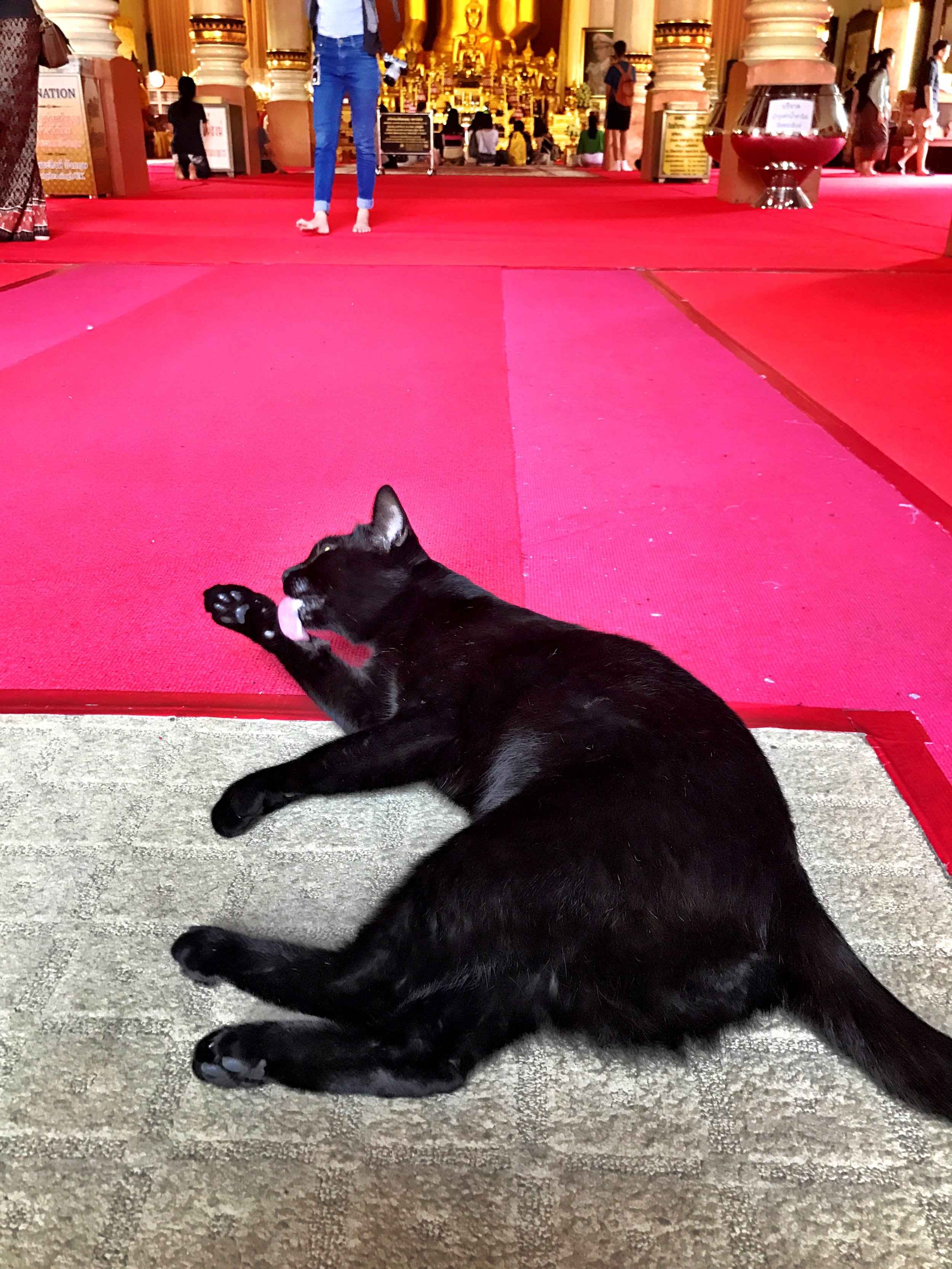
thailand

The Most Popular Flower-Based Destinations Around the World

From cherry blossoms in Japan to lavender fields in Provence, these are the flower-filled destinations travelers plan entire trips around — timing anxiety included.
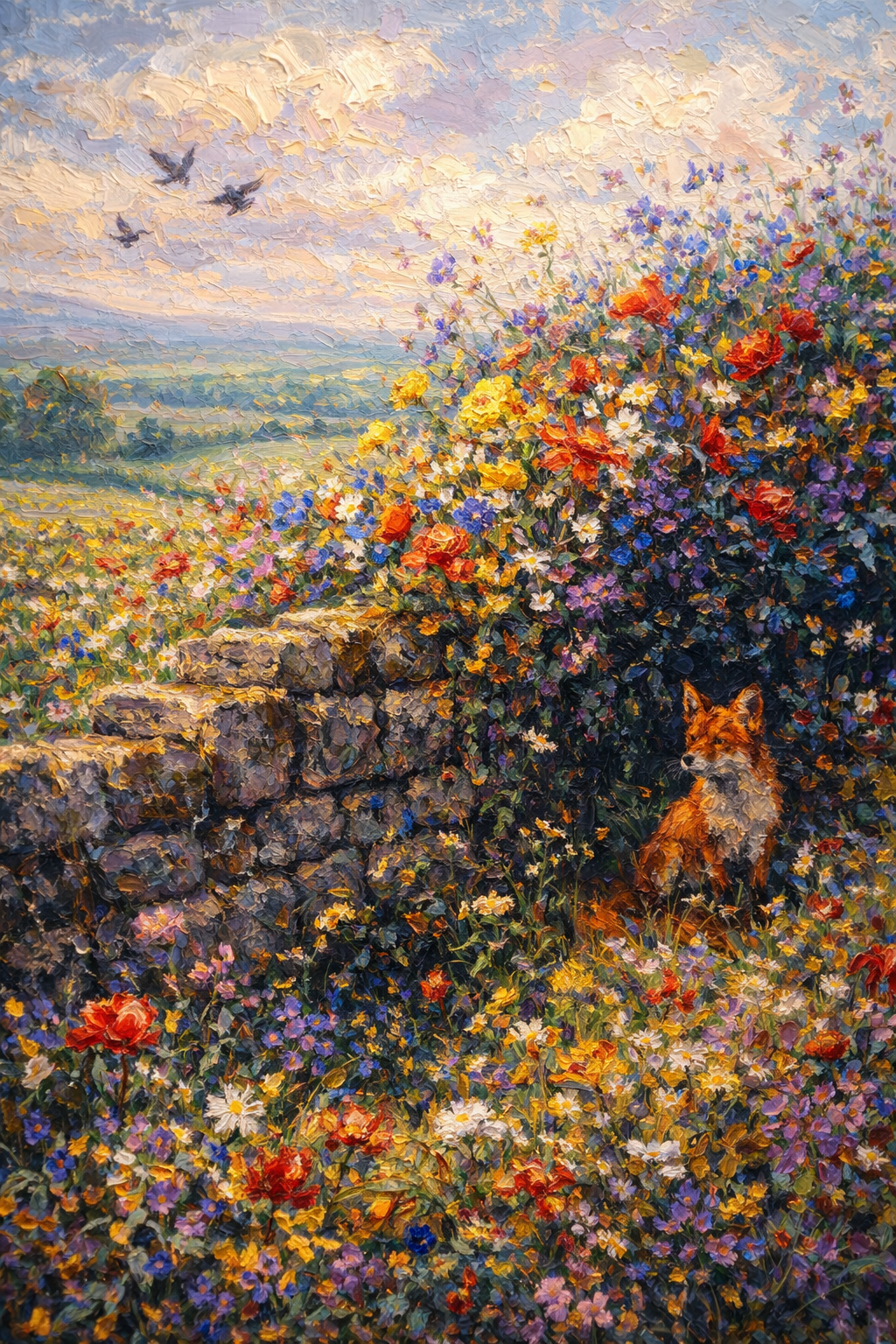
A fox sits by an old stone wall covered in colorful wildflowers in the English countryside as bird fly overhead

Some trips are built around museums. Others around food, beaches or weather that doesn’t actively try to ruin your plans. And then there are flower trips — the kind that hinge on a narrow window of time, a bit of luck, and a willingness to plan an entire journey around something that might already be gone by the time you arrive.

Flower-based travel is part pilgrimage, part gamble. Show up too early and you’re staring at bare branches or tightly closed buds. Show up too late and the petals are already carpeting the ground, beautiful in their own way but not quite what you came for. That anxiety — the constant checking of bloom forecasts, the obsessive refreshing of social feeds — is part of the appeal.

Around the world, certain flowers have become inseparable from the places that grow them. They shape city identities, define seasons and quietly drive tourism in ways that feel emotional rather than transactional. 

From fleeting cherry blossoms in Japan to marigolds that transform Mexico during Day of the Dead, these are the most popular flower-based destinations around the world — and why travelers keep chasing something so beautifully temporary.
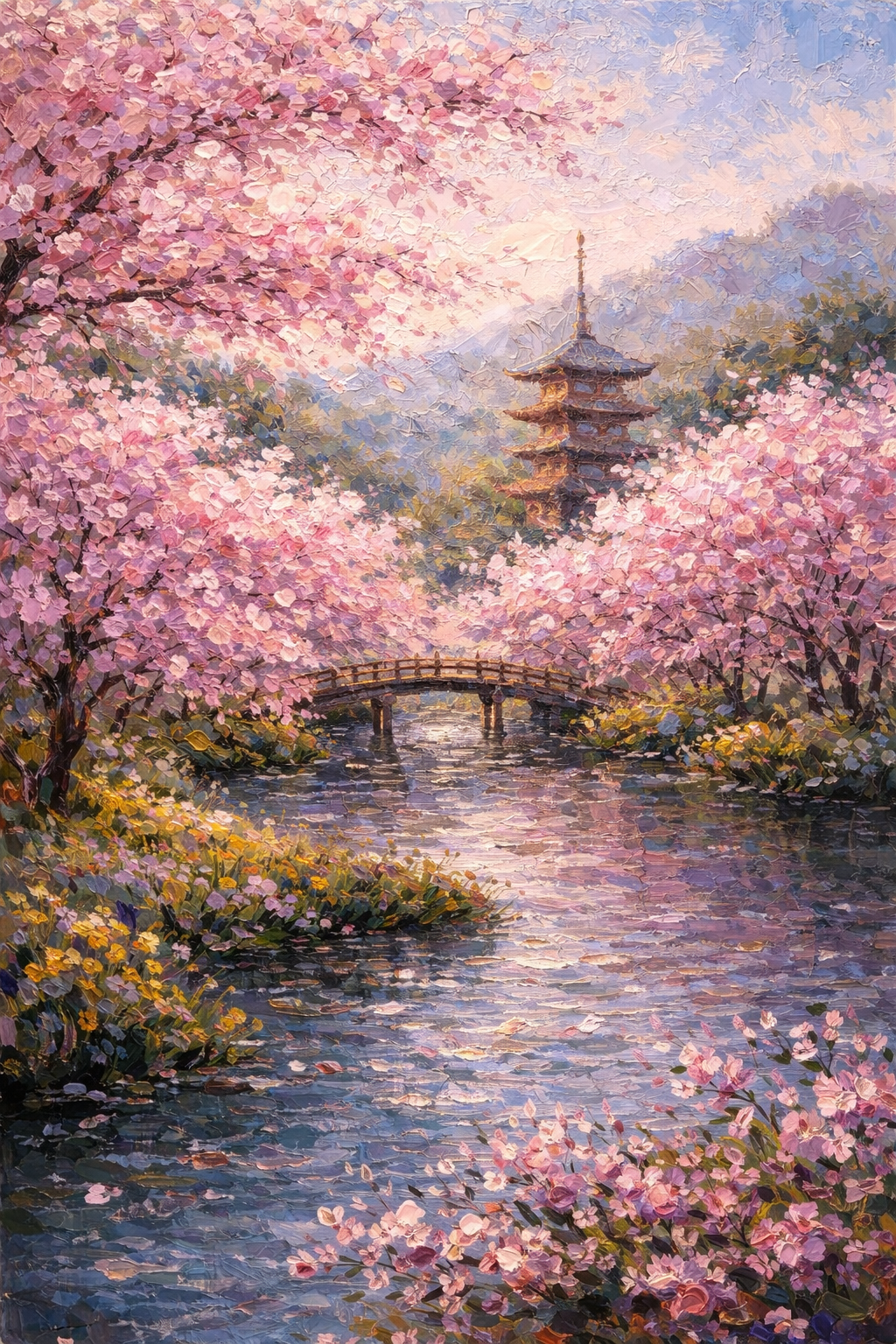
A temple spire and curved bridge over a river in Japan with the cherry trees at full bloom

Cherry Blossoms in Japan

If flower-based travel has a gold standard, this is it.

Cherry blossom season in Japan isn’t just something you stumble into while sightseeing — it’s something people plan years around. Flights are booked with fingers crossed. Hotels fill months in advance. Entire itineraries hinge on a few fragile days when sakura trees briefly do what they’ve always done, indifferent to human schedules.

In cities like Tokyo and Kyoto, cherry blossoms turn everyday spaces into temporary landmarks. Parks, riverbanks and neighborhood streets become gathering places where people picnic under clouds of pink and white petals, fully aware that the moment is already slipping away. 

But Japan’s cherry blossom appeal isn’t limited to the obvious places. Many travelers deliberately skip the most crowded spots, chasing blooms in lesser-known cities or quieter regions where the experience feels more personal, less performative. The flowers are the same; the atmosphere changes completely.

What makes cherry blossoms such a powerful travel draw is their refusal to cooperate. Bloom forecasts are studied obsessively, but weather still wins. A warm spell can speed things up. A cold snap can delay everything. Miss the window by a week, and the trees are already shedding, their petals collecting on sidewalks and water like a beautiful consolation prize.

That uncertainty is exactly the point. Cherry blossom season taps into something deeper than scenery — it’s about impermanence, attention and showing up when it matters. The flowers don’t last, and that’s why people keep coming back, hoping to catch them at just the right moment next time.

When to go:
Late March through early April, though bloom timing varies by region and year. Southern areas tend to flower earlier; northern regions follow later.

Traveler tips:
Book accommodations well in advance and stay flexible if possible. Consider smaller cities or less-famous parks for a quieter experience, and don’t panic if petals start falling — peak bloom is beautiful, but so is the moment just after.

If autumn leaves are more your thing, try timing a trip with koyo in Japan.
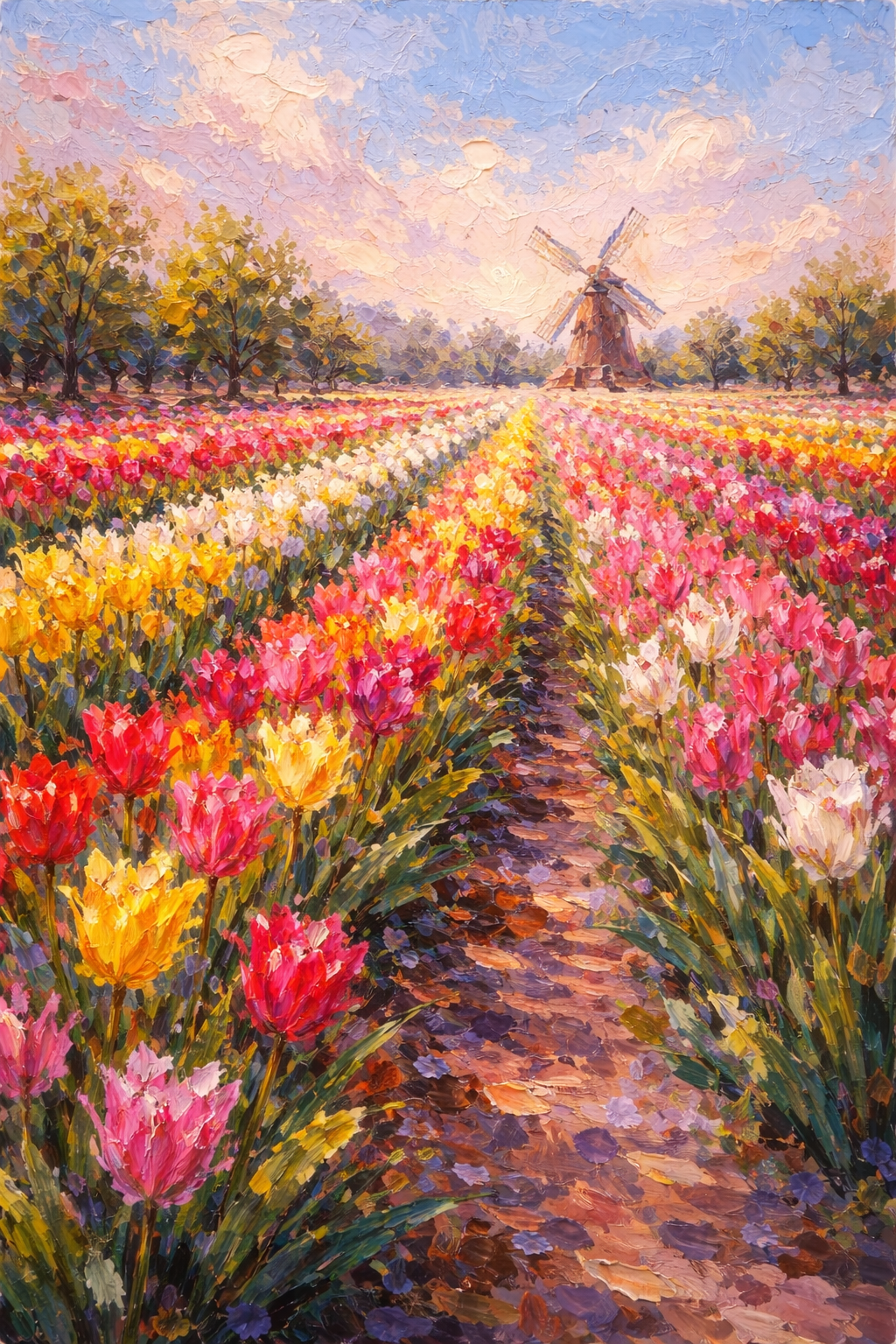
Rows of red, white and yellow tulips by a windmill in the Netherlands

Tulips in the Netherlands

Tulips in the Netherlands occupy a strange space between nature and choreography.

For a few weeks each spring, the countryside turns into a living color chart. Red, yellow, pink and purple fields stretch toward the horizon with a precision that feels faintly suspicious, as if someone went out overnight with a ruler and a vision board. Which, historically speaking, isn’t far off. Tulips here thrive under planning, patience and a national fondness for order.

Keukenhof gets most of the attention, and for good reason. Its displays feel almost theatrical — rows of blooms arranged with such care they verge on surreal. Yet the real magic happens once you leave the gates behind. Beyond the gardens, tulip fields take over entire regions, lining rural roads and canals in broad, unapologetic stripes. This is the version best experienced slowly, preferably by bike, with plenty of stops just to stare.

Tulips have been woven into Dutch identity for centuries, from economic obsession to cultural shorthand. They appear everywhere — souvenirs, postcards, tourism campaigns — standing in for the country itself. 

Timing remains the only wildcard. Tulip season moves quickly and without apology. Arrive too early and the fields sit quietly green. Arrive too late and the flowers have already been cut back, their work complete. The reward goes to travelers willing to plan carefully and accept that the window stays narrow for a reason.

When to go:
Mid-March through early May, with peak blooms usually landing in April. Weather determines everything.

Traveler tips:
Keukenhof earns its reputation, but the countryside delivers the scale. Rent a bike or explore towns near Lisse to see the fields up close. Early mornings and overcast days often bring richer colors and fewer crowds.

EXPLORE MORE: A Benelux Itinerary
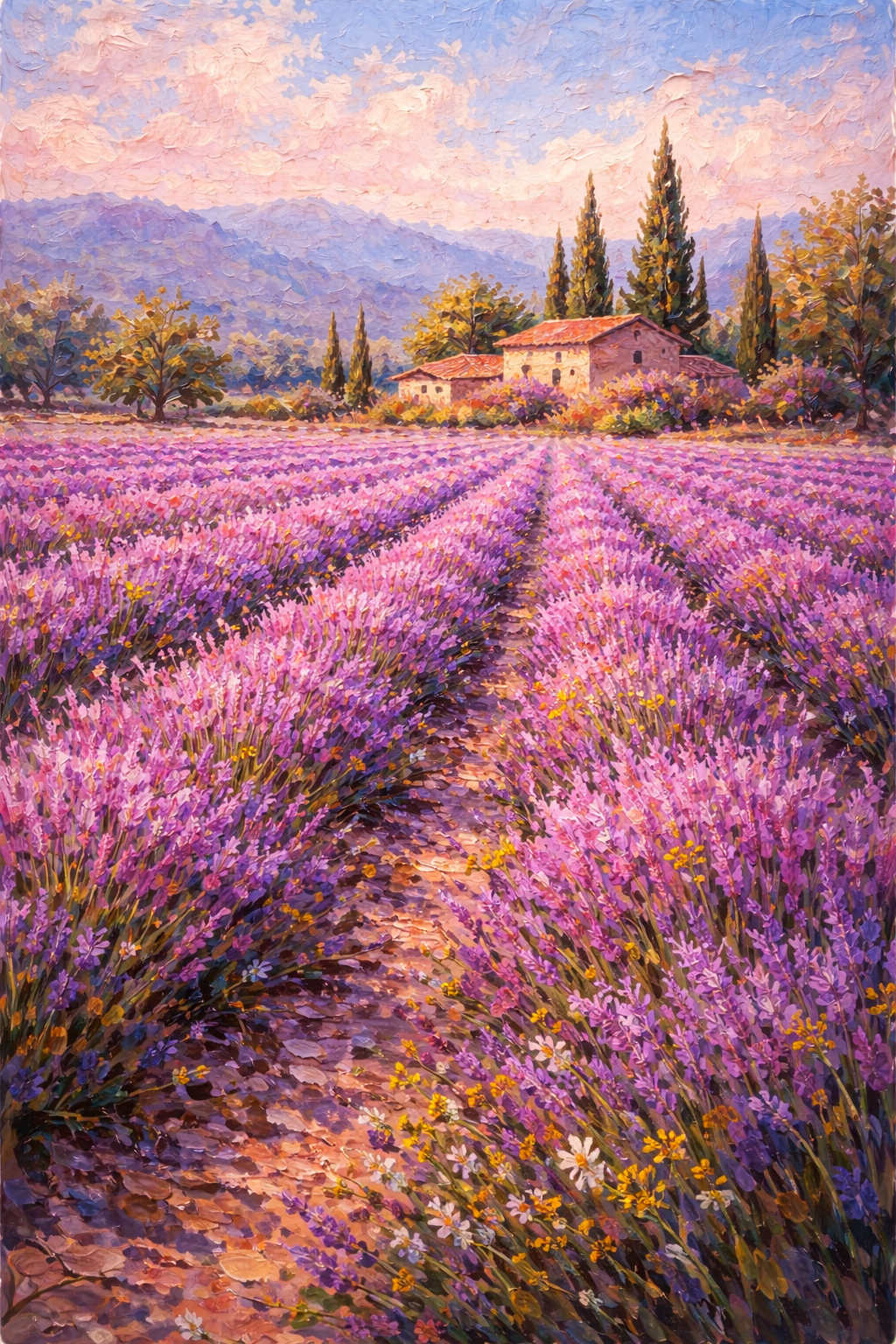
Rows of lavender growing in a field in Provence, France, with a stone house nearby

Lavender in Provence, France

For a brief stretch of summer, the landscape in Provence shifts into something almost unreal. Hills roll out in soft purples and silvers, neat rows of lavender stretching toward stone farmhouses and distant mountains. The scent hangs in the air, impossible to ignore, turning even a simple drive into a sensory experience.

Unlike flowers that cluster in parks or gardens, lavender defines the countryside itself. It’s woven into the region’s identity. Villages, roads and fields all participate, making Provence feel temporarily transformed rather than decorated.

Timing is everything. Lavender season is short and unforgiving. Arrive too early and the fields are still green, quietly preparing. Arrive too late and the harvest has already begun, leaving behind trimmed stems and a faint echo of what was there just days before. Travelers plan entire itineraries around this window, knowing the payoff lasts only weeks.

What draws people back year after year is the completeness of the experience. Lavender isn’t just pretty — it’s something you smell, feel and remember. The color, the heat of summer, the hum of bees in the fields — together they create a moment that feels both abundant and fleeting.

When to go:
Late June through mid-July is peak lavender season, though timing varies slightly by elevation and location

Traveler tips:
Base yourself near smaller villages rather than major cities to be closer to the fields. Early morning and late afternoon offer softer light and fewer crowds. Check local harvest updates before finalizing dates — once cutting starts, the show’s over fast.
BUG OUT: Why the Cicada Became the Symbol of Provence

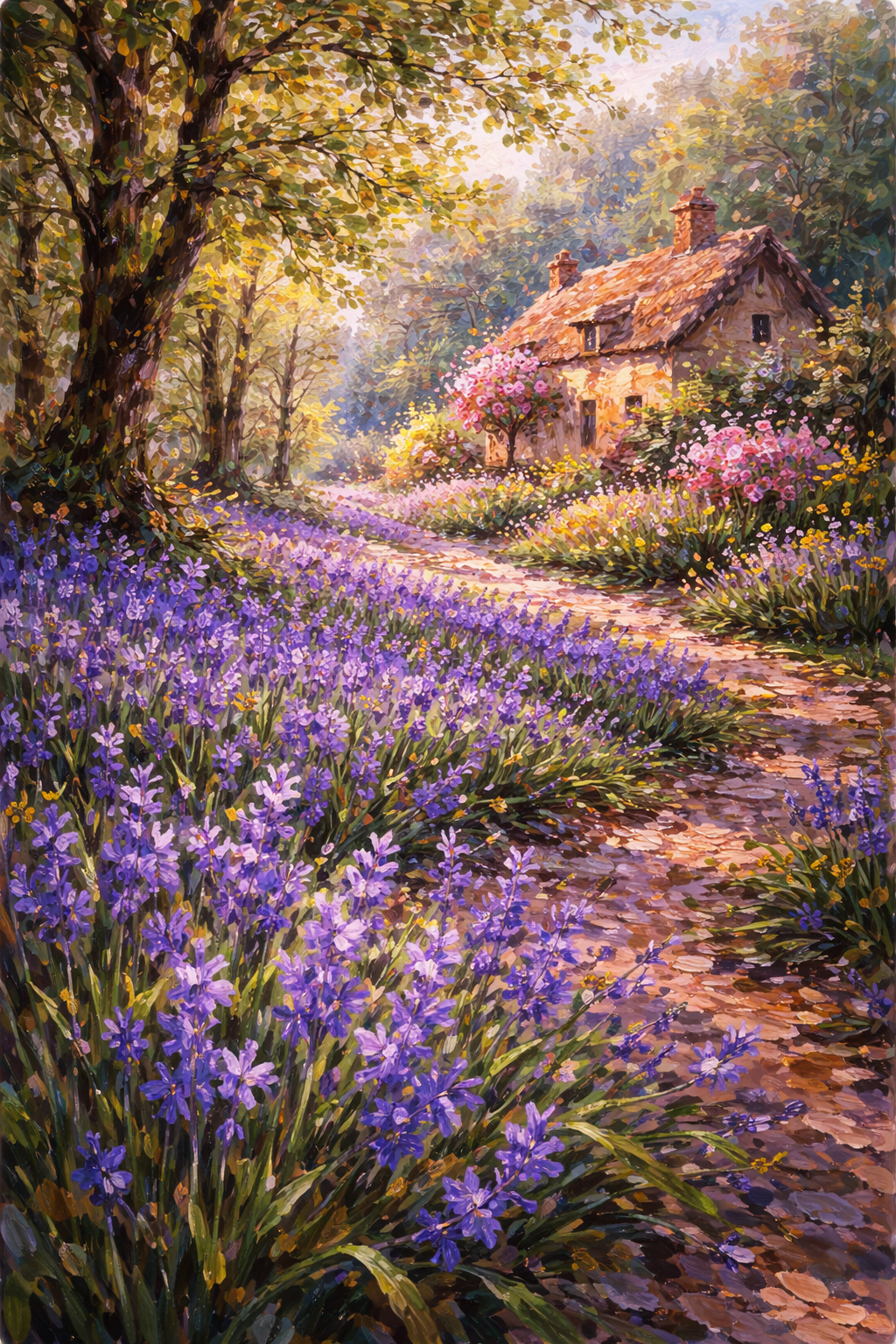
Bluebells grow along a path leading to a cottage in the English countryside

Bluebells and Cottage Gardens in the United Kingdom

Spring in the UK arrives softly. One day the woods look ordinary. The next, they’re flooded with blue. Bluebells carpet forests and parklands in dense, low waves, transforming familiar paths into something quietly otherworldly, the sort of setting that has inspired centuries of fairy lore. People travel specifically to see them — often returning to the same woods year after year, guarding favorite spots like secrets.

Bluebell season carries real weight here. These flowers signal renewal, nostalgia, and a very specific version of spring that feels deeply tied to place. Walk through ancient woodland at peak bloom and the effect feels almost hushed, as if the landscape expects visitors to lower their voices.

Beyond the woods, flowers define the UK in more cultivated ways. Cottage gardens explode with color as soon as the weather allows, packed with foxgloves, roses, delphiniums and whatever survived winter. Places like the Cotswolds and Cornwall, along with other parts of the English countryside, draw travelers who time their visits around bloom cycles rather than attractions.

Timing remains everything. Bluebells bloom for a narrow window, usually April into early May, and weather decides the exact moment. Miss it and the woods return to green without ceremony. Catch it right and the experience lingers far longer than the walk itself.

For travelers who leave before the season peaks — or who miss it entirely — flowers still carry meaning back home. Many people turn to flower delivery UK services as a way to stay connected to the landscapes they traveled for, even after the blooms fade from view.

When to go:
April through May for bluebells; late spring through early summer for cottage gardens

Traveler tips:
Stick to marked paths in bluebell woods — trampling damages bulbs that take years to recover. Visit early in the morning or on weekdays for a quieter experience, and expect weather to shift plans without warning.

EAT UP: Guide to British Cuisine
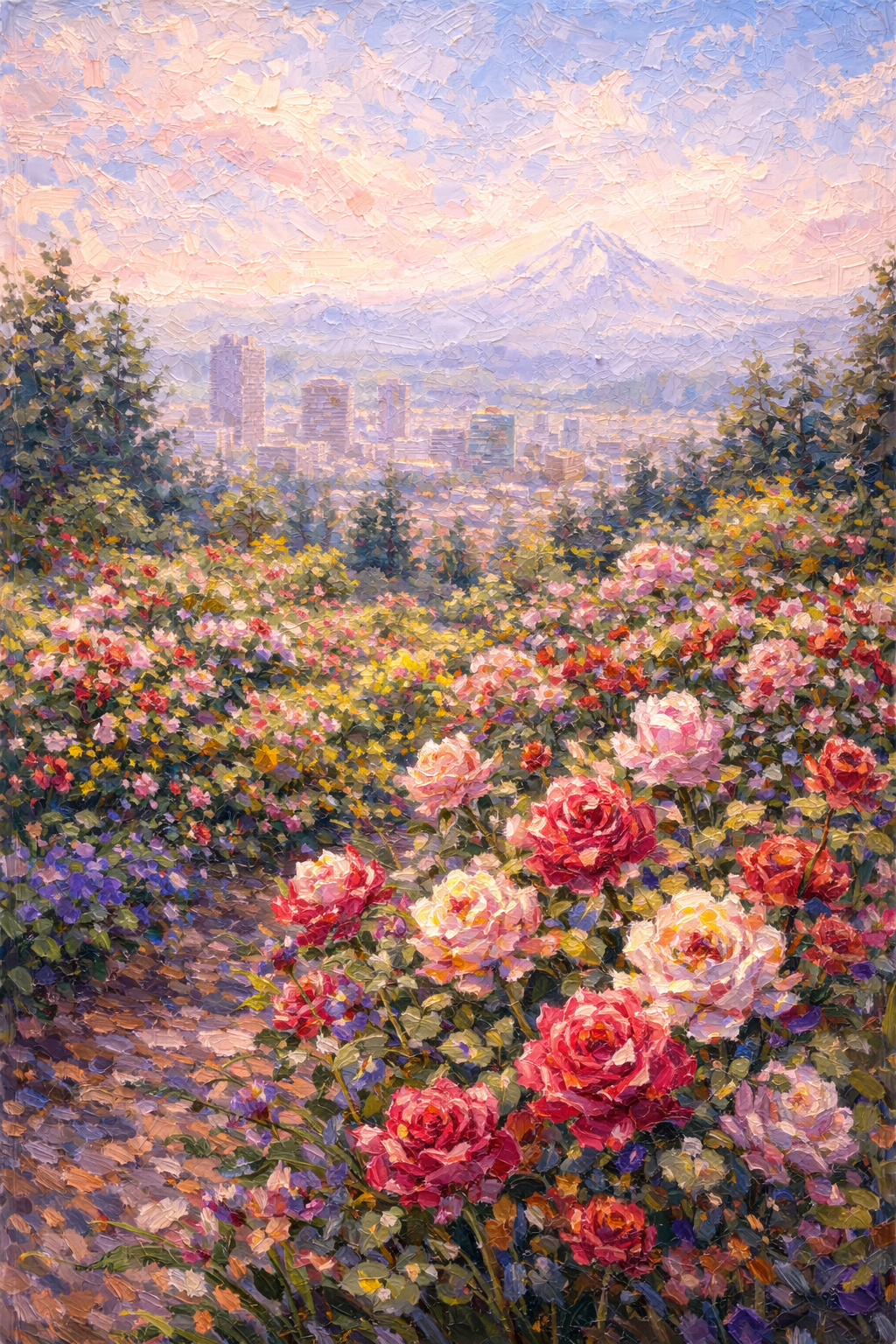
Roses grow on a hill above the city of Portland, Oregon, with Mount Hood in the distance

Roses in Portland, Oregon, USA

Not all flower destinations are rural or seasonal escapes. Some are baked directly into a city’s identity.

Portland has been calling itself the City of Roses for more than a century, and unlike many nicknames, this one still holds up. Roses aren’t tucked away on the outskirts or limited to a single bloom window — they’re part of the city’s fabric, climbing fences, lining streets and anchoring public spaces.

The International Rose Test Garden is the obvious centerpiece, perched above the city with views that stretch toward Mount Hood on clear days. Thousands of varieties bloom here each year, carefully tended and quietly competitive, as growers test new roses destined for gardens around the world. It’s formal, yes, but never stuffy. People wander, linger, and treat it less like an attraction and more like a shared backyard.

Timing still matters, but the window is generous. Roses bloom over months rather than days, offering a softer version of flower travel — less gamble, more assurance. It’s a reminder that not every floral pilgrimage has to come with anxiety attached.

When to go:
Late May through September, with peak blooms typically in June and July

Traveler tips:
Visit the rose garden early in the morning or on weekdays for quieter paths. Pair your visit with a walk through nearby Washington Park or a slow neighborhood stroll to see how roses show up beyond the formal garden.
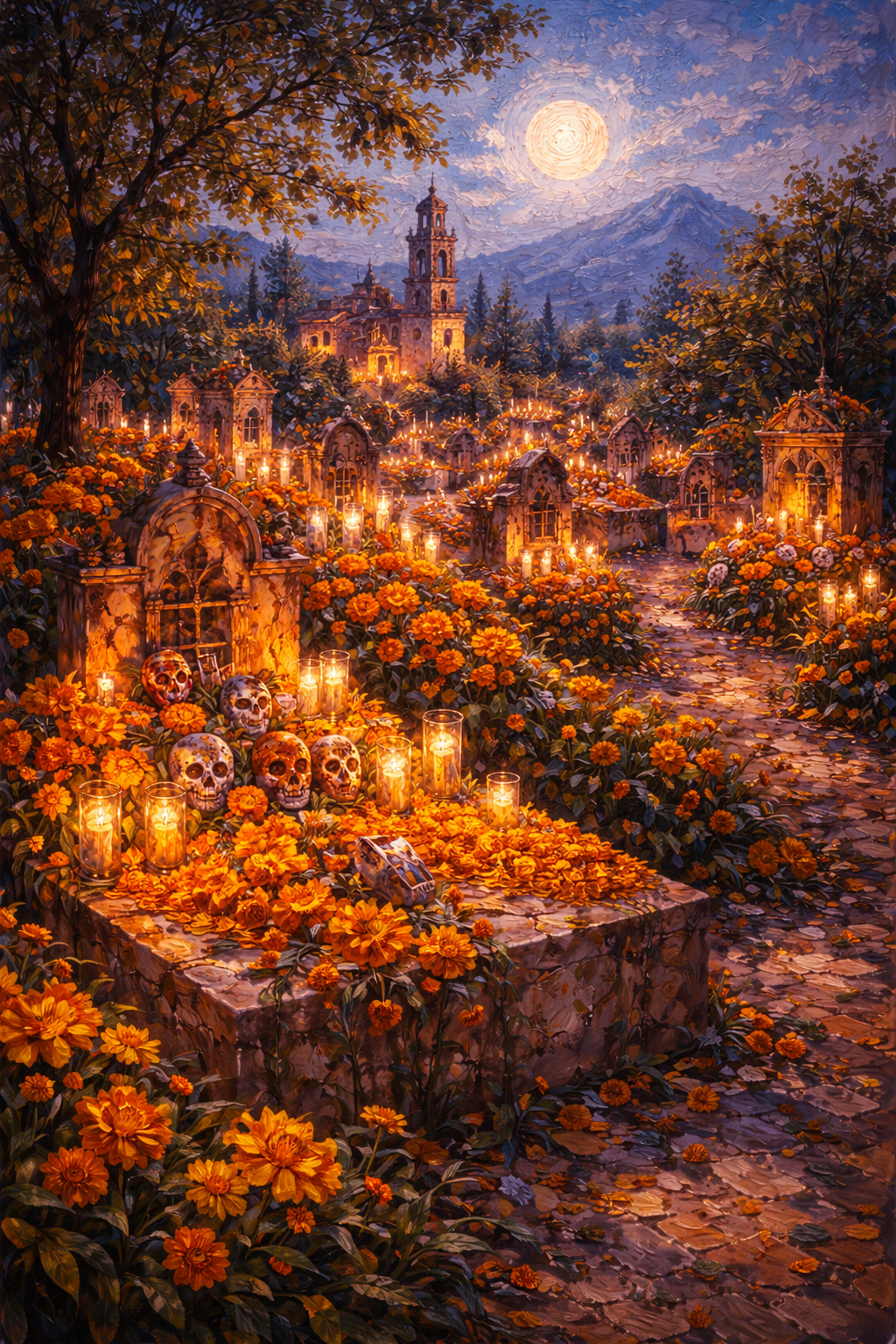
A Mexican cemetery at Dia de los Muertos, with candy skulls, candles and marigolds covering the graves and pathways, with a church in the background

Marigolds in Mexico

Marigolds in Mexico arrive in saturated waves of orange and gold, thick with scent and impossible to ignore. For a short stretch each fall, they flood streets, cemeteries, markets and kitchens, turning everyday places into something charged and ceremonial. 

During Día de los Muertos, marigolds have a job description. Their color and smell guide spirits back home, tracing paths from doorways to altars to graves. You see them scattered like breadcrumbs, piled high around photographs and candles, woven into arches and crowns. Cemeteries like the Panteón 5 de Diciembre in Puerto Vallarta glow after dark, petals catching candlelight while families linger, talk, eat and remember.

Markets feel especially alive during this time. Buckets overflow with marigolds sold by the armful, meant for someone specific rather than general display. These flowers serve memory, grief, humor and affection all at once. The mood holds warmth alongside loss, celebration alongside reverence.

Timing matters intensely. Arrive outside the window, and the marigolds retreat just as quickly as they appeared, taking the altars and processions with them. During Día de los Muertos, entire cities feel temporarily reshaped, as if normal life stepped aside to make room for something older and more intimate.

Travelers return because the experience feels human at its core. Marigolds turn flowers into language — one spoken between generations, across time and through ritual. You leave with the sense that beauty here carries responsibility.

When to go:
Late October through November 2, with celebrations peaking around Día de los Muertos.

Traveler tips:
Move slowly and observe before engaging. Markets offer the fullest sensory experience early in the day, while cemeteries come alive after sunset. Smaller towns often provide deeper, more personal encounters than major cities.

DO YOU BELIEVE IN MAGIC? Samhain Divination Spells
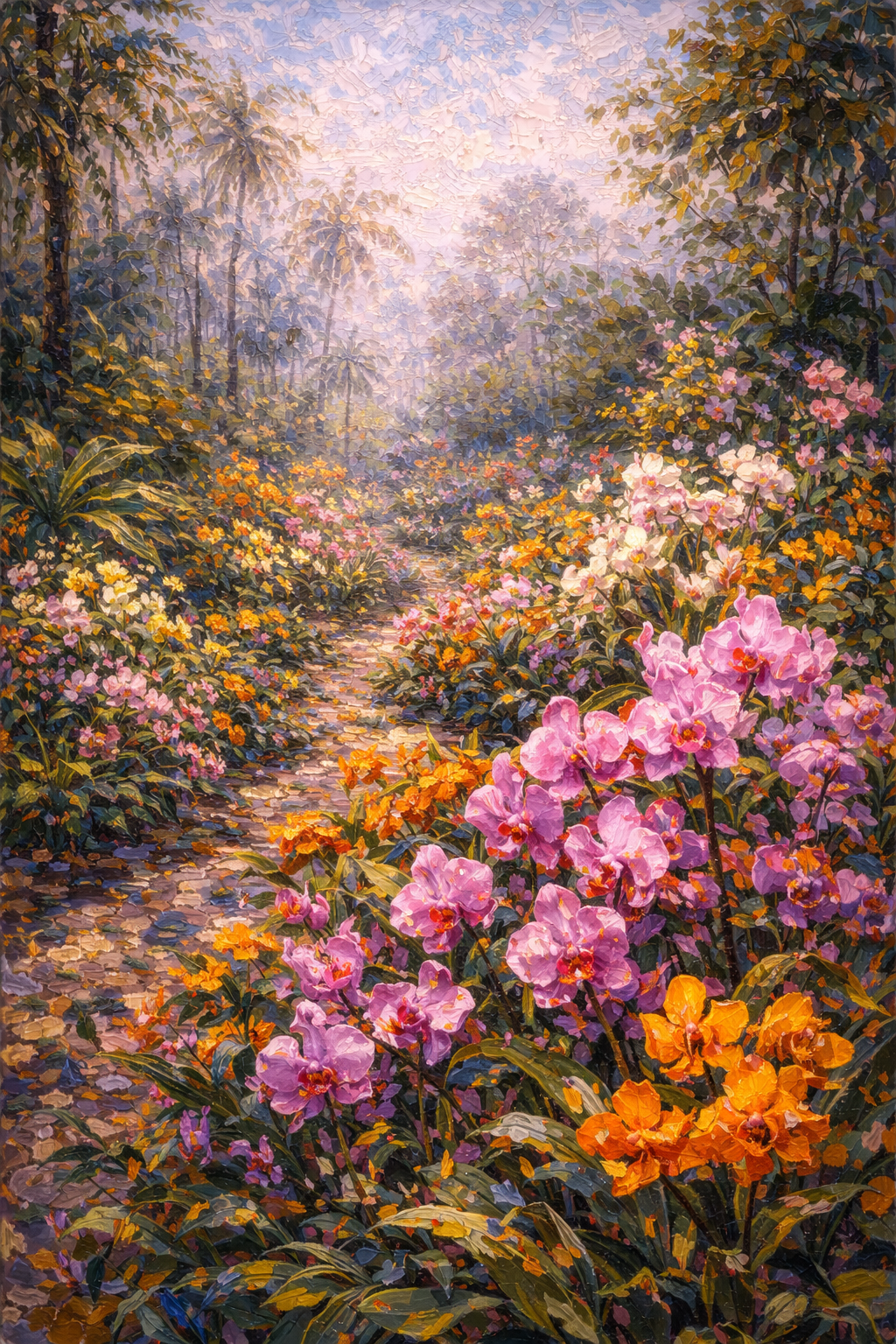
Colorful orchids grow along a path among palm trees in Singapore

Orchids in Singapore

Orchids in Singapore look like something engineered in a lab by someone with a flair for drama. They curl, twist, spike and glow in colors that feel almost synthetic. Some resemble insects. Others look mid-metamorphosis. It’s easy to forget these things grow out of soil. In Singapore, orchids feel closer to science fiction than gardening — which explains why the city embraced them so completely.

Walk through the Singapore Botanic Gardens and the orchid collection feels less like a stroll and more like a catalog of botanical overachievement. Thousands of varieties bloom with unapologetic confidence, each labeled and tracked, as if daring you to question how much control humans can exert over nature. Singapore answers that question decisively.

Gardens by the Bay doubles down on the spectacle. Orchids glow beneath glass domes, backlit and theatrical, performing for visitors who came expecting futuristic architecture and left thinking about flowers instead. It’s maximalist. It’s bizarrely beautiful. It works.

To locals, orchids signal status and ambition. Hybrid blooms get named after visiting dignitaries and world leaders, turning flowers into diplomatic souvenirs. Giving someone an orchid here carries weight. These plants represent polish, progress, and a country very comfortable presenting itself as hyper-competent.

For travelers, orchids offer a rare luxury: certainty. They bloom year-round, immune to weather roulette. Singapore delivers the flowers exactly as promised — strange yet immaculate.

When to go:
Any time. Orchids thrive here year-round.

Traveler tips:
Start at the Singapore Botanic Gardens to see the sheer range, then head to Gardens by the Bay for spectacle. Pay attention to the shapes — orchids here reward close inspection and a slightly unhinged imagination.

SINGAPORE DAY TRIP: Visit Batam
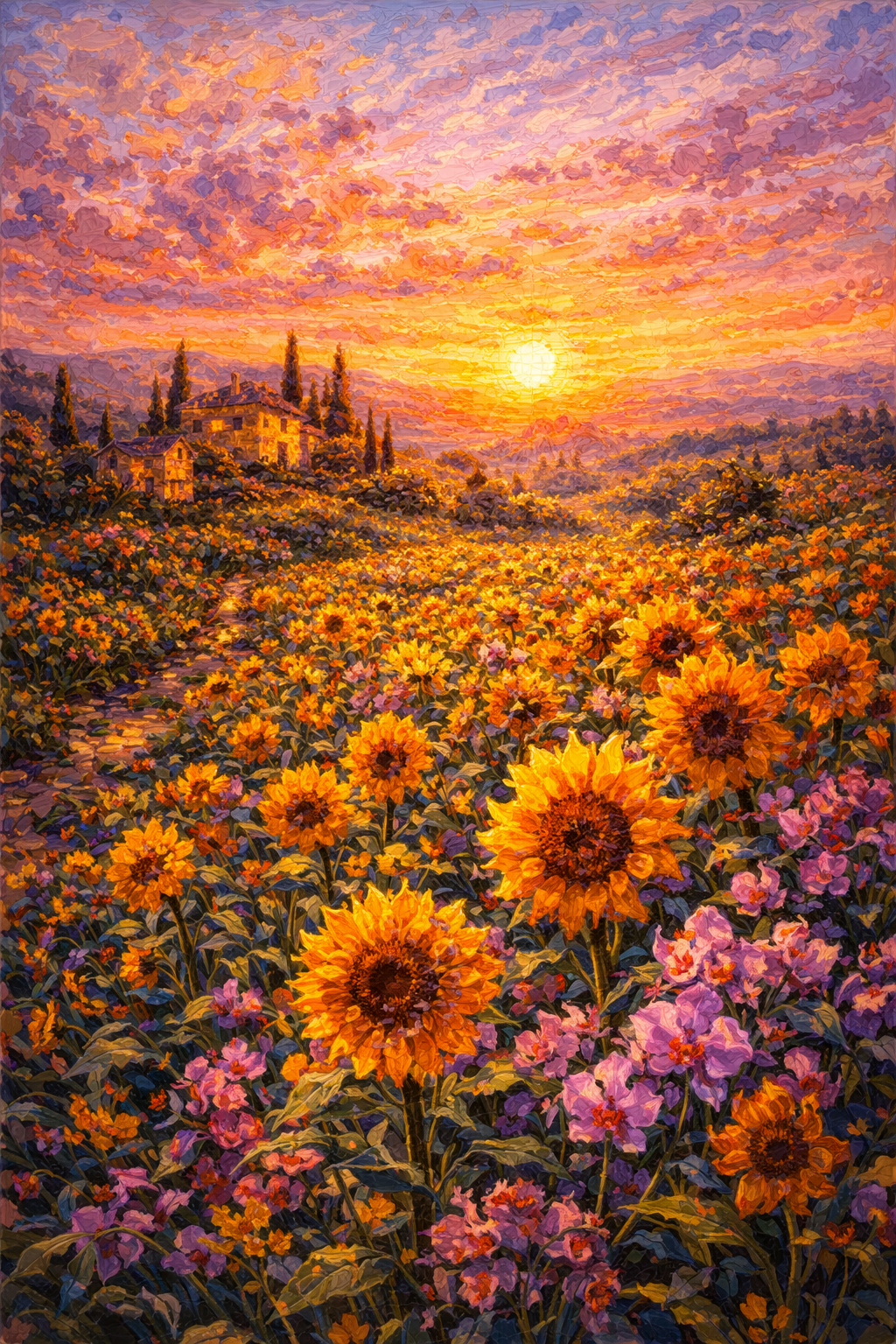
Sunflowers grow among other flowers in the rolling hills of Tuscany at sunset, with a villa in the distance

Sunflowers in Tuscany, Italy

Sunflowers in Tuscany feel almost aggressive in their cheer. They line roads and hillsides in tight formation, huge yellow faces tracking the sun with unnerving enthusiasm. Driving through the countryside during peak bloom turns into a constant exercise in restraint — every few minutes presents another “pull over immediately” moment. Eventually, everyone gives in.

Sunflowers come with scale. Fields stretch wide and loud, unapologetically bright against dusty roads, cypress trees and stone farmhouses. In Italy, flowers have always carried deeper meaning, from religious devotion to seasonal rites of passage, a theme explored in Italian floristry and floral symbolism. The effect feels cinematic, the kind of scenery that convinces people their vacation photos finally match the fantasy.

Sunflowers also fit Tuscany’s rhythm. These fields appear alongside vineyards and wheat, part of a working landscape rather than a curated display. Locals treat them as another seasonal marker, a sign summer has arrived in earnest. 

Timing still calls the shots. Sunflowers bloom quickly and fade just as fast, their faces drooping once the season turns. Catch them at their peak and the countryside feels electric. Miss it and the fields move on without ceremony.

People keep chasing sunflower season because it delivers instant joy. The experience carries zero mystery and full commitment: bold color, warm air, wide-open space. Sometimes that’s exactly what a trip needs.

When to go:
Late June through July, with timing varying slightly, depending on location and weather.

Traveler tips:
Rent a car to explore rural roads freely and expect frequent stops. Early morning and golden hour offer the best light and fewer crowds. Respect private property — the best views often come from the roadside.
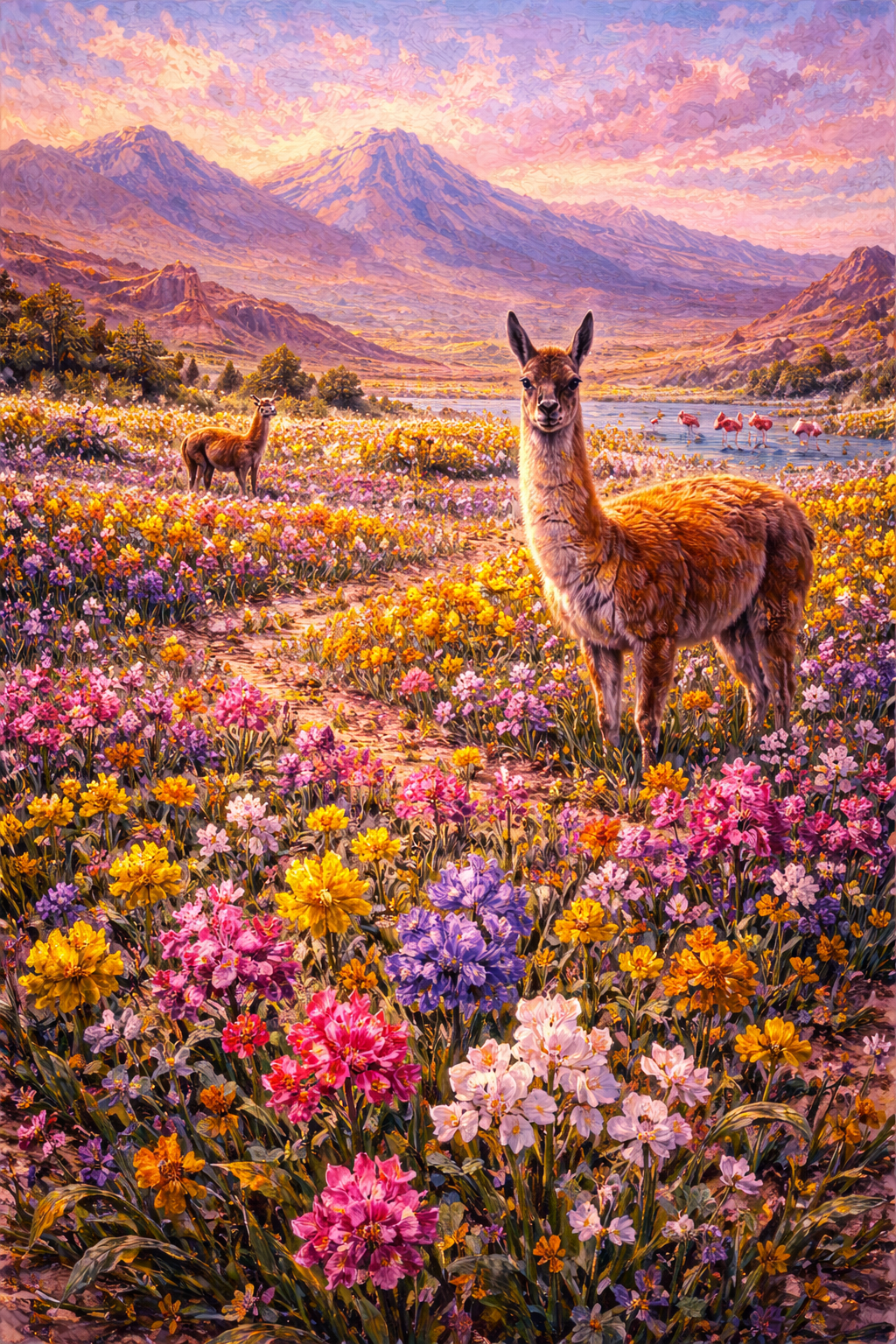
Llamas graze among the wildflowers that have popped up in the Atacama Desert in Chile, with flamingos in the water nearby

Wildflowers in the Atacama Desert, Chile

Wildflowers in Chile’s Atacama Desert feel like a practical joke pulled by nature.

Most of the year, the Atacama ranks among the driest places on Earth — a landscape of dust, rock and silence that stretches toward the horizon with zero interest in pleasing visitors. Then, every so often, rain falls. Real rain. Enough to wake seeds that have been waiting patiently underground for years.

When that happens, the desert blooms.

Pink, purple, yellow and white flowers spread across the sand in an event locals call desierto florido. Hillsides and plains erupt into color where travelers expected emptiness. The transformation feels surreal.

This bloom carries real meaning in northern Chile. Locals treat it as a rare gift rather than a guarantee, a reminder that even the harshest landscapes hold quiet potential. People drive long distances to see it, fully aware the window stays brief and unpredictable.

Timing here plays hardball. Blooms depend entirely on rainfall, which varies wildly from year to year. Some years pass with nothing. Other years deliver an explosion that lasts weeks. Visitors arrive hopeful, checking forecasts and local reports, aware that certainty holds no power in this part of the world.

Travelers chase the Atacama bloom because it offers bragging rights and wonder in equal measure. Seeing flowers rise out of a desert famous for refusing life feels like witnessing a secret. Miss it, and the desert returns to its usual self without apology.

When to go:
August through October, only in years with sufficient rainfall. Exact timing changes annually.

Traveler tips:
Follow local Chilean news and park updates closely before planning. Stay flexible with travel dates if possible. Respect protected areas and resist the urge to wander into fragile bloom zones — this spectacle survives best when admired from a distance.
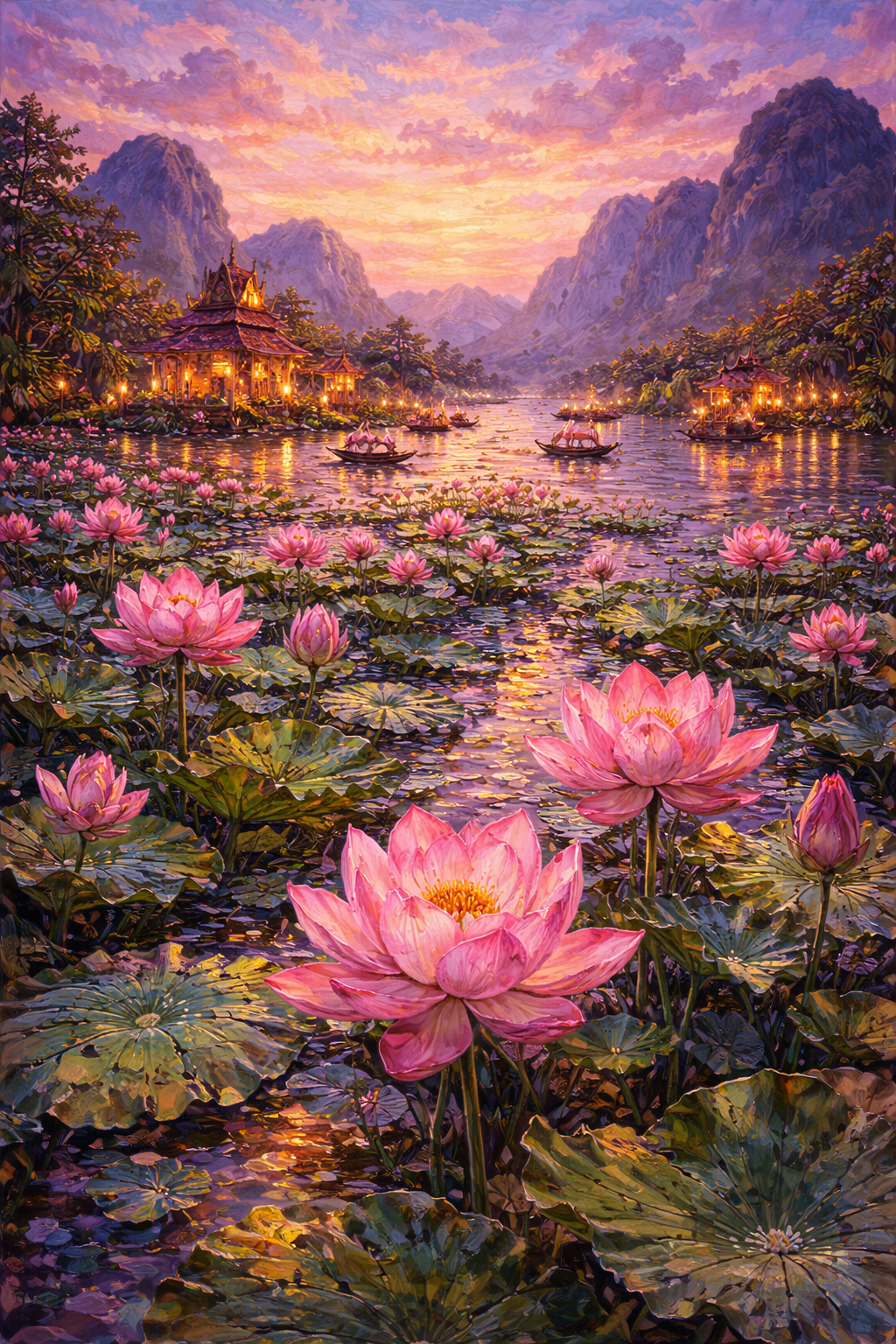
Pink lotuses float on pads in a bay filled with boats and small temples amid large rock formations in Vietnam at twilight

Lotus Flowers in Thailand and Vietnam

Lotus flowers thrive in places that feel calm on the surface and complicated underneath. You see them floating in temple ponds, rising clean and deliberate from murky water, petals intact and serene. In Thailand and Vietnam, lotus flowers carry centuries of meaning — purity, renewal, spiritual discipline — yet they remain deeply ordinary. People buy them on the way to pray. Vendors stack them beside fruit and incense. They exist as part of the daily rhythm rather than a special occasion.

At temples, lotus ponds shape the atmosphere. The flowers soften heat and noise, creating spaces that invite pause. Monks carry lotus buds during ceremonies. Worshippers offer them quietly, often without explanation. 

Lotus flowers also appear far from sacred spaces. They grow in agricultural wetlands, in canals and along roads leading out of cities. In Vietnam, lotus seeds and roots end up in kitchens as often as altars. The flower bridges spiritual and practical life with ease.

Timing matters less here. Lotus season stretches generously across warmer months, and blooms appear daily, opening in the morning and closing by afternoon. 

People remember lotus flowers because they anchor a sense of place. The experience feels quiet, grounded and human — a reminder that beauty can exist alongside routine.

When to go:
May through October, with peak blooms during the warmer, wetter months.

Traveler tips:
Visit temples early in the morning when lotus flowers open and crowds are thinner. Watch how locals interact with them before reaching for a camera. In Vietnam, try lotus tea or dishes using lotus root to experience the flower beyond the visual.
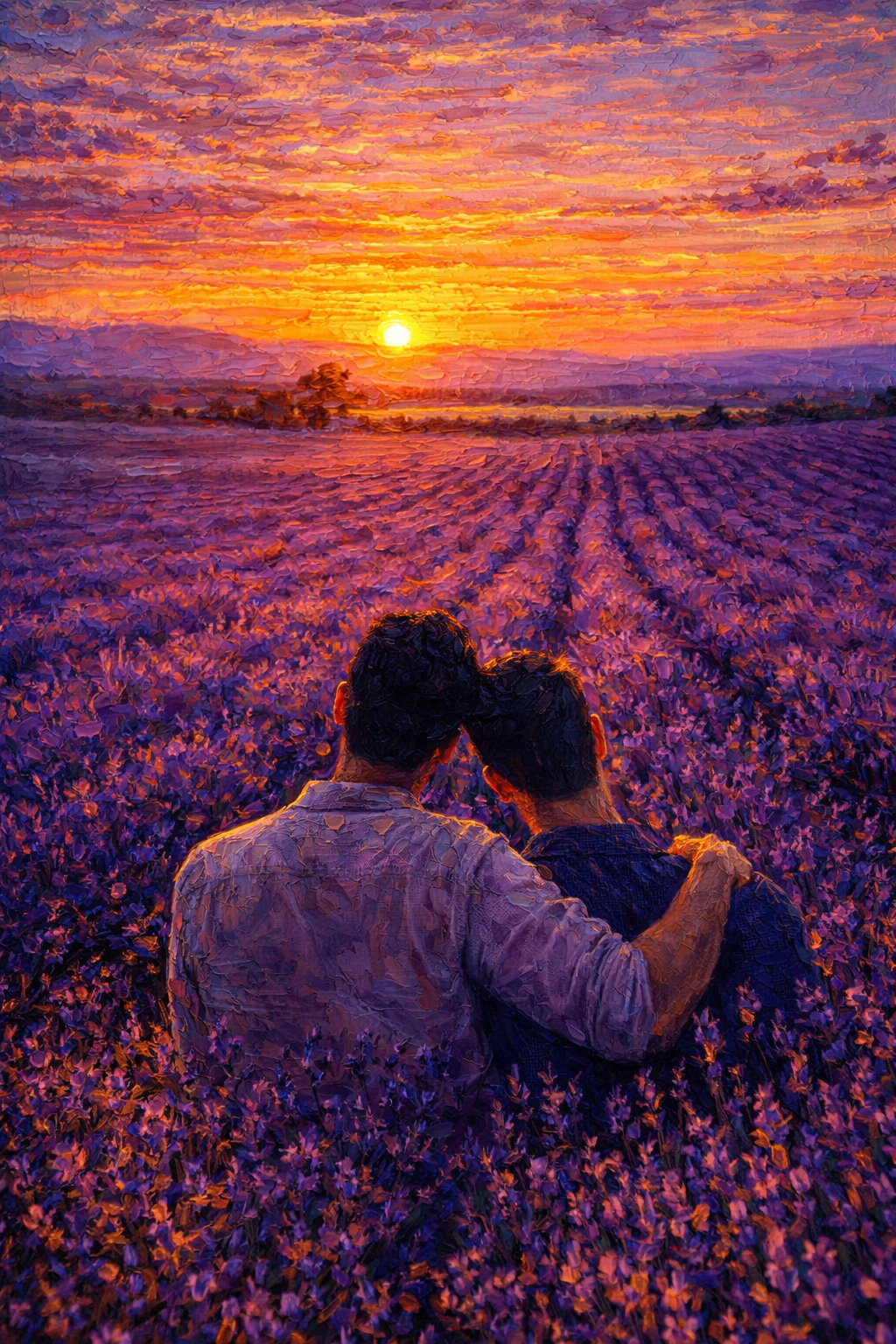
A man puts his arm around another man as they stand in a lavender field, looking out at the sunset

Why Flowers Keep Turning Places Into Destinations

Flower-based travel asks for patience, flexibility and a willingness to miss things. Entire trips hinge on weather patterns, bloom forecasts and timing that refuses to cooperate. And yet people keep coming back for more.

Maybe that’s the point.

Flowers force travelers to surrender control. You plan carefully, arrive hopeful, and accept whatever version of the moment shows up. Sometimes the fields explode with color. Sometimes petals carpet the ground, already slipping into memory. Either way, the experience lands because it belongs to that place, at that moment, and never quite repeats itself.

Across the world, flowers shape how places see themselves and how visitors remember them — from cherry blossoms signaling impermanence in Japan to marigolds guiding memory in Mexico, from meticulously cultivated orchids in Singapore to sunflowers lighting up Tuscan backroads. These destinations stay popular because they offer something temporary, visceral and stubbornly uncommodified.

You can photograph flowers, plan around them, even chase them across continents. You just can’t make them wait for you. And that tension — between preparation and surrender — is what keeps flower travel irresistible. –Wally

’TIS THE SEASON: Spring Festivals Around the World 
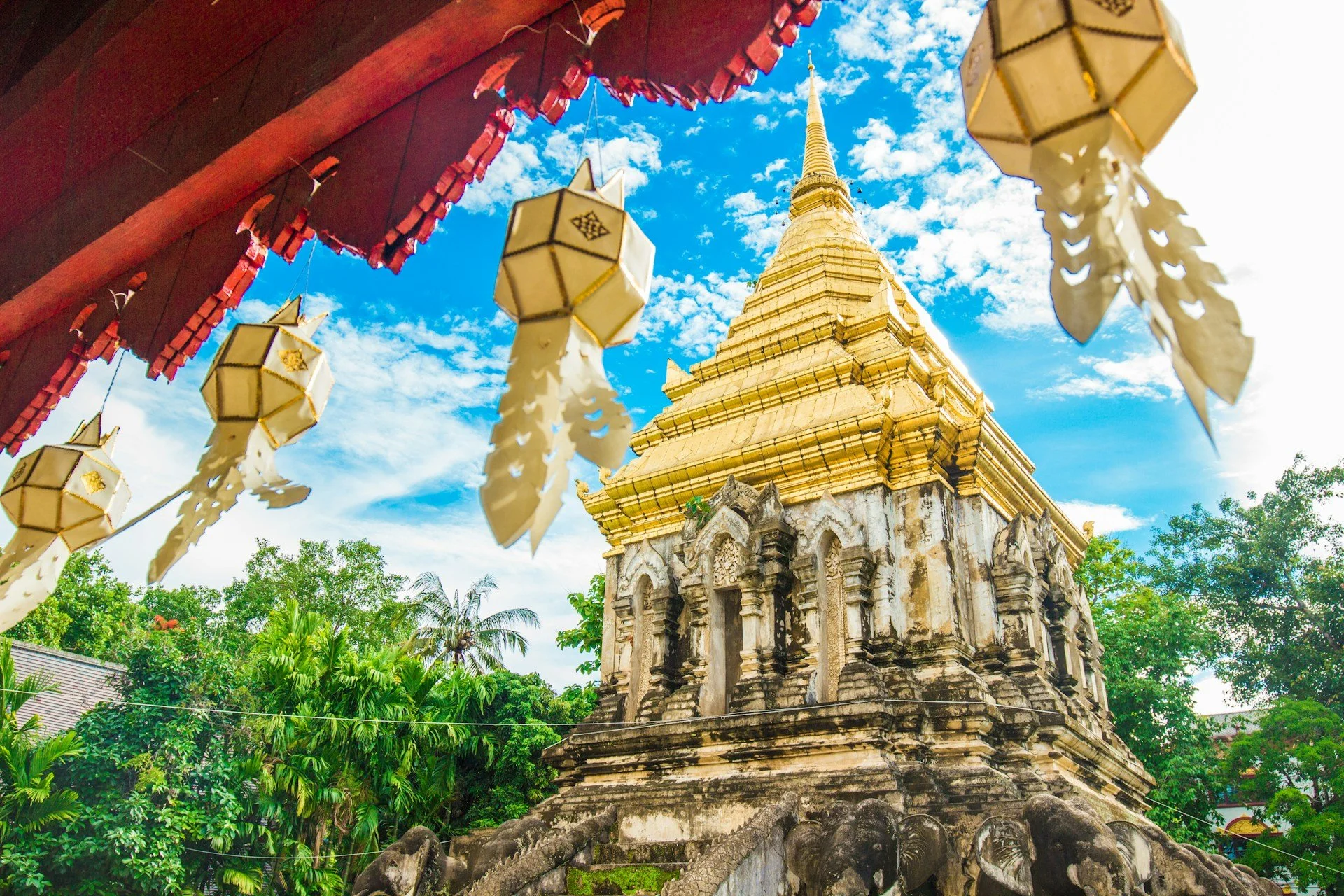
Old City Chiang Mai: Culture, Markets and Routes for Tourists

Discover the Old Town of Chiang Mai, where ancient temples, vibrant markets and scenic walking routes bring Thailand’s Lanna heritage to life.

The Old City of Chiang Mai is a living testament to a rich cultural heritage and history. With its ancient temples, charming streets and bustling markets, it offers a perfect blend of tradition and modern life. 

The city’s old walls and moat, which once protected it, now provide a scenic backdrop to the vibrant cultural scene. From serene Buddhist temples to lively night bazaars, there’s something for everyone. We’ll explore the best cultural sites, markets and walking routes in Chiang Mai’s Old City, offering helpful tips for tourists looking to fully experience the essence of this historic location.

As with any popular tourist destination, it’s important to stay aware of your surroundings and ensure personal safety. Travelers should be cautious of potential scams or fraudulent activities that could arise during their visit. For those unfamiliar with the term, white collar crime (คือ) refers to financial crimes like fraud or embezzlement, which can affect both locals and tourists alike. Understanding the risks will help you have a safe and enjoyable trip.

Historical Value and Culture of the Old City Chiang Mai

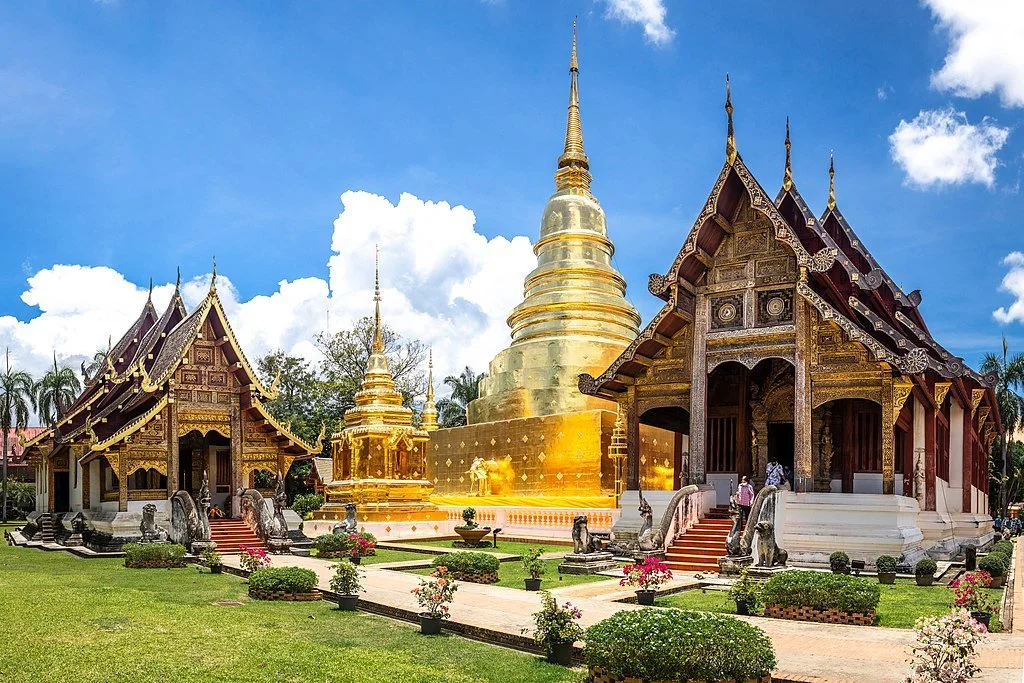
Chiang Mai is one of the oldest and most culturally rich cities in Thailand. The Old City of Chiang Mai, surrounded by a moat and walls, is a true open-air museum that attracts tourists with its history and architecture. Here, ancient temples and pagodas have been preserved, most of which were built in the style of the Lanna Kingdom. The temples of Wat Phra Singh and Wat Chedi Luang are just a couple of the many sacred sites worth visiting.

A walk through the streets of the Old City allows you to feel the atmosphere that has been preserved from ancient times. The city blends tradition with modernity: On one street, you can see ancient temples, while on another, you will find modern cafés and shops. This contrast creates a special atmosphere that attracts travelers from all over the world.

MORE: Find these off-the-beaten-path Chiang Mai temples

Main Markets and Local Attractions of Chiang Mai

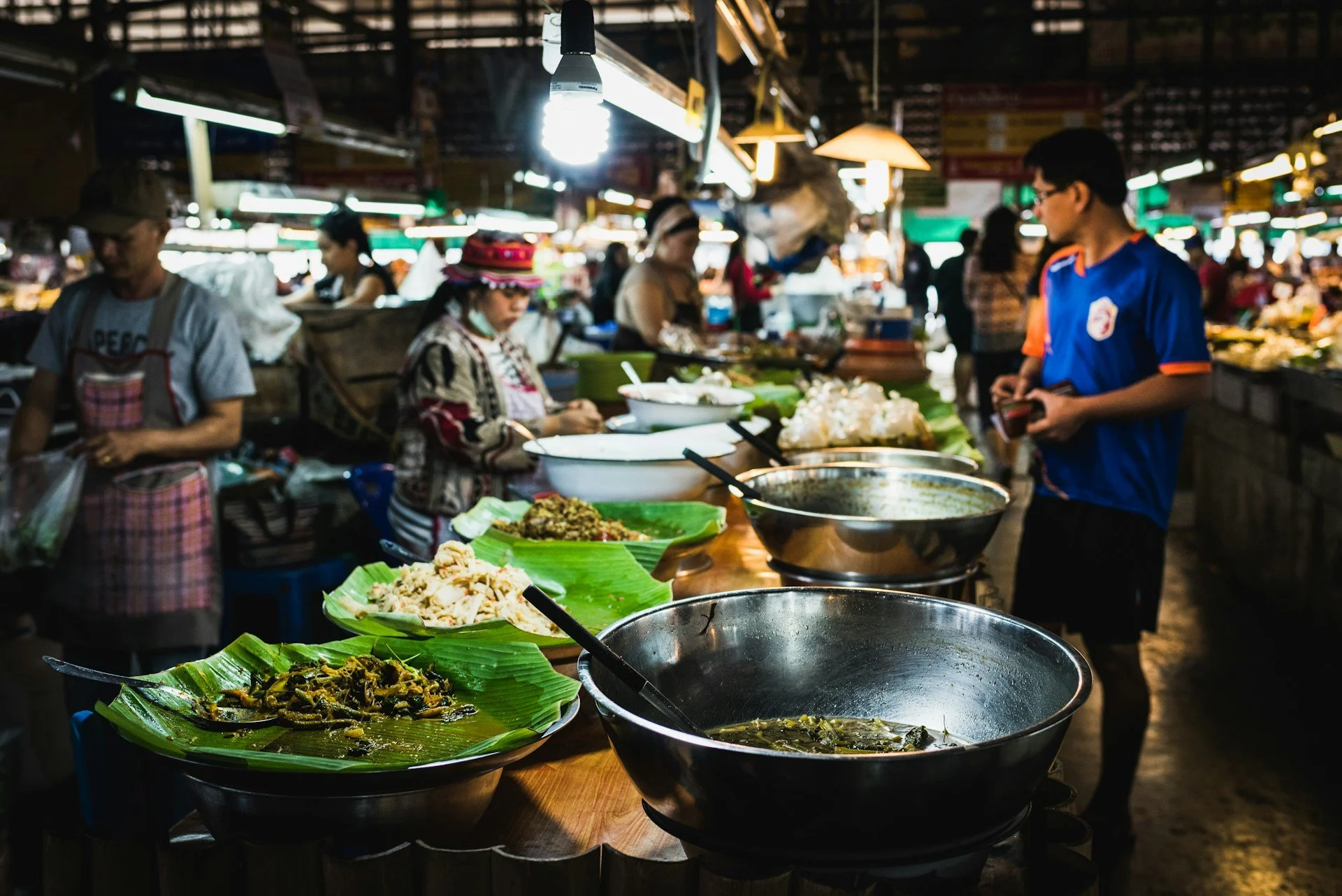
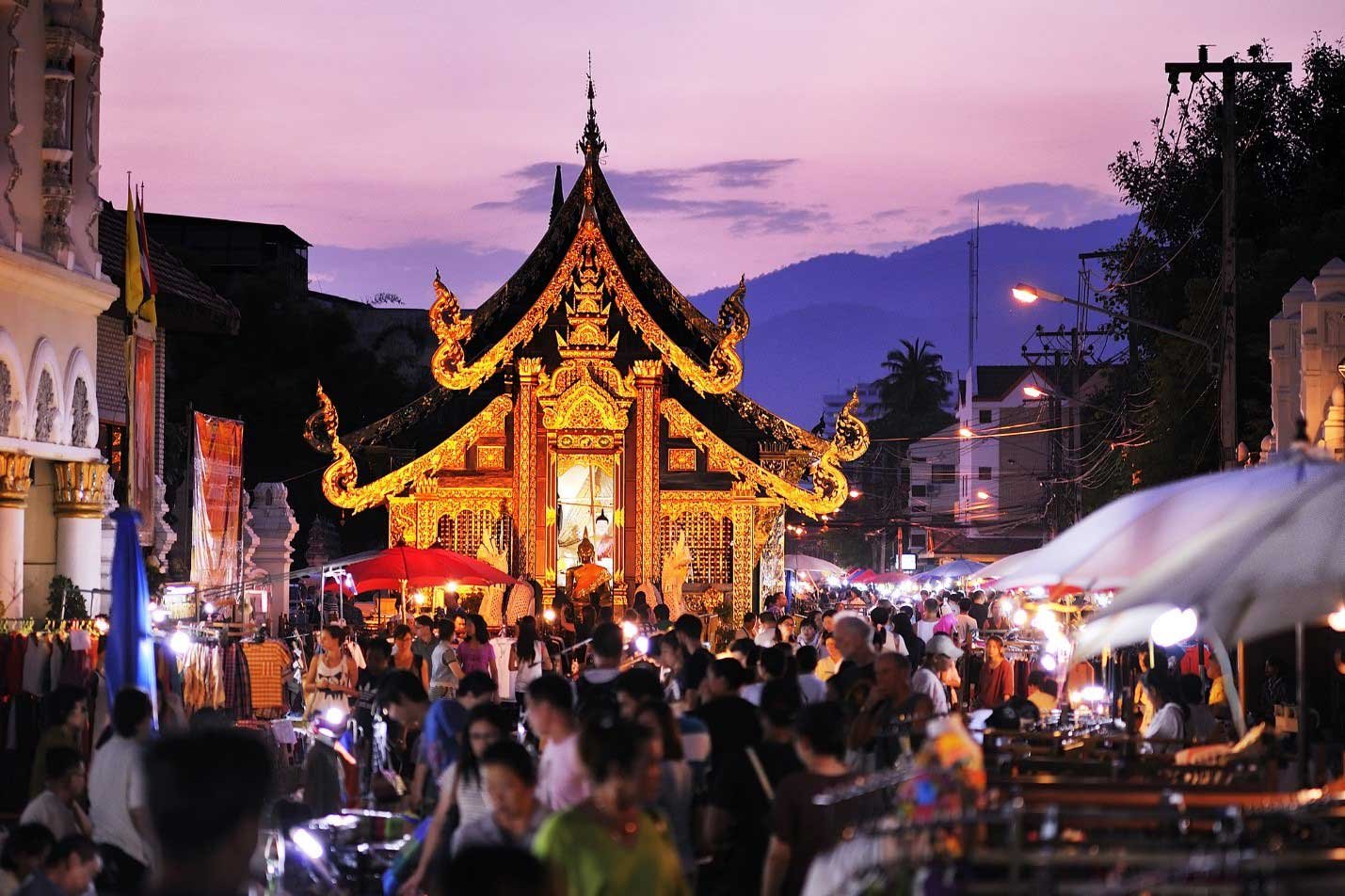
Chiang Mai is known for its markets, which are an integral part of local culture. The day market, known as Chiang Mai Rat, is where tourists can buy souvenirs, local products and handmade goods. However, the most famous is the Chiang Mai Night Market, which operates from evening until late at night. This is a great place to purchase unique items such as leather goods, silverware, textiles, and also to enjoy local street food.

MORE: Where is the best street food in Chiang Mai?

In addition to the markets, Chiang Mai has several museums, such as the Art Museum and the National Museum of Chiang Mai. All of these places provide an excellent opportunity to learn more about the culture and history of the region.

To fully enjoy the atmosphere of the city, it is recommended to visit these markets early in the morning or later in the evening, when the temperature is more comfortable and the number of tourists is lower.

Chiang Mai Walking Routes and Excursions

Walking through the Old City of Chiang Mai is a wonderful way to enjoy its atmosphere. For those who enjoy walking, there are several interesting routes that allow you to see all the major attractions of the city — especially if you want to see the Thai Buddhist temples of Chiang Mai. For cyclists, there are designated bike routes that pass through green areas and offer the opportunity to get acquainted with the local nature.

You can also participate in guided tours that help you understand the culture and history of the city more deeply. For those who prefer independent routes, there is the option of hiring a guide who will tell you about historical sites and traditions of the region.

For tourists who prefer safe areas, the Old City is an ideal choice, as most tourist attractions are within walking distance and you can peacefully stroll through the quiet streets.

Useful Information for Travelers and Legal Aspects

Chiang Mai is a safe place for travel, but there are always some safety aspects to consider. For visitors to Thailand, a visa is required for many countries, so it is important to take care of obtaining it in advance. It is also crucial to have medical insurance for the trip, which will cover any unforeseen expenses in case of illness or accidents.

Additionally, it is important to be informed about the legal aspects of staying in Thailand. For example, crimes related to financial manipulation or illegal activities can result in serious consequences. White collar crime in Thailand refers to crimes related to fraud, corruption, and other financial violations. It is important to comply with local laws to avoid legal troubles.

Also, remember that if legal issues arise in Thailand, you can turn to Interpol Thailand for consultation and assistance in resolving legal problems. This will help ensure your safety while staying in the country. –Anatoly Yarovyi


Anatoly Yarovyi is a Ukrainian attorney and human rights advocate with over 20 years of experience. He holds masters of laws (LL.M.) from Ivan Franko National University of Lviv and Stanford University, specializing in international law and extradition cases.

Sacred Sips: Unusual Drinking Rituals Around the World
Travel the globe one drink at a time — from sake ceremonies in Japan to vodka toasts in Russia — and explore the sacred drinking rituals that reveal the heart of a culture.

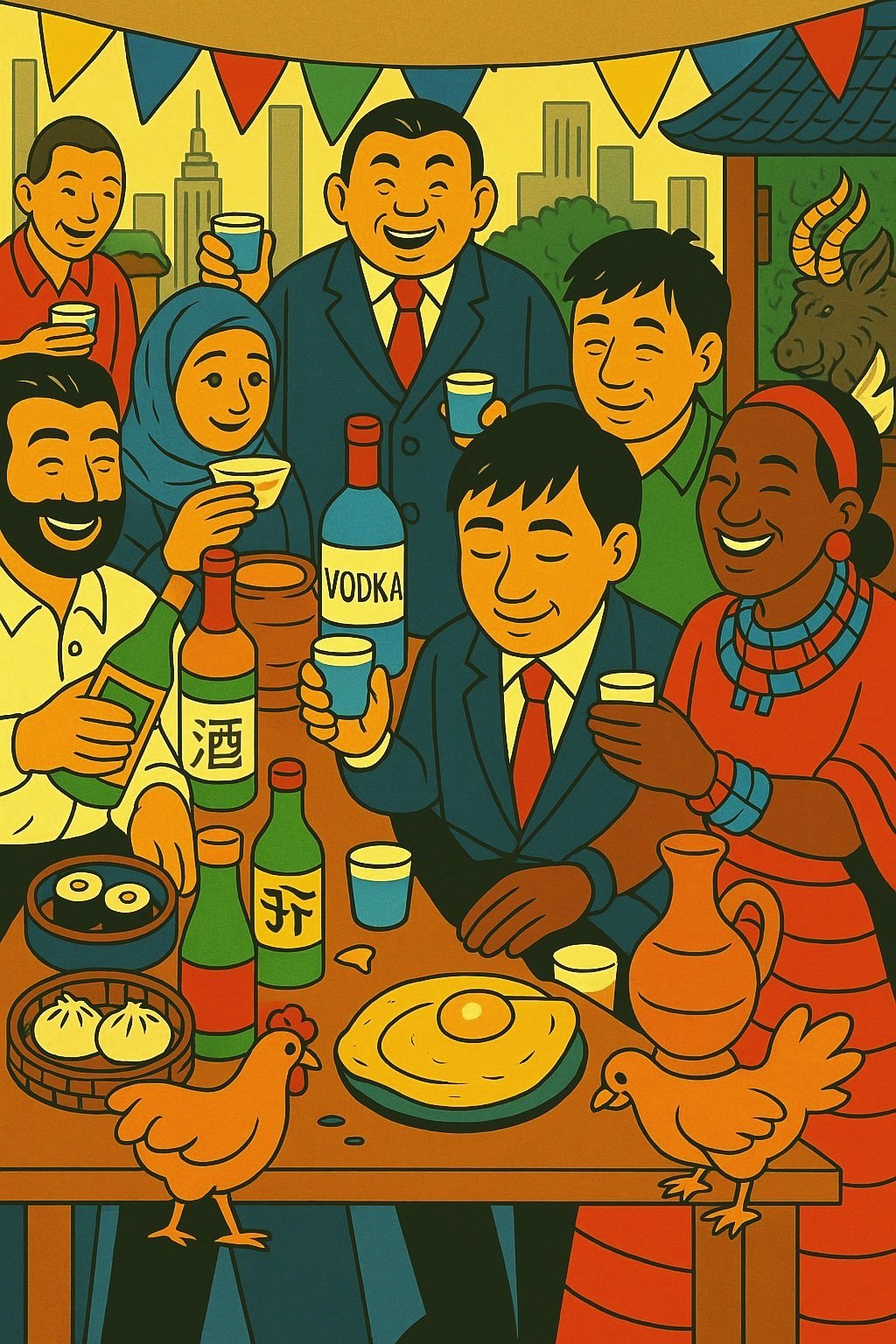
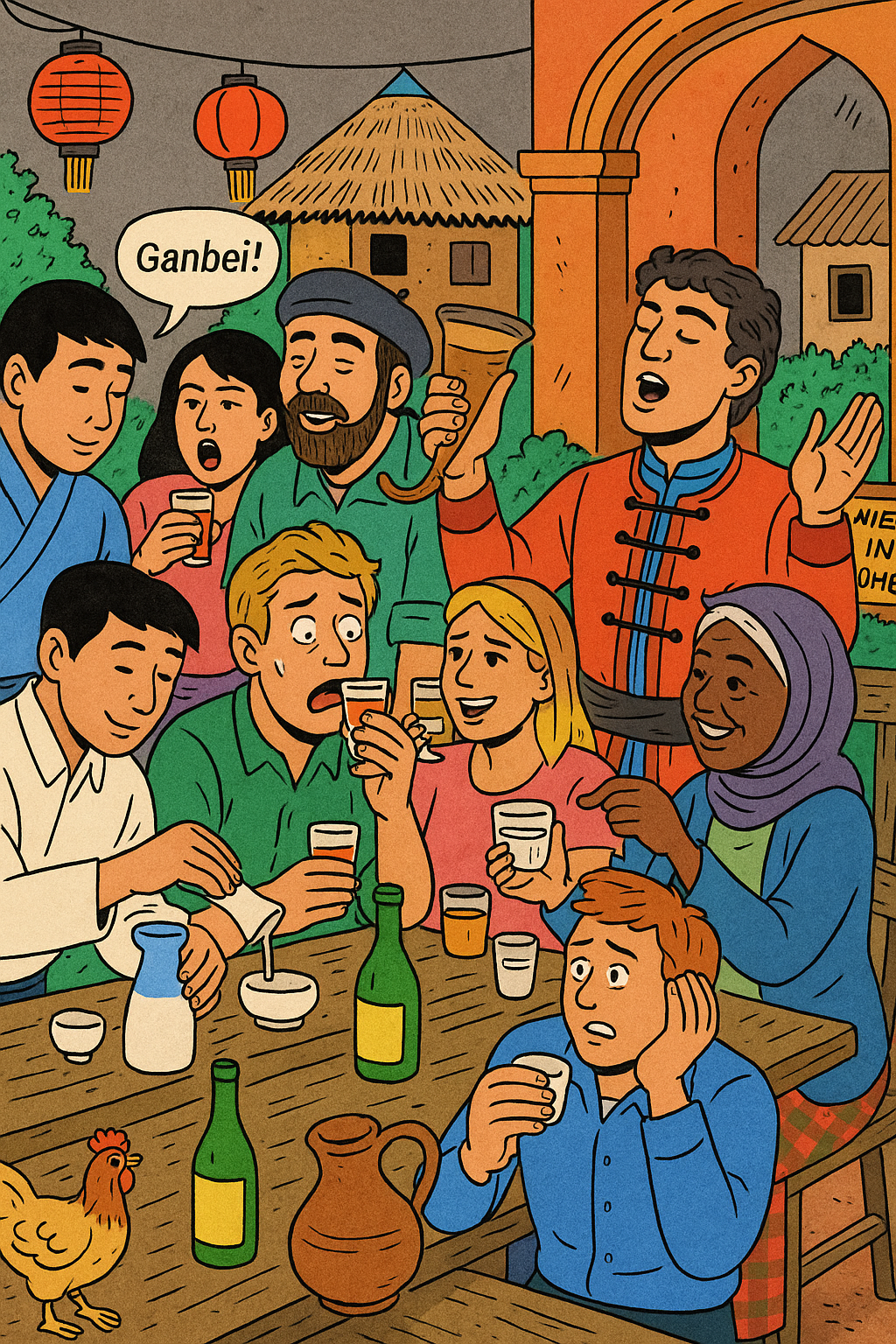
A group of people from around the world crowd around a table, holding traditional drinks from their countries

We’ve all had that moment: reclining on a sun-drenched patio, swirling a chilled drink, maybe a Malibu Bay Breeze, and thinking, Now this is living. But while your fruity cocktail might scream “vacation mode activated,” in many parts of the world, drinking goes far beyond recreation. It's ritual. It’s social glue. It’s ceremony, symbolism and, in some cases, sacred law.

Whether it’s the whisper of steam from a rice wine gourd in Bhutan or the thunderous clink of vodka glasses in Siberia, humanity’s connection to alcohol is as diverse as our languages and landscapes. So, if you're the kind of traveler who likes their libations with a dash of folklore, a twist of history, and a splash of anthropological intrigue, cheers to you. Let’s tour the world, one unusual drinking ritual at a time.

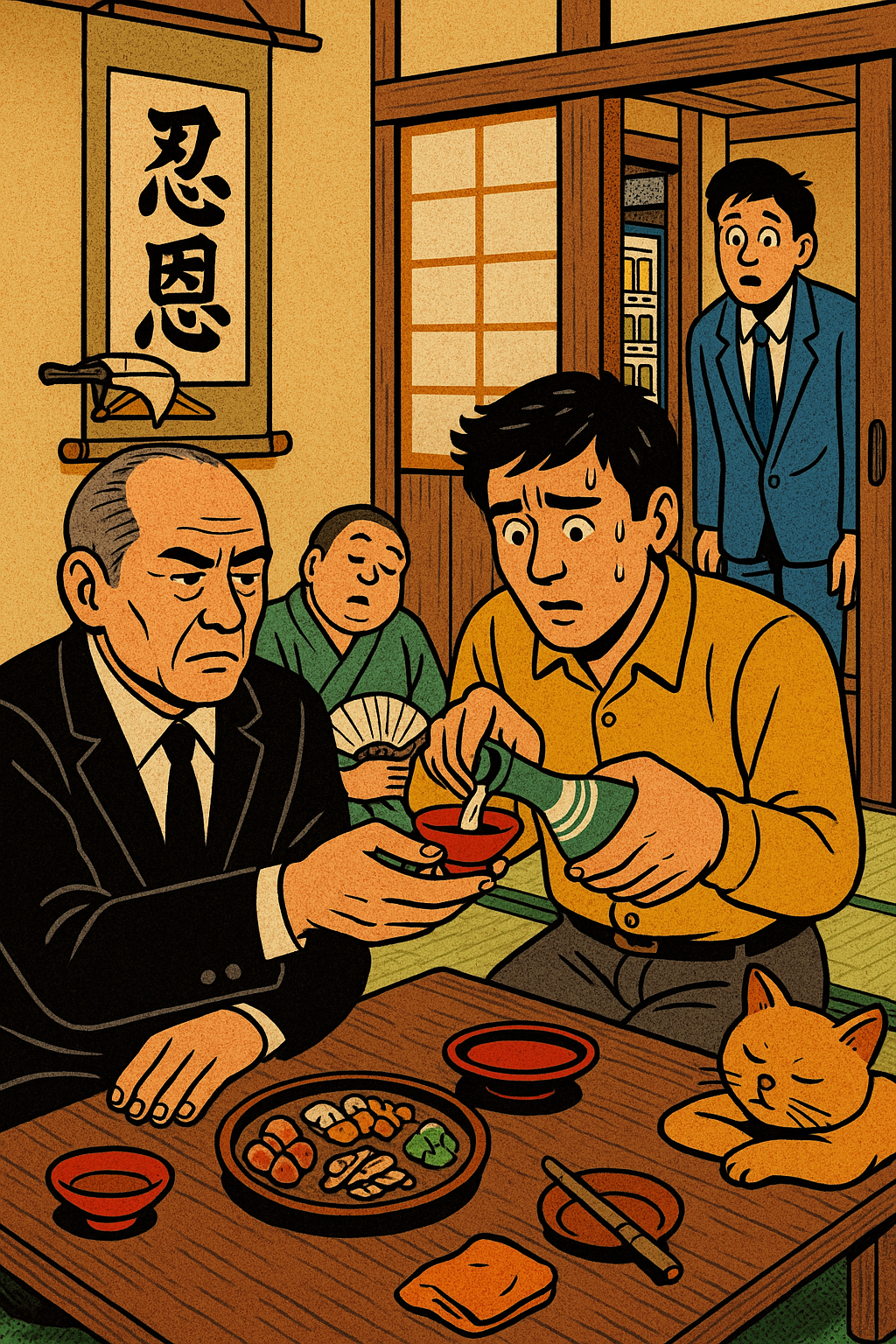
A younger man nervously pours sake for an older man in a suit at a Japanese teahouse, while a man sleeps in the corner and another enters, surprised

1. Japan’s Sakazuki Ceremony: The Art of Mutual Respect

In Japan, drinking isn't just about getting merry — it’s a ballet of etiquette and mutual reverence. Nowhere is this more evident than in the sakazuki ceremony, where two people exchange cups of sake to seal a bond. It can be between friends, business partners or during wedding rituals.

The process involves bowing, pouring for one another, and sipping from each other’s cups. If it sounds intimate, that’s because it is.

But beware: Hierarchy matters. If your boss pours for you, you’d better accept it with both hands and bow like your job depends on it — it just might.

RELATED: A Guide to Experiencing the Spectacular Koyo

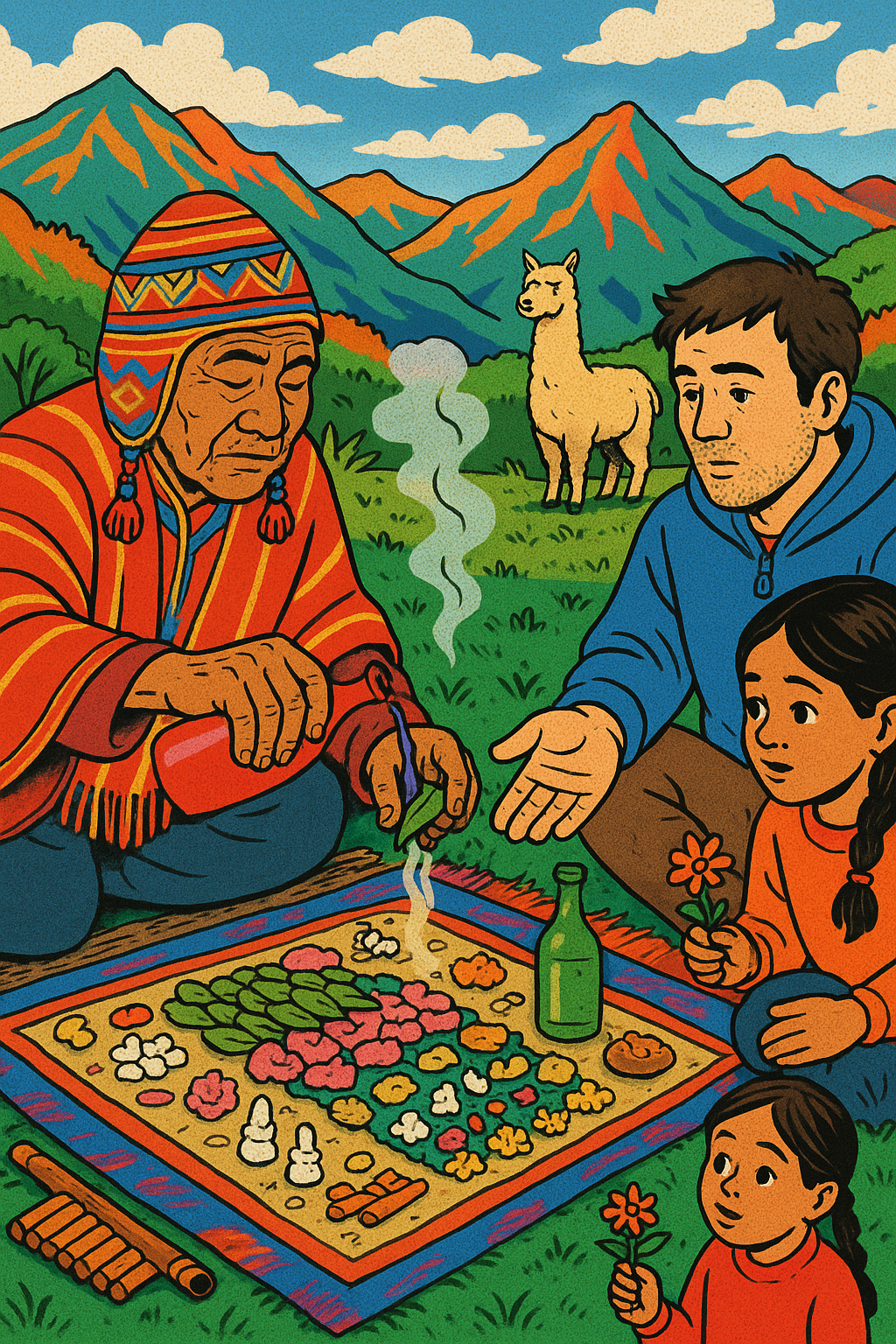
An older Andean man puts some chicha out for Pachamama, the earth goddess, over a spread of nibblies, while girls and a male traveler watch

2. Peru’s Pachamama Offering: A Sip for the Earth

Head into the highlands of Peru, and you’ll quickly learn that no drink enters your body without first blessing the earth. Before sipping chicha (a fermented corn beer), locals spill a few drops onto the ground. This is a symbolic offering to Pachamama, the Andean earth goddess.

This practice isn’t just reserved for locals, though; travelers who show respect are invited to share in the ritual. Just remember: Spill before you sip. Otherwise, you may offend a deity — and your host.

This reverence for nature in drinking rituals speaks to a deeper connection between land, spirituality and celebration. It’s not about intoxication. It’s about inclusion.

RELATED: The Pishtaco of Peru

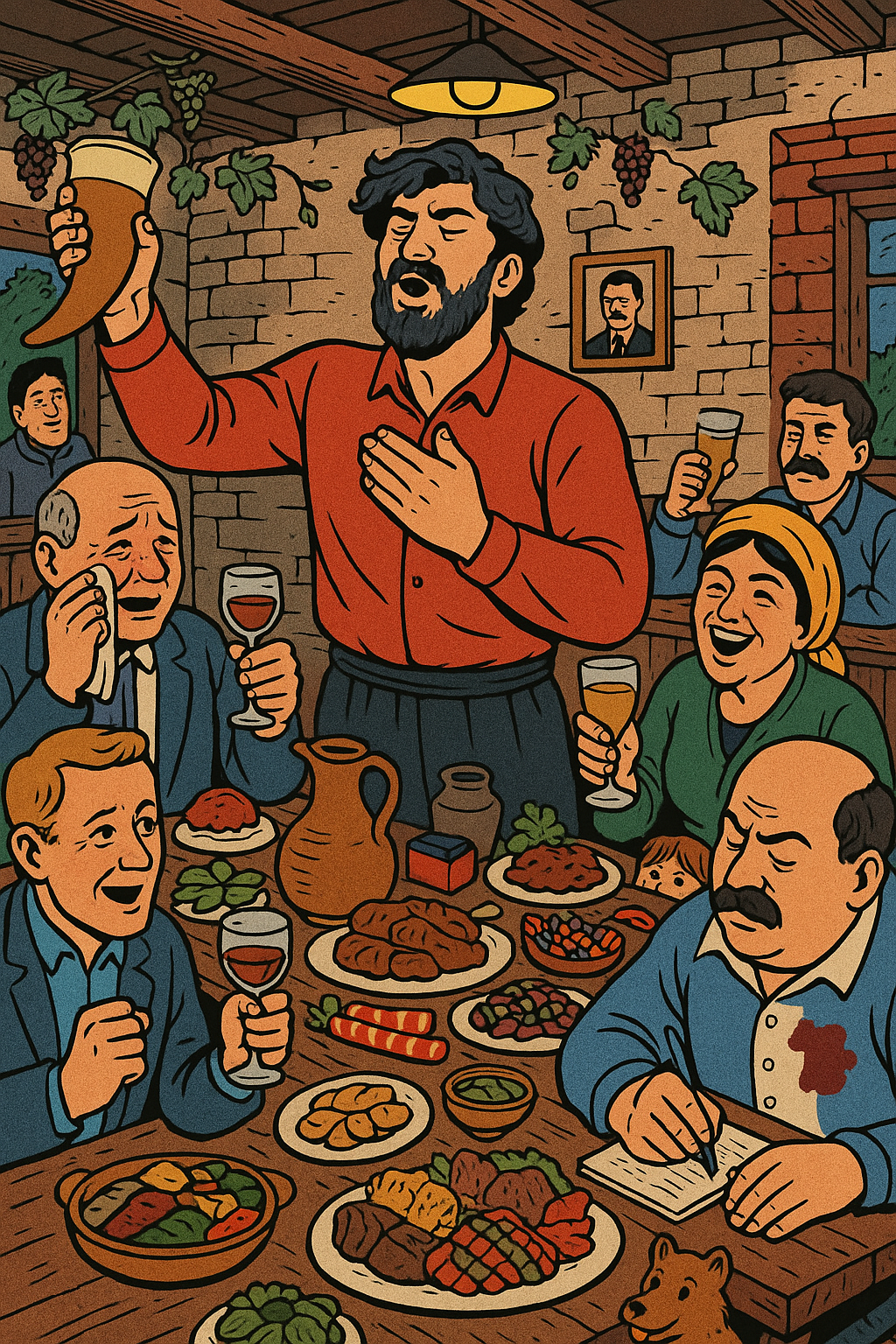
A bearded man stands, holding up a drinking horn, giving a toast, while people around him react

3. Georgia’s Supra: Toasting as a Competitive Art Form

No one toasts like the Georgians. And I mean no one. At a Georgian supra (a traditional feast), the tamada — a sort of designated toastmaster — leads an elaborate series of poetic, philosophical and sometimes comedic toasts that can go on for hours.

Each toast is met with wine horns raised and glasses drained. Guests are expected to participate, and interruptions are frowned upon. This is a structured, sacred ritual of storytelling, memory and reverence, made glorious with amber-toned Georgian wines.

There’s even a formal etiquette to how you hold your glass and how you respond to a particularly moving toast. Think TED Talk meets tavern.

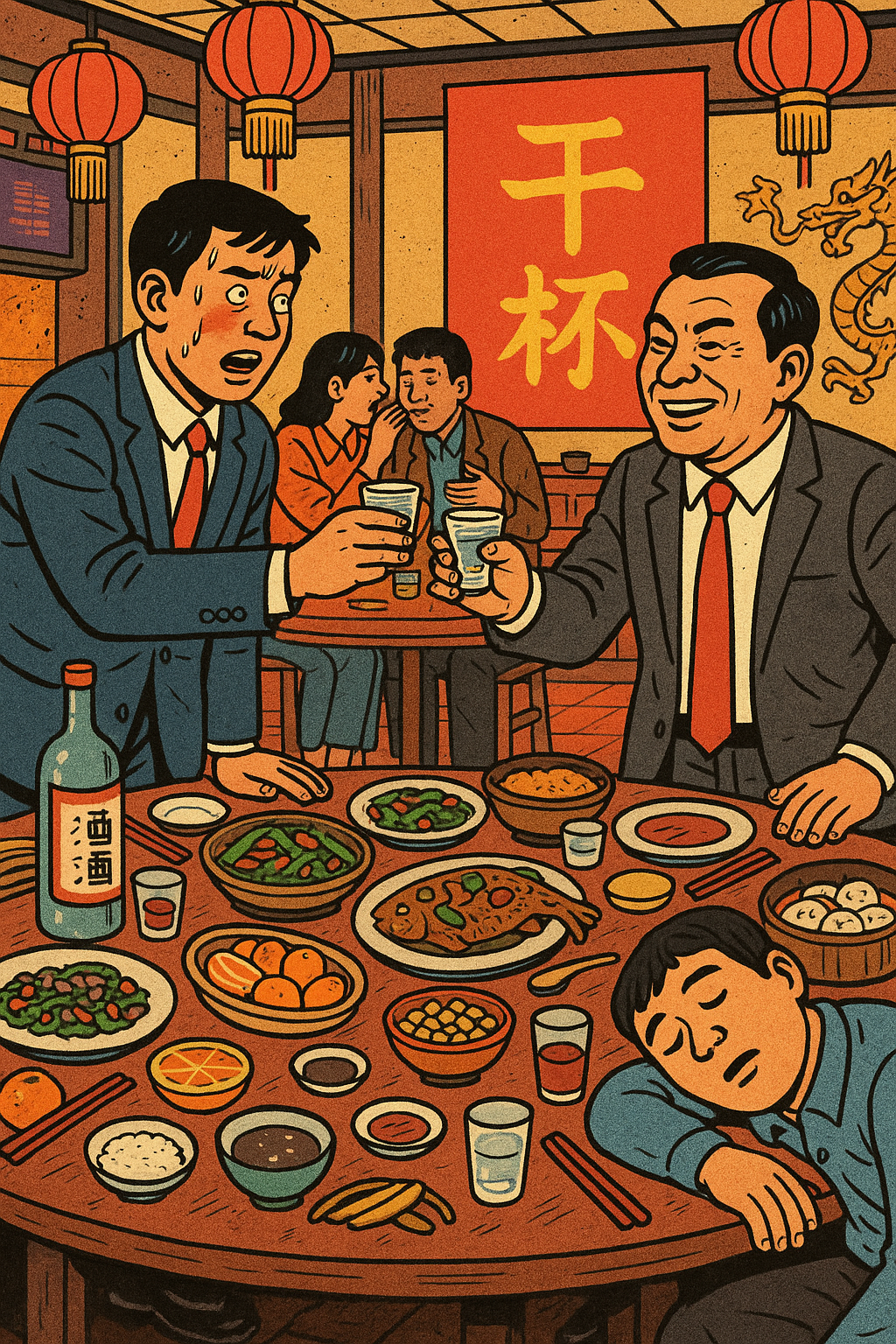
A middle-aged man toasts a nervous, drunken man at a Chinese ganbei ceremony by a table laden with food and a passed-out man, while couple whispers at another table

4. China’s Ganbei: Bottoms Up…or Else

In China, saying “Ganbei!” (干杯) is more than a simple “cheers.” It means “dry cup” — a declaration that you’ll finish your drink in one go. And they mean it.

Refusing a ganbei in a business setting is akin to rejecting a handshake. It’s a test of trust and camaraderie. This ritual can turn business dinners into something closer to drinking marathons, especially when baijiu — China’s fiery sorghum liquor — is involved.

Refusing to finish may offend. Finishing too quickly will win you another round. Good luck.

People sit at a table in Russia, drinking vodka, with one man laughing, another passed out and a woman scowling

5. Russia’s Vodka Etiquette: Drink First, Talk Later

If you think you know how to handle your liquor, try keeping up at a Russian celebration. Vodka in Russia is a no-nonsense affair governed by strict cultural codes.

Rule one: Toasts come first. Talking, eating, or even breathing too soon after someone raises a toast is considered rude.

Rule two: Never sip. Vodka is taken as a shot, straight. 

Rule three: Don’t refuse a round unless you’re ill or driving — and even then, prepare to explain yourself.

The act of drinking vodka in a group is deeply tied to expressions of hospitality and trust. It’s about showing heart (“dusha”), courage and belonging.

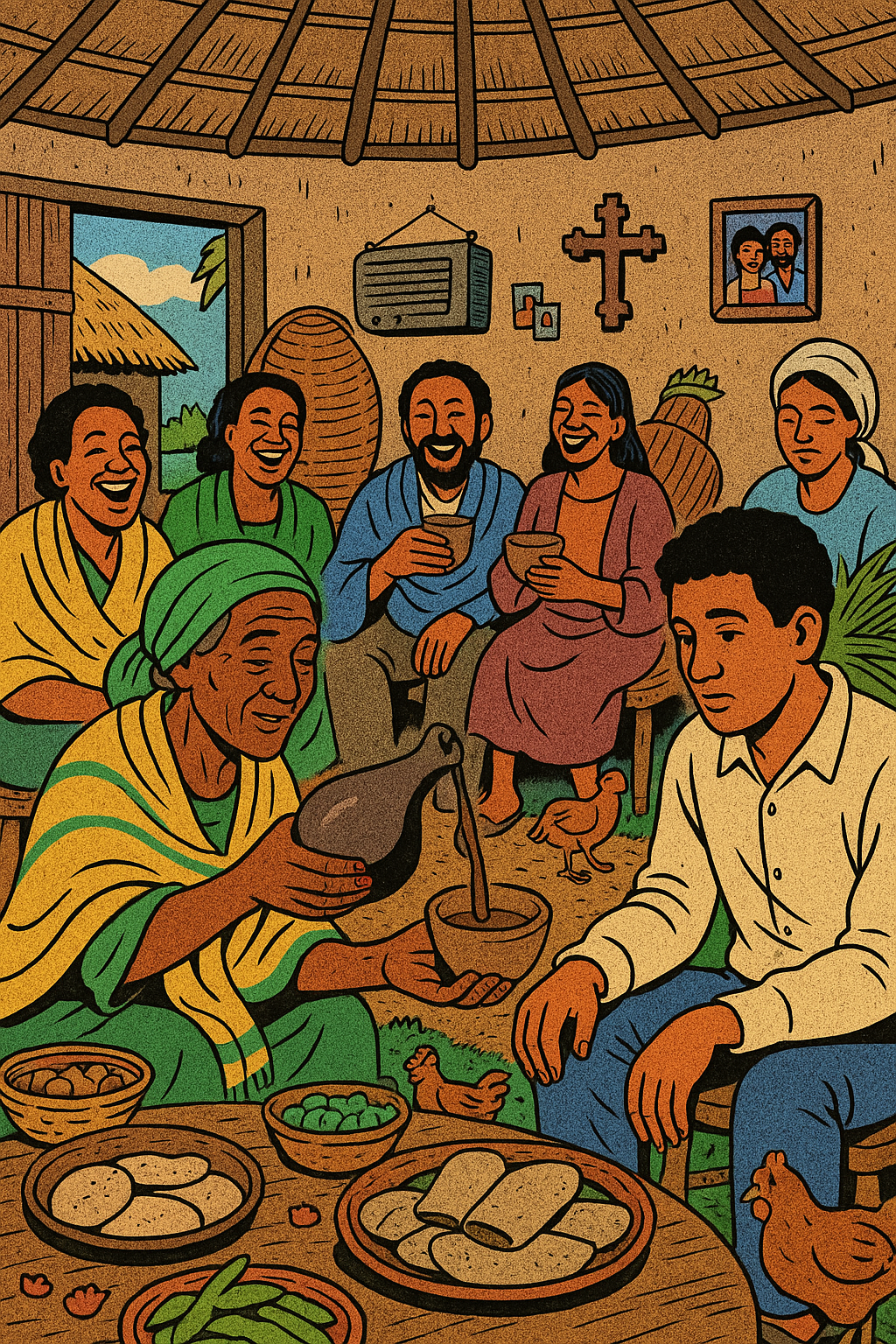
A group of people in an Ethiopian home pour tela by a table with food

6. Ethiopia’s Tela Ceremony: Fermentation Meets Friendship

In Ethiopia, drinking tela, a traditional homemade beer brewed from barley or maize, is a community affair.

Usually made by women and served in small neighborhood gatherings, tela is a ritual of hospitality and kinship. Guests may sit in a circle, drinking from shared containers and swapping stories under woven thatch roofs.

The brewing process itself is communal, passed down through generations, with recipes varying by region and family. Every sip is a testament to shared heritage.

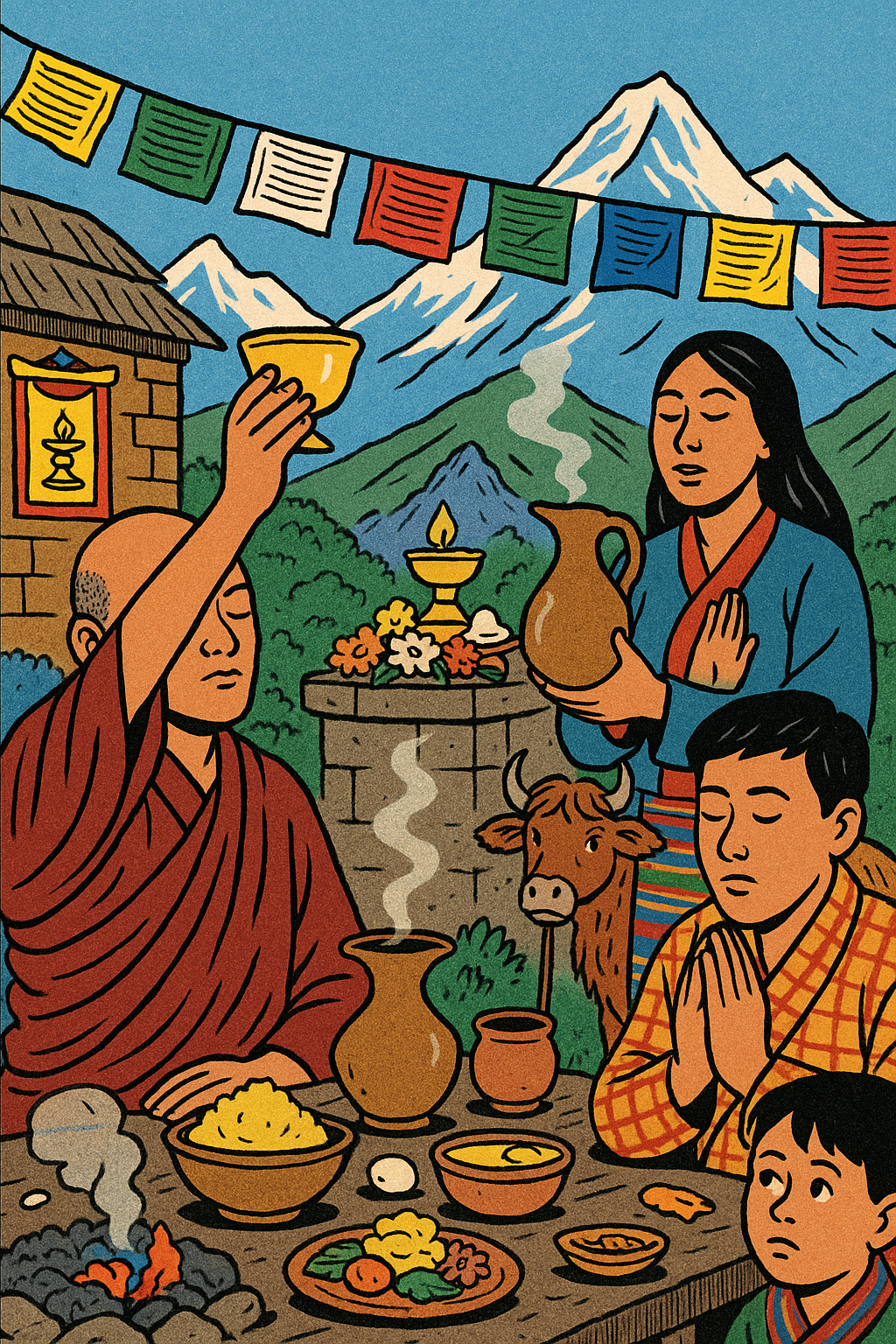
A monk in Bhutan holds up a vessel with ara, while a man prays, a woman holds a pitcher, and a boy and yak look on

7. Bhutan’s Ara Offering: Drink With the Divine

Bhutan isn’t the first place people think of when they imagine booze, but the Himalayan kingdom has its own take: ara, a rice-based liquor made in homes across the country.

When consumed, it’s often part of a lohso ritual: a prayer for peace, prosperity and warding off misfortune. The ara is sometimes mixed with butter and eggs (yes, really), and offered first to deities or the local lama.

While public consumption of ara is discouraged under Bhutanese law, its role in spiritual and community rituals remains deeply ingrained in local life.

RELATED: Bhutan and More of the World’s Most Underrated Adventure Travel Destinations

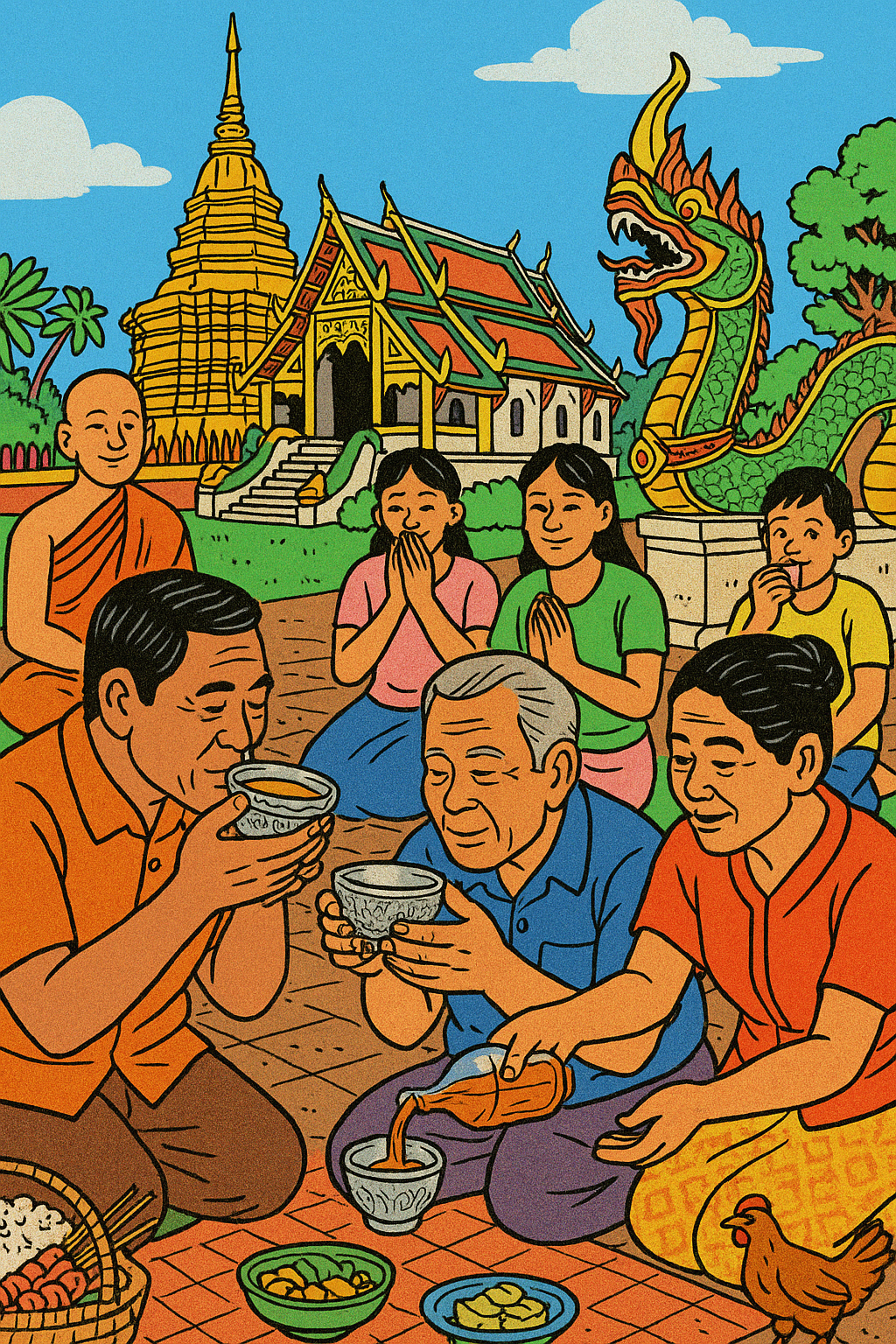
In front of a Thai temple and naga, people drink from silver bowls, while others, including a monk, watch

8. Thailand’s Communal Cups: Sharing in Celebration

At Thai ceremonies, including weddings and Buddhist merit-making rituals, alcohol often plays a social — not sacred — role. However, what stands out is the tradition of communal drinking from shared cups or small silver bowls (khan) at village gatherings.

This ritual fosters connection, trust and a sense of equality. Everyone shares from the same source, rich or poor, old or young.

Interestingly, some of these rituals are fading in urban centers but remain alive in rural areas, preserved by locals who see drinking as part of a holistic spiritual and social life.

RELATED: What’s the Best Chiang Mai Street Food?

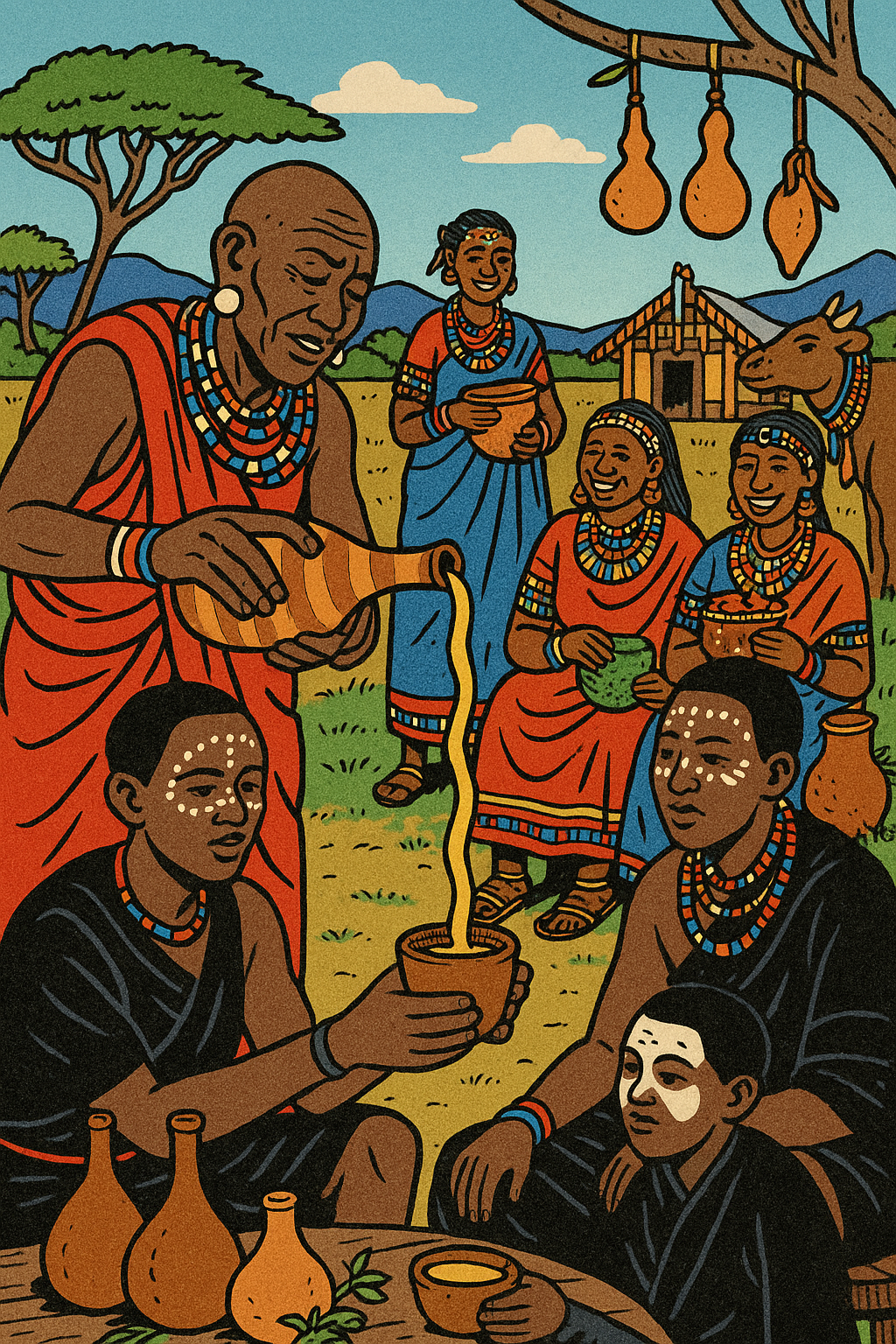
A Maasai man pours honey wine for young men with white face paint during a coming-of-age ceremony in Kenya, while women smile and watch

9. The Maasai’s Honey Wine: From Rite to Rite

In Kenya and Tanzania, the Maasai people brew a traditional honey wine that features prominently in ceremonies such as weddings, age-group initiations and spiritual blessings.

Drinking together symbolizes unity and is believed to strengthen bonds between clans. The brew itself — fermented over days — is thick, sweet and often served in gourds.

While it’s not exported or available commercially, it remains an important cultural practice among the Maasai — one that links heritage, land and rite of passage.

Drinking as Cultural Mirror

Across continents, drinks are more than refreshments; they’re vessels of meaning. They tell stories. They set boundaries. They open doors.

Alcohol has long been used to unite communities, mark transitions, and strengthen social structures—an insight that’s as true today in Peruvian villages as it is in downtown Tokyo.

And this is why the next time you're sipping that refreshing cocktail under a lazy sun, you might reflect on how drinks connect us — not just across tables, but across centuries and civilizations.

People from around the world try to follow drinking etiquette

Tips for the Culturally Curious Sipper

If you’re planning to engage in local drinking customs during your travels, here are a few do’s and don’ts:

  • DO research ahead: Some rituals have sacred meaning, and missteps can be disrespectful.

  • DON’T chug everything: Unless the culture dictates it (hello, China), pacing is usually fine.

  • DO accept if offered: In many cultures, declining a drink can signal rejection of hospitality.

  • DON’T assume Western norms apply: One person’s toast is another’s offense.

  • DO participate wholeheartedly: The ritual is often more important than the drink itself.

So, here’s to the world’s drinkers — not the binge crowd, but the ceremonial sippers, the storytellers, the sacred pourers. To the women brewing tela in Ethiopia, to the Andean farmers offering chicha to the gods, to the Japanese executives bowing over crystal sake cups.

And to you, fellow traveler, who now understands that sometimes, a drink is just a drink… but sometimes, it’s the soul of a people poured into a glass.

Cheers—or as they say in Georgia, “Gaumarjos!” –Ivana Babic

RELATED: Bizarre Foods Around the World
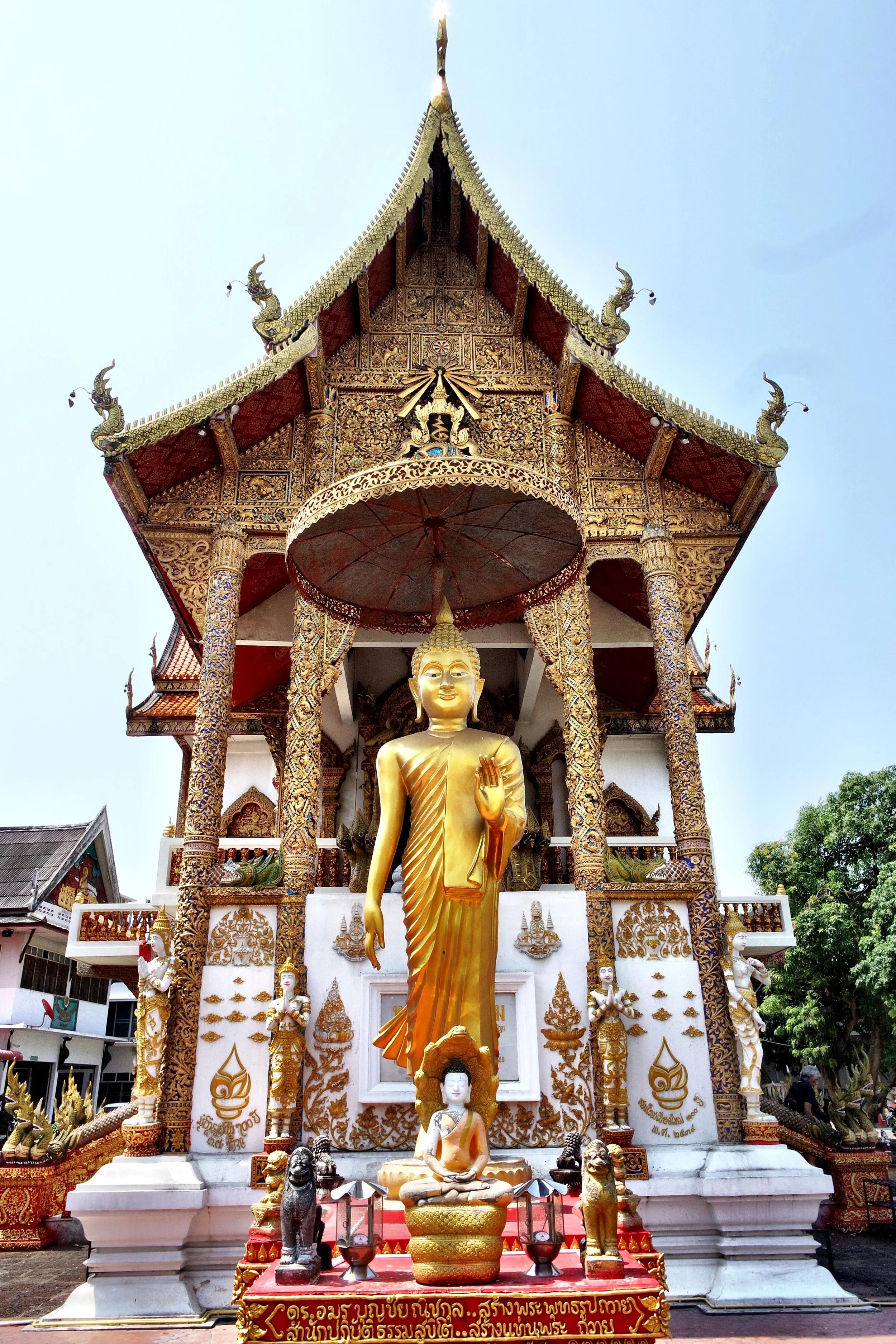
The Buddhas of Chiang Mai

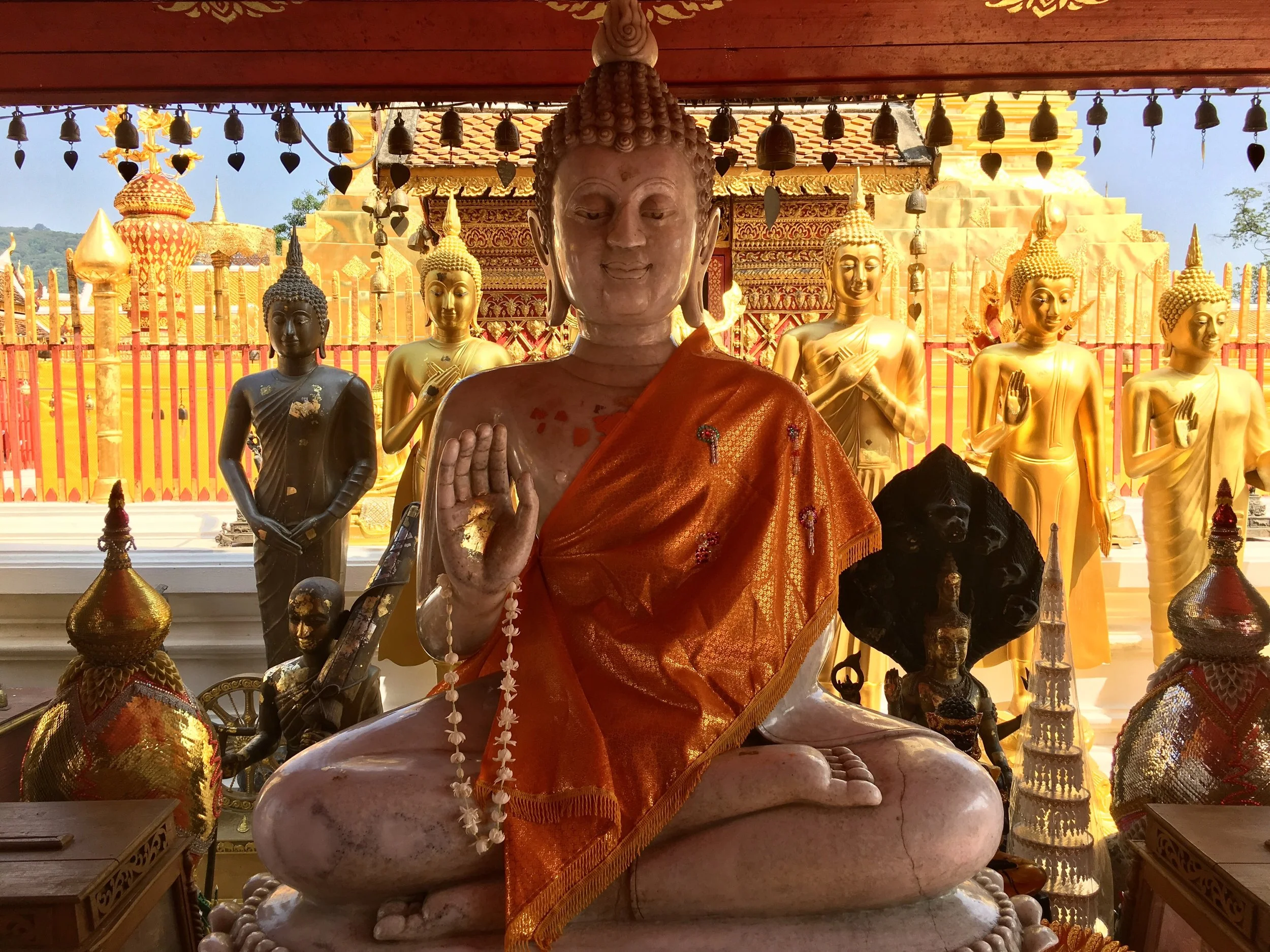
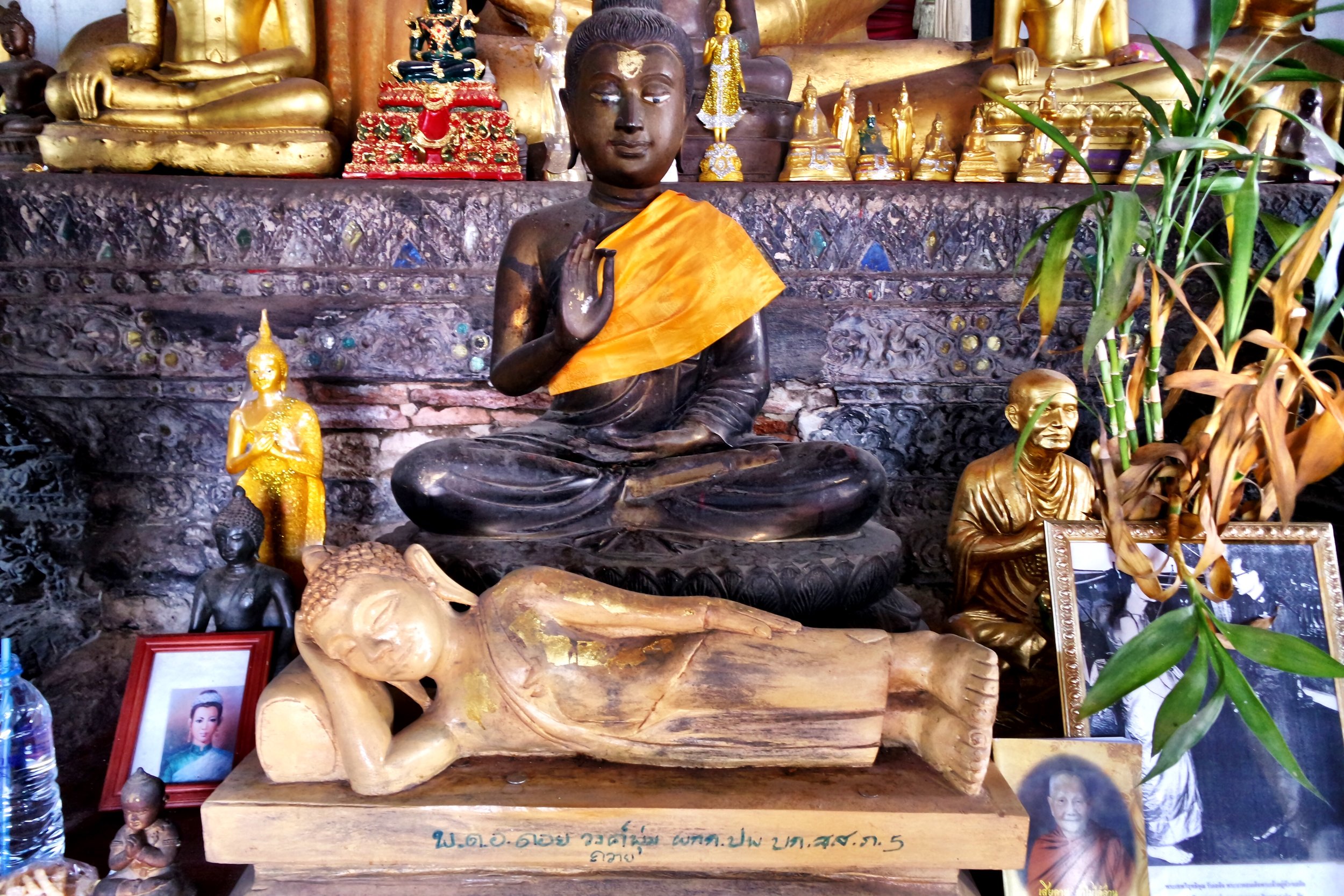
Looking for things to do in Chiang Mai? Search out the different Buddhas at the Buddhist temples around the city.

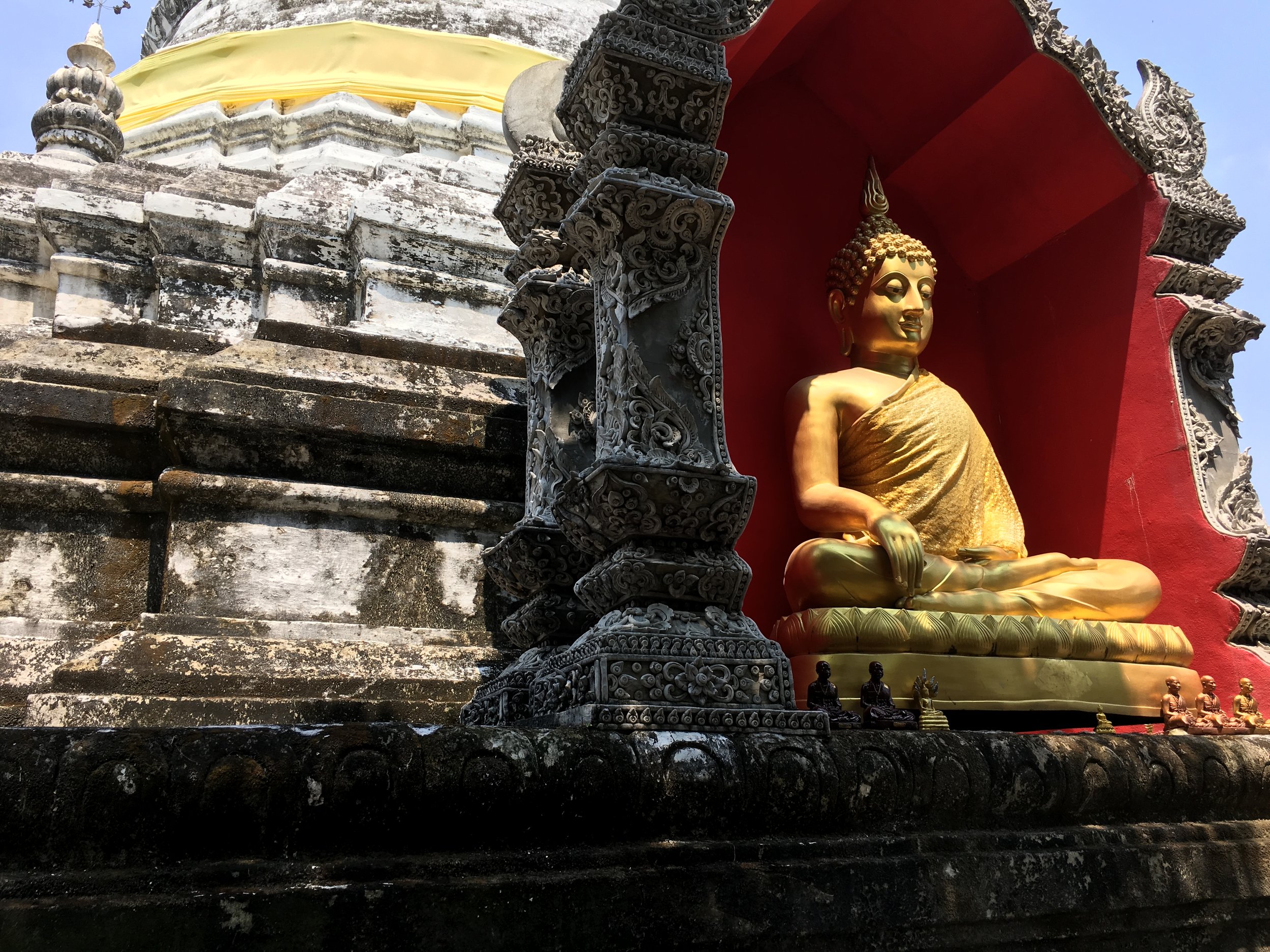
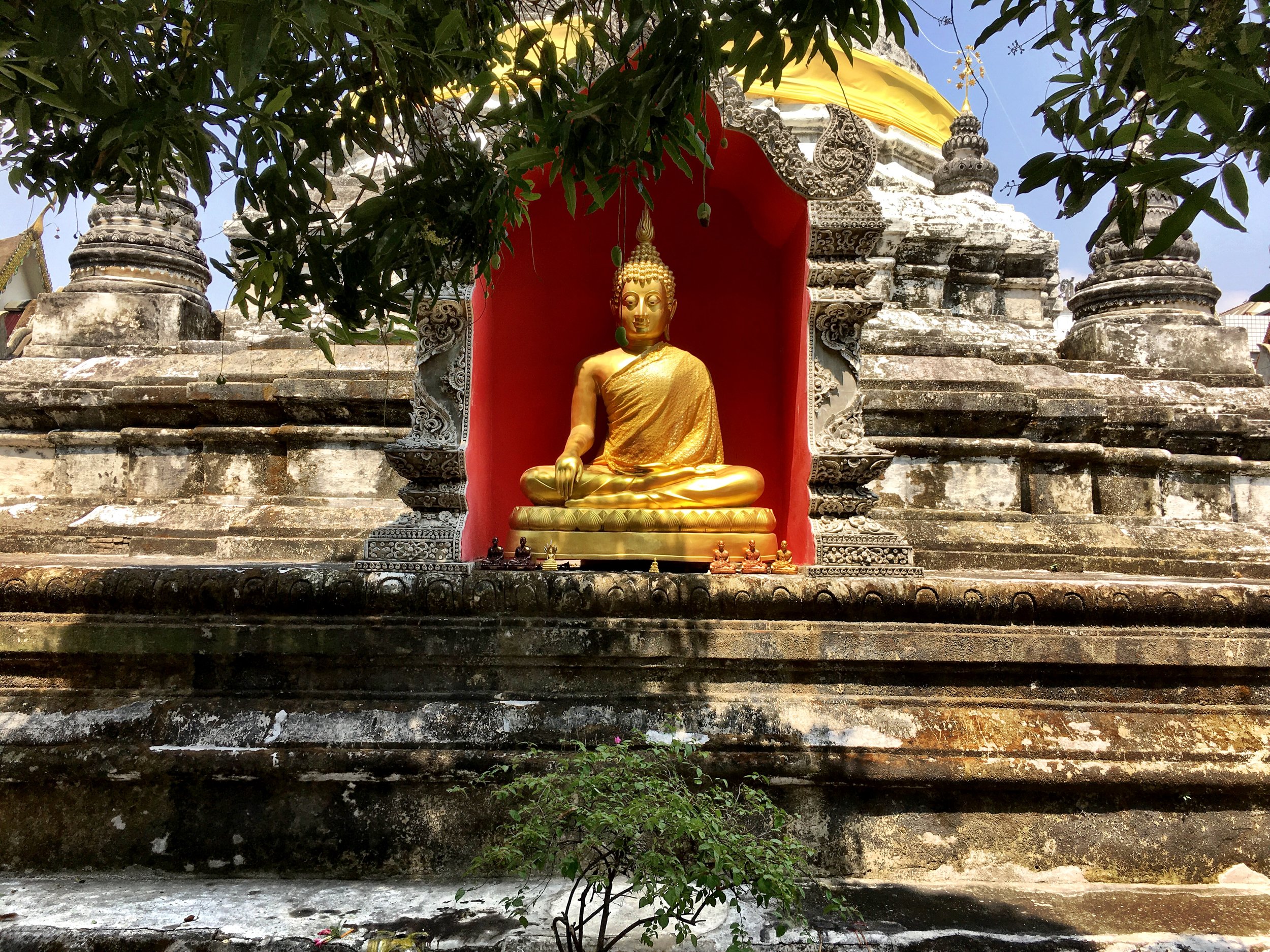
A Buddha inside a niche at the chedi of Wat Buppharam

A Buddha inside a niche at the chedi of Wat Buppharam

It’s said that Chiang Mai is home to 300 temples (wats in Thai). Duke and I did our best to hit them all — though after a week or so, we only crossed about a dozen off our list.

In the vein of our the Cats of Marrakech and Cats of Fès posts, I figured we could do one on the Buddhas of Chiang Mai.

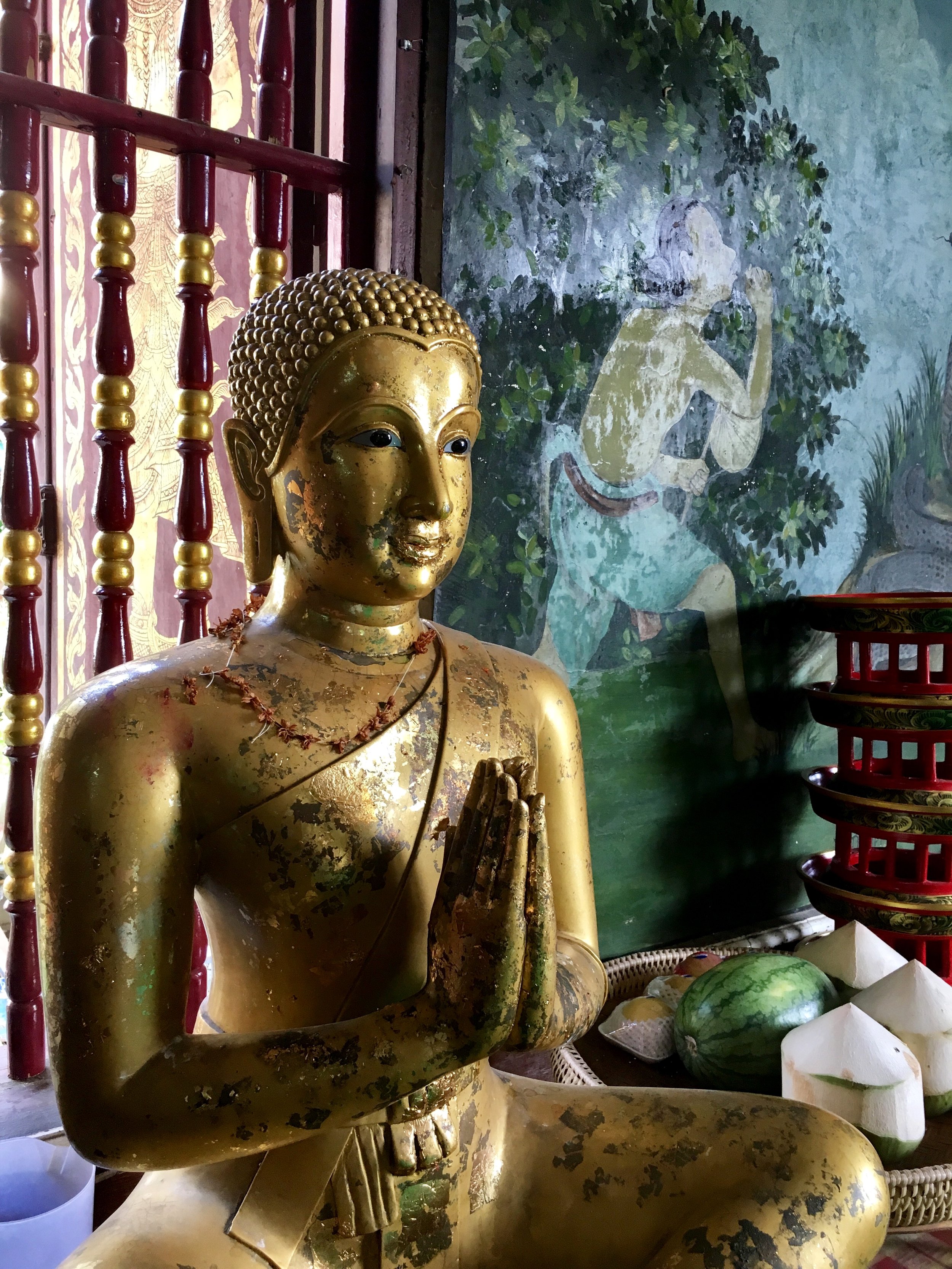
The ears are always elongated, like those kids who had spacers but took them out, only to have their stretched-out lobes flop back and forth.

The idea is that the Buddha is then able to hear all that’s needed in the world.

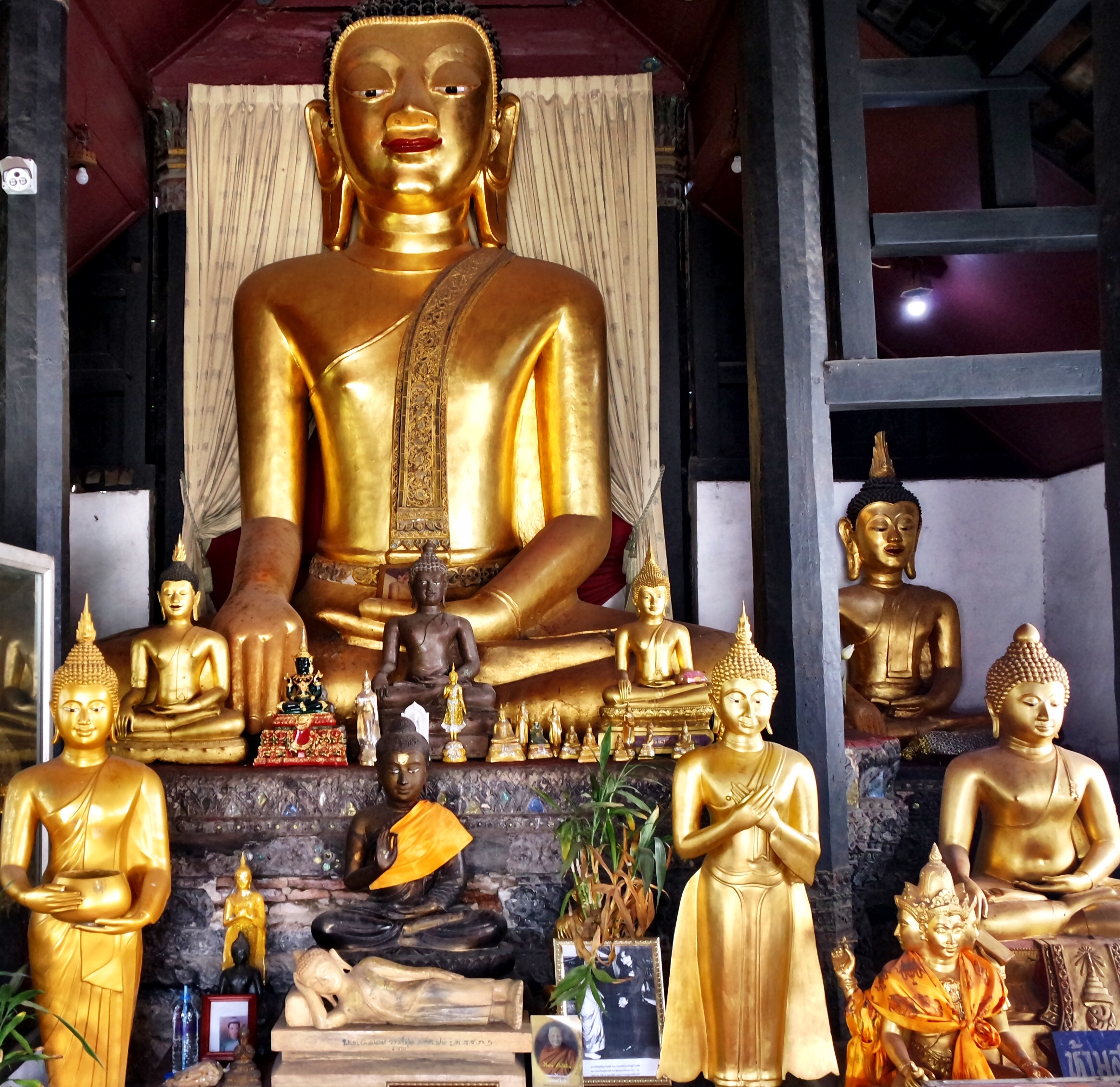
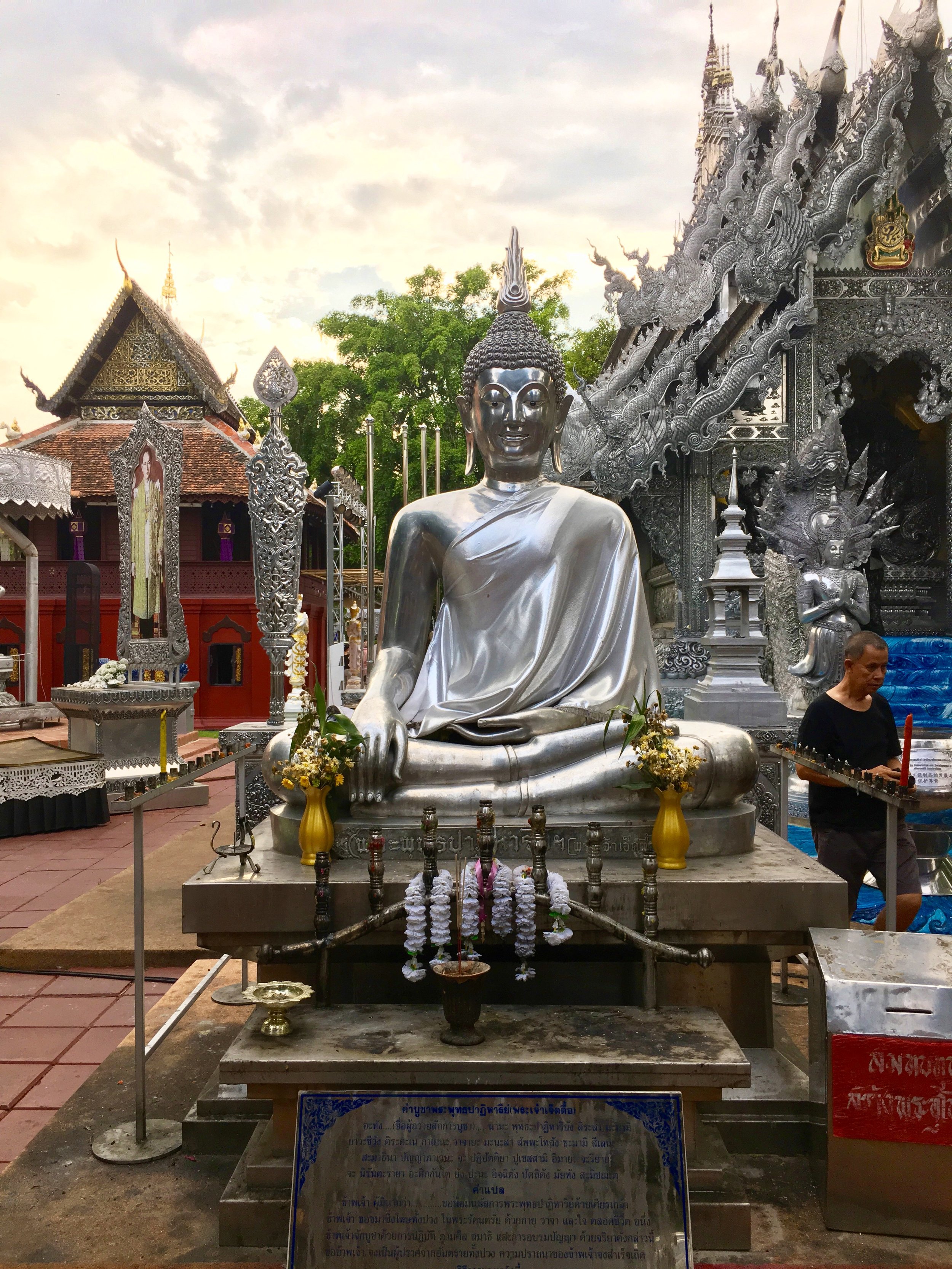
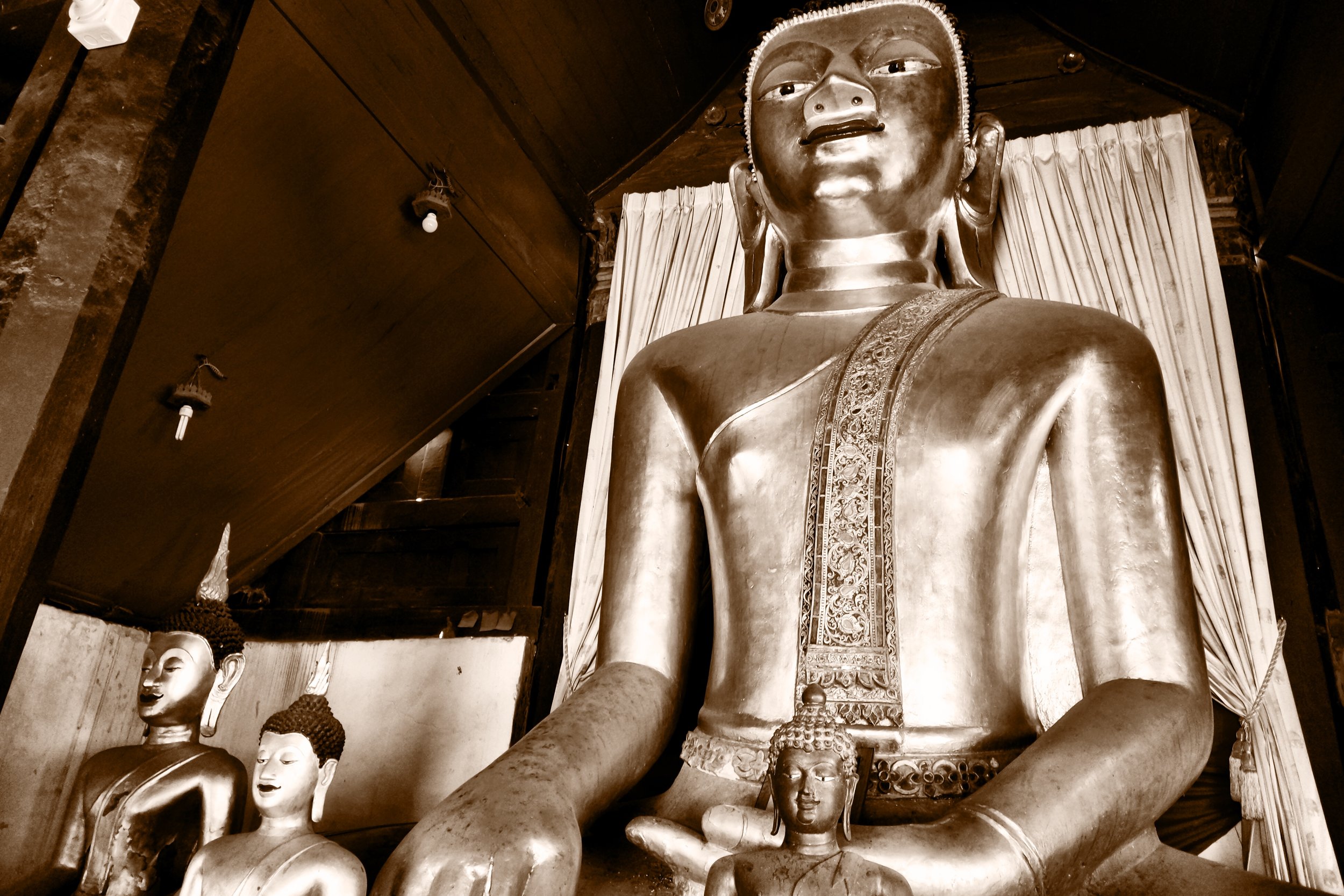
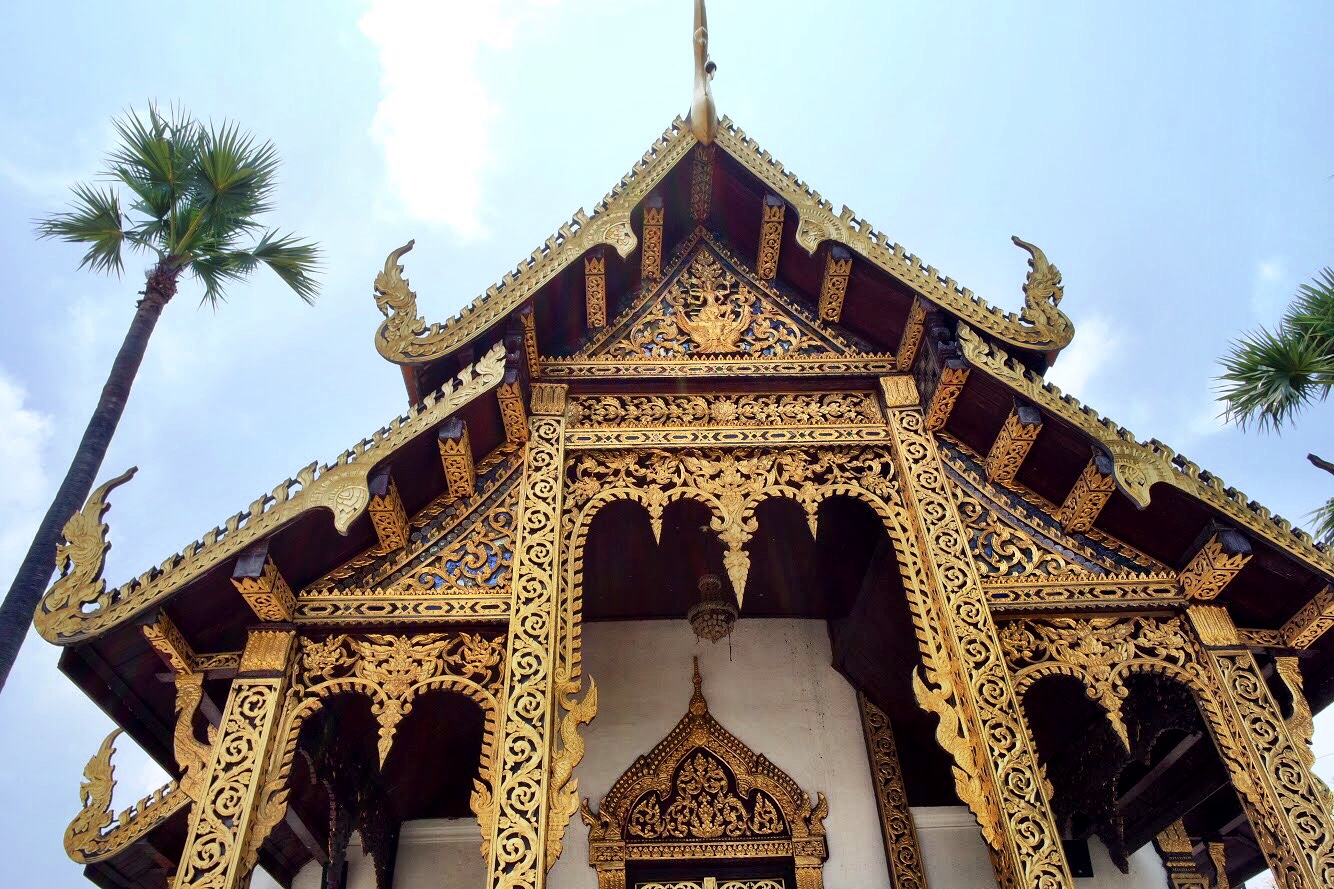
Most of the Buddhas you’ll encounter at these wats are in the Chiang Saen or Lanna style from 11th and 18th centuries. At the time, Northern Thailand was part of the Lanna kingdom. The Buddhas of this second-largest city in Thailand tend to have round faces with Mona Lisa smiles.

Because Buddhist monks shave their heads, I’ve always thought of the Buddha as having set the original example. But depictions of the Buddha actually show tight curls framing his head.

His nose can be on the long and narrow side — or even a bit pig-like (at least when seen from below).

The ears are always elongated, like those kids who had spacers but took them out, only to have their stretched-out lobes flop back and forth. You can tell that I’m not the biggest fan of this look, but the idea is that the Buddha is then able to hear all that’s needed in the world.

His torso tends to be on the slightly plump side, tapering to a narrower waist.

In some depictions, the Buddha is bare-chested and sometimes draped in a saffron cloth. Other Buddhas have this one-shouldered robe as part of their design.

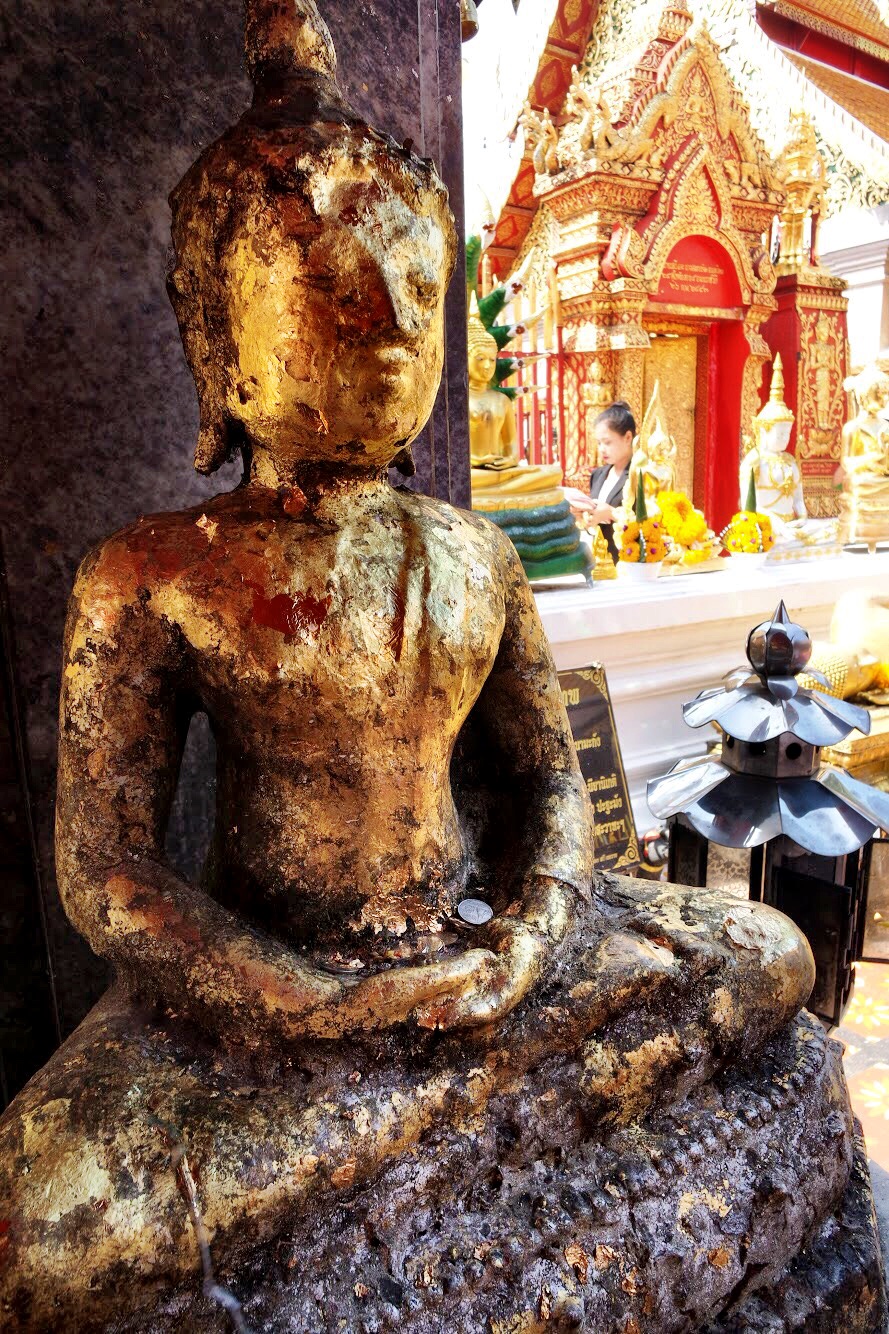
Now and then, especially on smaller Buddhas that aren’t the central focus of a viharn (the main area of worship at a temple), you’ll see Buddhas covered in gold leaf.

Wat Bupphararam

Wat Bupphararam

Buddha Meaning for Each Day of the Week

Statues of the Buddha feature various poses, eight of which are tied to days of the week:

Sunday: The Open-Eye Posture, standing, as he did under the bodhi tree, for seven days after reaching enlightenment, contemplating the suffering of all living things.

Monday: Preventing Calamities, standing, causing torrential rain to fall upon the city of Vesali, which was invaded by devils that feasted on the living and the dead.

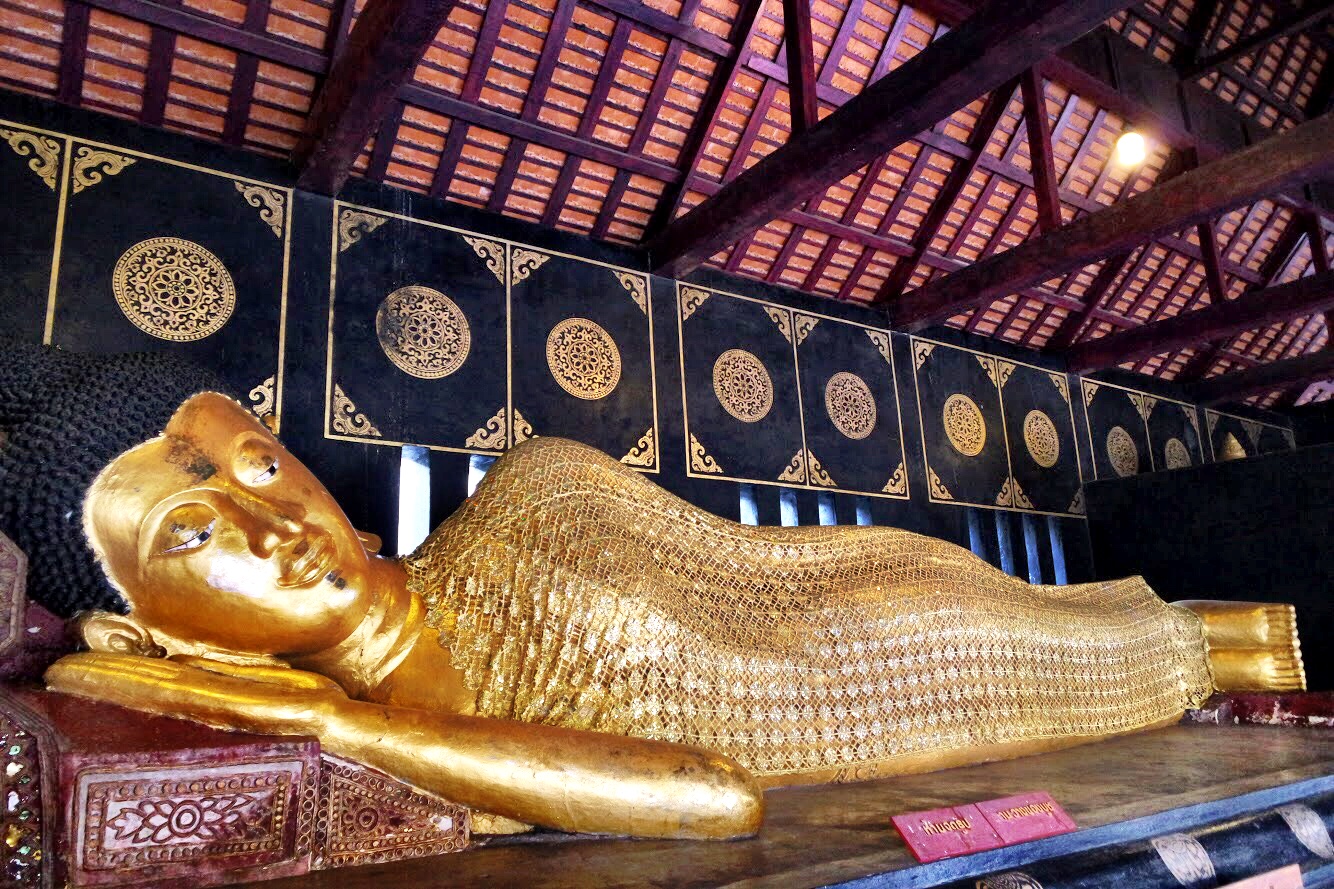
Tuesday: The Reclining Buddha, humbling a proud giant named Asurindarahu.

Wednesday: This day is divided into two poses, depending on the time of day.

Before noon: Holding an Alms Bowl, standing, collecting the food for the day — a practice still performed by Buddhist monks.

After noon: Resting With a Monkey and an Elephant, seated, seeking refuge from arguing monks in the Palilayaka, or Palelai, Forest. The monkey offers the Buddha a beehive, while the elephant presents a water pot.

Thursday: Meditation, sitting in a yoga posture, when the Buddha vowed not to leave his spot on the grass until he reached enlightenment.

Friday: Contemplation, standing, under the banyan tree, wondering how the heck he’ll explain his teachings, or dharma, about the cause of suffering.

Saturday: Seated Under the Naga Hood, meditating and protected from rain by Mucalinda, the seven-headed King of the Naga.

Wat Doi Suthep

Wat Doi Suthep

As the central image in a wat, more often than not, the Buddha is sitting cross-legged, one leg on top of the other, with one hand in his lap, palm upward, and the other draped downward over his leg. This is the Calling the Earth to Witness position, which symbolized the Buddha’s moment of enlightenment.

Some of the Buddhas are standing, and you’ll also find a few Reclining Buddhas, which I personally like to call Sleepy-time Buddhas.

Around the 16th century, the statues of the Buddha were made of a thin alloy, though some were even cast with gold.

Here’s a sampling of the Buddhas we found around town. –Wally

Wat Buppharam

Wat Buppharam

Wat Buppharam

Wat Buppharam

Wat Buppharam

Wat Buppharam

Wat Buppharam

Wat Buppharam

Wat Chedi Luang

Wat Chedi Luang

Wat Chedi Luang

Wat Chedi Luang

Wat Chedi Luang

Wat Chedi Luang

Wat Doi Kham

Wat Doi Kham

Wat Doi Suthep

Wat Doi Suthep

Wat Doi Suthep

Wat Doi Suthep

Wat Upakut

Wat Upakut

Wat Upakut

Wat Upakut

Wat Jet Lin

Wat Jet Lin

Wat Kuan Kama

Wat Kuan Kama

Wat Lok Molee

Wat Lok Molee

Wat Palad

Wat Palad

Wat Rajamontean

Wat Rajamontean

Wat Sri Suphan

Wat Sri Suphan

Wat Sri Suphan

Wat Sri Suphan

Wat Sri Suphan

Wat Sri Suphan

Wat Chom Thong and Vipassana Meditation Retreat

A Thai Buddhist temple dedicated to those born in the Year of the Rat at the base of Doi Inthanon known for its free meditation courses.

Wat Phra That Si Chom Thong houses a holy relic: fragments of the Buddha’s skull

Wat Phra That Si Chom Thong houses a holy relic: fragments of the Buddha’s skull

En route to Doi Inthanon to see its waterfalls and soaring modern pagodas, our driver Tommy asked us if we wanted to stop at a temple at the base of the mountain.

The wat he wanted to share with us is about an hour and a half from Chiang Mai and is dedicated to those born in the Year of the Rat.

“That’s my sign,” I told Tommy, excited about that fact for the first time in my life.

“That’s lucky!” he exclaimed.

The temple is one of the most revered in all of Northern Thailand because it supposedly holds bits of the right side of the Buddha’s skull.
The temple is dedicated to those born in the Year of the Rat — like this fancy fellow

The temple is dedicated to those born in the Year of the Rat — like this fancy fellow


Learn More About the Chinese and Thai Zodiac


The names of Thai temples tend to be mouthfuls. This wat, Phra That Si Chom Thong Woraviharn, is no exception.

This misshapen statue is supposed to be of a lion

This misshapen statue is supposed to be of a lion

Holy Skull Fragments

It was built in the mid-1400s atop a hill, Doi Chom Thong, which the Buddha is said to have visited. In fact, he supposedly even stated that the site would one day be home to one of his holy relics.

This small shrine, or mondop, is where the holy relic of Chom Thong is kept

This small shrine, or mondop, is where the holy relic of Chom Thong is kept

That prediction came true, and the wat is one of the most revered in all of Northern Thailand because it supposedly holds bits of the right side of the Buddha’s skull. The relic was found in 1452 and is described as being smooth and the size “of jujube seeds” and the off-white color of “dried medlar flowers.”

At most Buddhist temples, relics are stored in chedis like these — but not at this one

At most Buddhist temples, relics are stored in chedis like these — but not at this one

The oldest structure at the wat is the golden chedi. What’s interesting is that the pagodas known as chedis don’t house the relics as at most Thai temples. Instead, they’re stored within a mondop, a small temple-like shrine framed by tall thin columns.

The Buddha’s skull fragments are taken out of the mondop on important Buddhist holidays for devotees to pay homage to them.

The viharn is the main building on site

The viharn is the main building on site

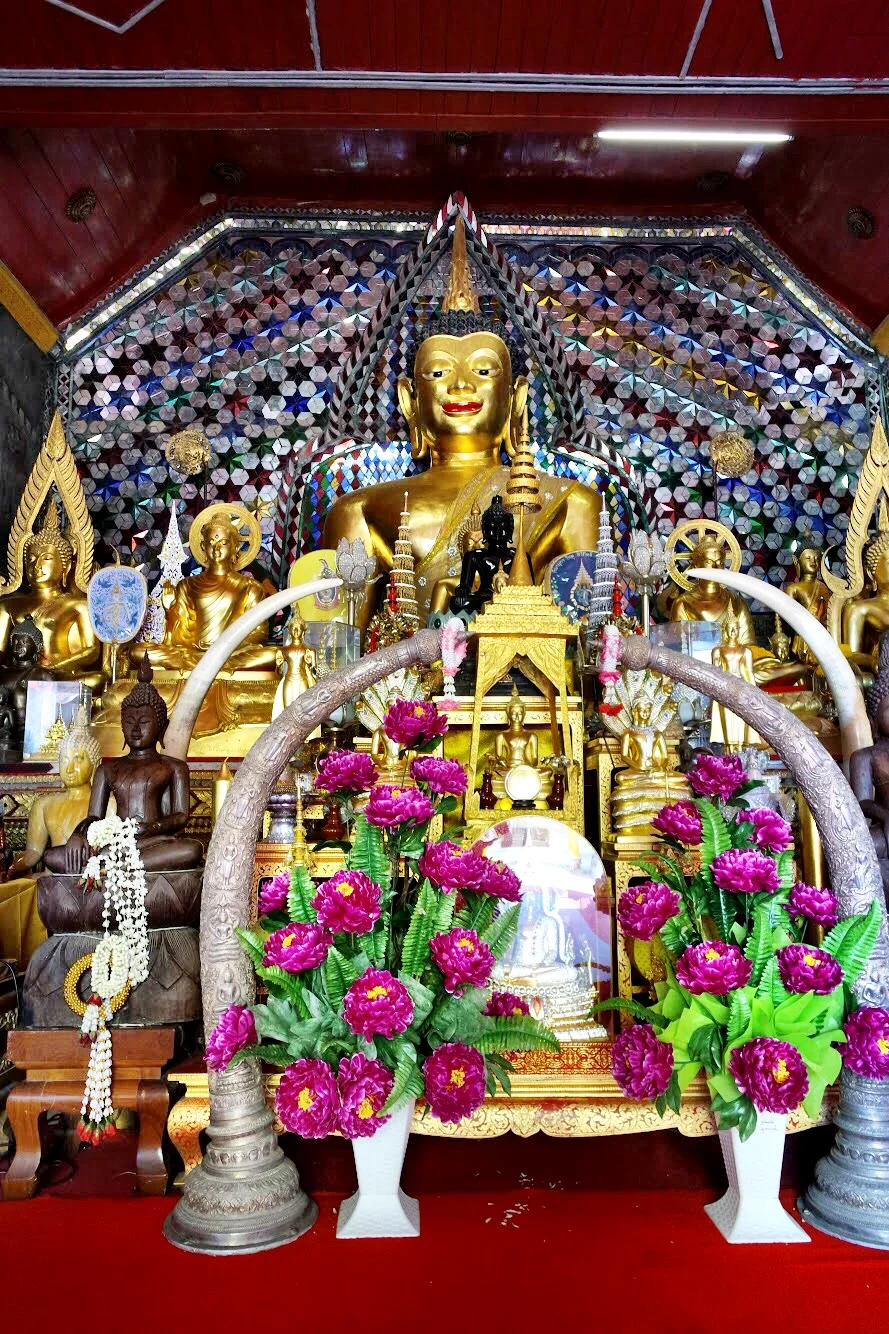
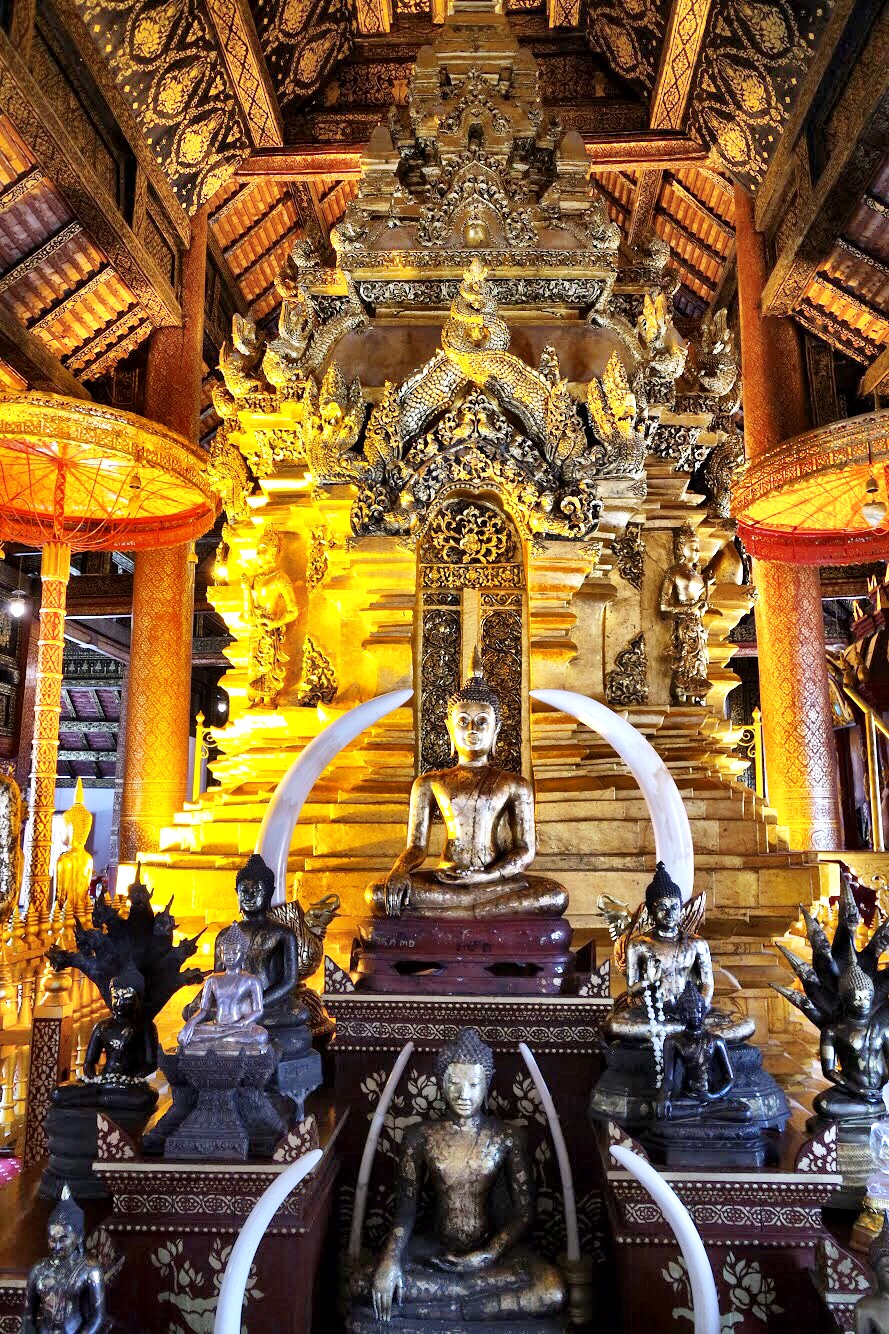
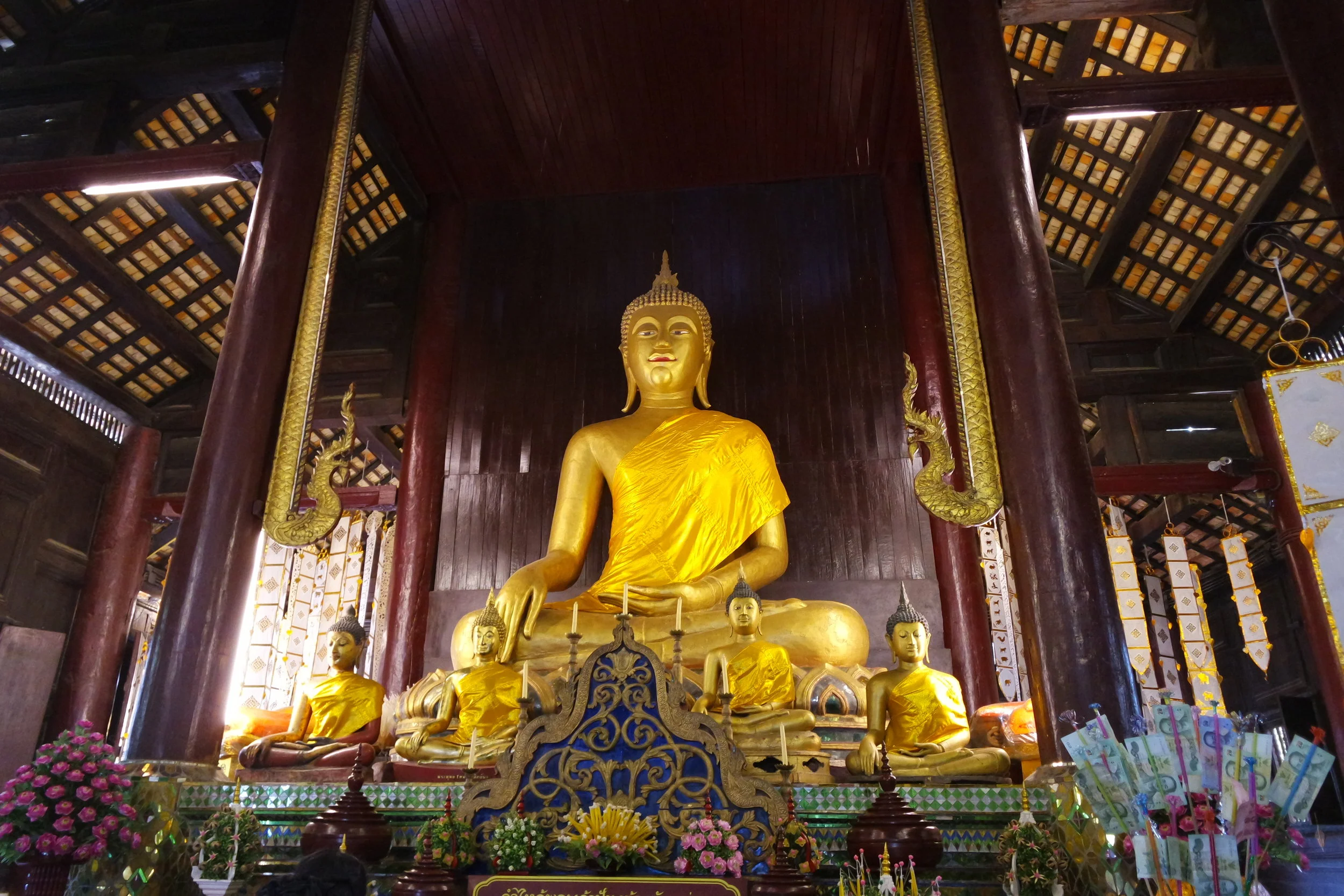
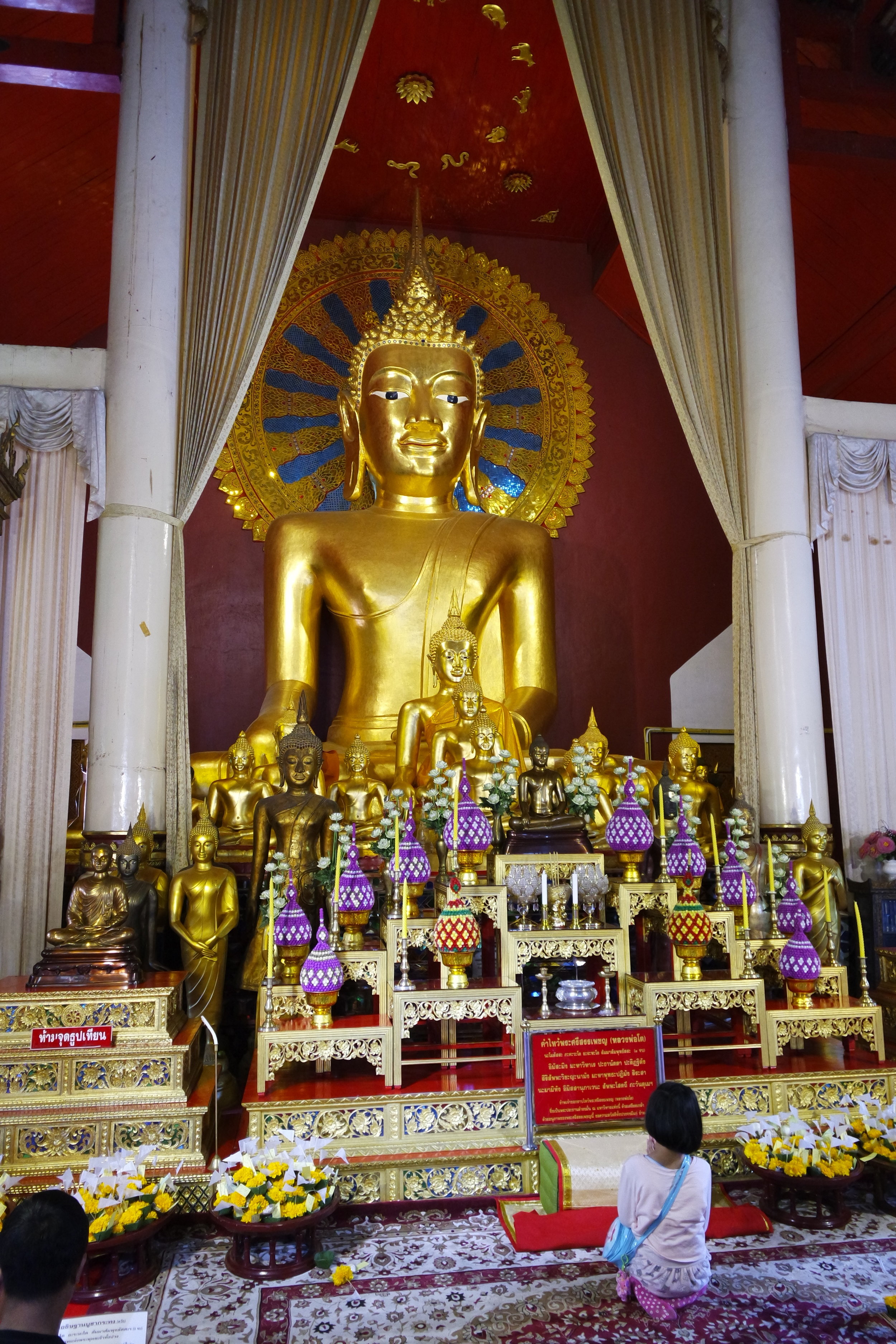
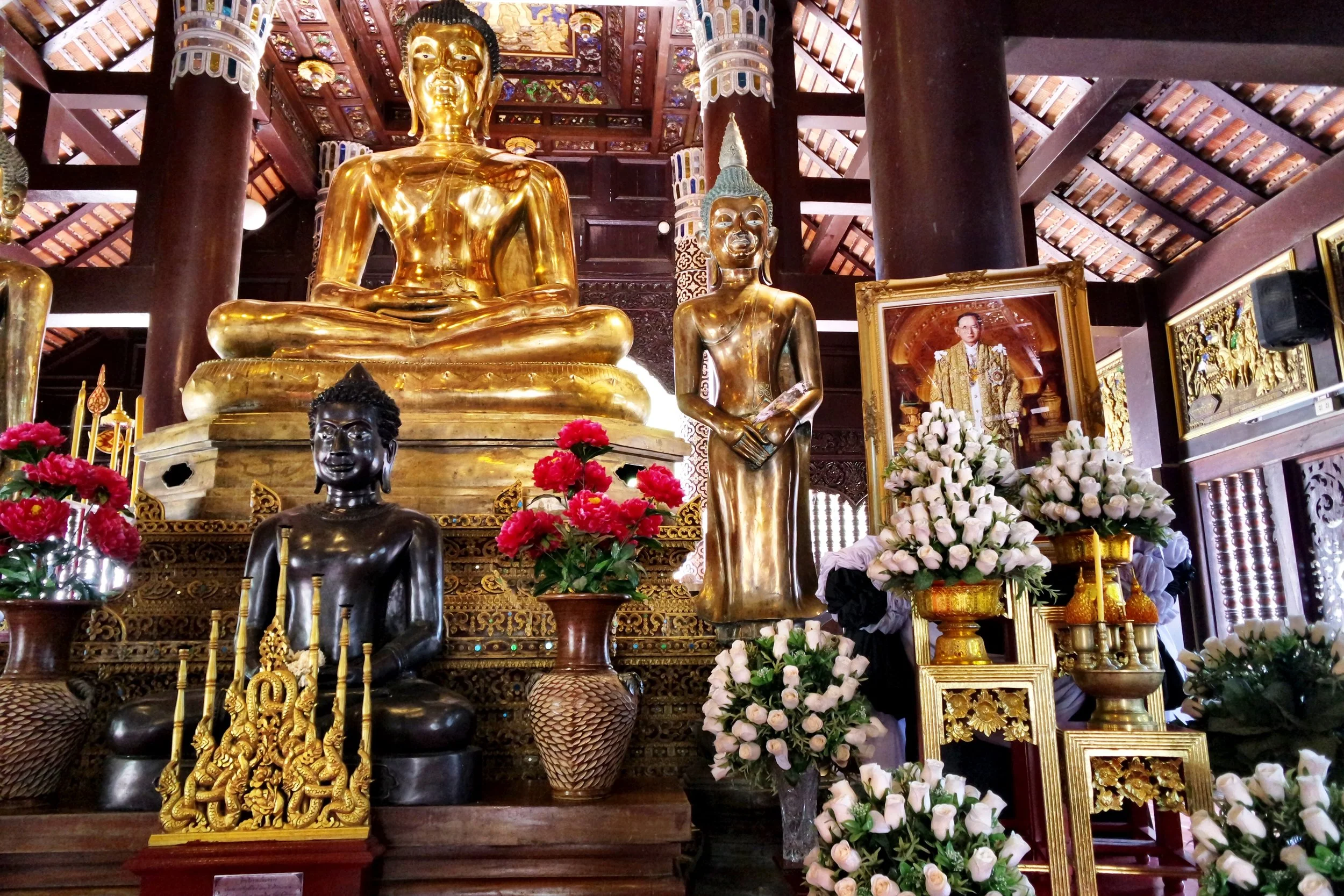
The focal point of the assembly hall features numerous Buddhas, elephant tusks and an elaborately carved centerpiece

The focal point of the assembly hall features numerous Buddhas, elephant tusks and an elaborately carved centerpiece

Visiting the Viharn

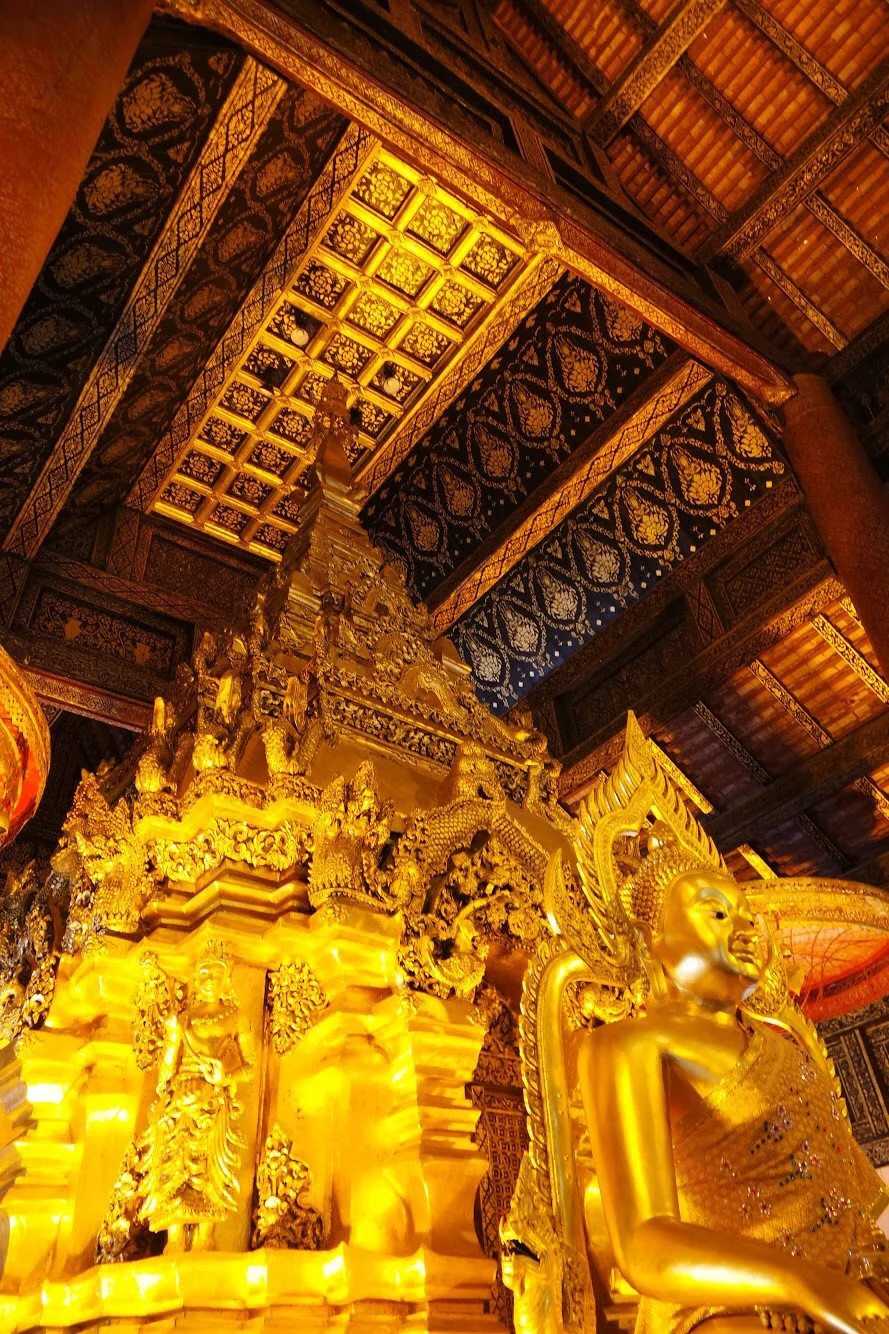
The main building on the wat grounds is the Lanna-style viharn, which contains gorgeous wood carvings. The statues, many of which are gold or are covered in gold leaf, the teak beams, the intricately carved shrine, the light diffused through the bright orange umbrellas, which symbolize enlightenment and are compared to halos in the Christian tradition — they all lend the space a warm, intense glow.

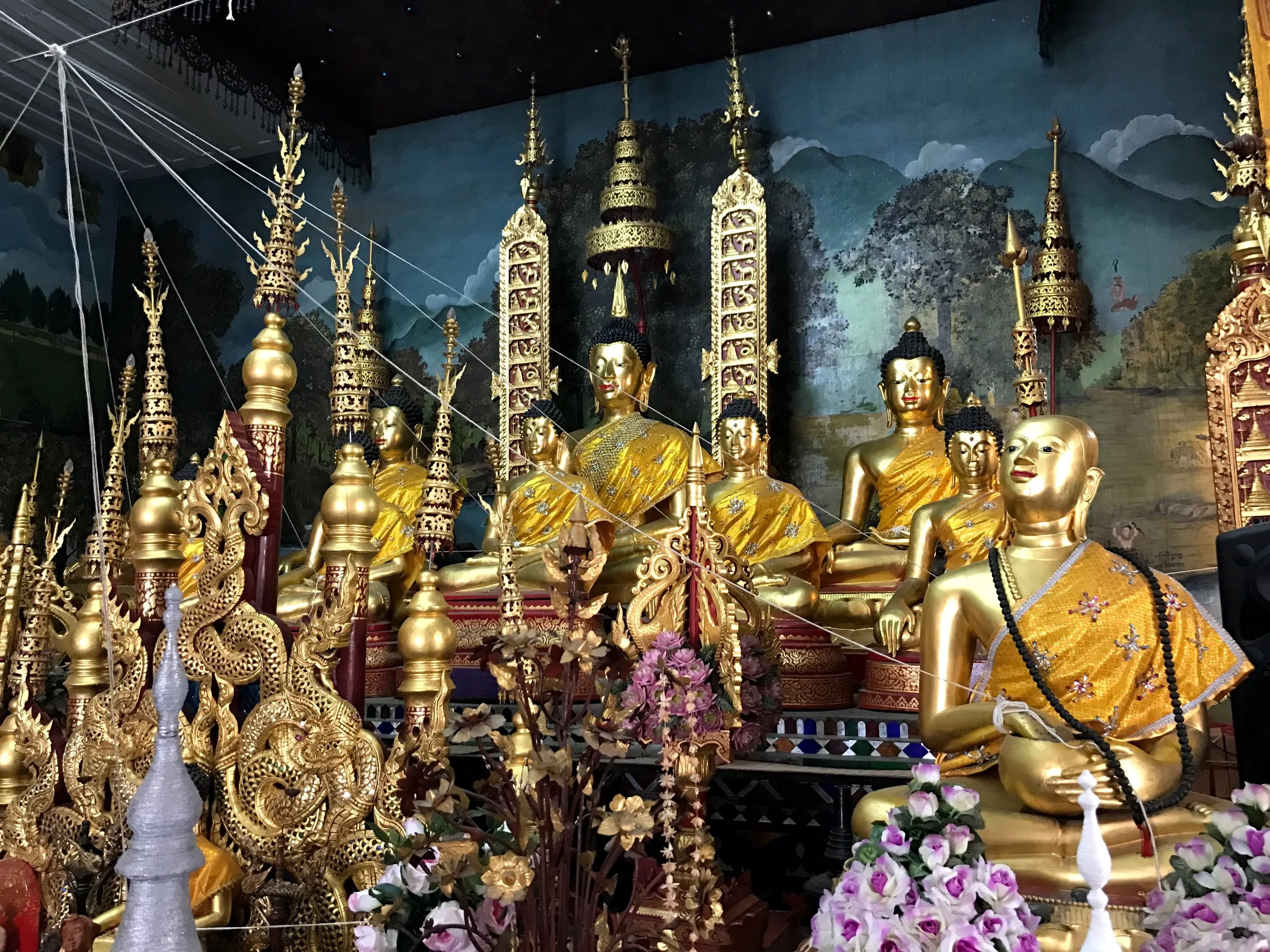
It’s not unusual for viharns to have multiple statues of the Buddha

It’s not unusual for viharns to have multiple statues of the Buddha

Some of the statues are covered in gold leaf

Some of the statues are covered in gold leaf

Look up — even the teak ceiling is elaborately painted 

Look up — even the teak ceiling is elaborately painted 

Walk around the altarpiece — it’s so elaborate it should be seen from every angle

Walk around the altarpiece — it’s so elaborate it should be seen from every angle

On our way out of the wat, Duke and I stopped by a vendor’s table near the entrance to buy a small ceramic rat to put in the shrine in our bedroom.

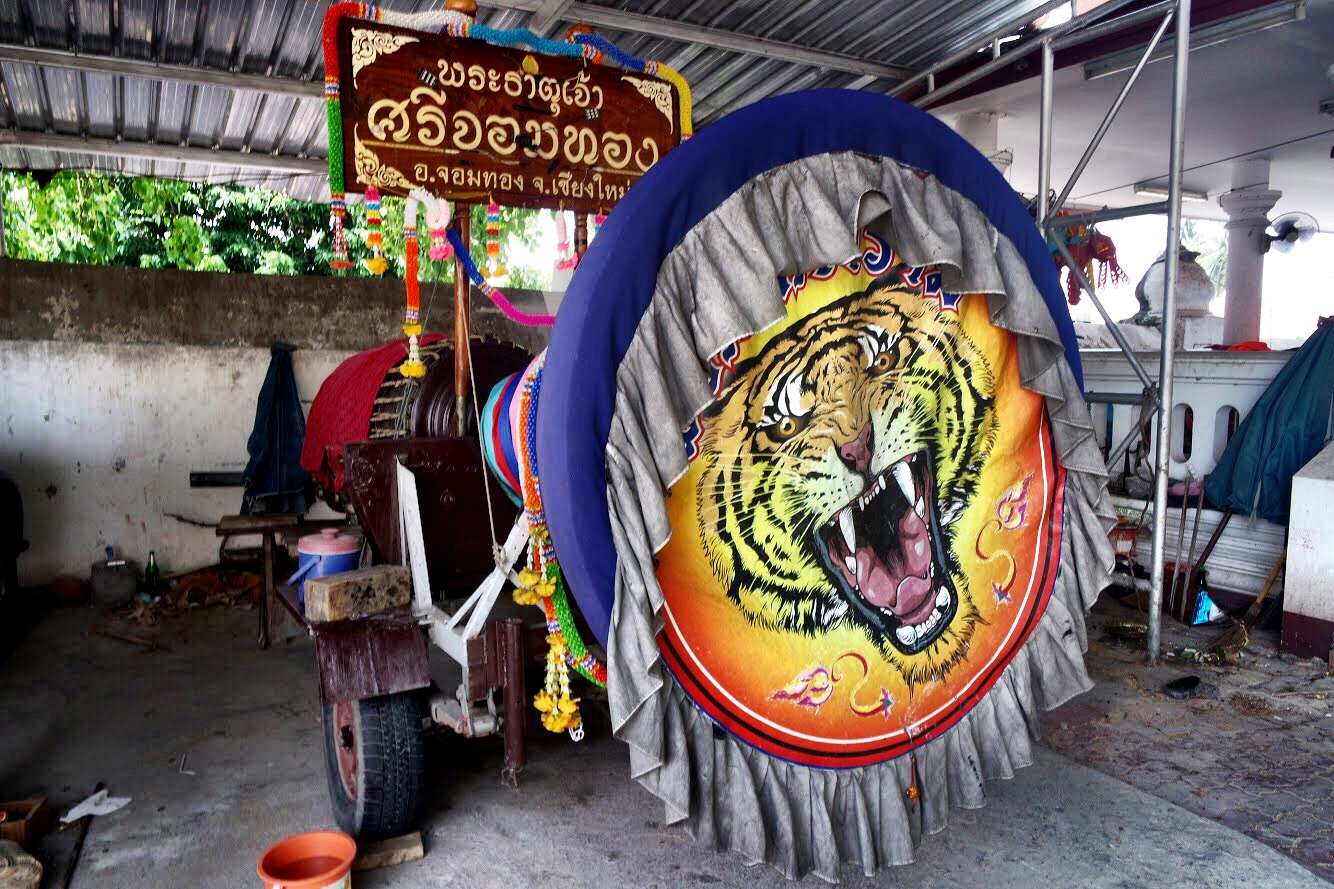
We found a garage-like building out back with this strange contraption

We found a garage-like building out back with this strange contraption

The temple is also home to the Insight Meditation Center, founded in 1991 by Phra Dhammungkalajarn Vi (aka Phra Ajaan Tong Sirimangalo). Our chauffeur Tommy proudly informed us that his cousin is the director of the meditation center. If you’re in no hurry and are intrigued by, or already a practitioner of meditation, here’s more information about this fascinating option.

Those staying at the meditation retreat wear white

Those staying at the meditation retreat wear white

Q&A About the Insight Meditation Center at Chom Tong

Where’s the meditation center located?

Behind the main temple. Look for the CMQ Lanna International Library.


What happens at the meditation retreat?

Students receive individual instruction in vipassana meditation. Your guide will educate you in an intensive form of a technique developed by Mahasi Sayadaw, a Burmese monk, with sequences of mindful prostrations, walking and sitting meditation following the teachings of Ajaan Tong Sirimangalo, a local monk.

Exercises are led in English and Thai, and work to apply mindfulness to the body, feelings, mind and “mind-objects,” known as the Satipatthana, the Four Foundations of Mindfulness.

The Four Foundations of Mindfulness are a device that stops evil, stops bad deeds, stops defilement. … We will have pure hearts always.
— Ajaan Tong Sirimangalo

What is vipassana meditation?

Vipassana is a word from Pali (the classic language of Theravada Buddhism) that means seeing clearly or seeing through. It’s often translated as “insight,” and practitioners of vipassana meditation attempt to see through the true nature of reality.

Vipassana strives for a clear awareness of exactly what is happening as it happens. Practitioners bring their minds to rest, focusing on only one item and not allowing them to wander. When this is accomplished, a deep calm pervades the body and mind. It’s also described as using concentration as a tool by which your awareness can chip away at the wall of illusion that cuts us off from the living light of reality so you can see the impermanence, unsatisfactoriness and selflessness of physical phenomena.

It takes years to master, but one day the meditator is said to chisel through that wall and tumble into the presence of light. This transformation is called liberation and is permanent.

The vipassana meditation technique was developed by a couple of Buddhist monks

The vipassana meditation technique was developed by a couple of Buddhist monks

Umbrellas, like the one in the viharn, symbolize enlightenment

Umbrellas, like the one in the viharn, symbolize enlightenment

Why should I go?

There have been studies recently that show the benefits of meditation in reducing everything from anxiety to depression to pain.

“Why should we be mindful?” asks Sirimangalo, who still teaches at Chom Thong. “The Four Foundations of Mindfulness are a device that stops evil, stops bad deeds, stops defilement. … during the time when we are mindful, evil won’t enter in to reach our hearts. We will have pure hearts always. It is like dark and shining light. Mindfulness is a shining light; all defilements, all evil states, are like darkness. When the bright light shines, the darkness disappears. For this reason, we should be mindful at all times — our mind will be bright, clean and peaceful all of the time.”


How do I go about reserving space at the retreat?

Make a reservation in advance — otherwise they can’t guarantee that space will be available. They ask that people arrive around 1 p.m. You can email the International Department at reservationchomtong@yahoo.com.


What’s the dress code?

The retreat is affiliated with the wat (temple) and follows their rules of modesty. Men can wear T-shirts, but tank tops and sweats aren’t allowed. Shorts should cover the knees. For women, shirts should cover their shoulders, not expose their chests and should be at least elbow-length. Skirts or pants should reach the ankles. They also would like you to limit your makeup and perfume use.

That being said, while you’re at the retreat, they ask that you wear white clothing that fits their sense of decorum. You can bring your own, borrow some from the center or buy some at vendors just off the temple grounds.

In the winter, especially December and January, it can get quite cold. You’ll want a sweatshirt  or jacket and socks if you visit then.


What should I bring?

  • Toiletries, including toothpaste and soap
  • Toilet paper
  • Passport
  • Digital alarm clock and/or timer
  • Flashlight
  • Flip-flops or sandals
  • Water bottle
  • Insect repellent


How long will the course be?

While you’re welcome to stay for as long or as short as you like, they recommend 21 days for the basic course. Once you’ve taken that, you can do a 10-day retreat. No previous experience with meditation is necessary and all courses are individual, so they start the day you arrive. Keep in mind that if they’re fully booked, those who are staying longer are given preference.

On your first day, you’ll be given an introduction to the course and will meet with your teacher.


How much will this cost me?

Nothing — though the organization does run on donations, in line with the Buddhist principle of dana (generosity). Donations to the center help pay for electricity, water and general maintenance. Donations to the teachers cover their living expenses, as they’re all volunteers and don’t make a salary. Donations for food pay for the two meals a day prepared by nuns in the temple. –Wally

Rats! You’ll see lots of depictions of them at Wat Chom Thong

Rats! You’ll see lots of depictions of them at Wat Chom Thong

Wat Phra That Si Chom Thong Worawihan
Ban Luang
Chom Thong District
Chiang Mai 50160, Thailand

Must-See Chiang Mai: Wat Phra Singh

One of the best examples of Lanna architecture, the Lion Buddha Temple features golden chedi, gorgeously decorated buildings and some hellish murals.

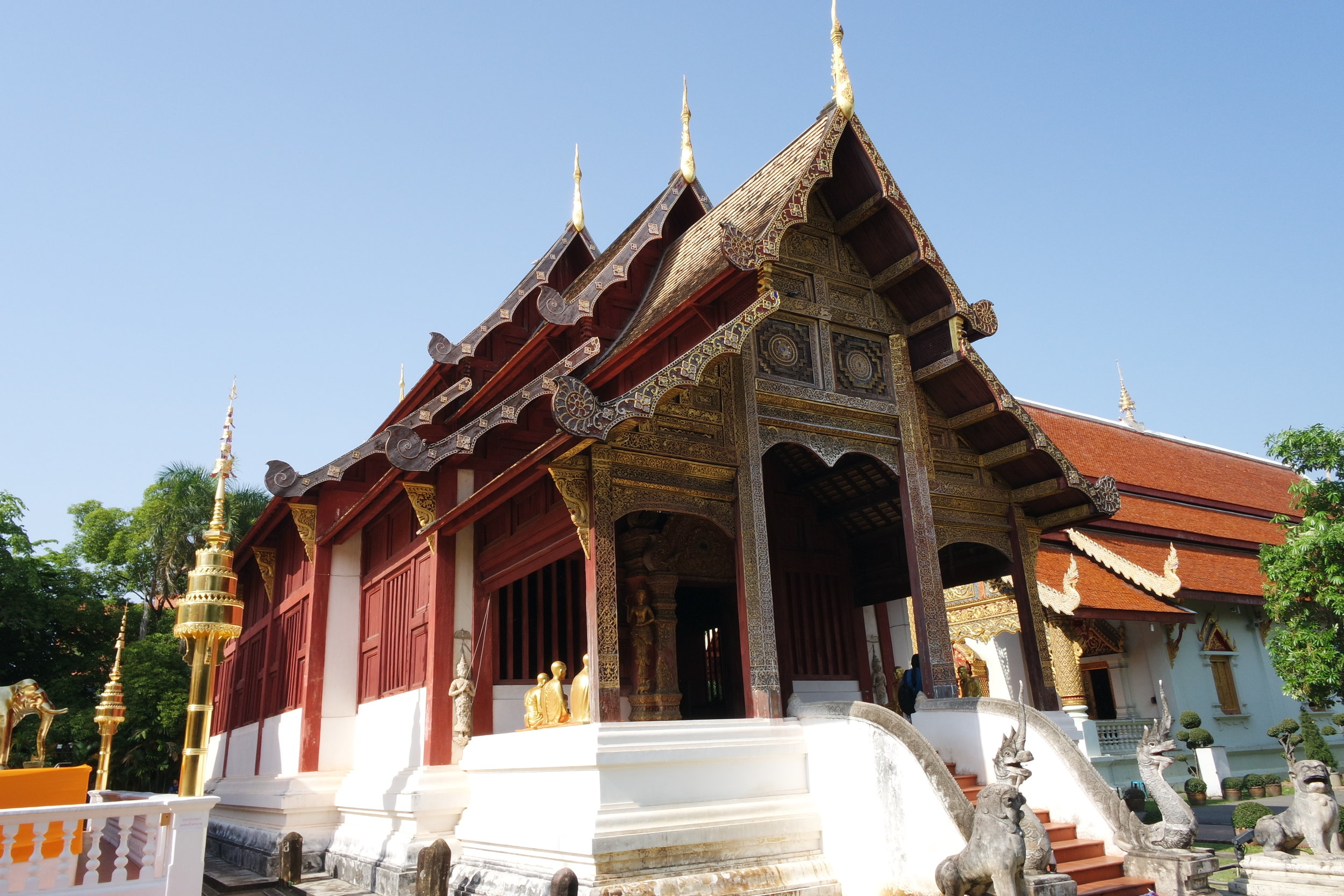
Wat Phra Singh is held up as one of the best examples of Lanna architecture

Wat Phra Singh is held up as one of the best examples of Lanna architecture

Wat Phra Singh is one of the most popular tourist attractions in Chiang Mai. And while it’s an impressive temple — that’s a short walk to Wat Chedi Luang, another spot travelers always hit — Duke and I sometimes prefer exploring some of the more off-the-beaten-path wats.

The temple is one of the most popular stops for tourists staying in Chiang Mai

The temple is one of the most popular stops for tourists staying in Chiang Mai

That being said, travelers should definitely add Wat Phra Singh to their itinerary. Parts of the wat, which translates to the Lion Buddha Temple, were built in the mid-1300s and renovated in the early 1800s.

There’s no shortage of glittering gold on many Thai temples — and Wat Phra Singh is no exception

There’s no shortage of glittering gold on many Thai temples — and Wat Phra Singh is no exception

The temple complex’s buildings are gorgeously gilded, with their telltale Lanna-style rooftops, layered like feathers on wings about to spread and soar into the heavens. In fact, Wat Phra Singh is held up as one of the finest examples of Lanna architecture.

The famous Lion Buddha, the star of the Thai New Year parade/water fight, lost its original head

The famous Lion Buddha, the star of the Thai New Year parade/water fight, lost its original head

Viharn Lai Kham: Marvelous Murals and the Headless Lion Buddha

At the back of the walled-in compound is the Viharn Lai Kham (the Gilded Hall), an assembly hall that features fading murals from the 1820s. The paintings depict scenes from the Jataka tales, native to India, which tell of the previous lives of the Buddha. Another source says the murals show local ways of life. To be honest, it was hard to make much out.

This is where the namesake Lion Buddha, a treasure from the 14th century, is housed. Local lore says the statue came from Sri Lanka, though some historians say it looks suspiciously as if it was made locally. (There’s no direct connection to a lion, leading some to posit that the Singh in its name is actually a corruption of Sri Lanka.) In 1922 someone dared to steal the head right off the Lion Buddha! Talk about bad karma!

During the Thai New Year festival, Songkran, the Lion Buddha is carried through Chiang Mai, and people splash water on it for good luck.

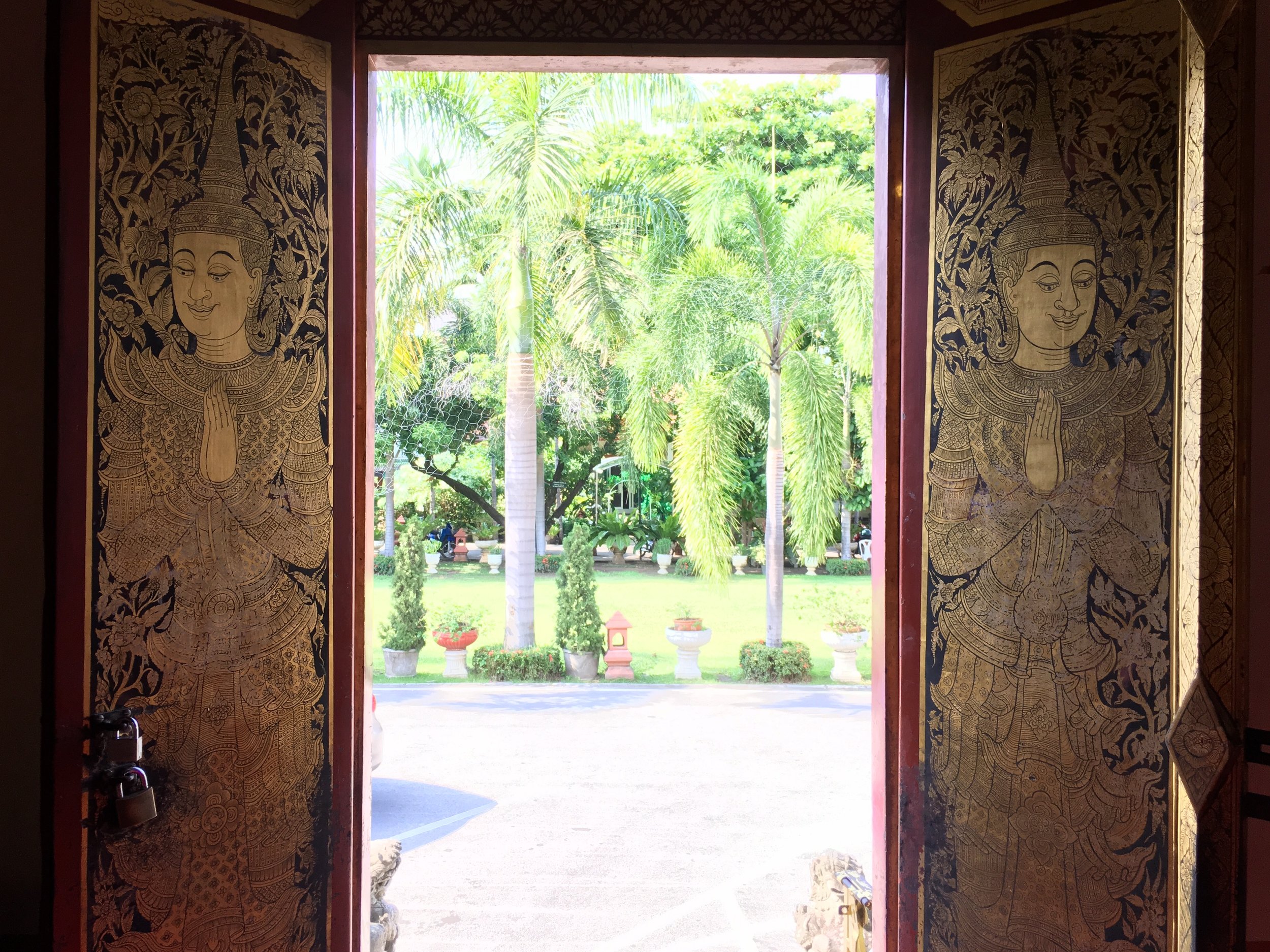
The beautiful doors at the Viharn Lai Khan hint at what its name translates to: the Gilded Hall

The beautiful doors at the Viharn Lai Khan hint at what its name translates to: the Gilded Hall

While we admired the interior of the viharn, a couple of Thai students came over and asked if they could interview Duke. From their broken English and Duke’s attempts to speak about the murals without knowing much about them…well, let’s just say I don’t think the documentary will be scoring any prizes at Sundance.

There aren’t any lions on the grounds of Phra Singh that we could see — but you’ll always find plenty of giant snakes called nagas

There aren’t any lions on the grounds of Phra Singh that we could see — but you’ll always find plenty of giant snakes called nagas

The pagodas found on Thai temple grounds hold some sort of sacred relic

The pagodas found on Thai temple grounds hold some sort of sacred relic

Elephants sticking out of the golden spire make this a one-of-a-kind chedi in Chiang Mai

Elephants sticking out of the golden spire make this a one-of-a-kind chedi in Chiang Mai

Golden Chedi With Elephant Adornments

The oldest structure on site is the main chedi, which was constructed in 1345 by King Pha Yu to enshrine the ashes of his father, King Kham Fu. The golden yellow chedi is blindly bright in the sunlight. Elephants are depicted as emerging from the chedi, the front halves of their bodies poking out of the shiny copper.

While you’re here, maybe say a prayer that you don’t go to Naraka to be tortured 

While you’re here, maybe say a prayer that you don’t go to Naraka to be tortured 

Viharn Luang: A Vision of Heaven and Hell

The largest building on the grounds is the Viharn Luang. The current structure replaced the original in 1925. There’s another highly venerated Buddha image inside. Referred to as Phra Chao Thong Tip, it was cast in gold and copper back in 1477. The Buddha is seated and has his hands gesturing in the Subduing Mara mudra, which calls back to when the demon Mara tried to distract the Buddha as he sat under the bodhi tree, about to reach enlightenment.

A polite worshipper shows that you never point your feet toward an image of the Buddha (though I’m not sure you should take bath in a viharn)

A polite worshipper shows that you never point your feet toward an image of the Buddha (though I’m not sure you should take bath in a viharn)

While we were looking at the line of smaller Buddhas off to the right (one for each day of the week), we heard behind us, “Excuse me, but I think I know you.”

I turned around and saw a dark-haired girl with large geek-chic glasses looking over at Duke.

“Lali!” he exclaimed.

Turns out Duke and Lali used to work together, before she went off to Korea to teach English.

That job had ended, and Lali and her new friend Hailey had just returned from a week volunteering with the Elephant Nature Park in the jungle near a Karen tribe village, living amongst wild elephants. Completely cut off from their phones and the internet, both of them described the experience as life-changing, spiritual.

In the main viharn are depictions of Naraka, the Buddhist Hell

In the main viharn are depictions of Naraka, the Buddhist Hell

What the Hell? Who’s hungry?

What the Hell? Who’s hungry?

The girls rushed off to Chedi Luang for a monk chat, while Duke and I walked up front. We couldn’t believe our eyes — painted along the front right side of the viharn are the strangest scenes we’ve seen at a wat: human bodies with the heads of various animals, including a duck, a rooster, a cow and a boar, being boiled alive in a giant cauldron; a man and a woman tied to a post while what look like circular saws dig into their skulls, dripping blood onto their torsos. We were certainly intrigued. Turns out these depict Naraka, the Buddhist version of Hell. (It’s telling that Naraka translates literally to “of man.”)

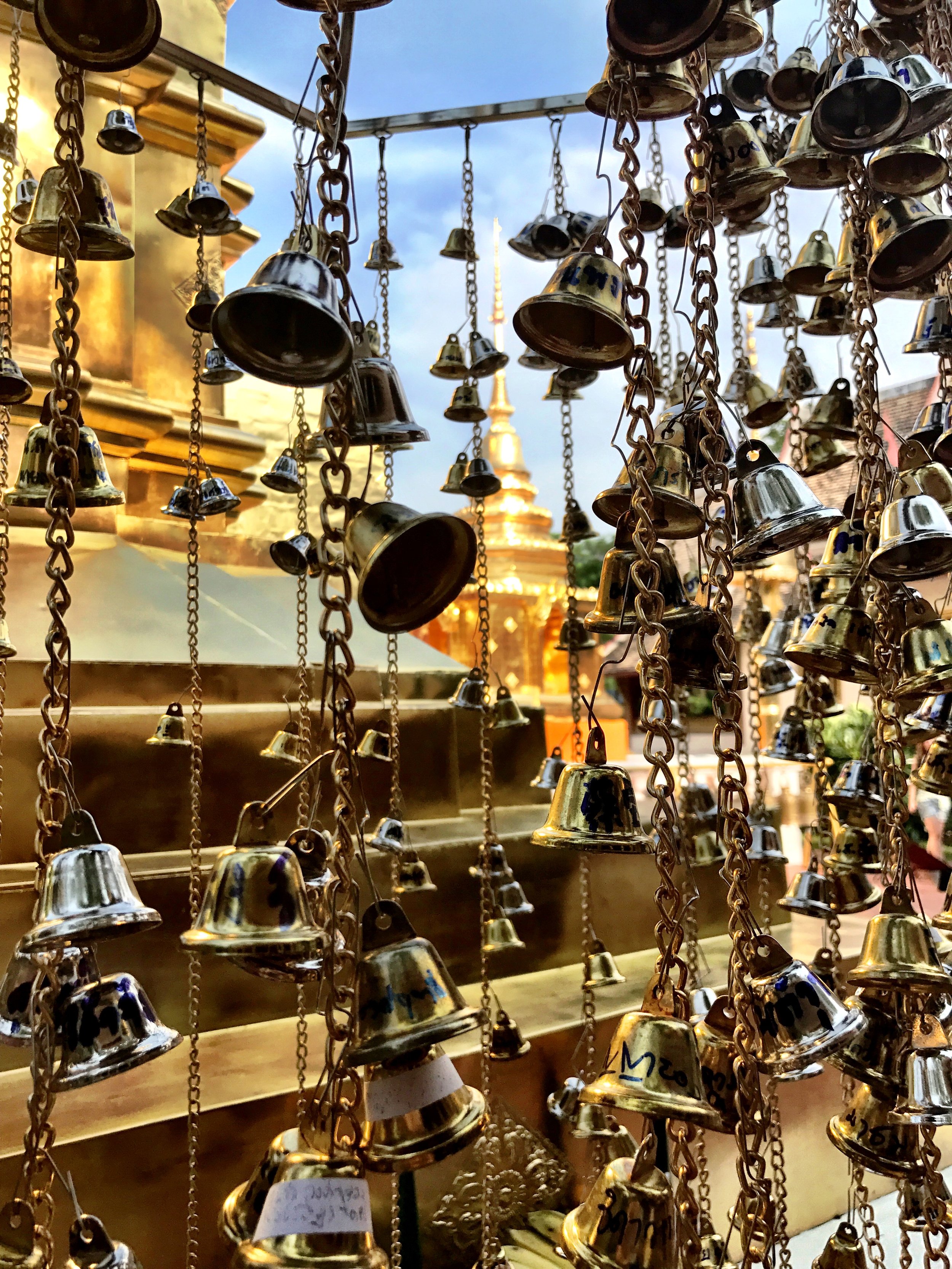
Strands of bells hang behind the chedi

Strands of bells hang behind the chedi

Snack Break!

Off to the side of the complex is an adjoining park with a small ramshackle plaza. We ordered ice cream from the booth and licked it quickly, as it melted almost instantly in the heat.

The 700 or so monks at the wat would have been ordained in the ubosot

The 700 or so monks at the wat would have been ordained in the ubosot

Ubosot: Creepy Wax Figures

You’ll find a couple of other noteworthy buildings on site as well, including the ubosot, where monks get ordained. (There are said to be 700 monks in residence at this temple!) It’s a wooden structure with an amazing lattice-work ceiling built in 1806.

The Buddha of the Phra Singh ubosot

The Buddha of the Phra Singh ubosot

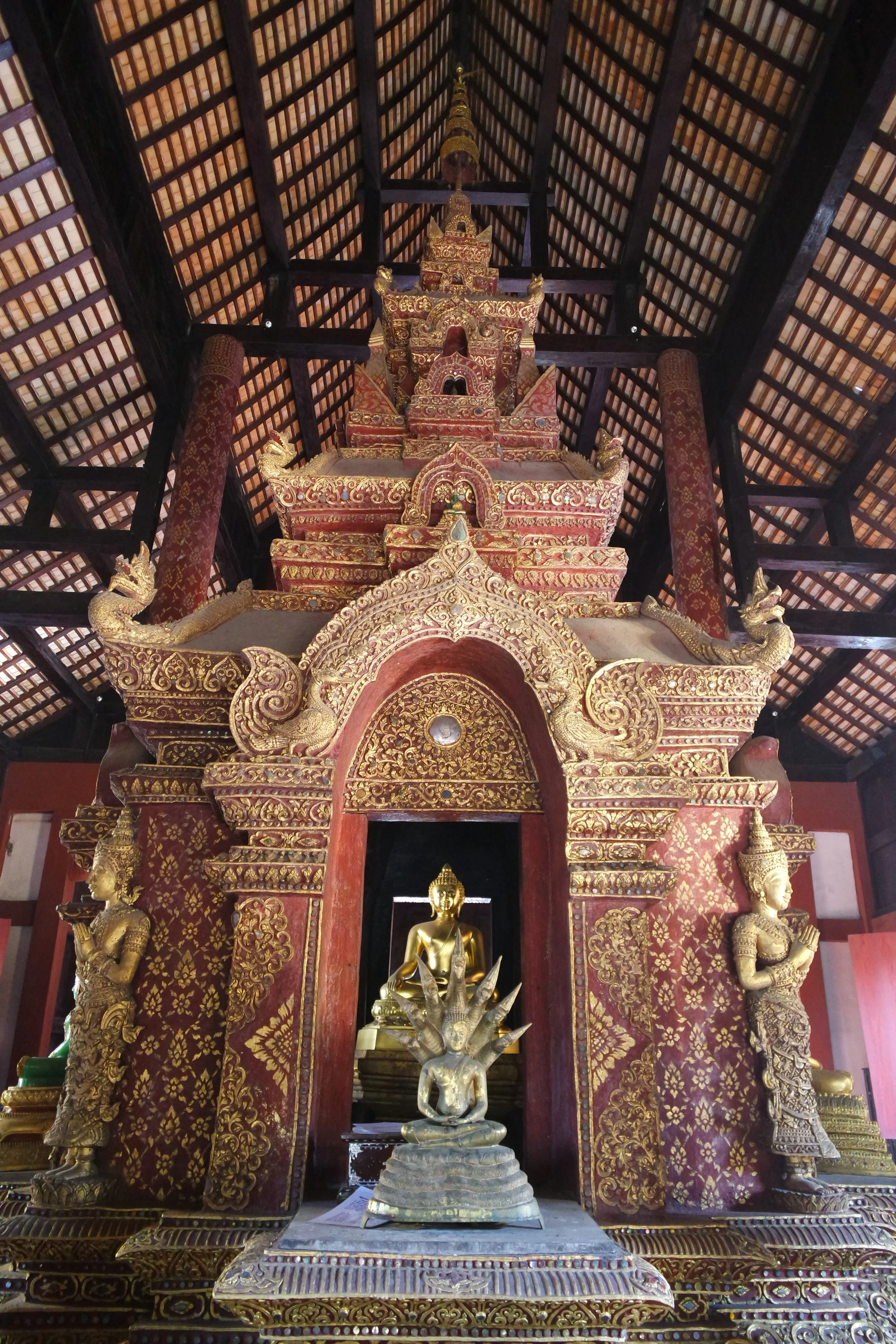
A gorgeously gilded multi-story altarpiece

A gorgeously gilded multi-story altarpiece

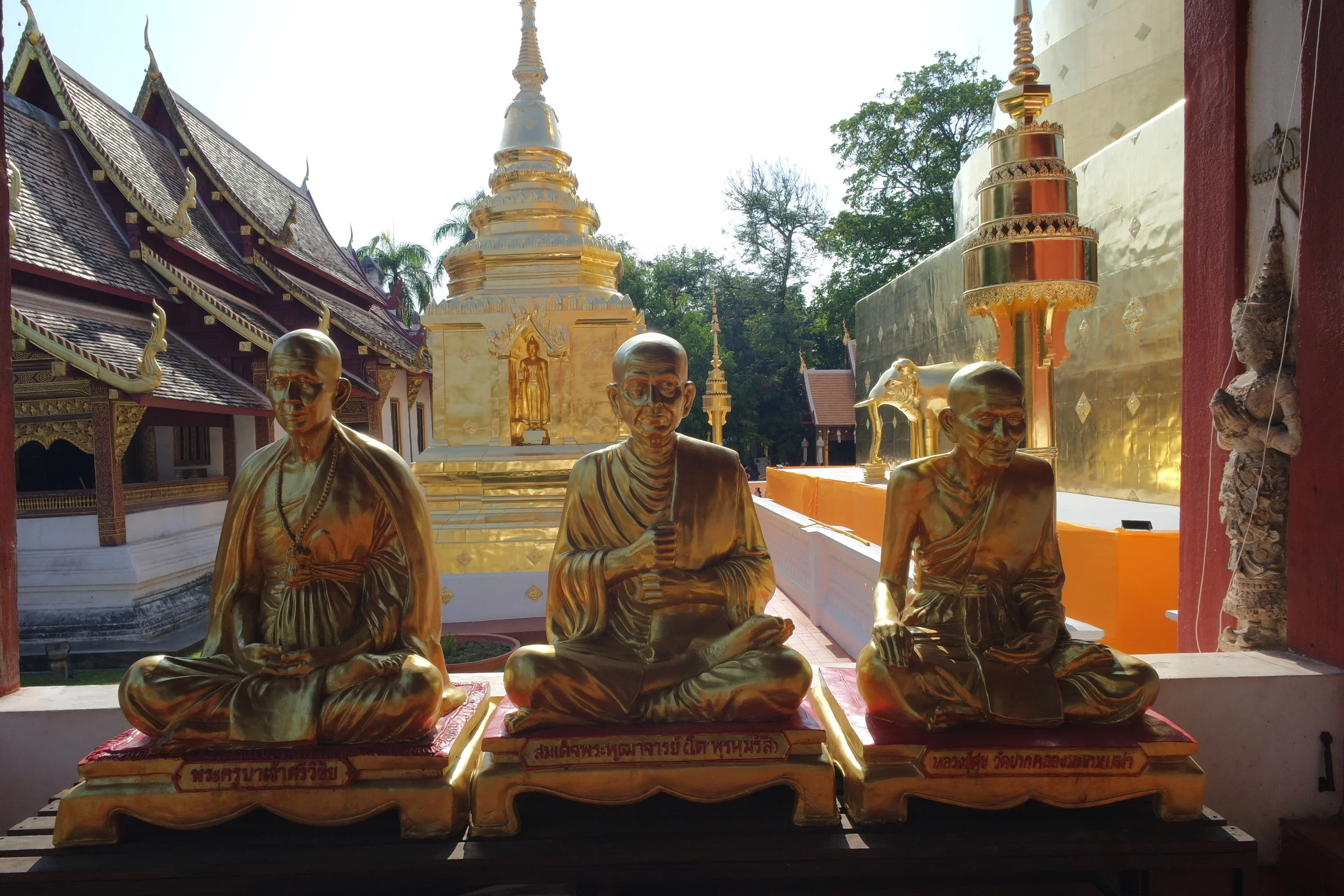
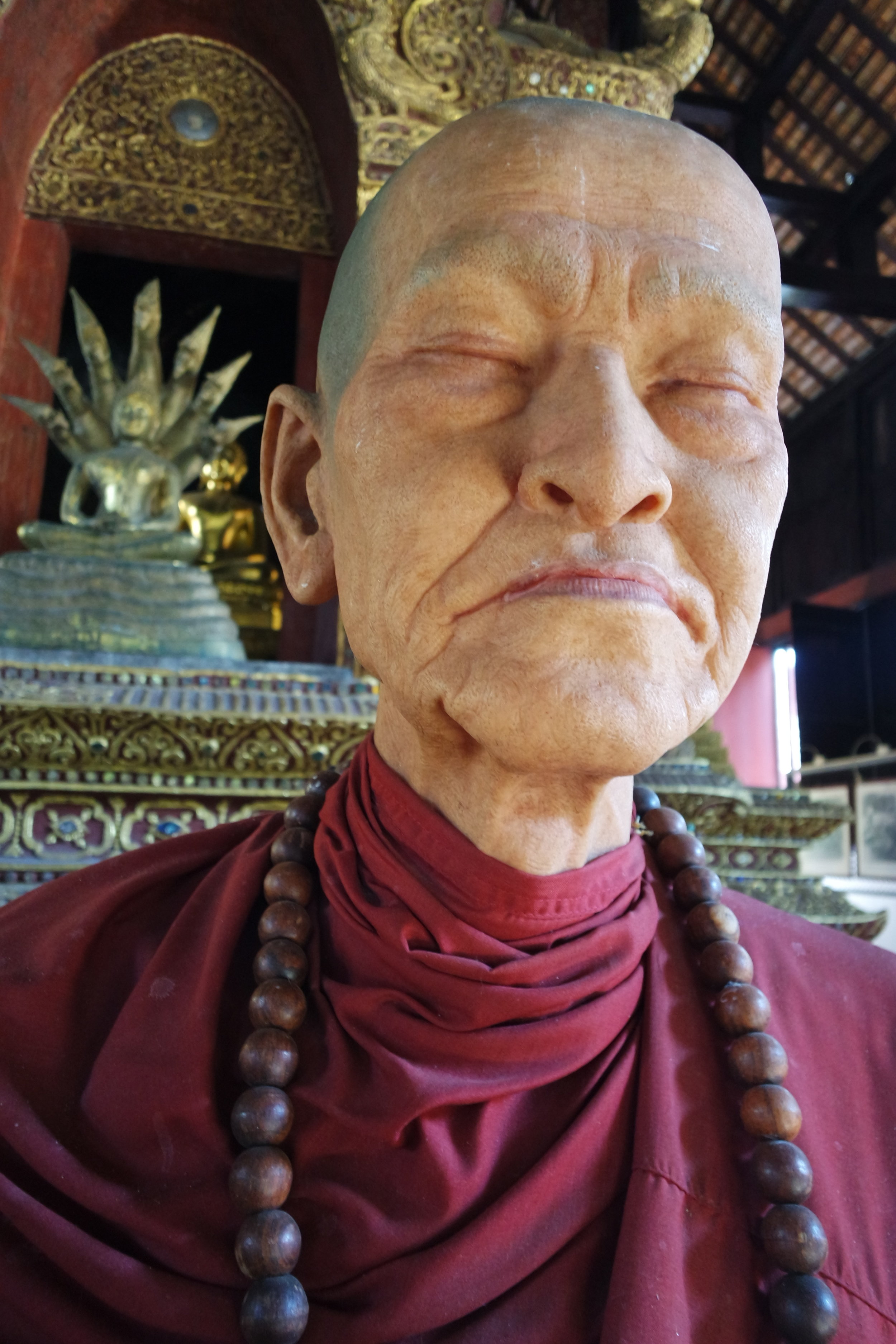
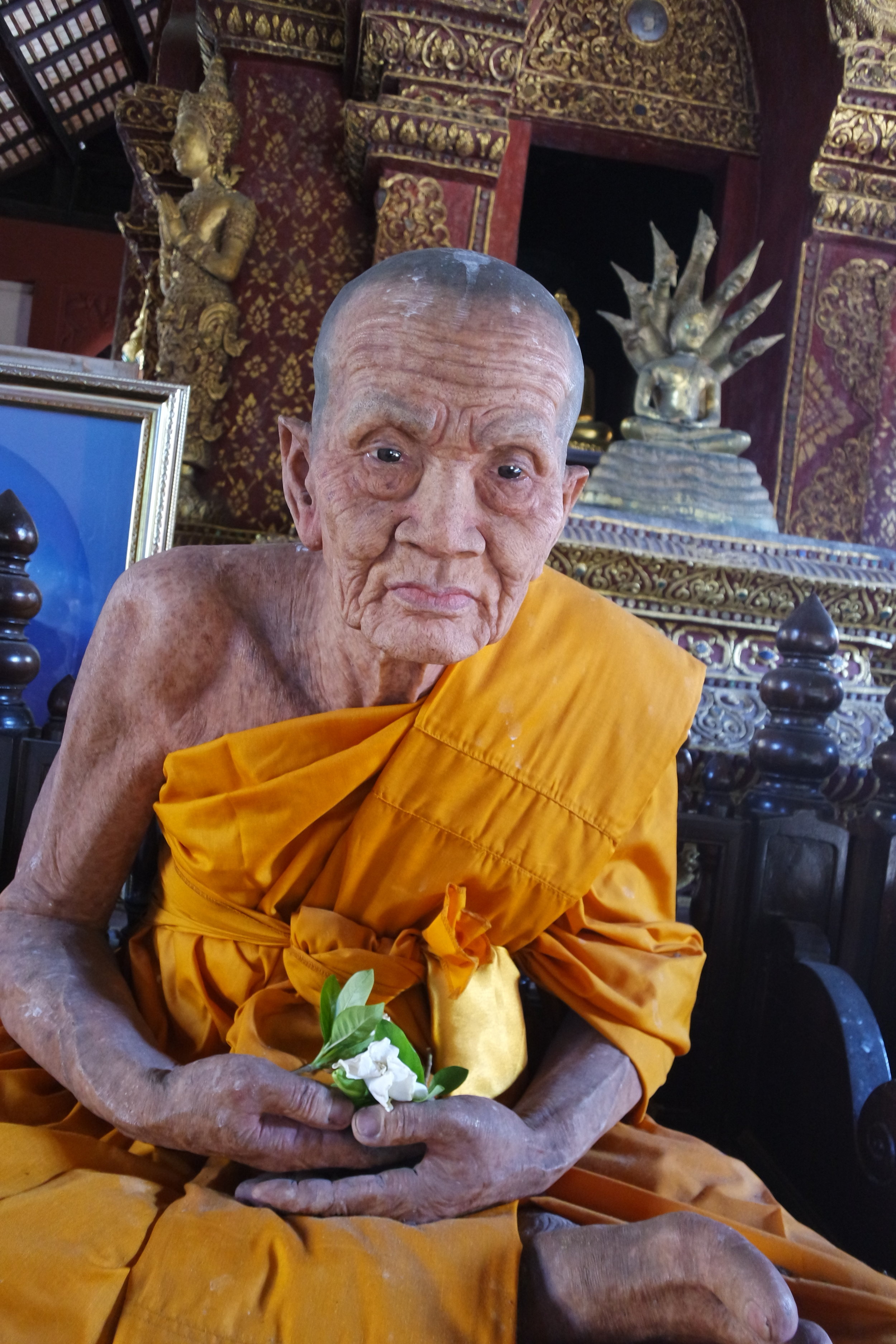
The interior is awash in a deep burgundy covered with elaborate gold detailing. It’s quite striking — as are the frighteningly lifelike monk figurines. I swear, the first time I saw one I honestly thought it was a monk sitting perfectly still, meditating. These creepy replicas of actual deceased monks can be found in many of the wats in Chiang Mai.

These monks sure can sit still

These monks sure can sit still

It wasn’t until we got up close that we realized the monks weren’t real

It wasn’t until we got up close that we realized the monks weren’t real

Get used to seeing creepy replicas of famous monks — quite a few temples in the Chiang Mai area have them

Get used to seeing creepy replicas of famous monks — quite a few temples in the Chiang Mai area have them

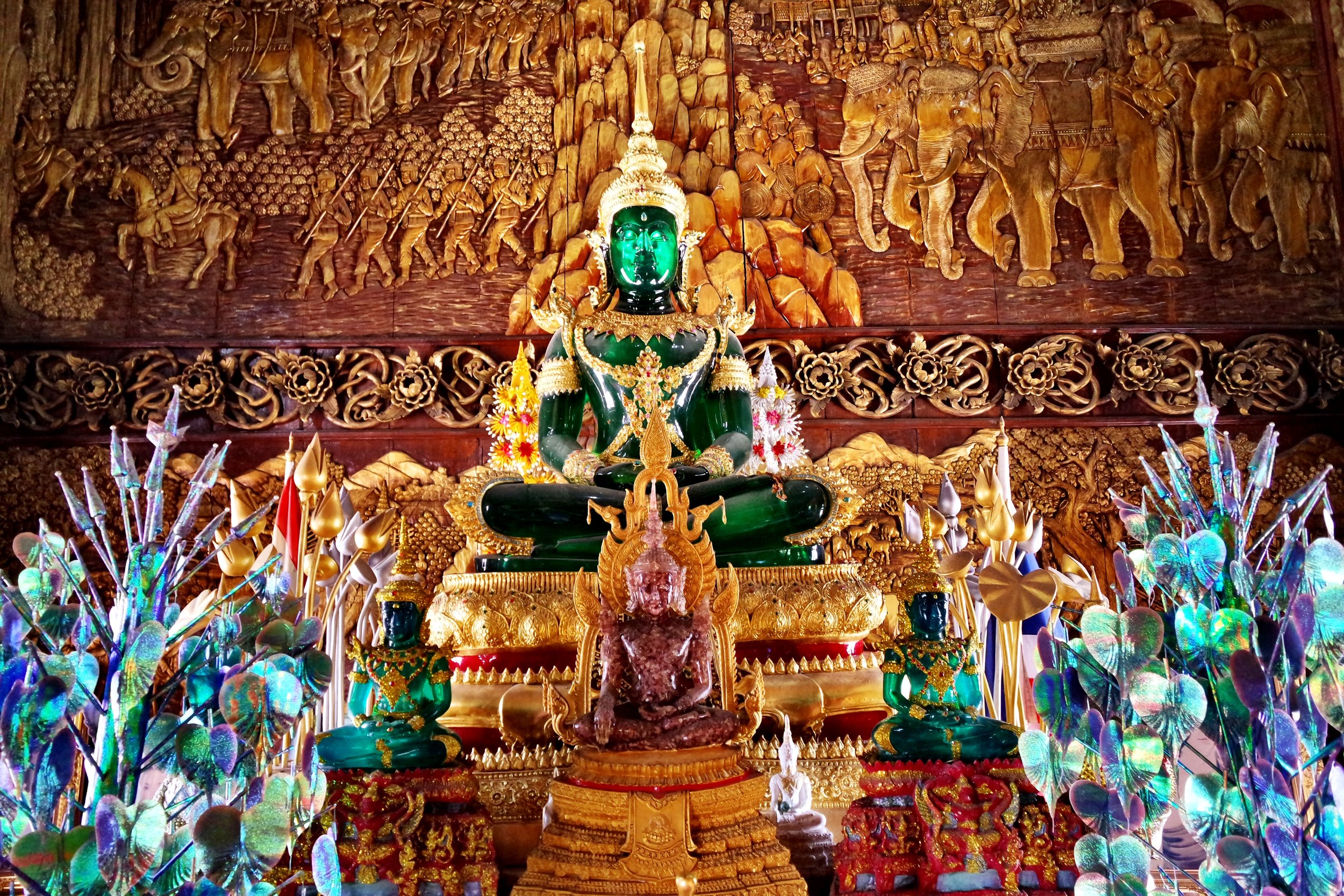
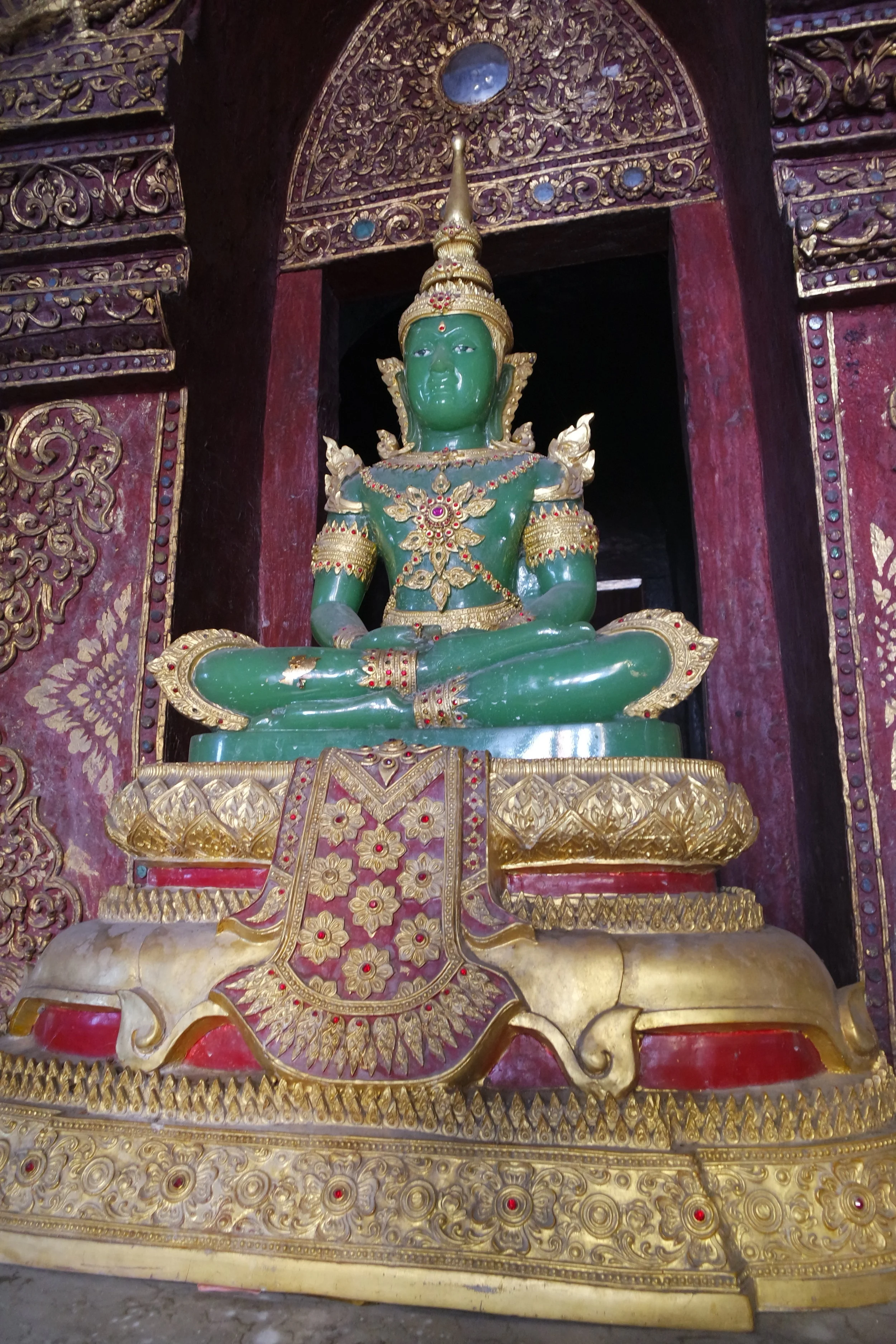
This Emerald Buddha is a replica — the real one’s in Bangkok

This Emerald Buddha is a replica — the real one’s in Bangkok

At one end is yet another copy of the revered Emerald Buddha (the original has its own temple, Wat Phra Kaew, in Bangkok).

The library is raised off the ground to help protect the scriptures it houses

The library is raised off the ground to help protect the scriptures it houses

Ho Trai: A Library Guarded by Demonic Spirits

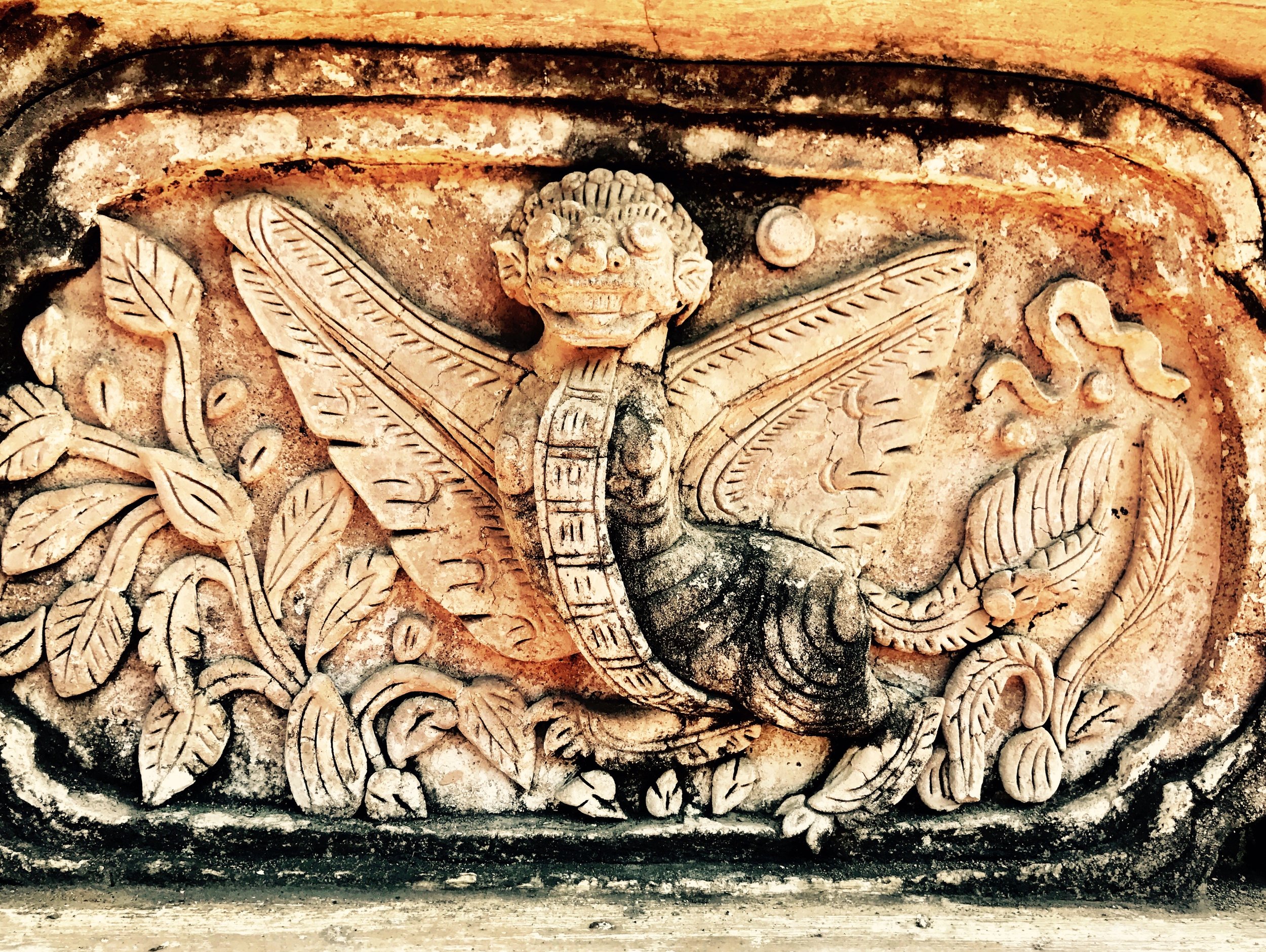
The ho trai, or library, built in 1477, is easy to spot — it’s raised upon a stone platform to help protect the ancient Buddhist scriptures stored within from floods and insects. All around the exterior are fearsome depictions of devatas, who guard the contents of the library. Duke and I slowly worked our way around the base, marveling at the strange creatures.

The library is lined with strange devatas, or spiritual creatures, like this fellow

The library is lined with strange devatas, or spiritual creatures, like this fellow

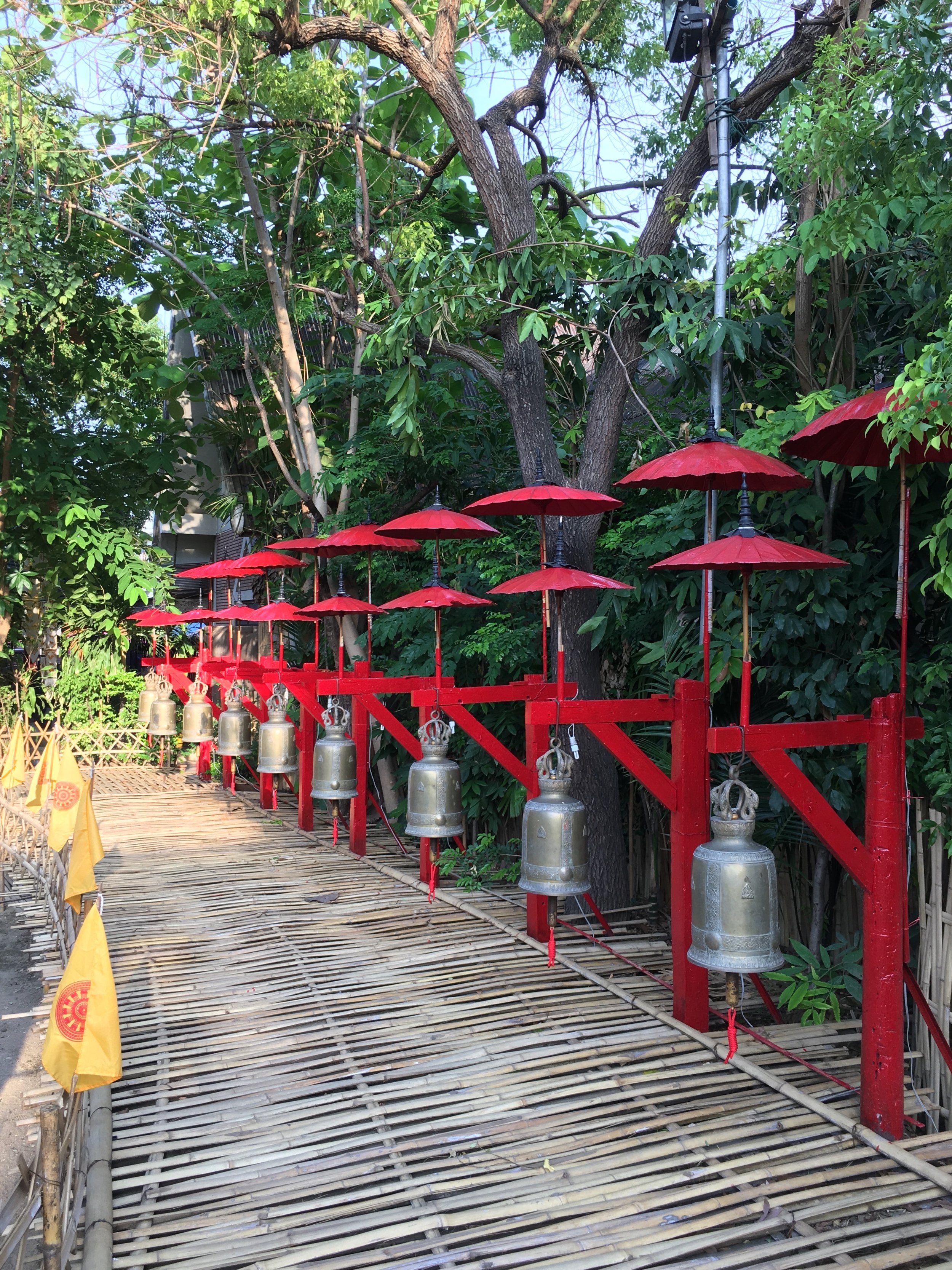
Maybe you’re supposed to ring the bells along the path…but we didn’t want to take the chance

Maybe you’re supposed to ring the bells along the path…but we didn’t want to take the chance

End your adventure exploring Wat Phra Singh with a stroll down the bizarre bamboo walkway

End your adventure exploring Wat Phra Singh with a stroll down the bizarre bamboo walkway

Along the Bamboo Path

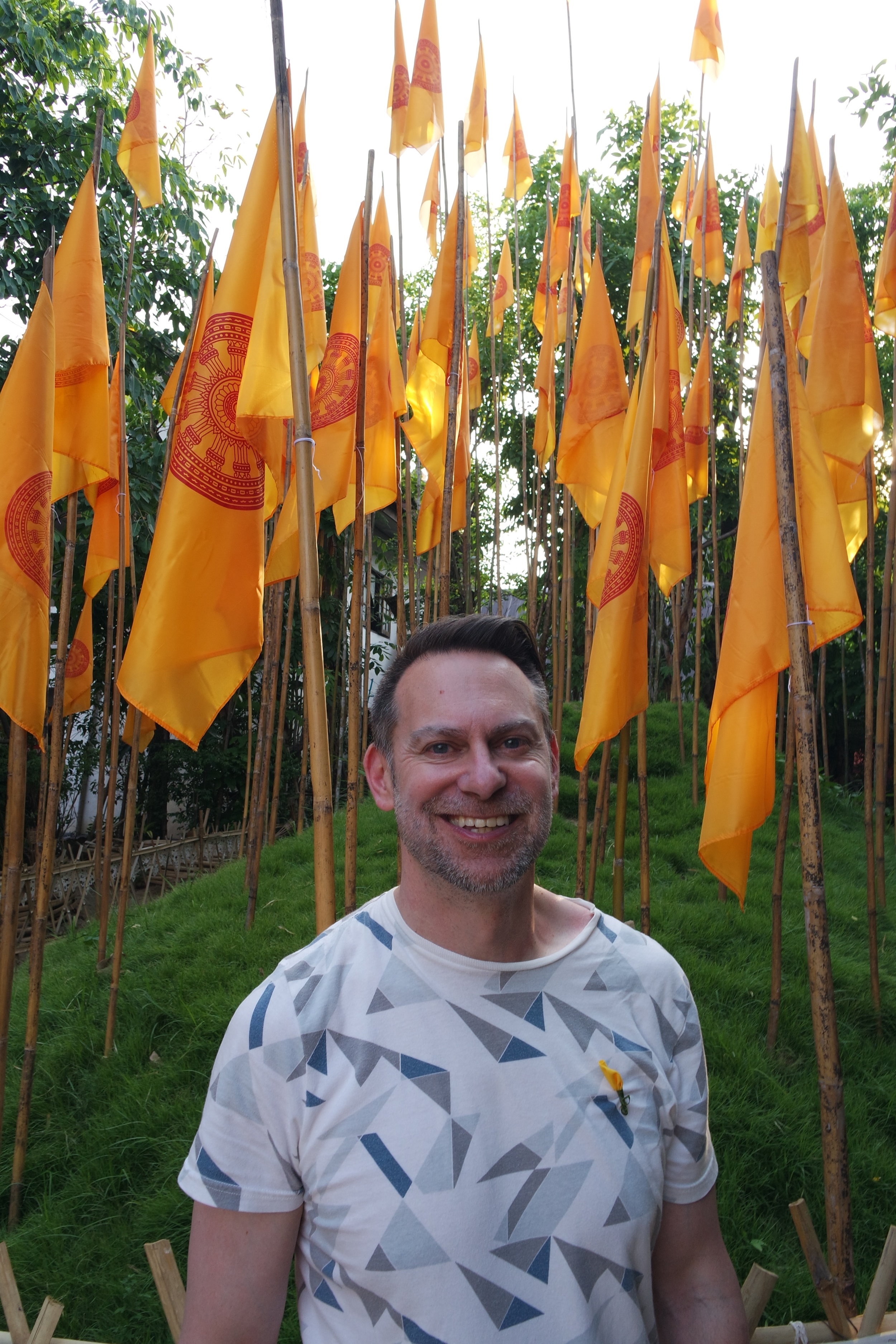
At the back of the complex, saffron flags with red mandalas stuck out in clusters from a grassy knoll. To end our adventure at Wat Phra Singh, Duke and I walked along a noisy bamboo walkway lined with red posts bearing silver bells and topped by red umbrellas. The path wound its way along a pitch-black moat. As the path joined the road out front, we passed a dog happily gnawing a bone as the sun began setting, casting its golden glow upon the world. –Wally

mopedsflags.jpg
phrasinghdog.JPG

Wat Phra Singh
Si Phum
Mueang Chiang Mai District
Chiang Mai 50200, Thailand

Wat Phra That Doi Kham: The Lucky Lottery Temple of Chiang Mai

Admire the big Buddha and offer flowers to have a wish come true at the Golden Mountain Temple, popular with locals and home to the giants Pu Sae and Ya Sae.

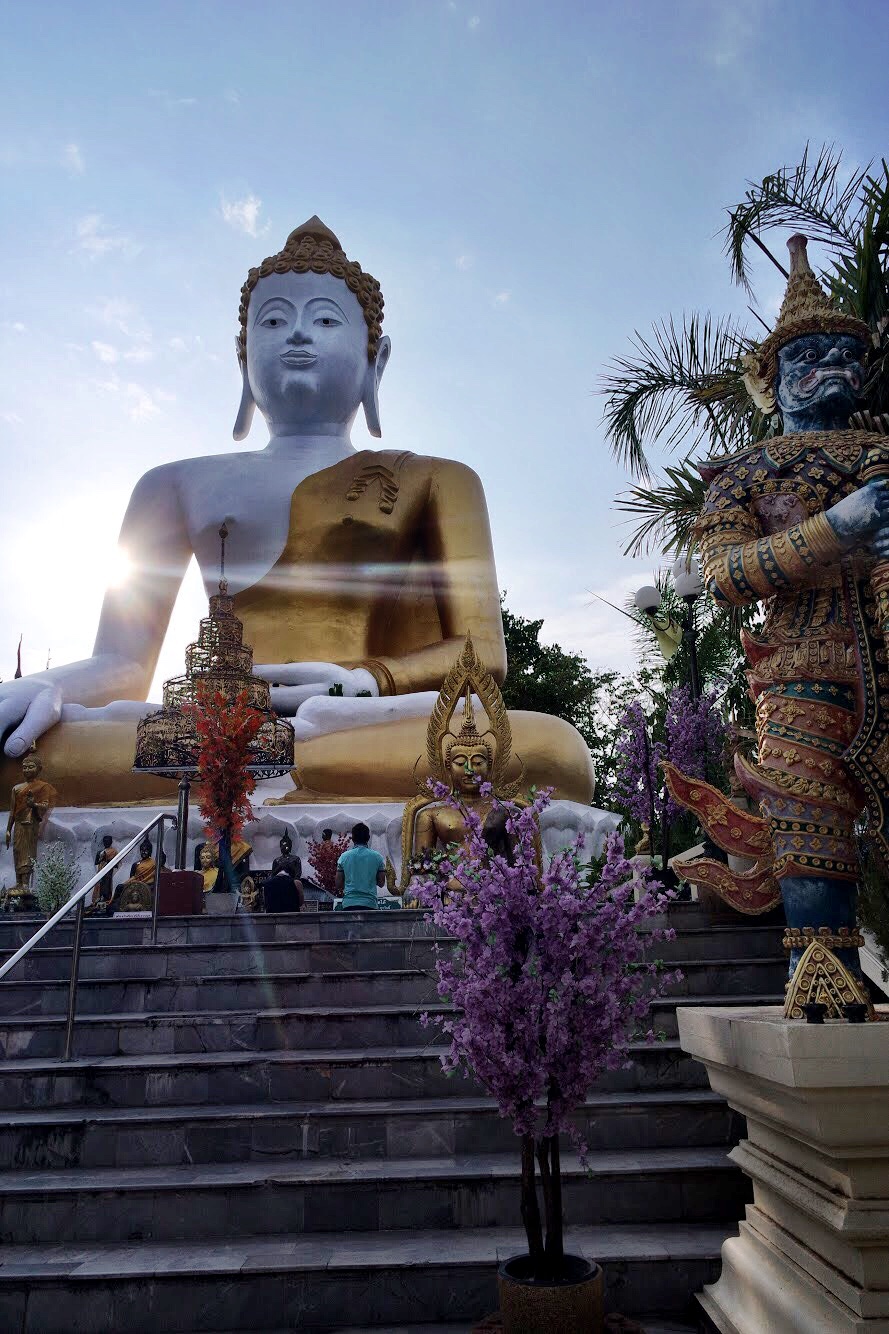
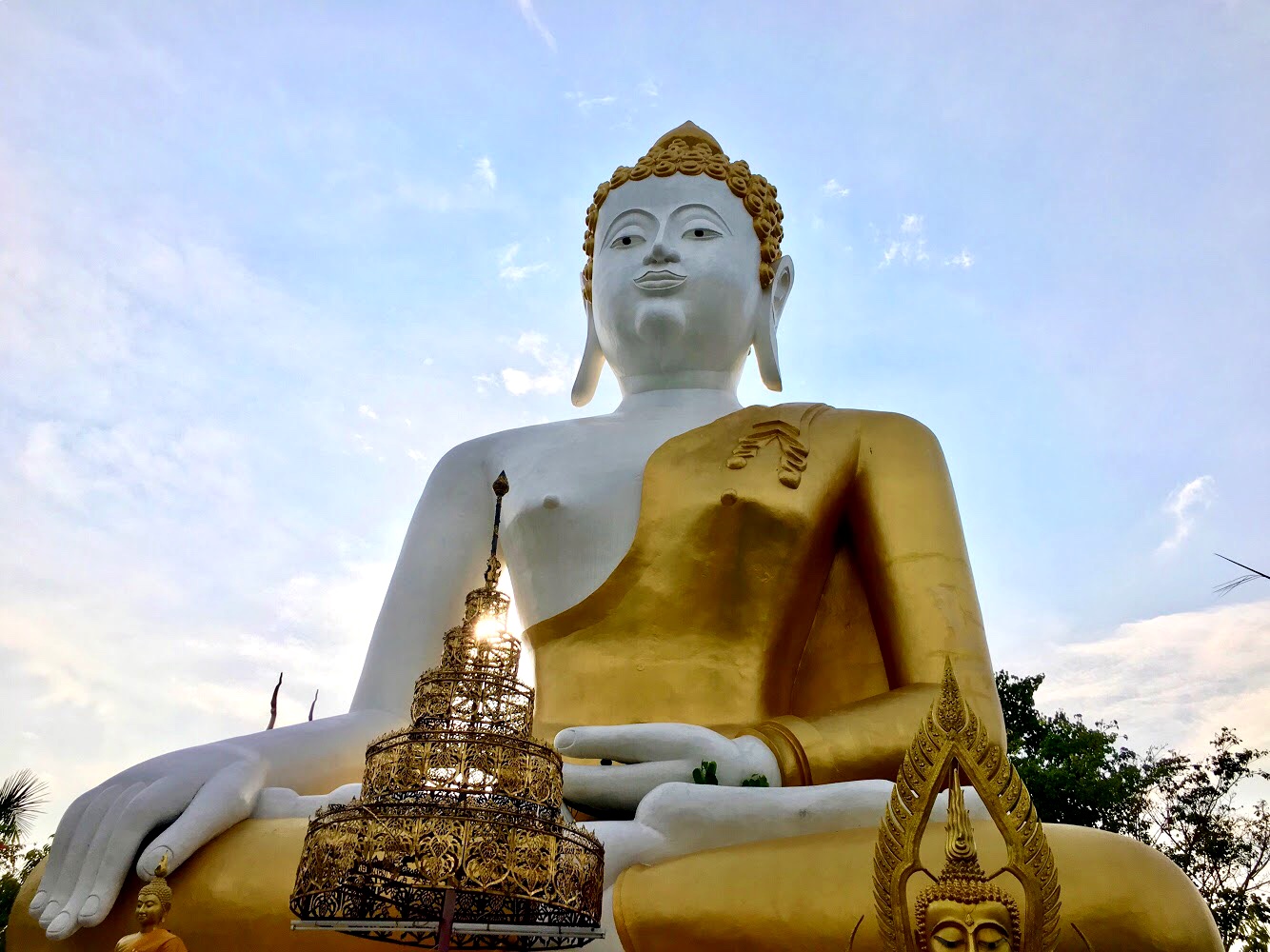
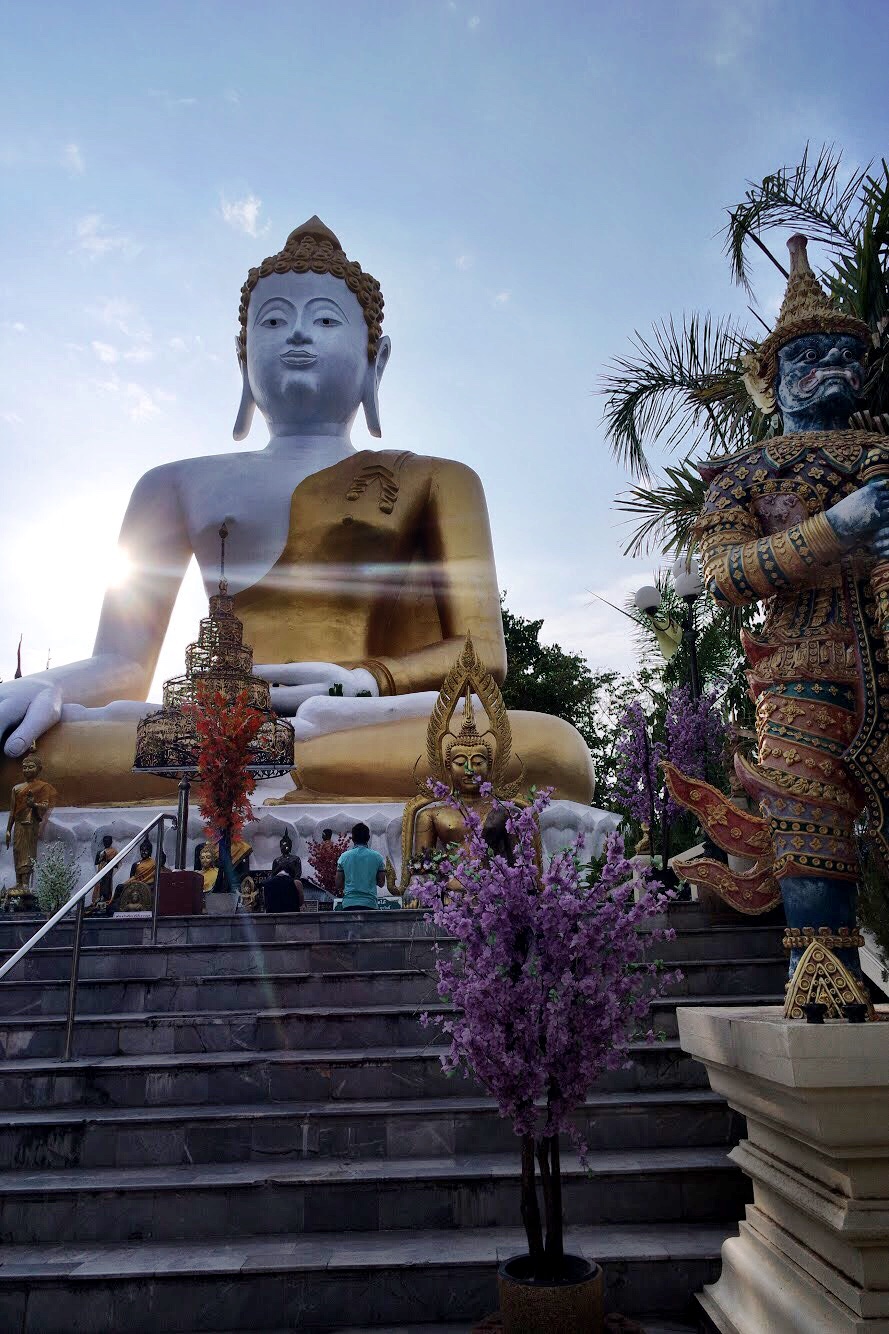
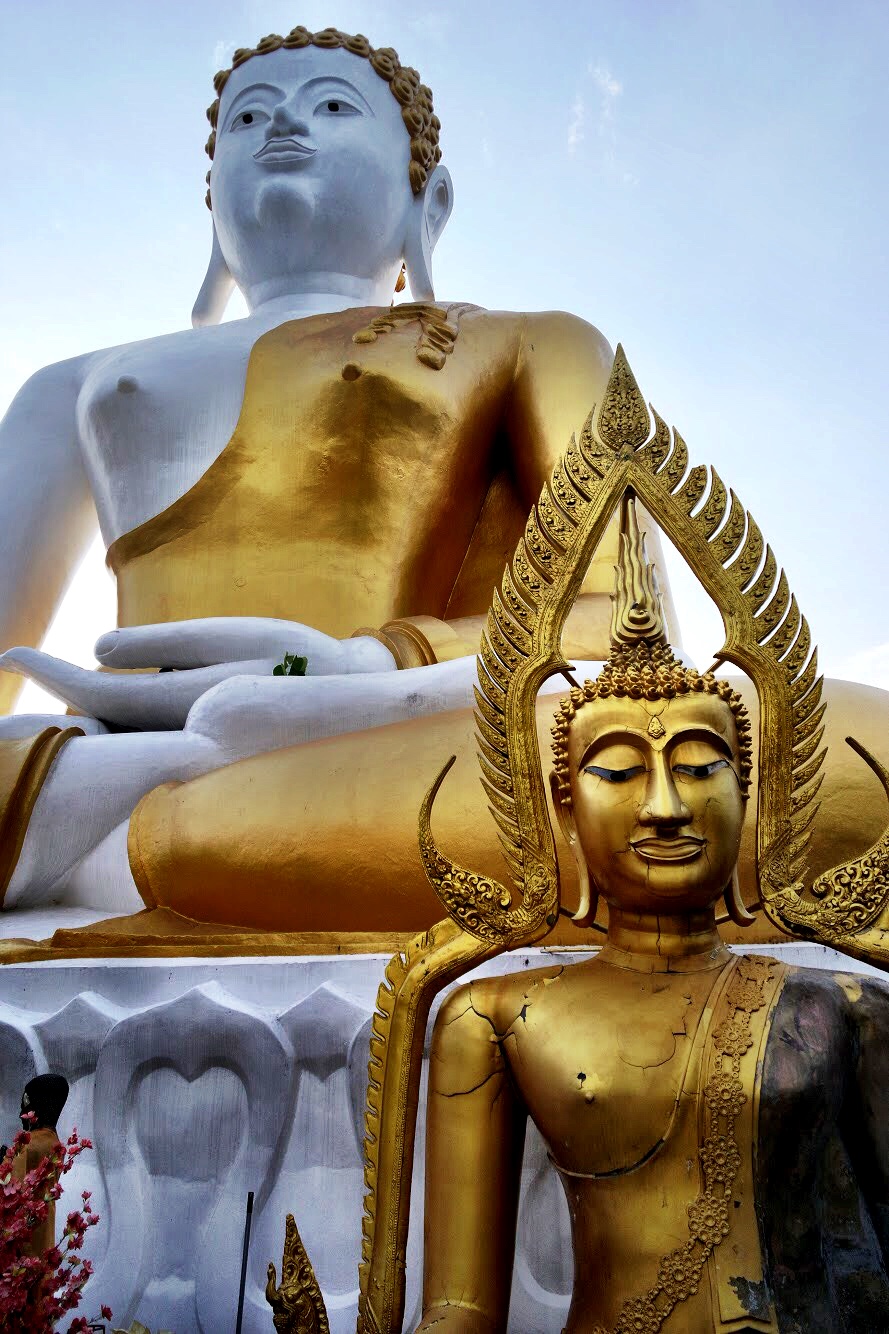
The seated Buddha at Wat Phra That Doi Kham rises over five stories high

The seated Buddha at Wat Phra That Doi Kham rises over five stories high

It’s not one of the typical tourist stops, but that’s what we loved about our driver, Tommy. He got to know Duke’s and my preferences, and quickly realized we wanted to experience as many temples as we could, including those more popular with local residents than travelers.

And when Duke mentioned a folktale he had read involving two human-munching giants, Tommy knew the spot.

Just outside of the city of Chiang Mai, this temple complex is popular with locals but not with tourists

Just outside of the city of Chiang Mai, this temple complex is popular with locals but not with tourists


To hire Tommy as a driver — which we highly recommend — email him at t.tommy2556@gmail.com.


Gold, red and white dominate the temple, which is filled with typical Thai flourishes

Gold, red and white dominate the temple, which is filled with typical Thai flourishes

Wat Phra That Doi Kham, the Golden Mountain Temple, is perched on the slopes of Mount Kham and will give you a glimpse of how a traditional Thai temple operates. Everywhere you look are small stands, pavilions and statues brightly painted white, yellow and red. There are market stalls, where you can purchase offerings and souvenirs (I bought a beaded bracelet). Numerous small shrines encircle the chedi spire.

Khun Luang Viranka tried unsuccessfully to woo the queen who built the temple — and ended up wearing her dirty panties on his head with a spear through the heart

Khun Luang Viranka tried unsuccessfully to woo the queen who built the temple — and ended up wearing her dirty panties on his head with a spear through the heart

In one of the shrines there’s a statue of a man holding a spear. This is Khun Luang Viranka, who wanted to marry Queen Chamadevi. She, along with her twin sons, are the ones who had the temple built. Chamadevi told Viranka that if he could throw his spear from Doi Suthep and into her walled city, Lamphun, 15 miles away, she would accept his proposal.

She didn’t want to marry him, though, and was concerned that he might succeed. So she sent a cursed gift to him, a hat fashioned from one of her undergarments, soiled by menstrual blood. He put the hat on, and when it came time to throw the spear, it thudded to the ground, only having traveled a measly few feet.

Distraught, he threw his spear up into the air. It came hurtling back straight down — right through his chest.

Instead of hats made of soiled panties, people offer Viranka fruit placed on a silver platter, figurines of elephants by his feet or jasmine garlands hung from his wooden spear.

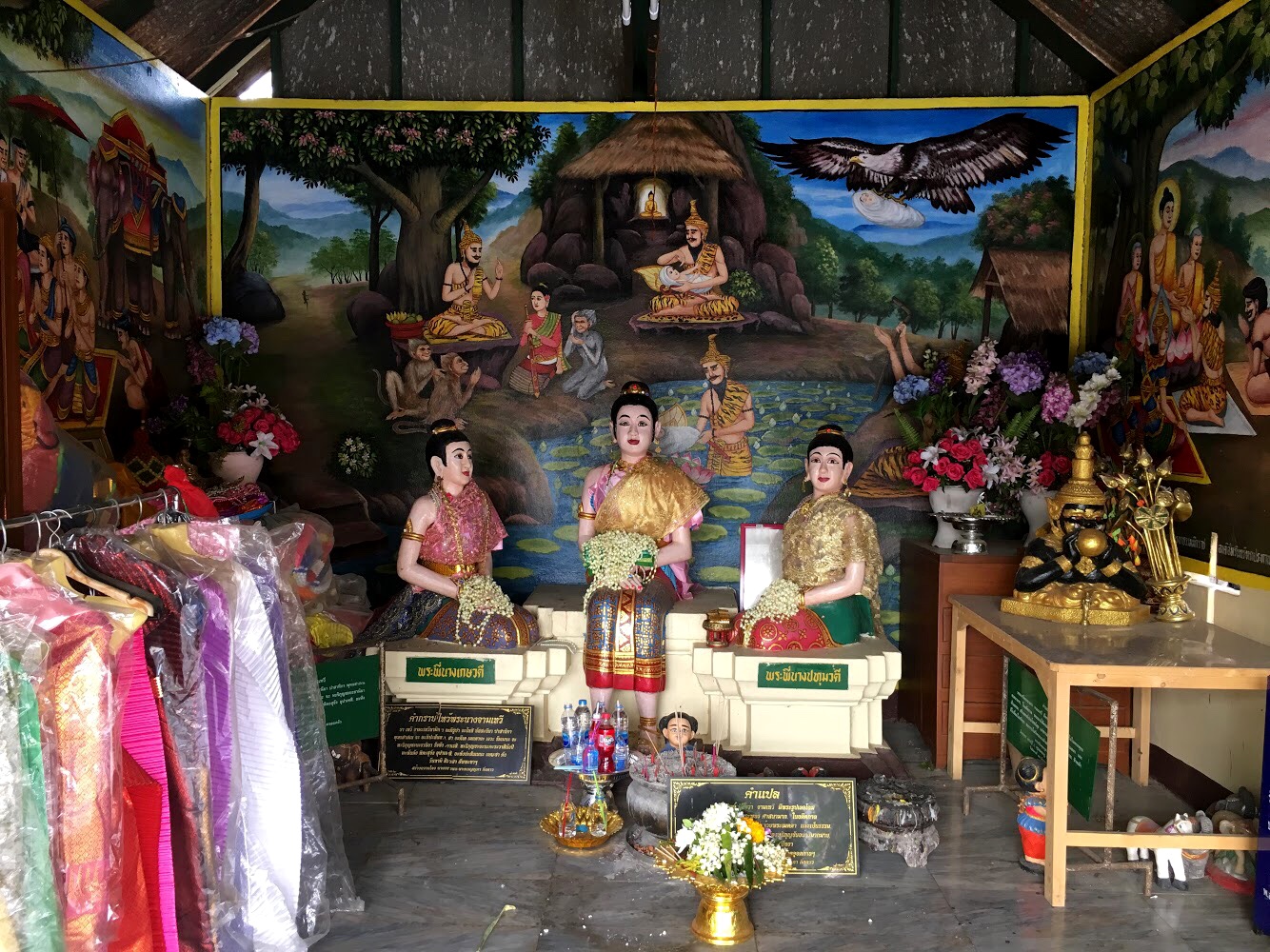
The goddess of compassion, Kwan Yin, and her handmaidens accessorize with white and pink necklaces. They just can’t get enough!

The goddess of compassion, Kwan Yin, and her handmaidens accessorize with white and pink necklaces. They just can’t get enough!

There’s a shrine devoted to Queen Chamadevi, flanked by a pair of monkeys, while another features figurines of Chinese-styled women, one of whom is Kwan Yin, the goddess of compassion. These statues are weighed down with cheap beaded necklaces.

The big Buddha can be found at one end of the wat, closest to the parking area

The big Buddha can be found at one end of the wat, closest to the parking area

The enormous seated Buddha statue overlooking the entrance to the temple complex is said to be the largest in the Chiang Mai area, rising 56 feet — the rough equivalent of a five-story building.

Make a Wish

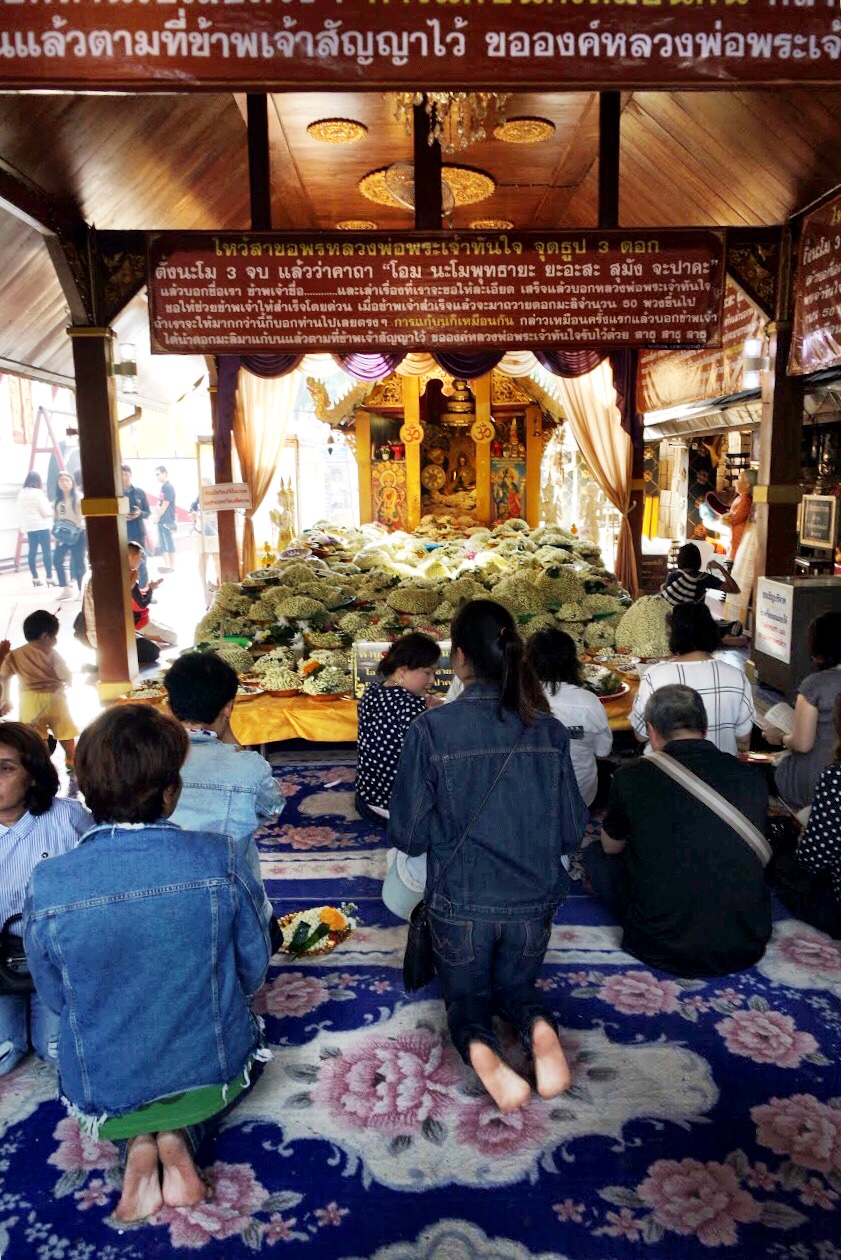
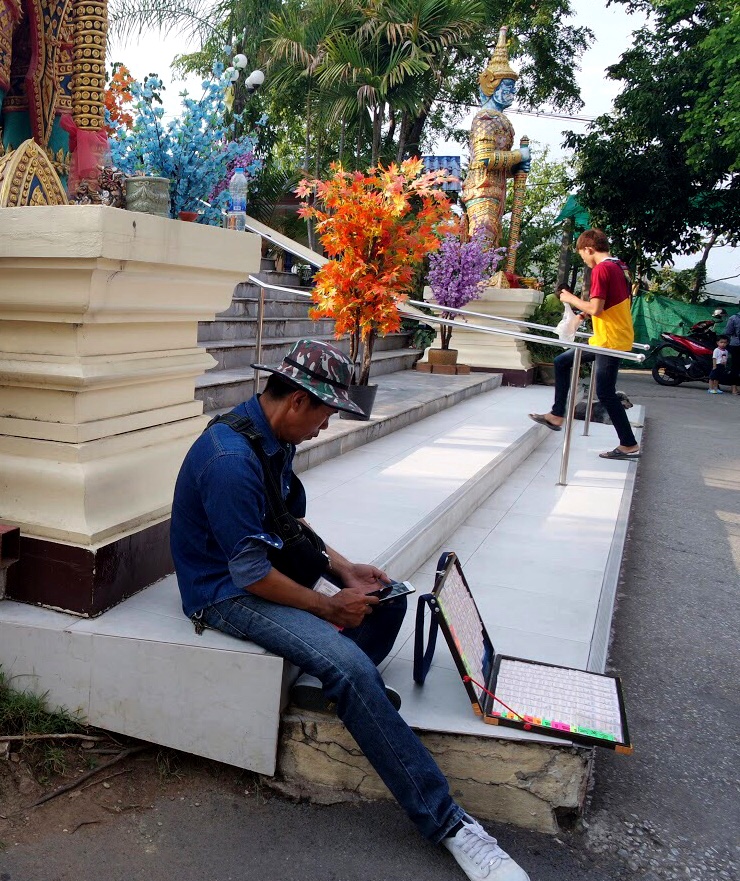
The most popular offerings at Wat Phra That Doi Kham are pretty garlands of small white jasmine flowers. These, Tommy told us, are for a special part of the temple, where people pray to the Luang Por Tan Jai Buddha, the Buddha of Success, in hopes of having their wishes granted. When someone won the lottery after praying here, the temple became the go-to place to say a prayer for a quick financial windfall. And, of course, near the parking area, you’ll see numerous vendors holding what look like briefcases filled with pads of lottery tickets for sale.

Piles of jasmine garlands are offered by those who pray for a wish to come true — and by those whose wish did come true

Piles of jasmine garlands are offered by those who pray for a wish to come true — and by those whose wish did come true

“Dear Buddha, please let me win the lottery.”

“Dear Buddha, please let me win the lottery.”

You can spot lottery vendors by their briefcase-like containers filled with tickets

You can spot lottery vendors by their briefcase-like containers filled with tickets

To pray to the Luang Por Tan Jai Buddha, find the crowded open-air pavilion filled with piles of flowers. State your wish, your name —  and how many jasmine garlands you’ll offer after the Buddha grants your wish.

The giant Pu Sae, who reluctantly gave up eating humans so long as a water buffalo is sacrificed once a year

The giant Pu Sae, who reluctantly gave up eating humans so long as a water buffalo is sacrificed once a year

Ya Sae, the female giant, converted to Buddhism like her husband

Ya Sae, the female giant, converted to Buddhism like her husband

Pu Sae and Ya Sae: They Might Be Giants

The oldest part of the temple is the chedi, which dates back to 687. This is where Duke’s folktale comes in. Thousands of years ago, two giants, Pu Sae, and his wife, Ya Sae, rampaged the slopes of Doi Suthep with their son, Sudeva, taking great delight in eating human flesh. (They’re typically described as cannibals, and one theory is that they were actually humans — part of the Lawa people who still live in these mountains.)

Once, when the Buddha was traveling the area, the fierce family followed his trail, intending to make a meal of him. While meditating, the Buddha became aware of their intentions, and stamped his foot into a boulder so hard it left an impression that remains to this day and has become a shrine.

This display of power terrified the giants so much, they (mostly) gave up their rapacious ways and converted to Buddhism. At first, they begged to be allowed to eat just one tasty human a year, but Buddha naturally refused. They then begged to be allowed to eat human flesh only once every seven years. They were refused again, and finally agreed that they’d settle for an annual sacrifice of a water buffalo. This gruesome practice is part of a yearly festival to ensure plentiful rain.

The Buddha plucked out one of his hairs to put inside the chedi. (Whenever you see a temple with “Phra That” as part of its name, it’s an indication that the chedi houses a relic of the Buddha.)

In some versions of the tale, the giants are actually shapeshifting Hindu demons, rakshasas, who try to eat the Buddha. He kills them with kindness, so to speak, and they revered him and swore off eating human flesh.

The giants are now said to protect the temple. They don’t do the best job, apparently, since the chedi collapsed in 1966 after heavy rains. Though, of course, that could have all been part of the plan. Ancient Buddha images were unearthed, leading to a revitalization of the temple.

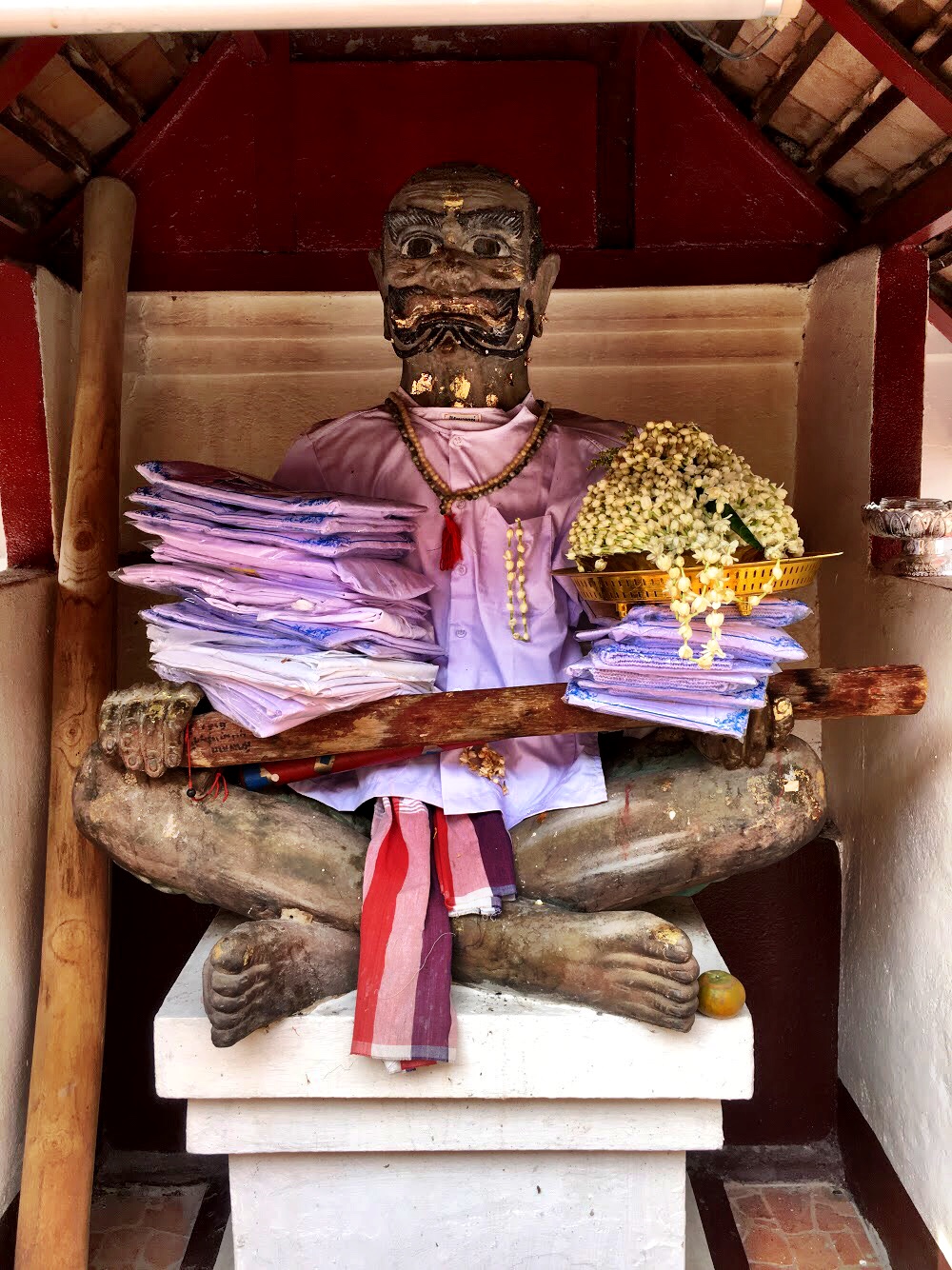
Today you can find shrines to this famous couple, the gold leaf on their faces peeling off, giving them an appropriately gruesome look. Though we’re not sure why, it seems that worshippers place folded dress shirts still wrapped in plastic upon their laps as offerings. Holy shirt!

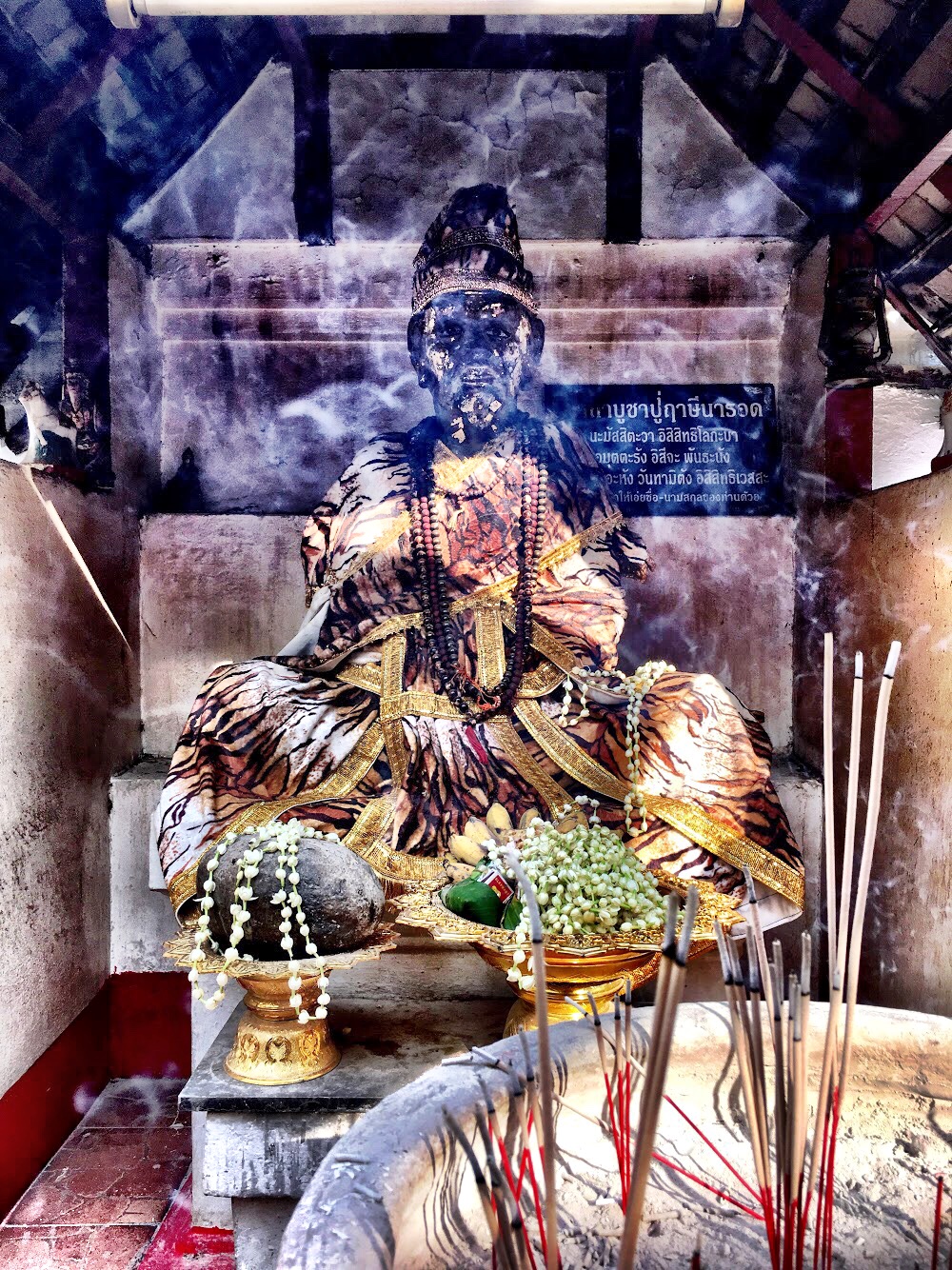
Smoke from incense gives the Hermit’s shrine an otherworldly look

Smoke from incense gives the Hermit’s shrine an otherworldly look

The Hermit and the Queen

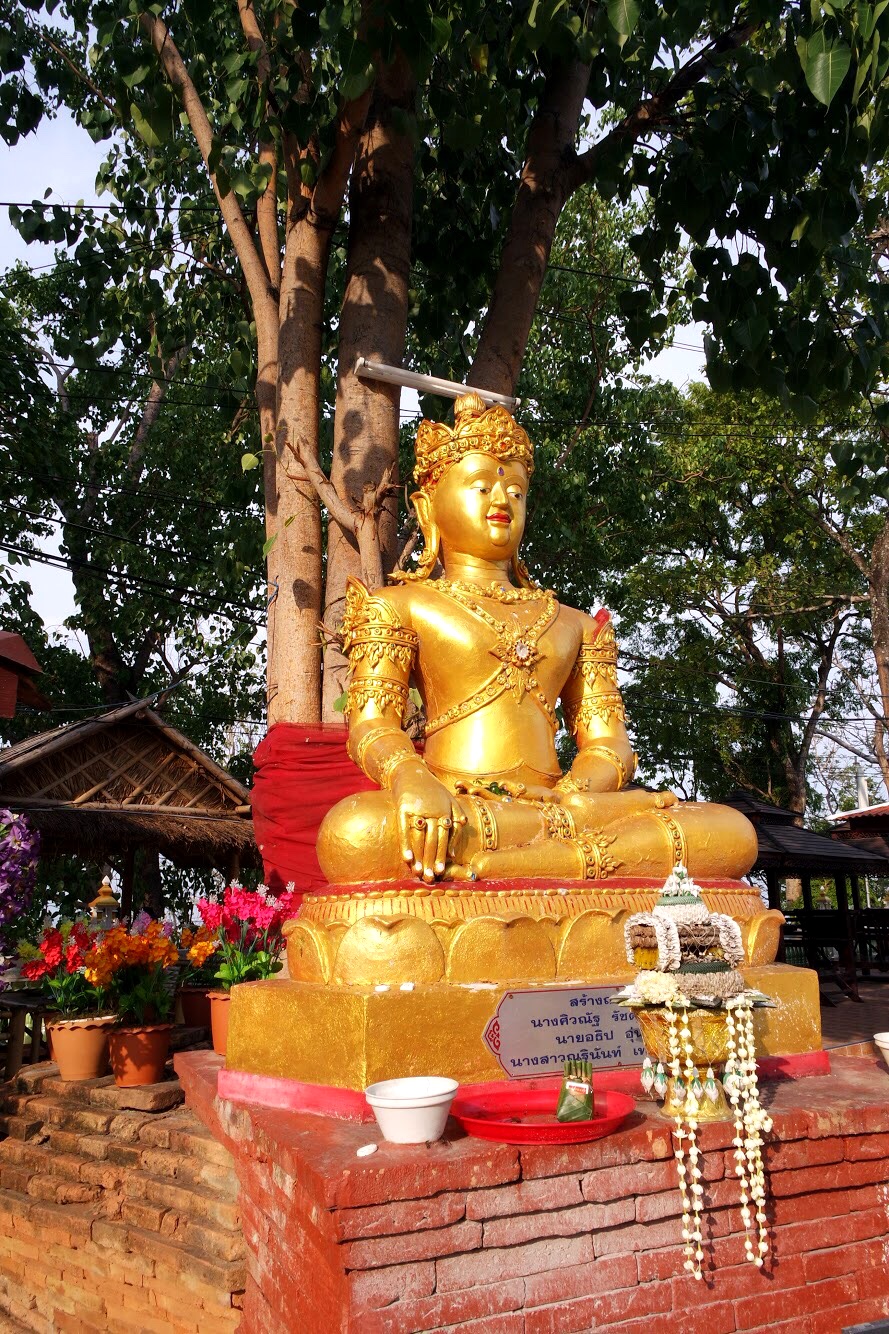
The giants’ son, known alternately as the Ruesi, Lersi, Suthep Hermit or Sudeva, gave up meat forever, shaved his head and became a Buddhist monk. The cave where he took up residence is atop Doi Suthep, the mountain that later took his name.

We were excited to deduce that the likeness of the bearded man wearing a tiger skin at Doi Kham (as well as at Wat Phra That Doi Suthep) was the hermit we sought.

Another shrine to the Ruesi, or Hermit, at Doi Kham. You can spot him by his tiger skin cloak

Another shrine to the Ruesi, or Hermit, at Doi Kham. You can spot him by his tiger skin cloak

This fellow was living his solitary life, when one day he found the young princess who would become Queen Chamadevi, sitting atop a giant lotus. He raised the girl, who went on to marry a prince of the Mon kingdom in Central Thailand. The king later sent her up north to establish a new city and a sister kingdom for the Mon people, who were the first to bring Buddhism to the area.

The festive plaza that overlooks the countryside at one end of the temple

The festive plaza that overlooks the countryside at one end of the temple

The Panoramic Overlook

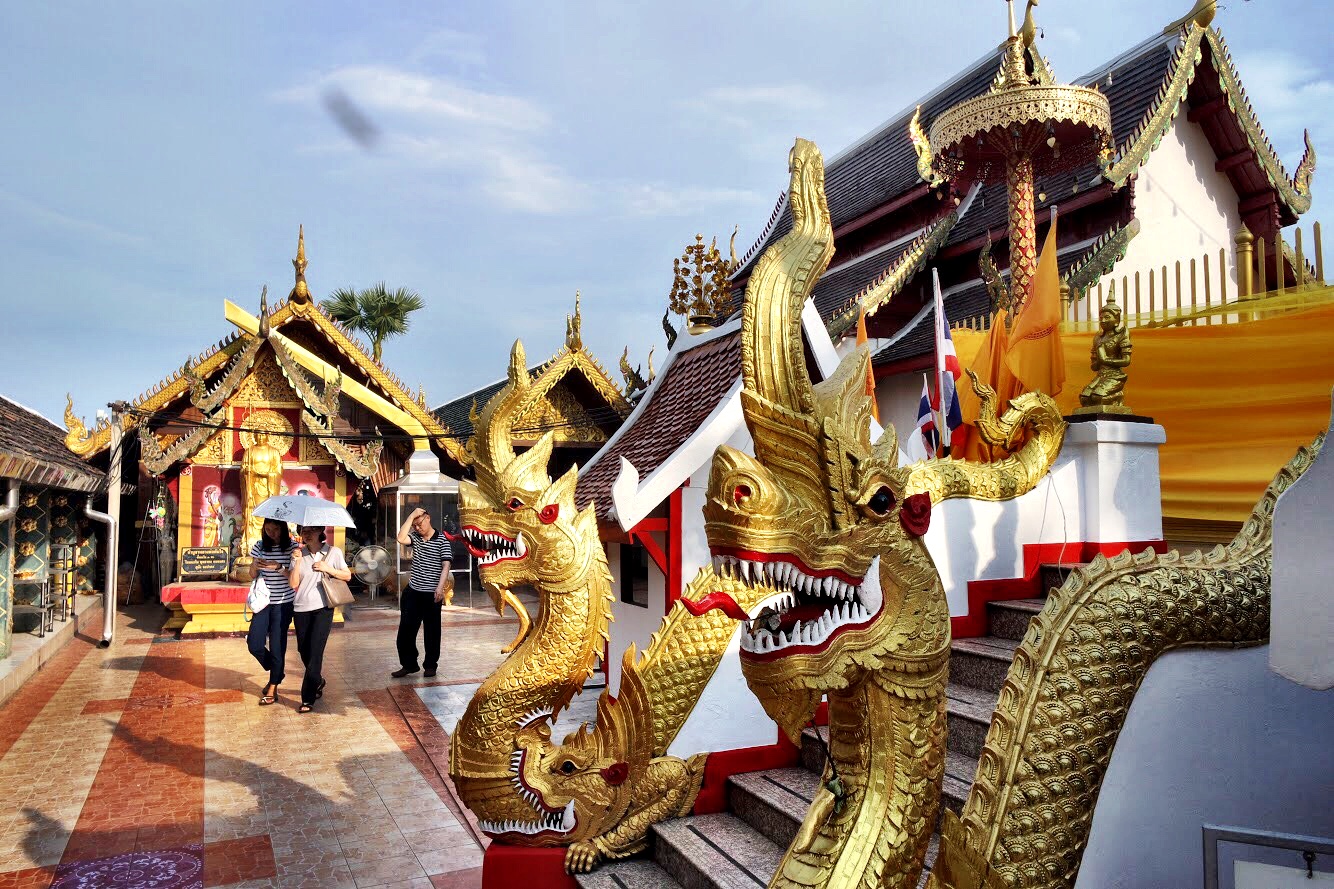
The rear of the temple complex feels like a city square and offers a spectacular view of the surrounding countryside. We came from the parking lot in the opposite direction, but you can access the terrace and wat by climbing a massive stairwell lined with undulating golden nagas, the mythical serpents found everywhere in Thai architecture and iconography.

Golden naga undulate up the hill, leading to the panoramic overlook

Golden naga undulate up the hill, leading to the panoramic overlook

Duke and Wally pose on the love bench on the enormous back patio

Duke and Wally pose on the love bench on the enormous back patio

Duke and I sat on a bench beneath numerous artificial red and white roses woven into a vaguely heart-shaped arch. It was silly and sweet.

“Could you imagine anything like this at a church?” I asked Duke.

That’s part of what I love about temples. They’re places to pray, but they’re also communal spaces with an air of festivity about them.

Part elephant, part human, part bird, these creatures guard an entrance to the heart of the temple

Part elephant, part human, part bird, these creatures guard an entrance to the heart of the temple

The back patio is guarded by two strange elephant-headed, bird-legged creatures to either side of a stairway that leads to the temple.


If you’ve got some extra time in Chiang Mai and want to see a temple that’s more popular with locals (hoping to win big in the lottery), swing by Doi Kham, perhaps as part of a day trip to Doi Suthep. Just be sure to make plans to return to offer jasmine garlands if your wish comes true. –Wally

Bells and nagas fill Wat Phra That Doi Kham

Bells and nagas fill Wat Phra That Doi Kham

Wat Phra That Doi Kham
Mu Ban Chiang Mai Lake Land Road
Tambon Su Thep
Amphoe Mueang Chiang Mai
Chang Wat
Chiang Mai 50200, Thailand

What’s a Spirit House?

A relic of animism in a Buddhist country, a san phra phum can keep spirits happy. Neglect the daily offering and you might be in trouble.

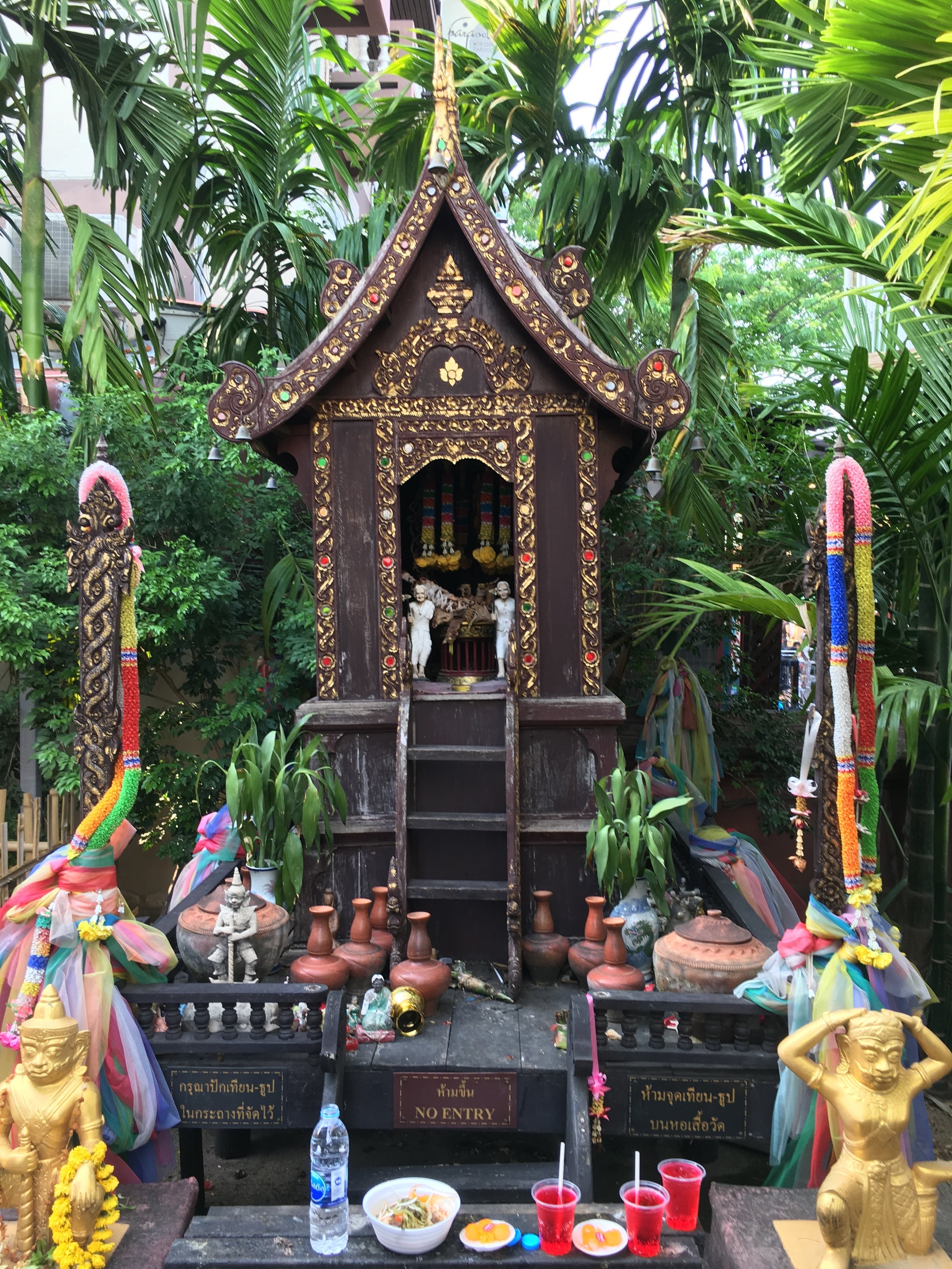
This spirit house includes a ladder for easy access should the spirit wish to leave and wander the Earth.

This spirit house includes a ladder for easy access should the spirit wish to leave and wander the Earth.

Although the vast majority of Thais are Buddhist, nearly all believe that the spiritual world coexists with the physical world. The country’s older animist origins predate the emergence of Theravada Buddhism. Supernatural forces play an important role in daily life and are not confined to the realm of myth or folklore. Collectively known as phi, these spirits are present everywhere, inhabiting both living and inanimate objects.

When a new building is constructed, be it a traditional village house or a multi-story office block, the owners will construct a home for the spirits who also occupy that land.

The more attention you give to a spirit,  the more good luck you will receive. Phi can also cause trouble if not given enough care, and wreak havoc when made homeless.

Among the innumerable variety of phi, many of which can influence human life, are the ghosts of people killed by animals, women who died in childbirth, and those who perished but didn’t receive a proper burial.

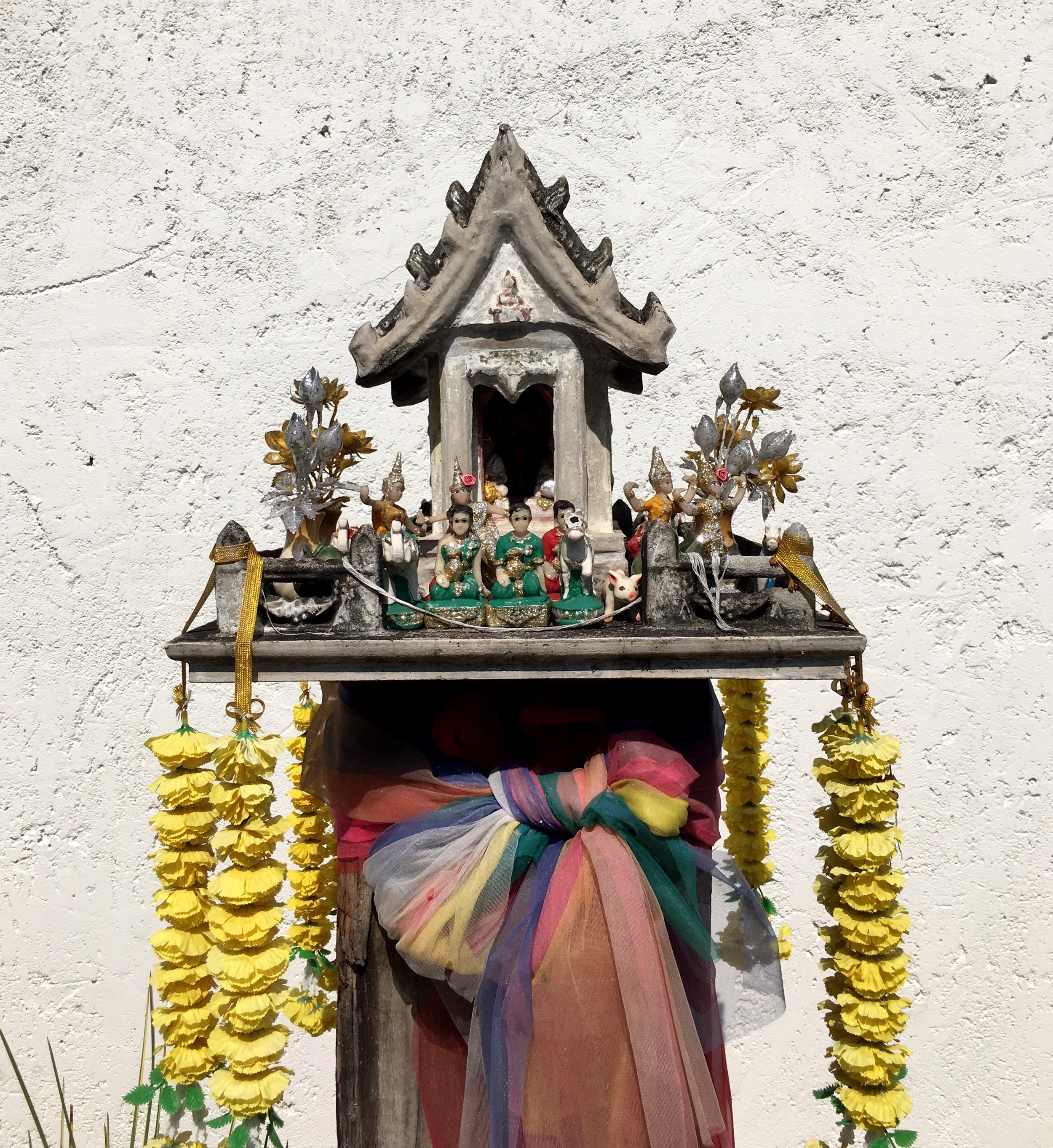
Spirit houses, known as san phra phum, are small shrines that provide a home for guardian spirits. Every home and most businesses in Thailand have one.

Spirit houses, known as san phra phum, are small shrines that provide a home for guardian spirits. Every home and most businesses in Thailand have one.

Spirits in the Material World
Throughout Thailand, miniature dwellings perched on chest-high pedestals, or spirit houses, can be seen standing in close proximity to homes, hotels and other businesses. Known as san phra phum in Thai, some are simple weathered teak wood structures resembling traditional Thai homes, while others are ornate, colorful, spire-topped cast concrete affairs that look more like miniature temples.

These abodes function as a home for displaced phi. Trees are one of the most common places for phi to dwell. A rock, river bend, spring or cave is infused with spiritual properties. Wally and I encountered a shrine to Mae Nak, one of Thailand’s best-known ghosts, on a trail leading to Mae Ya Waterfall, part of Doi Inthanon National Park.


The four-faced Hindu god Brahma is a popular figure in spirit houses, especially in the Bangkok area.

The four-faced Hindu god Brahma is a popular figure in spirit houses, especially in the Bangkok area.

Appeasing the Spirits

The san phra phum must be given the proper spot on the site. The current human landlords respect the right of the ethereal previous owners to remain — even if they didn’t know them when they were alive.

A Brahmin priest or astrologer is consulted to supervise the appropriate placement and optimal time to undertake this venture. Spirit houses should preferably be located in front of a tree, and not to the left side of a door or facing a toilet or road.

Wally and Duke gave offerings of fruit and said prayers at the spirit house on the grounds of their hotel.

Wally and Duke gave offerings of fruit and said prayers at the spirit house on the grounds of their hotel.

Our hotel in Chiang Mai, Hotel des Artists Ping Silhouette, had a lovely wooden spirit house standing beside a jackfruit tree. We would visit it each morning to offer our prayers (and some lady finger bananas) to Nang Kwak, the Thai goddess of wealth, holding a sword in one hand and a money bag in the other.

To appease the spirits, daily offerings are placed on the platform surrounding the san phra phum. Incense, flowers, snacks and ubiquitous bottles of Strawberry Fanta complete with straws are intended to sustain the resident spirit. Once properly satiated, spirits become the territory’s guardians and can offer multiple services. Their principal job is to protect the landowner and their homes from illness, poverty and bad luck. The more attention you give to the spirit,  the more success and good luck you will receive. Phi can also cause trouble if not given enough care and are apt to wreak havoc when made homeless.

Much like in Egyptian tombs, spirit houses often include figurines of servants to wait upon the guardian spirits, along with elephants for transport and dancers to entertain.

Much like in Egyptian tombs, spirit houses often include figurines of servants to wait upon the guardian spirits, along with elephants for transport and dancers to entertain.

As it’s tough finding reliable help, figurines including servants, dancers, animals and occasionally small cars — all things intended to symbolically assist the resident phi — are placed and displayed in front of the spirit house. There may be an animal that represents the astrological year the house was constructed or the deity enshrined within. (Learn more about the Thai zodiac here.)

Pii Po Ya, or Spirits of the Grandfather and Grandmother, are represented by figurines of an old man and woman.

Pii Po Ya, or Spirits of the Grandfather and Grandmother, are represented by figurines of an old man and woman.

I was more than slightly obsessed in finding and photographing a spirit house graveyard after I read about it on the fantastic Spirit House Connection website. Apparently, these are collections of broken, discarded spirit houses no longer fit for use and can sometimes be found beneath the branches of sacred bodhi trees. Even though we had a driver who spoke English quite well, we weren’t ever able to fully explain what we were looking for. –Duke

All About Indigo: A Natural Color to Dye For

Our favorite tie dye clothing designer in Chiang Mai explains how indigo is made.

Pattaya Mee, owner of HaNa Natural Indigo, with one of her designs

Pattaya Mee, owner of HaNa Natural Indigo, with one of her designs

Mysterious and alluring, indigo has a long and storied history, spanning millennia, cultures and continents. One of the oldest natural dyes known to man, its hue is a symbol of status amongst the nomadic Tuareg of the Sahara. In Hinduism, the god Krishna’s complexion is depicted as blue, and the Virgin Mary is typically draped in a blue veil in Christian art.

There are many different species of indigofera, the plants used to produce indigo dye. One of the most common is the indigofera tinctoria, native to India and Asia. Indigo is the only dye in the world that starts blue, changes to green, and transforms itself again to blue.
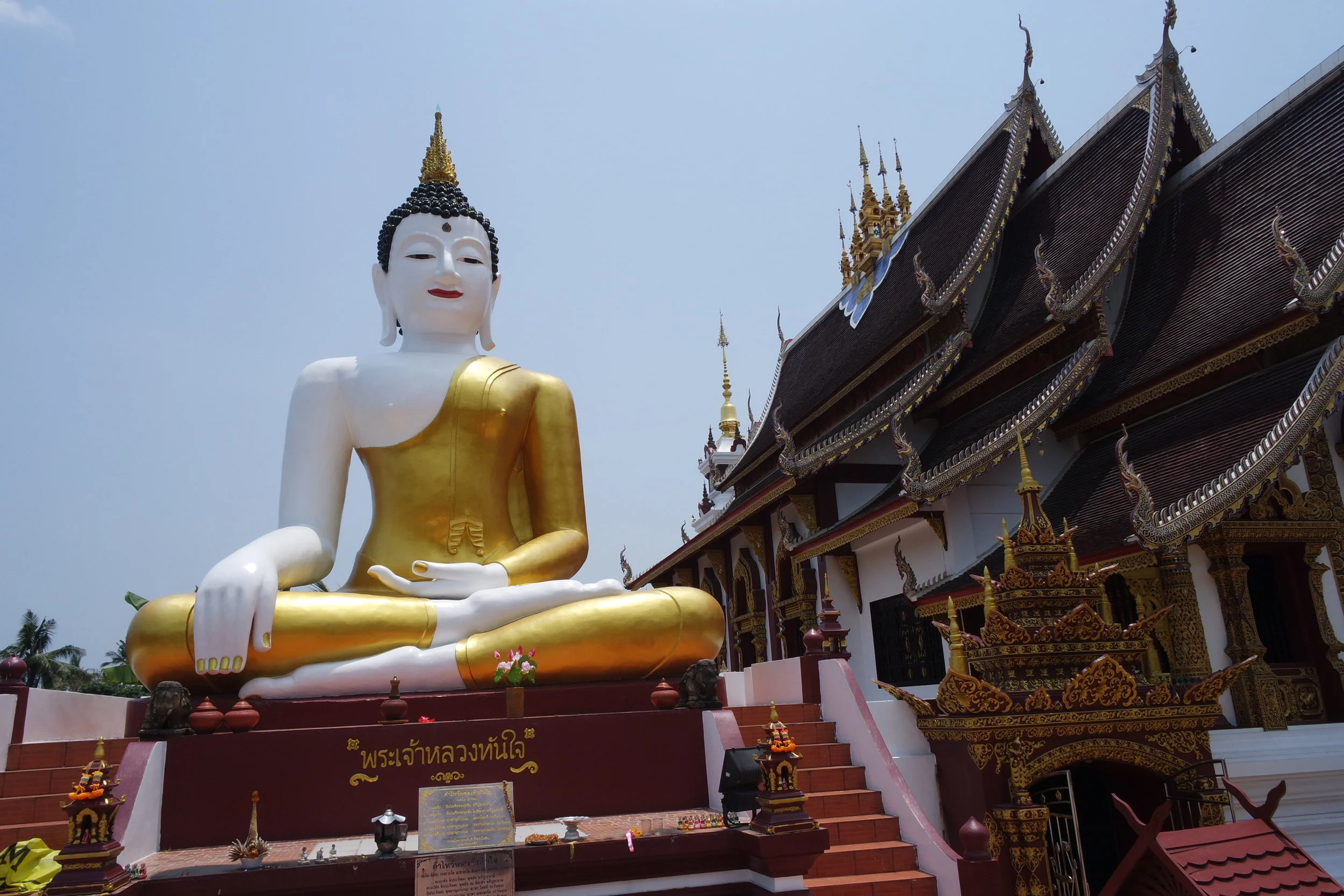
I love it when the dye changes from green to blue with oxidation — it’s magic!
— Pattaya Mee, owner, HaNa Natural Indigo

Though it has been used continuously for thousands of years, the natural dyeing process is long and arduous. In order to extract the dye, the leaves of the plant must be fermented for a week. To achieve the darkest of indigo blues, the fabric is dyed as many as 40 times!

A dip-dyed ombré T-shirt Patty created hangs to dry

A dip-dyed ombré T-shirt Patty created hangs to dry

HaNa Natural Indigo

While exploring the Anusarn Night Market in Chiang Mai, Thailand, Wally and I were drawn to Pattaya Mee’s booth with its variety of beautiful hand-dyed apparel. We struck up a conversation with her and were charmed by her smile and her story.

Before starting HaNa Natural Indigo as a full-time business, Patty worked at a media company in Bangkok. In her spare time, she attended workshops, where she learned about natural dyeing. With no formal training, she began nurturing her hobby, selling her pieces around Bangkok and Chiang Mai. In 2015 she relocated to Chiang Mai and established HaNa Natural Indigo.

What drew you to indigo?
I experimented with many different types of natural dyes, but fell in love with indigo. I love it when the dye changes from green to blue with oxidation — it’s magic!


What type of plant does the indigo you dye with come from?

I use the leaves from the Baphicacanthus cusia Bremek plant, which we call hom in Thai.

The Baphicacanthus cusia Bremek plant, or hom, can be used to make indigo

The Baphicacanthus cusia Bremek plant, or hom, can be used to make indigo

How is your indigo dye made?
The exact recipe is a secret. Every artist and studio has their own set of ingredients. I can’t tell you what they are, but I can tell you that many use a dye-producing leaf mix that’s soaked in water and fermented until the mixture becomes yellow or green in color. This is an indication of good-quality indigo.

The exact method Patty uses to create her indigo paste is a secret

The exact method Patty uses to create her indigo paste is a secret

What are the steps taken for the dyeing process?

  • Step 1: Plant
  • Step 2: Harvest
  • Step 3: Soak
  • Step 4: Ferment
  • Step 5: Oxidize
  • Step 6: Filter
  • Step 7: Collect the paste
  • Step 8: Prepare the vat
  • Step 9: Dye
Creating and dyeing with indigo involves a nine-step process

Creating and dyeing with indigo involves a nine-step process

Your pieces are diverse and imaginative. Where does your inspiration come from for the designs?

Nature and music. There are always imperfections in nature, and with natural indigo dyeing, no two garments will ever be alike. Some patterns are exaggerated like the mountains or the sea. I listen to silly pop songs while creating and like to think that whimsy is reflected in my work.

Blue hands are a telltale sign that the person works with indigo (or is the god Krishna)

Blue hands are a telltale sign that the person works with indigo (or is the god Krishna)

One last question: How do you get the dye off your hands?

You can’t. :)


If you happen to be in Chiang Mai, you can visit Patty at the Kajidrid shop at the InterInn Hotel just outside the Old City. We purchased an indigo dyed T-shirt and silk scarf all at reasonable prices for handmade pieces — plus they’re easy to pack! –Duke
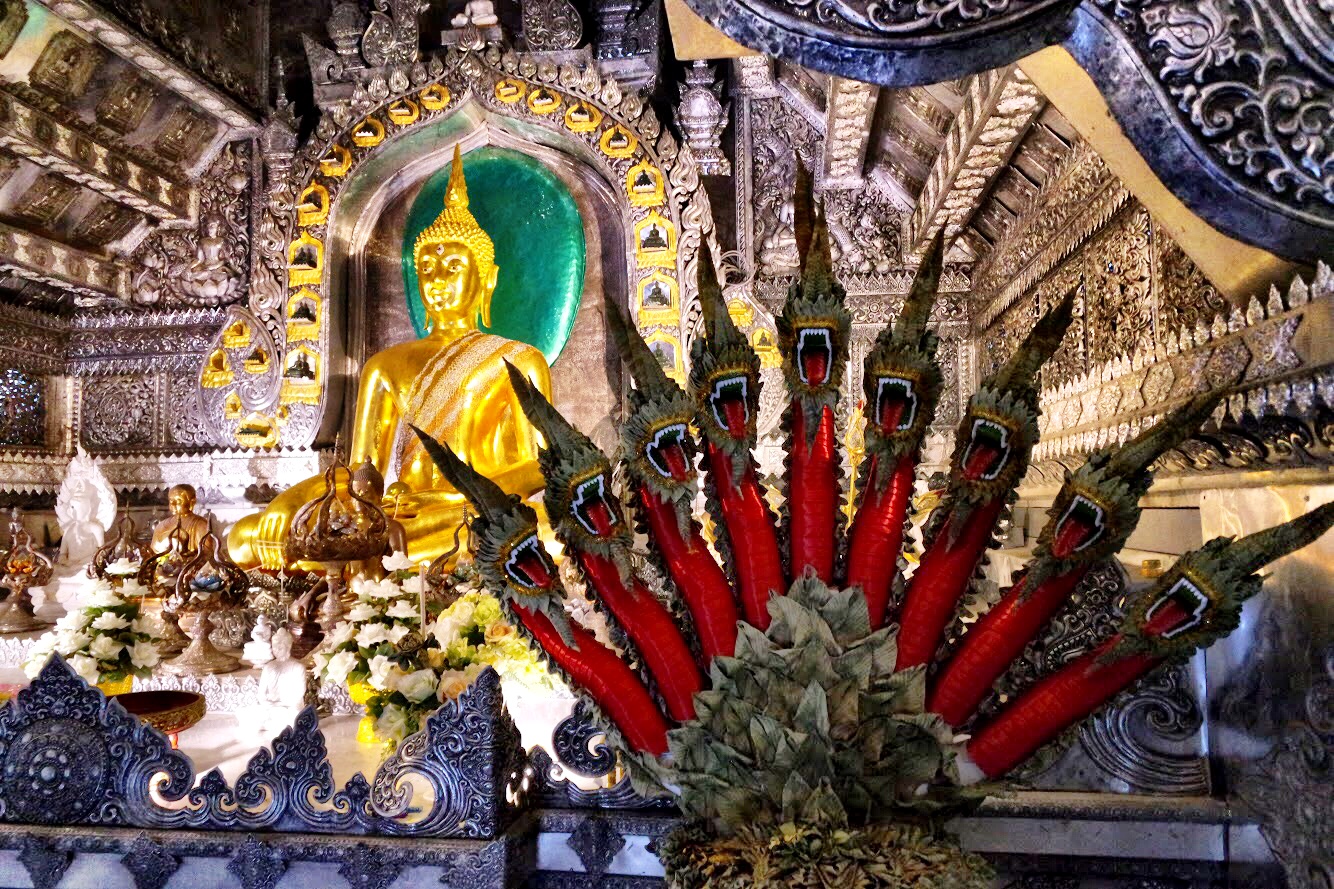
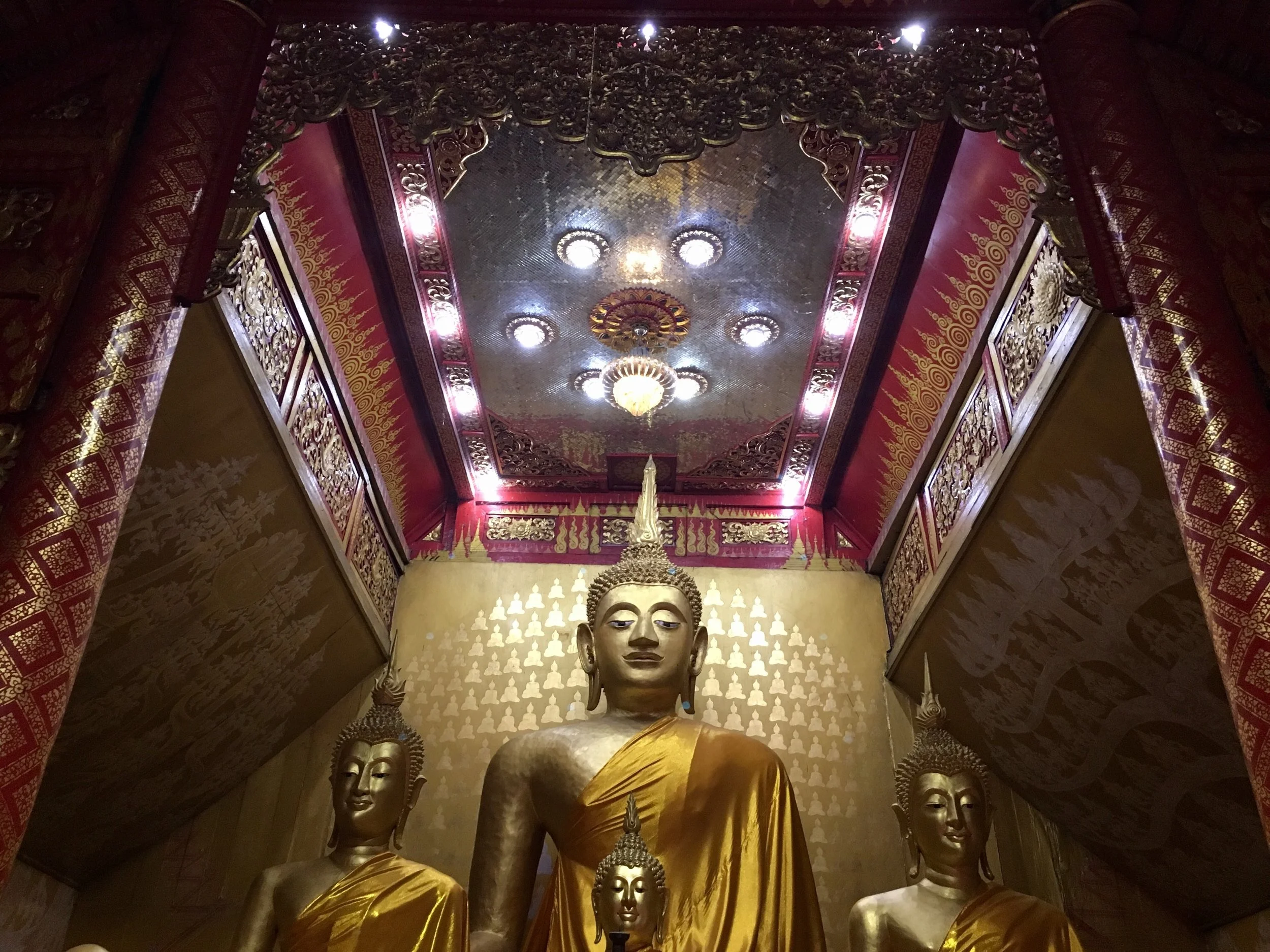
The adorable Kajidrid shop sells HaNa Natural Indigo products

The adorable Kajidrid shop sells HaNa Natural Indigo products

Kajidrid
17 Thapae Road, Soi 5
ChangKlan Sub-District
Mueang District, Chiang Mai

Elephant Nature Park: A Day You’ll Never Forget

Feed and bathe the residents of this elephant sanctuary outside of Chiang Mai.

Water buffalo coexist with the elephants at the park, one of the highest-rated sanctuaries in Northern Thailand

Water buffalo coexist with the elephants at the park, one of the highest-rated sanctuaries in Northern Thailand

Before we did a bit of research, we didn’t know any better. We thought the idea of riding an elephant would be fun. But the more we read in preparation for our trip to Chiang Mai, the more we realized we didn’t want to be a part of perpetuating the ill treatment of elephants and that we wanted instead to visit a sanctuary, a place where elephants were rescued and not exploited.
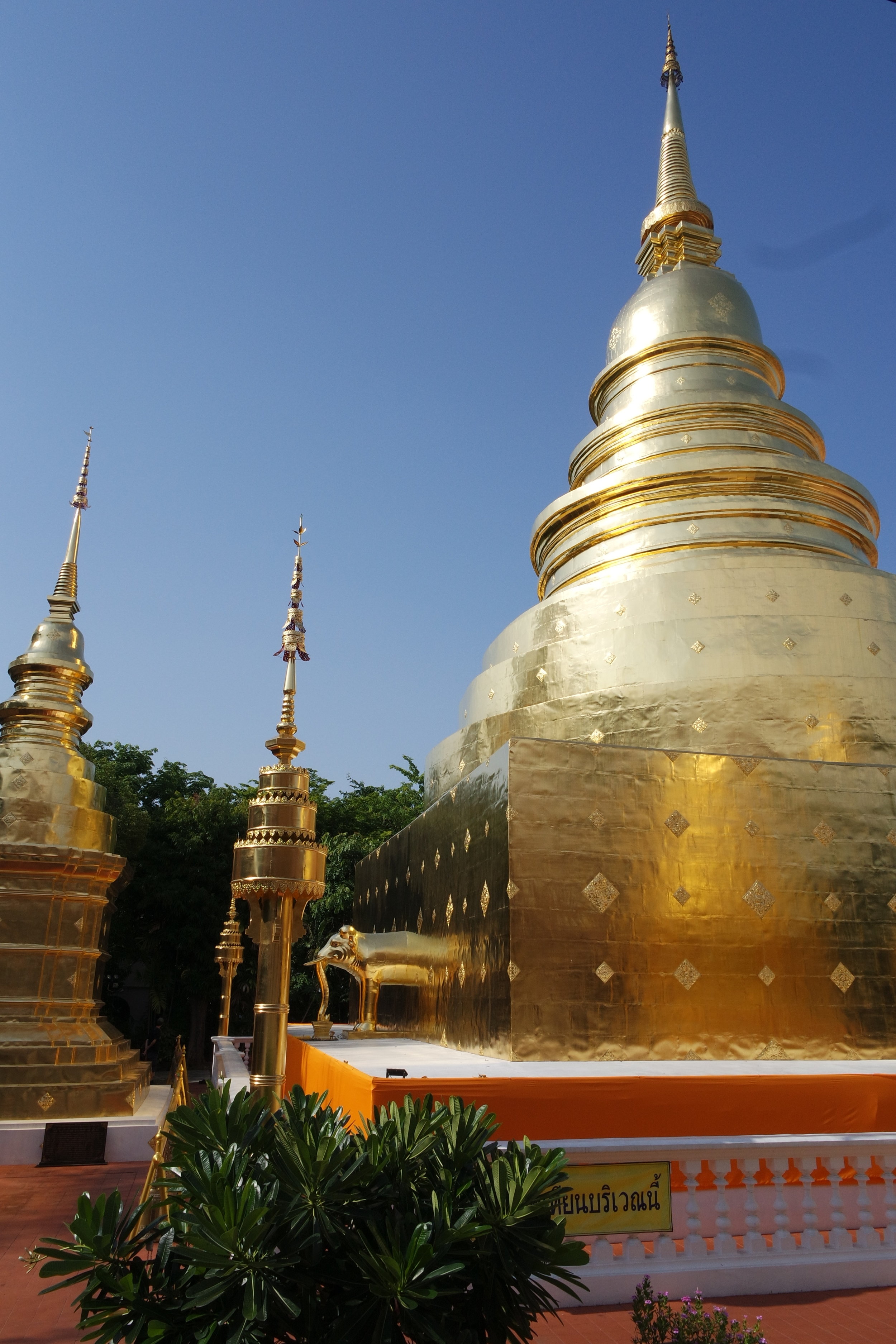
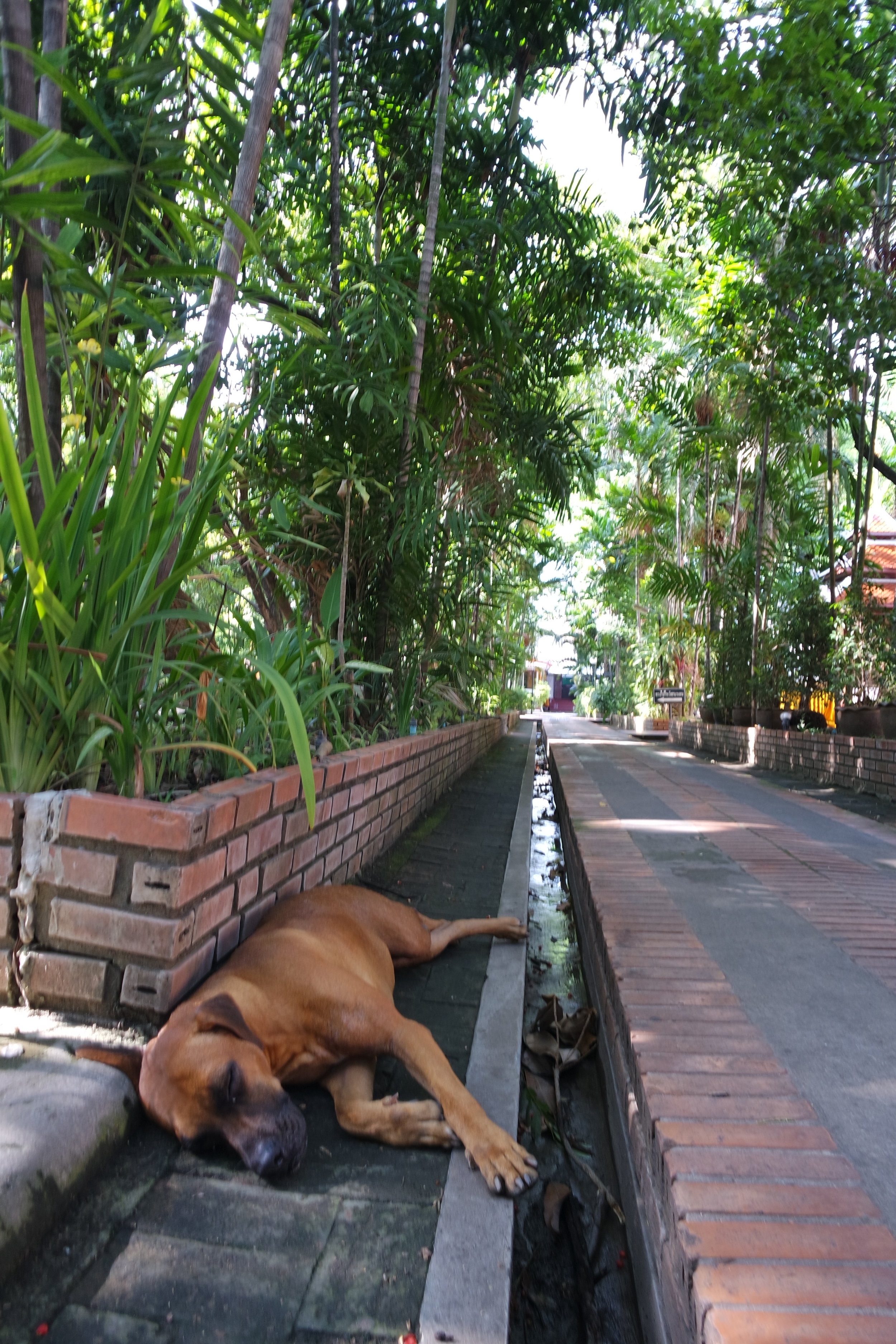
It’s heartbreaking to think how much these elephants suffered before their idyllic life in the sanctuary

It’s heartbreaking to think how much these elephants suffered before their idyllic life in the sanctuary

The Elephant Nature Park outside of Chiang Mai had great reviews, so we booked a half-day visit with them. A van came to pick us up at our hotel, stopping in town to gather other travelers. The ride takes over an hour, and be warned: You’ll have to sit through a horrific video detailing the barbaric practices of “training” elephants.


The sad fact is that en route to the park, while you’re learning about the cruel practices trainers use to break one of these creatures, you’ll pass tourist operations where people are riding elephants. Which means they’re guilty of the atrocities you’re watching on the small screen at the front of the van.

Spend a day at the Elephant Nature Park to feed, bathe and get to know rescued elephants

Spend a day at the Elephant Nature Park to feed, bathe and get to know rescued elephants

The Elephant Nature Park’s mission is to rescue elephants who have been retired from the logging trade, have been abused by the tourism circuit or have suffered in some other way.
Elephants live about as long as humans do

Elephants live about as long as humans do

The Elephant Nature Park was founded by Lek Chailert. Her mission is to rescue elephants who have been retired from the logging trade, have been abused by the tourism circuit (trekking, street begging, circuses) or have suffered in some other way.

Little Yindee is one of seven baby elephants to have been born in the park

Little Yindee is one of seven baby elephants to have been born in the park

The park purchases elephants for about 2 to 3 million baht and offers them a 500-acre sanctuary to roam freely. There are currently over 30. A lot of them have medical problems from their ill treatment in the past, and here they receive excellent medical care and the proper diet.

Elephants at the park get fed corn, rice, watermelon and squash — but they seem to prefer bananas

Elephants at the park get fed corn, rice, watermelon and squash — but they seem to prefer bananas

Insider Tip: You’ll do a lot of walking, so we don’t recommend wearing flip-flops as a lot of the other guests did. But you also don’t want to wear shoes you can’t get wet — at the end of the tour, you have the chance to go into the river to bathe an elephant, and we had to go barefoot. The best footwear would be walking sandals that can go in the water.

Wally and Duke had a fun day at the Elephant Nature Park while visiting Chiang Mai

Wally and Duke had a fun day at the Elephant Nature Park while visiting Chiang Mai

Please Do Feed the Animals

At the Elephant Nature Park, you get divided into smaller groups of 12 or so, and you make the rounds seeing the elephants as they go about their day. Our first stop was to feed Kham Moon. She’s 55 years old (elephants have the same life expectancy as humans!). She was involved in logging until she broke her leg and was deemed useless for those purposes. Now she’s a sweet, if spoiled, resident of the park.

There are baskets of food you’re allowed to feed the elephants. We fed her pumpkins at first, but after a while she spotted the bananas and only had eyes for them. These big beasts sure love to eat — they consume at least 10 percent of their body weight every day! Our guide, Nieo, told us that elephants eat for 20 hours a day and sleep only three to four.

Many of the elephants at the park show signs of their previously abusive lives

Many of the elephants at the park show signs of their previously abusive lives

An elephant's trunk is its most versatile tool. It’s used for breathing, smelling, trumpeting, touching, grasping for leaves, sucking up and sometimes spraying out water. This useful bit of equipment has 40,000 muscles (compared to the human body which has just 639 muscles), Nieo explained.

You don’t really realize how wise and sweet these animals are until you get up close and personal with them

You don’t really realize how wise and sweet these animals are until you get up close and personal with them

It’s really quite freaky but amazing watching elephants eat. The end of their snouts are able to grab food, moving like fingers. I’d hold out a banana, then quickly move my hand away as the snout pulsated, squealing like a little girl.

An elephant’s trunk is an amazingly useful appendage

An elephant’s trunk is an amazingly useful appendage

When near an elephant, always stand where it can see you — they don’t have peripheral vision. You also shouldn’t stand directly in front or behind an elephant, Nieo told us.

It’s true that elephants are scared of mice, our guide added. “They don’t like small things — including children. They move too fast.” Keep that in mind if you’re bringing little ones along.

Our next stop was feeding Sook Jai, an 82-year-old elephant. She’s blind and has no teeth, so we had to peel bananas before giving them to her.

Another elephant fun fact: They’re natural born farmers. They only digest 40 percent of their food, so whatever they eat grows out of their poop.

The elephants cool off in the water and use their trunks to spray themselves

The elephants cool off in the water and use their trunks to spray themselves

Bath Time

Our group moved through the hot sun over to the watering hole, watching the elephants cool off, spewing the brown water onto their backs. We learned that one of the elephants in the group had been rescued after stepping on a landmine.

A baby elephant named Yindee splashed in the water with her cohorts. She’s one of seven elephants to have been born in the park.

Duke thinks this elephant could use some good moisturizer

Duke thinks this elephant could use some good moisturizer

Wally makes a new friend

Wally makes a new friend

Some of the mahouts splashed one of the elephants who has bad legs and can’t lie down in the water. While we watched these giant creatures cool off, the operation across the river had people riding elephants right by guys recklessly driving off-road ATVs. Our group all disparaged them, and I suggested throwing elephant dung at them.

Our guide was informative and had a great sense of humor

Our guide was informative and had a great sense of humor

By the river, we fed an elephant named Jandee. That means “Kind Heart,” Nieo told us. It’s ironic, though because this 66-year-old is a bit feisty and would fight if she was near other elephants.

She doesn’t have any teeth, either, so we fed her rice balls.

I pretended like I was going to throw one. “Snowball fight!” I joked, giving Jandee her treat.

She swung her trunk around with the rice ball before eating it. “She likes to play with her food,” I pointed out.

Jandee is the second largest elephant at the camp. She’s from a photo studio on the island of Ko Tao, where people could take wedding photos with her. But the operator didn’t have license, and she was purchased and brought to the Elephant Nature Park.

You’ll also see a lot of elephants using their trunks to toss mud and dirt onto their backs. It acts as a natural sunscreen to protect their skin and keep them cool.

The park is also a rescue center for cats (as well as dogs)

The park is also a rescue center for cats (as well as dogs)

Midway through the morning, we break for lunch so we could actually feed ourselves and not just the elephants. We had heard that the buffet was delicious, and the online reviews didn’t lie. There are numerous local dishes to choose from, and many of them are vegetarian.

After we were done eating, Duke and I wandered behind the kitchen to the Cat Kingdom. In addition to rescuing elephants, the park also saves water buffalo, dogs (avoid the ones with red bandanas around their necks, as they’re not good around people) and cats. The feline contingency has its own domain, which we explored.

When you join the elephants in the river, be advised that the muddy water can stain your clothes

When you join the elephants in the river, be advised that the muddy water can stain your clothes

The final stop of the day is watering elephants. In addition to not recommending you go barefoot (one of the girls with us stepped on something and cut her foot pretty badly), you also shouldn’t wear anything you won’t mind getting stained. The water is brown, and I got drenched when a young woman on the opposite side of the elephant overshot, and the bucketful of water landed right on me. The mud in the water must have some intense pigmentation because my shorts and shirt never got fully clean afterward.

The Elephant Nature Park has a noble goal, and it’s great to see these intelligent creatures up close and personal. If you’re spending five or so days in Chiang Mai, this is a day trip you should definitely put on your list (along with ziplining at Flight of the Gibbon and the colorful tour of temples in Chiang Rai, starting with the White Temple).

There were some Brits in our group who decided to skip the after-lunch activities and just sat in the pavilion getting wasted. We had to listen to them drunkenly shout and whine that they needed the loo the entire ride home.

That aside, a day at the Elephant Nature Park will make you better understand (and even fall in love with) elephants. They never forget, and neither will you. –Wally

We’re putting our foot down — go to an elephant sanctuary and don’t perpetuate the abuse of these amazing creatures

We’re putting our foot down — go to an elephant sanctuary and don’t perpetuate the abuse of these amazing creatures

Elephant Nature Park
209/2 Sridom Chai Road
Tambon Kuet Chang
Amphoe Mae Taen
Chang Wat
Chiang Mai 50100, Thailand