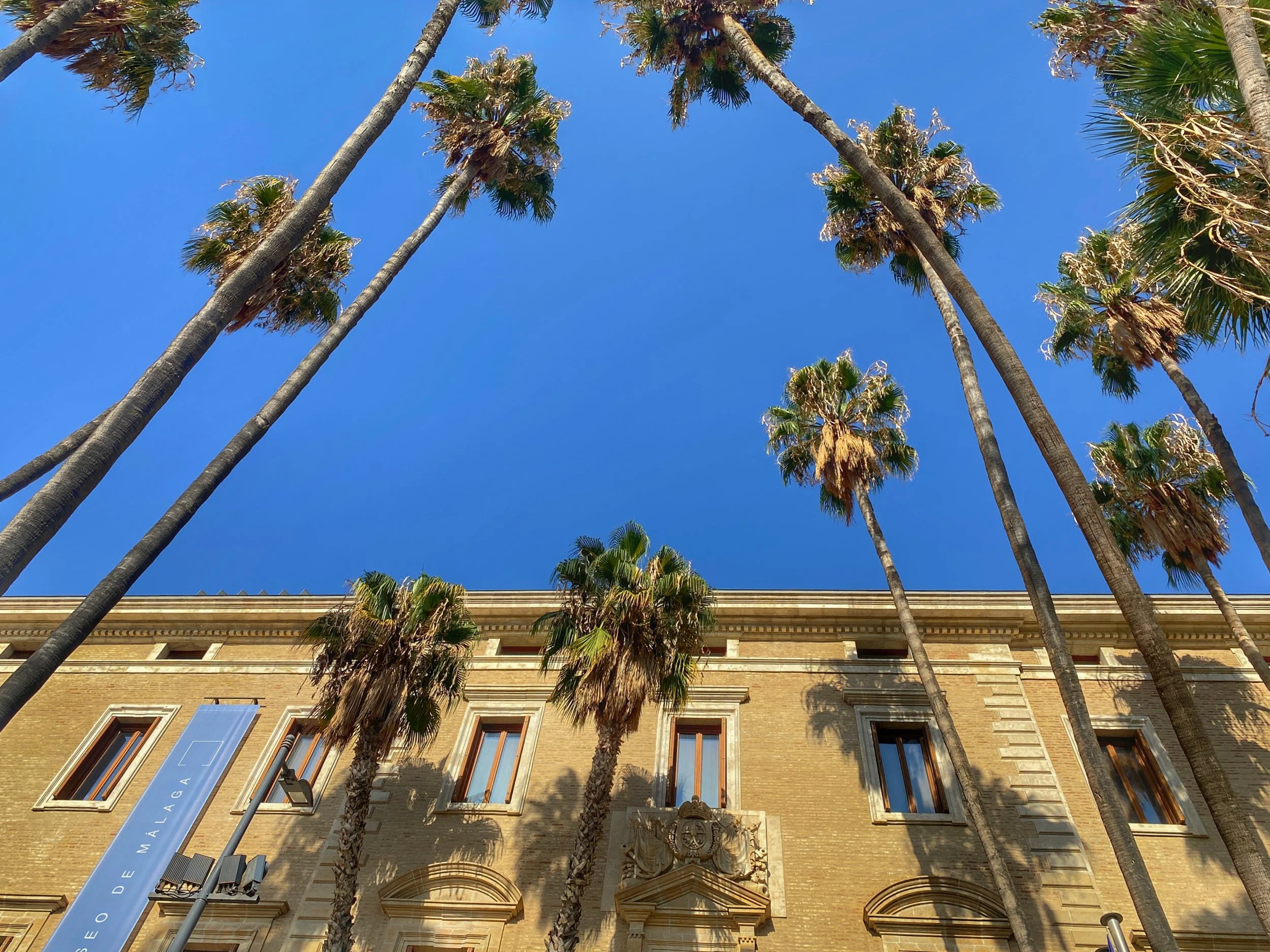
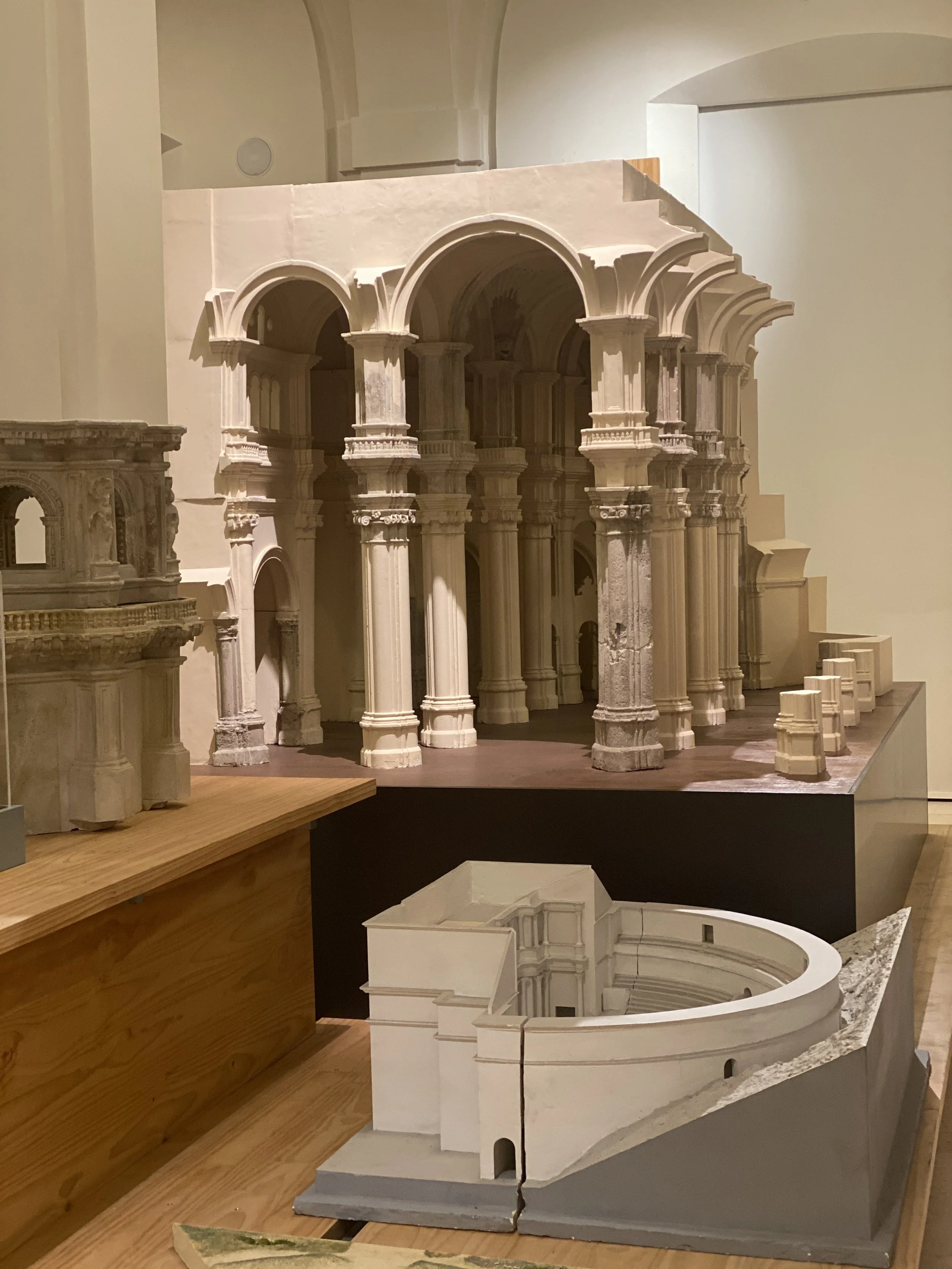
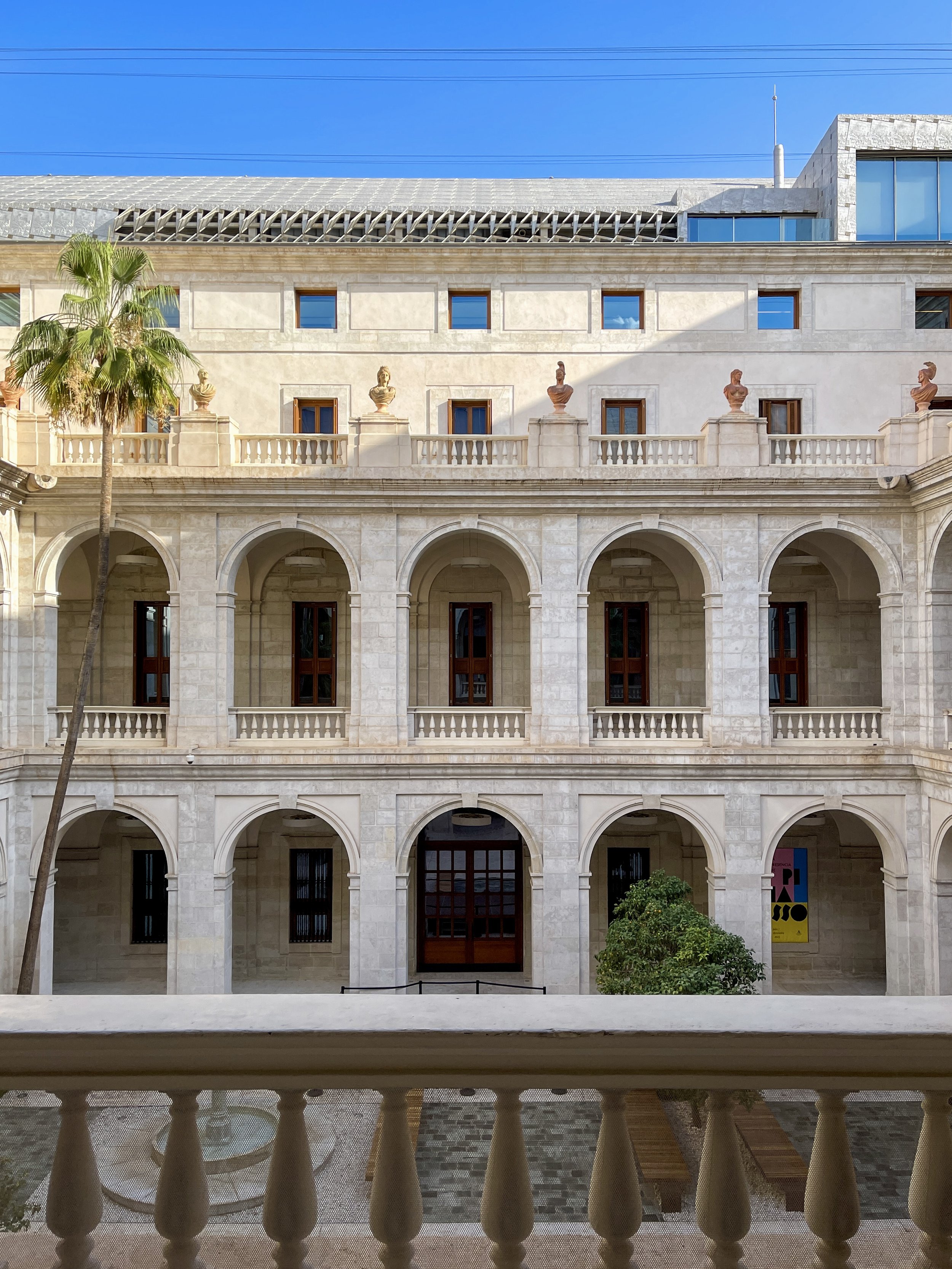
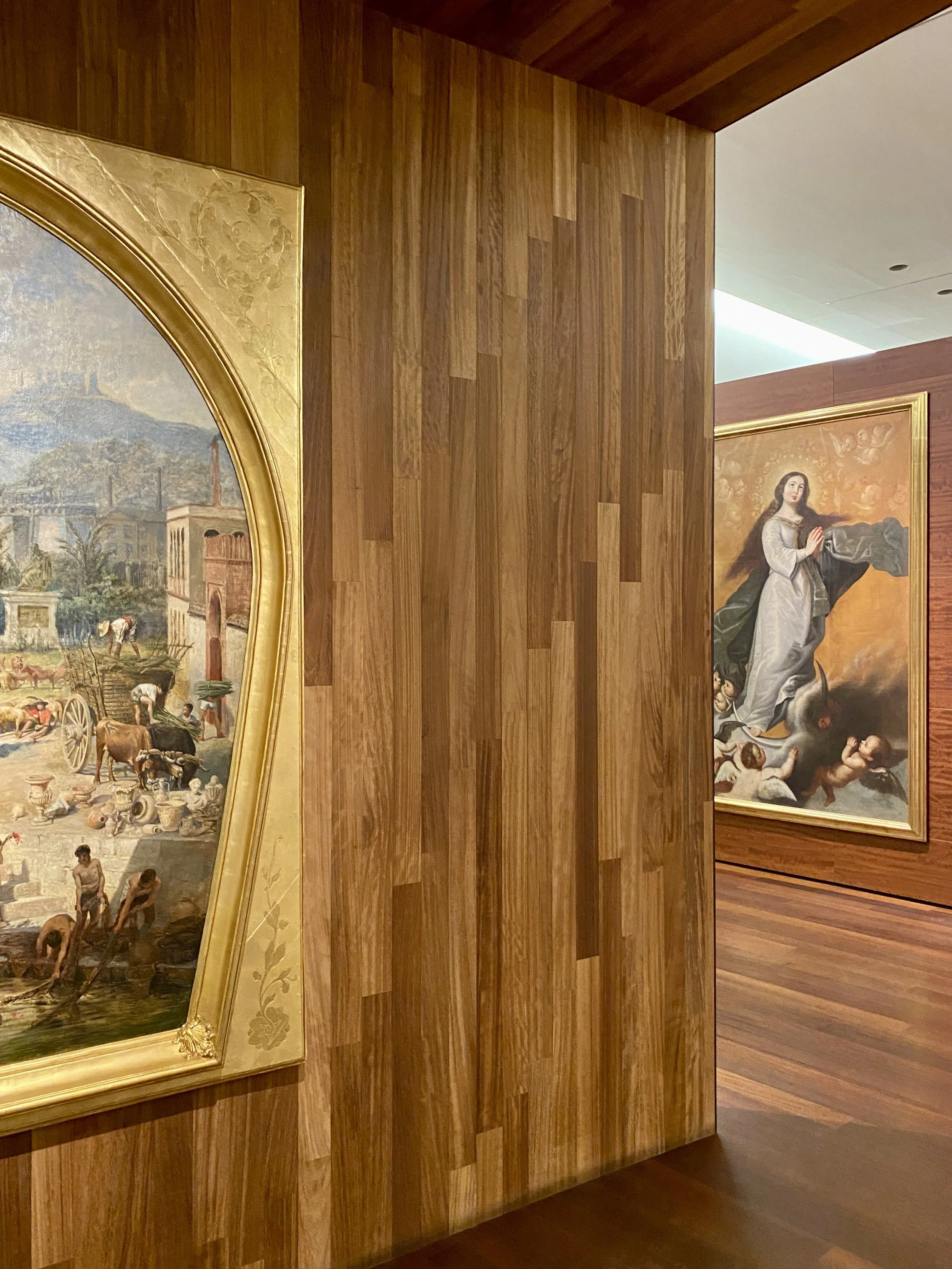
Take a room-by-room tour of Chapultepec Castle — North America’s only royal palace — and uncover the imperial lives of Maximilian, Carlota and Porfirio Díaz in the heart of Mexico City.

The deeper we wandered into Chapultepec Castle, the more it felt like we were stepping back in time.
It’s the only royal palace in North America that actually housed monarchs: Emperor Maximilian and Empress Carlota, who brought European grandeur, idealism (and a fair share of drama) to Mexico City. Their brief, ill-fated reign left a lasting mark on the castle and the country — a poignant reminder of how imperial ambition once shaped the course of Mexican history.
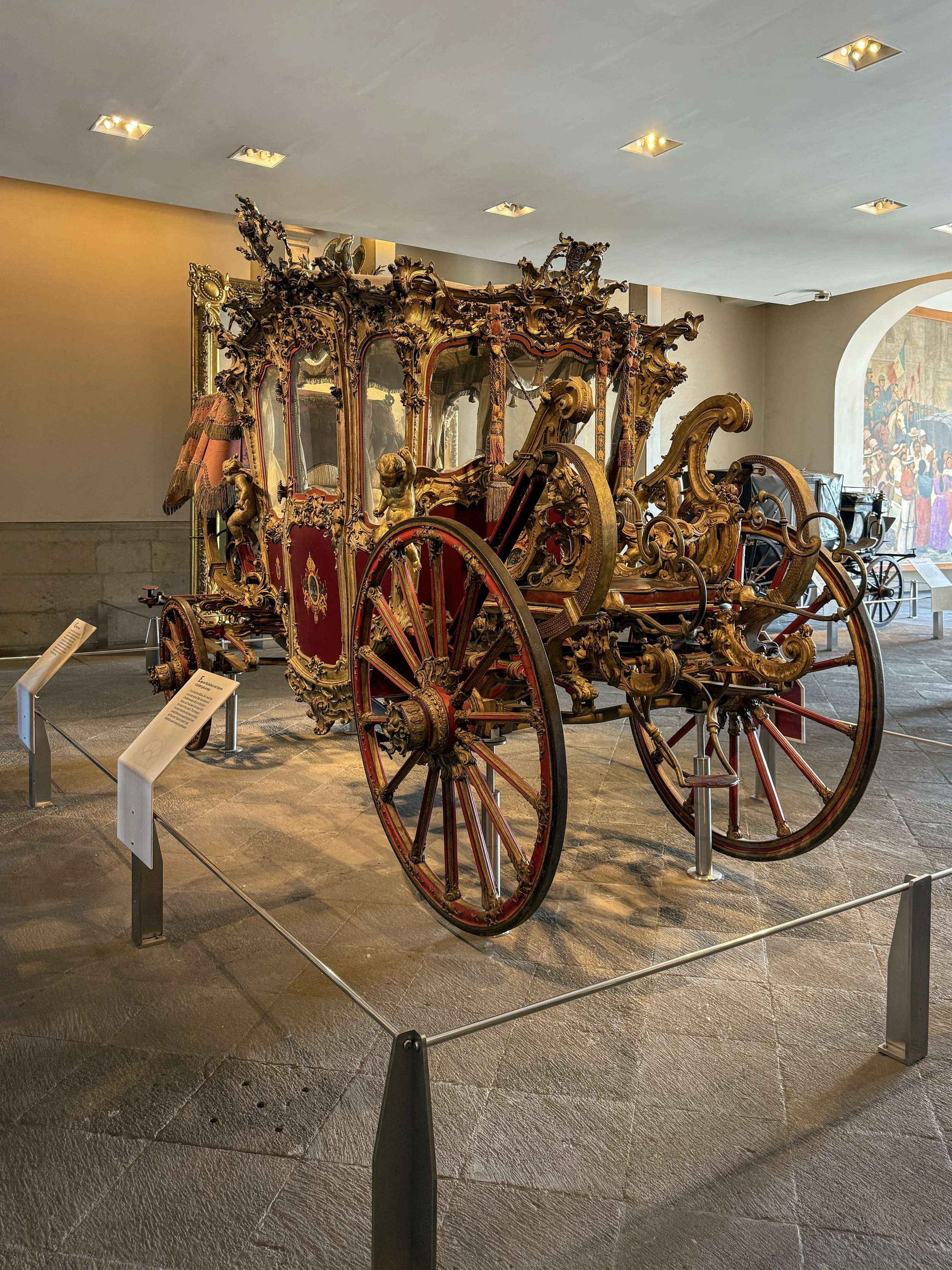
This extravagant carriage belonged to Maximilian and Charlotte.
Sala de Carruajes (Carriage Room)
After making our way out of the west wing, which houses the Museo Nacional de Historia, Wally and I found ourselves in the Sala de Carruajes (Carriage Room). This covered space features historic carriages and serves as the main entrance to the Alcázar, or Royal Palace.
At the center of the room is the royal coach that belonged to Maximilian and Charlotte. Designed for special occasions, the ornate Baroque-style carriage was meticulously fabricated in 1864 by the Cesare Scala workshop in Milan, Italy and later shipped to Mexico.
Its gold detailing, sculpted cherubs, and doors bearing the coat of arms of the Mexican Empire, an eagle atop a nopal devouring a serpent, beneath an imperial crown — lend the carriage an air of majestic splendor.
According to records from the National Museum of History, the carriage was used only twice, contributing to its near perfect condition. You could almost imagine it rolling through the streets, drawing every eye in its path.
Additionally, a more modest four-wheeled carriage, designed in Paris, France by Henri Binder for everyday transport, is also on display. Originally built for Maximilian, it was adapted for President Benito Juárez. While its wheels kept turning, they no longer carried a king. Maximilian’s imperial crest was replaced with the emblem of the republic — minus the imperial crown.
“We spent hours exploring the castle’s magnificent halls, grand stairways and stunning rooms — not to mention the breathtaking views from the top of Chapultepec Hill.”
Just beyond the room’s entrance is the first of two large-scale works by Antonio González Orozco, one of the last great artists of the Mexican muralist movement: Entrada Triunfal de Benito Juárez al Palacio Nacional, Acompañando de Su Gabinete (The Triumphal Arrival of Benito Juárez at the National Palace, Accompanied by His Cabinet), painted in 1967.
Nearby is another painting by Orozco: Juárez, Símbolo de la República Frente a la Intervención Francesa (Juárez, Symbol of the Republic Against the French Intervention), which celebrates Juárez’s role in preserving Mexican sovereignty during the French Intervention. His resistance to foreign rule and efforts to restore the republic earned him the Colombian government’s honorific title Benemérito de las Américas (Worthy of the Americas).
Among the other artworks in the room are three equestrian portraits: one of Maximilian of Habsburg, painted in 1865 by French artist Jean Adolphe Beaucé; one of General Mariano Escobedo; and one of General Porfirio Díaz, painted by Spanish soldier and artist José Cusachs in 1901.

A detail of the intricate Baroque plasterwork inside the Sala Introductoria.
Sala Introductoria (Introductory Hall)
Behind the Carriage Room, Wally and I stepped into a long, narrow hallway with wooden floors and a gilt plasterwork ceiling. This elegant corridor is now known as the Sala Introductoria (Introductory Hall), and features placards that tell the stories of its most notable residents, including Maximilian and Charlotte, as well as Díaz.
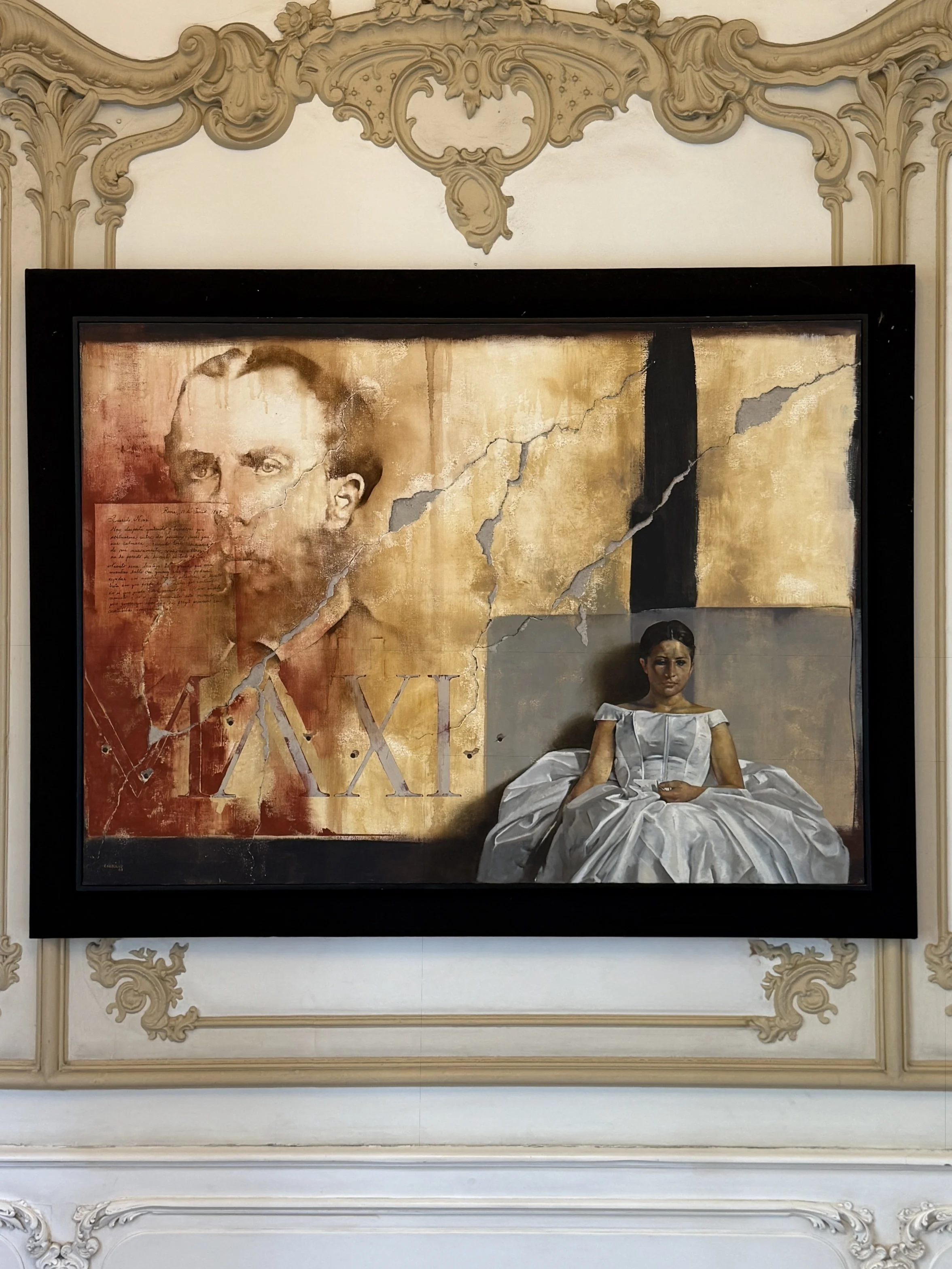
Querido Max (Dear Max) by Miguel Carillo Lara, 2003
During Maximilian’s reign, this space served a very different purpose. It was a skittles alley, a game similar to bowling, where players would roll a wooden ball or disc down the hall, aiming to knock over nine pins arranged in a diamond formation.

Attack on the Castle Chapultepec, a print by Nathaniel Currier, 1848
History of Chapultepec Castle
Chapultepec Castle’s appearance was shaped largely by two men: Maximilian I of the Austrian House of Habsburg, who ruled Mexico from 1864 to 1867, and Porfirio Díaz, who took power in 1876 and held onto it for over 30 years.
Maximilian transformed the castle into a lavish imperial residence, while Díaz, an avid Francophile, despite fighting against the French in the Second Franco-Mexican War, modernized and expanded the structure. The castle remained the official presidential residence until 1934, when President Lázaro Cárdenas relocated the residence to Los Pinos.
Not long after, on February 3, 1939, Cárdenas declared that Chapultepec Castle would become the National Museum of History. It officially opened to the public on September 27, 1944, during the presidency of Manuel Ávila Camacho.

The Austrian Archduke Ferdinand Maximilian Joseph (future emperor of Mexico) and his wife Charlotte of Belgium
The French Intervention in Mexico
So, how did Mexico come to have an Austrian emperor?
It all started in the 1830s, when France began eyeing Mexico as a place to extend its influence, most notably during the Pastry War (1838–1839), a brief conflict sparked by complaints over damages to French-owned businesses. Although France never established a formal colony, its cultural and economic presence grew, especially in cities like Veracruz and Mexico City.
After years of political turmoil, Mexico’s economy was in ruins. In 1861, President Juárez made a bold move — he suspended all foreign debt payments. European creditors were infuriated, prompting France, Spain and Britain to send troops, determined to collect what they were owed.
But it soon became clear that France, under Napoleon III, had bigger ambitions than debt recovery. By April 1862, Britain and Spain, unwilling to be drawn into an imperial venture, withdrew, leaving France to pursue its grand designs alone.
Napoleon wanted to establish a French-backed monarchy in Mexico to boost French influence in the Americas and counterbalance the growing power of the United States.
French troops marched inland, but on May 5, 1862, they ran into stiff resistance at the Battle of Puebla, where Mexican forces under General Ignacio Zaragoza pulled off a stunning victory — a moment still celebrated every Cinco de Mayo.
However, the French regrouped, and returned stronger. By June 1863, they captured Mexico City, and Juárez and his government were forced into exile in the north.
With Mexico under French control, Napoleon needed a suitable European noble to serve as emperor. He found his answer in Archduke Ferdinand Maximilian Joseph of Austria, the younger brother of Emperor Franz Joseph I. As the second son, Maximilian had lived in his brother’s shadow. He was idealistic, ambitious and increasingly disillusioned with his limited role in Europe.

Departure for Mexico by Cesare dell'Acqua, 1865. The royal couple head out to rule Mexico — a reign that would be short-lived and would end with Maximilian’s execution in 1867.
Emperor Maximillian Goes to Mexico
At first Maximilian hesitated. But the promise of power and glory in Mexico eventually won him over. With the encouragement of his equally determined wife, Princess Charlotte of Belgium, he accepted Napoleon’s offer. On May 28, 1864, the couple arrived in Mexico to begin their reign as Emperorador Maximiliano I and Emperatriz Carlota of Mexico.
Settling into their new roles, Maximilian and Charlotte chose Castillo de Chapultepec as their imperial residence, overseeing renovations to transform it into a grand European-style palace. They saw themselves as enlightened rulers, destined to bring stability and prosperity to a nation fractured by years of war.
While conservative elites had initially welcomed the monarchy, many Mexicans remained unconvinced. Juárez’s supporters, known as Juaristas, refused to recognize Maximilian’s authority and launched a sustained resistance movement. In an effort to win public support, Maximilian introduced several liberal reforms. These included protections for workers, efforts to limit working hours, and the promotion of fair labor practices. He also issued decrees aimed at restoring land rights to indigenous communities, reversing some of the damage done by earlier liberal reforms that had led to the loss of communal lands.

L'Exécution de Maximilien (The Execution of Emperor Maximilian) by Édouard Manet, 1869
The End of the Second Mexican Empire
Ironically, Maximilian proved too liberal for the conservatives who had brought him to power. They hadn’t signed up for an emperor who challenged their privilege and wealth.
As tensions mounted, international pressure began to close in. After the American Civil War ended in 1865, the U.S. government officially recognized Juárez as Mexico’s legitimate leader and strongly urged France to withdraw support. By 1866, under increasing diplomatic pressure from the United States, Napoleon began withdrawing French troops from Mexico, effectively ending armed intervention and leaving Maximilian without critical support.
Determined not to relinquish power, Charlotte sailed to Europe in July 1866, pleading with Napoleon III, Pope Pius IX and her royal relatives to continue supporting the empire. But her mission failed — and the emotional toll broke her. She suffered a mental breakdown in Rome and never returned to Mexico.
Back home, Maximilian made his final stand in the city of Querétaro. On May 15, 1867, Republican forces broke through, after one of Maximilian’s own men, Colonel Miguel López, betrayed him. Captured along with his generals Miguel Miramón and Tomás Mejía, he was quickly sentenced to death.
Despite desperate pleas from European monarchs — including his own brother — President Juárez stood firm. Granting a pardon would have weakened his stance and undermined the republic.
On June 19, 1867, Maximilian and his generals were executed by firing squad on Cerro de las Campanas, the Hill of the Bells, bringing the Second Mexican Empire to a dramatic and final end. (The First Mexican Empire, led by Agustín de Iturbide, had collapsed decades earlier in 1823, after barely two years of shaky rule following independence from Spain.)

A pair of alabaster vases, featuring the coat of arms of the Second Mexican Empire, sit atop pedestals flanking a grand bookcase, while the sideboard holds a bust of French poet and fabulist Jean de La Fontaine.
Sala de Lectura (Reading Room)
Rooms on the ground floor are accessible from a gleaming black and white marble promenade and have been restored to reflect their appearance during the time of Emperor Maximilian and Empress Charlotte.
After the skittles alley, the first room we saw was the Sala de Lectura (Reading Room), where Maximilian spent time reading, drafting decrees, and handling both official and personal correspondence.
As we took it all in, something on the red damask-covered wall caught our eye: a dark, rectangular outline, like a shadow frozen in time. It was clear that a large painting had once hung there. Our curiosity got the best of us, so I did a little digging online later and found out it had been a full-length portrait of Maximilian.
To be honest, this is probably the least impressive of the palace rooms. It’s all uphill from here. Louis XV-style giltwood chairs and a settee, upholstered in Aubusson tapestries, depict scenes from Jean de La Fontaine’s fables. While the term “tapestry” is typically associated with wall hangings, Aubusson’s craftsmanship extends to rugs and furniture upholstery as well.
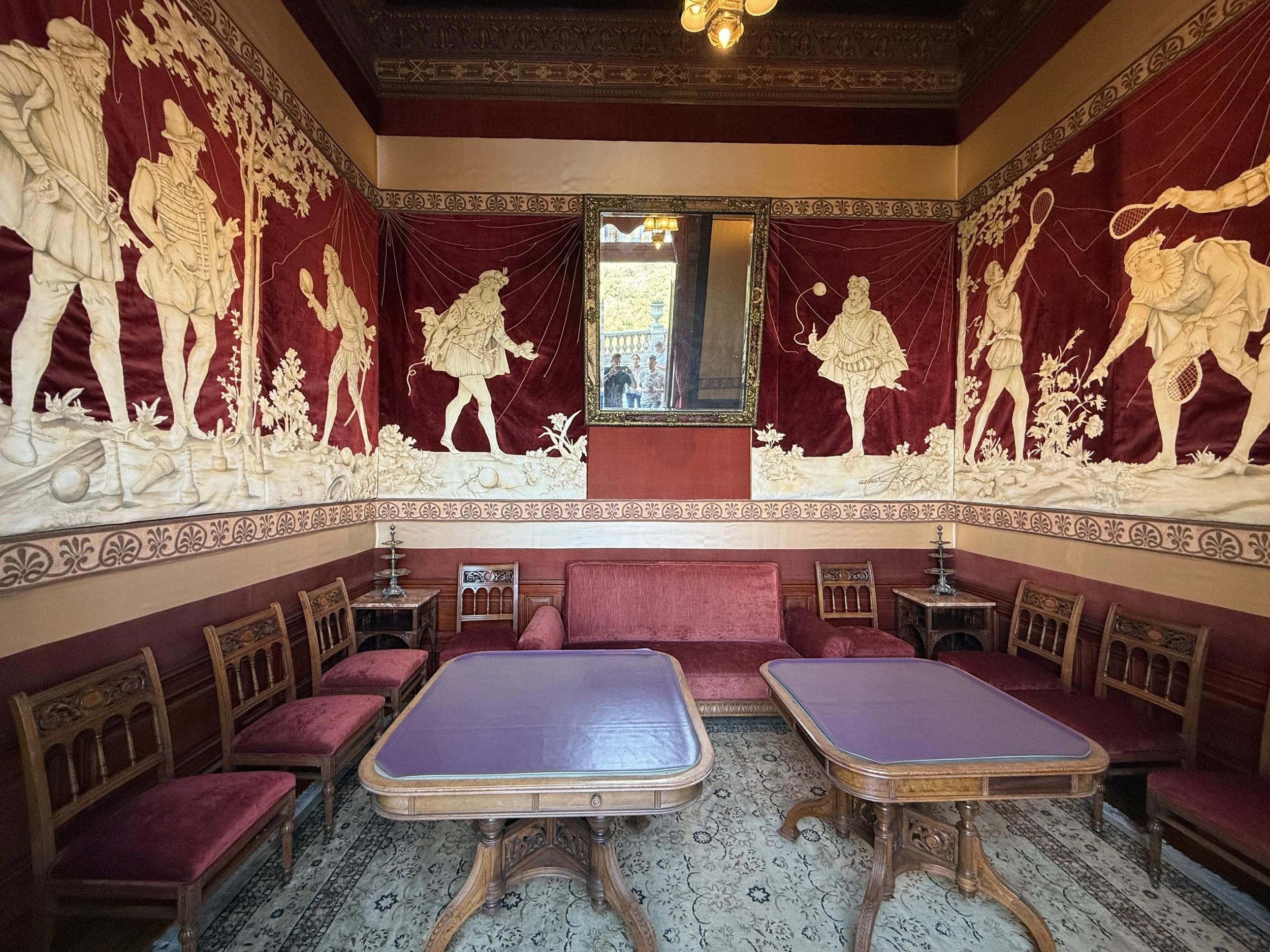
The set of tapestries depicting nobleman playing games, fittingly adorning the Game Room, were a gift from Napoleon III to Maximilian for his birthday.
Salón de Juego (Game Room)
The next room was the Salón de Juego (Game Room), which was about half the size of the Reading Room. Its walls were decorated with scenes of noblemen dressed in elaborate 16th century finery — frilly pleated collars, puffed-out pumpkin breeches and cloaks — engaged in games such as badminton, bilboquet (a cup and ball toy) and the aforementioned skittles.
The overmantle bears the eagle and snake coat of arms, while the sideboard features a pair of putti holding Díaz’s seal, ‘RM,’ which stands for República Mexicana.
Comedor (Dining Room)
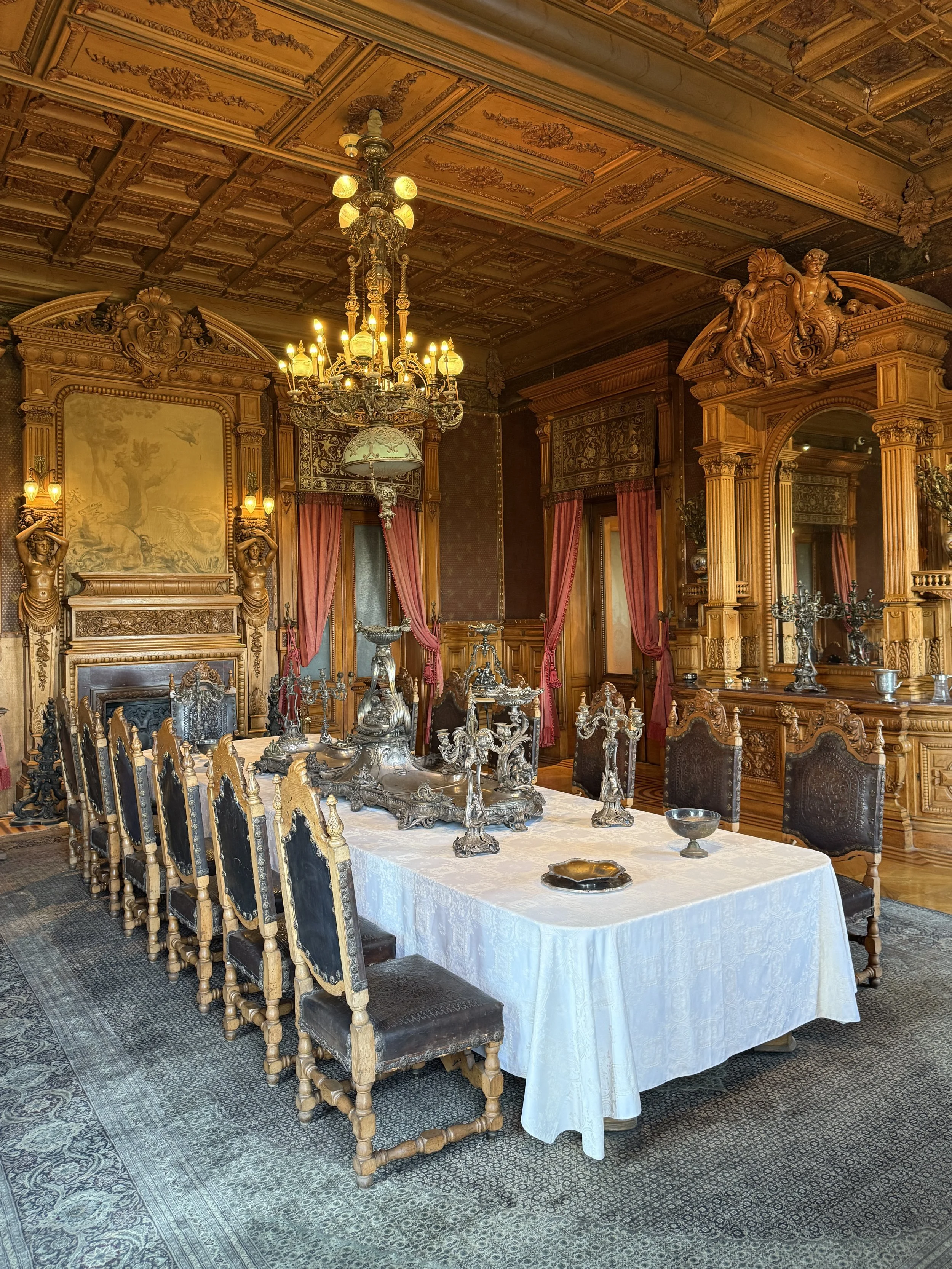
Immediately following was the Comedor, or Dining Room. The fireplace mantelpiece and sideboards, masterfully handcarved from mahogany by Pedro Téllez Toledo and Epitacio Calvo, were commissioned during the 1880s during Díaz’s presidency. Above the topless caryatids, symbolizing Mexico’s agricultural abundance, hung another elegant Aubusson tapestry, this one depicting a fox and a duck.
The dining table was equally impressive. Tooled leather chairs with nailhead studs surrounded it, and the table itself was set with silver-plated serving pieces and candelabra from Maximilian’s own service — crafted by Christofle of Paris, no less, the same silversmith favored by Napoleon III.

The Music Room includes chairs upholstered with tapestries depicting the fables of Jean de La Fontaine and two grand pianos.
Salón de Gobelinos (Hall of Gobelins)
Much to our disappointment, the Salón de Gobelinos (Hall of Gobelins) wasn’t named after mischievous little creatures from folklore, as we had hoped. Instead, it gets its name from the Gobelin family of clothmakers. Their Paris workshop became world-famous, and in this case, the name refers to the aforementioned Aubusson-woven textiles that cover the Louis XV furniture throughout the room.

Gazing back at us from the walls were full-length portraits of Maximiliano and Carlota by German painter Albert Gräfe, alongside those of Napoleon III and his wife, Eugénie de Montijo. In the center of the room stood two grand pianos — one French, the other English — which Maximilian and Charlotte once played.
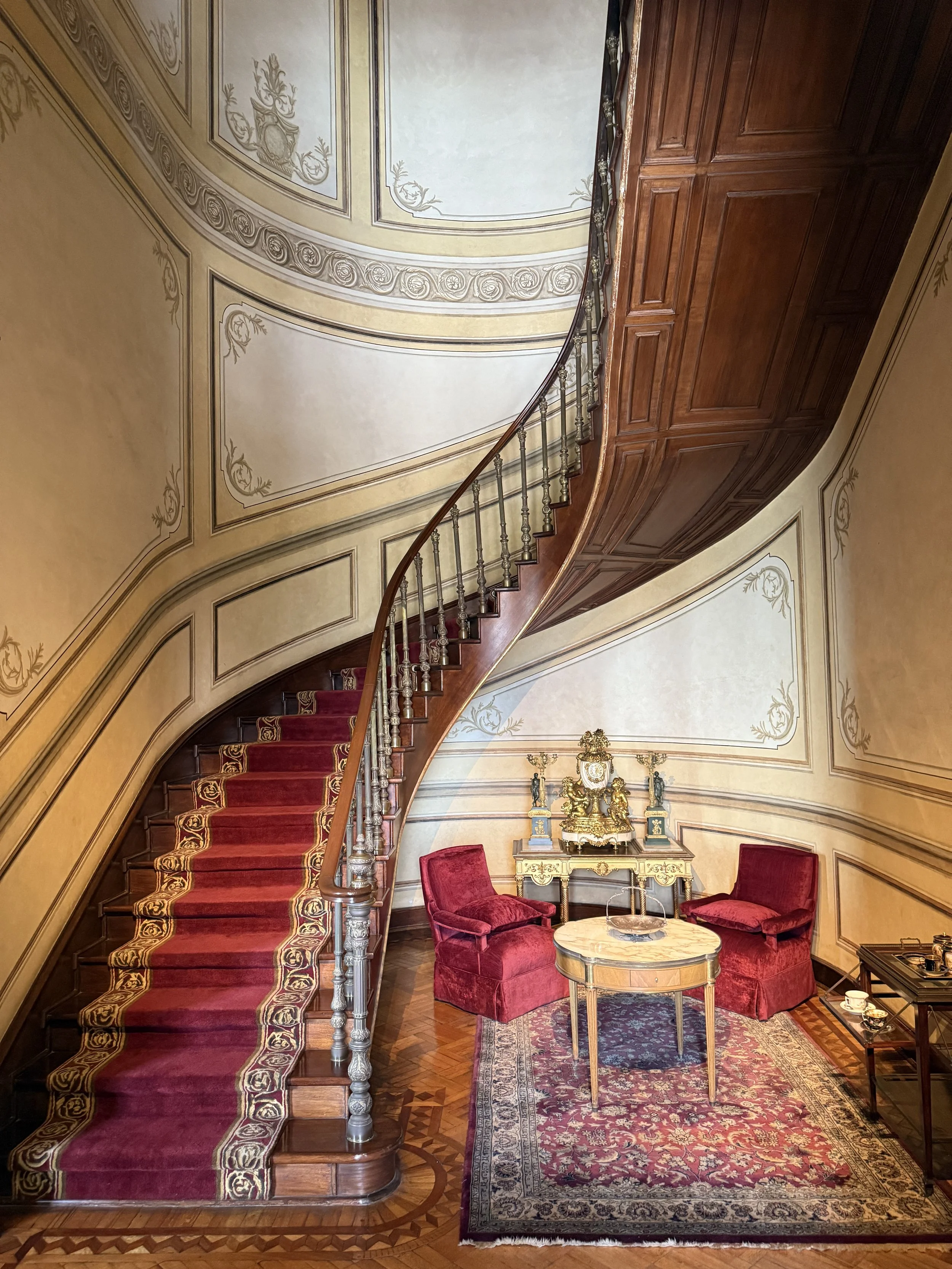
The spiral staircase adjacent to the elevator was designed by architect Antonio Rivas Mercado. He contributed to the castle’s neoclassical design, transforming it into a grand structure suitable for use as a presidential residence and a venue for official events. Mercado’s influence extended beyond architecture, though; while serving as director of the Academy of San Carlos from 1903 to 1912, he was responsible for granting the scholarship that enabled Diego Rivera to study in Europe for several years.

The brass bed in Carlota’s bedroom displays the coat of arms of Maximilian’s empire.
Recámara y Baño de Carlota (Charlotte’s Bedroom and Bathroom)
The Recámara de Carlota (Charlotte’s Bedroom) was the first in a suite of three rooms once used by the empress herself. Decorated in blue and gold, it features Boulle-style furniture, characterized by intricate inlays of tortoiseshell and brass. At the center stood a brass bed, its headboard topped by an oval medallion featuring the coat of arms of the Second Mexican Empire — an eagle and a snake, flanked by two griffins — while the footboard bears the imperial monogram “MIM” for Maximiliano I de Mexico.
Next to the bedroom was the Baño de Carlota, or Charlotte’s Bathroom, where we saw the massive freestanding marble bathtub commissioned by Maximilian for Charlotte. Hewn from a single block of stone, it was produced by the Fratelli Tangassi workshop, an Italian family of alabaster artisans from Volterra, and exported to the castle at great expense. Standing before it, I could only imagine how much water it must have taken to fill.
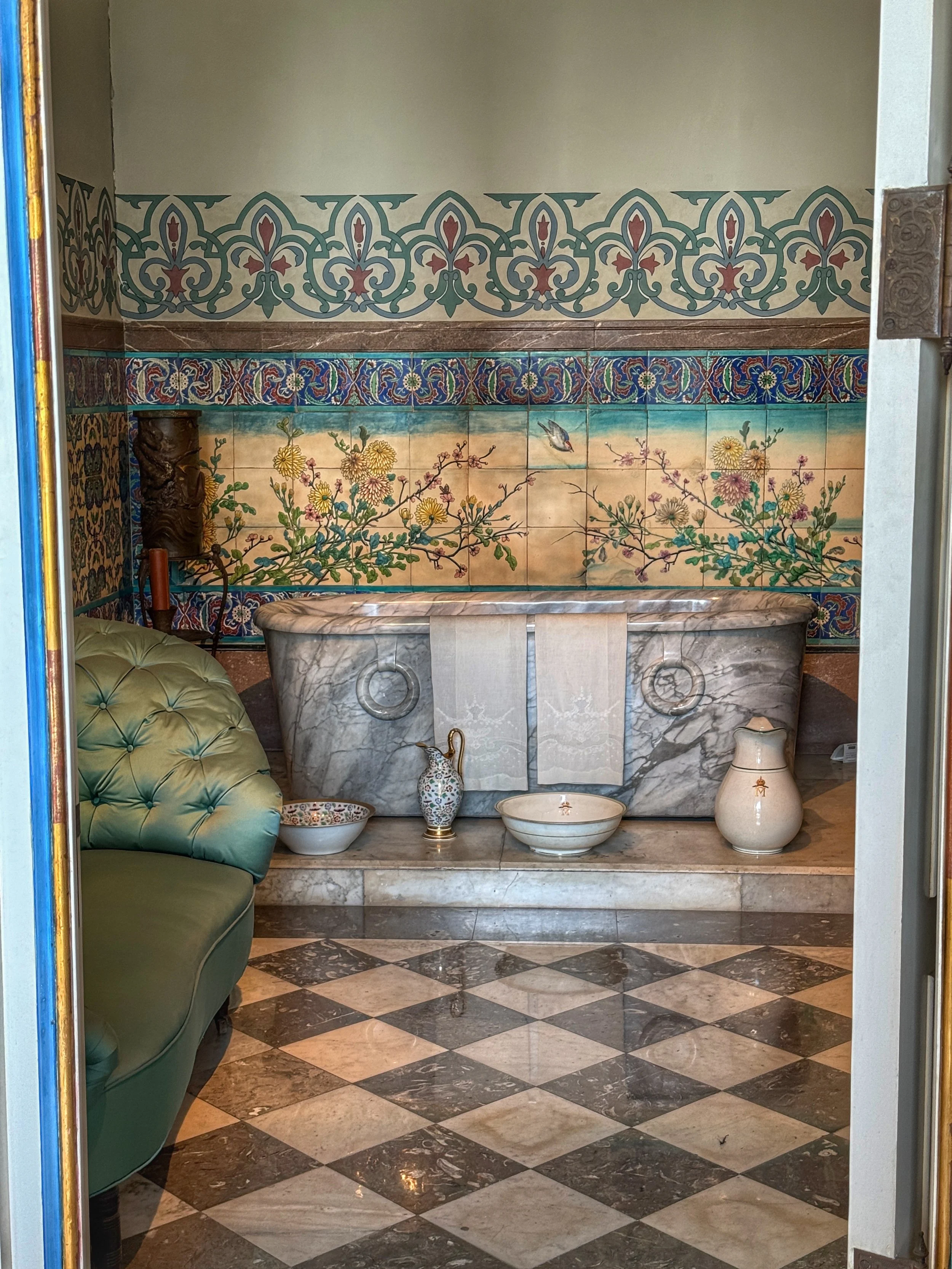
Behind the tub, tiles imported from China were delicately painted with peonies and cherry blossoms.

Charlotte’s sitting room reflected her devout faith, with a rare bust of the Virgin Mary under glass and one of the earliest known images of Our Lady of Guadalupe in the castle’s collection.
Sala de Estar Carlota (Charlotte’s Sitting Room)
Beyond the bathroom was the Sala de Estar Carlota (Charlotte’s Sitting Room).
As a deeply devout Catholic, she saw her role in Mexico as part of a divine mission, her religious devotion merging with a growing sense of connection to her adopted country. The room reflected her spirituality, with a bust of the Virgin Mary under a glass cloche, a painting of St. Peter’s Basilica in Vatican City, and a small painting of the Virgin of Guadalupe, a powerful national and religious symbol in Mexico.
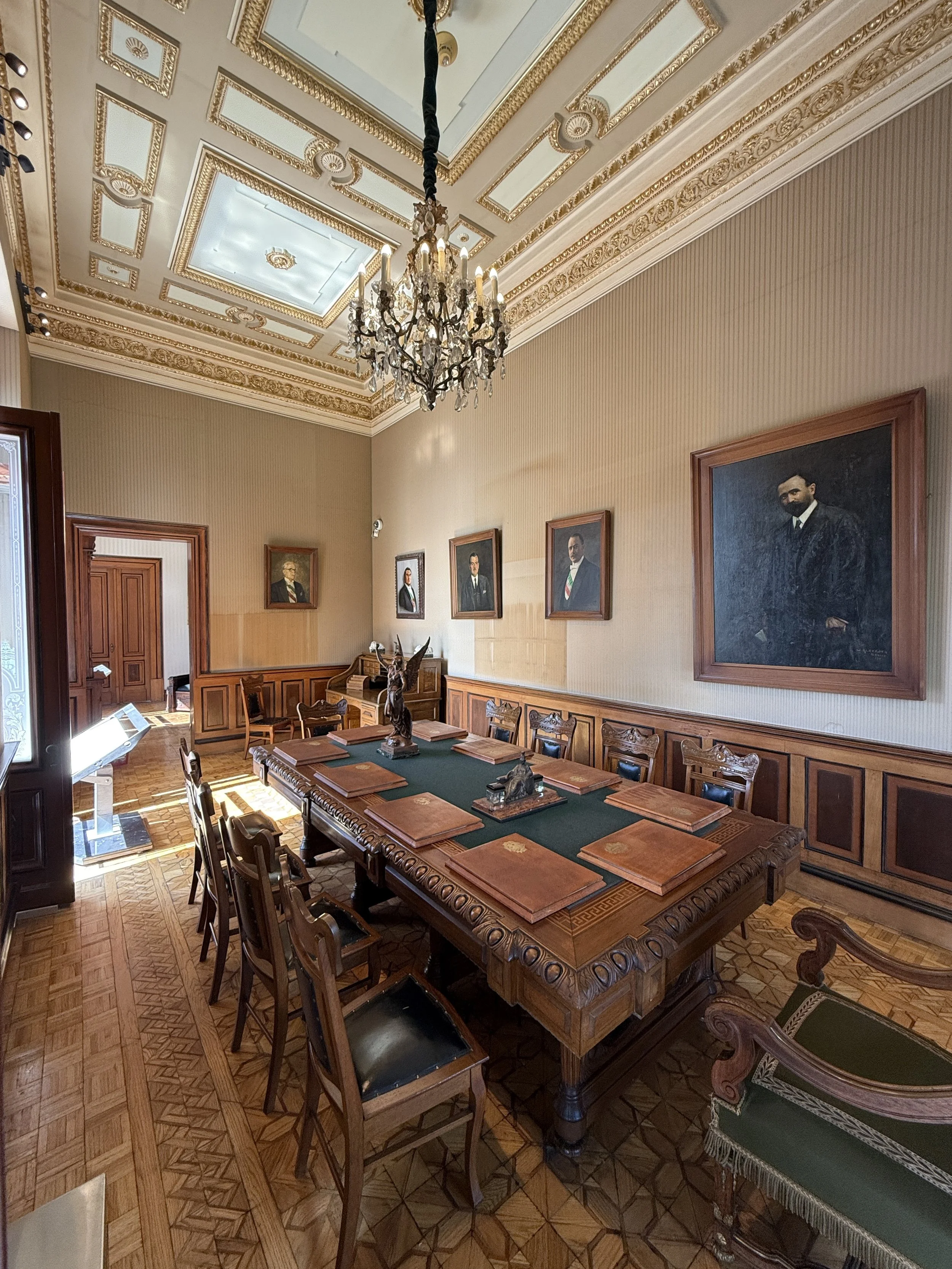
With a green velvet tabletop and portraits of past leaders, the Salón de Acuerdos served as a formal space for cabinet discussions after the castle became the president’s official residence.
Salón de Acuerdos (Meeting Room)
Once Chapultepec Castle became the official presidential residence, there was a need for a dedicated space to receive cabinet members, and that’s where the Salón de Acuerdos (Meeting Room) comes in. Designed in the early 20th century, the green velvet tabletops and portraits of past leaders lining the walls make the room feel very presidential. Among those displayed are Presidents Francesco Madero, Álvaro Obregón, Emilio Portes Gil, Pascual Ortiz Rubio and Lázaro Cardenas.
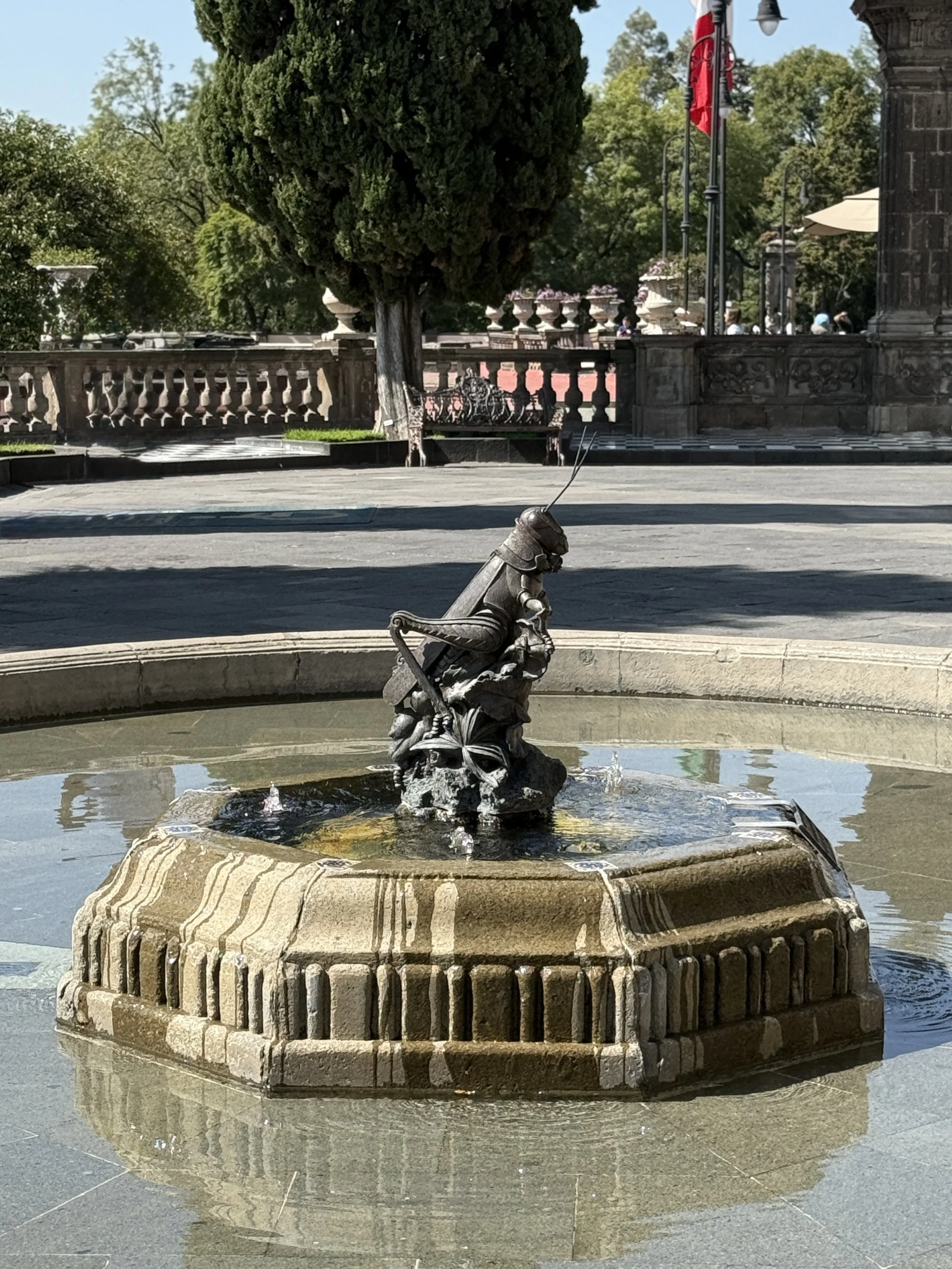
The bronze grasshopper atop the Fuente del Chapulín was sculpted by Luis Albarrán y Pilego and installed in 1924.
Patio del Chapulín (Courtyard of the Grasshopper)
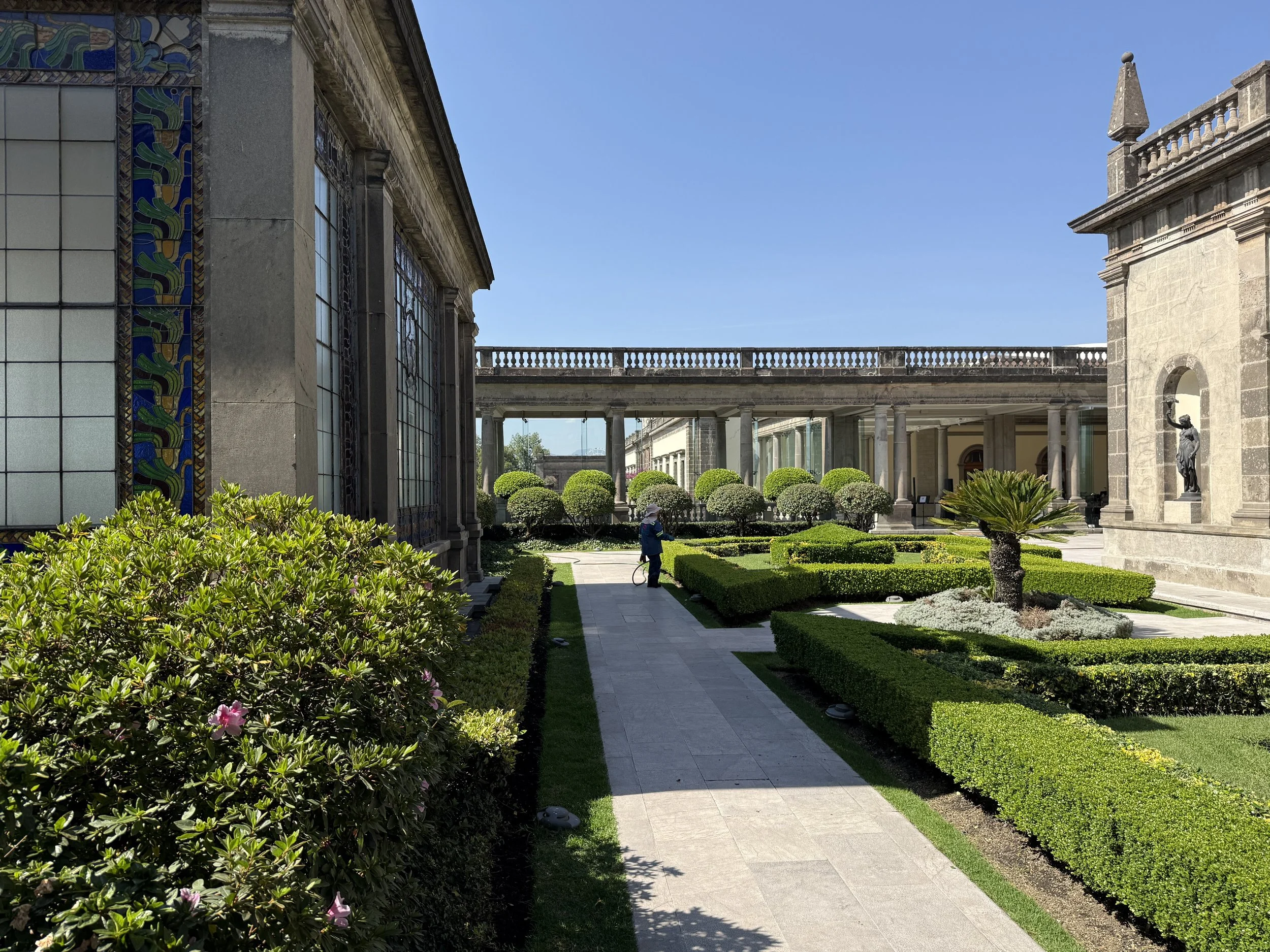
Before climbing to the second floor, we took a moment to explore the Patio del Chapulín (Courtyard of the Grasshopper). Framed by manicured hedges and anchored by the Fuente del Chapulín (Grasshopper Fountain), the courtyard opens onto a balcony terrace with breathtaking views of Mexico City below.

Six statues dedicated to the Niños Héroes stand atop the balustrade at the edge of the Patio del Chapulín.
Standing atop the terrace balustrade are six statues of the Niños Héroes, created in 1942 by artist Armando Quezada Medrano. They depict the young military cadets who died defending Mexico during the Battle of Chapultepec on September 13, 1847, during the Mexican–American War. Note that these figures are separate from the Altar a la Patria (Altar to the Homeland) monument, also located in Chapultepec Park, although both honor the same brave cadets.
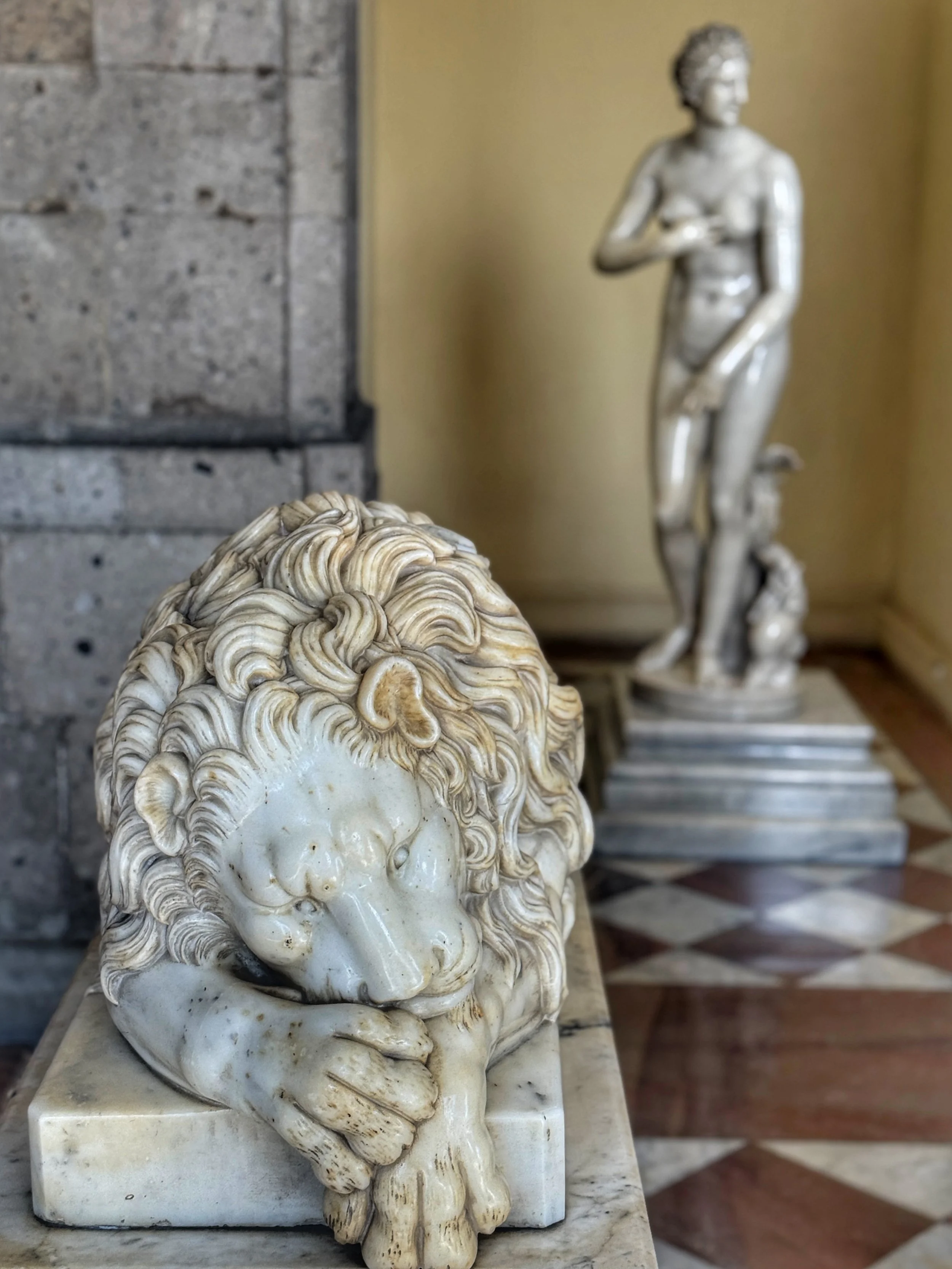
The sweeping Escalera de Leones (Lion’s Staircase) links the first floor to the terraced gardens above. Its steps, carved from Carrara marble, are flanked at the base by two marble lions modeled after Antonio Canova’s monumental mausoleum for Pope Clement XIII in St. Peter’s Basilica at the Vatican. One rests peacefully, while the other stands watchful and alert.

The Escalera de Leones leads to the rooftop gardens and includes stained glass windows installed during the presidency of Venustiano Carranza.
At the top of the staircase, stained glass windows installed during the presidency of Venustiano Carranza (1859–1920) protect the stairwell from the elements. Their designs feature floral and vegetal patterns inspired by the Mexican landscape. One window depicts the glyph of a chapulín (a grasshopper, running with the theme), perched on a hill with flowing water beneath it. The other showcases the Mexican coat of arms.

Above the treetops, the Tall Knight keeps watch — first as a military tower, then as Mexico’s gaze turned skyward in 1877, becoming a short-lived but advanced observatory.
Rooftop Gardens
Just beyond are the rooftop gardens designed by Austrian botanist Wilhelm Knechtel during the reign of Emperor Maximilian. At its center stands a tower called the Caballero Alto (Tall Knight), surrounded by neatly trimmed hedges and classical statues. This structure, built around 1842 as part of the Military College, was briefly repurposed in 1877 as an astronomical observatory, complete with meteorological instruments considered cutting-edge for the time.

Designed in the 1860s by Austrian botanist Wilhelm Knechtel, these rooftop gardens were part of Maximilian’s vision to bring European elegance to Chapultepec Castle.
Adorning the walls of the elevated garden are colorful frescoes of bacchantes — female followers of Bacchus, the Roman god of wine. Painted in the Pompeian style, these works were created by Santiago Rebull, the court painter of Maximilian and one of the few individuals close to the monarchy who managed to remain in Mexico and even thrive in the subsequent decades under the Republic. He completed four of the figures between 1865 and 1866 during Maximilian’s reign, and nearly three decades later, painted the remaining two in 1894 under the Díaz administration.

Nip slip! The bacchae depicted on the walls of the upper terrace were painted by Santiago Rebull in the Neoclassical style, inspired by the 18th century rediscovery of the ancient ruins at Pompeii and Herculaneum.
The day Wally and I visited, an orchestra and a vocalist were rehearsing an aria beneath the terrace pavilion.
Díaz and Chapultepec Castle
During his extended rule as president, Díaz was determined to position Mexico as a modern, forward-thinking nation, and the castle became part of that vision. Under his direction, Chapultepec Castle saw some major upgrades, including the installation of its very first elevator in 1900. It connected the basement, main floor and rooftop, and at the time, it was cutting-edge. In fact, the castle was one of the first buildings in all of Mexico to be outfitted with electricity.

Díaz’s bedroom was appointed in French style with Louis XVI furniture.
Recámara de Porfirio Díaz (Bedroom of Porfirio Díaz)
Inside, the Recámara de Porfirio Díaz (Bedroom of Porfirio Díaz) reflects a refined French taste. Though not as lavish as Charlotte’s quarters downstairs, it still impresses with its Louis XVI furnishings: a stately mahogany bed and a pair of cream-colored slipper chairs with scrolled backs and elegant fringe.
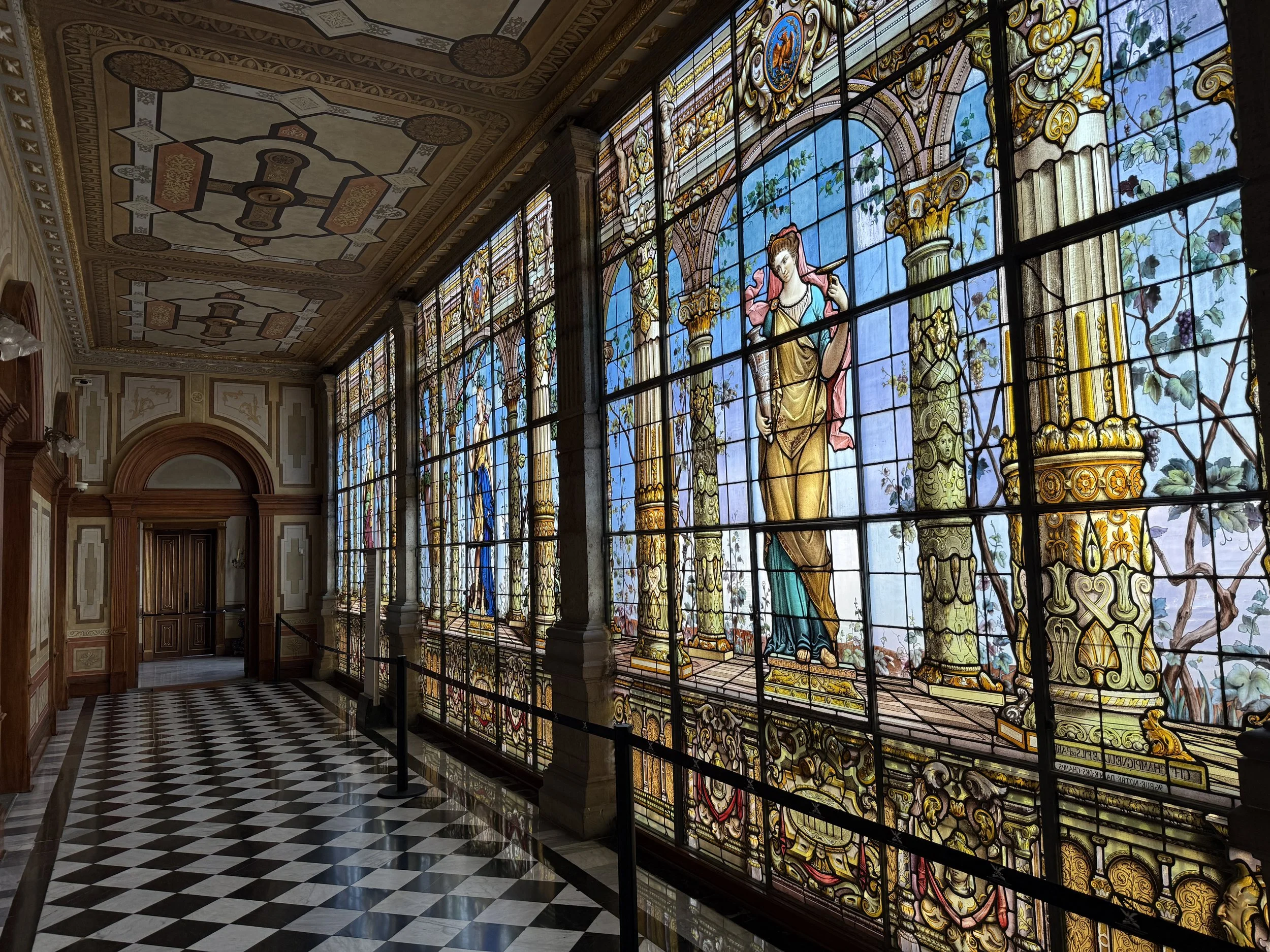
The Galería de Emplomados is lined with stained glass windows created by the French firm Champigneulle Fils, and were installed in 1901.
Galería de Emplomados (Stained Glass Gallery)
Beyond Díaz’s bedroom is the Galería de Emplomados (Stained Glass Gallery). Installed in 1901, the grand corridor features five stained glass windows crafted by the renowned French firm Champigneulle Fils, celebrated for their work in churches, palaces, and civic buildings across Europe and Latin America. Spanning nearly 800 square feet, the windows cover half the length and height of the Alcázar’s eastern elevation. Each depicts a nature goddess: Pomona (goddess of fruits), Flora (goddess of flowers), Hebe (bearer of divine nectar and grantor of eternal youth), Diana (goddess of the hunt), and Ceres (goddess of agriculture).
It would have been the perfect photo op — if not for one particularly self-important visitor, who had commandeered the gallery, barking orders at her poor friend and critiquing every shot like she was Anna Wintour on a Vogue editorial shoot.

The Salón de Embajadores features furniture in the Louis XVI style and plaster painted to look like marble.
Salón de Embajadores (Hall of Ambassadors)
The final Díaz-period room we peered into was the Salón de Embajadores (Hall of Ambassadors) a French-inspired room where Díaz met with diplomats to discuss international relations. Originally Charlotte’s study, the room was repurposed by Díaz as Mexico gained prominence on the world stage, and the castle became a key venue for hosting foreign dignitaries.
Designer Epitacio Calvo incorporated Baroque and French Neoclassical styles into the room’s furnishings.
Plan Your Visit
The weather couldn’t have been better for our visit to this incredible landmark. We spent hours exploring its magnificent halls, grand stairways and stunning rooms, not to mention the breathtaking views from the top of Chapultepec Hill. If you’re in Mexico City, this place is an absolute must-see.
Hours:
Monday: Closed
Tuesday–Sunday: 9 a.m.–5 p.m. (Note: The museum begins clearing rooms at 4:45 p.m.)
Admission:
100 MXN (about $5.50)
Free every day for children under 13, seniors 60+, students, teachers, pensioners/retirees, and visitors with disabilities with valid ID
Free on Sundays for Mexican nationals and residents
Ticket Purchase:
Tickets are sold at the bottom of the hill before the ramp — there aren’t ticket booths at the castle entrance.
You can buy your tickets online as well.
Accessibility:
The castle offers ramps, elevators and loaner wheelchairs.
Visitors with disabilities or those seeking adapted educational tours can arrange assistance by emailing difusion.mnh@inah.gob.mx.
Food & Drink:
Food and beverages aren’t permitted inside the castle. You must leave these in a locker at the bottom of the hill. Plan to eat and hydrate before or after your visit.

Chapultepec Castle
Primera Sección del Bosque de Chapultepec s/n
San Miguel Chapultepec
Mexico City 11580
Mexico