Is It Safe to Travel to Egypt?

Turns out it might actually be the best time to visit the temples and pyramids at Karnak, Luxor and the Valley of the Kings. Tourism has suffered — which makes for less crowds.

Margaret riding a camel at the Pyramids of Giza

Visiting Egypt has always been a dream for us. In fact, little Duke created a set a laminated cards to teach people about Egyptian gods and games.

He pretended the lean-to in the backyard was a pyramid.

He even pickled dead birds (naming them all Birda) and wrapped them in tin foil as an attempt to mummify them.

And when his family visited Toronto, Canada, Duke wanted nothing more than to see the King Tut exhibit.

There’s an embarrassment of riches. Everywhere we turned, there was something amazing that had been built two or three or four thousand years ago.

I was lucky enough to see it in Seattle, Washington, where I grew up.

But Duke’s parents thought the tickets were too expensive. A kind museum guard took pity on the heartbroken little boy and let Duke watch his monitor as the security cameras switched from room to room. In this way, Duke sort of got to see the Tutankhamun exhibit.

Entrance to the main temple at Abu Simbel

The two of us have traveled some places that could be considered dangerous (there was a café bombing in Jemaa el-Fnaa, the main square in Marrakech, Morocco, the year before we visited, for example). But for some reason, both of us are intimidated by Egypt. I had such high hopes for the Arab Spring, but the world just seems such a mess now.

So I’m always happy to hear about people who have gone somewhere we’ve avoided, like my friend and coworker Margaret. She was astounded by the sights in Egypt — and enjoyed how empty many of the tourist sites were (though she felt sorry for the locals who are dependent upon tourism).

Moral of the story: There’s only one place where a Wonder of the Ancient World still stands. And there’s no reason not to go.

Here’s Margaret’s interview about her trip, accompanied by her father David’s amazing photography. –Wally

Carriages are an alternative to camels when visiting the pyramids

What made you go to Egypt?

I visited Egypt in the spring of 2016 because my cousin was living there at the time. She was teaching at a school in Cairo, but after nearly five years in Egypt, she was preparing to move on. So it was basically my last chance to visit with a built-in guide. I traveled with my dad, who had always dreamed of visiting the pyramids, along with my uncle, another cousin and a family friend.

A colorful fruit stand in downtown Cairo

What was your itinerary?

We made Cairo our home base, spending most of our time there. But we did travel to Upper Egypt (which, confusingly, is the southern part of the country) to visit Luxor and Aswan.

In Luxor we visited Luxor Temple, the Valley of the Kings (which houses 60-some tombs including King Tut’s), Karnak Temple and the Mortuary Temple of Hatshepsut.

Our intrepid adventurer in the Mortuary Temple of Hatshepsut, the only female pharaoh

While we were in Upper Egypt, we took a military convoy to visit Abu Simbel, which are absolutely awe-inspiring temples carved into the mountain around 1257 BCE.


With all the turmoil going on, were you nervous at all?

I wasn’t particularly nervous, no. My cousin and several family members had visited Cairo over the last few years and never encountered any problems.

I was a little concerned about being hassled or harassed in the streets, especially after reading all the warnings in guidebooks. But I was pleasantly surprised by how much people left us alone.


Did you ever feel in danger?

No, I never felt like I was in danger. There is a military/police presence everywhere, and an intense focus on protecting foreigners.

It was a little disarming to pass through metal detectors to go in and out of hotels or museums, but at the same time, it gave you the perception that there was a lot of security.

That said, there were a few instances that reminded us that we were visiting what most consider a military dictatorship. For example, one night we had drinks at sunset at a decaying restaurant/bar built into the Mokattam Hills surrounding Cairo. It was beautiful looking down at the city as thousands of green minarets lit up with the call to prayer, and we were taking lots of photos. The staff warned us not to take any photos to our right, as we were situated over a military facility. It was sobering to imagine what might be happening down there, but as tourists, we clearly weren’t at any direct risk at all.

Margaret’s father, who took all of these photos, jokes that this guy was searching for Pokémon on his phone

What was the best part of your trip?

This is hard, as it was truly a trip of a lifetime. In Luxor, we visited 3,000-year-old statues that were only discovered several years ago, our guide informed us. And the famous avenue of sphinxes at Luxor Temple is only partially uncovered — they simply haven’t been able to dig them all up yet.

That kind of sums up the embarrassment of riches. It felt like everywhere we turned, there was something amazing that had been built two or three or four thousand years ago.

The pyramids, of course, rise to the top. They are much bigger and more impressive than you could have imagined.

I was also shocked by the gorgeous carvings and paintings in the tombs in Luxor. Miraculously, their paint is still bright red, blue and yellow, some thousands of years after they were created.


What was the worst part?

Tourism used to make up a good share of Egypt’s economy, but it has taken a steep decline in the last few years. As a result, we did face a lot of attention from vendors at the tourist sites and museums trying to sell us their products or get us to take a picture with them and their camels (for a tip).

It was a little frustrating constantly getting hassled at these sites and in markets or souks, but at the same time, I understood why they were doing it. As several people explained to us, they were struggling to make ends meet for their families, given the lack of tourists.


What was the food like?

We ate a lot of familiar Middle Eastern staples like hummus, tabbouleh, lentils, grilled meats and bread. Because of the lush Nile delta, the fruits are really fresh and delicious.

There are very few bars in Cairo, given its conservative Muslim majority, but my cousin did take us to some wonderful places that felt stuck in time, and in those dark, fading establishments, we drank Sakara beer and ate fava beans.

Ahoy! The captain of a felucca on the Nile River

One afternoon, we picked up Egyptian potato chips to bring with us on a felucca sailboat ride on the Nile, sharing them with our boat captain, who stood at the stern and pushed us along with a long wooden stick.

Take a felucca sailboat ride to see the grandeur of the Nile

Another day, we stopped for tea in the famous Khan El-Khalili, sitting in carved wooden chairs amid the bustle of the market, which sells ornate lanterns, carvings of all kinds and antiquities both fake and real.

All this to say for me, as someone obsessed with food of all kinds, the joy of eating in Egypt was more about the experience than the food itself.


How were the people?

They were friendly, open, curious and funny.

We were lucky enough to hire Egyptian guides and drivers to show us around the various sites, all of whom were generous with their time and knowledge about their culture. I loved seeing their pride and enthusiasm about the truly remarkable feats of their ancestors.

Everyone was happy to see Americans visiting again, since there has been such a steep dropoff in tourism, and they were incredibly accommodating to us wherever we went.

I did get a fair amount of stares and a few marriage proposals, but it never bothered me too much. And so many people wanted to get their pictures taken with us, which made me feel like a celebrity. For some reason, lots of mothers gave their babies to my very tall dad to hold, apparently to bring them luck? I never did fully understand that, but I loved their openness.

I did get a fair amount of stares and a few marriage proposals, but it never bothered me too much.

The Strange History of Valentine’s Day

From Lupercalia, where young men whipped eager women in the streets of ancient Rome, to St. Valentine’s secret weddings.

Valentine's Day wasn't always about cupids and hearts — or even love.

Valentine’s Day is much more than just conversation hearts, boxes of chocolates, flowers and cards. There are some downright outlandish origins to this holiday.

After the flagellation ceremony, men would draw women’s names from an urn — and that would be their sexual partner for the year.

Valentine’s Day dates back to a couple of Roman festivals.

The Romans celebrated two ritual festivals that formed the foundation for the holiday we know as Valentine’s Day. Februalia was a purification rite, which occurred on February 14 and gave the month of February its name. It was later combined with Lupercalia, which took place on February 15.

Valentine’s Day as we know it began with an unusual Roman fertility rite.

The crazed men, nude save for a goatskin loincloth, would take the hides of slain animals cut into strips and flagellate the women of the village in hopes of bestowing fertility.

This someecard points out just how strange Lupercalia was.

Lupercalia involved some bizarre practices, including beating women with animal pelts.

For this affair, young Roman men would congregate in the Lupercal, the sacred cave in the mountains where Romulus and Remus, the twins who suckled the she-wolf Lupa, were supposedly reared. Romulus would later found Rome and sacrifice Remus, but that’s another story.

The Luperci, the Brotherhood of the Wolf, would sacrifice a dog for purity and a goat for fertility.

Ancient Romans believed being whipped by blood-soaked animal skins would help you get knocked up.

The crazed men, nude save for a goatskin loincloth, would take the hides of the slain animals that had been cut into strips and flagellate the women of the village in hopes of bestowing fertility.


Saint Valentine has become the patron saint of love.

Valentine was also the patron saint of epileptics.

Saint Valentine performed secret marriages when the institution was outlawed.

In this painting by David Teniers III, Valentine receives a rosary from the Virgin Mary.

During the 3rd century CE, Roman Emperor Claudius II, wanting to increase the size and strength of his military empire, saw marriage as an obstacle. He believed that men were unwilling to fight due to their strong attachment to their wives and families. In an effort to circumvent this, he forbade all future marriages and engagements.

Whether Valentine was a bishop or priest has been lost to history, but he began performing clandestine ceremonies. He was soon discovered and imprisoned for his betrayal.

His legend is associated with having sent a note to his jailer’s daughter on the eve of his execution, signed, “From Your Valentine.” No historical evidence exists to back the authenticity of this story, though.
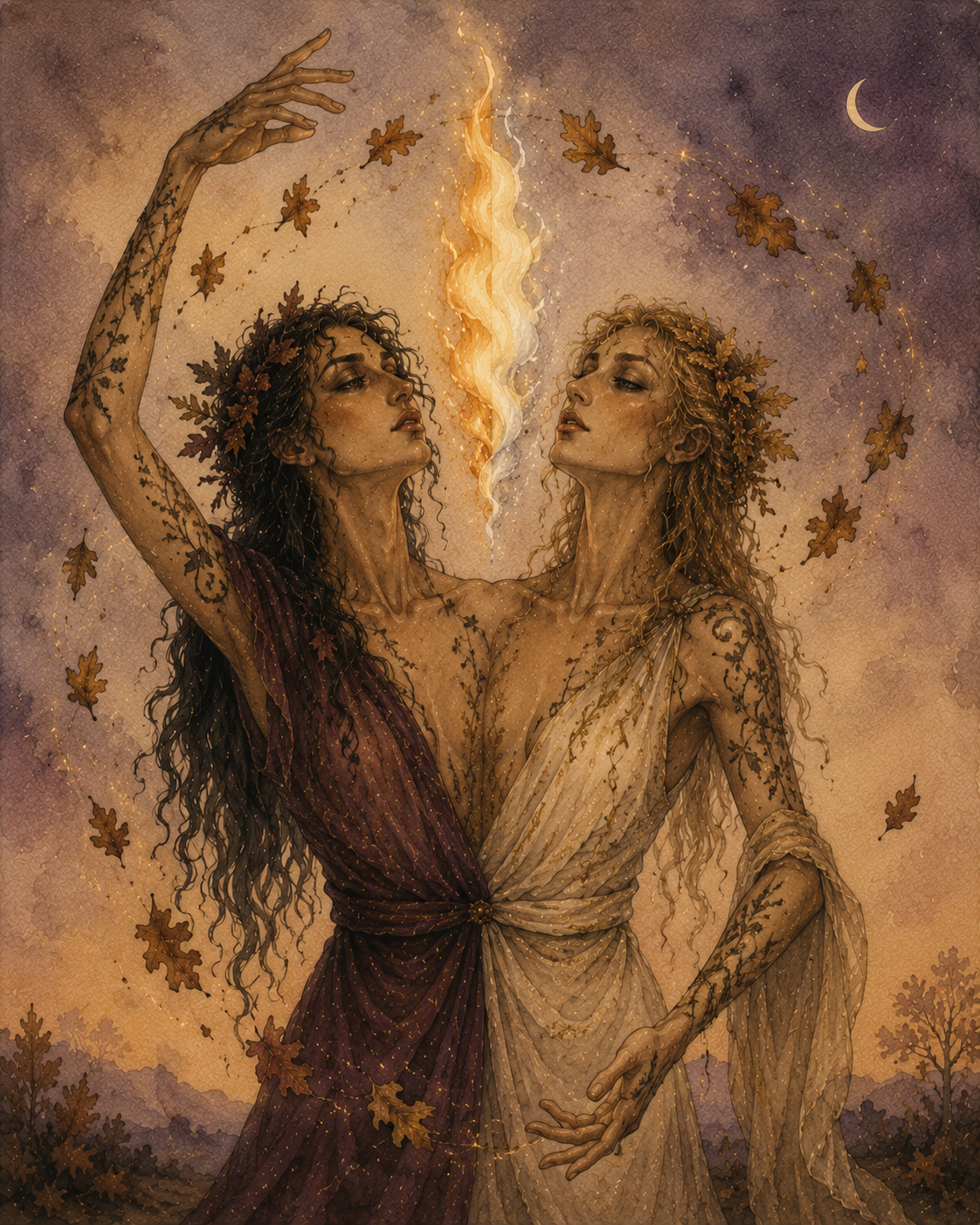
Valentine was beheaded, died a martyr and in death was elevated to the patron saint of love.

The skull of Saint Valentine resides in the Basilica of Santa Maria in Cosmedin in Rome, Italy.

Pope Gelasius I used an ingenious sleight of hand, merging the pagan Lupercalia with the feast of Saint Valentine into a single holiday celebrated on February 14.


The Cadbury boys found a way to extract a delicious byproduct of cocoa — what we know know and love as chocolate.

Cadbury created the first chocolate candies — and the first heart-shaped box of chocolates.

One of the first heart-shaped box of chocolates

In 1824, John Cadbury, an English proprietor and founder of the Cadbury candy empire, opened a tea and coffee shop in Bournville, Birmingham, England. His shop also sold drinking chocolate, which he prepared using a mortar and pestle. This was a luxury item even among the upper class. The resulting beverage was coarse and grainy but popular.

A vintage ad for Cadbury chocolate

Cadbury’s sons Richard and George visited the Van Houten factory in Amsterdam, the Netherlands, which specialized in the manufacture of cocoa powder. The brothers integrated this method into their manufacturing facility. The process allowed them to extract pure cocoa butter from pressing cocoa beans and adding sugar, reducing its bitter taste. Cadbury used this byproduct to produce several varieties of “eating chocolates.”
The retail division of the business was passed on to Richard in 1861, who recognized a great marketing opportunity and revolutionized sales by packaging Cadbury chocolates in the world’s first heart-shaped box for Valentine’s Day. The box could be kept and used to store mementos after the chocolates had been eaten.


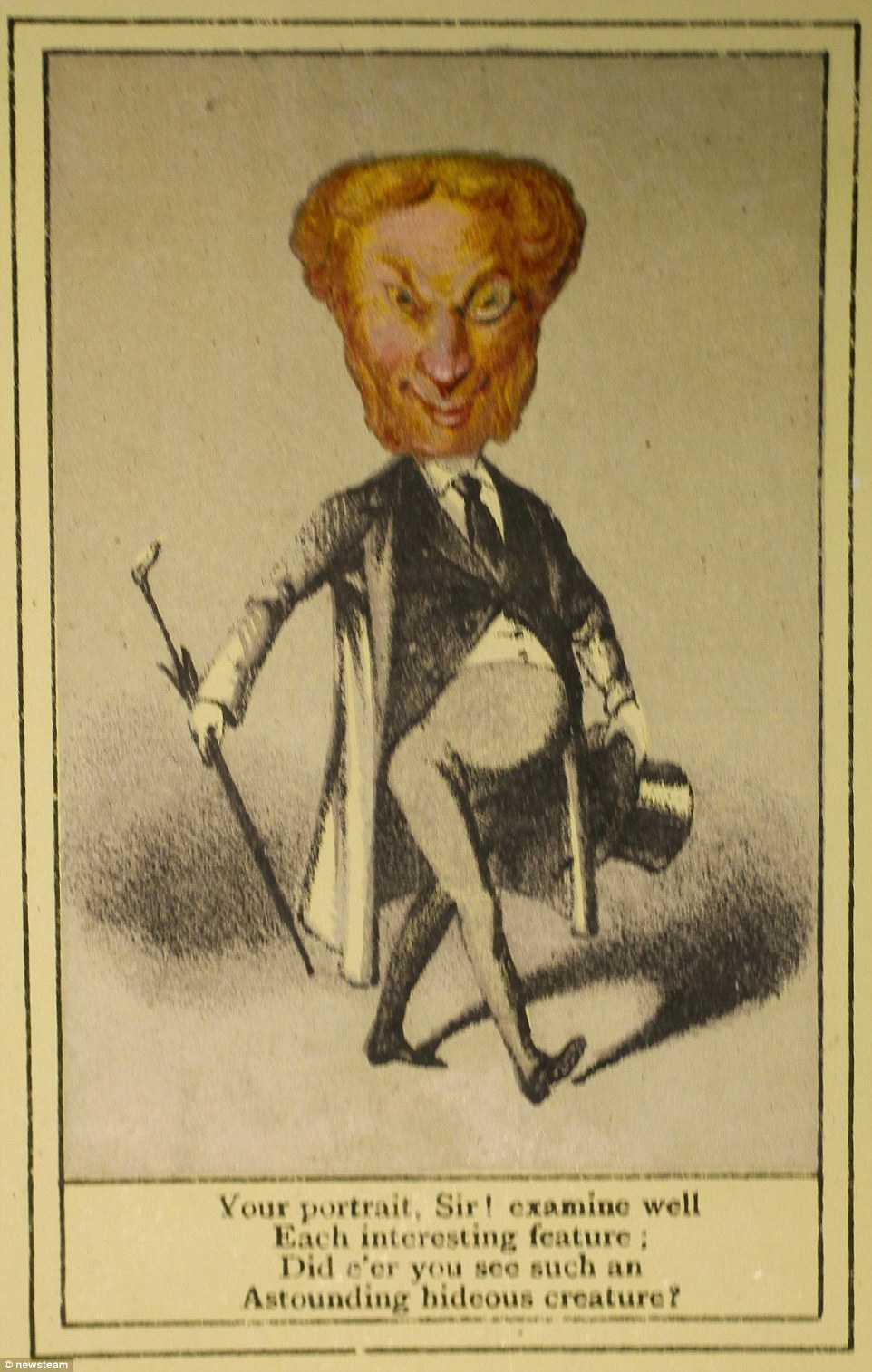
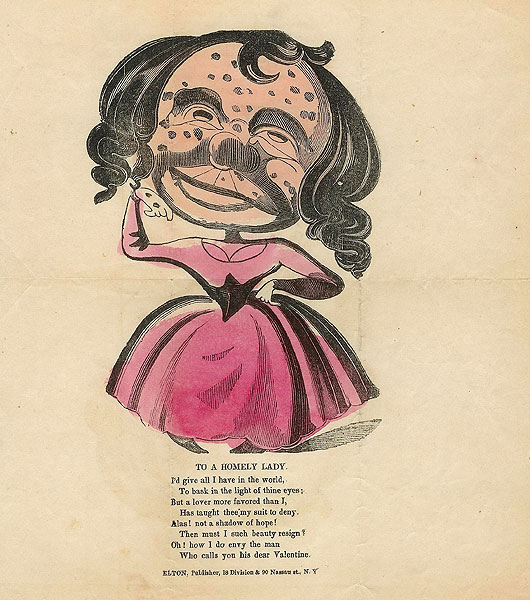
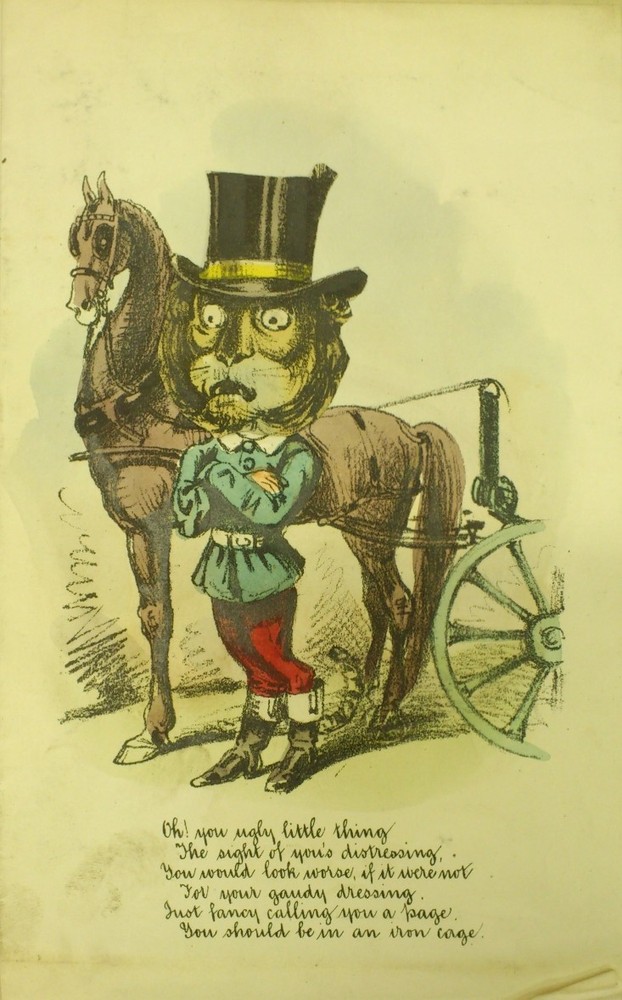
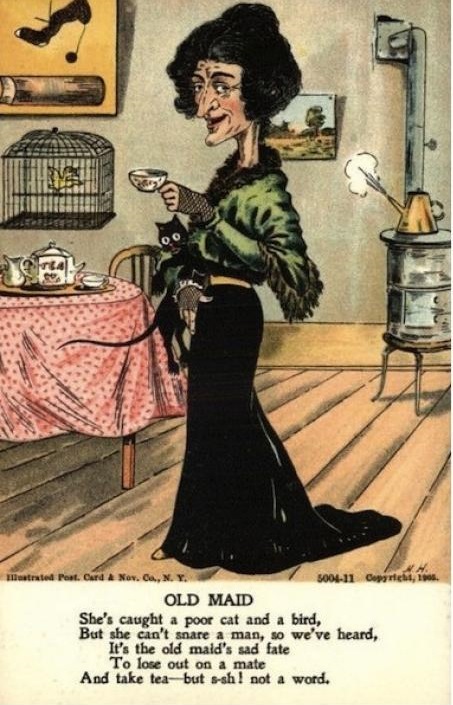
Victorians began the tradition of sending valentines — some of which were downright cruel.

Do you remember making a mailbox to hold your cards and exchanging valentines with your classmates in elementary school, or perhaps receiving a pink or red carnation in high school? I did accrue a fair amount of cards through my formative years, though I do remember wishing I would get a carnation from a secret admirer.

Valentines pre-date Hallmark and were the preferred token to celebrate romantic love by the prudish 19th century Victorians in England. The first mass-market cards were introduced then, and the penny post made it possible to send them easily and inexpensively.

Plus, you could send notes anonymously, something the Victorians prized. This allowed them not only to exchange serious or humorous cards but downright mean-spirited ones as well, aptly called vinegar valentines.

“Senders would use the anonymity of the card to comment on the inappropriate behavior of a couple or the distasteful political views of a feminist friend,” Slate writes. “Women seemed to be the targets of many of the surviving examples, but balding men, pretentious artists and poets, and smelly fat guys made appearances as well.”

So the next time you send a valentine to a loved one, think about how whipped women, a beheaded saint and mean, anonymous cards are all part of this holiday. –Duke

The Gullah History of Hilton Head Island

A Civil War battle in Port Royal, South Carolina, the first ex-slaves to be paid wages and a Reconstruction village all play a part in this African-American community’s heritage.

The Gullahs of Hilton Head Island were descended from African slaves and are a key part of the history of the Civil War and Restoration

We liked him right from the get-go. He had a great sense of humor and has been a part of the Gullah community his whole life.

“My name’s Irvin Campbell — but you can call me Irv,” he said.

The blacks on Hilton Head Island were the very first former slaves to earn wages and actually get paid for their labor.

My mom had suggested we take the Gullah Heritage Tour, a two-hour bus ride around Hilton Head Island, South Carolina that highlights a vibrant African-American community.

“The Gullah people are the descendants of the slaves who worked on the rice plantations in South Carolina and Georgia,” said historian Joseph Opala. “They still live in rural communities in the coastal region and on the Sea Islands of those two states, and they still retain many elements of African language and culture.”

The Gullah Heritage Corridor stretches from St. Augustine, Florida up to Wilmington, North Carolina, and Hilton Head Island played a key role in the community.

Not so long ago, Gullahs owned much of the land on the 26,880-acre isle. Today, they own less than 1,000, Irv informed us.


The name Gullah comes from a corruption of their original African tribe.

These descendents of West African slaves take their name from the Gola or Gula tribe from Liberia and Sierra Leone. They settled on the 100 Sea Islands in the Hilton Head area. After the Civil War, more than 1,200 freed slaves remained.


Gullahs are also called Geechees.

The word is synonymous with Gullah. It means “living by the water,” according to Irv.

Gullah tends to be used more often to describe those living in South Carolina, and Geechee for those in Georgia.


Union troops quickly took over Hilton Head Island from the Confederacy during the Battle of Port Royal

The heart of the Battle of Port Royal only took about five hours.

During the American Civil War, Union troops wanted to stop trade in the Confederacy, which led to an attack at Port Royal Sound, off of Hilton Head Island.

It didn’t take Union troops long to gain control of the island, according to Irv. “They didn’t have any opposition,” he said.


The Port Royal Experiment involved paying freed slaves for the first time — right near the start of the Civil War.

When the Union Army occupied South Carolina’s Sea Islands, including Hilton Head, on November 7, 1861, it freed about 10,000 slaves. Keep in mind that this was all near the beginning of the Civil War.

The Confederate Army and the white plantation owners hightailed it out of there, and the Union Army found itself in possession of a region famous for growing cotton.

It decided upon the novel idea of an “experiment”: Try paying wages to these contrabands (the awful word used to describe slaves freed by Union forces as well as for those who had escaped). The blacks on Hilton Head Island were the very first former slaves to earn wages and actually get paid for their labor.

Missionaries, teachers, doctors and ministers came from New York and Pennsylvania to educate and help shape the African-American community.


The Gullah community used to look after its own.

In the Gullah communities that developed on Hilton Head, everything was shared, and everyone knew each other.

“We’d catch enough fish to feed those families who didn’t have a boat. We took care of each other,” Irv told us.

That's not the case any longer, he added.


Hilton Head Island really changed when the bridge to the mainland was built. (And changed again with the Cross Island Parkway.)

After the Civil War ended, Union soldiers auctioned off the island, according to Irv. Northern businessmen, called carpetbaggers for the soft-sided bags they traveled with, bought the entire island and sold it off. Many Gullah families purchased acreages, and for nearly a century, they farmed their land.

But once the bridge that connected the island to mainland was built in 1956, there was an influx of people to the island.

“That’s when families started locking their doors” (which comes out sounding like doe), Irv told us.

There used to be just one paved thoroughfare on the entire island. “We called it the Tar Road,” Irv said.

Later, in 1989, the Cross Island Parkway was constructed, making Hilton Head even more accessible to the vacationers (many from Ohio, as it’s about the max you’d be able to drive in a day) that now flock here every summer.


A Mitchelville family poses with a Union soldier

The Reconstruction after the Civil War began on Hilton Head Island at Mitchelville.

In what is now called Fish Haul Creek Park on the “heel” of the island, the community of Mitchelville was created. The government provided freedmen a quarter of an acre of land and the materials to build a 22-by-18-foot house. I couldn’t get over how small that really is. I had a hard time imagining even one person having room to lie down to sleep in a space of that size — especially if there was a stove or table or any other piece of furniture, never mind if an extended family lived together.

The government gave former slaves the material to build small houses and a plot of land to farm on in Mitchelville on Hilton Head Island. It was the first freedman’s community after the American Civil War

Mitchelville lasted from 1862 to 1877, when it finally dissolved.

“Many people realized they could move anywhere else,” Irv said.

Irv’s involved in a project to restore Mitchelville.


Harriet Tubman, famous for her involvement with the Underground Railroad, had to see what the Mitchelville hype was all about

Mitchelville’s most famous visitor was none other than Harriet Tubman.

“These industrious new citizens built homes on neatly arranged streets, elected their own officials, developed laws, built an economy and implemented mandatory education for their children,” Historic Mitchelville Freedom Park reports. “In fact, the reports of the success of Mitchelville were so glowing, that the famous Underground Railroad freedom fighter, Harriet Tubman, was sent to Hilton Head to see this bustling town, so she could share the story of Mitchelville’s self-governed success with future freedmen towns.”


The most successful local Gullah family would sail off to trade goods.

One plantation was named Spanish Wells for the freshwater wells dug by the first European invaders.

In the 1920s to the ’50s, Gullahs would trade fruit, veggies and wild game on the Simmons family’s property in Spanish Wells. Whatever was left was given to Simmons, who would sail off to Savannah, Georgia once a week to sell the goods. It was a 45-hour journey — and sometimes the winds weren’t favorable, so they couldn’t make it Savannah, and the perishable goods would be lost.


Indigo Run Plantation was where the healers lived.

The neighborhood once known as Gardner was home to the Aiken family, the “medicine makers,” according to Irv.

There weren’t proper doctors on Hilton Head, and this father and son handled medical cases — at least the ones the midwives didn’t attend to.

“But Mr. William Aiken took his recipes with him when he died,” Irv said.


One of the main crops was rice, which led to fatal diseases — among the white folk, at least.

Rice cultivation needed freshwater ponds, but these bred hordes of mosquitoes, which in turn carried malaria and yellow fever.

Thing is, only the whites were affected; because South Carolina has a similar semitropical environment to Africa, and the Gullahs had sickle cell immunity, slaves didn’t get sick, Irv told us.


Many early structures were constructed of an unusual material.

Irv drove us past the ruins of part of a plantation owner’s home — that of William Pope, known as “Squire” because he had so many properties.

The structure looks like an art project, as if there are shells stuck all over it. And indeed, there are: Buildings of this era were made of tabby, which consists of lime, sand and oyster shells.

Squire Pope is the largest Gullah neighborhood on the island. Its original inhabitants were known for fishing and shrimping.


Gullah cemeteries are placed by the water.

We passed a small cemetery, which Irv points out is atypical, as it’s situated inland.

"You see, Gullahs bury their dead along the edge of a waterway because they believe that's the only way we can get back to their homeland,” Irv told us. “It’s so spirits can take the waters back to West Africa.”


Most homes and schoolhouses were built on stilts.

You’ll see stacks of bricks propping up the buildings. This was because people kept chopped wood underneath so they’d always have some dry wood to cook with and keep them warm.


Beach pavilions were once quite a scene.

In the Chaplin neighborhood, Irv told us about beach pavilions. Back in the day, the pavilions would have changing rooms, showers and a dance floor, all under one roof.

We stopped at Driessen Beach Park and headed down the boardwalk to take photos by the water.

“They used to bring in Motown singers, from 1957 to ’70,” Irv reminisced. “We’d drive right on the beach. In 1965, Ike and Tina Turner were here. I remember that one well. I was 18 years old.”


Hilton Head natives like their privacy.

When I first came to the island as a kid, I learned that McDonald’s had to build a brick restaurant to fit in with the Hilton Head aesthetic, and that they weren’t allowed to put up their trademark golden arches. I thought that was the coolest thing — a town telling a huge company like Mickey D’s to follow their rules or shove it.

Strict rules remain when it comes to construction projects.

“People come to the island and complain they can’t find anything!” Irv said. “On Hilton Head, we believe in setbacks and buffers. It's the law on Hilton Head that nothing can be built to the curb. And there are strict tree laws. Gotta be setbacks and buffers.”


The Stoney plantation was once the main drag.

“This used to be our downtown,” Irv said.

There were four Gullah general stores that sold gas, along with a vast assortment of other goods.

“You could get anything at these stores, from penny candy to a piece of equipment for your horse harness,” he told us.

Then Irv regaled us with a tale from his childhood.

“You could buy all-day jawbreakers there. You’re too young to remember Sugar Daddy [caramel pops]. You could suck that for two days! We’d save the wrapper, suck on it all day, then put it on our windowsill. Next day, what would it be covered with? Ants! We’d take that candy to the water pump, wash off those ants and start sucking on it again!”

Tip: We found a $2 off coupon in one of the free publications, Island Events. Tickets cost $32 for adults; $15 for kids 12 and under.

If you’re spending some time on Hilton Head, there’s much more to do than play golf and go to the beach. Consider hopping on the bus for an insightful tour of the island’s fascinating Gullah heritage. –Wally

Siem Reap Day Trip: Phnom Kulen and Kbal Spean

Take a break from Angkor Wat and visit the reclining Buddha at Phnom Kulen and the waterfall in the “River of a Thousand Phalluses.”

After several days of exploring the ruins of Angkor Wat in Siem Reap, Cambodia, our guide Kimsan knew just the place to share with us: the sacred peak of Phnom Kulen, which translates to Mount Lychee. He took us down “dancing roads,” unpaved red dirt roads where vehicles take a beating from potholes and are rendered unusable after the rainy season. The vehicle bounces along (or dances, as the locals say), offering a bone-jarring experience to the passengers inside.

Kimsan pointed out that up until as recent as a couple of decades prior, the infrastructure did not exist to create fully paved roads. That, and the existence of unexploded landmines left by the Khmer Rouge, some of which could very well still lie buried here.

Phnom Kulen National Park, a sacred pilgrimage site for both Hindus and Buddhists, is perched on a mountain plateau, nestled amongst a dense tropical jungle. It’s approximately a two-hour drive northeast of Angkor Archaeological Park — the sandstone quarried from the foothills of Mount Kulen was used to build the temples of Angkor.

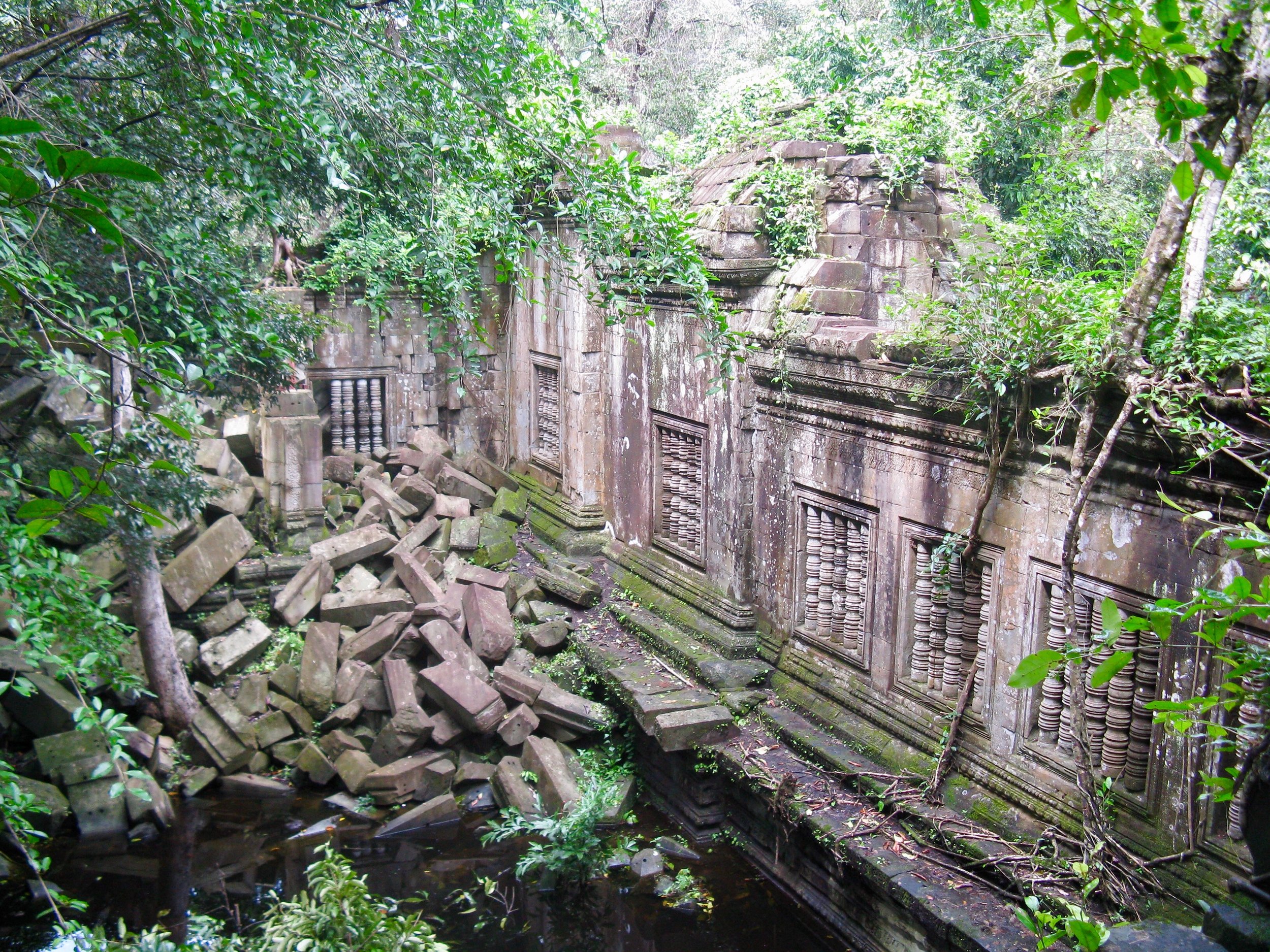
Cambodians believe the birthplace of the Angkor empire began here, when Jayavarman II founded the hilltop city of Mahendraparvata, the remains of which have disappeared beneath the surrounding vegetation.

Two young girls frolic on the bank of the Kbal Spean river

The sandstone riverbed of Kbal Spean, known as the River of a Thousand Lingas, runs through Mount Kulen. We stopped here because the site features 9th century carvings, most of them lingams (the stylized phallus symbol of the Hindu deity Shiva). These are typically placed upon a base that represents the lingham’s female counterpart, the yoni. I couldn’t help but think of the Reese's Peanut Butter Cup conundrum, “You got your peanut butter on my chocolate!” reimagining it as the naughty, “You put your lingam in my yoni!”

The mountain spring water that flows into the Spean River washes over the lingams, symbolically fertilizing them, as it tumbles downhill into the Siem Reap River, a tributary of the Mekong River, before flowing south toward Tonlé Sap lake.

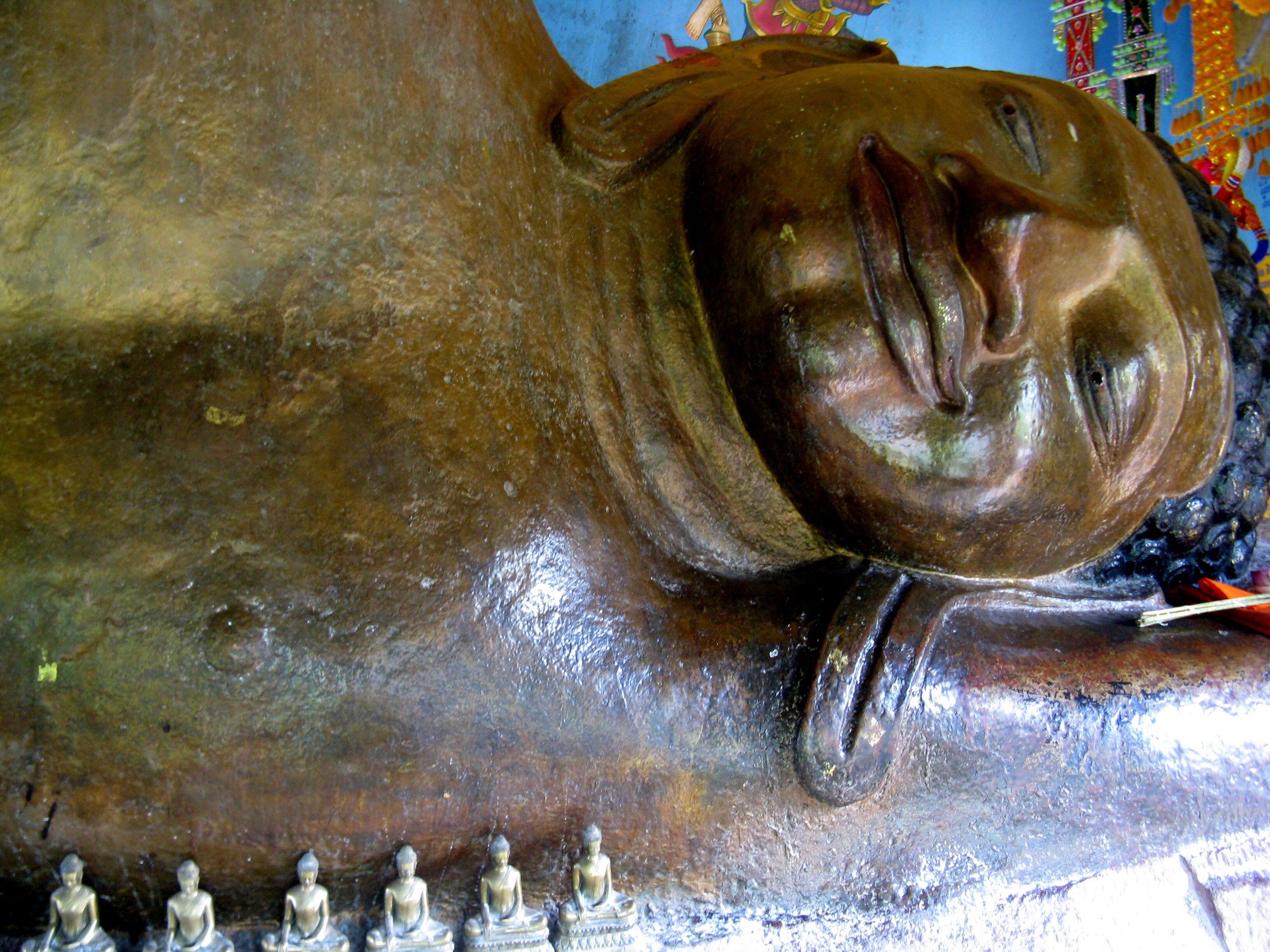
A large reclining Buddha carved out of the rock fills the temple at Preah Ang Thom

Preah Ang Thom and the Reclining Buddha

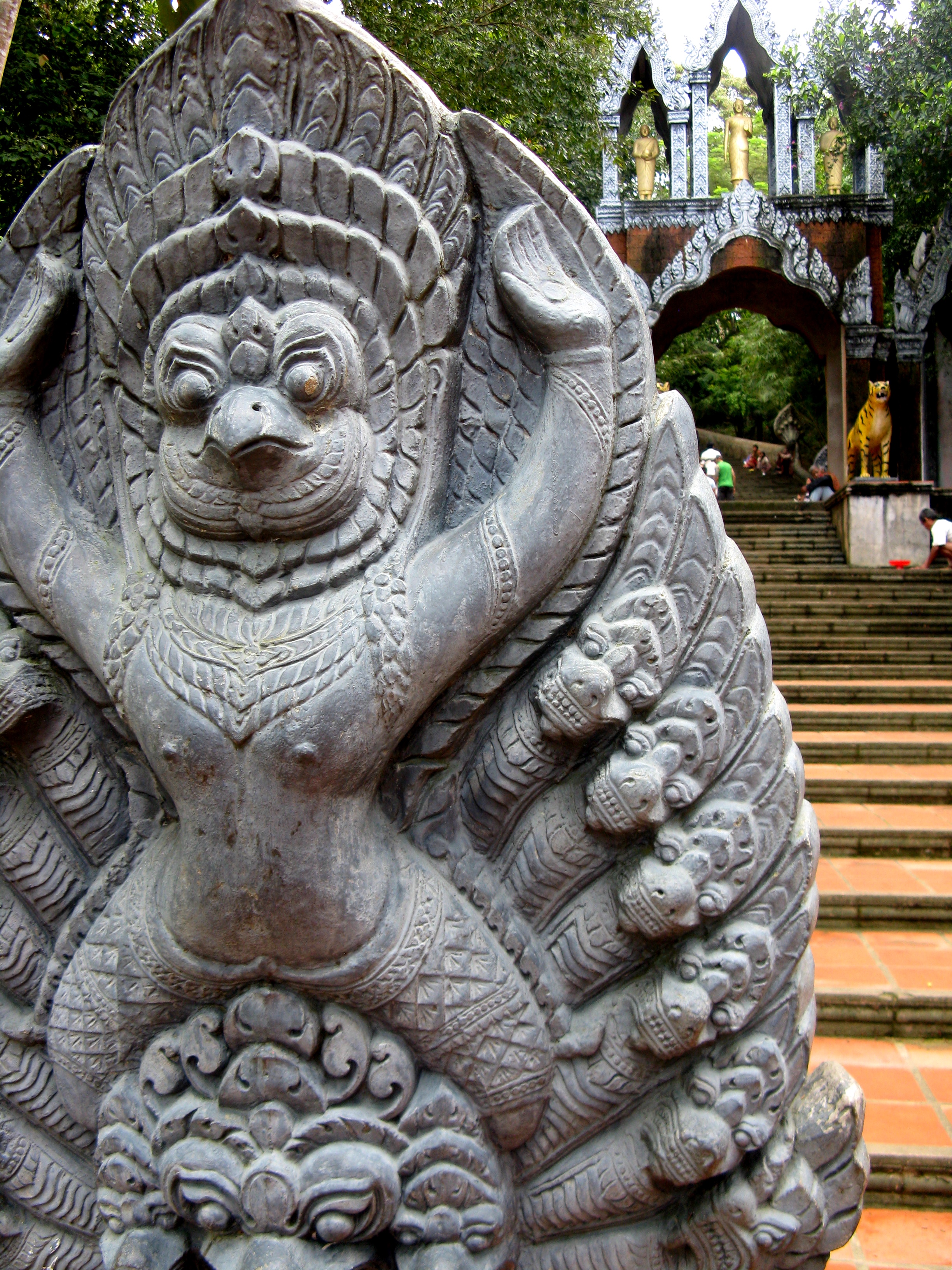
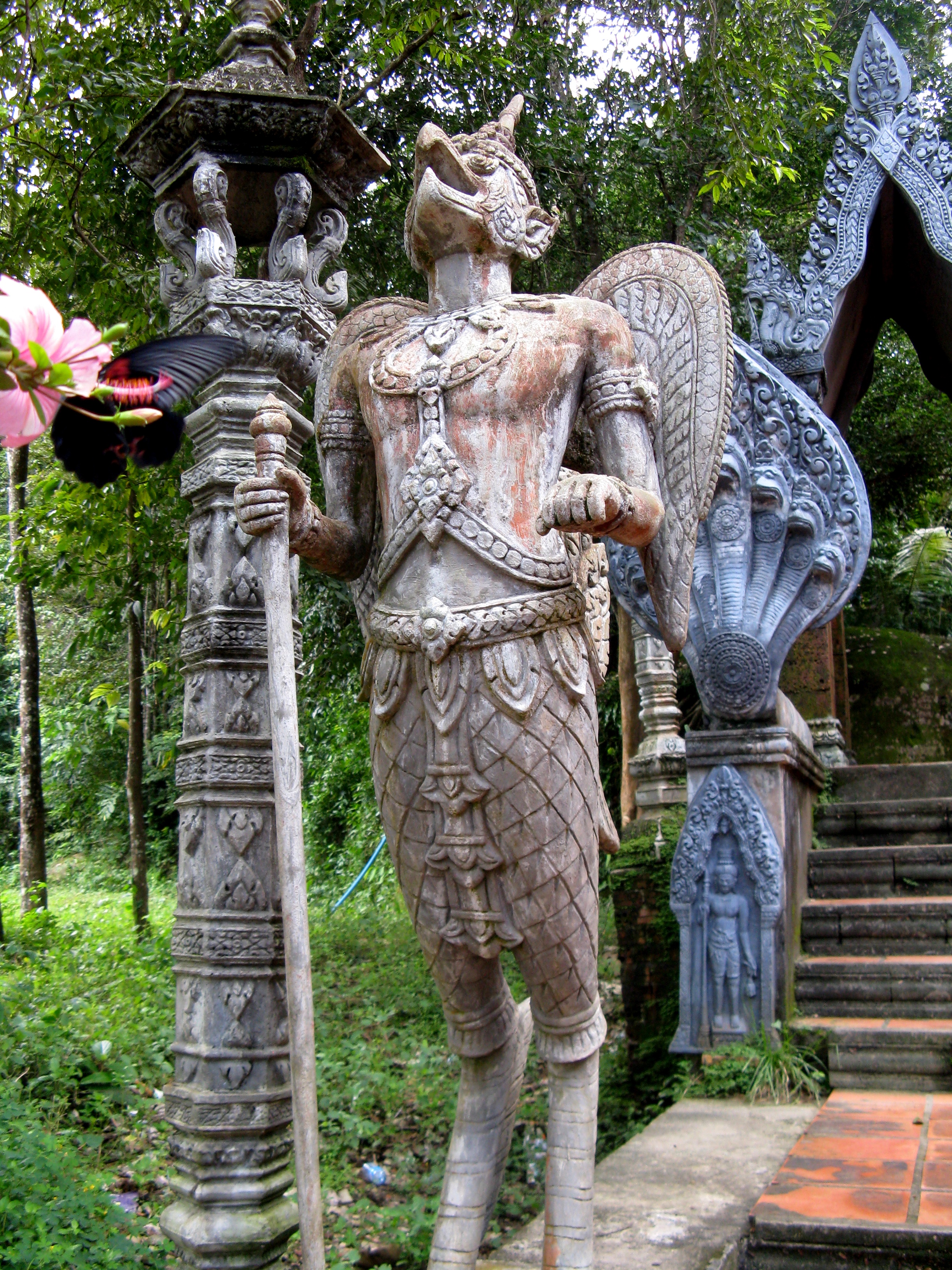
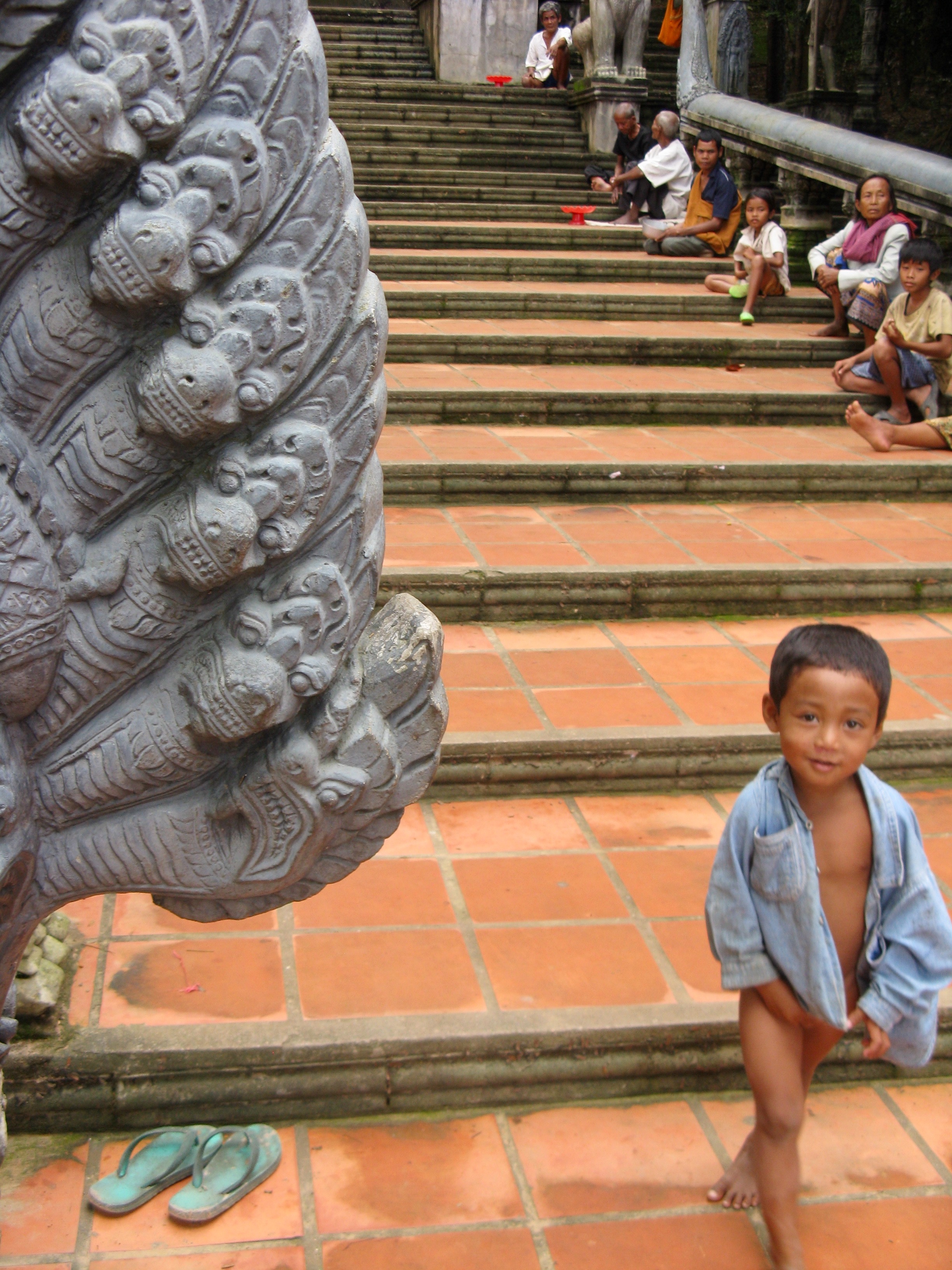
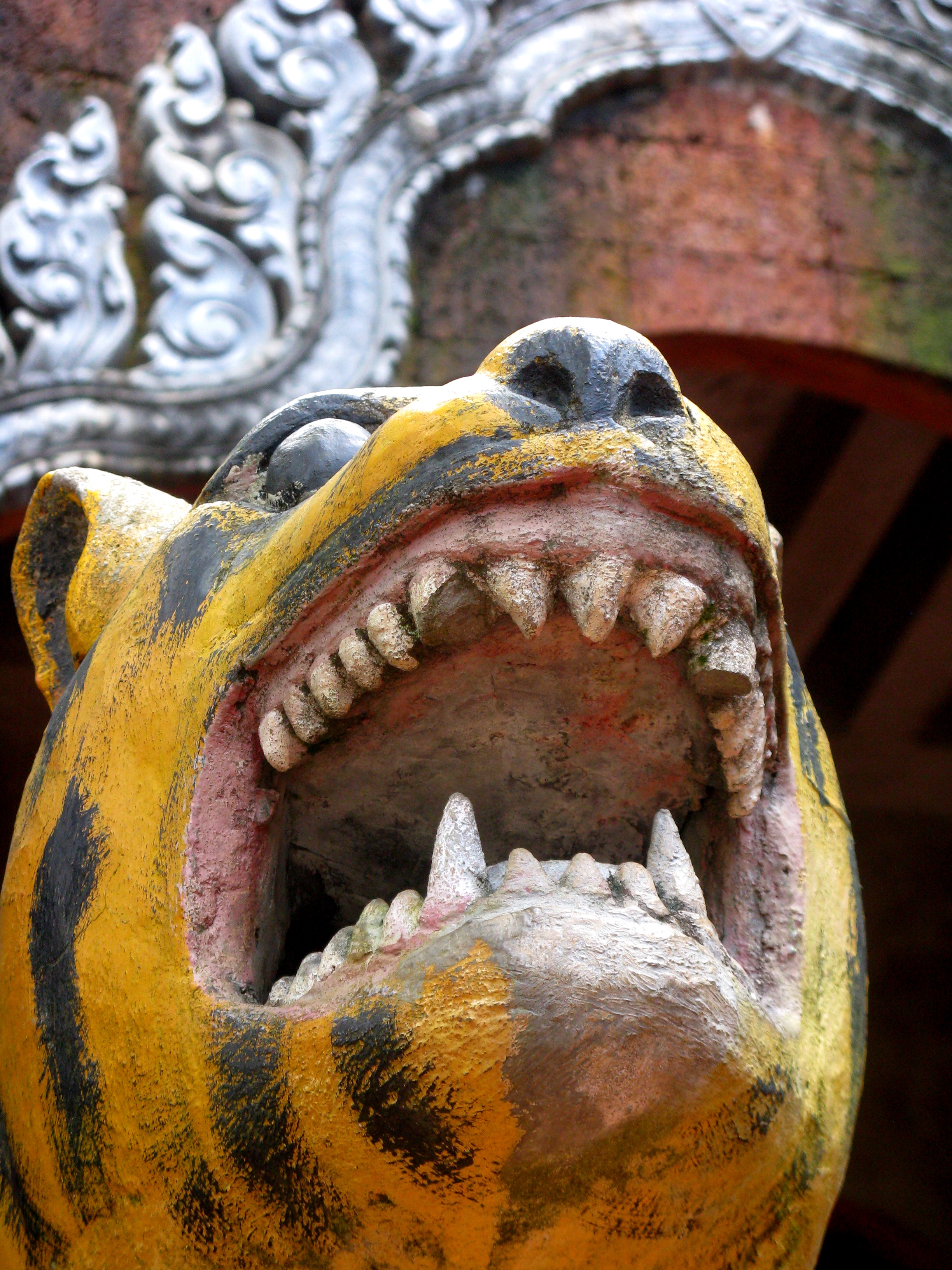
Four mythical animals — the tiger, Garuda (the eagle-like Hindu deity), lion and dragon — represent the sacred qualities and attitudes that bodhisattvas develop on the path to enlightenment. These can be seen along the steps, with a snake-like naga balustrade that gently ambles uphill to the 16th century monastery of Preah Ang Thom. Beggars and children sit on the steps, looking for handouts, the mountain air heavy with the scent of incense.

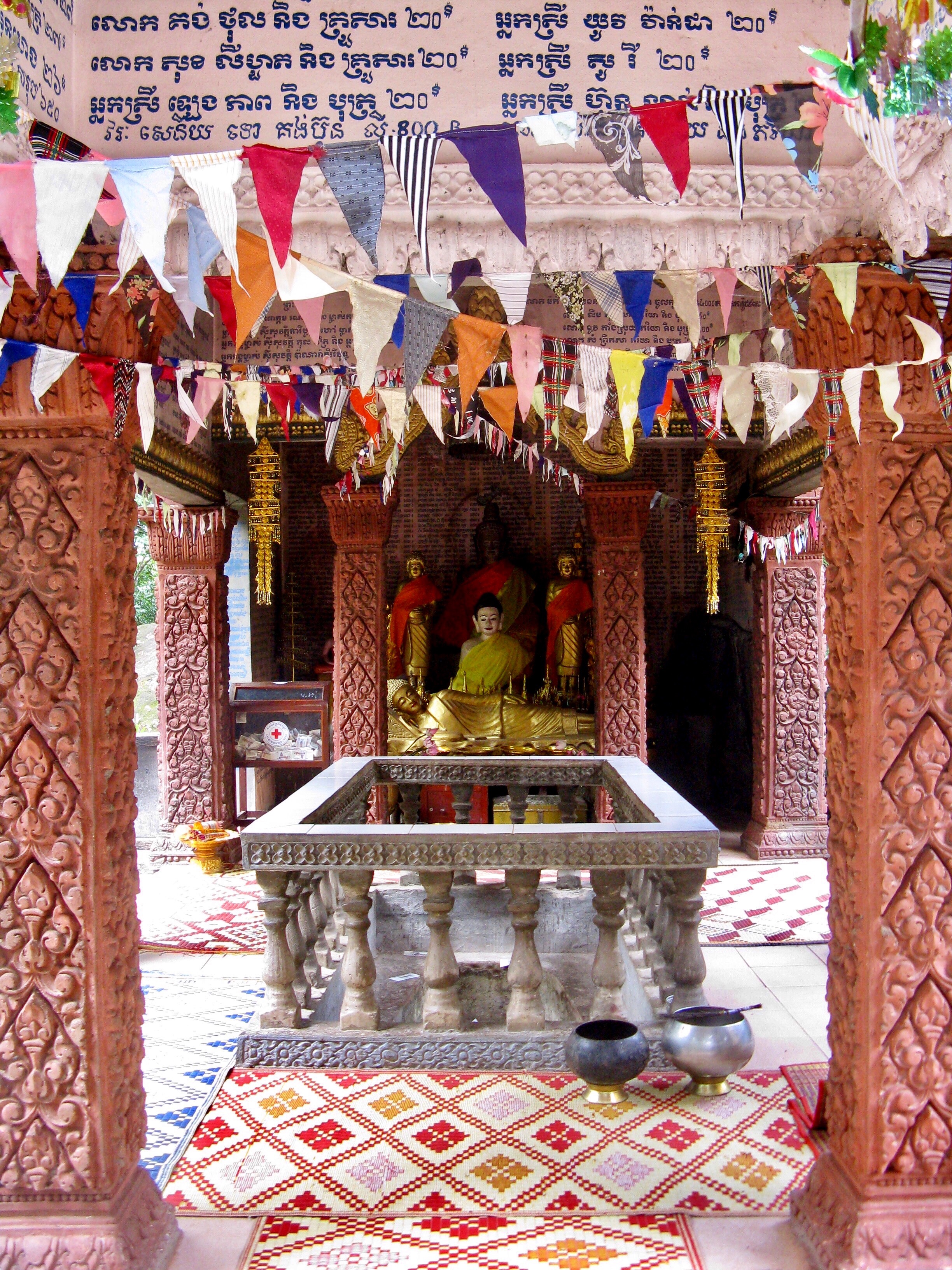
At the top is an enormous sandstone boulder and a pagoda with a massive reclining Buddha attaining nirvana carved into it. Devout locals visit the pagoda to pray and leave merit offerings in hope of attaining luck and prosperity for the year to come.

Prepare to Get Wet Chasing Waterfalls

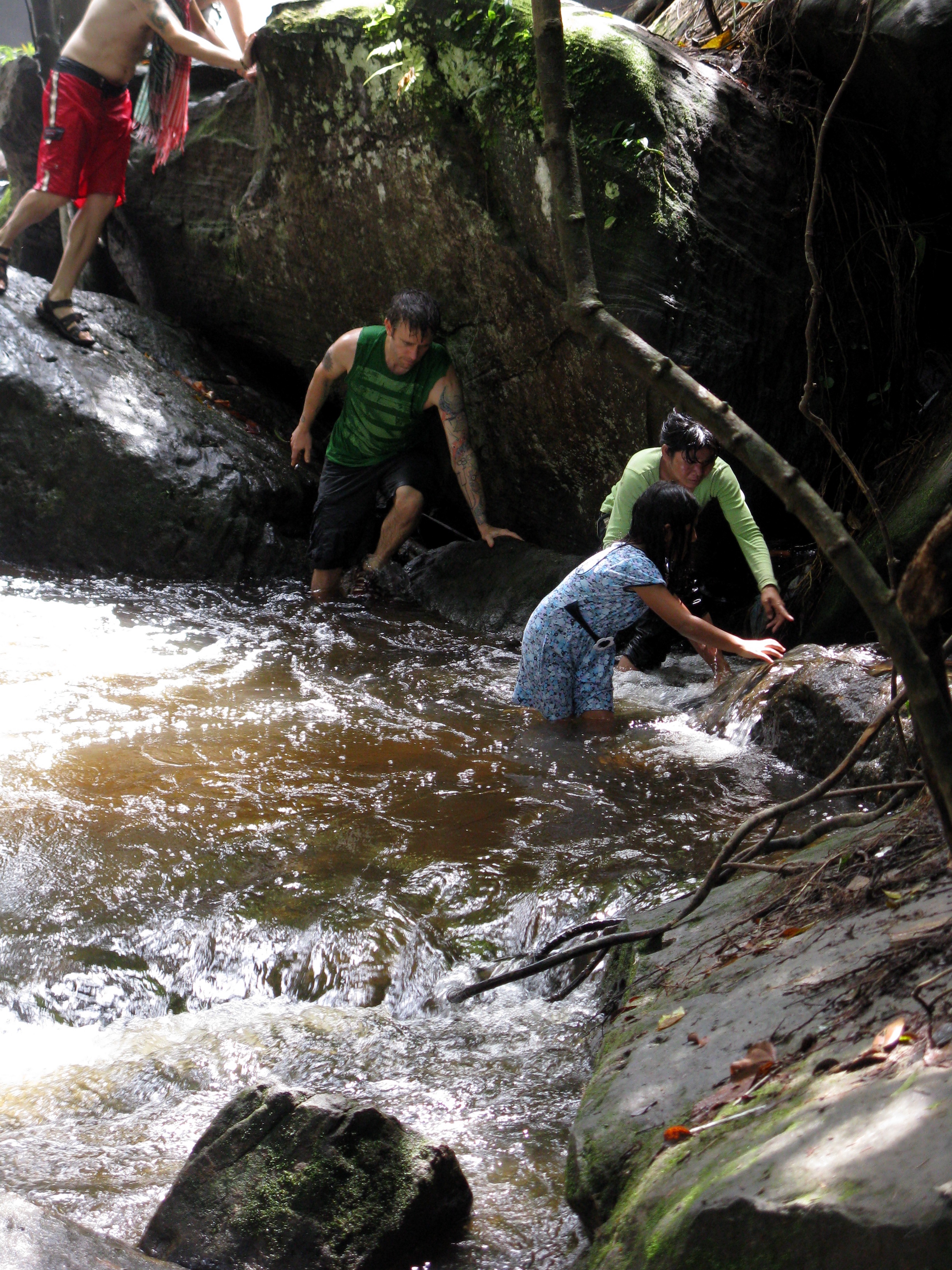
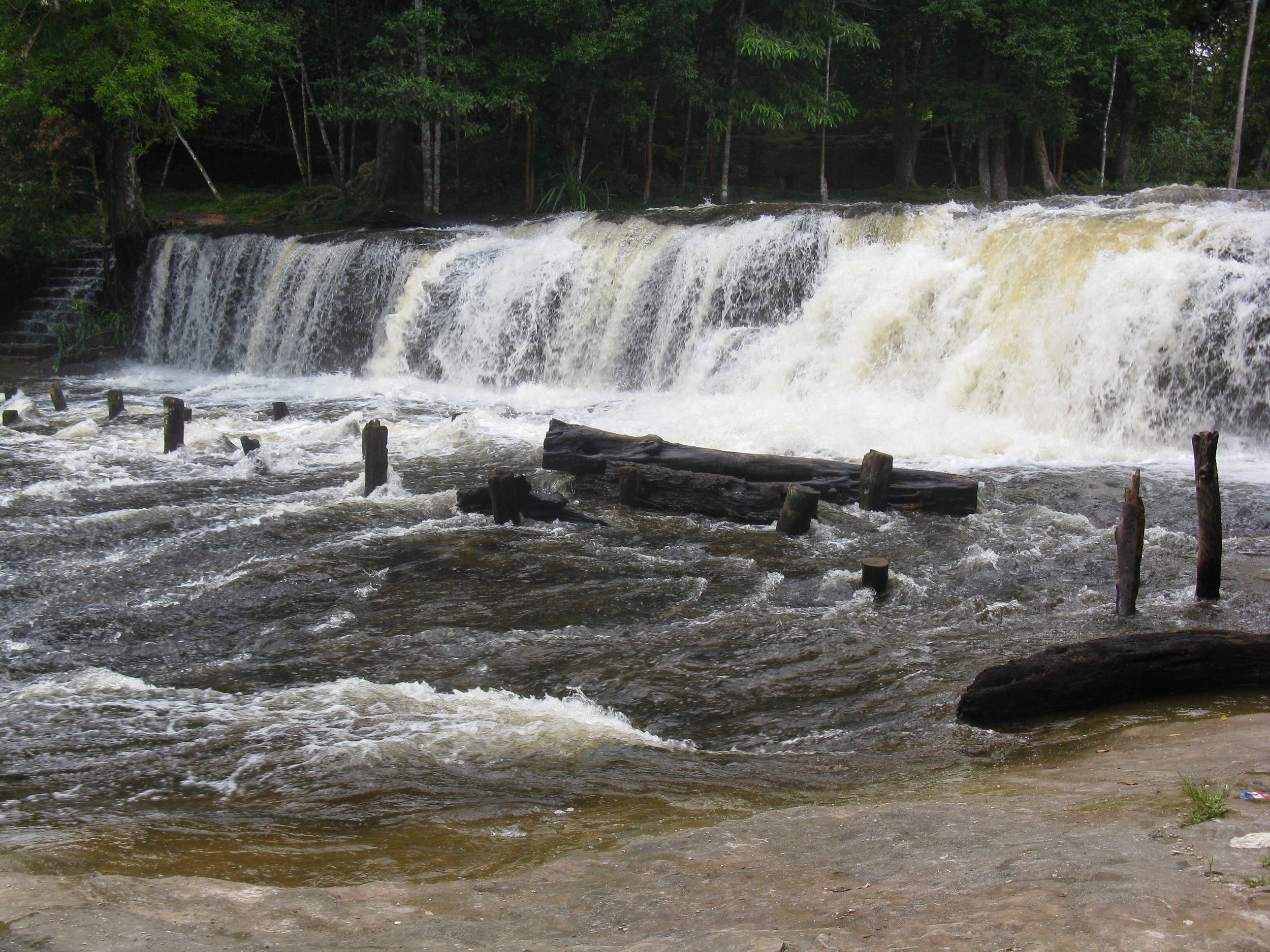
Be sure to bring a pair of sandals and wear a bathing suit if you are planning on visiting the waterfalls of Phnom Kulen. It’s a great place to cool off in the tropical heat. There's a large swing among the trees, adorned with flowers, where you can sit, enjoy the cooling mist and observe the majestic waterfalls if you aren't interested in venturing closer to them. Wally was more adventurous and followed our friends Steve, Dre and Fatima along the slippery rocks.

Souvenir and food stalls sell offerings — including preserved goat heads!

Within the park, there are assorted souvenir and food stalls. Some of them sell offerings, including herbs, incense, horns and curiously, preserved goat heads. I’m not sure what the auspicious nature of offering a goat’s head is, but my educated guess would be that like in other cultures, they are considered a symbol of fertility.

A parasite squirmed out of this walking leaf insect after it got run over by a moped

While exploring the complex, we encountered a small gathering of locals, one of whom was trying to kill a writhing, wiry parasite with the bottom of his wooden cane that had emerged from an walking leaf insect after being run over by a moped. We were all disturbed yet fascinated.

We had an amazing experience away from the tourist crowds of Angkor for an afternoon, catching a glimpse of the real everyday life of Cambodia. –Duke

The Monsters of “Supernatural,” Season 1, Episodes 10-12

Learn witchcraft spells to protect yourself from ghosts, pagan gods demanding human sacrifice and Death itself.

It really is kind of effed-up what English teachers sic upon impressionable young minds. I read Shirley Jackson’s short story “The Lottery” when I was 15, and it has stuck with me ever since. I was intrigued by the idea of a modern town ritually sacrificing one of its members, based on a pagan tradition so far in the past they’ve simply ceased to question it. And the final scene, where even the poor woman’s own son is given pebbles to help stone his mother to death, shook me to the core.

There’s a similar type situation in this roundup of Supernatural monsters. And we’ll also meet Death himself.

Symptoms of ghostly possession can include oily skin, rashes, feeling like your eyes are being pulled inside, migraines, the sensation of being strangled, loss of appetite (or increased appetite), tics and miscarriages.

There were only two people posing for this pic!

Apparently, ghostly possession is way more common than we think

S1 E10: “Asylum”

Monster: Ghost

Where it’s from: All over the world. About 30% of the world’s population is possessed by ghosts, according to the Spiritual Science Research Foundation, which I’m sure is totally legit.

Description: This particular spirit possesses people and feeds off their rage.

Encountering a ghost? Don’t panic — we’ve got you covered

What it does: Symptoms of ghostly possession can include oily skin, rashes, feeling like your eyes are being pulled inside, migraines, the sensation of being strangled, loss of appetite (or increased appetite), tics and miscarriages. In this particular case, those possessed turn murderous and then suicidal.

How to defeat it: A rifle loaded with rock salt can repel the ghost. Salt has a long history of protective properties.

To fully destroy the ghost and restore those who are possessed to themselves, Dean and Sam Winchester have to find the original corpse and burn it.


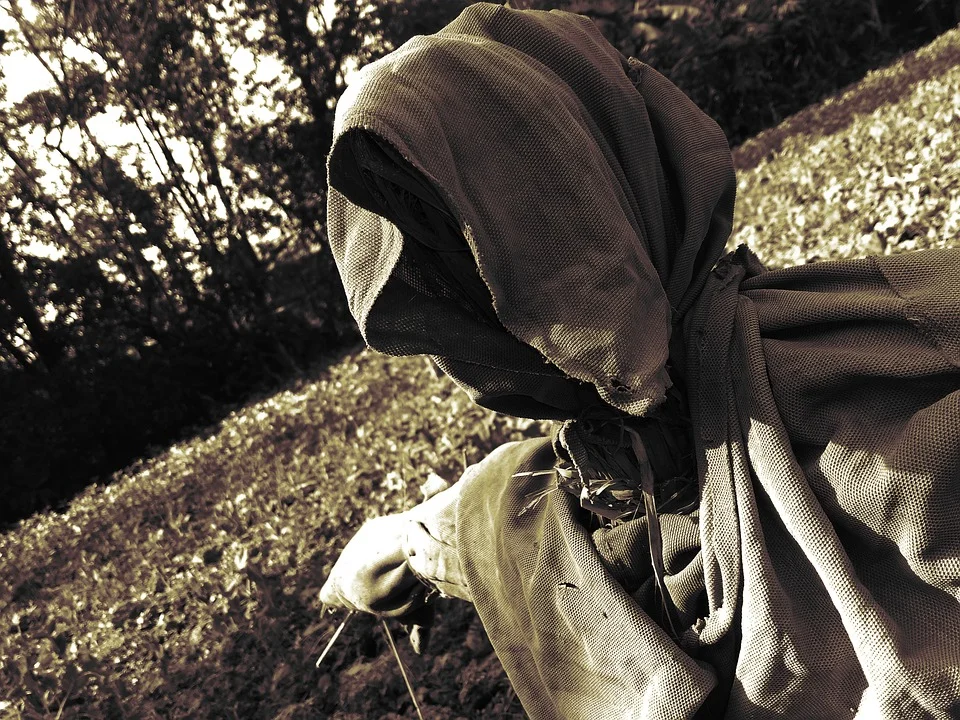
That scarecrow could come to life with the murderous spirit of a pagan god

That scarecrow could come to life with the murderous spirit of a pagan god

S1 E11: “Scarecrow”

Monster: Vanir, a pagan Norse god

Where it’s from: Northern Germany and Scandinavia

Freya is the goddess of beauty (and a bit of a slut, turns out)

Freya is also the goddess of war and death

Description: This branch of the Norse gods holds in its ranks Freya, goddess of love, beauty, sex, gold, war and death (busy gal), accused by Loki of having slept with all the elves and gods, including her brothers.

Pagans would offer sacrifices to Freyr, the Norse god of fertility

Freyr’s power over fertility is symbolized by his giant phallus, as depicted in this idol

Speaking of which, her brother Freyr, god of fertility, was a popular guy. People’s well-being and prosperity depended upon him, including bountiful harvests. This was apparently symbolized by his “enormous, erect phallus.”

What it does: Freyr was a frequent recipient of sacrifices, including the celebration of a harvest. Instead of offering up the traditional sacrifice of his favored animal, the boar, the townsfolk in the episode lured one male and one female to their deaths. With the sacrifice, the town assures a good harvest and general happiness.

The personification of this Vanir takes on the form of a living scarecrow, which actually has more of a connection to the Celts and their wicker man.

Julius Caesar wrote about the Gallic practice of burning humans alive in a giant wicker man

This sick ritual was described by none other than Julius Caesar in Book Six of The Gallic War:

“The whole Gallic race is addicted to religious ritual; consequently those suffering from serious maladies or subject to the perils of battle sacrifice human victims. … Some weave huge figures of wicker and fill their limbs with humans, who are then burned to death when the figures are set afire. They suppose that the gods prefer this execution to be applied to thieves, robbers and other malefactors taken in the act, but in default of such they resort to the execution of the innocent.”

How to defeat it: In Norse mythology, Yggdrasil is the mythical tree that connects the nine worlds, which include Asgard, where Thor and his relations live, and Midgard, their term for Earth.

In Norse mythology, the sacred tree Yggdrasil connects the nine worlds

In this episode, there’s a sacred tree that’s tied to the Vanir. Once the Winchester Brothers chopped it down, the god — and his blessings — abandon the village.

Our personification of death as the Grim Reaper began in Ancient Greece


S1 E12: "Faith"

Monster: Reaper

Where it’s from: All over the world, especially the United States and Europe

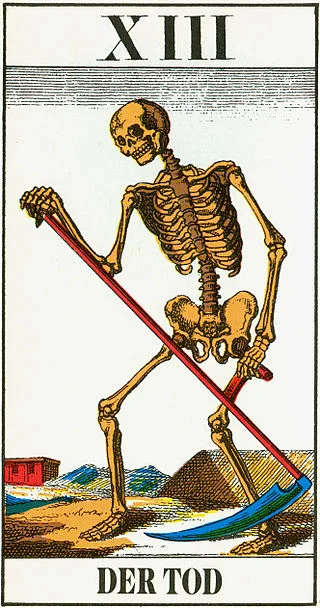
An old tarot Death card from Germany depicts a reaper

An old tarot Death card from Germany depicts a reaper

The reaper uses its scythe to chop up bodies

Description: The Grim Reaper is the personification of death. He’s most often depicted as a skeletal figure wearing a black hooded robe and carrying a large scythe. In some parts of Europe, his robe is white.

Ancient Greeks worshiped Thanatos, or Death, who was portrayed as an attractive, bearded man with wings and an extinguished flame (what vivid symbolism!). Departed souls had to pay the ferryman Charon to get across the River Styx into the underworld. Some sources described Charon as a skeletal figure much like today’s Grim Reaper.

What it does: On the show, reapers can stop time — and only their victims can see them coming for them.

How to defeat it: As the altar Sam discovers attests, you can gain control over a reaper with a binding spell.


Poppet Binding Spell

This spell is best worked on a waning or dark moon.

Cut two layers of black cloth in the rough shape of the person or creature you wish to bind and sew together to create a small poppet. Leave part of the head unstitched.

Fill the poppet with earth, a smoky quartz and an amethyst. Also include hair or nail clippings, or a photograph or sample of handwriting of the person you wish to bind.

Create a sacred circle, then take an altar candle and a black candle. Hold the poppet out in front of you and say:

Creature of cloth thou art,
Now creature of flesh and blood you be.
I name you [name of the person or creature you are binding].
No more shall you do me harm,
No more shall you spread false tales,
No more shall you interfere in my life,
Nor in the lives of my loved ones.
By the power of the gods and by my will,
So mote it be.

Draw an invoking pentagram over the poppet.

Now take some black ribbon or wool and begin to wrap the poppet like a mummy, leaving no space unwrapped and say:

I bind your feet from bringing you to harm me.
I bind your hands from reaching out to harm me.
I bind your mouth from spreading tales to harm me.
I bind your mind from sending energy to harm me.
If you continue to do so, let all negative energy be cast directly back at you!

Tie off the ribbon and hold the poppet in front of you. Visualize all the negative energy this person has sent you being cast back at them.

Wrap the poppet in a piece of black cloth and tie with a black ribbon. Say:

Great Mother, I have bound this person
From harming me and my loved ones.
By the powers of three times three,
By Earth and Fire, Air and Sea,
I fix this spell, then set it free,
’Twill give no harm to return on me,
As I will, so mote it be!

Let the candle burn out while the poppet sits at its base.

Then take the poppet and the remains of the candle and bury them in the ground or toss them in the ocean. Walk away without looking back.


Now, it’s not always possible to get nail clippings and the like from your enemy (does Death even have fingernails?!), so this spell from Free Witchcraft Spells might work better. It takes some time; so hopefully you can avoid the reaper in the meantime!


Black Candle Binding Spell

Anoint a black candle with sandalwood oil while you concentrate on the person or creature you want to get out of your life.

Wrap a piece of black thread around the candle until you use the whole length, then tie it tightly.

Repeat this, with a piece of black yarn. Then, on top of that, wind around a piece of rough twine of the same length. The exact lengths of the cords don’t matter — just use the same for all three. About 18 inches works well.

Light the candle, and let it burn out completely. Try to do this spell in the evening, letting the candle burn down overnight. Keep it somewhere safe and flameproof because the strings might catch fire as the candle burns down. I’ll burn candles in a small cauldron for my peace of mind.

You can try, but there really is no escaping death


Give it a go, but let’s face it: If your time has come, Death will find you. Have the Final Destination movies taught us nothing? –Wally

Patatas Bravas Recipe

In the mood for tapas? Don’t forget this tasty comfort food side dish.

Move over, french fries. Patatas bravas is the new perfect side dish

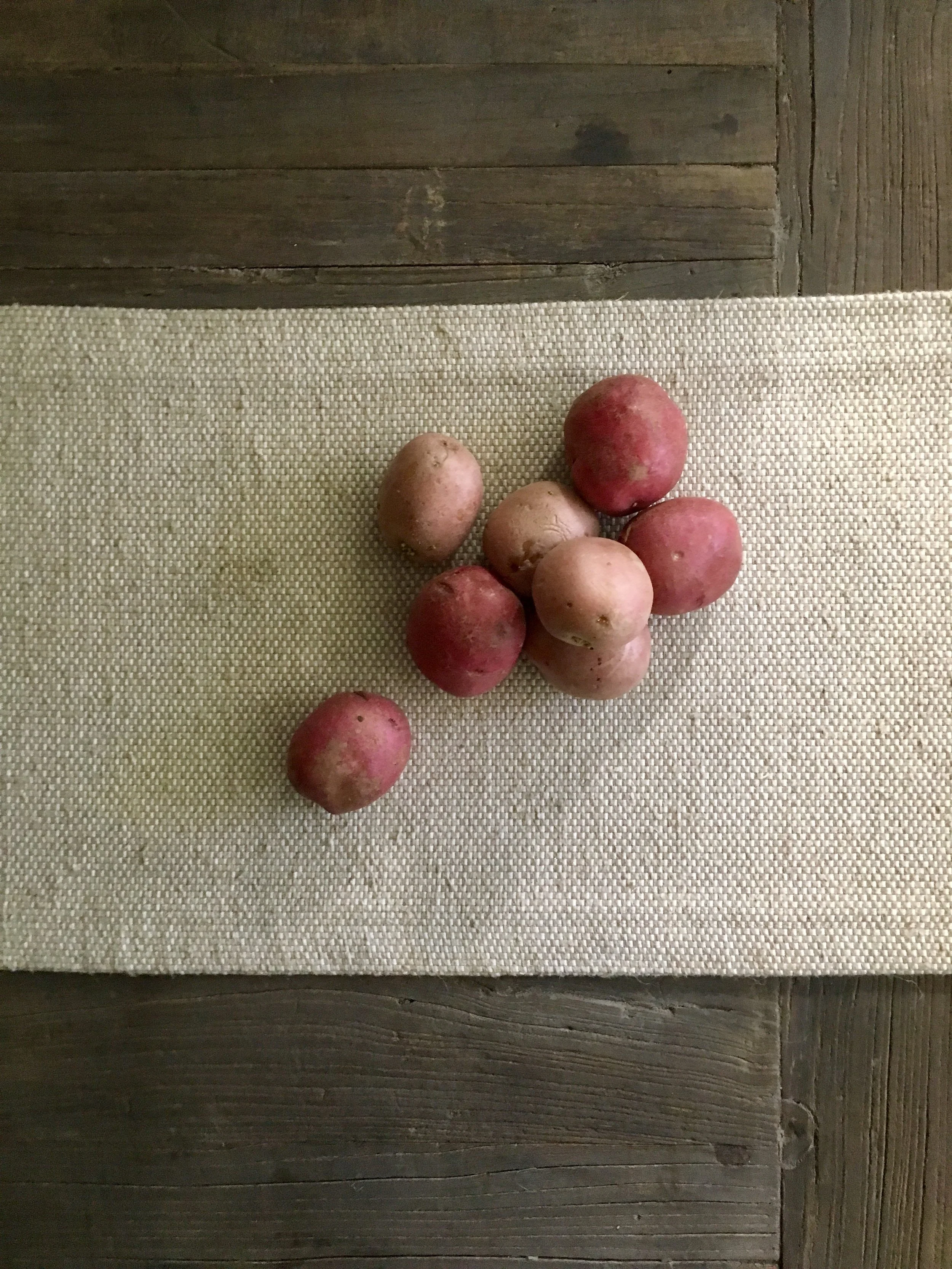
Every now and then, Wally will ask if I’m planning on making tapas. Like the cashew curry chicken, this recipe transports us back to one of our most memorable destinations. I have a couple tried-and-true recipes for tapas, one of them being patatas bravas. There's something comforting and magical that happens when hot crispy golden potato wedges are topped with a smoky tomato sauce.

A tapas mainstay in Spain, patatas bravas, or “fierce potatoes,” are one of our favorites.

There’s something comforting and magical that happens when hot crispy golden potato wedges are topped with a smoky tomato sauce.

I recently started baking these in the oven and like the texture the potatoes get. It’s lower in fat than frying them, and there’s no oil splatter to clean up, which is a win in my book.

This recipe yields about four servings and makes a lot of sauce, which you can use on eggs the next morning. I use a 14.5-ounce can of Muir Glen Organic Fire Roasted Diced Tomatoes, as I like the texture and flavor.


Ingredients

For the patatas:

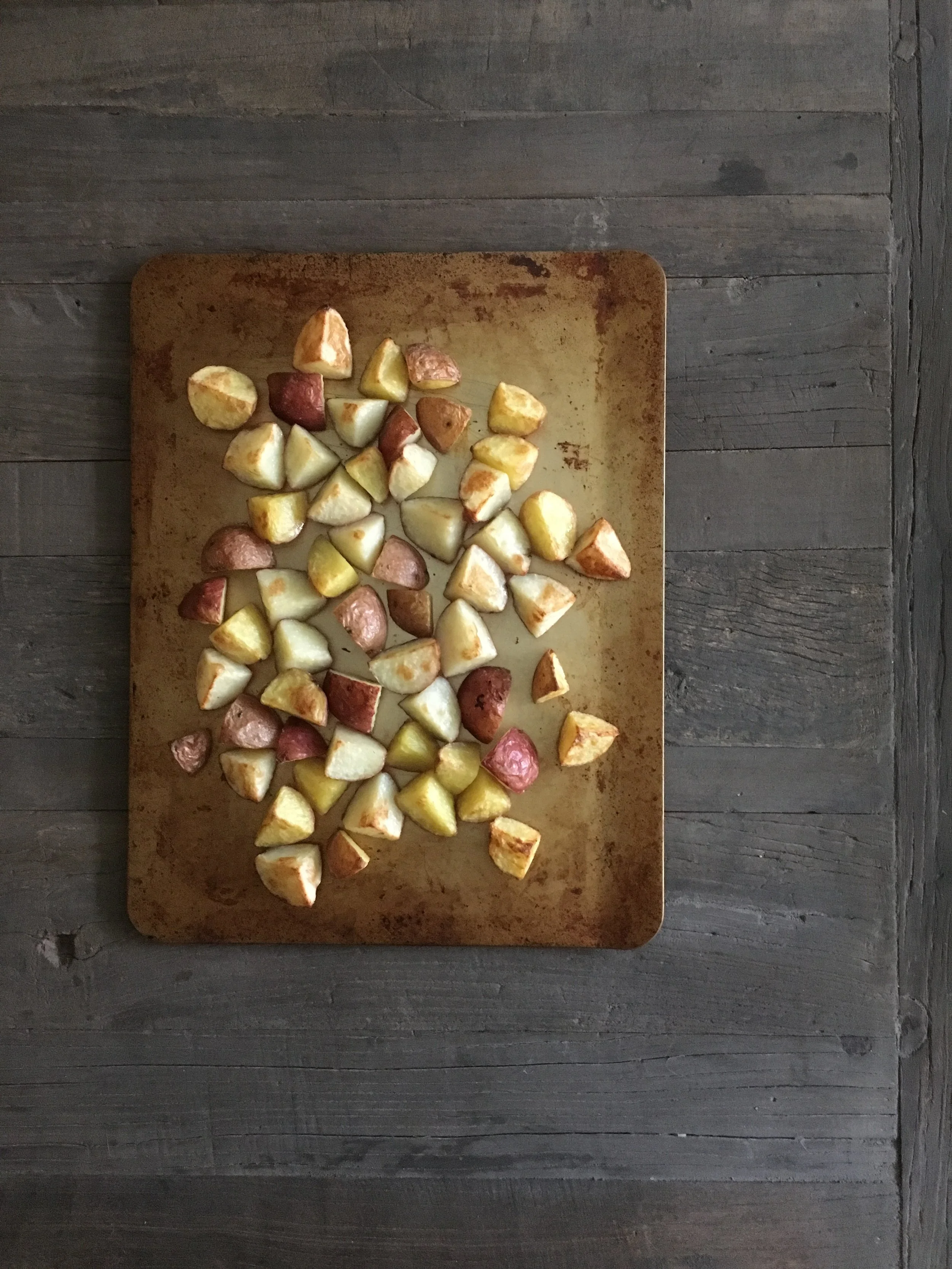
  • 2 pounds red-skin potatoes, quartered into bite-size pieces

  • 3 tablespoons olive oil

  • sea salt

  • garlic powder

For the sauce:

  • 1 tablespoon olive oil

  • pinch of sea salt

  • ½ yellow onion, diced

  • 3 cloves of garlic, minced

  • 1 teaspoon pimentón or smoked paprika

  • ¼ teaspoon cayenne pepper

  • ½ teaspoon garlic powder

  • 1 14.5-ounce can fire-roasted diced tomatoes


Preparation

Preheat oven to 450 degrees.

Add water to a large pot and bring to a boil.

Add potatoes and cook for 5 minutes. Do not overcook.

Pour potatoes into a colander, rinse with cold water to stop cooking, and let dry.

Toss potatoes with 3 tablespoons olive oil, salt and garlic powder. Scatter on a sheet pan.

Bake for 25-30 minutes, until golden brown.  

While the potatoes are baking, prepare the sauce. Heat 1 tablespoon of olive oil over medium-low heat.

Once hot, add the onion and sauté for 6-8 minutes, stirring occasionally until onions are translucent.

Add the garlic and stir for 30 seconds, then add spice mixture of smoked paprika, cayenne and garlic powder. Cook for 2-3 minutes more and let cool.

Purée fire-roasted diced tomatoes, sautéed onion, garlic and spice mixture in a food processor until slightly coarse in texture. (If you prefer a smoother sauce, use a 6-ounce can of tomato paste.)

Remove potatoes from oven and sprinkle with a bit more salt to taste. Drizzle with tomato sauce.


Enjoy your tapa! –Duke

Kompong Kleang: A Floating Village Like No Other

Visiting Angkor Wat? Be sure to book a tour of this unique town on Tonlé Sap lake. You can’t miss this water-based way of life.

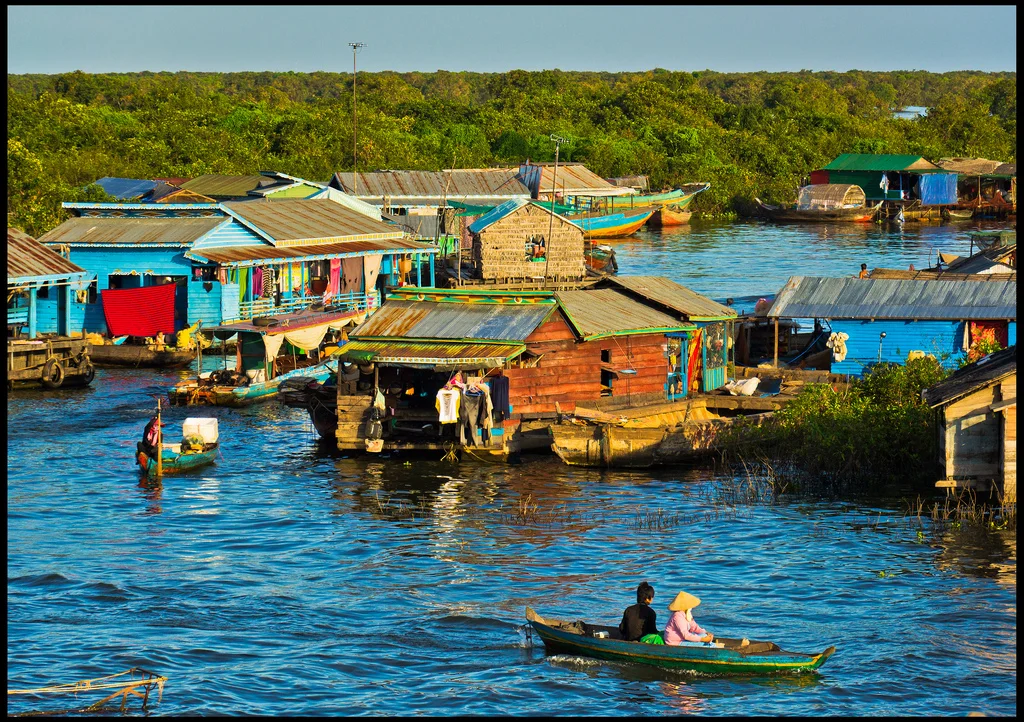
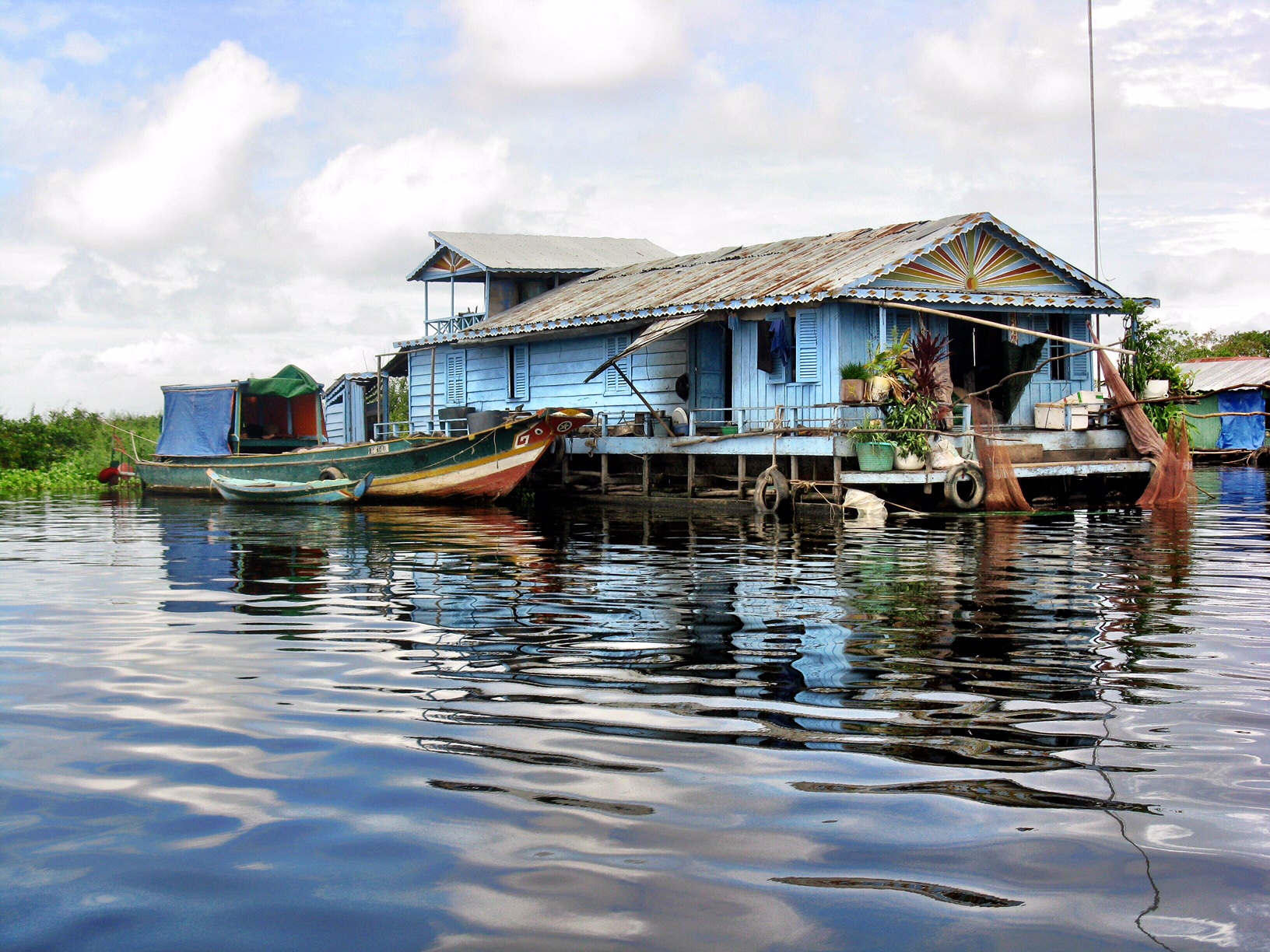
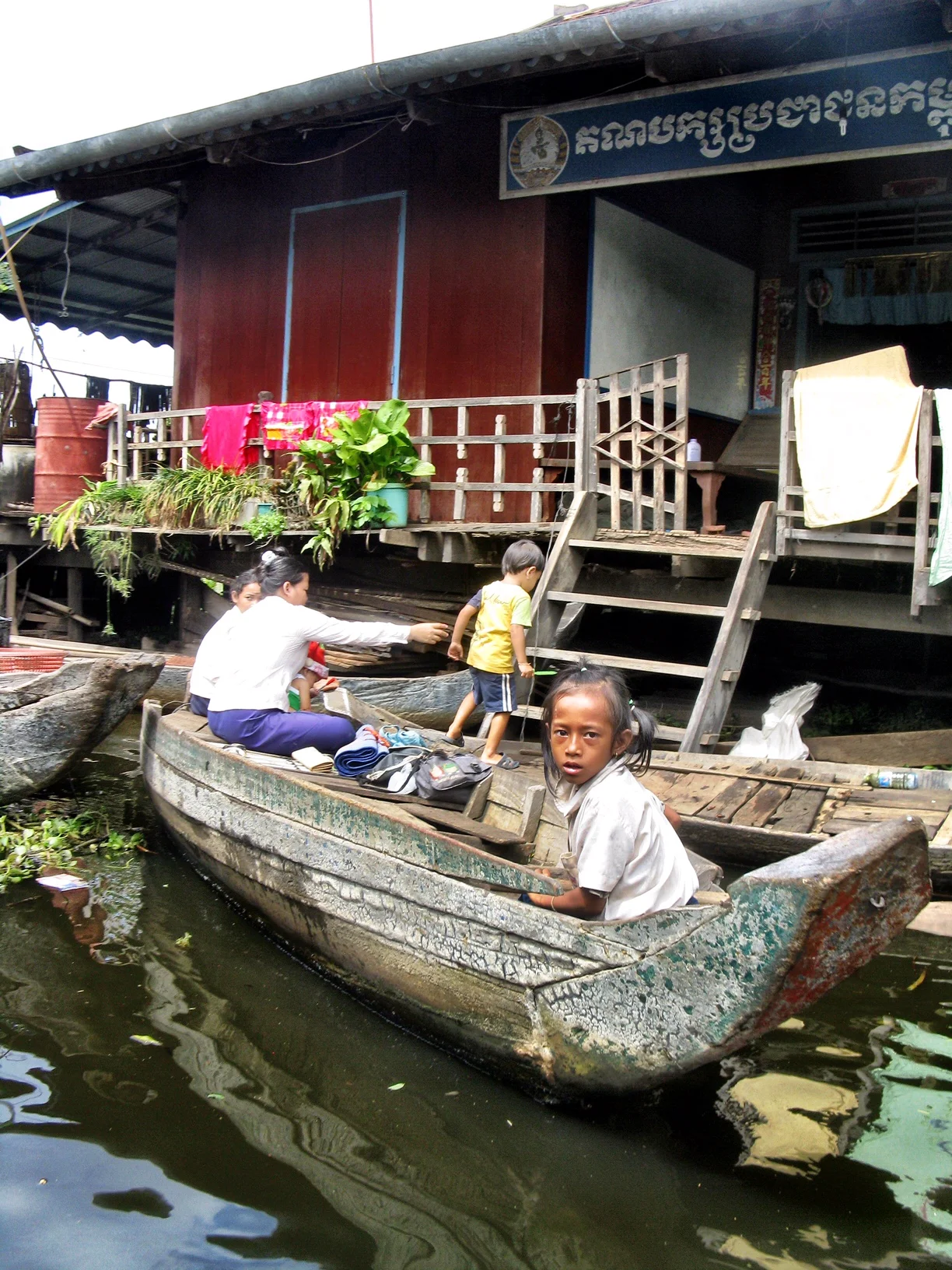
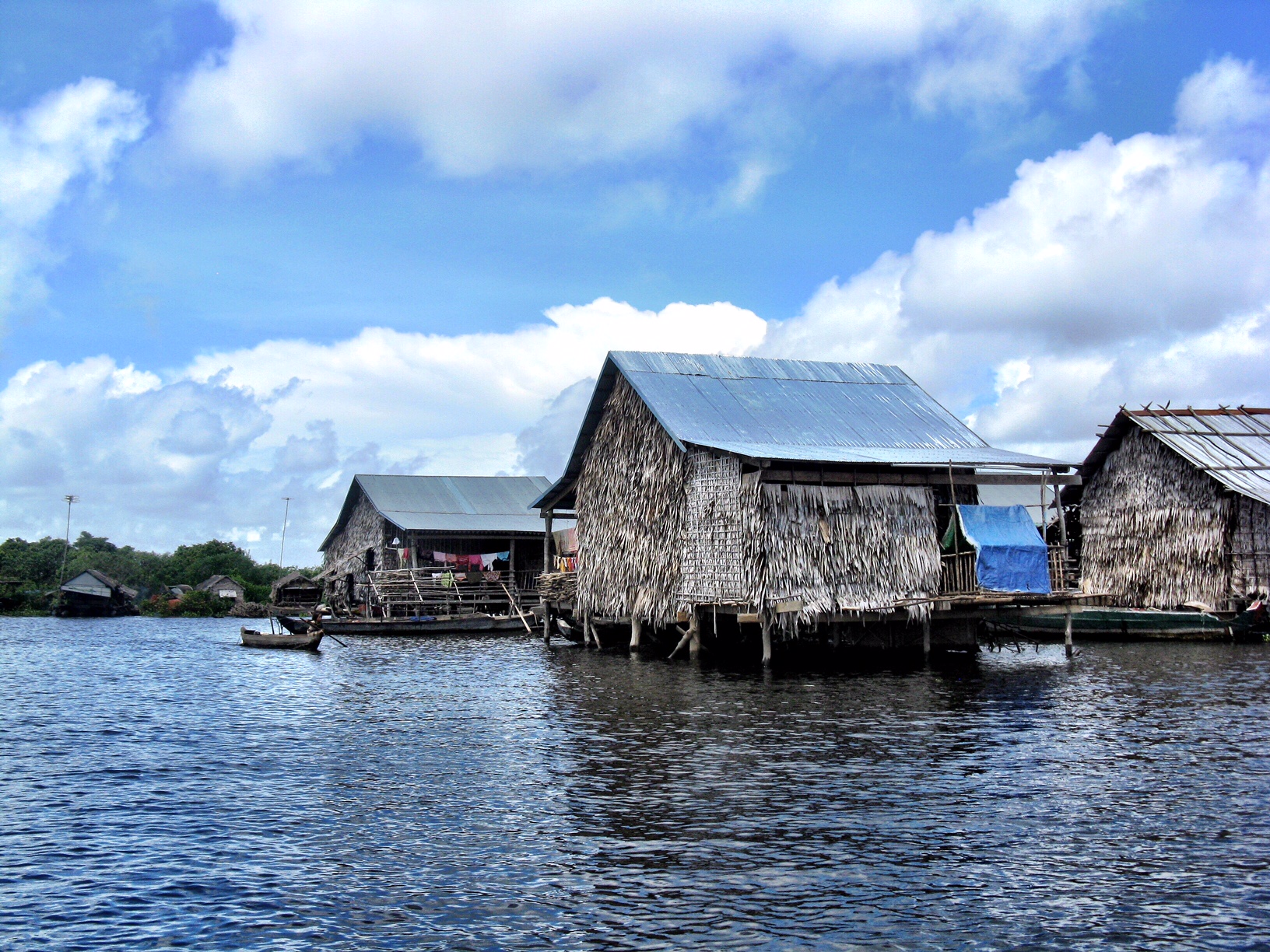
The floating village of Kompong Kleang, outside of Siem Reap, Cambodia

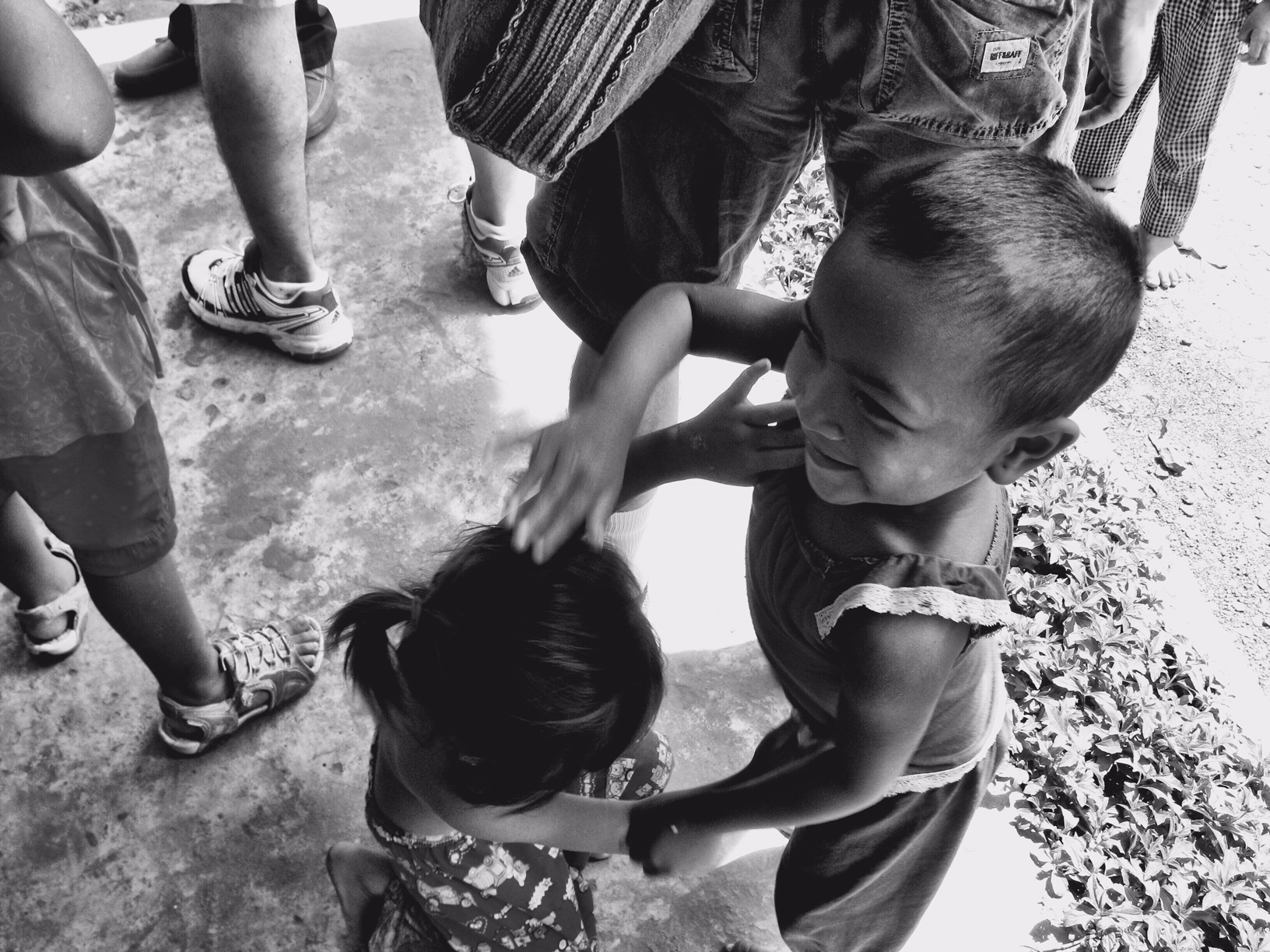
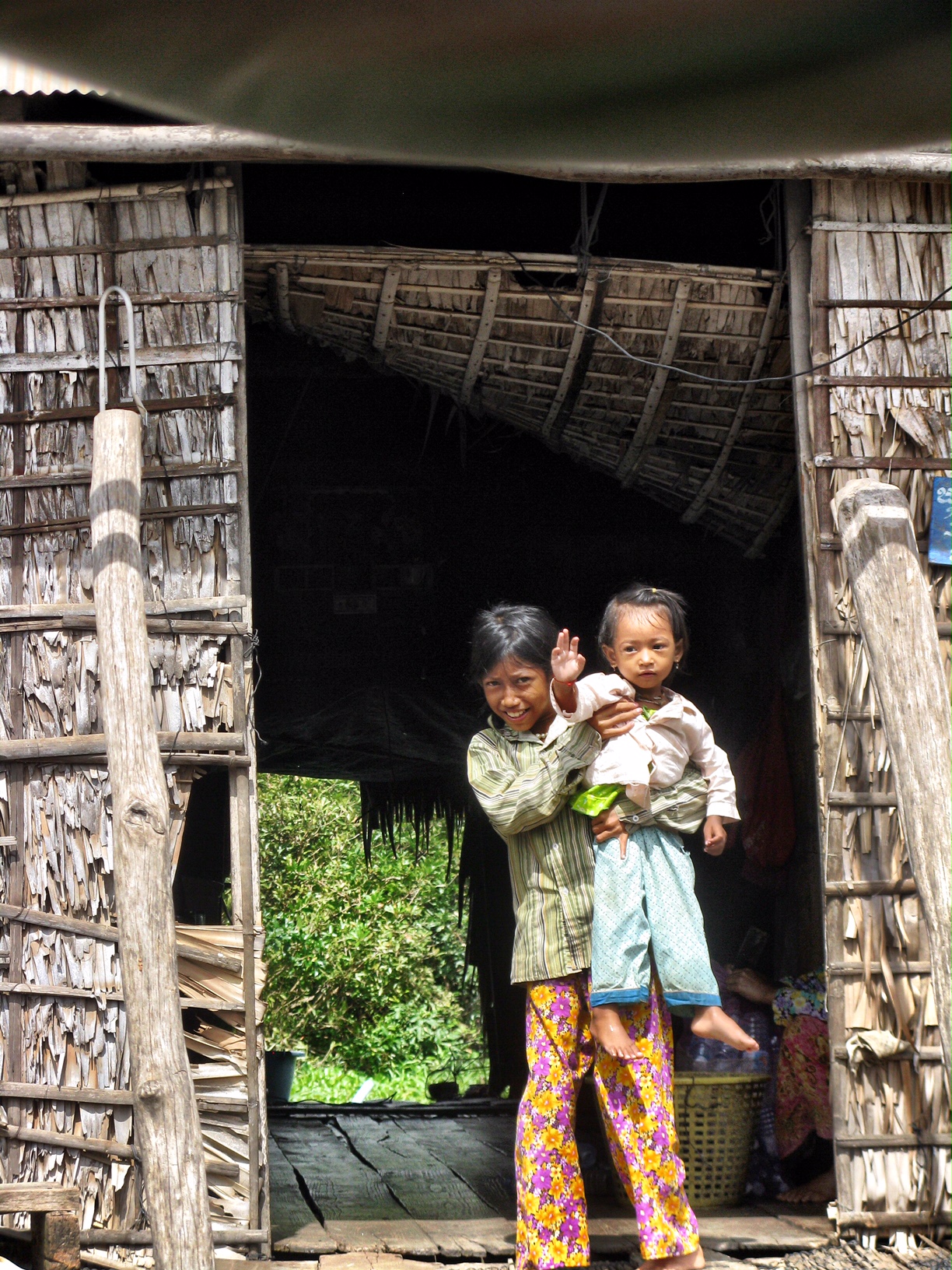
What I remember most are the children.

They had eyes wide with sorrow, though some squinted in laughter as they followed us around.

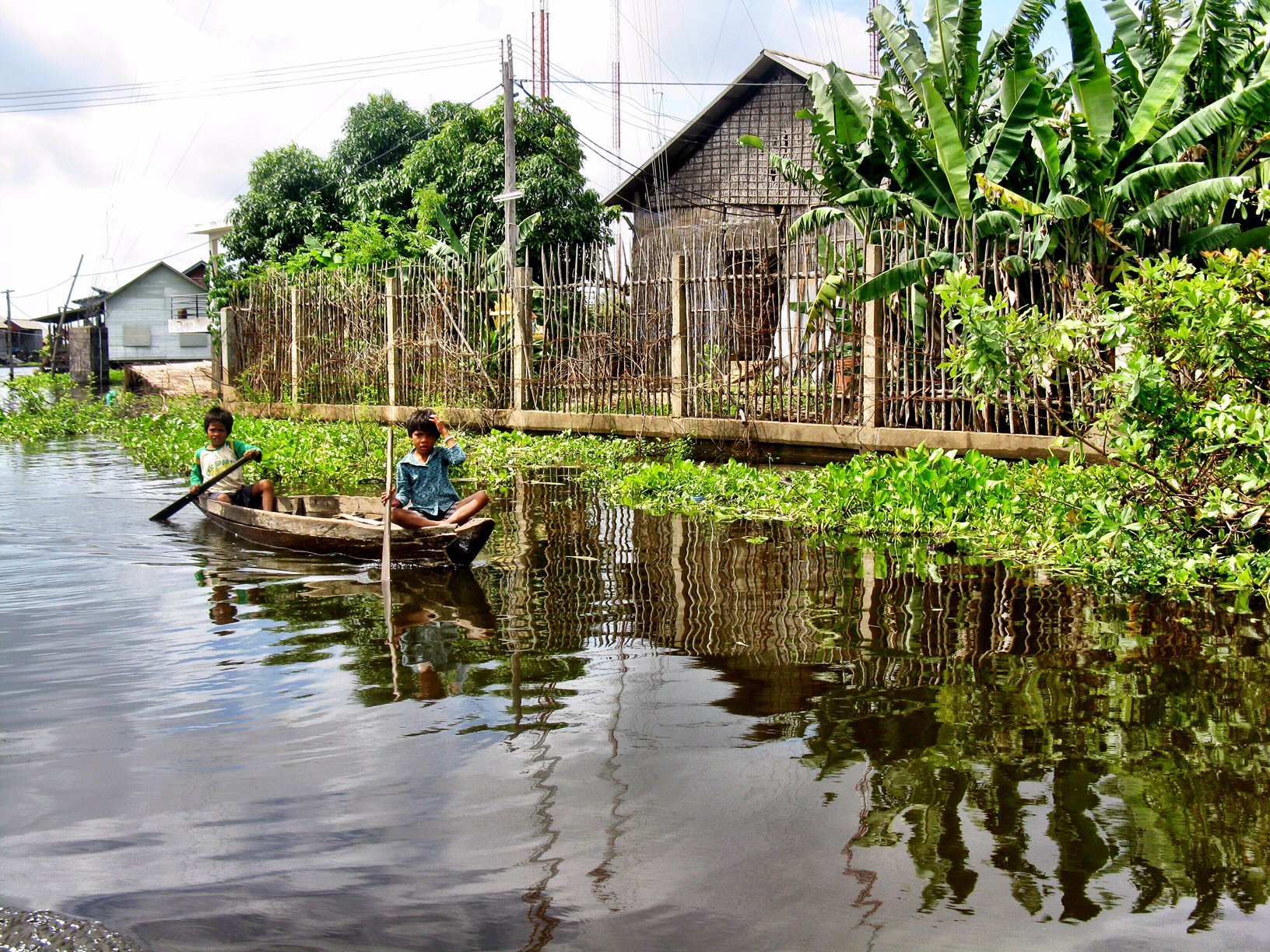
In Kompong Khleang, if you want to go anywhere, you have to get into a boat. That sense of isolation must feel oppressive.

A little girl from the floating village in her school uniform

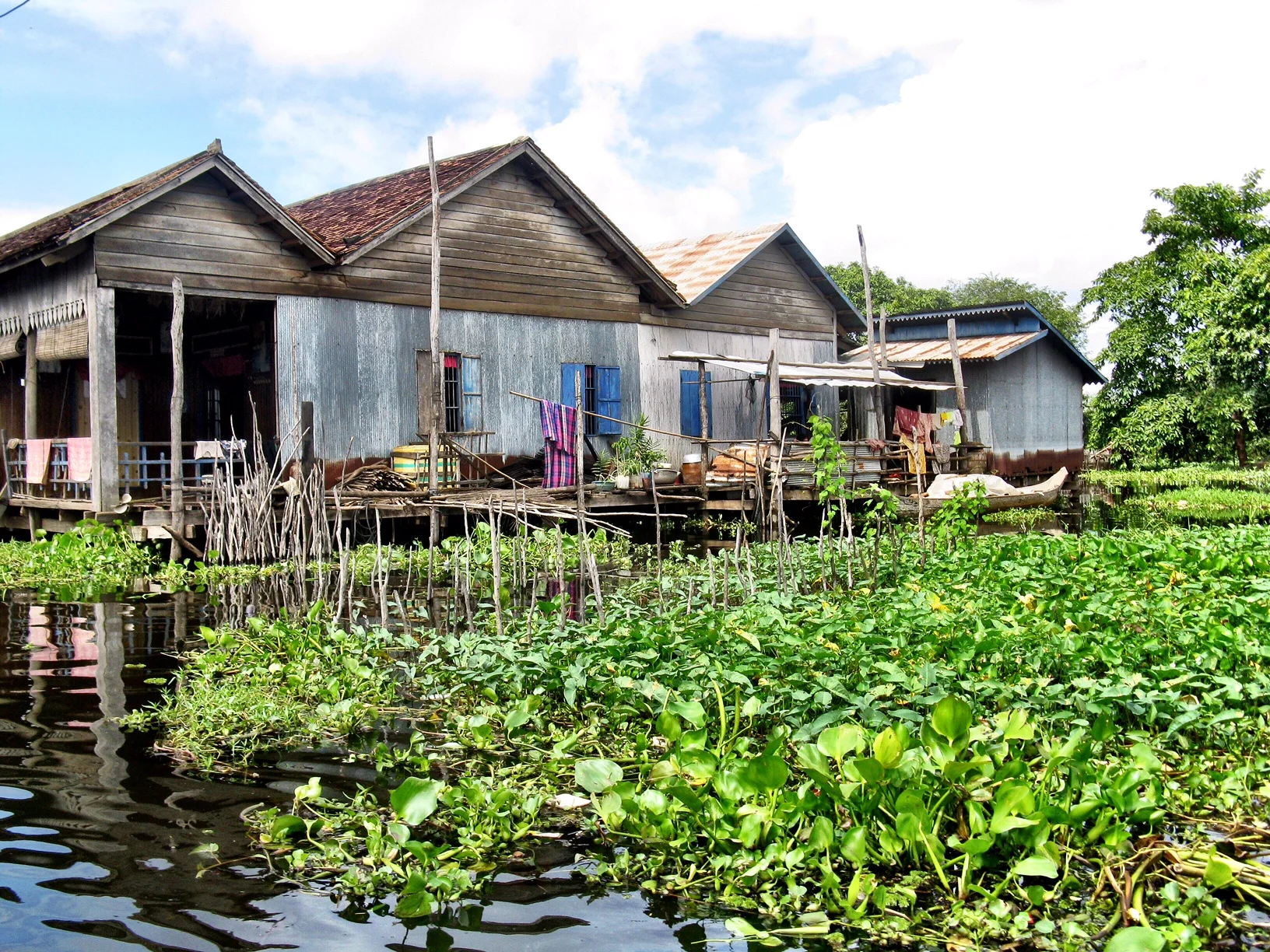
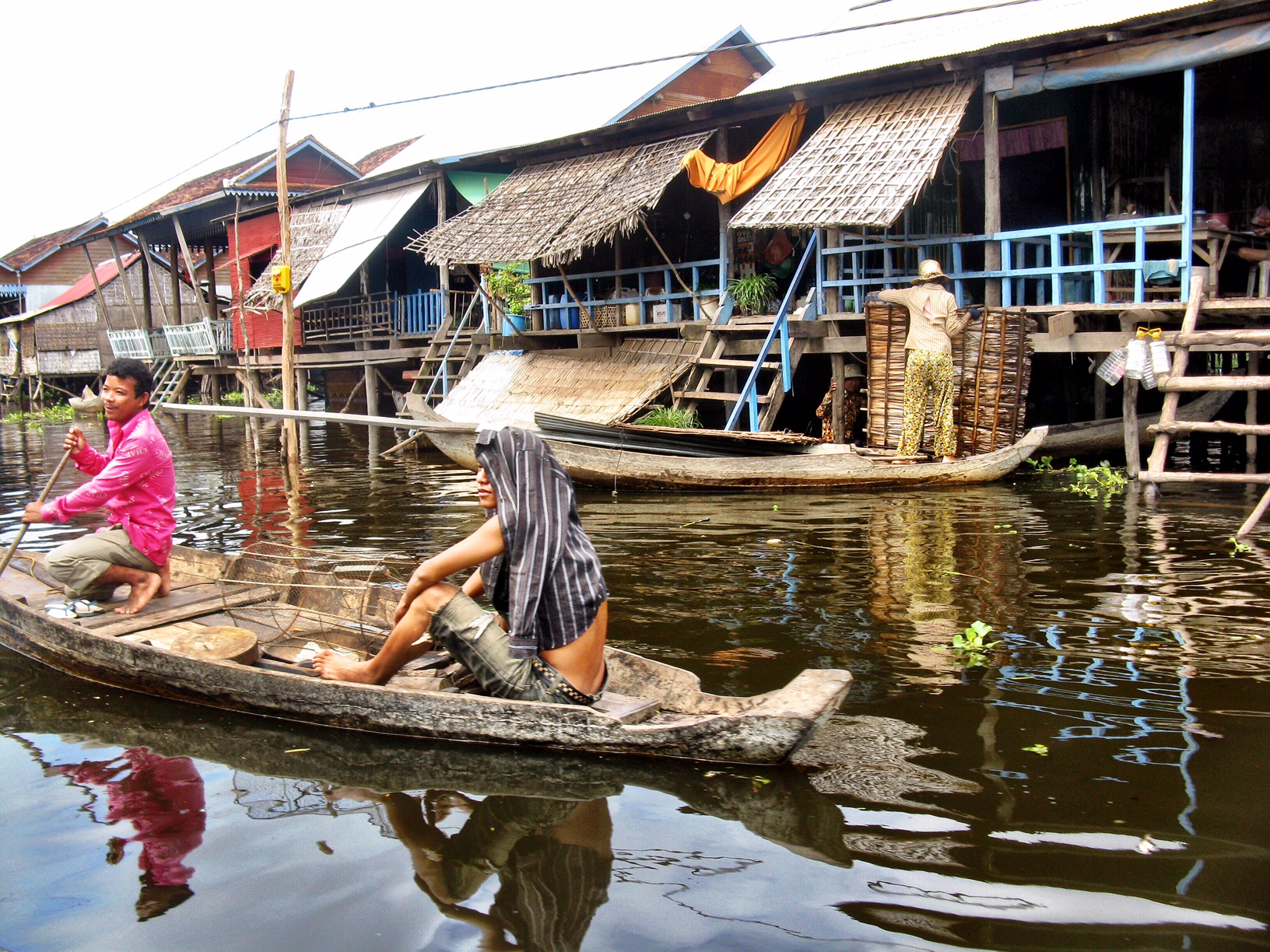
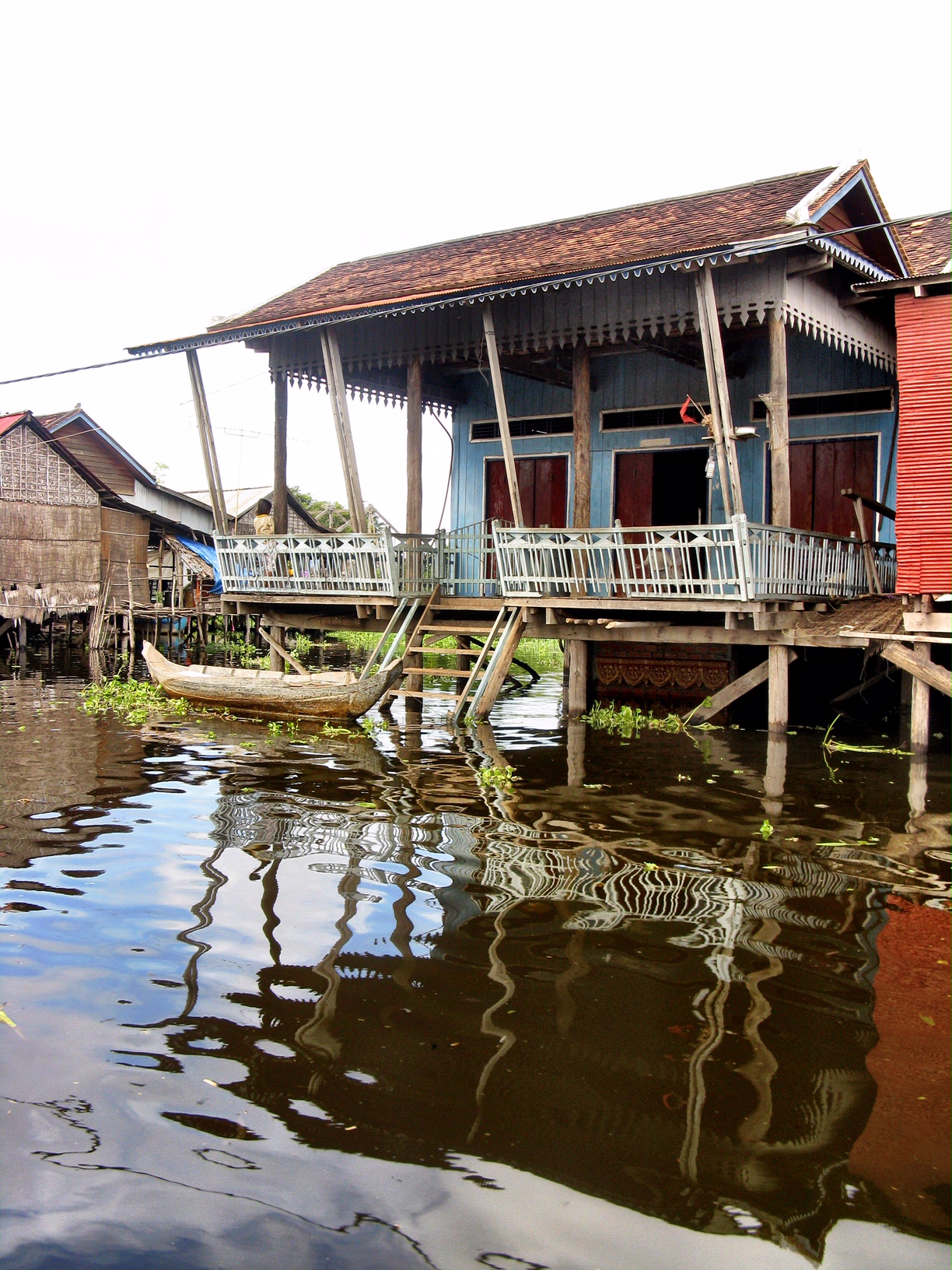
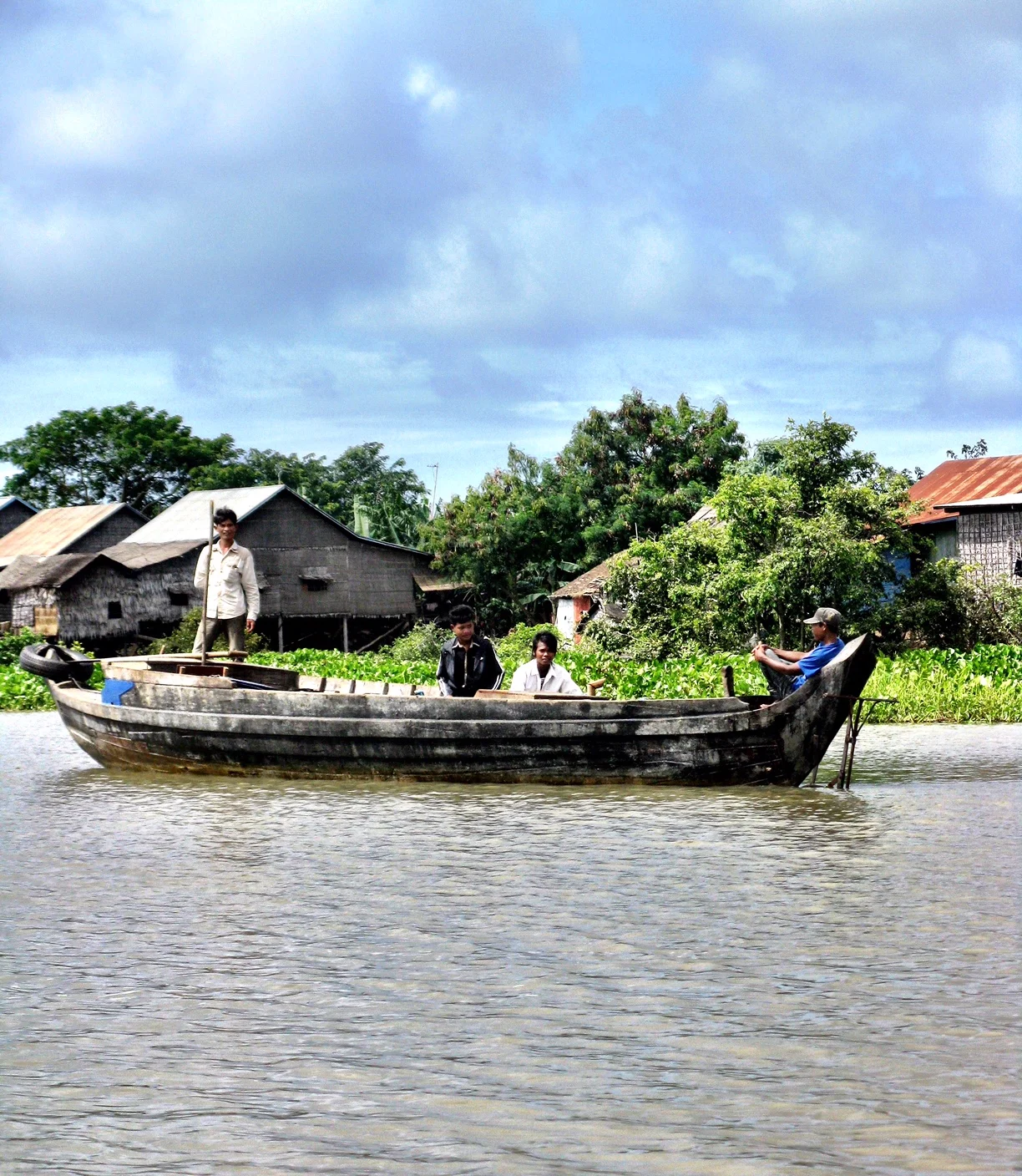
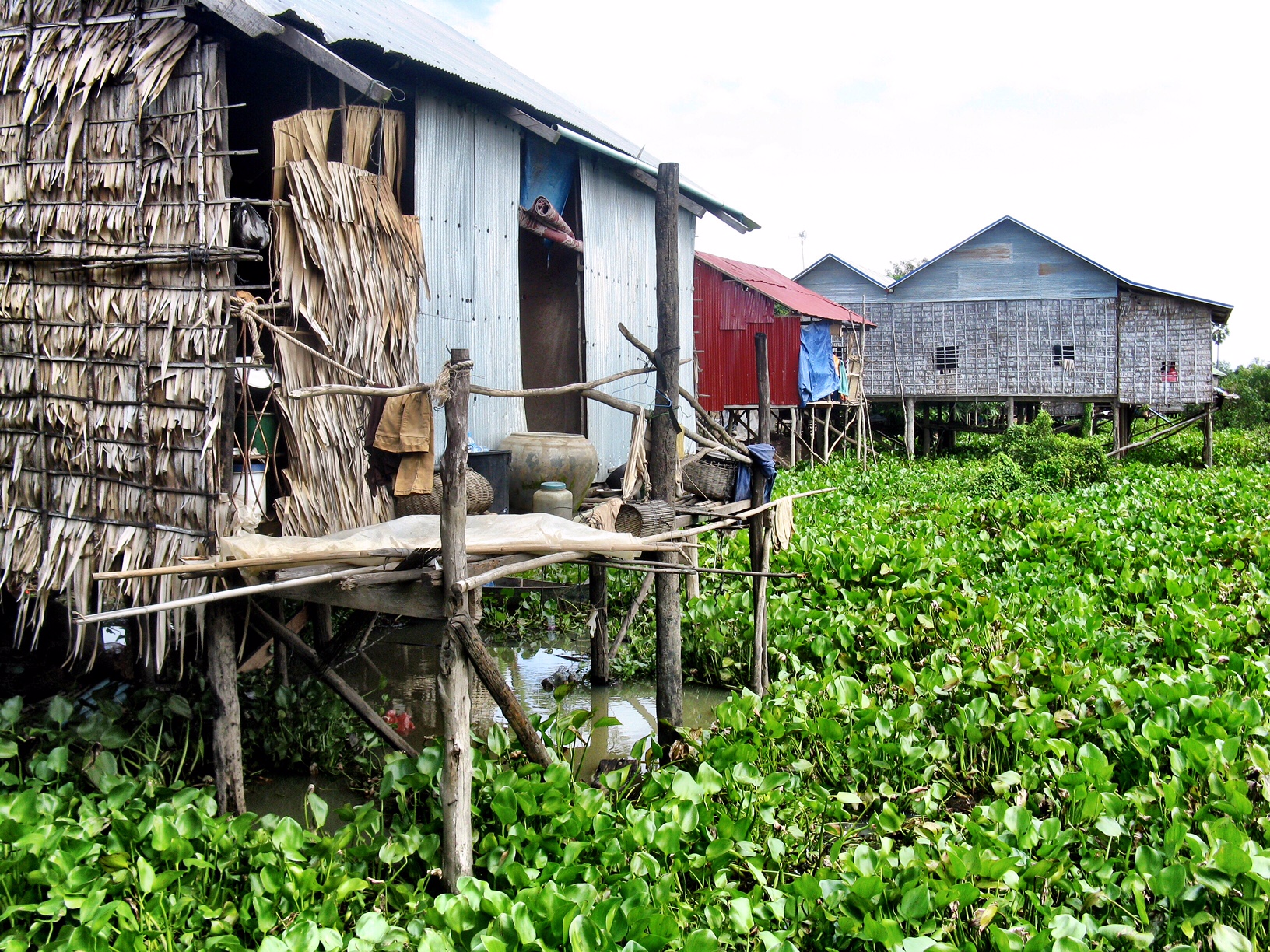
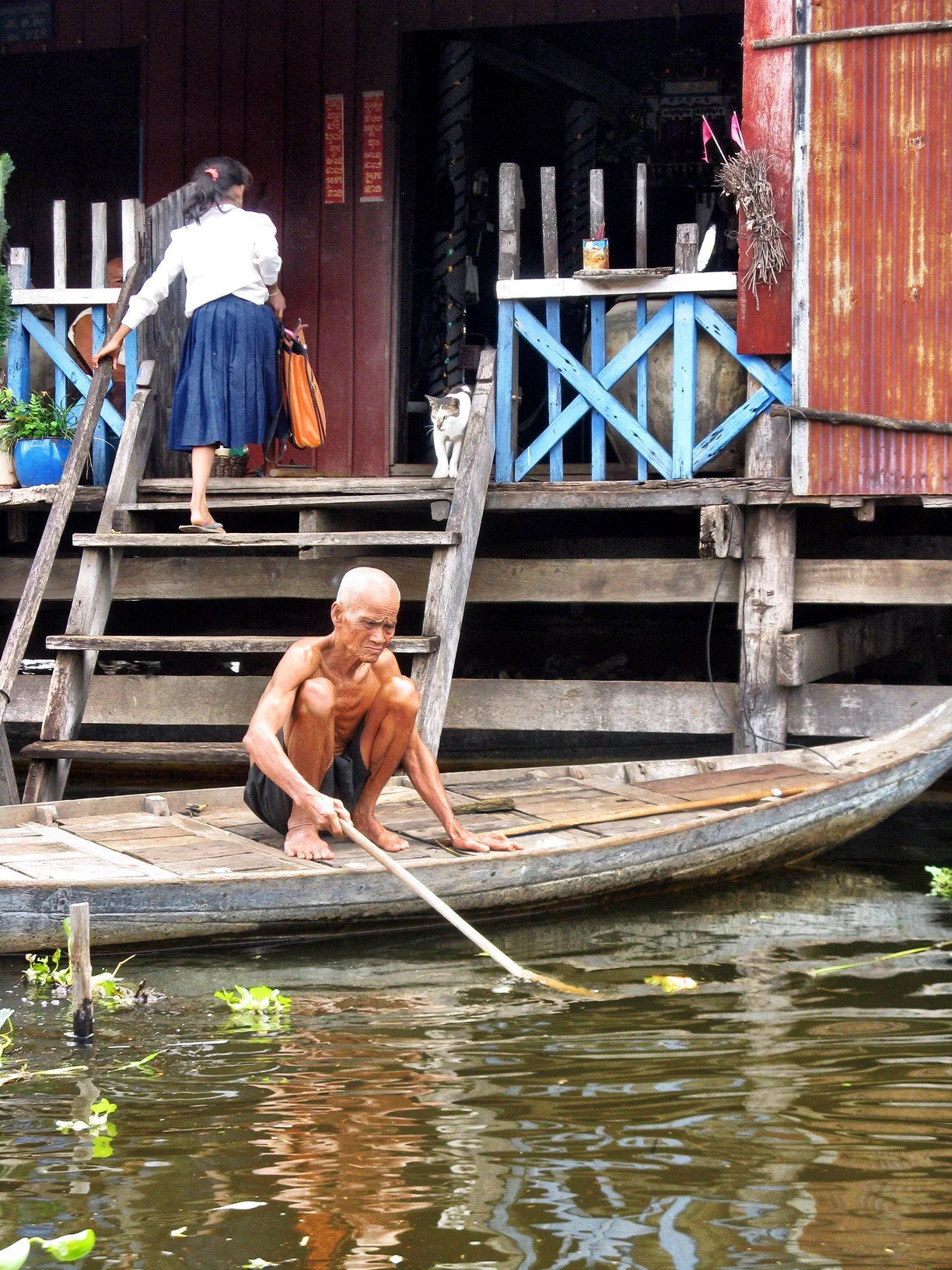
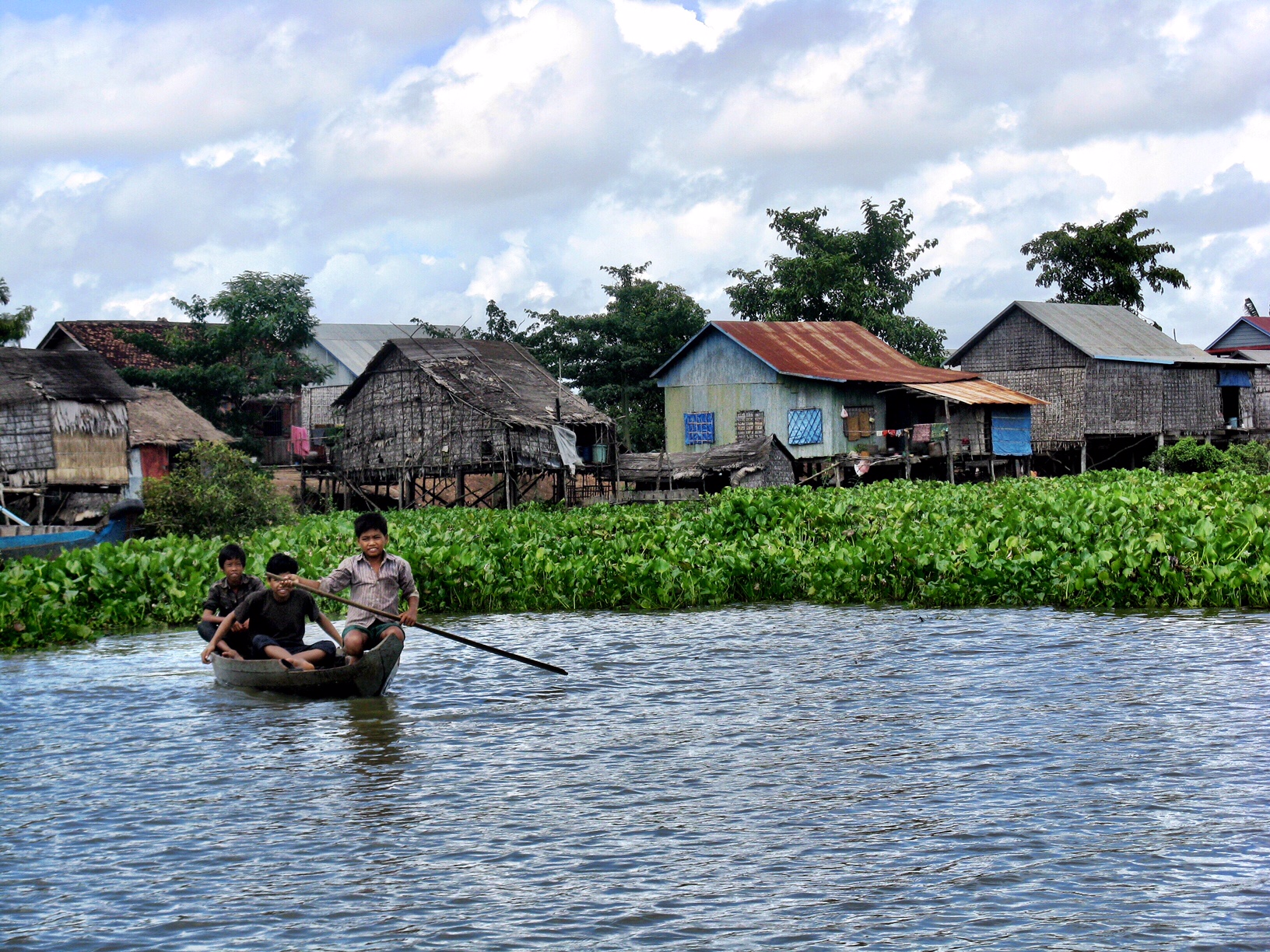
You’d think I’d mostly remember the village itself, its small houses built on stilts in the middle of the lake. And yes, it’s a village unlike any other. Even in Venice there are narrow lanes to walk along. In Kompong Khleang, if you want to go anywhere, you have to get into a boat. That sense of isolation must feel oppressive.

Perhaps that’s part of the sadness I saw reflected in the children’s eyes. Poverty is one thing. Not being able to leave your home to play whenever you want is another.

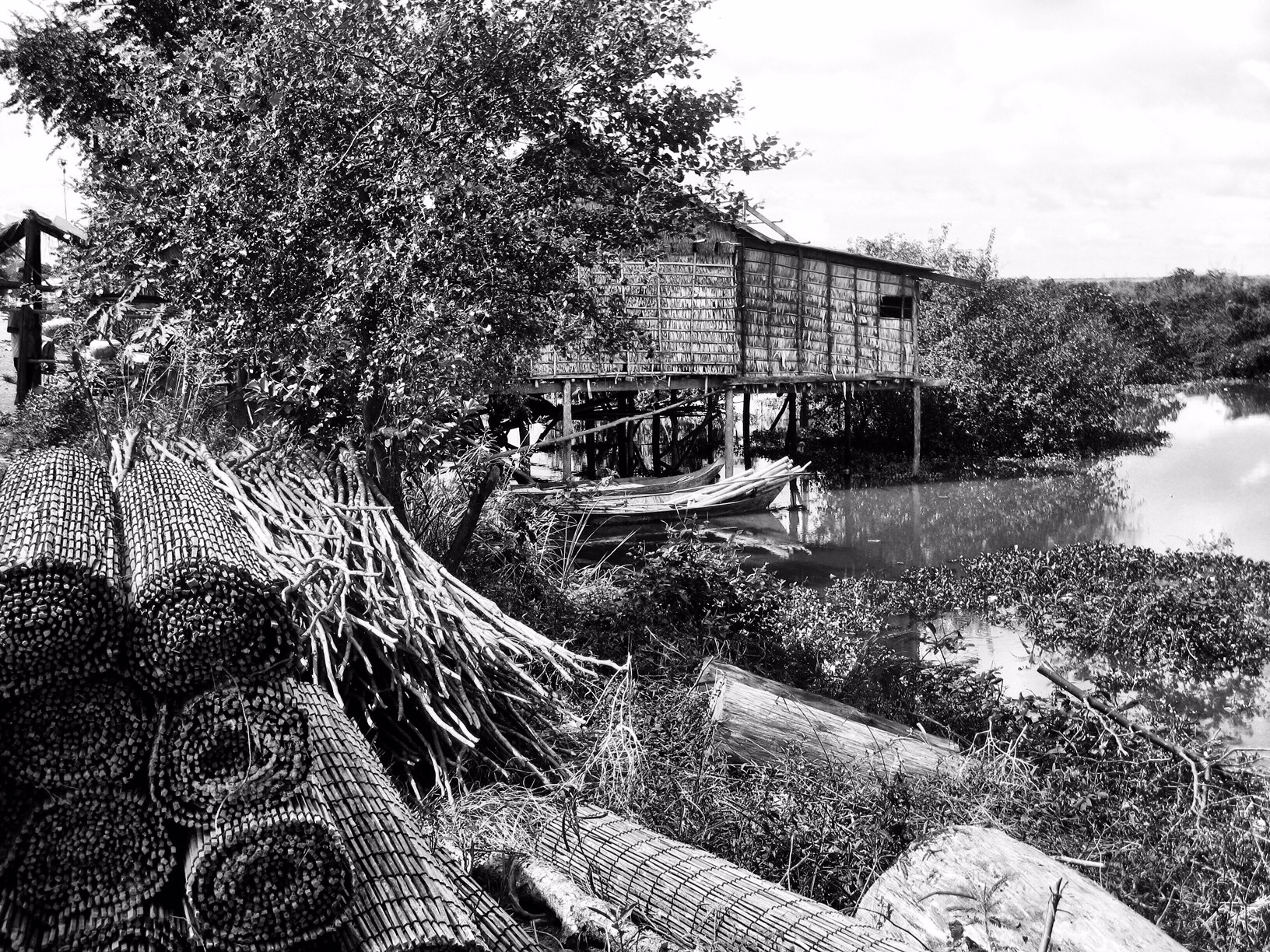
There are a few islands and makeshift transport vehicles as part of the village

There’s a sadness in many of the children’s eyes

Whatever Floats Your Boat

Apparently there are a few so-called floating villages you can visit as an easy day trip from Siem Reap, Cambodia, the base for Angkor Wat exploration. We left ourselves in the very capable hands of our guide, a tall, thin, kind man named Kimsan, who took us to Kompong Khleang.

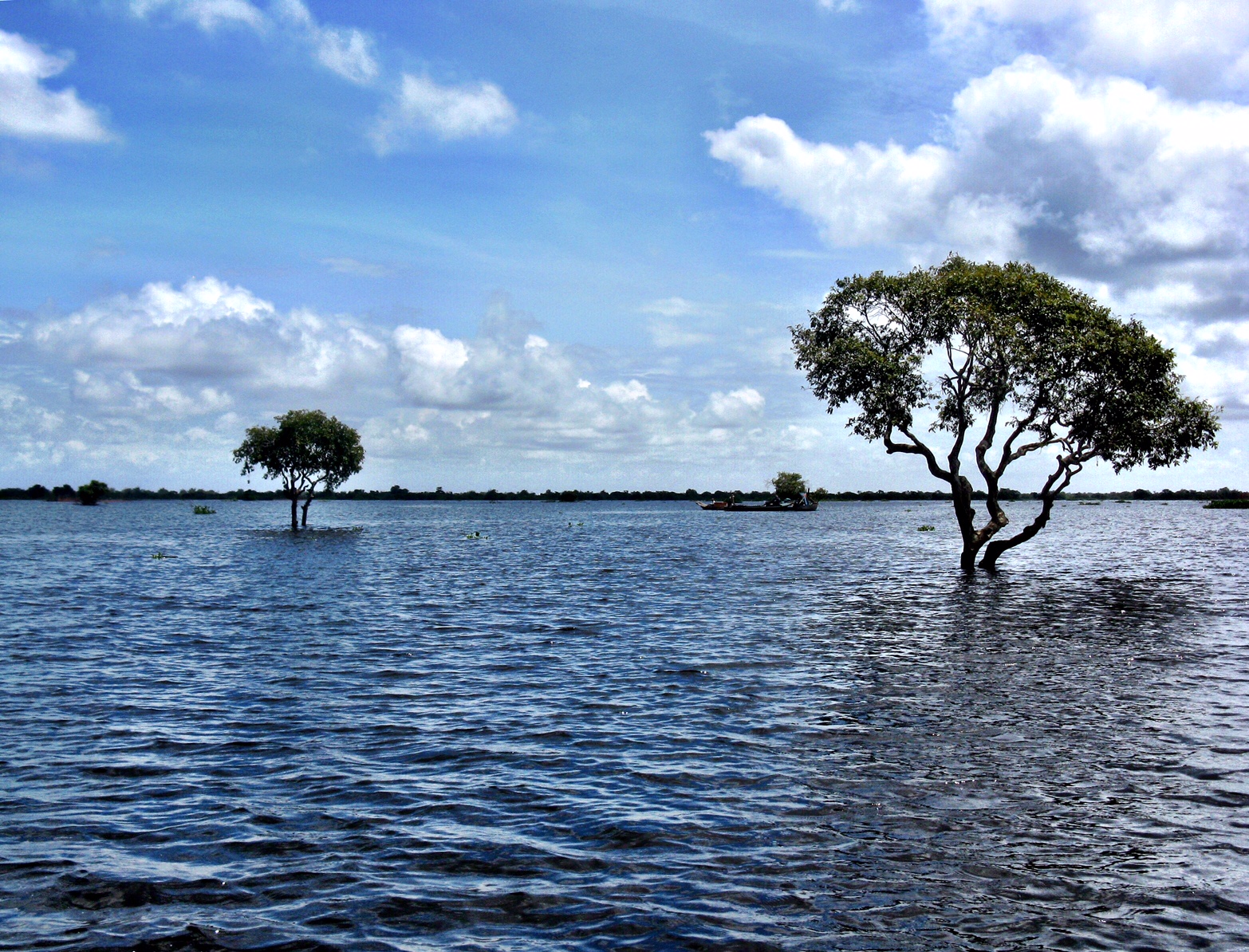
I’m not sure who thought it would be a good idea to build a village in the middle of Tonlé Sap (which means Great Lake), the largest freshwater lake in Southeast Asia. It’s fed by the Mekong River, which causes it to grow and shrink with the seasons. There can be a difference in depth throughout the year that varies from 10 to 30 feet! When we visited, the houses were a bit over water level; other times of the year, they stand much higher above the lake on their wooden stilts.

We drove to Kompong Khleang one morning, about a two-hour ride. I could probably explore the crumbling structures of Angkor Wat every day of my life, but this is a nice way to break up a week of temple treks.

As we neared the boat launch where we’d get into a vessel to float through town, the paved road ended. The truck slowed to a crawl. Every pothole and divot sent the passengers sailing upward into the ceiling.

“We call these dancing roads,” Kimsan told us.

Cambodians are quick to smile — admirable and inspiring, given all they’ve been through in recent years

That positive spin is typical of the Cambodian outlook on life. By all rights, they should be a demoralized nation, painfully recovering from the genocide their ruthless leader Pol Pot carried out on his own people. Everywhere you go, you’ll pass beggars who are missing limbs, most of which were blown off by the landmines that once dotted the landscape in frighteningly high numbers.

Despite the unfathomable psychic and physical battering they’ve suffered, Cambodians are some of the friendliest people you will meet. They’re quick with a smile. They’re thankful they have survived, and they’re eager to move on to better things.

Before the paved road, when the journey took place along dancing roads, heading to Kompong Khleang took hours longer and could consume an entire day.

Now you can pay a visit to observe this one-of-a-kind way of life — and be back wandering a temple in the jungle that afternoon.

One of the tourboats you’ll ride in to explore the floating village

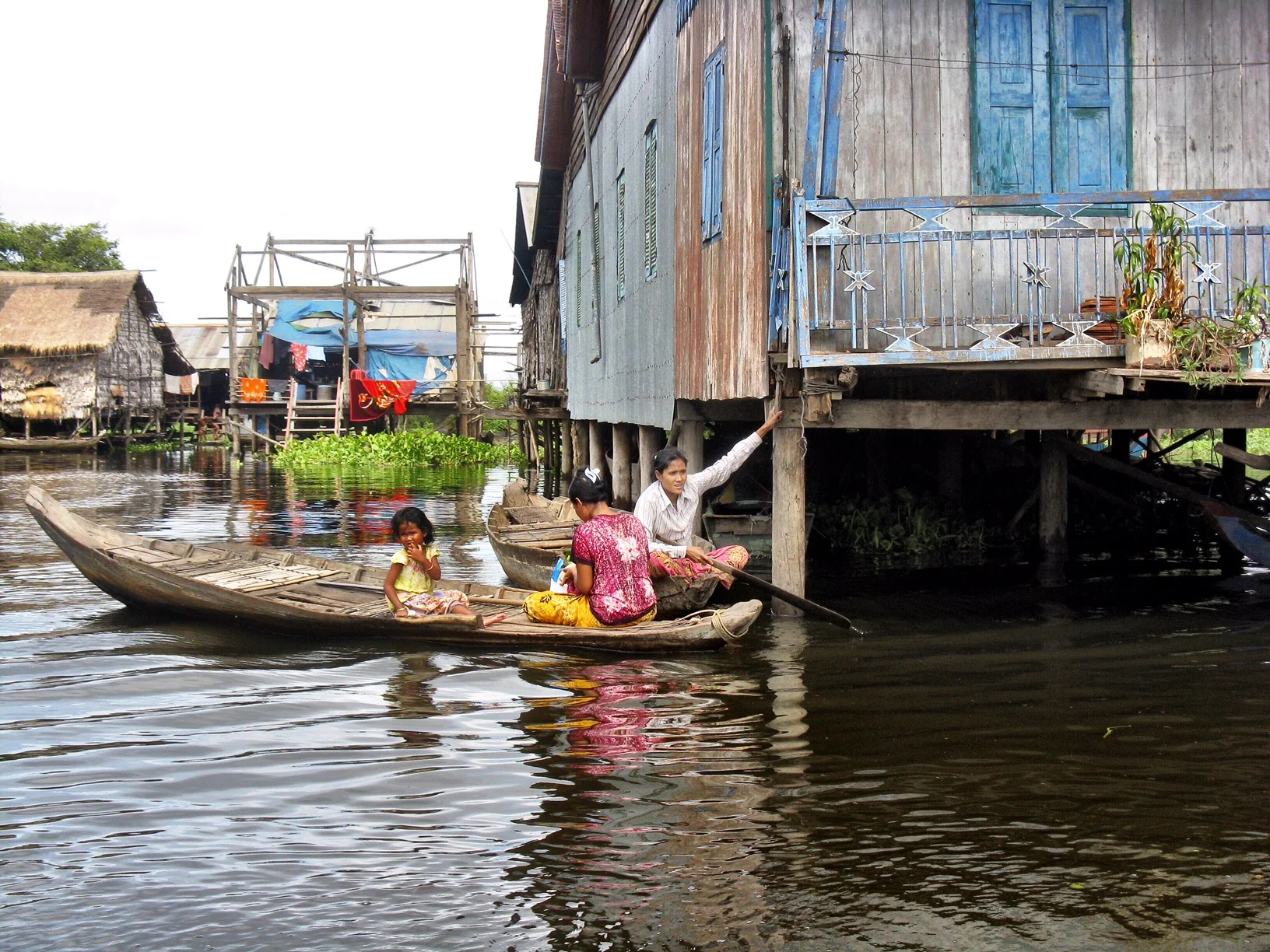
We all piled into a tourboat and began cruising through the village. It’s home to about 6,000 people, which means it’s surprisingly large. The boat traveled along a few “lanes” lined with small homes built on stilts. Farther along, we saw some houses that actually did float, houseboats of a sort, and these relocate when the water drops, creating a mobile village out in the middle of Tonlé Sap.

The main temple of Kompong Khleang

Kids will follow you as you tour the islands, racing to the water’s edge to wish you a farewell

The telltale bright orange saffron-dyed robes of Buddhist monks is always a pleasant sight

Three boys greet us on the grounds of the Buddhist monastary 

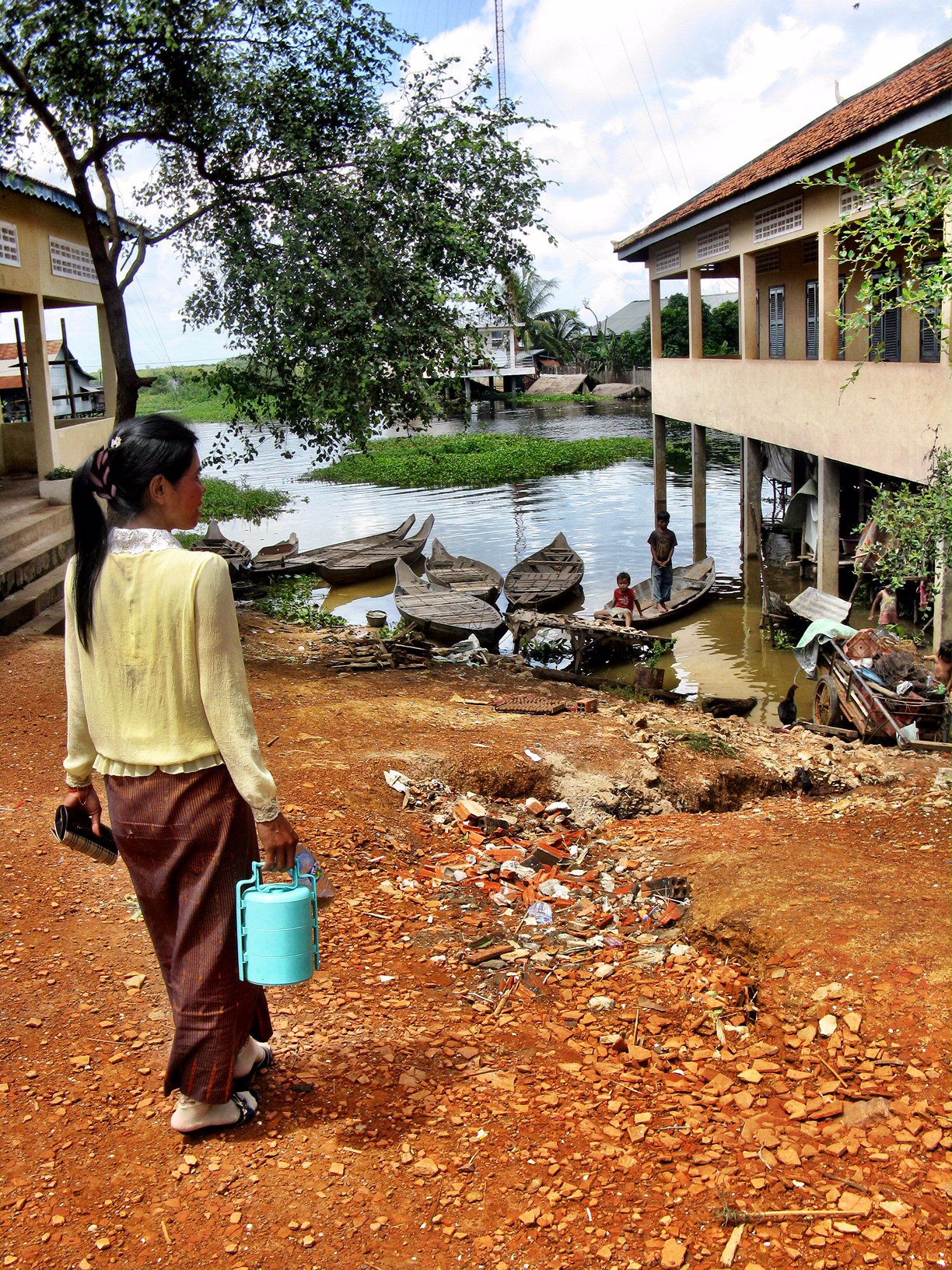
We stopped at a couple of islands, which were home to a Buddhist temple, with quiet male monks milling about in their saffron robes beneath the rainbow hues of fluttering prayer flags. On another, we visited a school, stopping into the bare-bones classroom — hardly any books, pieces of paper or writing utensils could be seen. The children were lined up in rows, sitting closely together, all dressed in their adorable blue and white uniforms.

Monks teach classes at the local school in Kompong Khleang

A classroom we toured — but where are all the books and paper?

Schoolboys on a break from classes

Most of the kids wore a school uniform but no shoes


The Fake Floating Villages

We lucked out by having such an awesome tour guide for the week. Kimsan took us to Kompong Khleang without any sort of discussion. Since our trip, I’ve learned about two other floating villages that are closer to Siem Reap, one of which is a total scam and one of which sounds OK but is a bit of a ripoff: Chong Kneas and Kompong Phluk.

“Chong Kneas features absurdities such as small kids sporting huge water snakes and so-called crocodiles farms which in reality are small ponds where dozens of crocodiles are crammed together,” writes Triple A Adventures Cambodia, a tour company. “At some point, your boat will probably also stop by a ‘local shop’ where it’ll be ‘strongly suggested’ that you buy $60 rice bags ‘for the children.’

“Last but not least, the locals do not get much from the money you’ll spend as the boat service, which is what you’re paying an entrance fee for ($30/person), is managed by a private company,” they continue. “As most visitors there come from Korea, the aforementioned company kindly built floating ‘local’ restaurants that serve Korean food in case their main customers miss it.”

And here’s Triple A Adventures’ review of the other village, Kompong Phluk: “You won’t see any croco farms or children with snakes there, and the boat journey is actually quite scenic and enjoyable. Despite the growing flow of tourists (you’ll understand what we mean when you see the dozens of boats at the dock), Kompong Phluk has kept a lot of its authenticity and its visit is overall a nice experience.

“Kompong Phluk is a small village, so the boat ride is consequently quite short. Some find it too short compared to the $20 entry fee per person. Moreover, the boat service is managed by a private company, which means that the locals don’t really see much of the money generated from tourism.

Overall, Kompong Phluk is still a good option if you only have a few hours to spend.”


Getting into a boat every time you want to go anywhere is the way of life in Kompong Khleang

This fiesty little firecracker was our favorite villager. She was so full of life and followed us all over the island

In Kompong Khleang, sometimes the market comes to you

Wally likes to joke that this is the town hottie

Lake Town

No trip to Angkor Wat is complete without a daytrip to a floating village, and it seems as if there’s no reason to go anywhere but Kompong Khleang. As you head through the canals, you’ll literally be able to see inside these people’s lives, catching glimpses into their humble homes, many of which are open and exposed. You’ll see narrow canoe-like boats piloted by children who can’t be much older than 6.

We hope you enjoyed your tour of Kompong Khleang!

It’s quite an adventure — one that will open your mind, put things in perspective. You’ll develop a newfound appreciation for all the conveniences you have in your life. That’s one of the most profound things travel can do. –Wally

Despite the unfathomable psychic and physical battering they’ve suffered, Cambodians are some of the friendliest people you will meet.


Santa Semana Bar Crawl

Holy Week is a big deal in Málaga, Spain. Learn all about the bizarre celebrations featuring humpbacked and hooded figures in secret brotherhoods.

La Dolorosa (Our Lady of the Sorrows). Resin teardrops, glass eyes and actual clothes add to the realism of the pained expression of the Virgin Mary, featured at Puerta Oscura in Málaga

Tucked away in the narrow Calle Mosquera and situated near the historic Málaga Centro, Taberna Cofrade las Merchanas is a local bar with an unassuming exterior that belies what awaits you inside.

Here, the interior is a quirky tribute to the Santa Semana celebration (Holy Week, which starts on Palm Sunday and concludes on Easter). The bar is filled with holy relics, photos and memorabilia associated with the traditions of Santa Semana. The establishment belongs to the cofradia (brotherhood) and although it was opened in 2011, it has the feel of having existed for decades.

Local belief holds that the bigger the hump, the more pious the man.

Relics pertaining to Santa Semana fill the walls at a bar in Málaga, Spain, owned by one of the Holy Week brotherhoods

Semana Santa traditions in Spain are a serious affair — and Málaga is no exception. They include processions in which an elaborate ceremonial trono paso, literally a throne step or float, is carried by costaleros, or “sack men,” so named for the padded headdresses they wear to support the float. Because they’re hidden beneath a cloth, the trono paso looks like it’s floating through the air.

The platform of the trono paso holds life-size effigies made of wood, wax and wire depicting scenes from the gospels related to the Passion of Christ. There are up to 40 costaleros underneath each trono paso. These men bear the weight of the float on their necks and shoulders. Many are left with a humpback for several days after. Local belief holds that the bigger the hump, the more pious the man, our friend Jo informed us.

The pasos are followed by nazarenos, or penitents, dressed in colorful tunics and conical hoods and masks called capriotes to render the individual unidentifiable — they’re all equal in the eyes of God. Americans might be alarmed at first, confusing the hoods for those of the Ku Klux Klan, or KKK, who also adopted the medieval attire, though in white.

A shelf filled with nazareno figurines at Taberna Cofrade las Merchanas in Málaga. The different colored robes indicate which hermandad (brotherhood) the individual belongs to.

The sound of slow, rhythmic drum beats traditionally heard during the procession provide the soundtrack in the bar, which is a stop on the pilgrimage circuit during Holy Week — and serves up good tapas year-round.


RELATED: In Seville, the jubilant Feria de Abril begins two weeks after Semana Santa, while in Málaga, it’s typically held in August.


Taberna Cofrade las Merchanas

Calle Mosquera, 5


The Devil’s in the Details

After visiting the Soho district, a street art mecca, our friends Jo and José led us to the café/bar Puerta Oscura, or the Dark Door.

Upon entering, the dimly lit interior resembles a Baroque-period salon: pale powder blue walls, ornamental plaster embellishments and cut crystal chandeliers accompanied by furnishings upholstered in a burgundy and gold stripe.

The main room of the café serves as an exhibition space for museum-quality polychromed devotional sculptures, and at the time of our visit last spring was featuring the work of Ramón Cuenca Santos.

The intricate process to create the sculptures includes clay and polychromed cedar.

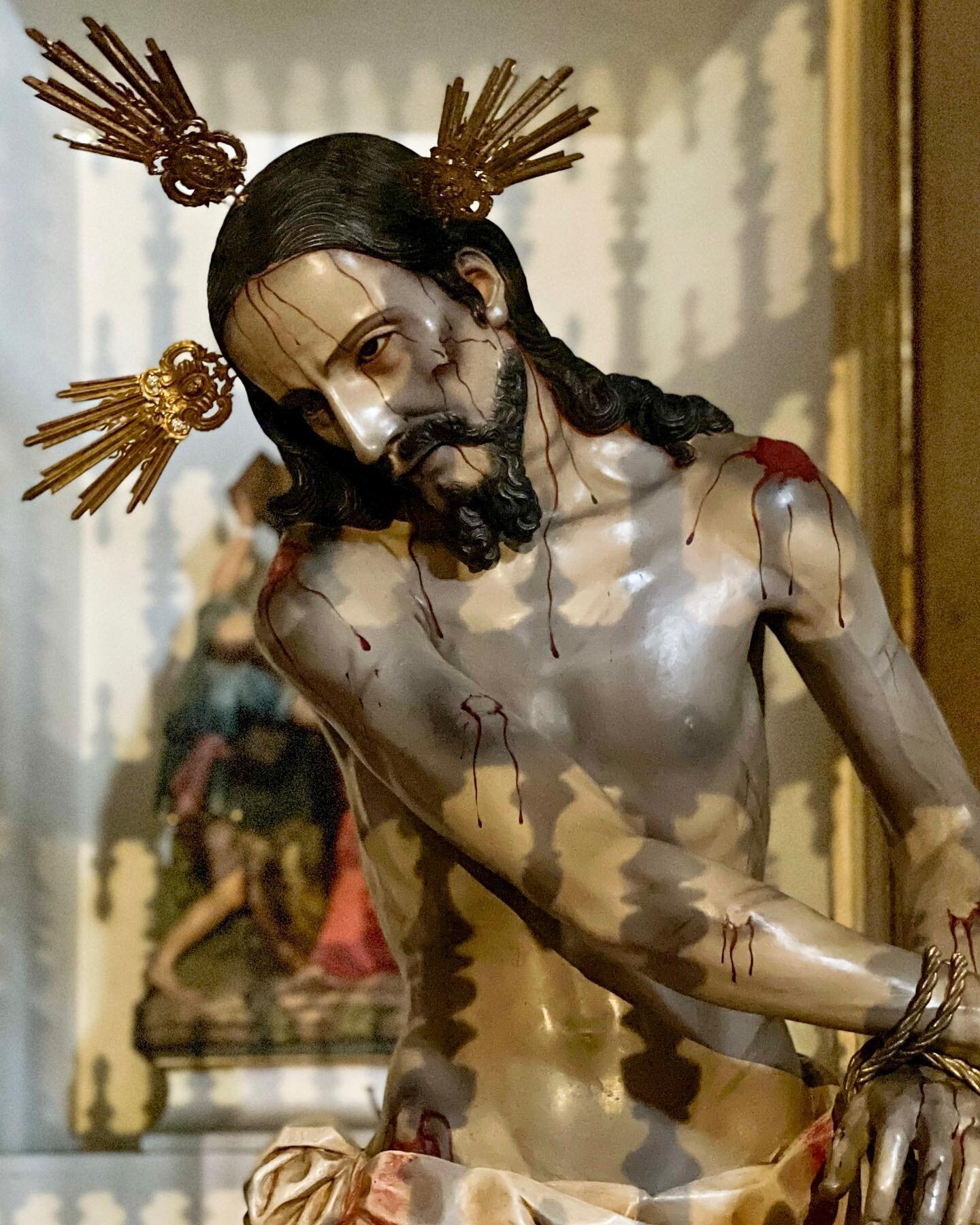
Jesús Cautivo (Bound Jesus), a life-size (and amazingly lifelike) seated Christ with wrists wrapped in real gold-colored rope.

It was fascinating to see the prototype sculpture first conceived in clay and subsequently polychromed cedar. These expertly handcarved and painted sculptures appear as if they might just move when you’re not looking.  

We ordered coffee and perched on stools while classical music played, and Wally and I took photos of the sculptures.

The process of creating these lifelike sculptures is truly amazing:

Puerta Oscura

Calle Molina Lario, 5

Travel Karma

Some trips are blessed, some cursed.

We are all connected, as this detail from a Jain temple in Rajasthan, India shows

My son’s friend went off a cliff on a defective scooter on the Greek island of Poros. He had to be flown to Athens on the orders of the local doctor whose limited English had him explain, “I can see his mind.” In other words, a big gash in the head.

My rented jeep was confiscated when the owner saw a wrecked scooter in the back. My son’s scooter was confiscated when he rode through town during siesta looking for help. Bad travel karma.

We all put one foot slowly behind the other, except for a newlywed groom who turned and ran, knocking his bride to the ground without ever breaking stride. They did not speak for the rest of the trip.


My two friends and I met Ahmed on the train in Morocco from Rabat to Fès. Ahmed was middle-aged, skinny, snaggle-toothed — too much sugar in the mint tea — and extremely talkative. He was a nice man and we had three hours to kill. We heard about his nine siblings and his extended family of 45, who prevent him from selling his father’s riad since he can’t get everyone to sign the papers. Ahmed worked for the leather cooperative.

He wasn’t pushy but he gave us his number. When we called, he sent Abdul, who guided us to the tannery and gave us a tour of the medina, two hours, more than five miles, much of it uphill. He led us through the rat’s maze of streets and the crush of people and didn’t seem to mind that, although we bought leather, we didn’t buy anything else. A nice guy showing people his hometown. Good travel karma.


Bad travel karma can haunt you for years.

We were told by the guide in Zimbabwe that if charged by a lion, we must not run and we must not panic. We set off on foot through Matusadona on Lake Kariba. A female lion crossed the dry riverbed we were walking down. We stopped. She disappeared into the bush. We went on. She charged when we came even with her and her two cubs.

A charging lion makes a noise that shakes the earth, a growl that starts in the soles of your feet and travels to the back of your neck like a lightning striking. We all froze. The guide raised his gun but did not cock it. We stared at her. She stared at us. The guide whispered, “Back up.” We all put one foot slowly behind the other, except for a newlywed groom who turned and ran, knocking his bride to the ground without ever breaking stride. The guide scooped her up with one hand while still aiming at the lioness. The bride and groom did not speak for the rest of the trip. Bad travel karma is a bad start to a marriage.


Good travel karma can be accrued.

In Turkey, Egypt and Morocco, taxis are often shared. You give the driver your destination, but if there’s room, he may stop and pick up somebody else. Sometimes even if there’s not room. Cabs never use their meters and never have change. Pay it forward. How much for the lady in the front seat with the two gallons of olive oil?

A little global goodwill goes a long way, and you may earn so much good travel karma that your Airbnb host serves a lunch of tagine with fresh sardines and warm bread.


How to Accrue Good Travel Karma

  • Don’t give money to beggar children; give pencils.
  • Always give away leftovers.
  • Pack used clothes to trade at street markets in sub-Saharan Africa. They can be worn or sold. Used jeans, and you’re royalty for a day.
  • Pose for pictures with people. I am in the family albums of more Indian families than I can count, often with their children in my lap.

Karma goes around and it comes around, the original global energy. –Rebecca

Top 10 Blog Posts of 2016

What subjects appealed most to our readers? Qatar, a love den in Delhi, jinns, wellness, tapas, guacamole, a Peruvian vampire, a Fès restaurant and Trump. Lots of Trump.

It must be love.

As we reviewed our best-performing posts of our inaugural year, we noticed that you share our same diverse interests. You appreciate our quirky sensibilities (like our post on a garden filled with amorous couples finding release in a repressed society).

But you’re interested in politics, too — from what it’s like to live in a Middle Eastern country to the global effects of our controversial new president.

You also appreciate good food, whether it’s a recipe you’re looking for or restaurant suggestions on your travels.

Finally, you’re interested in folklore, be it the jinns of Islam or a fat-sucking vampire you sure don’t want to run into along the Inca Trail.

1. THE BEST AND WORST PARTS OF LIVING IN QATAR

What’s it like living in a Muslim country that fasts for an entire month and limits the sale of booze? What do Qataris think of Americans? And how the heck do you pronounce Qatar?

2. THE BEST PLACE TO MAKE OUT IN PUBLIC IN DELHI

Not a typical tourist stop, the Garden of Five Senses is a whimsical sculpture park worth visiting. It’s also popular with local couples escaping societal judgment against PDA.

3. HOW TO PROTECT YOURSELF FROM JINNS AND BLACK MAGIC

Black magic in Islam is a serious concern — and the holy writings offer numerous ways to negate magic jinn.

4. TOP 6 WELLNESS TOURISM TRIPS

Yoga on the Mexican beach, hikes to Machu Picchu, Pilates in Morocco — the best health tourism adventures.

5. LA TRANCA: KICK OFF A DAY OF MALAGA TAPAS AT THIS LOCAL HANGOUT

Famous for its empanadas and other tapas treats, this neighborhood bar has many a story to tell.

6. WHAT THE WORLD THINKS OF A PRESIDENT TRUMP

Spoiler alert: From Europe to Asia to Latin America, the outlook isn’t very optimistic.

7. BEST GUACAMOLE RECIPE EVER

Es la verdad. Wally’s famous guacamole never fails to please. Just make sure you get a molcajete.

8. MORE TAKES ON WHAT THE WORLD THINKS ABOUT A TRUMP PRESIDENCY

Is there any country that’s pleased with the results of the 2016 U.S. presidential election? (Besides Russia, that is.)

9. THE PISHTACO OF PERU

Why one of the world’s creepiest vampire legends lingers to this day.

10. THE RUINED GARDEN: A FAIRY TALE FEZ RESTAURANT

A magical, secret spot with great Moroccan food, friendly servers, quirky décor and kitty companions.