italy

The Most Popular Flower-Based Destinations Around the World

From cherry blossoms in Japan to lavender fields in Provence, these are the flower-filled destinations travelers plan entire trips around — timing anxiety included.

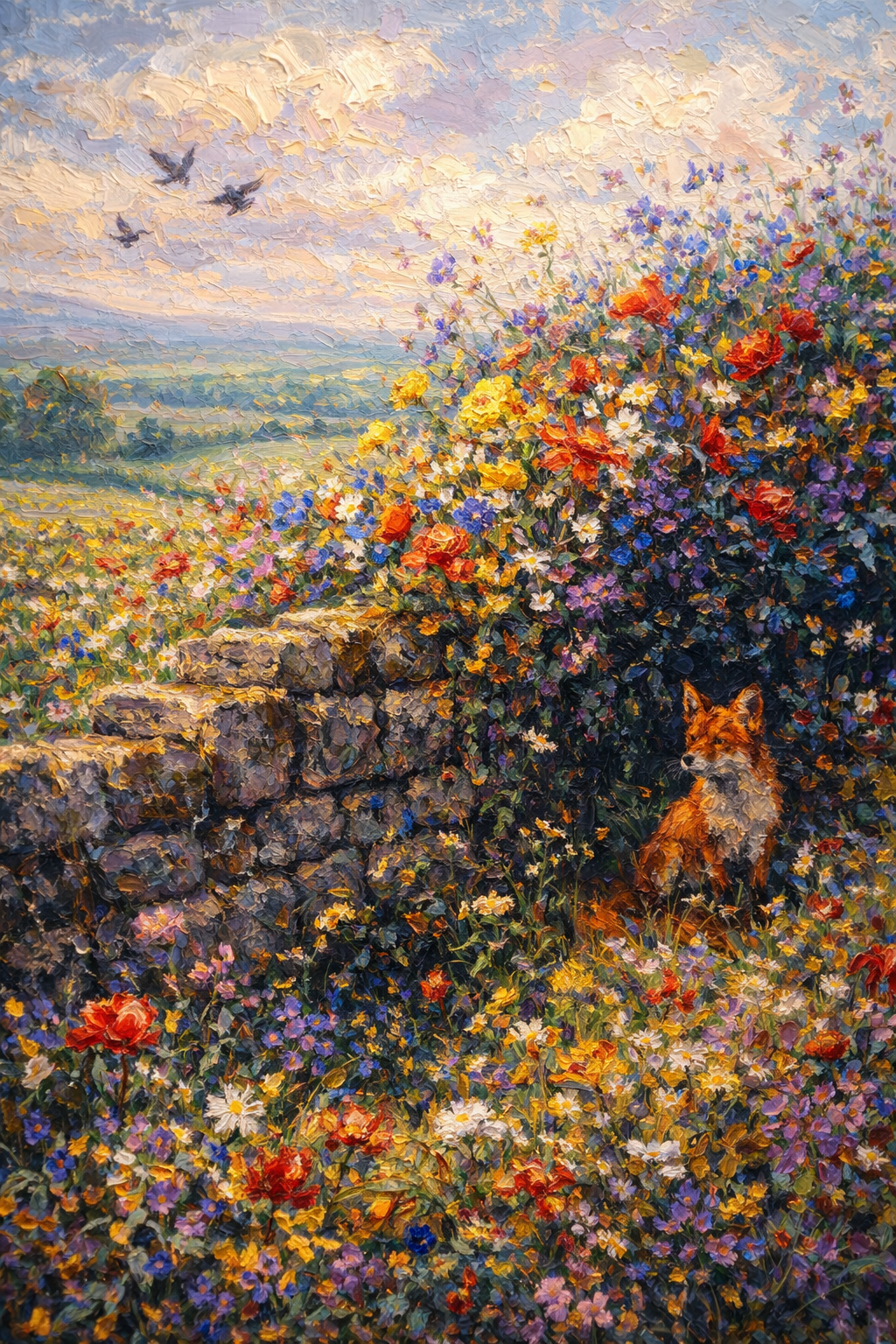
A fox sits by an old stone wall covered in colorful wildflowers in the English countryside as bird fly overhead

Some trips are built around museums. Others around food, beaches or weather that doesn’t actively try to ruin your plans. And then there are flower trips — the kind that hinge on a narrow window of time, a bit of luck, and a willingness to plan an entire journey around something that might already be gone by the time you arrive.

Flower-based travel is part pilgrimage, part gamble. Show up too early and you’re staring at bare branches or tightly closed buds. Show up too late and the petals are already carpeting the ground, beautiful in their own way but not quite what you came for. That anxiety — the constant checking of bloom forecasts, the obsessive refreshing of social feeds — is part of the appeal.

Around the world, certain flowers have become inseparable from the places that grow them. They shape city identities, define seasons and quietly drive tourism in ways that feel emotional rather than transactional. 

From fleeting cherry blossoms in Japan to marigolds that transform Mexico during Day of the Dead, these are the most popular flower-based destinations around the world — and why travelers keep chasing something so beautifully temporary.

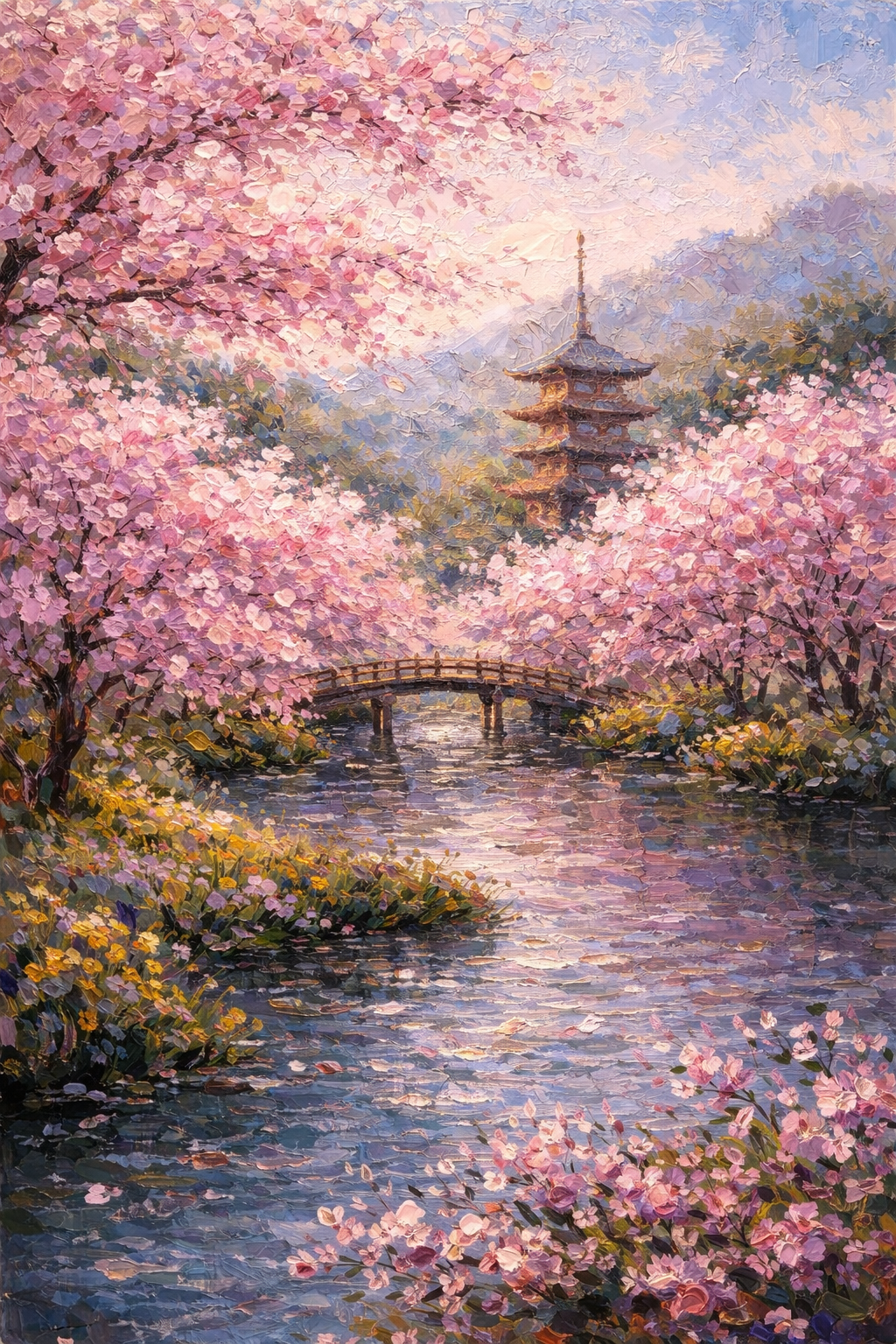
A temple spire and curved bridge over a river in Japan with the cherry trees at full bloom

Cherry Blossoms in Japan

If flower-based travel has a gold standard, this is it.

Cherry blossom season in Japan isn’t just something you stumble into while sightseeing — it’s something people plan years around. Flights are booked with fingers crossed. Hotels fill months in advance. Entire itineraries hinge on a few fragile days when sakura trees briefly do what they’ve always done, indifferent to human schedules.

In cities like Tokyo and Kyoto, cherry blossoms turn everyday spaces into temporary landmarks. Parks, riverbanks and neighborhood streets become gathering places where people picnic under clouds of pink and white petals, fully aware that the moment is already slipping away. 

But Japan’s cherry blossom appeal isn’t limited to the obvious places. Many travelers deliberately skip the most crowded spots, chasing blooms in lesser-known cities or quieter regions where the experience feels more personal, less performative. The flowers are the same; the atmosphere changes completely.

What makes cherry blossoms such a powerful travel draw is their refusal to cooperate. Bloom forecasts are studied obsessively, but weather still wins. A warm spell can speed things up. A cold snap can delay everything. Miss the window by a week, and the trees are already shedding, their petals collecting on sidewalks and water like a beautiful consolation prize.

That uncertainty is exactly the point. Cherry blossom season taps into something deeper than scenery — it’s about impermanence, attention and showing up when it matters. The flowers don’t last, and that’s why people keep coming back, hoping to catch them at just the right moment next time.

When to go:
Late March through early April, though bloom timing varies by region and year. Southern areas tend to flower earlier; northern regions follow later.

Traveler tips:
Book accommodations well in advance and stay flexible if possible. Consider smaller cities or less-famous parks for a quieter experience, and don’t panic if petals start falling — peak bloom is beautiful, but so is the moment just after.

If autumn leaves are more your thing, try timing a trip with koyo in Japan.

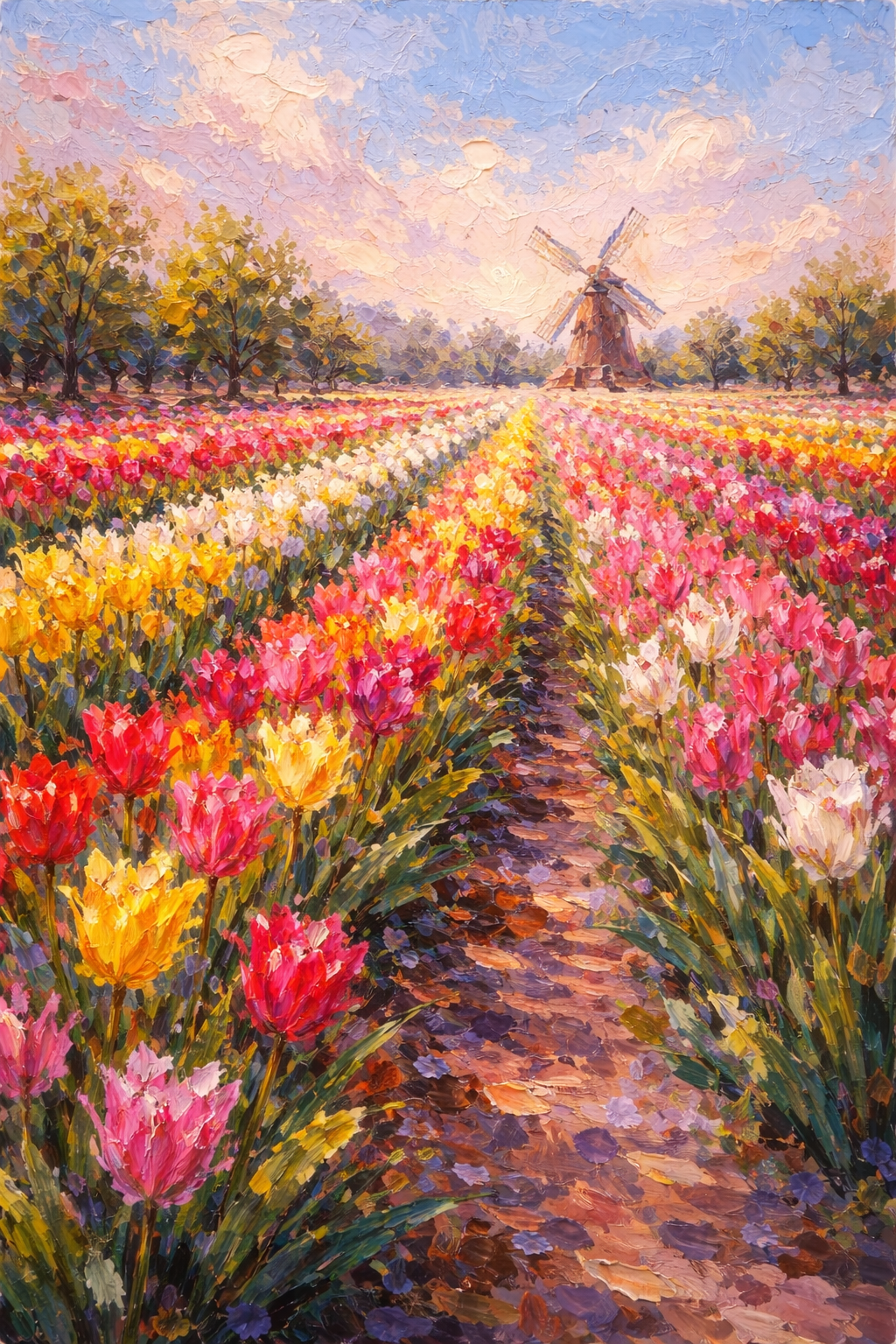
Rows of red, white and yellow tulips by a windmill in the Netherlands

Tulips in the Netherlands

Tulips in the Netherlands occupy a strange space between nature and choreography.

For a few weeks each spring, the countryside turns into a living color chart. Red, yellow, pink and purple fields stretch toward the horizon with a precision that feels faintly suspicious, as if someone went out overnight with a ruler and a vision board. Which, historically speaking, isn’t far off. Tulips here thrive under planning, patience and a national fondness for order.

Keukenhof gets most of the attention, and for good reason. Its displays feel almost theatrical — rows of blooms arranged with such care they verge on surreal. Yet the real magic happens once you leave the gates behind. Beyond the gardens, tulip fields take over entire regions, lining rural roads and canals in broad, unapologetic stripes. This is the version best experienced slowly, preferably by bike, with plenty of stops just to stare.

Tulips have been woven into Dutch identity for centuries, from economic obsession to cultural shorthand. They appear everywhere — souvenirs, postcards, tourism campaigns — standing in for the country itself. 

Timing remains the only wildcard. Tulip season moves quickly and without apology. Arrive too early and the fields sit quietly green. Arrive too late and the flowers have already been cut back, their work complete. The reward goes to travelers willing to plan carefully and accept that the window stays narrow for a reason.

When to go:
Mid-March through early May, with peak blooms usually landing in April. Weather determines everything.

Traveler tips:
Keukenhof earns its reputation, but the countryside delivers the scale. Rent a bike or explore towns near Lisse to see the fields up close. Early mornings and overcast days often bring richer colors and fewer crowds.

EXPLORE MORE: A Benelux Itinerary

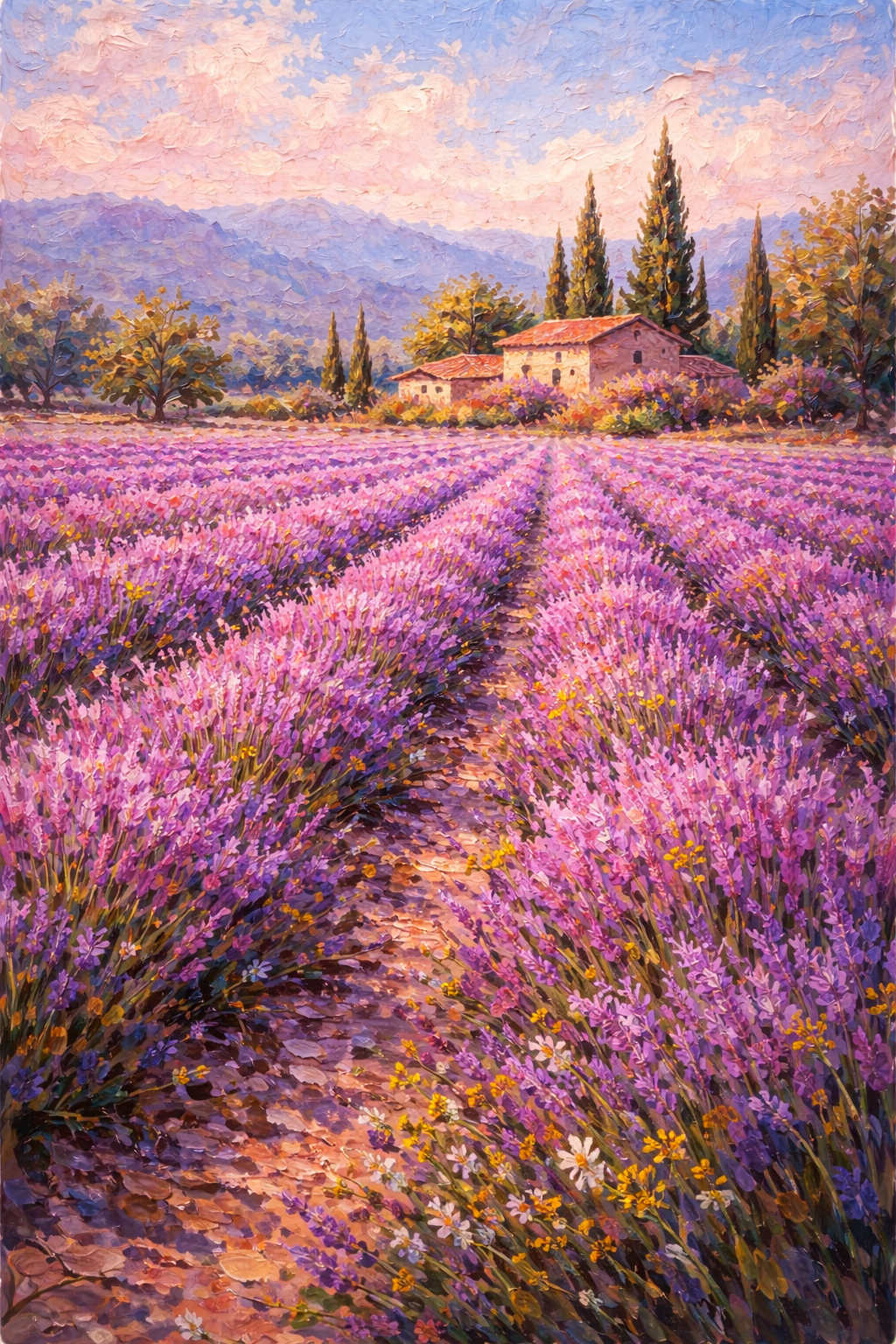
Rows of lavender growing in a field in Provence, France, with a stone house nearby

Lavender in Provence, France

For a brief stretch of summer, the landscape in Provence shifts into something almost unreal. Hills roll out in soft purples and silvers, neat rows of lavender stretching toward stone farmhouses and distant mountains. The scent hangs in the air, impossible to ignore, turning even a simple drive into a sensory experience.

Unlike flowers that cluster in parks or gardens, lavender defines the countryside itself. It’s woven into the region’s identity. Villages, roads and fields all participate, making Provence feel temporarily transformed rather than decorated.

Timing is everything. Lavender season is short and unforgiving. Arrive too early and the fields are still green, quietly preparing. Arrive too late and the harvest has already begun, leaving behind trimmed stems and a faint echo of what was there just days before. Travelers plan entire itineraries around this window, knowing the payoff lasts only weeks.

What draws people back year after year is the completeness of the experience. Lavender isn’t just pretty — it’s something you smell, feel and remember. The color, the heat of summer, the hum of bees in the fields — together they create a moment that feels both abundant and fleeting.

When to go:
Late June through mid-July is peak lavender season, though timing varies slightly by elevation and location

Traveler tips:
Base yourself near smaller villages rather than major cities to be closer to the fields. Early morning and late afternoon offer softer light and fewer crowds. Check local harvest updates before finalizing dates — once cutting starts, the show’s over fast.

BUG OUT: Why the Cicada Became the Symbol of Provence

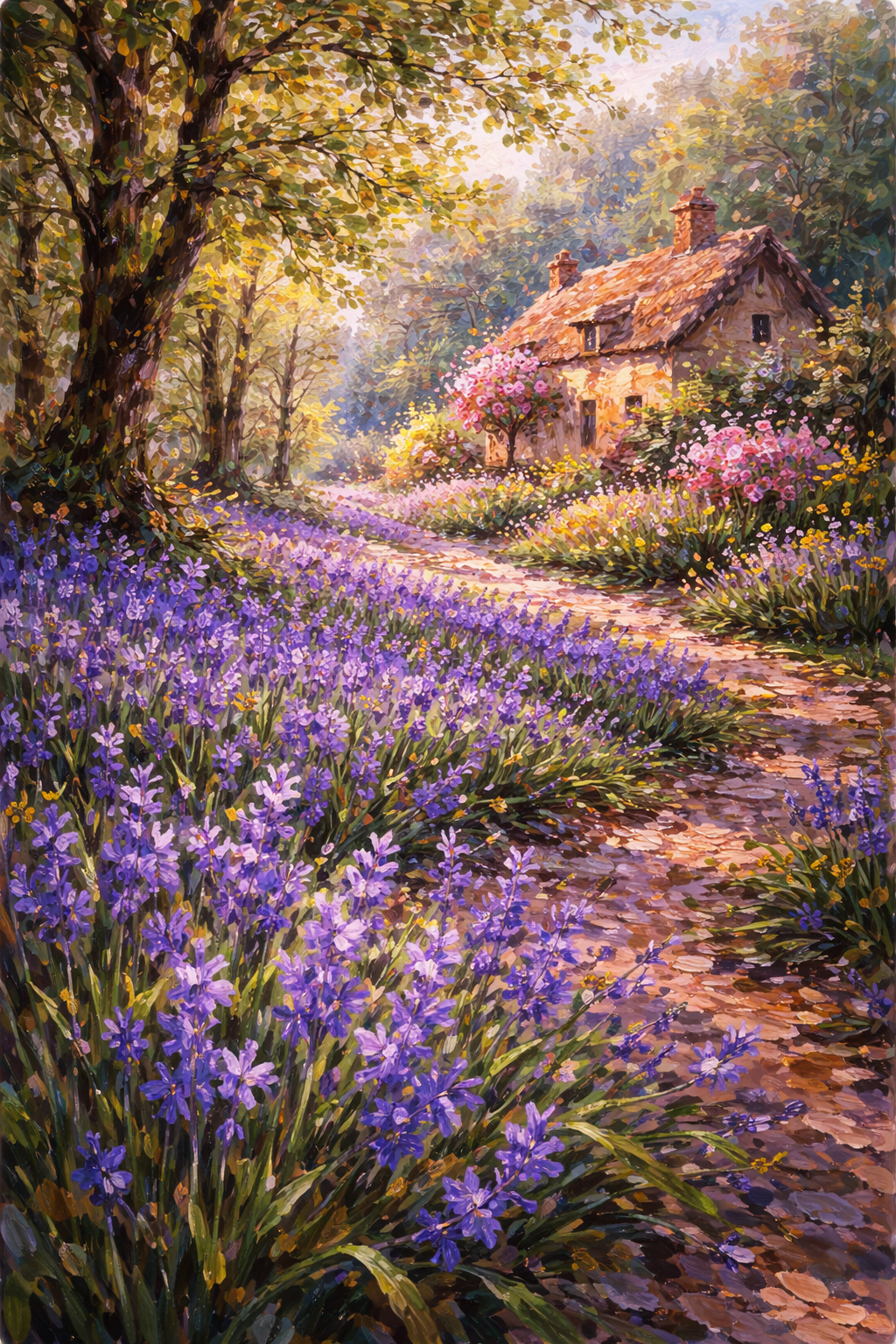
Bluebells grow along a path leading to a cottage in the English countryside

Bluebells and Cottage Gardens in the United Kingdom

Spring in the UK arrives softly. One day the woods look ordinary. The next, they’re flooded with blue. Bluebells carpet forests and parklands in dense, low waves, transforming familiar paths into something quietly otherworldly, the sort of setting that has inspired centuries of fairy lore. People travel specifically to see them — often returning to the same woods year after year, guarding favorite spots like secrets.

Bluebell season carries real weight here. These flowers signal renewal, nostalgia, and a very specific version of spring that feels deeply tied to place. Walk through ancient woodland at peak bloom and the effect feels almost hushed, as if the landscape expects visitors to lower their voices.

Beyond the woods, flowers define the UK in more cultivated ways. Cottage gardens explode with color as soon as the weather allows, packed with foxgloves, roses, delphiniums and whatever survived winter. Places like the Cotswolds and Cornwall, along with other parts of the English countryside, draw travelers who time their visits around bloom cycles rather than attractions.

Timing remains everything. Bluebells bloom for a narrow window, usually April into early May, and weather decides the exact moment. Miss it and the woods return to green without ceremony. Catch it right and the experience lingers far longer than the walk itself.

For travelers who leave before the season peaks — or who miss it entirely — flowers still carry meaning back home. Many people turn to flower delivery UK services as a way to stay connected to the landscapes they traveled for, even after the blooms fade from view.

When to go:
April through May for bluebells; late spring through early summer for cottage gardens

Traveler tips:
Stick to marked paths in bluebell woods — trampling damages bulbs that take years to recover. Visit early in the morning or on weekdays for a quieter experience, and expect weather to shift plans without warning.

EAT UP: Guide to British Cuisine

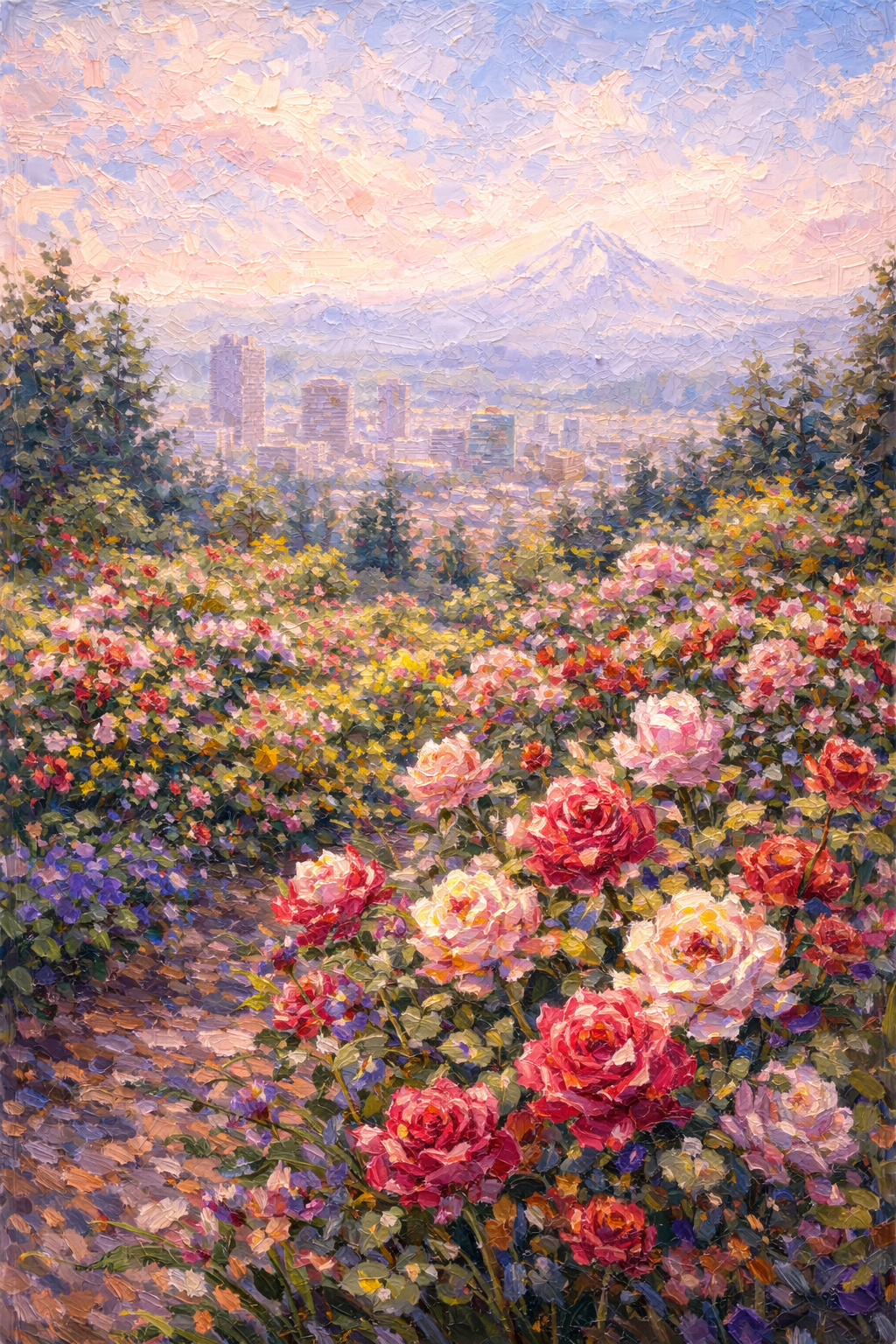
Roses grow on a hill above the city of Portland, Oregon, with Mount Hood in the distance

Roses in Portland, Oregon, USA

Not all flower destinations are rural or seasonal escapes. Some are baked directly into a city’s identity.

Portland has been calling itself the City of Roses for more than a century, and unlike many nicknames, this one still holds up. Roses aren’t tucked away on the outskirts or limited to a single bloom window — they’re part of the city’s fabric, climbing fences, lining streets and anchoring public spaces.

The International Rose Test Garden is the obvious centerpiece, perched above the city with views that stretch toward Mount Hood on clear days. Thousands of varieties bloom here each year, carefully tended and quietly competitive, as growers test new roses destined for gardens around the world. It’s formal, yes, but never stuffy. People wander, linger, and treat it less like an attraction and more like a shared backyard.

Timing still matters, but the window is generous. Roses bloom over months rather than days, offering a softer version of flower travel — less gamble, more assurance. It’s a reminder that not every floral pilgrimage has to come with anxiety attached.

When to go:
Late May through September, with peak blooms typically in June and July

Traveler tips:
Visit the rose garden early in the morning or on weekdays for quieter paths. Pair your visit with a walk through nearby Washington Park or a slow neighborhood stroll to see how roses show up beyond the formal garden.

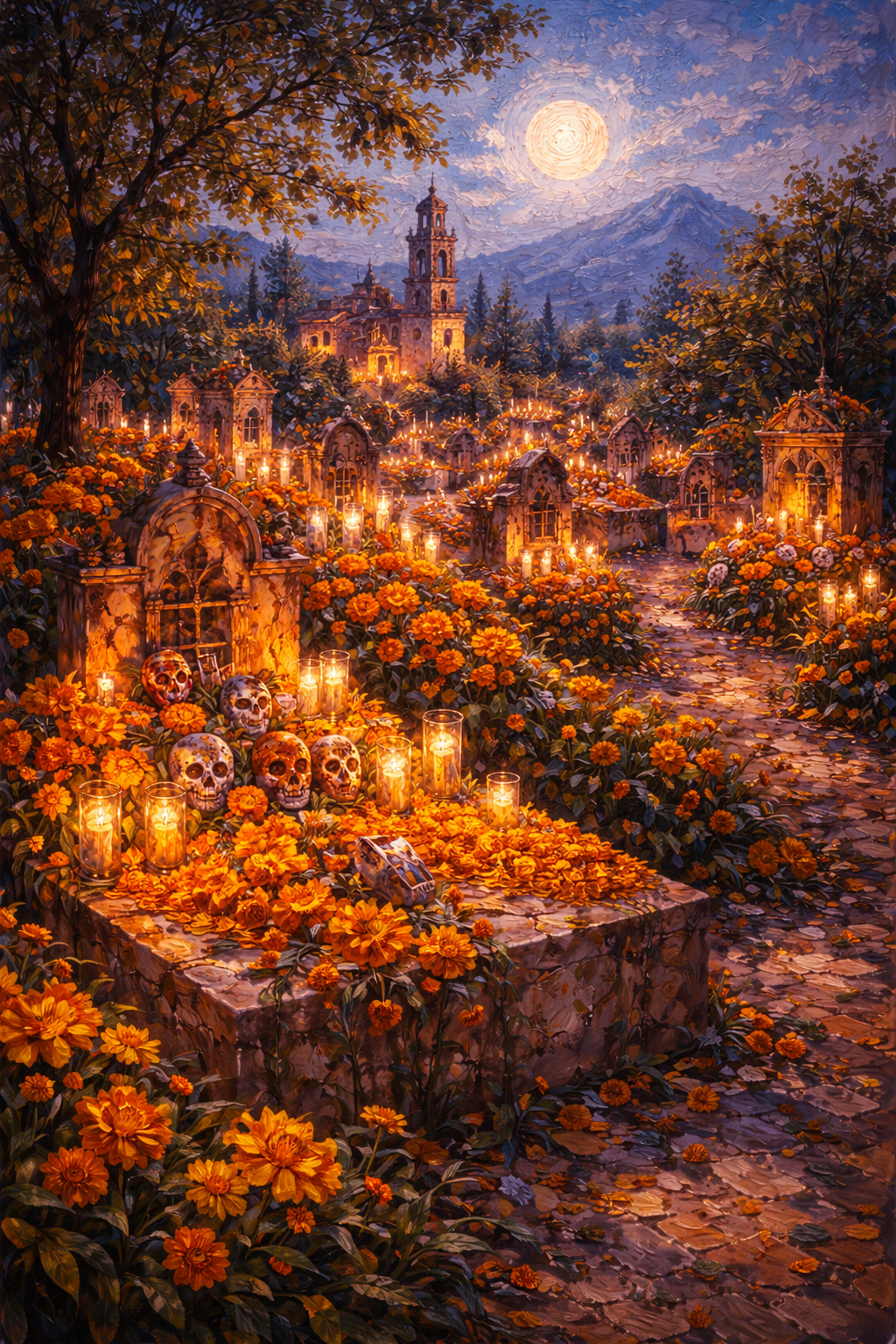
A Mexican cemetery at Dia de los Muertos, with candy skulls, candles and marigolds covering the graves and pathways, with a church in the background

Marigolds in Mexico

Marigolds in Mexico arrive in saturated waves of orange and gold, thick with scent and impossible to ignore. For a short stretch each fall, they flood streets, cemeteries, markets and kitchens, turning everyday places into something charged and ceremonial. 

During Día de los Muertos, marigolds have a job description. Their color and smell guide spirits back home, tracing paths from doorways to altars to graves. You see them scattered like breadcrumbs, piled high around photographs and candles, woven into arches and crowns. Cemeteries like the Panteón 5 de Diciembre in Puerto Vallarta glow after dark, petals catching candlelight while families linger, talk, eat and remember.

Markets feel especially alive during this time. Buckets overflow with marigolds sold by the armful, meant for someone specific rather than general display. These flowers serve memory, grief, humor and affection all at once. The mood holds warmth alongside loss, celebration alongside reverence.

Timing matters intensely. Arrive outside the window, and the marigolds retreat just as quickly as they appeared, taking the altars and processions with them. During Día de los Muertos, entire cities feel temporarily reshaped, as if normal life stepped aside to make room for something older and more intimate.

Travelers return because the experience feels human at its core. Marigolds turn flowers into language — one spoken between generations, across time and through ritual. You leave with the sense that beauty here carries responsibility.

When to go:
Late October through November 2, with celebrations peaking around Día de los Muertos.

Traveler tips:
Move slowly and observe before engaging. Markets offer the fullest sensory experience early in the day, while cemeteries come alive after sunset. Smaller towns often provide deeper, more personal encounters than major cities.

DO YOU BELIEVE IN MAGIC? Samhain Divination Spells

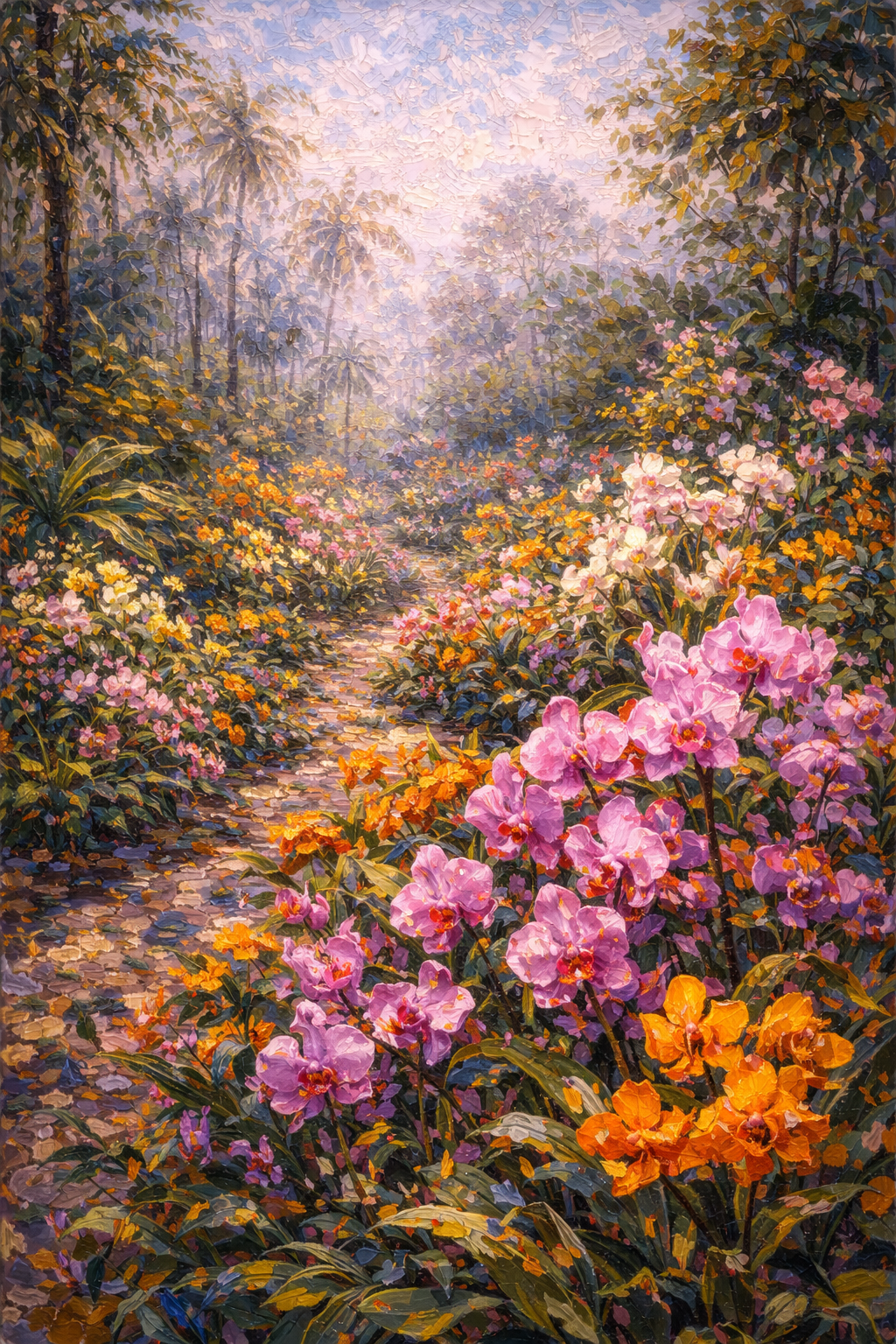
Colorful orchids grow along a path among palm trees in Singapore

Orchids in Singapore

Orchids in Singapore look like something engineered in a lab by someone with a flair for drama. They curl, twist, spike and glow in colors that feel almost synthetic. Some resemble insects. Others look mid-metamorphosis. It’s easy to forget these things grow out of soil. In Singapore, orchids feel closer to science fiction than gardening — which explains why the city embraced them so completely.

Walk through the Singapore Botanic Gardens and the orchid collection feels less like a stroll and more like a catalog of botanical overachievement. Thousands of varieties bloom with unapologetic confidence, each labeled and tracked, as if daring you to question how much control humans can exert over nature. Singapore answers that question decisively.

Gardens by the Bay doubles down on the spectacle. Orchids glow beneath glass domes, backlit and theatrical, performing for visitors who came expecting futuristic architecture and left thinking about flowers instead. It’s maximalist. It’s bizarrely beautiful. It works.

To locals, orchids signal status and ambition. Hybrid blooms get named after visiting dignitaries and world leaders, turning flowers into diplomatic souvenirs. Giving someone an orchid here carries weight. These plants represent polish, progress, and a country very comfortable presenting itself as hyper-competent.

For travelers, orchids offer a rare luxury: certainty. They bloom year-round, immune to weather roulette. Singapore delivers the flowers exactly as promised — strange yet immaculate.

When to go:
Any time. Orchids thrive here year-round.

Traveler tips:
Start at the Singapore Botanic Gardens to see the sheer range, then head to Gardens by the Bay for spectacle. Pay attention to the shapes — orchids here reward close inspection and a slightly unhinged imagination.

SINGAPORE DAY TRIP: Visit Batam

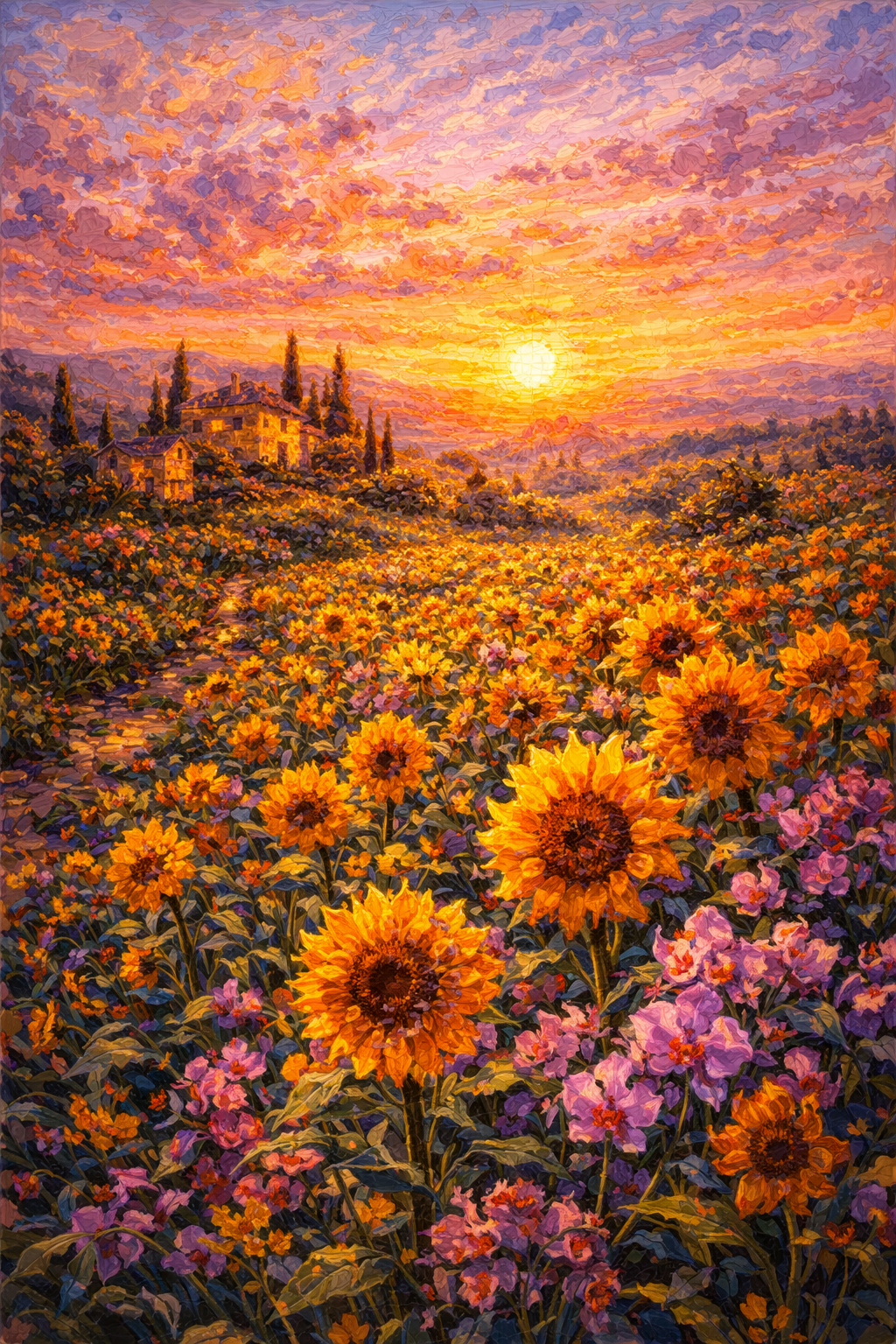
Sunflowers grow among other flowers in the rolling hills of Tuscany at sunset, with a villa in the distance

Sunflowers in Tuscany, Italy

Sunflowers in Tuscany feel almost aggressive in their cheer. They line roads and hillsides in tight formation, huge yellow faces tracking the sun with unnerving enthusiasm. Driving through the countryside during peak bloom turns into a constant exercise in restraint — every few minutes presents another “pull over immediately” moment. Eventually, everyone gives in.

Sunflowers come with scale. Fields stretch wide and loud, unapologetically bright against dusty roads, cypress trees and stone farmhouses. In Italy, flowers have always carried deeper meaning, from religious devotion to seasonal rites of passage, a theme explored in Italian floristry and floral symbolism. The effect feels cinematic, the kind of scenery that convinces people their vacation photos finally match the fantasy.

Sunflowers also fit Tuscany’s rhythm. These fields appear alongside vineyards and wheat, part of a working landscape rather than a curated display. Locals treat them as another seasonal marker, a sign summer has arrived in earnest. 

Timing still calls the shots. Sunflowers bloom quickly and fade just as fast, their faces drooping once the season turns. Catch them at their peak and the countryside feels electric. Miss it and the fields move on without ceremony.

People keep chasing sunflower season because it delivers instant joy. The experience carries zero mystery and full commitment: bold color, warm air, wide-open space. Sometimes that’s exactly what a trip needs.

When to go:
Late June through July, with timing varying slightly, depending on location and weather.

Traveler tips:
Rent a car to explore rural roads freely and expect frequent stops. Early morning and golden hour offer the best light and fewer crowds. Respect private property — the best views often come from the roadside.

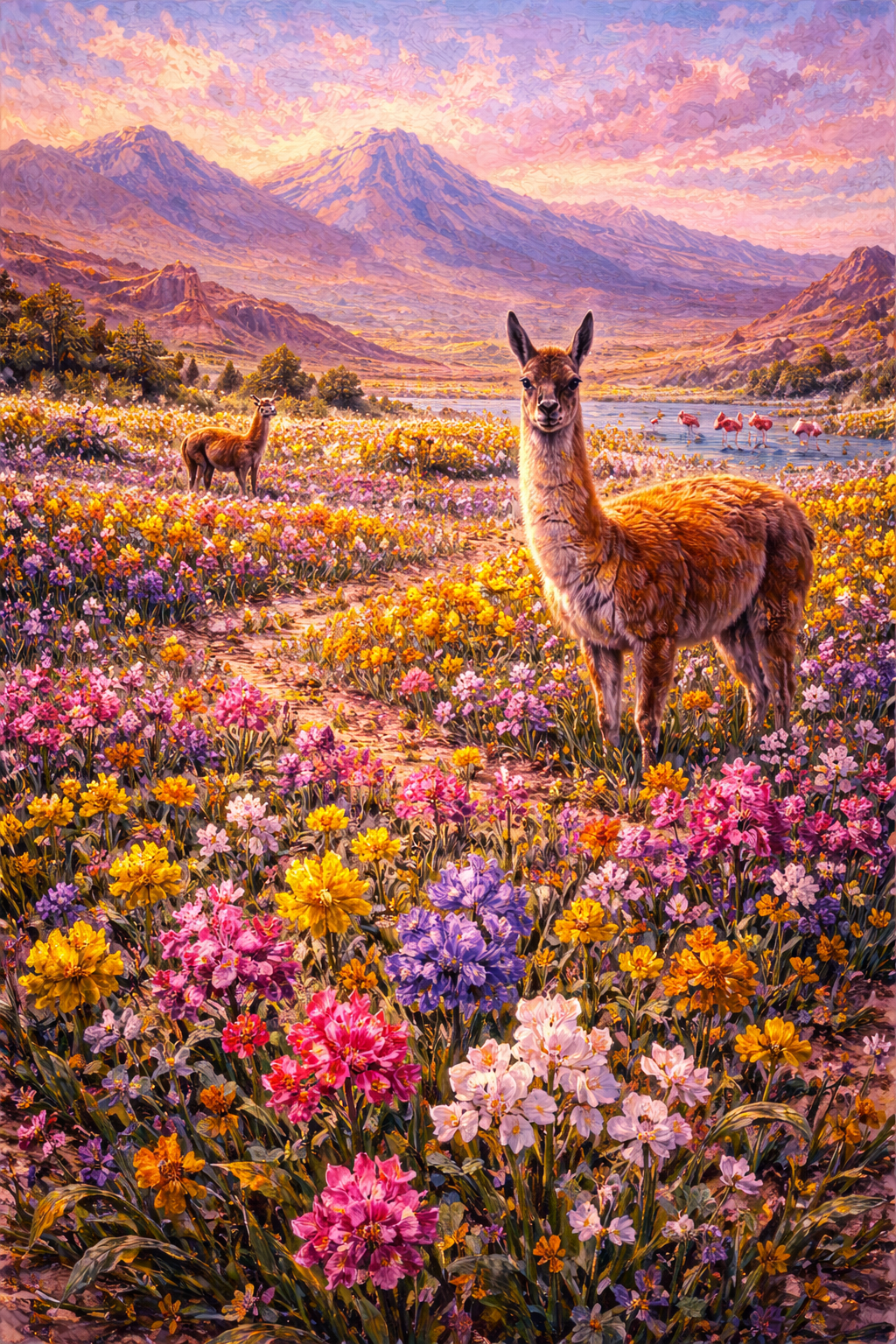
Llamas graze among the wildflowers that have popped up in the Atacama Desert in Chile, with flamingos in the water nearby

Wildflowers in the Atacama Desert, Chile

Wildflowers in Chile’s Atacama Desert feel like a practical joke pulled by nature.

Most of the year, the Atacama ranks among the driest places on Earth — a landscape of dust, rock and silence that stretches toward the horizon with zero interest in pleasing visitors. Then, every so often, rain falls. Real rain. Enough to wake seeds that have been waiting patiently underground for years.

When that happens, the desert blooms.

Pink, purple, yellow and white flowers spread across the sand in an event locals call desierto florido. Hillsides and plains erupt into color where travelers expected emptiness. The transformation feels surreal.

This bloom carries real meaning in northern Chile. Locals treat it as a rare gift rather than a guarantee, a reminder that even the harshest landscapes hold quiet potential. People drive long distances to see it, fully aware the window stays brief and unpredictable.

Timing here plays hardball. Blooms depend entirely on rainfall, which varies wildly from year to year. Some years pass with nothing. Other years deliver an explosion that lasts weeks. Visitors arrive hopeful, checking forecasts and local reports, aware that certainty holds no power in this part of the world.

Travelers chase the Atacama bloom because it offers bragging rights and wonder in equal measure. Seeing flowers rise out of a desert famous for refusing life feels like witnessing a secret. Miss it, and the desert returns to its usual self without apology.

When to go:
August through October, only in years with sufficient rainfall. Exact timing changes annually.

Traveler tips:
Follow local Chilean news and park updates closely before planning. Stay flexible with travel dates if possible. Respect protected areas and resist the urge to wander into fragile bloom zones — this spectacle survives best when admired from a distance.

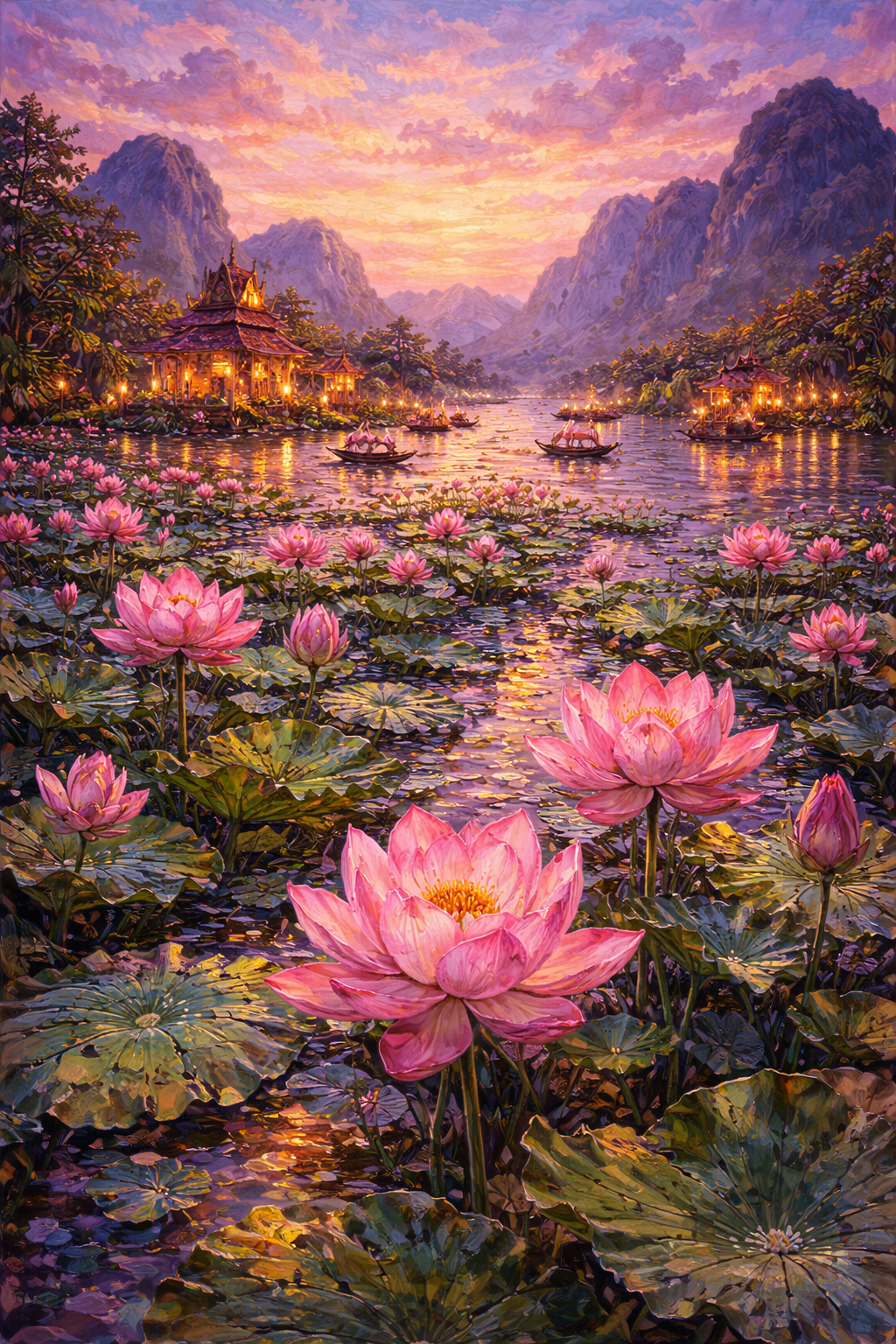
Pink lotuses float on pads in a bay filled with boats and small temples amid large rock formations in Vietnam at twilight

Lotus Flowers in Thailand and Vietnam

Lotus flowers thrive in places that feel calm on the surface and complicated underneath. You see them floating in temple ponds, rising clean and deliberate from murky water, petals intact and serene. In Thailand and Vietnam, lotus flowers carry centuries of meaning — purity, renewal, spiritual discipline — yet they remain deeply ordinary. People buy them on the way to pray. Vendors stack them beside fruit and incense. They exist as part of the daily rhythm rather than a special occasion.

At temples, lotus ponds shape the atmosphere. The flowers soften heat and noise, creating spaces that invite pause. Monks carry lotus buds during ceremonies. Worshippers offer them quietly, often without explanation. 

Lotus flowers also appear far from sacred spaces. They grow in agricultural wetlands, in canals and along roads leading out of cities. In Vietnam, lotus seeds and roots end up in kitchens as often as altars. The flower bridges spiritual and practical life with ease.

Timing matters less here. Lotus season stretches generously across warmer months, and blooms appear daily, opening in the morning and closing by afternoon. 

People remember lotus flowers because they anchor a sense of place. The experience feels quiet, grounded and human — a reminder that beauty can exist alongside routine.

When to go:
May through October, with peak blooms during the warmer, wetter months.

Traveler tips:
Visit temples early in the morning when lotus flowers open and crowds are thinner. Watch how locals interact with them before reaching for a camera. In Vietnam, try lotus tea or dishes using lotus root to experience the flower beyond the visual.

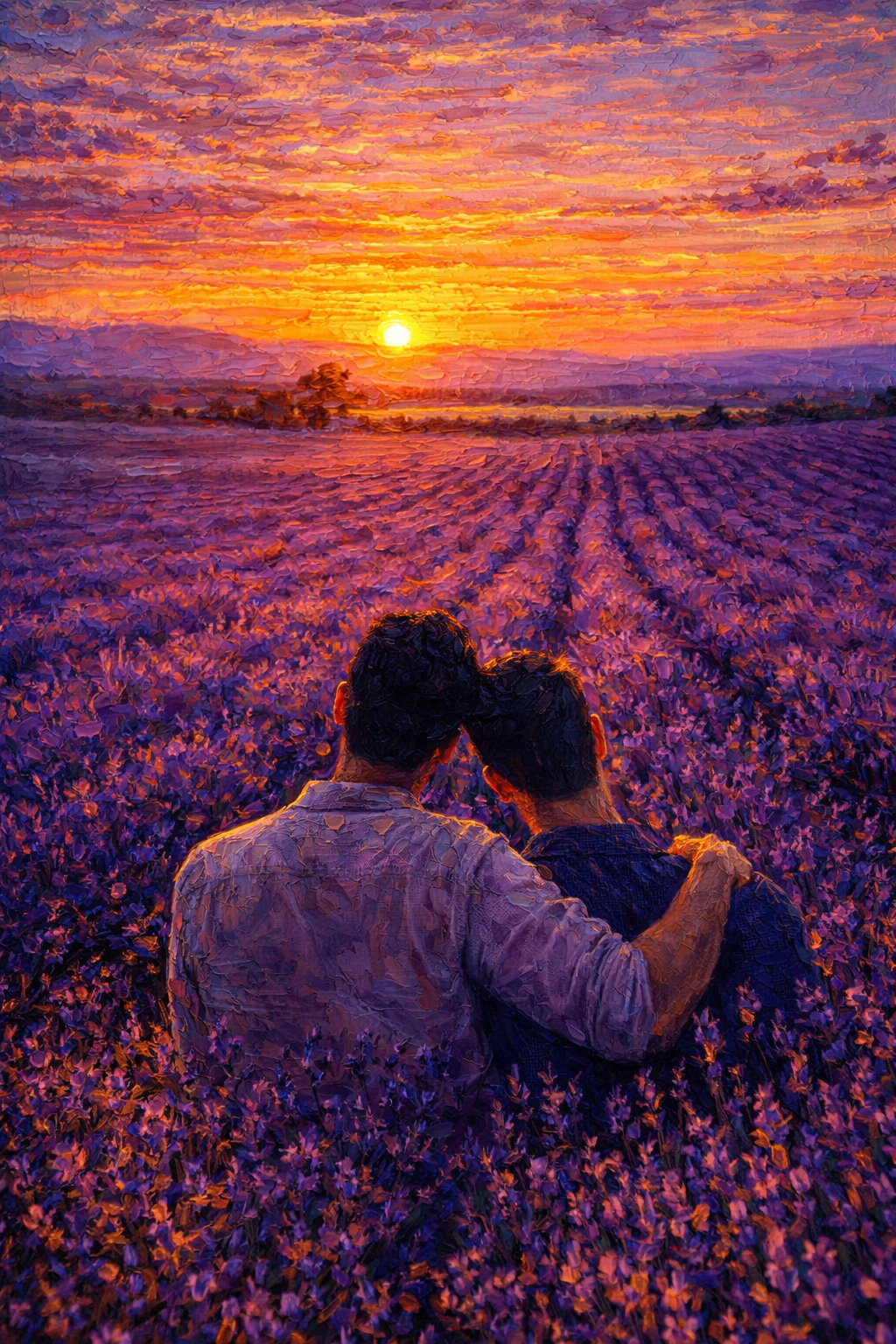
A man puts his arm around another man as they stand in a lavender field, looking out at the sunset

Why Flowers Keep Turning Places Into Destinations

Flower-based travel asks for patience, flexibility and a willingness to miss things. Entire trips hinge on weather patterns, bloom forecasts and timing that refuses to cooperate. And yet people keep coming back for more.

Maybe that’s the point.

Flowers force travelers to surrender control. You plan carefully, arrive hopeful, and accept whatever version of the moment shows up. Sometimes the fields explode with color. Sometimes petals carpet the ground, already slipping into memory. Either way, the experience lands because it belongs to that place, at that moment, and never quite repeats itself.

Across the world, flowers shape how places see themselves and how visitors remember them — from cherry blossoms signaling impermanence in Japan to marigolds guiding memory in Mexico, from meticulously cultivated orchids in Singapore to sunflowers lighting up Tuscan backroads. These destinations stay popular because they offer something temporary, visceral and stubbornly uncommodified.

You can photograph flowers, plan around them, even chase them across continents. You just can’t make them wait for you. And that tension — between preparation and surrender — is what keeps flower travel irresistible. –Wally

’TIS THE SEASON: Spring Festivals Around the World 

How to Apply for English Teaching Jobs in Europe

Teach English in Europe and use your paycheck for weekend trips. Here’s the FAQ guide to making it happen: visas, qualifications, best countries, salary expectations and the insider stuff the other blogs don’t tell you.

A teacher leads a lesson in Barcelona, with La Sagrada Familia behind them, with a globe, chalkboard and laptop

Europe is a buffet of languages, castles, budget airlines and carbs.

The challenge? Experiencing it without coming home to a credit card bill that looks like a Greek tragedy.

Enter: Teaching English in Europe.

It’s flexible, it pays, and it gives you the greatest perk of all: time. Time to wander. Time to travel. Time to pretend you’re in Under the Tuscan Sun.

Whether you picture yourself in a Catalonian classroom or teaching business English in Prague, here’s how to make your European teaching fantasy a real-life paycheck.

A teacher holds a book and leads a lesson in Prague, with a bridge and castle behind her

FAQ: Teaching English in Europe

Is there demand for English teachers in Europe?

Short answer: Yes.

Longer answer: Yes, and your inbox will start to resemble a talent agent’s.

English is still the language of business worldwide, and studies show that over 20% of job listings in Europe require English proficiency. Everyone from university students to professionals to retirees wants to level up their English, and they need native (or near-native) speakers to help.

A man teaches English in London, with Big Ben, the London Eye and a historic building behind him

Why teach English in Europe? 

Besides the croissants, you get:

1. A dreamy work/life balance

Most contracts average around 35 hours a week (or less). Weekends are for hopping trains to a different country because… well… Europe.

2. Attractive pay + perks

Salaries vary by country, but many schools include:

  • Housing assistance

  • Transportation stipends

  • Health insurance

Translation: Your money goes to travel, not rent.

3. Easy, affordable travel

Cheap regional flights. Trains that actually run on time. Buses for €3.

You’ll become the person who says, “Well since we’re already in Slovenia…”

4. Food worth relocating for

Eat pasta in Rome. Bratwurst in Berlin. Brie in Lyon. Fish ’n’ chips in the U.K.

A teacher in a hijab in Paris, clutching a notebook, with the Eiffel Tower and an ornate streetlamp behind her

Where can I teach English in Europe?

You can find work almost anywhere, but these destinations are the greatest hits:

  • Spain: Madrid and Barcelona are classics for a reason: big expat community, tons of language schools.

  • Italy: Milan, Florence and Rome are magnets for teachers who want culture + carbs.

  • Czechia: Prague gives fair salaries, low cost of living and a built-in community of teachers.

  • Poland: A rapidly growing market, excellent work/life balance and very affordable living.

A man in a wheelchair teaches English in Berlin, Germany, with the Brandenburg Gate and a train behind him

What qualifications do I need to teach English in Europe?

You don’t need a degree for many adult and language school roles.

You do need:

  • A TEFL (Teaching English as a Foreign Language) certification, which takes a minimum of 120 hours, from a reputable provider

It tells employers you know how to structure a lesson — and you didn’t just wake up and say, “I think I’ll be a teacher today.”

It also helps with visas and sponsorship in several countries.

A nonbinary person wearing glasses with pastel-dyed hair teaches English in Amsterdam, with narrow buildings, tulips and a bike around them

Do I need a visa to teach English in Europe?

If you’re an EU citizen, it’s easy.

If you’re not (hi, Americans), it’s still doable, there’s just more paperwork.

Options include:

  • Working visas (school sponsorship)

  • Working holiday visas (depends on nationality)

  • Language assistant programs (government-run placements)

  • Digital nomad visas (if teaching online)

Moral of the story: Research the specific visa rules before you start sending applications.

A woman teaches English in Lisbon, Portugal, surrounded by a globe, the Belem Tower, a streetcar and bridge

What teaching roles are available?

You’re not limited to standing in front of a chalkboard.

You can teach:

  • In public or private schools

  • At language academies

  • Business English inside companies

  • At summer camps

  • Online (live anywhere, work from everywhere)

An older woman sits in a chair, teaching English in Athens, Greece, with the Parthenon and nearby temple behind her

What are the steps to becoming an English teacher in Europe?

  1. Get your TEFL certification (120+ hours). This shows you’re serious and gives you the basics: lesson planning, classroom management, etc.

  2. Search for jobs. Try:

    • Major language school chains

    • TEFL job boards

    • Local career sites in your target country

  3. Consider government programs. Spain and France, for example, both have teacher placement programs.

  4. Research visas early. Visas tend to move slowly. (European bureaucracy loves paperwork. And stamps.)

  5. Budget your move. Understand the cost of living and how long until that first paycheck lands.

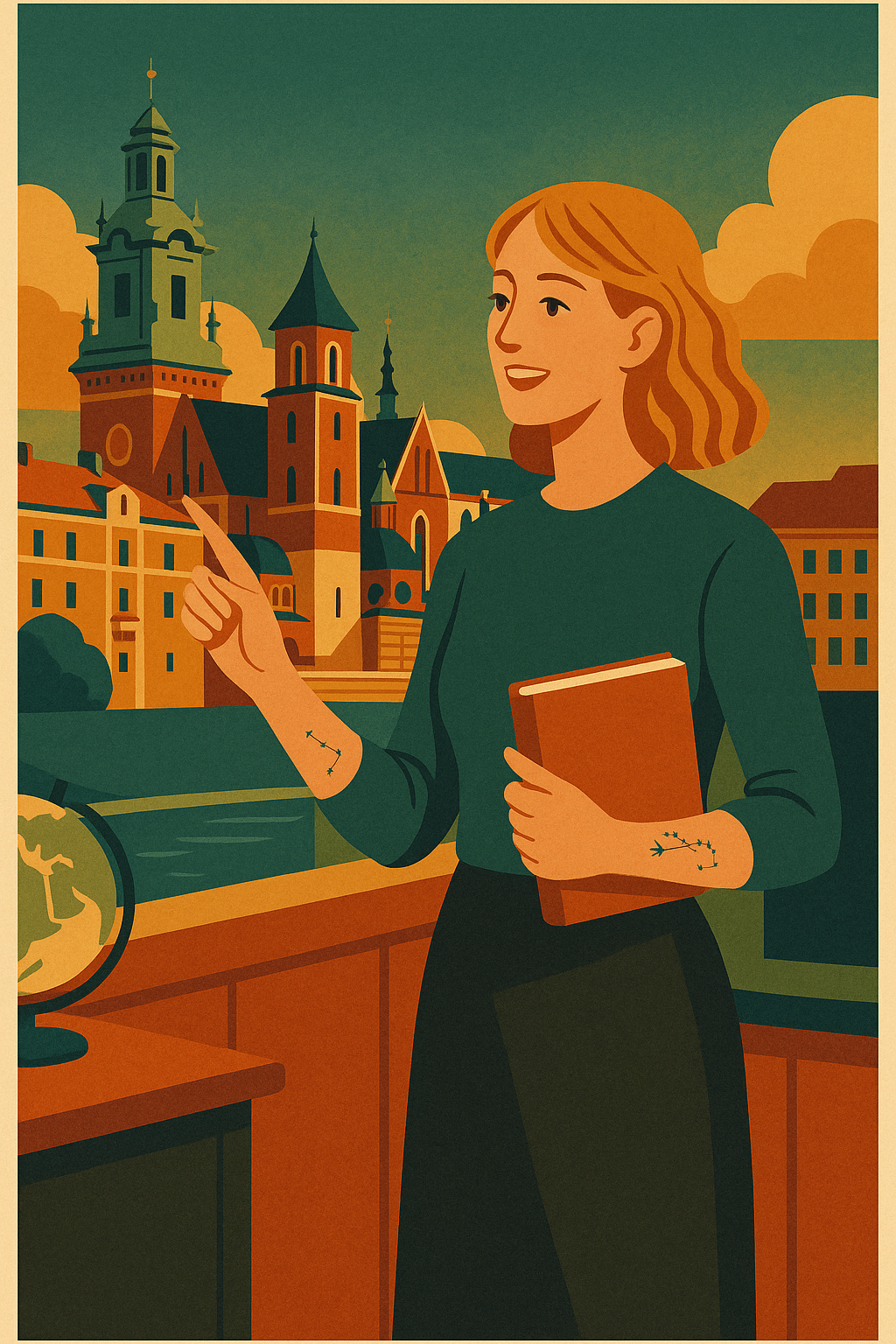
A young woman with constellation tattoos teaches English in Krakow, Poland, with the city behind her

So… is this really a good way to experience Europe?

Absolutely. Instead of visiting Europe, you get to live Europe. Living abroad, you become a regular at a café. You have favorite bakery staff who know your order. You find yourself muttering, “Ugh, tourists,” like you didn’t arrive on the same flight.

And before you know it, you’re planning weekend trips based on whatever city is calling your name.

Ready to make Europe your classroom?

Get the TEFL, send the applications, and book the one-way ticket. Your future self — living near a 14th century cathedral and eating €2 gelato — will thank you. –Shahroz Yousaf


ANOTHER OPTION: Have you thought about being a licensed practical nurses (LPNs) abroad?

Top World Travel Destinations for James Bond Fans

Step into 007’s world with thrilling destinations from London to Jamaica, the Swiss Alps to Venice. Live the Bond lifestyle with intrigue, elegance and adventure!

Daniel Craig, in a tux as James Bond, points a gun

There’s nothing quite like stepping into the world of James Bond. Fast cars, exotic locales and danger at every turn — all served with a side of impeccable style. If you’ve ever dreamed of living the 007 lifestyle, it’s time to trade your office chair for an Aston Martin and embark on a globe-trotting adventure that’s shaken, not stirred.

And if you’re feeling as daring as Bond himself, why not raise the stakes with a live bet on a cricket match while soaking up the excitement of these iconic locales? After all, it’s about embracing risk in style. 

So, channel your inner secret agent, pack your sharpest tuxedo (or your slinkiest evening gown), and prepare to walk in the footsteps of the world’s most iconic spy. The mission? Pure, unadulterated thrills. 

Locations You Can’t-Miss Out On as a 007 Lover

The James Bond universe oozes glamorous and cuts across many parts of the world. Here are the most iconic Bond locales for any true 007 enthusiast.

The London skyline with the Thames River

London, England: Bond’s Command Center

If Bond has a home, it’s London — a city that pulses with sophistication, intrigue and the kind of drama that only 007 can handle. The British capital has played a starring role in the franchise, serving as both Bond’s operational base and the scene of some unforgettable action.

Imagine walking along the Vauxhall Bridge, the MI6 headquarters towering beside you. It’s not hard to imagine Bond himself striding through those doors on a top secret mission. This is the fortress of espionage, immortalized in films like Skyfall and Spectre

Your Mission

A bald bartender mixes a cocktail at Dukes Bar in London

Raise a glass at Dukes Bar. Ian Fleming famously crafted Bond’s love for martinis here. Sip on their signature Vesper Martini and toast to a life of espionage and elegance.

A red speedboat for tourists zooms along the Thames river toward London Bridge

Cruise the Thames. Re-create the adrenaline of The World Is Not Enough with a speedboat ride along the river, cutting through the heart of London’s iconic skyline.

The staircase hall at London's National Gallery

Visit the National Gallery. Channel your inner Bond as you wander through this cultural treasure, featured in Skyfall, where art meets espionage in a perfectly British fashion.

A red bus zooms past the classical facade of Whitehall in London, England

Explore Whitehall’s secrets. Peek into the corridors of power, imagining the hushed briefings Moneypenny and Q must have held in these historic buildings.

London doesn’t just set the stage for Bond’s adventures; it’s the pulse of his world. From the refined luxury of Mayfair to the gritty backstreets of Southbank, every corner feels like it’s holding a secret. And with every sip of your martini and step through these storied streets, you’ll find yourself asking, “What’s my next move?”


People hang out on a restaurant's stone ledge above turquoise water in Jamaica

Jamaica: Bond’s Birthplace and Paradise

Jamaica is where the legend was born. Fleming penned all 14 of his Bond novels at Goldeneye Estate, a dreamy hideaway nestled along the island’s stunning coast. It’s no wonder Jamaica became Bond’s cinematic playground, featured in classics like Dr. No and Live and Let Die.

Your Mission

One of the waterfront cottages at Goldeneye Resort in Jamaica

Stay at Goldeneye. Luxuriate in Bond’s birthplace, where you can soak up the very atmosphere that inspired Fleming. Take in the sea views, sip a cocktail and perhaps dream up your own espionage tale.

Aerial view of the bay at James Bond Beach in Jamaica

Explore James Bond Beach. This secluded slice of paradise is where Bond’s adventures began. Paddle in the clear waters or relax under swaying palms, imagining your next mission.

Turquoise water and rock formations in the Green Grotto in Jamaica

Dive into the Green Grotto Caves. Journey into this labyrinth of caves, rich with history and intrigue, and relive the villainous schemes of Live and Let Die.

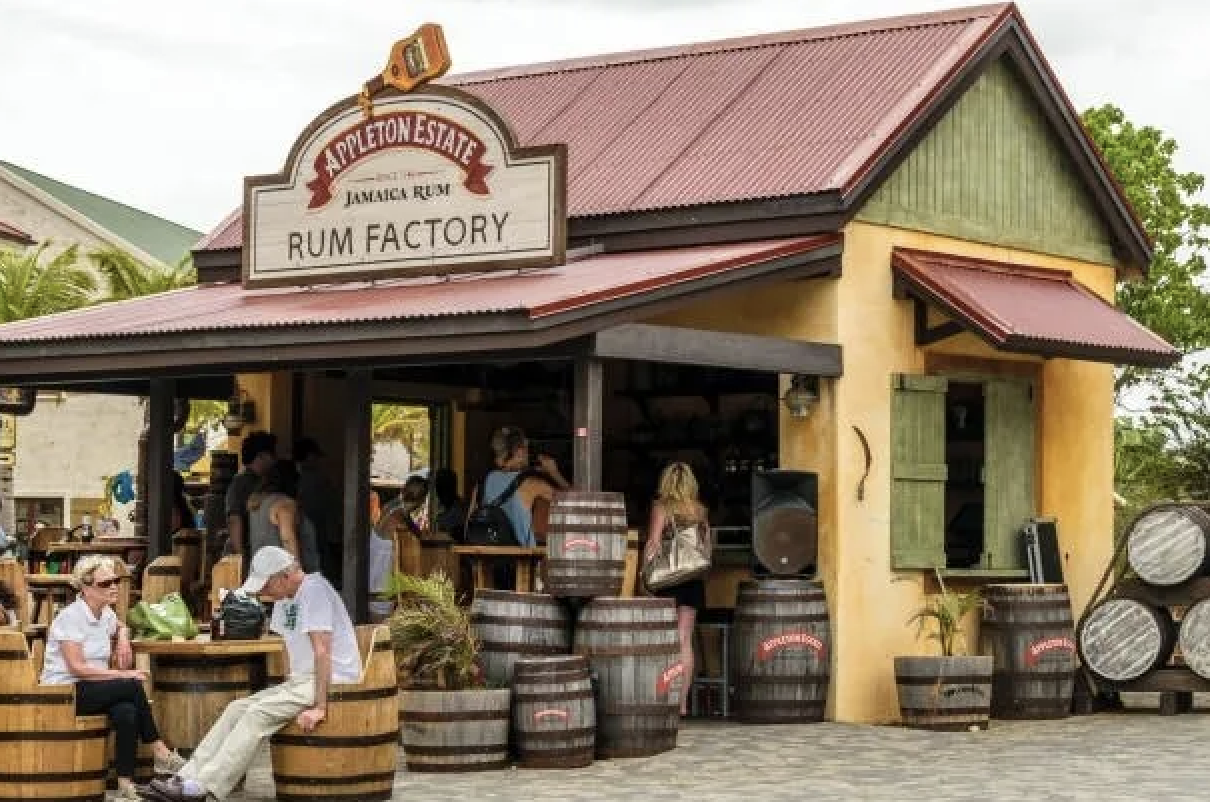
A couple sits on barrels outside the Appleton Estate Rum Factory in Jamaica

Enjoy a rum tasting. Jamaica’s rum is as iconic as Bond’s martini. Head to the Appleton Estate for a tasting that pairs perfectly with the island’s spy-worthy charm.

Jamaica inspired Bond’s world. Here, luxury meets intrigue, and every sunset feels like a cinematic finale. So put on your best Bond attitude, step onto the sand and live like 007 — if only for a moment.

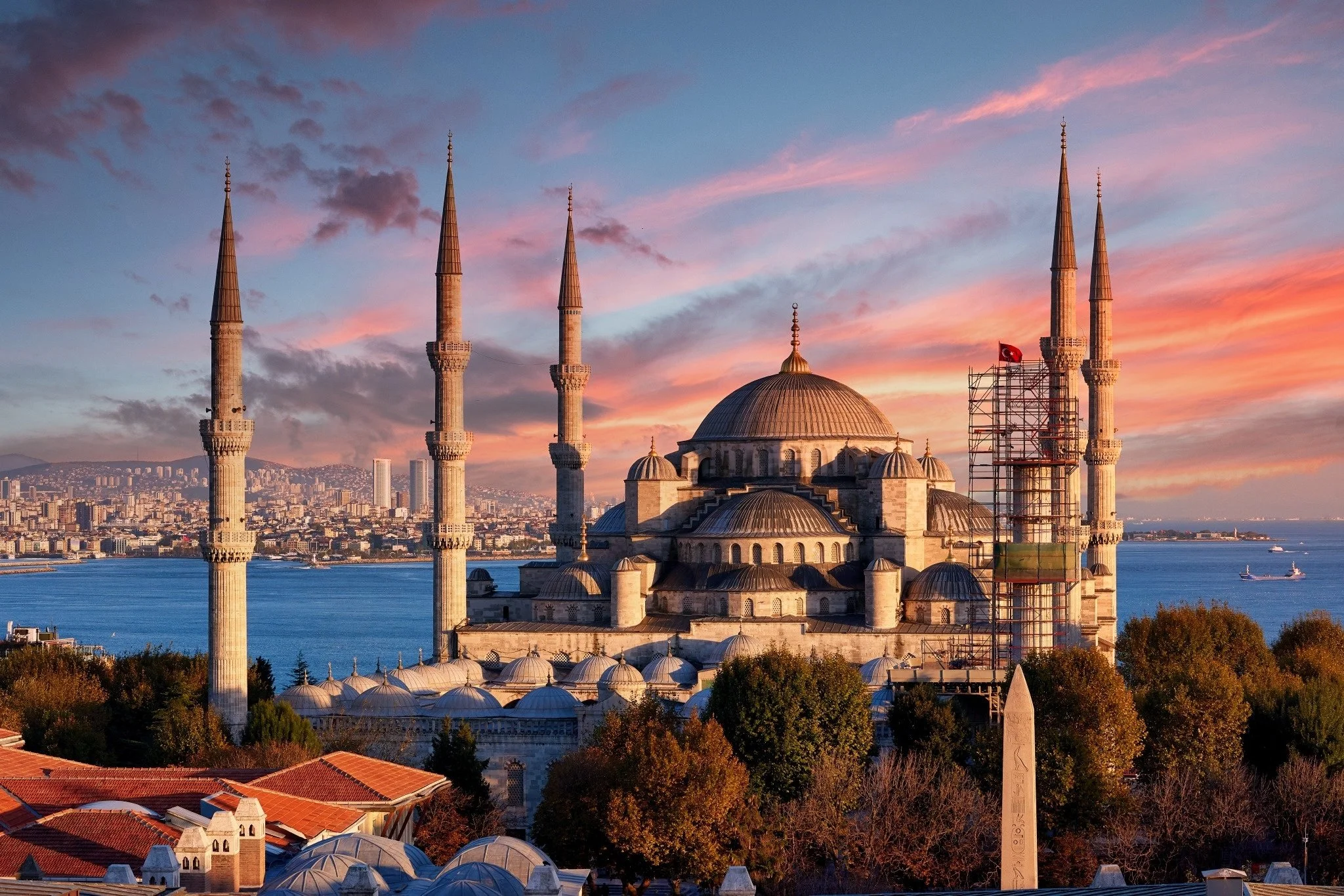
The Hagia Sophia at sunset in Istanbul, Turkey

Istanbul, Turkey: Where East Meets West and Espionage Thrives

Istanbul is a city of dualities, where the East kisses the West, and the ancient blends seamlessly with the modern. It’s no surprise this atmospheric metropolis has become a favorite Bond playground, featured in From Russia With Love and Skyfall. With its bustling bazaars, mysterious underground hideouts and breathtaking waterways, Istanbul is a place where intrigue is always just around the corner.

Your Mission

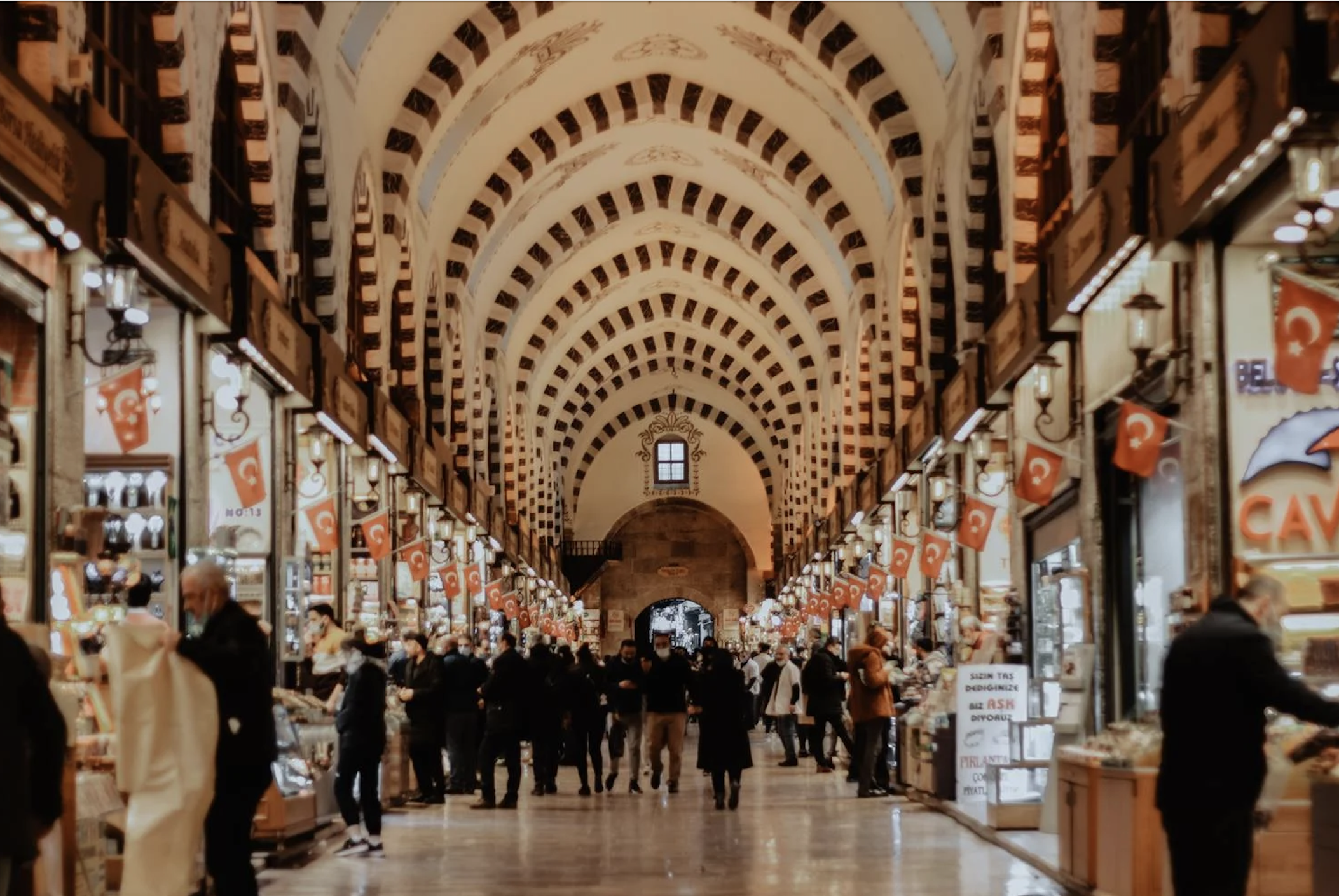
Red and white arches and lines of stalls inside the Grand Bazaar in Istanbul, Turkey

Explore the Grand Bazaar. Lose yourself in this sprawling market of winding alleys and hidden treasures. Keep an eye out for mysterious strangers — after all, this is where Bond did some of his finest shadowing.

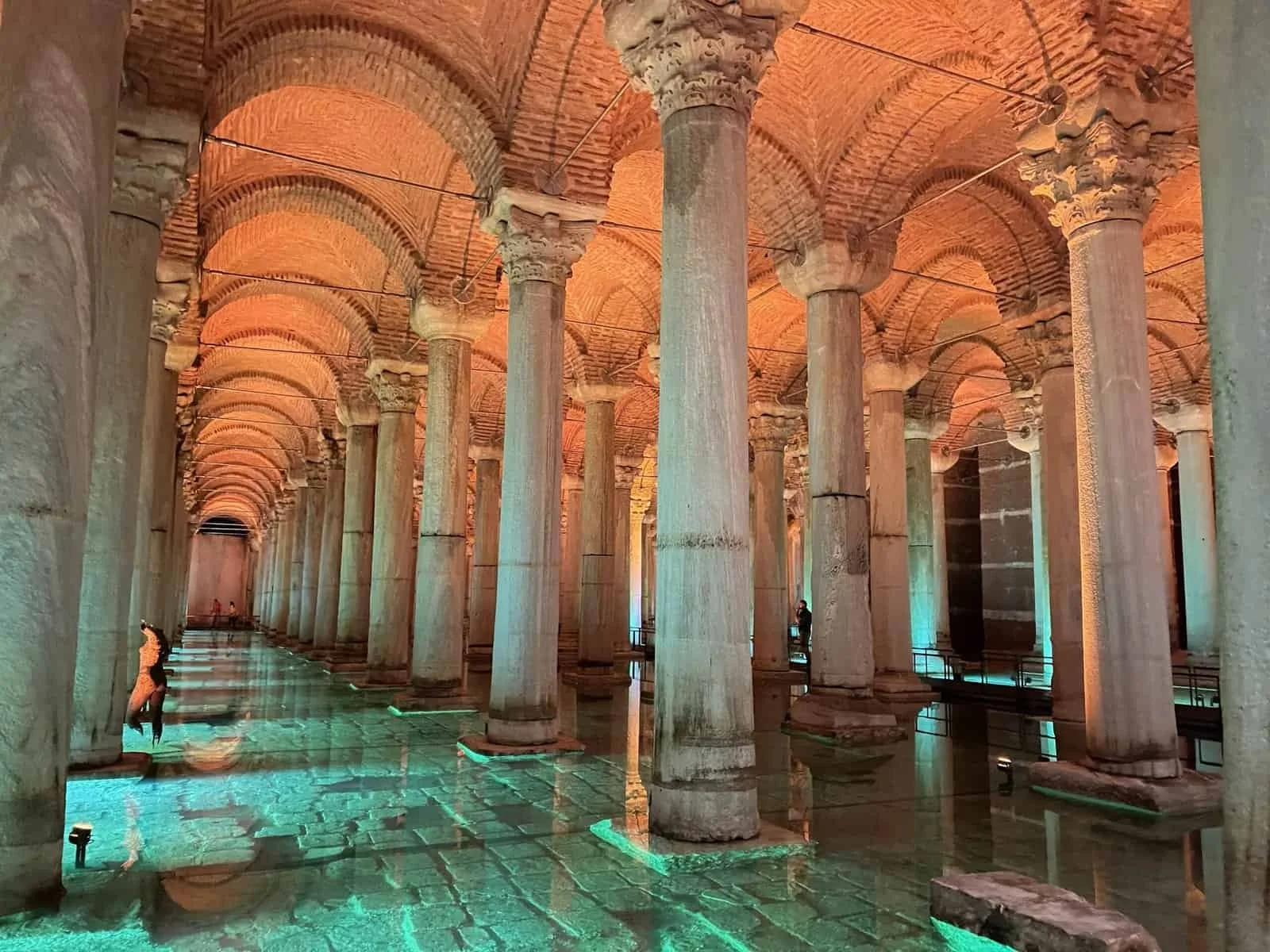
Columns, arches and turquoise-lit water in the Basilica Cistern in Istanbul

Visit the Basilica Cistern. Walk beneath the city in this haunting underground world, imagining yourself escaping danger like Bond and Tatiana. The eerie atmosphere feels like it was designed for espionage.

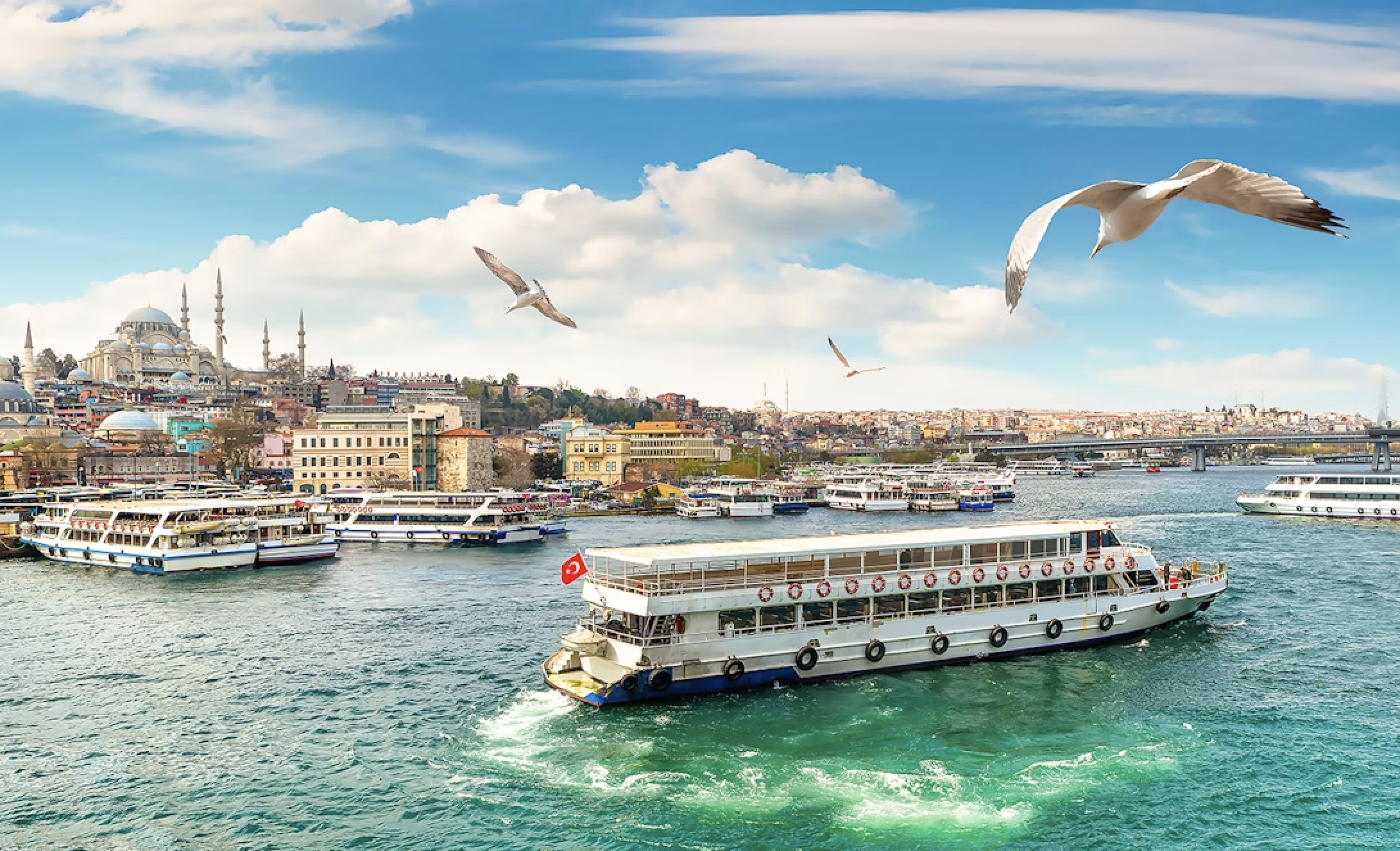
Large tourboats cruise the Bosphorus, with seagulls flying above

Take a Bosphorus cruise. Glide through the waters separating Europe and Asia, just as Bond might have done to evade a high-stakes pursuit. The views of Istanbul’s skyline will leave you as breathless as any car chase.

Inside the Hagia Sophia, with Arabic writing in large circles

Stop by the Hagia Sophia. Once a church, then a mosque, and now a museum, this architectural marvel is as layered as Bond himself. Stand in its quiet majesty and soak in centuries of history and mystery.

Istanbul is a city where every corner feels alive with secrets and stories. It’s no wonder Bond couldn’t resist its pull. Whether you’re bargaining for treasures in the bazaar or soaking in the view from the Bosphorus, you’ll feel as if the next twist in the plot is just waiting for you to discover it. Adventure doesn’t just happen in Istanbul — it’s built into its very fabric.

Green valleys with cabins and snow-topped peaks in the Swiss Alps

The Swiss Alps: Bond’s Snow-Covered Playground

Few places in the world capture the high-stakes drama of a Bond movie quite like the Swiss Alps. These snow-covered peaks have been a favorite backdrop for 007’s most daring escapades, offering equal parts adrenaline and breathtaking beauty. Featured prominently in On Her Majesty’s Secret Service and Goldfinger, the Alps bring Bond’s signature mix of luxury and danger to life.

Your Mission

The winding Furka Pass road through the Swiss Alps

Drive the Furka Pass. Put yourself in the driver’s seat and retrace Bond’s tire-squealing route. The sharp turns and jaw-dropping vistas make this one of the most thrilling roads in the world.

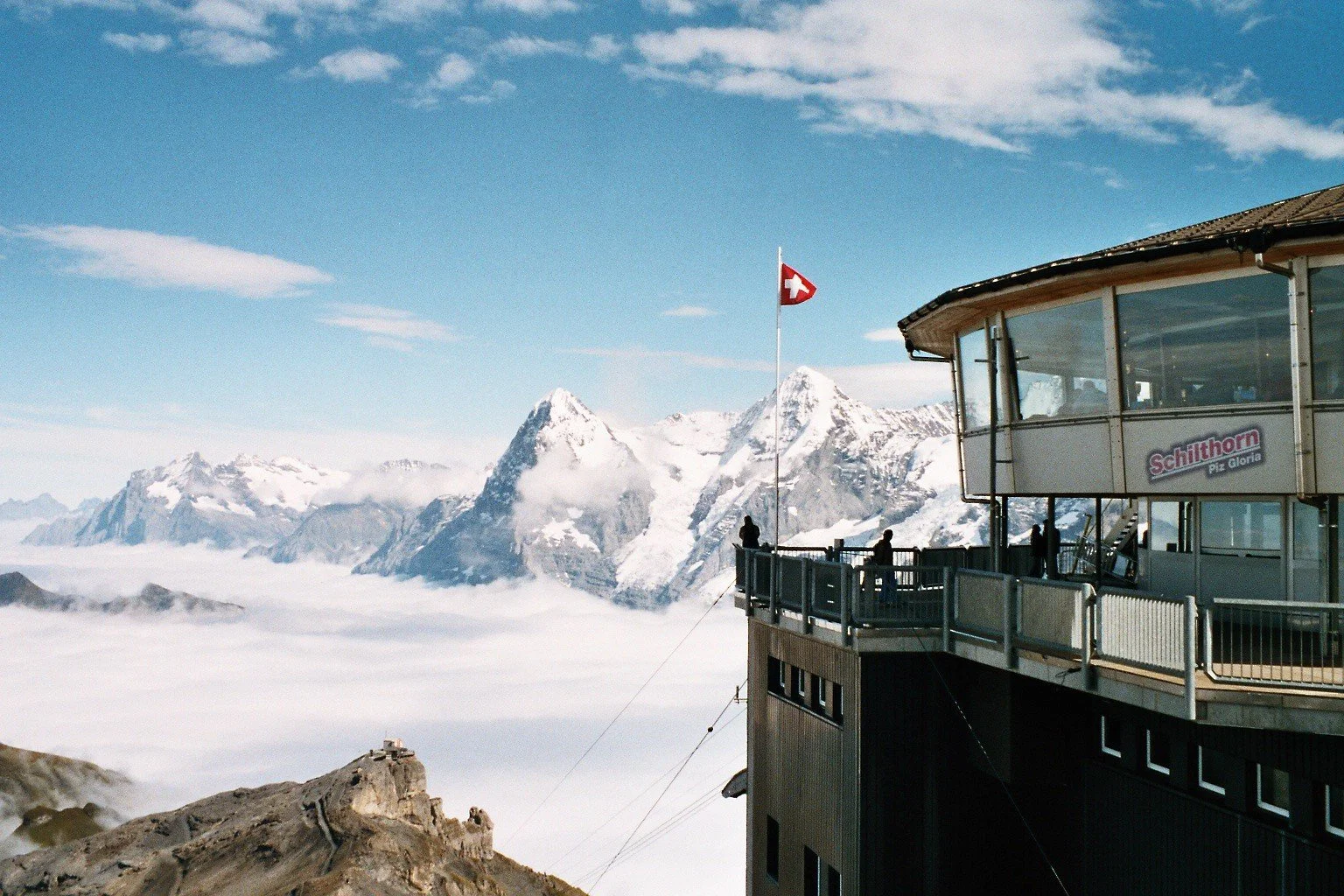
Piz Gloria restaurant at the top of the Schilthorn

Dine at Piz Gloria. Perched atop the Schilthorn, this revolving restaurant isn’t just a Bond filming location — it’s a full-on cinematic experience. Feast on the views, and don’t forget to toast with a martini as you imagine outsmarting Blofeld.

A skier skis the Swiss Alps

Ski the legendary slopes. Take to the pristine snowfields where Bond himself might have carved tracks. Whether you’re a seasoned skier or a first-timer, the Swiss Alps deliver thrills worthy of a 007 mission.

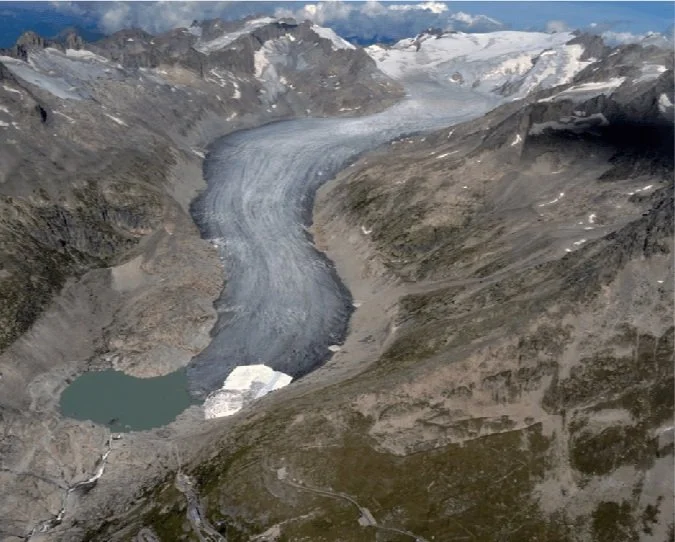
The snaking Rhone Glacier in the Swiss Alps

Visit the Rhône Glacier. Seen in Goldfinger, this icy wonderland offers a chilling dose of Bond-worthy drama and the perfect setting for an epic photo op.

The Swiss Alps embody everything Bond stands for: style, danger and a touch of the extravagant. Whether you’re carving down a mountainside or sipping cocktails with the peaks as your backdrop, this is one destination where you can truly live the Bond dream. Here, every moment feels like a high-stakes mission — and every scene, a masterpiece.

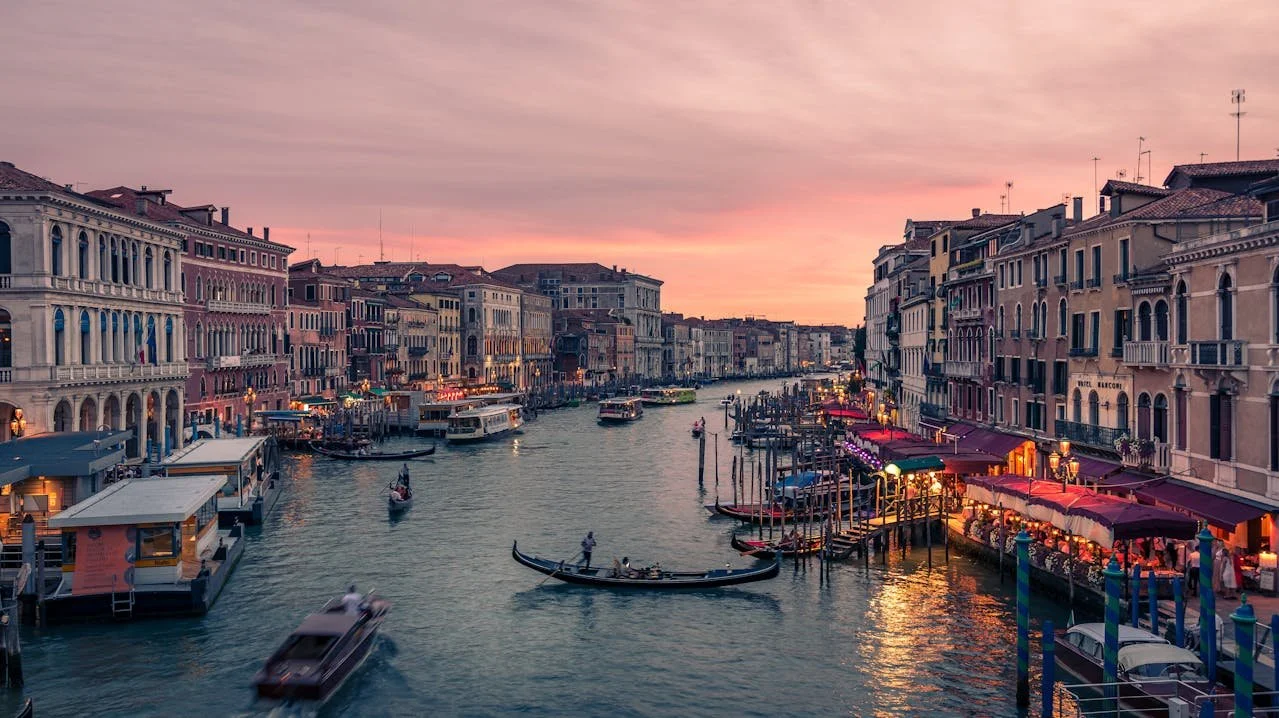
View of Venice at sunset, with buildings lining the canal, filled with gondolas and other boats

Venice, Italy: City of Romance and Intrigue

Few places in the world can match Venice’s blend of romance and mystery, making it the perfect stage for Bond adventures. Featured in Casino Royale and Moonraker, Venice’s timeless charm has hosted everything from dramatic escapes to deadly showdowns.

Your Mission

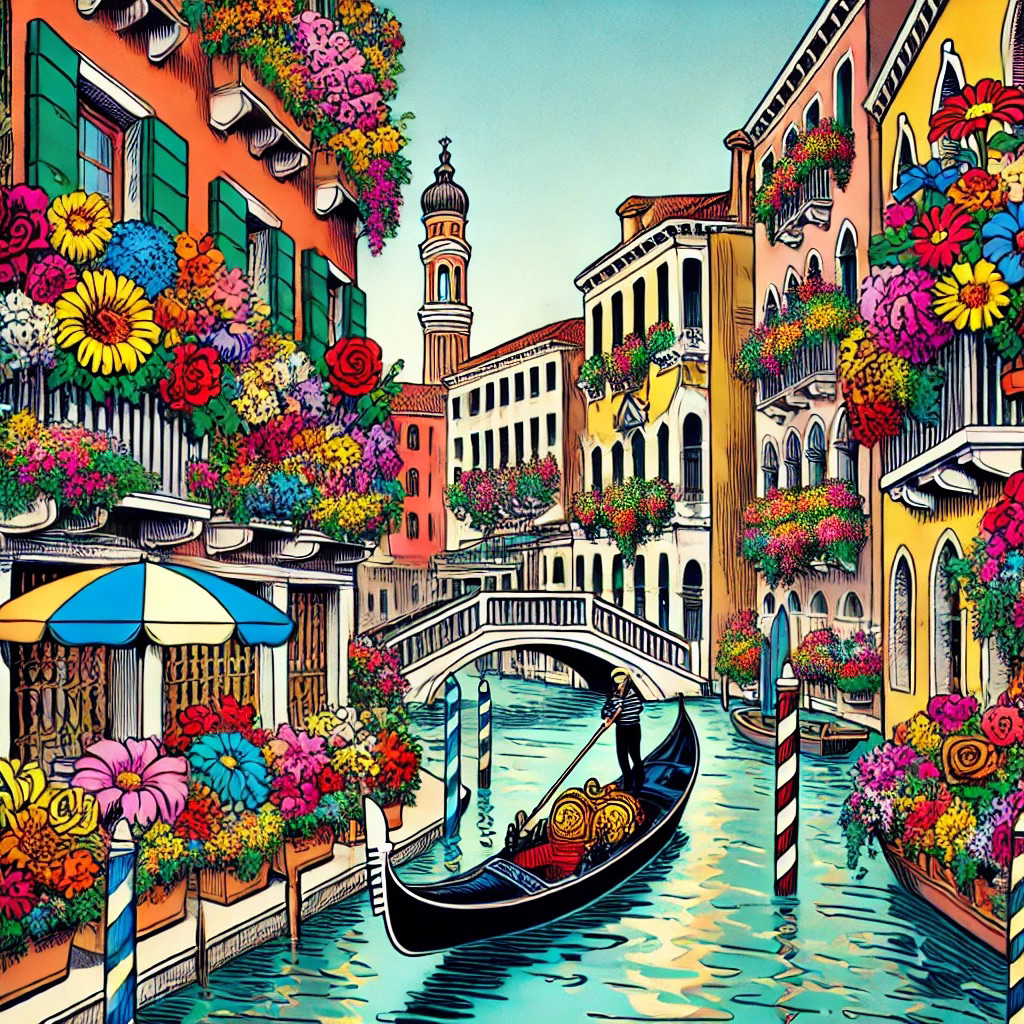
Gondolas in a canal in Venice, Italy

Glide through the canals. Take a gondola ride, but keep your eyes sharp — after all, danger can lurk even in the city’s most beautiful corners. Channel Bond’s suave coolness as you explore Venice’s iconic waterways.

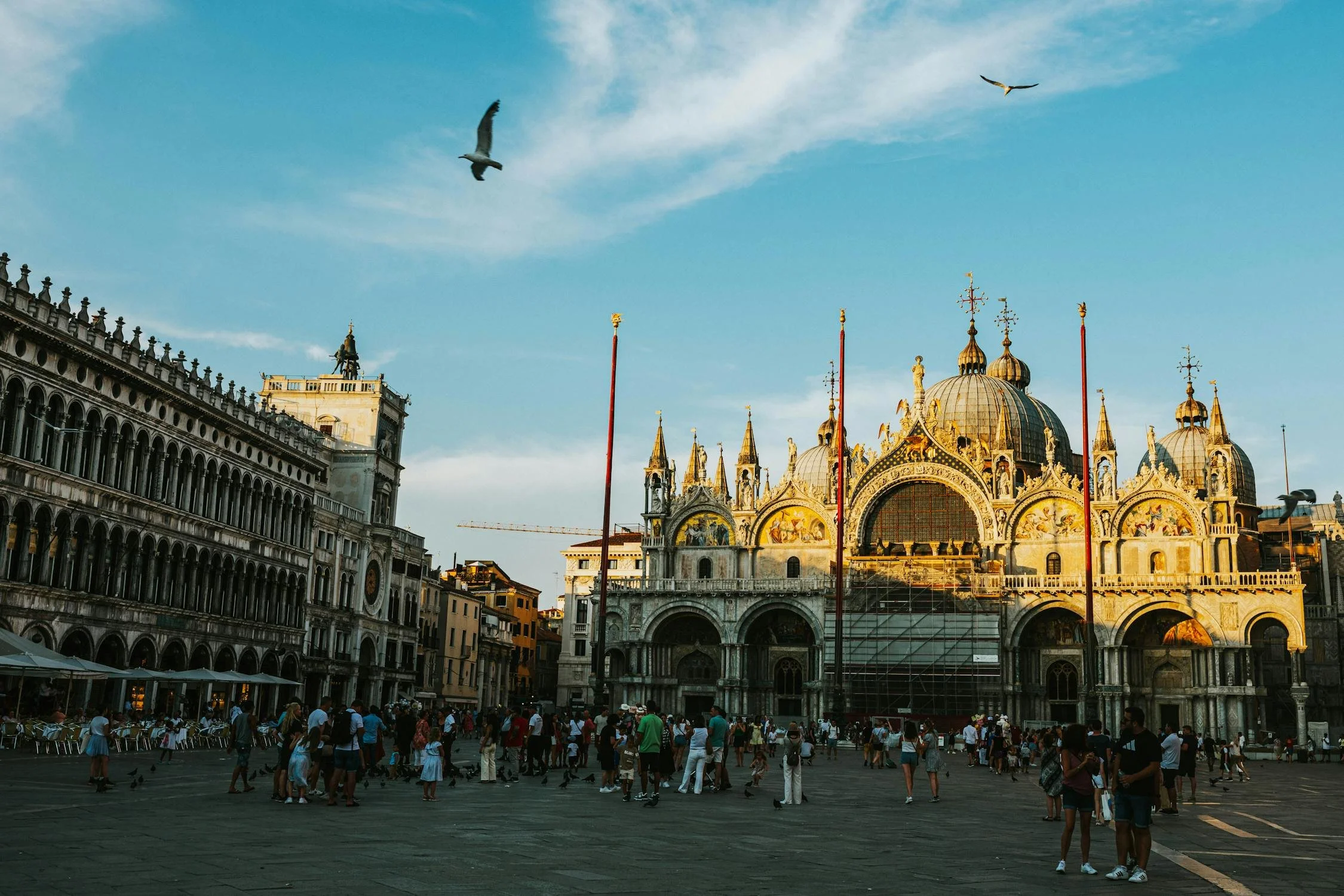
St. Marks Basilica and square filled with visitors in Venice, Italy

Visit Saint Mark’s Square. Stand where Bond’s gondola hovercraft made its dramatic entrance in Moonraker. The grandeur of this square, framed by centuries-old architecture, will have you feeling like the star of your own movie.

Exterior of the Palazzo Pisani along a canal in Venice, Italy

Explore the Palazzo Pisani. Step into cinematic history at this stunning Venetian palace, the setting of a fierce fight scene in Casino Royale. Its regal halls hold secrets and stories worthy of a spy.

Alley with arched entrances in Venice, Italy

Discover hidden corners. Venture into Venice’s labyrinthine alleys and quiet campos. Much like Bond’s missions, the city’s best finds are off the beaten path and shrouded in mystery.

Venice sets a stage where romance and danger waltz together under moonlit skies. Whether you’re sipping wine in a piazza or navigating the canals with Bond-like precision, this city offers intrigue in every shadow and thrill in every reflection. 

The  skyline of Hong Kong and its harbor

Hong Kong: The Neon Jungle of Danger and Deception

Hong Kong is a city of contrasts: Sleek skyscrapers rise alongside bustling street markets, and neon lights illuminate ancient traditions. It’s no wonder Bond found himself entangled in its electric energy in The Man with the Golden Gun. With its dazzling skyline and shadowy alleys, Hong Kong is a place where luxury and danger collide — a perfect playground for 007.

Your Mission

Lights trail past the facade of the Peninsula Hotel in Hong Kong

Stay at the Peninsula Hotel. Walk in Bond’s footsteps at this luxurious landmark. Order a martini at the rooftop bar, gaze out at the skyline and soak in the glamour of a classic Bond setting.

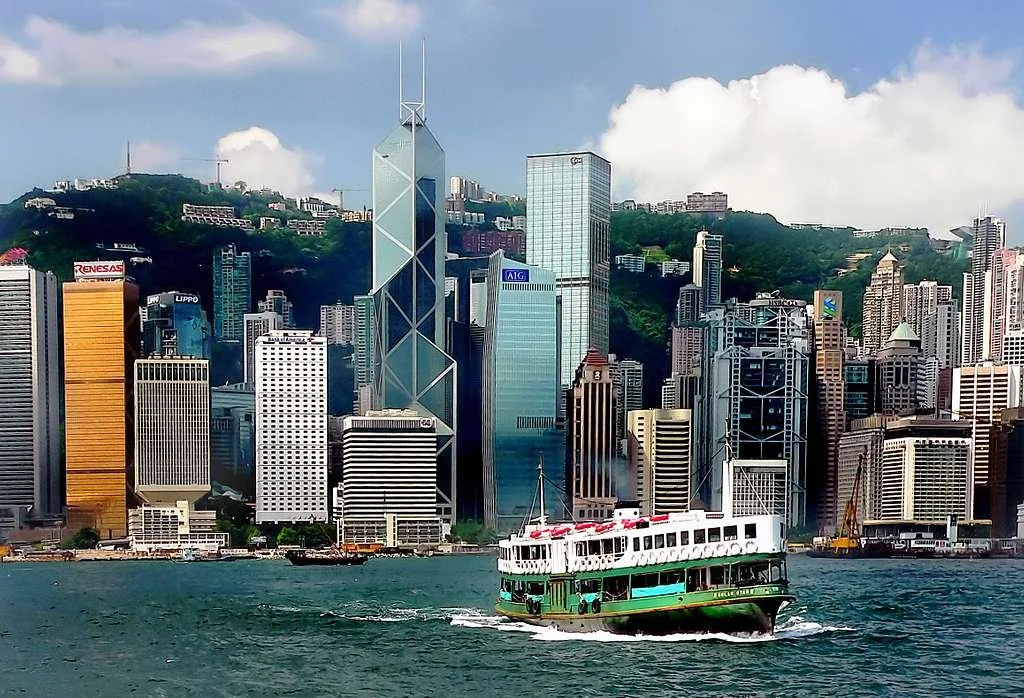
The Star Ferry cruises across Victoria Harbour in Hong Kong, past skyscrapers

Take the Star Ferry. Cruise across Victoria Harbour, imagining Bond slipping through the waters on a covert mission. The city’s skyline at sunset is as breathtaking as any Bond girl.

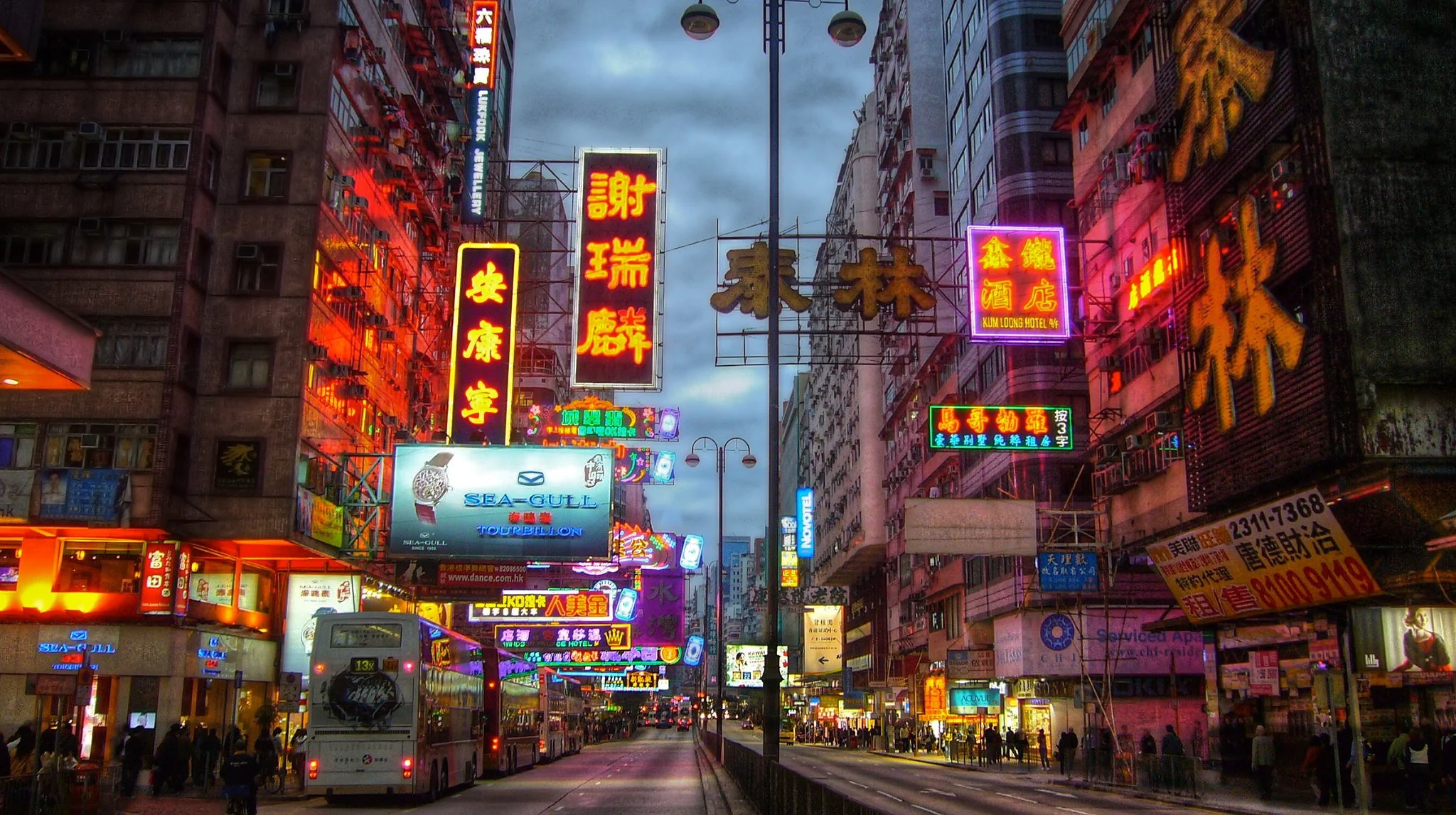
Neon signs light up a street in the Kowloon district of Hong Kong

Explore Kowloon’s streets. Wander the vibrant markets and alleyways where the city’s pulse beats the loudest. Channel your inner Bond as you navigate the chaos, always alert for the unexpected.

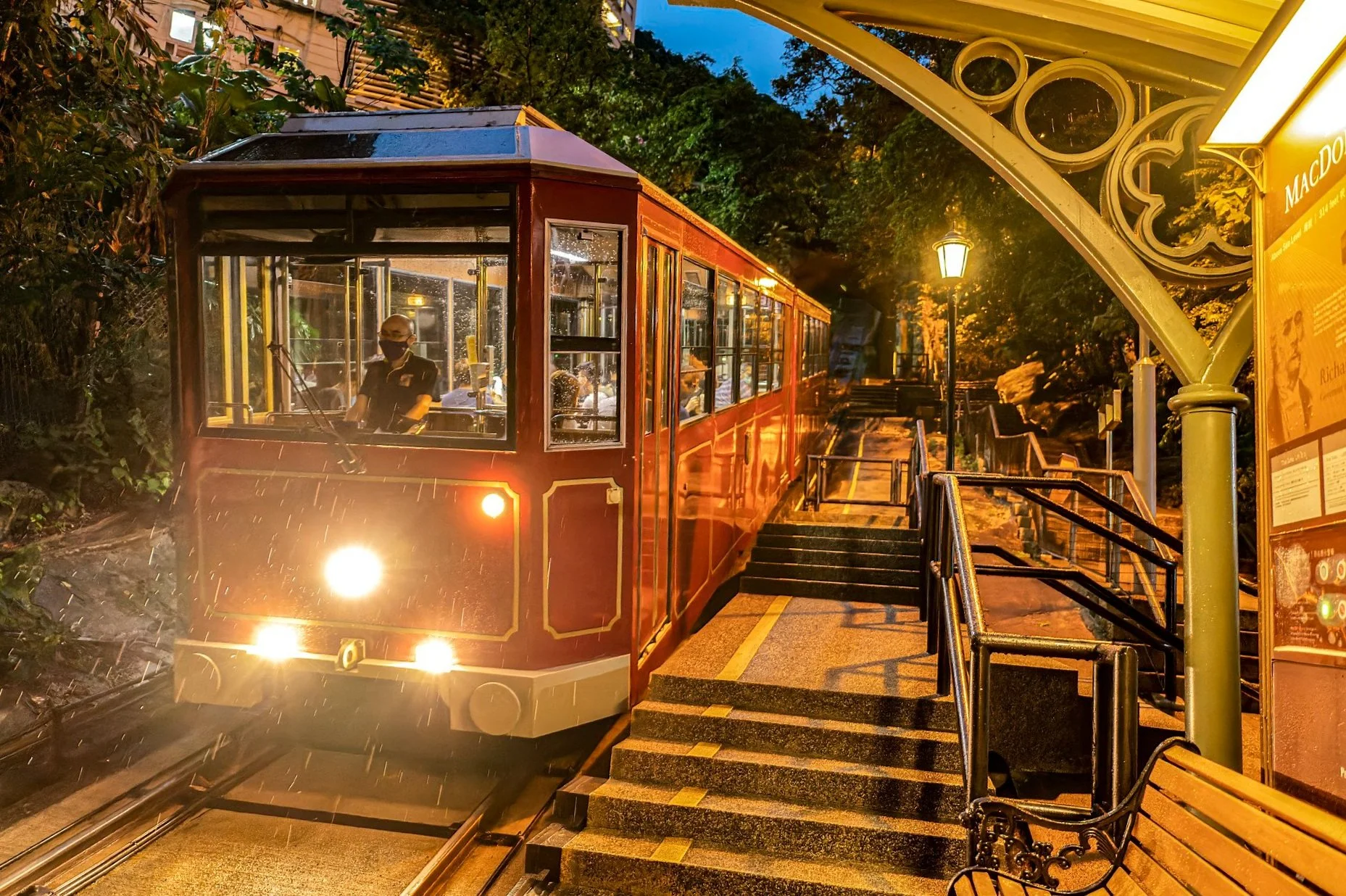
The Peak Tram at a station at night in Hong Kong

Ride the Peak Tram. Ascend to Victoria Peak for a bird’s-eye view of the city. The dizzying heights and sweeping vistas will have you feeling like Bond himself, strategizing your next move.

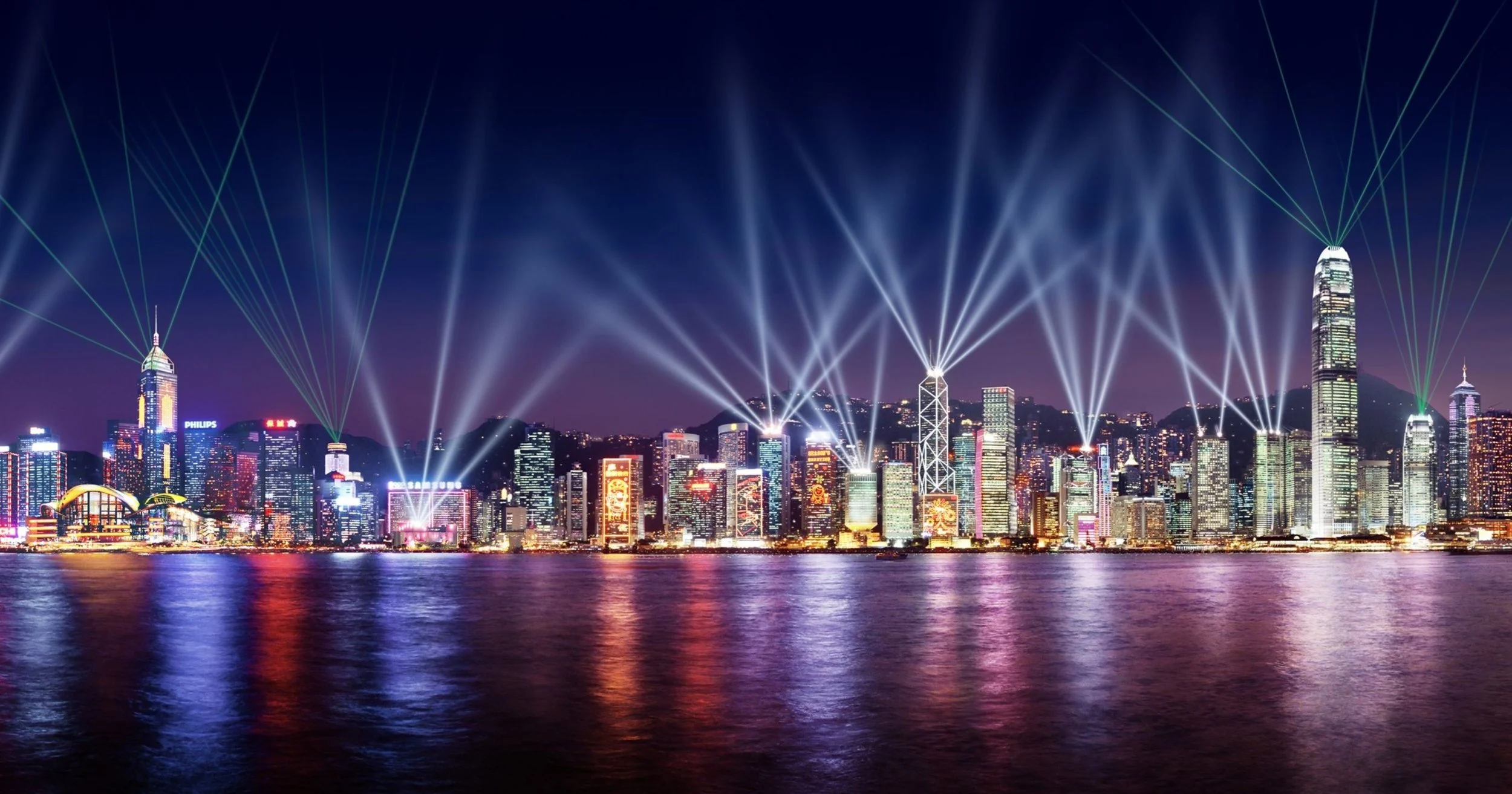
The Symphony of Lights, with white light beaming out of the skyscrapers of Hong Kong, seen across the water

Experience the Symphony of Lights. Watch the city’s skyline come alive in a dazzling light show — a modern spectacle that feels like it was made for a Bond film.

In Hong Kong, the line between luxury and danger blurs, creating a city as dynamic and unpredictable as Bond himself. Whether you’re sipping cocktails at a rooftop bar, navigating bustling markets or cruising the harbor, every moment feels charged with possibility. Here, the stakes are always high, and the thrill is never far behind.

Sean Connery as James Bond by river with stone bridges

007 Travel: A License to Thrill

These destinations let you step into the world of Bond, James Bond — where every turn promises intrigue, elegance and a dash of danger. But they’re not just for hardcore Bond fans; they’re for anyone craving a mix of high-octane adventure and cinematic charm.

So, pack your sharpest tuxedo, order your martini shaken, not stirred, and get ready to use your passport as a license to thrill. Whether you’re scaling the peaks of the Swiss Alps or gliding through Venice’s canals, every moment will feel like your own 007 mission.

Because for Bond — and now, for you — the world is never enough. But it’s one hell of a good place to start. –Ibrahim Oluwu


Mediterranean Mélange: Unveiling Spain and Italy’s Shared Splendor

From Barcelona’s vibrant streets to Rome’s ancient echoes, experience the warmth, flavor and rhythm that make the Mediterranean so unforgettable.

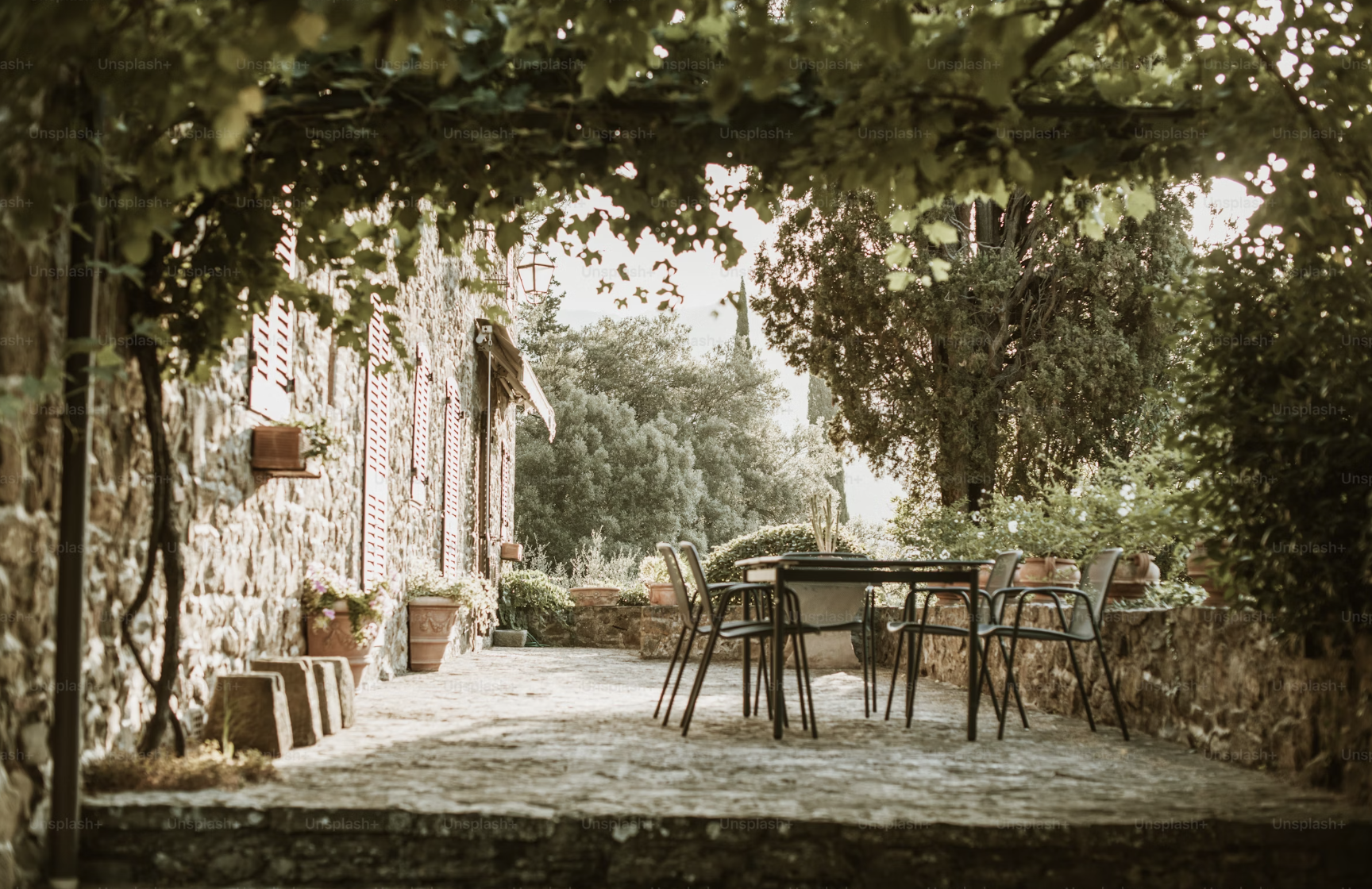
Tuscan patio with cobblestones, trellis covered with greenery, table and chairs

The Mediterranean isn’t just a sea; it’s a state of mind. My recent journey through Spain and Italy felt like diving into a living, breathing artwork — each vista bathed in the golden glow of the Mediterranean sun, each scent wafting from open kitchen windows a reminder of their shared yet singular flavors.

These two nations, linked by that glimmering Mediterranean, show their charm in ways that go beyond landmarks or scenic views.

It’s in the warmth of people who live with passion in every part of their day. It’s the unspoken language of hospitality and genuine connection that leaves a mark long after you’ve moved on.
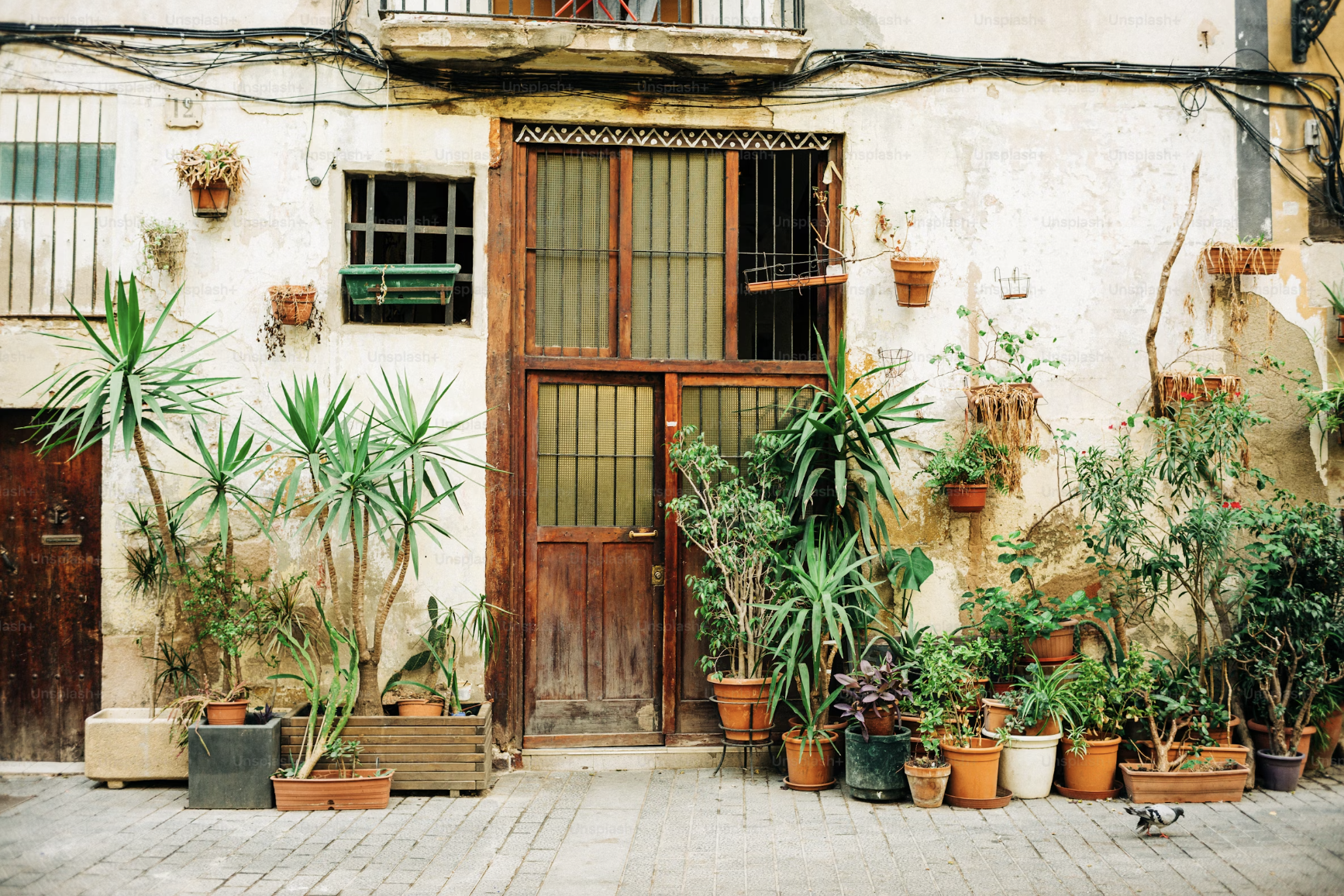
Street in Barcelona with lots of potted plants

Barcelona 

My exploration began in Barcelona, where the Catalan spirit fills the streets with a palpable energy. Wandering the Gothic Quarter’s labyrinthine alleys as part of my Spain tours, I encountered more than ancient stone and soaring arches — this was a place alive with whispered histories and Gaudí’s fantastical fingerprints. The Sagrada Familia loomed like an unfinished masterpiece against the sky, a testament to the vision and determination that defines this city. But it was sipping sangria at a quiet café that I felt the real essence of Barcelona — a blend of warmth, tradition and a fierce love of life.

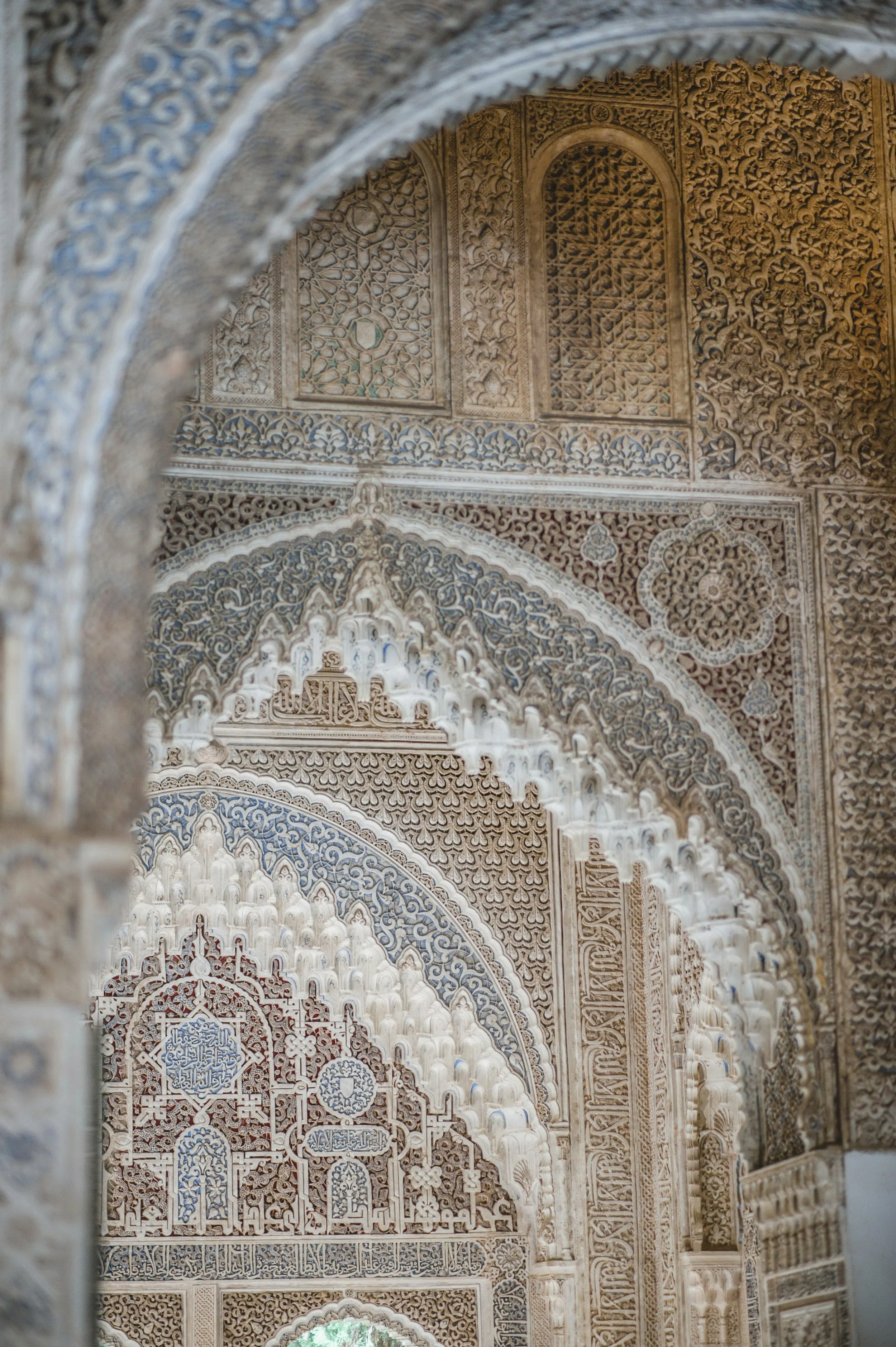
Elaborately carved arches at the Alhambra in Granada, Spain

Granada 

Leaving Barcelona’s cosmopolitan allure behind, I ventured south into the rustic embrace of Andalusia, where the landscape seems to ripple in the sun. In Granada’s Alhambra, the spirit of al-Andalus echoes through the quiet arches and intricate tiles of the Nasrid Palaces, each curve and hue a reminder of the cultural symbiosis that flourished here. The Mediterranean’s influence shaped architecture, art and daily life, with its ever-present warmth and rhythm.

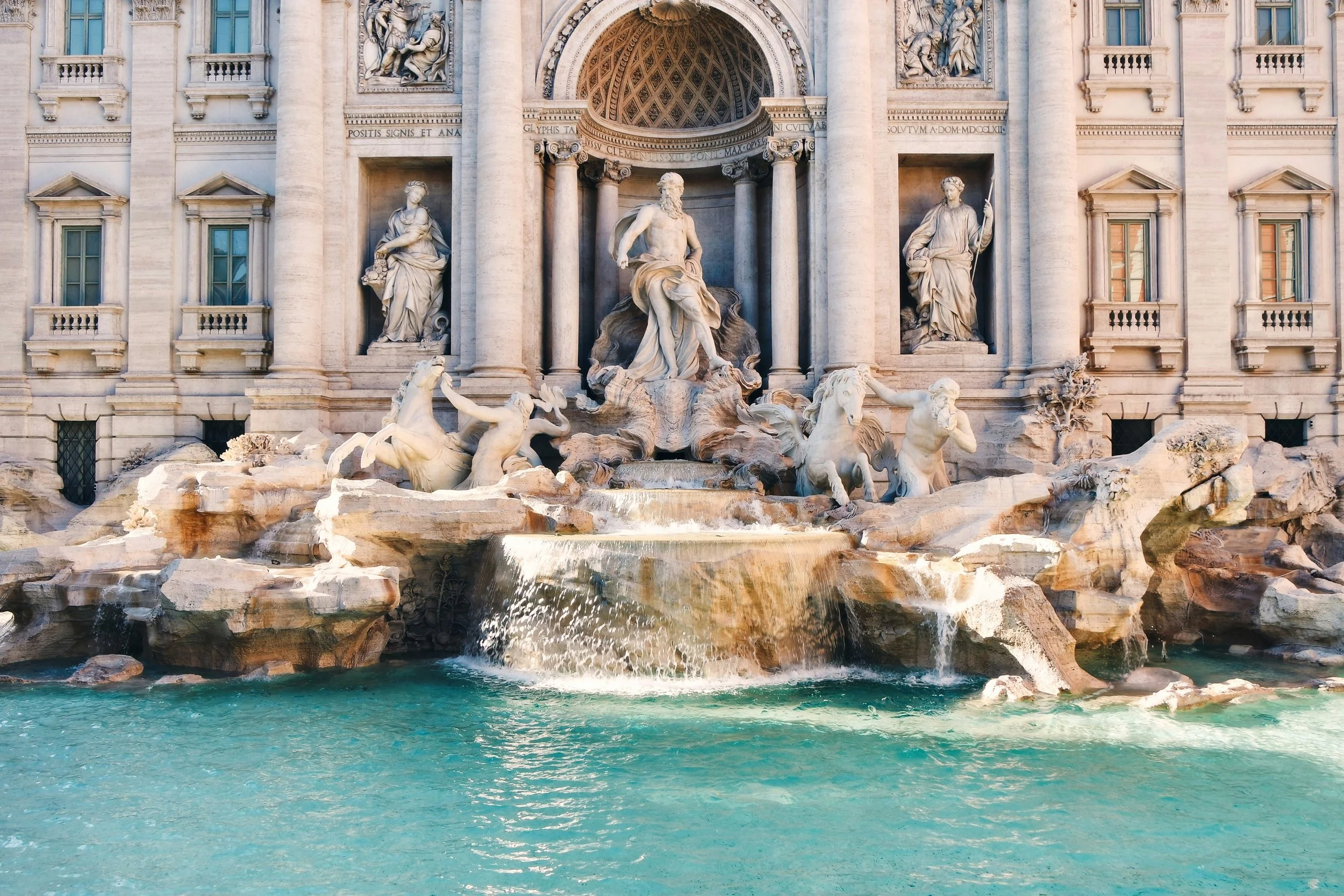
The Trevi Fountain, Rome

Rome

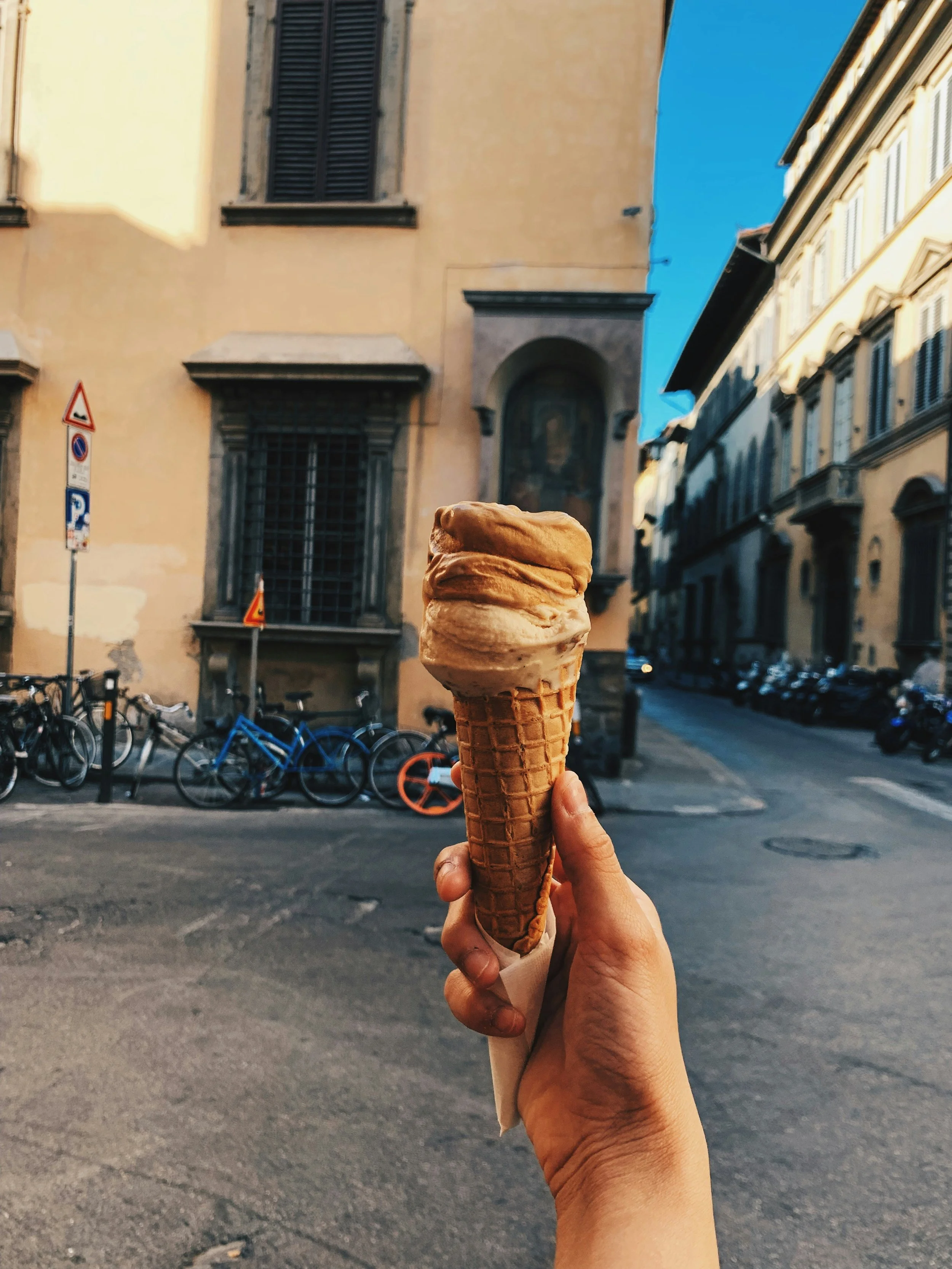
Crossing the sea to Italy, I found myself swept into a whole new cadence in Rome on one of the top-rated tours of Italy. There’s an undeniable gravitas here, where history presses upon the present. Amid the ruins of the Colosseum and the Roman Forum, I could almost hear the shouts of ancient citizens and feel the pounding of history beneath my feet. But Rome isn’t all grandiosity; it’s also the aroma of pizza baking in Campo de’ Fiori, the laughter echoing through Trastevere’s cobbled streets, and the dizzying sweetness of gelato on a hot day.

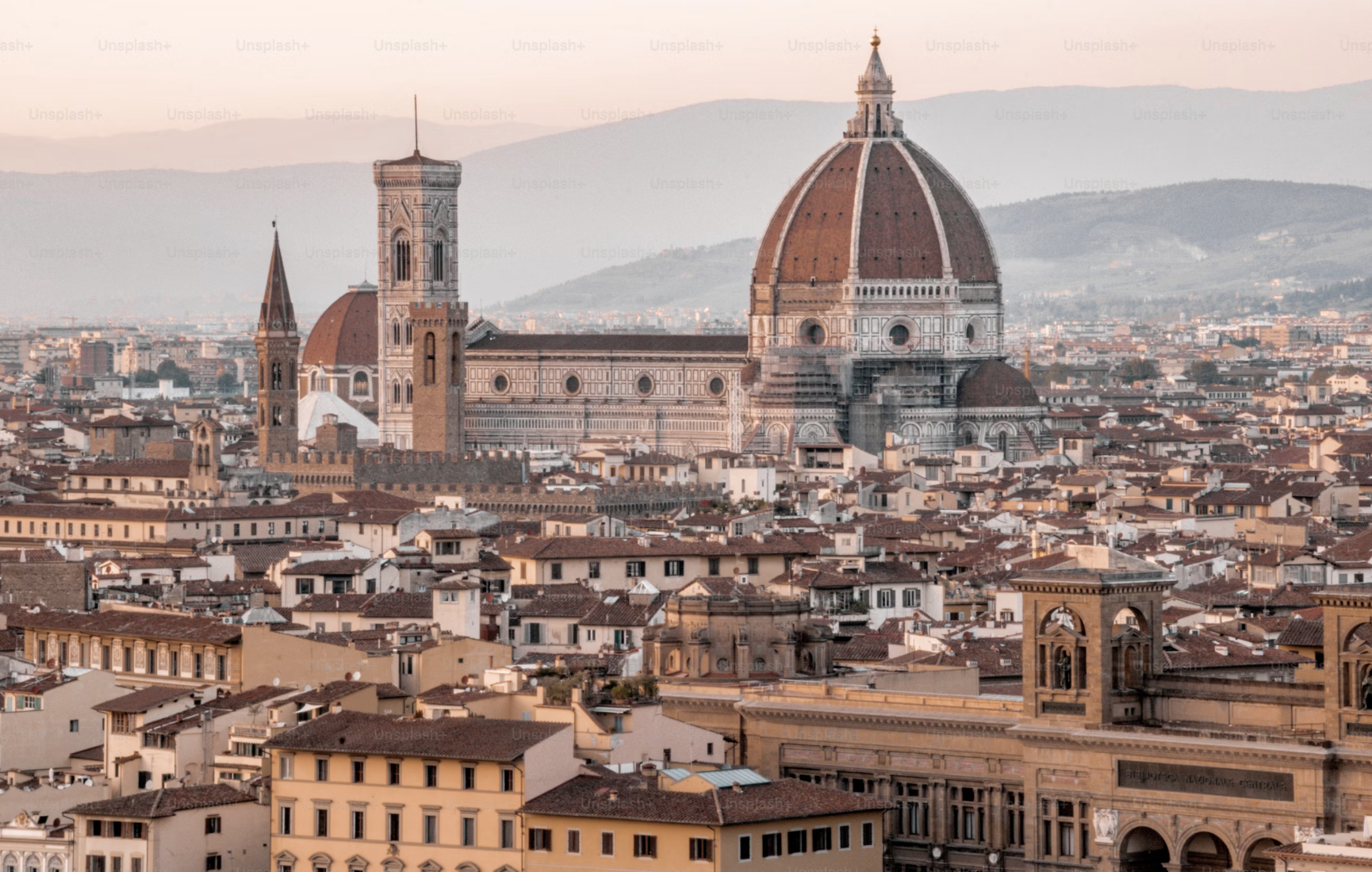
Aerial view of Florence, Italy, with the big church, the Duomo

Florence 

And then, Florence — the heart of Renaissance Italy, where every corner seems touched by genius. At the Uffizi Gallery, each masterpiece tells the story of a nation that birthed Michelangelo and Botticelli, of a people with a timeless love for beauty in all forms. Climbing the Duomo, I gazed over red-tiled rooftops stretching endlessly to the horizon — a view that seemed to capture the soul of Italy itself.

a hand holds up a cone of gelato on an Italian street

Spain + Italy = Mediterranean Magic

As my time in Spain and Italy came to an end, I knew I’d been irrevocably changed by the magic that spilled from every cobblestone street, every vineyard row, every heart-stopping vista. From the electric hum of Barcelona’s streets to the rolling, sun-soaked hills of Tuscany, each place felt like an old friend with a new story to share.

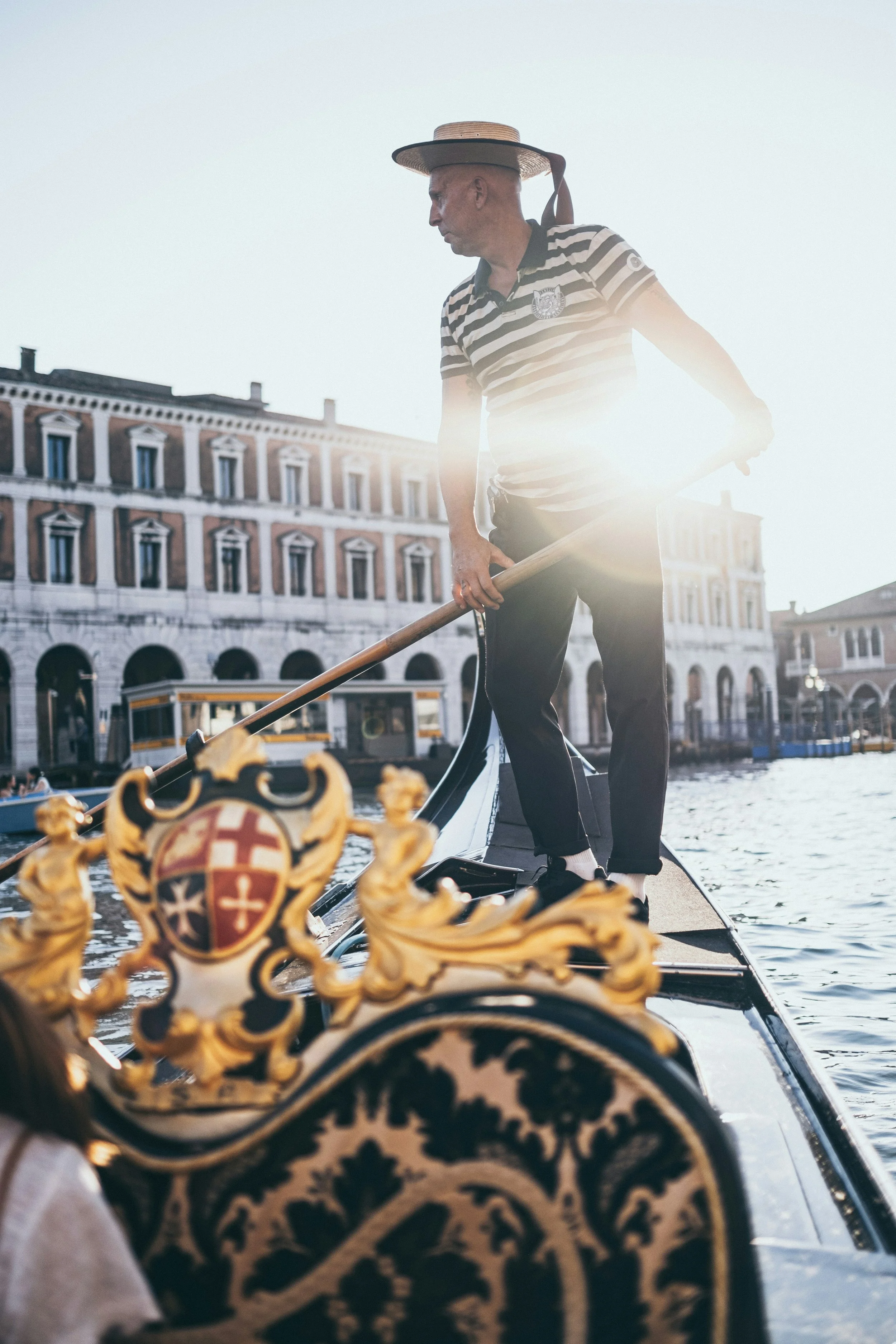
These two nations, linked by that glimmering Mediterranean, show their charm in ways that go beyond landmarks or scenic views. It’s in the warmth of people who live with passion in every part of their day. Think of flamenco dancers in Seville, pouring their souls into every step, or the Venetian gondoliers, who navigate their waters like a dance. It’s the unspoken language of hospitality and genuine connection that leaves a mark long after you’ve moved on.

Leaving the Mediterranean shores behind feels like stepping out of a dream. But I carry with me memories of sunlit piazzas, starlit nights, the laughter of strangers who became friends and the quiet moments in the shadows of cathedrals. And even though my journey is technically over, Spain and Italy now live in my bones, a forever reminder of the adventures that await around every corner.

To explore Spain and Italy is to dive headfirst into a world of color, flavor and stories. Picture yourself sipping sangria in a Barcelona café or twirling pasta in a tucked-away Tuscan trattoria. Each moment here is a toast to life itself. The crumbling ruins, lively piazzas and cobblestone alleyways all testify to the enduring spirit of these lands — and the people who make them unforgettable. In travel, we’re reminded that while each place is one-of-a-kind, there’s a universal rhythm that binds us all.

Spain and Italy lure us with their sun-drenched coastlines, timeless ruins, and fiery, joyful souls. And while you might come for the food or the art, you’ll leave with a spirit that’s been altered, a heart forever stamped by their beauty. –Kirill Balaganin 

Symbolism in Italian Floristry: Flowers as Cultural and Religious Icons

Talk about flower power! From passionate roses to sacred lilies, Italian flowers speak a language all their own. Learn the meanings behind these blooms and how they’ve shaped Italian culture and faith for centuries.

Flowers fill a cart in front of the Duomo in Florence, Italy

Floristry in Italy is nothing short of an art form. Each bloom embodies deep cultural significance and religious symbolism. As a country rich in history and tradition, Italy uses flowers to communicate emotions, celebrate life events and honor spiritual customs. 

If you’re thinking, “I want to find an Italy florist near me,” wait till you learn more about the symbolism of different blooms and their role as cultural and religious icons.

Flowers in Italy convey emotions beyond what words can express, preserving the depth of human feeling through their beauty and meaning.
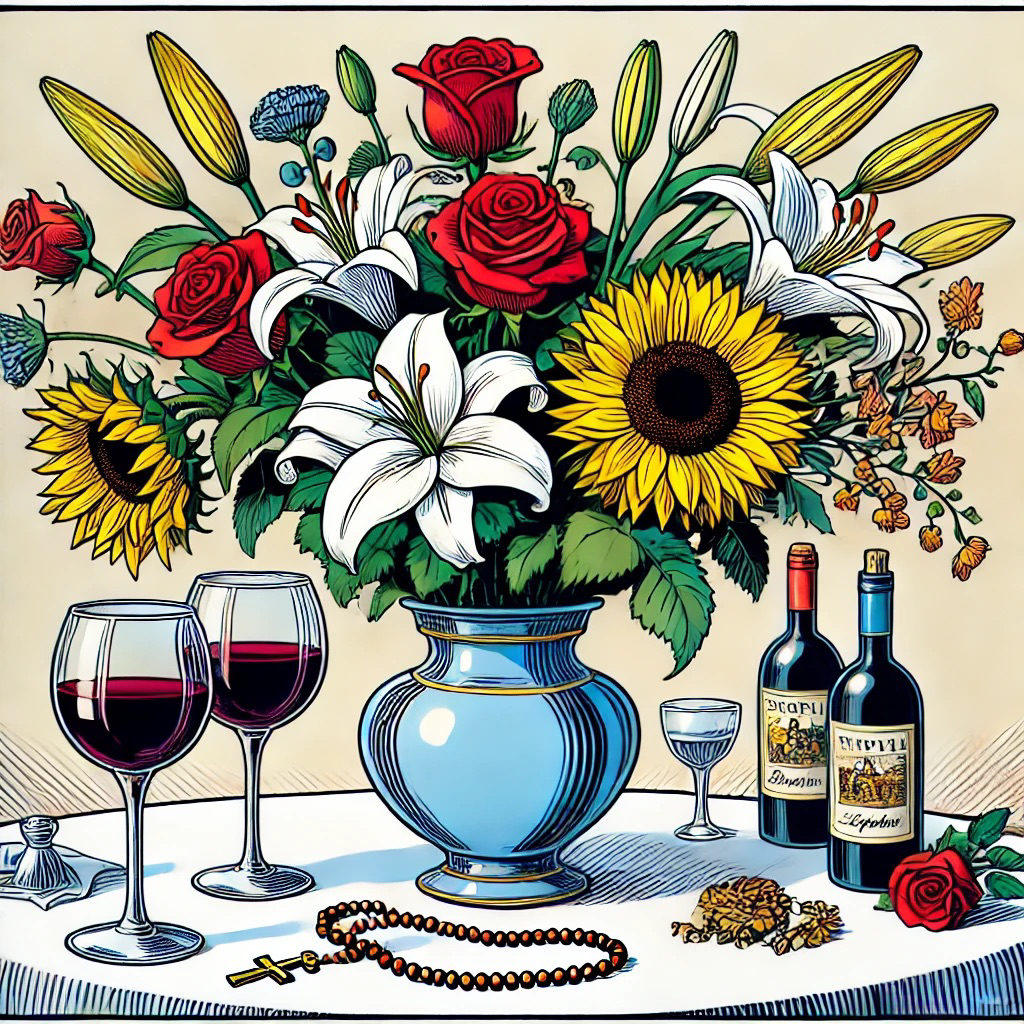
A vase of roses, lilies and sunflowers on a table with red wine and a rosary

The Meanings of Flowers in Italian Culture

In Italy, the use of flowers is pervasive, from weddings and other festive occasions to mourning rituals. The country has a rich history of floriculture, with each flower holding distinct meanings. Italian flora is often associated with various legends, poems and folklore, where the narratives shape public perception of these flowers.

A man in a blue suit on a pale yellow moped hands a red rose to a woman in a striped top and green skirt on a street in Italy

The rose: Love and passion

The rose, one of the world’s most celebrated flowers, holds a special place in Italian culture. Red roses are the ultimate symbol of passion and desire, often chosen to express heartfelt love. White roses, on the other hand, represent purity and new beginnings, making them a favorite at weddings, while yellow roses can symbolize friendship and joy (though they’re sometimes associated with jealousy). The rose’s rich symbolism reflects the complexities of relationships, capturing love in all its forms.

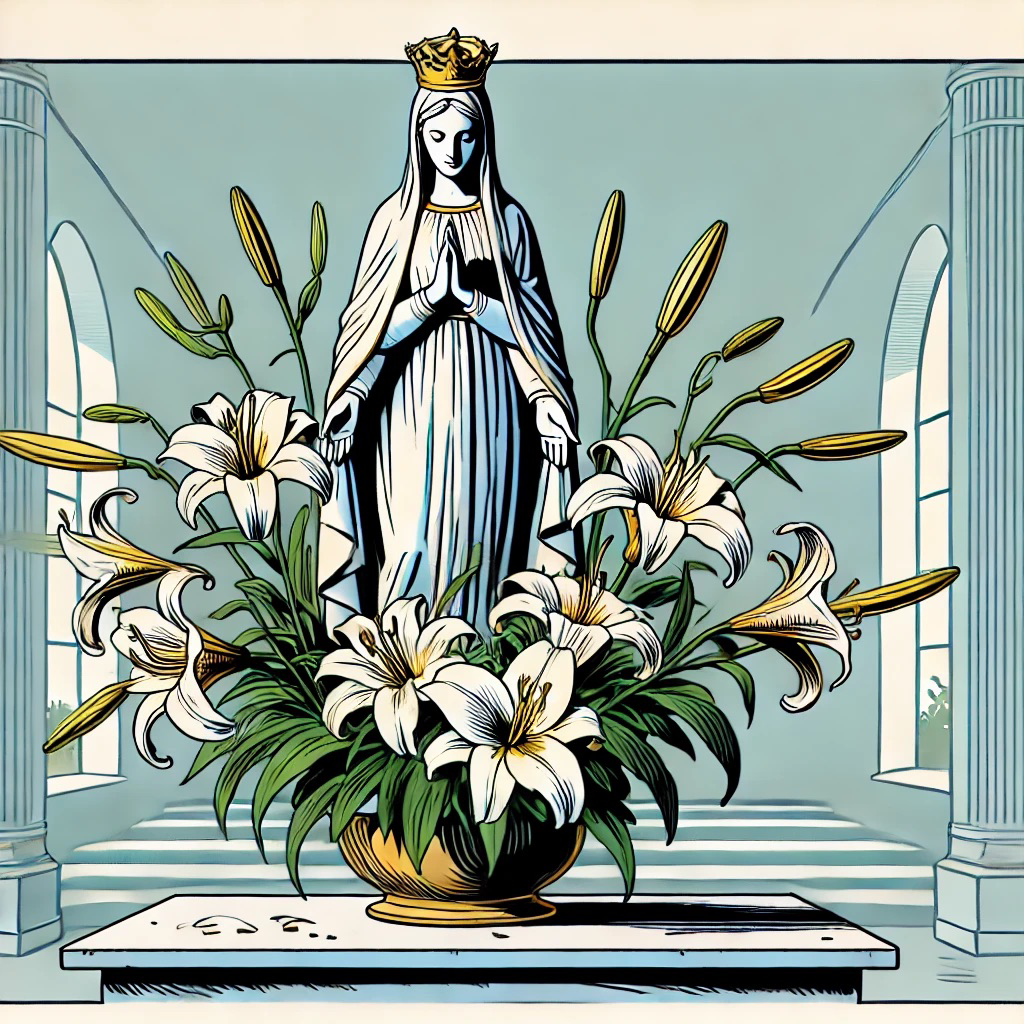
A statue of the Virgin Mary placed in a pot of white lilies

The lily: Purity and devotion

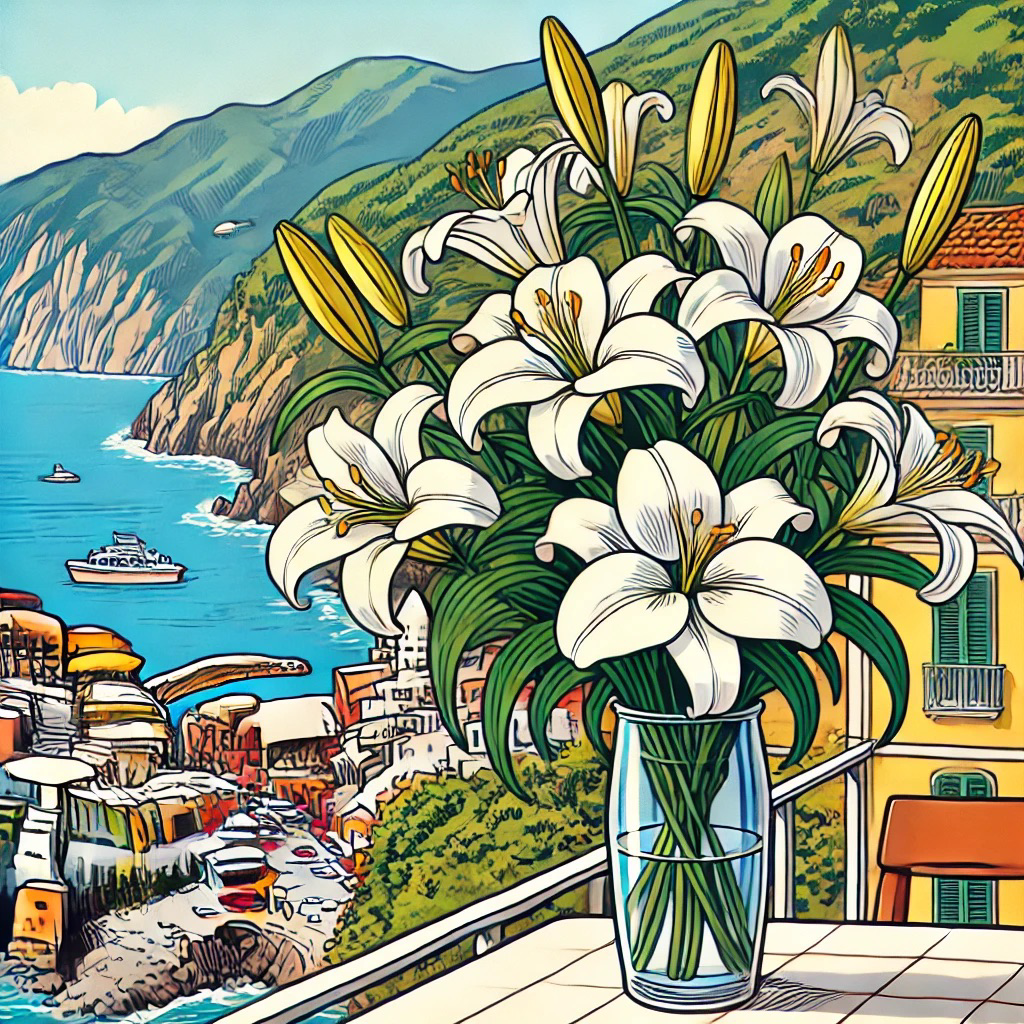
In religious contexts, the lily is a powerful symbol of purity and devotion. Often linked to the Virgin Mary in Christian iconography, this delicate flower represents innocence, virtue and renewal. In mythology, the lily is also associated with chastity, said to have originated from a drop of milk that fell from the breast of Juno, the Roman goddess of love and marriage. Lilies are frequently used to decorate churches and religious festivals, elevating their sacred significance. 

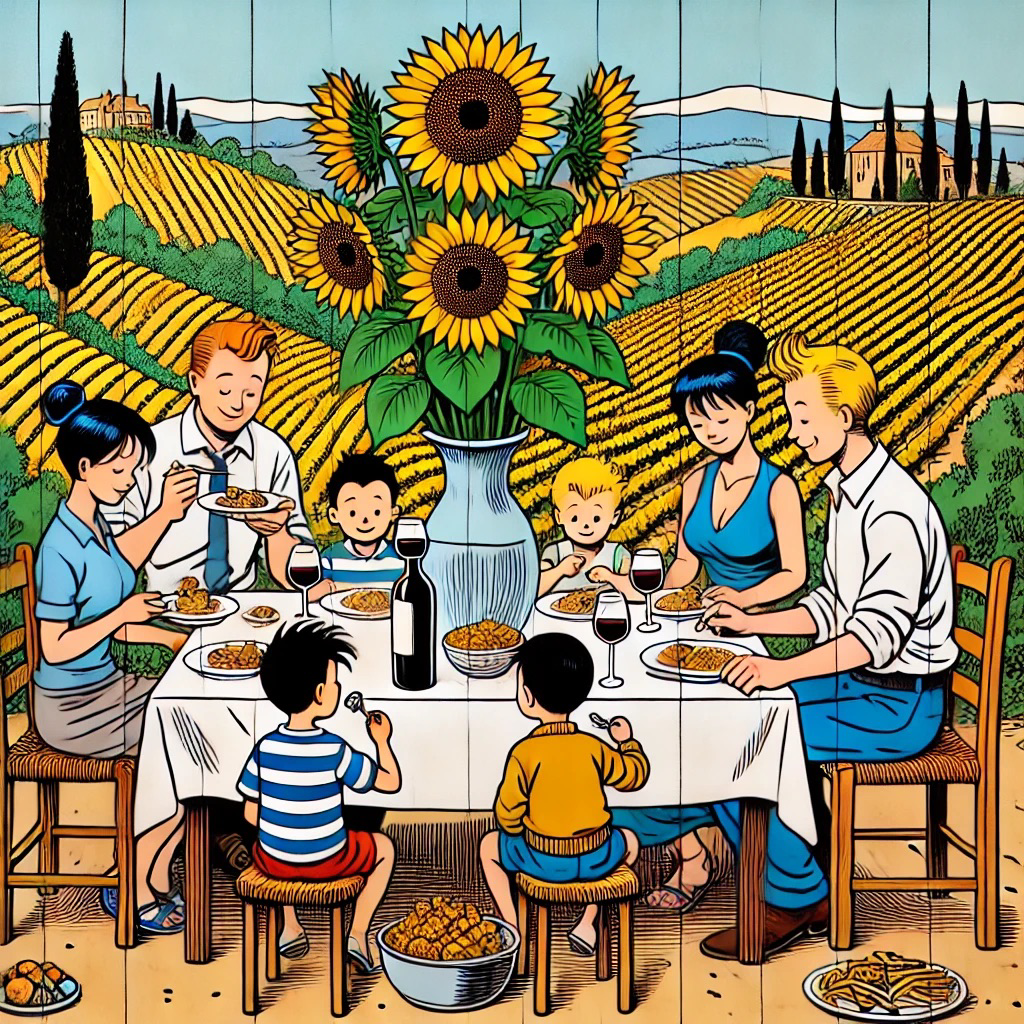
A family eats dinner outside in Tuscany, with a massive vase of sunflowers on the table

The sunflower: Loyalty and adoration

The sunflower, with its bright yellow petals and seed-filled center, symbolizes loyalty and adoration. Italian florists often use sunflowers for celebratory occasions, expressing joy and warmth. Additionally, the flower is associated with the concept of followership, as its Italian name, girasole, literally “turning to the sun.” In Italy, sunflowers bloom from mid-June to early August in the regions of Tuscany, Umbria and the Marche, covering the Italian countryside.

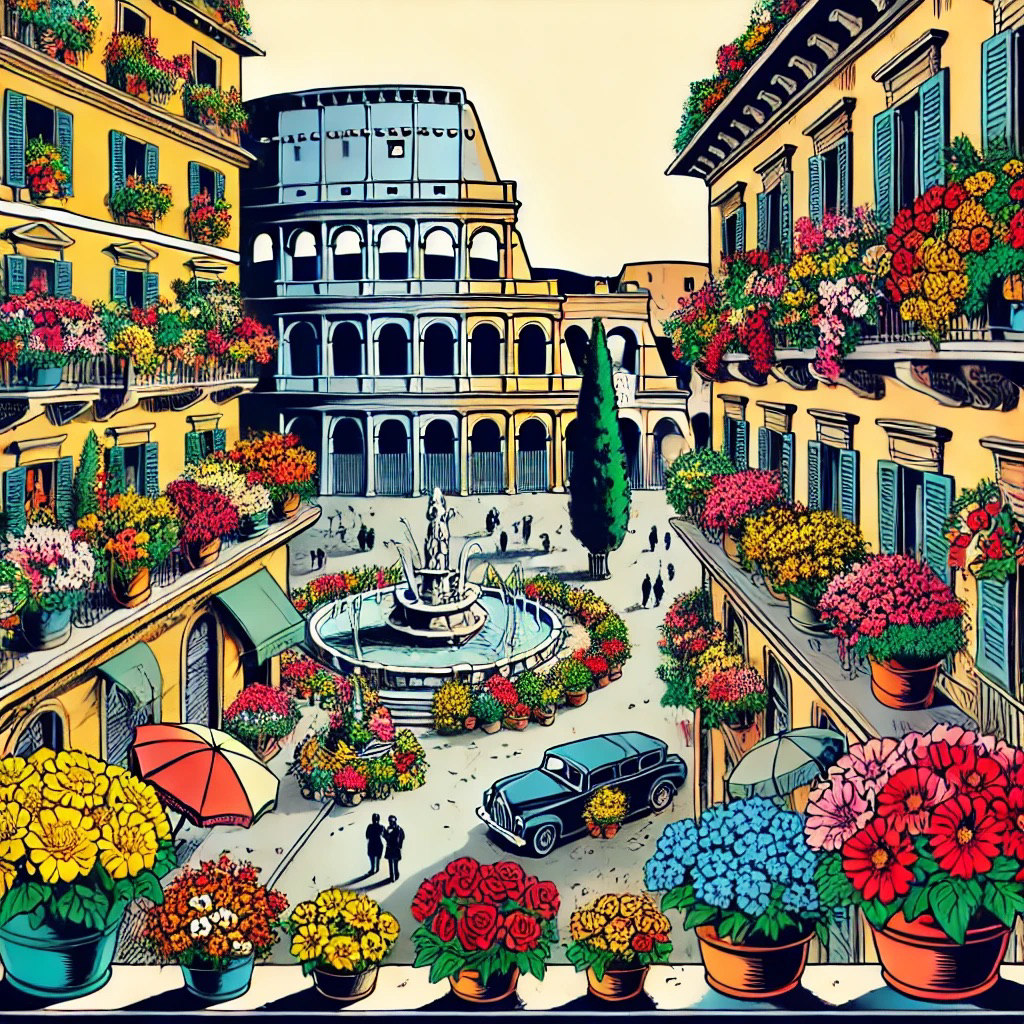
Flowers fill a piazza in Rome by a fountain and the Colosseum

Flower Festivals in Italy

Italy, a country renowned for its stunning landscapes, rich history and vibrant culture, also celebrates its natural beauty through a variety of flower festivals that occur throughout the year. These festivals highlight the country’s love of nature and artistry while showcasing the colors and scents of Italian flora.

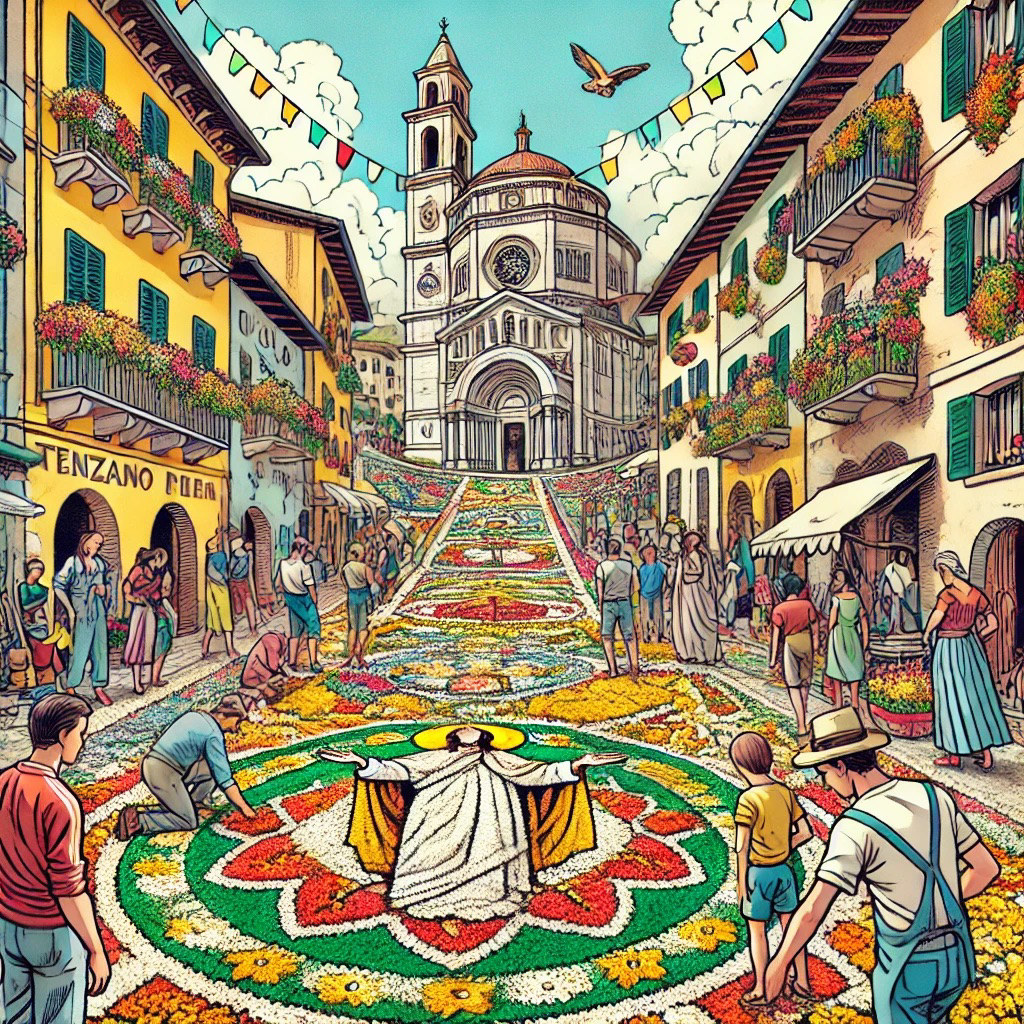
The Infiorata di Genzano di Roma, where mosaics made of flowers line the street leading to a church

Infiorata di Genzano di Roma

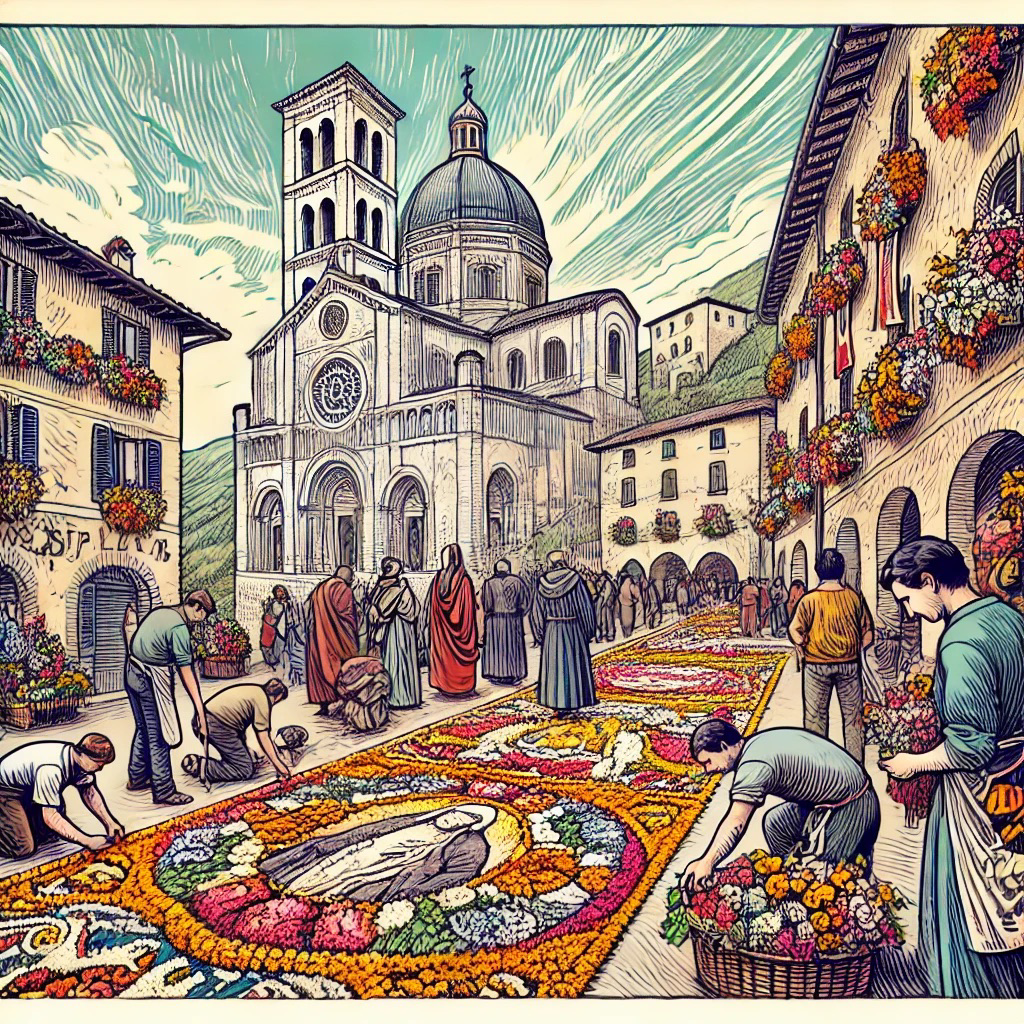
One of the most enchanting floral festivals is the Infiorata, with Genzano, a picturesque medieval hill town near Rome hosting one of the oldest. Typically held in June, this tradition dates back to 1788 and transforms the Via Italo Belardi into an elaborate carpet of flowers. Approximately 350,000 to 400,000 petals are arranged like mosaics into intricate designs, often depicting religious or cultural themes. As dawn breaks, locals unveil their masterpieces, inviting visitors to wander through a floral wonderland, where the artistry of each design and the fragrance of fresh petals create a magical atmosphere. 

Infiorata di Spello

Another highlight is the Flower Festival of Spello, a charming hilltop town in Umbria. Every year, during the Feast of Corpus Christi, the ninth Sunday after Easter, the town bursts into color as townspeople meticulously select and gather flowers: roses, carnations, daisies and marigolds, to name a few. The floral creations cover streets throughout the historical center in preparation for the passage of the Blessed Sacrament carried in procession by the bishop on Sunday morning. 

Corso Fiorito

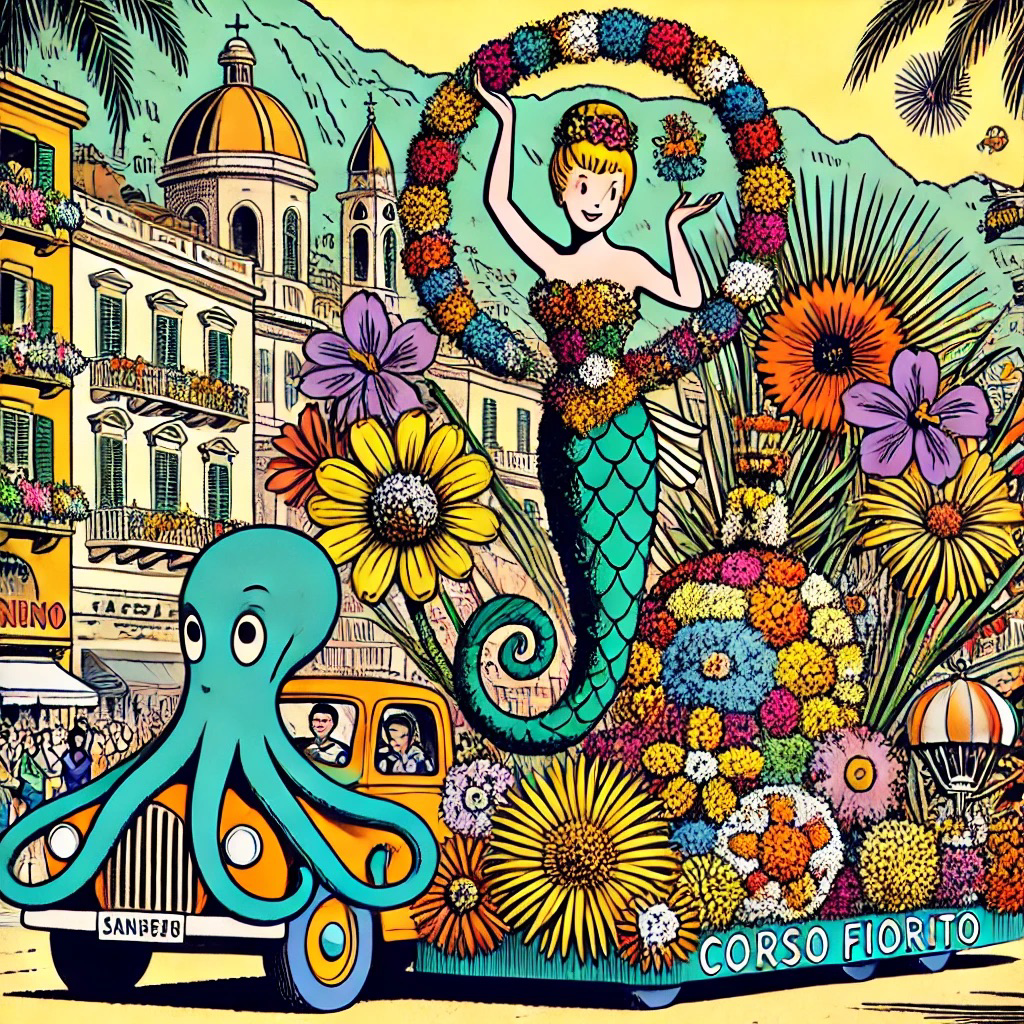
Each spring, the coastal town of Sanremo celebrates its floral heritage with a parade of flower-covered floats. Set against the breathtaking backdrop of the Italian Riviera, the festival offers visitors a chance to immerse themselves in the beauty and charm of the Liguria region. The festival’s origins trace back to 1904, when Count Alfredo di Villamarina organized a parade featuring flower-adorned carts and carriages, naming it Festa della Dea Flora (Feast of the Goddess Flora) in honor of the patron deity of flowers. By the 1930s, grand allegorical floats covered in intricate floral designs made their debut, along with the battaglia dei fiori — a playful “battle” where people in the streets and on the floats tossed flowers at one another. While this lively tradition has since died out in Sanremo, it still occurs in the nearby town of Ventimiglia.

Chrysanthemums placed in a church for a funeral

Flowers for Mourning and Commemoration

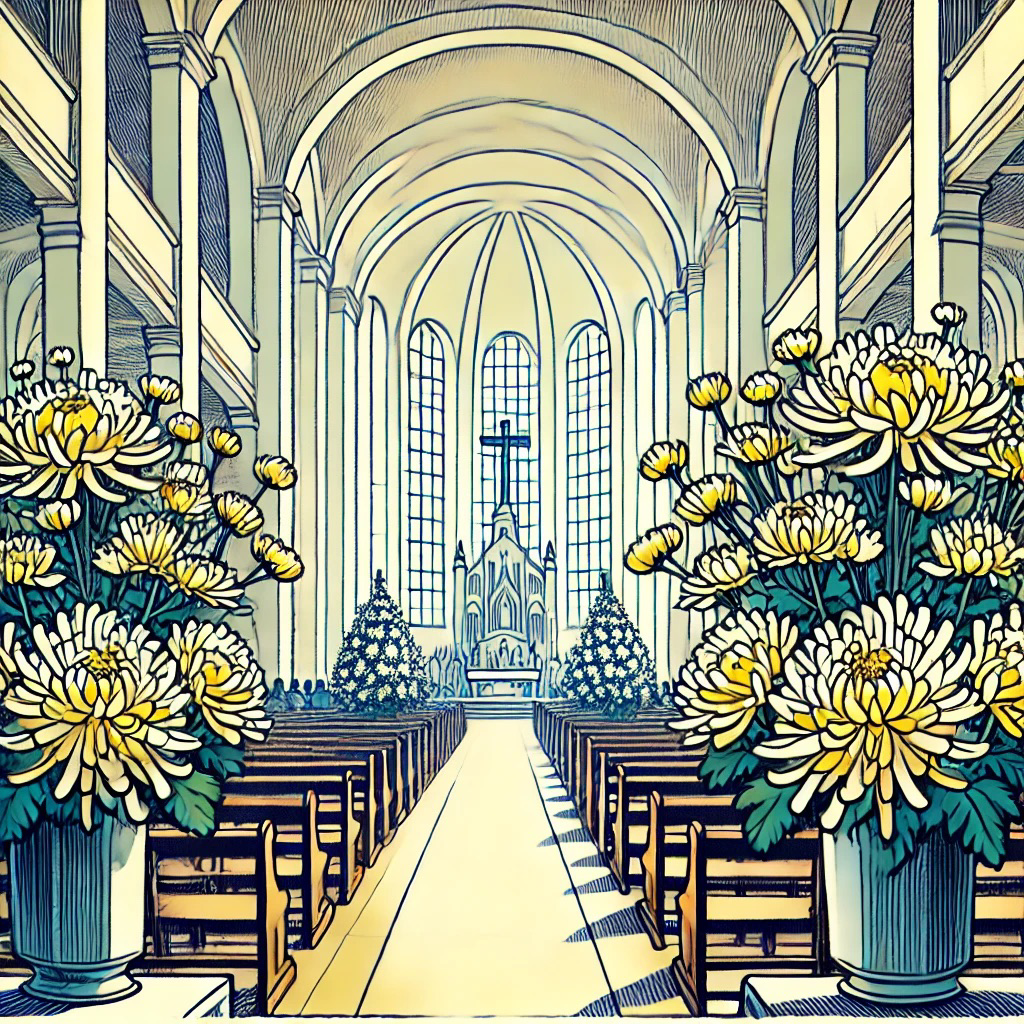
But flowers aren’t all about celebration. In Italy, particular blooms carry meanings associated with grief, remembrance and consolation. The chrysanthemum, for example, is commonly used in funerals and memorial services, symbolizing grief, remembrance and the fleeting nature of life. 

The Language of Flowers 

The symbolism of flowers in Italy is woven with threads of history, culture and faith. Each bloom, from the passionate red rose to the pure white lily, tells its own story, reflecting the values and beliefs of a nation where flowers are more than just decoration — they’re expressions of life itself.

Flowers in Italy remain a timeless and powerful form of communication. They convey emotions beyond what words can express, preserving the depth of human feeling through their beauty and meaning. Whether celebrating love, mourning a loss or marking a spiritual occasion, the language of flowers speaks to the heart of Italian cultural identity. –Mia Roberts

Literary Destinations: Books to Accompany Your Travels

What to read on vacation? From Paris to Tokyo, here are some recommendations to immerse yourself in foreign cultures. 

Illustration of nonbinary person with nose ring reading on a train going past water and mountains

There’s nothing quite like diving into a book that takes you to the very place you're about to visit — or are currently exploring. Literature has a magical way of bringing locations to life, adding rich historical context, cultural nuances and captivating narratives that enhance your travel experience.

Whether you’re an avid reader or simply just looking to deepen your connection with your destination, creating a literary itinerary can be a delightful way to enrich your journey.

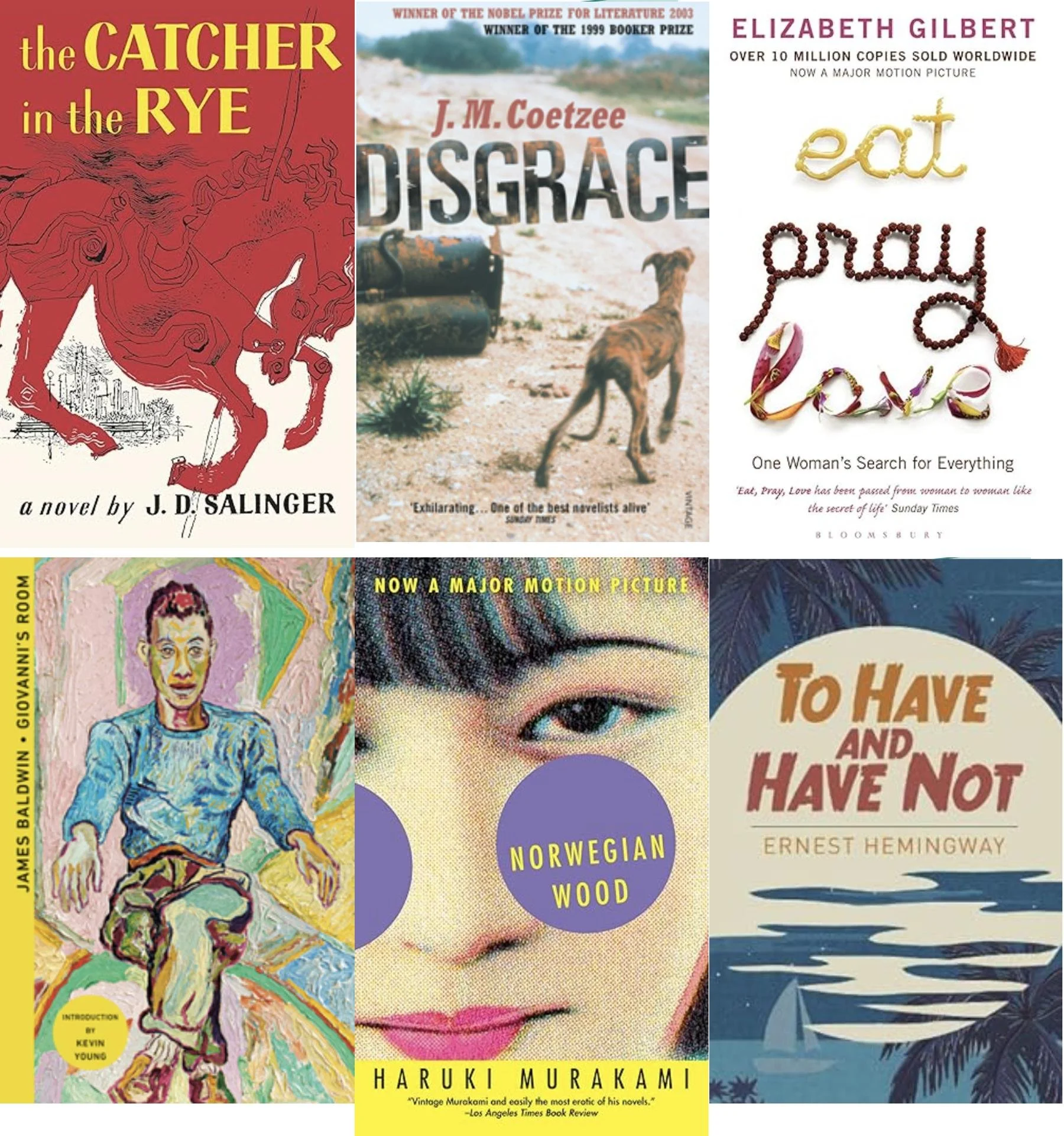
Collage of book covers: The Catcher in the Rye, Disgrace, Eat Pray Love, Giovanni's Room, Norwegian Wood and To Have and Have Not

Let’s explore some of the most enchanting destinations and the books that would be your trusty companions along the way. 

Illustration of fashionable woman in headscarf reading in Paris

Paris, France
Giovanni’s Room by James Baldwin

Ah, Paris — the City of Light, and an epicenter of art, culture and romance. Set in 1950s Paris, Baldwin’s novel Giovanni’s Room explores themes of identity, love and societal expectations. The story follows David, an American expat who struggles with his sexual identity. While his fiancée, Hella, is away in Spain, David begins an intense romantic relationship with Giovanni, an Italian bartender. This deeply moving story is a poignant and powerful exploration of the complexities of human emotions and the struggle for self-acceptance in a world that often demands conformity.

Illustration of young Black man reading in Italy

Italy
Eat Pray Love by Elizabeth Gilbert 

Gilbert’s bestselling memoir, Eat Pray Love, is a captivating tale of self-discovery that takes you on a transformative journey through Italy, India and Indonesia. While in Italy, Gilbert immerses herself in the country’s gastronomy, savoring the flavors and traditions of cities like Rome and Naples. This book is sure to whet your appetite for the amazing food and cultural richness that Italy has to offer.

Illustration of redhead woman sitting on bench reading in Key West, Florida

Florida
To Have and Have Not by Ernest Hemingway 

If you’re planning a trip that includes, perhaps, a three-day cruise to Key West, consider packing a copy of To Have and Have Not by Hemingway. Set against the backdrop of the Great Depression in the Florida Keys and Cuba, this gripping novel, written in the author’s simple and direct style, explores the economic struggles and moral dilemmas of its characters. And while you’re in Key West, be sure to visit the Ernest Hemingway Home & Museum, where the legendary writer lived in the 1930s, or imbibe at Sloppy Joe’s, Papa’s favorite watering hole during his time on the island.

Illustration of long-haired young woman in black hat and red coat reading on a bench in NYC

New York City
The Catcher in the Rye by J.D. Salinger 

Often included in American high school curricula, Salinger’s provocative novel The Catcher in the Rye explores universal themes such as alienation, identity, loss and the transition from adolescence to adulthood — all seen through the eyes of its angsty teenage protagonist, Holden Caulfield. Nearly all the landmarks Holden mentions as he wanders around Manhattan — Central Park, the American Museum of Natural History and the Met — still attracting visitors more than half a century later, and they play significant roles in the story.

Illustration of young man reading on a bench in Tokyo, Japan

Tokyo, Japan
Norwegian Wood by Haruki Murakami
Step into the world of 1960s Japan with Murakami’s coming-of-age novel, Norwegian Wood. This poignant tale of love, loss and self-discovery is narrated by 37-year-old Toru Watanabe, who finds himself transported back to his college days after hearing the Beatles’ song “Norwegian Wood (This Bird Has Flown)” while on a business trip. For an author whose stories typically exist between the real and the surreal, Norwegian Wood takes a decidedly more subtle approach, yet still showcases Murakami’s characteristically delicate touch.

Illustration of young man reading a book on a rock above Cape Town, South Africa

Cape Town, South Africa
Disgrace by J.M. Coetzee

Set in post-apartheid South Africa, J.M. Coetzee’s Booker Prize-winning novel Disgrace focuses on the life of David Lurie, a disgraced university professor. After an affair with a student leads to his dismissal, Lurie retreats to his daughter Lucy's rural farm in the province of Eastern Cape. There, they experience a brutal attack that forces both of them to confront their vulnerabilities and the harsh realities of a changing society. The novel explores themes of power, redemption, racial tensions and the search for a new identity in a country grappling with its past.

Illustration of tattooed muscular man with dark beard and sunglasses reading at a sidewalk cafe

Literary Wanderlust

These are just a few examples of the countless literary treasures that can enhance your travel experiences. By immersing yourself in the pages of a book set in your destination, you’ll gain a deeper appreciation for the local culture, history and stories that have unfolded within those very streets and landscapes.

But the allure of literary travel goes beyond mere reading. Many destinations offer opportunities to follow in the footsteps of your favorite authors, explore the places that inspired their works, or attend literary festivals and events.

So, as you plan your next adventure, be sure to pack a few literary companions — they’ll not only entertain you during your travels but also provide a perspective through which to explore the world around you. –Boris Dzhingarov

Iconic Stadiums and Sporting Landmarks Around the World

From the Colosseum to Dodger Stadium, from Wembley to Yankee Stadium, we’ve got a winning itinerary of the planet’s most iconic sporting landmarks. Game on, sports fans!

Sports stadiums have been gathering spots for ages, where people have come to witness athletic feats, whether that’s a fight between gladiators in Ancient Rome or today’s games. From the deafening cheers to the hushed silences, these places have seen raw emotions on full display.

Now, get ready for a global journey for sports fans: We’ll be making stops at some of the world’s most iconic stadiums and sporting landmarks. From an ancient arena to modern architectural marvels, we’ll dig into their history and the architects who brought them to life, throw in some interesting facts, and even point out a few nearby attractions.

Entrance to All England Lawn Tennis and Croquet Club

All England Lawn Tennis and Croquet Club

This London site has hosted Wimbledon since 1877. The world famous tournament is one of the big four in professional tennis, commonly known as the Grand Slams. And when  tennis folk mention a “Grand Slam,” they mean winning all four major championships, held in Australia, France, the U.K. and the United States, in the same calendar season.

Empty pitch and seats at All England Lawn Tennis and Croquet Club

Architect: Stanley Peach

Fun fact: The retractable roof installed in 2009 ensures that play can continue even during the all-too-common English summer rain. 

Nearby attractions: Visit the Victoria & Albert, an amazing museum of art and design, or grab your baking buddies and live your Great British Bake Off fantasy at the Big London Bake.

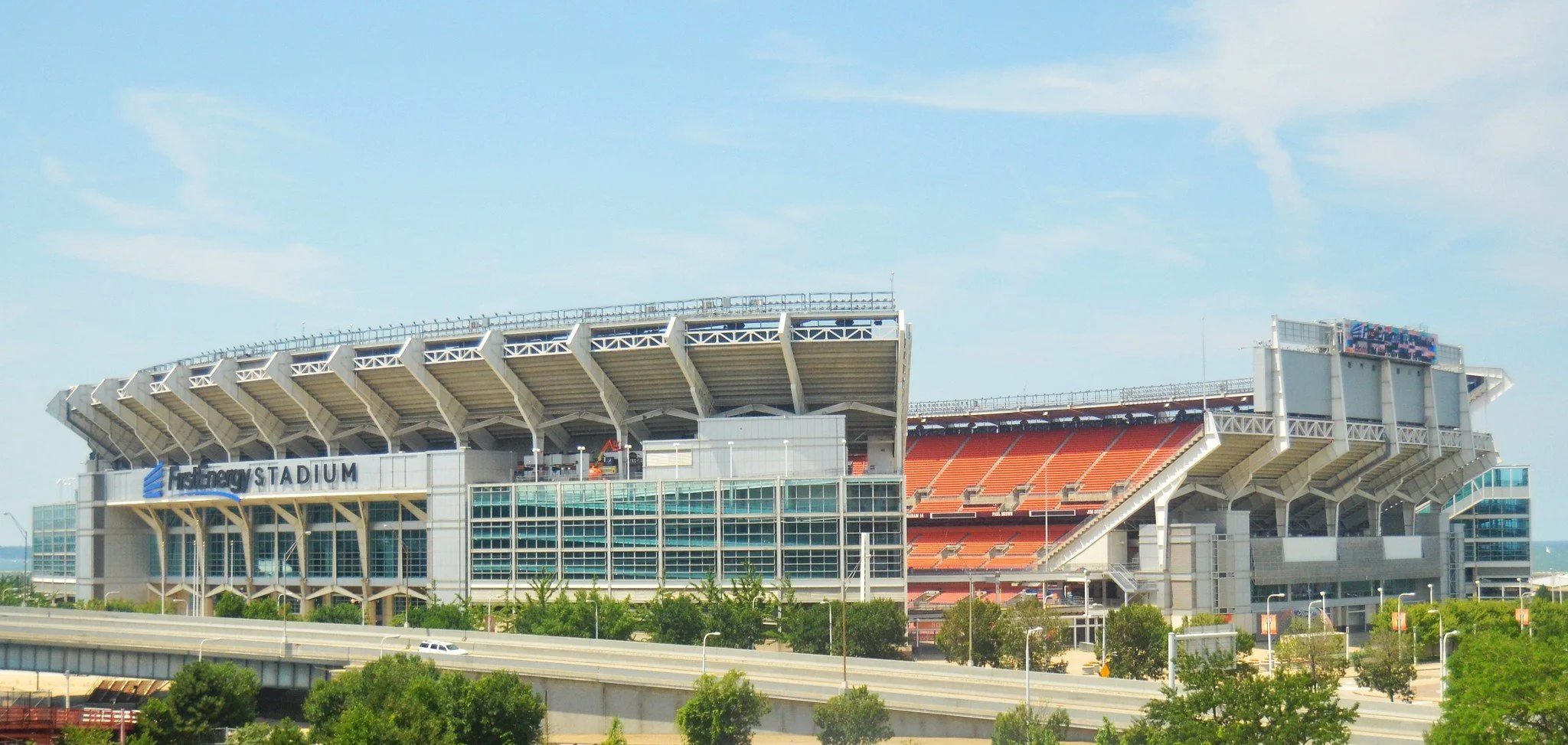
Exterior of Cleveland Browns Stadium

Cleveland Browns Stadium

For die-hard American football fans, this place is like sacred turf. When the players hit the field and the game intensifies, you’re in for all the highs and lows of a typical game. And if you’re looking to crank up the experience and try to win some money, hedge your bets with this deal.

Cleveland Browns Stadium packed with fans during a Browns game

Architect: Populous (formerly HOK Sport) 

Fun fact: The stadium was designed to give spectators unobstructed views of the city skyline and Lake Erie. 

Nearby attractions: Why not make a day of it? You can check out the Rock & Roll Hall of Fame or take a leisurely afternoon stroll through the Cleveland Botanical Garden.

Gorgeous picture of The Colosseum at sunset

The Colosseum

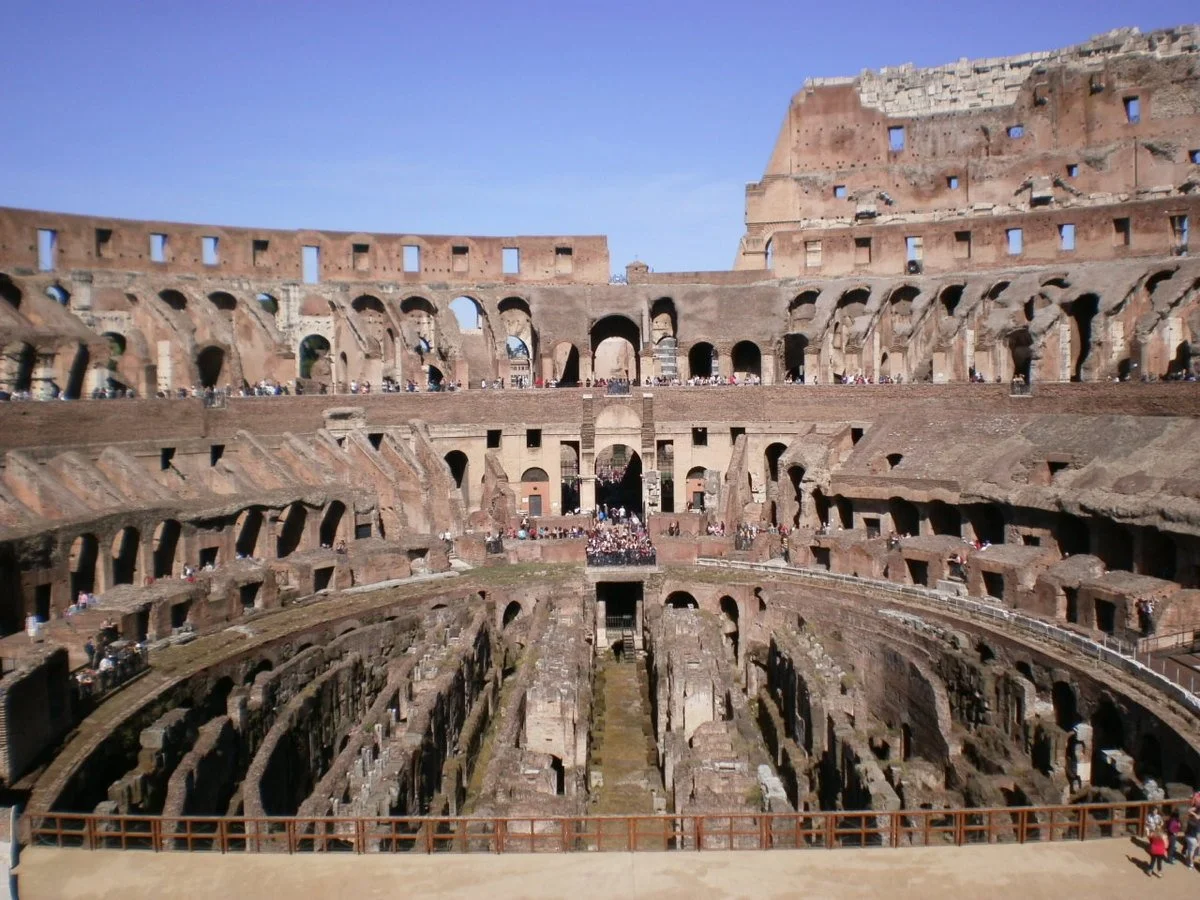
The ancient world had its own versions of sporting arenas, but let’s be honest — none could quite rival the grandeur and infamy of Rome’s magnificent Colosseum. This colossal wonder serves as a testament to the might of the Roman Empire, along with its insatiable appetite for entertainment. The arena’s innovative elliptical shape laid the foundation for modern stadiums.

Constructed under the Flavian dynasty between 72 and 81 CE, the massive amphitheater could seat over 50,000 spectators. In addition to hosting animal hunts and gladiatorial battles, the arena could be flooded with water, where battles between ships would take place — all to the roaring approval or dismay of the audience.

Interior of the Colosseum in Rome

Architect: Commissioned by Emperor Vespasian and completed by his son Titus

Fun fact: Beneath the Colosseum’s floor was a vast subterranean substructure known as the hypogeum. This included a complex network of tunnels and chambers where gladiators, ferocious beasts and sinister contraptions for special effects were kept before fights. 

Nearby attractions: You won’t have to go far at all to dive into Ancient Roman history. Just a stone's throw away, you’ve got the Roman Forum and Palatine Hill, waiting to transport you back in time.

Aerial shot of Dodger Stadium with L.A. downtown in the background and orange sky

Dodger Stadium

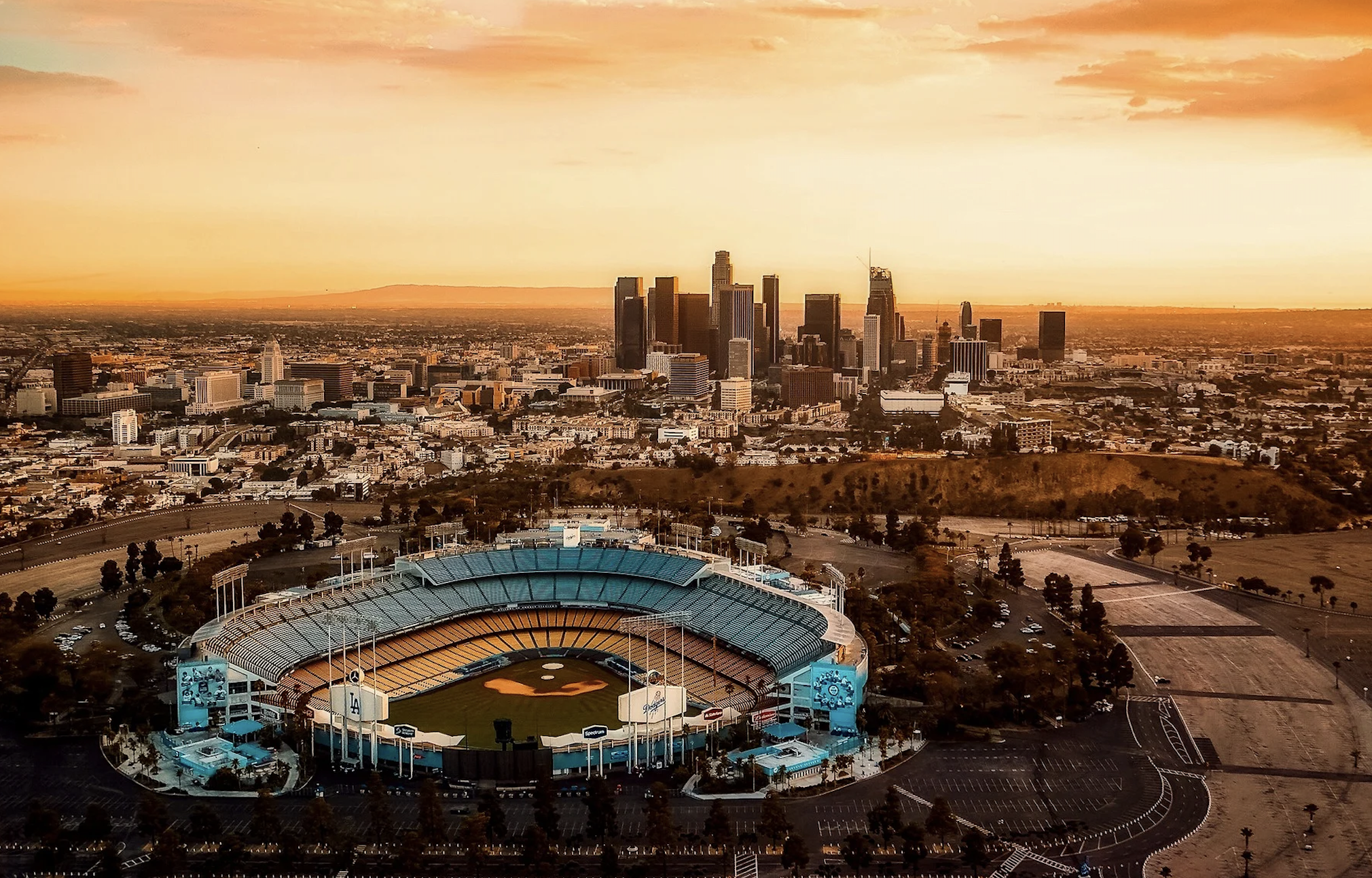
SoCal vibes meet America’s so-called favorite pastime at Dodger Stadium. Serving as home base for the Los Angeles Dodgers, it’s been an integral part of the MLB (Major Baseball League) scene since it opened in 1962. Built in the valley of Chavez Ravine and set against the backdrop of the San Gabriel Mountains, its scenic beauty complements the thrilling baseball action. 

On the field with the Dodgers at Dodger Stadium

Architect: Emil Praeger 

Fun fact: The concept for Dodger Stadium began to take shape in 1957, following the team’s relocation from Brooklyn, New York. Today, it holds the title as the oldest ballpark west of the Mississippi River and ranks as the third-oldest MLB ballpark, behind Boston’s Fenway Park and Chicago’s Wrigley Field. 

Nearby attractions: Reach for the stars at Griffith Observatory or visit historic Olvera Street, where you’ll find the colorful Mexican Marketplace. 

Exterior aerial shot of the round buildings of Estádio do Maracanã

Estádio do Maracanã

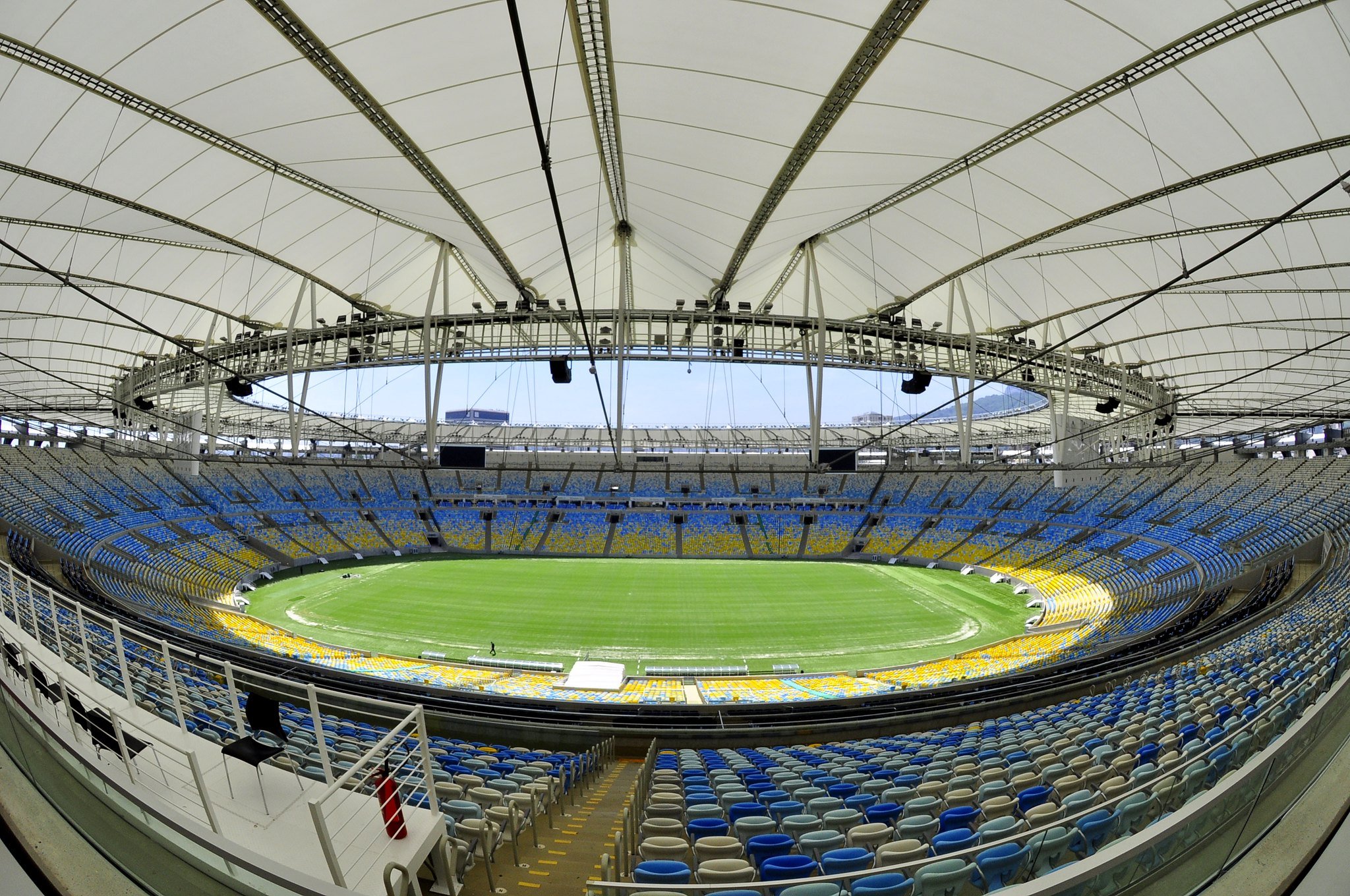
Constructed to serve as the main venue for the 1950 World Cup, Rio de Janeiro’s Maracanã Stadium embodies Brazil’s unwavering passion for football (known to us Americans as soccer). This stadium has borne witness to some of the sport’s most historic moments, including the legendary Brazilian footballer Pelé scoring his 1,000th career goal here in 1969. 

Estádio do Maracanã field and seating with donut-shaped roof covering

Architect: Rafael Galvão and Pedro Paulo B. Machado 

Fun fact: The World Cup final held at Maracanã still holds the record for the highest attendance, with a crowd estimated at over 199,000.

Nearby attractions: Take the cog train to the top of Corcovado Mountain to reach the awe-inspiring Christ the Redeemer statue or visit the white sand beaches of Ipanema.  

Exterior of Estadio Santiago Bernabéu

Estadio Santiago Bernabéu

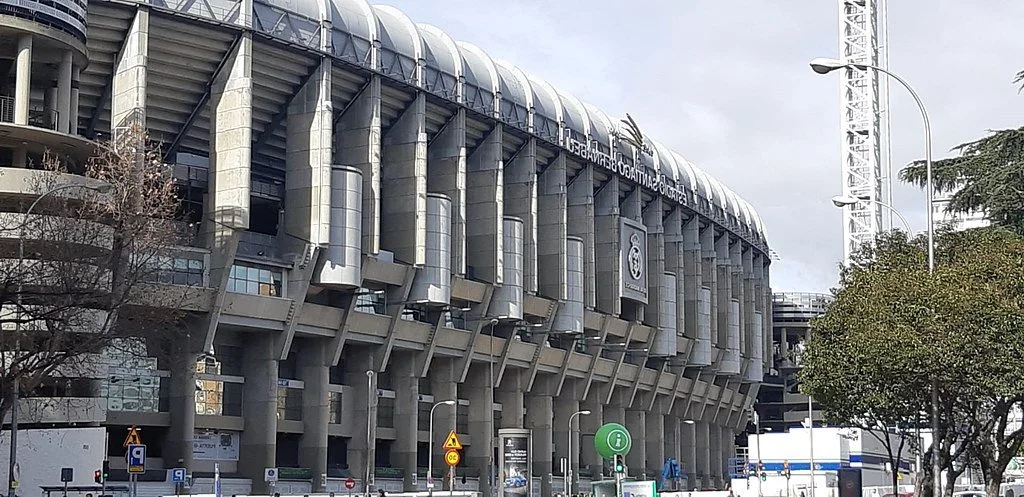
Madrid’s Estadio Santiago Bernabéu stands as a monument to football royalty. It has hosted the final match of the UEFA Champions League on four occasions (1957, 1969, 1980 and 2010) and is the home of the Galácticos: the world’s priciest players signed to play for Real Madrid. From David Beckham to Alfredo Di Stéfano to Cristiano Ronaldo, this stadium has borne witness to legends and epic clashes.

Architect: Manuel Muñoz and Luis Alemany Soler, with a revamp by L35, Ribas & Riba, and GMP Architekten

Fun fact: The Bernabéu has an unusual vertical design, making it one of the steepest stadiums in the world, helping ensure that every fan has a great view. 

Nearby attractions: For those seeking a cultural experience, Madrid beckons with its treasures, such as the Prado Museum and the Royal Palace.

Fenway Park

As home to the Boston Red Sox, Fenway Park proudly holds the title of being the oldest ballpark in Major League Baseball. It boasts a 37-foot-high (11 meters) left field wall affectionately known by locals as the Green Monster. (It was added a couple of years after opening to deter curious passersby from sneaking a glimpse.)

Boston Red Sox night game at Fenway Park

Architect: James McLaughlin

Fun fact: The lone red seat that sits among the green right field bleachers commemorates the longest home run in Fenway Park history, which was hit by Ted Williams on June 9, 1946. Legend holds that Williams spotted a fan taking a nap and decided to wake him up by launching a ball at him.

Nearby attractions: After the game’s over, you’ve got some great options for entertainment. You can explore Boston's historic Freedom Trail or head over to the lively Quincy Market. 

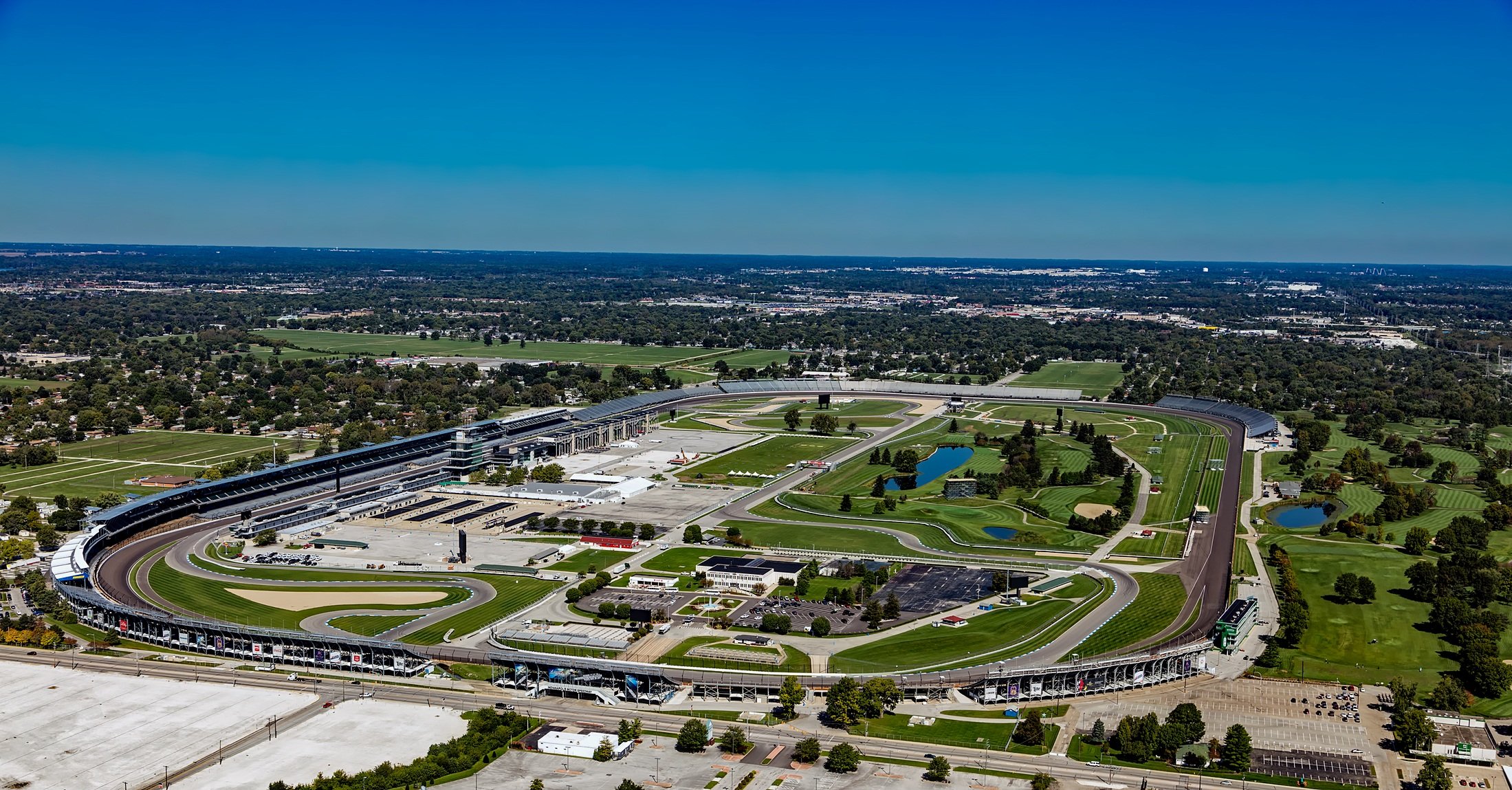
Aerial view of Indianapolis Motor Speedway

Indianapolis Motor Speedway

Racing enthusiasts know that there’s no place quite like the Indianapolis Motor Speedway in Indiana. The thrill, the speed and the history — it’s all there. Traditionally, the race is held over the last weekend of May and stands as one of the oldest and largest single-day sporting events in the world.

Racecars speed around Indianapolis Motor Speedway

Architect: Not attributed to a specific architect or firm

Fun fact: Originally, this race was called the 500-Mile Sweepstakes, but its name went through quite a few changes over time. The “500” stuck around, though. Drivers hit 500 miles by going 200 laps around the 2.5-mile oval.

Nearby attractions: The Indianapolis Motor Speedway Museum offers an in-depth exploration of racing history. You can also discover artworks along the 100-acre riverfront Virginia B. Fairbanks Art & Nature Park. 

Exterior of Madison Square Garden

Madison Square Garden

New York City’s Madison Square Garden has been the stage for some of the 20th century’s greatest athletes, from boxing legend Muhammad Ali to hockey great Mark Messier. Nicknamed the World’s Most Famous Arena, the venue has witnessed a bit of everything — from Marilyn Monroe singing “Happy Birthday” to President John F. Kennedy at the 1962 Democratic Party fundraising dinner to the excitement of Knicks basketball and Rangers hockey games.

Empty interior of Madison Square Garden

Architect: Stanford White, Cass Gilbert and Charles Luckman

Fun fact: Madison Square Garden has been rebuilt a total of four times since 1879. Its current iteration was designed by American architect Charles Luckman in 1968, whose firm also designed the Prudential Tower in Boston and the Forum in Inglewood, California.

Nearby attractions: Explore the High Line, a public park built on a historic elevated rail line and watch the sunset over Manhattan from the 86th floor of the Empire State Building. 

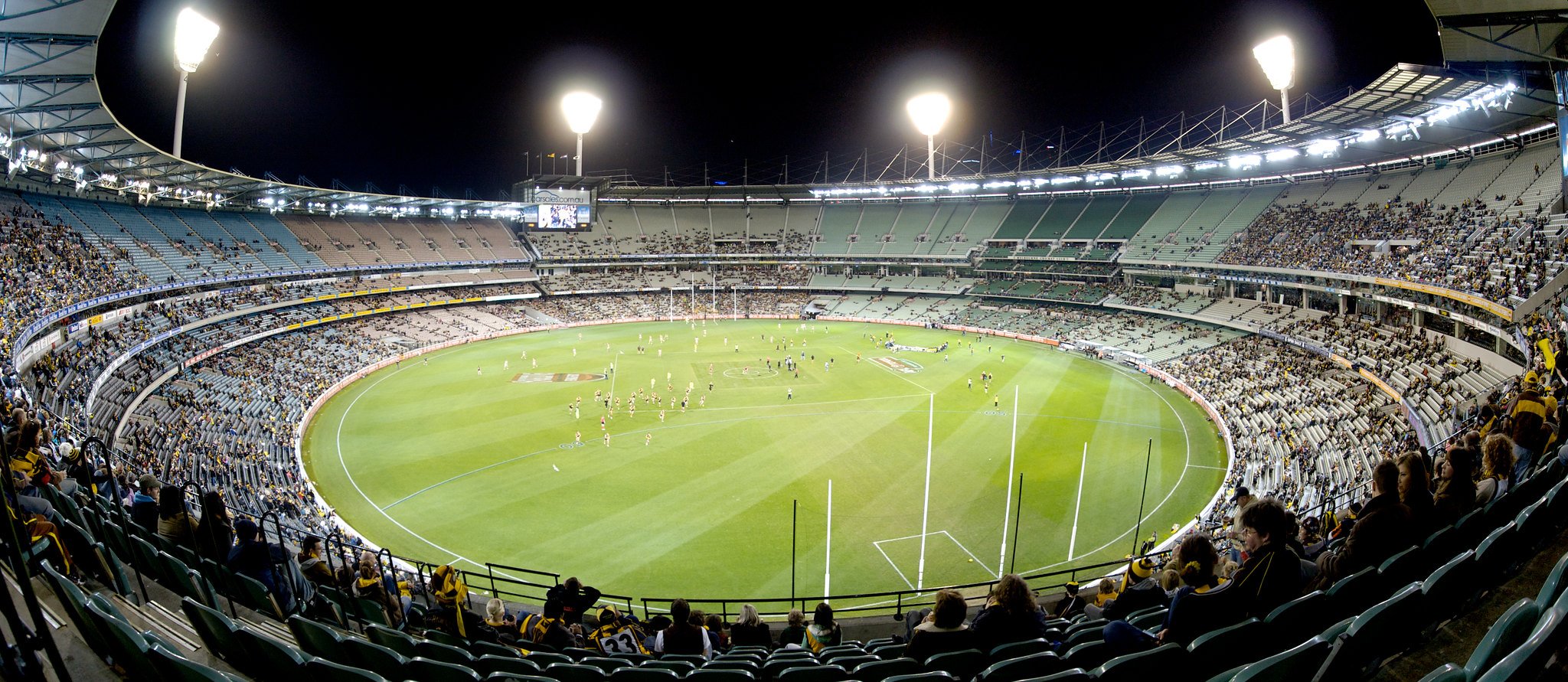
Looking down into Melbourne Cricket Ground

Melbourne Cricket Ground

Over in Australia, you’ve got the Melbourne Cricket Ground, or MCG to locals. This place is like the crown jewel of Aussie sports venues, and it’s a big deal, as it’s the largest in the Southern Hemisphere. It was built to satisfy the continent’s cricket craze, and it was here that the world’s first test cricket match took place, in 1877. Test cricket is like the granddaddy of the sport, lasting a full five days, where two national teams take turns batting and bowling. It was a faceoff between Australia and England, and in the end, Australia came out on top, winning by 45 runs. 

Empty green stands at Melbourne Cricket Club

Architect: Various (the stadium has undergone multiple renovations)

Fun fact: The MCG’s six light towers are 75 meters high, equivalent to a 22-story building and are the tallest of any sporting venue in the world.

Nearby attractions: Take a leisurely stroll along the Yarra River or visit the National Sports Museum for a comprehensive exploration of Australia’s sports legacy. 

Strange industrial facade of San Siro Stadium 

San Siro Stadium 

Italy’s San Siro is one of the most legendary venues for football (soccer). It’s officially named Stadio Giuseppe Meazza in memory of Milanese footballer Giuseppe Meazza and is home to both Inter and AC Milan, two top professional teams.

AC Milan was founded in 1899, and Inter Milan followed nine years later in 1908. Interestingly, Inter’s formation was a result of a disagreement within AC Milan’s ranks, particularly regarding the signing of foreign players. A fierce rivalry emerged, cranking up the already electrifying atmosphere of the annual Milan Derby, which, as you might have guessed, takes place at none other than San Siro.

Pitch and fans at open-air San Siro Stadium in Milan

Architect: Ulisse Stacchini and Alberto Cugini

Fun fact: In preparation for the 1990 World Cup, architects Giancarlo Ragazzi and Enrico Hoffer, along with engineer Leo Finzi, designed the addition of the stadium’s third tier, suspended by its 11 spring-like towers and crisscrossed red steel girders. These enhancements were aimed at boosting San Siro’s seating capacity. 

Nearby attractions: The Castello Sforzesco and the gorgeous Gothic-style Milan Cathedral, known as the Duomo, (the third largest church in the world) are situated in the heart of the city.

Exterior of SoFi Stadium in L.A. with water feature

SoFi Stadium

Home to the Los Angeles Rams and Chargers, this stadium sets the bar high with its innovative design and immersive state-of-the-art facilities. The 3.1-million-square-foot (288,000-square-meter) arena is the largest in the NFL. 

Field and empty seats at SoFi Stadium

Architect: HKS 

Fun fact: The stadium features the Oculus, an oval, double-sided infinity screen suspended 122 feet (37 meters) above the playing field. This massive display includes a 4K HDR video board and 27,000 embedded LED pucks capable of displaying images and videos in such high resolution that you can spot them from airplanes arriving at Los Angeles International Airport.

Nearby attractions: Take in a concert at the Kia Forum or grab a donut at Randy’s. The original shop features a massive 32-foot-tall donut on its roof, and has appeared in movies like Wayne’s World and Iron Man. 

Aerial of Stade Roland-Garros

Stade Roland-Garros

Paris is home to this mecca for clay court tennis. It’s the place where the French Open goes down every year. For two action-packed weeks, the best international players, including Björn Borg and Rafael Nadal, gather to battle it out on its challenging courts. And there are 17 of them, including the central Philippe-Chatrier court, which has a retractable roof to keep the game going when it rains.

Looking down at the court and stands at Stade Roland-Garros

Architect: Louis Faure-Dujarric 

Fun fact: The stadium features an open-air courtyard dedicated to France’s Four Musketeers, or les Quatre Mousquetaires. It’s a nod to a quartet of iconic French players: Jean Borotra, Jacques Brugnon, Henri Cochet and René Lacoste, who made their country proud in the tennis scene during the 1920s and ’30s. Lacoste even got his nickname “the Crocodile,” thanks to his big grin and iron grip on his racket. And guess what? He later went on to create the clothing brand famous for that embroidered crocodile logo.

Nearby attractions: The enchanting Bois de Boulogne park is right next door, and the Eiffel Tower is a short distance away.

Field and red seats at open-air Wembley Stadium

Wembley Stadium

Crossing over to the British Isles, Wembley Stadium in London is a pilgrimage site for football/soccer fans. The venue hosts major matches, including the home games of the England national football team and the Football Association Challenge Cup final as well as hosting concerts from bands like Green Day. 

Sir Robert McAlpine laid the foundation for the original, which was constructed for the British Empire Exhibition of 1924 and was quite a marvel, being the largest reinforced concrete building of its time. Its famous twin towers were symbols of the game and served as the backdrop for some of the most epic moments in football for over 75 years.

The new Wembley, designed nearly 16 years ago by Foster + Partners, is twice the size of the old one and comes with modern upgrades like a retractable roof for those unpredictable weather days and a soaring arch that’s taken over as the iconic replacement for the twin towers.

Absolutely packed Wembley Stadium while football game is played

Architect: Robert McAlpine, then Norman Foster

Fun fact: The Wembley Arch soars to a staggering height of 133 meters, equivalent to about 30 stories, and stretches 315 meters (over 1,000 feet), solidifying its status as the world’s longest single-span roof structure. It’s functional too, though: It bears the majority of the roof’s weight.

Nearby attractions: Located adjacent to the stadium, the London Designer Outlet (LDO) is a great place to get your shopping fix. Or you can spend a fun afternoon at the landmark Natural History Museum. They’ve got hands-on exhibits and even animatronic dinosaurs!

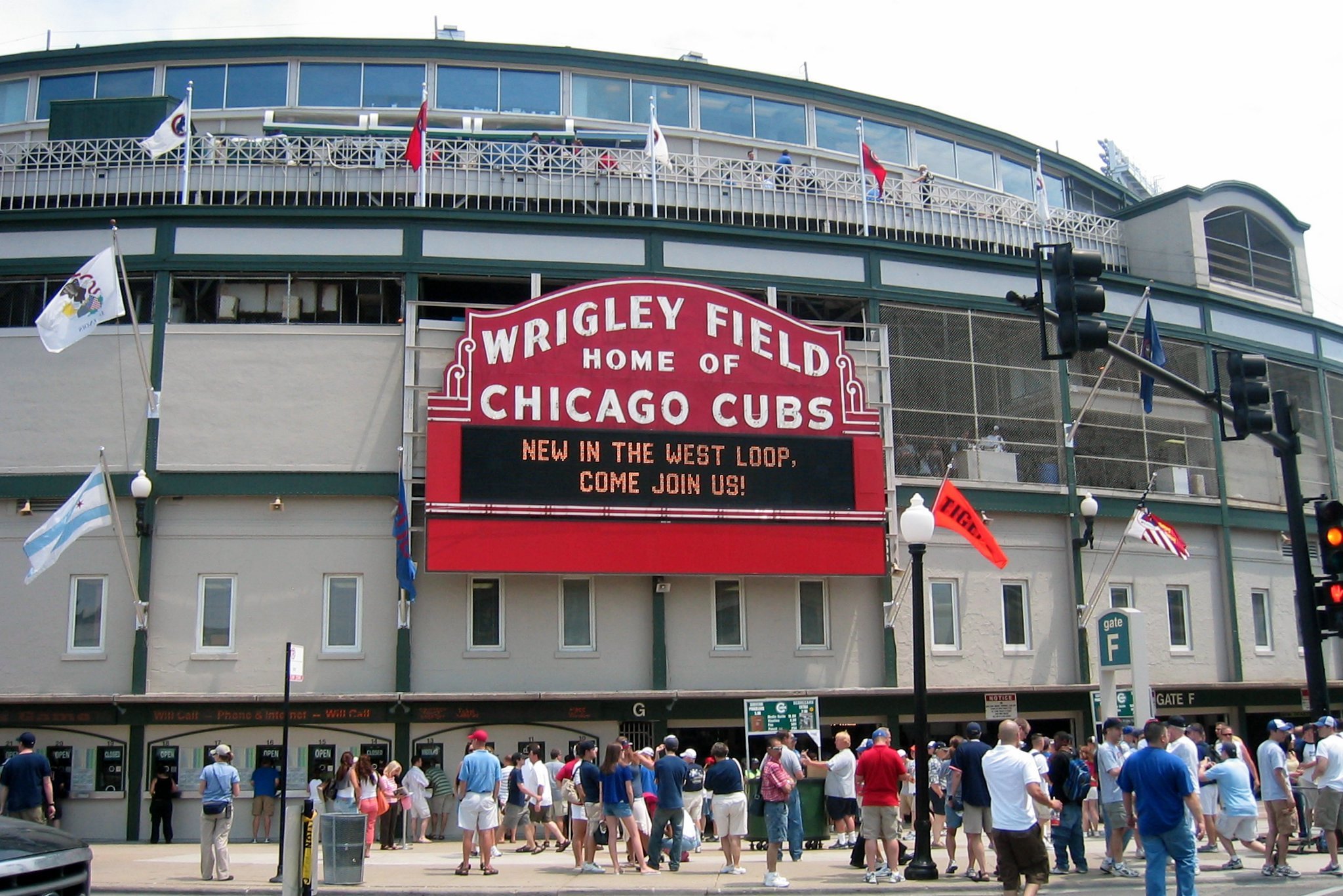
Fans mill about under historic Wrigley Field sign

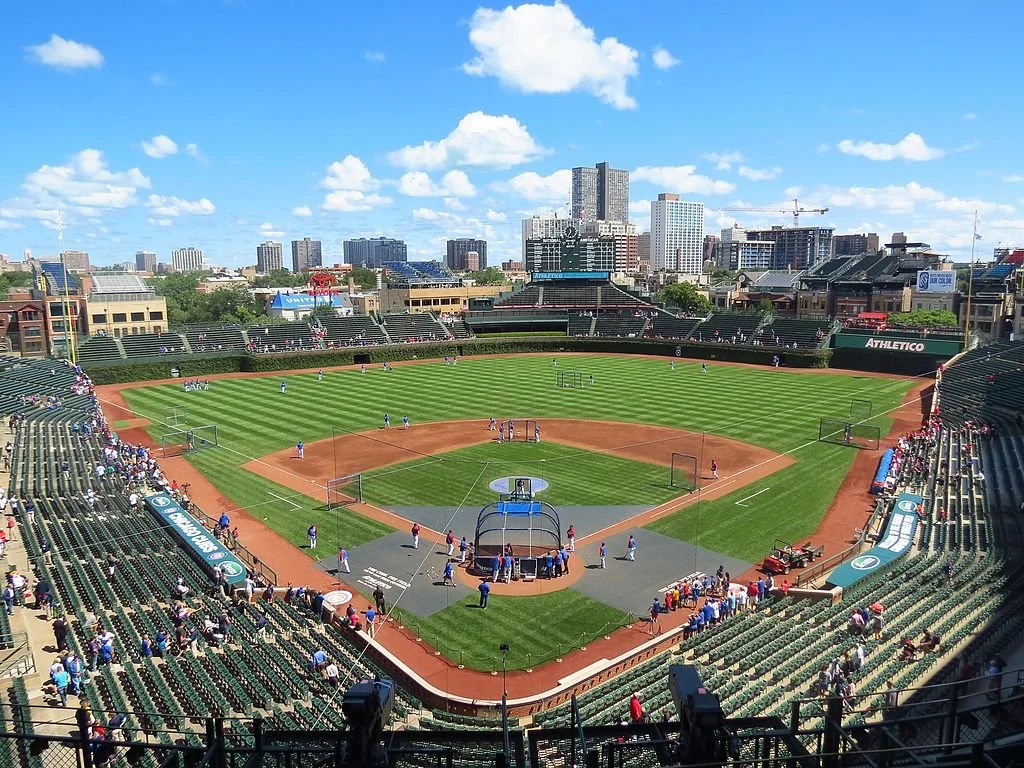
Wrigley Field

If you breeze into Chicago, aka the Windy City, you’ve got to stop by Wrigley Field, America’s second-oldest Major League ballpark. If we’re talking about a stadium that can rival Boston’s Green Monster, Wrigley’s ivy-covered outfield wall is a strong contender. It’s so iconic, it’s got its own set of rules: If a baseball disappears into its vines, the batter (and all runners) are granted two bases. However, to make it official, an outfielder must raise his hand to signal that the ball is lost in the ivy. If he doesn’t, it’s considered fair play. 

Looking down on Wrigley Field with building of Chicago in the background

Architect: Zachary Taylor Davis

Fun fact: The neighborhood stadium was one of the last Major League ballparks to install lights for night games, which didn’t happen until 1988. The tale of these floodlights dates back to the early 1940s, when plans were set in motion, but a pivotal twist occurred after the attack on Pearl Harbor. In a patriotic gesture, Philip K. Wrigley, owner of the Cubs, diverted 165 tons of steel to support the war effort instead of installing the lights.

Nearby attractions: After the game, you can wander the lively Wrigleyville neighborhood. And if you’re up for more adventure, don’t miss the chance to explore the city’s legendary architecture by taking a boat tour along the Chicago River. 

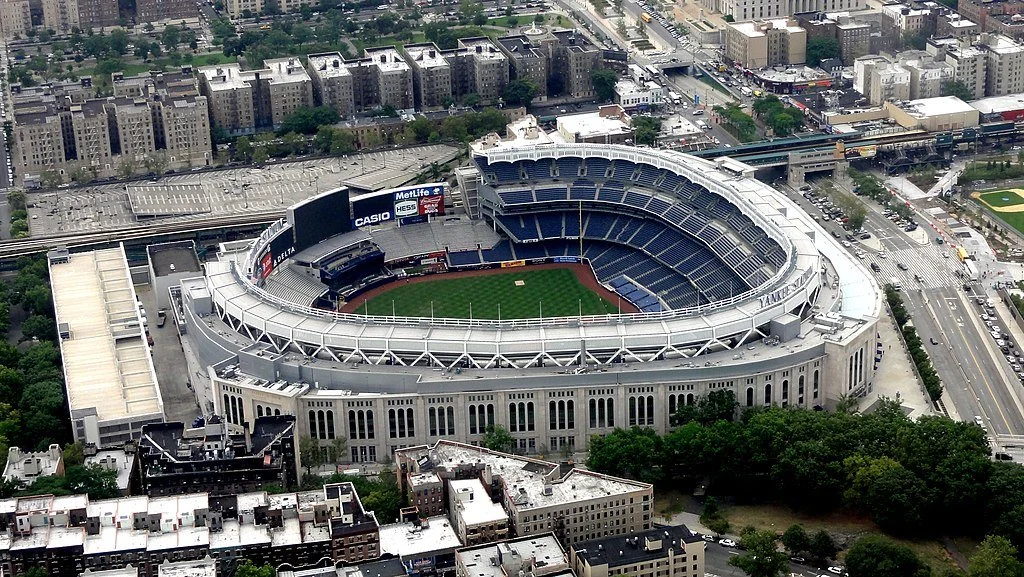
Aerial view of Yankee Stadium

Yankee Stadium

The original Yankee Stadium was a massive horseshoe-shaped ballpark and one of the most beloved structures in the history of baseball. Its field witnessed legendary players like Babe Ruth, Lou Gehrig, Joe DiMaggio and Mickey Mantle rounding its bases, to name just a few.

In 2009, the torch was passed to the new Yankee Stadium. Inspired by the 1923 Bronx Stadium, the modern four-story limestone and granite-faced ballpark even re-created the arched Art Deco metal frieze that crowned the upper deck of its illustrious predecessor.

Looking down at Yankee Stadium with seats packed as baseball game is played

Architect: Populous (formerly HOK Sport)

Fun fact: The Yankees’ impressive HD display is about 103 feet (30 meters) wide and 58 feet (18 meters) tall — six times larger than the screen at the old stadium. 

Nearby attractions: Check out the Bronx Museum of the Arts and explore the impressive Victorian-era greenhouses of the New York Botanical Garden.


These stadiums and sporting venues are more than just places to watch a game — they are monuments to athletic achievement and the human spirit. Within their walls and on their fields, records have been broken, underdogs have triumphed, and fans have bonded over the shared passions of competition and community. Though styles and designs may change with the times, the thrill of cheering for the home team endures. The legends, memories and traditions attached to these landmarks will continue to inspire athletes and fans for generations to come. Wherever you are in the world, paying a visit to one of these iconic sporting meccas is a must for any true sports lover. –Taylor Miller 

15 Best Articles of 2017

Our top blog posts cover the Paris Catacombs, India’s transsexual hijras, jinns, vintage Halloween, Fès hammans and more.


Duke and I tend to be drawn to the bizarre. We’re fans of the strange (chambers lined with skulls and bones, creepy vintage Halloween postcards and photos). We like to meet those who are societal outsiders (like India’s legal third sex, the hijra). We’re obsessed with the supernatural (jinns, gypsy love spells). But we also appreciate a good pampering (at a Fès hamman, say) and architectural beauties (such as the Milan Duomo).

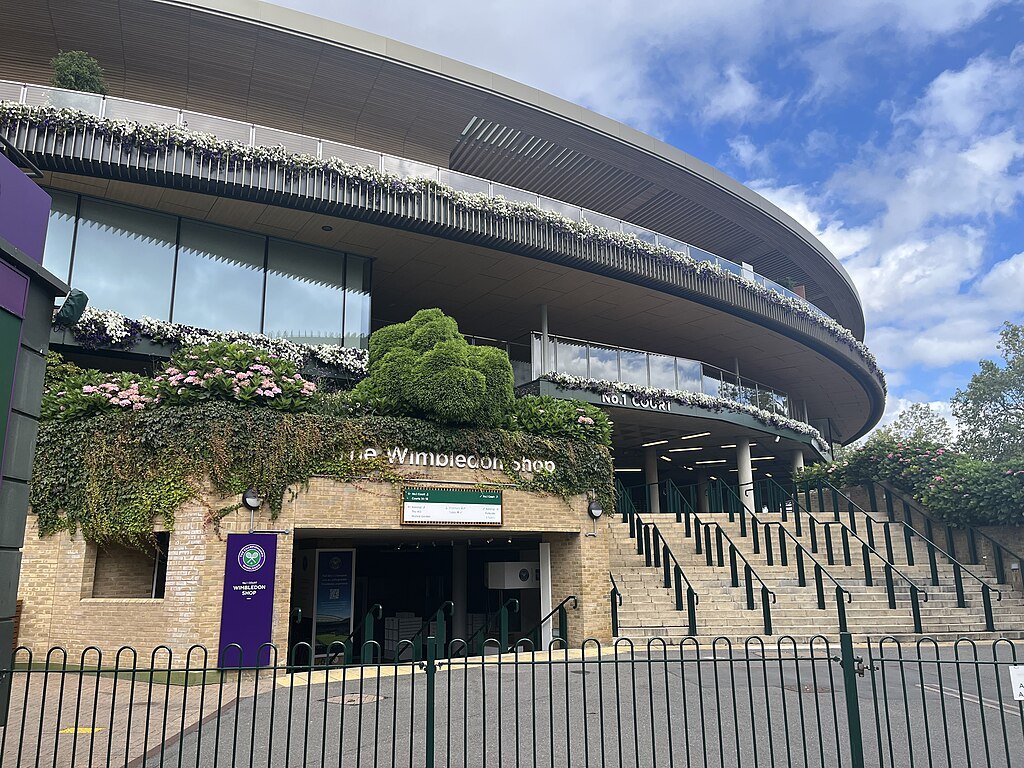
Seems like you do, too. Here are the top 15 blog posts from last year. What was your favorite? –Wally


catacombs1.jpg

1. GRUESOME FACTS (AND HELPFUL TIPS) ABOUT THE PARIS CATACOMBS

No bones about it: If you think piles of skulls and hallways formed of bones are pretty effin’ cool (like us), then the Catacombs of Paris are for you.


hijras.jpg

2. SECRETS OF THE HIJRA: INDIA’S LITTLE-KNOWN TRANSSEXUALS

Prostitution, curses and dangerous sex change operations are a way of life for this marginalized community.


blackmagic.jpg

3. HOW TO PROTECT YOURSELF FROM JINNS AND BLACK MAGIC

Black magic in Islam is a serious concern — and the holy writings offer numerous ways to negate magic jinn.


gardenoffivesenses.png

4. THE BEST PLACE TO MAKE OUT IN PUBLIC IN DELHI

Not a typical tourist stop, the Garden of Five Senses is a whimsical sculpture park worth visiting. It’s also popular with local couples escaping societal judgment against PDA.


vintagehalloween.jpg

5. 24 VINTAGE HALLOWEEN CARDS THAT ARE NOSTALGIC — BUT A BIT CREEPY, TOO

Halloween greetings from the past featured common Halloween symbols: the witch, black cat, jack-o’-lantern, ghost, devil — and one that has been forgotten.


creepyhalloween.jpg

6. 21 VINTAGE HALLOWEEN PHOTOS THAT ARE SO CREEPY THEY'LL GIVE YOU NIGHTMARES

Halloween costumes of the past were scary as hell.


bainsamani.jpg

7. WHAT’S THE BEST HAMMAM SPA EXPERIENCE IN FES, MOROCCO?

Reinvigorate yourself at the luxury hammam Les Bains Amani.


milanduomo.jpg

8. 7 FUN FACTS ABOUT THE MILAN CATHEDRAL

What to do in Milan, Italy? Visit the gorgeous Duomo di Milano, covered with statues of saints and gargoyles — and don’t miss the amazing view from the rooftop.


gypsydance.jpg

9. LOVE SPELLS FROM THE GYPSIES

How to cast a love spell to make someone fall in love with you — or fall out of love with you. Plus, secrets from the Roma that will reveal your future spouse!


pishtaco.png

10. THE PISHTACO OF PERU

Why one of the world’s creepiest vampire legends lingers to this day.


bluetemple.jpg

11. WAT RONG SUEA TEN, THE BLUE TEMPLE

No day trip to Chiang Rai is complete without a visit to this breathtaking wat, between the White Temple and Black Museum.


doha.jpg

12. THE BEST AND WORST PARTS OF LIVING IN QATAR

What’s it like living in a Muslim country that fasts for an entire month and limits the sale of booze? What do Qataris think of Americans? And how the heck do you pronounce Qatar?


brahmins.jpg

13. THE INDIAN CASTE SYSTEM EXPLAINED

Brahmin, Kshatriya, Vaishya, Shudra, untouchable: How did the caste system get started, what is the difference between castes — and how does this shameful practice persist to this day?


orthodoxstnick.jpg

14. HOW ST. NICHOLAS BECAME SANTA CLAUS

The surprising origins of jolly old St. Nick include a tie to prostitution, kids chopped into pieces, a devil named Krampus and a racist tradition around his helper Zwarte Pieter, or Black Peter.


fespottery.jpg

15. THE BEST SHOP FOR BLUE POTTERY IN THE ENTIRE FEZ MEDINA

If you’re shopping in Fès, just off of Place Seffarine is a small shop with a friendly owner and great deals.

7 Fun Facts About the Milan Cathedral

What to do in Milan, Italy? Visit the gorgeous Duomo di Milano, covered with statues of saints and gargoyles — and don’t miss the amazing view from the rooftop.

Somehow the Milan Duomo was even more beautiful in the rain.

If there’s one thing you absolutely have to include on a trip to Milan, Italy, it’s the massive Milan Cathedral. (Unless, of course, your tastes lean a bit more to the macabre, in which case, I recommend spending an afternoon wandering the impressive artistic grounds of the Cimitero Monumentale — see the photos here.)

Locally, the cathedral is known as the Duomo, which confused me since there’s no visible dome like the one in Florence. Its white exterior features delicate carvings so fine you could almost imagine they were made of lace. Despite its size, it feels a bit dainty — odd for a church in the Gothic style.

My favorite part of the Duomo is the part closest to Heaven: the rooftop, where you can look out at the bustling city beyond.

Holy moley! Here are 7 stunning facts about this breathtaking cathedral:

Delicate spires topped with religious figures are part of the elaborately decorated Duomo.

1. The Duomo is big. Like really, really big.

In fact, it’s the second-largest Catholic church in the world, behind only Saint Peter’s Basilica in Rome — which was built after the Duomo. Milan’s cathedral takes up an entire city block.

A carving of David slaying the giant Goliath. Somebody send that boy to juvie!

2. It boasts more statues than any other building in the world.

That’s what the tourist literature tells you, at least. And it’s hard to argue: The entirety of the façade is covered with carved architectural elements portraying flowers, fruits and fantastical beasts, including delightfully grotesque gargoyles. There are plenty of saints sprinkled throughout as well. Sources disagree on the exact number, but it seems to be over 3,300 statues total, including about 100 gargoyles and 135 spires.

Milan’s most popular attraction, the cathedral, took over 600 years to be built.

How can this Christian take a nap with all those wolves baying?

The best part of the Milan Cathedral is its expansive rooftop.

3. It has the best views in the city.

My favorite part of the Duomo is the part closest to Heaven. You can go up to the rooftop (accessible by stairs and an elevator) and look out at the bustling city beyond, as well as get closer views of the needle-like spires, each topped with a religious figure.

The terraza atop the Milan Duomo is a popular (and absolutely stunning) hangout spot.

There’s one main area of the roof, the terraza, and, indeed, I wasn’t the only one with the bright idea to go up there. Businessmen in suits, young kids playing games and canoodling couples filled the space. Imagine having a rooftop like this as one of your regular lunch spots.

Wally wandered around to the back of the roof and found a quiet spot to read in the sun.

I noticed a side walkway and set off on an exploration. The path wound its way around the roof, underneath the arches of flying buttresses. The crowd thinned out, until it was just me and the odd visitor. I found a secluded nook, got out my book and read for an hour or so in the sun, atop one of the largest churches in the world, utterly delighted.

4. One of the statues has gained fame and is part of a local legend.

The symbol of the city and patroness of the Milanese people, the gilded Madonnina (the Little Madonna), stands atop the main spire of the cathedral. The tallest of all of the many statues on the cathedral, the open-armed Madonna rises 354 feet high. Built in 1774, tradition holds that it must be the tallest man-made object in Milan. So, when a modern building surpassed this height, a replica of la Madonnina was placed atop it.

During World War II, the Madonnina was covered with a cloth for five years to avoid providing an easy target for fighter-bombers.

The Duomo is gorgeous at night as well.

5. The construction of the Duomo took over six centuries.

Archbishop Antonio da Saluzzo, supported in the endeavor by the Lord of Milan, Gian Galeazzo Visconti, began building the cathedral in 1386. At least 78 different architects from around Europe were invited to work on the structure, and construction dragged on. By 1418, they had decided it was time to consecrate the cathedral, even though only the nave was actually finished at the time.

For the next two centuries, construction continued, but politics, lack of funding and local frustration with a massive, seemingly endless project smack-dab in the middle of the city kept causing delays.

Napoleon helped finally wrap up construction of the Duomo’s façade — so he could be crowned King of Italy in the cathedral.

6. Napoleon played an important role in the Duomo’s construction.

How did the façade finally get finished? This was accomplished by none other than Napoleon Bonaparte, in the early 1800s, after he had conquered the city. He wanted to be crowned King of Italy in the Duomo and wanted the exterior completed beforehand. A generous (if vain) guy, he offered to pay all expenses — after a talk with the French treasurer. Seven years later, the façade was completed, and the ceremony took place as the diminutive leader wanted. This explains why there’s a statue of Napoleon atop one of the many spires.

Milan’s Navigli District is a restaurant and art hotspot.

Milan’s Navigli District is a restaurant and art hotspot.

7. The Duomo’s construction is responsible for the navigli, the city’s canal system.

The cathedral’s edifice is made of Candoglia marble from Lake Maggiore to the north of Milan. To transport it from the quarries, canals were constructed, some of which remain to this day. In fact, the Navigli District is quite a hotspot, known for its restaurants and art galleries. –Wally
 

The Strange History of Valentine’s Day

From Lupercalia, where young men whipped eager women in the streets of ancient Rome, to St. Valentine’s secret weddings.

Valentine's Day wasn't always about cupids and hearts — or even love.

Valentine’s Day is much more than just conversation hearts, boxes of chocolates, flowers and cards. There are some downright outlandish origins to this holiday.

After the flagellation ceremony, men would draw women’s names from an urn — and that would be their sexual partner for the year.

Valentine’s Day dates back to a couple of Roman festivals.

The Romans celebrated two ritual festivals that formed the foundation for the holiday we know as Valentine’s Day. Februalia was a purification rite, which occurred on February 14 and gave the month of February its name. It was later combined with Lupercalia, which took place on February 15.

Valentine’s Day as we know it began with an unusual Roman fertility rite.

The crazed men, nude save for a goatskin loincloth, would take the hides of slain animals cut into strips and flagellate the women of the village in hopes of bestowing fertility.

This someecard points out just how strange Lupercalia was.

Lupercalia involved some bizarre practices, including beating women with animal pelts.

For this affair, young Roman men would congregate in the Lupercal, the sacred cave in the mountains where Romulus and Remus, the twins who suckled the she-wolf Lupa, were supposedly reared. Romulus would later found Rome and sacrifice Remus, but that’s another story.

The Luperci, the Brotherhood of the Wolf, would sacrifice a dog for purity and a goat for fertility.

Ancient Romans believed being whipped by blood-soaked animal skins would help you get knocked up.

The crazed men, nude save for a goatskin loincloth, would take the hides of the slain animals that had been cut into strips and flagellate the women of the village in hopes of bestowing fertility.


Saint Valentine has become the patron saint of love.

Valentine was also the patron saint of epileptics.

Saint Valentine performed secret marriages when the institution was outlawed.

In this painting by David Teniers III, Valentine receives a rosary from the Virgin Mary.

During the 3rd century CE, Roman Emperor Claudius II, wanting to increase the size and strength of his military empire, saw marriage as an obstacle. He believed that men were unwilling to fight due to their strong attachment to their wives and families. In an effort to circumvent this, he forbade all future marriages and engagements.

Whether Valentine was a bishop or priest has been lost to history, but he began performing clandestine ceremonies. He was soon discovered and imprisoned for his betrayal.

His legend is associated with having sent a note to his jailer’s daughter on the eve of his execution, signed, “From Your Valentine.” No historical evidence exists to back the authenticity of this story, though.

Valentine was beheaded, died a martyr and in death was elevated to the patron saint of love.

The skull of Saint Valentine resides in the Basilica of Santa Maria in Cosmedin in Rome, Italy.

Pope Gelasius I used an ingenious sleight of hand, merging the pagan Lupercalia with the feast of Saint Valentine into a single holiday celebrated on February 14.


The Cadbury boys found a way to extract a delicious byproduct of cocoa — what we know know and love as chocolate.

Cadbury created the first chocolate candies — and the first heart-shaped box of chocolates.

One of the first heart-shaped box of chocolates

In 1824, John Cadbury, an English proprietor and founder of the Cadbury candy empire, opened a tea and coffee shop in Bournville, Birmingham, England. His shop also sold drinking chocolate, which he prepared using a mortar and pestle. This was a luxury item even among the upper class. The resulting beverage was coarse and grainy but popular.

A vintage ad for Cadbury chocolate

Cadbury’s sons Richard and George visited the Van Houten factory in Amsterdam, the Netherlands, which specialized in the manufacture of cocoa powder. The brothers integrated this method into their manufacturing facility. The process allowed them to extract pure cocoa butter from pressing cocoa beans and adding sugar, reducing its bitter taste. Cadbury used this byproduct to produce several varieties of “eating chocolates.”

The retail division of the business was passed on to Richard in 1861, who recognized a great marketing opportunity and revolutionized sales by packaging Cadbury chocolates in the world’s first heart-shaped box for Valentine’s Day. The box could be kept and used to store mementos after the chocolates had been eaten.


Victorians began the tradition of sending valentines — some of which were downright cruel.

Do you remember making a mailbox to hold your cards and exchanging valentines with your classmates in elementary school, or perhaps receiving a pink or red carnation in high school? I did accrue a fair amount of cards through my formative years, though I do remember wishing I would get a carnation from a secret admirer.

Valentines pre-date Hallmark and were the preferred token to celebrate romantic love by the prudish 19th century Victorians in England. The first mass-market cards were introduced then, and the penny post made it possible to send them easily and inexpensively.

Plus, you could send notes anonymously, something the Victorians prized. This allowed them not only to exchange serious or humorous cards but downright mean-spirited ones as well, aptly called vinegar valentines.

“Senders would use the anonymity of the card to comment on the inappropriate behavior of a couple or the distasteful political views of a feminist friend,” Slate writes. “Women seemed to be the targets of many of the surviving examples, but balding men, pretentious artists and poets, and smelly fat guys made appearances as well.”

So the next time you send a valentine to a loved one, think about how whipped women, a beheaded saint and mean, anonymous cards are all part of this holiday. –Duke