ghosts

The Enchanting and Perilous World of the Fae

Explore the hidden world of fairies — from pixies and brownies to elves and gnomes. Discover why these mysterious beings captivate imaginations … and what secrets lie just beyond the mortal realm.

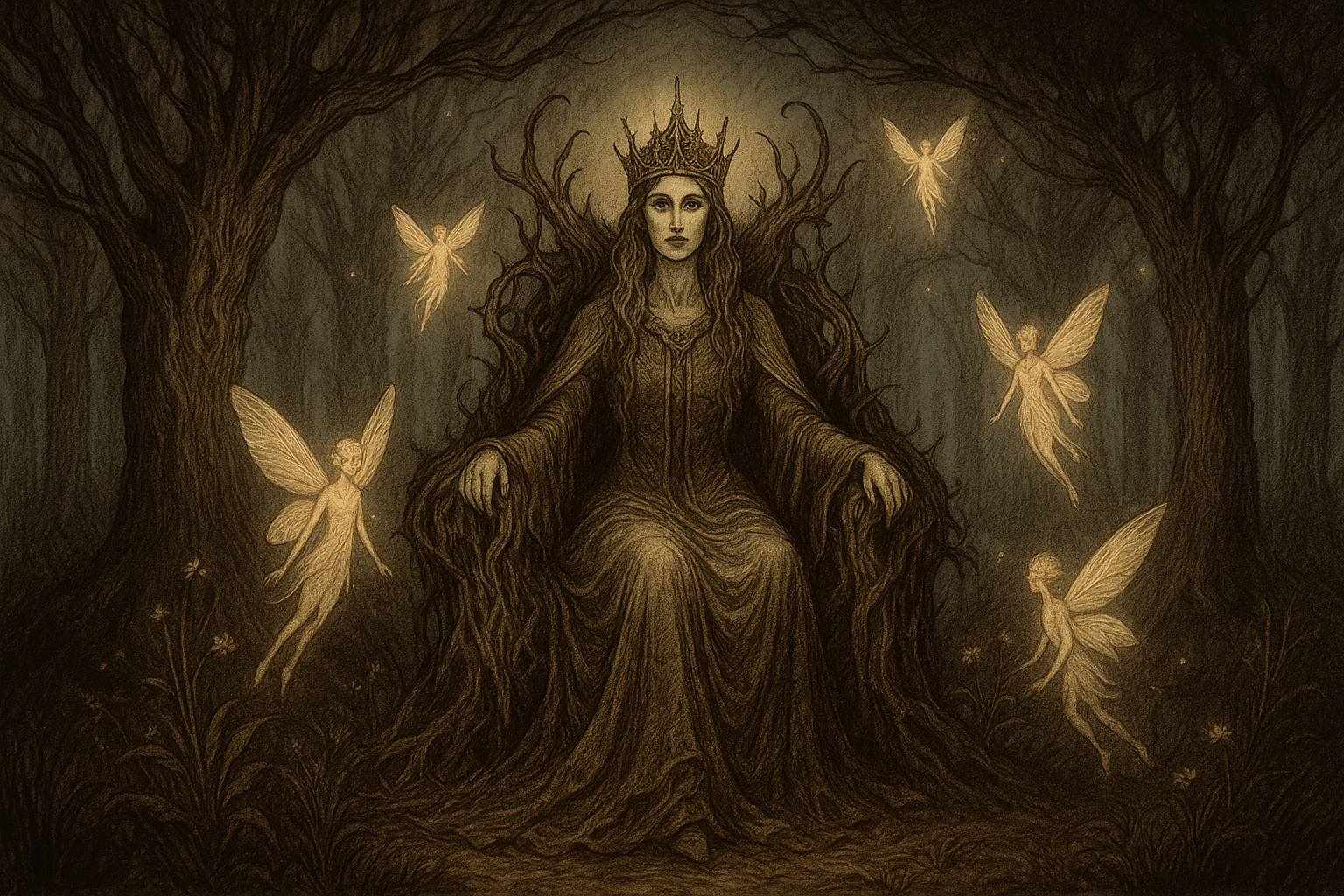
The Fae queen of the Seelie Court sits on her wooden throne, while smaller glowing fairies fly around her

The Seelie Queen on her thornwood throne

There are places in this world where the veil between realms grows thin: a lonely stretch of moorland, a glade deep in the woods, a ring of mushrooms. 

But beware, for the Fae are not the charming, glitter-winged sprites of modern fairy tales. They’re older than memory, creatures of wild magic, bound to no human morality. They can bless you with impossible luck or curse you with misfortune that lingers for generations. Some are beautiful beyond compare — slender and radiant, with eyes like moonlit pools. Others are twisted things, hunched and sharp-toothed, watching from the shadows.

To stumble upon the Fae is to risk losing yourself. Accept their gifts, and you may find they come at a terrible price. Eat their food, and you may never leave their world. Speak too freely, and they may steal your name, your shadow or your very soul. And if you are very unlucky or unwise — if the music lures you in, if the golden-haired stranger takes your hand — you may wake to find a hundred years have passed while you danced, and everyone you once knew is dust.

Yet still, we seek them out. We leave out offerings of milk and honey at Beltane, Litha and Samhain, whisper our wishes into the wind, and step just a little too close to the edge of the veil, hoping for a glimpse of something otherworldly.

Across the globe, countless myths and legends speak of these elusive beings, each culture shaping its own version of the Fae. Some are noble, some monstrous, some little more than a trick of the light. But one truth remains: The Fae are watching. And if you’re not careful, they may just take notice of you.

Small fairylike sprites fly under the light of a full moon in a forest with toadstools

Fairy Folklore Around the World

In different cultures, stories of the Fae take many forms — some enchanting, some terrifying, all captivating. Whether they’re the luminous Sidhe of Ireland, the cunning yōkai of Japan, or the water-dwelling rusalki of Slavic lore, fairies defy easy categorization. They’re both protectors and tricksters, wise beings and dangerous predators, granting favors with one hand and snatching them away with the other.

Let’s step into the shadowy glens and moonlit crossroads where the Fae linger, exploring how different cultures have imagined these otherworldly creatures — and where you might still find traces of them today.

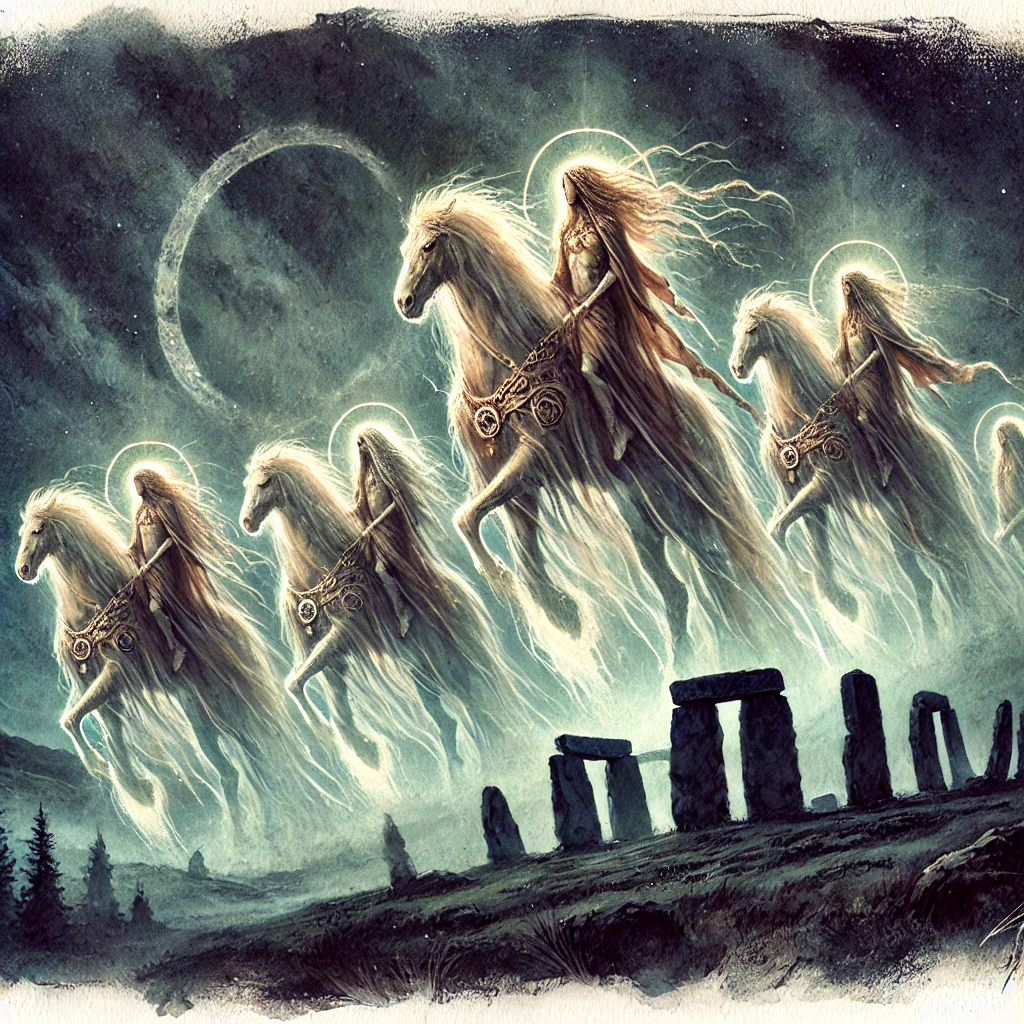
The Tuatha Dé Danann, or Sidhe, ride their spectral horses above Stonehenge

The Tuatha Dé Danann, or Sidhe, riding their spectral horses

The Tuatha Dé Danann and Irish Fairies

Beneath the rolling green hills of Ireland, hidden within ancient mounds and hollowed-out trees, dwell the Sidhe (pronounced “Shee”), the Shining Ones. These are no fluttering pixies, but tall, radiant beings, their beauty almost painful to behold. Clad in shimmering garments, their eyes hold the weight of centuries, and their voices carry the echoes of forgotten songs.

The Tuatha Dé Danann, Ireland’s old gods, were said to have retreated into the earth after their defeat, becoming the Sidhe of legend. They ride out on spectral horses, sweeping mortals away in a fever dream of music and revelry. Some who enter their world return, forever changed; others vanish without a trace.

Not all Irish fairies are so regal. The púca, a shapeshifter, appears as a sleek black horse with burning eyes, a rabbit, or even a goblin-like creature with long fingers and an unsettling grin. 

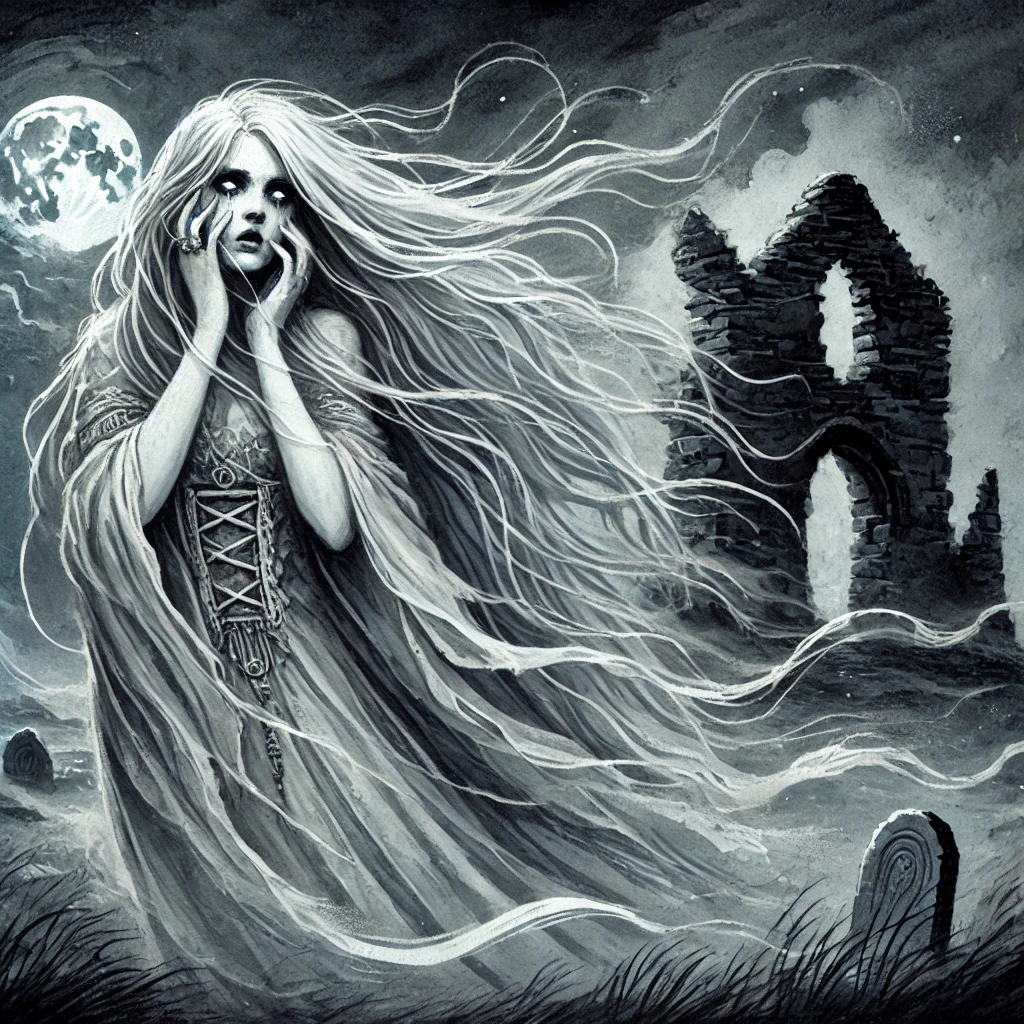
The banshee, with her silver hair and wailing cries, is a harbinger of death, while changelings — sickly, eerie children left in place of stolen human babies — are a reminder of the Fae’s more sinister tendencies.

A banshee with long flowing hair clutches her face at night by a ruined church and graveyard

A banshee’s wail means someone you love is about to die.

Irish Fae in Popular Tales

  • The Stolen Child by W.B. Yeats captures the allure of the fairies, calling children away to a land of “waters and the wild.”

  • In The Call by Peadar Ó Guilín, modern teenagers are abducted into the Grey Land of the Sidhe, where they must survive deadly hunts.

  • Jonathan Strange & Mr Norrell by Susanna Clarke presents a version of the Fae as manipulative and powerful, with the Gentleman with the Thistledown Hair embodying their eerie and unpredictable nature.

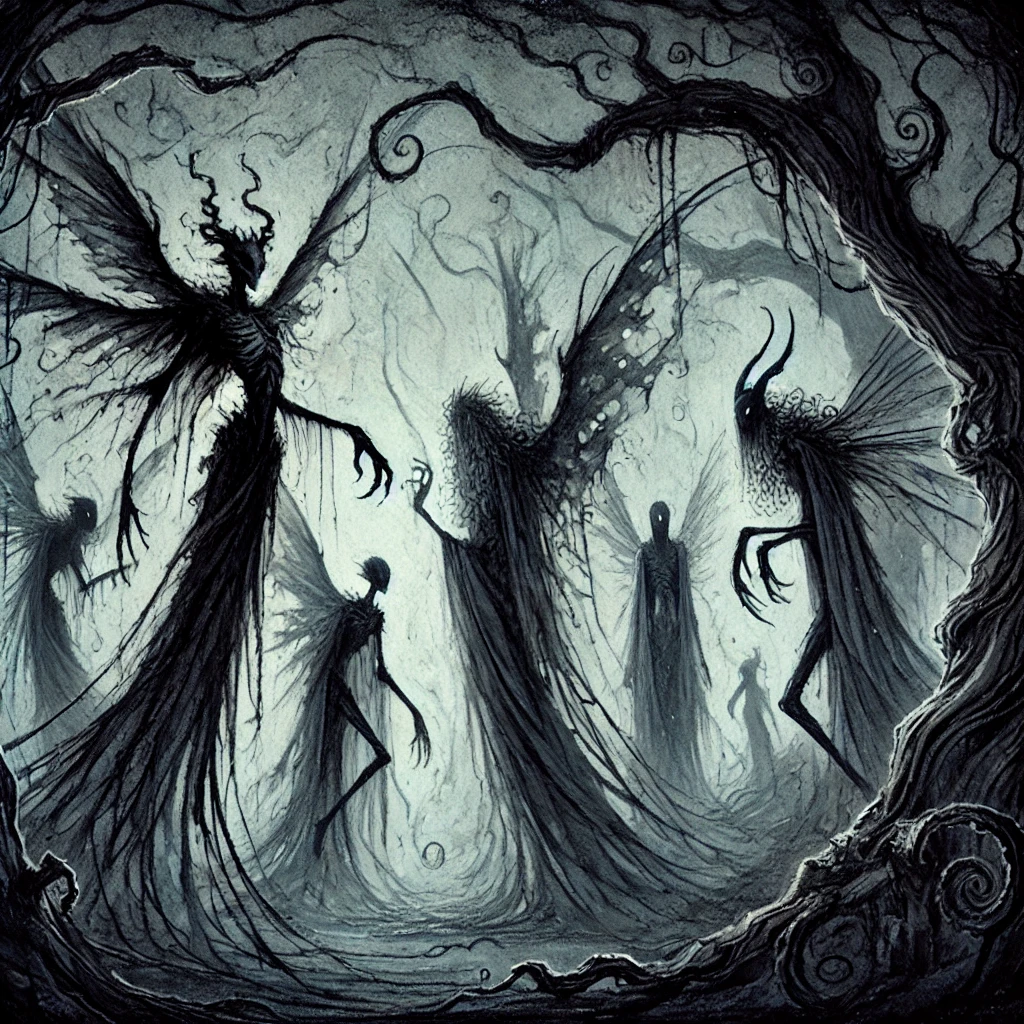
Dark, horned, spectral Fae in the woods of the Unseelie Court

The Unseelie Court is home to the more malevolent fairy folk.

Scottish Fairy Lore and the Seelie and Unseelie Courts

In Scotland, the fairy realm is split into two factions: the Seelie Court, filled with fairies who are mischievous but not entirely malevolent, and the Unseelie Court, where malevolence runs rampant.

Seelie fairies might grant favors to those who respect them, though their “gifts” often have unintended consequences. The Unseelie, however, are another matter entirely. These fairies lurk at crossroads and lonely moors, hunting in packs and carrying off travelers who wander too close to their domain.

Among them are the redcaps, murderous goblins that dwell in ruined towers, their caps stained with the blood of their victims. 

The kelpies, sleek black water-horses, lure riders onto their backs before dragging them into the depths. 

And the brownies, small, shaggy-haired house spirits, help with household chores — so long as they are respected and well fed.

A shaggy-haired brownie sweeps its home by a fire in the stove

A helpful brownie

Scottish Fae in Popular Tales

  • Tam Lin, a classic Scottish ballad, tells of a mortal man, stolen away by the Fairy Queen, who can only be rescued through a terrifying midnight ritual.

  • In The Falconer by Elizabeth May, Scottish fairies are reimagined as deadly creatures warring against humans.

  • The Unseelie Court’s dangerous and dark magic is woven into Holly Black’s The Cruel Prince series, where the Fae are as beautiful as they are treacherous.

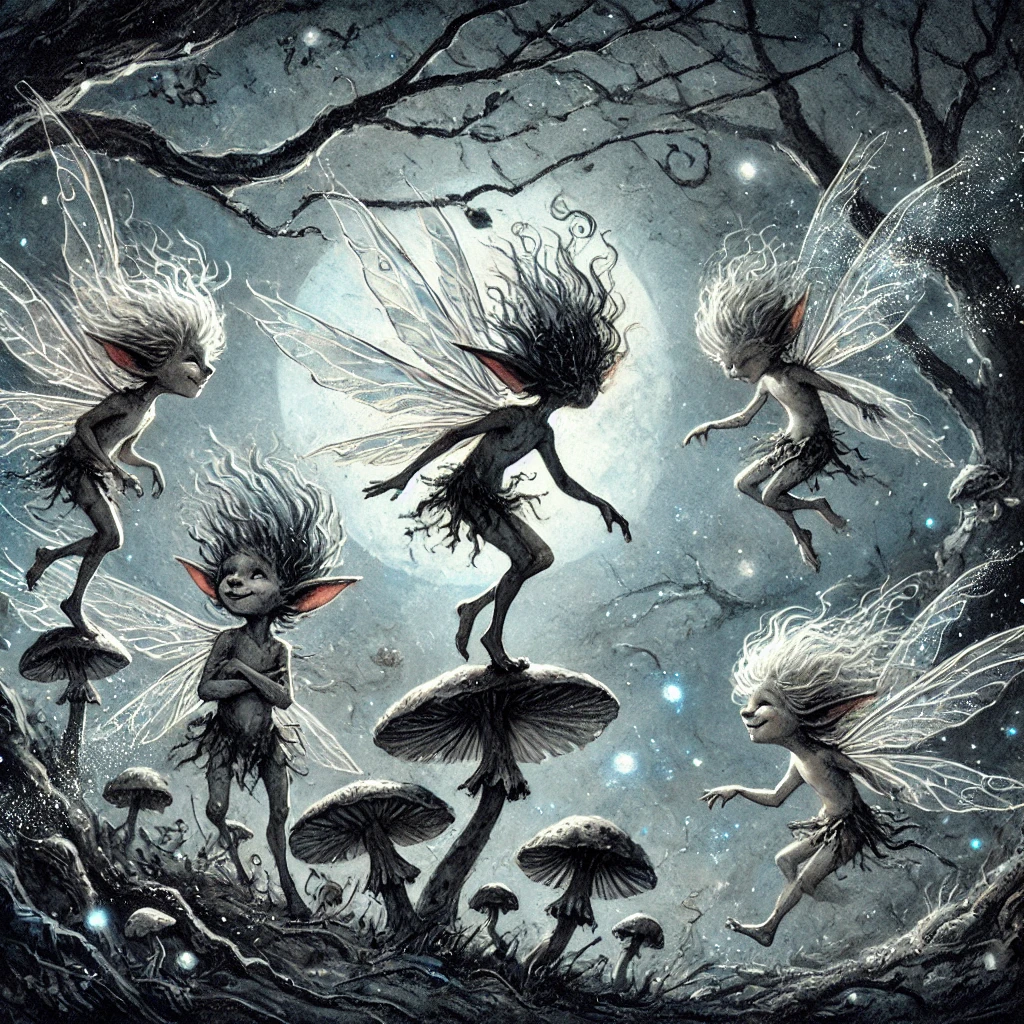
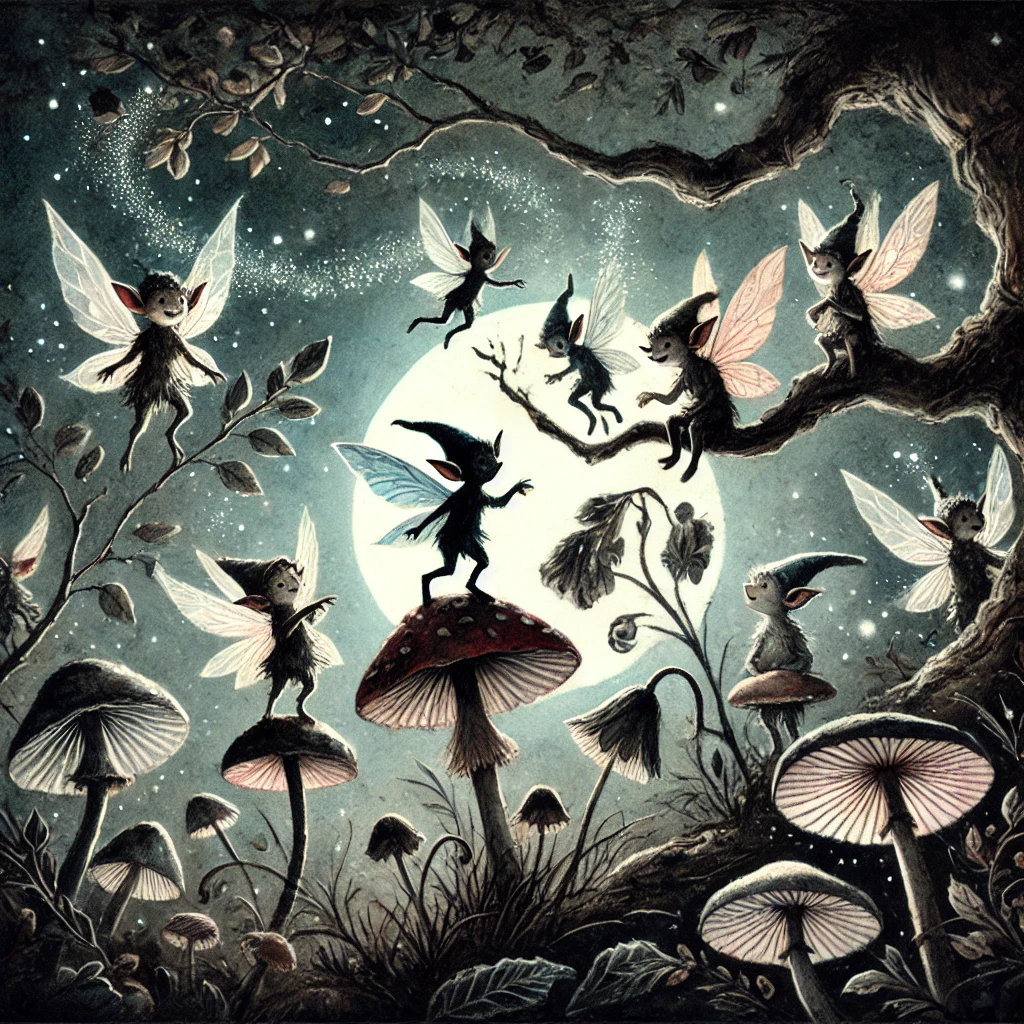
Pixies fly merrily by mushrooms and trees on a night with a full moon

A plague of pesky pixies

English and Welsh Fairies: Tricksters, Ghosts and the Wild Hunt

In the misty forests and moors of England and Wales, the fairy folk take on many forms — some charming, some terrifying, all deeply tied to the land.

The pixies of Devon and Cornwall are small, impish creatures with pointed ears and mischievous grins, known for leading travelers astray with will-o’-the-wisps or tangling horses’ manes into fairy knots. Unlike their Irish or Scottish counterparts, they’re more playful than malicious, though they can still cause trouble if insulted. 

But the Fae of England aren’t all harmless. The Wild Hunt, a spectral procession of ghostly riders led by a dark figure — sometimes the Devil himself, sometimes the mythic Herne the Hunter — thunders across the sky, sweeping up any mortal unlucky enough to cross its path. 

Meanwhile, the Green Children of Woolpit, a medieval legend, tell of two strange, green-skinned kids who appeared in a village, speaking an unknown language and claiming to be from an underground world. Were they lost fairies?

Even the land itself is said to be enchanted. The Fairy Paths, invisible roads used by the Fae, must never be obstructed by buildings, or bad luck will follow. 

The Fairy Godmothers of later fairy tales may have originated from old beliefs in household fairies, protective spirits who could bestow gifts or curses on infants.

British Fae in Popular Tales

  • Susanna Clarke’s The Ladies of Grace Adieu reimagines English fairy lore with eerie and elegant storytelling.

  • Terry Pratchett’s Lords and Ladies features fairies that are predatory and cruel, a nod to their older, darker origins.

  • The legend of the Wild Hunt plays a major role in Katherine Arden’s The Winter of the Witch and Hellboy comics. 

  • Pixies show up in the Harry Potter series and the game Harry Potter: Wizards Unite

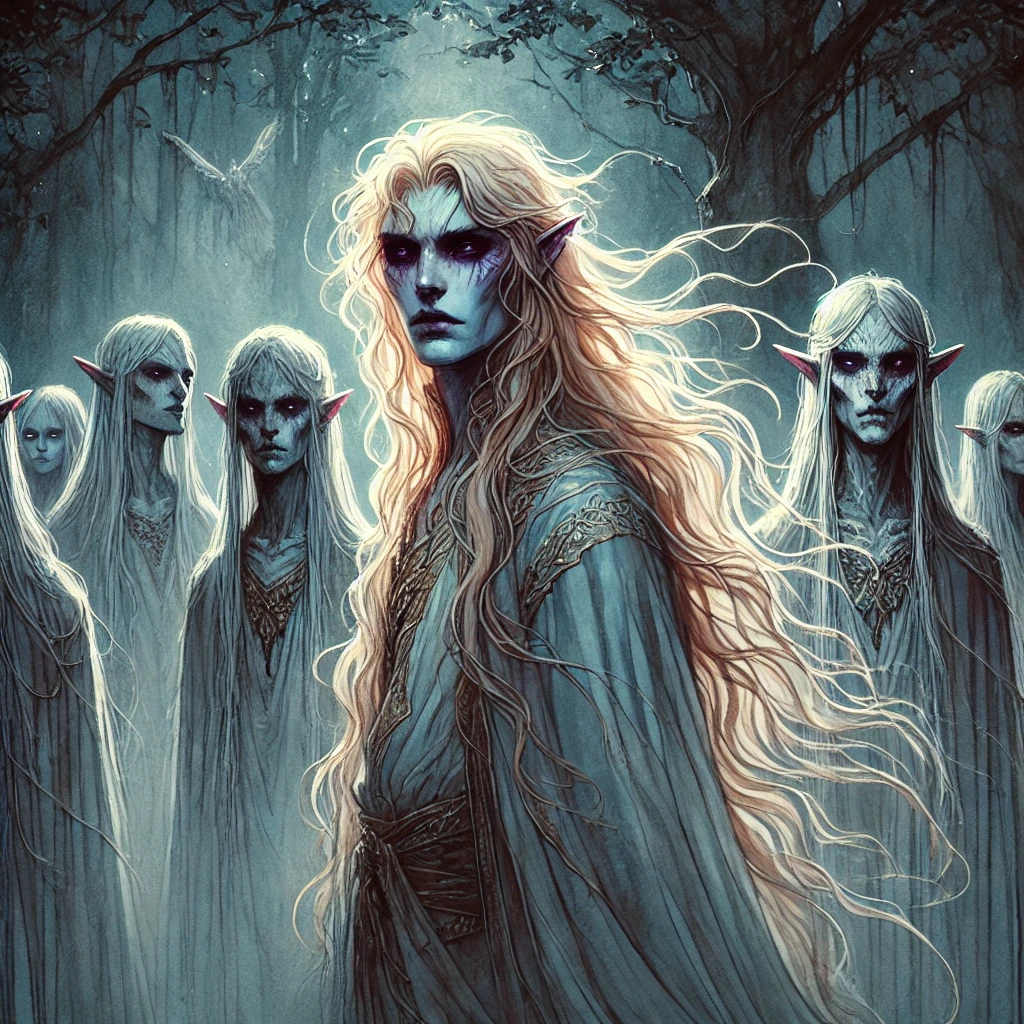
A group of Álfar, tall, thin elves with long light hair and pointed ears

The Álfar, tall, luminous, godlike entities, influenced the elves of Tolkien and D&D.

Norse and Germanic Fairies: Elves, Forest Spirits and the Nachtmahr

Long before fairies flitted through English gardens, the Norse and Germanic peoples told of the Álfar, or elves: tall, eerily beautiful beings who lived in hidden places and wielded great magic. Unlike later fairies, these elves were closer to minor gods, capable of both great kindness and great wrath. In some sagas, they were luminous, golden-haired beings; in others, they were pale and unsettling, dwelling in mist-shrouded groves and demanding offerings.

But not all the hidden folk were so noble. The nachtmahr, a twisted shadow spirit, crept into homes at night, sitting on the chests of sleepers and filling their dreams with terror; our word nightmare comes from this legend. 

The erlking, a malevolent woodland fairy, lured children to their doom with whispered promises, immortalized in Goethe’s haunting poem.

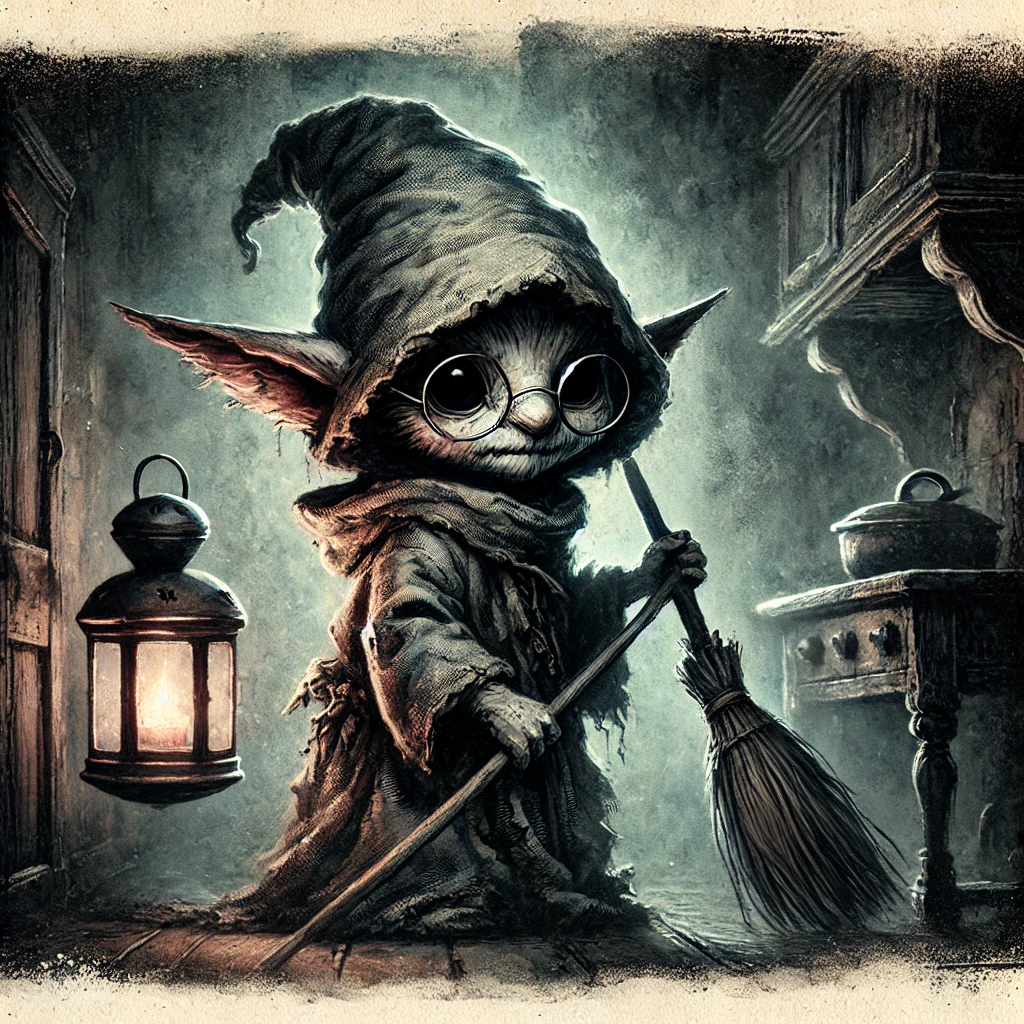
Then there were the kobolds, household spirits that could be either helpful or destructive. Resembling small, gnome-like figures, they lived in homes and ships, protecting the inhabitants if treated well, but turning mischievous or even vengeful if neglected. Some German miners believed kobolds lived in the mines, warning workers of cave-ins — or causing them.

A small kobold dressed in rags, a pointed hat and round glasses, holding a broom in his small home while a lantern floats next to him

The helpful kobolds of folklore and much different from the lizard-like monsters from D&D.

Norse and German Fae in Popular Tales

  • The erlking appears in literature from Goethe’s poetry to Jim Butcher’s Dresden Files, always as a chillingly powerful figure.

  • Tolkien’s elves, with their captivating beauty and ancient wisdom, owe much to Norse and Germanic fairy lore.

  • Neil Gaiman’s Norse Mythology explores the strange, otherworldly side of the Álfar. (Learn more about the Norse gods.)

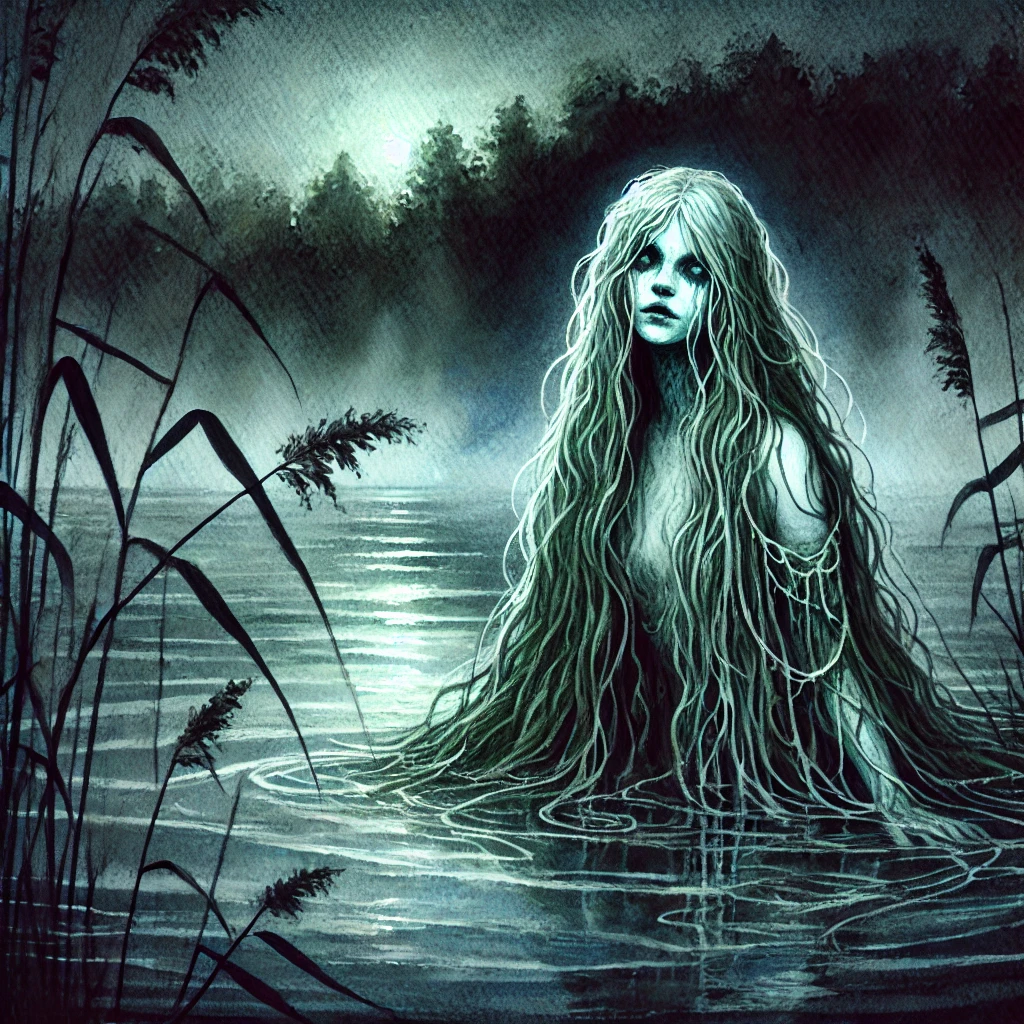
A rusalka, the spirit of a drowned young woman, with long hair, stands in the water at night

A rusalka, the spirit of a drowned young woman, wants men to share her fate.

Slavic Fairies and the Rusalka: Spirits of Water and Wood

Slavic folklore is thick with spirits, many of whom blur the line between fairy, ghost and demon. The rusalka is one of the most haunting: a drowned maiden with pale, luminous skin and long, green-tinted hair, she lingers near lakes and rivers, singing to lure men into the depths. Some legends say she’s vengeful, dragging victims under; others say she’s  simply lonely, forever searching for a lost love.

Then there are the domovoi, small, hairy house spirits with glowing eyes. Unlike the trickster fairies of the British Isles, a domovoi was a family guardian, keeping the household safe — so long as it was honored with milk, bread and respect. A neglected domovoi could become vengeful, making life miserable for the home’s inhabitants.

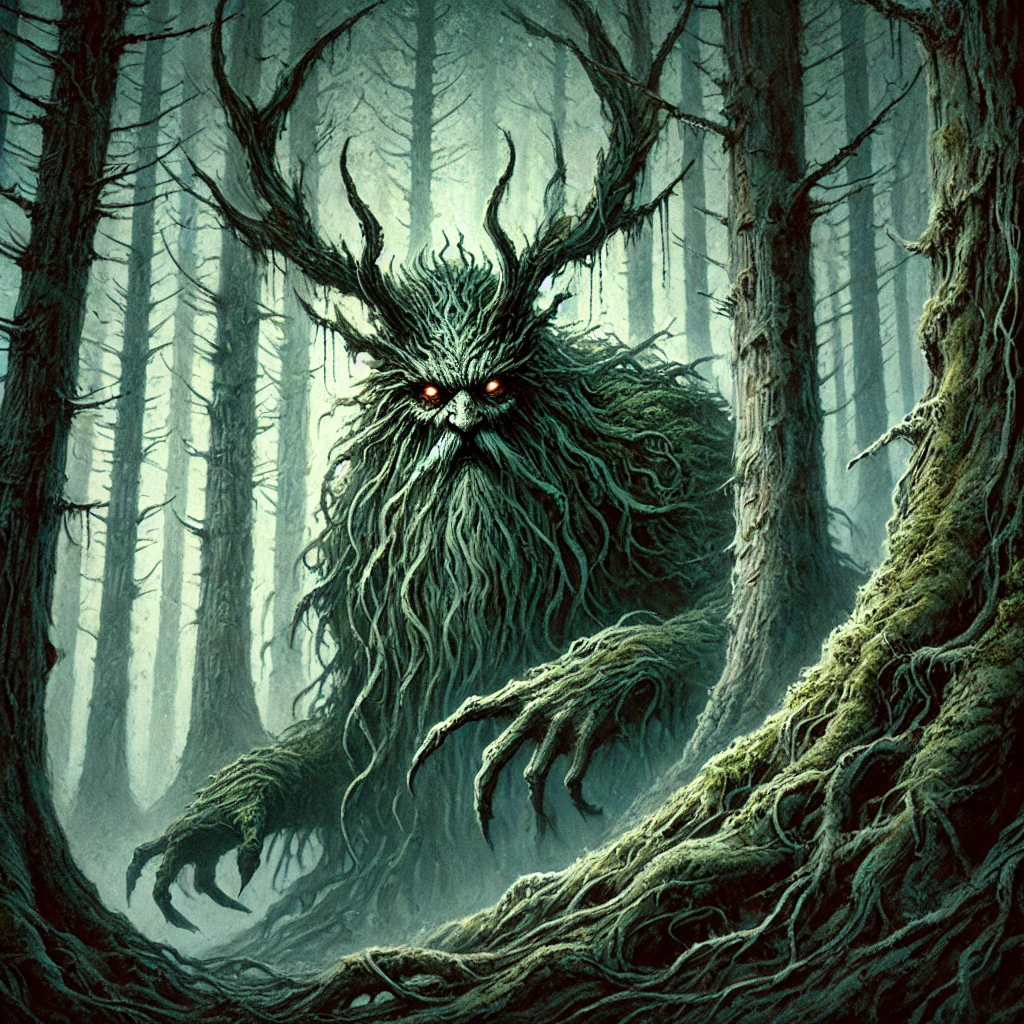
In the dark forests, the leshy reigns: a towering, moss-covered figure with bark for skin and eyes like glowing embers. He’s the master of the woods, able to shift size at will. Travelers who fail to pay their respects may find themselves lost for days, their paths twisting back on themselves under the leshy’s watchful gaze.

A leshy, large, gnarled like a tree, with glowing eyes and staglike horns

The leshy, shapeshifting master of the woods

Slavic Fae in Popular Tales

  • The Bear and the Nightingale by Katherine Arden weaves Slavic fairy spirits like the domovoi and rusalka into a lush historical fantasy.

  • The leshy appears in numerous Russian fairy tales and in modern fantasy, including The Witcher series.

  • The eerie, dreamlike world of the rusalka is captured in Alexander Pushkin’s poetry and Dvořák’s opera.

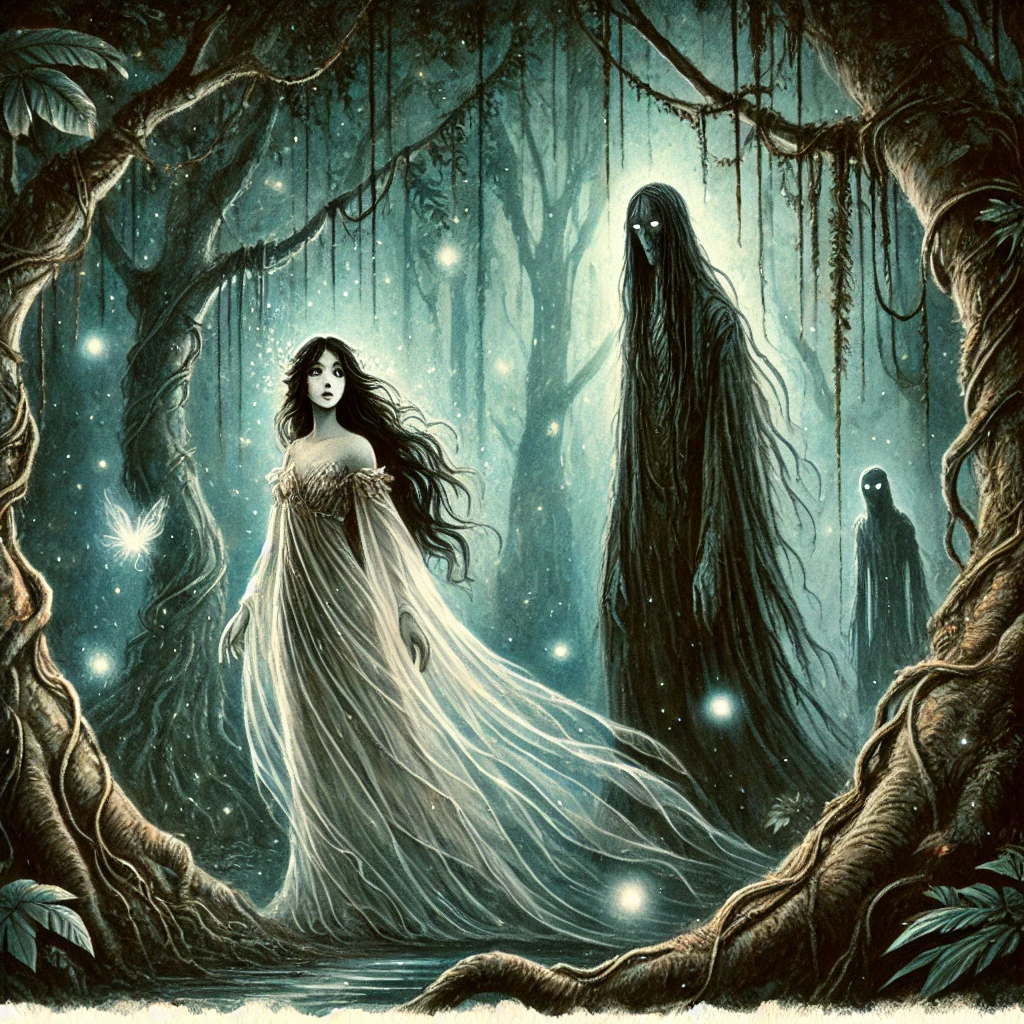
A diwata, a ghostly woman, and engkantos, a tall, thin, black, menacing spirit

The diwata and engkantos of the Philippines can be kind or cruel, depending on how you treat them.

The Fairies of Other Cultures

Fairy-like beings exist worldwide, often blending nature spirits, ancestral ghosts and mischievous tricksters.

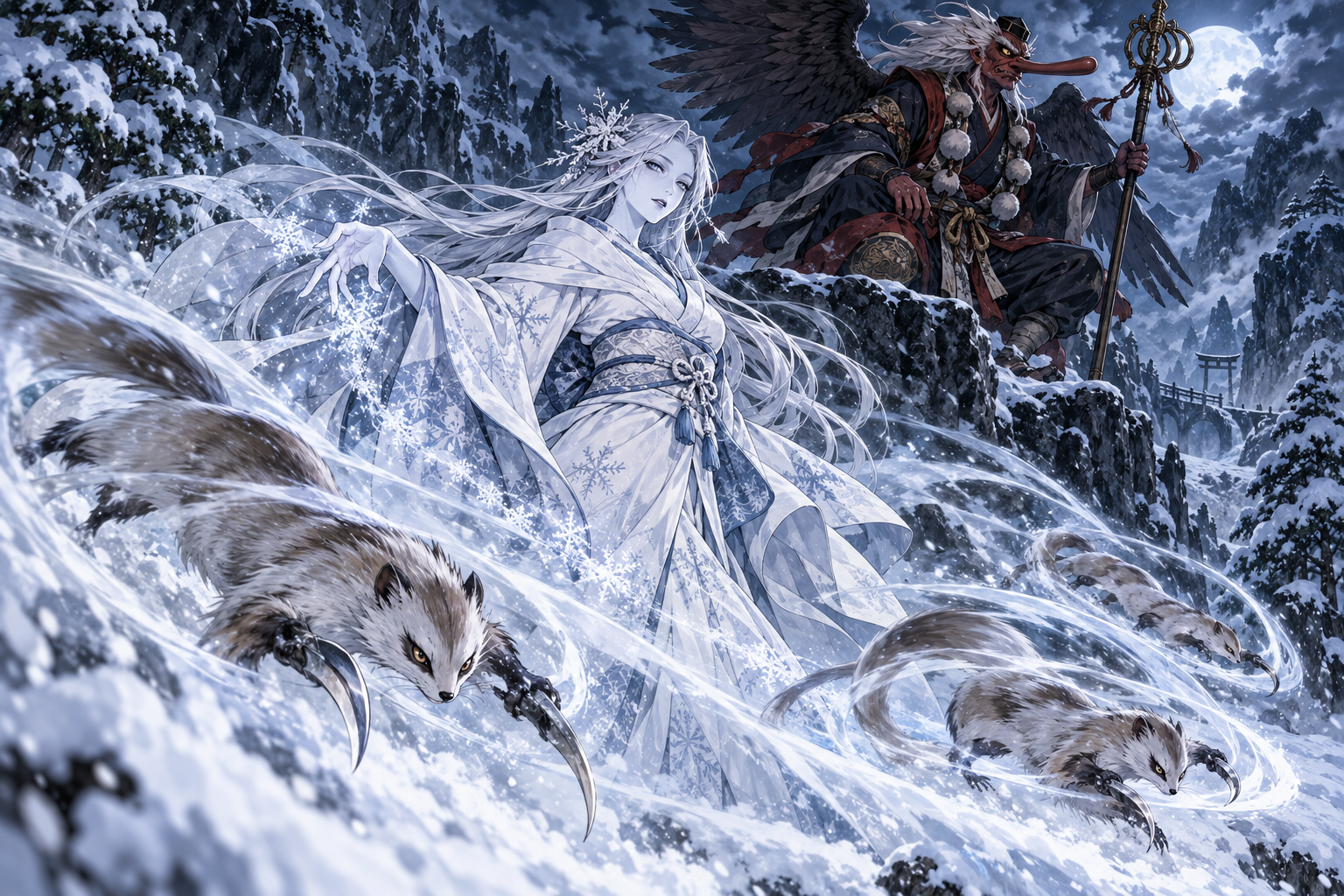
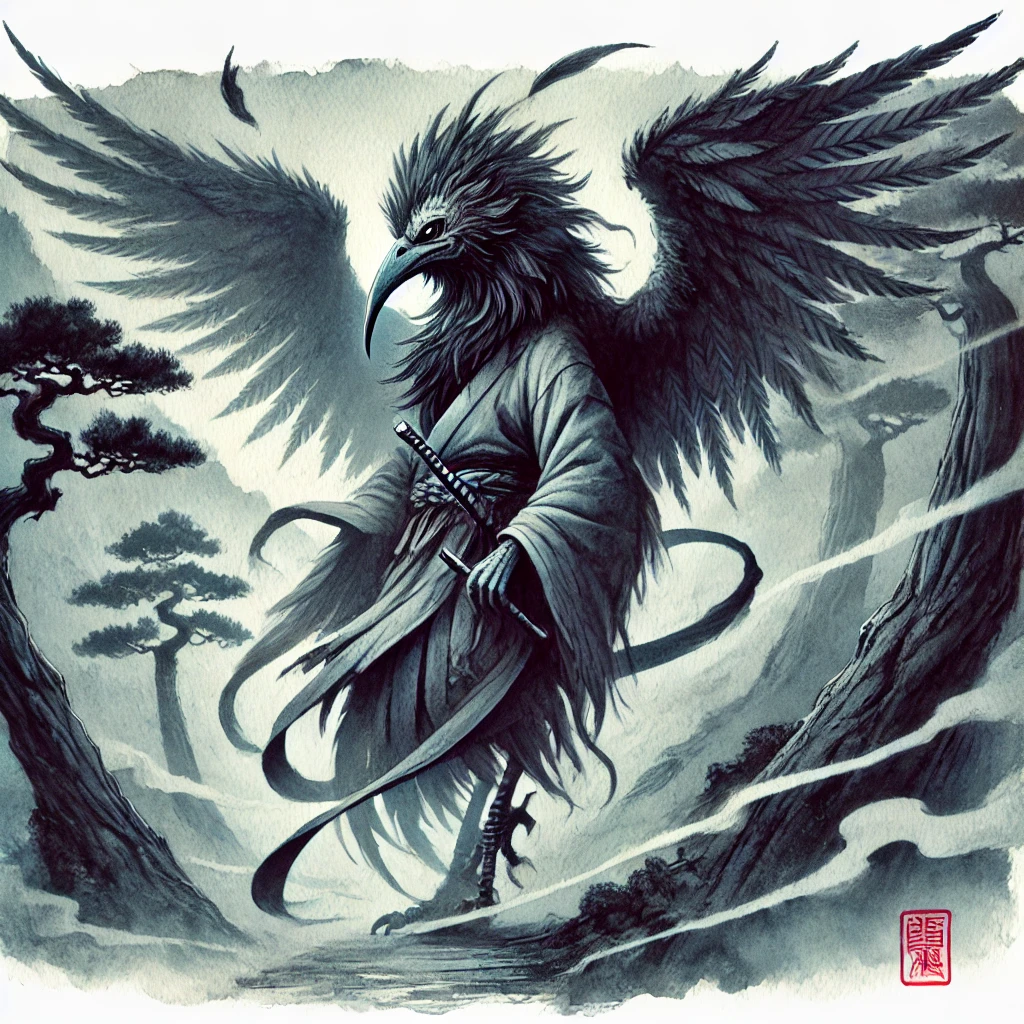
The tengu, a bird spirit dressed like a samurai by bonsai trees in the mist

Tengu love to mess with overly proud samurai — creating illusions, stealing weapons or dragging them into duels they can’t win. I

Japanese Yōkai: Creatures like kodama, tree spirits that live in ancient forests, or tengu, bird-like beings who trick travelers and test warriors, share many fairy-like qualities.

Filipino Diwata and Engkantos: Often compared to elves, these spirits of the forests and mountains can be either generous or cruel, depending on how they’re treated.

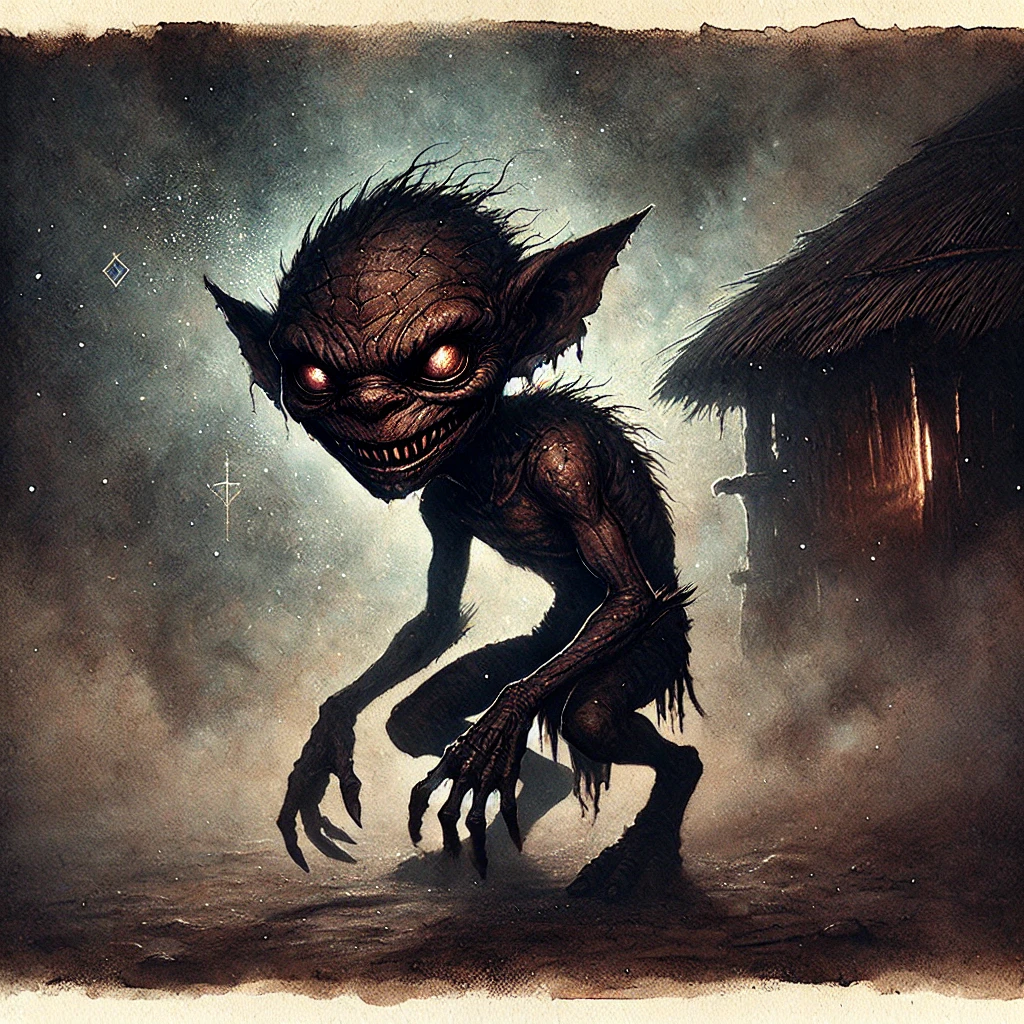
African and Caribbean Spirits: Figures like the tokoloshe in South Africa — a small, goblin-like trickster — bear similarities to European goblins and sprites.

A tokoloshe, a menacing gremlinlike creature with glowing eyes and a creepy smile, by a thatched-roof hut

The trickster tokoloshe from South Africa

Fae From Around the World in Popular Tales

  • Spirited Away, the Studio Ghibli film, is a masterful portrayal of Japanese fairies and spirits.

  • The Girl From the Well by Rin Chupeco draws on Japanese and Filipino ghost fairy traditions.

  • Nalo Hopkinson’s Brown Girl in the Ring weaves Caribbean folklore into a dystopian fairy tale.

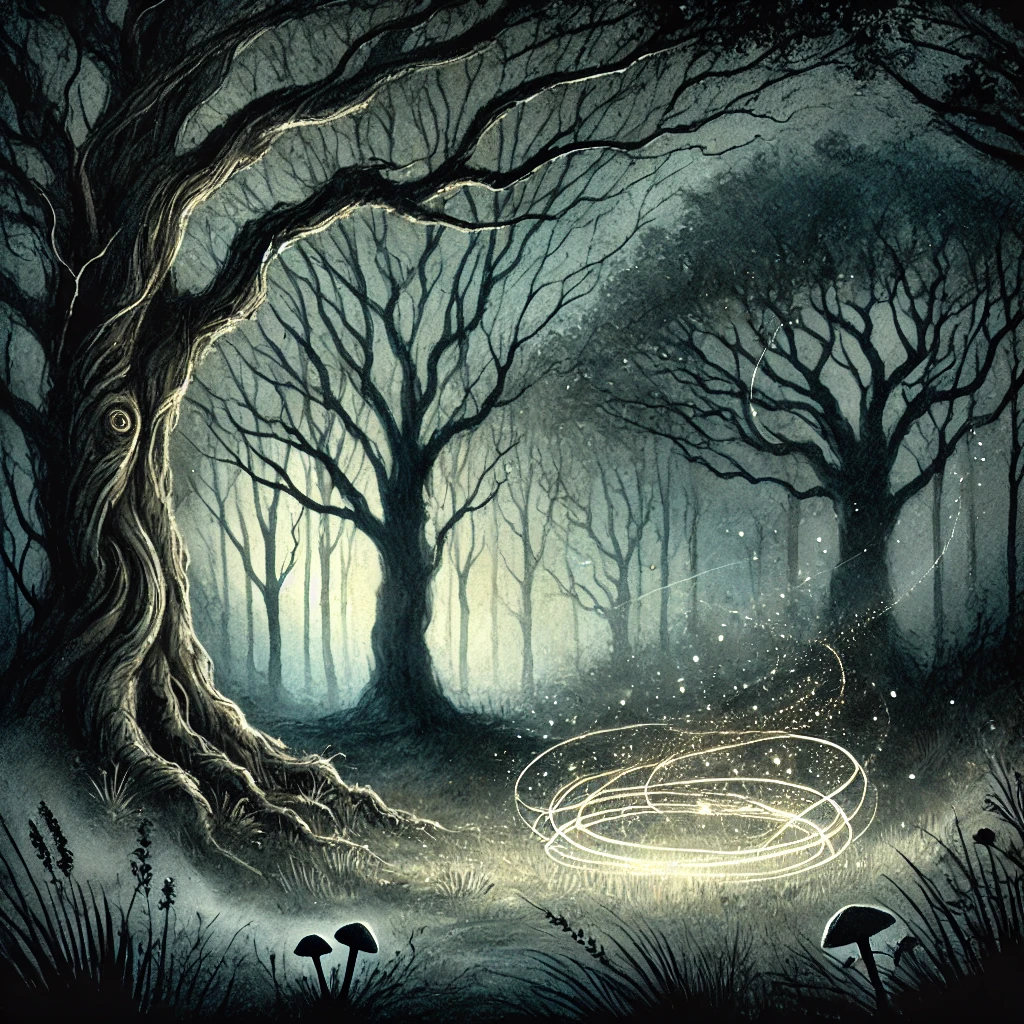
Fairy magic swirls in a forest at night

Fairy Rings, Time Distortion and Other Fae-Related Mysteries

Step carefully, traveler. A ring of mushrooms in the forest, a strange circle of scorched grass on the moors, an ancient oak with a hollow just large enough for a child to crawl through — these are signs that the Fae have been here. And if you cross into their domain, you may never leave the same.

The Danger of Fairy Rings

Fairy rings are among the most famous — and most feared — phenomena in fairy lore. These naturally occurring circles of mushrooms or oddly vibrant grass are said to be the sites of fairy gatherings. Some legends claim that at night, the Fae emerge from their hidden realm to dance under the moonlight, weaving enchantments into the earth.

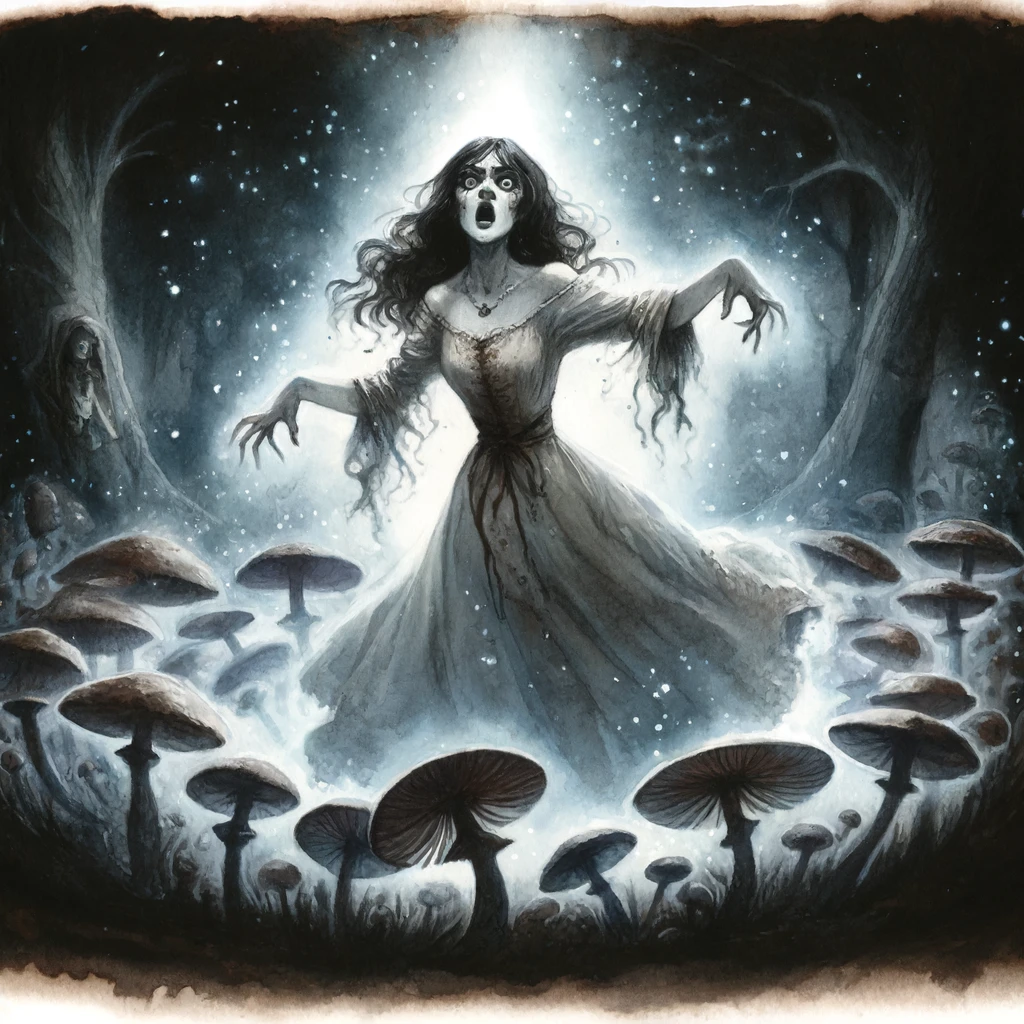
Stepping into a fairy ring, however, is a terrible mistake. Some say you’ll be forced to dance until you collapse from exhaustion, your mind lost in a delirium of music and light. Others warn that time within the ring doesn’t match the world outside. What feels like minutes to you might be years, decades, even centuries beyond the circle’s edge. Many a mortal has stepped inside, only to return as a withered husk or crumble into dust as soon as they leave.

A horrified woman dances without stop in a fairy ring of mushrooms

Even outside of fairy rings, the Fae’s ability to warp time is well known. Travelers who accept a fairy’s hospitality — feasting in their halls, drinking their wine — often find that what seemed like a single evening was, in truth, a hundred years. The legend of Oisín, the Irish warrior who rode away with a fairy queen and returned to find his homeland changed beyond recognition, is one of the most haunting examples.

Never Accept a Fairy’s Gift

The Fae are infamous for their tricks, and one of their cruelest is the giving of gifts. A fairy’s boon may seem like a blessing — a pouch of gold coins, an enchanted flute, a charm of protection — but such gifts always come with a price. Some mortals find their gold turns to dead leaves as soon as they step out of the fairy realm. Others find themselves bound by invisible contracts, compelled to serve the Fae for eternity.

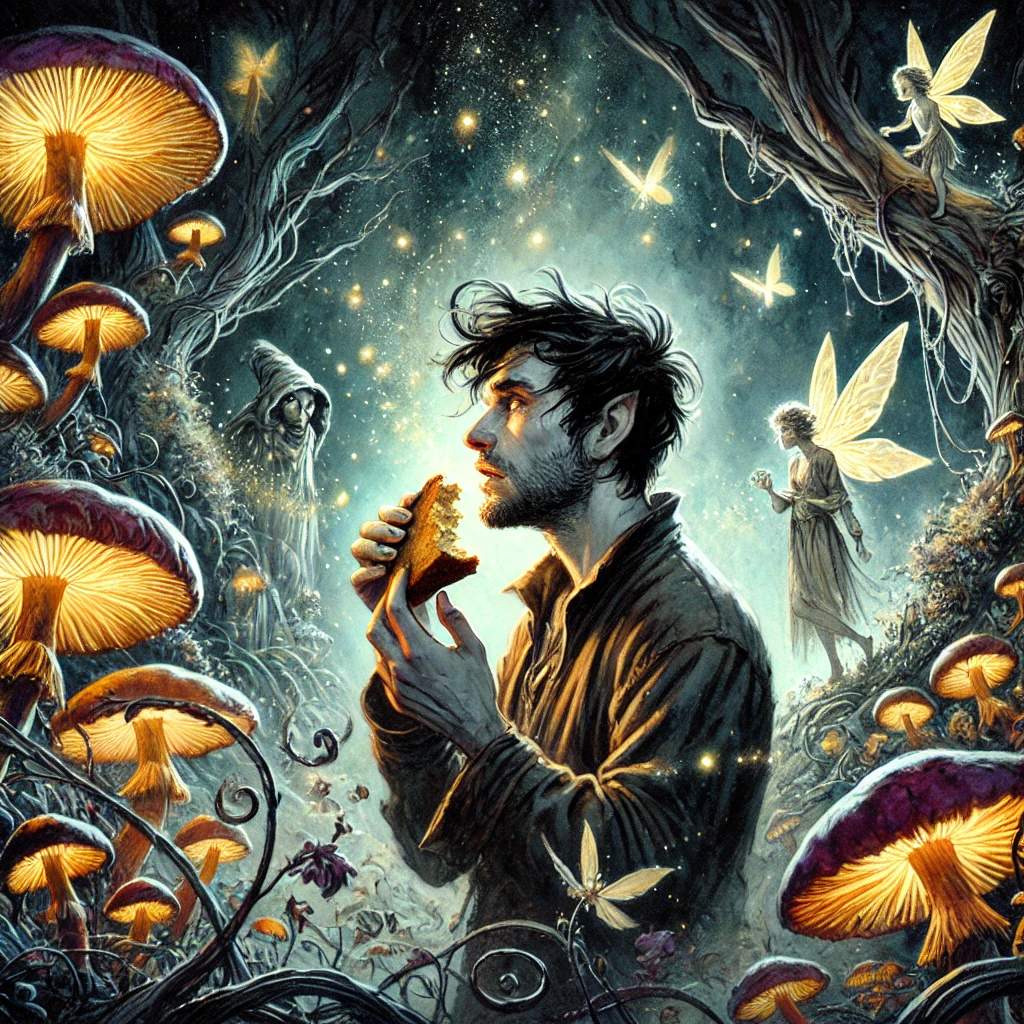
A man stupidly eats in the land of fairy, where mushrooms glow and creatures watch him

I don’t care how hungry you are — never eat anything in fairlyland.

Then there’s the matter of fairy food. It’s a well-known rule that no mortal must ever eat in the land of the Fae. To do so is to bind yourself irrevocably to their realm. Countless legends tell of mortals who took a single bite of fairy bread, only to find themselves unable to leave, their very souls woven into the fabric of that otherworldly place.

The Power of Fairy Music

Fairy music is unlike anything mortal ears have ever heard. It’s haunting, beautiful, impossible to resist. It can put a man into a trance, make a woman dance nonstop until dawn, or lull an entire village into a deep, dreamless sleep. Fiddlers and harpists in Celtic legend often claimed to have learned their skill from the Fae. But such a gift always came with a cost — many returned changed, unable to hear ordinary music without longing for the songs of the otherworld.

One of the most famous tales of fairy music is that of the Pied Piper of Hamelin, who lured away the town’s children with a tune so enchanting the kids followed him into the hills, never to be seen again. Was he simply a vengeful man — or something far older, a fairy trickster leading the children to another world?

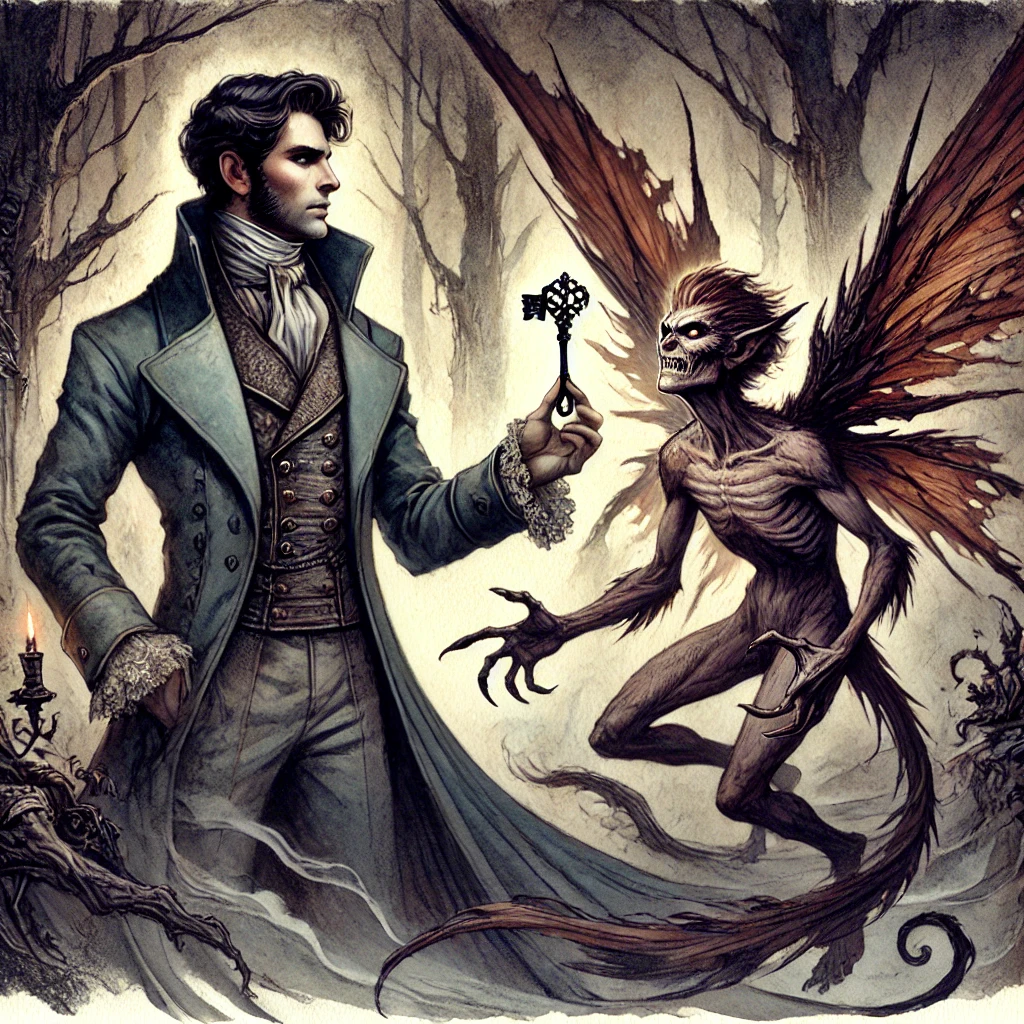
A well-dressed man holds up an iron key to keep a scary fairy at bay

How to Protect Yourself From the Fae

The Fae aren’t easily thwarted, but old wisdom offers a few tried-and-true defenses.

1. Iron is your best friend.

Iron is anathema to fairies, burning them like fire. A horseshoe over the door, iron nails driven into the threshold of a home, or even a simple iron key in your pocket can keep them at bay. Many believe that the industrial age — full of iron railways and steel buildings — was what finally drove the fairies into hiding.

2. Keep salt, rowan and red thread handy. 

A circle of salt around your home is said to keep fairies from crossing the boundary. Rowan wood, especially in the form of a staff or cross, is a sacred protector against fairy mischief. And red thread tied around your wrist or doorknob prevents enchantments and bewitchment.

3. Never give your name.

Names have power. If a fairy learns your true name, they can control you, call you to their realm at will, or steal your identity altogether. If you must interact with the Fae, use a false name, a nickname, or no name at all.

4. Watch what you say.

Forget those good manners instilled in you as a kid. Thanking a fairy is dangerous — it implies that a debt has been repaid, and fairies despise that. If a fairy grants you a favor, say, “This is well done” or “You have my respect,” but never, ever say “thank you.”

5. Avoid liminal spaces.

Fairies are strongest at twilight, dawn, and during the turning of the seasons (Beltane, Samhain, Midsummer). Crossroads, hollow hills and standing stones are all places where the veil is thin. Step too close, and you may step into their world without even realizing it.

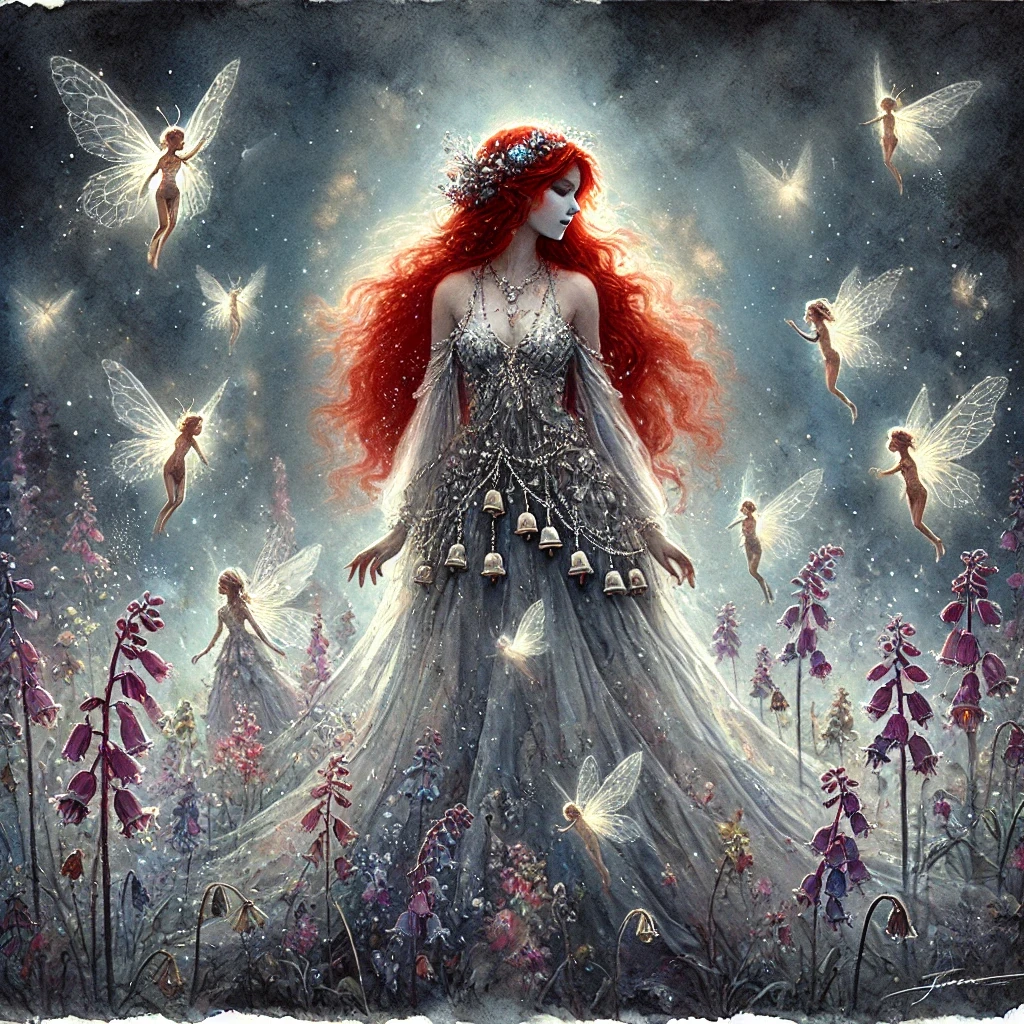
A red-haired woman wears a silvery dress and strings of bells to attract fairies, which surround her amid flowers

How to Attract Fairies

Not all fairies are malevolent. Some are simply mischievous, while others may be persuaded to lend a little magic to those who honor them properly.

1. Leave offerings.

Fairies appreciate small gifts: bowls of milk, honey, fresh-baked bread or mead. Leave these in a quiet outdoor space, particularly near a fairy ring, a tree hollow or a stream. But never check to see if they’ve been taken; that breaks the spell.

2. Keep a wild garden.

The Fae love untamed beauty. Gardens filled with wildflowers, overgrown ivy and hidden nooks are far more likely to attract them than neat, orderly beds. Plants like foxglove, lavender and thyme are said to be especially beloved by fairies.

3. Speak in riddles and poetry.

The Fae enjoy cleverness. Those who speak in riddles, offer playful banter or recite poetry may find themselves in their favor. Beware, though: If a fairy challenges you to a game of wits and you lose, the consequences will be strange, and sudden — and never fair.

4. Wear silver or bells.

Silver is associated with moonlight and magic, and fairies are drawn to it. Small bells, often worn on clothing, were once thought to please the Fae (though some say they keep trickster spirits away).

5. Celebrate Beltane and Samhain.

These two festivals are when the Fae are closest to the mortal world. Dancing, feasting and lighting candles in their honor may win their favor. Just be careful not to invite the wrong kind.

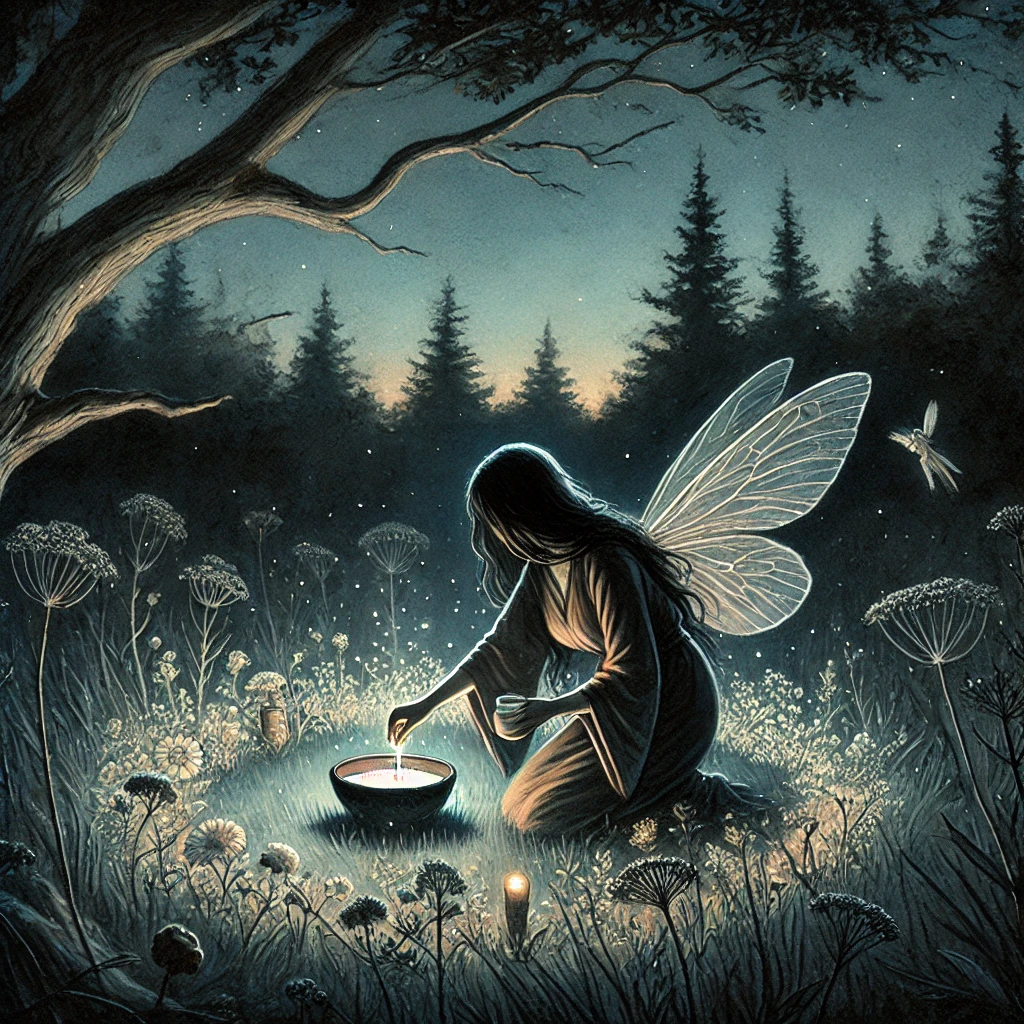
A Wiccan woman wearing fairy wings has a bowl with milk outside, performing a ritual to attract the Fae

A Spell to Connect With the Fae

If you wish to invite the presence of the Fae — gently, respectfully and understanding the risks involved — this simple spell will help you call upon their magic.

You’ll need:

  • A small bowl of milk and honey (a traditional fairy offering)

  • Fresh wildflowers (such as daisies, foxglove or lavender)

  • A silver coin

  • A candle (preferably green or white)

  • A quiet place in nature, preferably near a tree, stream or fairy ring

The Ritual

As twilight falls, take your offerings to a secluded, peaceful spot where you feel a connection to nature.

Arrange the wildflowers in a small circle and place the bowl of milk and honey in the center.

Set the silver coin beside the bowl as a token of respect.

Light the candle and focus your intent on reaching out to the Fae — not to command, but to invite.

Recite the following incantation:

O spirits fair, of earth and sky,
By moon’s soft glow and stars on high,
With gift of sweet and silver bright,
I call thee forth this sacred night.

If friend ye be, then come in grace,
With laughter light and wisdom’s trace.
No harm, no trick, no ill intent,
But blessings true and magic sent.

Let the candle burn for a few moments while you listen to the sounds of the evening. If the wind stirs, if a sudden hush falls, or if you feel a shift in the air — know that the Fae may be near.

Thank them silently, then leave the offerings behind as you depart. Never look back.

A final caution: The Fae don’t grant favors lightly, nor do they take kindly to broken promises. If you feel their presence, treat them with respect. If you receive a sign — a feather, a leaf falling on you, a strange dream — consider it a gift, not a debt to be repaid.

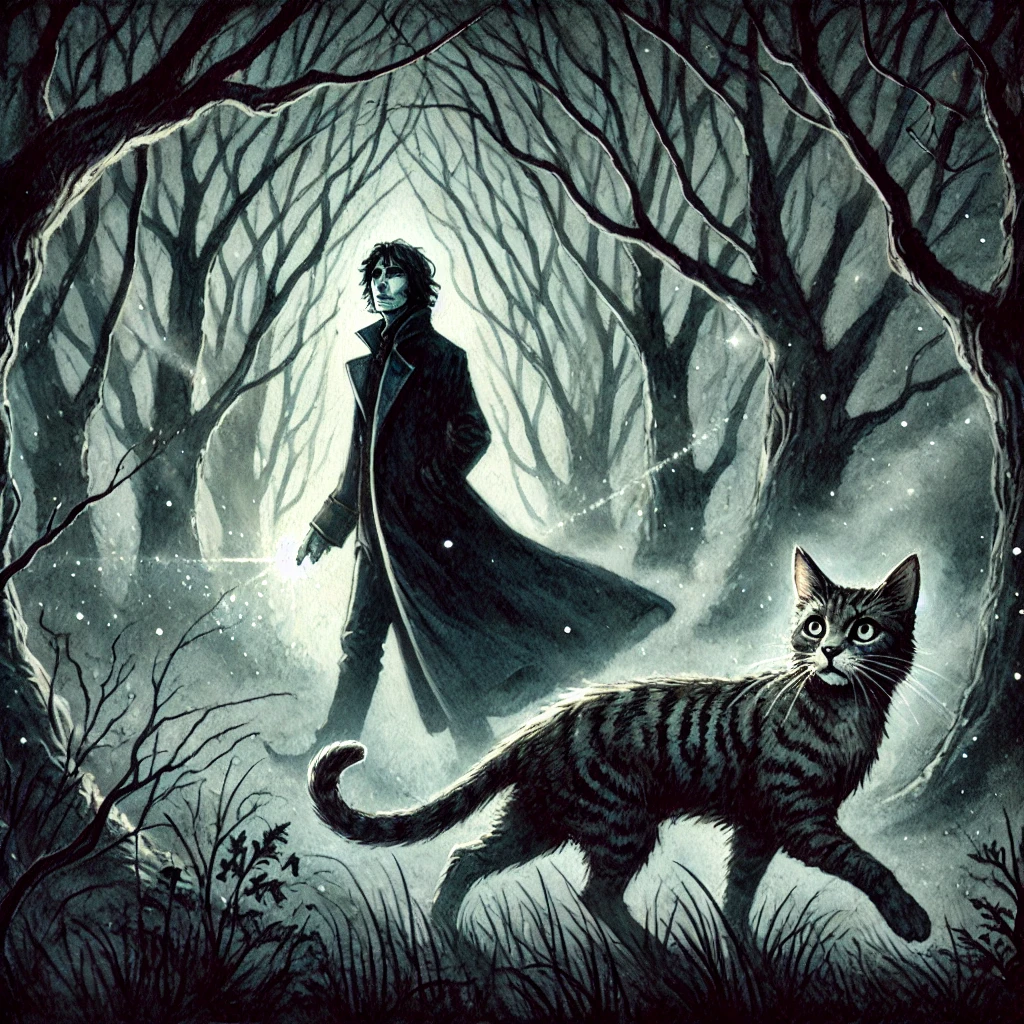
A man in a long coat walks through the woods at night with a tiger-striped cat

Tread Carefully in the Land of the Fae

The Fae are as fickle as the wind, as ancient as the stones, and as unpredictable as the tide. They’re neither wholly good nor wholly evil, existing in a realm beyond human morality. They can bring fortune or misfortune with a careless flick of a hand, charm you with laughter, or steal you away in a dance that never ends.

Yet still, we seek them. We whisper our wishes into the night, leave offerings on our windowsills, and tell their stories in hushed voices. Perhaps it’s because we, too, long for the hidden places, for the unseen world just beyond our reach.

But if you hear laughter from the trees when no one’s near, or see a flicker of light dancing in the mist, remember: Step lightly, choose your words carefully, and never, ever eat the food. –Wally

Madrid Legends and Ghost Stories: Haunting Tales From Spain’s Capital

Discover Madrid’s haunted history — from royal scandals to ghostly legends that still linger in its palaces, plazas and rooftops.

You could go almost anywhere on this spinning green globe — but Spain hits different. Sure, the sun-drenched beaches of Tenerife and Mallorca are calling, and flamenco in Sevilla is a whole event in itself. But if you’re like me, you want something more than a postcard. You want stories. Secrets. Shadows.

And while Sevilla has its share of ghost stories, I ended up in Madrid — not just for the churros and Goya paintings, but for the whispered legends hidden in its rooftops and courtyards.

A city of over 3 million residents, Madrid welcomes more than 10 million visitors a year — and for good reason. Beneath its modern buzz lies something older, stranger…and far more haunting.

Because everywhere you go in this city, the past follows.

Madrid: Where Legends Linger

Madrid might be one of Europe’s most modern cities — sleek, global, buzzing with energy — but scratch the surface, and you’ll find tales that have been passed down for centuries. Think royal cover-ups, wandering ghosts, and mysterious women who might’ve been wolves.

Let’s start with a few stories you won’t find on your average travel blog.

1. The House of the Seven Chimneys

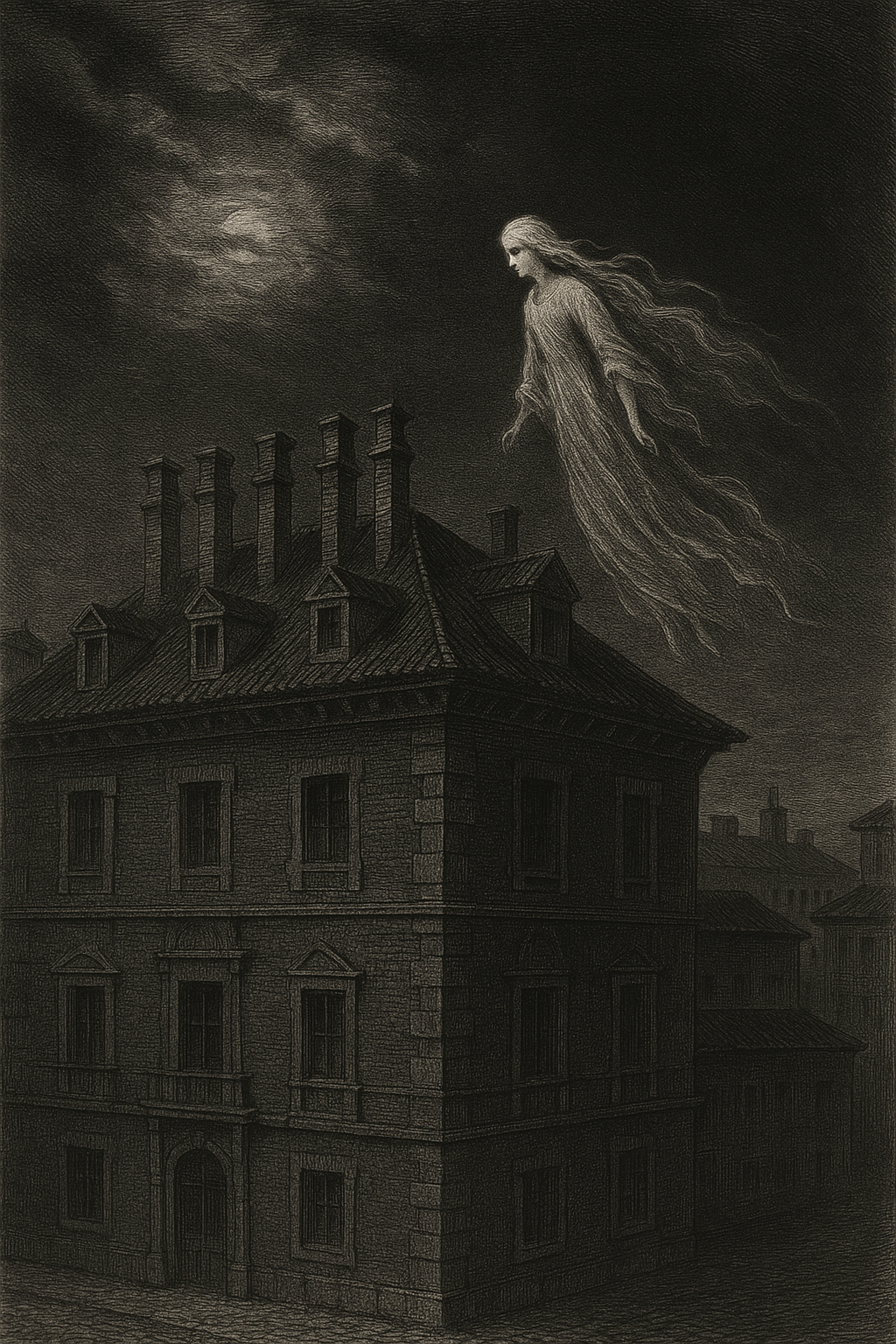
In the heart of Madrid sits a 16th-century mansion with (you guessed it) seven chimneys poking into the skyline. The building was home to Elena, a young noblewoman married to a soldier who went off to war — and never came back. Soon after, Elena herself died under suspicious circumstances. Her body vanished without a trace.

Rumors swirled: Had she taken her own life? Was there foul play? Some even whispered she’d been entangled with a royal — possibly the son of Philip II.

To this day, people say her ghost still wanders the roof, weaving between the chimneys, searching.

2. The White Lady of Linares Palace

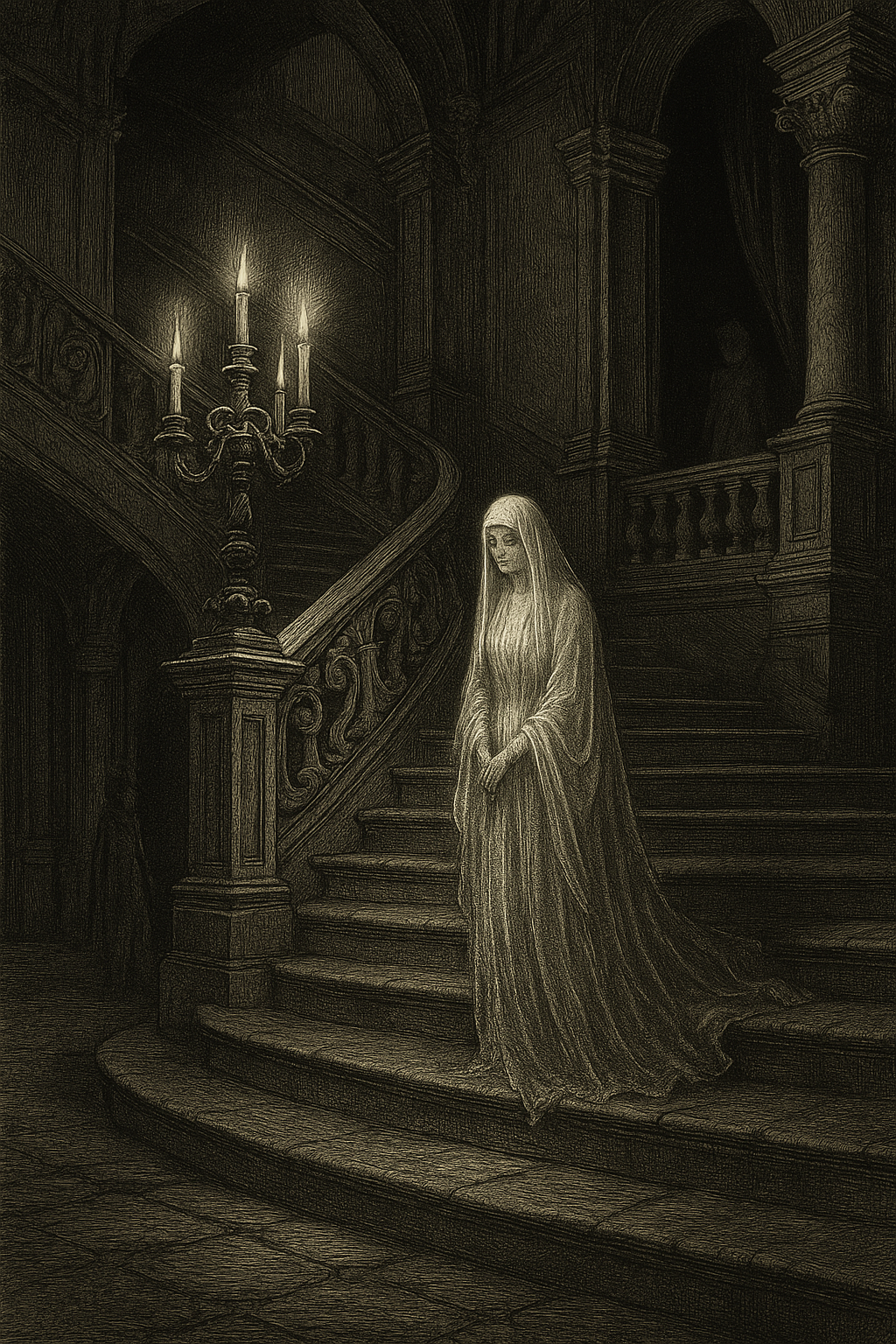
This one sounds like a Gothic novel, but the Linares Palace — now Casa de América — has its own ghostly drama. The story goes like this:

The Marquis of Linares fell in love with a humble cigarette vendor, and they had a daughter. Years later, his own son, unaware of her identity, married the girl. Only after their wedding — and after having a child — did they discover the truth: They were half-siblings.

What happened next is murky. One version claims the couple ended their child’s life in despair. Now, visitors report ghostly whispers and shadows in the palace. Paranormal teams have even claimed to record unexplained voices.

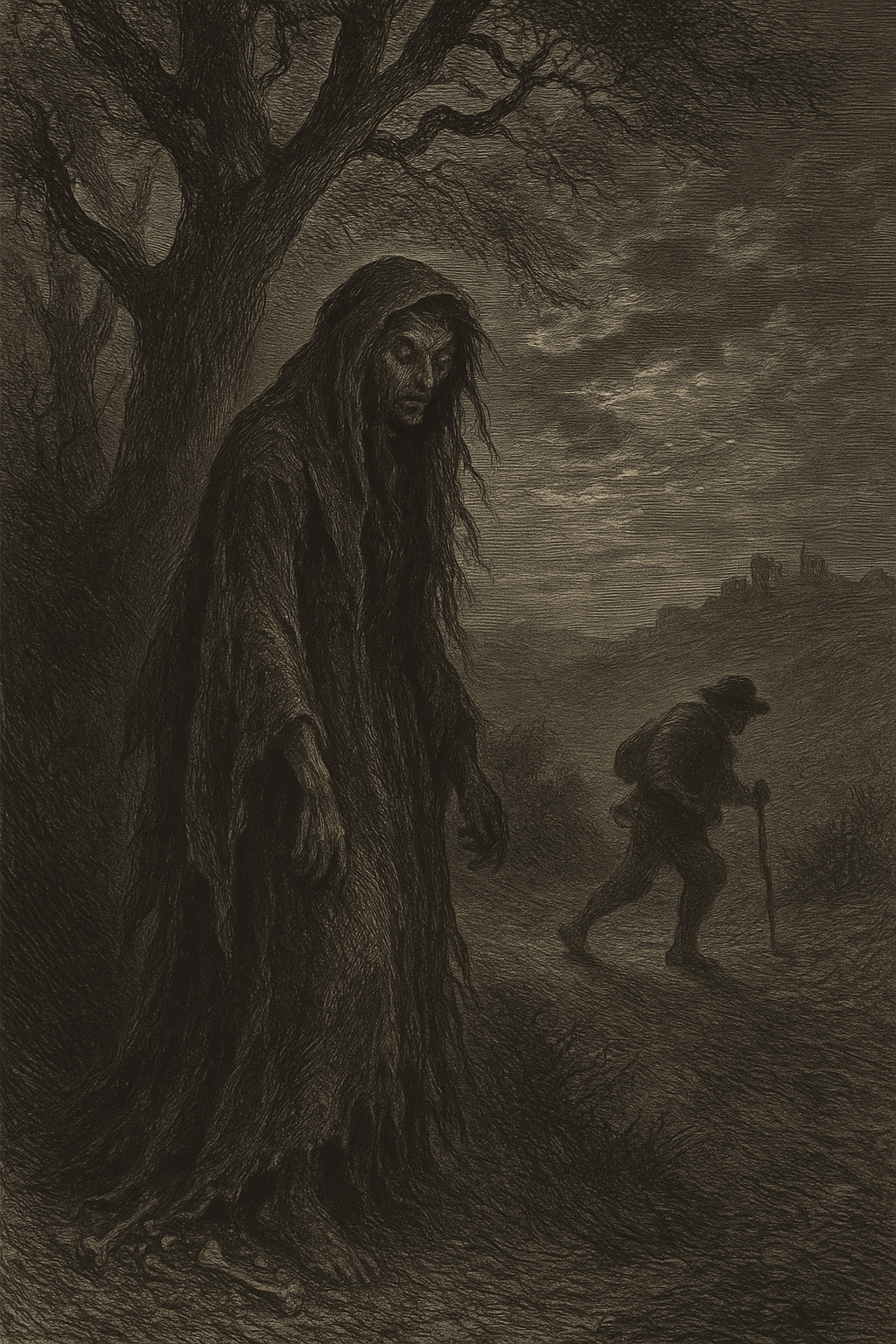
La Loba de Madrid, the She-Wolf, in ragged clothes, stands by a traveler, with bones at her feet

3. La Loba de Madrid (The She-Wolf)

“La loba” was slang for a certain kind of woman — alluring, dangerous, often outside society’s norms. One legend tells of a woman who roamed the hills near Madrid, guiding lost travelers to safety. Another paints her as a shapeshifter who wandered the outskirts at night, collecting bones.

Prostitute, protector, predator — take your pick. Either way, Madrid’s she-wolf still prowls through local folklore.

4. The Nude Maja and Goya’s Secret Muse

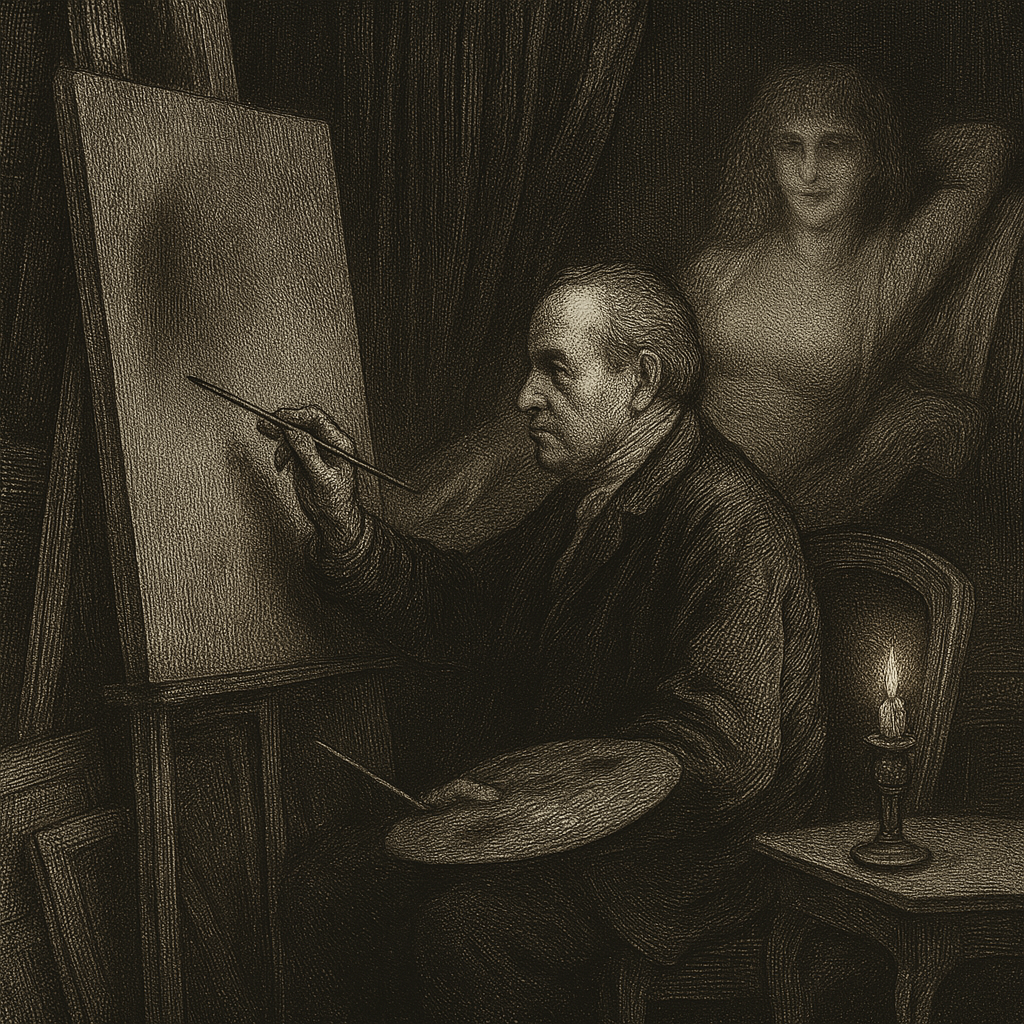
Francisco de Goya’s La Maja Desnuda (The Nude Maja) caused quite the stir in the late 18th century. The reclining woman, completely unclothed, was bold enough to warrant a private viewing — and later, an order for a second version with clothes, just in case anyone fainted.

This one isn’t a ghost story, but it’s one of Madrid’s great artistic mysteries. Who was the model? Many suspect the Duchess of Alba, one of Goya’s rumored lovers. But no one knows for sure — and that uncertainty only deepens the allure behind her half-smile.

Madrid Ghost Tours

If you really want to uncover these stories, book Madrid private tours with a guide who knows the city’s darker side. Ask about the palace hauntings. Peer up at the seven chimneys. Linger a moment longer on the quiet steps of Linares.

Let the past walk beside you.

And if you listen closely, you just might hear someone — or something — whisper your name. –Mark San Juan


Want a different kind of mystery? Follow Dan Brown’s Origin trail through Spain.

The Creepiest Places to Visit in the United States

From a haunted prison to a hotel with its own morgue, here are five terrifyingly popular U.S. destinations for ghost hunters, thrill seekers and paranormal tourists.

Dilapidated crumbling hallway in the Eastern State Penitentiary in Philadelphia

Eastern State Penitentiary in Philadelphia, where solitary confinement originated

For those of us who like our vacations with a side of dread, the U.S. has you covered. Cursed plantations? Check. Derelict prisons? Yep. A floating hotel with a body count? You bet. These are the kinds of places where whispers echo in empty rooms, photos blur for no reason, and something unseen always seems to tug at your shirt.

Whether you’re a seasoned ghost hunter or just want to say you slept in the most haunted hotel in America, these are the must-visit spots that will make your heart race — and maybe stop.

1866 Crescent Hotel & Spa in Eureka Springs, Arkansas

1866 Crescent Hotel & Spa in Eureka Springs, Arkansas

Where the cancer cures were fake, but the bodies were real.

Originally built in 1886, the Crescent Hotel started as a luxury resort — and quickly spiraled into something much darker. After a short-lived first act, it was purchased in 1937 by Norman Baker, a con artist who turned the building into a sham cancer hospital. He operated without a license, performed grotesque procedures, and stored bodies in a basement morgue that still exists.

Women in white dresses and hats stand on the steps of the 1866 Crescent Hotel & Spa in Eureka Springs, Arkansas when it was a college for women

Back when the property was the Crescent College for Women

Guests and ghost hunters report sightings of Baker himself, nurses in old-timey uniforms, and figures wandering the halls at night. Want proof? You can join nightly ghost tours that take you to the most haunted corners of the property — including Baker’s old morgue.

1886 Crescent Hotel & Spa
75 Prospect Avenue
Eureka Springs, Akansas​

The castlelike Eastern State Penitentiary in Philadelphia, Pennsylvania at twilight

Eastern State Penitentiary in Philadelphia, Pennsylvania

Solitary confinement never really ends … if your ghost sticks around.

Once home to over 85,000 inmates — including Al Capone — this Gothic fortress pioneered solitary confinement, which sounded humane in theory and turned out to be more of a psychological torture chamber. The prison operated from 1829 to 1971 and is now a National Historic Landmark.

Historic photo of a worker standing in a cellblock of Eastern State Penitentiary in Philadelphia, Pennsylvania

Its crumbling halls, rusted doors and echoing cellblocks give off a presence that’s hard to ignore. Visitors report disembodied voices, cell doors slamming on their own, and shadowy figures pacing inside locked cells. Cellblock 12 and the guard tower are said to be the most active — if you believe in that sort of thing. And even if you don’t, you’ll probably walk faster through them.

Sounds a bit like the derelict insane asylum attached to the Richardson Hotel in Buffalo, New York, which is also worth touring. 

If you’re also going to Pittsburgh, be sure to creep yourself out at Trundle Manor

Eastern State Penitentiary
2027 Fairmount Avenue
Philadelphia, Pennsylvania

The ocean liner Queen Mary in Long Beach, California at sunset

The Queen Mary in Long Beach, California

All aboard — for a cruise you’ll definitely want to disembark from.

This ocean liner hosted royalty, celebrities and WWII troops — and now ghosts. Docked permanently in Long Beach, the Queen Mary is considered one of the most haunted ships in the world.

A girl is dressed up like the ghost of Jackie, a girl who drowned in the pool on the Queen Mary ship

Say hi to Jackie! She drowned in the pool but now giggles through the hallways.

Visitors regularly report paranormal activity, including screams, slamming doors and the ghost of a crewmember who was crushed by a watertight door in the engine room. Then there’s Jackie, the little girl who allegedly drowned in the pool and now giggles through the halls — creepy kid laughter being the ultimate test of your fight-or-flight response.

If you visit around Halloween (known to witches as Samhain), don’t miss the ship’s Dark Harbor event — a screamfest that brings its haunted legends to life.

​​The Queen Mary
1126 Queens Highway
Long Beach, California

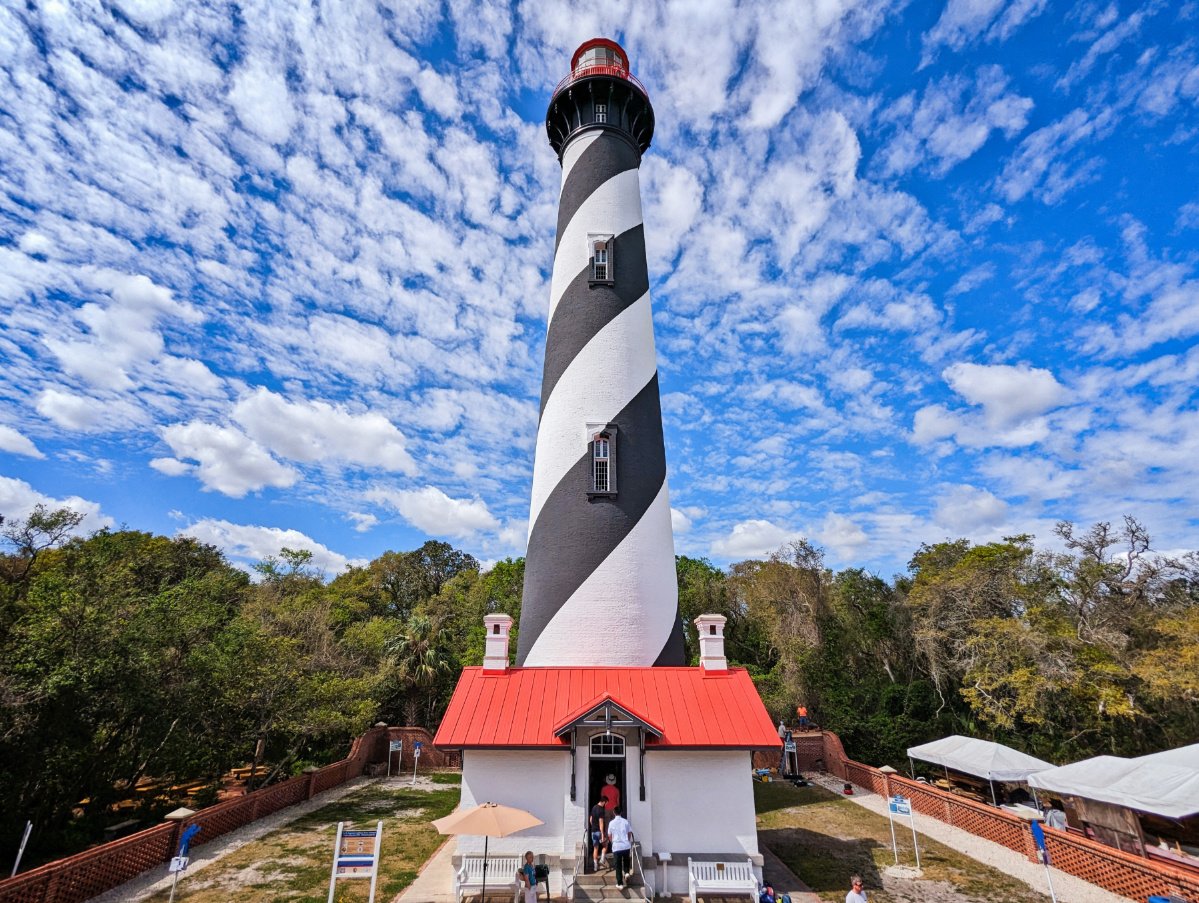
Black and white diagonally striped St. Augustine Lighthouse in St. Augustine, Florida

St. Augustine Lighthouse in St. Augustine, Florida

Helping ships find the shore — and maybe helping spirits climb the stairs.

The current lighthouse was completed in 1874 — but the land has a longer, darker history. Tragedy struck during construction, when two young daughters of the superintendent drowned in the bay. Ever since, strange sightings have haunted the tower.

The spiral staircase inside St. Augustine Lighthouse in St. Augustine, Florida

Visitors report hearing footsteps on the spiral stairs, catching glimpses of shadowy figures, and even being touched by something unseen. The Dark of the Moon tour takes you up the tower at night — just you, a flashlight … and your frazzled nerves.

St. Augustine Lighthouse & Maritime Museum
100 Red Cox Drive
St. Augustine, Florida

Exterior of Myrtles Plantation in St. Francisville, Louisiana

Myrtles Plantation in St. Francisville, Louisiana

Cursed ground, murder and ghosts with unfinished business. Southern hospitality not guaranteed.

The Myrtles has everything you could want in a haunted Southern plantation: hidden pasts, murder, mystery and a good chance of ghostly encounters. Built in 1796, the property is said to be cursed from the start, allegedly located on an indigenous burial ground. Several people died violently here, and stories of hauntings are as thick as the Spanish moss out front.

A grainy photo Chloe, the ghost at Myrtles Plantation in St. Francisville, Louisiana

The enlarged section of this image is said to be the plantation’s famous ghost, a former slave named Chloe.

The most infamous ghost? Chloe — a formerly enslaved woman who was reportedly mutilated for eavesdropping and later hanged after poisoning members of the household. Her apparition has supposedly been caught in photos and is said to still roam the grounds. 

Other spirits include William Winter, shot on the porch in 1871, and his young daughter, who died of yellow fever.

The Myrtles Plantation
7747 U.S. Highway 61
St. Francisville, Louisiana

An aerial view of Eastern State Penitentiary in Philly

An aerial view of Eastern State Penitentiary, which is no longer operational — just attracting visitors who appreciate the macabre.

Haunted Hotspots

Some people go to the beach — others go looking for the ghosts of 19th century criminals. These haunted destinations deliver the perfect mix of history and horror, where the stories are real, the wallpaper is peeling, and the room you booked might come with a ghost you didn’t. –Armughan Zaigham

Seville Cathedral Legends: Ghost Stories, Curses and Hidden Treasure

Meet the spirit of Christopher Columbus, the Ghostly Guardian and La Susona, brave the curse of La Giralda and discover a secret stash of gold.

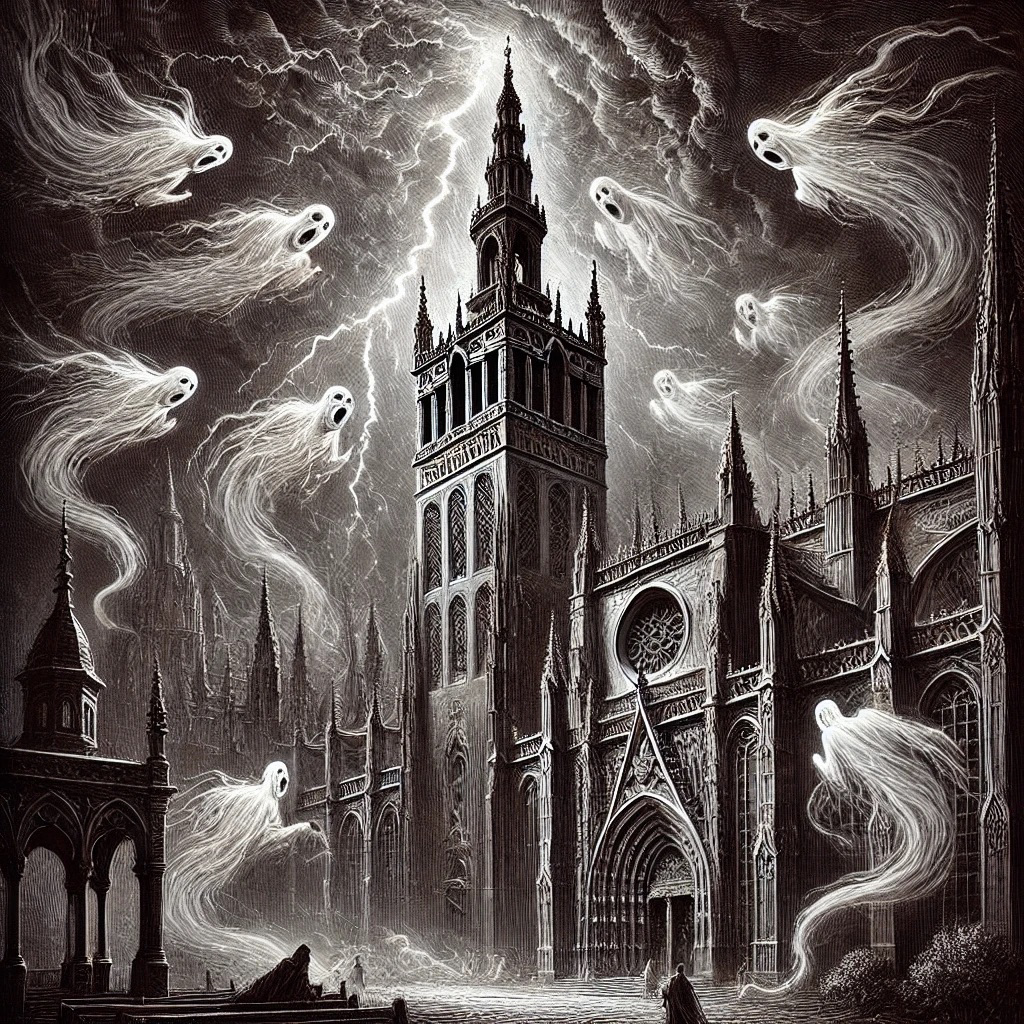
Ghosts swarm around Seville Cathedral

The Seville Cathedral, with its towering Gothic spires and labyrinthine chambers, can be a gloomy sanctuary where it’s easy to imagine hearing whispers and catching dark shapes out of the corner of your eye. Over the centuries, this majestic building has become a repository of folktales — some tinged with mystery, others with tragedy. As the sun sets and the long shadows stretch across the cobblestones, gather round to hear the spookiest legends about Seville Cathedral. 

The curse lingers.

Now, anyone who betrays a vow within the cathedral’s grounds will be met with misfortune — anything from financial ruin to an untimely death.
The Ghostly Guardian of Seville Cathedral, a skeletal figure in flowing robe and full armor

The Ghostly Guardian of Seville Cathedral 

On stormy nights, when the wind wails through the narrow streets of Sevilla, locals speak in hushed tones of the Ghostly Guardian — a silent sentinel said to patrol Seville Cathedral’s hallowed halls. This figure, draped in a flowing, tattered cloak and clad in ancient armor, is believed to be the restless spirit of a medieval knight. Witnesses describe seeing him glide through the shadows, his armor clinking faintly as he moves from one darkened chapel to another, his gaze ever-watchful. Others have spied him kneeling in solemn prayer at the high altar, his ghostly form cast in a faint, silvery glow.

The Ghostly Guardian of Seville Cathedral floats in the air

He was once a master builder, a man whose life’s work was the construction of the cathedral. Stricken down by illness before seeing his masterpiece completed, his spirit lingered. Not even death could sever his connection to the place he so loved. 

The Ghostly Guardian of Seville Cathedral, kneeling in prayer at the altar

Visitors to the Seville Cathedral who stay too long after dark have claimed to hear strange sounds — the echo of footsteps when no one is near or the eerie clatter of unseen armor. The Ghostly Guardian continues his eternal watch, safeguarding the cathedral from threats both seen and unseen.

Men open a treasure chest in Seville Cathedral

Hidden Treasure: The Secret of the Cathedral’s Gold

Beneath the cathedral’s towering arches and heavy stones lies a secret that has tantalized treasure hunters for centuries — a hidden cache of riches. As the story goes, during a time of great unrest in Sevilla, a powerful nobleman sought to hide his treasure in a place he believed would be safe. 

He approached the master builders of the cathedral, bribing them to construct a secret chamber, deep within its bowels, where his fortune in gold, silver and precious gems could be hidden away. The builders, either out of greed or under duress, agreed to this clandestine arrangement, creating a hidden vault so ingeniously concealed that no outsider would ever suspect its existence.

The nobleman, however, never returned to claim his treasure. He died in a distant battle, taking the secret of the chamber’s location with him to the grave. Since then, countless treasure seekers have scoured the cathedral’s chapels, floors and nooks, succumbing to fevered dreams of instant wealth. 

Some claim the treasure is hidden beneath the grand altar; others believe it lies behind one of the many intricately carved stone panels that adorn the cathedral walls. Yet, despite the tireless searches, the treasure trove remains elusive.

A jilted bride stands under La Giralda of Seville Cathedral, cursing her runaway groom

The Curse of La Giralda

Who would suspect that La Giralda, with its elegant silhouette rising above Sevilla’s skyline, is also the focal point of a dark and vengeful curse, a warning to those who dare betray love and break a promise?

Back in the 16th century, a young nobleman was set to marry a beautiful woman from a wealthy family. The wedding was to be a grand affair, the kind that would be spoken of for generations. But the bride’s joy turned to despair when, on the morning of the ceremony, her betrothed abandoned her at the altar.

Heartbroken and humiliated, she stood beneath the shadow of La Giralda, her wedding gown fluttering in the wind, tears staining her cheeks. In her anguish, she raised her hands to the heavens and cursed the man who had jilted her. As she uttered her final words, dark clouds rolled in and the sky roared with thunder. A bolt of lightning struck La Giralda, sending a single stone crashing down at the feet of the fleeing nobleman. He was able to escape the city — but he couldn’t escape the curse. 

His life unraveled — he lost his fortune, his friendships turned sour, and he died alone, tormented by the consequences of his broken promise.

The curse lingers. Now, anyone who betrays a vow within the cathedral’s grounds will be met with misfortune — anything from financial ruin to an untimely death. The story serves as a cautionary tale, a reminder that love, once pledged, must not be taken lightly.

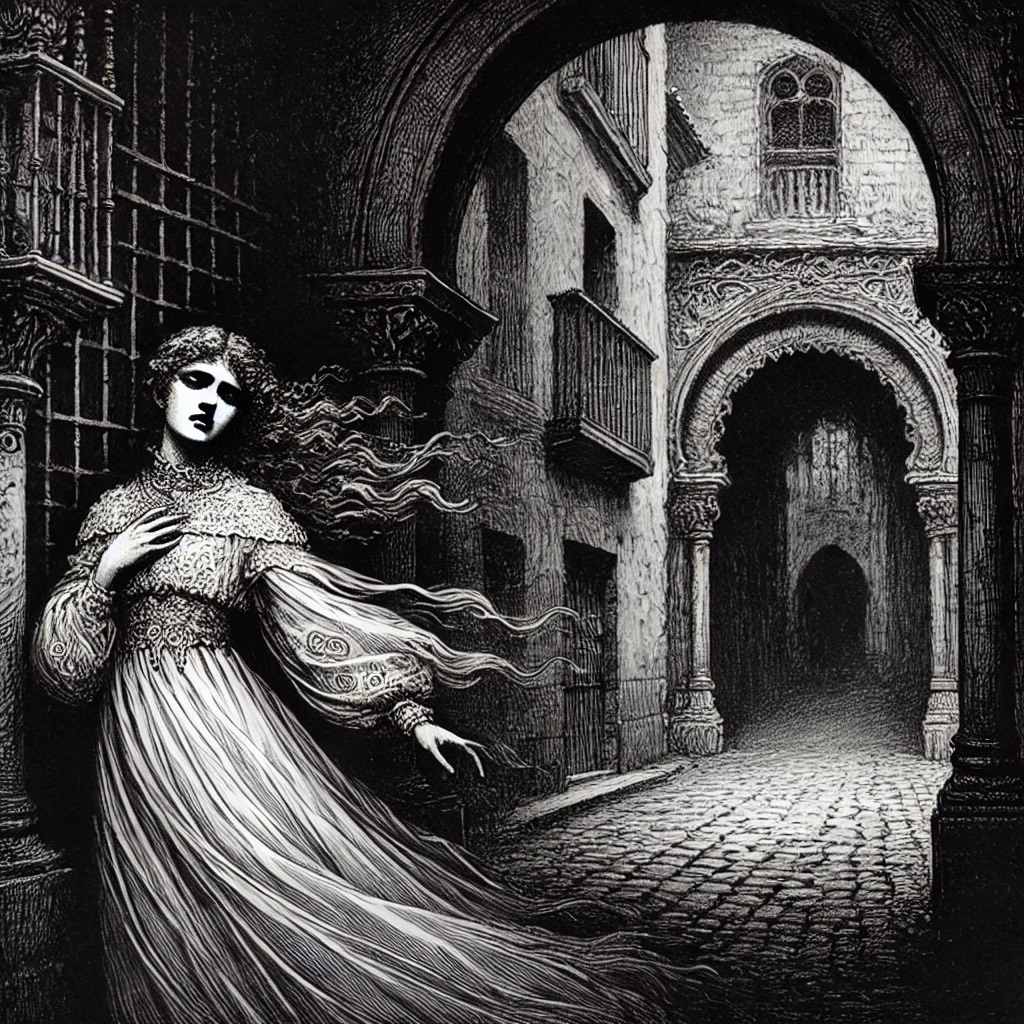
The beautiful, tragic figure of La Susona in the Old Jewish Quarter of Sevilla

The Legend of La Susona: A Tale of Love and Betrayal

Meet La Susona, a young woman whose beauty was matched only by the darkness of her fate. Susona Ben Susón was the daughter of a wealthy Jewish merchant in the late 15th century, a time when Sevilla was rife with tension, suspicion and the threat of religious persecution. Despite the danger, Susona fell deeply in love with a Christian nobleman, a relationship that was strictly forbidden.

One night, Susona overheard her father and his allies plotting a rebellion against the Christian authorities. To protect her lover, Susona revealed the plot, betraying her own family to save him. Her confession led to the swift arrest and execution of her father and many others, leaving her wracked with guilt. Shunned by her community and haunted by what she had done, Susona chose to live the rest of her life in isolation, dedicating herself to prayer and penance.

The skull of La Susona sits on the cobblestone streets of the Jewish Quarter of Sevilla

As death approached, Susona made one final, chilling request: that her skull be displayed at the entrance to her family home as a warning to others of the cost of betrayal. 

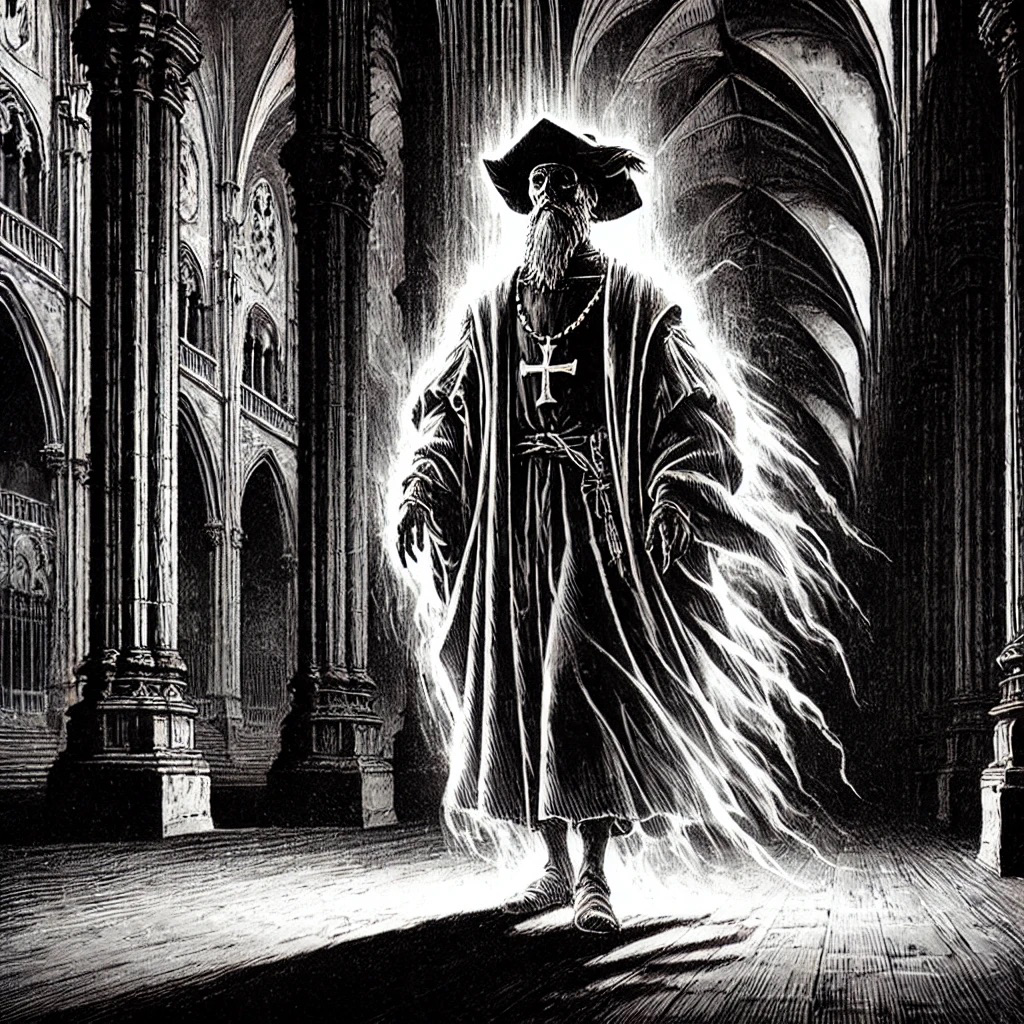
The glowing ghost of Christopher Columbus wanders Seville Cathedral

The Restless Ghost of Christopher Columbus

In the depths of Seville Cathedral’s hallowed halls, Christopher Columbus, the man who charted new worlds and altered the course of history, is said to haunt the very place where his bones now lie. 

By day, the cathedral bustles with visitors, but by night, when the crowds have gone, the air thickens with something unspoken. It’s then that some claim to see him — a ghostly figure drifting through the cold, silent nave, cloaked in a flowing coat, his face obscured by shadows.

Columbus appears near his grand tomb. Some who have ventured close to it at night have felt an icy chill or heard the faintest rustle, like the sweep of a cloak brushing against stone. Those who linger too long might catch a glimpse of a pale figure slipping into the darkness.

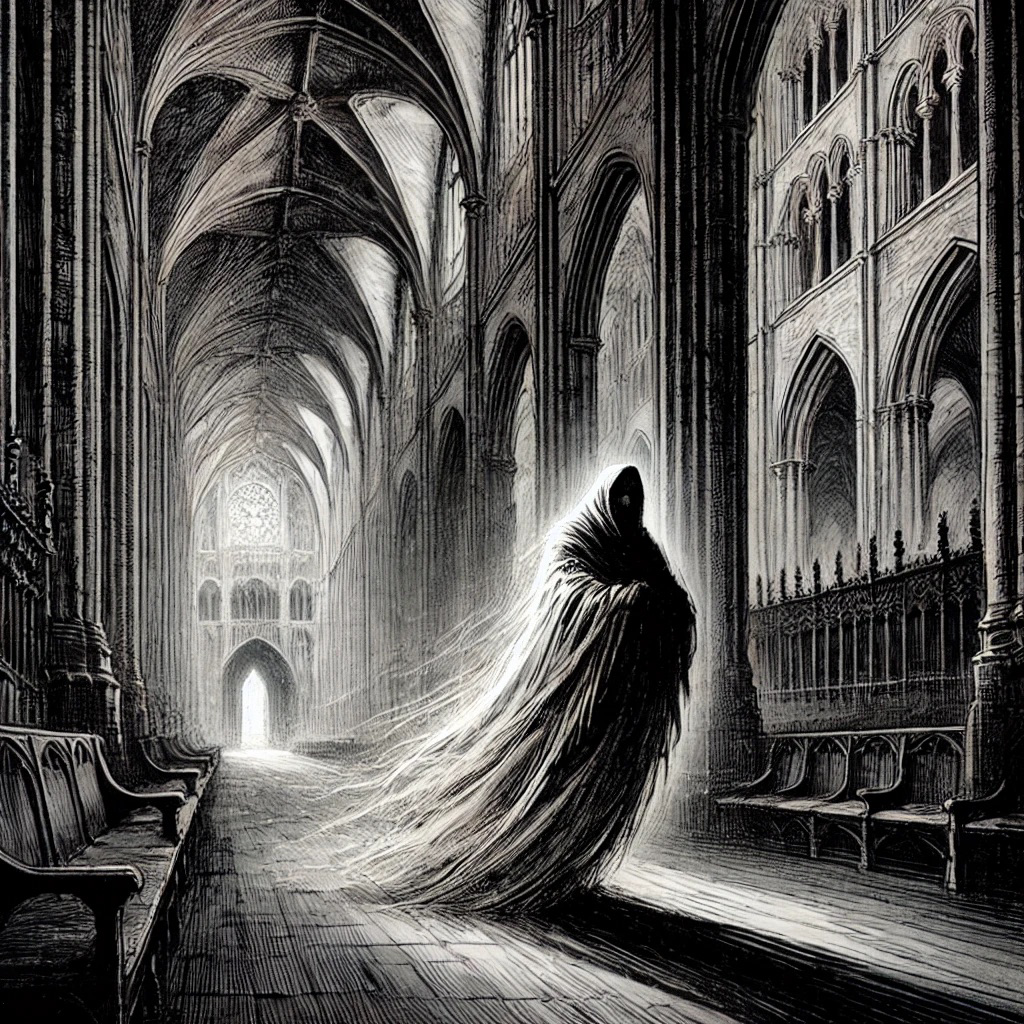
A ghost in ragged cloak wanders the Seville Cathedral

The ghost isn’t a vengeful spirit, nor does he lash out at those who dare approach. Instead, he wanders in sorrow and unrest, as if bound to the place by unfinished business or unquiet thoughts. His steps are slow, deliberate — an apparition of a man retracing paths he once walked in life, now doomed to tread them for eternity. 

Those who have encountered Columbus’ ghost speak of a sense of unease, as though they’re not just witnessing a spirit, but a regret that has taken form, a specter caught in an endless loop, reliving decisions that can never be undone — perhaps not too surprising for such a contentious figure.

A ghost floats along the Jardin del Naranjos at Seville Cathedral

Haunted Seville Cathedral 

These legends remind us that Sevilla is a city where the past is never truly buried. The stories may be shrouded in mystery and myth, but they endure, whispered through the ages, inviting all who listen to step into a world where history and the supernatural blur in the shadows of Seville Cathedral. 

It’s hard to shake the feeling that in this place of grandeur and mystery, some echoes never fade, and some spirits never rest. –Wally

The Island of the Dead Dolls – La Isla de las Muñecas

How to visit this haunted Mexico City tourist attraction on the Xochimilco canals, and the tragic ghost story of a little girl’s spirit and the strange offerings to appease her.

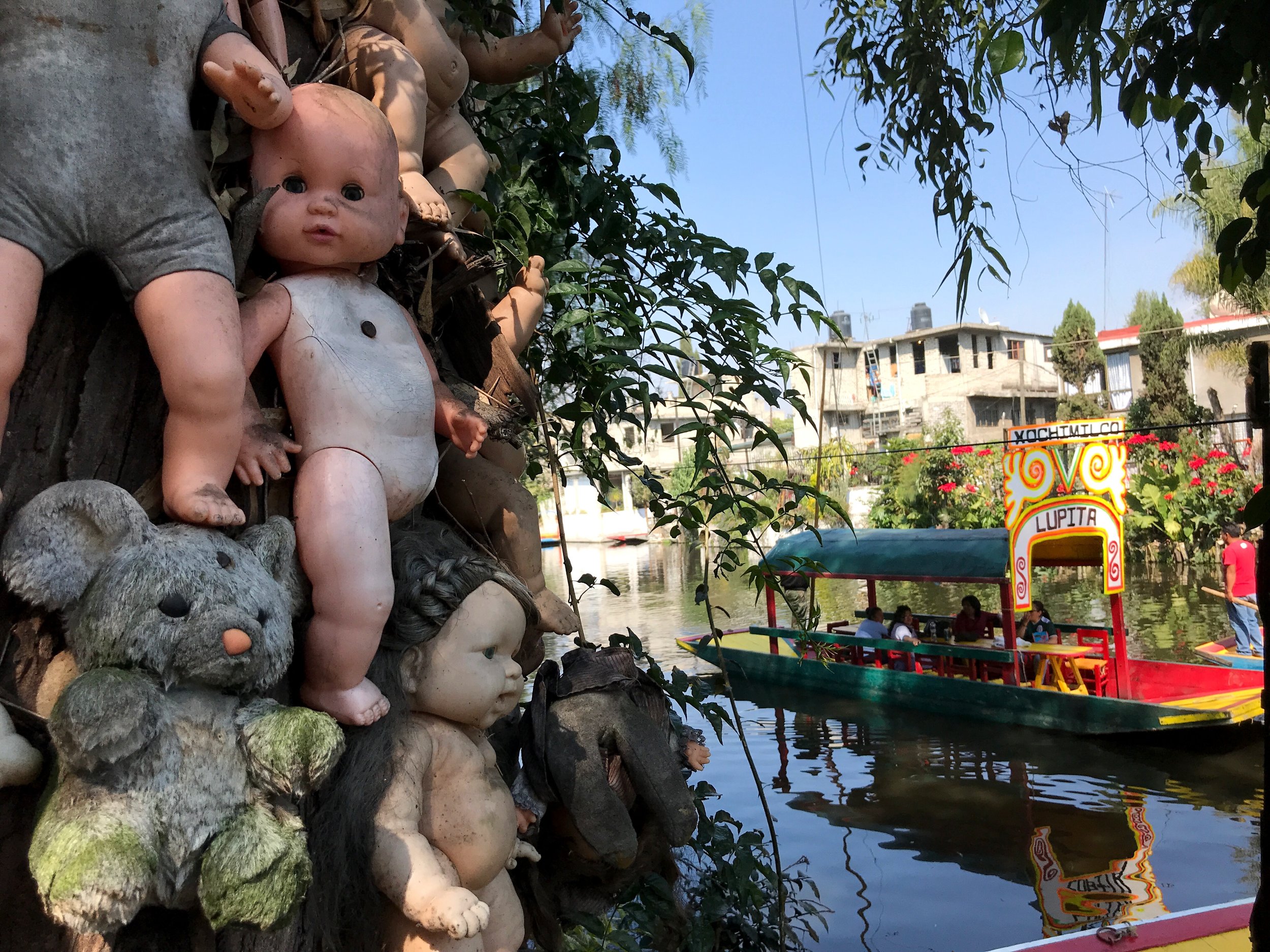
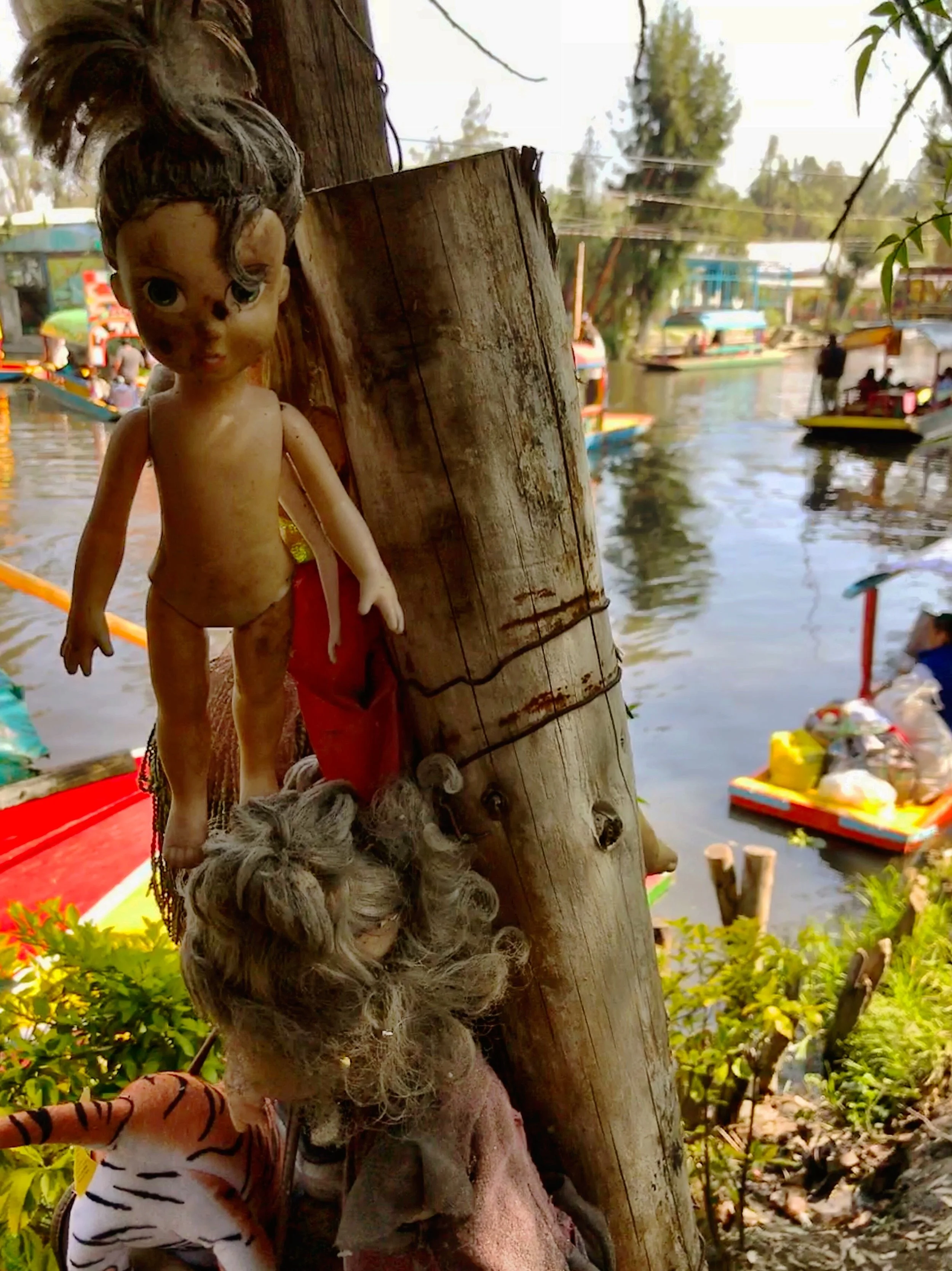
Rent one of the colorfully painted canal boats on Xochimilco and make a stop at this strange attraction

Rent one of the colorfully painted canal boats on Xochimilco and make a stop at this strange attraction

She was just lying there on the sidewalk, scuffed up and abandoned, behind the massive Uptown Theatre. We knew we had to save her. So Duke and I picked up the dirty baby doll and took her home.

We knew that our sad little toy had a larger destiny: She’d become an offering to the ghost said to inhabit the Island of the Dead Dolls, or la Isla de las Muñecas, on our trip to Mexico City.

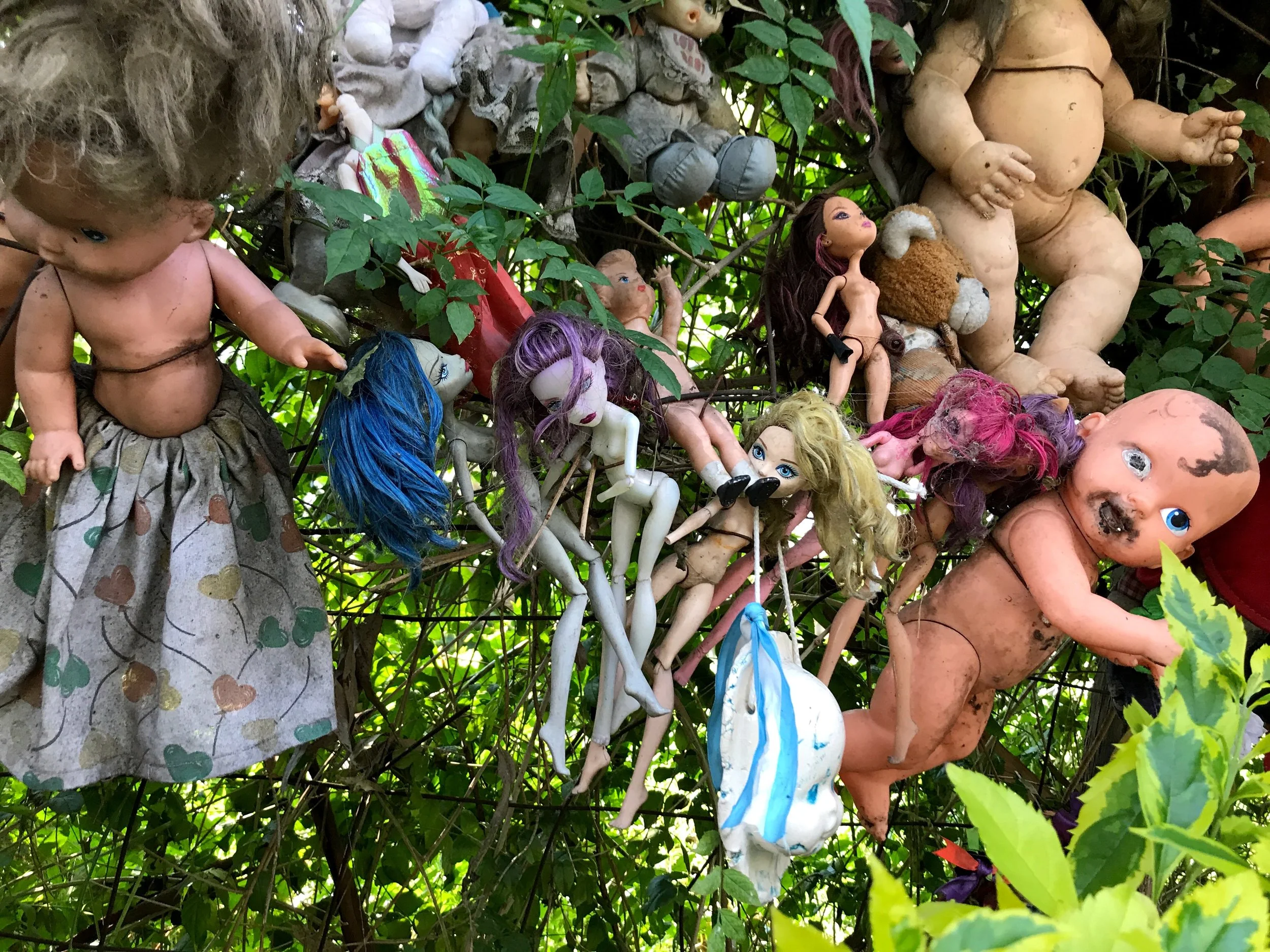
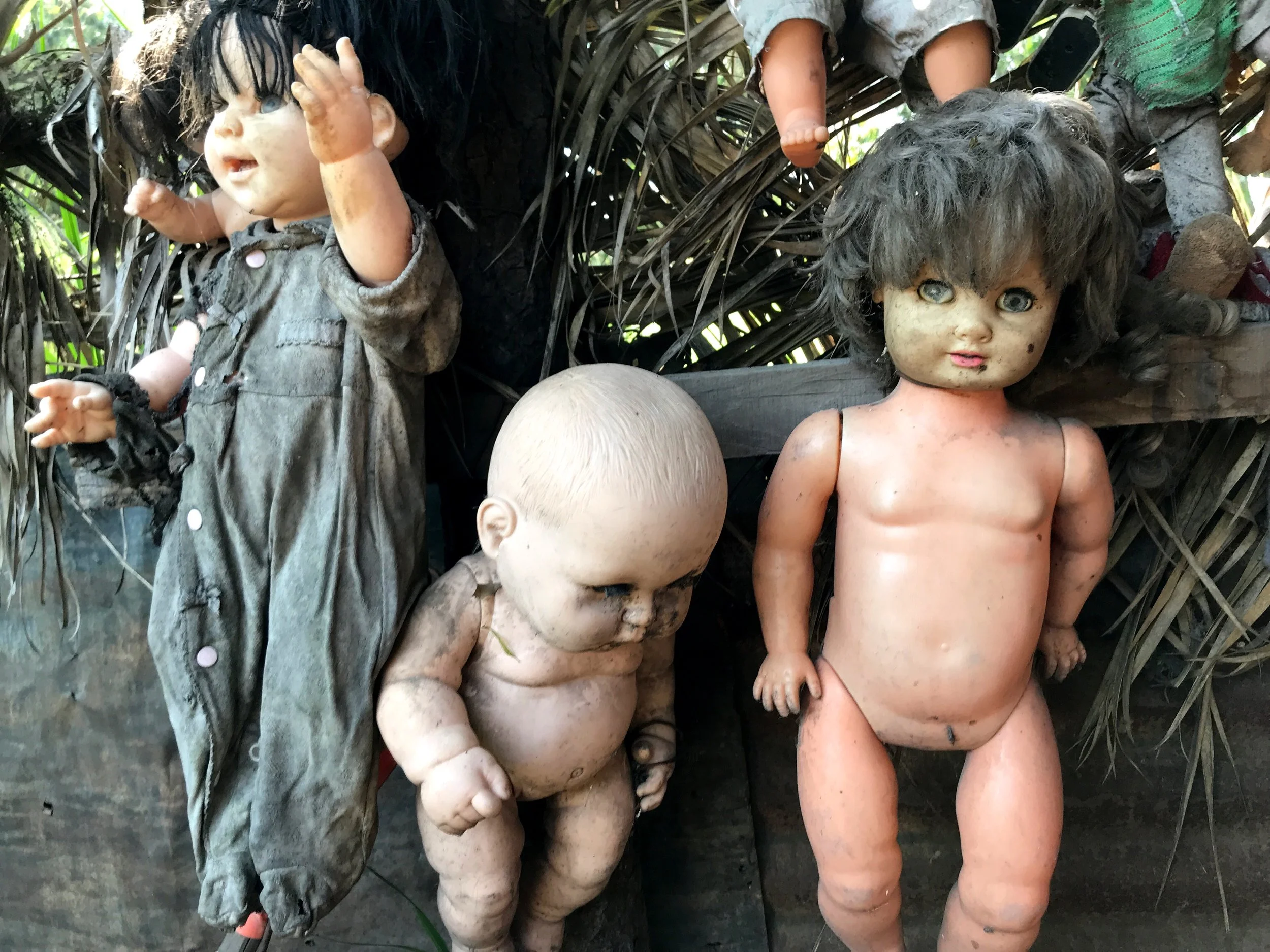
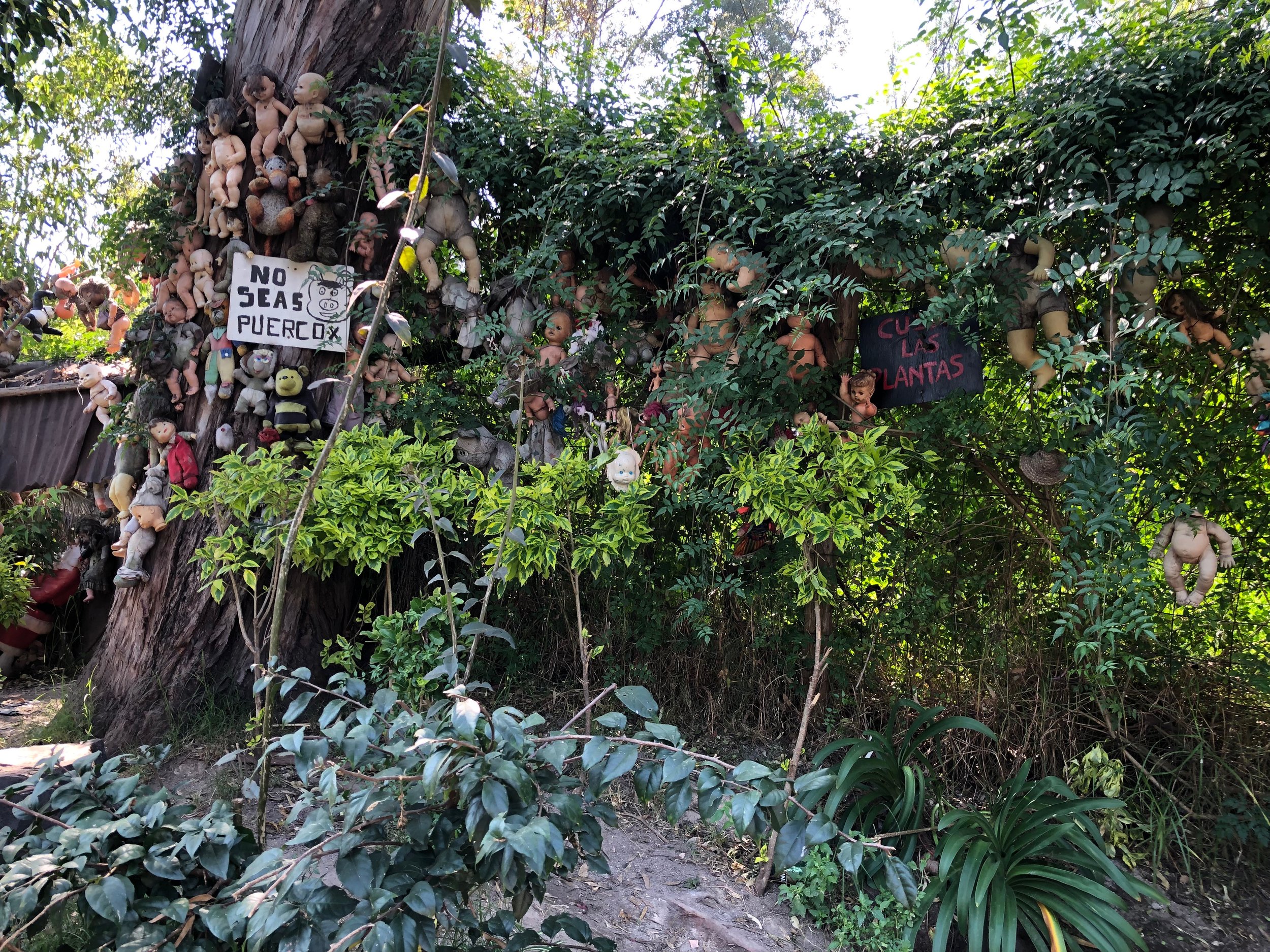
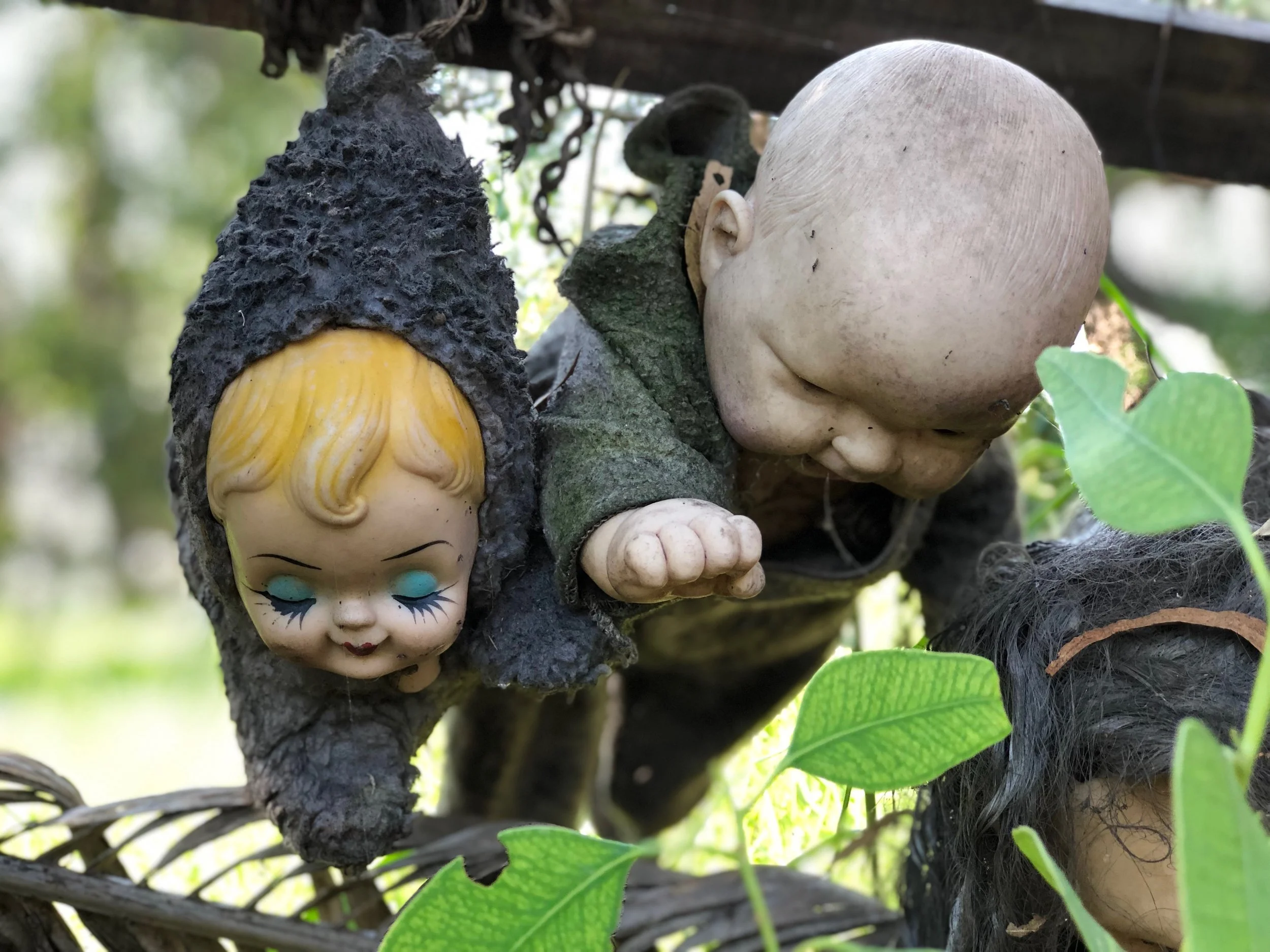
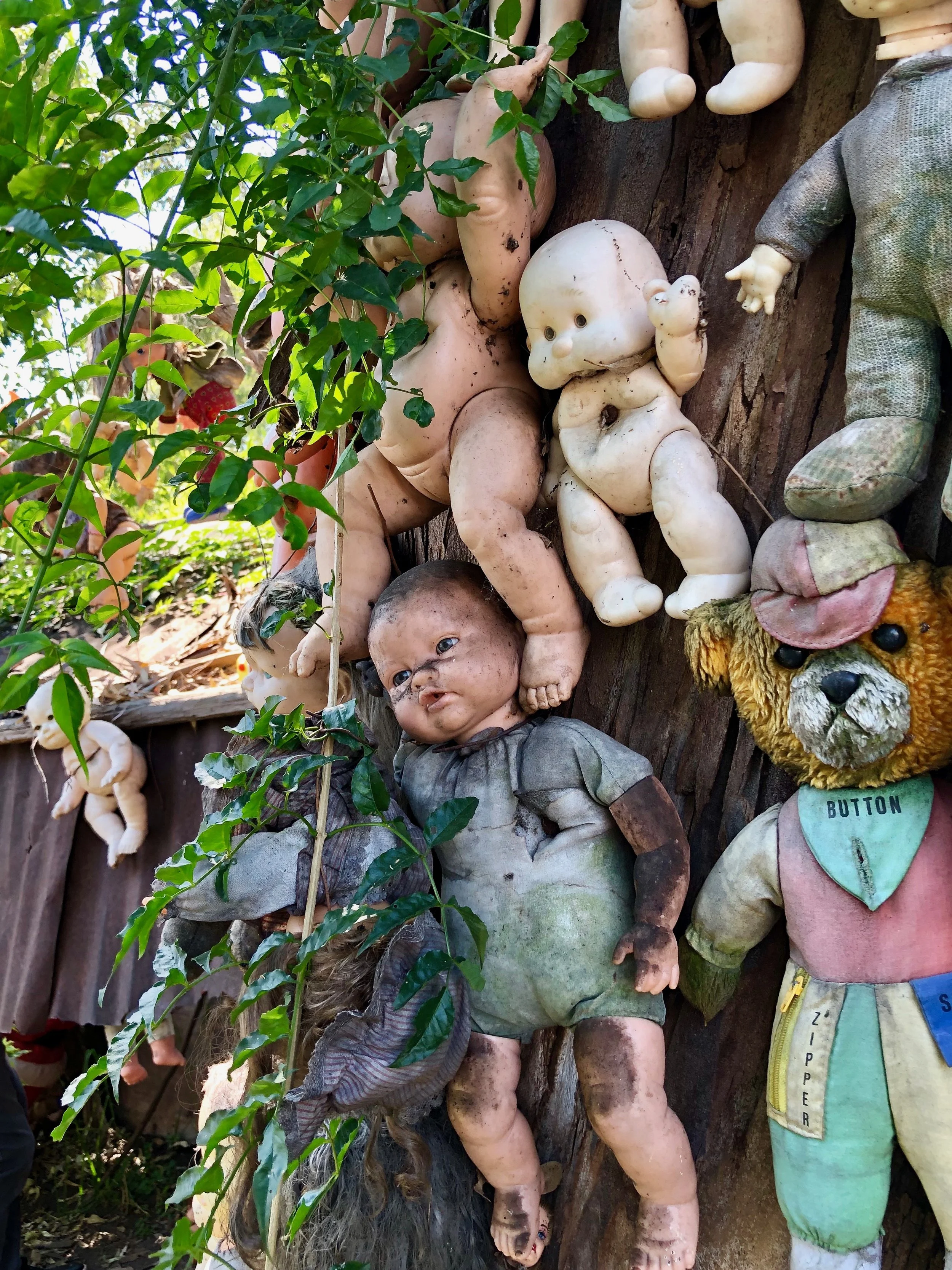
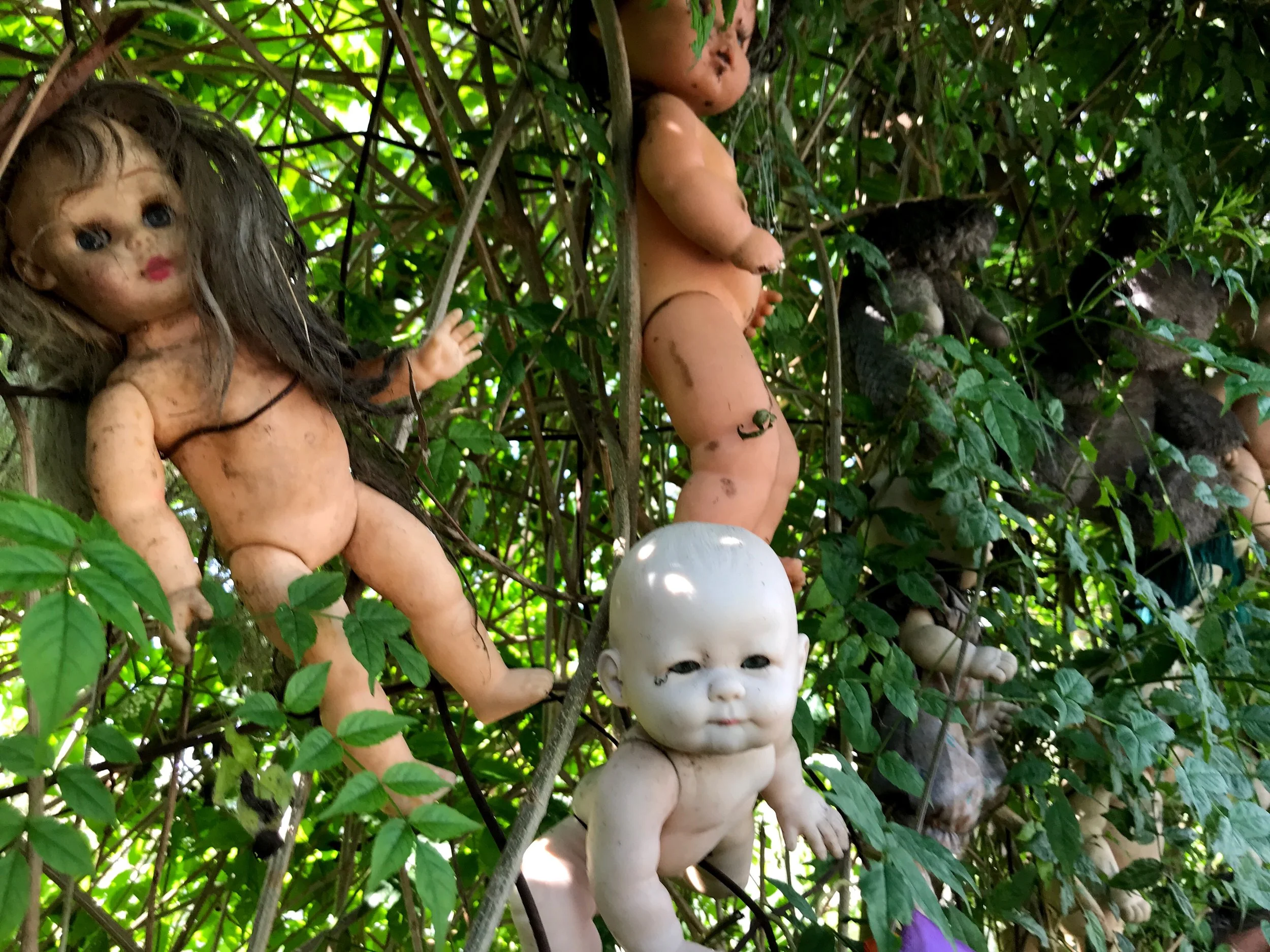
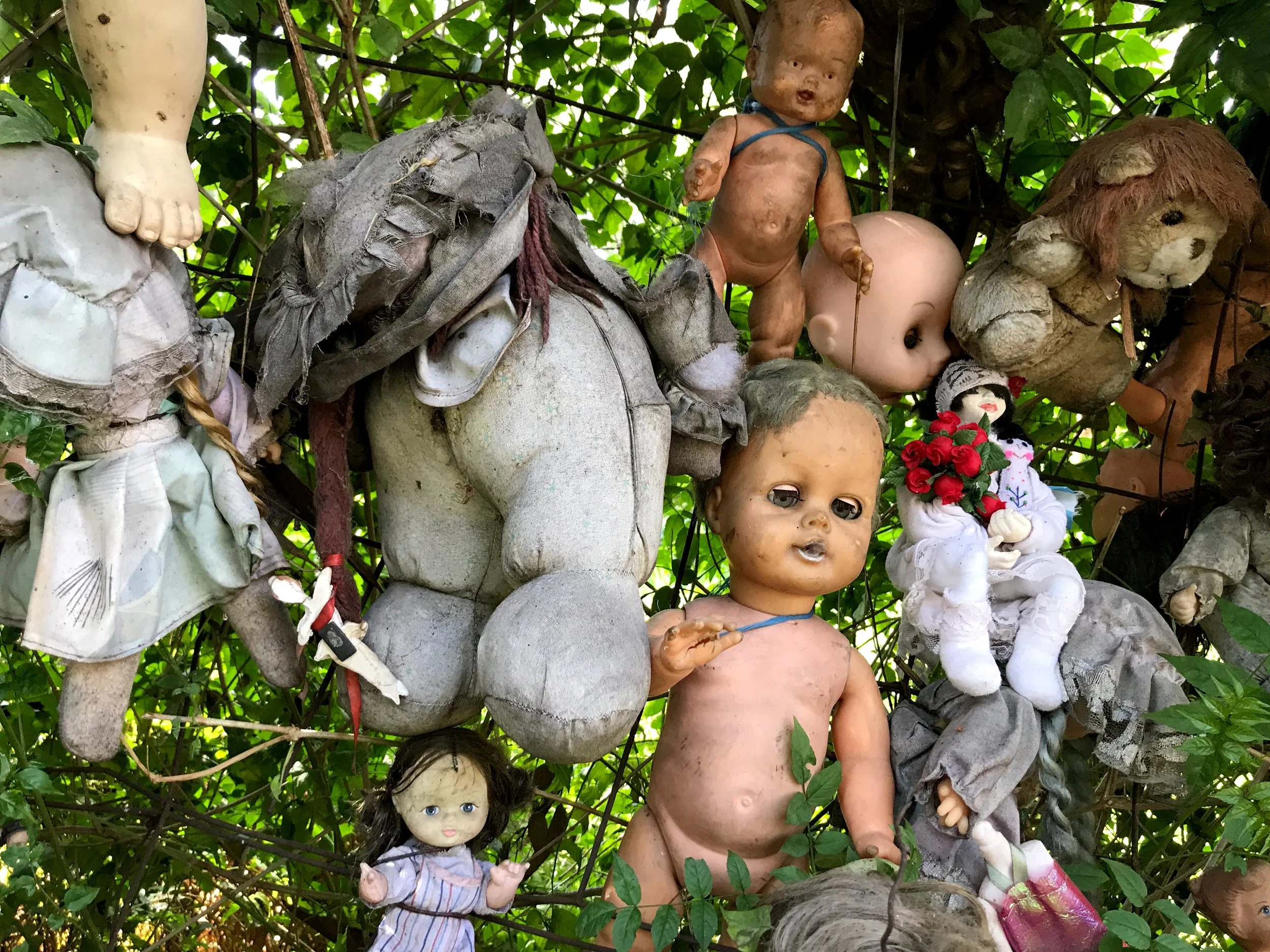
Everywhere you look, dolls fill your vision, like a nightmare come to life.

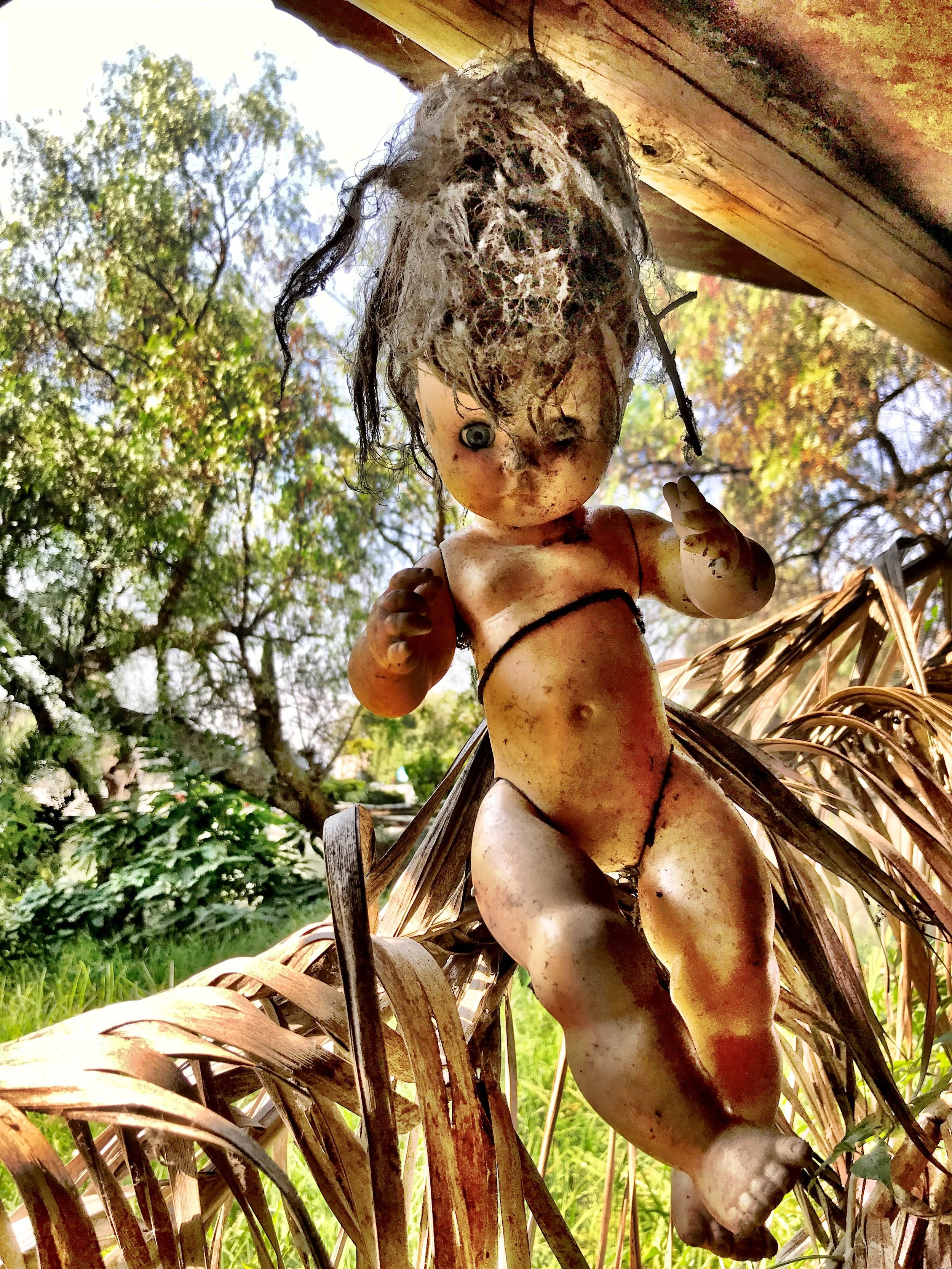
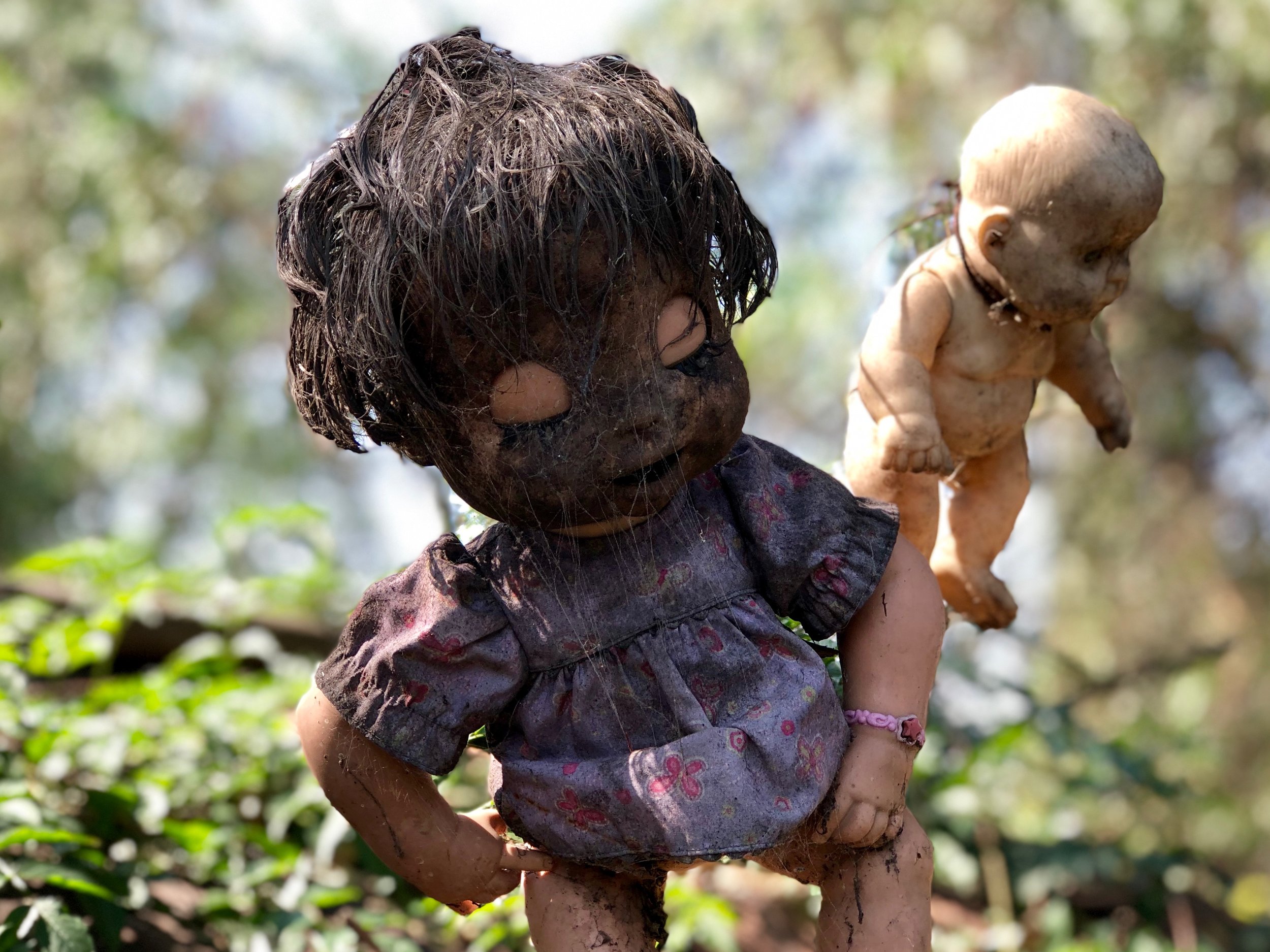
Most have been stripped of their clothing. Dirt and black mold cover their naked lifeless bodies, as if they’ve contracted some sinister plague.
Can’t you totally imagine this guy coming to life?!

Can’t you totally imagine this guy coming to life?!

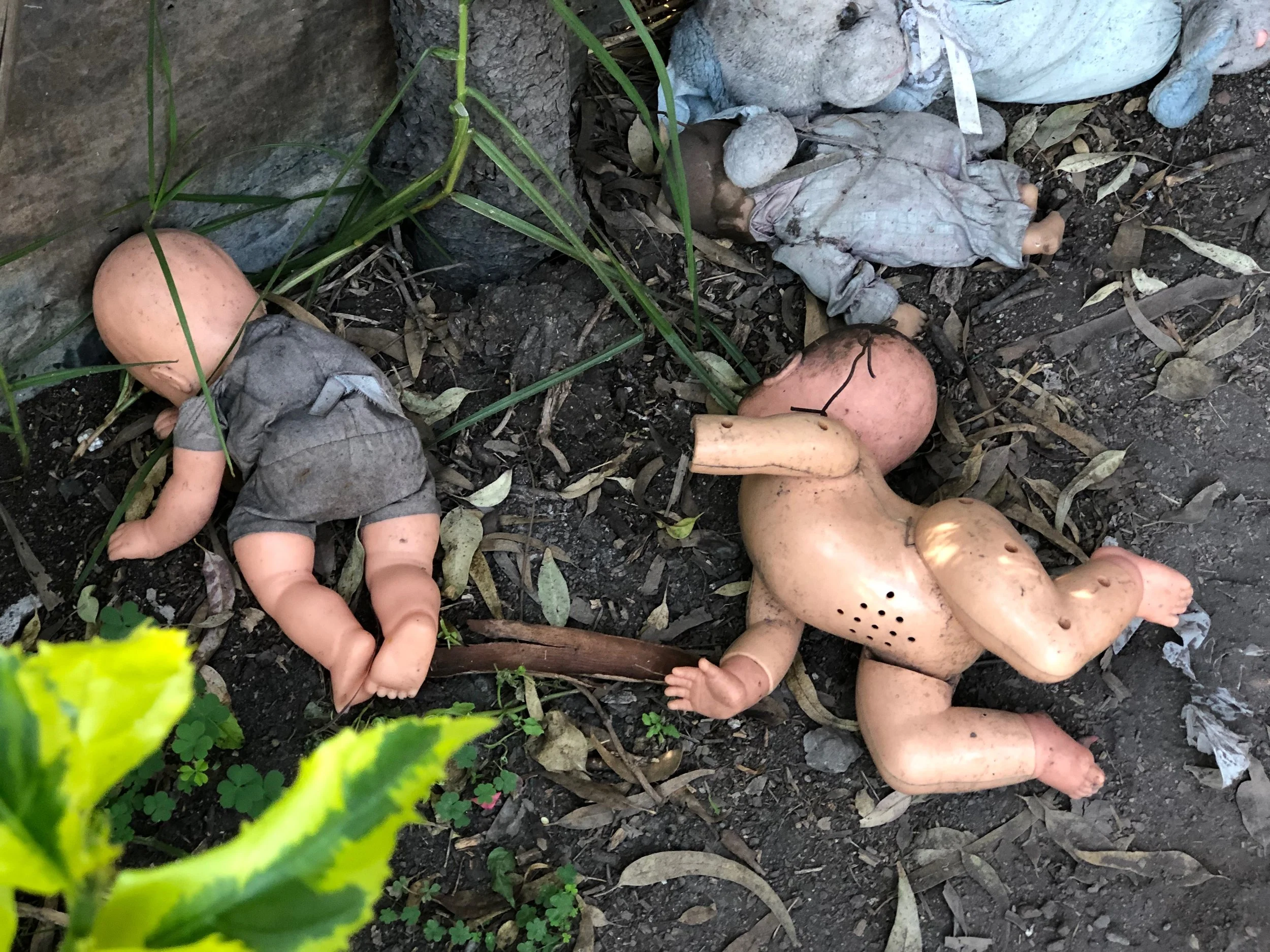
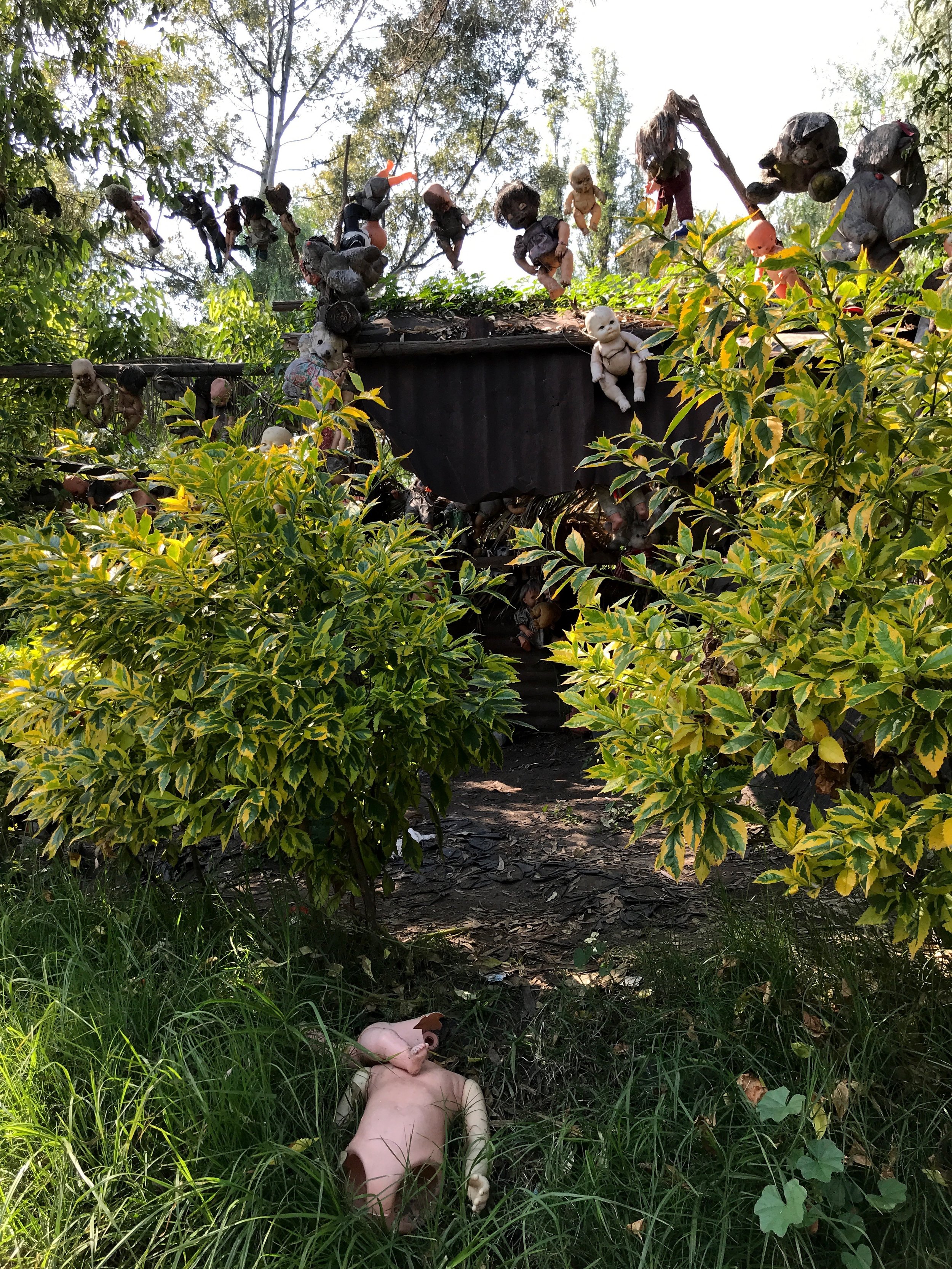
Dolls lay damaged on the ground, like casualties of some horrific catastrophe

Dolls lay damaged on the ground, like casualties of some horrific catastrophe

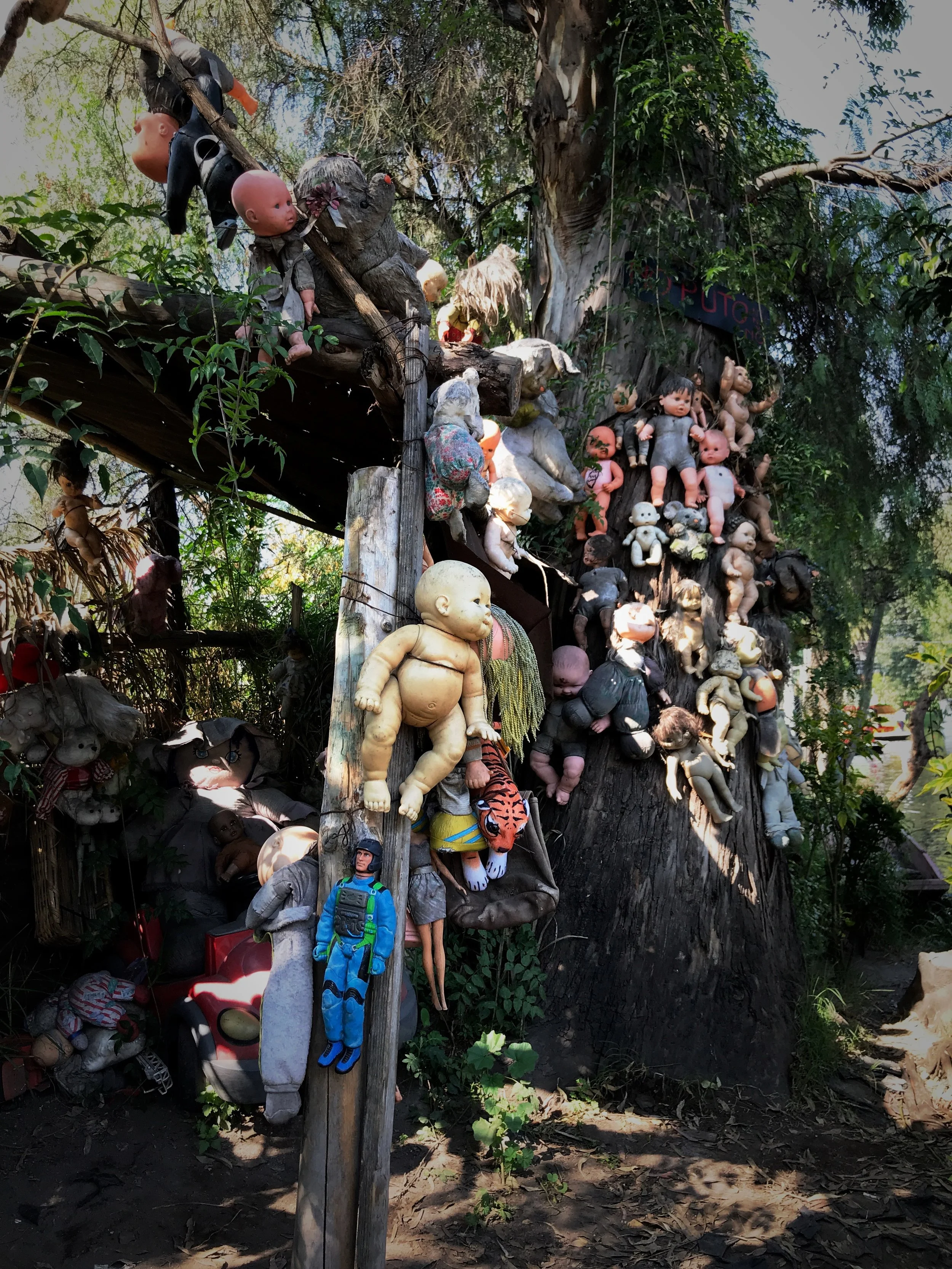
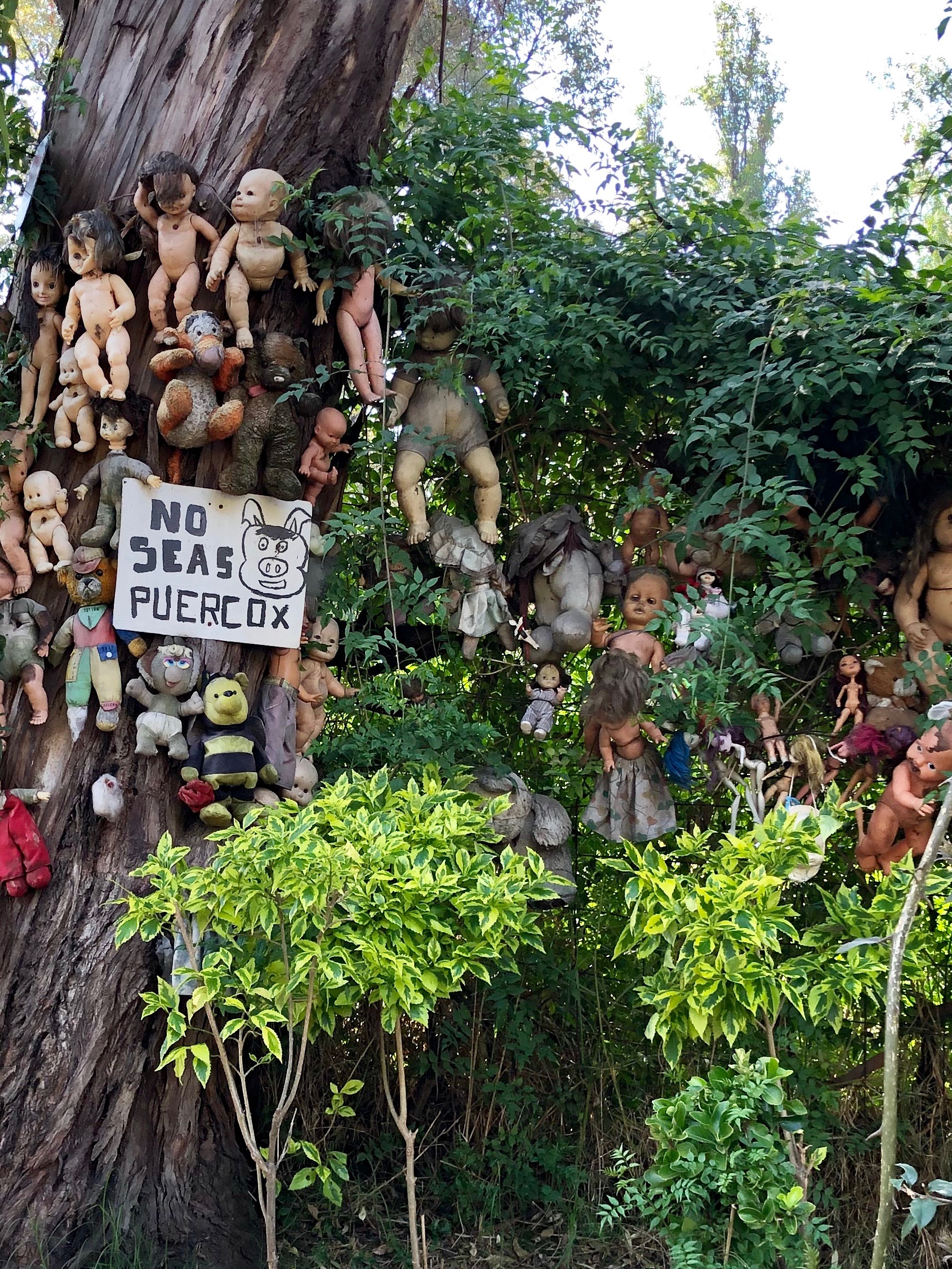
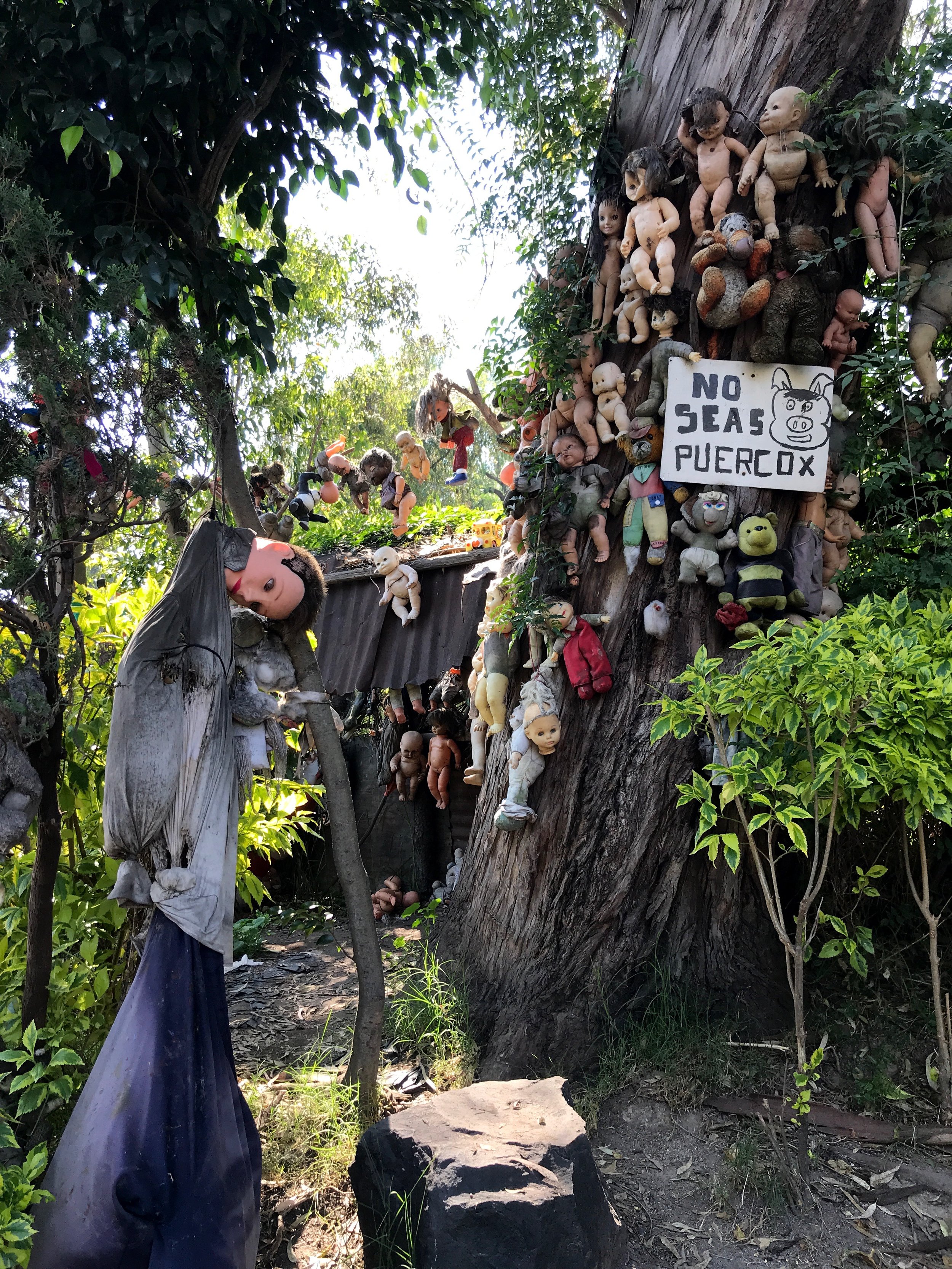
These dolls have been nailed to a tree, creating a macabre tableau

These dolls have been nailed to a tree, creating a macabre tableau

The Legend of the Island of the Dead Dolls

Along the canals of Xochimilco (pronounced So-chee-meel-ko), a young girl drowned under mysterious circumstances. One day a man named Don Julián Santana Barrera left his wife and child, and moved into a tiny cabin on one of the small islands between the canals of Xochimilco to live out his life as a hermit.

Shortly thereafter, he made a gruesome discovery that would haunt him for the rest of his life: He found a girl floating face-down in the water. But, try as he might, he was unable to revive her.

Not long after, he saw a doll bobbing along nearby. He fished it out and tied it to a tree as a way of showing respect to the spirit of the drowned girl.

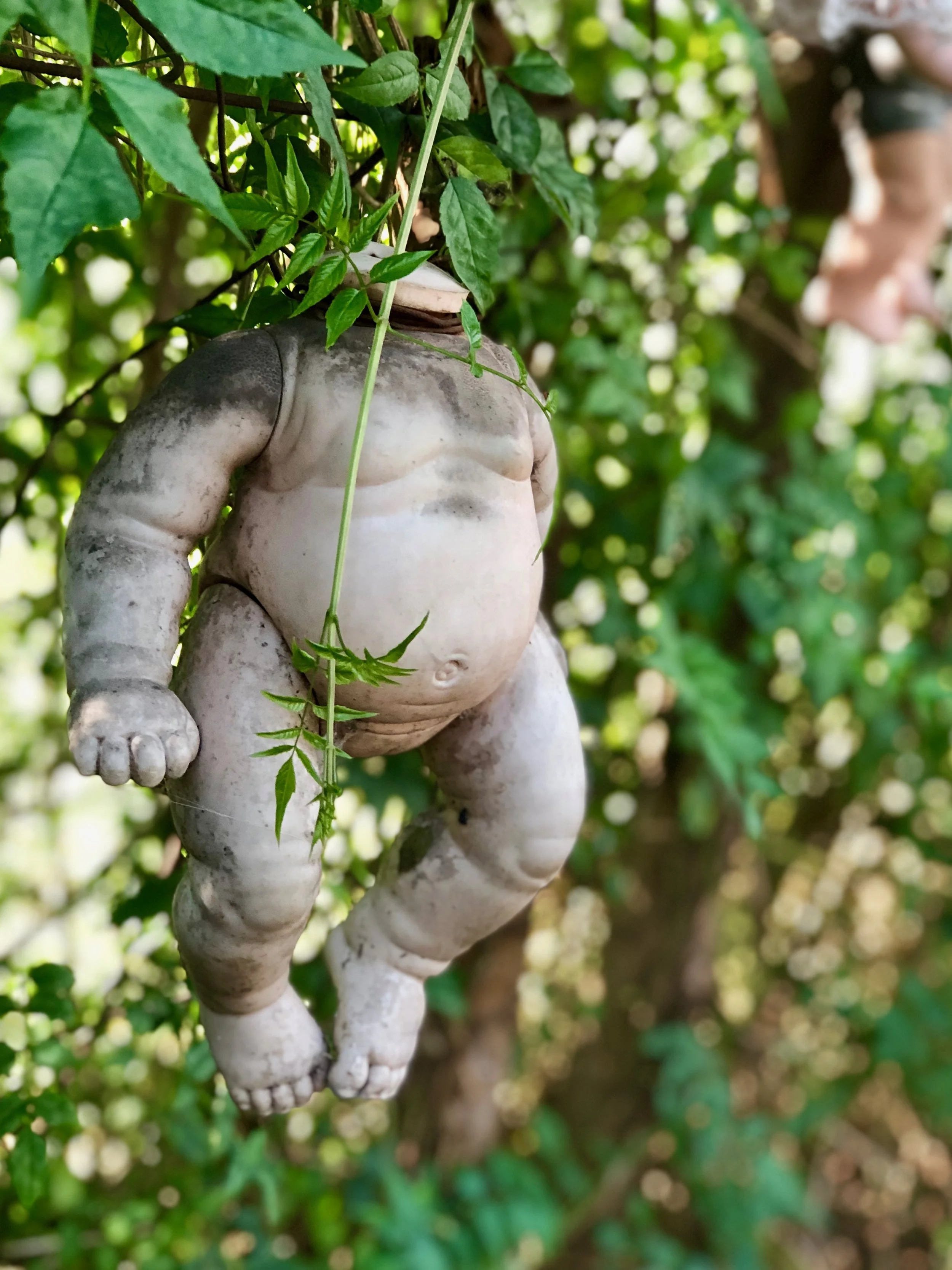
Off with her head!

Off with her head!

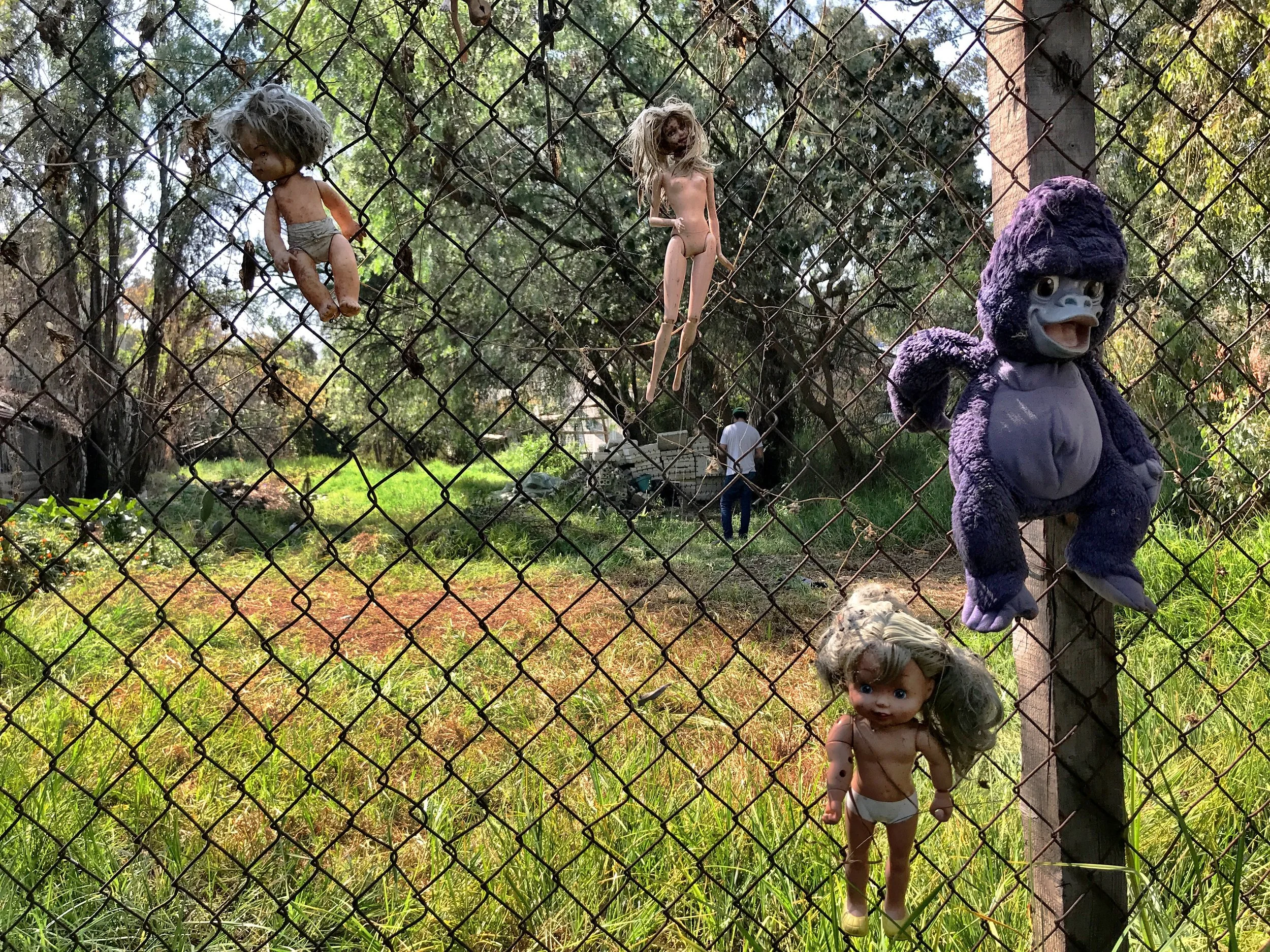
A fence with various offerings. Note Captain Sandro in the background

A fence with various offerings. Note Captain Sandro in the background

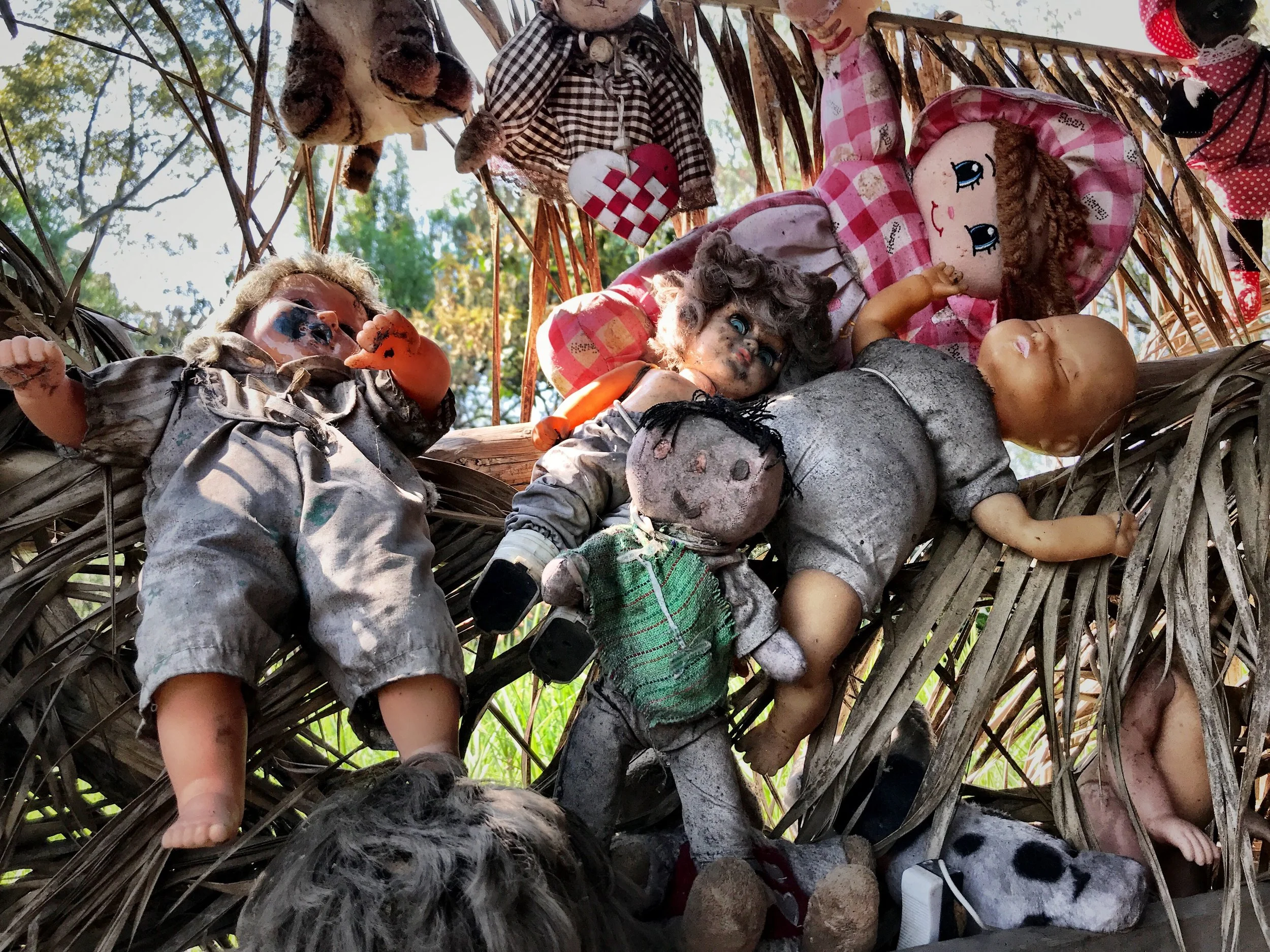
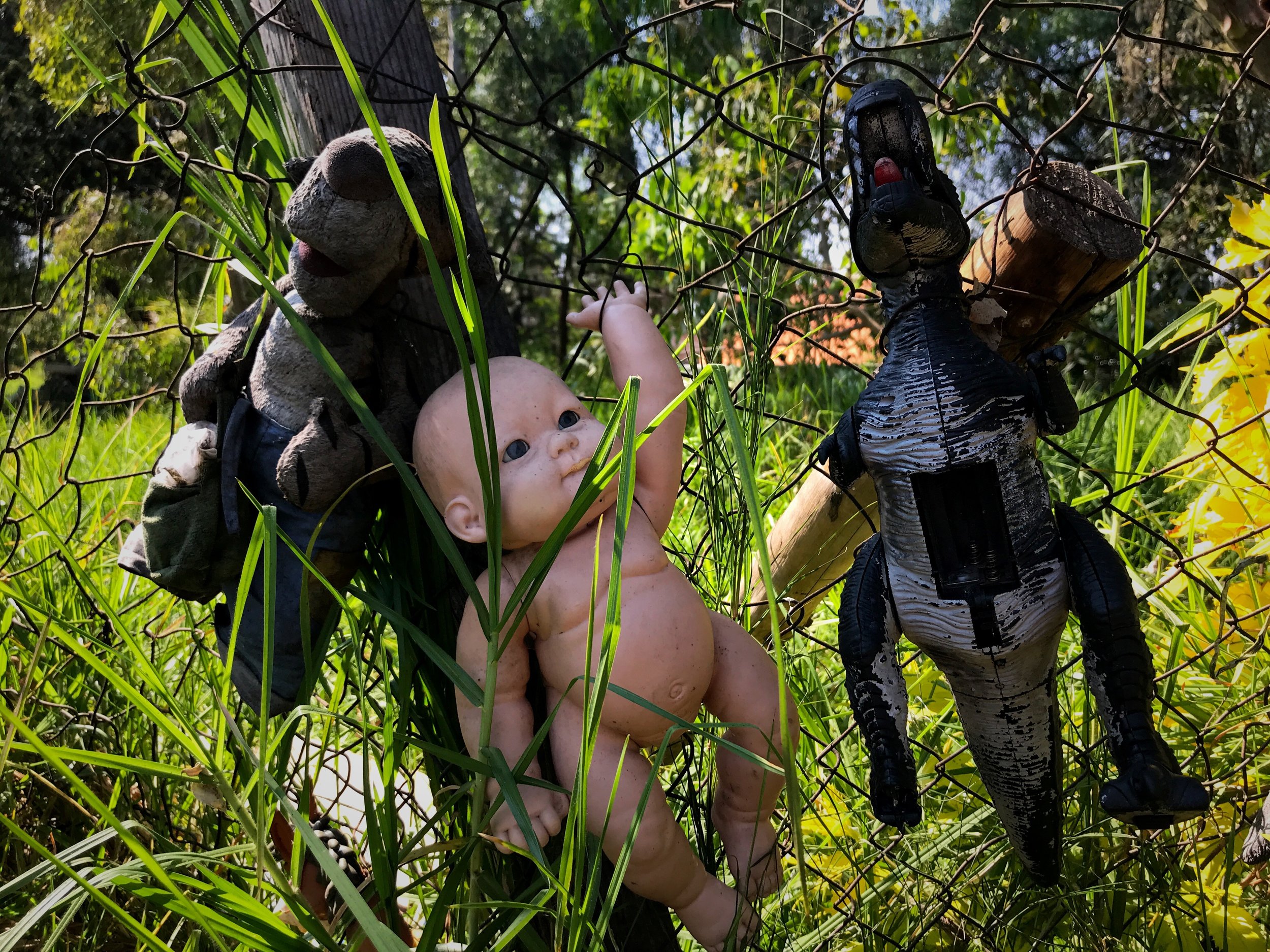
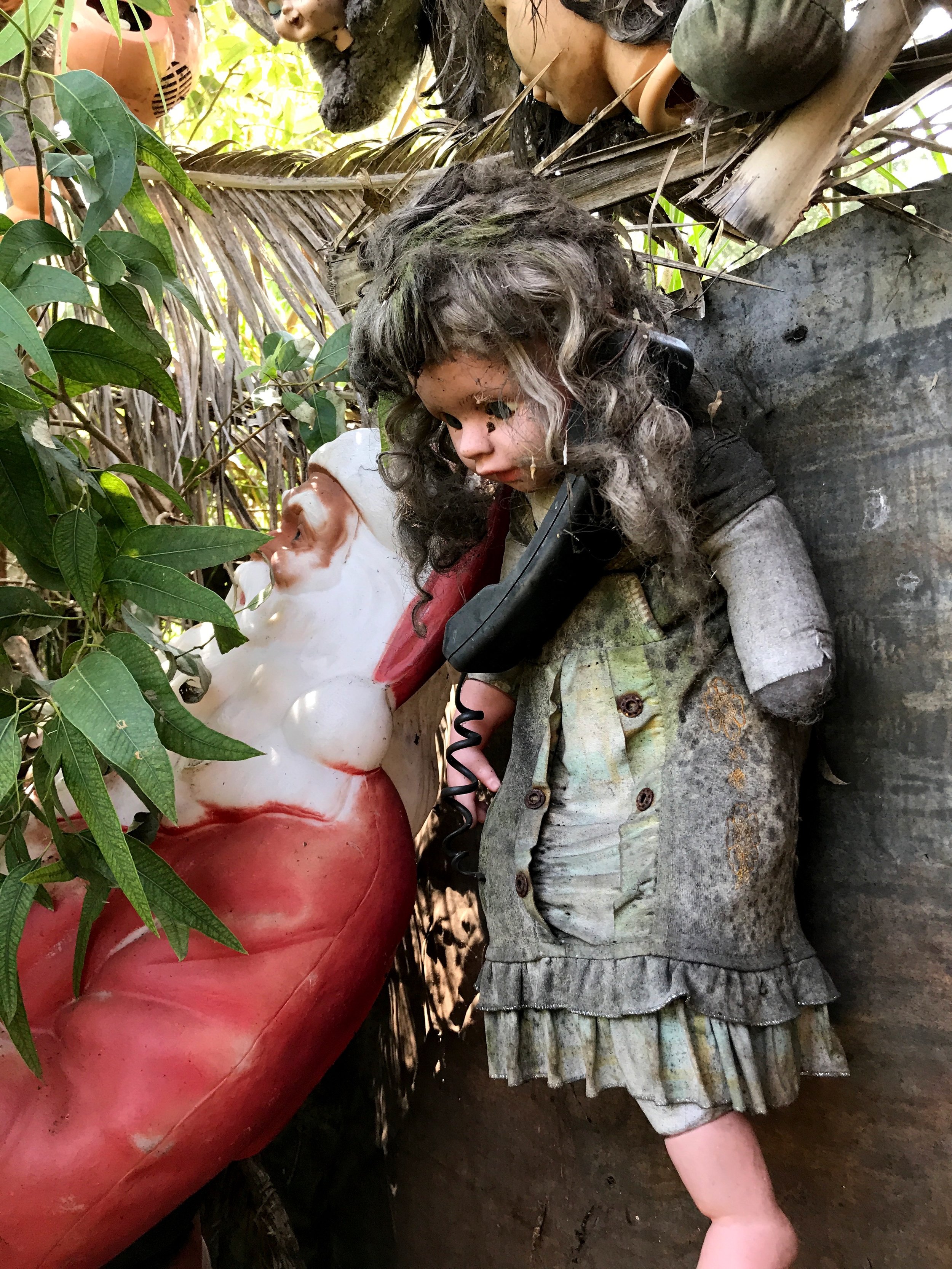
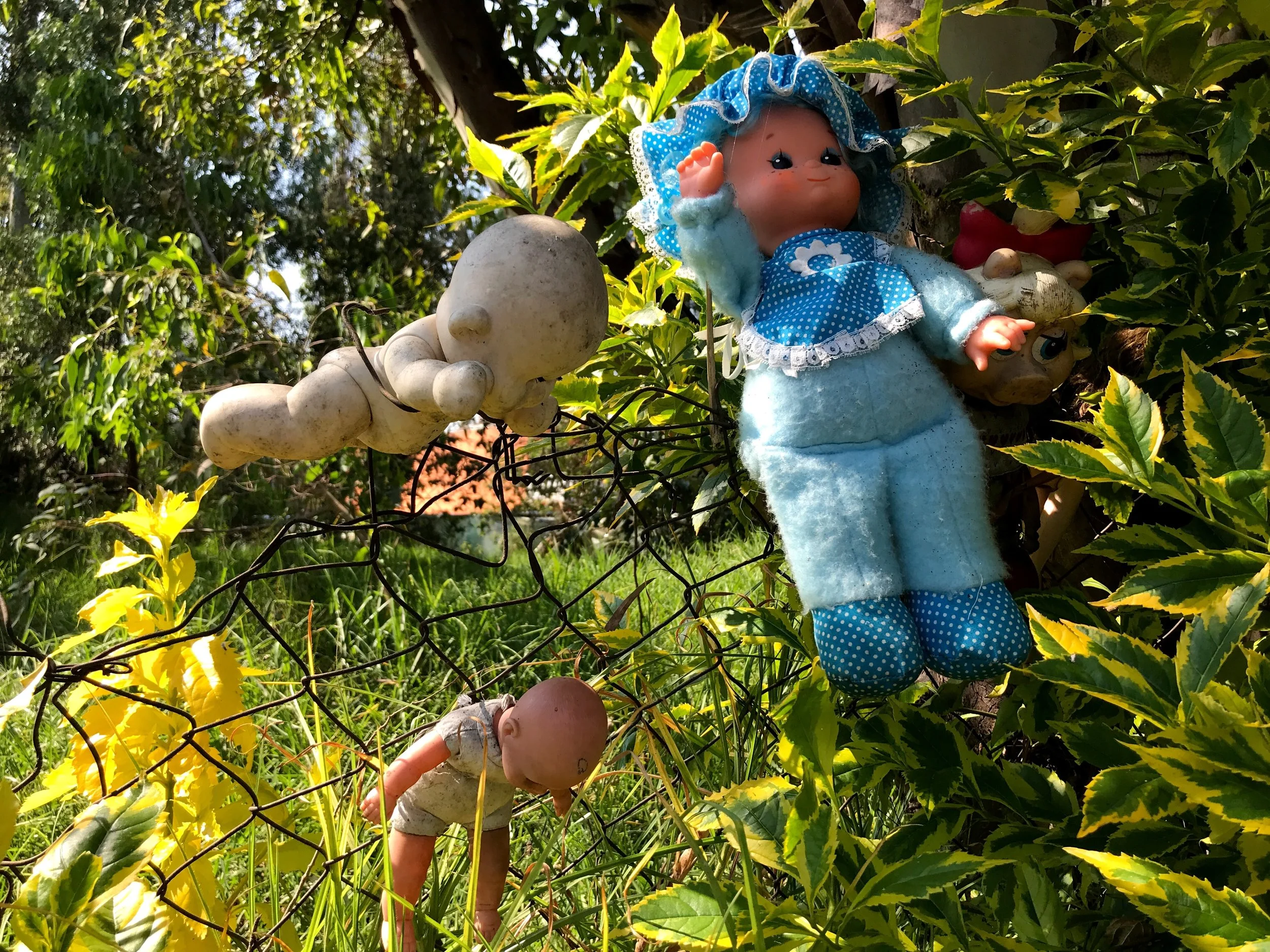
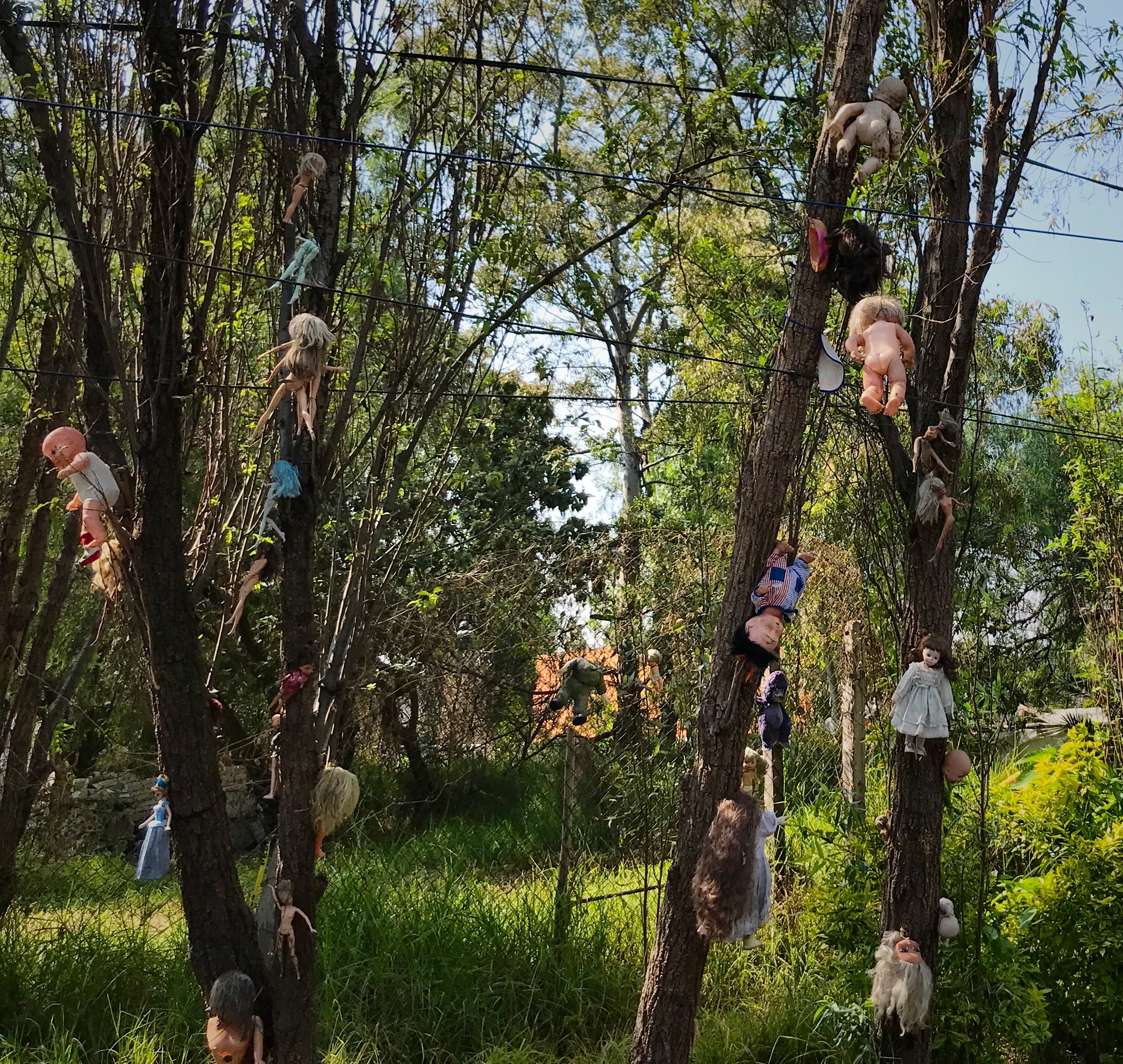
It didn’t work, though. The girl’s ghost haunted Julián. In an effort to appease this restless wraith, he continued to hang more and more dolls, now joined by mangy stuffed animals, plastic dinosaurs, action figures and even a likeness of Santa Claus. The offerings hang from branches, wires and fences, while others have been cruelly nailed right into tree trunks. A couple lay face-down in the dirt, as if they perished mid-crawl, trying to escape the horrors of la Isla de las Muñecas. Over time, the entire island became a bizarre shrine dedicated to this lost soul.

Fifty years later, in 2001, Julián drowned — in the exact spot where he had found the little girl’s body. Was it an accident? Did he commit suicide? Or did the little girl’s ghost finally claim her victim?

Dolls of all shapes and sizes hang in offering to the restless spirit

Dolls of all shapes and sizes hang in offering to the restless spirit

Ghost Hunters

The Island of the Dead Dolls is just the type of creepy, quirky destination that appeals to our warped sensibilities. We knew that we wanted to take a boat out on the Xochimilco canals, but once we saw pictures of the dolls loosely dangling from branches on la Isla de las Muñecas, that became my number-one priority.

Duke’s only pretending to be scared — he loved the Island of the Dead Dolls

Duke’s only pretending to be scared — he loved the Island of the Dead Dolls

Locals say that the dolls have lured them to the island. They swear they’ve seen the chubby limbs of the dolls move on their own, that the heads, with their dead, unseeing eyes, will turn slowly toward you. They even say that they’ve heard the dolls whisper to each other, momentarily possessed by the spirit of the doomed little girl. It’s easy to imagine the dolls coming to life at night and causing mischief.

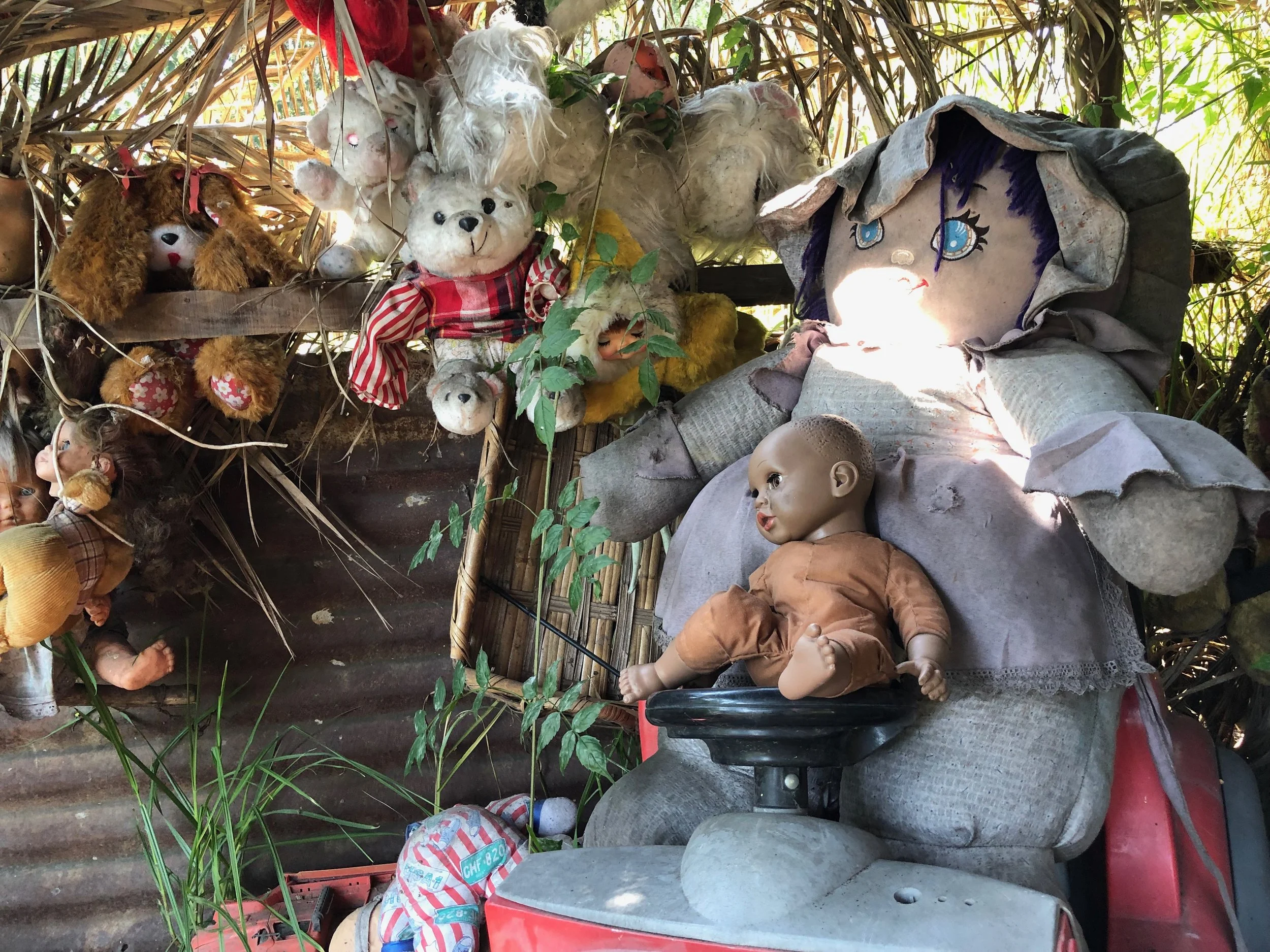
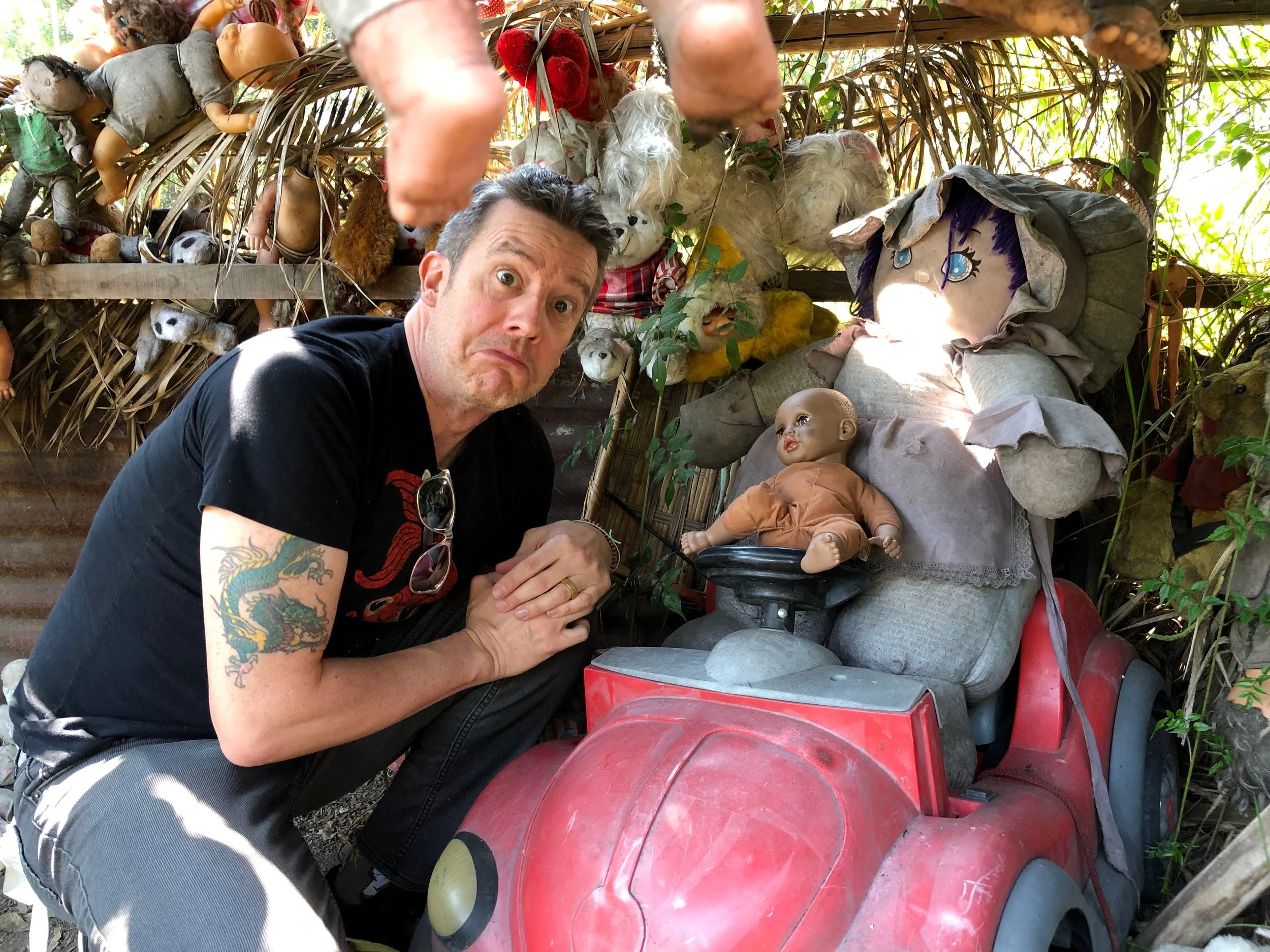
I placed our doll on the steering wheel of a toy car. Looks like she’s in good company

I placed our doll on the steering wheel of a toy car. Looks like she’s in good company

Our Offering to the Ghost

While we were on the canals, I had a one-track mind: I wanted to make sure we’d get to see the Island of the Dead Dolls. Our boat captain, Sandro, consented and took us to the haunted isle. I grabbed the doll we had brought and scrambled off the boat onto the small jut of land.

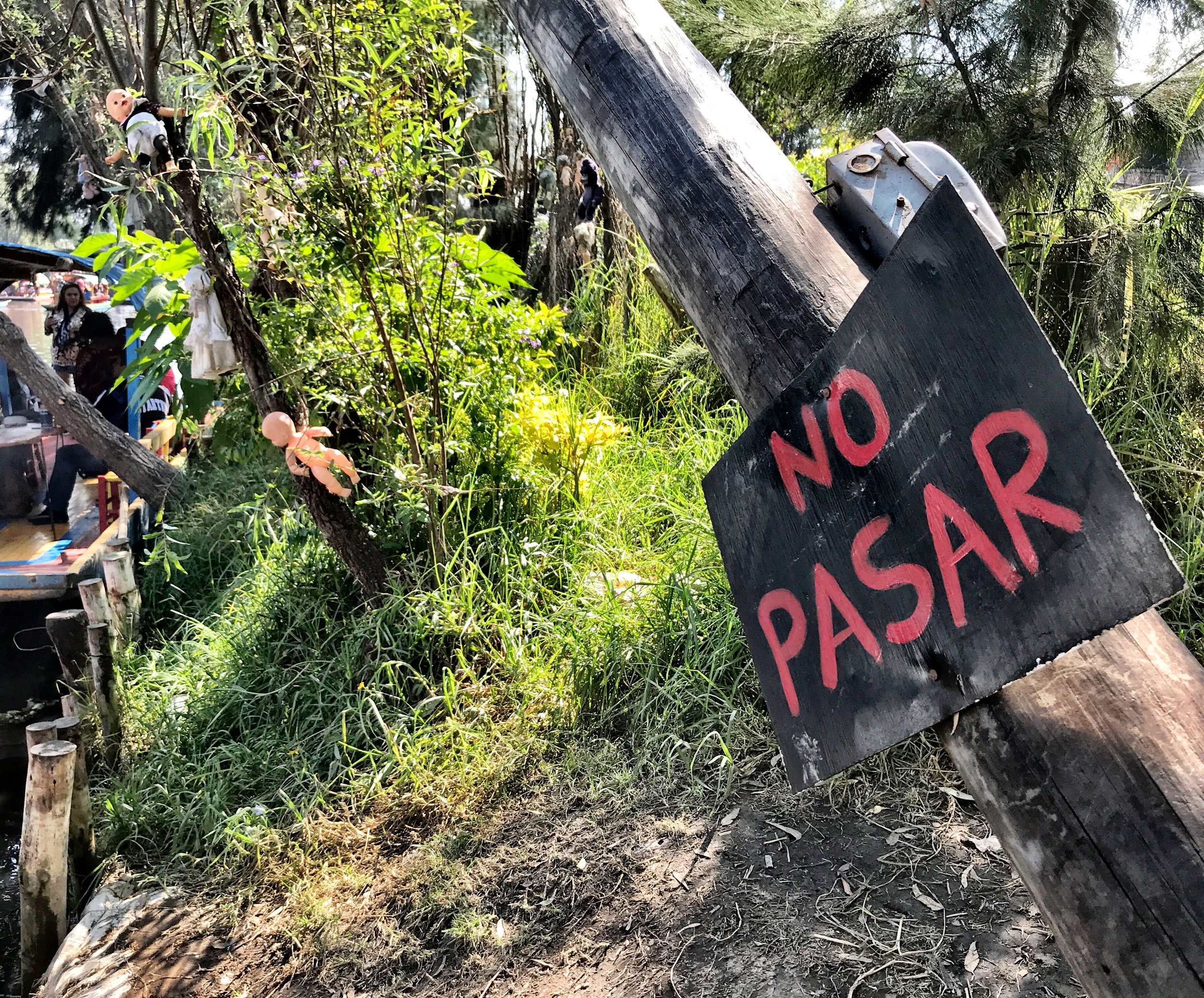
No Pasar means Do Not Enter. As if!

No Pasar means Do Not Enter. As if!

Purposefully ignoring the “No Pasar” sign, we walked past a life-size doll that might or might not be Pee-wee Herman, its neck bent at a sickenly unnatural angle, as if it had been snapped. He hangs there at the base of the path, like a gruesome warning of the dangers ahead.

Is that Pee-wee Herman (with a snapped neck), greeting you to this creepy island?

Is that Pee-wee Herman (with a snapped neck), greeting you to this creepy island?

Everywhere you look, dolls fill your vision, like a nightmare come to life. Most have been stripped of their clothing. Dirt and black mold cover their naked lifeless bodies, as if they’ve contracted some sinister plague.

Disgustingly dirty dolls dangle from branches and wires all over the small isle

Disgustingly dirty dolls dangle from branches and wires all over the small isle

The island is steep and narrow, and we had to be careful not to lose our footing and topple into the canal. Duke and I wandered around, snapping photo after photo while our boat captain got stoned in a nearby field. It’s such a bizarre setting — you can’t really imagine it until you experience it firsthand. Dolls are creepy enough on their own. But they’re downright terrifying when you see a bunch of them, deformed, dirty, missing hair, limbs or heads after being exposed to the elements for decades.

How many dolls does it take to appease a little girl’s ghost?!

How many dolls does it take to appease a little girl’s ghost?!

A doll hangs, missing its head, its skin a grayish hue from years of sun and rain. Another’s eye has popped out. One has been defaced, with an arcane symbol scrawled upon its forehead and a dark smudge over one of its unblinking eyes.

We wouldn’t be surprised if this dolly was used in Satanic rituals

We wouldn’t be surprised if this dolly was used in Satanic rituals

Underneath a bower constructed of wood and dried leaves, I found a large red toy car with a giant dead-eyed, bloated Holly Hobby type doll behind the wheel. I decided this would be the new home for our dolly. I placed her on top of the steering wheel and offered her as a companion to appease the girl’s ghost.

Say hi to “la negrita en el carro” from Chicago when you visit the island

Say hi to “la negrita en el carro” from Chicago when you visit the island

Out front of the island, a couple offered quesadillas for sale. We got the impression that they stationed themselves there every day to catch the tourists. The man called out something to our driver, who in turn translated the query: Did we leave a doll on the island?

My first instinct was to lie, not sure that adding to the collection was encouraged. But I found myself saying, “Si.” I was relieved when this response delighted everybody. The questions came in a frenzy: Where’s the doll we left? Where are we from? Are we sure we didn’t want more quesadillas?

After I pointed out our offering, Captain Sandro exclaimed, “Es la negrita en el carro.” (“It’s the little black girl in the car.”)

He informed us that there are only two foreign dolls on the island: one from Argentina, and now ours, from Chicago. Duke and I beamed at each other. We hope we’ve become part of the legend of the Island of the Dead Dolls.

This man and his wife sell snacks by la Isla de las Muñecas

This man and his wife sell snacks by la Isla de las Muñecas

Wally thinks he saw a ghost!

Wally thinks he saw a ghost!

How to Get to la Isla de las Muñecas

There is apparently more than one of these creepy islands. We were told the original island is about a four-hour round trip if you leave from Embarcadero Cuemanco or Embarcadero Fernando Celada.

Be careful of the plants — and one-eyed dollies!

Be careful of the plants — and one-eyed dollies!

Luckily, there’s another version of the island that’s much closer if you hire a boat at Embarcadero Nuevo Nativitas. Be sure to mention the island before you make a commitment to a particular captain.

And consider bringing a doll to help keep the spirit of the little girl at peace. –Wally

Dolls are creepy enough on their own. But they’re downright terrifying when you see a bunch of them, deformed, dirty, missing hair, limbs or heads after being exposed to the elements for decades.
Don’t pass by the Island of the Dead Dolls — if creepy attractions are your thing!

Don’t pass by the Island of the Dead Dolls — if creepy attractions are your thing!

Island of the Dead Dolls
La Isla de las Muñecas
Parque Ecológico de Xochimilco
16036 Mexico City, CDMX
Mexico


The Demon Lilith and the Ghost of Doc Benton

The monsters of Supernatural, Season 3, Episodes 15 & 16 include Adam’s first wife and a Dartmouth urban legend.

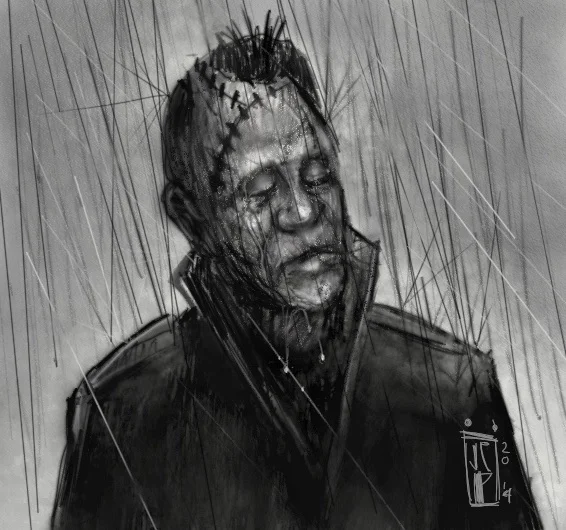
To ensure his immortality, Doc Benton steals body parts from other people, and over the years has come to resemble Frankenstein’s monster

To ensure his immortality, Doc Benton steals body parts from other people, and over the years has come to resemble Frankenstein’s monster

S3E15: “Time Is on My Side”

Monster: Doc Benton

Where it’s from: Moosilauke Ravine Lodge in the White Mountains of New Hampshire, owned and operated by Dartmouth College

Moosilauke Ravine Lodge in New Hampshire, where unsuspecting Dartmouth students stay — not knowing they could be the next victims of Doc Benton!

Moosilauke Ravine Lodge in New Hampshire, where unsuspecting Dartmouth students stay — not knowing they could be the next victims of Doc Benton!

Description: On the show, Doc Benton is cobbled together from various people’s body parts, like Frankenstein’s monster.

What it does: Doc Benton is the star of a ghost story used to scare freshmen. He was an insane recluse who kidnapped a girl named Mary. Benton threw her off a cliff, and when locals examined her corpse, they noticed a scratch behind her ear and a red dot on her head. Doc Benton became obsessed with the idea of living forever, and figured out a way to do so by stealing the vital organs of healthy young specimens (like Dartmouth freshmen, for instance). He has beaten death for centuries now, and can continue to commit his sick surgeries for eternity.

Doc Benton has been stitched up numerous times over the centuries. Don’t go near him if you want to keep that kidney!

Doc Benton has been stitched up numerous times over the centuries. Don’t go near him if you want to keep that kidney!

On Supernatural, a dead man’s fingerprints are all over a guy’s stomach, but only his liver was removed — surgically.

“Zombies do like the other other white meat,” Dean quips.

Another victim is missing his kidney. He’s sewn up with silk, which was used for sutures in the 18th century. And maggots are placed on the wound to eat infected tissue and leave the good — a startling practice still used today, if you can believe it.

The snarkiest of the Winchester Brothers, of course, has some great nicknames for Doc Benton: Slicey McHacky and Dr. Quinn, Zombie M.D.

Doc likes to set up shop in the middle of the woods near a river — a good place to dump intestines, fecal matter and whatnot.

Reading the mad doctor’s medical notes, the Winchester Brothers realize that he has discovered the secret to eternal life.

“Drink blood out of a baby’s skull?” Dean asks.

No black magic, Sam says. Just science.

Sammy gets kidnapped by Benton, who’s about to scoop out his eye with a Victorian-era melon baller. Eww!

How to defeat it: Doc Benton tells Dean and Sam that Daddy Winchester cut out his heart. “That was very inconvenient,” he adds.

You can’t run him over. And you can’t shoot him. “What part of immortality don’t you understand?” the phantom asks.

So they dip a knife in chloroform to knock out the not-so-good doctor and bury him alive.


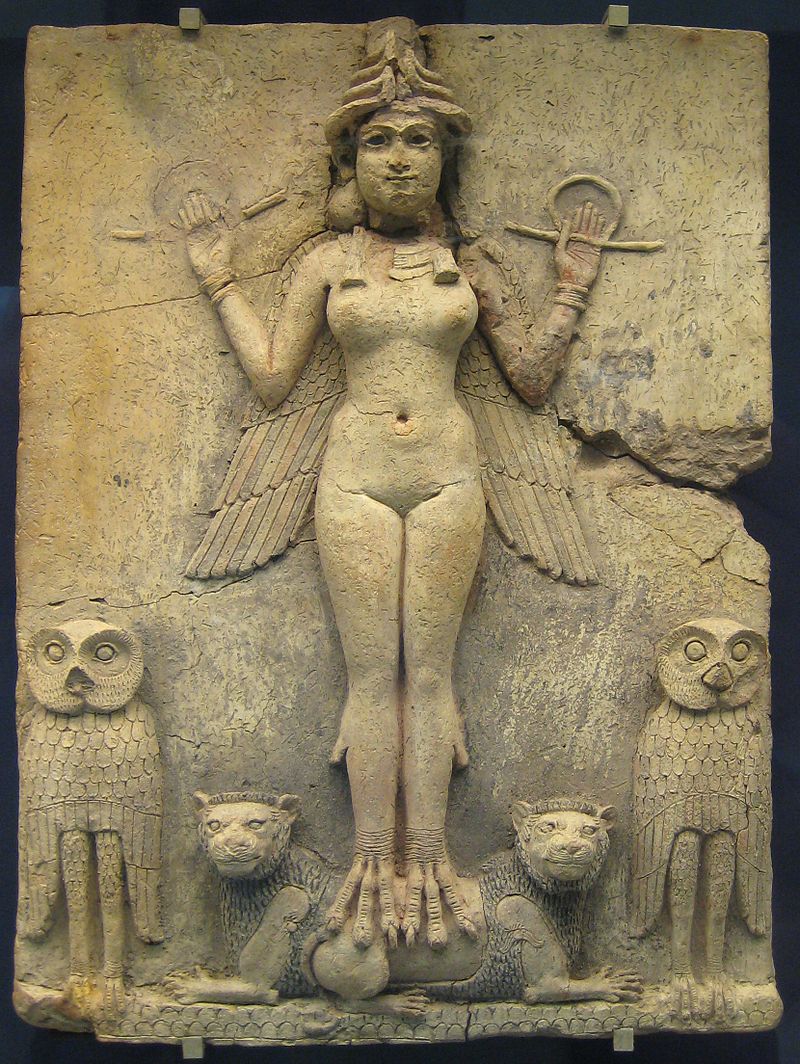
This terra cotta carving from Mesopotamia is called The Queen of the Night and possibly depicts the demon Lilith

This terra cotta carving from Mesopotamia is called The Queen of the Night and possibly depicts the demon Lilith

S3E16: “No Rest for the Wicked”

Monster: Lilith

Description: On the show, Lilith takes the incarnation of a little girl. It’s a solid choice and scores high marks on the creepiness scale. Especially when her dress is covered in blood cuz her pet Freckles was mean to her — along with the babysitter lying dead nearby.

Where it’s from: The Near East, especially in what is now Iraq

What it does: Lilith has been described as the most notorious demon in Jewish tradition. She was the first woman and was Adam’s wife before Eve. Lilith is particularly dangerous to pregnant women and newborns, and her breasts are filled with poison instead of milk.

Lilith was Adam’s first wife in Jewish lore. When she refused to be subservient to him, she was demonized, and Eve was created to take her place

Lilith was Adam’s first wife in Jewish lore. When she refused to be subservient to him, she was demonized, and Eve was created to take her place

Her name means “Night,” and she embodies all that goes along with that: terror, sensuality and unbridled freedom.

The Babylonian Talmud says, “It is forbidden for a man to sleep alone in a house, lest Lilith get hold of him.” That’s because Lilith fertilizes herself with unsuspecting men’s sperm to give birth to other demons. Some of us might be demon baby daddies and not even know it!

How to defeat it: This demon is best avoided. She’s one badass bitch: “Lilith would have peeled the meat from your pretty, pretty faces,” the Winchesters are told. That would’ve been a shame; they do have such pretty, pretty faces.

Sam and Dean get the demon-killing knife from Ruby, but she warns them that to Lilith it would be a mere “pig sticker.”

Dean can see demons’ true forms as his time on Earth nears its end. But how are they going to convince others that the child is a powerful demon? It’s not like they can sneak in, grab a 10-year-old girl and give her a Colombian necktie (a slash across the throat and the resulting bloodbath).

Dean has a deadline: At midnight his time is up — and sure, enough, once the clock strikes 12, he gets torn apart by hellhounds. Bad doggies! –Wally

READ MORE SUPERNATURAL EPISODE RECAPS

The Crocotta and Other Monsters

The villains of Supernatural, Season 3, Episodes 12-14 include the old standbys demons and ghosts, as well as Thomas Edison’s spirit phone.

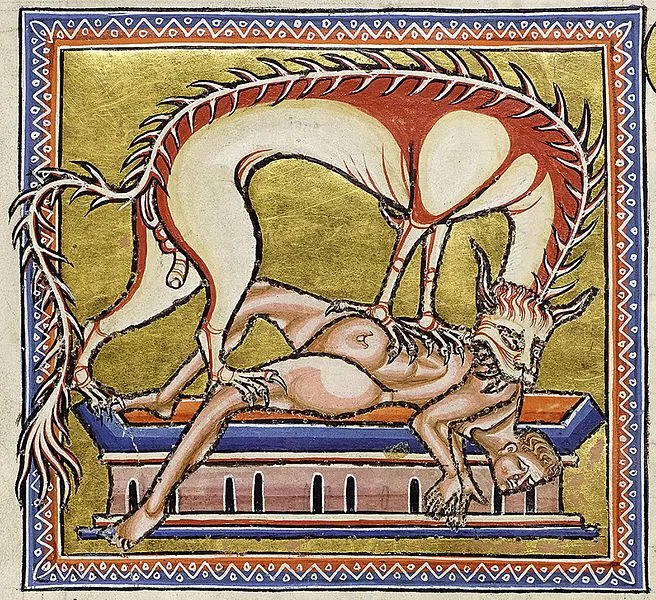
The crocotta, seen in this illustration from the Aberdeen Bestiary, lures its victims by sounding like someone they know in need of help

The crocotta, seen in this illustration from the Aberdeen Bestiary, lures its victims by sounding like someone they know in need of help

Rip out the crocotta’s crystal eyes, put them under your tongue — and you’ll be able to tell the future!
A demon found at Ostia, as depicted in Demonology and Devil-Lore

A demon found at Ostia, as depicted in Demonology and Devil-Lore

S3E12: “Jus in Bello”

Monster: Demon

Where it’s from: All over the world

Description: There’s something demonic in even the most appealing of gods, argues Moncure Daniel Conway, in his 1879 work Demonology and Devil-Lore. “Man found that in the earth good things came with difficulty, while thorns and weeds sprang up everywhere,” he writes. “The evil powers seemed to be the strongest. The best deity had a touch of the demon in him. The sun is the most beneficent, yet he bears the sunstroke along with the sunbeam, and withers the blooms he calls forth.” In fact, “deity and demon are from words once interchangeable,” Conway points out.

What it does: We’ve covered demons before, and their propensity for possessing people.

In this episode, demons are beelining for the Winchester boys, surrounding the sheriff’s office they’re in. “It’s like we got a contract on us,” Dean says, adding, “I think it’s ’cause we’re so awesome.”

How to defeat it: You can get matching pentagram sun tattoos, like Dean and Sam. They’re cheesy as hell, but hey: They keep you from being possessed.

A snouted demon, also from Demonology and Devil-Lore

A snouted demon, also from Demonology and Devil-Lore

You can also use a rosary to make holy water in the toilet. And, of course, there’s good old salt. Which leads to this funny exchange with the FBI agent:

Henriksen: Fighting off monsters with condiments. So, turns out demons are real.

Dean: FYI, ghosts are real, too. So are werewolves, vampires, changelings, evil clowns that eat people.

Henriksen: Okay, then.

Dean: Makes you feel better, Bigfoot’s a hoax.

Henriksen: It doesn’t.

The boys learn about a “big new up-and-comer” named Lilith. “And she really, really wants Sam’s intestines on a stick.” Grilled sausage, anyone?

Dean and Sam contemplate a spell that will vaporize all demons in a square radius — but it requires the sacrifice of a “person of virtue,” which is just another way of saying “virgin.” Not up to cutting Nice Nancy’s heart out of her chest, the Winchester Brothers decide to fight their way out, with the help of an exorcism over the PA system.

Demon Ruby gives them black mojo bags to throw Lilith off their trail. For now…

Some ghosts are trapped in continuous loops that play out their deaths

Some ghosts are trapped in continuous loops that play out their deaths

S3E13: “Ghostfacers”

Monster: Ghost

Where it’s from: Morton House, a haunted house possibly in Benton Harbor, Michigan

Description: This ghost looks remarkably lifelike.

What it does: The phantom returns every four years. Some call it the Leap Year Ghost. A crew of ghost hunters is filming an episode of their show Ghostfacers, and of course the Winchester boys show up masquerading as police to take on the evil spirit as well.

An apparition of a gangster gets gunned down. It’s a death echo, Dean explains. They seem to be an invention of the show, though there are plenty of reports of ghosts caught in neverending loops.

The Ghostfacers crew has some competition, including Josh Burger and Stan Maczek, shown using an electromagnetic field (EMF) detector

The Ghostfacers crew has some competition, including Josh Burger and Stan Maczek, shown using an electromagnetic field (EMF) detector

There are multiple death echoes, including a man hit by a train. These people didn’t die in Morton House, though. So why are their spirits trapped there?

Turns out the home’s last owner, Daggett, was a janitor at the hospital. He brought the bodies home “to play with them.”

Sam disappears. He and Corbett the intern are in some creepy kitchen while “It’s my party, and I’ll cry if I want to” plays over and over. Poor Corbett, who was in love with Ed, one of the Ghostfacer crew, gets poked through the neck and dies.

Daggett is wearing a party hat. He gets lonely, you see. But Dean has no sympathy. “He’s never heard of a RealDoll?” he quips.

How to defeat it: “You gotta be gay for that poor dead intern,” the other Ghostfacer host tells Ed. He concedes and is able break Corbett out of the death echo and convince his spirit to take down Daggett. Remember, people, as Ed says, “Gay love can pierce through the veil of death and save the day.”

The crocotta looks like a big wolf-hyena hybrid, seen in the illuminated manuscript the Rochester Bestiary

The crocotta looks like a big wolf-hyena hybrid, seen in the illuminated manuscript the Rochester Bestiary

S3E14: “Long-Distance Call”

Monster: Crocotta

Where it’s from: India and Ethiopia

Description: In folklore, the crocotta is a mishmash of animals, often described as a giant wolf-like hyena with cloven hooves. On the show, though, it’s a humanoid who lives in filth. In both versions, the monster has a unique means of luring its victims: It can mimic human speech and will call out someone’s name and other personal information, pretending to be someone in trouble. It then devours the poor suckers with the bone ridges it has instead of teeth.

Fun fact: Rip out its crystal eyes, put them under your tongue — and, by Merlin, you can tell the future!  

What it does: A man gets a call on the phone from a woman named Linda. She wants him to join her. They love each other. He pulls the phone out of the wall, but it still rings. “Okay, Linda, you win,” he says. And blows his brains out.

The man’s wife confesses that she picked up the phone during one of these calls — and she only heard static.

The caller ID on the phone reads, SHA33. It’s actually a phone number that’s over a century old. Ten different homes all got calls from that number in the past two weeks, including Dean, who spoke with what sounded like his dead dad.

Which leads us to a red herring — but a fascinating one nonetheless. The Winchester boys are in Milan, Ohio, the birthplace of Thomas Edison. The inventor told The American Magazine in 1920 that he had been working on a spirit phone, “building an apparatus to see if it is possible for personalities which have left this earth to communicate with us.” He thought that a scientific device could detect the “life units” that get scattered throughout the universe when we die.

Thomas Edison tried to invent the spirit phone, which would let us speak with the dead

Thomas Edison tried to invent the spirit phone, which would let us speak with the dead

The killings all turn out to be the work of a crocotta: in this case, a man at the phone company. He’s a bit of a Luddite, offering up this meditation on the modern condition: “You’re all so connected. But you’ve never been so alone.” Preach!

How to defeat it: Ramming its head into a metal hook will do the trick. –Wally

Vampires, Pagan Gods and a Ghost Ship

Belsnickel, the magical uses of meadowsweet and the Hand of Glory play a part in the monsters of Supernatural, Season 3, Episodes 6-8.

A fiery sunrise could mean a stormy day at sea

A fiery sunrise could mean a stormy day at sea

S3E6: “Red Sky at Morning”

Monster: Ghost ship

Where it’s from: All around the world, particularly England and the United States

Ghost ships have been sighted for centuries

Ghost ships have been sighted for centuries

Description: This particular spectral ship is a three-masted clipper. There have been reports of ghost ships for centuries, including:

The S.S. Violet, a paddle steamer, ran aground crossing the English Channel in a snowstorm. She was sighted by a lookout at Goodwin Sands at the start of World War II. A lifeboat went out to investigate — but no ship was found.

The Griffon’s maiden voyage was also her last. This ghost ship now haunts northern Lake Michigan

The Griffon’s maiden voyage was also her last. This ghost ship now haunts northern Lake Michigan

The Griffon, one of the first major vessels to sail the Great Lakes, which is said to haunt Lake Michigan. Her maiden voyage in 1679 was also her last. She went down during a storm…but has been seen on the northern part of the lake ever since.


The title of the ep comes from a nautical saying:

Red sky at night, sailor’s delight.

Red sky in morning, sailor’s warning.

That is to say, that a red sunrise could mean a storm is coming.

What it does: The ghost ship of the Espírito Santo, a three-masted clipper (and an apparent invention of the show), appears every 37 years. Don’t look! If you happen to be one of the poor saps who sees the ship, you’ll end up drowning, like the woman in the shower and the man in the bathtub. The ghost ship will find a way to drown you — even if you’re just sitting in your car.

The Winchester Bros. start detecting a pattern: The ghost ship is targeting those who have spilled their family’s blood.

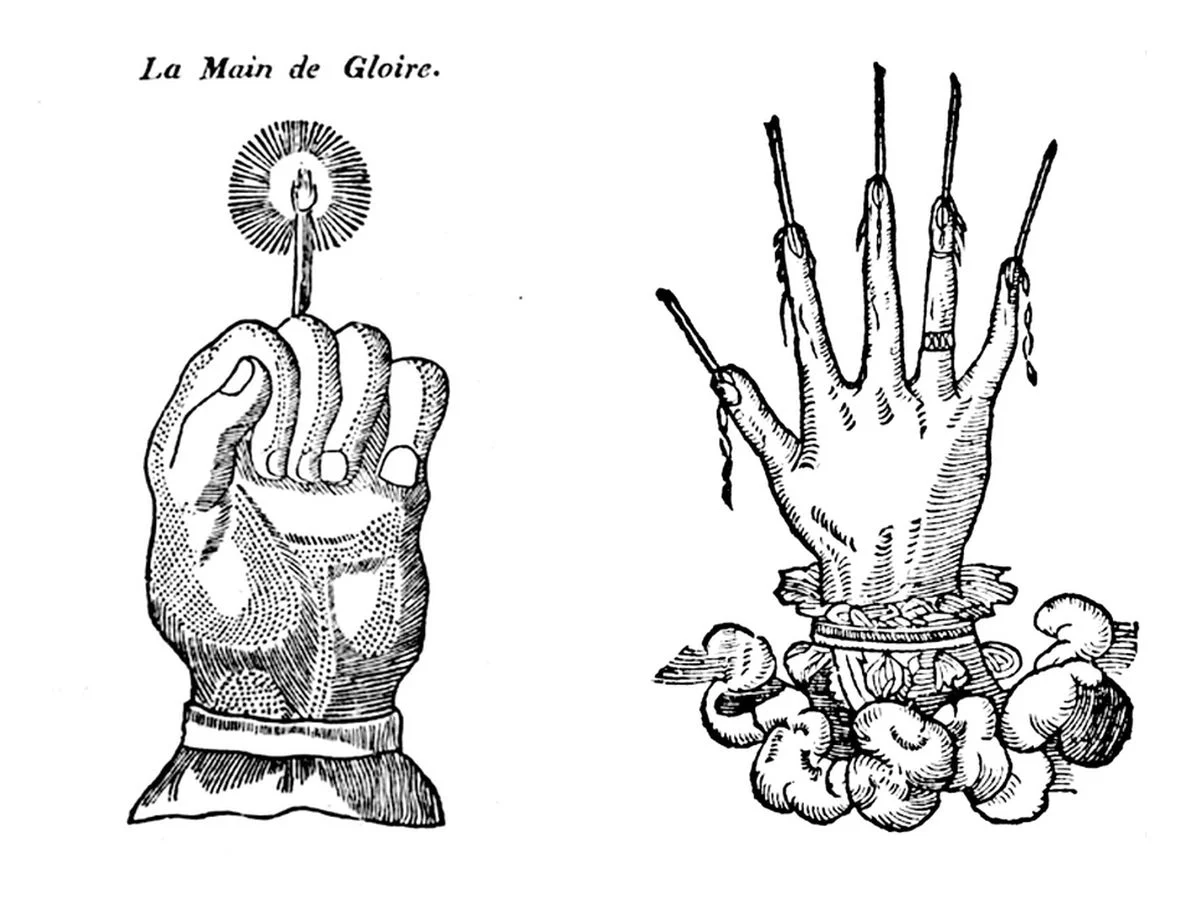
How to defeat it: There’s a gruesome but super helpful charm known as a Hand of Glory.

(Insert Dean joke here: “A Hand of Glory? I think I got one of those at the end of my Thai massage last week.”)

This desiccated body part is said to be a genuine Hand of Glory

This desiccated body part is said to be a genuine Hand of Glory

The Hand of Glory has magical properties that make it ideal for thieves: It can open any lock and sometimes makes the holder invisible.

The Hand of Glory

A Hand of Glory is actually the hand (usually the right) of a hanged man who’s still swinging from the gallows — preferably during a lunar eclipse, but any ol’ night will work as well. You pickle it for 15 days, then dry it in the sun. It’s said to have magical properties that make it ideal for thieves: The Hand of Glory can open any lock and allows intruders to enter buildings undetected, sometimes making the holder invisible. The fingers burn as candles that never go out or hold a candle made from the fat of the hanged man in their grip. Once lit, it puts people to sleep or renders them motionless. In some tellings, the thief can only light a finger for each person asleep in the house; those that don’t light reveal that someone inside is awake. The lit fingers ensure that those sleeping won’t be able to be awakened.

Honestly, where can I get one of these for myself?

A Hand of Glory is a great magical item — especially if you’re a thief

A Hand of Glory is a great magical item — especially if you’re a thief

To break the curse of the spectral ship, the fellas summon the ghost of the brother who killed the captain of the Espírito Santo. The two ghosts destroy each other in a watery sploosh.

On Supernatural, vampirism is a blood-borne virus

On Supernatural, vampirism is a blood-borne virus

S3E7: “Fresh Blood”

Monster: Vampire

Where it’s from: Romania

Description: A girl named Lucy gets dosed with vampire blood at a club and turns into a vamp. In the Supernatural universe, vampirism is a virus; if you ingest a vampire’s blood, you become one.

Bright light hurts their eyes — though they do have infrared vision. And they can hear heartbeats from a block away.

What it does: The vampire has a type. He’s turning pretty blondes. He feels misunderstood, that he’s a victim. He even cries when his “daughters” get killed, fearful of facing eternity alone.


A fellow hunter, Gordon, thinks our boy Sam is the Antichrist. So it’s particularly satisfying that a legendary vampire hunter like him gets turned into one of the monsters he so despises. Serves him right, the jerk.

The Winchesters were going to kill Gordon back when he was a human, so it makes it easier on their consciences to off him now that he’s a vampire.

How to defeat it: A shot of dead man’s blood knocks a vampire out.

To kill them, try decapitation or a silver bullet. (Though the novelist Anne Rice, an expert on vampires, told Marketplace, “Vampires are not particularly affected by silver bullets. Traditionally what kills vampires is a wooden stake through the heart.”


S3E8: “A Very Supernatural Christmas”

Monster: Pagan gods

Where it’s from: Britain

Description: At first Sam thinks they’re dealing with an evil Santa: “There’s some version of the anti-Claus in every culture. You’ve got Belsnickel, Krampus, Black Peter. Whatever you want to call it, there’s all sorts of lore.”

He continues, “Santa's brother went rogue, and now he shows up around Christmas time. But instead of bringing presents, he punishes the wicked.”

I doubt there’s a demonic counterpart to Santa in every culture, but Sammy’s right that there are quite a few.


A dark take on Santa Claus, Belsnickel rewards good children but comes up with bizarre punishments for those on the naughty list

A dark take on Santa Claus, Belsnickel rewards good children but comes up with bizarre punishments for those on the naughty list

Belsnickel, a Sinister Santa From Germany

Santa’s psychotic helper from Germany whips a bad little boy

Santa’s psychotic helper from Germany whips a bad little boy

This Christmas crazy wears a mask and often a wig, dresses in dark furs, lurks outside your house, and knocks on your door or window to announce his presence. He’s been known to give nuts, candy and small gifts to good children — but those who’ve been naughty get whipped and dragged into the woods. Belsnickel makes them pay for their bad behavior by dancing, doing tricks, singing or reciting poems for him.

It’s Sam that makes the connection to paganism.

Sam: Pretty much every Christmas tradition is pagan.

Dean: Christmas is Jesus’ birthday.

Sam: No, Jesus’ birthday was probably in the fall. It was actually the Winter Solstice festival that was co-opted by the church and renamed Christmas. But I mean, the Yule log, the tree, even Santa’s red suit — that’s all remnants of pagan worship.

Dean: How do you know that? What are you gonna tell me next? Easter Bunny’s Jewish?

The Winchester boys come across wreaths made of meadowsweet. Sam explains it as a powerful pagan herb that’s basically chum for their gods. “Gods were drawn to it and they’d stop by and snack on whatever was the nearest human,” he explains.

Use meadowsweet in spells for love and positivity — or to lure human-devouring pagan gods

Use meadowsweet in spells for love and positivity — or to lure human-devouring pagan gods

Meadowsweet, though, once used to sweeten mead, is actually used in spells for love or creating a positive environment.

Hold Nickar, the Celtic god of the Winter Solstice

Hold Nickar, the Celtic god of the Winter Solstice

Sam concludes they’re looking for Hold Nickar, the pagan god of the Winter Solstice, who grants clement weather. Ancient pagans (and Wiccans today) worship the Goddess, who takes the form of the Great Mother. She gives birth to the Sun King on Yule, symbolizing a beam of light in the dark of winter, promising renewed life and the return of the sun’s warmth and sustaining energy.

What it does: The Hardy Boys are the pagan gods’ newest tributes. The couple are sticklers for details and are gathering the ingredients they need for their ritual. That includes collecting blood from the Winchesters and prying off one of Sam’s fingernails. After this horrific exercise, we can only hope they’re done. But no: “Sweet Peter on a popsicle, I forgot the tooth!” the god exclaims, heading toward Dean’s mouth.

How to defeat it: Guess these gods aren’t so immortal: Wood stakes kill them…for now, that is. –Wally

Belsnickel wears a mask and wig, dresses in dark furs, and drags naughty kids into the woods, where he whips them.

Ghosts, Demons and Genies

The monsters of Supernatural, Season 2, Episodes 19-22 include a jinni and acheri.

Are you part of the 45% of the population who believes in ghosts?

Are you part of the 45% of the population who believes in ghosts?

S2E19: “Folsom Prison Blues”

Monster: Ghost

Where it’s from: All over the world

Description: How can you tell if a ghost is around? “The clock stopped, the flickering lights, cold spot — I mean, he did everything but yell, ‘Boo,’” Dean says.

What it does: This ghost causes its victims to have a heart attack. Maybe this isn’t so farfetched. A 2012 YouGov poll found that 45% of respondents believe in ghosts, and about a third think that ghosts can harm or otherwise interact with the living.

How to defeat it: You know the drill: The all-powerful salt can dispel it, but burn her bones to get rid of it for good.

Jinn are mentioned in the Quran — in fact, Allah created them to worship Him

Jinn are mentioned in the Quran — in fact, Allah created them to worship Him

S2E20: “What Is and What Should Never Be”

Monster: Jinni (or as Dean says, “a frickin’ genie”). No one can seem to agree on the spelling: The plural is, alternately, jinn, jinns, djinn or djinns. I guess it’s like Hanukkah/Chanukah.

Where it’s from: the Middle East

Description: “My God, Barbara Eden was hot, wasn’t she?” Typical Dean line. Jinn can change shape at will. This one prefers to appear as a man with a shaved head and tattoos all over his body.

Jinn are supernatural tricksters from Arabian mythology that are below angels and devils in the hierarchy. They’re creatures of air or flame who dwell in inanimate objects. They delight in punishing humans for any harm done. If you know the right procedure, you can force a jinni to do your bidding.

Jinn are actually mentioned in the Quran. As this verse attests, they were created before mankind:

Indeed We created man from dried clay of black smooth mud. And We created the Jinn before that from the smokeless flame of fire. (Quran 15:26-27)

What’s a bit surprising is that Allah (as God is known to Muslims) created them to worship Him:

“I did not create the Jinn and mankind except to worship Me.” (Quran 51:56)

Jinn, or genies as most Americans know them, are powerful creatures who can change their shape and love to trick humans

Jinn, or genies as most Americans know them, are powerful creatures who can change their shape and love to trick humans

There are five types of jinn, according to Alif the Unseen:

  1. Marids: They’re the most powerful jinn, described as “the classic genies of folklore, often portrayed as barrel-chested men with booming voices.” They’re associated with water.

  2. Effrits: These fiery creatures possess spectacular magical powers and are quite cunning. In the Quran, King Solomon gained control over a tribe of effrits, who performed various tasks for him.

  3. Ghouls: Zombie-like, these undead creatures haunt graveyards and prey on human flesh.

  4. Sila: Most often portrayed as female, these talented shapeshifters are known to seduce their victims and are the most intelligent type of jinni.

  5. Vetalas: Vampiric creatures that possess human corpses, they can see the future, gain insight into the past and read thoughts.

What it does: The jinni has created an alternate world, where the Winchester boys’ mom wasn't attacked by a demon. Sam’s a sporty wuss studying law and is engaged to Jessica. And Dean gets to mow the lawn!

You can make a jinni do your bidding — but be warned: He’s not gonna like it!

You can make a jinni do your bidding — but be warned: He’s not gonna like it!

He’s also scored a dream girlfriend, prompting him to ask, “How’d I end up with such a cool chick?” His girlfriend is so freakin’ cool she’s got a wicked sense of humor. She replies, “I’ve just got low standards.”

There are hints that all is not as it should be, namely visions of a grimy girl in a dowdy dress.

If it all seems too good to be true, that’s because it is. The jinni can alter reality, shaping the past, present or future as it sees fit. The catch to this tempting alternate reality is that the Winchesters aren’t hunters, so all the cases they’ve solved never happened, and all those people weren’t saved.

“Why do I have to be some kind of hero?” Dean wants to know. “Why do we have to sacrifice everything?”

This jinni doesn't actually grant you a wish; it only makes you think it has: You're really tied up somewhere as it feeds upon your blood, slowly draining your life away.

How to defeat it: A silver knife dipped in lamb’s blood. Perhaps it has something to do with the most gruesome of God’s plagues during the time of Moses. Yahweh (the name God went by in the Old Testament) wanted to convince the Pharaoh to release the Israelites from slavery. So he sent a variety of plagues. But turning water into blood, frogs, lice, wild animals and flies, diseased livestock, boils, horrific hail, locusts and darkness for three days still wasn’t enough for Pharaoh to give up his free labor. So Yahweh decided He’d kill every Egyptian’s first-born son. So the Angel of Death knew which houses to pass over (hence Passover, get it?), the Israelites were told to smear lamb’s blood on the thresholds of their doors:

The blood shall be a sign for you on the houses where you live; and when I see the blood I will pass over you, and no plague will befall you to destroy you when I strike the land of Egypt. (Exodus 12:13)

If you don’t have a sacrificial lamb handy, we can personally attest to this efficacy of this protective chant.

The acheri casts a shadow of death upon sleeping children so they can suffer a long, painful illness as it did

The acheri casts a shadow of death upon sleeping children so they can suffer a long, painful illness as it did

S2E21: “All Hell Breaks Loose: Part One”

Monster: Acheri

Where it’s from: North America

Description: There’s a demon that disguises itself as a little girl. She’s an acheri, the ghost of a girl who died a horrible, drawn-out death, often from sickness but sometimes the victim of abuse and murder. The monster comes from the folklore of the Chippewa tribe of North America. It returns from the spirit world to live in the hills and mountaintops, flying through the valleys at night to bring a plague of pestilence to sleeping children. No wonder kids get sick so much.

Its daytime guise is that of a frail, gray-skinned girl who’s so pitiful looking you just can’t help but feel sorry for her. But its true form is a hideous monster with a skeletal frame, demonic red eyes and long clawed fingers.

What it does: The acheri suffered a long, painful death, and it wants to inflict that same misery upon others. It doesn’t even need to touch children to pass on its trademark fatal respiratory disease — its shadow merely needs to pass over its victims.

The more lives it claims, the stronger the acheri becomes.

The acheri suffered a long, painful death, and it wants to inflict that same misery upon others.

In this episode, the psychic 23-year-olds all smell sulfur when they awake in the ghost town of Cold Oak, South Dakota, supposedly the most haunted town in the United States. The Yellow-Eyed Demon has gathered the “best and brightest” and wants soldiers in a demon war to bring on the apocalypse. Oops — he really just wants one soldier. A leader. So he’s set up this Hunger Games-like competition. The kids must off each other until only one is left standing.

We meet Lily, a new psychic who kills whoever she touches, including her girlfriend. She tries to leave…and ends up hanging in a noose from the rickety windmill, killed by the acheri.

Ol’ Yellow Eyes says he’s rooting for Sammy. In a high-def dream, he shows Sam the night his mom died. The demon stood over the crib, cut itself and bled into Sam’s mouth. “Better than mother’s milk,” he says. Eww.

How to defeat it: Salt, not surprisingly, is once again the miracle cure. But when a young woman named Ava breaks the protective salt barrier, she lets in the acheri, which tears open a hole in Andy’s chest.

Acheri are also vulnerable to the color red. Amulets, clothing and ribbons of red act as a ward against a visit from this evil demon. Parents would weave red necklaces for their children to wear for protection from the illness the acheri spreads.

Ava, who can control demons, declares herself the “undefeated heavyweight champ” and attempts to kill Sam. But superstrong Jake snaps her neck. She’s undefeated no more. Yet good old’ Sam can't bring himself to kill Jake — and is literally stabbed in the back. And…dies?! Thing is, there are like 18 more seasons, so I’m not too worried.

Being attacked by a demon is no fun at all

Being attacked by a demon is no fun at all

S2E22: “All Hell Breaks Loose: Part Two”

Monster: Demon

Where it’s from: All over the world

Description: They’re perversions of nature, though the ones on Supernatural tend towards hot chicks for some reason.

What it does: Demonic omens include cattle deaths and lightning storms.

In this episode, Dean turns out to be a big softie after all; he’s willing to make a huge sacrifice to get Sam back.

Demons can’t resurrect people unless a pact is made. “I know, red tape,” the demon says.

He wants to make a deal with a demon with the trusty crossroads pact we covered here. He exchanges his soul after one more year of life for Sam to come back from the dead. If he tries to welch out of the deal, Sam will turn back to “rotten meat” and drop dead.

You’ve got to be careful, though: How sure are you that the Sam you brought back is 100% the old one? the Yellow-Eyed Demon asks.

Supernatural likes its demons to be hot chicks, but most of the time they’re freaks of nature like these fellows

Supernatural likes its demons to be hot chicks, but most of the time they’re freaks of nature like these fellows

How to defeat it: If you’re not sure if someone’s possessed by a demon, make them do a shot of holy water. That’s what they make Ellen do. (They’re nice enough to follow it up with a shot of whiskey.)

Also consider the trusty Devil’s Trap. This one is supersized, constructed of iron lines (e.g., railways) and frontier churches built by Sam Colt, the guy who made that monster-killing gun. It’s all to protect a Devil’s Gate, “a damn door to Hell.”

Well, the gate opens, but the good news is that Daddy Winchester escapes Hell and battles the demon. Dean shoots it with the Colt, it dies, and their dad glows and disappears in a poof of smoke. It’s hard to imagine he didn’t head up to Heaven.

The bad news? The hunters have unleashed 100 to 200 demons. “The war has just begun.” Gulp. –Wally
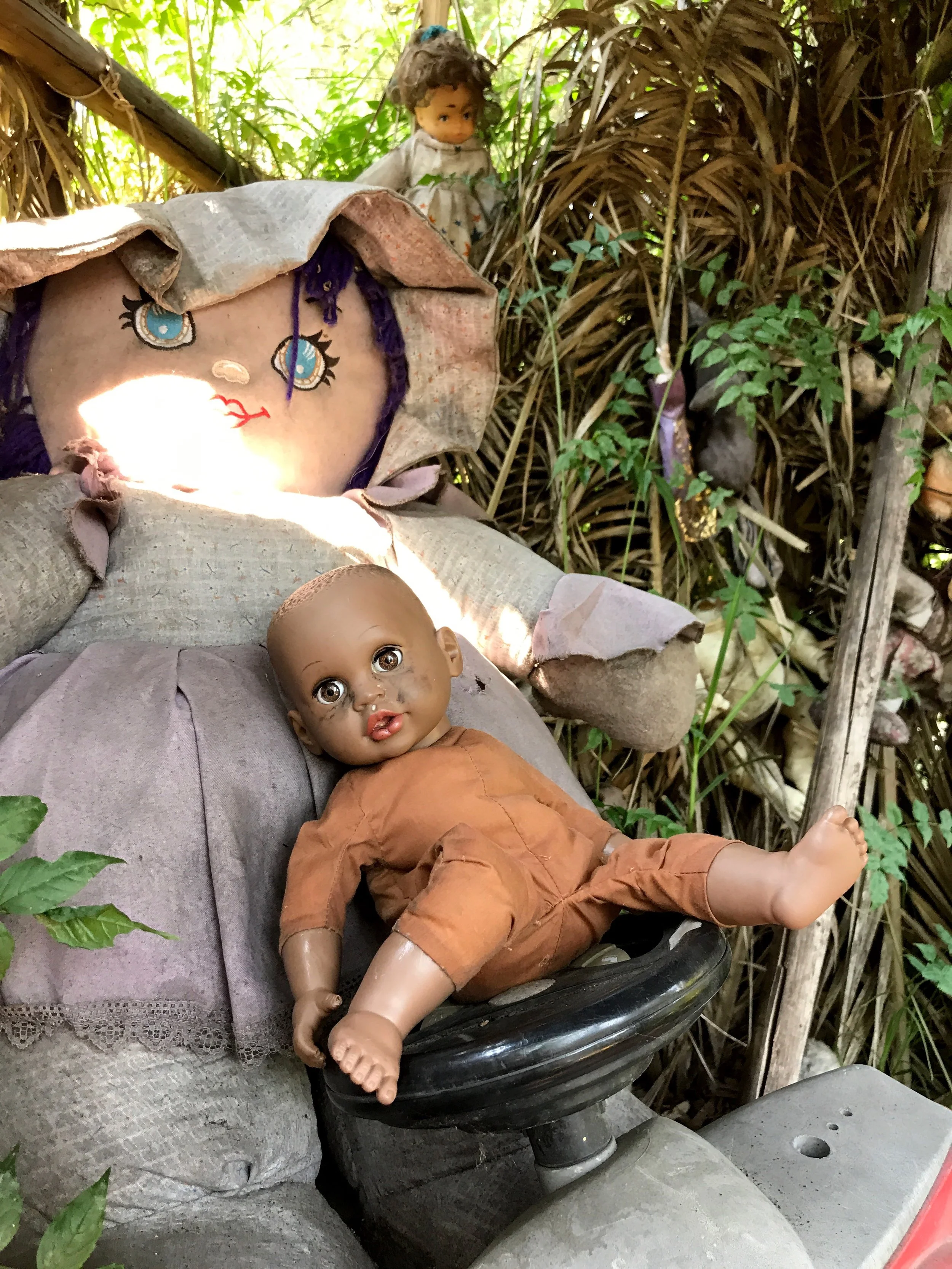
Ghosts, Werewolves and Necromancy

The monsters of Supernatural, Season 2, Episodes 16-18: the Poltergeist curse, how to turn into a werewolf and rituals for summoning spirits.

More than four in 10 Americans believe in ghosts. Do you?

More than four in 10 Americans believe in ghosts. Do you?

S2E16: “Roadkill”

Monster: Ghost

Where it’s from: All over the world

Description: A ghosts is the spiritual remains of a human who’s dead. They often appear much like the person they once were, though typically stripped of color and substance.
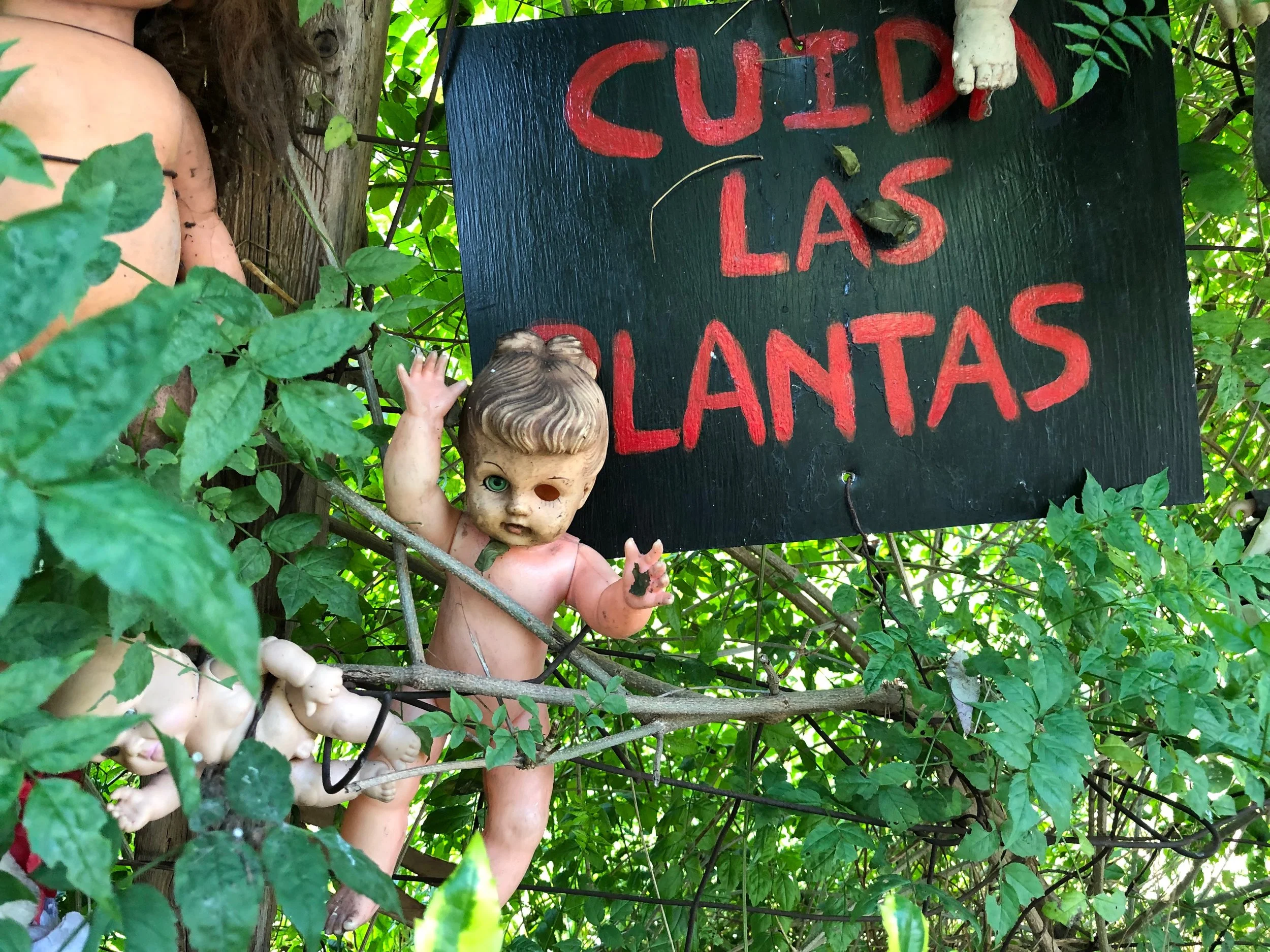
A perhaps surprisingly high number of people believe in ghosts: 42% of Americans, for instance, according to a 2013 Harris poll.

Apparently, there are eight different types of ghosts, as described by Roger Clarke in Ghosts: A Natural History: 500 Years of Searching for Proof.

You’re like a walking encyclopedia of weirdness.
— Dean Winchester, to his brother, Sam

This episode deals with the spirit of Jacob Greely, who haunts the road where he was killed on the anniversary of his death.

We learn that spirits are like wounded animals, lost, in pain. They remain because of their remains — or unfinished business, Sam says. Jacob is trapped in a loop, replaying the same tragedy over and over.

What it does: This one speaks through the radio, disappears in cloud of smoke and kills an innocent person in punishment.  

How to defeat it: Salt, again. “In most cultures, salt’s a symbol of purity, so it repels impure and unnatural things,” Sam says. “Same reason you throw it over your shoulder.”

So the boys are off to dig up another corpse and salt and burn it. They need a new hobby.

But there’s another option: Get the ghost to accept its fate and let go.

Fun fact: It’s an old country custom to plant a tree on a grave, Sam exclaims.

“You’re like a walking encyclopedia of weirdness,” Dean replies.

When a woman from Chesterville, Illinois spoke out against the conservative views of the Amish and Mennonite faith, she was accused of witchcraft and found dead. The townsfolk planted a tree over her grave to trap her spirit inside and prevent her from taking revenge, according to Mysterious Heartland.

Her ghost is said to haunt the area.


Lycanthropy, the fancy word for turning into a werewolf, happens during the full moon

Lycanthropy, the fancy word for turning into a werewolf, happens during the full moon

S2E17: “Heart”

Monster: Werewolf

Where it’s from: Many parts of the world, particularly Europe

Description: “I’m sorry, man, but what about a human by day, a freak animal killing machine by moonlight don’t you understand? I mean, werewolves are badass,” Dean says.

The ones on Supernatural tend to keep their human form (maybe for budgetary concerns) — just with more hair, longer nails and sharper teeth.

In some cultures, individuals born during a new moon or suffering from epilepsy were considered likely to be werewolves, according to an Imgur post.

That’s a good question. Have you been bitten by a werewolf lately? Eaten wolf brains? Made a deal with the Devil?

That’s a good question. Have you been bitten by a werewolf lately? Eaten wolf brains? Made a deal with the Devil?

There are various means to become a werewolf:

  • Getting bitten by a werewolf

  • Making a pact with the Devil

  • Suffering from a family curse

  • Drinking water from a wolf’s pawprint

  • Eating wolf brains

  • Wearing a wolfskin

What it does: On the week leading up to full moon, the werewolf mauls people to death, removing their heart. Then the werewolf wakes up as a human again, not remembering anything that happened the night before.

“Like a really hot Incredible Hulk?” Dean wants to know.
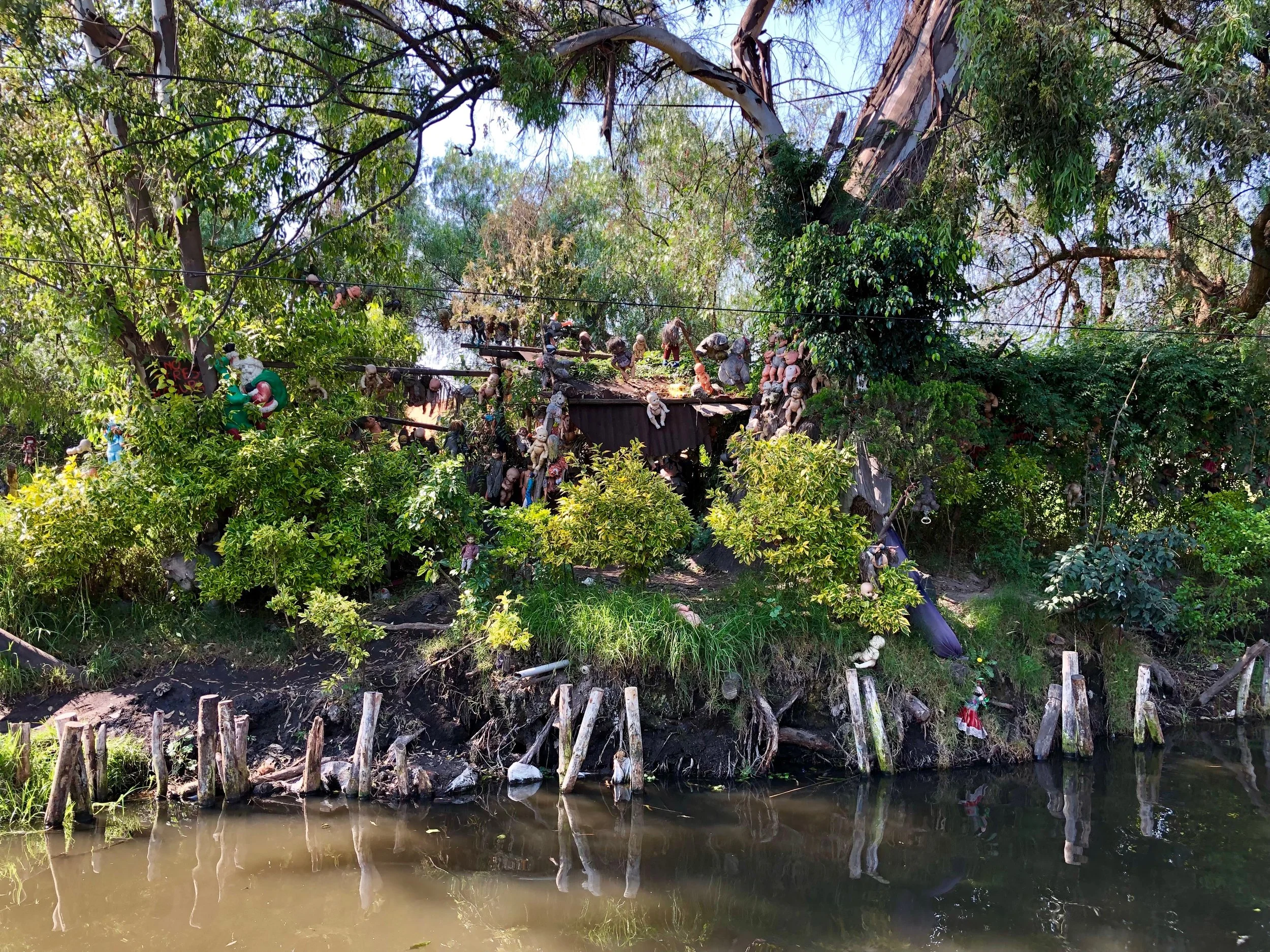
The connection between lycanthropy and the full moon goes back to the ancient Greeks, according to Werewolves.com:

They noticed the way that the weak gravitational pull of the moon affected the ocean tides and figured that since the human brain contains moisture that the moon could also screw up someone’s mind in the same way, which would cause savage feelings to come forth. The “civilized man” might be gradually transformed by the pull of the moon into a raging, irrational creature — a lunatic. Many of the well-known Greek scholars, such as Aristotle and Hippocrates, agreed with this theory. Then taking in account one of Greece’s moon goddesses, Selene, was often portrayed as a wild and unpredictable woman that would dance unrestrained in the woods, the Greeks felt that they had further proof the moon made people wild and crazed.
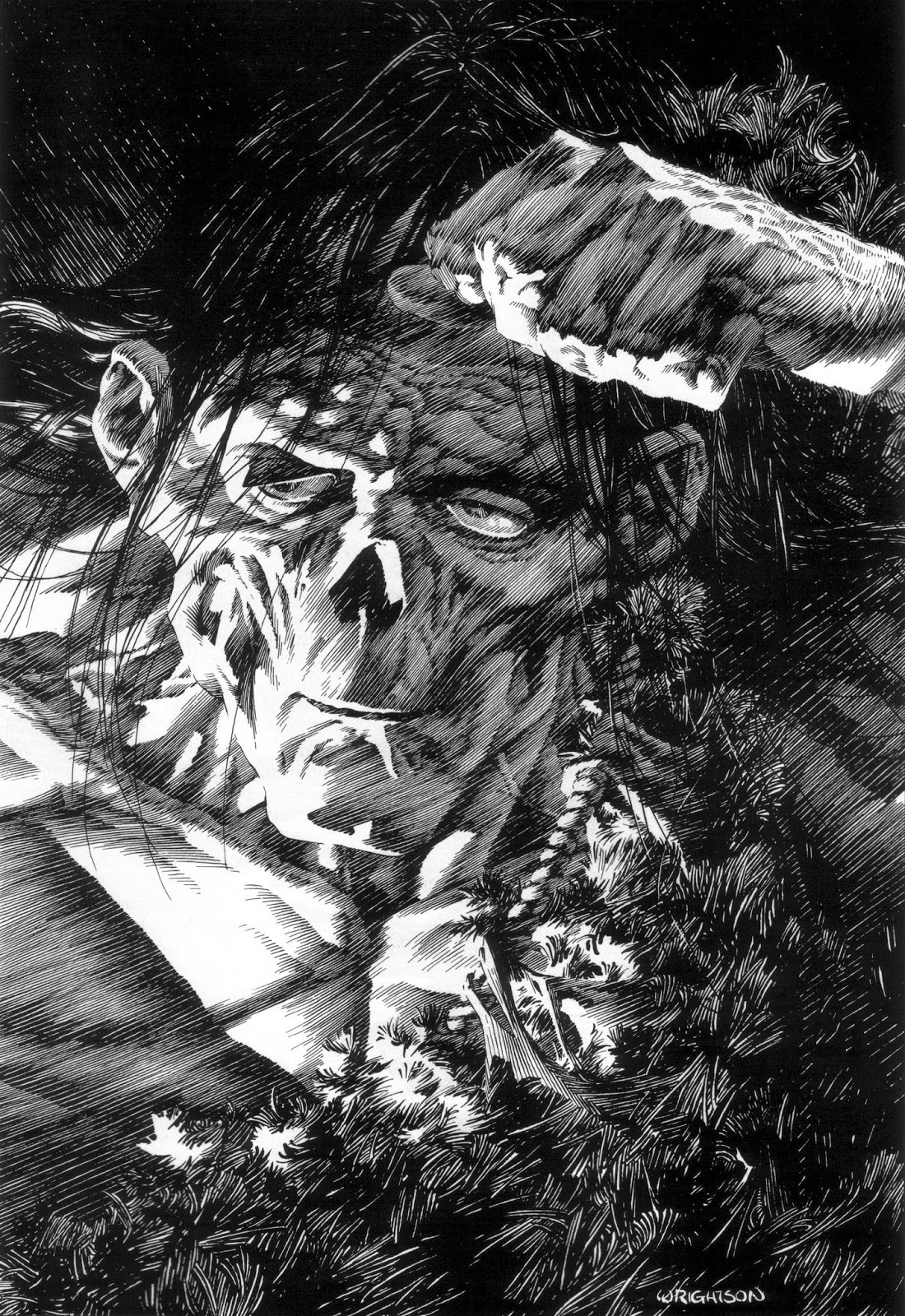
Turns out they were on to something. A study performed at the Calvary Mater Newcastle Hospital in Sydney, Australia stated that some of its emergency patients admitted with very violent and dangerous disturbances were similar to werewolf behavior. And a quarter of those happened during a full moon — double the number for the other phases of the moon, according to Leonie Calver, a clinical research nurse in toxicology.

This fellow won’t even remember this in the morning

This fellow won’t even remember this in the morning

How to defeat it: Tie them up — you can’t let them go on an all-you-can-eat buffet, as Dean says.

Lycanthropy might be cured if you can kill the werewolf who bit you. You can sever the bloodline. So posits Daddy Winchester’s theory.

Unfortunately, that doesn’t pan out. So a silver bullet to the heart it is.
 

Necromancy, which comes from the words for “dead divination,” is a fun, if dangerous, pastime

Necromancy, which comes from the words for “dead divination,” is a fun, if dangerous, pastime

S2E18: “Hollywood Babylon”

Monster: Spirits raised from the dead

Where it’s from: All over the world

Description: Certain movie productions are said to be cursed or haunted.

As if the movie Poltergeist wasn’t scary enough — it’s also said to be cursed, with some of its stars suffering untimely deaths

As if the movie Poltergeist wasn’t scary enough — it’s also said to be cursed, with some of its stars suffering untimely deaths

There are some freak deaths associated with the Poltergeist series, for example, including one of the stars being strangled by her ex and the little girl who played Carol Anne succumbing to a sudden illness.

And there’s a famous shot in Three Men and a Baby in which you can make out an image of a young boy…who supposedly is a ghost. (It did give me the chills when I first saw it.)

Three Men and a Baby…and the ghost of a boy?!

Three Men and a Baby…and the ghost of a boy?!

In this ep, studio executives fake the death of a crewman to drum up publicity.

But then a black and white ghost lures a jerky producer up the scaffolding, puts a noose around his neck and throws him down to his death. It seems connected to a starlet from the ’30s. She was used by a studio exec and hanged herself from the rafters.

Then a ghost from the ’60s of an electrician who died on set caused the same thing to happen to a producer — he was sucked into a giant fan that chopped him up like a blender.

What it does: Turns out a screenwriter named Walter is pissed at the people who ruined his movie. He’s using a necromantic summoning ritual to call forth vengeful spirits.

You can try summoning a spirit to do your bidding — but it’ll attack you if you don’t have the proper protection

You can try summoning a spirit to do your bidding — but it’ll attack you if you don’t have the proper protection

Rituals to Summon the Dead

Here’s how you too can raise the dead to do your bidding. (Sounds like a great idea, doesn’t it?) Perhaps it’s best that the ritual is all rather vague:

First, draw a series of concentric circles of power on the ground, on which you’ve inscribed crosses and other symbols, together with the holy names of God. The circle should be blessed and consecrated — be sure to stand in the center so you’re protected from danger. Then, with your wand in hand, call for the dead to rise, using names of power.

Some sorcerers like to strengthen the connection between the living and the dead by using a portrait of the deceased or offering a piece of bread for the ghost to consume. In this invocation, you call the dead by name — and, if it succeeds, you’ll be rewarded with a screaming ghost full of rage at having been forced against its will to return to the realm of the living. Sometimes the dead materialize as furious beasts threatening to tear you to pieces.

Necromancy is a serious business. The dead don’t want to be disturbed.


Here’s another invocation that sounds promising, from Encyclopedia Satanica (gulp):

Perform this ritual at midnight at the grave or crypt of the dead person you’d like to summon.

Burn asafoetida incense and use a “dagger of art” and black candle of summoning.

Ia! Shub-Niggurath!
I invoke thee, spirits of the flame!
I invoke thee, spirits of the air!
I invoke thee, spirits of the earth!
Hysorga! Teamon karazan!

Spirits of the earth,
Give up thy secrets,
Release them from the cold grasp of thy bosom!

I invoke thee, spirits of the earth!
Hysorga! Teamon karazan!

By the unholy name, I thus invoke!
From the grasp
Of the roots that choke.
By the name of the She Goat of the Wood,
Who hast a thousand young!
Ia! Shub-Niggurath!

Ia! Tananan Kr’razorda!
Ia! Orkazonar
Zerlkktrayr
Ia! Shub-Niggurath!

Spirit of [dead person]
The name doth compel thee.
I now do call thee forth from the abyss.

Spirit of [dead person]
The name doth compel thee,
Come now to this place,
Into this circle I call thee.

Spirit of [dead person]
The name doth compel thee.
Come unto me, and show thy self.
For thou shalt answer fully and truthfully
And be compelled to do my bidding.
So it is!

Ia! Tananan Kr’razorda!
Ia! Orkazonar
Zerlkktrayr
Ia! Shub-Niggurath!

How to defeat it: You can create a magic talisman to protect yourself. As mentioned, the dead don’t like being anyone’s slave. Be sure you always have the talisman that controls them. Silly Walter breaks his, setting the spirits free — and they can’t wait to pounce on him and pummel him to death. –Wally