bhutan

Sacred Sips: Unusual Drinking Rituals Around the World

Travel the globe one drink at a time — from sake ceremonies in Japan to vodka toasts in Russia — and explore the sacred drinking rituals that reveal the heart of a culture.
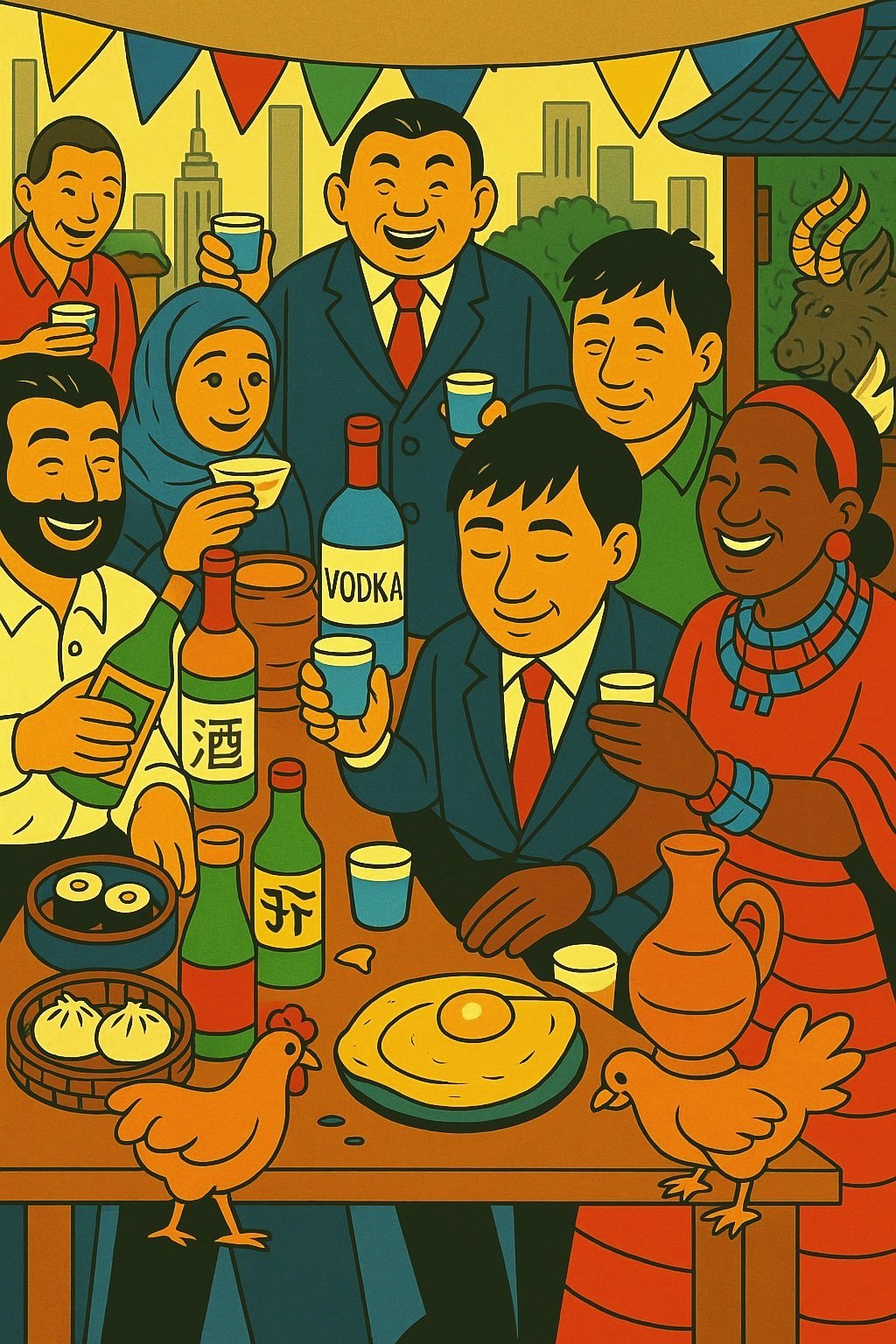
A group of people from around the world crowd around a table, holding traditional drinks from their countries

We’ve all had that moment: reclining on a sun-drenched patio, swirling a chilled drink, maybe a Malibu Bay Breeze, and thinking, Now this is living. But while your fruity cocktail might scream “vacation mode activated,” in many parts of the world, drinking goes far beyond recreation. It's ritual. It’s social glue. It’s ceremony, symbolism and, in some cases, sacred law.

Whether it’s the whisper of steam from a rice wine gourd in Bhutan or the thunderous clink of vodka glasses in Siberia, humanity’s connection to alcohol is as diverse as our languages and landscapes. So, if you're the kind of traveler who likes their libations with a dash of folklore, a twist of history, and a splash of anthropological intrigue, cheers to you. Let’s tour the world, one unusual drinking ritual at a time.
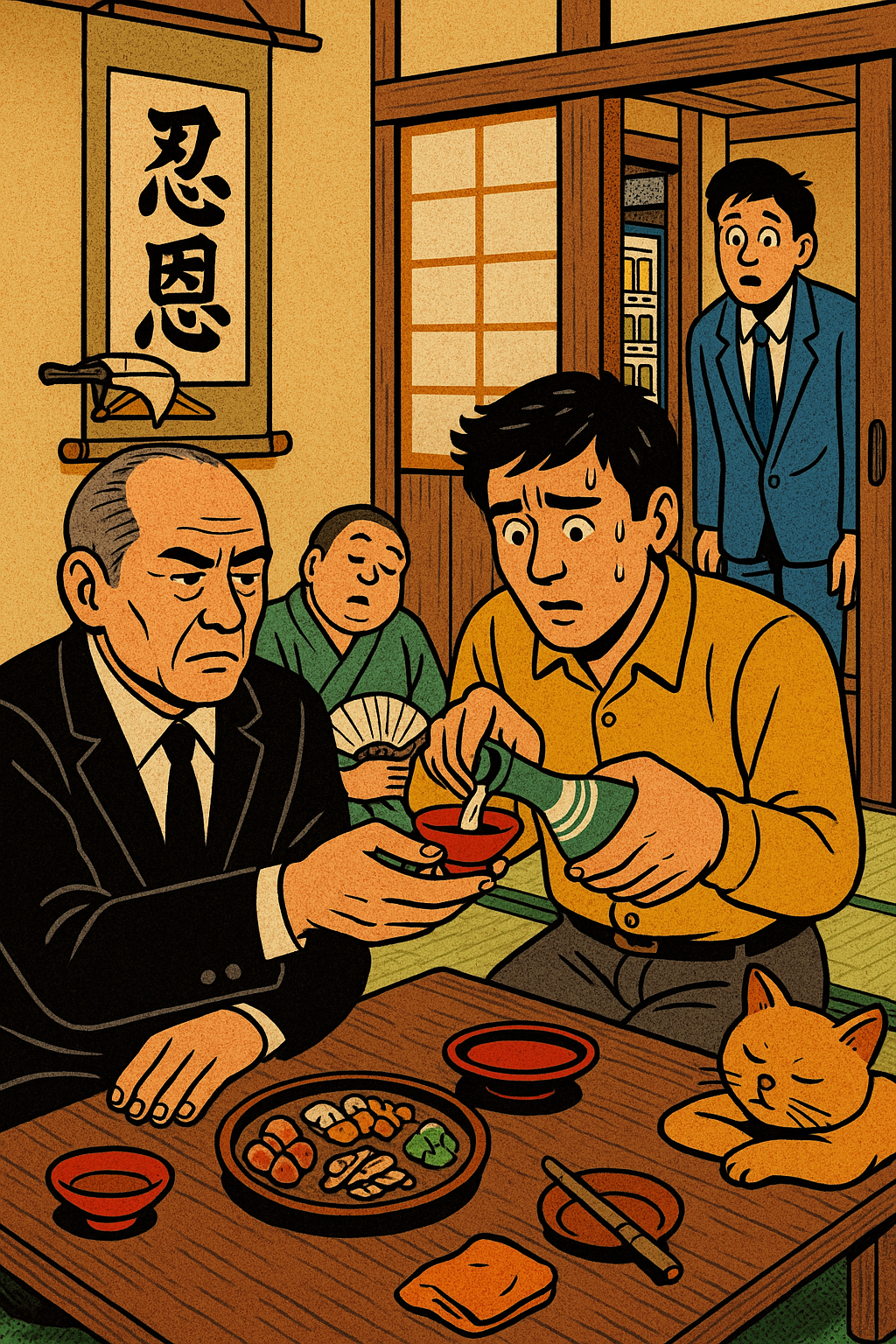
A younger man nervously pours sake for an older man in a suit at a Japanese teahouse, while a man sleeps in the corner and another enters, surprised

1. Japan’s Sakazuki Ceremony: The Art of Mutual Respect

In Japan, drinking isn't just about getting merry — it’s a ballet of etiquette and mutual reverence. Nowhere is this more evident than in the sakazuki ceremony, where two people exchange cups of sake to seal a bond. It can be between friends, business partners or during wedding rituals.

The process involves bowing, pouring for one another, and sipping from each other’s cups. If it sounds intimate, that’s because it is.

But beware: Hierarchy matters. If your boss pours for you, you’d better accept it with both hands and bow like your job depends on it — it just might.
RELATED: A Guide to Experiencing the Spectacular Koyo

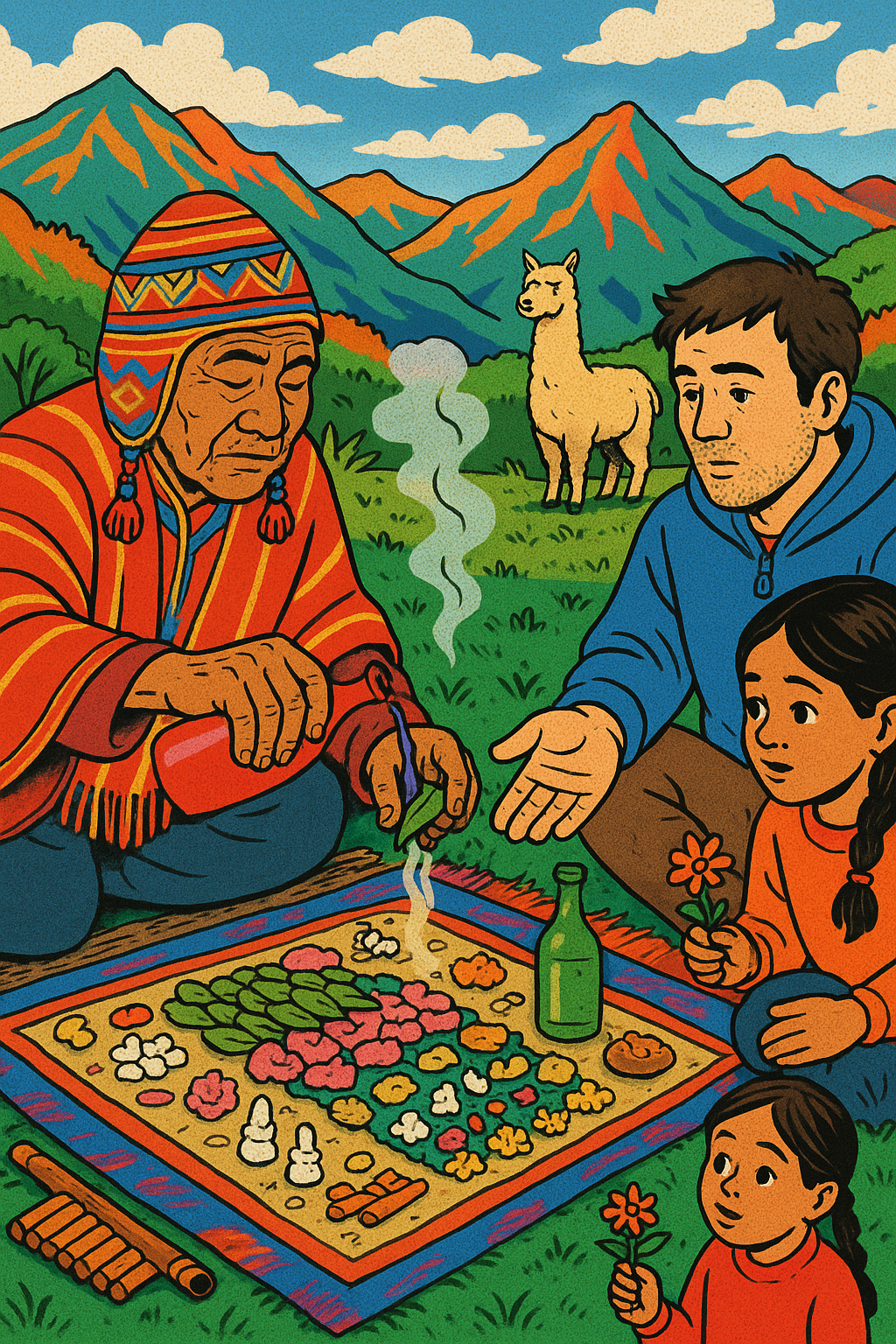
An older Andean man puts some chicha out for Pachamama, the earth goddess, over a spread of nibblies, while girls and a male traveler watch

2. Peru’s Pachamama Offering: A Sip for the Earth

Head into the highlands of Peru, and you’ll quickly learn that no drink enters your body without first blessing the earth. Before sipping chicha (a fermented corn beer), locals spill a few drops onto the ground. This is a symbolic offering to Pachamama, the Andean earth goddess.

This practice isn’t just reserved for locals, though; travelers who show respect are invited to share in the ritual. Just remember: Spill before you sip. Otherwise, you may offend a deity — and your host.

This reverence for nature in drinking rituals speaks to a deeper connection between land, spirituality and celebration. It’s not about intoxication. It’s about inclusion.

RELATED: The Pishtaco of Peru
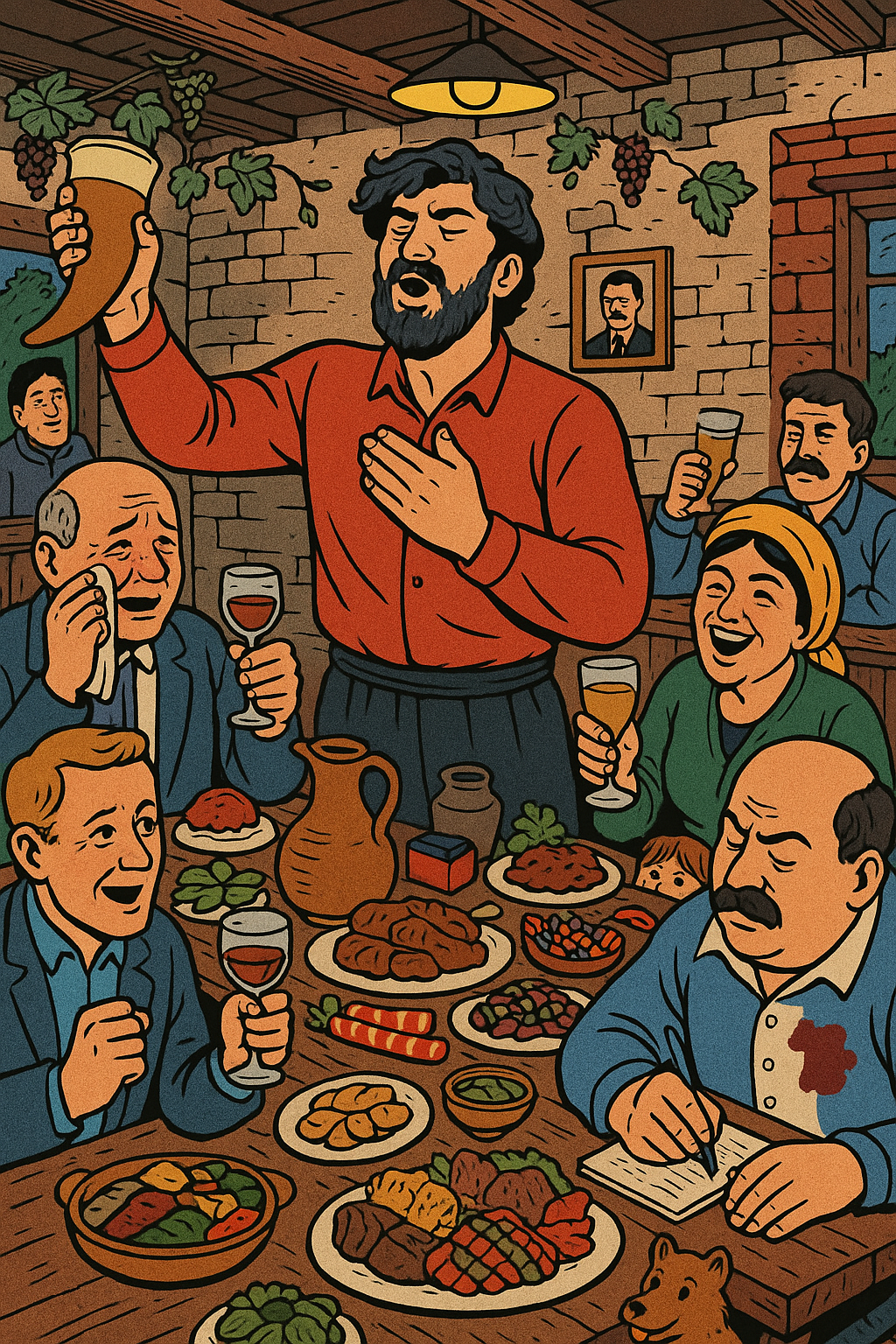
A bearded man stands, holding up a drinking horn, giving a toast, while people around him react

3. Georgia’s Supra: Toasting as a Competitive Art Form

No one toasts like the Georgians. And I mean no one. At a Georgian supra (a traditional feast), the tamada — a sort of designated toastmaster — leads an elaborate series of poetic, philosophical and sometimes comedic toasts that can go on for hours.

Each toast is met with wine horns raised and glasses drained. Guests are expected to participate, and interruptions are frowned upon. This is a structured, sacred ritual of storytelling, memory and reverence, made glorious with amber-toned Georgian wines.

There’s even a formal etiquette to how you hold your glass and how you respond to a particularly moving toast. Think TED Talk meets tavern.

A middle-aged man toasts a nervous, drunken man at a Chinese ganbei ceremony by a table laden with food and a passed-out man, while couple whispers at another table

4. China’s Ganbei: Bottoms Up…or Else

In China, saying “Ganbei!” (干杯) is more than a simple “cheers.” It means “dry cup” — a declaration that you’ll finish your drink in one go. And they mean it.

Refusing a ganbei in a business setting is akin to rejecting a handshake. It’s a test of trust and camaraderie. This ritual can turn business dinners into something closer to drinking marathons, especially when baijiu — China’s fiery sorghum liquor — is involved.

Refusing to finish may offend. Finishing too quickly will win you another round. Good luck.
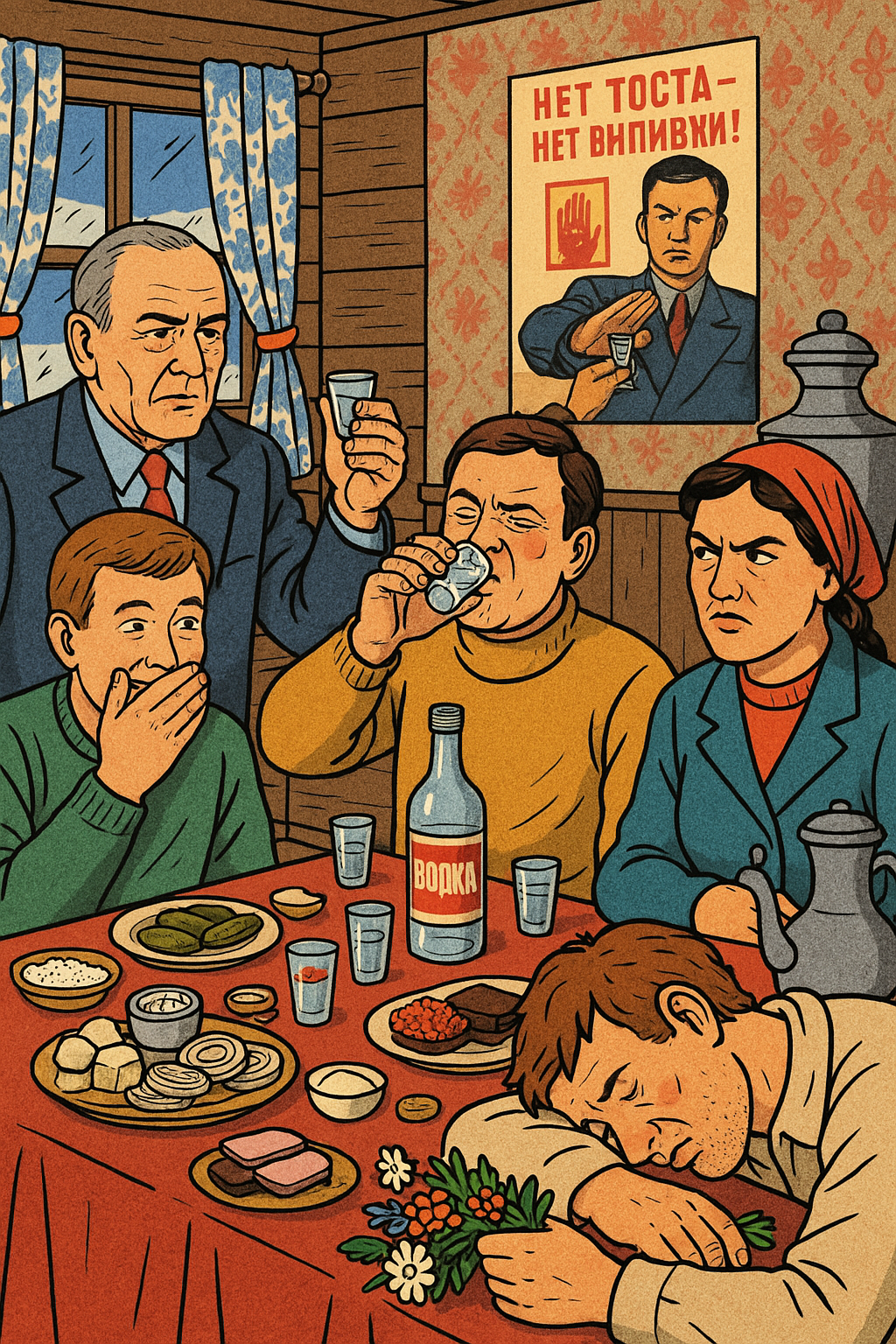
People sit at a table in Russia, drinking vodka, with one man laughing, another passed out and a woman scowling

5. Russia’s Vodka Etiquette: Drink First, Talk Later

If you think you know how to handle your liquor, try keeping up at a Russian celebration. Vodka in Russia is a no-nonsense affair governed by strict cultural codes.

Rule one: Toasts come first. Talking, eating, or even breathing too soon after someone raises a toast is considered rude.

Rule two: Never sip. Vodka is taken as a shot, straight. 

Rule three: Don’t refuse a round unless you’re ill or driving — and even then, prepare to explain yourself.

The act of drinking vodka in a group is deeply tied to expressions of hospitality and trust. It’s about showing heart (“dusha”), courage and belonging.
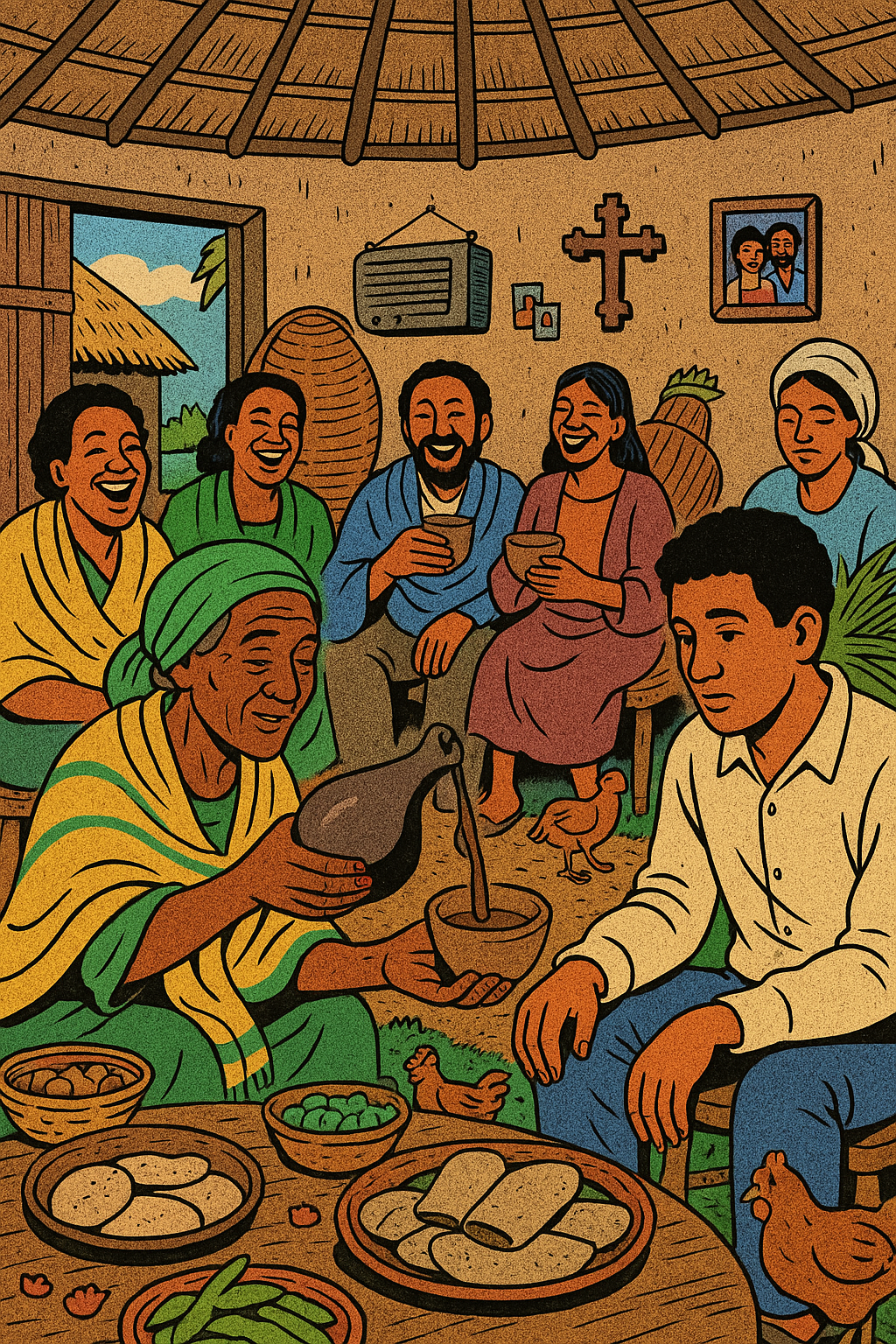
A group of people in an Ethiopian home pour tela by a table with food

6. Ethiopia’s Tela Ceremony: Fermentation Meets Friendship

In Ethiopia, drinking tela, a traditional homemade beer brewed from barley or maize, is a community affair.

Usually made by women and served in small neighborhood gatherings, tela is a ritual of hospitality and kinship. Guests may sit in a circle, drinking from shared containers and swapping stories under woven thatch roofs.

The brewing process itself is communal, passed down through generations, with recipes varying by region and family. Every sip is a testament to shared heritage.
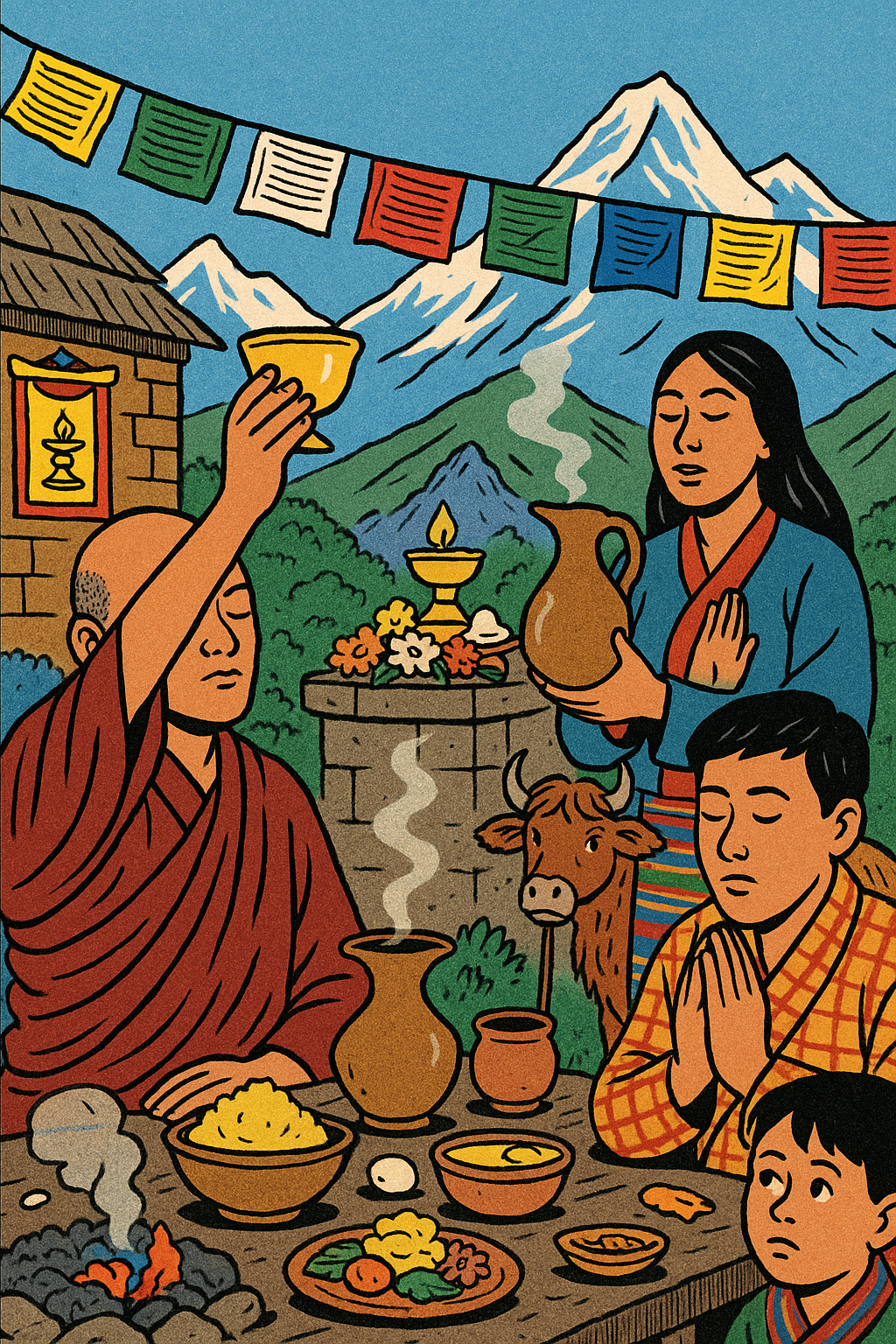
A monk in Bhutan holds up a vessel with ara, while a man prays, a woman holds a pitcher, and a boy and yak look on

7. Bhutan’s Ara Offering: Drink With the Divine

Bhutan isn’t the first place people think of when they imagine booze, but the Himalayan kingdom has its own take: ara, a rice-based liquor made in homes across the country.

When consumed, it’s often part of a lohso ritual: a prayer for peace, prosperity and warding off misfortune. The ara is sometimes mixed with butter and eggs (yes, really), and offered first to deities or the local lama.

While public consumption of ara is discouraged under Bhutanese law, its role in spiritual and community rituals remains deeply ingrained in local life.

RELATED: Bhutan and More of the World’s Most Underrated Adventure Travel Destinations
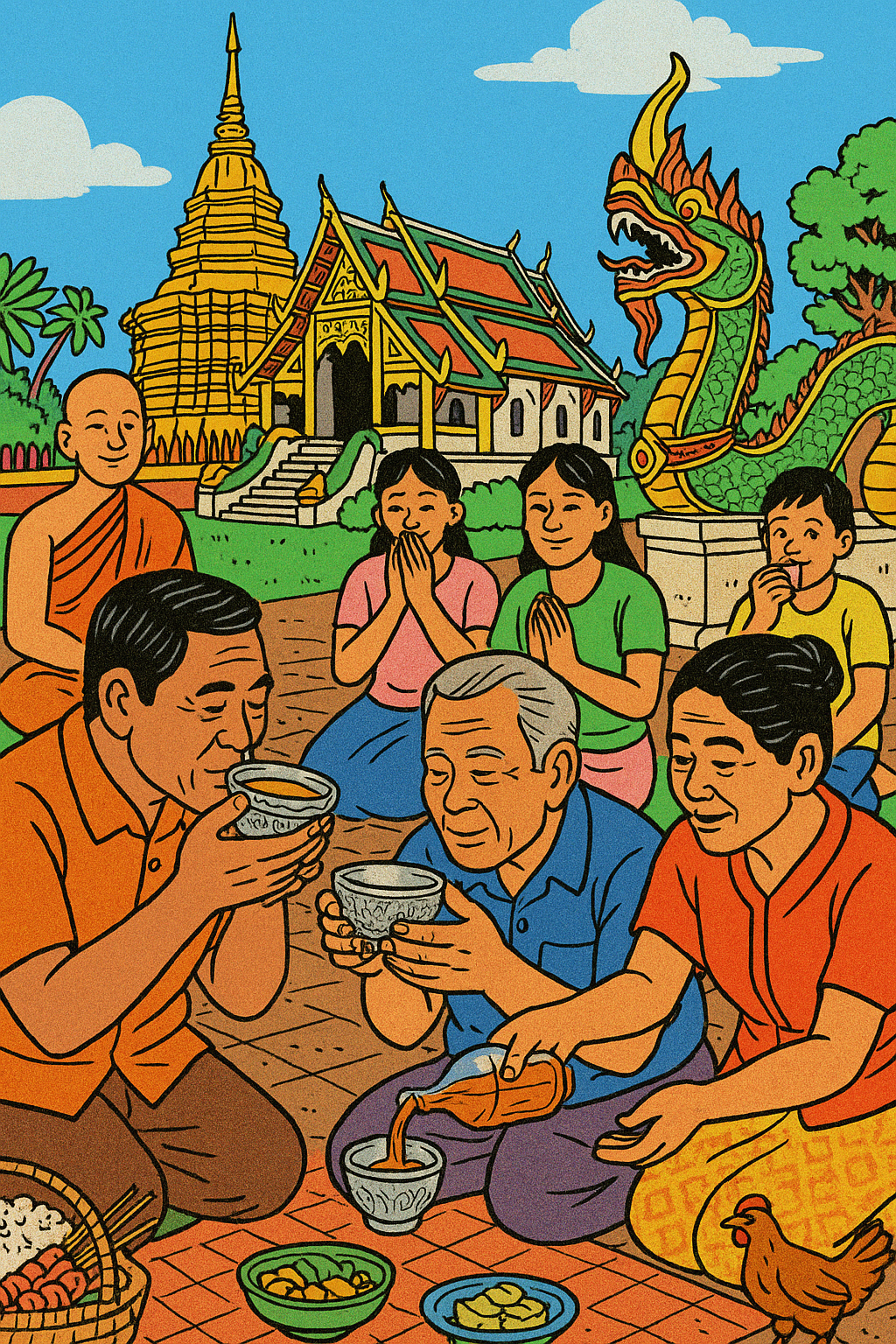
In front of a Thai temple and naga, people drink from silver bowls, while others, including a monk, watch

8. Thailand’s Communal Cups: Sharing in Celebration

At Thai ceremonies, including weddings and Buddhist merit-making rituals, alcohol often plays a social — not sacred — role. However, what stands out is the tradition of communal drinking from shared cups or small silver bowls (khan) at village gatherings.

This ritual fosters connection, trust and a sense of equality. Everyone shares from the same source, rich or poor, old or young.

Interestingly, some of these rituals are fading in urban centers but remain alive in rural areas, preserved by locals who see drinking as part of a holistic spiritual and social life.
RELATED: What’s the Best Chiang Mai Street Food?

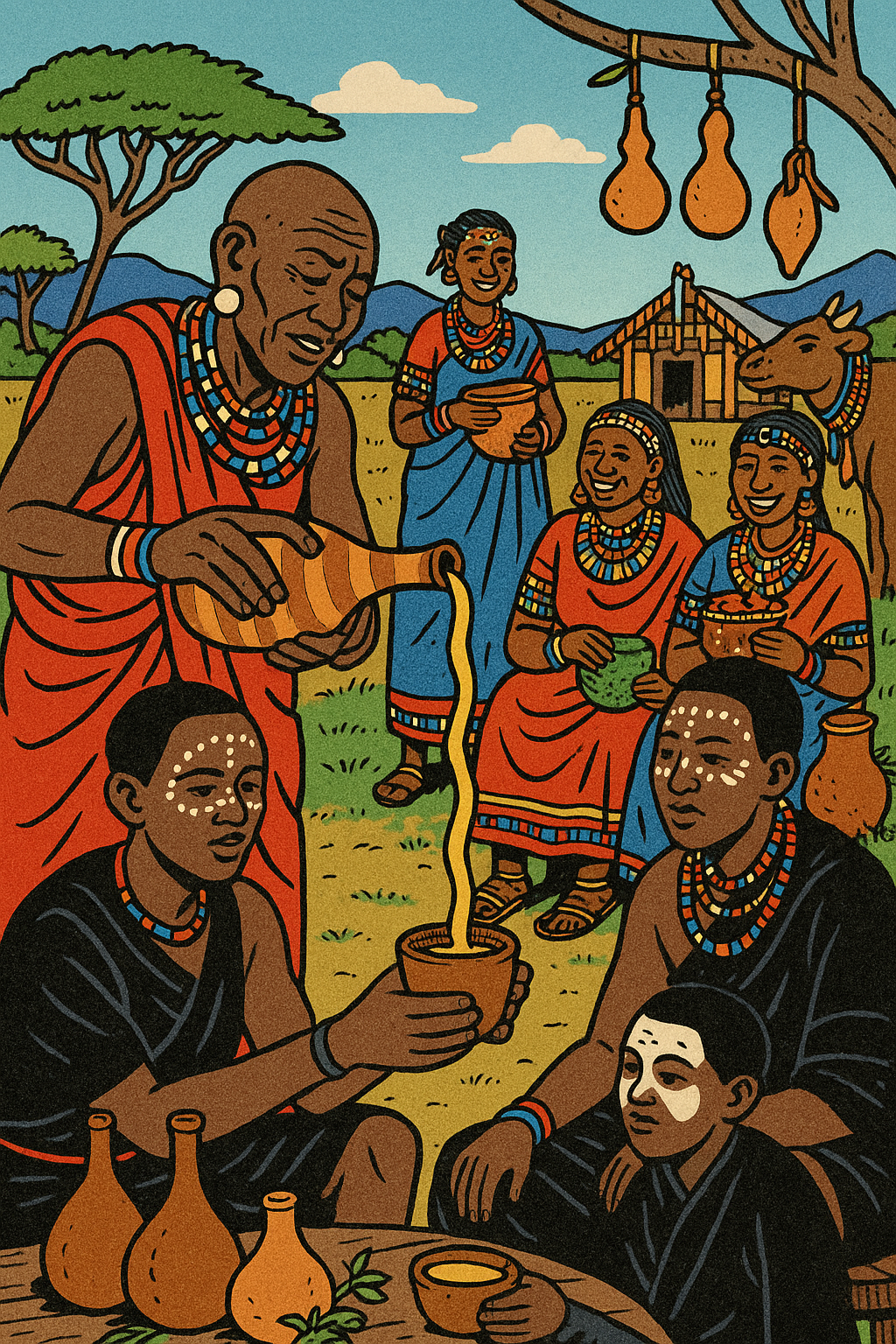
A Maasai man pours honey wine for young men with white face paint during a coming-of-age ceremony in Kenya, while women smile and watch

9. The Maasai’s Honey Wine: From Rite to Rite

In Kenya and Tanzania, the Maasai people brew a traditional honey wine that features prominently in ceremonies such as weddings, age-group initiations and spiritual blessings.

Drinking together symbolizes unity and is believed to strengthen bonds between clans. The brew itself — fermented over days — is thick, sweet and often served in gourds.

While it’s not exported or available commercially, it remains an important cultural practice among the Maasai — one that links heritage, land and rite of passage.

Drinking as Cultural Mirror

Across continents, drinks are more than refreshments; they’re vessels of meaning. They tell stories. They set boundaries. They open doors.

Alcohol has long been used to unite communities, mark transitions, and strengthen social structures—an insight that’s as true today in Peruvian villages as it is in downtown Tokyo.

And this is why the next time you're sipping that refreshing cocktail under a lazy sun, you might reflect on how drinks connect us — not just across tables, but across centuries and civilizations.
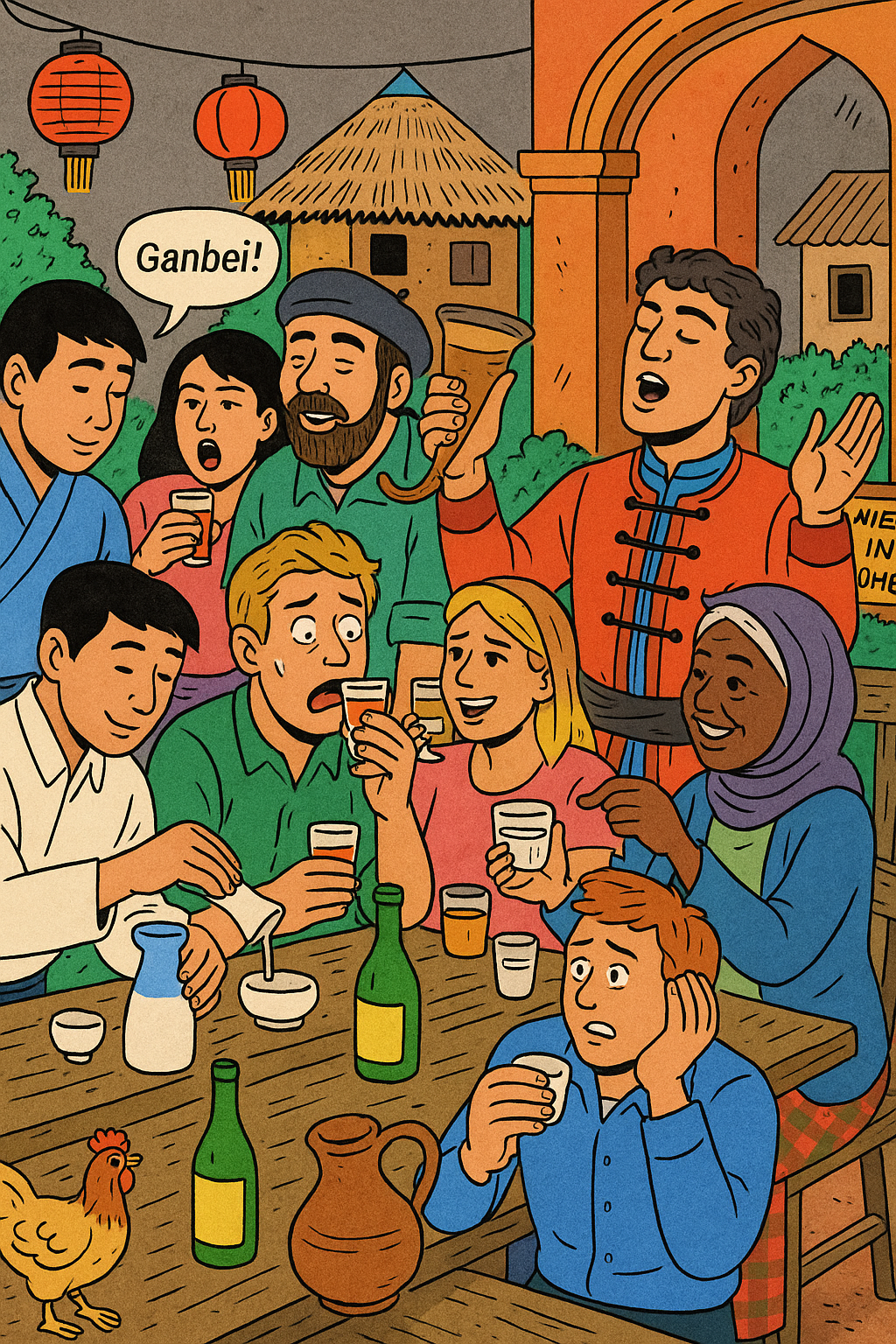
People from around the world try to follow drinking etiquette

Tips for the Culturally Curious Sipper

If you’re planning to engage in local drinking customs during your travels, here are a few do’s and don’ts:

  • DO research ahead: Some rituals have sacred meaning, and missteps can be disrespectful.

  • DON’T chug everything: Unless the culture dictates it (hello, China), pacing is usually fine.

  • DO accept if offered: In many cultures, declining a drink can signal rejection of hospitality.

  • DON’T assume Western norms apply: One person’s toast is another’s offense.

  • DO participate wholeheartedly: The ritual is often more important than the drink itself.

So, here’s to the world’s drinkers — not the binge crowd, but the ceremonial sippers, the storytellers, the sacred pourers. To the women brewing tela in Ethiopia, to the Andean farmers offering chicha to the gods, to the Japanese executives bowing over crystal sake cups.

And to you, fellow traveler, who now understands that sometimes, a drink is just a drink… but sometimes, it’s the soul of a people poured into a glass.

Cheers—or as they say in Georgia, “Gaumarjos!” –Ivana Babic

RELATED: Bizarre Foods Around the World

5 of the World’s Most Underrated Adventure Travel Destinations

The lemurs of Madagascar, the prayer flags of Nepal, the rock faces of South Korea, the azure waters of Slovenia and the mountainside fortresses of Bhutan: These are the best-kept secret destinations for trekking and other outdoor activities.

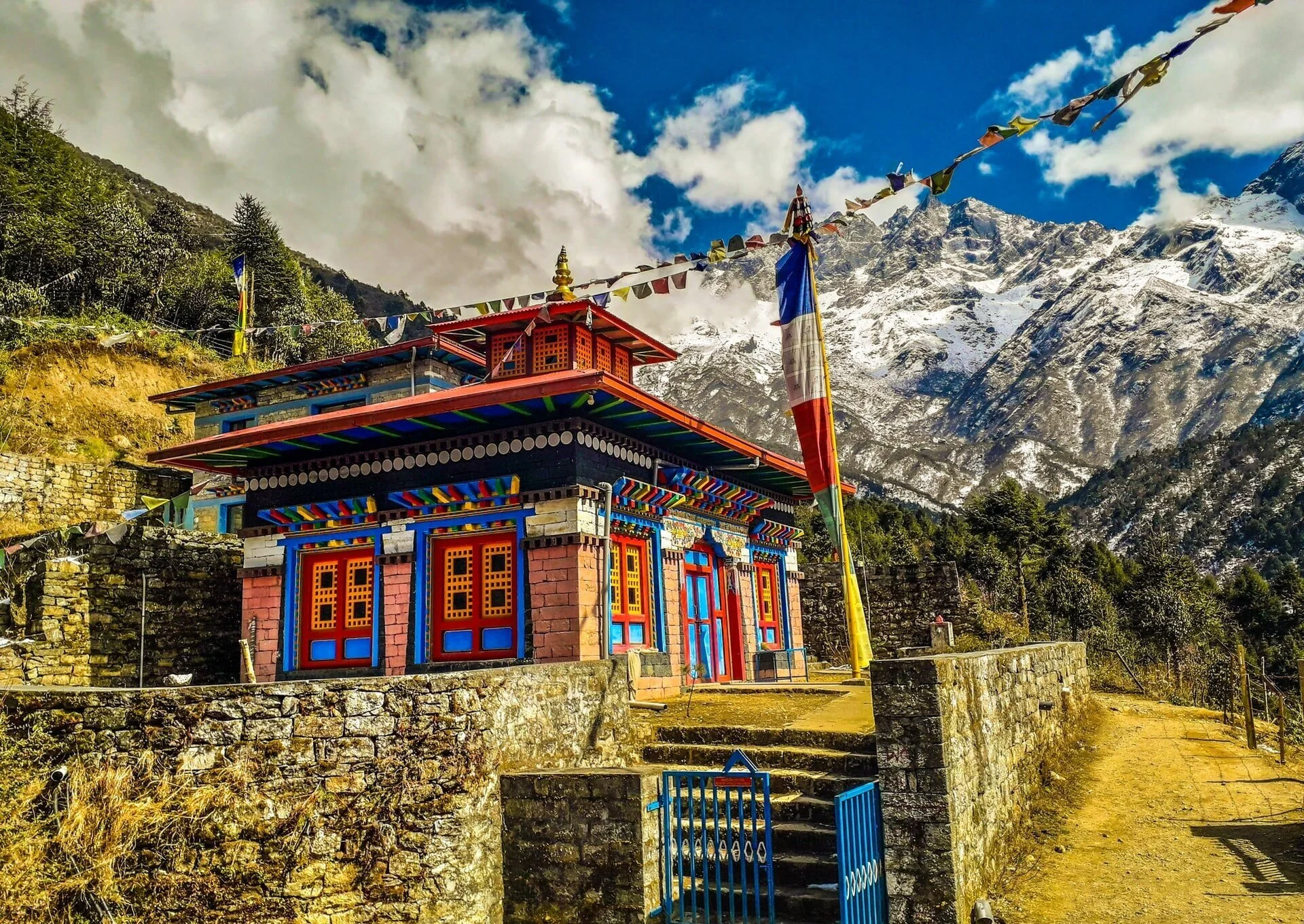
templeofgurupadmasambhava.jpg

The Temple of Guru Padmasambhava is just one of the many delights found in Bhutan, one of the lesser known (albeit a bit tricky to visit) adventure travel destinations.

Choosing a destination for your next adventure can feel downright overwhelming. Trekking in Greenland? Bouldering in Utah? Paddling the Caribbean? Throwing a dart at a map and hoping it lands somewhere cool?

When the entire globe is your playground, it can be tough to choose. Hey, nothing like a list of suggestions to get the wheels turning, right? 

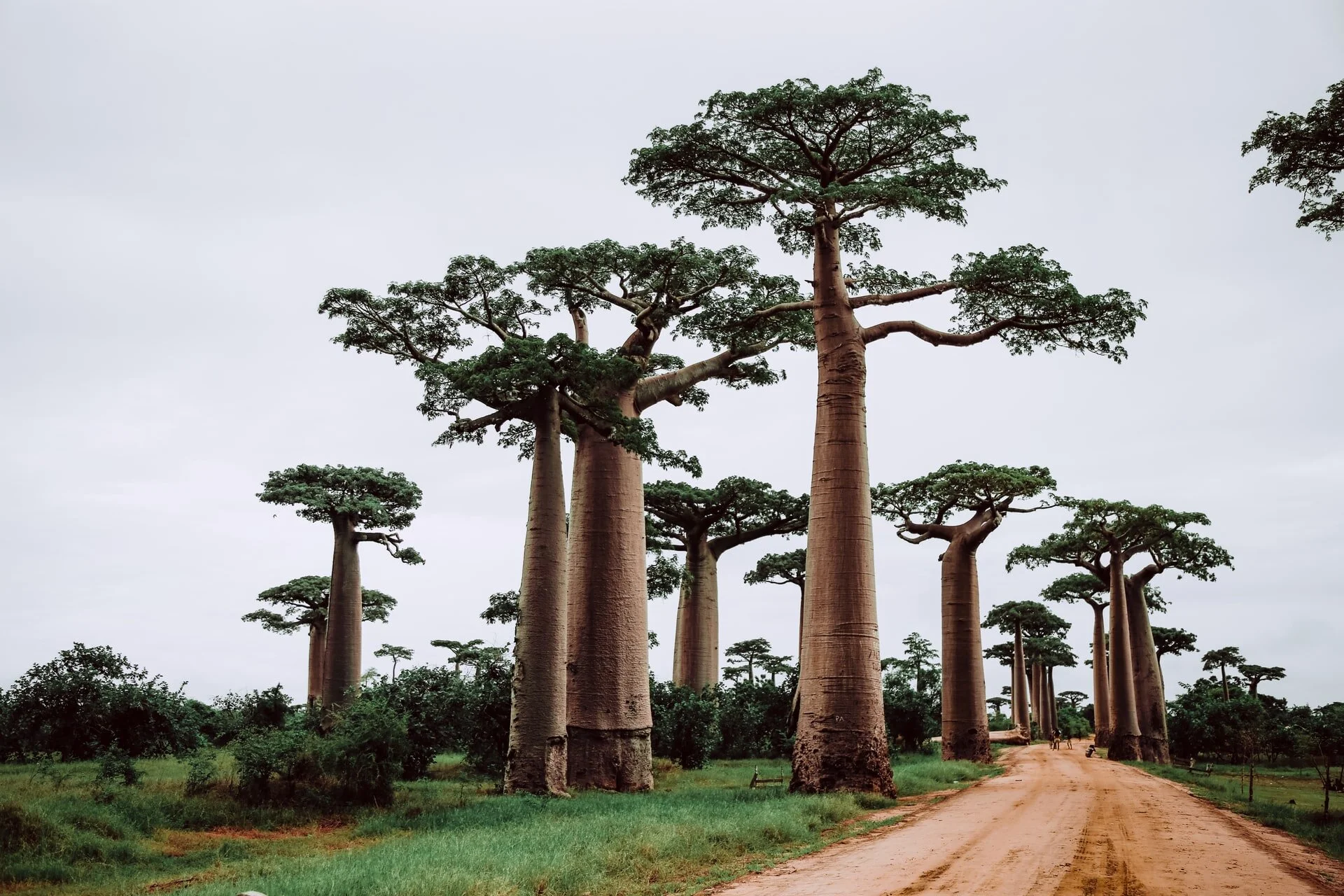
Madagascar is an adventure travel destination that rivals the Galapagos in the “did I just step into a Dr. Seuss book?” factor.

Here are five of the world’s most underrated adventure travel destinations, all with their own unique appeal. Maybe that means the bucket list just got five lines longer. Better get planning!   

Baobad trees in Madagascar definitely up the Dr. Seuss factor.

Baobab trees in Madagascar definitely up the Dr. Seuss factor.

1. Madagascar 

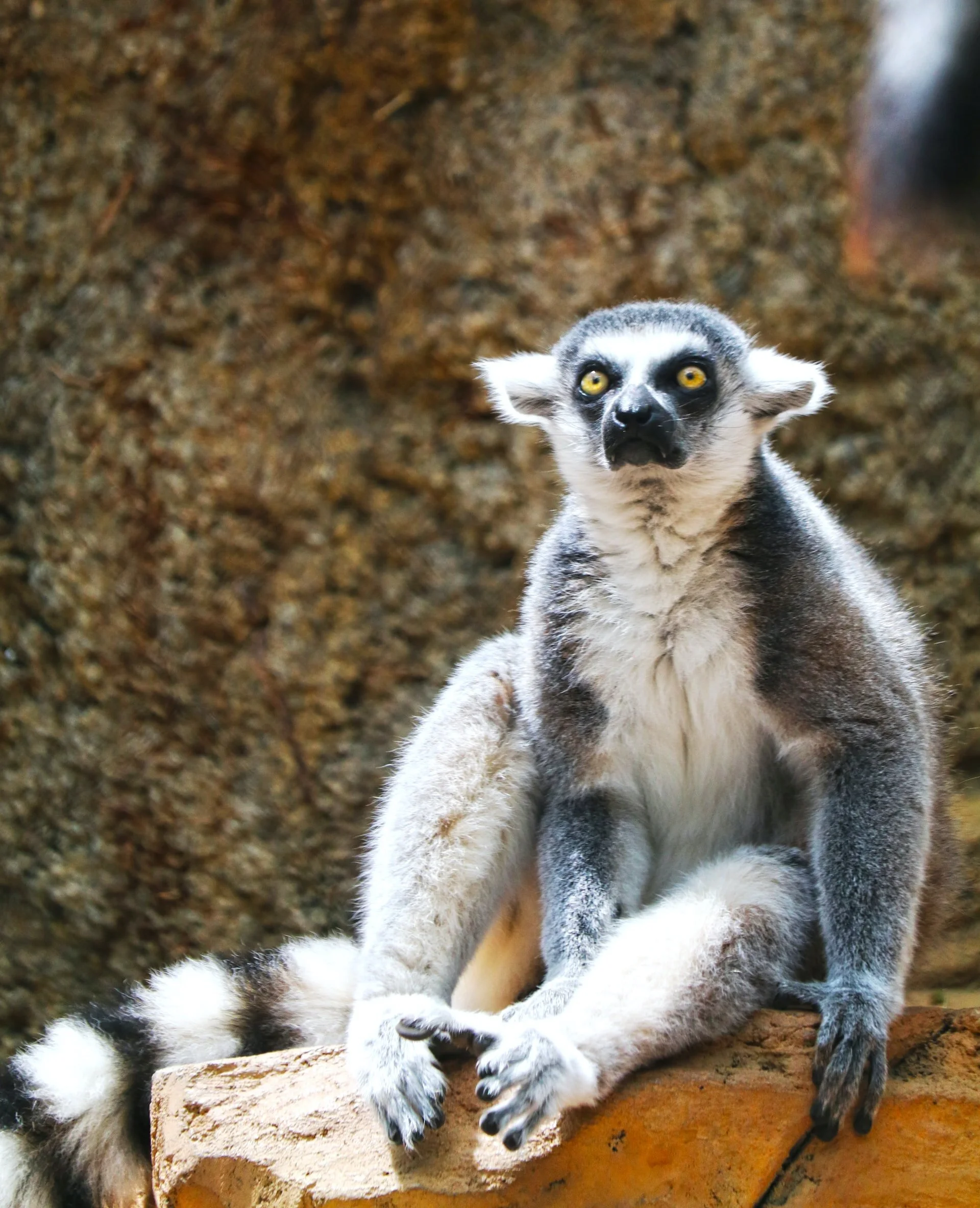
This far-flung island off the eastern coast of Africa isn’t just dancing lemurs — it’s an adventure travel destination that rivals the Galapagos in the “did I just step into a Dr. Seuss book?” factor. For lovers of nature, this island boasts biodiversity in spades, with chameleons, primates, frogs and sealife calling it home. For adventurers, its lack of cars means every step becomes part of an exploratory trek. 

Many spots on Madagascar are home to lemurs.

Many spots on Madagascar are home to lemurs.

Between Madagascar’s Mantadia and Ranomafana National Parks, visitors will find miles and miles of hiking trails seemingly from another planet. After exploring inland, adventurers can migrate to the coast to unwind at pristine stretches of beach, like the impossibly turquoise Nosy Be island, which doubles as a lemur habitat. 

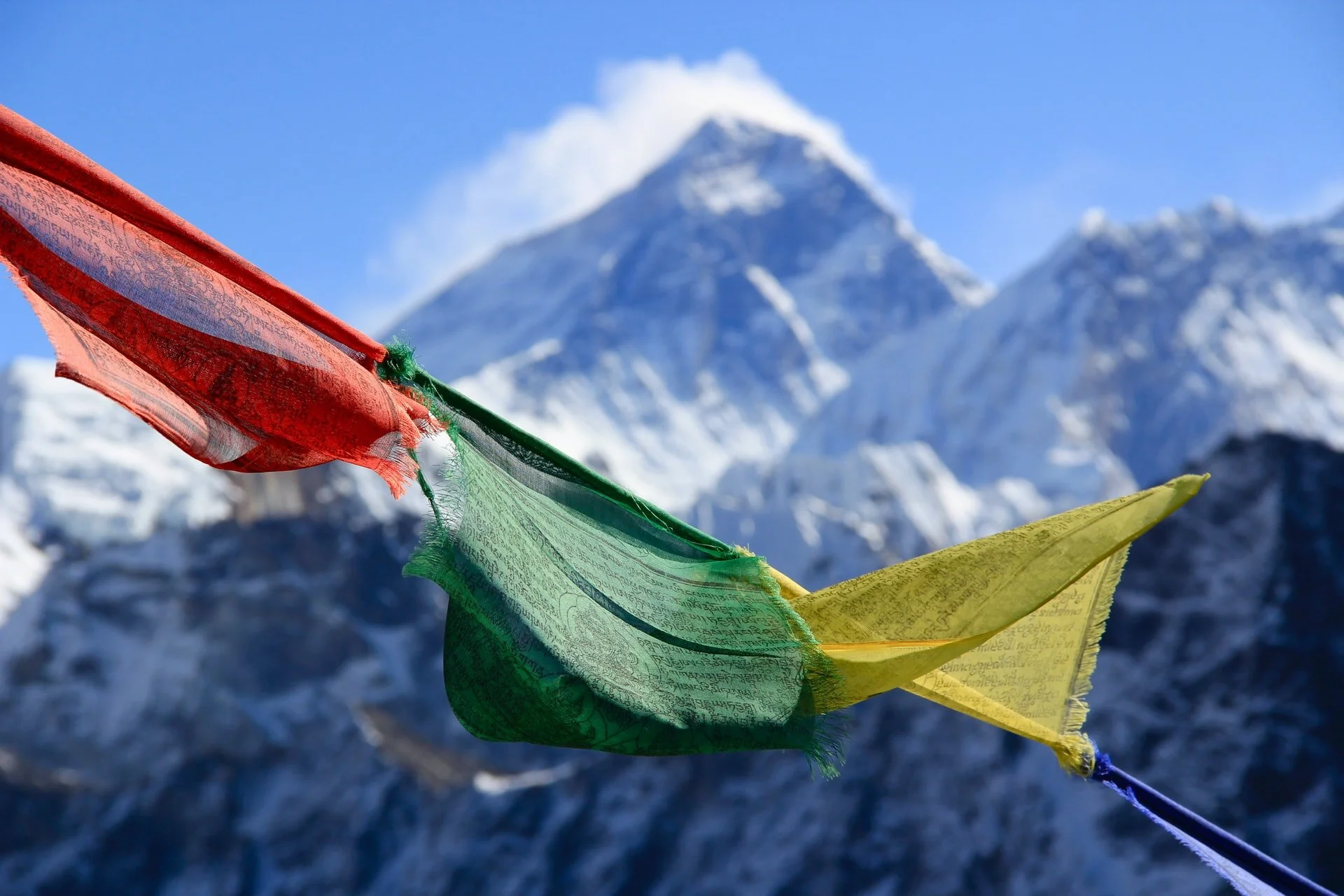
Prayer flags are found throughout Nepal. They’re said to carry prayers and mantras on the wind.

Prayer flags are found throughout Nepal. They’re said to carry prayers and mantras on the wind.

2. Nepal 

Perched atop the spine of the planet, Nepal might not seem “underrated” at all. Here’s the thing: With big names like Everest within its borders, it’s certainly one of the ultimate adventure destinations of the world. 

The base camp at Everest, the highest mountain on the planet, is a colorful spot to kick off a trek.

The base camp at Everest, the highest mountain on the planet, is a colorful spot to kick off a trek.

However, it’s a country that can feel entirely too challenging or out of reach for many travellers. When its main attraction is the tallest mountain on Earth, Nepal can be a bit intimidating to the masses. But you can, and should, visit even if you’re not planning on setting foot in a base camp. There’s something about trekking in Nepal, prayers flag fluttering overhead, rhododendrons blooming, towering peaks in the foreground… It’s magical. Don’t keep putting it off until you’re better, older, wiser, whatever. 

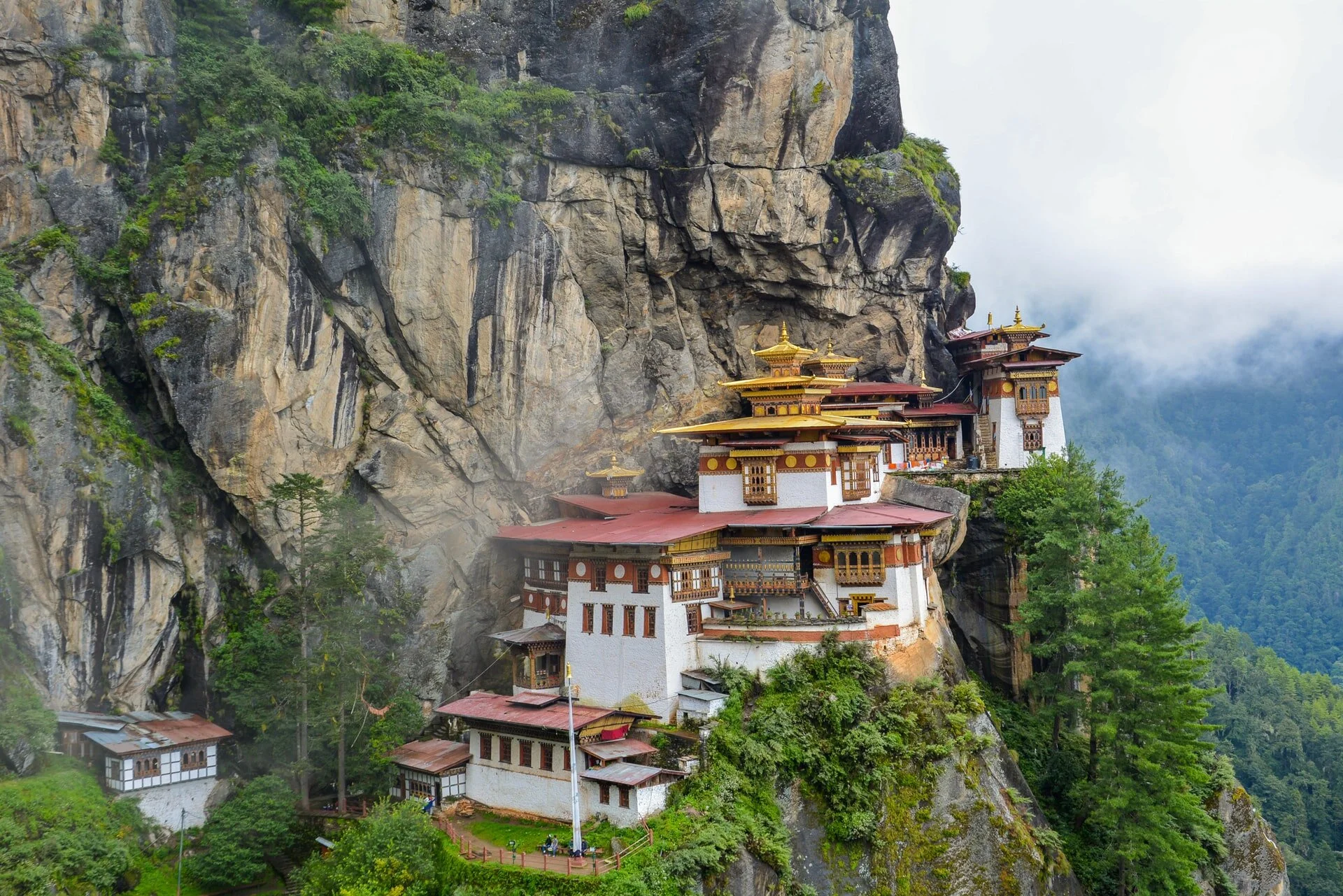
Paro Taktsang, a Buddhist monastery in Bhutan, clings to the cliffside.

Paro Taktsang, a Buddhist monastery in Bhutan, clings to the cliffside.

3. Bhutan 

As much as the idea of isolation has taken on an entirely new meaning in the recent past (curse you, COVID!), Bhutan exemplifies one of the most fascinating applications of isolation in the tourism world. Having only just allowed television into the country in 1999 and still prohibiting the sale of goods like tobacco, Bhutan has opened to the ideas of the rest of the world on its own schedule. This includes tourism.

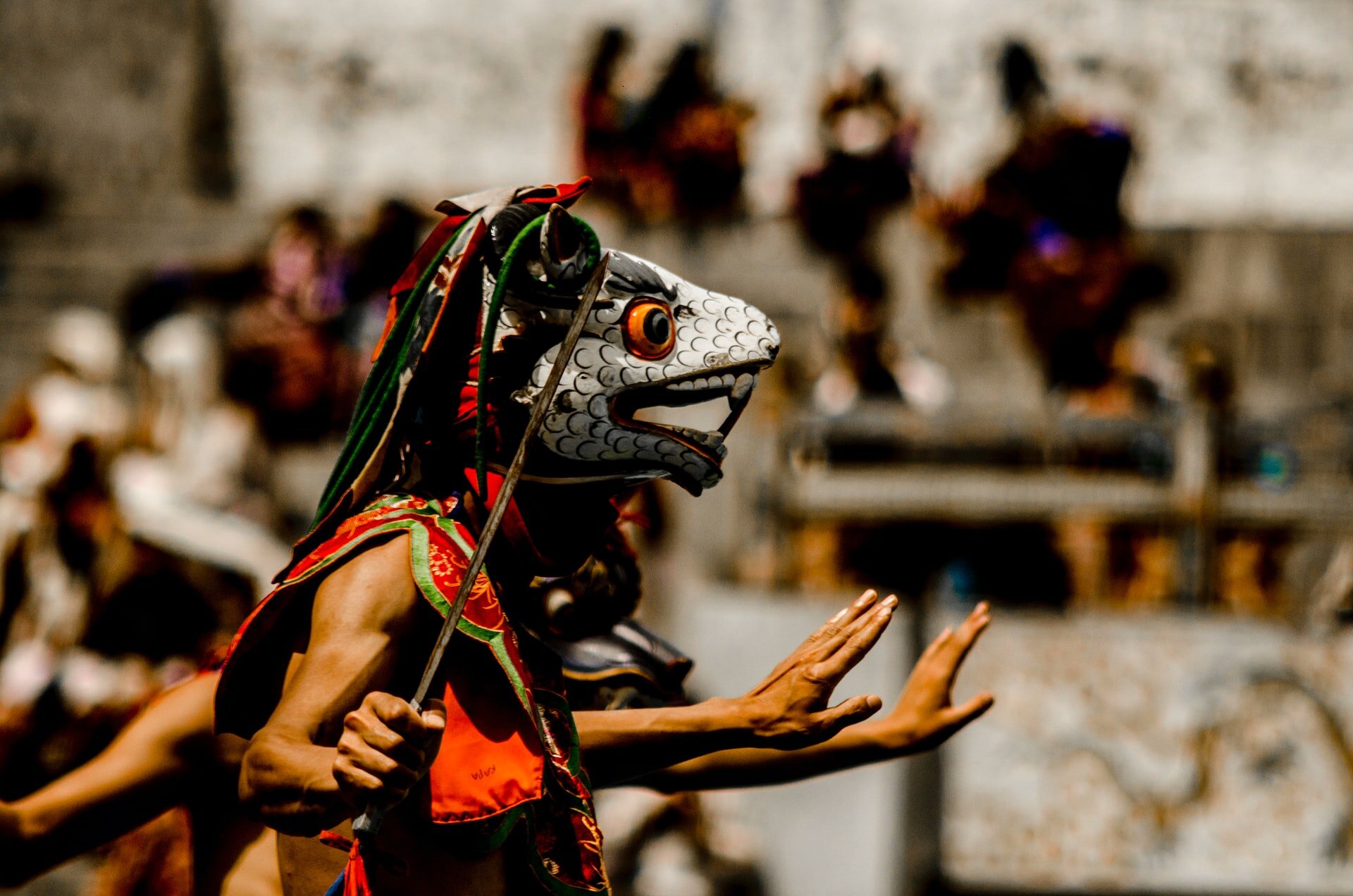
The masked dances of Bhutan take place annually. Try to catch one — it’s said to purify the soul and bring good luck.

The masked dances of Bhutan take place annually. Try to catch one — it’s said to purify the soul and bring good luck.

Even getting into Bhutan feels a bit like jumping through hoops. You’ll need to be invited by a citizen of the country (unless you hold a passport from India, Bangladesh or the Maldives), or be a guest of the government. You’ll be required to pay a set daily fee to see the country, and the geographical isolation of the nation makes flights costly and complicated. 

However, if you manage to wrangle a visit, you’ll be rewarded with some of the most exceptional, unspoiled scenery the world has to offer, as well as a rich culture developed without interruption from the outside world. From 7,000-meter summits to lush green valleys, the natural landscape is simply unreal. Of course, the dzongs (fortresses) perched atop impossibly steep cliffs are one of the gems of Bhutan. The chance to explore this unknown destination is a rare treat and undoubtedly worth the effort. 

Cycling and great food come together for wellness travels in South Korea.

Cycling and great food come together for wellness travels in South Korea.

4. South Korea 

This small country (slightly larger than the U.S. state of Indiana) is an absolute goldmine when it comes to outdoor adventure. And South Korea’s relative lack of “hype” in the adventure travel world is a blessing in disguise. 

Rock climbers will find numerous sites for adventure in South Korea.

Rock climbers will find numerous sites for adventure in South Korea.

While others flock to Iceland and the Rockies, you can discover South Korea’s expansive hiking trails and climbing-ready rocky cliffs in peace. There are 20 mountains a stone’s throw from Seoul, making outdoor adventure an easy outing once you’re done eating your way through the capital (which you definitely should). Rock climbers will find more places than they could hope to cover in one trip, and many of these locations are so beautiful that the locals believe spirits call them home.

Because of a robust road system, South Korea is a must for cyclists looking to put in miles somewhere new, and the snowy slopes near Pyeongchang are perfect off-the-beaten-path destinations for snow sports enthusiasts. No shortage of adventure to be had here!

A small isle in Lake Bled in Slovenia is home to the Pilgrimage Church of the Assumption of Mary.

A small isle in Lake Bled in Slovenia is home to the Pilgrimage Church of the Assumption of Mary.

5. Slovenia

Slovenia typically isn’t considered one of Europe’s many top-notch travel destinations. But as incredible as Italy and Spain will always be, Slovenia is truly one of the most underrated adventure travel destinations in the world. 

The gorgeous Soca River in Slovenia is a great spot for kayaking, rafting and other water sports.

The gorgeous Soca River in Slovenia is a great spot for kayaking, rafting and other water sports.

It’s a teeny country, but it offers the Slovenian Alps, the bright blue Soca River, hidden beaches on seaside stretches and beautiful Lake Bled. Whether you’re looking to kayak, swim, hike, go canyoneering or just savor a fantastic view, Slovenia delivers. Plus, you’re not going to be battling crowds or dodging selfie sticks while you explore. 


Apologies in advance for the wanderlust. Which of these underrated adventure travel destinations will you be visiting first? –Lukas Saville