ethiopia

Sacred Sips: Unusual Drinking Rituals Around the World

Travel the globe one drink at a time — from sake ceremonies in Japan to vodka toasts in Russia — and explore the sacred drinking rituals that reveal the heart of a culture.

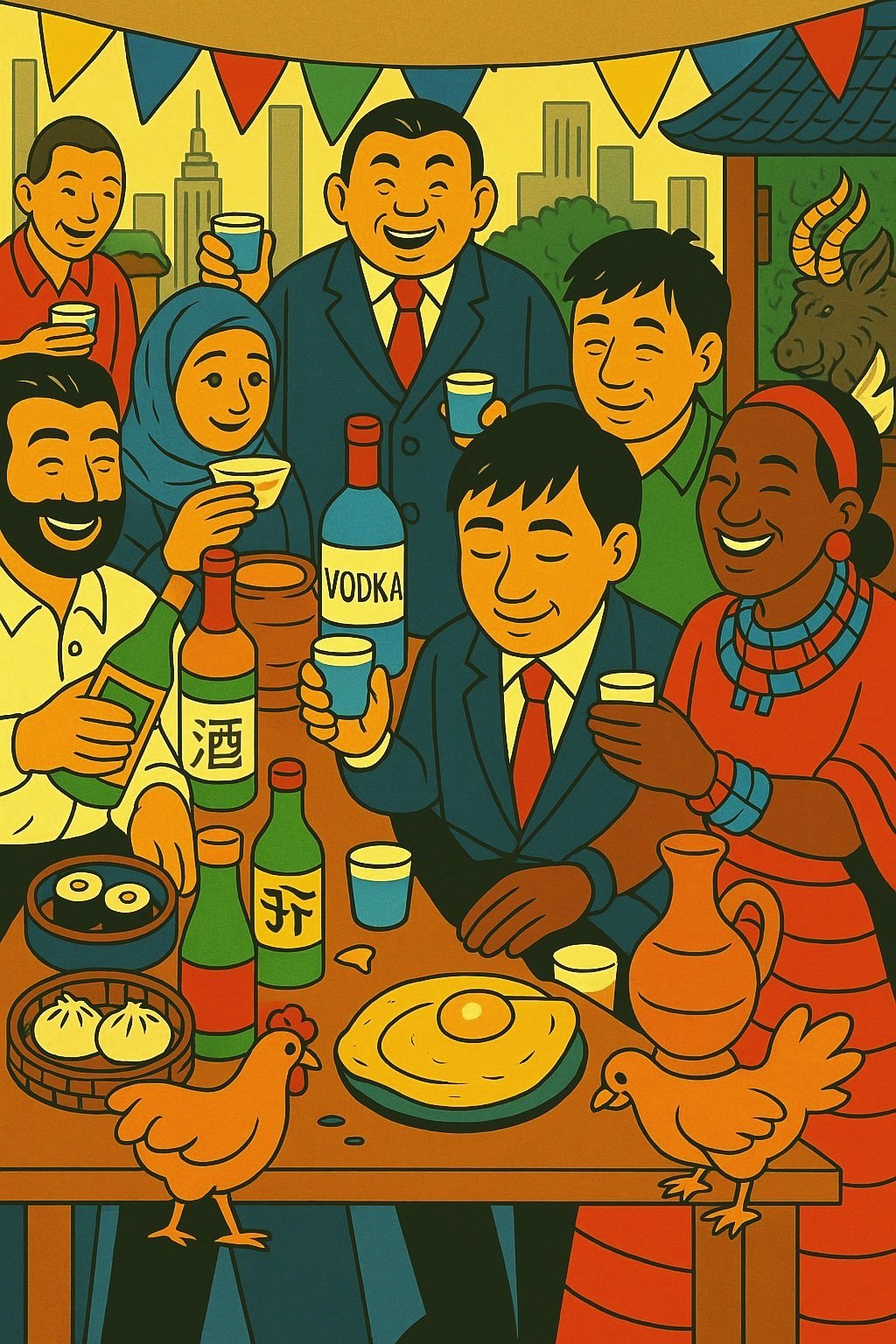
A group of people from around the world crowd around a table, holding traditional drinks from their countries

We’ve all had that moment: reclining on a sun-drenched patio, swirling a chilled drink, maybe a Malibu Bay Breeze, and thinking, Now this is living. But while your fruity cocktail might scream “vacation mode activated,” in many parts of the world, drinking goes far beyond recreation. It's ritual. It’s social glue. It’s ceremony, symbolism and, in some cases, sacred law.

Whether it’s the whisper of steam from a rice wine gourd in Bhutan or the thunderous clink of vodka glasses in Siberia, humanity’s connection to alcohol is as diverse as our languages and landscapes. So, if you're the kind of traveler who likes their libations with a dash of folklore, a twist of history, and a splash of anthropological intrigue, cheers to you. Let’s tour the world, one unusual drinking ritual at a time.

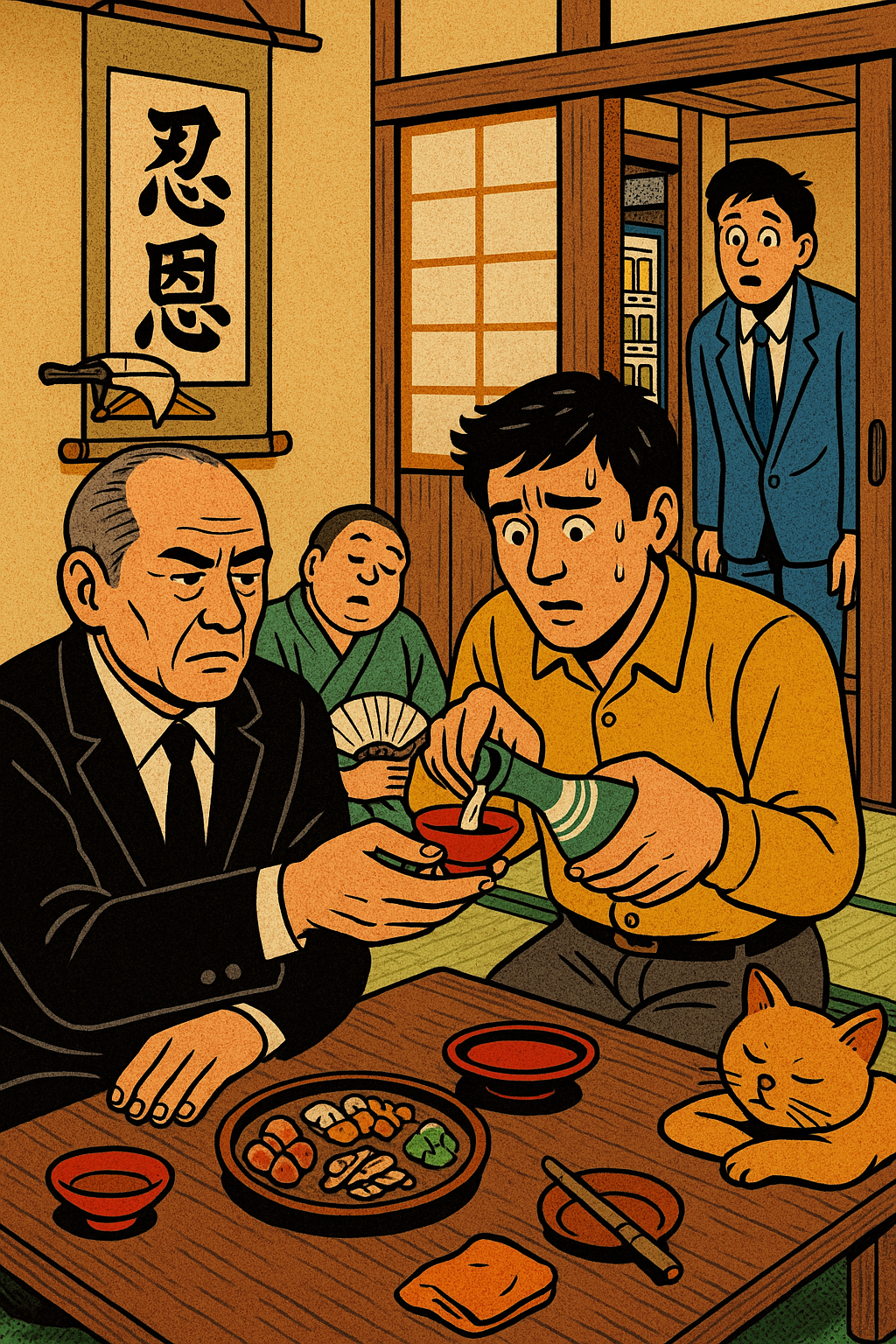
A younger man nervously pours sake for an older man in a suit at a Japanese teahouse, while a man sleeps in the corner and another enters, surprised

1. Japan’s Sakazuki Ceremony: The Art of Mutual Respect

In Japan, drinking isn't just about getting merry — it’s a ballet of etiquette and mutual reverence. Nowhere is this more evident than in the sakazuki ceremony, where two people exchange cups of sake to seal a bond. It can be between friends, business partners or during wedding rituals.

The process involves bowing, pouring for one another, and sipping from each other’s cups. If it sounds intimate, that’s because it is.

But beware: Hierarchy matters. If your boss pours for you, you’d better accept it with both hands and bow like your job depends on it — it just might.

RELATED: A Guide to Experiencing the Spectacular Koyo

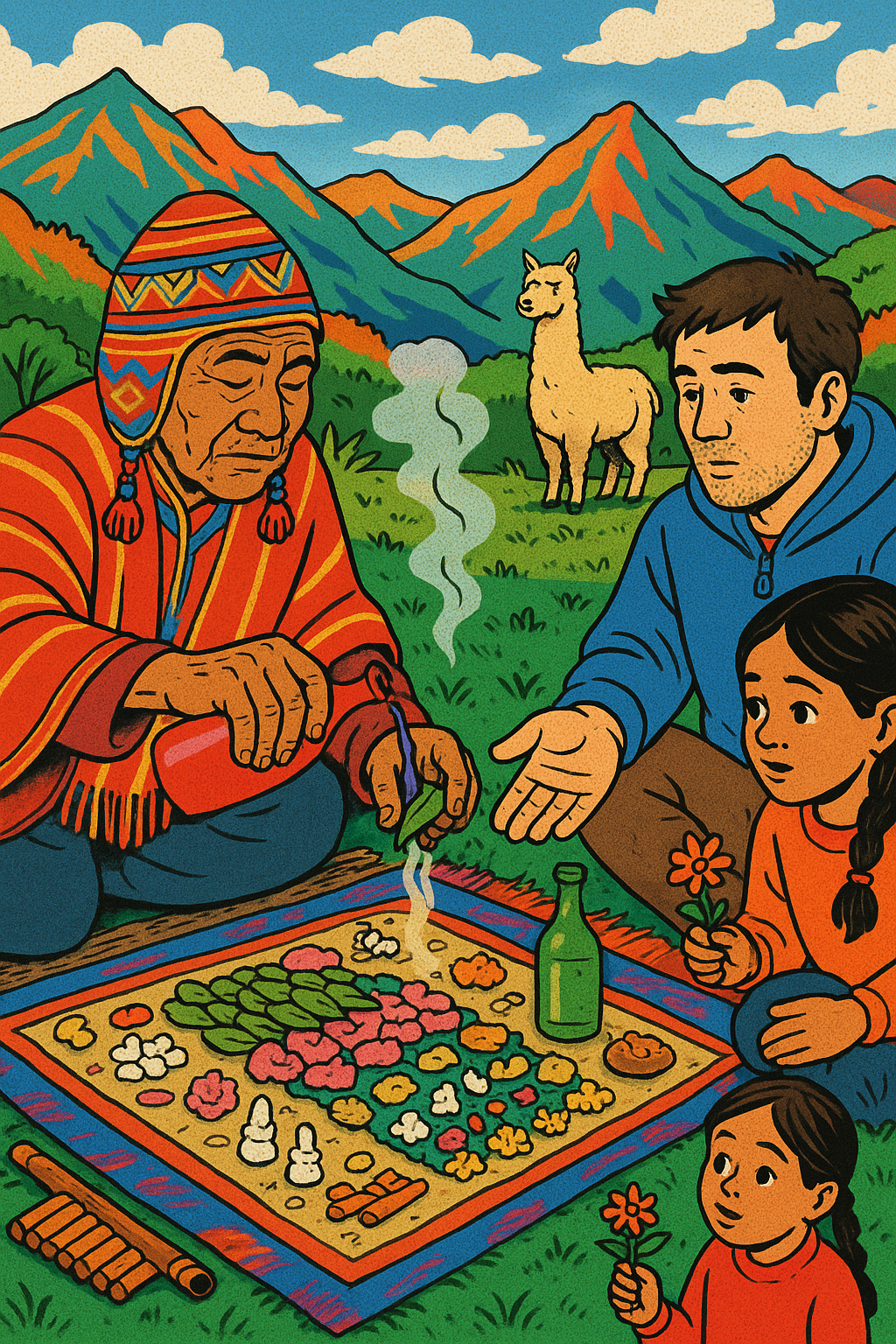
An older Andean man puts some chicha out for Pachamama, the earth goddess, over a spread of nibblies, while girls and a male traveler watch

2. Peru’s Pachamama Offering: A Sip for the Earth

Head into the highlands of Peru, and you’ll quickly learn that no drink enters your body without first blessing the earth. Before sipping chicha (a fermented corn beer), locals spill a few drops onto the ground. This is a symbolic offering to Pachamama, the Andean earth goddess.

This practice isn’t just reserved for locals, though; travelers who show respect are invited to share in the ritual. Just remember: Spill before you sip. Otherwise, you may offend a deity — and your host.

This reverence for nature in drinking rituals speaks to a deeper connection between land, spirituality and celebration. It’s not about intoxication. It’s about inclusion.

RELATED: The Pishtaco of Peru

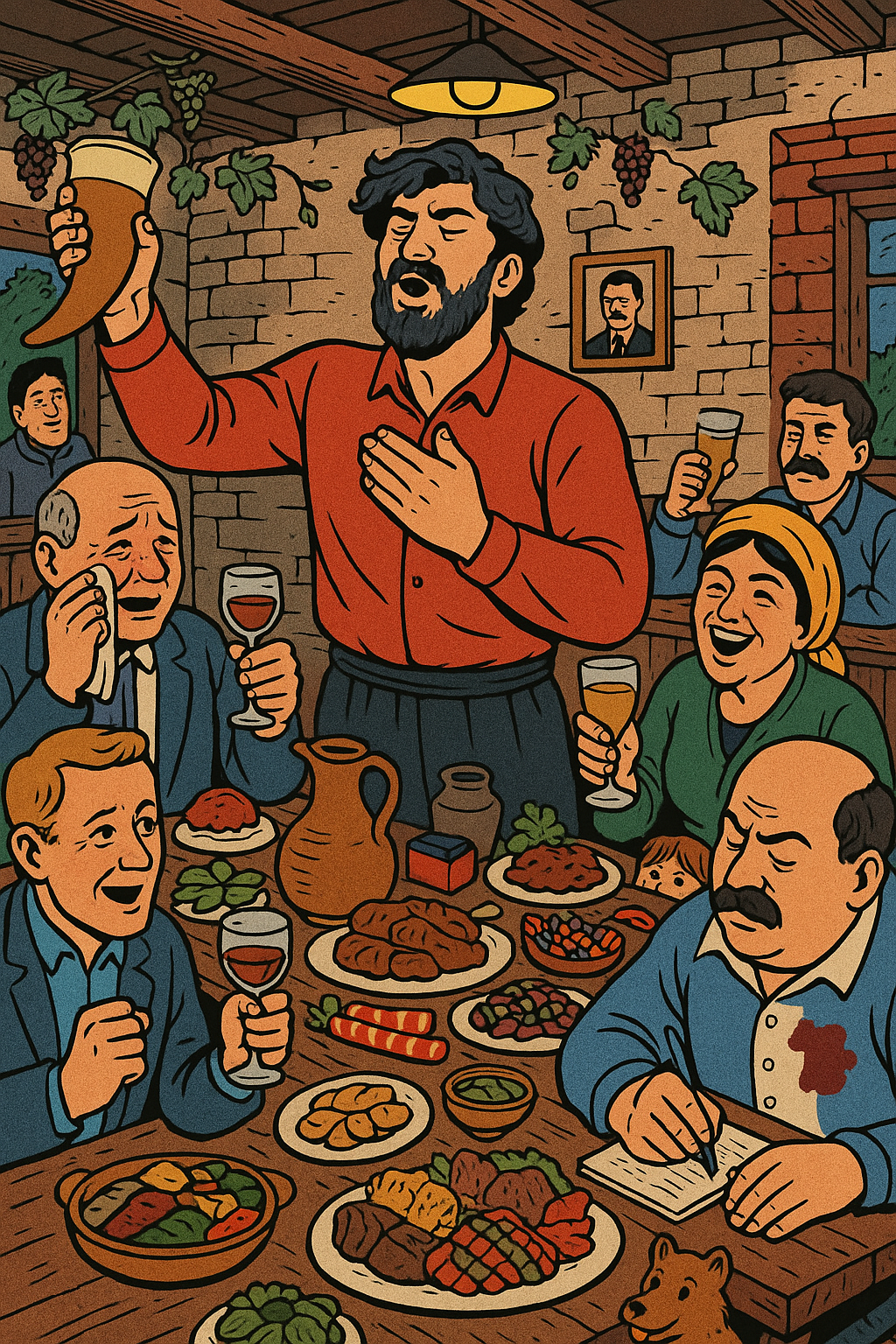
A bearded man stands, holding up a drinking horn, giving a toast, while people around him react

3. Georgia’s Supra: Toasting as a Competitive Art Form

No one toasts like the Georgians. And I mean no one. At a Georgian supra (a traditional feast), the tamada — a sort of designated toastmaster — leads an elaborate series of poetic, philosophical and sometimes comedic toasts that can go on for hours.

Each toast is met with wine horns raised and glasses drained. Guests are expected to participate, and interruptions are frowned upon. This is a structured, sacred ritual of storytelling, memory and reverence, made glorious with amber-toned Georgian wines.

There’s even a formal etiquette to how you hold your glass and how you respond to a particularly moving toast. Think TED Talk meets tavern.

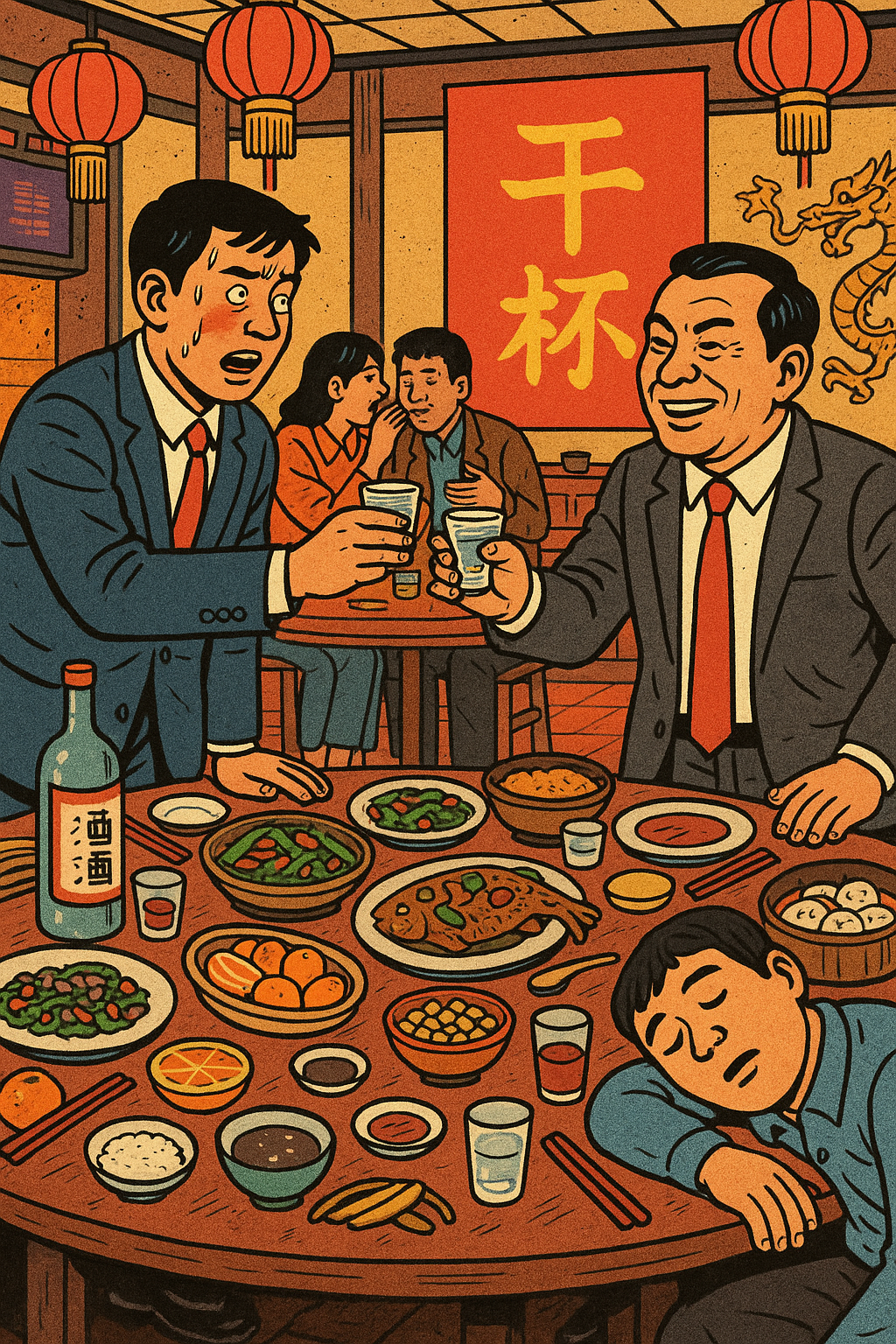
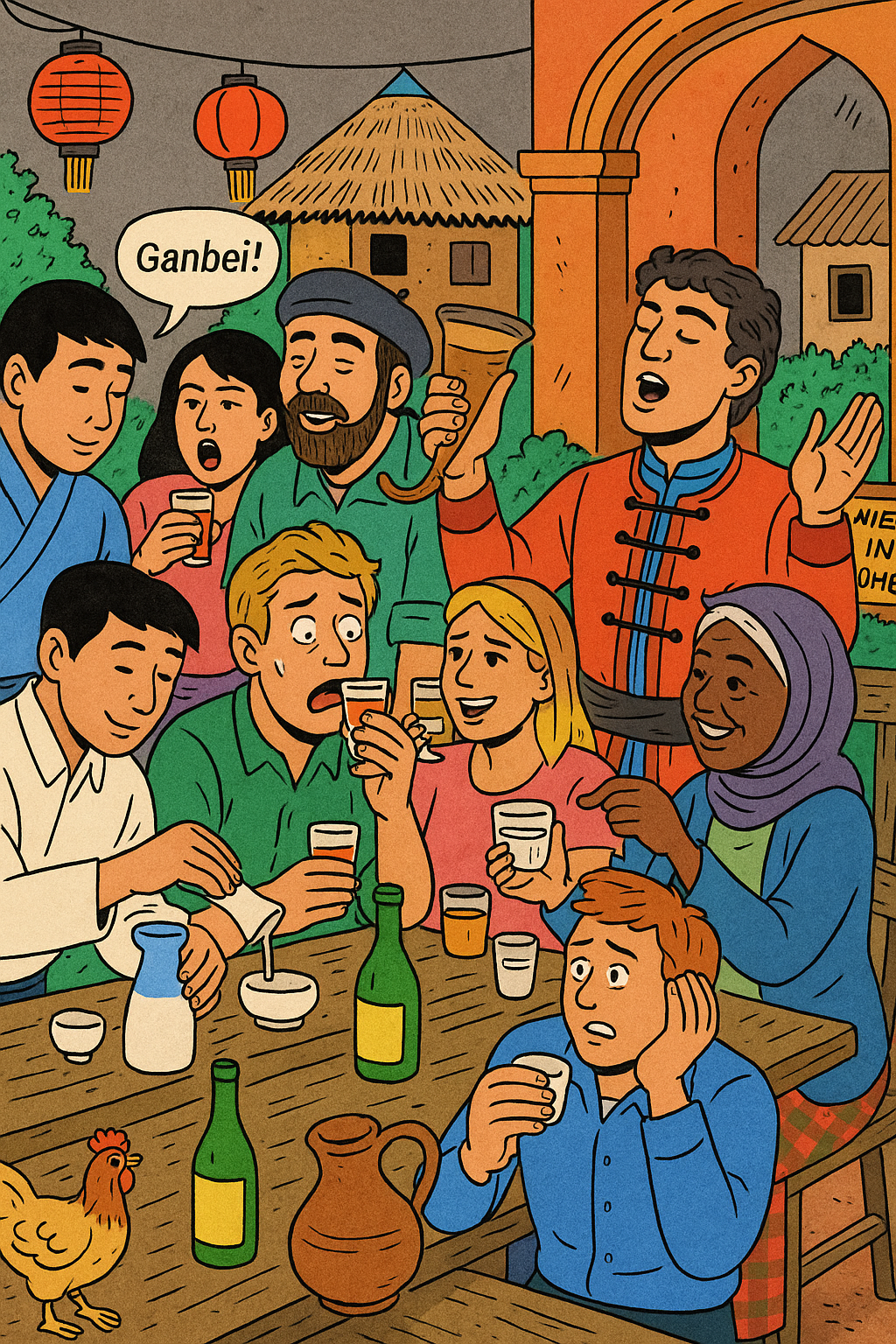
A middle-aged man toasts a nervous, drunken man at a Chinese ganbei ceremony by a table laden with food and a passed-out man, while couple whispers at another table
4. China’s Ganbei: Bottoms Up…or Else

In China, saying “Ganbei!” (干杯) is more than a simple “cheers.” It means “dry cup” — a declaration that you’ll finish your drink in one go. And they mean it.

Refusing a ganbei in a business setting is akin to rejecting a handshake. It’s a test of trust and camaraderie. This ritual can turn business dinners into something closer to drinking marathons, especially when baijiu — China’s fiery sorghum liquor — is involved.

Refusing to finish may offend. Finishing too quickly will win you another round. Good luck.
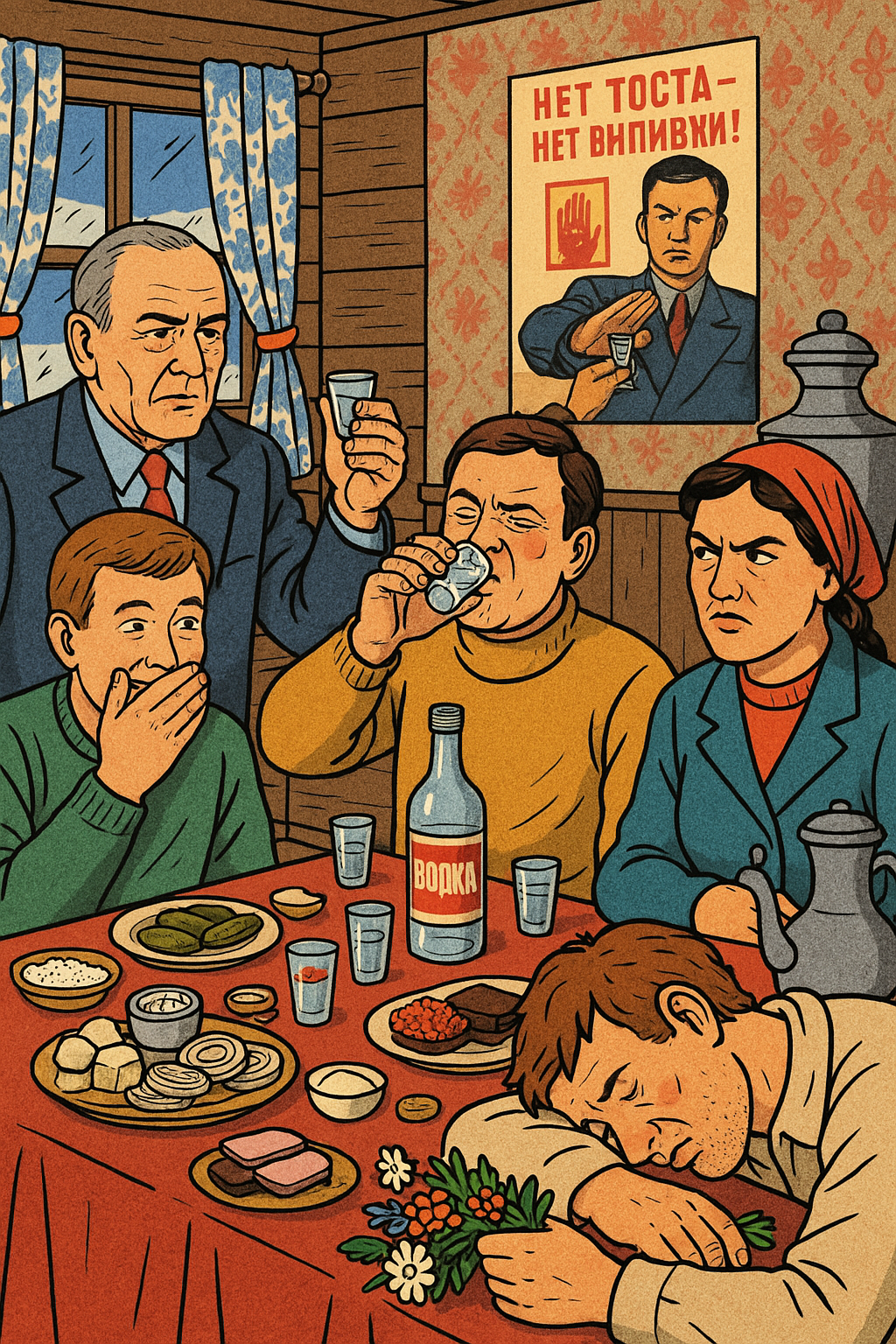
People sit at a table in Russia, drinking vodka, with one man laughing, another passed out and a woman scowling

5. Russia’s Vodka Etiquette: Drink First, Talk Later

If you think you know how to handle your liquor, try keeping up at a Russian celebration. Vodka in Russia is a no-nonsense affair governed by strict cultural codes.

Rule one: Toasts come first. Talking, eating, or even breathing too soon after someone raises a toast is considered rude.

Rule two: Never sip. Vodka is taken as a shot, straight. 

Rule three: Don’t refuse a round unless you’re ill or driving — and even then, prepare to explain yourself.

The act of drinking vodka in a group is deeply tied to expressions of hospitality and trust. It’s about showing heart (“dusha”), courage and belonging.

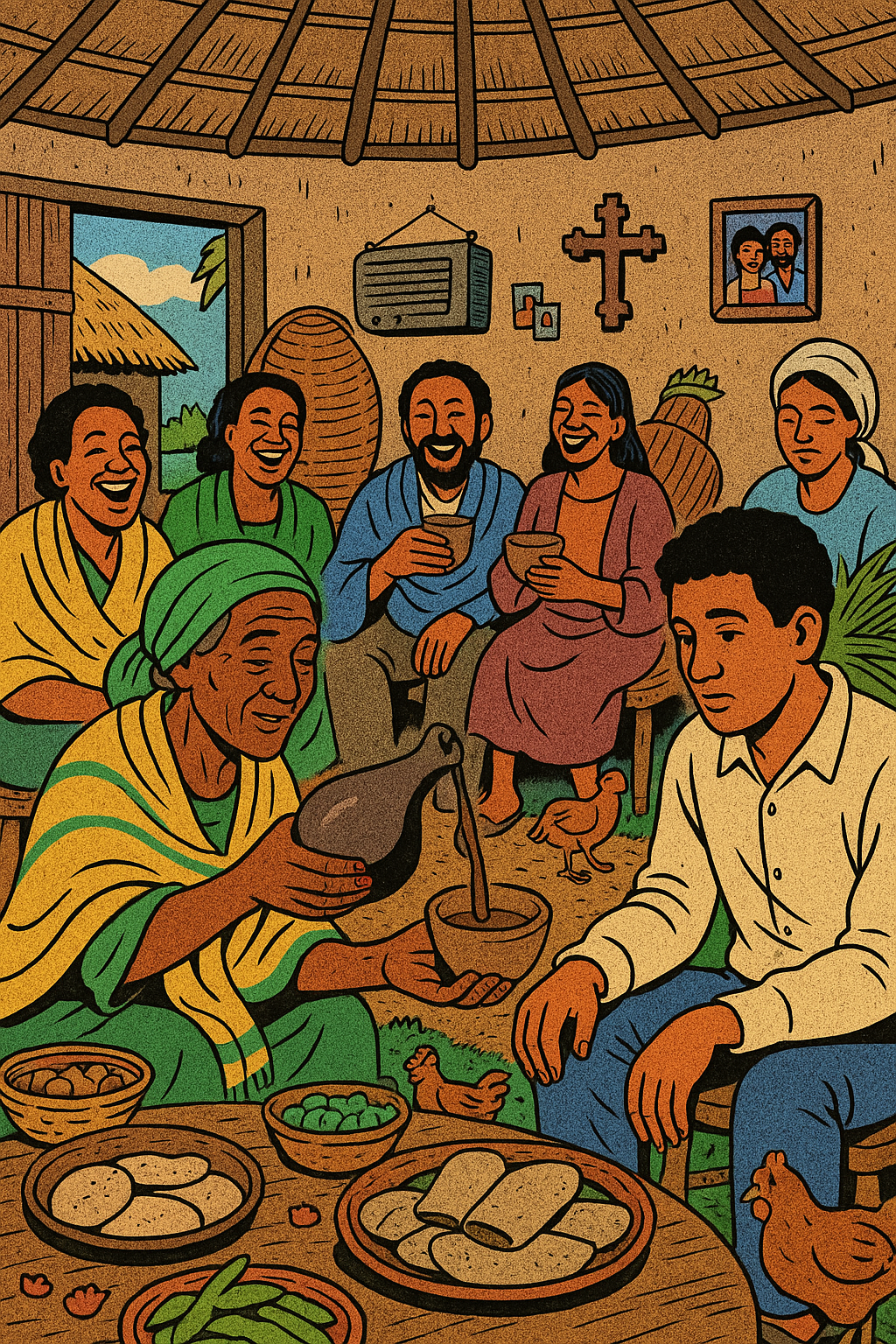
A group of people in an Ethiopian home pour tela by a table with food

6. Ethiopia’s Tela Ceremony: Fermentation Meets Friendship

In Ethiopia, drinking tela, a traditional homemade beer brewed from barley or maize, is a community affair.

Usually made by women and served in small neighborhood gatherings, tela is a ritual of hospitality and kinship. Guests may sit in a circle, drinking from shared containers and swapping stories under woven thatch roofs.

The brewing process itself is communal, passed down through generations, with recipes varying by region and family. Every sip is a testament to shared heritage.

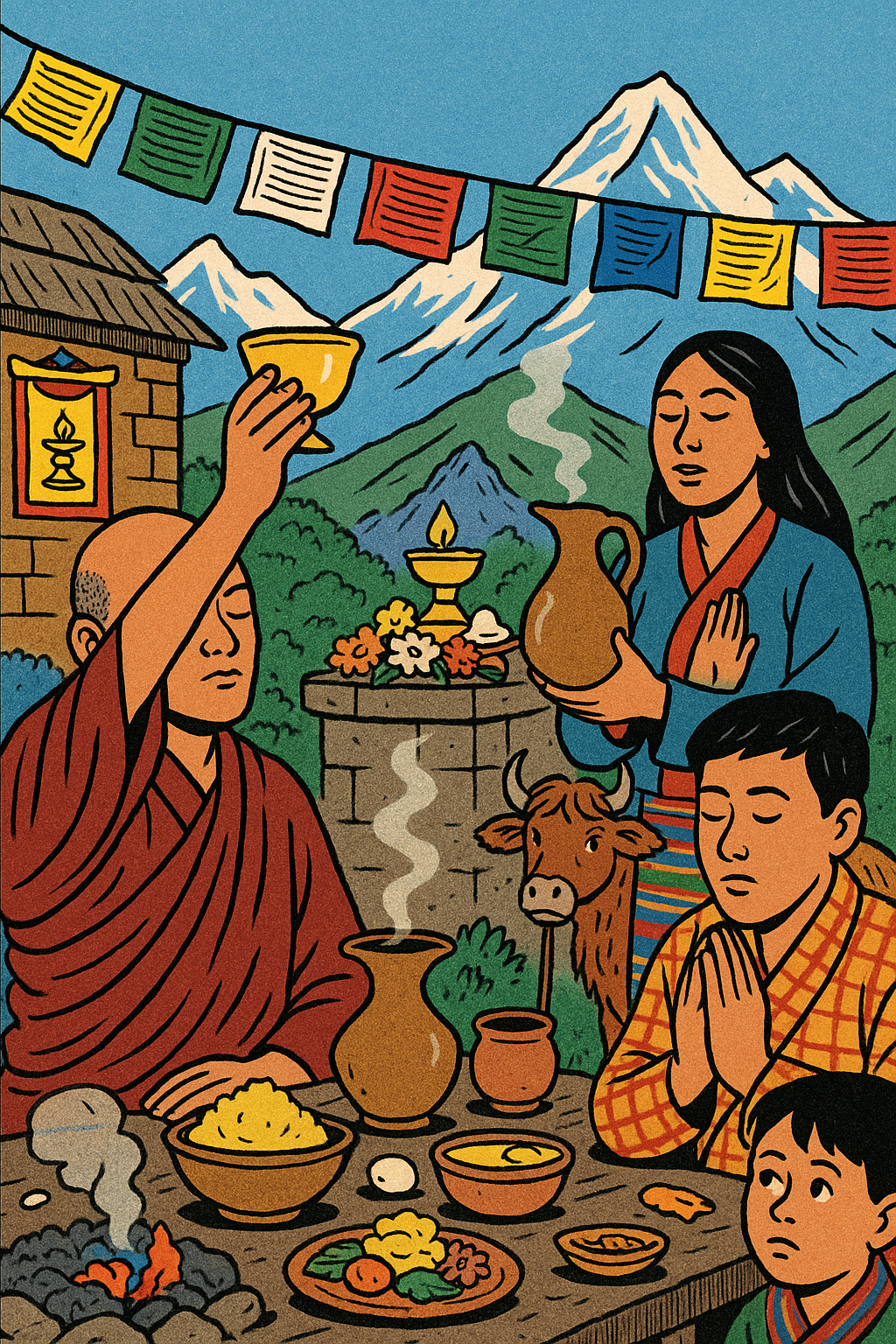
A monk in Bhutan holds up a vessel with ara, while a man prays, a woman holds a pitcher, and a boy and yak look on

7. Bhutan’s Ara Offering: Drink With the Divine

Bhutan isn’t the first place people think of when they imagine booze, but the Himalayan kingdom has its own take: ara, a rice-based liquor made in homes across the country.

When consumed, it’s often part of a lohso ritual: a prayer for peace, prosperity and warding off misfortune. The ara is sometimes mixed with butter and eggs (yes, really), and offered first to deities or the local lama.

While public consumption of ara is discouraged under Bhutanese law, its role in spiritual and community rituals remains deeply ingrained in local life.

RELATED: Bhutan and More of the World’s Most Underrated Adventure Travel Destinations

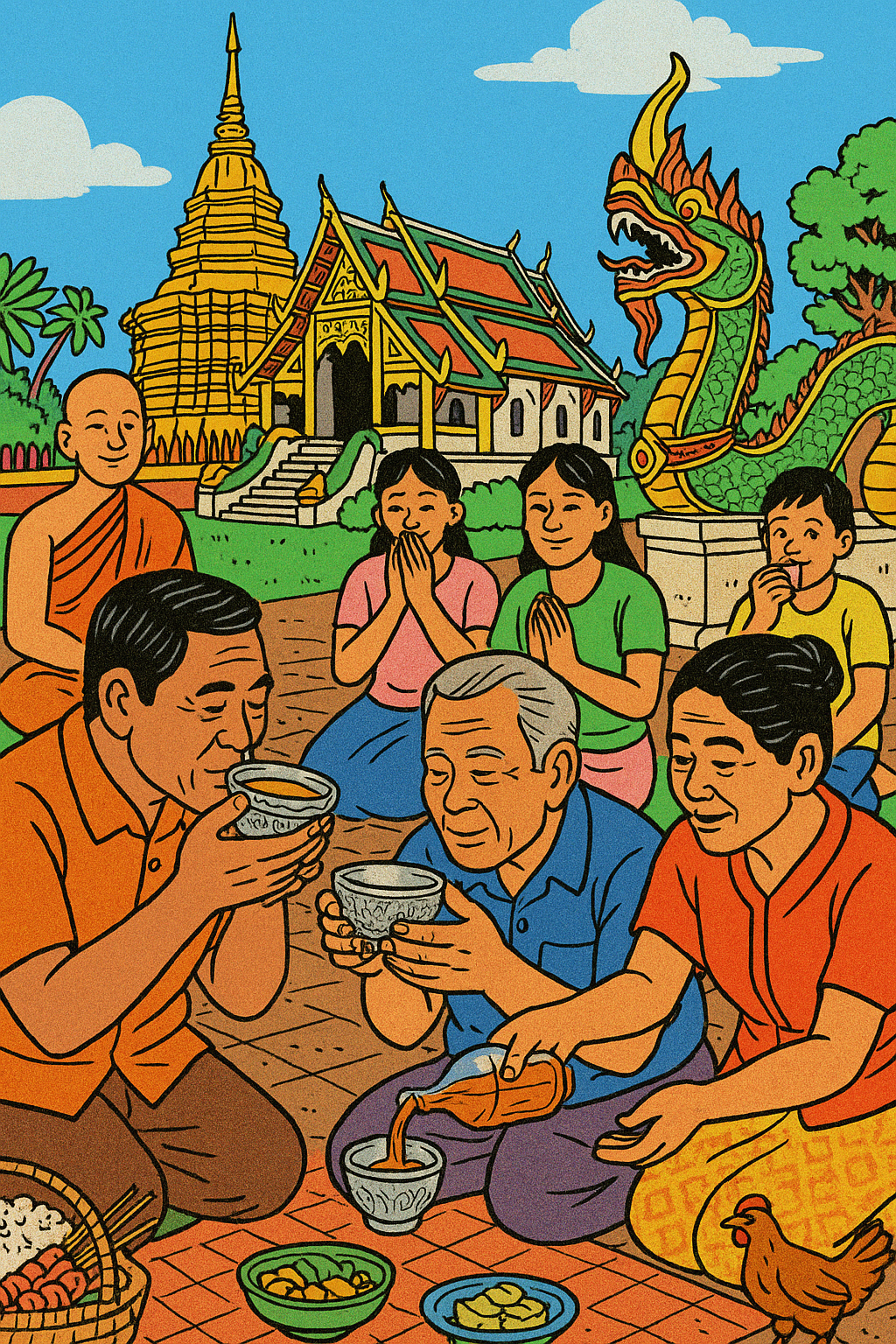
In front of a Thai temple and naga, people drink from silver bowls, while others, including a monk, watch

8. Thailand’s Communal Cups: Sharing in Celebration

At Thai ceremonies, including weddings and Buddhist merit-making rituals, alcohol often plays a social — not sacred — role. However, what stands out is the tradition of communal drinking from shared cups or small silver bowls (khan) at village gatherings.

This ritual fosters connection, trust and a sense of equality. Everyone shares from the same source, rich or poor, old or young.

Interestingly, some of these rituals are fading in urban centers but remain alive in rural areas, preserved by locals who see drinking as part of a holistic spiritual and social life.

RELATED: What’s the Best Chiang Mai Street Food?

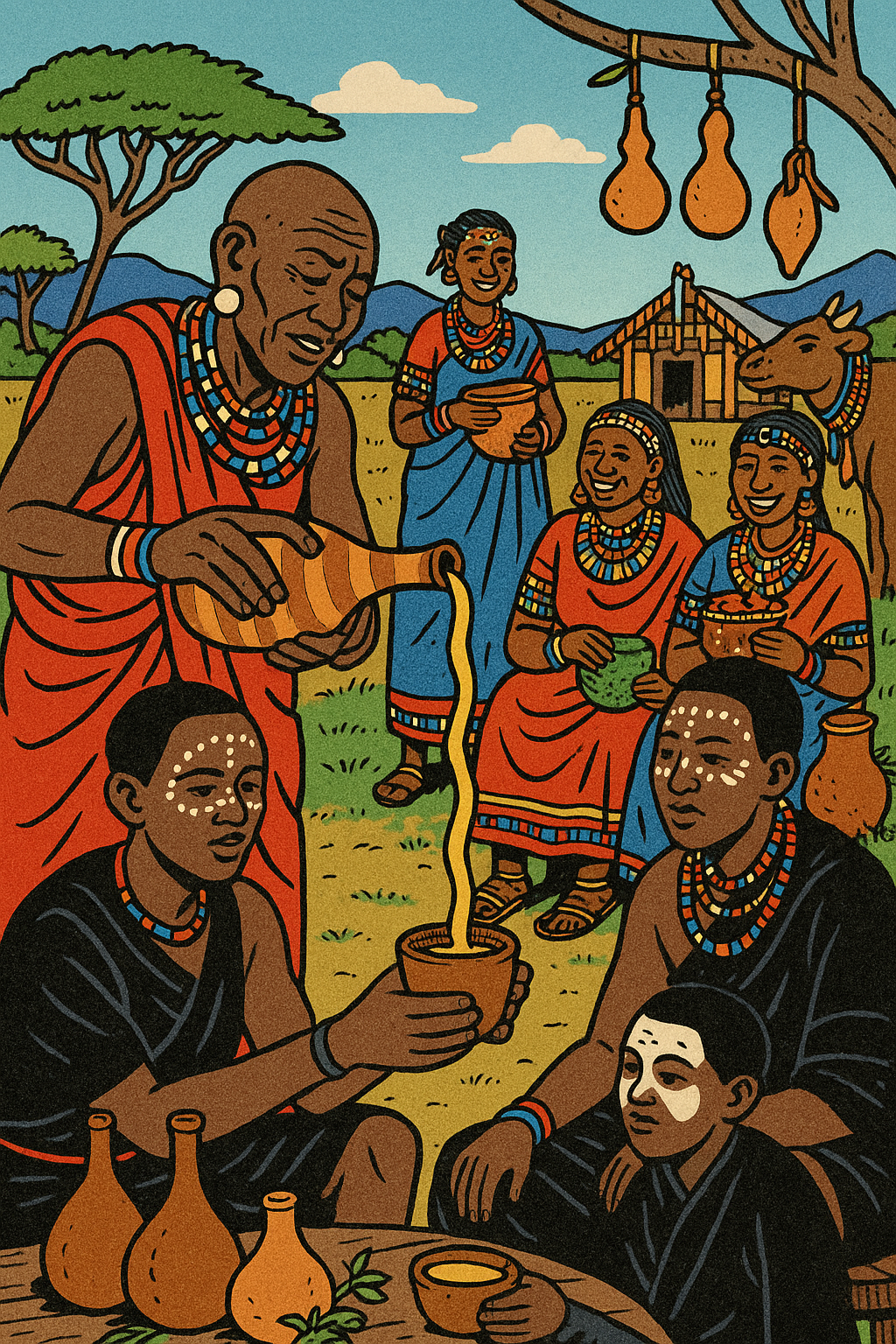
A Maasai man pours honey wine for young men with white face paint during a coming-of-age ceremony in Kenya, while women smile and watch

9. The Maasai’s Honey Wine: From Rite to Rite

In Kenya and Tanzania, the Maasai people brew a traditional honey wine that features prominently in ceremonies such as weddings, age-group initiations and spiritual blessings.

Drinking together symbolizes unity and is believed to strengthen bonds between clans. The brew itself — fermented over days — is thick, sweet and often served in gourds.

While it’s not exported or available commercially, it remains an important cultural practice among the Maasai — one that links heritage, land and rite of passage.

Drinking as Cultural Mirror

Across continents, drinks are more than refreshments; they’re vessels of meaning. They tell stories. They set boundaries. They open doors.

Alcohol has long been used to unite communities, mark transitions, and strengthen social structures—an insight that’s as true today in Peruvian villages as it is in downtown Tokyo.

And this is why the next time you're sipping that refreshing cocktail under a lazy sun, you might reflect on how drinks connect us — not just across tables, but across centuries and civilizations.

People from around the world try to follow drinking etiquette

Tips for the Culturally Curious Sipper

If you’re planning to engage in local drinking customs during your travels, here are a few do’s and don’ts:

  • DO research ahead: Some rituals have sacred meaning, and missteps can be disrespectful.

  • DON’T chug everything: Unless the culture dictates it (hello, China), pacing is usually fine.

  • DO accept if offered: In many cultures, declining a drink can signal rejection of hospitality.

  • DON’T assume Western norms apply: One person’s toast is another’s offense.

  • DO participate wholeheartedly: The ritual is often more important than the drink itself.

So, here’s to the world’s drinkers — not the binge crowd, but the ceremonial sippers, the storytellers, the sacred pourers. To the women brewing tela in Ethiopia, to the Andean farmers offering chicha to the gods, to the Japanese executives bowing over crystal sake cups.

And to you, fellow traveler, who now understands that sometimes, a drink is just a drink… but sometimes, it’s the soul of a people poured into a glass.

Cheers—or as they say in Georgia, “Gaumarjos!” –Ivana Babic

RELATED: Bizarre Foods Around the World

The Crocotta and Other Monsters

The villains of Supernatural, Season 3, Episodes 12-14 include the old standbys demons and ghosts, as well as Thomas Edison’s spirit phone.

The crocotta, seen in this illustration from the Aberdeen Bestiary, lures its victims by sounding like someone they know in need of help

The crocotta, seen in this illustration from the Aberdeen Bestiary, lures its victims by sounding like someone they know in need of help

Rip out the crocotta’s crystal eyes, put them under your tongue — and you’ll be able to tell the future!
A demon found at Ostia, as depicted in Demonology and Devil-Lore

A demon found at Ostia, as depicted in Demonology and Devil-Lore

S3E12: “Jus in Bello”

Monster: Demon

Where it’s from: All over the world

Description: There’s something demonic in even the most appealing of gods, argues Moncure Daniel Conway, in his 1879 work Demonology and Devil-Lore. “Man found that in the earth good things came with difficulty, while thorns and weeds sprang up everywhere,” he writes. “The evil powers seemed to be the strongest. The best deity had a touch of the demon in him. The sun is the most beneficent, yet he bears the sunstroke along with the sunbeam, and withers the blooms he calls forth.” In fact, “deity and demon are from words once interchangeable,” Conway points out.

What it does: We’ve covered demons before, and their propensity for possessing people.

In this episode, demons are beelining for the Winchester boys, surrounding the sheriff’s office they’re in. “It’s like we got a contract on us,” Dean says, adding, “I think it’s ’cause we’re so awesome.”

How to defeat it: You can get matching pentagram sun tattoos, like Dean and Sam. They’re cheesy as hell, but hey: They keep you from being possessed.

A snouted demon, also from Demonology and Devil-Lore

A snouted demon, also from Demonology and Devil-Lore

You can also use a rosary to make holy water in the toilet. And, of course, there’s good old salt. Which leads to this funny exchange with the FBI agent:

Henriksen: Fighting off monsters with condiments. So, turns out demons are real.

Dean: FYI, ghosts are real, too. So are werewolves, vampires, changelings, evil clowns that eat people.

Henriksen: Okay, then.

Dean: Makes you feel better, Bigfoot’s a hoax.

Henriksen: It doesn’t.

The boys learn about a “big new up-and-comer” named Lilith. “And she really, really wants Sam’s intestines on a stick.” Grilled sausage, anyone?

Dean and Sam contemplate a spell that will vaporize all demons in a square radius — but it requires the sacrifice of a “person of virtue,” which is just another way of saying “virgin.” Not up to cutting Nice Nancy’s heart out of her chest, the Winchester Brothers decide to fight their way out, with the help of an exorcism over the PA system.

Demon Ruby gives them black mojo bags to throw Lilith off their trail. For now…

Some ghosts are trapped in continuous loops that play out their deaths

Some ghosts are trapped in continuous loops that play out their deaths

S3E13: “Ghostfacers”

Monster: Ghost

Where it’s from: Morton House, a haunted house possibly in Benton Harbor, Michigan

Description: This ghost looks remarkably lifelike.

What it does: The phantom returns every four years. Some call it the Leap Year Ghost. A crew of ghost hunters is filming an episode of their show Ghostfacers, and of course the Winchester boys show up masquerading as police to take on the evil spirit as well.

An apparition of a gangster gets gunned down. It’s a death echo, Dean explains. They seem to be an invention of the show, though there are plenty of reports of ghosts caught in neverending loops.

The Ghostfacers crew has some competition, including Josh Burger and Stan Maczek, shown using an electromagnetic field (EMF) detector

The Ghostfacers crew has some competition, including Josh Burger and Stan Maczek, shown using an electromagnetic field (EMF) detector

There are multiple death echoes, including a man hit by a train. These people didn’t die in Morton House, though. So why are their spirits trapped there?

Turns out the home’s last owner, Daggett, was a janitor at the hospital. He brought the bodies home “to play with them.”

Sam disappears. He and Corbett the intern are in some creepy kitchen while “It’s my party, and I’ll cry if I want to” plays over and over. Poor Corbett, who was in love with Ed, one of the Ghostfacer crew, gets poked through the neck and dies.

Daggett is wearing a party hat. He gets lonely, you see. But Dean has no sympathy. “He’s never heard of a RealDoll?” he quips.

How to defeat it: “You gotta be gay for that poor dead intern,” the other Ghostfacer host tells Ed. He concedes and is able break Corbett out of the death echo and convince his spirit to take down Daggett. Remember, people, as Ed says, “Gay love can pierce through the veil of death and save the day.”

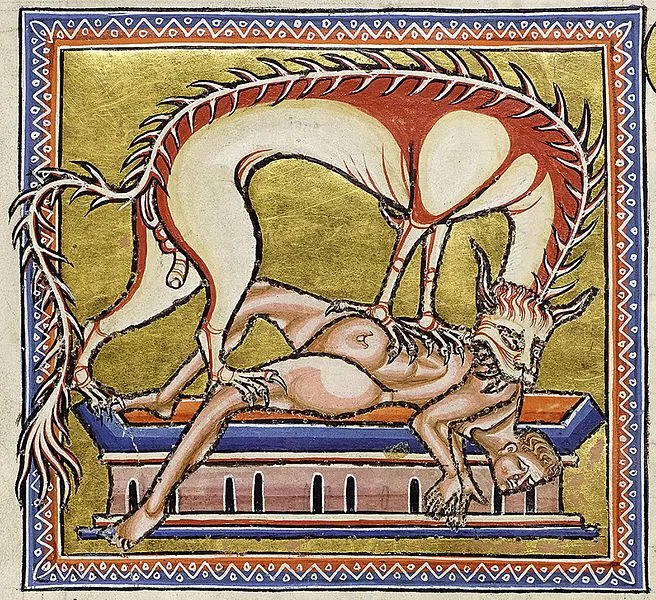
The crocotta looks like a big wolf-hyena hybrid, seen in the illuminated manuscript the Rochester Bestiary

The crocotta looks like a big wolf-hyena hybrid, seen in the illuminated manuscript the Rochester Bestiary

S3E14: “Long-Distance Call”

Monster: Crocotta

Where it’s from: India and Ethiopia

Description: In folklore, the crocotta is a mishmash of animals, often described as a giant wolf-like hyena with cloven hooves. On the show, though, it’s a humanoid who lives in filth. In both versions, the monster has a unique means of luring its victims: It can mimic human speech and will call out someone’s name and other personal information, pretending to be someone in trouble. It then devours the poor suckers with the bone ridges it has instead of teeth.

Fun fact: Rip out its crystal eyes, put them under your tongue — and, by Merlin, you can tell the future!  

What it does: A man gets a call on the phone from a woman named Linda. She wants him to join her. They love each other. He pulls the phone out of the wall, but it still rings. “Okay, Linda, you win,” he says. And blows his brains out.

The man’s wife confesses that she picked up the phone during one of these calls — and she only heard static.

The caller ID on the phone reads, SHA33. It’s actually a phone number that’s over a century old. Ten different homes all got calls from that number in the past two weeks, including Dean, who spoke with what sounded like his dead dad.

Which leads us to a red herring — but a fascinating one nonetheless. The Winchester boys are in Milan, Ohio, the birthplace of Thomas Edison. The inventor told The American Magazine in 1920 that he had been working on a spirit phone, “building an apparatus to see if it is possible for personalities which have left this earth to communicate with us.” He thought that a scientific device could detect the “life units” that get scattered throughout the universe when we die.

Thomas Edison tried to invent the spirit phone, which would let us speak with the dead

Thomas Edison tried to invent the spirit phone, which would let us speak with the dead

The killings all turn out to be the work of a crocotta: in this case, a man at the phone company. He’s a bit of a Luddite, offering up this meditation on the modern condition: “You’re all so connected. But you’ve never been so alone.” Preach!

How to defeat it: Ramming its head into a metal hook will do the trick. –Wally