france

The Most Popular Flower-Based Destinations Around the World
From cherry blossoms in Japan to lavender fields in Provence, these are the flower-filled destinations travelers plan entire trips around — timing anxiety included.

A fox sits by an old stone wall covered in colorful wildflowers in the English countryside as bird fly overhead

Some trips are built around museums. Others around food, beaches or weather that doesn’t actively try to ruin your plans. And then there are flower trips — the kind that hinge on a narrow window of time, a bit of luck, and a willingness to plan an entire journey around something that might already be gone by the time you arrive.

Flower-based travel is part pilgrimage, part gamble. Show up too early and you’re staring at bare branches or tightly closed buds. Show up too late and the petals are already carpeting the ground, beautiful in their own way but not quite what you came for. That anxiety — the constant checking of bloom forecasts, the obsessive refreshing of social feeds — is part of the appeal.

Around the world, certain flowers have become inseparable from the places that grow them. They shape city identities, define seasons and quietly drive tourism in ways that feel emotional rather than transactional. 

From fleeting cherry blossoms in Japan to marigolds that transform Mexico during Day of the Dead, these are the most popular flower-based destinations around the world — and why travelers keep chasing something so beautifully temporary.

A temple spire and curved bridge over a river in Japan with the cherry trees at full bloom

Cherry Blossoms in Japan

If flower-based travel has a gold standard, this is it.

Cherry blossom season in Japan isn’t just something you stumble into while sightseeing — it’s something people plan years around. Flights are booked with fingers crossed. Hotels fill months in advance. Entire itineraries hinge on a few fragile days when sakura trees briefly do what they’ve always done, indifferent to human schedules.

In cities like Tokyo and Kyoto, cherry blossoms turn everyday spaces into temporary landmarks. Parks, riverbanks and neighborhood streets become gathering places where people picnic under clouds of pink and white petals, fully aware that the moment is already slipping away. 

But Japan’s cherry blossom appeal isn’t limited to the obvious places. Many travelers deliberately skip the most crowded spots, chasing blooms in lesser-known cities or quieter regions where the experience feels more personal, less performative. The flowers are the same; the atmosphere changes completely.

What makes cherry blossoms such a powerful travel draw is their refusal to cooperate. Bloom forecasts are studied obsessively, but weather still wins. A warm spell can speed things up. A cold snap can delay everything. Miss the window by a week, and the trees are already shedding, their petals collecting on sidewalks and water like a beautiful consolation prize.

That uncertainty is exactly the point. Cherry blossom season taps into something deeper than scenery — it’s about impermanence, attention and showing up when it matters. The flowers don’t last, and that’s why people keep coming back, hoping to catch them at just the right moment next time.

When to go:
Late March through early April, though bloom timing varies by region and year. Southern areas tend to flower earlier; northern regions follow later.

Traveler tips:
Book accommodations well in advance and stay flexible if possible. Consider smaller cities or less-famous parks for a quieter experience, and don’t panic if petals start falling — peak bloom is beautiful, but so is the moment just after.

If autumn leaves are more your thing, try timing a trip with koyo in Japan.

Rows of red, white and yellow tulips by a windmill in the Netherlands

Tulips in the Netherlands

Tulips in the Netherlands occupy a strange space between nature and choreography.

For a few weeks each spring, the countryside turns into a living color chart. Red, yellow, pink and purple fields stretch toward the horizon with a precision that feels faintly suspicious, as if someone went out overnight with a ruler and a vision board. Which, historically speaking, isn’t far off. Tulips here thrive under planning, patience and a national fondness for order.

Keukenhof gets most of the attention, and for good reason. Its displays feel almost theatrical — rows of blooms arranged with such care they verge on surreal. Yet the real magic happens once you leave the gates behind. Beyond the gardens, tulip fields take over entire regions, lining rural roads and canals in broad, unapologetic stripes. This is the version best experienced slowly, preferably by bike, with plenty of stops just to stare.

Tulips have been woven into Dutch identity for centuries, from economic obsession to cultural shorthand. They appear everywhere — souvenirs, postcards, tourism campaigns — standing in for the country itself. 

Timing remains the only wildcard. Tulip season moves quickly and without apology. Arrive too early and the fields sit quietly green. Arrive too late and the flowers have already been cut back, their work complete. The reward goes to travelers willing to plan carefully and accept that the window stays narrow for a reason.

When to go:
Mid-March through early May, with peak blooms usually landing in April. Weather determines everything.

Traveler tips:
Keukenhof earns its reputation, but the countryside delivers the scale. Rent a bike or explore towns near Lisse to see the fields up close. Early mornings and overcast days often bring richer colors and fewer crowds.

EXPLORE MORE: A Benelux Itinerary

Rows of lavender growing in a field in Provence, France, with a stone house nearby

Lavender in Provence, France

For a brief stretch of summer, the landscape in Provence shifts into something almost unreal. Hills roll out in soft purples and silvers, neat rows of lavender stretching toward stone farmhouses and distant mountains. The scent hangs in the air, impossible to ignore, turning even a simple drive into a sensory experience.

Unlike flowers that cluster in parks or gardens, lavender defines the countryside itself. It’s woven into the region’s identity. Villages, roads and fields all participate, making Provence feel temporarily transformed rather than decorated.

Timing is everything. Lavender season is short and unforgiving. Arrive too early and the fields are still green, quietly preparing. Arrive too late and the harvest has already begun, leaving behind trimmed stems and a faint echo of what was there just days before. Travelers plan entire itineraries around this window, knowing the payoff lasts only weeks.

What draws people back year after year is the completeness of the experience. Lavender isn’t just pretty — it’s something you smell, feel and remember. The color, the heat of summer, the hum of bees in the fields — together they create a moment that feels both abundant and fleeting.

When to go:
Late June through mid-July is peak lavender season, though timing varies slightly by elevation and location

Traveler tips:
Base yourself near smaller villages rather than major cities to be closer to the fields. Early morning and late afternoon offer softer light and fewer crowds. Check local harvest updates before finalizing dates — once cutting starts, the show’s over fast.

BUG OUT: Why the Cicada Became the Symbol of Provence

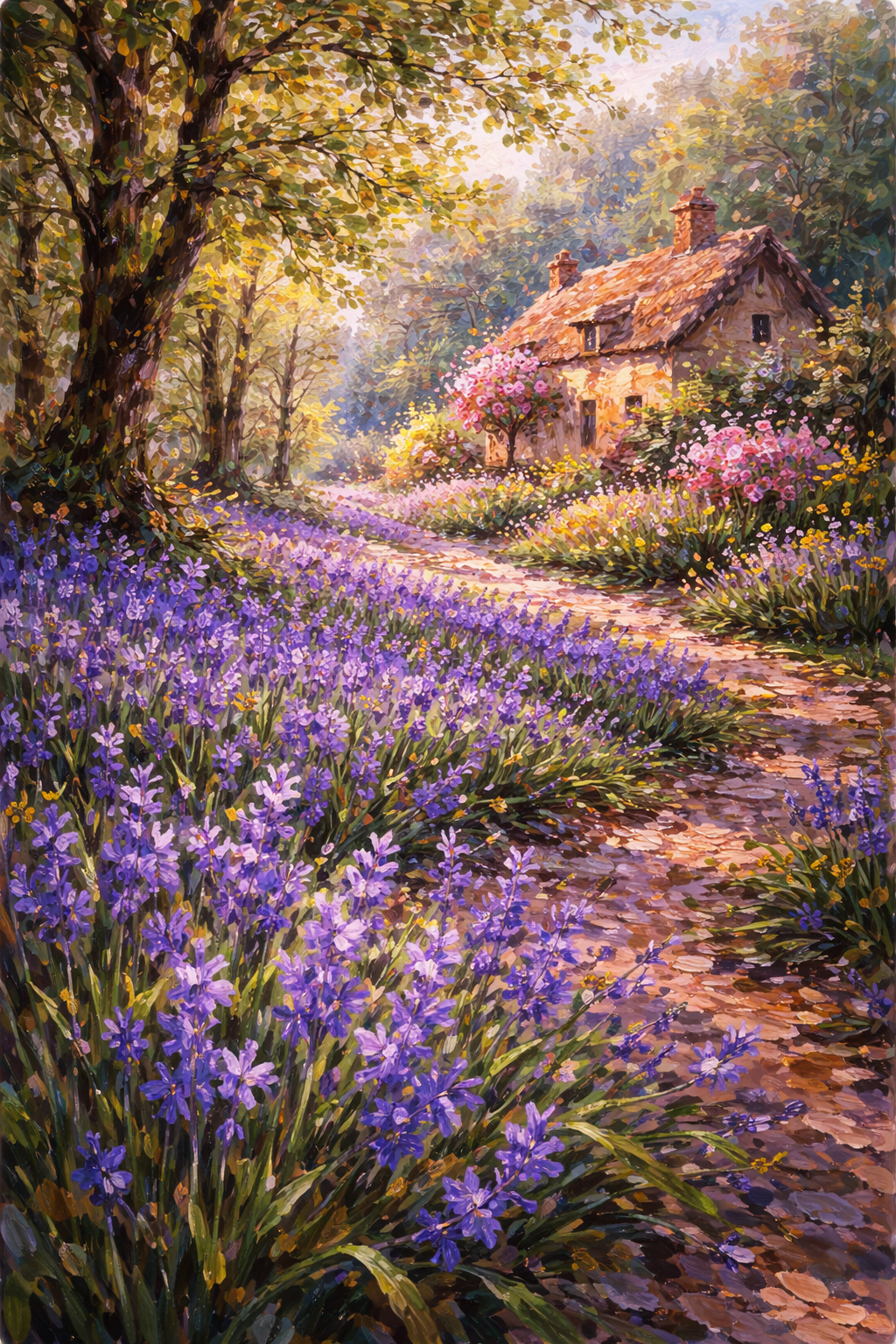
Bluebells grow along a path leading to a cottage in the English countryside

Bluebells and Cottage Gardens in the United Kingdom

Spring in the UK arrives softly. One day the woods look ordinary. The next, they’re flooded with blue. Bluebells carpet forests and parklands in dense, low waves, transforming familiar paths into something quietly otherworldly, the sort of setting that has inspired centuries of fairy lore. People travel specifically to see them — often returning to the same woods year after year, guarding favorite spots like secrets.

Bluebell season carries real weight here. These flowers signal renewal, nostalgia, and a very specific version of spring that feels deeply tied to place. Walk through ancient woodland at peak bloom and the effect feels almost hushed, as if the landscape expects visitors to lower their voices.

Beyond the woods, flowers define the UK in more cultivated ways. Cottage gardens explode with color as soon as the weather allows, packed with foxgloves, roses, delphiniums and whatever survived winter. Places like the Cotswolds and Cornwall, along with other parts of the English countryside, draw travelers who time their visits around bloom cycles rather than attractions.

Timing remains everything. Bluebells bloom for a narrow window, usually April into early May, and weather decides the exact moment. Miss it and the woods return to green without ceremony. Catch it right and the experience lingers far longer than the walk itself.

For travelers who leave before the season peaks — or who miss it entirely — flowers still carry meaning back home. Many people turn to flower delivery UK services as a way to stay connected to the landscapes they traveled for, even after the blooms fade from view.

When to go:
April through May for bluebells; late spring through early summer for cottage gardens

Traveler tips:
Stick to marked paths in bluebell woods — trampling damages bulbs that take years to recover. Visit early in the morning or on weekdays for a quieter experience, and expect weather to shift plans without warning.

EAT UP: Guide to British Cuisine

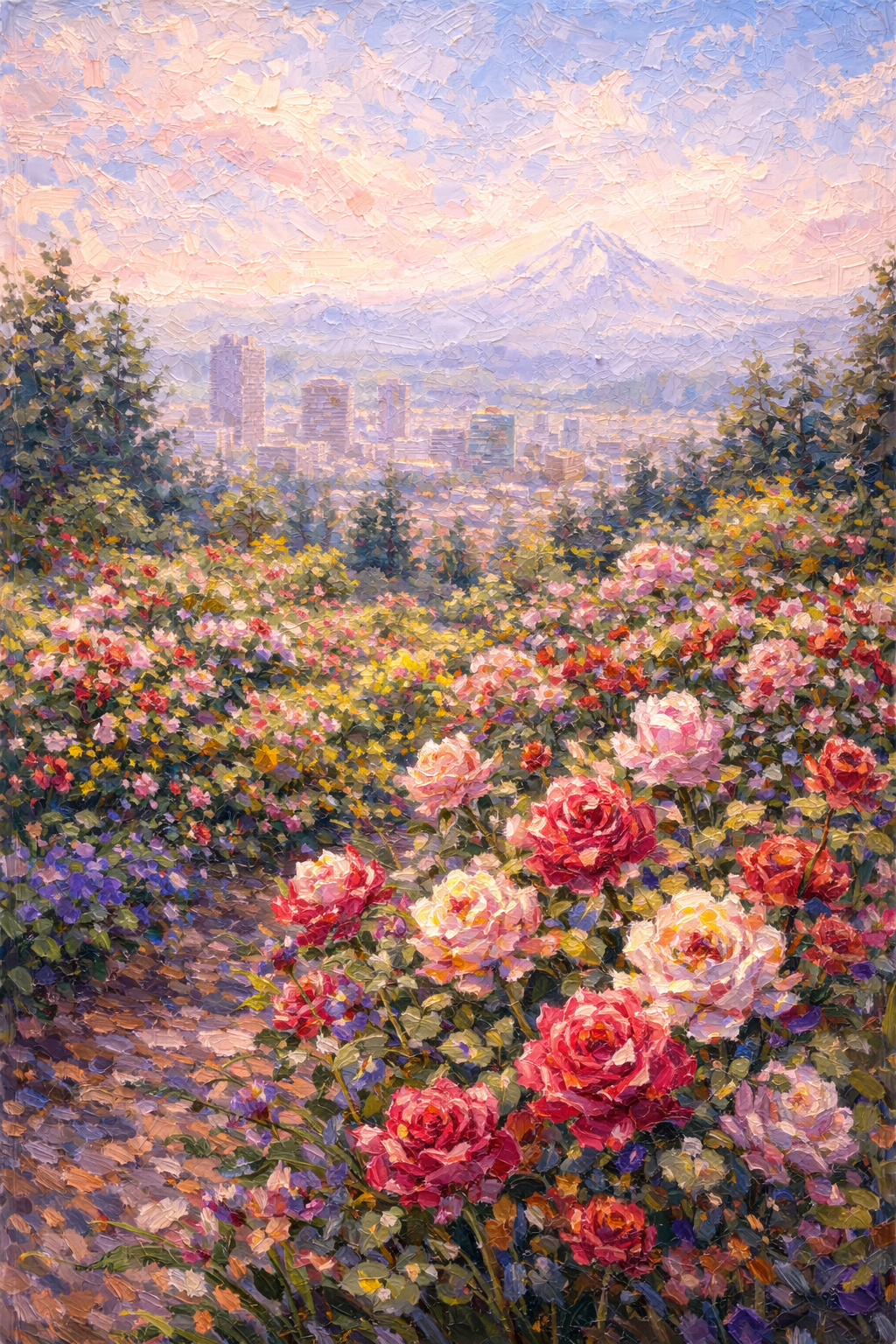
Roses grow on a hill above the city of Portland, Oregon, with Mount Hood in the distance

Roses in Portland, Oregon, USA

Not all flower destinations are rural or seasonal escapes. Some are baked directly into a city’s identity.

Portland has been calling itself the City of Roses for more than a century, and unlike many nicknames, this one still holds up. Roses aren’t tucked away on the outskirts or limited to a single bloom window — they’re part of the city’s fabric, climbing fences, lining streets and anchoring public spaces.

The International Rose Test Garden is the obvious centerpiece, perched above the city with views that stretch toward Mount Hood on clear days. Thousands of varieties bloom here each year, carefully tended and quietly competitive, as growers test new roses destined for gardens around the world. It’s formal, yes, but never stuffy. People wander, linger, and treat it less like an attraction and more like a shared backyard.

Timing still matters, but the window is generous. Roses bloom over months rather than days, offering a softer version of flower travel — less gamble, more assurance. It’s a reminder that not every floral pilgrimage has to come with anxiety attached.

When to go:
Late May through September, with peak blooms typically in June and July

Traveler tips:
Visit the rose garden early in the morning or on weekdays for quieter paths. Pair your visit with a walk through nearby Washington Park or a slow neighborhood stroll to see how roses show up beyond the formal garden.

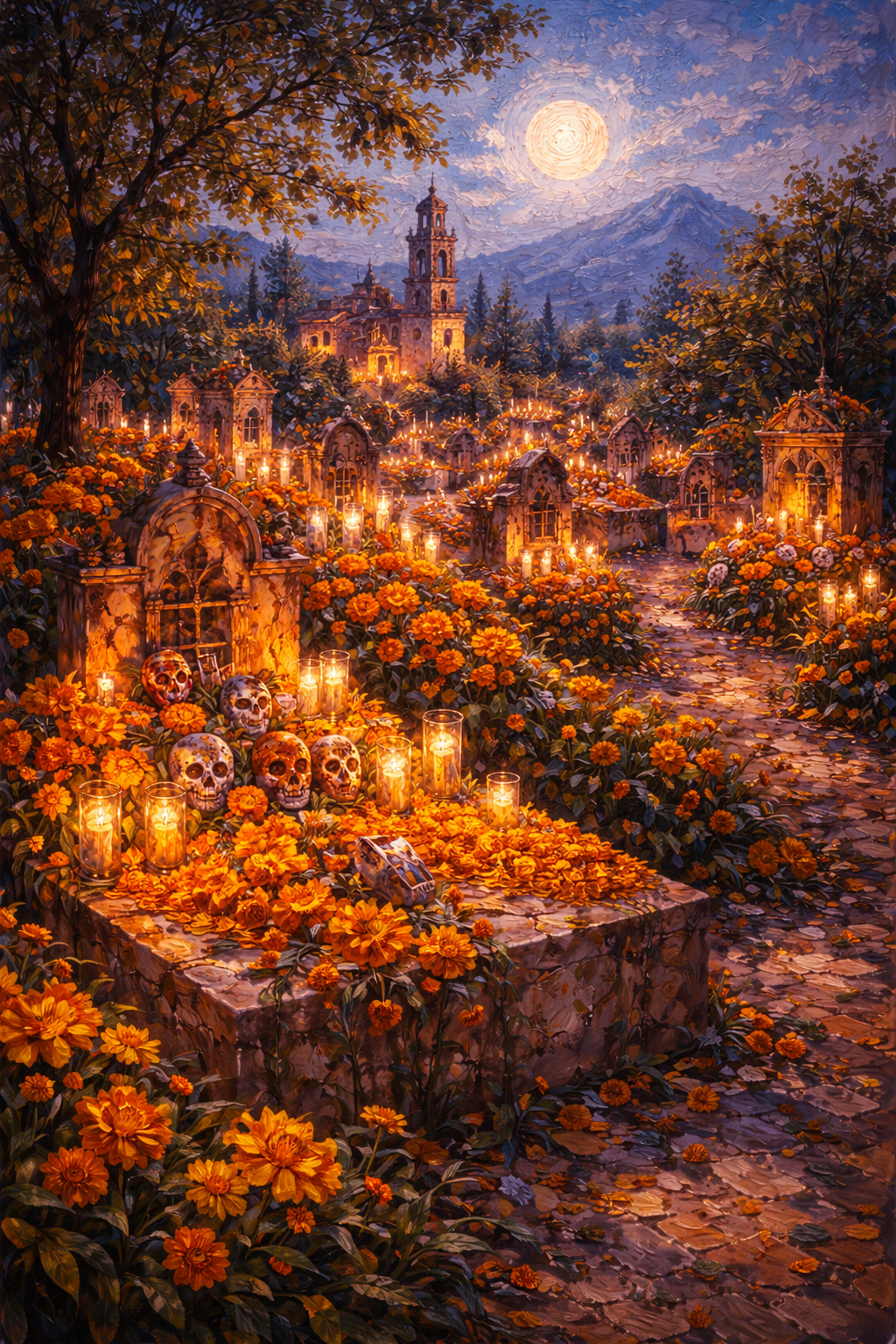
A Mexican cemetery at Dia de los Muertos, with candy skulls, candles and marigolds covering the graves and pathways, with a church in the background

Marigolds in Mexico

Marigolds in Mexico arrive in saturated waves of orange and gold, thick with scent and impossible to ignore. For a short stretch each fall, they flood streets, cemeteries, markets and kitchens, turning everyday places into something charged and ceremonial. 

During Día de los Muertos, marigolds have a job description. Their color and smell guide spirits back home, tracing paths from doorways to altars to graves. You see them scattered like breadcrumbs, piled high around photographs and candles, woven into arches and crowns. Cemeteries like the Panteón 5 de Diciembre in Puerto Vallarta glow after dark, petals catching candlelight while families linger, talk, eat and remember.

Markets feel especially alive during this time. Buckets overflow with marigolds sold by the armful, meant for someone specific rather than general display. These flowers serve memory, grief, humor and affection all at once. The mood holds warmth alongside loss, celebration alongside reverence.

Timing matters intensely. Arrive outside the window, and the marigolds retreat just as quickly as they appeared, taking the altars and processions with them. During Día de los Muertos, entire cities feel temporarily reshaped, as if normal life stepped aside to make room for something older and more intimate.

Travelers return because the experience feels human at its core. Marigolds turn flowers into language — one spoken between generations, across time and through ritual. You leave with the sense that beauty here carries responsibility.

When to go:
Late October through November 2, with celebrations peaking around Día de los Muertos.

Traveler tips:
Move slowly and observe before engaging. Markets offer the fullest sensory experience early in the day, while cemeteries come alive after sunset. Smaller towns often provide deeper, more personal encounters than major cities.

DO YOU BELIEVE IN MAGIC? Samhain Divination Spells

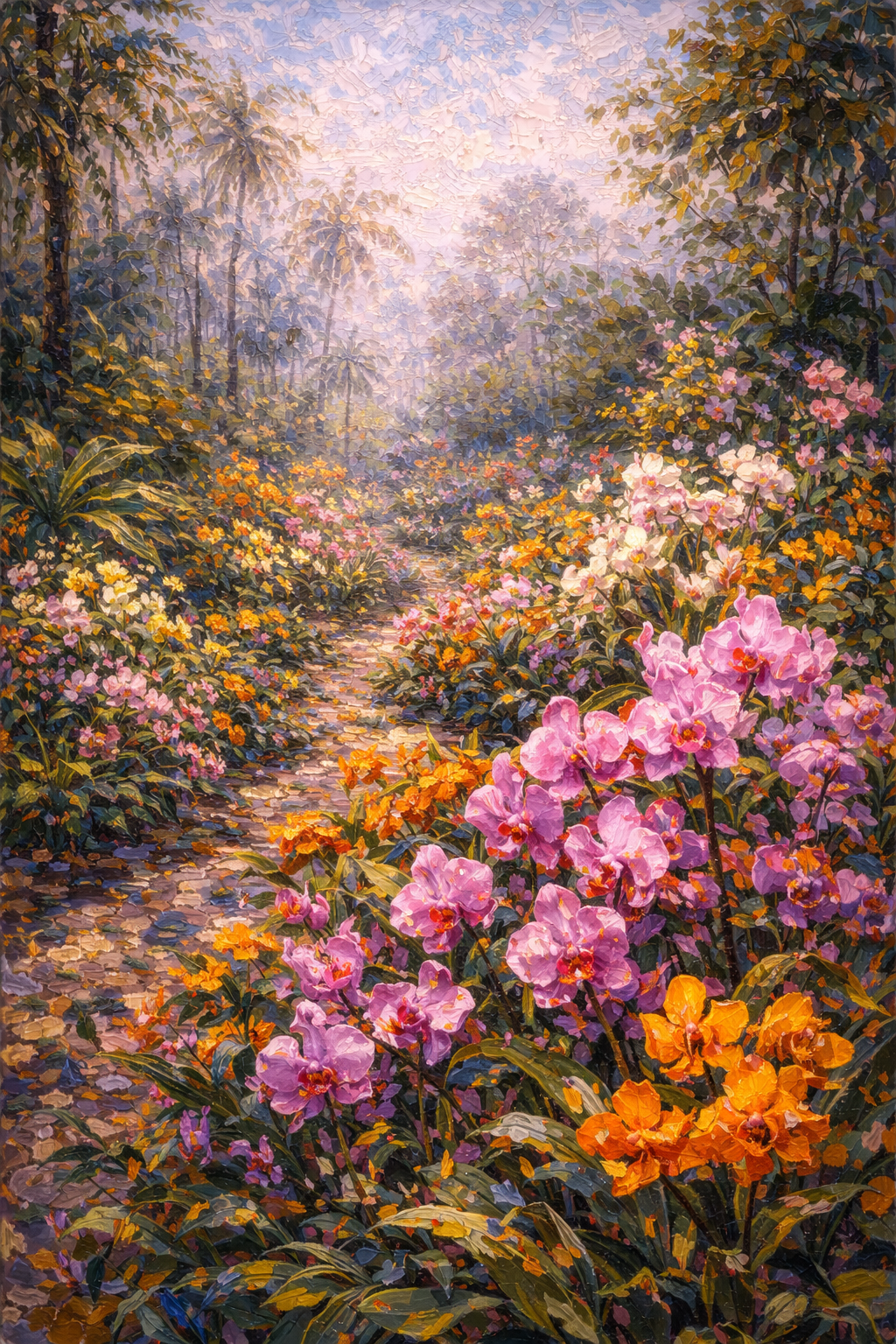
Colorful orchids grow along a path among palm trees in Singapore

Orchids in Singapore

Orchids in Singapore look like something engineered in a lab by someone with a flair for drama. They curl, twist, spike and glow in colors that feel almost synthetic. Some resemble insects. Others look mid-metamorphosis. It’s easy to forget these things grow out of soil. In Singapore, orchids feel closer to science fiction than gardening — which explains why the city embraced them so completely.

Walk through the Singapore Botanic Gardens and the orchid collection feels less like a stroll and more like a catalog of botanical overachievement. Thousands of varieties bloom with unapologetic confidence, each labeled and tracked, as if daring you to question how much control humans can exert over nature. Singapore answers that question decisively.

Gardens by the Bay doubles down on the spectacle. Orchids glow beneath glass domes, backlit and theatrical, performing for visitors who came expecting futuristic architecture and left thinking about flowers instead. It’s maximalist. It’s bizarrely beautiful. It works.

To locals, orchids signal status and ambition. Hybrid blooms get named after visiting dignitaries and world leaders, turning flowers into diplomatic souvenirs. Giving someone an orchid here carries weight. These plants represent polish, progress, and a country very comfortable presenting itself as hyper-competent.

For travelers, orchids offer a rare luxury: certainty. They bloom year-round, immune to weather roulette. Singapore delivers the flowers exactly as promised — strange yet immaculate.

When to go:
Any time. Orchids thrive here year-round.

Traveler tips:
Start at the Singapore Botanic Gardens to see the sheer range, then head to Gardens by the Bay for spectacle. Pay attention to the shapes — orchids here reward close inspection and a slightly unhinged imagination.

SINGAPORE DAY TRIP: Visit Batam

Sunflowers grow among other flowers in the rolling hills of Tuscany at sunset, with a villa in the distance

Sunflowers in Tuscany, Italy

Sunflowers in Tuscany feel almost aggressive in their cheer. They line roads and hillsides in tight formation, huge yellow faces tracking the sun with unnerving enthusiasm. Driving through the countryside during peak bloom turns into a constant exercise in restraint — every few minutes presents another “pull over immediately” moment. Eventually, everyone gives in.

Sunflowers come with scale. Fields stretch wide and loud, unapologetically bright against dusty roads, cypress trees and stone farmhouses. In Italy, flowers have always carried deeper meaning, from religious devotion to seasonal rites of passage, a theme explored in Italian floristry and floral symbolism. The effect feels cinematic, the kind of scenery that convinces people their vacation photos finally match the fantasy.

Sunflowers also fit Tuscany’s rhythm. These fields appear alongside vineyards and wheat, part of a working landscape rather than a curated display. Locals treat them as another seasonal marker, a sign summer has arrived in earnest. 

Timing still calls the shots. Sunflowers bloom quickly and fade just as fast, their faces drooping once the season turns. Catch them at their peak and the countryside feels electric. Miss it and the fields move on without ceremony.

People keep chasing sunflower season because it delivers instant joy. The experience carries zero mystery and full commitment: bold color, warm air, wide-open space. Sometimes that’s exactly what a trip needs.

When to go:
Late June through July, with timing varying slightly, depending on location and weather.

Traveler tips:
Rent a car to explore rural roads freely and expect frequent stops. Early morning and golden hour offer the best light and fewer crowds. Respect private property — the best views often come from the roadside.

Llamas graze among the wildflowers that have popped up in the Atacama Desert in Chile, with flamingos in the water nearby

Wildflowers in the Atacama Desert, Chile

Wildflowers in Chile’s Atacama Desert feel like a practical joke pulled by nature.

Most of the year, the Atacama ranks among the driest places on Earth — a landscape of dust, rock and silence that stretches toward the horizon with zero interest in pleasing visitors. Then, every so often, rain falls. Real rain. Enough to wake seeds that have been waiting patiently underground for years.

When that happens, the desert blooms.

Pink, purple, yellow and white flowers spread across the sand in an event locals call desierto florido. Hillsides and plains erupt into color where travelers expected emptiness. The transformation feels surreal.

This bloom carries real meaning in northern Chile. Locals treat it as a rare gift rather than a guarantee, a reminder that even the harshest landscapes hold quiet potential. People drive long distances to see it, fully aware the window stays brief and unpredictable.

Timing here plays hardball. Blooms depend entirely on rainfall, which varies wildly from year to year. Some years pass with nothing. Other years deliver an explosion that lasts weeks. Visitors arrive hopeful, checking forecasts and local reports, aware that certainty holds no power in this part of the world.

Travelers chase the Atacama bloom because it offers bragging rights and wonder in equal measure. Seeing flowers rise out of a desert famous for refusing life feels like witnessing a secret. Miss it, and the desert returns to its usual self without apology.

When to go:
August through October, only in years with sufficient rainfall. Exact timing changes annually.

Traveler tips:
Follow local Chilean news and park updates closely before planning. Stay flexible with travel dates if possible. Respect protected areas and resist the urge to wander into fragile bloom zones — this spectacle survives best when admired from a distance.

Pink lotuses float on pads in a bay filled with boats and small temples amid large rock formations in Vietnam at twilight

Lotus Flowers in Thailand and Vietnam

Lotus flowers thrive in places that feel calm on the surface and complicated underneath. You see them floating in temple ponds, rising clean and deliberate from murky water, petals intact and serene. In Thailand and Vietnam, lotus flowers carry centuries of meaning — purity, renewal, spiritual discipline — yet they remain deeply ordinary. People buy them on the way to pray. Vendors stack them beside fruit and incense. They exist as part of the daily rhythm rather than a special occasion.

At temples, lotus ponds shape the atmosphere. The flowers soften heat and noise, creating spaces that invite pause. Monks carry lotus buds during ceremonies. Worshippers offer them quietly, often without explanation. 

Lotus flowers also appear far from sacred spaces. They grow in agricultural wetlands, in canals and along roads leading out of cities. In Vietnam, lotus seeds and roots end up in kitchens as often as altars. The flower bridges spiritual and practical life with ease.

Timing matters less here. Lotus season stretches generously across warmer months, and blooms appear daily, opening in the morning and closing by afternoon. 

People remember lotus flowers because they anchor a sense of place. The experience feels quiet, grounded and human — a reminder that beauty can exist alongside routine.

When to go:
May through October, with peak blooms during the warmer, wetter months.

Traveler tips:
Visit temples early in the morning when lotus flowers open and crowds are thinner. Watch how locals interact with them before reaching for a camera. In Vietnam, try lotus tea or dishes using lotus root to experience the flower beyond the visual.

A man puts his arm around another man as they stand in a lavender field, looking out at the sunset

Why Flowers Keep Turning Places Into Destinations

Flower-based travel asks for patience, flexibility and a willingness to miss things. Entire trips hinge on weather patterns, bloom forecasts and timing that refuses to cooperate. And yet people keep coming back for more.

Maybe that’s the point.

Flowers force travelers to surrender control. You plan carefully, arrive hopeful, and accept whatever version of the moment shows up. Sometimes the fields explode with color. Sometimes petals carpet the ground, already slipping into memory. Either way, the experience lands because it belongs to that place, at that moment, and never quite repeats itself.

Across the world, flowers shape how places see themselves and how visitors remember them — from cherry blossoms signaling impermanence in Japan to marigolds guiding memory in Mexico, from meticulously cultivated orchids in Singapore to sunflowers lighting up Tuscan backroads. These destinations stay popular because they offer something temporary, visceral and stubbornly uncommodified.

You can photograph flowers, plan around them, even chase them across continents. You just can’t make them wait for you. And that tension — between preparation and surrender — is what keeps flower travel irresistible. –Wally

’TIS THE SEASON: Spring Festivals Around the World 
Choosing the Right Wine Tour in Bordeaux

A guide to exploring Saint-Émilion’s vineyards, village and tasting rooms — and how to pick a wine tour that matches your style.

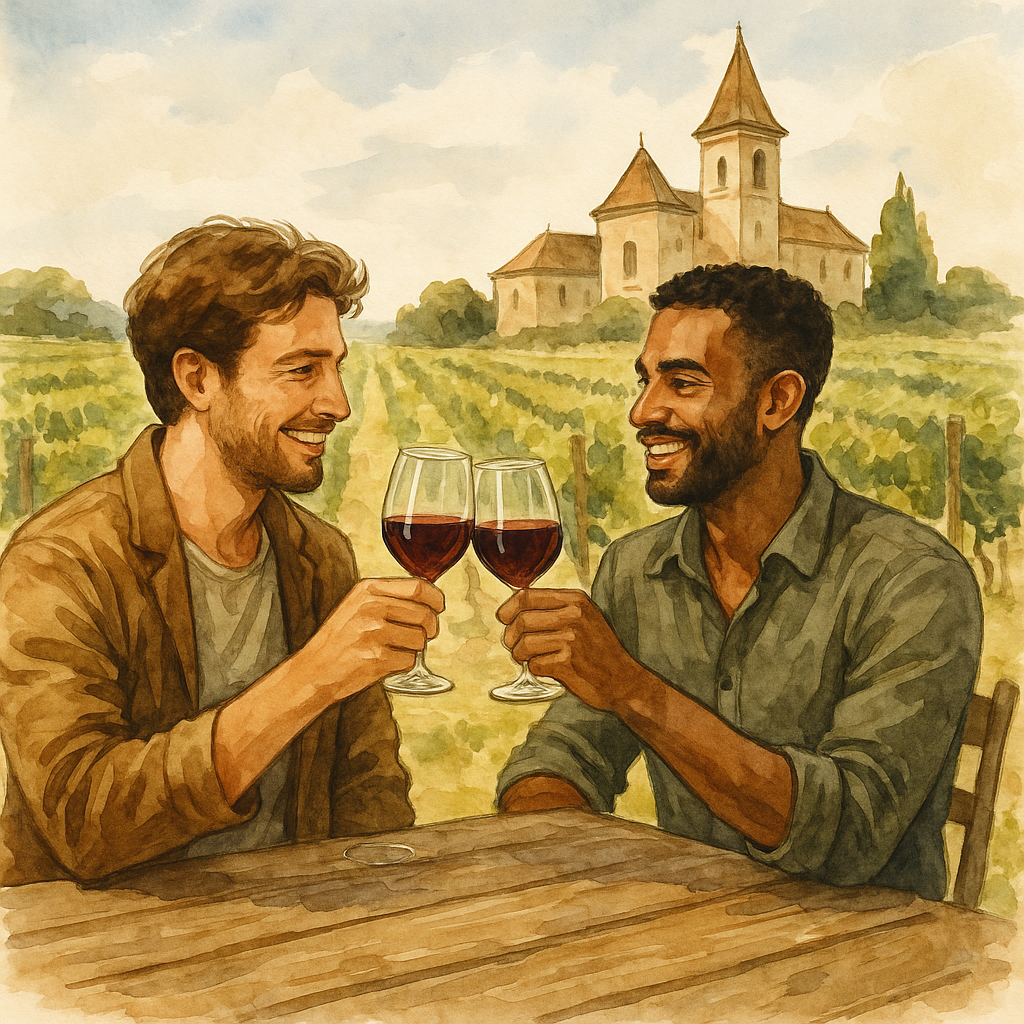
A gay couple toasts red wine glasses at a table by a vineyard in Bordeaux, France, with a chateau in the background

If you’re heading to Bordeaux, you’re probably already dreaming of rolling vineyards, sleepy stone villages, and a wine glass that magically refills itself. But with so many Saint-Émilion wine tours on offer, picking the right one can feel like uncorking a bottle without a corkscrew — possible, but not exactly desirable.

Bordeaux Wine Pilgrim takes the guesswork out of it. Their tours are made for travellers who want clear explanations (not wine snob lectures), beautiful estates, and an easy, stress-free way to sip their way through France’s most legendary reds. And Saint-Émilion — all medieval lanes, limestone caves and Merlot-rich soils — is the crown jewel.

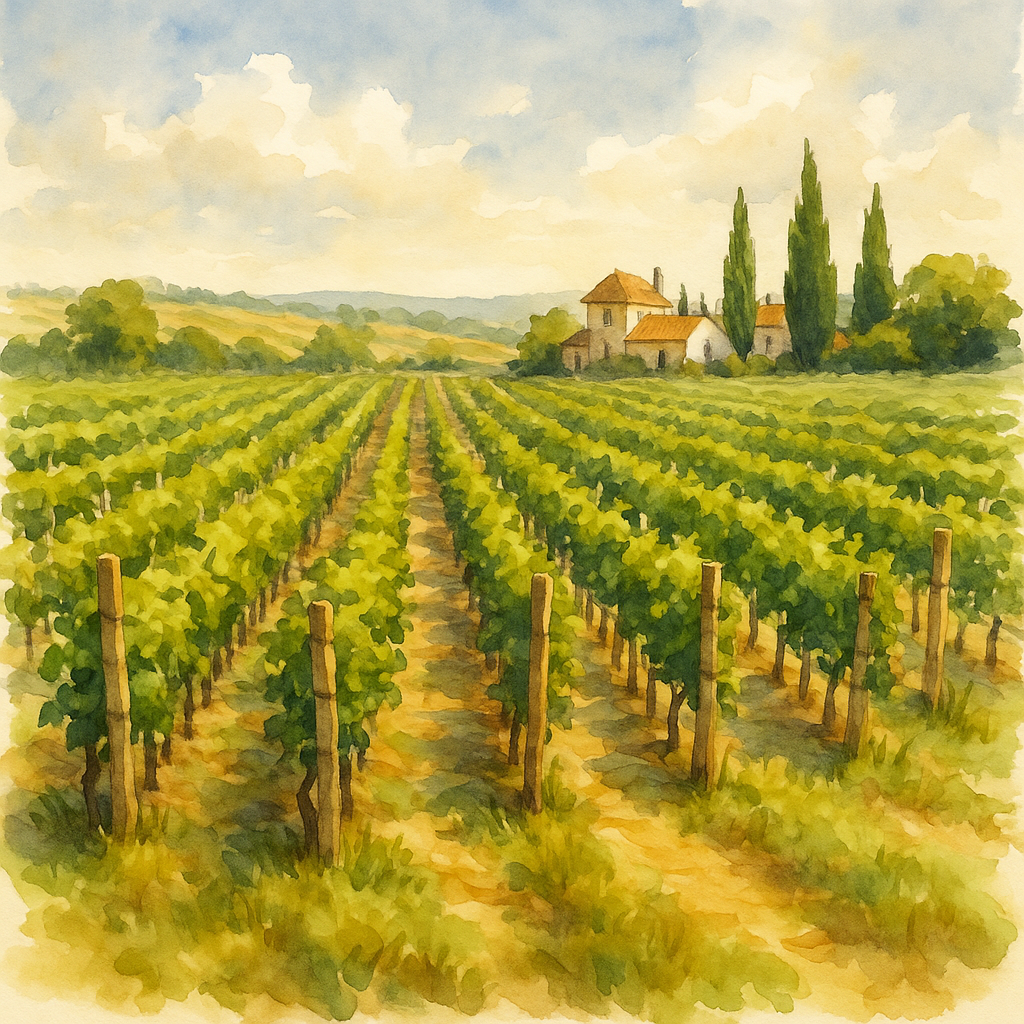
A vineyard in the Bordeaux region of France, with a white and red-roofed home in the background

Why Choose Bordeaux Wine Pilgrim

Some wine tours throw you into a bus with 40 strangers and hope you can hear the guide over the hum of the air conditioning. This is not that.

Bordeaux Wine Pilgrim’s tours are led by trained guides who know their Médoc from their Merlot — and can explain it without making you regret not studying oenology in college. They’re ranked number 1 for Saint Emilion wine tours. Every experience is curated to be informative, relaxed and approachable, whether you’re a seasoned sipper or still learning to say “Saint-Émilion” without panicking. (For the record, it’s essentially: “San Eh-mee-lee-on.”)

Expect confirmed château visits, smooth logistics, comfortable transport, and itineraries that leave room to breathe (and browse and taste).

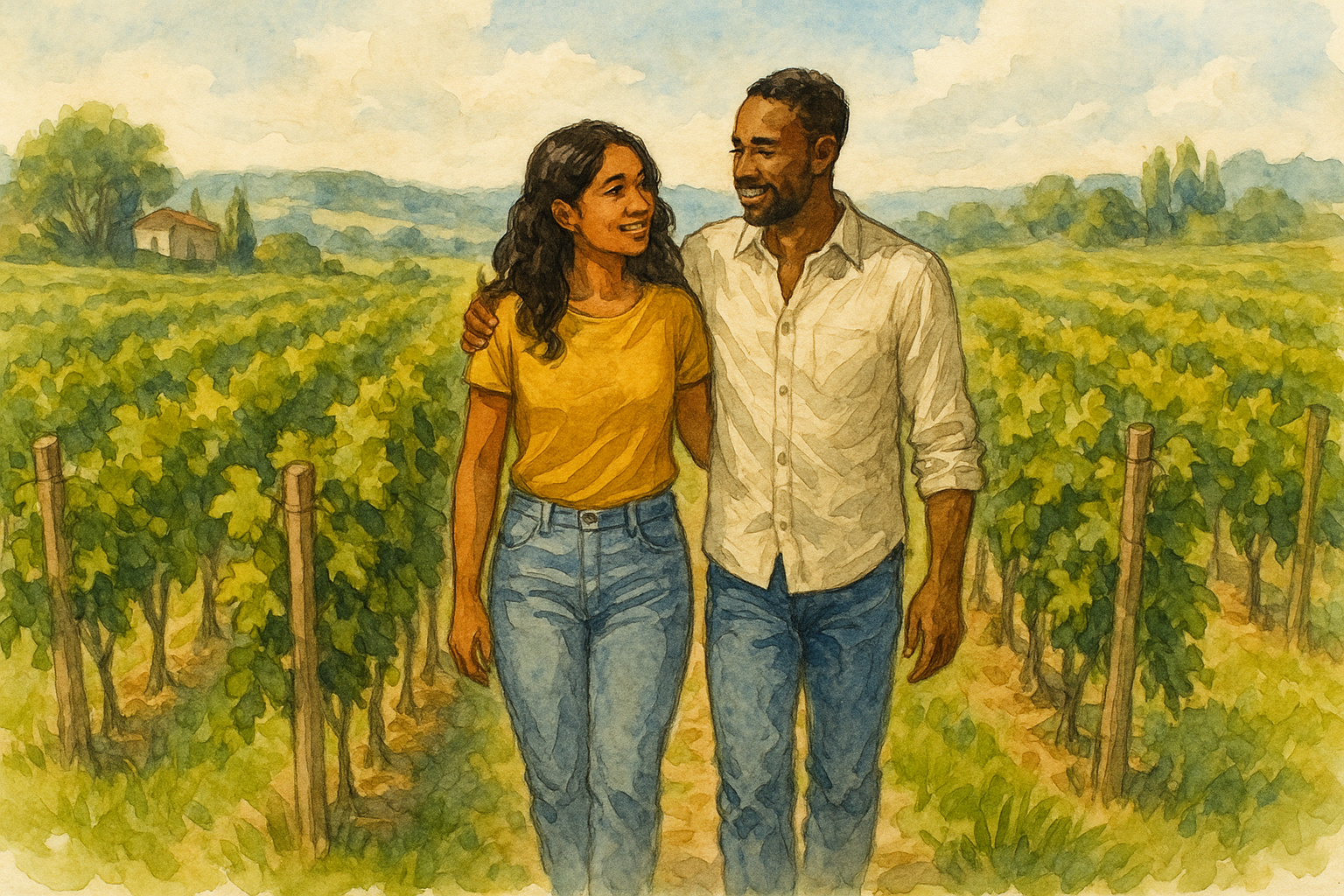
A couple walks with their arms around each other through a vineyard in Bordeaux, France

Group or Private Saint-Émilion Wine Tours

Small-group tours

Perfect for solo travellers, couples or anyone who loves meeting fellow wine pilgrims along the way. These tours follow a route with estates chosen for great storytelling, strong wines and photogenic views. Think: effortless, sociable and ideal for a first visit.

Private tours

More flexibility, more control, and more time to linger wherever your heart (or palate) desires. Want to focus on small family-run estates? Prefer grand château architecture? Need extra time for photos or for climbing the village’s bell tower? Private tours make that easy.

Both formats include pre-booked tastings so you won’t be stuck knocking on winery doors like a character in a French fairy tale.

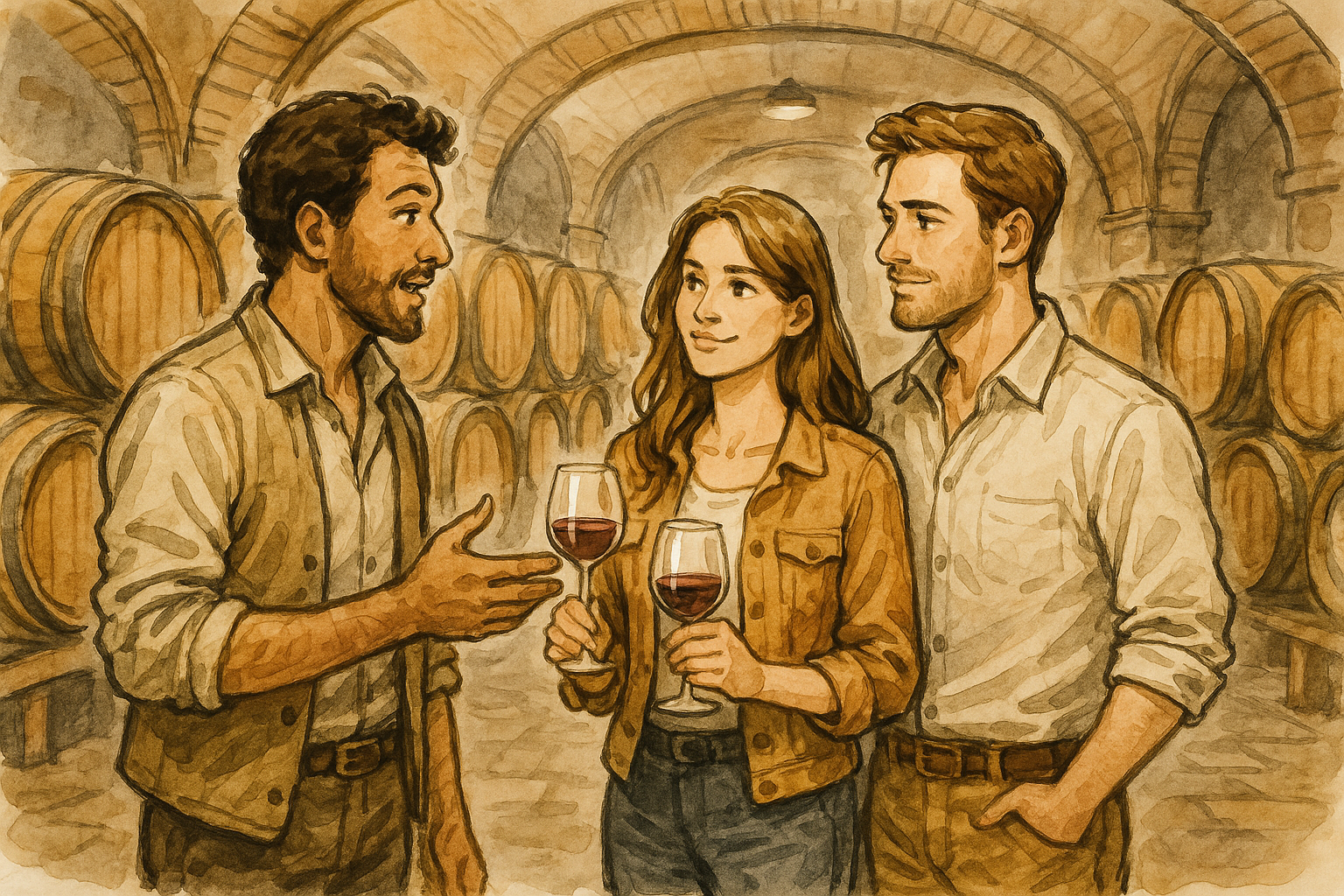
A guide gives a tour to a couple, with the woman holding two wine glasses, in a cask-filled cellar of a winery in Bordeaux, France

Confirmed Château Visits

In Saint-Émilion, château access is everything. Many estates require advance bookings — sometimes weeks ahead — and Bordeaux Wine Pilgrim handles all of it. You’ll visit respected producers, from family-owned estates tucked into the limestone to classified growths with centuries of history.

Some appointments are tasting-only; others include in-depth technical tours through vineyards, cellars and barrel rooms. Either way, you get reliable access, without the headache of arranging it yourself.

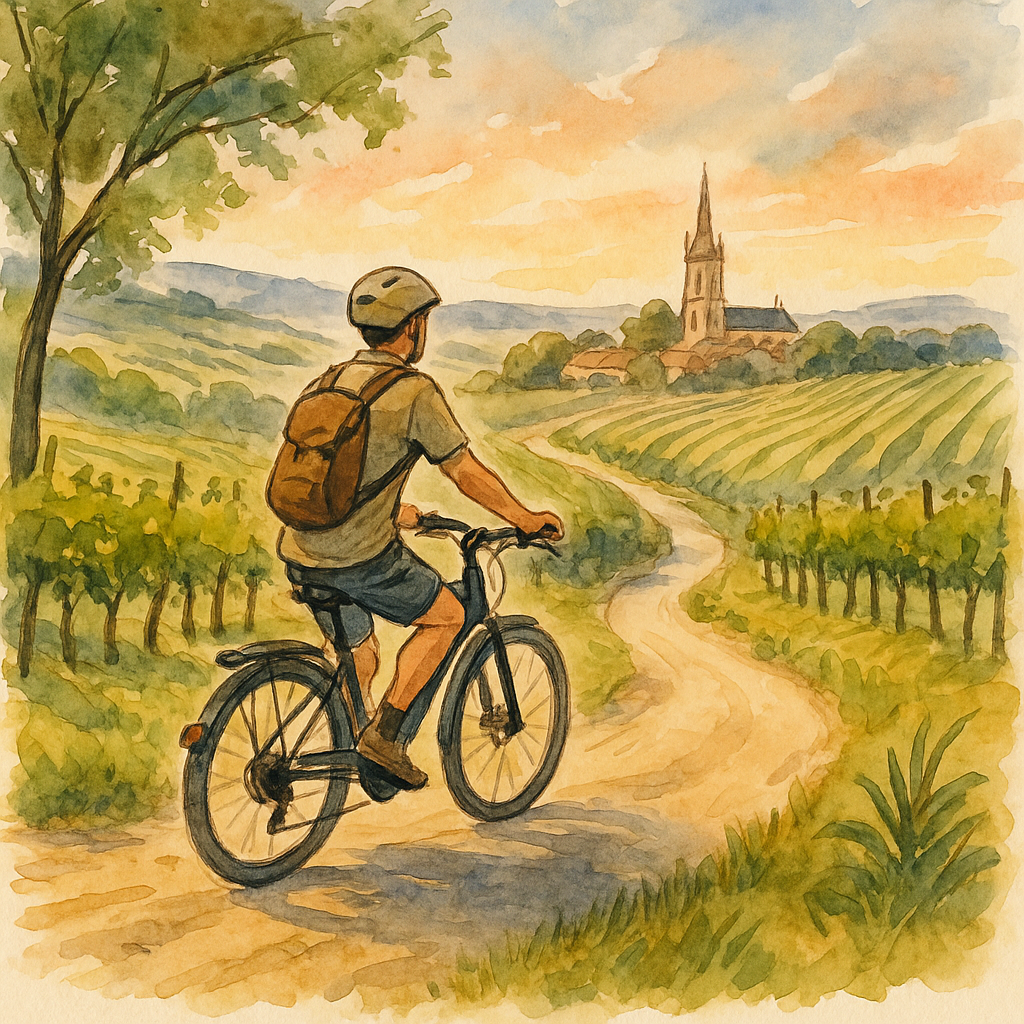
A man rides a bike along a winding path through a vineyard, with a church in the distance, in Bordeaux, France

Transport and Comfort

Saint-Émilion is about 45 minutes from Bordeaux, but figuring out transit — especially if you’re already deep into wine mode — can be a buzzkill.

Bordeaux Wine Pilgrim includes transport from Bordeaux or Saint-Émilion in air-conditioned vans with clear meeting points and a schedule that doesn’t feel rushed. 

If you prefer something more active, they also offer e-bike tours, which are as dreamy as they sound: gentle hills, quiet country roads, and vineyard views gliding past at exactly the right speed.

Wine Expertise and Storytelling

A great wine guide doesn’t just pour; they tell the story behind the pour.

Bordeaux Wine Pilgrim’s guides break down the essentials: grape varieties, how Saint-Émilion’s limestone affects flavor, why the classification system matters, and what makes each estate distinct. Tastings are presented step-by-step so even beginners feel confident identifying aromas beyond “red wine” and “more red wine.”

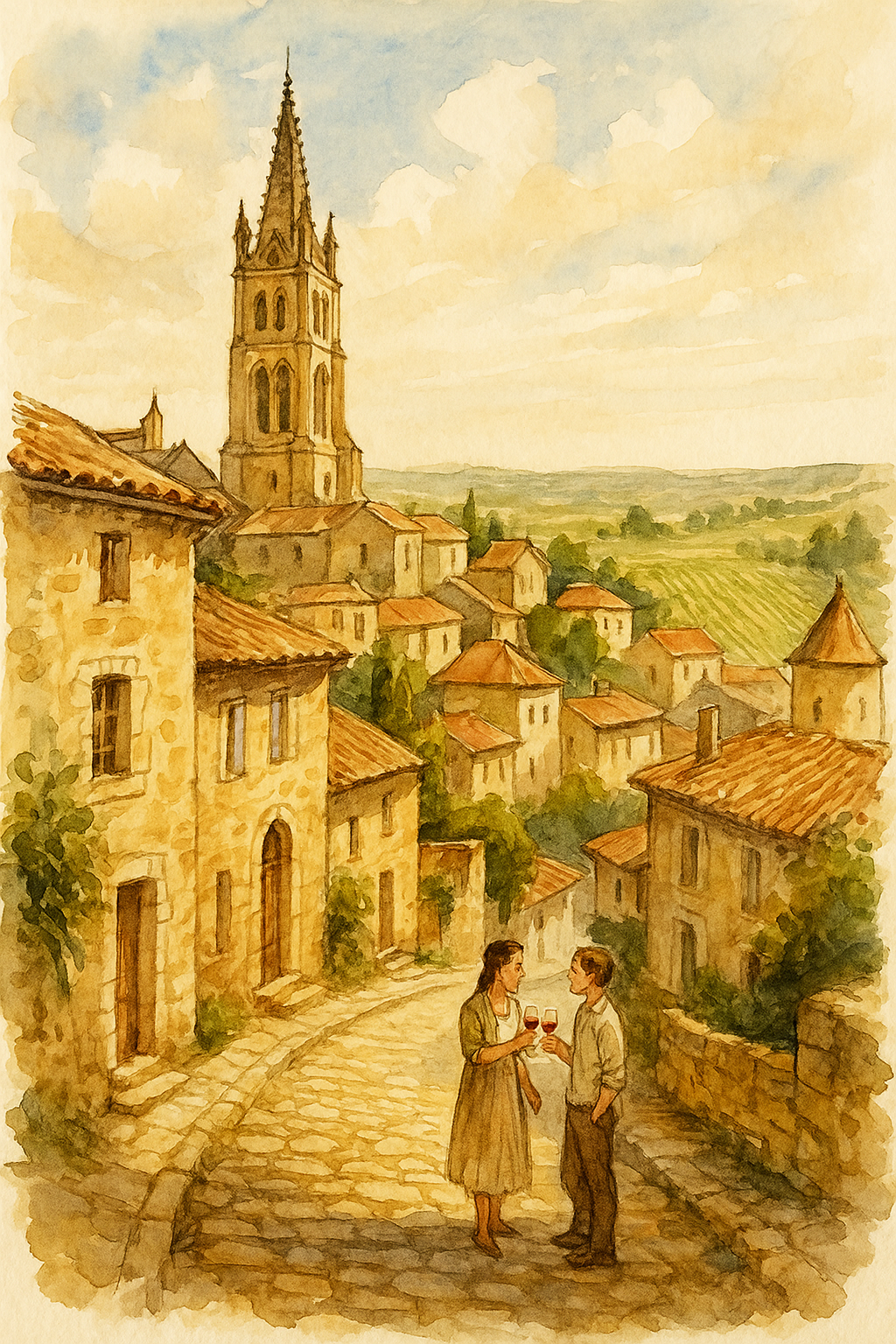
Two people talk and drink Merlot on a cobblestone street in the town of Saint-Émilion, Bordeaux, France

The Experience in the Village

Saint-Émilion itself is a UNESCO fever dream — steep cobblestones, honey-colored stone, and vineyard views that look straight out of a wine label.

Bordeaux Wine Pilgrim gives you time to wander: explore the medieval lanes, visit the monolithic church (carved entirely out of rock), hunt for macarons from the village’s historic bakers, or sip a coffee on a terrace overlooking the vines. A well-planned tour should always include these options, and theirs does.

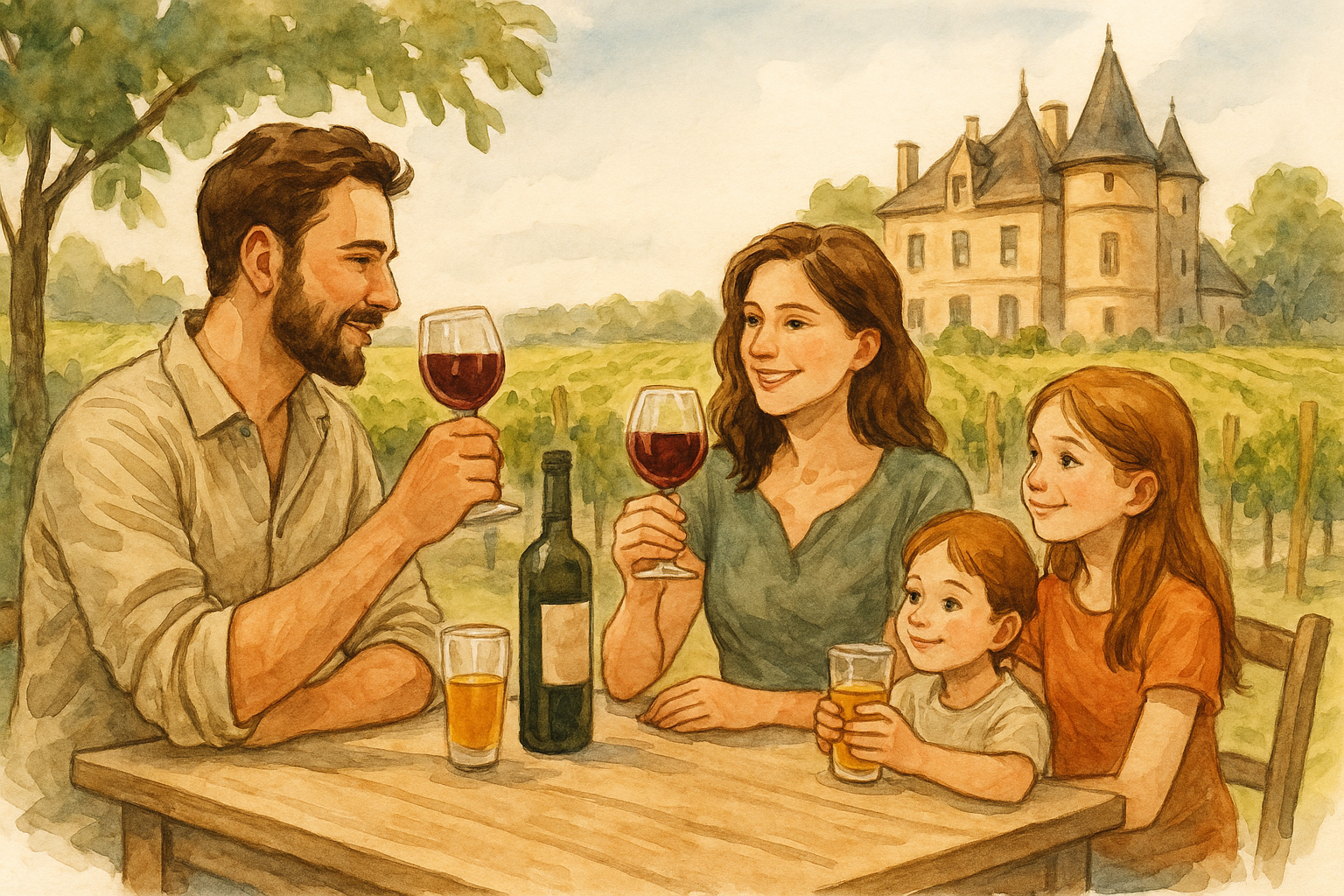
A family drinks wine and cider at a table in Bordeaux, France, by a vineyard and chateau

FAQs About Choosing a Saint-Émilion Wine Tour With Bordeaux Wine Pilgrim

How long are the tours?

Half-day tours run about four hours with one or two estates. Full-day tours last seven to eight hours with multiple tastings and time in the village.

Are the tours suitable for beginners?

Absolutely. Guides explain everything in approachable, straightforward language — no jargon, no intimidation.

Can I request specific châteaux?

Yes, for private tours. Small-group tours follow a set itinerary with confirmed visits.

Do I need to organize my own transport?

No. Transport is included from Bordeaux or Saint-Émilion, depending on the tour.

When is the best time to visit?

Spring and autumn offer perfect vineyard scenery. Summer is lively and sunny; winter brings quieter roads and more château availability.

Is lunch included?

Some full-day tours include a restaurant stop or free time for lunch in the village. Certain itineraries offer picnic options, too.

Are the tours family-friendly?

Yes — especially private tours. Some estates even offer grape juice tastings for younger travellers.

A chateau and vineyard at sunset in the Bordeaux region of France

If you want a Saint-Émilion wine tour that blends beautiful landscapes, real expertise and a level of organisation that lets you simply enjoy the day, Bordeaux Wine Pilgrim is a solid pick — whether you’re there for the wine, the history or just the chance to live your best “I’m in France drinking Merlot at 2 p.m.” life. –Sophia Martin

Spring Festivals Around the World: Sakura, Holi, Semana Santa and More

From Japan’s cherry blossom hanami to India’s colorful Holi and Spain’s heart-pounding San Fermín, discover spring festivals that celebrate renewal, connection and pure joy. 

Spring is the season that grabs you by the hand and pulls you outside, whispering, “Wake up, the world’s alive again!” It’s when the earth shrugs off winter’s weight, and people respond with festivals that feel like love letters to life itself. 

Some of the most enduring spring traditions come from rituals that have been blooming for centuries. The celebration of Ostara at the spring equinox draws inspiration from an ancient Anglo-Saxon festival said to honor the goddess Eostre. This, in turn, influenced early Christians, who created Easter, and is a large part of why we have the Easter Bunny today.  

Spring festivals are raw, messy, beautiful collisions of culture, memory and the kind of joy that makes your chest ache. Let’s wander through a few corners of the globe, from Japan’s petal-dusted picnics to the pulse-pounding streets of Pamplona, each festival a one-of-a-kind story that’ll stick with you long after the season fades.

1. Japan: Sakura Whispers and Stolen Moments

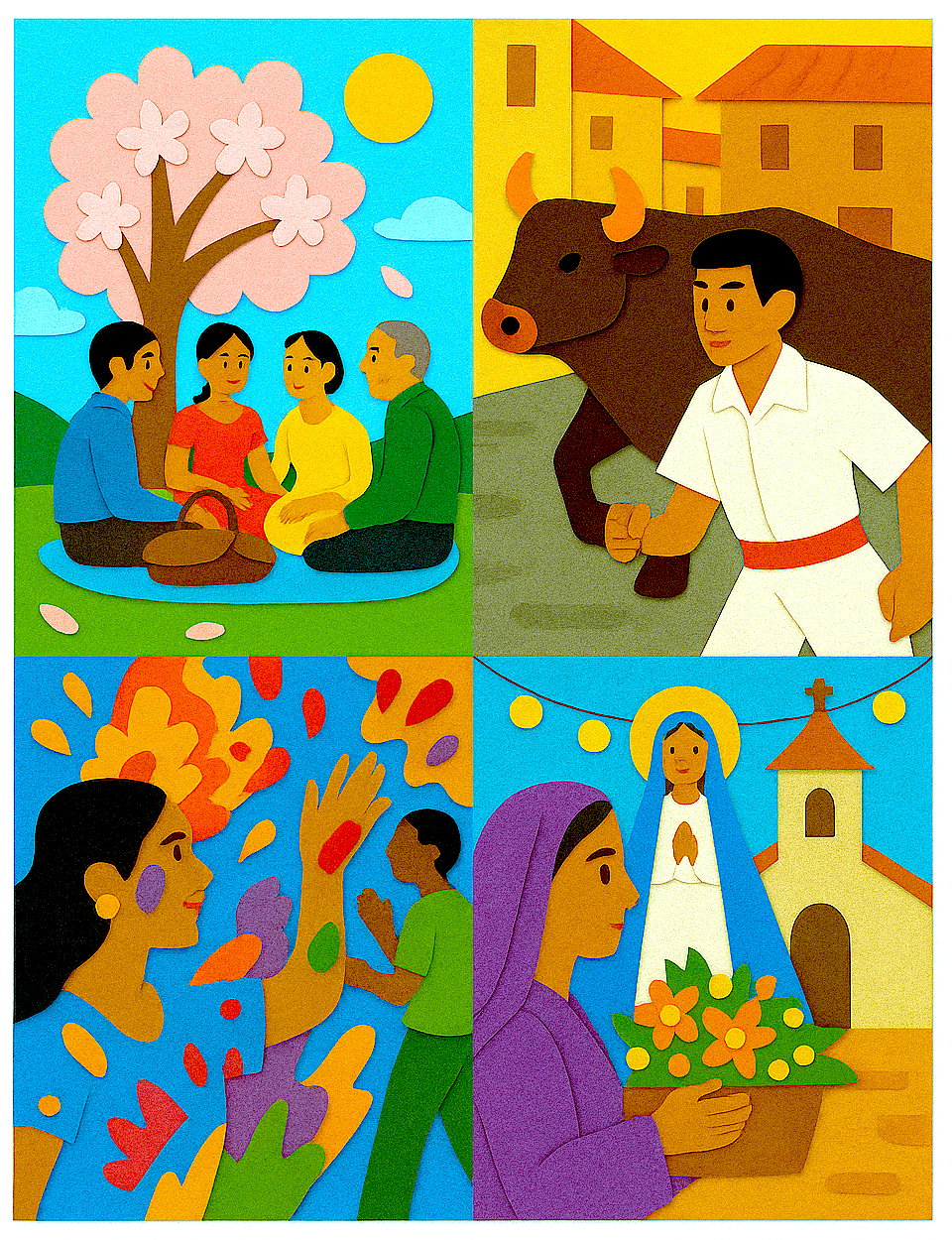
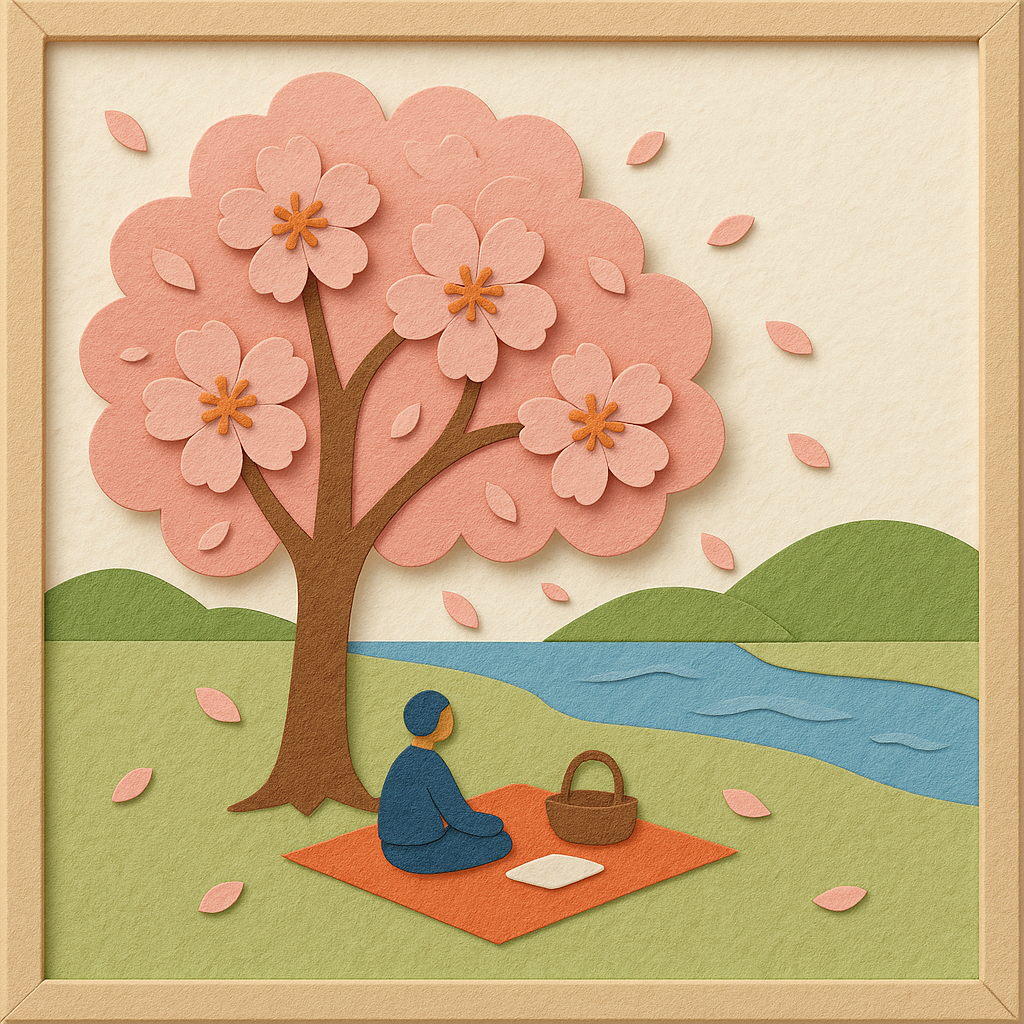
In Japan, spring arrives like a secret shared between friends: the cherry blossoms, known as sakura, bloom in a hush of pink, turning every park and riverside into a fleeting masterpiece. (It’s a perfect counterpart to koyo, the changing colors of leaves in the fall.)

I’ll never forget my first hanami — the custom of gathering to enjoy the beauty of cherry blossoms — in a tiny Osaka park, sprawled on a blanket with strangers who offered me homemade onigiri (rice balls or triangles) and a sip of plum wine. We didn’t need words; the petals drifting down said it all. Sakura isn’t just about the gorgeousness of nature — it’s a gut-punch reminder that nothing lasts forever, so you’d better soak it up. Families, lovers, old friends — they all come together, laughing over sake or staring quietly at the trees, each person wrestling with their own thoughts about time. It’s less a festival and more a moment where the world holds its breath.

2. Spain: San Fermín’s Roar and Reckless Courage

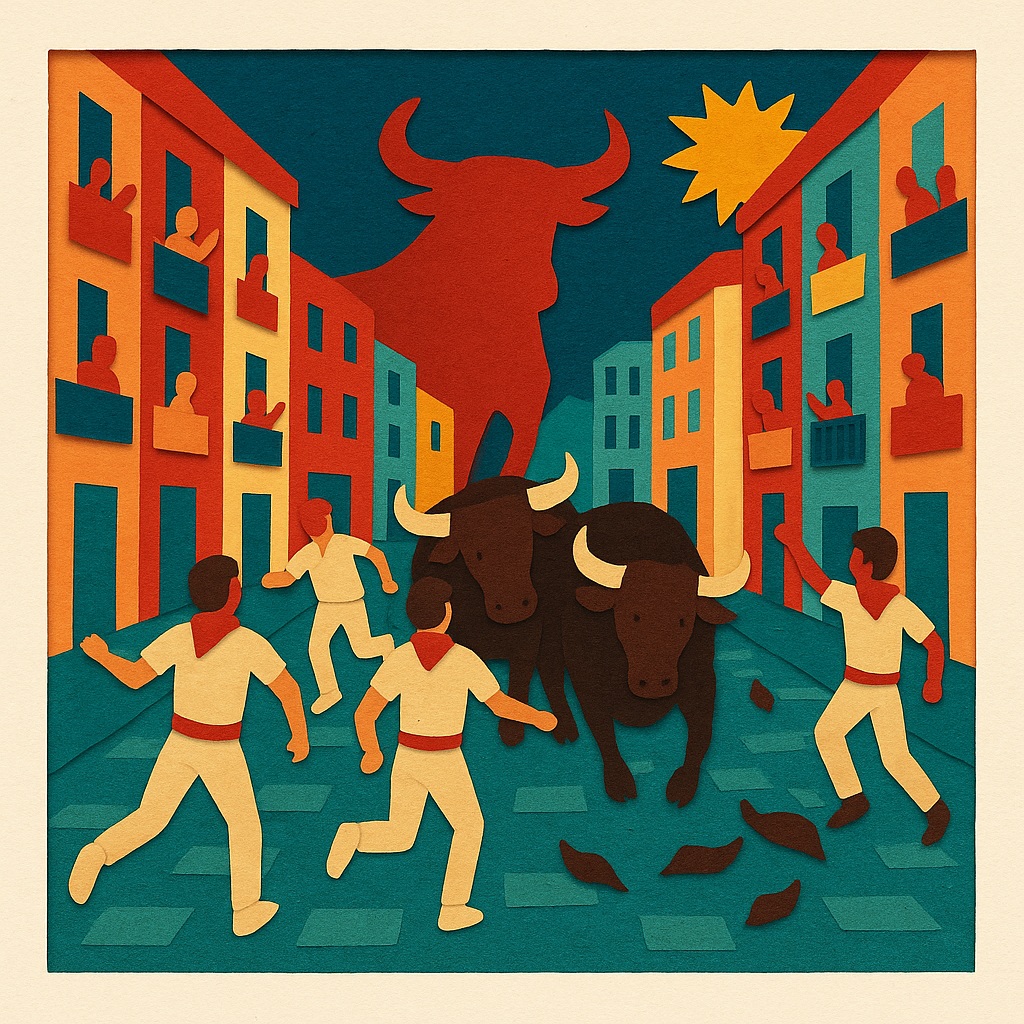
Half a world away, Pamplona, Spain turns spring’s energy into something primal. The San Fermín Festival, brewing through spring and erupting in July, is a beast of a celebration. Picture narrow streets, the air electric with nerves, and the thunder of bulls charging behind runners who are equal parts terrified and exhilarated. 

I stood on a rickety balcony once, clutching a sangria, watching the encierro unfold below: runners tripping, laughing, living on the edge of chaos. It’s the ultimate thrill, sure, but it’s also a nod to history, to Saint Fermín (the patron saint of Pamplona, who was beheaded for his Christian faith), to the days when humans and nature stared each other down. The whole city erupts in a burst of music, dance and sweat-soaked joy. 

If you’re crazy enough to go, keep Flight Refunder in your back pocket — they’ll help you reclaim cash if a canceled flight threatens to derail your adventure.

3. India: Holi’s Explosion of Color and Connection

In India, spring crashes in with Holi, a festival that’s like diving headfirst into a kaleidoscope. I was in a dusty Rajasthan village once, my clothes soaked, my face smeared with turquoise and magenta powder, dancing with a crowd of strangers to a drumbeat that shook the ground. 

Holi is about flinging colors, but it’s also a time to tear down walls — between people, and between the past and present. The story of Krishna — a beloved Hindu god known for his playful spirit — and his soulmate Radha runs through the heart of Holi. Their legendary love, full of laughter and mischief, is echoed in every handful of gulal, the brightly colored powder that revelers throw into the air (and, inevitably, onto other people). 

At Holi, it’s impossible to just be a bystander; you’re part of the chaos, laughing until your sides hurt, feeling like the world could be this free, this kind, every day. It’s the kind of messy joy that stains your skin and your soul.

4. Mexico: Semana Santa’s Soulful Dance of Faith

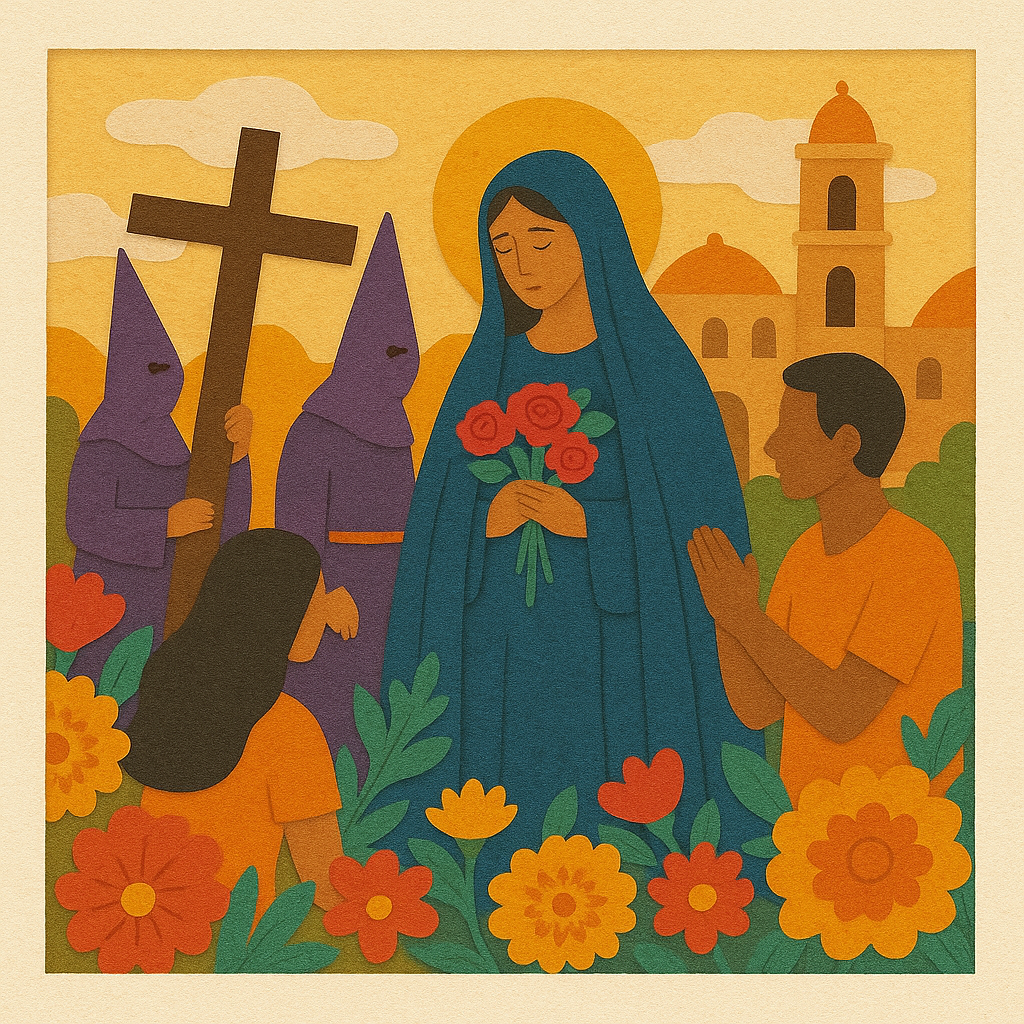
Mexico’s Semana Santa is spring at its most heartfelt. Holy Week turns towns into theaters of devotion, with processions that weave through streets blanketed in flower petals and sawdust art. 

I wandered San Miguel de Allende one April, caught in a crowd following a statue of the Virgin Mary, her face serene under a crown of roses. The air was heavy with incense, marigolds and the soft hum of prayers. 

Every town does it differently — some with mournful silence, others with bursts of brass bands — but it’s all so alive, blending Catholic roots with ancient Mexican spirit. You feel it in your bones: This is more than religion; it’s about a community stitching itself together, step by sacred step.

5. France: The Soft Spring Embrace of Easter in Provence

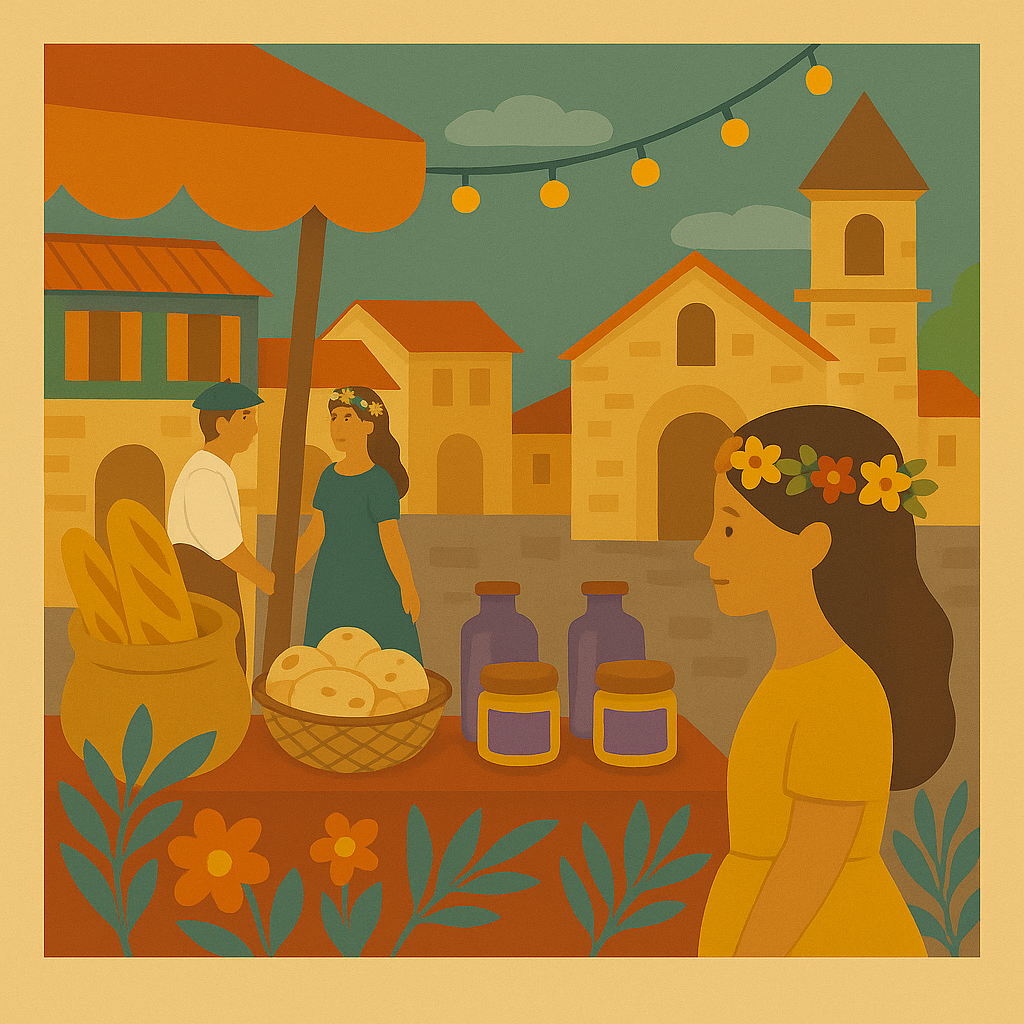
Then there’s Provence, France, where spring feels like a warm breeze. Easter here is less about grand spectacles and more about the small, perfect moments: a village square strung with lights, a market stall piled high with crusty baguettes and jars of lavender honey. 

I spent one Easter in Gordes, a storybook hilltop village of stone houses and winding lanes in Provence, nibbling on almond-studded nougat while a parade of kids in flower crowns skipped by. The hills were just starting to green, the air sharp with herbs and promise. Provence’s festivals are simple, soulful and so generous with their beauty. You leave feeling like you’ve been let in on a secret about how to live well.

The Joy, Chaos and Charm of Spring Festivals

Spring festivals are the world’s way of saying, “Hey, we’re all in this together.” Whether it’s Japan’s quiet awe under cherry blossoms, Spain’s reckless sprint through Pamplona’s streets, or India’s color-soaked chaos, these moments are where humanity shines — flawed, vibrant and so damn alive. Traveling to them is like chasing sparks, each one lighting up a piece of who you are. –Erik Ilin

Frida Kahlo in Paris

André Breton lured Frida to be in a Surrealist show, but she found herself misled, miserable and mad as hell — until Mary Reynolds stepped in.

A man stands in front of a wall that reads, "Frida Kahlo's Month in Paris" with a depiction of her painting The Frame at the Art Institute of Chicago

An exhibition at the Art Institute of Chicago covers Frida’s turbulent time in Paris in 1939.

Paris was supposed to be her big moment. But when Frida Kahlo landed in the so-called City of Light in 1939, all she found was a hospital bed, missing paintings, and a bunch of filthy Surrealists who couldn’t get their act together.

Thanks to an interesting lecture by Alivé Piliado Santana, curatorial associate at the National Museum of Mexican Art (where we check out the Day of the Dead ofrendas every year) and Tamar Kharatishvili, research fellow in modern art at the Art Institute of Chicago, I’ve come away with a far deeper — and far juicier — understanding of this chapter of Frida’s life I didn’t previously know about.

They are so damn ‘intellectual’ and rotten that I can’t stand them anymore .... I [would] rather sit on the floor in the market of Toluca and sell tortillas, than have anything to do with those ‘artistic’ bitches of Paris.
— Frida Kahlo, writing about the Surrealists in a letter to her lover, Nikolas Muray
A photos of a smoking, topless Frida Kahlo with a floral headband

Wild child Frida in 1938

Here’s what I learned about the messy, maddening and frankly fascinating story of Frida’s Parisian misadventure, the forgotten women of Surrealism, and how a kindred spirit named Mary Reynolds helped turn Frida’s time in Paris into something meaningful. 

Surrealist André Breton places a hand to his forehead and looks off to the right

André Breton, leader of the Surrealists and organizer of the 1939 Mexique exhibition — though “organizer” might be generous, considering Frida arrived to find no gallery, no show, and her paintings stuck in customs.

Frida’s Disastrous Arrival in Paris

It all began with an invitation that felt like a breakthrough. André Breton — the self-appointed “pope of Surrealism” — had reached across the Atlantic with a tantalizing offer. Frida Kahlo’s paintings, he declared, belonged on the world stage. He wanted her to come to Paris for a major exhibition he was organizing called Mexique.

Frida was excited for a chance to showcase her work in the artistic capital of the world, among the greats. It felt like a turning point — a chance to step out from her hubby Diego Rivera’s shadow and claim her place in the international art scene.

But somewhere along the way, wires got crossed. Frida thought Mexique would be a solo show. 

It wasn’t.

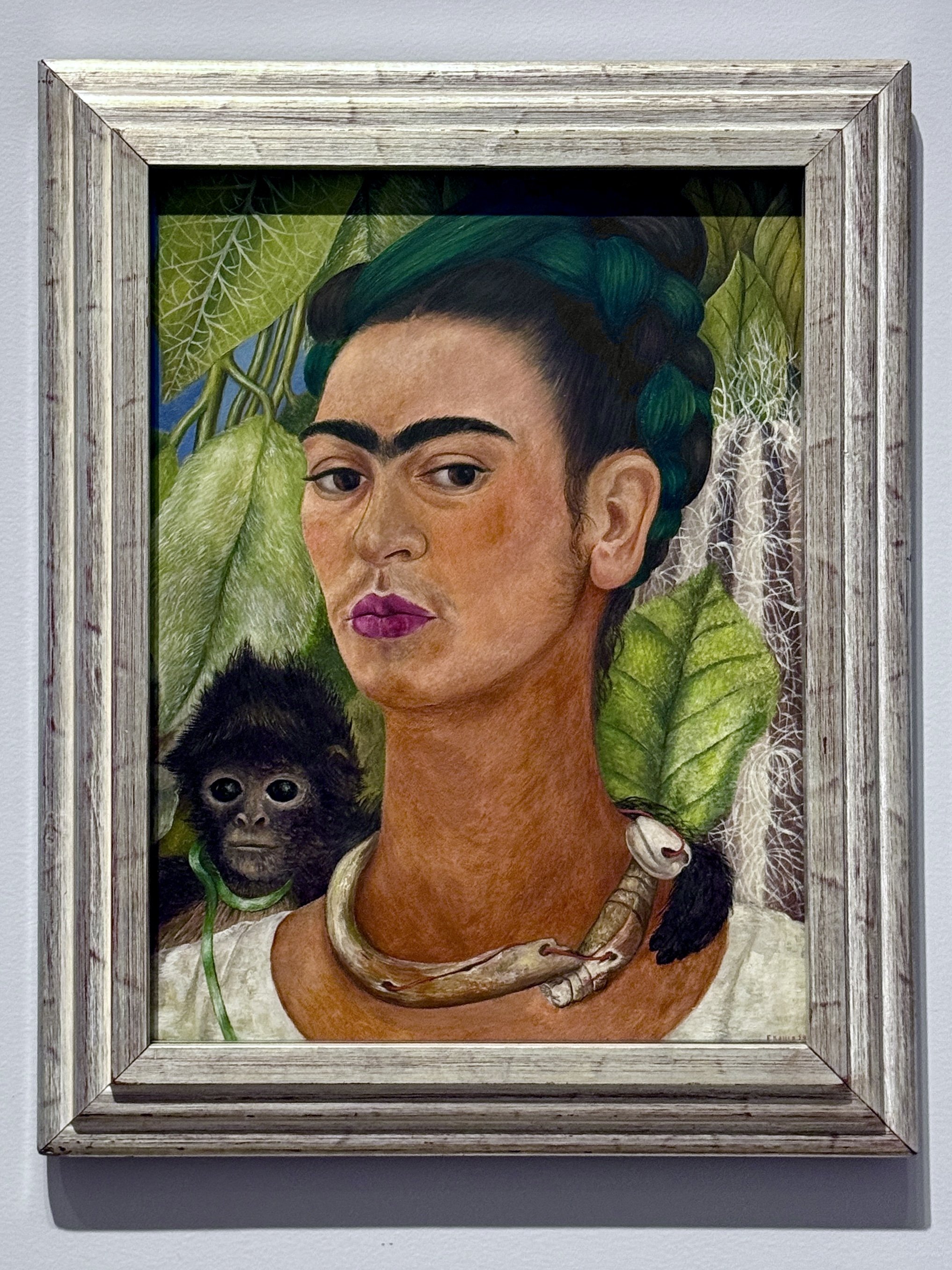
Self-Portrait With Monkey by Frida Kahlo from 1938

Self-Portrait With Monkey, painted by Frida Kahlo, posing with one of her pets, in 1938 right before she left for Paris.

Frida prepared for the journey with cautious excitement. Before she left, photographer Nikolas Muray, with whom she was having a passionate affair, captured her in a series of now-iconic portraits: defiant, radiant and ready for her European closeup. 

She could never have predicted how quickly things would unravel.

The troubles began before she even set foot in Paris. Her paintings, packed carefully for the voyage, were held up in customs. Instead of gliding smoothly into galleries, they sat in bureaucratic limbo, tangled in red tape. But there was still hope. Surely, Breton — the grand architect of the Surrealist movement — would have everything else ready.

He didn’t.

Frida arrived in Paris only to find chaos. There wasn’t even a gallery chosen for her show. No opening date on the calendar. No buzz of anticipation. Breton had made grand promises — but had done nothing to deliver on them.

A photo of Frida Kahlo taken by her lover Nikolas Muray

A portrait of Frida taken by Nikolas Muray before she left for Paris

A Hospital Stay

On top of the professional humiliation, Frida’s health collapsed. She hadn’t arrived in perfect shape to begin with — just before leaving Mexico, she had undergone spinal surgery to try to ease the constant pain from an earlier accident. The long journey, the cold Paris winter, the stress of a botched exhibition, and the miserable conditions she found herself in were a brutal combination.

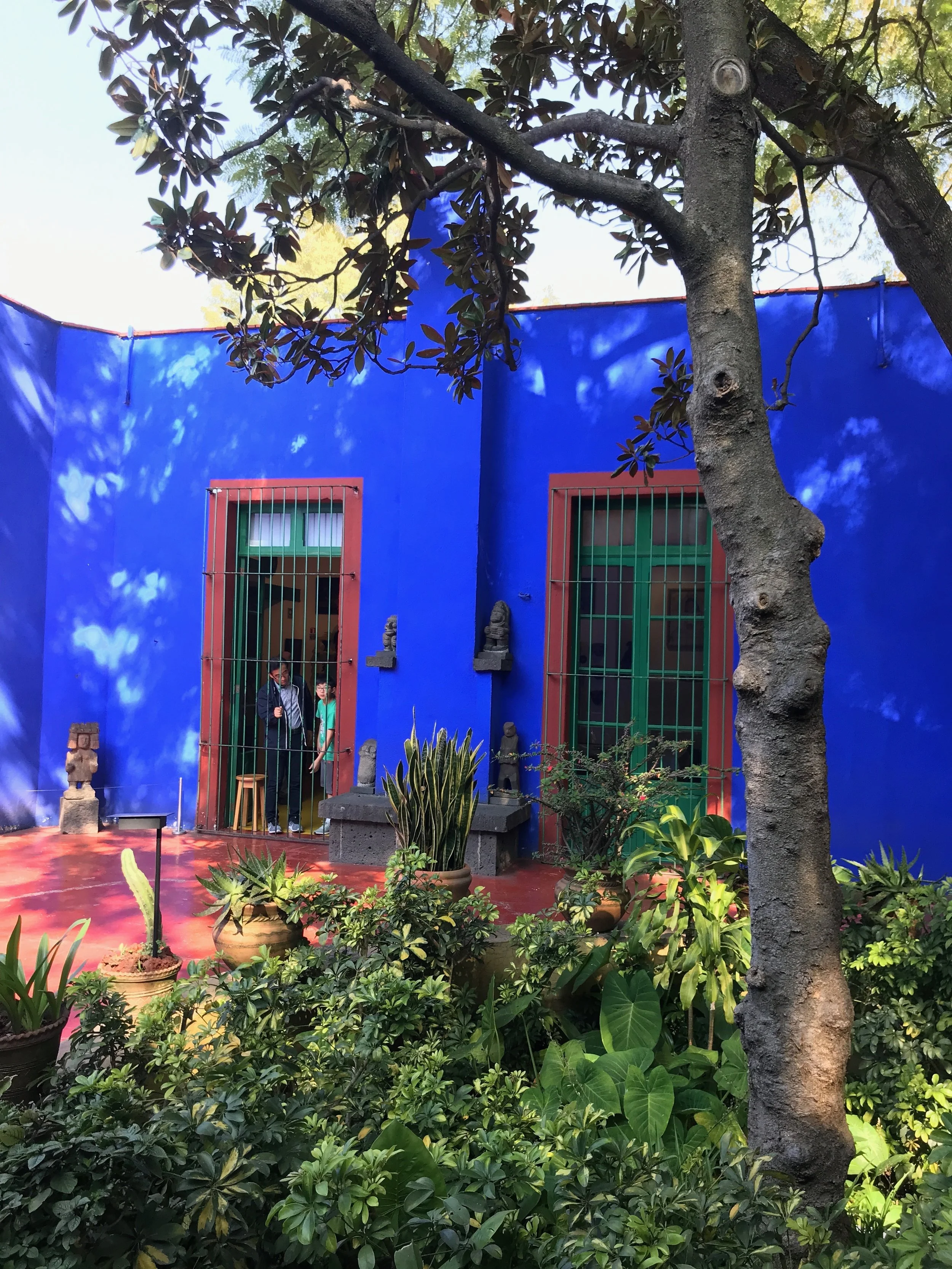
Part of her fury stemmed from Breton’s own visit to Mexico, where she and Diego had opened their home (now the Diego Rivera and Frida Kahlo House-Studio Museum) to him and his wife — only to find that in Paris, Breton offered no such hospitality in return.

Almost as soon as she arrived, Frida developed a raging kidney infection, with a spiking fever that landed her in the hospital. She was exhausted, furious and rapidly losing faith in the promises that had brought her to Paris in the first place. 

She pinned her illness squarely on the Surrealists’ squalor, convinced that their slovenly habits had done her in.

When she was discharged, still weak and recovering, she faced the grim reality of her accommodations: a dingy hotel, damp and depressing, in a city that felt far from the glamorous art capital she had imagined.

The last page of a letter written in English from Frida Kahlo to her lover Nikolas Muray, which she closes with a lipstick kiss

The final page of one of Frida’s letters to Muray. She didn’t exactly fall for Paris: “to hell with everything concerning Breton and all this lousy place,” she wrote, sick of the Surrealists and ready to go home.

She didn’t hold back. In a letter to Muray, she unloaded: “They are so damn ‘intellectual’ and rotten that I can’t stand them anymore .... I [would] rather sit on the floor in the market of Toluca and sell tortillas, than have anything to do with those ‘artistic’ bitches of Paris.” She thought the Surrealists were puffed up with self-importance yet utterly useless when it came to helping her. Only Marcel Duchamp, she noted acidly, “has his feet on the earth.” The rest, in her eyes, were pompous windbags throwing parties while her paintings languished in customs and her health deteriorated. And at the center of this mess, of course, was Breton himself, whose grand promises had led her straight into disaster.

What was meant to be her grand European debut had turned into a perfect storm of illness, neglect and bitter disappointment. She was stranded in Paris, her art trapped in customs, her patience wearing thin — and the Surrealists, led by Breton, had left her to flounder.

Avant-garde bookbinder Mary Reynolds

A photo booth pic of Mary Reynolds

Enter Mary Reynolds: An Unexpected Friendship

Just when Frida might have written off Paris entirely, in stepped Mary Reynolds — artist, bookmaker and all-around lifeline.

Unlike the aloof Surrealist men swanning around Paris, Reynolds opened her doors and, more importantly, her heart. Frida, still recovering from illness and spiraling frustration, moved out of her bleak hotel and into Reynolds’ home at 14 rue Hallé.

It wasn’t just a change of address — it was a change of atmosphere. Where Breton had offered chaos, Reynolds offered comfort. Her house in the southern part of Paris was a hub of creativity, conversation and, during the darkening shadow of World War II, quiet resistance.

Mary Reynolds, holding a tape measure, with her partner, Marcel Duchamp, looking like his head has been chopped off

Mary Reynolds with her partner, Marcel Duchamp

Mary Reynolds: The Unsung Hero of Surrealism

Reynolds deserves far more credit than she usually gets. A fiercely independent artist herself, Reynolds was a master of bookbinding — her works were collected by her partner, Marcel Duchamp (the guy who turned a urinal into modern art’s most notorious statement and further shocked audiences with Nude Descending a Staircase, No. 2), along with other avant-garde heavyweights of the time.

Reynolds took bookbinding to a whole new, surreal level: She used objects on the covers like kid gloves for Free Hands (Les Mains Libres), a thermometer in A Harsh Winter (Un Rude Hiver), and a teacup handle in Saint Glinglin — a nod to a scene where a character smashes plates with a golf club.

cover of Les mains libres (Free Hands) by Paul Éluard, with glove-like cutouts designed by Mary Reynolds

Reynolds was a genius when it came to bookbinding. Here’s the striking cover of Les mains libres (Free Hands) by Paul Éluard, with glove-like cutouts.

Her house was a living, breathing collage of Surrealist art and ideas. Duchamp, Alexander Calder and countless others had left their fingerprints — and actual works — all over her walls. 

For Frida, Reynolds’ home was proof some Surrealists weren’t all talk and no action. Here was a woman making her own art, supporting her peers, and backing it all up with real-world bravery.

A drawing of Mary Reynolds with multiple cats crawling over her, by Alexander Calder

A delightful drawing of Mary Reynolds and her cats by Alexander Calder, the American modern sculptor best known for his mobiles

Kahlo and Reynolds: Finding Solidarity

The connection between Frida and Reynolds was electric. Both women were navigating the male-dominated art world on their own terms, refusing to be footnotes in movements led by men.

Their bond also feels emblematic of something bigger: a reminder that amid all the philosophical posturing of Surrealism, real solidarity happened where women supported each other, shared ideas, and, frankly, kept the whole thing afloat.

In Frida’s letters, you can almost feel the tone shift once she moves into Reynolds’ home. It’s not quite relief — her Parisian experience remained fraught — but there’s a spark of light. Reynolds gave Frida what Breton could not: genuine human connection in a city that had otherwise let her down. She stayed at Reynolds from February 22 to March 25, 1939.

The Wounded Deer by Frida Kahlo, 1946

The Wounded Deer from 1946, painted after yet another failed surgery, this haunting self-portrait shows Frida as a deer riddled with arrows, calm-eyed in the face of relentless pain.

Frida and Surrealism: A Love-Hate Relationship

Here’s the irony: While the Surrealists were practically falling over themselves to claim Frida Kahlo as one of their own, Frida herself wanted nothing to do with the label.

Breton had famously declared her work “a ribbon around a bomb” — which, to be fair, is a great line. But Frida saw things differently. She didn’t consider herself a Surrealist at all. “I never painted dreams,” she once said. “I painted my own reality.”

Frida’s work, raw and visceral, didn’t need the Surrealist manifesto to explain it. Where the Surrealists dabbled in subconscious symbolism and found objects, Frida’s paintings were autobiographical to their core — her pain, her identity, her relationships all laid bare.

Self-Portrait With Cropped Hair by Frida Kahlo, 1940

Self-Portrait With Cropped Hair from 1940. Freshly divorced, Frida depicts herself as wearing one of Diego’s suits, scissors in hand, her hair in clumps on the floor.

The Surrealists saw her as exotic, a muse from afar who fit their aesthetic fantasies. But Frida wasn’t interested in playing that role. She wasn’t a curiosity or a symbol — she was an artist, plain and simple. Her use of indigenous Mexican motifs, her explorations of physical and emotional suffering — these weren’t Surrealist exercises; they were her lived truth.

Still, despite her reluctance, Frida’s art undeniably aligned with many Surrealist themes. Dreams and reality intertwining, the use of found materials, the exploration of identity — it was all there, just coming from a much grittier, more personal place. 

And she did, after all, agree to be a part of a Surrealist show in Paris. Which, by the way, finally came together. It ran at the Galerie Renou et Colle from March 10 to 25, 1939. Frida’s take on her fellow Mexican artists that Breton chose to showcase with her work? In one of her letters to Muray, she described them as “all of this junk.”

Photographer Nikolas Muray and Frida Kahlo

Photographer Nikolas Muray and Frida Kahlo had a passionate affair, and he was her confidante during her bad experience in Paris.

Nikolas Muray: The Confidant Behind the Letters

Long before Paris turned into a disaster, Frida had another anchor: Nikolas Muray. Photographer, Olympic fencer (yes, really) and one of her many lovers, Muray was one of the few people Frida trusted enough to confide in during her Paris ordeal.

Her letters to him are the sharpest, funniest and most brutally honest accounts we have of her time in France. She wrote to Muray not just to update him, but to release steam — to unload her frustrations about the Surrealists, the filth of the city, her failing health, and her utter disappointment in Breton’s empty promises.

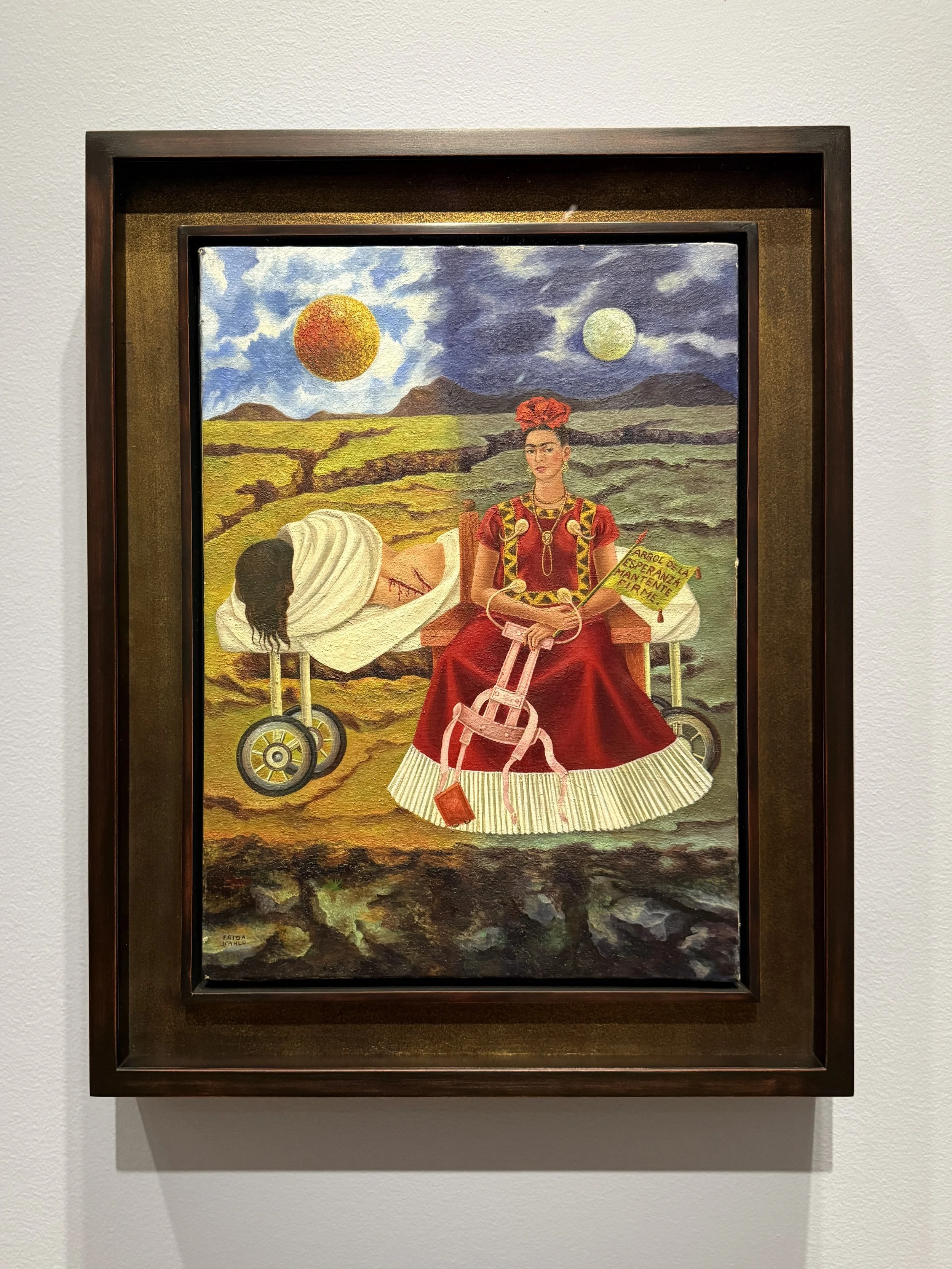
The Tree of Hope, Remain Strong, painted in 1946 by Frida Kahlo

The Tree of Hope, Remain Strong, painted in 1946 after spinal surgery. This double self-portrait splits her in two: One body lies wounded on a hospital gurney, while the other sits upright, dressed and defiant, clutching a back brace.

What Happened After: A Brief, Blazing Connection

For all the depth and warmth of their connection in Paris, Frida and Reynolds’ friendship seems to have been brief. After that whirlwind winter of 1939, there’s no evidence they kept up correspondence. Aside from one endearing letter where Reynolds talks about how empty the house felt without Frida, there aren’t any further exchanges that we know of.

Life pulled the two women in different directions. Frida returned to Mexico, her health still fragile but her art beginning to gain traction. 

Reynolds, meanwhile, risked her life in the French Resistance. Her Paris home, once a haven for artists and thinkers, became a literal refuge for those fleeing Nazi persecution. She didn’t leave Paris until 1942, escaping across the Pyrenées on foot and finding a flight to New York. But she never stopped fighting for what mattered.

Their paths never formally crossed again, at least not that we can prove. But their legacies continued to intertwine, quietly and profoundly, through the art they made and the communities they helped build. 

The Frame, an oil painting on tin with a vibrant folk art border, from 1938. Frida’s Paris show wasn’t a total disaster — the Louvre bought this piece for their colletion.

A Happy Ending to Frida’s Time in Paris

In spite of it all, Frida’s Paris disaster managed to end on a high note. Against the odds, her work finally made it onto the walls of a gallery — and not just any gallery. By the end of the show, the Louvre itself (yes, the Louvre) purchased one of her paintings, The Frame, making Frida the first 20th century Mexican artist in the museum’s holdings. Today (when not loaned out to travel), this emblematic self-portrait is part of the Musée National d’Art Moderne’s collection at the Centre Pompidou in Paris. 

DID YOU KNOW? The Pompidou has a branch in Málaga, Spain?

Even more surprising, amid the wreckage of her Surrealist experience, Frida forged real friendships with a few kindred spirits. Man Ray, Duchamp and some others proved to be exceptions to the pompous crowd she had loathed. Some Surrealists were pas mal, after all. –Wally

The Architectural Evolution of the Louvre: From Fortress to Museum

Explore the Louvre’s journey from a medieval castle to a world-renowned museum, uncovering its rich history, design changes and cultural legacy.

The Louvre in Paris in the rain in the 18th century with people under umbrellas in the courtyard out front

The Louvre, known for its iconic art collection, houses more than just masterpieces within its walls — it holds centuries of a stormy history and transformation. 

Originally a medieval fortress, the Louvre has been reshaped over the ages into one of the largest and most renowned museums in the world. This journey through its architecture not only reflects changing styles but also France’s tumultuous past. Let’s step through time and experience the evolving grandeur of the Louvre.

The Louvre Castle, surrounded by a moat, before the Paris icon became a museum

Where Did the Louvre Get Its Name?

First things first: Ever wondered why one of the world’s most famous museums is called the Louvre? You’re not alone, and, like many things in history, the truth is a bit murky. There are a couple of theories, though, both equally intriguing.

The first — and perhaps the most vivid — traces the name back to the Old French word lupara, meaning wolf. Legend has it that the Louvre might have started as a hunting lodge, a place where wolves once roamed, or perhaps a refuge for those hunting them. Imagine early Parisians chasing down these wild creatures in the shadows of what would one day house the Mona Lisa.

The second theory takes us in a different direction, connecting the name to the Frankish word leovar or leower, meaning a fortified place or watchtower. And this one holds some weight, considering the Louvre began its life in the late 12th century as a defensive fortress. 

The Louvre Castle in 1190 in Paris, with horses and wagons out front

The Louvre’s Early Years: A Fortress for Kings

The year: 1190. Paris is a thriving but vulnerable medieval city. King Philip II, wary of invasion, commands the construction of a fortress to shield the city from foreign threats. 

The structure — thick stone walls, a deep moat — was built to intimidate and protect. The cold, imposing silhouette of the Louvre Castle stood firm, safeguarding the kingdom’s treasures and its people. 

Yet, as the centuries passed, Paris evolved, and so did the fortress. By the 14th century, under the reign of Charles V, the once purely defensive stronghold began its metamorphosis into a royal palace, draped in the elegance of Gothic architecture, with soaring arches and intricate stonework. The rigid fortress had turned into a symbol of royal power and opulence, reflecting the splendor of the era.

The Louvre in Paris, with its colonnade during the Renaissance, with people out front

Renaissance Transformations of the Louvre

The Renaissance breathed new life into the Louvre, reshaping it from a fortress-turned-palace into a majestic royal residence. 

Workers renovate the Louvre during the 16th century

In the 16th century, Francis I, a king passionate about art and architecture, envisioned a Louvre that would rival the finest palaces of Europe. He summoned renowned architects like Pierre Lescot to reimagine the building. Stone masons carved delicate sculptures, artisans crafted grand façades, and courtyards took shape — where once there had been utilitarian walls. 

The interior of the Louvre in the 16th century, when it was a palace

The Cour Carrée, a resplendent square courtyard, emerged as a harmonious blend of Renaissance ideals. Classical columns and elegant pediments framed the space, signaling the Louvre’s new status. No longer a fortress of war, the Louvre was becoming a beacon of French culture, preparing to house not just royals, but the world’s greatest artistic treasures.

A crowd of people in front of the Louvre, some holding flags, during the French Revolution

The Louvre as Museum

Fast forward to the throes of the French Revolution. The palace, once reserved for royalty, was swept into the tide of change. 

Interestingly, the Louvre itself wasn’t invaded or looted in the chaotic way that some other royal properties were during the Revolution. While many royal residences, like the Palace of Versailles, faced mobs and plundering, the Louvre largely escaped such direct violence.

Instead of looting, there was a process of “nationalization.” Artworks that had belonged to the monarchy, the Church and émigrés (those who fled the country) were legally confiscated and transferred to the Louvre. Revolutionary authorities essentially took over the management of the collections, treating them as public property rather than private royal possessions.

The interior of the Louvre in the 18th century, when it was first opened as an art museum

In 1793, the Louvre opened its doors to the public as a museum, a gesture that symbolized the democratization of art and culture. Citizens, for the first time, stood in front of masterpieces previously reserved for the most elite. 

Over the years, its halls would expand, as art from all over Europe poured in. 

Renovations to the interior of the Louvre during the 19th century

By the 19th century, the Louvre was undergoing a new transformation — architects like Hector Lefuel extended and renovated its galleries, crafting the museum we recognize today. 

And then came the most daring addition of all: a modern wonder amid centuries of history.

The Louvre in Paris, with I.M. Pei's glass pyramid out front

The Glass Pyramid: A Modern Icon

In 1989, I.M. Pei unveiled his controversial masterpiece: the glass pyramid. 

At first, the contrast was startling. How could this sharp, transparent structure belong in a space so rich with centuries of stone? 

Yet over time, the pyramid became a beloved symbol of the Louvre’s embrace of both past and future. Its sleek lines rise from the courtyard like a beacon, inviting visitors into the heart of the museum. The sunlight streams through its glass panels, casting an ethereal glow across the underground lobby, an unexpected harmony of ancient and modern.

The Louvre in Paris, with the pyramid lit up at twilight

Experiencing the Louvre Today

Today, the Louvre could be considered a pilgrimage site for art lovers from around the globe. Housing over 38,000 works, including the enigmatic Mona Lisa and the timeless Venus de Milo, the Louvre offers not just a glimpse into the history of art but also a walk through the very evolution of Paris and France itself. 

As you wander its grand galleries, each wing tells a different story — of kings, of revolutions, of artistic triumphs. The very stones of the Louvre whisper of the centuries they’ve witnessed.

For modern visitors, the experience begins long before entering its halls. With millions flocking to its doors, securing tickets to the Louvre in advance is essential to making the most of your time. Booking your Louvre tickets online ensures not only your entry but also your chance to explore this monumental blend of history and art at your own pace.

Standing beneath the glass pyramid, surrounded by the architectural echoes of past centuries, you’re stepping into a story that spans from medieval fortifications to modern masterpieces. And when you visit, you’ll become part of the Louvre’s ongoing story. –John Cunningham


Beyond Paris: Travel to Lesser-Known France

The most underrated places in France: Nantes, Amiens and Rennes — where mechanical elephants, floating gardens and medieval wonders await your next adventure.

Porte Saint-Pierre in Nantes

Sure, Paris is the City of Love, the place where couples smooch along the Seine. But if you think France is just pain au chocolat, promenades and Paris, you’re just scratching the surface. Once you’ve marveled at the must-sees and taken more Eiffel selfies than your Instagram can handle, it’s time to move beyond Paris into the France that doesn’t always make it into the guidebooks.

The Eiffel Tower with the city of Paris spread out before it

We’re not saying you should skip Paris — there are just some hidden gems you should also check out.

First Up: Gay Paree

Of course, any trip to France is worth a stop-off in Paris. The first rule? Don’t be in a rush. Paris is a city meant to be savored — one street, one café, one perfect pastry at a time. 

Begin your journey on foot, meandering through boulevards filled with the smell of fresh bread, the buzz of busy terraces and architecture that just might be older than your country. 

Once you’re ready to kick things up a notch, switch over to the Métro or tram — the real Parisian way to get around. Sure, you could opt for taxis or ride-shares, but you’d be missing the electric hum of everyday life on the city’s veins.

Of course, you’ll want to plan ahead. If you want to visit the Louvre, don’t even think about showing up without pre-booked tickets. Skip the epic queues and head straight into the thick of it. 

Or, if you’re craving a bit more underworld mystique, take the plunge into the Catacombs of Paris — a dark, fascinating corner of the city. 

And for the romantics, the Eiffel Tower may be free to admire from below, but if you want to climb up, save yourself time (and foot cramps) by booking your tickets in advance.

People hang out under a tree in the Jardin des Tuileries in Paris, France

Jardin des Tuileries

Picnics, Cruises and Prepping for the Great Escape

Before you say your final “au revoir” to Paris, it’s time to embrace the most Parisian of pastimes: picnicking in a garden. Pack up a basket with a crusty baguette, some fancy cheese, and a bottle of rosé — this is France, after all. Parc des Buttes-Chaumont, Jardin des Tuileries and Luxembourg Gardens are the perfect spots to recharge. 

But Paris is just the beginning. Once you’ve ticked off the iconic sights, why not step into the real adventure — those lesser-known spots where the crowds thin and the charm thickens. Take a road trip or hop on a train, and dive into the countryside, where France has some seriously under-the-radar gems waiting for you.

Here’s your guide to three fascinating cities that will make your trip to France unforgettable.

Nantes: The City of Innovation and Imagination

If there’s a city where imagination runs wild, it’s Nantes. Perched along the Loire River, this historic gem was once the bustling capital of Brittany and a powerhouse of trade and commerce. Fast forward to today, and Nantes has reinvented itself as a vibrant playground for artists, engineers and visionaries — where creativity isn’t just encouraged, it’s celebrated at every turn.

Giant mechanical steampunk elephant at Les Machine de l'Ile in Nantes, France

Must-See Attractions in Nantes

Les Machines de l’Île: A fantastical world inspired by Jules Verne and Leonardo da Vinci, this is one of Nantes’ most famous attractions. Here, you’ll find mechanical animals, including the iconic 40-foot-tall elephant that you can ride as it lumbers through the streets.

White facade of the Chateau des Ducs de Bretagne in Nantes, France

Château des Ducs de Bretagne: This 13th century castle is a key part of Nantes’ history. Once the seat of the dukes of Brittany, it now houses a museum that tells the story of the city’s past, including its shameful role in the transatlantic slave trade.

Les Anneaux de Pouvoir (Buren), colored rings of light on l'Ile de Nantes, in Nantes, France

Les Anneaux (The Rings) on l’Île de Nantes

Île de Nantes: The island at the heart of the city is a blend of modern art installations, restaurants and waterfront paths. You’ll find sculptures that pop up in unexpected places, and the island is a symbol of Nantes’ artistic resurgence.

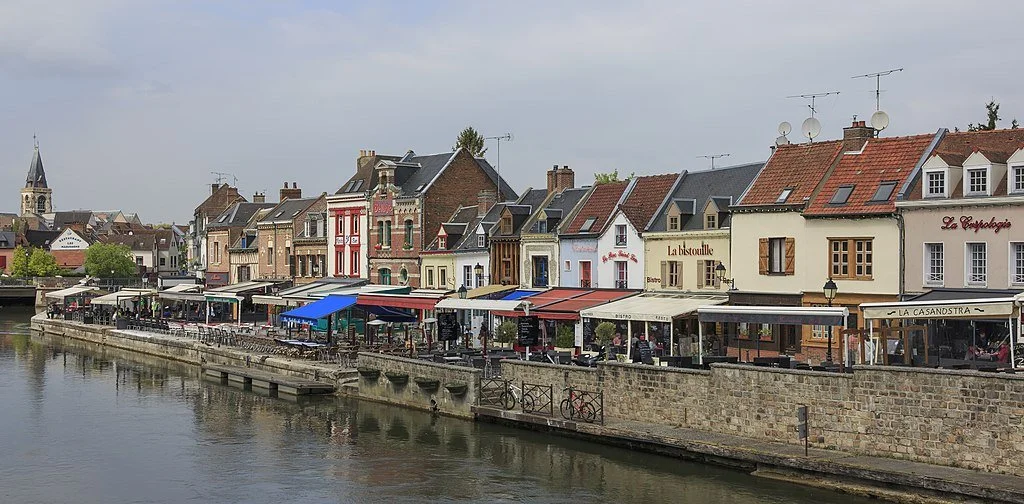
Quai Belu, with quaint buildings along the water, in Amiens, France

Amiens: France’s Hidden Medieval Treasure

Perhaps Amiens hasn’t made your radar yet — but trust me, it’s one of France’s best-kept secrets, far from the touristy throngs most people associate with a trip to France. Nestled in the Haut-de-France region in the north, Amiens is divided by the River Somme and boasts a blend of charm, history and, yes, some seriously Instagrammable spots. If you’re hunting for a place to grab some mouthwatering French cuisine or buy a perfectly aged bottle of wine, the shops and cafés along Quartier St.-Leu’s narrow, cobbled streets are practically begging you to stop by.

Now, here’s the kicker: Amiens is ridiculously budget-friendly. Sure, France has a rep for being on the pricey side, especially if you’re staying where all the iconic sites are. But in Amiens? You can snag top-tier hotels without emptying your wallet. So while you might be pinching pennies in hostels across Paris or Marseilles, Amiens is where you treat yourself to a touch of luxury. Balance, my friends. Amiens is the city that gets it.

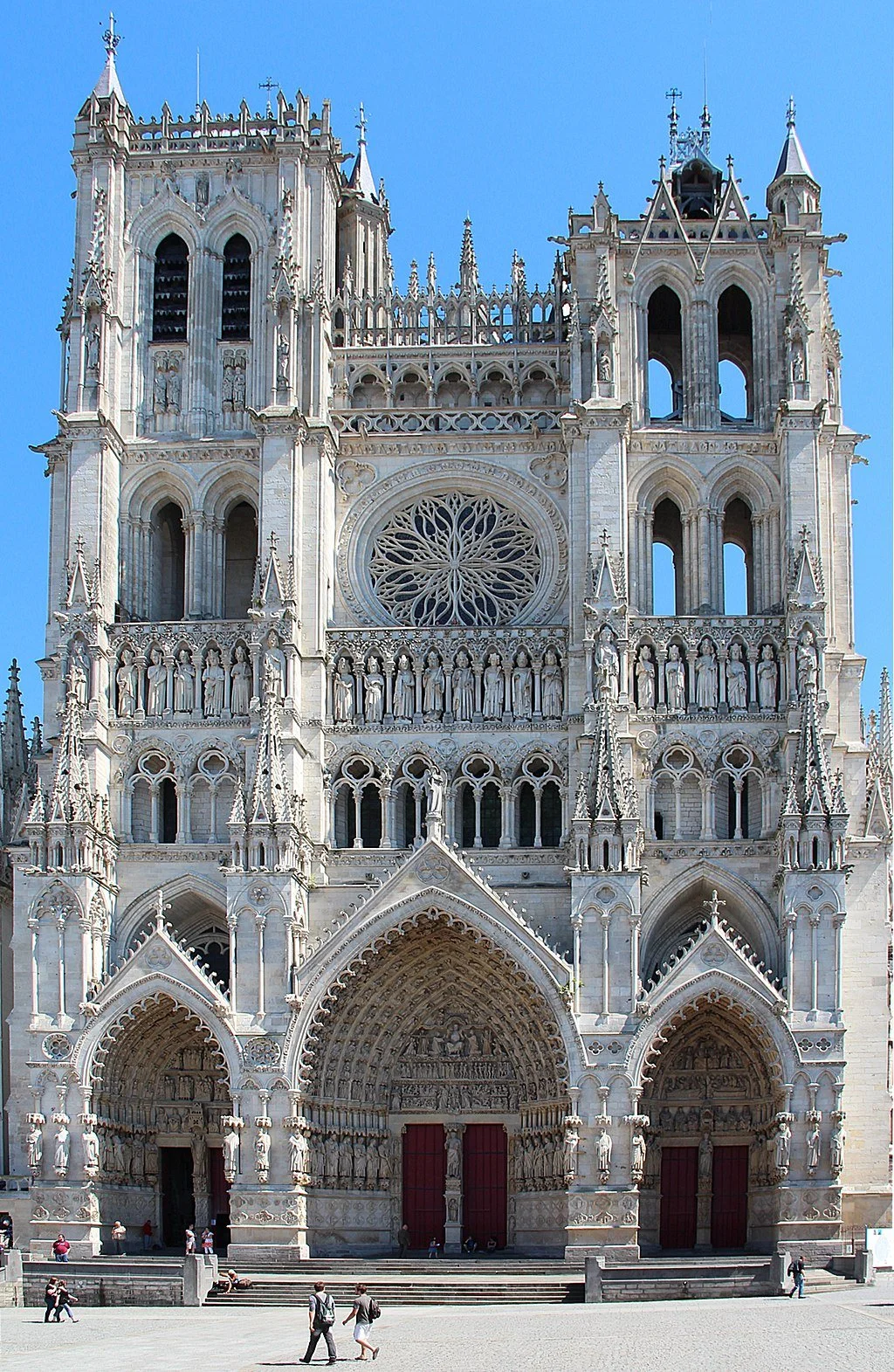
The front of Amiens Cathedral in Amiens, France

Must-See Attractions in Amiens

Amiens Cathedral: This Gothic masterpiece is one of the largest churches in the world and boasts intricate carvings and towering spires. As a UNESCO World Heritage site, it’s known for its exceptional beauty. The cathedral’s façade was originally painted in vibrant colors. Over time, the paint wore away, leaving the stone we see today. During the summer, a light show recreates these original rainbow hues.

A couple rows a small green boat through Les Hortillonnages, the floating gardens in Amiens, France

Les Hortillonnages: These floating gardens are situated on a network of canals and have been cultivated since the Middle Ages. You can explore them by boat, winding through the greenery and flower-filled gardens that seem worlds away from the city streets.

A closeup of the exterior of the Maison de Jules Verne in Amiens, France, with the tower and some floral tilework

Maison de Jules Verne: While Verne was born in Nantes, he spent much of his life in Amiens, where he wrote some of his famous novels. His former home is now a museum that gives visitors a glimpse into his world and imagination.

Timbered houses along a river in Rennes, France

Rennes: Medieval Meets Modern

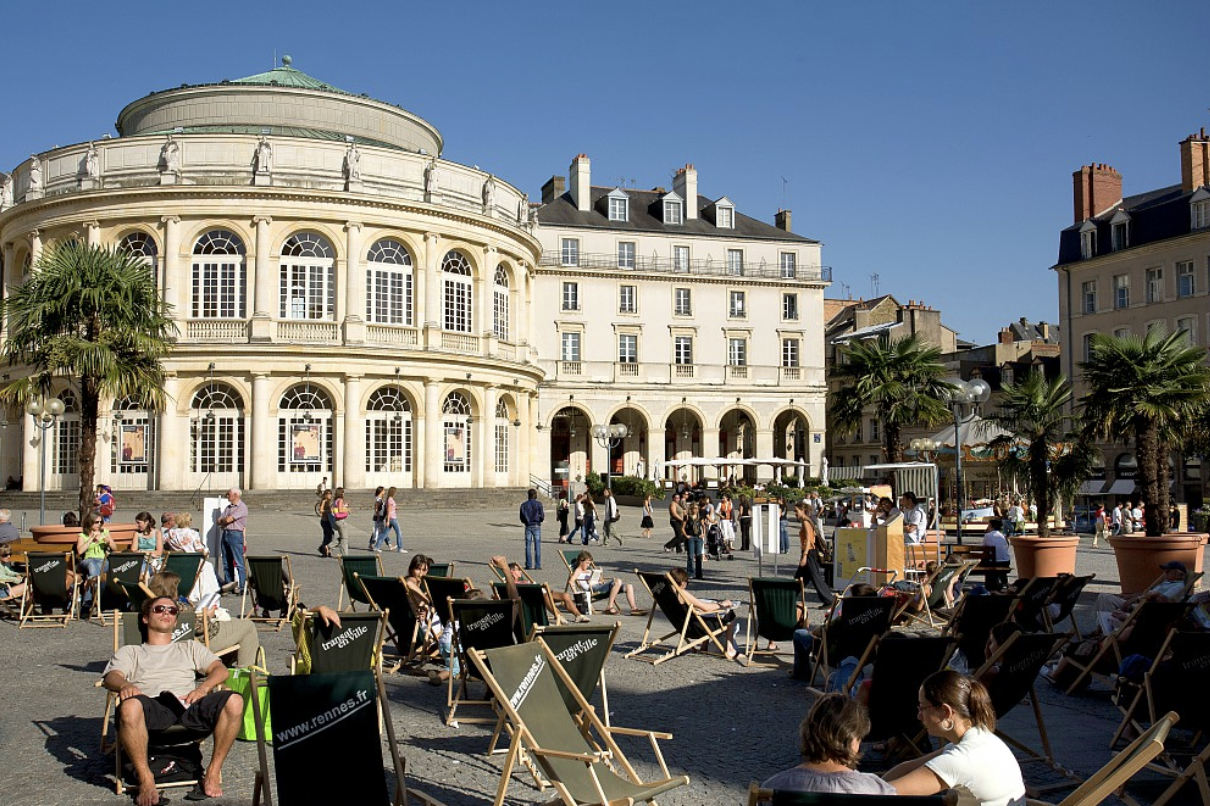
In the final stop on our tour of underrated French gems, the road less traveled takes us to Rennes, the capital of Brittany, where history and modernity collide in the best way possible. What sets Rennes apart? Picture medieval half-timbered houses lining the streets, right alongside the imposing grandeur of the cathedral. It’s like stepping into a time machine — but with better coffee.

People in the courtyard of the Parlement de Bretagne in Rennes, France

Must-See Attractions in Rennes

Parlement de Bretagne: Once the seat of the Brittany parliament, this grand building is a must-see for history buffs. It survived a major fire in the 1990s and was carefully restored. Guided tours give visitors a glimpse into the past and the intricate artwork inside.

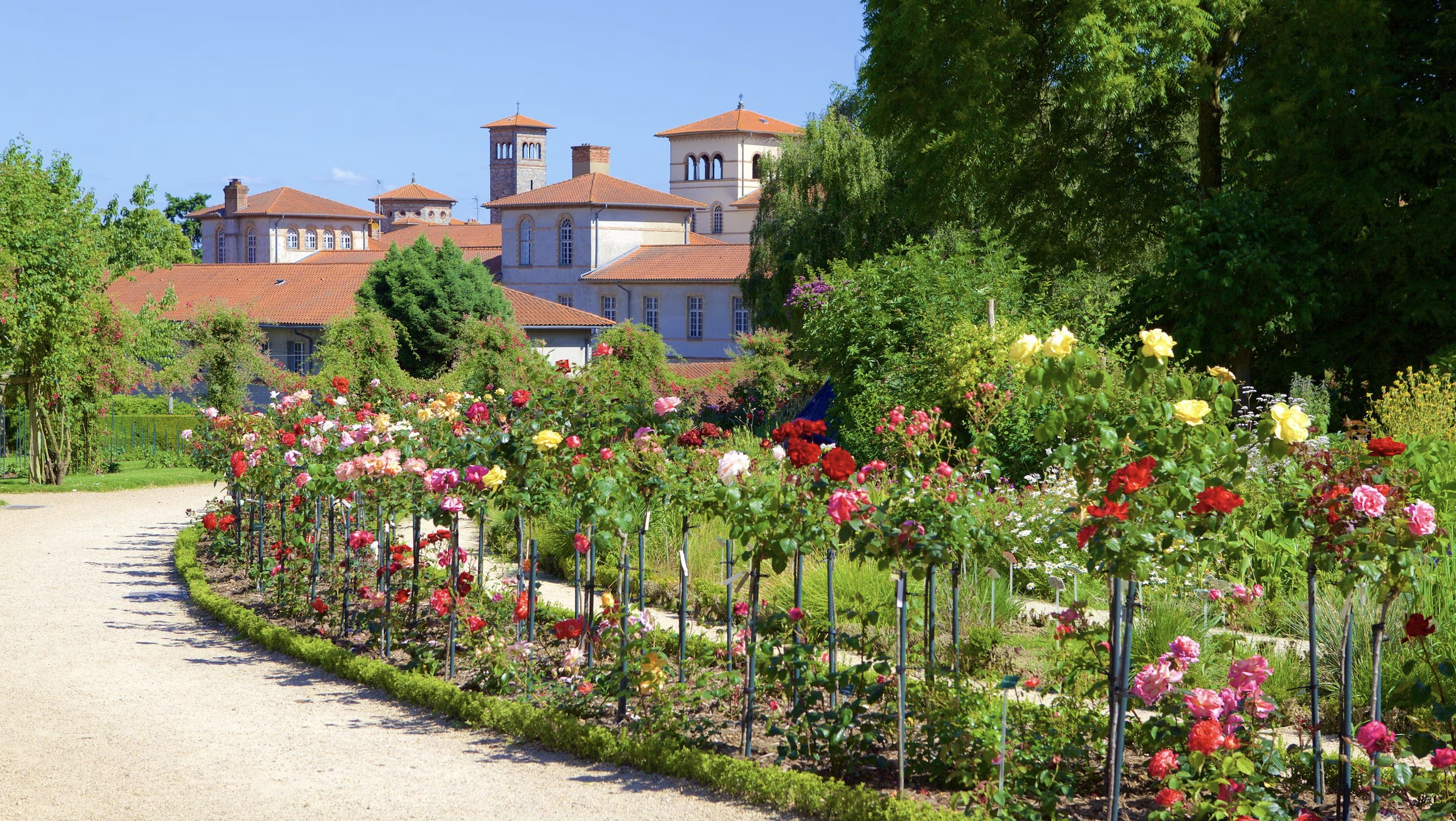
Roses of all colors along a path leading to red-topped buildings in the Thabor Gardens in Rennes, France

Thabor Gardens: One of France’s most beautiful public parks, the Thabor Gardens span 25 acres (10 hectares) and include a French garden, English garden, rose garden and aviary. It’s the perfect spot for a quiet escape after a day of sightseeing.

White walls and a glass-covered ceiling in a room with a giant white ring in the Musee des Beaux-Arts in Rennes, France

Musée des Beaux-Arts: Art lovers will feel right at home in this museum, which boasts works from European masters like Rubens, Botticelli and Picasso. The museum’s collection covers everything from ancient Egyptian artifacts to modern art.

The Rennes Opera House

France off the Beaten Path

France is so much more than Paris. By stepping off the beaten path and exploring places like Nantes, Amiens and Rennes, you’ll not only escape the tourist crowds but will also discover the true heart of the country. It’s in the untapped corners, the quiet lanes and the lesser-known wonders. As they say: Life is about the adventures you take and the memories you make. –Sadie Smith

Pilgrimage Paths in Spain: 4 Tips for a Modern Traveler

From the best apps to which Camino route to choose, here’s how to prepare for the Camino de Santiago.

With beautiful landscapes, delicious food and charming customs, Spain has it all. But its pilgrimage sites are what truly make the country’s offerings unique. 

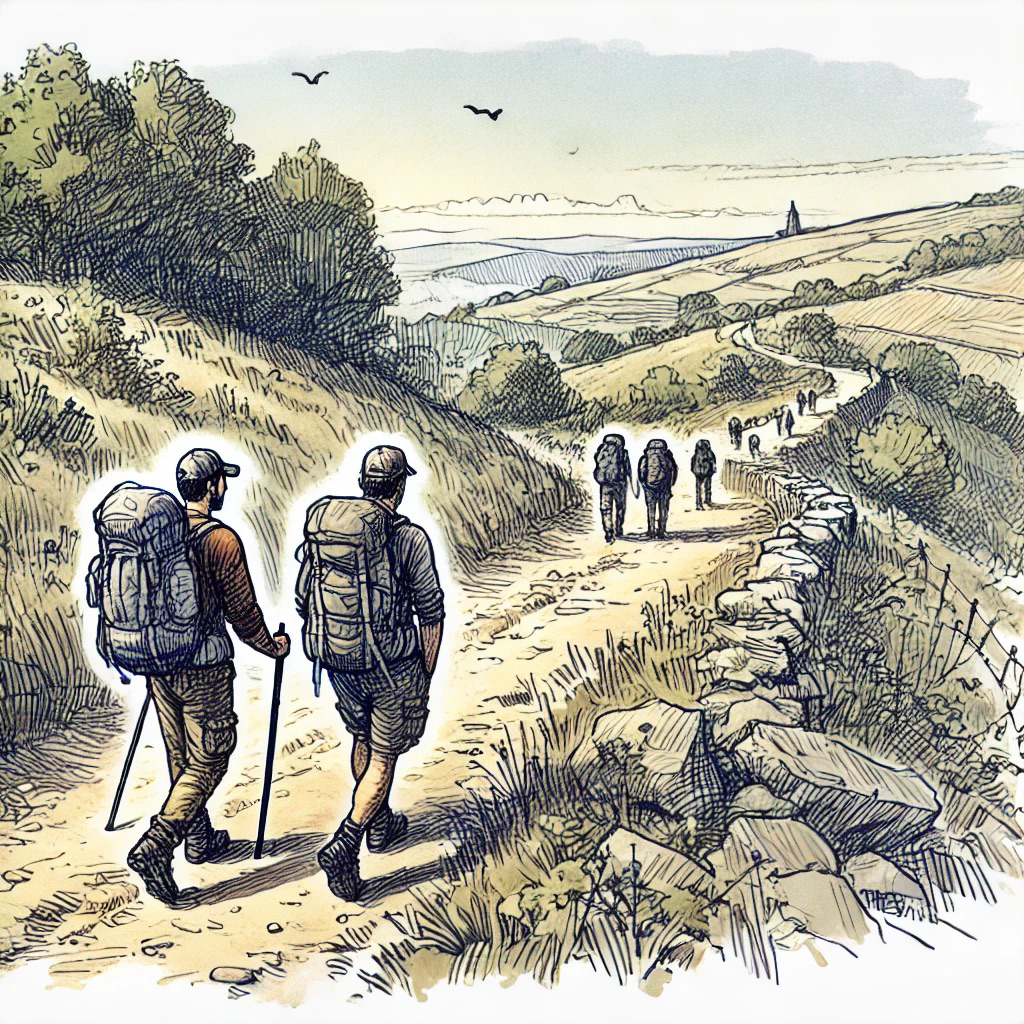
Embarking on the Camino de Santiago is more than a hike across Spain — it’s a journey steeped in history, spirituality and personal discovery. For centuries, pilgrims have walked these ancient paths, drawn by faith, adventure or simply the call of the open road. Today, the Camino welcomes travelers from all walks of life, blending tradition with modern comforts. 

Coverage can be inconsistent along the more secluded stretches of the Camino.

Fortunately, there’s an easy solution: eSIMs.

The network of routes dates back to the Middle Ages and leads to the burial site of the apostle Saint James. Despite the Christian focus, the pilgrimage paths are enjoyed by walkers, hikers and cyclists of all faiths. 

Whether you’re seeking solitude, cultural immersion or the camaraderie of fellow wanderers, this guide offers essential tips to make your pilgrimage a memorable one — without leaving the 21st century behind.

1. Research the right pilgrimage for you. 

The Camino de Santiago is a network of routes that span the entire country of Spain. Each promises its own experience with different cultures, adventures and challenges. Before booking, research the best routes for your needs and abilities. 

Some routes are short and pleasant, while others have high elevations and more difficulty. 

Pilgrims hike along the Camino Frances, in the foothills of the Pyrenees Mountains

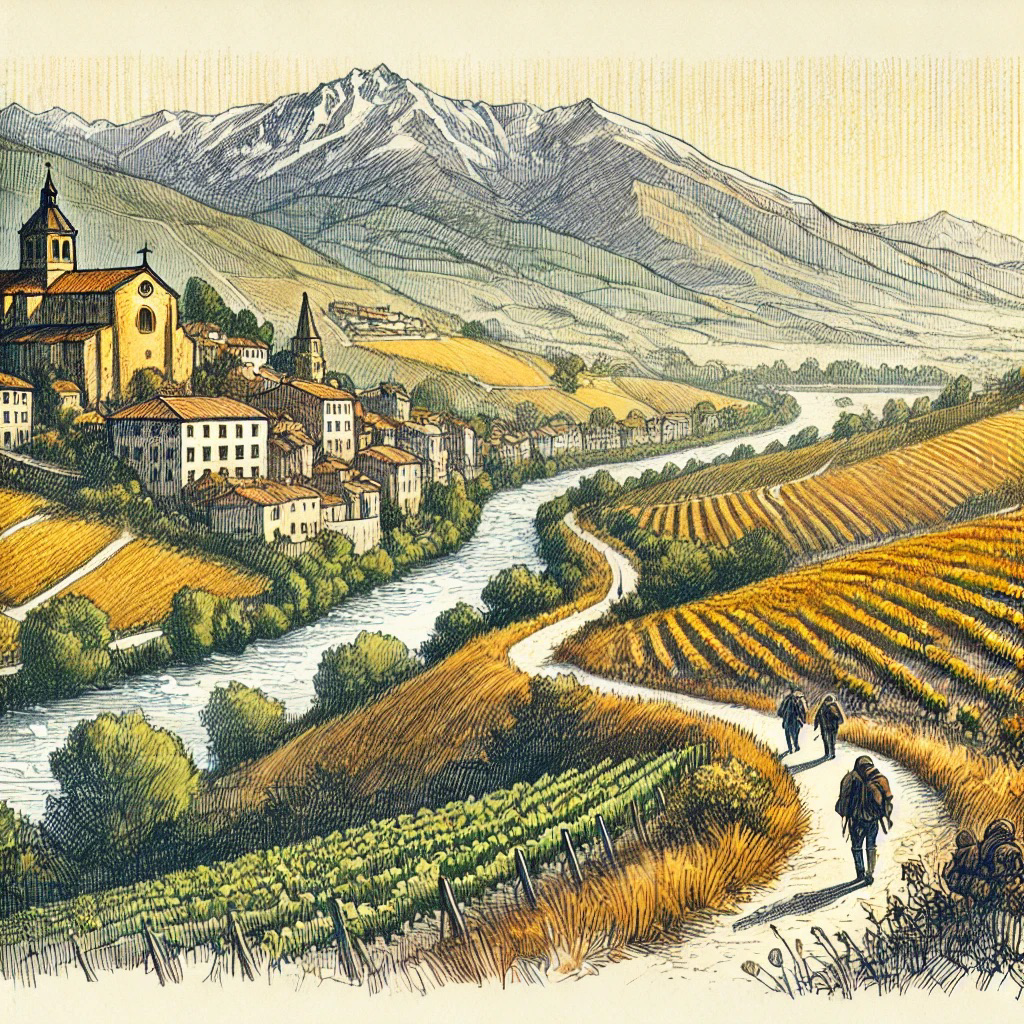
Camino Francés: Also known as “the French Way,” it’s the most iconic of all the Camino routes. Beginning in the charming town of Saint-Jean-Pied-de-Port, France, at the foothills of the Pyrenées, this journey takes you through a stunning tapestry of landscapes: rolling vineyards, rugged mountains, medieval villages and the golden fields of Castile. Covering around 500 miles (780 kilometers) and divided into 35 or so stages, it’s a physically demanding yet deeply fulfilling experience. 

Pilgrims walk the Camino del Norte through the Basque Country

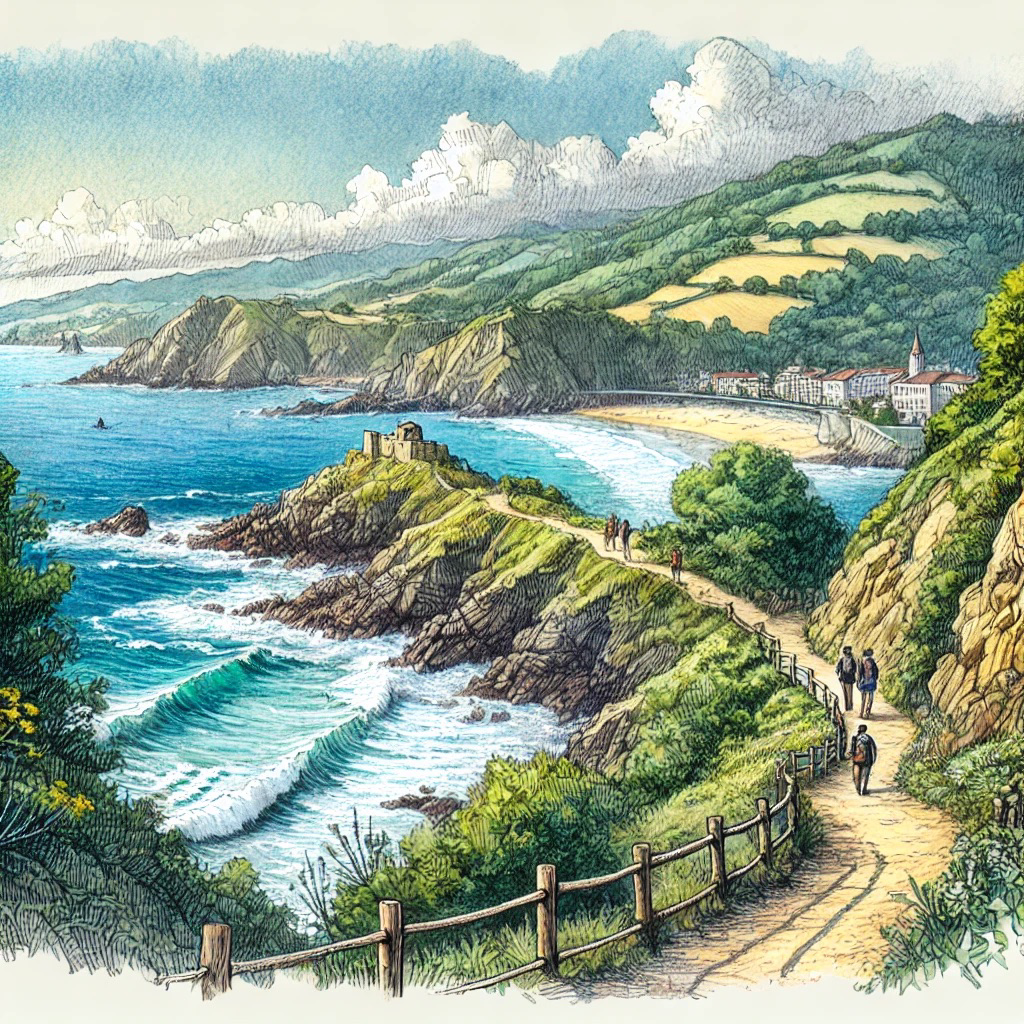
Camino Del Norte: “The Northern Way” is a breathtaking coastal pilgrimage that offers a less crowded alternative to the more popular routes. Stretching over 500 miles (800 kilometers), with the final 62 miles (100 kilometers) being the most traveled, this path hugs the rugged cliffs and pristine beaches of northern Spain. 

Starting in the Basque Country, it meanders through charming fishing villages, vibrant seaside cities and lush green landscapes. The route showcases the diverse beauty of the Spanish shoreline, from the misty, mountainous regions of Asturias to the rolling hills of Cantabria. Along the way, pilgrims can indulge in the rich culture, world-class cuisine, and traditions of the Basque region — think pintxos, cider houses, and warm, welcoming locals. 

Although the trail can be challenging due to its steep ascents and descents, it rewards those who tackle it with awe-inspiring views of the Cantabrian Sea and a sense of serenity that only comes from walking paths less traveled.

Pilgrims walk the Camino Ingles through the Galacian countryside, past sailboats in a charming town

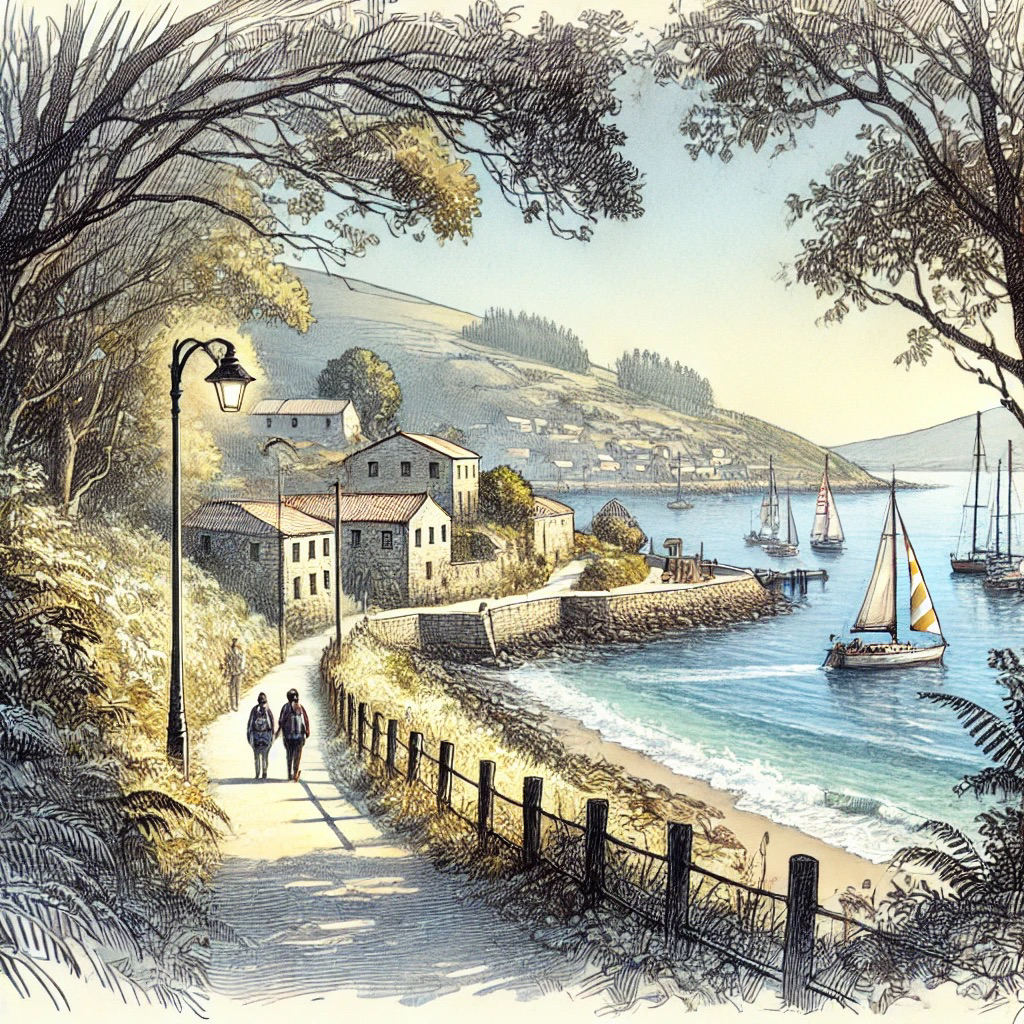
Camino Inglés: Travelers with limited time might opt for “the English Way.” Stretching just 74 miles (119 kilometers), this route is one of the shortest and most accessible. Historically, it was the path taken by pilgrims from England, Ireland and Northern Europe who arrived by sea. 

Starting in either Ferrol or A Coruña, this trail winds through the lush Galician countryside, offering a mix of coastal views, quaint hamlets and dense forests. It’s a fantastic option for those looking to complete the journey in under a week while still embracing the essence of the Camino.

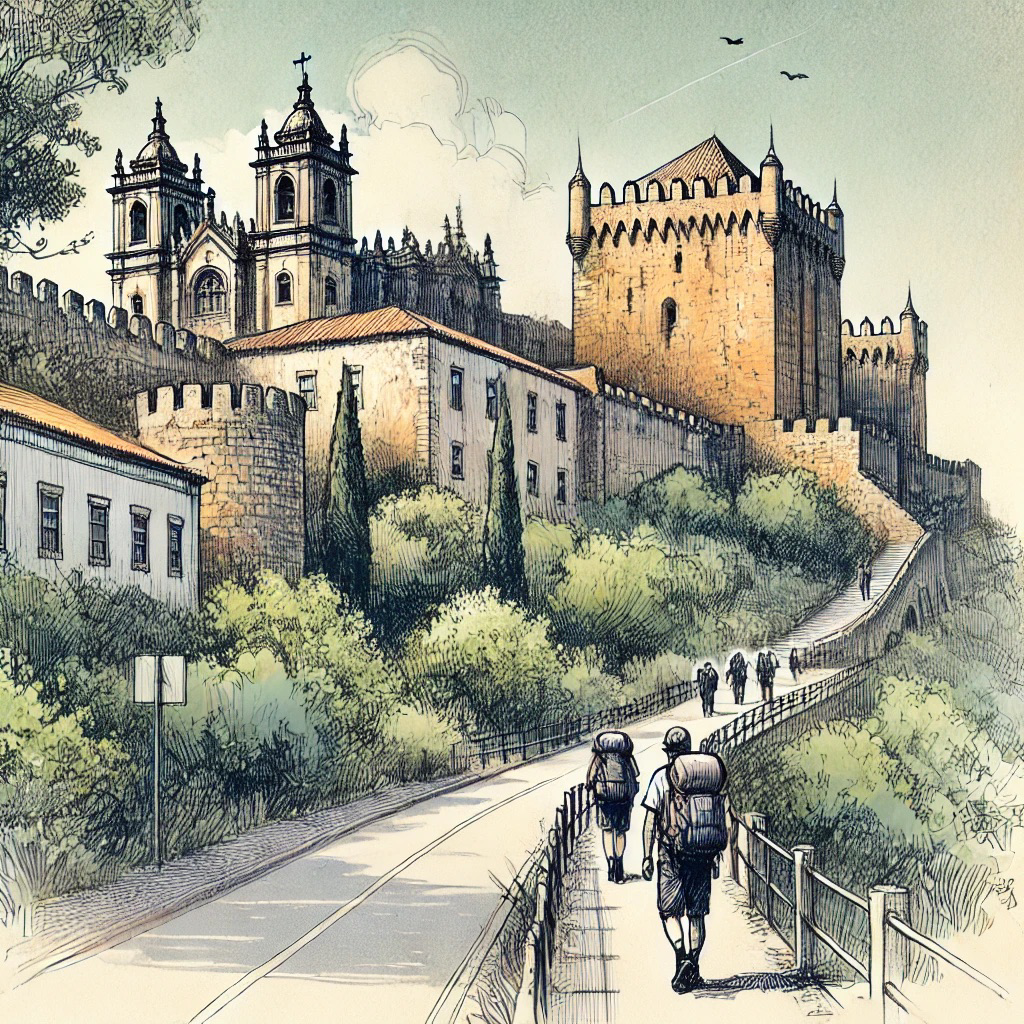
Camino Portugués: The second most popular Camino route, “the Portuguese Way,” offers a blend of rich culture and scenic landscapes across both Portugal and Spain. Pilgrims can start in Lisbon for a full 380-mile (610-kilometer) journey or opt for a shorter trek from Porto, covering 160 miles (260 kilometers). The route splits into two paths from Porto: the traditional Central Route, which takes you through historic cities and lush vineyards, and the Coastal Route, offering breathtaking ocean views and seaside towns. 

With gentler terrain compared to other routes, the Camino Portugués is accessible while still delivering a full pilgrimage experience. Highlights include Portugal’s historic landmarks, from Gothic cathedrals to the Templar Castle in Tomar, along with opportunities to savor local delicacies like pastéis de nata (custard tarts) and bacalhau (dried, salted cod). 

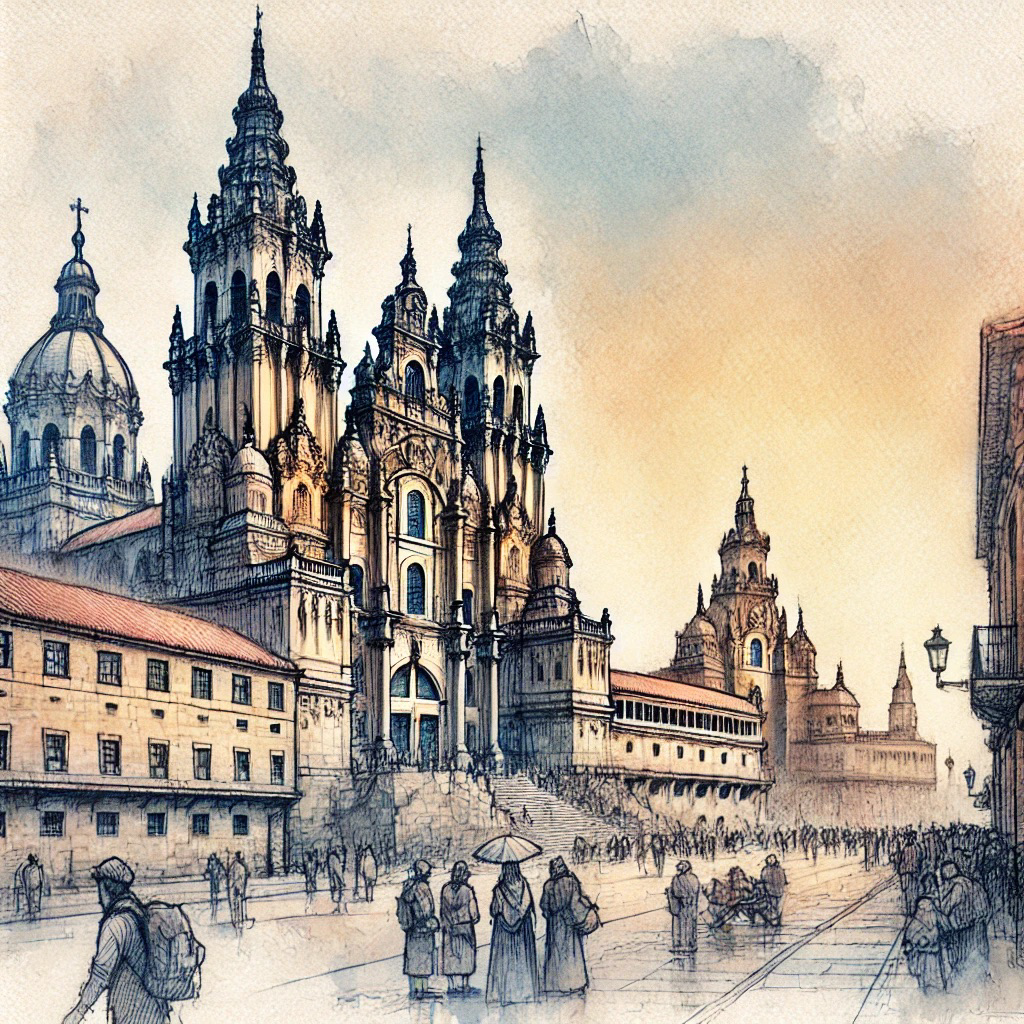
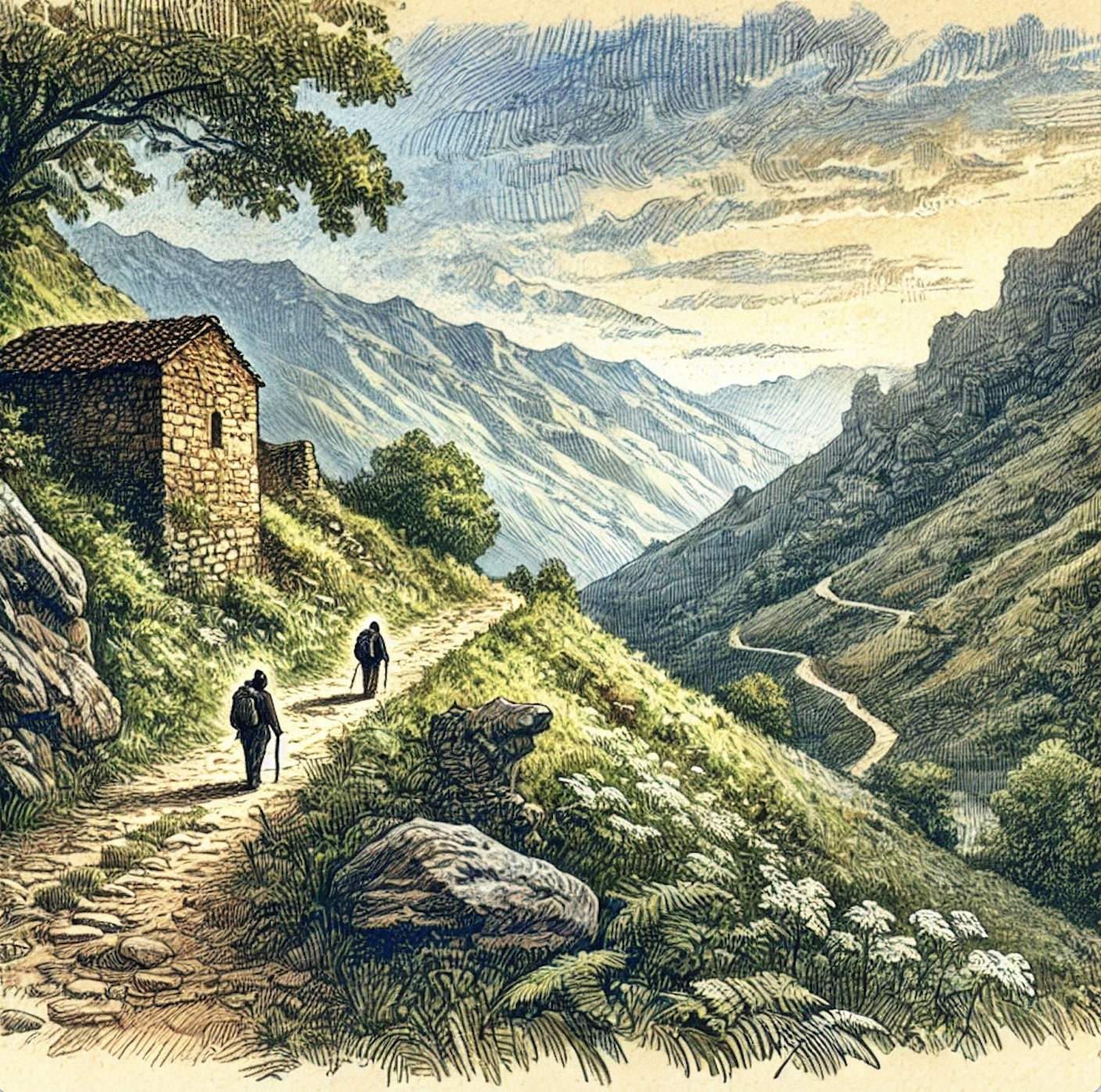
Camino Primitivo: “The Original Way” is the oldest and arguably the most challenging of the Camino routes. Dating back to the 9th century, this path was first taken by King Alfonso II when he made the pilgrimage to the newly discovered tomb of Saint James in Santiago de Compostela. Beginning in Oviedo, the Camino Primitivo spans approximately 200 miles (320 kilometers) through the rugged mountains of Asturias and Galicia.

This route is less traveled, offering a quieter and more introspective journey. The rewards are plentiful: breathtaking landscapes, encounters with ancient Roman roads and a strong sense of history. 

So, how do you find the best routes? Modern travelers can now use technology to explore the Camino before booking. For example, Google Arts & Culture has an extensive library of resources in an engaging format.

2. Get accreditation for your pilgrimage. 

Once you’ve mapped out your route, it’s time to prepare for the pilgrimage itself. An essential item you’ll need is the Pilgrim’s Credencial, often referred to as a “Pilgrim’s Passport.” This official document allows you to collect stamps at various points along your journey, serving as tangible proof of your progress.

Historically, the credential was granted to protect travelers during the Middle Ages. Today, it offers modern pilgrims additional perks. With the credencial, you gain access to special accommodations provided by Christian institutions throughout Spain. It also includes maps and guidance to help you navigate the pilgrimage routes. More importantly, it’s your certification for completing the Camino, allowing you to receive the Compostela certificate upon completing your journey in Santiago.

The credencial is available from institutions authorized by the Cathedral of Santiago. In response to the COVID pandemic, a digital version is now offered, allowing you to carry your credentials on your smartphone. 

3. Plan your connectivity ahead of time. 

No matter which route you choose, staying connected is essential — for keeping in touch with your group, accessing route maps, and updating friends and family. However, one thing that might catch you off guard is spotty connectivity. Once you start the Camino, you might find your smartphone struggling to connect. With no signal or data in some remote areas, you could feel stranded.

Even if you have an international roaming package, coverage can be inconsistent along the more secluded stretches of the Camino. Fortunately, there’s an easy solution for pilgrims heading to Spain: eSIMs.

So, what is an eSIM card? It’s a digital SIM already embedded in your smartphone that allows you to connect to the best local networks at your destination through an app. An eSIM helps ensure seamless connectivity across the varying landscapes of the Camino, even in remote areas. Whether you’re on the Camino Francés or starting your journey in Portugal, an eSIM automatically switches between networks as you cross borders, keeping you connected.

The best part? You can customize your eSIM plan to match your needs. If you don’t plan on using your smartphone often, choose a small data package that covers the essentials and top it up as needed along the way.

4. Download these helpful apps. 

Travel apps can be invaluable for making your pilgrimage smoother and more enjoyable, from booking accommodations to navigating route paths. Whether you’re walking or cycling, having the right apps on hand can help you make sense of your surroundings and stay prepared.

Here are some of the best pilgrimage trail apps

Buen Camino de Santiago: This app offers a comprehensive library of maps, route profiles and more. It even provides real-time alerts on road closures, helping you plan ahead, secure accommodations and adjust your route as needed.

Camino Ninja: A free app packed with essential information, including distances, elevations, offline maps and accommodation options. It’s a handy resource to have, especially in areas with limited connectivity.

Camino Assist Pilgrim Santiago: This app features offline maps, a built-in compass, a phrasebook and a diary tool to track your journey. It’s perfect for those who want to document their experience while staying well-equipped on the road.

A Modern Way of Experiencing Spain’s Pilgrimage Trails

Spain’s Camino de Santiago offers a sanctuary for those seeking peace, reflection and spiritual growth. While the essence of the pilgrimage lies in stepping away from the fast pace of modern life, embracing technology can actually enhance your journey.

Keeping screens at a respectful distance doesn’t mean disregarding their benefits. Tools like eSIMs can ensure you stay connected for important updates and group communication, while travel apps unlock the rich cultural history of the regions you traverse, deepening your experience along the way. 

With the right balance, you can embrace both tradition and modern convenience as you walk these timeless paths. –Jolene Chambers

Literary Destinations: Books to Accompany Your Travels

What to read on vacation? From Paris to Tokyo, here are some recommendations to immerse yourself in foreign cultures. 

Illustration of nonbinary person with nose ring reading on a train going past water and mountains

There’s nothing quite like diving into a book that takes you to the very place you're about to visit — or are currently exploring. Literature has a magical way of bringing locations to life, adding rich historical context, cultural nuances and captivating narratives that enhance your travel experience.

Whether you’re an avid reader or simply just looking to deepen your connection with your destination, creating a literary itinerary can be a delightful way to enrich your journey.

Collage of book covers: The Catcher in the Rye, Disgrace, Eat Pray Love, Giovanni's Room, Norwegian Wood and To Have and Have Not

Let’s explore some of the most enchanting destinations and the books that would be your trusty companions along the way. 

Illustration of fashionable woman in headscarf reading in Paris

Paris, France
Giovanni’s Room by James Baldwin

Ah, Paris — the City of Light, and an epicenter of art, culture and romance. Set in 1950s Paris, Baldwin’s novel Giovanni’s Room explores themes of identity, love and societal expectations. The story follows David, an American expat who struggles with his sexual identity. While his fiancée, Hella, is away in Spain, David begins an intense romantic relationship with Giovanni, an Italian bartender. This deeply moving story is a poignant and powerful exploration of the complexities of human emotions and the struggle for self-acceptance in a world that often demands conformity.

Illustration of young Black man reading in Italy

Italy
Eat Pray Love by Elizabeth Gilbert 

Gilbert’s bestselling memoir, Eat Pray Love, is a captivating tale of self-discovery that takes you on a transformative journey through Italy, India and Indonesia. While in Italy, Gilbert immerses herself in the country’s gastronomy, savoring the flavors and traditions of cities like Rome and Naples. This book is sure to whet your appetite for the amazing food and cultural richness that Italy has to offer.

Illustration of redhead woman sitting on bench reading in Key West, Florida

Florida
To Have and Have Not by Ernest Hemingway 

If you’re planning a trip that includes, perhaps, a three-day cruise to Key West, consider packing a copy of To Have and Have Not by Hemingway. Set against the backdrop of the Great Depression in the Florida Keys and Cuba, this gripping novel, written in the author’s simple and direct style, explores the economic struggles and moral dilemmas of its characters. And while you’re in Key West, be sure to visit the Ernest Hemingway Home & Museum, where the legendary writer lived in the 1930s, or imbibe at Sloppy Joe’s, Papa’s favorite watering hole during his time on the island.

Illustration of long-haired young woman in black hat and red coat reading on a bench in NYC

New York City
The Catcher in the Rye by J.D. Salinger 

Often included in American high school curricula, Salinger’s provocative novel The Catcher in the Rye explores universal themes such as alienation, identity, loss and the transition from adolescence to adulthood — all seen through the eyes of its angsty teenage protagonist, Holden Caulfield. Nearly all the landmarks Holden mentions as he wanders around Manhattan — Central Park, the American Museum of Natural History and the Met — still attracting visitors more than half a century later, and they play significant roles in the story.

Illustration of young man reading on a bench in Tokyo, Japan

Tokyo, Japan
Norwegian Wood by Haruki Murakami

Step into the world of 1960s Japan with Murakami’s coming-of-age novel, Norwegian Wood. This poignant tale of love, loss and self-discovery is narrated by 37-year-old Toru Watanabe, who finds himself transported back to his college days after hearing the Beatles’ song “Norwegian Wood (This Bird Has Flown)” while on a business trip. For an author whose stories typically exist between the real and the surreal, Norwegian Wood takes a decidedly more subtle approach, yet still showcases Murakami’s characteristically delicate touch.
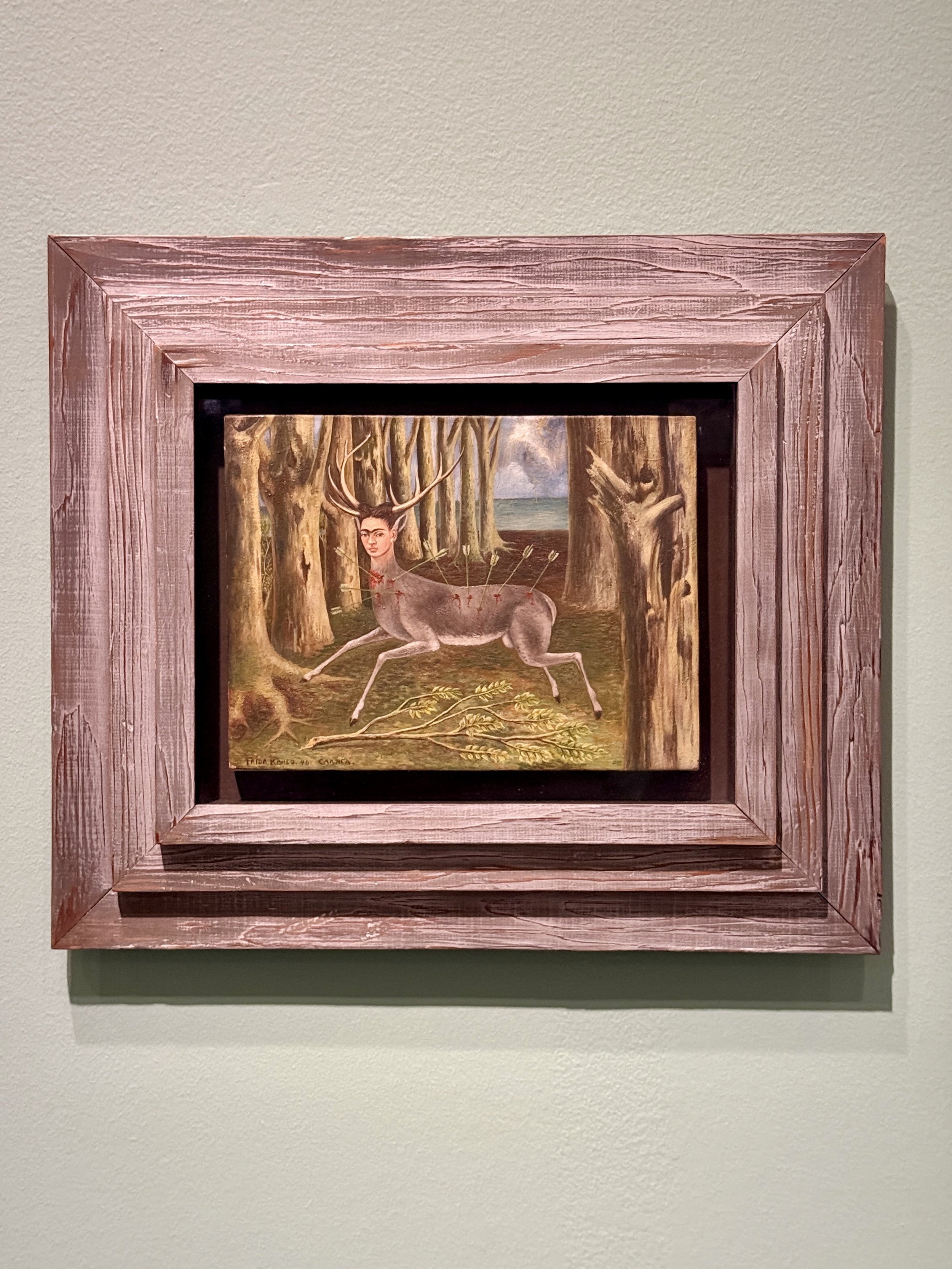
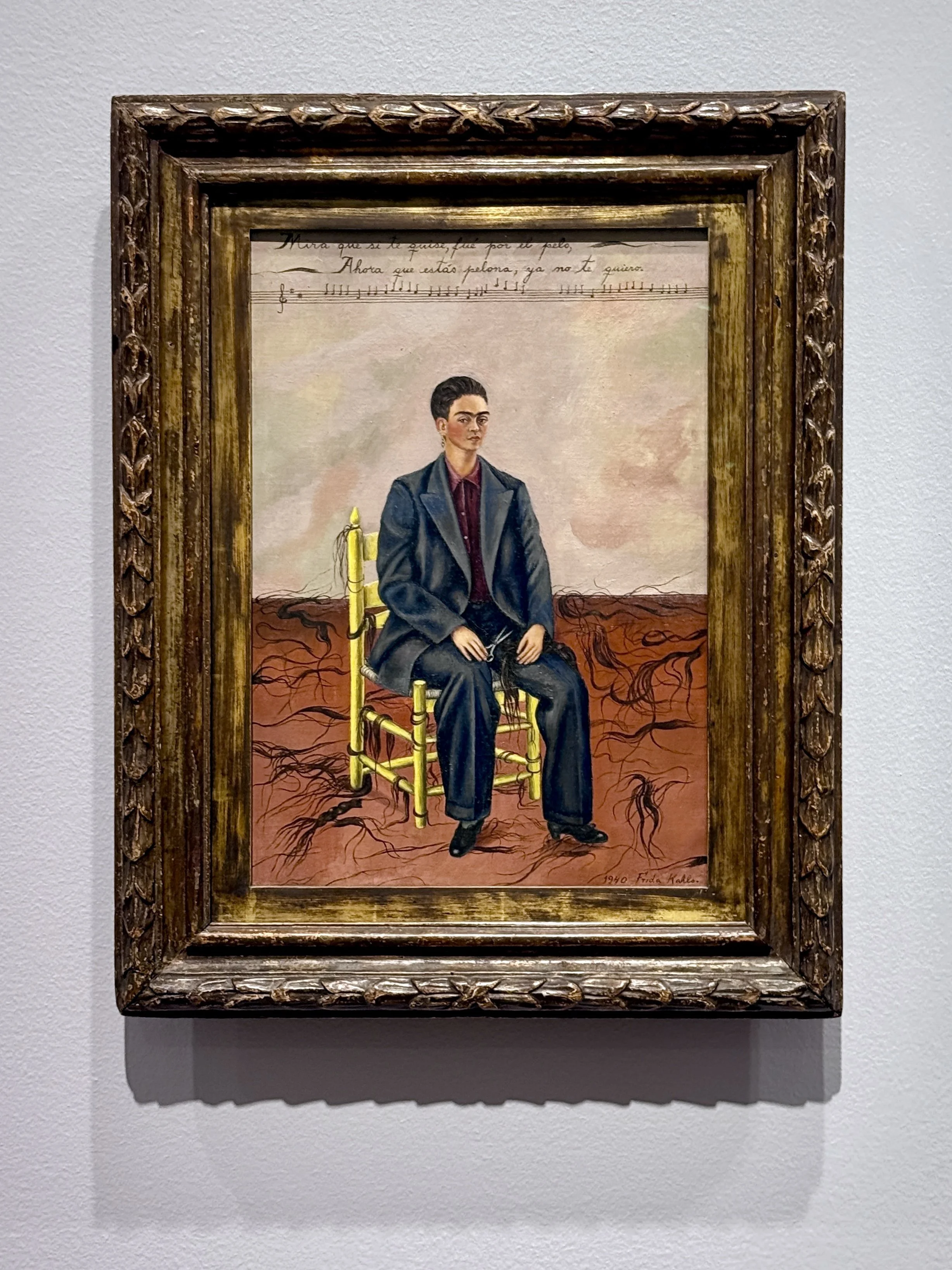
Illustration of young man reading a book on a rock above Cape Town, South Africa

Cape Town, South Africa
Disgrace by J.M. Coetzee

Set in post-apartheid South Africa, J.M. Coetzee’s Booker Prize-winning novel Disgrace focuses on the life of David Lurie, a disgraced university professor. After an affair with a student leads to his dismissal, Lurie retreats to his daughter Lucy's rural farm in the province of Eastern Cape. There, they experience a brutal attack that forces both of them to confront their vulnerabilities and the harsh realities of a changing society. The novel explores themes of power, redemption, racial tensions and the search for a new identity in a country grappling with its past.

Illustration of tattooed muscular man with dark beard and sunglasses reading at a sidewalk cafe

Literary Wanderlust

These are just a few examples of the countless literary treasures that can enhance your travel experiences. By immersing yourself in the pages of a book set in your destination, you’ll gain a deeper appreciation for the local culture, history and stories that have unfolded within those very streets and landscapes.

But the allure of literary travel goes beyond mere reading. Many destinations offer opportunities to follow in the footsteps of your favorite authors, explore the places that inspired their works, or attend literary festivals and events.

So, as you plan your next adventure, be sure to pack a few literary companions — they’ll not only entertain you during your travels but also provide a perspective through which to explore the world around you. –Boris Dzhingarov

Things I Love (and Hate) About Visiting Nice, France

A French Riviera vacation isn’t all it’s cracked up to be. From the good (Promenade des Anglais) to the bad (those rocky beaches), Nice isn’t always so nice.

Statue of naked man and horses in fountain in town square lined by red buildings in Nice, France

La Fontaine du Soleil (Sun Fountain) in Place Massena, featuring the god Apollo, who had a penis reduction when local prudes complained about the size of his member.

Nice, perched on the French Riviera like a glamorous cat with its claws discreetly extended, is a masterclass in contradictions. It seduces visitors with sun, sea and effortless French charm…and then mischievously picks their pockets while they’re mesmerized by the view — metaphorically, of course! But hey, who doesn’t love a bit of drama with their vacation? 

FYI, in case you didn’t know, the town is pronounced “Neece.”

Nice is like a stunning yet slightly eccentric aunt — you adore her, even when she spills red wine on the carpet or tries to set you up with her neighbor’s weird nephew or niece. 

Let’s dive into the highs and lows of visiting this captivating coastal city.

Buildings, including a pink-domed white one, along the Promenade des Anglais in Nice, France

Promenade des Anglais

Love #1: Promenade des Anglais: Where People-Watching Is an Olympic Sport

The Promenade des Anglais is Nice’s beating heart, a seaside catwalk of epic proportions. Here, everyone gets their moment in the Riviera sun. Picture lean joggers who might be training for their next triathlon (or planning a croissant heist), bronzed locals radiating an unattainable level of chic and confused tourists swerving to avoid rogue rollerbladers.

The iconic blue chairs lining the Promenade aren’t just for sitting; they’re front-row tickets to the greatest free show on Earth. From these vantage points, you can judge beach fashion trends, ponder the existential questions of life or simply chuckle at the antics of your fellow humans — all while sipping on an afternoon cocktail.

People crowd the beach with large buildings in the background in Nice, France

The beach is rocky — but still popular.

Hate #1: The Beach: A Masterclass in Foot Massage (the “Ouch” Kind)

Ah, the beach. You’re probably expecting the promise of soft, golden sand tickling your toes. Nice, however, delivers a crunchy symphony of pebbles instead. Let’s just say that the walk from your beach towel to the water’s edge could double as an audition for Riverdance — if Riverdance involved more wincing and less coordinated leg-flailing. 

Seasoned travelers might embrace the challenge, but the rest of us question our life choices amidst a chorus of muffled curses and grunts. You can always be a wimp and grab some beach shoes before you go; although the Fashion Police may be on to you quite quickly!

Pale pink clock tower at the end of a narrow street with yellow buildings in Old Town Nice

Old Town Nice

Love #2: Old Town Nice: A Time Travel Adventure

Vieux Nice (Old Town Nice) is where the city sheds its glitzy façade and reveals a delightfully dishevelled heart. 

Narrow lanes twist and turn, exuding an air of cheerful conspiracy. Buildings the color of faded sunsets lean towards each other as if sharing centuries-old gossip, while tantalizing scents of pain (bread) and ripe fromage (cheese) waft from open doorways.

The Cours Saleya market can often prove to be a lot for the senses. Mounds of jewel-toned produce flirt with glitzy flower bouquets, the only competition being the cacophony of enthusiastic vendors hawking their wares. 

It’s the perfect place to snag picnic supplies or simply soak up the kind of chaotic energy that makes a vacation memorable.

A couple walk down a narrow alley that leads to the water past shops in Nice, France

Don’t expect any deals in Nice — it’s a popular resort town, and the prices reflect that.

Hate #2: The Cost of Living: Nice Ain’t Cheap

This place, dear traveler, understands the phrase “location, location, location,” maybe a little too well. Even a humble cup of coffee comes with an invisible yacht surcharge. 

Be prepared to witness menus that induce mild heart palpitations, making you reconsider whether those stunning sea views are truly worth their weight in gold.

Fret not, though, there are ways to navigate Nice’s financial landscape. Embrace the picnic life, stock up on market goodies and consider pre-booking Nice airport transfers to avoid heart-stopping taxi fares. The views are still free — for now at least.

Saint-Paul-de-Vence, a medieval town atop a hill in the French Riviera at sunset

Nearby Saint-Paul-de-Vance

Love #3: Day Trips: Escape the Glamour Bubble (If You Want)

The true magic of Nice lies in its prime location. A short voyage reveals a myriad of delights. Questionably perched medieval villages spill down hillsides, tempting you with cobblestone alleyways and whispers of a charm seemingly long gone from the modern world.

The glitz of Cannes and Monaco gleams on the distant horizon, offering a peek into a world of designer sunglasses and yachts large enough to have their own zip codes.

People stand up paddle and boat in turquoise water by white cliffs with greenery at the Gorges du Verdon

Gorges du Verdon

And for a dose of raw natural beauty, the Gorges du Verdon provides a breathtaking playground for hikers and outdoor enthusiasts.

Nice is charming as hell — but expensive. And don’t get me started on the beaches.

My Love-Hate Relationship With Nice

Nice is like a stunning yet slightly eccentric aunt — you adore her, even when she spills red wine on the carpet or tries to set you up with her neighbor’s weird nephew or niece. 

It’s a place that will charm and disarm you in equal measure, offering enough material for hilarious vacation anecdotes to last a lifetime. 

So, would we go back to Nice? In a heartbeat. Armed with comfy shoes (especially the beach variety), a thirst for adventure and the finer things in life, and definitely a thick wallet. –Alphonse Dufresne


A Journey Through Benelux’s Timeless Charms

All aboard for a Benelux train tour! Add Amsterdam, Brussels, Bruges and Luxembourg City to your itinerary of Europe’s Low Countries. 

The high-speed Thalys train from Amsterdam to Brussels travels at speeds of up to 186 mph (300 km/h), covering the distance in under two hours.

As someone who loves to travel and discover Europe’s hidden gems, I embarked on an exciting adventure through the lowlands of Belgium, the Netherlands and Luxembourg. Collectively known as Benelux, the name comes from the first letters of each country’s name. 

Fields of purple and pink tulips by a windmill in the Netherlands

Windmills and tulips are part of the appeal of Benelux (the Low Countries of Belgium, the Netherlands and Luxembourg).

From the picturesque canals of Amsterdam to the medieval streets of Bruges, and the cosmopolitan allure of Brussels to the historical landmarks of Luxembourg City, each destination offered a special blend of culture, history and charm waiting to be discovered.

I spent hours wandering along Amsterdam’s waterways, admiring the elegant canal houses, quaint bridges and bustling houseboats that lined the banks.

I felt like I had stepped into a painting by Vermeer or Rembrandt.
Aerial view of Paris at night, with the city and the Eiffel Tower lit up

Paris, the City of Light and of Love, has a timeless allure.

Beginning the Benelux Adventure

First Stop: Paris 

Setting off from London, my journey began with a train from London to Paris, a swift and seamless trip that whisked me across the English Channel and into the heart of France’s vibrant capital.

Upon arriving in Paris, I was greeted by the city’s unmistakable energy and elegance. From the iconic landmarks of the Eiffel Tower and Notre-Dame Cathedral to the world-class art collections of the Louvre and Musée d’Orsay, Paris exudes a timeless allure that captivated me at every turn. After indulging in a croissant breakfast and a leisurely stroll along the Seine, it was time to continue my journey toward the lowlands of Benelux.

Amsterdam is home to almost 62 miles of canals, 90 islands and 1,500 bridges. In fact, there are more waterways than roads!

Second stop: Amsterdam

After boarding the train to Amsterdam in the Netherlands, I found myself eagerly anticipating the adventures that lay ahead. As the train glided through the scenic countryside, I couldn’t help but marvel at the beauty of the bucolic landscapes unfolding before my eyes: lush green meadows dotted with windmills and quaint villages nestled along winding rivers, all viewed from the cozy confines of my seat.

Arriving in Amsterdam, I was immediately enchanted by the city’s unique blend of old world charm and vibrant modernity. One of the highlights of my trip was wandering along the iconic canals, which crisscross the city like a network of veins, pulsating with life and energy. I spent hours wandering along the waterways, admiring the elegant canal houses, quaint bridges and bustling houseboats that lined the banks. I felt like I had stepped into a painting by Vermeer or Rembrandt.

Tall narrow buildings up against each other in Amsterdam, with street lamp and people crossing a bridge

Taxes were charged based on the width of a building — which explains Amsterdam’s tall and narrow houses.

During my time in the capital city, I visited the Anne Frank House. Its poignant exhibits and haunting history were a sobering reminder of Amsterdam’s tumultuous past. 

Additionally, the Van Gogh Museum provided a fascinating glimpse into the brilliant yet troubled genius of one of the world’s most renowned artists.

The gorgeous Baroque and Gothic buildings lining Grand Place, covered with designs created with flowers, in Brussels, Belgium

Gorgeous Baroque and Gothic buildings line la Grand-Place in Brussels.

Third stop: Brussels

I hopped on the Amsterdam to Brussels train to visit the cosmopolitan capital of Belgium. Stepping off the train, I was greeted by the city's lively atmosphere and architectural splendor. Brussels is a melting pot of culture, cuisine, and creativity. The Grand Place, with its ornate guild houses and towering spires, was a sight to behold, especially when illuminated at night. 

The silver balls connected by thin tubes of the futuristic Atomium in Brussels, Belgium

The Atomium, built for the the 1958 World Expo in Brussels, stands tall at 335 feet (102 meters) and was designed to resemble an enlarged iron crystal.

The Atomium, a futuristic marvel built for the 1958 World’s Fair, offers panoramic views of the city from its lofty spheres, and the quirky Manneken Pis, a statue of a small boy urinating in perpetuity, never fails to draw a crowd.

Manneken Pis, the small statue of a naked boy peeing into a fountain in Brussels, Belgium

Young Duke Godfrey III of Leuven, the inspiration behind Manneken Pis, is said to have brought luck to troops by pissing on the enemies.

And who was I to say no to the city’s culinary offerings? I sampled my way through Brussels’ famous chocolatiers, indulging in pralines, truffles and decadent hot chocolate. Then it was on to waffles and frites — crisp, fried matchstick-cut potatoes served in a paper cone with mayo — all washed down, of course, with delectable Belgian beer.

Rose-colored buildings along a tree-lined river with a cute plant-covered bridge in Bruges, Belgium

The medieval town of Bruges is known for its fairy-tale charm.

Fourth Stop: Bruges

Continuing my journey, I made my way to another city in Belgium, Bruges, a medieval gem nestled amid the lush greenery of Flanders. With its fairy tale charm, cobbled roads, romantic canals and well-preserved Gothic architecture, the town felt like something out of a storybook. I wandered through its maze of narrow streets, passing historic guild halls, peaceful canals and tucked-away courtyards. 

People sit on the curb by a statue near the Belfry tower in Bruges, Belgium

The Belfry of Bruges, a medieval marvel dating back to around 1240, stands 272 feet (83 meters) tall and served as a treasury and observation post to spot fires.

While climbing the narrow staircase of the Belfry, a medieval bell tower built around the year 1240, I was rewarded with panoramic views of the Bruges’ rooftops and spires.

Long white monastic buildings at the Begijnhof (Beguinage Ten Wijngaerd) seen through the trees by grass with white flowers in Bruges, Belgium

Founded in 1245, the UNESCO World Heritage Site of Begijnhof was once home to Beguines, independent lay women leading pious lives, and is now inhabited by Benedictine nuns and single women, offering a tranquil retreat in the heart of Bruges.
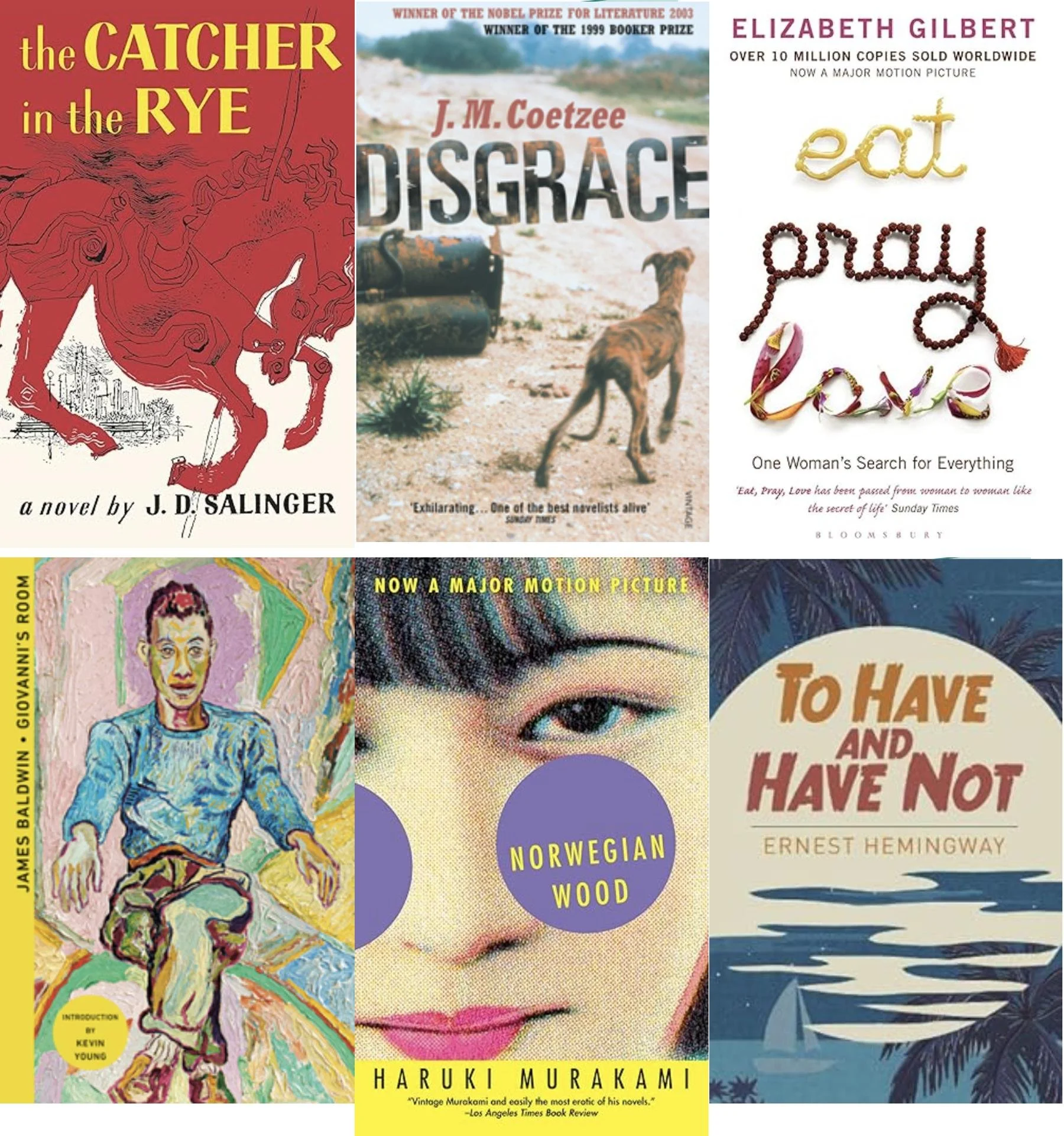
I found serenity at the Begijnhof (Beguinage Ten Wijngaerd), a tranquil monastic community that was once home to Beguines, women who led lives of religious devotion without joining a formal religious order. The complex includes a Gothic church and about 30 white-painted houses dating from the late 16th, 17th and 18th centuries built around a central yard.

The buildings of Luxembourg City and the plant-filled remains of the fortress wall

Luxembourg City boasts the world’s second-highest GDP per capita and has three official languages: German, French and Luxembourgish.

Fifth Stop: Luxembourg City

The final leg of my adventure took me to Luxembourg City, the capital of the Grand Duchy of Luxembourg. A fitting end to my journey, the fortified multi-tiered city is perched atop cliffs with dramatic views overlooking the Alzette and Pétrusse Rivers below.

The Grand Ducal Palace in Luxembourg

During the German occupation of Luxembourg in World War II, the Nazis caused a lot of damage to the Grand Ducal Palace using it as a concert hall and tavern.

Sandwiched between Belgium, France and Germany,  the city is a captivating blend of ancient fortifications, lush parks and sleek modern structures. Wander through the UNESCO World Heritage Site of Ville Haute, Luxembourg’s Old Town, where medieval ramparts and towers stand side by side with elegant pastel-colored townhouses and charming cafés. The Kirchberg Plateau, home to the European Union institutions, offered a striking contrast with its sleek glass buildings and manicured parks. And you can’t miss the Grand Ducal Palace, the official residence of Luxembourg’s grand duke and duchess.

Amsterdam bridge lined with lights reflecting in the canal at twilight

The charming canals of Amsterdam are but one highlight of a trip through Benelux.

Exploring the Low Countries of Benelux

My Benelux trip was a truly amazing experience, allowing me to immerse myself in the vibrant energy of these dynamic cities and uncover the hidden gems that lie within. Whether I was enjoying delicious Belgian chocolates in Brussels or admiring the picture-perfect Gothic architecture of Bruges, every moment was packed with excitement and new discoveries.

As my journey came to an end, I cherished the memories that will stay with me forever, inspiring me to continue to seek out new adventures and explore the world.

Farewell for now, Benelux — your legacy left an indelible impression on me and will forever hold a special place in my heart. –Brayden Sterling