Arizona’s Most Unexpected Museums, Collections and Curiosities You Never Knew You Needed

From Phoenix to Flagstaff and Tucson, Arizona’s quirkiest museums celebrate the strange, the surprising and the downright delightful — including castles, miniatures and a spaceship you can sleep in.

Two aliens by the bar at the Space Age Restaurant in Arizona

Space Age Restaurant

Arizona is full of surprises. Beyond the epic landscapes of the Grand Canyon and the saguaro cacti standing tall under desert skies, the state is hiding treasures of a much quirkier variety. Tucked into small towns and side streets are museums that challenge convention, redefine curiosity and embrace the downright odd. 

From tiny worlds that feel magically alive to reptilian tributes and intergalactic roadside stops, these spots don’t just entertain — they leave you marveling at the sheer weirdness and wonder of it all.

And for those travelers tracking both road miles and game day scores, Arizona sportsbooks offer a modern way to stay connected to the action — even while exploring copper cookware collections or UFO-themed motels.
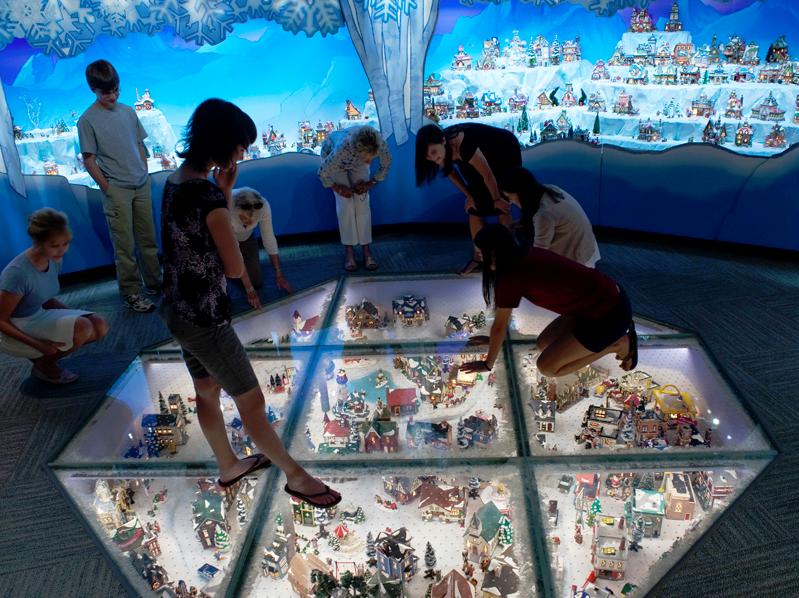
Kids look down at a miniature scene in an octagon on the floor at the Mini Time Machine Museum of Miniatures in Arizona

The Mini Time Machine Museum of Miniatures

Tucson’s Mini Time Machine Museum of Miniatures is a marvel of detail and nostalgia, welcoming visitors into a labyrinth of over 500 tiny scenes that span genres, time periods and fantastical dimensions. Inside, entire Victorian parlors are re-created on a scale that fits in your palm. 

You’ll wander past whimsical fairytale dioramas, snowy holiday villages, pirate coves and medieval castles so intricately constructed you might mistake them for real historical ruins, if not for their size.
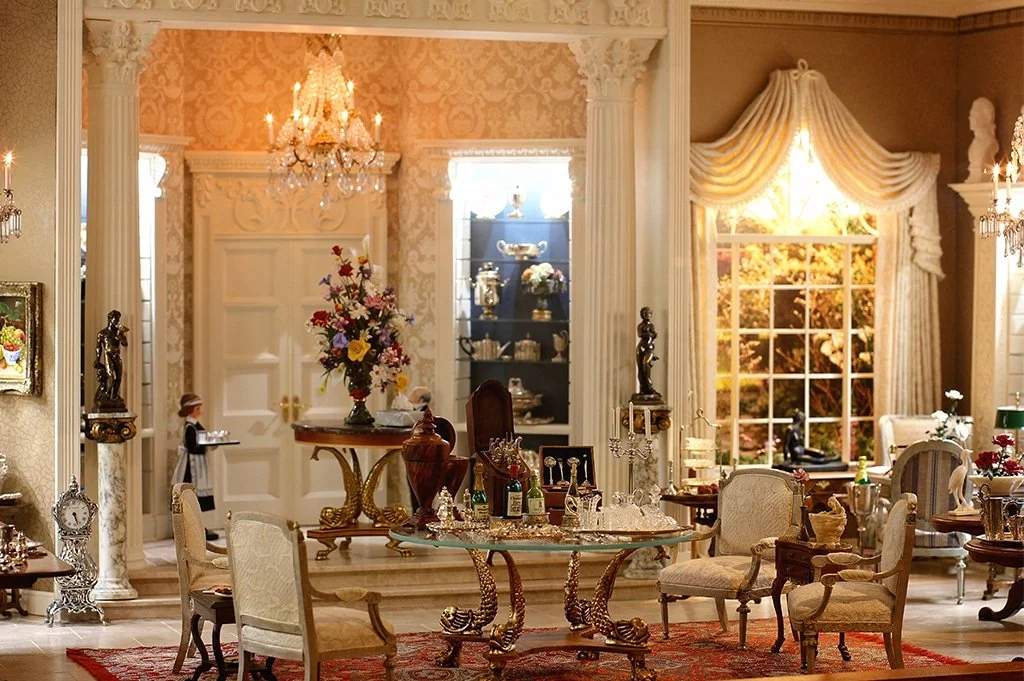
The Silver Queen exhibit with a fancy setting at the Mini Time Machine Museum of Miniatures in Tucson, Arizona

Every room in the museum becomes a portal: One minute you’re peeking into a perfectly replicated 18th century salon; the next you’re gazing at a futuristic cityscape with hover cars no bigger than buttons. 

Whether you’re a seasoned collector or a wide-eyed child, it’s impossible not to leave without a new appreciation for craftsmanship at its smallest scale. And somewhere between the dollhouse graveyards and tiny saloons, grownups find themselves grinning like they’re 6 again.

The Mini Time Machine Museum of Miniatures

Phone: 520-881-0606


4455 East Camp Lowell Drive
Tucson, AZ 85712


Copper cookware hanging from the ceiling and other displays at the Arizona Copper Art Museum

Arizona Copper Art Museum

Clarkdale’s Arizona Copper Art Museum celebrates the state’s mining legacy. The sprawling collection features pieces ranging from medieval copper armor and royal cookware to champagne buckets, fireman’s nozzles and intricate decorative tiles. What ties them all together is copper — glinting under soft museum lights, speaking to both history and metallurgy.
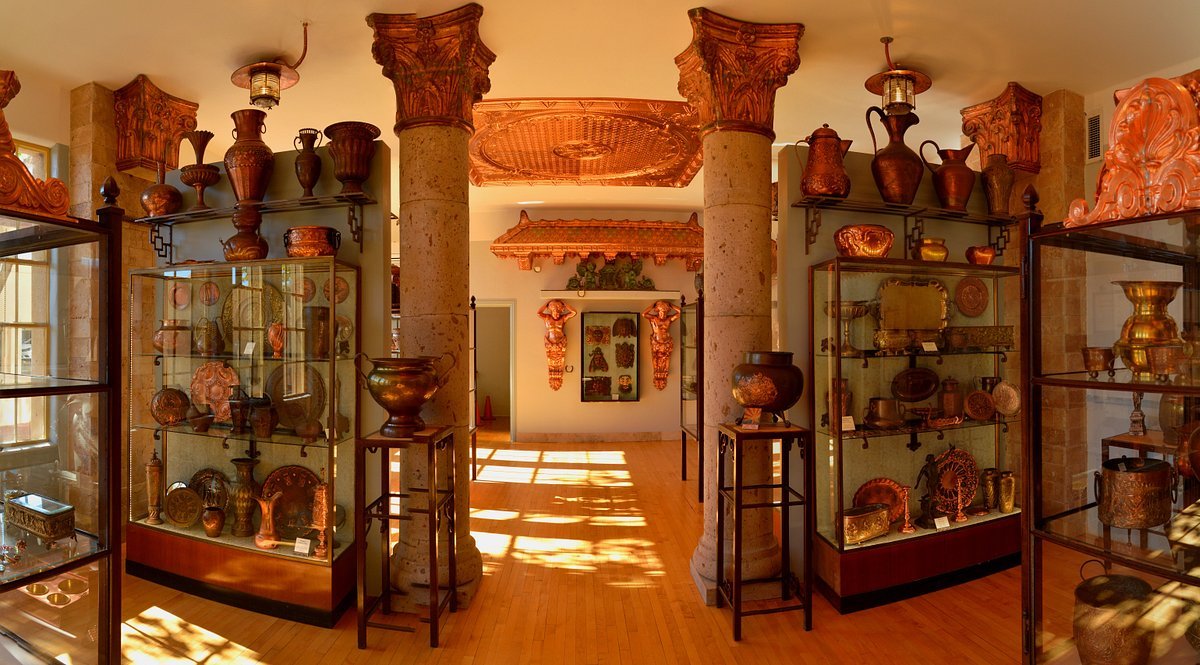
Pitchers and other copper items on display at the Arizona Copper Art Museum

Exhibits are curated in ways that surprise and delight. One hallway presents antique kitchen wares gleaming like modern art. Another showcases battlefield gear worn by knights, side-by-side with World War-era artillery shells. It’s a reminder that this reddish metal didn’t just fuel Arizona’s economy — it shaped global culture, war, art and survival.

Every gleam and shimmer is an invitation to reflect on how something so industrial could also be so beautiful.

Arizona Copper Art Museum

Phone: 928-649-1858

849 Main Street
Clarkdale, AZ 86324

The exterior of the Best Western Space Age Lodge in Arizona at sunset

Best Western Space Age Lodge 

Out in Gila Bend, just off I-8, rises one of Arizona’s most delightfully kitschy landmarks: the Best Western Space Age Lodge. With its retro-futuristic design, spaceship signage and UFO murals, it’s part motel, part time capsule — and all in on the space theme.

Palms by the pool at the Best Western Space Age Lodge in Gila Bend, Arizona

Originally opened in the 1960s during the height of the Space Race, the lodge has leaned into its Jetsons-style charm ever since. The rooms are named after celestial bodies, the onsite Space Age Restaurant serves comfort food under a flying saucer ceiling, and the whole place lights up at night like a sci-fi movie set that never quite made it to Hollywood.

You’ll get an affordable stay with a side of pure Americana that’s out of this world. It’s not Area 51 — but it’s arguably the next best thing if you’re cruising through the Arizona desert and want a photo op with an alien.

Best Western Space Age Lodge 

Phone: 928-683-2273

401 East Pima Street
Gila Bend, AZ 85337

The stone exterior of The Museum of Indigenous People in Arizona

The Museum of Indigenous People

The former Smoki Museum in Prescott is both a tribute and a reckoning. Originally founded by a group of White locals who imitated Native American ceremonies, the museum has since undergone a profound transformation. Today, it works to honor and accurately represent indigenous cultures, particularly those from the Southwest.

A clay figure of a woman holding a lot of children, with more on her legs from The Museum of Indigenous People in Arizona

Artifacts include baskets, jewelry and ceremonial dress — displayed with proper context and respect. Educational panels address the museum’s problematic origins head-on, encouraging visitors to reflect on cultural appropriation, reconciliation and responsibility. It’s one of Arizona’s most thought-provoking and evolving cultural centers.

The Museum of Indigenous People

Phone: 928-445-1230

147 North Arizona Avenue
Prescott, AZ 86301
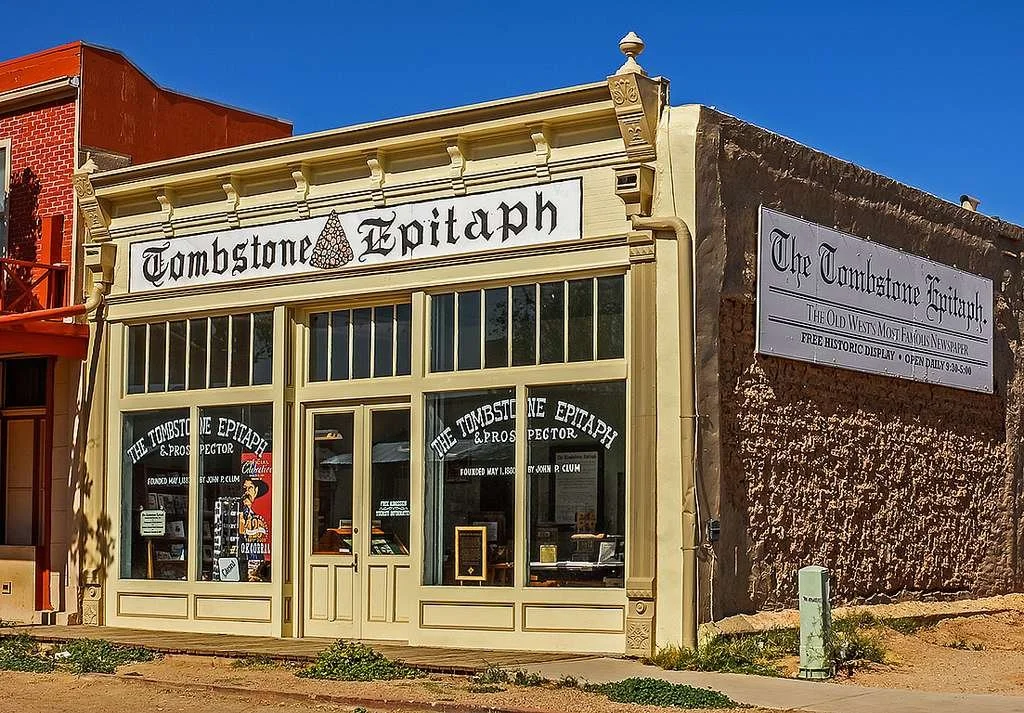
Exterior of The Tombstone Epitaph Newspaper and Museum

The Tombstone Epitaph Newspaper and Museum

In Tombstone — the town too tough to die — you’ll find the Epitaph museum, chronicling one of the most famous newspapers of the Old West. This isn’t just a collection of dusty front pages. It’s a walk through Arizona’s journalistic grit, with stories of gunfights, outlaws and frontier justice printed with inky pride.

A man stands by the printing press at The Tombstone Epitaph Newspaper and Museum as a horse goes by outside

You can see the original press, learn about the life and times of editor John Clum, and even buy reprints of iconic headlines, including coverage of the legendary O.K. Corral shootout. It’s a slice of media history served with a shot of whiskey-flavored nostalgia.

The Tombstone Epitaph Newspaper and Museum

Phone: 520-457-2211

11 South 5th Street
Tombstone, AZ 85638
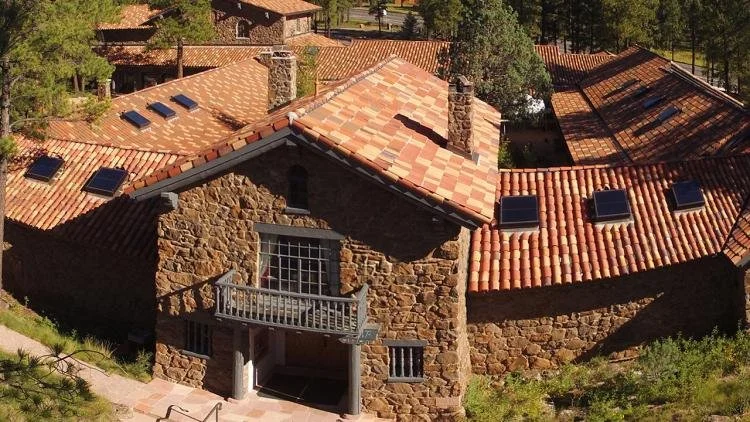
The sprawling complex of the Museum of Northern Arizona

Museum of Northern Arizona

The Museum of Northern Arizona sits at the edge of the San Francisco Peaks, offering a blend of anthropology, biology and indigenous heritage. From ancient Hopi pottery to fossils of Triassic creatures, the exhibits build a timeline that connects people and planet in an unforgettable arc.
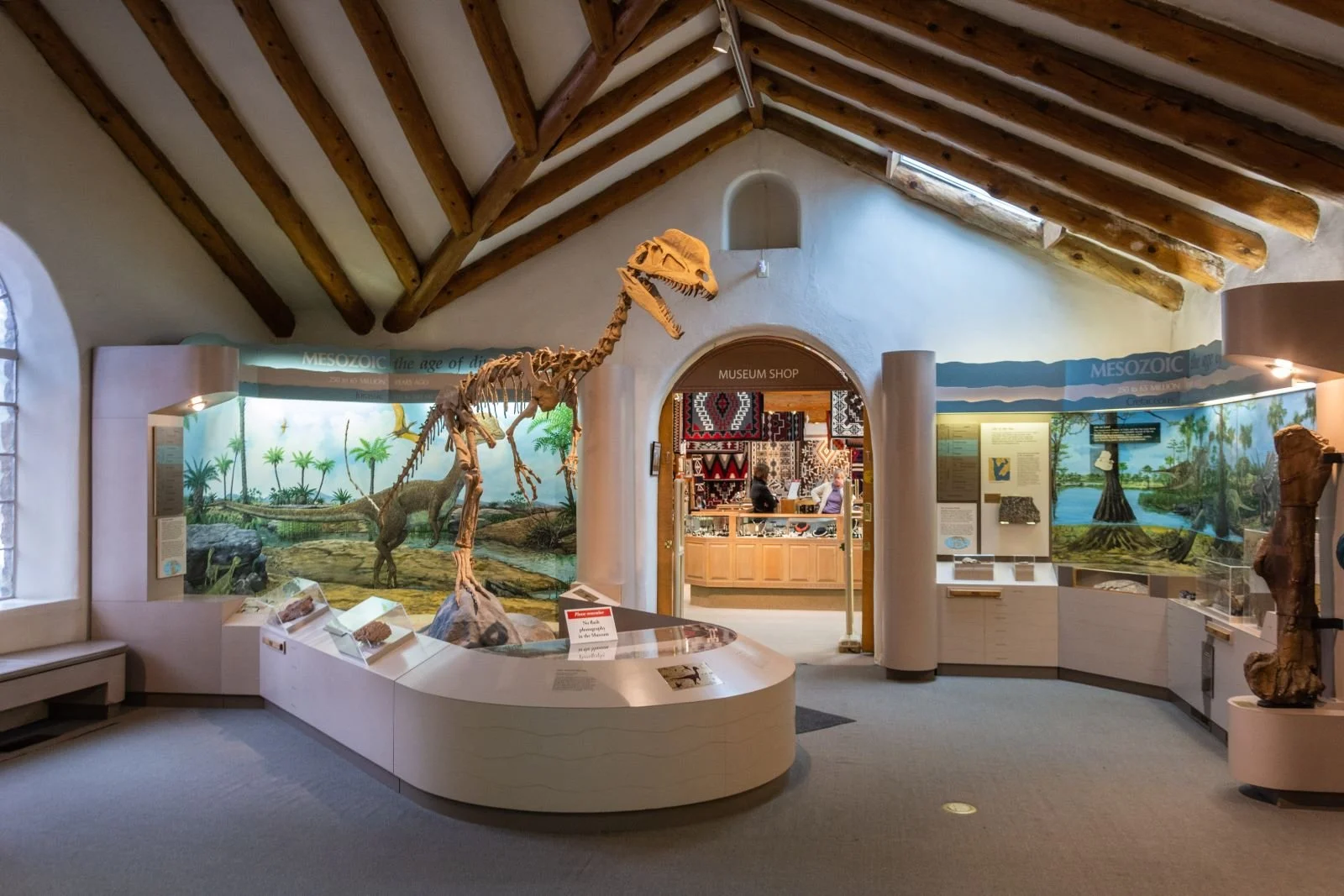
A dinosaur skeleton and other items on display at the Museum of Northern Arizona in Flagstaff

Highlights include breathtaking Navajo textiles, intricate Zuni carvings, and live geology demonstrations that reveal how this rugged terrain came to be. For travelers looking to balance their oddball adventures with a dose of scholarly wonder, this stop in Flagstaff is a must.

Museum of Northern Arizona

Phone: 928-774-5213

3101 North Fort Valley Road
Flagstaff, AZ 86001
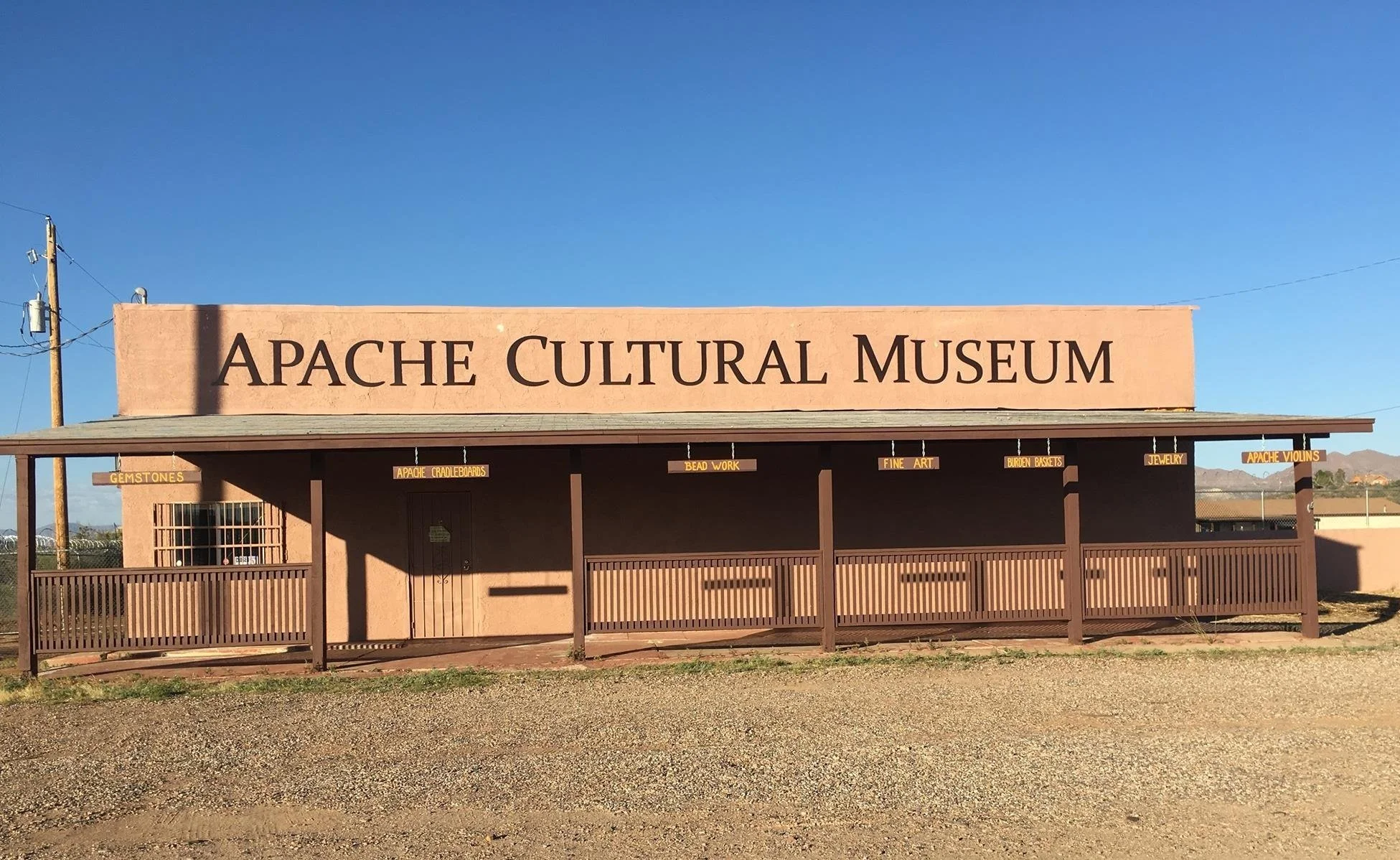
Exterior of the Apache Cultural Museum

San Carlos Apache Cultural Museum

The Apache Cultural Museum provides an intimate, deeply personal look at this indigenous band’s history and heritage. Unlike larger institutions, it’s run by local Apache people, and that authenticity pulses through every artifact and story.
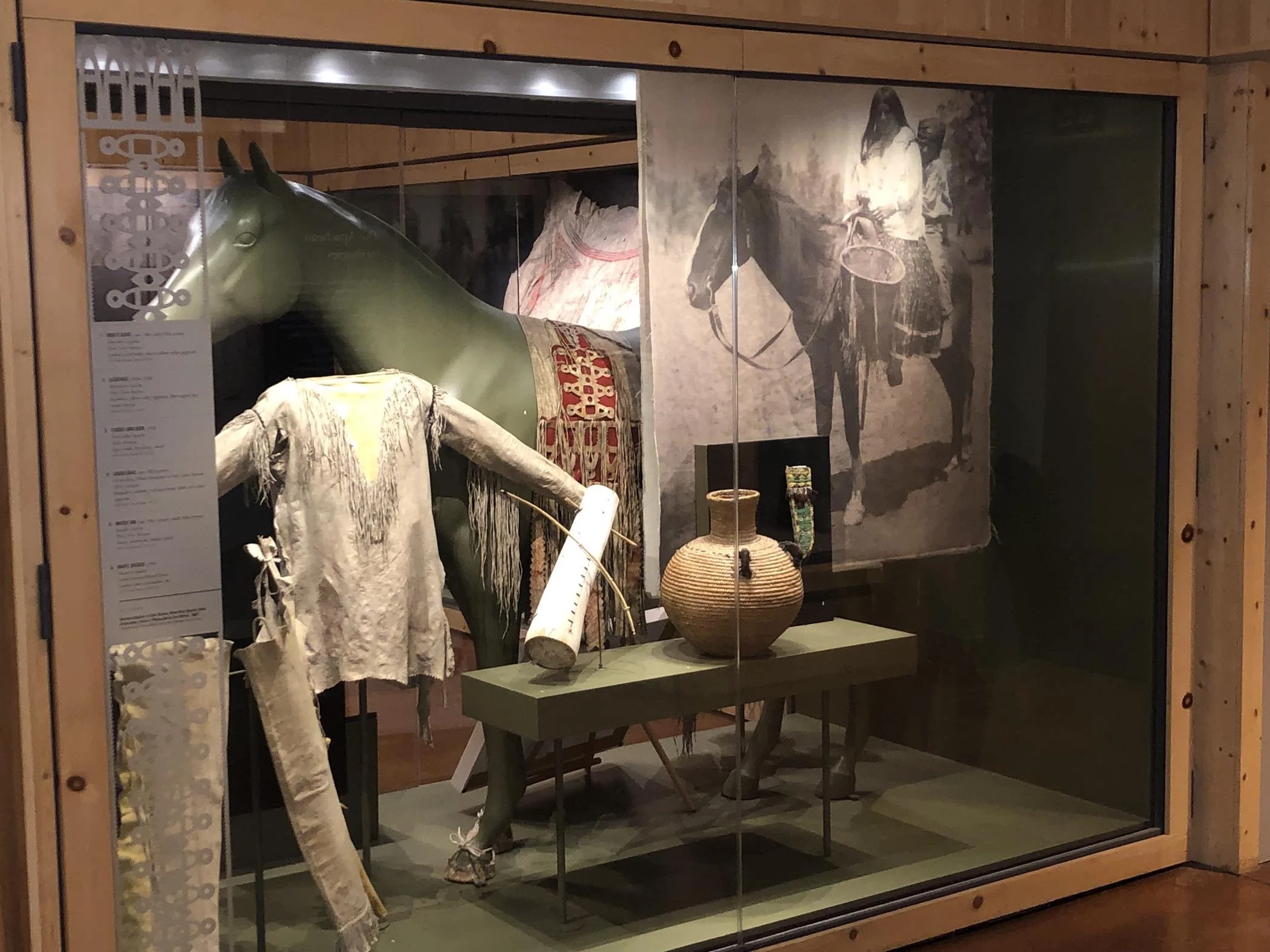
Apache artifacts, including a shirt and bowl, on display at the Apache Cultural Museum in Arizona

Weapons, cradleboards, beadwork and historical photos line the walls. But it’s the oral histories — passed from elder to youth — that give the space its heartbeat. Visitors leave not just with facts, but with faces and names, and a deeper respect for what it means to carry cultural identity through centuries of struggle and survival.

San Carlos Apache Cultural Museum

Phone: 928-475-2894

Mile Marker 272
Highway 70
Peridot, AZ 85542

Cacti and yellow flowers at the Tovrea Castle at Carraro Heights in Phoenix, Arizona

Tovrea Castle at Carraro Heights

Tovrea Castle looms over Phoenix like a three-tiered cake sculpted by whimsy and desert dreams. Built in the 1930s by Italian immigrant Alessio Carraro, the structure was intended as a hotel but quickly became a curiosity. Surrounded by 44 acres of cactus gardens, it looks like something out of a surrealist Western film.

A frieze of a woman bending over backwards above a stone fireplace at Tovrea Castle at Carraro Heights in Arizona

Tours are available by reservation only, adding to its air of exclusivity and mystery. Inside, guests get a look at vintage furnishings and learn the strange history of the Carraro family’s ambitions — and how this castle became one of Arizona’s most iconic roadside silhouettes.

Tovrea Castle at Carraro Heights

Phone: 602-256-3221

5025 East Van Buren Street
Phoenix, AZ 85008

A model of a classic green car sunken in the water as part of Jim Roark's Metal Monsters exhibit at the Museum of Miniatures in Arizona

From Jim Roark’s Metal Monsters exhibit at the Museum of Miniatures

Arizona’s Weird Is Wonderful

Arizona doesn’t hide its oddities. It flaunts them. Each museum, collection or offbeat roadside stop is a love letter to curiosity, eccentricity and stories that don’t fit into mainstream museum walls. Whether you’re marveling at miniature furniture, learning about indigenous customs, or debating alien contact with a man in a tinfoil hat, you’re taking part in a state-sized celebration of the unexpected.

So load up the car, keep your eyes peeled for copper armor and friendly E.T.s, and embrace the wild, weird wonder that’s Arizona’s museum scene.

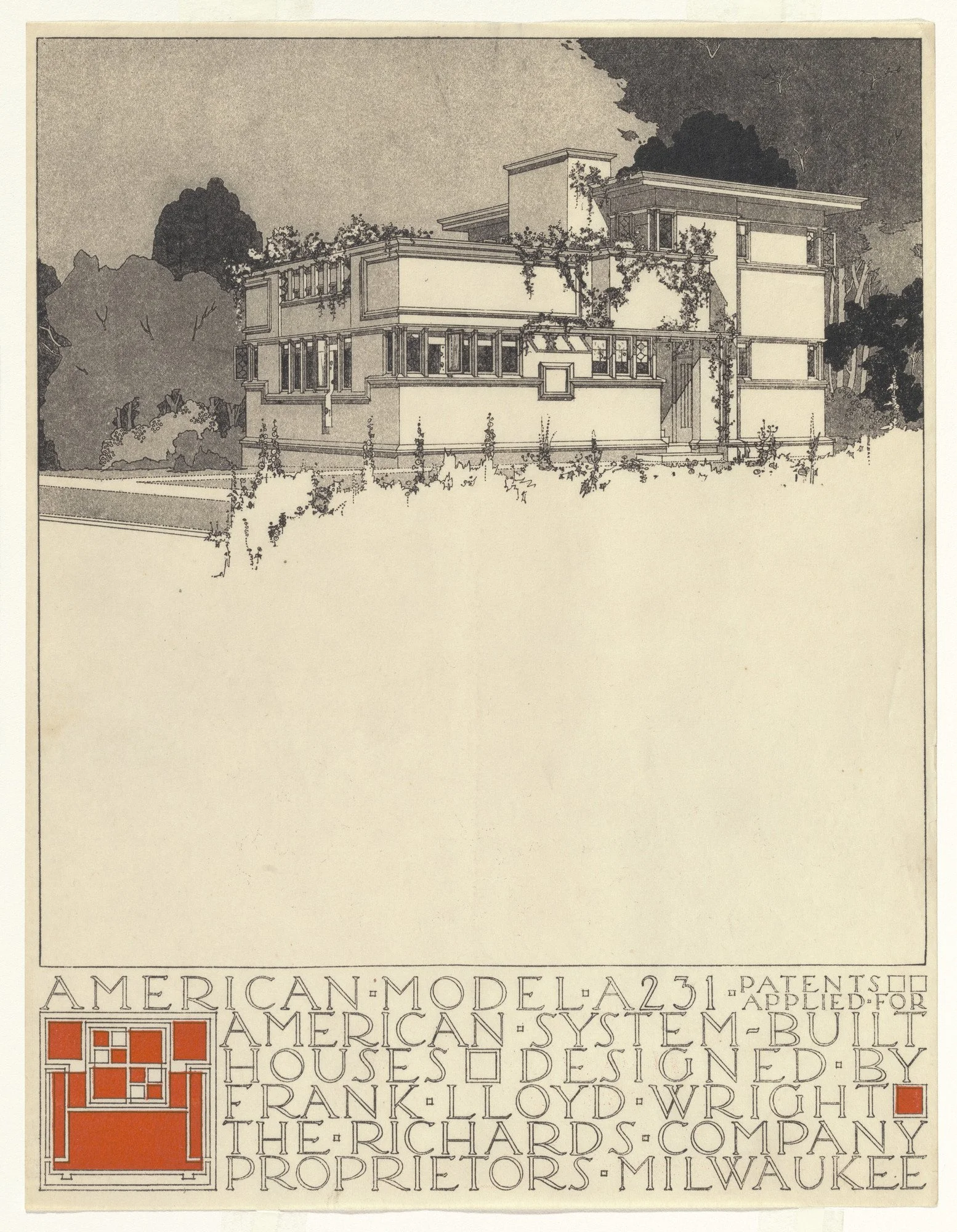
Frank Lloyd Wright’s Burnham Block: Milwaukee’s Forgotten Vision for Affordable Homes

Wright’s American System-Built Homes still stand on Burnham Block, a quiet testament to his dream of housing for the middle class.

Frank Lloyd Wright's Burnham Block in Milwaukee, Wisconsin

Well before he designed Fallingwater in Pennsylvania, Wright poured his energy into a very different kind of project — producing more than 900 drawings and over 30 standardized model variations for the American System-Built Homes: a line of modest, affordable houses for America’s middle-class families.

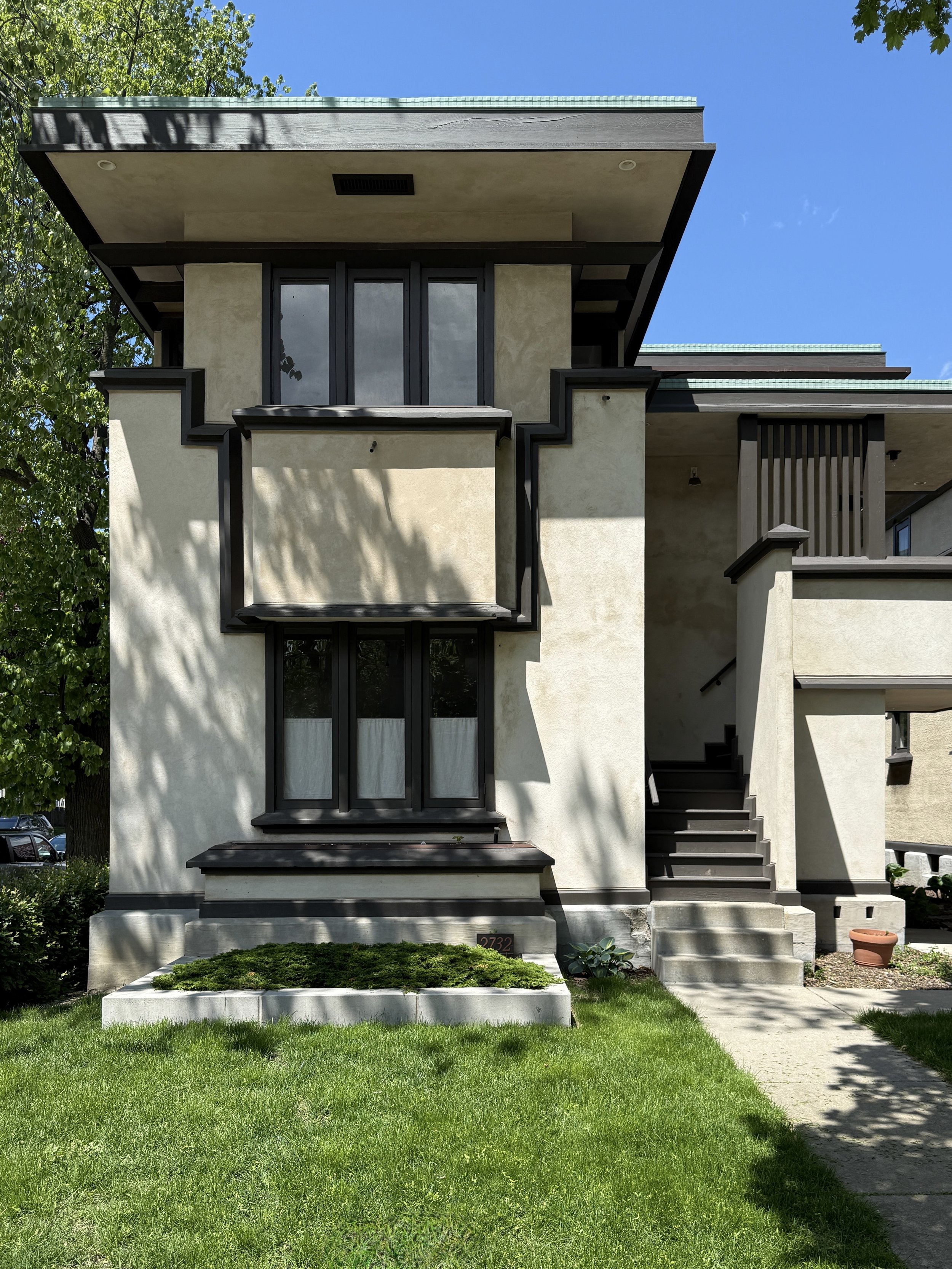
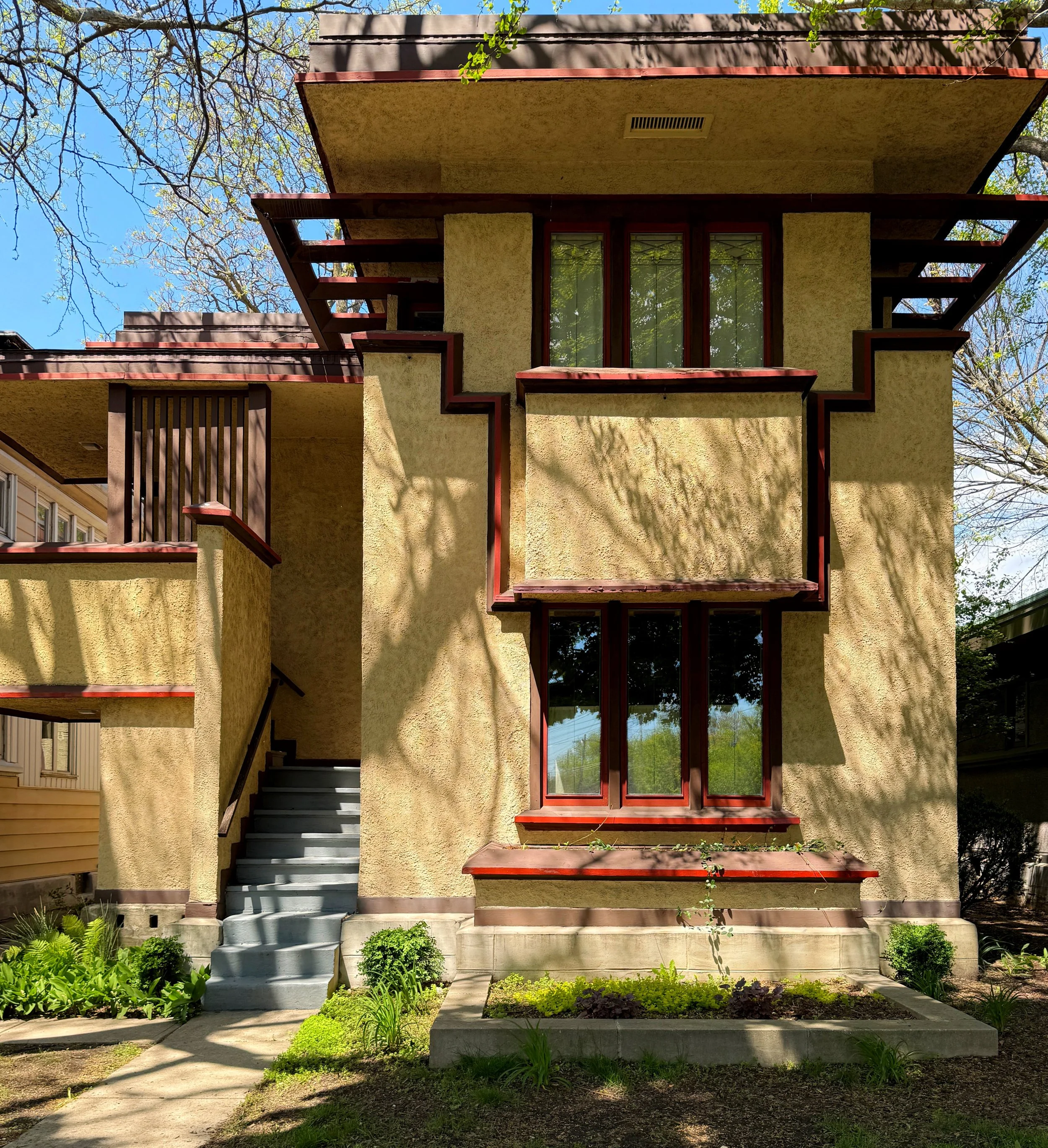
So when Wally and I planned a long weekend in Milwaukee, one of our top priorities was visiting the Burnham Block. Tucked between 27th Street and Layton Boulevard, this quiet stretch of West Burnham Street is home to six of Wright’s homes — examples of one of the most ambitious design efforts of his career and the largest collection of this housing style in the country. 

At just 805 square feet, it’s the smallest of any house Wright designed.

Fun fact: The thoroughfare was named after George Burnham, a brick manufacturer and real estate investor in the city. The cream-colored bricks his company produced helped give Milwaukee its nickname, the Cream City. 

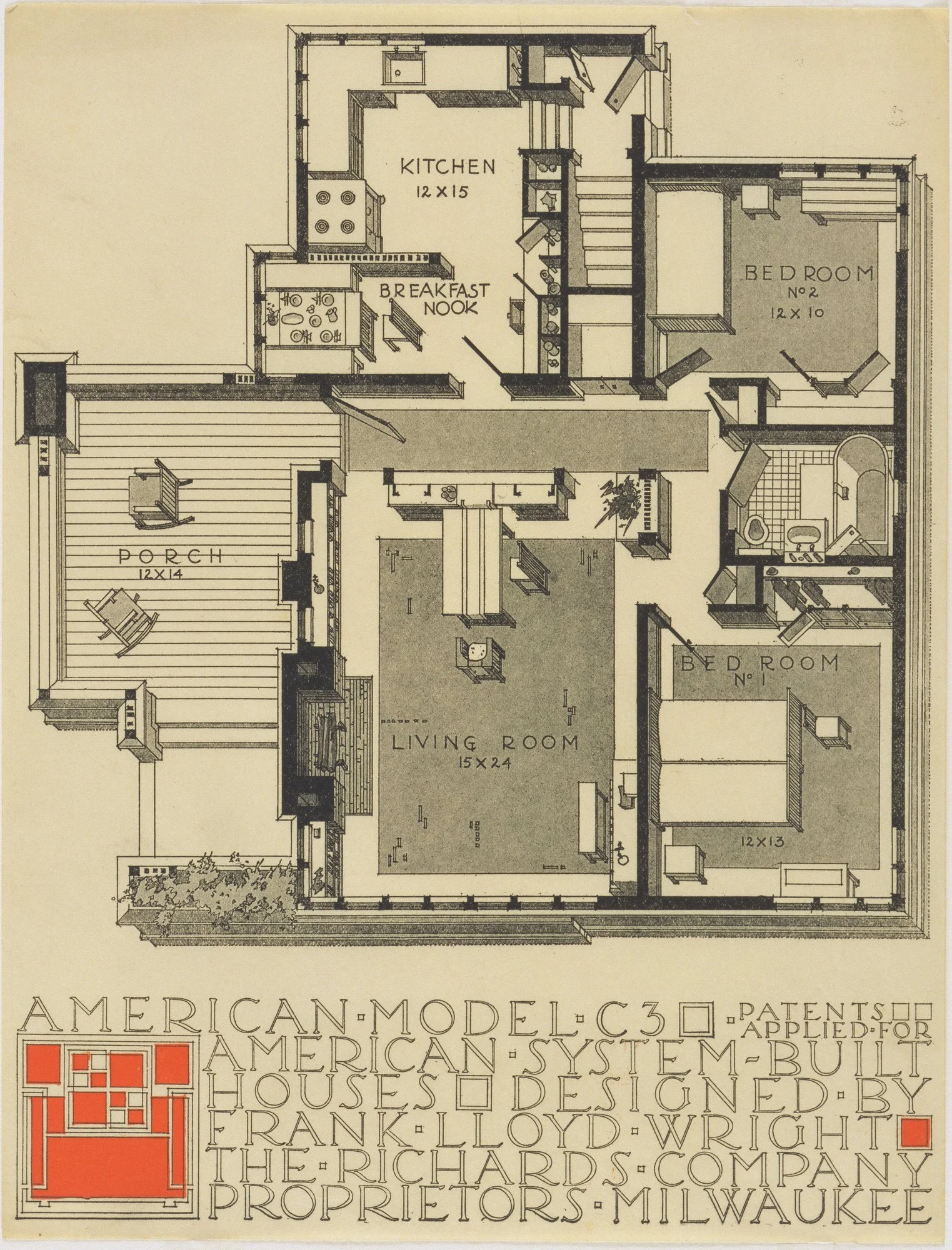
Architectural drawing in an ad for American System-Build Houses on Frank Lloyd Wright's Burnham Block

“An American Home” 

After snapping a few photos outside, Wally and I ducked into the gift shop at the back of one of the duplexes currently undergoing restoration. From there we made our way to the front room to join our tour group and meet our docent, Rhonda. Once everyone was settled in, she broke the ice by asking where we were all from, and to our surprise, one family had traveled all the way from Italy.

She asked the group to imagine what a real estate ad might highlight today, and we quickly called out the usual features: square footage, number of bedrooms, location and price — basically everything related to the building itself. 

Holding up a full-page advertisement that ran in the Chicago Tribune in July 1917, titled “You Can Own an American Home” and attributed to then-copywriter Sherwood Anderson, she read the following excerpt aloud:

“There’s a bright, cheerful home waiting for you and your family — better built, excellently planned, far more livable. More beautiful? Yeah, it’ll have that rare thing: genuine architectural beauty, designed by a leader among architects. You select your plan; it’s built to your order. Constructed by a system that guarantees a high-grade building at a known price. In short, an American home.”

Rhonda pointed out that it wasn’t really about any of the features we had mentioned; it was about selling a lifestyle. And one big thing the ad omitted? Wright’s name — and that was no accident. 


A man drapes his arm around a lifesize cutout of Frank Lloyd Wright

Wally’s last name is also Wright, but, sadly, he’s never found a familial link to Frank.

When “Wright” Was a Bad Word

By 1915, the architect’s personal life had become tabloid fodder. In 1909 he had famously abandoned his wife and six children to run off to Europe with Mamah Borthwick Cheney — the wife of a former client and the woman at the center of a scandalous, widely publicized affair. 

Both were still married to their respective spouses when they left. Mamah got a divorce from her husband when they returned, but Wright wouldn’t officially be divorced from his wife, Catherine, for another six years. 

The scandal deepened in 1914, when a servant at Taliesin — Wright’s home and studio in Wisconsin — set fire to the building and axed down Mamah, her two children, and four others as they fled the flames. The tragedy made front-page headlines and further tarnished Wright’s reputation.

Rhonda went on to explain that what most people don’t realize is just how deeply Wright believed in what he called “democratic architecture.” To him the idea was simple: If you had a good job, you should also be able to afford a thoughtfully designed home. But Wright, for all his vision, didn’t quite know how to make that dream scalable. 

A floorplan for the homes along Frank Lloyd Wright's Burnham Block

A Partnership With Arthur Richards

That's where Milwaukee developer Arthur L. Richards came in. He had previously collaborated with Wright on the Hotel Geneva, a lakeside resort that once stood on the shores of Lake Geneva, Wisconsin. Richards had the resources and business network Wright lacked, and he was able to turn the architect's vision into a viable housing project. 

Assuming the advertisement piqued your curiosity, your next stop would be to visit a local distributor. At the time, many young families were buying homes from the pages of mail-order catalogs — think Craftsman-style kits sold by Sears, Roebuck and Co. 

But Wright’s American System-Built Homes were different. They were modern, meticulously detailed, and built to his exacting standards. Customers could choose from roughly 30 standardized models, each offering a range of customizable options, including the floor plan, roof style (flat, hip or gable), custom furniture and art glass windows. You added up your choices, saw the total at the bottom, and that’s what you paid. 

Prices started at $1,875 and rose to about $3,500 once completed — remarkably modest for any home, much less a Wright-designed one, especially given his reputation for commissions that routinely ran over budget. It may sound like a lot for 1915, but homes of comparable size and quality typically sold for 10% to 15% more. This relative affordability was largely due to Richards, whose oversight kept costs down and brought Wright’s designs to a broader market.

To achieve this, the Richards Company pre-cut lumber and other materials in a mill and shipped them to the build site by rail — a method that offered greater efficiency and quality control than traditional site-built construction.

Exterior of the office and gift shop at Frank Lloyd Wright's Burnham Block in Milwaukee

Preserving a Legacy: Restoration Efforts at Burnham Block

Once we had a sense of the project's background, Rhonda led us outside and enthusiastically shared more about this row of homes’ history and significance. Built on speculation between October 1915 and July 1916 the block includes four two-family Flat C (Model 7A) duplexes and two single-family bungalows: one Model B1 with a flat roof and one Model C3 with a hipped roof. 

She highlighted the importance of ongoing preservation efforts, noting that five of the six houses are now owned by Frank Lloyd Wright’s Burnham Block, a nonprofit organization dedicated to the care and stewardship of these historic structures.

“There’s no paid staff,” she told us. “We’re all volunteers. Every single dollar you spend, whether it’s on admission, in the gift shop or as a donation goes directly toward the care of these buildings.”

She went on to explain that the exterior of Duplex 4, the building we had just exited, was restored in 2013 and 2014 with the help of a Save America’s Treasures matching grant. The grant was awarded by the Department of the Interior and is managed by the National Park Service to support the preservation of nationally significant historic sites. Work on the interior, she noted, is still underway. 

“We did get a grant from the government,” she added. “But we’re unsure if we’ll actually receive that money. So for now, we’re kind of on hold, waiting to see what happens.” The hope is that they’ll be able to start restoration efforts on Bungalow Model C3 this year. 

When Richards selected the site for the housing project, it was considered the edge of town — still largely rural and known for its celery fields. An electric streetcar line ran along Burnham Street, connecting the area to the rest of the city. The City Service line provided access to downtown Milwaukee, while the Interurban line extended as far as East Troy. At the time, most people didn’t own cars, but they had access to mass transit, one of the key reasons these homes were built here.  

2720 West Burnham Street, part of Frank Lloyd Wright's Burnham Block in Milwaukee

We paused for a moment in front of 2720 West Burnham Street — the only duplex on the block that isn't owned by the nonprofit.

Rhonda gave us a quick rundown of its history, explaining that a young couple who knew the legacy of the two-flat purchased the property in the early 1980s and converted it into a single-family home with three bedrooms, two bathrooms and a modern kitchen. She added that they installed the art glass windows and red square, a visual element found in many of Wright's designs. Nearly 30 years later, it was sold to its current owner, who now rents it out on Vrbo.

“I’ve been told it sleeps about nine — so if you decide to rent it, don’t forget to invite me!” Rhonda added with a chuckle. 

The exterior of the Model B1 home on Frank Lloyd Wright's Burnham Block in Milwaukee

A Tour of Model B1

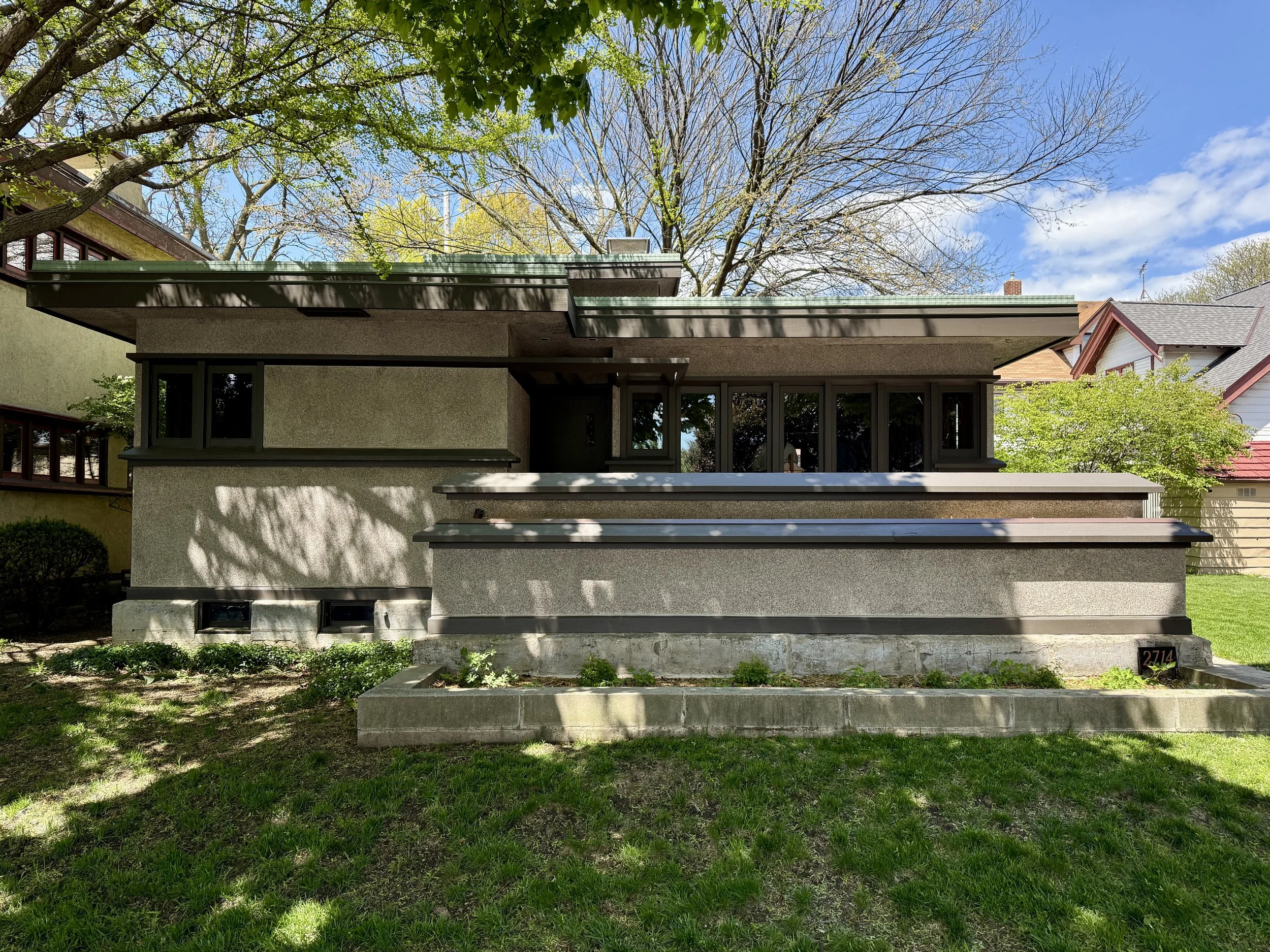
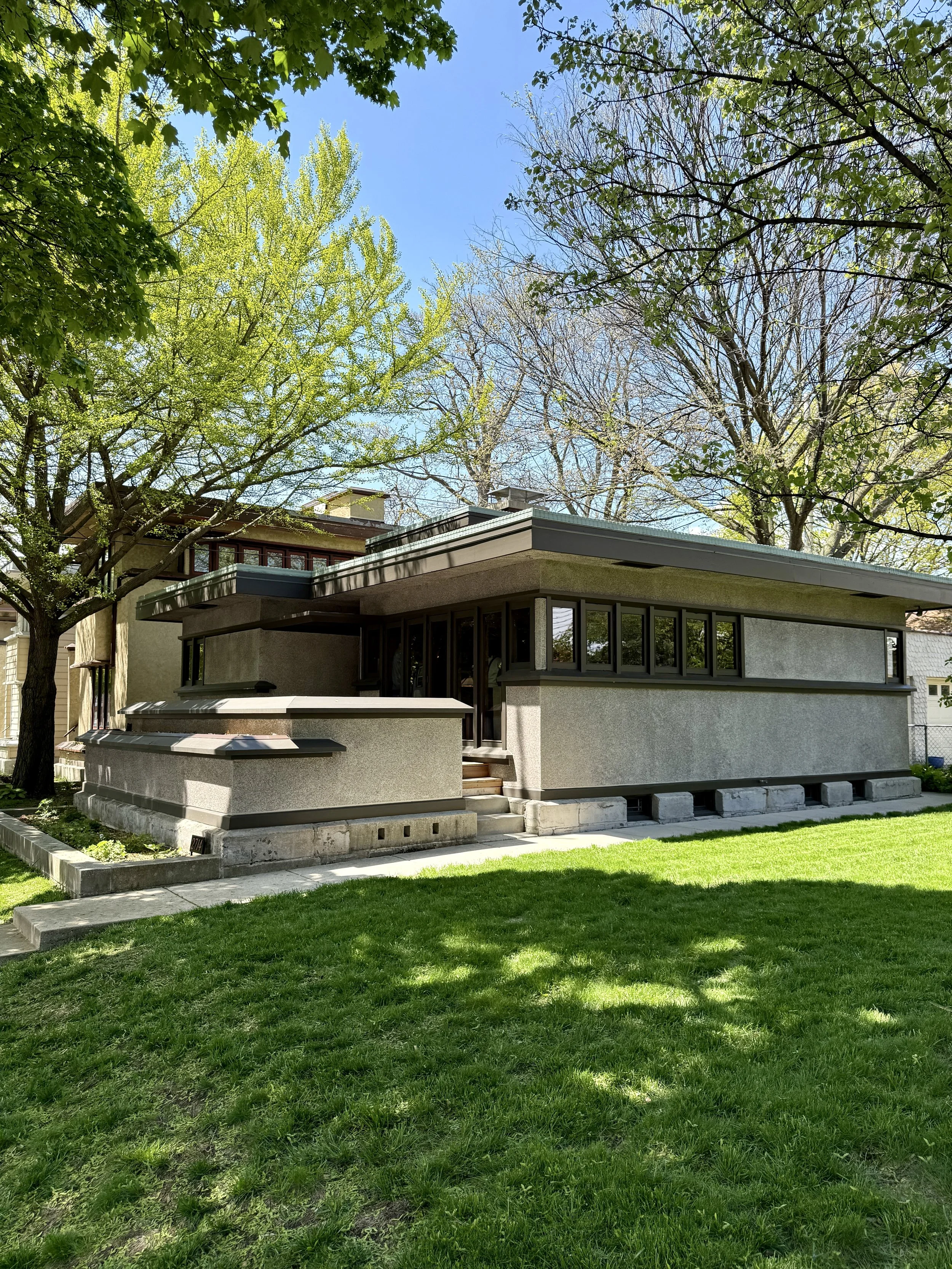
A short walk later, we found ourselves standing outside Model B1 at 2714 West Burnham Street. Rhonda affectionately referred to it as the “baby bungalow,” and at just 805 square feet, it’s the smallest of any house Wright designed. It was purchased in 2004 and fully restored to its 1916 appearance in 2008 and 2009. Today, it’s open to the public as a house museum. 

Rhonda shared that the home’s original exterior, like the others, was finished with a material called Elastica stucco. It was manufactured in Chicago and promoted at the time as an affordable and durable option. Initially praised for its smooth appearance, it later proved unreliable and was found to contain asbestos, requiring careful remediation during restoration.

Today, the exterior has been refinished with Pebble Dash — a type of stucco embedded with small stones that are sprayed onto the surface while it’s still wet. The result is a tactile, durable façade that honors the original intent while complying with modern safety standards.

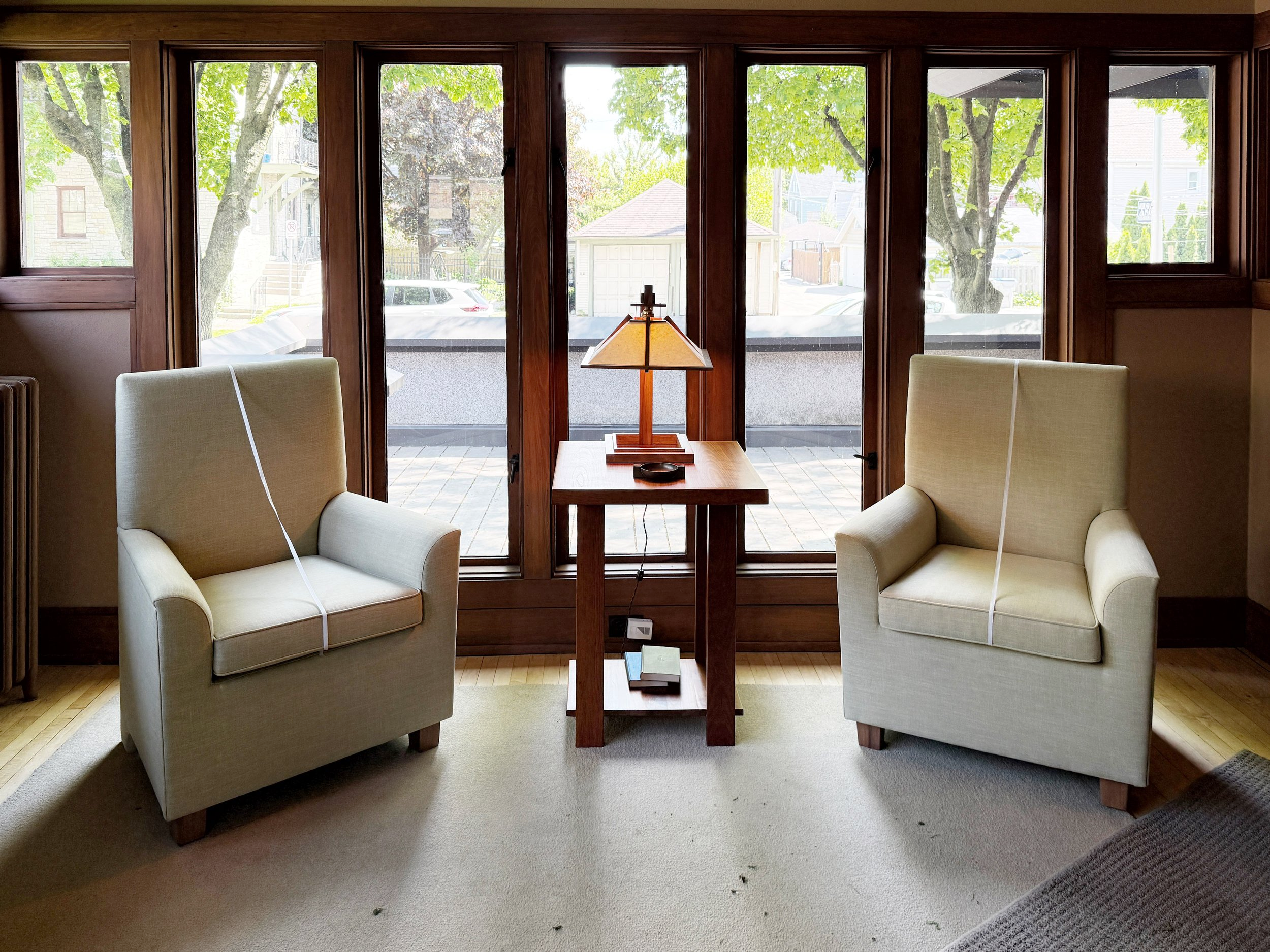
The front room with a small table, lamp and two chairs in Model B1 on Frank Lloyd Wright's Burnham Block

Wright’s Bag of Tricks

Before we even stepped through the front door, we passed beneath a low overhang that extended above the entrance, an unmistakable hallmark of Wright’s design philosophy. It was a classic example of his compress-and-release technique: a moment of spatial compression at the threshold that heightened the sense of openness and volume once inside. 

Crossing that threshold, we entered the living room, the heart of the home, where a central hearth commanded attention. More than just a source of warmth, it was another signature of Wright’s architecture: a symbolic and literal centerpiece meant to anchor family life.

The brick and wood hearth in Model B1 at Frank Lloyd Wright's Burnham Block in Milwaukee

At the front of the room, floor-to-ceiling windows brought in natural light and made the space feel larger. Thanks to the height and placement of the front porch, anyone seated inside could enjoy a sense of openness and connection with the outdoors while still maintaining a sense of privacy, as the porch blocks direct views from passersby. 

This sense of openness was made possible, in part, by Wright’s innovative use of balloon-frame construction, a technique where long vertical studs run continuously from the foundation to the roof. In the American System-Built Homes, these studs are spaced 24 inches apart — wider than the typical 16 inches — based on a 2-foot modular grid. This grid made it easier for Richards’ team of builders to position them with greater flexibility, without needing to rework the structure of the walls.

Built-in shelving and dining table in Model B1 of Frank Lloyd Wright's Burnham Block

Rhonda pointed out that Wright’s design pulled out all the stops to make this tiny house feel larger than it is. By cleverly “stealing space,” the walls flanking the wraparound hearth draw the eye back toward the foyer and the hallway beyond, creating a sense of depth and openness.

She also noted that most of the woodwork inside the house is original. While telling us about the built-in cabinetry in the living room, she explained that it not only acts as a partition but also cleverly accommodates a dining table that can be tucked away or pulled out — transforming the living room into a dining area as needed. 

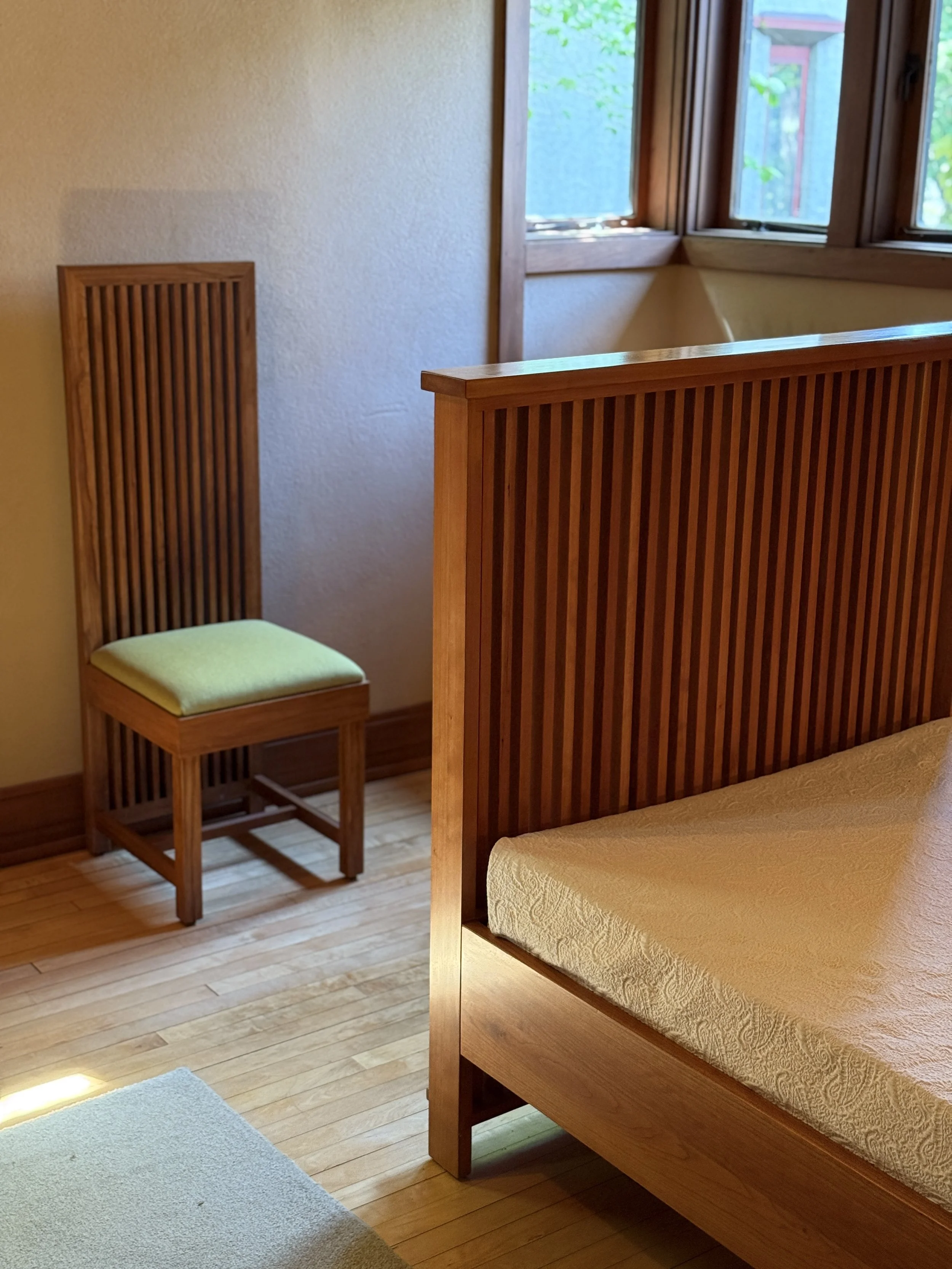
To the right of the built-in, a doorway leads to the breakfast nook and kitchen. Vertical wooden slats separate the nook, offering a sense of division without fully enclosing the space, another subtle feature that reinforces an overall feeling of openness. 

The kitchen was fitted with wood cabinetry and the most adorable tiny oven I’d ever seen.

A small oven and stovetop in the kitchen of Model B1 on Frank Lloyd Wright's Burnham Block

Rhonda added that the glass fronts on the upper cabinets were intentional: designed to catch and reflect light, they help create the illusion of a larger, airier room.

The private space of the home includes the primary bedroom, a children’s bedroom, a bathroom, and both coat and linen closets (a rare feature in a Wright home). A central light well draws natural light into the core of the house, brightening the interior. 

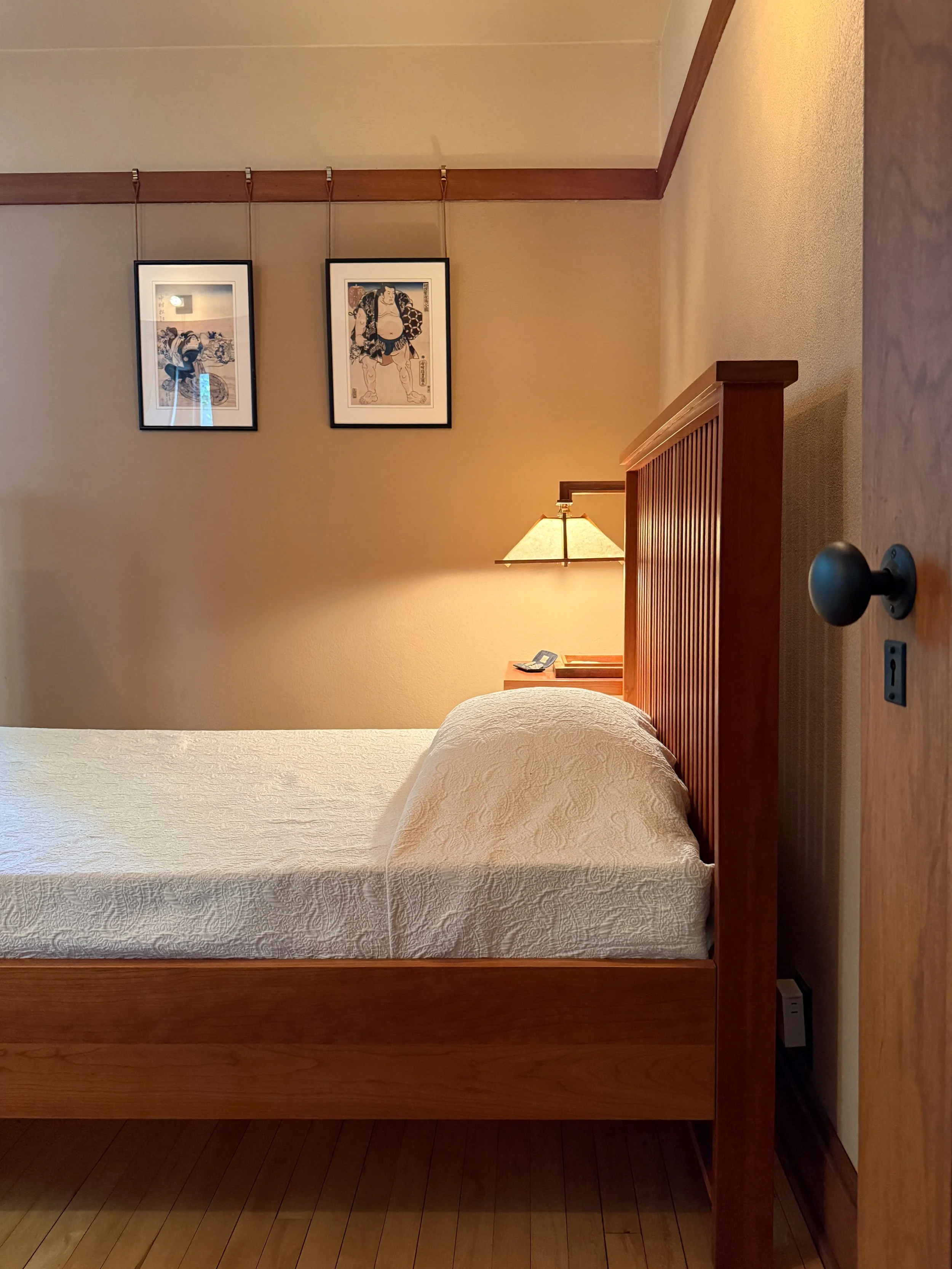
The main bedroom at Model B1 of Frank Lloyd Wright's Burnham Block
The foot of the bed and a chair in a bedroom of Model B1 at Frank Lloyd Wright's Burnham Block

In the primary bedroom, ukiyo-e Japanese woodblock prints reflect Wright’s long-standing admiration for Japanese art and design, while the children’s room features charming illustrations created by his younger sister, Maginel Wright Enright. 

The exterior side view of Model B1 of Frank Lloyd Wright's Burnham Block in Milwaukee

An American Dream That Never Caught On

This development embodied a bold vision of the American Dream. These homes weren’t just places to live; they were a blueprint for how entire neighborhoods of affordable, well-designed housing might take shape across the country. 

That vision extended far beyond this single block. Wright was never one to think small, and he and Richards imagined these homes not as a one-off experiment but as the beginning of something far-reaching. They envisioned entire subdivisions filled with variations on these models, stretching across the U.S. and into Canada. If everything went according to plan, the project could generate more than a million dollars in revenue. 

The six homes on Burnham Street were completed on July 5, 1916 — just 10 days before Milwaukee hosted a massive Preparedness Parade in support of U.S. involvement in World War I. But the war would soon derail Wright and Richards’ ambitious plans. As building materials were diverted to the war effort and the housing market grew uncertain, their grand project ground to a halt. 

In the end, only about a dozen American System-Built Homes were ever constructed — six on Burnham Street and a handful of others scattered throughout the Midwest. Eventually, Wright and Richards had a falling out, culminating in Wright successfully suing Richards for non-payment. Under their agreement, Wright was to receive royalties for each house sold. But a major flaw in the arrangement was that Richards wasn’t required to report each sale to Wright, making it impossible for Wright to know how many homes were actually built. That lack of transparency, combined with missed payments, led to growing mistrust and ultimately ended their partnership. 

Although the Burnham Block is listed on the National Register of Historic Places, discovering the homes felt like stumbling upon a hidden gem. These aren’t the Wright homes that capture a lot of attention.

Tours are available by reservation only and are led by trained docents who offer insight into the history and design of the homes. –Duke


Before You Go

Phone: 414-368-0060

Admission: $20; children under 16 free

Times: Tours at 11 a.m., 12 p.m., 1 p.m. and 2 p.m.

Tours last about one hour.

Homes along Frank Lloyd Wright's Burnham Block in Milwaukee, Wisconsin

Frank Lloyd Wright’s Burnham Block

2732 West Burnham Street
Milwaukee, Wisconsin
USA


The Best Road Trips in New South Wales: From Coast to Country

From coastal drives like the Grand Pacific and Sapphire Coast to foodie loops through Orange and Mudgee, discover the best road trips in New South Wales — including Snowy Mountains, Waterfall Way, and quirky roadside stops from Sydney to Eden.

A car drives through the curving roads and hills of New South Wales, Australia, with a mountain in the distance

New South Wales is one of Australia’s most visited states — and with good reason. Its coastline alone is a stunner, dotted with cliff-hugging walks and surf towns where the locals still say g’day without irony. Head inland and you’ll swap salty air for lush rainforests, towering waterfalls and rugged high country that feels a million miles from the sea.

Whether you’re camping under a riot of stars, shacking up in a retro motel, or living your best van life, NSW delivers. The roads are generally smooth, the phone signal’s surprisingly reliable, and there’s no shortage of campgrounds, cosy cabins or Airbnbs to call it a night.

From coastal gems to country heartlands (with a few oddball attractions thrown in), here are the best road trips across New South Wales.

So, buckle up. From coastal gems to country heartlands (with a few oddball attractions thrown in), here are the best road trips across New South Wales.

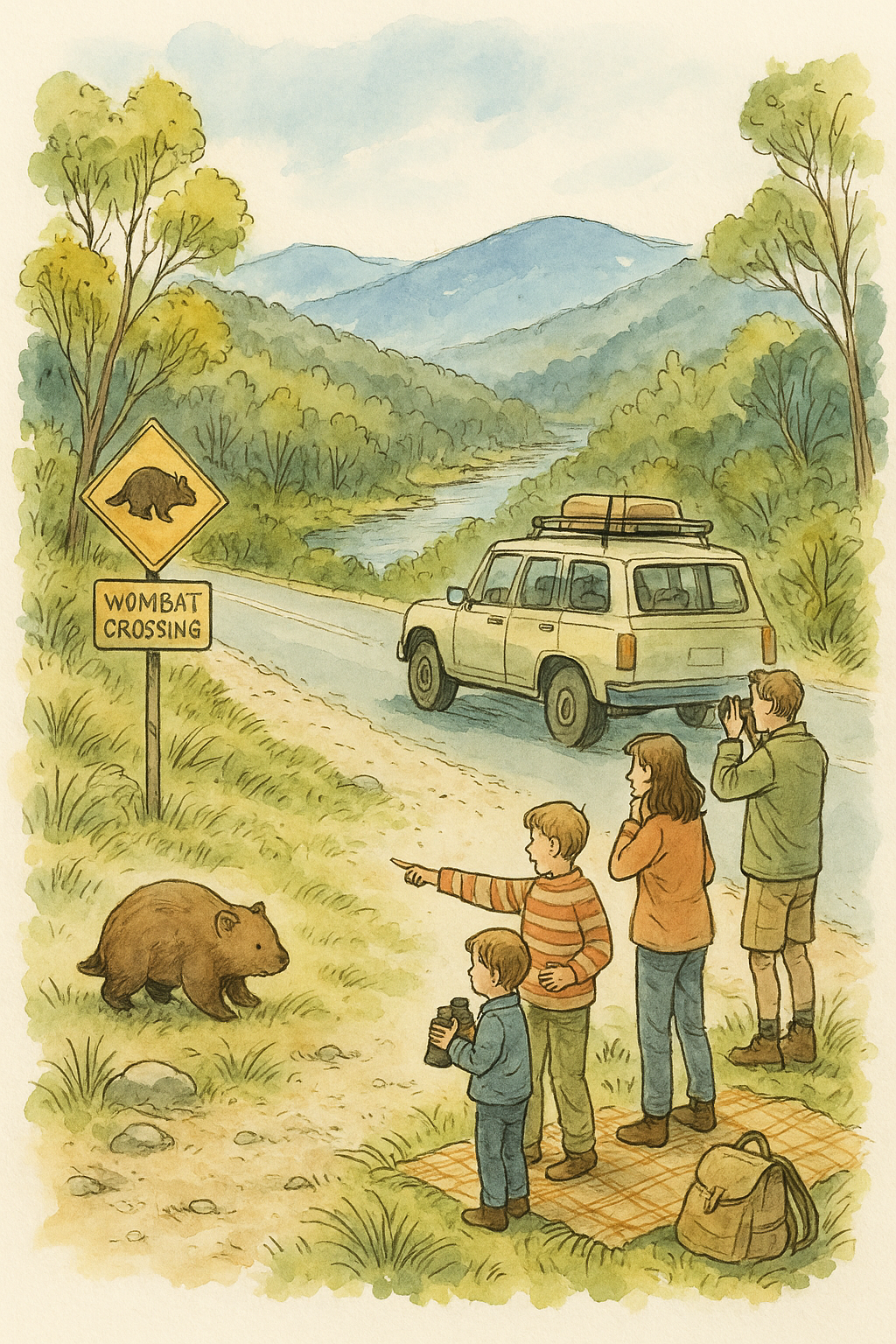
A family on a road trip on the Great River Road, NSW, stops to look at a wombat

Into the Country: Road Trips Through NSW’s Outback

Snowy Mountains Drive

If you’re craving crisp alpine air and scenery that swaps gum trees for snow gums (plus the occasional wombat waddling across the road), then make sure you stop on the Great River Road — a stretch that hugs the Upper Murray and is the kind of place where you’ll want to pull over every five minutes just to gawk at the views.

You’ll find plenty of pitstops along the GRR worth your time. Don’t miss a breather (and maybe a slab of hummingbird cake) at Tintaldra Store & Tearooms, a delightfully old-school spot in a blink-and-you’ll-miss-it town that’s been serving travelers and trout fishers since the 1800s. It’s the sort of place where the tea is poured into mismatched china and you’re encouraged to linger.

Push on toward Khancoban, a great base for exploring the western approaches to Kosciuszko National Park. From there, you can lace up your boots for a day hike to see Australia’s highest peak (don’t worry, you won’t need an ice axe — unless you’re doing it in deep winter). Or just throw a line in the Swampy Plains River, famous for trout that practically jump onto your hook.

Of course, it wouldn’t be a Snowies road trip without refueling at one of the hearty mountain pubs. Try Jindabyne Brewing microbrewery for a local lager with cracking lake views, or the Banjo Paterson Inn, where après-ski culture reigns year-round, and schnitzels arrive bigger than your head.

A gay couple cheerses with wine during a picnic in Millthorpe, NSW, Australia

The Foodie Loop: Orange, Mudgee and the Central Tablelands

You could also start your adventure in Orange, a town that’s become something of a pilgrimage for food and wine lovers. Thanks to its elevation, this region is the beating heart of cool-climate wines in NSW — think delicate pinots and crisp chardonnays that sing with the local produce.

On your way toward Mudgee, detour through Millthorpe, a village so pretty it looks like it was built purely for Sunday strolls and Instagram. Pop into Angullong Vineyard’s Cellar Door, housed in an old bluestone stable, or duck into Tamburlaine Organic Wines just outside town. And if you’ve got a thing for slightly bonkers local history, the Golden Memories Millthorpe Museum has everything from antique farming gear to bushranger relics that’ll give you a taste of the region’s wilder days.

And for the folklore fans: This is bushranger country. The infamous Ben Hall once roamed these ranges, robbing stagecoaches and generally causing colonial chaos. Some pubs still claim he drank there (though, fair warning, just about every old pub in NSW will tell you the same).

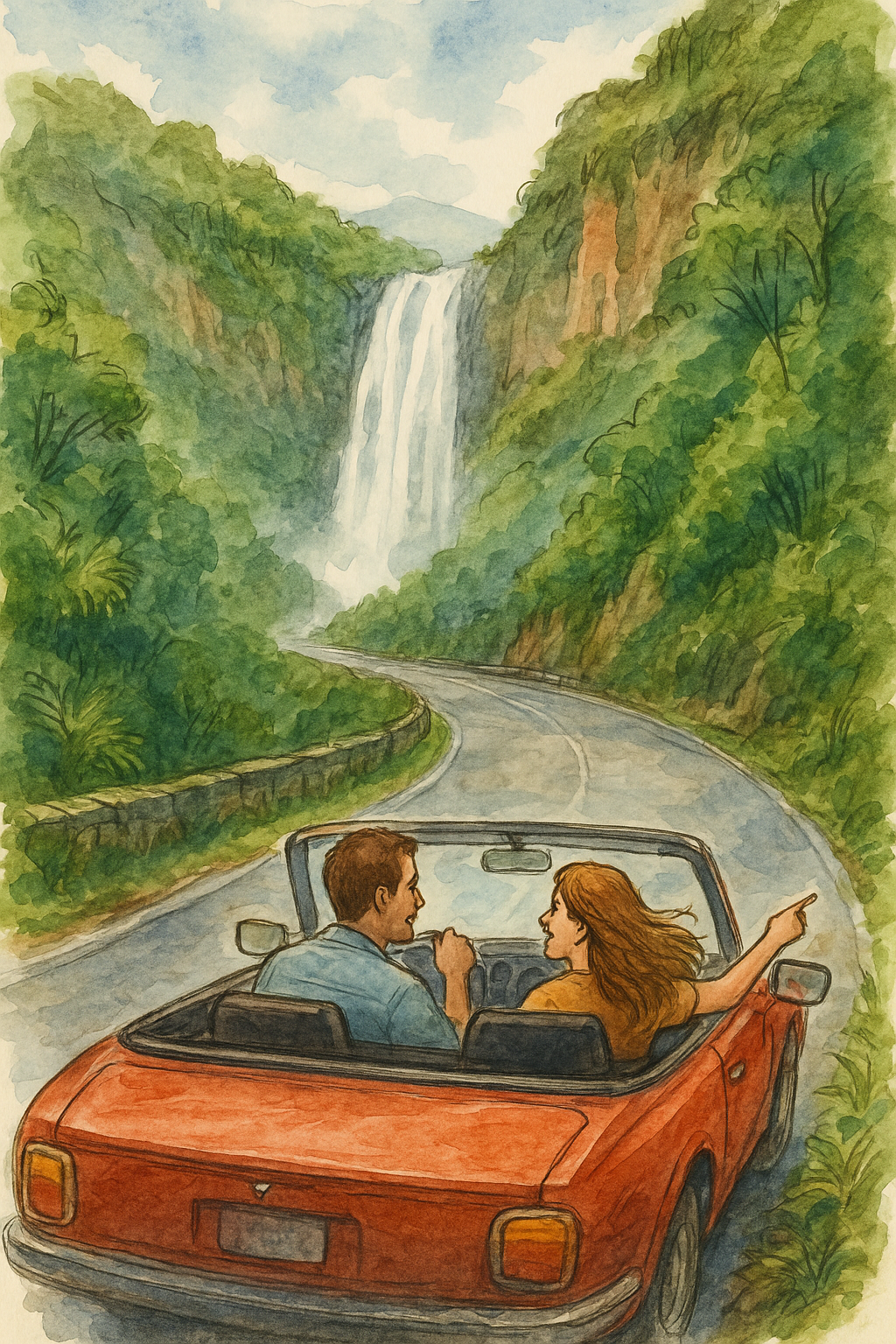
A couple in a convertible drive along Waterfall Way in New South Wales, Australia

New England High Country

Armidale is the beating heart of the region. It’s a university town, so there’s always a bit of a buzz. Grand churches like St. Mary and Joseph Catholic Cathedral loom over streets lined with bluestone and elm trees. Pop inside and you’ll see intricate stained glass that feels more European than Outback. From Armidale, take the Waterfall Way, arguably one of the prettiest drives in NSW. The name isn’t just poetic license; you’ll pass so many thundering cascades you’ll lose count. 

If your timing’s right, swing by Glen Innes, which goes full Highland fling for the Australian Celtic Festival each May. Think bagpipes echoing across the town, tartan markets, and even the odd nod to ancient traditions like Imbolc — though these days it’s more about whisky tastings and hearty stews. The Australian Standing Stones, perched on a hill just outside town, are a granite tribute to Celtic heritage that feels delightfully out of place in the Aussie bush.

And if you just want to kick back with a local drop, make a pitstop at Merilba Estate near Uralla, where cool-climate riesling and pinot noir pair beautifully with sweeping views over grazing country. Uralla itself has a frontier vibe, with bushranger Captain Thunderbolt’s grave right in town. Grab a pie at the Alternate Root café and swap ghost stories with whoever’s behind the counter (everyone seems to have one).

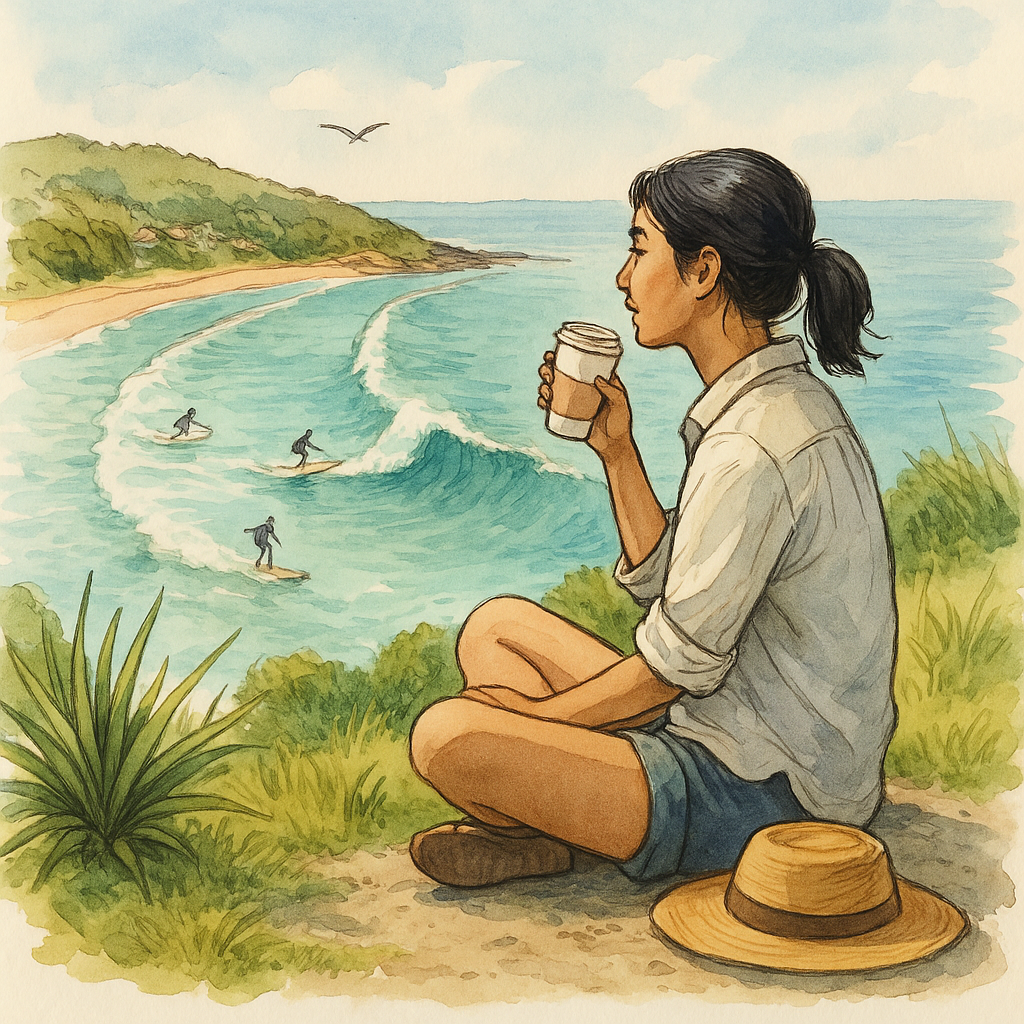
A woman sits on a hill above Crescent Head, drinking coffee and watching surfers below

Coastal Cruising: NSW’s Most Stunning Drives by the Sea

The Legendary Pacific Coast Drive (Sydney to Byron Bay)

If you want to get up close and personal with Australia’s surf scene, this is the road trip that’ll have you grinning like a sandy, sunburnt idiot. Start by hugging the shore through the Central Coast, then head on to Newcastle, a former steel city now reborn as a hip little hub of craft breweries, street art and rooftop bars. 

Next up, Port Stephens is all about dolphins. Join a tour from Nelson Bay and watch pods arc through the water right alongside your boat, or just park yourself on the beach and keep your eyes peeled.

A bit farther up, Crescent Head is where the vibe turns properly laidback. Tiny, friendly and obsessed with its famous right-hand point break, this town is a pilgrimage for longboarders chasing that endless ride. Even if you’re not keen to paddle out, grab a coffee at Barnetts Bakery, plonk yourself on the headland, and watch the locals carve it up.

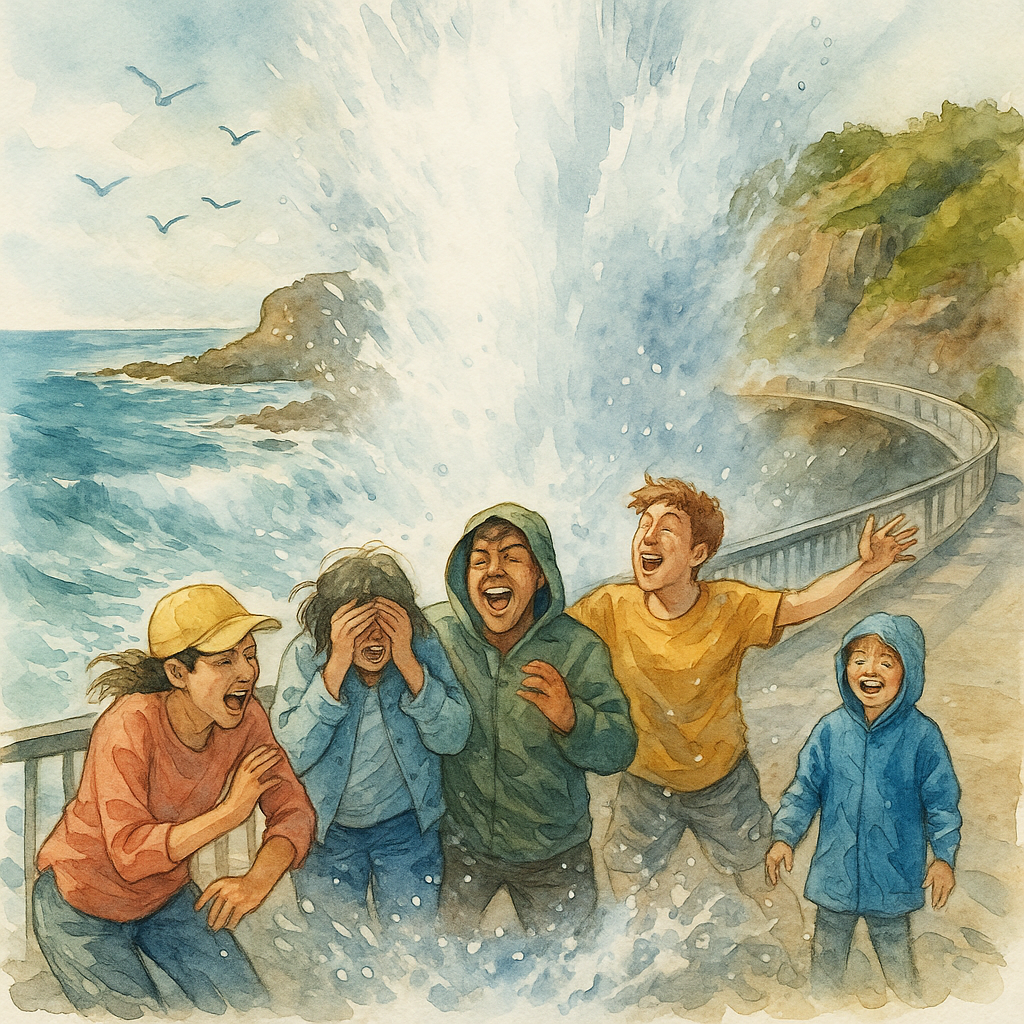
A group laughs as they get soaked by the Kiama Blowhole in New South Wales, Australia

Grand Pacific Drive (Sydney to Kiama and Beyond)

If you’re looking for a day trip that offers great views without taking an entire day of driving, look no further. This ride from Sydney, down through the Illawarra and on to Kiama, is a winner. The Grand Pacific Drive has some of the most cinematic views possible (hello, flying over the ocean on the famous Sea Cliff Bridge, where you feel like you’re driving right into the ocean).

You’ve got old mining towns, like Coalcliff and Helensburgh, that are still proudly rugged and industrial-looking. But find the right locals and you’ll be in for yarns about miners’ strikes and secret union meetings, and hear about the pit ponies that used to haul coal from the bowels of the hills.

Shipwrecks and lost sailors — another tale as old as time. There have been many victims along the Illawarra coast over the years, and according to legend, you can still see the remains of the jagged metal in the shallow water off Bass Point, a testament to the power of this sea when the southerlies are howling.

On to Kiama, where you can check out the famous blowhole, booming water into the air whenever there’s a decent swell. The best part? Hang around until the oblivious tourists have all crowded to the fence taking selfies, and watch them jump and scream as they get soaked by an unexpected blast. Classic Kiama. Good fun and completely guilt-free.

A family in a retro van drives along the Sapphire Coast, NSW, at sunset

Sapphire Coast (Batemans Bay to Eden)

This stretch of coast is where NSW loosens its tie and kicks off its shoes. Known as the Sapphire Coast for reasons that become blindingly obvious the moment you see the water, this drive is all about slowing down and letting the locals steer you toward the good stuff.

I’d kick this one off in Batemans Bay, where oyster leases ripple across the Clyde River and you can sample the freshest shuck of your life at the Oyster Shed on Wray Street. It’s practically a rite of passage around here. If you’ve never slurped down a still-quivering Sydney rock oyster while standing on a sun-warmed jetty, are you even road-tripping?

Of course, this coast is whale-watching central, especially from late winter to spring, when humpbacks migrate. Eden is your best bet: Once a bustling whaling town (there’s some dark history here), it’s now home to the Eden Killer Whale Museum, a delightfully old-school institution that tells tales of Old Tom, a killer whale who allegedly used to help local whalers hunt — a weird, very Australian piece of folklore if ever there was one.

And if you like your roadside attractions delightfully odd, don’t miss the giant mermaid sculptures in Merimbula. Locals are so used to them they barely blink, but newcomers often do a double-take.
A group goofs off, posing in front of the Big Banana in Coffs Harbour, NSW, Australia

Quirky Roadside Stops and Offbeat Detours in NSW

No true Aussie road trip is complete without pulling over for something wonderfully weird. This is a country that loves a “big thing” — a playful national habit of building enormous versions of everyday objects and proudly sticking them on the tourist map.

On your New South Wales travels you’ll spot plenty of these giants. Snap a selfie under the Big Banana in Coffs Harbour, the original oversized icon that’s been delighting kids (and slightly confusing international visitors) since 1964. Farther inland, the concrete Big Merino in Goulburn stands tall and stoic, like a woolly monarch watching over passing caravans. Swing by for a photo, then pop inside (yes, inside the sheep) to learn a little about the region’s wool industry.

But it’s not just about the big and bizarre. In Gundagai, there’s a whole museum dedicated to the , a legend immortalising bush perseverance (and a statue that gets more than its fair share of questionable Instagram poses). 

A man with botanical tattoos hikes in Kosciuszko National Park, NSW, Australia

Road Trip Tips for NSW

When it comes to road tripping around NSW, timing is everything. Spring and autumn hit the sweet spot across most routes, while winter is made for cosy pubs and snow-dusted hikes in the high country. Summer? That’s your cue to chase sea breezes and shady beer gardens. Just remember: NSW is bigger than it looks on a map; drives can be long and winding, so keep an eye on your fuel gauge, cue up a few extra playlists, and embrace the joy of random bakery stops. 

And wherever you roam, respect the land you’re crossing. Many of these roads weave through Indigenous country, so stick to marked tracks, steer clear of sacred sites, and leave no trace behind. It’s the simplest way to ensure the next traveler (and the local wildlife) gets to enjoy it just as much as you did. –Ellen Mahoney

RELATED: Top Road Trip Routes Across Victoria, Australia 

Hidden Gems of Morocco: 7 Underrated Places Worth Exploring

Escape the crowds and discover the authentic Morocco — from cave homes to ancient libraries. These underrated destinations in Morocco offer culture, adventure and a lot fewer tourists.

A line of people on camels walk through the Sahara Desert at Merzouga in Morocco

When most people think of Morocco, names like Marrakech, Fès or the Sahara instantly come to mind. And while these places are undeniably stunning, there’s a whole other side to the country that often gets overlooked — one you can truly discover through immersive Morocco desert tours, revealing untouched landscapes, ancient culture and authentic experiences waiting quietly in the shadows.

Let’s go beyond the Instagram hotspots and dive deep into seven underrated places in Morocco that are absolutely worth your time. Ready to wander off the beaten path?

The real Morocco isn’t always in the tour book, but it’s waiting for you just the same.
Part of the Portuguese fortress in the city of El Jadida in Morocco

1. El Jadida: A Coastal Fortress of Portuguese Legacy

Overview and History

Nestled along Morocco’s Atlantic coast, El Jadida is a unique fusion of Moroccan soul and Portuguese history. Once known as Mazagan, this port city was fortified by the Portuguese in the 16th century.

Columns and arches reflected in the water in the Portuguese Cistern in El Jadida, Morocco

What to See and Do

  • The Portuguese Cistern: A hauntingly beautiful underground chamber, known for its perfectly symmetrical arches and eerie reflection pools

  • City Walls: Walk along the historic ramparts and enjoy sweeping ocean views

  • Plage El Haouzia: A quieter alternative to the country’s more commercial beaches

Best Time to Visit

Spring and early autumn are ideal — pleasant weather, fewer tourists and beautiful ocean breezes.

The village of Tafraoute, Morocco, in the shadow of a peak of the Anti-Atlas

2. Tafraoute: The Heart of the Anti-Atlas

Cultural and Natural Highlights

Located in a valley surrounded by pink granite mountains, Tafraoute is an oasis of tranquility. The village is famous for its peculiar rock formations and rich Berber culture.

The Painted Rocks in Tafraoute, Morocco
  • Painted Rocks: Belgian artist Jean Vérame transformed local boulders into surreal artworks using vibrant colors

  • Traditional Berber Villages: Get a true taste of Moroccan hospitality with a home-stay experience

Trekking and Biking Opportunities

Tafraoute is also a hidden gem for trekkers and cyclists, with trails snaking through palm groves, narrow canyons and desert plateaus.

Art Deco buildings in Sidi Ifni, Morocco overlook the water

3. Sidi Ifni: Spanish Legacy by the Sea

Spanish-Moorish Architecture

Sidi Ifni is a sleepy coastal town with a distinct vibe — a relic of Spanish colonization, it feels like stepping into another time. The Art Deco buildings and Spanish signage still linger.

A person stands under a natural arch at Legzira Beach in Morocco

Legzira Beach and Rock Formations

Just six miles (10 kilometers) north, you’ll find Legzira Beach with its natural red sandstone arches that glow in the evening sun. It’s a dramatic, cinematic slice of Morocco most travelers skip.

A person stands in a natural pool by a waterfall at Akchour

4. Akchour: A Waterfall Wonderland

Hiking Trails and Natural Pools

If you’re staying in Chefchaouen, Akchour is just a short drive away. It’s an emerald paradise where you’ll find hiking trails, freshwater pools and waterfalls that look like scenes out of a fairy tale.

The Bridge of God, or Pont de Dieu, in Akchour, Morocco

The Bridge of God

One of the trail’s biggest highlights is the Pont de Dieu — a natural stone arch suspended over a canyon. Nature’s version of the Eiffel Tower, minus the crowds.

A series of waterfalls at Ouzoud, Morocco

5. Ouzoud: Beyond the Waterfalls

Wild Barbary Apes

While Ouzoud’s 360-foot (110-meter) waterfall steals the show, the surrounding forest is home to playful Barbary macaques, often seen swinging through olive trees.

A Barbary ape sits on a rock at the top of the Ouzoud waterfalls

Hidden Hikes and Local Life

Venture off the main path and you’ll discover tiny villages, hidden viewpoints and family-run tajine spots where the flavors are as rich as the views.

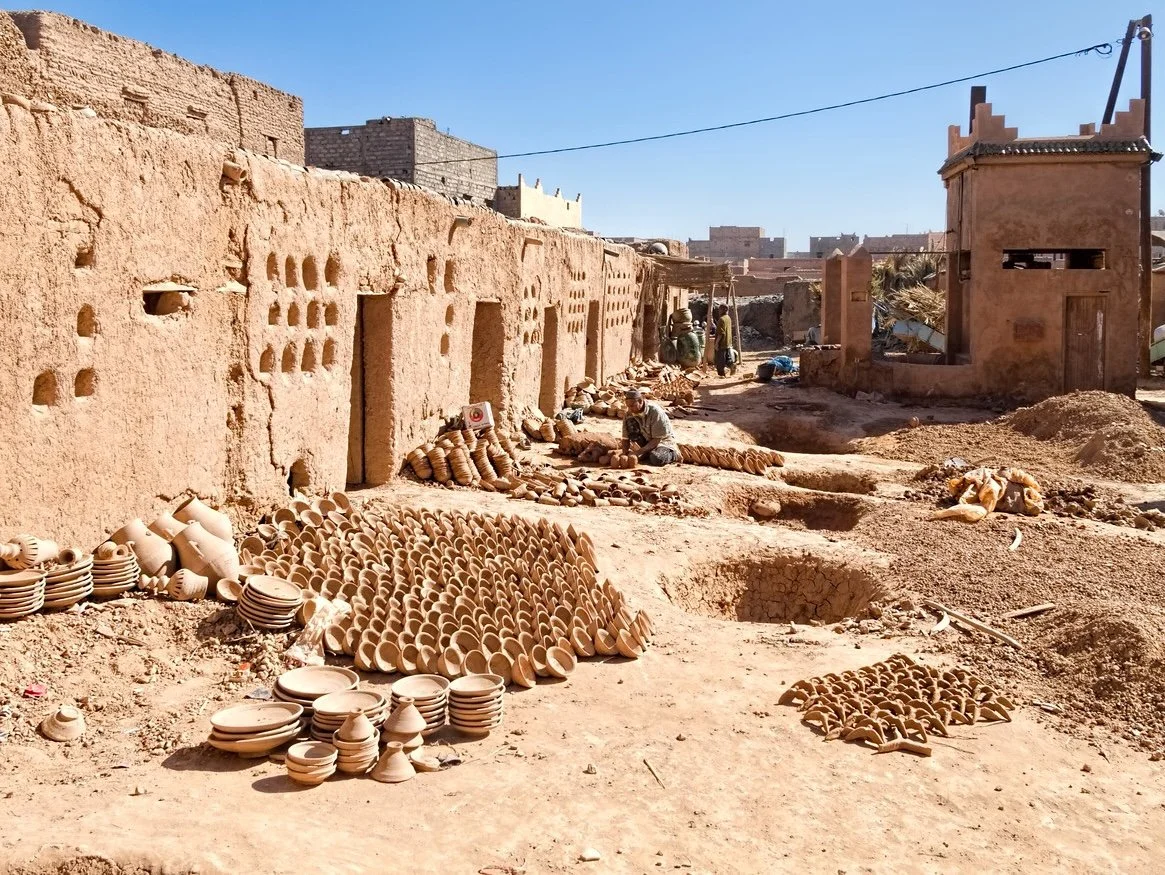
Pottery dries in the sun in the ancient town of Tamegroute, Morocco

6. Tamegroute: Morocco’s Ancient Library and Pottery Town

The Hidden Koranic Library

Tamegroute is one of Morocco’s best-kept secrets. This tiny village near Zagora houses an ancient Quranic library with manuscripts dating back to the 11th century.

Cups, tagines and containers for sale, many the famous green pottery of Tamegroute, Morocco

Unique Green Pottery

What makes this village even more special is its distinct green-glazed pottery, fired in traditional clay ovens. It’s imperfect, earthy and completely charming.

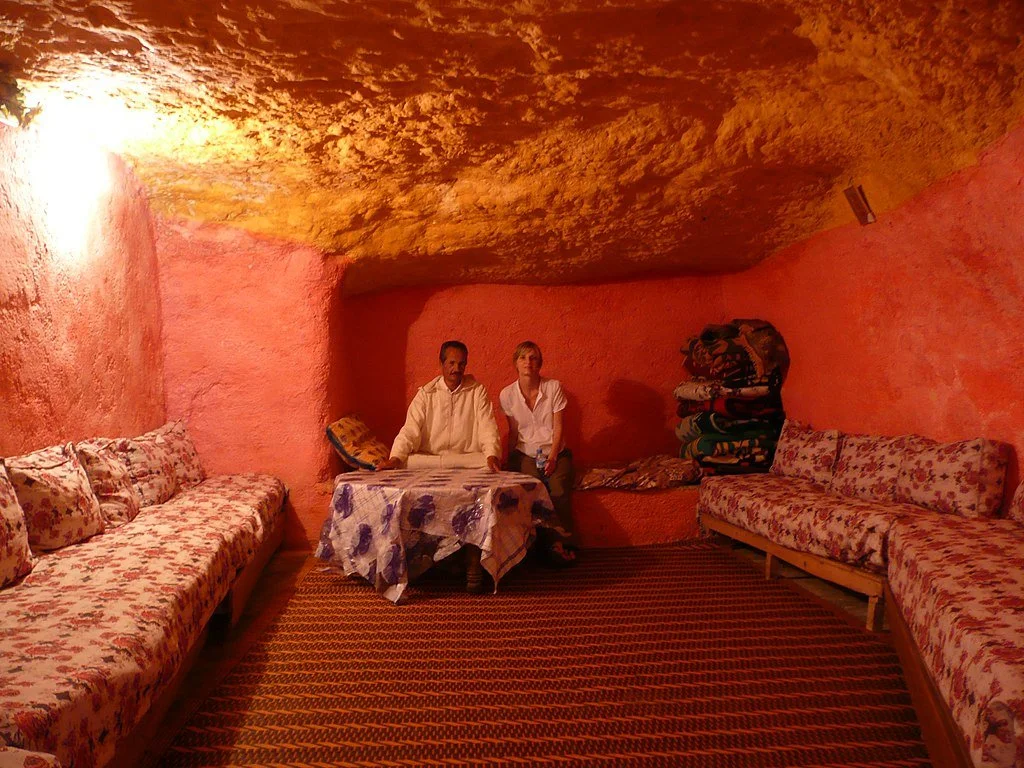
A man and woman sit inside one of the cave houses at Bhalil village in Morocco

7. Bhalil: The Cave House Village

Stay in Berber Caves

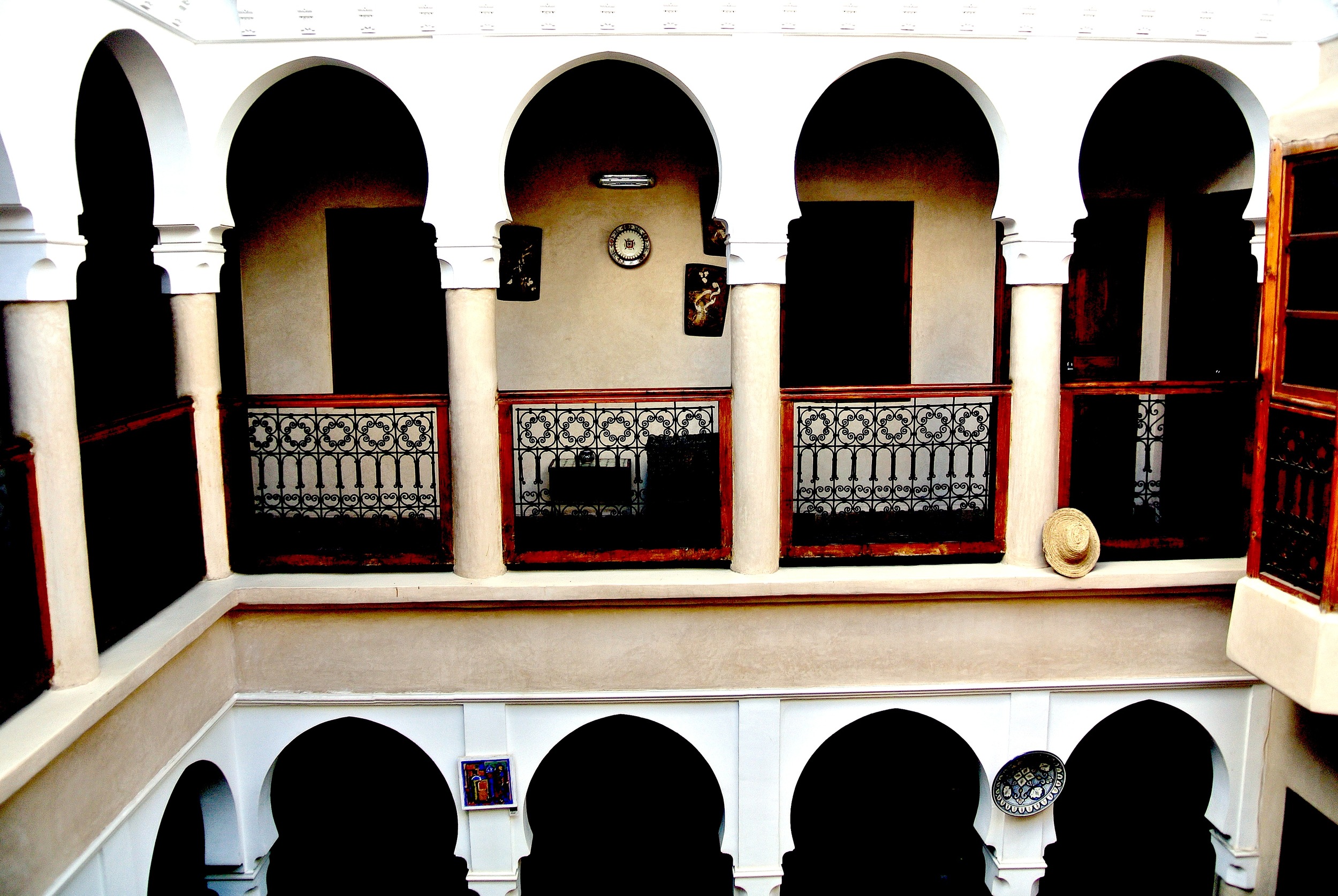
Just outside Fès lies Bhalil — a small village where many homes are literally carved into the hillside caves. Unlike modern cave hotels, these are still lived in by Berber families.

A view of the village of Bhalil in Morocco

Authenticity at Its Peak

You’ll be welcomed with tea, homemade bread and big smiles. No entry tickets, no waiting lines — just real life unfolding in front of your eyes.

The village of Tafraoute, Morocco, built atop and alongside rounded rock formations

Tips for Discovering Morocco’s Hidden Treasures

Hire local guides. 

Many of these places are off-grid. Hiring a local guide not only supports the community but also helps you uncover stories and places you’d otherwise miss.

Travel in the off-season. 

Skip the high seasons and travel during shoulder months (March to May or September to November). You’ll dodge the crowds and often score better deals on accommodations.

Learn a few Darija phrases. 

Even basic words like shukran (thank you) or salaam (hello) go a long way in rural areas. Locals will appreciate the effort, and you’ll likely get warmer treatment.

A Berber man holds a bike loaded with packs by the Atlas Mountains in Morocco

Why You Should Skip the Crowds and Go Off the Beaten Path

Sometimes, the most profound travel moments happen away from the obvious. Whether it’s sipping mint tea in a cave house, stumbling upon ancient manuscripts, or watching the sun dip behind a sandstone arch — these lesser-known gems will give you stories no guidebook can.

Want to dive deeper into planning your adventure? Check out this Morocco tour guide for expert tips, must-see destinations and everything you need to know before you go.

Morocco is a land of contrast — mountains, deserts, beaches, cities and silence. If you’re the kind of traveler who enjoys meaningful, raw and less commercialized experiences, these seven hidden gems will win your heart. So, step off the tourist trail and let Morocco surprise you in the most unexpected ways.

Baskets and flowerpots line the bright blue stairs and walls of Chefchaouen, Morocco

FAQs

1. What is the safest hidden gem in Morocco to visit solo?

Tafraoute is ideal for solo travelers. It’s calm and friendly, and the locals are extremely welcoming.

2. How do I get to Akchour from Chefchaouen?

Shared taxis or private transport from Chefchaouen will get you to Akchour in under an hour.

3. Is it expensive to visit these underrated places in Morocco?

No — in fact, many of these spots are budget-friendly and less commercial, meaning you get more value for your money.

4. What language is spoken in small Moroccan villages?

Mostly Amazigh (Berber) and Darija (Moroccan Arabic), but some locals speak basic French, too.

5. Are these hidden gems suitable for family travel?

Absolutely! Places like Ouzoud and El Jadida are especially fun for kids and easy to access for families. 

So go ahead — chase the waterfalls, sip tea in a cave, lose your breath at sunset. The real Morocco isn’t always in the tour book, but it’s waiting for you just the same. –Abe Abdessamad


Laughs, Lessons and Local Life: A Real-World Egypt Family Adventure

From camel chaos to temple adventures, this Egypt family travel story blends ancient sites, kid-powered mishaps and heartfelt local moments into one unforgettable trip.

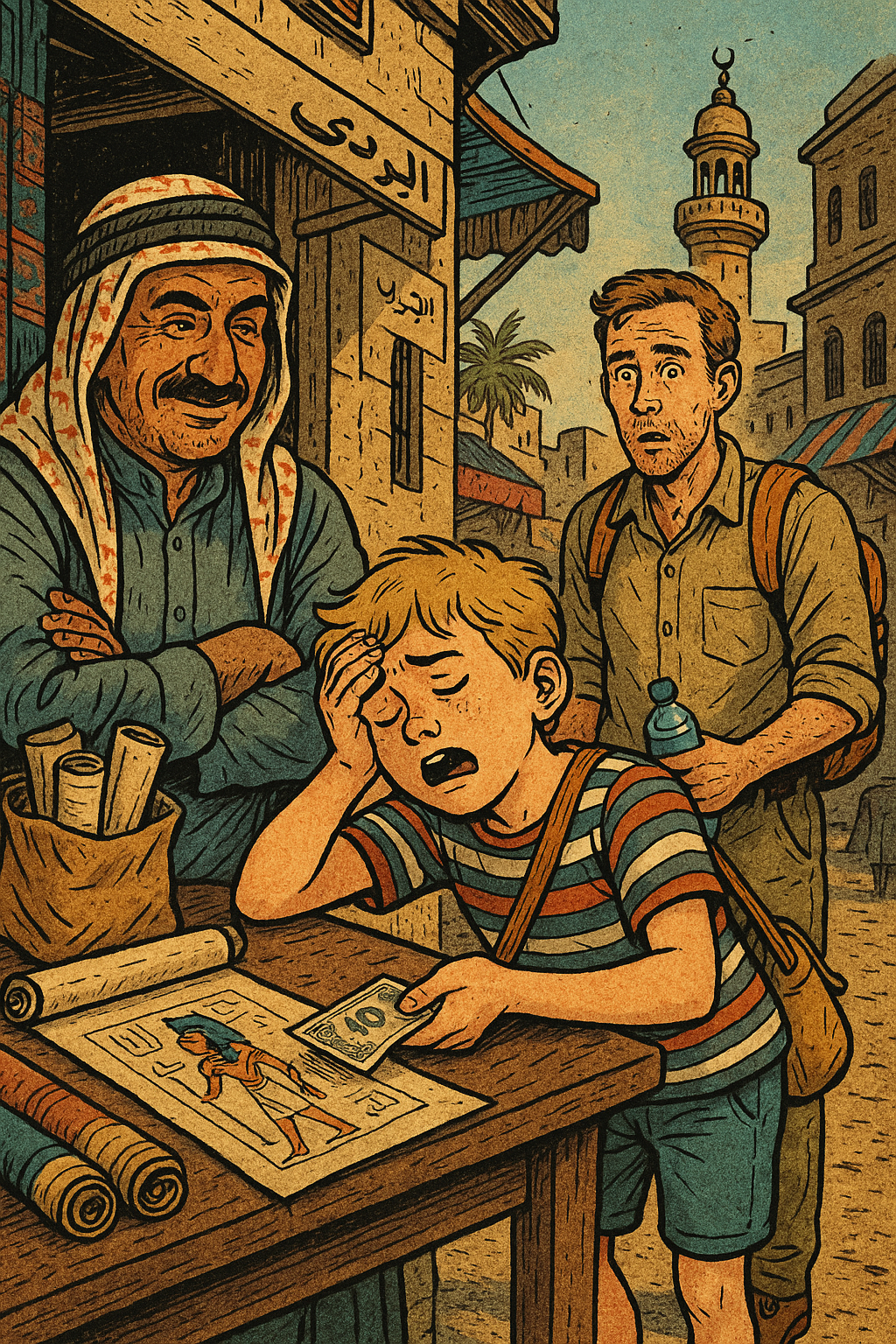
There’s nothing quite like watching your 8-year-old barter for papyrus scrolls with a Cairo street vendor. His tactic? Dramatic sighing and a mournful “But I only have 10 pounds.” (It worked, by the way.) 

And so began our deep dive into the chaos, charm and contradictions of Egypt, a land where ancient monuments meet honking tuk-tuks, and your kid suddenly becomes a pint-sized negotiator.

We discovered that letting go — of schedules, expectations, WiFi — leads to the kinds of memories you can’t make in a classroom or on a screen.

We hadn’t planned on falling in love. Egypt had been one of those “Well, it’s educational” destinations, a check-the-box history lesson for the kids. But within 24 hours of landing, our agenda unraveled. Not in a bad way, but in that glorious, sun-drenched, sand-between-your-toes kind of way where plans give way to experiences. Opting for one of the curated Egypt tours packages turned out to be our greatest travel hack, providing structure where we needed it, and freedom where we craved it.


Feluccas, Falafel and Family Chaos

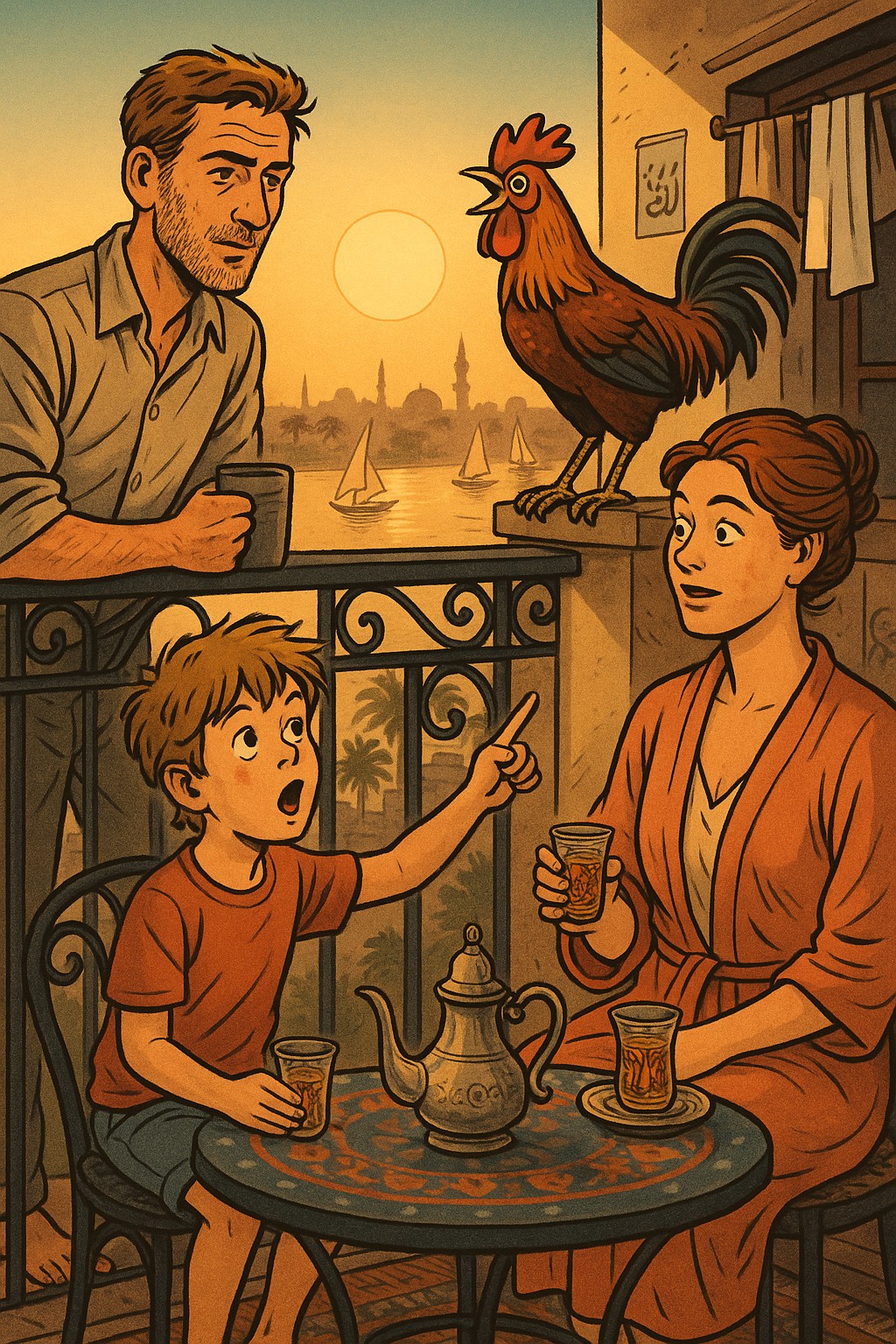
Our first Nile-side morning began with mint tea and a hotel balcony view that could humble even the most screen-addicted teen. The Nile shimmered like it knew it was important. Down below, feluccas caught the morning light, while a rooster (somehow on the sixth floor?) reminded us that alarm clocks are overrated.

Breakfast was a lesson in logistics, three kids, four plates of ful medames, and one very opinionated guide named Amira, who declared, “Today we walk like Egyptians.” Cue eye rolls from the teenagers. Cue “Walk Like an Egyptian” humming from dad. Cue me silently questioning my life choices.

Yet by midday, we were temple-hopping with the best of them. Karnak left us speechless, partly because of its scale, and partly because we were playing “spot the gods” while sweating profusely. The kids learned to recognize Horus and Anubis like old cartoon characters. I learned that wearing white linen isn’t just stylish; it’s survival.


Family rides camels by the Pyramids of Giza, the father's hat flying off

Kids, Camels and Culture Shock

Camel rides? Predictably chaotic. Our youngest named his camel Beyoncé. Beyoncé had opinions. Mostly about not walking straight. Still, nothing beats watching your children burst into uncontrollable laughter as their parents bounce wildly through the desert like disjointed marionettes.

But it wasn’t all slapstick. Somewhere between Giza and Aswan, the lessons snuck in. Our middle child, who rarely looks up from her phone, asked if we could visit a Coptic church “just to see.” Later, our eldest scribbled down notes about hieroglyphs, claiming it was “for a school project.” (Sure it was.) And all of us, parents included, began saying “Inshallah” with frightening regularity.

A family sits on the floor by their Egyptian hostess, various bowls of food on a mat, a young boy spilling lentils

The Food That Made Us Stay a Little Longer

Egyptian food is like that cousin who insists you try just one more bite. And then five more. Shawarma wraps became our lunch religion. Koshari, a carb-on-carb-on-carb masterpiece, had the kids questioning everything they thought they knew about dinner. And don’t even get me started on the desserts: basbousa, konafa — sticky, sweet, and somehow always appearing just when you said you were full.

One night, our guide invited us for a home-cooked meal with her extended family. We sat on floor cushions, passed dishes around with our hands, and managed to communicate with smiles, hand gestures, and the universal language of children upending a bowl of lentils.

What We Took Home (Besides Sand in Our Socks)

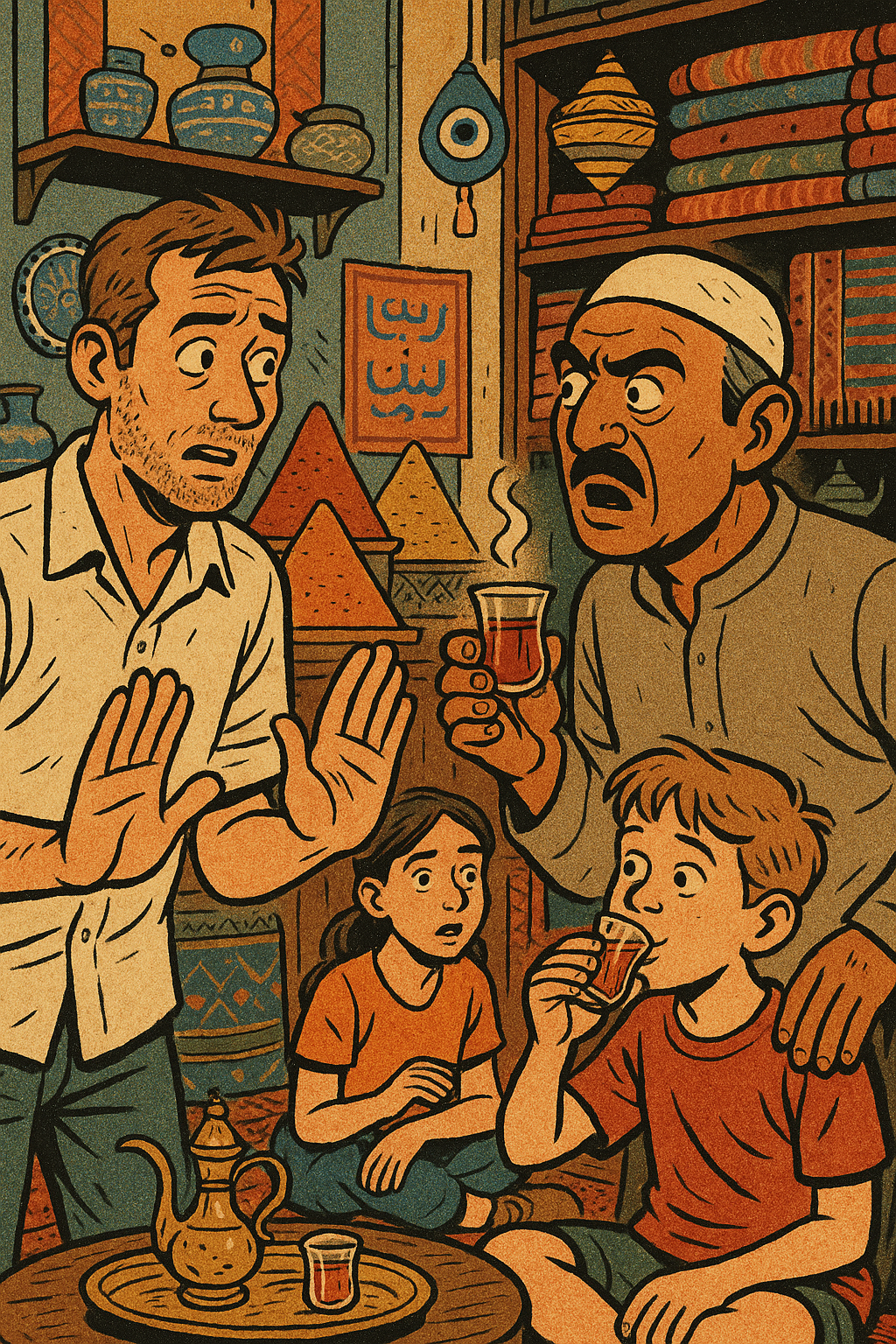
Travel doesn’t always go as planned. You miss a train. Someone gets food poisoning. You accidentally offend a shopkeeper by declining tea. (Pro tip: Just drink the tea.) But in Egypt, those moments weren’t failures; they were the trip.

Our youngest now claims he wants to be an archaeologist. The middle one added “learn Arabic” to her birthday wish list. And we, the tired grownups, discovered that letting go — of schedules, expectations, WiFi — leads to the kinds of memories you can’t make in a classroom or on a screen.

So if you’re thinking of going, with kids, with chaos, with curiosity, Egypt’s got room for it all. Just pack extra patience, an open heart, and maybe a few 10-pound notes for some persuasive bargaining practice. –Jarno van Bazel


Tips for Finding LPN Jobs Abroad With Travel Opportunities

Dreaming of nursing overseas? Here's how licensed practical nurses (LPNs) can find jobs abroad — plus what to watch out for before you go.

An LPN walks across a bridge in London, with the London Eye, Parliament and Big Ben in the background

Let’s be honest: The dream of working abroad isn’t just for tech bro digital nomads with a laptop and a hammock. If you’re a licensed practical nurse (LPN), you may have a serious case of wanderlust — and a skillset the world genuinely needs.

Maybe you’ve always imagined yourself helping underserved communities in rural clinics. Maybe you want a taste of life in a totally different healthcare system. Either way, the good news is this: Gone are the days when nurses were expected to spend their entire career in one hospital corridor. Today, opportunities to live and work abroad are growing — and they’re not just for RNs.

So, how do you land one of these gigs? Start here. 

A female nurse talks with an older male patient in a hospital bed

What to Know About LPN Jobs Abroad

Before you pack your stethoscope and passport, it’s worth noting that every country has its own rules and red tape. Some of it’s navigable. Some of it’s…less so. Either way, you’ll want to keep the following in mind:

  • Licensing. Many countries require you to complete local training, pass an exam, or jump through a few bureaucratic hoops before you’re cleared to work. This can take time — so plan ahead.

  • Languages. Not every hospital abroad operates in English. (Shocking, I know.) But some hospitals offer language support or cultural onboarding. It’s worth asking.

  • Visas. Just because someone wants to hire you doesn’t mean you’ll get a visa. International politics can make things tricky — so always double-check the latest entry requirements for healthcare workers.

  • Cultural adaptation. Working abroad isn’t just about a change of scenery; it’s a whole new way of life. From patient expectations to hierarchy and hours, the differences can be monumental. Try to connect with other nurses who’ve worked in your target country. Nothing beats firsthand insight.

A male nurse talks to a female nurse over coffee, pointing to a map near a laptop

Where to Look for LPN Jobs Abroad

Let’s talk logistics: Where do you actually find these jobs? Below are some of the best avenues for finding LPN jobs with a side of adventure.

1. Travel agencies for nurses

Yes, they exist. But before diving headfirst into agency life, we recommend starting with a broad search for travel nursing jobs on a platform like Jooble. It’s a great way to get a lay of the land: what’s out there, which countries are hiring, and what the job descriptions actually look like.

Once you have a clearer sense of your options, consider reaching out to travel nursing agencies. When comparing agencies, don’t forget to ask about:

  • Salary and benefits. Make sure you’re covered — literally. That includes health insurance, housing stipends, travel expenses and any relocation support.

  • Assignments offered. Some agencies specialize in urban hospitals. Others focus on rural or humanitarian work. Pick your adventure wisely.

  • Reputation. Read reviews, join nursing forums and ask tough questions. A flashy website doesn’t guarantee reliable support once you’re overseas.

A female LPN in a head scarf walks through Dubai at sunset, the Burj Khalifa in the background

2. Hospital websites abroad

Many hospitals recruit directly, especially in countries facing nursing shortages. Some top destinations for international LPNs include:

  • The United Kingdom. The NHS (National Health Service) is actively recruiting from abroad and offers solid benefits and onboarding support. If you’re considering the UK, check out this guide to the best neighborhoods in London to find the right place to live and work as a nurse abroad.

  • The UAE and Saudi Arabia. These Middle East countries offer high pay, tax-free income and accommodations — but be sure to research cultural norms before you go.

  • Ireland. With a growing demand for healthcare professionals, Ireland has been expanding its recruitment efforts for international nurses.

If a particular country intrigues you, search for major hospital websites and check their careers page. Bonus points if you reach out directly — they may have openings that aren’t widely posted.

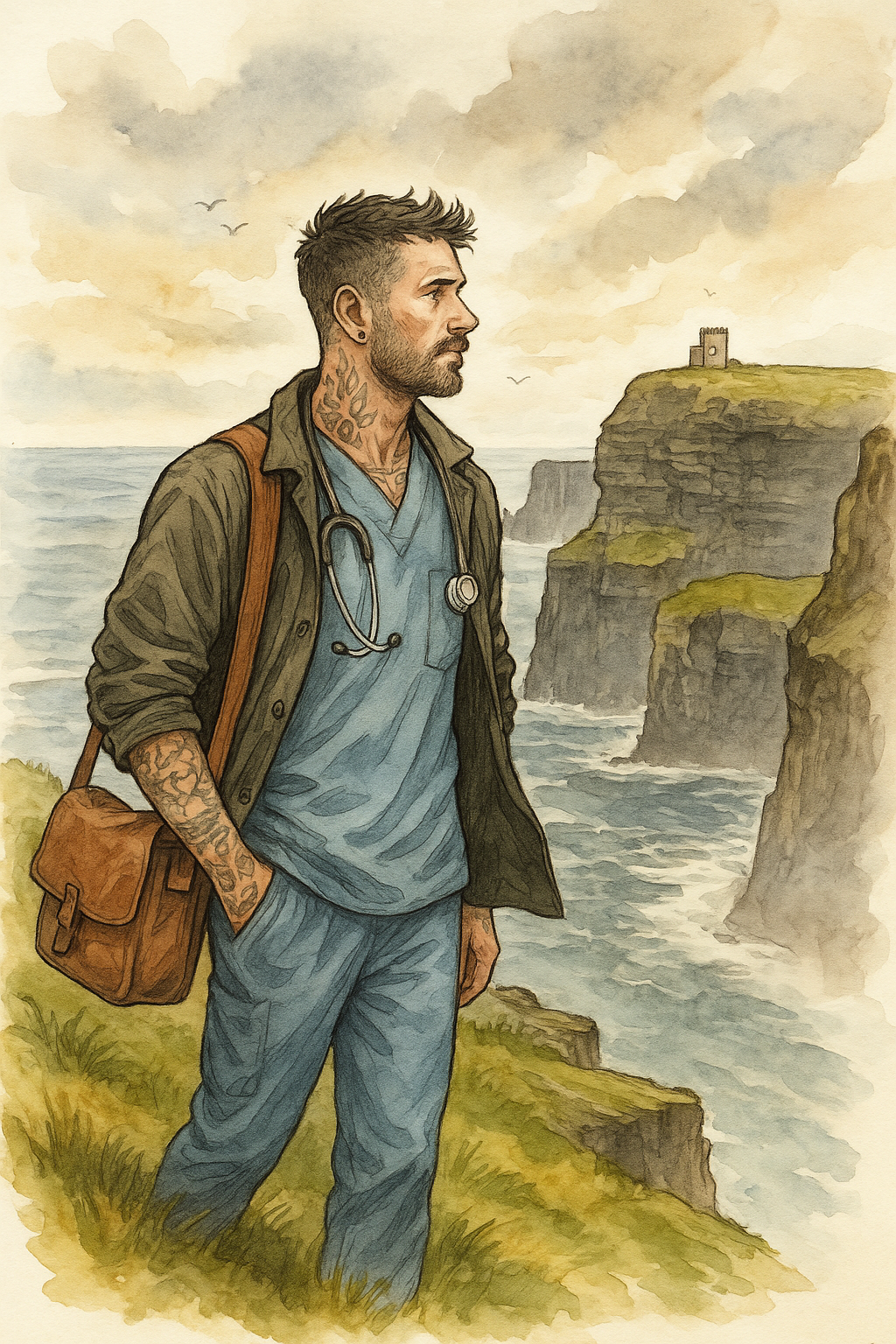
A male nurse with tattoos walks along a grassy cliffside over the water in Ireland

3. Professional nursing organizations

These aren’t just for continuing education credits or annual dues. They can also be powerful tools for international job hunting. Look to:

  1. ICN (International Council of Nurses). Active in over 130 countries, this organization offers job listings, policy info, and resources on nursing rights worldwide.

  2. The American Nurses Association (ANA). If you’re U.S.-based, ANA is a great hub for networking, certification guidance and career resources.

  3. NMC (The Nursing and Midwifery Council) in the UK. If you’re eyeing Britain, this is your official go-to.

Most countries have a version of these organizations. Find yours, and see if they have a global or outreach division.

4. Online job boards

Don’t sleep on the classics. Sites like Indeed, Glassdoor and LinkedIn often list international nursing jobs. While they may not all cater specifically to LPNs, many roles are labeled more broadly as “nurses” or “practical nurses.” Use multiple boards, track your applications carefully, and don’t be afraid to follow up.

Pro tip: Set up alerts for keywords like “LPN abroad,” “international nurse” or “travel nurse” plus the country name to stay ahead of new postings.

A female nurse sits on a stone wall talking to a young boy outside a clinic in the mountains of Nepal

Get Ready to Move!

You’re already in one of the most respected and needed professions on the planet. Why not take those talents global?

Whether you’re hoping to work in a bustling London hospital, a remote health outpost in Nepal, or a sleek clinic in the Emirates, your nursing license could be your ticket to a whole new life. Just do your homework, check your credentials, and trust that the right opportunity is out there.

It’s not about escaping your current life — it’s about expanding it. It could be just what the doctor ordered. –Dmytro Leiba

Controversial Takes on the Tower of Babel

Why did God really scatter humanity at Babel? A tale of ambition, jealousy, power — and the tower that dared to reach the heavens.

The Tower of Babel by Pieter Bruegel the Elder

The Tower of Babel by Pieter Bruegel the Elder, 1563

The story of the Tower of Babel is one of humanity’s earliest and most ambitious projects — a symbol of both unity and defiance. 

In Genesis, after Noah gets drunk and curses his grandson Canaan, the whole world spoke a single language and, as people settled in the plains of Shinar, they devised a plan: “Come, let us build ourselves a city and a tower with its top in the heavens” (Genesis 11:4). Their goal? To make a name for themselves and prevent being scattered across the Earth.

But their ambition drew the attention of God. Observing their progress, he said, “Behold, they are one people, and they all have one language … and nothing that they propose to do will now be impossible for them” (Genesis 11:6). And so, to disrupt their hubris, God confused their language, making it impossible for them to understand each other. The tower was abandoned, and the place became known as Babel. 

This brief but powerful narrative has sparked centuries of debate. What was so dangerous about this unified human effort? And does the name Babel hint at a deeper meaning? Let’s explore the surprising theories surrounding this ancient tale.

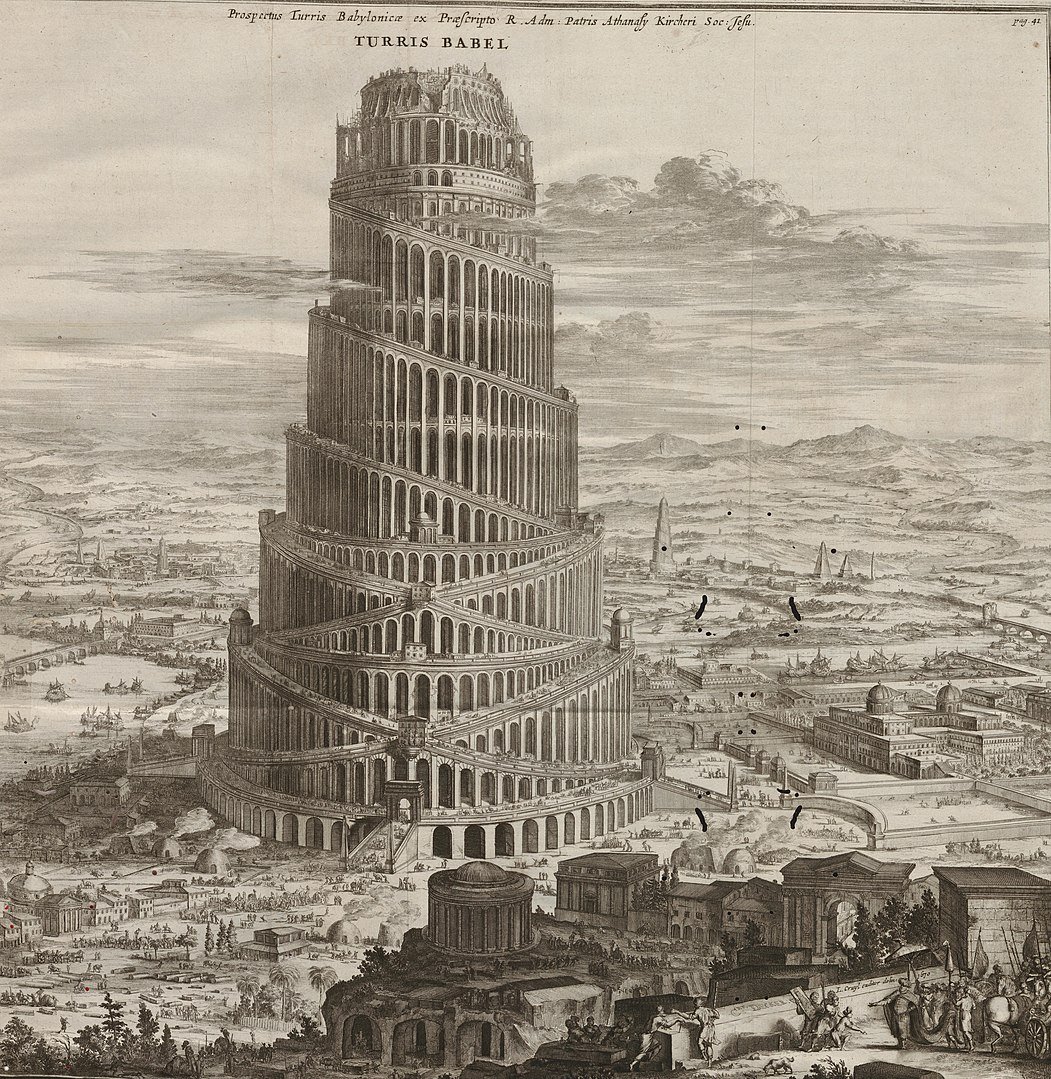
Turris Babel by Athanasius Kircher

Turris Babel by Athanasius Kircher, 1679

Babel: What’s in a Name?

The name “Babel” plays a central role in this story, and its meaning has intrigued scholars for centuries. Genesis 11:9 tells us, “Therefore its name was called Babel, because there the Lord confused the language of all the Earth.” The Hebrew word balal, meaning “to confuse,” is a fitting explanation for the chaos that ensued when languages were divided. But there’s more to the name than a simple pun.

Historically, Babel is associated with Babylon, one of the most powerful cities in ancient Mesopotamia. In Akkadian, the word Bab-ilu means “Gate of the God(s),” which gives the story an ironic twist. What was meant to be a gateway to the divine became a symbol of divine judgment. Scholars like John H. Walton, in Ancient Near Eastern Thought and the Old Testament, suggests that the story reflects a jab at Babylon, a city known for its monumental architecture and imperial power.

In this context, the Tower of Babel may not just be a story of human pride but also a critique of Babylon’s attempts to centralize control and elevate itself to divine status. As the story unfolds, the name Babel takes on layers of meaning — confusion, divine intervention and the limits of human ambition.

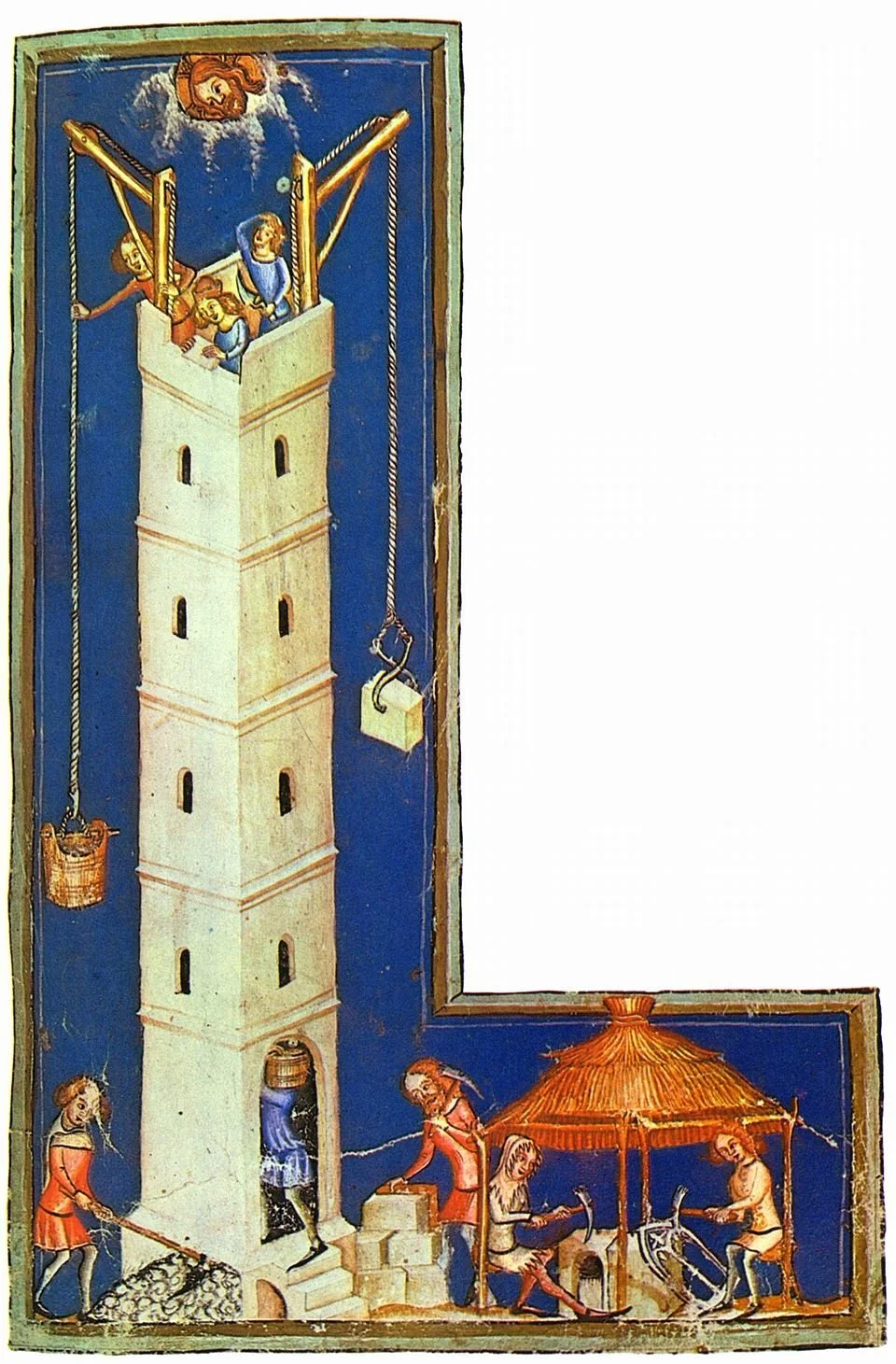
An L-shaped depiction of the Tower of Babel's construction from a late medieval manuscript of Rudolf von Ems’ Weltchronik

From a manuscript of Rudolf von Ems’ Weltchronik, circa  1370s

The Tower: Architectural Marvel or Symbol of Tyranny?

What exactly was the Tower of Babel? Some see it as a simple architectural wonder, a testament to early human ingenuity. Others, however, argue that it was more symbolic — a representation of a dangerous kind of unity, one that leaned toward tyranny.

Scholars like André Parrot, in The Tower of Babel, point out that the tower could have been modeled after the ziggurats of Mesopotamia. These massive stepped structures weren’t just places of worship; they were symbols of power, often commissioned by rulers to display their authority and connection to the divine. In the case of Babel, the tower may have been a political statement as much as a religious one — a way for the people of Shinar (modern-day Iraq) to consolidate their power and make a name for themselves.
Bruce K. Waltke, in Genesis: A Commentary, takes this a step further, suggesting that the story represents a critique of human arrogance and centralized control. By attempting to build a tower “with its top in the heavens,” humanity was essentially overstepping its bounds, aiming to control not just the Earth, but the heavens, too. For God, much like with Adam and Eve in the Garden of Eden, and that tempting fruit from the Tree of Knowledge, this was an example of human overreach. It also revealed mankind’s potential for tyranny. The scattering of people and languages, then, was more about disrupting a dangerous concentration of power.

Was the Tower of Babel merely a marvel of human engineering, or was it a warning about the dangers of unchecked ambition and centralized control? The story leaves room for both interpretations.

Tower of Babel by Lucas van Valckenborch

Tower of Babel by Lucas van Valckenborch, 1594

A Test of Unity or Divine Jealousy?

At the heart of the Tower of Babel story is a question: Why did God intervene? Was it simply a matter of preventing human overreach, or was there something more behind his actions? Some scholars argue that God’s decision to divide humanity was a way of protecting us from ourselves, while others suggest it could reflect a more unsettling aspect of divine jealousy.

The Babel story could represent God’s concern over humanity’s growing self-sufficiency. By working together with one language and a unified purpose, humanity was moving toward a level of technological and social advancement that might have made us too self-reliant — possibly even eliminating the need for divine authority. The creation of numerous languages, then, served as a divine check on human ambition, ensuring that we remain dependent on God’s guidance. (I’m not sure why he hasn’t stepped in since, say, with the rise of AI.) 
In other words, God was acting jealous and petty. Whether seen as protective or punitive, the confusion of languages suggests that unity without divine blessing was considered dangerous. Was it out of care or control that God intervened? Scholars continue to debate the deeper motivations behind this ancient narrative.

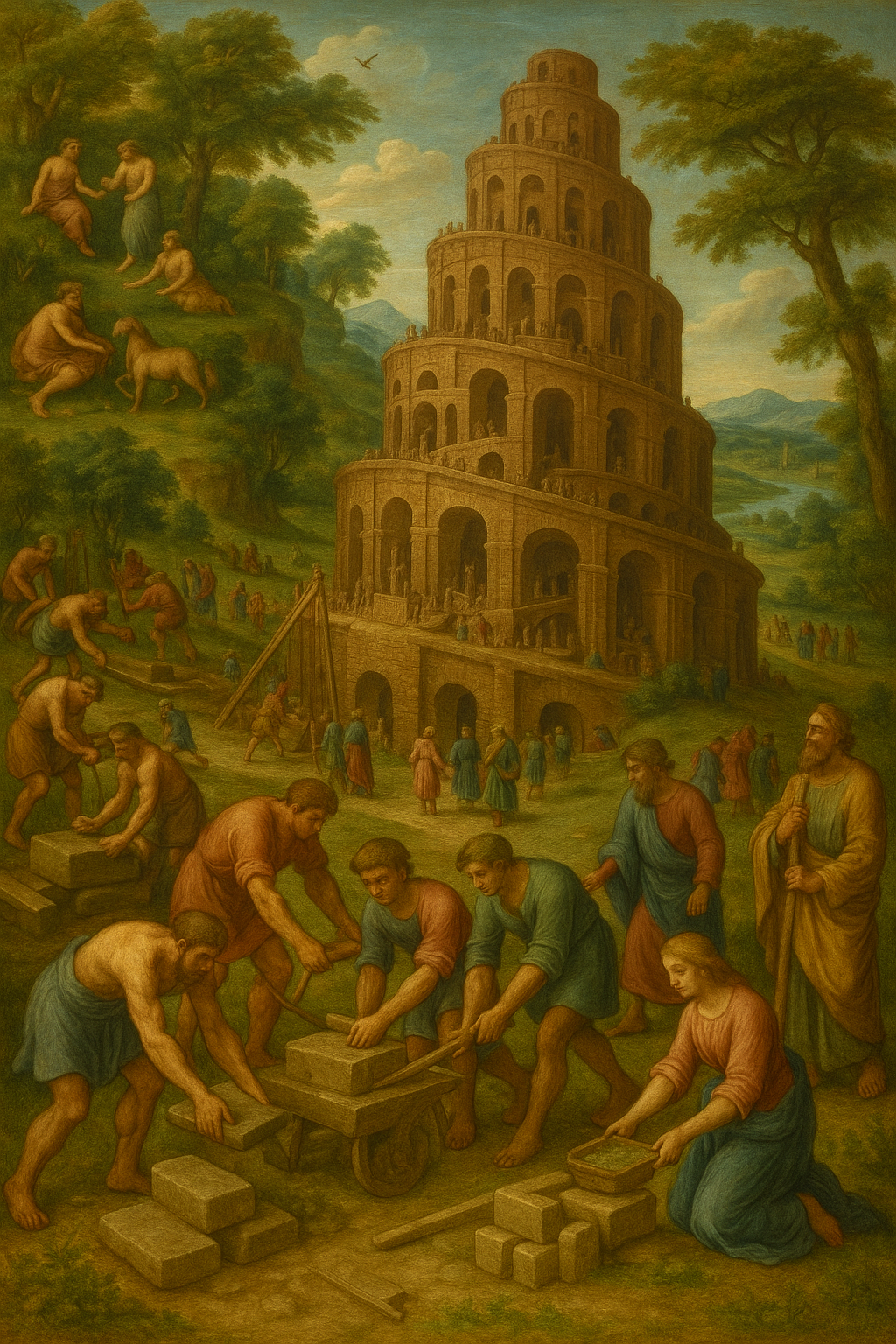
Workers in an idyllic setting optimistically build the Tower of Babel

The Tower as a Return to Eden?

Could the Tower of Babel have been more than just a display of human ambition? Some scholars suggest that it represented humanity’s attempt to re-create the unity they once experienced in the Garden of Eden: a world where they lived in harmony with each other and with God.

Phyllis Trible, in Texts of Terror: Literary-Feminist Readings of Biblical Narratives, explores the idea that the Babel project symbolized a desire to return to the original state of unity that existed before the Fall. In Eden, humanity walked in close proximity to God, speaking a divine language, free of conflict and strife. By building a tower “with its top in the heavens,” humans may have been trying to reclaim that lost connection and regain their place alongside the divine.

RELATED: What Does God Look Like?

John H. Walton, in The Lost World of Genesis One, sees things a bit rosier. He argues that God’s disruption of the Babel project was actually a protective act. After the Fall, humans were no longer capable of re-creating Eden through their own efforts. God’s scattering of people and languages could be seen as a way to prevent a repeat of the Fall — protecting humanity from trying to reenter a paradise they could no longer access without divine intervention.

RELATED: Controversial Takes on Cain and Abel

In this light, Babel becomes a story about the limits of human power and the dangers of trying to forcefully regain what was lost in Eden. The scattered languages and divided nations reflect the reality that Eden, and its perfect unity, is gone — at least until a new kind of divine reconciliation can be achieved.

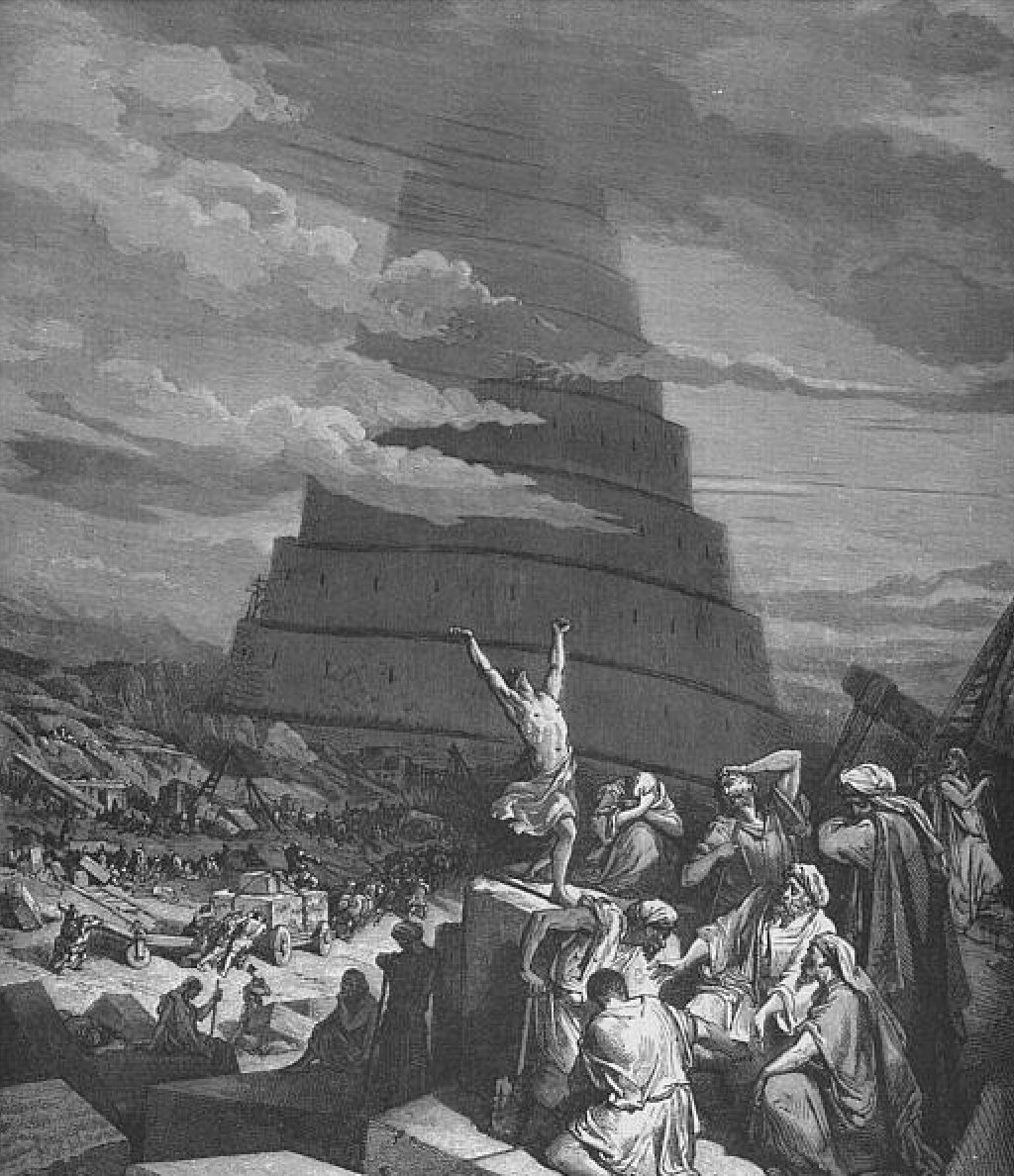
A man throws his arms up as workers despair at the Tower of Babel in The Confusion of Tongues by Gustave Doré

The Confusion of Tongues by Gustave Doré, 1866

The Role of Language: Tool of Power or Divine Gift?

Language plays a crucial role in the story of Babel. The multiplying of languages is God’s method of halting the ambitious project. But what does this division of tongues truly represent? Was it a curse to fracture human unity, or could it be seen as a divine gift, ensuring cultural diversity and preventing totalitarianism?

Some scholars think that the confusion of languages was a political move. By disrupting a single language, God introduced a tool that ensures division and decentralization, preventing any one group from gaining unchecked power over the world. 

In this view, language becomes a form of control. It prevents unified rebellion or dominance by any one people, a theme that would echo through later biblical stories of empires rising and falling.

Others, like Joseph Blenkinsopp in Creation, Un-Creation, Re-Creation, propose that language diversity could be seen as part of God’s larger plan for humanity. Rather than cursing humanity with confusion, the diversity of languages allowed for cultural richness, individuality and the development of multiple civilizations. This theory suggests that pre-Babel unity wasn’t a utopian ideal, but rather a stifling form of uniformity. The multiplying of languages, then, might represent a divine gift that celebrates diversity and human potential in new and unexpected ways.

An angry God hovers about the Tower of Babel, as people scatter in anguish

Theological Implications of Babel: Was God’s Action Justified?

The Tower of Babel story raises profound theological questions about the nature of God’s intervention. Was the scattering of people and languages a necessary measure to protect humanity, or was it an example of divine overreach? Scholars remain divided on whether God’s actions in this story reflect wisdom … or an overly controlling approach to human progress.

Walter Brueggemann, in Genesis: Interpretation: A Bible Commentary for Teaching and Preaching, interprets God’s scattering of the people as a protective act. He suggests that God saw humanity’s unified ambition as leading toward potential self-destruction. By disrupting their efforts, God prevented them from becoming too powerful and overstepping their natural limits, much like the consequences faced in Eden. As God observed, “Nothing that they propose to do will now be impossible for them” (Genesis 11:6). In this view, divine intervention was an act of mercy, keeping humanity from a path that could have led to another downfall.

On the other hand, David J.A. Clines, in The Theme of the Pentateuch, offers a more critical perspective. Clines questions whether God’s disruption of human progress was truly necessary. What if humanity had been allowed to continue its work, even if it led to failure? This view suggests that God’s intervention may have been a way to maintain divine authority, ensuring that humanity could never challenge or rival God’s position. In this reading, the confusion of languages represents a limit imposed by God — not on humanity’s safety, but on its potential.

These contrasting perspectives raise a larger question: Was God justified in scattering humanity and fragmenting their language — or was it an overreaction to a collective project that may have been doomed to fail on its own? As with many Old Testament stories, the answer depends on how you interpret divine-human relationships and the boundaries between freedom and control.

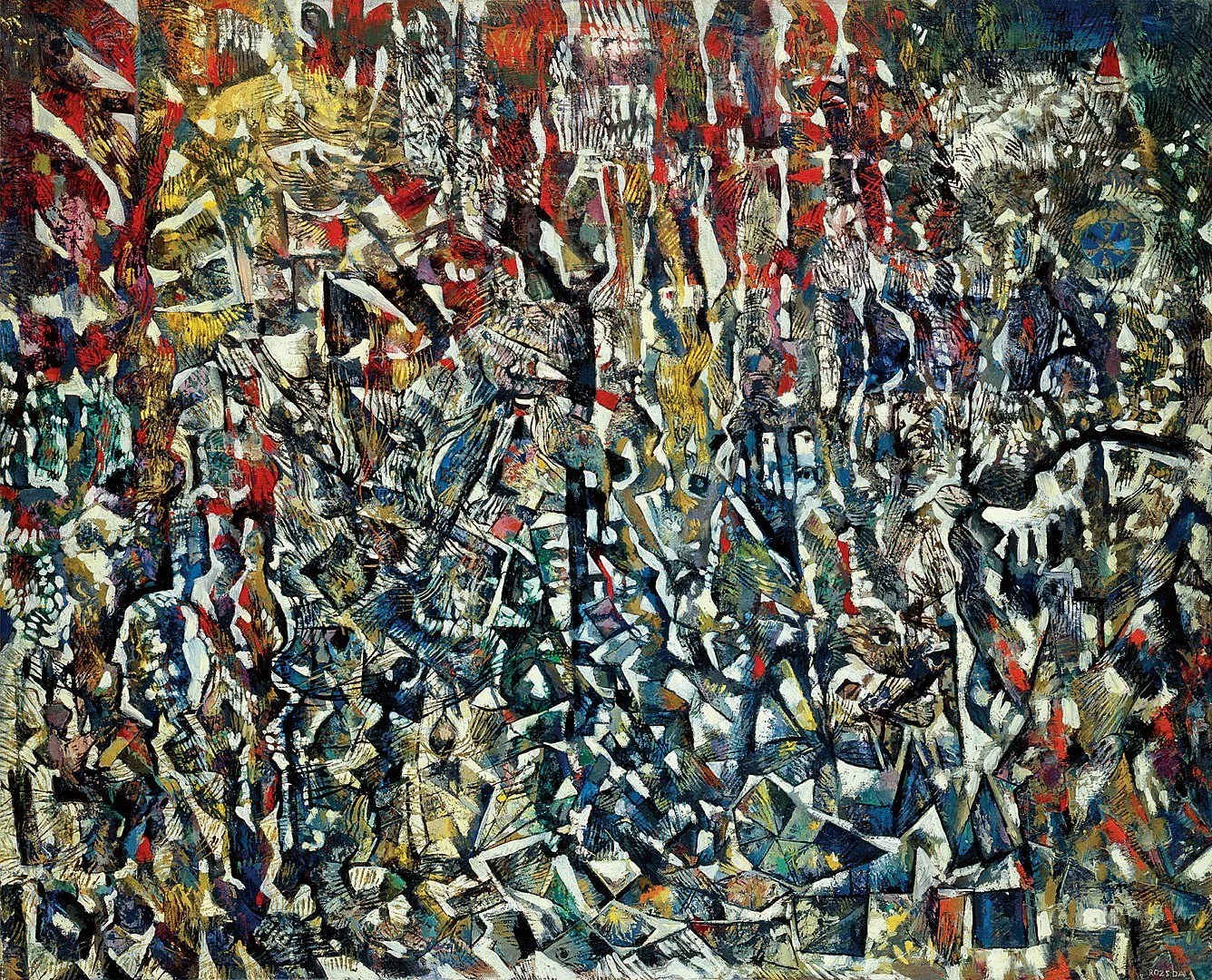
A modern take on the Tower of Babel by Endre Rozsda

Tower of Babel by Endre Rozsda, 1958

Babel’s Legacy

The Tower of Babel story is often seen as a straightforward tale about human pride and divine punishment. But as we’ve explored, it’s anything but simple. From questions about the true meaning of Babel’s name to debates over whether God’s actions were protective or controlling, this ancient narrative touches on themes of unity, power and the human desire for greatness. Was Babel a symbol of technological tyranny, a return to Eden, or an expression of divine jealousy? Each theory offers new insights into the relationship between humanity and the divine.

Ultimately, the Tower of Babel reminds us that the limits placed on human ambition — whether through language or culture — aren’t just about division, but about the complexity of freedom. As people reached for the heavens, they were brought back to earth, scattered, perhaps not as punishment but as a way to preserve our potential for diversity, creativity and growth. 

The conversation around Babel continues — in a variety of languages. –Wally

Madrid Legends and Ghost Stories: Haunting Tales From Spain’s Capital

Discover Madrid’s haunted history — from royal scandals to ghostly legends that still linger in its palaces, plazas and rooftops.

You could go almost anywhere on this spinning green globe — but Spain hits different. Sure, the sun-drenched beaches of Tenerife and Mallorca are calling, and flamenco in Sevilla is a whole event in itself. But if you’re like me, you want something more than a postcard. You want stories. Secrets. Shadows.

And while Sevilla has its share of ghost stories, I ended up in Madrid — not just for the churros and Goya paintings, but for the whispered legends hidden in its rooftops and courtyards.

A city of over 3 million residents, Madrid welcomes more than 10 million visitors a year — and for good reason. Beneath its modern buzz lies something older, stranger…and far more haunting.

Because everywhere you go in this city, the past follows.

Madrid: Where Legends Linger

Madrid might be one of Europe’s most modern cities — sleek, global, buzzing with energy — but scratch the surface, and you’ll find tales that have been passed down for centuries. Think royal cover-ups, wandering ghosts, and mysterious women who might’ve been wolves.

Let’s start with a few stories you won’t find on your average travel blog.

1. The House of the Seven Chimneys

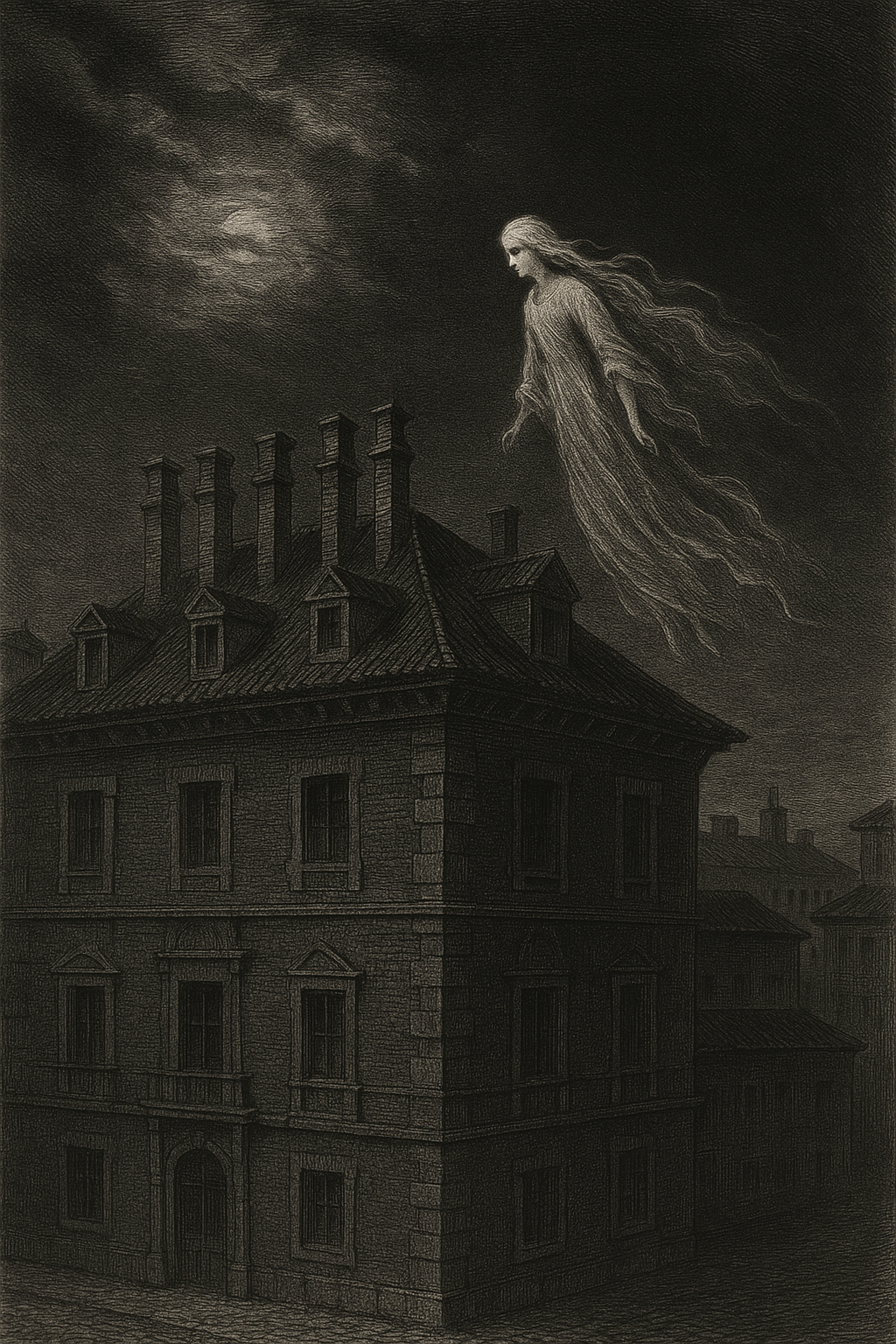
In the heart of Madrid sits a 16th-century mansion with (you guessed it) seven chimneys poking into the skyline. The building was home to Elena, a young noblewoman married to a soldier who went off to war — and never came back. Soon after, Elena herself died under suspicious circumstances. Her body vanished without a trace.

Rumors swirled: Had she taken her own life? Was there foul play? Some even whispered she’d been entangled with a royal — possibly the son of Philip II.

To this day, people say her ghost still wanders the roof, weaving between the chimneys, searching.

2. The White Lady of Linares Palace

This one sounds like a Gothic novel, but the Linares Palace — now Casa de América — has its own ghostly drama. The story goes like this:

The Marquis of Linares fell in love with a humble cigarette vendor, and they had a daughter. Years later, his own son, unaware of her identity, married the girl. Only after their wedding — and after having a child — did they discover the truth: They were half-siblings.

What happened next is murky. One version claims the couple ended their child’s life in despair. Now, visitors report ghostly whispers and shadows in the palace. Paranormal teams have even claimed to record unexplained voices.

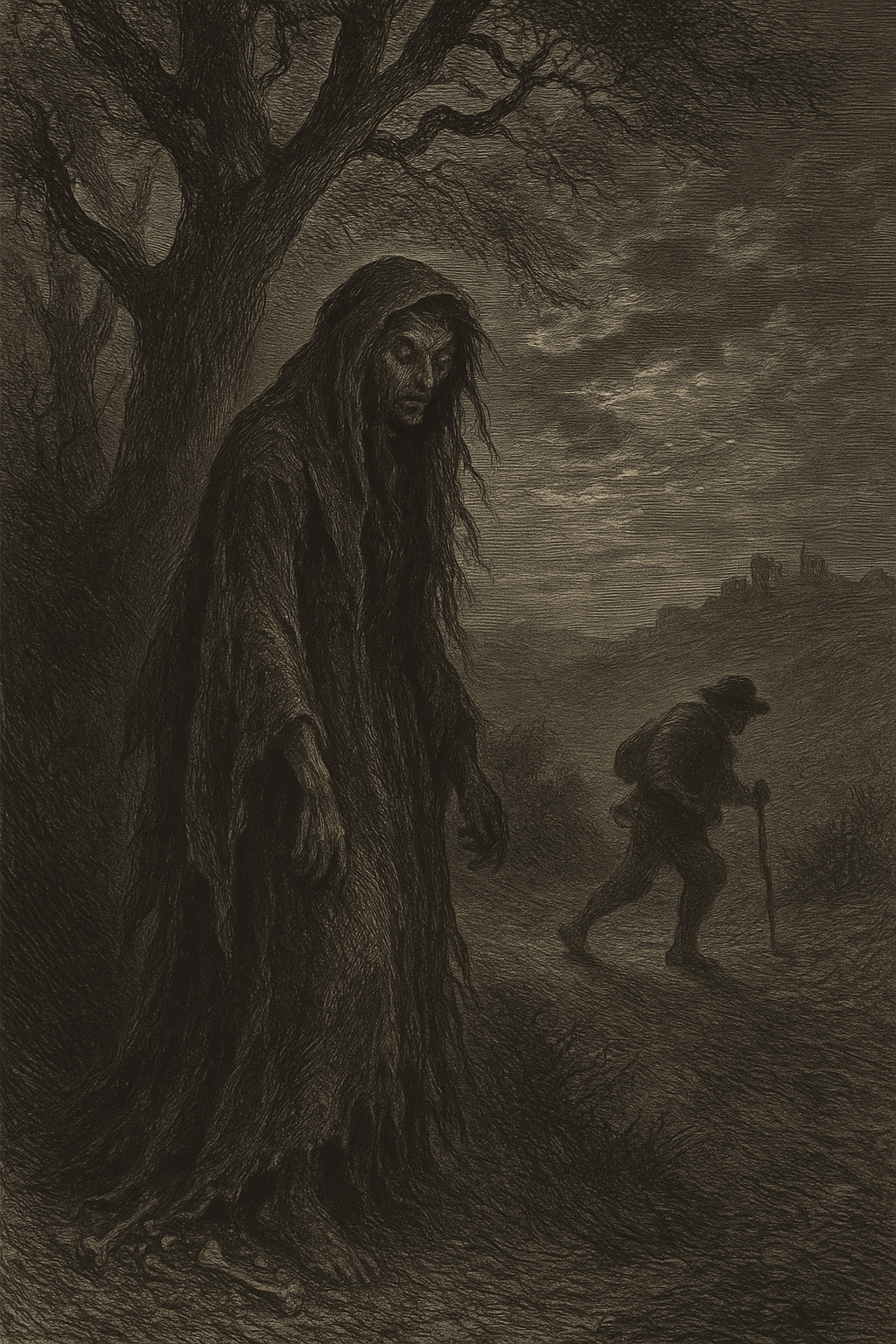
La Loba de Madrid, the She-Wolf, in ragged clothes, stands by a traveler, with bones at her feet

3. La Loba de Madrid (The She-Wolf)

“La loba” was slang for a certain kind of woman — alluring, dangerous, often outside society’s norms. One legend tells of a woman who roamed the hills near Madrid, guiding lost travelers to safety. Another paints her as a shapeshifter who wandered the outskirts at night, collecting bones.

Prostitute, protector, predator — take your pick. Either way, Madrid’s she-wolf still prowls through local folklore.

4. The Nude Maja and Goya’s Secret Muse

Francisco de Goya’s La Maja Desnuda (The Nude Maja) caused quite the stir in the late 18th century. The reclining woman, completely unclothed, was bold enough to warrant a private viewing — and later, an order for a second version with clothes, just in case anyone fainted.

This one isn’t a ghost story, but it’s one of Madrid’s great artistic mysteries. Who was the model? Many suspect the Duchess of Alba, one of Goya’s rumored lovers. But no one knows for sure — and that uncertainty only deepens the allure behind her half-smile.

Madrid Ghost Tours

If you really want to uncover these stories, book Madrid private tours with a guide who knows the city’s darker side. Ask about the palace hauntings. Peer up at the seven chimneys. Linger a moment longer on the quiet steps of Linares.

Let the past walk beside you.

And if you listen closely, you just might hear someone — or something — whisper your name. –Mark San Juan


Want a different kind of mystery? Follow Dan Brown’s Origin trail through Spain.

Chapultepec Castle’s Lavish Décor and Imperial Intrigue in CDMX

Take a room-by-room tour of Chapultepec Castle — North America’s only royal palace — and uncover the imperial lives of Maximilian, Carlota and Porfirio Díaz in the heart of Mexico City.

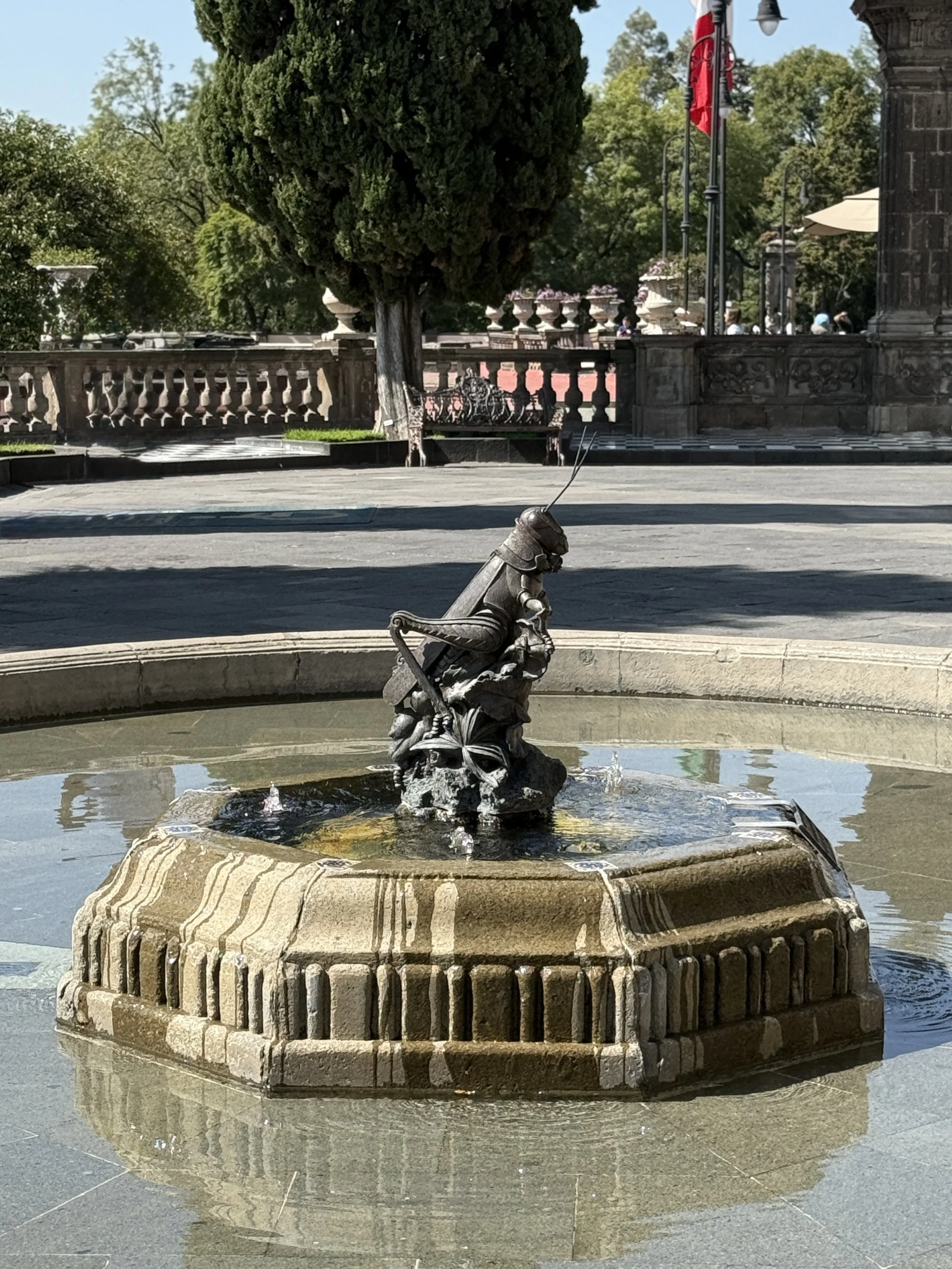
Schoolchildren pass by Grasshopper Fountain at Chapultepec Castle in CDMX

The deeper we wandered into Chapultepec Castle, the more it felt like we were stepping back in time. 

It’s the only royal palace in North America that actually housed monarchs: Emperor Maximilian and Empress Carlota, who brought European grandeur, idealism (and a fair share of drama) to Mexico City. Their brief, ill-fated reign left a lasting mark on the castle and the country — a poignant reminder of how imperial ambition once shaped the course of Mexican history.

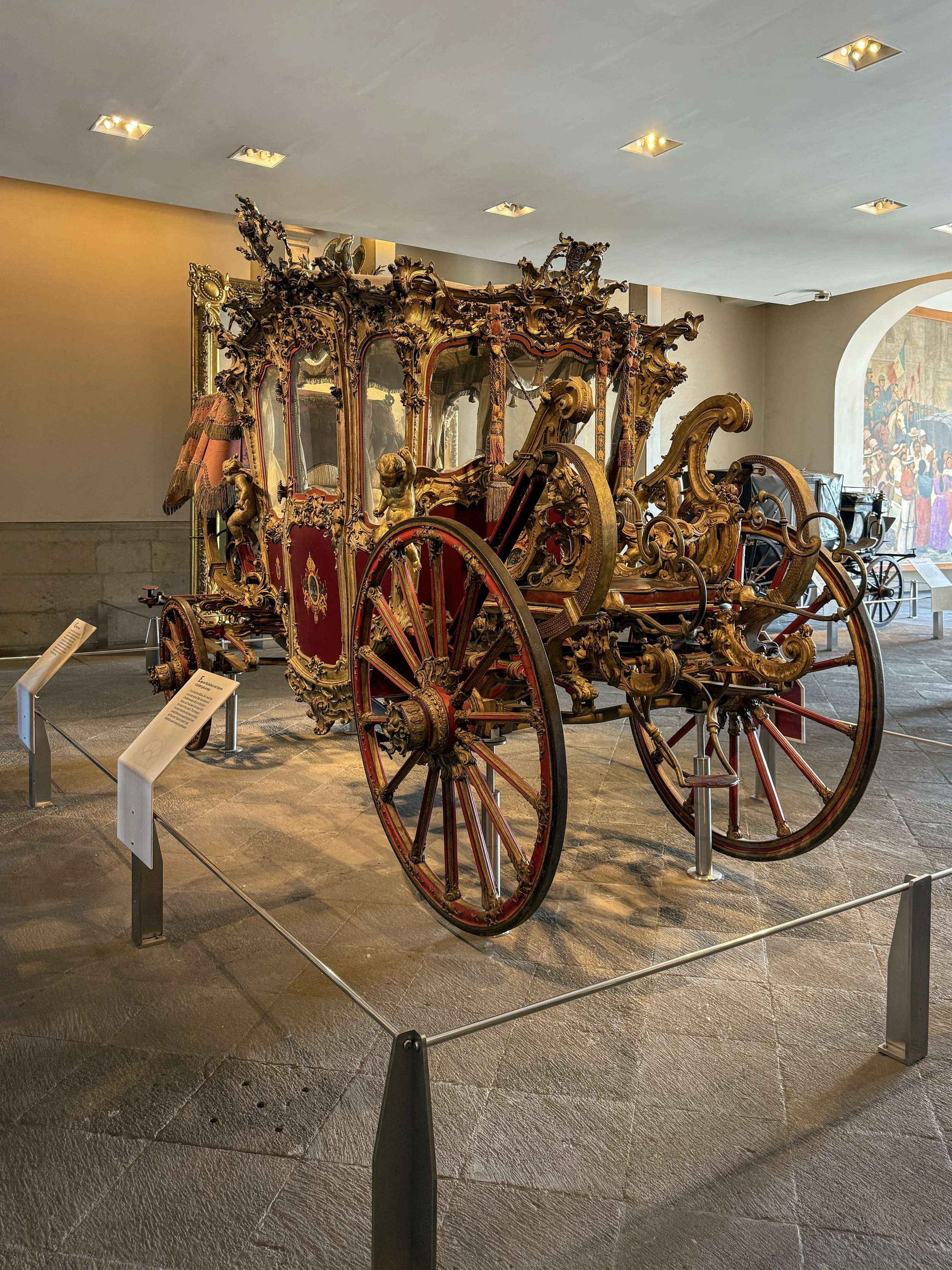
The carriage of Emperor Maximilian and Charlotte at the Alcázar of Chapultepec

This extravagant carriage belonged to Maximilian and Charlotte.

Sala de Carruajes (Carriage Room)

After making our way out of the west wing, which houses the Museo Nacional de Historia, Wally and I found ourselves in the Sala de Carruajes (Carriage Room). This covered space features historic carriages and serves as the main entrance to the Alcázar, or Royal Palace. 

At the center of the room is the royal coach that belonged to Maximilian and Charlotte. Designed for special occasions, the ornate Baroque-style carriage was meticulously fabricated in 1864 by the Cesare Scala workshop in Milan, Italy and later shipped to Mexico. 

Its gold detailing, sculpted cherubs, and doors bearing the coat of arms of the Mexican Empire, an eagle atop a nopal devouring a serpent, beneath an imperial crown — lend the carriage an air of majestic splendor.

According to records from the National Museum of History, the carriage was used only twice, contributing to its near perfect condition. You could almost imagine it rolling through the streets, drawing every eye in its path.

Additionally, a more modest four-wheeled carriage, designed in Paris, France by Henri Binder for everyday transport, is also on display. Originally built for Maximilian, it was adapted for President Benito Juárez. While its wheels kept turning, they no longer carried a king. Maximilian’s imperial crest was replaced with the emblem of the republic — minus the imperial crown.

We spent hours exploring the castle’s magnificent halls, grand stairways and stunning rooms — not to mention the breathtaking views from the top of Chapultepec Hill.

Just beyond the room’s entrance is the first of two large-scale works by Antonio González Orozco, one of the last great artists of the Mexican muralist movement: Entrada Triunfal de Benito Juárez al Palacio Nacional, Acompañando de Su Gabinete (The Triumphal Arrival of Benito Juárez at the National Palace, Accompanied by His Cabinet), painted in 1967.

Nearby is another painting by Orozco: Juárez, Símbolo de la República Frente a la Intervención Francesa (Juárez, Symbol of the Republic Against the French Intervention), which celebrates Juárez’s role in preserving Mexican sovereignty during the French Intervention. His resistance to foreign rule and efforts to restore the republic earned him the Colombian government’s honorific title Benemérito de las Américas (Worthy of the Americas).

Among the other artworks in the room are three equestrian portraits: one of Maximilian of Habsburg, painted in 1865 by French artist Jean Adolphe Beaucé; one of General Mariano Escobedo; and one of General Porfirio Díaz, painted by Spanish soldier and artist José Cusachs in 1901.

Visitors stand in the narrow Sala Introductoria (Introductory Hall) at Chapultepec Castle

A detail of the intricate Baroque plasterwork inside the Sala Introductoria.

Sala Introductoria (Introductory Hall)

Behind the Carriage Room, Wally and I stepped into a long, narrow hallway with wooden floors and a gilt plasterwork ceiling. This elegant corridor is now known as the Sala Introductoria (Introductory Hall), and features placards that tell the stories of its most notable residents, including Maximilian and Charlotte, as well as Díaz. 

Querido Max (Dear Max) by Miguel Carillo Lara in the Introductory Hall at Chapultepec Castle

Querido Max (Dear Max) by Miguel Carillo Lara, 2003

During Maximilian’s reign, this space served a very different purpose. It was a skittles alley, a game similar to bowling, where players would roll a wooden ball or disc down the hall, aiming to knock over nine pins arranged in a diamond formation. 

Attack on the Castle Chapultepec, a print by Nathaniel Currier from 1848

Attack on the Castle Chapultepec, a print by Nathaniel Currier, 1848

History of Chapultepec Castle

Chapultepec Castle’s appearance was shaped largely by two men: Maximilian I of the Austrian House of Habsburg, who ruled Mexico from 1864 to 1867, and Porfirio Díaz, who took power in 1876 and held onto it for over 30 years. 

Maximilian transformed the castle into a lavish imperial residence, while Díaz, an avid Francophile, despite fighting against the French in the Second Franco-Mexican War, modernized and expanded the structure. The castle remained the official presidential residence until 1934, when President Lázaro Cárdenas relocated the residence to Los Pinos. 

Not long after, on February 3, 1939, Cárdenas declared that Chapultepec Castle would become the National Museum of History. It officially opened to the public on September 27, 1944, during the presidency of Manuel Ávila Camacho.

The Austrian Archduke Ferdinand Maximilian Joseph (future emperor of Mexico) and his wife Charlotte of Belgium

The Austrian Archduke Ferdinand Maximilian Joseph (future emperor of Mexico) and his wife Charlotte of Belgium

The French Intervention in Mexico 

So, how did Mexico come to have an Austrian emperor?

It all started in the 1830s, when France began eyeing Mexico as a place to extend its influence, most notably during the Pastry War (1838–1839), a brief conflict sparked by complaints over damages to French-owned businesses. Although France never established a formal colony, its cultural and economic presence grew, especially in cities like Veracruz and Mexico City.

After years of political turmoil, Mexico’s economy was in ruins. In 1861, President Juárez made a bold move — he suspended all foreign debt payments. European creditors were infuriated, prompting France, Spain and Britain to send troops, determined to collect what they were owed. 

But it soon became clear that France, under Napoleon III, had bigger ambitions than debt recovery. By April 1862, Britain and Spain, unwilling to be drawn into an imperial venture, withdrew, leaving France to pursue its grand designs alone.

Napoleon wanted to establish a French-backed monarchy in Mexico to boost French influence in the Americas and counterbalance the growing power of the United States. 

French troops marched inland, but on May 5, 1862, they ran into stiff resistance at the Battle of Puebla, where Mexican forces under General Ignacio Zaragoza pulled off a stunning victory — a moment still celebrated every Cinco de Mayo.

However, the French regrouped, and returned stronger. By June 1863, they captured Mexico City, and Juárez and his government were forced into exile in the north.

With Mexico under French control, Napoleon needed a suitable European noble to serve as emperor. He found his answer in Archduke Ferdinand Maximilian Joseph of Austria, the younger brother of Emperor Franz Joseph I. As the second son, Maximilian had lived in his brother’s shadow. He was idealistic, ambitious and increasingly disillusioned with his limited role in Europe. 

Departure for Mexico by Cesare dell'Acqua, 1865, showing Maximilian and Charlotte on a boat

Departure for Mexico by Cesare dell'Acqua, 1865. The royal couple head out to rule Mexico — a reign that would be short-lived and would end with Maximilian’s execution in 1867.

Emperor Maximillian Goes to Mexico

At first Maximilian hesitated. But the promise of power and glory in Mexico eventually won him over. With the encouragement of his equally determined wife, Princess Charlotte of Belgium, he accepted Napoleon’s offer. On May 28, 1864, the couple arrived in Mexico to begin their reign as Emperorador Maximiliano I and Emperatriz Carlota of Mexico.

Settling into their new roles, Maximilian and Charlotte chose Castillo de Chapultepec as their imperial residence, overseeing renovations to transform it into a grand European-style palace. They saw themselves as enlightened rulers, destined to bring stability and prosperity to a nation fractured by years of war.

While conservative elites had initially welcomed the monarchy, many Mexicans remained unconvinced. Juárez’s supporters, known as Juaristas, refused to recognize Maximilian’s authority and launched a sustained resistance movement. In an effort to win public support, Maximilian introduced several liberal reforms. These included protections for workers, efforts to limit working hours, and the promotion of fair labor practices. He also issued decrees aimed at restoring land rights to indigenous communities, reversing some of the damage done by earlier liberal reforms that had led to the loss of communal lands.

L'Exécution de Maximilien(The Execution of Emperor Maximilian) by Édouard Manet, 1869

L'Exécution de Maximilien (The Execution of Emperor Maximilian) by Édouard Manet, 1869

The End of the Second Mexican Empire

Ironically, Maximilian proved too liberal for the conservatives who had brought him to power. They hadn’t signed up for an emperor who challenged their privilege and wealth.

As tensions mounted, international pressure began to close in. After the American Civil War ended in 1865, the U.S. government officially recognized Juárez as Mexico’s legitimate leader and strongly urged France to withdraw support. By 1866, under increasing diplomatic pressure from the United States, Napoleon began withdrawing French troops from Mexico, effectively ending armed intervention and leaving Maximilian without critical support. 

Determined not to relinquish power, Charlotte sailed to Europe in July 1866, pleading with Napoleon III, Pope Pius IX and her royal relatives to continue supporting the empire. But her mission failed — and the emotional toll broke her. She suffered a mental breakdown  in Rome and never returned to Mexico.

Back home, Maximilian made his final stand in the city of Querétaro. On May 15, 1867, Republican forces broke through, after one of Maximilian’s own men, Colonel Miguel López, betrayed him. Captured along with his generals Miguel Miramón and Tomás Mejía, he was quickly sentenced to death.

Despite desperate pleas from European monarchs — including his own brother — President Juárez stood firm. Granting a pardon would have weakened his stance and undermined the republic. 

On June 19, 1867, Maximilian and his generals were executed by firing squad on Cerro de las Campanas, the Hill of the Bells, bringing the Second Mexican Empire to a dramatic and final end. (The First Mexican Empire, led by Agustín de Iturbide, had collapsed decades earlier in 1823, after barely two years of shaky rule following independence from Spain.)

Pink and white furniture in the Sala de Lectura (Reading Room) at Chapultepec Castle

A pair of alabaster vases, featuring the coat of arms of the Second Mexican Empire, sit atop pedestals flanking a grand bookcase, while the sideboard holds a bust of French poet and fabulist Jean de La Fontaine. 

Sala de Lectura (Reading Room)

Rooms on the ground floor are accessible from a gleaming black and white marble promenade and have been restored to reflect their appearance during the time of Emperor Maximilian and Empress Charlotte. 

After the skittles alley, the first room we saw was the Sala de Lectura (Reading Room), where Maximilian spent time reading, drafting decrees, and handling both official and personal correspondence. 

As we took it all in, something on the red damask-covered wall caught our eye: a dark, rectangular outline, like a shadow frozen in time. It was clear that a large painting had once hung there. Our curiosity got the best of us, so I did a little digging online later and found out it had been a full-length portrait of Maximilian.

To be honest, this is probably the least impressive of the palace rooms. It’s all uphill from here. Louis XV-style giltwood chairs and a settee, upholstered in Aubusson tapestries, depict scenes from Jean de La Fontaine’s fables. While the term “tapestry” is typically associated with wall hangings, Aubusson’s craftsmanship extends to rugs and furniture upholstery as well.

Burgundy and offwhite murals showing noblemen playing games in the Salón de Juego (Game Room) at Chapultepec Castle

The set of tapestries depicting nobleman playing games, fittingly adorning the Game Room, were a gift from Napoleon III to Maximilian for his birthday.

Salón de Juego (Game Room)

The next room was the Salón de Juego (Game Room), which was about half the size of the Reading Room. Its walls were decorated with scenes of noblemen dressed in elaborate 16th century finery — frilly pleated collars, puffed-out pumpkin breeches and cloaks — engaged in games such as badminton, bilboquet (a cup and ball toy) and the aforementioned skittles.

A long table in the Comedor (Dining Room) at Chapultepec Castle

The overmantle bears the eagle and snake coat of arms, while the sideboard features a pair of putti holding Díaz’s seal, ‘RM,’ which stands for República Mexicana.

Comedor (Dining Room)

Immediately following was the Comedor, or Dining Room. The fireplace mantelpiece and sideboards, masterfully handcarved from mahogany by Pedro Téllez Toledo and Epitacio Calvo, were commissioned during the 1880s during Díaz’s presidency. Above the topless caryatids, symbolizing Mexico’s agricultural abundance, hung another elegant Aubusson tapestry, this one depicting a fox and a duck.

The dining table was equally impressive. Tooled leather chairs with nailhead studs surrounded it, and the table itself was set with silver-plated serving pieces and candelabra from Maximilian’s own service — crafted by Christofle of Paris, no less, the same silversmith favored by Napoleon III. 

Salón de Gobelinos (Hall of Gobelins) with a piano and portraits on a pink wall at Chapultepec Castle

The Music Room includes chairs upholstered with tapestries depicting the fables of Jean de La Fontaine and two grand pianos.

Salón de Gobelinos (Hall of Gobelins)

Much to our disappointment, the Salón de Gobelinos (Hall of Gobelins) wasn’t named after mischievous little creatures from folklore, as we had hoped. Instead, it gets its name from the Gobelin family of clothmakers. Their Paris workshop became world-famous, and in this case, the name refers to the aforementioned Aubusson-woven textiles that cover the Louis XV furniture throughout the room.

Salón de Gobelinos (Hall of Gobelins) at Chapultepec Castle

Gazing back at us from the walls were full-length portraits of Maximiliano and Carlota by German painter Albert Gräfe, alongside those of Napoleon III and his wife, Eugénie de Montijo. In the center of the room stood two grand pianos — one French, the other English — which Maximilian and Charlotte once played.

The curving Grand Staircase with red runner and a seating nook at Chapultepec Castle

The spiral staircase adjacent to the elevator was designed by architect Antonio Rivas Mercado. He contributed to the castle’s neoclassical design, transforming it into a grand structure suitable for use as a presidential residence and a venue for official events. Mercado’s influence extended beyond architecture, though; while serving as director of the Academy of San Carlos from 1903 to 1912, he was responsible for granting the scholarship that enabled Diego Rivera to study in Europe for several years. 

The light blue Recámara de Carlota (Charlotte’s Bedroom) at Chapultepec Castle

The brass bed in Carlota’s bedroom displays the coat of arms of Maximilian’s empire.

Recámara y Baño de Carlota (Charlotte’s Bedroom and Bathroom)

The Recámara de Carlota (Charlotte’s Bedroom) was the first in a suite of three rooms once used by the empress herself. Decorated in blue and gold, it features Boulle-style furniture, characterized by intricate inlays of tortoiseshell and brass. At the center stood a brass bed, its headboard topped by an oval medallion featuring the coat of arms of the Second Mexican Empire — an eagle and a snake, flanked by two griffins — while the footboard bears the imperial monogram “MIM” for Maximiliano I de Mexico. 

Next to the bedroom was the Baño de Carlota, or Charlotte’s Bathroom, where we saw the massive freestanding marble bathtub commissioned by Maximilian for Charlotte. Hewn from a single block of stone, it was produced by the Fratelli Tangassi workshop, an Italian family of alabaster artisans from Volterra, and exported to the castle at great expense. Standing before it, I could only imagine how much water it must have taken to fill.

A marble bathtub and floral tiles in Charlotte's bathroom at Chapultepec Castle

Behind the tub, tiles imported from China were delicately painted with peonies and cherry blossoms. 

Sala de Estar Carlota (Charlotte’s Sitting Room) at Chapultepec Castle

Charlotte’s sitting room reflected her devout faith, with a rare bust of the Virgin Mary under glass and one of the earliest known images of Our Lady of Guadalupe in the castle’s collection.

Sala de Estar Carlota (Charlotte’s Sitting Room)

Beyond the bathroom was the Sala de Estar Carlota (Charlotte’s Sitting Room). 

As a deeply devout Catholic, she saw her role in Mexico as part of a divine mission, her religious devotion merging with a growing sense of connection to her adopted country. The room reflected her spirituality, with a bust of the Virgin Mary under a glass cloche, a painting of St. Peter’s Basilica in Vatican City, and a small painting of the Virgin of Guadalupe, a powerful national and religious symbol in Mexico.

Salón de Acuerdos (Meeting Room) at Chapultepec Castle

With a green velvet tabletop and portraits of past leaders, the Salón de Acuerdos served as a formal space for cabinet discussions after the castle became the president’s official residence.

Salón de Acuerdos (Meeting Room)

Once Chapultepec Castle became the official presidential residence, there was a need for a dedicated space to receive cabinet members, and that’s where the Salón de Acuerdos (Meeting Room) comes in. Designed in the early 20th century, the green velvet tabletops and portraits of past leaders lining the walls make the room feel very presidential. Among those displayed are Presidents Francesco Madero, Álvaro Obregón, Emilio Portes Gil, Pascual Ortiz Rubio and Lázaro Cardenas.

The fountain in the Patio del Chapulín (Courtyard of the Grasshopper) at Chapultepec Castle

The bronze grasshopper atop the Fuente del Chapulín was sculpted by Luis Albarrán y Pilego and installed in 1924.

Patio del Chapulín (Courtyard of the Grasshopper)

Before climbing to the second floor, we took a moment to explore the Patio del Chapulín (Courtyard of the Grasshopper). Framed by manicured hedges and anchored by the Fuente del Chapulín (Grasshopper Fountain), the courtyard opens onto a balcony terrace with breathtaking views of Mexico City below. 

Statues dedicated to the Niños Héroes stand atop the balustrade at the edge of the Patio del Chapulín at Chapultepec Castle

Six statues dedicated to the Niños Héroes stand atop the balustrade at the edge of the Patio del Chapulín.

Standing atop the terrace balustrade are six statues of the Niños Héroes, created in 1942 by artist Armando Quezada Medrano. They depict the young military cadets who died defending Mexico during the Battle of Chapultepec on September 13, 1847, during the Mexican–American War. Note that these figures are separate from the Altar a la Patria (Altar to the Homeland) monument, also located in Chapultepec Park, although both honor the same brave cadets.

The sweeping Escalera de Leones (Lion’s Staircase) links the first floor to the terraced gardens above. Its steps, carved from Carrara marble, are flanked at the base by two marble lions modeled after Antonio Canova’s monumental mausoleum for Pope Clement XIII in St. Peter’s Basilica at the Vatican. One rests peacefully, while the other stands watchful and alert. 

Marble lion with a statue of a naked woman behind it by a staircase in Chapultepec Castle
A man walks up the Escalera de Leones at Chapultepec Castle

The Escalera de Leones leads to the rooftop gardens and includes stained glass windows installed during the presidency of Venustiano Carranza.

At the top of the staircase, stained glass windows installed during the presidency of Venustiano Carranza (1859–1920) protect the stairwell from the elements. Their designs feature floral and vegetal patterns inspired by the Mexican landscape. One window depicts the glyph of a chapulín (a grasshopper, running with the theme), perched on a hill with flowing water beneath it. The other showcases the Mexican coat of arms. 

The observatory tower in the rooftop gardens at Chapultepec Castle

Above the treetops, the Tall Knight keeps watch — first as a military tower, then as Mexico’s gaze turned skyward in 1877, becoming a short-lived but advanced observatory.

Rooftop Gardens

Just beyond are the rooftop gardens designed by Austrian botanist Wilhelm Knechtel during the reign of Emperor Maximilian. At its center stands a tower called the Caballero Alto (Tall Knight), surrounded by neatly trimmed hedges and classical statues. This structure, built around 1842 as part of the Military College, was briefly repurposed in 1877 as an astronomical observatory, complete with meteorological instruments considered cutting-edge for the time.

A fountain in the rooftop gardens at Chapultepec Castle in CDMX

Designed in the 1860s by Austrian botanist Wilhelm Knechtel, these rooftop gardens were part of Maximilian’s vision to bring European elegance to Chapultepec Castle.

Adorning the walls of the elevated garden are colorful frescoes of bacchantes — female followers of Bacchus, the Roman god of wine. Painted in the Pompeian style, these works were created by Santiago Rebull, the court painter of Maximilian and one of the few individuals close to the monarchy who managed to remain in Mexico and even thrive in the subsequent decades under the Republic. He completed four of the figures between 1865 and 1866 during Maximilian’s reign, and nearly three decades later, painted the remaining two in 1894 under the Díaz administration.

A breast falls out of a dress in a fresco of a bacchante in the rooftop gardens of Chapultepec Castle

Nip slip! The bacchae depicted on the walls of the upper terrace were painted by Santiago Rebull in the Neoclassical style, inspired by the 18th century rediscovery of the ancient ruins at Pompeii and Herculaneum.

The day Wally and I visited, an orchestra and a vocalist were rehearsing an aria beneath the terrace pavilion.


Díaz and Chapultepec Castle

During his extended rule as president, Díaz was determined to position Mexico as a modern, forward-thinking nation, and the castle became part of that vision. Under his direction, Chapultepec Castle saw some major upgrades, including the installation of its very first elevator in 1900. It connected the basement, main floor and rooftop, and at the time, it was cutting-edge. In fact, the castle was one of the first buildings in all of Mexico to be outfitted with electricity.

The bedroom of Porfirio Díaz at the Alcázar of Chapultepec in CDMX

Díaz’s bedroom was appointed in French style with Louis XVI furniture.

Recámara de Porfirio Díaz (Bedroom of Porfirio Díaz)

Inside, the Recámara de Porfirio Díaz (Bedroom of Porfirio Díaz) reflects a refined French taste. Though not as lavish as Charlotte’s quarters downstairs, it still impresses with its Louis XVI furnishings: a stately mahogany bed and a pair of cream-colored slipper chairs with scrolled backs and elegant fringe.

The Galería de Emplomados lined with stained glass windows

The Galería de Emplomados is lined with stained glass windows created by the French firm Champigneulle Fils, and were installed in 1901.

Galería de Emplomados (Stained Glass Gallery)

Beyond Díaz’s bedroom is the Galería de Emplomados (Stained Glass Gallery). Installed in 1901, the grand corridor features five stained glass windows crafted by the renowned French firm Champigneulle Fils, celebrated for their work in churches, palaces, and civic buildings across Europe and Latin America. Spanning nearly 800 square feet, the windows cover half the length and height of the Alcázar’s eastern elevation. Each depicts a nature goddess: Pomona (goddess of fruits), Flora (goddess of flowers), Hebe (bearer of divine nectar and grantor of eternal youth), Diana (goddess of the hunt), and Ceres (goddess of agriculture). 

It would have been the perfect photo op — if not for one particularly self-important visitor, who had commandeered the gallery, barking orders at her poor friend and critiquing every shot like she was Anna Wintour on a Vogue editorial shoot.

The Salón de Embajadores (Hall of Ambassadors) with a glowing chandelier at Chapultepec Castle

The Salón de Embajadores features furniture in the Louis XVI style and plaster painted to look like marble.

Salón de Embajadores (Hall of Ambassadors)

The final Díaz-period room we peered into was the Salón de Embajadores (Hall of Ambassadors) a French-inspired room where Díaz met with diplomats to discuss international relations. Originally Charlotte’s study, the room was repurposed by Díaz as Mexico gained prominence on the world stage, and the castle became a key venue for hosting foreign dignitaries. 

Designer Epitacio Calvo incorporated Baroque and French Neoclassical styles into the room’s furnishings. 

A walkway beyond hedges in the rooftop garden of Chapultepec Castle

Plan Your Visit 

The weather couldn’t have been better for our visit to this incredible landmark. We spent hours exploring its magnificent halls, grand stairways and stunning rooms, not to mention the breathtaking views from the top of Chapultepec Hill. If you’re in Mexico City, this place is an absolute must-see.

Hours:

  • Monday: Closed

  • Tuesday–Sunday: 9 a.m.–5 p.m. (Note: The museum begins clearing rooms at 4:45 p.m.)

Admission:

  • 100 MXN (about $5.50)

  • Free every day for children under 13, seniors 60+, students, teachers, pensioners/retirees, and visitors with disabilities with valid ID

  • Free on Sundays for Mexican nationals and residents

Ticket Purchase:

  • Tickets are sold at the bottom of the hill before the ramp — there aren’t ticket booths at the castle entrance.

  • You can buy your tickets online as well.

Accessibility:

  • The castle offers ramps, elevators and loaner wheelchairs.

  • Visitors with disabilities or those seeking adapted educational tours can arrange assistance by emailing difusion.mnh@inah.gob.mx.

Food & Drink:

  • Food and beverages aren’t permitted inside the castle. You must leave these in a locker at the bottom of the hill. Plan to eat and hydrate before or after your visit.

Two statues of the young military cadets known as the Niños Heroes at Chapultepec Castle

Chapultepec Castle

Primera Sección del Bosque de Chapultepec s/n 
San Miguel Chapultepec
Mexico City 11580
Mexico

72 Hours in Miami: A Sun-Soaked Escape Done Right

From cafecito in Little Havana to sunset strolls on South Beach, this three-day Miami itinerary covers Wynwood, Biscayne Bay, Coconut Grove and more.

The Miami skyline at night

There’s something about Miami that makes you feel like the main character. Maybe it’s the ocean breeze that hits just right, or the way the sunlight bounces off pastel buildings and into your soul. Whatever it is, it only took one weekend to realize I’d be coming back — and doing it right from the jump.

This is how I made the most of 72 hours in Miami. No fluff, no tourist traps — just beaches, bites and a few well-earned naps.

Two of the Art Deco hotels in South Beach, Miami, Florida, one with blue neon, the other red

Day 1: Landing, Rolling and Recharging

We landed late morning, bleary-eyed but buzzing. Instead of standing in line for rideshares or fumbling with apps, I’d pre-booked a rental — best move I made all trip. Cheap car rental services in Miami aren’t just affordable, they’re freedom on four wheels. Within 30 minutes, we were driving down Collins Ave with the windows down and reggae on the speakers.

The sign of Versailles Restaurant, serving Cuban cuisine, in Little Havana, Miami, Florida

First stop: Versailles Restaurant in Little Havana for a welcome-to-Miami cafecito and some ropa vieja. That hit different after a travel day. The elderly Cuban men playing dominoes outside felt like a scene from a movie, their animated conversations punctuating the afternoon heat.

We checked into a boutique hotel in South Beach, dropped our bags, and wandered the Art Deco district until sundown — neon reflections dancing off wet sidewalks after a surprise storm. The pastel buildings looked like candy in the golden hour light. Then: mojitos, shrimp tacos, and live music at a tucked-away bar that felt more Havana than Florida. The bassist had this infectious energy that had everyone swaying by the second set.

A person stands on a rocky promontory watching the sunrise over the ocean in Miami, Florida

Day 2: Sunrise, Sand and Spontaneity

I woke up early, restless in the best way. Threw on shorts, grabbed a pastelito from a corner café, and hit the sand solo while the city still slept. Watching the sun rise over the Atlantic in Miami is like pressing reset on your nervous system. The beach was empty, except for a few joggers and early fishermen casting their lines into the pink-tinged waves.

Three women walk past colorful murals in Wynwood in Miami, Florida

Later, we drove across the causeway to Wynwood — all murals and matcha. There’s a spot called Panther Coffee that became our HQ for a couple hours before we strolled into local shops and stumbled into a pop-up vinyl fair. Street artists were working on fresh pieces, and the smell of spray paint mixed with the aroma of Cuban coffee created this uniquely Miami sensory cocktail.

An aerial view of Key Biscayne, filled with motorboats, with Miami's skyline in the distance

Because we had the car, we made an impulsive drive down to Key Biscayne. I swear, 30 minutes out of downtown and you feel like you’re on a completely different planet: mangroves, stillness — the kind of quiet that recalibrates you. We spent an hour just walking barefoot along Crandon Park Beach, collecting shells and watching pelicans dive for fish.

A couple of people eat at Greenstreet Cafe in Coconut Grove, Miami, under an ivy-covered peak

Day 3: Brunch, Beaches and One Last Lap

We kicked off our final day with brunch at Greenstreet Café in Coconut Grove. Miami brunch hits different when you’ve got nowhere to be — no timelines, just good food and a table in the shade. The eggs Benedict was perfect, but honestly, it was the people-watching that made the meal memorable — locals walking their dogs, families speaking three languages at once, that effortless Miami energy everywhere.

Powerboats line the canal at Bal Harbour near Miami, with hotels and skyscrapers

Afterward, we took one last drive — just aimless, top 40 hits on shuffle, cruising up the coast past Bal Harbour. I wanted to stretch those final hours as far as they’d go. We stopped at a roadside stand for fresh coconut water, the vendor cracking it open with a machete right in front of us. These are the moments that make a trip unforgettable.

Returning the car was just as smooth as picking it up — no stress, no wasted time. Honestly, it’s one of the biggest travel hacks I’ve picked up lately. If you’re coming to Miami, skip the overpriced taxis and just grab a set of wheels. It’ll change how you experience the city.

People sit under palm trees on the water at a park in Miami, Florida

Miami Nice

Miami doesn’t ask you to do much. Just to show up, stay open, and let the rhythm of the place move through you. If you do it right, even a short trip can feel like a deep breath for your entire being. The city rewards spontaneity and punishes rigid itineraries, so leave room for magic to happen.

And if you’re wondering whether it’s worth renting a car down here? I’ll say this: Three days wasn’t enough. But with the freedom to move, we lived like locals, not visitors. We discovered hidden gems that no guidebook mentioned and created memories that’ll last long after the tan fades.

That’s the whole point. –Graham Waller