road trips

Essential Tips for Planning Your First Road Trip

Heading out on your first road trip? From choosing a route to budgeting, packing and accommodation, here’s how to plan a smooth, unforgettable adventure without the stress.

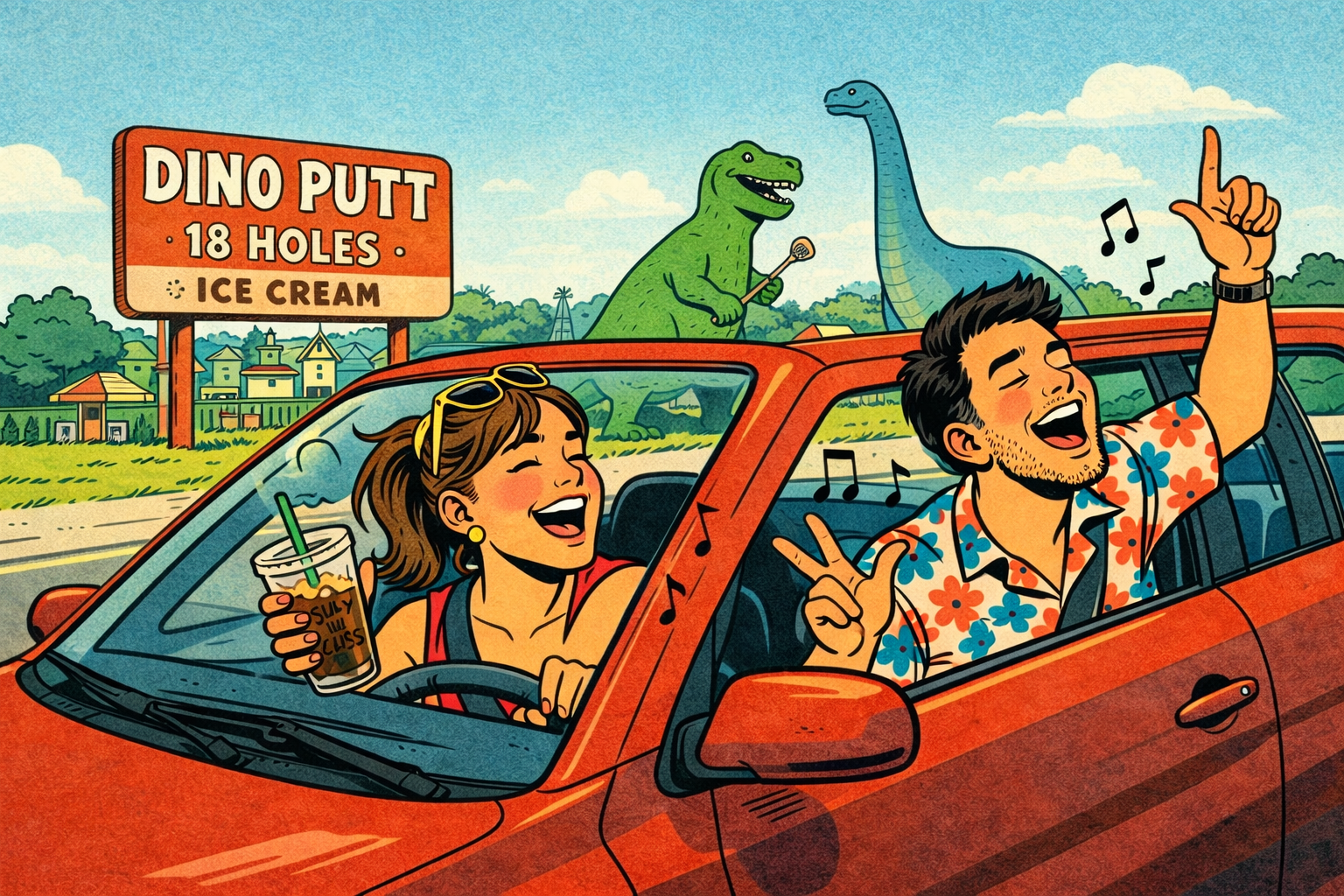
A young woman driving a car holds an iced coffee while her friend leans out the window, singing a song as they pass Dino Putt, a mini golf course

Taking your first road trip is one of life’s defining little milestones — right up there with your first kiss, your first proper night out and your 18th birthday.

Imagine hitting the open road to find the meaning of life. Singing at the top of your voice to your favorite playlist. Stopping at random roadside towns you never knew existed. It sounds dreamy because it is.

Whether you’re going out of state or across the country, your first road trip will give you stories you’ll tell for years. But for all the romanticism, preparing for it can feel overwhelming. There’s a lot to organize — transport, logistics, packing, accommodation and more — and being prepared makes all the difference.

Below are the most important road trip planning tips for first-timers.

Why Planning Matters for Your First Road Trip

Road trips in the classic Jack Kerouac sense were all impulse and adventure: Jump in the car, full tank of gas, a vague compass direction and nothing but vibes.

These days, most of us prefer to plan at least the basics. It might feel less rebellious, but the practical payoff is huge. Life on the road can throw curveballs: flat tires in the middle of nowhere, long detours, closed diners, no vacancies as the sun goes down, or entire stretches without fuel.

Trust us — the moment you’re stuck on a remote dirt road without reception or accommodation, you’ll be grateful you thought ahead.

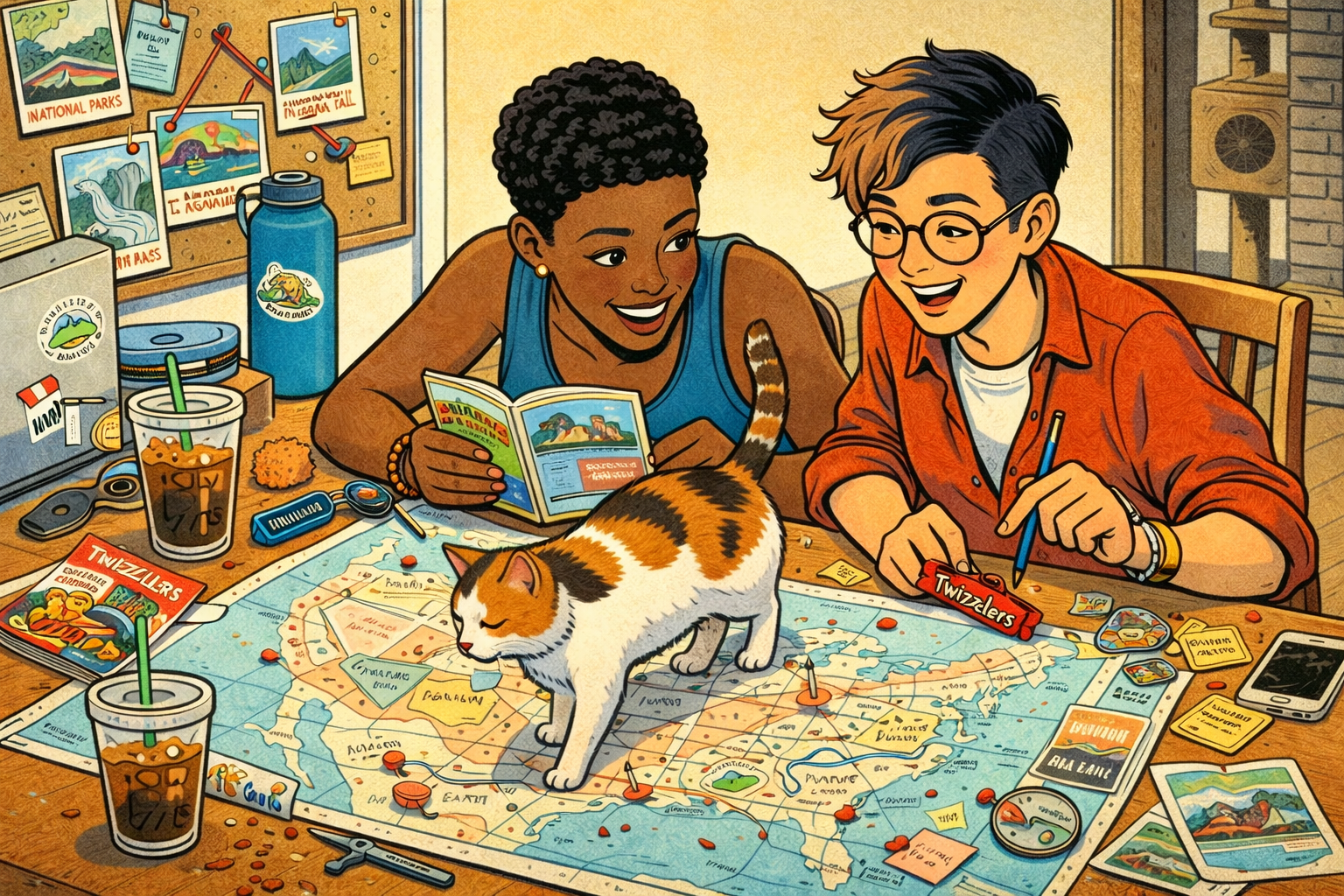
A lesbian couple plan a road trip with a map of the United States, which their cat walks over, with a corkboard and table covered with postcards, candy, iced coffees and other items

How to Plan Your First Road Trip (Without Overplanning)

The goal isn’t to script every moment; it’s to cover the big things so the small surprises stay fun rather than stressful. Knowing where you’re headed, what you’re driving and what you’re packing will give you the confidence to roam.

1. Choose your route and your turnaround point. 

Start by deciding where you’re actually going. Pick the main destination or the point where you’ll turn around to head home, then mark the interesting places you could visit along the way.

Time will shape everything, so map out how long you have. Turn that into a loose schedule and — importantly — leave room for spontaneous detours. The best stories often come from the unplanned stops.

When mapping, look at driving times rather than distances. A short stretch of road may still take hours due to speed limits, winding mountain passes or road conditions. Apps like Google Maps or Waze can help, and it’s smart to download offline maps for areas with spotty reception.

A young man with tattoos squats down by a mechanic in Thailand, inspecting tire pressure, with dogs and a spirit house nearby

2. Make sure your vehicle is ready to go.

No vehicle, no road trip — so make sure you trust the one you’re taking.

If you own a car, get it serviced by a qualified mechanic before you go. Fresh tires, working brakes and topped-up fluids go a long way to prevent drama on the highway.

If you want to rent, companies like Hertz, Budget, Avis and Europcar offer long-term rentals in airports, cities and select hotels. Compare prices and car types based on where you’re going — a coastal highway is very different from a dusty outback or desert stretch.

If you’re considering buying a car that can handle the trip, you may need finance to make it happen. There are lenders online who can help even if your credit isn’t perfect. For example, companies like Azora can help you find out how to get a car loan with bad credit.

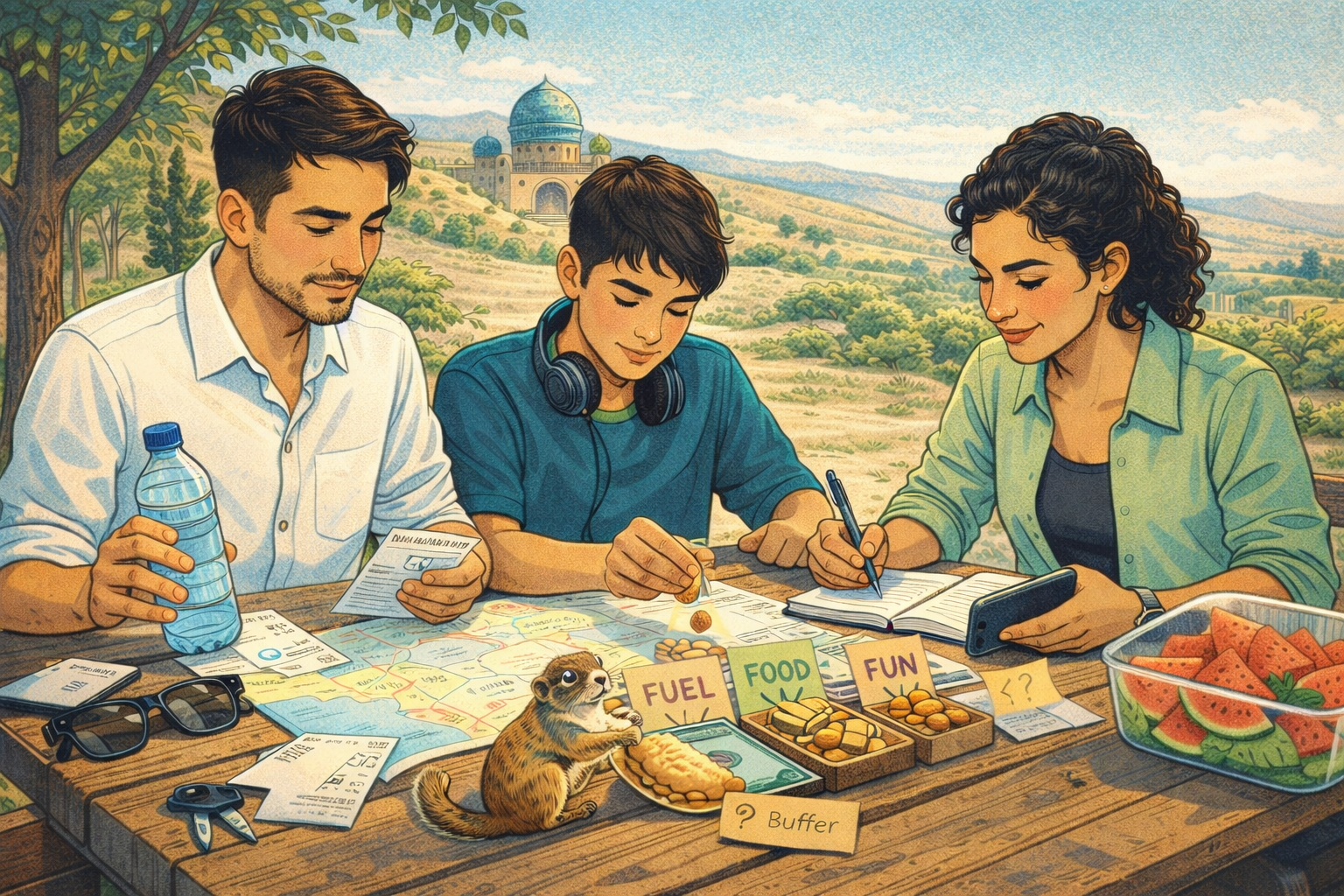
A family sits at a picnic table in Uzbekistan, budgeting for a roadtrip, with watermelon slices and a souslik

3. Budget for fuel, food, fun — and surprises. 

Road trips can be budget-friendly or full-luxury holidays — totally up to you. What matters is that you know roughly what you’ll spend.

Create a simple budget for fuel, accommodation, food and activities. Keep it realistic so you’re not forced to skip out on the fun stuff. And always add a small buffer for contingencies — unexpected tolls, repairs, snacks or a last-minute night somewhere nicer than planned.

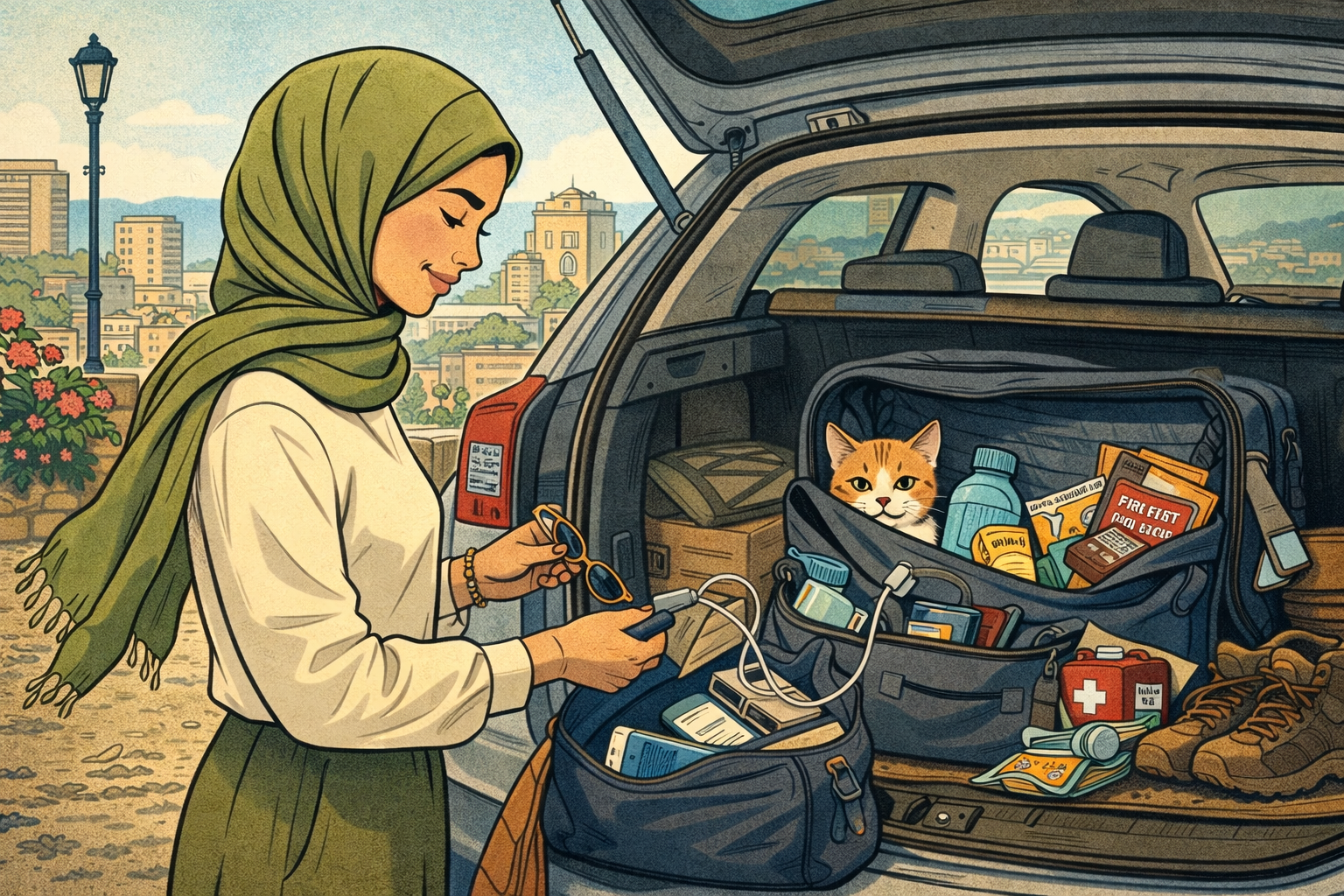
A woman in a headscarf in Lebanon packs her trunk full of items for a roadtrip, including first aid kit, chargers, boots, and a bag that her cat has snuck into

4. Pack smart and bring road trip essentials. 

Packing is all about balance. You don’t want to overpack, but you also don’t want to be six hours from home wishing you had a sweater, sunglasses or real shoes.

Choose clothes you can layer and mix-and-match, plus proper walking or hiking shoes if you plan to explore on foot.

Useful road trip essentials include:

  • Water bottles

  • Snacks

  • Phone chargers

  • Power bank

  • Sunglasses

  • Sunscreen

  • Offline maps

  • First-aid kit

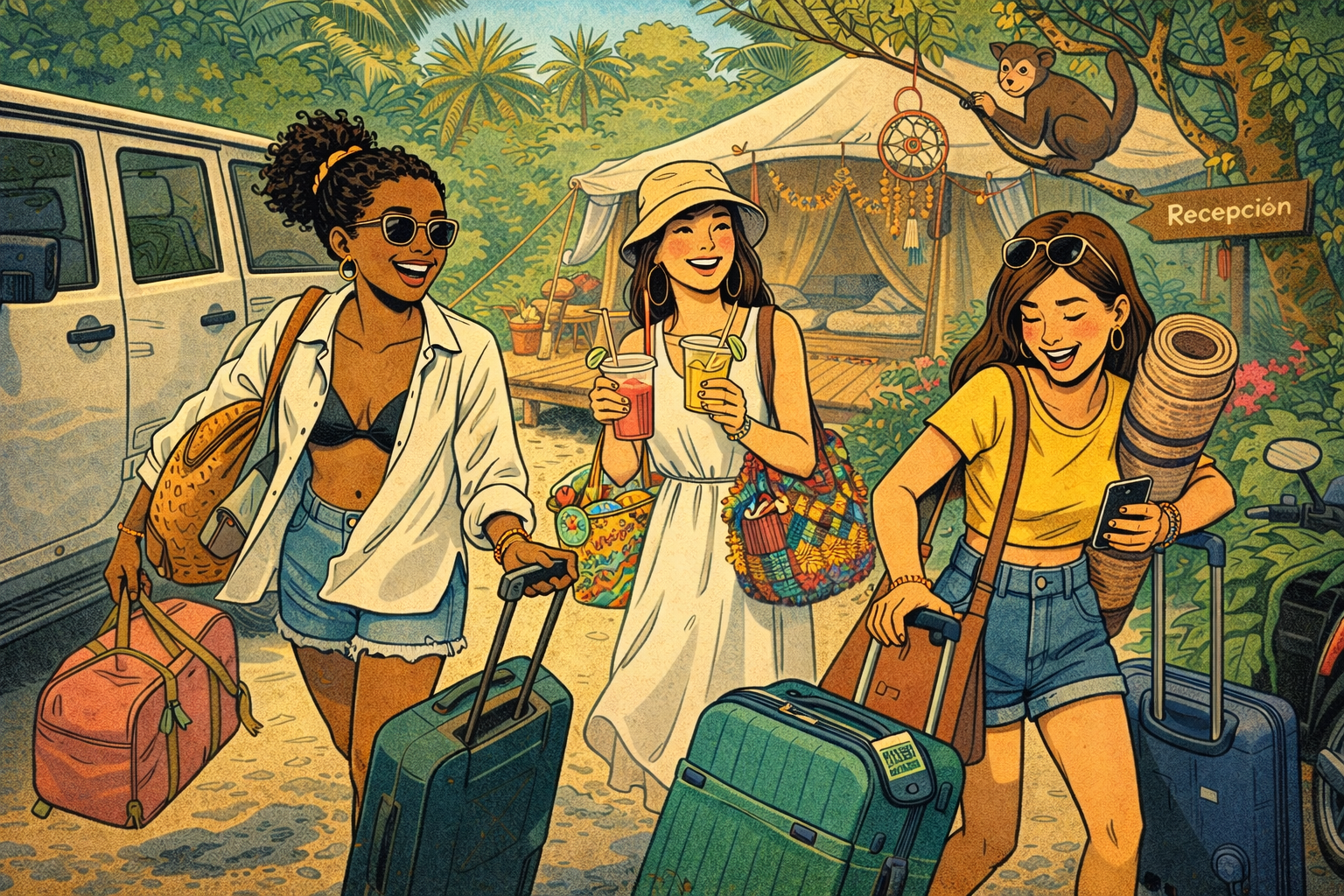
Three young women excitedly arrive at their glamping spot in Tulum, Mexico, carrying bags, drinks and a yoga mat, while a monkey sits on a branch above them

5. Research accommodation options along your route. 

Knowing roughly where you’ll sleep each night removes a huge amount of road trip stress.

Research options across a mix of price points and styles: motels, caravan parks, glamping sites, campsites, Airbnbs and budget hotels. You don’t have to pre-book the entire route, but having a shortlist saved to your phone (plus contact details written in a notebook) gives you options if plans change or daylight runs out faster than expected. 

In the end, it’s you, the miles, and whatever magic you make of it. –Lucy Mitchell


Best Car Rental Company in Queenstown

Renting a car in Queenstown is the easiest way to explore wineries, alpine scenery, and filming locations from Lord of the Rings. How to choose the best. 

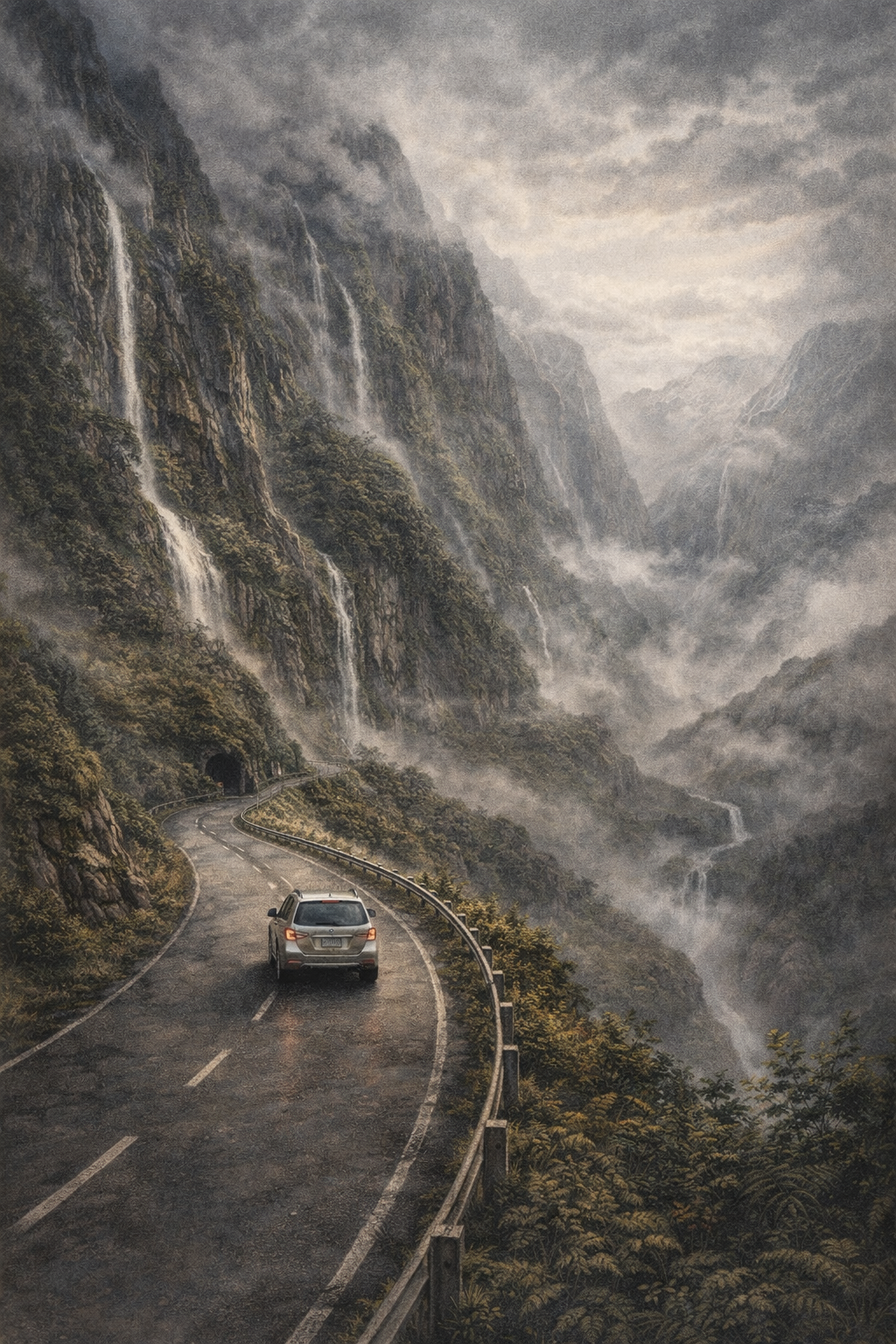
A car drives past misty waterfalls in the mountains of New Zealand

Queenstown is one of New Zealand’s most beloved destinations — and one of the few places where you can bungee jump before lunch, sip pinot noir by dinner, and wind up stargazing at night while half-seriously plotting a move to the South Island.

Set against Lake Wakatipu and backed by the Southern Alps, Queenstown’s “Adventure Capital of the World” title isn’t marketing fluff. Between skiing, jet boating, hiking and visiting Lord of the Rings filming sites, there’s a lot to do — with most of the best beyond the town center.

Queenstown’s “Adventure Capital of the World” title isn’t marketing fluff.

Between skiing, jet boating, hiking and visiting Lord of the Rings filming sites, there’s a lot to do — with most of the best beyond the town center.

At 3,361 square miles (8,705 square kilometers), Queenstown isn’t enormous, but the highlights are spread out. Renting a car gives you the flexibility to get to wineries, lakes, view points and small villages without relying on tours or buses.

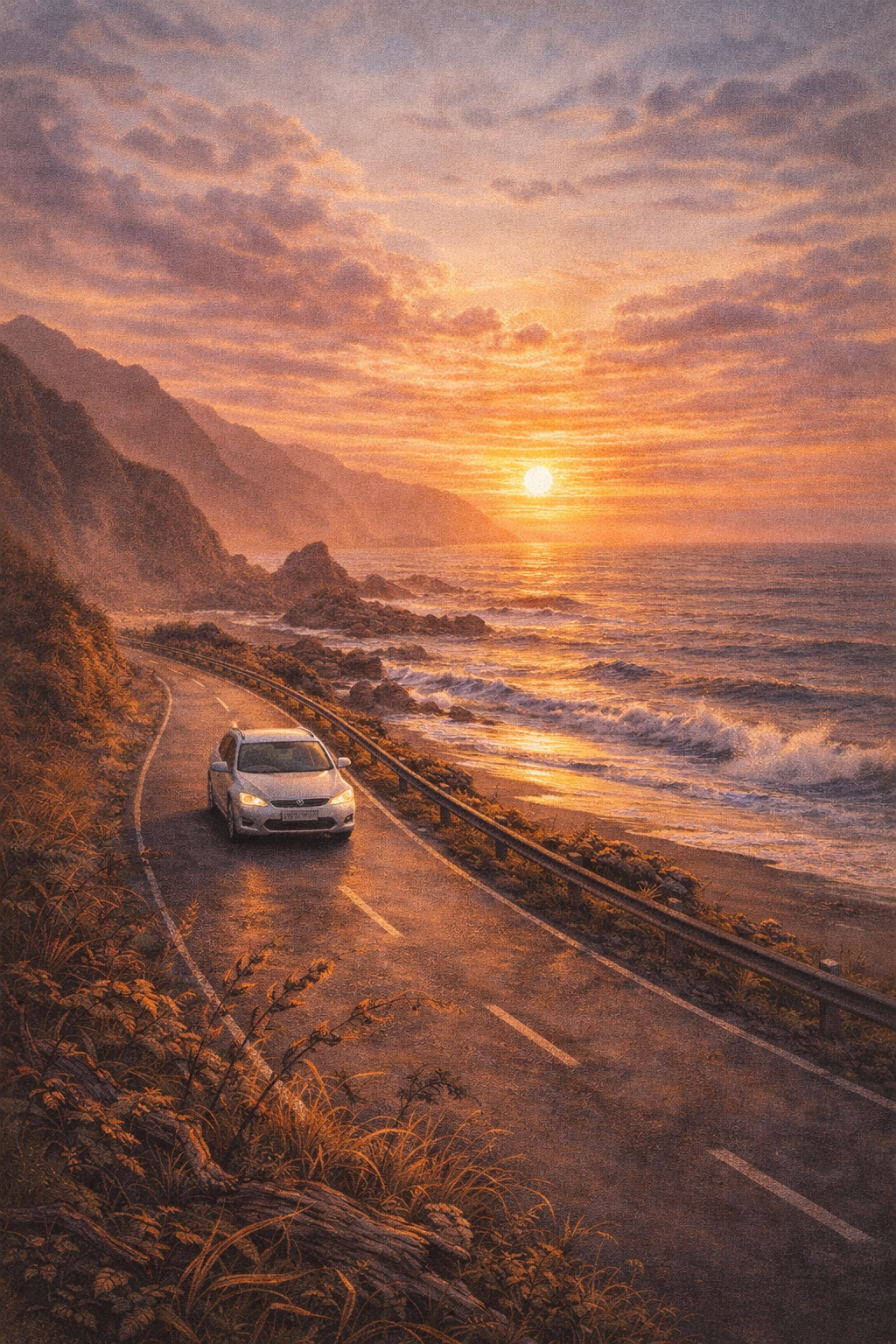
A car drives past the beach at sunset in Queenstown, New Zealand

What to Look for in a Queenstown Rental Car

The first price you see isn’t the whole story. Ski season, insurance add-ons, and whether you’re picking up at the airport or in town can make a big difference. It helps to think through a few basic questions before you click “reserve”:

How much does it cost to rent a car in Queenstown?

Prices vary by season, car type and availability. High summer and ski season run higher.

What insurance do I need for driving in Queenstown?

Extra coverage is recommended for mountain roads and winter driving conditions.

Should I rent a compact car or an SUV in Queenstown?

Compacts work for town and wineries; SUVs are better for ski trips and road adventures.

Is Queenstown Airport the best place to pick up a rental car?

Yes — it’s efficient, small, and most major companies operate directly on site.

Do I need roadside assistance?

Roadside support adds peace of mind for alpine roads and longer drives.

Answering these up front makes comparing companies easier and keeps surprises to a minimum.

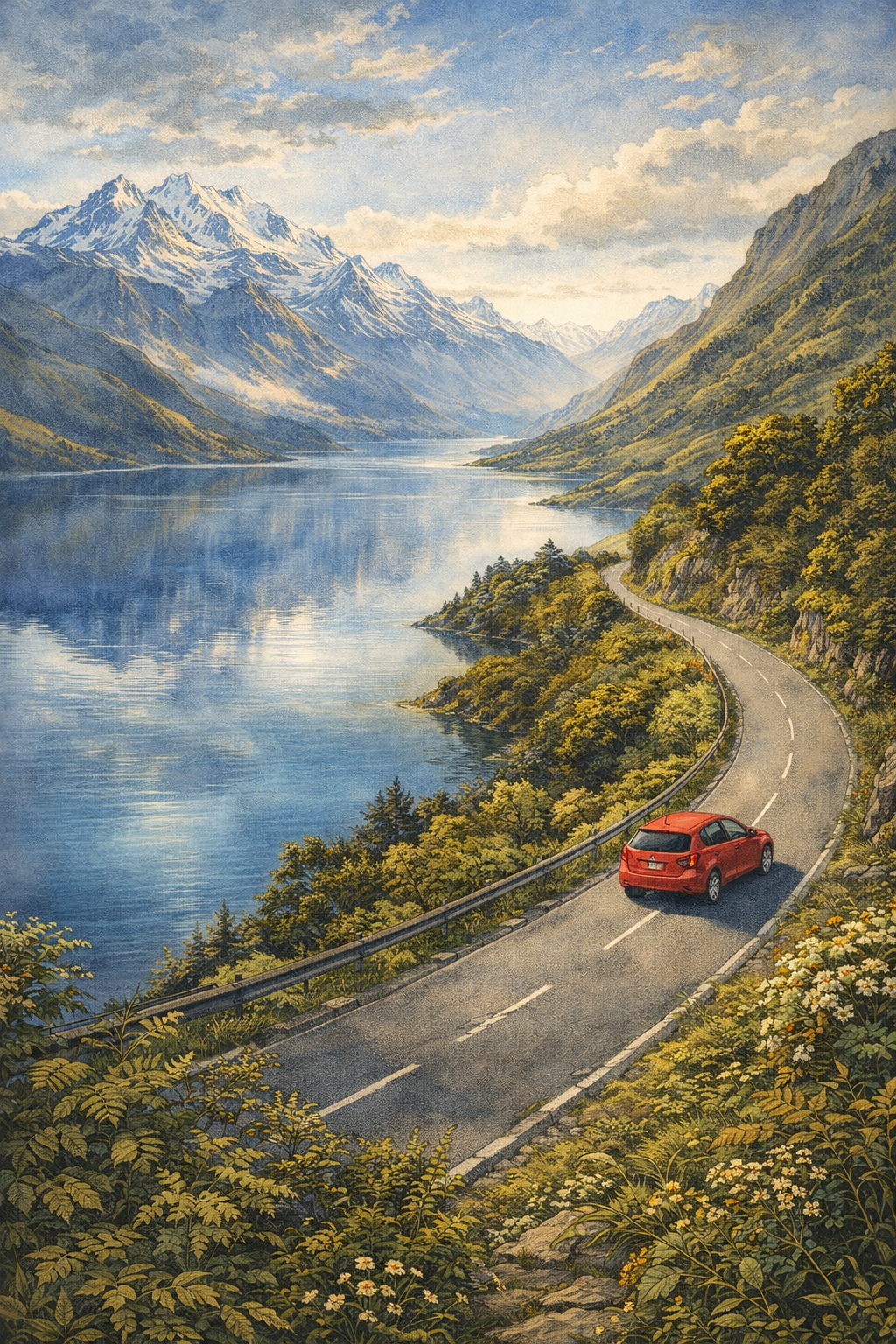
A car drives along a road by a lake in the mountains of Queenstown, New Zealand

The Best Car Rental Companies in Queenstown

Here are six options across price, convenience and service — without fluff.

1. Go Rentals

Topping the list is Go Rentals. They’re an award-winning New Zealand car rental company who operate right from Queenstown Airport. They also offer easy pickups and dropoffs, handy for all types of travelers.

The great thing about Go Rentals is that their fleet is well maintained and offers a nice mix of vehicles to suit city driving and off-roading. Their staff is also friendly and has in-depth knowledge of the region. On top of that, the booking process is straightforward and transparent: You know exactly what you’re paying for before you arrive.

If you are a first-time visitor to Queenstown, a business traveler, or just someone who wants the convenience of an airport pickup and dropoff without a fuss, they’re a great option.

2. Omega Rental Cars

Omega Rental Cars has been around since 1992 and operates from 10 locations in New Zealand, including Queenstown Airport. They’re known for their good service and competitive pricing, and should be an attractive proposition to people over the age of 65, given that they offer a 10% seniors discount.

They offer a range of vehicles, including smaller cars that suit couples or solo travelers. While they don’t have as large a presence in New Zealand as some international brands, Omega’s vehicles usually offer good value. They’re perhaps best suited to those intending to do self-drive itineraries that stick mostly around Queenstown and nearby lakes. 

3. Budget

Budget is a leading player in the car hire industry, and as its name suggests, it offers some of the most competitive rates for cheap car rental in Queenstown. Their fleet includes a variety of smaller cars and mid-size models that are ideal for everyday exploring.

You can often find good deals on their site, especially outside peak holiday seasons. Their airport service is known for being solid, and they make picking up a vehicle easy if you’re arriving early or late, especially if you booked through their online portal.

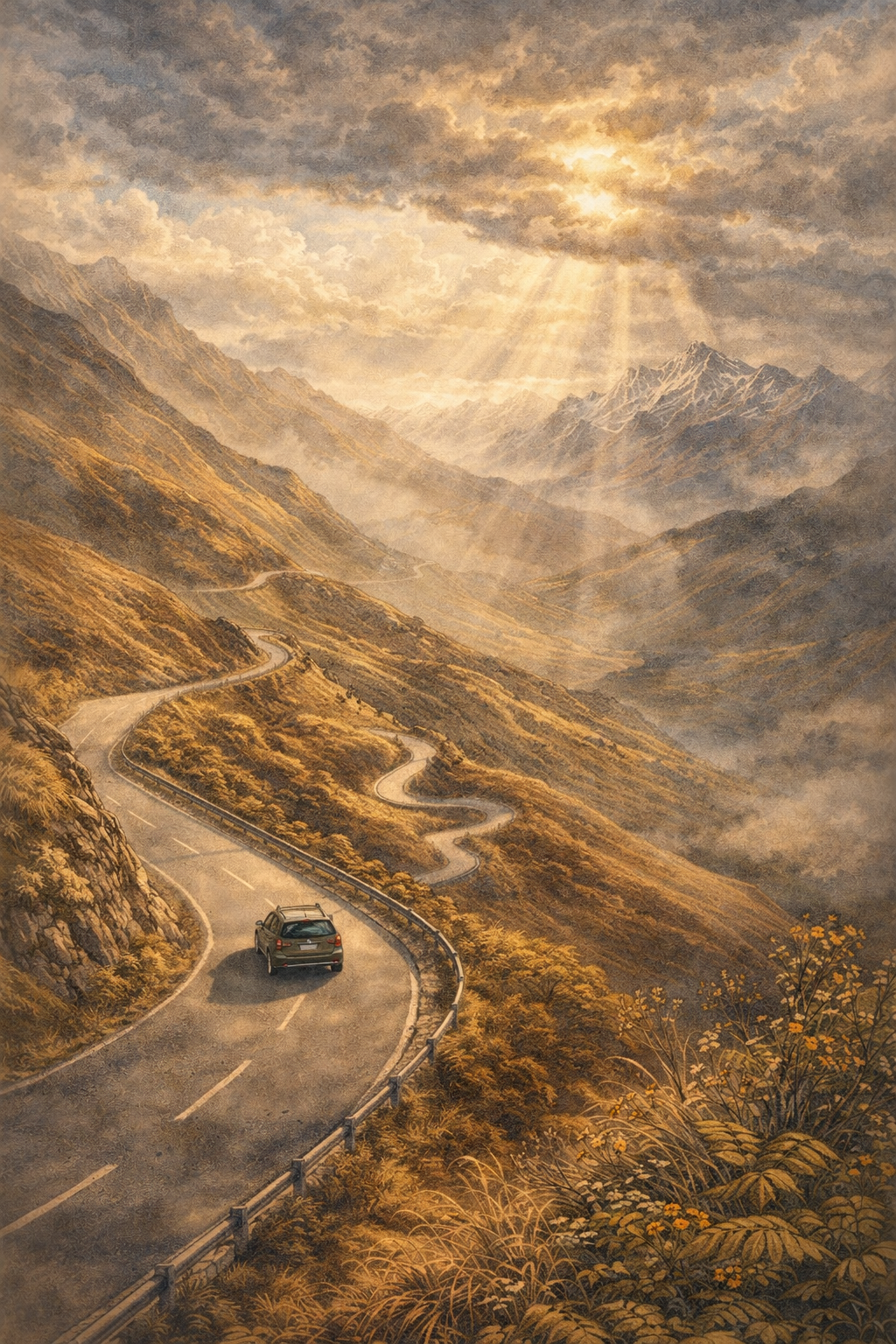
Light shines through a cloud as a car drives along a twisting road in the mountains in Queenstown, New Zealand

4. Avis

Avis brings international recognition and a broad fleet of newer vehicles to the Queenstown car rental industry.

One of the most dependable companies in this space, they offer a fleet of cars that includes everything from compact hires to larger sedans. This means their range accommodates different travel styles, such as off-roading or hitting the best beaches in New Zealand.

While prices can sometimes be higher than rivals’, some travelers like the peace of mind that comes with booking with a well-known name. Avis also offers extras like GPS and child seats for those who need them, and their customer service is very good.

5. Hertz

Hertz is another well-established name in the global car hire world. They offer a range of comfortable vehicles and enjoy a reputation for excellent customer service.

They’re a particularly good choice for those requiring larger-sized vehicles or high-end cars with premium added features. Their pickup and dropoff processes are efficient, and their insurance coverage is extensive.

6. Ezi Car Rental

Ezi is a solid choice for travelers who want safe, modern cars without fancy features. Their fleet focuses on practical vehicles that get the job done without unexpected charges. 

You won’t find all the luxury extras here. But Ezi is a solid pick if you want flexible bookings and something affordable.

A car drives along a road in Queenstown, New Zealand at golden hour

Choose the Car Based on the Trip

Queenstown road trips aren’t one-size-fits-all. If you’re skiing, upgrade to an SUV. If you’re spending your days at wineries and cafés, a compact is perfect. If you’re road-tripping to Glenorchy or Arrowtown (both stunning drives), comfort matters more than bells and whistles.

Renting a car in Queenstown is how you unlock the South Island’s best scenery — on your own terms. –Lucy Mitchell

The Ultimate 10-Day Iceland Road Trip

Your Ring Road and Golden Circle itinerary — complete with must-see detours, travel tips and can’t-miss stops you’ll brag about for years. 

Rectangular rock formations and pink clouds at Reynisfjara Beach

Reynisfjara Beach

Why visit Iceland? The country begs to be circled, zigzagged, detoured and lingered over — with waterfalls misting your windshield, lava fields stretching to the horizon, and hot springs steaming under the midnight sun. The best way to do that? Hit the road.

This guide maps out a wow-per-minute route that loops the island on Route 1 (the famous Ring Road), layers in the Golden Circle, and sprinkles in a few side quests you’ll be humblebragging about for years.

Whether you go clockwise or counterclockwise, you’ll pass glacier tongues, black sand beaches, alien geothermal zones, and sleepy fishing towns that look straight out of a Nordic fairy tale.

Below: a 10-day Iceland itinerary that balances drive time and jaw-dropping moments, plus tips on timing, packing, and how to drive like a local without becoming an accidental sheep herder.

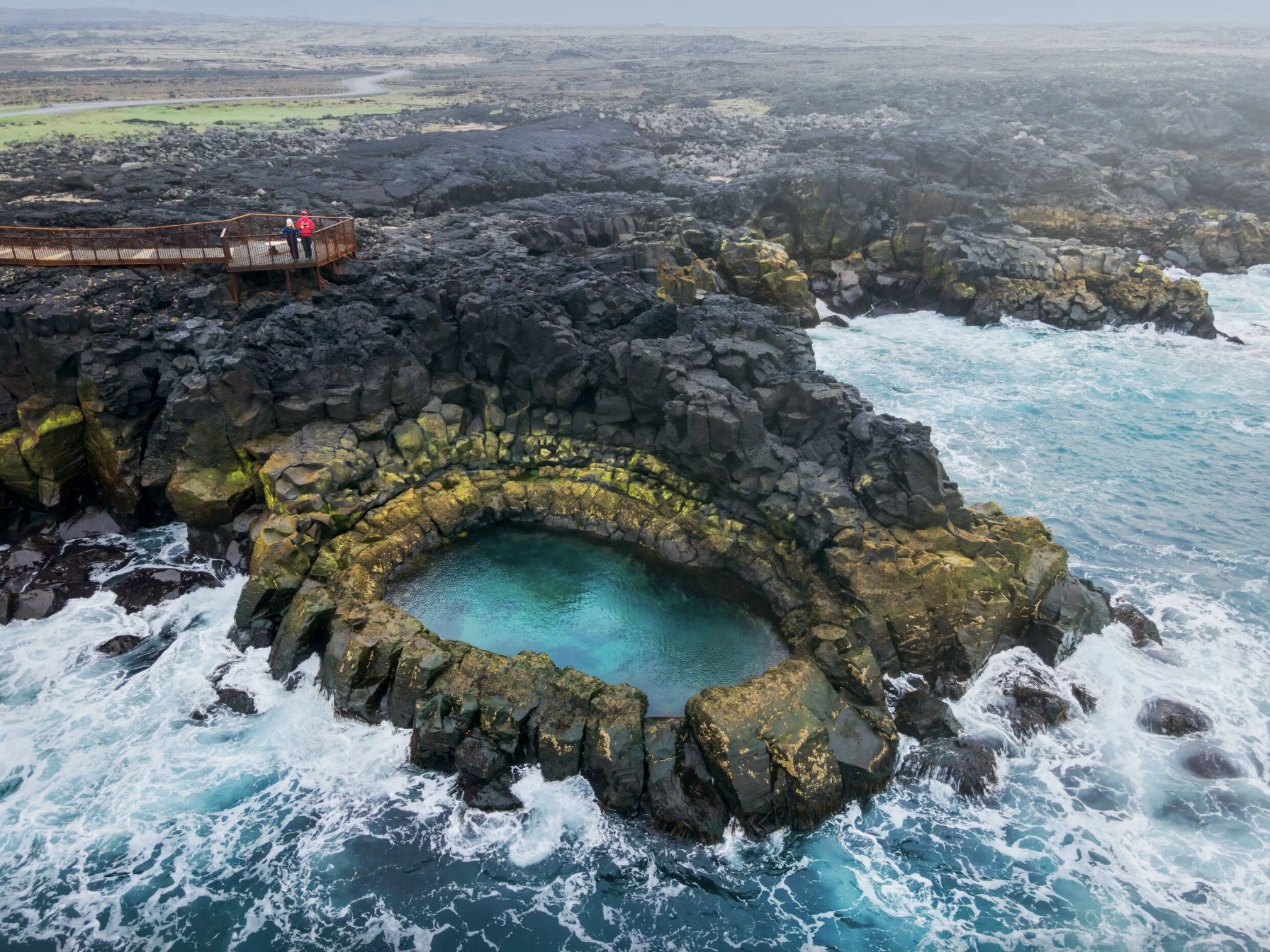
A round rock formation filled with water by a turbulent sea and overlook at Brimketill in Iceland

Brimketill natural pool

Why the Ring Road (Plus a Few Smart Detours) Is “The One

Route 1 loops the entire country in about 1,332 kilometers (828 miles). Whether you go clockwise or counterclockwise, you’ll pass glacier tongues, black sand beaches, alien geothermal zones, and sleepy fishing towns that look straight out of a Nordic fairy tale.

Sure, you could do the loop in seven days — but 10 gives you breathing room to wander, soak and say “wow” every few miles. Toss in the Snæfellsnes Peninsula, the Golden Circle, and a Highlands teaser (if roads allow), and you’ve got yourself the greatest hits album of Iceland.

Aerial view of Reykjavik, Iceland

Reykjavik

The 10-Day Ultimate Iceland Road Trip Itinerary

Day 1: Reykjavik Arrival and Prep

  • Land, stock up and ease in. Pick up your campervan or car, grab groceries at Bónus or Krónan, and explore Reykjavik’s colorful streets (don’t miss Hallgrímskirkja and Harpa). And there’s always the Icelandic Phallological Museum if that’s your thing. 

  • Overnight: Reykjavik or a nearby campground (Mosskogar, Hafnarfjörður)

  • Driving: Minimal (airport to city)

A waterfall and rocks in the stream at Þingvellir National Park in Iceland

Þingvellir National Park

Day 2: The Golden Circle Warm-Up

  • Þingvellir National Park: Tectonic plates and Viking-age drama. Walk the rift valley. Bonus points for snorkeling between continents at Silfra.

  • Geysir Geothermal Area: Strokkur erupts every 5 to 10 minutes. Perfect for slo-mo footage.

  • Gullfoss: A two-tiered roar that sets the tone for Iceland’s waterfall game.

  • Secret stop: Reykjadalur hot spring hike — geothermal soak with a view.

  • Overnight: Campsite in Selfoss or Flúðir (the Secret Lagoon is rustic and steamy).

  • Driving: About 230 kilometers / 143 miles

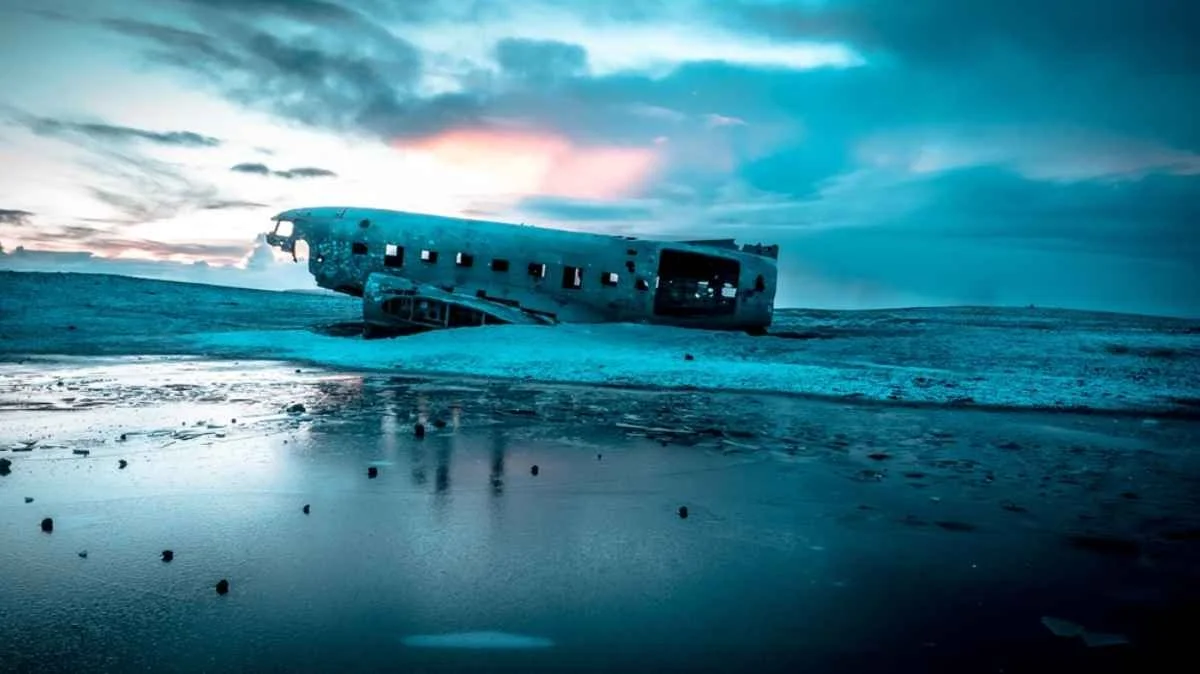
The Solheimasandur plane wreck on the black sand beach in Iceland

Solheimasandur plane wreck

Day 3: South Coast Icons: Waterfalls to Black Sand

  • Seljalandsfoss and Gljúfrabúi: Walk behind one, then find the other hiding in a canyon.

  • Skógafoss: Perfect rectangular power. Climb up for panoramic payoff.

  • Sólheimasandur Plane Wreck: Eerie DC-3 remains in a black desert. It’s a 7-to-8-kilometer  round trip, so bring snacks.

  • Vík and Reynisfjara Beach: Basalt columns, sea stacks and sneaker waves. Keep a healthy distance.

  • Overnight: Vík or Kirkjubæjarklaustur.

  • Driving: About 200 kilometers / 124 miles

Fjaðrárgljúfur Canyon in Iceland with a river running through the moss and rocks

Fjaðrárgljúfur Canyon

Day 4: Glaciers, Icebergs and Lava Fields

  • Fjaðrárgljúfur Canyon: A mossy, winding marvel (check road access)

  • Skaftafell (Vatnajökull NP): Hike to Svartifoss or strap on crampons for a glacier walk.

  • Jökulsárlón and Diamond Beach: Icebergs to the ocean, glittering ice on black sand. Straight-up magic

  • Overnight: Höfn area (soak at Hoffell hot tubs if you’re feeling fancy).

  • Driving: About 270 kilometers / 168 miles

The village of Seyðisfjörður, Iceland on a lake by flowers

Seyðisfjörður

Day 5: The Eastfjords: Switchback Beauty and Tiny Towns

  • The drive: Narrow roads cling to fjords, with surprise tunnels and gasp-worthy views.

  • Stops: Djúpivogur’s giant eggs, Petra’s Stone Collection, maybe a reindeer cameo near Egilsstaðir

  • Optional detour: Seyðisfjörður, a rainbow-road artsy escape in a deep fjord

  • Overnight: Egilsstaðir or Seyðisfjörður

  • Driving: About 260 kilometers / 162 miles

Geothermal pools steam sulfur in an orange landscape in Hverir, Iceland

Hverir

Day 6: Northbound to the “Capital of the North”

  • Dettifoss and Selfoss: One’s raw power, the other’s elegance. Use Route 862 if you prefer paved.

  • Hverir: Bubbling mud pots and sulfurous steam. Welcome to Mars, Iceland edition.

  • Lake Mývatn: Lava labyrinths, pseudocraters and the blue Grjótagjá cave

  • Godafoss: Horseshoe-shaped and heavenly

  • Overnight: Akureyri

  • Driving: About 300 kilometers / 186 miles 

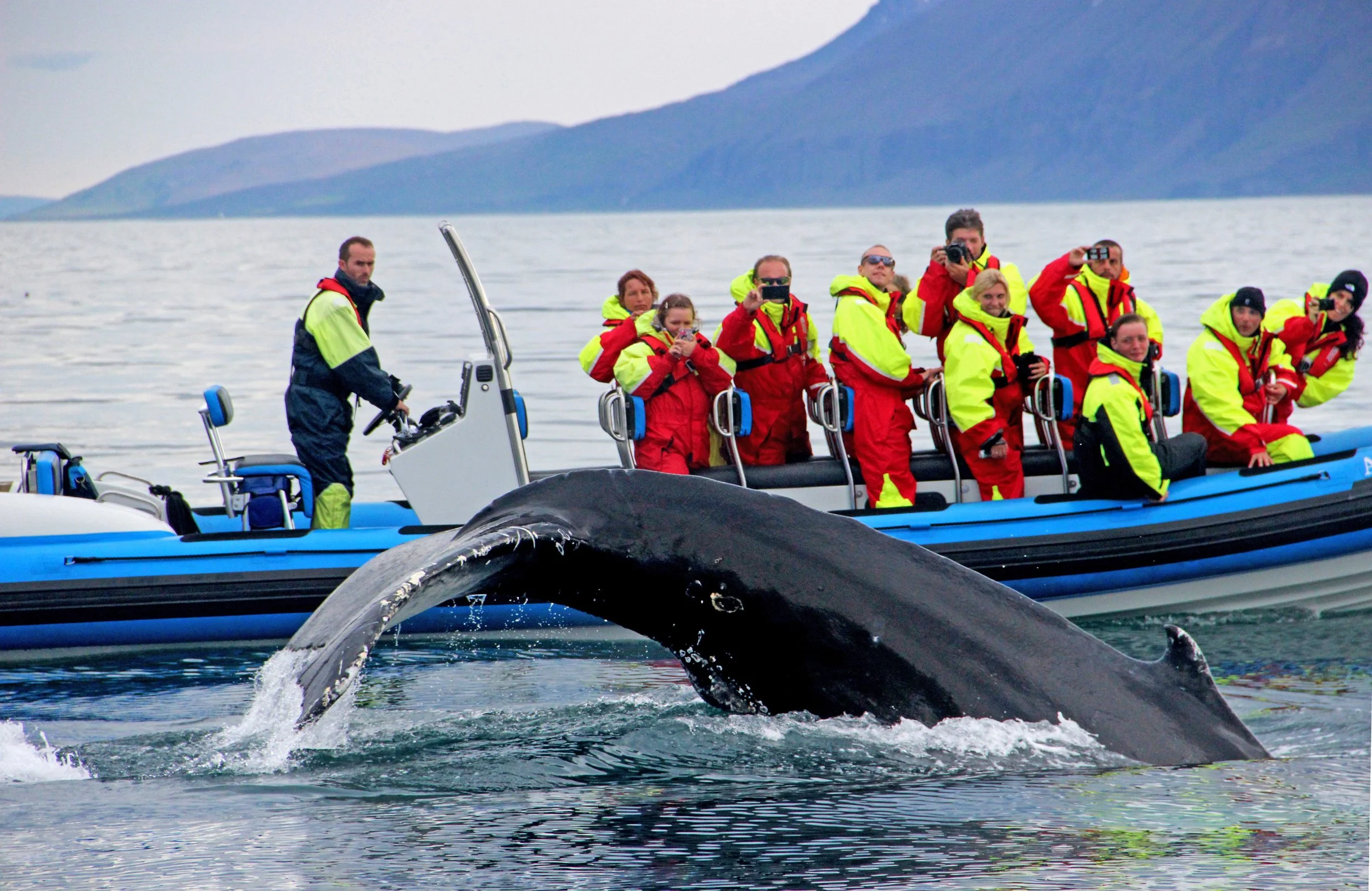
A group of people on a boat watch a whale breach at Húsavík, Iceland

Whale watching at Húsavík

Day 7: Whale Tails and Turf Roofs

  • Morning in Akureyri: Coffee and a botanical stroll

  • Húsavík Whale Watching: Prime humpback territory. Book ahead.

  • Glaumbær Turf Farm: Sod-roofed time travel

  • Overnight: Varmahlíð or Blönduós

  • Driving: About 260 kilometers / 162 miles

Multiple waterfalls by grass and rock formations at Snæfellsnes, Iceland

Snæfellsnes

Day 8: West Iceland & Snæfellsnes Teaser

  • Short hikes: Glanni Waterfall and Grabrok Crater

  • Snæfellsnes (optional start): Kirkjufell, Arnarstapi cliffs, Djúpalónssandur beach and the glacier-capped Snæfellsjökull

  • Overnight: Stykkishólmur, Grundarfjörður or Hellissandur

  • Driving: About 300 kilometers / 186 miles (less if you save Snæfellsnes for tomorrow)

Bizarre clear formations in a cave at Vatnshellir, Iceland

Vatnshellir lava cave

Day 9: Finish Snæfellsnes & Return to Reykjavik

  • Catch anything you missed: Vatnshellir lava cave, the moody Búðir black church

  • Optional soak: Krauma Baths — steamy serenity powered by Europe’s most powerful hot spring

  • Overnight: Reykjavik or Keflavik

  • Driving: About 250 kilometers / 155 miles

Lava spurts from a volcanic rock formation on the Reykjanes Peninsula in Iceland

Reykjanes Peninsula

Day 10: Blue Lagoon, Reykjanes, and Farewell

  • Lagoon of your dreams: Sky or Blue Lagoon. Yes, they’re touristy. They’re also glorious.

  • Reykjanes Peninsula: Lava cliffs at Brimketill, bubbling Gunnuhver, and a bridge between tectonic plates

  • To do: Return your ride. Ooh and ahh over your photos. Cry a little.

  • Driving: About 80 to 120 kilometers / 50 to 75 miles 

A bright blue pool amid a snowy landscape in Hveravellir, Iceland

Hveravellir

Bonus Detours (If You’ve Got Extra Days) on Your Iceland Road Trip

  • The Westfjords: Rugged, wild and crowd-free. Dynjandi waterfall, Látrabjarg puffins, Rauðasandur’s red beach. Add 3 to 5 days.

  • The Highlands: Summer only, 4x4 required. Rhyolite mountains of Landmannalaugar, steamy Hveravellir. Check F-road status before you go.

  • Thórsmörk Valley: Epic hikes and glacier views — reached via rough roads and worth every bump.

The Northern Lights above the waterfalls at Godafoss, Iceland

Godafoss

When to Go on Your Iceland Road Trip (And What That Means)

  • Summer (June to August): Midnight sun, most accessible, priciest and busiest. Reserve everything early.

  • Shoulder Seasons (May and September): Fewer crowds, lower prices, decent daylight. Road conditions can vary.

  • Winter (October to April): Northern lights, snow-globe vibes, but also storms and limited daylight. Consider shorter loops unless you’re a seasoned winter driver.

A car drives the Ring Road in Iceland, past mountains and water

The Ring Road

Island Road Trip Logistics: Campervan vs. Car

My take: campervans = ultimate freedom + a rolling kitchen. If you want to be spontaneous, cook your own meals and sleep by waterfalls, this is the way. Iceland’s campsites are everywhere, and a fully equipped premium campervan makes logistics easy-peasy.

A curved rock formation with waterfalls at Selfoss, Iceland

Selfoss

Driving and Safety Tips for Iceland

  • Weather: Vedur.is and road.is are your new besties. Wind can literally rip doors off.

  • Single-lane bridges and blind hills: Yield, go slow, stay alert.

  • Gravel and F-roads: That F stands for fjall (Icelandic for “mountain”). Most insurance won’t cover damage. Know what you’re driving.

  • Sheep patrol: If one crosses, assume more are on the way.

  • Fuel: Fill up when you can — especially in the East and North.

Diamond-like rocks on Diamond Beach in Iceland

Diamond Beach

Iceland Road Trip Budget Snapshot (Per Day for Two)

  • Campervan: $150 to $300+

  • Fuel: $60 to $100

  • Campsites: $15 to $25 per person

  • Food: $30 to $50 (DIY), double if you eat out

  • Activities: $60 to $200 per tour

  • Pro tip: Tap water = glacier-fresh and free. Bring a refillable bottle.

Long houses covered with grass by a red-roofed church at Glaumbær Turf Farm in Iceland

Glaumbær Turf Farm

Packing Essentials for Your Iceland Road Trip That You’ll Actually Use

  • Clothing: Waterproof shell, warm layers, quick-dry everything, swimsuit, gloves — even in July.

  • Shoes: Waterproof boots, camp shoes, microspikes for shoulder season.

  • Electronics: Car inverter, USB hubs, offline maps, camera batteries (the cold eats them).

  • Comfort: Spices, condiments, a French press, headlamp (winter) or eye mask (summer).

  • Safety: First aid kit, emergency blanket, paper map backup.

Colorful tents dot the rolling hill landscape in Iceland

Iceland Campsite Etiquette and Rules

  • No wild camping (unless a farmer says yes). Use official sites.

  • Leave no trace. Seriously. Iceland’s fragile — pack it in, pack it out.

  • Keep quiet hours: Usually 11 p.m. to 7 a.m. The midnight sun doesn’t excuse middle-of-the-night karaoke sessions.

A waterfall at Dettifoss, Iceland

Dettifoss

Take the Road, Not Just the Photo

Iceland is a photographer’s dream, but the real magic happens in between the snapshots — chatting with locals about elf rocks, soaking in a secret hot pool, or pulling over because the sky just exploded in green fire.

So start your engine. Keep your plans loose. And let Iceland do what it does best: Surprise you around every bend. –Jeremy Albelda

The Best Road Trips in New South Wales: From Coast to Country

From coastal drives like the Grand Pacific and Sapphire Coast to foodie loops through Orange and Mudgee, discover the best road trips in New South Wales — including Snowy Mountains, Waterfall Way, and quirky roadside stops from Sydney to Eden.

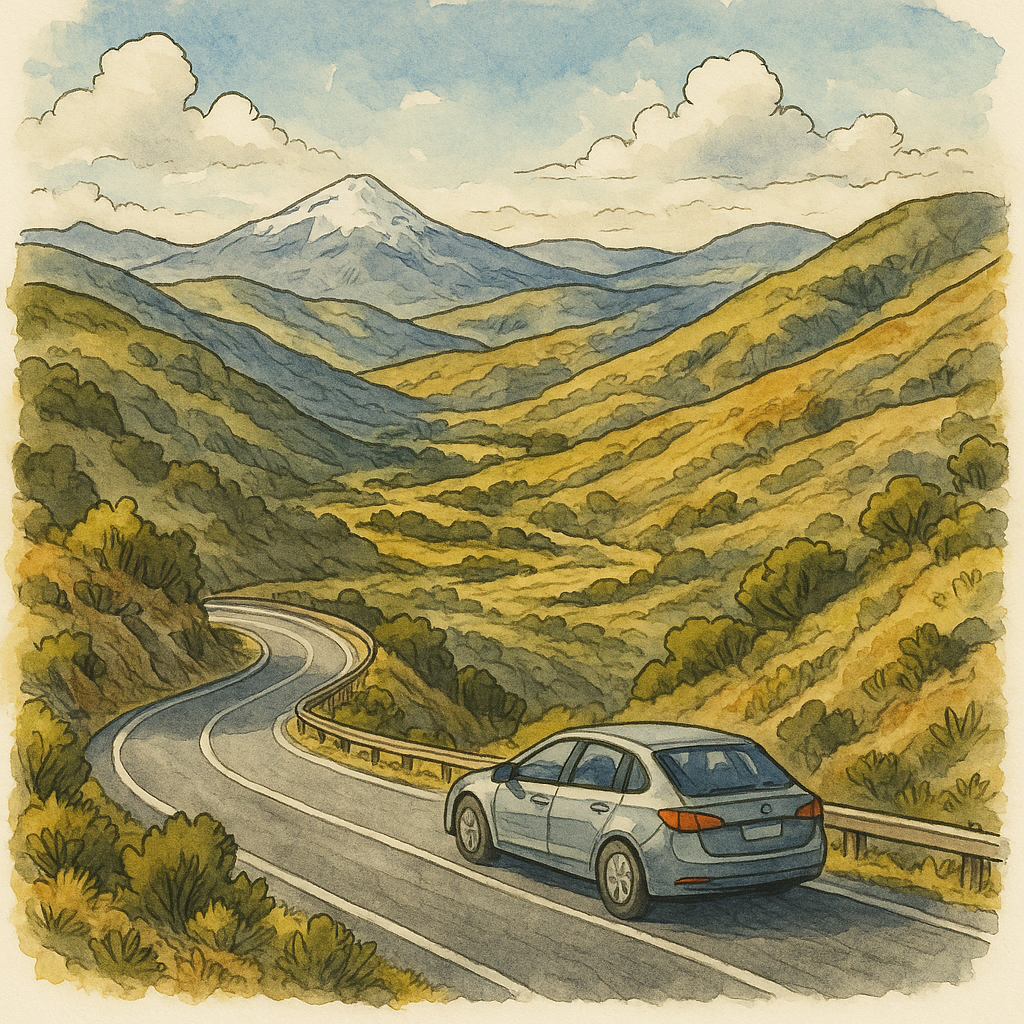
A car drives through the curving roads and hills of New South Wales, Australia, with a mountain in the distance

New South Wales is one of Australia’s most visited states — and with good reason. Its coastline alone is a stunner, dotted with cliff-hugging walks and surf towns where the locals still say g’day without irony. Head inland and you’ll swap salty air for lush rainforests, towering waterfalls and rugged high country that feels a million miles from the sea.

Whether you’re camping under a riot of stars, shacking up in a retro motel, or living your best van life, NSW delivers. The roads are generally smooth, the phone signal’s surprisingly reliable, and there’s no shortage of campgrounds, cosy cabins or Airbnbs to call it a night.

From coastal gems to country heartlands (with a few oddball attractions thrown in), here are the best road trips across New South Wales.

So, buckle up. From coastal gems to country heartlands (with a few oddball attractions thrown in), here are the best road trips across New South Wales.

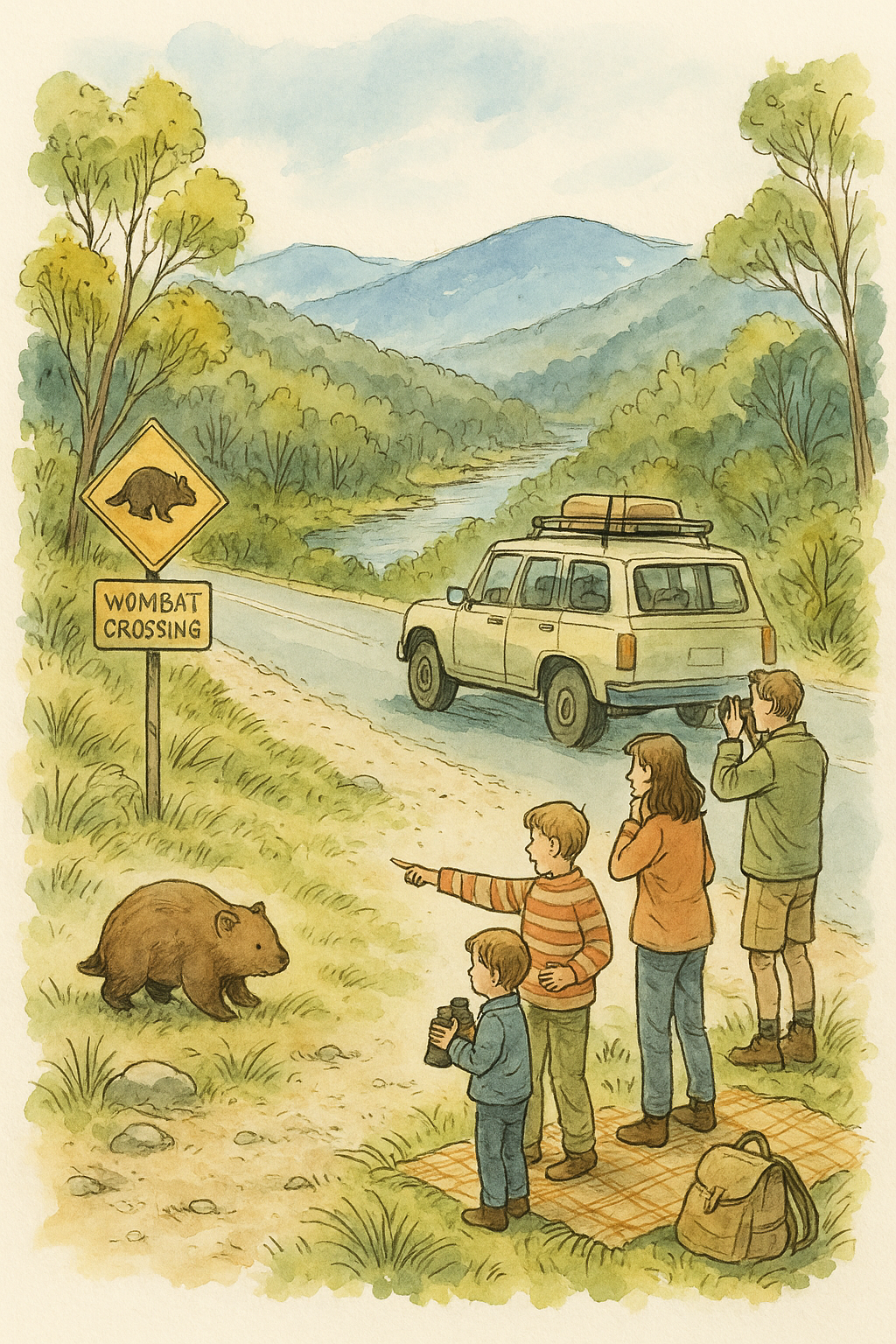
A family on a road trip on the Great River Road, NSW, stops to look at a wombat

Into the Country: Road Trips Through NSW’s Outback

Snowy Mountains Drive

If you’re craving crisp alpine air and scenery that swaps gum trees for snow gums (plus the occasional wombat waddling across the road), then make sure you stop on the Great River Road — a stretch that hugs the Upper Murray and is the kind of place where you’ll want to pull over every five minutes just to gawk at the views.

You’ll find plenty of pitstops along the GRR worth your time. Don’t miss a breather (and maybe a slab of hummingbird cake) at Tintaldra Store & Tearooms, a delightfully old-school spot in a blink-and-you’ll-miss-it town that’s been serving travelers and trout fishers since the 1800s. It’s the sort of place where the tea is poured into mismatched china and you’re encouraged to linger.

Push on toward Khancoban, a great base for exploring the western approaches to Kosciuszko National Park. From there, you can lace up your boots for a day hike to see Australia’s highest peak (don’t worry, you won’t need an ice axe — unless you’re doing it in deep winter). Or just throw a line in the Swampy Plains River, famous for trout that practically jump onto your hook.

Of course, it wouldn’t be a Snowies road trip without refueling at one of the hearty mountain pubs. Try Jindabyne Brewing microbrewery for a local lager with cracking lake views, or the Banjo Paterson Inn, where après-ski culture reigns year-round, and schnitzels arrive bigger than your head.

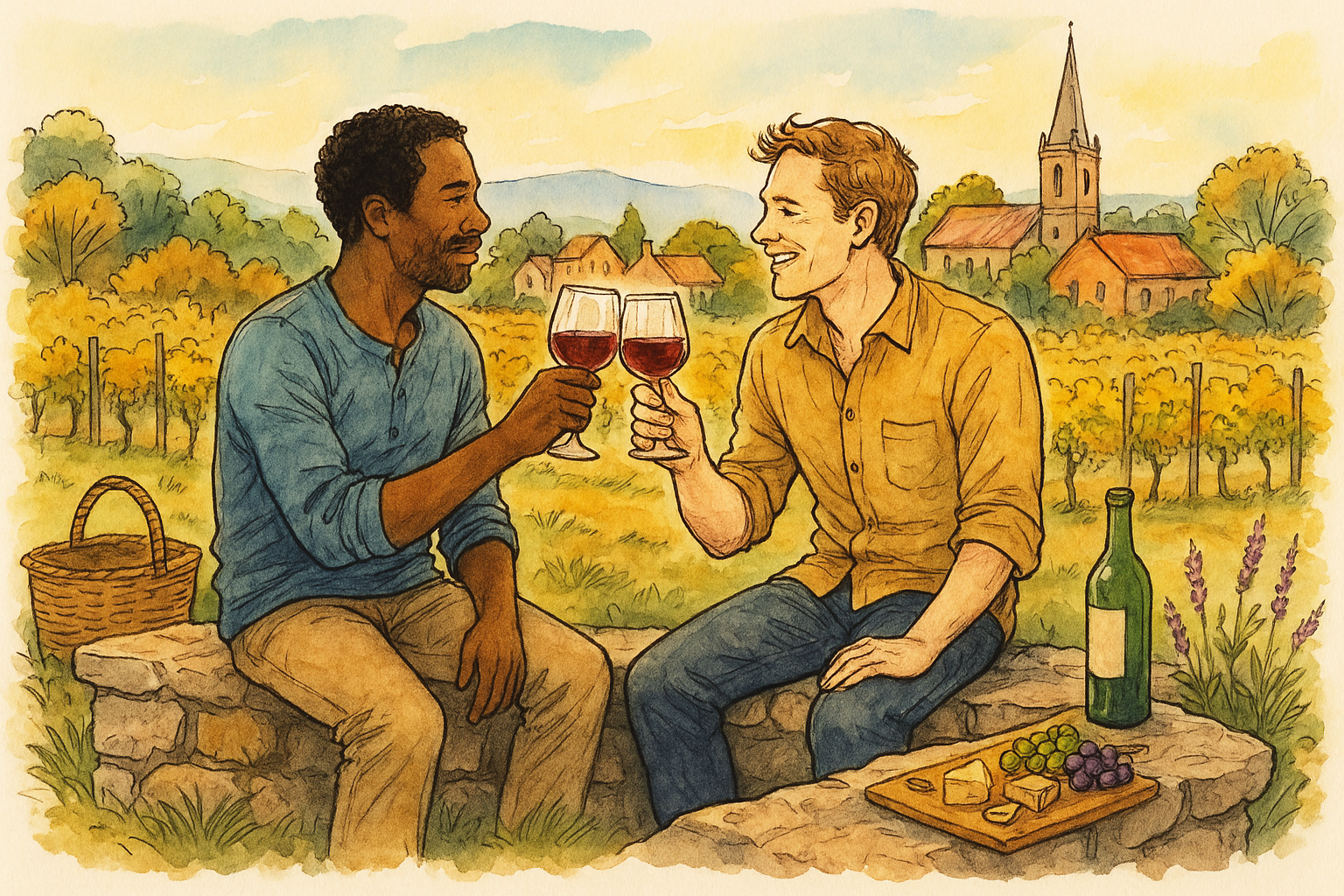
A gay couple cheerses with wine during a picnic in Millthorpe, NSW, Australia

The Foodie Loop: Orange, Mudgee and the Central Tablelands

You could also start your adventure in Orange, a town that’s become something of a pilgrimage for food and wine lovers. Thanks to its elevation, this region is the beating heart of cool-climate wines in NSW — think delicate pinots and crisp chardonnays that sing with the local produce.

On your way toward Mudgee, detour through Millthorpe, a village so pretty it looks like it was built purely for Sunday strolls and Instagram. Pop into Angullong Vineyard’s Cellar Door, housed in an old bluestone stable, or duck into Tamburlaine Organic Wines just outside town. And if you’ve got a thing for slightly bonkers local history, the Golden Memories Millthorpe Museum has everything from antique farming gear to bushranger relics that’ll give you a taste of the region’s wilder days.

And for the folklore fans: This is bushranger country. The infamous Ben Hall once roamed these ranges, robbing stagecoaches and generally causing colonial chaos. Some pubs still claim he drank there (though, fair warning, just about every old pub in NSW will tell you the same).

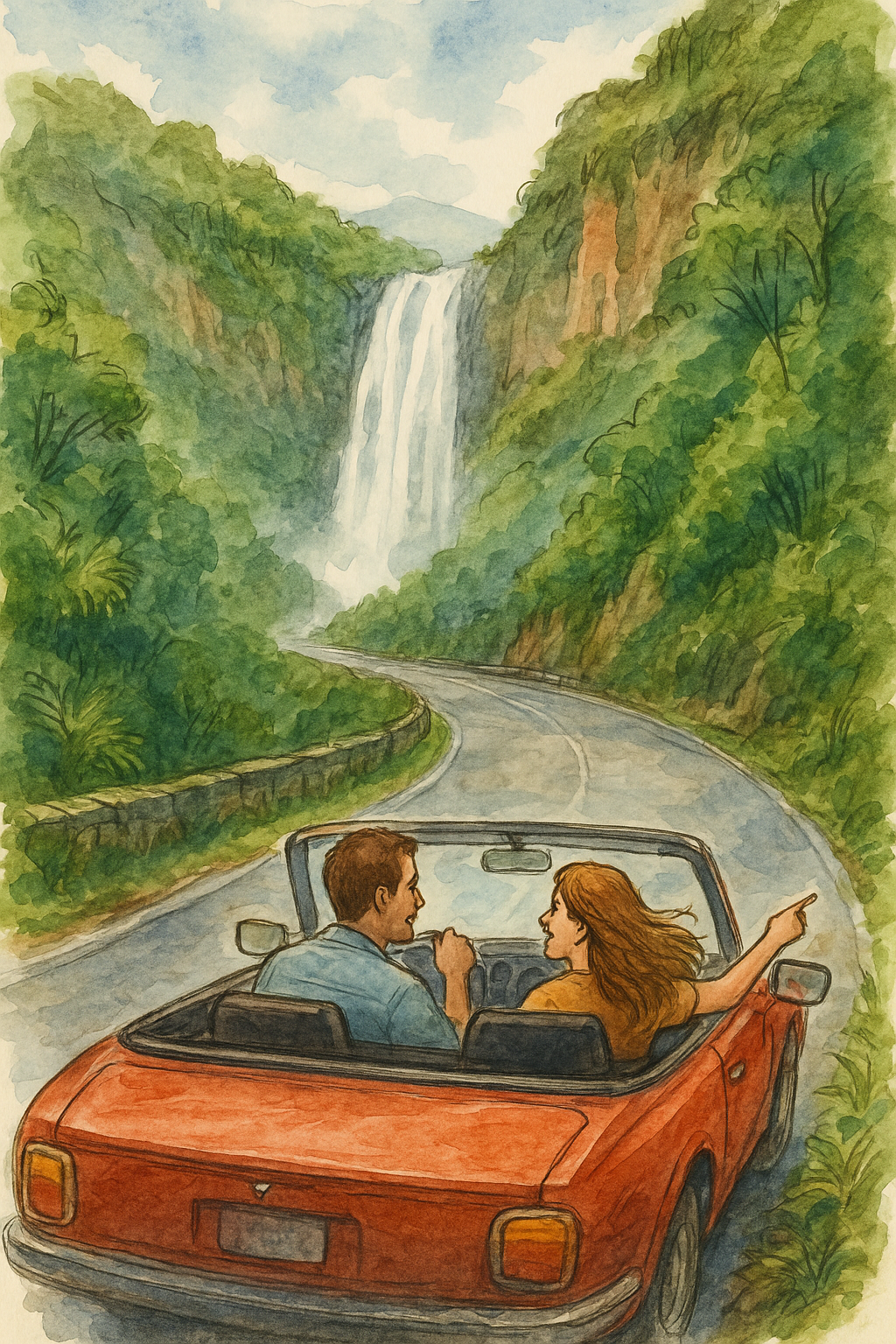
A couple in a convertible drive along Waterfall Way in New South Wales, Australia

New England High Country

Armidale is the beating heart of the region. It’s a university town, so there’s always a bit of a buzz. Grand churches like St. Mary and Joseph Catholic Cathedral loom over streets lined with bluestone and elm trees. Pop inside and you’ll see intricate stained glass that feels more European than Outback. From Armidale, take the Waterfall Way, arguably one of the prettiest drives in NSW. The name isn’t just poetic license; you’ll pass so many thundering cascades you’ll lose count. 

If your timing’s right, swing by Glen Innes, which goes full Highland fling for the Australian Celtic Festival each May. Think bagpipes echoing across the town, tartan markets, and even the odd nod to ancient traditions like Imbolc — though these days it’s more about whisky tastings and hearty stews. The Australian Standing Stones, perched on a hill just outside town, are a granite tribute to Celtic heritage that feels delightfully out of place in the Aussie bush.

And if you just want to kick back with a local drop, make a pitstop at Merilba Estate near Uralla, where cool-climate riesling and pinot noir pair beautifully with sweeping views over grazing country. Uralla itself has a frontier vibe, with bushranger Captain Thunderbolt’s grave right in town. Grab a pie at the Alternate Root café and swap ghost stories with whoever’s behind the counter (everyone seems to have one).

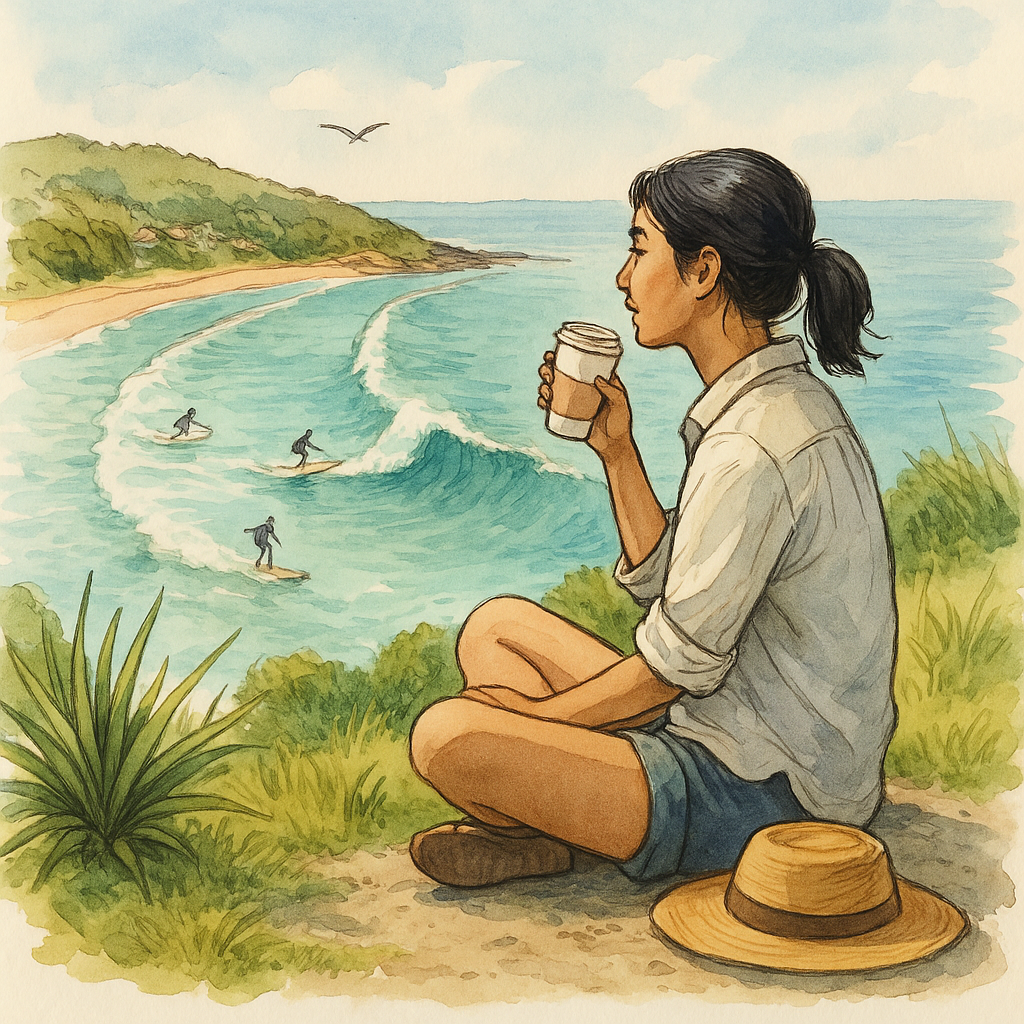
A woman sits on a hill above Crescent Head, drinking coffee and watching surfers below

Coastal Cruising: NSW’s Most Stunning Drives by the Sea

The Legendary Pacific Coast Drive (Sydney to Byron Bay)

If you want to get up close and personal with Australia’s surf scene, this is the road trip that’ll have you grinning like a sandy, sunburnt idiot. Start by hugging the shore through the Central Coast, then head on to Newcastle, a former steel city now reborn as a hip little hub of craft breweries, street art and rooftop bars. 

Next up, Port Stephens is all about dolphins. Join a tour from Nelson Bay and watch pods arc through the water right alongside your boat, or just park yourself on the beach and keep your eyes peeled.

A bit farther up, Crescent Head is where the vibe turns properly laidback. Tiny, friendly and obsessed with its famous right-hand point break, this town is a pilgrimage for longboarders chasing that endless ride. Even if you’re not keen to paddle out, grab a coffee at Barnetts Bakery, plonk yourself on the headland, and watch the locals carve it up.

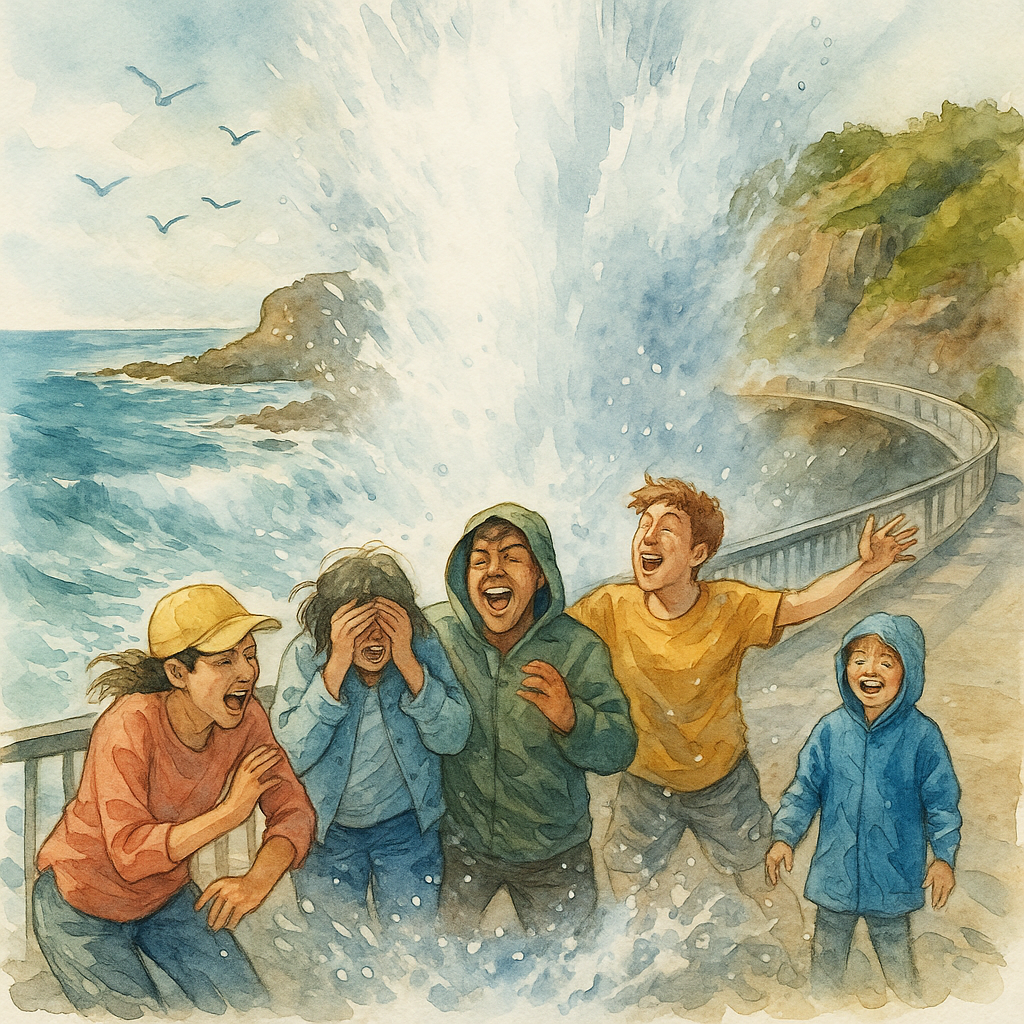
A group laughs as they get soaked by the Kiama Blowhole in New South Wales, Australia

Grand Pacific Drive (Sydney to Kiama and Beyond)

If you’re looking for a day trip that offers great views without taking an entire day of driving, look no further. This ride from Sydney, down through the Illawarra and on to Kiama, is a winner. The Grand Pacific Drive has some of the most cinematic views possible (hello, flying over the ocean on the famous Sea Cliff Bridge, where you feel like you’re driving right into the ocean).

You’ve got old mining towns, like Coalcliff and Helensburgh, that are still proudly rugged and industrial-looking. But find the right locals and you’ll be in for yarns about miners’ strikes and secret union meetings, and hear about the pit ponies that used to haul coal from the bowels of the hills.

Shipwrecks and lost sailors — another tale as old as time. There have been many victims along the Illawarra coast over the years, and according to legend, you can still see the remains of the jagged metal in the shallow water off Bass Point, a testament to the power of this sea when the southerlies are howling.

On to Kiama, where you can check out the famous blowhole, booming water into the air whenever there’s a decent swell. The best part? Hang around until the oblivious tourists have all crowded to the fence taking selfies, and watch them jump and scream as they get soaked by an unexpected blast. Classic Kiama. Good fun and completely guilt-free.

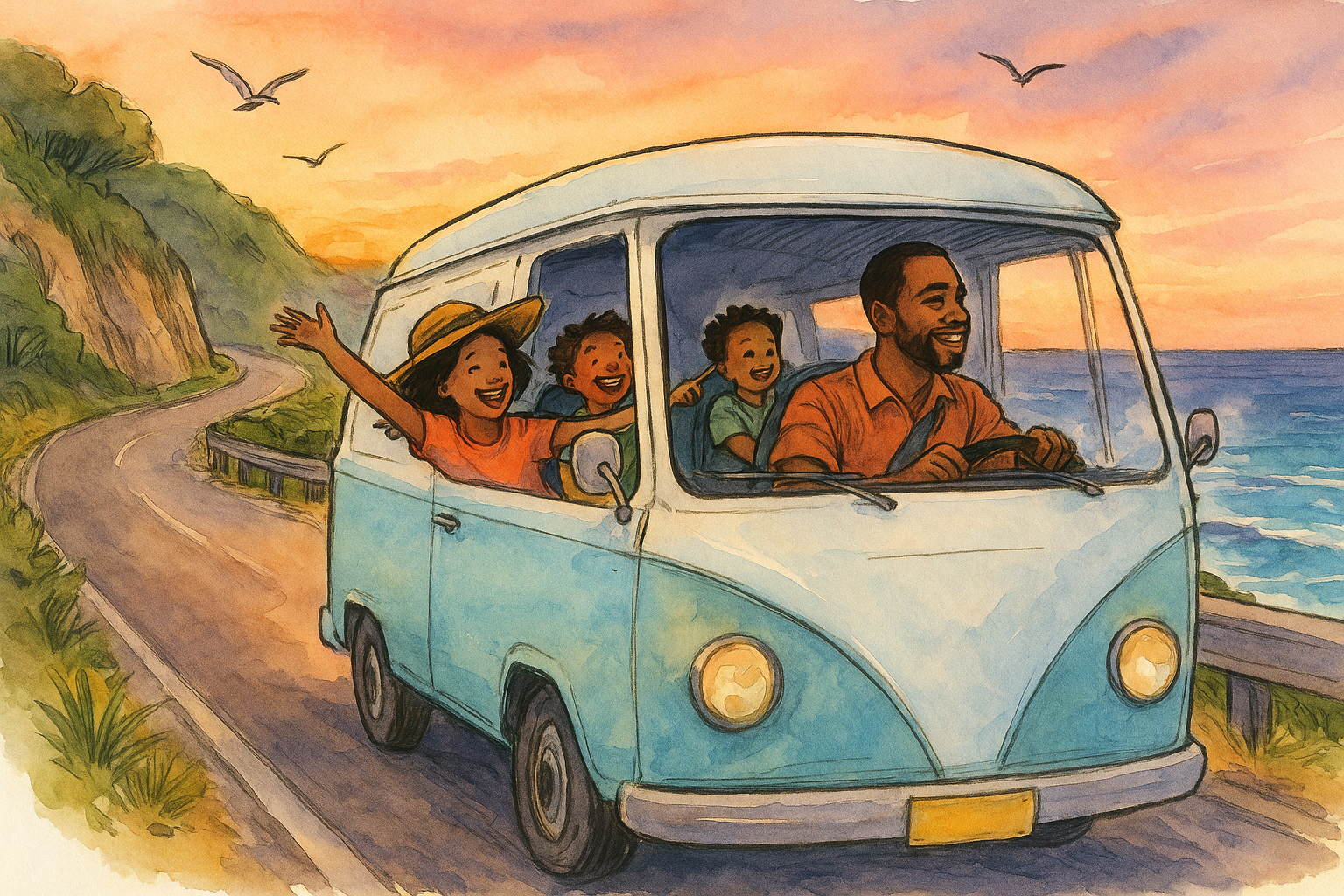
A family in a retro van drives along the Sapphire Coast, NSW, at sunset

Sapphire Coast (Batemans Bay to Eden)

This stretch of coast is where NSW loosens its tie and kicks off its shoes. Known as the Sapphire Coast for reasons that become blindingly obvious the moment you see the water, this drive is all about slowing down and letting the locals steer you toward the good stuff.

I’d kick this one off in Batemans Bay, where oyster leases ripple across the Clyde River and you can sample the freshest shuck of your life at the Oyster Shed on Wray Street. It’s practically a rite of passage around here. If you’ve never slurped down a still-quivering Sydney rock oyster while standing on a sun-warmed jetty, are you even road-tripping?

Of course, this coast is whale-watching central, especially from late winter to spring, when humpbacks migrate. Eden is your best bet: Once a bustling whaling town (there’s some dark history here), it’s now home to the Eden Killer Whale Museum, a delightfully old-school institution that tells tales of Old Tom, a killer whale who allegedly used to help local whalers hunt — a weird, very Australian piece of folklore if ever there was one.

And if you like your roadside attractions delightfully odd, don’t miss the giant mermaid sculptures in Merimbula. Locals are so used to them they barely blink, but newcomers often do a double-take.

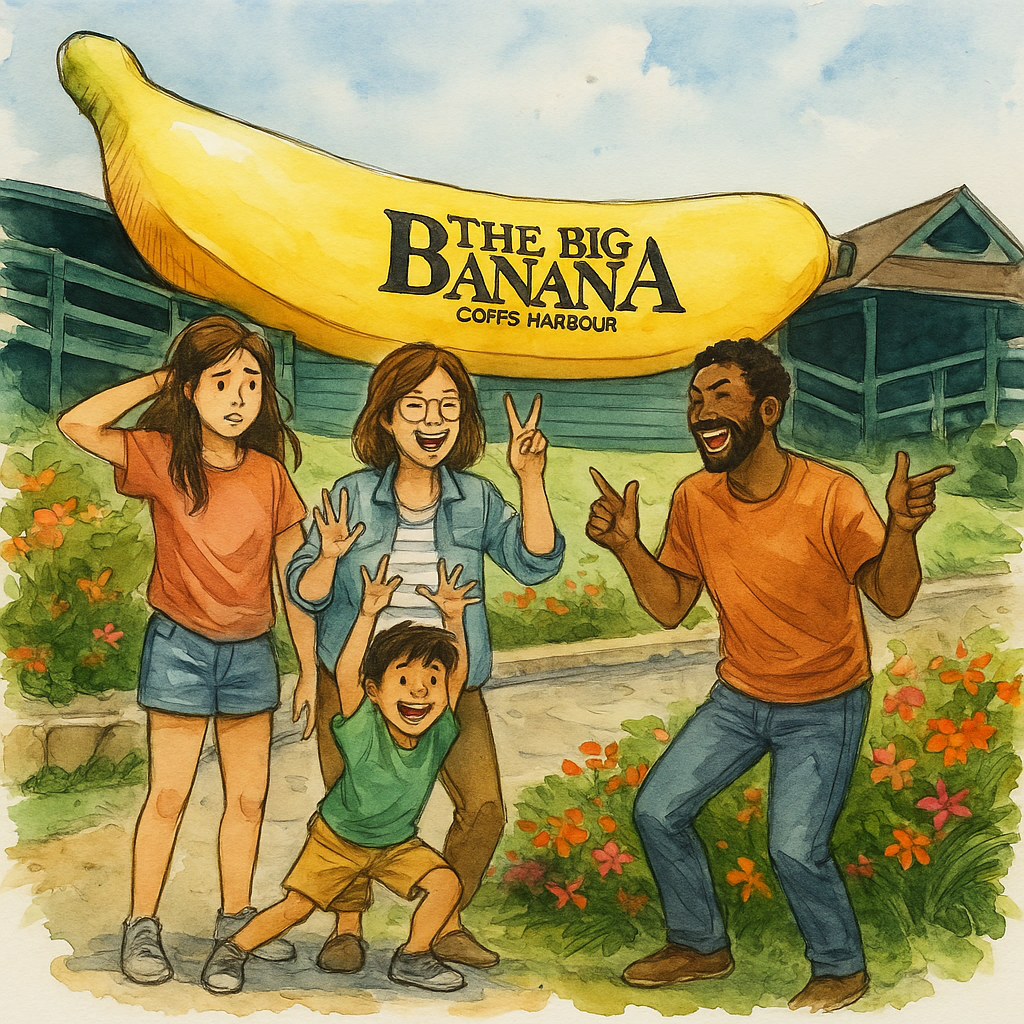
A group goofs off, posing in front of the Big Banana in Coffs Harbour, NSW, Australia

Quirky Roadside Stops and Offbeat Detours in NSW

No true Aussie road trip is complete without pulling over for something wonderfully weird. This is a country that loves a “big thing” — a playful national habit of building enormous versions of everyday objects and proudly sticking them on the tourist map.

On your New South Wales travels you’ll spot plenty of these giants. Snap a selfie under the Big Banana in Coffs Harbour, the original oversized icon that’s been delighting kids (and slightly confusing international visitors) since 1964. Farther inland, the concrete Big Merino in Goulburn stands tall and stoic, like a woolly monarch watching over passing caravans. Swing by for a photo, then pop inside (yes, inside the sheep) to learn a little about the region’s wool industry.

But it’s not just about the big and bizarre. In Gundagai, there’s a whole museum dedicated to the , a legend immortalising bush perseverance (and a statue that gets more than its fair share of questionable Instagram poses). 

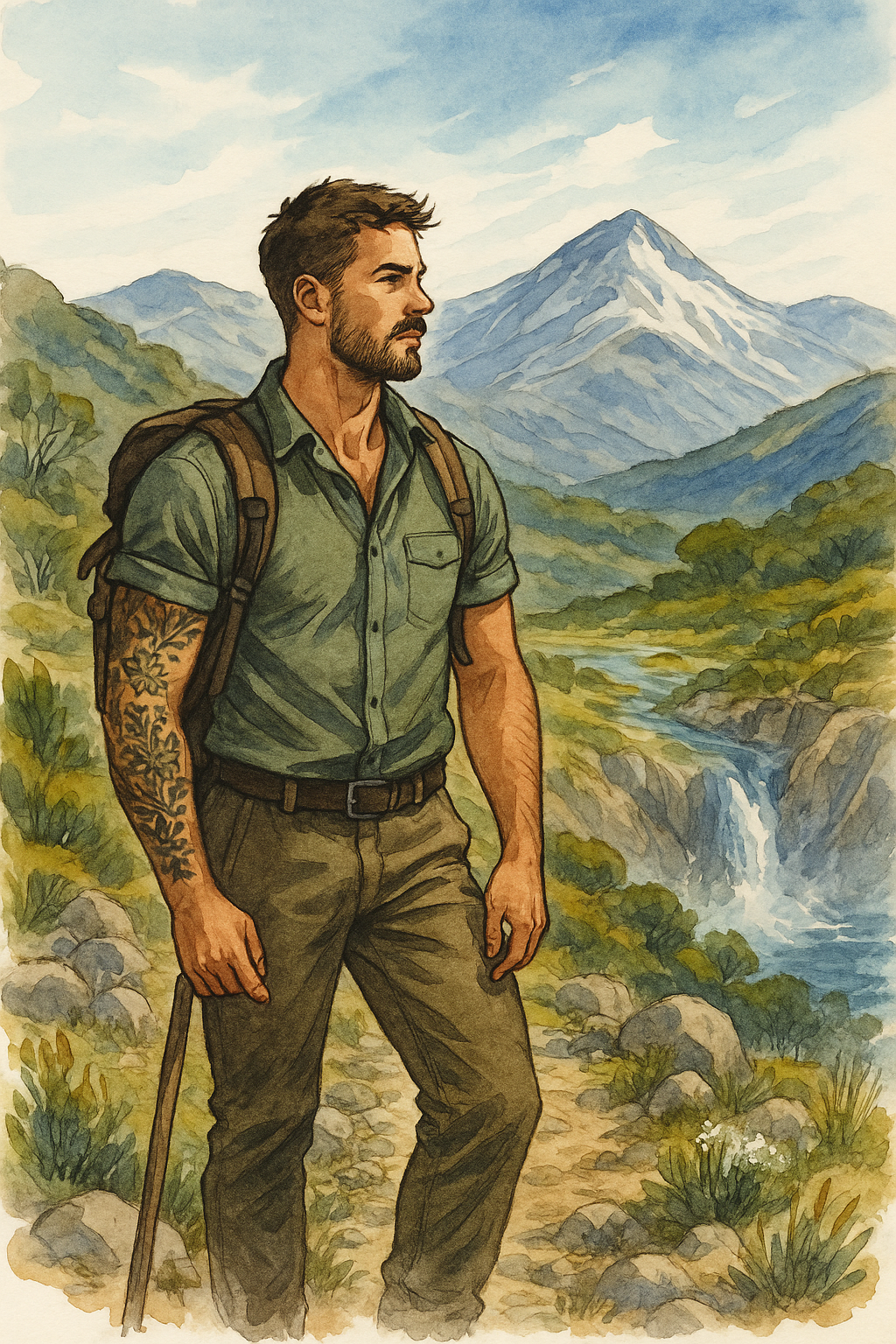
A man with botanical tattoos hikes in Kosciuszko National Park, NSW, Australia

Road Trip Tips for NSW

When it comes to road tripping around NSW, timing is everything. Spring and autumn hit the sweet spot across most routes, while winter is made for cosy pubs and snow-dusted hikes in the high country. Summer? That’s your cue to chase sea breezes and shady beer gardens. Just remember: NSW is bigger than it looks on a map; drives can be long and winding, so keep an eye on your fuel gauge, cue up a few extra playlists, and embrace the joy of random bakery stops. 

And wherever you roam, respect the land you’re crossing. Many of these roads weave through Indigenous country, so stick to marked tracks, steer clear of sacred sites, and leave no trace behind. It’s the simplest way to ensure the next traveler (and the local wildlife) gets to enjoy it just as much as you did. –Ellen Mahoney

RELATED: Top Road Trip Routes Across Victoria, Australia 

Top Road Trip Routes Across Victoria, Australia

Explore Victoria’s best road trips, from the Great Ocean Road to the Great Alpine Road, Black Spur Drive and more — scenic routes where the journey is the destination.

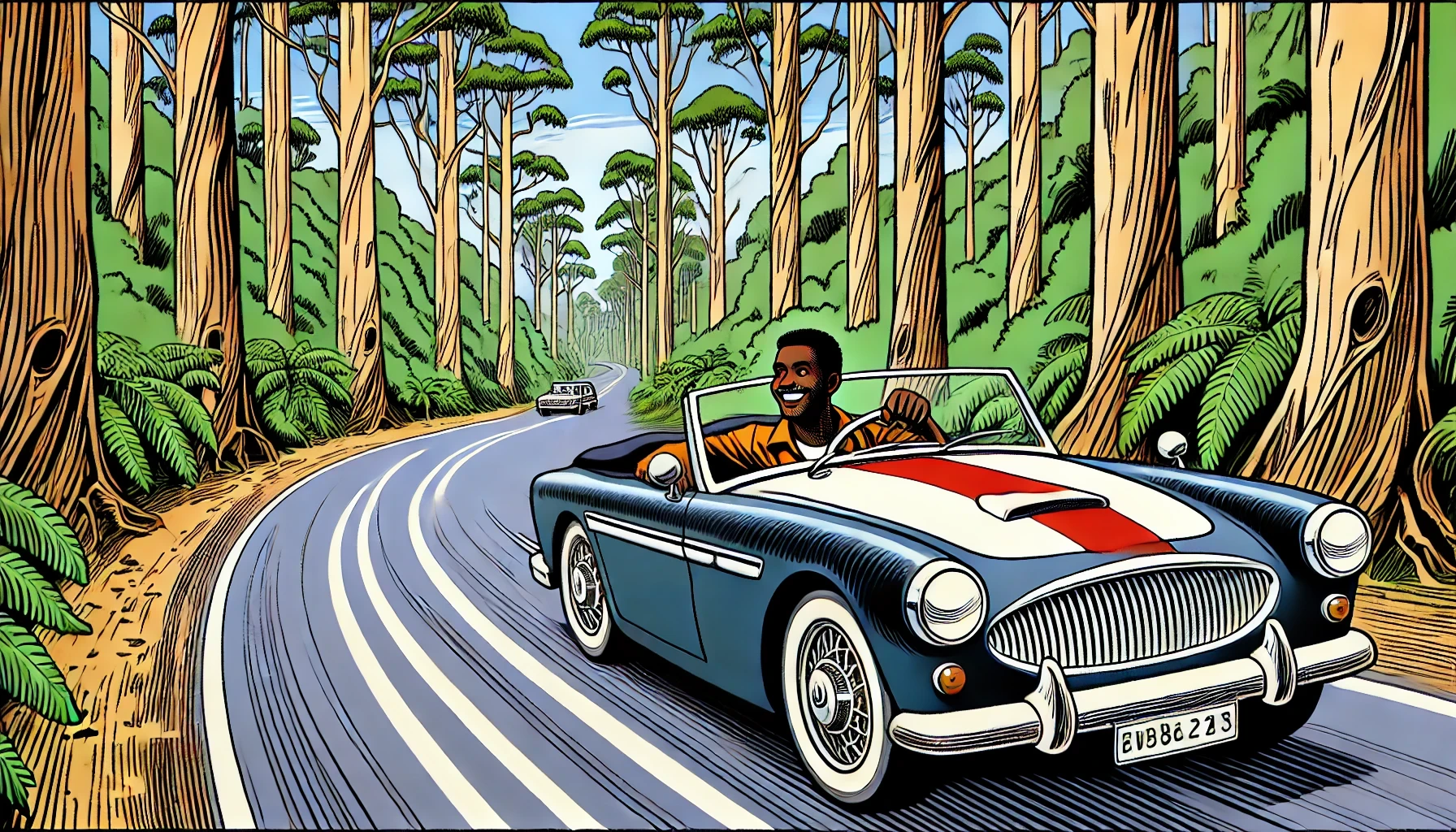
A man drives a convertible car with a racing stripe along Black Spur Drive in Victoria, Australia

Nothing beats the feeling of the open road wind in your hair, the hum of the engine, and the endless road unfolding ahead. Whether you’re cruising along scenic coastal roads, winding your way through dense rainforests, or navigating through snow-capped alpine peaks, the drive is the adventure. 

So buckle up, road trippers. I’ve curated a list of some of the most breathtaking drives across Victoria. From the beauty of the Great River Road, with its iconic rivers and valleys, to the serene, snow-covered roads winding through the High Country, these routes promise memories that last long after the journey ends.

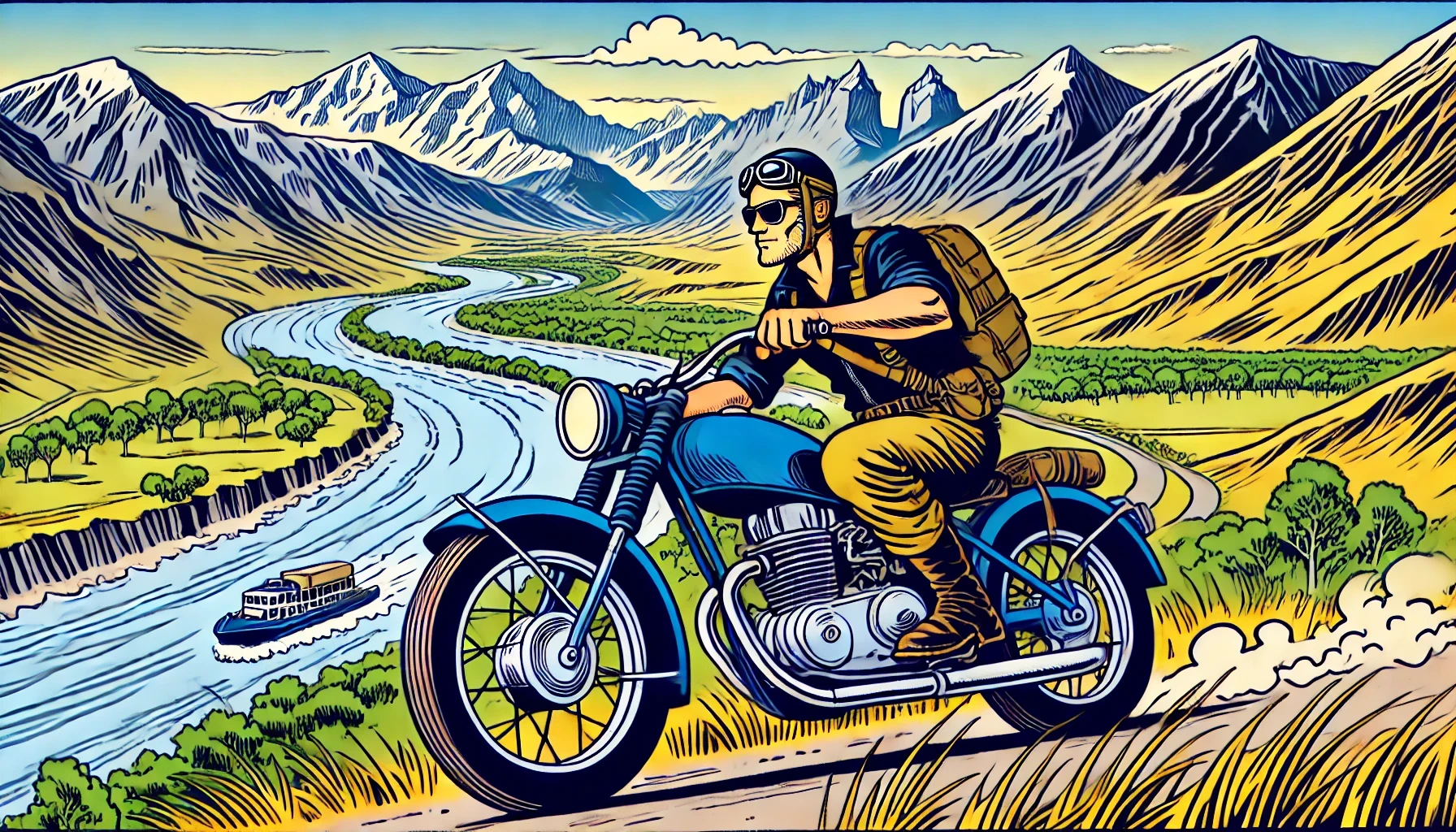
A man rides his motorcycle along the Great River Road in Victoria, Australia

The Great River Road

Set between two of Australia’s most stunning natural landmarks, the Murray River and the Snowy Mountains, the Great River Road is a 96-mile (155-kilometer) stretch of breathtaking high-country scenery in Victoria’s North East. 

Travelling from the east, the adventure begins in Khancoban, a quaint town nestled at the foot of the majestic Kosciuszko National Park. As you follow the Great River Road in this direction, you’ll be surrounded by rolling valleys and dense bushland, with the mighty Murray River snaking its way through. 

Following the road east, you’ll be treated to sweeping views of the expansive Lake Hume, with the towering Snowy Mountains looming in the distance. 

The landscape gradually transitions from the serene lake views to the fertile river flats and lush farmland that line the Upper Murray. Your journey ends in the charming town of Bellbridge, nestled near the edge of Lake Hume. 

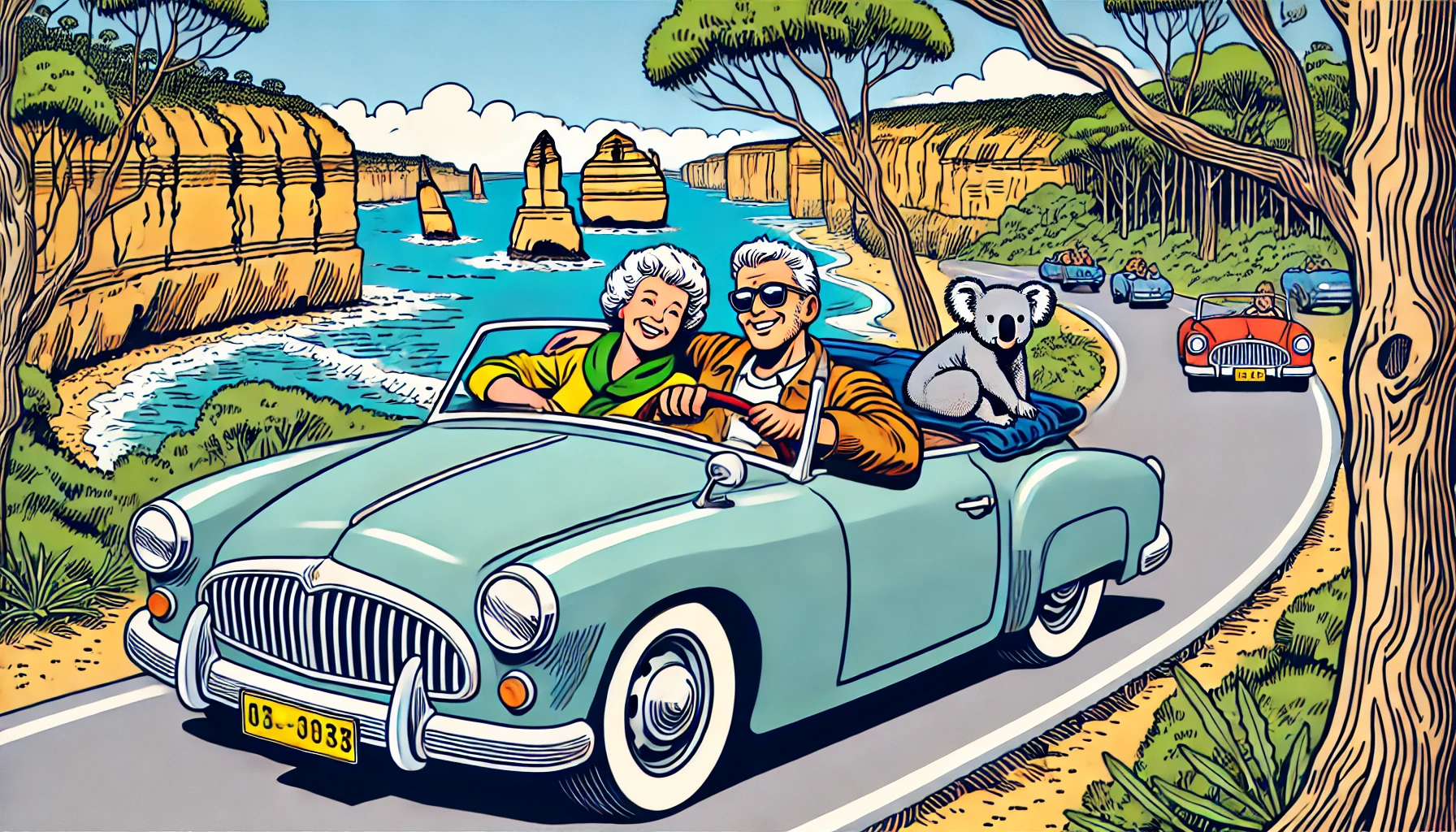
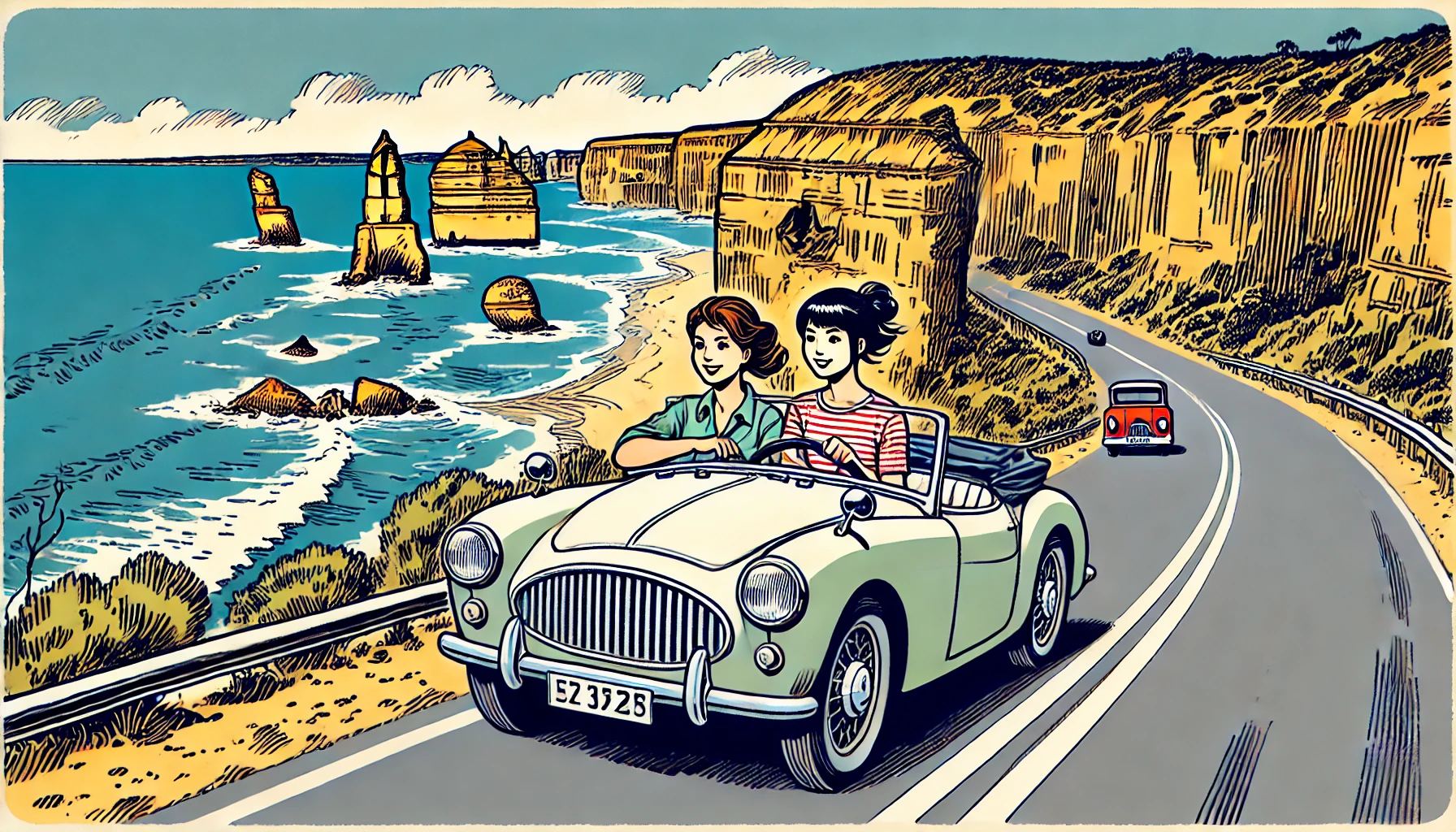
A senior couple drive a pale blue convertible car with a koala in the back along Great Ocean Drive

The Great Ocean Road

Originally created as a tribute to World War I soldiers, the Great Ocean Road spans 151 miles (243 kilometers) of stunning landscapes. The route takes you through towering cliffs, coastal towns and dense rainforests, with plenty of surf beaches to discover along the way.

A highlight of this scenic drive is the striking collection of limestone formations rising dramatically from the Southern Ocean. Don’t miss natural treasures like the Twelve Apostles, Loch Ard Gorge, London Bridge and the Grotto. 

Although these natural wonders are diminishing over time due to erosion, the sight of these massive rock formations battling the waves remains an awe-inspiring experience.

Farther along in the Great Otway National Park, the winding Lighthouse Road is a prime spot to see koalas in the wild. You’ll know you’re in koala country by the barren eucalyptus trees that line the road.

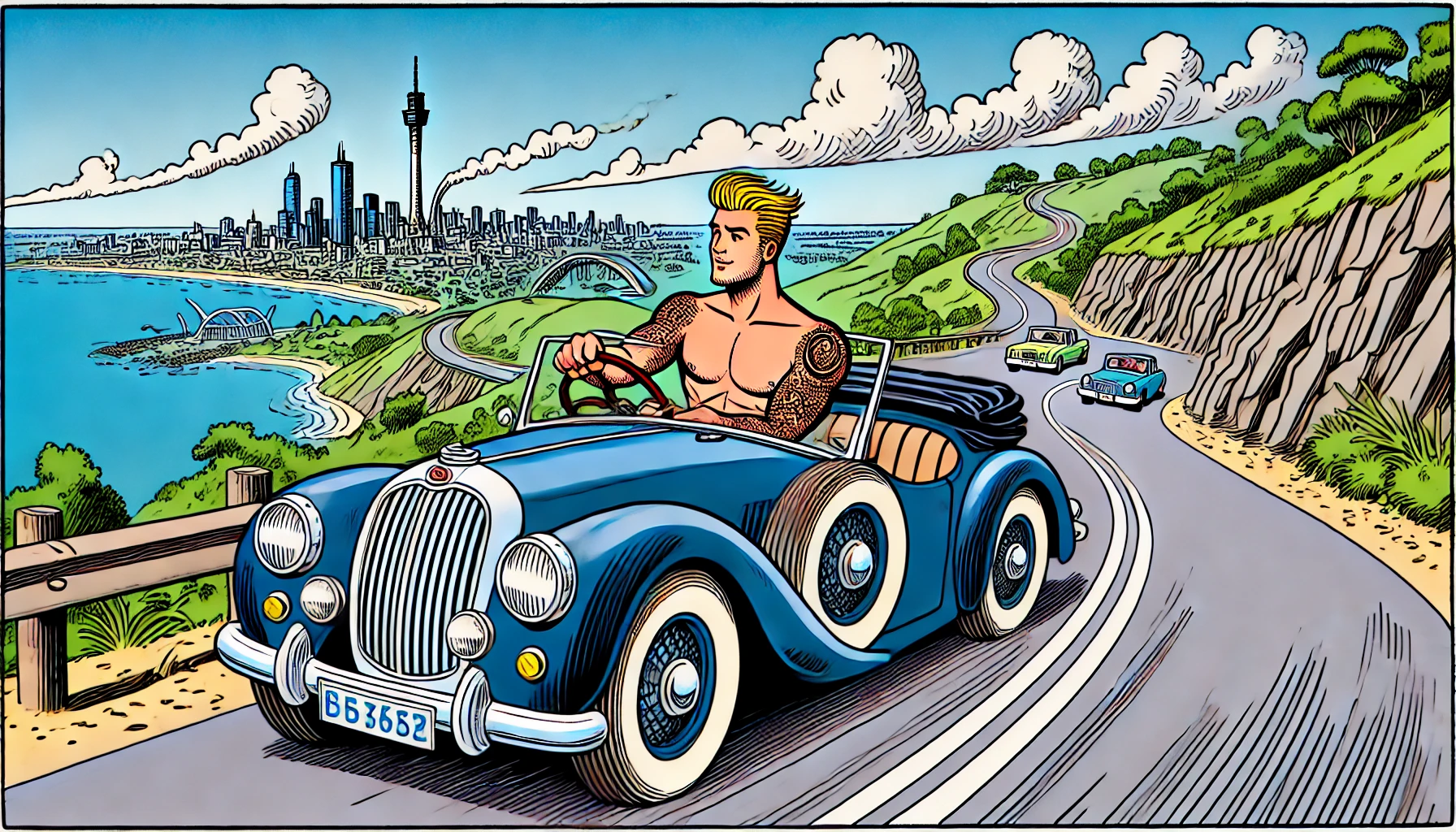
A tattooed shirtless man drives a blue classic convertible along Arthurs Seat Drive, with Melbourne in the distance

Arthurs Seat

The drive up to Arthurs Seat provides stunning views of Port Phillip Bay, but the real beauty is found in the turnout areas along the road that offer the best unobstructed views on your way back down to the Mornington Peninsula Freeway. One particularly unmissable stop is Murray’s Lookout, where you can pause to admire the sweeping views of the bay and the towering skyscrapers of Melbourne. 

The drive itself is just as engaging, with the winding road and series of tight bends keeping you on your toes. Despite the 60-kilometers-per-hour speed limit, the sharp turns ensure you’ll need to keep a firm grip on the steering wheel as you navigate your way down the mountain. 

Spanning about 4.3 miles (7 kilometers) from summit to base, this quick but thrilling drive packs in more views than some drives triple the length. Short and scenic, Arthurs Seat is a must for anyone cruising the Mornington Peninsula.

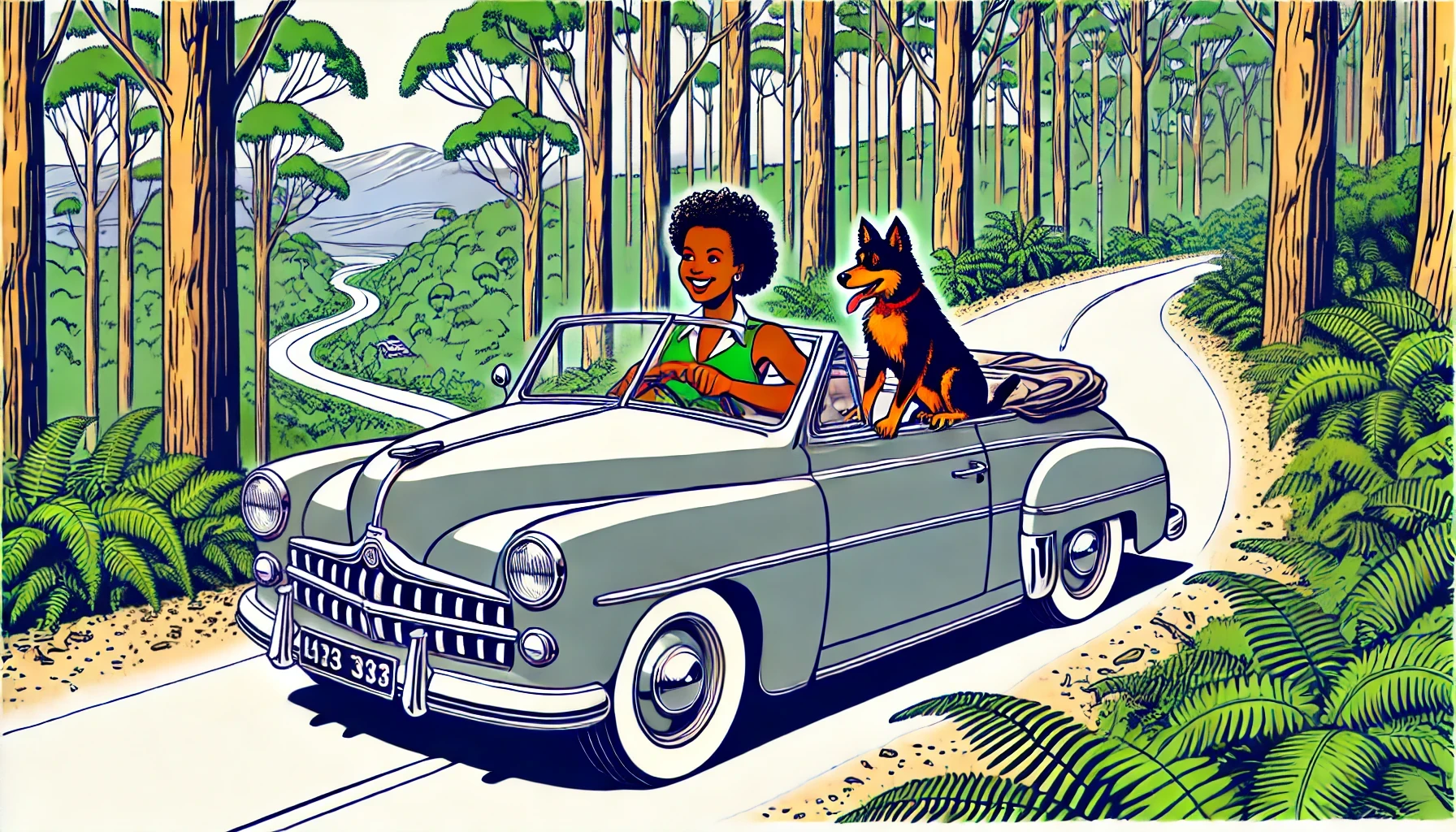
A woman in a silver convertible drives along Black Spur Drive with her dog

Black Spur Drive

Often regarded as one of Victoria’s most beautiful road trips, this two-lane road winds its way through towering mountain ash trees and fern-filled gullies with a mix of hairpin turns and brief straight sections, making for a dynamic and scenic experience.

It’s popular with both car and motorbike enthusiasts, although weekends can see a lot of traffic. Starting on the eastern side of Healesville and continuing through to Narbethong, the Black Spur provides a gateway to the charming town of Marysville, which is well worth a visit if you're continuing on your journey.

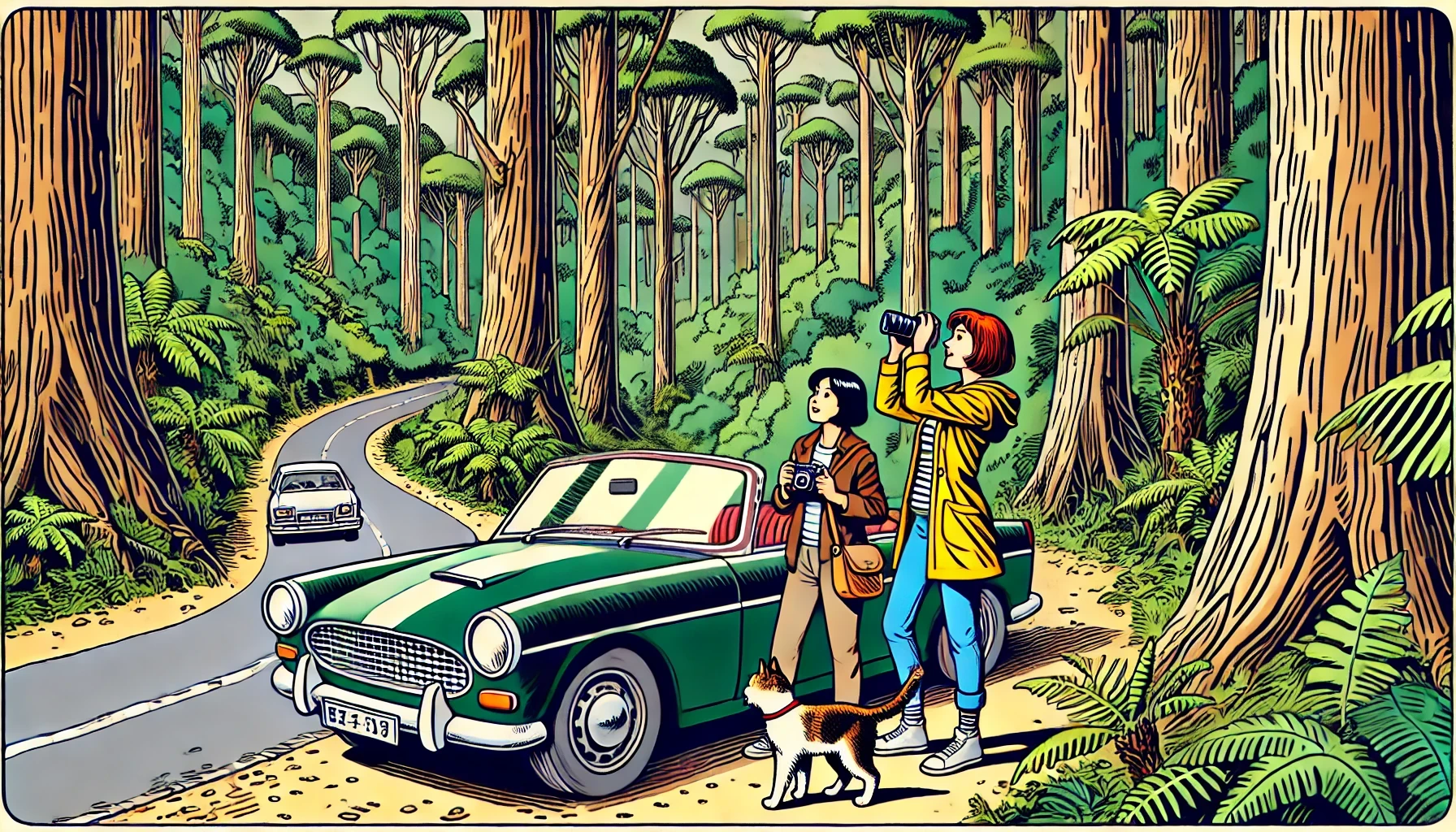
A woman looks through binoculars while her daughter holds a camera and their cat stands nearby in Black Spur's forest

As you drive, keep an eye out for local wildlife. Lyrebirds, kangaroos and other native creatures call this forest home, adding an extra element of magic to the experience. The Black Spur is a 35-mile (56-kilometer) route from Lilydale to Marysville, with the 19-mile (30-kilometer) section known as the Black Spur itself offering the most memorable part of the journey.

Expect winding roads with some uphill and downhill sections, plus the occasional hairpin turn and damp spots in lower-lying areas. There are several roadside stops where you can take a break and enjoy the views. Keep in mind that mobile phone reception can be intermittent, so it’s a good idea to plan ahead. 

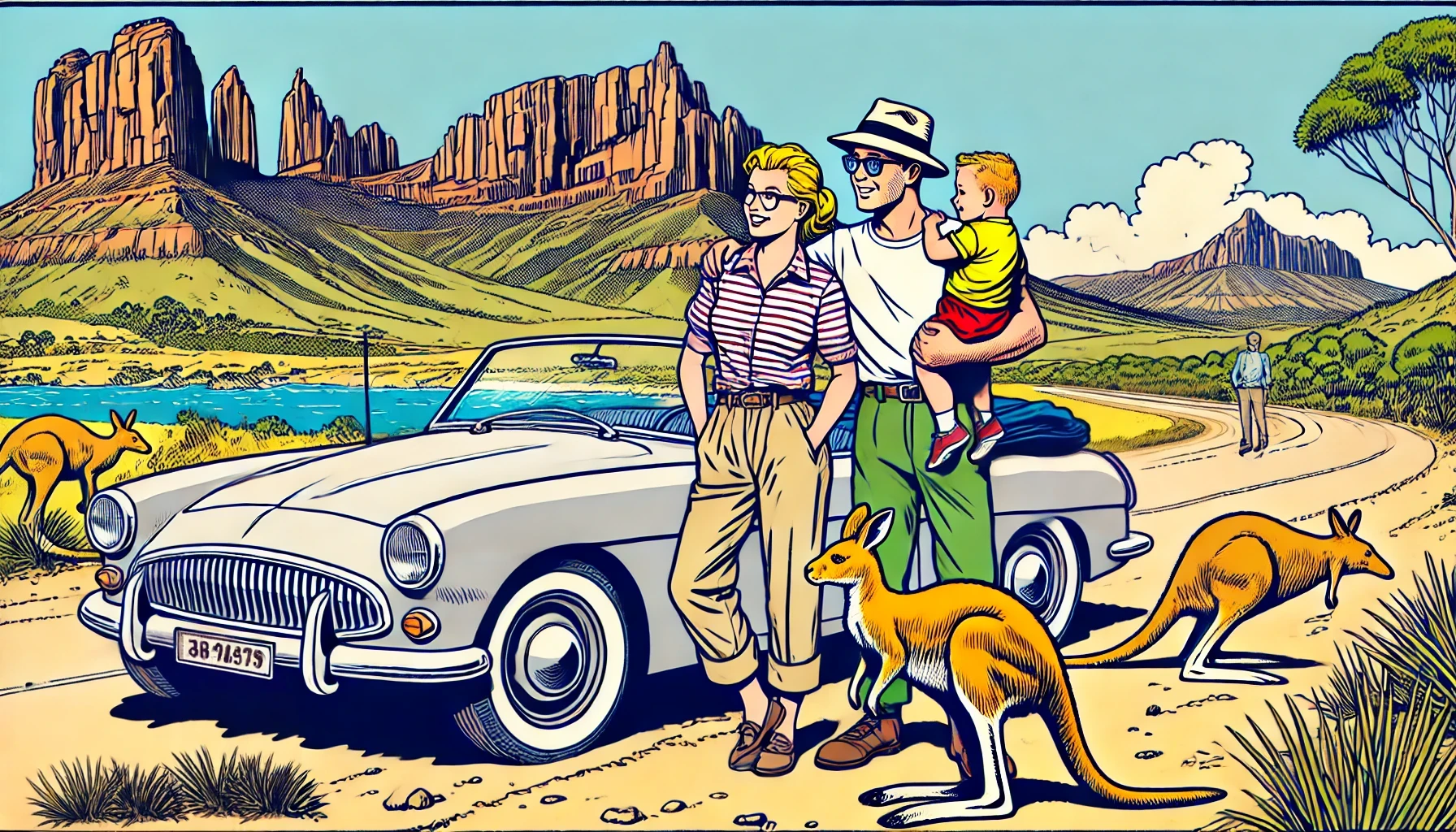
A family with young son stand by their car on Grampians Road as kangaroos hop by them

Grampians Road

Now, here’s a national park that knows how to impress. With its jaw-dropping sandstone mountains and views so stunning, the Grampians leave you wondering why you ever bothered with Kosciuszko. 

If you’re after a more laidback adventure, the Grampians Road drive from Halls Gap to Dunkeld is your perfect escape. It’s the kind of road that invites you to roll the windows down and take in the fresh mountain air.

On one side, towering mountains loom large, their cliffs cutting into the sky. On the other, you’ll glide past the sparkling waters of Lake Bellfield, with its calm surface reflecting the surrounding peaks and vast, craggy plains that stretch out like an untamed canvas. 

Every moment of this drive feels like a postcard come to life. If you’re lucky, you might even spot a kangaroo hopping along the roadside or a wedge-tailed eagle soaring overhead. 

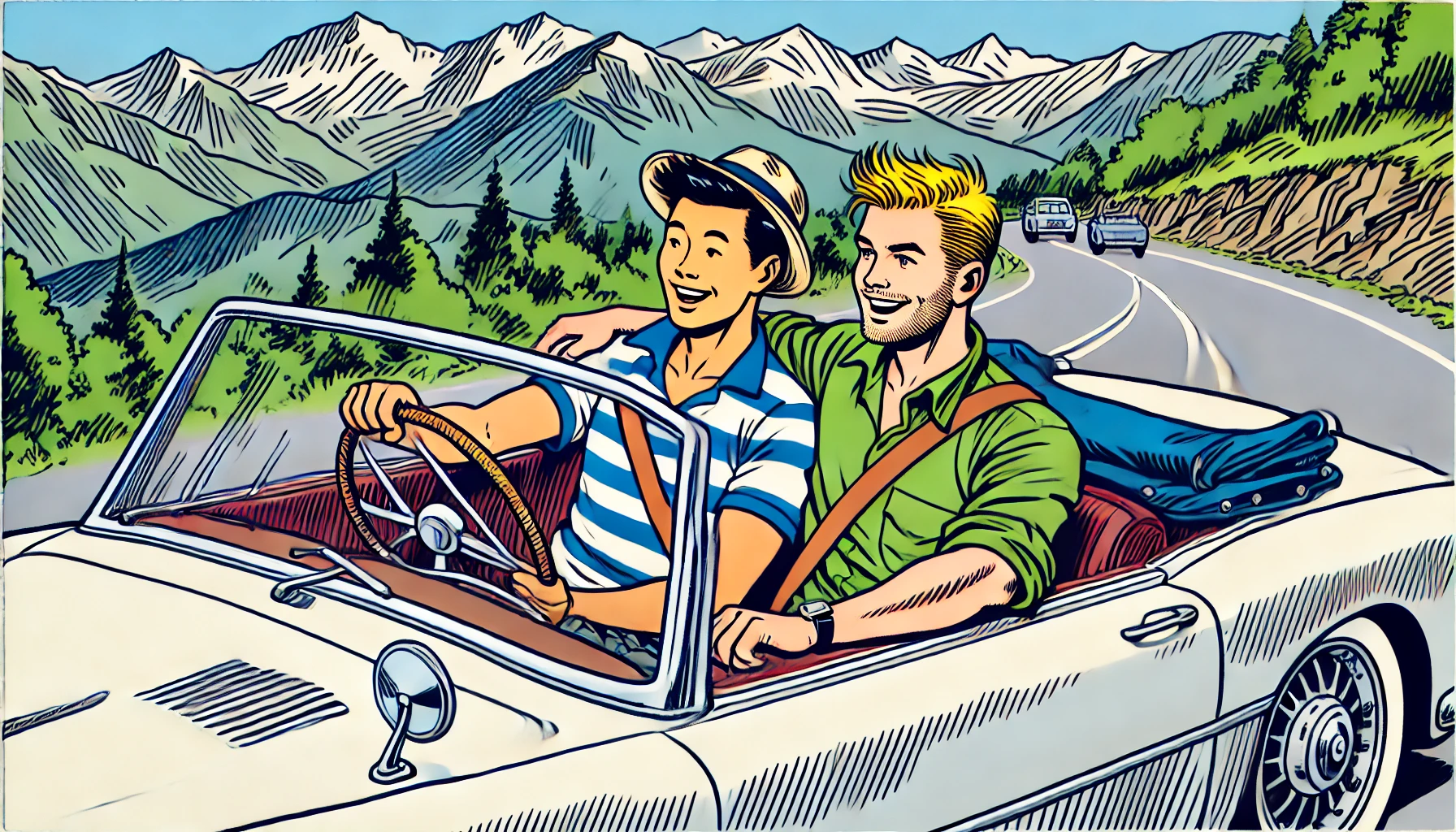
A gay couple drive a convertible tan car on the Great Alpine Road in Victoria, Australia

Great Alpine Road

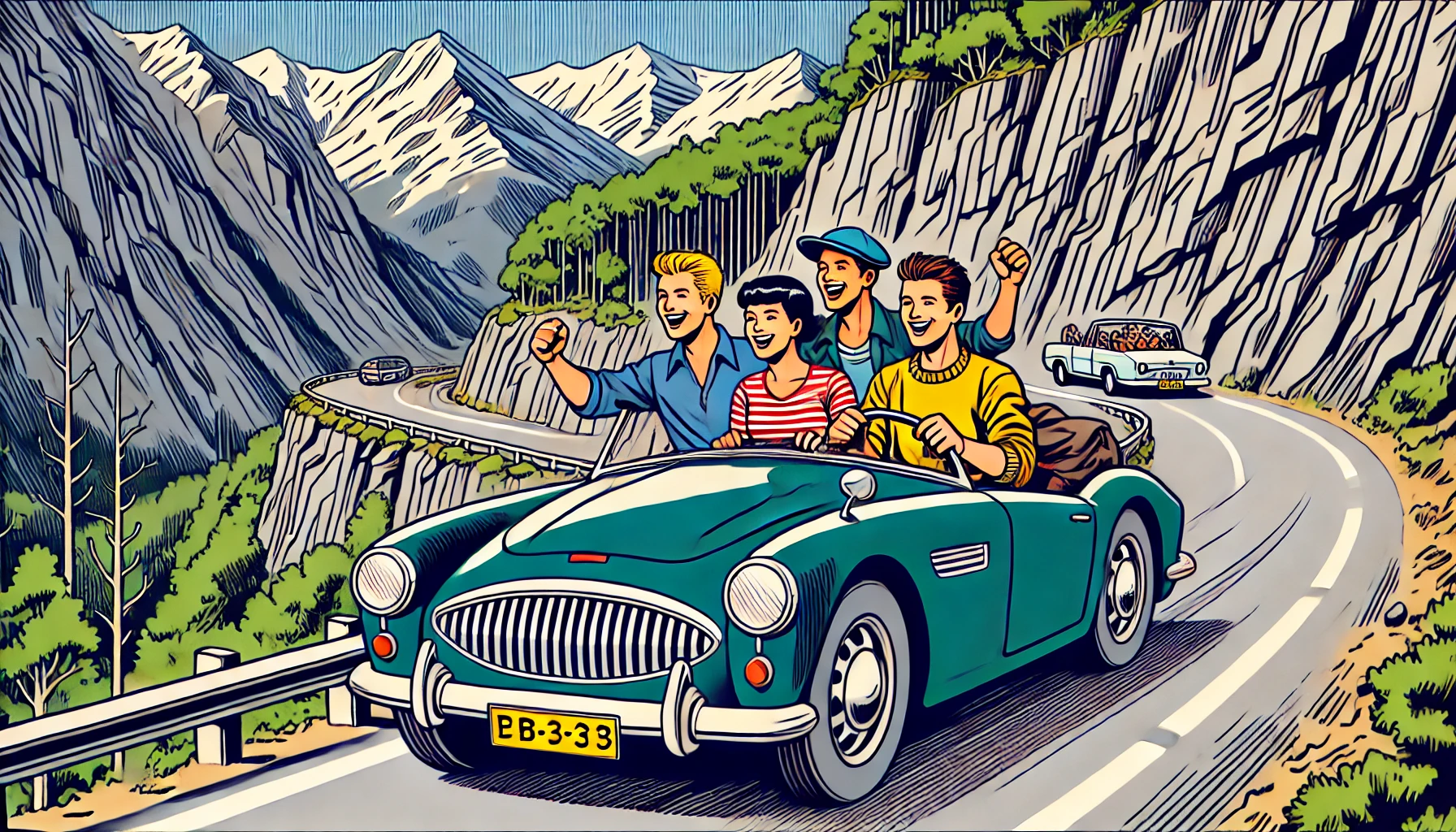
You’ve met the Great Ocean Road — now meet its cooler, more reserved sibling. Stretching approximately 186 miles (300 kilometers) from Wangaratta in the west to Bairnsdale in the east, the Great Alpine scenic route weaves through dense, forested mountains and breathtaking snow-capped peaks in winter. 

The road takes you through bustling ski towns like Bright and Omeo, where you can stop, relax and take in the alpine atmosphere

Four friends drive a small teal car along the winding mountainous Great Alpine Road in Victoria, Australia

If you’re in the mood for a detour, a short drive will lead you to historic Beechworth, a town steeped in gold rush and outlaw history. 

In winter, the Great Alpine Road transforms into a gateway to ski resorts such as Mount Hotham and Falls Creek — an unforgettable adventure for snow lovers. 

Get Out on the Highway to Experience Victoria, Australia

So there you have it — some of the most epic road trip routes that Victoria has to offer, each one a unique slice of adventure. From the iconic Great Ocean Road with its surfing towns and limestone formations to the chilled-out charm of the Grampians, these roads aren’t just about the journey; they are the journey. 

So, pack up the car, put your phone on “do not disturb,” and hit the road. Incredible Australian landscapes, quirky roadside stops, and the joy of the open road on Victoria’s best drives are all waiting for you. –Charlie Btallent

The Rules of Traveling With Your Human (A Dog’s Guide to Pet Travel Etiquette)

Traveling with a pet? From hotels to restaurant patios to transport, here’s the travel advice your dog would tell you if they could. 

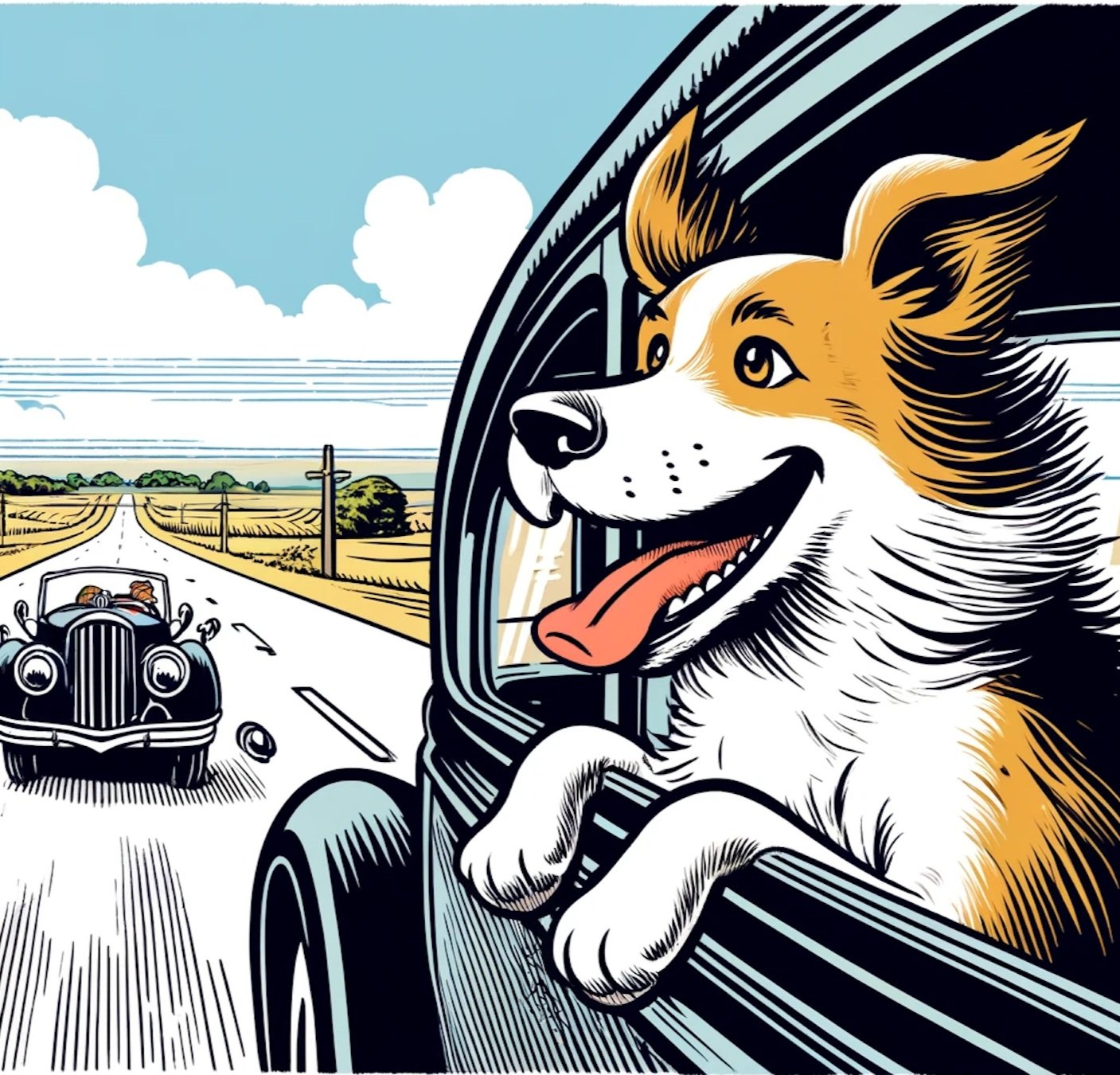
A dog sticks its head out a car window

Oh, you lucky dog! Your human has decided you get to join them on a grand adventure. Whether it’s a road trip, a flight, or a weekend at that place they call a “hotel” (where they inexplicably pay to sleep somewhere else), you’re in for a ride.

Listen, I love traveling with my human.

But if they don’t follow the rules, us pets might end up banned from places — and that means fewer adventures.
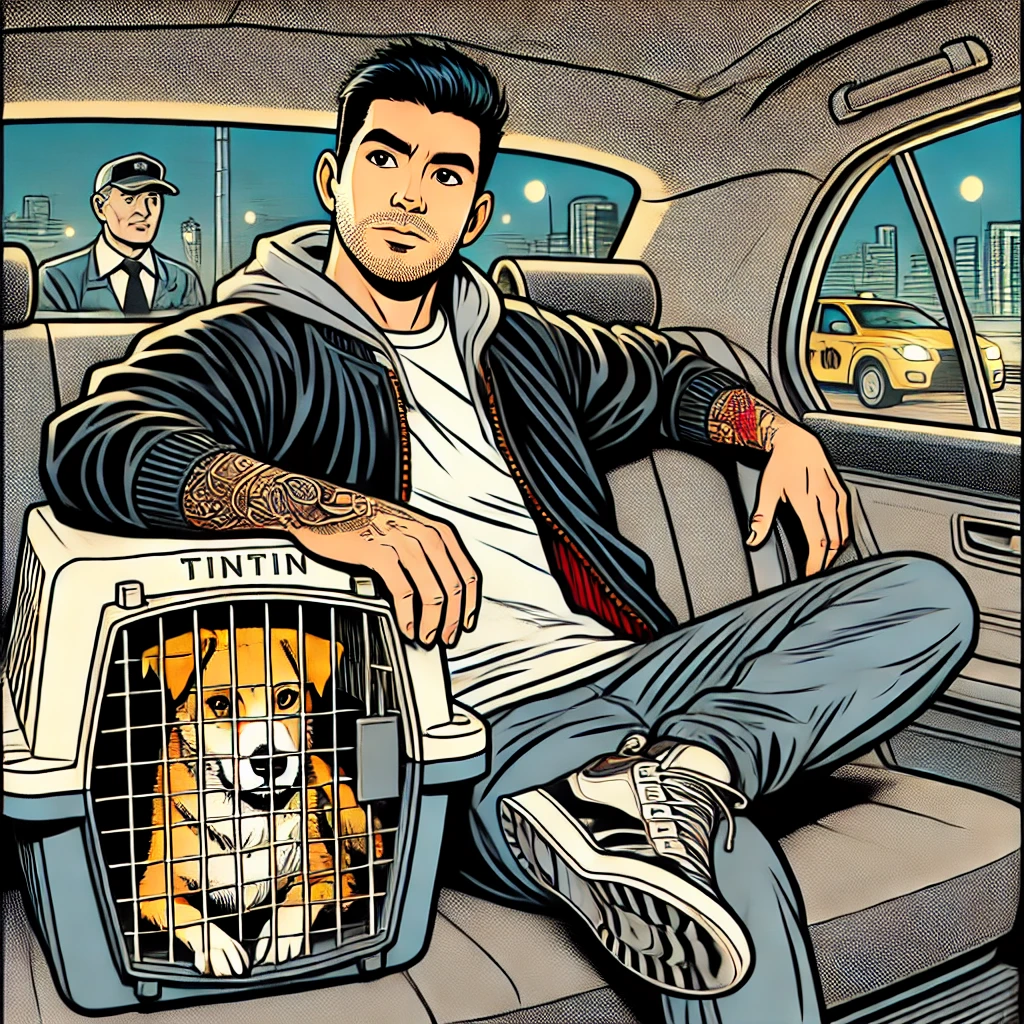
A dark-haired tattooed man sits in the backseat of a car with his dog, Tintin, in a carrier next to him

But listen, not all humans are great at this whole “traveling with a pet” thing. Some think the world is our personal playground. Others forget that not everyone is thrilled to see our adorable, slobbery faces (weird, right?). So, as the responsible one in this relationship, let me walk you through how to make sure your human doesn’t embarrass you.

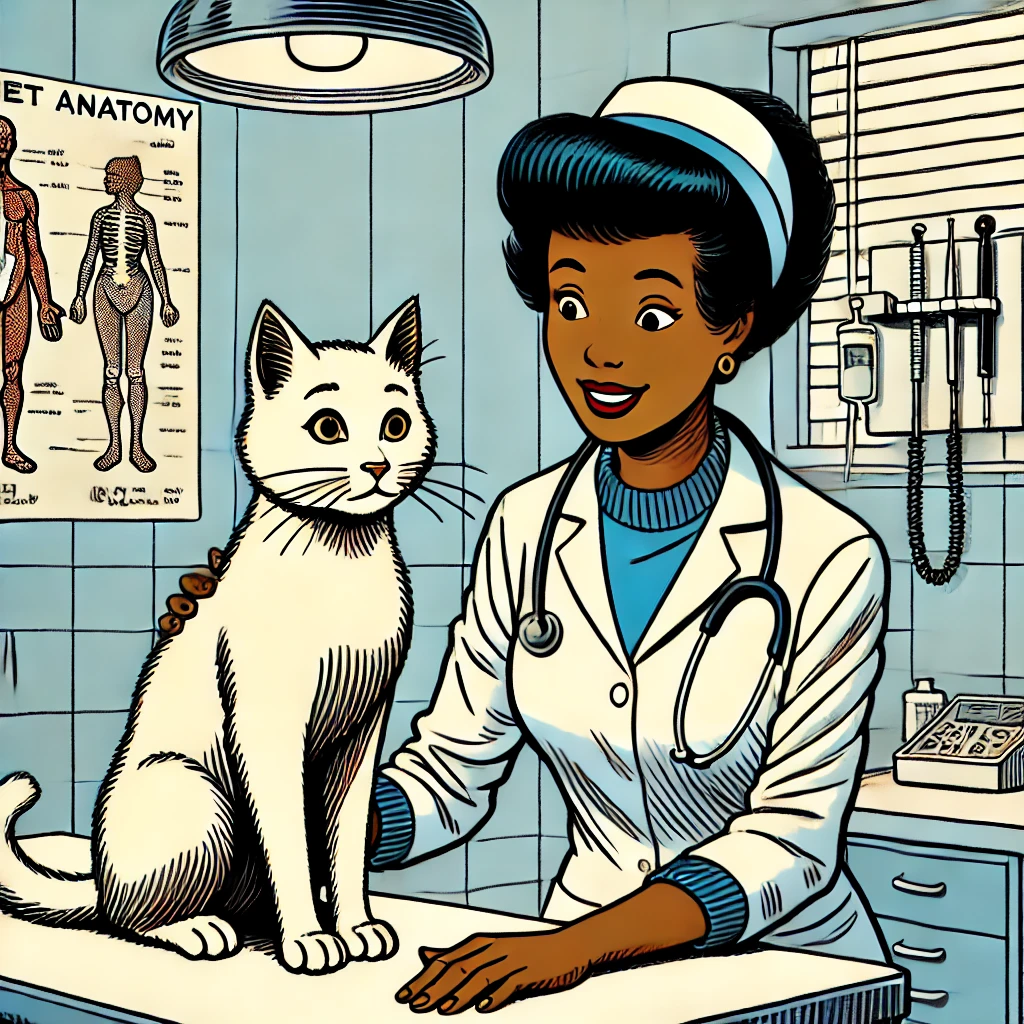
A female vet examines a large white cat

Pre-Trip Prep: Making Sure Your Human Gets It Together

Before we even leave, we need to make sure our human has done their homework. Here’s what you need to demand:

  • Check the rules: Airlines, hotels and rideshares all have different pet policies. Your human needs to read them. We don’t have opposable thumbs, so it’s on them.

  • Pack the essentials: Food, water, a leash, poop bags, a comfy carrier or blanket, and maybe a toy so you have something to chew on…besides their expensive headphones.

  • Visit the vet: If we’re flying, crossing borders or just feeling a little “off,” a vet check is a good idea. You never know when travel might cause issues like stress colitis — and no one wants to deal with that mid-trip. Plus, it’s always fun to watch your human panic when they forget to bring proof of vaccinations.

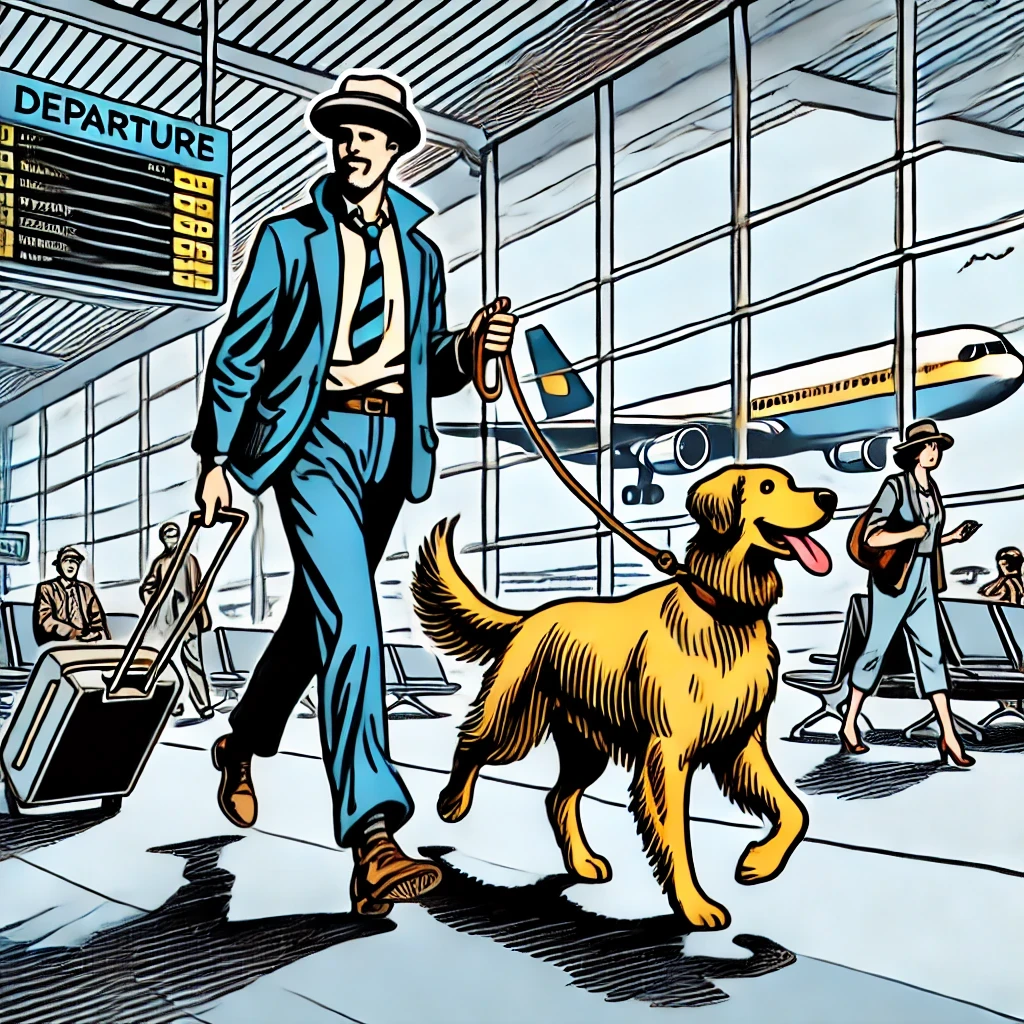
A man in a suit walks his golden retriever through the airport

Flying With a Pet: The Sky Is Not the Limit (Unless You Fit Under the Seat)

Okay, let’s talk about air travel. I don’t love it, but if I must be stuffed into a carrier, I expect my human to do the following:

  • Pick the right spot: Some airlines let dogs in the cabin; others want to chuck us in cargo. Cargo?! You put your luggage in cargo, not your best friend!

  • Make my crate cozy: If I have to sit in there for hours, at least throw in a blanket that smells like home. Maybe a chew toy. Maybe my favorite sock.

  • Pre-flight bathroom breaks: I can hold it longer than you think, but come on — nobody wants an in-flight accident.

  • No mid-air introductions: I get it, I’m adorable. But that doesn’t mean I need to meet every passenger on the plane. Keep me calm, keep me contained, and for the love of bacon, don’t do anything that makes me feel like I have to bark.

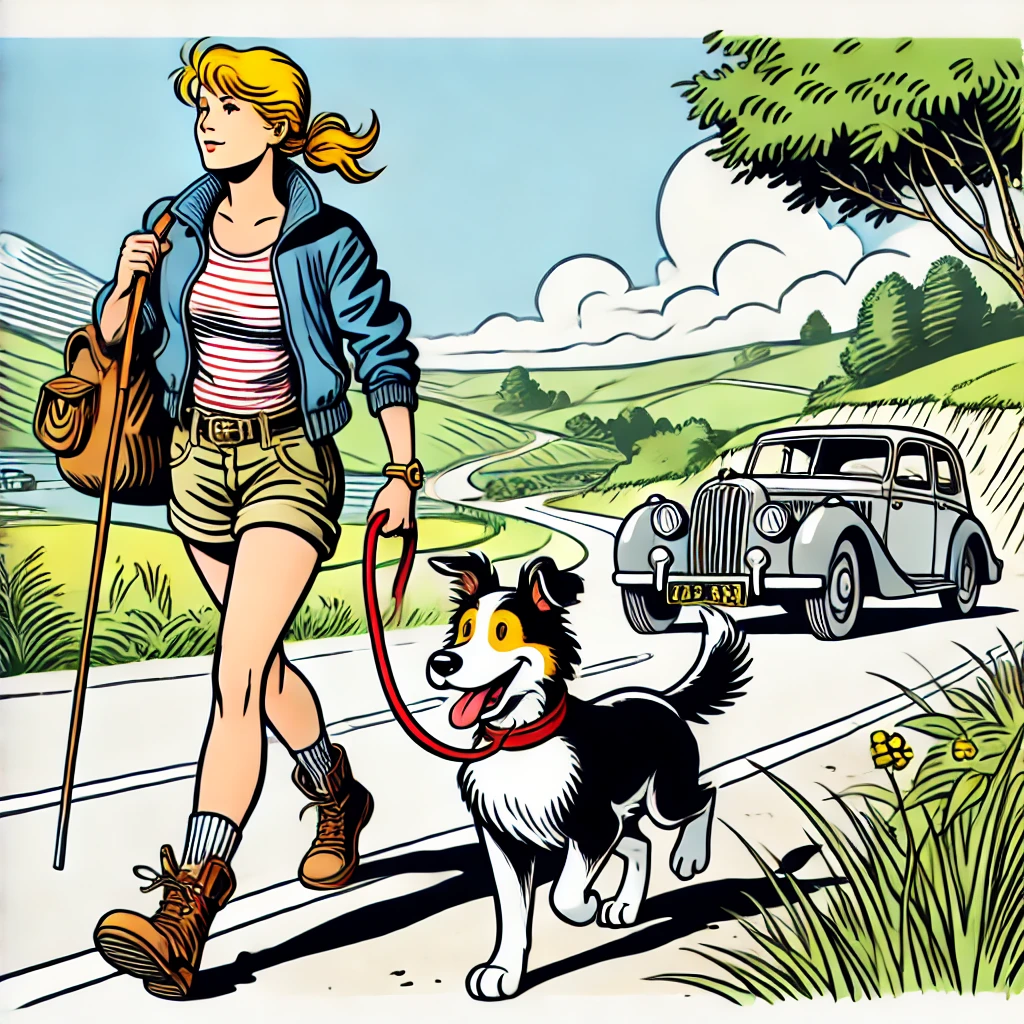
A woman with ponytail and hiking gear walks her dog along the side of the road

Road Trips With a Pet: Open Windows, Sniffing the Breeze and Not Eating the Seatbelt

Ahhh, road trips. The dream: We head out on the highway, wind in my fur, nose detecting every scent for miles. The reality: Humans often forget the basics:

  • Buckle up: No, I will not sit on your lap while you drive. Yes, I do need a harness or a crate. Safety first.

  • Gimme breaks, please: I love a long drive — but not so long that I start considering peeing in the cup holder. Stop every couple of hours.

  • Provide snacks and water: If you’re munching on gas station snacks, I want something too. Fair is fair.

  • Music matters: Maybe don’t blast heavy metal for eight hours straight? A little classical, some soft rock — I have refined tastes.

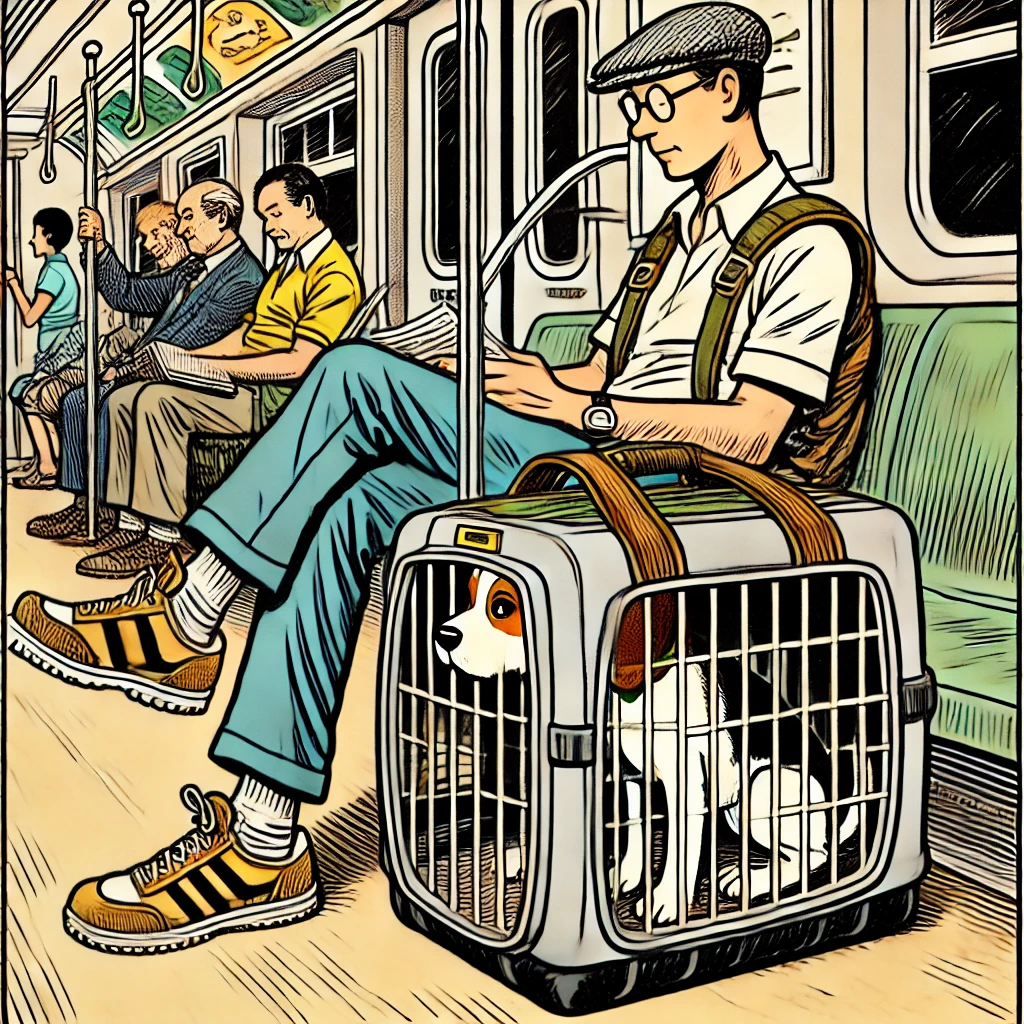
A man with glasses and a backpack reads on the subway, a dog in a crate at his feet

Public Transit and Rideshares With a Pet: Navigating the Human World

Some places let us ride the train, bus or even an Uber. But let’s not give other dogs a bad name:

  • Stay in the carrier (if required): No one wants my fur in their morning coffee.

  • Help me stay in chill mode: I won’t bark, growl or give stink-eye to other passengers if you keep me calm.

  • Respect people’s space: Some humans get real weird about sitting next to a dog. That’s their loss.

An interracial gay couple checks into a hotel with their small fluffy white dog

Hotels and Airbnbs With a Pet: New Place, Same Rules

Your human booked us a stay somewhere fancy? Nice. But they need to remember:

  • Not every hotel loves dogs: Just because we’re cute doesn’t mean we’re automatically welcome.

  • Respect the property: No chewing the furniture, no marking new territory indoors.

  • No midnight zoomies: Apparently, running full speed across the room at 3 a.m. is “disruptive.” Who knew?

  • Tip the housekeeping staff: If I shed all over the place, my human better leave a little extra cash.

A rockabilly chick sits on a step at a bar patio, smoking a cigarette with her bulldog

Restaurants and Cafés With a Dog: The Ultimate Test of Restraint

Ah, the café patio — the place where humans gather to drink overpriced coffee while we sit quietly and judge them. Let’s make sure we stay welcome:

  • Leash up: Help me with temptation. Don’t let me run free. 

  • No begging: Keep an eye on me. Even if that steak smells amazing, I will try my best not to stare at the diners like they owe me something.

  • No table hopping: I get it — some humans look friendlier than others. But I can’t just wander over and get up in a stranger’s business, no matter how much I want to say hi.

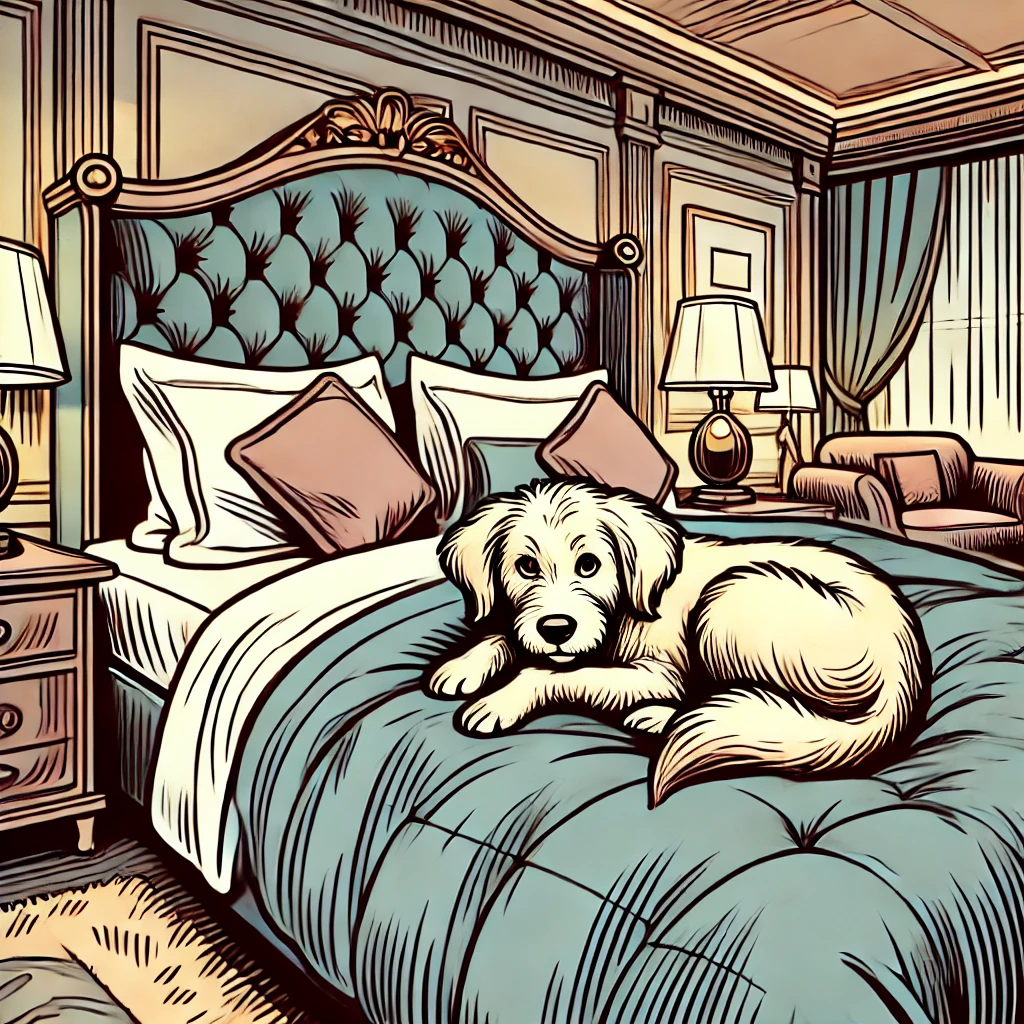
A white dog lays down, curled up, on a hotel bed

Be the Goodest Boy (or Girl) and Make Travel With Pets Easier

Listen, I love traveling with my human. But if they don’t follow the rules, we might end up banned from places and that means fewer adventures. So here’s the deal:

  • Be respectful.

  • Follow the rules.

  • Leave no trace (aka no fur, no mess, no complaints).

Because if we do this right, more places will keep their doors open to us. And that means more road trips, more vacations, and more sniffing exciting new things. What more could a dog ask for?

Now, where’s my treat for being such a good travel buddy? –As told to Wally

Exploring Majestic Fjaðrárgljúfur Canyon: Your Ultimate Guide

Moss-covered cliffs, glacial rivers and scenic overlooks at Fjadrargljufur Canyon in south Iceland. Get tips on hiking, travel and making the most of this gorgeous natural attraction.

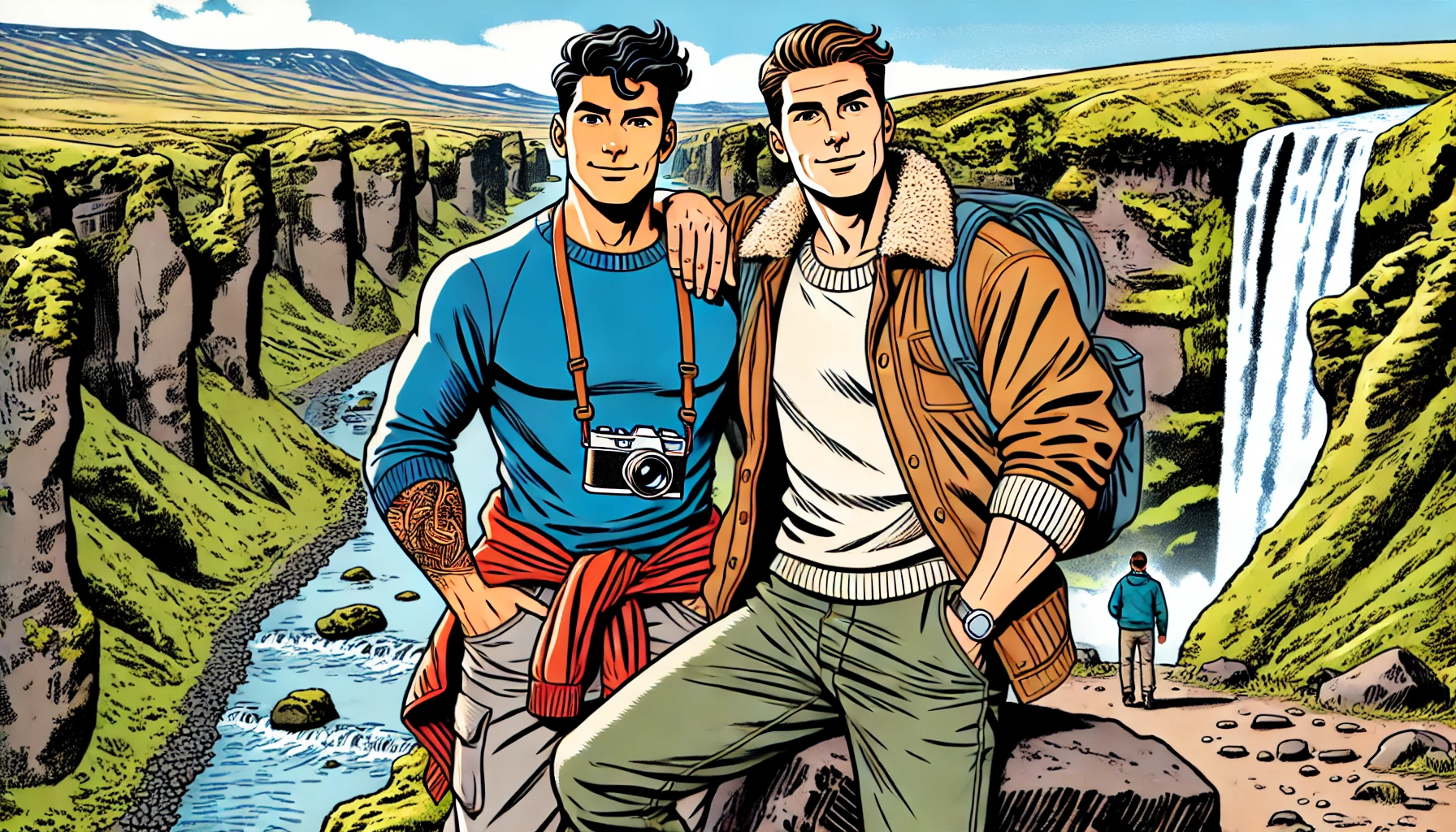
A handsome gay couple stands in front of Fjaðrárgljúfur Canyon, ready for a hike

Imagine walking through a landscape that feels straight out of a fairytale, with moss-covered cliffs, glacial rivers and breathtaking viewpoints at every turn. That’s exactly what you’ll experience at Fjaðrárgljúfur Canyon, one of Iceland’s most incredible natural wonders. Whether you’re an adventure lover, a photographer or just someone who loves stunning landscapes, Fjaðrárgljúfur (also spelled Fjadrargljufurcanyon and pronounced something like Fyath-rou-ar-glyoo-fur) is a must-visit on your Iceland itinerary.

Fjaðrárgljúfur shot to worldwide fame when Justin Bieber filmed parts of his “I’ll Show You” music video here in 2015.

Since then, visitors have flocked to witness its incredible beauty firsthand.

Ready to explore? Let me take you through everything you need to know, from where it is, how to hike it and why this place will leave you speechless.

Overview of Fjaðrárgljúfur Canyon

Fjaðrárgljúfur Canyon is a jaw-dropping gorge located in southern Iceland. Carved by the Fjaðrá (Fyath-rou) River over thousands of years, the canyon is about a mile (2 kilometers) long and can reach depths of up to 330 feet (100 meters). Its steep, moss-covered cliffs and flowing river make it one of the most picturesque spots in the country.

What makes it even more special? The canyon is believed to be around 2 million years old, formed during the Ice Age as glacial waters carved their way through the rock. Today, it’s a popular stop for travelers looking to soak up Iceland’s natural beauty and enjoy a peaceful escape into the wilderness.

Fun Fact: Fjaðrárgljúfur shot to worldwide fame when Justin Bieber filmed parts of his “I’ll Show You” music video here in 2015. Since then, visitors have flocked to witness its incredible beauty firsthand.

Where Is Fjaðrárgljúfur Canyon?

Located in southern Iceland, Fjaðrárgljúfur Canyon is about 155 miles (250 kilometers) from Reykjavik. It’s just a short drive off Iceland’s famous Ring Road (Route 1), making it an easy addition to your Southern Region road trip.

The nearest town to the canyon is Kirkjubæjarklaustur, a small village about 15 minutes away by car. If you’re traveling from Reykjavik, expect the drive to take around 3.5 hours, depending on stops along the way. Trust me, though — the journey is absolutely worth it!

Here are a few ways to get to Fjaðrárgljúfur:

  • By car: Renting a car or camper is the most convenient way to reach the canyon. This gives you the freedom to stop at other incredible sights along the way. If you’re exploring Iceland with wheels, check out these options for campers in Iceland.

  • Guided tours: If you’re short on time or prefer not to drive, many tour companies offer daytrips to south Iceland, including stops at Fjaðrárgljúfur.

Pro Tip: The road to the canyon’s parking area is gravel but well maintained. You don’t need a 4x4 to get there, but drive carefully, especially in winter conditions.

Two women sit and tie the laces on their boots for a hike along Fjaðrárgljúfur Canyon in Iceland

Fjaðrárgljúfur Canyon Hike

If you love a good hike, you’re in for a treat! The Fjaðrárgljúfur Canyon hike offers some of the most incredible views in Iceland and is accessible for almost everyone. Here’s what you can expect:

Hike Overview

  • Distance: About 2 kilometers (1.2 miles) roundtrip

  • Duration: 1 to 1.5 hours

  • Difficulty: Easy (family-friendly)

  • Trail type: Out and back

The trail starts at the Fjaðrárgljúfur parking lot and follows a well-marked path along the canyon’s edge. It’s an easy, gradual hike with multiple viewing platforms where you can stop, take photos and admire the stunning gorge below.

Key Highlights of the Hike

  1. The viewpoints: Along the trail, you’ll come across several scenic overlooks, each offering a unique perspective of the canyon. The Fjarðarárgljúfur viewpoint near the end of the trail is the most spectacular, providing a panoramic view of the canyon and the river winding through it. Trust me — you’ll want to spend some time here just soaking it all in.

  2. Moss-covered cliffs: One of the most magical aspects of Fjaðrárgljúfur is its moss-covered cliffs. The vibrant green moss, combined with the deep canyon walls, creates an almost otherworldly landscape. It’s no wonder photographers love this spot!

  3. The river below: As you hike along the edge, you’ll hear the sound of the Fjaðrá River flowing through the canyon. The water is crystal-clear and adds to the serene, peaceful atmosphere of the area.

Pro Tip: If you want to avoid the crowds, visit early in the morning or later in the evening. The lighting during sunrise or sunset also makes the canyon look even more magical!

Can You Hike Down Into the Canyon?

While the upper trail along the canyon’s edge is open to all visitors, hiking down into the canyon itself is not allowed. This is to protect the delicate moss and the environment, which has been impacted by the growing number of visitors.

But don’t worry — the views from the top are more than enough to take your breath away!

Best Time to Visit Fjaðrárgljúfur Canyon

Fjaðrárgljúfur Canyon is beautiful year-round, but the experience changes with the seasons:

  • Summer (June to August): The canyon is lush and green, with mild temperatures and long daylight hours. It’s the best time for hiking and photography.

  • Autumn (September to October): The fall colors add a stunning golden hue to the moss and cliffs. Plus, it’s less crowded.

  • Winter (November to March): Snow and ice transform the canyon into a winter wonderland. Just be prepared for slippery trails and limited accessibility.

  • Spring (April to May): As the snow melts, the river flows more powerfully, and the moss begins to return to its vibrant green.

Pro Tip: Summer is the busiest season, so if you’re visiting then, try to arrive early to enjoy the canyon in peace.

Tips for Visiting Fjaðrárgljúfur

  • Wear good shoes. Even though the trail is easy, proper hiking shoes will make it more comfortable, especially in winter.

  • Dress in layers. Icelandic weather is unpredictable, so dress in layers and bring a waterproof jacket.

  • Respect the environment. Stay on marked paths to protect the delicate moss and wildlife.

  • Bring a camera. Trust me, you’ll want to capture the incredible views from every angle.

  • Pack snacks and water. There are no facilities at the canyon, so come prepared.

Why Fjaðrárgljúfur Should Be on Your Iceland Itinerary

If you’re exploring the Southern Region of Iceland, Fjaðrárgljúfur Canyon is an absolute must-see. Its combination of natural beauty, easy accessibility and peaceful atmosphere makes it a perfect stop for any traveler. Whether you’re stopping for a quick photo or spending a couple of hours hiking along the edge, this canyon will leave you in awe.

Plus, it’s conveniently located near other south Iceland highlights like Skaftafell, Jökulsárlón Glacier Lagoon and the famous Diamond Beach. Having a camper or car rental will give you the flexibility to explore it all at your own pace.

Ready to experience this magical place for yourself? Pack your hiking shoes, grab your camera and head to Fjaðrárgljúfur. Trust me — you won’t regret it! –Daniel Bailey


Road Trip! Marrakech to the Sahara

The death-defying hairpin turns in the Atlas Mountains are worth it. With stopovers at Aït Benhaddou and Ouarzazate, a big part of the fun is the journey to Erg Chigaga for an overnight in the Sahara Desert. 

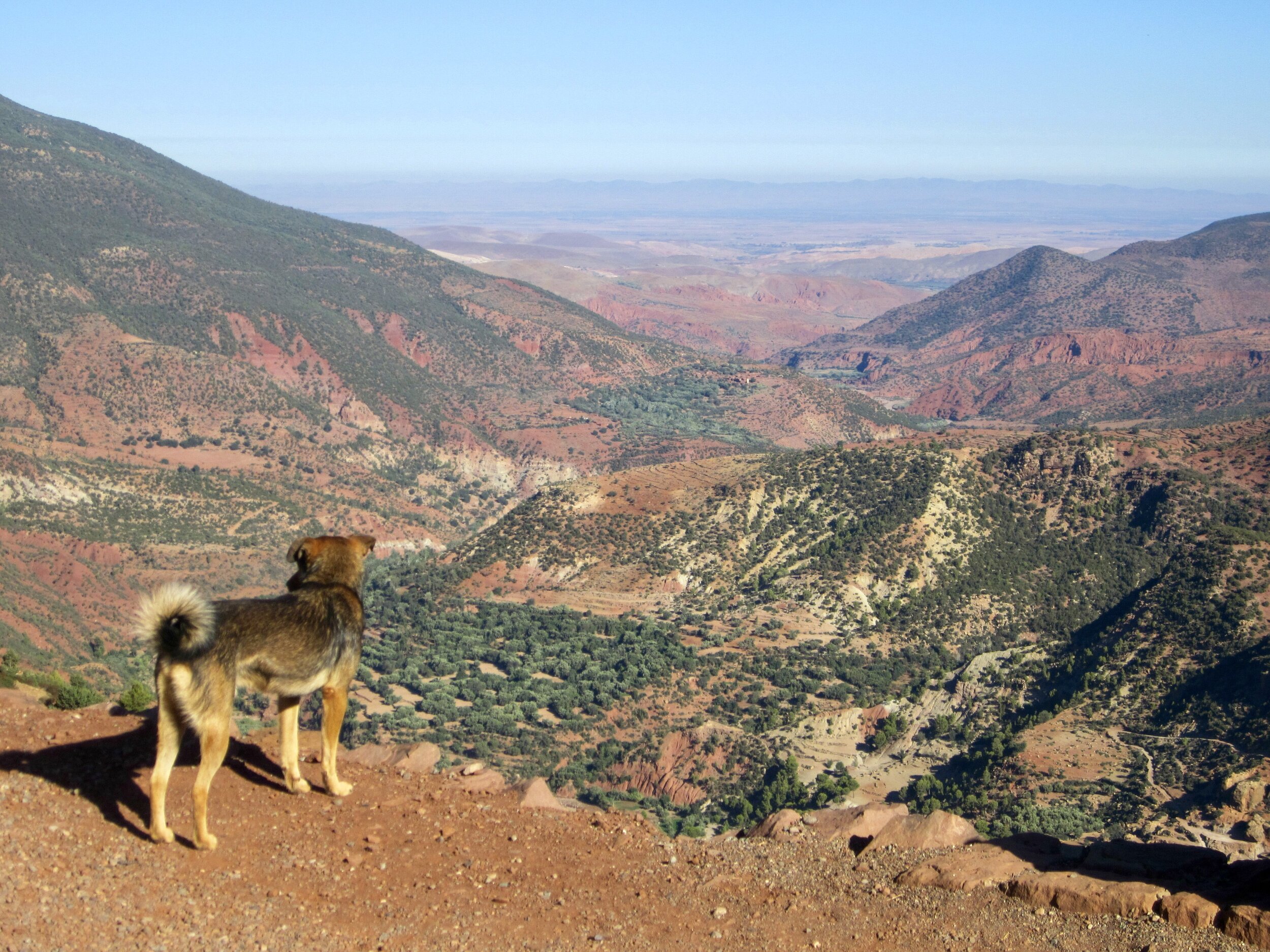
A stray dog looks off at the Atlas range, surely thinking deep thoughts…like how no trip to Morocco is complete without a sojourn in the Sahara.

A stray dog looks off at the Atlas range, surely thinking deep thoughts…like how no trip to Morocco is complete without a sojourn in the Sahara.

There was one thing we knew we couldn’t miss out on while Wally and I planned our itinerary for Morocco with our friend Vanessa: a once-in-a-lifetime opportunity for a desert adventure. We decided upon a three-day and two-night Sahara excursion through Imzi Tours.

The familiar sound of the muezzin’s voice broadcast over the speakers of the nearby Koutoubia Mosque in Marrakech woke me from my slumber at 5 a.m. When the alarm rang an hour later, I thought I’d half-imagined the call to prayer, asking Wally and Vanessa if they had heard it, too. 

Nothing can quite prepare you for being a passenger in a car maneuvering the tight cliffside turns with low guardrails found throughout the Atlas range.

By the time we got dressed, it was only 6:30 in the morning, so the kitchen at our riad, Alwachma, hadn’t opened — which meant we were served an abundance of carb-laden fare that left the three of us longing for the cumin-dusted fried eggs we had enjoyed the day before. Our breakfast spread consisted of msemen, a traditional flatbread cooked in a frying pan. It reminded me of a chewy square-shaped pancake, but was described best by Wally as “crêpe jerky.” This was accompanied by another unleavened bread, matloua, the Moroccan version of an arepa, which was served with preserves, freshly squeezed orange juice and French press coffee. 

We had to get an early start for our desert excursion because Marrakech is roughly 225 miles from Zagora and the dunes of Erg Chigaga, though we had an overnight at Ouarzazate. At 8 a.m., the three of us met our guide and driver at the end of Derb Bab Doukkala, the cobblestone alley outside our riad.

His name was Mubarak, but he went by Barak. After asking our names, he promptly gave us Berber names: Vanessa was Fatima, Wally was Mustafa, and I was Ali. Vanessa whispered a theory that I was inclined to believe. She said Barak gave us Berber names so he didn’t have to remember our real ones. But what the heck, it’s all in fun, right? 

Moustafa, Ali and Fatima…err, Wally, Duke and Vanessa stretch their legs and admire the view on a road trip through the Atlas Mountains in Morocco.

Moustafa, Ali and Fatima…err, Wally, Duke and Vanessa stretch their legs and admire the view on a road trip through the Atlas Mountains in Morocco.

It’s a long ride to M’hamid, the launching point for the camel ride to the desert camp, but Barak assured us that there’d be plenty of stops along the way. Our first day would take us to an argan oil cooperative, Aït Benhaddou and Ouarzazate, where we would be spending the night. 

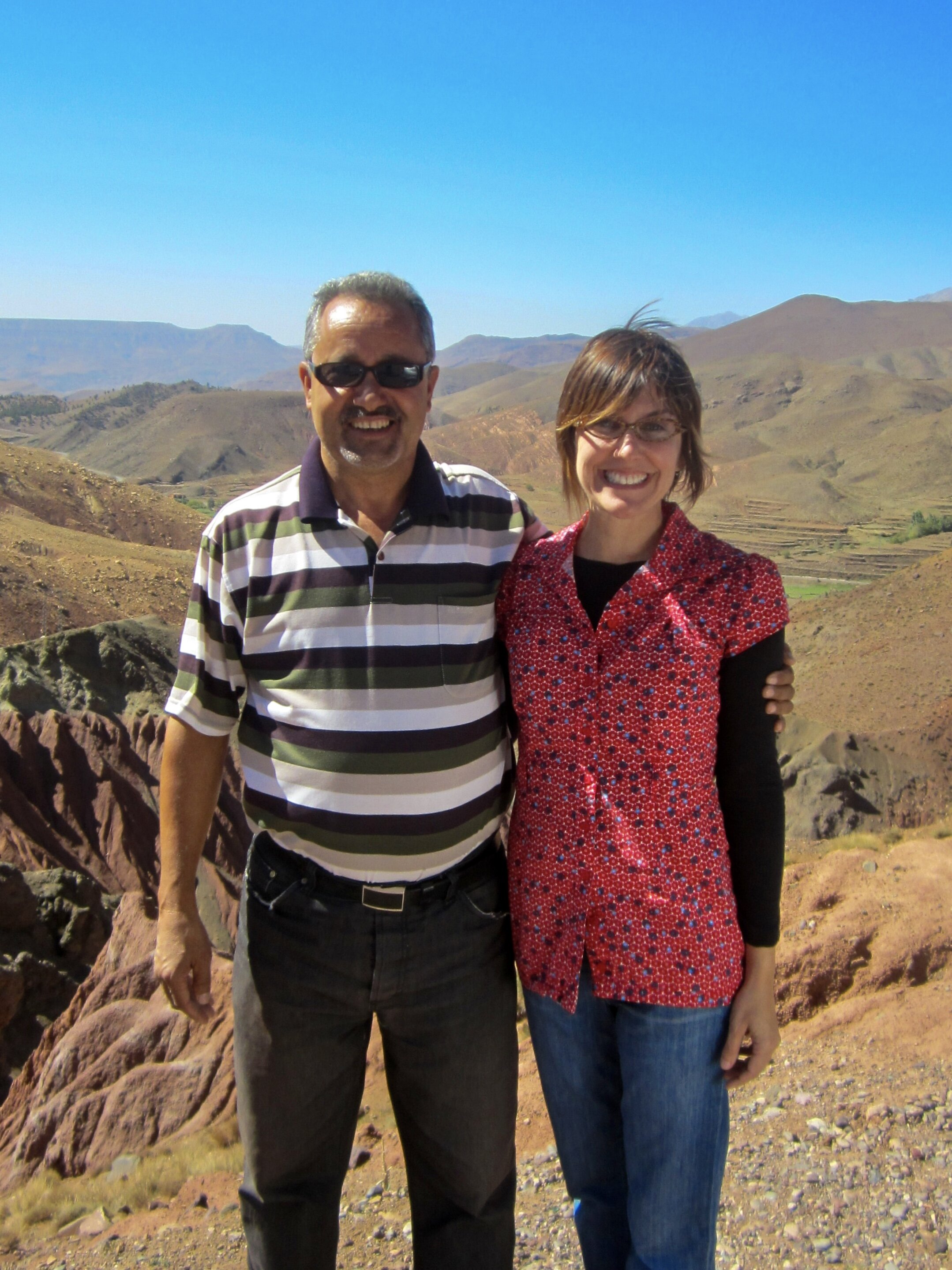
Our driver Barak, posing with our friend, Vanessa. He was a fiercely proud Berber and expounded about his people at length.

Our driver Barak, posing with our friend, Vanessa. He was a fiercely proud Berber and expounded about his people at length.

The Free People: A Lesson About Berbers

As we sped along National Route 9, Barak explained that there are several different types of Berber tribes, the semi-nomadic people who inhabit the Sahara. Two of the largest populations are found in Algeria and Morocco. Their livelihood revolves around traveling with their livestock as the seasons change.

The name Berber was ascribed to the oldest known inhabitants of the Barbary Coast of North Africa. The term stemmed from the Greek bárbaros, used to refer to any foreigner, and which is the root of the derogatory term barbarian. It’s understandable that Berbers prefer to call themselves Imazighen, which means “Free People” in the indigenous Tamazight language.

Berber on a motorbike: A man whizzes by in traditional Berber garb.

Berber on a motorbike: A man whizzes by in traditional Berber garb.

The southern Atlas and Anti-Atlas Mountains are home to the Shilha, the largest Berber tribe in the country and often viewed as having the “purest” dialect: Tashlheit, the most commonly spoken in Morocco.

Riffan or Rif Berbers speak a dialect called Tarafit. The smallest Berber population in the country, this group stays within the bounds of the Rif Mountains.

In the Middle Atlas are the Zayanes, who spread from Fès in the north to Marrakech in the south. Their dialect, Tamazight, varies wildly from region to region but is usually intelligible by native speakers. Some Zayanes, particularly those near Ouarzazate in the south, are still nomads. 

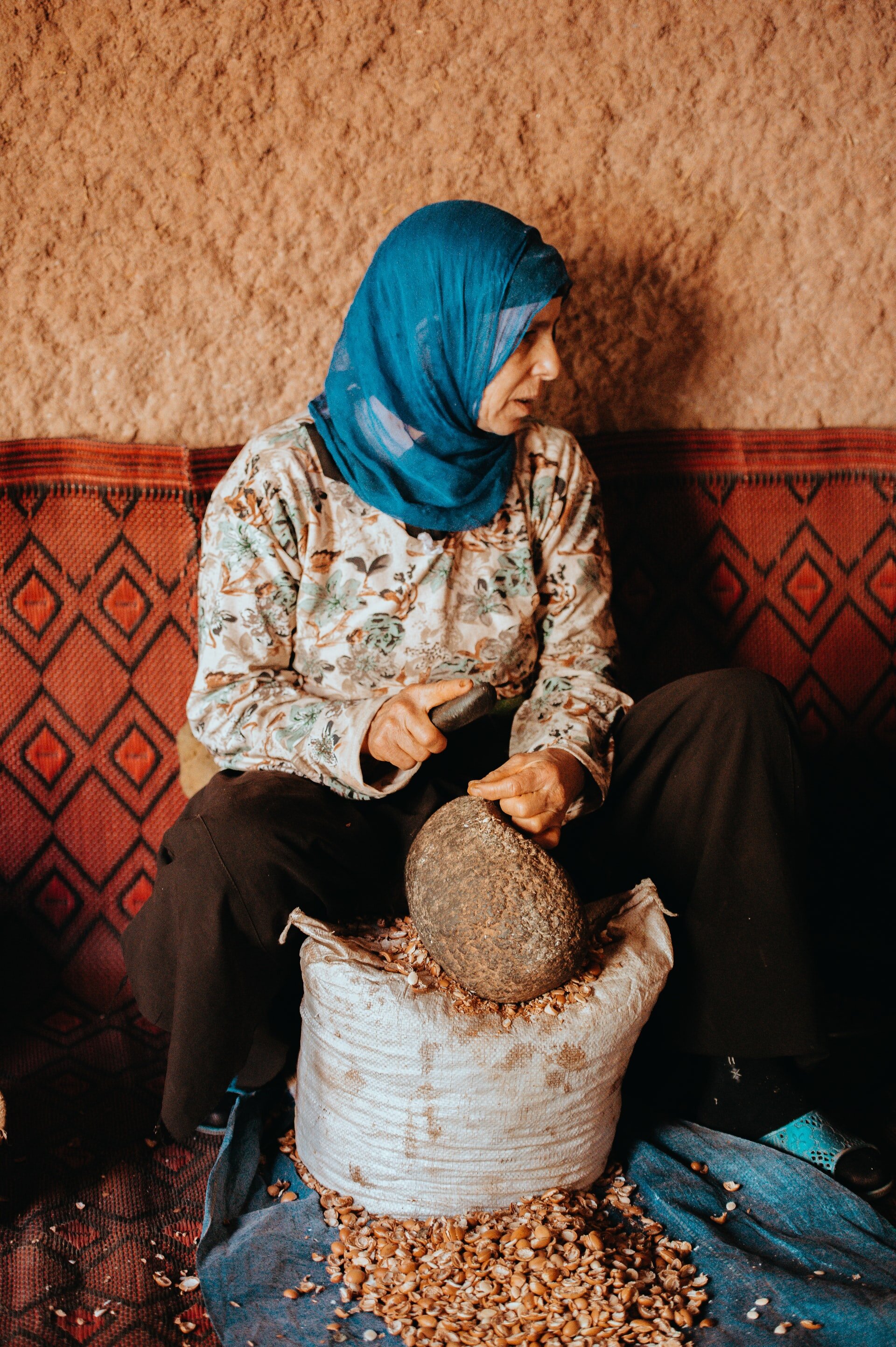
It’s astonishing how much work goes into extracting oil from the argan nut.

It’s astonishing how much work goes into extracting oil from the argan nut.

Argan Oil Women’s Collective: A Tough Nut to Crack 

As we entered the High Atlas Mountains, the undulating surface of the surrounding landscape resembled gray-green fleshy folds of walrus skin peppered with errant bursts of green scrub. In other parts, it was like driving through the Grand Canyon. A frequent roadside sight are the paddle-shaped limbs of the nopal cactus bearing prickly pear fruit in varying states of ripeness.

Argan trees are indigenous to the Atlas Mountains. They are thorny, drought-resistant trees that bear a hard yellow fruit. 

Argan trees are quite tenacious and can grow on rocky outcroppings. The oil from their fruit is used in cosmetics and cooking.

Argan trees are quite tenacious and can grow on rocky outcroppings. The oil from their fruit is used in cosmetics and cooking.

Our first stop was a roadside argan oil cooperative shop whose parking lot was littered with desiccated argan fruit husks. Inside, Berber women demonstrated the manual labor required to make this “Moroccan gold.”

Collectives like the one we visited help provide women with lucrative employment.

Collectives like the one we visited help provide women with lucrative employment.

One pair was seated and cleaved the inner nut with a sharp stone to extract the kernels. Another pair ground the roasted kernels between two slabs of rock into a paste that resembled natural peanut butter. A woman who served as a guide told us that two types of oil are produced — one is used in cosmetics while the other is used like olive oil in cooking. 

Because the extraction process is labor intensive (it takes between 25 to 30 kilograms of argan kernels to produce 1 liter of oil), the government has established a fund to help ensure the success of cooperatives like this. UNESCO has designated the 10,000-square-mile argan growing region as a biosphere reserve. This empowers the women who produce the oil, providing them with fair wages, an opportunity to improve the welfare of their families and safe working conditions.

The trio of adventurers reach the highest point in the Atlas range — and, indeed, in all of North Africa.

The trio of adventurers reach the highest point in the Atlas range — and, indeed, in all of North Africa.

Tizi n’Tichka: High Point of the Atlas Mountains

Whenever we stopped to take a photograph anywhere along Route 9, a local man or boy emerged from the rocks brandishing geodes split open for us to see the glittering crystalline structures inside, some artificially dyed a vibrant pink or blue. 

We passed dozens of beaten earth houses, many of which appeared to be uninhabited, although we learned from Barak that this wasn’t always the case.

The houses in the mountains are made of local materials and, as a result, are practically camouflaged.

The houses in the mountains are made of local materials and, as a result, are practically camouflaged.

Laundry is put out to dry in the sun on the rocks of the Atlas Mountains.

Laundry is put out to dry in the sun on the rocks of the Atlas Mountains.

Before making our descent into Ouarzazate, known as the Gateway to the Sahara, we reached the highest point of the Atlas Mountains. At an elevation of 7,410 feet (2.260 meters) above sea level, Tizi n’Tichka is the highest mountain pass in North Africa. We stopped for a moment to take in the incredible views and an obligatory photo, of course. 

We were sure we’d never make it through the mountains alive, as Barak sped past large trucks winding through the switchbacks of the Atlas.

We were sure we’d never make it through the mountains alive, as Barak sped past large trucks winding through the switchbacks of the Atlas.

Nothing can quite prepare you for being a passenger in a car with a driver maneuvering the tight cliffside turns with low guardrails found throughout the Atlas range. Since this route is shared by trucks and other large passenger vehicles, the three of us would lean to the opposite side every time Barak passed a vehicle on the narrow lanes, in hopes that this would help prevent our car from toppling over the edge. 

You definitely have to stop off at Aït Benhaddou en route to the Sahara.

You definitely have to stop off at Aït Benhaddou en route to the Sahara.

Hollywood in the Desert: Aït Benhaddou and Atlas Studios

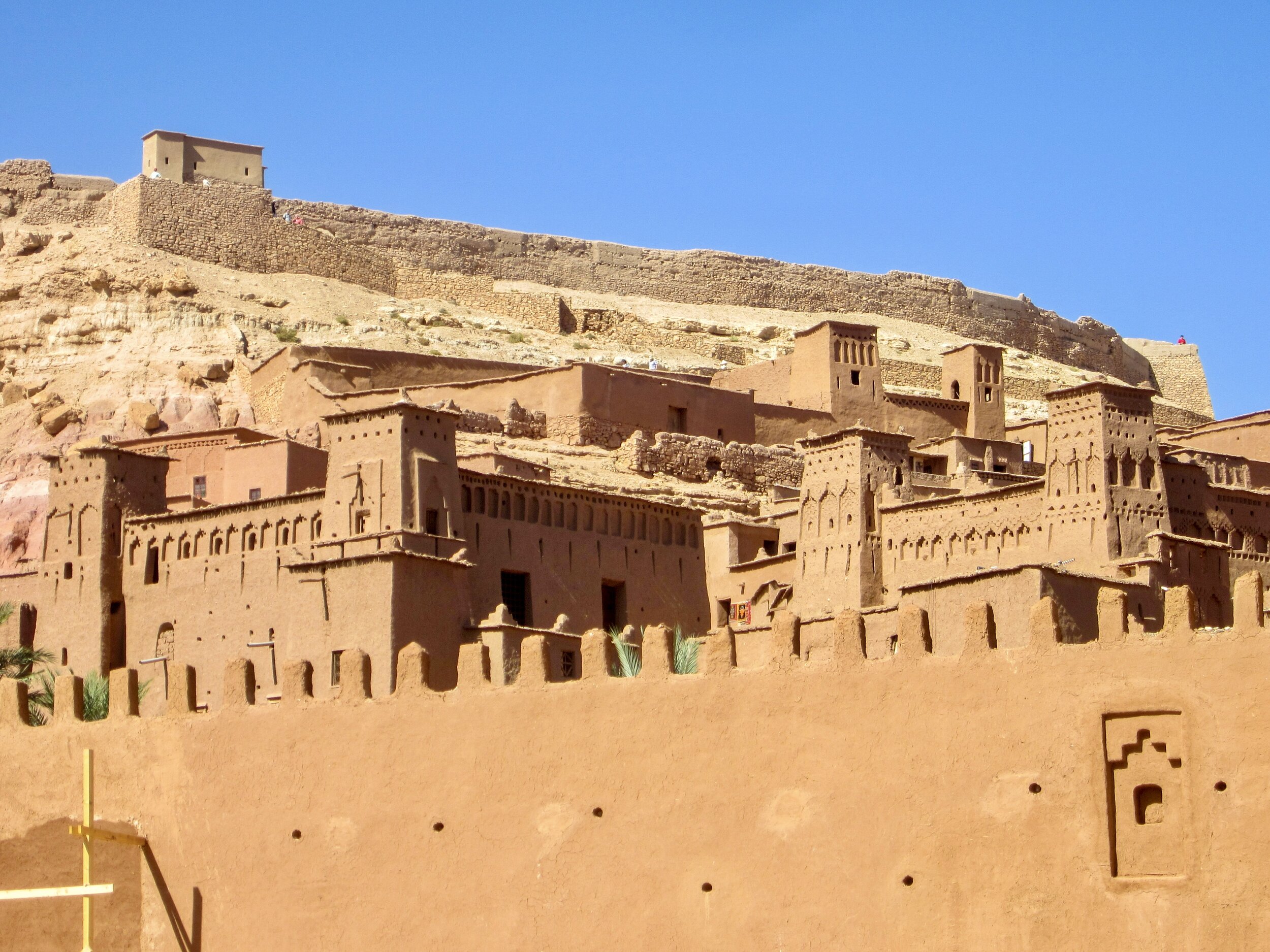
One of the coolest stops en route to the Sahara was the fortified village of Aït Benhaddou. Barak told us that the oldest dwelling in what he called a kasbah was built in the 11th century, though UNESCO dates the oldest construction “to be no earlier than the 17th century.”

Wally thinks the ancient structures of Aït Benhaddou look like sandcastles.

Wally thinks the ancient structures of Aït Benhaddou look like sandcastles.

Regardless, the atmospheric desert dwellings have been so well preserved that it has captured the imagination of Hollywood. Several productions have been shot here including, The Sheltering Sky and The Mummy. In fact, a large artificial entrance had been constructed for the Daenerys storyline in Game of Thrones — but unfortunately, they weren’t going to start filming for another month or so, much to Wally’s dismay.

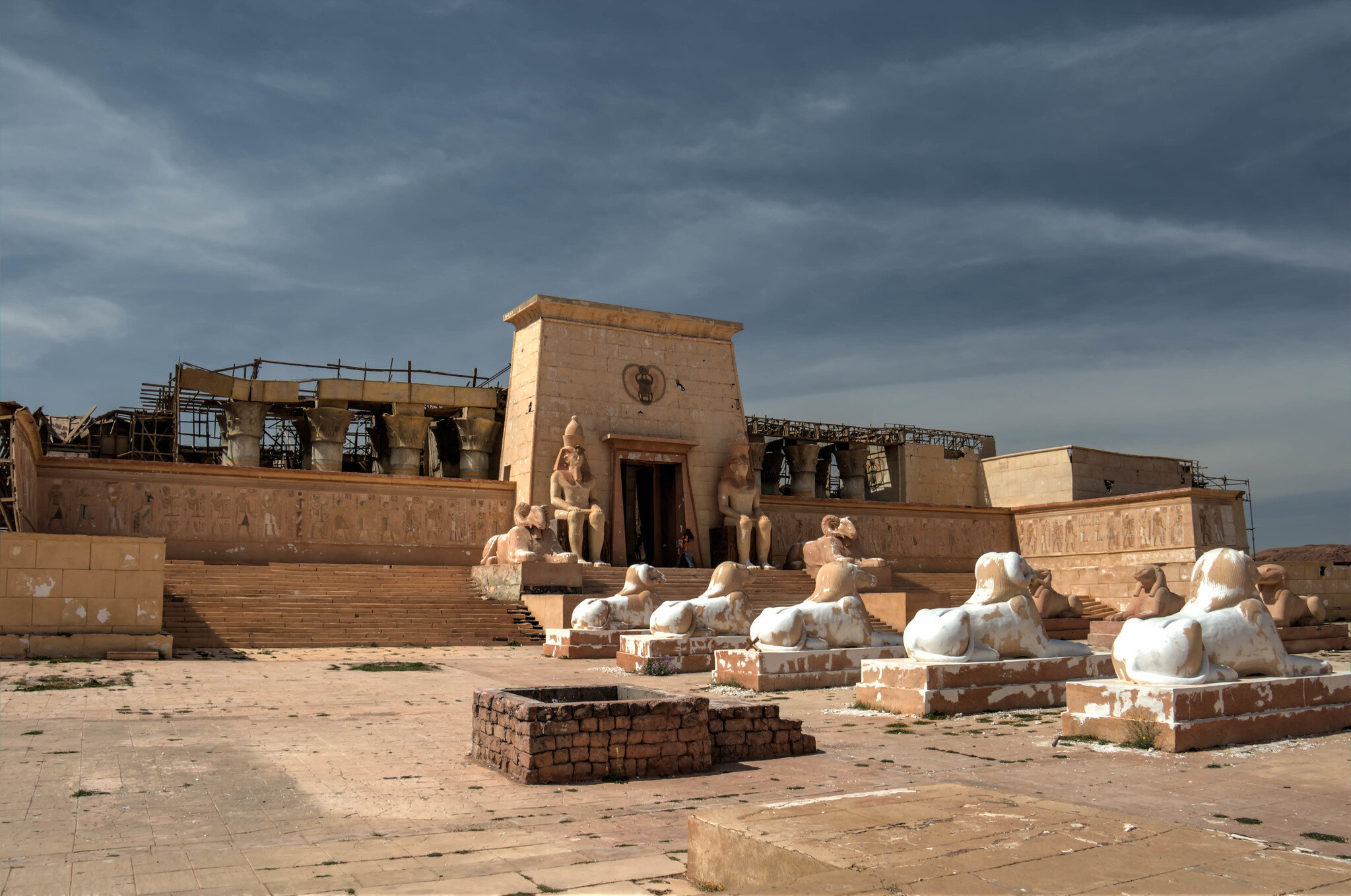
Many movies set in Ancient Egypt have been filmed at Atlas Studios in Ouarzazate.

Many movies set in Ancient Egypt have been filmed at Atlas Studios in Ouarzazate.

Speaking of Hollywood, the next stop was Atlas Studios in the town of Ouarzazate, where numerous desert-themed movies have been filmed. For some reason, our guide was enthralled with Steven Segal. The group we toured with was predominantly French, with a small group of English-speaking Brazilians. 

Most of the sets were made of fiberglass with back supports of bamboo scaffolding. I was intrigued by the false perspective and scale used in the spaces to trick the eye. 

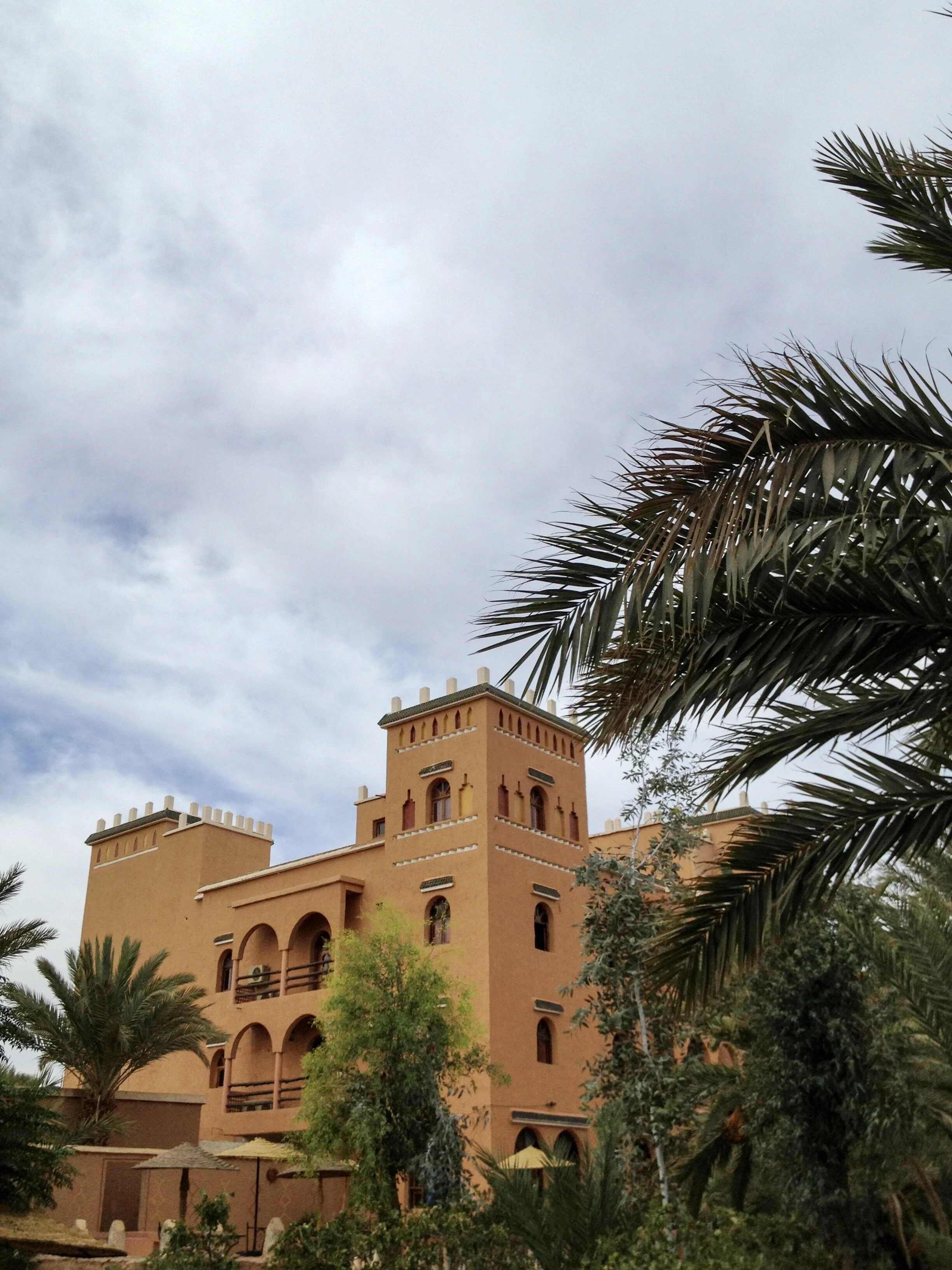
Hopefully Les Jardins de Ouarzazate has been upgraded a bit since our visit.

Hopefully Les Jardins de Ouarzazate has been upgraded a bit since our visit.

Les Jardins de Ouarzazate Hotel: I Never Promised You a Rose Garden

Atlas Studios also boasts an exclusive 10-suite hotel aptly named the Oscar. Perhaps we should have stayed there instead of Les Jardins de Ouarzazate, which was included in our tour package.

At the time we visited, back in 2012, the hotel had clearly seen better days. A layer of dust and grime covered everything inside the expansive lobby and I half-expected to see Miss Havisham from Dickens’ Great Expectations descend the tiled stairs.

Our room, at the top of the stairs, had a foul smell, so we were upgraded to a private suite off to the side of an unkempt but beautifully wild rose garden and swimming pool. Both rooms were dark, and when we went to take showers the following morning, the water was cold.

An old man kept pacing around the pool. Vanessa thought he was lost; I thought he was a Peeping Tom; but Wally fabricated the most amusing story: The geezer was wandering around looking for Arab boys. “Is this where the Arab boys are?” Wally said, mimicking an old man’s voice, while I laughed. “I thought I saw one come back here.”

The highlight of our stay was our waiter. He was quite jovial, so we nicknamed him Giggles. He asked us if we were doctors because we were all wearing glasses. 

There was a little kitten that stayed next to me throughout dinner. It took all of my willpower not to toss it a scrap of food.

Breakfast was a buffet of fly-smothered, day-old croissants loosely covered with cloth napkins.

Mediocre hotel aside, the interesting stopovers make the journey to the Sahara as much fun as the overnight in the desert itself. –Duke

The Unpleasant Experience of Hiring a Driver in India

Darkness turned to daylight as we awaited our driver. At least we had stray dogs to keep us company

Darkness turned to daylight as we awaited our driver. At least we had stray dogs to keep us company

Our road trip from Baroda to Dungarpur taught us not to expect your driver to speak English, show up on time or care about your sanity.

We weren't having any luck finding a driver who spoke English. (Prakash informed us that people who spoke English got the good jobs, and apparently “chauffeur” doesn’t fit into that category.)

An online search revealed a company called TaxiForSure. It seemed professional. It was also pretty much our only option. So we arranged transport to Dungapur. We requested a pick-up of 5 a.m. According to Google Maps, it’s a pretty straightforward four-hour drive from Baroda.

A sullen, if handsome, 20-something driver showed up, playing what seemed to be techno versions of Bollywood music blared at full volume.

At 5 the next morning, our friend and host George got a confirmation text from TaxiForSure, which provided the driver’s name, license plate number and estimated arrival time.

A few minutes later, he received a call from someone at TaxiForSure, who regretted to inform us that our original driver would not be coming — his car broke down.

I’d like to point out that no matter how much you try to plan, things can change unexpectedly (and inevitably, it seems), for India moves in its own unpredictable way.

We were waiting outside in front of George’s apartment building (he calls it his “tenement”). George saves his kitchen scraps to leave outside for the cows. As he was tossing a bag onto the heap, a neighbor who was up early yelled at him, telling him not to just throw it there — that there’s an actual place to leave food scraps down the street near the ashram. The neighbor was just doing his part to attempt to reduce the ridiculous amount of garbage strewn about. Indeed, everywhere you go, you see cans, paper and plastic bags picked at and chewed on by rats, jackdaw birds, stray dogs and cows.


How “OK, OK” Can Mean Anything But

We waited. George called back after a half-hour had passed, and then again every 15 minutes. The conversations went something like this:

“The driver is in the area.”

“The driver is very close.”

“The driver is 3 to 5 minutes away.”

“The driver is 2 to 3 minutes away.”

George hung up in a huff. “Indians will always tell you, ‘OK, OK,’” he said. “But that doesn’t mean anything. It can mean he’s hours away, or he could be here in 5 minutes. I’ve learned they tell you what you want to hear — even if it’s not the truth.”

Two hours in total had passed before George received another text from TaxiForSure.

Your taxi has arrived.

It was now 7 a.m.

Beep! Beep! A sullen, if handsome, 20-something driver named Pankach, who only spoke Gujarati showed up, playing what seemed to be techno versions of Bollywood music blared at full volume, which we endured the entire trip.

Before we left Baroda, he pulled the car over, and a man approached and gave him a bag full of clothes. Then our road trip was in full swing.


Road Trippin'

Once we were outside the city limits, the scenery changed, and we began to pass rural homes, which were transformed into hand-painted advertisements for the sturdy but humble materials cement and brick.

Many of the signs touted Ambuja Cement. The company's logo is a comically proportioned man with a tiny head and a ginormous right bicep embracing a pair of buildings.

Elaborate conical Hindu temples dotted the landscape, confections in bubblegum pink, white, mint and lemon yellow. Cloth flags atop spires fluttered in the breeze.

We weren't sure we were ever going to make it. But we were finally en route to Dungapur, otherwise known as the City of Hills, located at the southernmost Aravalli mountains of Rajasthan.

We almost got used to the Bollywood Molly dance party in the car. Almost. –Duke

RELATED: 3 Tips for Hiring a Driver in India

No matter how much you try to plan, things can change unexpectedly (and inevitably, it seems), for India moves in its own unpredictable way.