The Creepiest Places to Visit in the United States

From a haunted prison to a hotel with its own morgue, here are five terrifyingly popular U.S. destinations for ghost hunters, thrill seekers and paranormal tourists.

Dilapidated crumbling hallway in the Eastern State Penitentiary in Philadelphia

Eastern State Penitentiary in Philadelphia, where solitary confinement originated

For those of us who like our vacations with a side of dread, the U.S. has you covered. Cursed plantations? Check. Derelict prisons? Yep. A floating hotel with a body count? You bet. These are the kinds of places where whispers echo in empty rooms, photos blur for no reason, and something unseen always seems to tug at your shirt.

Whether you’re a seasoned ghost hunter or just want to say you slept in the most haunted hotel in America, these are the must-visit spots that will make your heart race — and maybe stop.

1866 Crescent Hotel & Spa in Eureka Springs, Arkansas

1866 Crescent Hotel & Spa in Eureka Springs, Arkansas

Where the cancer cures were fake, but the bodies were real.

Originally built in 1886, the Crescent Hotel started as a luxury resort — and quickly spiraled into something much darker. After a short-lived first act, it was purchased in 1937 by Norman Baker, a con artist who turned the building into a sham cancer hospital. He operated without a license, performed grotesque procedures, and stored bodies in a basement morgue that still exists.

Women in white dresses and hats stand on the steps of the 1866 Crescent Hotel & Spa in Eureka Springs, Arkansas when it was a college for women

Back when the property was the Crescent College for Women

Guests and ghost hunters report sightings of Baker himself, nurses in old-timey uniforms, and figures wandering the halls at night. Want proof? You can join nightly ghost tours that take you to the most haunted corners of the property — including Baker’s old morgue.

1886 Crescent Hotel & Spa
75 Prospect Avenue
Eureka Springs, Akansas​

The castlelike Eastern State Penitentiary in Philadelphia, Pennsylvania at twilight

Eastern State Penitentiary in Philadelphia, Pennsylvania

Solitary confinement never really ends … if your ghost sticks around.

Once home to over 85,000 inmates — including Al Capone — this Gothic fortress pioneered solitary confinement, which sounded humane in theory and turned out to be more of a psychological torture chamber. The prison operated from 1829 to 1971 and is now a National Historic Landmark.

Historic photo of a worker standing in a cellblock of Eastern State Penitentiary in Philadelphia, Pennsylvania

Its crumbling halls, rusted doors and echoing cellblocks give off a presence that’s hard to ignore. Visitors report disembodied voices, cell doors slamming on their own, and shadowy figures pacing inside locked cells. Cellblock 12 and the guard tower are said to be the most active — if you believe in that sort of thing. And even if you don’t, you’ll probably walk faster through them.

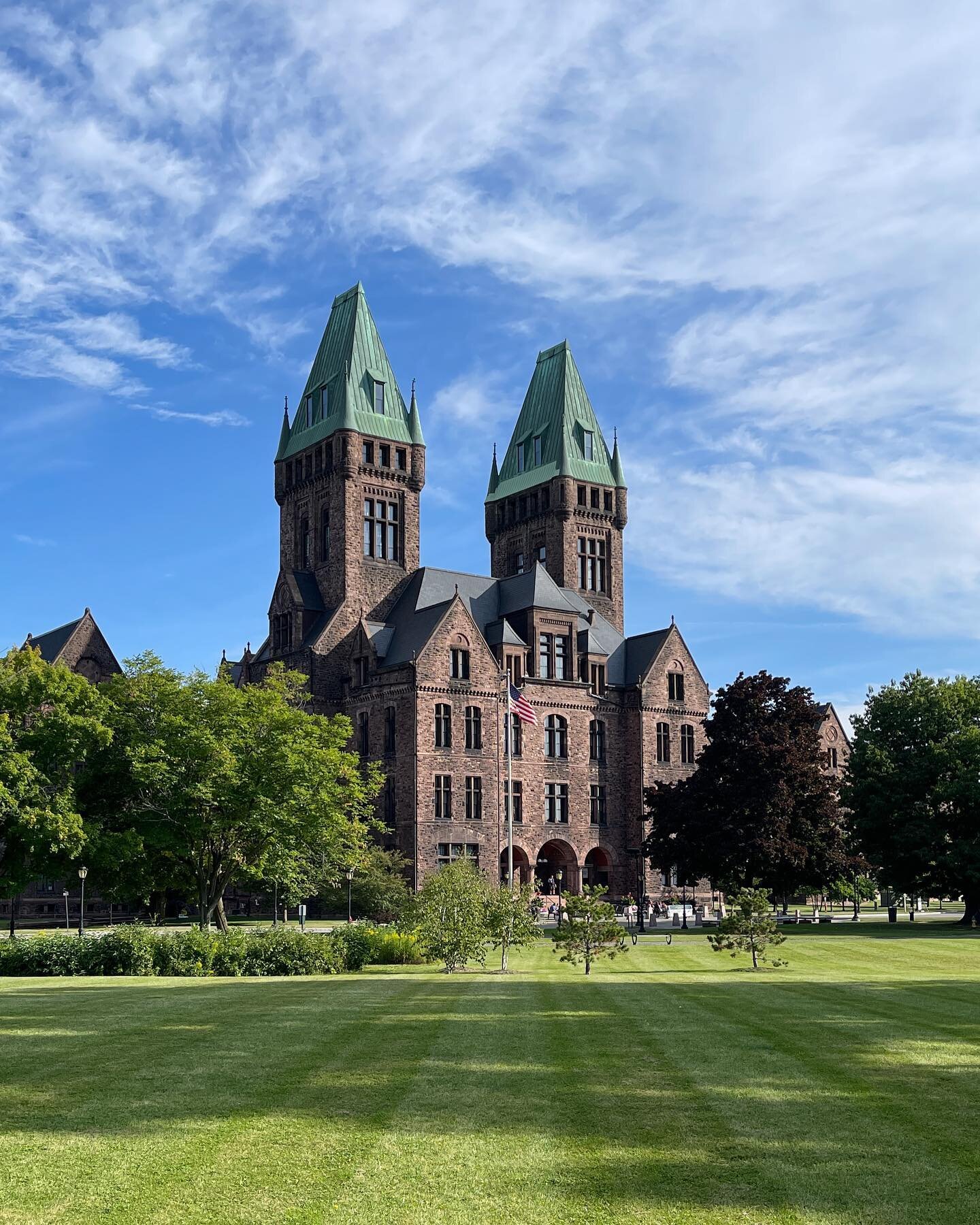
Sounds a bit like the derelict insane asylum attached to the Richardson Hotel in Buffalo, New York, which is also worth touring. 

If you’re also going to Pittsburgh, be sure to creep yourself out at Trundle Manor

Eastern State Penitentiary
2027 Fairmount Avenue
Philadelphia, Pennsylvania

The ocean liner Queen Mary in Long Beach, California at sunset

The Queen Mary in Long Beach, California

All aboard — for a cruise you’ll definitely want to disembark from.

This ocean liner hosted royalty, celebrities and WWII troops — and now ghosts. Docked permanently in Long Beach, the Queen Mary is considered one of the most haunted ships in the world.

A girl is dressed up like the ghost of Jackie, a girl who drowned in the pool on the Queen Mary ship

Say hi to Jackie! She drowned in the pool but now giggles through the hallways.

Visitors regularly report paranormal activity, including screams, slamming doors and the ghost of a crewmember who was crushed by a watertight door in the engine room. Then there’s Jackie, the little girl who allegedly drowned in the pool and now giggles through the halls — creepy kid laughter being the ultimate test of your fight-or-flight response.

If you visit around Halloween (known to witches as Samhain), don’t miss the ship’s Dark Harbor event — a screamfest that brings its haunted legends to life.

​​The Queen Mary
1126 Queens Highway
Long Beach, California
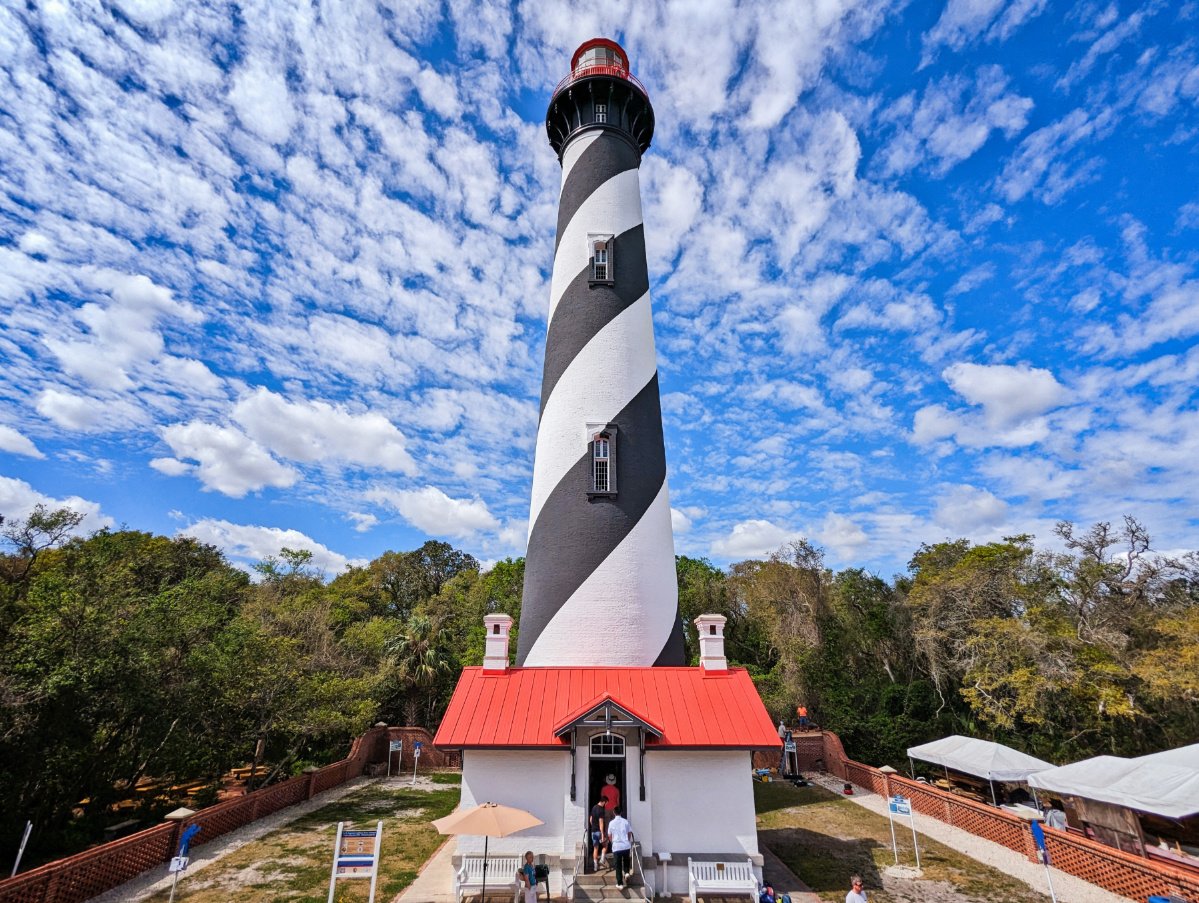
Black and white diagonally striped St. Augustine Lighthouse in St. Augustine, Florida

St. Augustine Lighthouse in St. Augustine, Florida

Helping ships find the shore — and maybe helping spirits climb the stairs.

The current lighthouse was completed in 1874 — but the land has a longer, darker history. Tragedy struck during construction, when two young daughters of the superintendent drowned in the bay. Ever since, strange sightings have haunted the tower.

The spiral staircase inside St. Augustine Lighthouse in St. Augustine, Florida

Visitors report hearing footsteps on the spiral stairs, catching glimpses of shadowy figures, and even being touched by something unseen. The Dark of the Moon tour takes you up the tower at night — just you, a flashlight … and your frazzled nerves.

St. Augustine Lighthouse & Maritime Museum
100 Red Cox Drive
St. Augustine, Florida

Exterior of Myrtles Plantation in St. Francisville, Louisiana

Myrtles Plantation in St. Francisville, Louisiana

Cursed ground, murder and ghosts with unfinished business. Southern hospitality not guaranteed.

The Myrtles has everything you could want in a haunted Southern plantation: hidden pasts, murder, mystery and a good chance of ghostly encounters. Built in 1796, the property is said to be cursed from the start, allegedly located on an indigenous burial ground. Several people died violently here, and stories of hauntings are as thick as the Spanish moss out front.

A grainy photo Chloe, the ghost at Myrtles Plantation in St. Francisville, Louisiana

The enlarged section of this image is said to be the plantation’s famous ghost, a former slave named Chloe.

The most infamous ghost? Chloe — a formerly enslaved woman who was reportedly mutilated for eavesdropping and later hanged after poisoning members of the household. Her apparition has supposedly been caught in photos and is said to still roam the grounds. 

Other spirits include William Winter, shot on the porch in 1871, and his young daughter, who died of yellow fever.

The Myrtles Plantation
7747 U.S. Highway 61
St. Francisville, Louisiana

An aerial view of Eastern State Penitentiary in Philly

An aerial view of Eastern State Penitentiary, which is no longer operational — just attracting visitors who appreciate the macabre.

Haunted Hotspots

Some people go to the beach — others go looking for the ghosts of 19th century criminals. These haunted destinations deliver the perfect mix of history and horror, where the stories are real, the wallpaper is peeling, and the room you booked might come with a ghost you didn’t. –Armughan Zaigham

Frida Kahlo in Paris

André Breton lured Frida to be in a Surrealist show, but she found herself misled, miserable and mad as hell — until Mary Reynolds stepped in.

A man stands in front of a wall that reads, "Frida Kahlo's Month in Paris" with a depiction of her painting The Frame at the Art Institute of Chicago

An exhibition at the Art Institute of Chicago covers Frida’s turbulent time in Paris in 1939.

Paris was supposed to be her big moment. But when Frida Kahlo landed in the so-called City of Light in 1939, all she found was a hospital bed, missing paintings, and a bunch of filthy Surrealists who couldn’t get their act together.

Thanks to an interesting lecture by Alivé Piliado Santana, curatorial associate at the National Museum of Mexican Art (where we check out the Day of the Dead ofrendas every year) and Tamar Kharatishvili, research fellow in modern art at the Art Institute of Chicago, I’ve come away with a far deeper — and far juicier — understanding of this chapter of Frida’s life I didn’t previously know about.

They are so damn ‘intellectual’ and rotten that I can’t stand them anymore .... I [would] rather sit on the floor in the market of Toluca and sell tortillas, than have anything to do with those ‘artistic’ bitches of Paris.
— Frida Kahlo, writing about the Surrealists in a letter to her lover, Nikolas Muray
A photos of a smoking, topless Frida Kahlo with a floral headband

Wild child Frida in 1938

Here’s what I learned about the messy, maddening and frankly fascinating story of Frida’s Parisian misadventure, the forgotten women of Surrealism, and how a kindred spirit named Mary Reynolds helped turn Frida’s time in Paris into something meaningful. 

Surrealist André Breton places a hand to his forehead and looks off to the right

André Breton, leader of the Surrealists and organizer of the 1939 Mexique exhibition — though “organizer” might be generous, considering Frida arrived to find no gallery, no show, and her paintings stuck in customs.

Frida’s Disastrous Arrival in Paris

It all began with an invitation that felt like a breakthrough. André Breton — the self-appointed “pope of Surrealism” — had reached across the Atlantic with a tantalizing offer. Frida Kahlo’s paintings, he declared, belonged on the world stage. He wanted her to come to Paris for a major exhibition he was organizing called Mexique.

Frida was excited for a chance to showcase her work in the artistic capital of the world, among the greats. It felt like a turning point — a chance to step out from her hubby Diego Rivera’s shadow and claim her place in the international art scene.

But somewhere along the way, wires got crossed. Frida thought Mexique would be a solo show. 

It wasn’t.

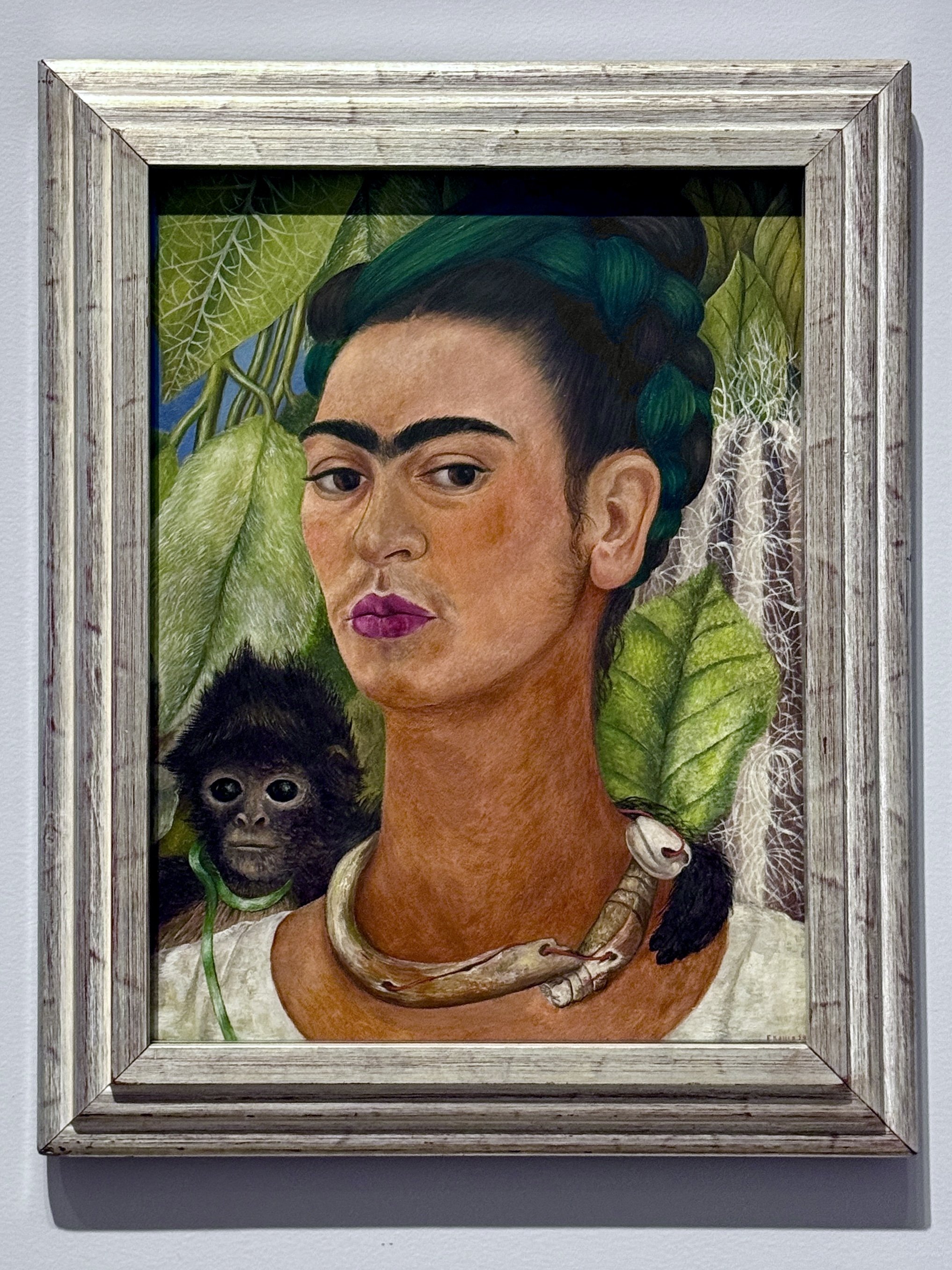
Self-Portrait With Monkey by Frida Kahlo from 1938

Self-Portrait With Monkey, painted by Frida Kahlo, posing with one of her pets, in 1938 right before she left for Paris.

Frida prepared for the journey with cautious excitement. Before she left, photographer Nikolas Muray, with whom she was having a passionate affair, captured her in a series of now-iconic portraits: defiant, radiant and ready for her European closeup. 

She could never have predicted how quickly things would unravel.

The troubles began before she even set foot in Paris. Her paintings, packed carefully for the voyage, were held up in customs. Instead of gliding smoothly into galleries, they sat in bureaucratic limbo, tangled in red tape. But there was still hope. Surely, Breton — the grand architect of the Surrealist movement — would have everything else ready.

He didn’t.

Frida arrived in Paris only to find chaos. There wasn’t even a gallery chosen for her show. No opening date on the calendar. No buzz of anticipation. Breton had made grand promises — but had done nothing to deliver on them.

A photo of Frida Kahlo taken by her lover Nikolas Muray

A portrait of Frida taken by Nikolas Muray before she left for Paris

A Hospital Stay

On top of the professional humiliation, Frida’s health collapsed. She hadn’t arrived in perfect shape to begin with — just before leaving Mexico, she had undergone spinal surgery to try to ease the constant pain from an earlier accident. The long journey, the cold Paris winter, the stress of a botched exhibition, and the miserable conditions she found herself in were a brutal combination.

Part of her fury stemmed from Breton’s own visit to Mexico, where she and Diego had opened their home (now the Diego Rivera and Frida Kahlo House-Studio Museum) to him and his wife — only to find that in Paris, Breton offered no such hospitality in return.

Almost as soon as she arrived, Frida developed a raging kidney infection, with a spiking fever that landed her in the hospital. She was exhausted, furious and rapidly losing faith in the promises that had brought her to Paris in the first place. 

She pinned her illness squarely on the Surrealists’ squalor, convinced that their slovenly habits had done her in.

When she was discharged, still weak and recovering, she faced the grim reality of her accommodations: a dingy hotel, damp and depressing, in a city that felt far from the glamorous art capital she had imagined.

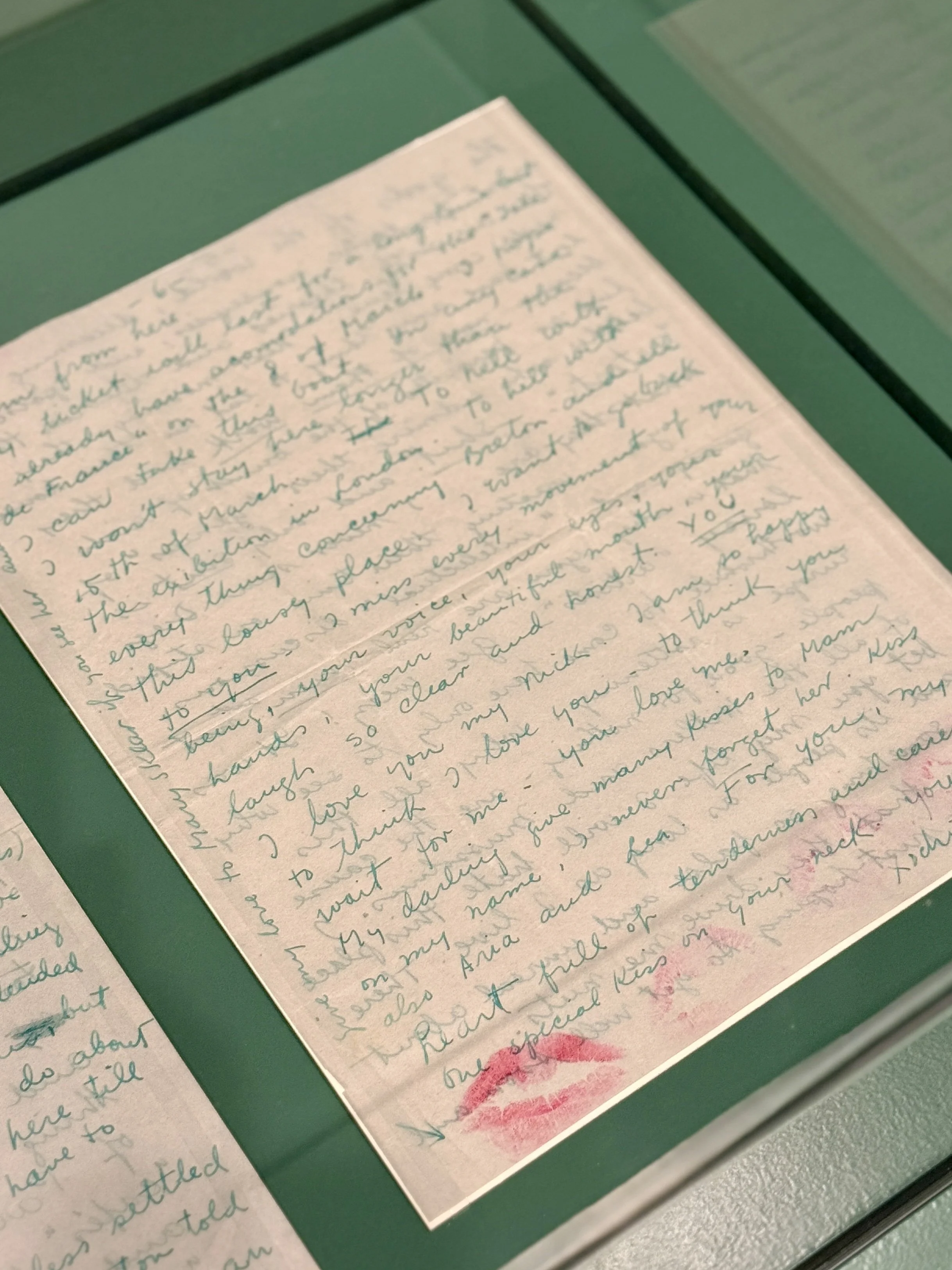
The last page of a letter written in English from Frida Kahlo to her lover Nikolas Muray, which she closes with a lipstick kiss

The final page of one of Frida’s letters to Muray. She didn’t exactly fall for Paris: “to hell with everything concerning Breton and all this lousy place,” she wrote, sick of the Surrealists and ready to go home.

She didn’t hold back. In a letter to Muray, she unloaded: “They are so damn ‘intellectual’ and rotten that I can’t stand them anymore .... I [would] rather sit on the floor in the market of Toluca and sell tortillas, than have anything to do with those ‘artistic’ bitches of Paris.” She thought the Surrealists were puffed up with self-importance yet utterly useless when it came to helping her. Only Marcel Duchamp, she noted acidly, “has his feet on the earth.” The rest, in her eyes, were pompous windbags throwing parties while her paintings languished in customs and her health deteriorated. And at the center of this mess, of course, was Breton himself, whose grand promises had led her straight into disaster.

What was meant to be her grand European debut had turned into a perfect storm of illness, neglect and bitter disappointment. She was stranded in Paris, her art trapped in customs, her patience wearing thin — and the Surrealists, led by Breton, had left her to flounder.

Avant-garde bookbinder Mary Reynolds

A photo booth pic of Mary Reynolds

Enter Mary Reynolds: An Unexpected Friendship

Just when Frida might have written off Paris entirely, in stepped Mary Reynolds — artist, bookmaker and all-around lifeline.

Unlike the aloof Surrealist men swanning around Paris, Reynolds opened her doors and, more importantly, her heart. Frida, still recovering from illness and spiraling frustration, moved out of her bleak hotel and into Reynolds’ home at 14 rue Hallé.

It wasn’t just a change of address — it was a change of atmosphere. Where Breton had offered chaos, Reynolds offered comfort. Her house in the southern part of Paris was a hub of creativity, conversation and, during the darkening shadow of World War II, quiet resistance.

Mary Reynolds, holding a tape measure, with her partner, Marcel Duchamp, looking like his head has been chopped off

Mary Reynolds with her partner, Marcel Duchamp

Mary Reynolds: The Unsung Hero of Surrealism

Reynolds deserves far more credit than she usually gets. A fiercely independent artist herself, Reynolds was a master of bookbinding — her works were collected by her partner, Marcel Duchamp (the guy who turned a urinal into modern art’s most notorious statement and further shocked audiences with Nude Descending a Staircase, No. 2), along with other avant-garde heavyweights of the time.

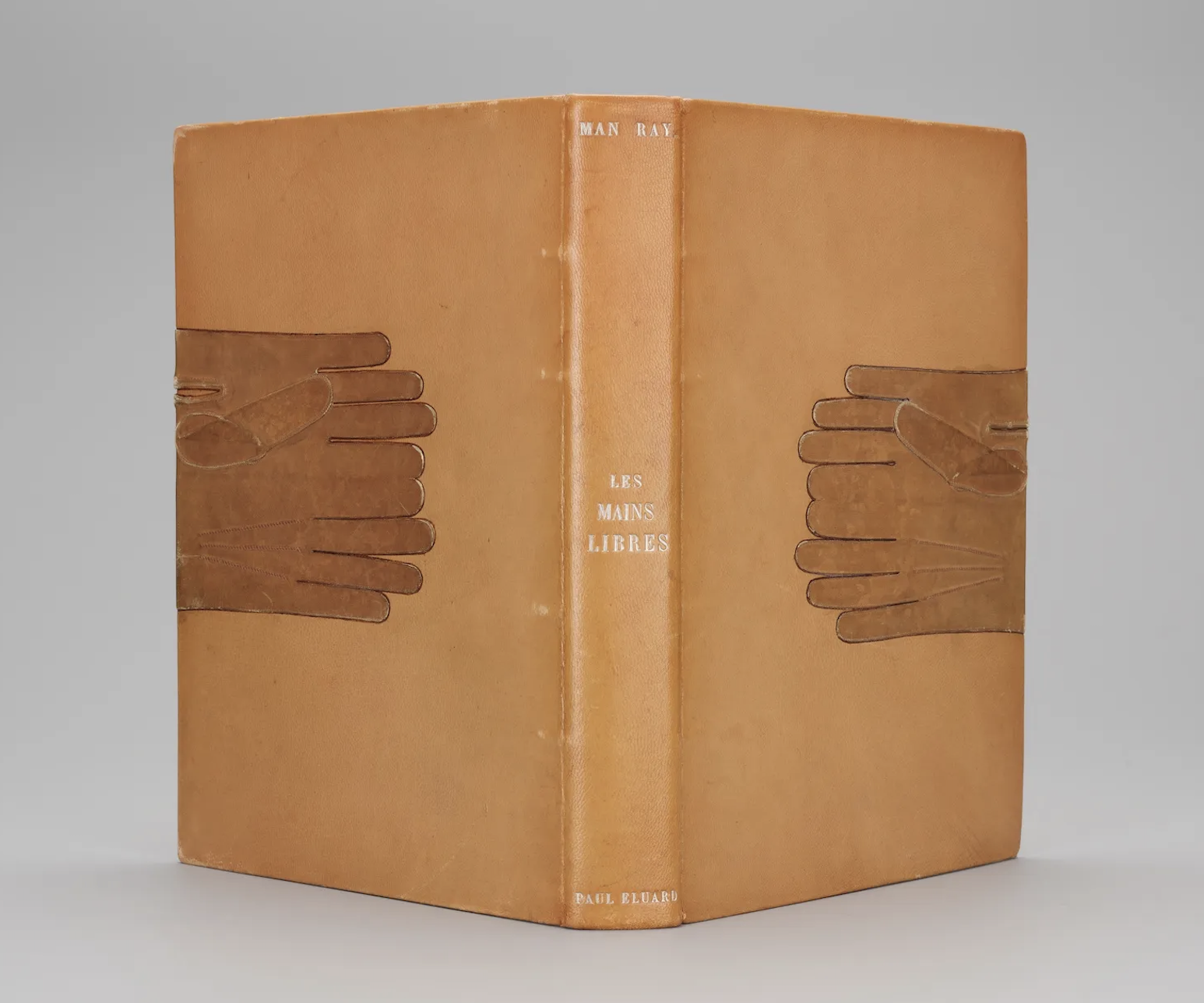
Reynolds took bookbinding to a whole new, surreal level: She used objects on the covers like kid gloves for Free Hands (Les Mains Libres), a thermometer in A Harsh Winter (Un Rude Hiver), and a teacup handle in Saint Glinglin — a nod to a scene where a character smashes plates with a golf club.

cover of Les mains libres (Free Hands) by Paul Éluard, with glove-like cutouts designed by Mary Reynolds

Reynolds was a genius when it came to bookbinding. Here’s the striking cover of Les mains libres (Free Hands) by Paul Éluard, with glove-like cutouts.

Her house was a living, breathing collage of Surrealist art and ideas. Duchamp, Alexander Calder and countless others had left their fingerprints — and actual works — all over her walls. 

For Frida, Reynolds’ home was proof some Surrealists weren’t all talk and no action. Here was a woman making her own art, supporting her peers, and backing it all up with real-world bravery.

A drawing of Mary Reynolds with multiple cats crawling over her, by Alexander Calder

A delightful drawing of Mary Reynolds and her cats by Alexander Calder, the American modern sculptor best known for his mobiles

Kahlo and Reynolds: Finding Solidarity

The connection between Frida and Reynolds was electric. Both women were navigating the male-dominated art world on their own terms, refusing to be footnotes in movements led by men.

Their bond also feels emblematic of something bigger: a reminder that amid all the philosophical posturing of Surrealism, real solidarity happened where women supported each other, shared ideas, and, frankly, kept the whole thing afloat.

In Frida’s letters, you can almost feel the tone shift once she moves into Reynolds’ home. It’s not quite relief — her Parisian experience remained fraught — but there’s a spark of light. Reynolds gave Frida what Breton could not: genuine human connection in a city that had otherwise let her down. She stayed at Reynolds from February 22 to March 25, 1939.

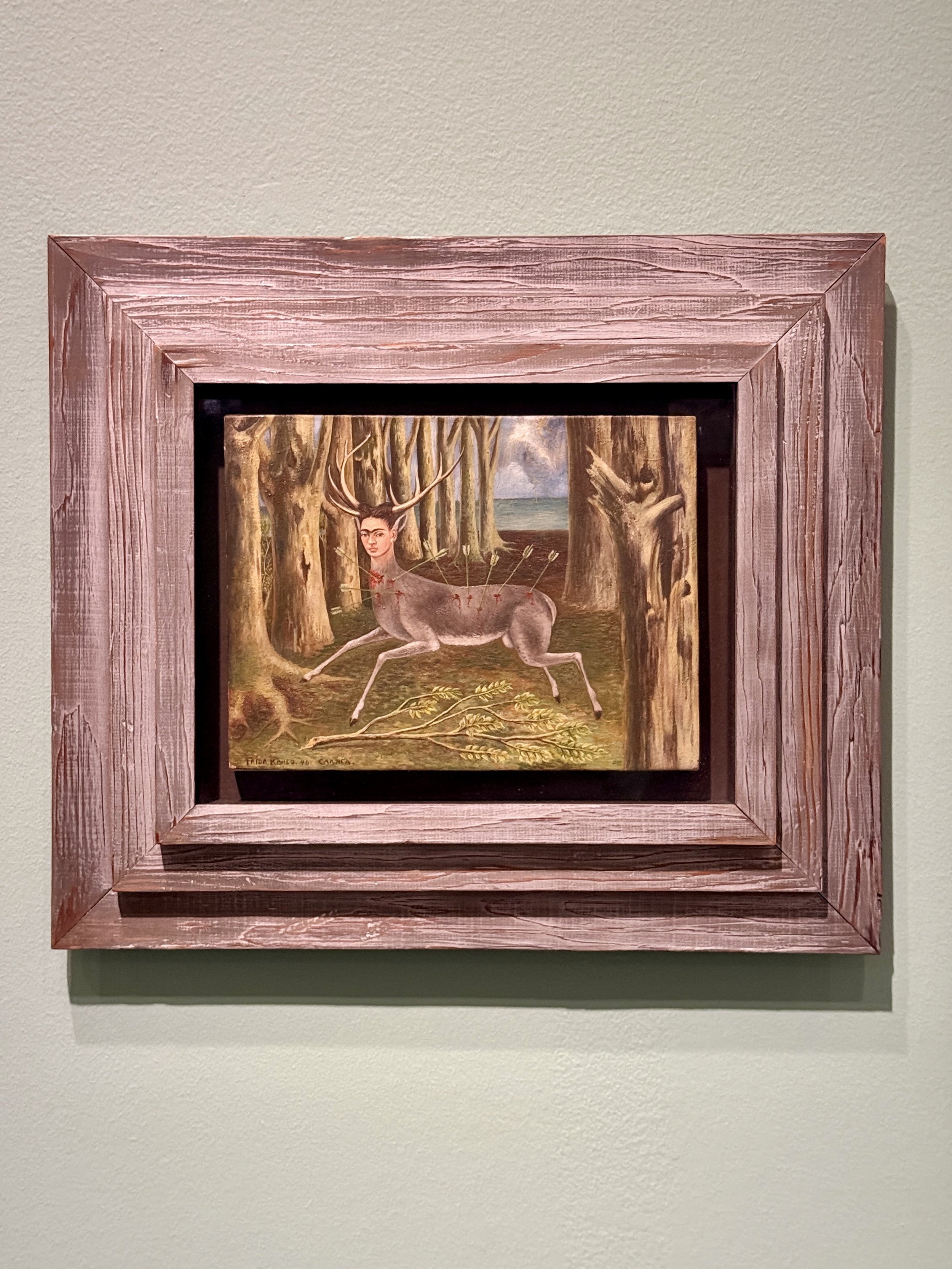
The Wounded Deer by Frida Kahlo, 1946

The Wounded Deer from 1946, painted after yet another failed surgery, this haunting self-portrait shows Frida as a deer riddled with arrows, calm-eyed in the face of relentless pain.

Frida and Surrealism: A Love-Hate Relationship

Here’s the irony: While the Surrealists were practically falling over themselves to claim Frida Kahlo as one of their own, Frida herself wanted nothing to do with the label.

Breton had famously declared her work “a ribbon around a bomb” — which, to be fair, is a great line. But Frida saw things differently. She didn’t consider herself a Surrealist at all. “I never painted dreams,” she once said. “I painted my own reality.”

Frida’s work, raw and visceral, didn’t need the Surrealist manifesto to explain it. Where the Surrealists dabbled in subconscious symbolism and found objects, Frida’s paintings were autobiographical to their core — her pain, her identity, her relationships all laid bare.

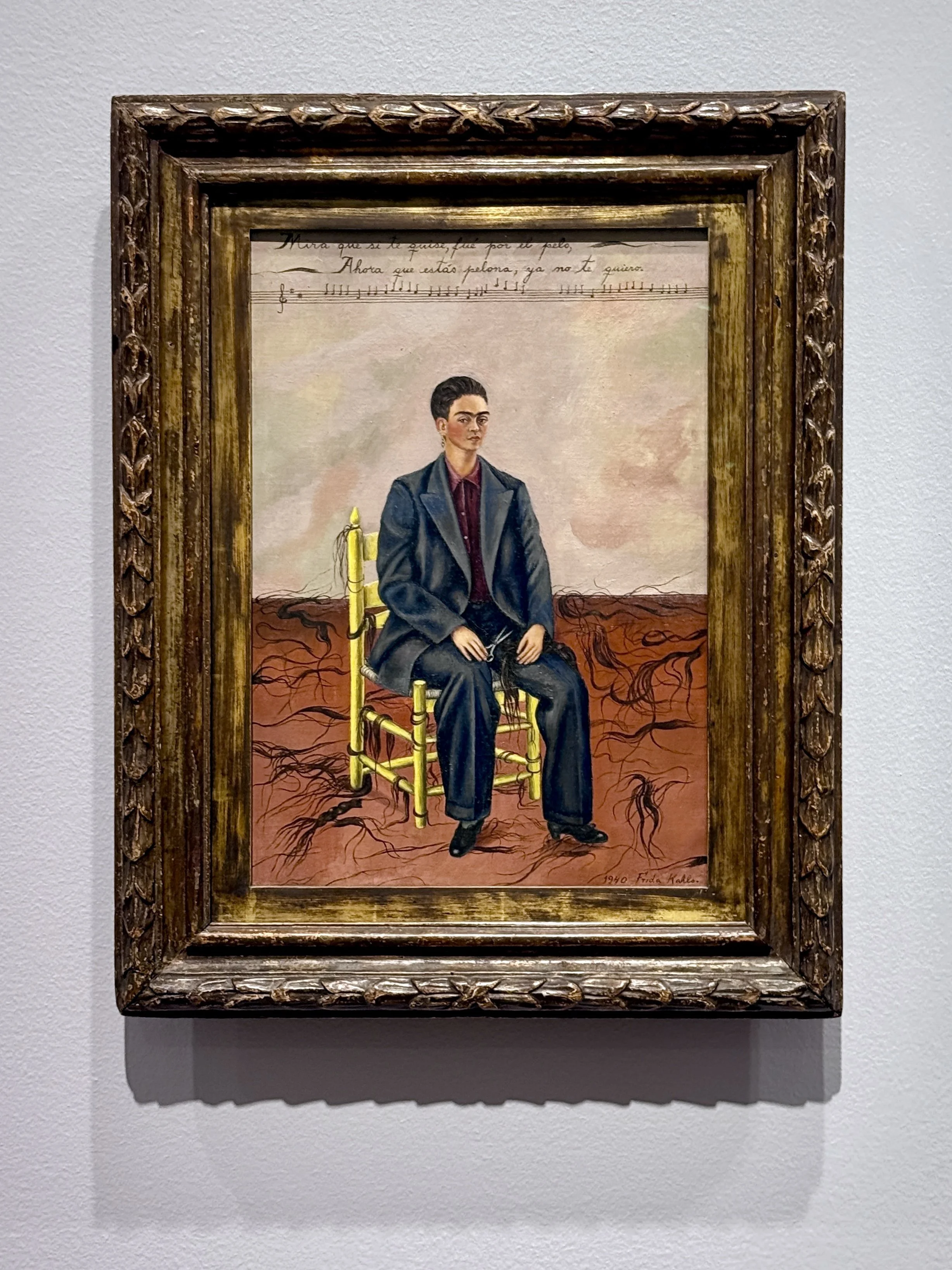
Self-Portrait With Cropped Hair by Frida Kahlo, 1940

Self-Portrait With Cropped Hair from 1940. Freshly divorced, Frida depicts herself as wearing one of Diego’s suits, scissors in hand, her hair in clumps on the floor.

The Surrealists saw her as exotic, a muse from afar who fit their aesthetic fantasies. But Frida wasn’t interested in playing that role. She wasn’t a curiosity or a symbol — she was an artist, plain and simple. Her use of indigenous Mexican motifs, her explorations of physical and emotional suffering — these weren’t Surrealist exercises; they were her lived truth.

Still, despite her reluctance, Frida’s art undeniably aligned with many Surrealist themes. Dreams and reality intertwining, the use of found materials, the exploration of identity — it was all there, just coming from a much grittier, more personal place. 

And she did, after all, agree to be a part of a Surrealist show in Paris. Which, by the way, finally came together. It ran at the Galerie Renou et Colle from March 10 to 25, 1939. Frida’s take on her fellow Mexican artists that Breton chose to showcase with her work? In one of her letters to Muray, she described them as “all of this junk.”

Photographer Nikolas Muray and Frida Kahlo

Photographer Nikolas Muray and Frida Kahlo had a passionate affair, and he was her confidante during her bad experience in Paris.

Nikolas Muray: The Confidant Behind the Letters

Long before Paris turned into a disaster, Frida had another anchor: Nikolas Muray. Photographer, Olympic fencer (yes, really) and one of her many lovers, Muray was one of the few people Frida trusted enough to confide in during her Paris ordeal.

Her letters to him are the sharpest, funniest and most brutally honest accounts we have of her time in France. She wrote to Muray not just to update him, but to release steam — to unload her frustrations about the Surrealists, the filth of the city, her failing health, and her utter disappointment in Breton’s empty promises.

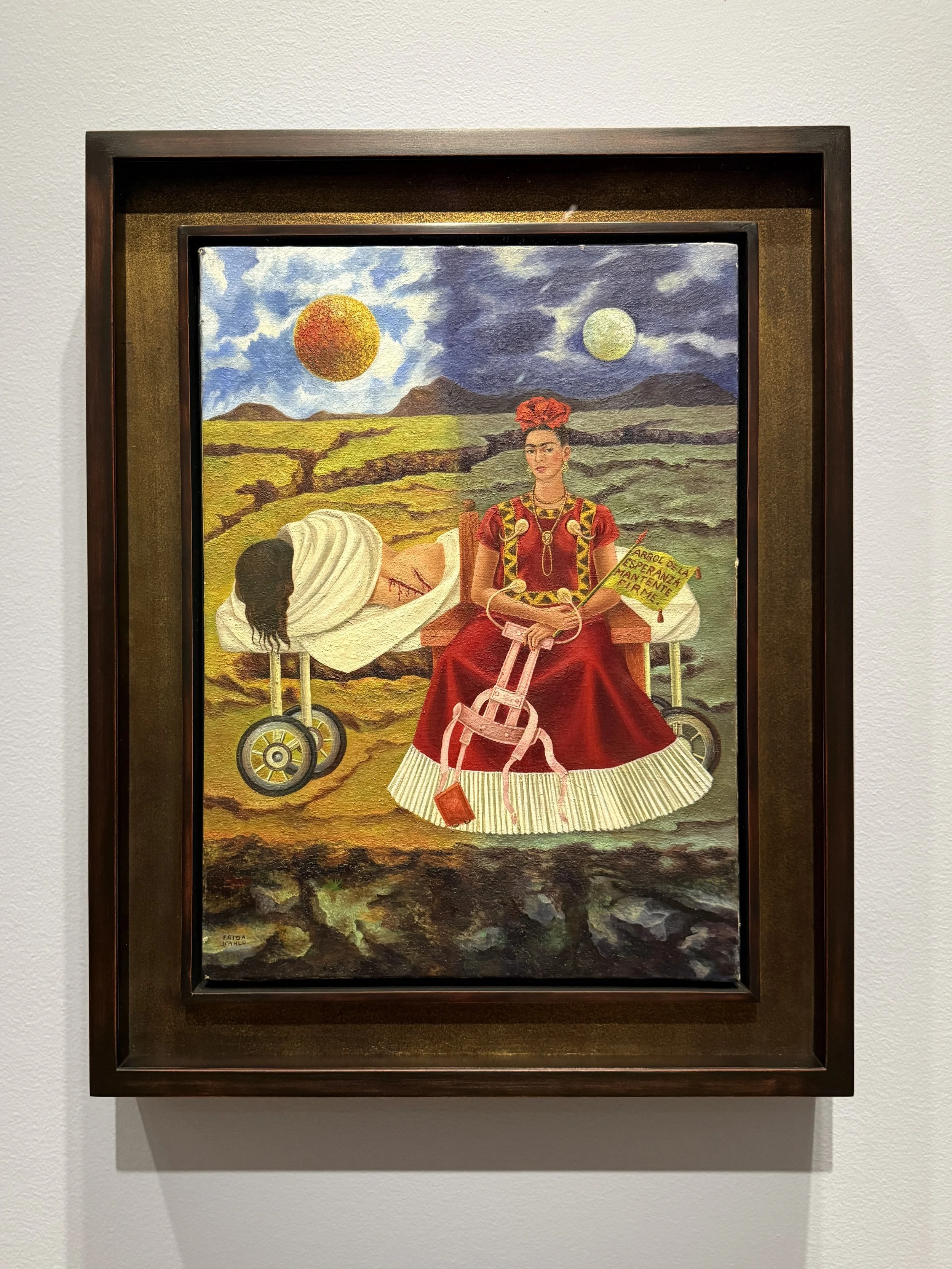
The Tree of Hope, Remain Strong, painted in 1946 by Frida Kahlo

The Tree of Hope, Remain Strong, painted in 1946 after spinal surgery. This double self-portrait splits her in two: One body lies wounded on a hospital gurney, while the other sits upright, dressed and defiant, clutching a back brace.

What Happened After: A Brief, Blazing Connection

For all the depth and warmth of their connection in Paris, Frida and Reynolds’ friendship seems to have been brief. After that whirlwind winter of 1939, there’s no evidence they kept up correspondence. Aside from one endearing letter where Reynolds talks about how empty the house felt without Frida, there aren’t any further exchanges that we know of.

Life pulled the two women in different directions. Frida returned to Mexico, her health still fragile but her art beginning to gain traction. 

Reynolds, meanwhile, risked her life in the French Resistance. Her Paris home, once a haven for artists and thinkers, became a literal refuge for those fleeing Nazi persecution. She didn’t leave Paris until 1942, escaping across the Pyrenées on foot and finding a flight to New York. But she never stopped fighting for what mattered.

Their paths never formally crossed again, at least not that we can prove. But their legacies continued to intertwine, quietly and profoundly, through the art they made and the communities they helped build. 

The Frame, an oil painting on tin with a vibrant folk art border, from 1938. Frida’s Paris show wasn’t a total disaster — the Louvre bought this piece for their colletion.

A Happy Ending to Frida’s Time in Paris

In spite of it all, Frida’s Paris disaster managed to end on a high note. Against the odds, her work finally made it onto the walls of a gallery — and not just any gallery. By the end of the show, the Louvre itself (yes, the Louvre) purchased one of her paintings, The Frame, making Frida the first 20th century Mexican artist in the museum’s holdings. Today (when not loaned out to travel), this emblematic self-portrait is part of the Musée National d’Art Moderne’s collection at the Centre Pompidou in Paris. 

DID YOU KNOW? The Pompidou has a branch in Málaga, Spain?

Even more surprising, amid the wreckage of her Surrealist experience, Frida forged real friendships with a few kindred spirits. Man Ray, Duchamp and some others proved to be exceptions to the pompous crowd she had loathed. Some Surrealists were pas mal, after all. –Wally

Licking Legends: The UK’s Myths and Legends Stamps

The stories behind the UK’s magical new stamps are sure to enchant you: the Loch Ness Monster, Beowulf and Grendel, Cornish piskies, selkies and more.

The entire Royal Mail’s Myths and Legends stamp series

Eight stamps. Eight legends. A whole world of magic compressed into miniature artwork — and honestly? I’ve never wanted to send more mail in my life.

Each one of these beautifully illustrated postage stamps from the Royal Mail is a tiny portal into the legends that have haunted the British Isles for centuries. They’re wild and eerie. I was hooked.

This 2025 Myths and Legends series was brought to life by British illustrator Adam Simpson, whose crisp, almost woodcut-like style feels like it could adorn a high-end gallery wall — or illustrate a children’s book. 

It’s perfect for a set of stamps that spans the heroic, the heartbreaking and the downright horrid. The collection draws from English, Scottish, Welsh and Irish folklore, and features not just the obvious icons (yes, Nessie makes an appearance) but some deeper, darker cuts too. Why hello, Grindylow.

Each stamp is a love letter to the past, a celebration of story, and a reminder that folklore isn’t dead — it’s just waiting for the right delivery system. Consider this your guided tour through the tales behind the stamps, complete with monsters, magic, betrayal … and brine.

Beowulf fights Grendel in the Royal Mail’s Myths and Legends stamp series

Beowulf and Grendel

Hero vs. horror in the original monster story

Long before superheroes wore capes, they wore chainmail and boasted a mead hall’s worth of swagger. Beowulf is the OG epic hero — the kind of guy who crosses the sea just to fight your monsters for you. His most famous foe? A grotesque creature named Grendel, who spent his nights tearing warriors limb from limb at the hall of Heorot. The king, Hrothgar, was helpless. Enter Beowulf.

This story comes from the Old English poem Beowulf, thought to have been composed between the 8th and 11th centuries, set in Scandinavia but recorded in a single surviving manuscript from Anglo-Saxon England (now safely stored at the British Library). It’s the oldest known epic in English literature — and it doesn’t pull punches. Beowulf doesn’t just defeat Grendel; he rips his arm clean off and hangs it like a trophy. Brutal. Poetic. Metal.

Grendel himself is one of literature’s great monsters — described as a descendant of Cain, that fratricidal son of Adam and Eve, shunned by God, and tormented by the joy he hears in Hrothgar’s hall. He’s more than beast; he’s a symbol of alienation and rage, a product of exile and pain. Some later interpretations even paint him as a tragic figure. Not that Beowulf cared.

Simpson’s stamp captures the legendary fight with clean lines and mythic energy: Beowulf wrestles the monstrous figure of Grendel in a composition that feels part medieval tapestry, part comic book panel. It’s dynamic, dramatic — and faithful to the grit of the tale.

This is the legend that launched a thousand English Lit classes, inspired everything from The Lord of the Rings to The Witcher, and proved that even a millennium ago, people loved a good monster fight.

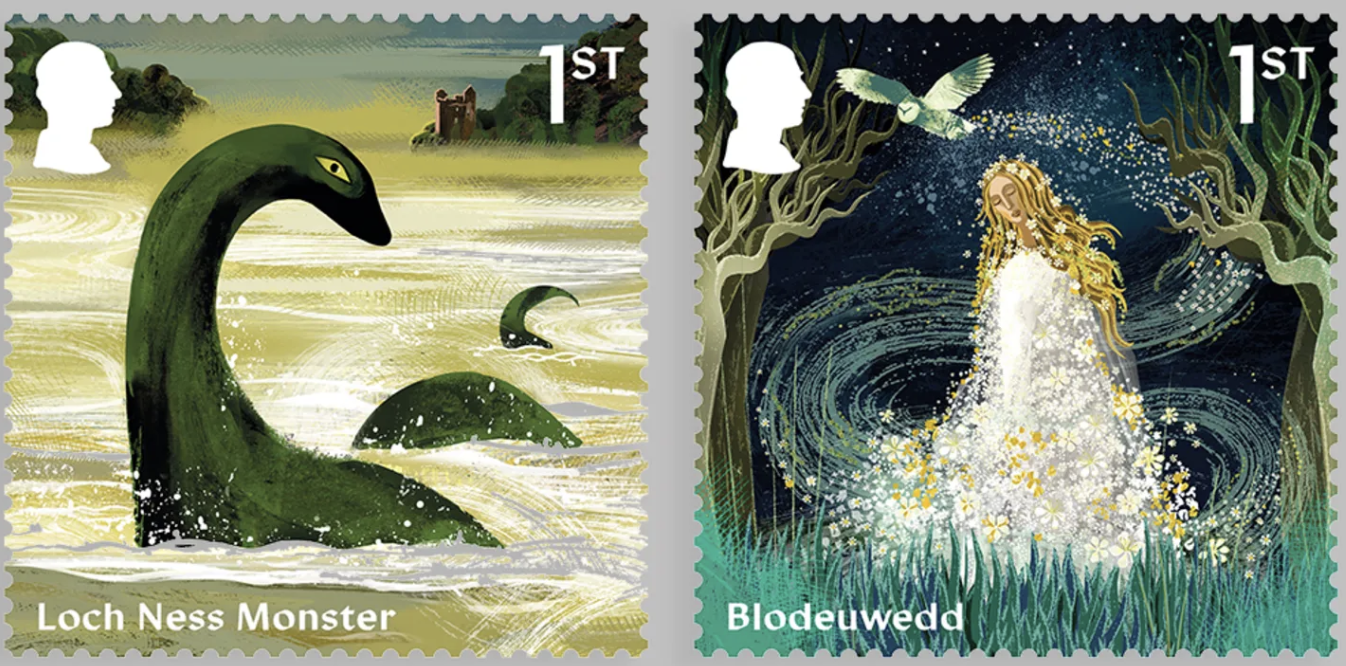
Blodeuwedd, the flower maiden who turned into an owl in the Royal Mail’s Myths and Legends stamp series

Blodeuwedd

The flower bride who became an owl

Once upon a time in the mythic heart of Wales, a woman was conjured — not born, but created. The magicians Math and Gwydion, meddling in mortal matters (as wizards are wont to do), wove her from the blossoms of oak, broom and meadowsweet. Her name was Blodeuwedd, meaning Flower Face, and she was made for one purpose: to be the wife of a man cursed never to marry a woman of earthly origin.

You can probably guess how well that turned out.

This tale comes from the Mabinogion, a collection of Welsh medieval stories first written down in the 12th and 13th centuries but based on oral traditions that are far older. It’s one of the most bewitching episodes in the Fourth Branch, a saga steeped in magic, betrayal and transformation.

Though crafted to be the perfect bride, Blodeuwedd had her own ideas. She fell in love with another man, Gronw Pebr, and together they plotted to kill her husband, Lleu Llaw Gyffes. The murder attempt failed, and the consequences were swift and strange (this is myth, after all): Gronw was killed with a spear through a standing stone, and Blodeuwedd was transformed into an owl — a creature of the night, cursed to never show her face in daylight again.

Her story is tragic and richly symbolic. Depending on your lens, Blodeuwedd is either a femme fatale born of male hubris or a wild spirit trapped by expectation who seized a sliver of freedom. Either way, she’s unforgettable.

Simpson’s stamp channels the tale’s eerie beauty with a stylized woman caught mid-transformation — petals swirling into feathers as she takes her owl form. It’s the kind of image that lingers, much like the legend itself.

The Loch Ness Monster in the Royal Mail’s Myths and Legends stamp series

The Loch Ness Monster (Nessie)

The queen of cryptids surfaces again

You can’t talk about UK folklore without invoking Nessie, the shadowy shape that launched a thousand blurry photos and conspiracy theories. She’s the most famous resident of Loch Ness, a deep, cold freshwater lake tucked into the Scottish Highlands — and she’s been allegedly living there since at least the 6th century.

The earliest written mention comes from The Life of St. Columba, penned in the 7th century by Adomnán. According to the account, the saint encountered a “water beast” in the River Ness and performed a miracle to save a man from its jaws. And just like that, Nessie swam her way into the margins of history.

But her modern fame really took off in the 1930s, after a couple driving near the loch claimed to see a massive creature cross the road and slip into the water. Headlines dubbed it a “monster,” and the tabloids never looked back. Since then, Nessie’s been spotted, debunked, photographed, hoaxed and even hunted with sonar. (Spoiler: She remains elusive.)

While scientists say the sightings are likely otters, logs or wishful thinking, the legend endures. Nessie is more than just a maybe-dinosaur. She’s a symbol of mystery, of nature keeping secrets, of something just out of reach. And let’s face it: Everyone wants her to be real.

In Simpson’s stamp, Nessie arches out of stylized waters, distant and dreamlike, framed by curling waves and Highland mist. There’s no need to explain her. She just is.

She’s proof that sometimes, the most powerful legends are the ones we can’t quite catch.

Cornish Piskies

Mischief, mayhem and magic in miniature

If you ever find yourself turned around on a familiar path in the southwest of England, don’t blame your GPS — blame the piskies. These pint-sized pranksters from Cornish folklore are legendary for leading travelers astray, stealing shiny things, and generally causing low-level chaos with high-level charm.

Piskies (sometimes spelled pixies) have been part of Cornish oral tradition for centuries, possibly even tied to pre-Christian beliefs in nature spirits or ancestral ghosts. They’re native to the moors, tors and coastal cliffs of Cornwall, often dressed in ragged green and red, with pointy ears and a love of laughter at your expense.

But unlike fairies who might hex you or goblins who’ll rob you blind, piskies are mostly harmless. Annoying? Yes. Dangerous? Rarely. They’ve been known to braid horses’ manes, move your keys, and lure people into marshes with giggles and flickering lights. The only remedy if you’ve been “piskie-led”? Turn your coat inside out. That supposedly confuses them (and maybe earns you their grudging respect).

In Victorian times, Cornish tourism latched onto piskies as whimsical local mascots — think of them as the original chaotic neutral brand ambassadors. But in older tellings, they’re wild, weird, and deeply tied to the landscape.

Simpson’s stamp captures that dual nature perfectly. The piskies glide through a moonlit glade, wide-eyed and impish, carrying the evidence of their mischief-making: a lost key, a frayed rope. There’s joy here, but also a touch of the uncanny.

In a world that often takes itself far too seriously, the piskies remind us that a little chaos can be good for the soul.

Irish folk hero Fionn mac Cumhaill in the Royal Mail’s Myths and Legends stamp series

Fionn mac Cumhaill

The Irish giant whose legend spans countries

Fionn mac Cumhaill (pronounced roughly like  “Finn mac Cool”) is Ireland’s answer to Hercules, with a bit of that trickster Hermes thrown in. A warrior, leader, poet and occasional giant, depending on who’s telling it, Fionn is the towering figure at the heart of the Fenian Cycle of Irish mythology, a body of tales passed down orally for centuries before being written in Middle Irish texts around the 12th century.

He’s best known as the leader of the Fianna, a band of noble warrior-hunters who roamed Ireland getting into gloriously poetic trouble. But the story that often gets the spotlight — especially on tourist brochures — is the one where Fionn creates the Giant’s Causeway, that eerie, hexagonal rock formation on the northern coast of Ireland. According to legend, Fionn built it as a bridge to Scotland so he could fight a rival giant, Benandonner.

The punchline? When he saw how massive Benandonner really was, Fionn panicked. His wife, Oonagh, disguised him as a baby in a cradle. When Benandonner saw the size of the baby, he assumed the father must be terrifying and fled back to Scotland, tearing up the bridge behind him. One of those mythic traditions where wit — and a good partner — wins the day.

Fionn also gained prophetic wisdom by burning his thumb on the Salmon of Knowledge, which, yes, is exactly what it sounds like. (It has a role in the tradition of Mabon, the Wiccan holiday celebrating the Autumnal Equinox.) From that day on, sucking his thumb gave Fionn bursts of insight — a sort of mythic precursor to Google, if Google required seafood and pain.

Simpson’s stamp goes bold: Fionn stands enormous against the rising Causeway, cloak billowing, face stoic. The stones stretch beneath him in their perfect geometric strangeness, while his gigantic foe stands silhouetted across the way.

Fionn mac Cumhaill is the kind of figure who straddles legend and landscape — literally — and he still looms large today.

The black shuck, a shaggy black doglike monster howling by a church in the Royal Mail’s Myths and Legends stamp series

Black Shuck

The devil dog that stalks the coast

If you ever find yourself walking alone through the misty lanes of East Anglia — especially near a windswept churchyard — and feel the prickle of something behind you … it might be Black Shuck. Described as a massive, ghostly black dog with glowing red (or sometimes green) eyes, Shuck is one of the U.K.’s most enduring pieces of spectral folklore. He’s part omen, part legend, and all menace.

The name “Shuck” is believed to come from the Old English scucca, meaning “demon” or “fiend.” Reports of this supernatural hound go back centuries, but his most infamous appearance took place on August 4, 1577, during a thunderstorm that ripped through the churches of Bungay and Blythburgh in Suffolk. According to terrified witnesses, the beast burst into the churches during the storm, killing or injuring several people before vanishing in a flash of fire. To this day, scorch marks on the church doors in Blythburgh are said to be Shuck’s claw marks.

But like many creatures of folklore, Shuck’s meaning has shifted over time. In some tales, he’s a harbinger of death, like the Grim Reaper with paws. In others, he’s a protective spirit, quietly walking beside lone travelers to keep them safe. 

Simpson’s stamp leans into the fearsome version: a shaggy, howling beast with glowing eyes, set against a backdrop of a castle in a thunderstorm. It’s the kind of image that makes you instinctively glance over your shoulder. 

Whether he’s a ghost, a guardian or something in between, Black Shuck reminds us that the line between safety and terror can be as thin as a shadow in the mist.

The grindylow, a scary monster emerging from the water, in the Royal Mail’s Myths and Legends stamp series

Grindylow

The creature in the water who waits for misbehaving children

The Grindylow isn’t interested in riddles or redemption. This creature — slimy, long-fingered and lurking just beneath the surface — is the reason your grandmother told you not to go too close to the pond. Native to the folklore of Yorkshire and Lancashire, the Grindylow is a water-dwelling bogeyman whose sole hobby appears to be grabbing children by the ankle and dragging them to a watery doom.

Pleasant, right?

The tale likely began as a cautionary myth, passed through generations in England’s misty north as a way to keep kids away from dangerous pools, marshes and millponds. But the Grindylow isn’t just a PSA in monster form; it’s a creature of genuine nightmare fuel. Often described as having green skin, long, spindly arms and razor teeth, the Grindylow hides in shallow waters, waiting for a ripple, a footstep or a foolish dare.

While it rarely ventures beyond regional lore, the Grindylow got a boost in popular imagination thanks to fantasy literature and modern media — most notably showing up as a minor monster in Harry Potter and the Goblet of Fire, where it menaces underwater champions during the Triwizard Tournament. But the original version? Far less CGI-friendly, and far more chilling.

Simpson’s stamp leans into the fearsome. You see the Grindylow emerging from the water — alarmingly sharp claws and teeth just waiting to tear into its next victim. There’s no question what will happen next if you take one more step closer to the edge.

More obscure than Nessie and more vicious than the piskies, the Grindylow doesn’t want your attention. It wants your ankles.

A selkie mid-transformation in the waves, half-woman, half-seal in the Royal Mail’s Myths and Legends stamp series

Selkie

The seal who loved and left

The selkie’s story is one of yearning: for freedom, for the sea and for a life that can never fully belong to land. These shape-shifting beings come from Orkney and Shetland folklore, where the wind howls and the sea sings. Selkies are seals in the water — but when they come ashore, they shed their sleek skins and become beautiful humans, often just long enough to fall in love, or be taken.

And that’s where the heartbreak begins.

The most common version of the tale? A fisherman (or crofter, or lonely islander) spies a selkie woman dancing on the shore in her human form. He steals her seal skin so she can’t return to the sea, and convinces her — sometimes gently, sometimes not — to become his wife. They live together, raise children, and for a time, there’s a strange sort of peace. But the selkie always gazes longingly at the waves. And when she finds her hidden seal skin at last, she returns to the ocean without a backward glance.

Other versions flip the roles — selkie men seduce mortal women, especially those with “the yearning,” and disappear when the tide calls. Regardless of who leaves, the ending is rarely happy. Selkie stories are salt-soaked with longing, freedom and loss. They’re metaphors for desire, captivity and returning to one’s true self — even if it hurts.

These tales date back centuries, passed down orally in Scotland’s far northern islands and coastal fishing communities. And while they’ve inspired everything from poetry to films (The Secret of Roan Inish and Song of the Sea, for instance), the root myth remains as fluid and mysterious as the tide itself.

Simpson’s stamp is pure melancholy magic: a selkie woman caught mid-transformation, cloak of seal skin slipping from her shoulders, hair trailing like seaweed. The horizon behind her is misted, the waves beckoning. You can almost hear them whispering her name.

The selkie doesn’t roar or bite. She simply leaves — and that’s what makes her legend linger.

The Loch Ness Monster and Blodeuwedd from the Royal Mail’s Myths and Legends stamp series

Stamped, Sealed, Enchanted

The Royal Mail’s Myths and Legends series doesn’t just celebrate folklore; it resurrects it. These aren’t dusty old tales tucked away in textbooks — they’re living, breathing stories full of monsters, mischief, heartbreak and heroism. And thanks to artist Adam Simpson’s stunning illustrations, they feel both timeless and vividly alive.

From the brute strength of Beowulf to the quiet sorrow of the selkie, each stamp invites you to pause and dive deeper. To trace the origins. To hear the whispers of ancient moors, haunted coastlines and flower-strewn spells. They remind us that storytelling is a kind of magic.

So yes, I’ll be collecting these. But more importantly, I’ll be sharing their stories — because folklore, like a good letter, was meant to be passed on. –Wally

How to Celebrate Beltane: A Wiccan Ritual, Traditions and the Magic of May Day

Discover the history, symbolism and traditions of this joyful May Day sabbat: a Beltane ritual, flower crowns, Maypoles, fire festivals and wild Fae magic. 

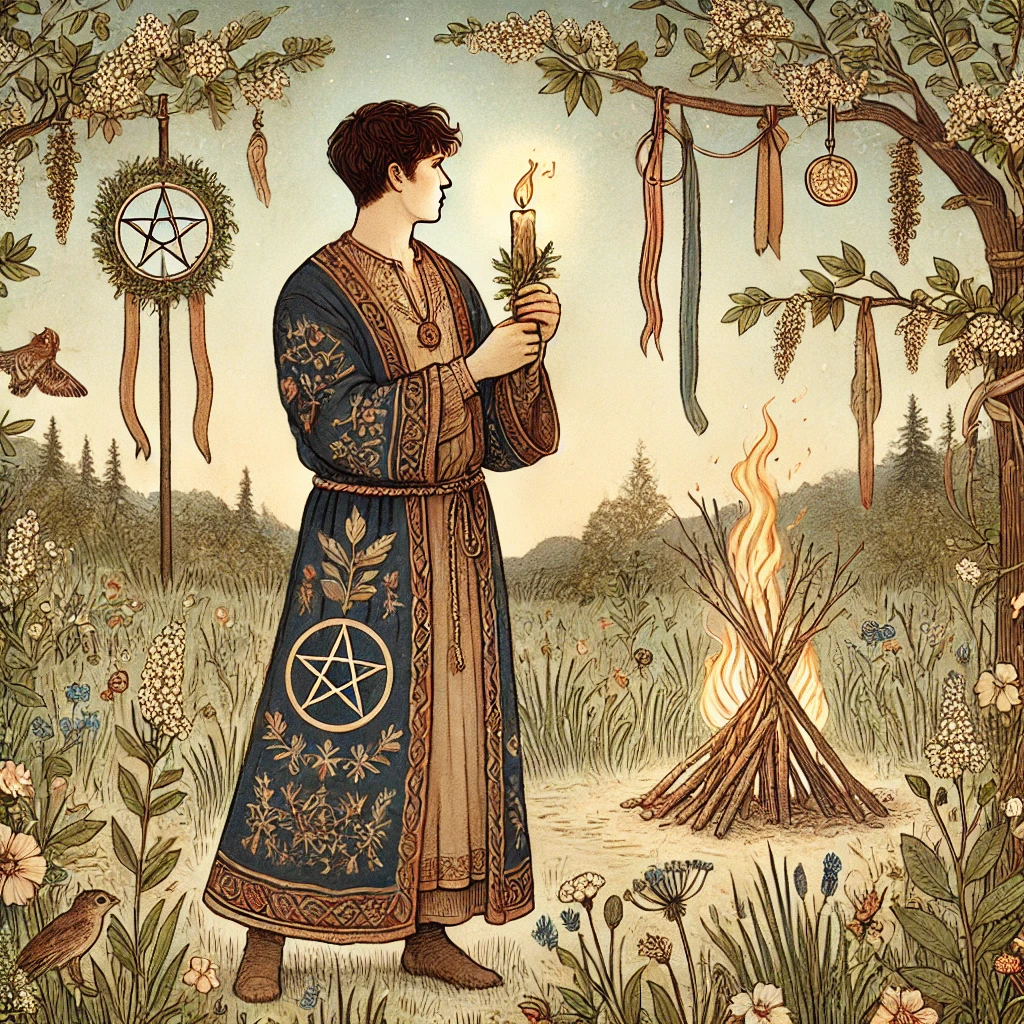
A Wiccan man celebrates Beltane, with tree decorations and a bonfire

The last breath of spring lingers in the air, thick with the scent of the first blooming flowers and fresh-cut grass. The world is humming — bees drowsily drift between blossoms, the sun lingers a little longer each day, and the Earth is alive with a feverish energy. By nightfall, bonfires will blaze, ribbons will wind around the Maypole, and laughter will ripple through the warm evening air. This is Beltane, the fire festival of passion, fertility and abundance.

Celebrated on May 1, Beltane is the great turning of the wheel that marks the transition from spring to summer. The name comes from the Celtic god Bel, meaning “Bright One,” and tene, meaning “fire” — a fitting name for this exuberant festival. As one of the most joyous (and sensual) of the Wiccan sabbats, Beltane calls for revelry, creativity and connection.

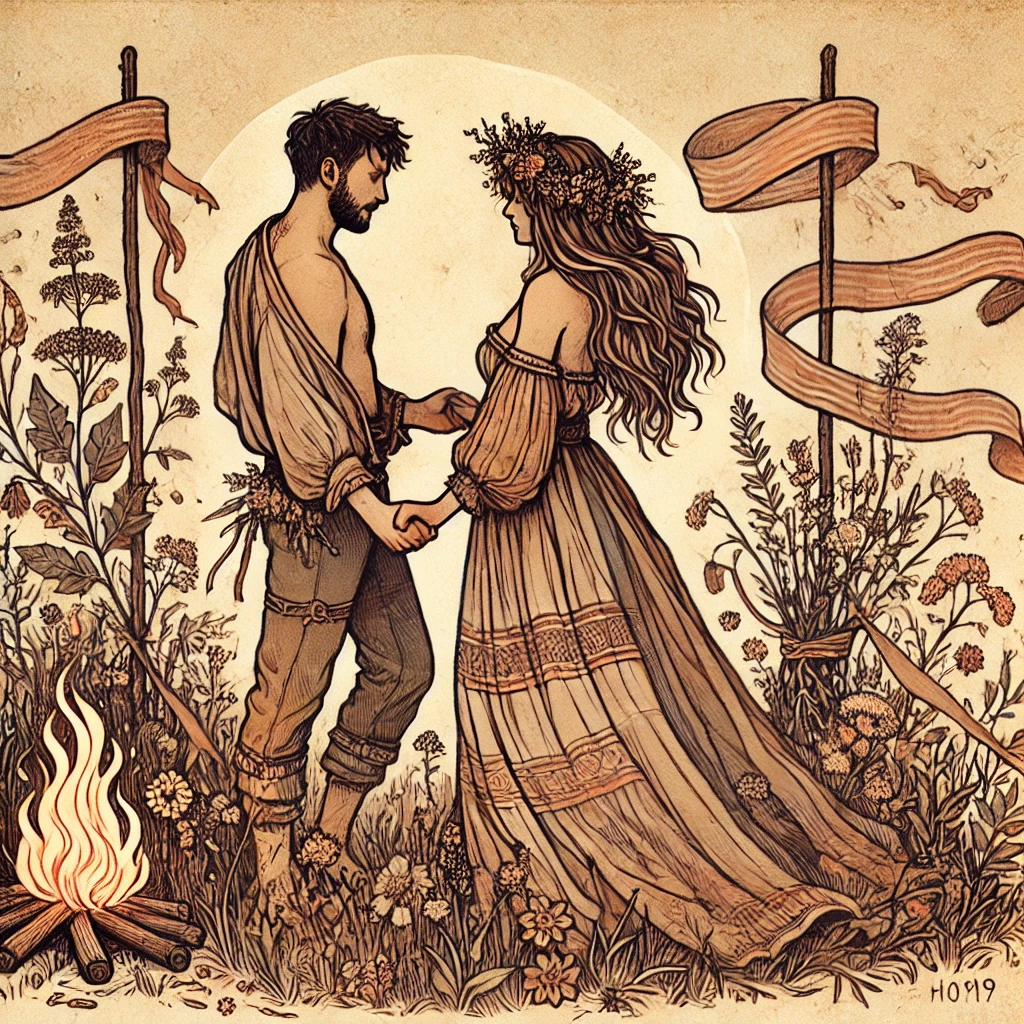
A disheveled man and woman are about to celebrate a greenwood marriage at Beltane

The History and Traditions of Beltane

Beltane is one of the four great Celtic fire festivals, alongside Samhain, Imbolc and Lughnasadh. It marks the transition from spring to summer, when the world bursts into life, and the veil between realms grows thin. 

For the ancient Celts, Beltane was a time of protection, purification and fertility. Great bonfires were lit, and livestock were driven between twin fires to ensure their health and prosperity for the coming season. These fires were believed to hold magical properties, warding off disease and evil spirits. People also leaped over the flames — sometimes for luck, love or fertility, and sometimes as a form of personal purification.

But Beltane’s most infamous tradition was the greenwood marriage. On this night, couples would disappear into the woods to celebrate the fertility of the land in a very literal way. These unions weren’t necessarily permanent marriages — some lasted only for the night, while others could become long-term partnerships. Children conceived during Beltane were sometimes referred to as “merry-begots”, and the festival itself was deeply tied to the idea of sacred union — both between human lovers and between the Earth and the Sun.

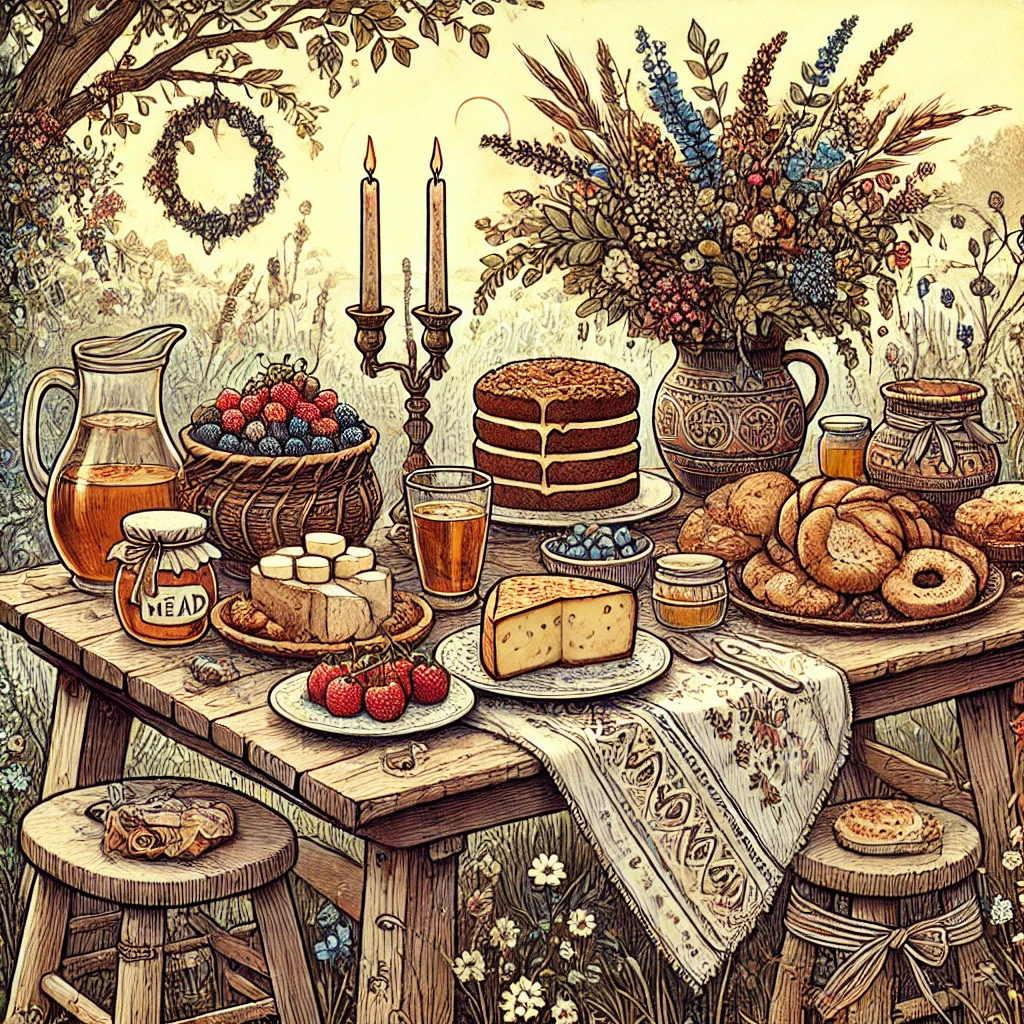
A table outdoors laden with Beltane treats and flowers

Beltane and the Rise of Christianity

Like many pre-Christian festivals, Beltane’s fiery revelry and fertility rites didn’t sit well with the Church. While Christianity was often willing to absorb and adapt certain pagan customs — like turning Yule into Christmas or Ostara into Easter — Beltane’s more uninhibited celebrations were harder to sanitize.

The festival’s bonfires, rituals and open expressions of sexuality were seen as dangerously pagan. The idea of couples disappearing into the woods for greenwood marriages clashed with Christian notions of monogamy and morality. By the Middle Ages, efforts were made to suppress Beltane practices, often by demonizing the festival as a time of witchcraft and devilry.

However, May Day traditions proved too beloved to fully erase. The Church allowed some aspects to remain, especially the Maypole dance, which was reframed as a community event rather than a fertility ritual. Meanwhile, Beltane’s bonfires persisted in rural areas, particularly in Scotland and Ireland, though they were often rebranded as local saint celebrations.

The Protestant Reformation, however, took a harsher stance. Many Beltane traditions, including fire-jumping and fertility rites, were outlawed, and in some cases, participating in these customs was enough to get someone accused of witchcraft. The association between Beltane and witches was strong — even in the 17th century, Scottish minister Robert Kirk wrote about the “Fairy Faith,” warning that Beltane was a time when spirits and witches roamed freely.

Despite centuries of suppression, Beltane never truly died. In the modern era, the festival has experienced a revival among Wiccans, Pagans and folklorists, who have reclaimed its joyful, fiery essence. Today, Beltane is once again celebrated with bonfires, dancing and rituals — a testament to the resilience of ancient traditions.

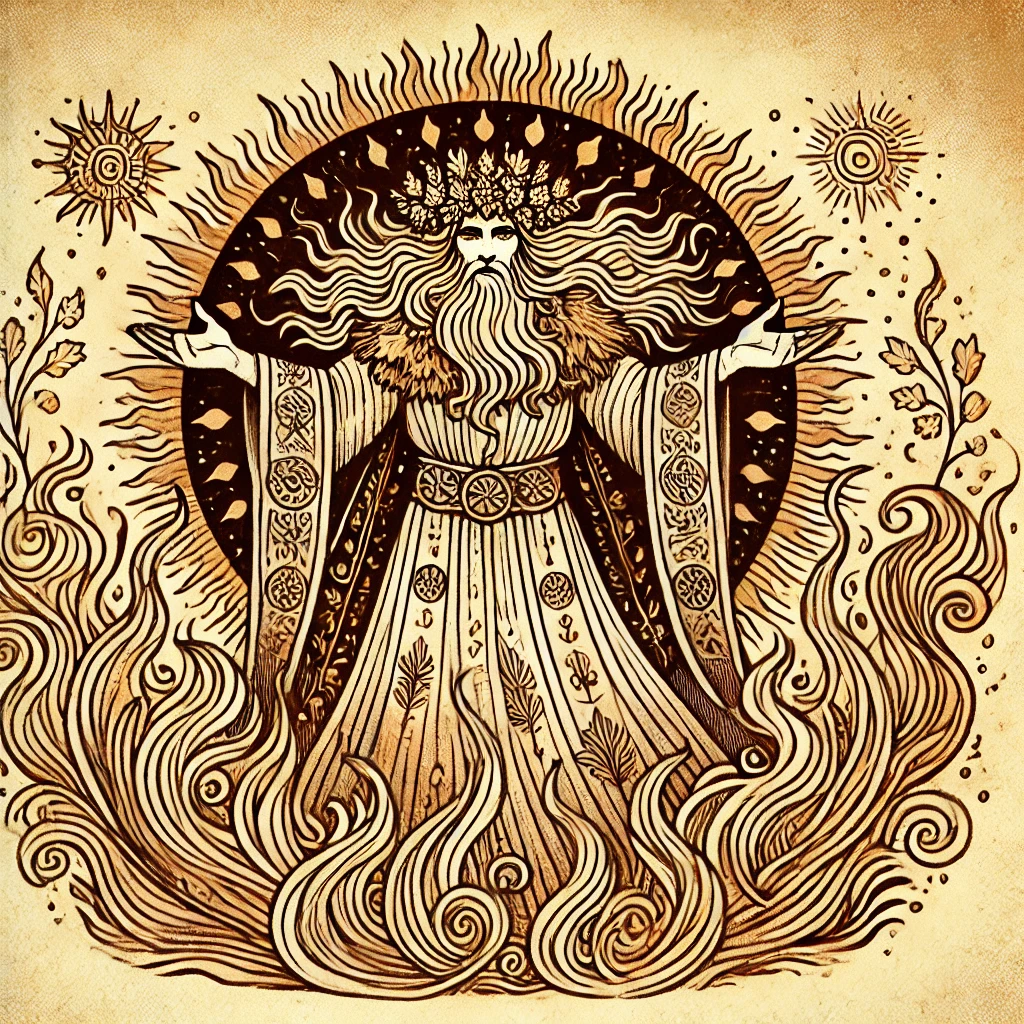
The god Bel, encircled by flames

Myths and Folklore of Beltane

Beltane’s fires burn in honor of Bel, the bright and shining god of light, often associated with Belenus, a solar deity worshiped across Celtic Europe. He was seen as a protector, guiding the transition from the gentle warmth of spring to the full power of summer. In some traditions, Bel’s fire was said to purify, bless and invigorate all who passed through it — hence the ancient tradition of driving cattle between Beltane bonfires for protection.

But Beltane isn’t just a time of fire — it’s also a time of Fae magic. Like Samhain, Beltane is a night when the veil between worlds is thin, making it easier for spirits and fair folk to slip through. Unlike Samhain, when ghosts and ancestors visit, Beltane belongs to the Fae. These aren’t your delicate, winged flower fairies; Beltane’s fae are wild, mischievous and often dangerous.

According to folklore, Beltane night is a time when:

  • The Sidhe (fairy folk) roam freely, seeking offerings and sometimes playing tricks on unsuspecting mortals.

  • Travelers may stumble into fairy rings and be spirited away for what seems like hours — but when they return, years have passed.

  • Leaving offerings of milk, honey or bread outside your door will appease the Fae and ensure they don’t cause trouble in your home.

Many old stories warn against speaking to or making deals with the Fae on Beltane, but others claim it’s the perfect night to seek their blessings — if you know how to ask. Whether you honor them with gifts or steer clear of their mischief, there’s no denying that Beltane is a night of wild, untamed magic.

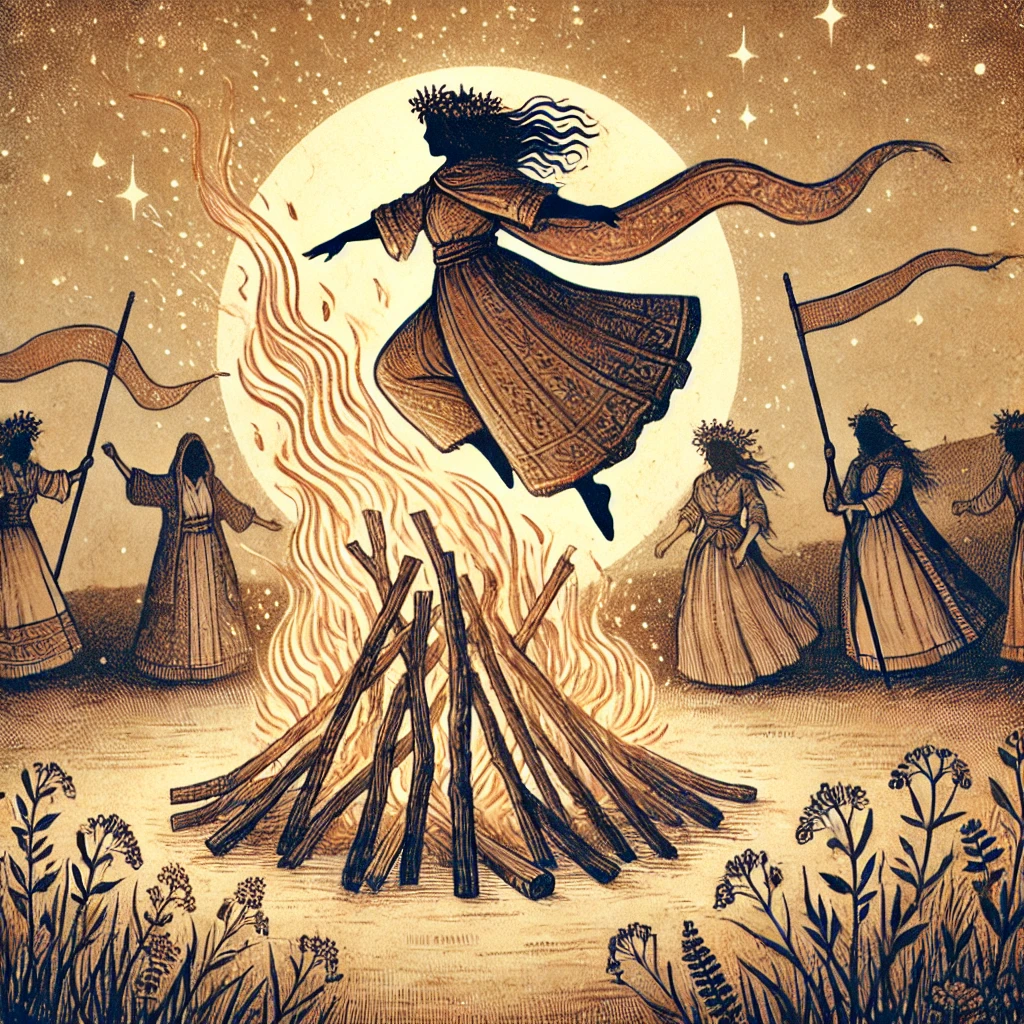
A woman soars over a Beltane bonfire while others look on

Traditions of Beltane

Beltane is a festival of fire, fertility and revelry, celebrating the height of spring and the turning of the wheel toward summer. It’s a time to embrace passion, creativity and abundance — whether that’s through dancing, feasting or lighting sacred fires.

1. Jumping the Fire

Fire is at the heart of Beltane. In ancient times, cattle were driven between two great bonfires to protect them from illness and misfortune. People also leaped over the flames to bring luck, fertility or courage into their lives. Today, you can honor this tradition by lighting a candle, writing an intention and carefully passing it over the flame for a symbolic blessing. Or, heck, test your luck and jump over a bonfire. Just make sure it’s a small one, please. 

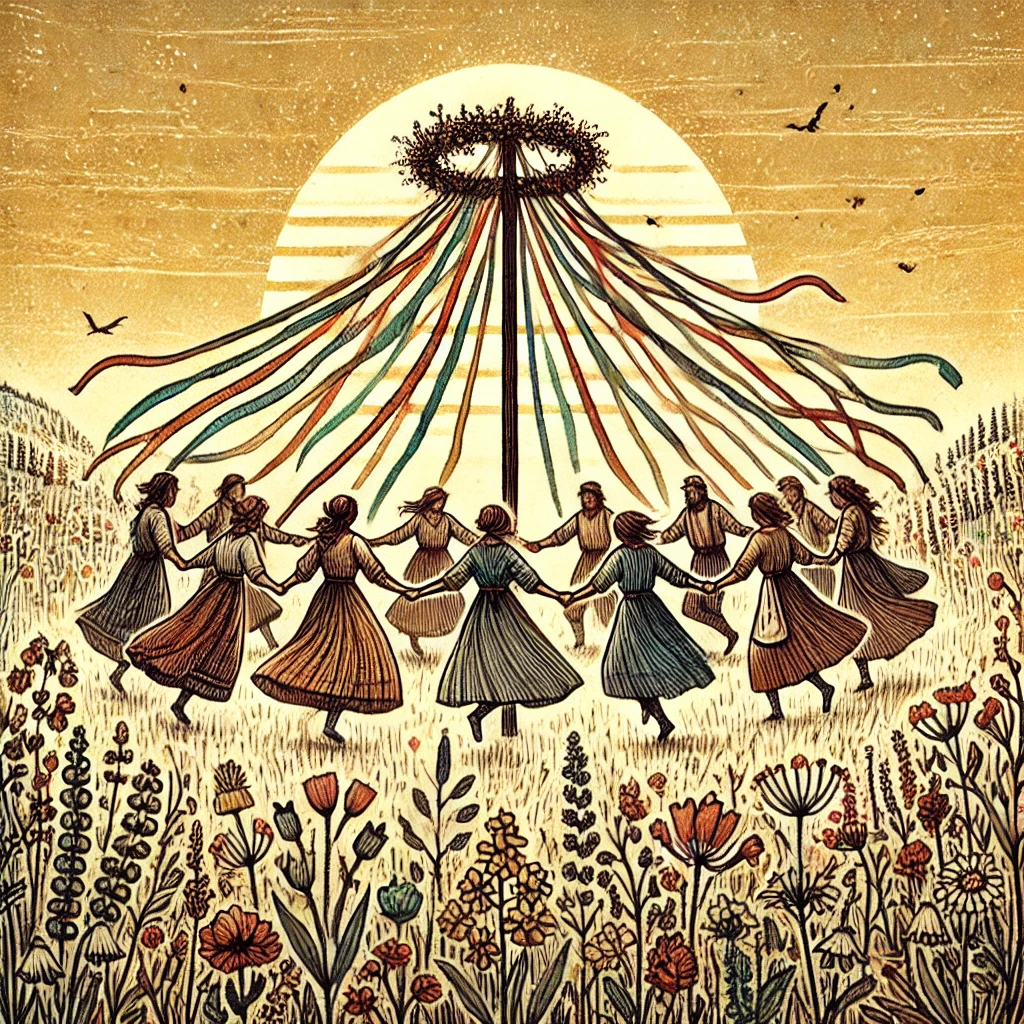
A group of people hold hands and dance around a Maypole in a field of flowers

2. The Maypole Dance

One of Beltane’s most iconic traditions, the Maypole dance is a celebration of energy and unity. Ribbons are woven around the pole, symbolizing the intertwining of masculine and feminine energies, though today it represents all forms of connection and creativity. If you don’t have access to a Maypole, you can braid ribbons into your hair, create a ribbon wreath, or tie ribbons to a tree as a personal tribute to the tradition.

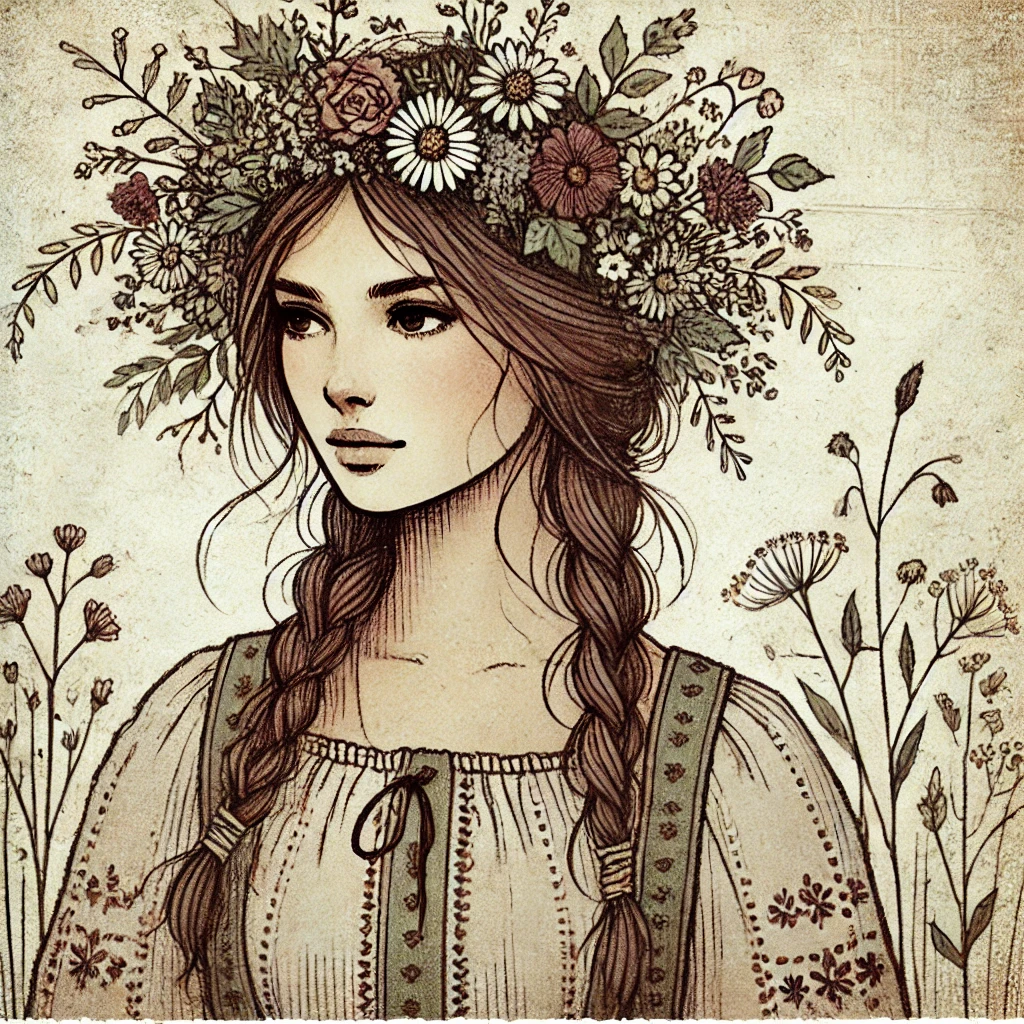
A young woman wears a flower crown

3. Flower Crowns and Greenery

Beltane is bursting with life, love and fertility, making flowers an essential part of the celebration. Wearing a flower crown or weaving garlands honors the season’s energy, especially with hawthorn, marigolds and lilacs — traditional Beltane blooms.

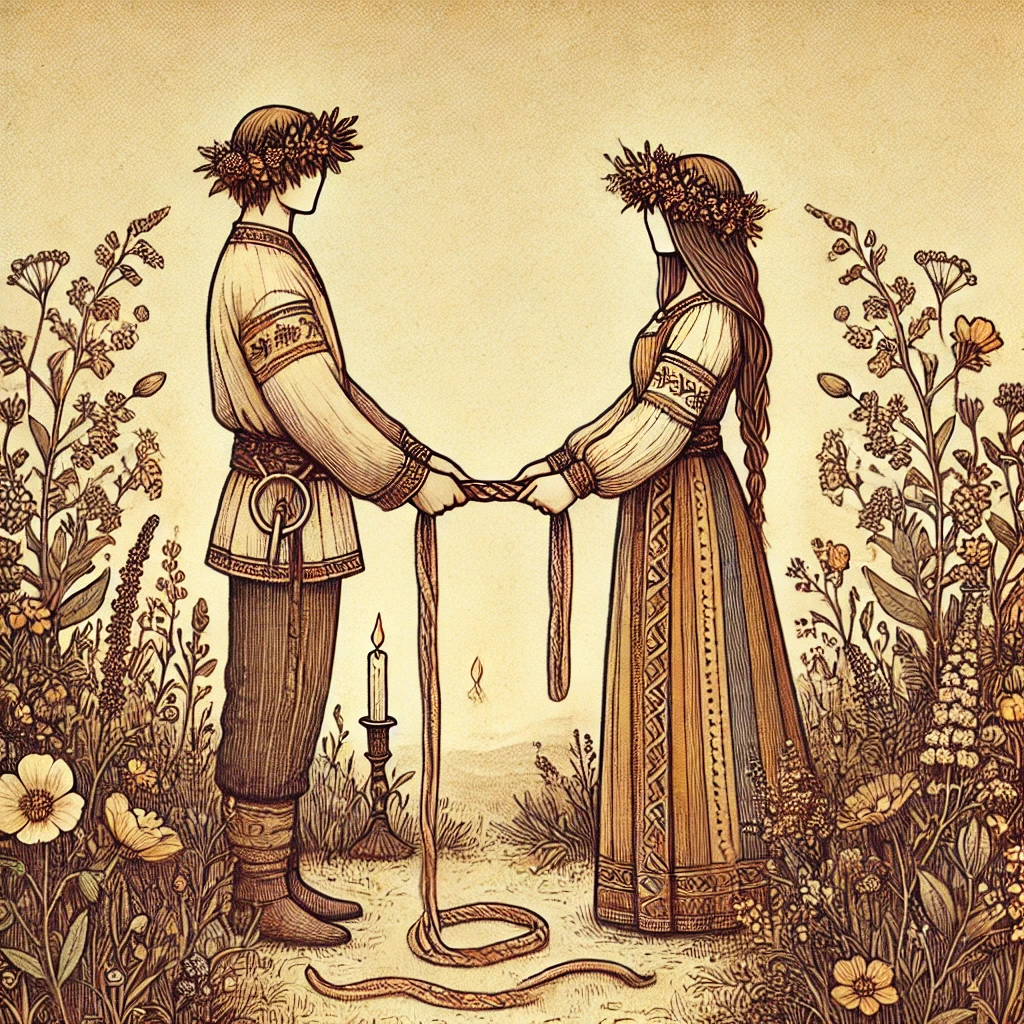
A man and woman hold a ribbon among flowers as they take part in a handfasting or Wiccan wedding ceremony

4. Handfasting (Pagan Weddings)

Beltane has long been associated with sacred unions and handfastings, a form of marriage where couples’ hands are tied together with ribbon to symbolize their bond. In old traditions, these unions often lasted “a year and a day” before becoming permanent. Whether you’re renewing vows, celebrating love or simply embracing deeper connections, this is the perfect time to honor relationships.

5. Offerings to the Fae

Since Beltane is a time when the Fae walk among us, many leave offerings to stay in their good graces. Traditional gifts include milk, honey, fresh bread or mead, left outside overnight. If you’re wary of the Fae’s mischief, keeping iron or salt by your door is said to deter them.

6. Late-Night Walks and Wild Magic

Some Beltane traditions are a little more mysterious and playful. In ancient times, young couples would disappear into the woods for a night of “greenwood marriage” (ahem), returning at sunrise with flower-strewn hair and dewy skin. Others would walk barefoot in the grass at dawn, believing the morning dew held magical properties for beauty and good fortune.

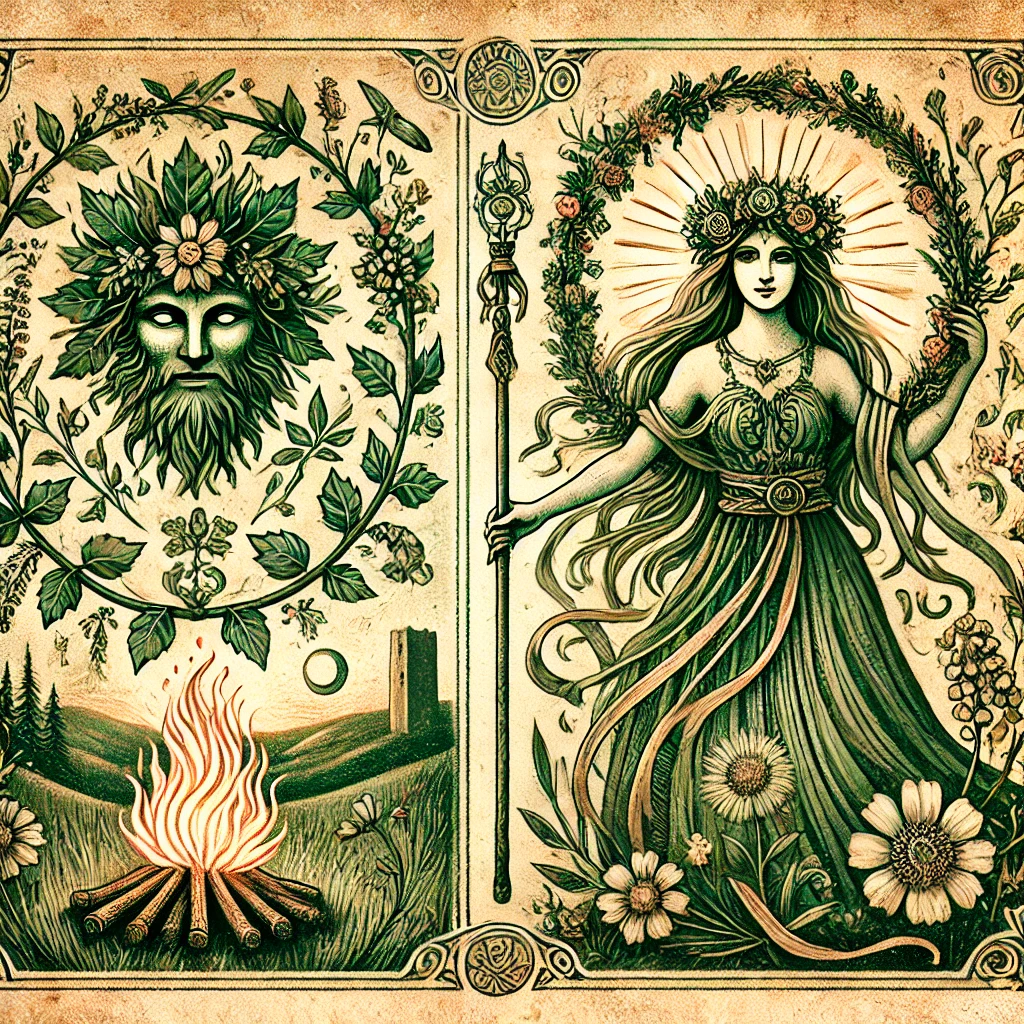
Neopagan deities, the Green Man, by a bonfire, and the Goddess, by flowers

Symbols of Beltane

Beltane is a festival rich in fire, fertility and wild energy, and its symbols reflect the passion and abundance of the season. Each one carries deep meaning, whether for protection, celebration or invoking the magic of May.

1. Fire

At its core, Beltane is a fire festival. The flames represent purification, passion and transformation, clearing away stagnation and ushering in the full force of summer’s energy. Whether it’s a bonfire, candle or even the sun itself, fire is the most powerful symbol of this sabbat.

2. The Maypole

A towering pole wrapped in colorful ribbons, the Maypole symbolizes union, connection and the dance of life. The interwoven ribbons represent the intertwining of energies — historically seen as masculine and feminine but now recognized as a celebration of all forms of harmony and creativity.

3. Flowers and Greenery

Beltane is a time of full bloom, and flower crowns, garlands and fresh-cut blossoms embody the beauty and fertility of the earth.

  • Hawthorn (the “May tree”) is sacred to Beltane, representing protection and love.

  • Lilacs and marigolds bring joy and blessings.

  • Oak leaves and ivy symbolize strength and endurance.

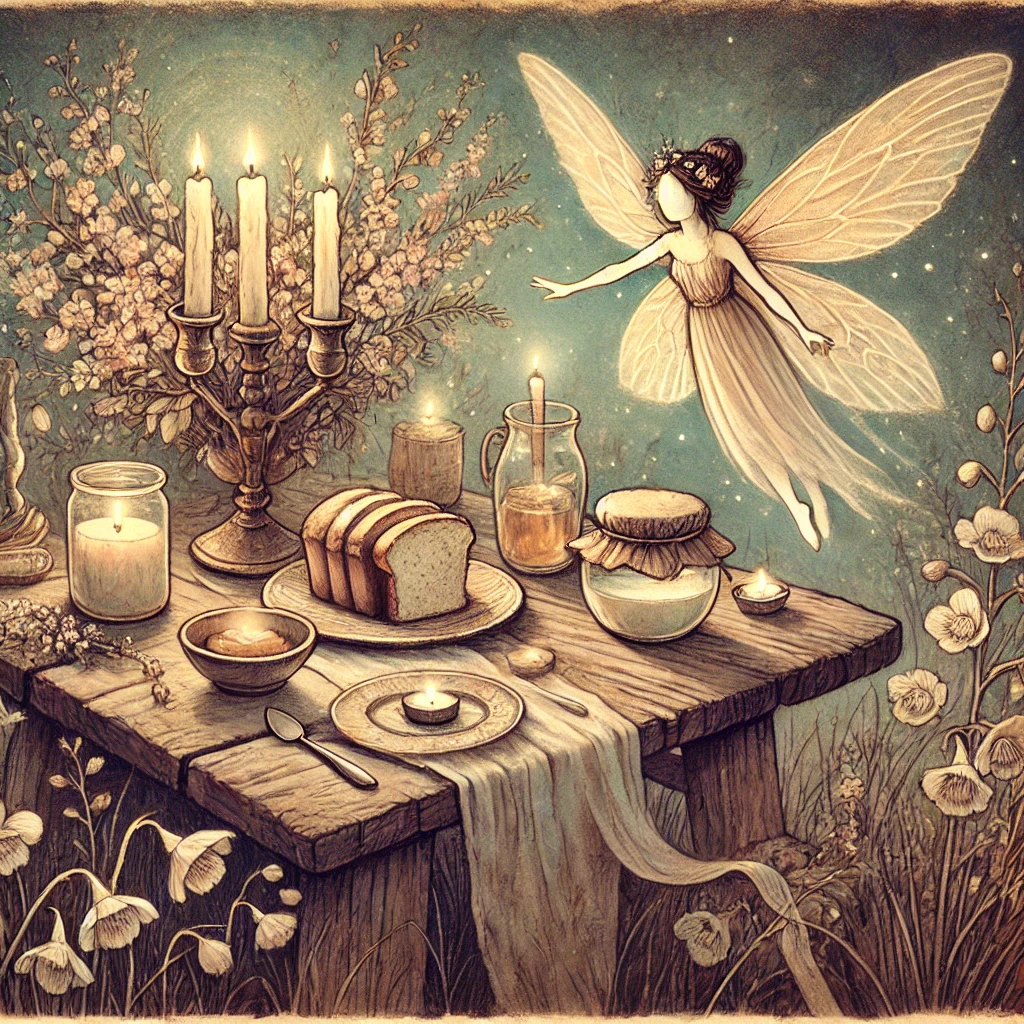
A fairy flies above a candlelit table with bread, milk, honey and other Beltane foods

4. The Fae

Beltane is one of the two times of the year when the veil between worlds is thin, making the Fae and spirits of the land more active. Many leave offerings of milk, honey and bread to honor them, while others take precautions to avoid their mischief.

5. The Green Man and the Goddess

The union of earth and sky, god and goddess, life and fertility is a central theme of Beltane. The Green Man, a leafy-faced figure found in old carvings and myths, represents the wild, untamed energy of nature. His counterpart, often depicted as the May Queen or a flower goddess, embodies fertility, beauty and the earth’s abundant gifts.

6. Ribbons and Knots

Weaving, braiding and tying knots are common Beltane practices, symbolizing the intertwining of forces, whether in relationships, creativity or personal power. Many use ribbons in Maypoles, hair braids, handfasting ceremonies or small intention charms to honor the magic of the day.

7. The Color Red

Red is the color of passion, fire and vitality, making it the perfect hue for Beltane. Wearing red, lighting red candles, or using red flowers invokes the bold energy of the season, fueling creativity, love and courage.

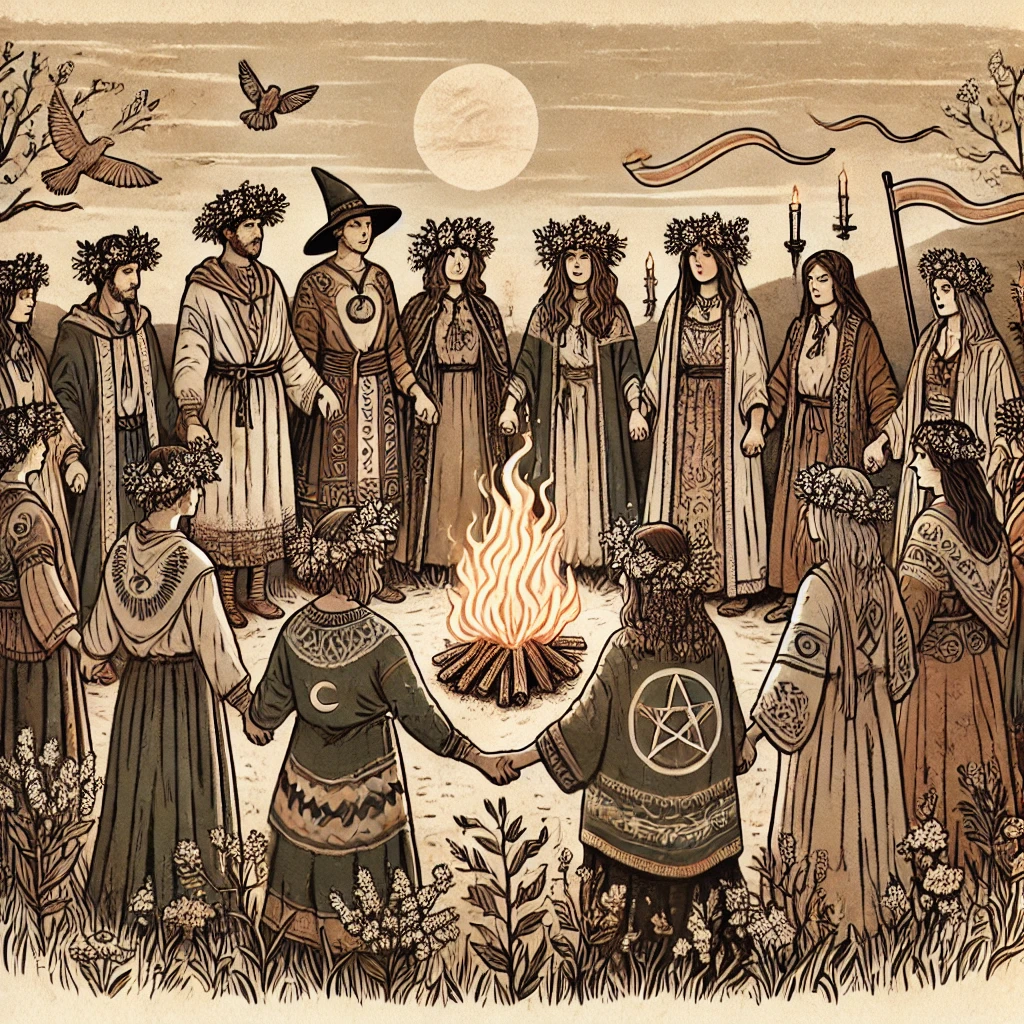
A coven of Wiccans stand in a circle by a bonfire to celebrate Beltane

A Simple Beltane Ritual

This ritual honors Beltane’s fire, passion and fertility — whether that means love, creativity or personal growth. You’ll invoke the energy of the season with fire, flowers and a rhyming chant to set your intentions ablaze.

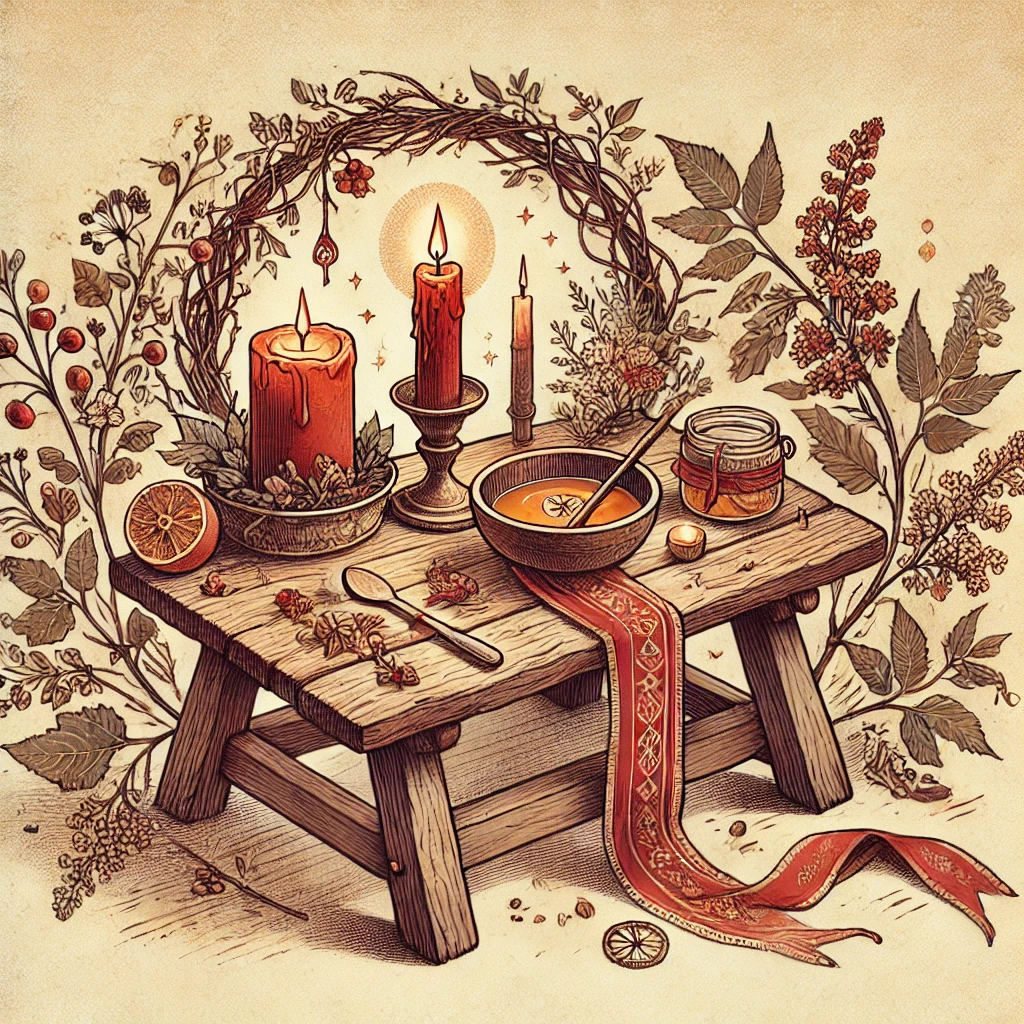
You’ll need:

  • A red or orange candle (or a small fire, if safe)

  • A ribbon (any color that calls to you)

  • A flower or sprig of greenery (hawthorn, lilac or oak if possible)

  • A small bowl of honey or milk as an offering

A wooden altar set up for a Beltane ritual, with candles, honey, greenery  and a ribbbon

The Ritual

1.Set the scene: Find a quiet place, indoors or outside. Cast a magic circle if you want. Light the candle and take a deep breath, imagining yourself surrounded by the warmth of a Beltane bonfire.

2. Call the fire’s blessing: Hold your hands over the flame (at a safe distance) and say:

Fire bright, passion’s light,
Burn away the dark of night.
Bless this time, this turning wheel,
With love and joy I dance and feel.

3. Tie your intention into the ribbon: Hold the ribbon in your hands and focus on your desire for love, creativity, fertility or abundance. Tie a knot for each wish, saying:

Bound in fire, sealed in light,
My wish takes root, my path burns bright.

4. Offer the flower and honey: Lay the flower beside your candle and leave the honey or milk as an offering to the spirits of the land or the Fae.

5. Let the fire carry your intention: Pass the ribbon briefly over the flame or simply hold it close, infusing it with Beltane’s energy. Keep the ribbon on your altar, tied to your wrist or beneath your pillow to let your wish grow.

6. Close with gratitude: Blow out the candle and whisper a final blessing:

Beltane’s fire, warm and bright,
Guide my heart through day and night.

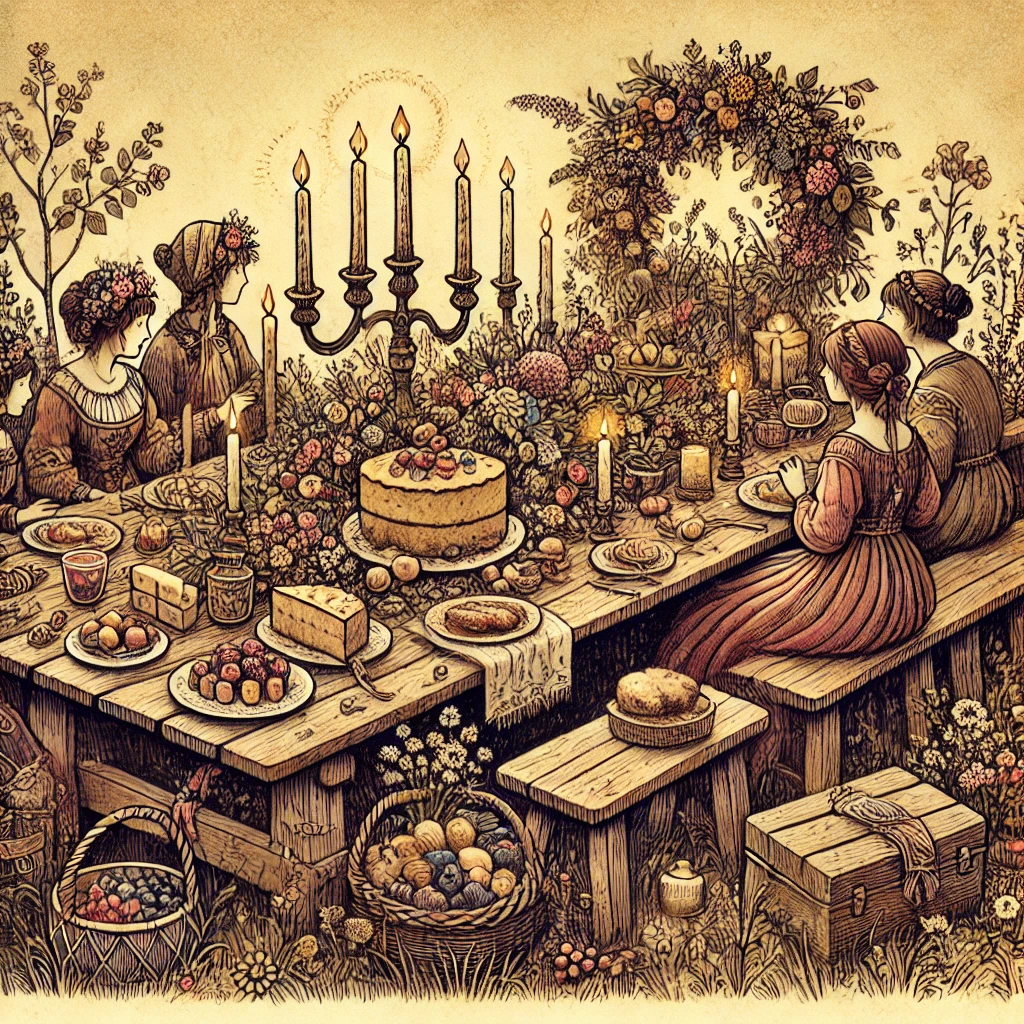
People sit at a table filled with treats and floral arrangements for a Beltane feast

Feasting for Beltane

Beltane is a festival of abundance, passion and pleasure, making feasting an essential part of the celebration. Foods that are sweet, fiery and full of life embody the spirit of this sabbat, honoring both the earth’s bounty and the traditions of the past.

Traditional Beltane Foods

Honey Cakes and Mead: Honey is sacred to Beltane, representing fertility and sweetness. Bake honey cakes, oatcakes or shortbread, or sip on mead to honor the old ways.

Dairy and Fresh Cream: In Celtic traditions, milk was often offered to the spirits of the land for fertility and protection. Enjoy cheeses, whipped cream or even a glass of milk as a nod to the past.

Seasonal Fruit and Herbs: Spring’s fresh berries, cherries, citrus and edible flowers are perfect for Beltane. Try strawberries dipped in honey or a salad with basil, mint and violets for a fresh, magical touch.

Spiced and Fire-Infused Dishes: Beltane is a fire festival, so foods with a bit of heat — like spiced nuts, hot honey or roasted peppers — connect to the day’s energy.

Bannocks and Oat Breads: Traditionally baked on Beltane morning, these simple, rustic breads are symbols of prosperity. Serve with butter and honey for a warm, grounding feast.

Beltane Punch: Mix fruit juices, a splash of something bubbly (like sparkling water or champagne), and fresh herbs for a refreshing, celebratory drink.

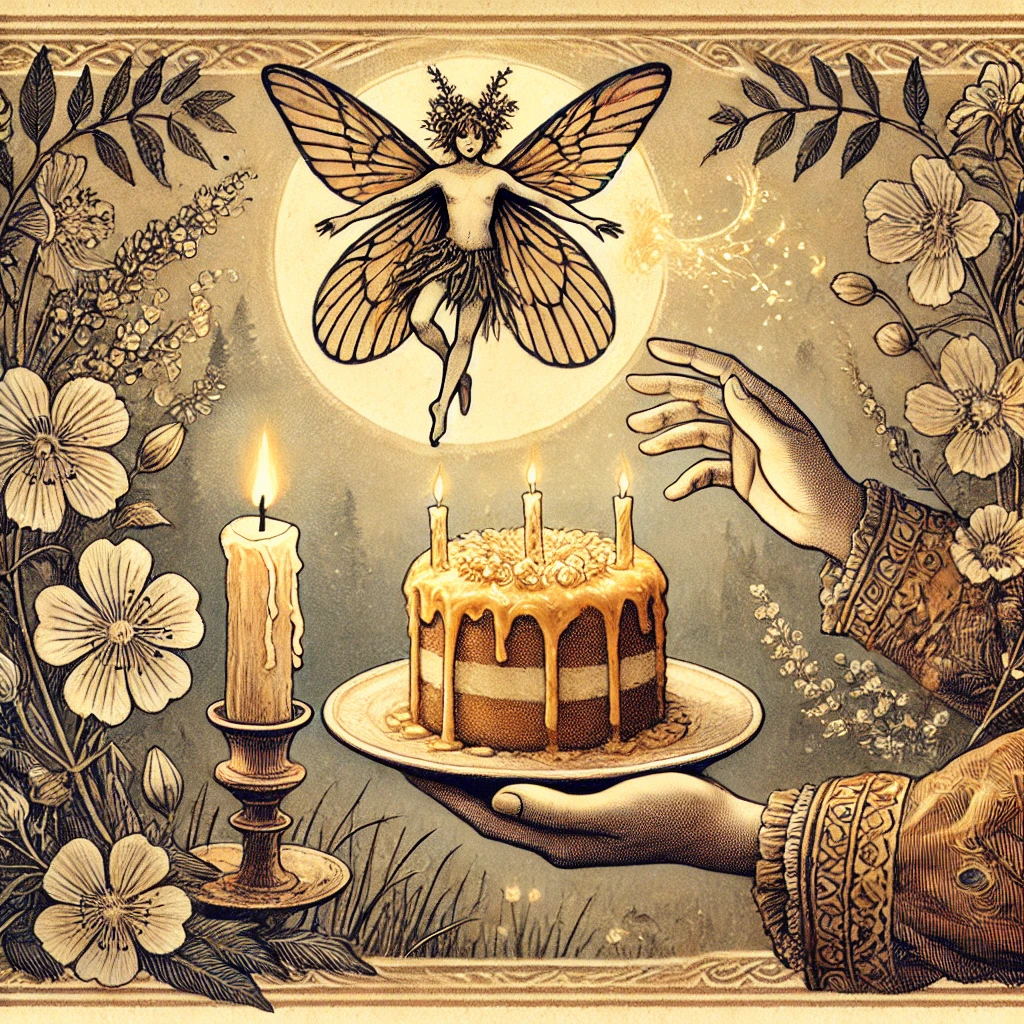
A fairy flies above a honeycake, held out as an offering

A Simple Beltane Honey Cake Recipe

This easy honey cake is perfect for Beltane feasting. 

You’ll need:

  • 1½ cups flour

  • ½ cup honey

  • ½ cup butter (softened)

  • 1 egg

  • ½ teaspoon cinnamon

  • ½ teaspoon nutmeg

  • ½ teaspoon baking soda

  • ½ cup milk

Instructions:

1. Preheat the oven to 350°F (175°C).

2. In a bowl, mix the butter and honey until creamy.

3. Add the egg, then stir in cinnamon, nutmeg and baking soda.

4. Alternately add flour and milk, mixing well.

5. Pour into a greased pan and bake for 25-30 minutes, or until golden.

Serve warm with butter, honey or fresh fruit — and don’t forget to leave a small piece as an offering for the Fae!

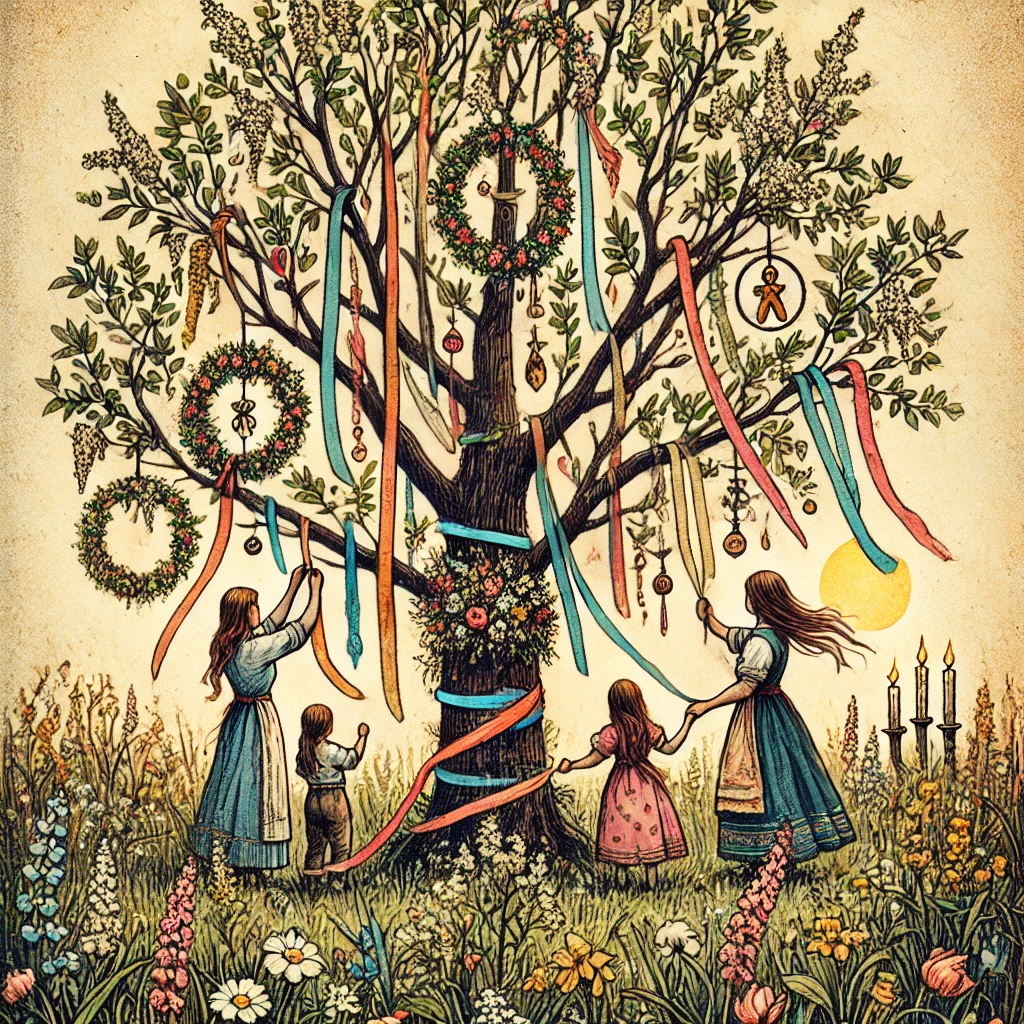
People decorate a Beltane tree with flowers, ribbons and charms

Crafting for Beltane

Beltane is associated with creativity, making it the perfect time for hands-on magic. Whether you’re weaving flower crowns, braiding ribbons or crafting charms, these simple projects help infuse your celebration with personal intention and seasonal energy.

Make a Flower Crown

Beltane is a time of full bloom, and wearing a flower crown connects you to the beauty and abundance of nature.

You’ll need:

  • Fresh or dried flowers (hawthorn, lilac, marigold or whatever calls to you)

  • Flexible floral wire or a grapevine base

  • Green floral tape or twine

How to make it:

1. Shape the wire or vine into a circle that fits your head.

2. Use floral tape or twine to attach flowers, weaving them into the base.

3. Wear your crown during Beltane rituals or celebrations — or leave it as an offering for the Fae. 

Create a Beltane Fire Charm

This simple charm invokes passion, protection and transformation, perfect for Beltane’s fire energy.

You’ll need:

  • A small red or orange pouch or piece of fabric

  • Dried herbs (cinnamon for passion, rosemary for protection, thyme for courage)

  • A small stone (carnelian, garnet or sunstone)

How to make it:

1. Place the herbs and stone inside the pouch.

2. Hold it over a candle flame (briefly and safely) and say:

Fire bright, bless this charm,
Bring me passion, love and warmth.

3. Keep it on your altar or carry it for fiery inspiration.

Decorate a Beltane Tree

In ancient traditions, Beltane trees were adorned with ribbons, flowers and charms to honor nature’s energy.

How to do it:

1. Tie ribbons, bells or small trinkets to a tree in your yard or local park.

2. Whisper a wish or blessing as you tie each ribbon.

3. Leave an offering of honey, milk or bread for the spirits of the land.

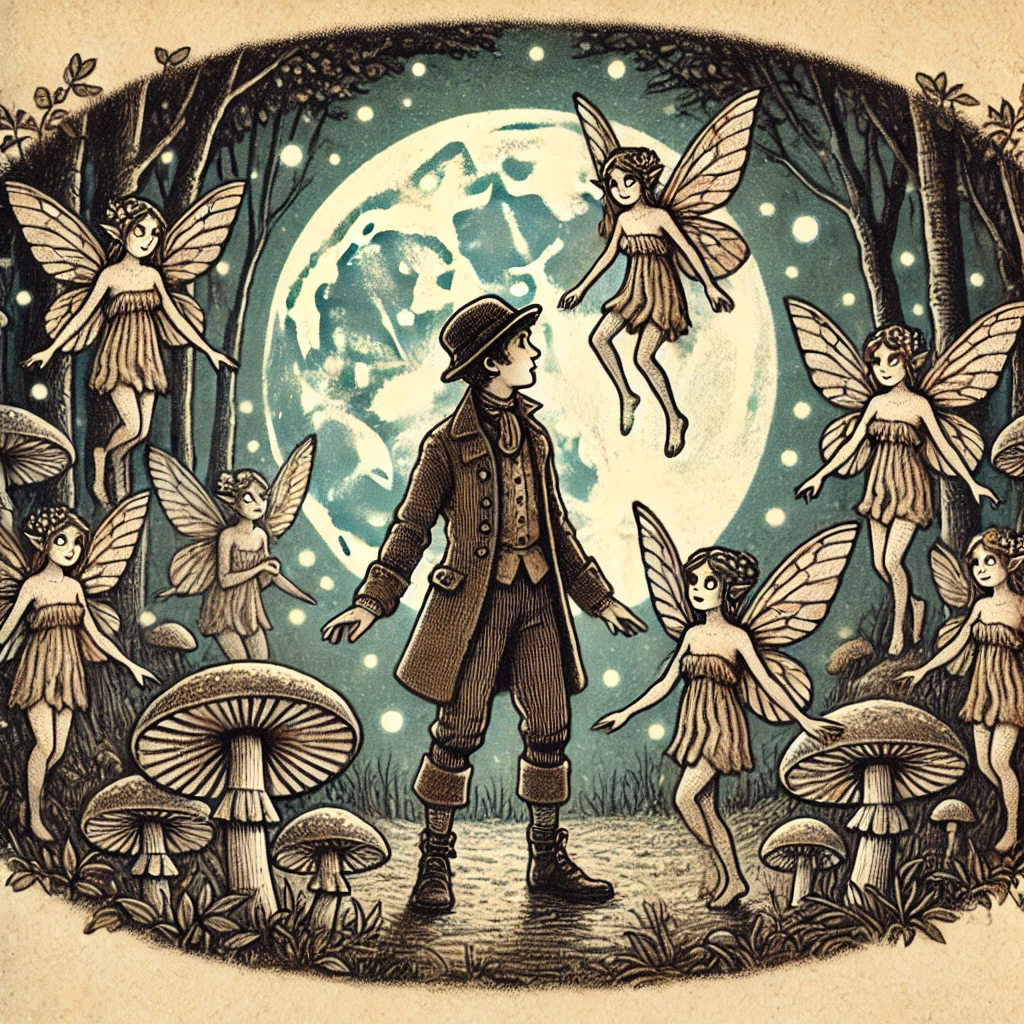
A boy stands amid a group of fairies by mushrooms at a full moon

Celebrating Beltane: Fire, Passion and Magic

Beltane is a festival of fire, passion and abundance — a time to revel in the warmth of the season, dance with wild joy, and set intentions that burn as brightly as the bonfires of old. Whether you’re jumping the flames, weaving ribbons, feasting on honey cakes, or whispering wishes to the Fae, this sabbat invites you to embrace life’s pleasures and celebrate the magic of May.

So light a candle, sip something sweet, and let Beltane’s fire ignite your dreams, desires and creativity. The wheel is turning, the Earth is alive, and the night is filled with wild magic. –Wally

How to Plan a Romantic and Luxurious Getaway to Aspen

From skiing Aspen Mountain to spa days at the St. Regis, private fireside dinners, and stays at Hotel Jerome and The Little Nell, this guide unlocks the most romantic and luxurious experiences in Aspen.

A man holds up a woman by her legs as she wraps her arms around his head and kisses him by a snowy Aspen mountain

Tucked high in the Colorado Rockies, Aspen isn’t just about the ski scene (though, yes, the powder is as perfect as you’ve heard). 

It’s a town where mountain air meets high-end indulgence, where you can spend your morning on the slopes and your evening sipping champagne fireside. 

Beyond the adventure, Aspen delivers serious romance with its charming streets, award-winning restaurants, plush accommodations and cultural gems that’ll sweep you off your snow-dusted feet.

Whether you’re celebrating a milestone or just need an excuse to spoil your favorite person, Aspen is your ticket to a getaway that feels straight out of a fairytale. All it takes is a little planning — and a touch of insider know-how. In this guide, we’ll share the tips and inspiration you need to craft an unforgettable romantic escape, full of swoon-worthy moments and luxe surprises.

The valley of the town of Aspen at night

Choosing the Perfect Time to Visit Aspen

When it comes to Aspen, timing matters. The town transforms with the seasons, each offering its own charm.

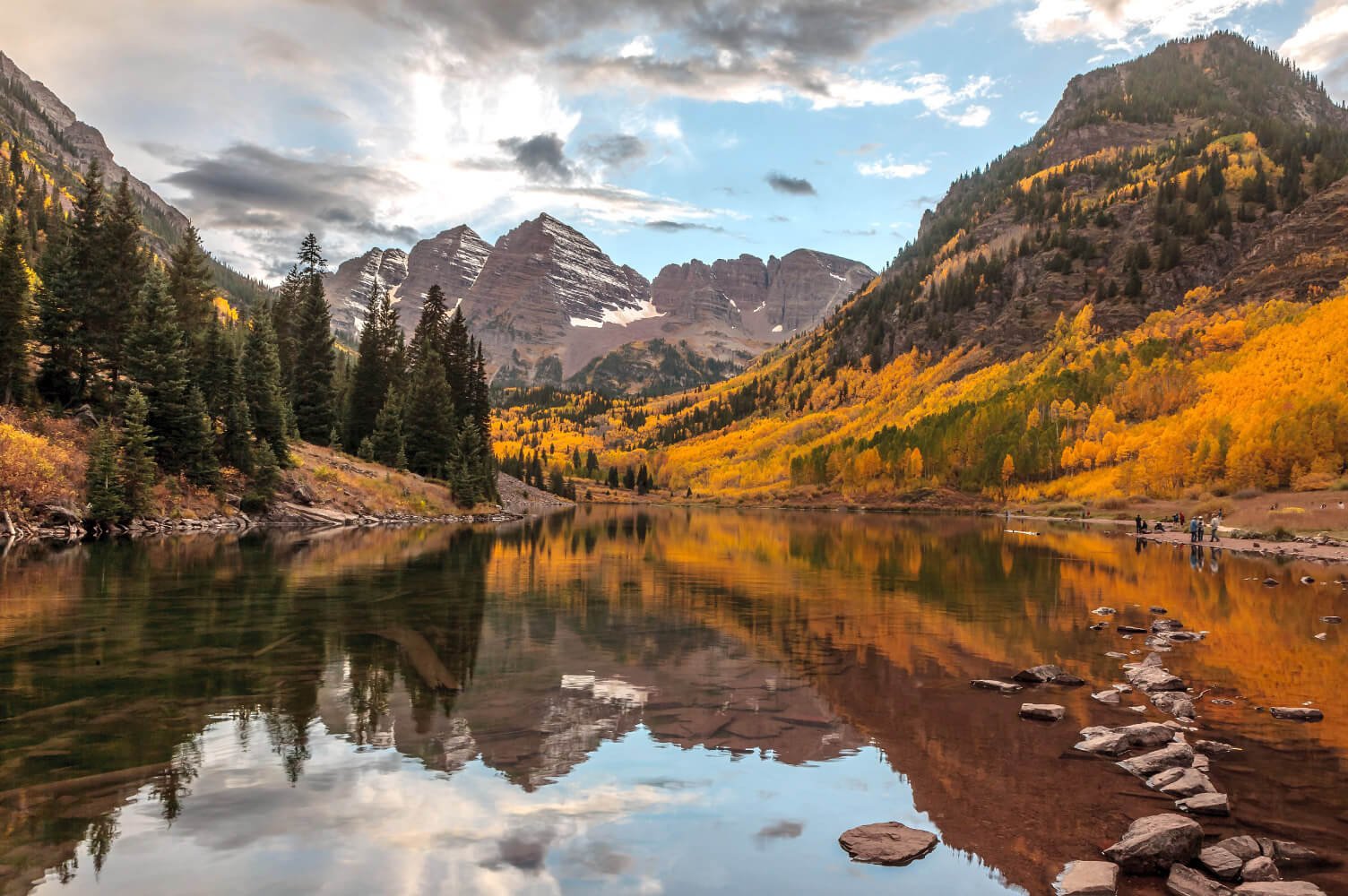
A lake in Aspen in the fall, with the trees a golden yellow

Seasonal Highlights in Aspen

  • Winter (December–March): Snow-capped peaks, skiing adventures and cozy fireside evenings

  • Spring (April–June): Blossoming flowers, fewer crowds and mild weather

  • Summer (July–September): Warm, sunny days, ideal for hiking and picnics

  • Fall (October–November): Vibrant foliage and serene landscapes for romantic photoshoots

A band performs at the Aspen Winter Music Series

Special Events in Aspen for Couples to Enjoy

The 2025 Winter Music Series adds cultural sophistication to Aspen’s natural splendor. The series opens on February 7, with acclaimed pianist Nikolai Lugansky performing classical masterpieces. 

The Grammy-winning Takács String Quartet follows on March 6, and renowned pianist Garrick Ohlsson concludes the season on March 20. All performances begin at 6:30 p.m. in the intimate Harris Concert Hall.  

Remède Spa at the St. Regis Aspen is pure mountain luxury — think of it as the crown jewel of Aspen’s wellness scene. According to the Aspen Chamber Resort Association, this full-scale resort spa goes above and beyond the city’s charming boutique day spas, offering an immersive experience that’s hard to top.

Your escape begins with a complete wellness circuit designed to refresh and rejuvenate. Get your heart pumping in the state-of-the-art fitness center, then melt away any tension with a visit to the hot tub, steamroom and cutting-edge infrared sauna. It’s the perfect balance of invigorating and indulgent.

A creek and building for gatherings in Aspen, Colorado

Aspen’s Elite Accommodations

Aspen’s legendary hospitality scene offers an array of exceptional accommodations, each promising its own version of mountain luxury. From historic hotels to contemporary resorts, every property provides a scenic backdrop for your romantic escape.

Facade of the Little Nell hotel in the snow in Aspen, Colorado

The Little Nell

The Crown Jewels: Five-Star Resorts in Aspen

With an unrivaled setting at the foot of Aspen Mountain, the Little Nell is the only Forbes five-star, five-diamond hotel in Aspen. This intimate luxury resort brings the soul of Aspen to life with its ski-in/ski-out access and sophisticated charm.

The property’s Element 47 restaurant has earned its place as a culinary destination. Its sommelier-led wine cellar tours provide an exclusive glimpse into one of the country’s most impressive collections.

The round pool and chaise longues at the red brick St. Regis Aspen Resort

St. Regis Aspen Resort

The majestic St. Regis Aspen Resort, with its striking red brick façade and mountain backdrop, embodies timeless elegance. 

Beyond its luxurious rooms, the resort captivates guests with distinctive traditions like evening champagne sabering and their signature Bloody Mary ritual. The Velvet Buck restaurant serves refined mountain cuisine in a sophisticated setting. And, as mentioned earlier, the Remède Spa provides world-class treatments. 

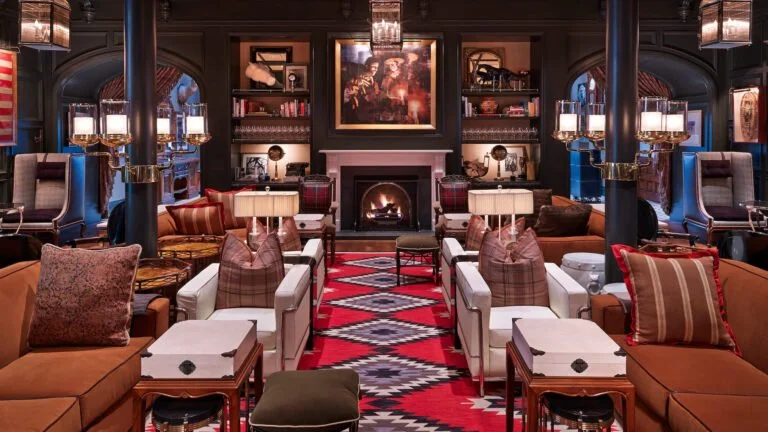
Brown couches, white chairs, red carpet with gray diamonds and a fireplace in the lobby of Hotel Jerome in Aspen

Hotel Jerome

Boutique Luxury: Character Meets Comfort

Hotel Jerome weaves Aspen’s story into every detail, carrying on a legacy more than 135 years in the making.

This historic property seamlessly blends Wild West heritage with contemporary luxury, featuring rooms adorned with cashmere curtains and leather furnishings. The hotel’s living room has become the toast of Aspen’s social scene, while Felix Roasting Co. offers an ornate setting for your morning caffeine fix.

The outdoor swimming pool at Limelight hotel in Aspen, Colorado

Limelight

Limelight provides a fresh take on mountain luxury with its contemporary design and vibrant atmosphere. 

Its 126 rooms offer modern comfort with classic alpine touches, while the hotel’s partnership with Audi ensures guests travel in style. 

The property’s lounge has become a local favorite for live music and après-ski gatherings.

A couple takes a break from hiking in the mountains and sits down together

Crafting Magical Moments in Aspen

Transform your mountain getaway into an unforgettable experience with thoughtfully planned surprises that capture the essence of romance in the Rockies.

A teardrop-shaped multifaceted pink diamond

The Gift of Timeless Elegance 

Many luxury brands showcase an exquisite selection of gemstones, including some of the rarest diamonds. In fact, diamonds come in 12 mesmerizing colors, with subtle variations in intensity and secondary hues that create over 230 unique combinations.

According to Leibish, a specialist in natural colored diamonds and high-end gemstones, these vibrant stones are the rarest of the rare — representing just a tiny fraction of the world’s diamond production. It’s this exceptional scarcity that makes colored diamonds the ultimate expression of love and luxury.

For a romantic and savvy choice, consider pink diamonds. These gems gracefully blend vibrant hues with feminine elegance and are among the most sought-after colored diamonds. Their charm goes beyond beauty — they’ve consistently proven to be a smart investment.

The town of Aspen, Colorado and the ski run above it

Personalized Adventures

Treat your partner to an exclusive after-hours gallery tour at Aspen’s renowned art venues. These private experiences allow you to immerse in the town’s vibrant art scene without the usual crowds, creating a truly memorable outing.

For a dose of adventure, plan a day packed with outdoor activities that let you soak up Aspen’s world-famous natural beauty. Of course, skiing is a must — this is one of the premier ski destinations in the United States, after all. With four major ski areas and 5,300 acres of skiable terrain, there’s plenty of powder to explore:

  • Aspen Mountain (Ajax): Perfect for seasoned skiers

  • Aspen Highlands: Known for the Highland Bowl’s steep descents, offering an adrenaline rush at 12,392 feet above sea level

  • Buttermilk Mountain: Home of the Winter X Games, catering to all skill levels

Finally, cap off the day with an intimate, chef-prepared dinner by the glow of a crackling fire. This cozy, luxurious setting is the perfect way to unwind, savor the moment, and create memories you’ll treasure long after you’ve left the mountains behind.

A chairlift takes skiers up the mountain at Aspen in Colorado

Travel to Aspen FAQs

How many days do you need for Aspen?

A week in Aspen offers ample time to explore its diverse attractions, whether you’re into outdoor adventures, art or local cuisine. With plenty of events, including the Winter X Games at Buttermilk and Wintersköl on Aspen Mountain, there’s always something exciting to experience.

Is Aspen a good place to honeymoon?

Aspen is an ideal honeymoon destination, offering a romantic setting year-round. The town offers world-class skiing in winter and scenic hiking trails in the summer. It provides the perfect balance of adventure and romance for newlyweds. Aspen also boasts luxurious resorts, intimate spas and fine dining.

Is Aspen a wealthy city?

Yes, Aspen is known for its affluence. With a significant portion of its population possessing a net worth of over $30 million, it’s considered a playground for the wealthy. The area is home to many of the ultrarich, particularly in the exclusive Red Mountain neighborhood known as “Billionaire Mountain.”

A man puts his arms around a woman along a street in Aspen, Colorado in the winter

Romantic Aspen 

While the champagne buzz may fade and ski tracks vanish under fresh powder, the genuine connections made in this mountain paradise will endure. These moments will echo far beyond your return home.

Perhaps that’s the real essence of luxury — not the thread count of the sheets or the vintage of the wine. Instead, it’s the priceless gift of undivided attention and shared wonder in one of nature’s most spectacular settings. –Mashum Mollah 

The Isabella Stewart Gardner Museum: A Breathtaking Artistic Oasis in Boston

A Venetian-style palazzo — the scene of an infamous unsolved art heist — houses eclectic art and lush seasonal gardens. 

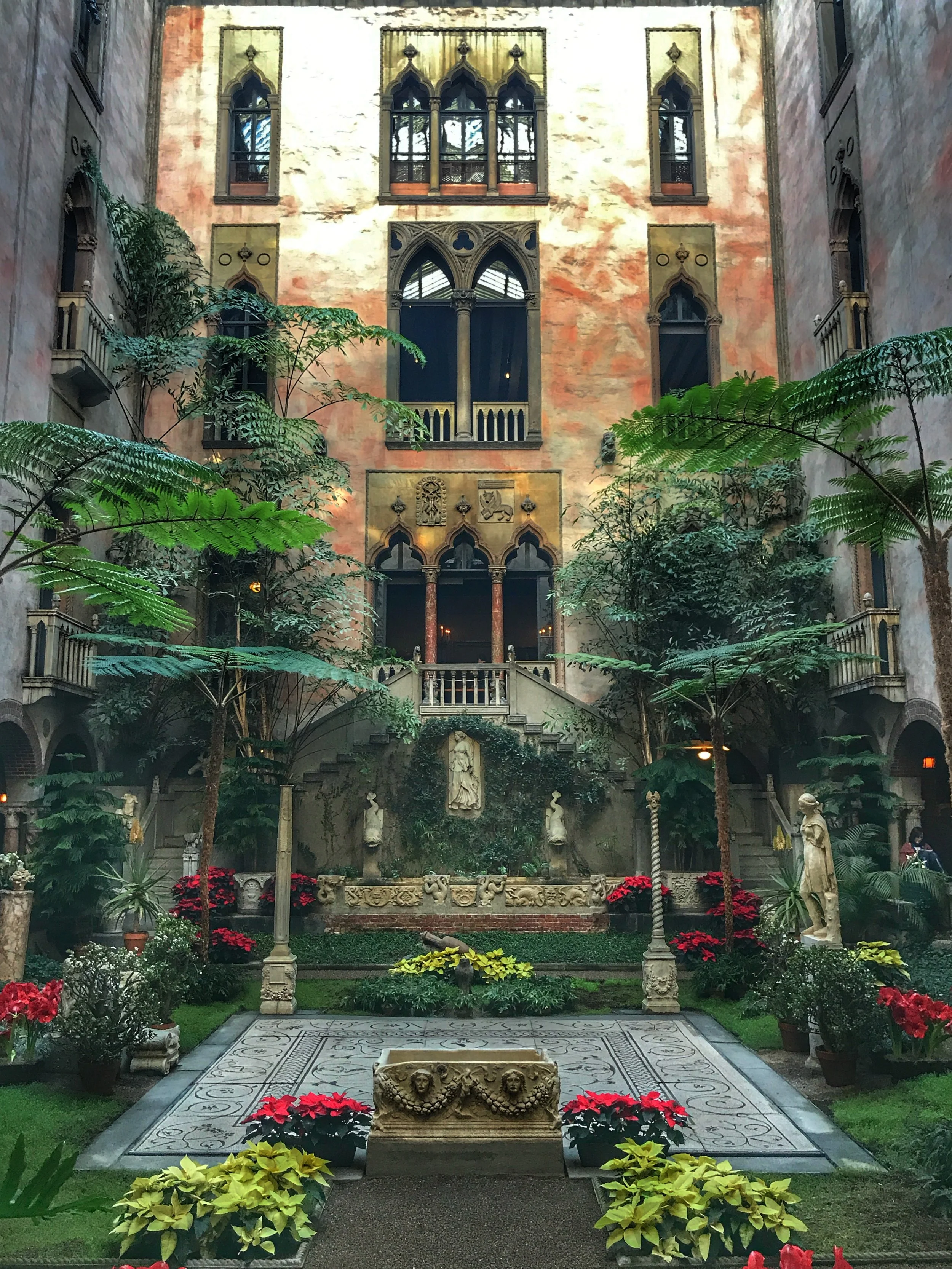
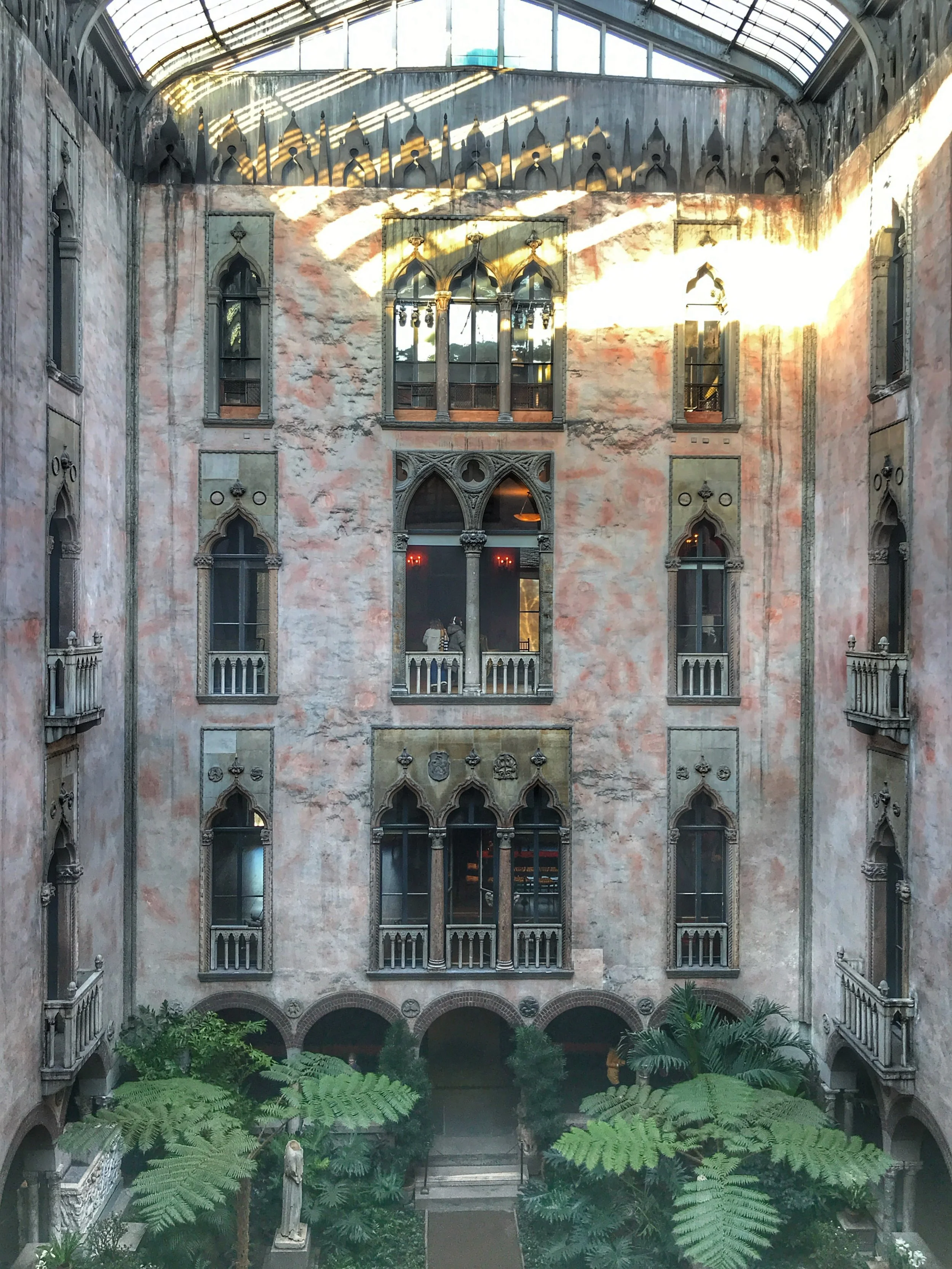
The courtyard of the Isabella Stewart Gardner Museum was designed to evoke the ambiance of a 15th century Venetian palace.

I was flicking through Instagram (something I do way too often), and my finger stopped mid-scroll on a stunning palazzo. “Italy?” I thought. “Maybe India?” 

Nope. It was the Isabella Stewart Gardner Museum — in Boston, of all places.

Boston?! I’d be there the next day for work. It felt like fate.

Isabella Stewart Gardner’s will specified that nothing could be moved, ensuring her vision stayed exactly as she intended.

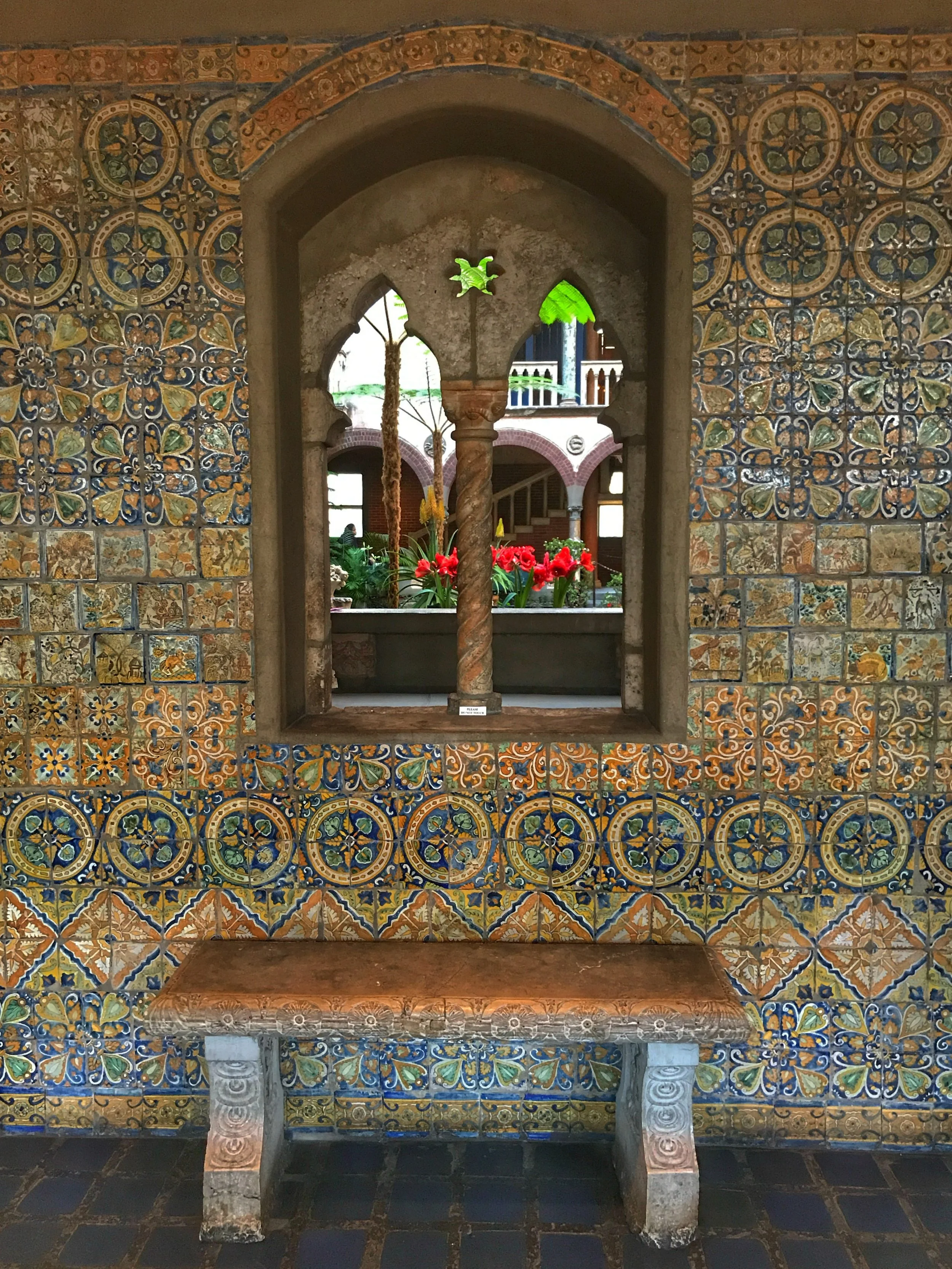
Gorgeous tilework in the Spanish Cloister — nearly 2,000 tiles from 17th century Mexico, that is

The Isabella Stewart Gardner Museum: A Hidden Gem in the Heart of Boston

Boston has its usual suspects when it comes to tourist spots: Fenway Park, the Freedom Trail, Faneuil Hall. But have you heard of the Isabella Stewart Gardner Museum?

It’s not usually the first stop on a Boston itinerary, but it absolutely should be. Tucked into the city’s Fenway neighborhood, this museum feels like a secret treasure waiting to be discovered. And, believe me, it’s worth it — from its jaw-dropping architecture to its captivating art (and even its unsolved mystery).

The Veronese Room is named for the grand painting on its ceiling, The Coronation of Hebe, attributed to Paolo Veronese and his studio, painted in the 1580s.

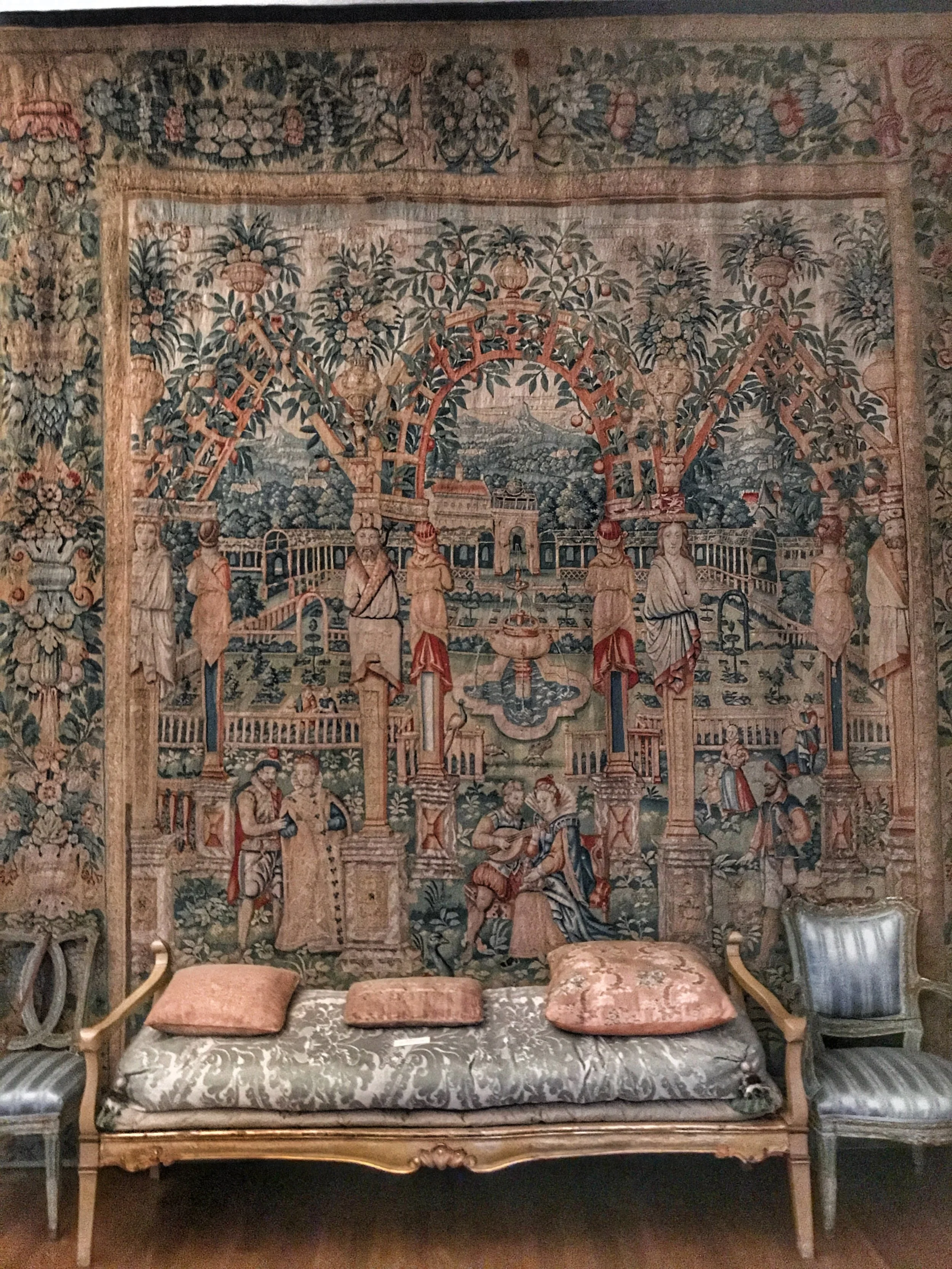
The Tapestry Room features 10 Flemish tapestries.

Isabella Stewart Gardner was a rule-breaker, a collector and someone who knew how to make an impression.

Take her grand parties: She once attended a symphony in a white headband that simply said, “Oh, you Red Sox” in bold letters. She was as bold as her taste, building her museum as a Venetian-style palazzo (originally called Fenway Court) right in Boston and filling it with treasures from around the world.

“Years ago I decided that the greatest need in our country was art,” she once said. “So, I determined to make it my life’s work if I could.” 

Mission accomplished. 

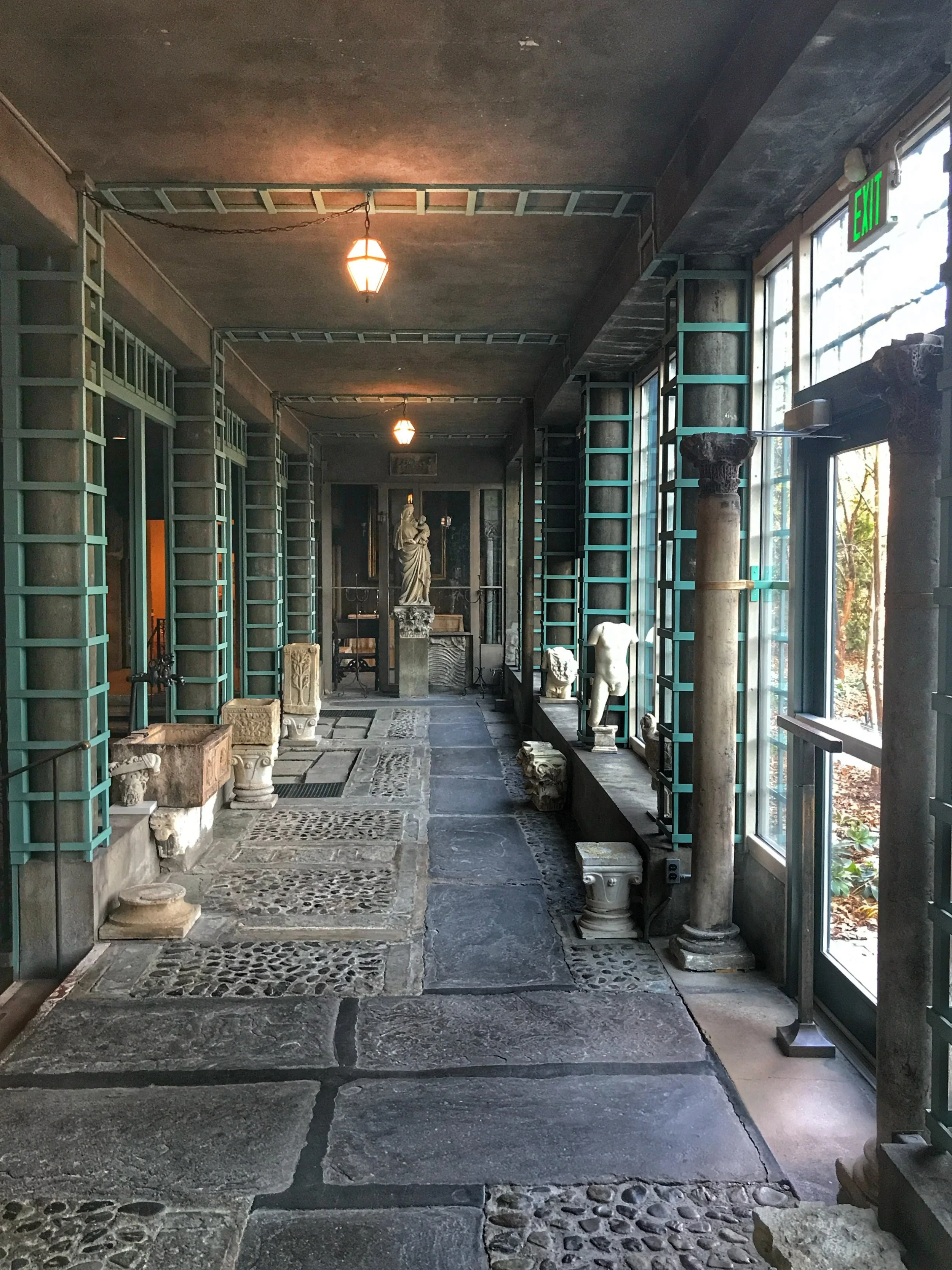
In the Chinese Loggia, Stewart Gardner placed a statue of the Madonna and child opposite a Buddhist stele to spark contemplation about shared spiritual themes.

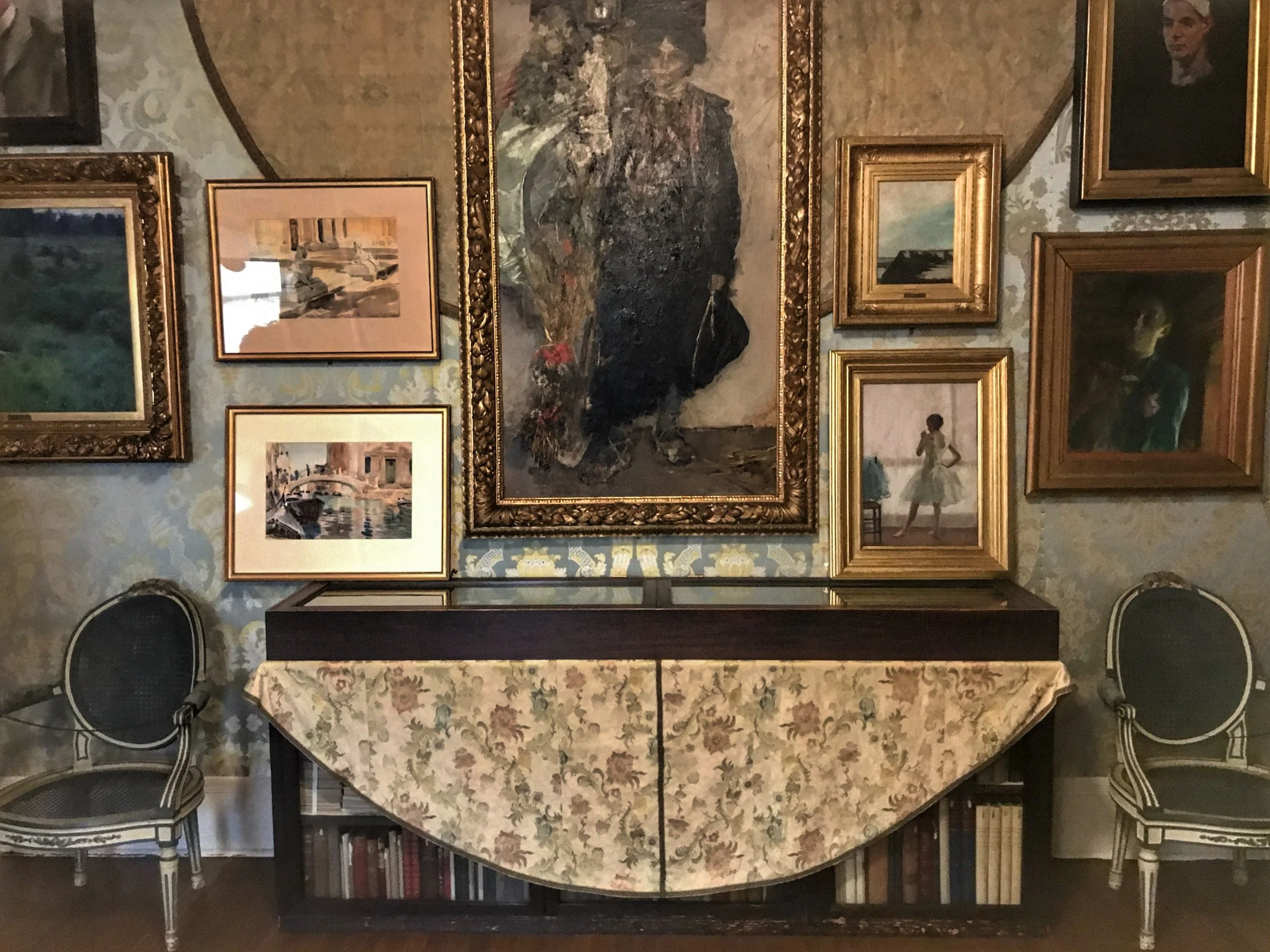
Walking through the museum feels like wandering through the home of someone fabulously wealthy and wildly eclectic. You’ll spot everything from a Rembrandt self-portrait to Japanese lacquered boxes, all lovingly placed as Isabella herself arranged them over a century ago.

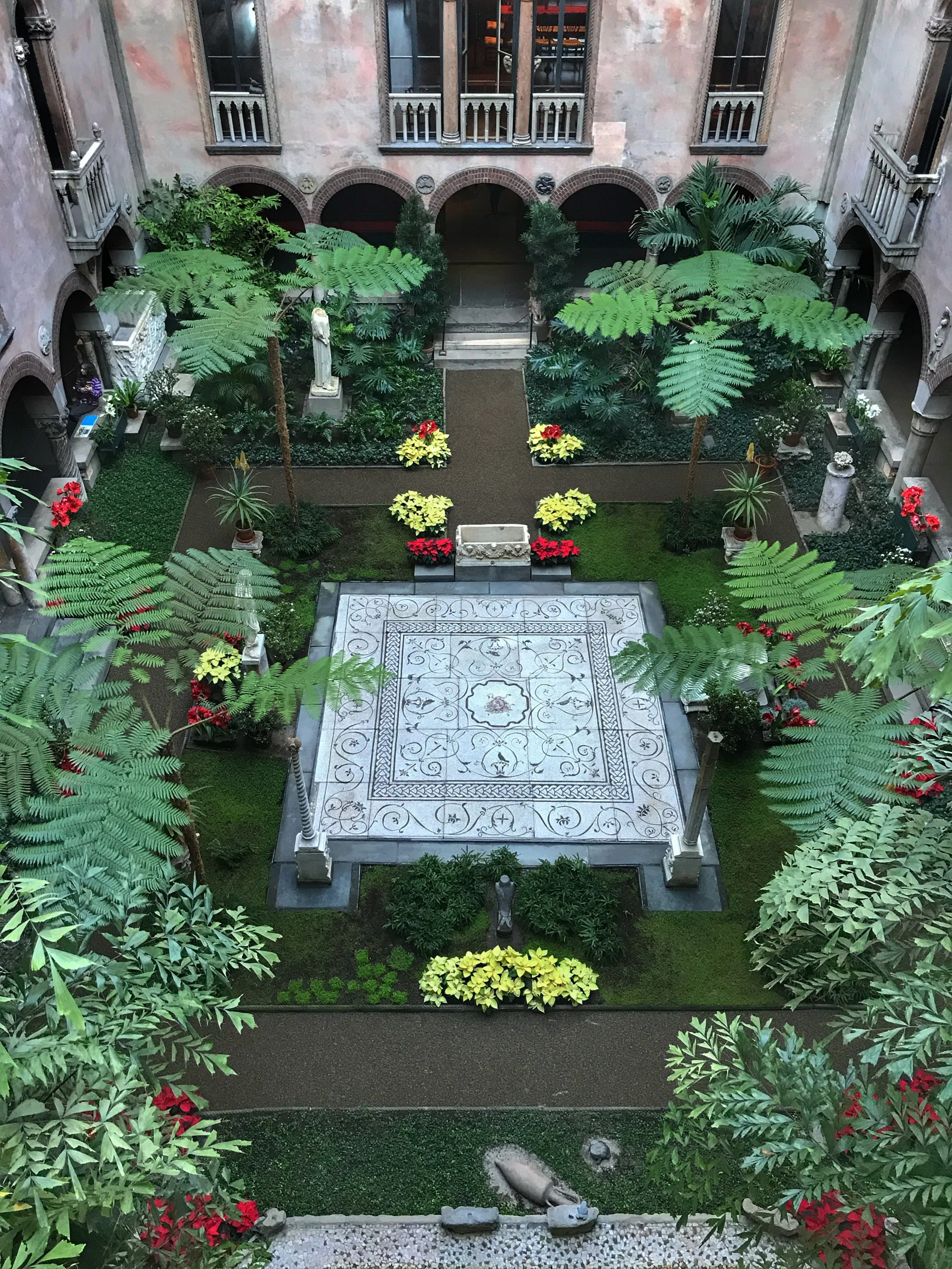
A Roman mosaic floor featuring the head of Medusa that was crafted between 117 and 138 CE takes center stage in the courtyard.

The Infamous Art Heist: Mystery in 81 Minutes

The Gardner Museum holds the title for the greatest unsolved art heist in history. The story is something straight out of Hollywood.

It all began in the early hours of March 18, 1990. Two men dressed as Boston police officers buzzed at the museum’s doors, claiming they were responding to a disturbance. The night guards, unsuspecting, let them in.

Big mistake.

The Gardner Museum holds the title for the greatest unsolved art heist in history.

On March 18, 1990, two men dressed as Boston police officers strolled out of the museum with over $500 million worth of art.

The “officers” handcuffed the guards, duct-taped their mouths, and left them in the basement. Over the next 81 minutes, they raided the galleries, carefully cutting 13 priceless works from their frames. They strolled out with art worth over $500 million, including:

  • Rembrandt’s Storm on the Sea of Galilee (his only seascape)

  • Vermeer’s The Concert, valued at $250 million

  • Manet’s Chez Tortoni

  • A Chinese gu (ancient ceremonial vessel)

  • A bronze eagle finial from a Napoleonic flag

When the guards were finally freed, the thieves — and the art — were long gone.

To this day, the empty frames hang in their original spots as a silent reminder of the loss. The museum still offers a $10 million reward for information, but the case remains cold.

Intrigued? Check out the Netflix docuseries This Is a Robbery, which dives deep into the mystery of the stolen masterpieces.

A portrait of Isabella Stewart Gardner by John Singer Sargeant depicts the remarkable woman as a pagan goddess.

Isabella Stewart Gardner: The Original It Girl

Born in 1840, Isabella wasn’t your typical socialite. After her son Jackie died young, followed by miscarriage in her 20s, she fell into depression — until her doctor prescribed travel. That single recommendation changed her life.

Isabella and her husband, Jack, explored the world, visiting Egypt, Italy and Japan. Along the way, she discovered a passion for art, collecting everything from tapestries to ancient manuscripts.

Back in Boston, she became known for her unconventional style. She defied the strict social norms of the time, pairing pearls with turbans at baseball games and opening her home to artists, writers and musicians.

The Blue Room at the Isabella Stewart Gardner Museum offers an intimate glimpse into Isabella’s personal world, showcasing her close connections with contemporary artists and intellectuals.

A lion attacking a man forms the base of a column in the North Cloister, from 12th century Tuscany.

The works in the Tapestry Room came from Brussels, Belgium and were created in the mid-16th century.

Her museum was her life’s crowning achievement, built in 1903 to house her collection and inspire the public. Even in death, she had the last word: Her will specified that nothing could be moved, ensuring her vision stayed exactly as she intended.

A view of the modern wing

The Museum Today: Tradition Meets Modernity

In 2012, the museum unveiled its sleek new Renzo Piano-designed wing, adding modern flair while preserving Isabella’s original palazzo. The various rooms include: the Dutch Room, Rafael Room, Tapestry Room, Titian Room, Veronese Room and Gothic Room. 

Wandering from room to room feels less like visiting a museum and more like stepping into Isabella’s home — because, in a way, you are. Each space is curated exactly as she intended, as if she’s just stepped out, leaving you to explore her private collection of treasures from around the world.

The new space hosts concerts, lectures and temporary exhibits, creating a dynamic blend of old and new.

The courtyard itself might be the most beautiful work of art here. This statue is believed to represent Persephone, the goddess of spring who became queen of the underworld.

And while the art is breathtaking, don’t overlook the ever-changing courtyard. Seasonal displays like orchids, hydrangeas and chrysanthemums transform the space into a living masterpiece.

Grab a bite at Café G in the new wing of the museum.

Café G

Upon arriving at the Isabella Stewart Gardner Museum, I was famished and made a beeline for Café G, the museum’s onsite eatery. The sleek, glass-enclosed space was designed by Renzo Piano, offering serene views of the surrounding gardens — a tranquil setting to relax before delving into the museum’s treasures.

The menu features dishes that highlight seasonal, local and organic ingredients. 

The Raphael Room features Italian Renaissance art.

A Museum Like No Other  

Whether you’re an art lover, a history buff or just someone looking for a little magic in Boston, the Isabella Stewart Gardner Museum is a must-see. It’s a time capsule, a mystery and a testament to one woman’s indomitable spirit. –Wally

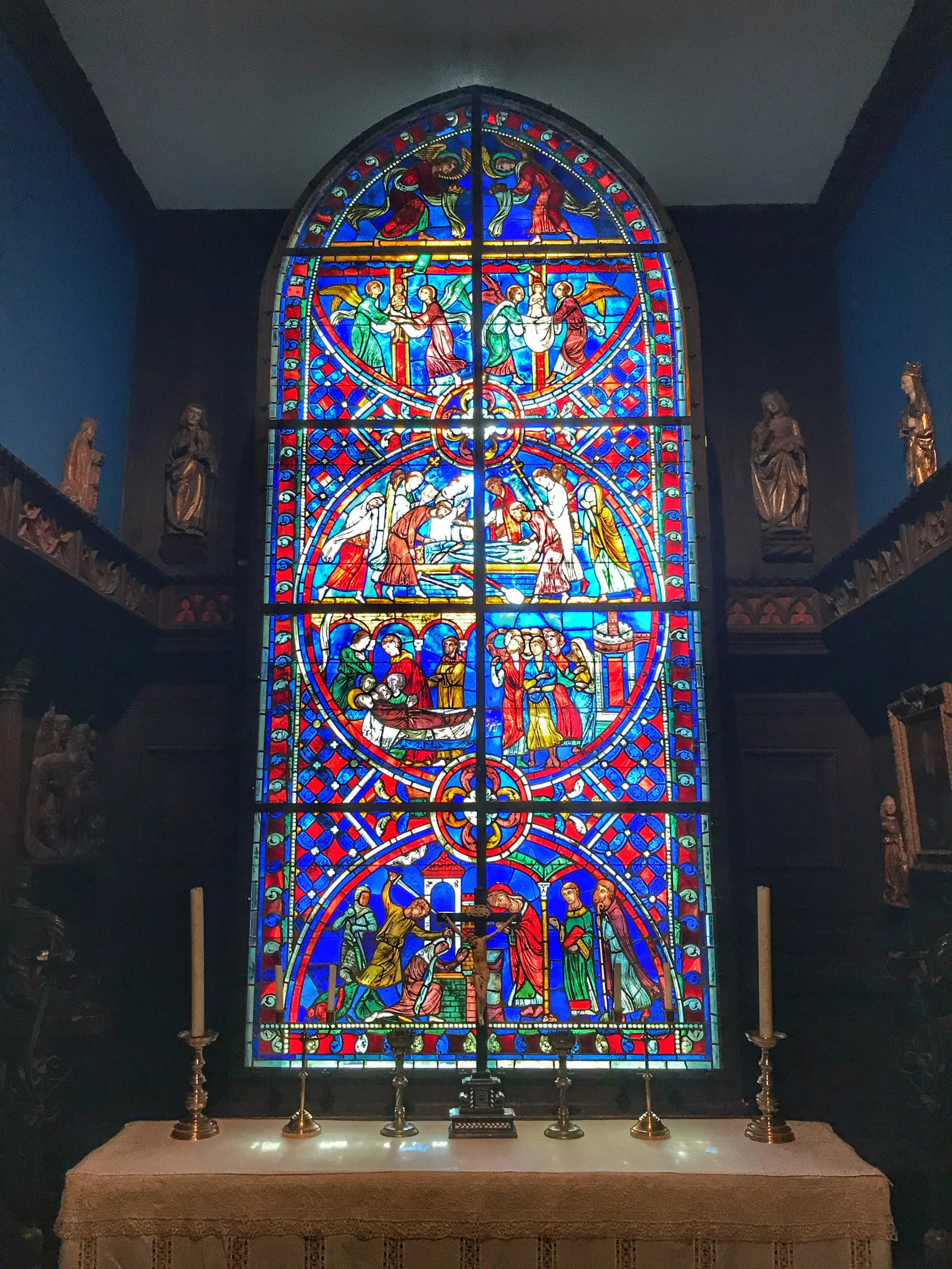
At the end of the Long Gallery in the Chapel hangs a High Gothic stained glass window titled Scenes From the Lives of Saint Nicasius and Saint Eutropia, crafted around 1205 for the Soissons Cathedral in France.

The Deets: Plan Your Visit

Hours:

  • Wednesday to Monday: 11 a.m. to 5 p.m. 

  • Thursdays: 11 a.m. to 9 p.m. 

  • Closed: Tuesdays, Thanksgiving, Christmas and New Year’s Day

Admission:

  • Adults: $20

  • Seniors (65+): $18

  • Students with ID: $13

  • Free: Members, children under 18, and anyone named Isabella (yes, really!)

Isabella Stewart Gardner Museum

25 Evans Way
Boston, Massachusetts
USA

What Is an eSIM?

Lost without service? Here’s an explanation of what eSIMs are — and how they’re changing the game for travelers. 

A fabulous woman in a long colorful sundress stands on a pier in Bora Bora by huts over the water, looking at her phone

Your bags are packed, your itinerary is set, and you’re ready to explore. But the moment you step off the plane, your phone flashes a dreaded message: No Service.

You scramble to connect to airport WiFi (if it’s even available), fumble with a local SIM card you bought at a kiosk, and pray you remember your hotel’s address before getting into a taxi. Meanwhile, your friends and family have no idea where you are. Sound familiar?

ESIMs eliminate roaming charges, simplify setup, and ensure you’re never stranded without service.

Because the only thing you should be worrying about on your trip is where to explore next.

For years, travelers have been caught in this all-too-common nightmare — disconnected, disoriented and sometimes downright lost. But thanks to eSIM technology, staying connected abroad is no longer a hassle.

A handsome man holds his phone in the French Quarter of New Orleans, passing jazz musicians

What Is an eSIM?

An eSIM (embedded SIM) is a digital SIM card built directly into your phone. Unlike traditional SIM cards, eSIMs don’t require swapping out tiny plastic chips. Instead, you can activate a data plan by scanning a QR code — no waiting, no extra hardware.

And eSIMs are quickly becoming the standard. The number of eSIM-enabled devices is expected to grow from 1.2 billion in 2021 to 3.4 billion by 2025, according to a study by Juniper Research. That’s a 180% increase.

How Do eSIMs Work?

Setting up an eSIM is incredibly simple:

  1. Make sure your phone is compatible. 

  2. Purchase an eSIM plan from a provider online.

  3. Receive a QR code via email.

  4. Scan the code with your phone’s camera.

  5. Boom — you’re connected!

With an eSIM, you can store multiple data plans on a single device, meaning you can switch between providers with just a few taps. Many travelers keep their home number active while using an eSIM for data abroad — no more expensive roaming fees.

Why Travelers Are Ditching Traditional SIMs for eSIMs

1. Instant Connectivity

Gone see those frantic airport searches for a SIM card vendor. You can activate your eSIM before you even take off.

2. No More Roaming Nightmares

International roaming fees can be brutal. A 2023 study by WhistleOut found that some U.S. carriers charge up to $10 per day for international data, while pay-as-you-go rates can skyrocket to $2.05 per MB (that’s $2,050 for 1 GB!). ESIMs offer flat-rate, prepaid data plans that can save travelers hundreds of dollars per trip.

3. Eco-Friendly and Hassle-Free

ESIMs eliminate the need for plastic SIM cards, packaging and shipping, making them a greener choice. Plus, no more losing or damaging those tiny chips.

4. Dual SIM Capability

Need to keep your regular number active for calls and texts? No problem. Many eSIM-compatible phones let you use your primary number for calls while using an eSIM for data abroad.

5. Hotspot and Data Sharing

Some eSIM plans even allow tethering, so you can share your data with a laptop or travel companion — perfect for digital nomads or group travelers.

What to Know Before Using an eSIM

While eSIMs are a game-changer, they aren’t perfect for everyone. Here are a few things to keep in mind before making the switch:

1. Your phone must be compatible. 

Not all phones support eSIMs. As of now, only newer models from Apple, Samsung, Google and a few other brands work with eSIMs. If you’re unsure, check your phone’s settings or the provider’s compatibility list before purchasing.

2. You need WiFi for setup.  

To install an eSIM, you must be connected to WiFi. This means you should set it up before leaving home or from a hotel with stable internet. Forget to do it? You might struggle to get online when you land.

3. You don’t get a phone number on data-only plans. 

Most travel eSIMs are data-only, meaning they don’t provide a phone number for calls or texts. If you need to make calls, you’ll have to use WhatsApp, FaceTime or Google Voice instead.

4. Data sharing isn’t available everywhere. 

Not all eSIM plans allow hotspot sharing. If you plan to connect your laptop or share data with a travel partner, check whether your plan supports it — especially if you’re traveling in a remote area.

5. Coverage can vary. 

ESIMs rely on local networks, meaning signal strength and speeds depend on where you are. If you’re in a rural or mountainous area, you might experience weaker coverage — just like with a regular SIM card.

6. Switching providers may take a few steps. 

While eSIMs make it easier to change carriers, some phones require a manual reset when switching networks. If you’re juggling multiple providers, this could cause minor delays.

FAQs About eSIMs for Travelers

What exactly is an eSIM?

If you have a newer phone (like an iPhone XR or later, Google Pixel 3 or later, or a recent Samsung Galaxy model), the eSIM technology is already built into your device. You don’t need any extra hardware — just activate an eSIM plan by scanning a QR code or entering details manually, and your phone connects to a local network.

Since it’s embedded in your device, an eSIM can’t be lost, stolen or damaged like a traditional SIM card.

Why would I need an eSIM?

If you travel internationally, an eSIM lets you stay connected without expensive roaming fees or the hassle of swapping physical SIM cards. With an eSIM, you can activate a local or global data plan before your trip and have internet access the moment you land.

Does an eSIM replace an international data plan?

An eSIM is an international data plan, but instead of using your home carrier’s potentially expensive roaming package, it connects to local networks at a better rate. Unlike traditional international data plans that require carrier contracts, eSIMs are prepaid and flexible.

Can I use an eSIM and my regular SIM at the same time?

Yes. Most eSIM-compatible phones have dual SIM functionality, meaning you can keep your regular SIM active for calls and texts while using an eSIM for data. This is great for people who need to receive calls on their primary number while using a local data plan abroad.

Do eSIMs work in every country?

ESIM providers offer coverage in most major travel destinations, but coverage quality varies depending on local networks. Always check if your destination supports eSIMs before purchasing a plan.

What happens if I lose my phone while using an eSIM?

If you lose your phone, your eSIM is tied to that device and cannot be removed or swapped like a physical SIM card. However, you can still access your account from another device to transfer your eSIM, depending on your provider’s policy.

Can I share my eSIM data with other devices?

Some eSIMs allow hotspot sharing, while others restrict tethering. If you plan to use your phone’s hotspot for a laptop or another device, make sure your eSIM provider supports this feature in your destination.

Are eSIMs secure?

Yup. ESIMs cannot be physically stolen or removed, making them more secure than traditional SIM cards. However, like any digital service, it’s important to use strong passwords and enable remote tracking features on your phone in case of loss or theft.

How do I switch back to my regular SIM after my trip?

It’s easy! Simply go into your phone’s SIM settings and switch back to your primary SIM. If you don’t plan to use your eSIM again, you can delete it from your device.

Say Hello to Holafly: A Seamless eSIM Solution

While there are several eSIM providers out there, Holafly has made a name for itself by offering a frictionless, traveler-friendly experience. They’ve got:

  • ESIMs for 190+ destinations worldwide

  • Instant email delivery — no waiting or physical shipping

  • 24/7 support via WhatsApp, chat or email

  • Flat-rate pricing — no surprise fees or roaming charges

  • Data sharing supported in 30+ destinations

With over 1 million travelers already using Holafly, the company is helping make international connectivity effortless.

ESIMs: The Future of Travel Connectivity

ESIMs eliminate roaming charges, simplify setup, and ensure you’re never stranded without service.

If you’re ready to ditch the SIM-swapping stress, check out Holafly and get an exclusive 5% discount. Use the code: NOTSOINNOCENTS

This works whether or not you’re a new customer — and it’s valid for top-ups, too.

Because the only thing you should be worrying about on your trip is where to explore next. –Wally

Footwear, Clothing and More: What to Pack for Travel to South America

From sunny coastlines to chilly mountain towns, here’s how to pack smart, stay stylish and show respect while exploring South America’s diverse landscapes.

A man with a dragon tattoo walks down a street in South America, pulling his roller suitcase as a dog follows

South America has officially entered its main-character era. With stunning natural backdrops, vibrant cities and prices that won’t make your wallet weep, it’s no surprise this diverse continent is topping travel bucket lists. In fact, a 2024 study from Statista revealed that 7 out of the 10 most affordable backpacking destinations are in South America.

But with great variety comes great packing responsibility. From sizzling sun to sudden downpours, from rainforest trails to chic city strolls, your suitcase needs to be ready for it all. Here’s your guide to packing smart — prioritizing safety, style and cultural savvy.

A woman in a light jacket holds a walking stick on a hike in Patagonia

Clothing: Layer Up, Live Easy

When it comes to clothes, think breathable, mix-and-match and travel-friendly. Lightweight fabrics like cotton and linen will be your MVPs — they’re made to handle the heat, the rain, and the bottom of your backpack.

In cities like Bogotá, Colombia, jeans work just fine. But if you’re heading inland or uphill (hello, Andes), swap in hiking shorts or joggers. And yes, even tropical South America can get chilly — especially in high-altitude towns like Argentina’s Bariloche or Ushuaia — so pack a thermal layer or two.

Brands like Patagonia offer adventure-ready outfits, but you don’t need to go on a shopping spree. Most of South America is laidback and tourist-friendly, so start with what’s in your closet. 

A woman in a burgundy dress and tan wrap and sandals walks along a street at night in Buenos Aires

Footwear: Leave the Stilettos at Home

Much like Oaxaca, Mexico, South American cities are surprisingly walkable. Take Buenos Aires, Argentina for instance — its leafy, European-style boulevards practically beg to be explored on foot. Translation: You’ll be walking. A lot.

Unless your itinerary includes a gala or glam night out, skip the heels and formal leather shoes. Opt for comfortable, stylish, all-day-wearable footwear. QVC’s Revitalign and White Mountain shoes are a strong choice: supportive, adjustable, and cute enough to take you from a seaside stroll to a rooftop cocktail.

A woman and man wearing sunglasses walk through the ruins of an ancient civilization in the mountains of South America

Accessories: Sun-Savvy and Stylish

Tropical climate? Check. High UV index? Also check. While South America’s sun-drenched skies are part of its charm (Chile gets sunshine during more than half its daylight hours), they also call for serious sun protection.

Sunscreen is a must, but don’t overlook your eyes. Sunglasses from brands like Ray-Ban blend fashion with function, blocking up to 100% of UV rays. Polarized lenses cut glare — essential whether you’re boating through the Amazon or exploring a sun-bleached plaza.

Bonus: They make you look effortlessly cool in every photo.

A woman covers up her shoulders and chest with a shawl in a church in South America

Cultural Cues: Dress With Respect

South America is warm and welcoming, but it’s also deeply rooted in tradition — especially when it comes to religion. With Catholicism widely practiced, modesty is key when visiting churches or sacred sites like Brazil’s Basilica of Our Lady of Aparecida. If in doubt, toss a scarf, shawl or lightweight jacket into your day bag to cover up when needed.

Attending a local party or dinner? Even if the vibe is casual, it’s polite to step it up a notch. Smart casual is your safest bet — save the tank top and flip-flops for the beach.

Two men in fun shirts ride a motorbike through a town in South America

Pack for Adventure, With Style and Awareness

Packing for South America is about being ready for a little of everything: mountain chill, coastal heat, unexpected rain and spontaneous rooftop parties. Prioritize comfort, respect local culture, and bring a few pieces that can keep up with wherever the day (or night) takes you.

With the right gear — and the right attitude — you’ll be more than ready to take on this incredible continent, one step at a time. –Francesca Chamberlain

Chapultepec Castle’s National History Museum in Mexico City

Perched atop the Hill of the Grasshopper, Chapultepec Castle is the only royal residence in North America. From its imperial past to the revolutionary murals inside, here’s why this must-visit landmark in Chapultepec Park is worth the climb.

Staircase at Chapultepec Castle in CDMX with the mural Alegoría de la Revolución (Allegory of the Revolution) by Eduardo Solares Gutiérrez, 1933

Alegoría de la Revolución (Allegory of the Revolution) by Eduardo Solares Gutiérrez, 1933

They say the third time’s a charm, and on our latest (and yes, third) trip to Mexico City, Wally and I finally made it to the Castillo de Chapultepec (Chapultepec Castle). 

Perched atop the summit of Cerro del Chapulín (Hill of the Grasshopper) in the first section of the vast Bosque de Chapultepec (Chapultepec Forest), this historic site and local landmark is the only castle in North America to have served as a royal residence. It was home to Emperor Maximilian I and Empress Charlotte, the ill-fated rulers of the short-lived Second Mexican Empire — but more on that later. 

A man jumps in the air under an ornate chandelier by the stairwell in the National History Museum at Chapultepec Castle in CDMX
A man sits on the stairs in the National History Museum at Chapultepec Castle in CDMX
Perched atop the summit of the Hill of the Grasshopper, this historic site is the only castle in North America to have served as a royal residence.

Chapultepec itself is one of the oldest and largest public parks in Latin America. Dating back to the pre-Hispanic era and officially designated as a public space in the 16th century, the park underwent major renovations in 1910 to commemorate Mexico’s independence centennial. Today, it spans approximately 2,100 acres — more than twice the size of New York City’s Central Park, one of the largest urban parks in the world. 

Detail of the right half of the mural La Dictadura y La Represión (Dictatorship and Repression) by Juan O'Gorman

Detail of the right half of the mural La Dictadura y La Represión (Dictatorship and Repression) by Juan O'Gorman — a visual commentary on the transgressions of President Díaz

On our previous visit, we spent hours exploring the first floor of the incredible Museo Nacional de Antropología (National Museum of Anthropology), captivated by its collection of pre-Hispanic artifacts from civilizations like the Aztecs and Maya. 


MORE: Explore the Museum of Anthropology’s collections on Animal Pottery and Death Cults of Ancient Mexico


The park is divided into four sections, from historic landmarks to vast green spaces. It’s home to nine major museums covering a wide range of subjects, along with monuments, gardens and countless other fascinating sights. And so far, we’ve barely scratched the surface of Section One. 

Its name comes from the Nahuatl word chapoltepēc, meaning “Hill of the Grasshopper.” But why a grasshopper? The area may have once been full of them, but in Mesoamerican cultures, the insect also symbolized prosperity and good fortune. 

Sarao en un jardin de Chapultepec (Festive Gathering in a Garden at Chapultepec) is a handpainted biombo, or folding screen, from around 1780-1790. It depicts a sarao, a lively social gathering featuring music and dancing that played a key role in courtly and aristocratic life.

Visiting Chapultepec Castle

For this trip, we once again stayed in Colonia Condesa, a charming neighborhood that borders Chapultepec. After breakfast, we set off toward the castle, and about 25 minutes later, we were following one of the pathways leading into the park. Since it was still early morning, the vendors were just beginning to set up. 

Wally and I stopped by the Old Guard House, a brick building situated at the base of the hill, to verify our tickets with an attendant, which Wally had purchased online the night before. 

The Old Guard House, located at the base of the entrance leading to Chapultepec Castle

You’ll know you’ve arrived at the right place when you see the Old Guard House, located at the base of the entrance leading to Chapultepec Castle.

Note: If you’re carrying bottled water or snacks like we were, be sure to pay for a locker as well. We didn’t realize that food and drink were prohibited inside the castle grounds — and were told at the security checkpoint that we needed to finish or rent a locker to store them.

The morning we visited, we got the full experience — a busload of kids arrived at the same time we did, their chaperones struggling to keep them from running and yelling as they excitedly scattered across the path ahead of us. Fortunately, we managed to get ahead of the group and for the most part avoided them once we reached the top. 

Schoolchildren and their chaperones walk up the path to Chapultepec Castle in CDMX

We hurried past the schoolchildren walking up the hill — and mostly avoided them while exploring the castle.

As we continued our ascent to the top, where the castle is located, we passed a bronze statue of José María Morelos y Pavón, created by Spanish sculptor Ángel Tarrach. Morelos, a Catholic priest and revolutionary leader during Mexico’s War of Independence, was ultimately captured by the Spanish army, tried by the Inquisition, and executed by firing squad for treason. Despite his fate, he’s remembered as a champion of the people — a brilliant military strategist and a tireless advocate for a more just society. 

A bronze statue of José María Morelos y Pavón on Chapultepec Hill

A bronze statue of José María Morelos y Pavón, a priest and revolutionary leader, by Ángel Tarrac

Since there’s nowhere to buy tickets at the top of the hill, it’s essential to get them online or at the guard house before making the climb. The security checkpoint at the base of the hill won’t ask for them, but the attendants at the castle gate will. If you forget, you’ll have to trek all the way back down — and trust me, that steep uphill climb is tough enough the first time, especially if you’re still acclimating to Mexico City’s altitude. After all, Chapultepec Castle is located at a height of 7,628 feet (2,325 meters) above sea level. 

Two structures stand atop the Hill of the Grasshopper: to the east, Chapultepec Castle — also known as the Alcázar (Royal Palace) — and to the west, the Museo Nacional de Historia (National Museum of History). Housed in the same building that once served as the military academy, the museum explores nearly 500 years of Mexico’s complex history that are displayed chronologically from the 15th to the 21st century. 

Fun fact: The castle exterior was used as the Capulet mansion in Baz Luhrmann’s Romeo + Juliet from 1996, starring Leonardo DiCaprio and Claire Danes. 

The façade of Chapultepec Castle that houses the National History Museum

The façade of the castle that houses the National History Museum

A Brief History of Chapultepec Castle

Construction of what would become the castillo began in 1785 during the Spanish colonial period. Originally intended as a retreat for Spanish officials, the project was closely associated with Bernardo de Gálvez, the viceroy of New Spain, who governed the territory on behalf of the Spanish crown from 1785 to 1786. 

Before his term as viceroy, Gálvez served as the governor of Spanish Louisiana, where he played a pivotal role in the American Revolution. He led military campaigns that supported General George Washington’s troops, capturing Pensacola, the capital of British West Florida, and effectively removing British influence from the region. His legacy lives on in the place names such as Galveston, Texas, and Galvez Street in New Orleans, Louisiana.

Unfortunately, Gálvez’s service was brief. Before  he could complete the project, he died from yellow fever — known in Mexico as vomito negro because internal bleeding turned the victim’s vomit black. The estate went unfinished. By 1806, the municipal government had taken ownership of the structures, and in 1833, they were converted into the Colegio Militar, a military academy that trained young officers for the Mexican Army.

Today, the grounds are remembered as the site of the Battle of Chapultepec, a pivotal conflict of the Mexican-American War fought on September 12 and 13, 1847. The U.S. was victorious, capturing Chapultepec Castle and paving the way for the fall of Mexico City. 

It was here that six young cadets, ages 13 to 19 — known as Los Niños Héroes (The Boy Heroes) — lost their lives defending the military academy against American forces in one of the war’s final battles.

The war officially ended in 1848 with the Treaty of Guadalupe Hidalgo, a humiliating agreement that forced Mexico to cede over half its territory to the United States. 

Vista de la Plaza Mayor de la Ciudad de México (View of the Zócalo of Mexico City) by Cristóbal de Villapando, 1695

Vista de la Plaza Mayor de la Ciudad de México (View of the Zócalo of Mexico City) by Cristóbal de Villapando, 1695

Exploring the National History Museum 

As Wally and I stepped through the entrance of the museum, we were awestruck by the double staircase that rose before us. Covering the domed ceiling high above is La Intervención Norteamericana (The North American Intervention), a mural by Gabriel Flores. It depicts Juan Escutia, one of the six Niños Héroes who died defending the academy from invading U.S. forces. According to legend, Escutia leapt to his death from the academy, plunging over the steep rock face of the Hill of the Grasshopper, wrapped in the Mexican flag to prevent it and himself from falling into enemy hands.

The front staircase features the mural Alegoría de la Revolución (Allegory of the Revolution) by Eduardo Solares from 1934

The front staircase features the mural Alegoría de la Revolución (Allegory of the Revolution) by Eduardo Solares from 1934.

There’s another large-scale mural on the staircase, Alegoría de la Revolución (Allegory of the Revolution) painted by Eduardo Solares. This powerful piece depicts a moment from the revolution that overthrew the dictatorial regime of Porfirio Díaz. 

tzompantli — a rack used by the Aztecs to display the skewered skulls of human sacrifices and prisoners of war at the history museum at Chapultepec Castle

Cute décor idea: a tzompantli — a rack used by the Aztecs to display the skewered skulls of human sacrifices and prisoners of war

The Conquest of the Americas

We passed display cases featuring armor worn by the conquistadors and their horses, along with a small 16th century wooden sculpture of the Virgin of Valvanera. According to legend, this likeness is a “true portrait” of the Virgin Mary, carved by Saint Luke and brought to Spain by the disciples of Saint Peter.

Sacrificio de Españoles por Mexicas (Sacrifice of Spaniards by Mexicas) by Adrian Unzeta, 1898

Sacrificio de Españoles por Mexicas (Sacrifice of Spaniards by Mexicas) by Adrian Unzeta, 1898

While these were fascinating, the installation that stopped us in our tracks was a tzompantli — a rack used by the Aztecs to display the skewered skulls of human sacrifices and prisoners of war. Discovered in 1994 at Tecoaque, an archaeological site in central Mexico whose name translates to “the Place Where They Ate Them” in Nahuatl, this tzompantli is believed to have been built by the Acolhua, allies of the Aztecs. It held the skulls of a defeated Spanish-led convoy captured in 1520 — comprising conquistadors and their indigenous allies, who were ritually sacrificed and quite possibly eaten. 

#1 De Español y Indio, Mestizo o Cholo (From Spaniard and Indian, Mestizo or Cholo), depicting the highest-class of the caste hierarchy imposed by the Spanish colonists in Mexico

This image, #1 De Español y Indio, Mestizo o Cholo (From Spaniard and Indian, Mestizo or Cholo), depicts the highest-class of the caste hierarchy imposed by the Spanish colonists.

#16 De Coyote, Mestizo y Mulata: Ahí te estás (From Coyote, Mestizo and Mulatto: There you are)

The depiction of the lowest caste in #16 De Coyote, Mestizo y Mulata: Ahí te estás (From Coyote, Mestizo and Mulatto: There You Are) reflects the prejudices of the Spanish invaders.

The Pecking Order of New Spain

In a nearby room, a series of 18th century casta (caste) paintings hung on the wall. 

These 16 scenes depicted the colonial social hierarchy of New Spain, a system imposed by the Spanish government to classify individuals based on ancestry and racial mixing. At the top were Spaniards, both those born in Spain (peninsulares) and those born in the Americas (criollos). Below them were mestizos, people of mixed Spanish and indigenous heritage, and other mixed-race groups, followed by indigenous people and those of African descent. Though rigid in theory, this system allowed some social mobility through wealth,  marriage or official status changes. 

The massive Retablo de la Independencia (Independence Altarpiece) by Juan O’Gorman at the National History Museum at Chapultepec Castle

Juan O'Gorman was invited by Antonio Arriaga Ochoa, the director of the National Museum of History, to complete the project that had initially been commissioned by his friend, Diego Rivera, who had died three years earlier in 1957.

The STRUGGLE WAS REAL: MEXICO’S WAR of INDEPENDENCE

The Salón de Independencia (Hall of Independence) features the Retablo de la Independencia (Independence Altarpiece), a monumental mural painted by architect and muralist Juan O’Gorman between 1960 and 1961.  

The mural is divided into four sections, each representing a different stage of the Mexican independence movement. At the center stands the white-haired figure of Miguel Hidalgo y Costilla, dressed in clerical robes and brandishing a torch in his left hand. During Mexico's fight for independence, he took a banner depicting the Virgin of Guadalupe from the Sanctuary of Jesús Nazareno de Atotonilco, using it as the flag for his insurgent army. Look for the flag in the case below the mural. Hidalgo’s call to arms, known as the Grito de Dolores (Cry of Dolores), ignited the fight against Spanish colonial rule.

Nearby, José María Morelos is depicted gripping a sword, with a white bandana tied around his head. Morelos was a key leader in the movement, organizing insurgent forces to abolish slavery and the casta system.

Among other figures, Josefa Ortiz de Domínguez appears wearing a green dress and a purple rebozo (shawl), seated on a white horse and surrounded by indigenous victims of exploitation, hunger and death.


The western terrace, or Patio de Juan de la Barrera, was named in honor of one of the young Mexican cadets who died during the Battle of Chapultepec fighting in the Mexican-American War.

Pergola Terrace, or Patio de Juan Barradas

Wally and I stepped out of the building and into the sunlight-drenched western terrace. A gurgling fountain stood before us and an expansive pergola stretched out to the right, offering shade and views of the park’s artificial lake and city beyond. 

At the back of the garden stands La Madre Patria, Agradecida a sus Hijos Caídos (The Motherland, Grateful to Its Fallen Children), a classical monument commemorating the Niños Héroes. Designed by architect Luis MacGregor Cevallos and sculpted by French-trained Mexican artist Ignacio Asúnsolo, it was inaugurated in 1924.

A giant agave plant in front of the statue La Madre Patria, Agradecida a sus Hijos Caídos (The Motherland, Grateful to Its Fallen Children) behind Chapultepec Castle

Asúnsolo finished the monument to the Niños Héroes in a mere three months, fulfilling President Álvaro Obregón’s request to have it completed and inaugurated before the end of his term.

The top of the pylon-shaped memorial features a solemn veiled matron, an eagle at her side, its wings spread protectively. Encircling them is a coiled, feathered serpent, a creature from pre-Hispanic mythology that symbolizes the deity Questzacoatl and reflects the national coat of arms. Below, four muscular figures of young native warriors clad in loincloths represent a different aspect of sacrifice and struggle, each facing a different direction: Supreme Sacrifice (east), Desperation in Defense (north), Unequal Fight (south) and The Epic (west).

A scene from Retablo de la Revolución (Sufragio Efectivo no Reelección) by Juan O’Gorman at Chapultepec Castle

The mural Sufragio efectivo, no reelección (Effective Suffrage, No Reelection) by Juan O’Gorman is named for the rallying cry of President Francisco I. Madero against the long dictatorship of Porfirio Díaz.

Fall of the Feudal Empire

When we stepped back inside from the terrace, we entered a room to the right, where a series of murals by Juan O’Gorman covered the walls. These paintings depict a turbulent chapter in Mexico’s history — the fall of the Porfirian dictatorship and the revolution that followed.

(Incidentally, O’Gorman wasn’t just a painter — he was also an architect. He designed strikingly modern homes for Frida and Diego, which pissed off the neighbors.)

One of the most striking murals, Sufragio efectivo, no reelección (Effective Suffrage, No Reelection), dominates one of the walls. Part of O’Gorman’s Retablo de la Revolución (Altarpiece of the Revolution), it captures a pivotal moment in the Mexican Revolution: the Marcha de Lealtad (March of Loyalty). At the center, Francisco Madero rides on horseback, wearing the presidential sash across his chest. The mural portrays his journey from Chapultepec Castle to the National Palace on the morning of February 9, 1913, escorted by students of the Military College. This march would mark the beginning of the Decena Trágica (Ten Tragic Days), a coup that would ultimately cost Madero his life.

Madero had risen to power in the wake of the Mexican Revolution, which erupted in 1910 against the long rule of President Porfirio Díaz. Although Díaz modernized Mexico and maintained a period of stability known as the “Pax Porfiriana,” his policies overwhelmingly favored the wealthy and foreign investors while leaving much of the population — especially indigenous communities — trapped in near-servitude. His ousting paved the way for Madero’s election as president, ushering in hopes of democracy and social justice.

But Madero’s time in power was short-lived.

The Decena Trágica was a violent siege that led to his downfall. What began as an armed revolt quickly turned into a bloody standoff in Mexico City, with intense fighting around the National Palace and the Ciudadela armory. In a devastating betrayal, Madero’s own army chief, Victoriano Huerta, turned against him. Forced to resign on February 18, 1913, Madero and Vice President José María Pino Suárez were executed just days later, on February 22, under Huerta’s orders. Their deaths threw Mexico into further chaos, deepening the revolution that would reshape the nation.

Looking into the gift shop in a central courtyard at Chapultepec Castle

Looking into the gift shop in a central courtyard of this wing of the castle

Cannonball Run to the Gift Shop

The museum shop is located on the ground floor at the center of the Patio de Cañones (Patio of Cannons), so named for the cannons that can be found in the courtyard of the museum. The space is anchored by a sculpture by David Camorlinga dedicated to Emiliano Zapata, a key figure in the Mexican Revolution, known for championing land reform and peasant rights under the rallying cry, “Tierra y Libertad” (Land and Liberty).

The statue Zapata, 100 Años, by David Camorlinga, at the entrance to the Patio of Cannons

The somewhat cartoonish bronze statue of revolutionary leader Emilano Zapata by David Camorlinga can be found in the Courtyard of Canons near the gift shop. The artwork captures Zapata’s defining features, including his iconic walrus mustache and broad-brimmed charro hat.

Three men work on renovating the mural Batalla de Zacatecas (Battle of Zacatecas) by Ángel Bolivar from 1965

When we visited, a team was renovating the mural Batalla de Zacatecas (Battle of Zacatecas) by Ángel Bolivar from 1965. 

During our visit, the whimsical and informative temporary exhibit Juárez/Max, Reflejo de dos vidas (Reflection of Two Lives) featured dioramas that told the story of the second Mexican empire, as well as the arrival and establishment of the republic, complete with cute felt Day of the Dead-style dollies of President Benito Juárez, First Lady Margarita Maza, Maximilian von Habsburg, and his wife Princess Charlotte of Belgium.  

An ornate green door in the Salón de Malaquitas at Chapultepec Castle in CDMX

An ornate door in the Salón de Malaquitas

Green With Envy: Salón de Malaquitas 

This richly decorated room takes its name from its impressive malaquita (malachite) and gilt metal doors, fountains and vases. They’re actually composed of carefully fitted slivers of malachite that combine to create the illusion of a seamless surface. 

Green malachite urn on a large pedestal by ornate wall decor and paintings in Salon de Malaquitas at Chapultepec Castle

The malachite objets d’art came from Russia, purchased by Díaz from a collection shown at the first World’s Fair in 1851.

These pieces were fabricated at the Imperial Peterhof Lapidary Factory and sent by Tsar Nicholas I to showcase the artistic achievements of Russia at the first World’s Fair in London in 1851. Later, they were purchased by Díaz for the Palacio Nacional before ultimately being installed here. The vibrant green color, with their undulating bands of contrasting hues, come from naturally occurring copper carbonate deposits.

Portrait of Antonio Sebastián Álvarez de Toledo y Salazar in the Salón de Virreyes at Chapultepec Castle

The Salón de Virreyes at Chapultepec Castle displays portraits of all 62 viceroys of New Spain. Among them is Antonio Sebastián Álvarez de Toledo y Salazar, the 18th viceroy, who served from 1664 to 1673.

Salón de Virreyes, the Hall of the Viceroys

Rounding out the museum is the Salón de Virreyes (Hall of the Viceroys), a gallery showcasing every viceroy who ruled New Spain from 1535 to 1821. It’s fascinating to see how attire and hairstyles evolved over the centuries — but the portrait that stood out most to me was of Bernardo de Gálvez, who governed from 1785 until his early death in November the next year. Created in 1796 by two friars using the sgraffito technique — derived from the Italian graffiare, meaning “to scratch” — this piece feels strikingly modern. While Gálvez’s face, hands and hat are painted, his uniform and prancing horse emerge from an intricate web of white spirals, loops and squiggly lines revealed by the “scratching” or removal of the top layer of paint. 

The surprisingly modern equestrian portrait of Bernardo de Gálvez, the 49th Viceroy of New Spain, was painted in 1796 by two friars: Jerónimo and Pablo de Jesús. 

This room was a fitting close to the National Museum of History as the castle’s buildings sprang forth from viceroyalty and evolved into a spectacular showcase of Mexico City’s past.

With the museum’s murals, artifacts and revolutionary history behind us, we stepped out into the sunlight once more. But Chapultepec Castle wasn’t done with us yet — next, it was on to the imperial side, where Maximilian and Charlotte once reigned in opulence. –Duke

Exterior of the National History Museum with clock at Chapultepec Castle

Museo Nacional de Historia Castillo de Chapultepec

Primera Sección del Bosque de Chapultepec 
San Miguel Chapultepec, C.P. 11580
Delegación Miguel Hidalgo
Mexico City
Mexico


What Are Torrijas? Spain’s Easter Dessert That Puts French Toast to Shame

Sweet Jesus, they’re good! This once-a-year Spanish Easter treat is soaked in milk or wine, fried to golden perfection, and steeped in centuries of tradition.

Let’s get one thing straight. Torrijas may only show up for a month or so a year in Spain, but they are serious business. And they’ve been showing up for a while — since Roman times, in fact, when they appeared in a cookbook attributed to the glutton Marco Gavio Apicius. 

So what is it that makes torrijas so special? Why is it blasphemous to call them French toast? What’s their connection to Easter? And why on earth were they part of a staple diet for expectant mothers?

Torrijas: Spain’s Simple, Sweet Easter Dessert Explained 

Torrijas, a simple Spanish dessert, consists of slices of stale bread dipped in milk, egg, honey and cinnamon. Or trade out the egg for sweet wine. Now I’ve got your attention. Once the bread has soaked for a while in this mixture, fry it in hot olive oil. Pack your bags, French toast — torrijas are in town. 

If you live in Spain or have visited during Easter, you’ll know what I am talking about. If you don’t, add this to your must-eat list for when you’re next here. Put it high up. And if you can, visit my favorite place in the world for torrijas: Maru Jara in Seville.

You can tell when Easter is just around the corner in Spain from the waft of incense in the streets emerging from church doorways and the faithful’s windows. Another sure sign is the huge queue that forms outside of local bakeries and patisseries, where a different kind of devoted crowd waits in line for their favorite dessert. 

Despite the svelte figure that many Spaniards boast, they eat a lot of torrijas. In 2024 alone, Confitería Aparicio in Málaga, who’ve been in business since 1941, sold 80,000 torrijas. You do the math. Like I said, torrijas are no joke. 

The History of Torrijas: How They Became a Holy Week Tradition

At the end of the 15th century, torrijas made their way into a Christmas carol, thanks to a Salamanca writer, Juan de la Encina (1468-1533). While the biblical association is still alive and well, shortly thereafter, torrijas swapped out Christmas for Easter. 

Devout Catholics abstained from eating meat during Lent, especially during Semana Santa (Holy Week) in the leadup to Resurrection Day. To sweeten the deal, torrijas took center stage, providing the obedient with the energy they needed during this frugal period. Not only did this sustain appetites, but it also used up day-old bread — waste not, want not, as the bible says. In case you needed another reason, eaten with wine, together the two were said to represent the body and blood of Christ. Amen to that, I say. 

Torrijas and Childbirth: Their Strange Role in Spanish Medicine 

Never mind epidural anaesthesia, back in the 16th century torrijas were just what the doctor ordered. As well as being a staple at Easter, they were dispensed to pregnant women before giving birth since this calorie-packed fare was thought to revitalize energy. 

While the custom no longer survives, its legacy lives on in the name. In Galicia, torrijas are known as torradas de parida, and in the Balearic Islands, they’re sopes de partera — both loosely translating to something like “post-childbirth toast,” a nod to the pastry’s former role in postpartum recovery.

Why Torrijas Vanish After Semana Santa

As popular as torrijas are, they don’t stick around for long. Typical desserts that sell all year in bakeries aren’t to be found at Easter, as there’s no time (or space on the shelves) for them. Yet, search for torrijas after Easter Sunday, and you’ll be out of luck. 

If you can’t wait that long, you can find torrijas on menus in high-end restaurants year-round. Some chefs dare to make them with fresh bread instead of day-old, trade it out for brioche, stuff them with cream and chocolate, or add a dollop of ice cream, or even worse — a mousse. That’s sacrilegious, if you ask me. I’ll wait til next spring for their resurrection. –Joanne Batten