beltane

6 Beltane Spells for Passion, Fire and Wild Summer Magic

From bold desire to Fae bargains and joy-filled summer rituals, these Beltane spells tap into the sabbat’s themes of fire, fertility and full-throated life — perfect for weaving into your celebration or practicing on their own.
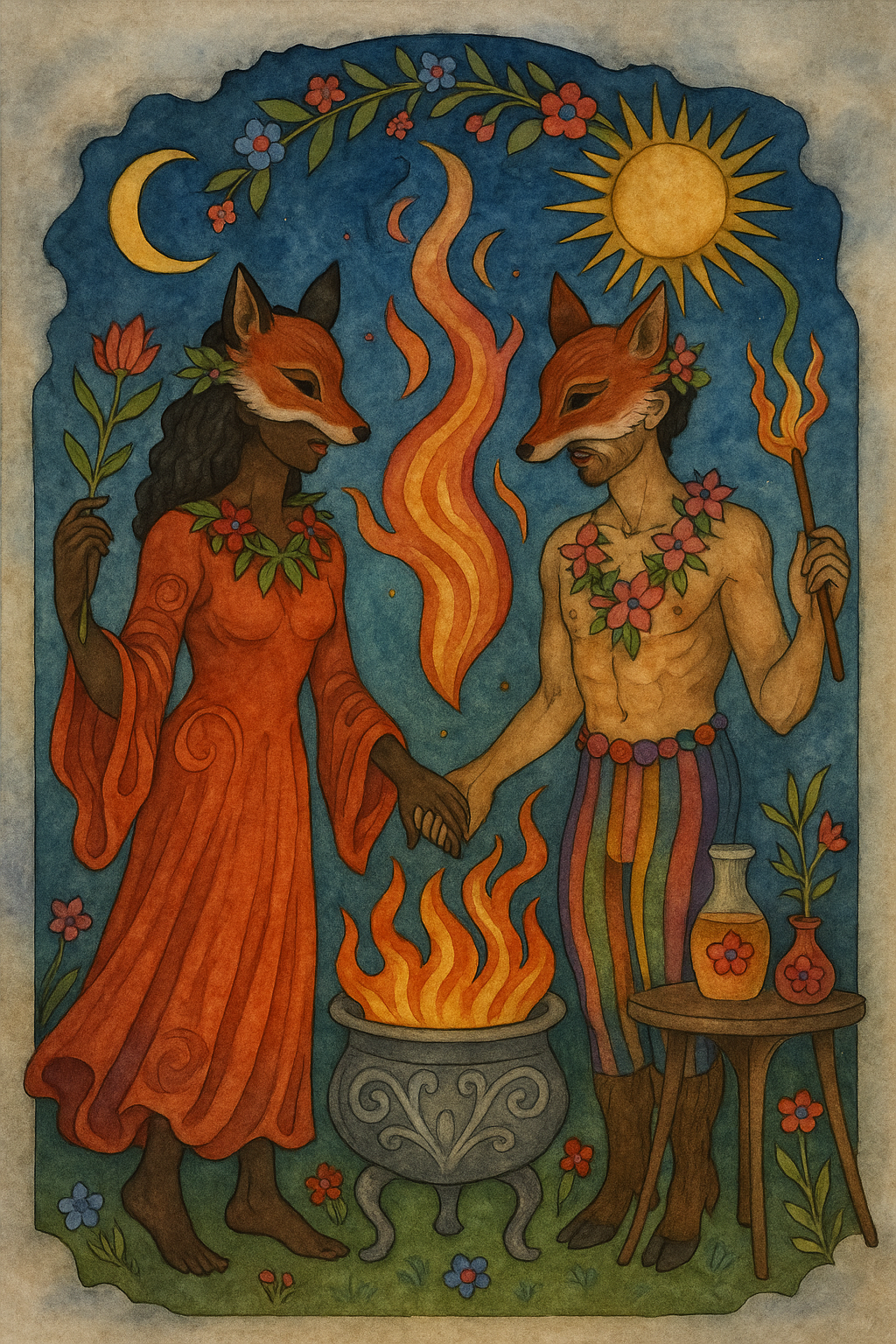
Two Wiccans in fox masks and floral bands hold hands by a flaming cauldron at Beltane

Beltane is most commonly celebrated on May 1, though traditionally it begins at sunset on April 30, when fires were lit to carry the festival through the night and into morning. Some modern practitioners also observe it at the midpoint between the spring equinox and summer solstice — a few days later — but wherever it falls on the calendar, the feeling is unmistakable. It arrives in a rush of warmth and movement — a stark shift from the careful balance of Ostara into something far more alive, unpredictable and a little untamed. Fires are lit, flowers crown the fields, and the world seems to hum with possibility, desire and just a hint of mischief.

If Ostara is where the first green shoots push through the soil, Beltane is where they bloom wildly, unapologetically, without asking permission. The energy here isn’t about waiting — it’s about stepping forward, crossing thresholds, and letting life move through you at full force.

For those who followed the gentle unfolding of the season with earlier work — whether through Imbolc spells or the steady growth of Ostara magic — this is where everything quickens. What was planted now wants to expand, connect, ignite.

And that energy isn’t always soft.

Beltane magic has teeth. It asks for courage, clarity and sometimes a willingness to let things burn away so something stronger can take their place. From old folk practices of jumping fires for luck to quiet offerings left for unpredictable Fae, this is a sabbat where the line between blessing and risk grows thin.

What follows is your Beltane spellbook — a collection of workings rooted in fire, movement and transformation. Each one uses a different approach, avoids repetition, and leans into the kind of magic that feels a little unexpected, a little primal and very much alive.

To make your magic even more powerful, it’s always a good idea to cast a magic circle.

BELTANE SPELL LINEUP

A balanced mix of: passion, luck, healing, fertility, release and joy — all fire-touched and summer-bound.

  1. Spell to Draw Passion & Bold Desire

  2. Spell to Call Helpful Fae Allies

  3. Spell for Emotional or Physical Healing

  4. Spell to Empower Fertility & Blooming

  5. Spell to Break Lustful Attachments

  6. Spell to Invite a Fun, Joy-Filled Summer
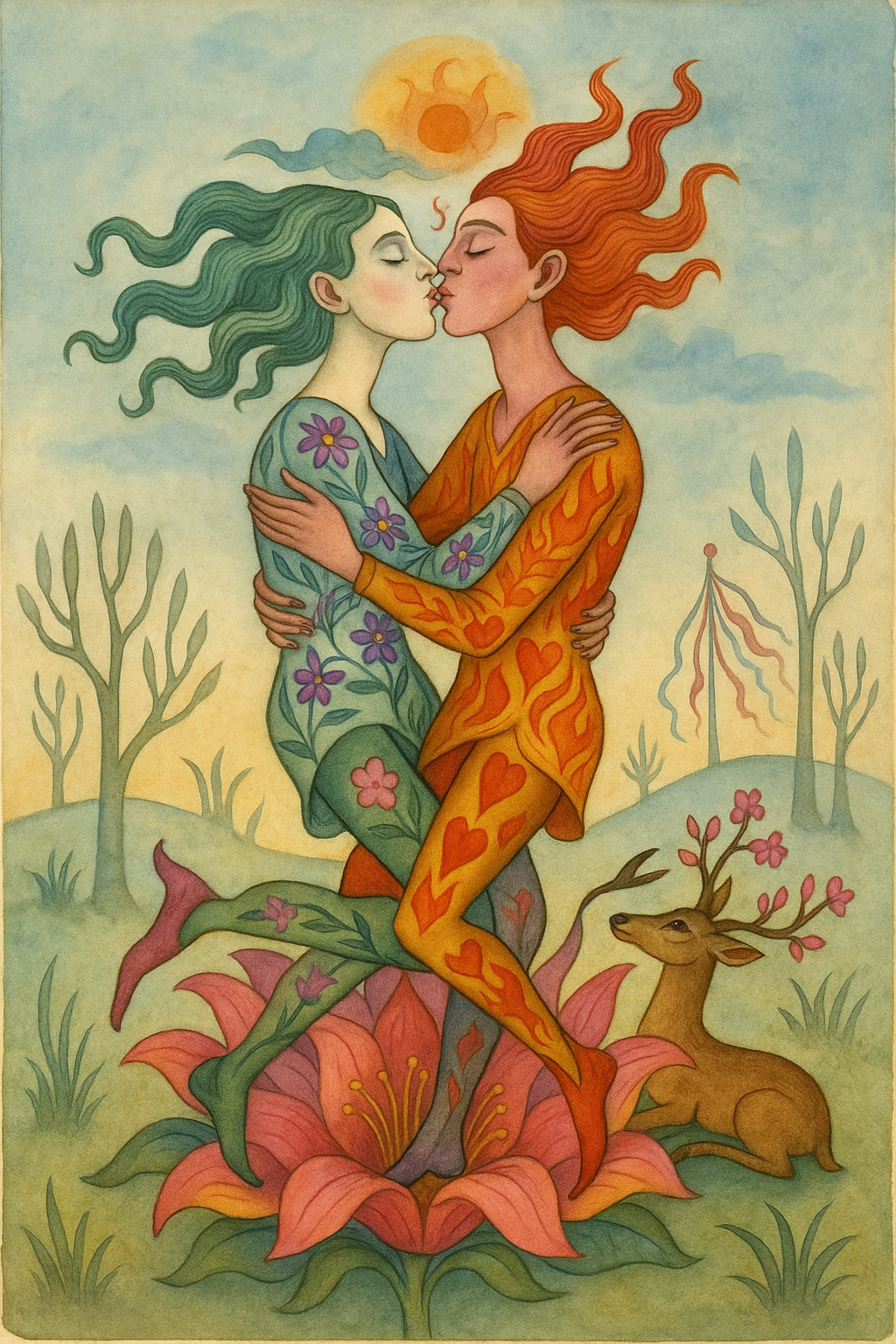
Two people kiss, their hair flowing out, wrapped in an embrace in a giant flower near a deer with flowering horns, with trees and a Maypole in the background

Spell to Draw Passion & Bold Desire

A fire-tested ritual using breath, flame and a single thread

What you need:

  • A length of red thread or ribbon

  • A small flame (candle, lighter or hearth fire)

Step 1: Mark the desire

Perform this at dusk or by firelight.

Hold the thread stretched between your hands.

Think of the desire you want to awaken — not vaguely, but clearly. Not “love”, but heat. Not “confidence”, but presence.

Bring the thread to your lips and breathe onto it once, slowly.

Say:

What I call now, let it rise,
Heat in body, spark in eyes.

Step 2: Let the fire decide

Hold one end of the thread close to the flame — not in it, just near enough that it begins to darken, curl or smoke.

Watch carefully.

The moment you feel hesitation — pull it away.

Say:

Not too little, not too much,
Let desire answer touch.

Step 3: Carry the living spark

Keep the thread on you overnight — tied loosely around your wrist or tucked somewhere close to your body.

Do not adjust it. Do not retie it.

Let it warm with you. Let it move with you. Let it exist without control.

Step 4: Release with the morning

At sunrise, remove the thread.

Burn it fully.

Look away at least once as it burns.

End with:

What was called now walks its way,

Let it find me, come what may.
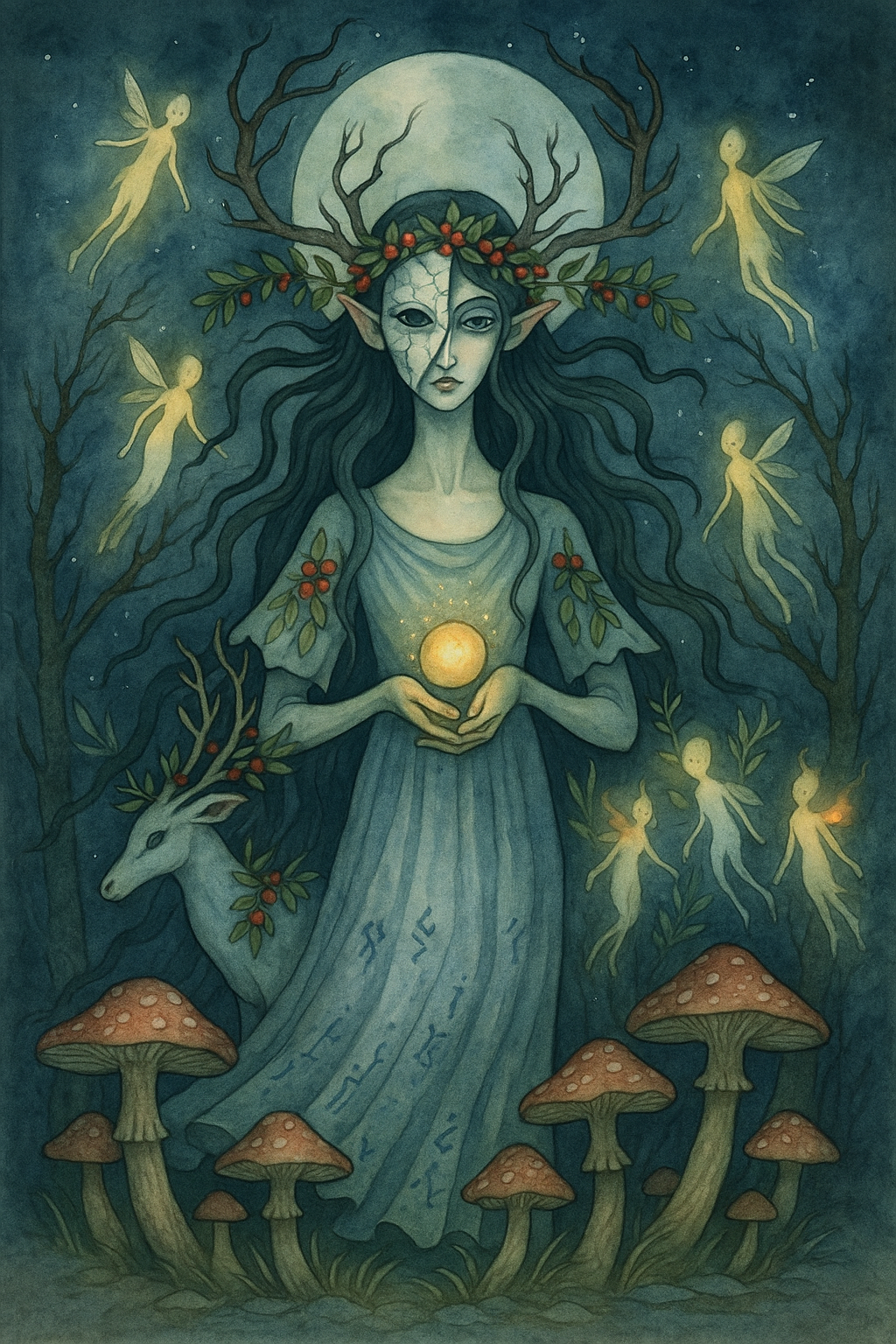
A Fae girl with antlers, a garland on her brow and a cracked mask covering part of her face, holds a hovering glowing ball, surrounded by leafless trees, small fairies, mushrooms and a white deer

Spell to Call Helpful Fae Allies

A folkloric offering ritual using bread, silence and a choice you cannot take back

What you need:

  • A small piece of plain bread (no sugar, no sweetness)

  • A natural outdoor space (a tree, hedge, crossroads or garden edge)

Step 1: Choose the place

Go at dusk or just after sunset.

Find a place that feels slightly in-between — not fully wild, not fully tended. The edge of a path, the base of a tree, a place where things cross or shift.

Stand there for a moment before doing anything.

If it feels watched, you’re in the right place.

Step 2: Make the offering

Place the bread directly on the ground.

Not gently — deliberately.

This is not a gift wrapped in kindness. It’s an offering of substance.

Say:

Not for favor, not for show,
I leave this where the small folk go.

Step 3: Ask — but do not bargain

Speak clearly, but only once.

Do not list requests. Do not plead.

Say:

If help is given, I will see.
If not, then let it pass from me.

Then step back.

Step 4: Leave without claiming

Turn and walk away.

Do not look back.

Do not check the offering later that night.

Do not return to the same spot the next day.

Step 5: Accept what comes — or doesn’t

Over the next few days, pay attention.

Fae help rarely arrives in obvious ways.

It may come as:

  • a sudden opportunity

  • a warning

  • a strange coincidence that redirects you

Or nothing at all.

End with:

Given and gone, the path is free,
What comes of this belongs not to me.
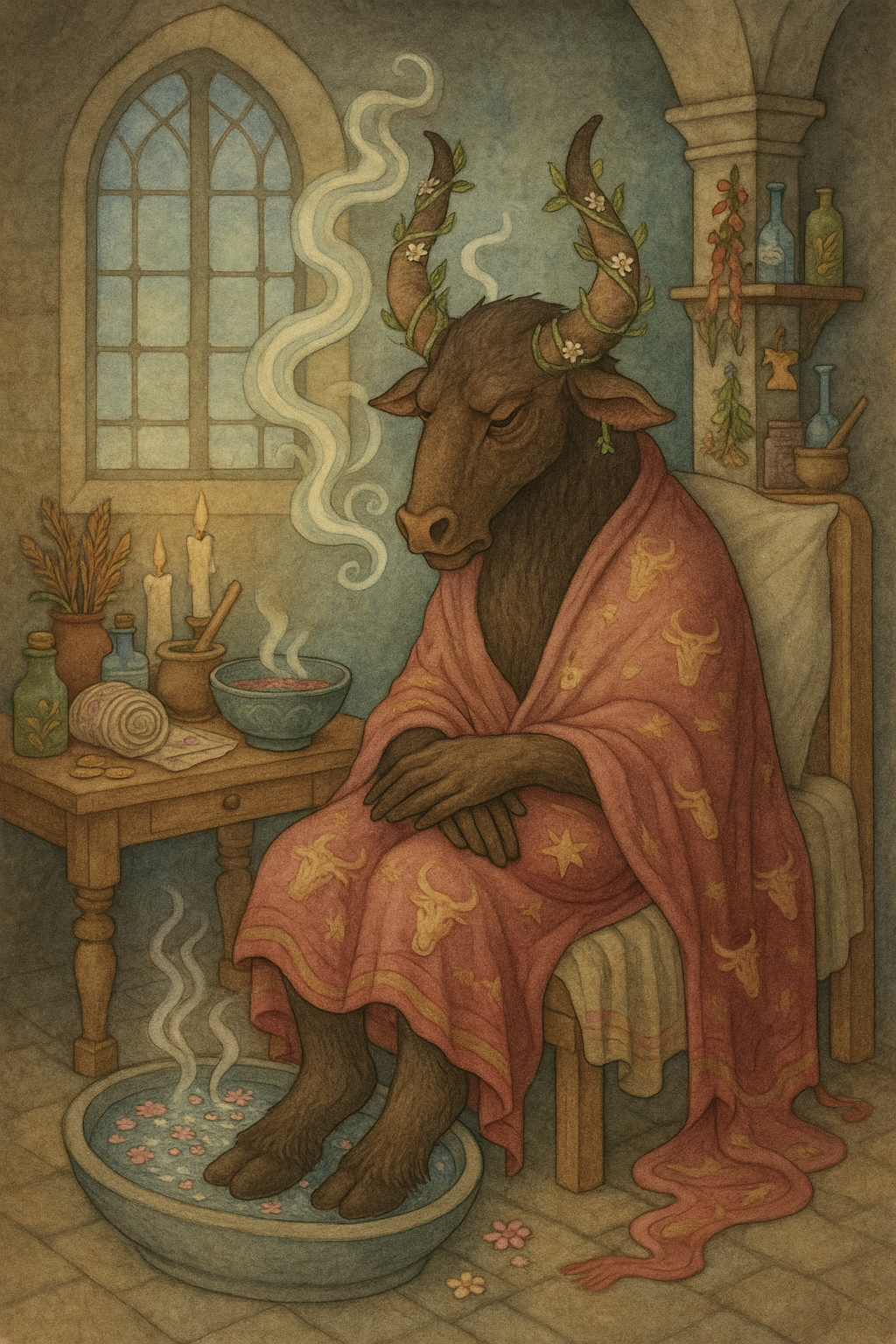
A sick minotaur with flowers wrapped around his horns  in a blanket with bull heads, sits by a table with a steaming bowl, candles and potions, its hooves in a floral footbath

Spell for Emotional or Physical Healing

A warmth-based ritual using steam, breath and the body’s natural return to ease

What you need:

  • A bowl of very warm (not boiling) water

  • A handful of fresh herbs or flowers (rosemary, mint, chamomile, whatever you have)

  • A towel or cloth

Step 1: Wake the water

Place the herbs into the warm water and press them gently with your fingers.

Don’t stir — press.

Release their scent, their oils, their bitterness if they have it.

Bring your face close enough to feel the warmth rising.

Say:

Where heat returns, let healing start,
Warm the body, ease the heart.

Step 2: Take in the steam

Drape the towel loosely over your head and the bowl.

Close your eyes and breathe slowly.

Not deep, not forced — just steady.

Let the warmth touch your face, your chest, your throat.

If you’re working with emotional pain, place one hand over your heart.

If physical, place your hand where it’s needed.

Stay until the heat begins to fade.

Step 3: Transfer the warmth

Dip the cloth into the water, wring it out slightly, and place it against your skin — wherever the healing is needed.

Hold it there.

Not moving. Not adjusting.

Let the warmth settle in fully before removing it.

Say:

What was tight now loosens through,
What was held begins anew.

Step 4: Let the body decide

When you’re done, do nothing for a moment.

No stretching, no checking, no analyzing.

Just sit.

Let the body respond in its own time — warmth spreading, breath deepening, something softening that didn’t before.

End with:

By breath and heat, by flesh and bone,
Let healing rise as what is known.
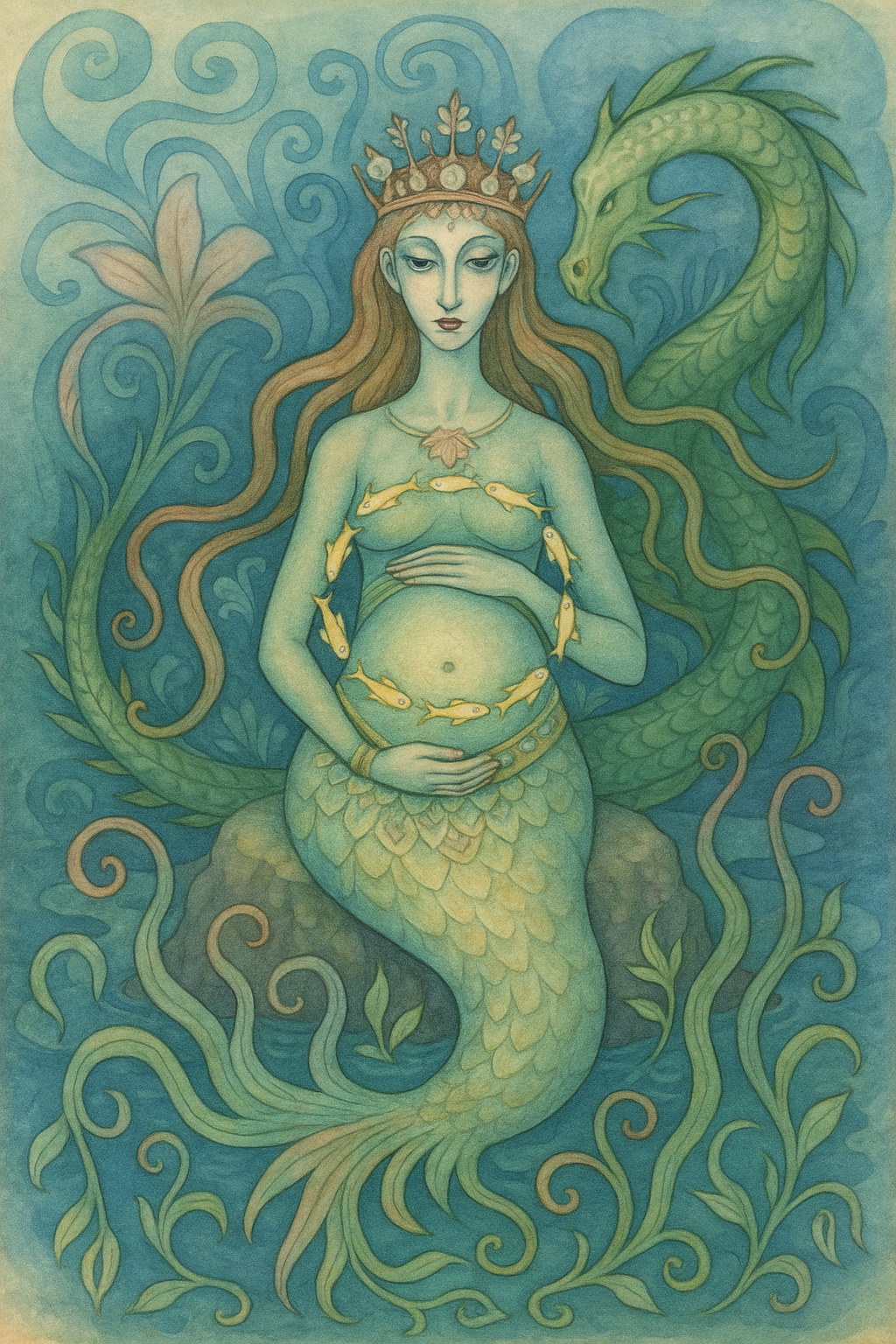
A pregnant mermaid holds her belly as small fish encircle it, with a sea dragon swimming behind her

Spell to Empower Fertility & Blooming

A Beltane incubation ritual using warmth, night and an egg

What you need:

  • One egg (uncracked)

  • A patch of earth (or a pot of soil)

Step 1: Warm the vessel

Hold the egg in both hands.

Not loosely — fully enclosed, letting your body heat pass into it.

Think of what you want to grow. Not as a wish, but as something already beginning:

  • a project taking shape

  • a relationship deepening

  • a version of yourself becoming real

Bring the egg close to your lips.

Say:

Held in warmth, made to begin,
Life takes root and stirs within.

Repeat it, slower.

Step 2: Give it the night

Before sleep, place the egg beneath your bed — not hidden away, but directly under where you rest.

This is the incubation.

Do nothing else.

Do not check it. Do not move it.

Let your body’s presence, your breath, your heat carry the work.

Step 3: Claim what’s begun

At dawn, retrieve the egg.

Hold it again, briefly — it should feel different now. Not physically, but in the way you hold it.

Say:

What was quiet now will grow,
What was hidden starts to show.

Say this three times.

Step 4: Return it to the earth

Bury the egg whole.

Do not crack it.

Do not look at it again once it’s covered.

End with:

Given form and given ground,
Let what’s mine in life be found.
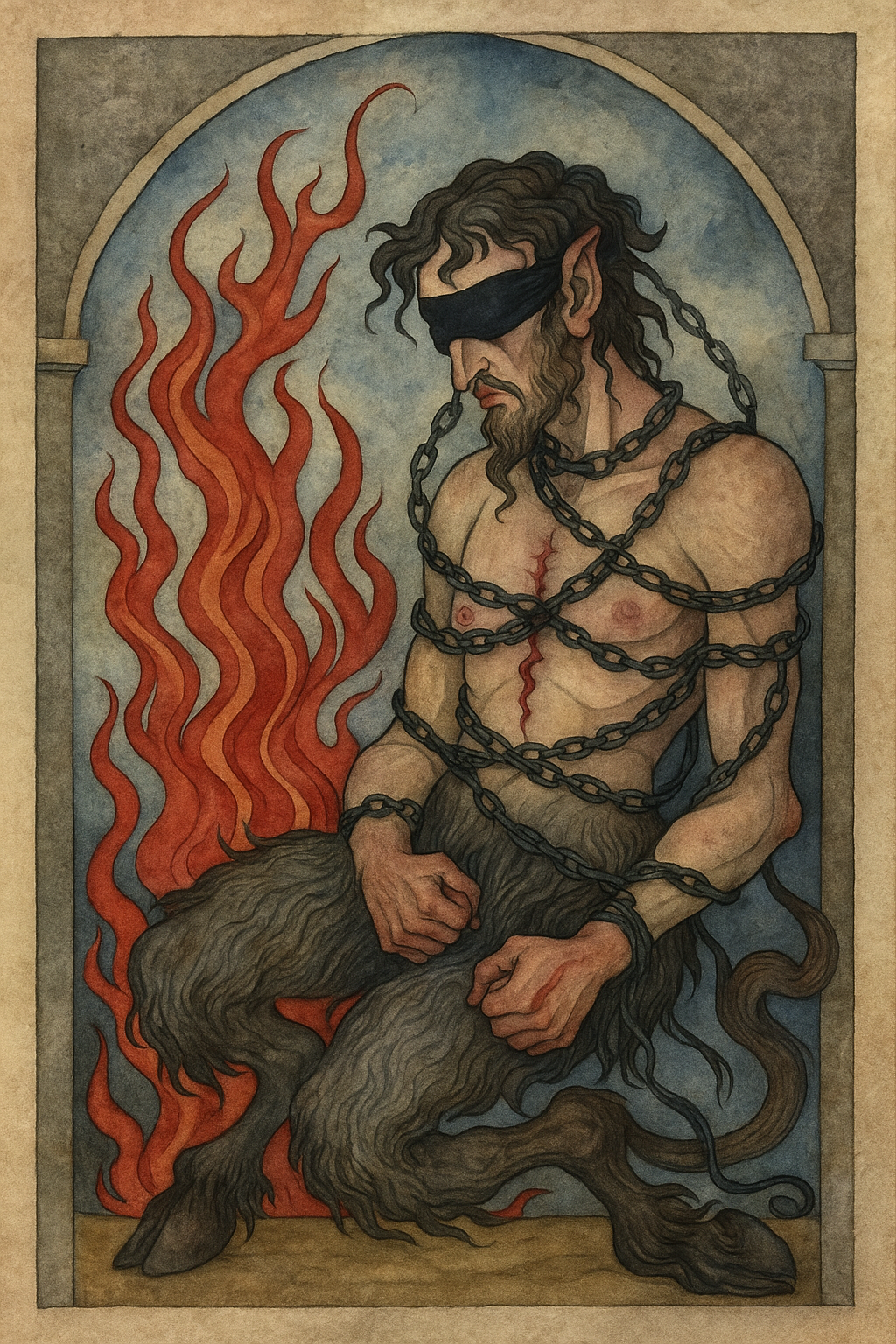
A blindfolded satyr wrapped in chains has a scar down his chest, as flames rise next to him

Spell to Break Lustful Attachments

A severing ritual using charcoal, cord and a clean cut

What you need:

  • A length of black cord or string

  • A small piece of charcoal (or something that can mark the skin)

  • A flame

  • Scissors or a blade

Step 1: Mark the blindness

Take the charcoal and draw a line across your eyes — not neatly, not delicately. One solid stroke from temple to temple.

This is not beauty. This is truth.

Say:

What I wanted, I could not see,
Desire burned too close to me.

Repeat it, slower.

Step 2: Bind what holds you

Wrap the cord once around your wrist or fingers — just tight enough that you feel it.

Not painful. Present.

Name the attachment. Out loud.

No soft language. No justification.

Then say:

Held too long and held too tight,
I take back my will tonight.

Say this three times.

Step 3: Let the fire witness

Hold the cord near the flame.

Not to burn it — just enough for heat to reach it.

Feel the tension. The urge to hesitate.

Stay there a moment longer than is comfortable.

Step 4: Cut clean

Without preparing yourself, without counting — cut the cord.

Immediately.

No pause.

Let the cut be the decision.

Drop both pieces.

End with:

Cut and done, I claim my say,
What bound me has no hold today.

Step 5: Do not reclaim it

Leave the cord pieces where they fall, or discard them outside.

Do not keep them.

Do not tie anything new in their place.

Absence is part of the spell.
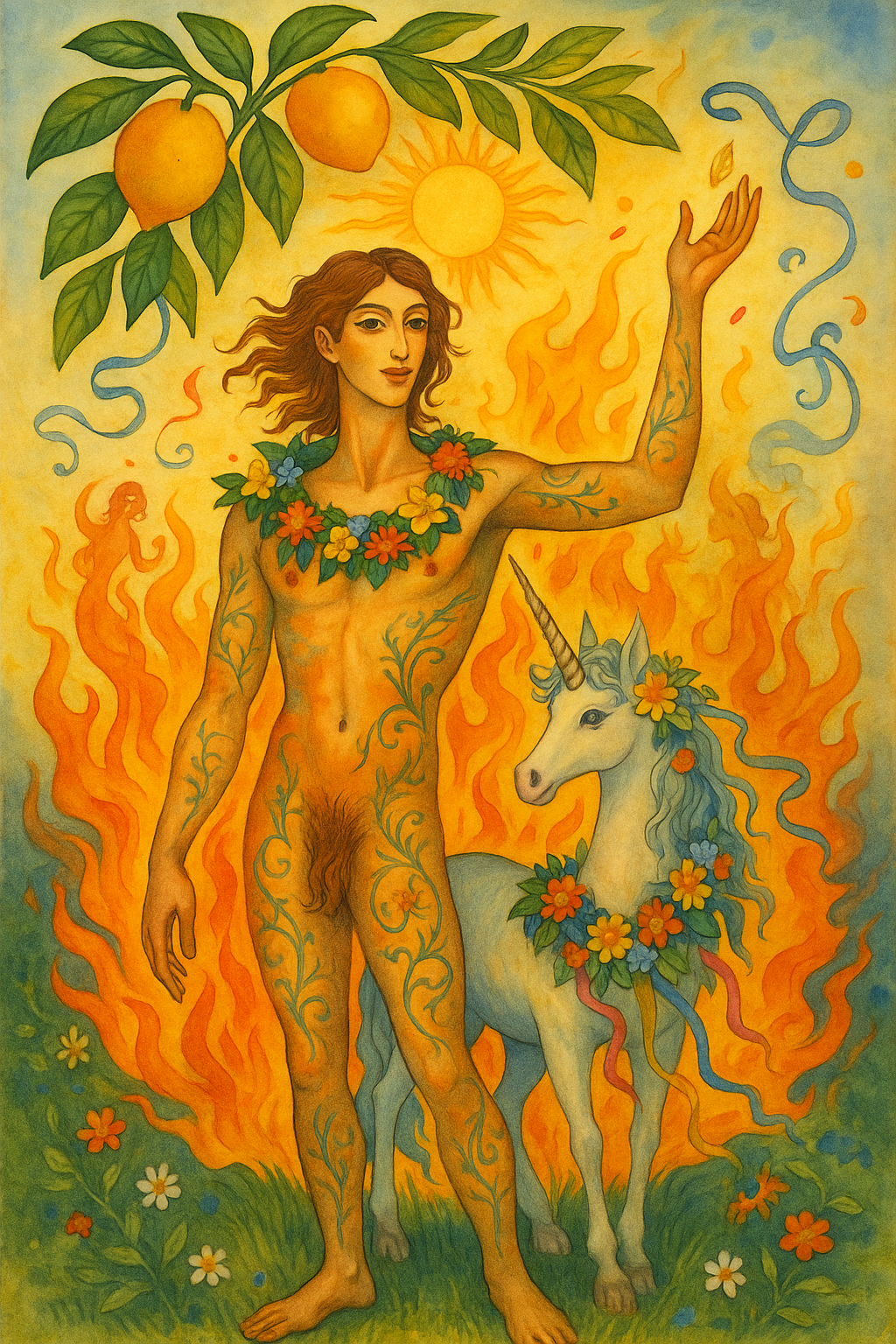
A naked man with floral tattoos and long pubic hair stands under a lemon tree, his arm raised, next to a small unicorn, both of them wearing floral garlands around their necks, standing in flames

Spell to Invite a Fun, Joy-Filled Summer

A movement-based ritual using citrus, chance and a single throw

What you need:

  • One piece of citrus (lemon or orange)

  • A knife

  • An open outdoor space

Step 1: Cut the moment open

Slice the citrus in half.

Hold both halves in your hands and bring them up to your face.

Smell them. Strongly.

Let the sharpness wake you up — this is not soft, sleepy joy. This is bright, sudden, alive.

Say:

Sharp and sweet, awake the day,
Call in joy that wants to stay.

Repeat it once more.

Step 2: Choose without thinking

Hold one half in each hand.

Do not deliberate.

Without pausing — choose one.

The other, drop immediately behind you without looking.

Do not turn around to see where it lands.

Step 3: Throw the invitation

Take the half you kept.

Step forward and throw it out in front of you — not gently, but with intention.

As it leaves your hand, say:

Where this falls, let laughter grow,
Bring me where I’m meant to go.

Say this three times.

Step 4: Follow, but don’t control

Walk to where the citrus landed.

Stand there for a moment.

This is not a destination — it’s a marker.

Over the coming days or weeks, say yes a little more often.

Take a turn you wouldn’t normally take.

Let small, spontaneous things lead.

End with:

Light and chance now move with me,
Summer comes and sets me free.

Beltane Magic

By the time Beltane arrives, the world is no longer asking permission to grow. It’s moving, blooming, reaching — sometimes faster than we’re ready for.

That’s the nature of this season.

These spells aren’t about quiet beginnings or careful tending. They’re about stepping into what’s already stirring — desire, joy, connection, change — and deciding how you want to meet it.

Some things will catch fire.

Some things will fall away.

Some things will surprise you entirely.

That’s part of the magic.

So light the fire. Make the offering. Cut what needs cutting. Say yes where it matters.

And then let it unfold.

Because just beyond Beltane, the wheel keeps turning — toward the festival of Litha and the long, golden stretch of summer, where everything that’s begun now has its chance to fully bloom. –Wally
How to Celebrate Beltane: A Wiccan Ritual, Traditions and the Magic of May Day

Discover the history, symbolism and traditions of this joyful May Day sabbat: a Beltane ritual, flower crowns, Maypoles, fire festivals and wild Fae magic. 

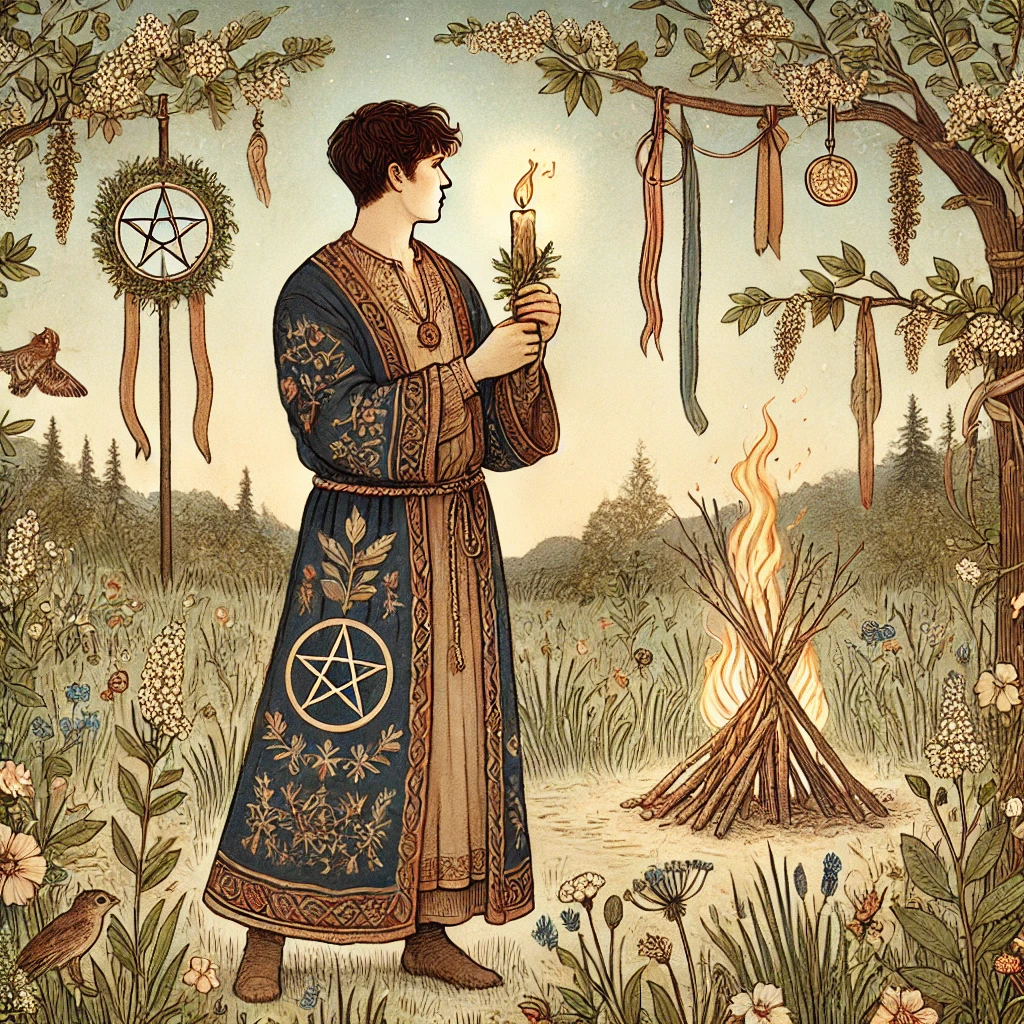
A Wiccan man celebrates Beltane, with tree decorations and a bonfire

The last breath of spring lingers in the air, thick with the scent of the first blooming flowers and fresh-cut grass. The world is humming — bees drowsily drift between blossoms, the sun lingers a little longer each day, and the Earth is alive with a feverish energy. By nightfall, bonfires will blaze, ribbons will wind around the Maypole, and laughter will ripple through the warm evening air. This is Beltane, the fire festival of passion, fertility and abundance.

Celebrated on May 1, Beltane is the great turning of the wheel that marks the transition from spring to summer. The name comes from the Celtic god Bel, meaning “Bright One,” and tene, meaning “fire” — a fitting name for this exuberant festival. As one of the most joyous (and sensual) of the Wiccan sabbats, Beltane calls for revelry, creativity and connection.

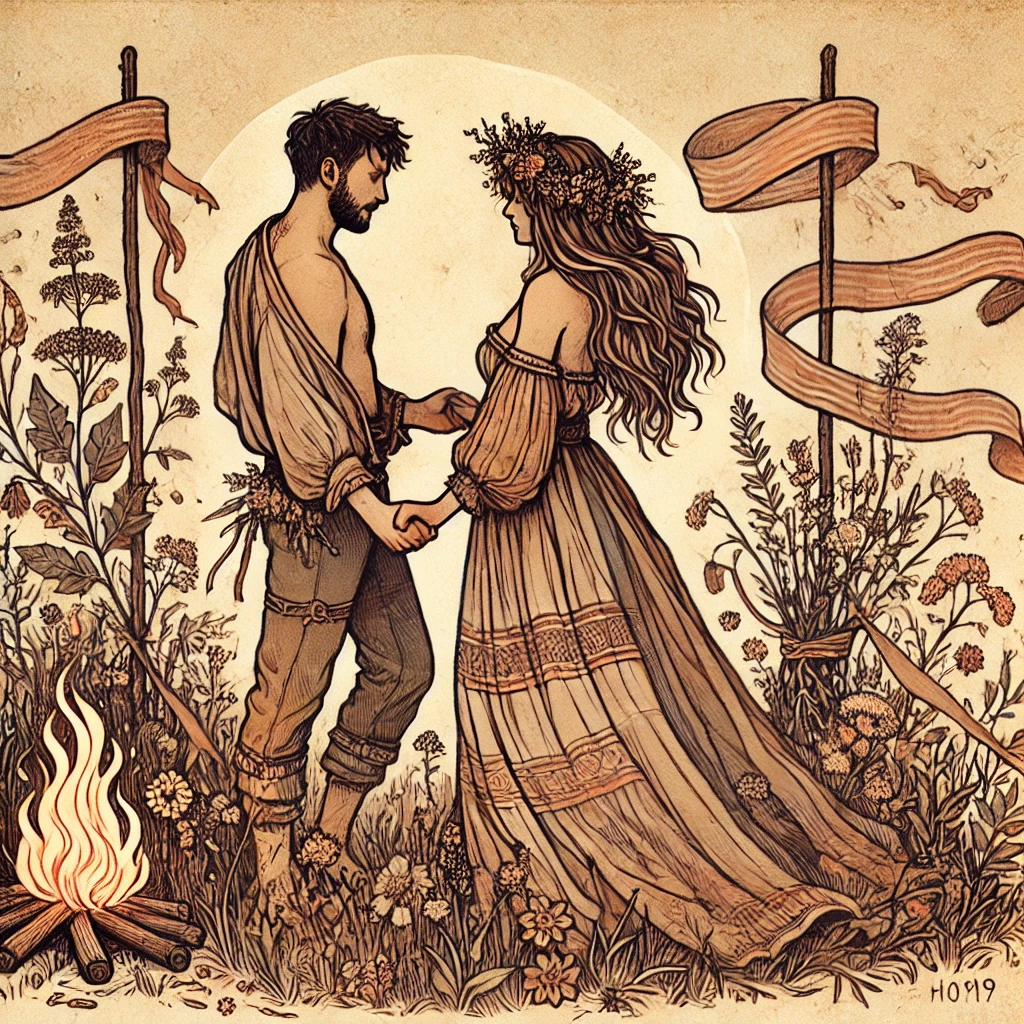
A disheveled man and woman are about to celebrate a greenwood marriage at Beltane

The History and Traditions of Beltane

Beltane is one of the four great Celtic fire festivals, alongside Samhain, Imbolc and Lughnasadh. It marks the transition from spring to summer, when the world bursts into life, and the veil between realms grows thin. 

For the ancient Celts, Beltane was a time of protection, purification and fertility. Great bonfires were lit, and livestock were driven between twin fires to ensure their health and prosperity for the coming season. These fires were believed to hold magical properties, warding off disease and evil spirits. People also leaped over the flames — sometimes for luck, love or fertility, and sometimes as a form of personal purification.

But Beltane’s most infamous tradition was the greenwood marriage. On this night, couples would disappear into the woods to celebrate the fertility of the land in a very literal way. These unions weren’t necessarily permanent marriages — some lasted only for the night, while others could become long-term partnerships. Children conceived during Beltane were sometimes referred to as “merry-begots”, and the festival itself was deeply tied to the idea of sacred union — both between human lovers and between the Earth and the Sun.

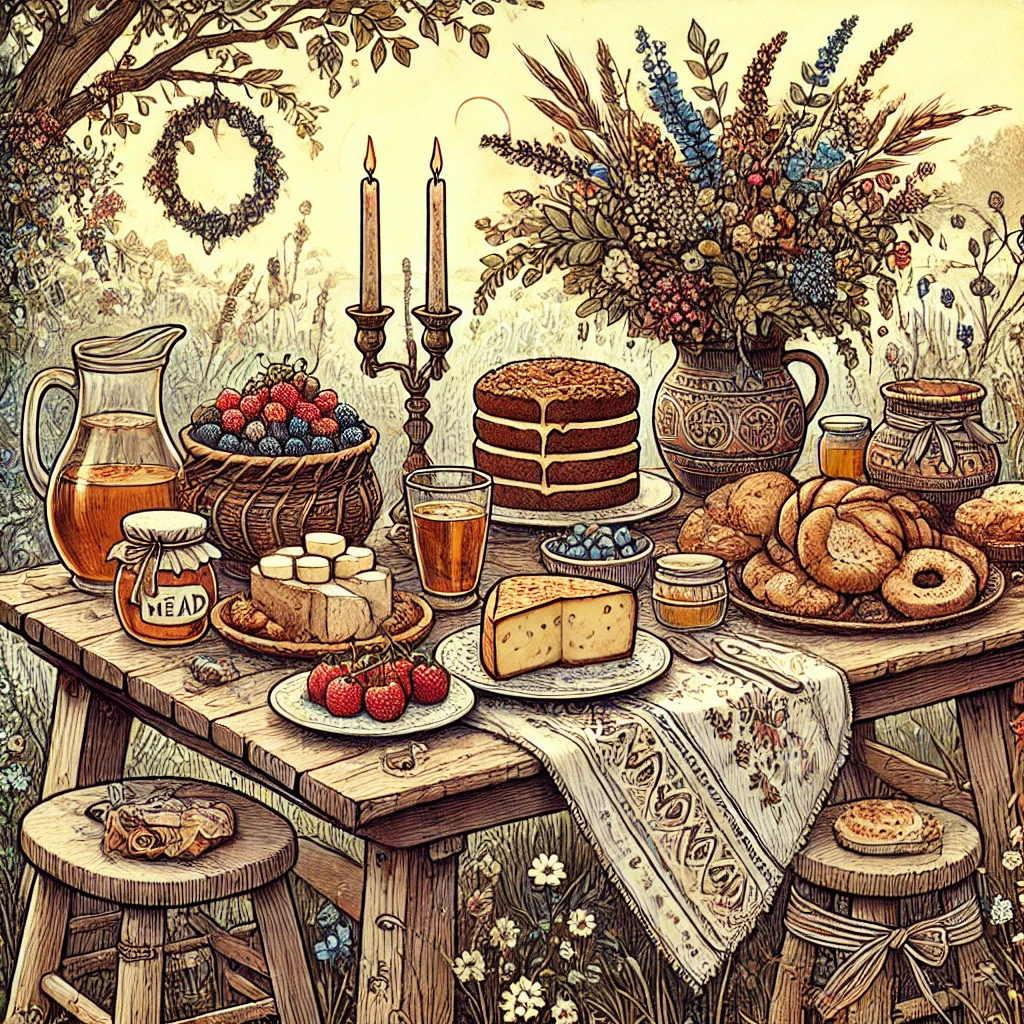
A table outdoors laden with Beltane treats and flowers

Beltane and the Rise of Christianity

Like many pre-Christian festivals, Beltane’s fiery revelry and fertility rites didn’t sit well with the Church. While Christianity was often willing to absorb and adapt certain pagan customs — like turning Yule into Christmas or Ostara into Easter — Beltane’s more uninhibited celebrations were harder to sanitize.

The festival’s bonfires, rituals and open expressions of sexuality were seen as dangerously pagan. The idea of couples disappearing into the woods for greenwood marriages clashed with Christian notions of monogamy and morality. By the Middle Ages, efforts were made to suppress Beltane practices, often by demonizing the festival as a time of witchcraft and devilry.

However, May Day traditions proved too beloved to fully erase. The Church allowed some aspects to remain, especially the Maypole dance, which was reframed as a community event rather than a fertility ritual. Meanwhile, Beltane’s bonfires persisted in rural areas, particularly in Scotland and Ireland, though they were often rebranded as local saint celebrations.

The Protestant Reformation, however, took a harsher stance. Many Beltane traditions, including fire-jumping and fertility rites, were outlawed, and in some cases, participating in these customs was enough to get someone accused of witchcraft. The association between Beltane and witches was strong — even in the 17th century, Scottish minister Robert Kirk wrote about the “Fairy Faith,” warning that Beltane was a time when spirits and witches roamed freely.

Despite centuries of suppression, Beltane never truly died. In the modern era, the festival has experienced a revival among Wiccans, Pagans and folklorists, who have reclaimed its joyful, fiery essence. Today, Beltane is once again celebrated with bonfires, dancing and rituals — a testament to the resilience of ancient traditions.

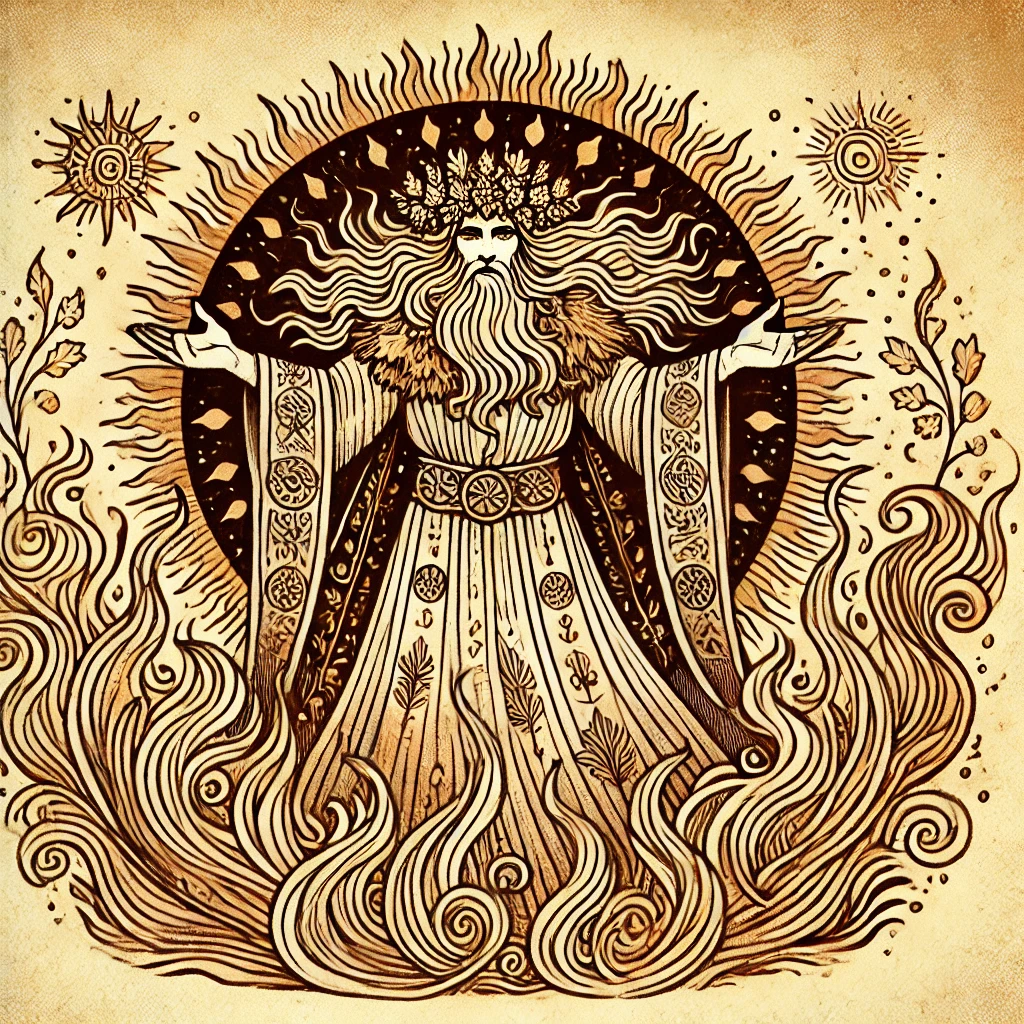
The god Bel, encircled by flames

Myths and Folklore of Beltane

Beltane’s fires burn in honor of Bel, the bright and shining god of light, often associated with Belenus, a solar deity worshiped across Celtic Europe. He was seen as a protector, guiding the transition from the gentle warmth of spring to the full power of summer. In some traditions, Bel’s fire was said to purify, bless and invigorate all who passed through it — hence the ancient tradition of driving cattle between Beltane bonfires for protection.

But Beltane isn’t just a time of fire — it’s also a time of Fae magic. Like Samhain, Beltane is a night when the veil between worlds is thin, making it easier for spirits and fair folk to slip through. Unlike Samhain, when ghosts and ancestors visit, Beltane belongs to the Fae. These aren’t your delicate, winged flower fairies; Beltane’s fae are wild, mischievous and often dangerous.

According to folklore, Beltane night is a time when:

  • The Sidhe (fairy folk) roam freely, seeking offerings and sometimes playing tricks on unsuspecting mortals.

  • Travelers may stumble into fairy rings and be spirited away for what seems like hours — but when they return, years have passed.

  • Leaving offerings of milk, honey or bread outside your door will appease the Fae and ensure they don’t cause trouble in your home.

Many old stories warn against speaking to or making deals with the Fae on Beltane, but others claim it’s the perfect night to seek their blessings — if you know how to ask. Whether you honor them with gifts or steer clear of their mischief, there’s no denying that Beltane is a night of wild, untamed magic.

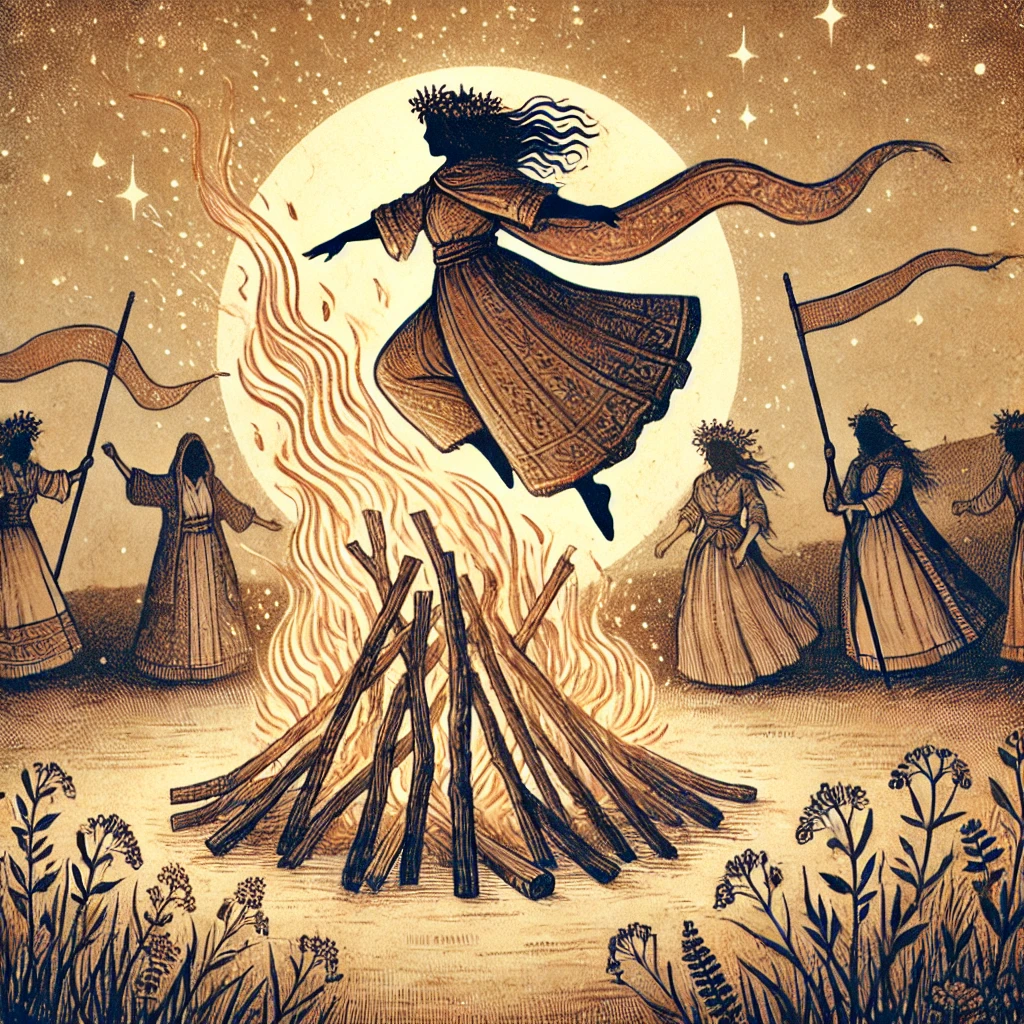
A woman soars over a Beltane bonfire while others look on

Traditions of Beltane

Beltane is a festival of fire, fertility and revelry, celebrating the height of spring and the turning of the wheel toward summer. It’s a time to embrace passion, creativity and abundance — whether that’s through dancing, feasting or lighting sacred fires.

1. Jumping the Fire

Fire is at the heart of Beltane. In ancient times, cattle were driven between two great bonfires to protect them from illness and misfortune. People also leaped over the flames to bring luck, fertility or courage into their lives. Today, you can honor this tradition by lighting a candle, writing an intention and carefully passing it over the flame for a symbolic blessing. Or, heck, test your luck and jump over a bonfire. Just make sure it’s a small one, please. 

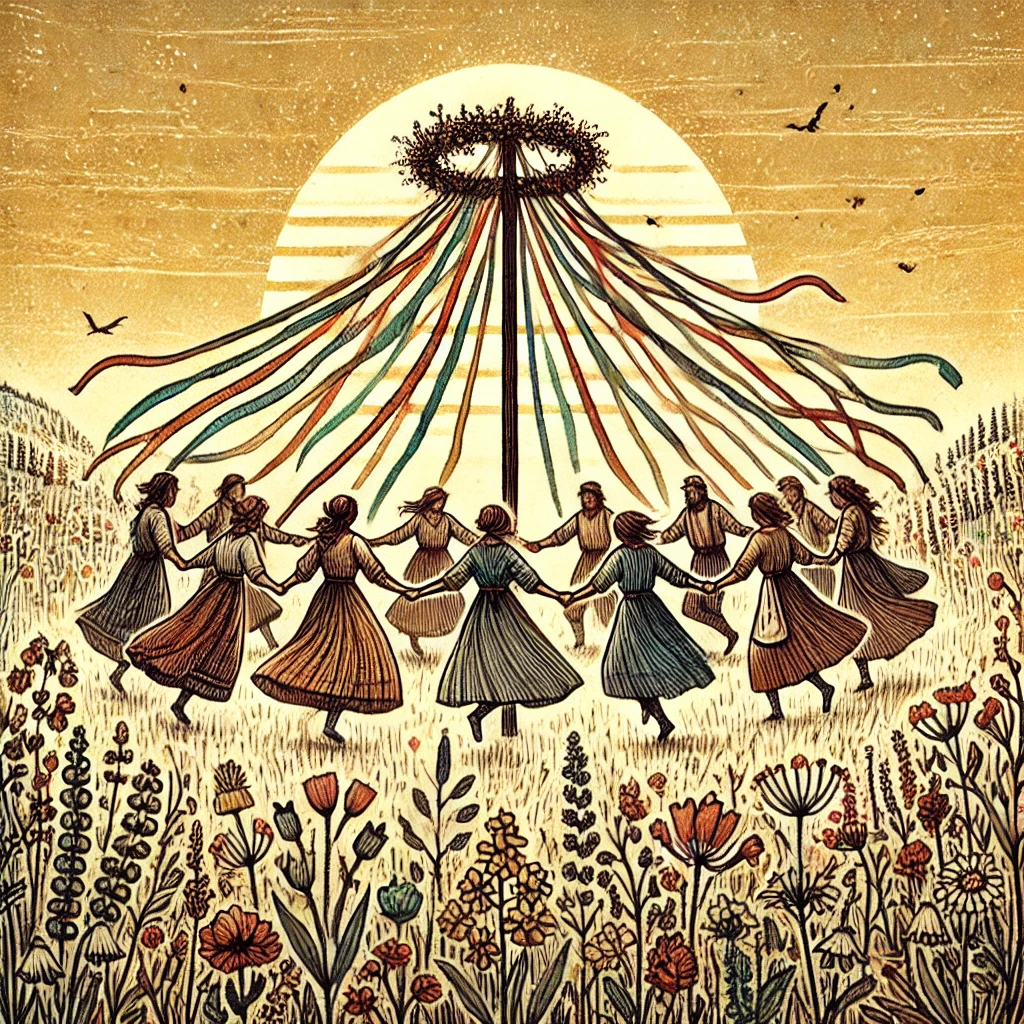
A group of people hold hands and dance around a Maypole in a field of flowers

2. The Maypole Dance

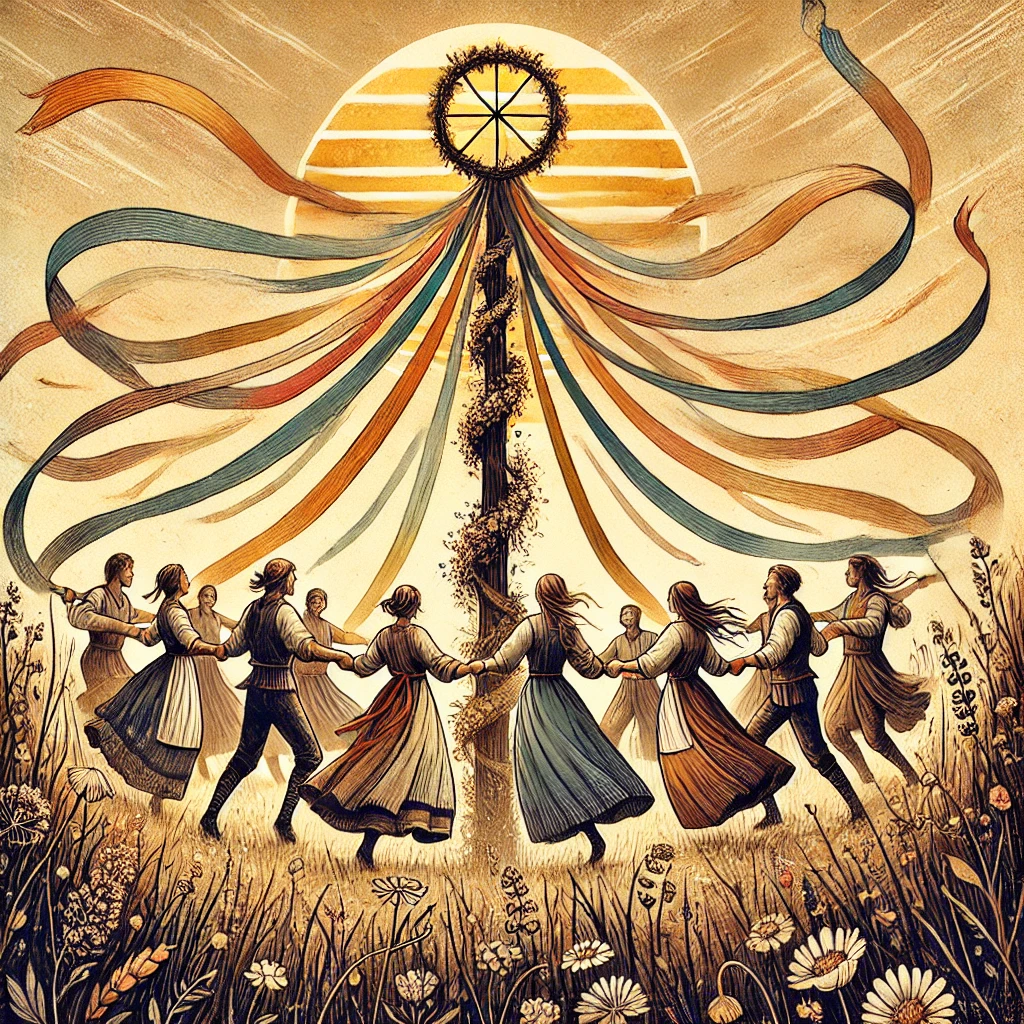
One of Beltane’s most iconic traditions, the Maypole dance is a celebration of energy and unity. Ribbons are woven around the pole, symbolizing the intertwining of masculine and feminine energies, though today it represents all forms of connection and creativity. If you don’t have access to a Maypole, you can braid ribbons into your hair, create a ribbon wreath, or tie ribbons to a tree as a personal tribute to the tradition.

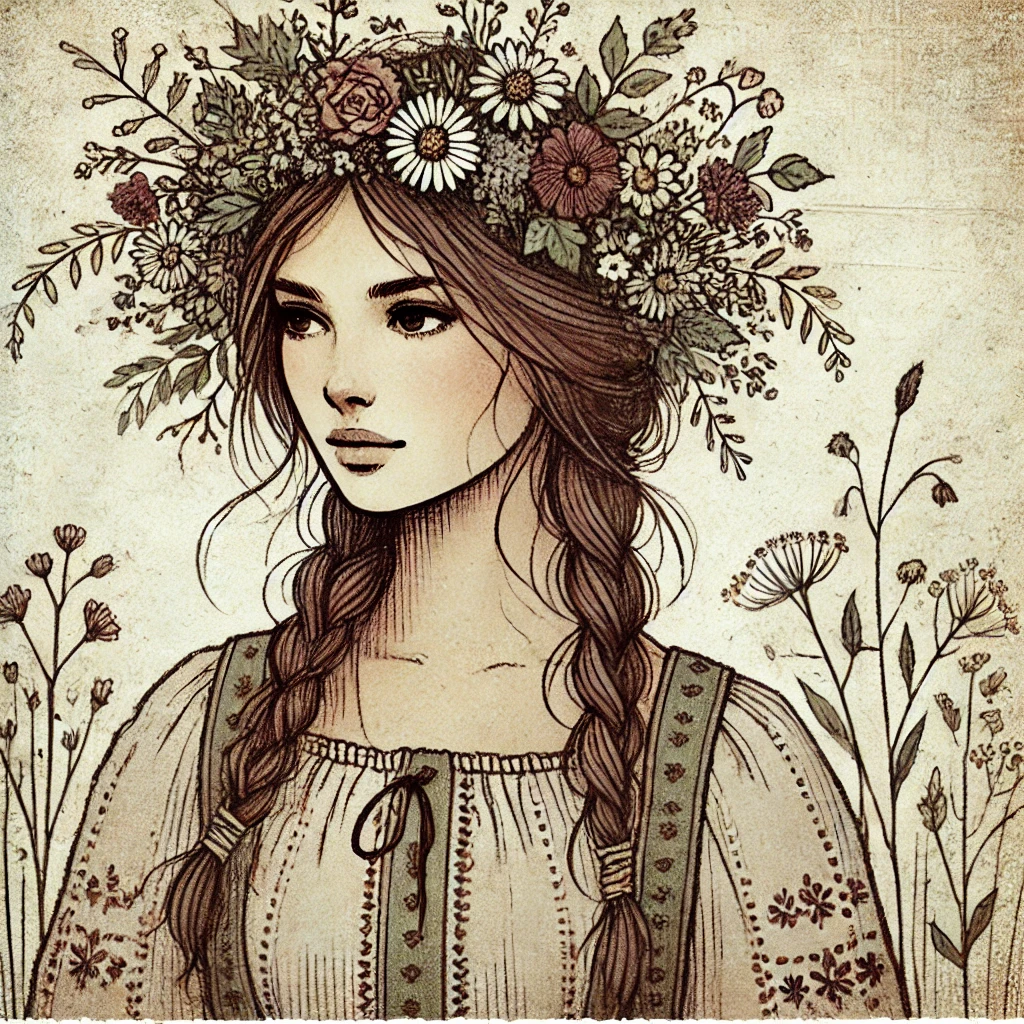
A young woman wears a flower crown

3. Flower Crowns and Greenery

Beltane is bursting with life, love and fertility, making flowers an essential part of the celebration. Wearing a flower crown or weaving garlands honors the season’s energy, especially with hawthorn, marigolds and lilacs — traditional Beltane blooms.

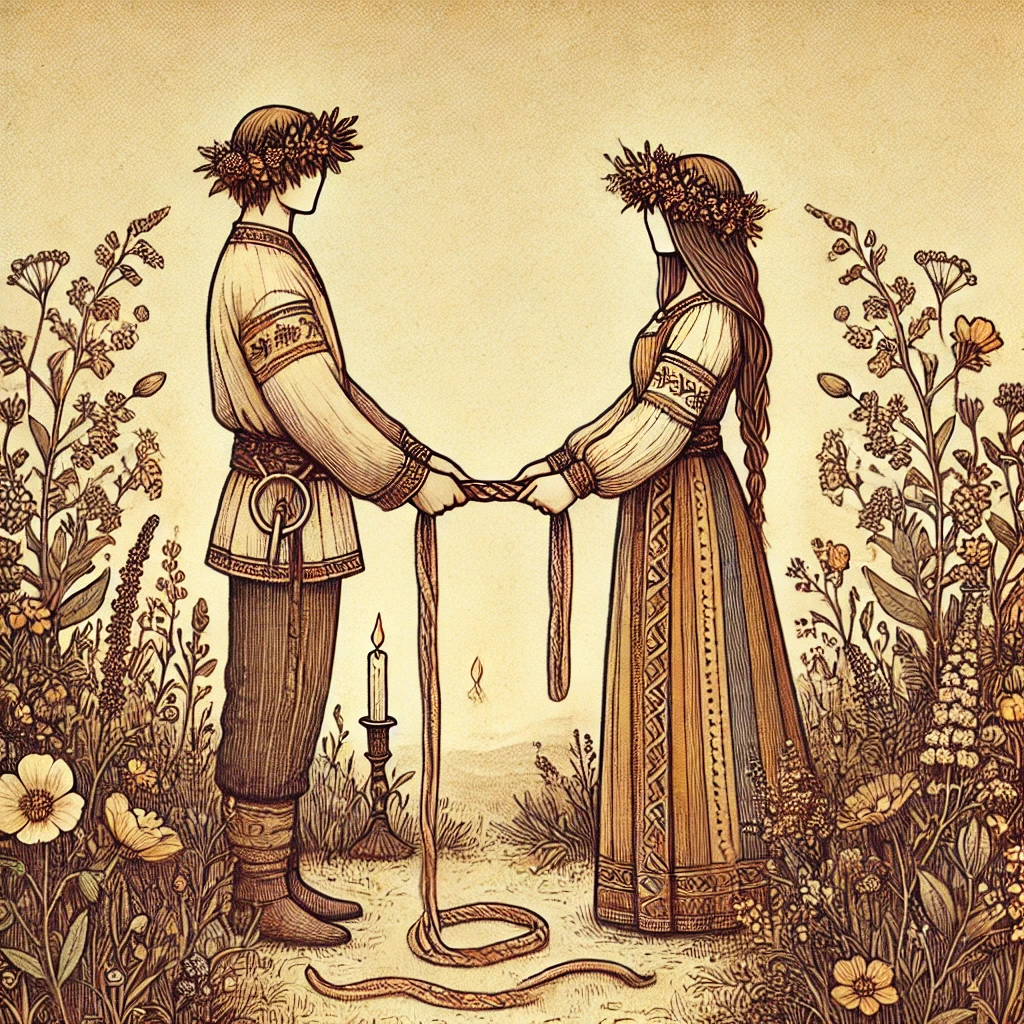
A man and woman hold a ribbon among flowers as they take part in a handfasting or Wiccan wedding ceremony

4. Handfasting (Pagan Weddings)

Beltane has long been associated with sacred unions and handfastings, a form of marriage where couples’ hands are tied together with ribbon to symbolize their bond. In old traditions, these unions often lasted “a year and a day” before becoming permanent. Whether you’re renewing vows, celebrating love or simply embracing deeper connections, this is the perfect time to honor relationships.

5. Offerings to the Fae

Since Beltane is a time when the Fae walk among us, many leave offerings to stay in their good graces. Traditional gifts include milk, honey, fresh bread or mead, left outside overnight. If you’re wary of the Fae’s mischief, keeping iron or salt by your door is said to deter them.

6. Late-Night Walks and Wild Magic

Some Beltane traditions are a little more mysterious and playful. In ancient times, young couples would disappear into the woods for a night of “greenwood marriage” (ahem), returning at sunrise with flower-strewn hair and dewy skin. Others would walk barefoot in the grass at dawn, believing the morning dew held magical properties for beauty and good fortune.

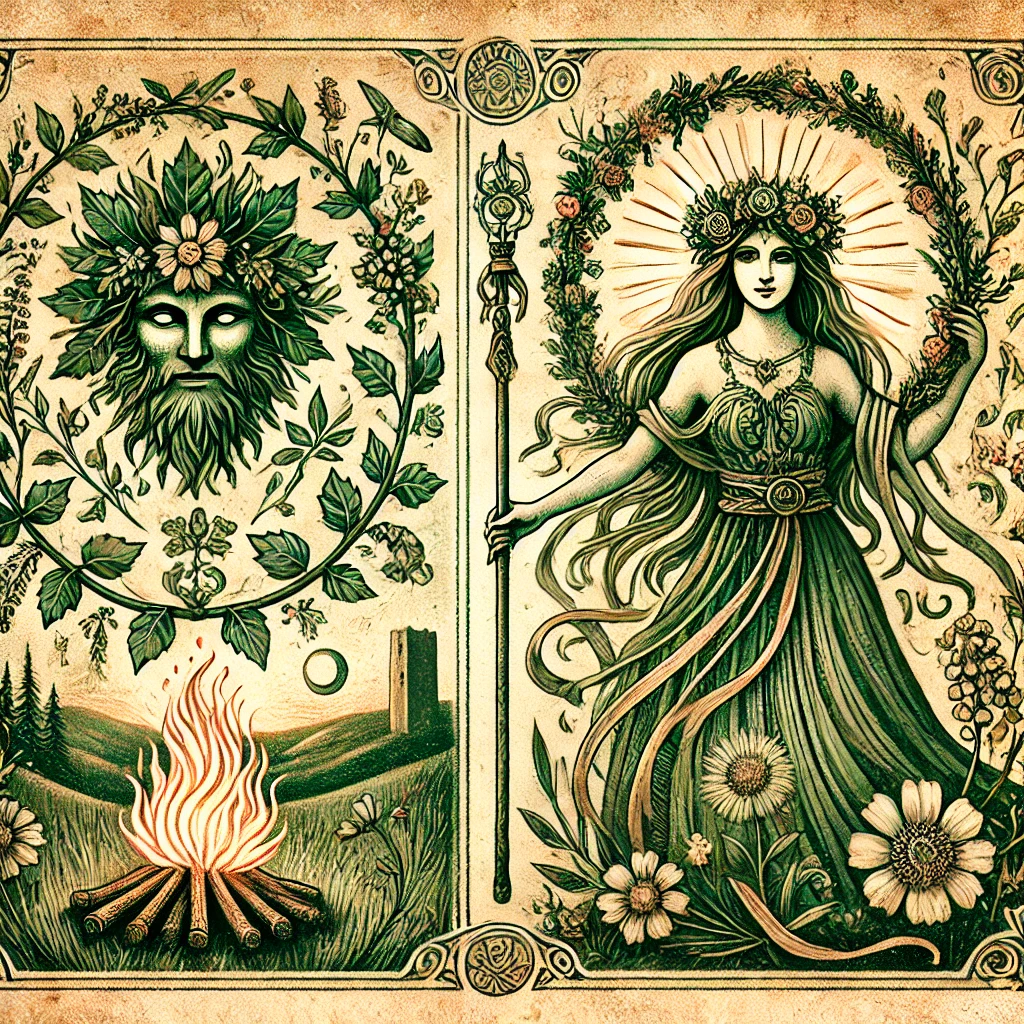
Neopagan deities, the Green Man, by a bonfire, and the Goddess, by flowers

Symbols of Beltane

Beltane is a festival rich in fire, fertility and wild energy, and its symbols reflect the passion and abundance of the season. Each one carries deep meaning, whether for protection, celebration or invoking the magic of May.

1. Fire

At its core, Beltane is a fire festival. The flames represent purification, passion and transformation, clearing away stagnation and ushering in the full force of summer’s energy. Whether it’s a bonfire, candle or even the sun itself, fire is the most powerful symbol of this sabbat.

2. The Maypole

A towering pole wrapped in colorful ribbons, the Maypole symbolizes union, connection and the dance of life. The interwoven ribbons represent the intertwining of energies — historically seen as masculine and feminine but now recognized as a celebration of all forms of harmony and creativity.

3. Flowers and Greenery

Beltane is a time of full bloom, and flower crowns, garlands and fresh-cut blossoms embody the beauty and fertility of the earth.

  • Hawthorn (the “May tree”) is sacred to Beltane, representing protection and love.

  • Lilacs and marigolds bring joy and blessings.

  • Oak leaves and ivy symbolize strength and endurance.

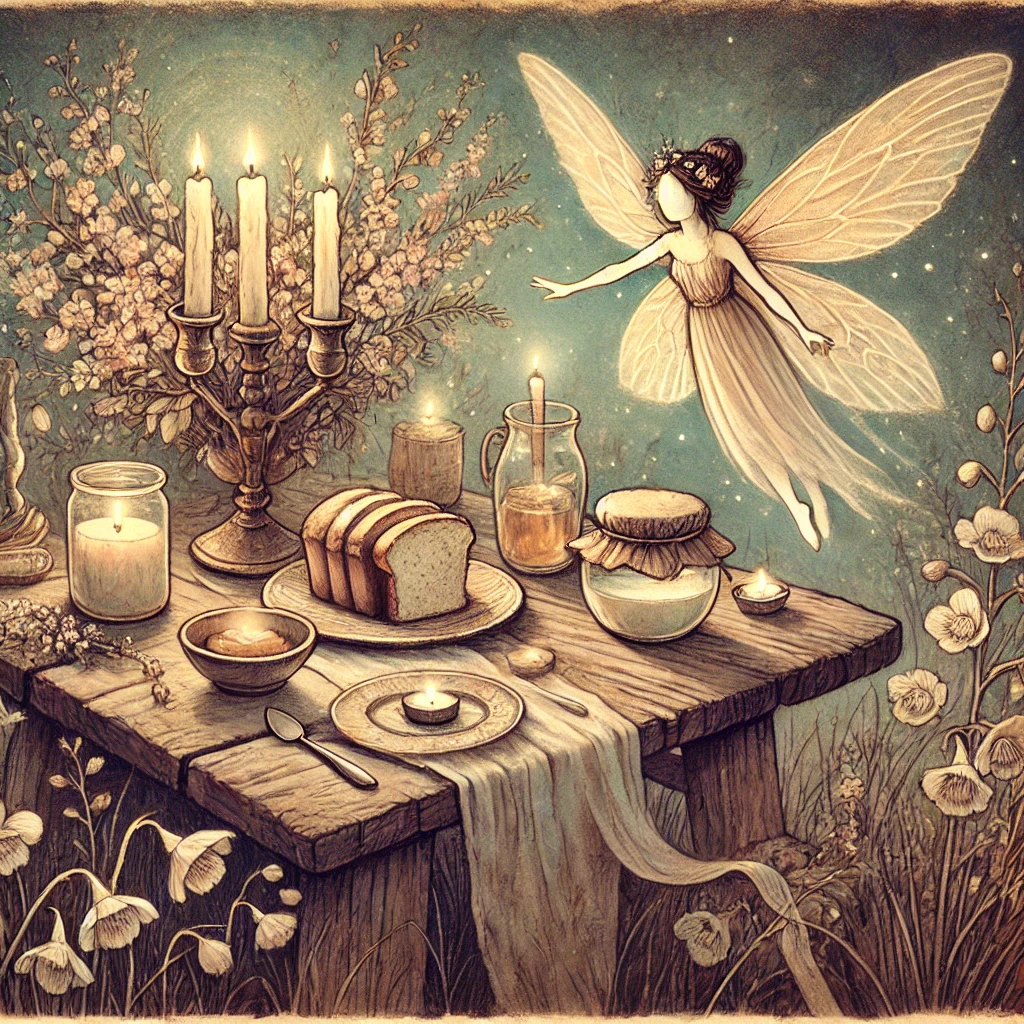
A fairy flies above a candlelit table with bread, milk, honey and other Beltane foods

4. The Fae

Beltane is one of the two times of the year when the veil between worlds is thin, making the Fae and spirits of the land more active. Many leave offerings of milk, honey and bread to honor them, while others take precautions to avoid their mischief.

5. The Green Man and the Goddess

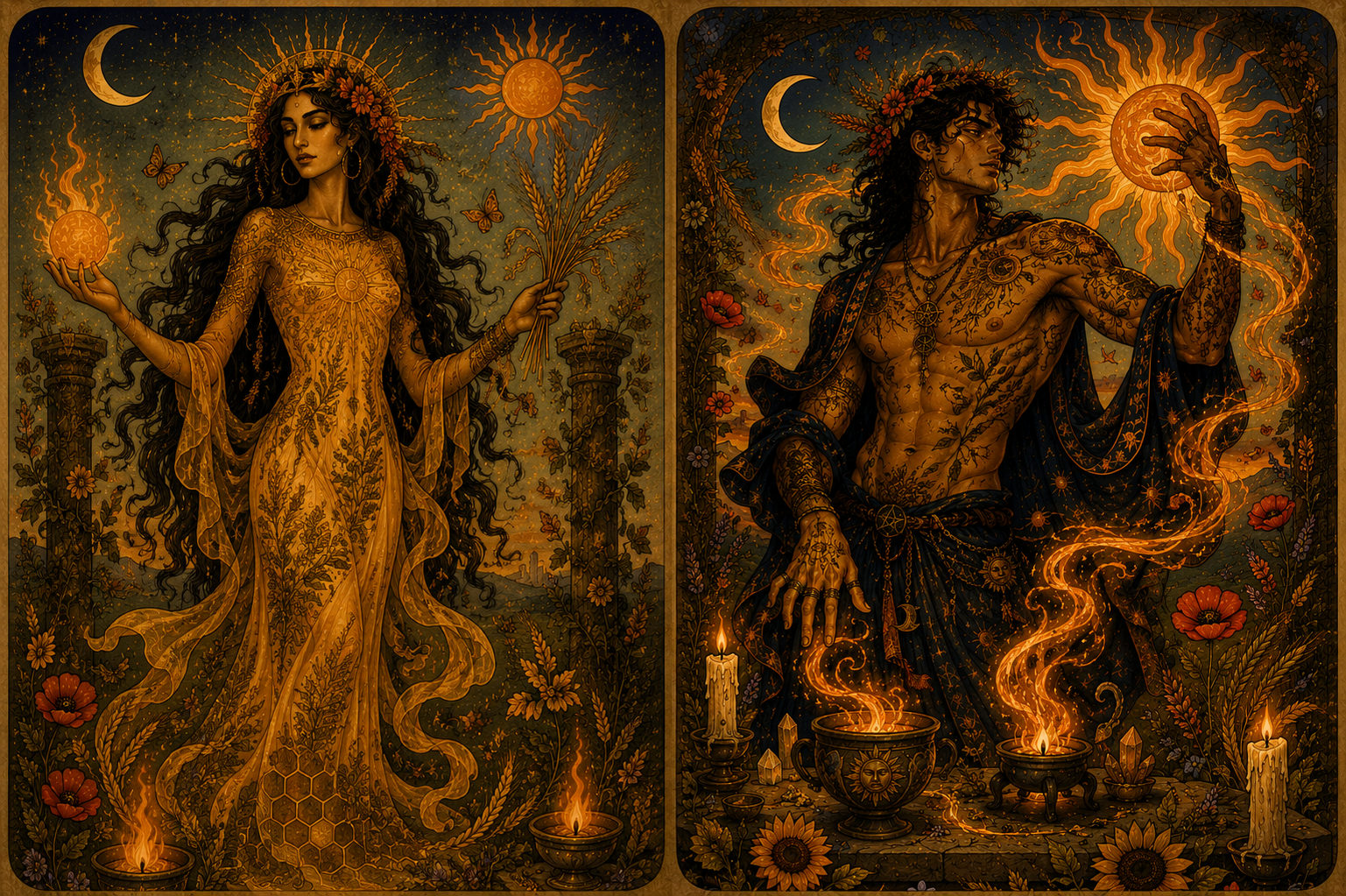
The union of earth and sky, god and goddess, life and fertility is a central theme of Beltane. The Green Man, a leafy-faced figure found in old carvings and myths, represents the wild, untamed energy of nature. His counterpart, often depicted as the May Queen or a flower goddess, embodies fertility, beauty and the earth’s abundant gifts.

6. Ribbons and Knots

Weaving, braiding and tying knots are common Beltane practices, symbolizing the intertwining of forces, whether in relationships, creativity or personal power. Many use ribbons in Maypoles, hair braids, handfasting ceremonies or small intention charms to honor the magic of the day.

7. The Color Red

Red is the color of passion, fire and vitality, making it the perfect hue for Beltane. Wearing red, lighting red candles, or using red flowers invokes the bold energy of the season, fueling creativity, love and courage.

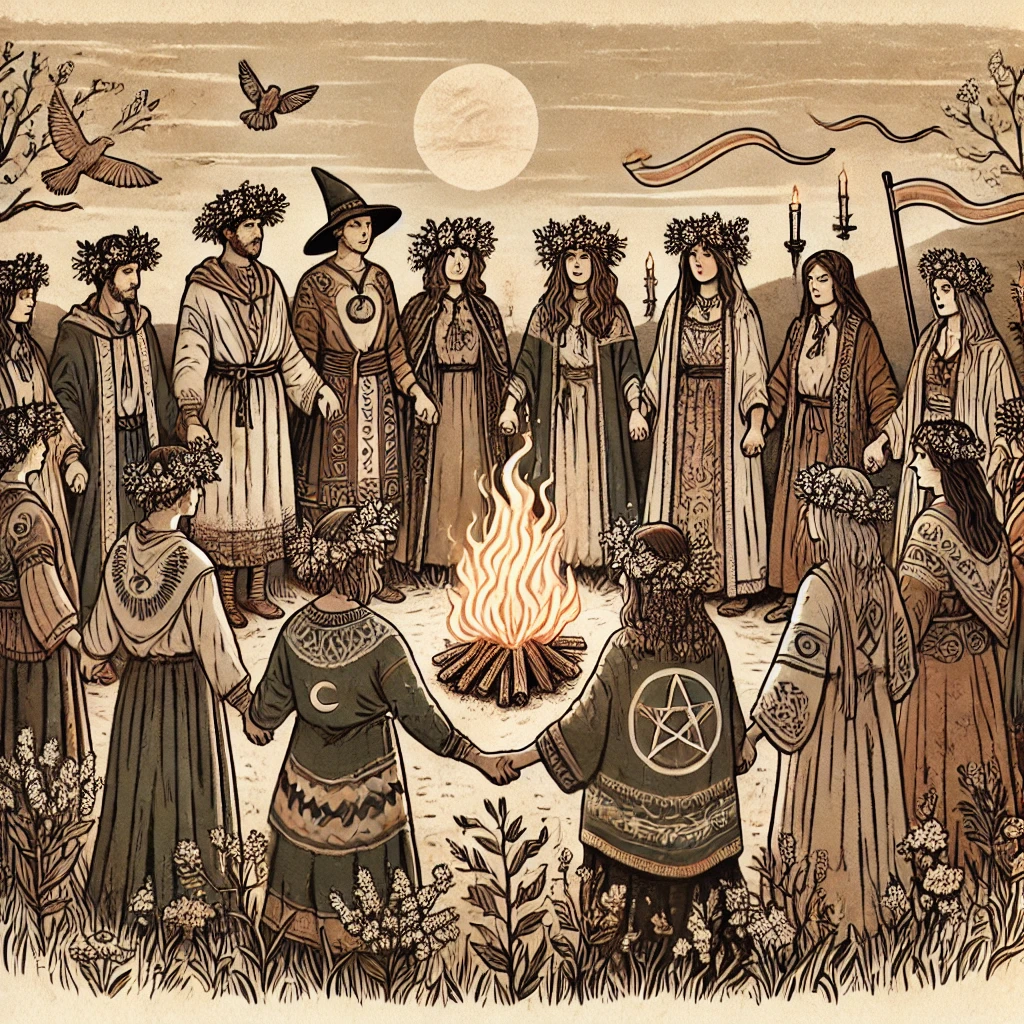
A coven of Wiccans stand in a circle by a bonfire to celebrate Beltane

A Simple Beltane Ritual

This ritual honors Beltane’s fire, passion and fertility — whether that means love, creativity or personal growth. You’ll invoke the energy of the season with fire, flowers and a rhyming chant to set your intentions ablaze.

You’ll need:

  • A red or orange candle (or a small fire, if safe)

  • A ribbon (any color that calls to you)

  • A flower or sprig of greenery (hawthorn, lilac or oak if possible)

  • A small bowl of honey or milk as an offering

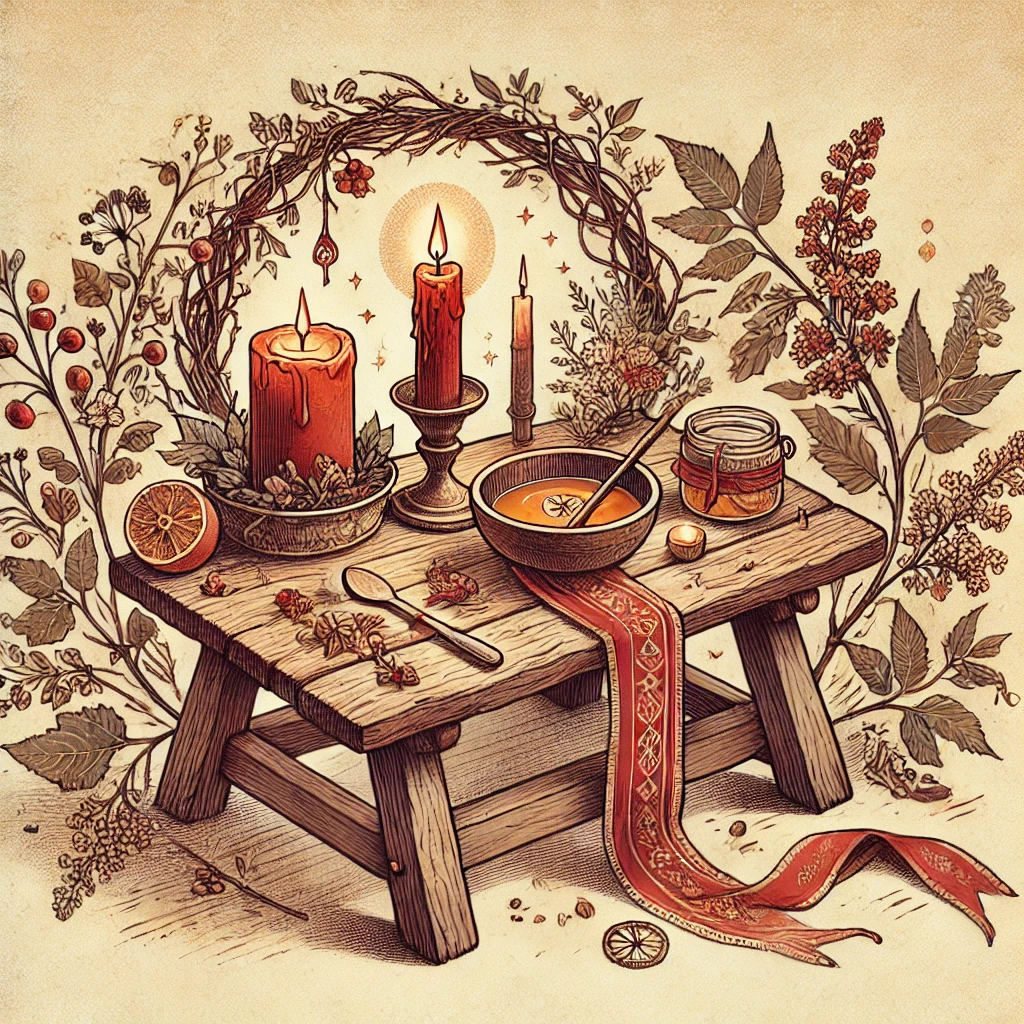
A wooden altar set up for a Beltane ritual, with candles, honey, greenery  and a ribbbon

The Ritual

1.Set the scene: Find a quiet place, indoors or outside. Cast a magic circle if you want. Light the candle and take a deep breath, imagining yourself surrounded by the warmth of a Beltane bonfire.

2. Call the fire’s blessing: Hold your hands over the flame (at a safe distance) and say:

Fire bright, passion’s light,
Burn away the dark of night.
Bless this time, this turning wheel,
With love and joy I dance and feel.

3. Tie your intention into the ribbon: Hold the ribbon in your hands and focus on your desire for love, creativity, fertility or abundance. Tie a knot for each wish, saying:

Bound in fire, sealed in light,
My wish takes root, my path burns bright.

4. Offer the flower and honey: Lay the flower beside your candle and leave the honey or milk as an offering to the spirits of the land or the Fae.

5. Let the fire carry your intention: Pass the ribbon briefly over the flame or simply hold it close, infusing it with Beltane’s energy. Keep the ribbon on your altar, tied to your wrist or beneath your pillow to let your wish grow.

6. Close with gratitude: Blow out the candle and whisper a final blessing:

Beltane’s fire, warm and bright,
Guide my heart through day and night.

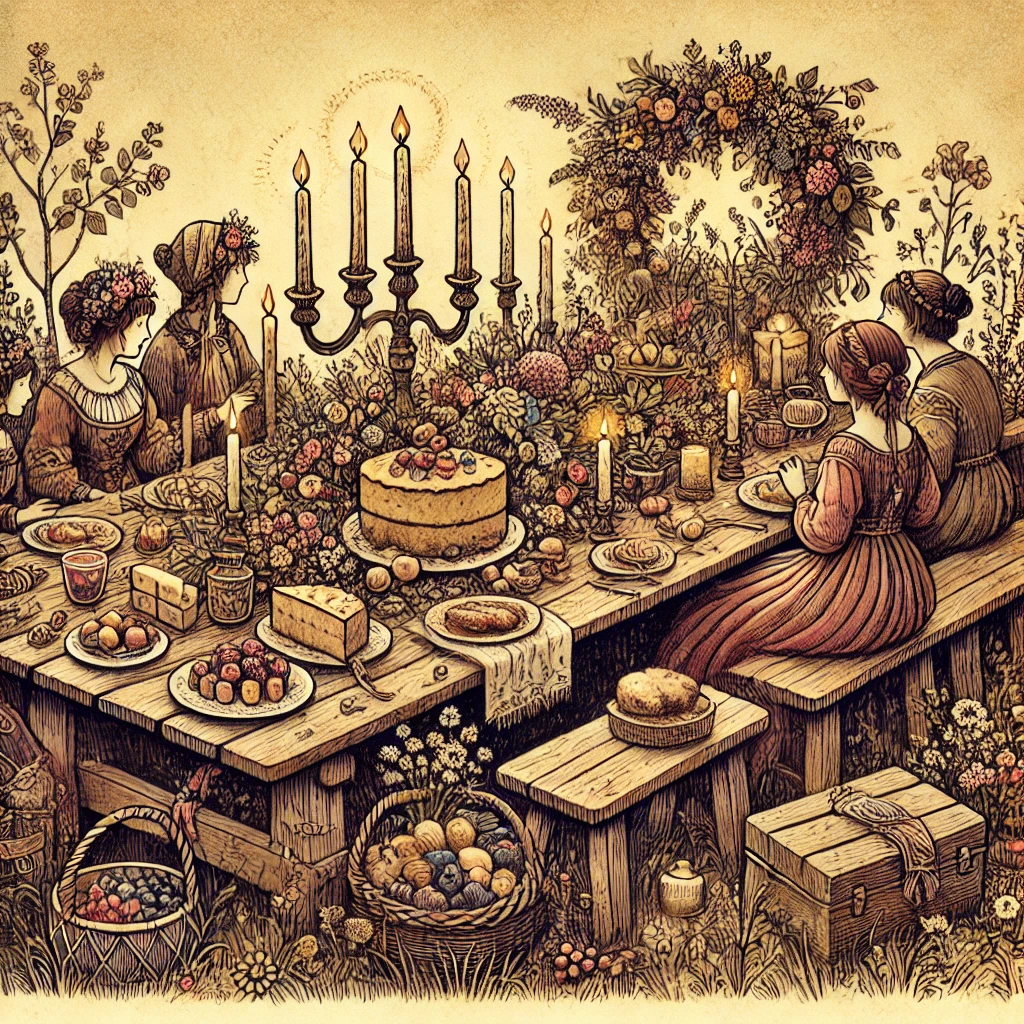
People sit at a table filled with treats and floral arrangements for a Beltane feast

Feasting for Beltane

Beltane is a festival of abundance, passion and pleasure, making feasting an essential part of the celebration. Foods that are sweet, fiery and full of life embody the spirit of this sabbat, honoring both the earth’s bounty and the traditions of the past.

Traditional Beltane Foods

Honey Cakes and Mead: Honey is sacred to Beltane, representing fertility and sweetness. Bake honey cakes, oatcakes or shortbread, or sip on mead to honor the old ways.

Dairy and Fresh Cream: In Celtic traditions, milk was often offered to the spirits of the land for fertility and protection. Enjoy cheeses, whipped cream or even a glass of milk as a nod to the past.

Seasonal Fruit and Herbs: Spring’s fresh berries, cherries, citrus and edible flowers are perfect for Beltane. Try strawberries dipped in honey or a salad with basil, mint and violets for a fresh, magical touch.

Spiced and Fire-Infused Dishes: Beltane is a fire festival, so foods with a bit of heat — like spiced nuts, hot honey or roasted peppers — connect to the day’s energy.

Bannocks and Oat Breads: Traditionally baked on Beltane morning, these simple, rustic breads are symbols of prosperity. Serve with butter and honey for a warm, grounding feast.

Beltane Punch: Mix fruit juices, a splash of something bubbly (like sparkling water or champagne), and fresh herbs for a refreshing, celebratory drink.

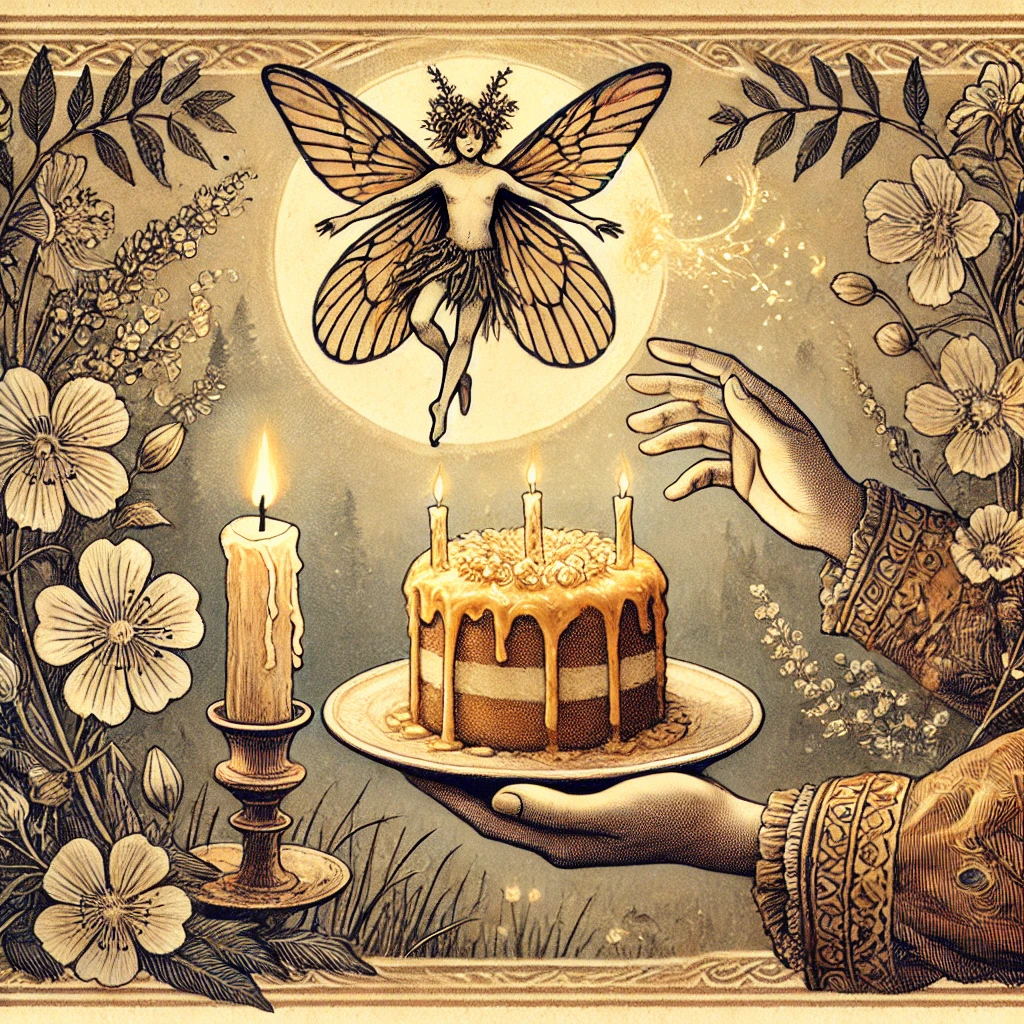
A fairy flies above a honeycake, held out as an offering

A Simple Beltane Honey Cake Recipe

This easy honey cake is perfect for Beltane feasting. 

You’ll need:

  • 1½ cups flour

  • ½ cup honey

  • ½ cup butter (softened)

  • 1 egg

  • ½ teaspoon cinnamon

  • ½ teaspoon nutmeg

  • ½ teaspoon baking soda

  • ½ cup milk

Instructions:

1. Preheat the oven to 350°F (175°C).

2. In a bowl, mix the butter and honey until creamy.

3. Add the egg, then stir in cinnamon, nutmeg and baking soda.

4. Alternately add flour and milk, mixing well.

5. Pour into a greased pan and bake for 25-30 minutes, or until golden.

Serve warm with butter, honey or fresh fruit — and don’t forget to leave a small piece as an offering for the Fae!

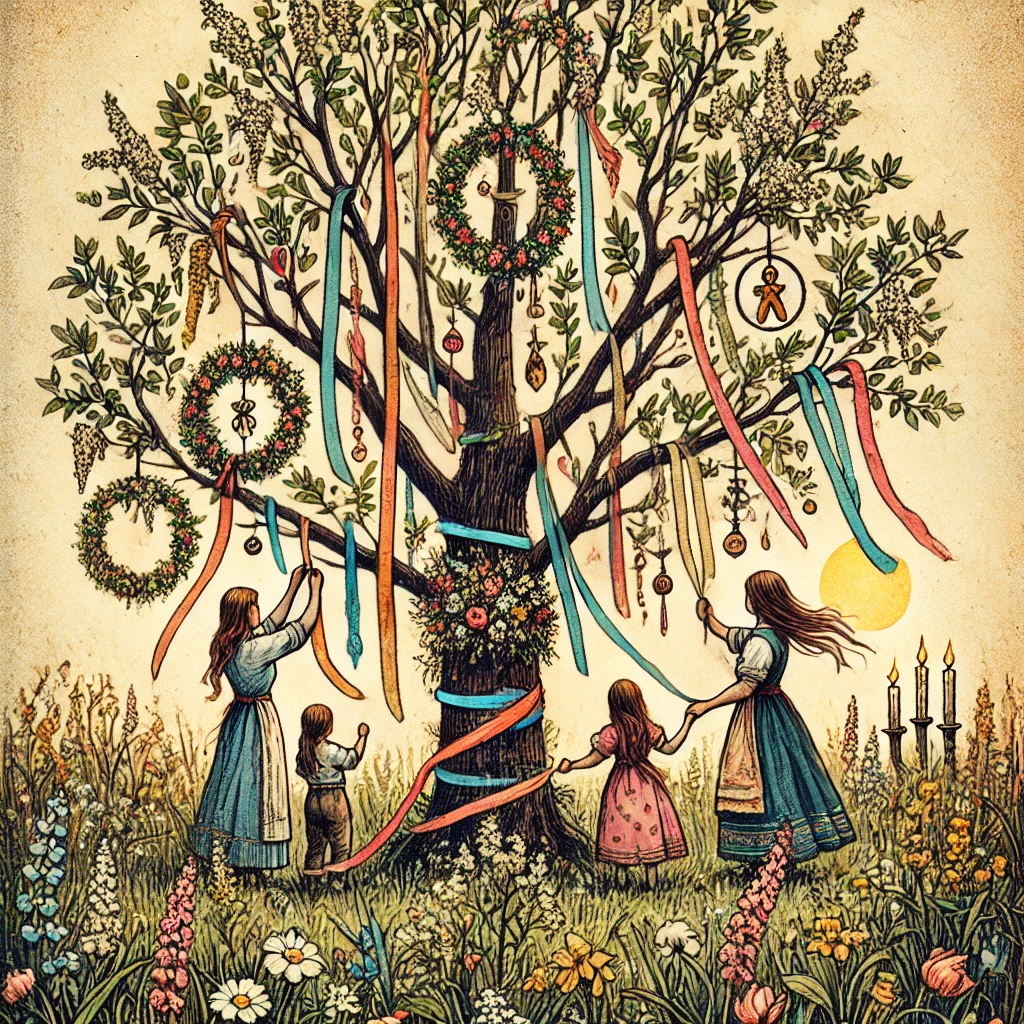
People decorate a Beltane tree with flowers, ribbons and charms

Crafting for Beltane

Beltane is associated with creativity, making it the perfect time for hands-on magic. Whether you’re weaving flower crowns, braiding ribbons or crafting charms, these simple projects help infuse your celebration with personal intention and seasonal energy.

Make a Flower Crown

Beltane is a time of full bloom, and wearing a flower crown connects you to the beauty and abundance of nature.

You’ll need:

  • Fresh or dried flowers (hawthorn, lilac, marigold or whatever calls to you)

  • Flexible floral wire or a grapevine base

  • Green floral tape or twine

How to make it:

1. Shape the wire or vine into a circle that fits your head.

2. Use floral tape or twine to attach flowers, weaving them into the base.

3. Wear your crown during Beltane rituals or celebrations — or leave it as an offering for the Fae. 

Create a Beltane Fire Charm

This simple charm invokes passion, protection and transformation, perfect for Beltane’s fire energy.

You’ll need:

  • A small red or orange pouch or piece of fabric

  • Dried herbs (cinnamon for passion, rosemary for protection, thyme for courage)

  • A small stone (carnelian, garnet or sunstone)

How to make it:

1. Place the herbs and stone inside the pouch.

2. Hold it over a candle flame (briefly and safely) and say:

Fire bright, bless this charm,
Bring me passion, love and warmth.

3. Keep it on your altar or carry it for fiery inspiration.

Decorate a Beltane Tree

In ancient traditions, Beltane trees were adorned with ribbons, flowers and charms to honor nature’s energy.

How to do it:

1. Tie ribbons, bells or small trinkets to a tree in your yard or local park.

2. Whisper a wish or blessing as you tie each ribbon.

3. Leave an offering of honey, milk or bread for the spirits of the land.

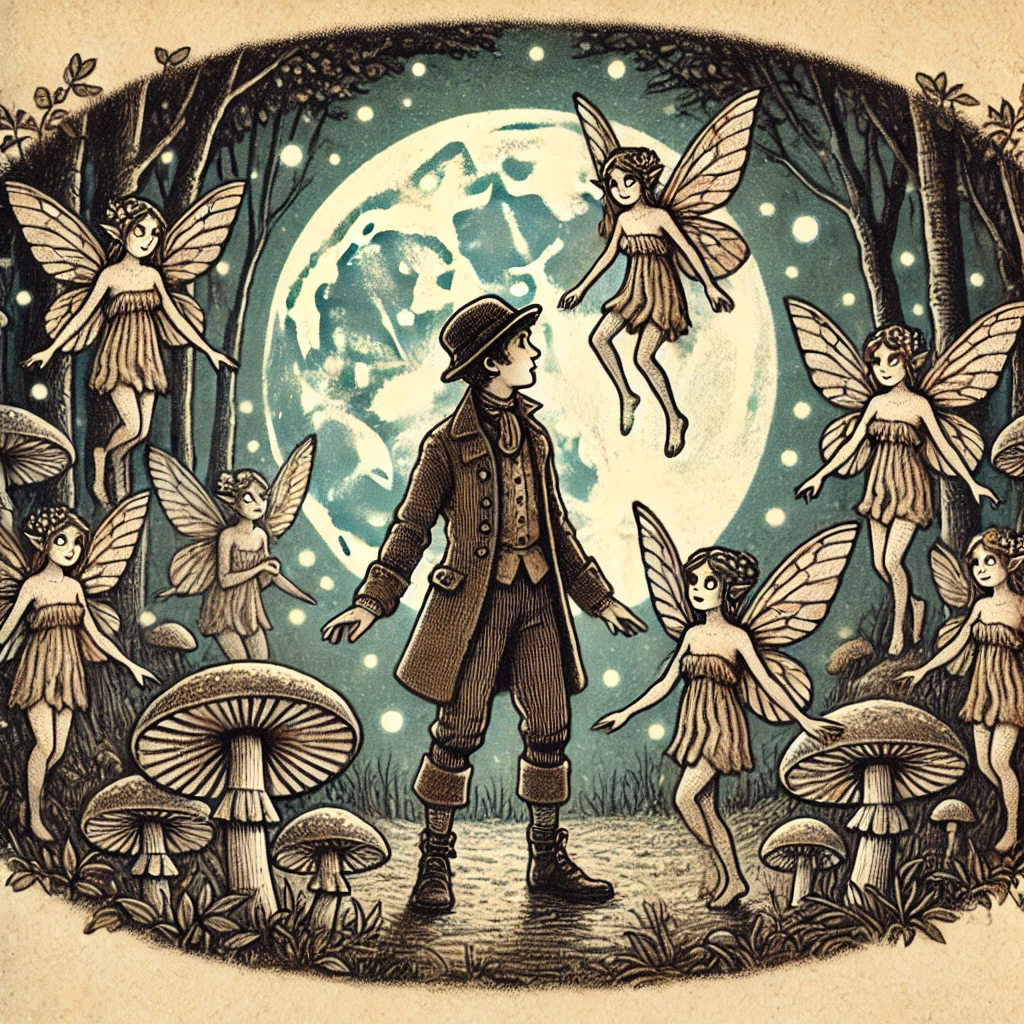
A boy stands amid a group of fairies by mushrooms at a full moon

Celebrating Beltane: Fire, Passion and Magic

Beltane is a festival of fire, passion and abundance — a time to revel in the warmth of the season, dance with wild joy, and set intentions that burn as brightly as the bonfires of old. Whether you’re jumping the flames, weaving ribbons, feasting on honey cakes, or whispering wishes to the Fae, this sabbat invites you to embrace life’s pleasures and celebrate the magic of May.

So light a candle, sip something sweet, and let Beltane’s fire ignite your dreams, desires and creativity. The wheel is turning, the Earth is alive, and the night is filled with wild magic. –Wally
Beltane: Get Fired Up for the Wiccan Fertility Festival

The history of Beltane, from bonfires to maypoles. Plus, how to perform a Wiccan Beltane ritual and cast a witch’s ladder love spell. 

Wiccans raise their hands in a circle around a giant bonfire on Beltane

Beltane might have started with the ancient peoples of Western Europe — but celebrations still take place nowadays.

Who knew that jumping over flames was the key to making babies?

The ancient Celts, that’s who. The practice was a staple of the holiday known as Beltane. 

Now a Wiccan holiday, Beltane is traditionally celebrated as a spring festival, usually on or around May 1 in the Northern Hemisphere. (You can imagine how it has influenced modern May Day celebrations.) It marks the midpoint between the spring equinox and the summer solstice, which means that it is a cross-quarter festival, falling halfway between two of the four major solar festivals of the year (the equinoxes and solstices). However, some people consider Beltane to be a summer festival, as it is often associated with the beginning of the summer season and the longer, warmer days that come with it.
Participants would jump over fires or pass through them for purification and blessings — and to increase their chance of getting knocked up. 

“The celebration of Beltane was linked to the ancient Celtic calendar, which divided the year into two halves, light and dark. Beltane was a time of transition between the two, marking the beginning of the light half of the year,” Peter Berresford Ellis writes in The Druids.

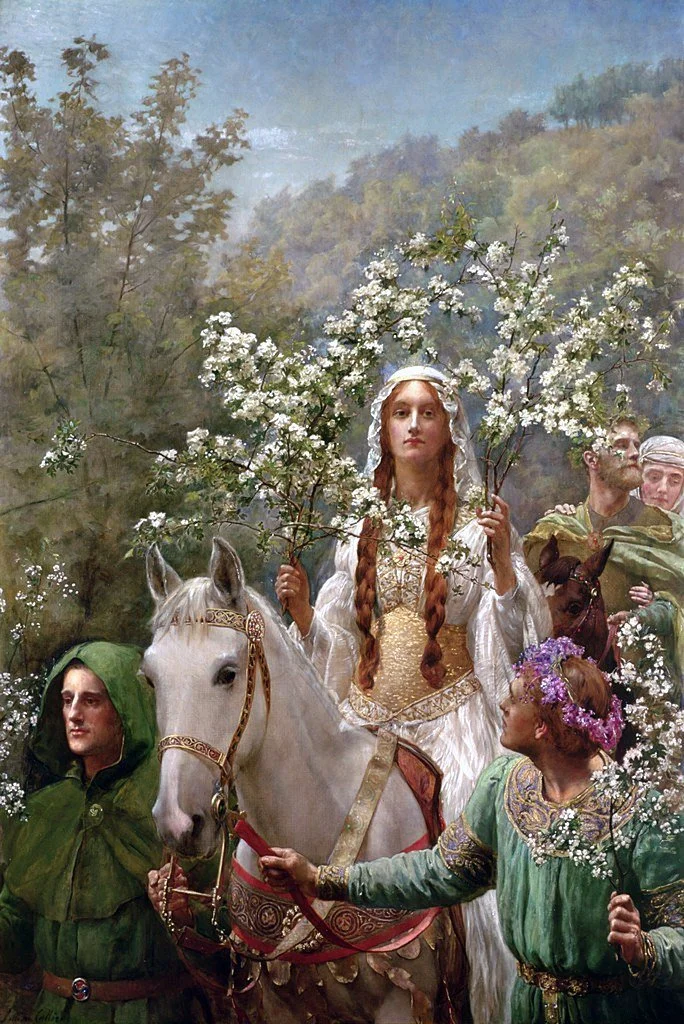
Painting of Queen Guinevere on a white horse holding branches of white flowers being led by men in green cloaks

Queen Guinevere’s Maying by John Collier, 1900

While its exact origins are shrouded in mystery, we do know that Beltane has been celebrated in one form or another for thousands of years. It’s believed to have originated as a Celtic festival to celebrate fertility and growth, which is why people would dance around a giant phallic symbol (the maypole) and leap over bonfires. Apparently, this was all very conducive to fertility. Couples would join in the fun and leap together to cement their bond. 

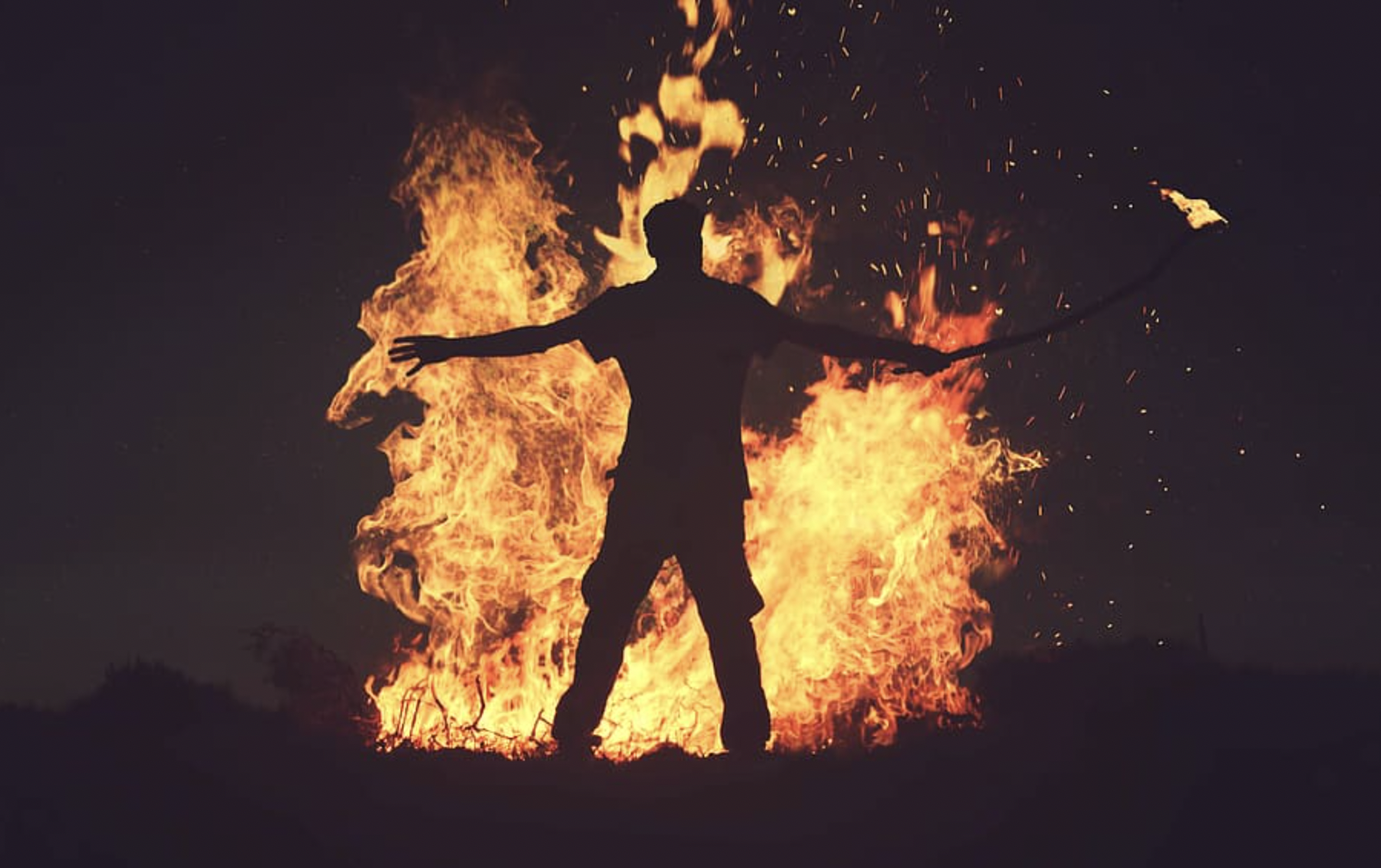
Silhouette of man against large bonfire for Beltane

This bonfire is too high to jump over. Many Wiccans and neopagans today prefer to jump over a candle.

From Fertility to Frivolity: The Flaming Hot History of Beltane

Bonfires are a big part of Beltane. 

Back in the day, people would light giant fires and lead their livestock through the flames to purify them from disease and ensure fertility for the coming year. (I don’t recommend trying that at home, folks.)

It wasn’t just about the animals, though. Bonfires were set ablaze for the community to celebrate the returning warmth and light of the sun. Participants would jump over the fires or pass through them for purification and blessings — and to increase their chance of getting knocked up. 

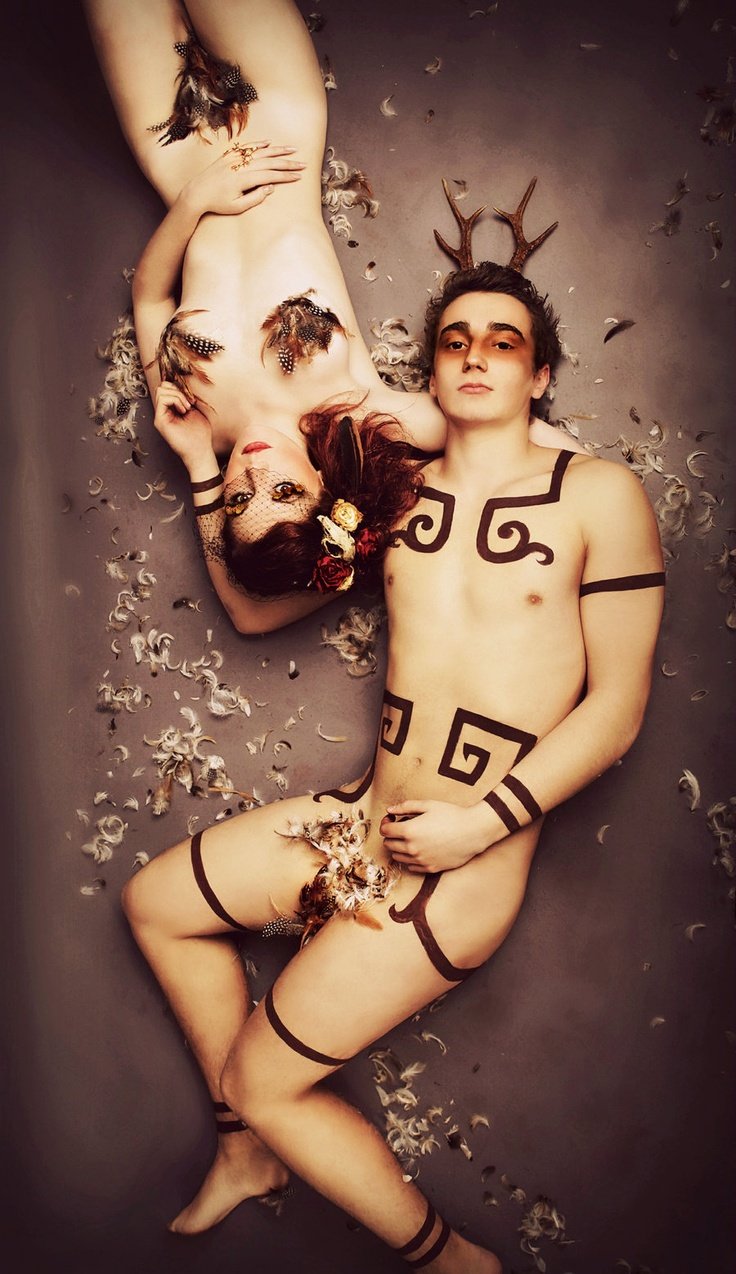
Nude neopagan woman and man laying down, with feathers cover the woman's privates and breasts, and man with gold makeup around his eyes, dark tribal markings and feathers over his groin

It’s not certain, but a man and woman might have come together sexually during the rite of Beltane in the past as way to symbolize the union of the Goddess and God.
Ritual sex might have been practiced at Beltane. 

In addition, people would maybe even indulge in a little bit of ritual hanky-panky (if you catch my drift). There’s evidence to suggest that ritual copulation may have been part of Beltane celebrations in pagan times. Some historical accounts describe Beltane as a time when couples would come together in a sacred union to symbolize the union of the Goddess and the God, or the masculine and feminine energies of the universe. 

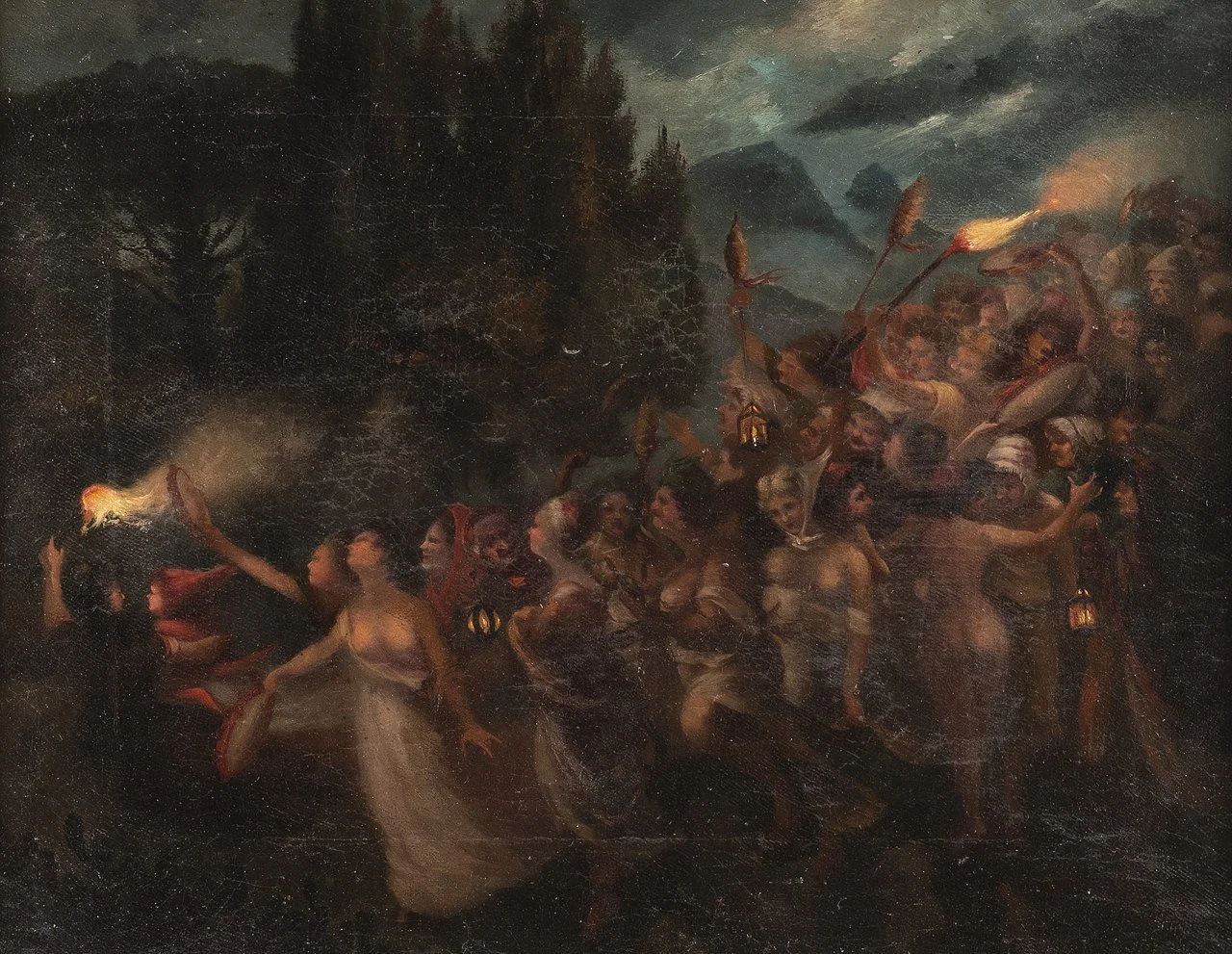
Walpurgisnacht/Hexensabbat by Orlando Antonio, 1878

Beltane gets connected to Walpurgis Night.  

Beltane is sometimes celebrated on the same day as Walpurgis Night (Walpurgisnacht or Valborgsmässoafton), a pagan festival observed in parts of Northern Europe. The festival is named after Saint Walpurga, an 8th century Christian missionary who was believed to have fought against pagan customs and beliefs (boo, hiss). 

In Germanic folklore, Walpurgis Night was believed to be a time when witches and supernatural beings gathered on mountaintops to hold revels and celebrate the coming of spring. Bonfires were lit to ward off evil spirits, and people would dress in costumes or wear masks to avoid being recognized by the evil creatures. 

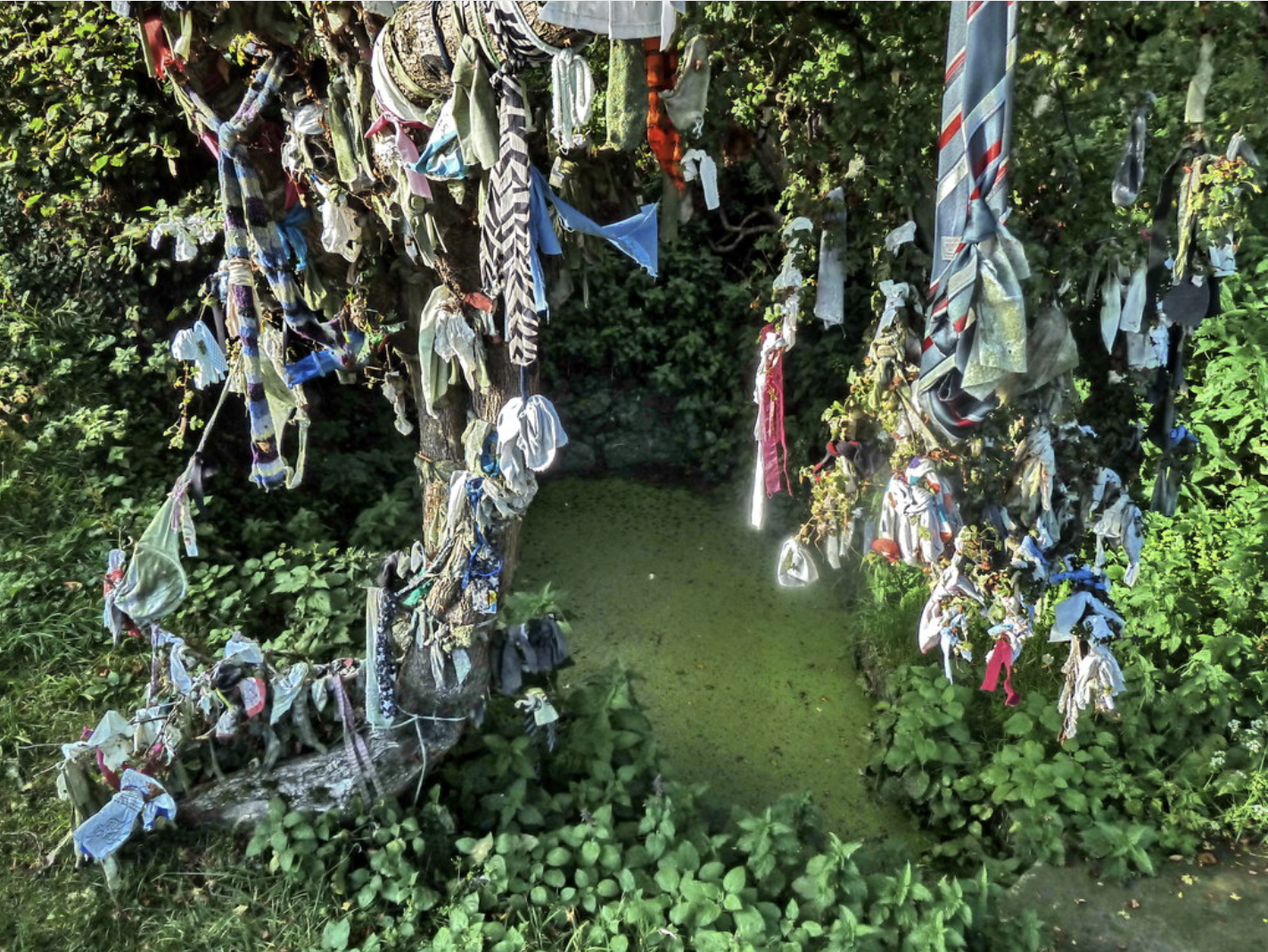
Holy well with ribbons tied to the plants all around

Around Beltane, pilgrims tie ribbons to trees when visiting this holy well at Cranfield in Northern Ireland.

On Beltane, holy wells or natural springs were visited. 

This was yet another way to celebrate the return of life and fertility to the land. Some of the customs that people performed at holy wells on Beltane were:

  • Leaving offerings of flowers or small personal items, including tying ribbons to nearby branches

  • Walking clockwise around the well while praying for good health

  • Drinking or washing with the water, which was thought to have healing properties

  • Collecting dew from nearby grass or flowers, believed to bring beauty and youthfulness

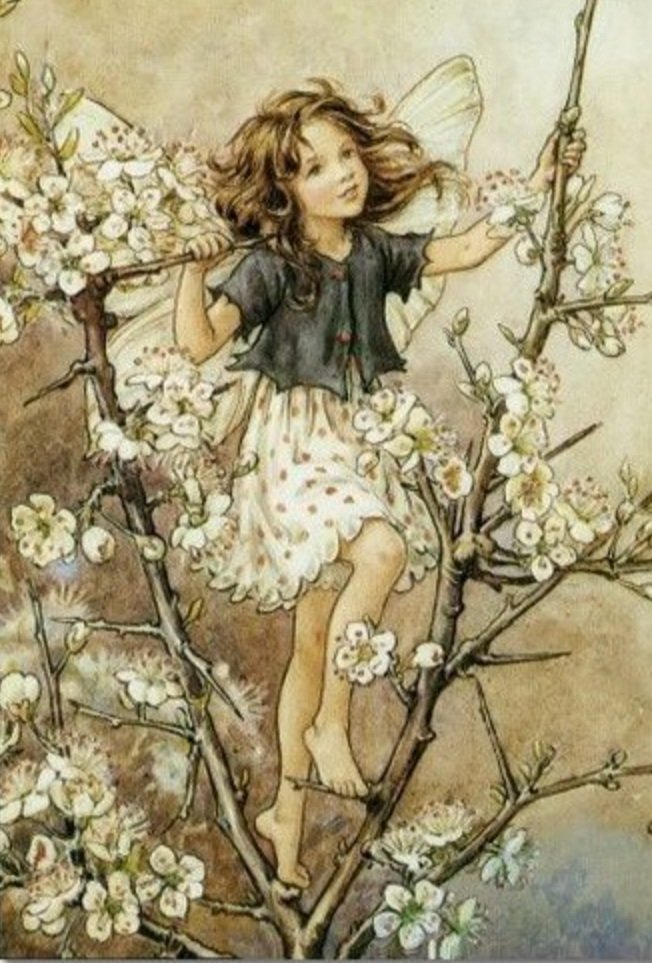
Fairy in the bows of a hawthorne tree blooming white flowers

Hawthorns are connected to the fairy realm.

The hawthorn tree, a symbol of Beltane, are portals to the fairy realm. 

Hawthorn trees are a type of thorny shrub that have white flowers in the spring. In Celtic culture, hawthorns were considered sacred and connected to the fairy realm. They were often found near holy wells or on fairy hills, where they marked the entrance to the land of fey. 

At Beltane, people would decorate hawthorn trees with ribbons and flowers as a way of making wishes or honoring the fairies. However, hawthorns were also feared, as they could bring misfortune if harmed. There was a strong taboo against cutting down a hawthorn tree or bringing its flowers into the house. 

Some legends say that if you sit under a hawthorn tree on Beltane, you might see fairies — or even be snatched away by them. 

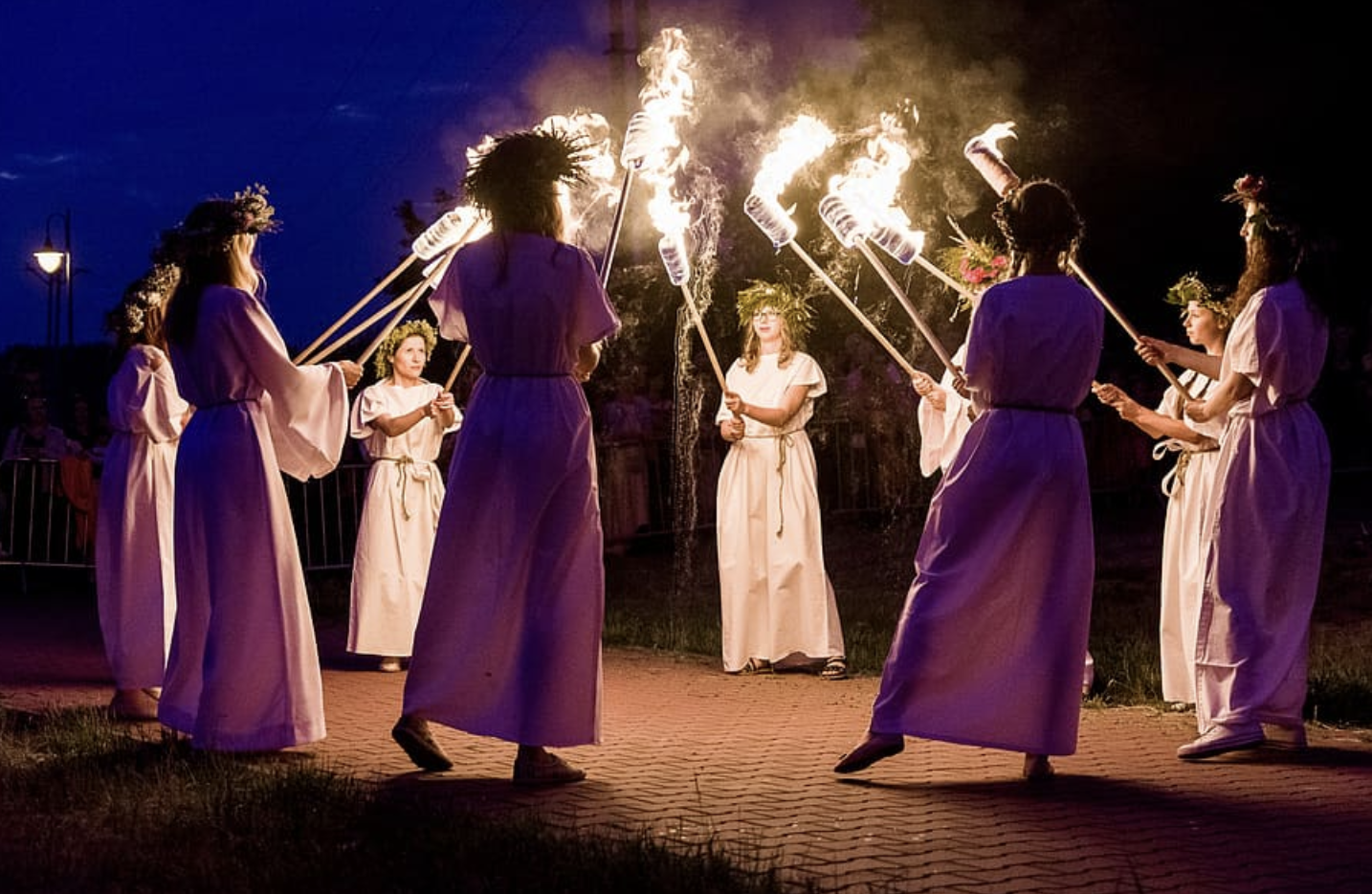
Women in white robes with flower garlands on their heads stand in a circle holding torches joined in the middle

Beltane is the perfect time to embrace new beginnings and focus on the things you want to change.

Modern-Day Wiccan Beltane Practices: Transformation Time

Beltane is also a time to embrace new beginnings, to take a long, hard look at your life and ask, “What do I want to achieve? What do I want to change?” And then you can dance around the bonfire and hope that the pagan gods give you a little nudge in the right direction.

“Beltane is a time to celebrate the life force within us and around us. It’s a time to honor the wildness and vitality of nature, and to tap into that energy to bring about positive change in our lives,” writes Phyllis Curott in Book of Shadows

Here are some ways for modern-day Wiccans to celebrate Beltane:

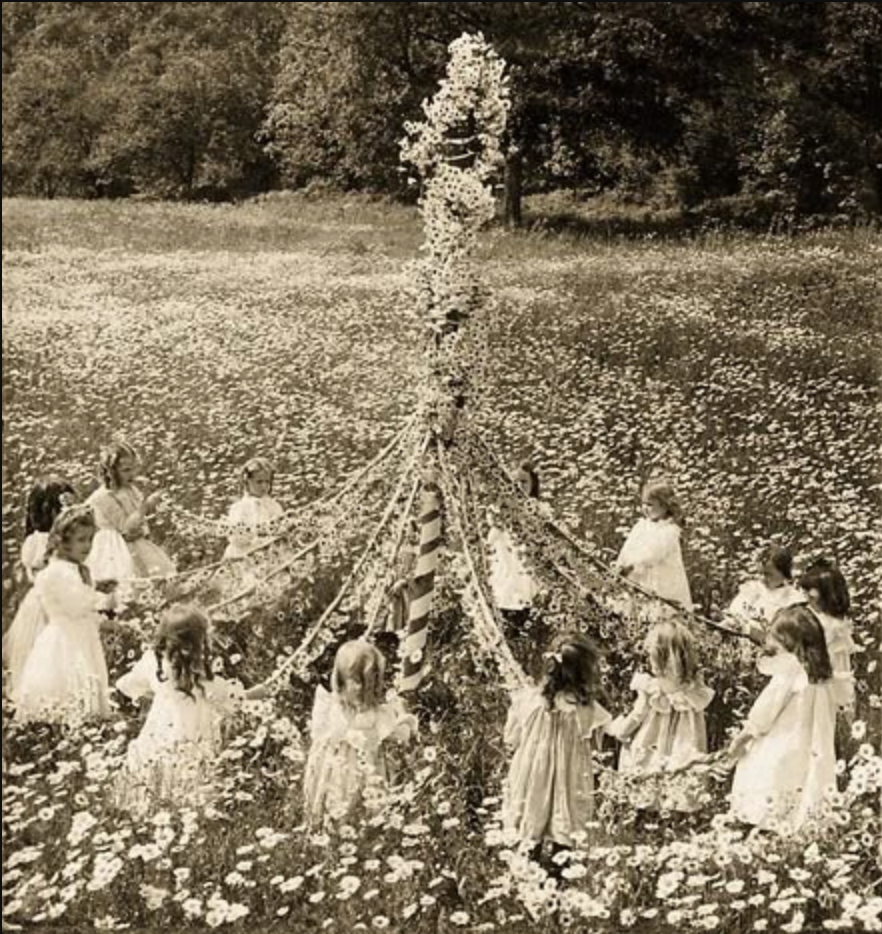
Sepia vintage photo of young girls in field of flowers holding ribbons around a maypole

Less explicit than ritualized coupling, maypoles are sometimes viewed as phallic, while the ribbons represent fertility. As they twine together, it’s a mingling of masculine and feminine energies.

Create a maypole. 

You can decorate your maypole with ribbons or other symbols of the season, and dance around it with friends or family.

Cast a love spell. 

Beltane is a time when the energies of love and fertility are said to be at their strongest. Many Wiccans choose to perform love spells during this time, whether to attract a new partner or to strengthen an existing relationship. I imagine it’s also a good time to work some magic to try to get pregnant.

Perform a garden blessing. 

At Beltane, the Earth is coming back to life, and many Wiccans choose to bless their gardens or outdoor spaces at this time. You can create a simple ritual by lighting a candle and incense and reciting a blessing for the plants and creatures that call your garden home.

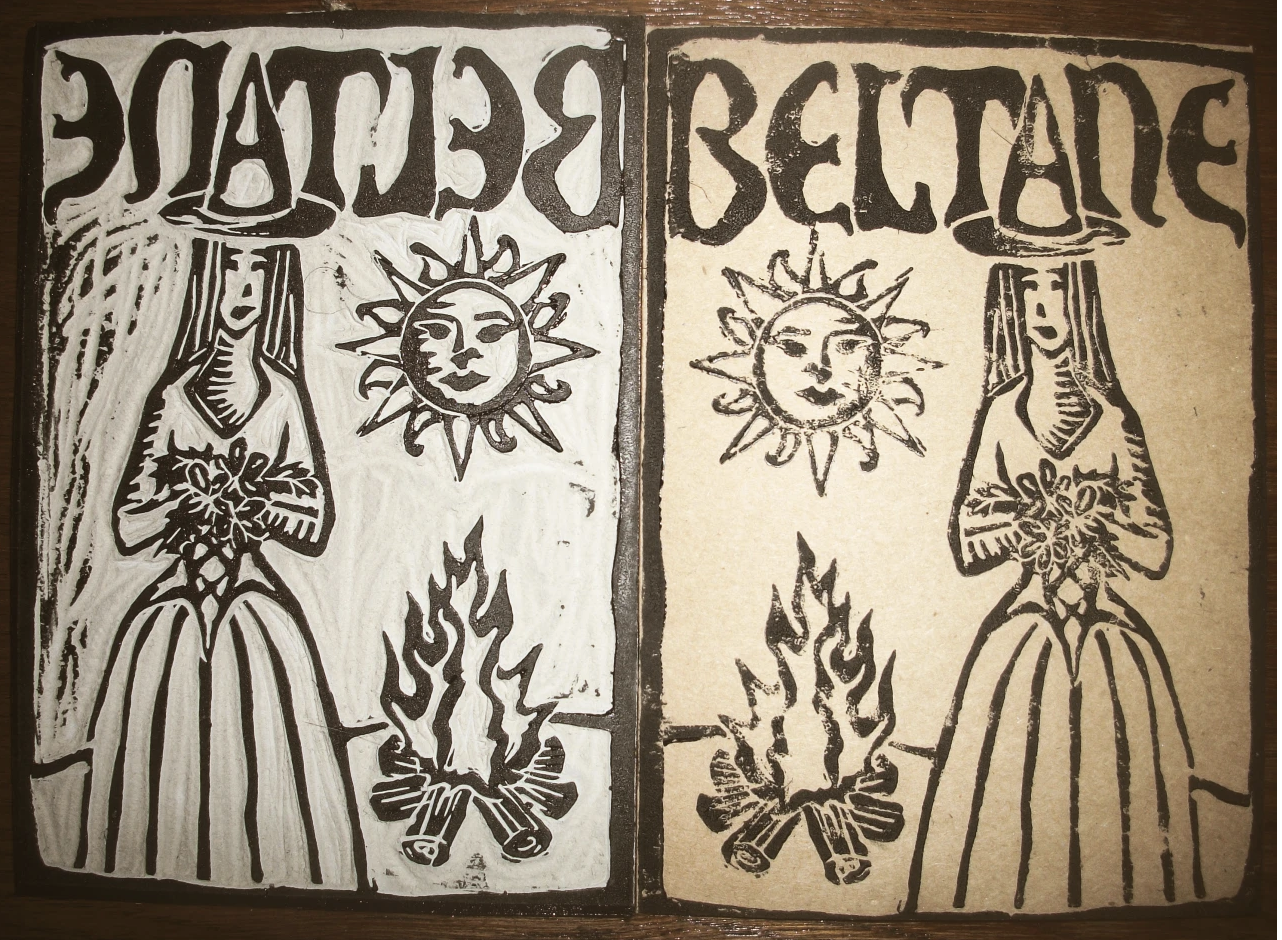
16th century woodcut that reads Beltane and has a witch, sun and bonfire

Welcome in warmer days, manifest love or pregnancy and work on your personal growth during a Wiccan Beltane ritual.

A Beltane Ritual

A Wiccan Beltane ritual is a way to honor the sacred union of the Goddess and the God, celebrate the fertility of nature, and express your personal goals and desires. There are many ways to perform a Beltane ritual, but here’s one example. What I love about Wicca is that you can always adapt any practices to your preferences and circumstances. 

Find a tree branch to place on your altar. 

Add ribbons, flowers, candles, incense (rose, violet or mugwort) and any other items that represent Beltane to you on your altar. You will also need a cup of a ritual beverage (such as wine or water), some bread or cake for an offering, and any spell components you want to use.

Take a ritual bath and dress yourself for Beltane. 

Baths aren’t necessary, but it’s a good way to purify yourself and get into the zone. As for your ritual outfit, bonus points for flowers in your hair and a wreath or garland around your neck. Floral patterns are always a good idea at Beltane. 

Light the candles and incense and ground yourself. 

Cast a circle starting from the south (the direction of fire). 

Chant:

By the powers of the Sky Father
The burst of wind, the shower of rain
The bolt of lightning, the clap of thunder
By the powers of the Earth Mother
The strong mountain, the fertile soil 
The rushing river, the fragrant wildflowers
May this circle be cast 
A place between the worlds
On this Beltane Sabbat
Joining the powers above
And the powers below
So mote it be.

Invoke the Goddess and God. 

Do this in whatever way feels right to you. You can use statues, candles or pictures to represent them on your altar. You can also recite a poem or prayer dedicated to them. For example:

Blessed be the Lady of Spring
Who brings life and joy to all things. 
Blessed be the Lord of Fire 
Who sparks passion and desire. 

Express your gratitude for all that you have received. 

Think about how you have grown physically, mentally, emotionally and spiritually in this season. Thank the deities for their gifts and guidance.

State your intentions for what you want to manifest in your life. 

What areas of your life need more growth, creativity or love? Write them down on ribbons. Tie the ribbons around your tree branch while saying what you want to attract into your life.

Make a witch’s ladder to bring love into your life. 

Braid three ribbons (pink, red and white). Weave in objects that symbolize love, such as rose petals, heart-shaped charms and rose quartz crystals. 

As you do, chant:

Love come near, love come fast
Love be strong, love be lasting
Love be kind, love be true 
Love be mine, I welcome you.

Hang the witch’s ladder somewhere you can see it often.

Celebrate by eating and drinking your offerings. 

Thank the Goddess and God for sharing their energy with you.

Close the circle. 

Do this in the reverse order from how you invoked them.

Say: 

The circle is open but unbroken. 
May peace and love remain within. 
Merry meet
Merry part
And merry meet again.

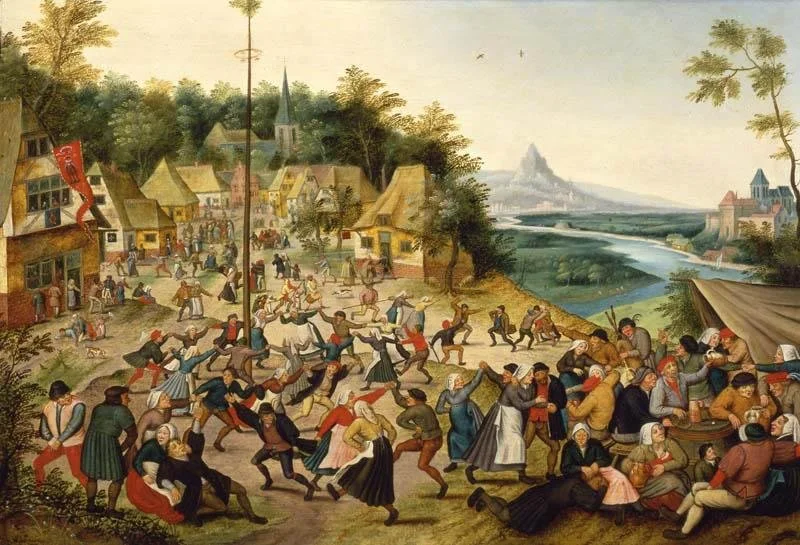
People dancing around a maypole in a painting of a village with a river and mountain in the distance

St. George’s Kermis With the Dance Around the Maypole by Pieter Brueghel the Younger, 1627


As if longer, warmer days weren’t enough to celebrate, Beltane’s also got pole dancing, leaping over flames, tempting fairies, casting love spells and maybe even a little outdoor sex. It’s the ultimate spring fling. –Wally