tech

From Airports to Hotels: The Complete Guide to Using VPNs for Safer Travel

Learn how to use a VPN for safer travel, from airports and hotels to cafés and public Wi-Fi. Discover smart tips to protect your privacy, accounts and personal data while traveling.

Travel is glamorous in the online world and mildly chaotic in real life. One moment you’re gliding through O’Hare International Airport with an overpriced latte, the next you are crouched beside a gate outlet at 12% battery, desperately joining a Wi-Fi network called FreeAirportGuest123. This is how horror stories begin.

When you move through airports, taxis, hotels, cafés and coworking spaces, you often rely on public internet. It’s convenient, yes. It’s also one of those modern travel traps people ignore until something weird happens to a credit card, email account or login. That’s where a VPN can earn its carry-on status.

A VPN, or virtual private network, helps encrypt your internet traffic and adds privacy when you browse, book tickets, check accounts or do the deeply personal act of Googling “best bakery near me.”

Why Travelers Should Care About Online Safety

At home, your Wi-Fi is usually familiar and controlled. On the road, you’re connecting to networks owned by airports, hotels, cafés, rental hosts or no one obvious at all.

Public networks can be less secure, especially if they’re open or poorly configured. That can create opportunities for bad actors to snoop on traffic, create fake login pages or harvest data from careless users.

Translation: The charming little coffee shop in Lisbon may have divine pastries, but its guest Wi-Fi may not be part of your wellness journey.

Using a VPN adds a layer of protection by encrypting your connection, which can make it harder for others on the same network to see what you’re doing.

Choose Your VPN Before the Wheels Go Up

Don’t wait until you’re stranded in an airport trying to download a VPN while your boarding group is mysteriously already boarding. Set it up before your trip. 

Find the best VPN. Look for one that:

  • Is easy to use on phone and laptop

  • Connects quickly without drama

  • Has servers in multiple countries

  • Supports streaming, browsing and booking sites smoothly

  • Has strong reviews and a solid reputation

  • Offers clear privacy policies

The best travel gear disappears into the background. Your VPN should do the same.

Public Wi-Fi: Convenient, Charming, Slightly Suspect

Free Wi-Fi at airports, train stations and malls feels like a public service. Sometimes it is. Sometimes it’s simply crowded, slow — and vulnerable.

Thousands of strangers may use the same network. Your personal information can be exposed and other risks increased, especially if you’re logging into banking apps, email or shopping sites. 

With a VPN switched on, your traffic is encrypted, which can help protect sensitive activity while you wait for a delayed flight and contemplate revenge.

Hotels, Resorts and Other Places With Decorative Pillows

Hotel Wi-Fi often feels safer because there’s a front desk and someone handed you a keycard. Sadly, trust is not a cybersecurity protocol.

Many hotels use shared guest networks designed for convenience first. In hostels, rental apartments or budget stays, network security may vary even more.

If you’re checking work email, accessing files, booking transport or logging into personal accounts, a VPN is a smart move. Especially if you’re working remotely from a balcony and convinced that counts as work-life balance.

Fake Networks and Other Travel Scams

Scammers know travelers are distracted, tired and one delayed train away from irrational decisions.

A common trick is creating fake Wi-Fi names that resemble legitimate networks: “Hotel Guest WiFi,” “Airport Free Internet,” “Cafe Customer Access.”

You connect. They watch. Nobody wins.

A VPN can’t stop every scam, but it can help shield your browsing traffic. Pair it with basic common sense:

  • Confirm the correct network name with staff

  • Avoid entering passwords on suspicious pop-ups

  • Use two-factor authentication

  • Keep software updated

  • If it feels sketchy, use mobile data instead

Even after a glorious day scuba diving in Bali, you may still need to book a ride, check maps or message your hotel. Those quick moments are exactly when people get sloppy.

Smart VPN Habits for Travelers

Using a VPN isn’t complicated. That’s the beauty of it.

Make it routine:

  • Turn it on before joining public Wi-Fi

  • Keep it active for banking, bookings and payments

  • Update the app regularly

  • Use it in airports, hotels, cafés and transit hubs

  • Treat it like sunscreen — easiest when applied early

A Small Habit That Can Save a Big Headache

Travel already includes enough surprises: gate changes, mystery fees, luggage roulette and the person in seat 22B who removes their shoes immediately.

Your internet connection shouldn’t be one of them.

A VPN is one of those boring, practical travel moves that becomes interesting only when you wish you had made it sooner. –Mian Azhar

What Is an eSIM?

Lost without service? Here’s an explanation of what eSIMs are — and how they’re changing the game for travelers. 

A fabulous woman in a long colorful sundress stands on a pier in Bora Bora by huts over the water, looking at her phone

Your bags are packed, your itinerary is set, and you’re ready to explore. But the moment you step off the plane, your phone flashes a dreaded message: No Service.

You scramble to connect to airport WiFi (if it’s even available), fumble with a local SIM card you bought at a kiosk, and pray you remember your hotel’s address before getting into a taxi. Meanwhile, your friends and family have no idea where you are. Sound familiar?

ESIMs eliminate roaming charges, simplify setup, and ensure you’re never stranded without service.

Because the only thing you should be worrying about on your trip is where to explore next.

For years, travelers have been caught in this all-too-common nightmare — disconnected, disoriented and sometimes downright lost. But thanks to eSIM technology, staying connected abroad is no longer a hassle.

A handsome man holds his phone in the French Quarter of New Orleans, passing jazz musicians

What Is an eSIM?

An eSIM (embedded SIM) is a digital SIM card built directly into your phone. Unlike traditional SIM cards, eSIMs don’t require swapping out tiny plastic chips. Instead, you can activate a data plan by scanning a QR code — no waiting, no extra hardware.

And eSIMs are quickly becoming the standard. The number of eSIM-enabled devices is expected to grow from 1.2 billion in 2021 to 3.4 billion by 2025, according to a study by Juniper Research. That’s a 180% increase.

How Do eSIMs Work?

Setting up an eSIM is incredibly simple:

  1. Make sure your phone is compatible. 

  2. Purchase an eSIM plan from a provider online.

  3. Receive a QR code via email.

  4. Scan the code with your phone’s camera.

  5. Boom — you’re connected!

With an eSIM, you can store multiple data plans on a single device, meaning you can switch between providers with just a few taps. Many travelers keep their home number active while using an eSIM for data abroad — no more expensive roaming fees.

Why Travelers Are Ditching Traditional SIMs for eSIMs

1. Instant Connectivity

Gone see those frantic airport searches for a SIM card vendor. You can activate your eSIM before you even take off.

2. No More Roaming Nightmares

International roaming fees can be brutal. A 2023 study by WhistleOut found that some U.S. carriers charge up to $10 per day for international data, while pay-as-you-go rates can skyrocket to $2.05 per MB (that’s $2,050 for 1 GB!). ESIMs offer flat-rate, prepaid data plans that can save travelers hundreds of dollars per trip.

3. Eco-Friendly and Hassle-Free

ESIMs eliminate the need for plastic SIM cards, packaging and shipping, making them a greener choice. Plus, no more losing or damaging those tiny chips.

4. Dual SIM Capability

Need to keep your regular number active for calls and texts? No problem. Many eSIM-compatible phones let you use your primary number for calls while using an eSIM for data abroad.

5. Hotspot and Data Sharing

Some eSIM plans even allow tethering, so you can share your data with a laptop or travel companion — perfect for digital nomads or group travelers.

What to Know Before Using an eSIM

While eSIMs are a game-changer, they aren’t perfect for everyone. Here are a few things to keep in mind before making the switch:

1. Your phone must be compatible. 

Not all phones support eSIMs. As of now, only newer models from Apple, Samsung, Google and a few other brands work with eSIMs. If you’re unsure, check your phone’s settings or the provider’s compatibility list before purchasing.

2. You need WiFi for setup.  

To install an eSIM, you must be connected to WiFi. This means you should set it up before leaving home or from a hotel with stable internet. Forget to do it? You might struggle to get online when you land.

3. You don’t get a phone number on data-only plans. 

Most travel eSIMs are data-only, meaning they don’t provide a phone number for calls or texts. If you need to make calls, you’ll have to use WhatsApp, FaceTime or Google Voice instead.

4. Data sharing isn’t available everywhere. 

Not all eSIM plans allow hotspot sharing. If you plan to connect your laptop or share data with a travel partner, check whether your plan supports it — especially if you’re traveling in a remote area.

5. Coverage can vary. 

ESIMs rely on local networks, meaning signal strength and speeds depend on where you are. If you’re in a rural or mountainous area, you might experience weaker coverage — just like with a regular SIM card.

6. Switching providers may take a few steps. 

While eSIMs make it easier to change carriers, some phones require a manual reset when switching networks. If you’re juggling multiple providers, this could cause minor delays.

FAQs About eSIMs for Travelers

What exactly is an eSIM?

If you have a newer phone (like an iPhone XR or later, Google Pixel 3 or later, or a recent Samsung Galaxy model), the eSIM technology is already built into your device. You don’t need any extra hardware — just activate an eSIM plan by scanning a QR code or entering details manually, and your phone connects to a local network.

Since it’s embedded in your device, an eSIM can’t be lost, stolen or damaged like a traditional SIM card.

Why would I need an eSIM?

If you travel internationally, an eSIM lets you stay connected without expensive roaming fees or the hassle of swapping physical SIM cards. With an eSIM, you can activate a local or global data plan before your trip and have internet access the moment you land.

Does an eSIM replace an international data plan?

An eSIM is an international data plan, but instead of using your home carrier’s potentially expensive roaming package, it connects to local networks at a better rate. Unlike traditional international data plans that require carrier contracts, eSIMs are prepaid and flexible.

Can I use an eSIM and my regular SIM at the same time?

Yes. Most eSIM-compatible phones have dual SIM functionality, meaning you can keep your regular SIM active for calls and texts while using an eSIM for data. This is great for people who need to receive calls on their primary number while using a local data plan abroad.

Do eSIMs work in every country?

ESIM providers offer coverage in most major travel destinations, but coverage quality varies depending on local networks. Always check if your destination supports eSIMs before purchasing a plan.

What happens if I lose my phone while using an eSIM?

If you lose your phone, your eSIM is tied to that device and cannot be removed or swapped like a physical SIM card. However, you can still access your account from another device to transfer your eSIM, depending on your provider’s policy.

Can I share my eSIM data with other devices?

Some eSIMs allow hotspot sharing, while others restrict tethering. If you plan to use your phone’s hotspot for a laptop or another device, make sure your eSIM provider supports this feature in your destination.

Are eSIMs secure?

Yup. ESIMs cannot be physically stolen or removed, making them more secure than traditional SIM cards. However, like any digital service, it’s important to use strong passwords and enable remote tracking features on your phone in case of loss or theft.

How do I switch back to my regular SIM after my trip?

It’s easy! Simply go into your phone’s SIM settings and switch back to your primary SIM. If you don’t plan to use your eSIM again, you can delete it from your device.

Say Hello to Holafly: A Seamless eSIM Solution

While there are several eSIM providers out there, Holafly has made a name for itself by offering a frictionless, traveler-friendly experience. They’ve got:

  • ESIMs for 190+ destinations worldwide

  • Instant email delivery — no waiting or physical shipping

  • 24/7 support via WhatsApp, chat or email

  • Flat-rate pricing — no surprise fees or roaming charges

  • Data sharing supported in 30+ destinations

With over 1 million travelers already using Holafly, the company is helping make international connectivity effortless.

ESIMs: The Future of Travel Connectivity

ESIMs eliminate roaming charges, simplify setup, and ensure you’re never stranded without service.

If you’re ready to ditch the SIM-swapping stress, check out Holafly and get an exclusive 5% discount. Use the code: NOTSOINNOCENTS

This works whether or not you’re a new customer — and it’s valid for top-ups, too.

Because the only thing you should be worrying about on your trip is where to explore next. –Wally

Travel Planning Made Easy With Chatbots

If you want a stress-free travel experience, let chatbots help you find deals, book flights and hotels and create custom itineraries. Plus: Learn why you should have a VPN, too. 

Person in striped shirt with watch using a laptop computer

Travel planning has gotten a whole lot easier thanks to chatbots.

In the past, planning a trip was a time-consuming and often frustrating experience. Even today, many travelers have to spend hours researching flights, hotels and activities that fit within their interests, budgets and dates. 

But now there’s a new way to plan travel: chatbots. Generative AI chatbots are programs that simulate human conversation, using natural language processing and machine learning, allowing users to complete a variety of travel-related tasks with a digital device — almost as if they were communicating with a person.

Today’s chatbots are not like HAL, the sentient AI in Stanley Kubrick’s ‘2001: A Space Odyssey.’

They’re simply tools that can help you make your travel planning easier.

Even if you’re a seasoned pro, chatbots can still help you plan your next trip. New tech tools are making travel planning easier than ever. According to research by Humley, a UK-based tech company that creates AI-assisted chatbots, 87% of people surveyed said they would use a travel chatbot if it could save them time and money.

Today’s chatbots are not like HAL, the sentient AI in Stanley Kubrick’s 2001: A Space Odyssey. They’re simply tools that can help you make your travel planning easier.

A travel chatbot can act as a personal assistant, offer budget-friendly travel options, book transportation and offer suggestions based on user behavior. If you have an issue, it can seem as if airlines make you wait on hold for longer than the flights you’re trying to book. Why wait on hold for an hour when you can speak with a smart computer immediately? Hop aboard this growing trend.

Hand putting red pin onto map

Where to next? Chatbots can help you decide — and get the best deals.

Benefits of Travel Chatbots

As chatbots become more nuanced and sophisticated, they offer a wider range of benefits for both travelers and travel businesses. Plus they’re able to learn and adapt to your personal needs. Here are the most common ways bots are revolutionizing the travel industry:

Up-to-date information: One of the biggest benefits of travel chatbots is that they can provide travelers with up-to-date information on prices, destinations and packages. This information is constantly being updated, so travelers can be sure they’re getting the best possible deal.

Multilingual support: Chatbots can be programmed to speak multiple languages, which makes them accessible to a global audience.

Personalized recommendations: Travel chatbots can also provide personalized recommendations to travelers. This is done by taking into account the traveler’s interests, budget and travel history. This can help travelers to find the perfect experience for them.

Real-time response: Forget limited office hours and automated voice prompts. Chatbots are available 24/7, so you can get help with your travel plans no matter what time of day it is. They’re also versatile enough that they can pass the baton to a human agent if things get tricky. With almost half of all customers expecting round-the-clock availability, real-time answers are the name of the game. 

Increased efficiency: Chatbots can help travel businesses increase their efficiency by handling a large number of customer inquiries without the need for human intervention. This can free up staff members to focus on other tasks, such as providing more personalized service to customers.

Man at airport looking out at a plane taking off in the sunset, with his feet up on his black carry-on luggage

Kick back and relax, and let AI do the heavy lifting.

How Chatbots and Other Tools Can Make Travel Planning Easier

They make initial inquiries a breeze.

Navigating travel plans can be as chaotic as a tourist rush at the Louvre. Ever-changing rules and questions about travel insurance, restrictions and fees, can leave your head spinning. But fear not: These trusty sidekicks can answer your questions quickly and reliably, without the long wait for a live agent. 

They track lost luggage.

When your luggage goes missing in a labyrinth of unfamiliar airports, fear not, weary traveler, for the chatbot is here to lend a helping hand (or virtual voice). Armed with real-time data from airports and other points of departure, they can offer immediate assistance to track it down. And should misfortune strike and your baggage goes entirely AWOL, a chatbot can guide you through the bureaucracy of filing a claim. 

Rock formation covered with greenery and tour boat in majestic Ha Long Bay in Northern Vietnam

If you’re planning a trip to Vietnam, a chatbot might suggest an excursion on Ha Long Bay — and score you a good deal.

They make suggestions you might actually find useful. 

Chatbots can collect data about customer preferences and behavior, which can be used to improve the travel experience for future customers. And armed with some of your personal preferences, these digital dynamos can get quite adept at weaving their magic to create your ultimate travel package, seamlessly bundling flights, hotel stays, car rentals, and even sweet discounts on tours and activities. 

Think of chatbots as concierges with insider knowledge, coming up with hidden gems you might have otherwise missed. 

They can find the most favorable conditions for booking. 

Chatbots like Expedia’s on Facebook Messenger, can be the ultimate deal-finder. Just type in your desired destination and travel dates, and even throw in specific requests like non-smoking rooms or all-inclusive resorts — and the chatbot will swiftly sift through a variety of options, presenting you with a curated selection of relevant options. 

They can also simplify arranging wheelchair services, changing check-in dates and selecting the best seats. With a few taps and clicks, you can effortlessly finalize your reservations, make payments and voilà! Your detailed itinerary will be whisked to your phone’s text app or email inbox.

They help reduce the frustration of the cancellation process. 

Nobody likes dealing with cancellations, but with chatbots, the process has never been easier. They’re equipped to easily access customer info, retrieve reservation codes and navigate refund policies. 

Bonus tip! Set up a VPN for deals, privacy and access to foreign streaming platforms. 

A VPN (virtual private network) can act as a cloak of invisibility, a gateway to unbeatable deals and a VIP pass to entertainment options. It encrypts your data, masks your location and routes your online usage securely. 

What does that mean for travelers? First, access those sweet local deals! Connect to a server in your desired region and unveil a treasure trove of unbeatable prices. Second, you can indulge in global entertainment — log onto Netflix UK, for example, no matter where you are. 

Here’s how to set up a VPN:

1. Find a reputable VPN provider with the right features.

2. Download and install their app.

3. Sign up, configure and select your desired server location.

4. Connect with a single click, and you’re off to the races.

5. Confirm your new virtual location by checking your IP address on a dedicated website.

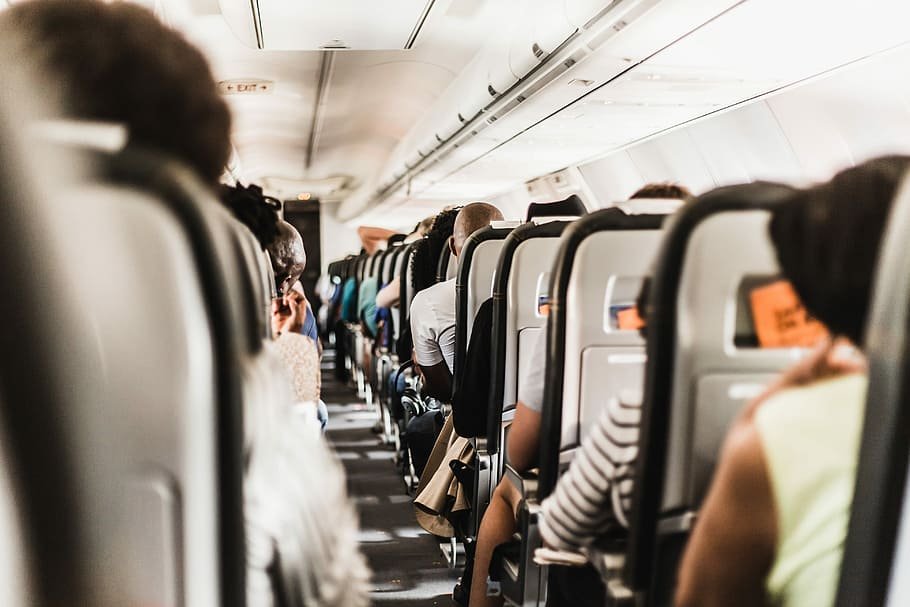
Looking up aisle and the backs of seats on an airplane

From getting the best prices to tracking lost luggage, chatbots can make the process more seamless. Best of all, they’re available at all hours — and won’t put you on hold for half an hour.

Travel Help — No Humans Needed

Need to arrange wheelchair services? Find the best deals? Score a sweet excursion package? With chatbots and AI, you’ll save time and effort — and, chances are, have a more pleasant experience than you would being on hold for interminable amounts of time and getting shuffled around from one department to another. And they’re getting better at an exponential rate.

Don’t be afraid to embrace the power of chatbots, because the tech travel journey has just begun! –Tony Olsen