21 Egypt Travel Tips

How to get a visa for Egypt, navigate a police state, exchange money, and be able to take photos in the temples and tombs. Oh, and why you need small bills to go to the bathroom.
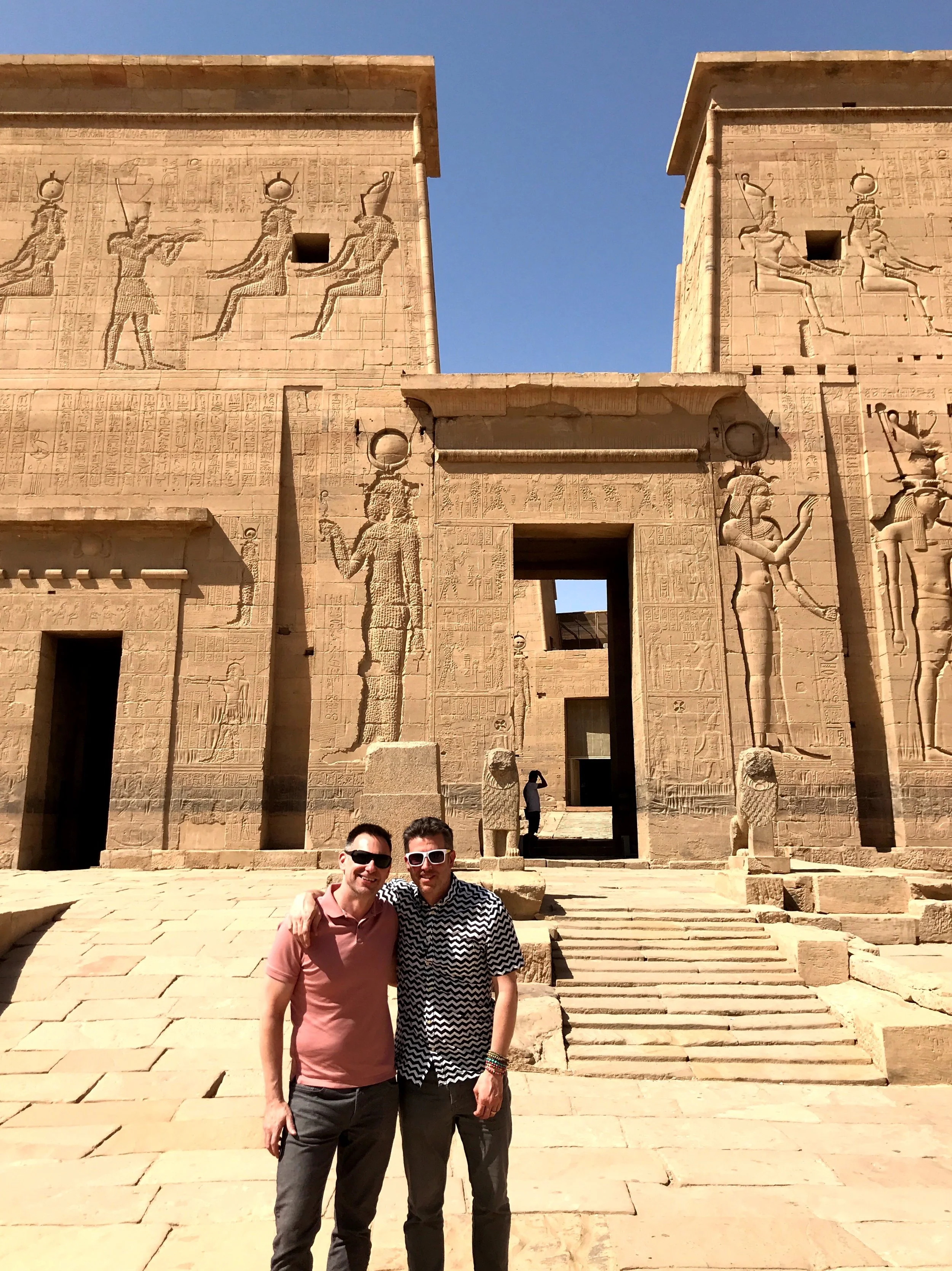
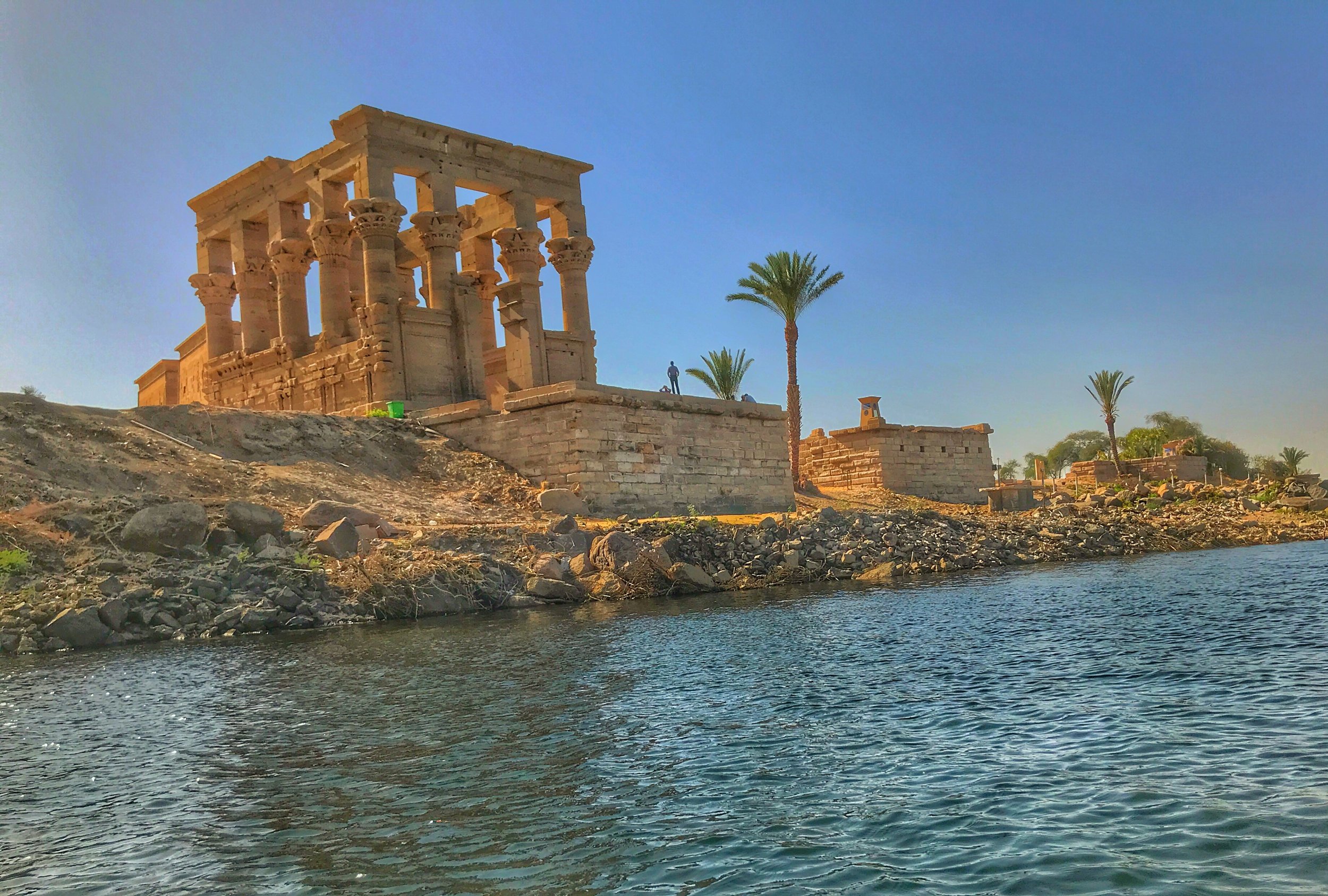
Egypt is a trip of a lifetime — but you have to know what to expect. Here Duke and Wally are set to explore the Temple of Philae in Aswan, one of the best-preserved ancient sites

Egypt is a trip of a lifetime — but you have to know what to expect. Here Duke and Wally are set to explore the Temple of Philae in Aswan, one of the best-preserved ancient sites

Egypt isn’t an easy country to navigate — Cairo in particular. It just doesn’t have the sophisticated tourist infrastructure so common in other parts of the world. Plus, it’s essentially a military dictatorship. In many ways, it reminded us of traveling through India, just on a smaller scale.

That being said, Egypt has a mind-boggling amount of temples and tombs to explore. They’re some of the oldest structures on the planet and are remarkably well preserved, having been buried in the sand for thousands of years.

We watched temple guards grab the phones of people who hadn’t bought a photography pass and force them to delete their photos!

Here are 21 tips to help you prepare for a trip to Egypt.

1. If you learn one word, it should be “shokran,” thank you.

When you say this, some people will burst into a huge smile. “You speak Arabic?!” one man exclaimed, joking. It’s great that something so simple can bring so much pleasure. And it goes to show how few travelers — or should I say tourists? — take the time to even bother learning one simple word.

Here’s another easy word: Salaam. It means “peace,” and works as both a greeting and a farewell.
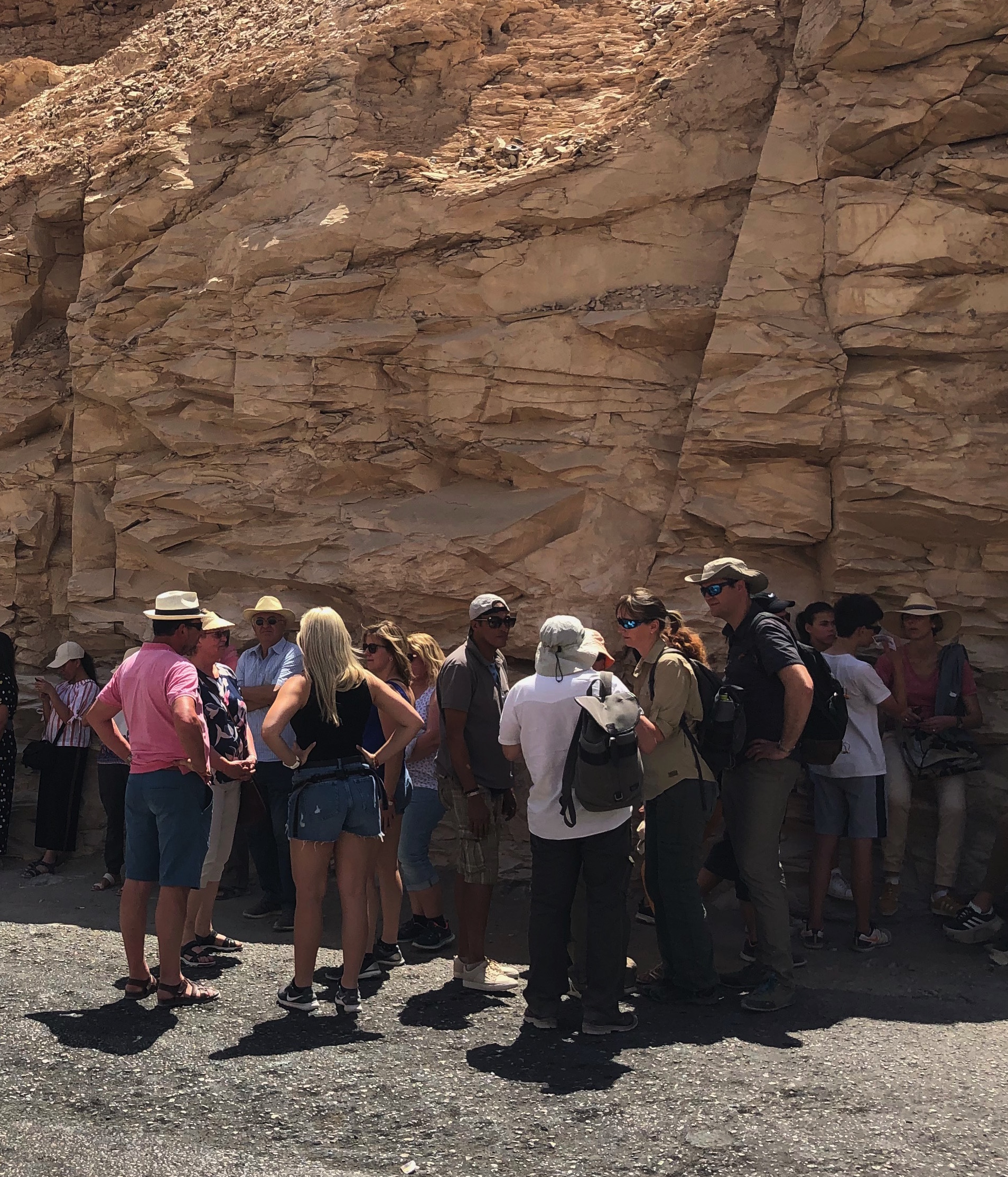
Do you dare wear short shorts? Yes, it’s hot in Egypt, but respect the culture

Do you dare wear short shorts? Yes, it’s hot in Egypt, but respect the culture

2. Follow the dress code.

It’s not mandatory (there aren’t any morality police like in Iran), but do you really want to be the tourist that disrespects the culture of the country you’re visiting?

For men, T-shirts are OK, and I suppose you can get away with wearing shorts, but why? You won’t see a single Egyptian wearing them. Just bring along a couple of pairs of lightweight pants. Maybe it’s time to invest in a pair of linen pants, which travel extremely well.

For women, you don’t have to wear a headscarf — in fact, plenty of local women forgo this. Just cover your shoulders and wear pants or long skirts and dresses, preferably to the ankle. Again, you can get away with less coverage — heavens knows Egyptians see all sorts of lack of modesty at tourist attractions — but why be that person?

3. Pack sunblock.

Cuz it’ll be sunny, dusty and hot. Very hot. It reached 100 while we were there in late April.

4. It should go without saying that you shouldn’t drink the water.

Always have bottles of water to stay hydrated and to brush your teeth. You may not think that you’re getting dehydrated, but trust us, this can happen swiftly, and heat exhaustion is no joke. Duke suffered a mild case of this which caused him to have prickly heat, lightheadedness and diarrhea, which is no fun when most of Egypt’s sites are in the blazing sun.

5. Upper Egypt is the south part of the country, and Lower Egypt is the north.

Yes, this is counterintuitive to the modern brain. But the River Nile flows northward, so the Ancient Egyptians’ perception of the world was the reverse of ours.

6. You have to stake your ground in lines.

If there are any gaps, people will weasel their way in and have no qualms about cutting in front of you. While waiting in line for customs, a woman behind us kept tapping my backpack to get me to move up, as if pressing into each other would make the line go faster. Eventually, Duke and I formed a line with an annoyed fellow American to block the path of anyone trying to barge past us.

This happens on planes, too. I’m not saying Americans are the models of decorum, but when it comes to disembarking from a plane, no one would ever consider rushing up the aisle. We very patiently wait our turn and let everyone sitting in front of us get off before us. Not so in other parts of the world, including the Middle East. You have to rush into the aisle to prevent fellow passengers behind you from rushing ahead.

7. Getting a visa upon arrival is ridiculously easy.

No paperwork. Just US$25 and you get a sticker.

For other countries we’ve traveled to, like Vietnam and Cambodia, we had to send out our passports to the embassies in Washington, D.C., putting our faith in the U.S. Postal Service. India’s was an even more-elaborate affair, requiring a picture to be taken.

But the visa for Egypt can be purchased at a bank kiosk to the right of the line for customs.

8. It’s a good idea to get a data plan for your cell phone.

Not that we had great luck with Uber in Cairo (we thought we’d never escape from the Khan el-Khalili souk, after waiting for a couple of hours for various Uber drivers who never arrived). But we communicated with our guide service via email, and Wi-Fi was spotty at one of our hotels.

9. Prearrange pickup from the airport.

A mass of guys in navy blue jackets will call out, trying to get you to take their taxi. We like to have our hotels pick us up.

If you do need to get a cab, negotiate the price before you get in. When we returned to Cairo from Luxor, a charming man who played Western pop music took us to the Mena House for 400 Egyptian pounds, while the hotel was going to charge about 1,300 L.E.
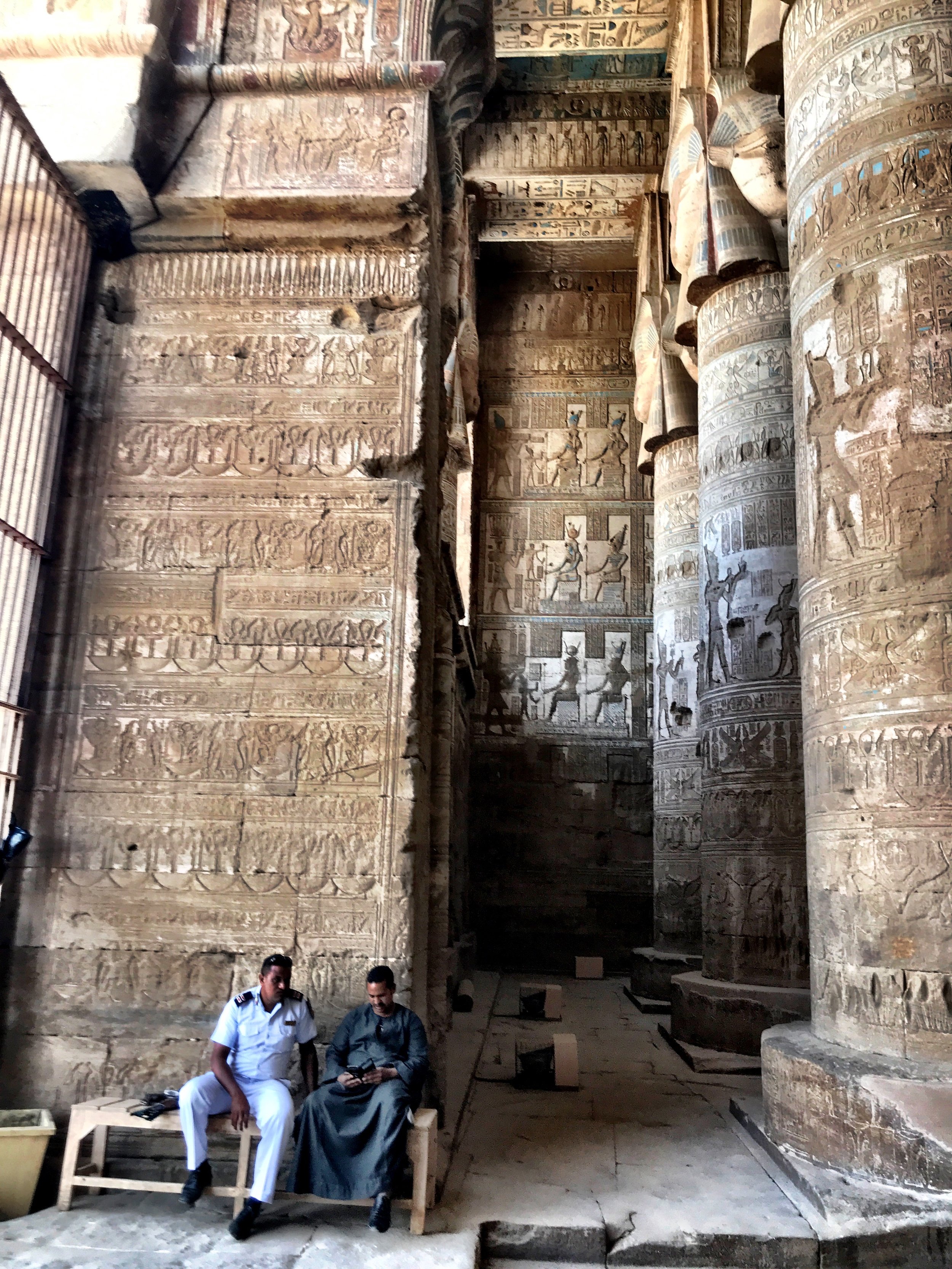
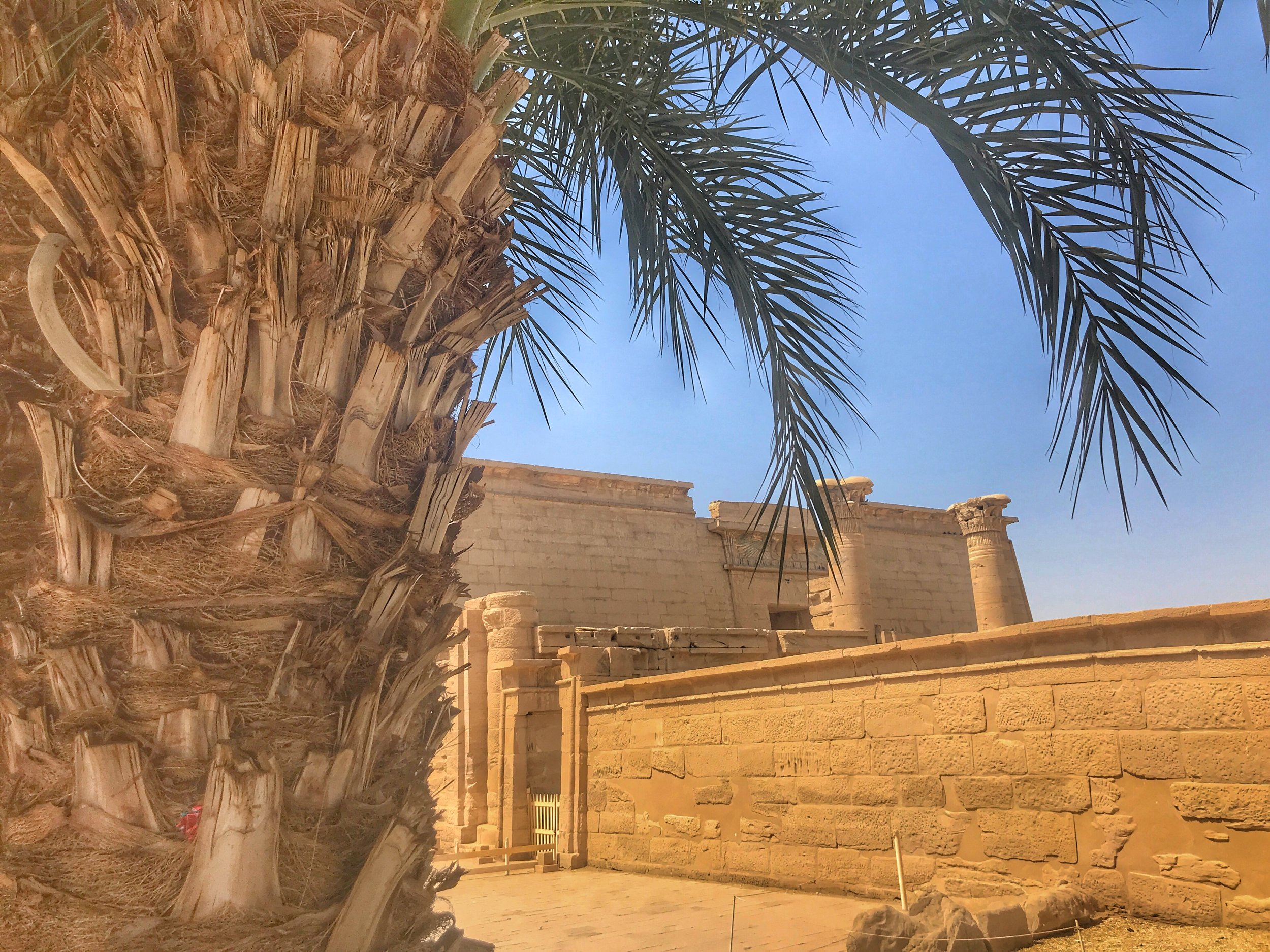
Get used to seeing policemen and soldiers toting semi-automatic machine guns everywhere you go, including the gorgeous Dendera Temple

Get used to seeing policemen and soldiers toting semi-automatic machine guns everywhere you go, including the gorgeous Dendera Temple

10. There are machine guns and metal detectors everywhere you go.

You’ll see them at the numerous military checkpoints on the road and outside tourist locations. It’s unnerving to see the tip of a machine gun peeking out a window in a small square tower as you drive down the street or enter the grounds of a temple.

It certainly was the first time we had to go through metal detectors as we entered our hotels. You’ll probably set them off, but they’ll wave you through.

When you’re visiting a site, there’s usually a bin or flat surface to place your cell phone before you pass through. If you’re bringing a bag, expect to have it screened.

The machine guns it seems every police officer and military personnel carry are made of tarnished silver, like something from generations past. And despite their toy-like appearance, resembling what you would play at a shooting gallery on a beachside boardwalk or a traveling carnival, I don’t doubt their lethal power.

11. Don’t expect to get a lot of money out of ATMs.

They’re certainly not as common as in the States, which is to be expected. But the maximum amount you can withdraw is 3,000 Egyptian pounds, or about $175 at the time we visited.

Sometimes the ATM would reject this selection — maybe there wasn’t enough money left — so we’d try 2,000, which usually worked.

The Egyptian pound is abbreviated as L.E., from the French livre égyptienne.
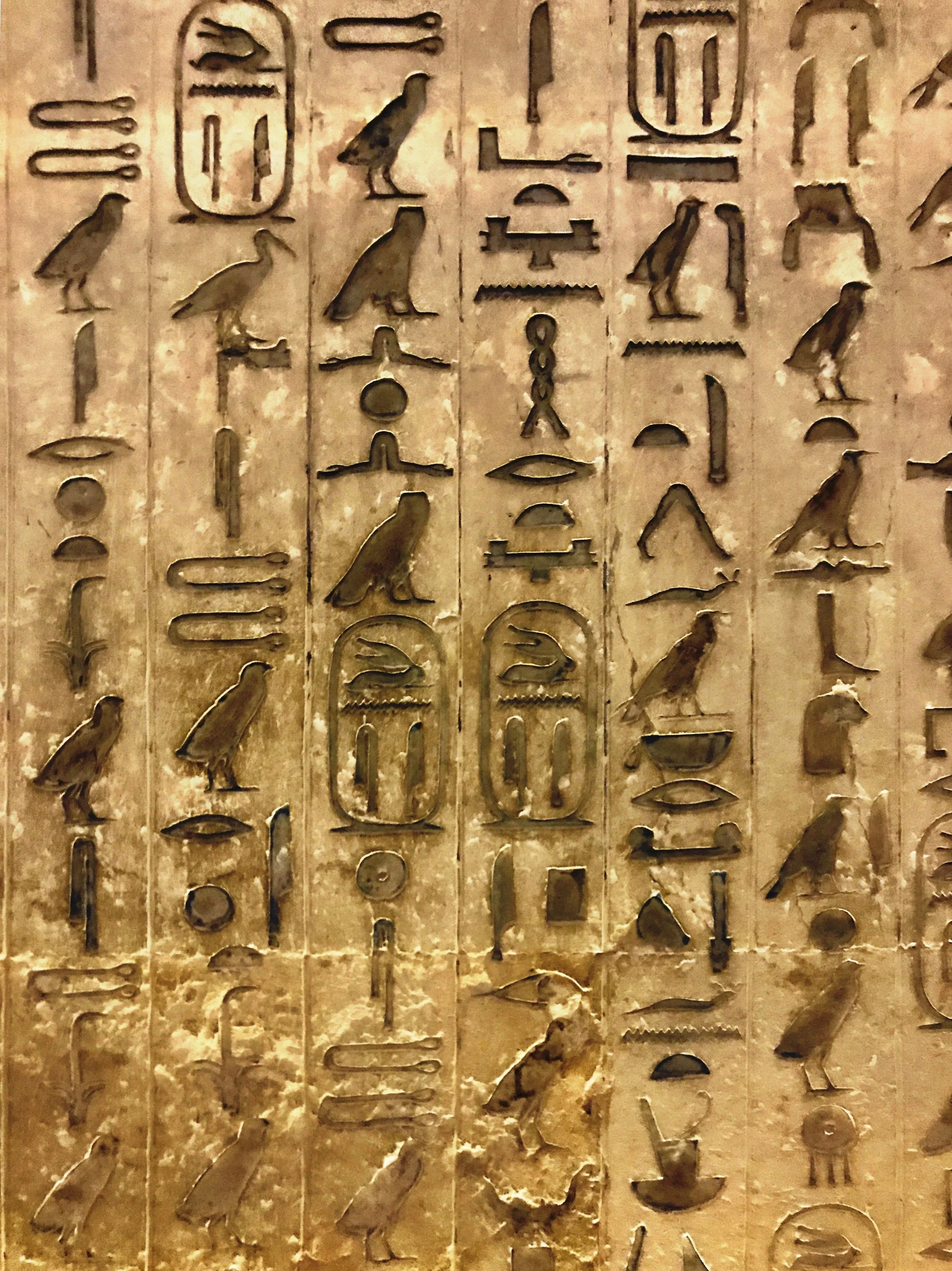
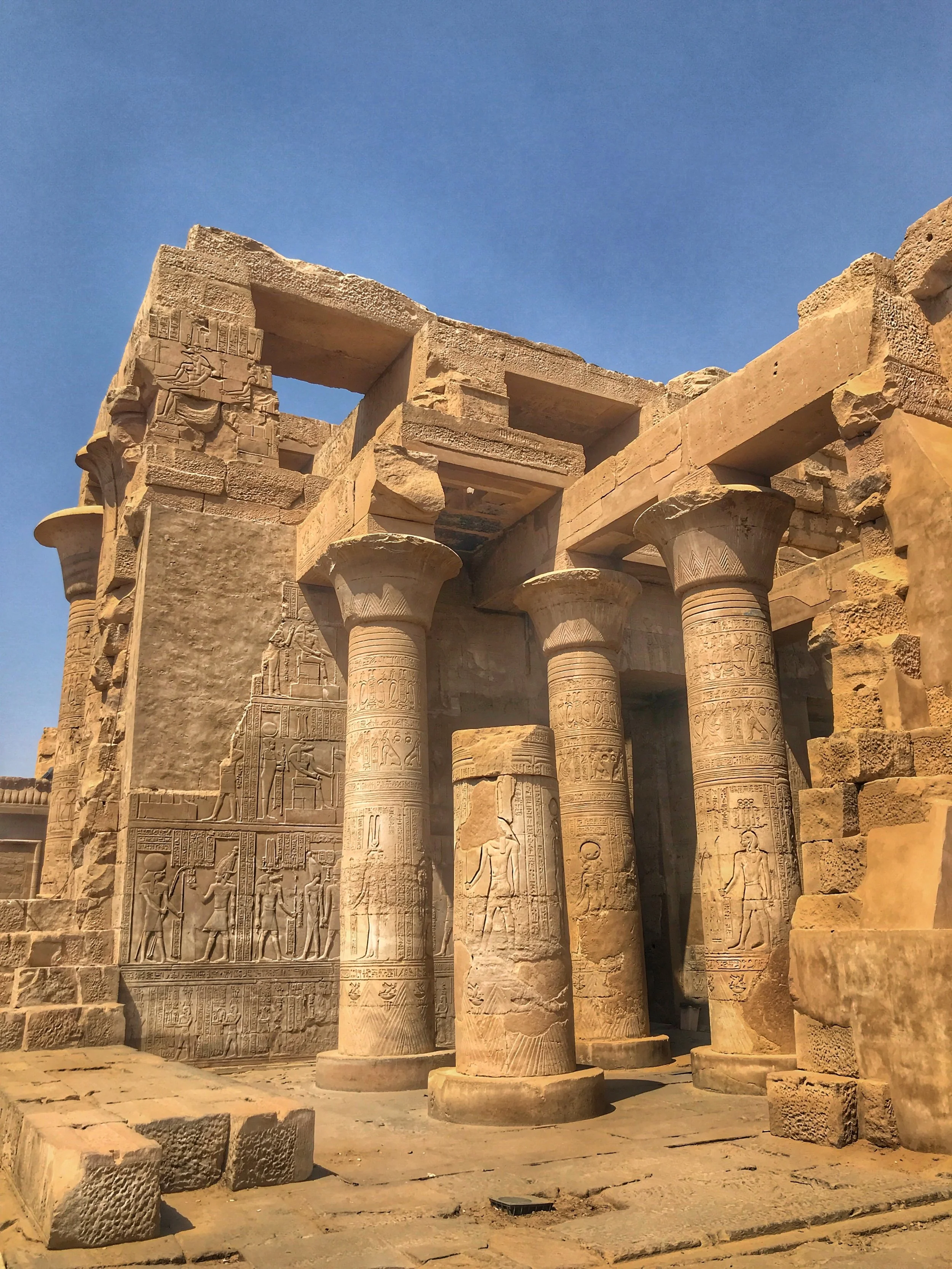
Resist touching the walls: The oil from our skin darkens stone carvings, like these hieroglyphics

Resist touching the walls: The oil from our skin darkens stone carvings, like these hieroglyphics

12. As tempting as it may be, don’t touch the temple walls.

You can see the dark, shiny stains where people have touched certain spots too often. Our guide in Cairo, Ahmed, saw a guy touch the walls of a tomb, and he told him not to. “You’re breaking my heart,” he said, then grumbled to us, “They wouldn’t go to the Louvre and touch the paintings!” He did have a point. These structures have survived thousands of years and still sport their original paintings. Let’s help preserve them for another thousand years.
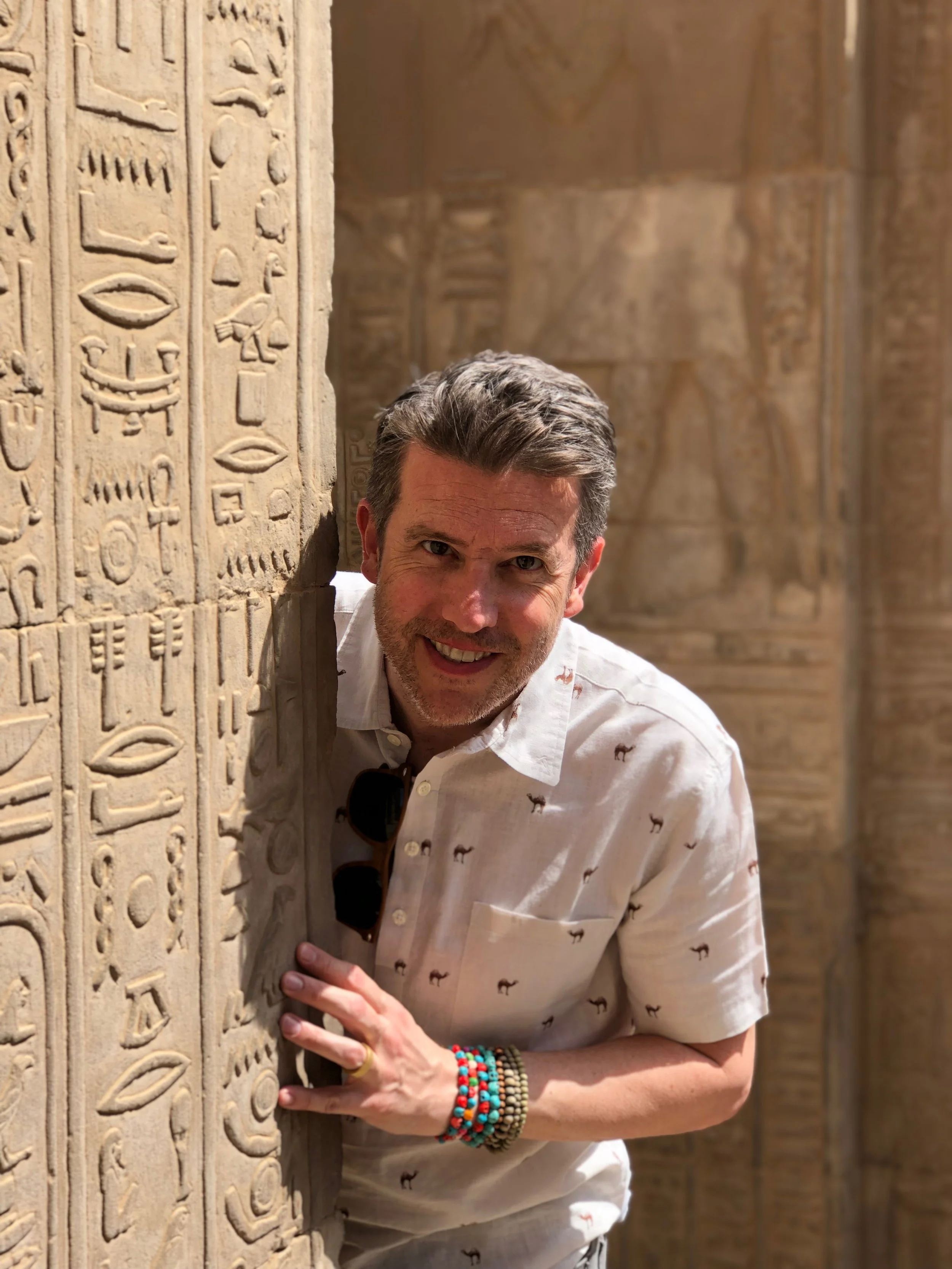
I know, I know. Wally’s not following his own advice — he’s touching the carvings!

I know, I know. Wally’s not following his own advice — he’s touching the carvings!

13. Get small denominations (especially 5 L.E. bills) cuz you’ll need ’em to go to the bathroom.

Almost every WC (as they’re usually marked, from the Britishism water closet), has someone out front collecting payment of 5 L.E.

Fives are also handy to tip small amounts to someone who helps you in a small way, like a bellboy.
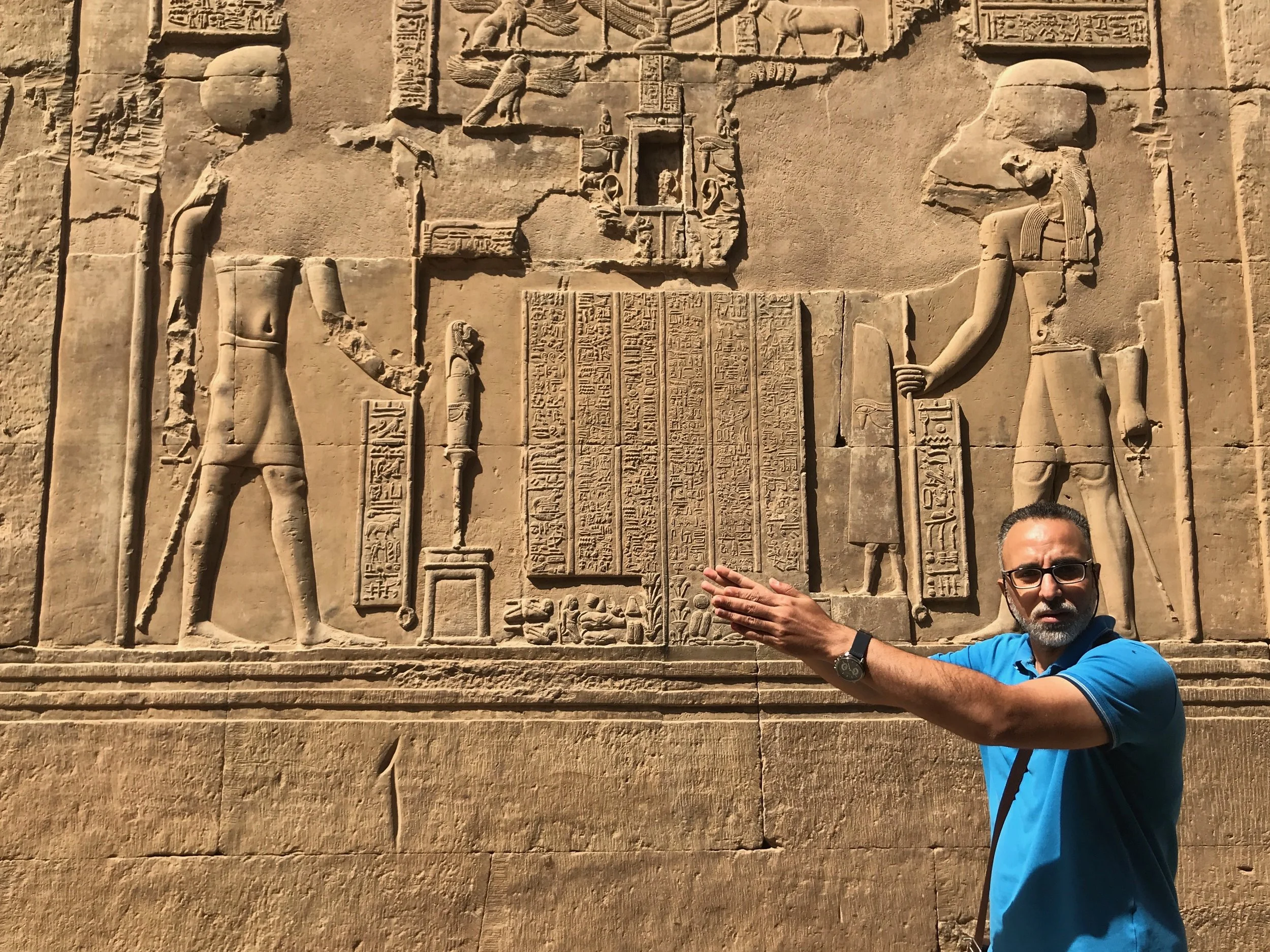
Hopefully you’ll luck out with a friendly, knowledgable guide like Mamduh

Hopefully you’ll luck out with a friendly, knowledgable guide like Mamduh

14. Hire guides everywhere.

There are security checkpoints all over the country, where they record the license plate, telephone number and other information in a ledger. (We always heard the term “Amrikiya,” which I assume meant we were Americans.) These checkpoints are facilitated with a guide and driver. I’m not even sure you could get into sites without a guide.

Plus, you know, it’s nice to know what you’re actually looking at. By the time we had spent a week with Mamduh from Egypt Sunset Tours, Duke and I felt like minor Egyptologists.

Added bonus: The vendors might be a tad less pushy. If you don’t have a guide, I imagine you’d be picked apart like a vulture with carrion. As it is, you’ll still have to ignore endless entreaties from shopkeepers inviting you to their stand, hoping to make a sale.

The roads are much less crazy outside of Cairo, but you’ll still be sharing them with a variety of transportation, including donkey carts

The roads are much less crazy outside of Cairo, but you’ll still be sharing them with a variety of transportation, including donkey carts

15. Egypt is definitely one of those countries where driving is insane.

Horns honk nonstop and pedestrians walk in the street, crossing traffic without a care in the world. I watched a woman with two small children talking on her phone cross a busy street without even a glance at oncoming traffic.

In Cairo in particular, drivers act like they’re playing a real-life video game, narrowly dodging other cars, horse-drawn carts, auto rickshaws, trucks loaded with produce, donkeys and motorbikes, often with a woman on the back sitting sideways, a child in her arms.

Cars come from all directions, and there aren’t any lines on the road. Vehicles speed along, weaving between traffic, straddling two lanes, zooming along at an alarming clip. At night many don’t even use their headlights.

16. Most sites have an extra photography pass you can buy — though a lot of tour guides fail to mention this.

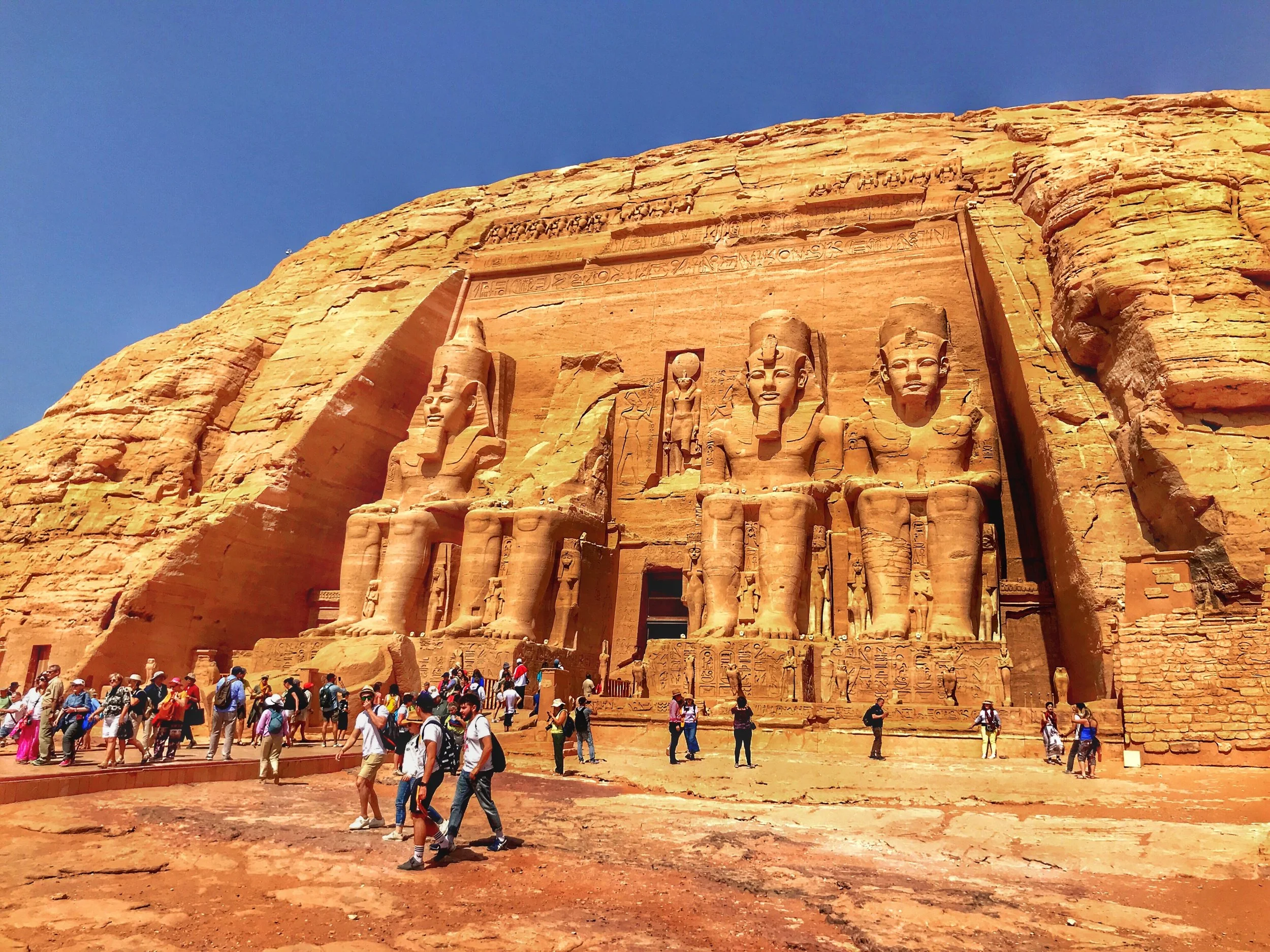
If you want photos, just ante up the 50 to 300 L.E. or so and get the pass. If you don’t, be warned that the guards can be ruthless. At Abu Simbel, for instance, we watched them take the phones of people who didn’t buy a pass and force them to delete their photos! Fortunately for us, our guide Mamduh always asked us prior to purchasing our tickets.

17. Just because you pay for a car for the day, doesn’t mean you get to go wherever you’d like.

The concierge at our hotel in Cairo said we had a driver and guide for the full day, from 8 a.m. to 4 p.m. But we learned that unlike other places you travel to, you’re limited to their itinerary and can’t go off script.

Our guide, Ahmed, made our experience extremely unpleasant, rushing us through the sites of Giza and Saqqara, until we said we had come all this way and wanted to see everything we could. He refused to take us to the Mena House for lunch, telling us that it was ridiculously spendy (and even though we had discussed this with the concierge at the Kempinski the night before) or any other sites, even though we still had hours left.

What’s strange (I’m being sarcastic) is that he would have made the time to stop at the papyrus and perfume shops at Giza, or the carpet schools at Saqqara, if we had accepted his offer. Having suffered through these tourist traps, where guides get commission if you buy anything, we knew to avoid them like the 10 plagues.

18. They don’t believe in seatbelts in Cairo.

Very few drivers bother to wear them, and not many of the backseats have working seatbelts, especially in Cairo. There’s nothing you can do but pray to Osiris or Allah that you’ll safely reach your destination amidst the chaos of the roads.

Thankfully, the other parts of the country we visited, Aswan and Luxor, tended to have working seatbelts — though our driver only slipped his on when we reached military checkpoints.

19. You’ll see a lot of Egyptian men with dark circular marks on their foreheads.

At first we thought these gray smudges might be ash — we visited over Easter and figured it might be some Coptic Christian tradition — but after a while I realized it was the type of mark you’d get from repeatedly rubbing your forehead against something. I suspect it’s a mark from prostrating themselves and bowing their heads to the ground five times a day during their prayers. I imagine some wear it proudly as a public display of piety.

Duke learned this mark actually has a name: zebibah, or raisin. (Given its size, it’s actually more like a prune.)
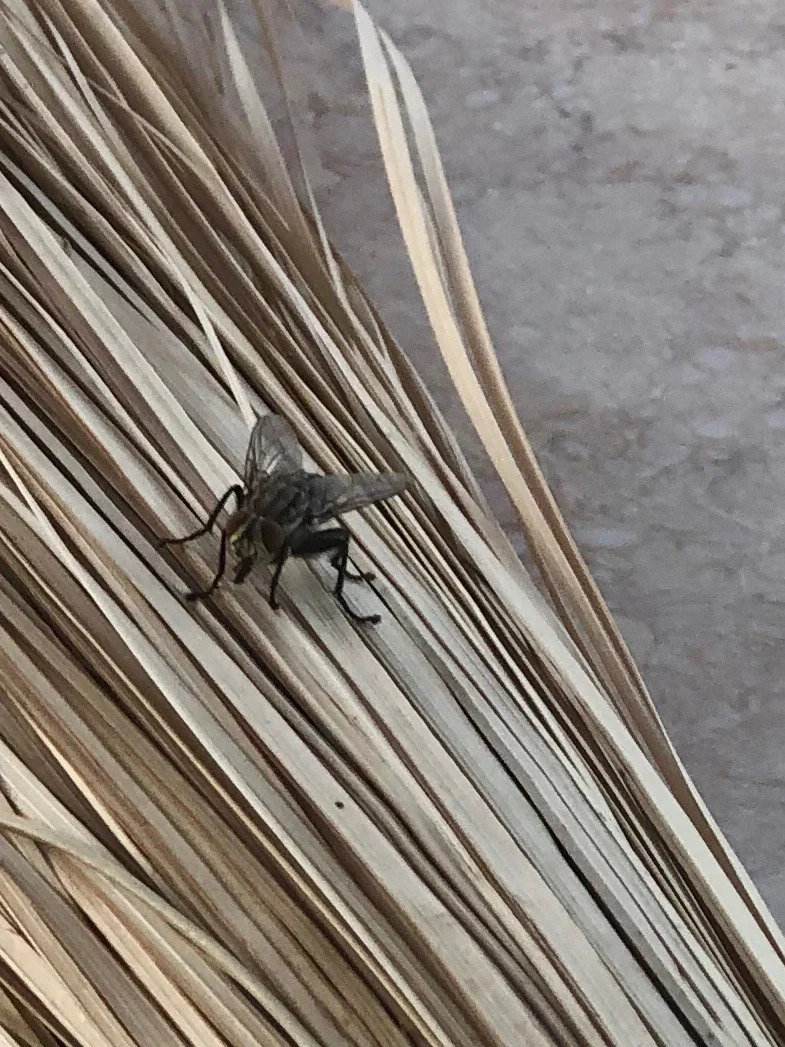
The one downside to staying on the West Bank in Luxor were the ever-present flies

The one downside to staying on the West Bank in Luxor were the ever-present flies

20. Get used to flies.

They’re everywhere, especially in Luxor. We noticed a slew of small red bites on our lower legs the morning after our first night on the West Bank, and although we didn’t see any mosquitos, they were obviously there. So you might want to pack some bug spray, too. We used Repel 100, which kept those pests at bay.

21. Not to be rude, but you should expect to smell B.O. quite often.

It’s obviously most noticeable in confined spaces like an airplane or a car. This isn’t a dig at Arabs — I suffered through many a stinky bus or metro ride in Europe, believe me. –Wally
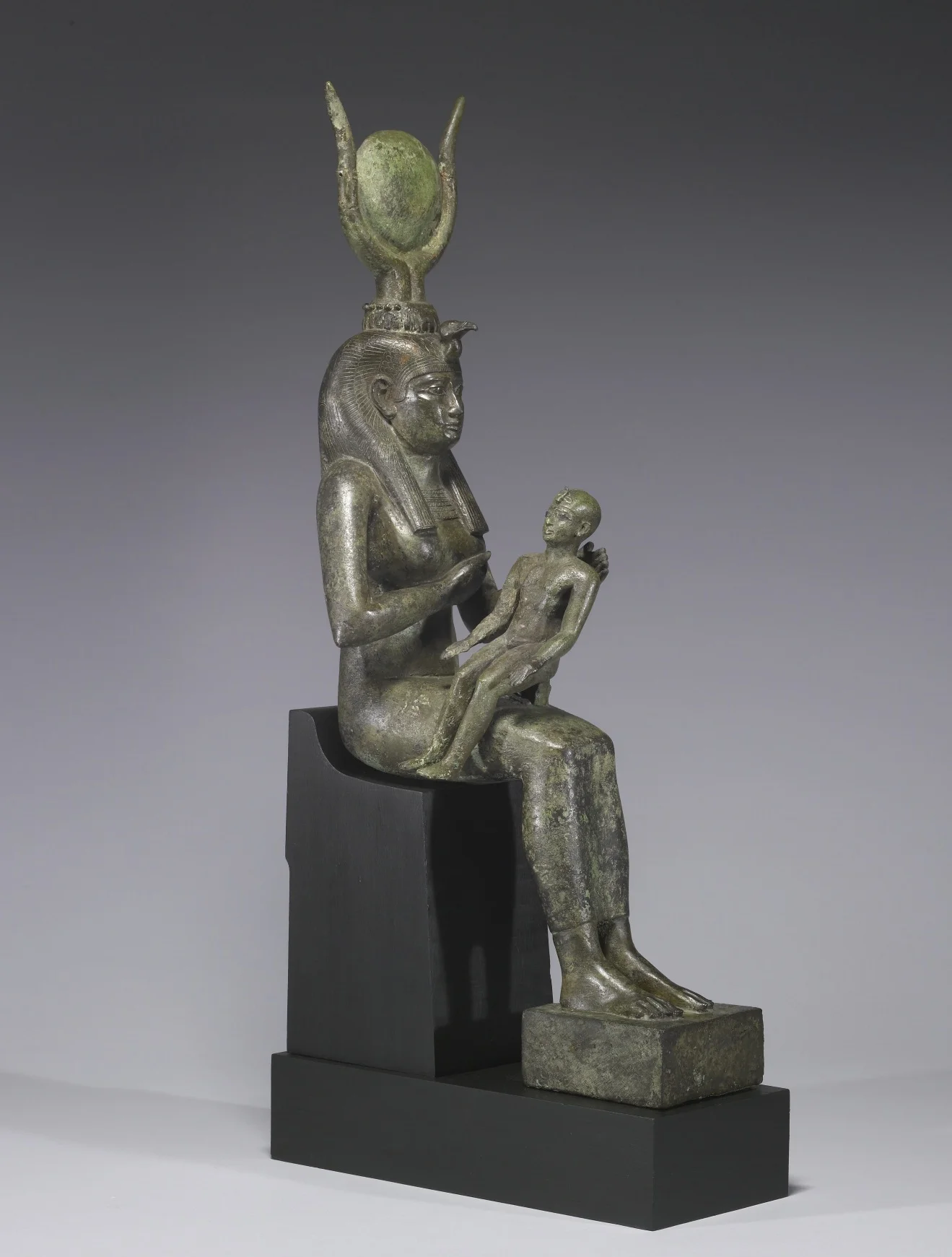
Horus vs. Seth: Homosexuality, Hippos and Familial Violence

The Egyptian myth described in The Contendings of Horus and Seth is as graphic as it is bizarre.

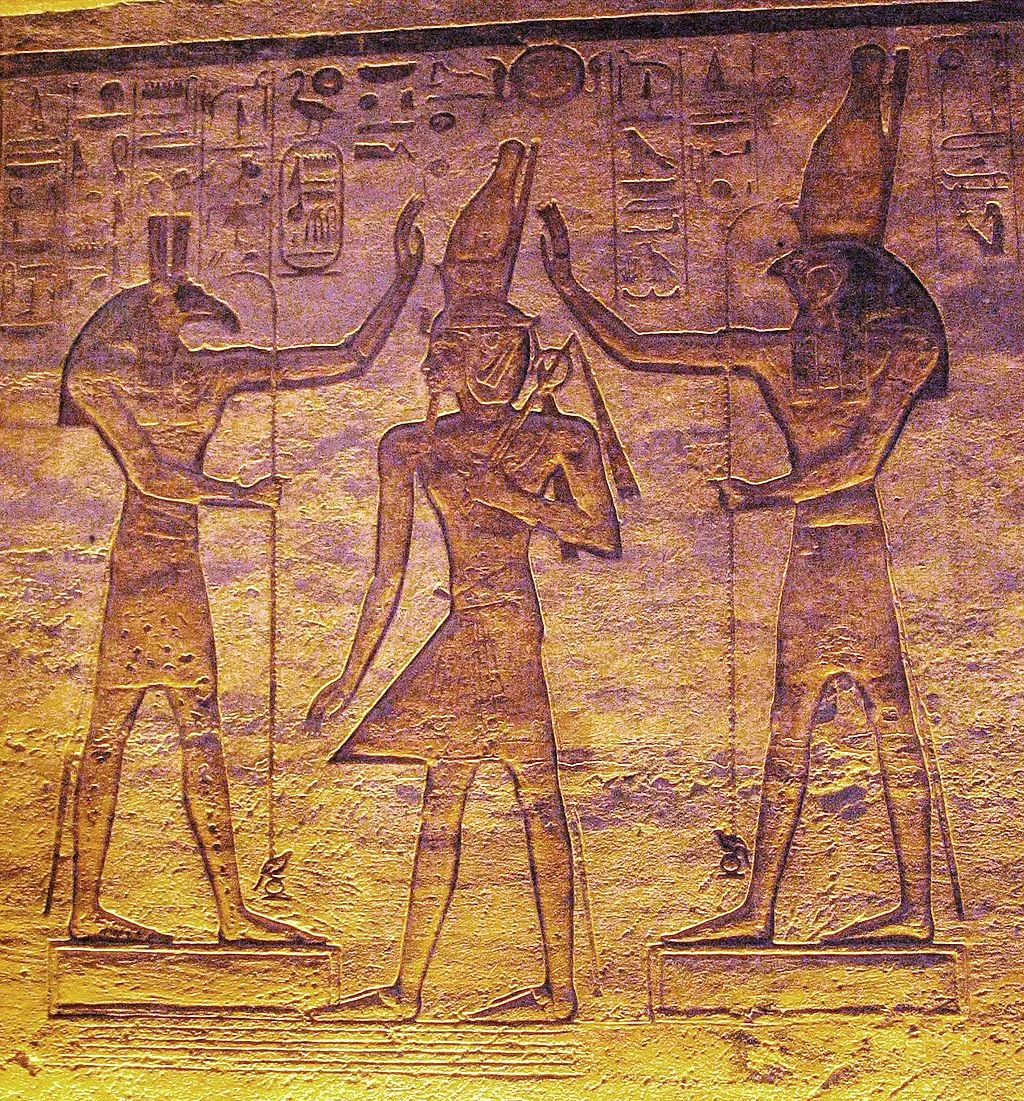
The young falcon-headed god Horus battles his evil uncle Seth to become pharaoh of Egypt

The young falcon-headed god Horus battles his evil uncle Seth to become pharaoh of Egypt

Osiris ruled as pharaoh of Egypt with his sister-wife Isis, bringing peace and prosperity to the land. But his elder brother, Seth (or Set), became insanely jealous and led Osiris to a watery death after tricking him into a perfectly fitted coffin.

The story of how he chopped his brother into pieces, which Isis hunted down to reassemble, is a tale for another blog post. This one deals with the power struggle that ensued between the two contenders for the throne: the murderous Seth and Osiris’ son, the falcon-headed Horus. The story is told in the Chester Beatty Papyrus No. 1, The Contendings of Horus and Seth, which dates back to the early Middle Kingdom (2040-1674 BCE). The myth most likely has origins even earlier than that.

Be warned: Parts of this twisted tale get quite graphic.

Seth argues that Horus cannot be king because his breath stinks — an allusion to Horus breastfeeding from his mother, Isis, and a dig at his youth

Seth argues that Horus cannot be king because his breath stinks — an allusion to Horus breastfeeding from his mother, Isis, and a dig at his youth

The Battle to Become Pharaoh of Egypt

As the son of Osiris, Horus presented his claim to the throne to a tribunal of three of the most powerful deities in the Egyptian pantheon: the sun god Ra (aka Re); Thoth, the god of wisdom; and Shu, the god of air.

Thoth and Shu declared Horus the rightful ruler of Egypt, but Ra argued that Seth was more powerful and therefore deserved the throne.

“The throne is mine by virtue of my strength,” Seth said. “‘Let Horus prove that he is better than I, and he can have the throne!”

“Challenge me to what you will. I will prove you the weaker!” Horus declared.

Much like the shapeshifting Egyptian gods Horus and Seth, these hippos battle for dominance

Much like the shapeshifting Egyptian gods Horus and Seth, these hippos battle for dominance

Hippos Holding Their Breath

Seth decided that the first feat of strength would be to have them both turn into hippopotami and sit on the bottom of the Nile. The first to come up for air would lose.

Isis, desperately wanting her son to be pharaoh, magically created a copper harpoon, which she threw into the water. Her aim was off, though, and she hit Horus instead of Seth. Realizing this, she pulled free the harpoon and cast it back into the water. This time it sunk into the body of Seth.

But the injured god appealed to Isis as her brother, and she caved and helped him. Horus, enraged, emerged from the water. He wasn’t worried about losing the first challenge — he was focused on taking revenge on his mother for what he felt was a betrayal. Horus cut off Isis’ head, carried it up a mountain and tossed it away. Talk about mommy issues!

Fear not, though: Thoth picked up Isis’ head and reunited it with her body.

Seth really liked salad — only that wasn’t ranch dressing on it!

Seth really liked salad — only that wasn’t ranch dressing on it!

Homosexual Incest and Semen-Covered Lettuce

Tired from decapitating his mother, Horus went to sleep on the mountaintop. Seth snuck up and gouged out his nephew’s eyes, burying them in the ground. Overnight, they grew into lotuses. Taking pity on the blinded boy, the cow-headed goddess Hathor came to Horus’ aid, pouring gazelle milk on his wounds and restoring his sight.

The judges wanted the two gods to make amends. They did reconcile, but the wily Seth decided to seduce his nephew.

Seth wasn’t discriminate in his liaisons. In the world of Ancient Egypt, there wasn’t any real conception of homosexuality. What mattered was who was the top (the one who was doing the penetrating), as that proved dominance over the other person.

Now afterward, [at] evening time, bed was prepared for them, and they both lay down. But during the night, Seth caused his phallus to become stiff and inserted it between Horus’ thighs. Then Horus placed his hands between his thighs and received Seth’s semen. Horus went to tell his mother Isis: “Help me, Isis, my mother, come and see what Seth has done to me.” And he opened his hand[s] and let her see Seth’s semen.

She let out a loud shriek, seized the copper [knife], cut off his hand[s] that were equivalent. Then she fetched some fragrant ointment and applied it to Horus’ phallus. She caused it to become stiff and inserted it into a pot, and he caused his semen to flow down into it.

So to sum this up: Seth intended to humiliate his nephew by fucking him up the ass — but Horus secretly caught Seth’s semen in his hands. When young Horus showed his mother, Isis, what had happened, she cut off her son’s hands, aroused him and jerked him off into a jar. Not quite a Disney movie.

Isis then tossed Seth’s semen into the marshes of the Nile and devised a plan to deceive him:

Isis at morning time went carrying the semen of Horus to the garden of Seth and said to Seth’s gardener: “What sort of vegetable is it that Seth eats here in your company?” So the gardener told her: “He doesn’t eat any vegetable here in my company except lettuce.” And Isis added the semen of Horus onto it. Seth returned according to his daily habit and ate the lettuce, which he regularly ate. Thereupon he became pregnant with the semen of Horus.

Seth approached the tribunal and declared with confidence, “Let me be awarded the office of Ruler … for as to Horus, the one who is standing [trial], I have performed the labor of a male against him.”

This drawing on a shard of pottery shows that Ancient Egyptians had a gay old time

This drawing on a shard of pottery shows that Ancient Egyptians had a gay old time

Semen Calling

Horus spoke up: “All that Seth has said is false. Let Seth’s semen be summoned that we may see from where it answers, and my own be summoned that we may see from where it answers.”

Thoth put his hand on Horus’ shoulder and said, “Come out, you semen of Seth.” It answered him instead from the marsh along the Nile, where Isis had dumped it.

The god then put his hand on Seth’s shoulder and said, “Come out, you semen of Horus.” Because it had been ingested with the lettuce leaves, it answered from inside Seth’s stomach.

Deeming itself too important to flow out of Seth’s ear, the divine seed emerged from his head in the form of a golden solar disk. Thoth snatched it away and placed it as a crown upon his own head.

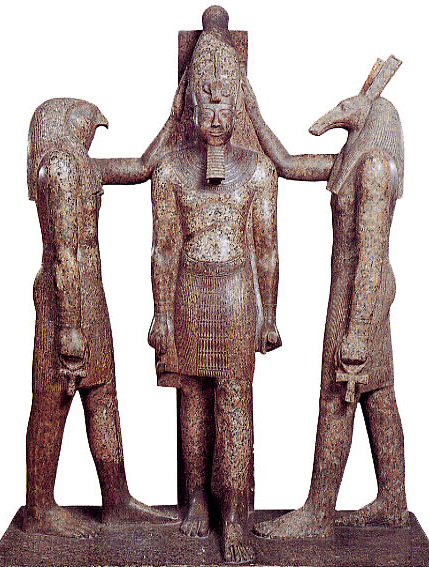
At some point, Horus and Seth seem to have made up, for here they are both adoring a ruler of Ramesside period

At some point, Horus and Seth seem to have made up, for here they are both adoring a ruler of Ramesside period

The Stone Ship Race

Despite this damning evidence, Seth somehow convinced the trio of judges to stage one more contest: a race of stone ships down the Nile. That didn’t seem like the wisest choice, since Seth’s boat sunk instantly. But Horus’ floated along the water — for he had tricked everyone by making his boat out of pine and covering it in gypsum, a sort of plaster, so that it looked like it was made of stone.

In a rage, Seth once again transformed into a hippopotamus and bashed his head into Horus’ ship. It came apart in splinters, exposing the young god’s deceit.

This back-and-forth had now gone on for 80 years. Seeking a final verdict, the judges decided to appeal to Osiris, who now ruled the underworld. Not surprisingly, Osiris argued that his son, Horus, deserved to be pharaoh, and Seth, in chains as a prisoner, finally conceded. –Wally

9 Fascinating Frida Kahlo Facts That May Surprise You

Overshadowed by her husband Diego Rivera, Kahlo led a too-short life fraught with pain, which she channeled into her powerful paintings.

A portrait of the unusual artist in 1939 by Nickolas Muray

A portrait of the unusual artist in 1939 by Nickolas Muray

It seems every famous artist is eccentric in their own way, and Frida Kahlo was no exception. She didn’t follow the rules, establishing herself as the negation of what a woman was expected to be. Her singular vision continues to inspire and capture the world’s imagination. Kahlo’s recognizable unibrow, boldly colored clothes and tempestuous marriage to muralist Diego Rivera are as central to her fame as her vivid and powerful self-portraits.

During the horrific accident, a shower of gold glitter landed on Frida’s bloody and broken body — making the macabre moment like something out of a magical realism novel.

While writing my post on the Blue House, or La Casa Azul, Kahlo’s former home, I learned more than a few surprising things. Why nine, you might ask? During their lifetimes, Kahlo and Rivera passionately assembled a collection of fantastical papier-mâché alebrijes, and I’d like to imagine hers as a cat with its metaphorical nine lives. So, without further exposition, here are nine interesting facts you might not have known about Frida Kahlo.

Talk about odd couples! Here’s Wedding Portrait of Frida Kahlo and Diego Rivera by Victor Reyes, 1929

Talk about odd couples! Here’s Wedding Portrait of Frida Kahlo and Diego Rivera by Victor Reyes, 1929

1. She and Diego proved that opposites really do attract.

Kahlo first met Rivera when he was commissioned by the government to paint the mural La Creación at the Bolívar Auditorium of the Escuela Nacional Preparatoria in 1922. Kahlo was one of only 35 females in a student body of 2,000 and belonged to a group of young intellectuals who called themselves Las Cachuchas, named after the peaked cloth caps they wore as a sign of subversion against the rigid dress code of the period. One account claims that she mischievously soaped the stairs leading to the auditorium where Rivera was working, hoping to make him slip and fall.

They met again in 1928 while he was working on a fresco for Mexico City’s Ministry of Education building. With paintings tucked under her arm, she demanded Rivera critique her work, telling him, “I have not come to you looking for compliments. I want the criticism of a serious man. I’m neither an art lover nor an amateur. I’m simply a girl who must work for her living.”

It was a May-December romance, as Rivera was about twice her age (as well as 200 pounds heavier). She was 22, he was 43. He had been married twice before. Kahlo once said, “I suffered two grave accidents in my life: one in which a streetcar knocked me down, and the other was Diego.”  

Frida paints Portrait of My Father, 1952, in her studio. Photo by Gisèle Freund

Frida paints Portrait of My Father, 1952, in her studio. Photo by Gisèle Freund

2. A horrific — but strangely beautiful — accident changed the course of her life.

In 1925, an 18-year-old Kahlo was riding a bus home from school with her boyfriend Alex Gómez Arias when it collided with an oncoming electric streetcar. A fellow passenger on the bus had been carrying a bag of gold dust, which was released upon impact and tore, a shower of gold glitter landing on the bloody and broken body of Kahlo — making the macabre moment like something out of a magical realism novel.

When onlookers saw her, they cried, “La bailarina, la bailarina!” mistaking her for a dancer.

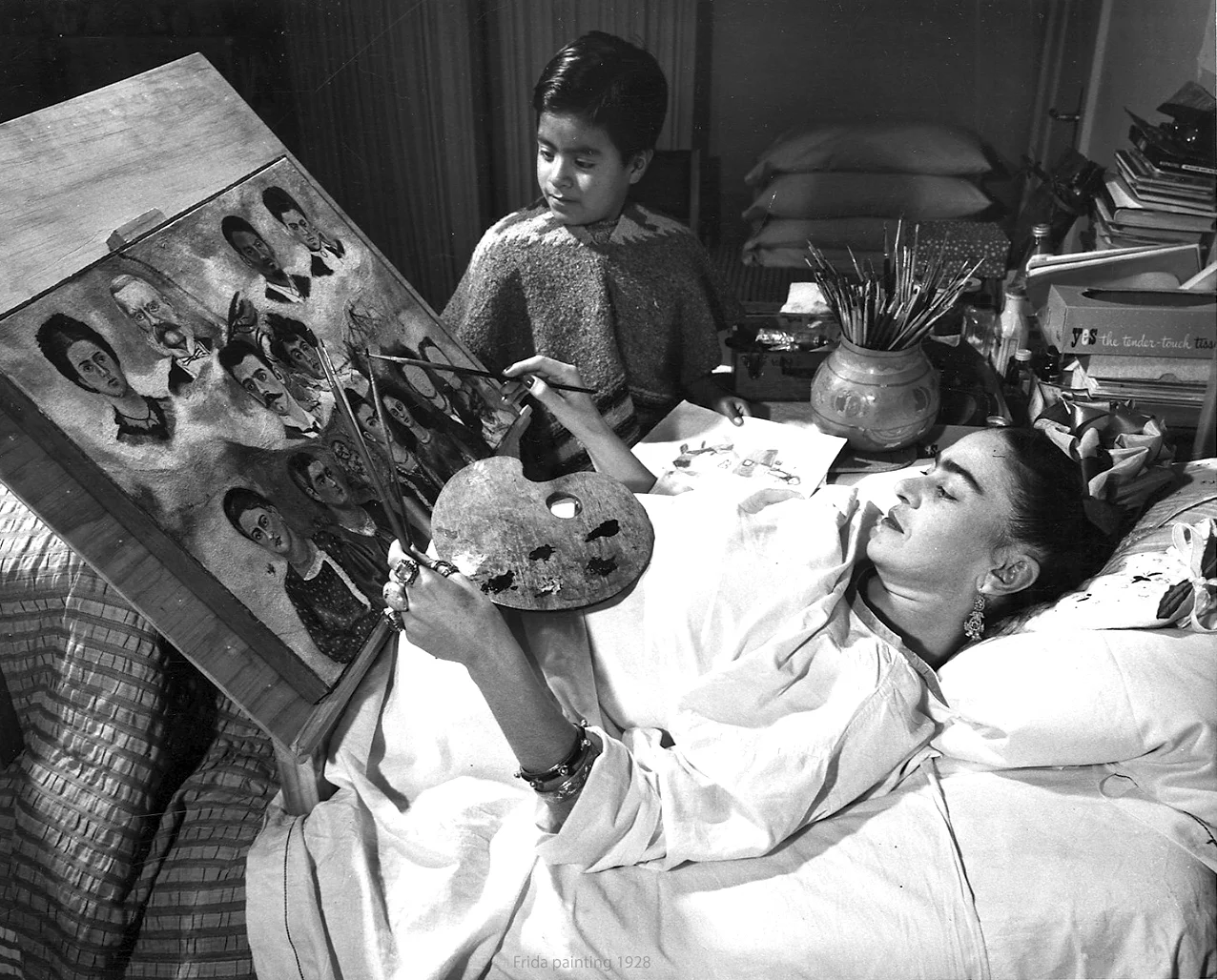
The bed-ridden Frida Kahlo painting Portrait of My Family in 1950. Photo by Juan Guzmán

The bed-ridden Frida Kahlo painting Portrait of My Family in 1950. Photo by Juan Guzmán

The near-fatal accident left Kahlo bedridden for months and enduring lifelong complications that would fuel her intensely personal artwork, turning her deepest feelings and darkest moments into art.

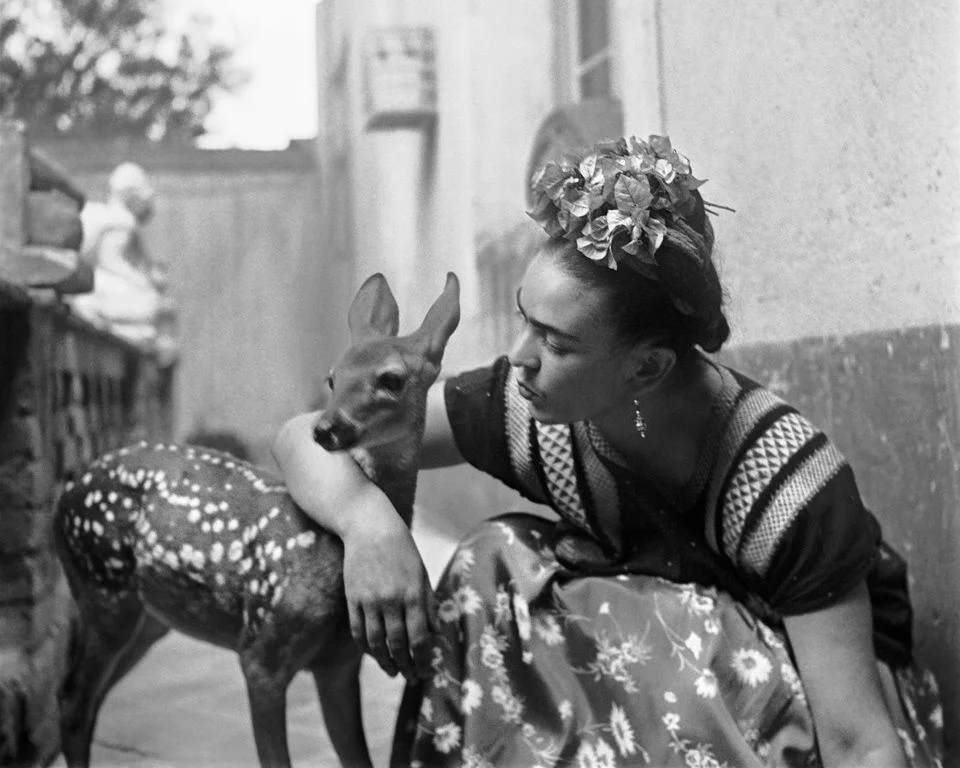
What a deer! Frida With Granzino, Version 2 by Nickolas Muray, 1939

What a deer! Frida With Granzino, Version 2 by Nickolas Muray, 1939

3. Kahlo wasn’t able to have children, so she filled the void with exotic pets.

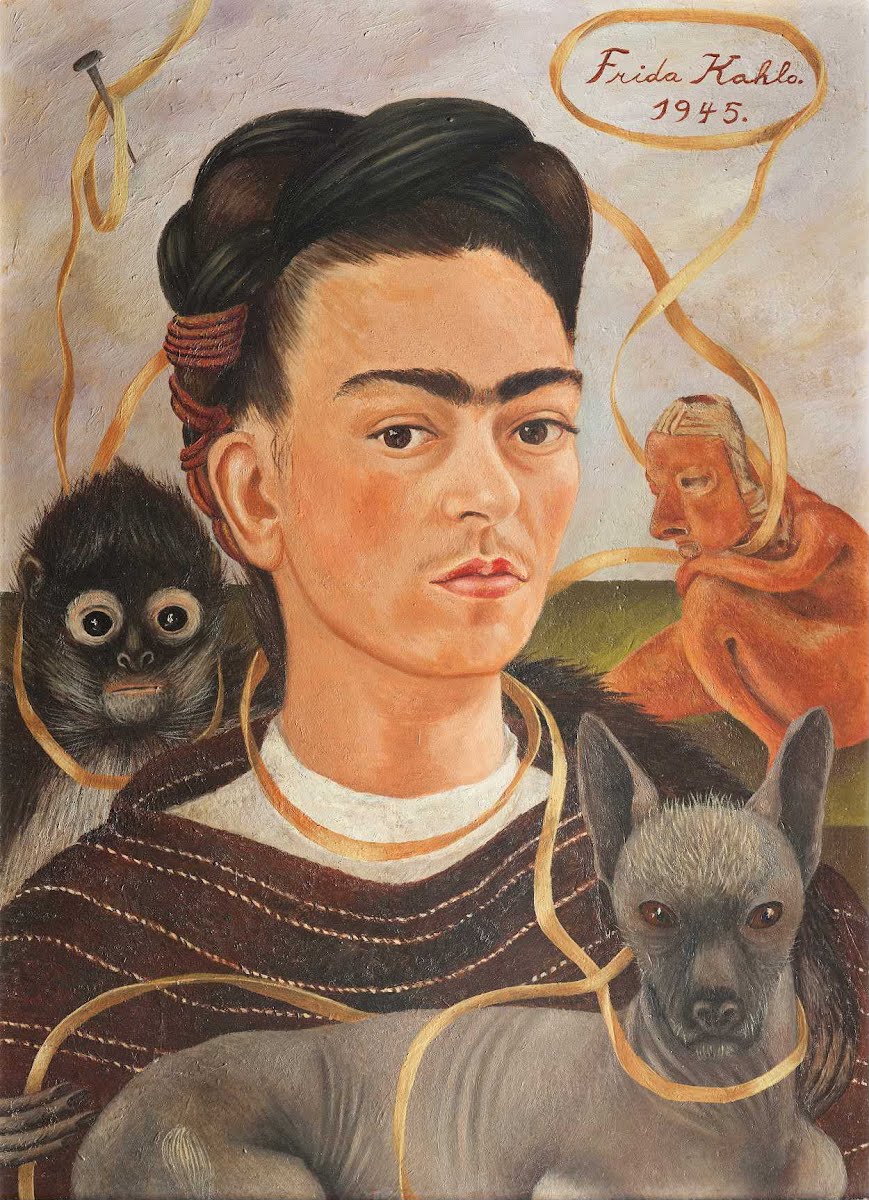
Kahlo was a great lover of animals and had an exotic menagerie at La Casa Azul. In many of her self-portraits she is accompanied by her favorite animals, including a pair of mischievous spider monkeys named Fulang Chung and Caimito de Guayabal. She also had Bonito, an Amazon parrot, who would perform tricks at the table for rewards of pats of butter, an eagle named Gertrudis Caca Blanca (Gertrude White Shit), hairless Xoloitzcuintli dogs and a fawn called Granzino.

These animals appeared in her work, including Self-Portrait With Monkey and The Wounded Deer, her face placed atop a deer’s body, probably Granzino’s, complete with antlers, running through a forest as nine arrows pierce its body.

Frida’s love of animals is evident in her Self-Portrait With Small Monkey from 1945

Frida’s love of animals is evident in her Self-Portrait With Small Monkey from 1945

Despite wanting to have offspring, Kahlo was unable to bear children and suffered miscarriages and medical abortions. Her inability to give birth became a source of trauma, and she said that her pets symbolized the children she never could have.

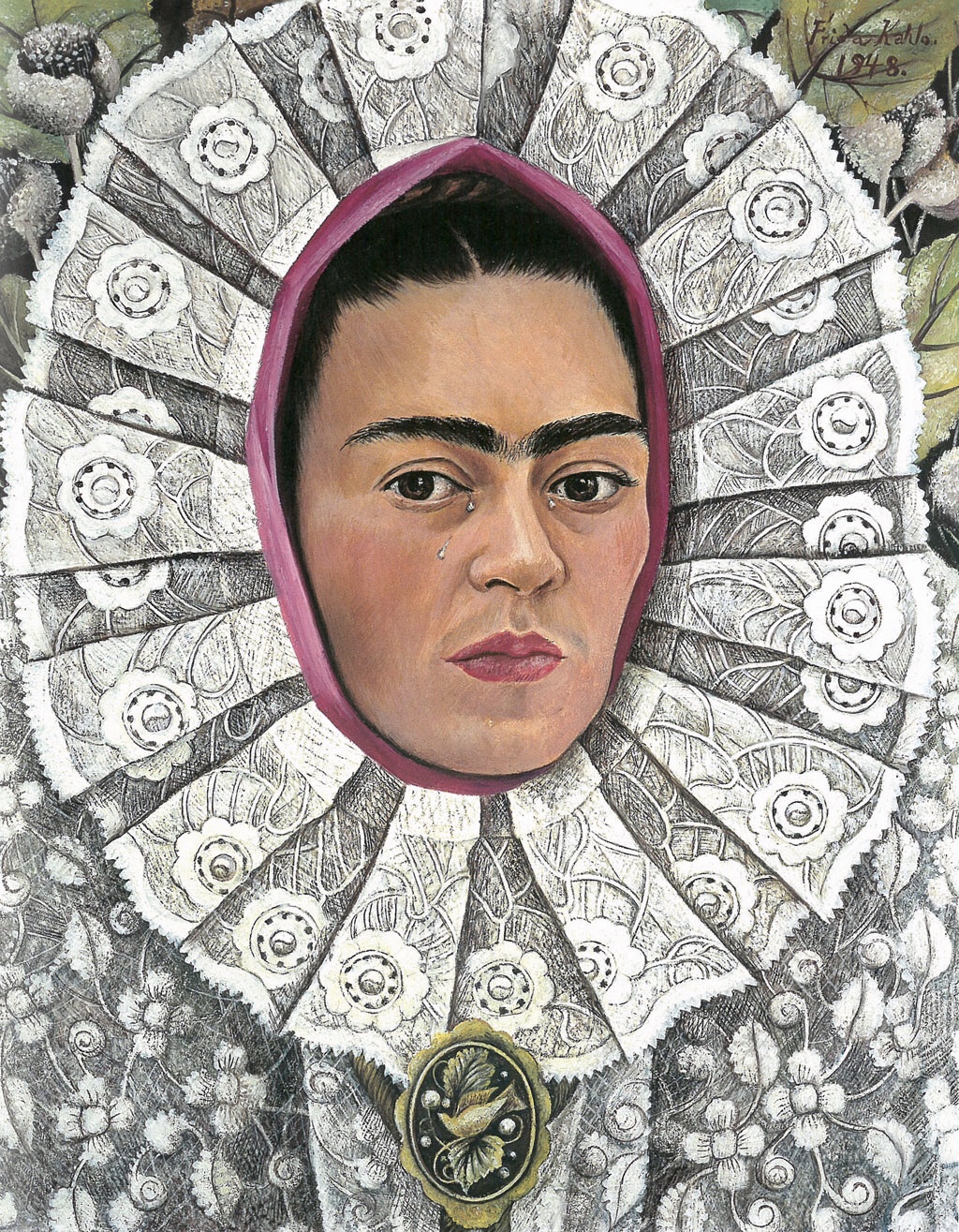
Many of Frida’s paintings were self-portraits, like Autorretrato from 1948

Many of Frida’s paintings were self-portraits, like Autorretrato from 1948

4. She’d most likely beat you in a staring contest.

Kahlo was her own most popular muse. Fifty-five of her 143 paintings are self-portraits, which is perhaps understandable when thinking about how much time she spent on her own while coping with a variety of chronic health issues. Her conjoined brows, plaited hair and watchful eyes fiercely demand that the viewer meet her gaze. And her defiant, upright posture was as much due to the immobilizing plaster corsets she was forced to wear to support her spinal column as it was her confidence.

Kahlo’s use of the intimate self-portrait often reflected her turbulent life and was a visual means to communicate her physical and psychological wounds.

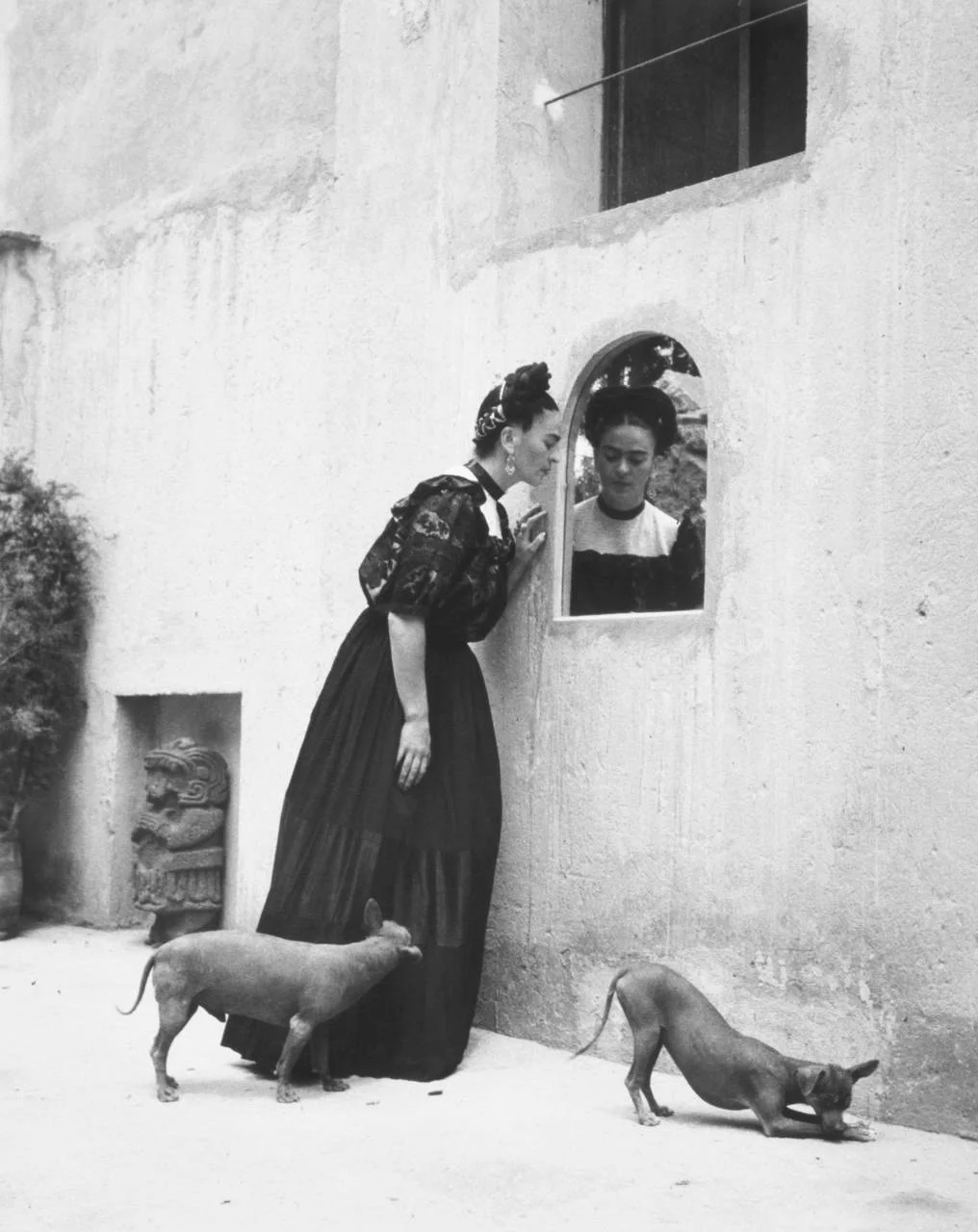
Let’s take some time to reflect upon what an amazing woman Frida Kahlo was. Photo by Lola Álvarez Bravo

Let’s take some time to reflect upon what an amazing woman Frida Kahlo was. Photo by Lola Álvarez Bravo

5. She was her own brand ambassador.

Our sense of self is largely dependent on where we were born, where our family’s from and the people we choose to surround ourselves with. This was especially true for Kahlo with her distinctive sartorial style inspired by the traditional dress of the Tehuana, the independent and proud indigenous matriarchal Zapotec society in the state of Oaxaca. Kahlo’s mother was born in Oaxaca to an indigenous father and a mother of Spanish descent.

Her attire helped her craft an imaginative, colorful identity and typically included flamboyant rings adorning her fingers, a traditional square-cut blouse, the huipil, and a long wrap-around skirt, which allowed her to mask and distract from her physical injuries.

One can only imagine the sensation of Kahlo’s striking and exotic appearance when she arrived in the United States with Rivera. Her rejection of conventional fashion was unlike anything the people of San Francisco, Detroit or New York had ever seen. On a walk in NYC, a flock of children asked Kahlo, “Where’s the circus?” but she simply smiled graciously and continued walking.

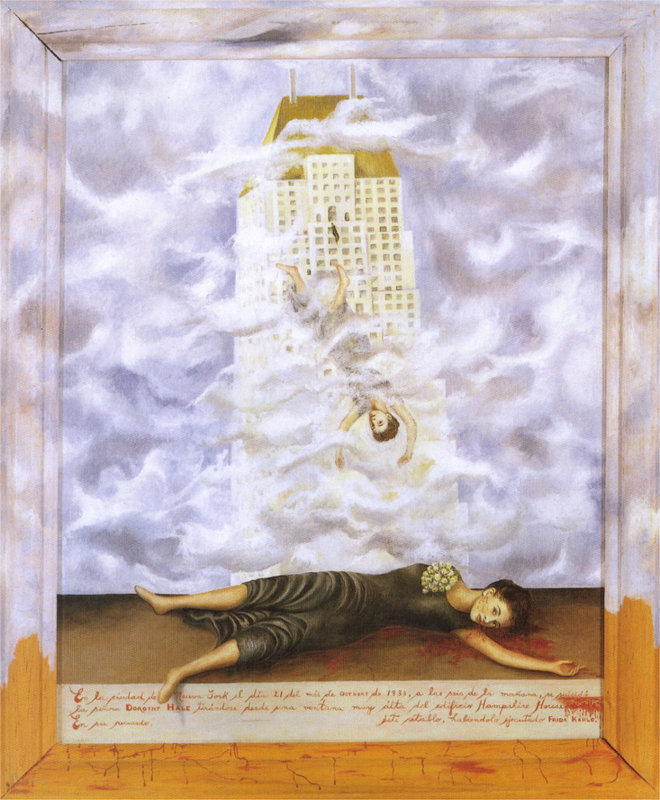
The controversial The Suicide of Dorothy Hale by Frida Kahlo, 1939

The controversial The Suicide of Dorothy Hale by Frida Kahlo, 1939

6. She pushed boundaries and buttons.

Sometime in 1938, Kahlo was commissioned by Clare Boothe Luce, the writer of the all-female Broadway play The Women and a former managing editor of Vanity Fair magazine, to paint a recuerdo, a remembrance portrait of their mutual New York socialite friend and aspiring actress Dorothy Hale, who had recently taken her own life.

Luce presumed Kahlo would paint a conventional portrait of Hale. However, Kahlo wasn’t a fan of what she considered to be the bourgeois capitalist social scene of New York City and had a more cerebral vision in mind — to create a graphic retablo detailing Hale’s moment of death.

In the center of the painting, the building where Hale lived is depicted with its many small windows rising up behind a layer of feathery clouds. A tiny figure plummets from an upper window. In the middle ground is a larger falling figure, clearly Hale, her arms extended and her skirt billowing around her knees. Resting on the pavement in the foreground is the deceased Hale in the black velvet dress and yellow corsage she wore, her dead eyes frozen open and staring at the viewer. As if that wasn’t enough, the inscription literally bleeds into the bottom of the frame and reads, “In the city of New York on the 21st day of the month of October, 1938, at 6 o’clock in the morning, Mrs. Dorothy Hale committed suicide by throwing herself out of a very high window of the Hampshire House building. In her memory, this portrait was executed by Frida Kahlo.”

When Luce received the painting, she seriously considered destroying it, but was persuaded by friends to desist. The arresting and controversial work remained in storage for decades before being donated “anonymously” to the Phoenix Art Museum in 1960.

7. She arrived at her first solo exhibition in Mexico in an ambulance.

Kahlo’s first major solo exhibition was held at the Julien Levy Gallery in 1938 in New York City, and one year later, her works were part of a collective exhibition entitled Mexique, shown at the Galerie Renou et Colle in Paris. The French surrealist André Breton described her art as “a ribbon around a bomb.”

Due to declining health during her final years, Kahlo rarely ventured outside of the Blue House, and had to use a wheelchair and crutches to get around. In April 1953, her first solo exhibition in Mexico opened at the Galería de Arte Contemporáneo. At the time, Kahlo was on bed rest under doctor’s orders and not expected to attend. However, she made sure to be there, arriving by ambulance to a mystified crowd, ordering that her four-poster bed be moved into the gallery. She was brought in on a stretcher to the bed, where she was able to enjoy the event.

8. She made a most memorable exit from life.

Kahlo was transported to the crematorium at the Panteón Civil de Dolores, and her body was lifted out of the coffin and laid in a cart that would carry her along iron tracks to the cemetery. So desperate were people to have a memento of Kahlo that onlookers pulled at the rings on her fingers even as her body moved toward the crematorium fire. Witnesses who were in the small chamber containing the furnace claimed that a sudden blast of heat from the open incinerator doors caused Kahlo’s corpse to sit bolt upright, and when the flames ignited her hair, forming an aura around her face, her lips appeared to part in a grin just before the doors closed shut.

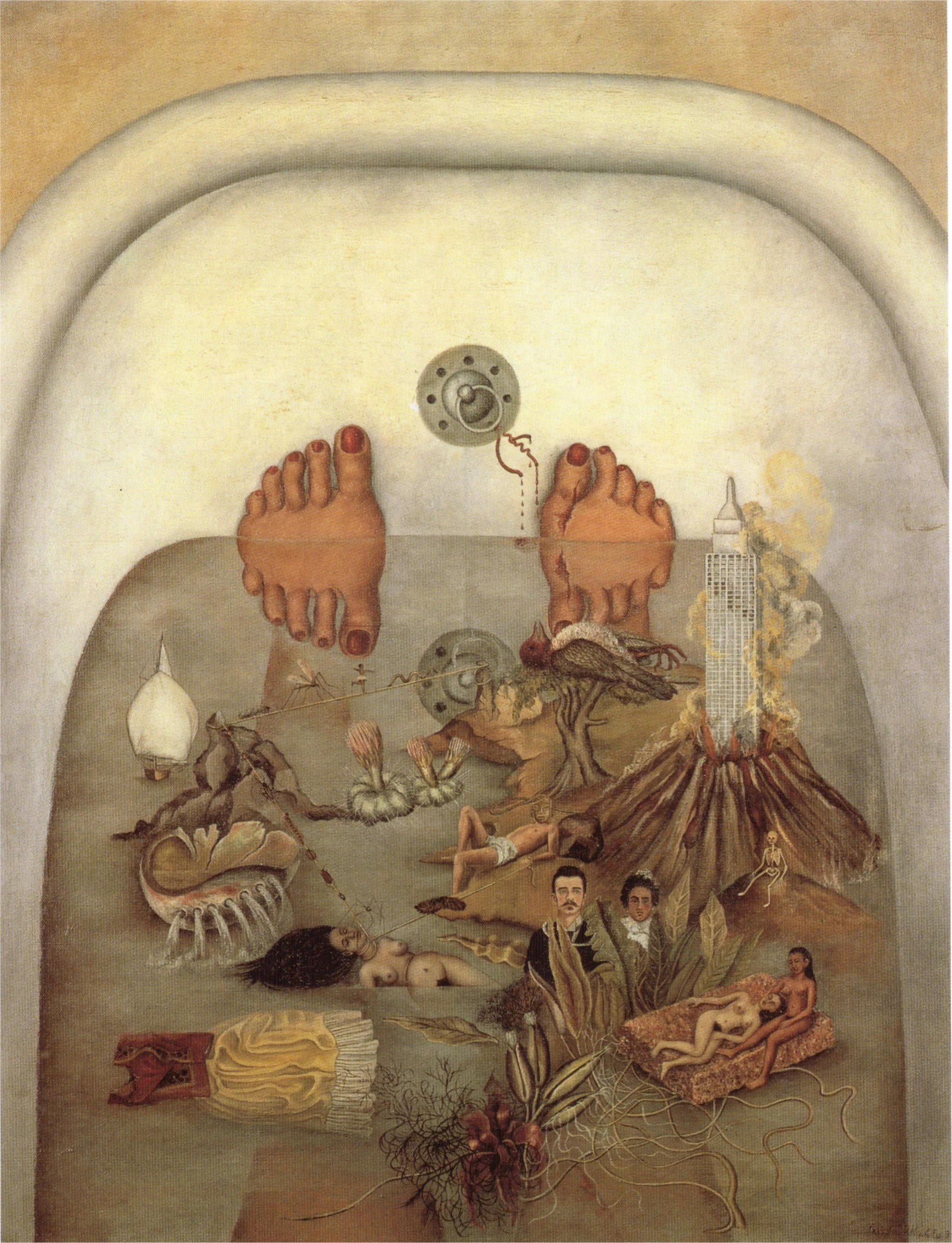
What the Water Gave Me by Frida Kahlo, 1938

What the Water Gave Me by Frida Kahlo, 1938

9. She was underappreciated as an artist in her lifetime.

Kahlo’s work was largely overshadowed by that of her husband during her lifetime. This was partly because the complexity of her art was difficult for an international audience to categorize. Kahlo’s most famous works, her autorretratos, or self-portraits, combine elements of realism, surrealism and indigenous Mexican symbolism.

Breton, an original member of the Dada group and the founder of the Surrealist movement in 1924, visited Kahlo in Mexico in 1938 while she was working on Lo Que el Agua Me Dio (What the Water Gave Me). Breton was transfixed by it, calling Kahlo a “natural surrealist.” Kahlo rejected the label and replied, “I never painted dreams. I paint my own reality.”

When Kahlo died at the early age of 47 in 1954, Rivera begged his friend and patroness of the arts, Dolores Olmedo to purchase 25 of Kahlo’s paintings for a mere $1,600. He wanted to make sure that an important part of his wife’s work remained in Mexico. –Duke

A sudden blast of heat from the incinerator caused Frida’s corpse to sit bolt upright. Flames ignited her hair, forming an aura around her face, and her lips parted into a grin just before the doors closed shut.

La Casa Azul, the Frida Kahlo Museum in Mexico City

Explore the quirky blue-painted home-turned-museum where the bohemian Mexican artist was born and lived while married to muralist Diego Rivera.

You can wander through the home Frida Kahlo and Diego Rivera lived in

You can wander through the home Frida Kahlo and Diego Rivera lived in

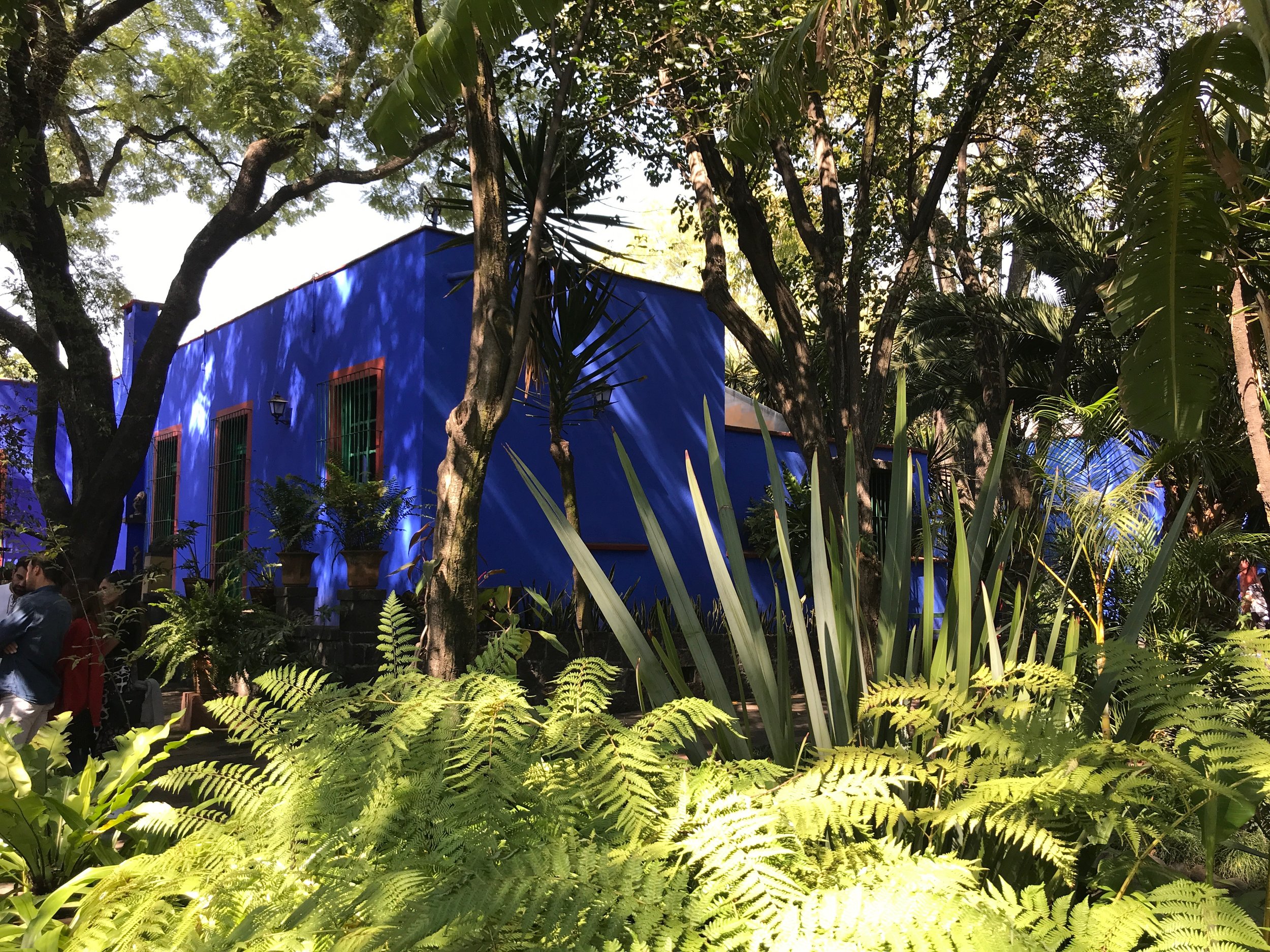
One destination that was at the top of our list to visit while in CDMX was La Casa Azul, or the Blue House, the former home and studio of Mexican artist and revolutionary cultural icon Frida Kahlo.

The first thing to capture your attention upon arrival at the corner of Calles Londres and Allende, which is now the Museo Frida Kahlo, are the vibrant cobalt-blue walls that rise straight up from the sidewalk. They reminded me of the intense blue used by French painter Jacques Majorelle in his garden acquired by Yves St. Laurent and Pierre Bergé in Marrakech, Morocco.

To be in the former home of this captivating, self-willed individual was an amazing and moving experience.
Get your tickets well before you visit — and get the earliest time available to cut down on crowds

Get your tickets well before you visit — and get the earliest time available to cut down on crowds

The other was the line of people waiting to gain admission. After reading how popular the destination is, we purchased and printed our tickets in advance for the first available self-guided tour of the day to avoid the crowds. If you show up without a ticket, we’ve heard you can expect to wait up to four hours, as the museum limits the amount of people allowed inside. Even if you get your tickets in advance, plan on getting into line half an hour early so you’re at the beginning of your group.

Portrait of Frida Kahlo by Roberto Montenegro, 1936

Portrait of Frida Kahlo by Roberto Montenegro, 1936

You can download an electronic version of your ticket, which will be scanned by one of the museum docents. If you’d like to take pictures inside, which we did, you’ll need to purchase a photography pass for an extra fee of about 30 pesos, or $1.50.

Keep in mind that the cost of your ticket also includes admission to the Anahuacalli Museum, designed by Diego Rivera to contain his impressive collection of pre-Columbian art. It’s great fun to explore.

Duke leans on the iconic blue walls of La Casa Azul while we wait to go in

Duke leans on the iconic blue walls of La Casa Azul while we wait to go in

It’s cool being able to explore the home shared by these two famous artists

It’s cool being able to explore the home shared by these two famous artists

Inside La Casa Azul

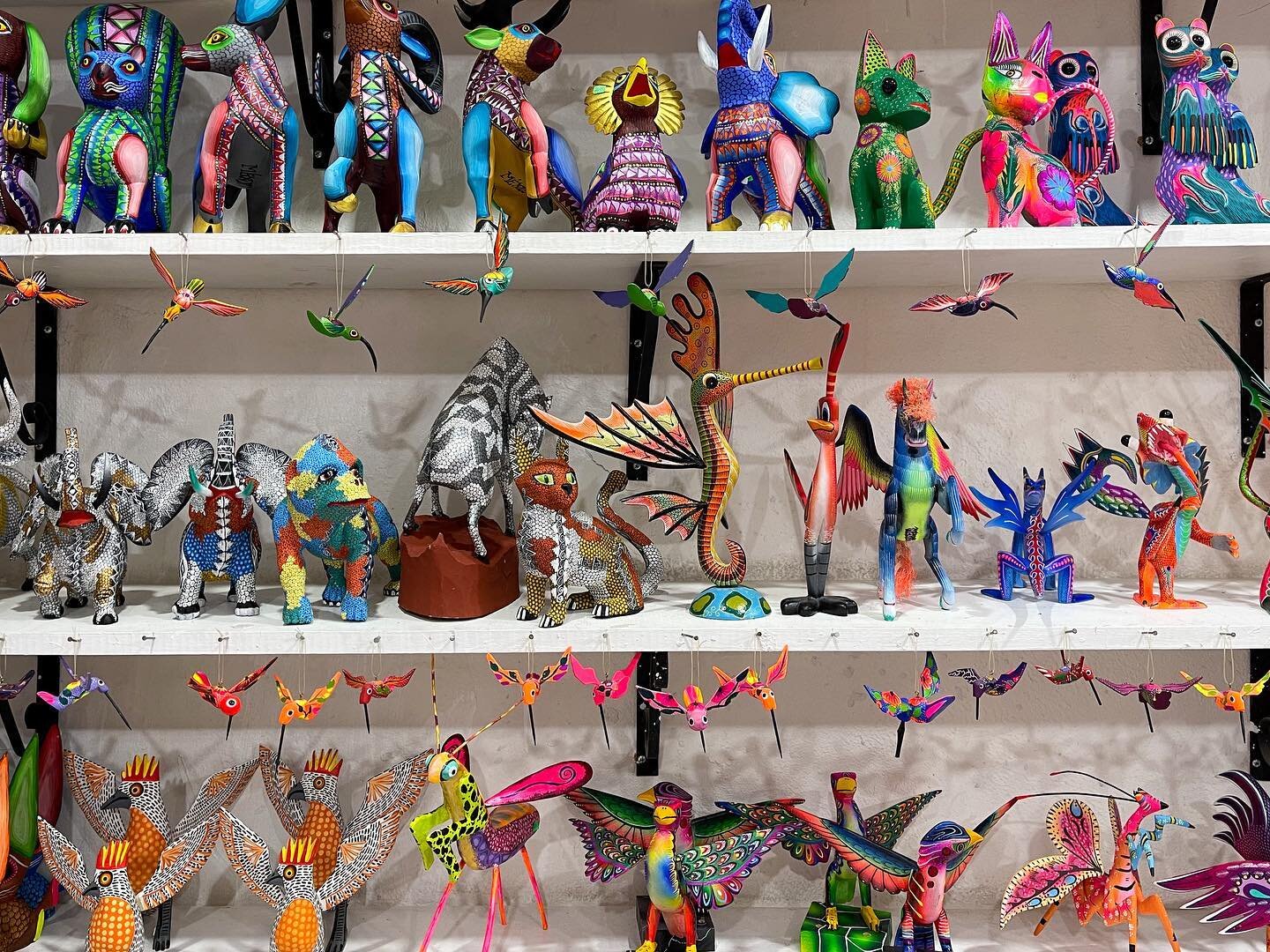
At the entry, you’re met by a few of Kahlo’s fantastical and monstrous papier-mâché folk art alebrije figures, traditionally representing Satan and Judas, which are filled with firecrackers and exploded on Sabado de Gloria, the Saturday before Easter.

Part of the courtyard includes this tiled pool

Part of the courtyard includes this tiled pool

Built around an open-air central courtyard, the interior of the house offers visitors a chance to catch a glimpse into Frida’s creative universe. Each room is organized by theme, many exactly as Kahlo left them. The first room Wally and I entered was originally the formal living room, where the Riveras hosted storied intellectual guests from Gershwin to Trotsky and now functions as a gallery featuring a selection of Frida’s lesser-known paintings. Of note is Portrait of My Father, made by Kahlo 10 years after her father’s death with the dedication “I painted my father Wilhelm Kahlo, of Hungarian-German origin, artist-photographer by profession, in character generous, intelligent and fine, valiant because he suffered for 60 years with epilepsy, but never gave up working and fought against Hitler. With adoration, his daughter, Frida Kahlo,” and a still life depicting sliced watermelons inscribed with the phrase “Viva la Vida” or, Long Live Life.

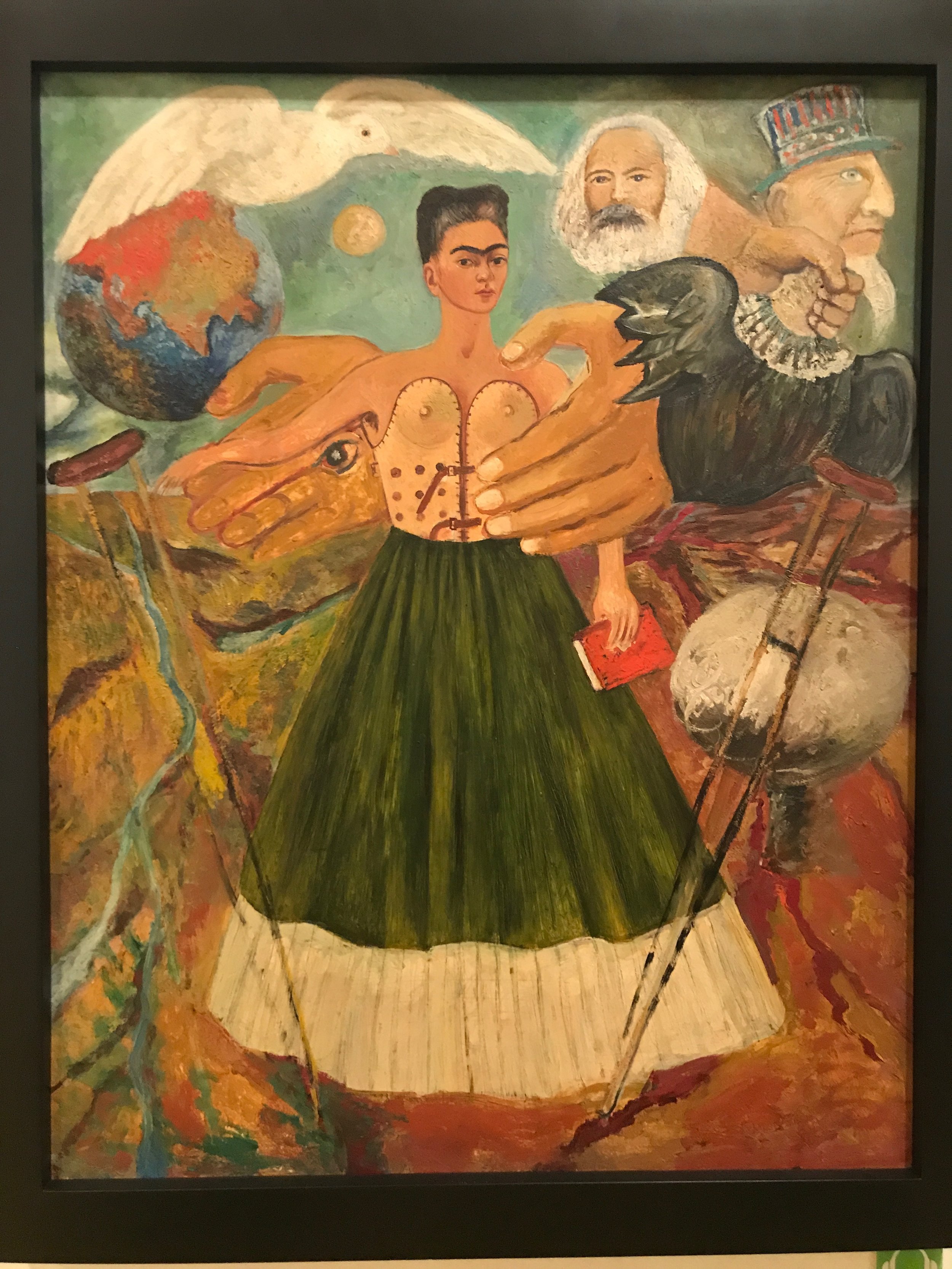
Marxism Will Give Health to the Sick by Frida Kahlo, 1954

Marxism Will Give Health to the Sick by Frida Kahlo, 1954

Portrait of My Father by Frida Kahlo, 1951

Portrait of My Father by Frida Kahlo, 1951

Viva la Vida by Frida Kahlo, 1954 — the last of her paintings she signed

Viva la Vida by Frida Kahlo, 1954 — the last of her paintings she signed

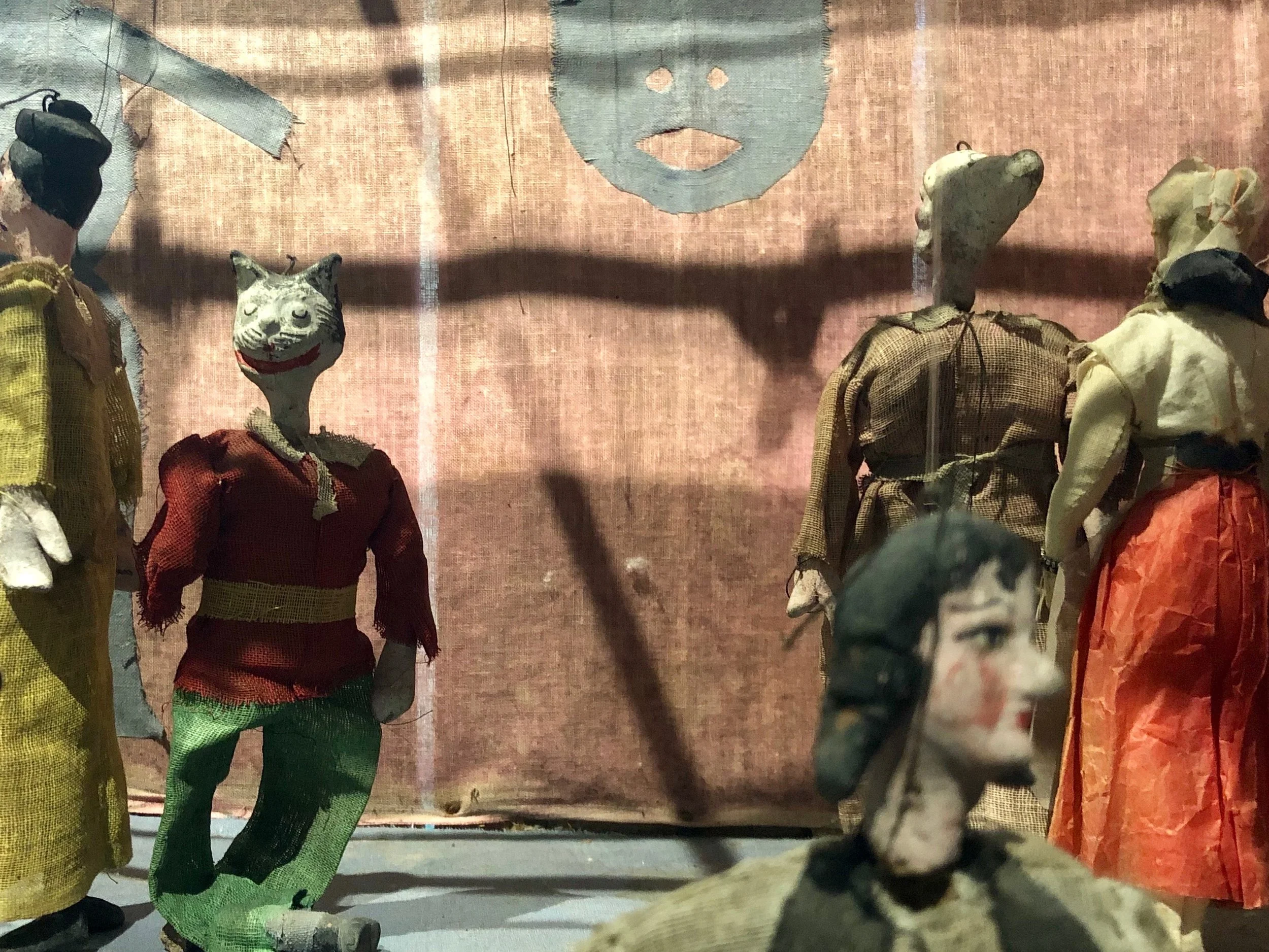
The next room held a delightful miniature puppet theater created by Frida. One of my favorite items in the house, it contained a cat or perhaps jaguar, a seated woman, a skeleton with a red sash around its waist and an alligator suspended in the air. Also on display was a painting by Diego Rivera titled La Quebrada. The inscription in the lower right corner reads, “A La Niña Fridita Kahlo la maravillosa. El 7 de Julio de 1956 a los dos años que duerme en cenizas, viva en mi corazón” (To the little girl Fridita Kahlo, the wonderful one. On July 7, 1956, two years since she went to sleep in the ashes, she lives on in my heart.)

We especially loved this kinda creepy puppet theater Frida created

We especially loved this kinda creepy puppet theater Frida created

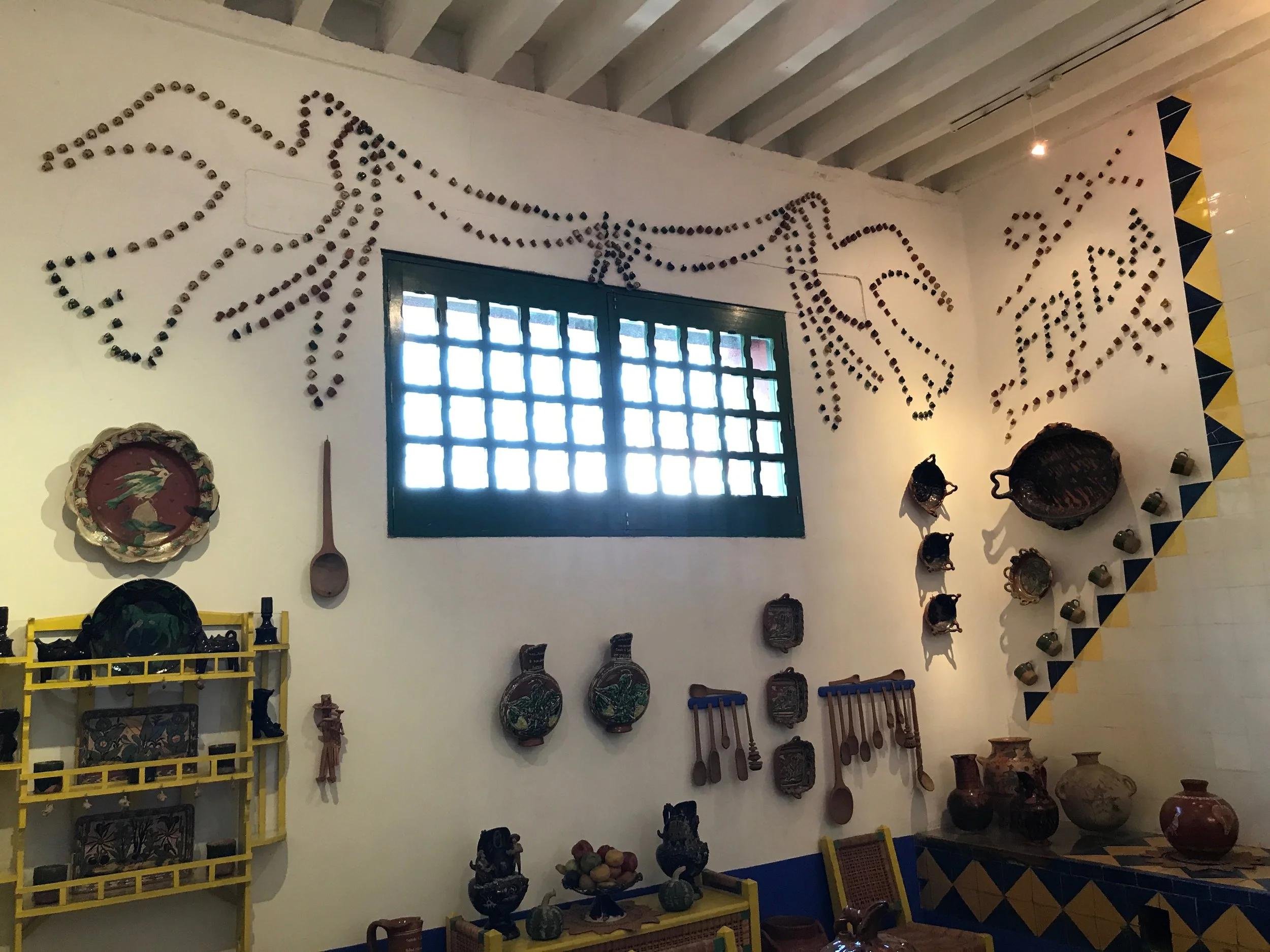
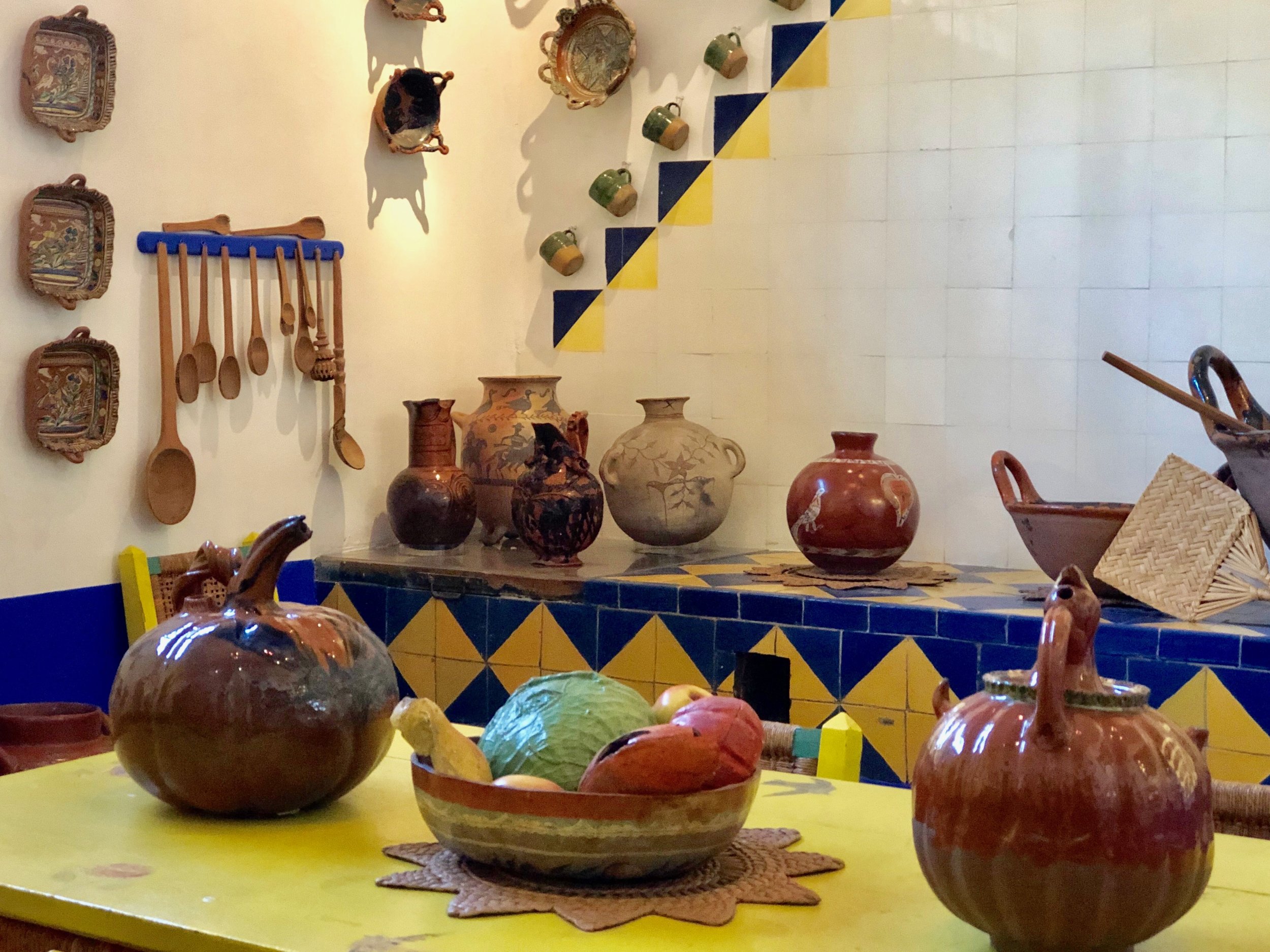
Moving farther along, white painted ceiling beams and bold blue, yellow and white glazed tiles complement the kitchen countertop and frame the chimney. Kahlo embellished the walls surrounding the wood-burning stove using miniature glazed clay mugs to whimsically spell out her and Diego’s names. On the opposite wall are two doves tying a lovers’ knot and a pair of pumpkin-shaped clay tureens sitting atop a long yellow table.

Frida spelled out her and Diego’s names in miniature clay mugs on the wall above her stove

Frida spelled out her and Diego’s names in miniature clay mugs on the wall above her stove

A glimpse into Frida’s kitchen

A glimpse into Frida’s kitchen

The neutral tones of earthenware pottery pair nicely with the bright blue and yellow tiles

The neutral tones of earthenware pottery pair nicely with the bright blue and yellow tiles

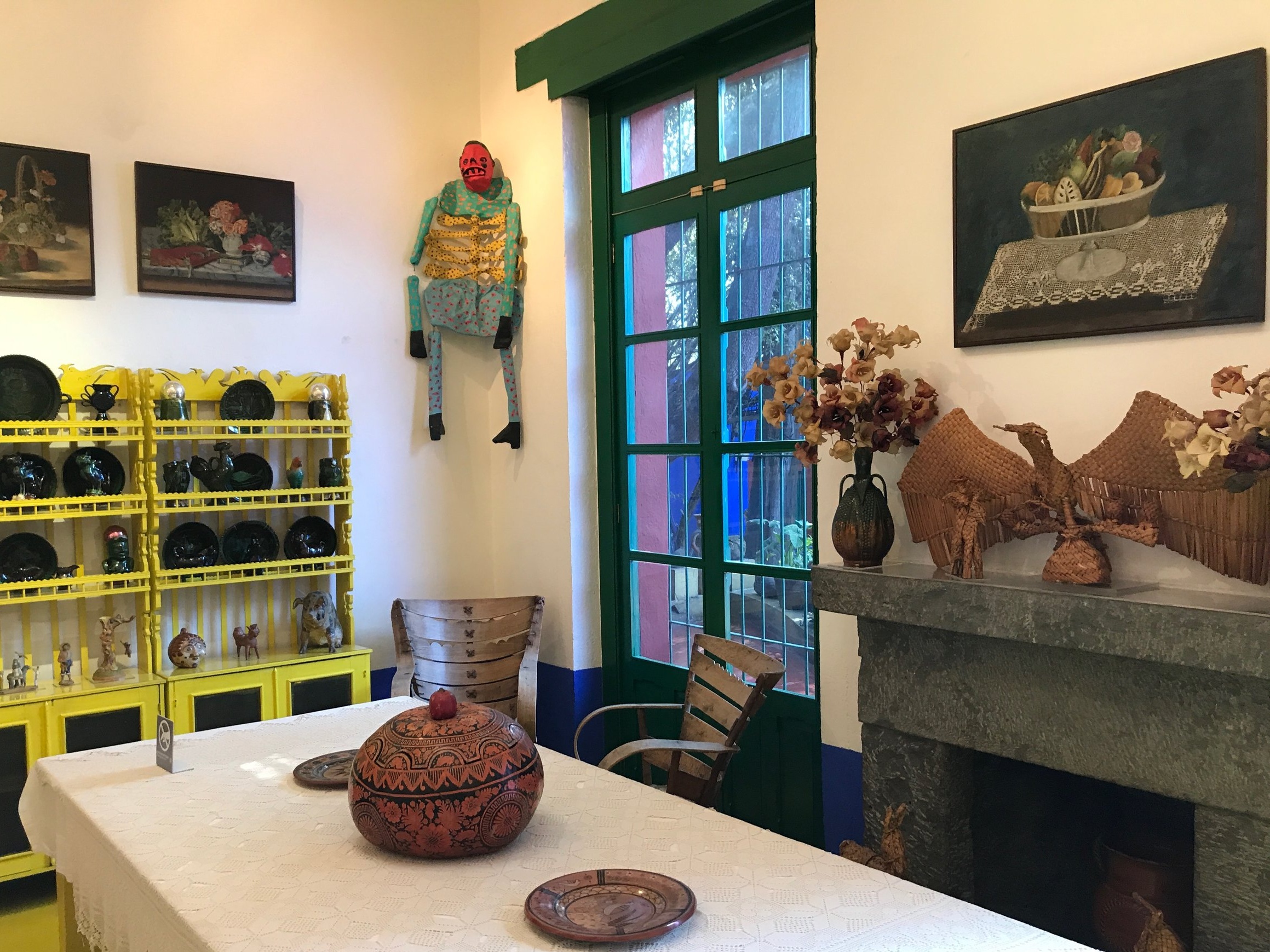
Next to the kitchen, the dining room shares the same vibrant color scheme with bright yellow open storage shelving chock full of colored glassware, earthenware pots, plates and indigenous artifacts.  

The dining room

The dining room

A bright yellow cabinet displaying some of Frida’s collections

A bright yellow cabinet displaying some of Frida’s collections

Rivera’s small bedroom is tucked off to the side of the dining room. A pillow sitting on a vintage armchair is embroidered with the words “Despierta Corazon Dormido” (Wake Up, Sleeping Heart). Outside this room, a flight of stairs leads to the second floor library and studio, an addition by Rivera.

The small room Diego stayed in also once housed Leon Trotsky, with whom Frida had an affair

The small room Diego stayed in also once housed Leon Trotsky, with whom Frida had an affair

Up in the studio, large steel-framed windows look out to the garden and fill the room with natural light. There’s also an enviable collection of books. Kahlo’s small wooden work desk holds an assortment of brushes, a palette, a mirror and small glass bottles of pigment waiting to be mixed for use.

Frida’s work table: where the magic happened

Frida’s work table: where the magic happened

The materials Frida used in her paintings

The materials Frida used in her paintings

Color pigments Frida used to create her paint

Color pigments Frida used to create her paint

Adjacent to these tools, a wheelchair faces an easel with the painting Still Life With Flag — a reminder that Frida experienced a series of life events that left her in chronic pain. At the age of 6, she contracted polio, which left her right leg withered and shorter than her left, causing her to limp. In her teens, while traveling home from school, the bus on which she was riding was hit by a streetcar. She sustained serious trauma, including multiple fractures of the clavicle, ribs and spine, and was pierced by an iron handrail from the streetcar that impaled her pelvis. Frida miraculously survived and and began painting self-portraits — her reality captured by a mirror within the intimacy of her own studio at home. She once said, “I paint myself because I am so often alone and because I am the subject I know best.”

In poor health for much of her life, Frida had to paint in a wheelchair now and then

In poor health for much of her life, Frida had to paint in a wheelchair now and then

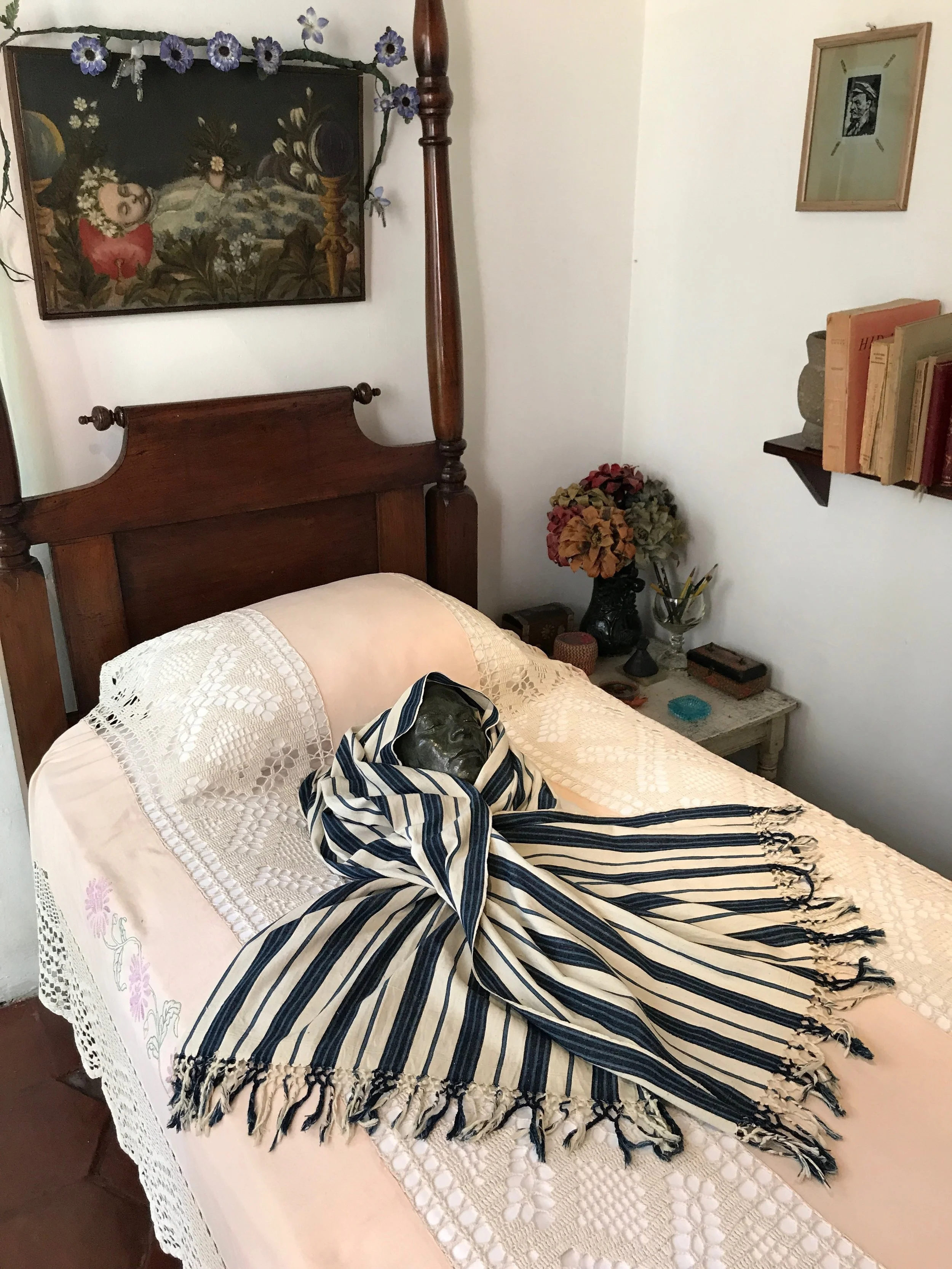
Immediately off the artists studio are a pair of Kahlo’s four-poster beds. As Frida was frequently bedridden, her day bed is fitted with a mirror above that she would use to paint while convalescing. Because she died in this room in 1954, her death mask fittingly (yet creepily) rests atop the bed. On the wall behind the headboard, a skeleton with tiny arms wearing a top hat and a painting of a presumably dead child with a garland of purple poppy flowers watch over the bed.

Frida’s death mask sits on her bed

Frida’s death mask sits on her bed

Frida’s night bed has a framed grouping of butterfly specimens attached to the panel above. These were given to her by Japanese-American sculptor Isamu Noguchi. On a lace-topped table nearby a headless pre-Columbian urn contains her ashes. A cabinet of toys rendered in miniature are displayed off to the right.

The large urn to the left contains Frida’s ashes

The large urn to the left contains Frida’s ashes

We exited via a staircase from Frida’s day room in the central courtyard and followed a winding path that led us past a stepped pyramidal structure, added and built by Rivera, a pedestal to display their pre-Columbian sculptures in the garden. Frida loved botany and collected many species of plants native to Mexico and created a garden abundant with yuccas, bougainvilleas, cacti, jasmine and agave.

Wally and Duke on the patio leading to the central courtyard

Wally and Duke on the patio leading to the central courtyard

Diego especially loved pre-Columbian artifacts

Diego especially loved pre-Columbian artifacts

A large ofrenda is set up in the garden

A large ofrenda is set up in the garden

Around back you’ll find an opportunity to pretend to be Frida and Diego

Around back you’ll find an opportunity to pretend to be Frida and Diego

An ancillary building contains an exhibit named after a drawing Kahlo made in 1946: Appearances Can Be Deceiving, where the artist drew herself, showing an X-ray view through her traditional Tehuana dress to reveal her injured leg and plaster corset. The first room displays a few of Kahlo’s personal objects used in relation to her medical condition. There’s also a vitrine with mannequins wearing Kahlo’s distinctive Tehuana dresses and headpieces. She favored the huipil, a boxy blouse, rebozo shawl and long skirt, a representation of Kahlo’s authentic Mexican femininity. There’s also a couture dress with a buckled corset by fashion designer and provocateur Jean Paul Gaultier whose 1998 spring-summer runway was titled Tribute to Frida Kahlo. In this same case is a dress by Rei Kawakubo for Comme des Garçons surrounded by a sort of hoop cage, and in the last room there’s a delicately embroidered bodysuit with an incredible fringe jacket by Roberto Tisci for Givenchy.

An outbuilding houses some of Frida’s distinctive outfits

An outbuilding houses some of Frida’s distinctive outfits

A dress by Comme des Garçons (left) and The Freckles by Gaultier

A dress by Comme des Garçons (left) and The Freckles by Gaultier

To be in the former home of this captivating, self-willed individual was an amazing and moving experience. Like Kahlo, La Casa Azul has many layers — its details bear witness to her inspired magpie approach, filled with objects that carried personal meaning to Kahlo and are reflected in her fascinating collection of arte popular. –Duke

La Casa Azul, the Museo Frida Kahlo

La Casa Azul, the Museo Frida Kahlo

Frida Kahlo Museum
Londres 247
Del Carmen
04100 Ciudad de México, CDMX
Mexico


olmedomuseum

10 Most Instagrammable Places in Mexico City's Centro

A photographer’s tour of the CDMX historic district, from the Palacio de Bellas Artes to the Gran Hotel Ciudad de México.

CDMX, as the cool kids call it, is full of stunning design, a mind-blowing mix of colonial architecture and modern marvels. Here are some of our favorites to help you get started on a cultural and Insta-worthy tour of the city’s historic heart.

Centro Histórico

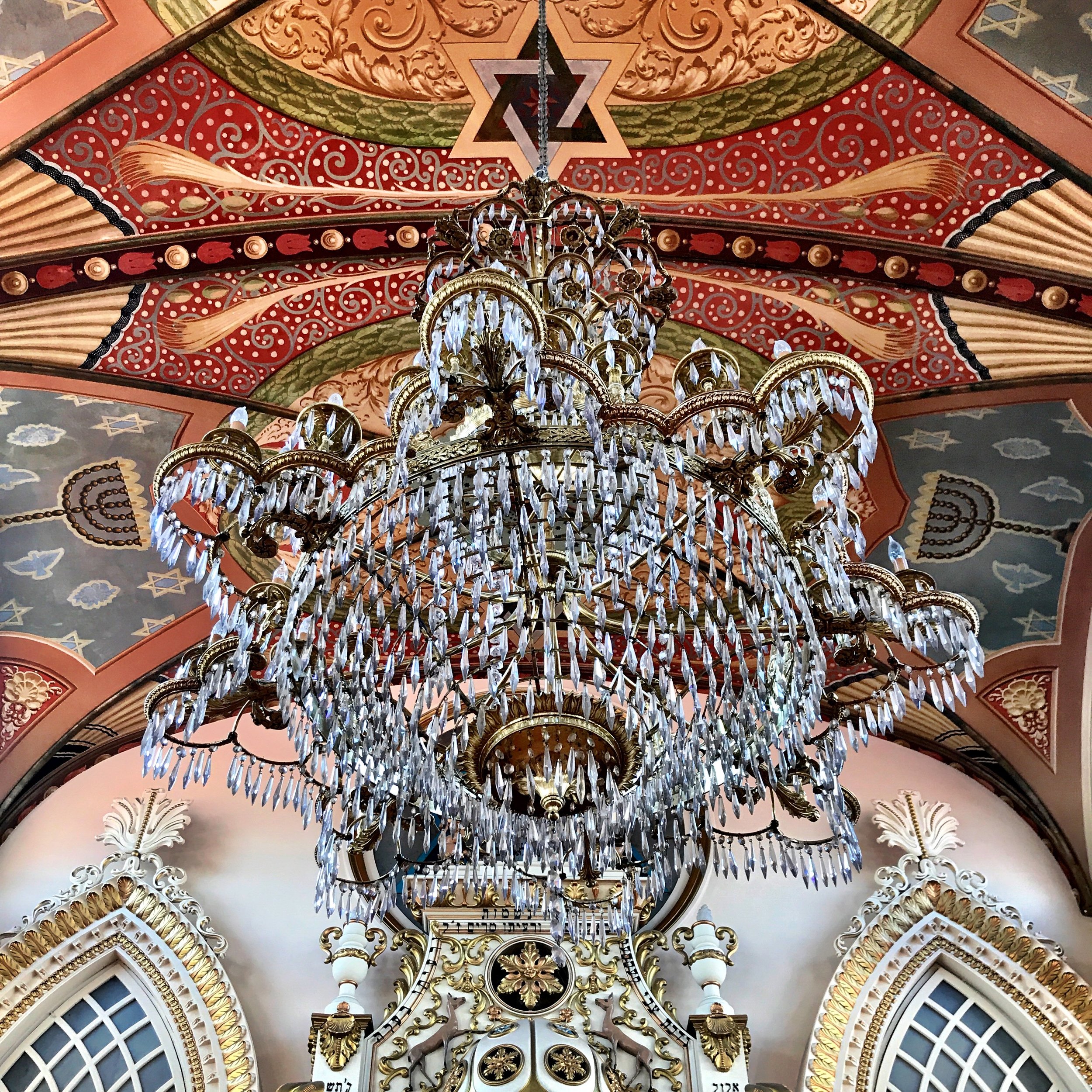
A chandelier hangs above the holy ark

A chandelier hangs above the holy ark

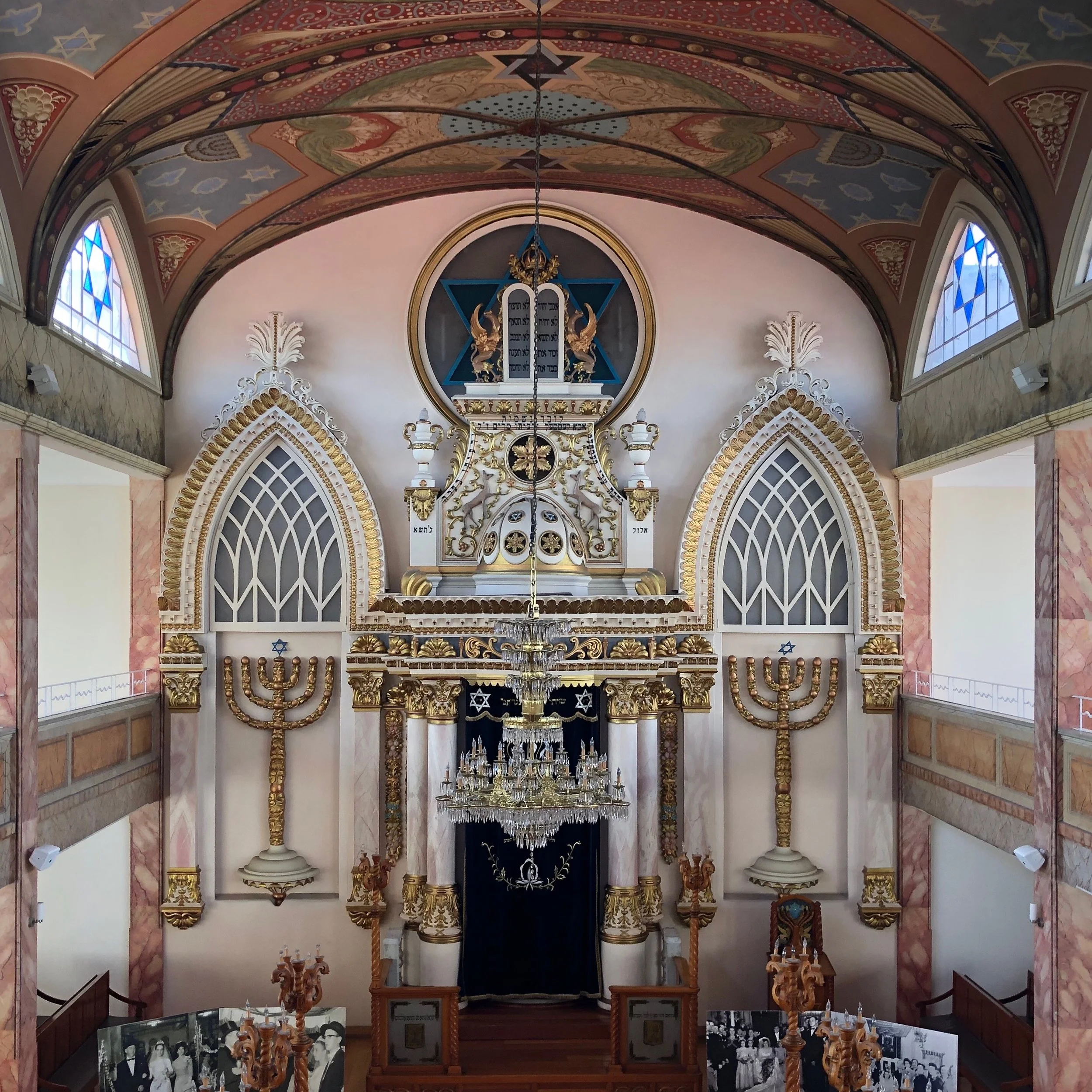
The second and third floors of the Sinagoga Histórica have some beautiful elements

The second and third floors of the Sinagoga Histórica have some beautiful elements

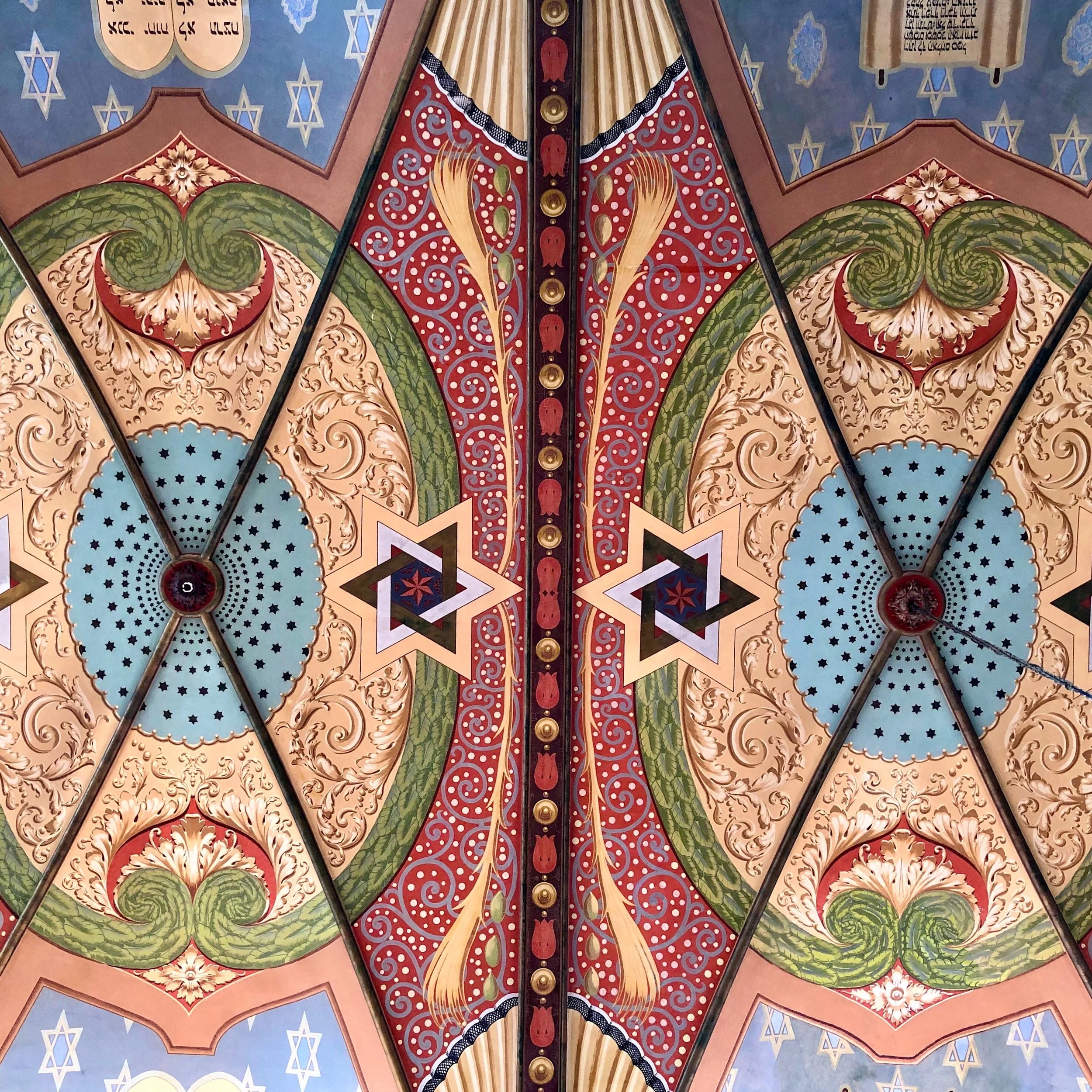
Look up to see the folk art-styled ceiling, with its gorgeous color pallette

Look up to see the folk art-styled ceiling, with its gorgeous color pallette

1. Sinagoga Histórica Justo Sierra 71

Start your tour with this hidden gem, built and established by the Ashkenazi, Eastern European Jews who arrived in Mexico City as refugees escaping persecution in the early 1940s. The Historic Synagogue, or Templo Nidje Israel, is entered through an interior courtyard beyond the building’s colonial façade (and a somewhat grumpy guard).

The interior contains a rather plain assembly hall on the first floor, but the sanctuary located on the second floor is impressive, said to be modeled after a synagogue in Lithuania. Make sure to look up at the vaulted clerestory ceiling intricately painted in hues of rust, mustard yellow, blue and green. An elaborately carved platform stands in the center of the room and faces the richly ornamented aron kodesh, or holy ark, surrounded by folk art elements typical of Eastern European villages. The sacred Torah scrolls were once kept behind the blue velvet curtain panel embroidered with silver thread.

Justo Sierra 71

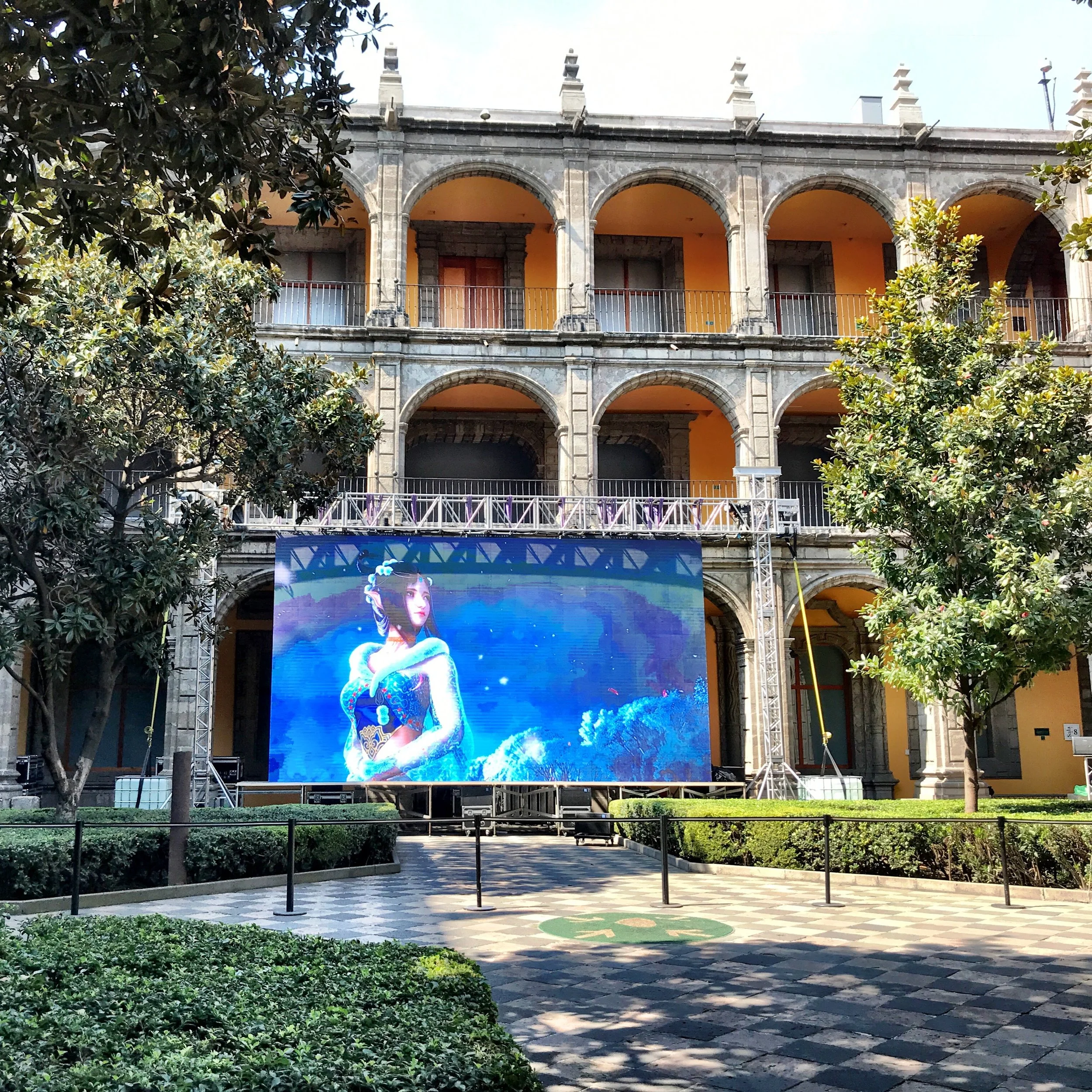
What seemed to be a bizarre fantasy video game ad was playing in the courtyard while we visited

What seemed to be a bizarre fantasy video game ad was playing in the courtyard while we visited

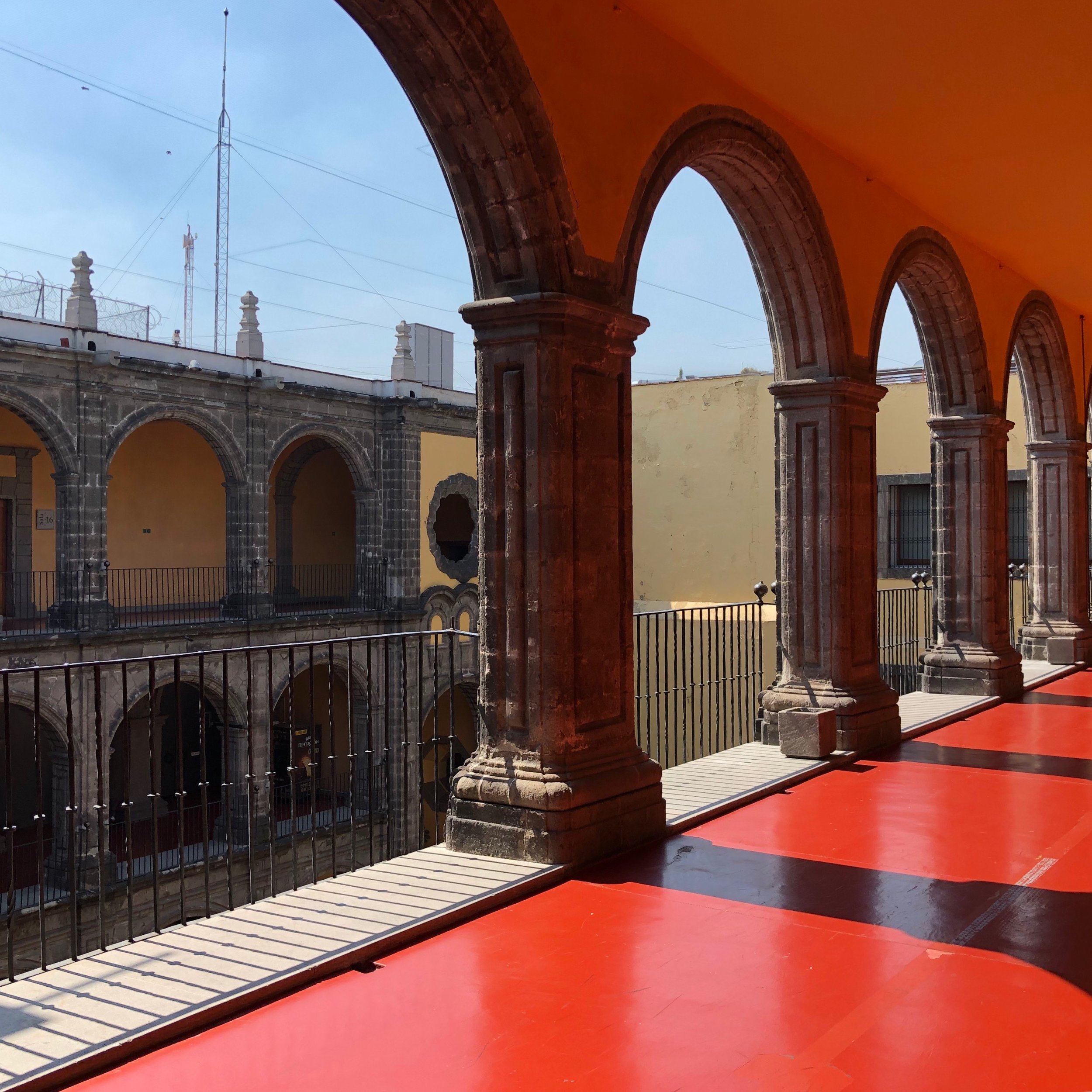
Open archways line the corridors of the ex-college

Open archways line the corridors of the ex-college

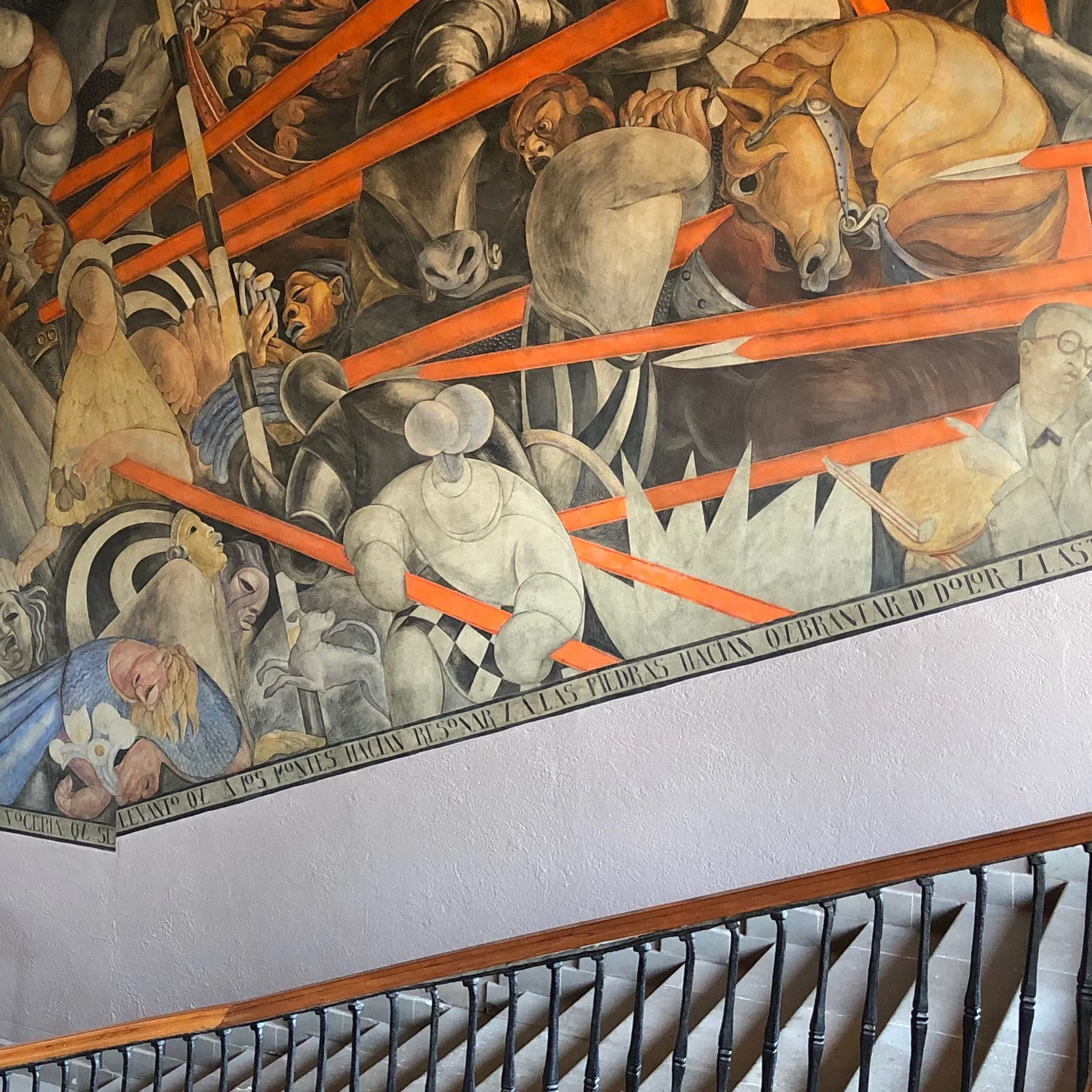
You’ll spot murals all over the Antiguo Colegio de San Ildefonso

You’ll spot murals all over the Antiguo Colegio de San Ildefonso

2. Antiguo Colegio de San Ildefonso

A block or so down from the synagogue is a former Jesuit boarding school that has since been transformed into a museum and cultural center. After the Jesuits were expelled from the city, the building temporarily served as barracks for the Mexican army before becoming the National Preparatory School. The site is considered to be the birthplace of the Mexican muralism movement and features murals painted by David Alfaro, José Clemente Orozco (Wally’s personal fave) and Diego Rivera.

Justo Sierra 16

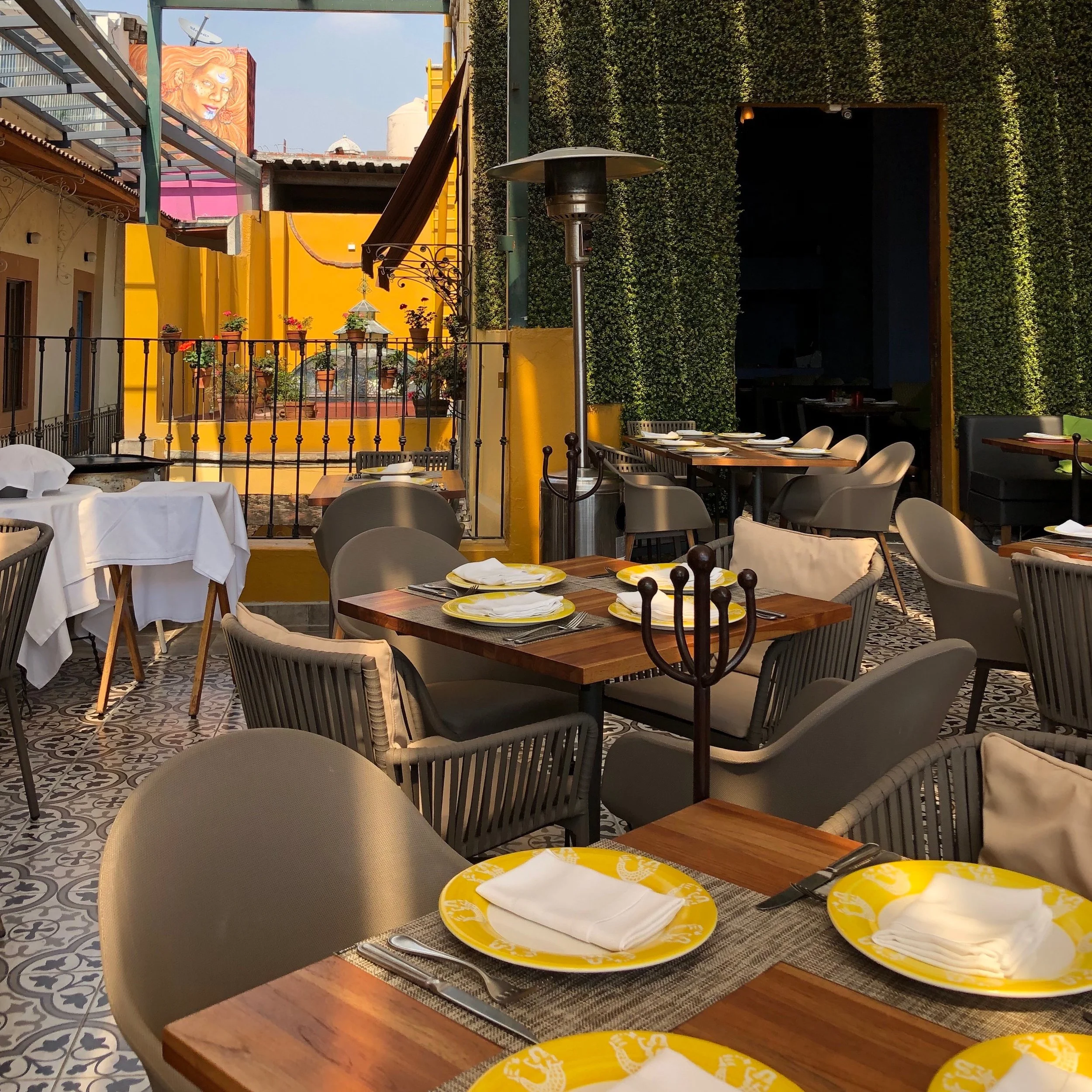
La Casa de las Sirenas is located within one of the first colonial mansions in Mexico City

La Casa de las Sirenas is located within one of the first colonial mansions in Mexico City

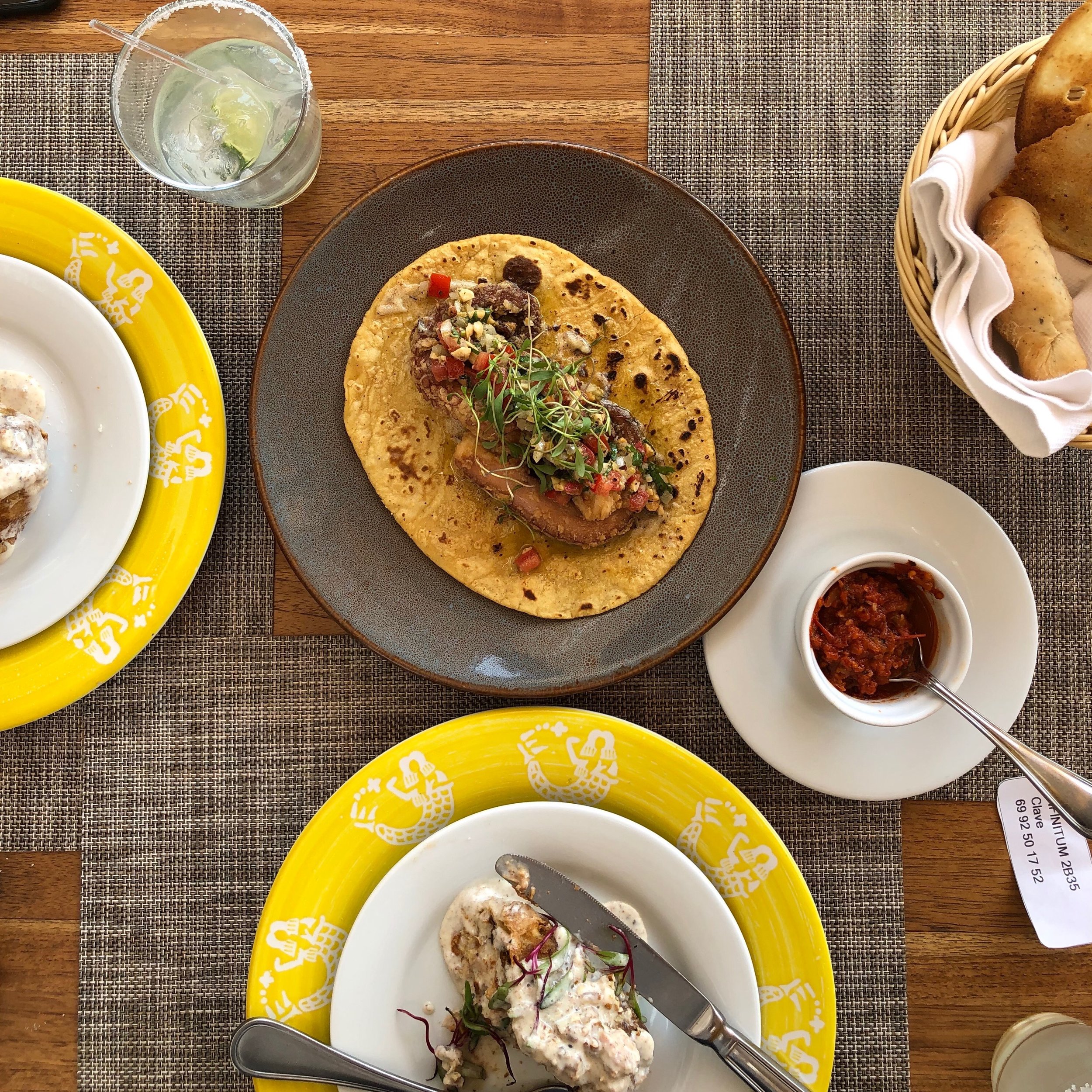
Our al fresco meal was delicious

Our al fresco meal was delicious

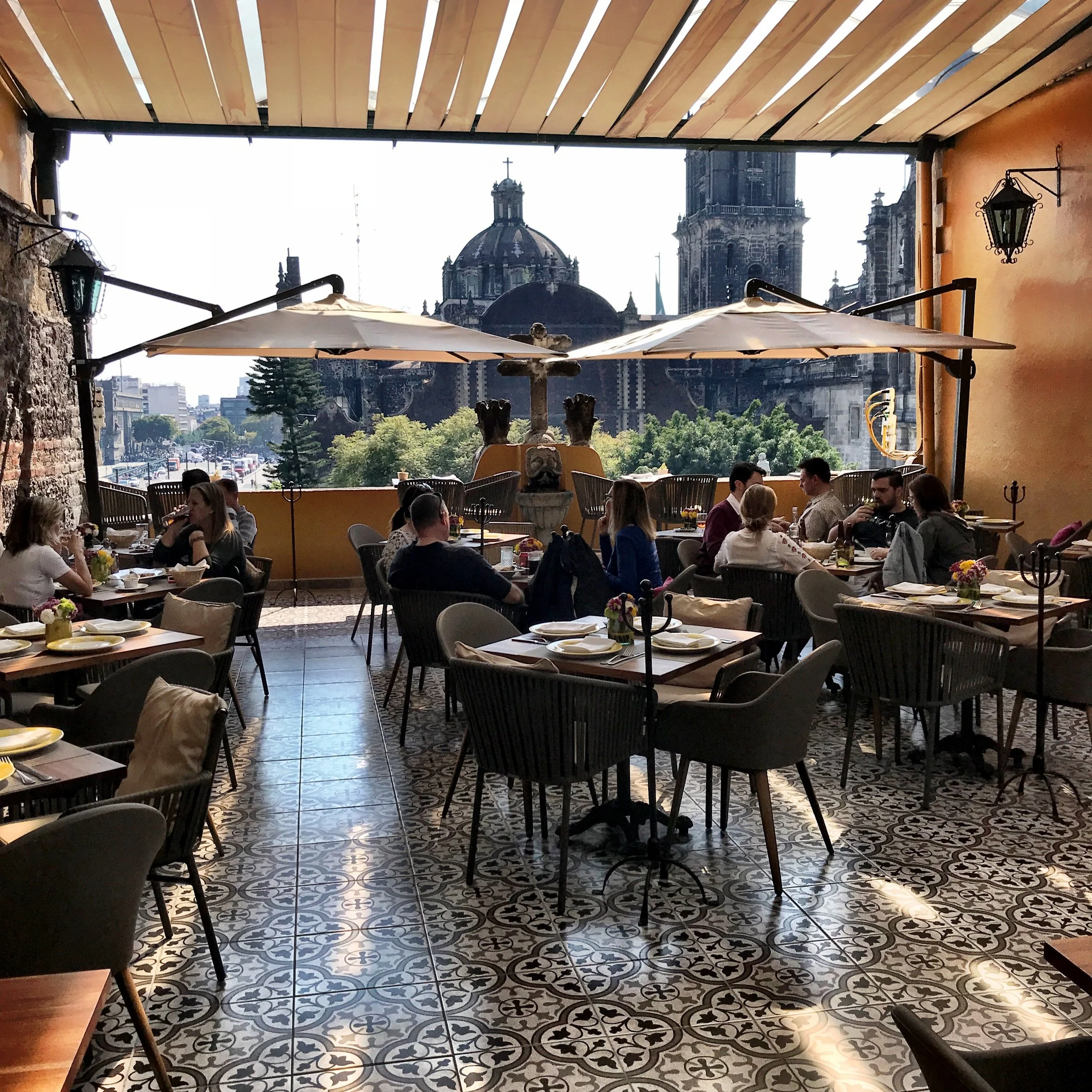
Grab a bite on the rooftop terrace, which overlooks the back of the cathedral

Grab a bite on the rooftop terrace, which overlooks the back of the cathedral

3. La Casa de las Sirenas

The frieze on the façade of this former 17th century colonial abode features a Caravaca cross flanked by a pair of mermaids, which gives the restaurant its name, the House of the Mermaids.

We ate a delicious lunch on the rooftop terrace with a spectacular view overlooking the extremely disappointing Templo Mayor and the back of the impressive Catedral Metropolitana, while an organ grinder played a whimsical tune over and over from the street below.

República de Guatemala 32

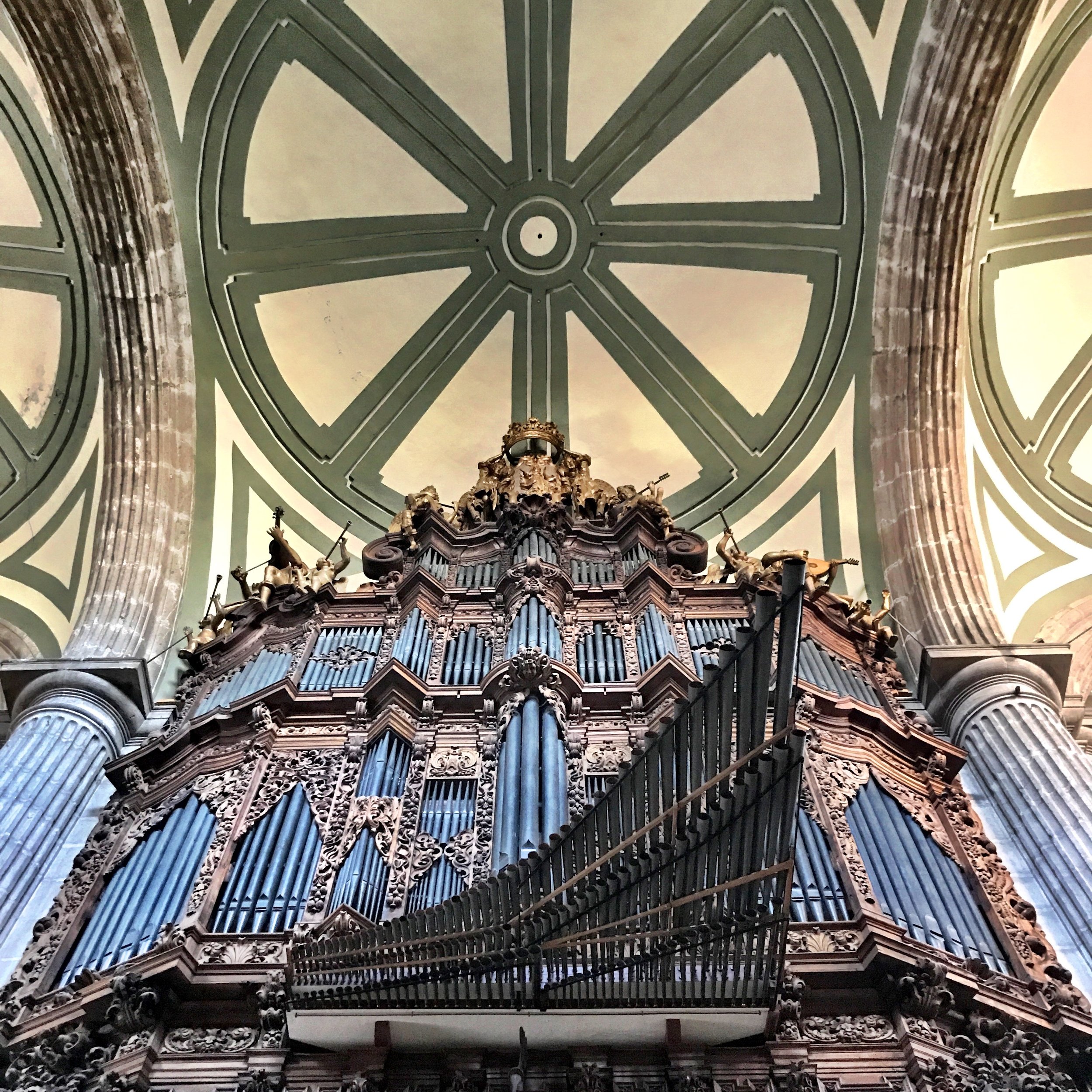
The Metropolitan Cathedral organ

The Metropolitan Cathedral organ

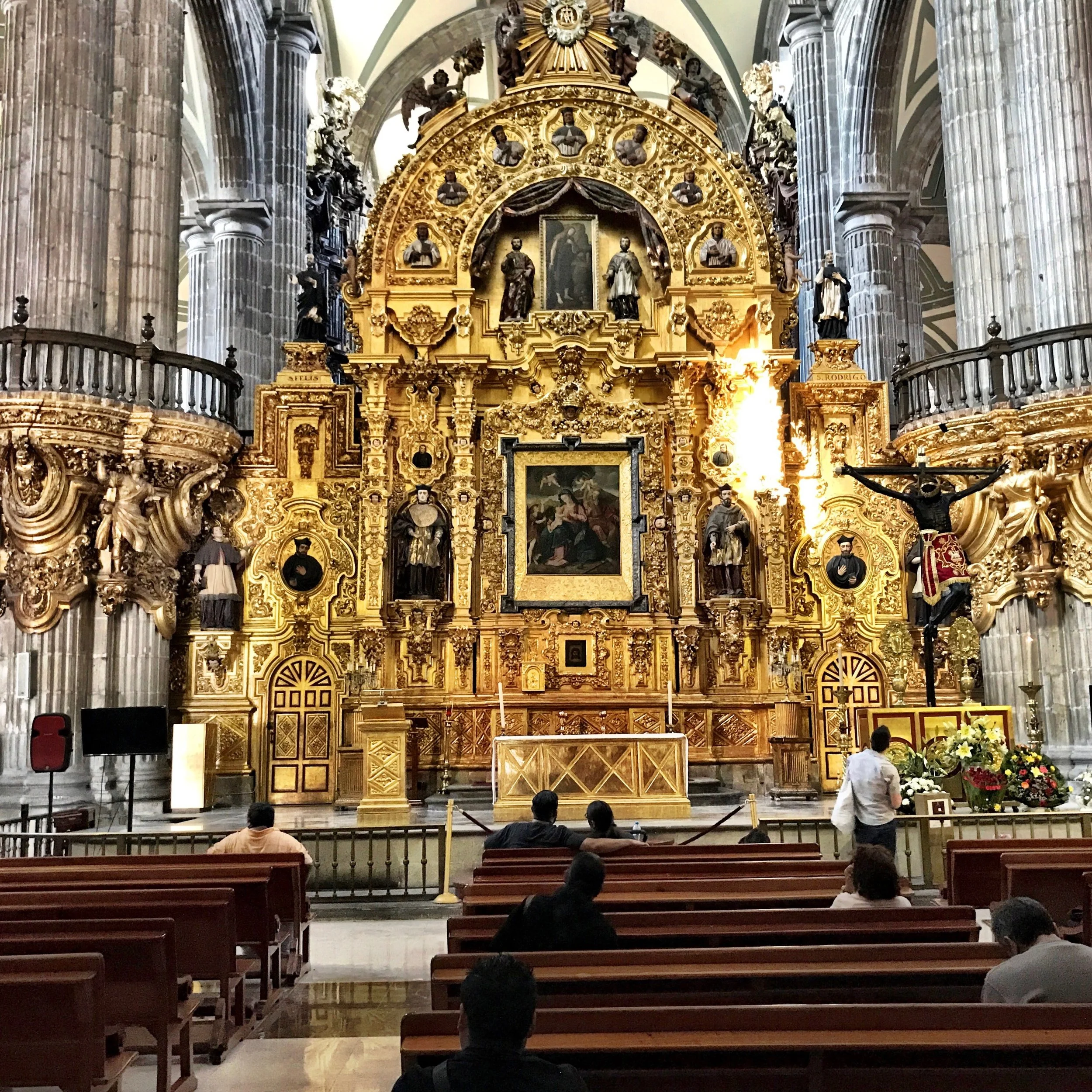
This over-the-top golden altar is just one of many inside the massive cathedral

This over-the-top golden altar is just one of many inside the massive cathedral

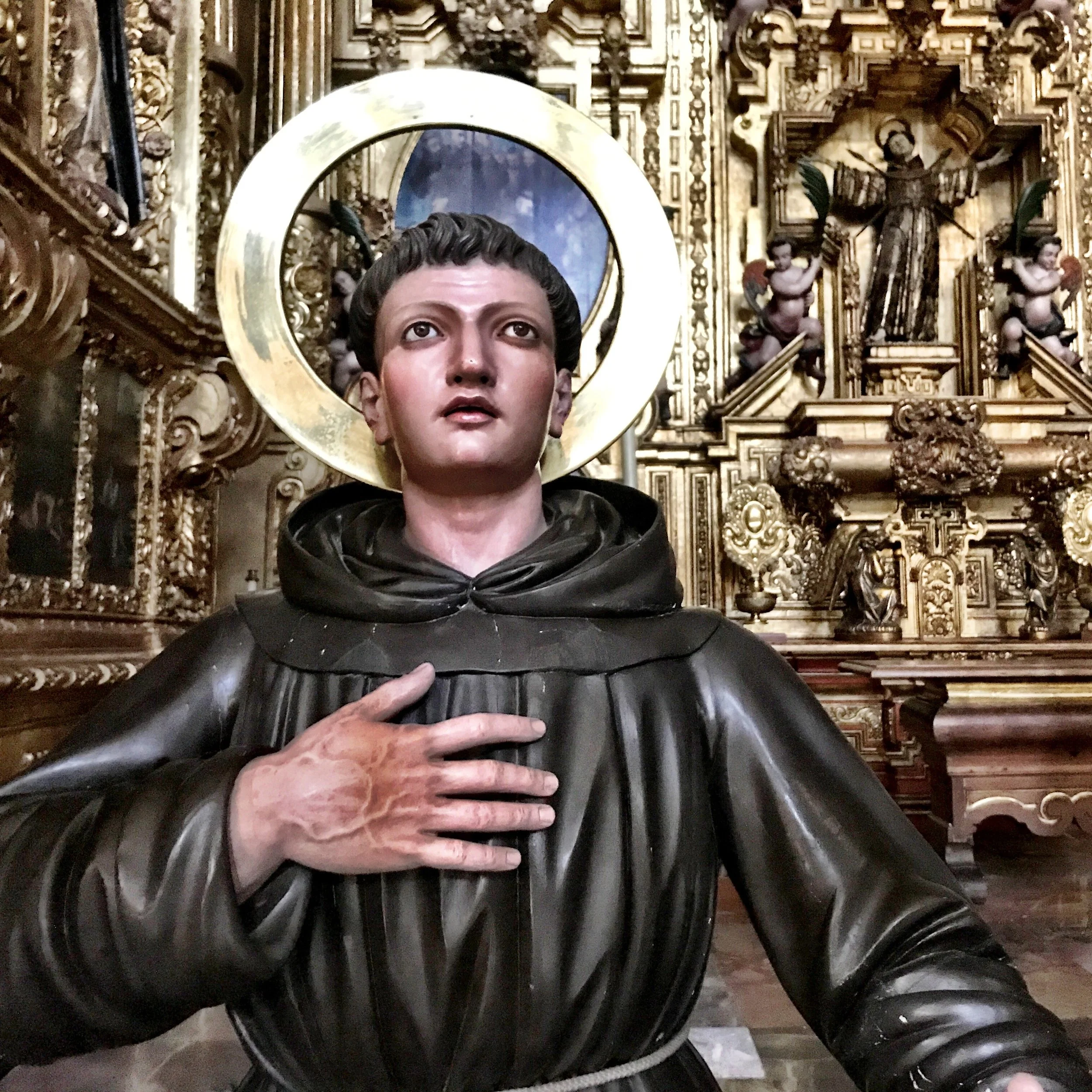
Saints galore in various niches in this Baroque church — note the highly realistic detail on his hand

Saints galore in various niches in this Baroque church — note the highly realistic detail on his hand

4. Mexico City Metropolitan Cathedral

This massive Baroque-style cathedral dominating the northern side of the Zócalo plaza was built in stages between 1573 to 1873, shortly after Hernán Cortés and his conquistadors defeated the Aztec Empire. Among the oldest and largest cathedrals in the Americas, much of it was built using stones pilfered from the Templo Mayor. (Maybe that’s why the temple’s ruins are so unimpressive.) Step inside to see the large, ornate Altar of the Kings, collection of paintings, pipe organ and statuary.

Plaza de la Constitución s/n

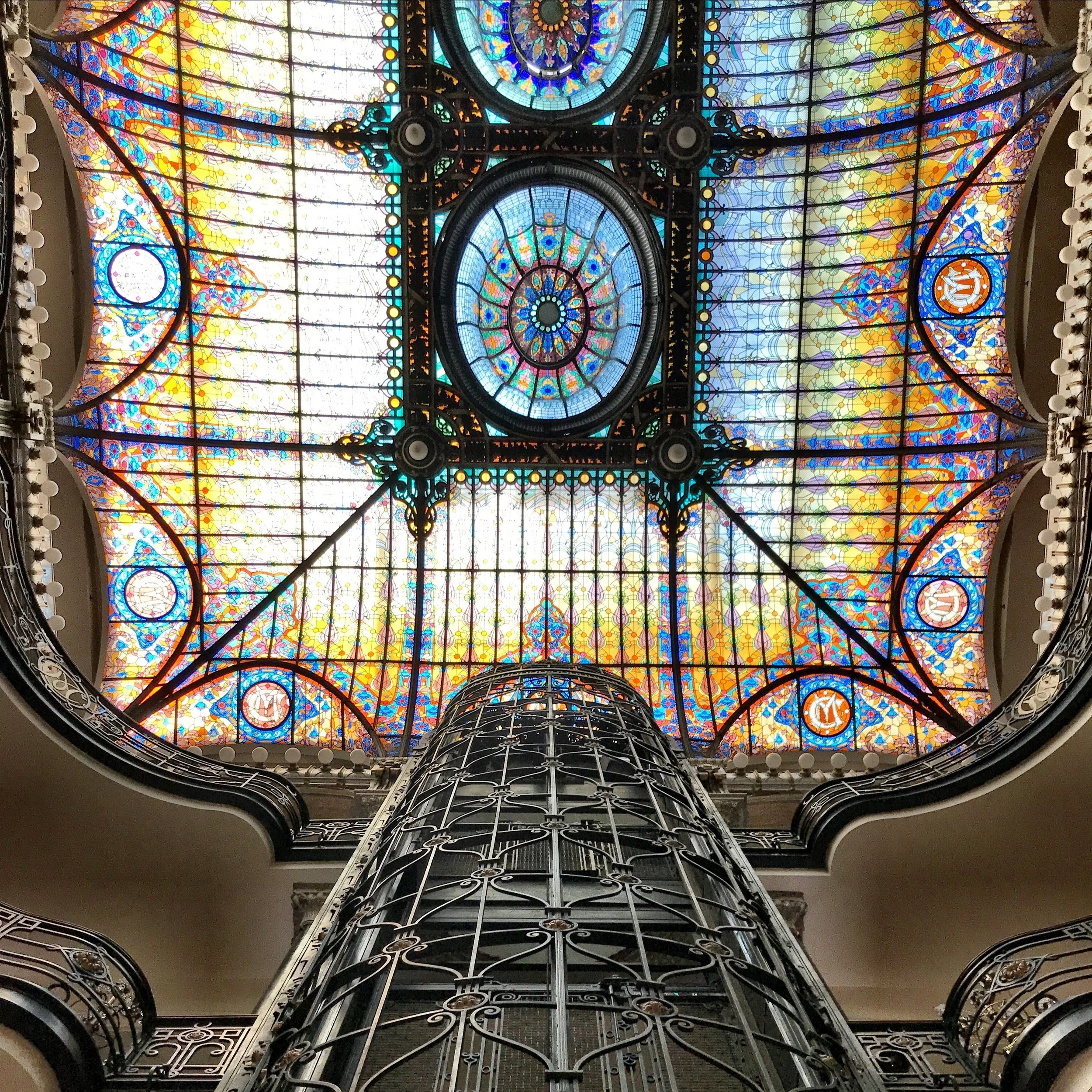
Pop into the lobby of the Gran Hotel to marvel at the stained glass ceiling and ironwork

Pop into the lobby of the Gran Hotel to marvel at the stained glass ceiling and ironwork

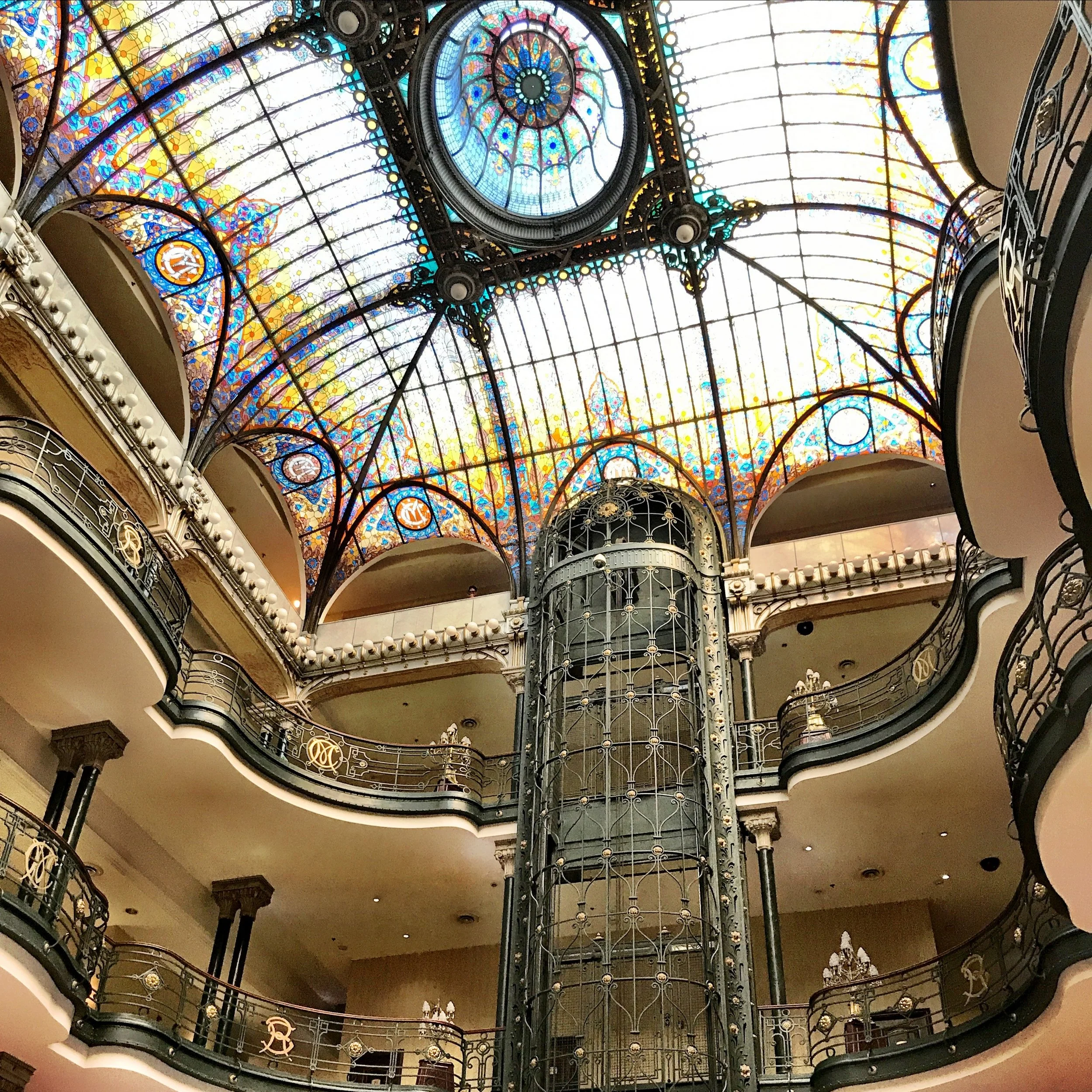
The curving balconies and organic grillwork on the cage elevators make this Art Nouveau gem worth a shot or two

The curving balconies and organic grillwork on the cage elevators make this Art Nouveau gem worth a shot or two

5. Gran Hotel Ciudad de México

After binge-watching the Spanish soap series Gran Hotel on Netflix, we had to go inside this historic Art Nouveau gem of the same name. It was originally the city’s most luxurious department store, known as el Centro Mercanti — in fact, you can still see the monogram “CM” in the stained-glass ceiling designed by French glass artist Jacques Grüber as well as the railings. Fun fact: The interior is featured in the opening scenes of the James Bond film Spectre.

16 de Septiembre 82

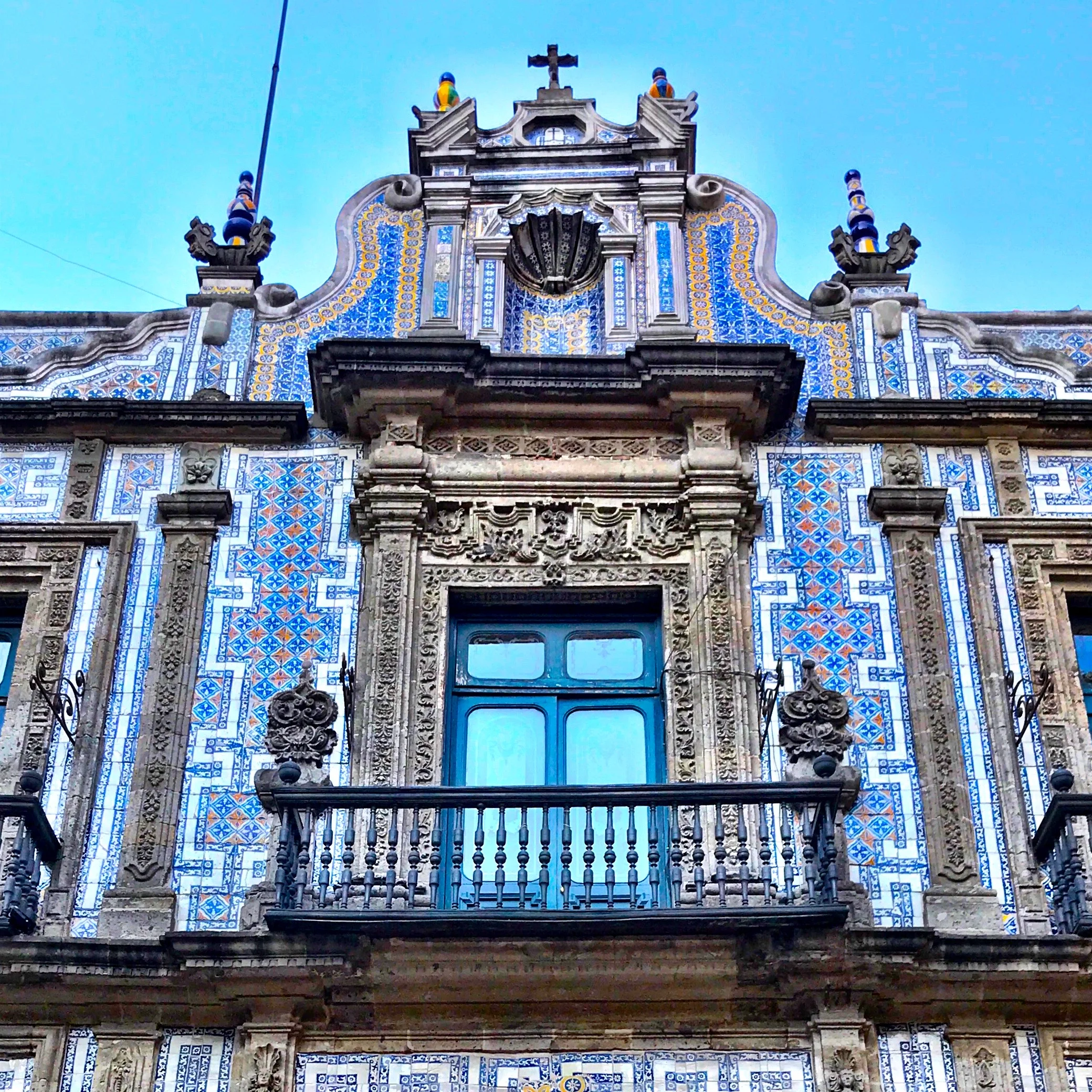
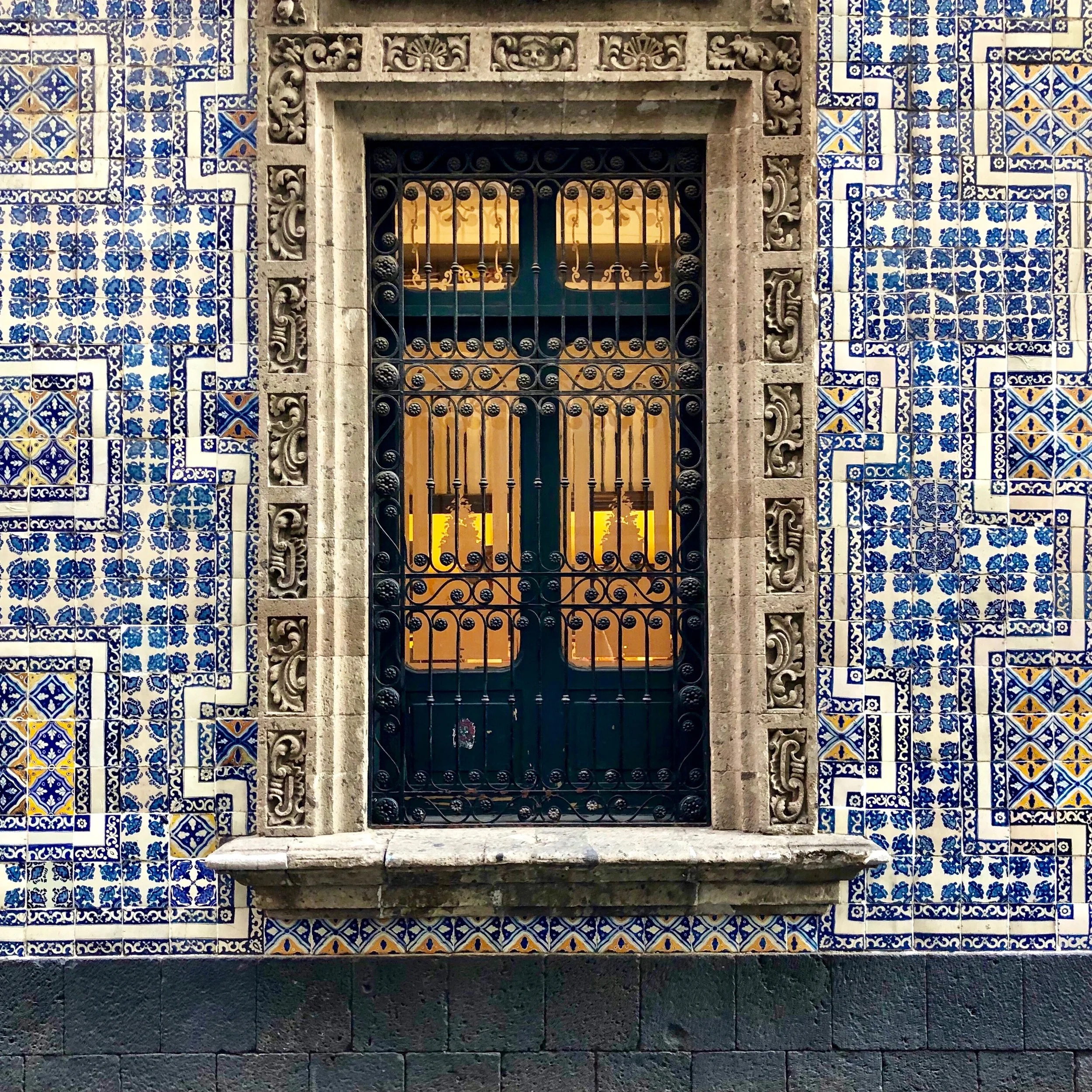
This building is known colloquially as the House of Tiles

This building is known colloquially as the House of Tiles

This distinctive tiled building is now a Sanborns department store

This distinctive tiled building is now a Sanborns department store

6. Casa de los Azulejos

Meaning “the House of Tiles” in Spanish, the exterior of this 16th century building is embellished with tin-glazed ceramic tilework known as azulejos, from Puebla, Mexico. The property was originally the residence of the Valle de Orizaba counts, one of the wealthiest families in the country. It was purchased by brothers Walter and Frank Sanborn in 1919 and converted into the flagship location of Sanborns, a Mexican department store and restaurant chain.

Av Francisco I. Madero 4

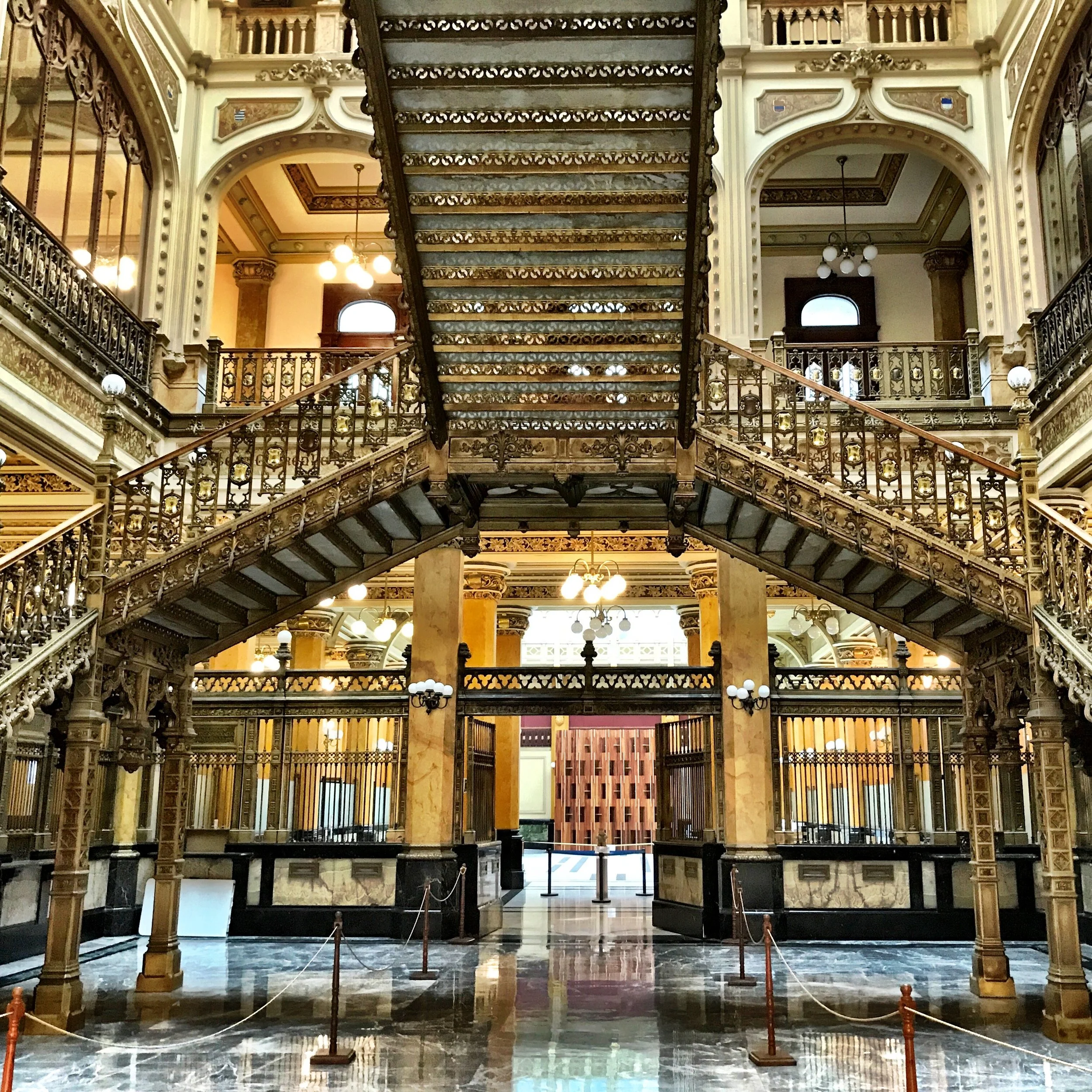
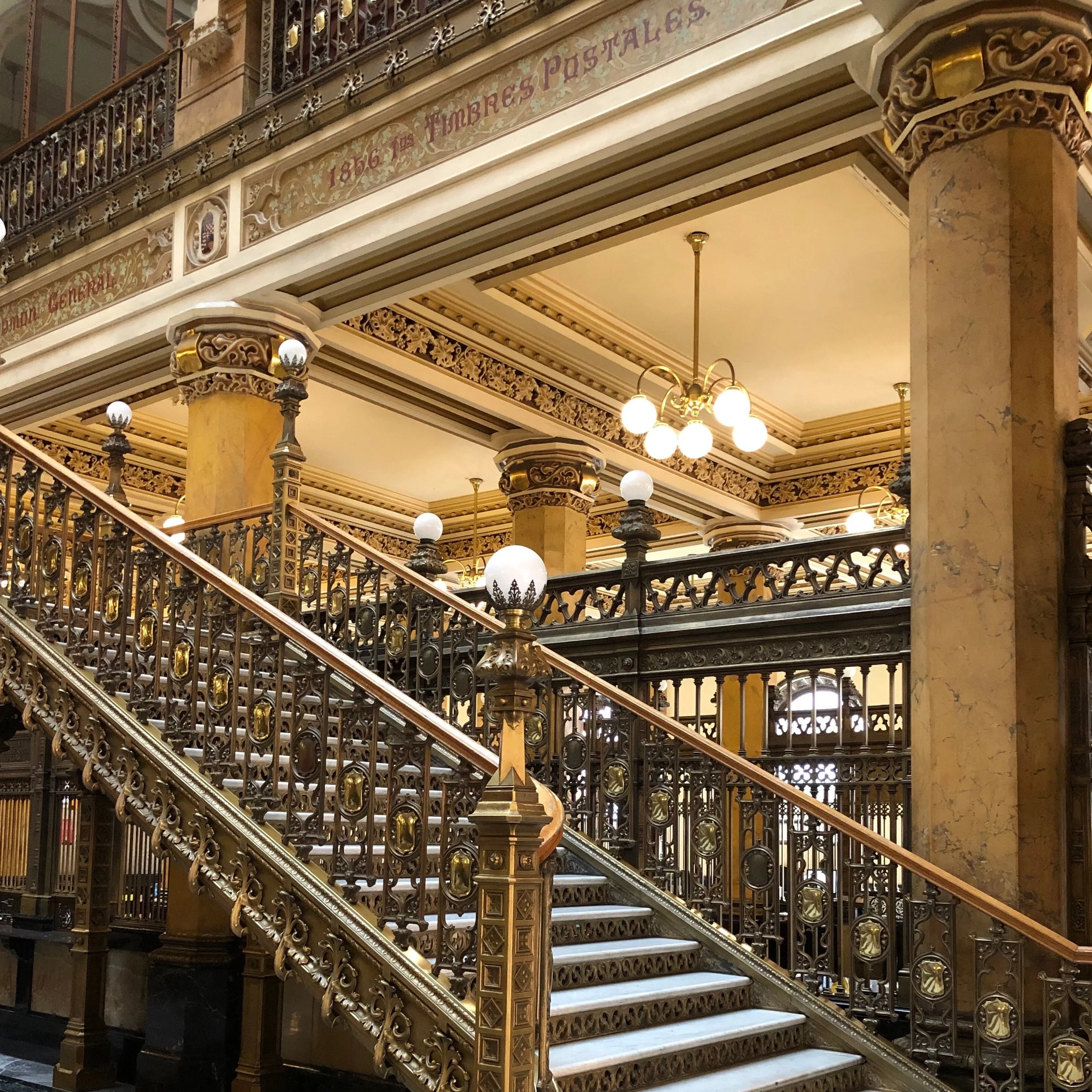
Since you’re in the area, you should pop into the Palacio Postal just to check out the amazing staircase

Since you’re in the area, you should pop into the Palacio Postal just to check out the amazing staircase

Things are looking up at the Postal Palace

Things are looking up at the Postal Palace

7. Palacio Postal

Also known as the Correo Mayor, the Postal Palace was built by Italian architect Adamo Boari and Mexican engineer Gonzalo Garita and has been in continuous operation since it first opened in 1907. The interior was restored to its original gilded splendor with the help of Boari’s granddaughter, who had the original building plans in Italy. The money shot is of a pair of grand interconnecting staircases embellished with vegetal brass balustrades that almost appear to be alive. My only regret is that we weren’t able to send a postcard home while there.

C. Tacuba 1, Cuauhtémoc

To get this money shot, you have to go into the Sears department store across the street

To get this money shot, you have to go into the Sears department store across the street

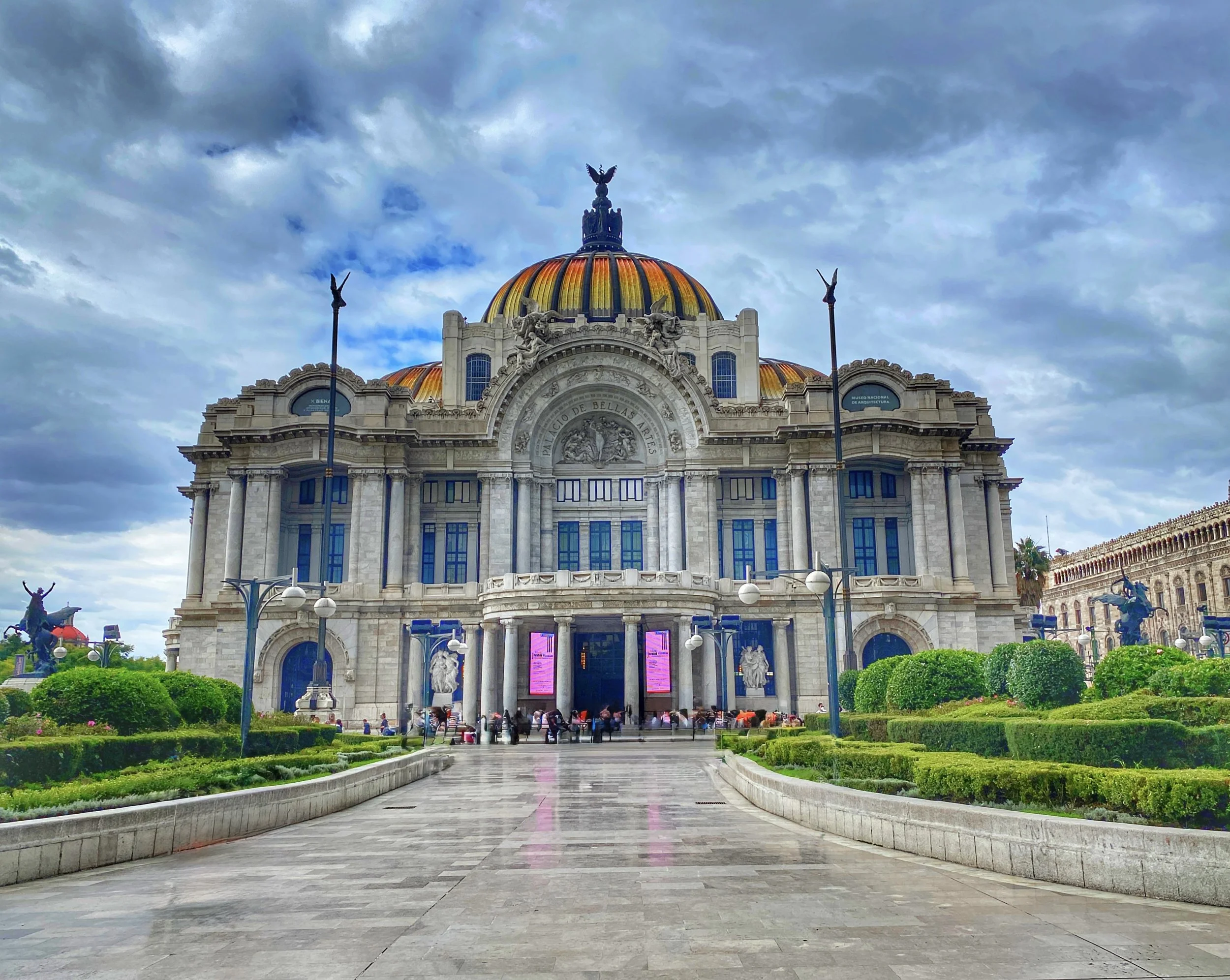
8. Palacio de Bellas Artes

We didn’t get to go inside on this visit. But the secret to an amazing aerial shot is to head over to the Sears department store directly across the street. (If you don’t want to have a snack or drink on the balcony café, just go up one more floor and press your camera against the glass as we did.)

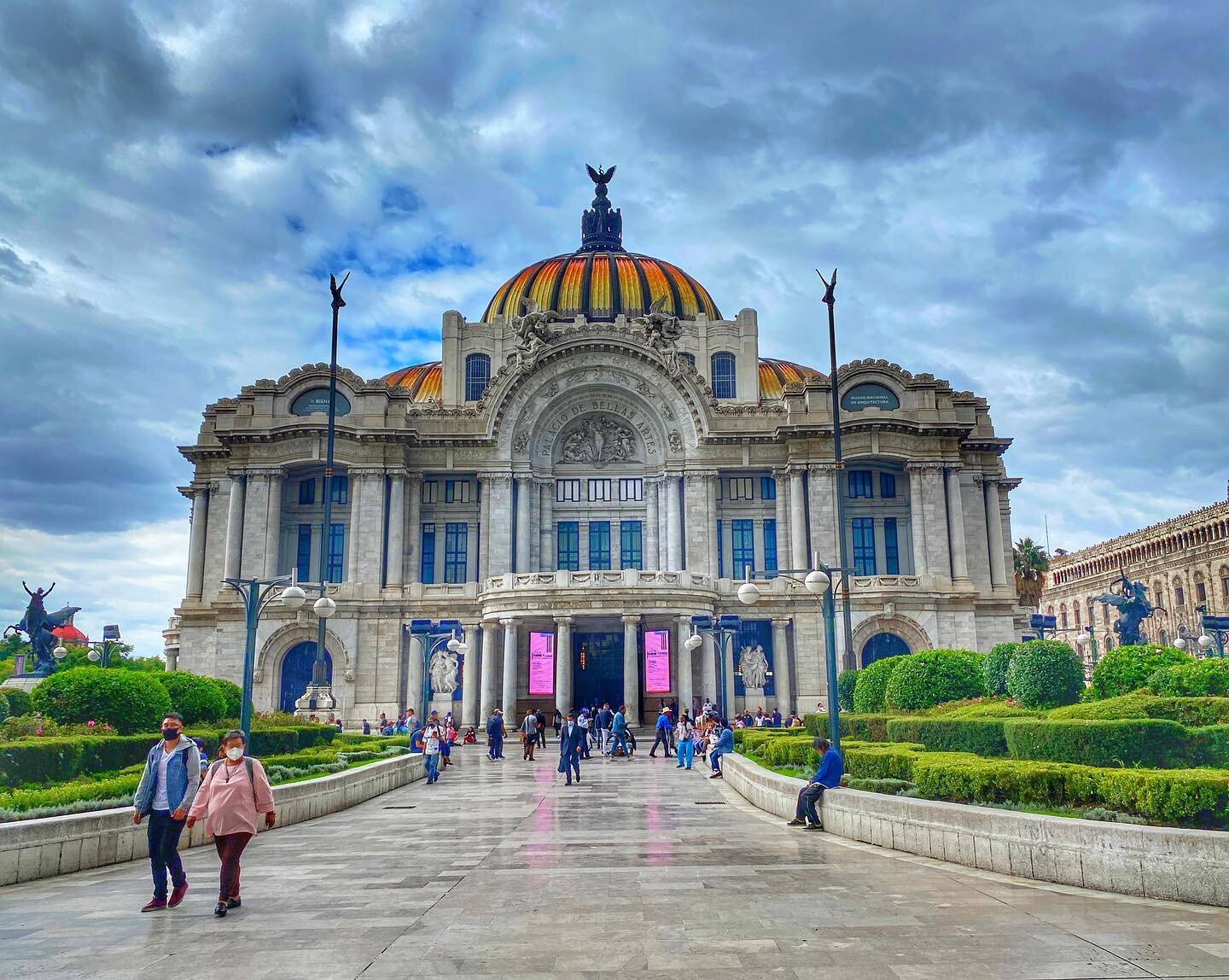
Designed by the same architect as the Palacio Postal, the building’s gorgeously photogenic Art Nouveau exterior is topped by a lattice of iron and a shimmering iridescent ombre-tiled dome. At the very top, the Mexican eagle perches on a cactus with a serpent in its beak, with the four figures beneath representing the personifications of the dramatic arts.  

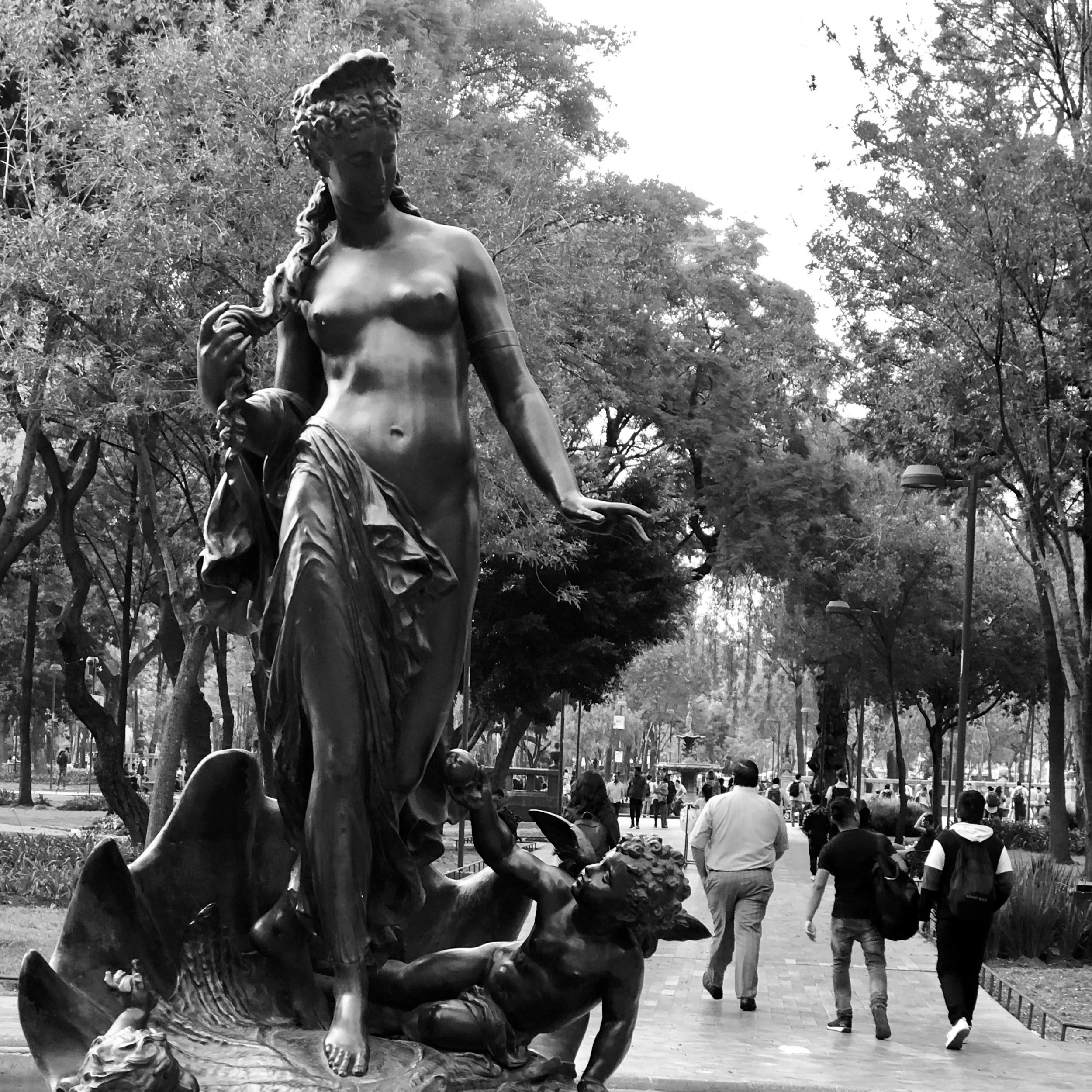
The plaza includes various sculptures, including four Pegasus statues designed by Catalan Agustí Querol Subirats, as well as the famous Mexico City Olympics logo — way too popular with tourists to get a good picture of.

Av. Juárez

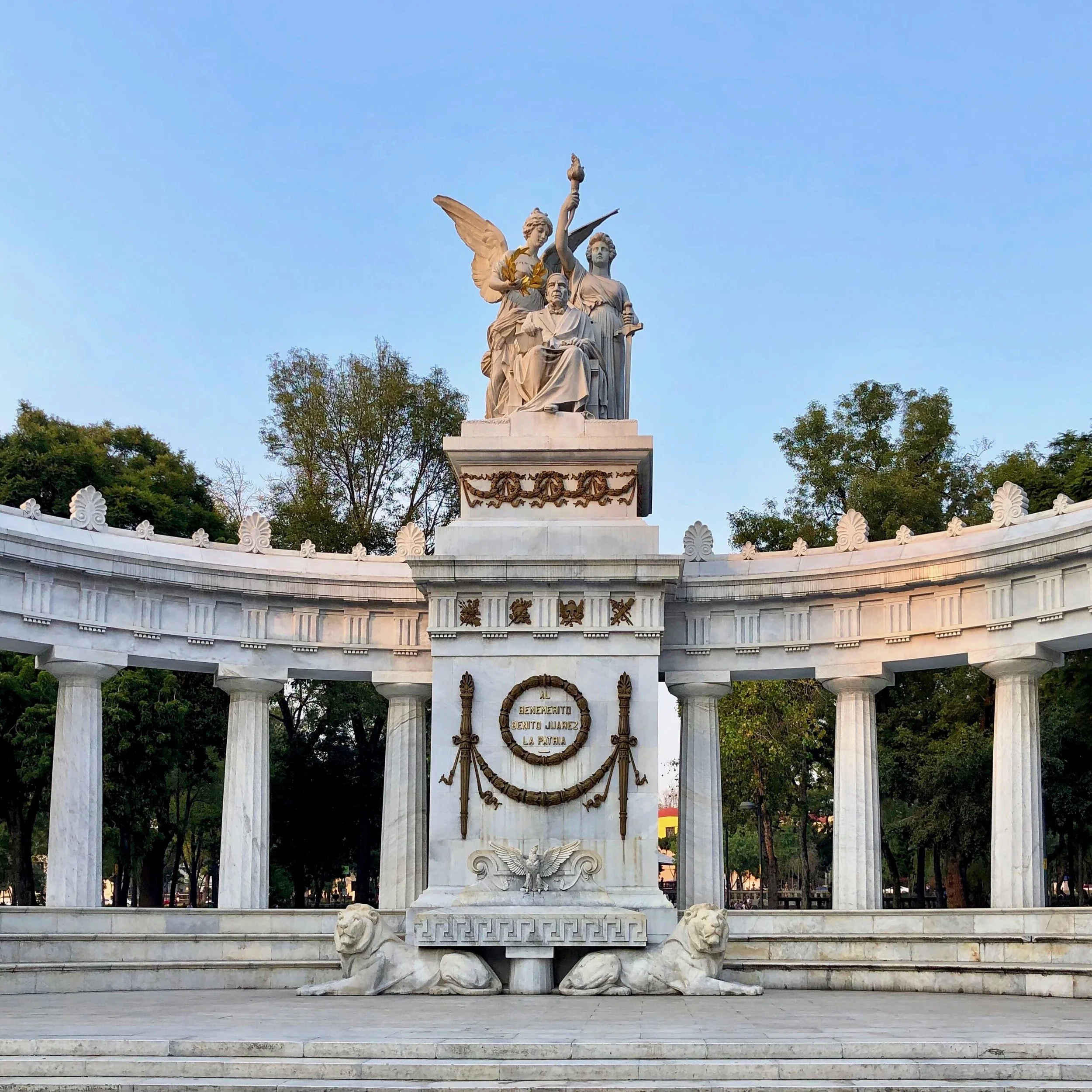
The Hemiciclo a Benito Juárez monument

The Hemiciclo a Benito Juárez monument

A large green space sits right next to the plaza of the Palacio de Bellas Artes

A large green space sits right next to the plaza of the Palacio de Bellas Artes

9. Alameda Central

This leafy park was created in 1525 on what was previously the site of an Aztec marketplace. Its name comes from the word alámo, Spanish for poplar tree — which can be found in abundance throughout the park. You’ll encounter children playing in empty fountain basins and locals of all ages meandering or sitting on benches along the many paths. The Kiosco Morisco was located there briefly and used as a pavilion to announce lottery winners before being moved to make way for the semicircular Neoclassical Hemiciclo a Benito Juárez monument, dedicated to the former Mexican president.

Av. Hidalgo s/n

This fountain is right across from Alameda Central and is worth a quick visit to get the Insta shot

This fountain is right across from Alameda Central and is worth a quick visit to get the Insta shot

Governmental buildings and the Museum of Memory and Tolerance surround the fountain

Governmental buildings and the Museum of Memory and Tolerance surround the fountain

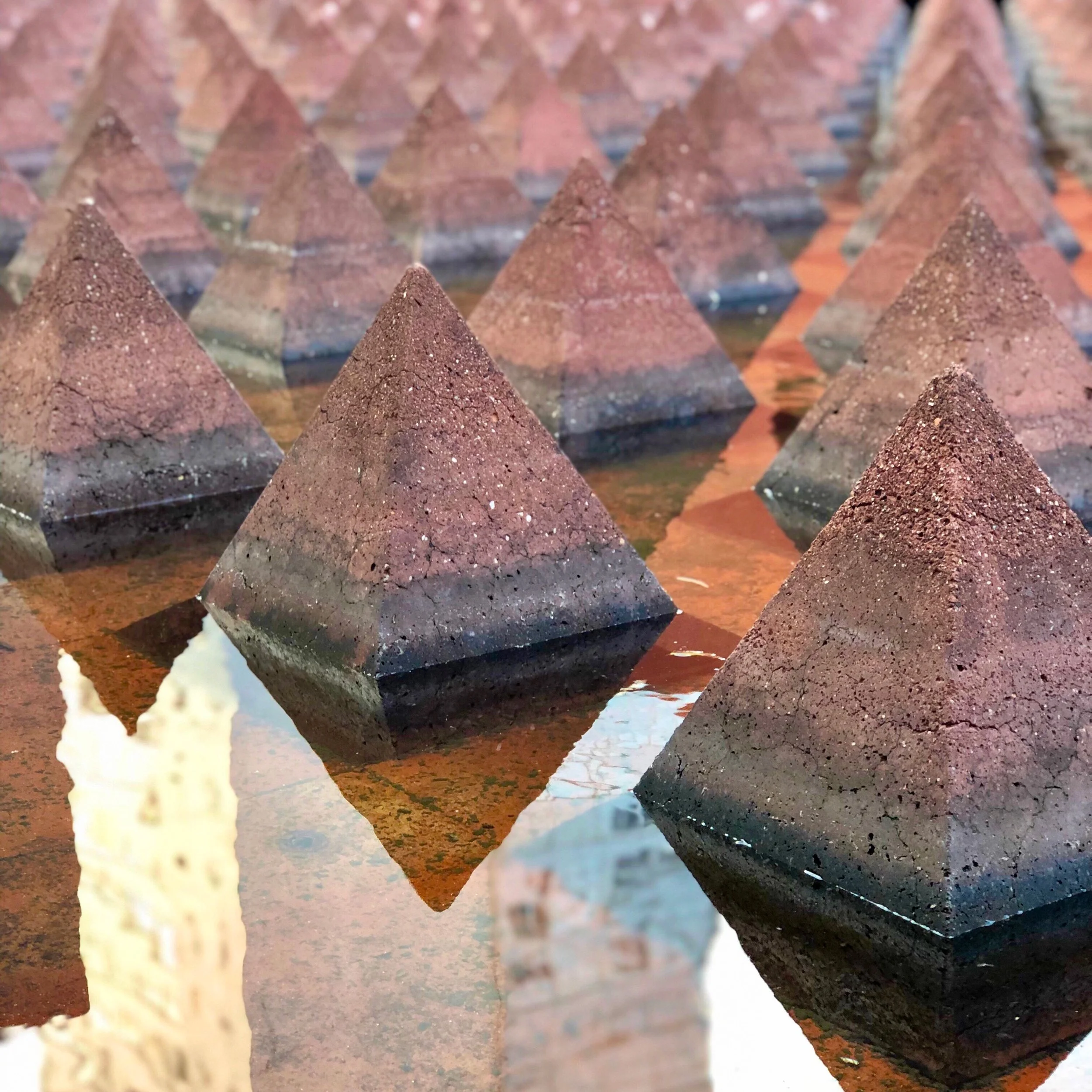
País de Volcanes (Country of Volcanoes) by Ricardo Legorreta

País de Volcanes (Country of Volcanoes) by Ricardo Legorreta

10. Fuente de Vicente Rojo

Across from Alameda Park, tucked into the courtyard of the Museo Memoria y Tolerancia surrounded by governmental offices is a fountain designed by Mexican visual artist Vicente Rojo and architect Ricardo Legorreta. Titled País de Volcanes (Country of Volcanoes), it features more than 1,000 small burnt red concrete pyramids emerging from a sunken reflecting pool, a reference to the coarse volcanic tezontle stone widely used by the Aztecs. –Duke

Av. Juárez 44

The Fantastical Woodcut Illustrations of Pau Masiques

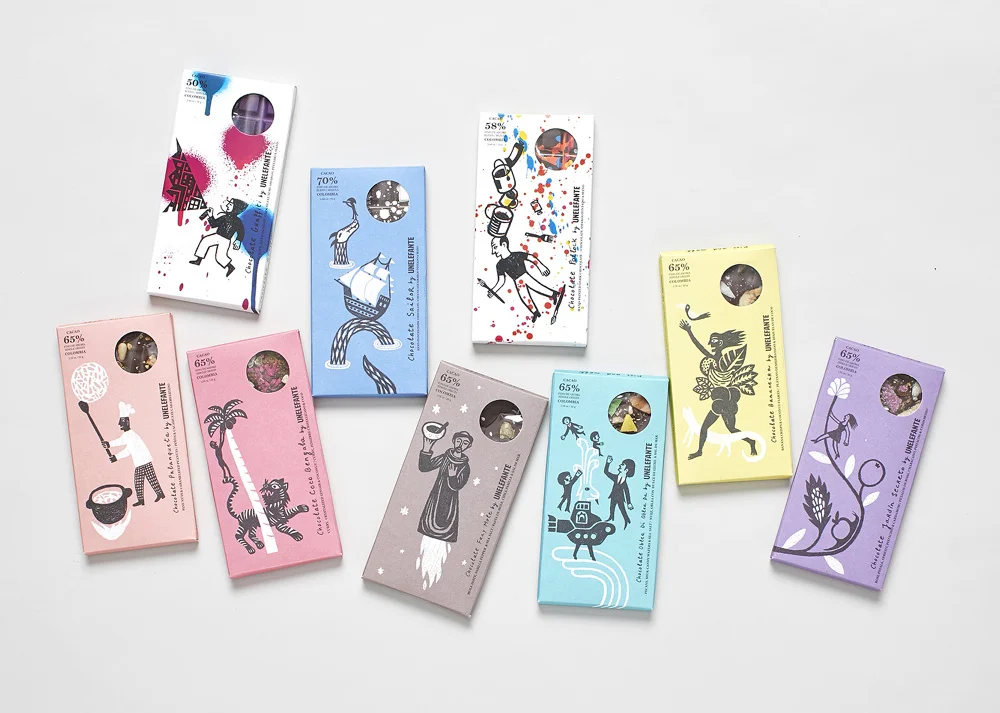
A Q&A with the Monterrey, Mexico-based artist, who designs everything from children’s books, comics, posters and chocolate wrappers.

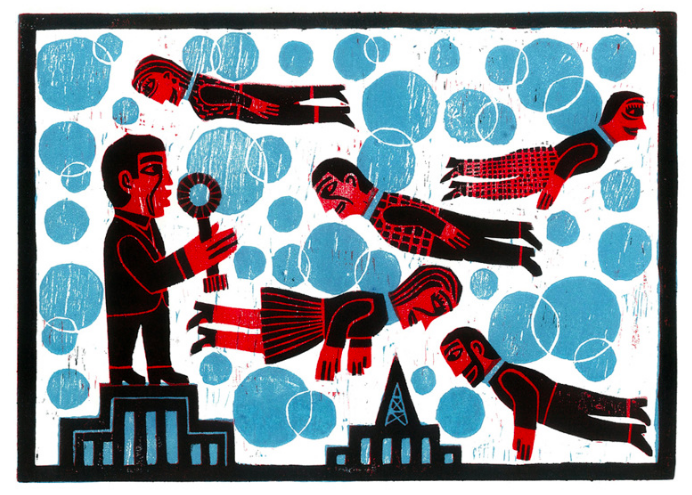
Bubble by Pau Masiques

Bubble by Pau Masiques

The Ignacia Guest House is filled with wonderful art, objects and books on architecture. After Wally and I were given a tour, I walked up to one of the framed woodcuts with a depiction of the former beloved housekeeper Ignacia, for whom the boutique hotel is named, to jot down the artist’s name, which was signed in graphite in the lower right corner: Pau Masiques.

We loved how he captured the essence of this well-loved woman at two stages of her life. So I decided to reach out to Masiques to learn more about his process and inspirations.

Drawing is like being involved in a great debate in which your work participates in a shared dialogue with that of other creators.
— Pau Masiques
Blindada

Blindada

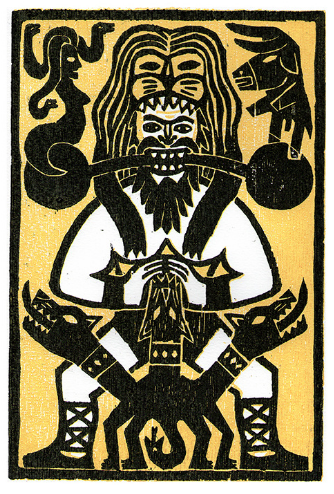
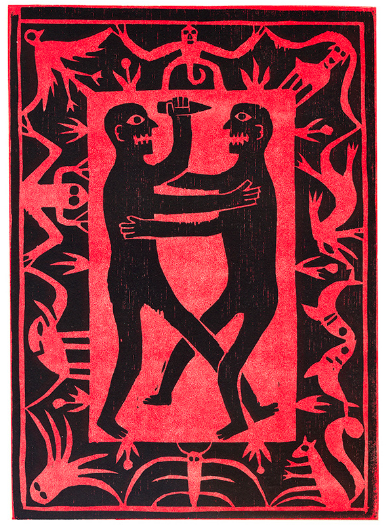
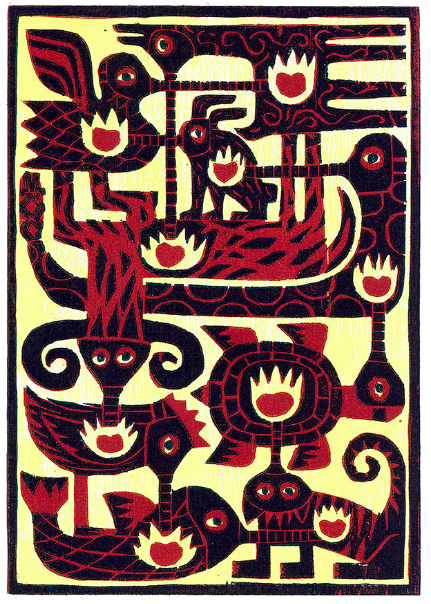
Masiques combines technology with tradition, transforming woodblocks into mesmerizing artwork. Whether it’s a woman wearing a city as a crown, her head encircled by an endless line of cars emitting fumes, or a squatting Hercules wearing the hide of the Nemean lion, with Medusa and Minotaur perched upon the bent barbell gripped between his teeth, Masiques pulls us into the illustration and the story it tells. His works evoke the warped whimsy of fairy tales and folklore, so of course we were drawn to him. –Duke

Hèrcules

Hèrcules

You created custom artwork for the Ignacia Guest House. Did the owners approach you, and how did you come up with the concept?

I heard about the commission from a friend and found it to be a very appealing proposal.

Recibí el encargo por parte de un amigo, me habló del proyecto y me pareció muy atractiva la propuesta.


When did you realize you were artistically inclined?

I’ve always liked to draw. I don’t remember exactly when this began, but I guess it was when I was very young, like all children — at that age we all have the creative potential to become artists.

Something that’s been with me from an early age is my love of comics. I think that’s what fueled my interest in drawing, in literature and a general curiosity about the world around me.

Siempre me ha gustado dibujar, no recuerdo cuando empecé, supongo que muy temprano como todos los niños, a esa edad todos tenemos un gran potencial como artistas plásticos.

Lo que me ha acompañado siempre, desde muy pequeño, es mi afición a leer cómics y eso creo que fue lo que alimentó mi interés por el dibujo, por la literatura y la curiosidad en general por el mundo que me rodea.

La sel·lecció natural campiona mundial

La sel·lecció natural campiona mundial

How did your career as an illustrator begin?

I took some comic and drawing courses during my childhood and early adolescence, but I wasn’t a very disciplined student at the time. Without putting in effort, your talent doesn't improve.

It wasn’t until later, while pursuing an illustration degree at the Escola Massana in Barcelona that the idea of becoming a professional illustrator occured to me. My connection to my professors, who had rich, creative careers in illustration, excited me and encouraged my dedication to that profession.

En mi niñez y adolescencia tomé algunos cursos de dibujo y cómic pero no era un alumno muy disciplinado en aquel momento, y sin esfuerzo las cosas no salen.

No fue hasta que empecé más tarde en la especialidad de ilustración de la Escola Massana de Barcelona que la idea de dedicarme profesionalmente a la ilustración me pareció posible. El contacto con maestros que tenían una rica vida profesional me animó y estimuló a dedicarme a la ilustración.

Ánimas

Ánimas

Tell us about your process. What materials and tools do you use?

I always carry a couple of notebooks with me. I use them to collect my ideas, whatever they may be: ideas that arise from an ephemeral need of their own or those of a commision. These sketches are the foundation, which I continue to elaborate using digital image processing software. Even when they’re made into a woodcut, the image I’m going to carve into the wood has been refined and retouched using a computer. The end result is closer to what I have on screen. However, there are elements that are impossible to reproduce using this technology that engraving offers. There’s a special vibration in the stroke and line when using a hand tool. Accidents that are the result of chance, which only occur by working directly with the materials, bring much more depth and strength to the end result.

Suelo llevar siempre conmigo un par de cuadernos, los uso para verter ahí mis ideas, sean cuales sean: ideas que surgen a partir de una necesidad expresiva propia o las de un encargo profesional. Esos bocetos son el origen, luego sigo elaborando mucho más el dibujo usando un software de tratamiento de imágenes. Incluso cuando realizo una xilografía, la imagen que voy a tallar en la madera la he revisado y retocado en la computadora, así me aseguro que el resultado final es más próximo al que tengo en pantalla, en el aspecto compositivo sobretodo, sin embargo hay cosas imposibles de reproducir con los medios que ofrece la computadora y que sí ofrece el grabado, hay una especial vibración en el trazo y unos accidentes fruto del azar, que solo trabajando directamente en la materia surgen y que aporta mucha más riqueza y fuerza al resultado final.

Woodcut illustrations influenced by lotería cards

Woodcut illustrations influenced by lotería cards

What are your influences? What inspires you?

The woodcuts of Frans Masereel, the work of José-Guadalupe Posada, Manuel Manilla and engravings in general are my most immediate references. The early works of Joan Miró — the painting The Farm for example — means a lot to me because of its closeness to my life. In that image, he represented a world very familiar to me.

I admire any form of expression, however rough, that seems to have a compelling narrative. I’m interested in so-called outsider art, such as the work of Bill Traylor. Through his ingenuity, he was able to reveal his world to us and describe it with enormous beauty and simplicity.

I’m interested in many artists, but perhaps what inspires me most is simplicity and expression, rather than technical skill. For example, while doing research for a recent project, I discovered the work of Jessie Oonark, a brilliant Inuit artist. At the moment, her work is a source of inspiration for me.

Drawing is like being involved in a great debate in which your work participates in a shared dialogue with that of other creators.

Las xilografías de Frans Masereel, la obra de Posadas, la de Manilla y el grabado popular en general son quizá mis referentes más inmediatos. La primera etapa de la obra de Joan Miró también, la pintura La Masía por ejemplo, me conmueve mucho por su cercanía, por representar y condensar en esa imagen un mundo que me es muy familiar.

Admiro cualquier forma de expresión que por tosca que parezca tenga una especial pulsión narrativa, me interesa mucho también el llamado arte “marginal”, como por ejemplo la obra de Bill Traylor, que con su aparente ingenuidad es capaz de desvelarnos su mundo y describirlo con enorme belleza y sencillez.

Me interesan muchísimos artistas, lo que más me inspira es quizá la simplicidad y la fuerza expresiva, más que un supuesto virtuosismo. Hace poco por ejemplo, descubrí a partir de la búsqueda de documentación para un trabajo, la obra de Jessie Oonark, una genial artista inuit, en estos momentos su trabajo es para mi una fuente de inspiración.

Dibujar es como estar metido en un gran debate, en el que tu trabajo dialoga con el de otros creadores.

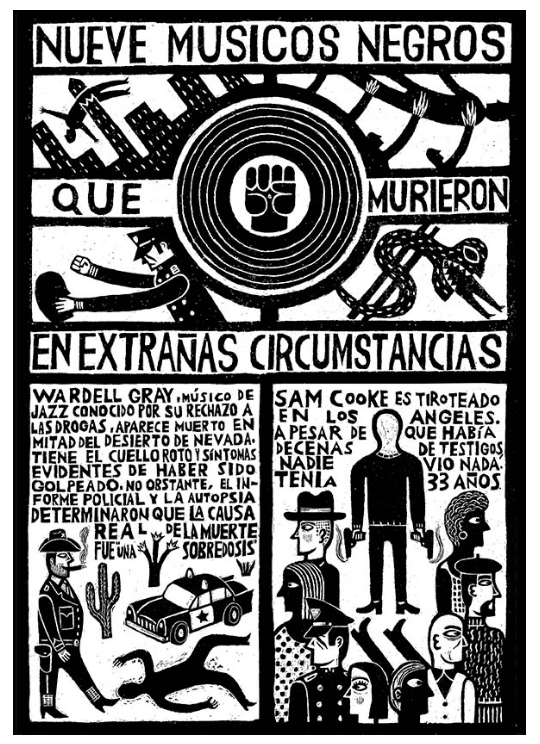
A page from a comic about black musicians who have died under mysterious circumstances

A page from a comic about black musicians who have died under mysterious circumstances


Do you listen to music when you work?

I usually combine moments of silence with listening to music or radio programs, depending on the degree of concentration needed at that moment.

Suelo combinar momentos de silencio, con otros de música y de escucha de programas de radio. Depende del grado de concentración que necesite en cada momento.

Masiques’ whimsical work has appeared on a line of chocolate bars

Masiques’ whimsical work has appeared on a line of chocolate bars

Is there a favorite project you’ve worked on?

In general, I’m pretty excited about each commission I receive. I’ve illustrated wrappers for chocolate bars, books, press articles, and posters for concerts and theater workshops. I’ve collaborated in fanzines and I’ve also done solo exhibits of my engravings and sculptures. My favorite thing might be sculpture. It’s something I haven’t done in awhile. I’d say that wood carving and constructing objects are a couple of my favorite practices. I don’t do them as often as I would like — maybe that’s why I choose them as a favorite.

En general suelo ilusionarme con casi todos los encargos que recibo. He ilustrado envolturas para chocolates, libros, artículos de prensa, he realizado posters para conciertos y talleres de teatro, he colaborado en fanzines, también he exhibido mis grabados y esculturas en algunas exposiciones, pero quizá una de mis prácticas favoritas es la de la escultura, y es algo que hace mucho que no hago, podría decir que tallar madera y construir objetos es una de mis prácticas favoritas, y que no realizó tan a menudo como quisiera, quizá por eso la escojo como favorita.

What’s one of your favorite places in Mexico City?

I’ve lived in the north part of the country, in Monterrey, Nuevo León, for about nine years, but I love going to Mexico City, and there are many places that I like. But one place I don’t mind returning to again and again is the National Museum of Anthropology.

Vivo en el norte del país, en Monterrey (Nuevo León) desde hace cerca de nueve años, pero me encanta ir a la Ciudad de México y hay muchos lugares que me gustan, pero un lugar emblemático al que no me importa regresar una y otra vez es el Museo Nacional de Antropología.

Q&A With Mexico City Chef Rodrigo Carrasco

The talented man behind Bowie Cocina de Humo, Tirano and Kitchen6 explains his culinary vision and inspirations.

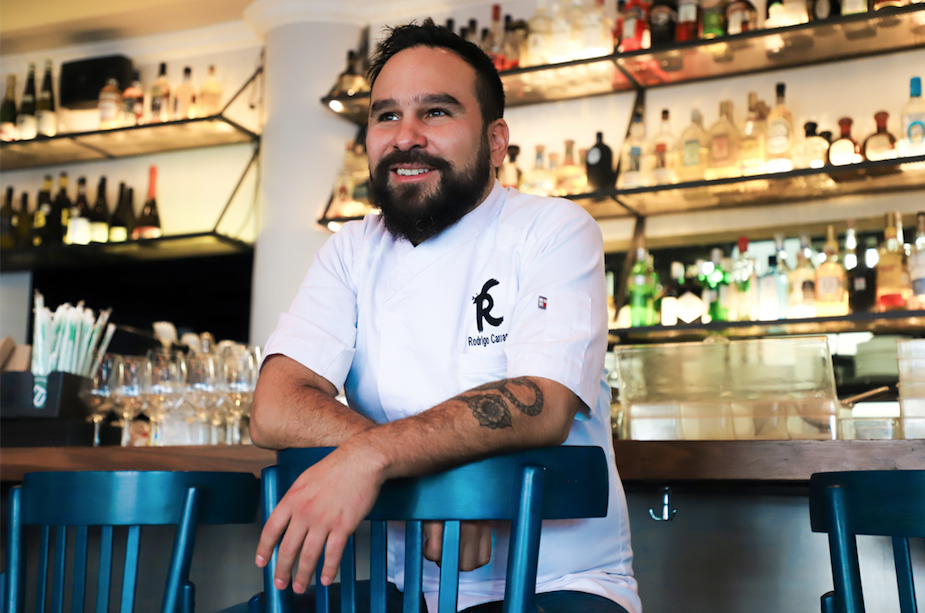
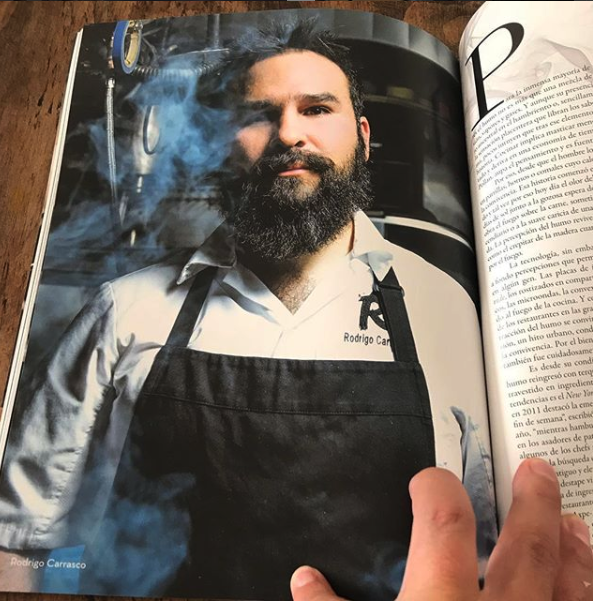
Chef Rodrigo Carrasco at Bowie

Chef Rodrigo Carrasco at Bowie

Wally and I had a delightful evening enjoying the smoky cuisine at Bowie in Mexico City’s Colonia Roma neighborhood. It was a wonderful experience and made a lasting impression on us. So much so that I decided to reach out to its chef de cuisine, Rodrigo Carrasco. To my surprise, he kindly accommodated my request to answer some questions and share his story about the origins of his “Kitchen of Smoke,” why it was named after the British music icon David Bowie and what’s next on the horizon. –Duke

At our country house, we cooked on an open hearth. I saw the power of smoke and got the idea to open a restaurant cooking with smoke and coalfire in the coolest neighborhood in Mexico City.
— Chef Rodrigo Carrasco

bowiebar.JPG

READ OUR REVIEW OF BOWIE

Subtle smoke flavors, attentive service and a fun musical backdrop made Chef Carrasco’s Roma Norte restaurant our favorite dining experience in CDMX.


What inspired you to open Bowie?

At my family’s country house in Valle de Bravo, we cooked on an open hearth. I saw the power of smoke and got the idea to open a restaurant cooking with smoke and coalfire in the coolest neighborhood in one of the biggest cities in the world.

En la casa de campo en Valle de Bravo cocinando en una chimenea. Vi el poder del humo y dije háganos un restaurante de ahumado en leña y carbón. En la ciudad más grande del mundo en el barrio más cool.

A trip to Texas helped inspire Carrasco to perfect his barbecue methods. Photo by Juan Carlos Valladolid

A trip to Texas helped inspire Carrasco to perfect his barbecue methods. Photo by Juan Carlos Valladolid

What’s your connection to David Bowie?

While traveling through Texas to learn about the various BBQ methods, I came across a county named Bowie, where the Bowie knife was created, and I’d been listening to the music of David Bowie. I didn’t need anything else to know that Bowie would be the name.

Bowie por qué estaba investigado en Texas el proceso del BBQ y llegue a un condado llamado Bowie, había un bowie knife y el playlist era de David Bowie. Dije no hay más bowie será su nombre.

When Carrasco’s not cooking seafood, he’s probably working with steak

When Carrasco’s not cooking seafood, he’s probably working with steak

Where’s the beef? Carrasco serves it up at his steakhouse, Tirano

Where’s the beef? Carrasco serves it up at his steakhouse, Tirano

Describe the aesthetic and mood of the restaurant.

It’s a contemporary Mexican space. Relaxed, but with elegant design touches, and a kitchen that’s visible from virtually anywhere within the restaurant. I love immersing diners in a theatrical experience.

Un espacio mexicano contemporáneo. Relajado pero con toques de diseño elegantes. La posibilidad de ver la cocina desde todo el lugar me encanta es involucrar a los comensales en una experiencia teatral también.

The chef’s recipes have been perfected over more than two decades of cooking

The chef’s recipes have been perfected over more than two decades of cooking

How did you determine the menu?

It’s a compilation of my best recipes after cooking for more than 20 years: European-inspired ingredients and techniques with a Mexican twist. Always with smoke as the foundation.

Es una compilación de mis mejores recetas luego de cocinar por más de 20 años. Siempre con el humo como fundamento e ingrediente y técnicas mexicanas y europeas.

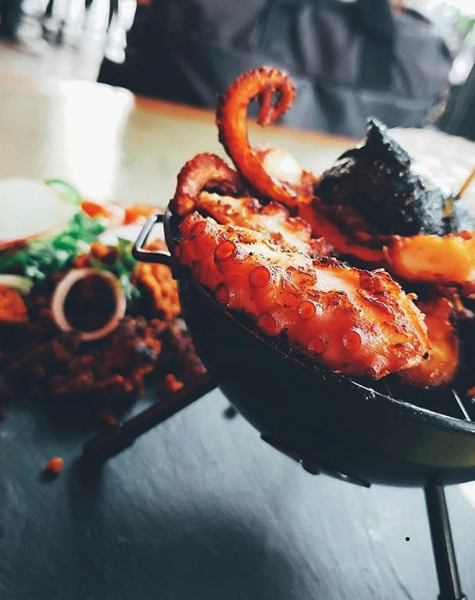
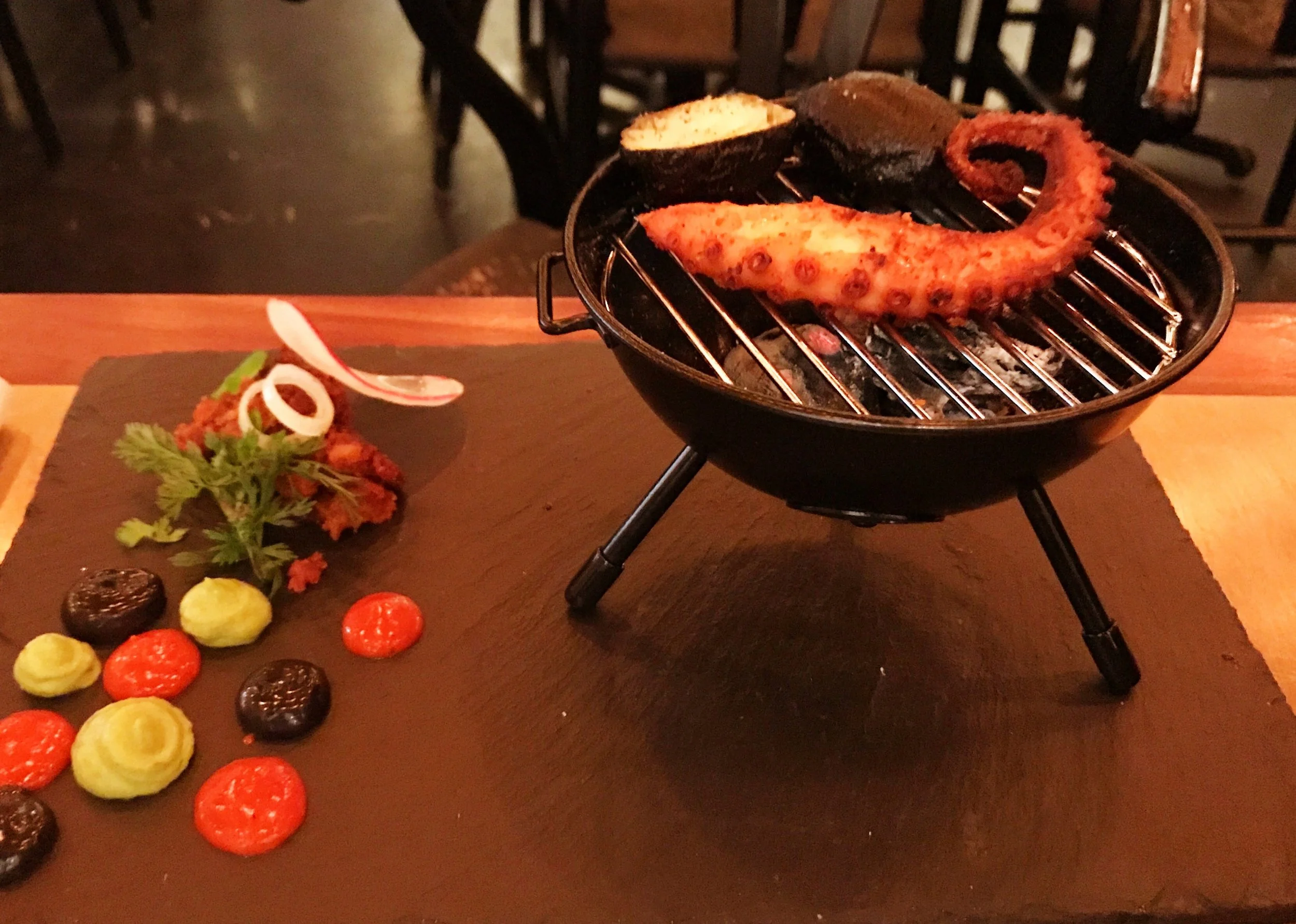
The pulpo, or octopus, at Bowie is served up on the cutest little grill ever

The pulpo, or octopus, at Bowie is served up on the cutest little grill ever

What’s your favorite thing to cook?

Fish and seafood.

Los pescados y mariscos.

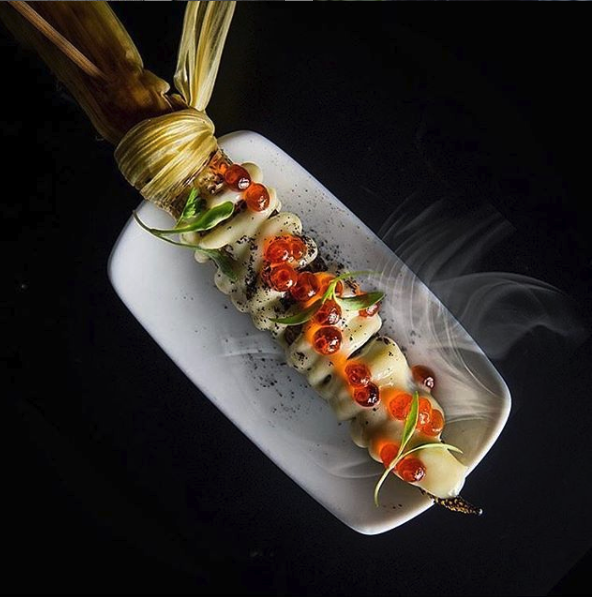
If Chef Carrasco cooks it, chances are it’ll be divine

If Chef Carrasco cooks it, chances are it’ll be divine

Where do you find your inspiration?

Music, nature, my Mexican heritage and to let the world know that there’s good cuisine and world-class restaurants in CDMX. That’s what inspires and motivates me.

La música, la naturaleza, mi cultura mexicana, hacerle saber al mundo que en CDMX hay buena cocina y restaurantes de buen nivel. Eso me inspira y me motiva.

How do you choose the music that plays at Bowie?

We have several playlists, I believe. I love music and am always tinkering with it, depending on the day, time and clientele.

For example, on Sundays we get families and grandparents who sing along to the classics of the ’60s. The young people also know these songs. But on Thursday nights we have an ultra hip clientele who prefer house, soul or something more progressive that allows them to dine, drink and enjoy the beat.

These are the basics with the music, and obviously there’s a lot of David Bowie on all the playlists.

Tenemos varios playlist que yo creo. Amo la música y siempre estoy renovando esa parte; la ponemos dependiendo del día, la hora y el target de cliente.

Por ejemplo, el domingo es muy familiar y hacemos que los abuelos canten los clásicos de los 60s y los jóvenes lo conocen, pero los jueves en la noche tenemos clientes ultra cool, que se sienten mejor con el house, el soul, y algo progresivo que les permita beber y disfrutar el beat.

Es así la mecánica con la música, obviamente hay mucha presencia de David en todas las playlist.

Carrasco garners some press

Carrasco garners some press

What’s next for you?

I’m the co-owner of two other concepts: Tirano, which is a Mexican steakhouse that’s also in Roma, and Kitchen6, a gastropub on Amsterdam in La Condesa that serves grilled food. In addition, our group is planning on opening a torteria sandwich shop later this year.

Si soy co propietario de otros dos conceptos. Tirano, que es un asador mexicano que reubicamos en la Roma también; y Kitchen6 un gastropub que está en Condesa en Amsterdam, que es cocina de grill. En el grupo, planeamos la apertura de una torteria este año de igual forma.

Bowie: One of the Best Restaurants in Mexico City

Chef Rodrigo Carrasco works his magic with a delicious smoke-themed menu at our favorite CDMX dinner spot.

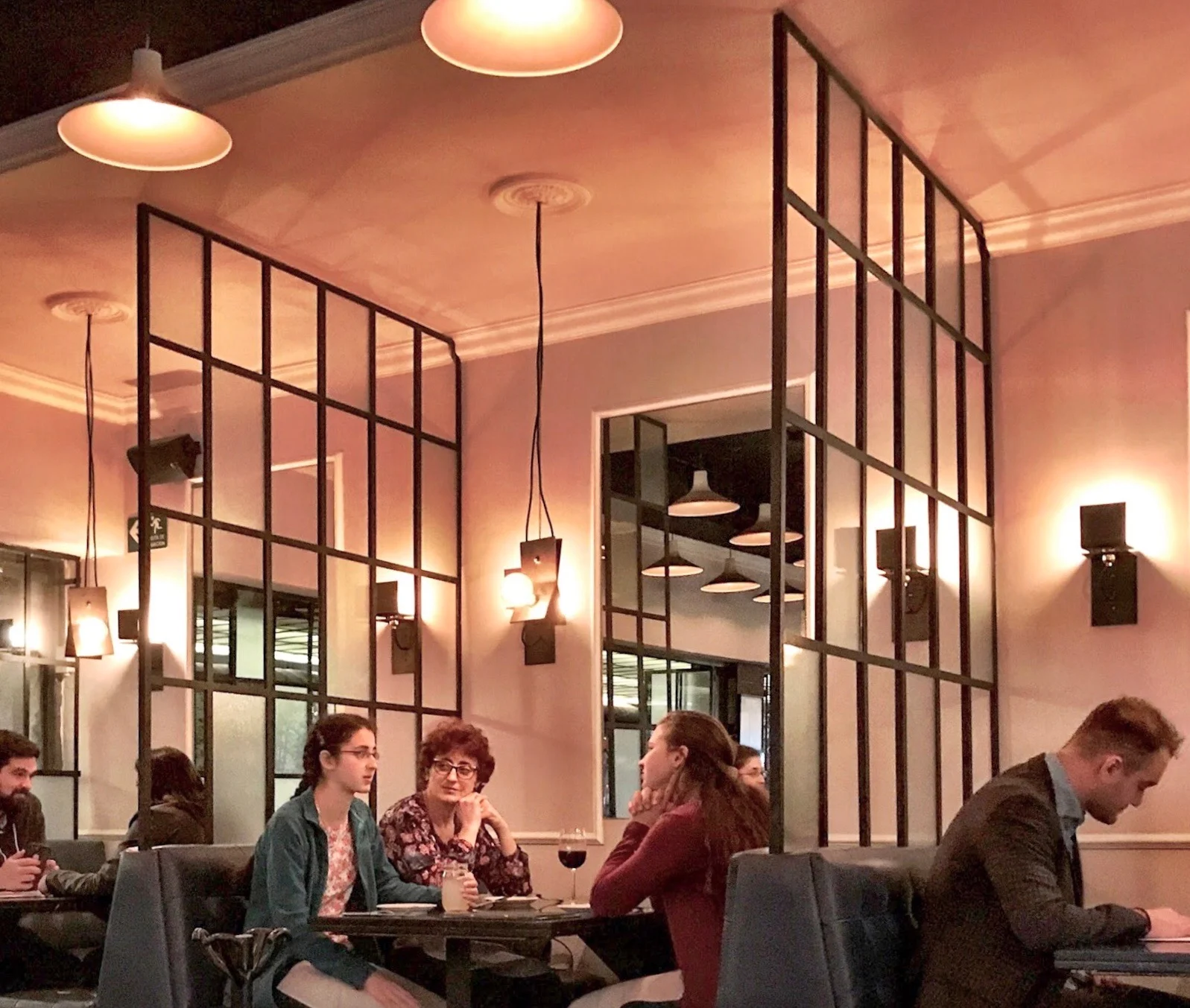
The chic interior, fun playlists and attentive service helped make Bowie our best dining experience in CDMX.

The chic interior, fun playlists and attentive service helped make Bowie our best dining experience in CDMX.

Instead of a Thanksgiving dinner of turkey, stuffing, cranberry sauce and mashed potatoes, Wally and I decided to take a trip to Mexico City. If we were going to miss the traditional American meal, we wanted something equally delicious. So we took the suggestion of Magda, a manager at the Ignacia Guest House, where we were staying, and decided upon Bowie.

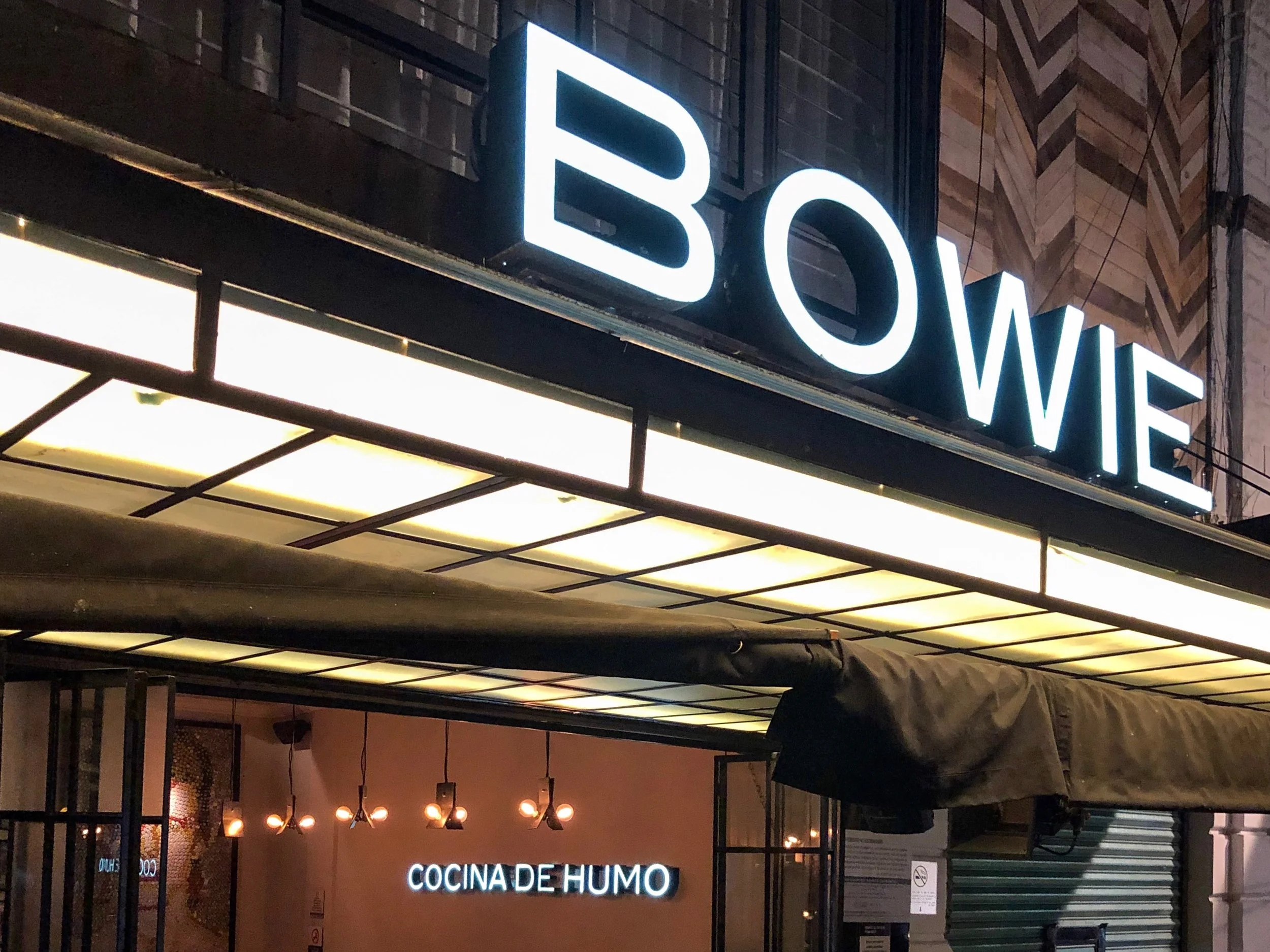
The restaurant is a stone's throw from Avenida Álvaro Obregón, the main thoroughfare in the hip Roma Norte neighborhood. Named after the memorable performer, Bowie is the creation of Mexican chef Rodrigo Carrasco.

Bowie straddles the line between restaurant and theater.

The dish arrived under a glass dome, concealed by a miniature cloud that hung motionless before vanishing in a wisp of woodsmoke.

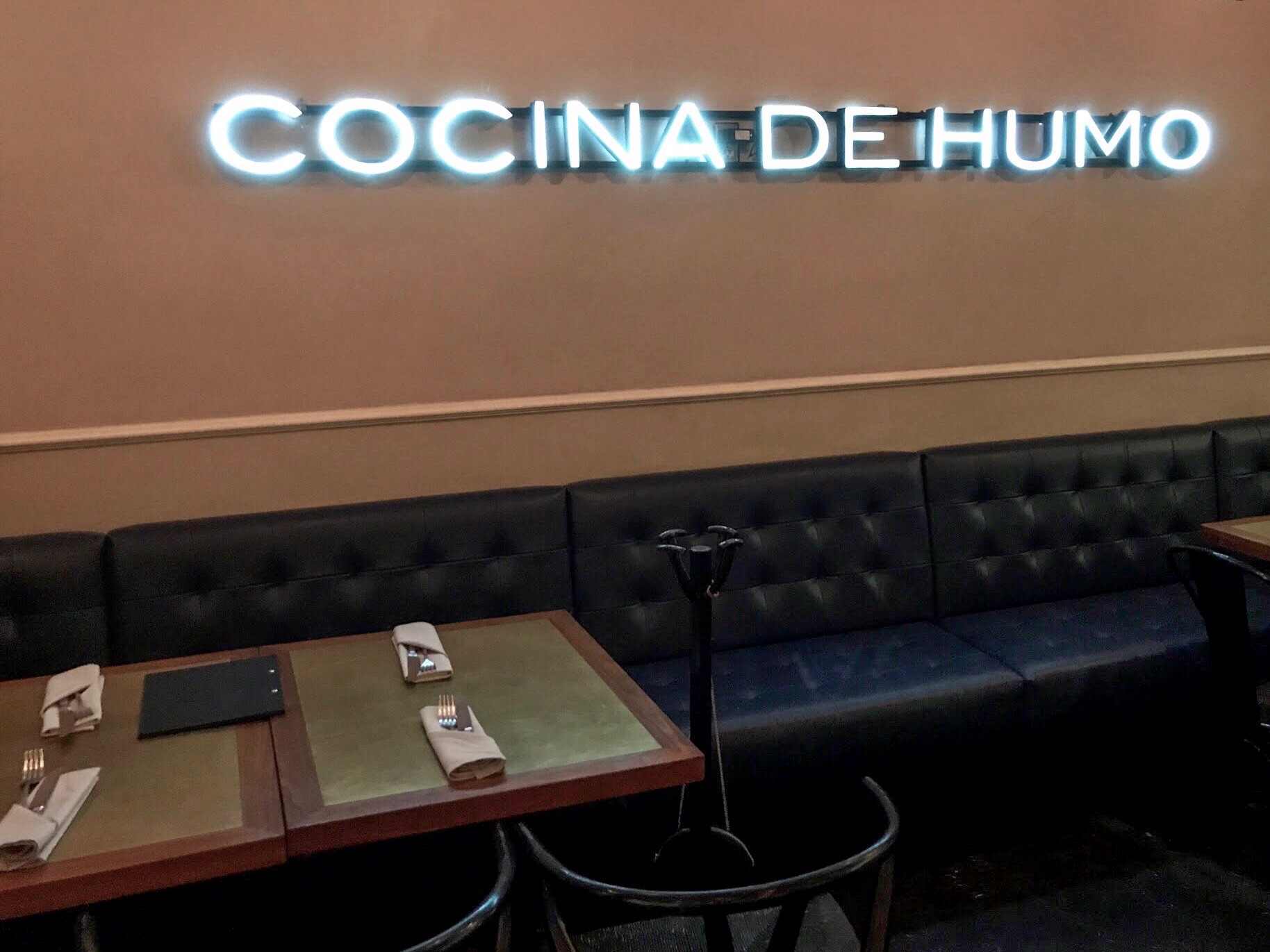
This distinctive dining establishment is modern and fashionable, but not pretentious, and is devoted to using smoke as the foundation of all of its dishes — in fact, the words “Cocina de Humo” illuminate one of the walls. And you can’t miss the fantastic, custom-created portrait of David Bowie as Ziggy Stardust made entirely from bottle caps.

Almost all of the dishes are smoked — but not overwhelmingly so.

Almost all of the dishes are smoked — but not overwhelmingly so.

The restaurant was already buzzing when we arrived, around 8ish. Diners can choose to order à la carte from the menu, but we decided to try the seven-course tasting menu and drink pairing. The first course of beet carpaccio arrived under a glass dome, concealed by a miniature cloud. It hung motionless in the air for a moment before vanishing in a wisp of woodsmoke once our server removed the lid with flair.

The visual appeal was matched by the deliciousness of the dish. The delicately flavored beets were topped with savory goat cheese offset by a surprising hit of brightly tart lemon dressing. A single bite — and boom! We had fallen in love with Bowie. We had never tasted anything like this, and it was just the beginning.

The dramatic reveal of the beet appetizer. Photo by Jordana Btp

The dramatic reveal of the beet appetizer. Photo by Jordana Btp

Our first couple of courses were paired with an artisanal Mexican IPA. We don’t typically like American IPAs as they’re too hoppy, but this one tasted like a farmhouse ale — more our speed.

The following courses were served with Blanc de Pacs, an organic white wine from Penedès, Spain, and Bolero, a Mexican red blend from Valle de San Vicente in Baja California Sur.

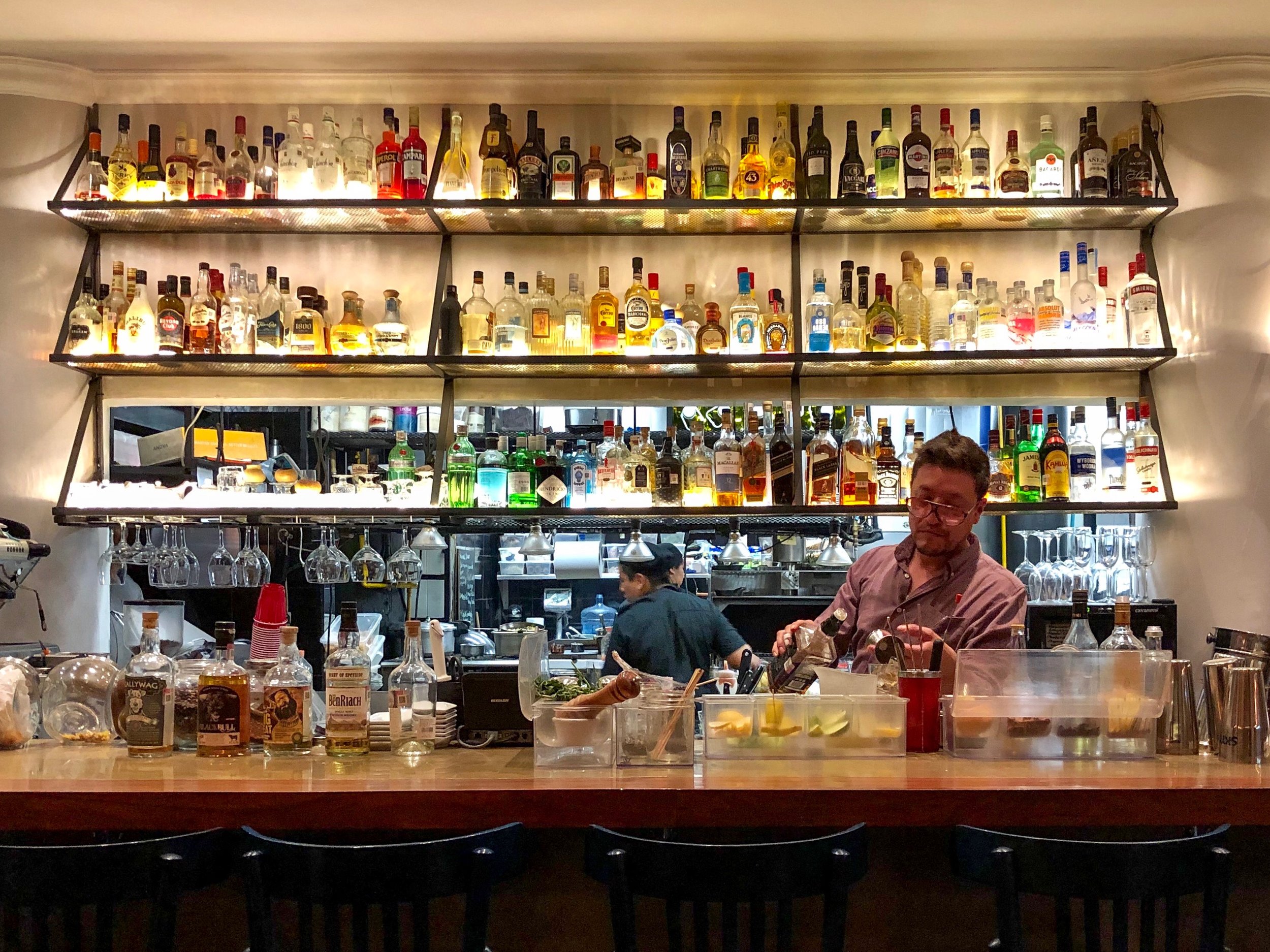
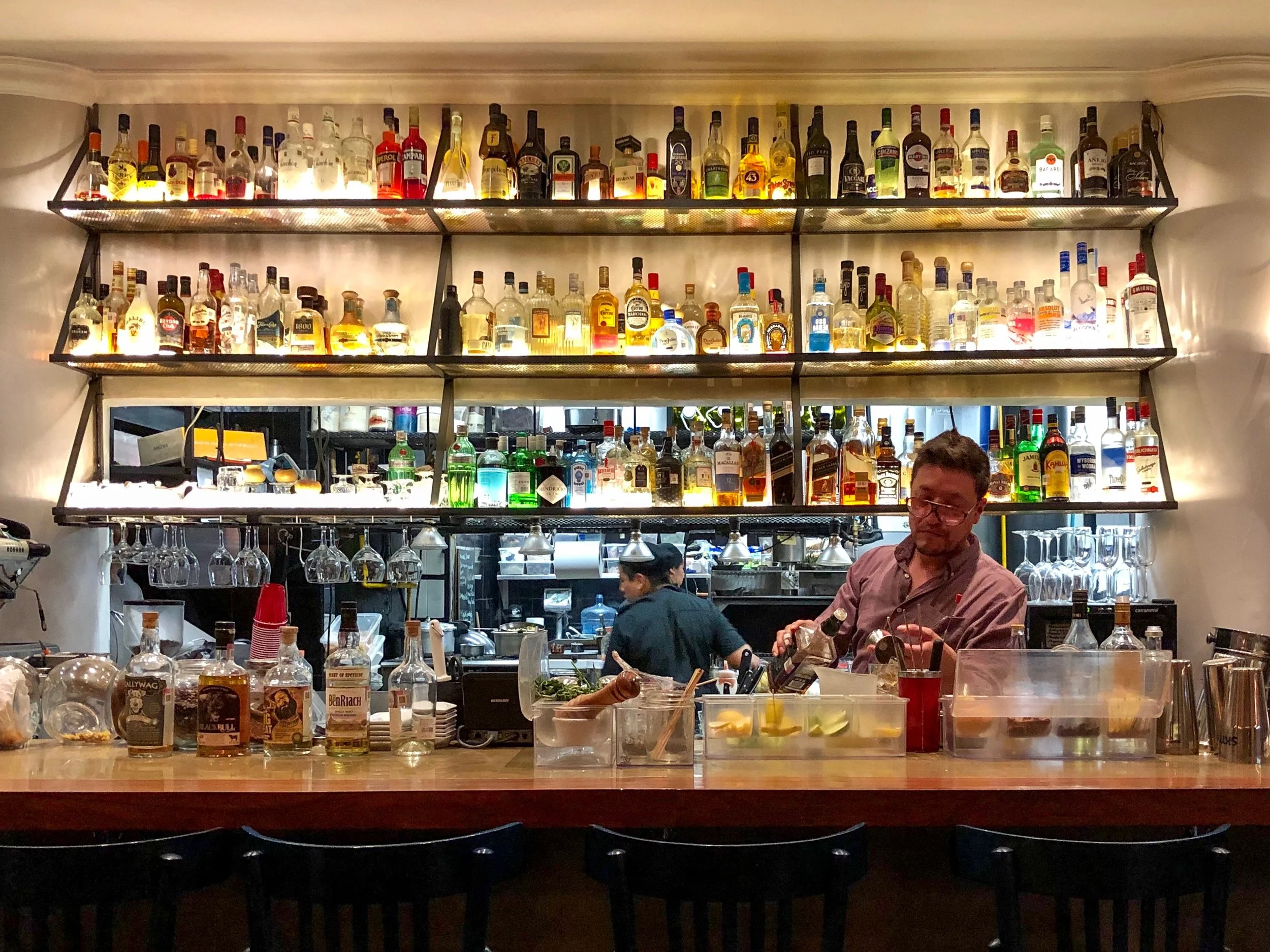
Beyond the bar, you can peek into the kitchen at Bowie.

Beyond the bar, you can peek into the kitchen at Bowie.

Bowie straddles the line between restaurant and theater, and it quickly became clear that we were about to embark on a culinary adventure.

The pulpo came on an adorable tiny grill.

The pulpo came on an adorable tiny grill.

The truffled steak tartare was served in a vessel reminiscent of a glass mushroom. Filled with bite-size chunks of red meat and portobello mushrooms, it was like eating your way through an ethereal terrarium.

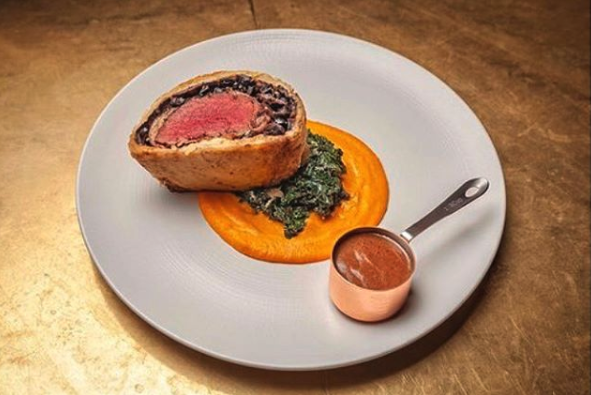
Another standout was the slow-cooked short ribs with a smoked pumpkin purée, dressed with a whiskey reduction sauce. It was smoky and sweet, and immensely satisfying.

The dessert, a riff on s’mores, arrived near the end of the tasting menu. Served it a small cast iron skillet, it was utterly delicious and topped with housemade marshmallows, layered with bananas, chocolate and a shortbread crust, toasted by our server with a handheld butane torch.

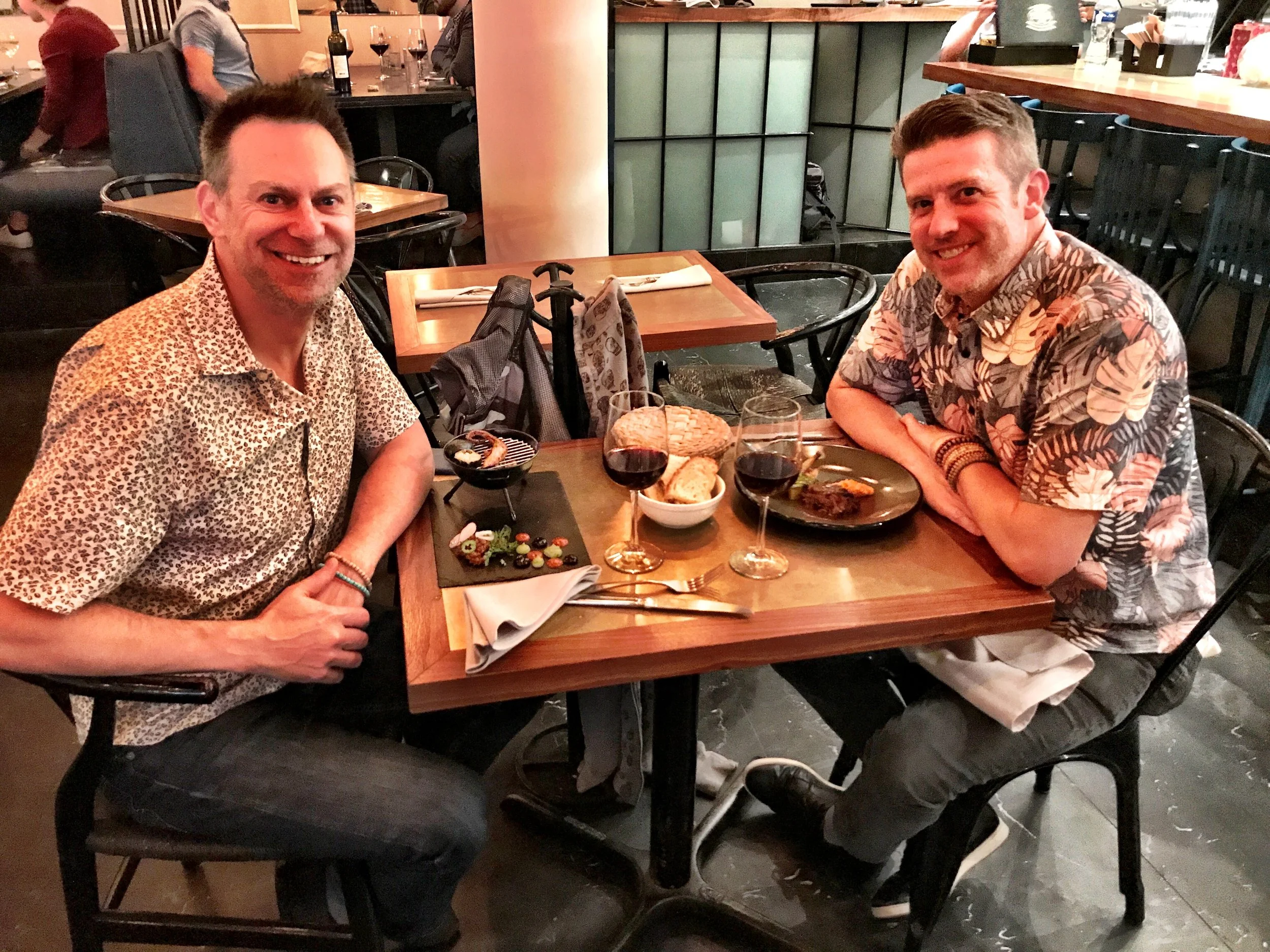
Duke and Wally absolutely loved their experience at Bowie.

Duke and Wally absolutely loved their experience at Bowie.

In short, this incredible meal set a high bar and made us feel like kids again — though our adult palettes delighted in the impressive sophistication of the dishes as well. A meal at Bowie is an experience we would be happy to have any day. –Duke

NOTE: We heard that, sadly, Bowie has permanently closed.

Grab a bite at Bowie — especially if you’re in the Roma neighborhood of Mexico City.

Grab a bite at Bowie — especially if you’re in the Roma neighborhood of Mexico City.

Bowie
Córdoba 113
Roma Norte
06700 Ciudad de México
CDMX, Mexico


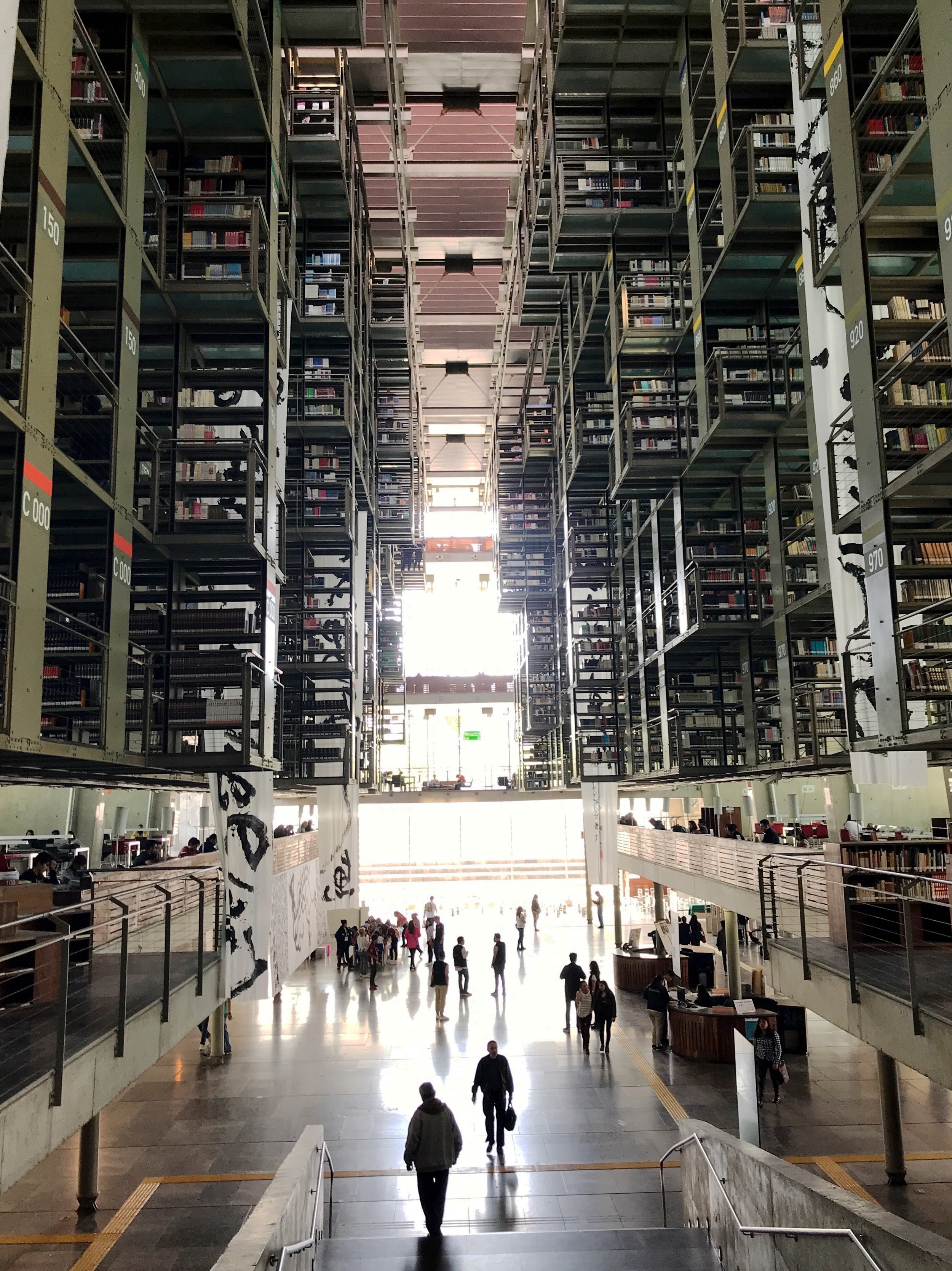
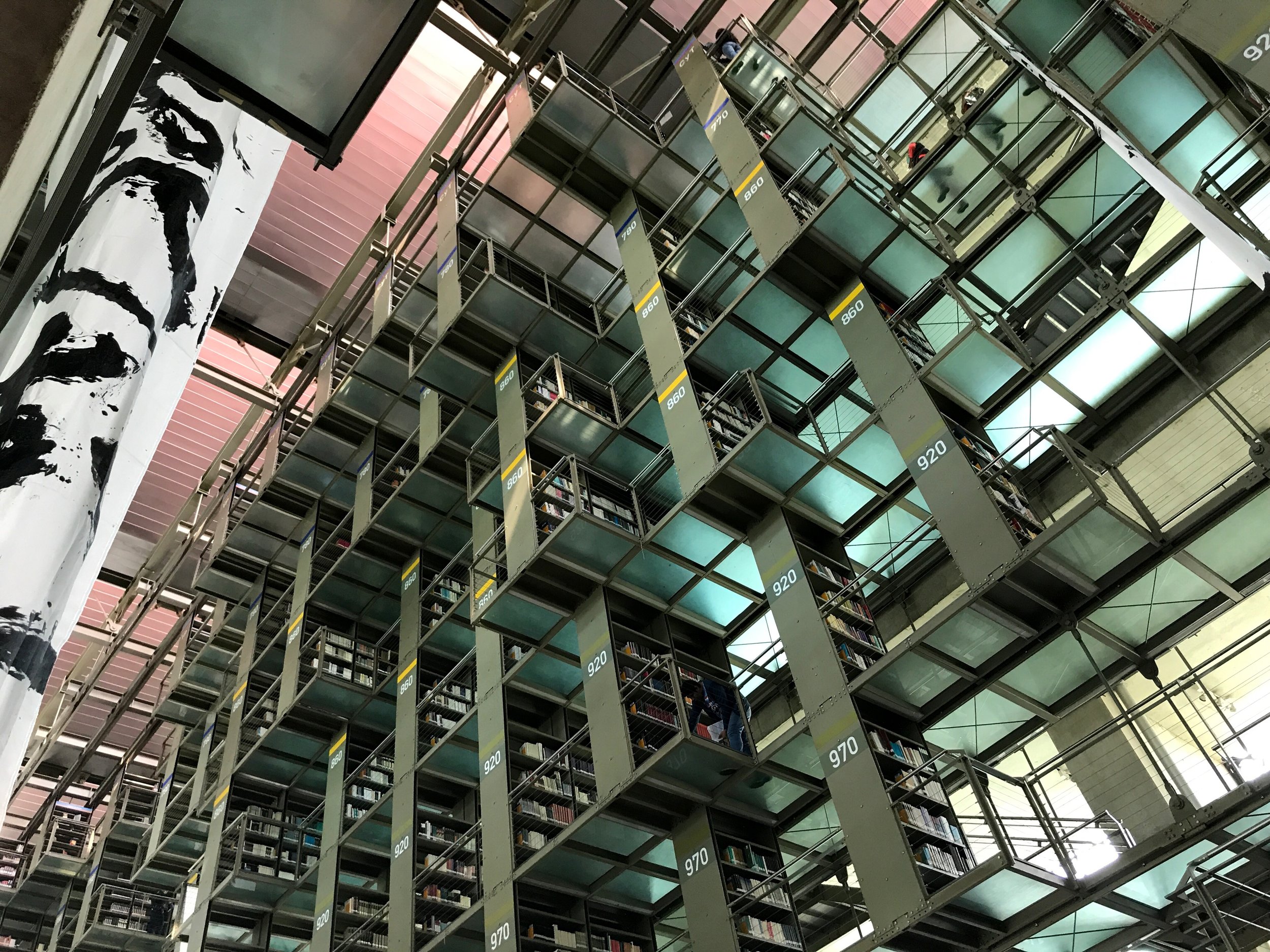
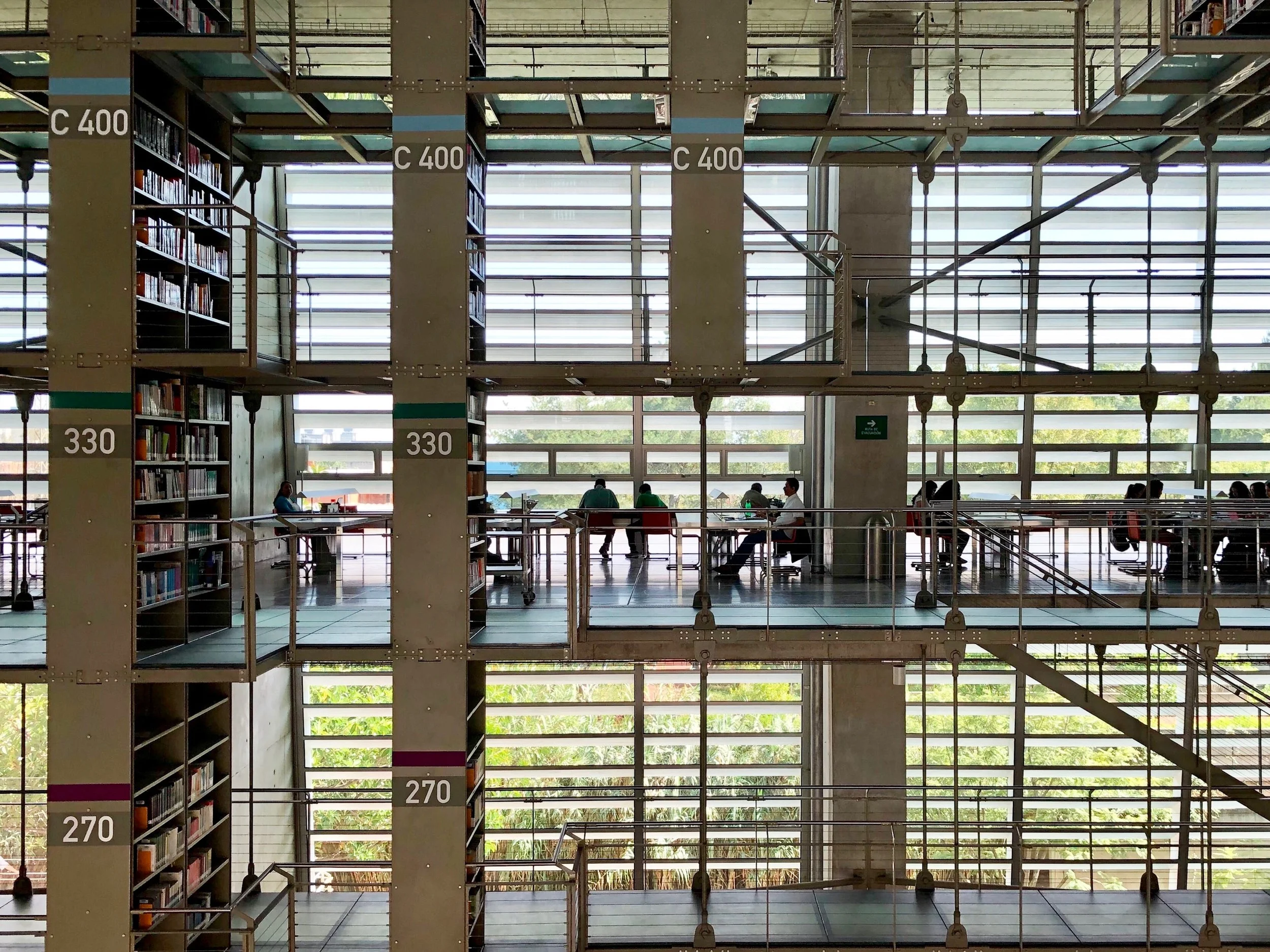
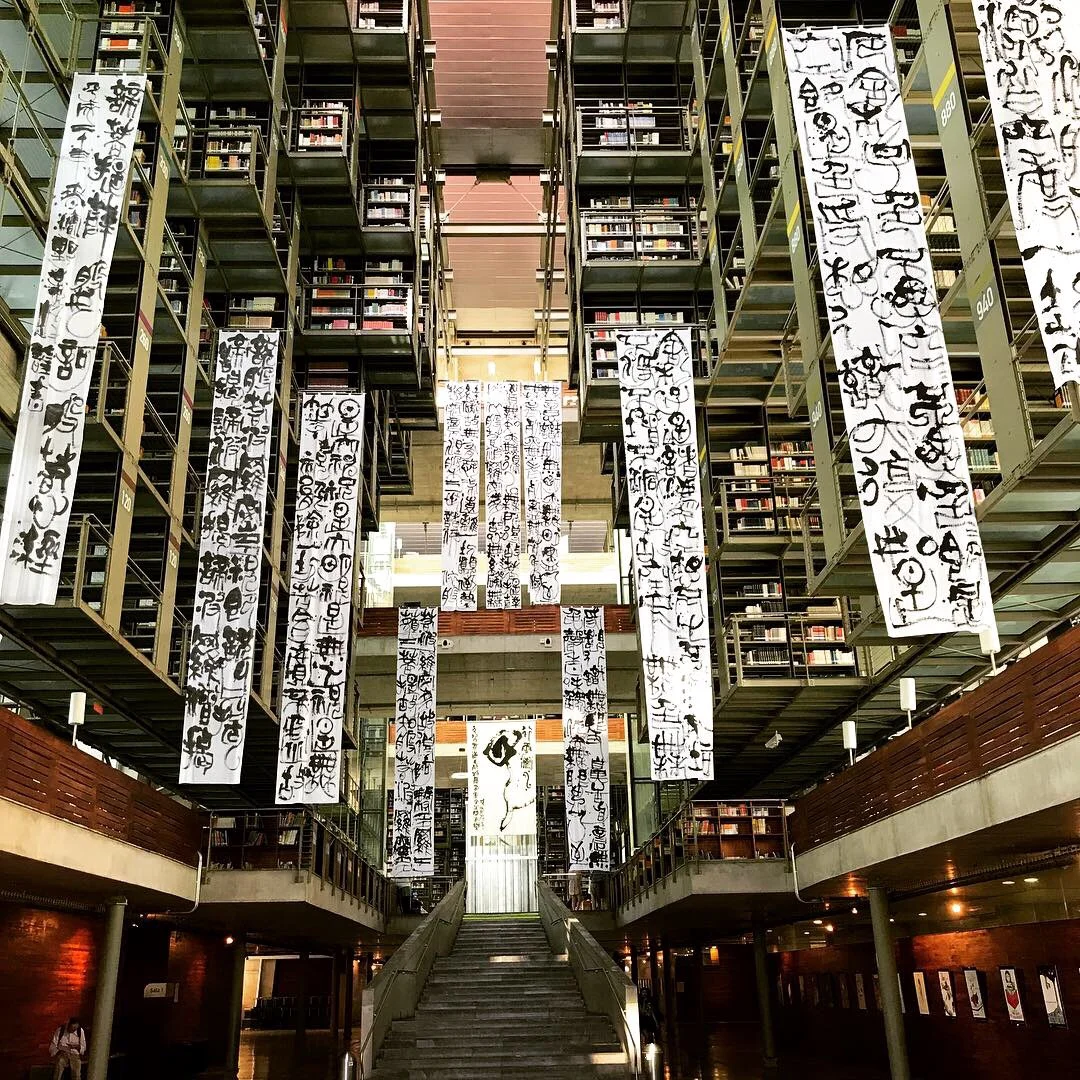
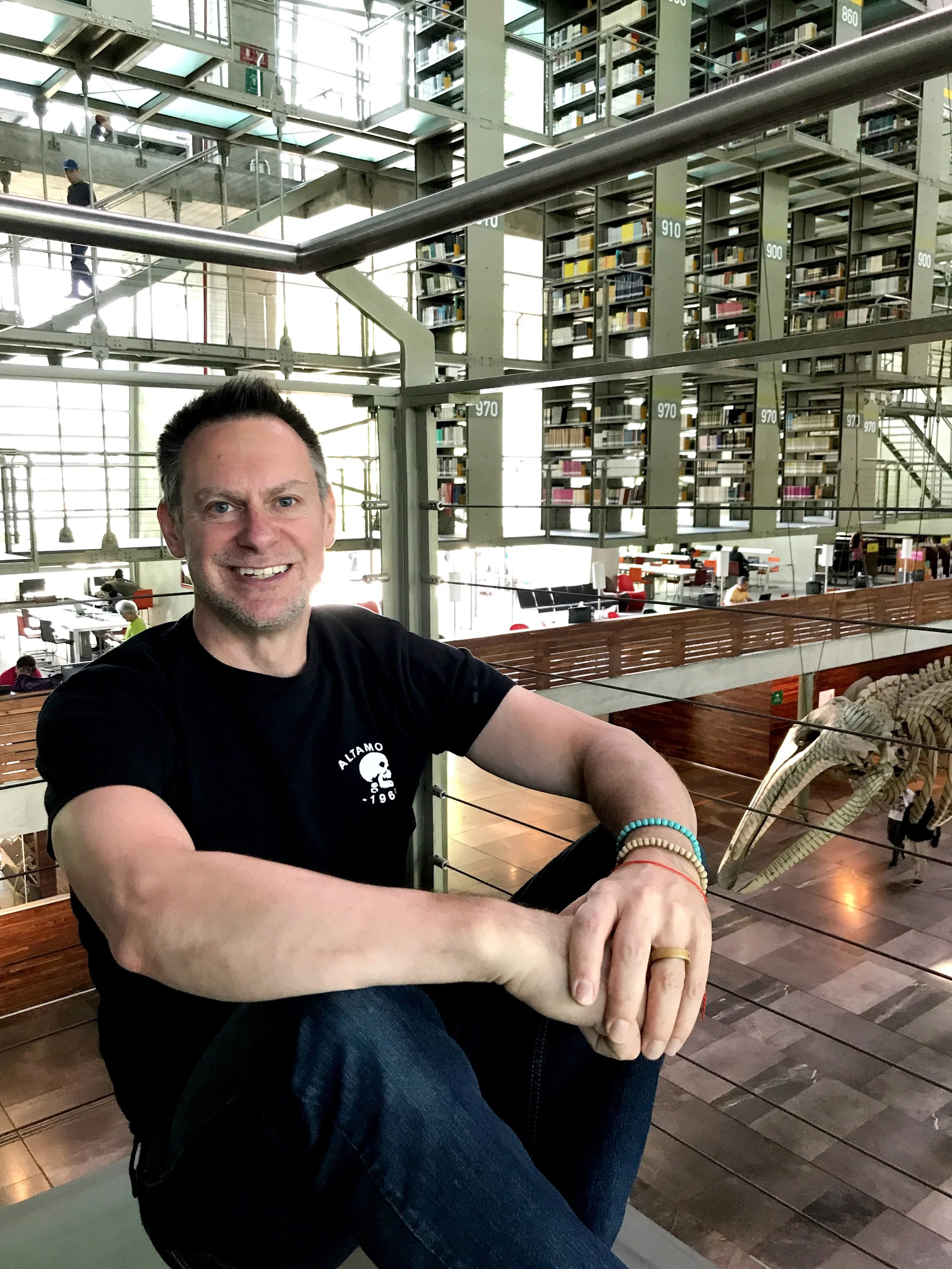
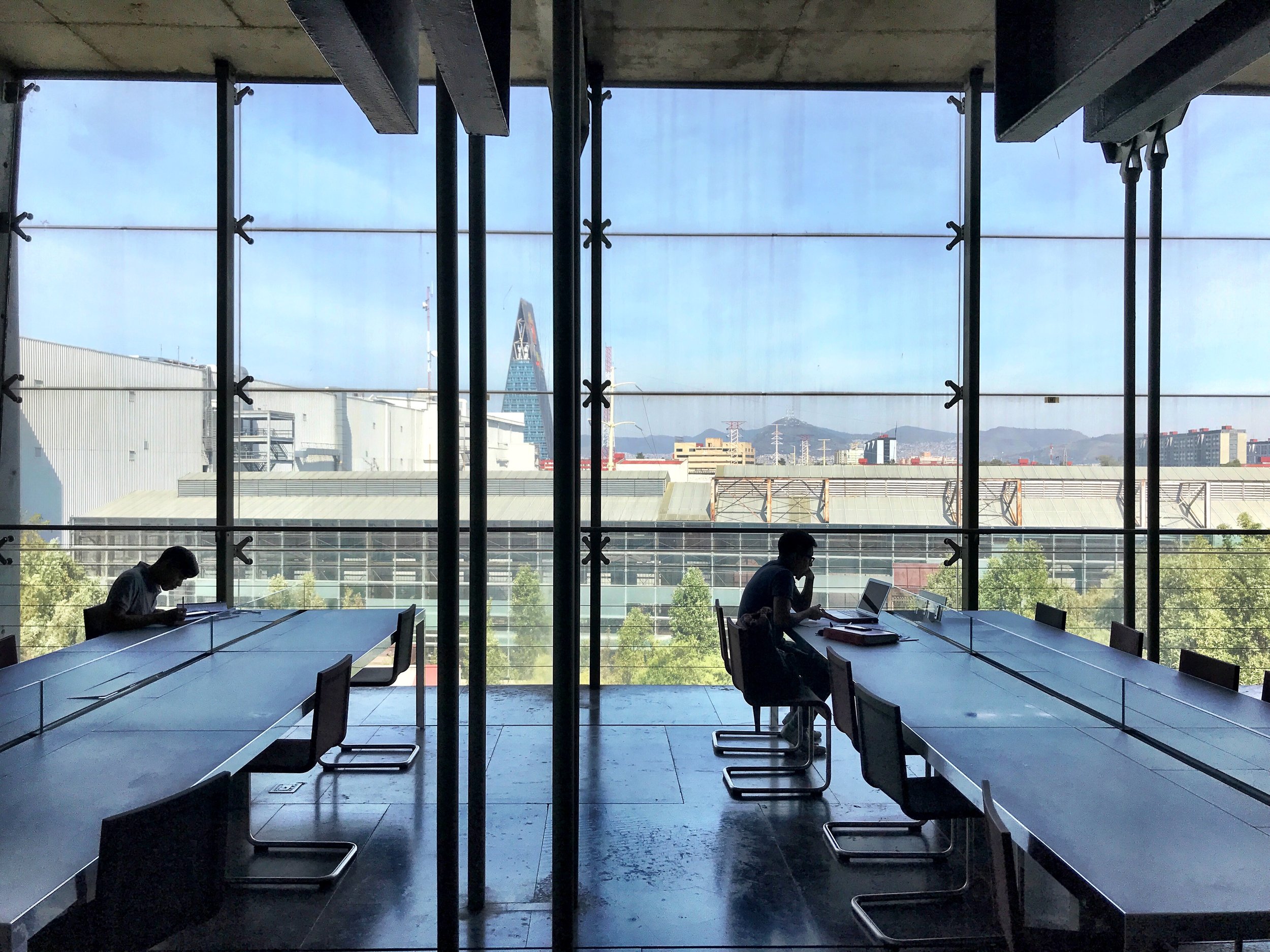
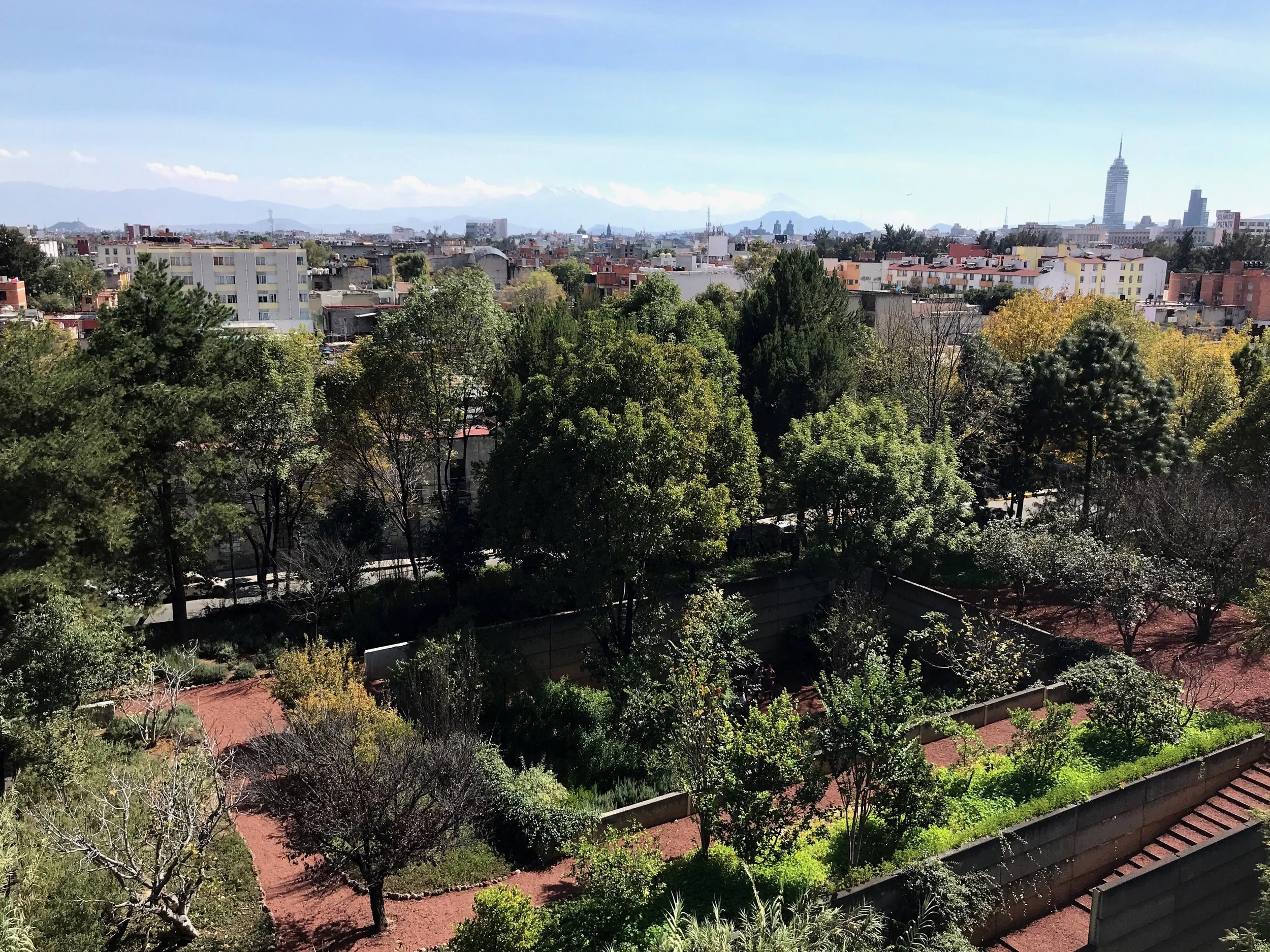
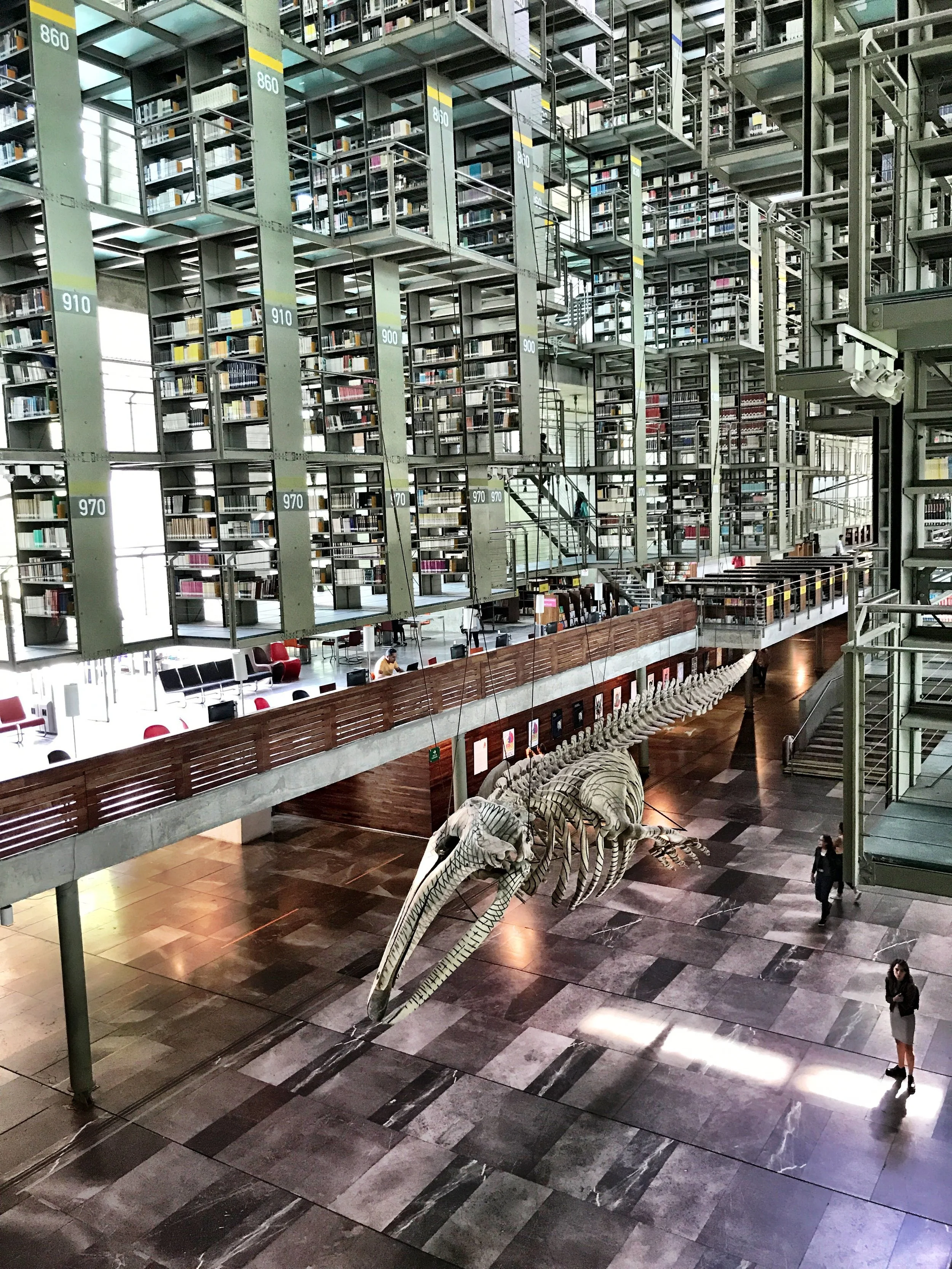
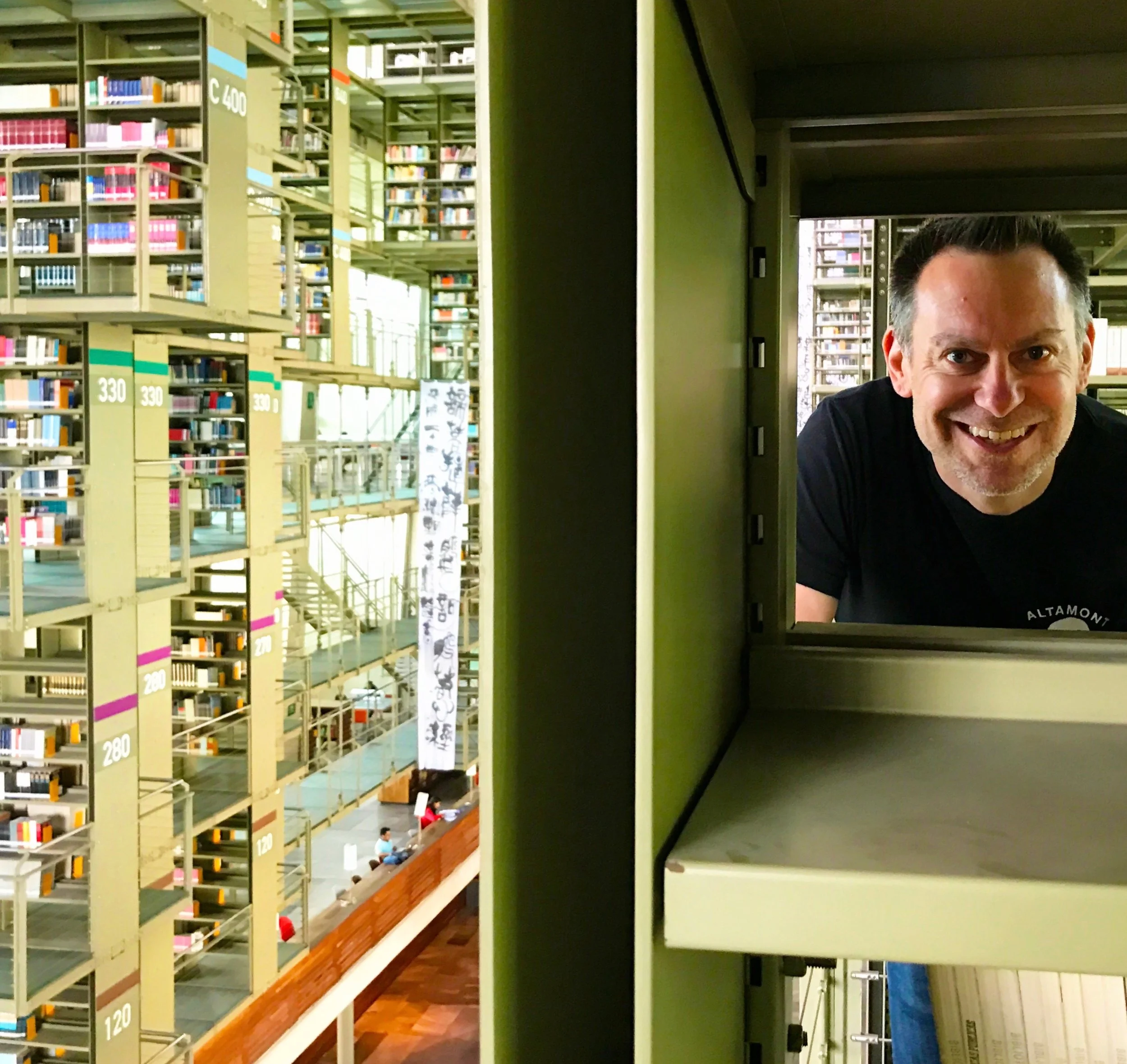
Biblioteca Vasconcelos: A Futuristic Architectural Marvel

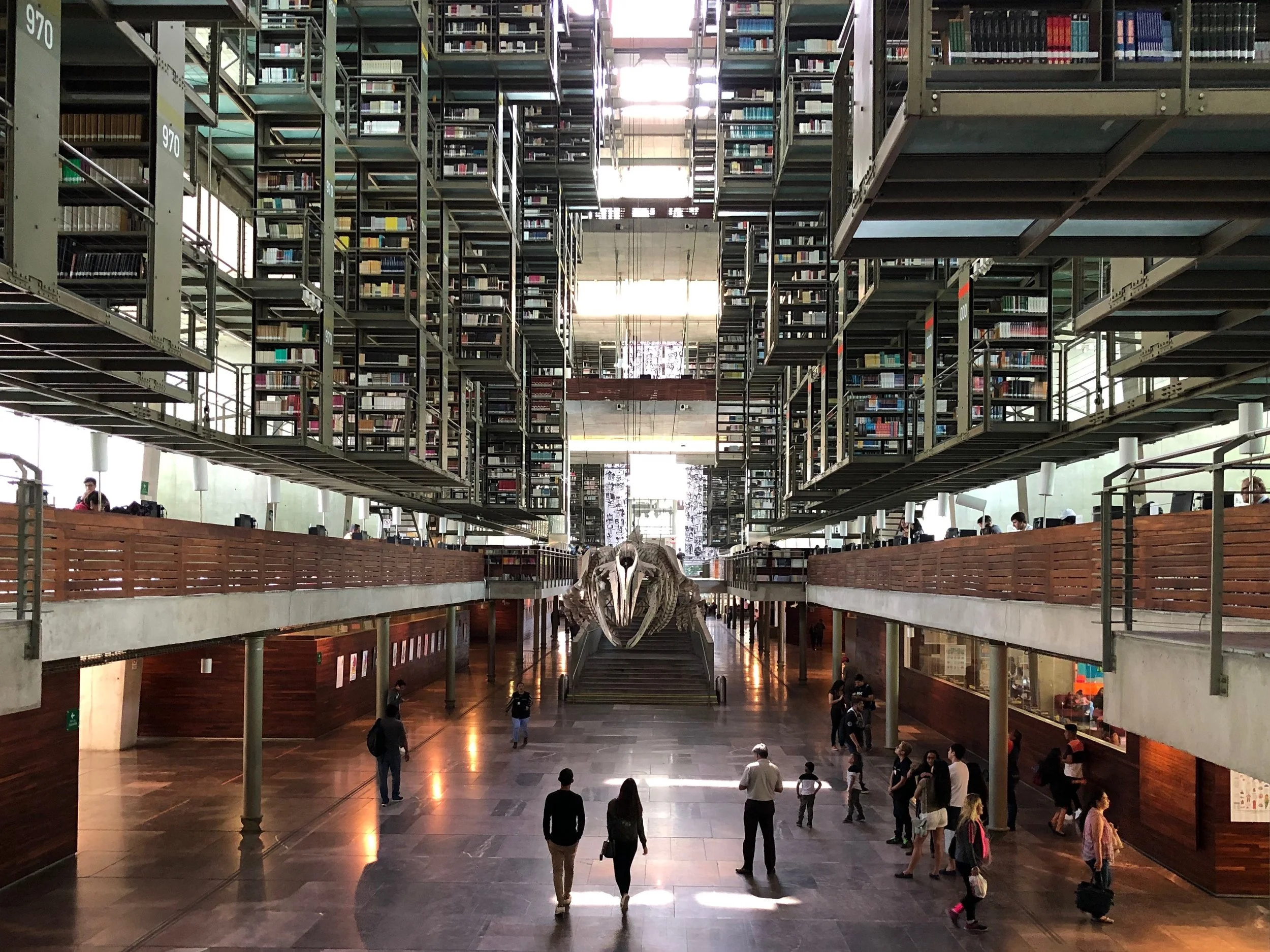
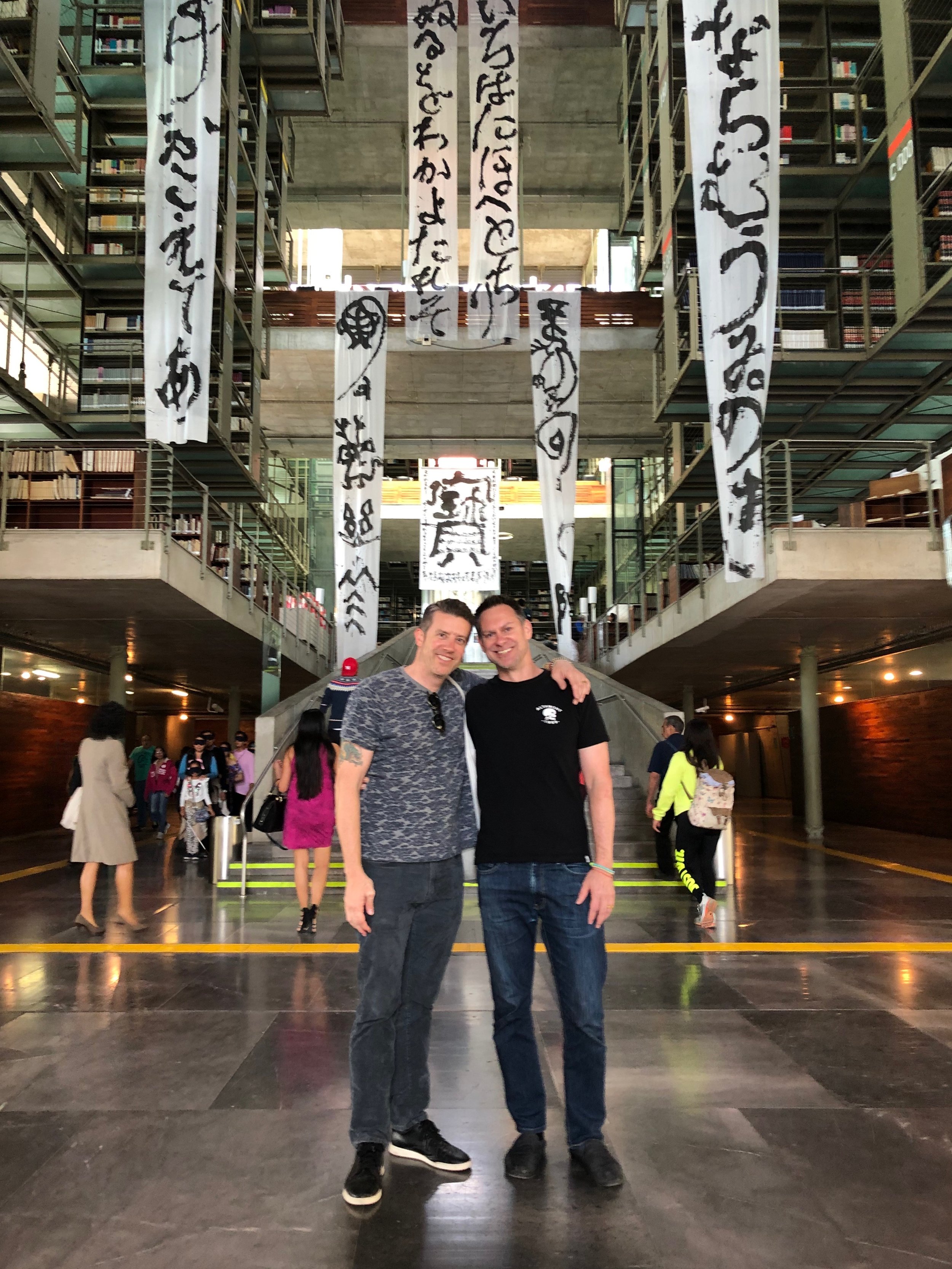
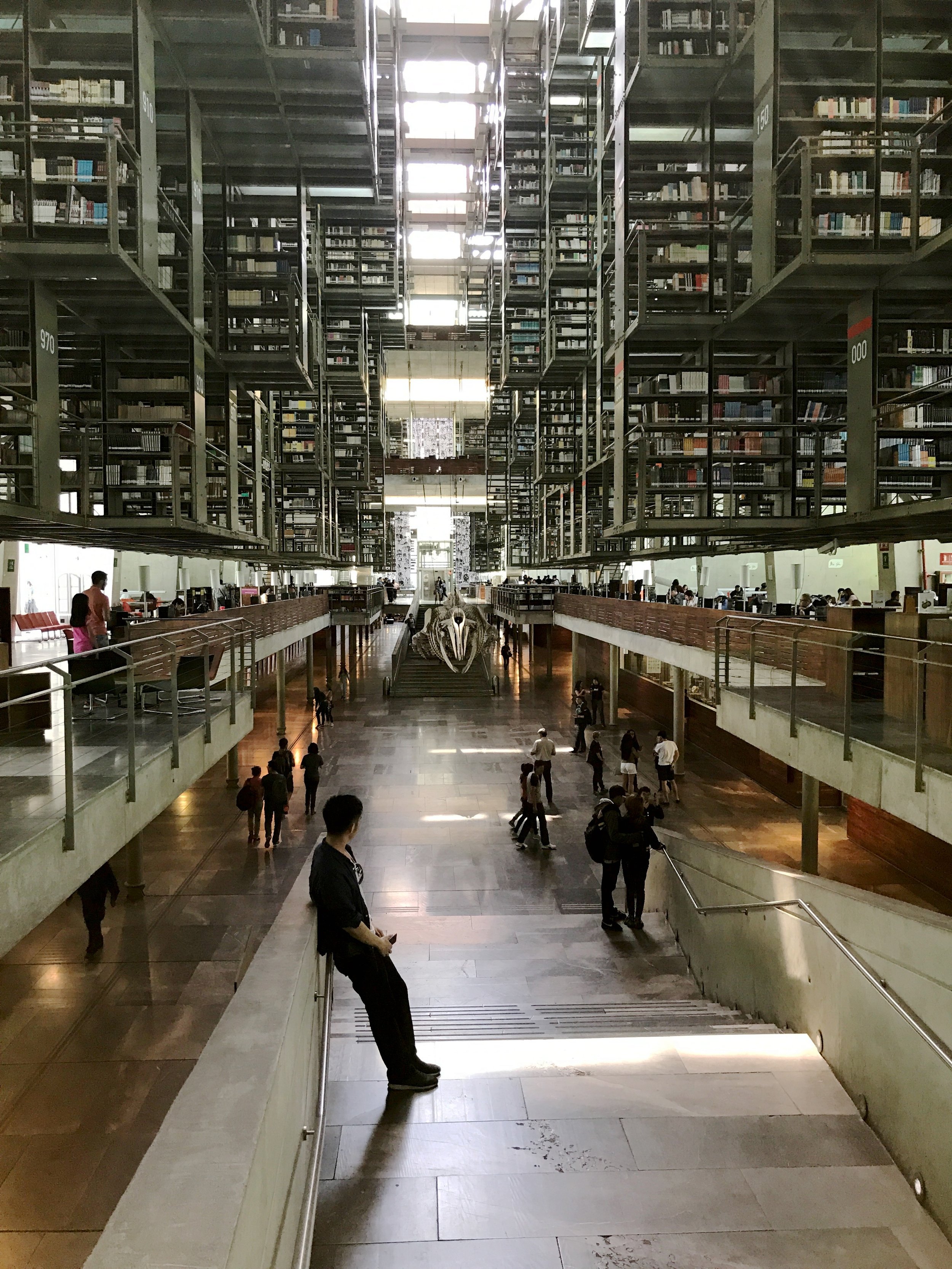
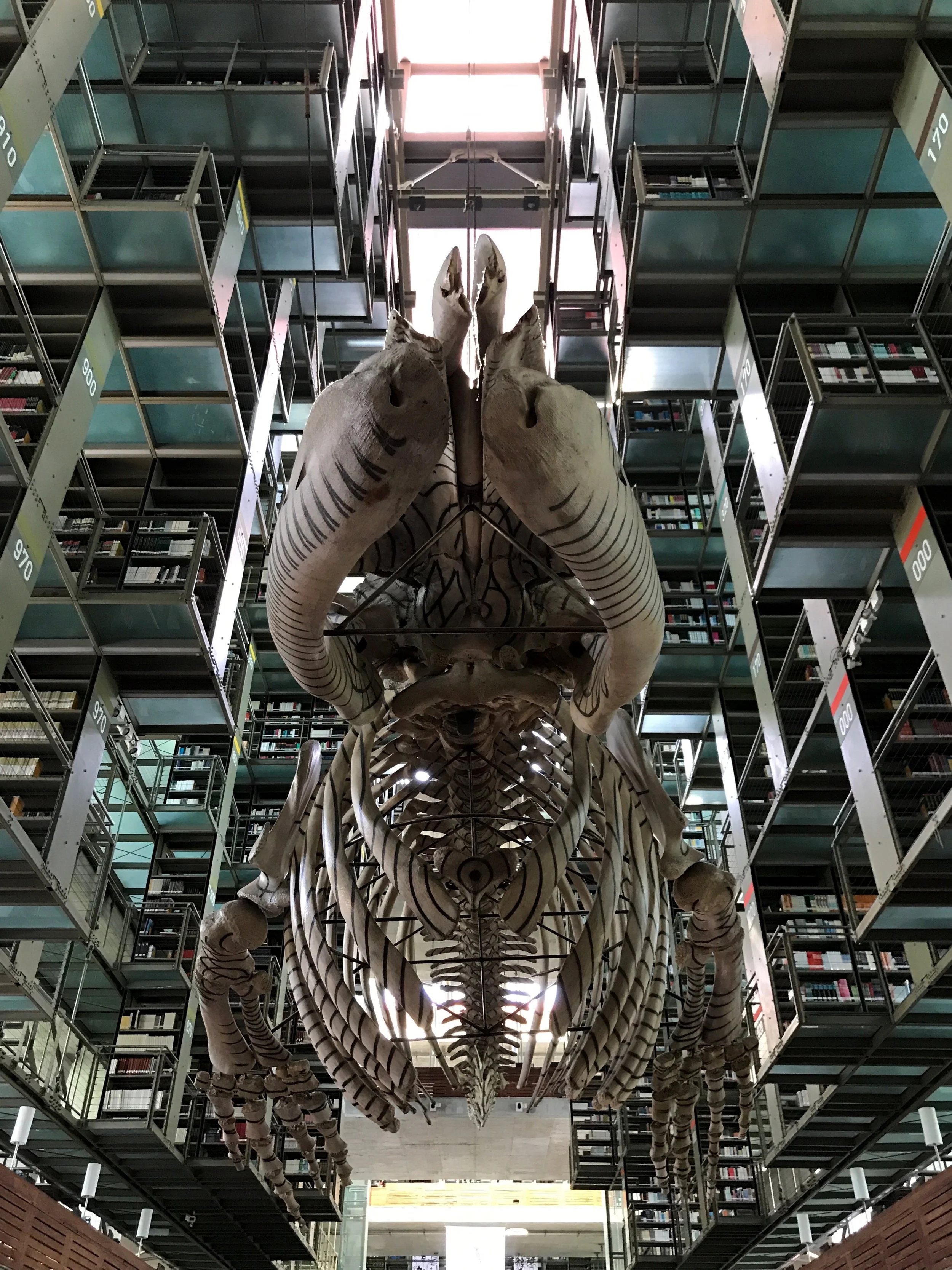
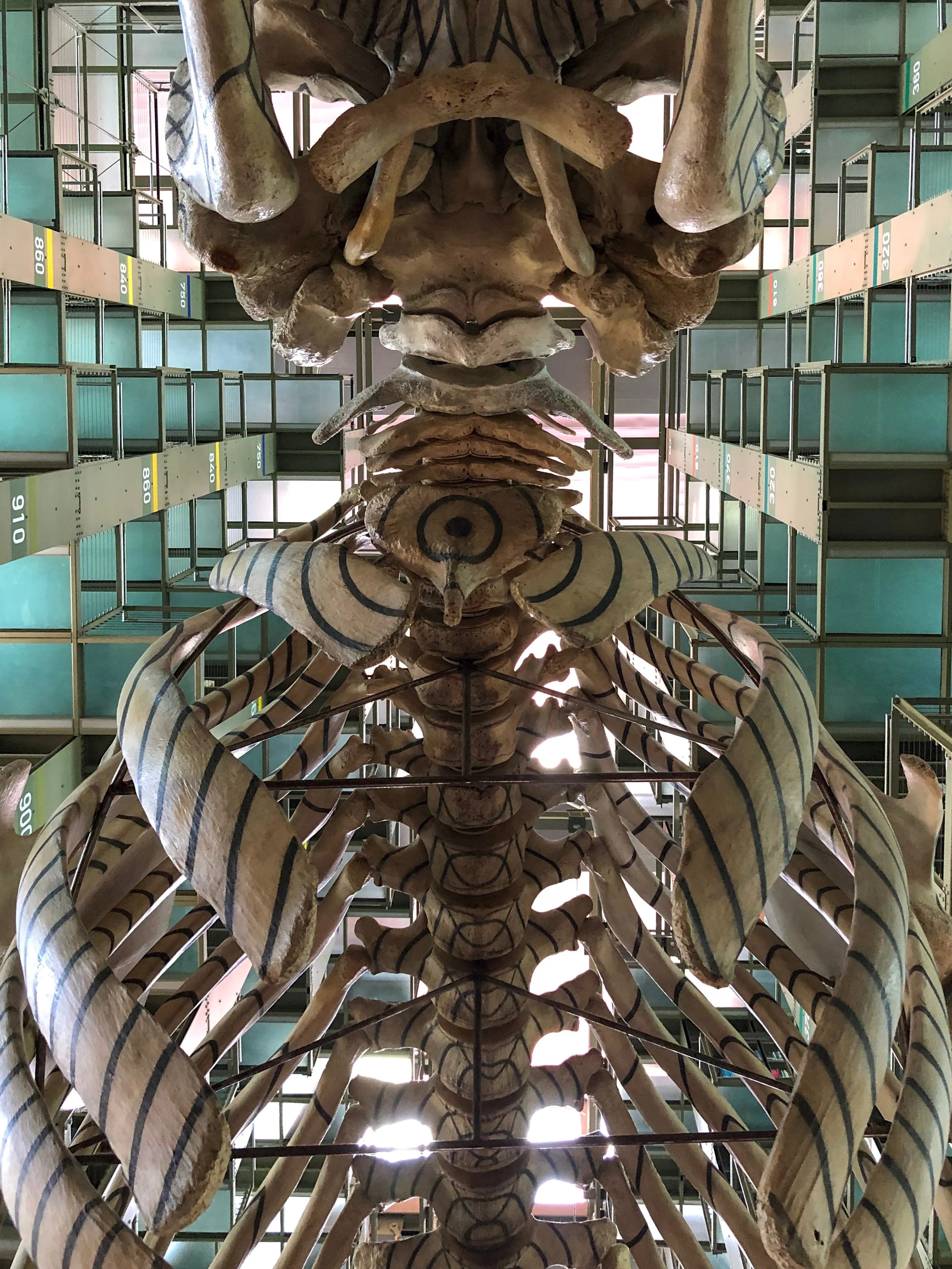
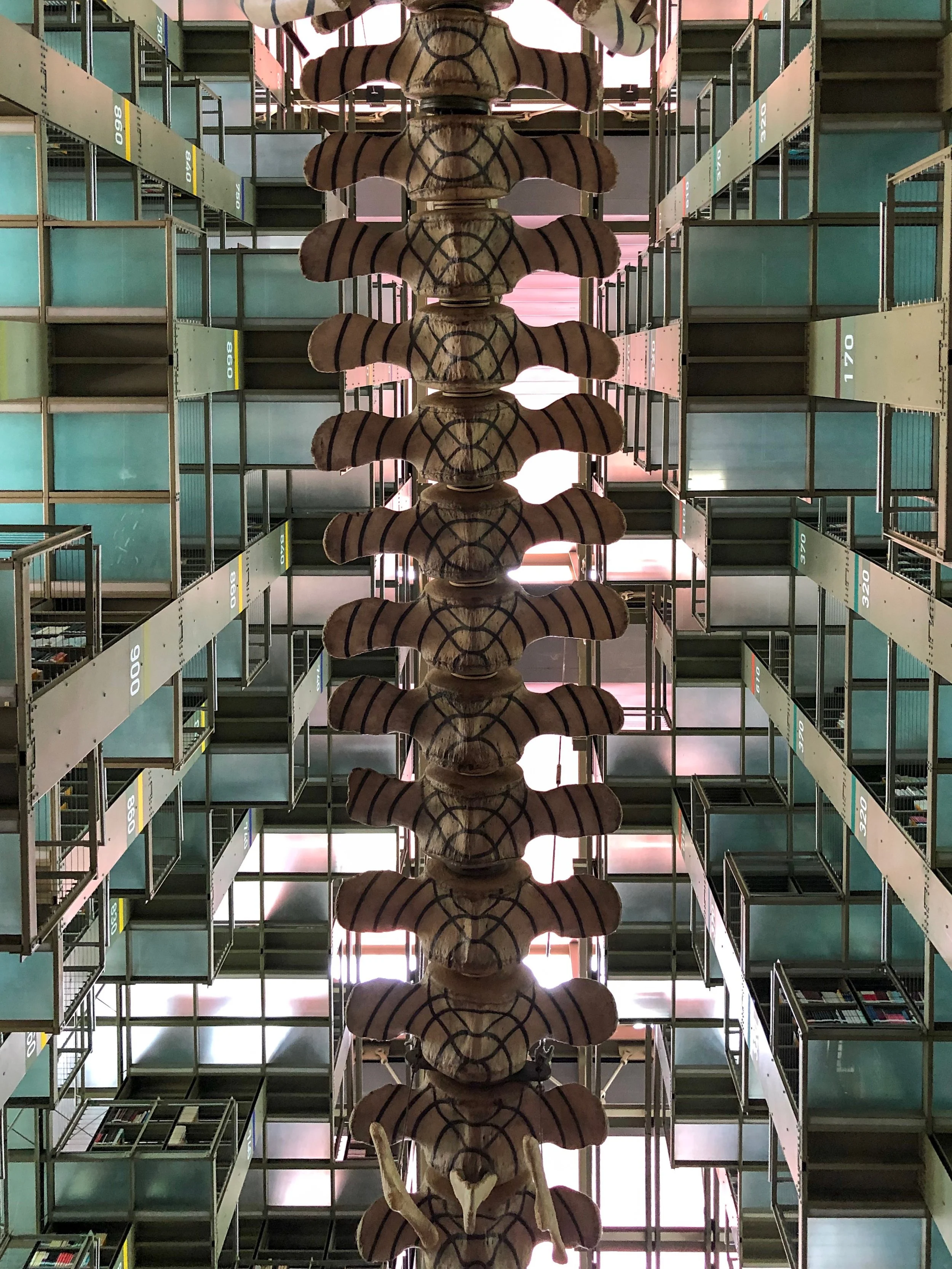
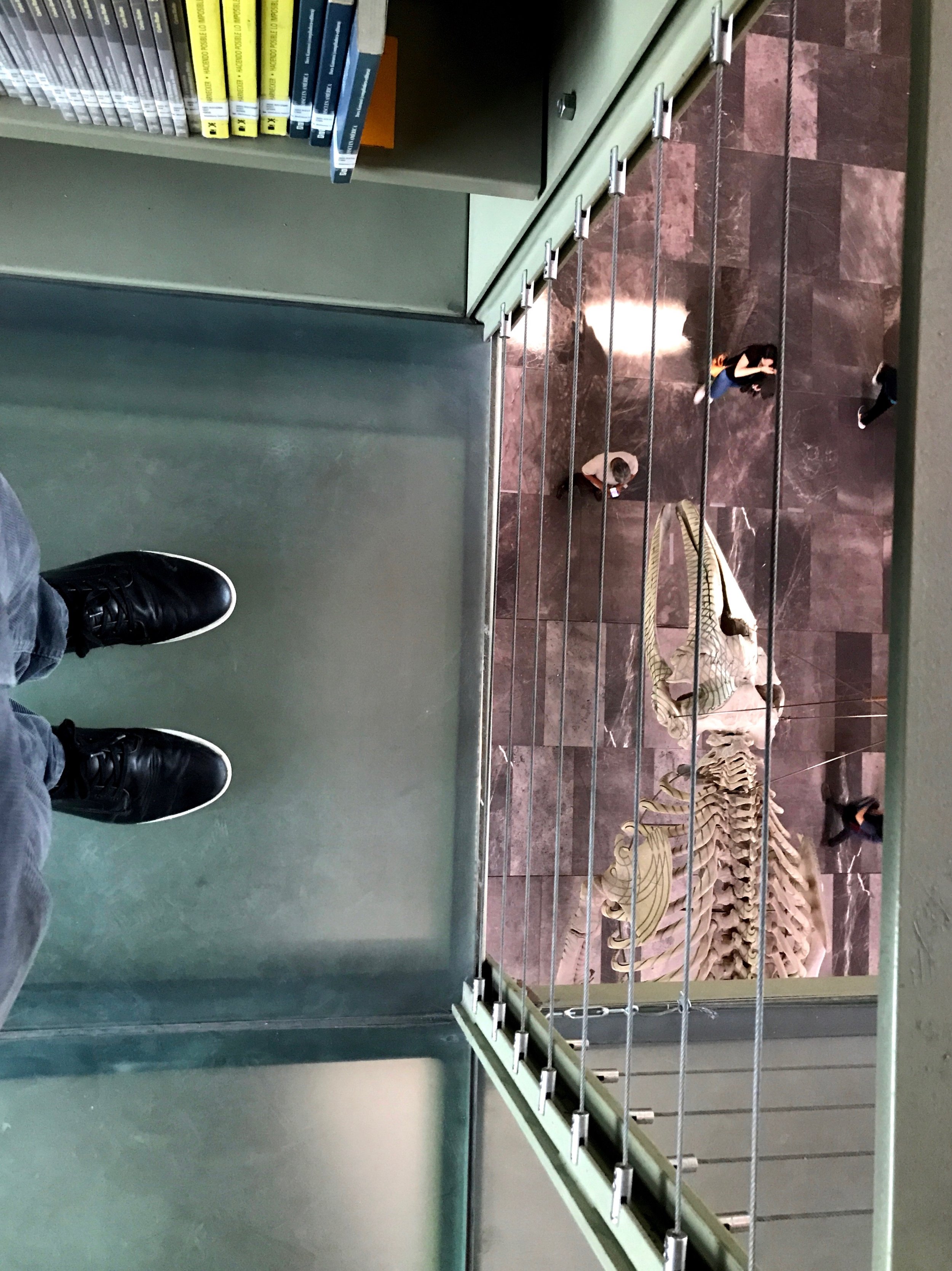
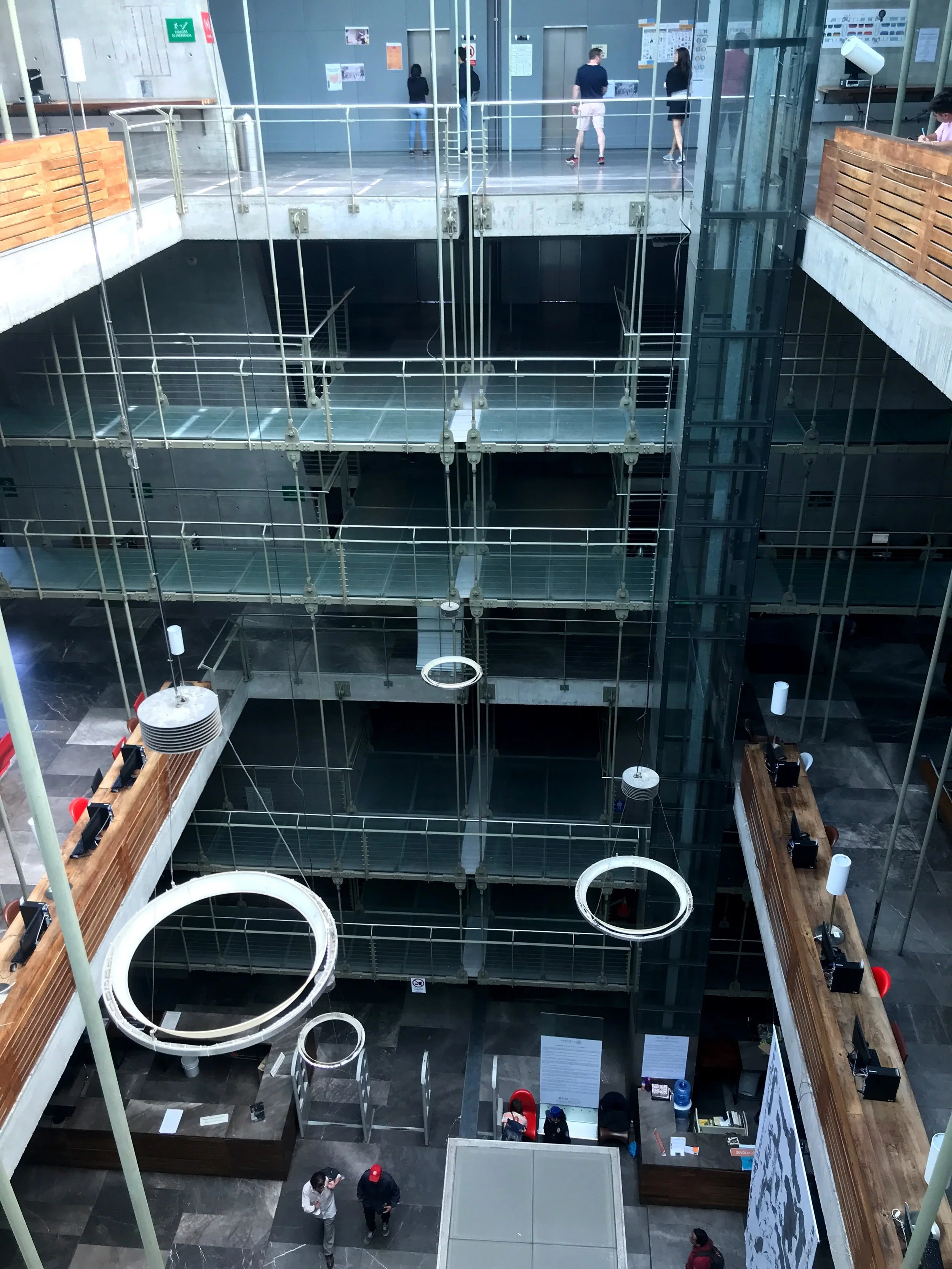
Architect Alberto Kalach’s amazing library in Mexico City contains bookshelves that hang from the ceiling, and a whale bone sculpture by artist Gabriel Orozco.

Off-the-beaten-path CDMX: la Biblioteca Vasconcelos

Off-the-beaten-path CDMX: la Biblioteca Vasconcelos

After a visit to the labyrinthine and often-claustrophobic Mercado de Sonora Witch’s Market, Duke and I took a short Uber ride to the Biblioteca Vasconcelos in the Colonia Buenavista neighborhood. Dedicated to José Vasconcelos, a Mexican writer, philosopher and politician, the library’s interior is unlike anything you’ve ever seen.

Story after story of metal and glass bookcases defy logic, floating above like a science fiction version of Hogwarts.
Wally and Duke in ecstasy: Who needs to go to church when you’ve got a library like this?

Wally and Duke in ecstasy: Who needs to go to church when you’ve got a library like this?

The interior is like stepping into an M.C. Escher drawing

The interior is like stepping into an M.C. Escher drawing

Don’t Judge a Book by Its Cover

From the building’s exterior — a fortress of concrete and steel grillwork — you’d never imagine the airy futuristic interior within. However, getting into the hallowed repository of knowledge was a bit tricky. Initially, Duke and I saw the gaping maw of the parking garage and wondered if we had to enter there. We skirted around to the right of the building in an attempt to gain access. When we realized there wasn’t an entrance there either, we paused to ask a local who was walking his dog. He gestured to the left side of the library. We thanked him and made our way over to a courtyard with a couple of smaller buildings and the main entrance.

The exterior of the library isn’t too impressive — but just wait till you step inside!

The exterior of the library isn’t too impressive — but just wait till you step inside!

When we first stepped foot inside the 400,000-square-foot Biblioteca Vasconcelos, designed by Mexican architect Alberto Kalach, we could barely contain our giddiness. We looked around in wonder, our necks craning in every direction.

The floating stacks are a novel way, pun intended, to display books

The floating stacks are a novel way, pun intended, to display books

Story after story of metal and glass bookcases defy logic, while simultaneously offering a sense of complete order, floating above like a science fiction version of Hogwarts. Thin steel beams seem barely able to support the monumental stacks filled with books. Hazy silhouettes of patrons can be glimpsed through translucent sea-green catwalks.

Greenish-blue semitranslucent walkways connect the stacks

Greenish-blue semitranslucent walkways connect the stacks

Seating areas seen from across the expanse

Seating areas seen from across the expanse

We felt as though we had entered a sacred space, one that evoked the same reverence of the organic space-age architecture of La Sagrada Família church in Barcelona, Spain.

The exhibit Vientos de Japón (Winds of Japan) by master calligrapher Ryuho Hamano was on display when we visited

The exhibit Vientos de Japón (Winds of Japan) by master calligrapher Ryuho Hamano was on display when we visited

Duke daring to lean against the thin wire railing

Duke daring to lean against the thin wire railing

Wally chose a more secure spot for his portrait

Wally chose a more secure spot for his portrait

Sunlight plays a major role at the Biblioteca Vasconcelos, filling the interior with natural light. Ingenious louvered glass panels soften the sun's rays and keep the library from getting too hot.

The far ends of the library offer expansive views of the city

The far ends of the library offer expansive views of the city

As we passed by the first floor patios, we saw teens practicing dance routines, mimicking the choreography seen in some pop star’s latest music video. Beyond them, we could see the sprawling botanic garden that surrounds the structure. During our stay in Mexico City, we saw chilangos of all ages, from teens to seniors, dancing in public spaces.

A botanic park surrounds the structure

A botanic park surrounds the structure

Whenever I got too close to the cable rails on the upper floors of the library, my head would spin with vertigo. It became clear that this was a library for the brave. God forbid I needed a book located at the end of one of these stacks.

Looking down at Gabriel Orozco’s hanging sculpture, Mobile Matrix

Looking down at Gabriel Orozco’s hanging sculpture, Mobile Matrix

A Whale of a Time: Orozco’s Mobile Matrix

Hovering above the central atrium hall is the striking Mátrix Móvil (Mobile Matrix in English), an intricately inscribed gray whale skeleton fitted onto a metal armature. Conceptual artist Gabriel Orozco and his team used over 6,000 mechanical pencils to etch concentric circles onto the bones, which stretch over 38 feet long. I learned that the whale had died after beaching itself on the Baja Peninsula during a migratory trip along the Mexican Pacific coast. The art piece adds a museum-like quality to the space.

A peek at the whale bone sculpture

A peek at the whale bone sculpture

There’s a lot to see in Mexico City, but the Biblioteca Vasconcelos is worth adding to your itinerary. It’s quite close to CDMX’s historic Centro. And when you’re done exploring this modern marvel (and have taken copious amounts of photos), head past the Buenavista rail and bus station and cross the overpass that spans the bustling Avenida Insurgentes. A 10-minute walk straight down Calle Salvador Díaz Mirón will bring you to the colorful Kiosco Morisco in the nearby Santa María la Ribera neighborhood. –Wally
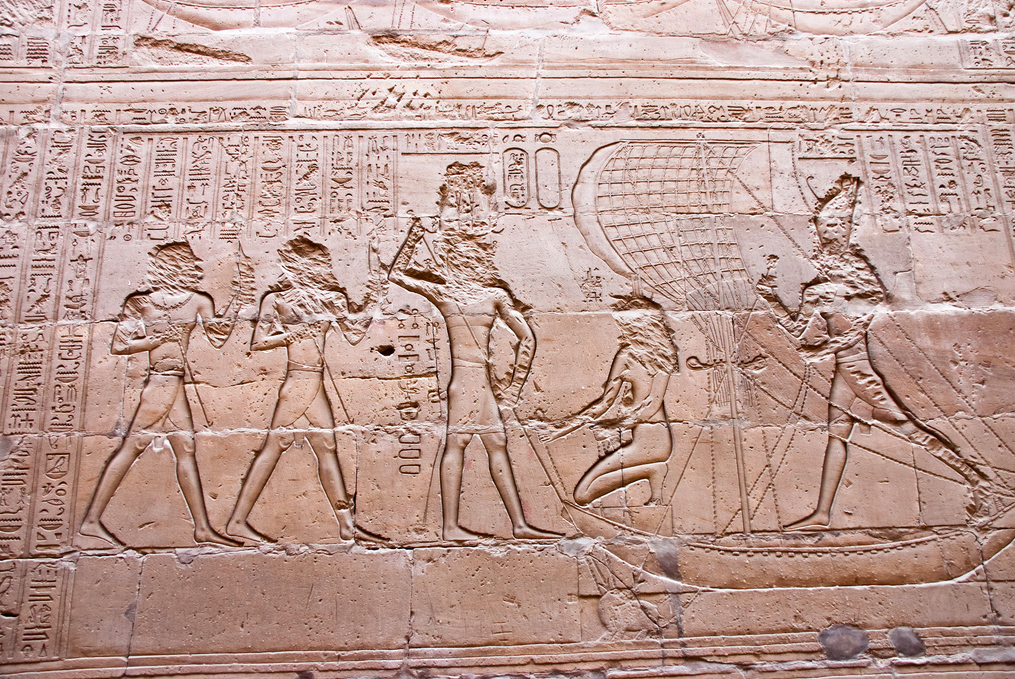
A forest of paper cylinders with Japanese kana characters on display at the entrance

A forest of paper cylinders with Japanese kana characters on display at the entrance

Duke poses in front of the art exhibit

Duke poses in front of the art exhibit

There are elevators for those who don’t want to walk up all those stairs

There are elevators for those who don’t want to walk up all those stairs

One of the rooms along the sides of the library was filled with women knitting a cool cactus

One of the rooms along the sides of the library was filled with women knitting a cool cactus

Peek-a-boo! Duke looks through one of the stacks near the edge of the railing

Peek-a-boo! Duke looks through one of the stacks near the edge of the railing

Biblioteca Vasconcelos

Mosqueta
Eje 1 Norte S/N
Buenavista
06350 Ciudad de México
CDMX, México


The Magnificent Parroquia San Juan Bautista

Don’t miss la Iglesia de Coyoacán, a striking example of Spanish colonial history and one of the oldest surviving houses of worship in Mexico City.

Add la Iglesia de Coyoacán to your itinerary when exploring this boho neighborhood.

Add la Iglesia de Coyoacán to your itinerary when exploring this boho neighborhood.

After lunch at Los Danzantes, Wally and I made our way from the leafy Jardín Centenario and crossed Calle Carrillo Puerto, the street that separates the adjacent Plaza Centenario and Plaza Hidalgo.

Presiding over the south side of the Plaza Hidalgo and directly in our line of vision was the Parroquia San Juan Bautista, known locally as la Iglesia de Coyoacán, the Catholic church and former mission dedicated to Saint John the Baptist. The Spanish first introduced Christianity to the indigenous Nahuatl people in the early 16th century.
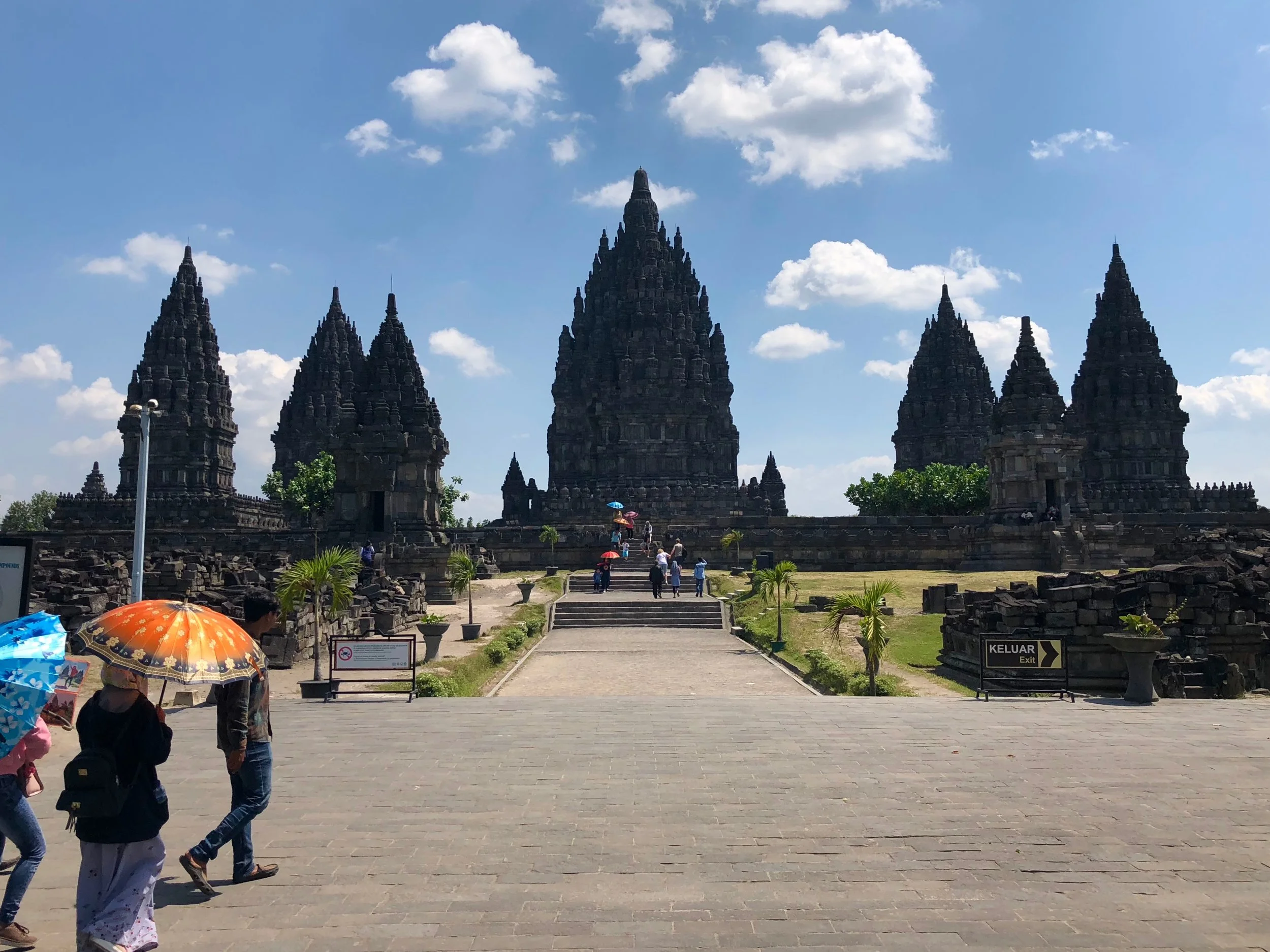


In front of the church entrance is a cobblestone square that originally extended into what is now Plaza Centenario. During the colonial period, the square was used to host religious one act dramatizations known as autos sacramentales. Rather than completely abandon old beliefs, the missionaries adopted a strategy to spread the new faith by incorporating indigenous ritual practices that had similarities to Christianity.
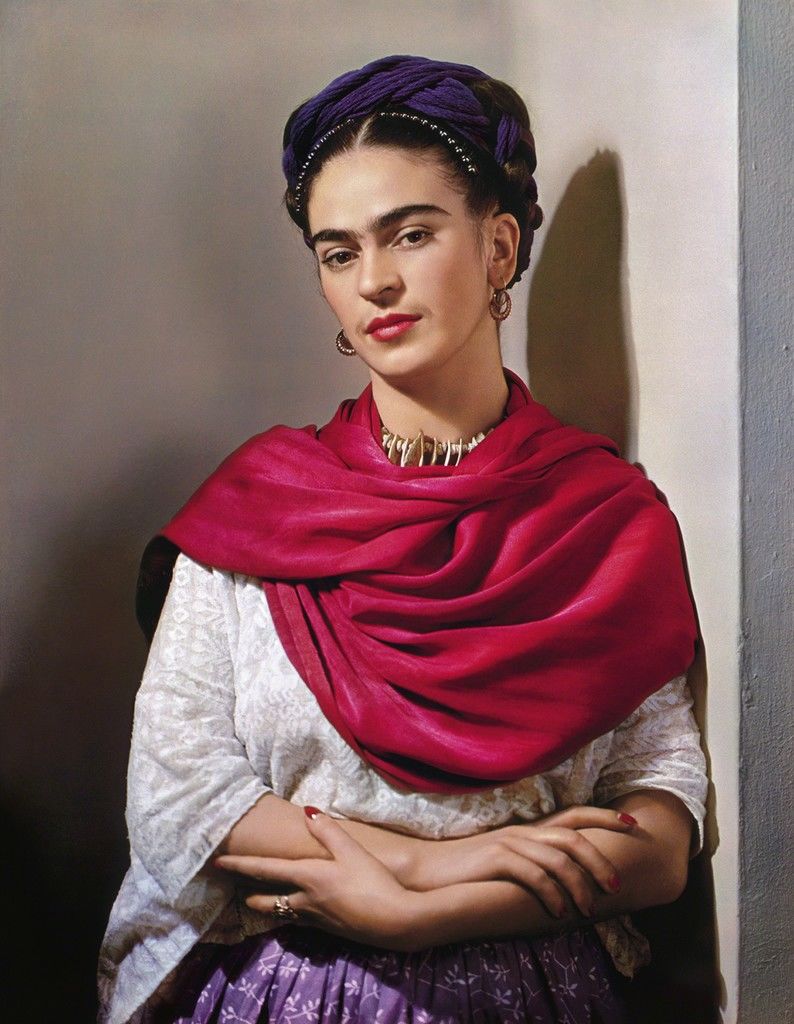
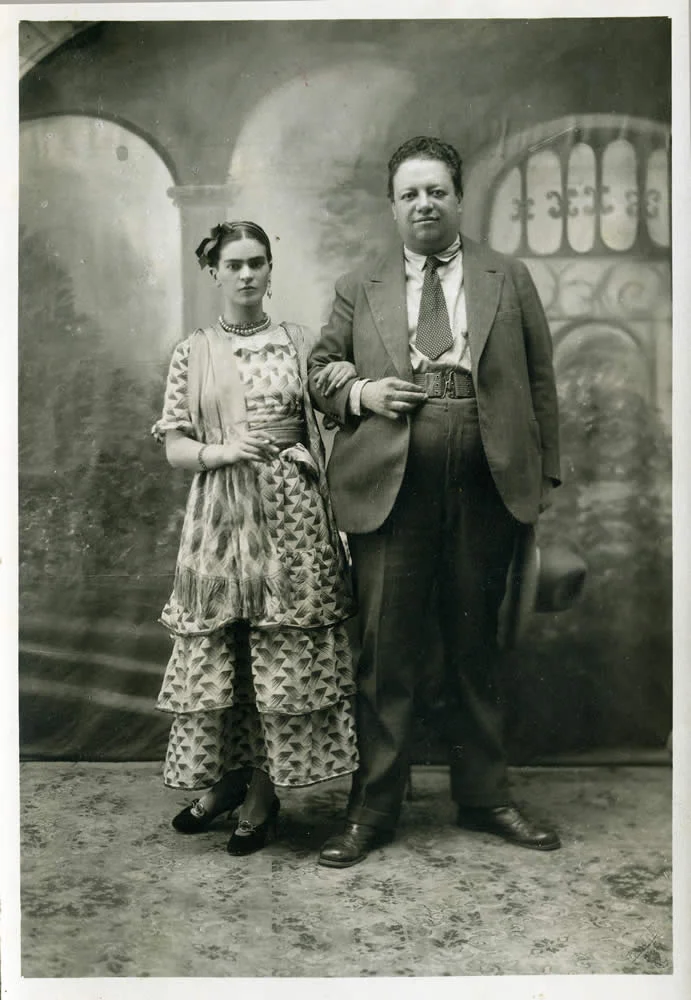
A four-story bell tower, which was added later, in the 18th century, stands to the west of the main church and was once topped by a dome, lantern and cross. Sadly, the dome collapsed during an earthquake in September 2017.

The church was built on the site of a school for Aztec nobles.

The church was built on the site of a school for Aztec nobles.

San Juan Bautista was built upon the site of a calmecac, a school for Aztec nobility, whose ruins still exist beneath the cloister.

The relatively plain façade is in the Herrerian style, named after Spanish architect and mathematician Juan de Herrera. This architectural style is characterized by clean geometric lines and is almost entirely absent of ornamentation, with the exception of grooved classical pilasters, columns of the Ionic order set into the face of the church. An inscription in Latin above the door translates to, “There is none other but a house of God, and this a gate of the heavens.”

The exterior is plain, but the interior is anything but, as this ornate altar attests.

The exterior is plain, but the interior is anything but, as this ornate altar attests.

Above in bas-relief, are the coat of arms of the Roman Catholic Order of Preachers, better known as the Dominicans. The petals of the fleur-de-lis cross symbolize the 12 apostles. Another carving depicts a sort of monogram of the Virgin Mary — a crown with the intertwined letters A and M for Ave Maria.

Gorgeous archways and ceiling frescos adorn San Juan Bautista.

Gorgeous archways and ceiling frescos adorn San Juan Bautista.

Construction of the church happened in fits and starts, between 1527 and 1552, on land donated to conquistador Hernan Cortés by the native Ixtolinque chief, who was baptized into the Catholic faith under the name of Juan de Guzmán. Under the direction of the Dominican order, San Juan Bautista was built upon the site of a calmecac, a school for the sons of Aztec nobility, whose ruins still exist beneath the cloister. The original structure was designed as a basilica, with a simple rectangular floor plan used in temple architecture.

In 1934, the church was declared a historic monument by the government of the republic.

The sides of the church’s interior are gloriously gilded.

The sides of the church’s interior are gloriously gilded.

Going for Baroque

If you’re like Wally and me, you can’t go to a city without exploring a few churches, and the Parroquia San Juan Bautista did not disappoint. Stepping inside, we immediately noticed the exuberant interior, modified between 1926 and 1947 to reflect the prevailing Baroque style and reduced to a single nave flanked by seven small chapels on either side.
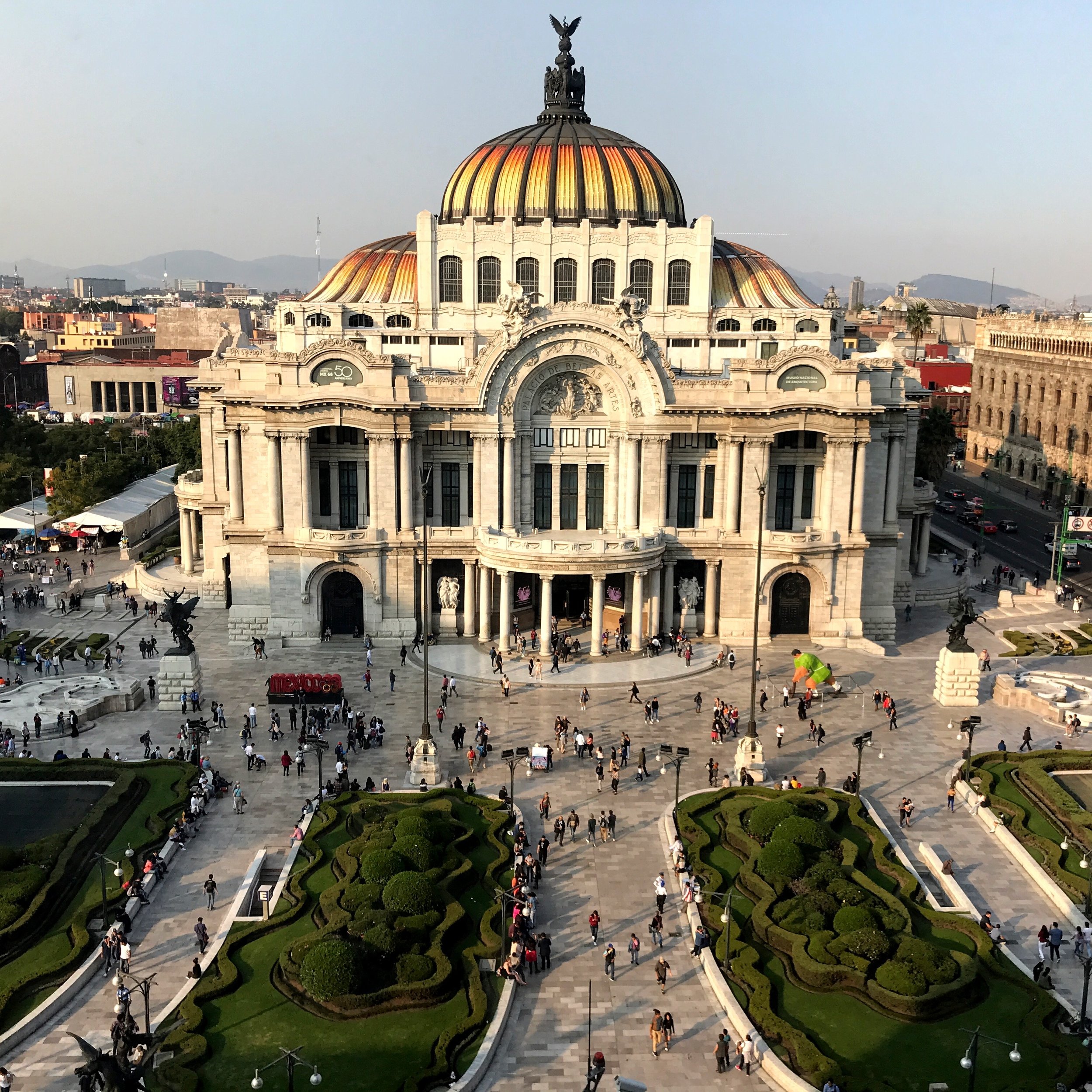
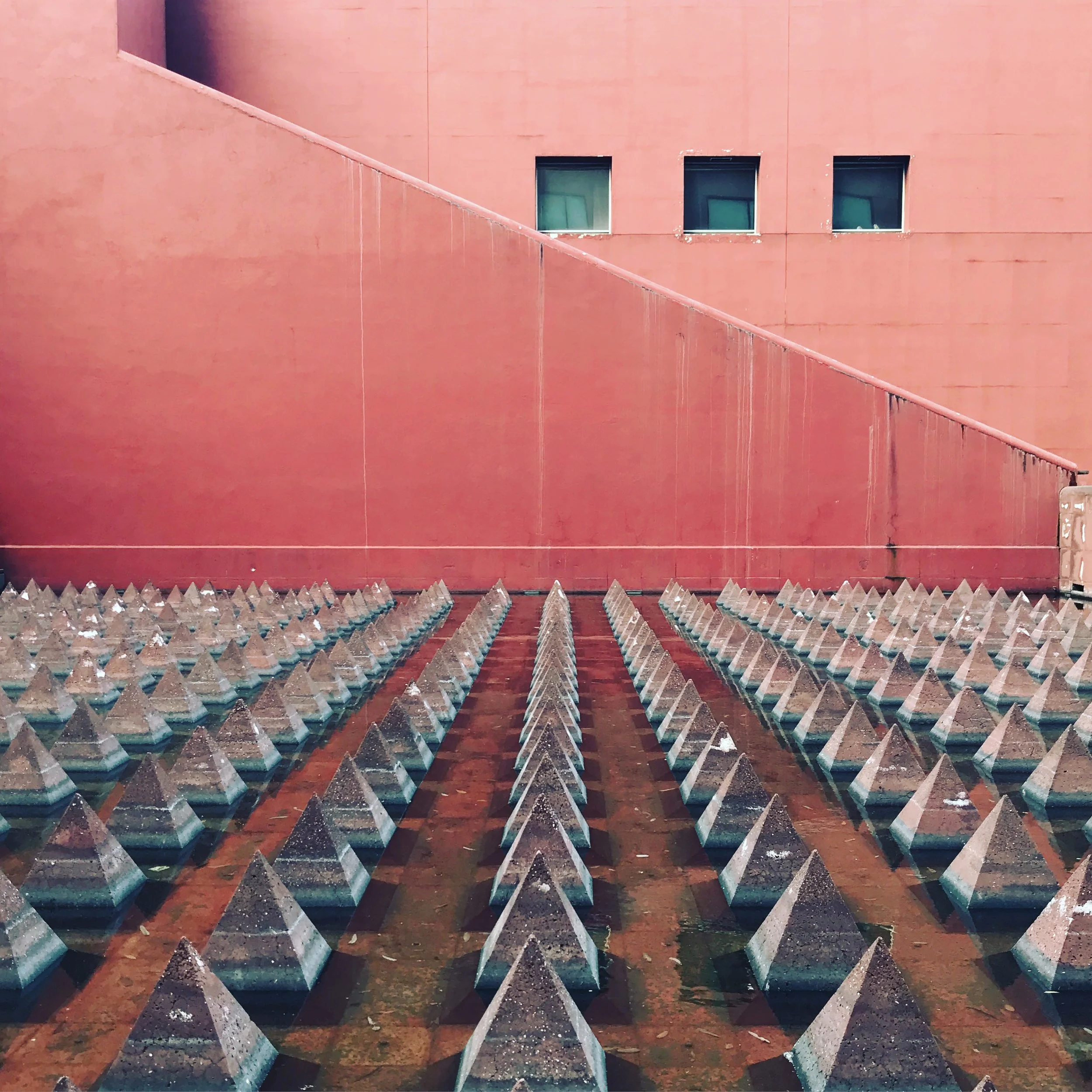
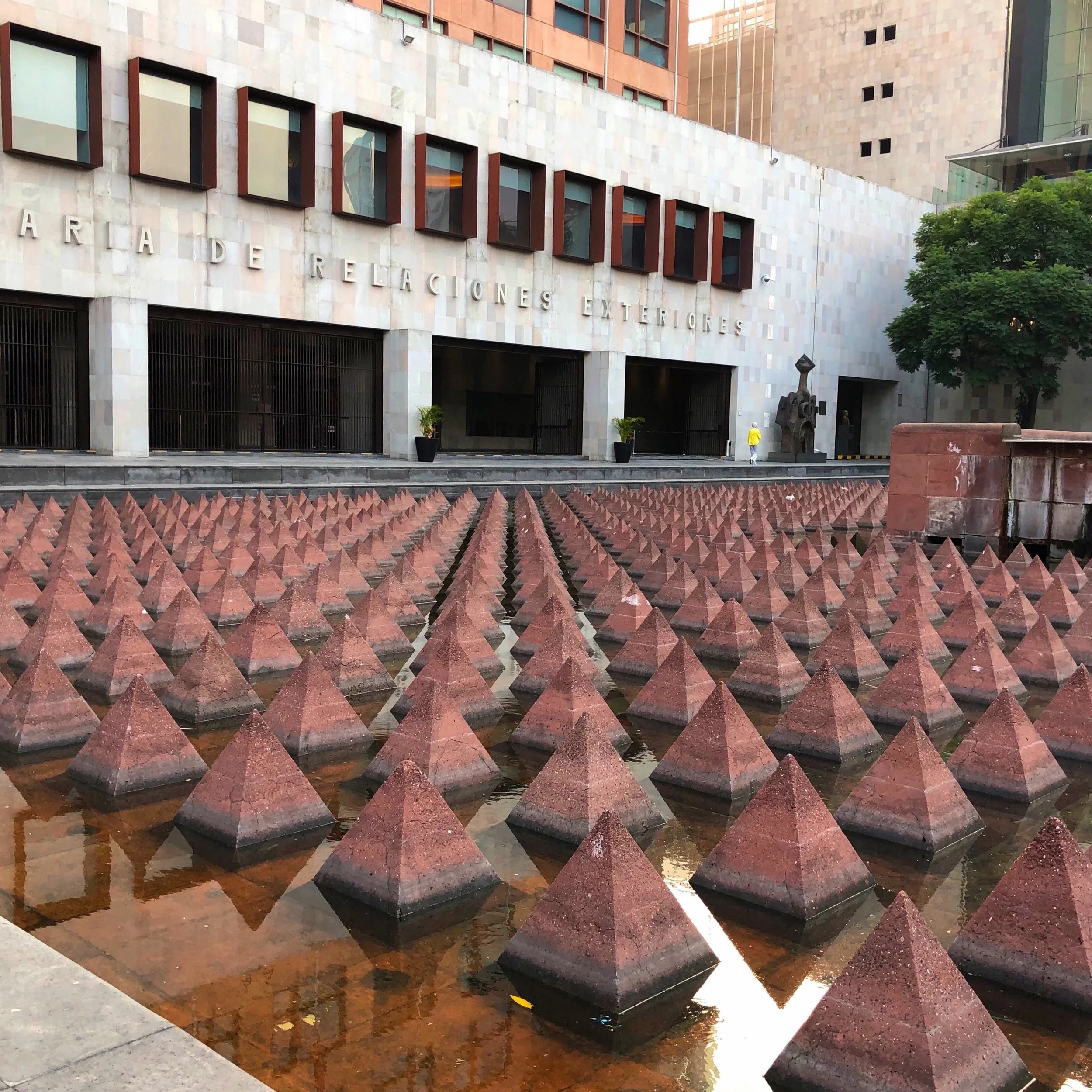
If it’s not Baroque, don’t fix it.

If it’s not Baroque, don’t fix it.

The ubiquitous Virgin of Guadalupe

The ubiquitous Virgin of Guadalupe

Among the most striking works are the illusion-inducing ceiling frescoes depicting scenes from the life of Christ by Catalan painter Juan de Fabregat. Angels perch high above the column capitals lining the walls and culminate in the magnificent Chapel of the Rosary, with its lavishly decorated high altar embellished with the glow of gold leaf.

The ceiling depicts scenes from the life of Jesus, including the Sermon on the Mount.

The ceiling depicts scenes from the life of Jesus, including the Sermon on the Mount.

It’s certainly worth popping into Coyoacán’s main church for a quick wander.

It’s certainly worth popping into Coyoacán’s main church for a quick wander.

An angel guards over the dome at the front of the church.

An angel guards over the dome at the front of the church.

We paused to admire the vitrine with (the admittedly creepy) el Cristo de los Milagros, Christ of the Miracles, with a mystical assemblage of gold and pewter milagros, healing charms, pinned to a sea of red ribbons. Milagros of a specific body part, such as a leg, are used in a prayer for the improvement for some condition associated with a leg, such as arthritis or a bad knee. Some of the milagros had photos of the person to be healed.

The creepy, life-size Cristo de los Milagros

The creepy, life-size Cristo de los Milagros

If you want to be healed of an ailment, leave a milagro of the proper body part and maybe a photo, then tie a red ribbon and pin it to the wall.

If you want to be healed of an ailment, leave a milagro of the proper body part and maybe a photo, then tie a red ribbon and pin it to the wall.

Oh, baby! One of the strange icons to offer devotions to at the Iglesia de Coyoacán

Oh, baby! One of the strange icons to offer devotions to at the Iglesia de Coyoacán

Other works were designed to appeal to the emotions of the faithful and feature biblical depictions of the lives of the saints of the Franciscan order, including the Vision of Saint Teresa, the taking of the habit of Santa Clara, and the stigmatizations of San Francisco, Saint Domingo and San Juan.

Expect an inundation of elaborate ornamentation.

Expect an inundation of elaborate ornamentation.

Converting the infidels

Converting the infidels

Gold-painted statuary and frills line the sides of the church.

Gold-painted statuary and frills line the sides of the church.

Corpse-like mannequins can seem a strange inclusion to a church.

Corpse-like mannequins can seem a strange inclusion to a church.

One of the niches on the right-hand side of the church

One of the niches on the right-hand side of the church

We passed through a doorway into a small chapel, where a small group of students was sketching. This led out to an arched arcade of Tuscan columns. This was the cloister of the convent, perhaps founded by Friar Juan de la Cruz, an indigenous man who spoke Castilian Spanish. Within the convent’s walls, Nahuatl people were baptized and taught the tenets of the Christian faith.

Out back you can explore the quiet cloisters.

Out back you can explore the quiet cloisters.

This might have been where indigenous people were baptized into the Catholic faith.

This might have been where indigenous people were baptized into the Catholic faith.

A group of students was sketching when we visited.

A group of students was sketching when we visited.

Like the neighborhood itself, the church is a destination full of rich culture. So if you should find yourself in Coyoacán, make sure to spend some time exploring the Parroquia San Juan Bautista. Like us, you’ll be glad you did. –Duke

La Iglesia de Coyoacán

La Iglesia de Coyoacán

Parroquia San Juan Bautista
Plaza Centenario 8
Villa Coyoacán
04000 Coyoacán
CDMX, Mexico