INDONESIA

The Best Places for Scuba Diving in Bali

From shipwrecks to manta rays, these are the top scuba diving spots in Bali — perfect for families, beginners, and underwater thrill-seekers alike.
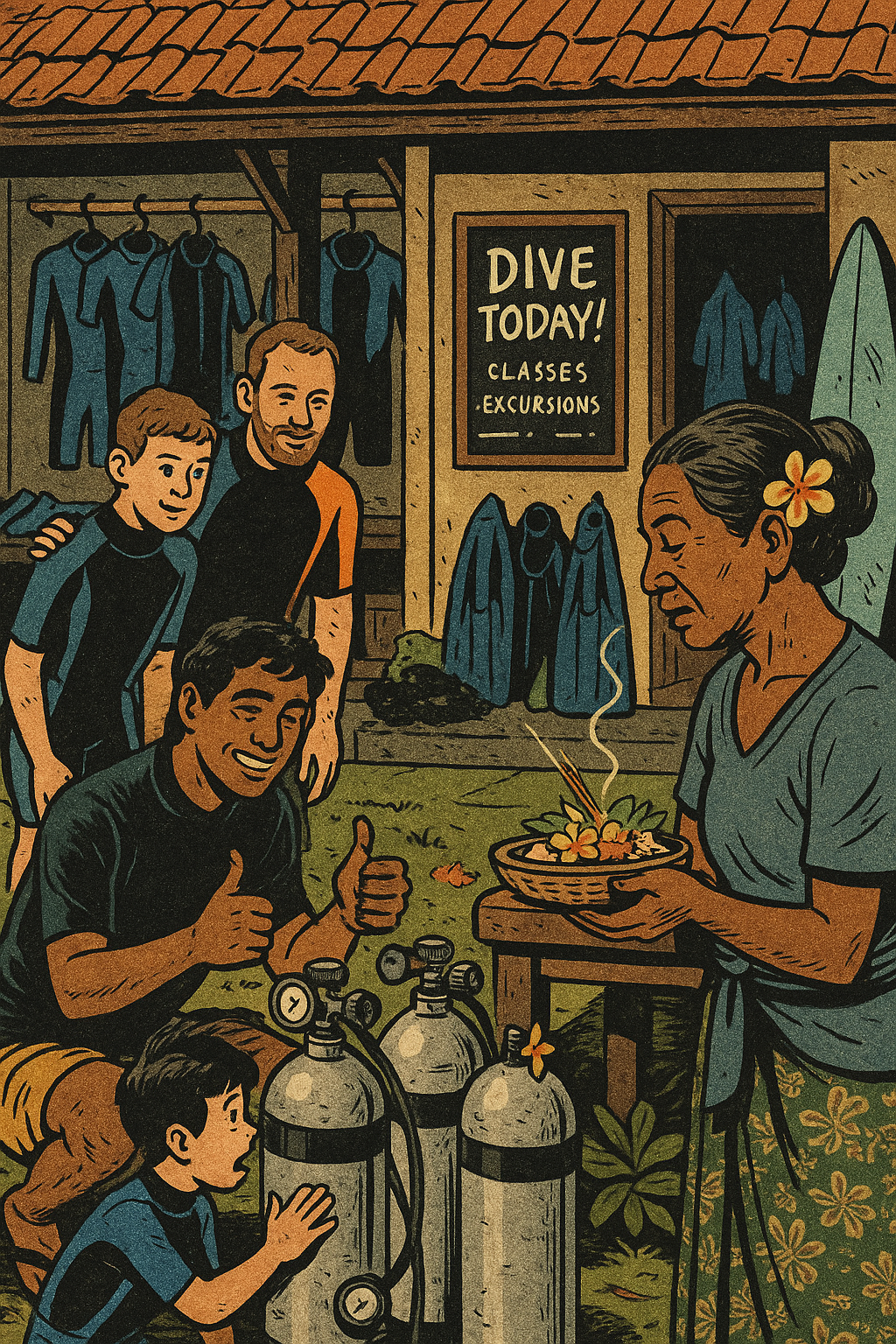
A Balinese man gives two thumbs up at a dive shop, while a tourist family puts on wetsuits and a Balinese woman carries an offering to the gods

Bali isn’t just for honeymooners and yoga influencers. It’s also a paradise for families who prefer their bonding time with a side of coral reefs, sea turtles and the occasional “Did you see that?!” squeal through a snorkel. With warm waters, outrageously colorful marine life, and dive sites for every level from “never seen a fin before” to “basically part mermaid,” Bali makes it easy — and wildly fun — to go underwater together.

Whether your crew includes seasoned divers, curious kids or reluctant spouses who were promised post-dive smoothies, Bali’s got the gear, the guides and the gentle currents to make everyone feel like Jacques Cousteau. Team up with a local scuba diving shop and you’ll get equipment, training, and a cheerful instructor who knows when to hold your hand and when to point at an octopus.

Top Dive Sites in Bali

Where to Get Your Fins Wet (and Your Mind Blown)

A family scuba dives by the wreck of the USS Liberty at Tulamben in Bali

Tulamben

You haven’t truly visited Bali until you’ve floated above a sunken ship. The U.S.S. Liberty wreck sits just off the shore of Tulamben, resting peacefully in shallow water and now swarming with fish, turtles and tiny creatures with big personalities. It’s beginner-friendly, surreal and basically an underwater playground for divers of all levels — a rare combo.

A family scuba dives at Nusa Penida in Bali, looking at a manta ray and a mola mola

Nusa Penida

Cue the dramatic music. This one’s for the more experienced divers (read: those who enjoy a good current and aren’t fazed when a manta ray with a wingspan wider than a car glides past. At Manta Point, you’ll likely meet these graceful giants up close. Head to Crystal Bay and, if you’re lucky and it’s the right season, you might catch a glimpse of the elusive mola mola — that weirdly wonderful ocean sunfish that looks like someone forgot to finish designing it. 

A family scuba dives under a boat among coral and fish at Amed in Bali

Amed

New to diving? Have a hesitant teen or an overeager 8-year-old in tow? Amed is your happy place. With easy shore dives and candy-colored reefs just offshore, this laidback spot is tailor-made for beginners. It’s like snorkeling’s cooler, deeper cousin — all the wow, none of the stress.

A family scuba dives at Padang Bai (Blue Lagoon) in Bali, looking at a clownfish while a turtle swims above

Padang Bai (Blue Lagoon)

As gentle and welcoming as a sleepy sea turtle, the Blue Lagoon is perfect for first-timers and families dipping their fins in for an inaugural dive. Shallow, warm and full of Nemo-style charm, this is where you go to fall in love with the ocean — or at least impress your family with how chill you look underwater.

A family scuba dives at Menjangan Island in Bali

Menjangan Island

Tucked away on Bali’s quieter western coast, this island offers a Goldilocks-perfect dive: calm waters, healthy coral walls, and just enough sea life to keep things thrilling but not overwhelming. Great for mixed-ability families — even the grandparent who just got certified last year.
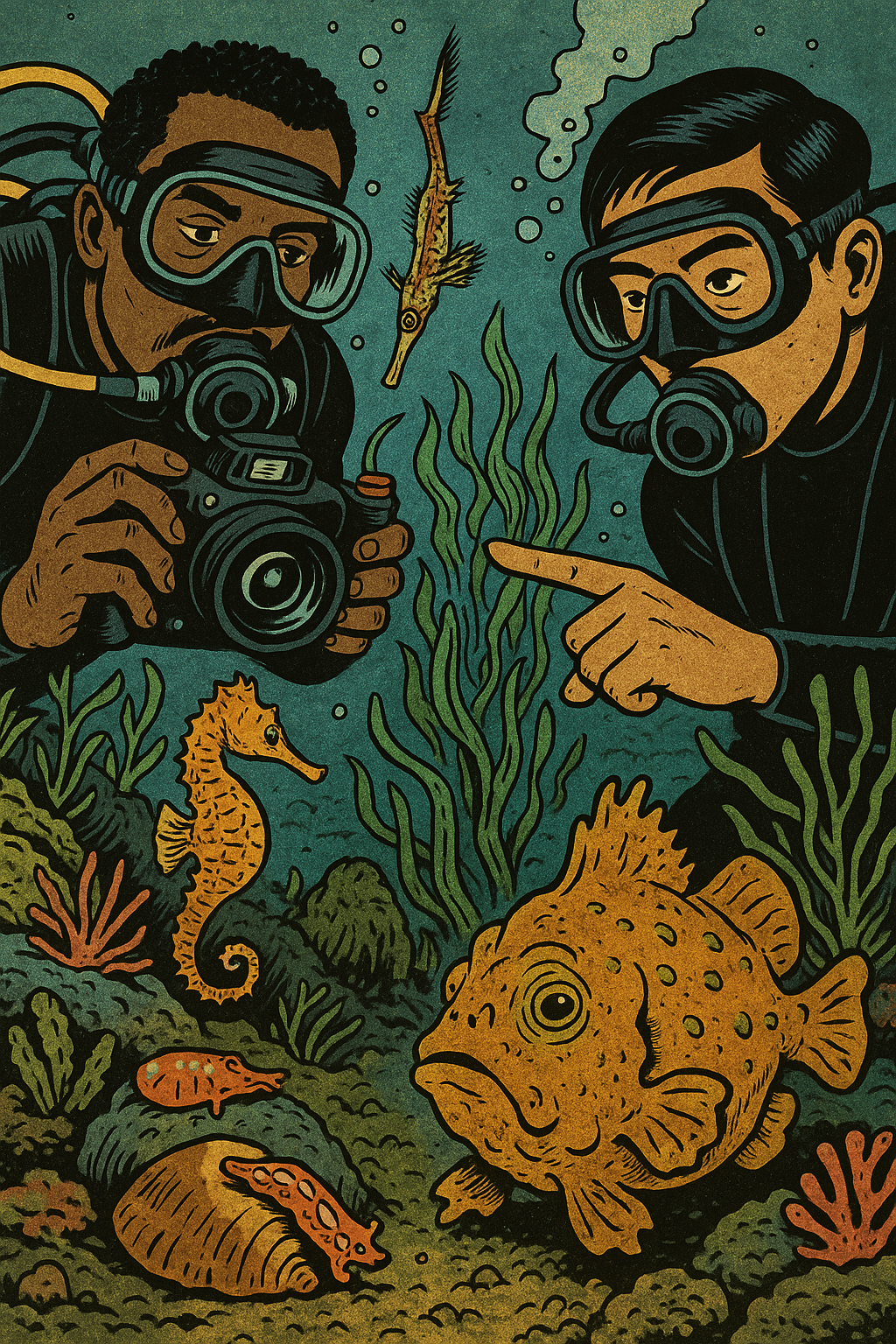
Two men scuba dive at Secret Bay (Gilimanuk) in Bali, while one takes photos of interesting marine life

Secret Bay (Gilimanuk)

Calling all marine-life nerds and macro-photographers. Secret Bay is less about dramatic landscapes and more about the strange and wonderful: ghost pipefish, seahorses, frogfish and other creatures that look like they were dreamt up by Dr. Seuss. It’s calm, quirky and off the beaten reef — ideal for intermediate divers and underwater shutterbugs.

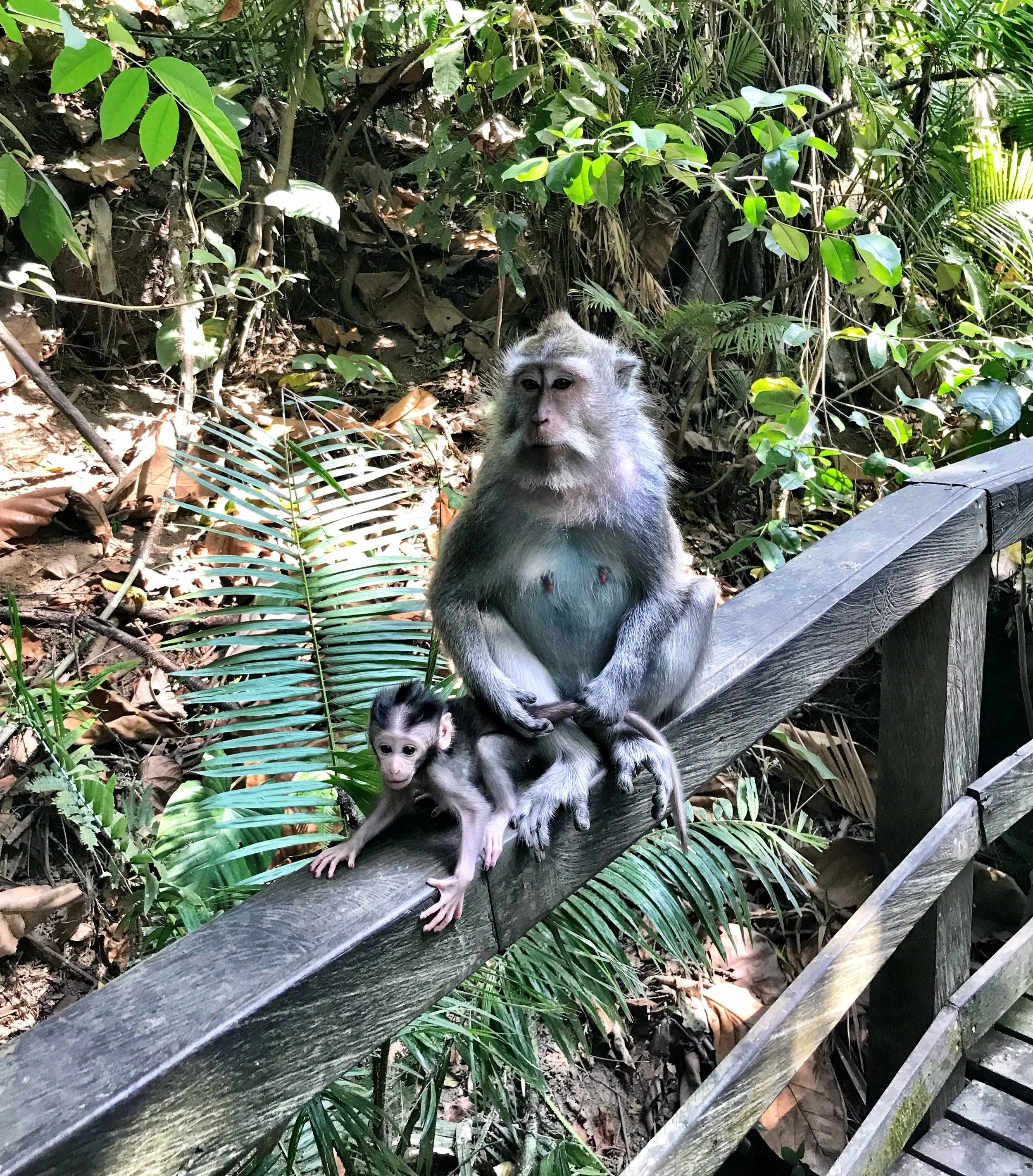
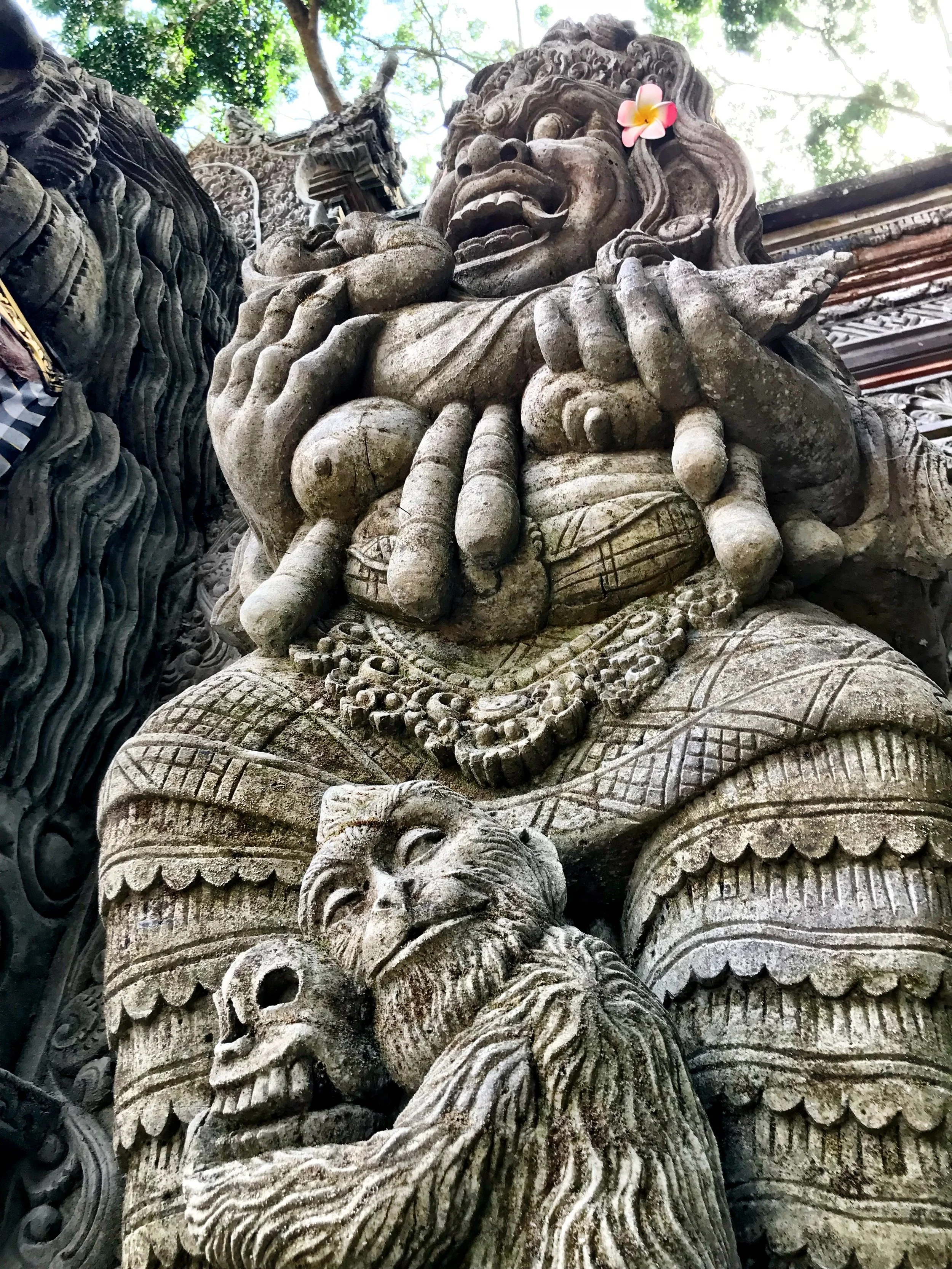
A toddler throws a tantrum, pointing at a monkey atop a demonic statue in the Ubud Monkey Sanctuary forest in Bali

Family-Friendly Activities in Bali

When You’re Not Blowing Bubbles

Sure, the diving’s great — but so is everything else. Between dives, you can have a beach picnic, take a traditional cooking class, or try to explain to your kids why you can’t take home a macaque from the Monkey Sanctuary in Ubud. Snorkeling is a fabulous compromise for non-divers, offering views of coral gardens without the need for tanks or training.

And don’t skip the culture: Balinese dance performances, temple tours (Temple of Death, anyone?), and day trips to gorgeous sites like the Tirta Gangga Water Gardens and the Tegallalang Rice Terrace. And don’t forget the hands-on workshops (make your own batik! carve a mask! learn to make offerings!). These activities give the whole family a taste of local life that’s just as memorable as spotting a cuttlefish.

A Balinese man instructs a family getting ready to go scuba diving

Planning Your Dive Trip

Avoid the Chaos. Hire the Pros.

Want a stress-free, sea-filled adventure? Partner with a local dive shop. They’ll handle the logistics, provide well-maintained gear, arrange instructors who actually like teaching kids (bless them), and offer multilingual support so nothing gets lost in translation.

Many shops offer family-focused packages that include hotel pickup, kid-sized wetsuits, and coffee for parents who didn’t sleep thanks to jet lag or overly enthusiastic roosters. They also offer crash courses in marine ecology, so you leave knowing the name of that funky fish your daughter keeps calling a “glitter eel.”

Safety First (Because It’s Hard to Bond in a Hyperbaric Chamber)

This should go without saying, but diving isn’t the time to wing it. Even Bali’s gentlest dive sites require preparation — especially with a family crew. A reputable shop will give each person a skills check and adjust the experience to match. You’ll learn how to handle your gear, what to do in an emergency, and why you really shouldn’t touch that colorful fish (hint: It might touch back with its teeth).

Group briefings and guided sessions ensure everyone feels prepared, safe and thrilled. It’s not just about staying out of trouble. It’s about building confidence together, one dive at a time. –Sadie Smith

How to Plan a Day Trip and Itinerary From Singapore to Batam

From ferries to temples, beach thrills to seafood feasts, this Batam itinerary shows how to turn a single day off into a full-blown island adventure.

Nongsa Point Marina Resort in Batam, Indonesia, with palm trees and a marina

Batam, Indonesia is only a 45-minute ferry ride from Singapore — but feels like a world away.

Looking to escape Singapore for the day? Just hop a ferry, and in under an hour, you’ll find yourself in Batam, Indonesia — a land of temples, bargain shopping, watersports and seafood so good it should probably be illegal.

Whether you’re craving a low-key weekend or a one-day recharge, this itinerary has you covered — start to finish.

Batam offers a rare combo: It’s affordable and exciting. Rest, relaxation and thrill-seeking all show up to play.

Think of it as Bali’s scrappy little sibling.
The cityscape of water and skyscrapers of Singapore at sunset

Escape the hustle and bustle of Singapore with a day trip to Batam Island in Indonesia.

Why visit Batam?

Batam is the largest island in Indonesia’s Riau Archipelago, tucked between the Strait of Singapore and the South China Sea. It’s close enough for a day trip, but far enough to feel like you’ve actually gone somewhere else entirely. 

Fast ferries from Singapore’s HarbourFront Terminal make the crossing in about 45 minutes — though if you’re not sea-savvy, pack some ginger candy (or, let’s be honest, Dramamine).

The Majestic fast ferry

So why go? Because Batam offers a rare combo: It’s affordable and exciting. Rest, relaxation and thrill-seeking all show up to play. Think of it as Bali’s scrappy little sibling.

A fat Buddha statue by greenery at Maha Vihara Duta Maitreya Temple in Batam, Indonesia

Morning: Temple visits and tax-free shopping

Ferry to Batam

Hop aboard a Majestic Ferry from Singapore’s HarbourFront Centre. You’ll land at either Batam Center or Sekupang Ferry Terminal — both good jumping-off points for a full day of fun.

Maha Vihara Duta Maitreya Temple

Start your day with some peace and perspective. This Buddhist temple is one of Southeast Asia’s largest and most serene. Even if you’re spiritually agnostic, it’s hard not to be charmed by the rows of laughing Buddhas and you can fuel up at the in-house vegetarian café.

Nagoya Hill Shopping Mall in Batam, Indonesia

Nagoya Hill Shopping Mall

Next, dive into Batam’s consumer paradise. Nagoya Hill is a magnet for duty-free deals: Think cosmetics, electronics, local snacks and souvenirs. It’s also a prime spot to sample regional bites before the beach calls.

A boat on the sand near a table on Nongsa Beach, Batam, Indonesia

Afternoon: Beaches, boats and a feast of seafood

Nongsa Beach

Clear water. White sand. The occasional person flying overhead on a parasail. Nongsa is your go-to for jetskiing, banana boating or simply lazing like a lizard on a lounger.

Golden Prawn 933

It’s practically a crime to visit Batam and skip the seafood. Golden Prawn 933 is a local legend — slamming fresh prawns, sweet crabs and gong-gong (that’s sea snail, if you’re curious). Come hungry and mildly prepared to regret how much you order.

Silhouettes of a couple holding hands at sunset on a pier in Batam, Indonesia

Evening: Sunset strolls and seaside dining

When the sun starts to dip, so should you — into a massage chair or maybe just a beachside lounge. Hit a spa, sip something fruity, or just breathe in that salty air with a grin.

Dinner tip: Plenty of restaurants near the coast serve up fusion cuisine — Indonesian flavors with a splash of Continental flair. Add a glass of wine or a cocktail, and you’ve officially turned a day trip into a vacation.

Jembatan Tengku Fisabilillah bridge in Batam, Indonesia

Plan Your Batam Escape

Whether it’s a quick escape or a full weekend reset, Batam delivers. Ferries run frequently, the itinerary writes itself, and the seafood is to die for. –Vivek Singh

Bali: Luxury Travel in Paradise

Explore Bali’s top luxury destinations, including private villas, opulent resorts, fine dining and lavish experiences.

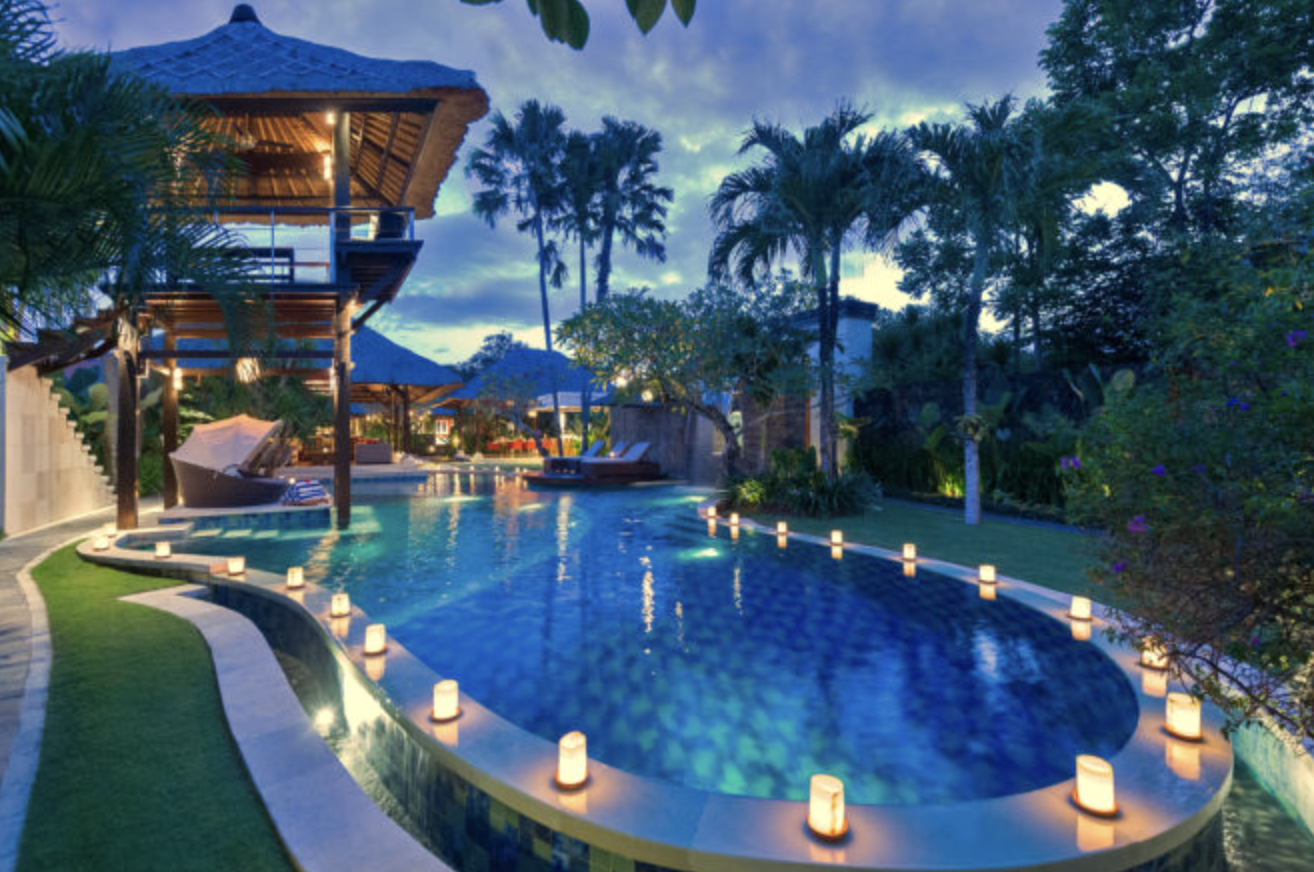
A pool ringed by lights with palm trees and a wooden overlook structure at twilight on Bali

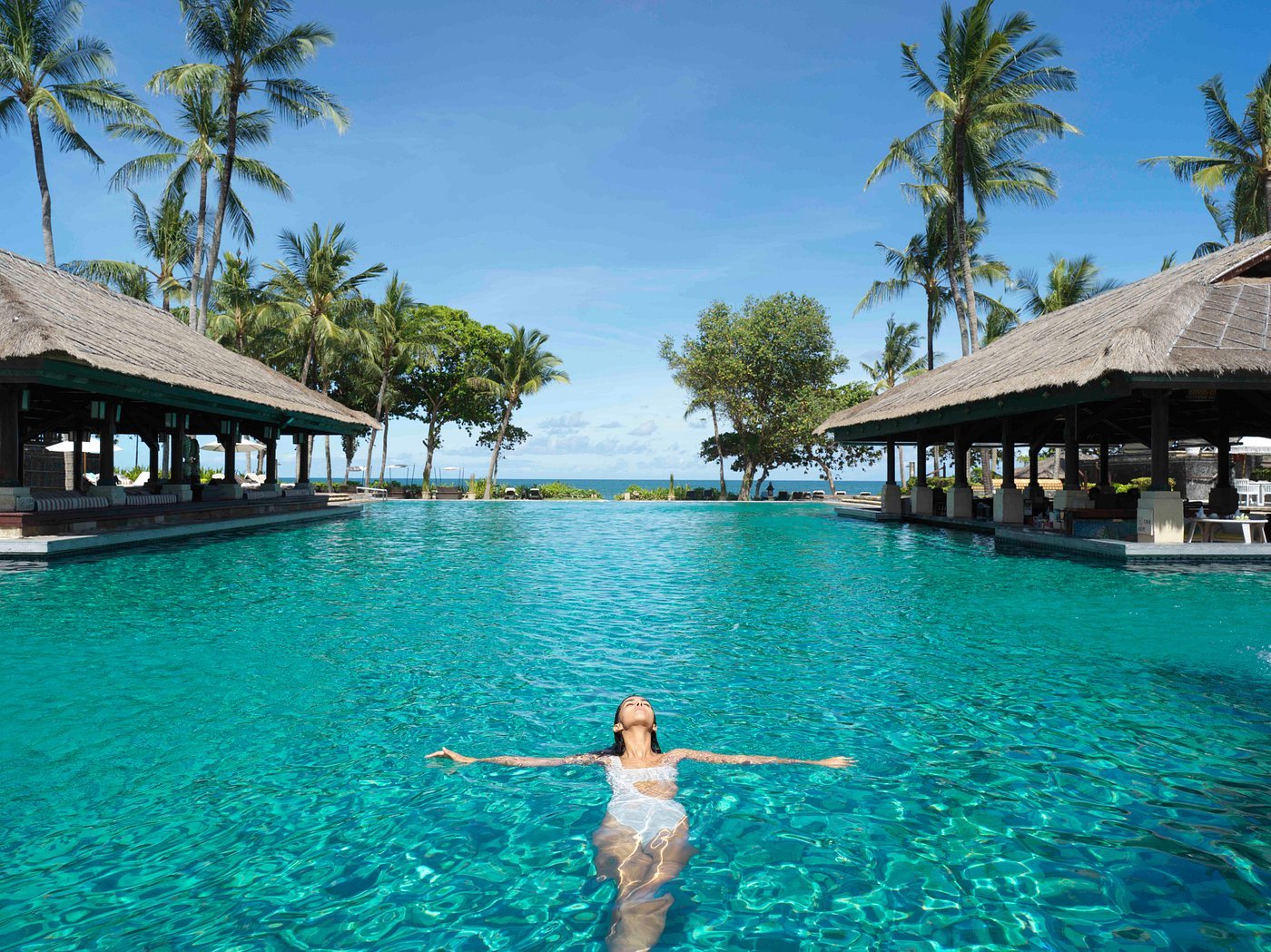
Bali isn’t just a destination to experience sandy beaches and lush tropical splendor. Beyond its beguiling cultural heritage of sacred temples and enchanting water gardens, it’s also home to some of Asia’s finest resorts, where unparalleled luxury and exceptional service await.

As I browsed through breathtaking locations, I couldn’t help but daydream of staying at one of these striking accommodations, surrounded by the island’s stunning beauty.

Bali has long been a magnet for travelers seeking a blend of culture, natural beauty and unforgettable experiences.

With this trifecta, it’s easy to see why Bali belongs on your bucket list.

Join me as we delve into the sophisticated allure of the Island of Gods. You just might find your next escape. 

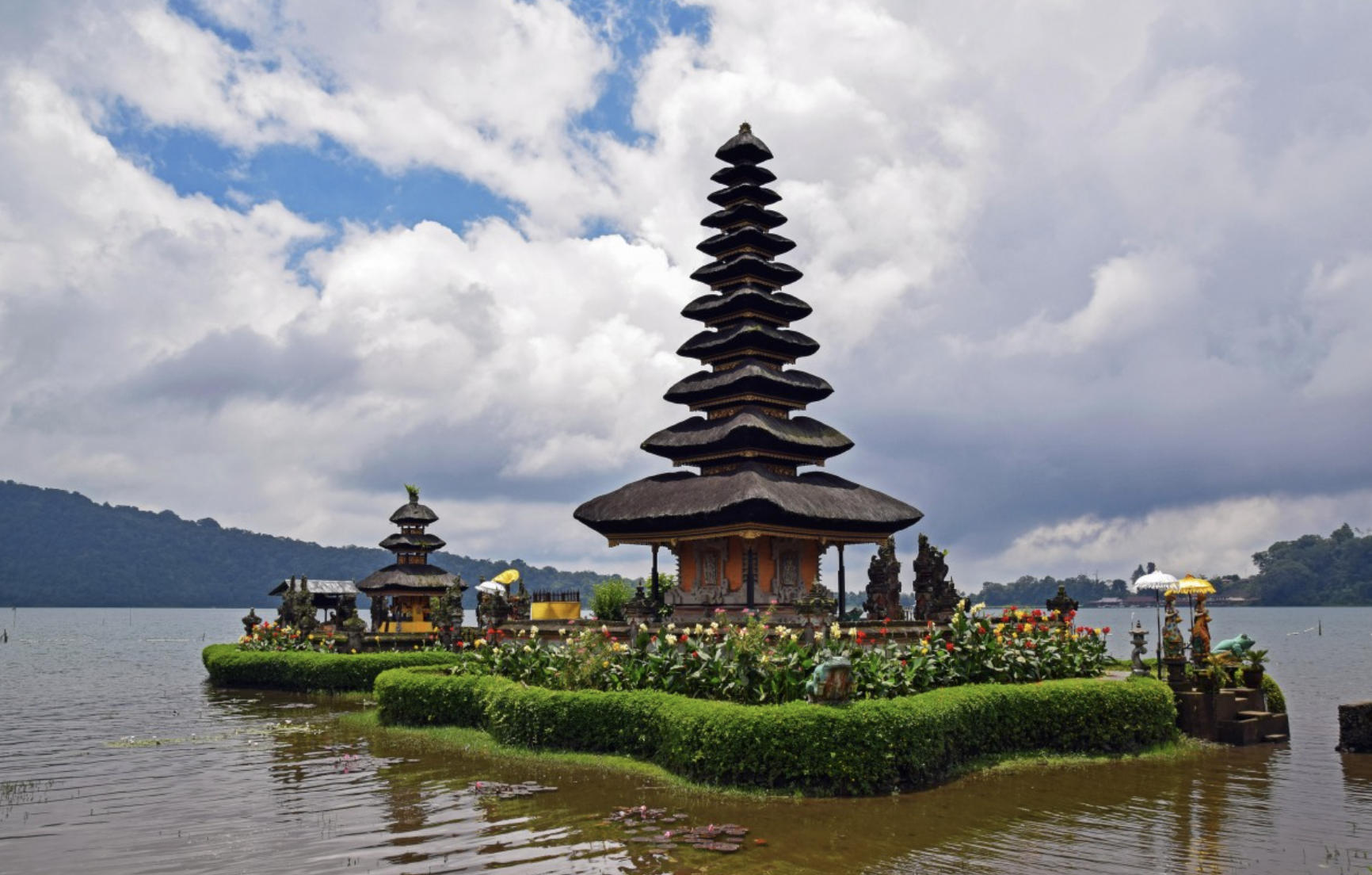
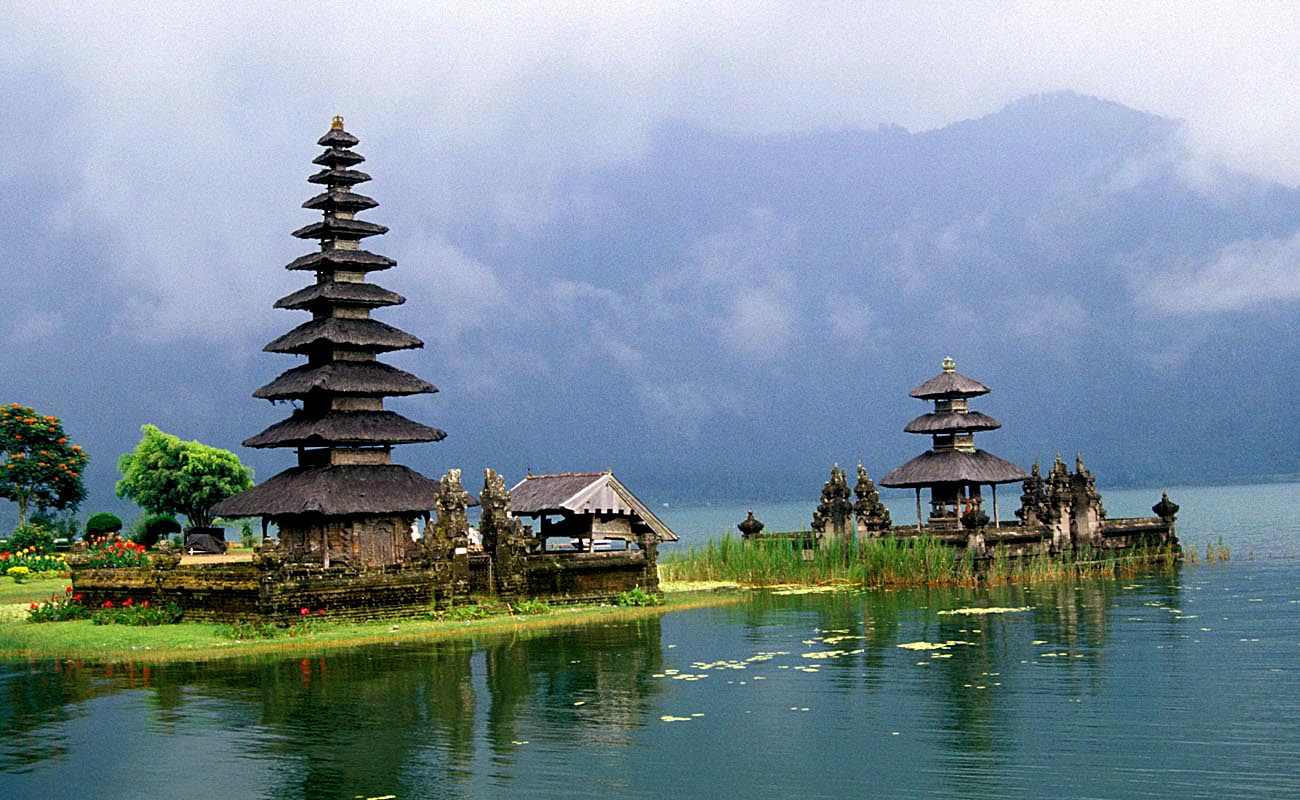
Multi-tiered Balinese temple on small island with flowers and hedges

Bali: A Top Luxury Destination

Bali has long been a magnet for travelers seeking a blend of culture, natural beauty and unforgettable experiences. With this trifecta, it’s easy to see why Bali belongs on your bucket list.

But first, let’s address the formalities. Bali Visa Pro makes getting your visa a breeze, taking care of all the paperwork so you can focus on planning an unforgettable stay. Trust me: Starting your vacation stress-free sets the perfect tone for the luxury that awaits you.

Luxury pool with thatched covered seating area, chaises longues and palm trees on Bali

Must-Visit Bali Luxury Destinations

Check out these destinations in Bali where you’ll find exotic accommodations and thrilling experiences. Get your notepad ready!

The green terraced rice terraces of Tegalalang in Ubud, Bali

Ubud

Stay in Ubud, the island’s vibrant cultural hub. Surrounded by rice fields, rivers and jungle, Ubud offers a mix of culture, adventure and relaxation. 

Start your day with a serene morning yoga session at a world-class retreat, then wander through the famous Sacred Monkey Forest. Art enthusiasts shouldn’t miss a private gallery tour for an intimate look at Balinese artistry. It’s never a bad idea to pamper yourself and book a massage treatment at a high-end spa. And don’t forget the photogenic Tegalalang Rice Terraces — take a leisurely walk (or an exhilarating swing) over the terraced fields.

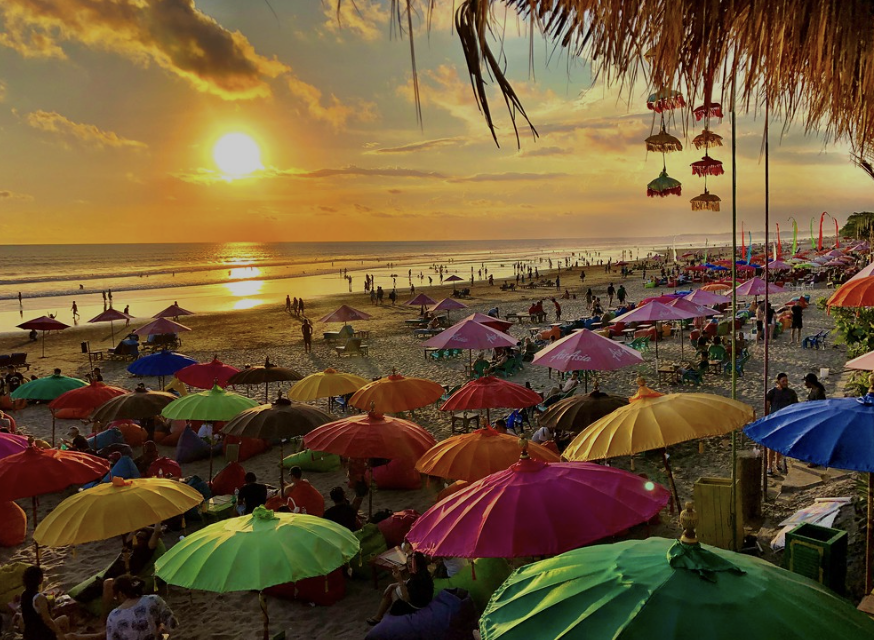
Brightly colored umbrellas on the beach at sunset in Seminyak on Bali

Seminyak

If beach vibes are more your style, head to Seminyak. This trendy area is filled with upscale boutiques and fine dining spots, making it a haven for those who love to shop and dine in style. While the nightlife pulses with energy, its laidback daytime vibes are what truly set this destination apart.

Nusa Dua

Located on the eastern coast of the Bukit Peninsula, Nusa Dua is considered one of the island’s most peaceful and luxurious destinations. Imagine yourself on a helicopter tour, soaring over the Uluwatu Temple — the dramatic coastline, towering cliffs and ocean views are simply breathtaking from above. This exhilarating experience will stay with you for years to come.

Luxury pool on Bali

Luxury Resorts and Villas in Bali

When it comes to accommodations, Bali offers an abundance of options. Here are a few of my picks:

Looking down on Bvlgara Resort Bali at sunset

Bvlgari Resort Bali

Situated atop the rugged cliffs near Uluwatu, one of the island’s most sacred temples, the Bvlgari Resort Bali exemplifies elegance and serenity. Resembling a quaint Italian cliffside village, this sanctuary features 59 villas connected by cobblestone pathways. Every standalone bungalow features a spacious outdoor pavilion, stunning ocean vistas and a private plunge pool. The resort seamlessly blends Italian design with Indonesian materials, such as volcanic stone and bangkirai wood.

Indulge in world-class amenities, including an oceanfront spa, where treatments are inspired by traditional Balinese techniques. Savor exquisite cuisine at Il Ristorante, where chef Luca Fantin presents Italian dishes with a modern twist, or enjoy the international fare at the all-day Sangkar diner.

Bvlgari Resort Bali
Jalan Goa Lempeh
Banjar Dinas Kangin 
Uluwatu
Bali

Terrace seating area with water ring over palm trees at the Four Season Resort Bali at Sayan

Four Seasons Resort Bali at Sayan

Nestled among the tropical greenery of the Ayung River valley, the Four Seasons Resort at Sayan is the pinnacle of private luxury. Guests are welcomed to the complex via a dramatic footbridge that leads to an elliptical lotus pond, suspended high above the verdant jungle canopy and the rushing waters of the Ayung River, before descending to the reception area.

Accommodations range from opulent suites to private villas with infinity pools that overlook the serene river. Fun fact: Julia Roberts stayed here while filming Eat Pray Love. The resort offers an array of unforgettable experiences, from whitewater river rafting adventures to traditional Balinese healing sessions at the Sacred River Spa. Dine at Ayung Terrace, which boasts innovative dishes showcasing seasonal, local ingredients and panoramic views of the lush gardens, river and jungle beyond. Plus, the resort is a 15-minute drive to Ubud.

Four Seasons Resort Bali at Sayan

Jalan Raya Sayan
Sayan
Kecamatan Ubud
Kabupaten Gianyar
Bali

Woman floats in the pool extending over the cliff at Oneeighty day club at The Edge Bali

The Edge

Perched between the cliffs and the sea, The Edge lives up to its name. The exclusive resort offers a selection of private villas, each with its own infinity pool and personal butler.

Unwind with a cocktail or a glass of wine at the Cliff Bar, where glass panels in the floor provide stunning views of the crystal-clear waters of the Indian Ocean. You can also relax at the Oneeighty day club, which features a glass-bottom pool that extends 20 feet (6 meters) beyond the cliff’s edge.The resort also offers a luxurious onsite spa and world-class dining options, including a candlelit dinner at chef Ryan Clift’s subterranean 22-seat The Cave restaurant, ensuring a stay that’s nothing short of extraordinary.

The Edge
Jalan Pura Goa Lempeh
Banjar Dinas Kangin
Pecatu
Uluwatu
Bali

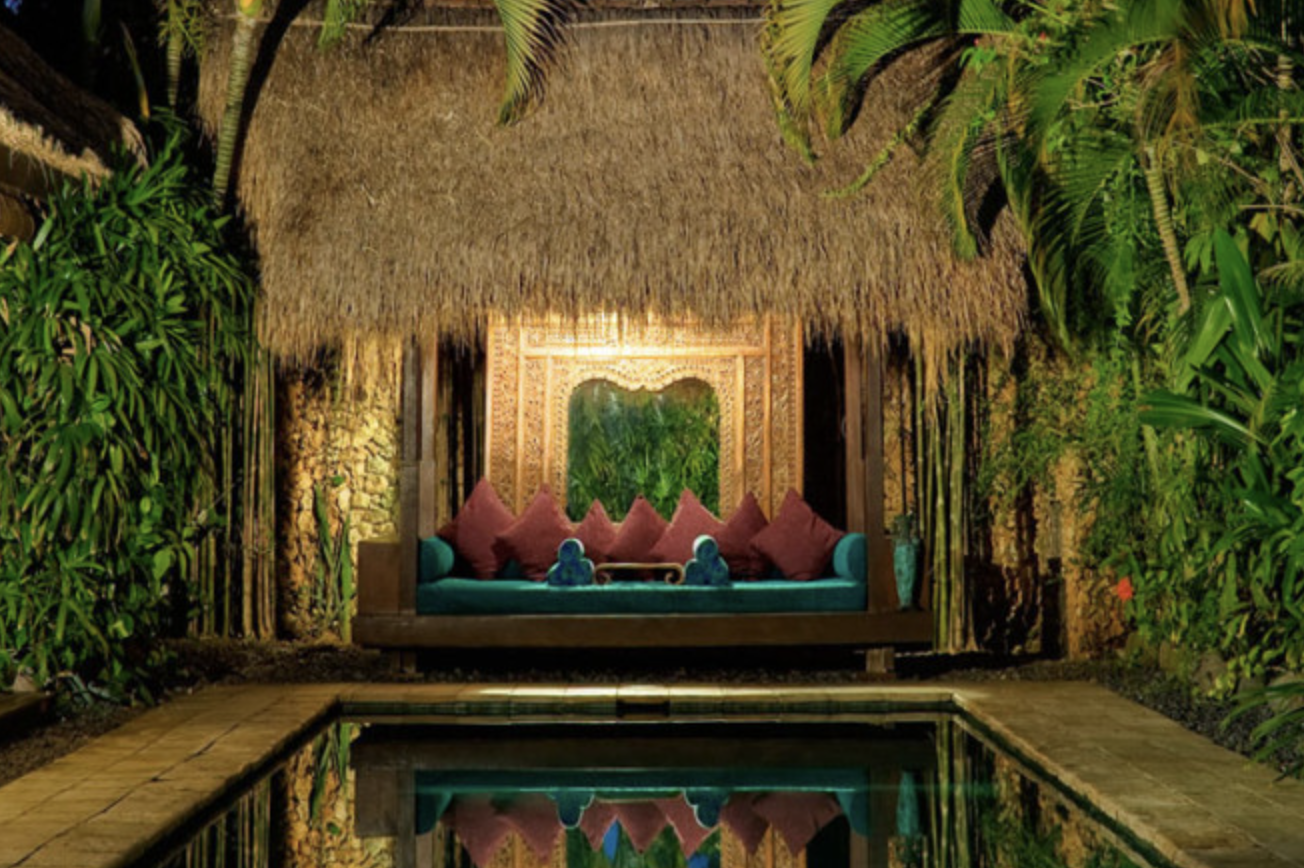
Beautiful seating area under thatched roof with ornate woodwork and sofa by pool at night on Bali

Bali Private Beachfront Villas and Wellness Retreats

If privacy is your priority, consider renting a private beachfront villa. Many of these villas come with dedicated staff, including a private chef, ensuring a comfortable and luxurious experience.

For a wellness escape, it’s hard to imagine a better destination than Bali. Many luxury retreats offer personalized programs that include nutrition, yoga and meditation, all tailored to your specific needs. These offerings provide a holistic approach to relaxation and overall wellbeing, making Bali the ultimate haven for rejuvenation.

Chefs prepare meals at Locavore NXT in Bali

Locavore NXT

Fine Dining in Bali

Bali’s culinary scene promises a tantalizing array of flavors and settings, promising a feast for both the palate and the soul. One standout is Locavore NXT in Ubud, where chefs create dishes using locally sourced ingredients that celebrate Bali’s rich culinary heritage.

Another must-visit is Nelayan at the Belmond resort. Imagine your toes in the sand, the soothing sound of gentle waves in the background, while you savor a meal prepared by some of the island’s most skilled chefs.

Whether marking a special occasion or seeking an indulgent escape, these exceptional eateries promise moments of culinary bliss that linger long after the last bite.

Towering Hindu decorations of dried flowers arch over a street in Bali

Bali Luxury Transport

Getting around Bali can be an experience in itself. A private driver offers comfort and convenience, allowing you to explore the island at your own pace. And if you’re seeking something really special, sailing on a private yacht is ideal for exploring remote beaches and secluded islands.

Balinese temple on rocky outcropping on beach

Indulgent Bali 

In Bali, splendor awaits at every turn. With Bali Visa Pro, your journey begins effortlessly, allowing you to focus on the extraordinary adventures that await. From deluxe resorts and villas to exclusive tours and experiences, Bali promises a vacation like no other.

Whether you’re planning a romantic getaway, a wellness retreat or simply seeking life’s finer pleasures, Bali has it all. Remember, meticulous planning and expert services can turn a good trip into an extraordinary one. –Sadie Smith
Do’s and Don’ts for a Safe and Healthy Trip to Bali

A ride-share app to help you get around, things you can do to avoid getting sick, and what gay tourists need to know before a visit to Bali.

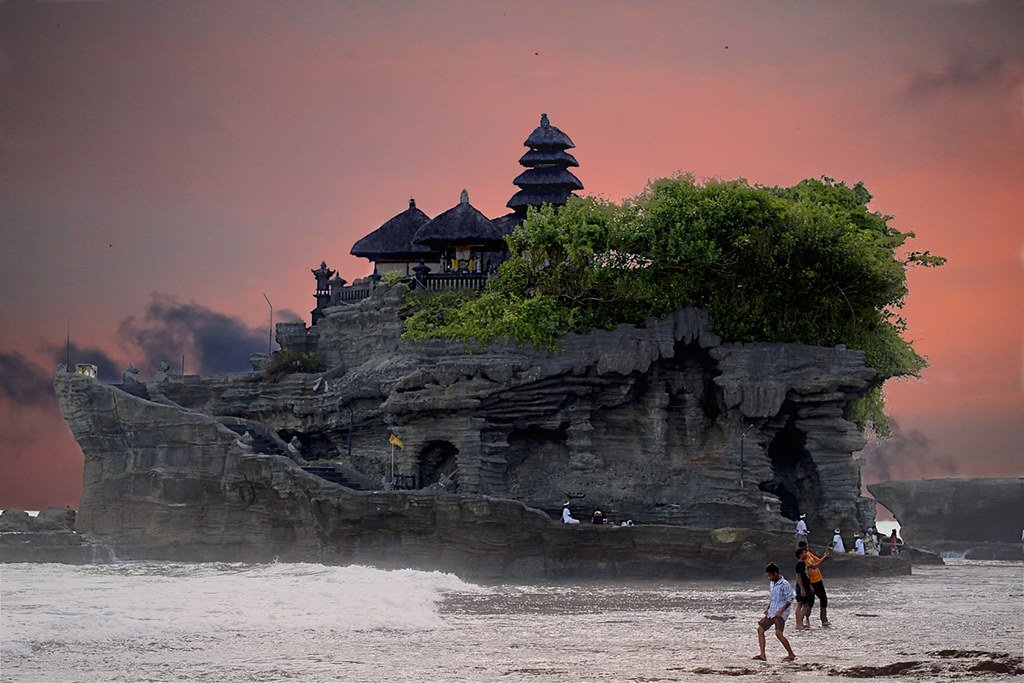
Balinese temple on small island  at sunset

With its stunning beaches and rich cultural legacy, Bali remains a popular travel destination. The Ngurah Rai Immigration Office reported that over 2.1 million tourists flew to Bali in 2022, and some sources say that number rose to 5 million visitors last year.
But here’s the twist: With all those seeking a slice of paradise comes the downside of overcrowded beaches, attractions swarming with tourists and nightmarish traffic, not to mention instances of tourists behaving badly. The province is considering implementing a tourist tax, according to Time, to address the environmental impact of tourism, offsetting it with local infrastructure development. 
The welcoming nature of the Island of the Gods and its residents is often disrupted by “nuisance” foreigners who disregard local laws and commit social taboos. At the same time, your trip may be marred by health issues if you don’t take the proper precautions — even though no vaccinations are currently required to visit. To truly enjoy the idyllic and tropical experience of Bali, here are some things to keep in mind to help protect you as a tourist and pay respect to your travel destination.
Motorbikes and cars drive down a tree-lined street on Bali

A ride-share app could make getting around Bali a whole lot easier.

Do use trusted transport. 

As the number of tourists continues to rise and construction projects spring up all over the island, it’s likely you’ll encounter traffic congestion at some point. The majority of the island’s roads are narrow and winding, creating challenges for cars, trucks and buses to pass each other. Consequently, locals have raised transportation prices for tourists, who reluctantly accept these rates due to a lack of alternative options for reaching their destination.

Visitors just might be able to avoid this by using ride-hailing apps like Grab to call a car or motorbike for transport. It offers fixed rates per booking, so you won’t be surprised by additional costs. The app also monitors every ride to detect unsafe scenarios and sends an alert to users in case they need support. 

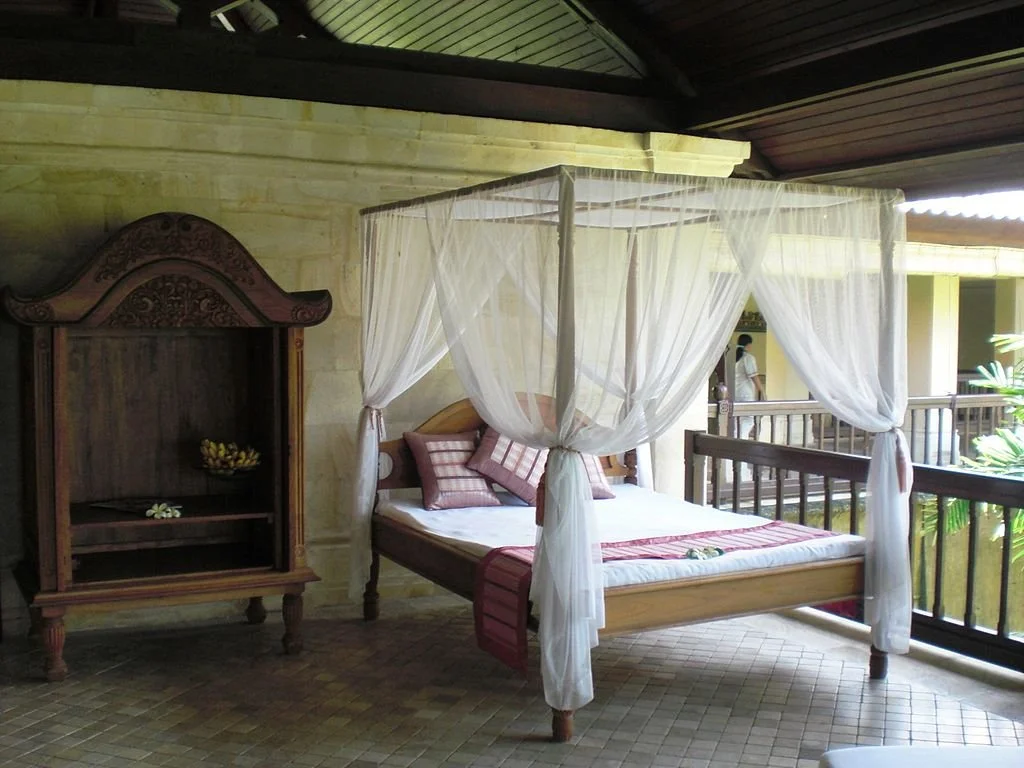
Bed with mosquito netting next to armoire and railing by open-air courtyard at hotel in Bali

A lot of beds on Bali have mosquito netting — and for good reason.

Do use mosquito repellent.

Bali's tropical climate, high rainfall and humid conditions create the perfect breeding ground for mosquitoes. In the first quarter of 2023, approximately 2,470 cases of dengue fever were reported, with patients exhibiting symptoms such as high fever, nausea and rashes. In extreme cases, the Environmental Protection Agency (EPA) recommends using products with DEET to protect from mosquito-borne illnesses. Brands that have this ingredient are Off! and Coleman, which you can purchase before your trip.

Woman in yellow bikini in Bali walks on sandy beach with large piece of driftwood by aqua water, under a rock outcropping

Heatwaves in Bali are 30 times more common now because of climate change, according to the Indonesian Meteorology, Climatology and Geophysics Agency.

Do maximize sun protection.

Bali’s great any time of year, and as part of Indonesia, has subtle weather changes. From May to September, it’s mostly dry, sunny and warm, while the wet season occurs from November to March. But any time you go, it’s going to be hot. To reduce the risk of sunburn and skin cancer, protect yourself by using a broad-spectrum sunscreen with an SPF rating of at least 30 and consider wearing layers, such as a lightweight long-sleeve shirt.

And remember to safeguard your eyes. Prolonged exposure to UV rays can lead to photokeratitis, akin to sunburn on your eyes, and puts you at risk of cataracts. So try using anti-glare sunglasses with polarized lenses to shield against the Bali sun while maintaining good vision. This is why it pays to invest in a brand known for providing good eye protection. The lenses on Ray-Ban sunglasses, for example, have enhanced UV protection and provide maximum glare reduction to help your vision adjust more easily in sunny areas. And since you can get these lenses on the iconic Wayfarer or classic Aviators, you can add to the style factor of your Bali look.

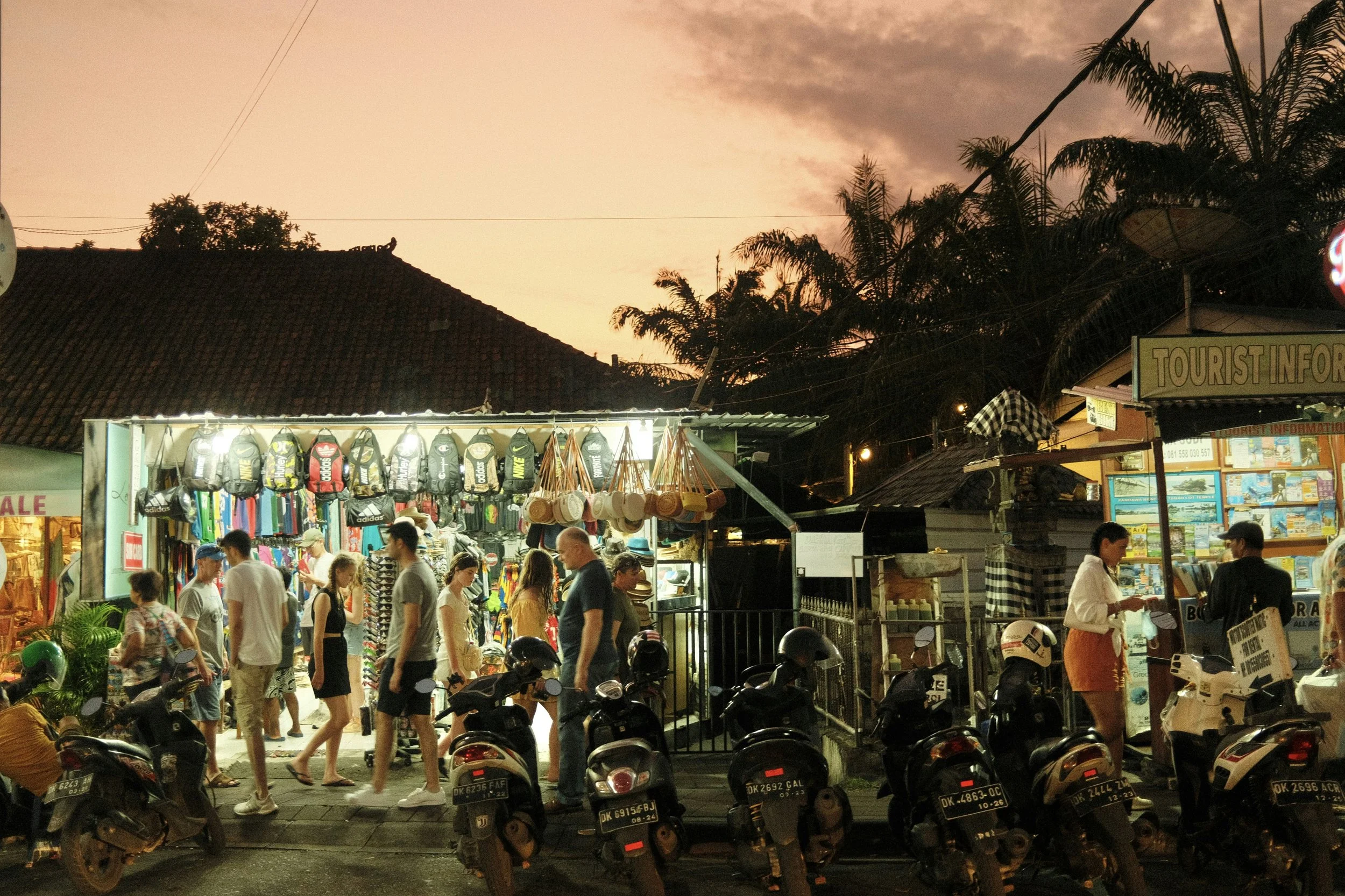
Night market in Bali near tourist information stand, a line of motorbikes and palm trees

Touristy areas are more likely to have filtered water and ice, but that doesn’t mean you should ever drink the tap water. One of the first things you should do is get a bottle of water to put in your bathroom for when you brush your teeth.

Don’t drink the tap water.

Visitors to Bali sometimes experience “Bali belly,” which causes them to experience diarrhea, abdominal pain, loss of appetite and nausea. It’s often caused by contamination, as the body isn’t accustomed to unfamiliar bacteria found in local water sources and food. As such, it’s best to only drink bottled or filtered water during your stay. And if you want an iced drink, go to a higher-end café or one that caters to tourists — and make sure you ask that the ice is made from filtered water. Or, you can play it safe and skip the iced lattes and smoothies while you’re on Bali.

Man in blue drysuit and white board shorts surfs in the water off Bali

Don’t forget ocean safety checks.

Bali’s a surfer’s paradise for beginners and seasoned professionals alike, drawing visitors to spots like Canggu, Nusa Lembongan and Keramas, to name a few. However, the waves can be sizable and challenging, so it’s advisable to look for flags indicating designated swimming areas and their conditions. Consult local lifeguards to ensure safety and avoid swimming near surfers, as there's a risk of accidental collisions.

Additionally, you should ask whether the area has any coral reefs you need to be cautious of when you’re swimming, diving or surfing.

Female Hindu worshippers with orange sashes around their waists and silver offerings on their heads and boys holding flags at a religious festival on Bali

A huge part of the charm of Bali is experiencing its rich Hindu culture. And while Hinduism is more tolerant of gays than Islam, don’t do anything that could get you into trouble (i.e., be low-key).

Don’t neglect local laws regarding LGBTQ+ issues.

While Indonesia boasts the world’s largest Muslim population, Bali stands out as an island where the majority of its inhabitants practice Hinduism. One of the religious concepts practiced here is based on atma, promoting a live-and-let-live philosophy. This inclusive atmosphere is one of the many factors that make it a popular destination among the lesbian, gay, bisexual, trans and queer (LGBTQ+) community. However, it’s crucial to note that cultural boundaries still exist, and public displays of affection for both gay and straight couples are frowned upon.

Despite Bali being more tolerant, the country of Indonesia doesn’t officially recognize same-sex relationships. They have enacted laws making consensual sex outside of marriage illegal, which applies to citizens and foreigners, gay and straight alike. 

While queer tourists are welcome, you can’t freely practice the same openness with your identity that you might back home. In fact, USA Today reported that in January 2020, an American lesbian couple was deported after promoting the island of Bali as “queer-friendly.” Do yourself a favor: Avoid discussing LGBTQ topics. As with anywhere you go, respect local customs and err on the side of caution.

But if you follow these do’s and don’ts, you’re bound to discover the beauty that Bali offers. –Abigail Cameron

Sip and Savor at Seniman Coffee in Ubud

Looking for the best coffee in Bali? Check out this stylish coffeeshop and learn about third wave coffee — as well as what’s next in coffee culture.

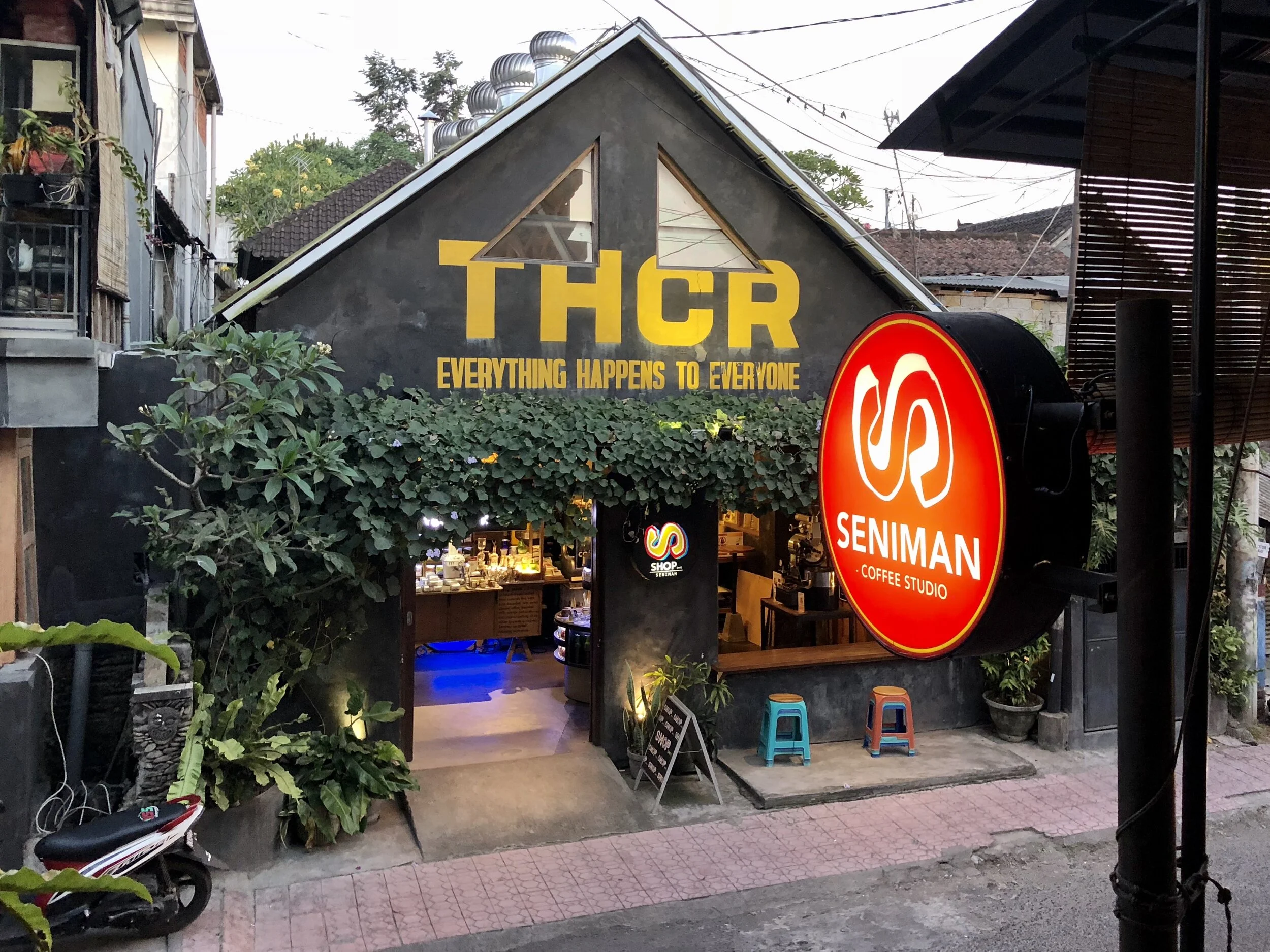
Get your java fix in Ubud at the stylish Seniman Coffee Studio.

Get your java fix in Ubud at the trendy Seniman Coffee Studio.

For Wally and me, one cup of coffee is never enough. And if you follow our blog — a big thank you to those who do — you’re probably already familiar with my borderline obsessive research when planning a trip. I like to find the hidden gems. 

Seniman Coffee Studio in Ubud, Bali was one of those discoveries. I first read about them on Sprudge, a media network dedicated to global coffee culture. After reading contributing writer Evan Gilman’s vivid article, I was determined to seek out Seniman on our visit to the Indonesian island.

Seniman specializes in single-origin local coffee beans.

Seniman specializes in single-origin local coffee beans.

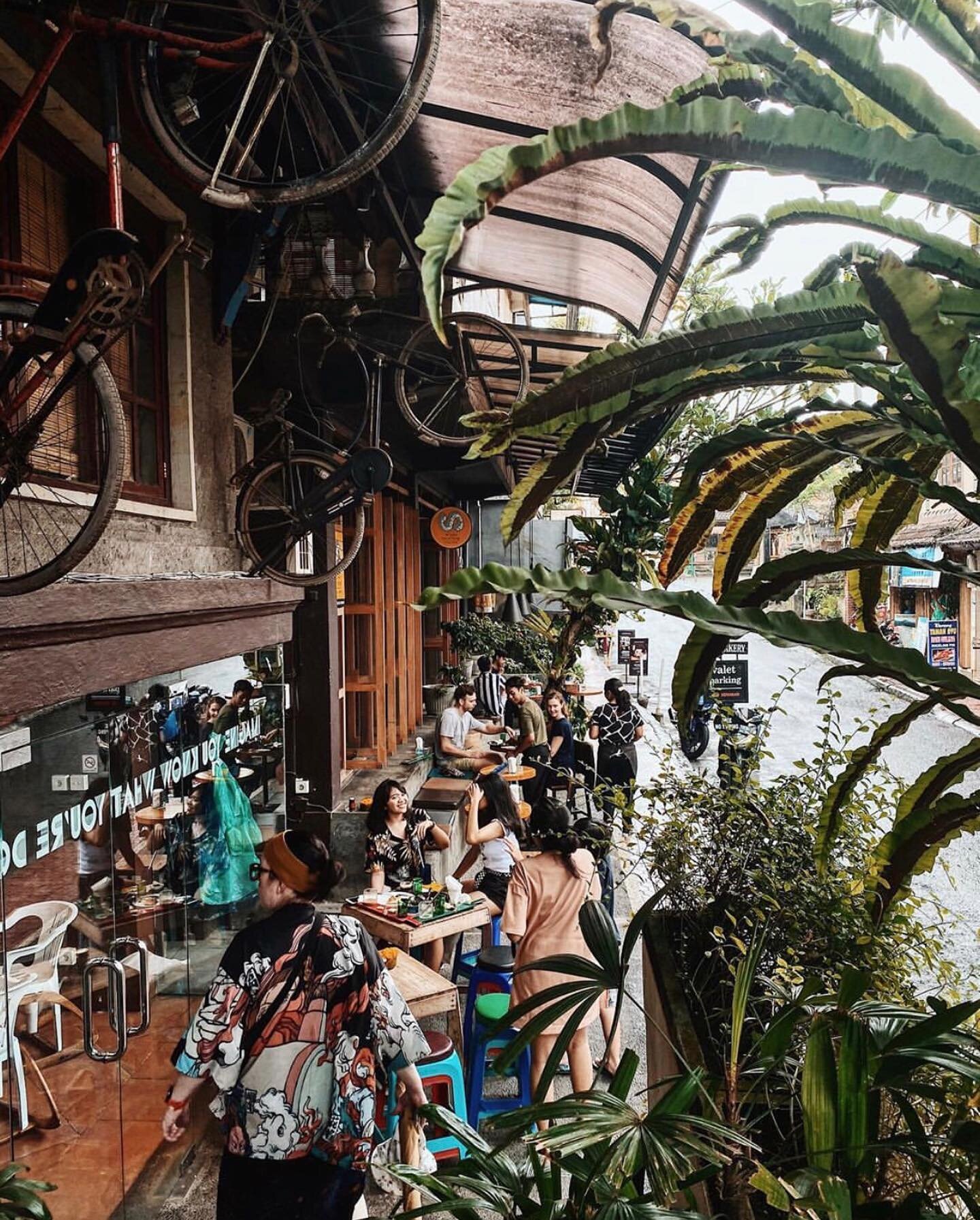
When we arrived at the café, tucked away at No. 5 on quiet Jalan Sri Wedari (jalan is the Indonesian word for street), I felt like we were in the know. Seniman Coffee Studio is clearly a popular spot. The café was buzzing with tourists, locals and digital nomads, a few who were working on their laptops or simply daydreaming — which isn’t hard to do once you find yourself perched on the open-air verandah after spending an afternoon exploring Ubud. 

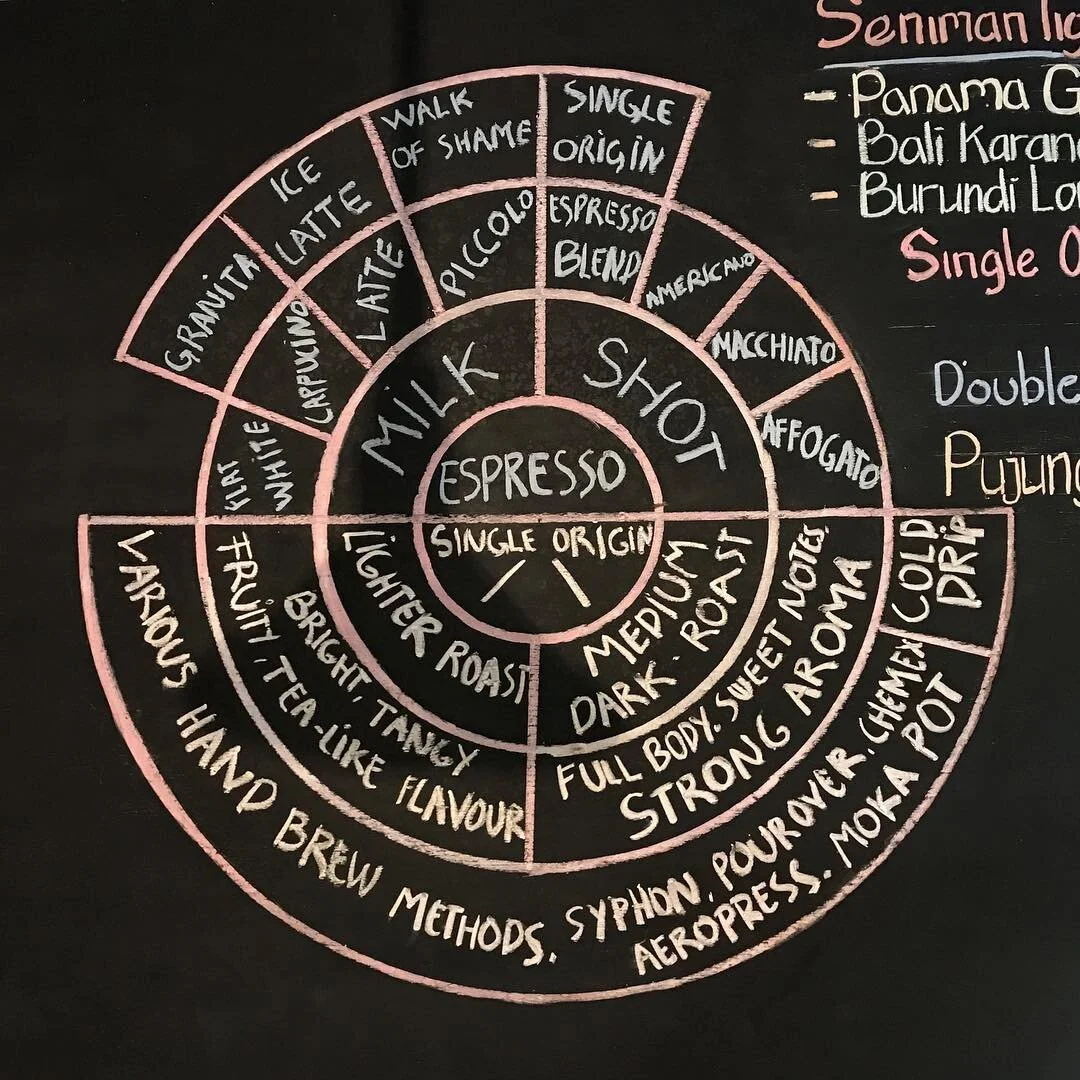
The coffee flavor wheel…in Indonesian.

The coffee flavor wheel…in Indonesian.

Reinventing the Wheel

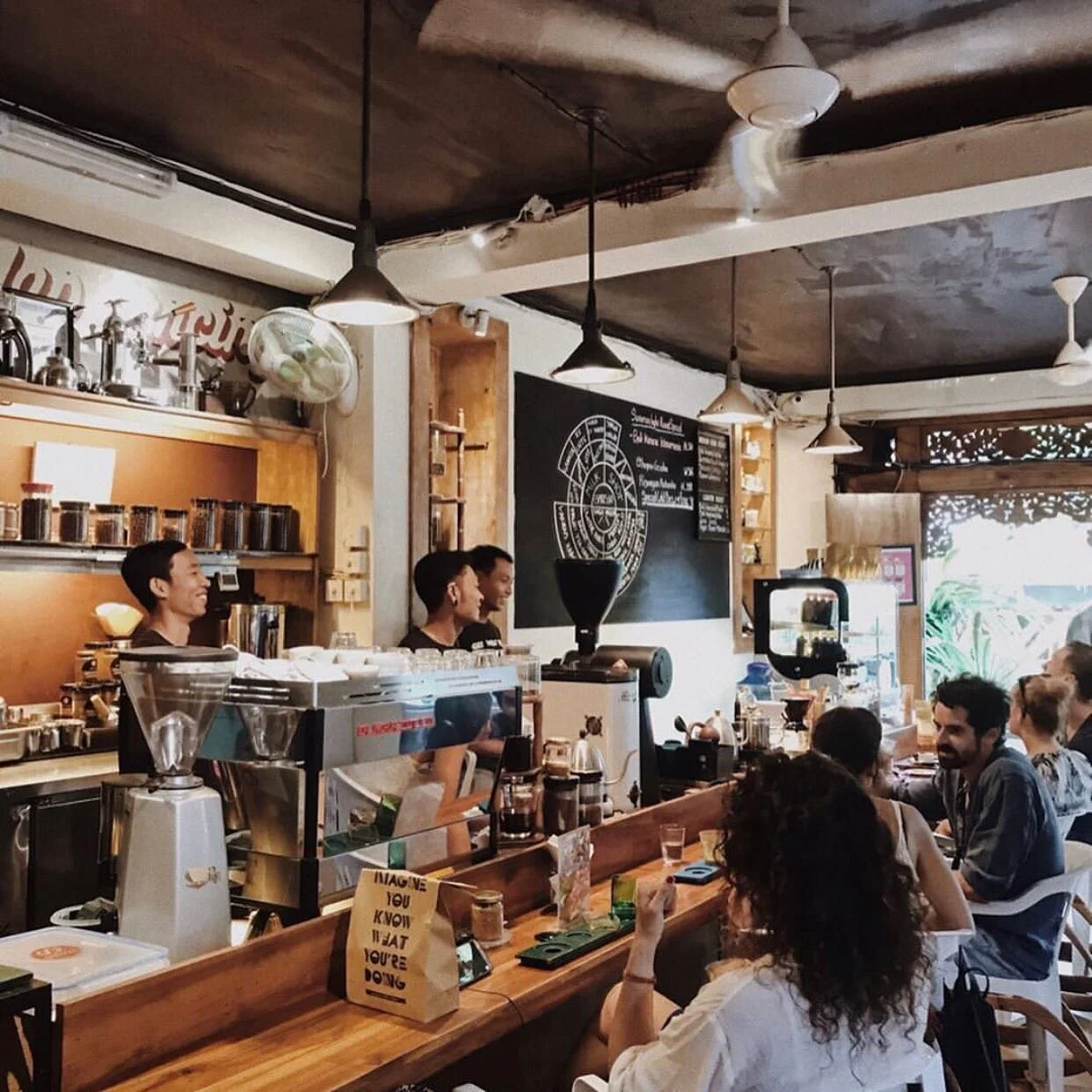
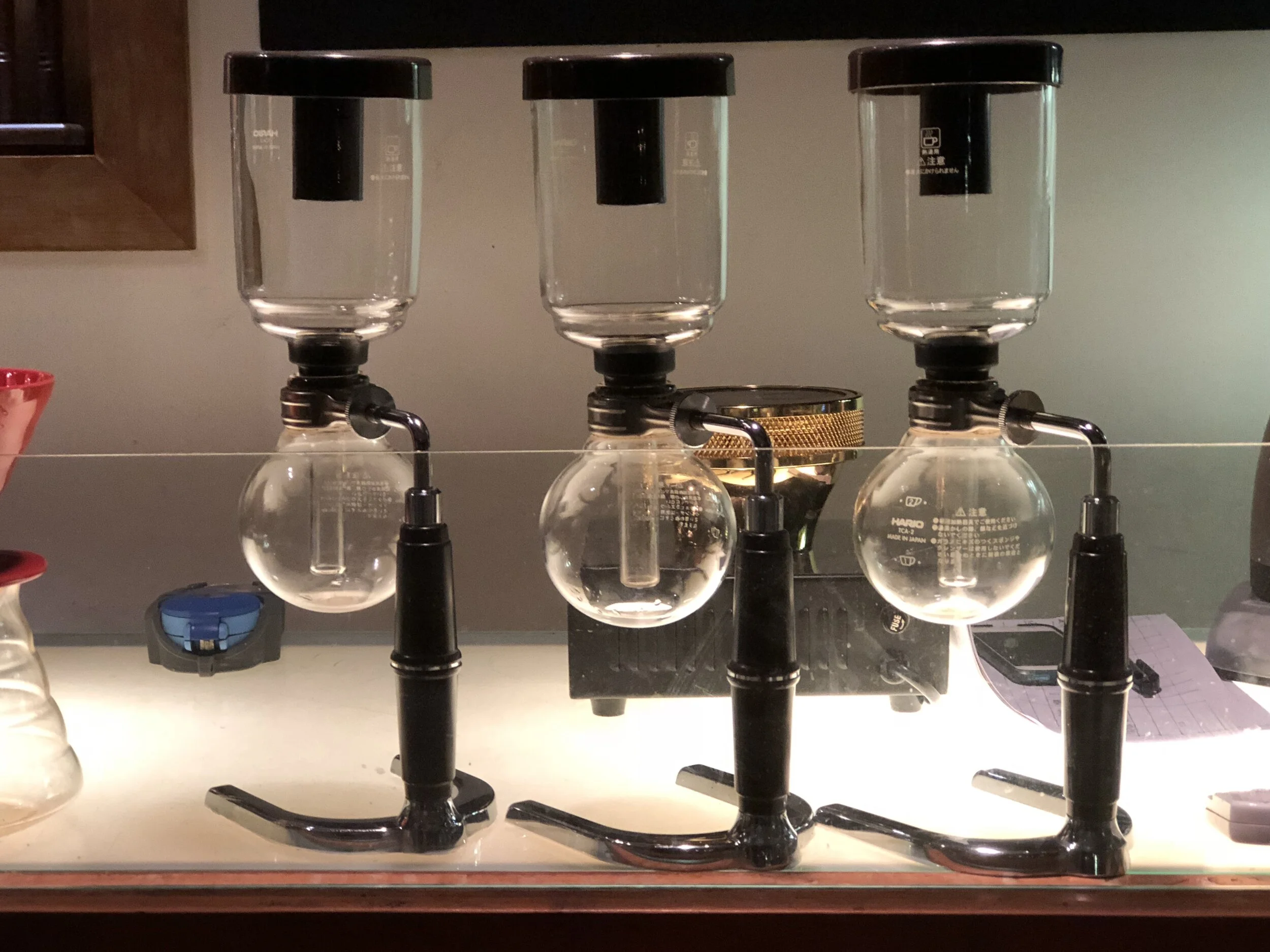
Inside the café, a row of perfectly lit siphon coffee brewers looked like they belonged in a chemistry lab. To help you decide what to order, a hand-drawn coffee taster’s wheel diagram on the wall describes the flavor profile and intensity of each roast. Seniman specializes in light roast single-origin Indonesian coffees. I’m a fan, as this method allows the beans to retain moisture and oils, which in my opinion, yields a less acidic, more complex and aromatic cup.

Part of the current coffee culture is telling the story of each type of bean.

Part of the current coffee culture is telling the story of each type of bean.

A Brief History of Coffee in Indonesia

Coffee was first introduced to Indonesia by the Dutch in 1699. Arabica coffee trees were imported and cultivated on estates in Java, giving rise to the Dutch East India Company and the coffee trade. Fast forward to what’s referred to as the third wave movement, where consumers have become interested in the provenance, production and experience that comes with enjoying a quality cup of coffee. Long gone are the days when the best part of waking up was Folger’s in your cup.

This graphic can help you figure out what to order.

This graphic can help you figure out what to order.

In Indonesia, the third wave came down to the arrival of Starbucks, according to Rodney Glick, owner of Seniman. “Starbucks’ history in this country is completely different to its history in America, as by the time it entered the Indonesian market, the company was already 20 years old,” Glick explained. “Starbucks’ role wasn’t to champion Indonesian origins in Indonesia, but nevertheless it helped create consumer awareness that coffee comes from a place and not a sachet.”

The coffee industry has now moved into the fourth wave, or as Glick prefers to call it, the new wave. The focus is on telling the story of the entire coffee chain. “The coffee industry’s new wave encompasses innovative approaches, acknowledges traditional histories and celebrates regional differences,” he said. “More coffee stories are told by the producers themselves, entailing their own challenges and creative solutions.”

Take a break and get a caffeine fix along Jalan Sri Wedari.

Take a break and get a caffeine fix along Jalan Sri Wedari.

Seniman: Our Spot in Ubud

On our first visit to Seniman, I tried an iced cascara, made from the dried leathery husks of coffee cherries, while Wally stuck with his old standby: an iced latte. A cascara sounded exotic, but to be honest I wasn’t the biggest fan. It’s a bit watered down, tasting closer to tea than coffee, and if you’re expecting a cup of coffee, cascara doesn’t cut it. On our two subsequent visits, I ordered the cold brew and wasn’t disappointed. 

The cascara was a bit too much like a weak tea for Duke’s tastes.

The cascara was a bit too much like a weak tea for Duke’s tastes.

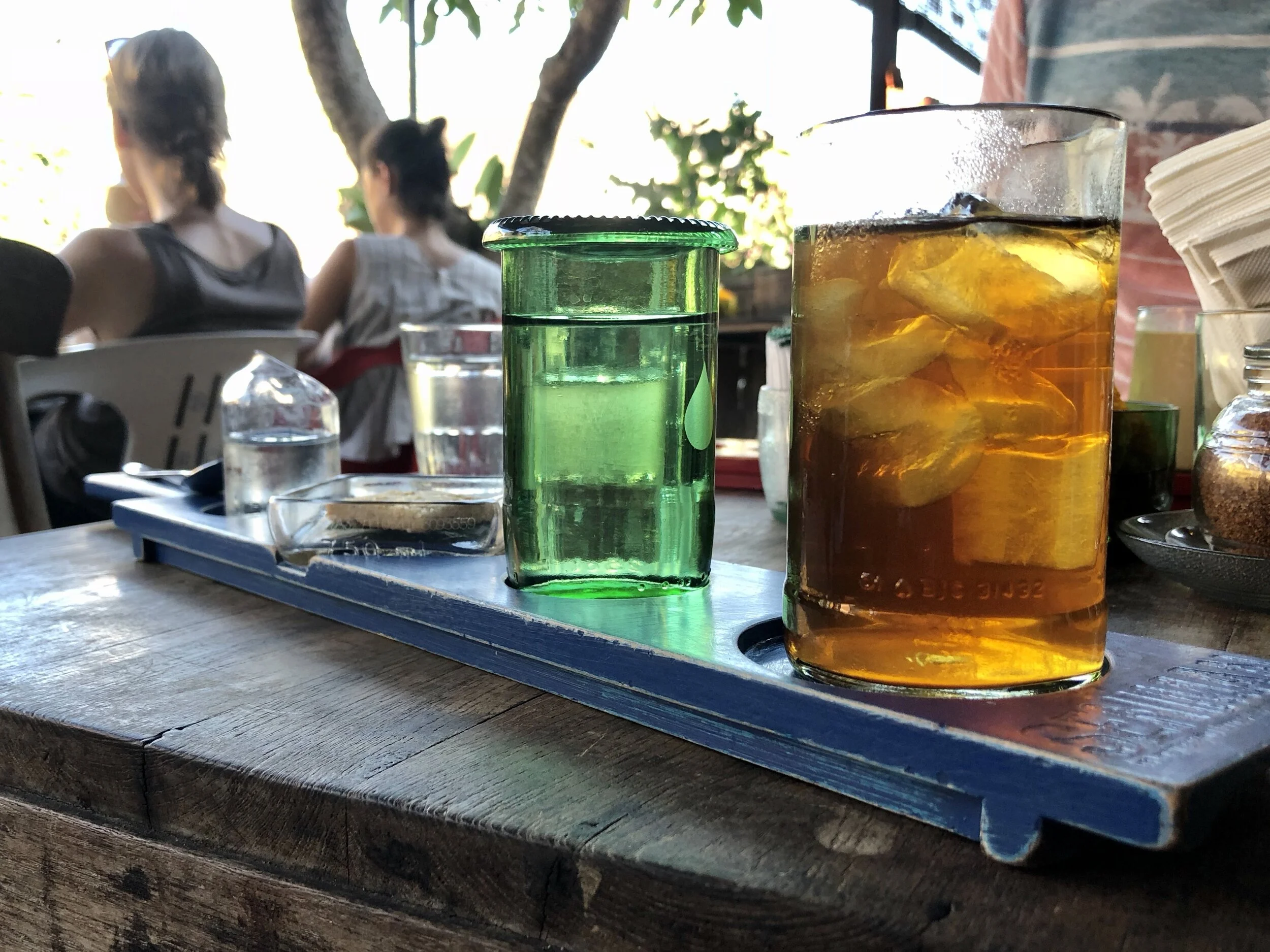
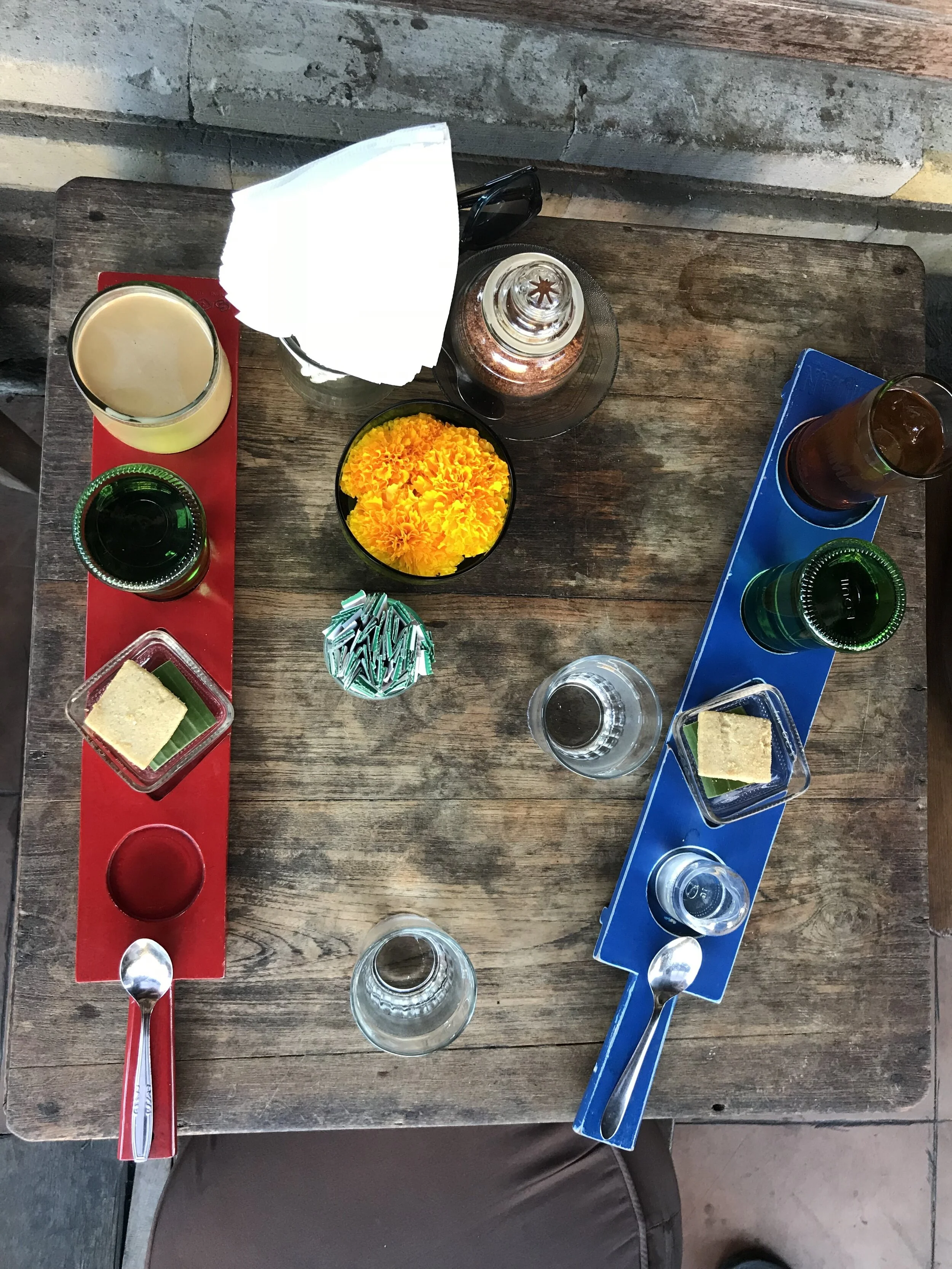
When you order, a wooden plank with three segments gets delivered to your table. One contained coffee, the second a glass of water in an upcycled green glass wine bottle with the bottom as a lid and a small vessel with simple syrup as a sweetener. In the space between, there was a sweet — my kind of place! 

The drinks come on colorful paddles with slots for simple syrup and a sweet treat.

The drinks come on colorful paddles with slots for simple syrup and a sweet treat.

Glick, an Australian expat, founded Seniman Industries in 2009 with the objective to create a laidback brand informed by the serious pursuit of coffee. Everything at Seniman Coffee Studio is artfully prepared and presented — and Glick is a sculptor himself — so it makes sense that in Bahasa Indonesian, seniman means “artist.” (Be sure to check out Glick’s interesting sculptures, which take contemporary figures and infuse them with Hindu and Buddhist elements.)

The siphons look like something out of a steampunk laboratory.

The siphons look like something out of a steampunk laboratory.

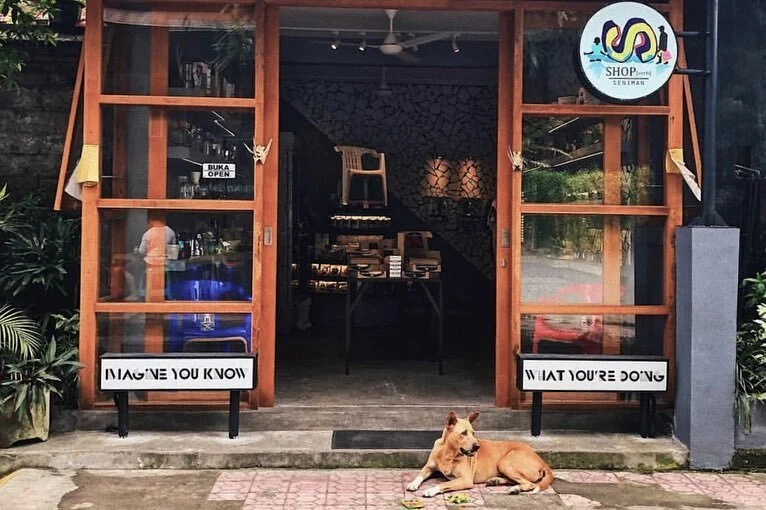
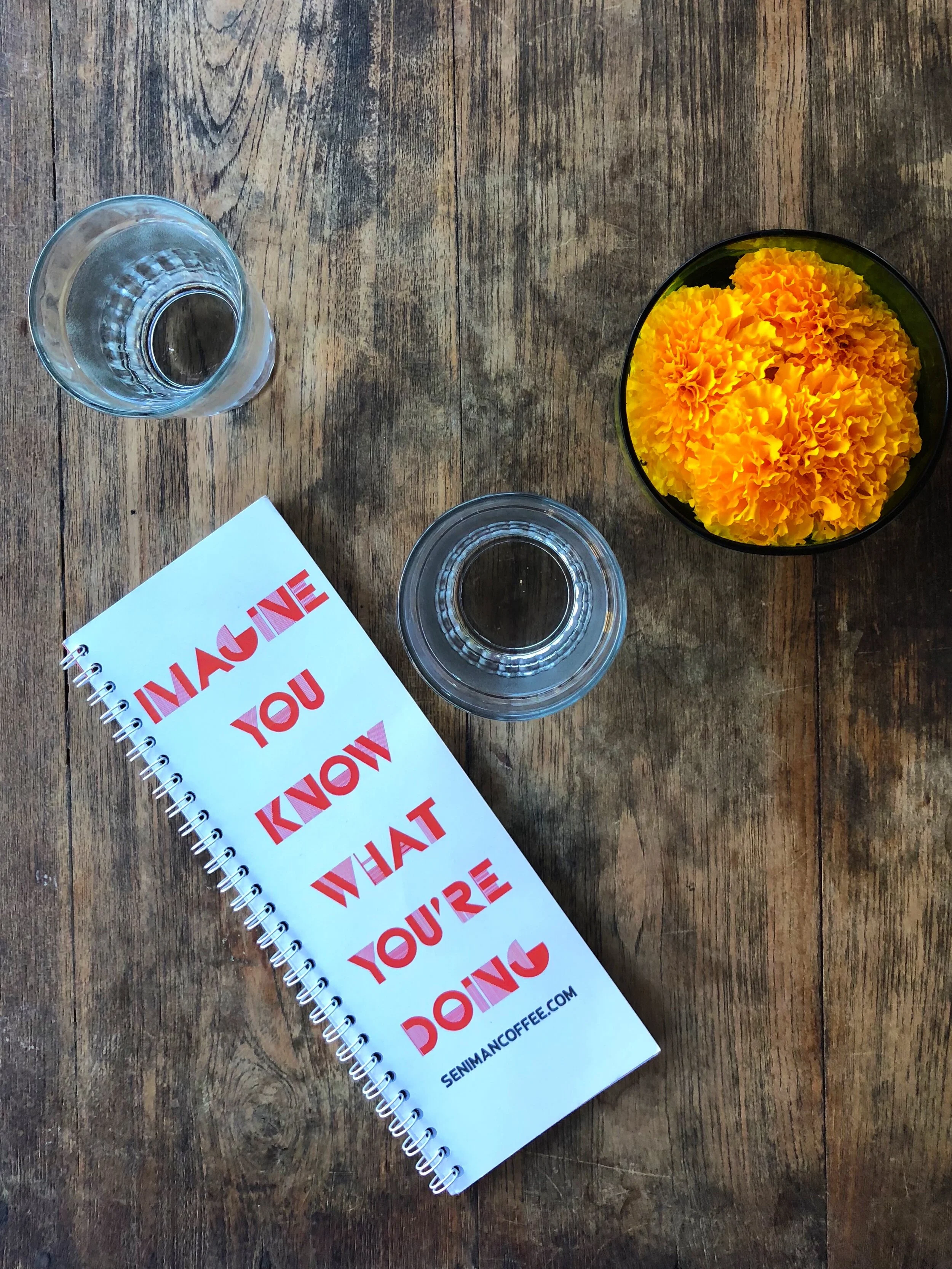
At Seniman, coffee is brewed manually by siphon, pour-over, chemex or hand-drawn espresso to extract the optimal flavor from the beans. The café doesn’t simply serve what many might consider the world’s best brew, they also offer classes and workshops to educate individuals interested in learning more about home brewing, roasting, cupping, espresso and latte milk art. The brand has a light, playful tone as evidenced by their ethos, emblazoned on their menu and T-shirts: Imagine You Know What You’re Doing.

What’s your interpretation of Seniman’s tagline?

What’s your interpretation of Seniman’s tagline?

When we asked Glick about the quirky tagline, he responded, “From experience, anyone that says they know what they’re doing should be kept at a distance!”

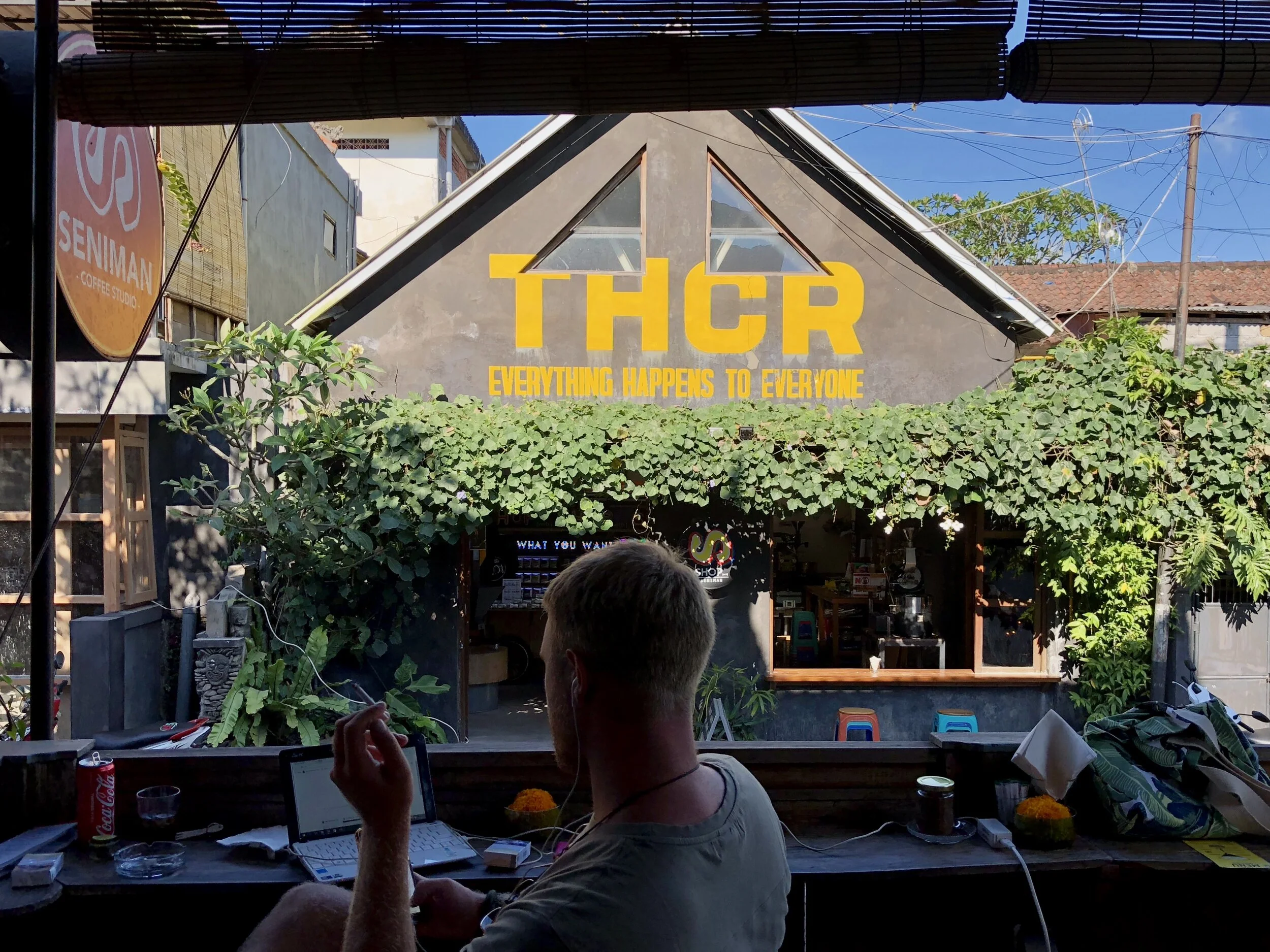
Buy coffee to go, T-shirts and other items at THCR across the street.

Buy coffee to go, T-shirts and other items at THCR across the street.

This Coffee’s in the Bag

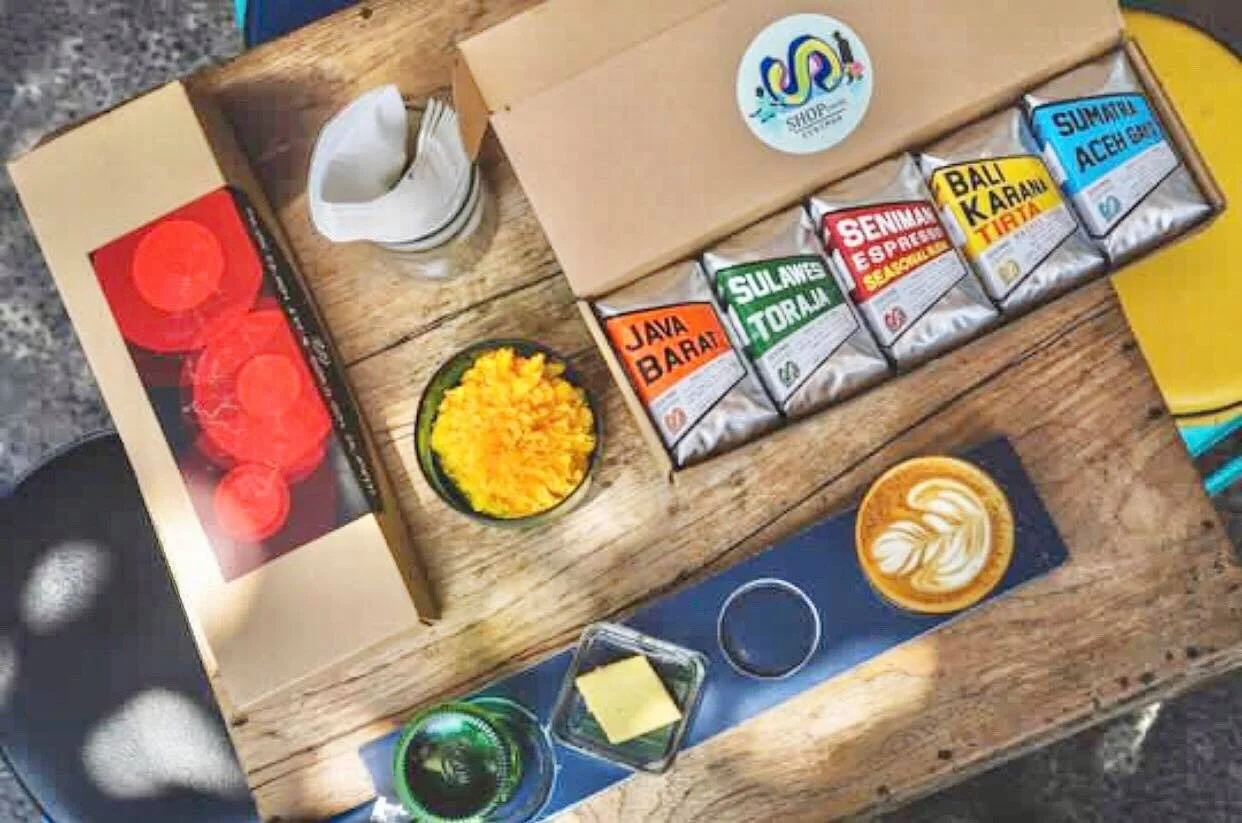
Across the street is the roastery and shop THCR (Tetap Happy Coffee Roasters), which sports another amusingly confounding motto: Everything Happens to Everyone. You can purchase vacuum-sealed bags of whole beans, mugs and T-shirts to take home with you as a souvenir of Bali. Wally and I were both drawn to the color-blocked silver foil bags of single-origin beans with exotic names like Bali Kintamani, Papua Wamena and Sulawesi Toraja. 

Cool beans! Learn all about the coffee you purchase, as Seniman is part of the new wave.

Cool beans! Learn all about the coffee you purchase, as Seniman is part of the new wave.

“Seniman Coffee is an example of a new wave coffeeshop since we farm, produce and roast our own coffee, and we work on bringing out the positive attributes of beans from Bali,” Glick told us. “We farm and produce coffee through our sister company, Karana Spesialis Kopi. Additionally, we also source from major coffee regions in Indonesia: Gayo, West Java, Flores, Toraja and Papua.”

I purchased a couple bags of the Bali Karana Madu and one of the Papua Wamena. I actually liked it so much that I’ve ordered more and had it shipped to Chicago. 

Seniman and its sister company are involved in every step of the coffee production process.

Seniman and its sister company are involved in every step of the coffee production process.

Energized by our caffeine fix, Wally and I were ready to return to exploring the shops and avoiding the errant wild monkeys. 

Duke and Wally always find a local spot that acts as their base when they travel — and Seniman held that honor in Ubud.

Duke and Wally always find a local spot that acts as their base when they travel — and Seniman held that honor in Ubud.

We asked Glick how Ubud has changed since he’s been there. “More eateries and coffeeshops led by world-class artisans are opening up in Ubud, creating a very interesting mix of high-end international cuisine and local warung [the Indonesian word for shops],” he said. “Together it forms interesting collaborations and cross-pollination of ideas between expats and Indonesians.”

The one downside to iced lattes is that they’re not topped with fun art like these.

The one downside to iced lattes is that they’re not topped with fun art like these.

If you’re planning on visiting Ubud and are looking for a great cup of coffee, make sure to seek our the red circle with the sideways S. One sip and you’ll understand that Seniman doesn’t have to imagine they know what they’re doing — they already know. –Duke

 
Dog-gone it, if you’re a coffee connoisseur, you can’t miss Seniman in Ubud, Bali.

Dog-gone it, if you’re a coffee connoisseur, you can’t miss Seniman in Ubud, Bali.

Seniman Coffee Studio
Jalan Sri Wedari No.5
Ubud, Bali
Indonesia

The Legend of Rangda, Bali’s Queen of the Demons

The origin of the queen who became a child-eating witch goddess fated to battle Barong, the King of the Spirits, for eternity.

The wild woman known as Randga, the Widow, is the personification of evil for the Balinese

The wild woman known as Randga, the Widow, is the personification of evil for the Balinese

When my husband, the king, died, his people began to call me Rangda, which means “widow.” As if my entire life should be reduced to the loss of a single thing, namely a feckless spouse.

It’s ironic that my name would be tied to him for eternity, for he cast me aside to marry another woman. Was I even still officially his wife?

Ours had been a strategic alliance to unite two kingdoms. I was born Mahendradatta, princess of Java, and when I came of age, my father arranged for my marriage to King Udayana and shipped me off to the neighboring isle of Bali.

I never let silly romantic fantasies enter my mind. As a royal, I had a job to do, a responsibility to my people.

As a queen, though, I didn’t have much power. My marriage would politically tie Java to Bali, and that was all that was required of me, aside from making sure I provided heirs.

All over Bali, you’ll see statues of me holding innocent babes, the instant before I devour them.

Try not to judge me too harshly. If I am to act as a profane foil to all that is sacred, I must corrupt that which is most holy.

(That their tender, plump bodies taste even more delicious than suckling pig is just an added bonus.)

But I craved power; I yearned to be strong. Hindus have hundreds of deities, but the one I focused my prayers on was the goddess Durga, whom I had always emulated. Such a strong woman, a fierce warrior, her many arms clutching weapons, riding upon a snarling tiger. Yes, this was who I wanted to be.

I had few options. With little power of my own, I decided to harness the strength of others. I turned to witchcraft, learning how to control demons, those dim-witted ground-dwellers, to do what I demanded of them. If someone displeased me, I would inflict a horrific illness upon them.

At last, power coursed through my veins, an intense, almost orgasmic feeling.

But secrets never last long in a palace. Someone, hoping to gain favor with the king, told my husband what I was up to at night in my open-air chamber that faced the graveyard at the edge of the sea. Udayana called the court together and stood upon the sacred platform and shouted, “Mahendradatta, you have brought shame upon this kingdom. You have let evil into Bali. You are no longer my queen! I exile you!”

And before I knew what was happening, his guards had grabbed me and dragged me out of the palace, abandoning me in the dark jungle amidst the screeching of monkeys. I had only the clothes on my back. No food or supplies. A woman left exposed in the wild — Udayana assumed I would soon die, and everyone could forget all about me and the shameful fact that I had corrupted this island with the introduction of witchcraft.

The nocturnal sounds of the jungle filled my ears. I could hear animals moving stealthily through the foliage, stalking their prey. But I was no weak woman. I called upon Durga and the demons to protect me.

After a week or so, some villagers had learned of my exile and went into the jungle to seek me out. They heeded the alluring call of the dark arts; they wanted me to teach them how to enslave demons. Bitter souls who wanted to curse others, who wanted to spread sickness among their enemies.

These were my first students, my first leyaks, or witches. No longer the Queen of Bali, I became Queen of the Leyaks, and eventually, Queen of Demons.

Randga statues can be found out front of temples of death, like the one in Ubud

Randga statues can be found out front of temples of death, like the one in Ubud

A Son’s Betrayal, A Daughter’s Shame

One of the demons I used to spy on the court returned one evening, slithering along the ground to inform me that my husband planned to remarry.

Fury filled my breast. Who was Udayana to replace me, the mother of his children, the woman who brought his son, Erlangga, the king-to-be, into the world?

I screamed in rage, a horrific cry that wilted the plants around me and sent the animals scurrying away in fright. Trembling with anger, I sent a message to Erlangga to meet me at the edge of the jungle.

I saw the prince sneaking down the path for our illicit rendezvous, his eyes darting in every direction, worried he might be seen.

“My son, my son,” I called, a whisper that carried on the wind to his ears.

“Mother,” he said, looking at the ground. He would not meet my eyes.

“I have called you here to request a favor. Convince your father that he must not remarry. I will not be replaced.”

“I cannot,” he said after a time. “I cannot.” Erlangga turned from me and fled back to the palace.

If he had looked upon me — by this time I was a rather frightening sight, unbathed, my clothes in tatters, my hair matted — things might have turned out differently.

But it seemed Erlangga feared his father more than he feared me. That would be the biggest mistake of his life.

On top of my firstborn’s betrayal, I learned that my daughter, Princess Ratna Menggali, a young maiden known for her loveliness (this is not just a mother’s pride speaking), couldn’t find a single suitor. No one of high caste wanted to marry a daughter of mine. My association with witchcraft had tainted my poor daughter.

I found Ratna running through the jungle in tears, not seeming to notice or care about the branches that scratched her beautiful face.

I gathered her to me and held her against my chest.

“Come, daughter,” I told her. “You have a place here. Your life is not over, but just beginning.”

Ratna became my pupil, one of my most powerful leyaks.

“We shall make them pay,” I told her, seething at the wrong we had both suffered.

Randga is Queen of the Witches and brings doom to many

Randga is Queen of the Witches and brings doom to many

A young girl from the village wandered too far into the jungle one misty morning, and Ratna snatched her and brought her to me. While the child trembled and sobbed in fear, I dragged my claw-like nails across her throat.

“Take this innocent blood as an offering, Durga, O Invincible One!” we chanted.

The goddess heeded our call. The sea rose in a rush of water, a black tide that flooded the entire village. The crops became unharvestable, homes destroyed.

The success of the sacrifice sparked an idea. On Bali, babies are holy, for they have only recently left the spirit realm. In fact, for months, the Balinese do not let their newborns even so much as touch the ground. For that, you see, is where my minions must stay. Demons are relegated to the dirty, profane earth, where only the filthiest of body parts, the feet, should touch.

Whenever we learned of a child’s death, I would send Ratna and the other leyaks on a mission to dig up and steal the tiny corpse for our black rituals.

Even today, all over Bali, you’ll see statues of me holding innocent babes, the instant before I devour them. Try not to judge me too harshly. If I am to act as a profane foil to all that is sacred, I must corrupt that which is most holy. (That their tender, plump bodies taste even more delicious than suckling pig is just an added bonus.)

My patron deity Durga, pleased with my drive and my devotion, granted me immortality and full dominion over the demons. I felt as if I were on fire, as my mortal essence burned away. I had become a goddess.

Erlangga Enlists the Aid of Barong

One day, years later, I learned that Udayana had died and Erlangga was now king. I refused to forgive him for not defending my honor. He had abandoned his own mother and he would pay the price.

Erlangga knew of the danger of my wrath. Reports of desecrated graves had spread, of a wild woman of the jungle and her pet demons, which wreaked havoc on the people of Bali.

While my son mustered an army to fight me, I sent a foul plague creeping throughout the kingdom. Within days, half of the population lay dead.

Erlangga fretted. What chance would mortal men have against a goddess and her army of witches and demons?

As Queen of Bali, Randga was exiled for practicing witchcraft. She later became the goddess of evil and ruler of demons

As Queen of Bali, Randga was exiled for practicing witchcraft. She later became the goddess of evil and ruler of demons

My son called upon Empu Pradah, a legendary holy man, and asked him how to defeat me. He was told to seek the aid of another god, Barong, the King of the Spirits, a mighty shape-shifting beast. He sometimes takes the form of a boar, sometimes an elephant, sometimes a tiger — though the lion guise is his favorite.

Barong ambles along clumsily. But don’t let that fool you — when it comes time to fight, he becomes as fierce as any of my demons. People don’t like to think of him as a monster, but that’s what he is.

Erlangga’s army approached, carrying wavy silver knives called keris, the tips coated with poison.

Let’s give them a taste of their own medicine, I thought.

All of the soldiers were suddenly consumed with an overwhelming desire to turn the keris upon themselves, to commit suicide by stabbing the toxic blades into their own hearts.

But just as the daggers were about to pierce their skin and become inflamed with the poison the soldiers meant for me and my demons to suffer, Barong reared up and cast a counterspell. Instantly, the skin of Erlangga’s soldiers became impenetrable. The keris were deflected. The army was saved.

My frustrated shriek caused the men to cover their ears, to tremble in fear. But I had gone.

Barong, on the left, is the representation of good on Bali and, as such, is the yin to Rangda’s yang

Barong, on the left, is the representation of good on Bali and, as such, is the yin to Rangda’s yang

The Balance of Good and Evil

For, you see, a realization had dawned on me, like a bright light piercing the darkness. This was my role for eternity: Barong and I were to engage in a never-ending battle. Neither good nor evil could win.

Of course, Barong’s battle is seen as necessary. The Balinese love him. He is their benevolent hero. His violence is forgiven, while mine is reviled. So be it. The minute we are done battling, Barong is back to his docile self, lumbering along like a puppy dog. He knows how to play to his audience.

By the time I had gained immortality, I had become an old woman. I let my hair grow long and wild; it became a mass of tangled white strands, some matted into dreadlocks. For the most part, I stopped bothering to wear clothes — what was the point? I was a fearsome deity. My breasts drooped farther and farther, until they swung across my stomach when I snarled. My teeth continued to grow as well, forming fangs that curved outward like a boar’s. I let my fingernails lengthen until they were razor-sharp claws. And I stretched out my tongue to demonstrate my insatiable hunger. A sense of horror overwhelms all who see me.

People call the spirits over which I reign “evil.” But do you feel evil when you are consumed by grief or pain? Is it evil to feel fear or hopelessness? To be sick? Unloved?

I quickly realized that without my army of so-called evil demons, people would not realize the joy brought about by my counterpart, Barong, and his legion of spirits.

The world must remain in balance, and I must do my part. Do not wish for a paradise. Utopias are dull places, for how can you know what happiness is if that’s all there is? How would you know peace without there being stress to escape from? Paradise, as humans naïvely imagine it, is the epitome of boredom, not pleasure.

Does this sound strange to you? It is no more strange than the fact that Christians pray to a demigod dying in agony. There, too, you have the balance of good and evil.

Perhaps I am wrong about the Balinese. Perhaps they do realize I have an essential part to play.

I, too, crave worship. The usual fruit and flowers will do. But sacrifice a rooster if you want me to ensure your fertility. And once you conceive, maybe, just maybe, I’ll keep away from that tasty little morsel. –Wally

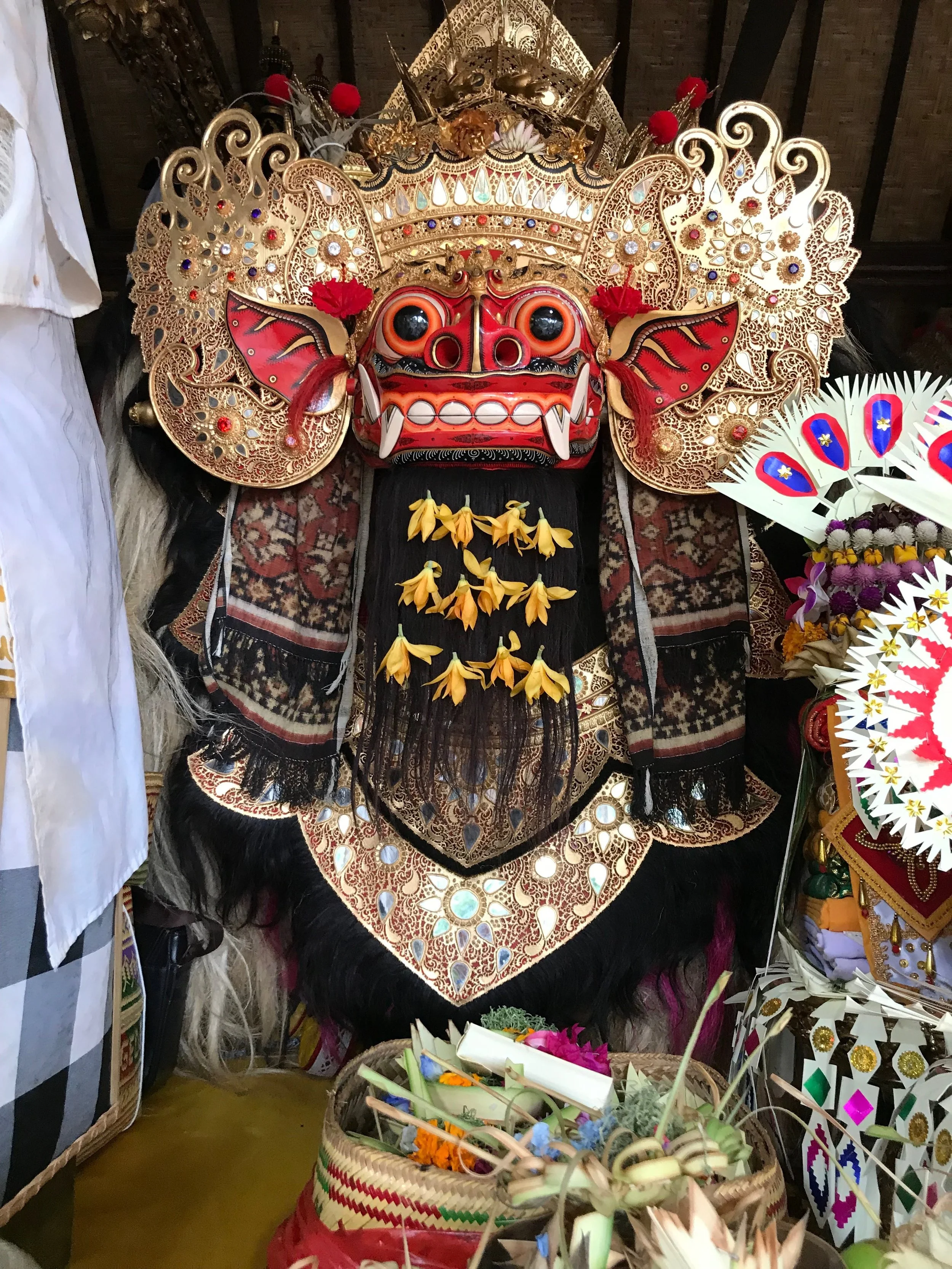
Barong, King of the Spirits on Bali

What is Barong? Or should we say, who is Barong? The Balinese personification of good fights an eternal battle with the demon queen Rangda.

The mythical creature Barong represents all that is good in the world

The mythical creature Barong represents all that is good in the world


I fell in love with Barong the first time I saw him. And really, who could resist his charm? He’s most often depicted as a bright red, playful creature who gallops along good-naturedly like a playful Labrador retriever. Somehow his bug eyes and fangs don’t detract from his cuteness.

While Barong’s name supposedly comes from a word meaning “bear,” it’s difficult to pinpoint exactly what type of creature he is. He looks a lot like a Chinese fu dog, which to me has always seemed a muddling of a lion and a Pekingese.

Barong bids visitors farewell in this mural at the Denpasar airport

Barong bids visitors farewell in this mural at the Denpasar airport

If an epidemic rages through a village, the local priest will dip the beard of the Barong mask into a bowl of water, which will imbue it with white magic that will heal the populace.
A popular figure on the island, Barong pops up everywhere, such as this street art in Ubud

A popular figure on the island, Barong pops up everywhere, such as this street art in Ubud

The Barong Ket, or Lion Barong, is the most popular, though the creature sometimes takes other forms:

  • Barong Celeng: Boar

  • Barong Macan: Tiger

  • Barong Naga: Dragon or Serpent

  • Barong Gajah: Elephant

Wally and Duke make some new friends, including Barong and Rangda, which they watched battle in a dance

Wally and Duke make some new friends, including Barong and Rangda, which they watched battle in a dance

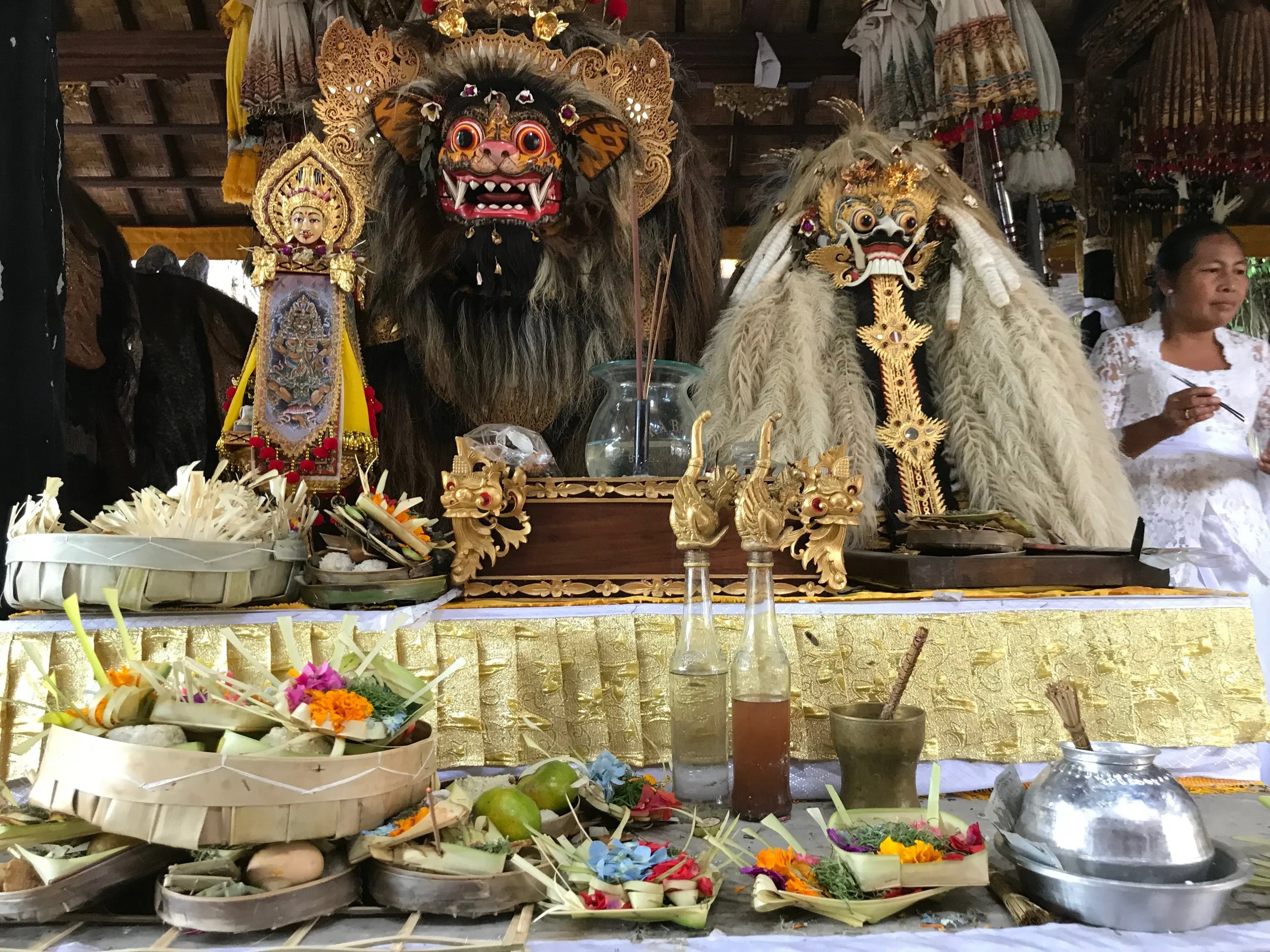
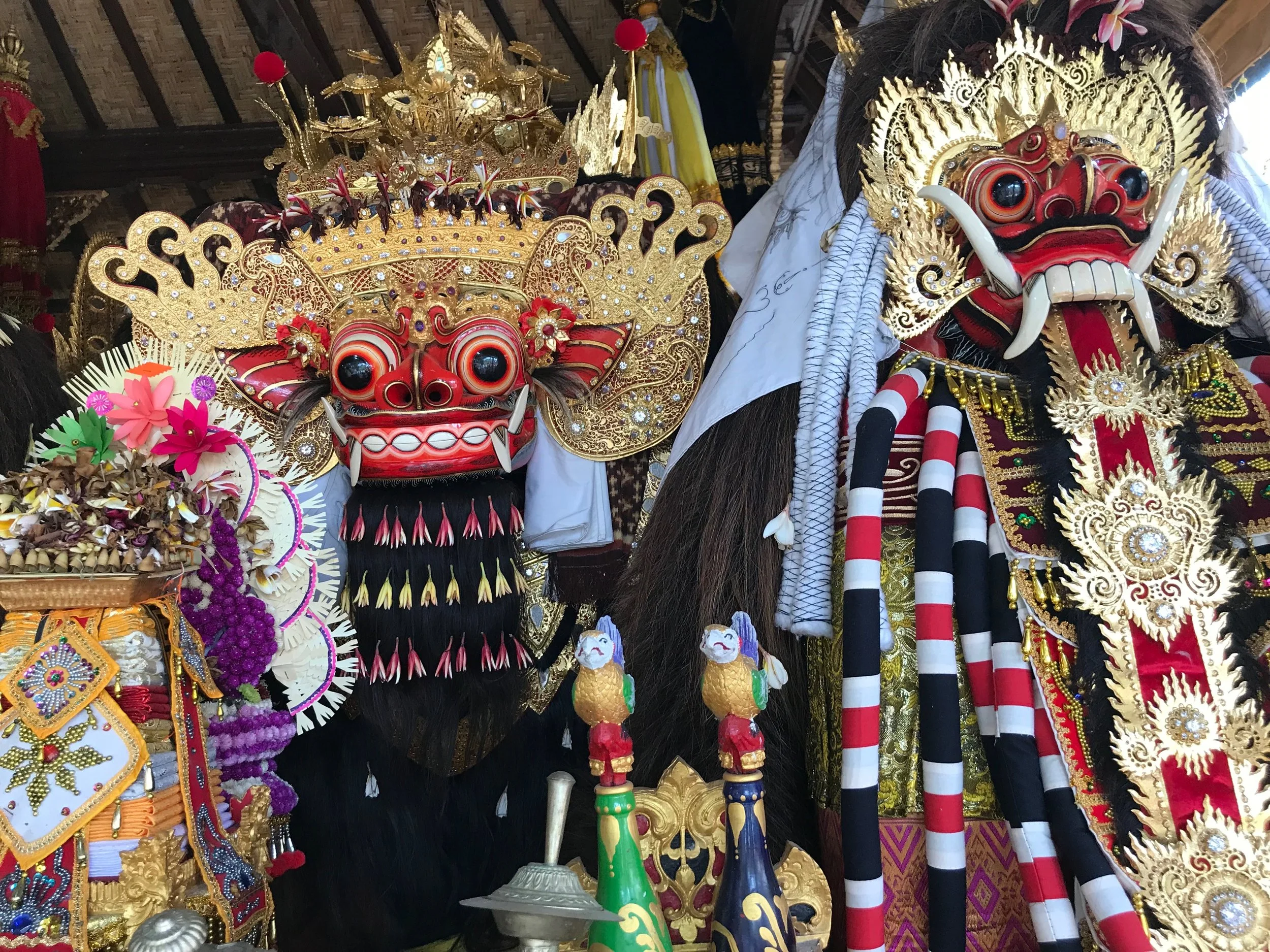
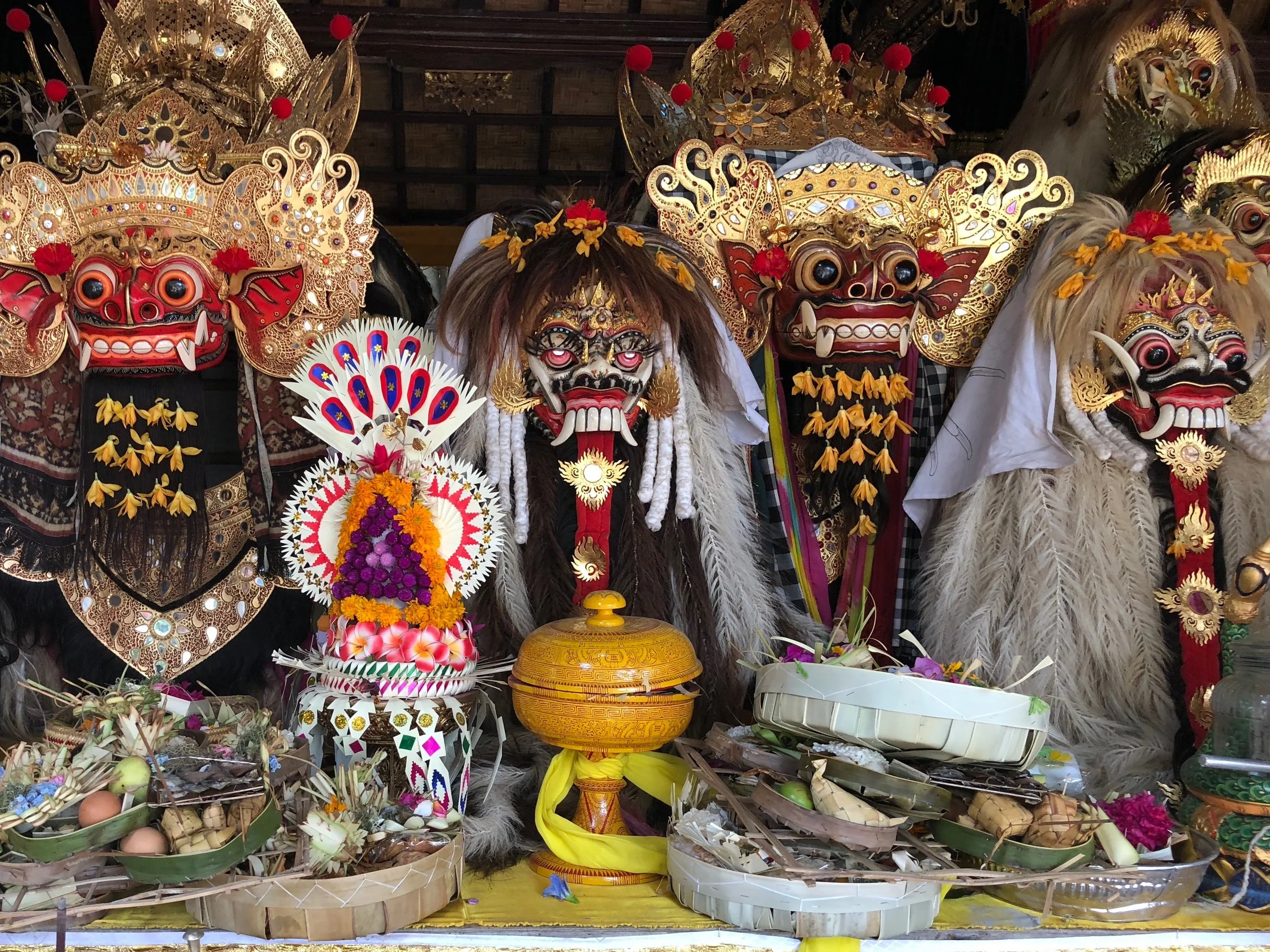
It helps that Barong is essentially all that is good in the world. He protects the Balinese in their villages. Barong is represented by a mask, its dark beard usually made of human hair. The mask is often kept in the village’s pura dalem, the temple of death, or in a small shrine near the bale banjar, the meeting hall.

An entire pavilion at the temple of Samuan Tiga is filled with Barong masks

An entire pavilion at the temple of Samuan Tiga is filled with Barong masks

Barongs come in various shapes, including that of a celang, or boar, as seen in the middle

Barongs come in various shapes, including that of a celang, or boar, as seen in the middle

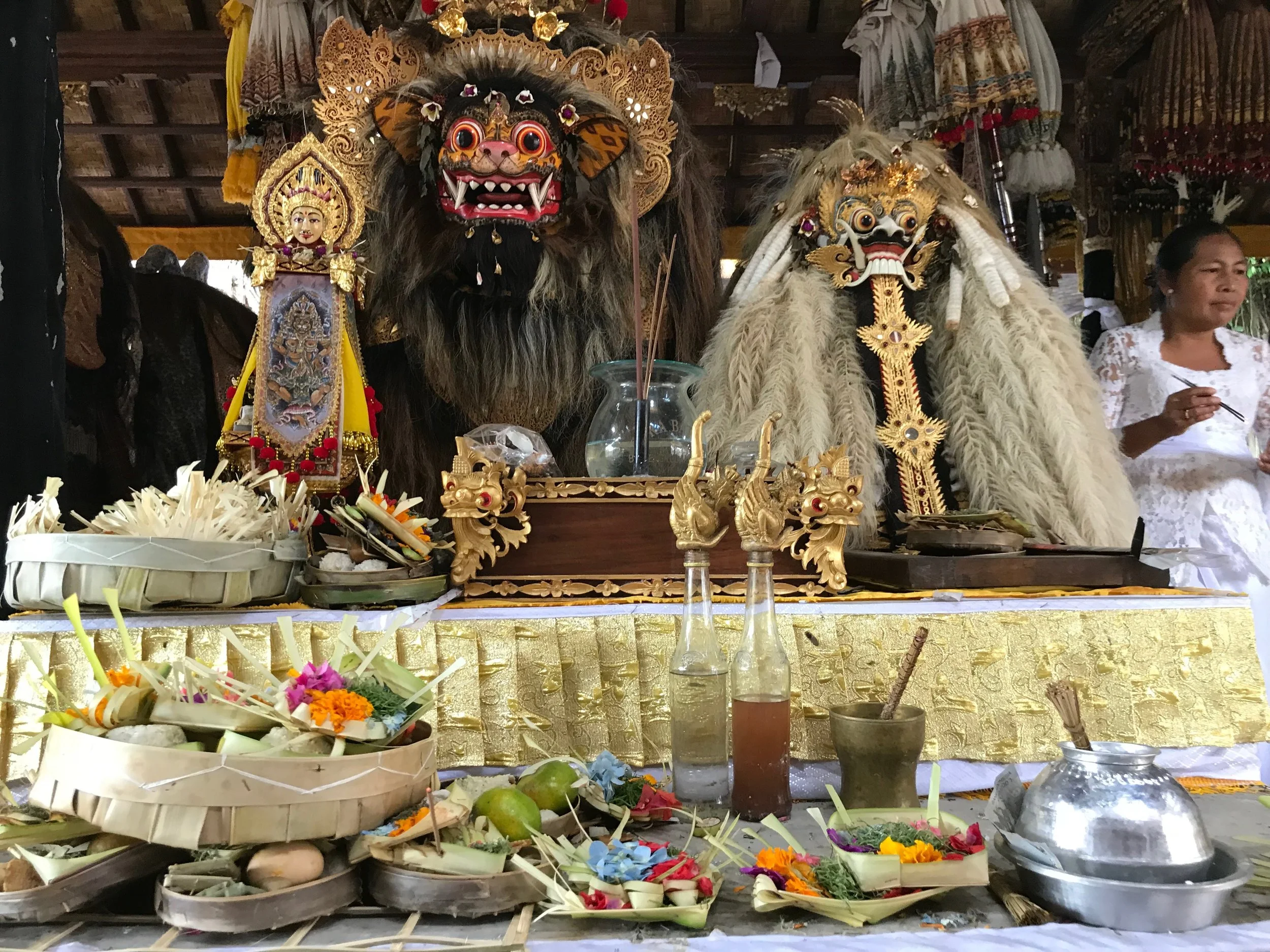
The Hindus of Bali offer flowers and fruit to thank Barong for protecting them. The mask on the left is the form of a macan, or tiger

The Hindus of Bali offer flowers and fruit to thank Barong for protecting them. The mask on the left is the form of a macan, or tiger

If, for instance, an epidemic rages through a village, the local priest will dip the beard of the Barong mask into a bowl of water, which will imbue it with white magic that will heal the populace. Oil dripping from the mask’s eyes has even been said to cure scabies.


puradalemrangda.jpg

His worship predates Hinduism and is a relic of animism, the belief that animals have supernatural protective powers.

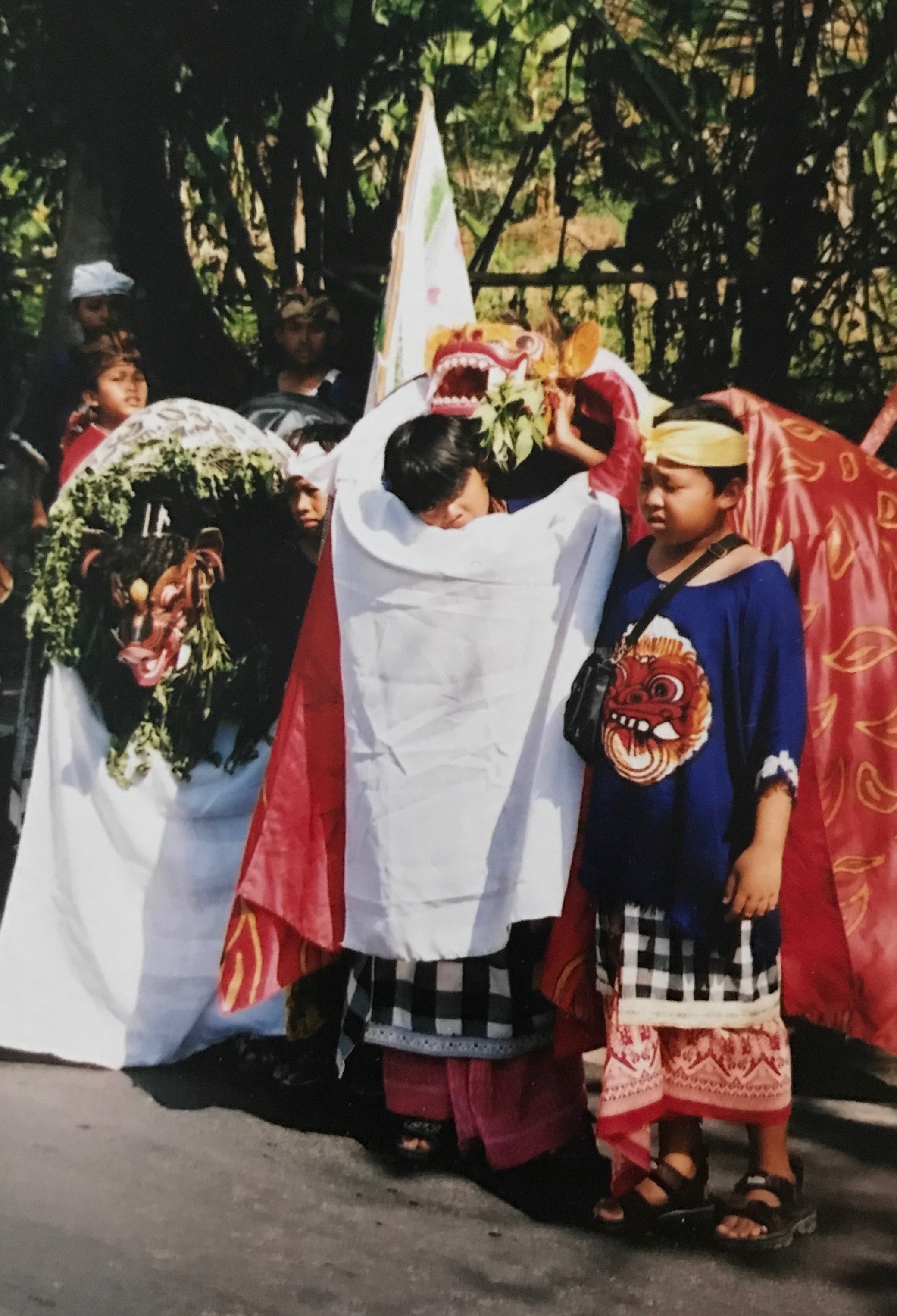
During the Galungan festivities, boys don the Barong mask and parade through town, looking for sweets

During the Galungan festivities, boys don the Barong mask and parade through town, looking for sweets

Galungan Guise

When I first visited Bali, we arrived in September during the Galungan Festival. It struck us the Balinese version of Halloween. All through the town of Ubud, we’d hear the clanging of metal percussion instruments, and would gawk as a strange creature approached. This was Barong, its wooden jaw opening and closing with a loud thok. One boy worked the mask, with its golden, mirrored crown, while others hid under a sheet to form the bumpy body that moved jerkily along the street. The kids, in their Barong costume, would stop at various business and receive sweets or coins. We later learned that Galungan was the most holy of holidays for the Hindus of Bali.

During the galungan holidays, the island was suddenly filled with magnificent masked beasts. With glaring eyes and snapping jaws, with elaborate golden crowns, great hairy bodies bedecked with little mirrors, and tails that rose high in the air to end in a tassel of tiny bells, they pranced and champed up and down the roads from village to village to the sound of cymbals and gongs, as though they had newly emerged, like awakened dragons, from caves and crevices in which for months they had been lying dormant.

This was the barong, a beautiful composite animal, lion, said some, bear, said others, Ruler of the Demons, said still others. …

These creatures were high-spirited and full of whims, dancing a strange ballet, coquettish and playful one moment, rolling on the ground like a puppy, and suddenly and unaccountably ferocious the next, snapping and stamping in fine fury as the two dancers within the body synchronized their steps and movements with beautiful coordination.

–Colin McPhee, A House in Bali

Barong engages in a never-ending fight with the Demon Queen, Rangda, in the middle

Barong engages in a never-ending fight with the Demon Queen, Rangda, in the middle

Barong vs. Rangda, the Battle Between Good and Evil

As the king of the good spirits, Barong fights a never-ending battle with the demon queen Rangda.

His nemesis is more human-like, a hideous half-nude witch with sagging breasts, disheveled hair and a long tongue lolling out of her fanged mouth. Barong and Rangda, like yin and yang, cannot exist with the other; there is no good without evil. Unlike in our Western lore, where people often tend to live happily ever after, in Balinese legend, neither Barong nor Rangda ever truly win. Their battle is the subject of a favorite dance on Bali. The forces of good and evil, of order and chaos, must remain in balance. –Wally


More Myths From Bali and Java

The Legend of Bandung Bondowoso and the Slender Virgin of Prambanan

Princess Loro Jonggrang didn’t want to marry the magician who killed her father. So she came up with a clever plan to deceive his demon helpers.

An Indonesia stamp commemorates the legend of Roro (aka Loro) Jonggrang and the magician Bandung Bondowoso, who summoned demons to perform a seemingly impossible task

An Indonesia stamp commemorates the legend of Roro (aka Loro) Jonggrang and the magician Bandung Bondowoso, who summoned demons to perform a seemingly impossible task

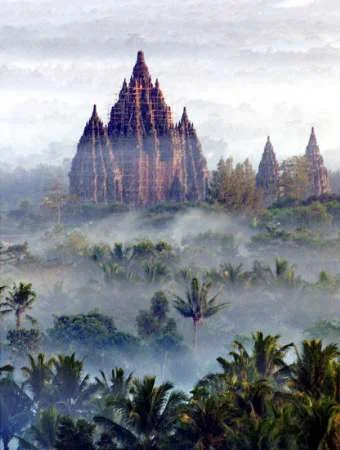
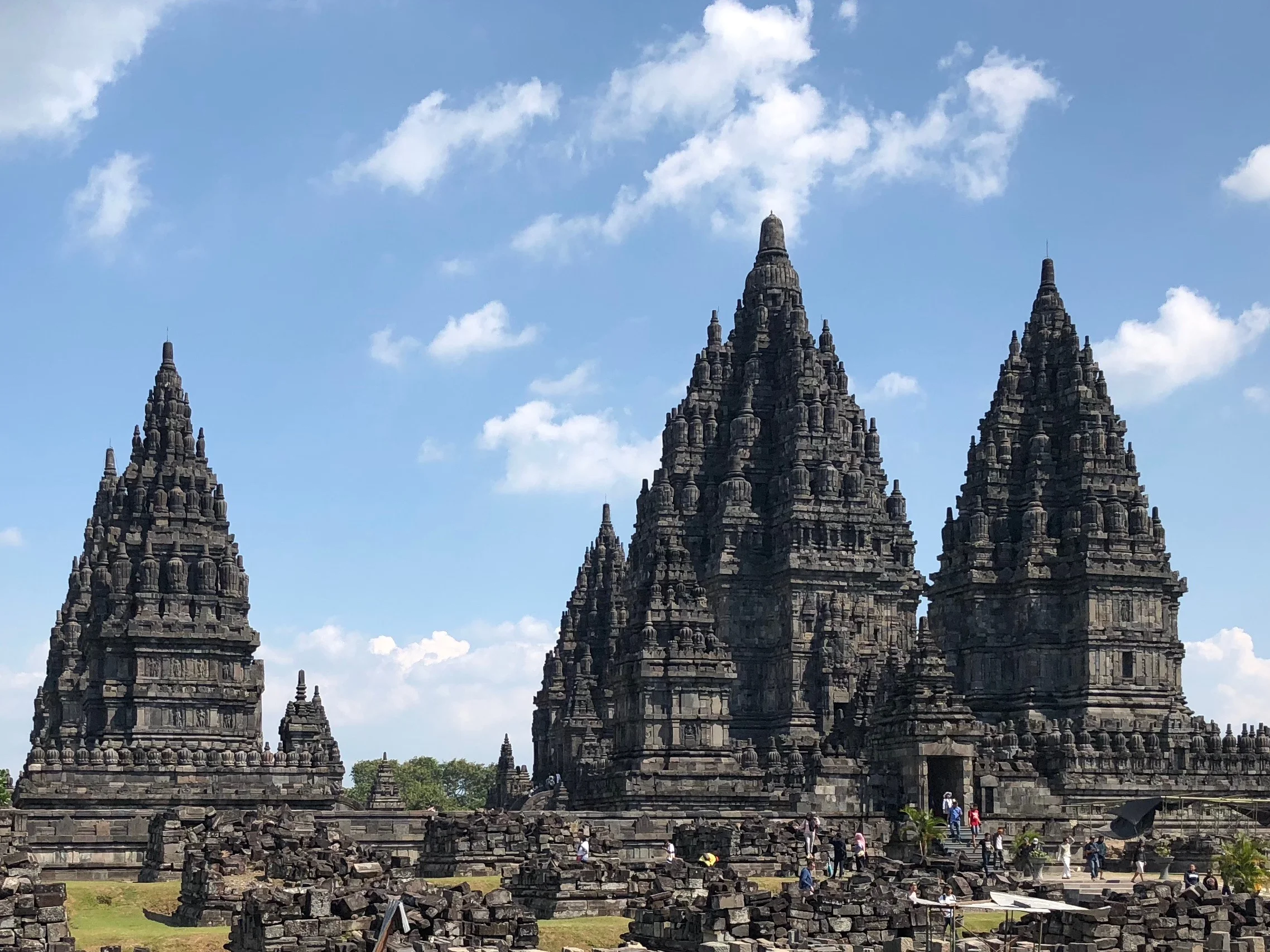
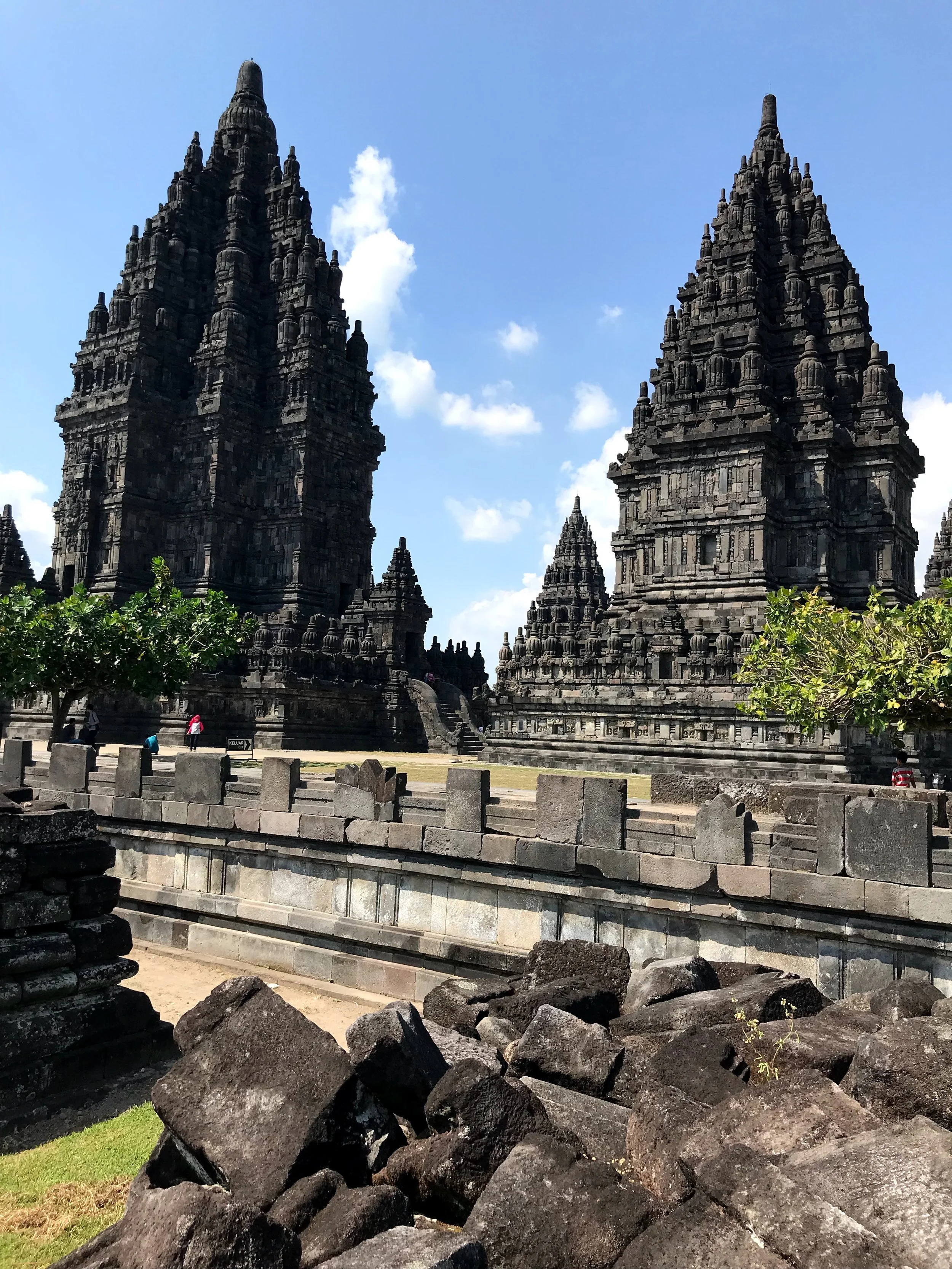
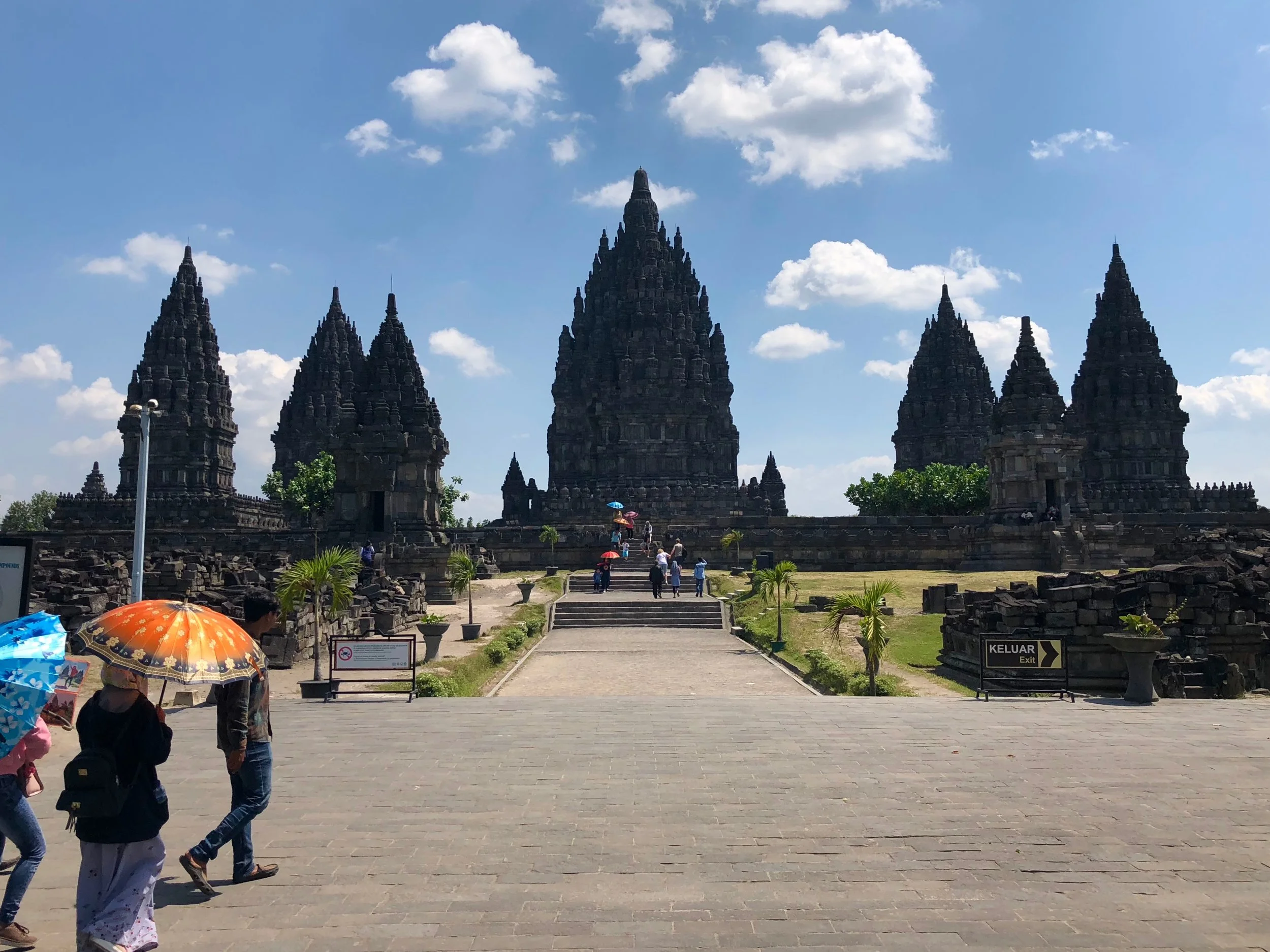
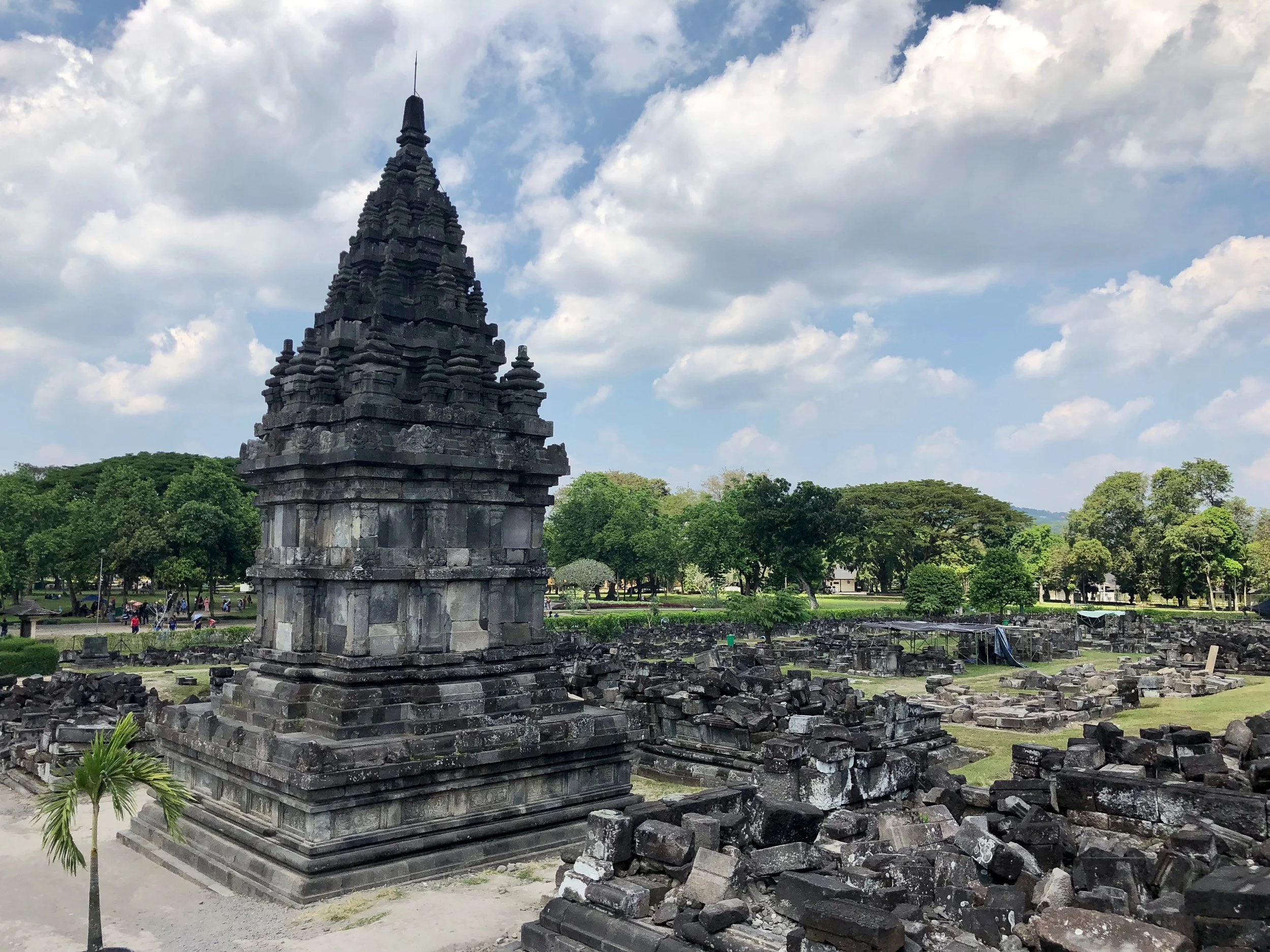
The massive towers and reliefs of the Hindu temple complex of Prambanan in Java, Indonesia flourished in the late 9th century. A marvel of ancient engineering, the dark volcanic stone structures took decades to complete — though local lore holds that the complex was built in single night by nocturnal spirits.

The temples of Prambanan on Java in Indonesia are the setting of a legend involving demons and a princess trapped in stone

The temples of Prambanan on Java in Indonesia are the setting of a legend involving demons and a princess trapped in stone

According to a stone tablet found while excavating the ruins of Prambanan, the temple was built to honor Lord Shiva, one of the most important gods in the Hindu pantheon. The compound’s original name was Shivgarh, the House of Shiva, when it was constructed around 850 CE by Rakai Pikatan, a king of the Sanjaya dynasty. It later took the name Prambanan, after the village where it’s located.

The princess’ deceit angered the magician, and he cursed her.

She was turned into a statue of the goddess Durga and remains enshrined in the central spire of Prambanan.

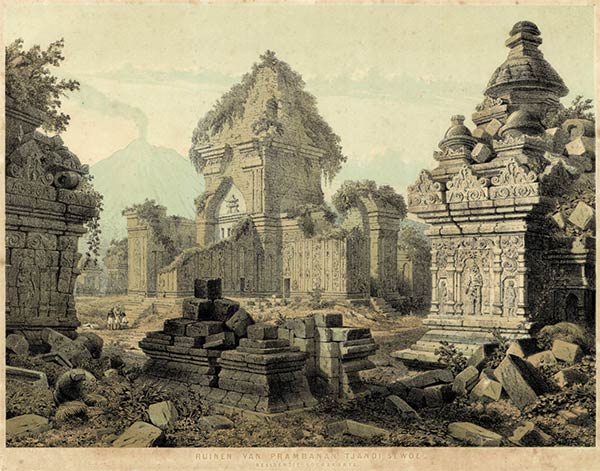
Although the temples were abandoned and reclaimed by the jungle, they were never completely forgotten. The origin myth popular among the Javanese tells of the story of the Slender Virgin, Roro or Loro Jonggrang, which is set in Prambanan. Like most stories told in the oral tradition, many variations exist, but its conclusion is generally the same.

Bandung Bondowoso and Loro Jonggrang

Long ago, in feudal Java, there were two neighboring kingdoms, Pengging and Prambanan. The kingdom of Pengging was prosperous and wisely ruled by Prabu Damar Maya. The other, Prambanan, fell under the reign of a wrathful and wicked half-demon king named Prabu Ratu Boko. Although he lived in a massive stone palace, he grew envious and devised a plan to take the kingdom of Pengging by force.  

Loro Jonggrang was so beautiful, the man who killed her father wanted to marry her

Loro Jonggrang was so beautiful, the man who killed her father wanted to marry her

The troops of Damar Maya put up a good fight, but were no match for the supernatural armies of Ratu Boko. Fearing he would lose his kingdom, Damar Maya consulted his chief brahmin priest, whose nephew, Bandung Bondowoso, was skilled in dark magic and was able to summon demons. Bondowoso created a supernatural arrow and climbed to the highest vantage point in Pengging to assess the enemy. When he saw Ratu Boko, he drew his bow back and shot the arrow straight through the demon king’s heart, killing him instantly.

Ratu Boko’s army retreated to Prambanan and delivered the news of the king’s death to his daughter, Princess Loro Jonggrang, whose name translates as “Slender Virgin.” Her beauty was known throughout the land, and like her father, she was willful and arrogant. The princess asked who had slain Ratu Boko and was told that it was a man named Bandung Bondowoso.

Loro Jonggrang arranged an elaborate ceremony to cremate the remains of her father on the palace grounds and extended an invitation to Bondowoso. Not only was she slender and beautiful, but she was also a graceful dancer. At the ceremony, accompanied by her court dancers, Loro Jonggrang glided out into the audience hall to perform a dance in homage to her father. Grief made her even more striking, and Bondowoso fell under her spell, determined to marry her.

Demons are said to have built 1,000 temples in a single night

Demons are said to have built 1,000 temples in a single night

Some days after, he sent a small delegation to request her hand in marriage. The princess reluctantly agreed, but set a seemingly impossible challenge: She would only marry Bondowoso if he were able to build 1,000 temples in a single night. The magician accepted her unusual request, and as the sun set, summoned an army of nocturnal spirits and demons. They worked tirelessly and quickly.

As punishment for her deceit, the princess became the statue of Durga in the Shiva Temple at Prambanan

As punishment for her deceit, the princess became the statue of Durga in the Shiva Temple at Prambanan

Not wanting to marry the man who had killed her father, Loro Jonggrang conceived of a plan to trick the supernatural beings. She enlisted the help of her servants and ordered the women of the village to fill their stone mortars with dried rice stalks and pound the grains from their stems, a task performed daily at dawn. The princess then sent her servants out to the east to burn the dried paddies. The combination of noise and firelight prompted the confused roosters to crow. Alarmed, the spirits fled back to the underworld, thinking the sun was rising and leaving the final temple incomplete.

The badass Durga, riding her tiger mount, defeats an evil buffalo demon

The badass Durga, riding her tiger mount, defeats an evil buffalo demon

Loro Jonggrang’s deceit angered Bondowoso, and he cursed her, uttering the words, “There’s only one temple left — let you be the one to complete it!” The princess was turned into a statue of the goddess Durga the Inaccessible, now known as the Slender Virgin. The statue remains enshrined in the north chamber of the central spire of Prambanan, presumably the 1,000th temple. –Duke

Prambanan: A Towering Tribute to the Hindu Trinity

If you’re in Indonesia, add Java to your itinerary and see this stunning temple complex that plays second fiddle to Borobudur.

Borobudur gets all the fame, but Prambanan is a must-visit complex on Java as well

Borobudur gets all the fame, but Prambanan is a must-visit complex on Java as well

Our main reason for visiting the island of Java, Indonesia was to see the spectacular ancient temple complexes of Borobudur and Prambanan. Given the importance of religion in ancient Java, it’s not surprising that both of these attractions are imposing in scale and have been declared UNESCO World Heritage Sites. Plus, the opportunity to stay in a private villa that came with an infinity plunge pool at the Plataran Borobudur Resort & Spa and a view of Borobudur in the distance was one Wally and I simply couldn’t pass up.

The complex contains temples to the Hindu trinity and the creatures they rode

The complex contains temples to the Hindu trinity and the creatures they rode

The Prambanan Temple Compounds were located about a hour and a half northwest from where we were staying, and having a private driver provided by the resort made the journey getting there stress-free.

Wally and Duke sit atop unrenovated remains outside the complex

Wally and Duke sit atop unrenovated remains outside the complex

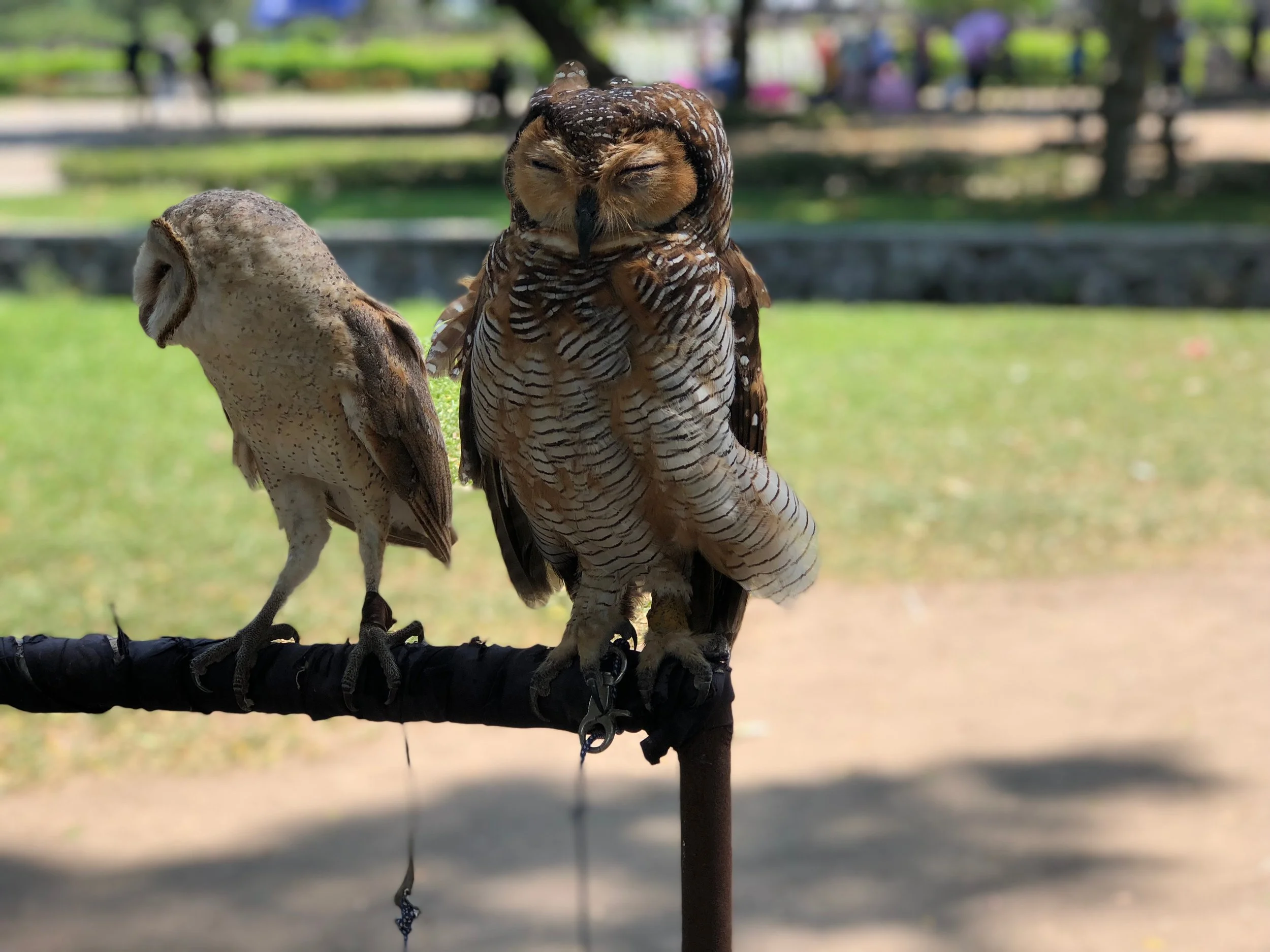
Whooo dat? We were surprised to pass some owls en route to the main temples

Whooo dat? We were surprised to pass some owls en route to the main temples

Many Priests and Ladies-in-Waiting

Shortly after we arrived at the temple complex, we were introduced to our guide, Dwi, who wore a shirt embroidered with the Wonderful Indonesia logo. As Dwi led us past the main entrance, he explained that the three concentric courtyards are laid out in the geometric form of a mandala and follow the concept of vastu shastra, an ancient Indian method of architecture and construction to enhance prosperity.

The small structures out front are called pewara, or “ladies-in-waiting”

The small structures out front are called pewara, or “ladies-in-waiting”

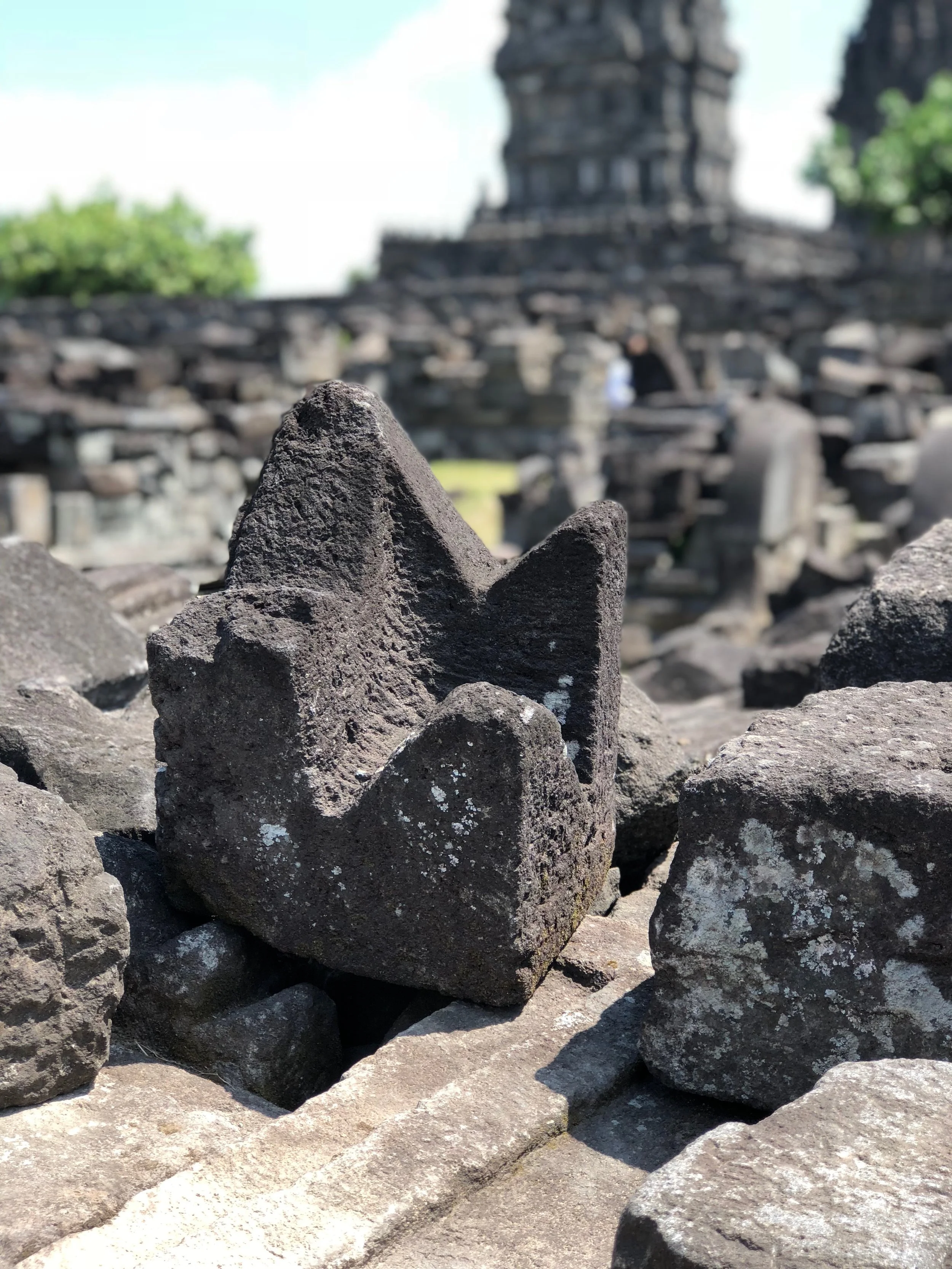
Some of the ruins are intricately carved

Some of the ruins are intricately carved

The fragments of the temples fit together like puzzle pieces

The fragments of the temples fit together like puzzle pieces

Dwi added that the name Prambanan means “Many Priests,” quite possibly in reference to the outermost courtyard, which was once encircled by a wall. The original function is unknown but it may have served as a monastic community and included lodging for hundreds of brahmin priests and their disciples. As these buildings were most likely built of wood and brick, nothing remains of them.

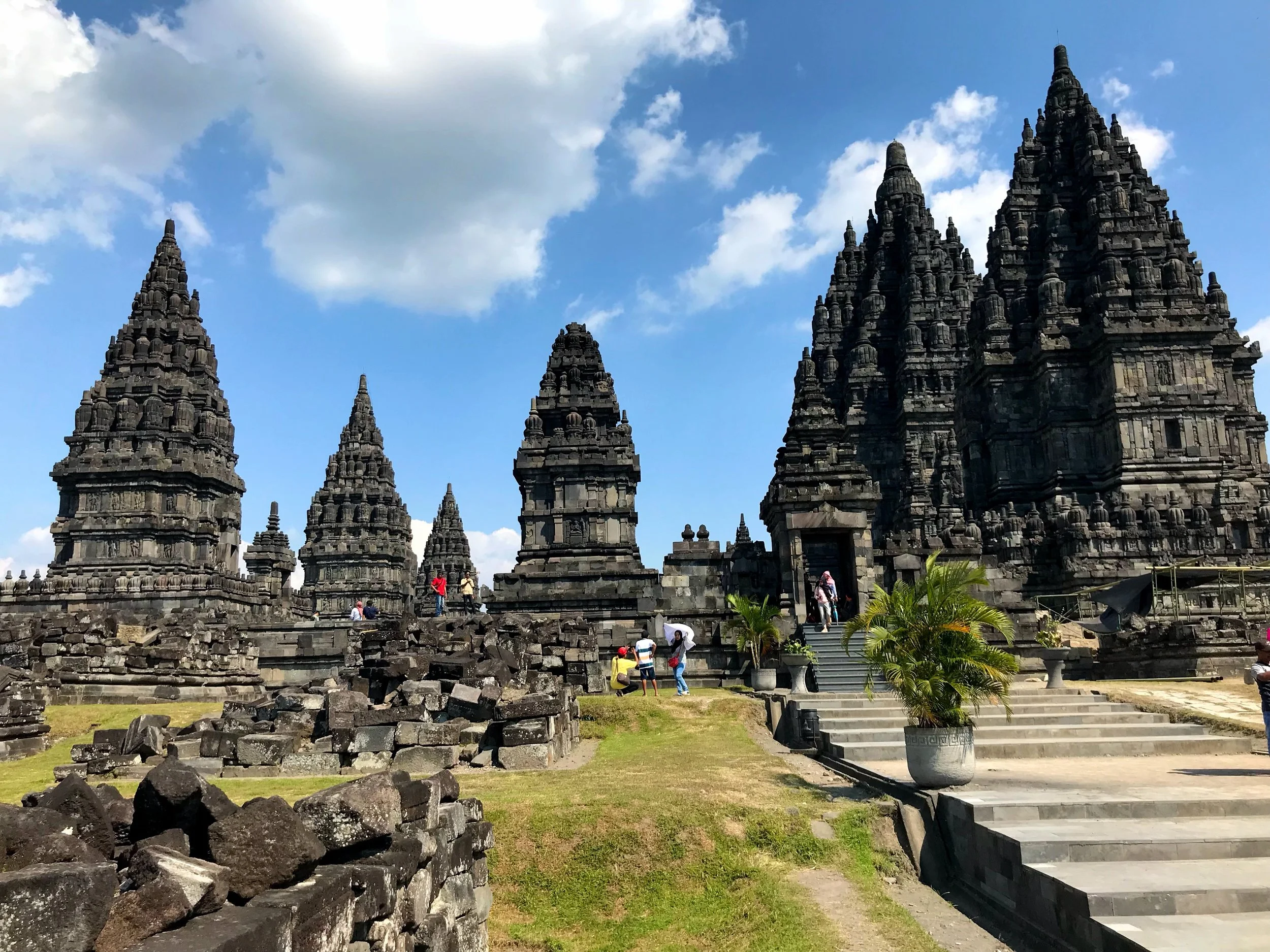
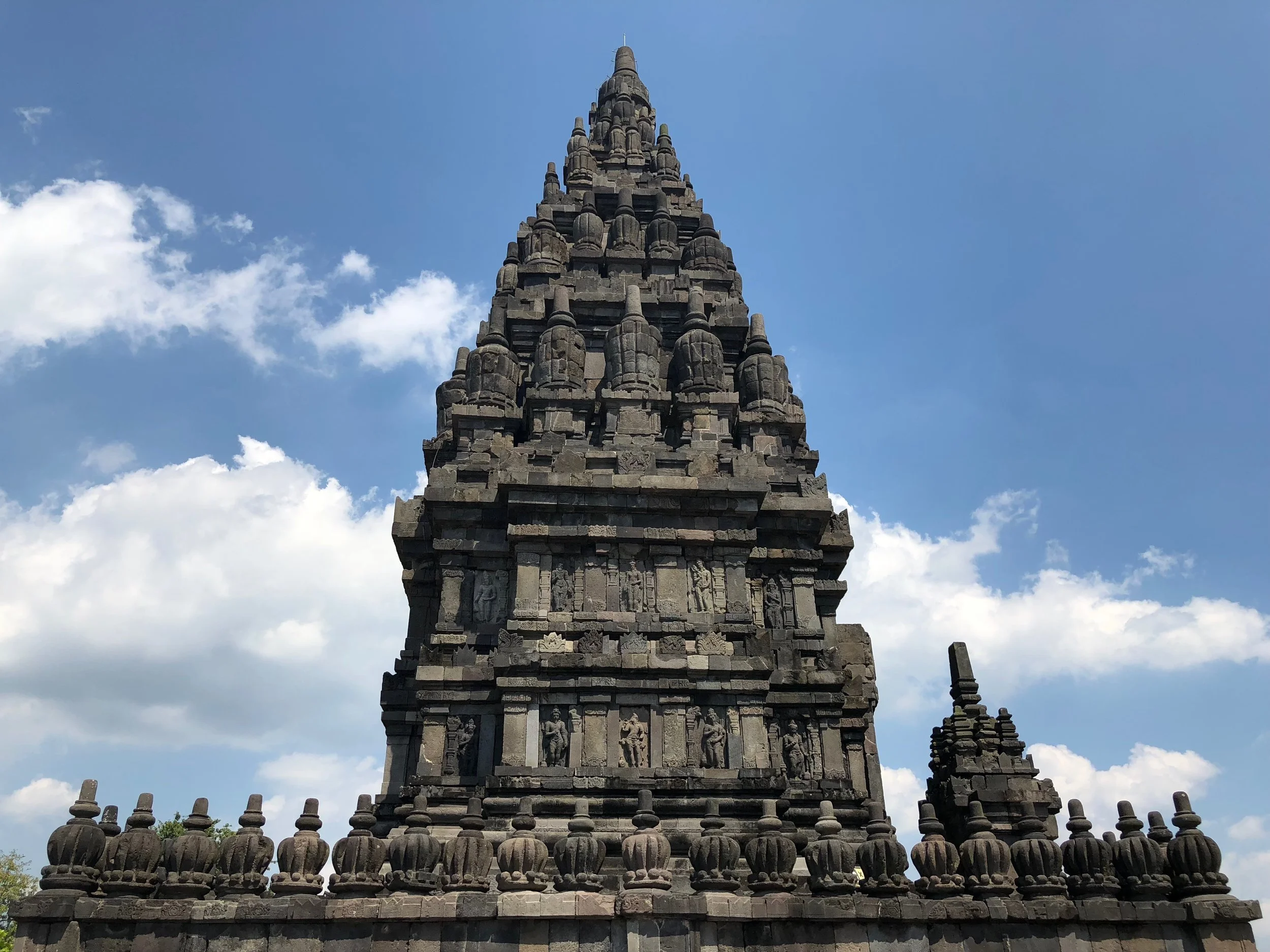
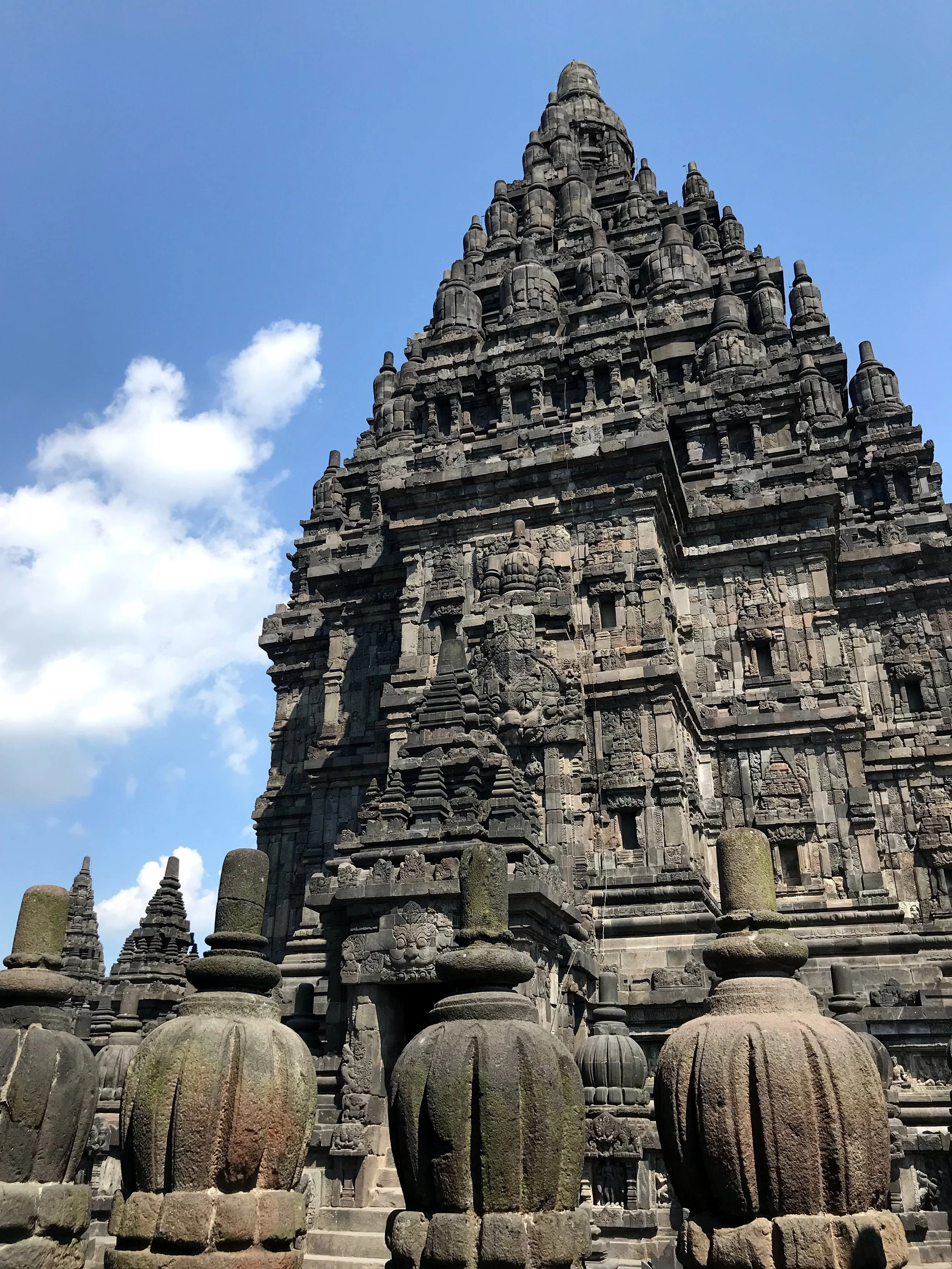
The peaks of the temples rise into the sky — a bit higher than Borobudur

The peaks of the temples rise into the sky — a bit higher than Borobudur

Directly in front of us was another large courtyard with hundreds of small shrines called pewara, or “ladies-in-waiting,” organized in concentric squares four rows deep. Almost all of these temples had been reduced to rubble. We asked Dwi if there are plans to reconstruct them, and he explained that this was not likely, as much of the original stonework has been destroyed by erosion, earthquakes or looting. Like Borobudur, at least 70% of the original material must be used in restoration to be declared a UNESCO World Heritage Site.

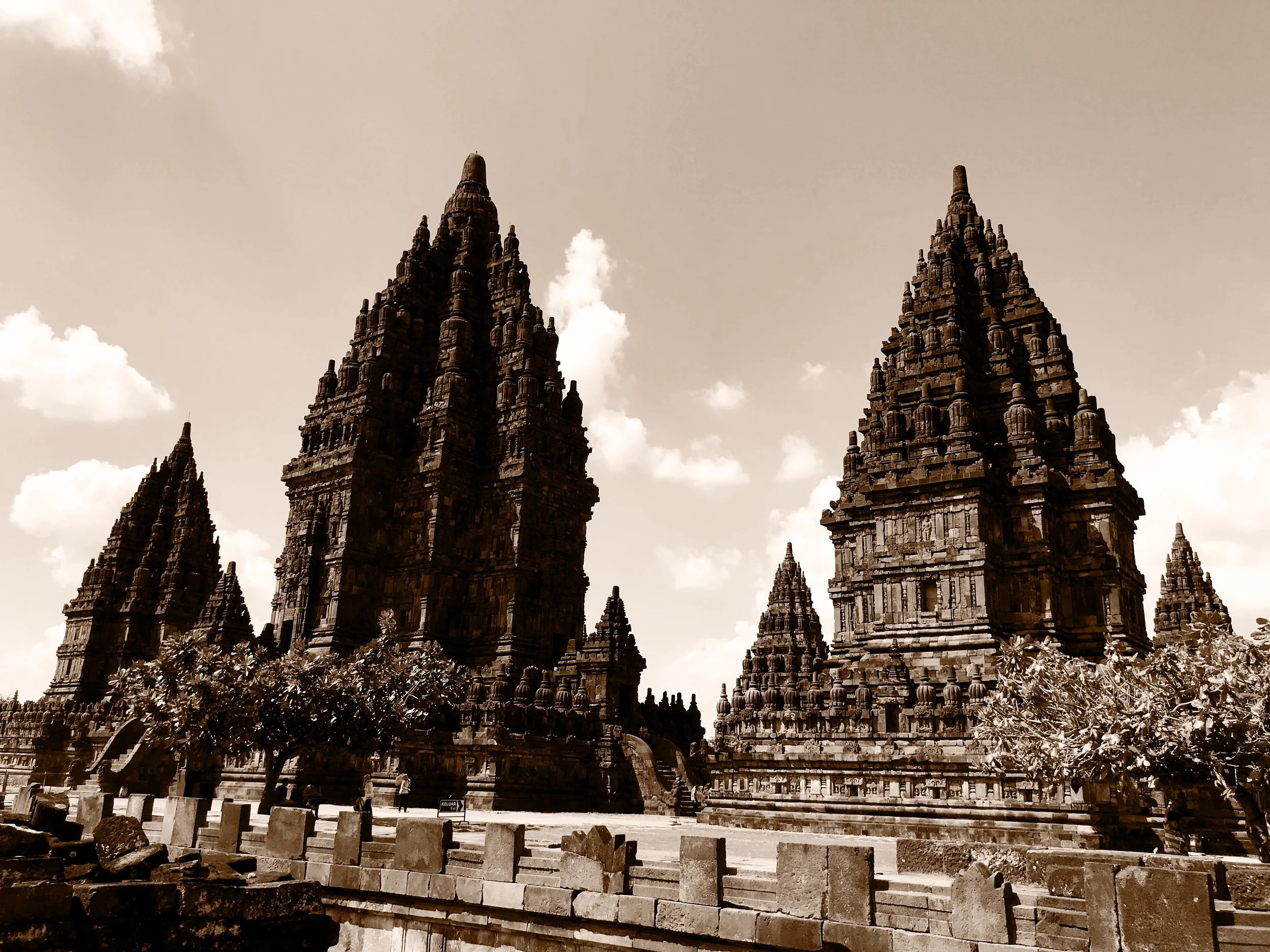
The ornate black stone temples create an imposing silhouette

The ornate black stone temples create an imposing silhouette

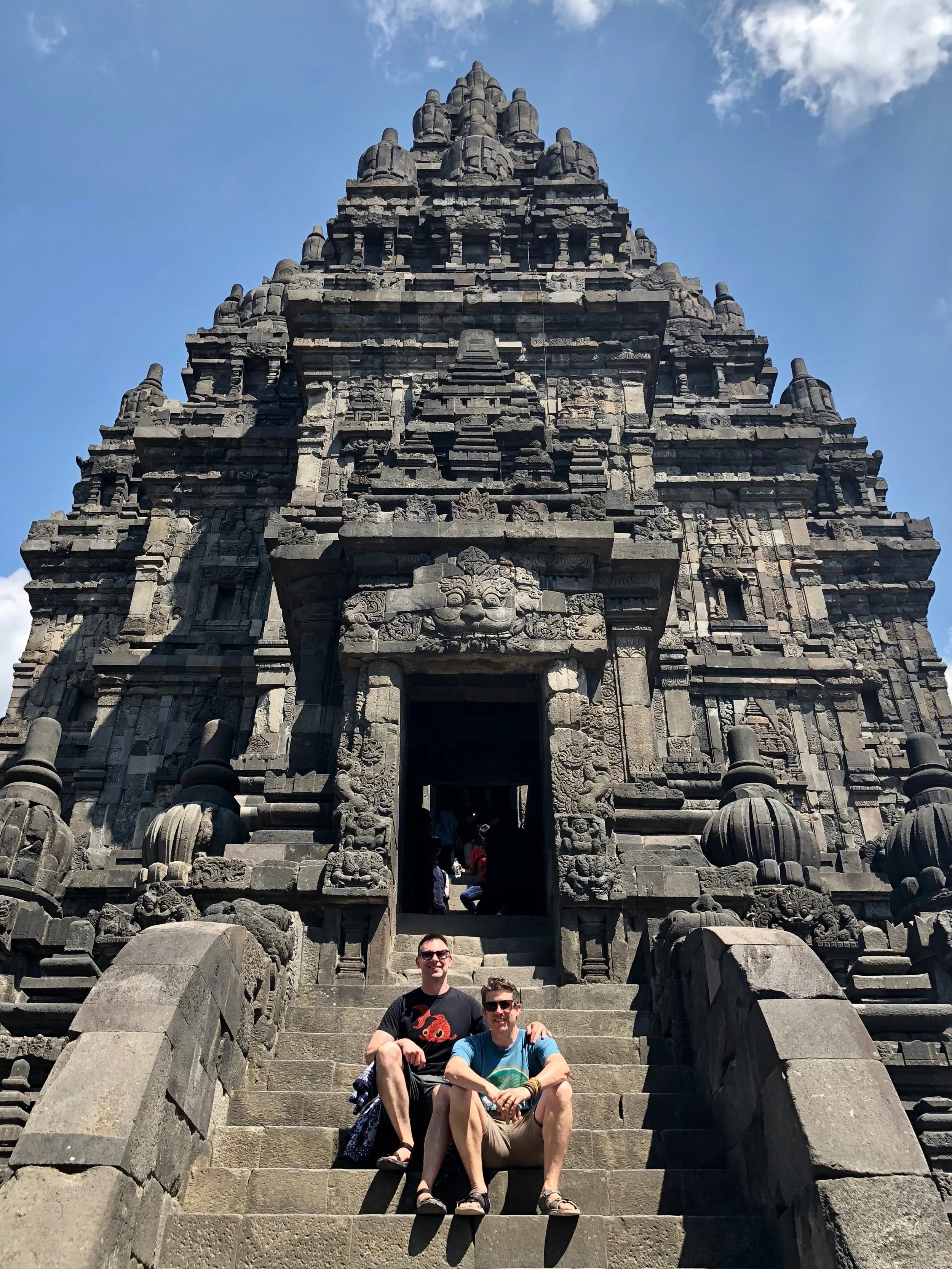
Duke and Wally take a break on the steps leading up to one of the temples

Duke and Wally take a break on the steps leading up to one of the temples

The Main Temples

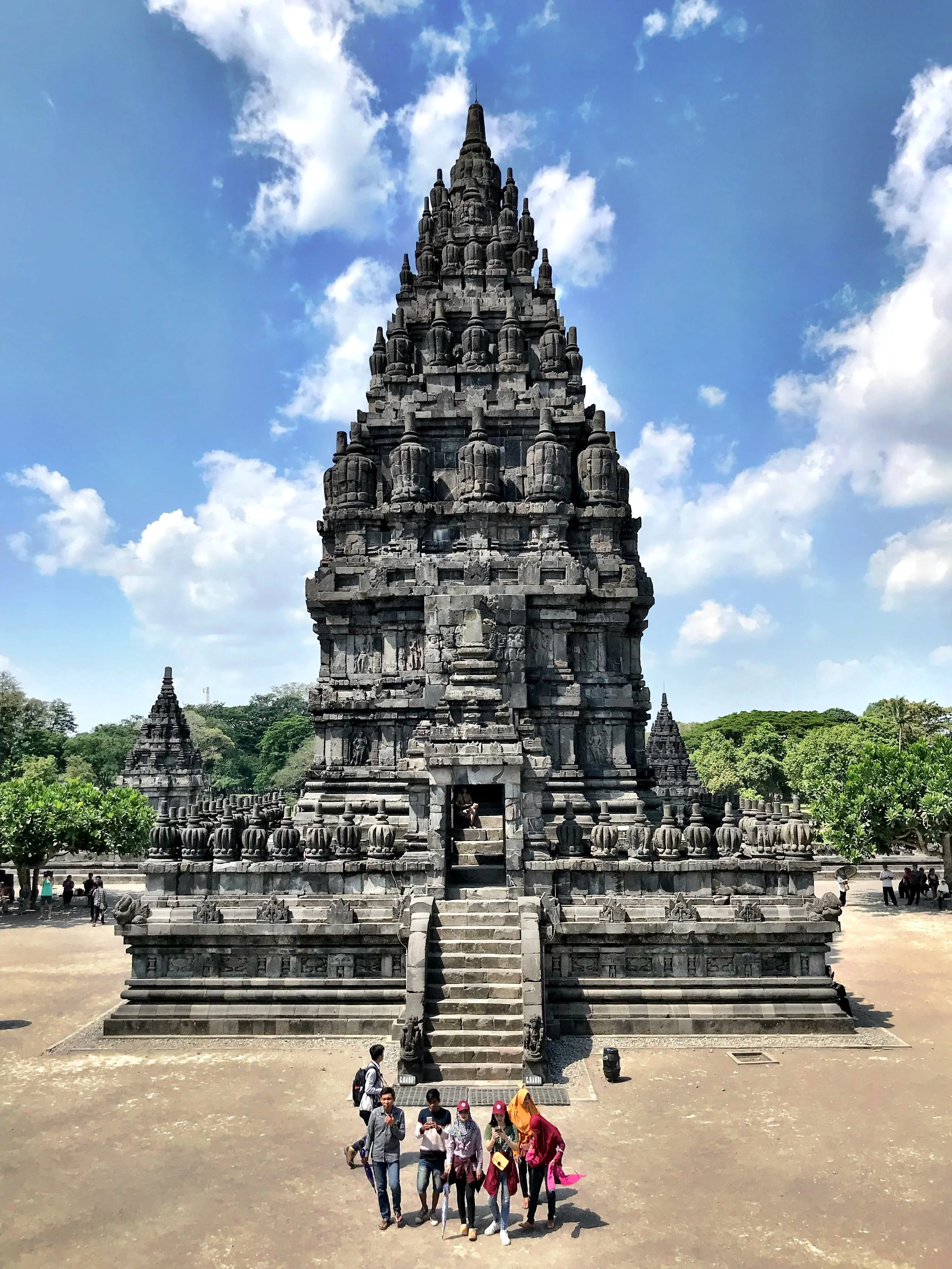
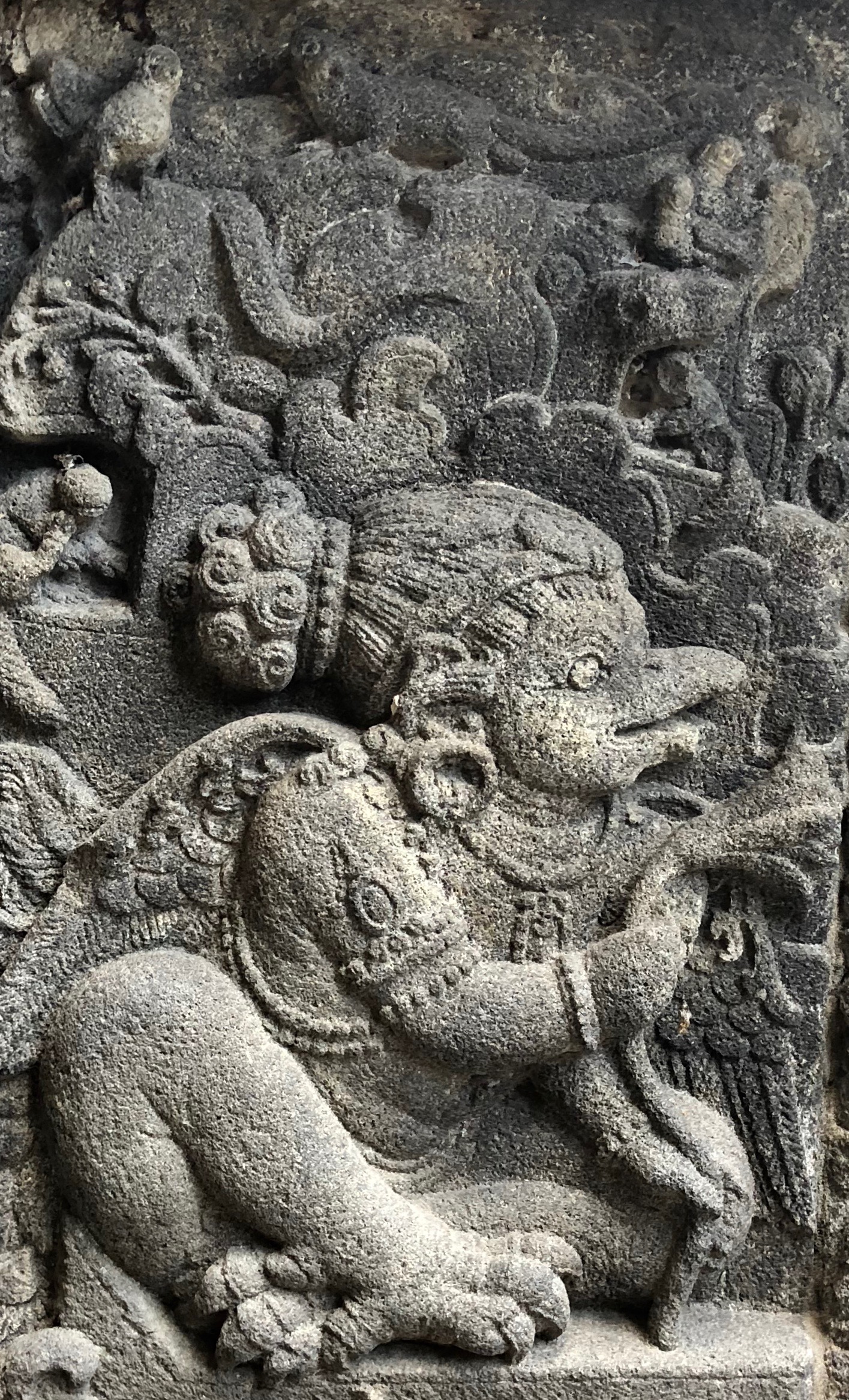
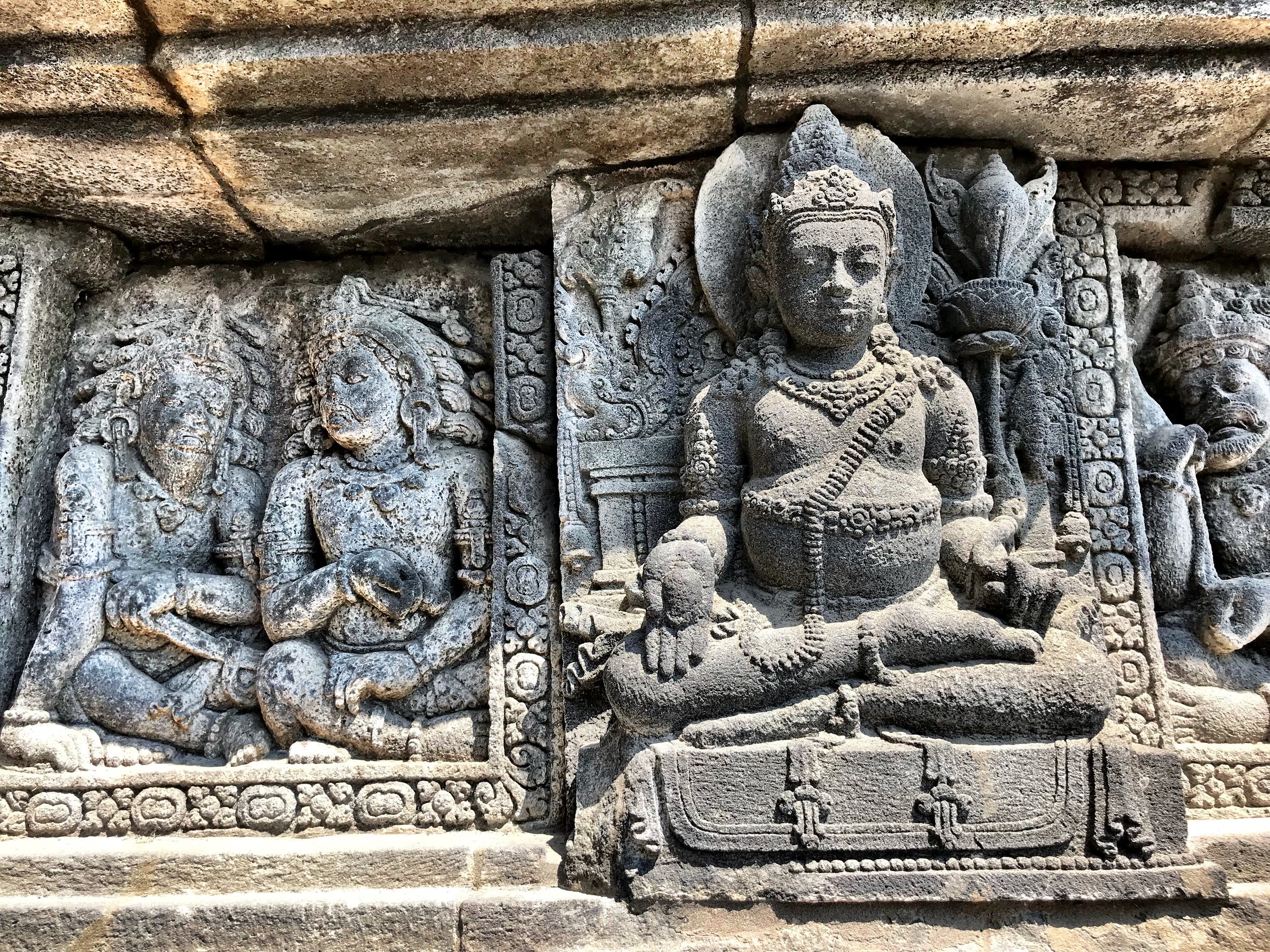
At the heart of the complex stand the most sacred and well-preserved temples, the scale and detail of which can only be appreciated when you are standing in front of them. Three of the main shrines are dedicated to the Trimurti, the Hindu trinity of Brahma the Creator, Shiva the Destroyer (to whom the largest central temple is dedicated) and Vishnu the Preserver. The smaller vahana shrines are for the deity’s respective animal mounts: Hamsa the Swan, Nandi the Bull and Garuda the Eagle. There are also two small temples between the rows of Trimurti and vahana shrines, although the function of these remains unclear.

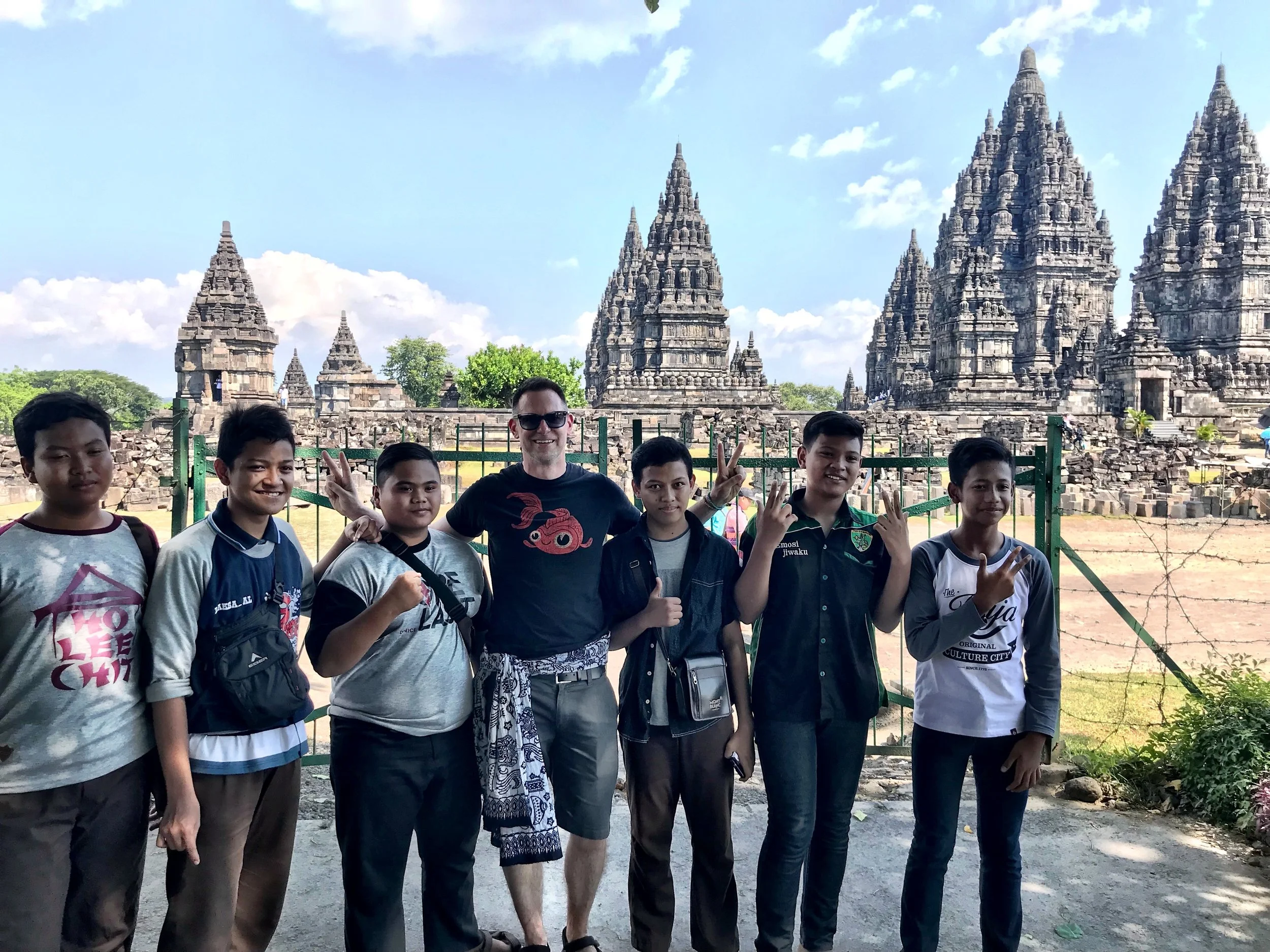
Duke poses with a group of local boys, with Prambanan behind them, looking like a fake backdrop

Duke poses with a group of local boys, with Prambanan behind them, looking like a fake backdrop

The initial construction of Prambanan began around the middle of the 9th century during the reign of Rakai Pikatan and served as the royal temple of the kingdom of Mataram. Additional structures were added by the successive Kings Rakai Kayuwangi and Balitung Maha Sambu.

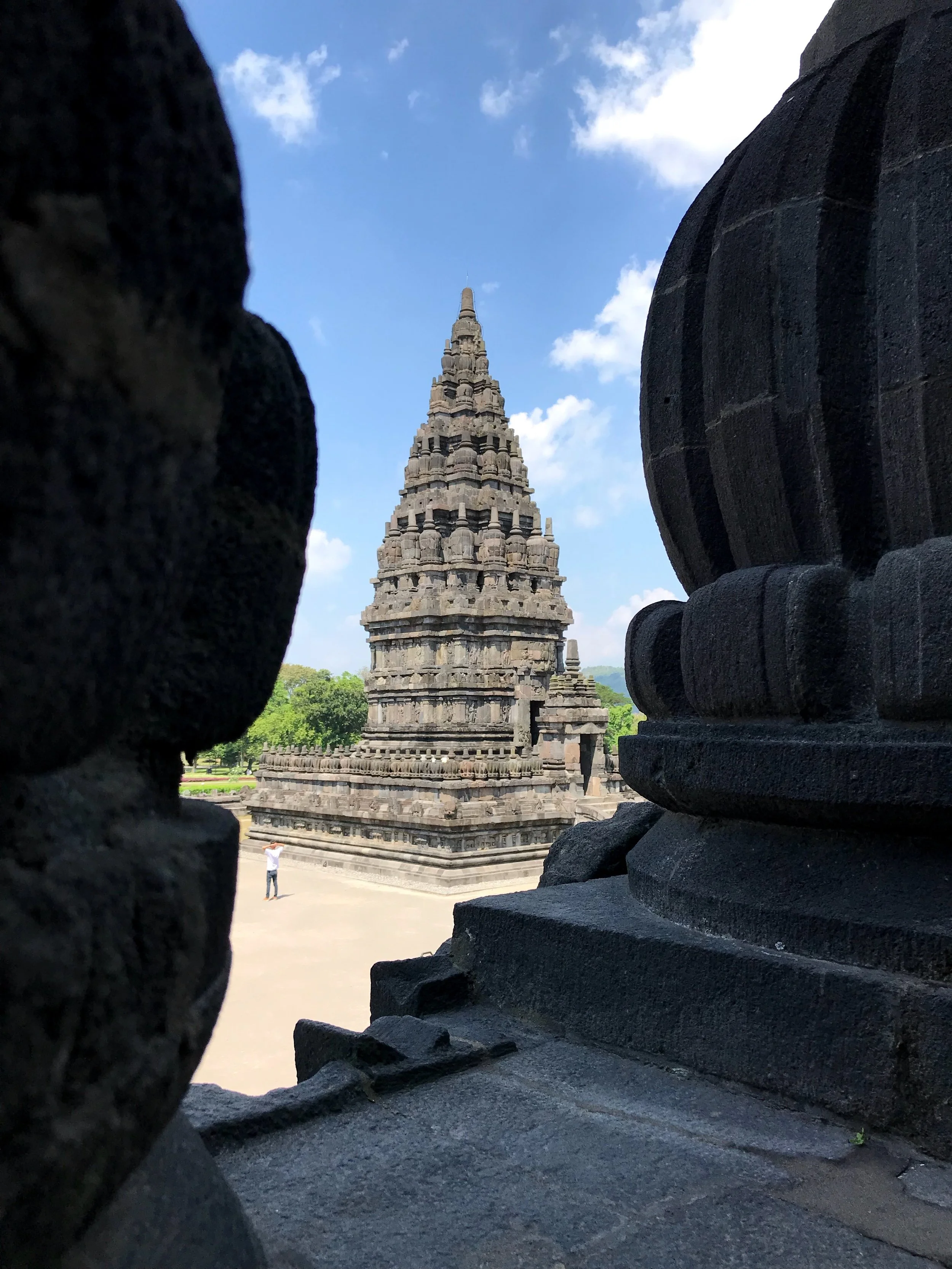
Peeking through at a smaller vahana temple for the gods’ mounts

Peeking through at a smaller vahana temple for the gods’ mounts

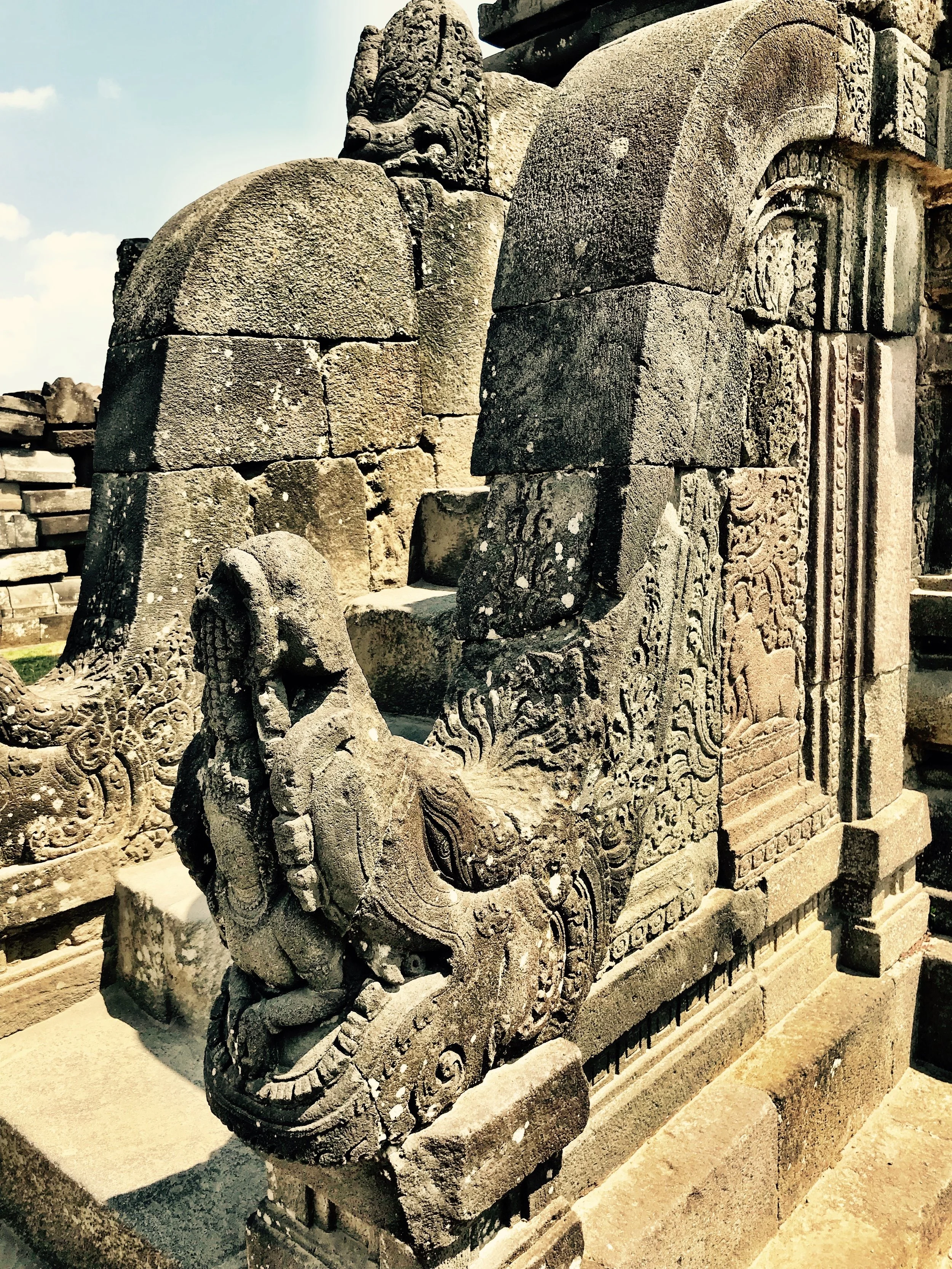
The staircases are carved in the shape of mekara, creatures with other beings coming out of their mouths

The staircases are carved in the shape of mekara, creatures with other beings coming out of their mouths

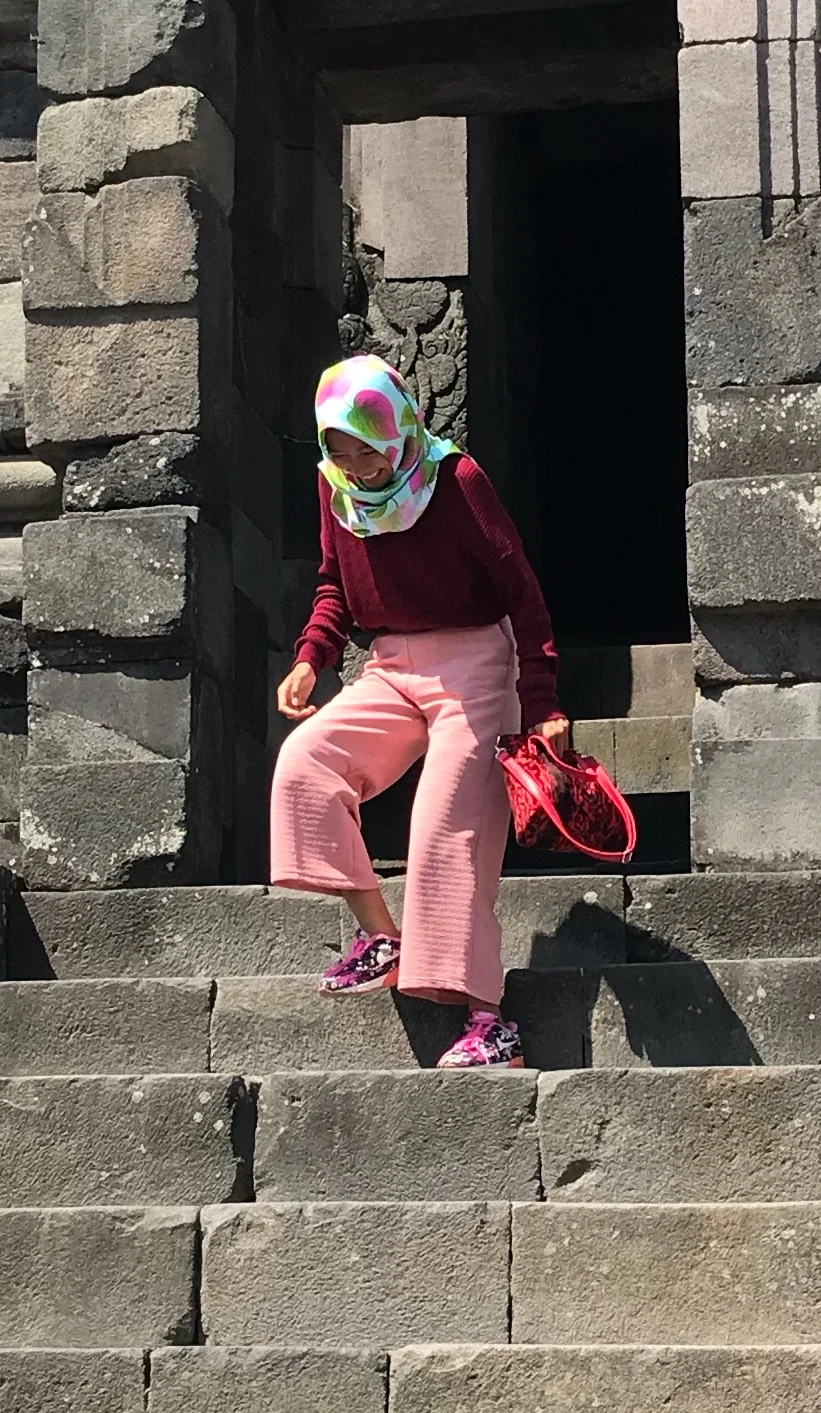
Pretty in pink: An Indonesian woman enjoys her visit

Pretty in pink: An Indonesian woman enjoys her visit

Dwi suggested that Prambanan was built as a political and religious response to mark the return of the Hindu Sanjaya dynasty after decades of Buddhist-led Sailendra rule.

The Shiva Temple is the largest of the bunch

The Shiva Temple is the largest of the bunch

The Shiva Temple

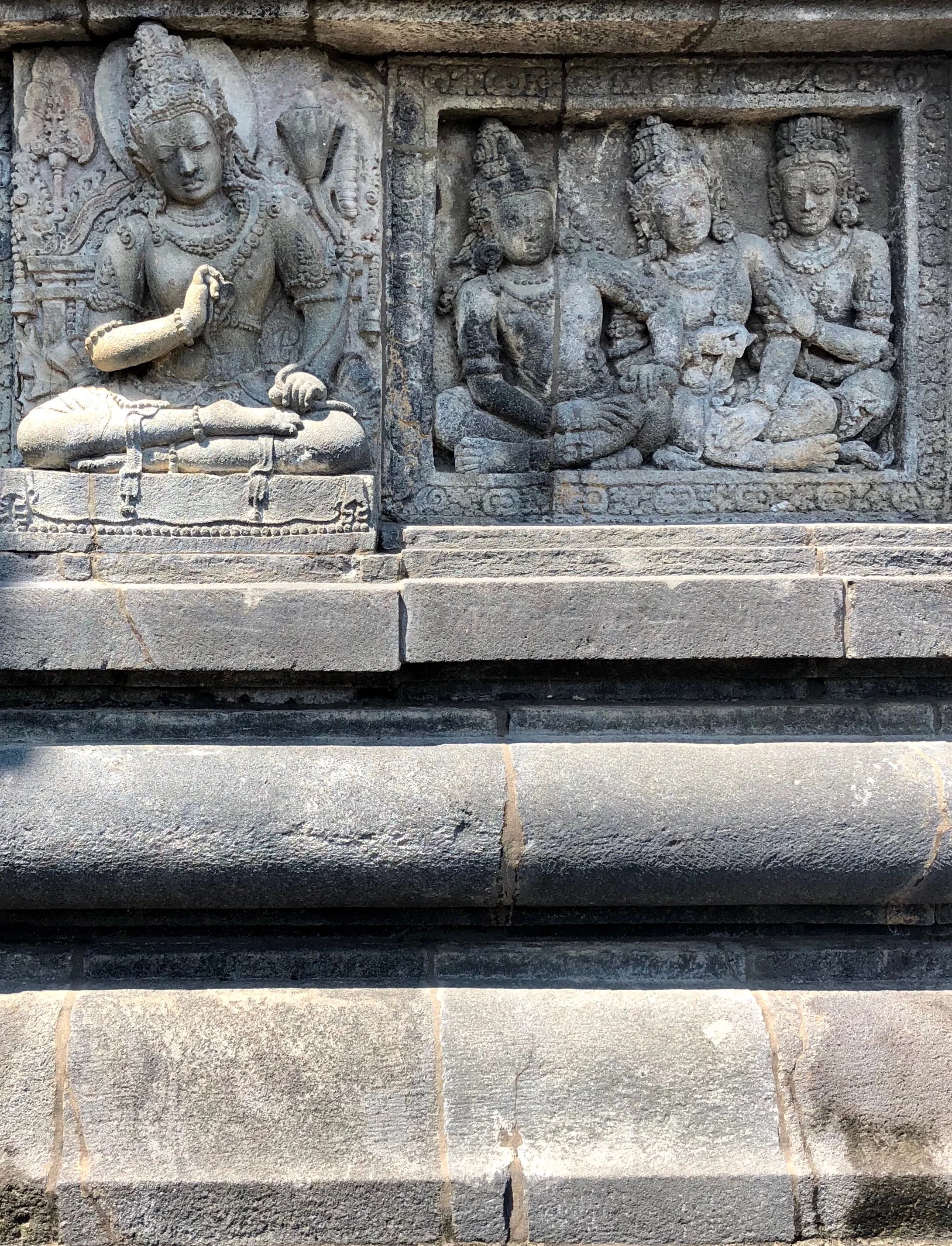
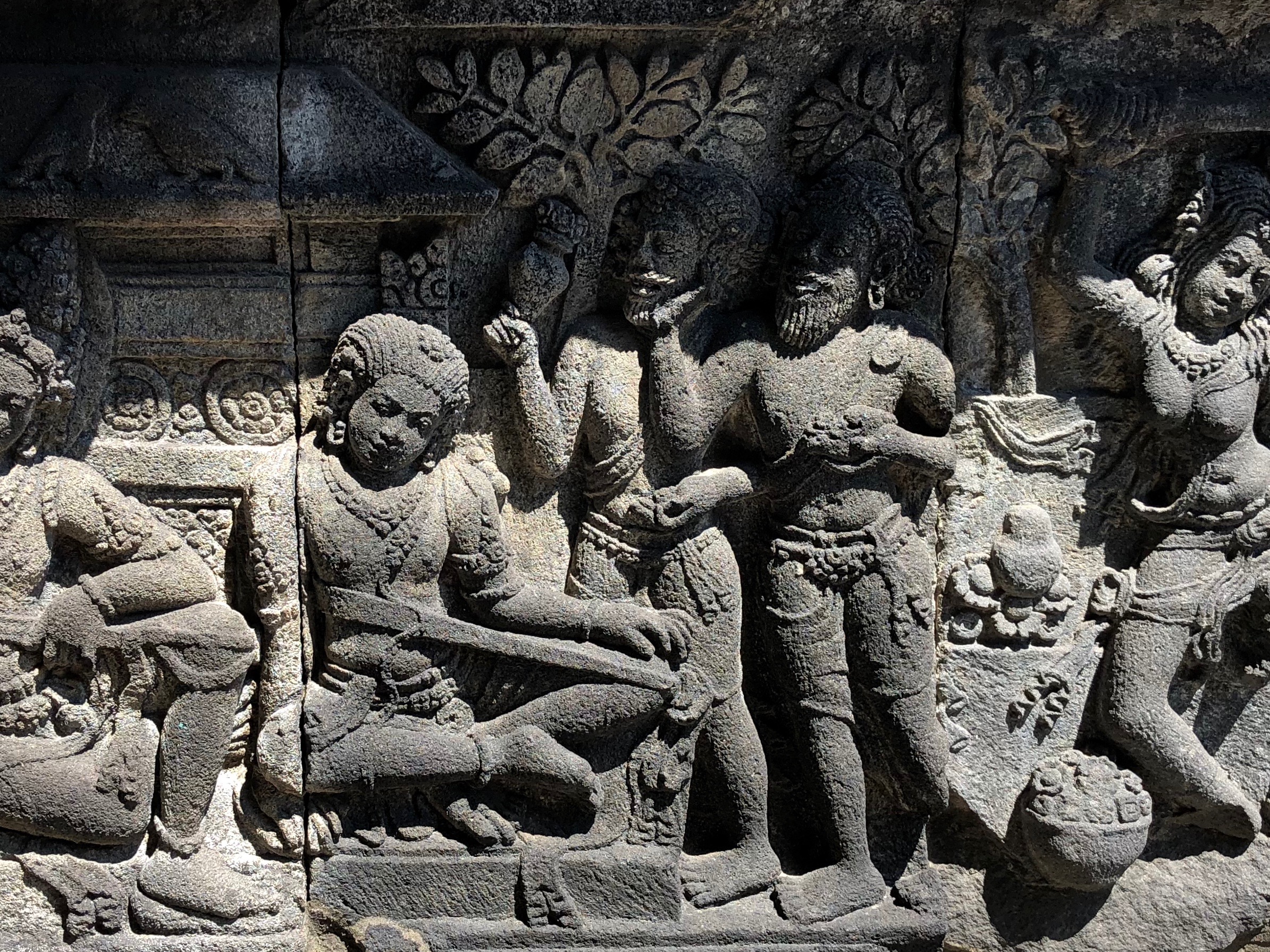
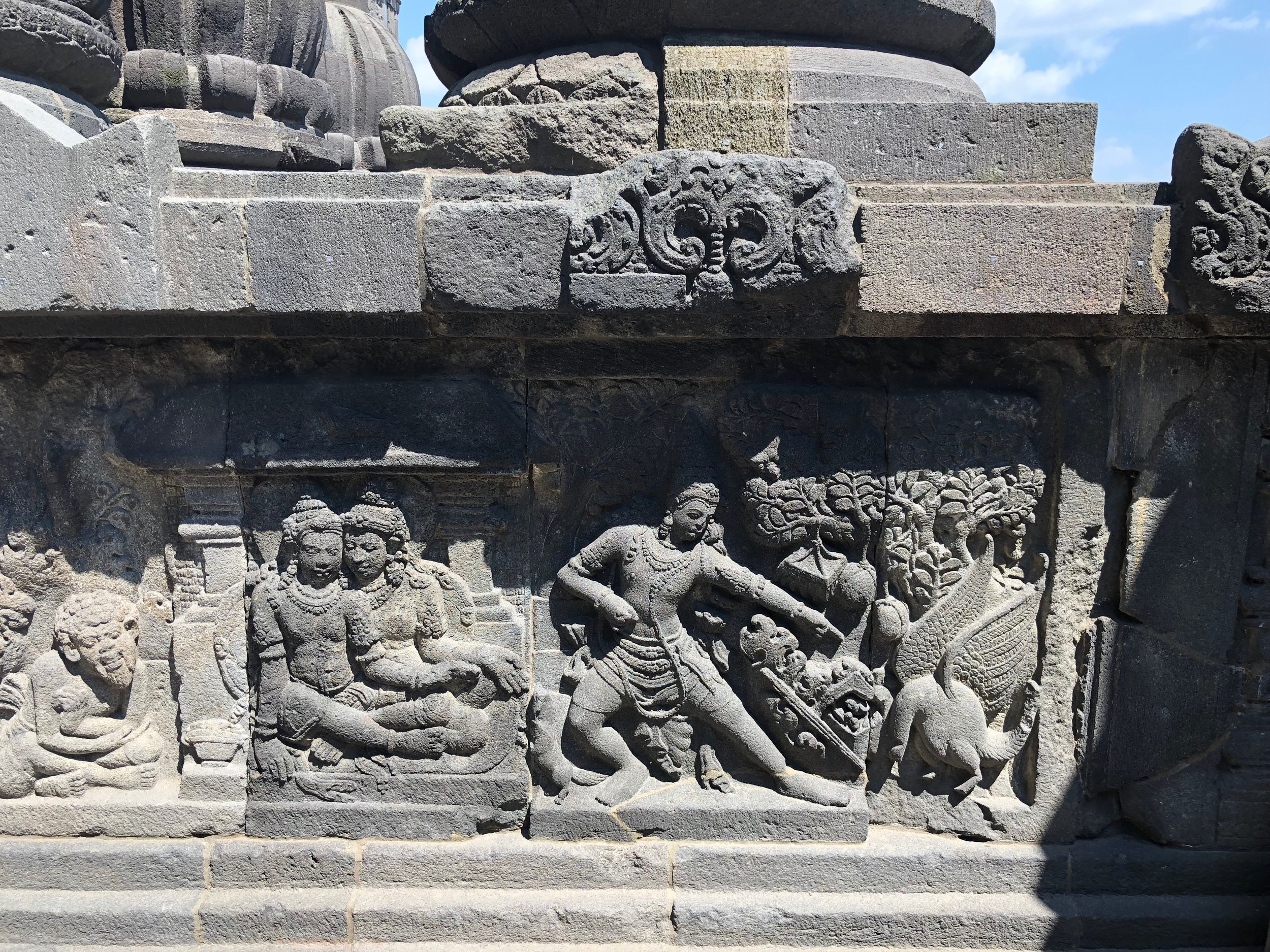
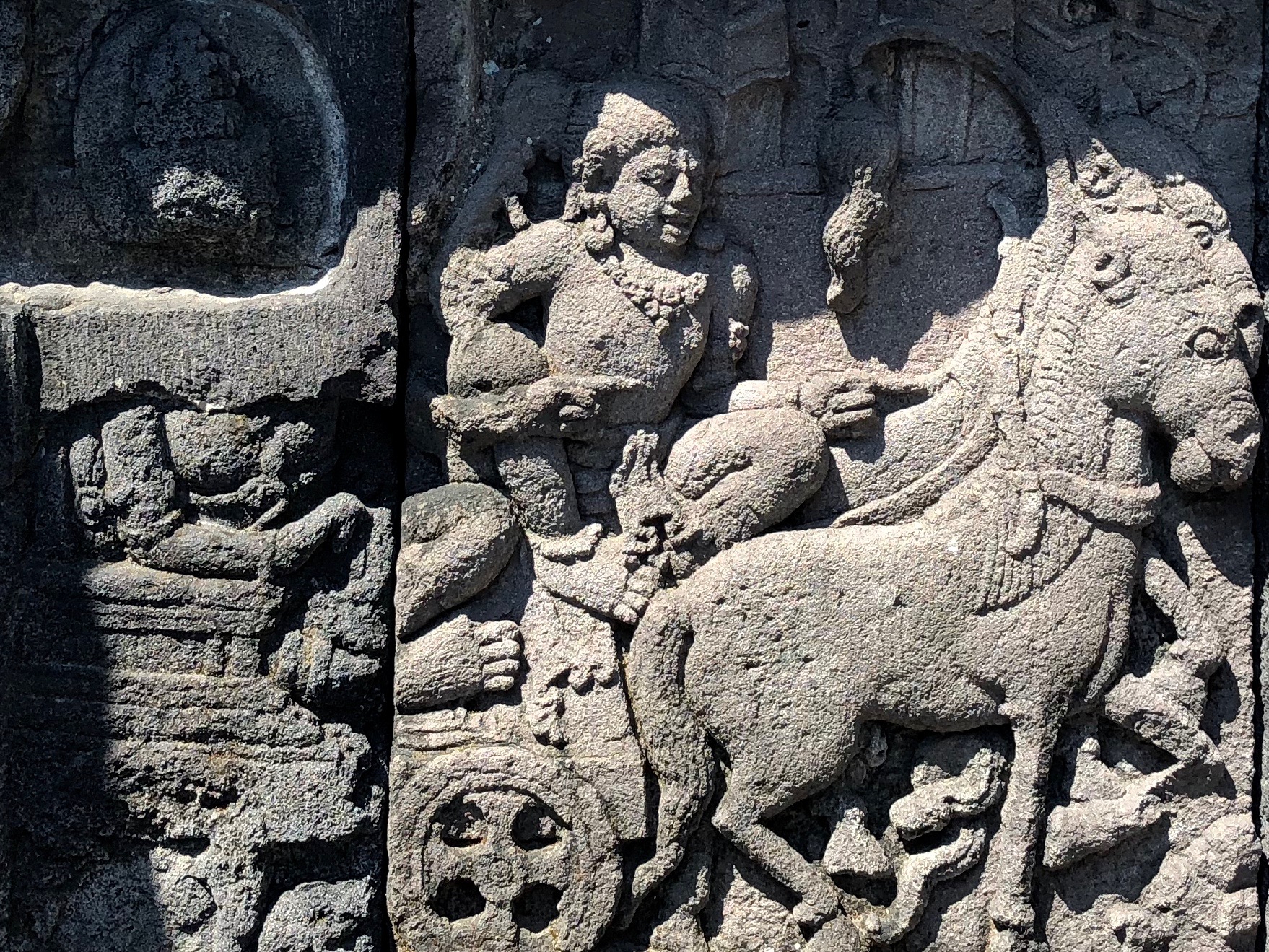
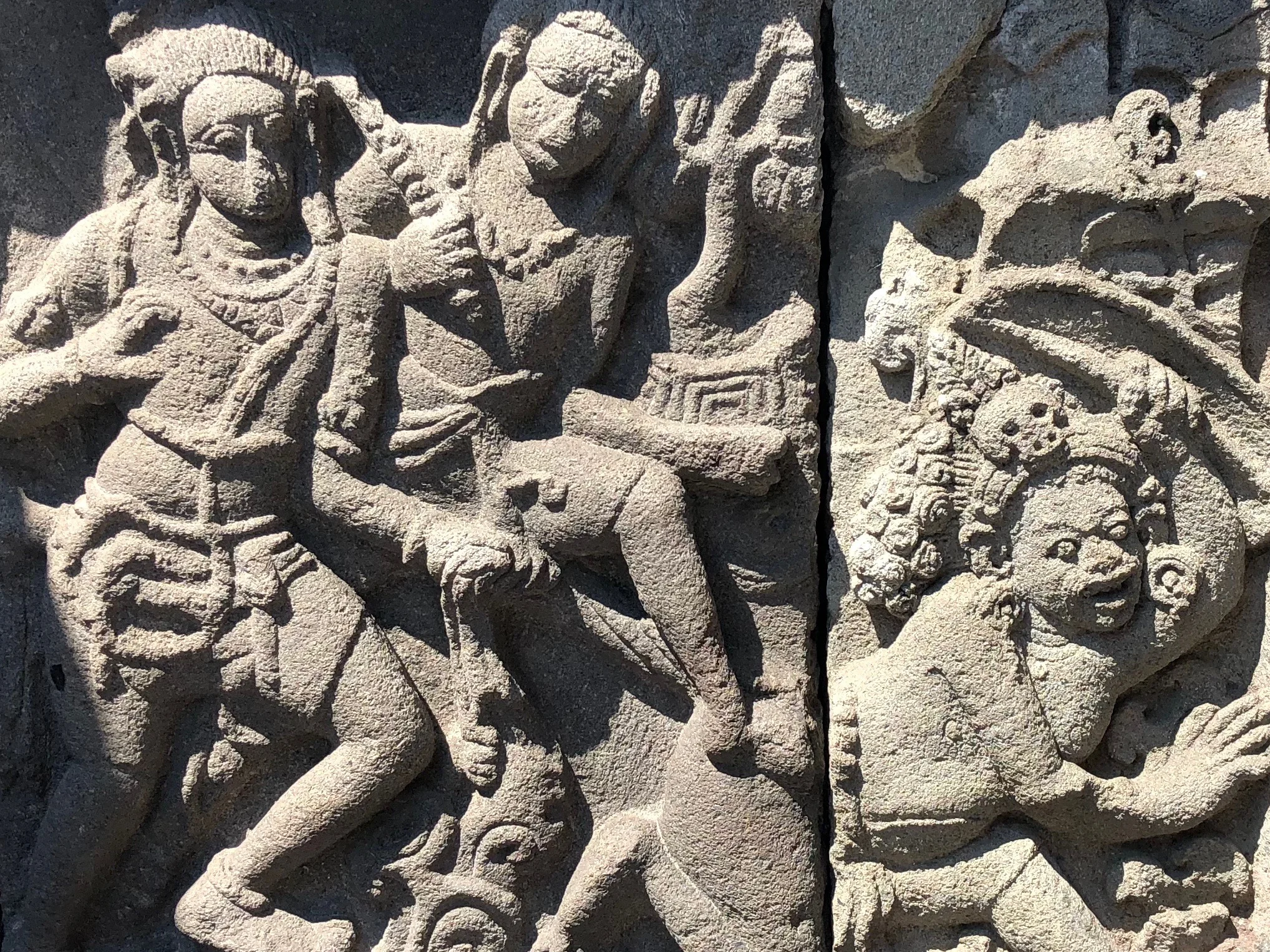
Not to be outdone by Borobudur, the central Shiva temple is the tallest. At 154 feet, it’s 41 feet higher than the triple-tiered stone umbrella chatra that once served as the pinnacle of its rival complex. The temple is embellished with a series of elegant carvings along the inner wall, depicting scenes from the ancient Indian epic the Ramayana.

Those not pure of heart will be crushed as they try to walk under Kala’s mouth — or so the legend goes

Those not pure of heart will be crushed as they try to walk under Kala’s mouth — or so the legend goes

Wally loves nothing better than to explore an ancient temple

Wally loves nothing better than to explore an ancient temple

A lion sits within a small niche flanked by half-woman and half-bird kinnara

A lion sits within a small niche flanked by half-woman and half-bird kinnara

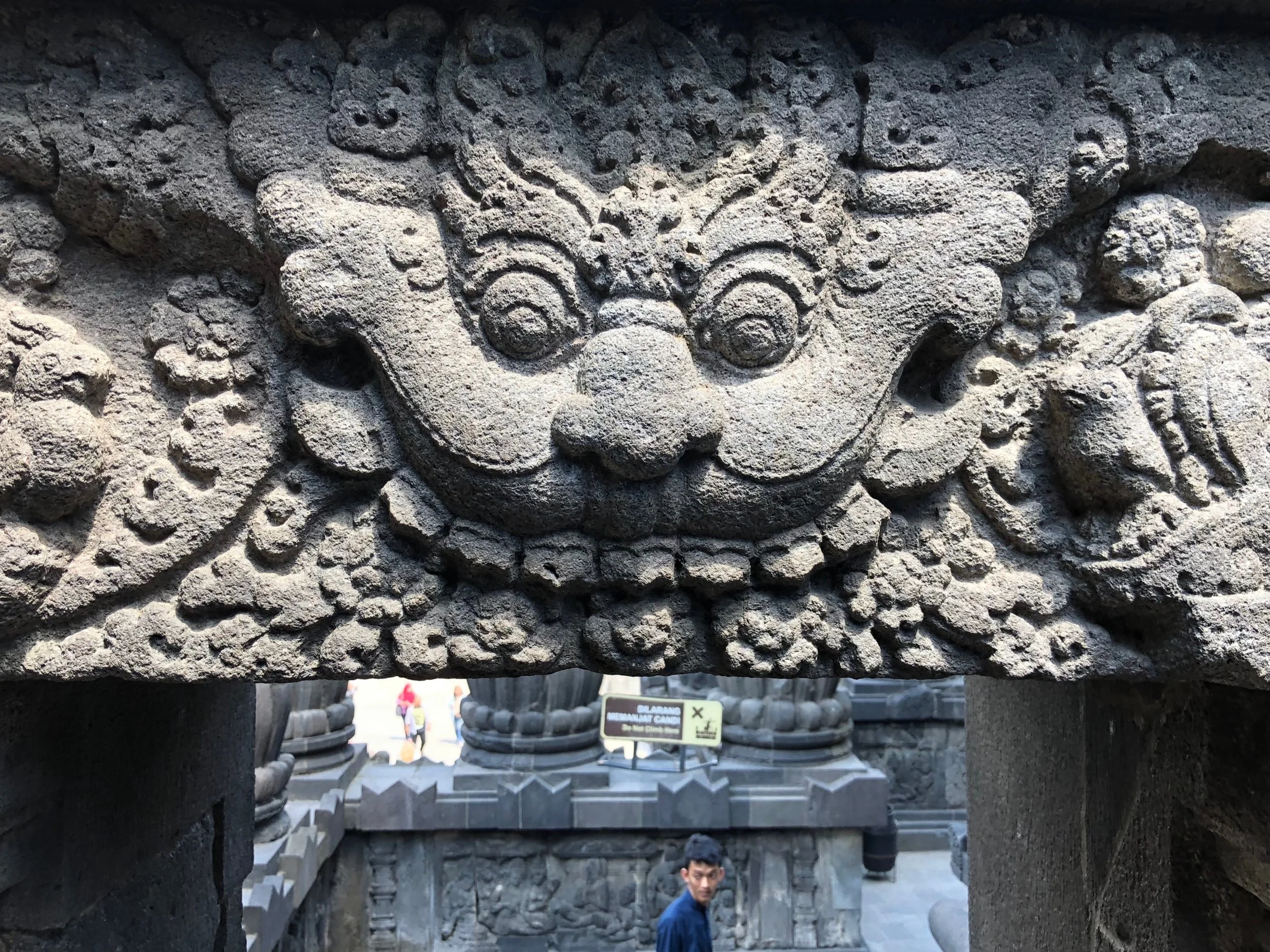
Wally and I followed our guide and made the ascent up the steep stone steps before reaching the eastern sanctuary chamber of Shiva. We passed through a portico with the monstrous gaping half-mouth of Kala leering at us from its lintel. Wally asked Dwi what this creature was. He replied by saying that if you’re a bad person, the mouth will close down upon you!

The statue of Shiva the Destroyer

The statue of Shiva the Destroyer

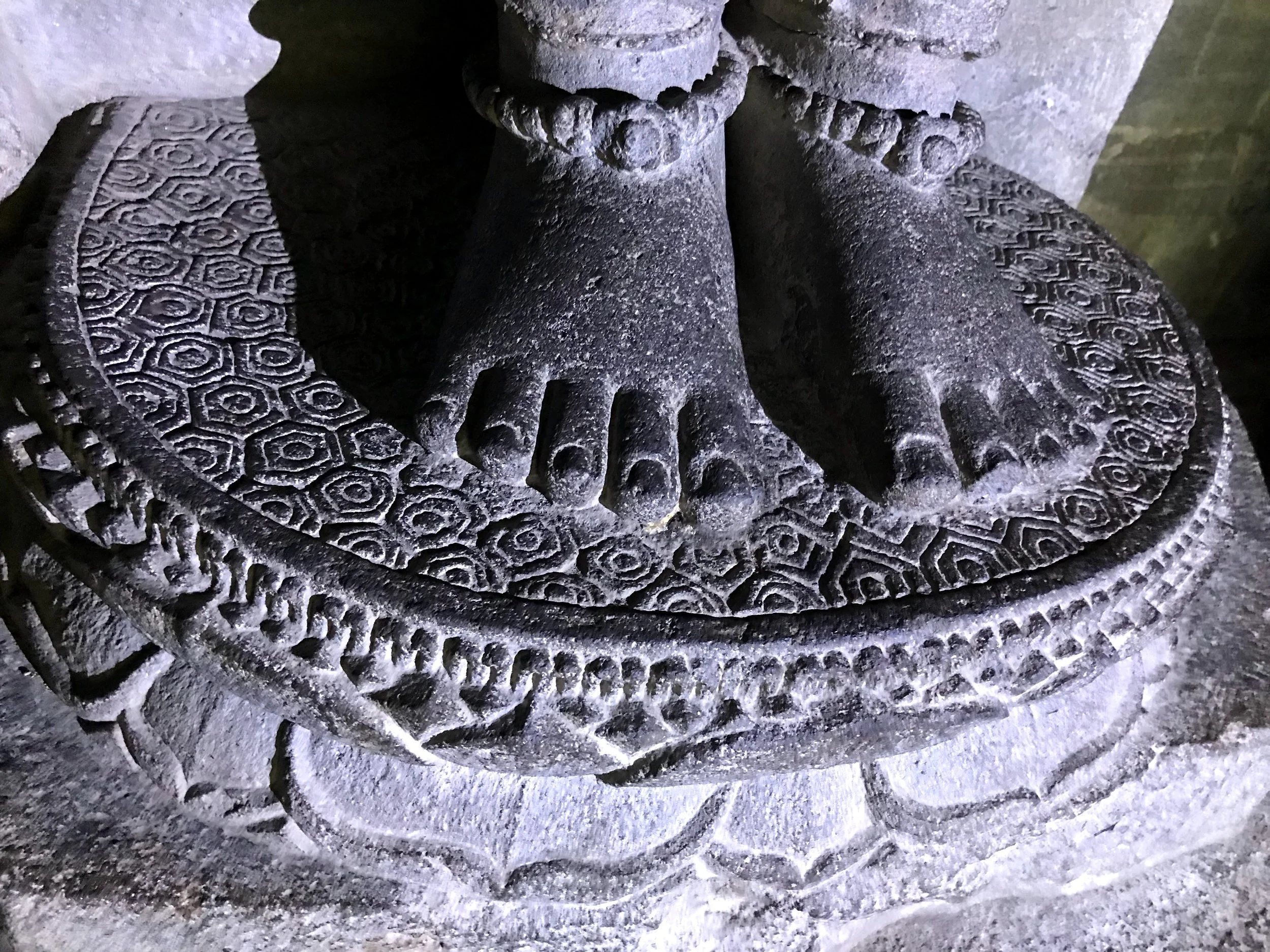
Shiva stands upon a lotus, which symbolizes enlightenment — an odd depiction of the god

Shiva stands upon a lotus, which symbolizes enlightenment — an odd depiction of the god

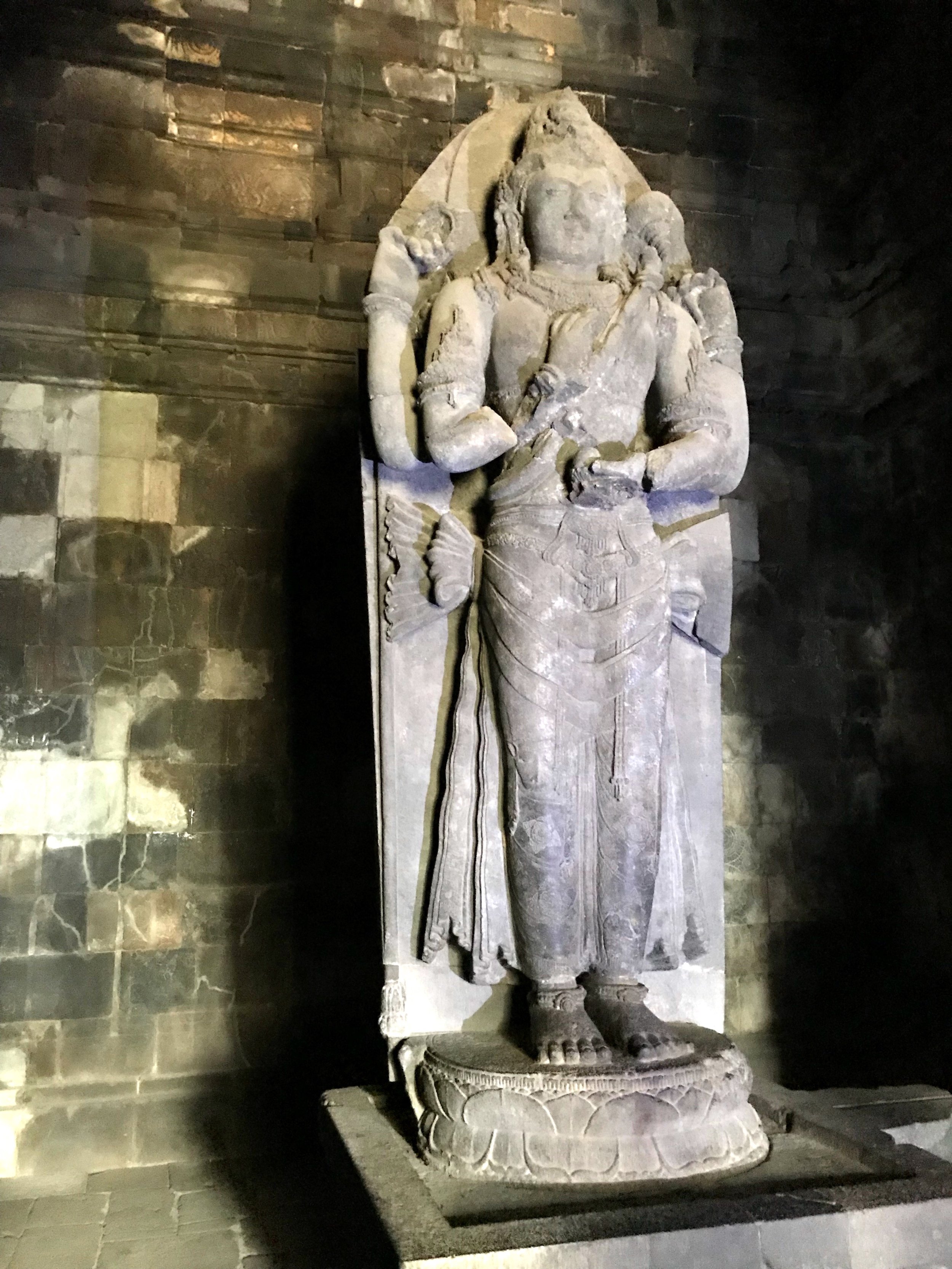
The east chamber contains a four-armed 10-foot-tall statue of Shiva, standing erect atop a blooming lotus flower, the Buddhist symbol of enlightenment. Some historians believe this rare depiction may be due to the union between Hindu Prince Rakai Pikatan and Buddhist Princess Pramodhawardhani. However, it is also thought that the statue was made in the likeness of King Mataram Balitung, who considered himself the divine manifestation of Shiva.

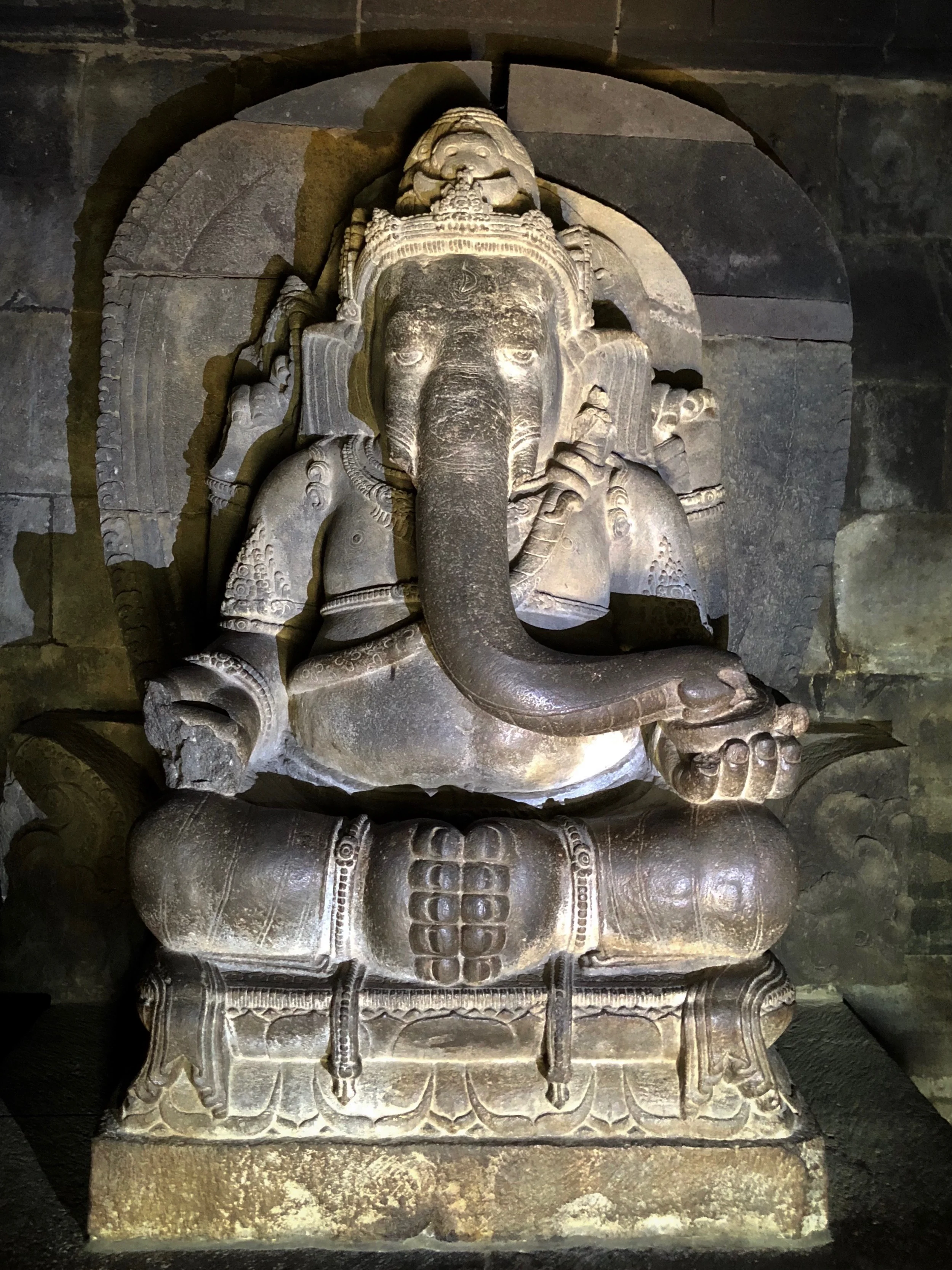
The elephant-headed Ganesha grants wishes

The elephant-headed Ganesha grants wishes

A nearby chamber contains a statue of his portly son Ganesha, the remover of obstacles. Dwi regaled us with an interesting tale of how Ganesha broke off a tusk and used it as a pen to transcribe the ancient Indian epic the Mahabharata. The tip of his trunk dips into a bowl of sweets, of which he is very fond.

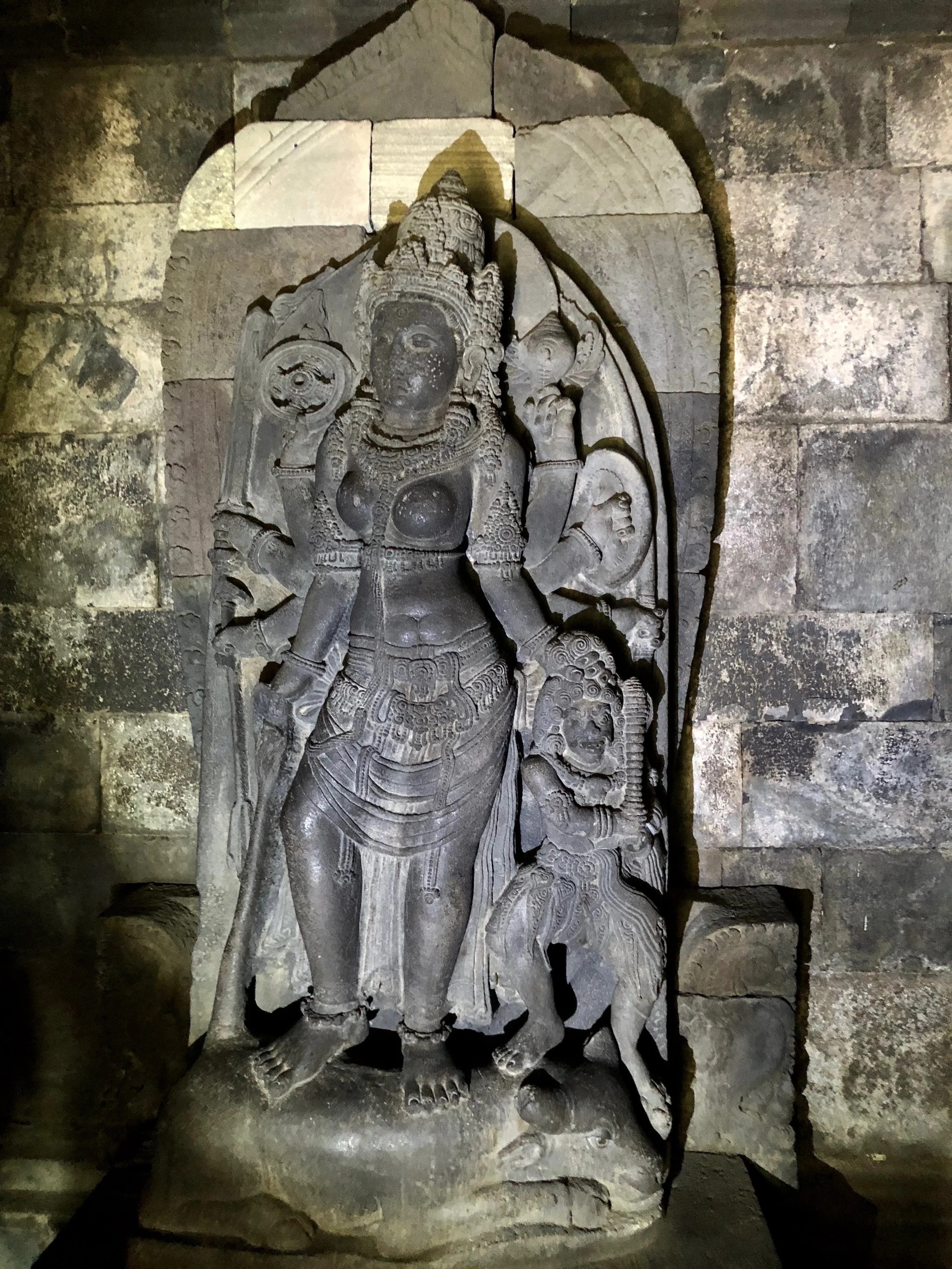
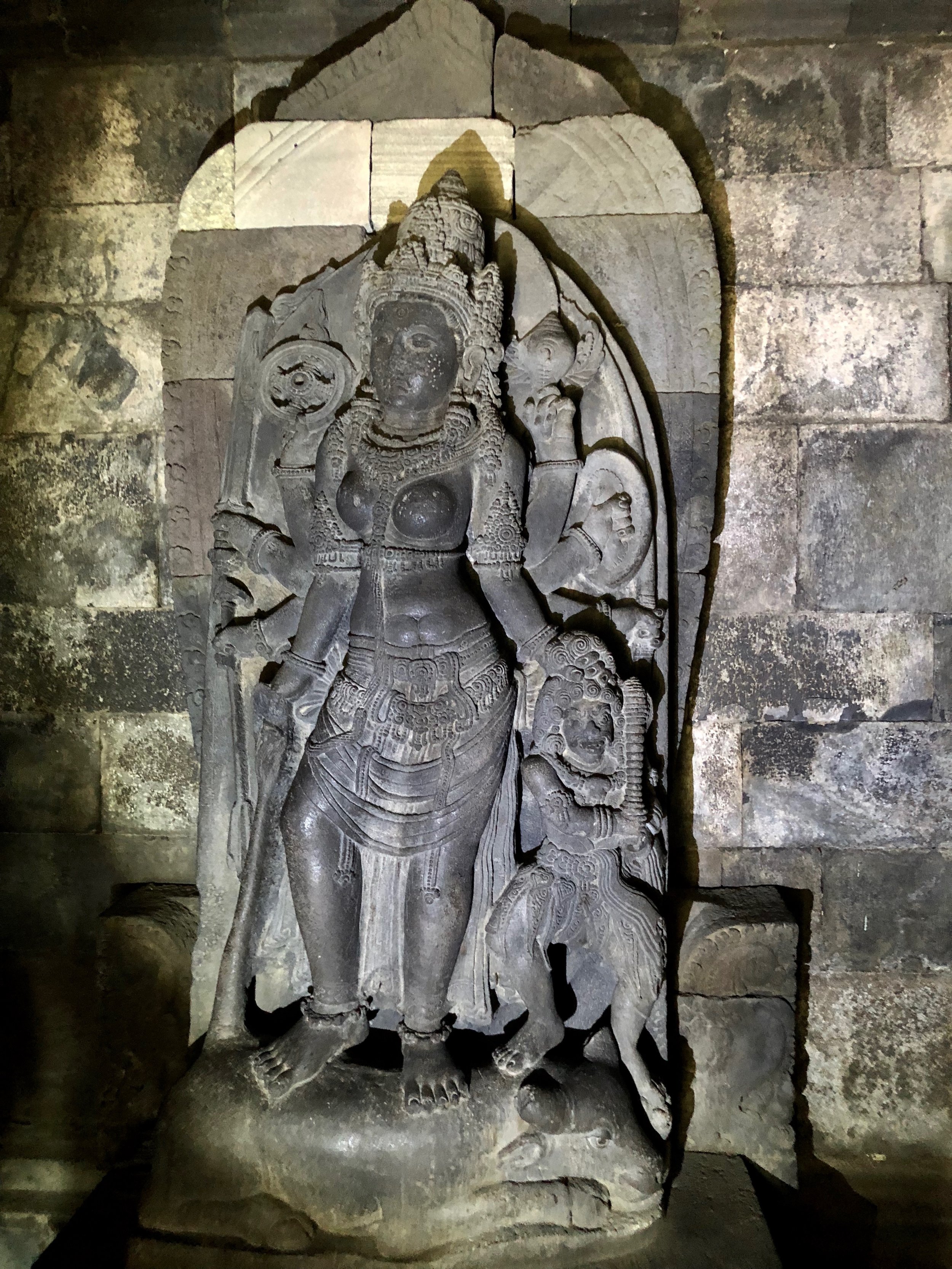
Fierce Durga holds weapons in six of her eight hands

Fierce Durga holds weapons in six of her eight hands

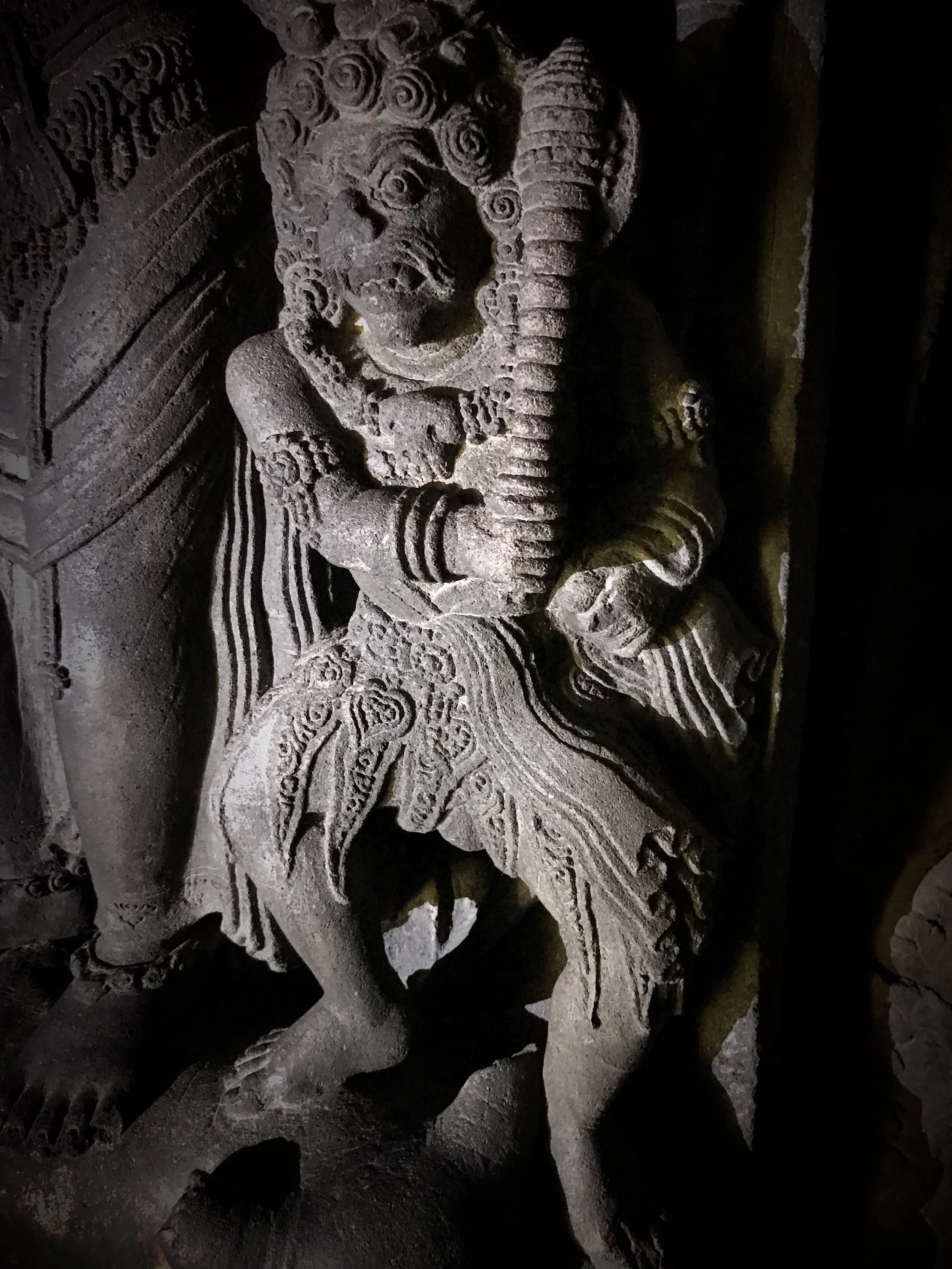
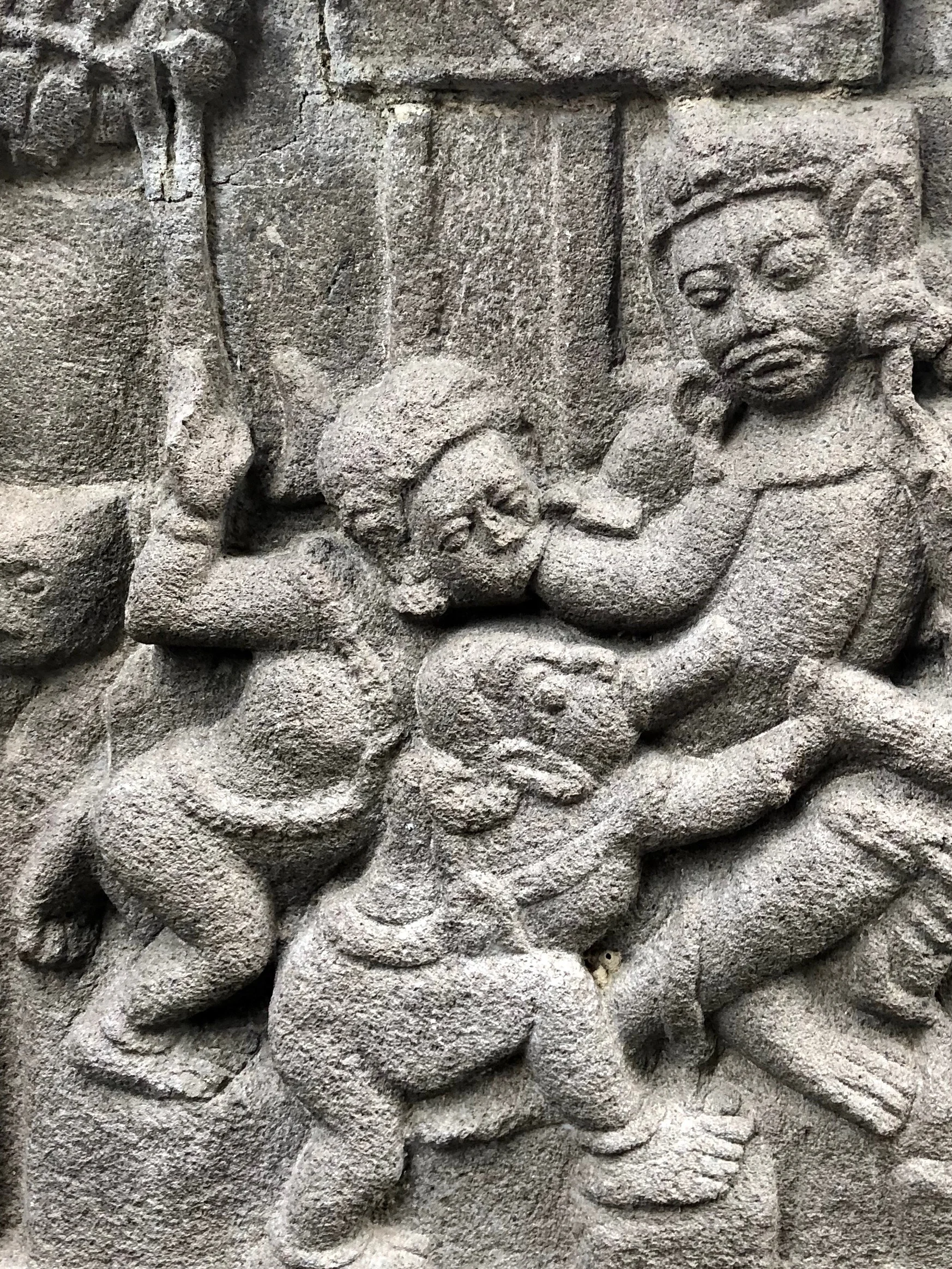
This dwarf isn’t happy that Durga is touching his head

This dwarf isn’t happy that Durga is touching his head

In the northern chamber is a statue of Shiva’s consort Durga, also referred to by locals as Loro Jonggrang, the Slender Virgin. The protective mother goddess of the Hindu universe is depicted standing in a relaxed pose, her right leg slightly bent and her hip jutting out to the left. Six of her eight arms hold weapons. She stands on the back of the asura Mahisa, a demon in the form of a buffalo. Durga holds his tail in one hand, while another touches the top of a dwarf’s head — a taboo gesture in Hinduism, as the head is considered the highest and most sacred part of the body.

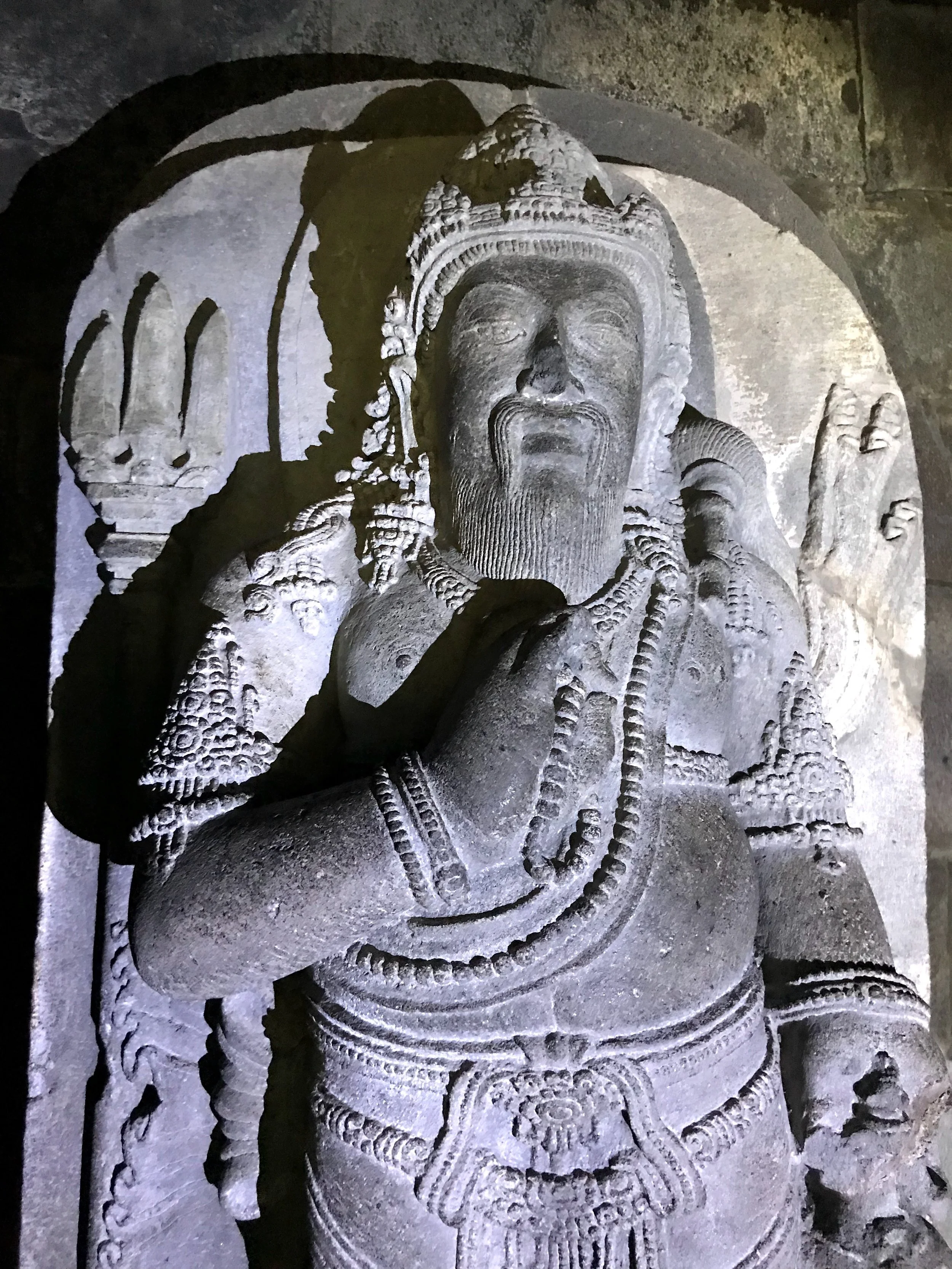
A statue of the dwarf hermit Agastya with his trident

A statue of the dwarf hermit Agastya with his trident

The south-facing chamber has a statue of the hermit Agastya, one of the most venerated sages in Hinduism, portrayed as a dwarf with a long beard. He has a fan on his left shoulder and a trident on his right.

The bas-relief panels of the Shiva Temple depict the epic love story of Rama and Sita:

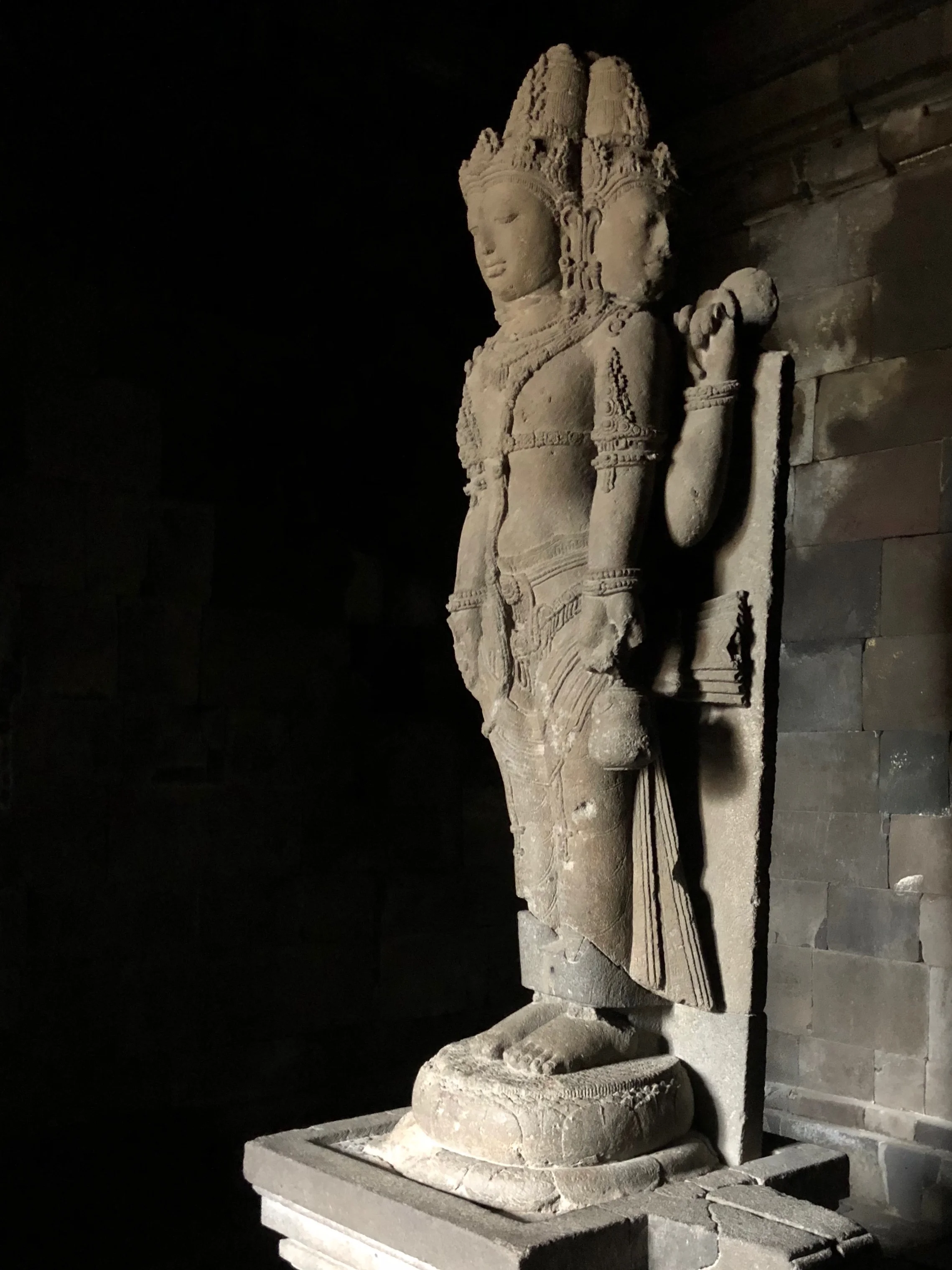
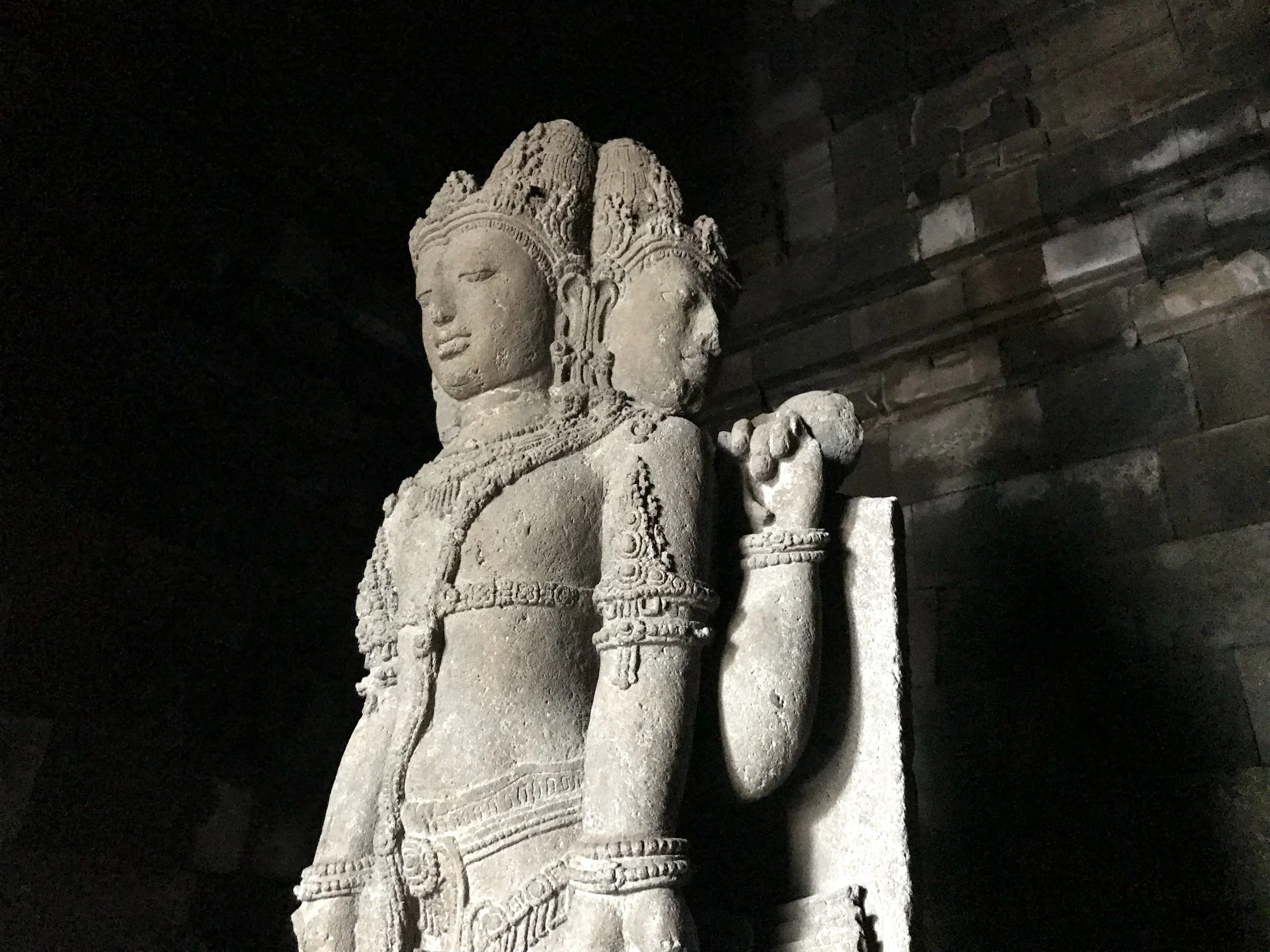
The statue of Brahma the Creator

The statue of Brahma the Creator

You can’t sneak up on this guy!

You can’t sneak up on this guy!

The Brahma Temple

A single chamber inside the temple contains a statue of Brahma, depicted with his four faces and four arms. The four faces symbolize the four cardinal directions as well as the four Vedas, the most sacred Hindu scriptures: The Rig Veda, Yajur, Sama Veda and Atharva Veda.

The Temple of Vishnu, like the others, is carved out of volcanic stones pieced together

The Temple of Vishnu, like the others, is carved out of volcanic stones pieced together

The Vishnu Temple

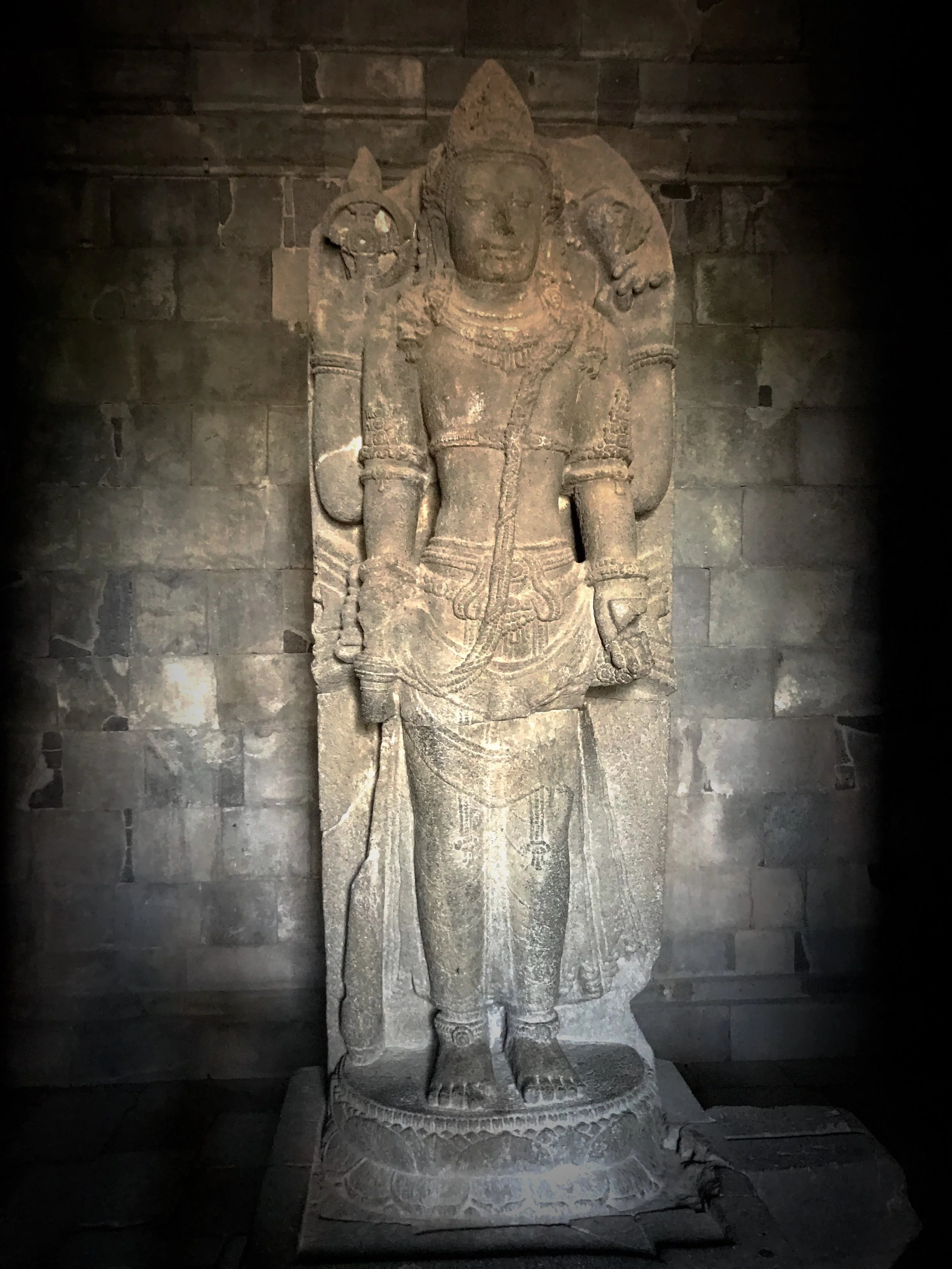
Like the temple dedicated to Brahma, a single interior chamber holds a statue of the deity. Vishnu wears a tall crown upon his head. He has four limbs, two of which are raised up and the other two down. His upper right hand holds a discus and the left holds a conch shell.

Vishnu the Protector holds a discus and conch shell

Vishnu the Protector holds a discus and conch shell

Are they breastfeeding? Some of the carvings on Hindu temples can be quite bizarre

Are they breastfeeding? Some of the carvings on Hindu temples can be quite bizarre

The Temple of Vishnu is decorated with carvings retelling the epic battles of Krishna

The Temple of Vishnu is decorated with carvings retelling the epic battles of Krishna

Blue-skinned Krishna is an avatar of Vishnu but is also worshipped as a god

Blue-skinned Krishna is an avatar of Vishnu but is also worshipped as a god

The bulbous lingam-yoni ornaments encircling the temples represent male and female reproductive parts

The bulbous lingam-yoni ornaments encircling the temples represent male and female reproductive parts

The Nandi Temple

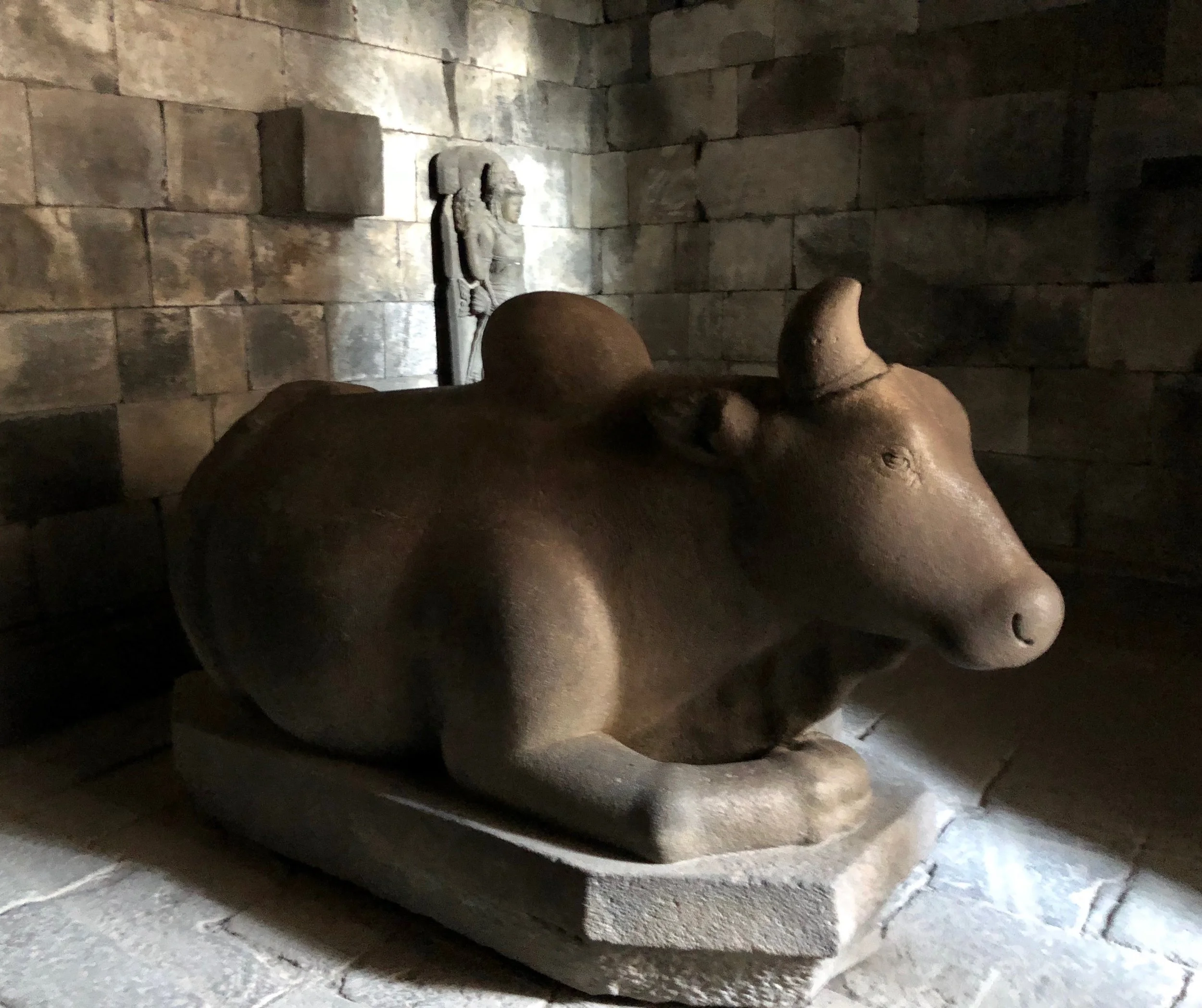
All gods need transport, and at Prambanan, they have their own smaller temples. Nandi is the only statue of the vahanas that has survived.

Nandi the Bull carried around the god Shiva

Nandi the Bull carried around the god Shiva

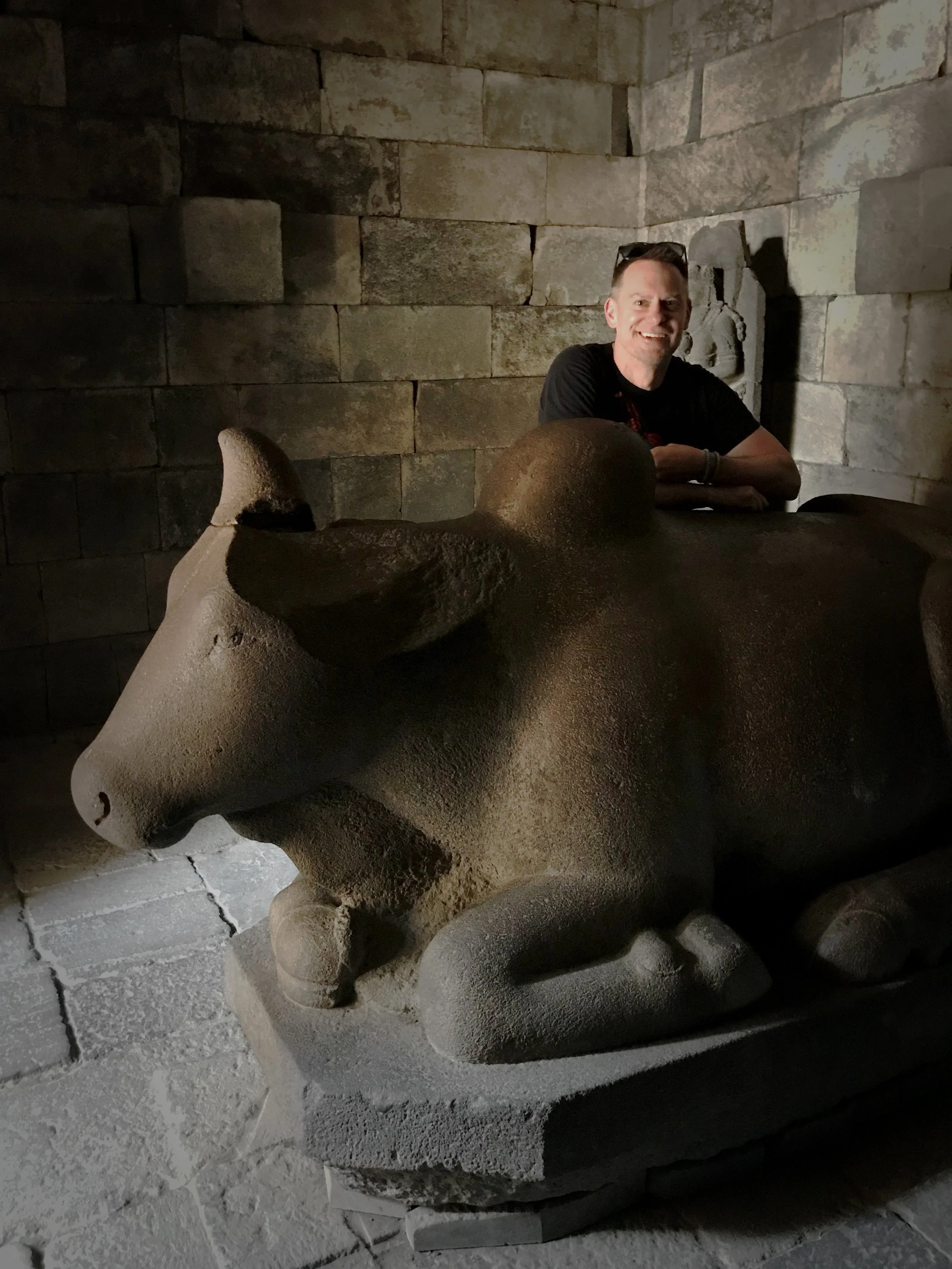
We’re drawn to various characters in mythology — and Duke has always loved Nandi

We’re drawn to various characters in mythology — and Duke has always loved Nandi

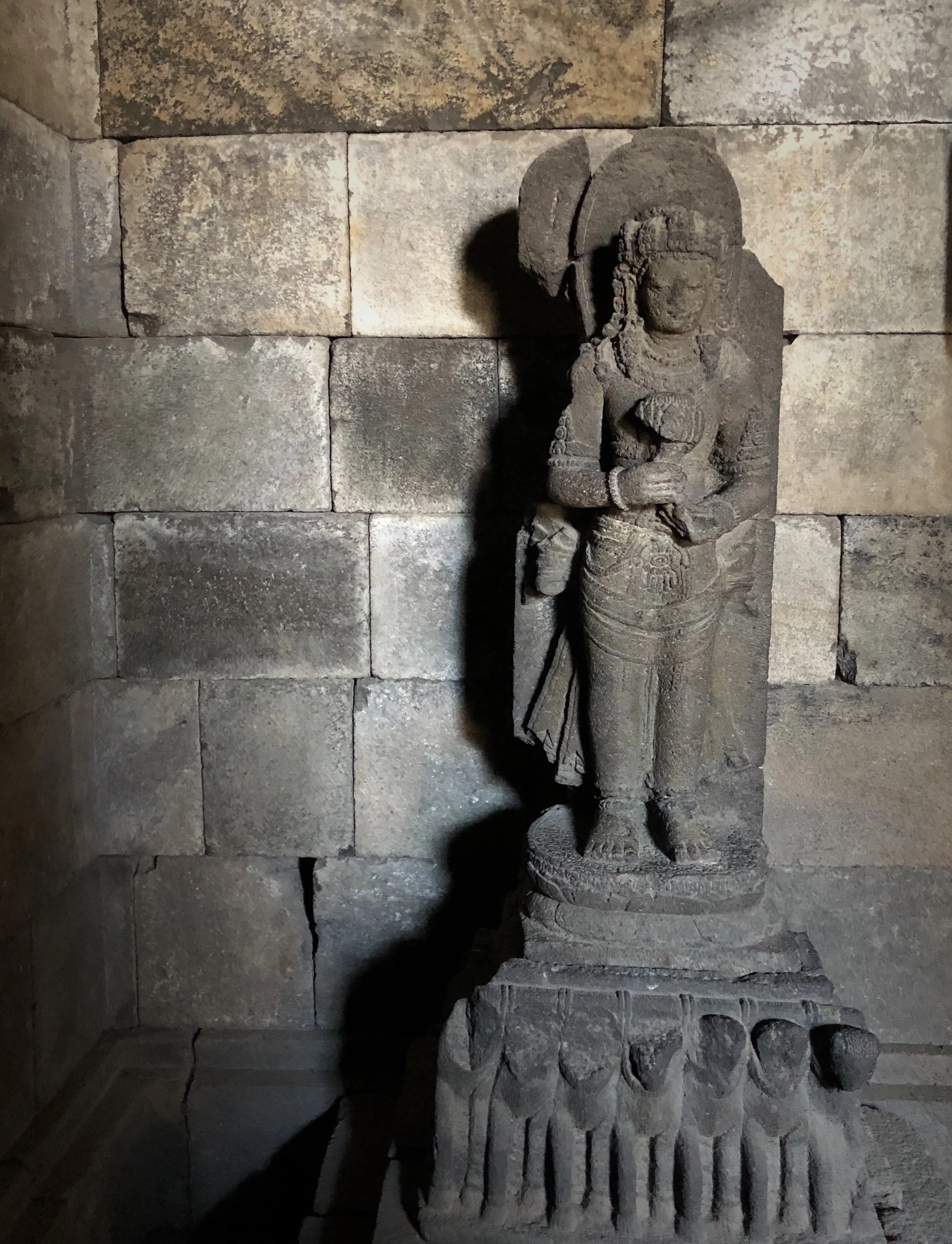
The temple for Nandi the Bull sits in front of the Shiva Temple. In the inner chamber of this shrine, the humped reclining statue of Nandi rests on a raised platform facing the entrance door so it may perpetually gaze on Shiva. Sadly, its left horn has broken off and is missing. To the left is a statue of Surya, the Hindu god of the sun, standing atop seven horses.

Surya, the god of the sun, stands on a chariot drawn by seven horses

Surya, the god of the sun, stands on a chariot drawn by seven horses

The Paparazzi Descends Upon Us

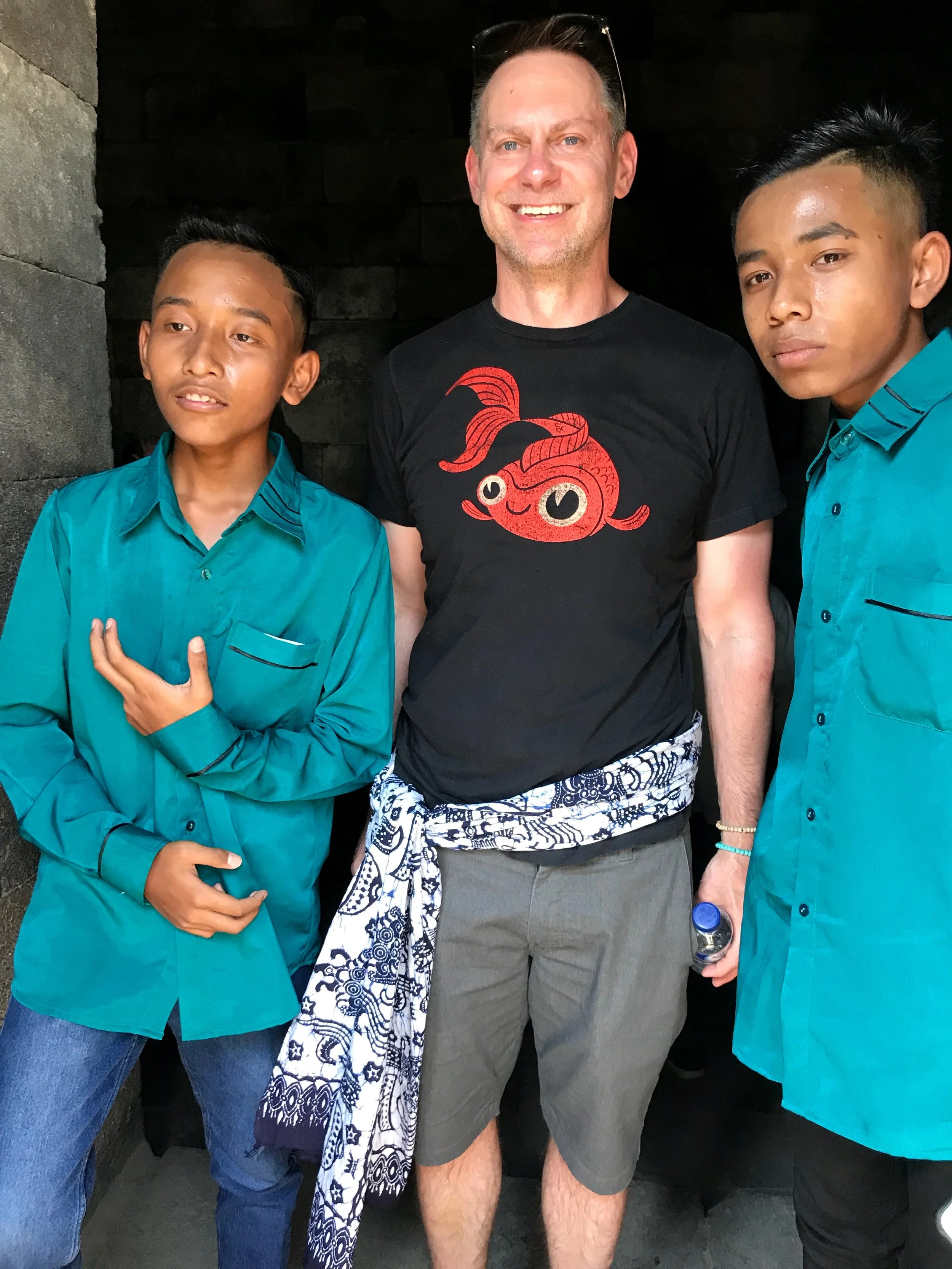
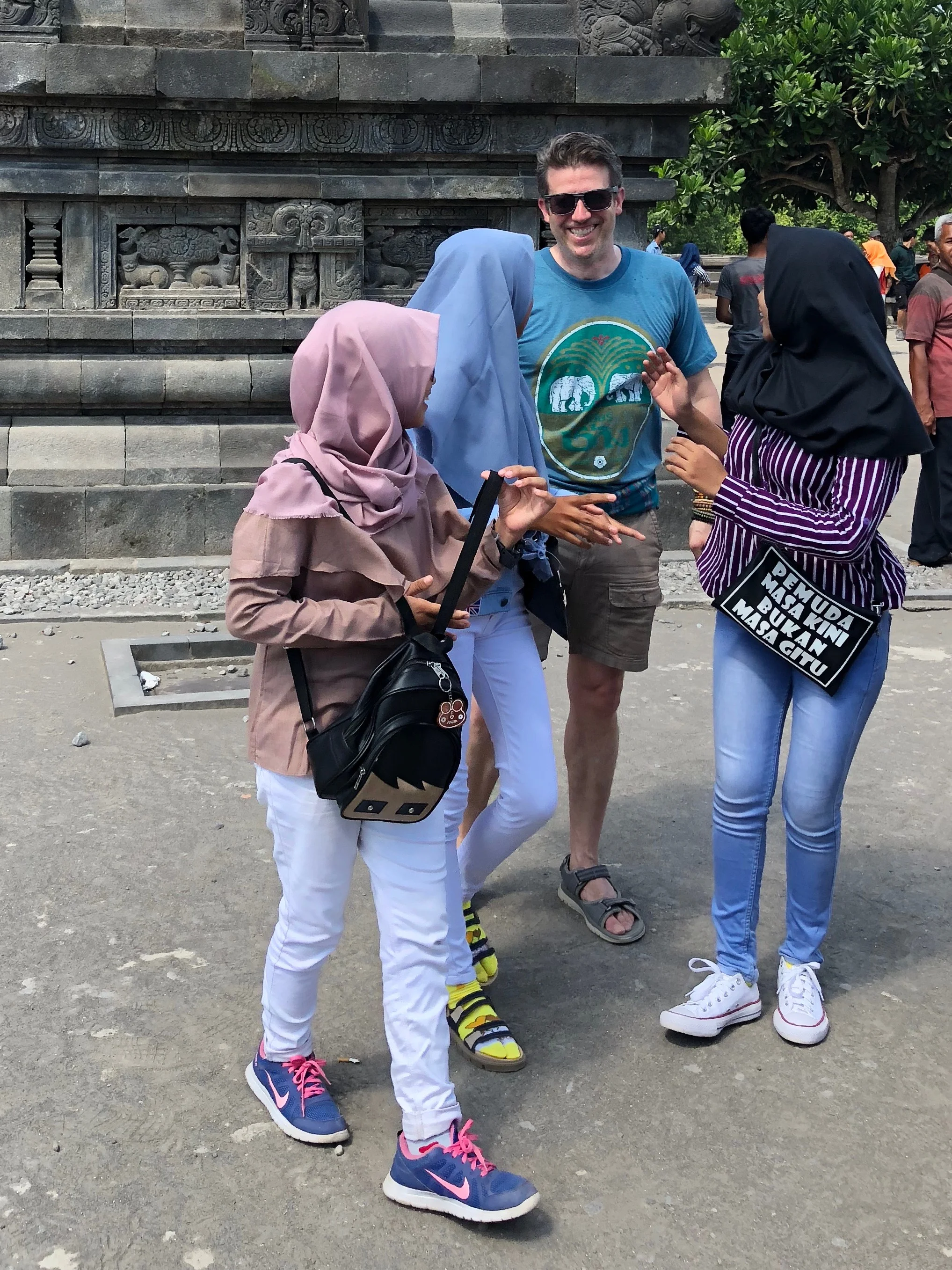
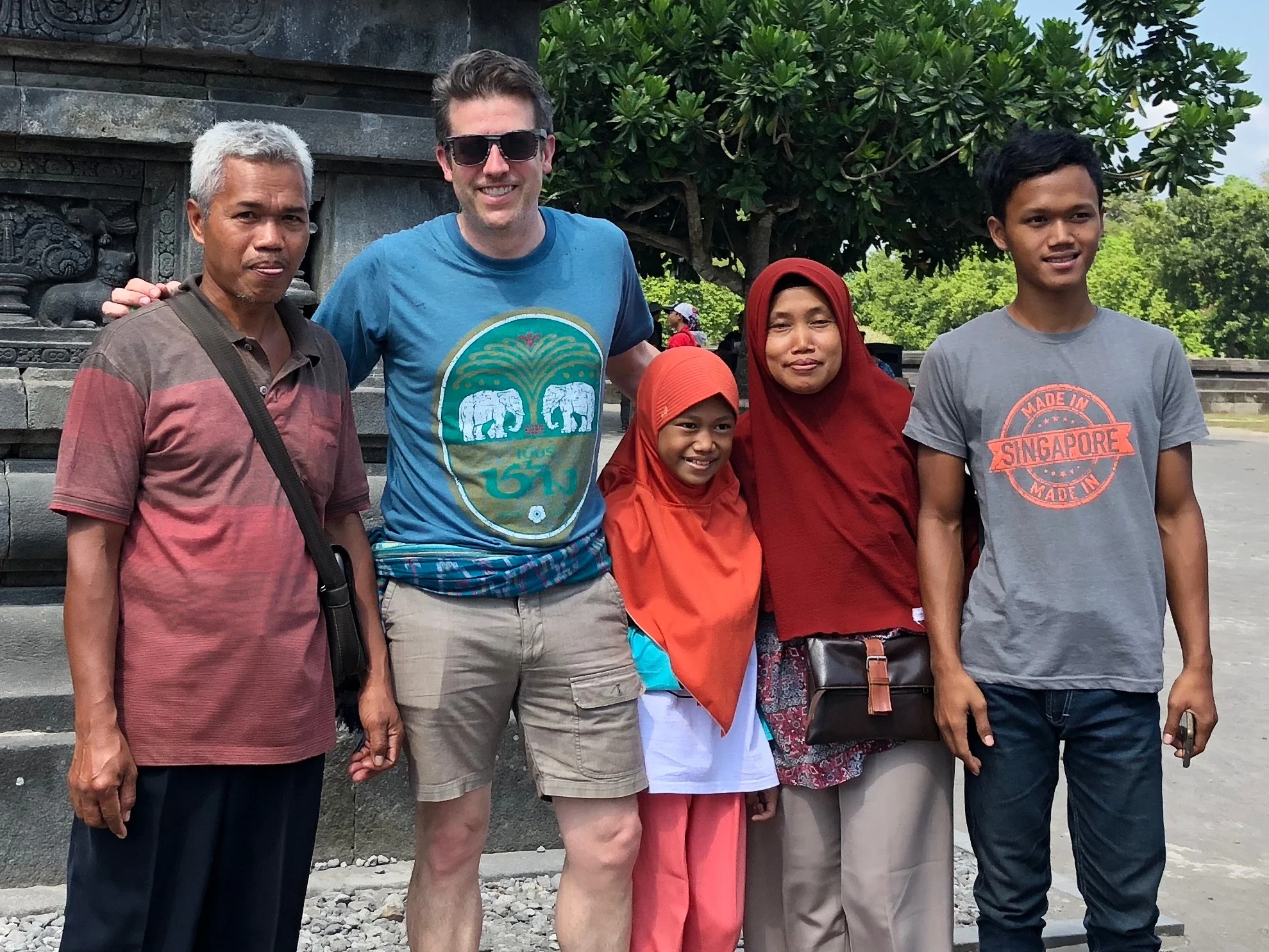
After our guide Dwi bade us adieu, we continued to explore the complex. Local students who were also visiting Prambanan excitedly approached, asking if if it would be OK to take a picture with us. At first it was fun and we were flattered, but after 10 or so photos, we had to politely say no with a smile and fled the complex.

The minute our guide left us, the locals swarmed, asking to take photos with us

The minute our guide left us, the locals swarmed, asking to take photos with us

Get to Prambanan as early as possible — busloads of schoolkids take field trips to the temple complex

Get to Prambanan as early as possible — busloads of schoolkids take field trips to the temple complex

At first we were amused by all the attention

At first we were amused by all the attention

The girls wore jeans, sneakers and brightly colored headscarves. “You’re so tall!” they exclaimed

The girls wore jeans, sneakers and brightly colored headscarves. “You’re so tall!” they exclaimed

After about 10 photos, posing with strangers got a bit old

After about 10 photos, posing with strangers got a bit old

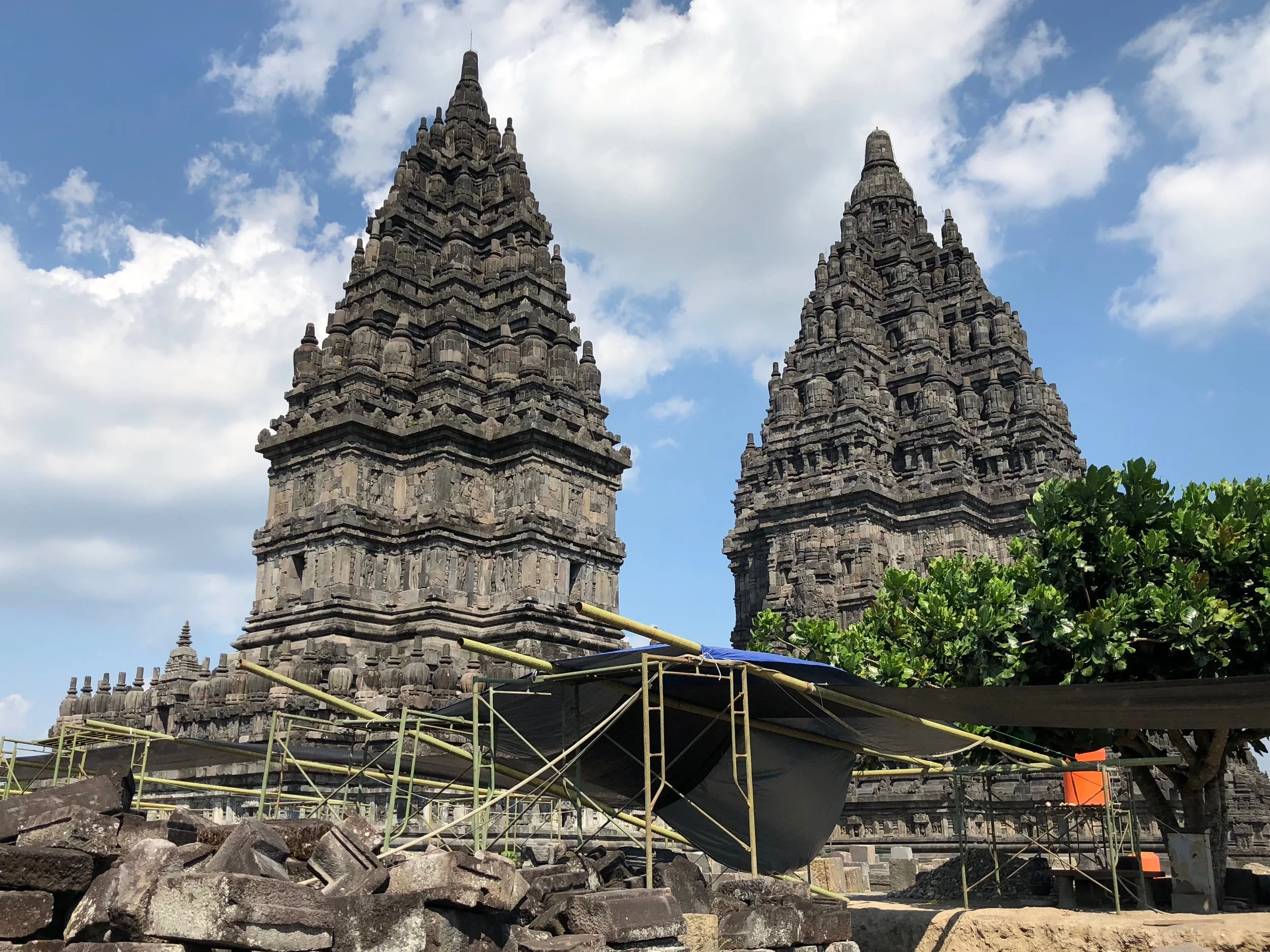
Around back, there were scaffolds, work in progress — and no tourists — so we were able to make our escape from all the attention

Around back, there were scaffolds, work in progress — and no tourists — so we were able to make our escape from all the attention

We recommend visiting Borobudur and Prambanan on different days. Each complex is completely different, and I honestly feel that we wouldn’t have been able to appreciate the grandeur and complexity of each site if we crammed them into a single day. –Duke

Prambanan Temple

Prambanan Temple

Prambanan
Kranggan
Bokoharjo
Prambanan
Sleman Regency
Special Region of Yogyakarta
Indonesia

Bali Then and Now

In the post-Eat Pray Love world, Bali has lost a bit of its charm. Ubud has become a more congested tourism hotspot, but parts of the island remain a paradise on Earth.

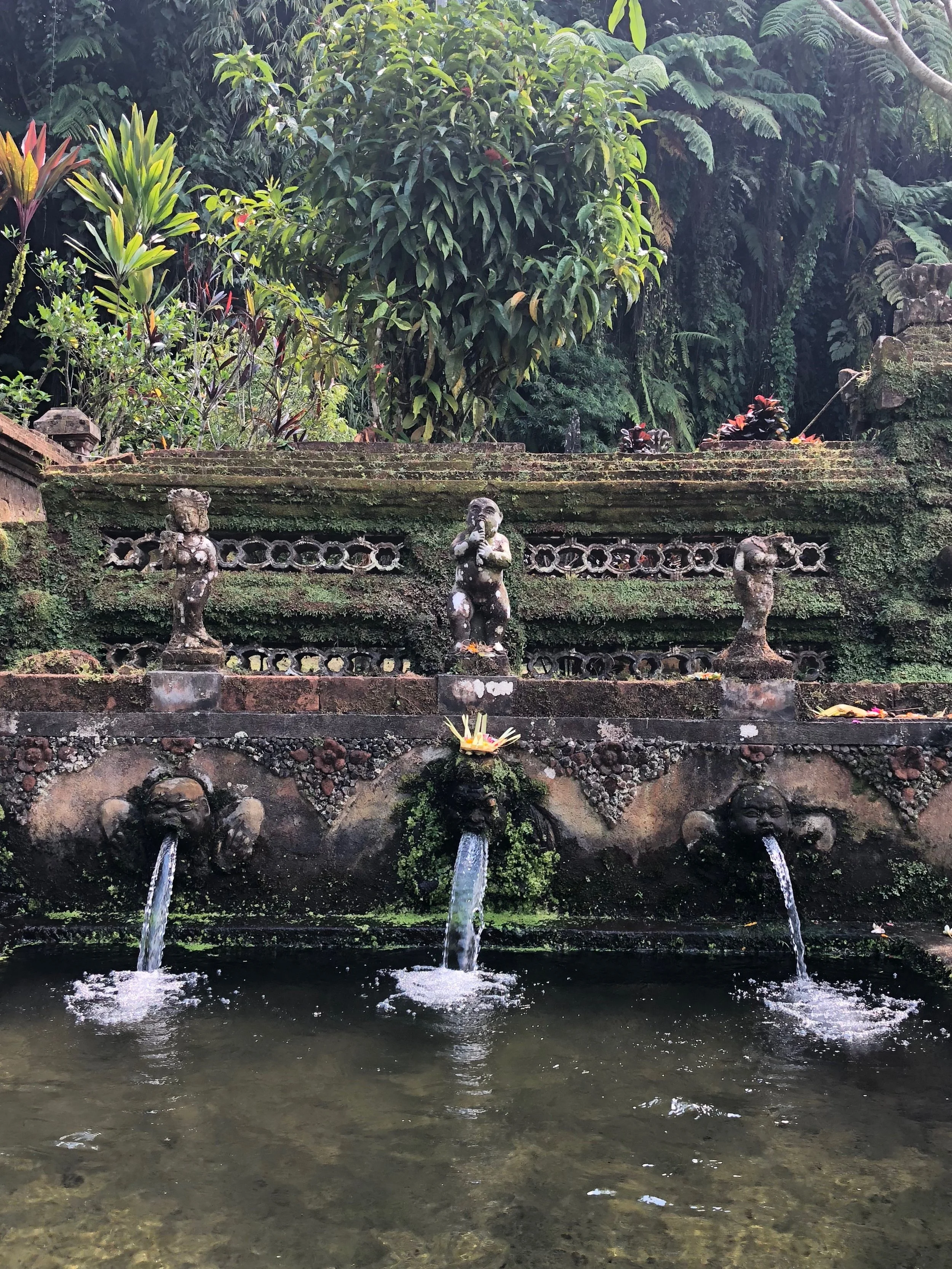
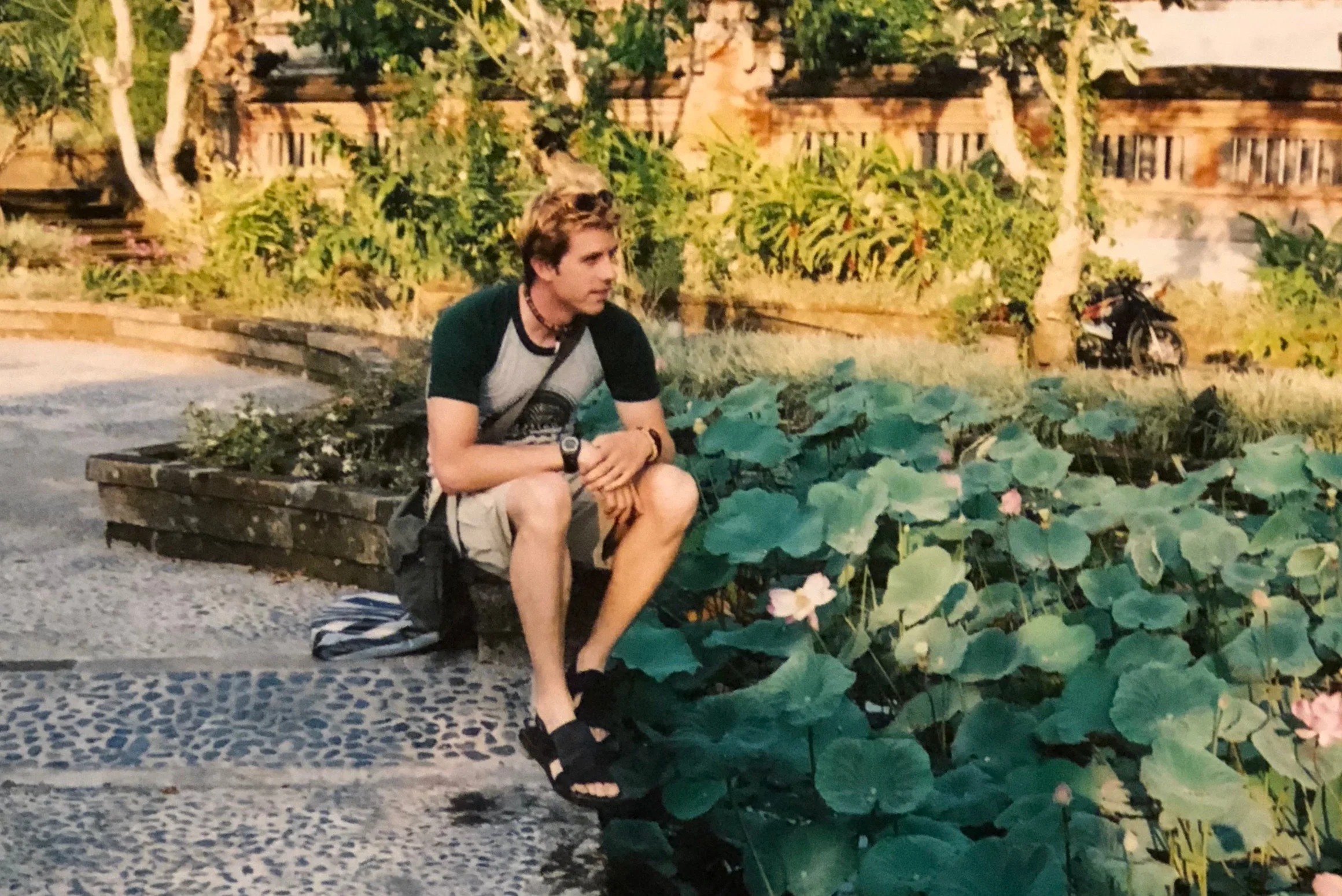
Bali then: Malcolm and Wally at Tirta Gangga’s lotus fountain in 2001Bali now: The royal water garden has been renovated and is much more crowded

Bali then: Malcolm and Wally at Tirta Gangga’s lotus fountain in 2001

Bali now: The royal water garden has been renovated and is much more crowded

We had been planning the trip to Bali for half a year. And then, less than two weeks before we were set to leave, 9/11 rocked our world. The entire country was in a daze. Americans had been living in a  bubble of isolation, of false protection, thinking that our global actions wouldn’t have severe repercussions. And the idea of an attack on our own turf was incomprehensible. But then the World Trade Center towers fell, and that bubble popped horrifically and unexpectedly that morning in September.

The United States, so often a place of optimism, had turned utterly depressing. I eagerly grasped at the chance to escape the overwhelming malaise. “I’m still going to Bali,” I told my travel companions.

“I reserve the right to back out, even up to the last minute,” my friend Christina told me. It probably didn’t help that she was unnecessarily taking malaria pills at the time, which can induce paranoia as a side effect.

We were able to flee a country at a desperate time, and instead explore a vibrant culture on a tropical isle halfway around the world.

Bali shimmers in my memory as a paradise on Earth.

When the day came, Christina and her then-husband Malcolm joined me at O’Hare in Chicago. The airport had only recently reopened, and everyone still seemed scared to fly. The corridors were empty. I felt fatalistic, numb. It was difficult to care what happened, but I was willing to take the risk.

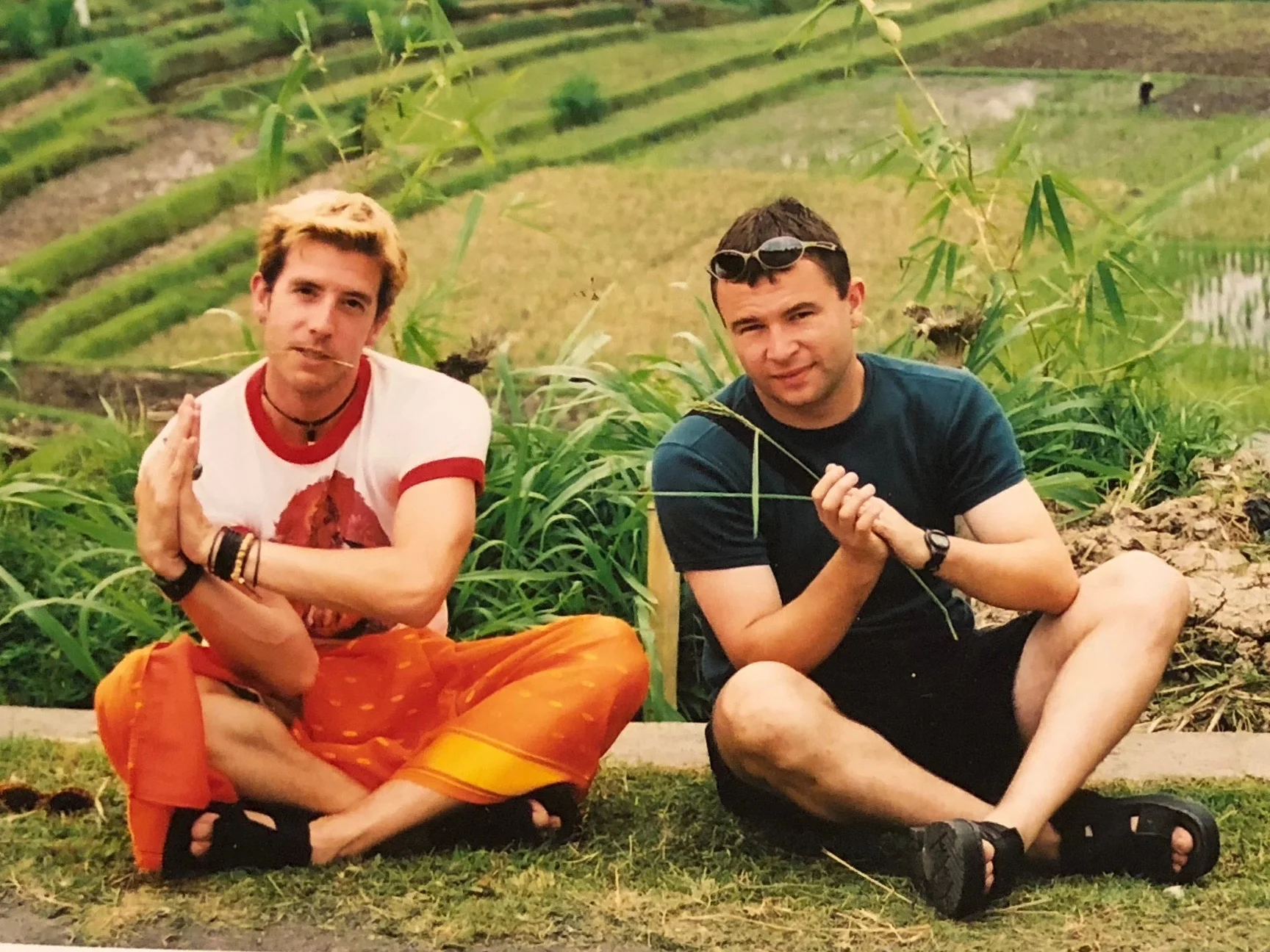
I decided to bleach my hair before our trip to Bali back in 2001. Here Malcolm and I tried posing as Dewi Sri, the goddess of rice

I decided to bleach my hair before our trip to Bali back in 2001. Here Malcolm and I tried posing as Dewi Sri, the goddess of rice

And here I am, 17 years later, back on Bali, this time making a point to visit the gorgeous Tegalalang Rice Terrace

And here I am, 17 years later, back on Bali, this time making a point to visit the gorgeous Tegalalang Rice Terrace

What ended up happening was that we were able to flee a country at a desperate time, and instead explore a vibrant culture on a tropical isle halfway around the world. It was just what the doctor ordered, and I recall that trip, back in 2001, as one of the best of my life. Bali shimmers in my memory as a paradise on Earth.

So I was eager to share the magic of Bali with my husband, Duke. We had visited other parts of Southeast Asia, our favorite region on the planet, and I decided it was time I returned to Bali.

Here are some ruminations on my experiences on this one-of-a-kind Indonesian island 17 years ago and how it differed on our recent trip.

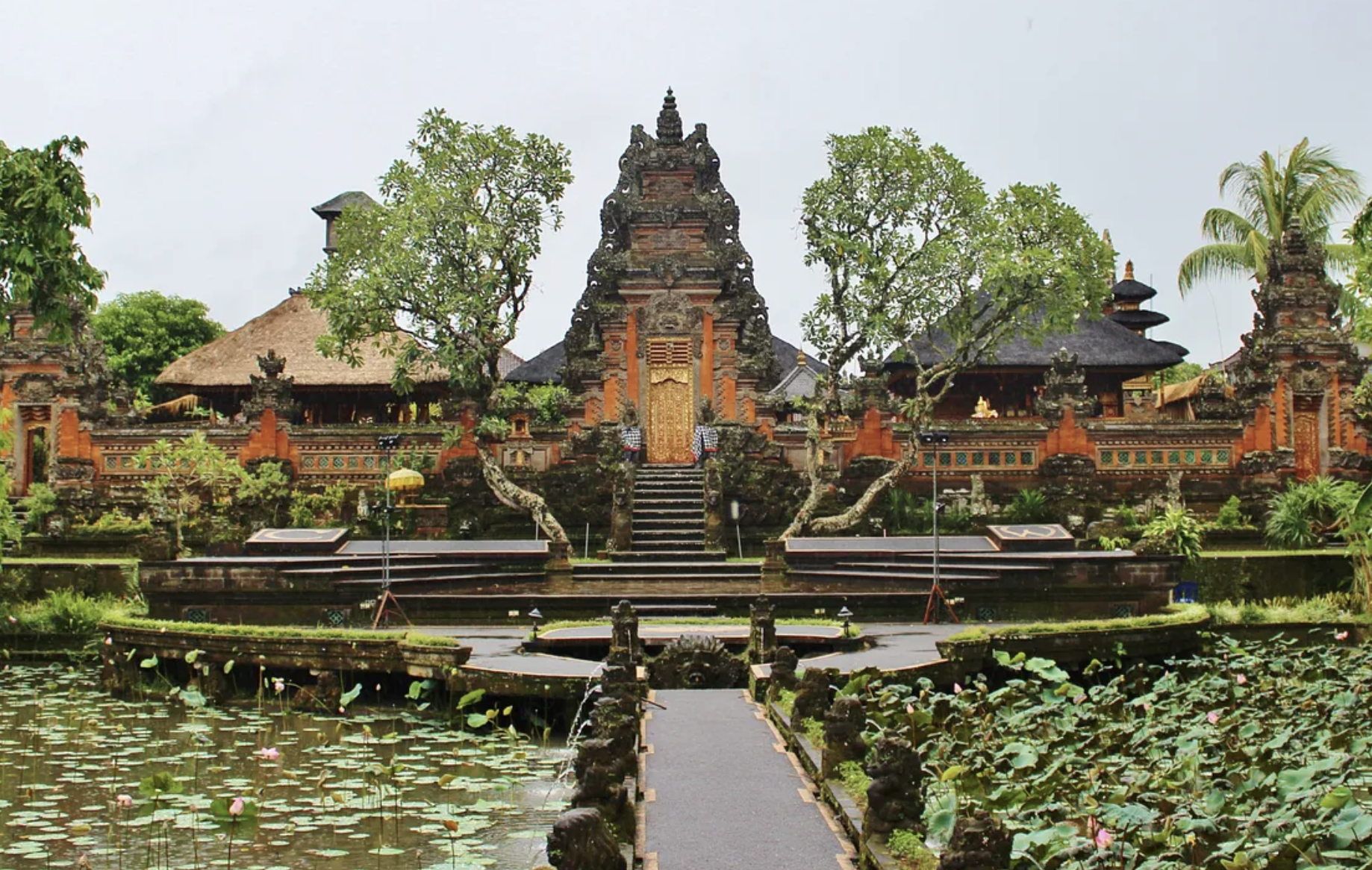
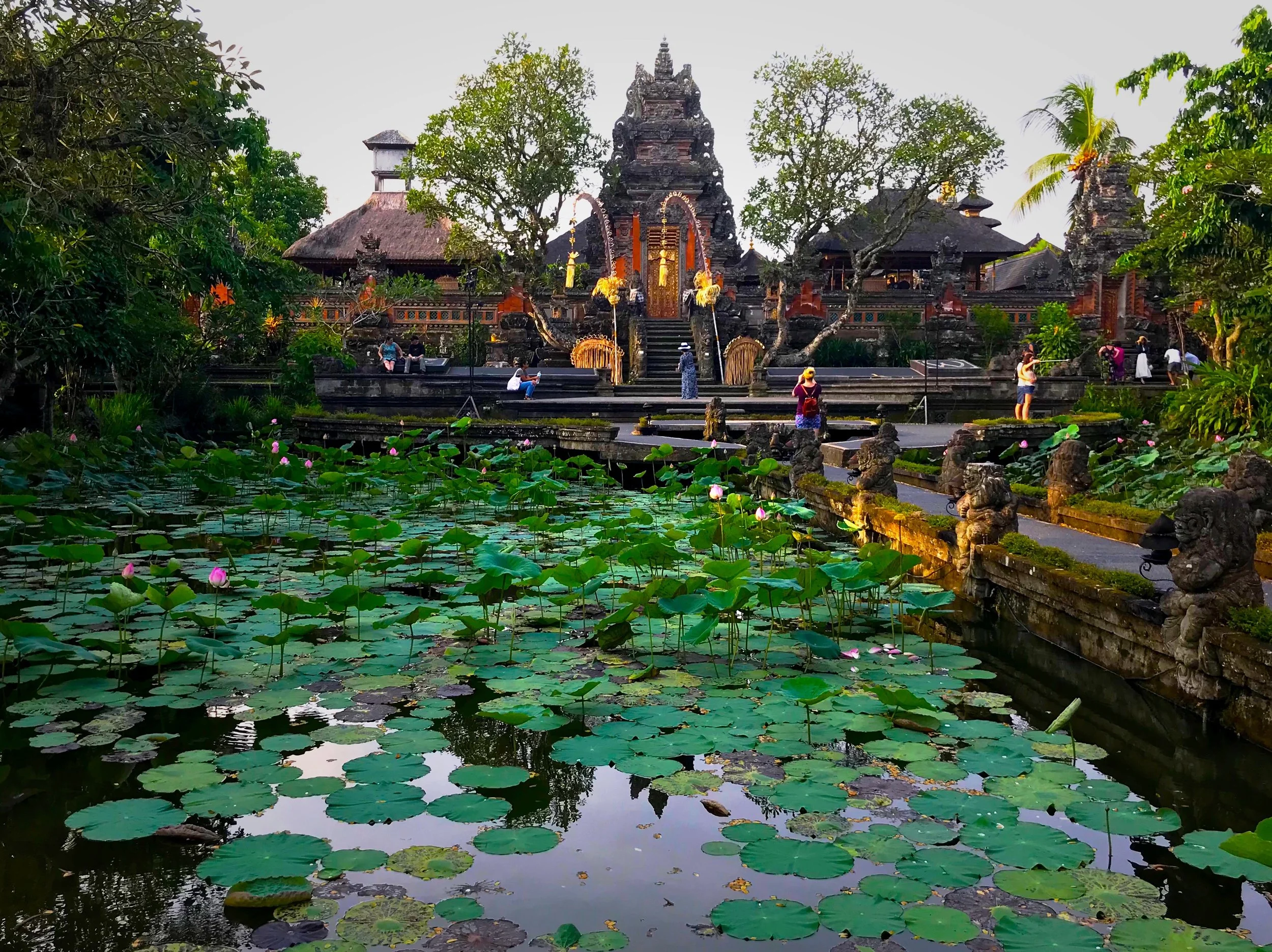
Bali then: We passed by the Saraswati Temple every time we left our hotel

Bali then: We passed by the Saraswati Temple every time we left our hotel

Bali now: One thing hasn’t changed — the Saraswati Temple is still the centerpiece of Ubud

Bali now: One thing hasn’t changed — the Saraswati Temple is still the centerpiece of Ubud

For one thing, the city of Ubud has grown exponentially. When I was here before, I remember it being a sleepy little town, with one main drag. We would wander into town in the morning, find a driver parked along the side of the road, negotiate a day rate and hop in. We would say, “Take us to a cool Hindu temple and an art village.” I don’t recall us ever having a set itinerary; we put ourselves entirely in our driver’s hands.

We did take some farther-afield trips, tourist attractions two hours or so away. Of course back then it might not have taken so long because the traffic wasn’t nearly as bad as it is now.

Traffic has gotten a lot worse on Bali, from motorbikes to construction vehicles

Traffic has gotten a lot worse on Bali, from motorbikes to construction vehicles

Speaking of traffic, there are certain stretches of the small winding two-lane roads where traffic becomes impassable. A lot of it has to do with the construction vehicles that are all over the place now as the city and the island itself gets built up more and more.

Last time, we stayed at cheap villas with hand-carved teak details for about $15 a night. This time, we went for a luxury resort

Last time, we stayed at cheap villas with hand-carved teak details for about $15 a night. This time, we went for a luxury resort

Beggars now plead for money in parts of Ubud. We didn’t see any homeless in the streets in Ubud on our trip 17 years ago. But there were plenty of signs of poverty in the small city of Kuta, which is popular with Aussie surfers. (This was part of reason I had zero desire to go back to Kuta on this trip. If you’re going to visit a tropical paradise, why surround yourself with the filth of a city?)

You don’t see a lot of people begging for money in Ubud, but we did see about 10 the five or so days we were there. In fact, one homeless woman was holding up her young daughter as she squatted over an open sewer grate to take a dump.

When we visited temples in 2001, there weren’t many other tourists, and locals would dress us in sarongs, sashes around our waists and headdresses

When we visited temples in 2001, there weren’t many other tourists, and locals would dress us in sarongs, sashes around our waists and headdresses

A lot of the handicraft items were no longer anywhere to be found. When I was here before, there were certain items that lined stalls in every market you visited but had, for some reason, vanished: shadow puppets, wooden frog instruments, blow dart guns, hand-carved chess sets, colorful kites in the shape of ships and the wavy ceremonial daggers called kris.

The only time I saw Western toilets on Bali in 2001 was at hotels (usually series of bare-bones but dirt-cheap villas). This sticker showing people how to use them — don’t squat right on the seat! — never failed to amuse me

The only time I saw Western toilets on Bali in 2001 was at hotels (usually series of bare-bones but dirt-cheap villas). This sticker showing people how to use them — don’t squat right on the seat! — never failed to amuse me

Last time I was here, you literally only found Western toilets at your lodging. In fact, they had stickers on them to tell people who are unfamiliar that you shouldn’t squat on top of the seat. This time there was only one bathroom I went into where there was traditional Balinese toilet, which is really ceramic hole in the ground with treads for your feet. You “flush” your waste by dipping a plastic pot or bucket into the garbage can filled with water.

A Balinese cockfight from the late 1950s

A Balinese cockfight from the late 1950s

When I visited last time, Ubud felt more like a traditional village. One afternoon we wandered behind a temple and stumbled upon a cockfight. We had heard about this popular pastime and stopped to watch. A group of men waved bills, placing bets on their favored bird.

Each contestant held his prized cock and tied triangular razor blades to the back of its leg, just above the talons. Everyone gathered in a circle, the roosters were released, and they flew at each other in a puff of dust. In the blink of any eye, one of the poor birds had fallen to the ground and lay there, dead.

It struck us as extremely anticlimactic. I imagined the roosters circling each other like boxers or sumo wrestlers, making parries and retreats. But no. It was over in about a second.

A man told us that we the rooster would be eaten as an offering at the temple. He said this almost apologetically, I imagined, to justify this violent pastime — though I probably imposed that sense of guilt upon him. To him, it was just a way of life. –Wally

Everyone gathered in a circle, the roosters were released, and they flew at each other in a puff of dust.

In the blink of any eye, one of the poor birds had fallen to the ground and lay there, dead.