Learn These Spanish Curse Words to Make Your Conversations More Colorful

Turns out we know the graffiti artist responsible for this social commentary on how shitty it is to leave your dog poop on the sidewalk

Las palabrotas aren’t for everyone. But Spanish bad words can be so good.


“How do you say ‘swear words’ in Spanish?” I asked my friend José as we sat in his and Jo's living room during a recent visit to Málaga, Spain.

“Las palabrotas,” he said. “That means ‘broken words.’”

Me cago en la leche: literally, “I shit in the milk.”
It means, “No way!”

I gleefully handed him a notebook and had him write down all the swear words and naughty expressions he could think of in Spanish.

I feel it’s best to try to speak like locals — and that means learning the bad words as well. Heck, they’re usually the most fun anyway.

My love of swear words goes way back. In fact, in college, when I took a linguistics class, I titled one of my big reports for the semester, Fuck! The History of the Ultimate Four-Letter Word (and Other “Bad” Words).

My teacher, most likely bored with the usual goody-goody subjects, practically squealed in delight when I pitched my idea.

MORE CRASS: Michael and Kent on Living in Paris

Here’s the list that José wrote down for me:

  • joder: to fuck
  • la polla: dick (strangely, this word is feminine)
  • el coño: pussy, though it also works as an expression like, "Dammit!"
  • gilipolla: asshole, wanker (keep in mind some of these were shared by my British friend Jo)
  • chupapollas: cocksucker
  • Me cago en la leche: literally, "I shit in the milk." It means, “No way!”
  • Tengo una cita con Roca: literally, "I have a date with Roca" (the most common brand of toilet in Spain). It means, “I need the loo.”
  • mamón: from the verb meaning to breastfeed, this can mean sucker, loser or asshole
  • cara culo: butthead
  • Vete a tomar por culo: Get the fuck out of here
  • hijoputa: son of a whore
  • Me cago en tu padre/madre: I shit on your dad/mom (charming, eh?)
  • Salut y forza al canut: A Catalán toast meaning, "To health and a hard cock!"
  • marquita: literally, "ladybug." It means “gayboy”
  • una chupada/mamada: blowjob
  • correrse: to cum (notice it’s reflexive). Correr means “to run” — “Be very careful with these verbs,” Jo wisely warns. Let’s use them in a sentence: Correrme/Me corro: I’m cumming!
  • tener un pedo/estar pedo: to be wasted, drunk. Interesting, as pedo means “fart.”

Enjoy, hijoputas! –Wally

What are your favorite naughty expressions in Spanish?

A Brief History of Málaga, Spain

The Málaga Lighthouse sits on the harbor of this modern city with ancient origins

Fun facts about this city on Spain’s Costa del Sol that combines cosmopolitan chic with classic cool.
 

Worth Its Salt

As the adage goes, Rome wasn’t built in a day, and neither was Málaga. One of the oldest cities in the world, it was inhabited and settled by the Phoenicians around 770 BCE. They gave the modest port city the name Malaka, which was likely derived from malaha, the Phoenician word for salt.

The Phoenicians maintained a prosperous sea trade, and one of their primary exports was salt, obtained from evaporated seawater. Salt was prized for its ability to preserve food as well as seasoning. In fact, in Ancient Rome, soldiers were paid in salt — a salarium, the Latin origin of the word “salary.”

Like a game of hot potato, Málaga was besieged and conquered several times.


Hooked on Phoenics

The Phoenician alphabet is the oldest verified alphabet. Derived from Egyptian hieroglyphics, the 22 letters are simplifications of hieroglyphic symbols. This alphabet eventually evolved into modern Arabic. Eventually the Greeks, who had become familiar with the Phoenician alphabet through trade, added vowels — and that’s what became the foundation of the standardized Latin alphabet we use today.
 

History Repeating  

Like a game of hot potato, Málaga was besieged and conquered several times. Under the reign of Caesar Augustus, the Romans invaded and renamed the city Malaca.

After the decline and subsequent fall of the Roman Empire, the city was briefly occupied by the Visigoths, who were then defeated by the Moors. It remained under Islamic rule for 800 years as Mālaqa and became an important center of commerce.

The Crown of Castile later overtook the region in 1487, selling virtually the entire Muslim population into slavery, prior to the fall of Granada five years later.
 

Culture Club

Turbulent history aside, the archeological ruins make the historic city center a cultural open-air museum campus. This heritage earned Málaga a nomination for the European Capital of Culture (which was instead awarded to San Sebastián.) –Duke


The Gilded Glory of the Iglesia de los Santos Mártires in Málaga, Spain

The ornate interior of the Iglesia de los Santos Mártires in Málaga, Spain

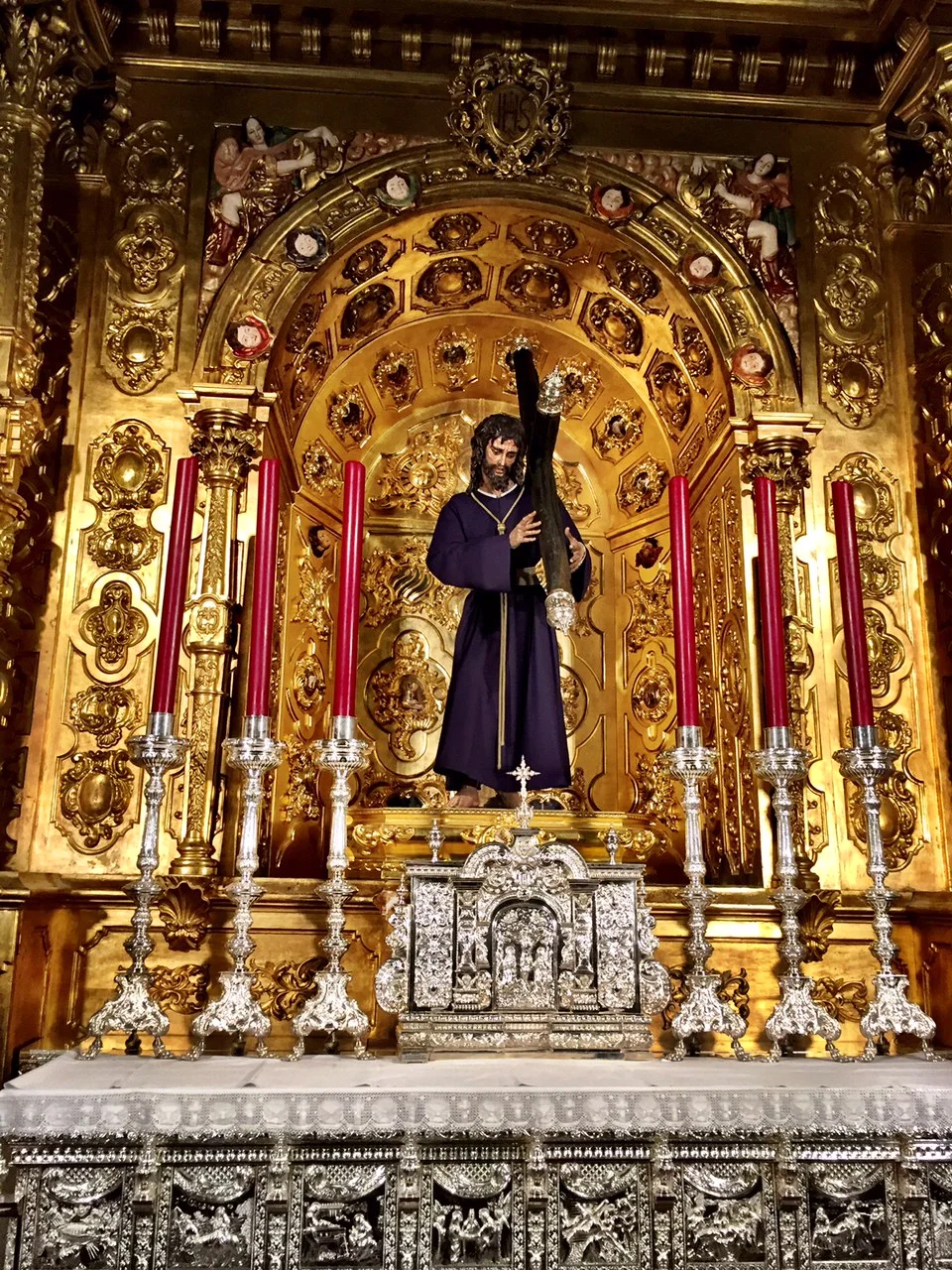
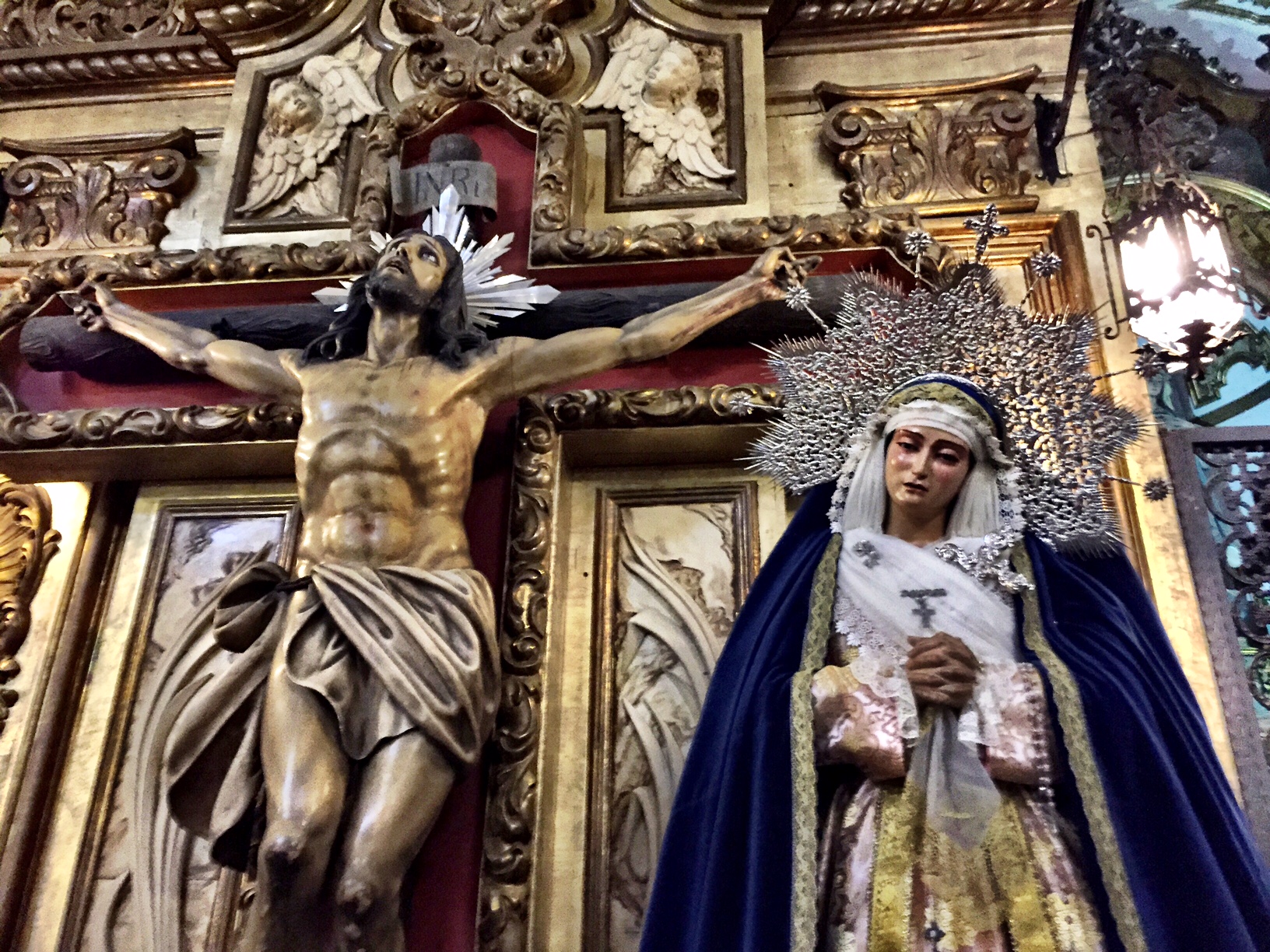
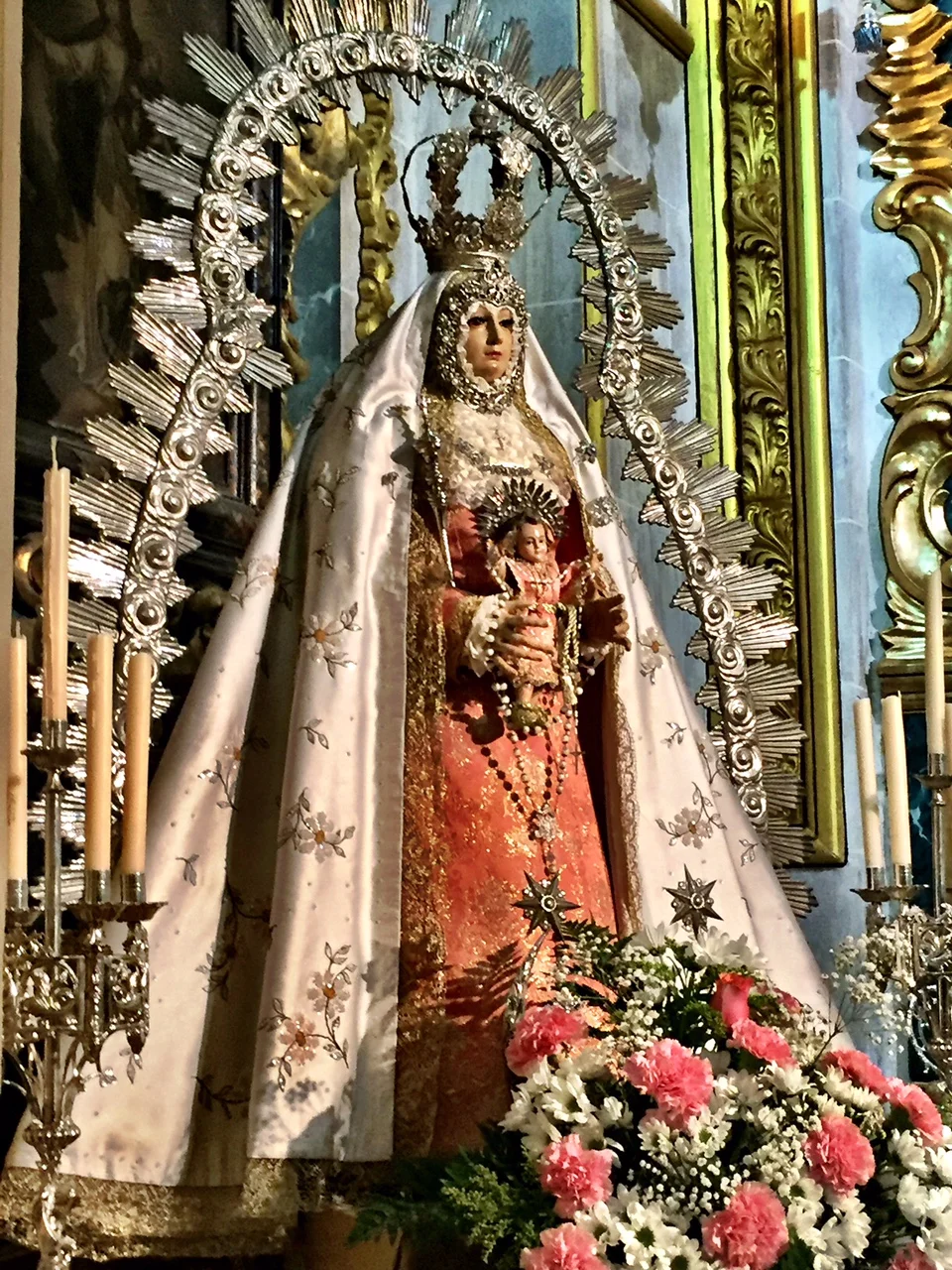
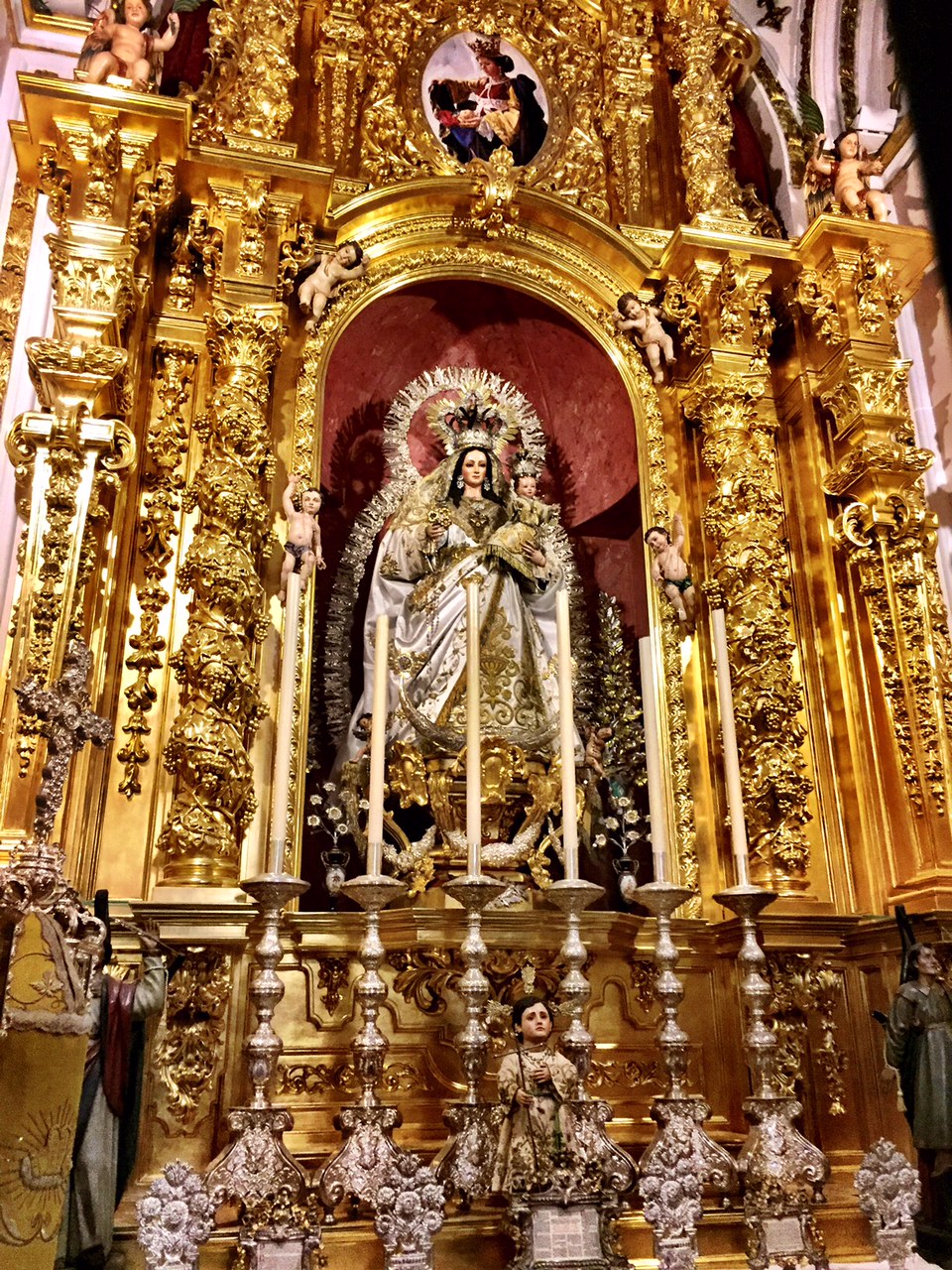
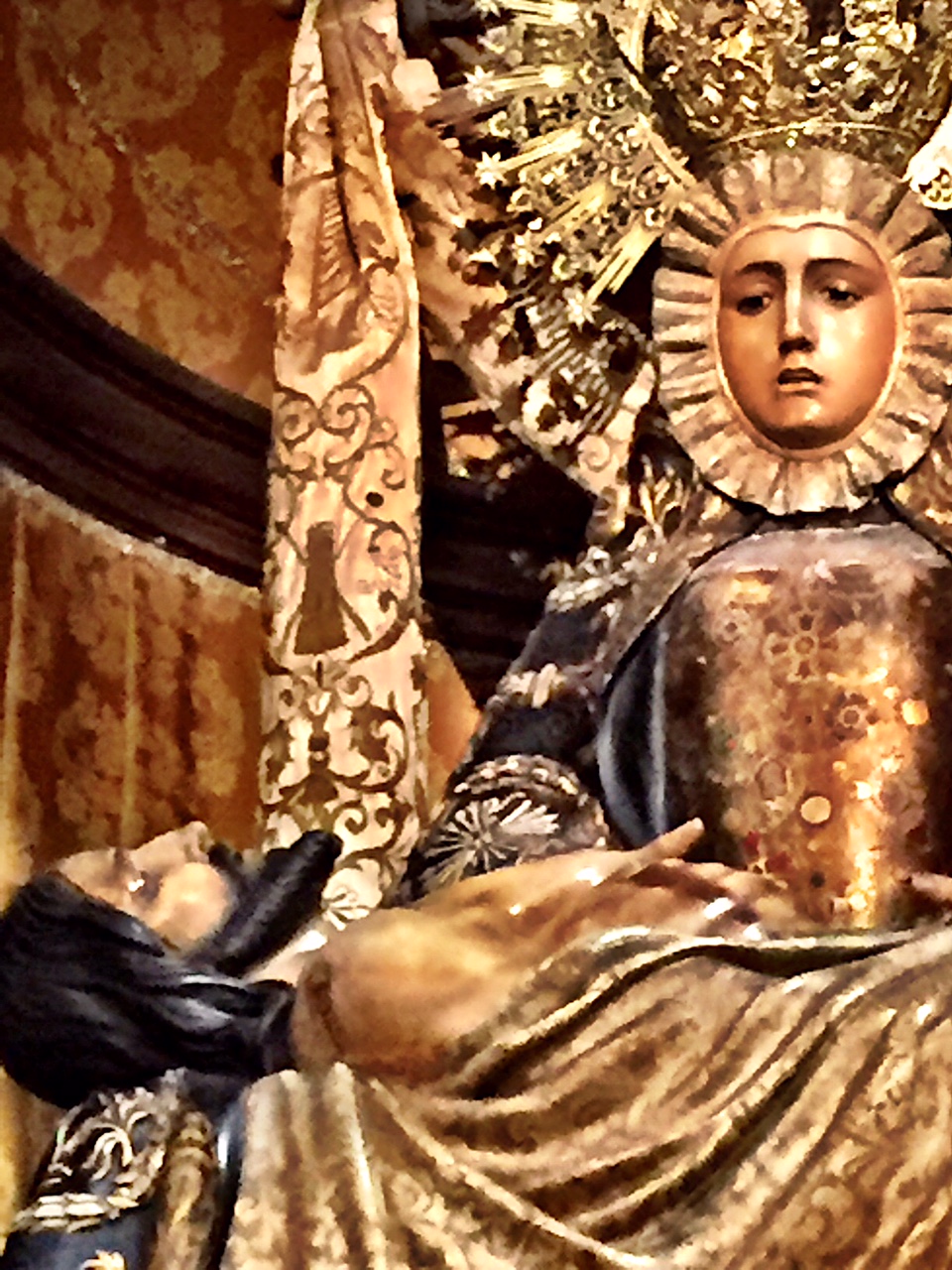
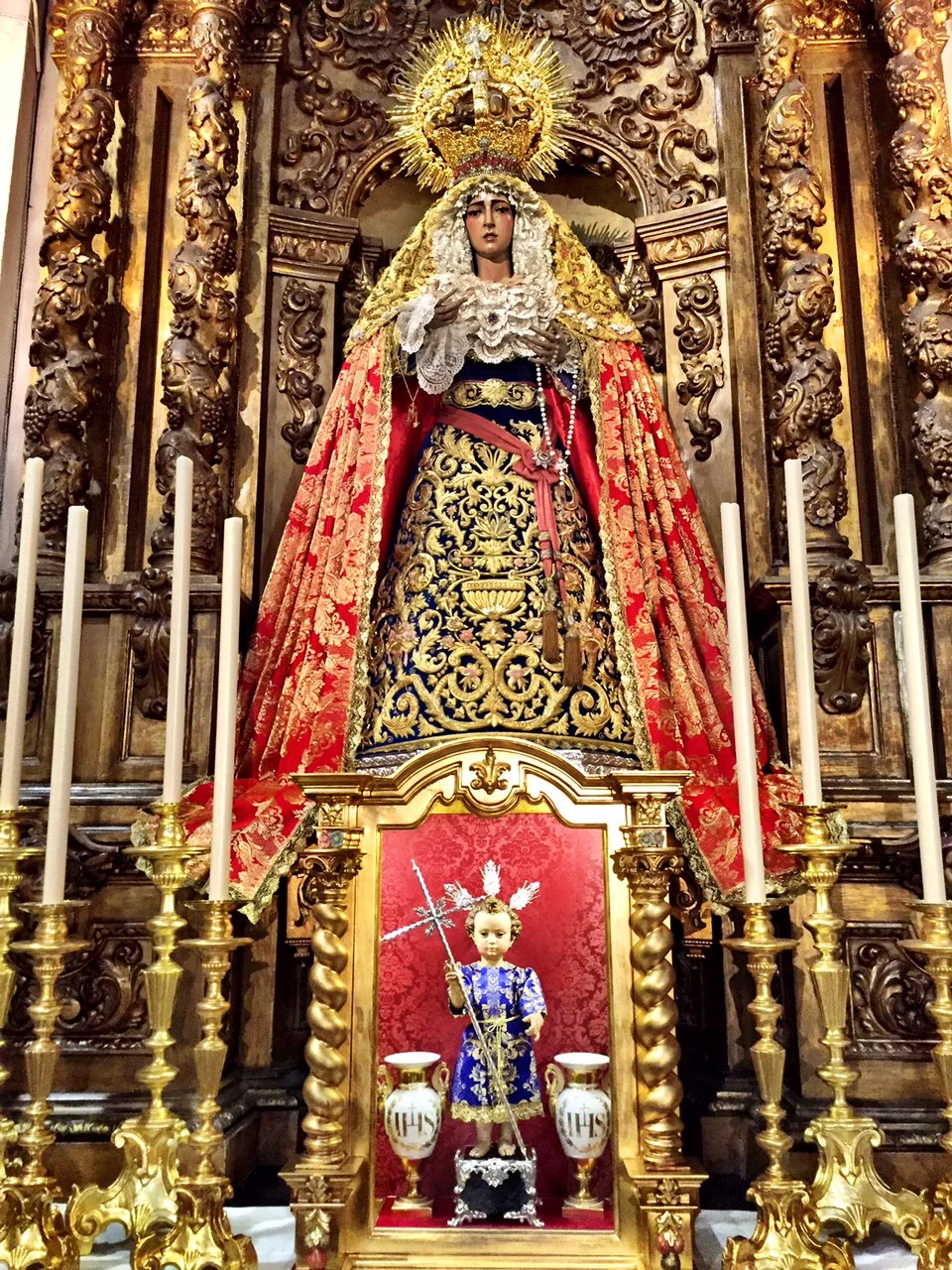
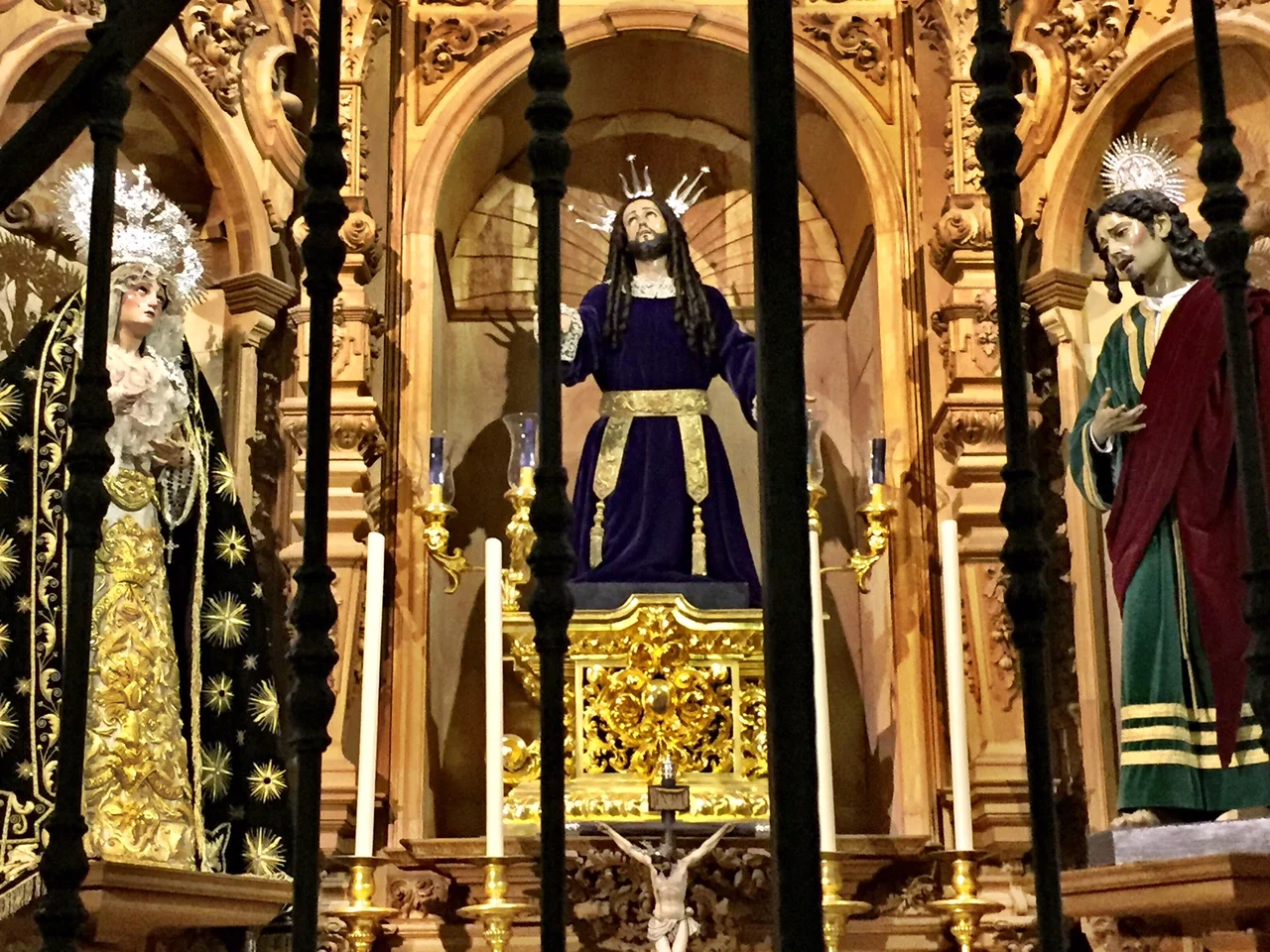
As our photos attest, this church, dedicated to Ciriaco and Paula, the patron saints of Málaga, is a wonderment of Catholic excess.


It's quite unassuming from the outside. A trio of Mudejar-inspired brick-lined arches, devoid of ornamentation, carved into the side of the structure. No steps leading up to a grand entrance. You'd think it was a side entrance, situated as it is on a jag of a narrow street.

But inside! The Iglesia de los Santos Mártires (the Church of the Holy Martyrs) is utterly dazzling, white arches everywhere, lined in gold, gilded and glittering. Altars accented with slabs of marble, one a deep crimson niche. The style could be considered Rococo Loco.

The Iglesia de los Santos Mártires is utterly dazzling. The style could be considered Rococo Loco.

We entered, overwhelmed. Your eyes don't know where to focus. So we turned to our right and began to work our way around the edges of the church.

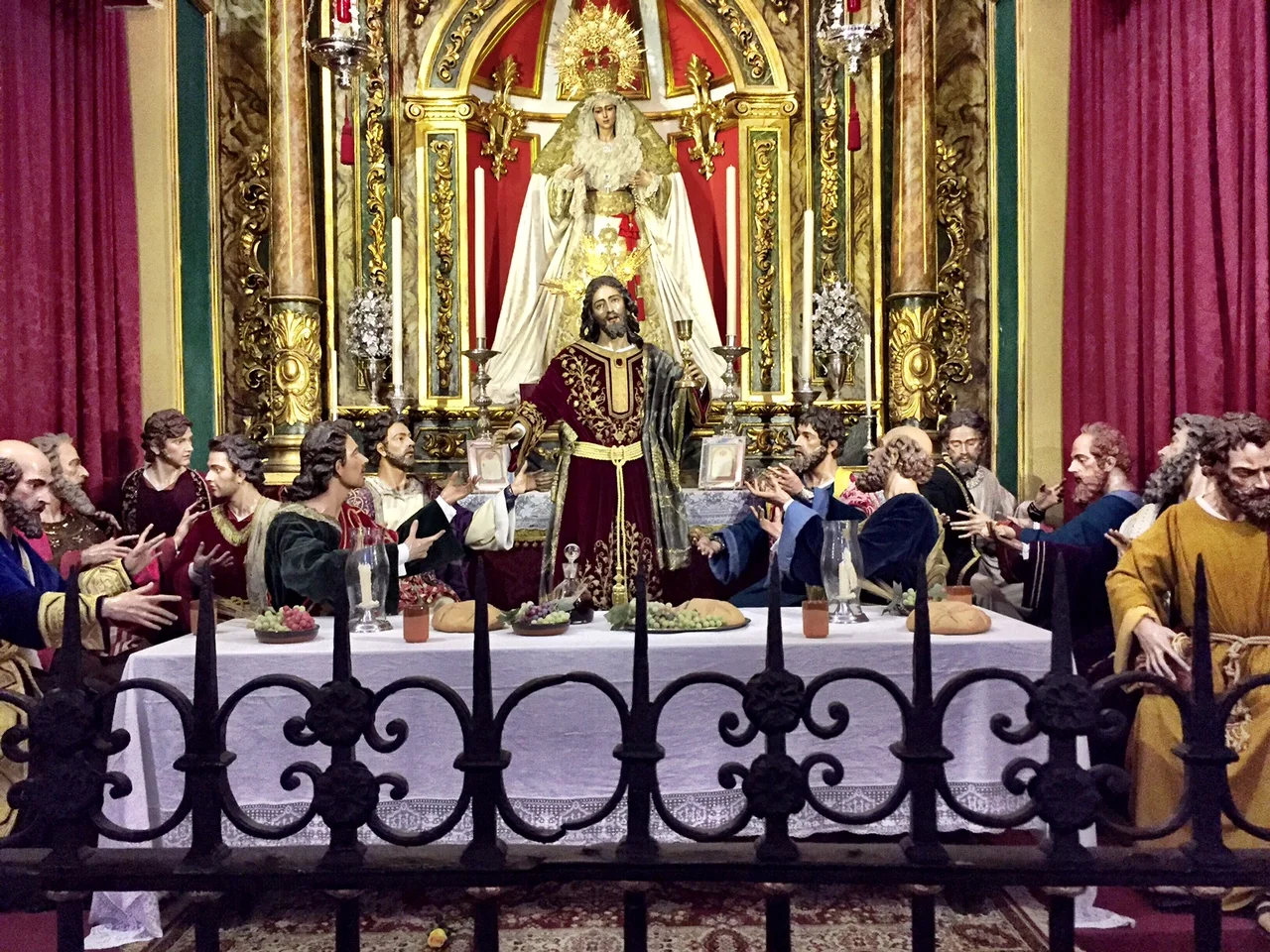
The first thing we saw was a lifesize statue depiction of the Last Supper behind a wrought iron fence. We couldn’t help but giggle. Sometimes the ostentatiousness of Catholics is astounding. But it makes for a fun exploration.

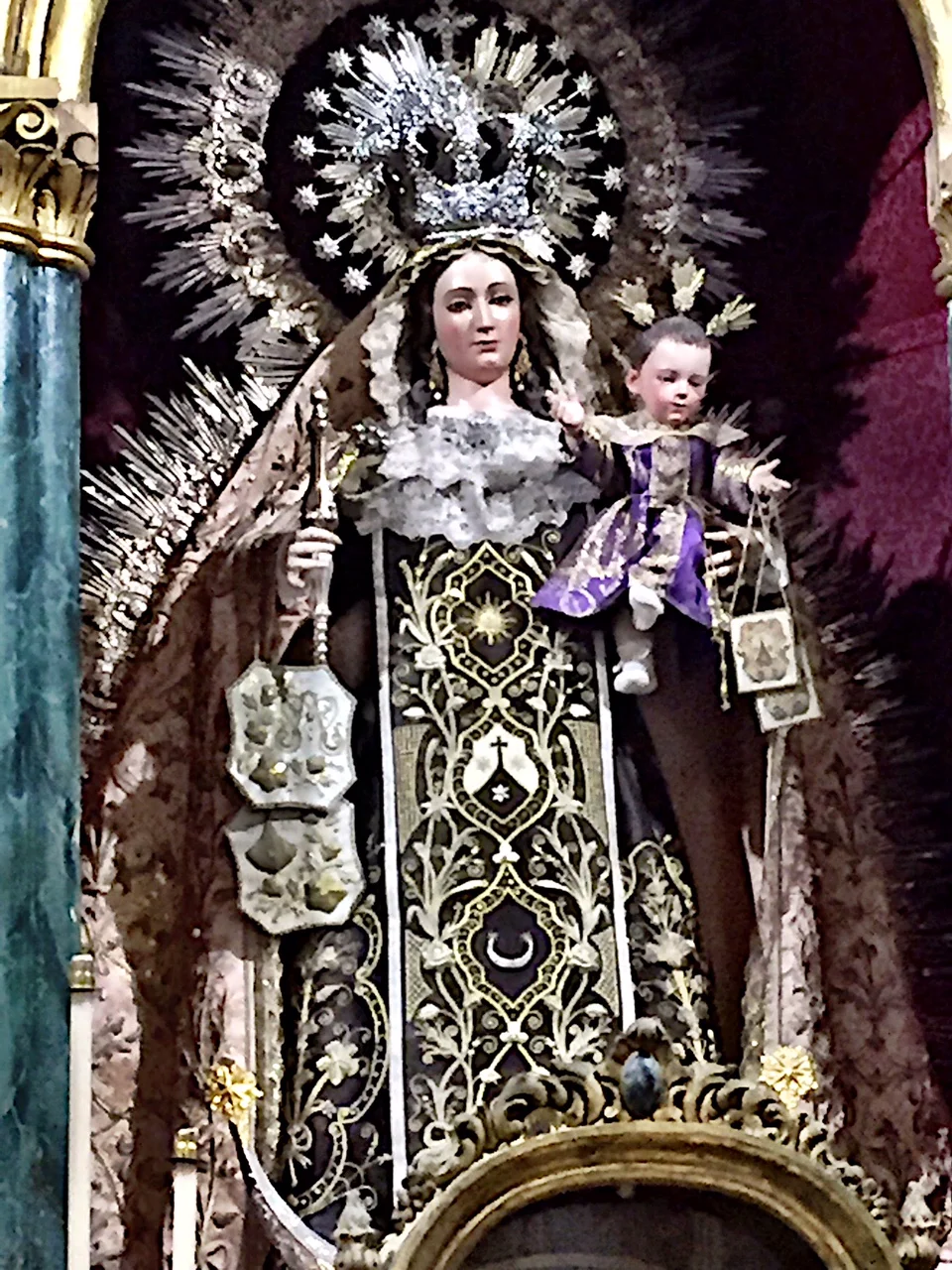
We walked the periphery of the sizable space, snapping away photos of the various niches, each with its own interpretation of the Virgin Mary and/or Jesus.

And unlike the city’s main cathedral, photography is allowed here.


The Patron Saints of Málaga

The church is dedicated to the two patron saints of Málaga: St. Ciriaco and St. Paula. These two were part of a Christian sect forbidden by the Roman Emperor Diocletian. The Christian community had a secret meeting place in Málaga. But on June 18, 303, Roman soldiers learned of the spot and raided it. Ciriaco and Paula were among those captured.

Even though they were tortured, the pair refused to renounce Christ. So they were tied to trees along the banks of the Guadalquivir River and stoned to death.

Not wanting anything that could be venerated, the soldiers built a massive bonfire to destroy the remains. But the skies opened up with a torrential downpour and doused the flames. When the soldiers left, the surviving Christians took the bodies and buried them in an unknown locale.

Fast forward to the Reconquista, when the Catholics started taking back the Iberian Peninsula from the Muslim rulers. A monk named Fray Juan de Carmona told the Catholic kings of a vision he had: Build a church dedicated to Ciriaco and Paula — and they would be victorious in the battle for Málaga in 1487.

It seems just the promise was good enough, for they did end up winning. They then dispatched a letter to Pope Innocent VIII, who approved construction of the Iglesia de los Santos Mártires.

Thus began a cycle of destruction and rebuilding from incidents including a cannonball (1854), earthquake (1884) and looting (1936).

In 1490, Ferdinand and Isabella appointed Ciriaco and Paula the official patron saints of Málaga.

Every June 18, there's a solemn procession through the historic quarter to honor the martyrs.

The church is home to four Semana Santa (Holy Week) brotherhoods.

Iglesia de los Santos Mártires, located in the city center, is certainly worth exploring. –Wally


RELATED: How to Enjoy Feria, Southern Spain’s Springtime Festival


The Whimsical, Feminist Street Art of Sara Fratini

Under the adorable mural by Sara Fratini, Duke and Wally enjoy coffee in the courtyard café of La Casa Invisible in Málaga, Spain

A Q&A with the artist who created the mural at La Casa Invisible in Málaga that kept making us smile.


When our friend Jo took Wally and I to the courtyard café of the La Casa Invisible cultural center, we knew it was a magical place from the moment our eyes fell upon the whimsical mural by the Venezuelan artist Sara Fratini.

Sara was invited to create the mural thanks to a project organized by La Guarimba International Film Festival in collaboration with Amnesty International and the University of Málaga.

I started drawing the curvy, rosy-cheeked girl when I realized that I wasn’t happy with the way society treated women. She is radiant, happy and doesn’t care about what society expects from her.
— Sara Fratini

I was so taken with Sara’s playful style, I decided to look her up online and email her some questions. Here are her responses. –Duke


What’s your connection to Madrid?

I lived in Madrid for six years and studied fine arts there. Currently, I live in the town of Amantea located in the Calabria region of southern Italy, where I’m one of the organizers of La Garimba International Film Festival, but Madrid will always be in my heart.


In what other cities have you done murals?

I have done murals in Madrid, Málaga, Amantea and San Vito dei Normanni, Italy.


Who are your favorite artists?

I like a lot of different artists. At the moment. I’m obsessed with Rubens. And after seeing the exhibition of Bosch at the Prado Museum, I’m equally obsessed with him. I already admired his work, but after seeing his paintings, I feel that I could spend hours looking and discovering new characters and demons.

I also love Ludwig Kirchner and a lot of German expressionists.


Many of your pieces feature a rosy-cheeked girl. Is she modeled after anyone?

No. I started drawing the curvy, rosy-cheeked girl when I realized that I wasn’t happy with the way society treated women. So she is my response to societal pressures. She is radiant, happy and doesn’t care about what society expects from her.


What’s the most interesting story you’ve had creating a mural?

I recently created a mural in the Asylum Seeker Center in the town where I live. It was one of the most beautiful experiences I’ve ever had. I drew on two big walls, and some of the refugees helped me. The mural was part of a project organized by La Guarimba called Cinema Ambulante.

We currently have more than 80 refugees living in a camp, and our goal is to help them integrate into the local community.


What’s your creation process?

I usually wake up in the morning, have a cup of coffee and put myself to work. I take a look at my notebook and begin working on a specific idea.


What inspires you?

Everything. What happens to me during the day, what I think or feel and, of course, music.


These Gruesome Photos of the Meknès Market Are Enough to Turn You Vegetarian

This is about as tame as the Meknès meat market got. More graphic shots to follow

Local markets provide a glimpse into the daily life of a culture. Just watch out for the decapitated cow heads.


One of the best ways to see a local culture in action is to visit a food market. You’ll also get plenty of awesome photo opps.

I first discovered this pleasure one day when I wandered off on my own in Cusco, Peru and stumbled upon a local food market. Since then, markets — whether they’re in Spain, Vietnam or Morocco — are must-stops for Duke and me.

It was as if we had found ourselves suddenly the unwitting victims of a horror movie.

So, when we noticed an interior market connected to the stalls of the main plaza in Meknès (on a day trip that included the Roman ruins of Volubilis), we were excited to wander through it. At first, we passed stalls of brightly colored fruits and vegetables. But at the back, it was as if we had found ourselves suddenly the unwitting victims of a horror movie. We had entered the horrific domain of the meat market.

It was unlike anything we had ever seen. In the United States, we’re so used to brightly lit, sterile supermarket aisles, where our meat is often deboned, trimmed of fat, individually wrapped in plastic. There’s no real hint that the pinkish cut of meat was once a chicken or that the hunk of red beef actually came from a cow.

That connection to the meat’s origin was like a slap in the face in the Meknès market. It’s inescapable.

Click on the photos below to enlarge. You know you want to see them in all their gory glory.

We wandered through the butchers’ stalls, dazed and amazed. Many chuckled at our reaction, while some of the men scowled as I snapped away quickly on my camera.

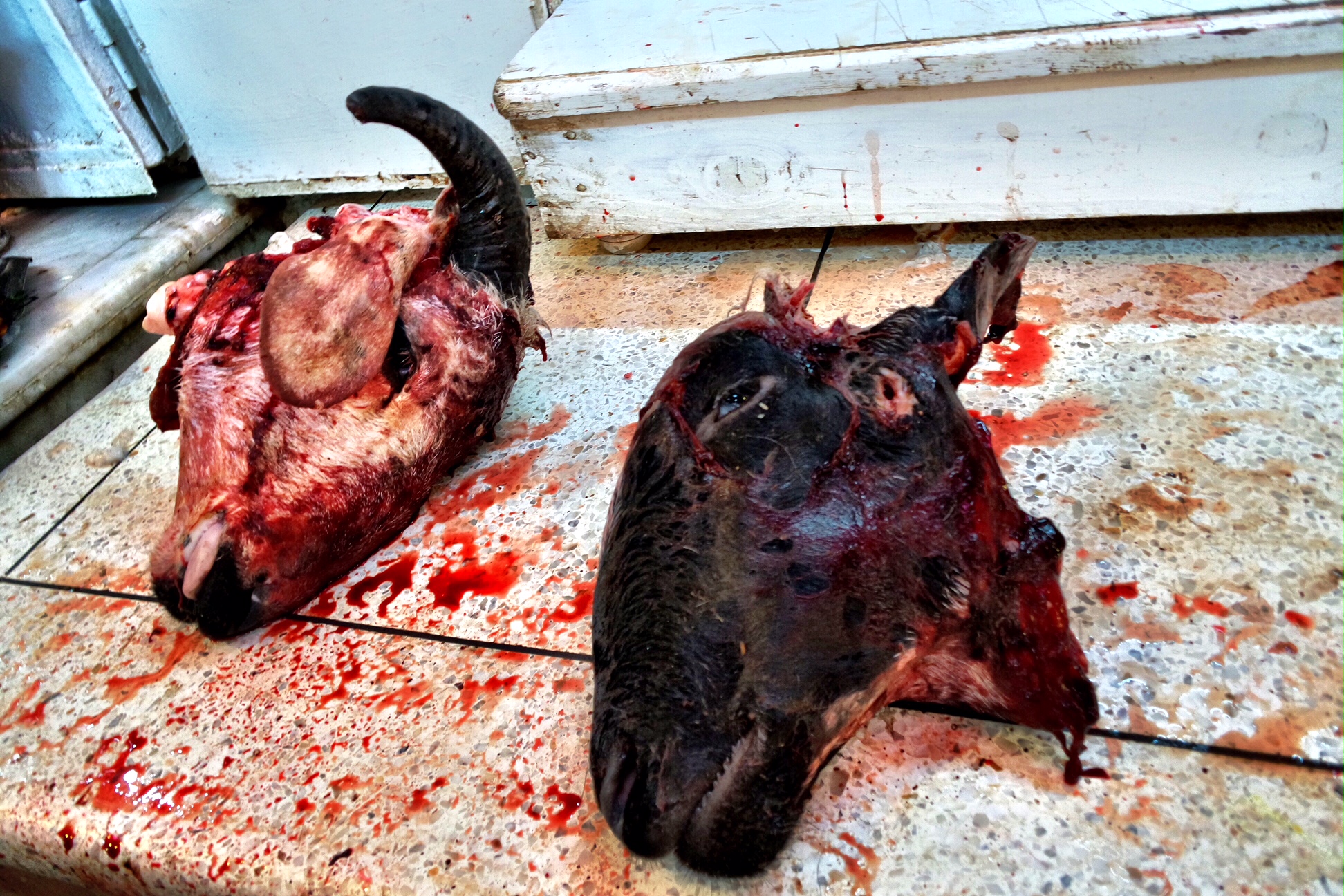
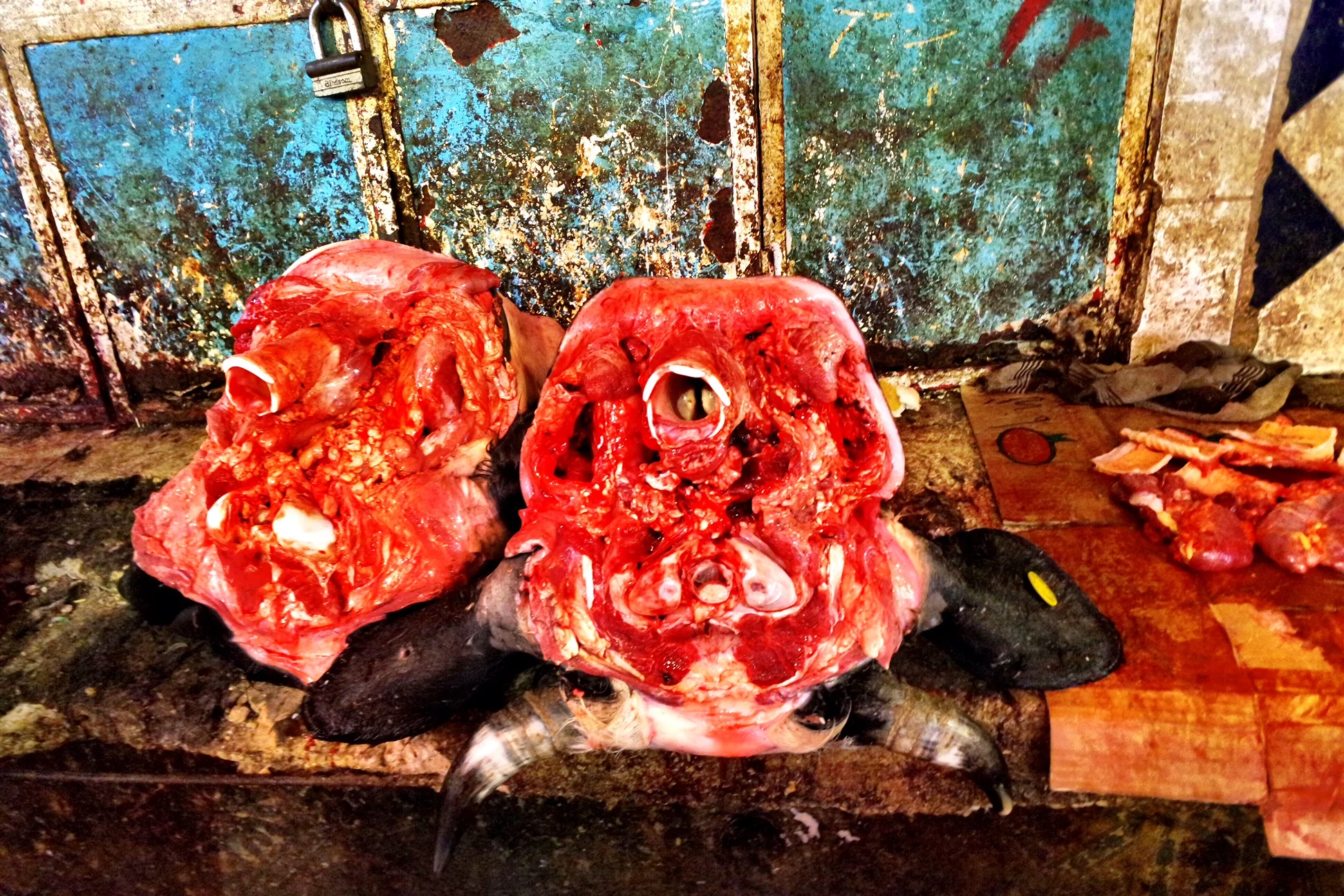
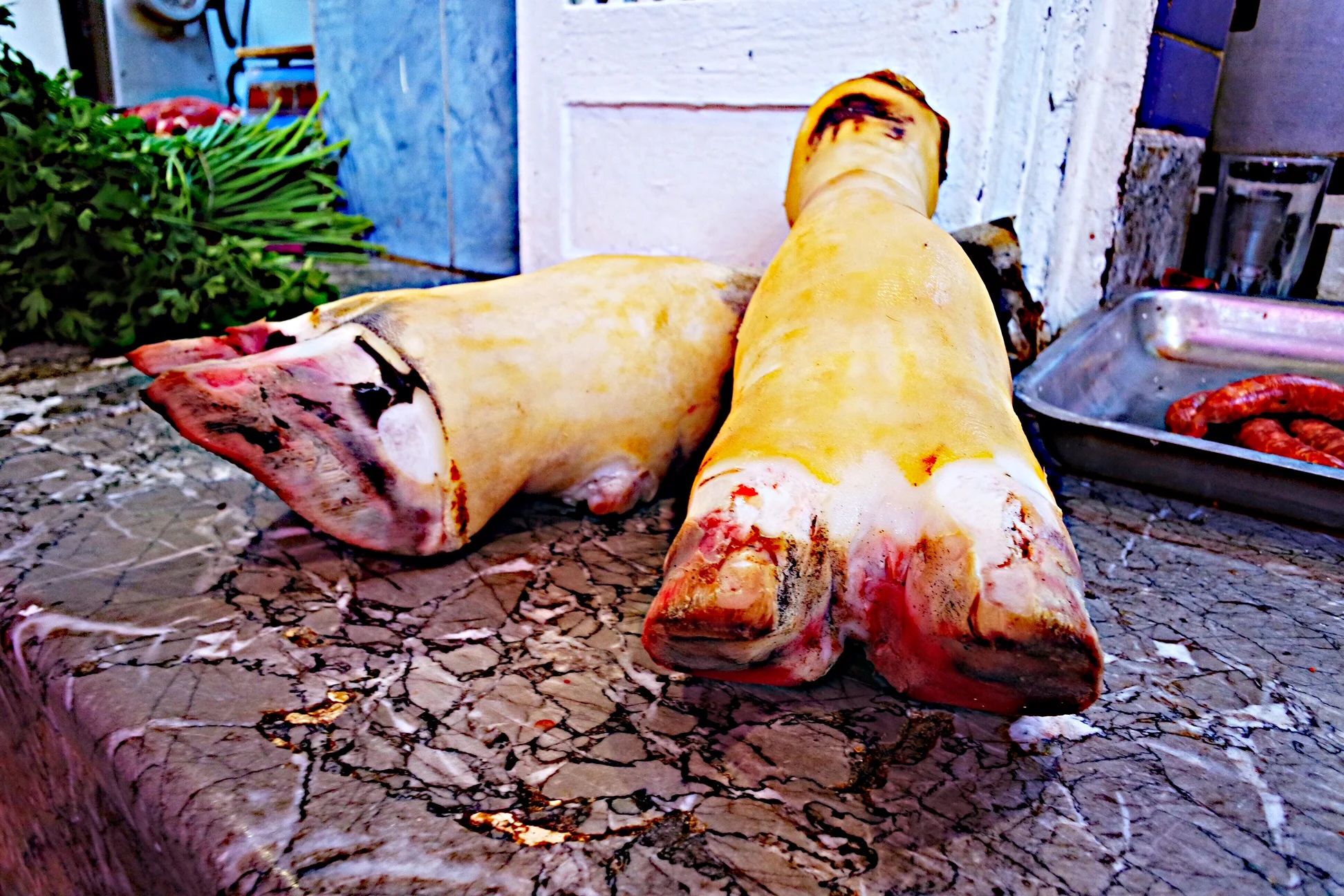
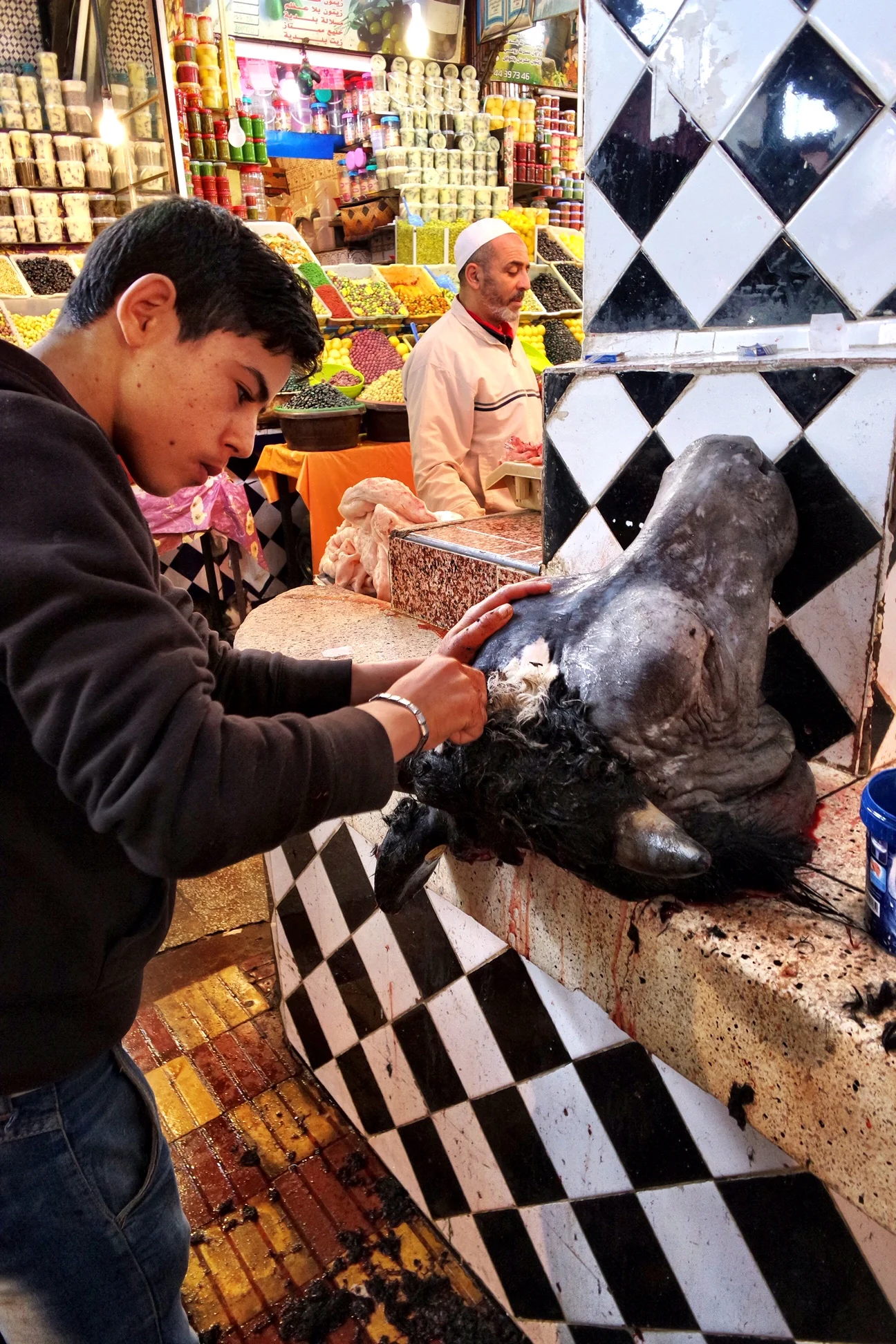
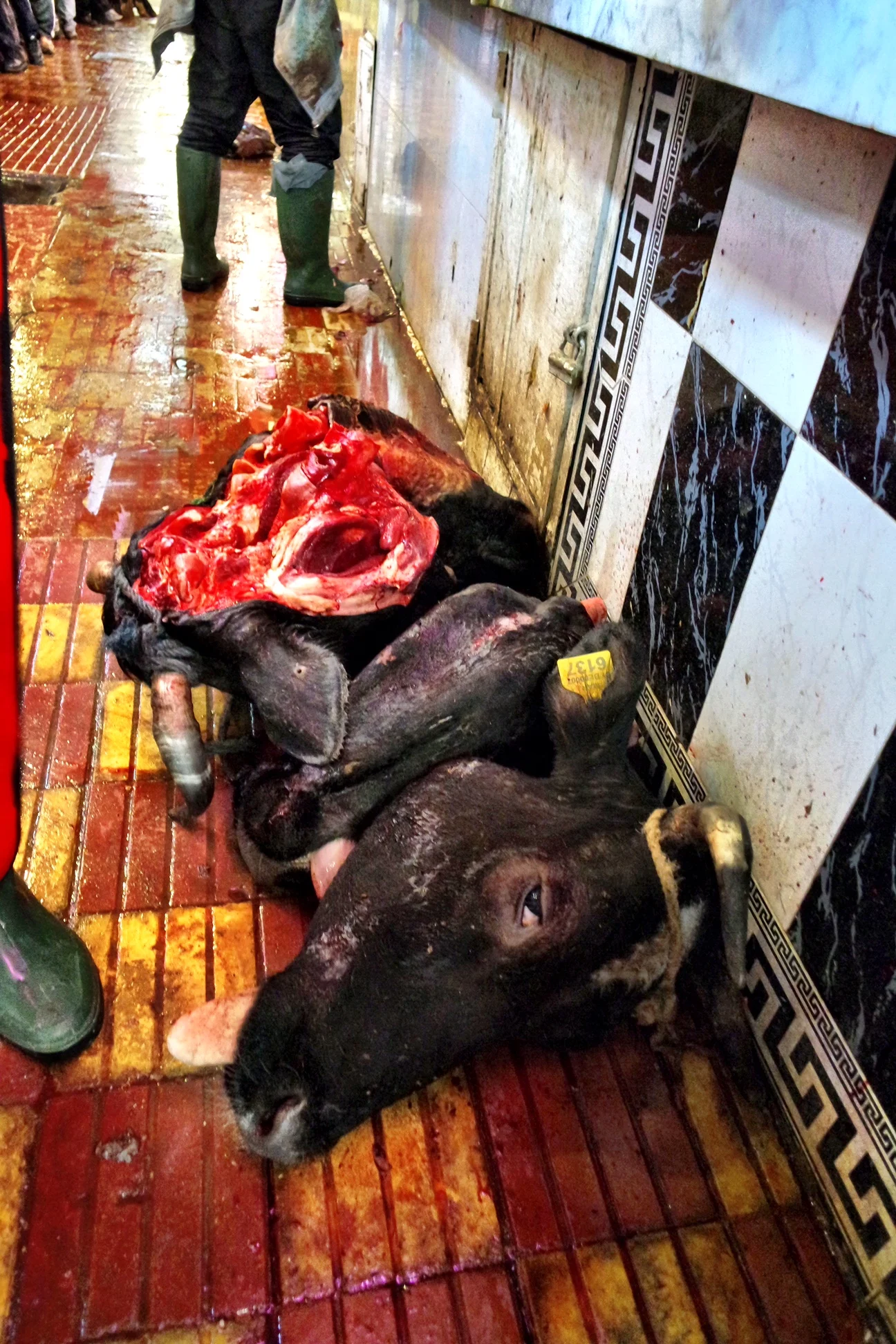
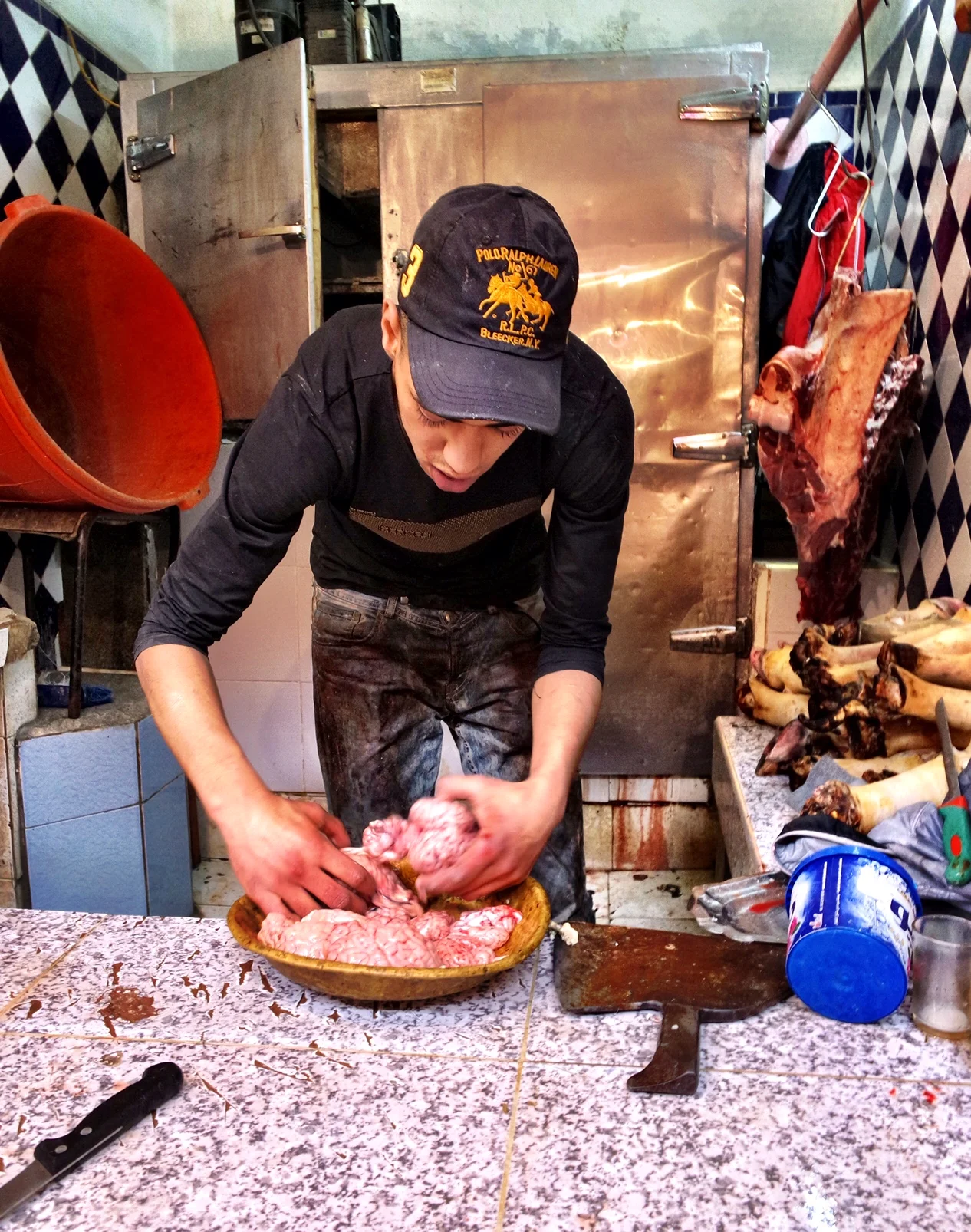
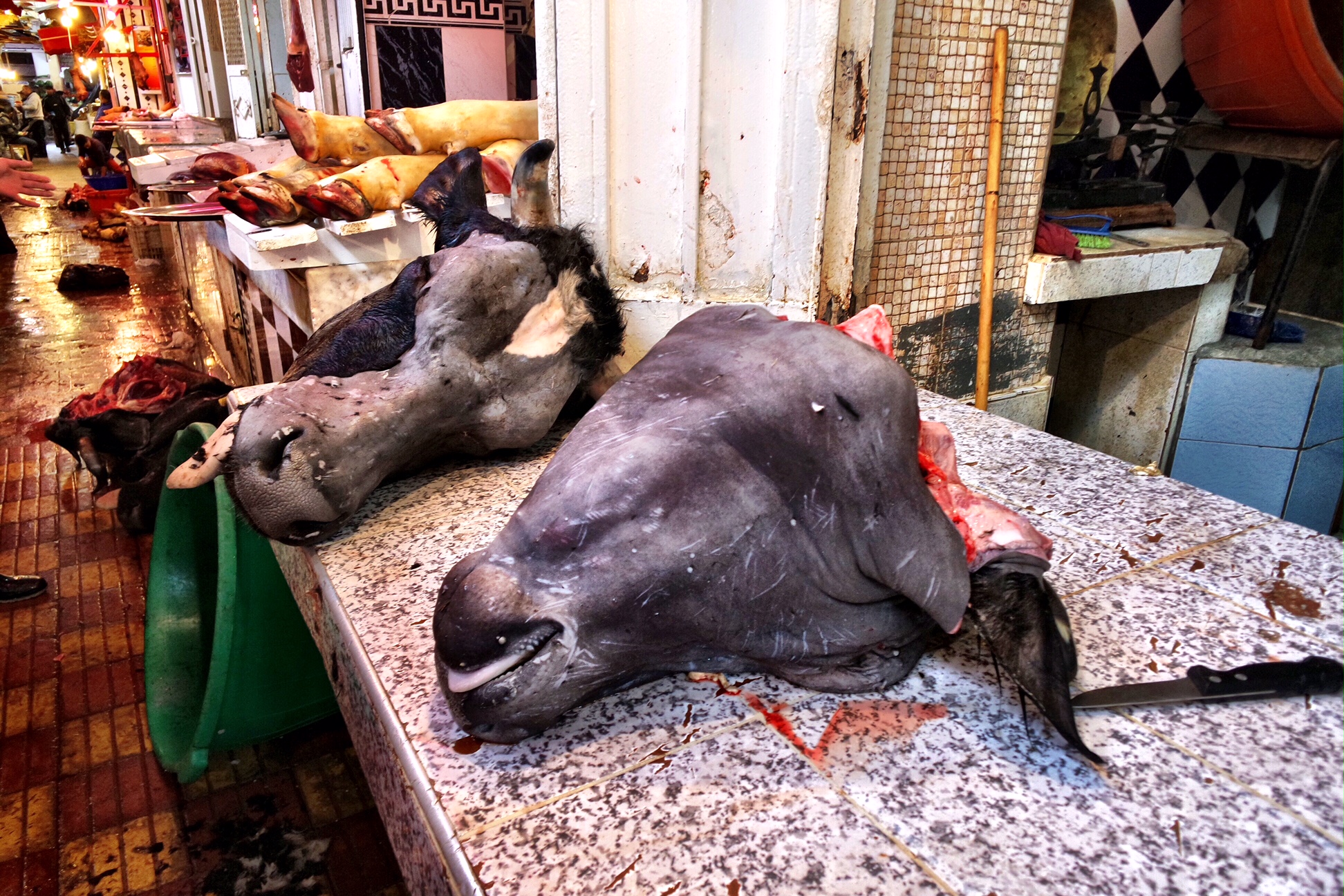
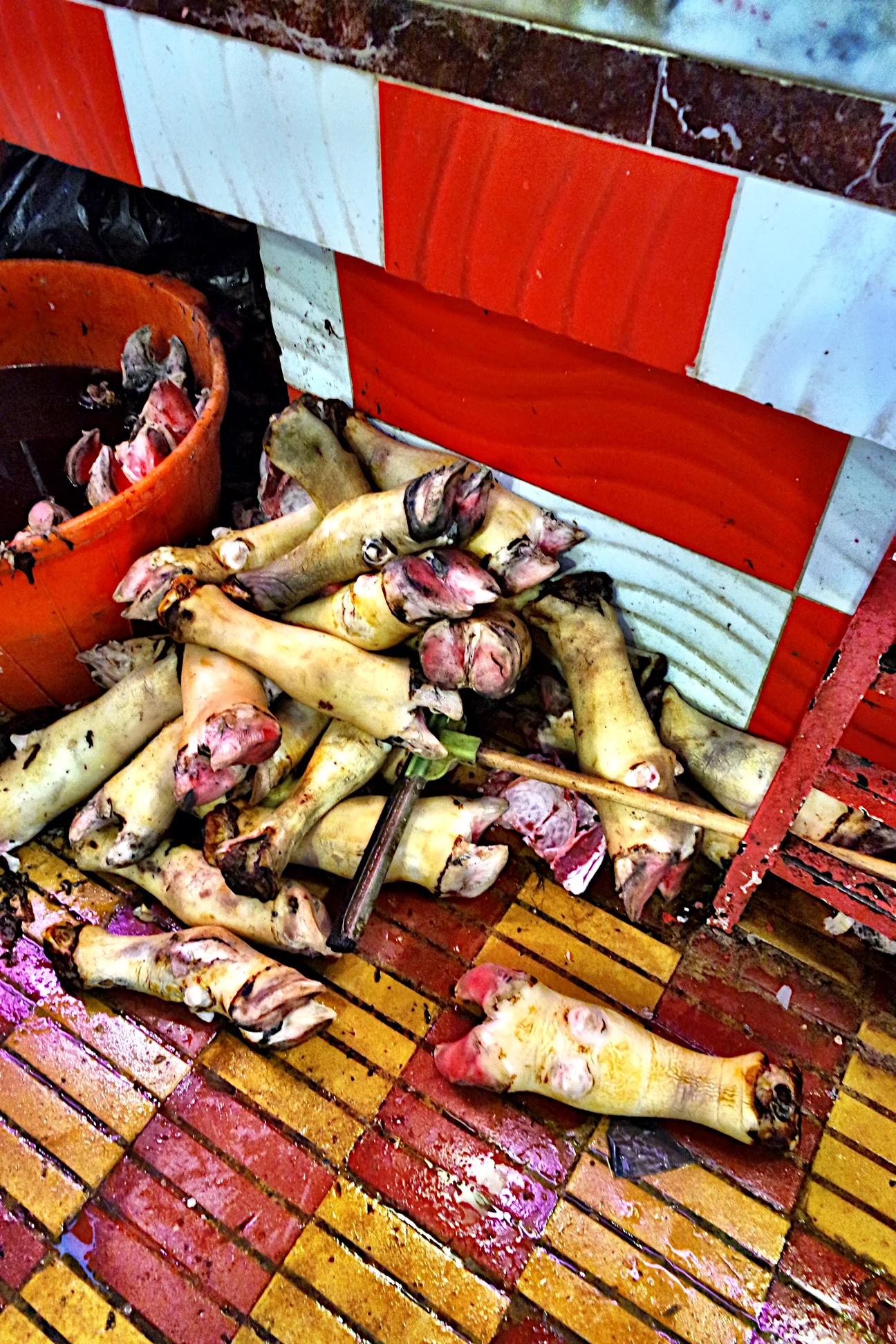
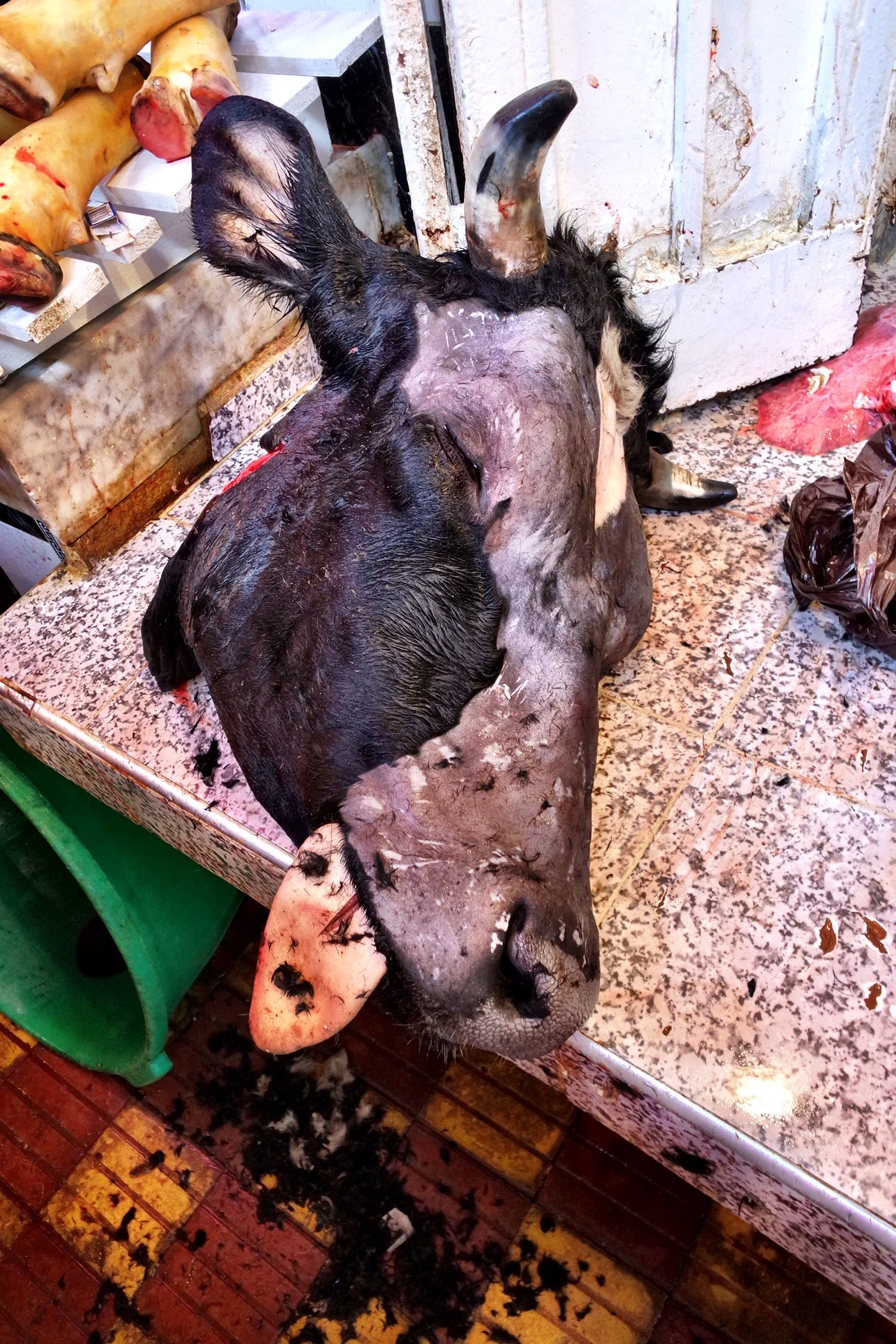
The images came quick and violent. Decapitated cow heads, their tongues lolling out. A boy digging his hands into a bowl of brains. Goat heads amidst a splattering of blood. Razor in hand, a young man intently shaving the side of an animal’s face. Haphazard piles of bloated legs, a nauseating yellow, ending in cloven hooves. Macabre dissections revealing raw, red tissue in stark contrast to the white of sawed-through bones.

Duke and I couldn’t stop smiling. –Wally

Decapitated cow heads, their tongues lolling out. A boy digging his hands into a bowl of brains. Goat heads amidst a splattering of blood.
 

A Tour of the Roman Ruins and Mosaics of Volubilis

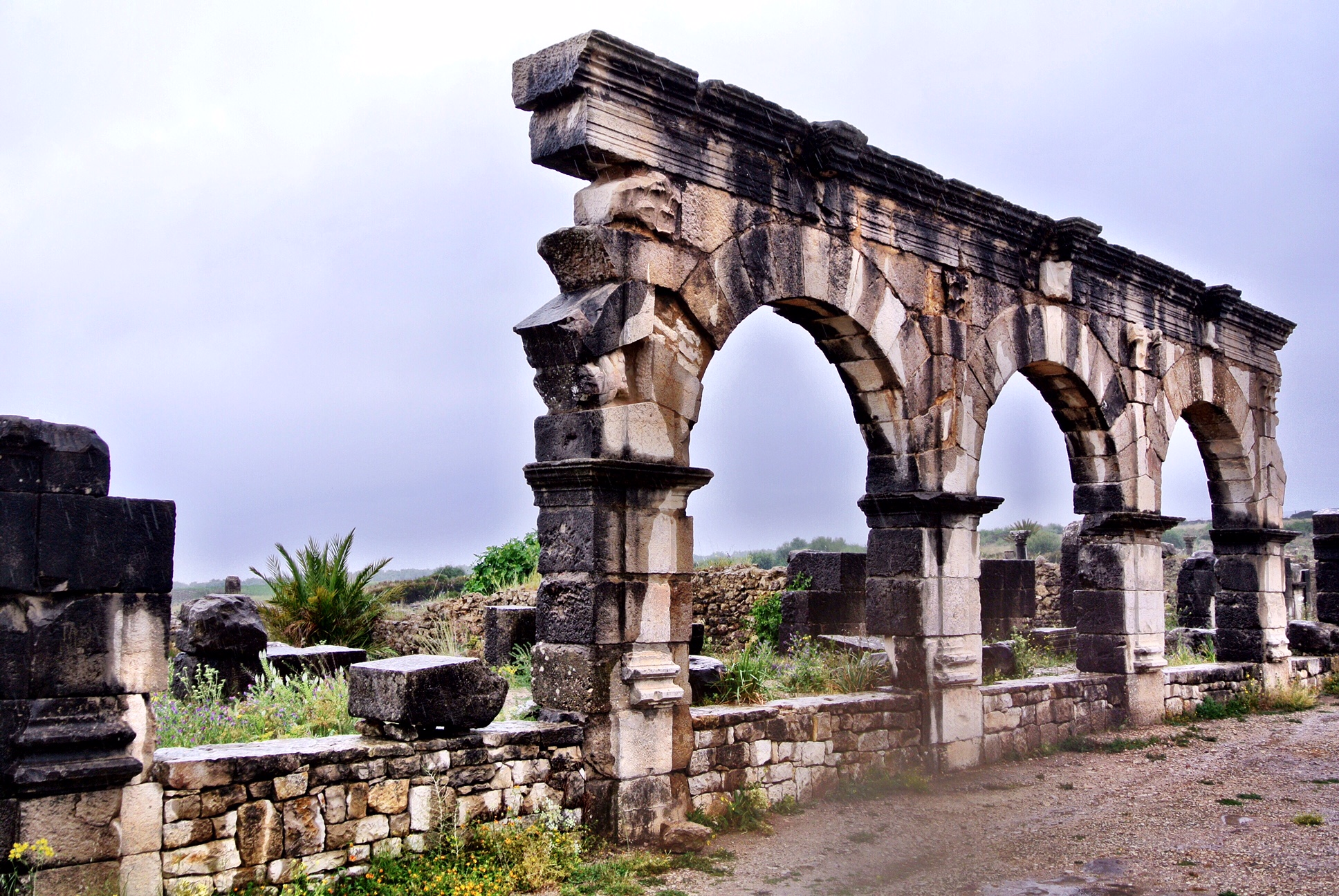
The ruins of the Roman city of Volubilis can be paired with an excursion to Meknès.

The ruins of the Roman city of Volubilis can be paired with an excursion to Meknès.

When visiting Fès, Morocco, be sure to take a day trip to see the remarkably well-preserved tile mosaics of the ancient city of Volubilis.


It never occurred to me that there’d be Roman ruins in Morocco, though I suppose I knew on some level that the Roman Empire extended to Northern Africa.

But when I read about the remains of the town of Volubilis, just outside of Fès, I knew it had to make our itinerary. And, as someone obsessed with Ancient Rome — poor Duke has had to sit through countless shows about the subject — I knew a visit to Volubilis was exactly how I wanted to spend my birthday. (A lady never reveals her age. But I’m not a lady. It was my 44th.)

“Bulemics. Vomitoriums. Feather to tickle the throat. They vomit. Eat more.”

He pointed across the way. “Then happy ending. At brothel. Secret passage from hammam to brothel.”

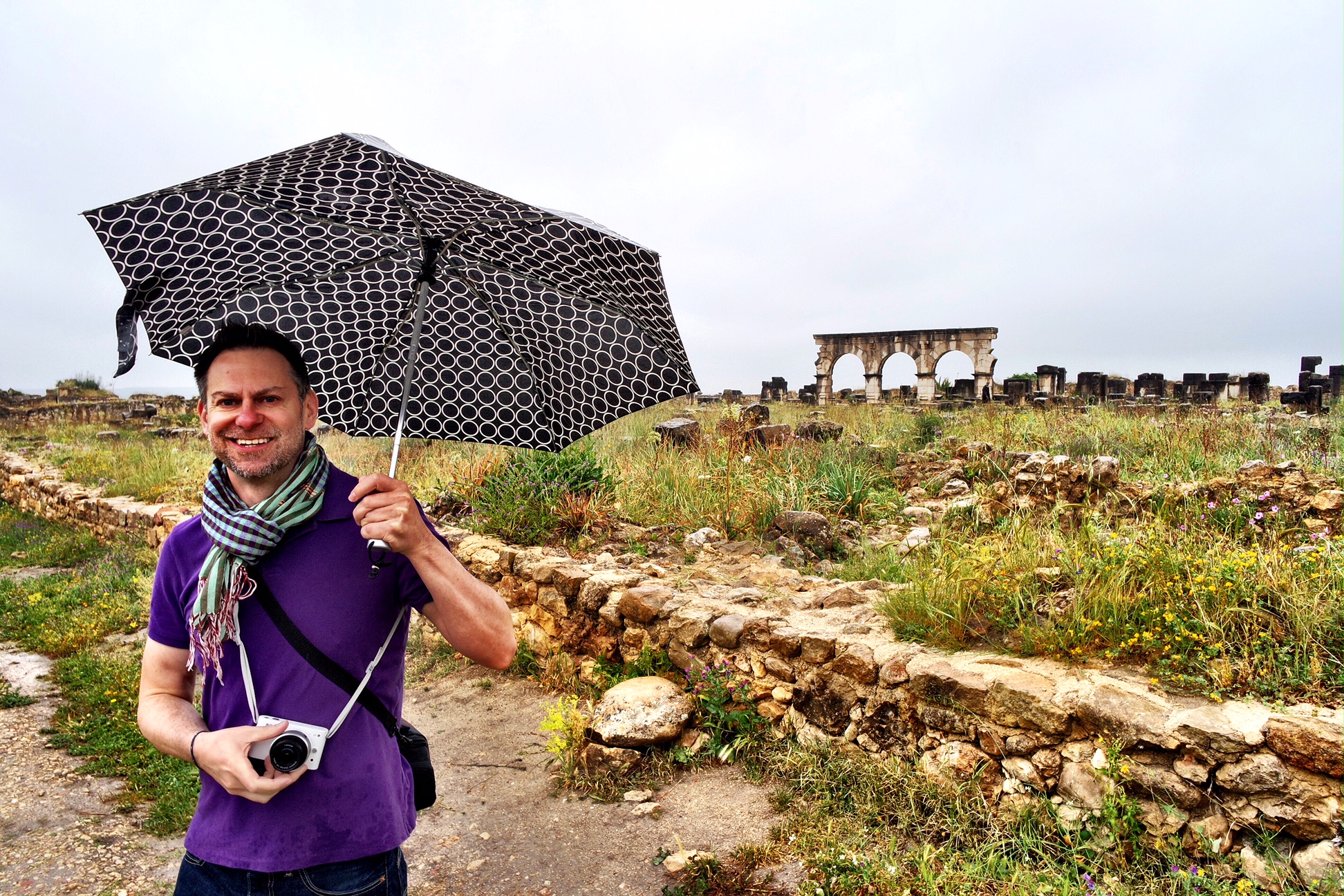
Even a rainy forecast wasn’t going to disappoint me.

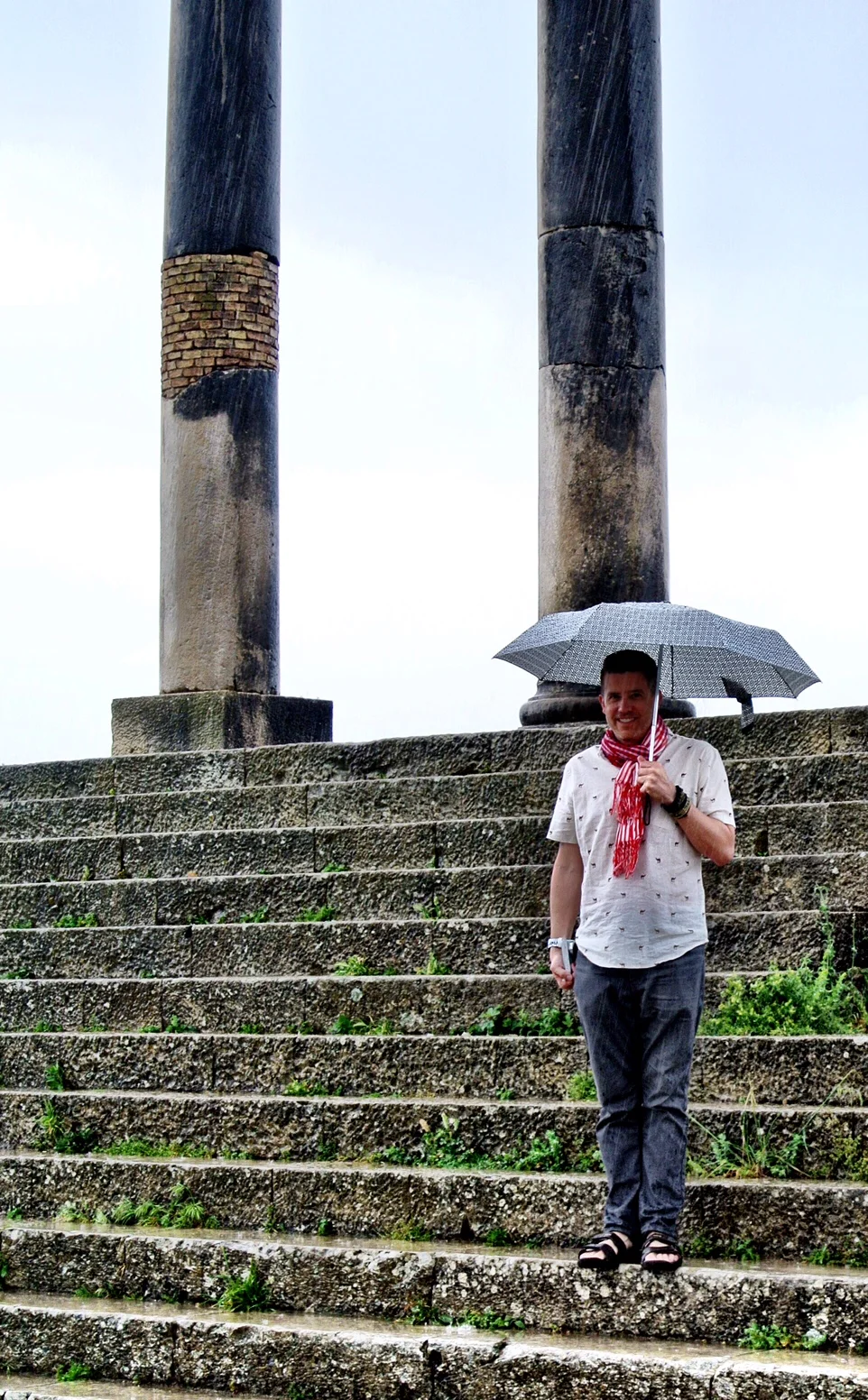
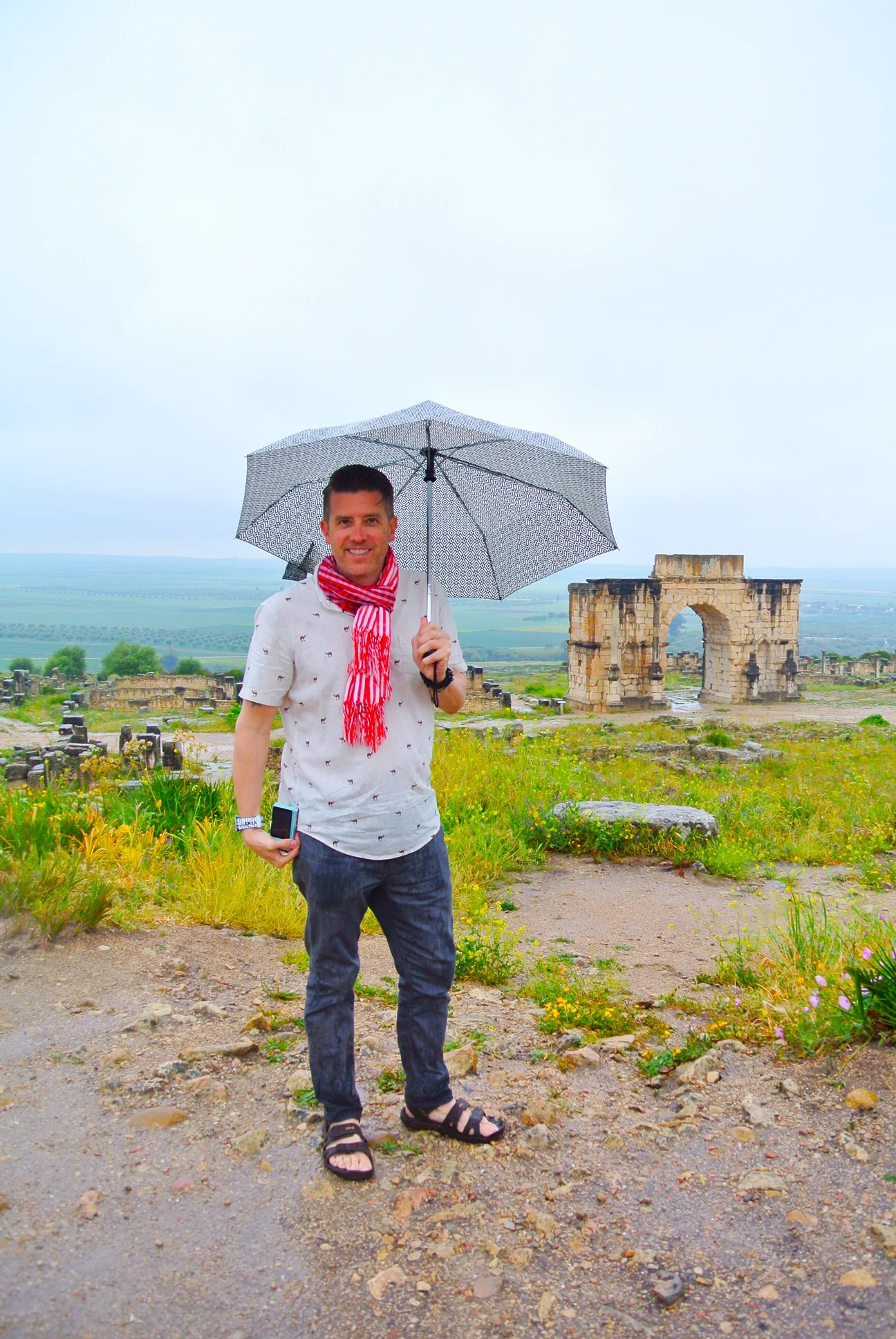
Duke and Wally didn't let a little rain get in the way of an enjoyable trip to Volubilis, Morocco.

We arranged a day trip to Volubilis and Meknès through our riad. A guide led us through the twists and turns of the narrow lanes, through an ornate gate and out into a square. Our driver for the day was a friendly young guy named Hafid.


The drive wasn’t what we expected. I’m not sure what we thought the Moroccan countryside would look like but we were pleasantly surprised to pass through rolling green and golden hills dotted with green poofs of trees.

The view on the drive from Fès to Volubilis

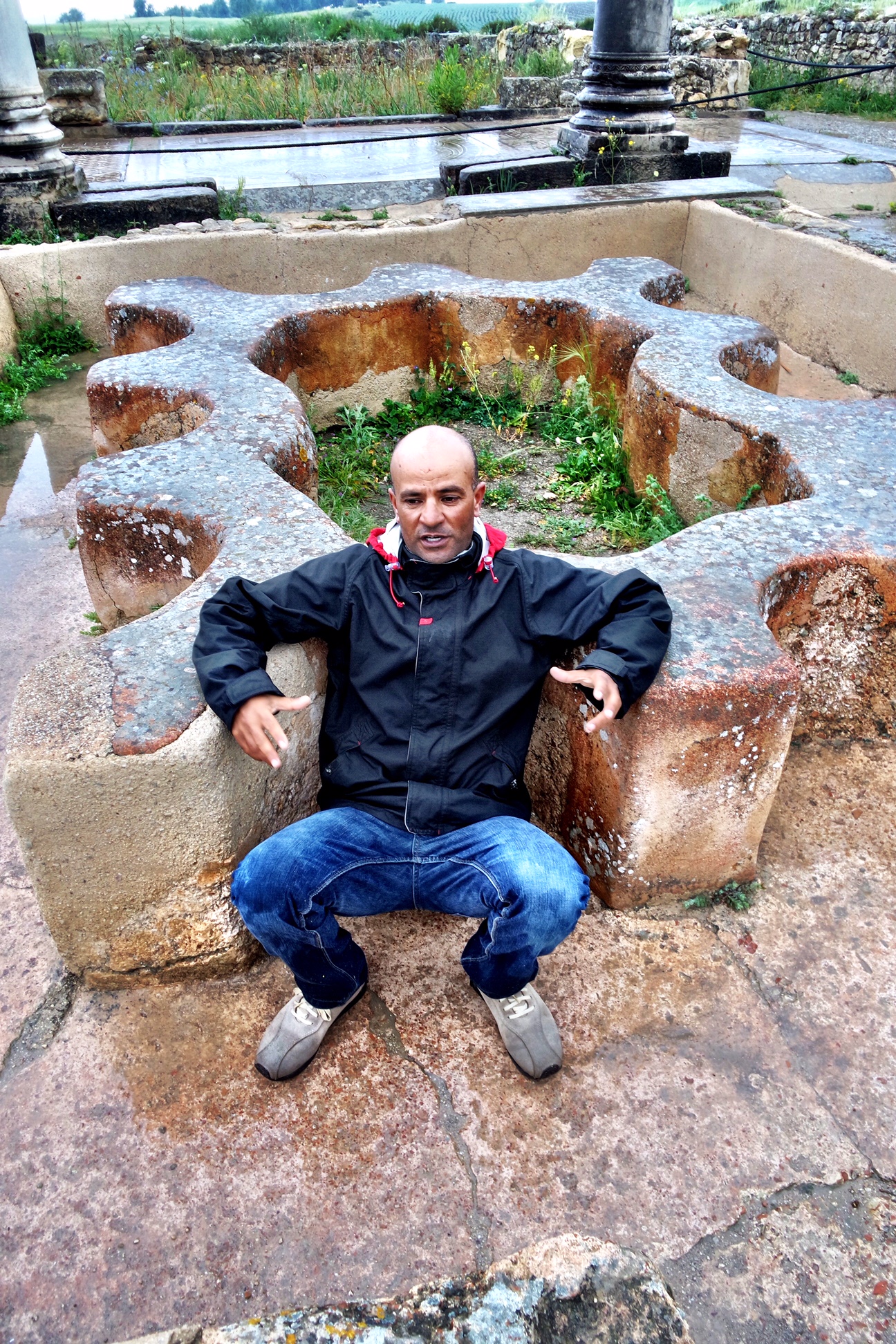
A half-hour or so later, we arrived at Volubilis. Hafid asked if we wanted a guide to the site and we decided we did. Boy, were we glad we made that choice. Our guide, Rashid (which I learned appropriately means “rightly guided”) was a complete comedian. He’d walk through the ruins, his hands in his pockets, the bright red hood up on his stylish black coat. Rashid, who was obviously very knowledgeable about the site, spoke in short sentences, everything layered with a dry wit. Like bullet bursts of naughty poetry.

If the dry-witted Rashid is around, we recommend requesting him as your guide.

“Carpe diem,” Rashid said. “Roman motto. Short lives. Lived life to fullest.”

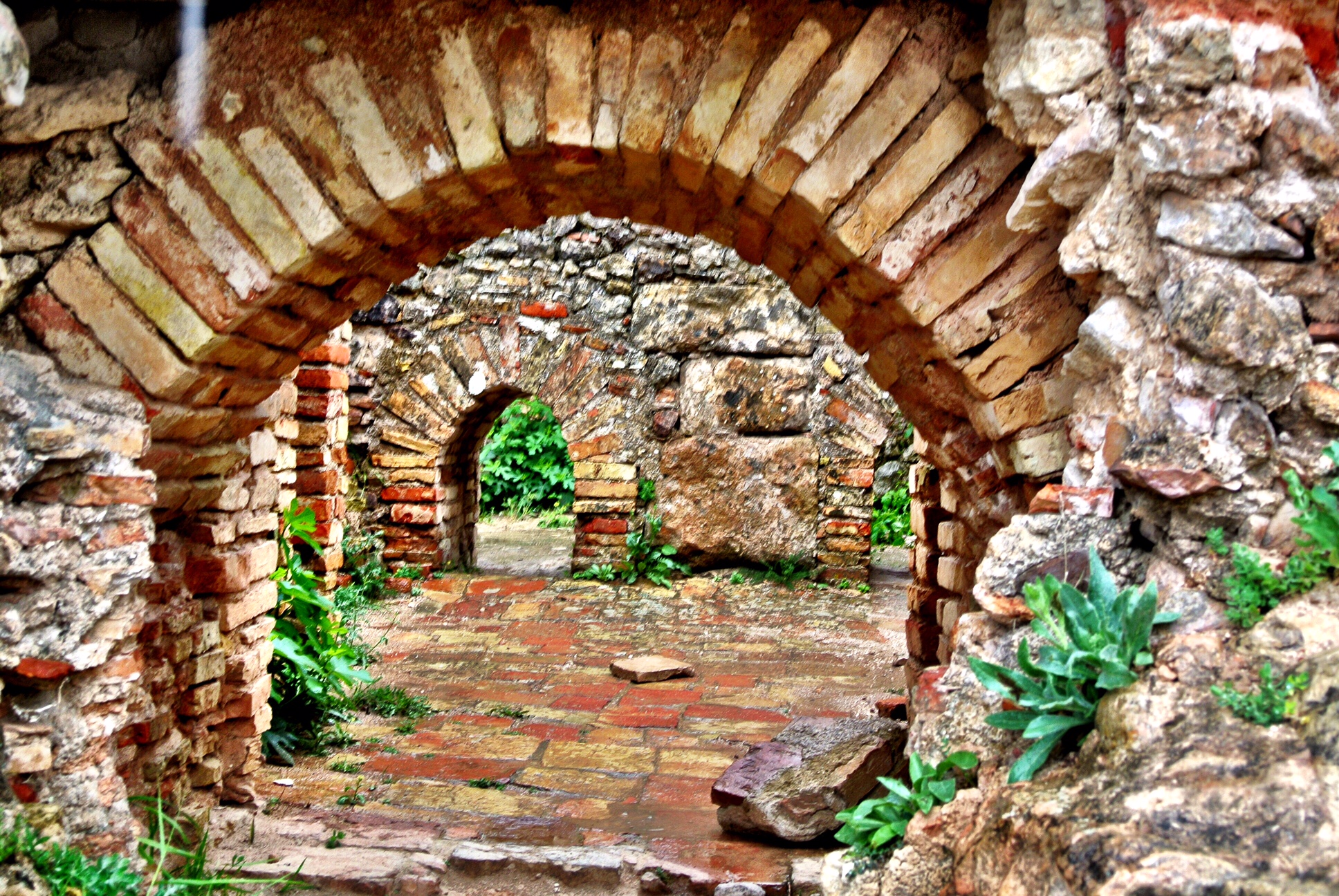
We clamored over the damp grass to the remains of a nouveau riche home opposite the town baths. Rashid pointed to what was once a bathroom.

“Bulemics. Vomitoriums. Feather to tickle the throat. They vomit. Eat more.”

He pointed across the way. “Then happy ending. At brothel. Secret passage from hammam to brothel.”

We learned that the structures of Volubilis amazingly had heated floors and plumbing. Unfortunately, that plumbing was toxic.

“Romans all crazy,” Rashid said, his face a mask revealing no emotion. “Lead poisoning. Pipes.”

As we walked along a muddy path, Rashid pointed to wildflowers.

“Morning glory. Very pretty weed. We call it ‘mile-a-minute.’ Grows very fast. It’s what Volubilis means.”

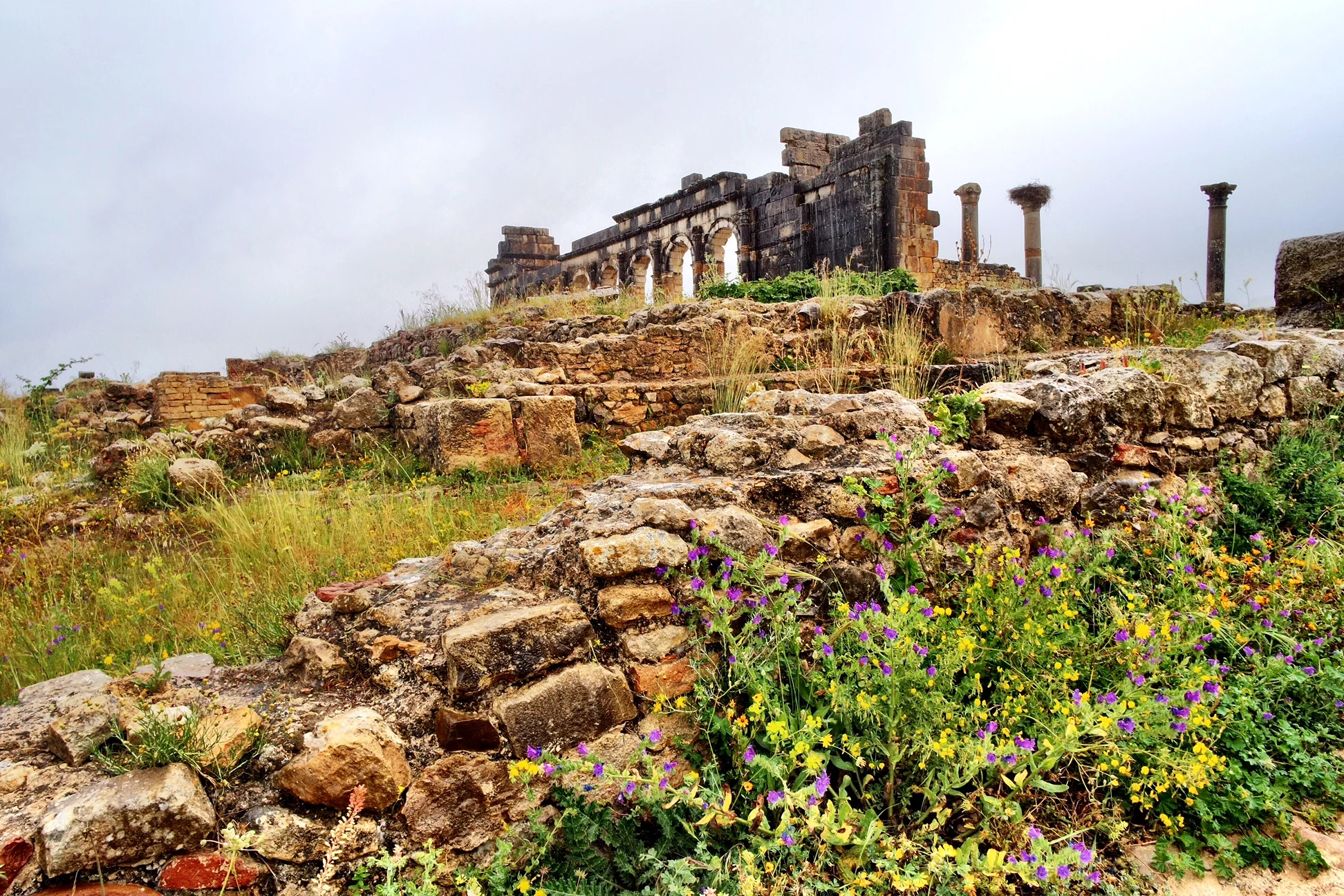
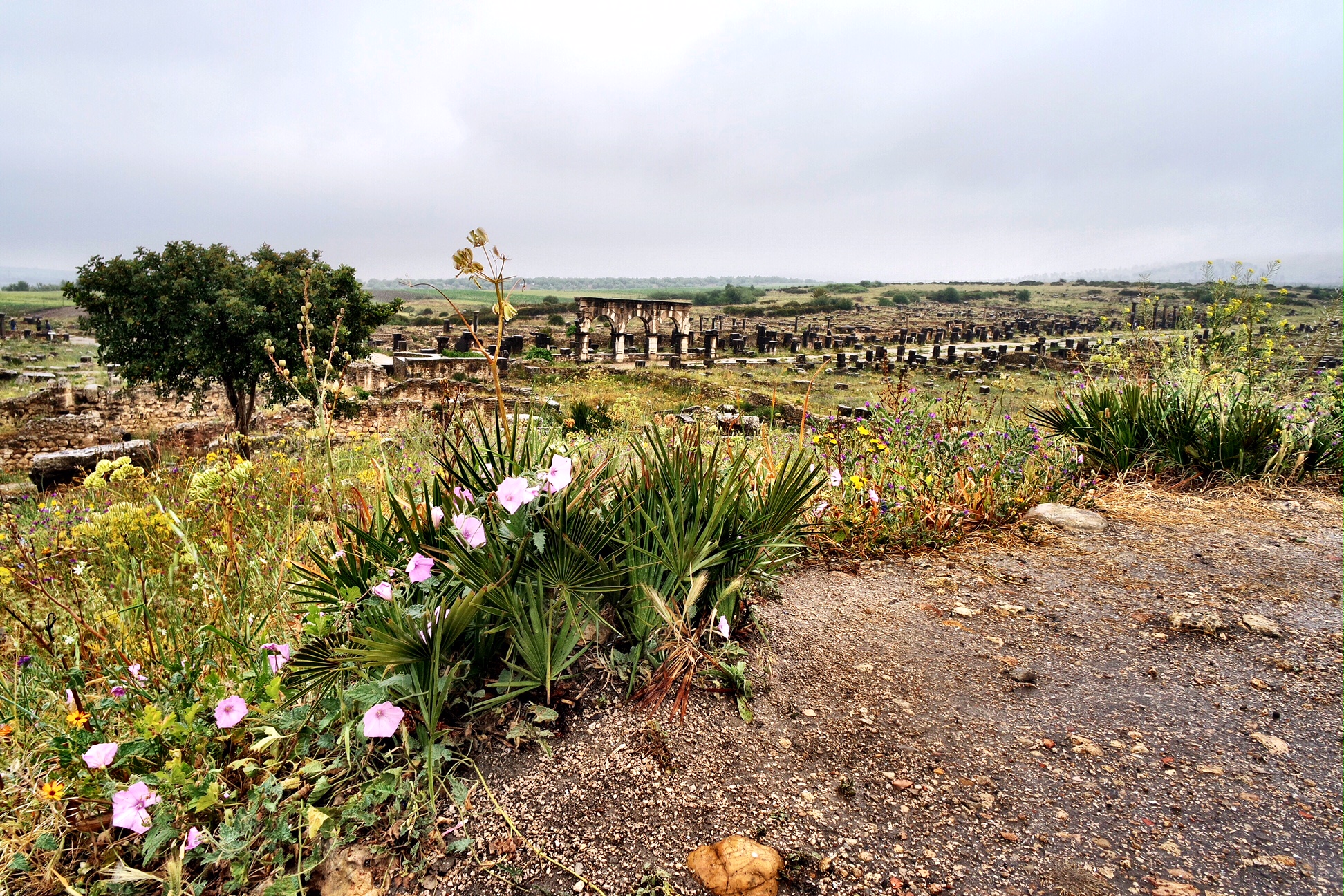
Flowers color the surrounding area, making a nice contrast to the stone ruins of this Roman town.

I didn’t know if I should believe everything Rashid told us. But I was also too entertained to worry too much about veracity. I’ve always been a huge proponent of Why let the truth get in the way of a perfectly good story?

Atop the crest of a small hill, we turned in a circle, surveying the landscape.

“Strategic location,” Rashid explained. “Water. Wheat. Olive. What more you need?” He put his head down and began descending the hill. We could barely hear him add, “Chocolate.”

Rashid was obviously very proud of this little-known historic site.

“Like Tuscany,” he said, his chest swelling ever so slightly. “Who would know this is Morocco? No one. If they do not come. Everyone should see Volubilis.”

The stork nests atop columns at the remains of the forum of Volubilis have become a tourist favorite.

The rain came down in spurts. Duke, trying to look on the bright side, pointed out that the site was probably a lot less crowded due to the inclement weather.

“We should pray to Apollo for the sun,” I said as we approached the forum, with its slender columns topped with stork nests.

“No,” Rashid said. “Jupiter was the god of the weather.” He pointed to a stone slab in the middle of a piazza. “You can make sacrifice. Goat or sheep.”

“We should have brought one,” I said.

Rashid commented, “Yes. Barbecue.”


Mosaic Masterpieces

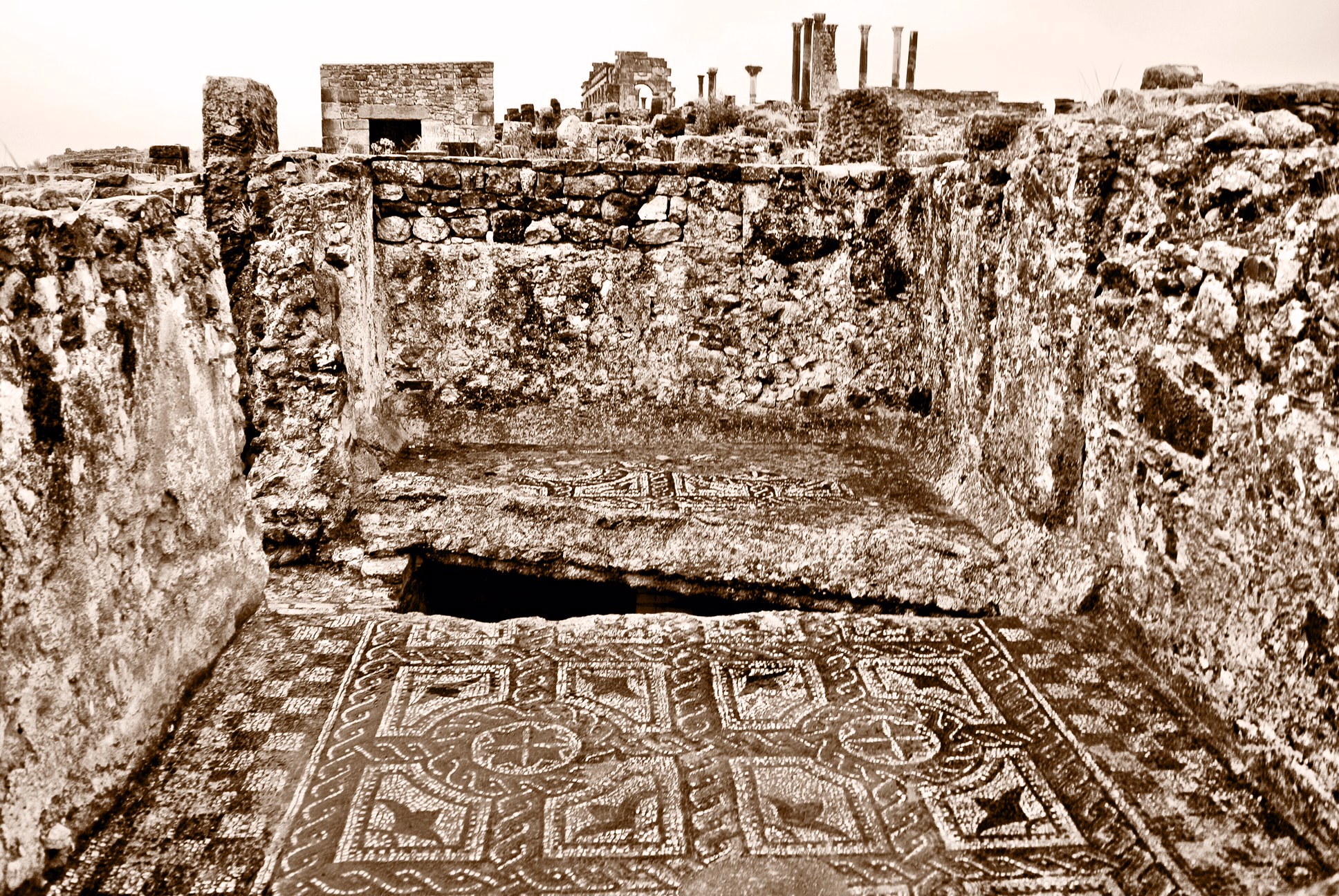
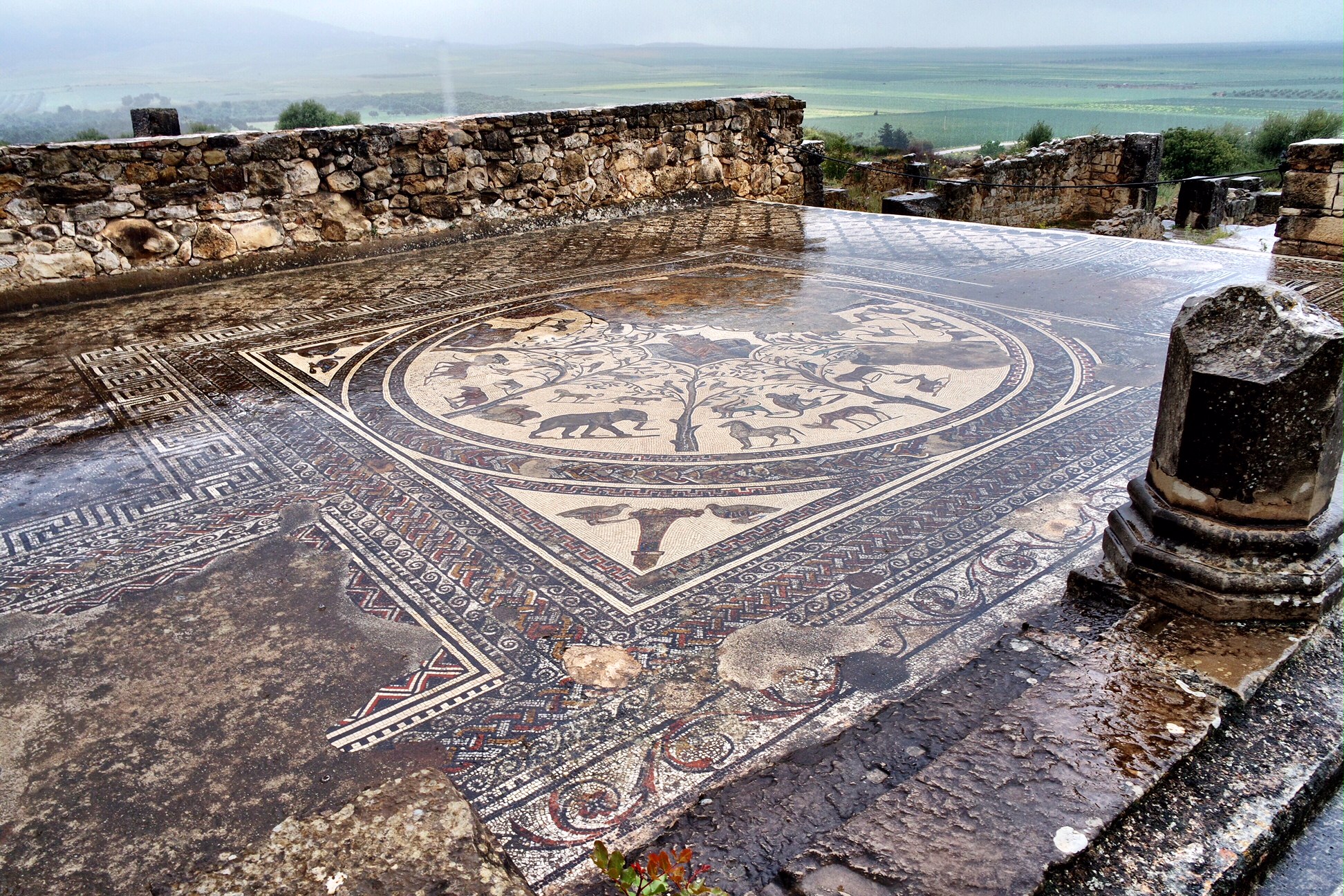
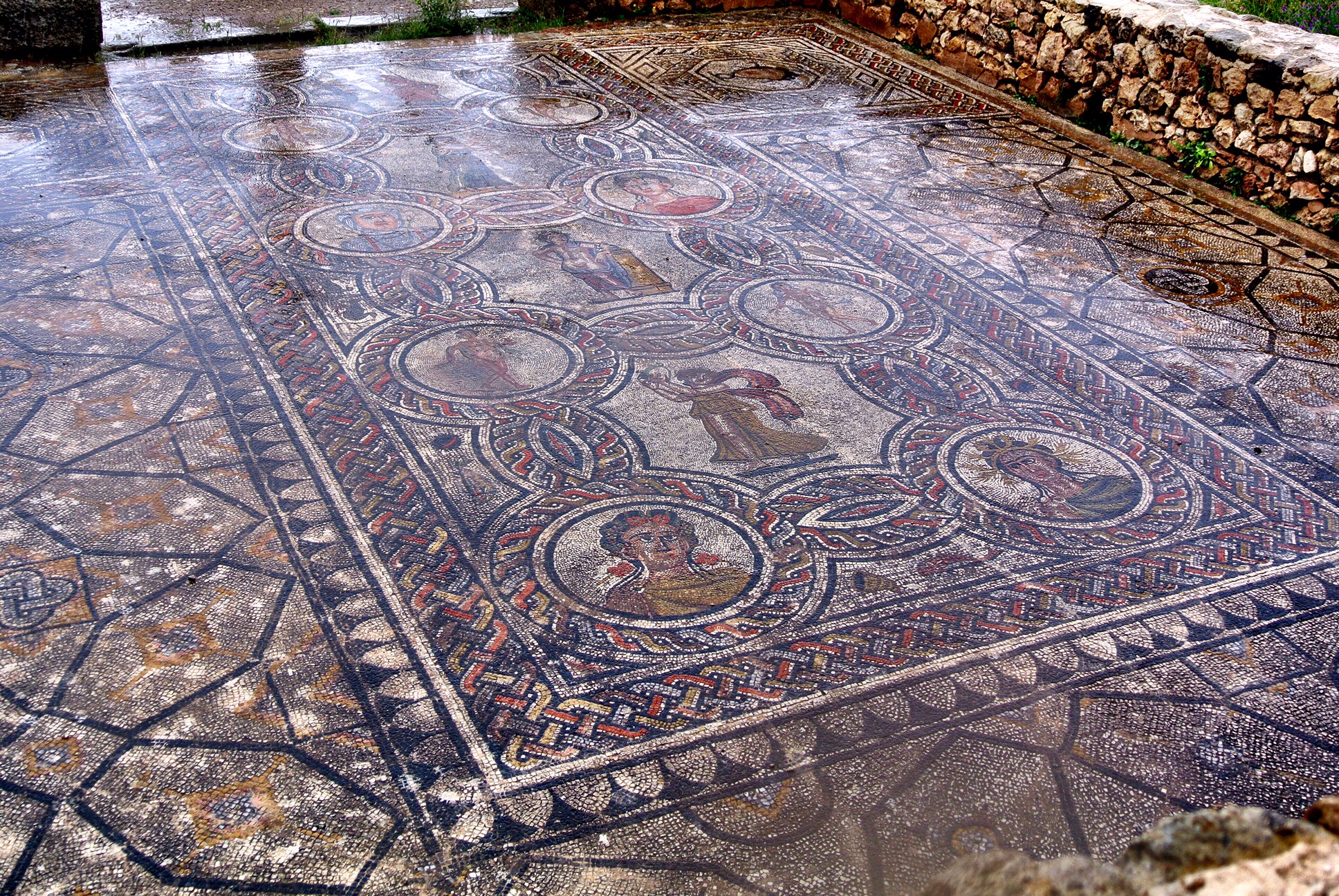
The site is most famous for its mosaics. These are remarkably well-preserved, especially those in the wealthier part of town, away from the hammam and the nouveau riche home. The rich didn’t need easy access to the public baths — they had their own.

Frankly, I’m astounded these mosaics haven’t been completely picked apart. They’ve been here in the middle of the countryside for centuries, with no security, nothing to stop pillagers. Imagine having a Roman ruin remaining relatively untouched for so long. I was giddy with excitement.

This mosaic of a guy who got on his horse backward is known as the Acrobat.

One of the mosaics features Diana, the goddess of the hunt, bathing. When the poor fellow Actaeon came upon her, and saw the goddess nude, she punished him by turning him into a stag. He was torn apart by his own hounds.

A mosaic of the goddess Diana bathing — before she catches a peeping Tom and devises a horrific fate for him

“Oh, deer!” Rashid said as he finished the story, and Duke and I burst out laughing.

Many of the mosaics of Volubilis are in surprisingly good shape.

After we had toured the mosaics, Rashid got a mischievous glint in his eye. “Come, come,” he said. “I saved the best for last.”

We hurried after him, wondering what he was up to. “You’ll see,” he said. “Best site in all of Volubilis.”

He stopped and turned around, blocking a rectangular stone. He almost cracked a smile as he moved to the side in a dramatic reveal.

There before our eyes was a carving of what was undeniably a huge penis.

Rashid explained that this marker designated the brothel. I of course couldn’t resist. I straddled the stone while Duke took a picture.

Wally clowns around with the phallic marker that designated the local whorehouse.

“Great photo,” Rashid said, utterly deadpan. “Can be your Christmas card.”

If he only knew that wasn’t so far-fetched. –Wally

Read more about the history of Volubilis here.


The Ruined Garden: A Fairy Tale Fez Restaurant

The Ruined Garden, one of the best restaurants in Fès, Morocco

A magical, secret spot with great Moroccan food, friendly servers, quirky décor and kitty companions.


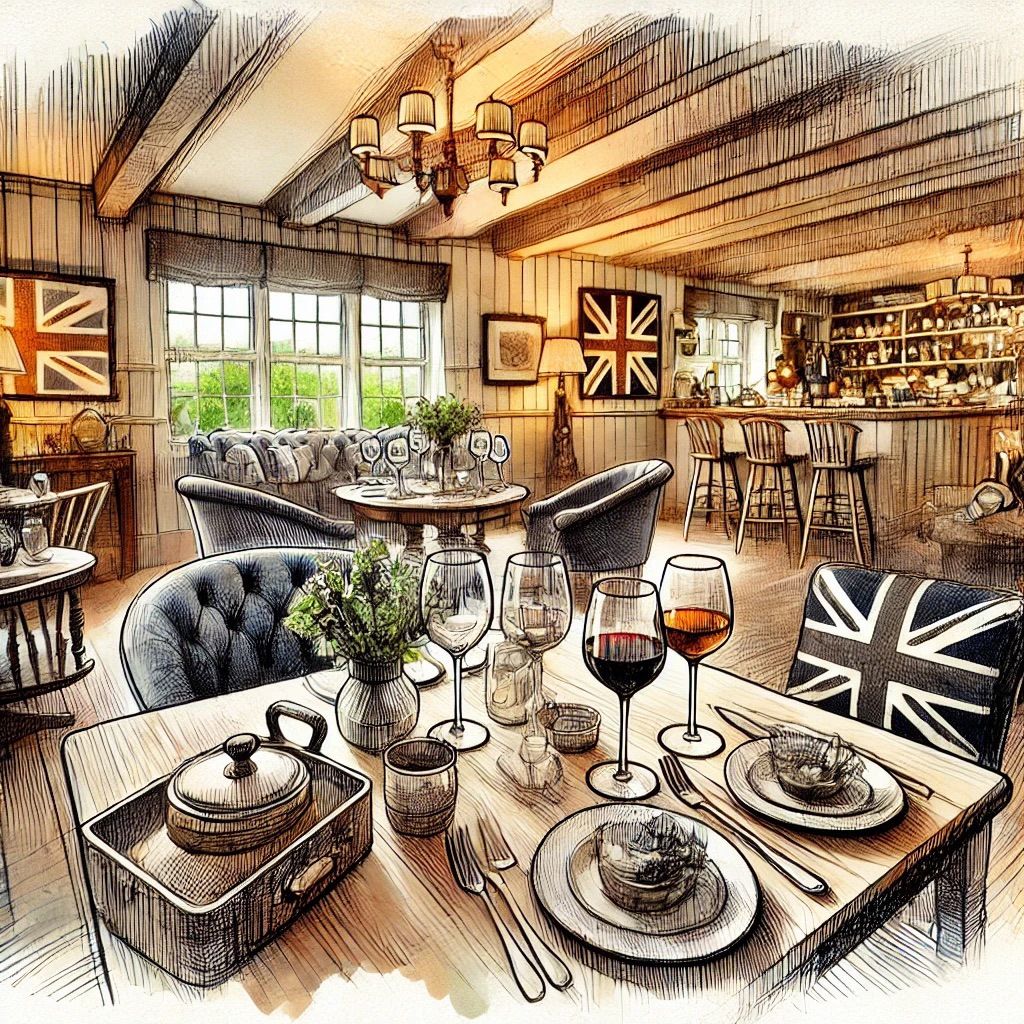
In Fès, it can be said that beauty lies concealed behind the modesty of its windowless exteriors. The Ruined Garden, a restaurant tucked in the heart of the medina, is such a place.

The Ruined Garden features adorably mismatched tables and chairs and is overrun by flowers and other plants

Located within the centuries-old roofless shell of a former merchant’s house, its interior has been converted into a charming, magical place — a bric-à-brac of mismatched chairs and colorful wax print fabric tablecloths where a fairy tale could be set.

Wally got the rfissa, a noodle dish that one of the servers told us is traditionally served to pregnant women

Located within the roofless shell of a former merchant’s house, its interior has been converted into a charming, magical place — where a fairy tale could be set.

The restaurant was created by chef and gardener Robert Johnstone, a veteran of both the Wolseley and one of London’s most celebrated restaurants, the Ivy. Be sure to check out the Ruined Garden blog, which features images of the café, recipes and general goings-on at the property.

Serving some of the best food in Fès, made from local ingredients, we ate there twice on our four-day visit. The al fresco restaurant has a low-key vibe and features artfully prepared riffs on Moroccan classics such as lamb pastilla served with a tomato and orange salad.

Duke opted for the lamb pastilla, a common Moroccan dish

Be sure to save room for dessert and then check out the corridor to the back of the restaurant, where handcrafted lemon wood spoons, saffron and hammered copper tajines are for sale.

The restaurant is connected to Riad Idrissy, a former merchant’s house that has been lovingly restored and converted into a palatial guest house. –Duke


Secret Garden

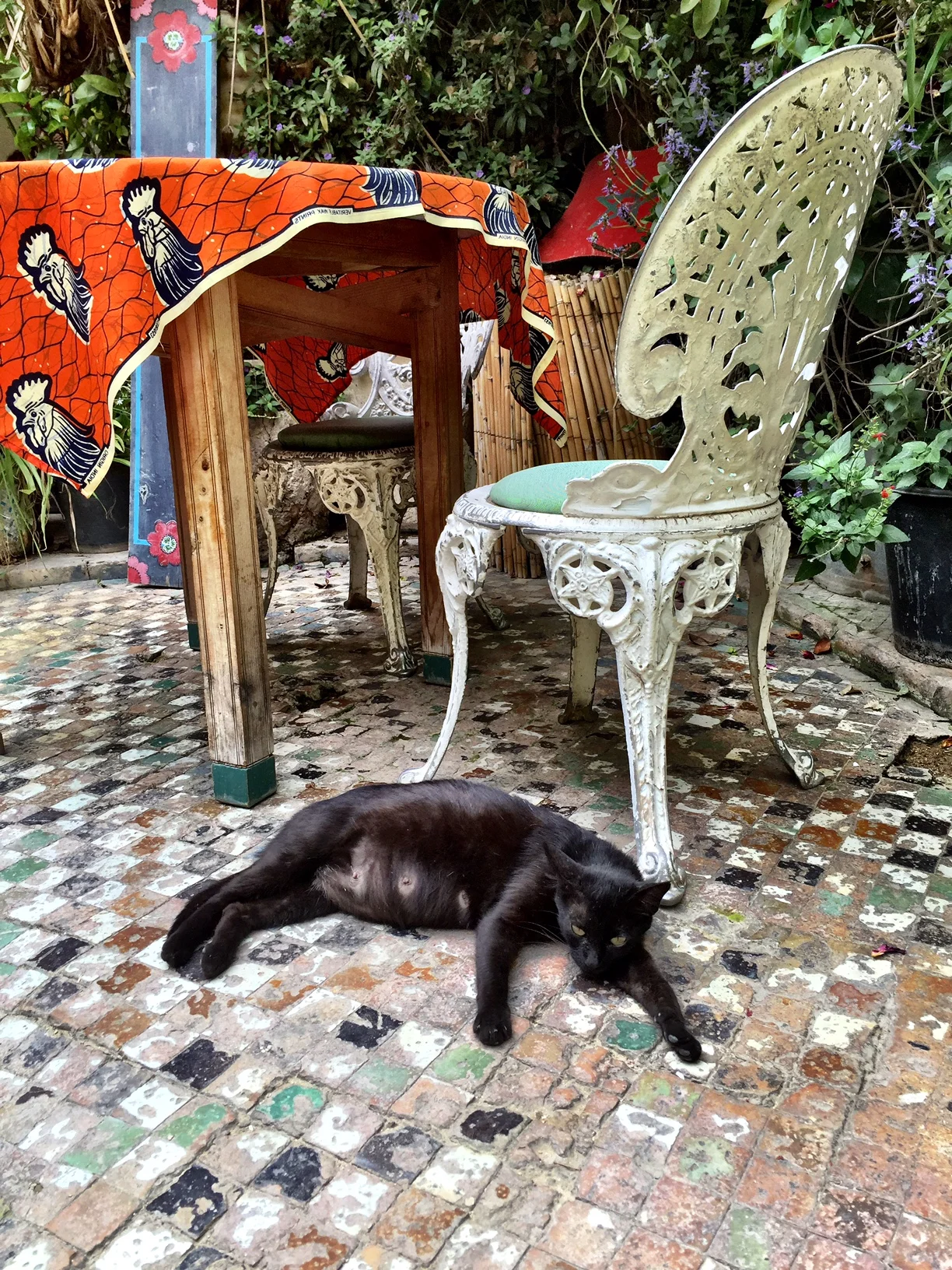
Wally caught up with Robert via email and he kindly answered a few questions regarding the Ruined Garden, how the space was acquired, why it was left as a deconstructed space and what has become of the very pregnant black cat who lounged on the bench next to us when we last dined there.


How did you acquire the space and what did it look like at the time?

John Twomey and I own the business together. John bought the house and the ruin adjoining it in 2006. Restoration took four years.

I then came out to furnish the hotel and to turn the ruined house next door into a garden and then into the restaurant you have visited.


The crumbling shell that frames the open-air restaurant. Note the cat climbing the wall in the distance

How did you decide to keep the ruined aspect and not rebuild the courtyard?

The house was unrestored but sound. However, the ruin next door had actually been a rubbish dump. It took five donkeys five months to clear the site and reveal the original mosaic floors.

I wanted to keep the ruined nature alive as a contrast to the precise decoration in the riad as well as to give visitors a “soft focus” space to be able to relax and think about what they have been seeing in the medina — as you have seen, it is intense and very urban.


We started with a soup course: harira for Duke and bessara, a fava bean soup with a Moroccan star in oil, for Wally

How would you describe the restaurant’s cuisine?

The food is essentially Moroccan — some traditional dishes and been reimagined, though we steer away from the French influences that have crept in.

We grow some of the herbs and flavorings in the garden and buy all of the vegetables and fruits from the medina souks.


What else do you offer at the restaurant?

We run a bread-making course, by arrangement in the garden (550 dirham per person), where you can learn to cook five local breads with Najia and go to the community bread oven.


Tell us about the riad.

The hotel, Riad Idrissy, has five rooms. Guests have access to the Evita Balcony, overlooking the garden and the roof terrace.


What’s the décor of the riad like?

The style of the riad I would describe as casual luxury, with handmade bedspreads and bespoke furniture. There are rain showers and heated towel rails in the bathroom.

All ornaments and furniture has either been made or bought in Morocco.


Where do you find such charming servers?

The charming servers found us really, and some have been here since we began. The riad is served by the same guys you met in the garden.


Madrigal lounges in the courtyard by a table. She has since given birth to a litter of kittens

When we were there, we dined with a pregnant black cat that Duke named Madrigal, after the mother figure in Tales of the City. Did she have her kittens?

The black cat has had her kittens. She usually has them across the road. She is an occasional opportunist visitor rather than a pet — though she is rather chatty and does love a sardine.


CAT FIGHT: Who’s cuter: the Cats of Fès or the Cats of Marrakech?

What’s the Best Hammam Spa Experience in Fes, Morocco?

Get pampered (and scrubbed and steamed) at Palais Amani’s hammam spa in Fès, Morocco

Reinvigorate yourself at the luxury hammam Les Bains Amani.


A spa day in Morocco isn’t quite the same thing you’d expect in the United States. But hammams have been a part of the Moroccan culture for centuries — and you’ll leave literally transformed. I'm not quite exaggerating when I say you'll feel like a butterfly emerging from its chrysalis.

So if you’re in Fès and you don’t stay at Palais Amani, you at least need to undergo its one-of-a-kind hammam experience. I recommend doing so your last full day in town. If you go earlier, the sometimes stressful navigation of the medina’s winding pathways might negate its calming, rejuvenating effects.

You’ll leave literally transformed. I’m not quite exaggerating when I say you’ll feel like a butterfly emerging from its chrysalis.

Here’s a walk-through of our day of bliss at Les Bains Amani:


Chambre No. 1

The changing room

After a brief wait in the lovely interior courtyard, amidst the gurgling of a fountain and the chirping of birds in the lush foliage, Soukaina, who works in the spa at Palais Amani, approached us. Her beautiful face framed by a head scarf, she led us to a side entrance near the dining area. Up some stairs and into a cozy room with two lounges.

We had been told to bring swimsuits, but to be honest, the typical men’s swimming trunks would be too bulky. If you’re a Speedo type guy, you’d be all set. I instead opted for boxer briefs, which worked out great. They ended up soaking wet by the end, so just remember to bring a spare pair of underwear or you’ll be going commando.

We donned the fluffy robes provided for us, stretched out on the lounges and wondered what awaited us.


Chambre No. 2

Hand and foot scrub

Our hostess returned and led us down to the hammam. It’s in the basement, where the original kitchen once was. Inside a small antechamber, Duke and I sat on a marble bench while the silhouettes of two women emerged from the dark — jagged chiaroscuros in the flickering of candlelight.

Using a mixture of rose water and bran, they began scrubbing our feet and hands.

When my woman got to one of my strange, bulbous thumbs, she stopped, confused and looked at me.

“No problem?” she asked.

I didn’t really know what to say, so I laughed and assured her, “Ça marche.” That works.

Then she got to the other thumb and grabbed it playfully.

“Les deux,” I told her, to indicate they’re both like that. I was really growing fond of her.

Finishing off the process, the women ran a white clay and henna mixture through our hair. Soukina had assured us it wouldn’t dye our hair at all, though I think it would have been fun seeing what it’s like being a faux ginger for a bit, like the adorable vicar on Grantchester.


Chambre No. 3

Rinse, scrub and steam

This is where things got pretty intense. We were led into an adjoining room. It’s larger, with seating along two sides and a fireplace along one end, a large cauldron of water in its depths.

You stand in front of the cauldron, and the women alternately scrub your epidermis raw with exfoliation gloves and pour warm, soothing water over you to rinse the soap off. They grab handfuls of what is referred to as black soap (and is actually a dark brown abrasive goo made of argan oil and mint).

We had visited the small hammam attached to our riad in Marrakech, and after the vigorous scrubbing, I told Duke that, believe it or not, it actually hurt more than getting my tattoo.

I might have been exaggerating. A bit.

It’s almost too bad it was so dark in the room. You can’t see all the skin they’ve sloughed off. I can attest from our last hammam, when there was more light, that there are dark rings of dead skin that collect around your wrists and, presumably, ankles.

You'll feel like you’ve been rebirthed. Fresh, soft and new.

After the dermabrasion, the ladies left us to soak up the steam. We sat on our benches as the room filled with thick, billowing white clouds. It grew more and more difficult to breathe. Soukaina had mentioned that if it gets too hot to let the staff know, and they’ll release some of the steam.

I could tell Duke was starting to freak out, so I suggested we both lie down. That definitely helped us relax.

And just when we thought we had been forgotten and would end up a puddle of water like Frosty the Snowman in the greenhouse, our scrubbing saviors came to fetch us.


Chambre No. 4

Douche

That’s French for shower, sillies. Here’s another useful phrase: un peu trop chaud (“uh puh trow show,” more or less). A little too hot.

It came in handy when my attendant expected me to enter the scalding hot shower.

We were left on your own for this portion. I was so used to being completely pampered, I would have just stood there all day, waiting to be lathered up if Duke hadn’t gone first and let me know we actually had to do the work during this segment.

Again, I could only imagine the skin I shed. It must’ve looked like a snake had molted before it slipped down the drain.


Back to Chambre No. 2

Drying off

The shower room led back to the antechamber where we had our foot and hand scrubs.

Here the two women dried us off. Mine made an adorable production of including my belly button, which made us both giggle. Then they put us in hooded robes. I felt like Emperor Palpatine in Star Wars.


Back upstairs to Chambre No. 1

Tea and relaxation

In the changing room once again, we found a pot of tea waiting for us, along with a plate of coconut macaroons. We nibbled on the delicious cookies and exalted in our luxurious excursion. I could literally do this every day. Maybe I was royalty in a past life. It just felt right.

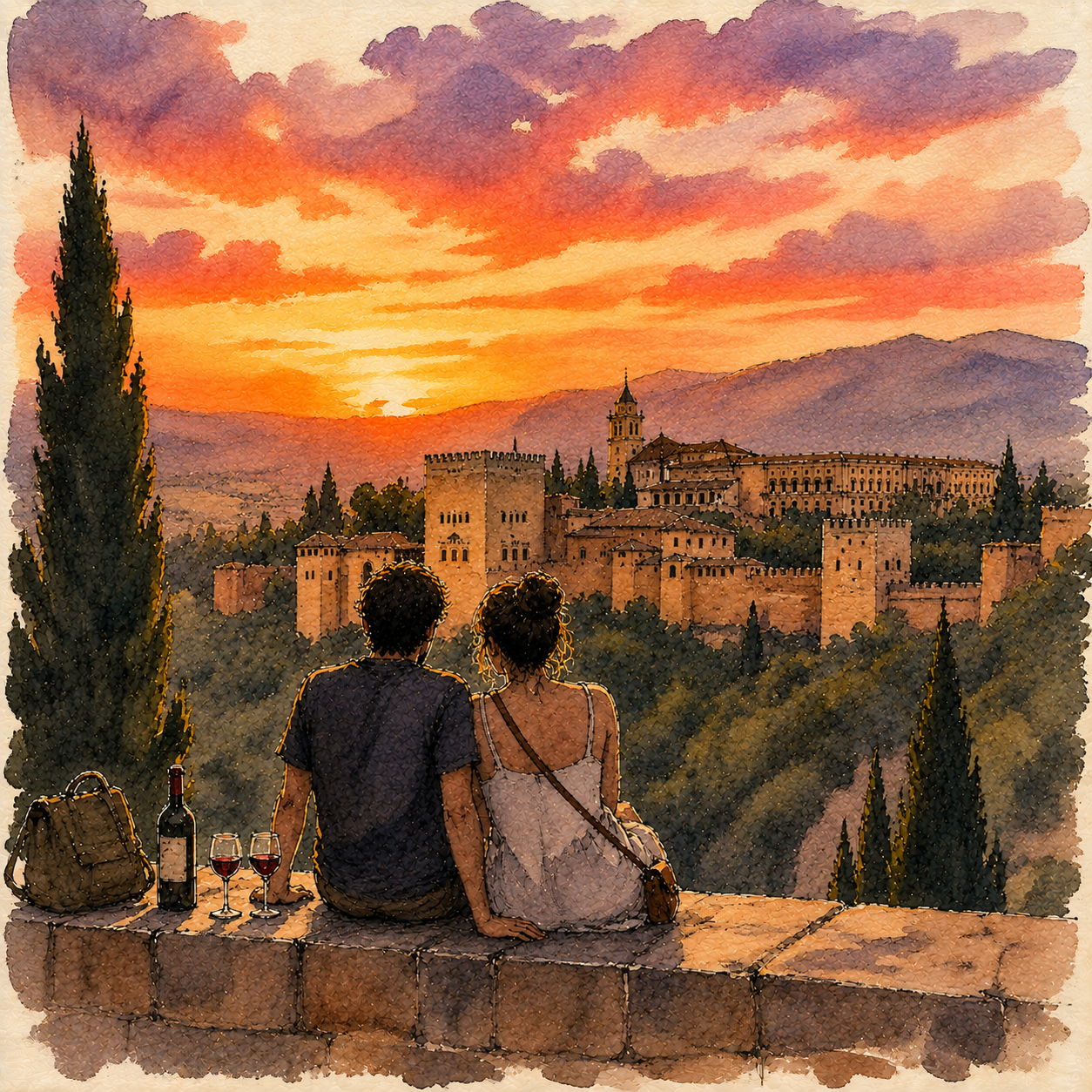
Chamomile tea and coconut macaroons awaited us after the hammam experience


Chambre no. 5

Massage

After 20 or so minutes, Soukaina knocked on the door and led us down one floor to the massage room. Duke and I got massages next to each other. It’s not a relaxing rub — but it’s also not a deep-tissue to work through knotted muscles either. It’s something in between.

At one point, my masseuse bent my legs and arms into bizarre contortions. It confused me at first, but ultimately felt good.

After the massage, you shower in the en suite bathroom. This was when I realized I didn’t have dry underpants. I survived.


Wally basks in that post-hammam glow

Feeling utterly transformed, relaxed, pampered, ready to face anything, Duke and I emerged into the gorgeous courtyard and sat at a small table to eat the light lunch that was included in the Drop In and Unwind package.

Following lunch, we explored a bit of the hotel, then enjoyed drinks on the rooftop terrace. I can’t imagine spending a lovelier day. –Wally


7 Must-See Historic Sites to Visit in Fès, Morocco

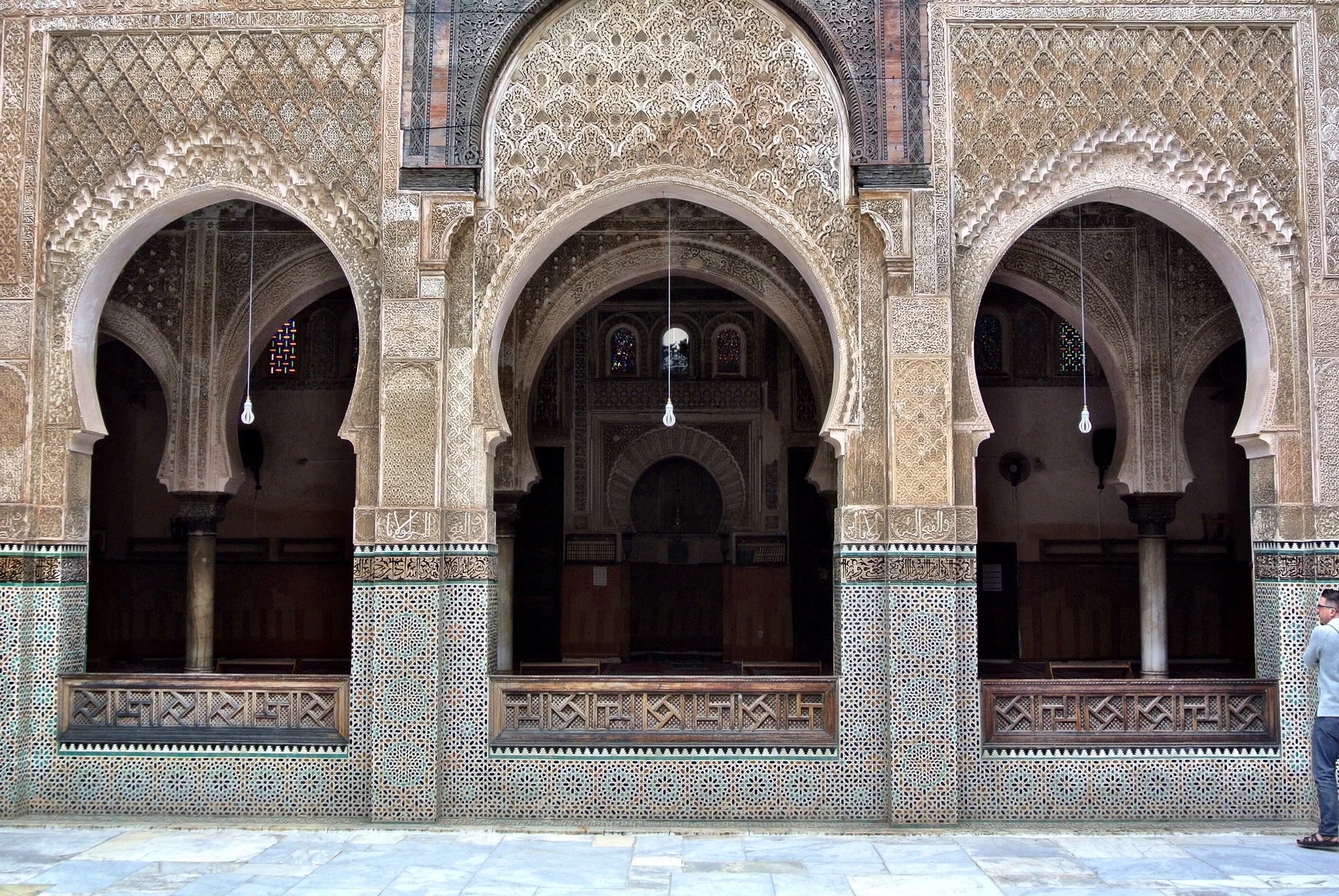
The amazing tile and woodwork at the Bou Inania Medersa in Fès

Hire a guide and hit these cultural locations in the Fez medina.


We were only in Fès for a few days and knew it would be a challenge to navigate the labyrinthine medina on our own, so we decided to hire a guide. This was easy to coordinate through our guesthouse for our first day.

We were led from Riad Dar Bensouda by Hamid, a member of the riad staff, to a guide who awaited us outside the walled city. He introduced himself as Abdul and began the tour by asking us, “Are you ready to get lost?”

He began the tour by asking us, “Are you ready to get lost?”

As we started our exploration, Abdul explained to us that Fès el Bali, the ancient walled medina, was established in 789 CE and is the largest car-free urban area in the world. Over 350,000 people live here, and it has been said that there are no less than 9,000 winding alleys.

Here are seven sights to see — all easily done in one day.


1. Bab Bou Jeloud

Bab Bou Jeloud, better known as the Blue Gate — the entrance to the bustling medina of Fès

The main western entrance to the medina, the monumental Bab Bou Jeloud, or Blue Gate, is in fact blue on one side and green on the other. Built in traditional Moorish style by the French in 1913, the bab (gate) is relatively young compared to the medieval city beyond. The tower of the Bou Inania Medersa is visible from the oversized keyhole-shaped central arch. 

Its surface is blue, the color of Fès, elaborately ornamented with interlacing geometric patterns, calligraphy and floral motifs. The reverse side, which faces the medina, is green, the color of Islam.


One side of the so-called Blue Gate is actually green, to represent Islam


2. Bou Inania Medersa

The courtyard of the Islamic school, no longer in use

Primarily a residential college for local students, the medersa was an extension of the great university and mosque, once restricted to the study of theology, mathematics and astrology. It’s one of the few religious buildings in Fès that non-Muslims can enter.

The medersa's minaret as seen through an interior archway

Constructed by the Sultan Abou Inan between 1350 and 1355,  it’s an excellent example of Marinid architecture and the only medersa to contain a minaret. The marble floors are original, and the central courtyard fountain used for ablutions still runs its water supply comes from the Fès River.

Our excellent guide, Abdul, standing in the medersa doorway

The mihrab, or prayer hall, has a dry moat, where water from the river once flowed and features stained glass panels.

The medersa prayer hall

The medersa prayer hall

A striking architectural element of the medersa is the refined mashrabiya screen, made of delicate turned wood, with an eight-pointed khatim star. The underlying principle of its design was to provide shade and ventilation while concealing the interior and its occupants without depriving a view of the outside. The intricate patterning is truly incredible. As many as 2,000 individual pieces of wood go into the making of a single square yard.
 

The screen at the medersa allows for privacy but also a peek at the outside world


3. Al Quaraouiyine (or Karaouine) University

A peek inside the oldest university in the world

The historic 9th century university is considered to be the oldest continuously functioning educational institution in the world. Since its origin, it has been a place of learning and religious study, attracting intellectuals and artists alike. We were fascinated to learn it was founded by a woman: Fatima al-Fihri, the daughter of a wealthy merchant from the town of Kairouan, Tunisia.

It was incorporated into Morocco's university system in 1963. Despite being founded by a woman, the institution did not admit women until the mid-20th century.

Originally founded as a mosque, this means as non-Muslims, we could only glimpse through its various doors.

The Al Quaraouiyine University contains a mosque — so it's not open to non-Muslims

The structure includes two chandeliers that were originally church bells from Andalusia.


4. Chouara Tannery

The tanneries are undergoing restoration, so you don't get to see the colorful dyes in the tubs — but you also don't get the awful smell

One of the sites we were most interested in seeing was the historic 11th century Chouara Tannery. Our guide had pointed out to us that Fès is undergoing a major architectural restoration funded by UNESCO, as many of its buildings are currently held in place with makeshift wooden trusses.

We were surprised to arrive at the tannery without that horrific smell hinting at its presence — typically the dyeing vats are filled with a mixture of water and pigeon poop to make the hides soft and supple. We climbed to the upper terrace where leather goods were being sold and gazed out onto the tannery, sad to discover that its large stone dyeing pits were empty.


5. Place Seffarine

You'll hear the clanging before you turn the corner upon Place Seffarine, the metalsmiths' souk

Recognizable by the reverberating sound of copper and brass being wrought and hammered, the metalsmithing soul of Fès is known as Place Seffarine.

A lone, wizened cork oak tree covered in gnarled burls, which I'd like to imagine as being centuries old, sits in the open square.

Place Seffarine, with its gnarled tree in its center, is one of the largest open public spaces in the medina

As the central marketplace for different types of items made from metal, it’s entertaining to watch the craftsmen as they work, pounding and shaping metal bowls.

“This would be a bad place to be if you had a headache,” Wally said.


6. The Water Clock

The Water Clock once chimed at the calls to prayer

Opposite the Bou Inania Medersa is the Dar al-Magana, with 12 windows above carved cedar beams. These are identical to the beams of the medersa, which extend out from the structure. It’s said that a magician created an elaborate hydraulic-powered clock that released a metal ball into one of the 12 brass bowls that sat atop the beams to chime out the five calls to prayer that structure each day.

When the Saadian dynasty replaced Merinid rulers and moved the capital to Marrakech, the clock stopped working — along with the mystery as to how it operated.

A foundation for the reconstruction of the medina’s monuments, Agence de développement et de réhabilitation de la ville de Fès (known by its acronym ADER-Fès), is restoring the clock — although it was not yet functioning on our visit.


7. The Philosopher’s Stone

Now a private residence, a small marble plaque outside denotes what was once the home of the great Jewish philosopher and physician Moshe ben Maimon (better known as Maimonodes). He lived in Fès in the 12th century, after fleeing Córdoba, Spain.

His 14-volume Mishneh Torah endures as an influential work in Jewish religious thought.
Note: The tourist attraction Cafe Clock is located at the end of this unassuming alley. –Duke
The popular tourist spot, Cafe Clock

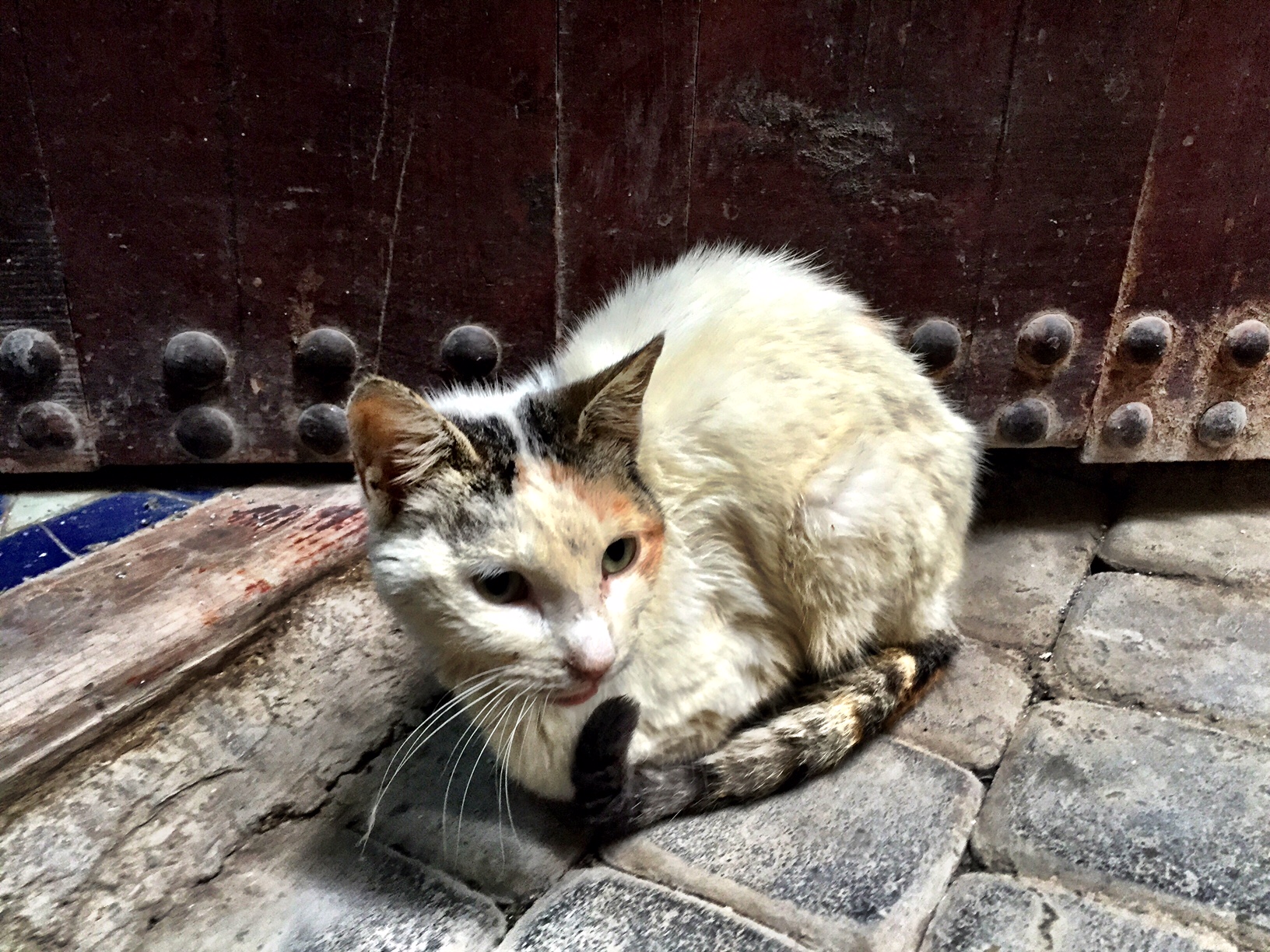
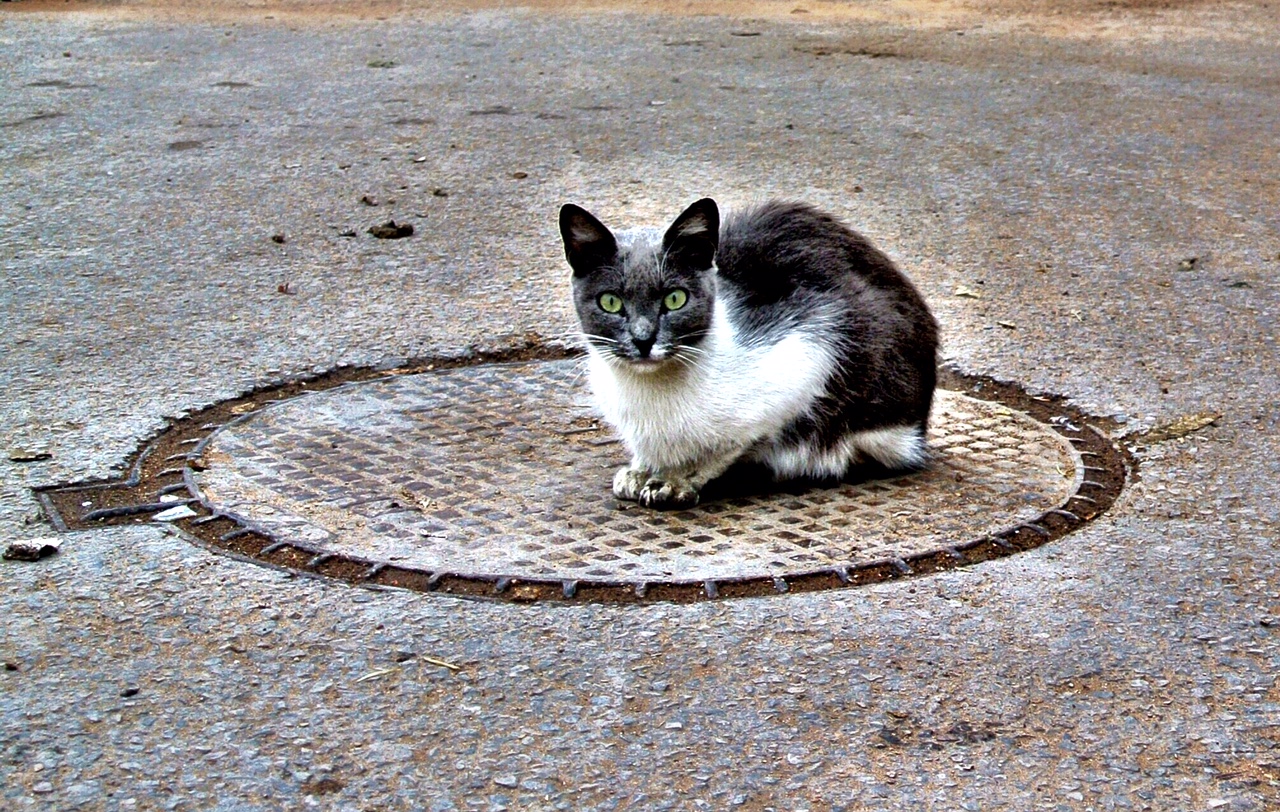
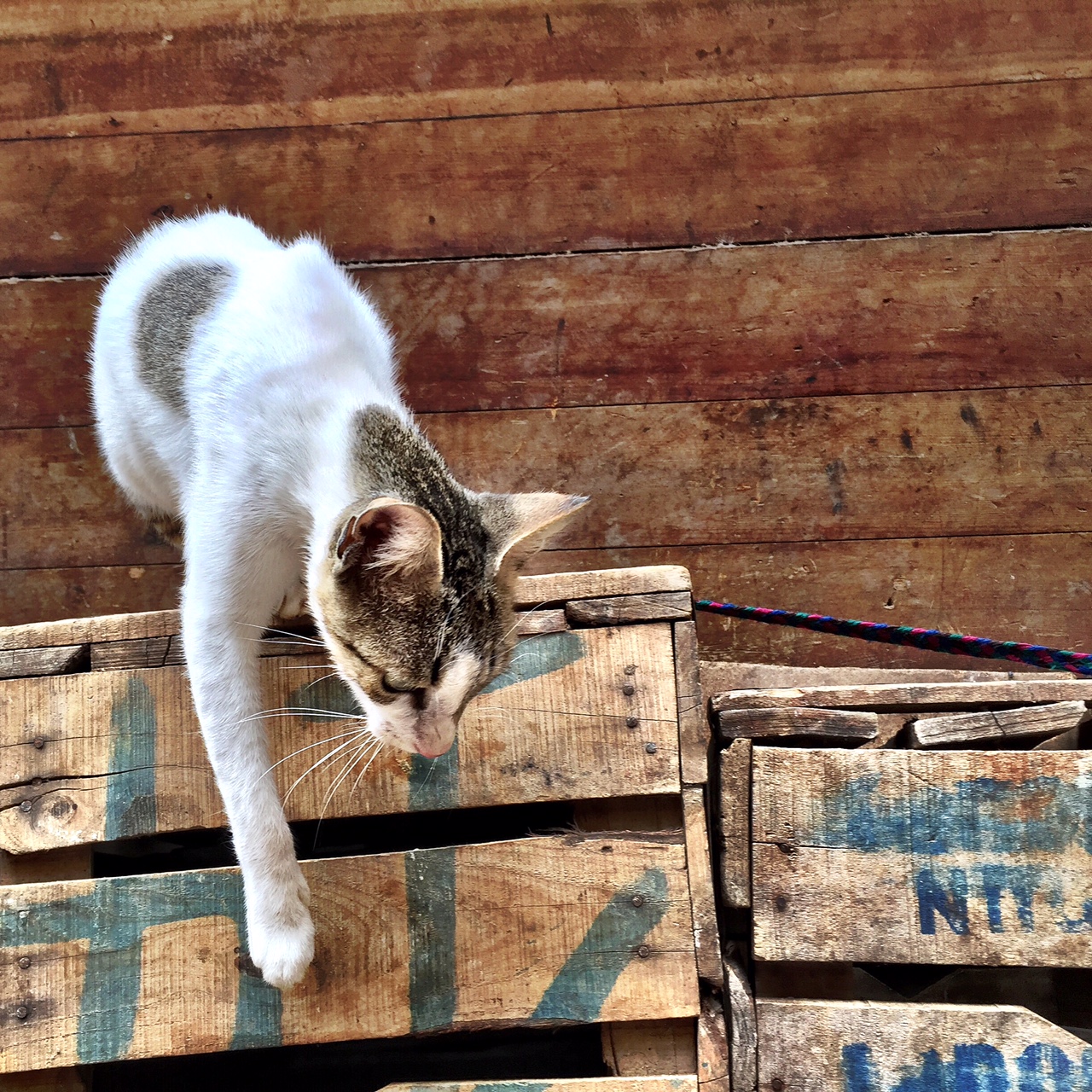
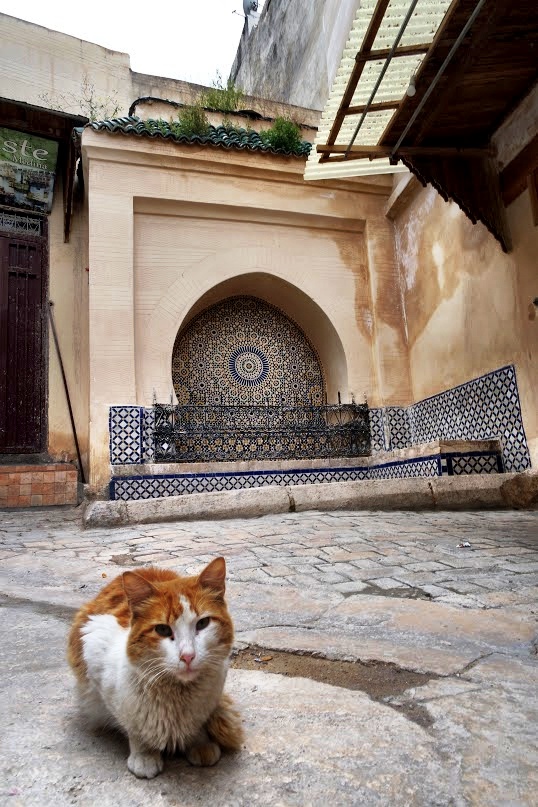
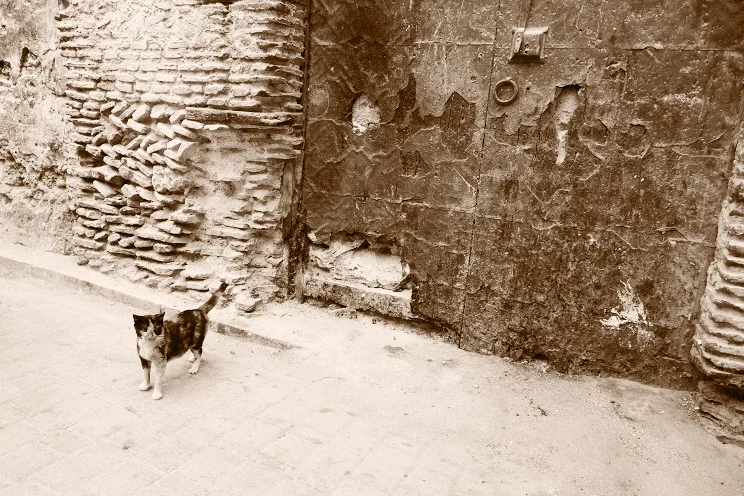
The Cats of Fez — Les Chats de Fès

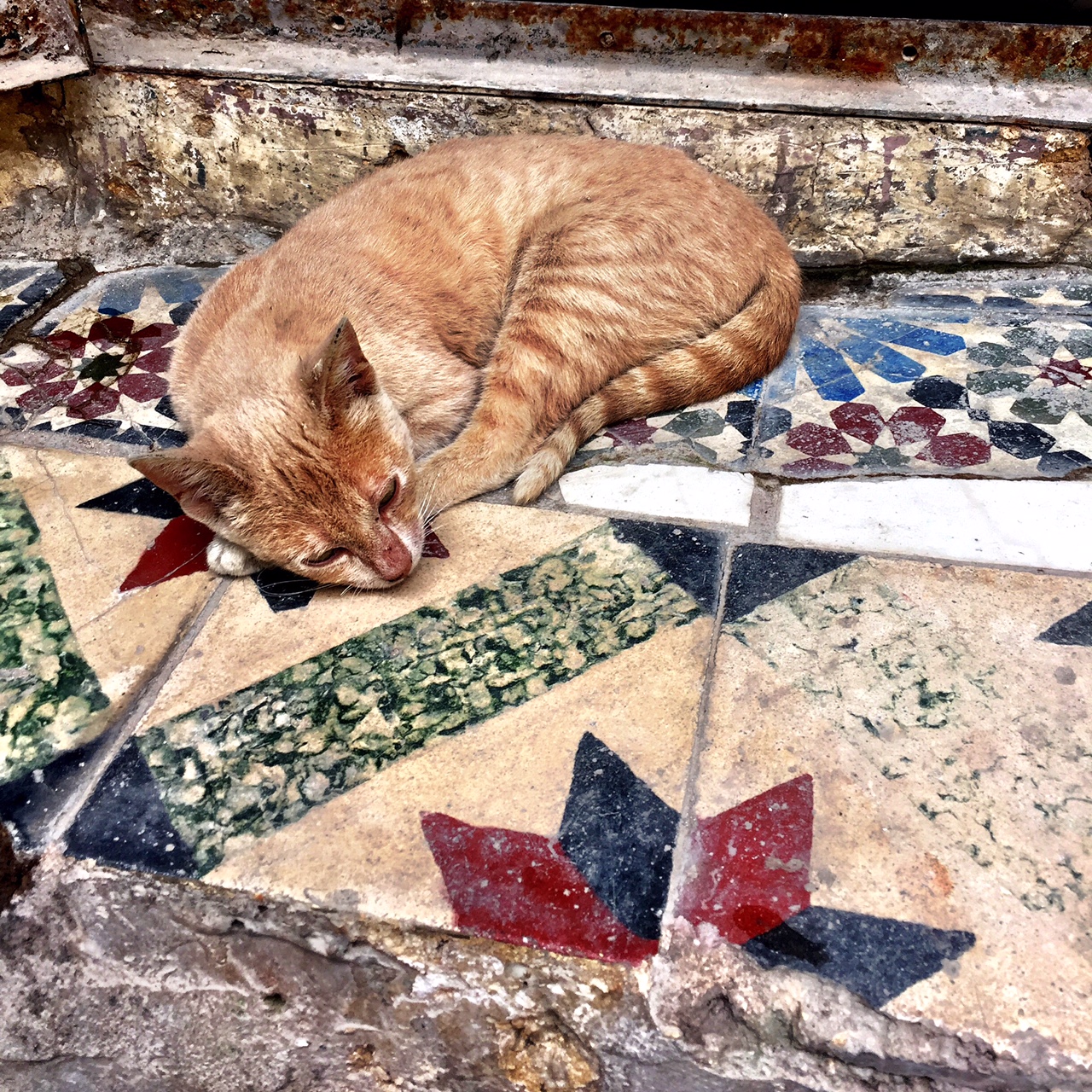
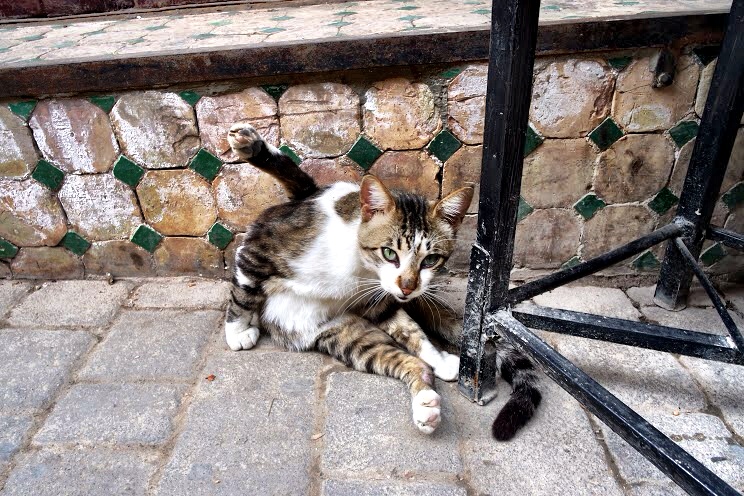
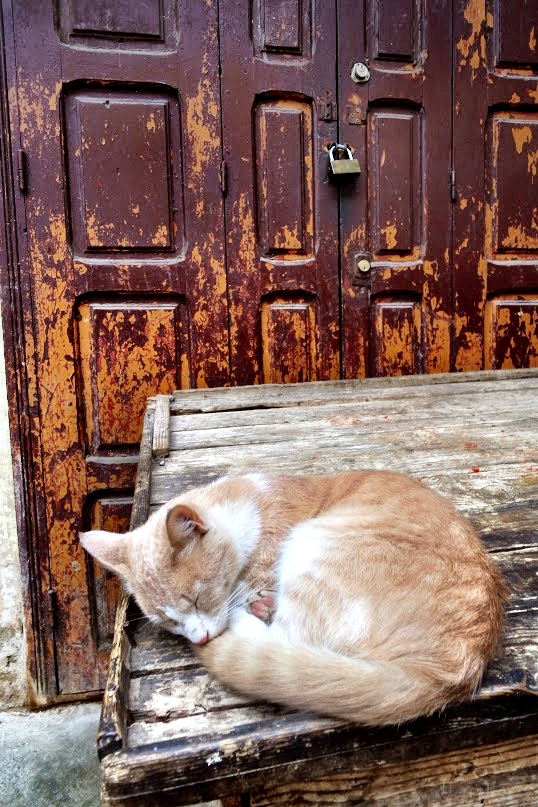
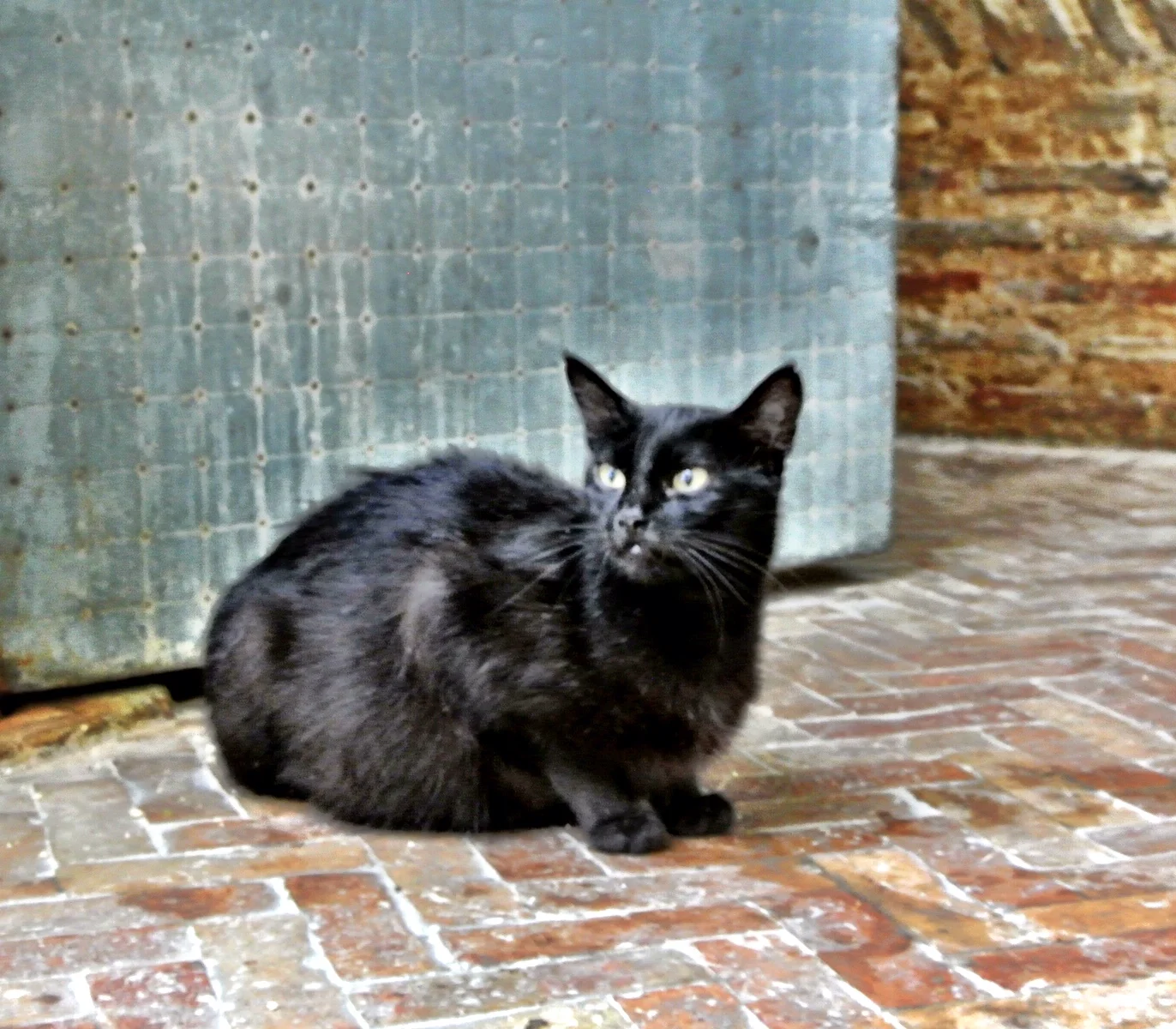
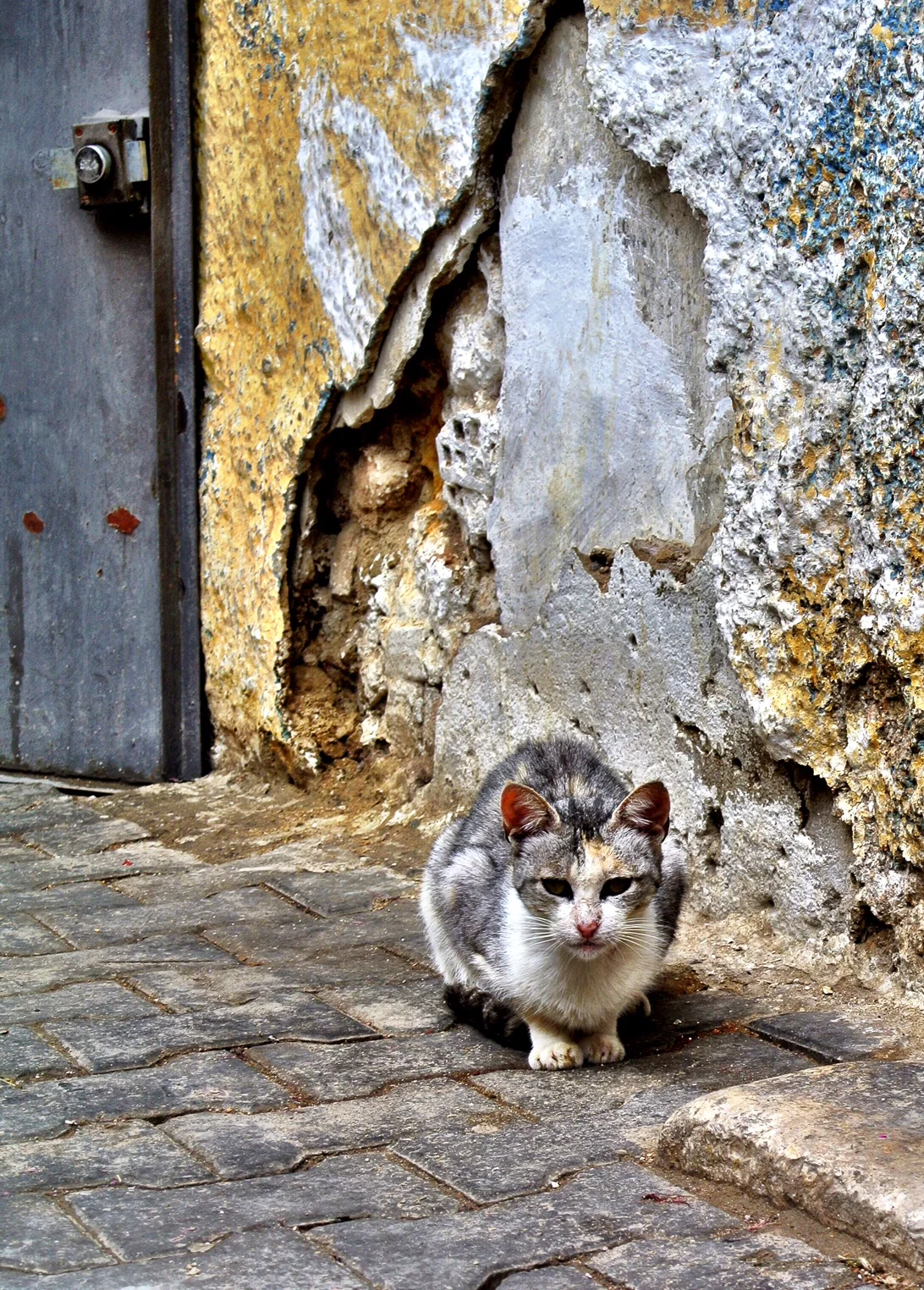
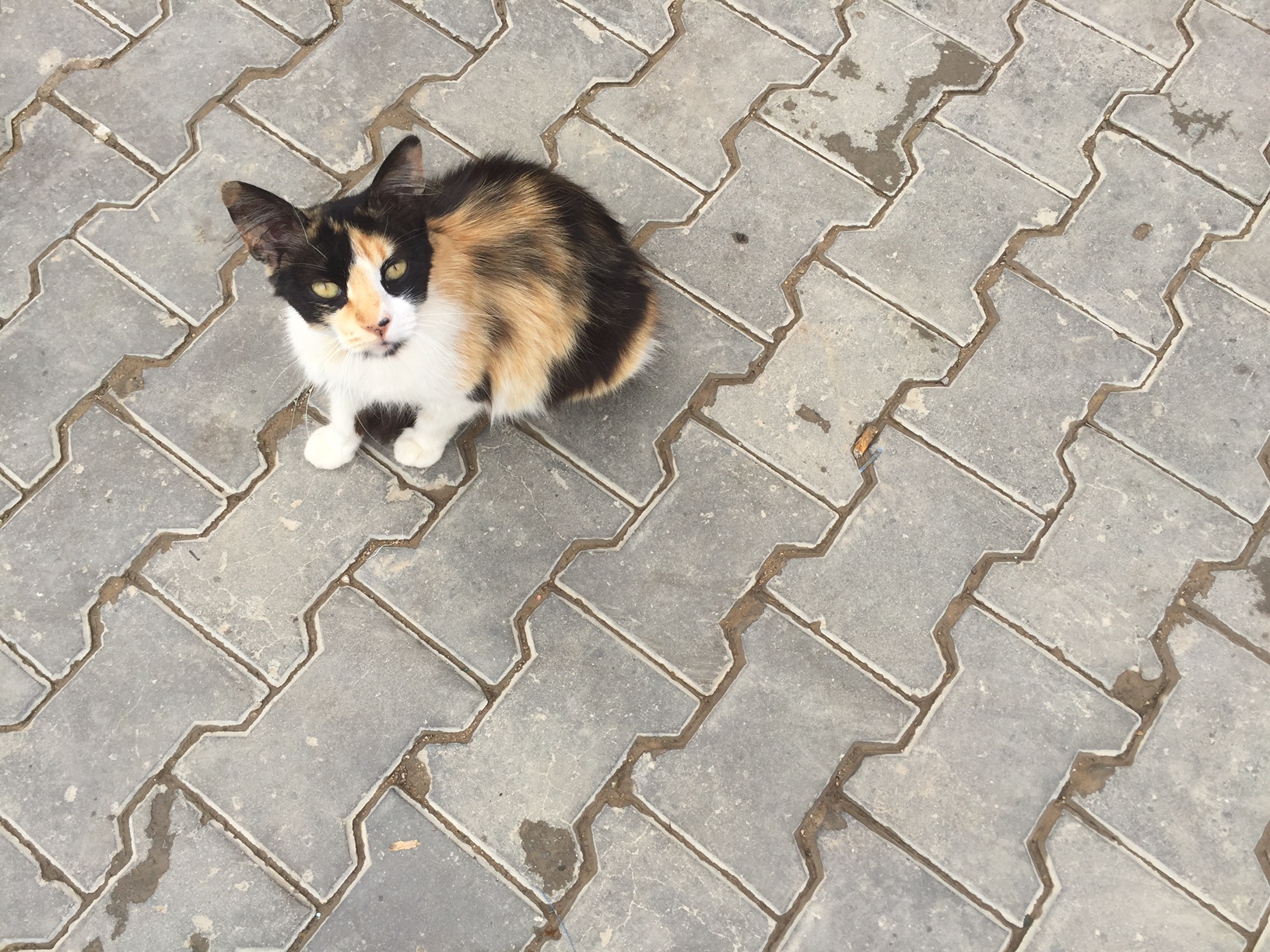
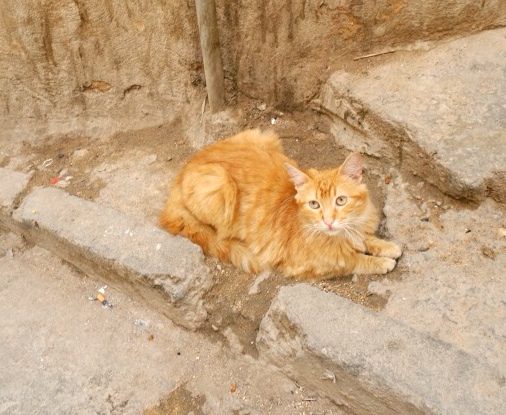
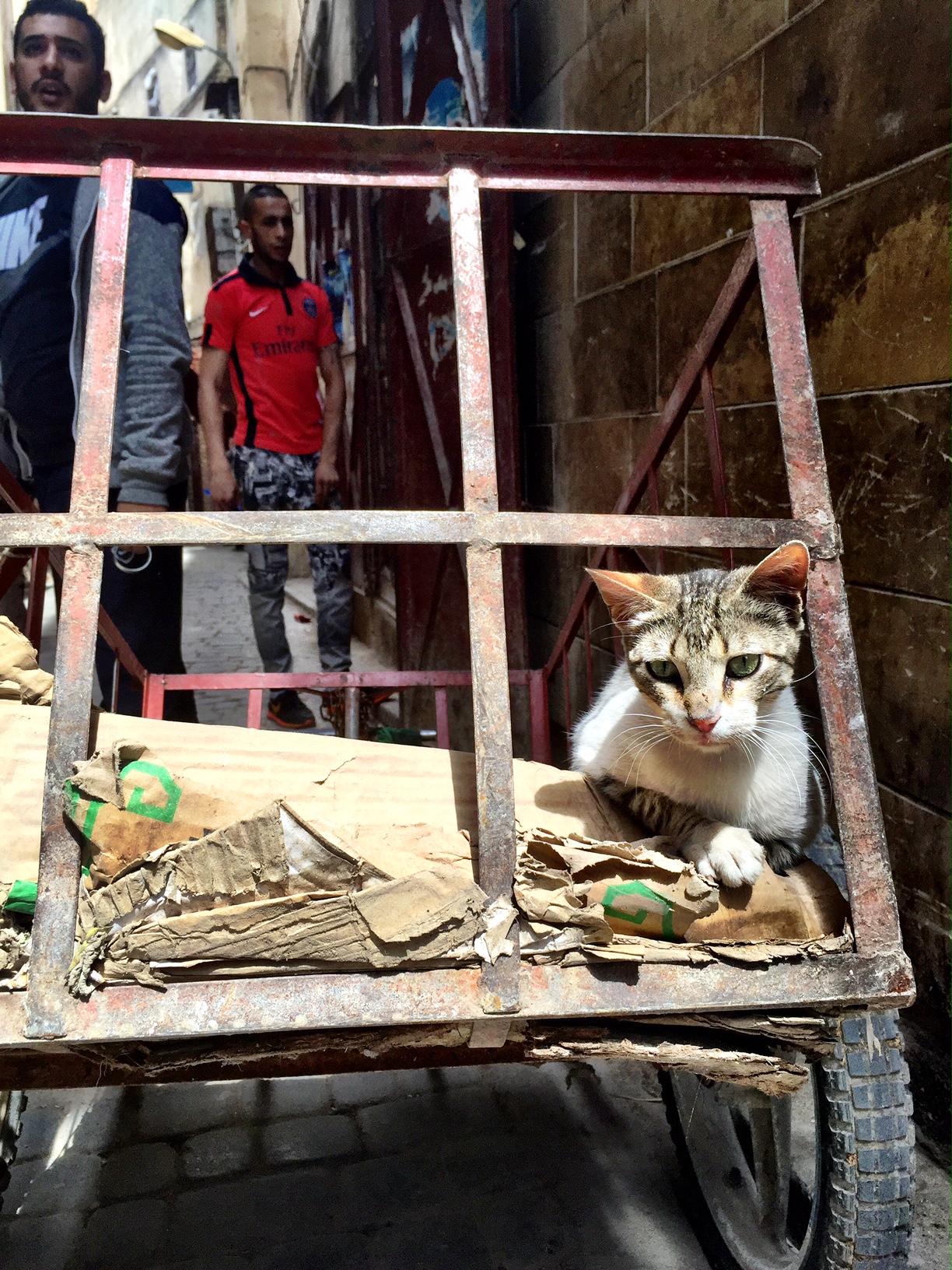
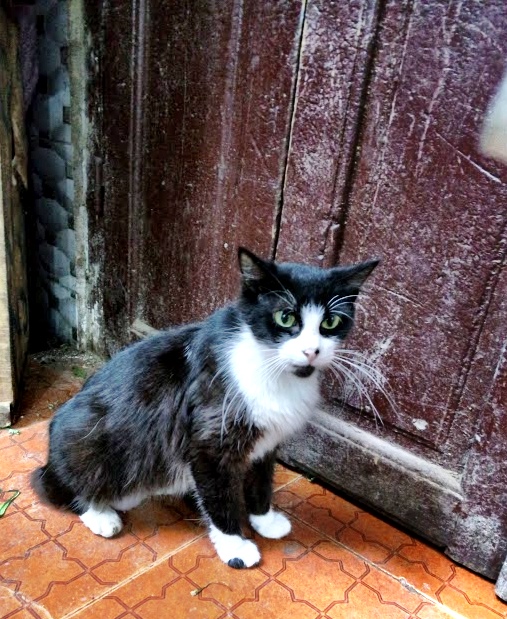
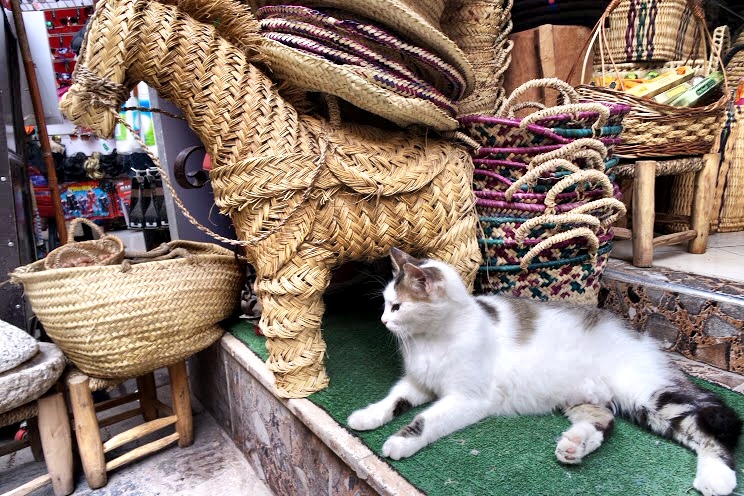
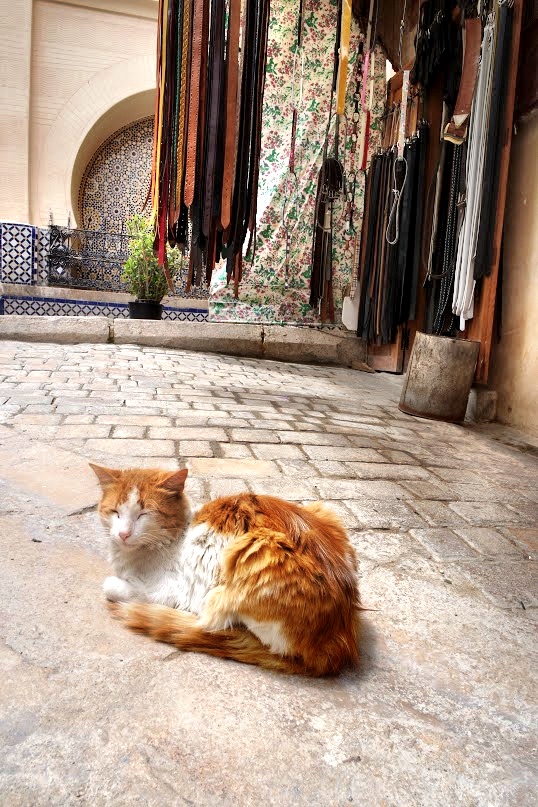
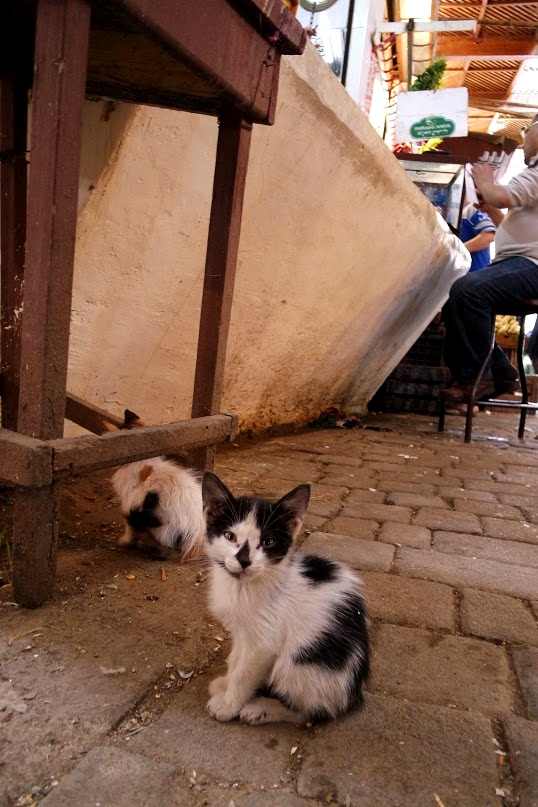
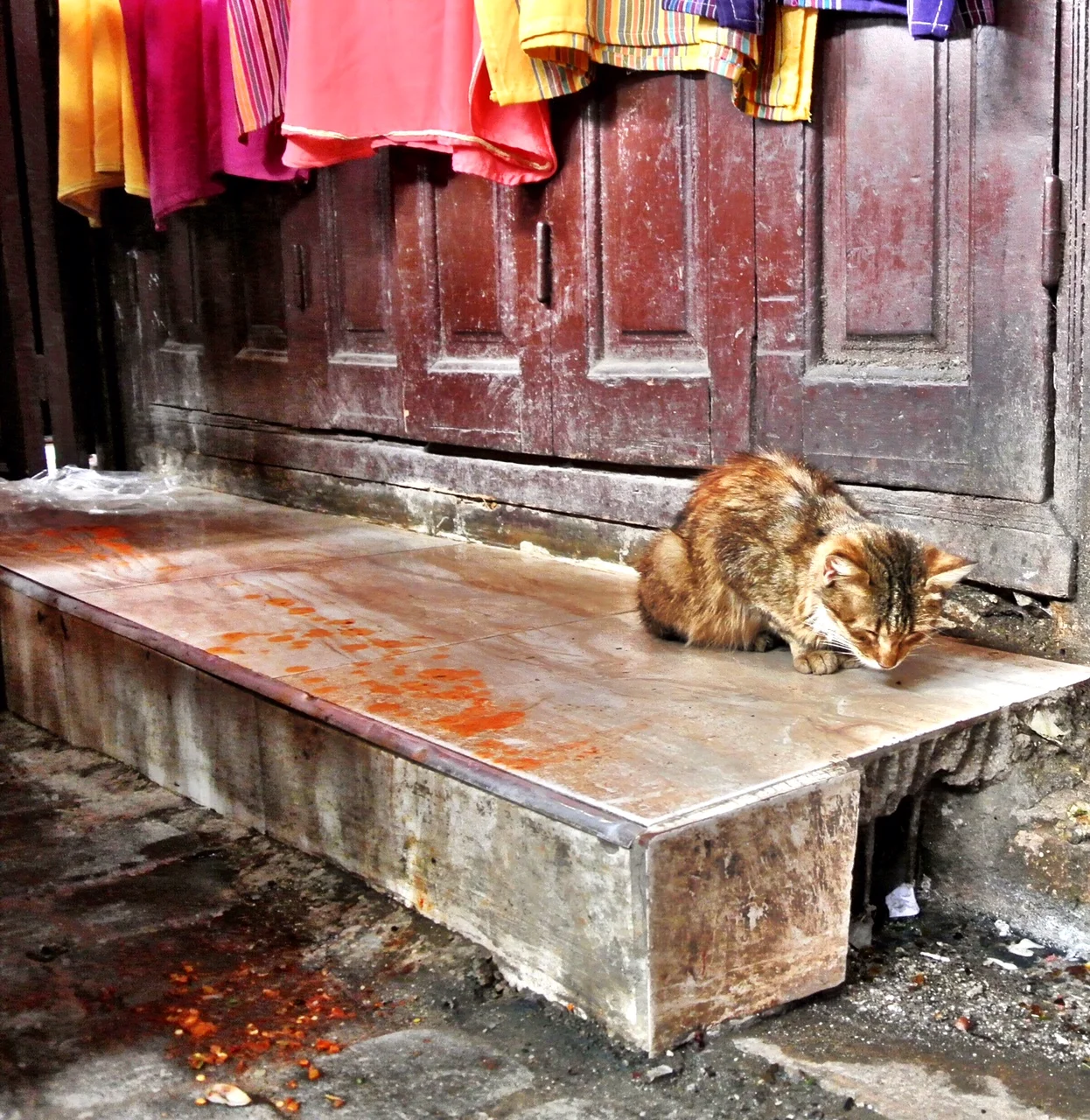
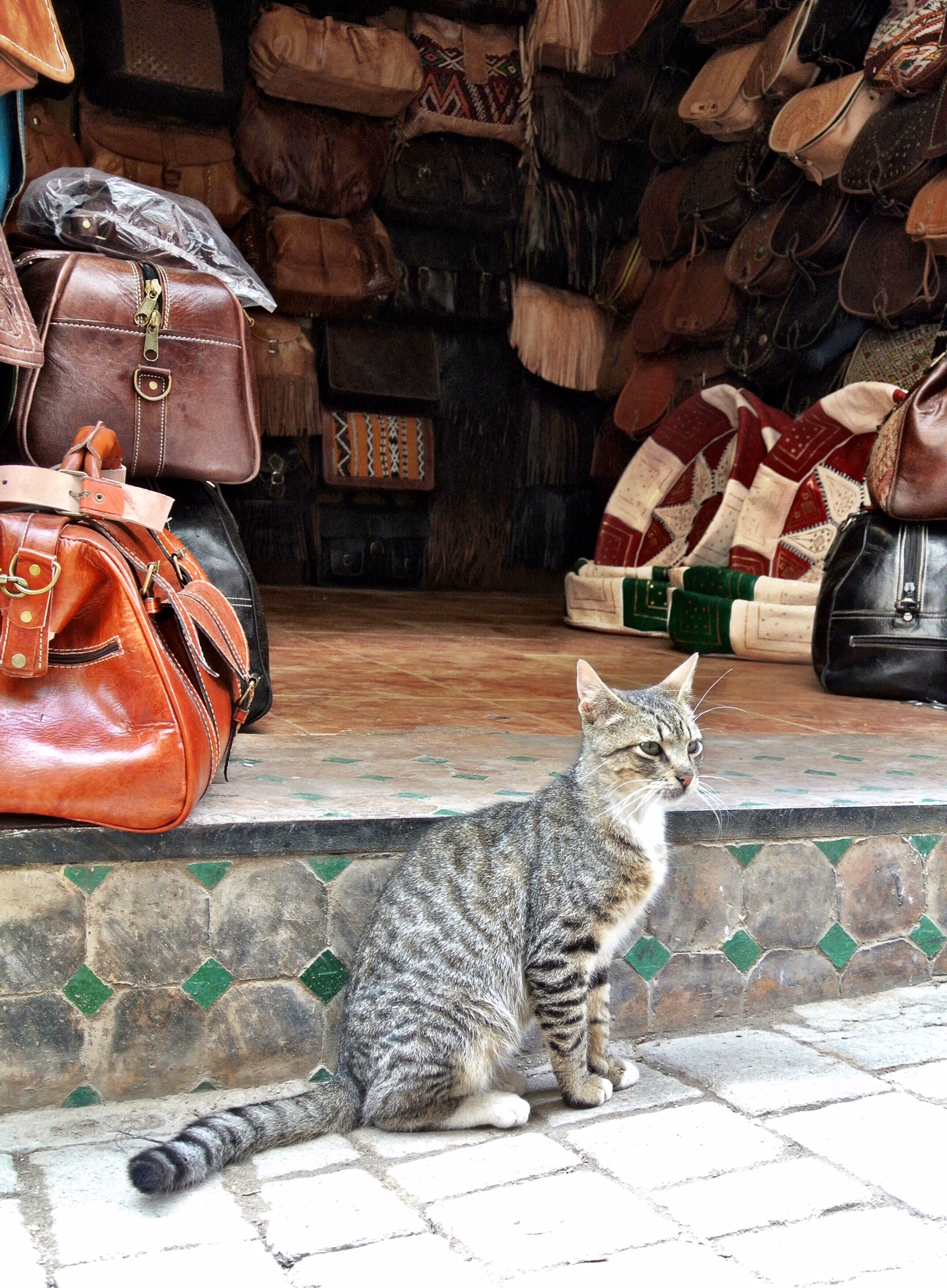
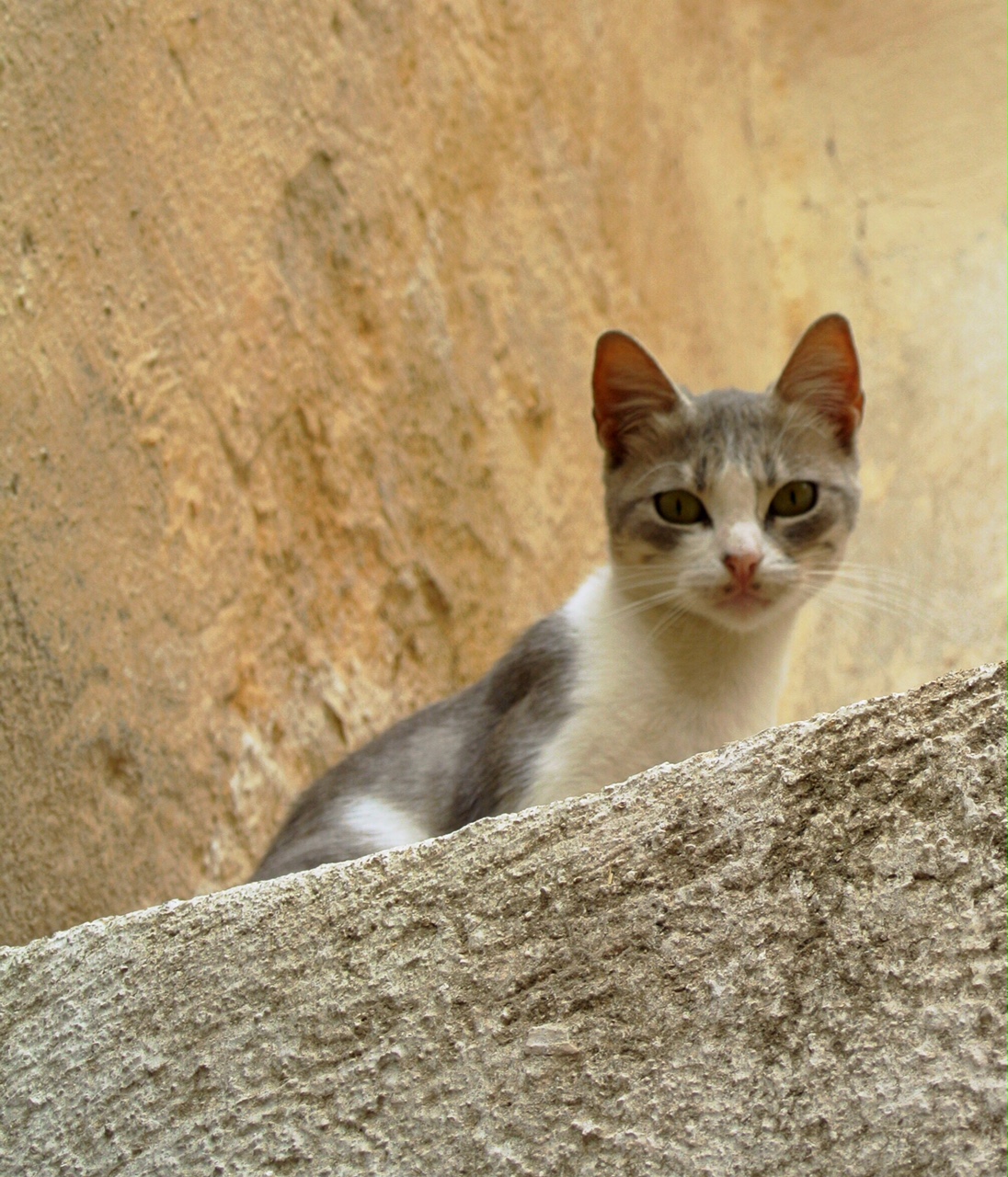
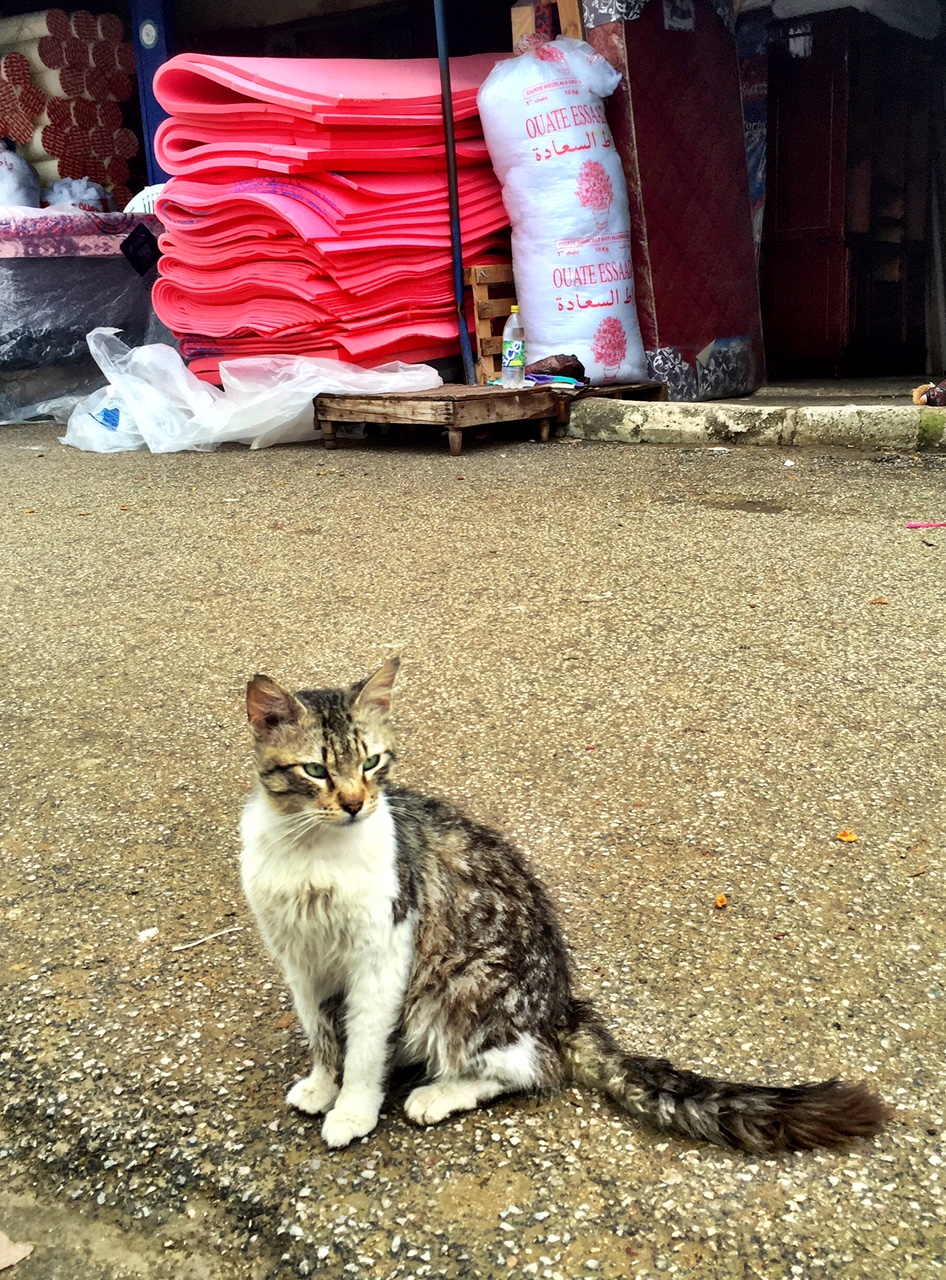
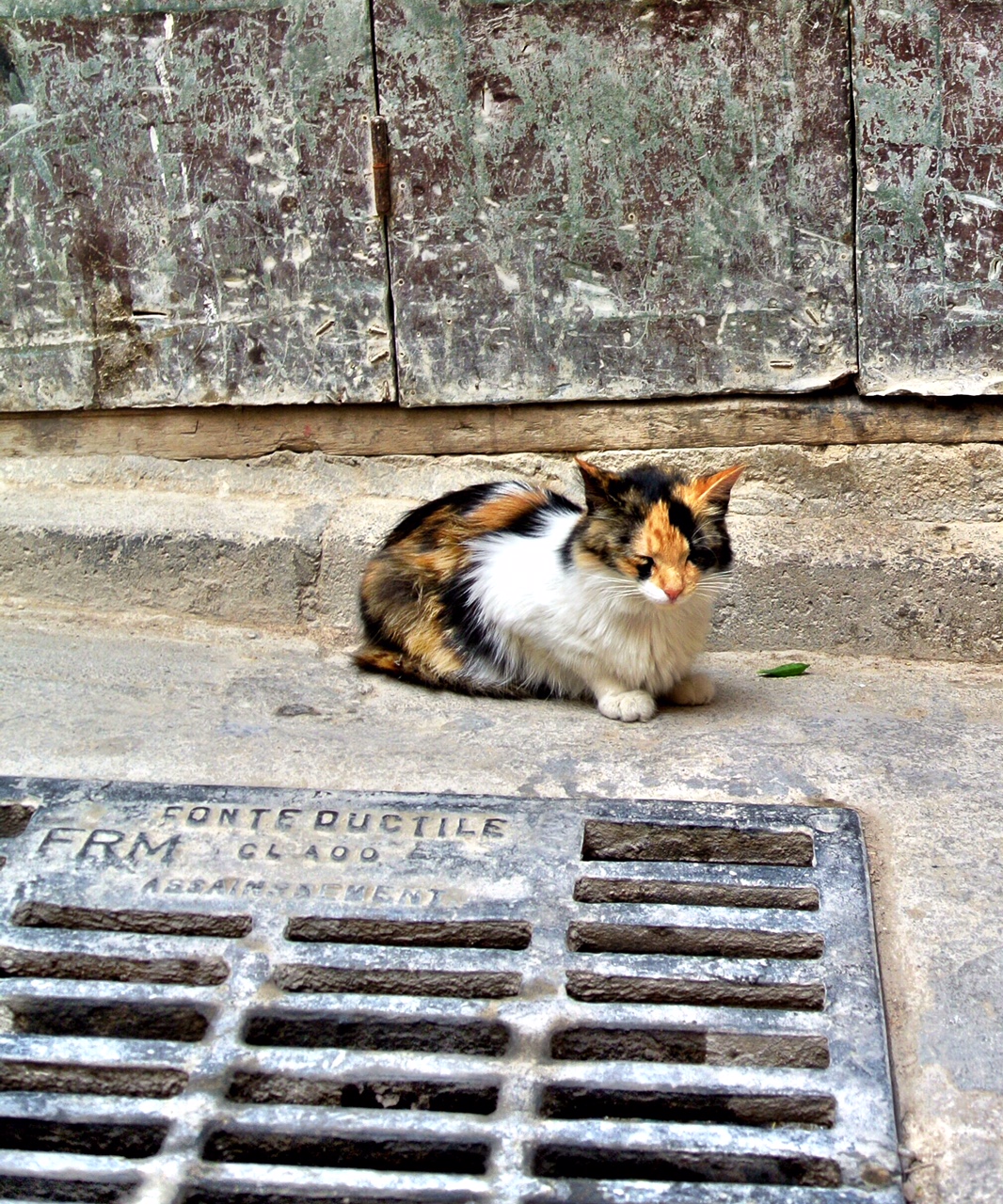
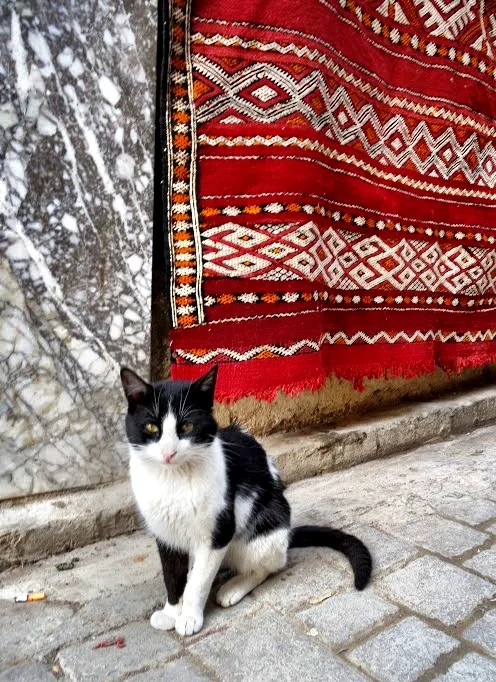
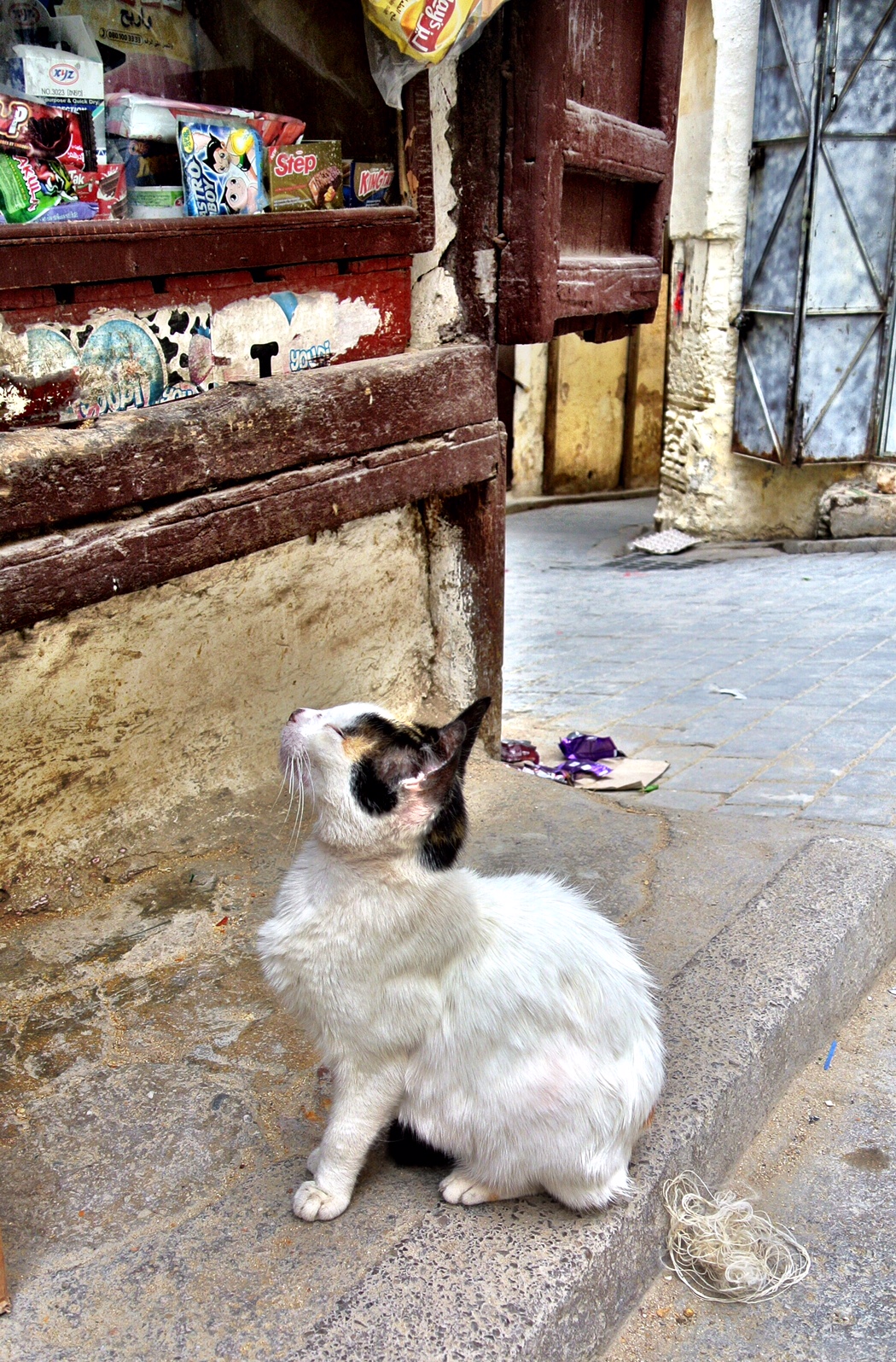
Cute kitties appear around every corner you turn in the medina of Fès

Cat lovers should definitely consider visiting Morocco. There are plenty of other things to do in Fès — but photographing stray cats was near the top.
Duke and I couldn’t help ourselves. Whenever we saw a cat in the medina of Fès, we had to stop to take a picture. Our guide for the first day, Abdul, was patient with us and would smile every time. 

Love of cats is a common trait amongst Muslims. Find out why — and see how the cats of Marrakech compare to those of Fès.

We had many more shots of the well-loved kitties of this ancient city. But I was able to narrow them down to 30. –Wally