Riad Dar Bensouda: Our Favorite Place to Stay in Fès, Morocco

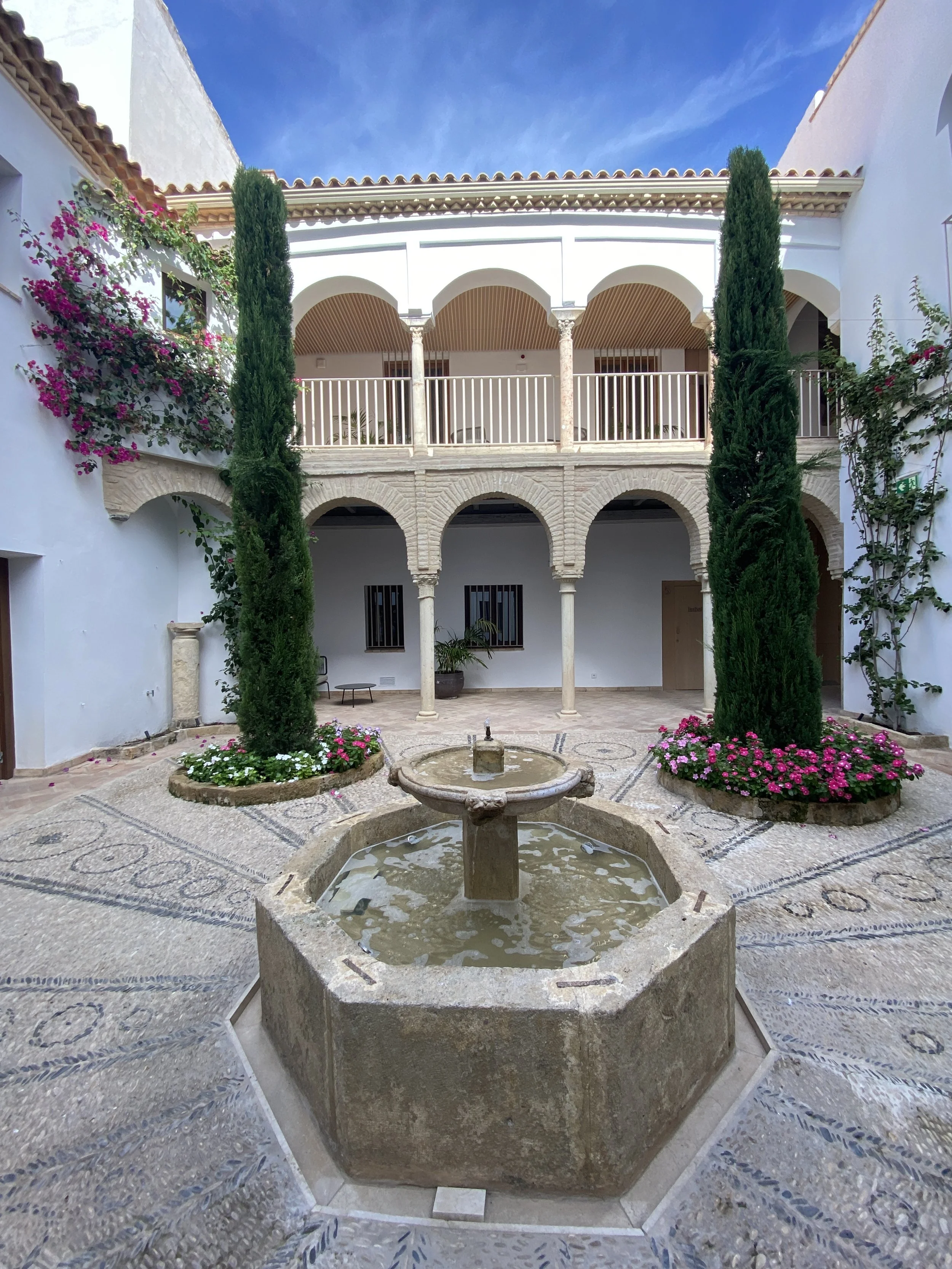
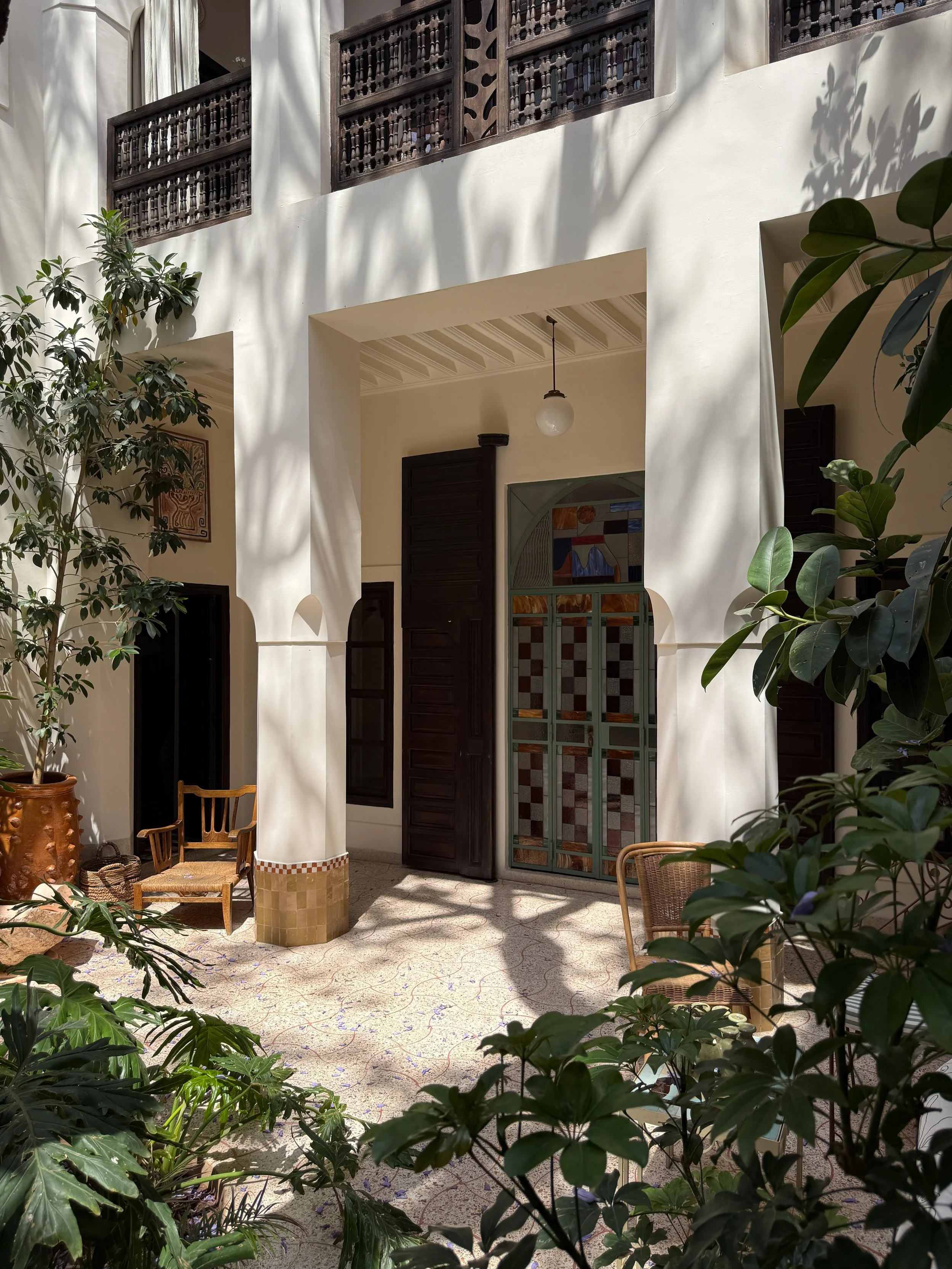
The stunning interior courtyard of Riad Dar Bensouda in Fès, Morocco

A former madrasa, shops and houses combine into a luxurious, tranquil riad right in the heart of the Fès medina.


We had quite a time getting to Fès, and we didn’t arrive until the middle of the night, being led by a young boy through the maze of the medina and chased by our taxi driver.

But that’s another story.

The main structure was formerly a 17th century madrasa, an Islamic school of religious instruction.

Even though the circumstances weren’t ideal, we were graciously welcomed by one of Riad Dar Bensouda’s staff, Yunis.

We found ourselves ushered into a quiet, whitewashed sitting lounge with low horseshoe-shaped arches. We later learned that the room was originally a stable, which accounted for the low ceiling and stall-like design. The white walls of the old stable are a stark contrast to the cream-colored hue of the adjoining spaces.

Yunis took care of our young guide and the irate driver, then showed us to our room.

The riad became our home for four nights. And what a home it was!
 

Duke peeks his head out of one of the doors within a door that led into our room

Light from the courtyard spills into our room through the intricately carved door

Breakfast included jelly, butter and cheese in the adorable Fès blue pottery

From Madrasa to Guesthouse

Said (pronounced Sy-eed), the guesthouse manager, generously gave us a tour the evening before we left and explained the history of the various rooms within the riad. The main structure was formerly a 17th century madrasa, an Islamic school of religious instruction, and named after its previous owner, Imam Bensouda.

Over time, proprietor Abdul Latif acquired adjoining properties which allowed him to expand. It took a total of four years to renovate and restore.

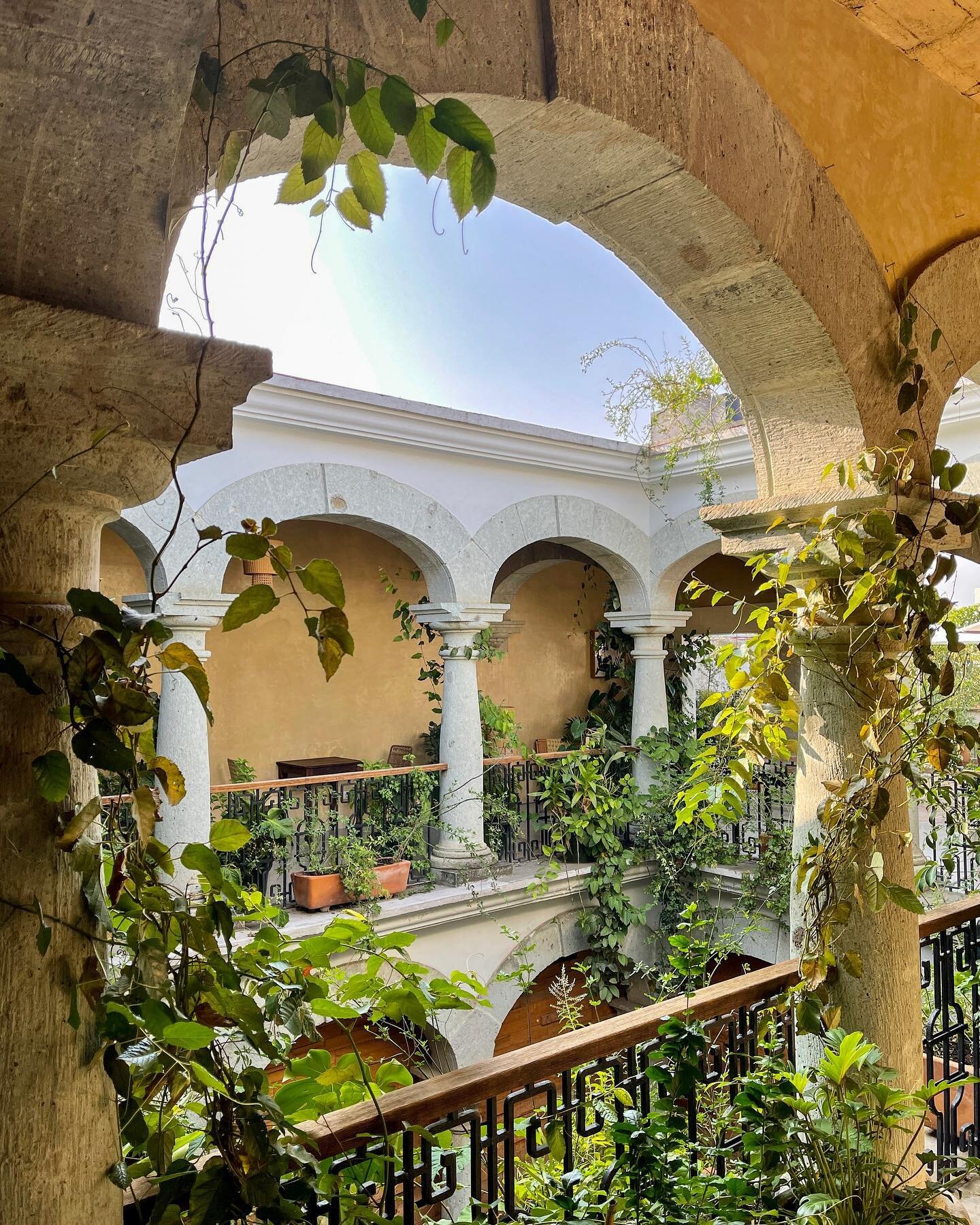
Majestic in scale, the centerpiece of the madrasa courtyard is a star-shaped fountain, which Wally jokingly lamented was not filled with rose petals during our stay. This interior courtyard rises three stories from the original well-worn polychrome tile of the floor to the green tiles of the rooftop terrace, which opens to the sky, filling the space with natural light.

Rain only adds to the beauty of the interior courtyard and star-shaped pool

The riad contains two fountains. The inner courtyard fountain was used for ablutions and a larger, more elaborate one, was for the kitchen. Water still comes from the Fez River.

When Latif purchased the madrasa in 2009, the intricately carved cedar doors to the structure’s 11 suites had been stolen, possibly by the previous owner’s family.

David Amster, director of the Arabic Language Institute in Fez, a friend of Latif’s, was apparently tipped off to the whereabouts of the original doors, which emerged for sale in Rabat. Thankfully, they were snatched up and restored to the property. Modern replicas just wouldn’t have done it justice.


A Tour of the Riad

The extraordinary room we stayed in was located on the ground floor of this courtyard and features a 7-meter-high vaulted wood ceiling, gauzy white floor-to-ceiling curtains and a lofted bathroom accessed by stairs along the far wall. Its interior included a pair of traditional Moroccan lanterns hung on either side of the bed and a beautiful vintage ivory-colored Beni Ourain rug, from the Berber tribe of that name, with a simple diamond lattice pattern that sat in front of a daybed.

On our tour, Said led us through a doorway, into the riad’s foyer by its main entrance, and pointed out a raised tile-covered platform. This was where people once would dismount and mount horses — not far from the sitting area with the low ceiling and horseshoe-shaped arches which was originally a stable. The platform now serves as a spot for literature promoting Latif's other riads in Marrakech (eight of them). A black and white portrait of Mohammed VI, the current king of Morocco, hangs on the wall above.

The nearby office was originally a shop that opened to the street, where a man sold djellabas, traditional hooded wool cloaks.

Another structure, which Said referred to as the visitors’ house, was incorporated into the riad as well. This was where the women of the household were shut away when men came to call.

A derelict mosque faces the riad, owing its unfortunate state to being the tomb of the imam. Unlike in Christianity, with churches containing many a crypt or relic, it’s forbidden to pray in a mosque that has become a burial shrine.

As we wandered from room to room, Said chuckled, “It’s labyrinthine inside and out!”

The dining area surrounds the pool and sunbathing area, with a chevron-patterned tile we loved

A general gathering spot with plenty of seating and a small pool, the lower terrace salon was where we had breakfast every morning as well as coffee and snacks in the afternoon and a meal in the evening. The breakfast presentation of tiny blue and white tangine-shaped covered dishes inspired us to purchase a set of Fès blue pottery to use at home.

Birds fly by as Wally looks up from his chaise longue by the pool

This area was once a ruined house and shops facing the street. The tranquil space includes low-slung banquettes and a library of design books, some featuring Latif's other riads. The sound of trickling water provides a sense of serenity.

Most recently, the owner bought yet another house, in May ’15. These two rooms just past the kitchen have their own private terrace.

“Is he done adding on?” Wally asked.

“Who knows?” Said said, with a laugh.

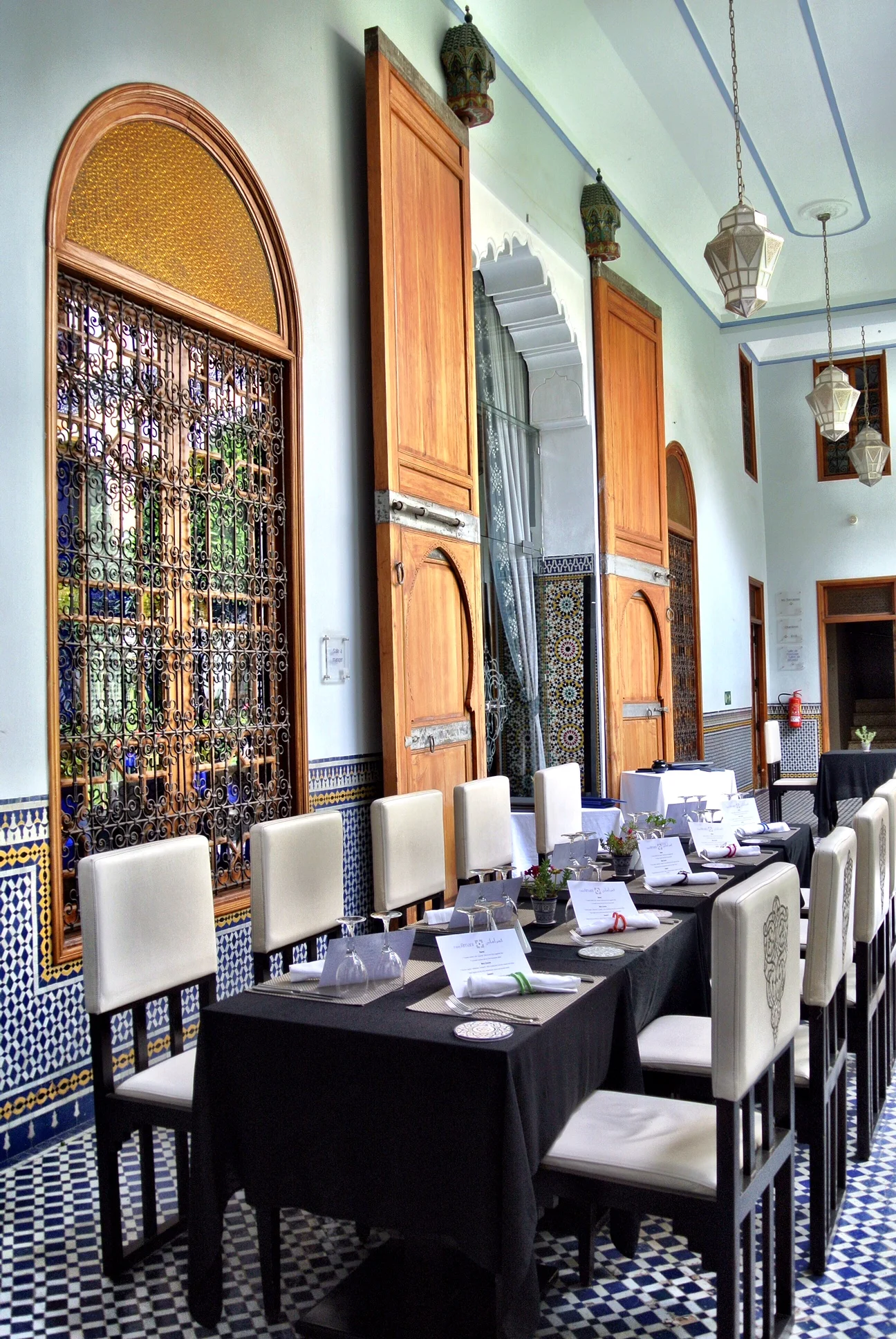
A restrained unifying palette of of buff-colored tadlelakt, a plaster that is hand-polished with stones, runs throughout the ground floor and is complemented by hues of pine, slate blue, pewter, carmine and dusty pink.

Part of the multi-tier rooftop terrace

And one of the best parts of the raid is the expansive rooftop terrace, which has multiple levels, due to the variety of previous houses that have been incorporated. It offers spectacular views of the Fès medina as well as additional areas to eat and lounge.

If you’re staying in Fès, we highly recommend staying at the Riad Dar Bensouda. It’s absolutely breathtaking, the food is delicious, and the staff is as friendly as can be. –Duke
Getting From Malaga to Morocco Is a Total Pain in the Ass

One of the gates that leads into the medina in Fès, Morocco — not a place you want to be, clueless, in the middle of the night

Should you leave from Algeciras or Tarifa, Spain to catch the ferry to Tangiers? Our hellish day can teach you 24 valuable lessons.


Part of me was excited by the romance of taking a ferry from Europe to Africa, crossing the Strait of Gibraltar.

And part of me knew getting from Málaga to Fès in one day was, perhaps, overly ambitious. I worried that things wouldn’t quite work out for us.

My exhausted brain kept thinking, “Well, this is it. We’re gonna get knifed in some dark alley.”

Well, that’s an understatement.

We can only hope that our extremely hellacious day can provide some valuable advice to those of you undergoing similar jaunts.

And when travel plans get particularly harried, I like to remember that we’ve got it pretty darn good in the modern age. Imagine how long it would have taken Mark Twain to undergo the same journey.

Here’s what we learned (the hard way):


1. It’s difficult to find anything online.

In this day and age, you kind of figure that everything’s on the internet, right? But local bus schedules, train timetables — it’s all difficult to find. While surfing around at our friends’ place in Málaga, the only information we could unearth came from other travelers as confused as we were — and even that was hopelessly outdated.


2. There isn’t a magical yellow bus.

One of the guys at the hostel across the street told us there was an Amarillo bus. We didn’t know if that was the company’s name or if it was literally a yellow bus. Or both.

He sounded so certain. It was an express bus, or directo, he told us, and it runs from Málaga to Tarifa nonstop. He even knew what time it leaves: 7:30 a.m.

Of course we couldn’t find anything online.

But I wanted to believe him. After all, he must have plenty of travelers who want to go to Morocco.

It almost sounded too good to be true.

Turns out it was.

We caught a crack-of-dawn taxi to the bus station, where we found the window for the Amarillo bus line (not just the color but the company name as well). The sign, though, informed us they wouldn’t have anyone working there till later. And the schedule showed nothing about a directo. Which was OK since we had already bought our tickets at the Portillo window, the only one open that early.


3. The buses themselves are quite nice and seemed to run on time.

Note: There aren’t any bathrooms on the buses, and there might be an unforeseen layover. When we got to Algeciras, we were told we had to get off the bus for half an hour and then reboard for the final leg of the trip to Tarifa.


4. The ferry from Tarifa is better.

It lets you out in the Tangier city center, whereas the one from Algeciras, an industrial port, drops you off farther away.


5. …Unless the entire port is closed for high winds.

It was so windy that it was a bit of a struggle at times even walking the 10 minutes to the port terminal.

The man at the bus station kept saying “cerrada” and mimicking two doors closing. But we decided our best bet was to get to the port and see exactly what the deal was.


6. If you get stuck in Tarifa, our friends recommend you stay at Hostal Africa.

I’m hoping hostal in this case doesn’t mean sharing a room and bathroom with 10 or so other people.

Jo and Jose say Tarifa is a cute little surfer town, and the winds mean good kite surfing — you’ll see signs touting this pastime all over.

You enter the old part of town through an arch, and it did seem laid-back, with white buildings and winding streets.

We passed Hostal Africa, and it’s very close to the tourism office, which is at one end of the paseo, where you can find some cafés and old folks chatting on benches.

A nice fellow helped guide us through the twisting lanes to the port.

That’s where a maritime policeman informed us the port was closed for the entire day.


7. You might have to backtrack to Algeciras.

That’s what we had to do. It’s frustrating — you wish someone could have told you the port was closed for the day.

At any rate, we hopped into a cab outside the ferry station, and after a 35€ ride, we were back in Algeciras, the previous stop on our bus ride.


8. The ferry ticket seller might fib.

There are lines of ticket windows touting ferry service. Look for the next time to Tangier. The man behind the glass at the window we approached said the ferry left at 14:00 (2 p.m.), but the printout he gave us read, 14:30.


9. Have a beer while you wait.

I know for me, it helped take the edge off a stressful day. I thought today would be an adventure like on The Amazing Race. But the more I thought about it, the more I realized that’s not really a good thing. You’ve got to be creative and courageous and run around like crazy — only we didn’t have the chance of winning $1 million.


10. Don’t get sucked into bad Spanish dating shows.

The TV in the cafeteria was blasting a terrible low-rent Bachelor/Bachelorette-type show called Mujeres y Hombres y Viceversa.

It was like watching a train wreck, as we say in the States (though that’s probably an expression I should avoid while traveling).

Eventually we ripped ourselves away half an hour before we were supposed to board.


11. You’ll still need to get a boarding pass.

We tried to board with the paper printout the ticket seller gave us, but no go. We were told we had to go back downstairs (past the door reading, “Point of No Return,” past Customs, past the security X-ray machine).

One of the workers was telling the woman in ticket booth to hurry up, which made me wonder if the gates were closing. Which certainly didn’t help my stress level.

I needn’t have worried.


12. The departure time on your ticket might actually be the boarding time.

Not a huge deal, but it would play a factor if there’s a particular train connection in Tangier you’re hoping to make.


13. Once aboard the ferry, get right in line to get your passport stamped.

It took us over 20 minutes to get through the line. The boat hadn’t left by then.


14. We suspect that the times the ticket sellers tout are really just staggered boarding times for the same ferry.

It was 16:00 and we still hadn’t left. Duke and I had already had a café au lait and briefly had to put up with an annoying couple in obnoxious matching blue jumpsuits that read, “I Feel the Need…the Need for Sleep” on the backs blasting some pop song on their cell phone. 


15. Pack snacks.

There are places you can buy sandwiches, potato chips and the like. But, boy, were we glad to have ham and cheese croissants, fresh figs and empanadas with us.

By the time we thought we might want “une sandwish” (that’s not proper French, by the way) on the ferry, they were completely sold out.


16. They’ll let you out in the hold with all the big trucks.

No one really directed us, and we thought for sure we had done something wrong. A group of us strangers were walking back and forth, aimlessly, until a crewmember nodded and pointed us in the direction we had come.

We went back to stand between two large idling semis.


17. Other cultures think nothing of cutting in line.

That includes a Dutch family and Moroccans alike. People just oozed around us and ended up standing in front of us, acting as if it was the most normal thing in the world. And maybe it is.

I don’t think of Americans as the masters of politesse — but we do hold waiting in line without cutting to be a sacred duty.


18. Then it’s a stampede off the ferry and onto a shuttle bus.

The door-cum-ramp creaked open, accompanied by a horrific high-pitched shrieking noise.

The minute it touched down, it was a mad dash. We didn’t know what we were doing. We just went with the flow.

Eventually we found ourselves packed onto a bus and overheard someone say we were being shuttled to Customs.

We went through metal detectors and I set off the alarm (perhaps it was my metal-studded belt?). But no one was paying attention.


19. You’ll have to haggle over a taxi into Tangier Ville, as they call the downtown area.

Our driver was OK with 20€ until another man upped the charge and he suddenly wanted 25€.

He only got 20, as I was counting out centimes to even get that much. He was not amused but decided to let it go.


20. Sometimes your train leaves at an ungodly hour.

Yes, I’m glad there was still one running. But I do wish the guy who sold us the ticket had informed us that we’d have to transfer. (We figured that out on our own when we didn’t see Fès on the list of stops).


21. Morocco is one hour behind Spain.

We ate dinner at the mall across the street and settled back in at the gare (French for train station).

Then Duke noticed the clock. Instead of having an hour before our train left, we had two.


22. Borrow the wifi and get a drink at a nearby hotel.

We spotted the Ibis hotel and headed over there to grab a couple of beers in the dark bar, which reeked of cigarette smoke and had the entire clientele glued to a football (soccer to you Americans) match.

In fact, a waiter taking a break yelled at me as I waited at the bar to order our drinks. Turns out I had the nerve to stand in his line of vision of the big-screen TV.

Leaving Fès was sad — but a heck of a lot easier than getting there

23. Once you get to Fès in the middle of the night, be wary of taxi drivers randomly calling out your riad.

For some reason, our train was an hour early, so we worried if there’d be someone to meet us. Boy, were we relieved when a man called out the name of our riad. Turns out he wasn’t affiliated with Riad Dar Bensouda at all. It seems some of them just call out the more popular riads and lure you in that way.

We didn’t know this, though — we were just relieved to have what we thought was a pre-arranged trip to our riad.


24. We can’t recommend just walking away, telling the driver if he wants to get paid he’ll have to do so at the riad.

But of course, tired and grumpy, not wanting to get taken advantage of, that’s what we did. I just started wheeling my suitcase through the gate into the medina, telling Duke to follow me. We didn’t have a single dirham to our names.

The taxi driver threatened to get the police…but eventually ended up trailing after us.

We had no idea where we were going. It was 2:45 a.m. Ahead of us was a dimly lit maze. Turns out our driver didn’t know where he was going, either.

Eventually, he enlisted the help of a boy, who led us through the winding warren. My exhausted brain kept thinking, “Well, this is it. We’re gonna get knifed in some dark alley.”

And then, suddenly, we stopped in front of a rather nondescript door. We had arrived.


Final Advice

After our ordeal, we’re thinking it might be worthwhile to hire a tour company to arrange the trip from Spain to Morocco.

There are probably some things they can’t control, but it’d be nice to cede responsibility to more capable hands.

Or, it might be better to fly — even if that means going out of your way.

We found flights that went up to Barcelona and then to Fès. We thought it was silly to fly north to then fly south. But that actually might be less of a hassle.

Anyway you slice it, though, getting from Málaga to Fès is a challenge. Hopefully our experience makes your journey a bit easier — or at least lets you know what to expect (and what not to do).  –Wally

MORE ON MOROCCO: Kitties, genies, souks and more!

Palais Amani: A Breathtaking Fès Hotel

The courtyard fountain at the impressive Palais Amani, located in the heart of Fès’ old city

Experience modern luxury suites surrounding a gorgeous, secluded courtyard garden. Or just pop in to get pampered at the hammam. You’ll Soon FOrget you’re right in the midst of Fez’s medieval medina.

Sometimes it’s fun inducing jealousy with Snapchat vids, like this one of the gorgeous Palais Amani in Fès


We highly recommend getting pampered in a historic palace as the perfect way to close a vacation.

A guide met us at our riad around 9:30 a.m. on our last full day in Fès and led us to the opulent Palais Amani, located on the northern side of the medina. We had decided to splurge and scheduled the Drop in and Unwind spa package at les Bains Amani. The luxurious experience includes traditional hammam and massage treatments, which use skin-nourishing argan oil sourced from a cooperative located in the Ourika Valley.

The gardens were alive with birdsong and the soothing gurgle of the courtyard fountain, which dissolved the boundary between indoors and out.

When we arrived, the gardens were alive with birdsong and the soothing gurgle of the courtyard fountain, which dissolved the boundary between indoors and out.

We were welcomed by the lovely Soukaina, who escorted us to a changing room complete with daybeds and plush terrycloth bathrobes.
 

If you don’t stay at the Palais Amani in Fès, be sure to at least stop by to experience their marvelous hamman, courtyard and roof terrace

A Luxury Hammam

Bowls of warm water were ceremoniously poured over us as the two women filled from the fountain located within the steam room. Our hands were placed in a bowl of warm water as a mineral-rich henna mud was applied to our hair.

We were then led to the steam room, where we were each served a glass of refreshing ginger lemonade and left to detoxify. I’m not sure how long we remained in there — suffice to say, that it induced the most intense sweat I’ve ever experienced. Wally suggested we lie down, as we were finding it difficult to breathe in the heavy steam. Maybe we had a few too many toxins to expel?

The women returned and proceeded to scrub us down with course exfoliating gloves and black soap with argan oil and wild mint.  

This was all rinsed off in a shower, and we went back up to our changing room, where we rested, sipping chamomile tea and eating the most delicious coconut macaroons.

Then came an argan and eucalyptus oil massage. Wally and I literally felt transformed — and who wouldn’t after having layers of dead skin gently sloughed off?

The lobby includes a boutique with handmade pottery and spa products, so you can re-create the experience at home.

A light lunch in the courtyard was part of our hamman package

Afterward, we were taken to sit in the tranquil garden terrace. Lunch was smoked salmon atop pillowy brioche rounds paired with a trio of refreshing salads: beet, smoky aubergine and diced cucumber.


Medieval Meets Modern

Wally enjoying the beautifully tiled courtyard fountain

As we ate, we were taken care of by the operations manager, Hana, who told us about the history of the hotel and introduced us to one of the owners, Abdelali Baha. He asked if we were enjoying our afternoon at the palace. We told him of course we were.

Abdelali is originally from Fès, so the Palais Amani restoration was a project of “coming home,” as it were.

“Our other partners have been connected to the Arab world for a long time and wanted to find a way to invest in Morocco,” Abdelali’s wife, Jemima, told us.

A seating area in the palais’ courtyard

The Palais Amani “originally dates back to the 17th century, but the family we bought it from rebuilt the majority of the palace in the 1920s, after a landslide badly damaged most of the building,” Jemima explained. “This explains the Art Deco feel to the palace.”

The original owners were a prominent family of merchants who imported silverware and cotton from Manchester, England, among other things.

Stunning columns and intricate woodwork add to the Palais Amani’s grandeur

It was rumored that 50 family members once resided here and each room had its own kitchen.

The boutique hotel was a labor of love and fully revitalized in 2007, taking a total of four years to complete. They have a wonderful photo album documenting the restoration.

The investors worked with local craftsmen to complete the renovation. Hand-cut traditional zellij tiles, stuccowork and cedar woodwork were fully restored.

“The original craft techniques still exist, so that was laborious but relatively easy,” Jemima said.

The palace’s original footprint was modified. The hammam, for instance, was once a kitchen. Palais Amani now has 15 spacious suites, including the Royal Suite, which occupies an entire wing.

The bar on the rooftop features a design made from bobbins, used in embroidery

When asked about the biggest difficulties of the renovation, Jemima responded, “The size! It took four years, but when you see how big the building is, it is not really that long. The biggest challenge was probably access to the building through the tiny alleyways and getting the level of modern comforts just right in a medieval city.”

The tree-filled courtyard is a tranquil setting for a pleasant meal

The tree-filled courtyard is a tranquil setting for a pleasant meal

“Were there any interesting discoveries during renovation?” we asked.

“Letters dating back to the 1930s, showing commercial links with Manchester were a great find,” Jemima told us. “But also during the first six months of renovation, it rained nonstop — practically unheard of in Morocco. We found every leak in the building! With hindsight, this was a good thing, as we were able to repair them all — but it was alarming at the time!”

Post-massage drinks on the rooftop terrace

Afterward we made our way to the rooftop terrace, where we enjoyed a cocktail and the view of this amazing ancient city. –Duke

 

The Best and Worst Parts of Living in Qatar

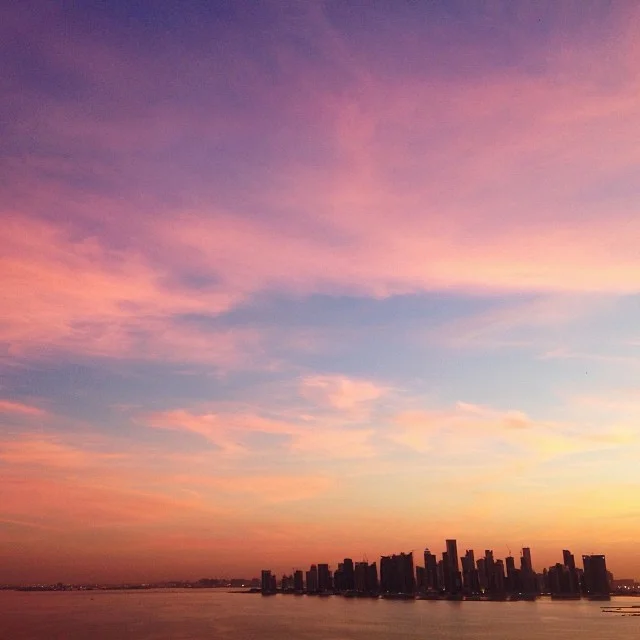
Porto Arabia, Doha, Qatar, as seen from Donovan and Kate’s apartment

Porto Arabia, Doha, Qatar, as seen from Donovan and Kate’s apartment

What’s it like living in a Muslim country that fasts for an entire month and limits the sale of booze? What do Qataris think of Americans? And how the heck do you pronounce Qatar?


They’re young. They don’t have kids. They figured, why not?

Deciding to pick up and move from the U.S. to Qatar a couple of years ago, Donovan and Kate are inspirations. Don’t we all dream of embarking on such a journey? After all, you only live once (unless the Hindus and New Agers happen to be right about reincarnation).

Fasting is the real deal. No food, no water, not even gum or Advil until sundown. Even if you’re not fasting, you’re not supposed to do any of those things in public, not even in your car.

Of course they did pick a Muslim country in the middle of a desert to move to. That comes with its highs and lows.

“If we get kicked out of the country for any of these answers, we’re moving in with you,” Donovan threatened. “Warn Duke.”


Kate and Donovan tied the knot in Mykonos, Greece. Wedding photos by Shaun Menary Photography

What’s the best part about Qatar?

Qatar’s 90% expat, so every day you interact with people from a ton of different cultures and backgrounds. It creates pretty tight bonds between unlikely people, since there’s a sense that we’re all in this together (being away from home in a sometimes strange country).

We once went out on a Friday night with some casual friends and, several drinks later, all ended up booking a trip to Lebanon together. The next weekend. And it was a blast. And you need that kind of support. 

Back to that Lebanon trip: One of the best things about living in Qatar is its proximity to so many interesting places. It takes three hours to fly to Cairo, four hours to Kathmandu, five hours to Kenya, seven hours to Saigon — it turns out it’s easier (and cheaper!) to get to cool places when you don’t have to cross an ocean.  


What’s the worst part about Qatar?

The place changes so quickly that it surprises you, whether you’ve been here for five months or five years! Three days ago, Kate was on her way to work and discovered that, unannounced, the road to get there had closed, and no one bothered to put up any signs to redirect traffic.

That’s the other worst thing: traffic. More or less everyone drives like a lunatic, with no regard for laws, other cars, pedestrians, light posts, etc. It’s every Land Cruiser for himself out there.


What surprised you about Qatar?

How normal it can feel. We’re half a world away from home and hear the call to prayer five times a day, but every Sunday during the fall we still drink a few beers and watch football. Donovan still buys his standard-issue White Guy Clothes at the Banana Republic at the mall. We’re still up-to-date on Game of Thrones and Orange Is the New Black. We go to bars less often, but we drink just as much (possibly more!).

It’s a nice mix of a “cultural experience” with a bubble you can retreat into when you just want to unwind with a glass of wine and Scandal. If it weren’t for the call to prayer, you’d swear you were back home — though good luck getting a Chicago-style deep-dish pizza out here.


What is Ramadan really like? 

Ah, Ramadan. We’re currently right in the middle of the holy month, which for those of us who don’t fast is actually kind of nice. Work hours are shorter, there’s a lot less traffic, and everybody’s generally more laid-back (possibly from lack of energy). The pace of life is a lot slower, since basically everything is closed until sundown.

There are tents set up around town for iftar (the evening meal to break the fast) with giant buffets and entertainment. There are similarities to Christmas in the U.S.: Everything’s lit up at night, people get together with family for meals, and the stores all have sales.

For Muslims it’s a time of reflection and increased spirituality, which fasting is supposed to emphasize. And fasting is the real deal. No food, no water, not even any gum or Advil until sundown. Even if you’re not fasting, you’re not supposed to do any of those things in public, not even in your car. Which is a drag when you go to a matinee and they’re not selling popcorn, even though the whole theater smells like it.


What about Muslim culture overall?

Asking about Muslim culture is sort of like asking about “European culture” or “American culture.” The range of experiences is just so broad. On one extreme, you have Saudi Arabia, where women can’t drive and can’t go out in public without a male relative. On the other hand, you have Bahrain, which is connected to Saudi by a causeway and yet is full of Muslim men drinking beer and playing pool in bars.

Qatar is somewhere in between, but certainly leans conservative. Islam is the state religion (hence the short work days during Ramadan, hooray!), so alcohol and pork are restricted but available to non-Muslims. The aforementioned calls to prayer are ubiquitous, but it’s not like people drop everything at that moment to go pray.

It’s been interesting to hear certain orange-hued people in the U.S. [that’s a Trump dig, in case you missed it] claim that Islam is incompatible with modern life, given that every day in Doha hundreds of thousands of Muslims put on their abayas and thobes, grab Starbucks on the way to work and eagerly await the next Star Wars movie.


What’s the Qatari view of Americans?

Qataris are pro-America, Trump aside. We’ve both worked at U.S.-based universities over here, and we’ve seen that Qatari students embrace the Western college experience — dorms, sports, study abroad — that doesn’t really exist here otherwise.

One of the great moments we’ve experienced was hearing the brass band at the Georgetown graduation play Pharrell’s “Happy” when the Father Emir — basically Qatar’s George Washington — greeted students.

It’s always an enjoyable thing to see Qataris wrestling their Louis Vuitton shopping bags onto the plane when coming back from a jaunt to Los Angeles or New York.


What’s an interesting local custom?

Sharing of food is a major part of the culture here. At Qatari weddings, they’ll have a tent with multiple massive platters of rice with a whole lamb on top of each. Family-style eating is very popular, and our Arab colleagues frequently bring lunch for everyone.

Shisha, the local version of the hookah, is also a big part of restaurant meals, similar to an after-dinner drink when you want to hang out just a little while longer.


Most useful phrases for a traveler?

You can get by in Qatar on English alone, but if you want to go local:

Shukran (shoo-kran): thank you

Insha’allah: literally “God willing.” Used to mean “hopefully,” or, in a business setting, “don’t count on it.” For example, “I will get it to you Tuesday, insha’allah” means “I will not get it to you Tuesday.” 

A salaam alaikum: Means “peace be unto you.” Polite greeting to any Muslim, who will respond, “Alaikum salaam.” 

Khalas: “Enough” or “that’s it.” Useful when bargaining.

Yalla!: “Let’s go!”


How do you pronounce Qatar?

Khalas, Wally. Khalas.


That last answer is because Donovan and I would get into friendly arguments at work about how to pronounce the country’s name. He insisted it was “Ka-tahr,” as most Americans do. But I had heard it pronounced “Cutter” on NPR, and I figured that was a reliable source.

Donovan refused to believe me — until he moved to Qatar. Turns out I was right. Though I’m hardly one to brag.

For the record, though: It’s “Cutter.” –Wally

Abode Hotel: The Epitome of Colonial Chic

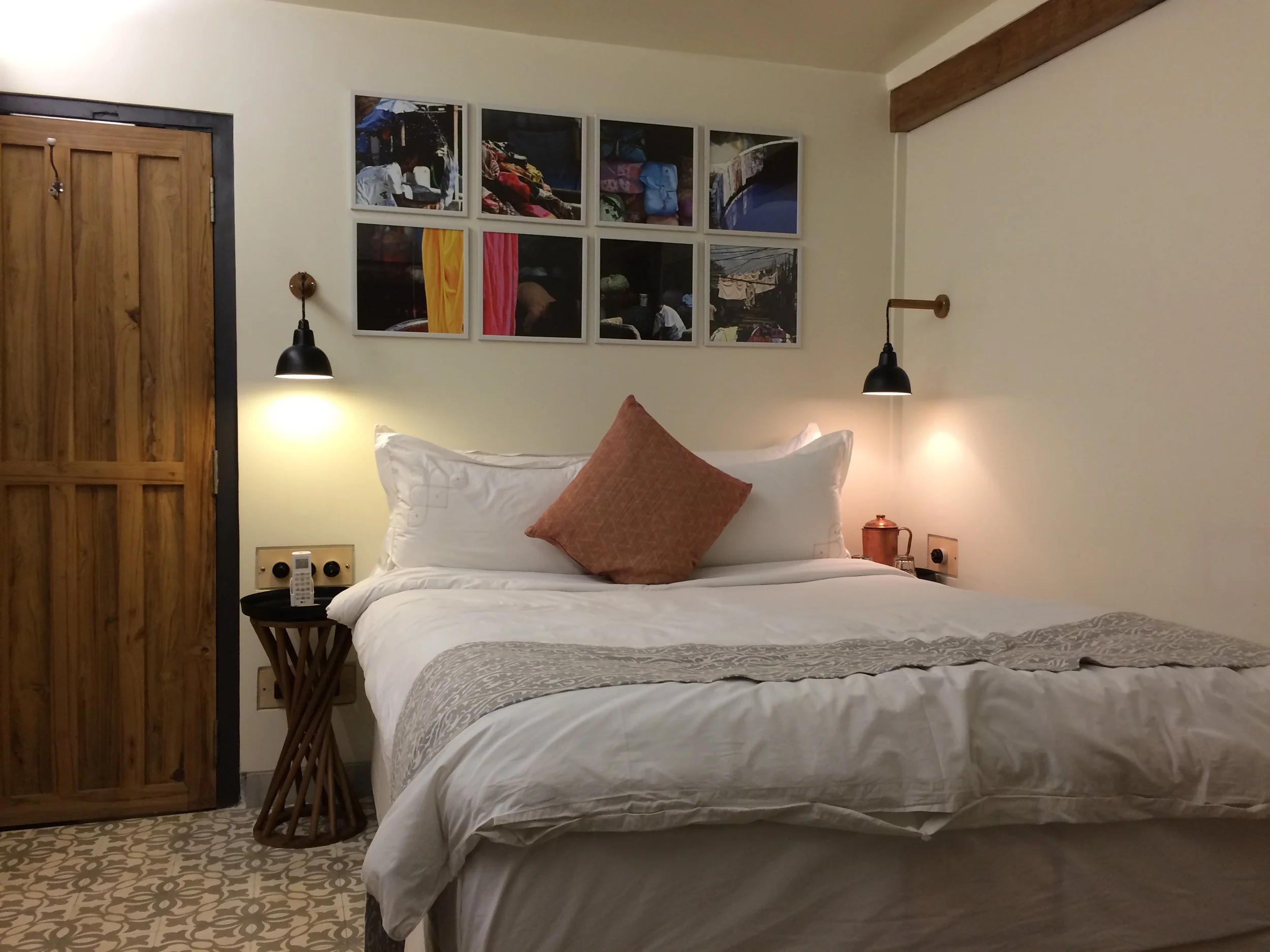
Our cozy, stylish room at Abode Bombay

Our cozy, stylish room at Abode Bombay

We recommend a stay at Abode, One of the best boutique hotels in Mumbai, located in the tourist hot spot, the Colaba district.

In a city that can often feel overwhelming, it’s nice to have a sanctuary away from the chaos.

So Wally and I were thankful for Abode, which I had discovered on the blog An Indian Summer. This hip boutique hotel located in the Colaba district of Mumbai occupies the first two floors of a Colonial building bearing the name Lansdowne House. The building was constructed in 1910 by the opium trader and once treasurer of Baghdad, Iraq, David Sassoon.  

It would have been even lovelier if Wally hadn’t somehow broken the shower knob and flooded our bathroom!

Sian Pascale, the interior designer responsible for Abode's vibe has mixed bold geometric patterned floors and Colonial-era furnishings with modern amenities. We especially appreciated our room’s feather bed-topped mattress and rain showerhead. (It would have been even lovelier if Wally hadn’t somehow broken the shower knob and flooded our bathroom!) The ear plugs enclosed in a simple kraft paper envelope with the Mahatma Gandhi quote, “Peace is its own reward” on the side table were also a nice touch.


RELATED: Mumbai Tourism: How to Prepare Yourself for the Chaos


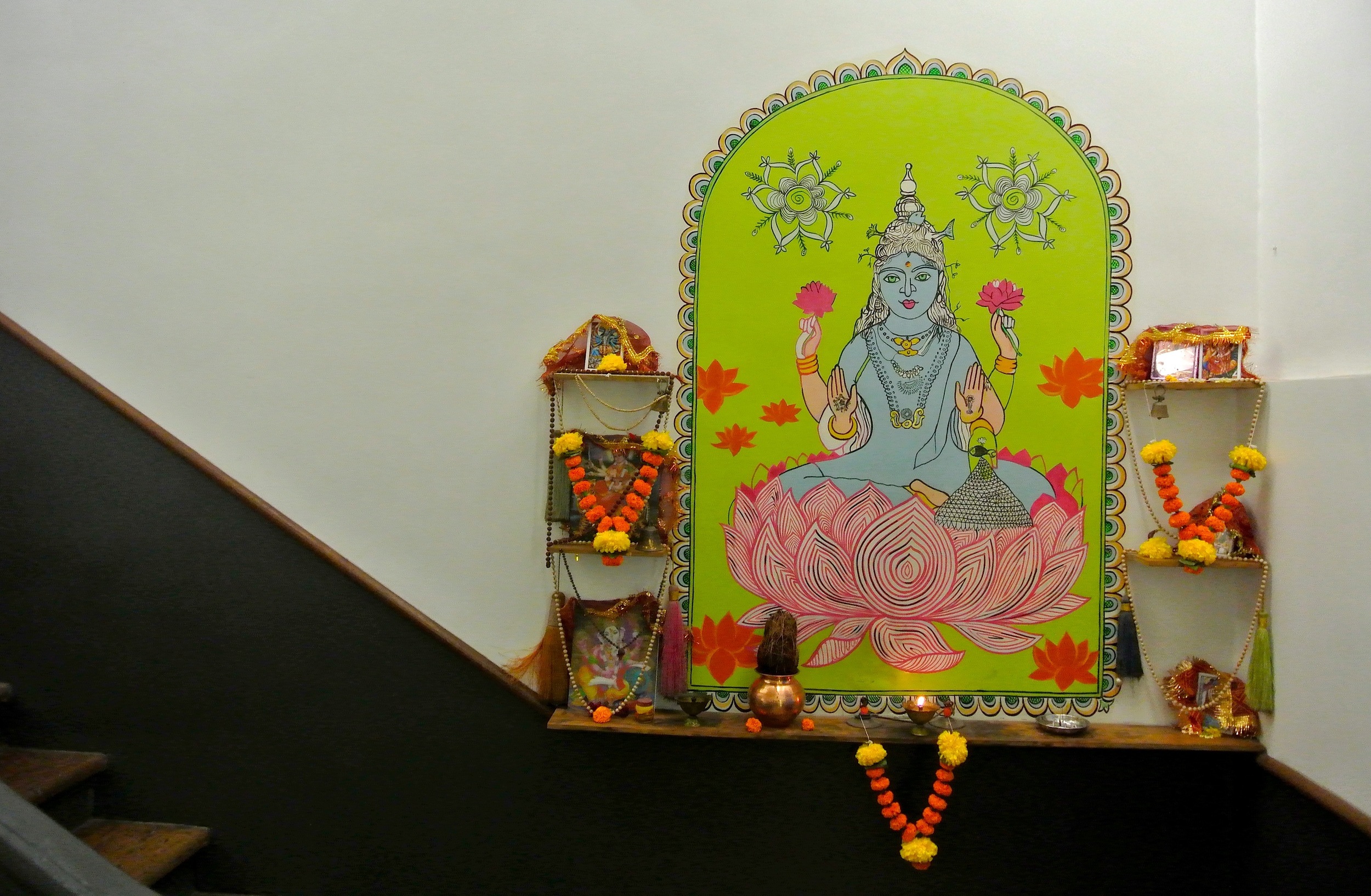
On the way in, there’s an altar in the stairwell. It’s dedicated to the Hindu deity Lakshmi, the goddess of wealth and beauty, seated upon a lotus, handpainted by truck artists. 

An adorable shrine to Lakshmi, the Hindu goddess of wealth, outside the entrance to the Abode hotel in Mumbai, India

An adorable shrine to Lakshmi, the Hindu goddess of wealth, outside the entrance to the Abode hotel in Mumbai, India

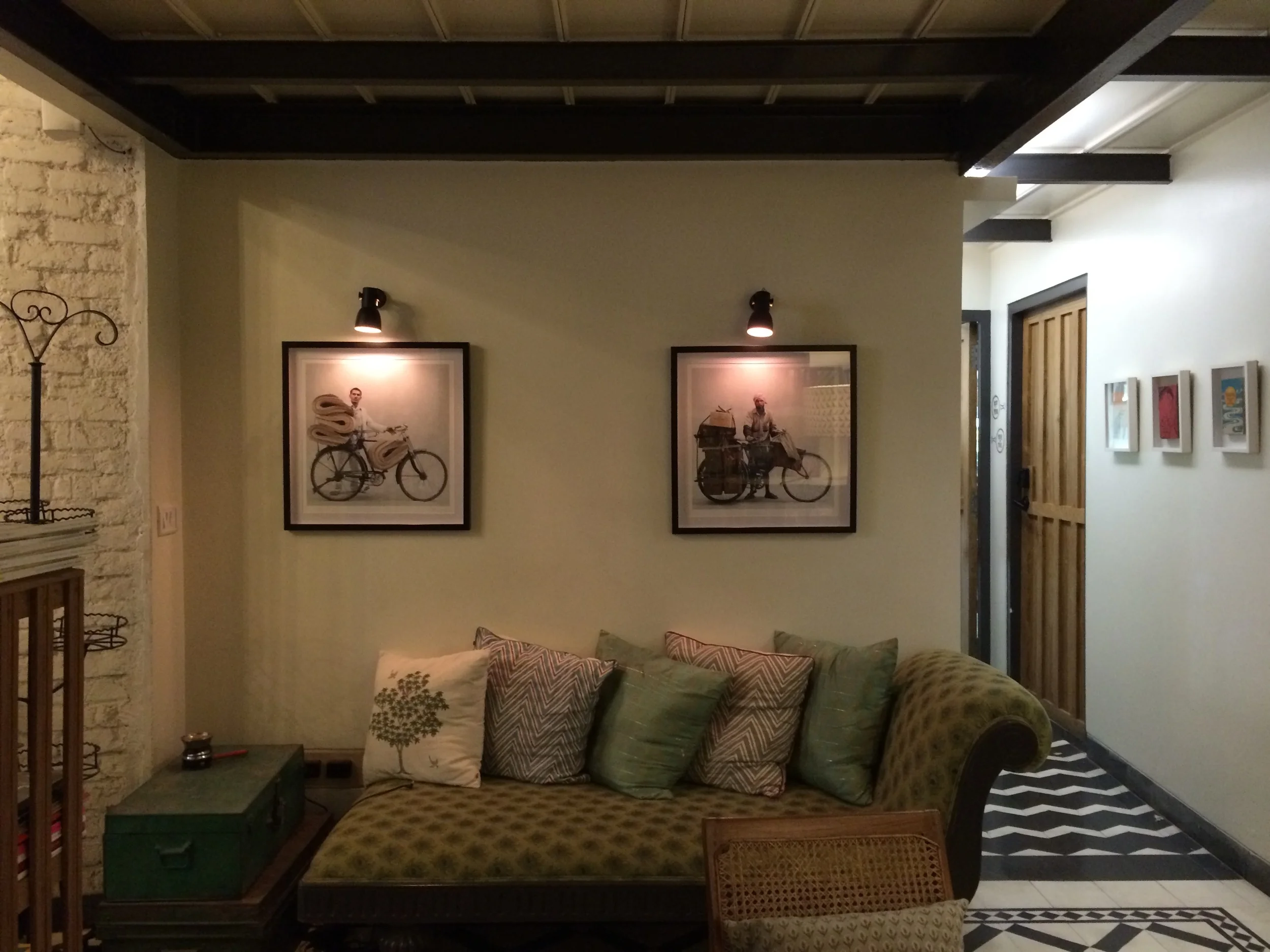
The reception room serves as a communal lounge, library, curated gift shop and dining room. Guests are encouraged to relax here, which we did upon our return after an afternoon exploring the hood. The staff was gracious and attentive. During breakfast, a concierge informed us of an art festival that was nearby, something we probably would not have discovered on our own as we only had one day in Mumbai.

A lounge area of the common room at the Abode hotel in Mumbai

A lounge area of the common room at the Abode hotel in Mumbai

Upon our return later that afternoon, Lameze, another guest who was staying at Abode, invited us and a couple fellow travelers to join her in celebrating her 50th birthday — and was serenaded by the staff with the Indian version of “Happy Birthday to You.” It was a wonderful experience we'll not soon forget — and not just because of the delicious chocolate ganache cake her friend had bought for her.

A new friend we met in the Abode common room shared her birthday cake with the hotel staff and guests

A new friend we met in the Abode common room shared her birthday cake with the hotel staff and guests

I booked our stay through i-escape, which made reservations easy. It even provided us with a complimentary bottle of wine, waiting in our room — the perfect way to toast our arrival.

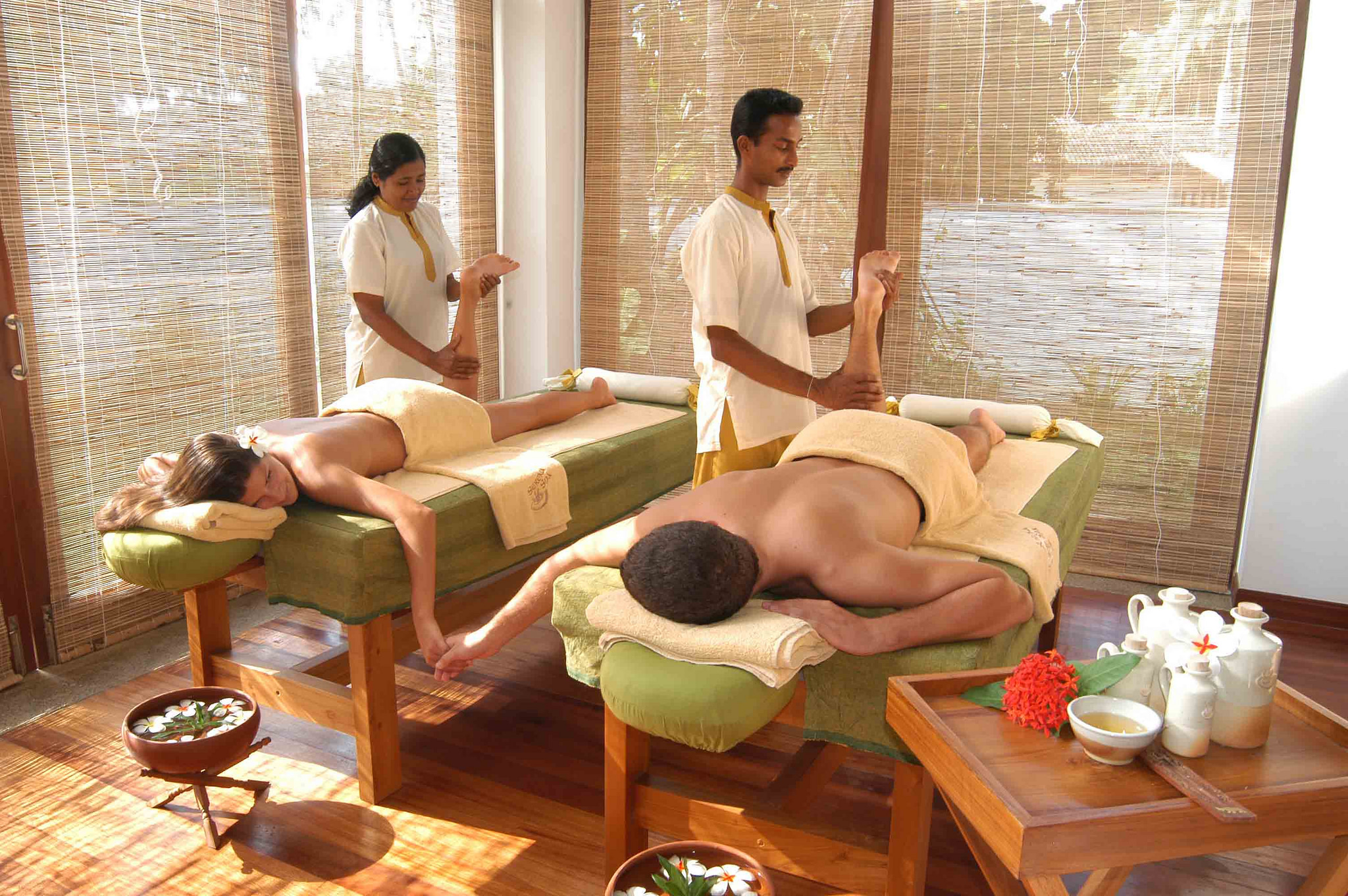
The hotel can also arrange spa treatments and supports the Victoria Memorial School for the Blind. Massage therapy is one of the career choices at this charity for the blind. Wally and I opted for the Ayurvedic massage to release toxins and increase circulation. We left feeling relaxed and reinvigorated, ready for our flight back to Chicago.

If you’re on the taller side, we’d recommend asking to stay on the hotel’s first floor — the hallway upstairs has low (but padded) pipes you have to duck under.

Our sole criticism would be that the pre-arranged transport from the Mumbai Airport to the hotel could have been more pleasant. After a delayed flight from our previous destination, the driver made a comment about us being late and didn’t assist in loading our luggage into the vehicle. We were wholly neglected as she chatted on her phone for the better part of our drive, which took almost two hours due to slow moving traffic. We noticed Victoria Station too late to appreciate it. It would have been nice if she could have pointed out a landmark or two.

Other than that rocky start, though, we had nothing but pleasant things to say about Abode, and met some truly inspiring fellow travelers, including two 70-something Australians, Maggie and Moggy, who were spending six or so weeks in India, touring textile co-ops. They certainly taught us a few tricks. –Duke

Bastille Day Q&A: Pretty Much Everything You Want to Know About the French Independence Day

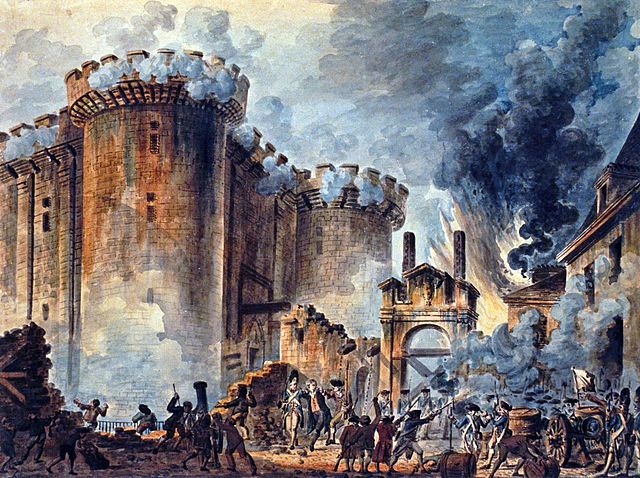
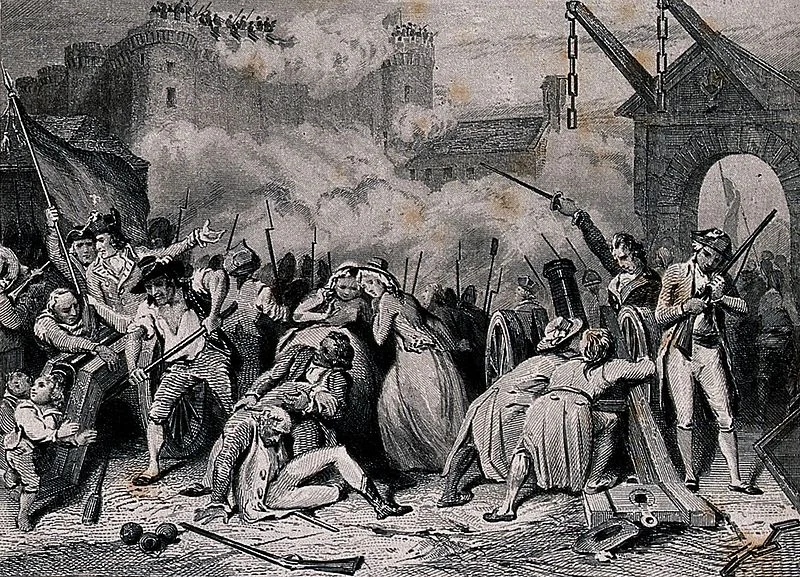
La prise de la Bastille by Jean-Pierre Houël, 1789

La prise de la Bastille by Jean-Pierre Houël, 1789

Why did the French people storm a prison? What caused the French Revolution? What celebrations take place on le 14 juillet? We answer these and other burning questions about Bastille Day.


Down with the king! Long live the republic!

That’s the general sentiment behind Bastille Day in France.

His head was put on a stake and paraded around Paris as a sign of victory.

Bastille Day, or the French National Day, is celebrated on July 14th every year in France. It’s a day to celebrate and remember the beginning of the French Revolution. It became a national holiday in France in 1880, less than 100 years after the Storming of the Bastille.


Is it true the French don’t even call it Bastille Day?

Oui. I’m sure most French people would know what you’re talking about nowadays, but for them the holiday is named simply for its date, le 14 juillet (pronounced “le cat-tour jwee-yay”).


What caused the French Revolution?

The population of France had grown dramatically, from about 20 million people in 1700 to 30 million by 1789.

Most were peasant farmers who had to rent their lands from wealthy lords and pay them high taxes to grow crops. The nobility in turn had to give some of this to the king, though they kept most for themselves.

It got so bad that most farmers lived below the poverty level. When the cost of flour rose, people began to starve. And we all know you don’t deprive the French of their beloved baguettes.
King Louis XVI wasn’t able — or simply didn’t care — to solve the problem. He was busy living lavishly and spending an obscene amount of money at his palace in Versailles. Louis XVI had also driven France into bankruptcy by taking the side of the revolutionaries in America, supplying them with a naval fleet.

There were, of course, myriad other factors, including the growing popularity of Enlightenment philosophy. But the long and the short of it is that the downtrodden peasants and politically powerless bourgeoisie eventually had had enough.

The Storming of the Bastille on the 14 July 1789

The Storming of the Bastille on the 14 July 1789

Why storm the Bastille?

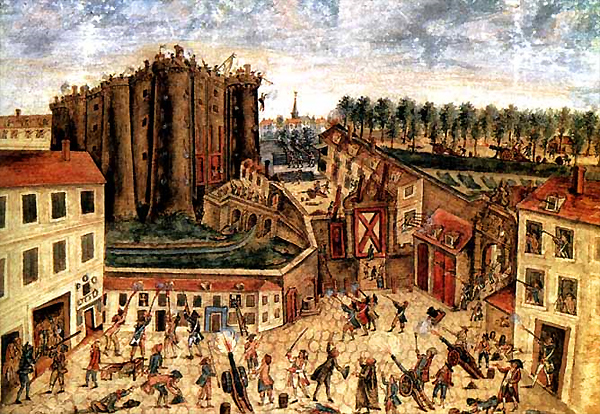
On the morning of July 14, 1789, a group of craftsmen and merchants rose up and invaded Les Invalides, a military hospital, to steal weapons. They successfully ended up with 28,000 rifles — but didn’t have gunpowder to fire them off.

The mob knew that there was a stockpile of gunpowder in the Bastille, the fortress prison that held those who opposed the king. The Bastille was also symbolic to the revolters, representing the monarchy’s absolute and arbitrary power.


Siege of the Bastille by Claude Cholat, 1789

Siege of the Bastille by Claude Cholat, 1789

What happened when the mob got to the Bastille?

There weren’t that many soldiers guarding the prison. Still, they weren’t too impressed by the mob — perhaps because the revolutionaries had no way to actually use all those firearms they carried.

The governor of the invalides, Marquis Bernard-René de Launay, met with some representatives of the revolutionaries inside the Bastille. Negotiations ended abruptly when part of the mob found its way into the fortress. The guards were ordered to fire into the crowd, killing hundreds.

De Launay was hoping to gain time until backup appeared. Trouble is, when the so-called rescue team showed up, it decided to fight not for the marquis and the king — but instead on the side of the revolutionaries. Armed with canons, the professional soldiers took over the castle in a few hours’ time.


What happened to the Marquis de Launay and the Bastille guards?

At 4 p.m., the marquis surrendered, and the revolutionaries swarmed in. The guards were killed and de Launay himself was beheaded. His head was put on a stake and paraded around Paris as a sign of victory.

Later that night, 800 or so people ended up burning down the Bastille.


Who were the prisoners at the time?

While Voltaire was one of the more illustrious, previous captives held at the Bastille, at the time of the storming, there were only seven prisoners: one so-called deviant aristocrat, two “lunatics” and four forgers.


What was the king doing about all this?

Historians later found Louis XVI’s diary. On that day, he had only noted the result of his day’s hunt: “Nothing.”

That’s quite an understatement, as the storming of the Bastille became a turning point in the French Revolution, in which Louis XVI and his wife, Marie Antoinette, would be guillotined.

When the king did hear what happened at the Bastille, he famously asked his advisor, “Is this a revolt?” The man answered, “No, Majesty. This is a revolution.”


How do the French celebrate the holiday?

In Paris, there’s a military parade along the Champs-Elysées, which has been decorated with flags. Then the president gives a speech.

In smaller French towns, the mayor gives a speech, followed by the laying of a war memorial wreath.

I know that doesn’t sound overly exciting, but rest assured there are also fireworks, dances, music, food and street celebrations around the country.

Other cities celebrate Bastille Day in style, including Milwaukee, where the festivities go on for four days and involve a replica of the Eiffel Tower.


Bonus Fun Fact!

The British band Bastille takes its name from the fact that July 14 is the birthday of lead singer and songwriter Dan Smith. –Wally

This Asian Recipe for Cashew Chicken Curry Will Make You Feel Like You’re at Angkor Wat

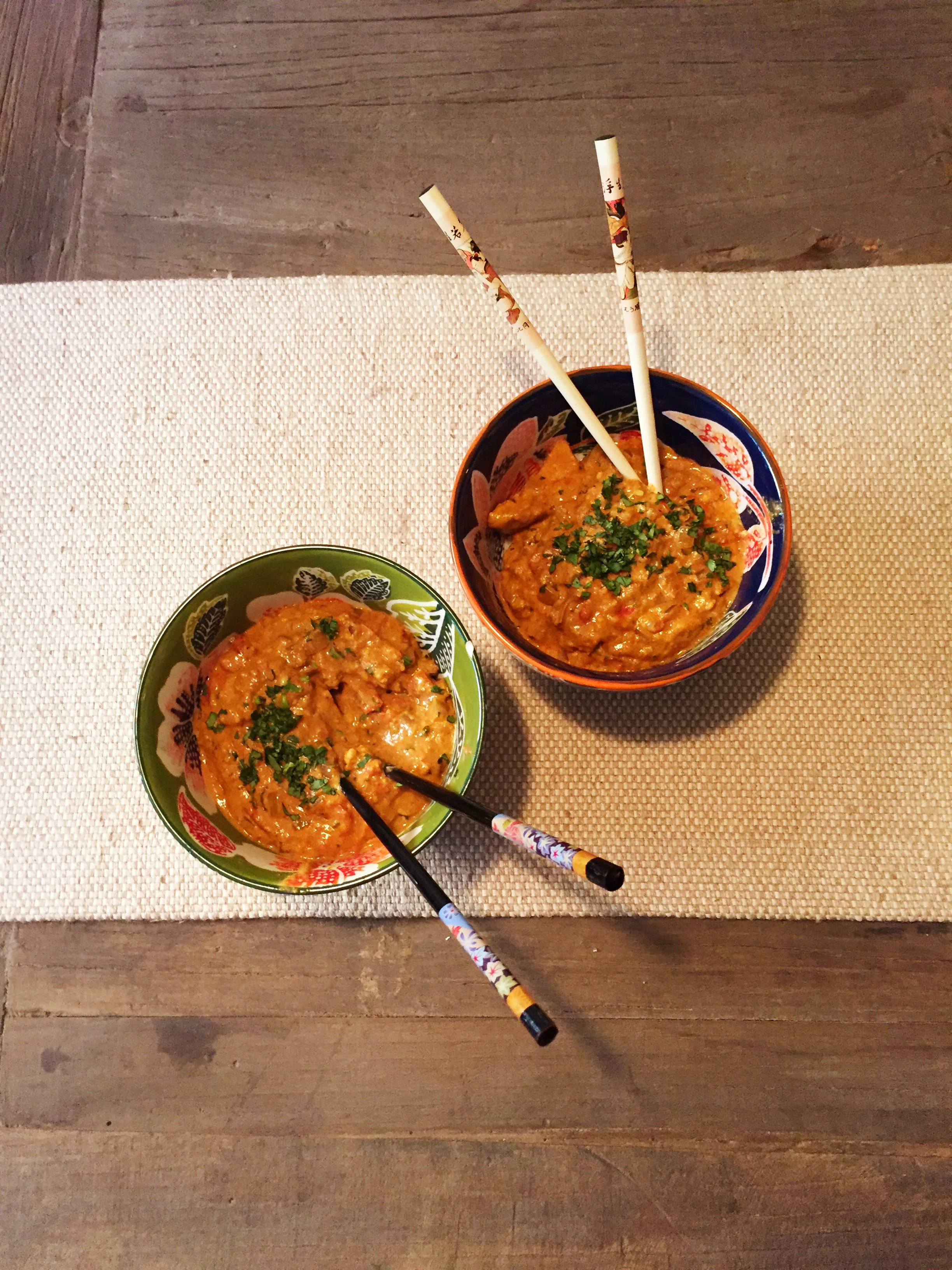
This cashew chicken curry is a delish dish — and you don't even have to go all the way to Cambodia to enjoy it

This cashew chicken curry is a delish dish — and you don't even have to go all the way to Cambodia to enjoy it

Cambodian food is one of our favorite cuisines, and this is our absolute favorite dish — a culinary reminder of a fabulous trip.


Souvenirs of our various trips fill our home. But some of our souvenirs come in the form of food that evokes a meal we experienced and enjoyed abroad.

A go-to recipe and one of Wally's favorites is this cashew curry chicken, which reminds us both of a meal we had at an outdoor restaurant after visiting a floating village in Cambodia. (In fact, Wally liked the dish so much, he ordered it twice on that trip.)

This is a recipe adapted from Charmaine Solomon's Complete Asian Cookbook. The ground cashews, combined with the yogurt, provide a rich, creamy texture. Wally couldn’t believe how close it tasted to the meal we had on our Angkor Wat adventure.

Theirs was served in a young coconut, though I dish it up in deep bowls with a bit a jasmine rice.

Wally never fails to say, “This is delicious, as always,” then teases me by muttering under his breath, “Though it would have been even more delicious if it was served in a young coconut.” The brat.

We find that this dish is even better if it has time to develop flavor overnight. So if you want to eat it the same night you cook it, just make sure you have enough for leftovers!

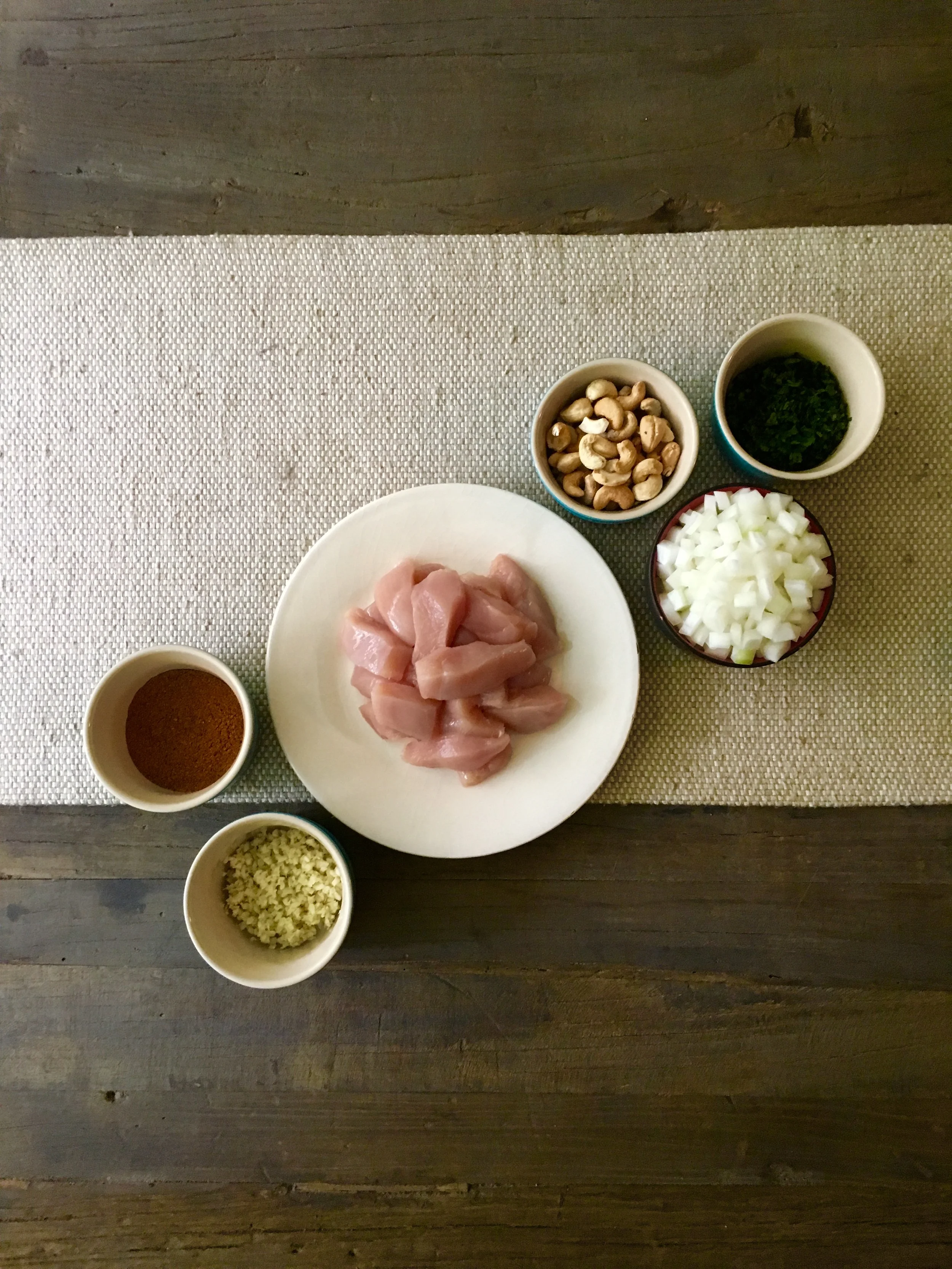
The ingredients for our cashew chicken curry. No young coconuts were harmed in the making of this recipe

The ingredients for our cashew chicken curry. No young coconuts were harmed in the making of this recipe


INGREDIENTS

  • ½ stick (¼ cup) unsalted butter
  • 2 medium onions (2 cups), finely chopped
  • 2 large garlic cloves, finely chopped
  • 1 tablespoon fresh ginger, finely chopped
  • 3 tablespoons curry powder (I prefer Vindaloo)
  • 2 teaspoons salt
  • 1 teaspoon ground cumin
  • ½ teaspoon cayenne
  • 3 pounds boneless chicken breast, cut into bite-sized pieces
  • 1 14.5-ounce can fire-roasted diced tomatoes
  • ¼ cup chopped fresh cilantro (save some as garnish)
  • ¾ cup unsalted cashews
  • ¾ cup plain Greek yogurt


PREPARATION

Heat butter in a 5- to 6-quart heavy pot over moderate-low heat until any foam subsides.

Add the onions, sautéing for 8 minutes.

Add the garlic and ginger, stir, and cook for 2 minutes.

Add curry powder, salt, cumin and cayenne and cook, stirring for another 2 minutes.

Add chicken and cook, stirring to coat it with the spice mixture, for about 6 minutes.

Add tomatoes, including the juice, and cilantro and bring to a simmer.

Then cover, stirring occasionally, until chicken is cooked through, about 40 minutes.


Just before serving:

Pulse cashews in a food processor until very finely ground.

Add to curry, along with yogurt.

Simmer gently, uncovered, until sauce is thickened, about 5 minutes.

Top with cilantro.

Serve over jasmine rice (young coconut optional). –Duke
ALSO TRY: The Best Guacamole Recipe Ever


Junkanoo Q&A: The Bahamas’ One Big Party

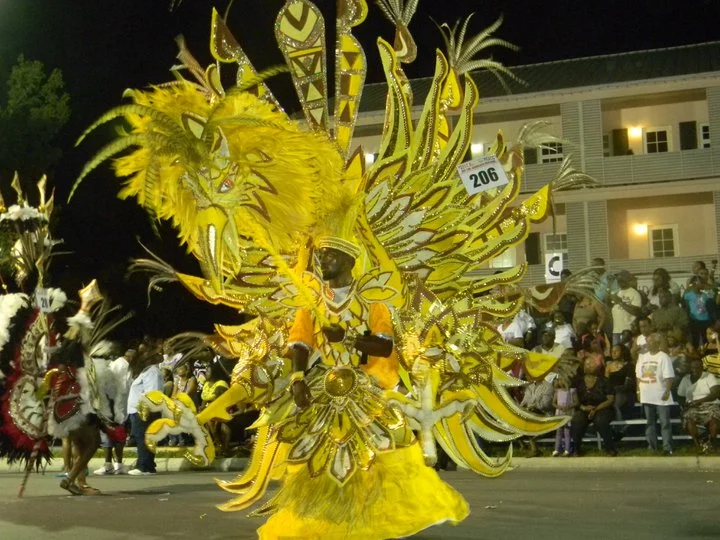
How do the dancers support such enormous costumes during the Junkanoo parade in the Bahamas?

How do the dancers support such enormous costumes during the Junkanoo parade in the Bahamas?

What goes on at the Junkanoo parade — and how do they make those crazy costumes?! If you go to the bahamas, time it for its one cultural event.


While I didn’t have the best time on Grand Bahama Island (“No conch. Bad weather”) and felt intimidated by our bus driver’s homophobia, I was lucky enough to time my trip with the Bahamas’ blowout event, Junkanoo.


When does Junkanoo take place?

The party happens on Boxing Day (December 26) and New Year’s Day (January 1). Christmas was often the only time slaves got time off, and their descendants continue the tradition.

The streets become a wild cacophony of pounding drums, clanging cowbells and shrill whistles. It’s intense.


Where does the name Junkanoo come from?

No one seems to know the answer. One camp insists it’s a reference to John Canoe, “an African prince and slave trader at the Gold Coast in Africa in the 17th century,” according to my-bahamas-travel.com. And while legend has it he bested the Brits, I’m still unclear why a slave trader would be so idolized by descendants of slaves.

Others say it derives from the French term “gens inconnus” (which when you say it properly does sound a lot like “Junkanoo”). It translates to “unknown people” and is said to be a reference to the masks worn during the festival.


What happens during the parade?

The streets become a wild cacophony of pounding drums, clanging cowbells and shrill whistles. It’s intense. The drums are often made of oil drums with goatskin stretched across the top.

People dance past (“rushin’,” as the locals say) in their elaborate costumes, sometimes atop floats. Some of the dancing is freeform, while other groups do a sort of shuffle in unison.

The parade has a definite Carnival feel to it.


The first Junkanoo celebration in the Bahamas falls on the day after Christmas

The first Junkanoo celebration in the Bahamas falls on the day after Christmas

How do they make those fabulous costumes?

The colorful costumes worn by participants can be so massive, you wonder how a single person could support it. In some cases, the costume is five times as large its wearer.

While they look impressive, they’re mostly made of cardboard covered with crepe paper, feathers and glitter — that’s why they’re not that heavy. Some use aluminum rods for support and bits of wire to connect the pieces. Nowadays, many dancers use Styrofoam instead of cardboard.

“In the early Junkanoo days, the slaves in the Bahamas made their costumes from any material which they could find, such as shrubs, leaves, stones, bottles and paper,” according to my-bahamas-travel.com. Most costumes depicted the sea god Neptune and his wife Amphitrite.


If you are going to the Bahamas, chances are you're staying at one of the big resorts and you're not too worried about soaking up some of the local culture. That's good — 'cause I found the country to be largely devoid of anything that could be considered cultural. The one exception: Junkanoo. –Wally

Mumbai Tourism: How to Prepare Yourself for the Chaos

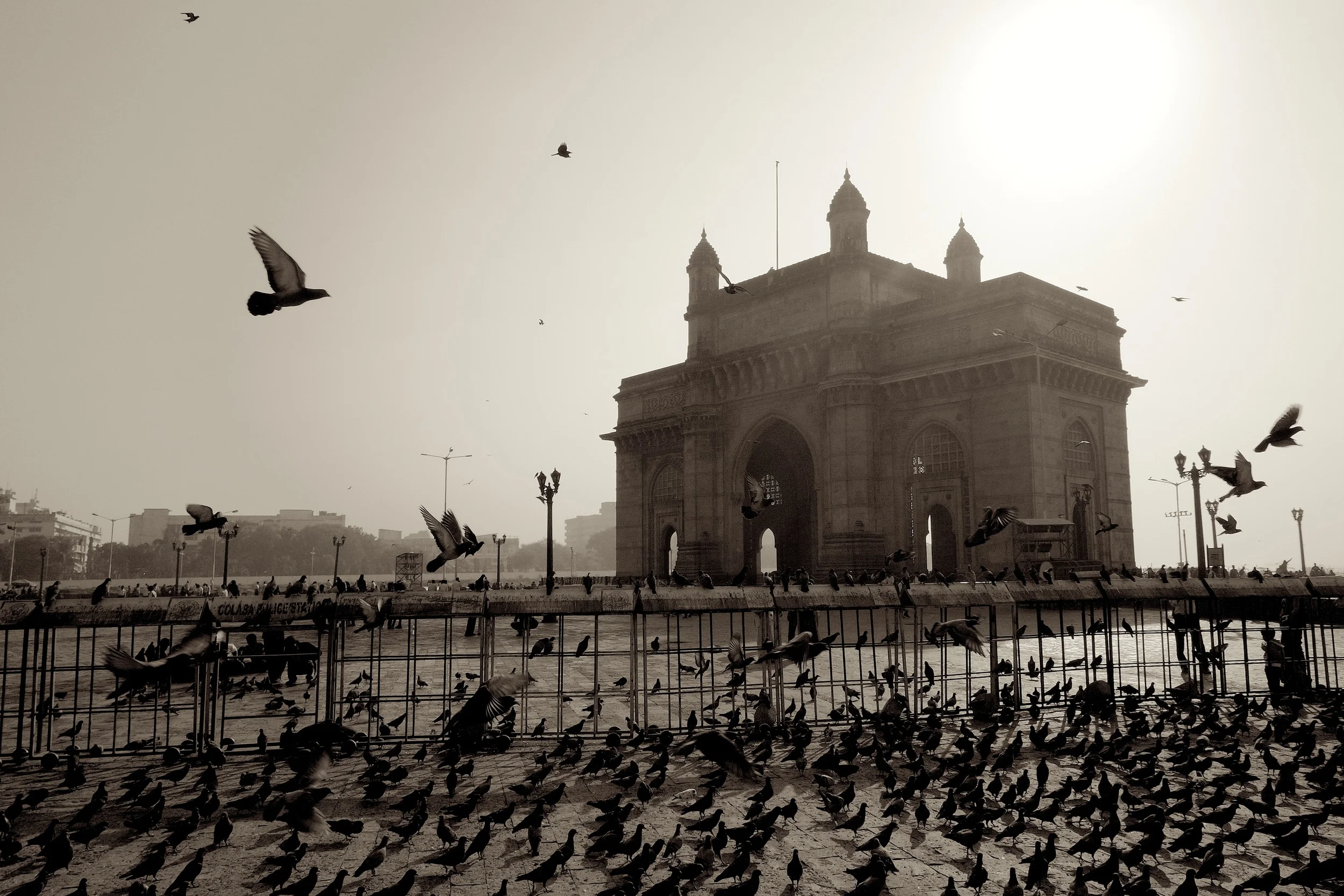
The Gateway to India in the Colaba neighborhood of Mumbai

The Gateway to India in the Colaba neighborhood of Mumbai

The Colaba neighborhood is a great place to station yourself. Just know what to expect navigating India’s largest metropolis.


Delhi feels like a small town compared with the bustling metropolis of Mumbai.

After a brief delay at the Aurangabad airport, Wally and I were off to Mumbai. It was our final day and a half, as we would be flying out the following night.

Practically every step we took, street hawkers would call out, “Pashminas!” to us. When we didn’t respond, some would ask if we wanted to purchase hash instead. The truth is, at this point I probably would have welcomed the latter.

I had found us an adorable boutique hotel called Abode in the neighborhood of Colaba. We read an article that described Colaba as Mumbai’s Greenwich Village.

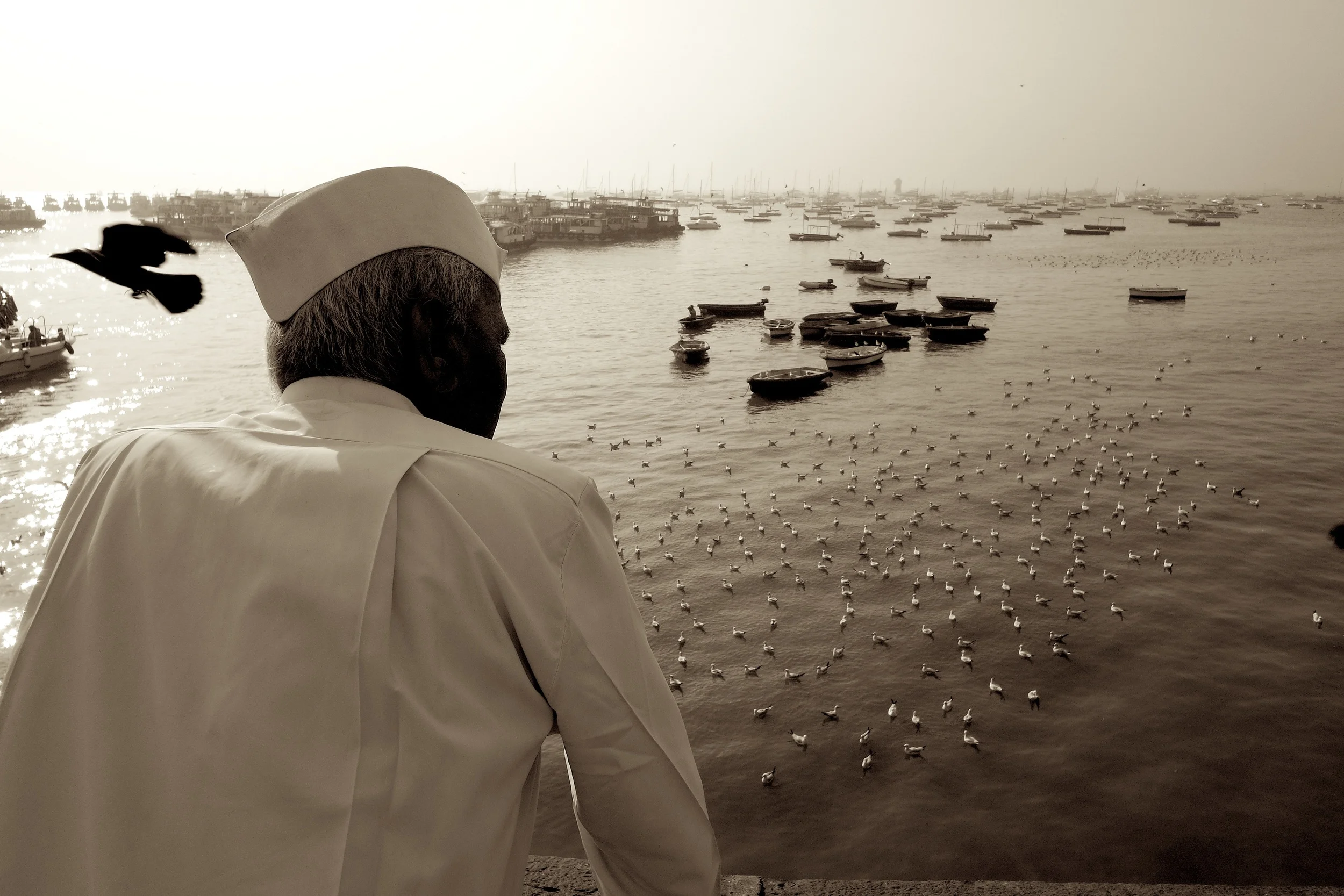
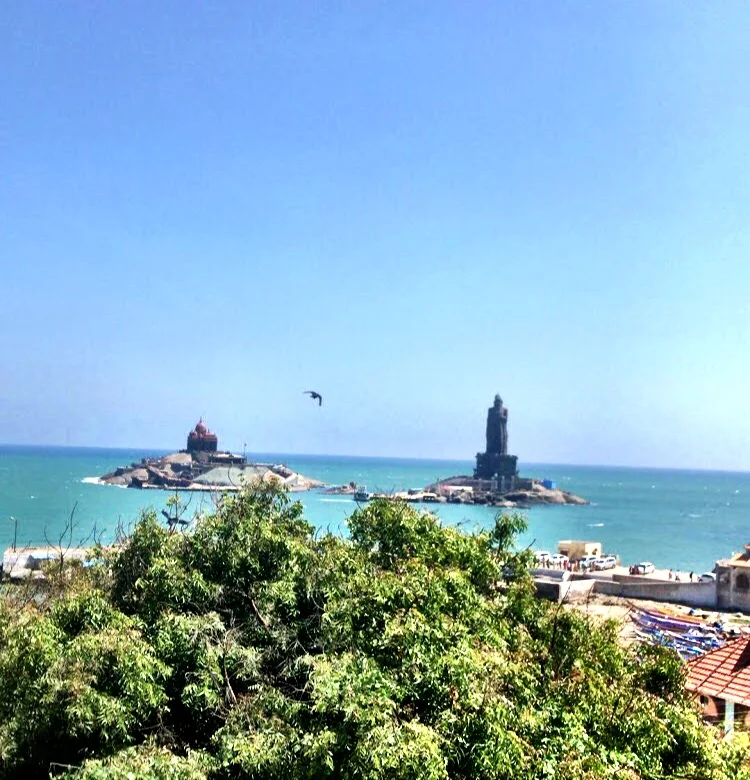
Looking out upon the Arabian Sea in Colaba, Mumbai, India

Looking out upon the Arabian Sea in Colaba, Mumbai, India

India is intense overall, and Mumbai’s size makes it simultaneously familiar yet foreign. Here are some things to know about the city:


Traffic is a bitch.

We arranged airport pickup through our hotel. Abode works with an NGO women-run taxi company, which empowers and employs female drivers in a vocation generally dominated by men.

Our driver, Husna, met us at the airport. Traffic came to a standstill once we left the airport. We were hoping our driver would play tour guide a bit, pointing out the sites as we crawled along. But she didn’t say one word to us. Instead, she just talked on her cell phone and, at one point, had a brief altercation with a traffic cop.

If the rural villages we passed through were about promoting the sales and use of concrete, Mumbai is all about marble. There were massive marble and granite warehouses and shops for as far as the eye could see.

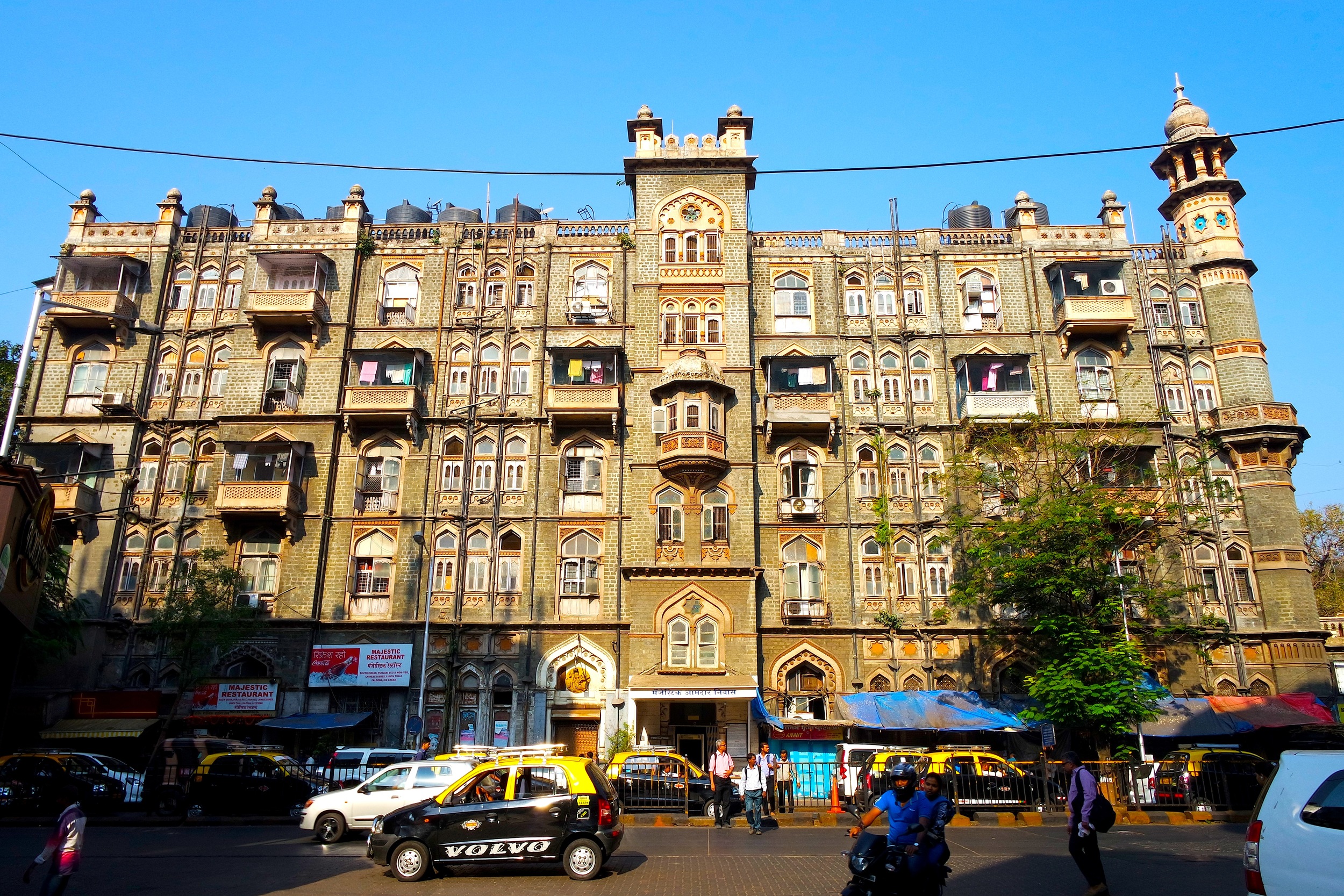
One of the many impressive buildings in Mumbai, India

One of the many impressive buildings in Mumbai, India

It seemed to take an eternity to reach our hotel, which is located at the southernmost tip of the city in Colaba. In actuality, it took us two hours. Not surprisingly, navigating this booming metropolis of over 16 million people can be a frustrating experience.

We ate lunch at the lively Café Mondegar, not far from our hotel and quite close to the tourist staple, Leopold Café. Our table faced the street and a wall mural by cartoonist Mario de Miranda filled with satirical caricatures depicting the café’s bustling interior and patrons.


The street hawkers won’t leave you alone.

Colaba is a touristy area on the waterfront. The famous Taj Mahal hotel is nearby, as is the Gateway to India.

Practically every step we took, street hawkers would call out, “Pashminas!” to us. When we didn’t respond, some would ask if we wanted to purchase hash instead. The truth is, at this point I probably would have welcomed the latter. My synapses had been worn down from processing all the things we had seen and places we had travelled in such a short period of time. You get no break in this frenetic city.

And don't even get me started on all the men selling giant squiggly balloons! How the heck would we get those things home — even if we wanted one?


Go where the locals go.

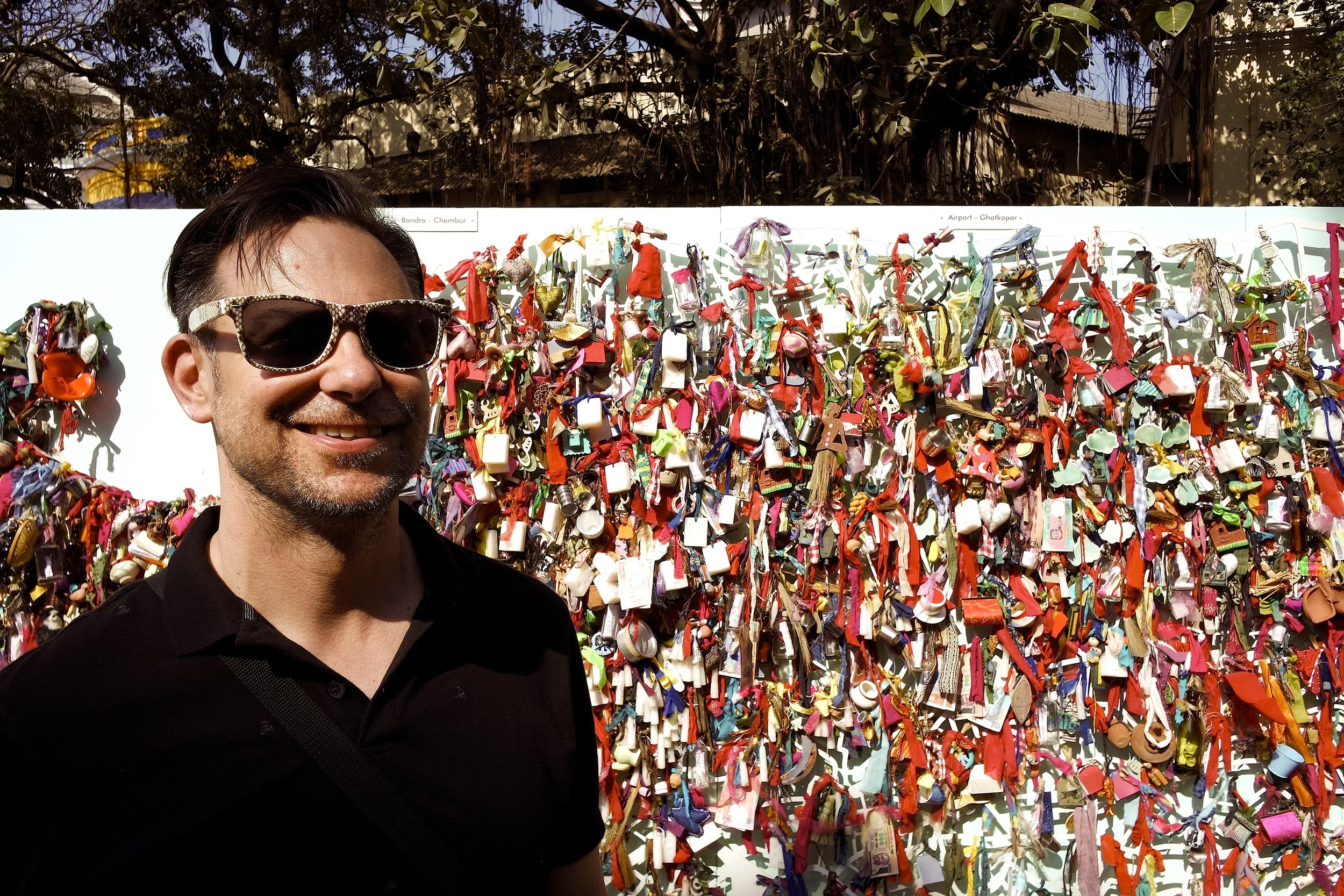
We decided to venture beyond Colaba and explore the Kala Ghoda district, where we stumbled upon its Arts Festival, not far from the Abode Hotel. The event takes its name from the neighborhood of Kala Ghoda (which translates to Black Horse, a reference to a black stone Colonial-era equestrian statue of King Edward VII that was previously located here. Incidentally, it was commissioned by the Sassoon family, who owned the Lansdowne House, where Abode now resides. The statue has since been relocated to the Byculla Zoo.)

Also of note is the Esplanade Mansion, which was fabricated in 1871 and shipped from England and is India’s oldest surviving cast iron building. Now a crumbling remnant, the structure was once a majestic structure that served as the Watson’s Hotel, the grandest in Mumbai. 

The Kala Ghoda Arts Festival is a combination of local art installations and includes craftspeople from across India. We purchased a vibrantly colored blue pottery turtle from Jaipur. The name comes from the deep blue glaze, used to color objects, which are fashioned from a unique dough-like mixture of gypsum, powdered quartz, powdered glass and gum.

We also bought a fun tote bag from Lemon Trunk with the message, “HORN OK PLEASE” that we had seen on the decorated backs of goods carrier trucks everywhere we went.

Halfway through the festival, Wally spotted the Alliance Française de Bombay table, which had a photo booth set up with a backdrop image of Mont Saint-Michel. He was delighted to practice his French and I smiled, pretending to understand what they were saying. 

The kids at the booth took our picture, and Wally and I like to think of ourselves as the centerpiece of their new ad campaign.

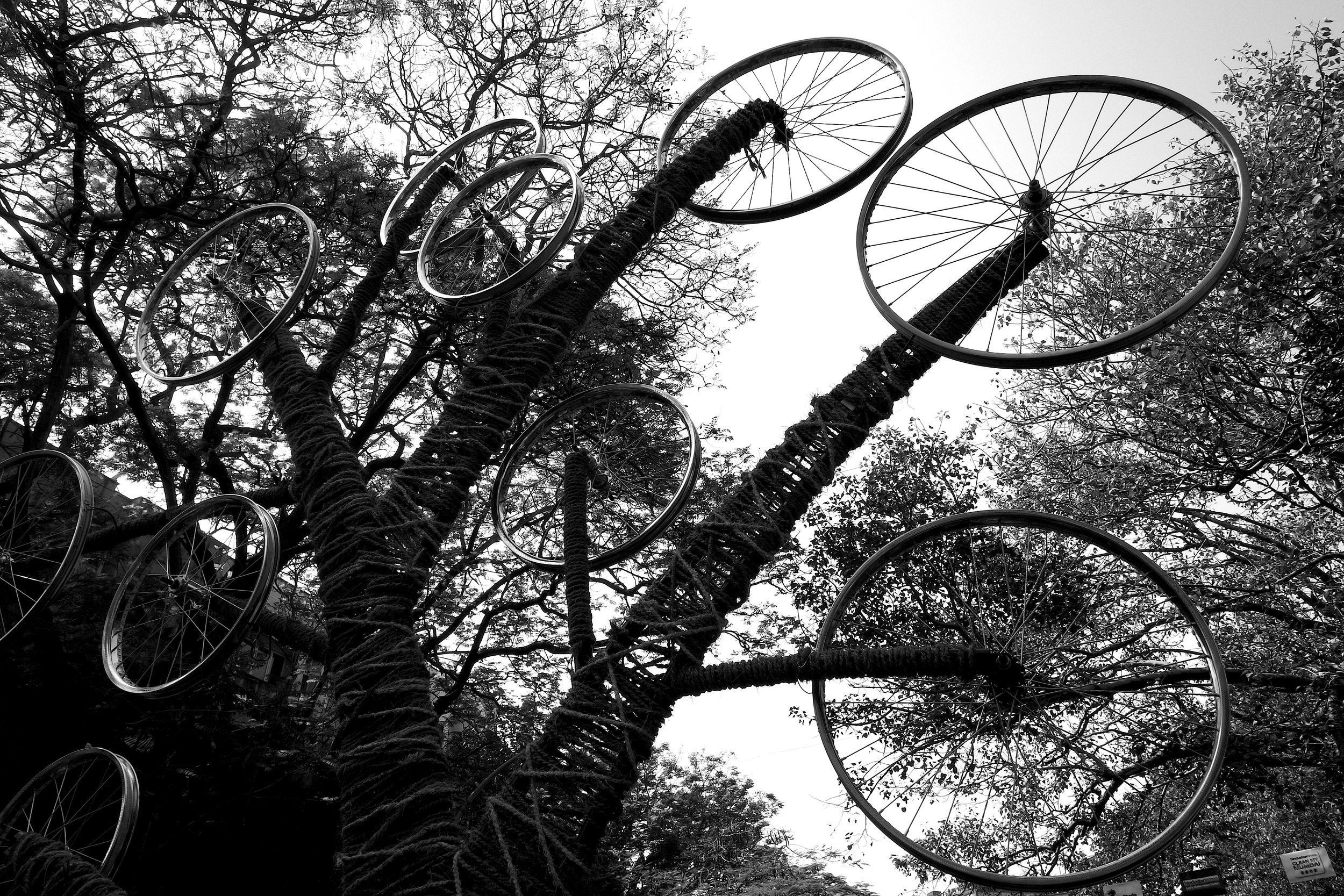
After we had left the festival and were returning to Abode, we passed the Chhatrapati Shivaji Maharaj Vastu Sangrahalaya Museum, which was formerly the Prince of Wales Museum of Western India (which is only slightly less of a mouthful to say). A few street artists were set up outside, one of whom was selling colorful bent wire cycle rickshaws. We purchased one, thanked him and arrived back at the hotel with our souvenirs. 

We had a great time, but the chaos of Colaba left us both fatigued. At times India can be her own worst enemy. –Duke

The Icelandic Phallological Museum and Other Strange Delights: Off the Beaten Path Iceland

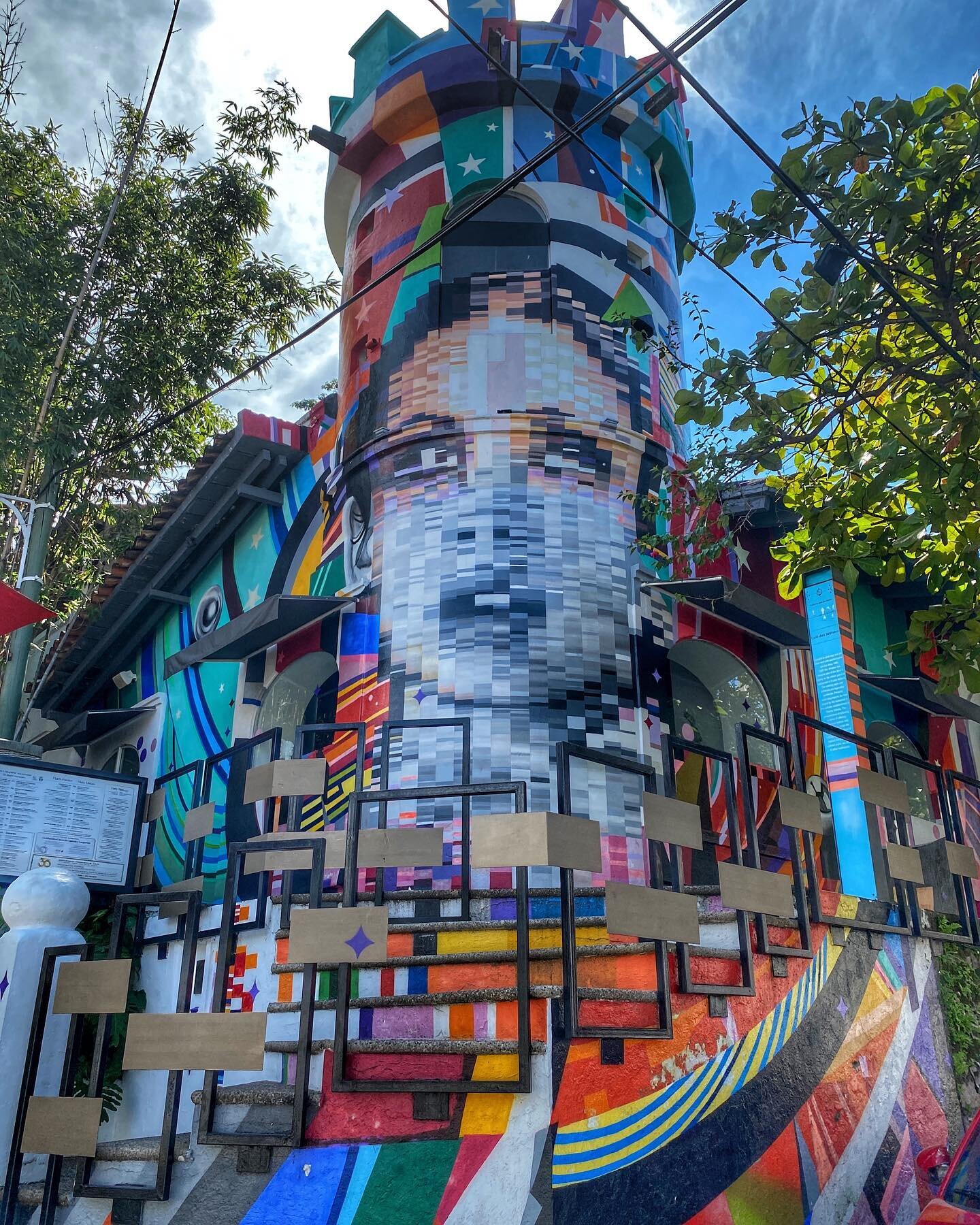
The buildings in Reykjavik, Iceland are covered with street art

The buildings in Reykjavik, Iceland are covered with street art


Some of the more bizarre things to do in Reykjavik include the Big Lebowski Bar, a penis museum and street art tours. Plus: Iceland food, from hakarl to hotdogs with lamb meat.


Iceland has never been on our list of places to travel to. We just never really thought about it before. Sure, the Northern Lights sound pretty cool, and who wouldn’t like the chance to randomly run into that delightfully kooky Bjork?
But we’re not fans of cold and were wary of any country with the word “ice” in its name.

They have a penis from every animal, including humans.

So no — we never really considered visiting Iceland. That is, until I chatted with Lindsay and Shaun.

Read the first part of our conversation here, in which they talk about their initial reaction to the surreal landscape and what motivated them to visit, including a spa called the Blue Lagoon and the aforementioned Aurora Borealis. –Wally

Iceland is famous for its natural beauty. But it shouldn't come as a surprise that the country that brought us Bjork also has a quirky side.


What was the most surprising thing about your trip to Iceland?

Shaun: One is that there’s graffiti everywhere in Reykjavik. There’s some really cool graffiti.

Lindsay: I’d say like 20% are beautiful murals.

Shaun: Everything else is bad name tags.

Lindsay: We asked our tour guide about it. I thought he’d say, “Yah, it’s a problem.” But no. He was like, “Some people think it’s just graffiti, but it’s really a mural.” I wanted to tell him, “I’m an art director. I know the difference between graffiti and murals.”

Shaun: The other surprising thing is trash. It’s everywhere. I’d get up early in the morning to go to Dunkin’ Donuts — there was one, and I like Dunkin’ Donuts — and the street sweepers do not do a good job. They don’t pick up anything.

I don’t know if they’re allowed to, but people will walk through the streets drinking openly. Glasses from the pubs litter the streets in the morning. And there are beer bottles everywhere.


Anything you skipped on your visit?

Shaun: The one thing we didn’t do was the museums because there’s so much natural beauty. I was told the one museum you have to go to is the Icelandic Phallological Museum.

Lindsay: They have a penis from every animal, including humans.


That’s one I would have gone in!

What’s the nightlife like?
Lindsay: We didn’t go out out. But we did go to the Lebowski Bar. Twice.

Shaun: The first time we walked in, we didn’t even know what to make of the place. All the tables had “reserved” on them, but I don’t think they were actually reserved. So we went upstairs.

There are themes for different parts of the movie. There’s the Playboy lounge, where there’s a bunch of Playboys on the wall, and the diner. They have a bowling lane on the wall. Sideways, with a bowling ball stuck to it and all the pins.

Lindsay: The bar is covered in the rug.

Shaun: There are awesome Big Lebowski quotes everywhere. Like, “I can get you a toe by 3 o’clock.” I had to explain to Lindsay what that was.

The second time we went, they were playing ’80s movies on the big screen. They were playing Twins. Which we both realized we had never watched, and how ridiculous it is.

And in the front of the bar, they have this giant spinning carnival wheel with various types of white Russians, black Russians, Caucasian Russians…

Lindsay: They have like 15 different white Russians.

Shaun: The wheel would spin and you’d hear everybody screaming.

And this is right down the street from the Chuck Norris bar.

Lindsay: Which we didn’t go in.


What was the weirdest thing you saw to eat?

Lindsay: We went into this thinking the food will be terrible. We’re not going to find anything we can eat. And then we came to find out, the Icelandic people don’t actually eat the traditional foods, like fermented shark and whale [hákarl].

Shaun: Seriously, it’s rotting shark.

Lindsay: But we found food we could eat everywhere. It’s very American bar food.


Did you learn any expressions?

Shaun: By the end of the trip, we figured out how to say our hotel name. Poorly, but still.

We tried to be like, sound it out. And we’d listen on an app Lindsay downloaded — and it wouldn’t be anywhere close.

The Icelandic language has a kind of bounce to it.

Lindsay: They really pride themselves on their language. They want it to last forever. Even though they do use English a lot more.

We tried to say “thank you.” Our driver to and from the airport said it was “tikka tikka” — but it’s spelled with Ps.

Shaun: That’s what we’re saying — you can’t sound out anything in that country.


Any strange customs?

Lindsay: The service is not the same. You don’t pay gratuity. There’s a lot of self-service.

Shaun: If you’re at a restaurant and you order a soda, you go up and get it yourself at the fountain machine — even if it’s sort of in the kitchen.

And no one will bring you a check. You have to go get it.


Did you buy some cool souvenirs?

Shaun: They have these big Icelandic wool sweaters, which apparently are the thing you have to buy when you’re there. And then right next to them would be old American hair metal band shirts.


Anything else you’d say fellow travelers must experience?

Shaun: I do have to say that if you go to Iceland, you will hear about the hotdogs. [Dramatic pause] Have the hotdogs.

Lindsay: The best hotdogs I’ve ever had in my life.

We read about this hotdog stand in downtown Reykjavik, right near the club district.

They’re mostly made of lamb.

Shaun: In the countryside, they get so excited that it’s lamb season.

Lindsay: For three months, lambs roam pretty much the entire country.

Shaun: They’re so adorable — we make sweaters from them, and then we eat them.

Lindsay: They slaughter them in the fall after they’ve spent the whole summer gallivanting around.


Any Bjork sightings?

Shaun: We had a driver who mentioned he once picked up Bjork from the airport.

Lindsay: She was going to a holiday party and she had all the gifts she was giving out on her dress.

Shaun: And he said it took him half an hour to get her and her dress into the cab.