czech republic

How to Apply for English Teaching Jobs in Europe

Teach English in Europe and use your paycheck for weekend trips. Here’s the FAQ guide to making it happen: visas, qualifications, best countries, salary expectations and the insider stuff the other blogs don’t tell you.

A teacher leads a lesson in Barcelona, with La Sagrada Familia behind them, with a globe, chalkboard and laptop

Europe is a buffet of languages, castles, budget airlines and carbs.

The challenge? Experiencing it without coming home to a credit card bill that looks like a Greek tragedy.

Enter: Teaching English in Europe.

It’s flexible, it pays, and it gives you the greatest perk of all: time. Time to wander. Time to travel. Time to pretend you’re in Under the Tuscan Sun.

Whether you picture yourself in a Catalonian classroom or teaching business English in Prague, here’s how to make your European teaching fantasy a real-life paycheck.

A teacher holds a book and leads a lesson in Prague, with a bridge and castle behind her

FAQ: Teaching English in Europe

Is there demand for English teachers in Europe?

Short answer: Yes.

Longer answer: Yes, and your inbox will start to resemble a talent agent’s.

English is still the language of business worldwide, and studies show that over 20% of job listings in Europe require English proficiency. Everyone from university students to professionals to retirees wants to level up their English, and they need native (or near-native) speakers to help.

A man teaches English in London, with Big Ben, the London Eye and a historic building behind him

Why teach English in Europe? 

Besides the croissants, you get:

1. A dreamy work/life balance

Most contracts average around 35 hours a week (or less). Weekends are for hopping trains to a different country because… well… Europe.

2. Attractive pay + perks

Salaries vary by country, but many schools include:

  • Housing assistance

  • Transportation stipends

  • Health insurance

Translation: Your money goes to travel, not rent.

3. Easy, affordable travel

Cheap regional flights. Trains that actually run on time. Buses for €3.

You’ll become the person who says, “Well since we’re already in Slovenia…”

4. Food worth relocating for

Eat pasta in Rome. Bratwurst in Berlin. Brie in Lyon. Fish ’n’ chips in the U.K.
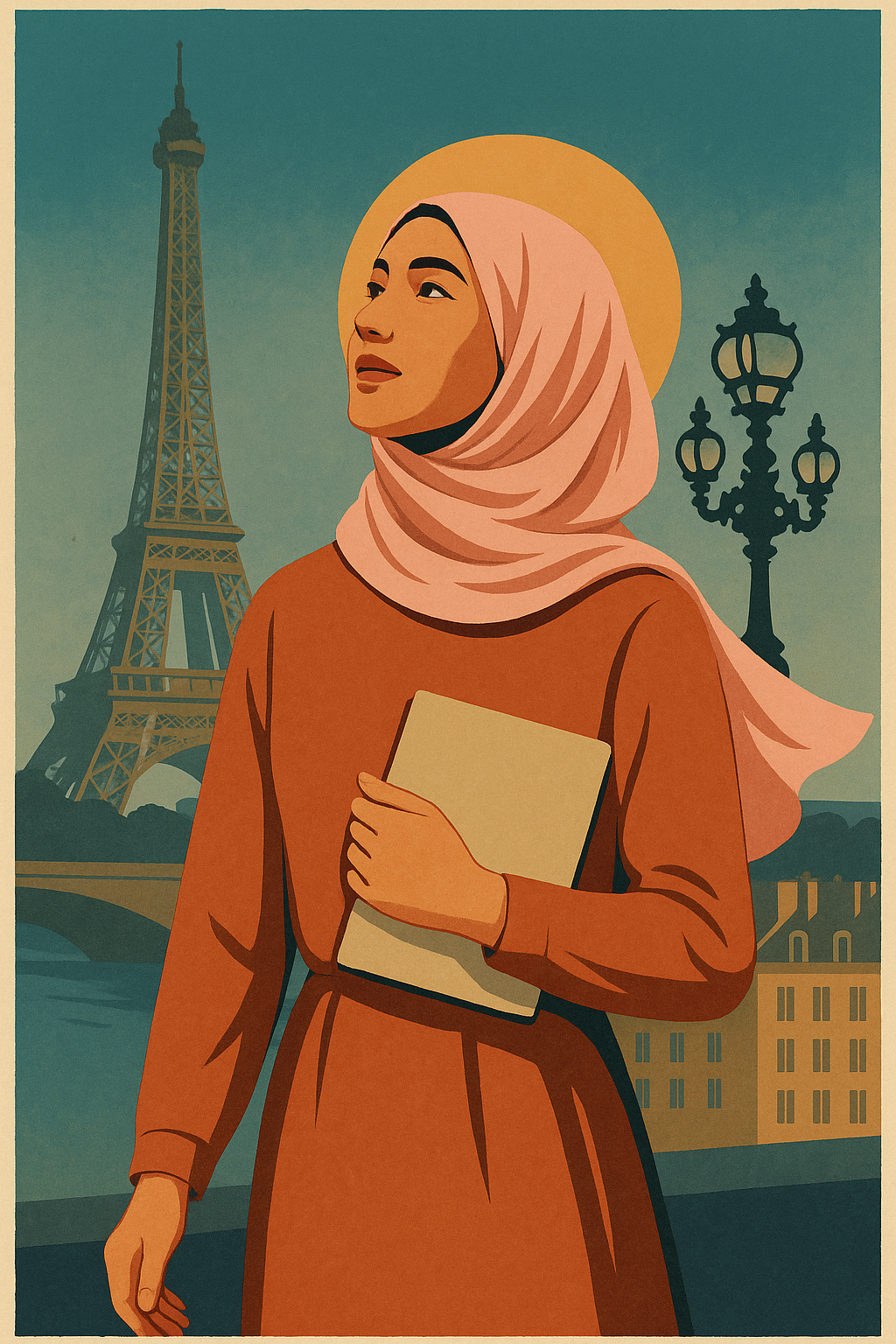
A teacher in a hijab in Paris, clutching a notebook, with the Eiffel Tower and an ornate streetlamp behind her

Where can I teach English in Europe?

You can find work almost anywhere, but these destinations are the greatest hits:

  • Spain: Madrid and Barcelona are classics for a reason: big expat community, tons of language schools.

  • Italy: Milan, Florence and Rome are magnets for teachers who want culture + carbs.

  • Czechia: Prague gives fair salaries, low cost of living and a built-in community of teachers.

  • Poland: A rapidly growing market, excellent work/life balance and very affordable living.
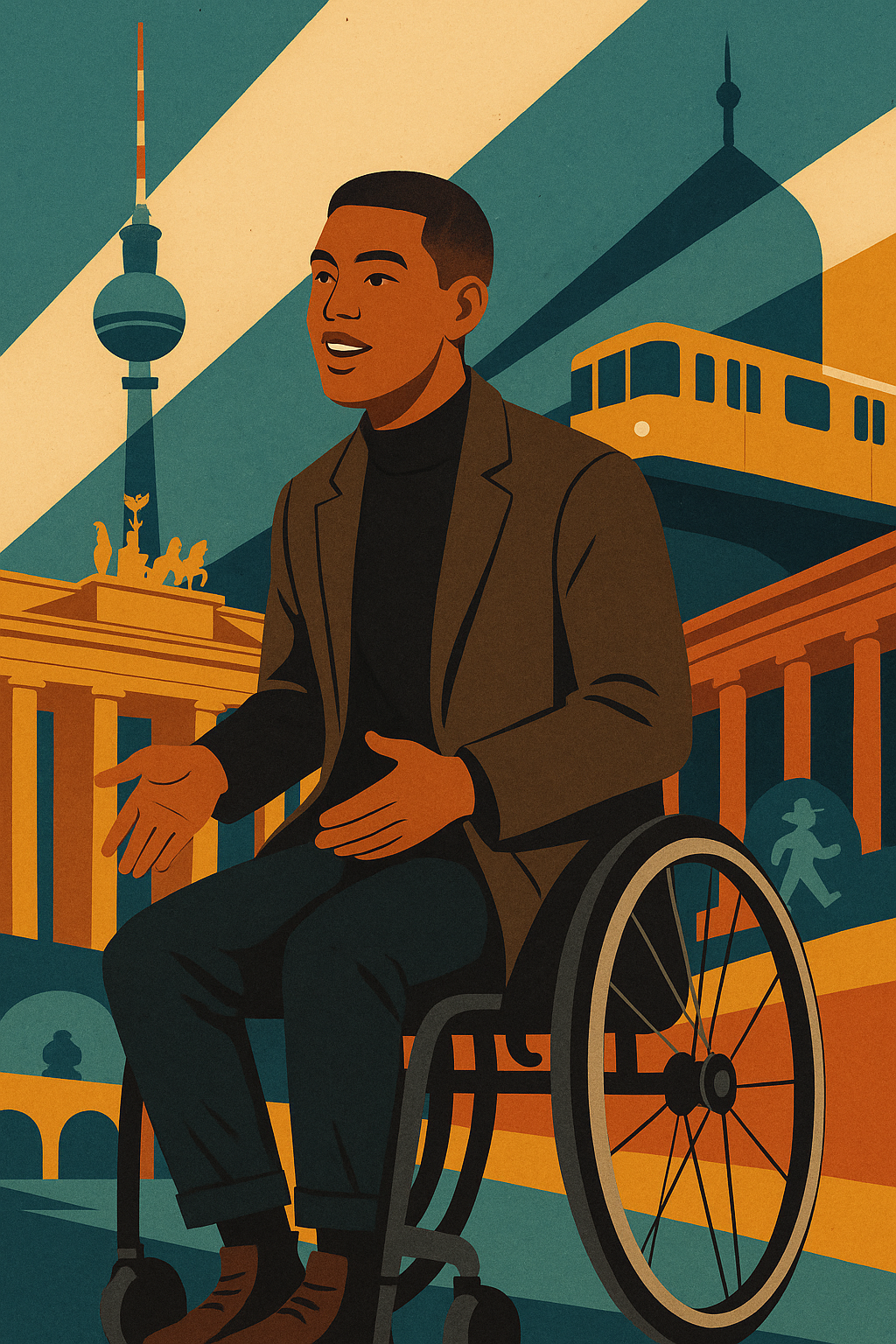
A man in a wheelchair teaches English in Berlin, Germany, with the Brandenburg Gate and a train behind him

What qualifications do I need to teach English in Europe?

You don’t need a degree for many adult and language school roles.

You do need:

  • A TEFL (Teaching English as a Foreign Language) certification, which takes a minimum of 120 hours, from a reputable provider

It tells employers you know how to structure a lesson — and you didn’t just wake up and say, “I think I’ll be a teacher today.”

It also helps with visas and sponsorship in several countries.
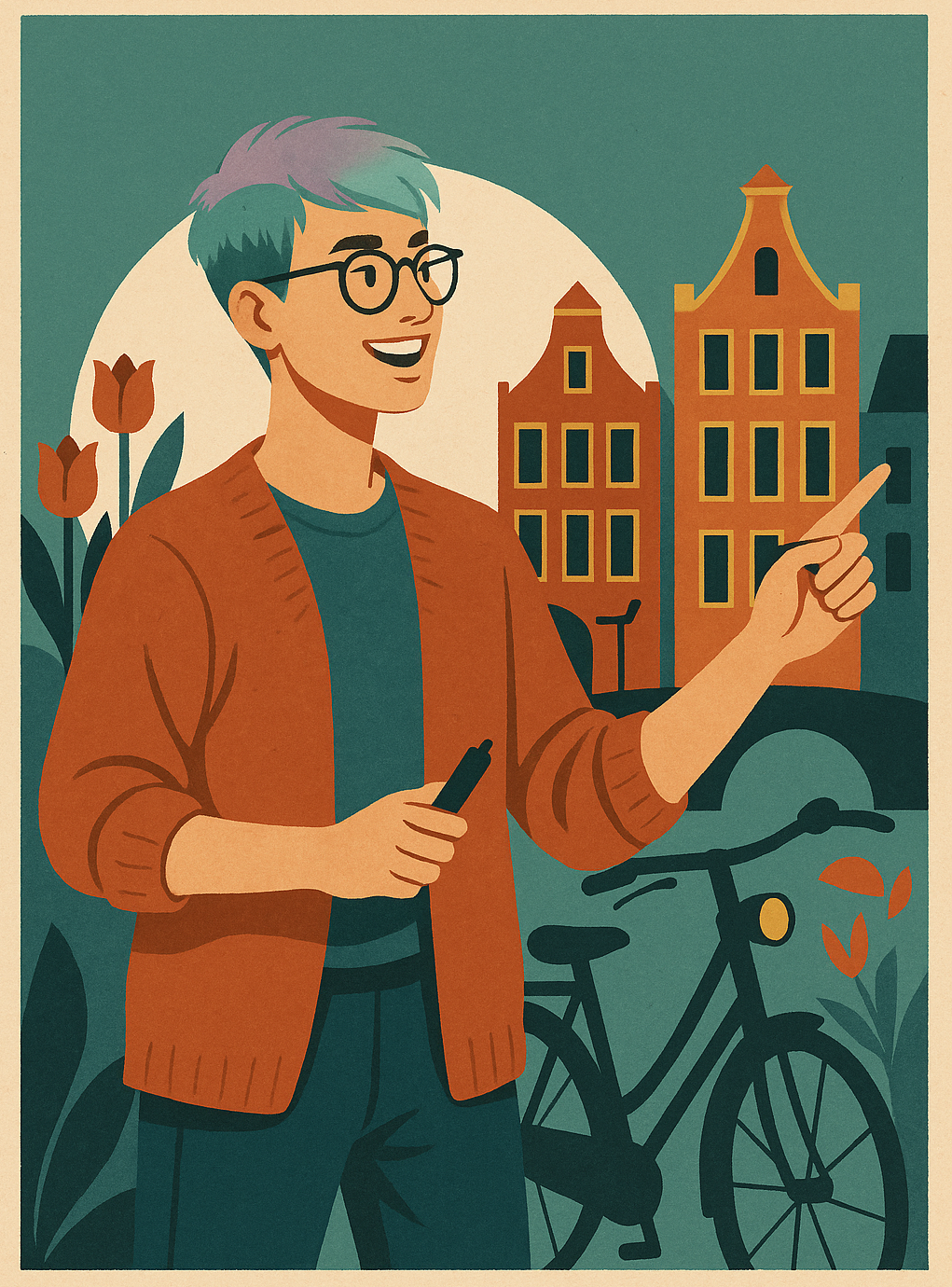
A nonbinary person wearing glasses with pastel-dyed hair teaches English in Amsterdam, with narrow buildings, tulips and a bike around them

Do I need a visa to teach English in Europe?

If you’re an EU citizen, it’s easy.

If you’re not (hi, Americans), it’s still doable, there’s just more paperwork.

Options include:

  • Working visas (school sponsorship)

  • Working holiday visas (depends on nationality)

  • Language assistant programs (government-run placements)

  • Digital nomad visas (if teaching online)

Moral of the story: Research the specific visa rules before you start sending applications.

A woman teaches English in Lisbon, Portugal, surrounded by a globe, the Belem Tower, a streetcar and bridge

What teaching roles are available?

You’re not limited to standing in front of a chalkboard.

You can teach:

  • In public or private schools

  • At language academies

  • Business English inside companies

  • At summer camps

  • Online (live anywhere, work from everywhere)

An older woman sits in a chair, teaching English in Athens, Greece, with the Parthenon and nearby temple behind her

What are the steps to becoming an English teacher in Europe?

  1. Get your TEFL certification (120+ hours). This shows you’re serious and gives you the basics: lesson planning, classroom management, etc.

  2. Search for jobs. Try:

    • Major language school chains

    • TEFL job boards

    • Local career sites in your target country

  3. Consider government programs. Spain and France, for example, both have teacher placement programs.

  4. Research visas early. Visas tend to move slowly. (European bureaucracy loves paperwork. And stamps.)

  5. Budget your move. Understand the cost of living and how long until that first paycheck lands.
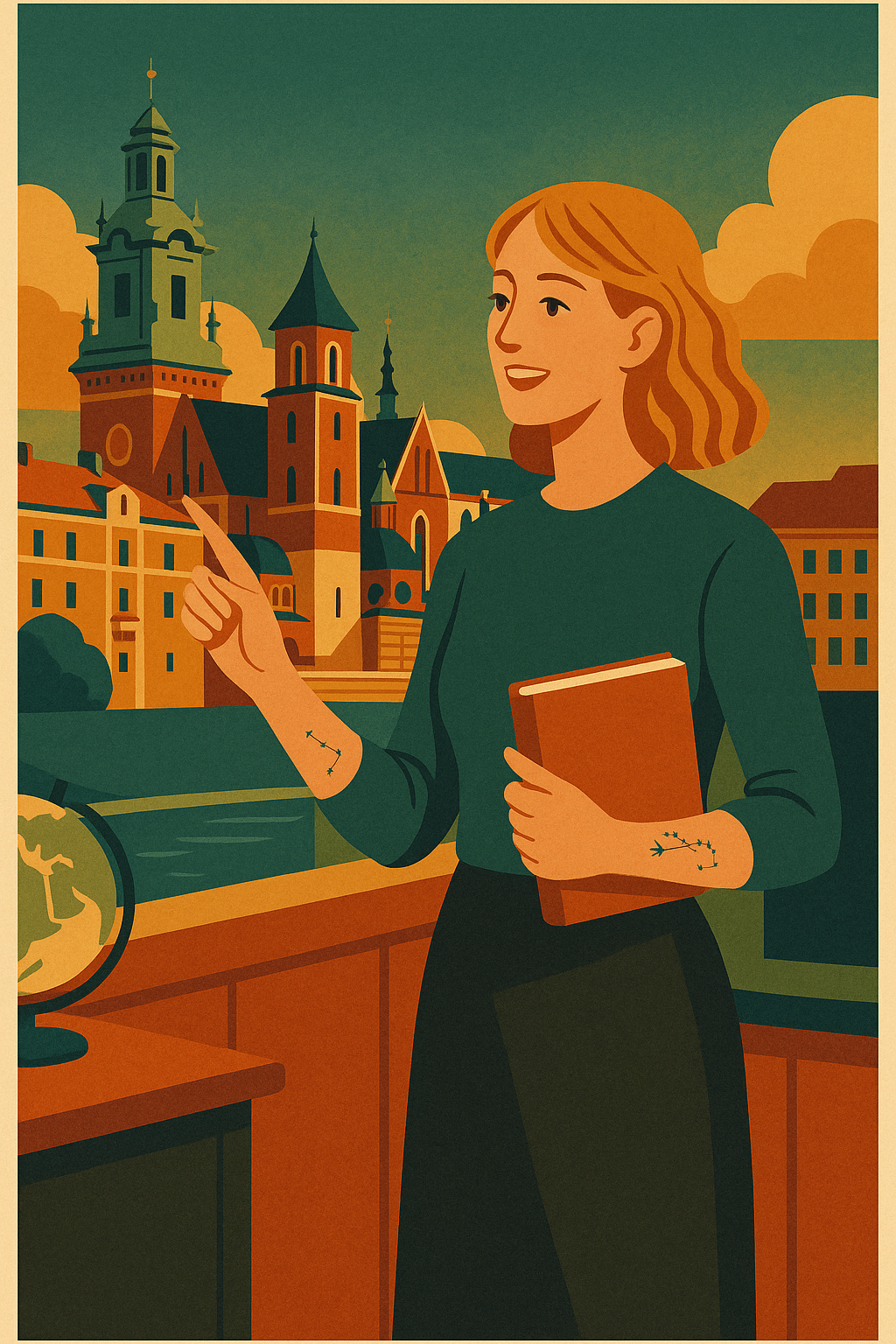
A young woman with constellation tattoos teaches English in Krakow, Poland, with the city behind her

So… is this really a good way to experience Europe?

Absolutely. Instead of visiting Europe, you get to live Europe. Living abroad, you become a regular at a café. You have favorite bakery staff who know your order. You find yourself muttering, “Ugh, tourists,” like you didn’t arrive on the same flight.

And before you know it, you’re planning weekend trips based on whatever city is calling your name.

Ready to make Europe your classroom?

Get the TEFL, send the applications, and book the one-way ticket. Your future self — living near a 14th century cathedral and eating €2 gelato — will thank you. –Shahroz Yousaf


ANOTHER OPTION: Have you thought about being a licensed practical nurses (LPNs) abroad?
What Is Krampus, the Anti-Santa?

Everything you wanted to know about Krampus the Christmas Devil but were afraid to ask.

This frightening monster is called Krampus — and he's actually part of Christmas celebrations in Austria and other countries in Central Europe

A demonic goat man with massive fangs, twisted horns and a frighteningly long tongue. It’s a creature that’s almost too horrifying to even be associated with Halloween — and yet, in some parts of Europe, this ghastly beast is actually Santa’s sidekick.

Not surprisingly, Krampus became the subject of a horror movie last year.

Misbehaving kids in the United States should count their blessings. They only get coal in their stockings. Krampus beats bad children with a bundle of birch sticks — and then drags them down to his lair in Hell.

How the heck did this nightmarish demon, known as the “Christmas Devil,” come about?


Don't look, but I think there’s a Krampus behind you!

This little girl looks like she doesn’t have anything to worry about. But that bad little boy is being packed off to Hell!

What does Krampus look like?

The stuff of nightmares. Think of a satyr or faun on acid. A fur-covered half-goat, half-man, all-demon monstrosity.

The Los Angeles Times describes him as “a hairy, horned, chain-toting biped that resembles a Wookiee on a bender.”

He shambles along, dragging chains and the shackles he has broken free of. (It begs the question who locked him up in the first place?)

Vintage holiday cards from Austria feature the Christmas Devil, and read, “Greetings from Krampus!”

Like Santa Claus, he, too, has a large sack he carries over his shoulder (sometimes depicted as a large basket). Except Krampus’ isn’t filled with presents — it’s stuffed with kidnapped children.


When did Krampus first appear?

“Vague written accounts mentioning pelts and horns date back to the 17th century,” Atlas Obscura reports.

But his devil-like form didn’t really get solidified until holiday postcards trumpeting, “Gruß vom Krampus!” (Greetings from Krampus!) became all the rage in Austria.

“Another factor that likely influenced the character’s satyr-like appearance was the fin de siècle obsession with Pan,” the Greek god of nature, according to Atlas Obscura.


What’s he do to naughty children?

Misbehaving kids in the United States should count their blessings. They only get coal in their stockings. Krampus is much more of a disciplinarian: He beats bad children with a bundle of birch sticks — and then drags them down to his lair in Hell, National Geographic reports.


What kind of freak gave birth to this monster?

Not surprisingly, Krampus’ mother is said to be Hel, the Norse goddess of the dead. She in turn is the daughter of the mischief-maker Loki. Hel is half-dead, looking like a living, if gloomy, woman — aside from her legs (and, one would assume, her lady bits), which are those of a rotting corpse. Variously, she’s depicted as her living and dead halves literally split down the middle, revealing half a skeletal face and body, usually on her left side.


How’d Krampus get his name?

His name derives from the German word krampen, meaning claw.

Kind St. Nicholas became the Santa Claus we know today, while the evil Krampus punishes naughty children

They know if you’ve been bad or good — so be good for goodness’ sake

What sick fucks came up with this creature?

The Germans, apparently. Krampus is seen as the yin to St. Nicholas’ yang. The devilish figure raids towns the night of December 5, known as Krampusnacht, or Krampus Night. The next day is St. Nicholas Day, when German children find one of two items in the shoes or boots they’ve left out on their doorsteps: presents if they’ve been good or a rod if they’ve been bad (to beat them with, presumably).

A man dressed in his horrific finery takes part in a Krampuslauf, or Krampus Run

What other countries have incorporated Krampus into their Yuletide traditions?

Austria, in particular, caught Krampus fever. There, as well as in Hungary, Slovenia and the Czech Republic, men dress up as devils, get wasted and chase people through the streets for a Krampuslauf, or Krampus Run.

Where the wild things are: What do you call a collection of Krampuses?

“For these runners, Krampus is the dark counterpart to the gemütlichkeit Christmas evokes,” Fest300 writes. “Gemütlichkeit is a hard word to translate, but it encompasses both coziness and conviviality, whereas Krampus is the other half of the winter solstice: darkness, cold and snowy fir forests where branches snap and things go bump in the frozen night.”

Apparently not everyone is terrified of Krampus. This little girl feeds her Krampus dolly

Seriously, though, what’s up with a demon being St. Nick’s cohort?

The Alps must have a dark mystery to them. Krampus embodies “the season of autumn and early winter — the twilight, the slowing down and the mystical feeling that foreshadows these traditional events, the tales of mythical creatures, the forests of the mountains where they lurk and the presence of the unknown,” a person who dresses as Krampus told the L.A. Times.


As the Christmas carol goes, “You better watch out” indeed! –Wally