EXTREME TRAVEL

Thrill-Seeker’s Paradise: Top Destinations for Adventure and Adrenaline

From roller coasters in Orlando to bungee jumps in New Zealand and shark cage dives off South Africa’s coast, these global hotspots deliver the kind of pulse-pounding travel stories you’ll be telling for years.

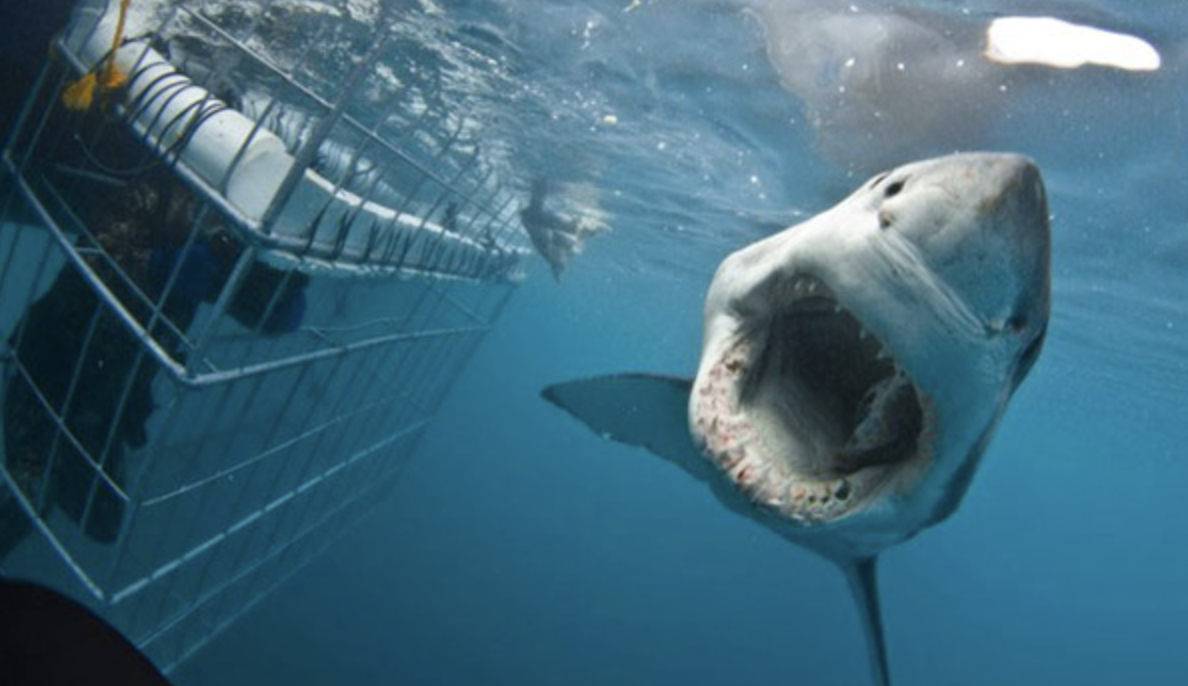
A shark with its jaws open wide approaches a diving cage near Cape Town, South Africa

If cage diving with sharks in Cape Town is your idea of a good time, you’ve come to the right article!

Some travelers chase sunsets. Others chase the surge of adrenaline that comes right before the drop.

If you’re the kind of person who loves adventure travel, you probably measure a trip not by how relaxed you felt but by how loudly you screamed, You already know the world is one giant playground. There are places built for speed. Places shaped by mountains, rivers and tectonic drama. Places where you step to the edge, look down and think, Well… here goes.

Here’s where to go when “relaxing” just won’t cut it.

A roller coaster coming out of a loop at Sea World, Orlando, Florida

Orlando, Florida, USA: Where Adrenaline Meets Imagination

Few cities commit to spectacle quite like Orlando. Yes, it’s the theme park capital of the world — but it’s also a place where you can spend the morning defying gravity and the afternoon skimming across wetlands in an airboat.

The heavy hitters are legendary: Universal Studios Orlando, Walt Disney World and SeaWorld Orlando. At Universal, you’ll rocket through superhero cityscapes, outrun dinosaurs and step inside cinematic worlds that blur the line between ride and reality. The Incredible Hulk Coaster doesn’t ease you in. It launches you. The Jurassic-themed attractions don’t gently float. They drop.

And if you’re planning to lean all the way into the experience, there’s a practical side to the thrill. Learning how to get a Universal Studios credit card can unlock credit card perks for theme park travelers — think rewards on everyday spending that translate into discounts on park tickets, dining and merchandise. Add in early access to attractions, VIP seating for shows and special offers, and suddenly your roller coaster obsession comes with strategy. It’s not just about riding more. It’s about riding smarter.

Beyond the parks, Orlando delivers hot-air balloon rides at sunrise, luxury resorts that feel like escape pods and airboat tours that skim across glassy water where gators sun themselves. Adrenaline here comes in many forms.

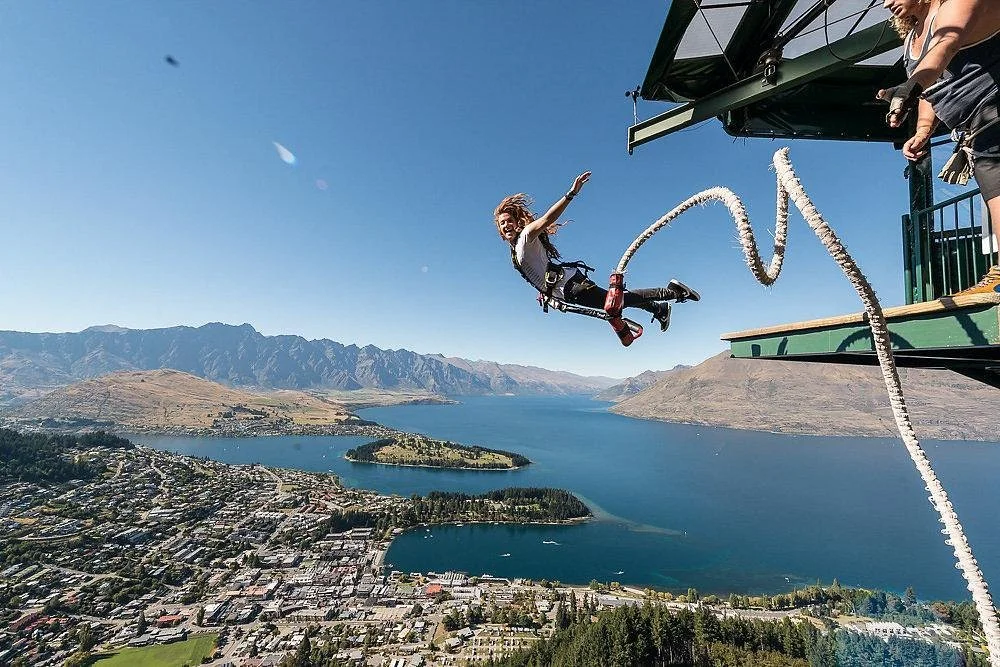
A person bungee jumps off a platform by the water over Queenstown, Australia

Queenstown, New Zealand: The Original Leap

In Queenstown, the mountains feel close enough to touch and the air hums with possibility. Tucked beside Lake Wakatipu and framed by the jagged peaks of the Remarkables, this South Island town proudly calls itself the Adventure Capital of the World.

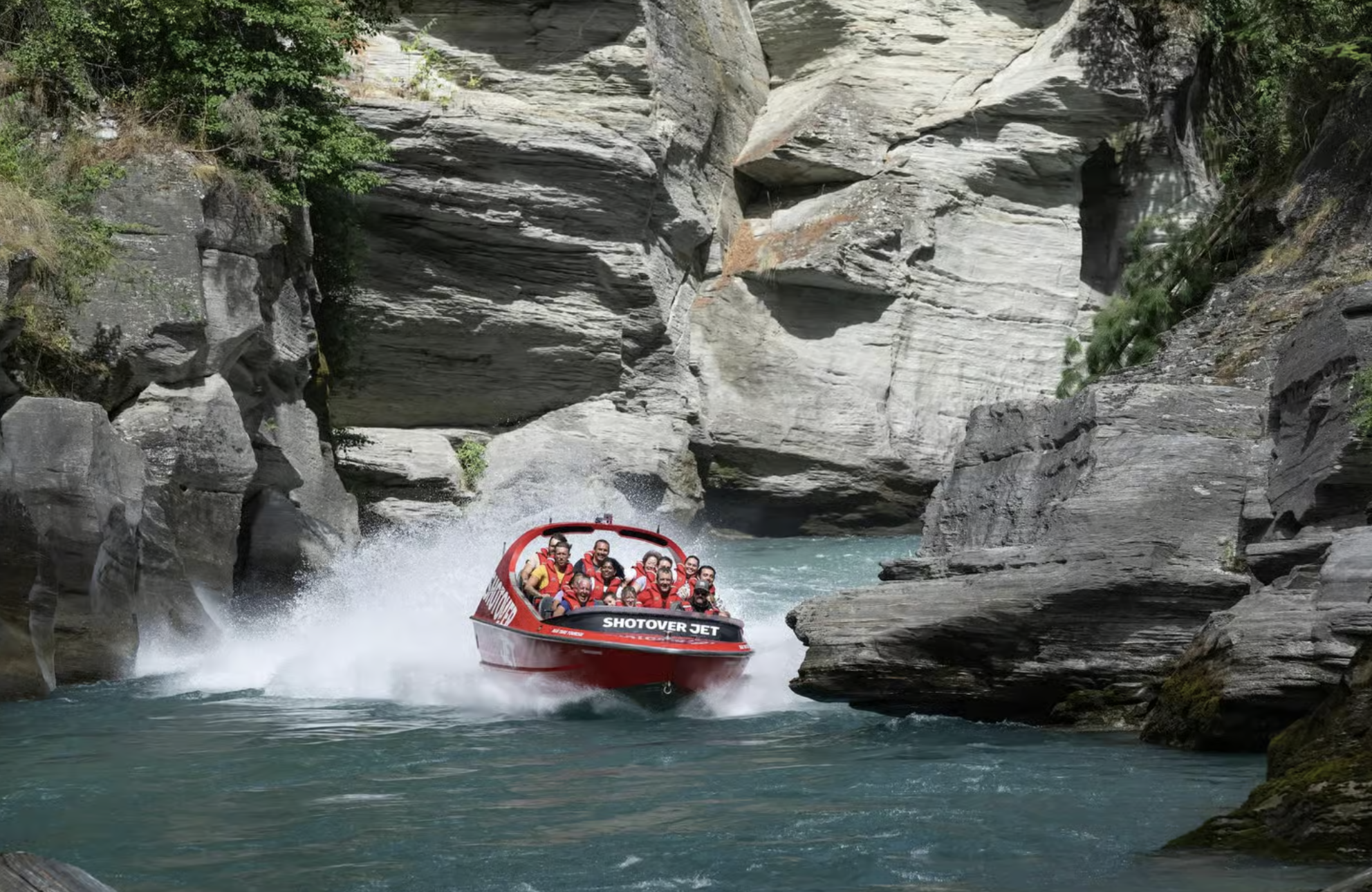
It’s not an empty slogan. The first commercial bungee jump launched from the historic Kawarau Bridge, and people have been stepping off it ever since — willingly. Jet boats scream through the narrow canyons of the Shotover River at absurd speeds, spinning in controlled chaos between rock walls.

Skydiving here feels almost unfair. You fall through open sky with snow-dusted peaks and impossible blue water below you. Mountain biking, paragliding and alpine hiking round out the menu. Queenstown doesn’t gently suggest adventure. It dares you.

RELATED: Renting a car in Queenstown

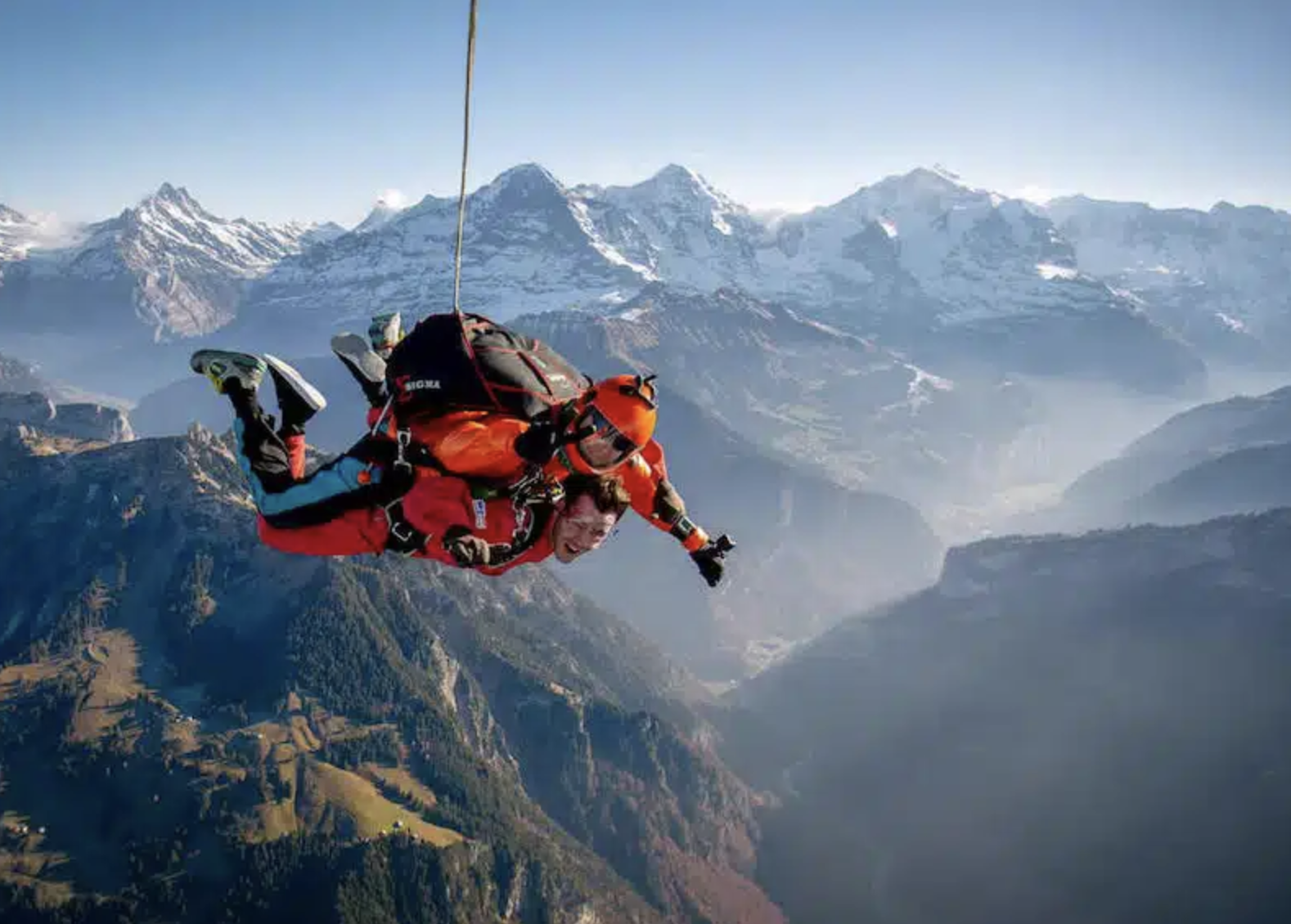
Two people skydive in the Swiss Alps

Interlaken, Switzerland: The Alps From 10,000 Feet

Set between two shimmering lakes and backed by the Swiss Alps, Interlaken looks serene from afar. Don’t be fooled.

Skydiving over this alpine landscape is one of the most cinematic free-falls on the planet. You leap from 10,000 feet, the air sharp and cold, snow-capped peaks rising like teeth from the horizon. The descent is pure clarity.

If you prefer your thrills slightly closer to earth, canyoning through glacial water, paragliding above turquoise lakes and hang gliding across alpine ridges offer their own kind of rush. Interlaken pairs postcard beauty with high-octane daring — a combination that’s hard to resist.

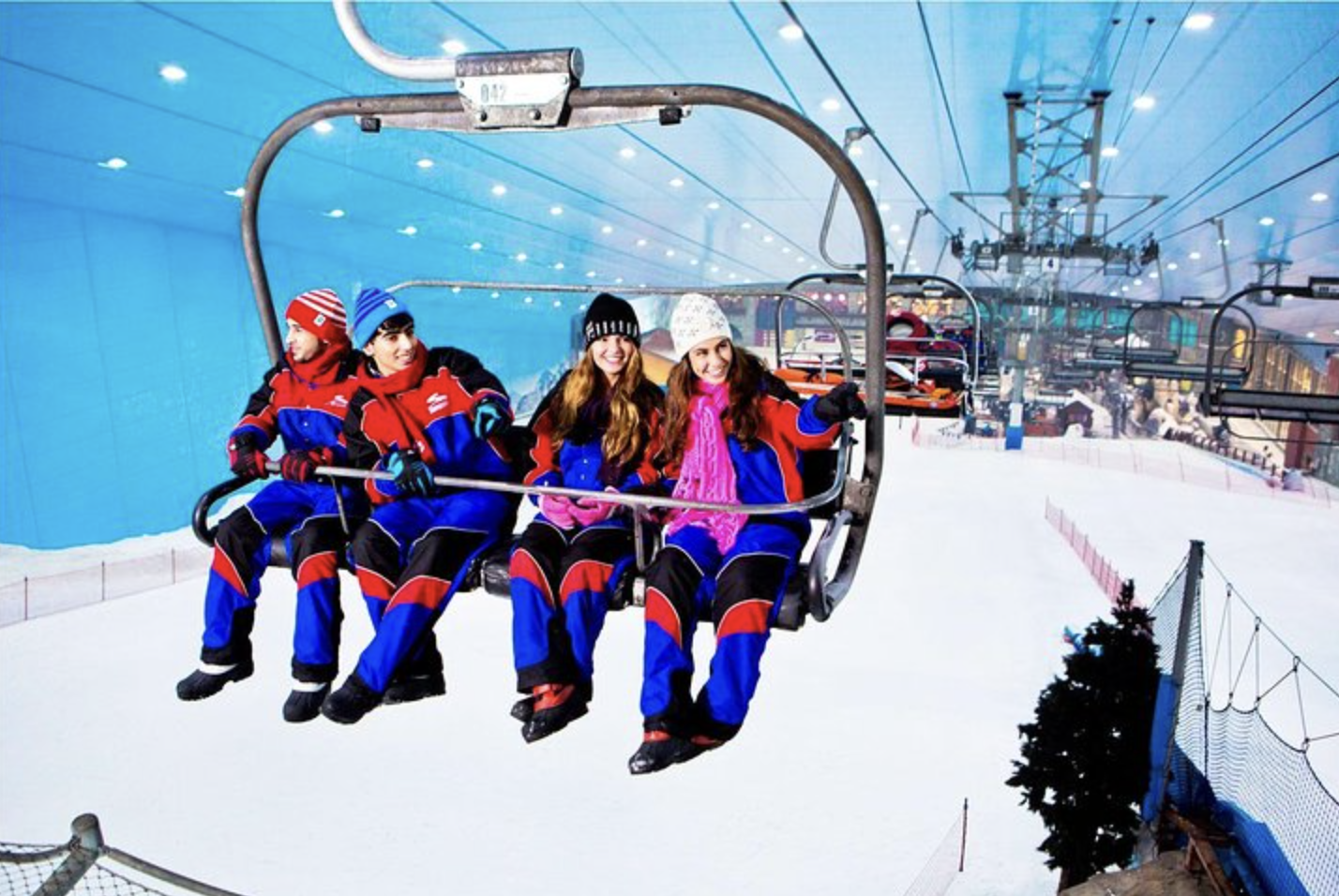
Four people sit on a chairlift in an indoor ski resort in Dubai, UAE

Dubai, United Arab Emirates: Desert Speed and Vertical Drama

This city understands spectacle. It builds it taller, faster and flashier. Dubai thrives on over-the-top attractions. These aren’t things to do with kids in Dubai. They’re not the best museums in Dubai. They’re the spaces created for adrenaline junkies.

In the desert, 4x4 vehicles crest golden dunes before plunging down the other side in controlled slides, engines roaring against an endless horizon. From the air, skydiving over the iconic Palm Jumeirah reveals the palm-shaped island in geometric perfection.

Then there’s the vertical thrill: racing to the observation deck of the Burj Khalifa, the tallest building in the world, via one of the fastest elevators anywhere. In a single day, you can ski indoors, bash dunes outdoors and stand higher than almost anyone else on earth. Subtle, it is not.

A man spreads his arm and legs out as he ziplines above the jungle canopy in Costa Rica while a group of people watch from a tree platform

Costa Rica: Rainforest, Rivers and Raw Energy

In Costa Rica, nature sets the agenda. Rivers carve through jungle. Volcanoes steam quietly. The air smells alive.

What are the best things to do in Costa Rica? White-water rafting surges through churning rapids. Ziplining in the cloud forests of Monteverde sends you flying above the canopy, the forest unfolding beneath your feet. Hiking near Arenal Volcano brings you close to raw geological power, while the Pacific coast delivers surf breaks that challenge even seasoned riders.

Here, adventure feels organic. The land itself invites you to test your limits.

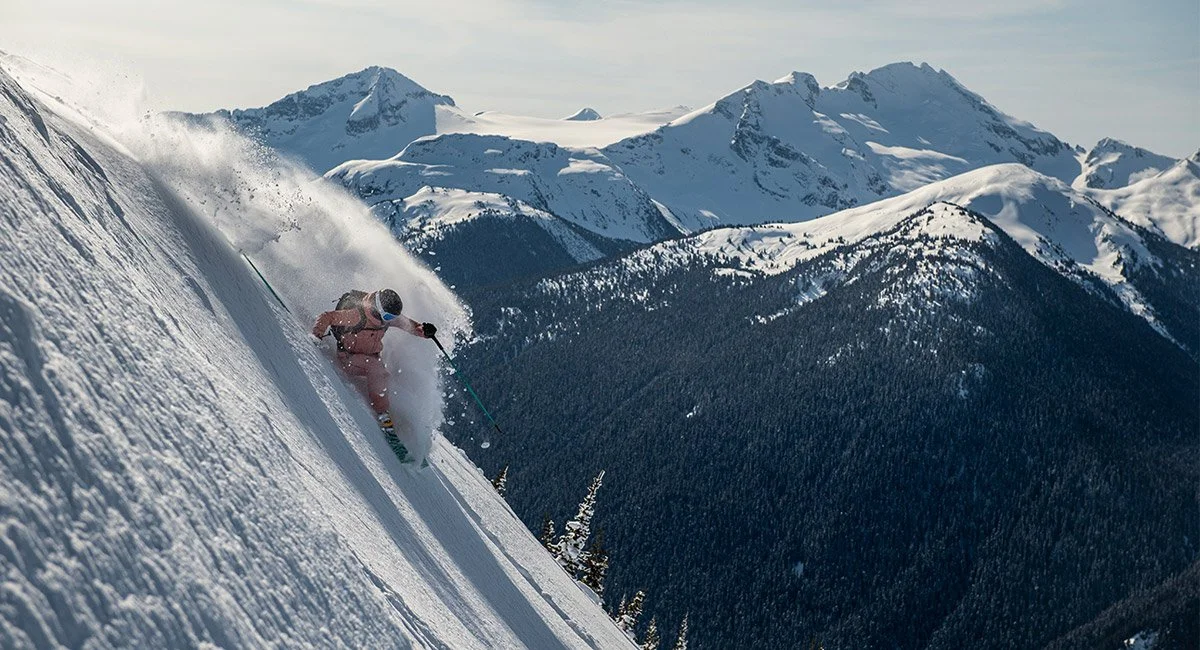
A person snowboards down a steep slope in Whistler, Canada

Whistler, Canada: Snow and Speed

Whistler transforms with the seasons, but the adrenaline never disappears.

In winter, Whistler Blackcomb delivers world-class skiing and snowboarding across vast alpine terrain. In summer, the same mountains morph into mountain biking trails, zip-line routes and high-altitude hikes.

The Peak 2 Peak Gondola glides between mountaintops, suspended high above valleys and forests. It’s less about speed and more about the delicious awareness of height — that slight tightening in your chest as you look down.

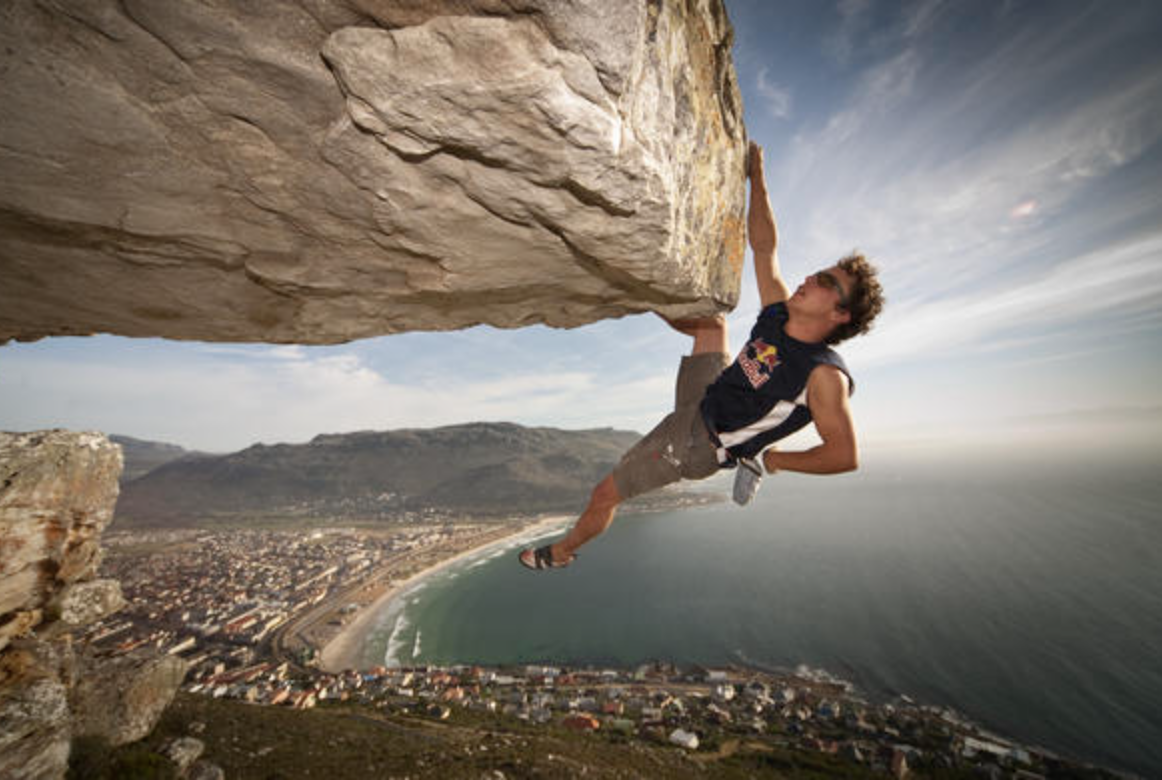
A mab climbs a rock ledge on Table Mountain high avove Cape Town, South Africa

Cape Town, South Africa: Beauty With Teeth

Cape Town may be one of the most photogenic cities on the planet, but it’s not content to sit still.

Climbing Table Mountain rewards you with panoramic views of ocean and city, wind whipping at your jacket. For a sharper spike of adrenaline, shark cage diving near Gansbaai places you face-to-face with great whites in cold Atlantic water.

Add paragliding over the coastline and rugged hikes in the Cape of Good Hope Nature Reserve, and Cape Town becomes a study in contrasts: serene landscapes and primal thrills.

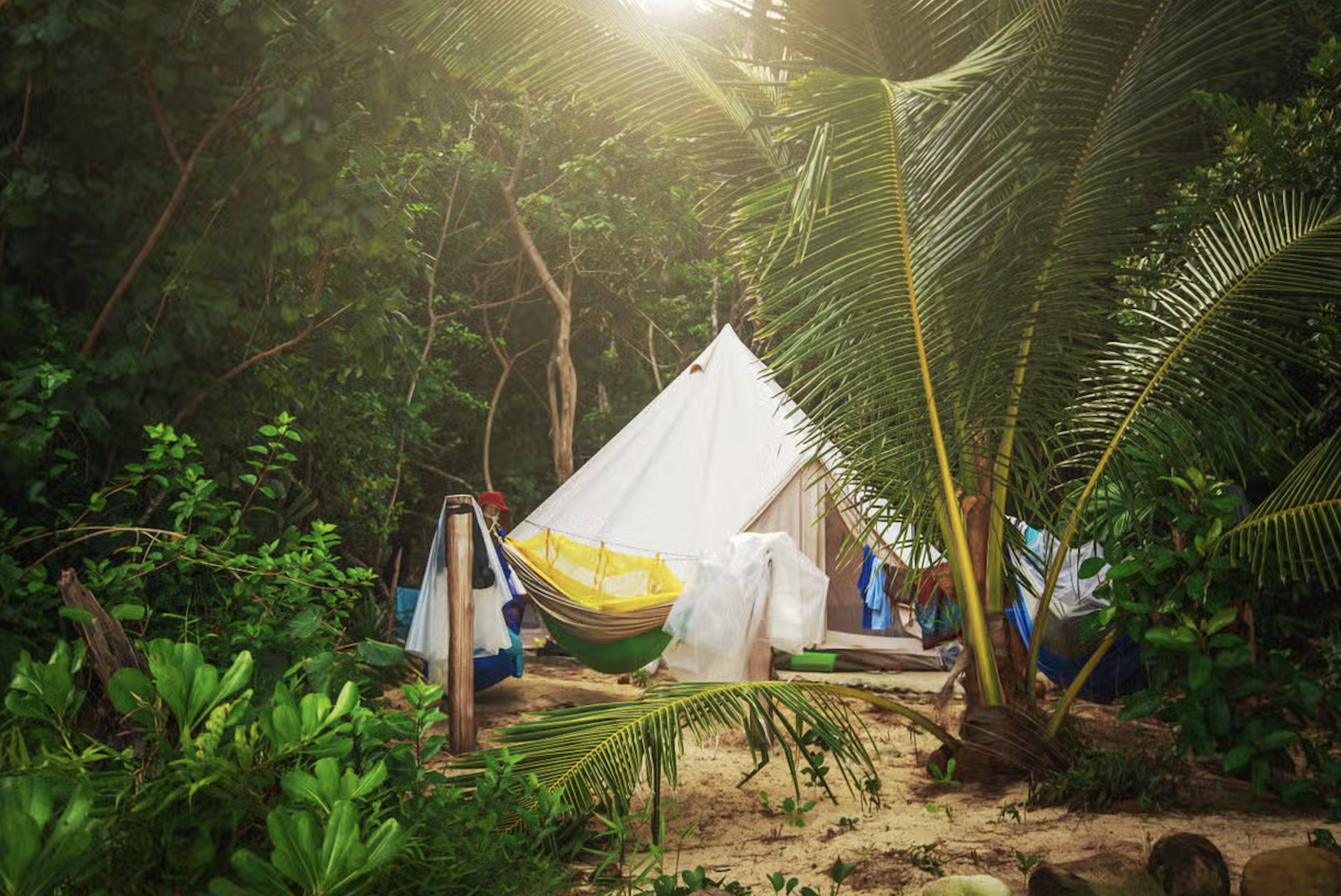
A tent and campsite set up in the Amazon Rainforest in Brazil

The Amazon Rainforest, Brazil: Into the Wild

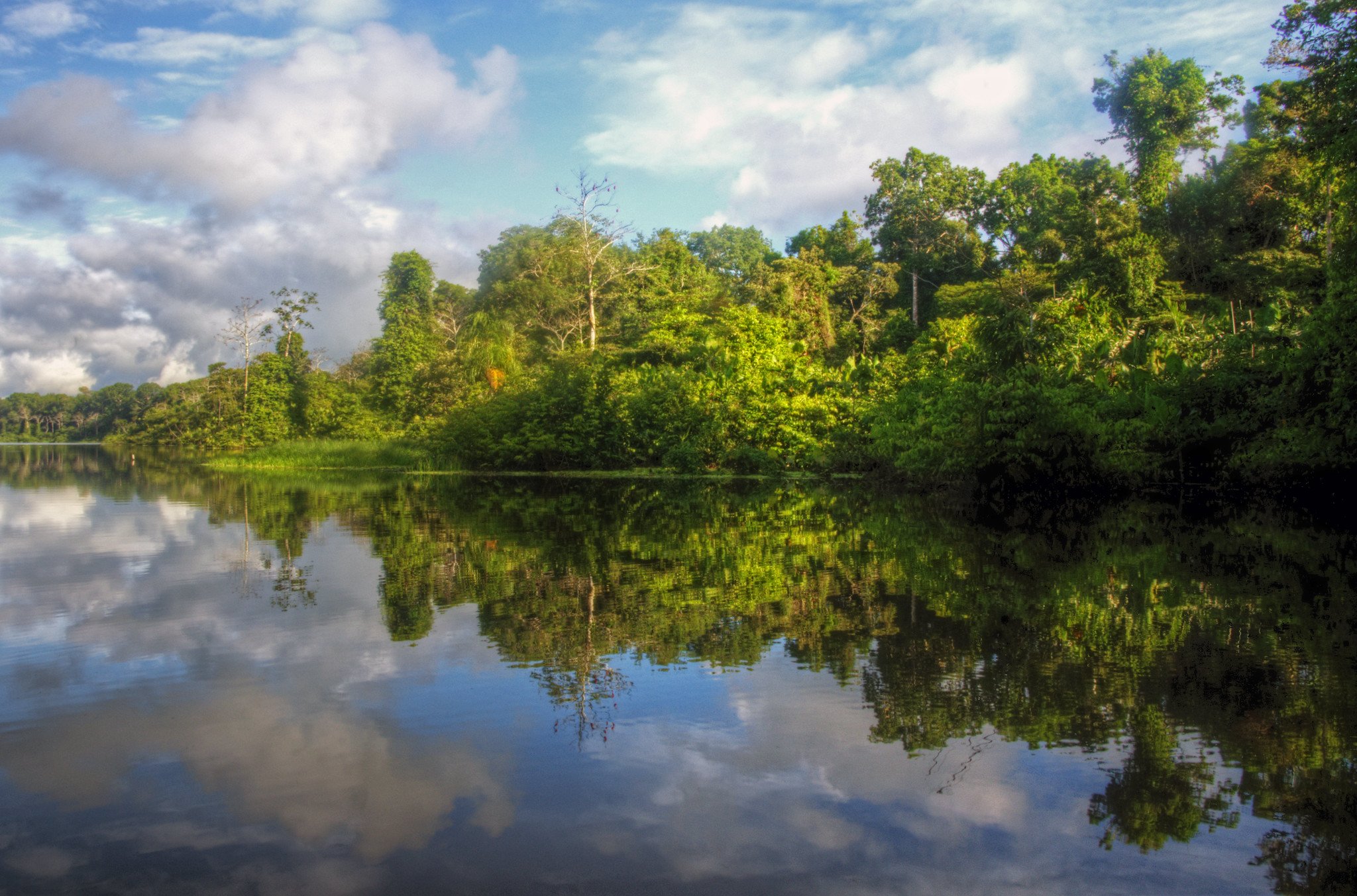
The Amazon Rainforest doesn’t offer polished theme park thrills. It offers immersion.

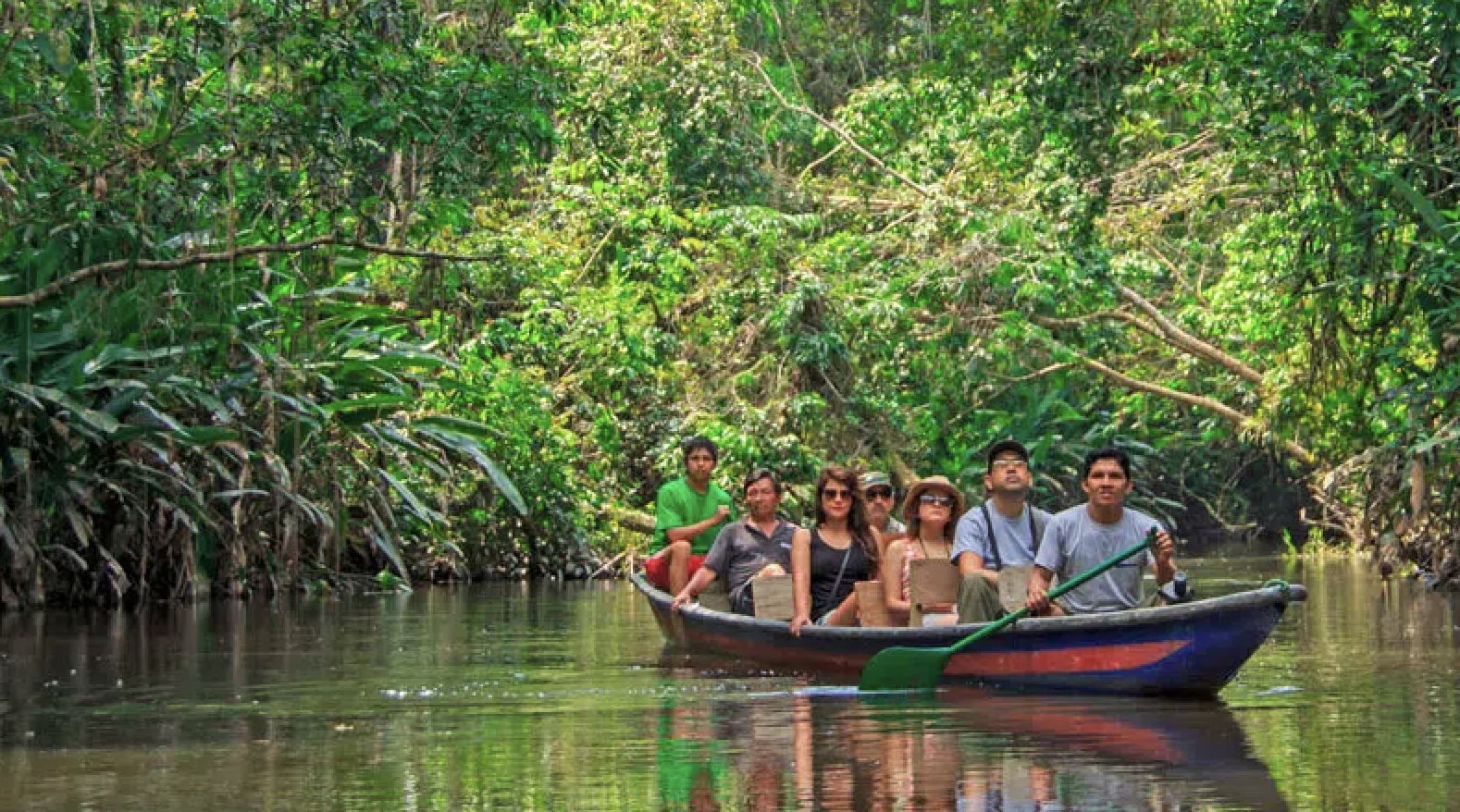
Here’s how to plan your dream Amazon adventure: Deep in the jungle, you zipline above dense canopy, kayak through winding tributaries and camp beneath a sky stitched with unfamiliar stars. Guided wildlife safaris reveal monkeys, vibrant birds and, if you’re lucky, the elusive jaguar.

This is adventure stripped down to essentials: heat, humidity, sound and the feeling that you are very small in a very vast world.

A red jet boat races down the Shotover River in Queenstown, New Zealand, past rock formations

A jet boat races down the Shotover River in Queenstown, New Zealand.

Adventure Travel: Your Next Leap

The world is not short on adrenaline. It’s waiting in roller coaster launch tunnels in Orlando, on suspension bridges in New Zealand, in Alpine air over Switzerland and beneath the surface of South African waters.

Whether you’re strategizing your theme park perks with a Universal Studios credit card or planning your first skydive over the Alps, one thing is certain: the stories that stay with us are rarely the calm ones.

Your next rush is out there. The only real question is how high you’re willing to go. –Gina Glazier

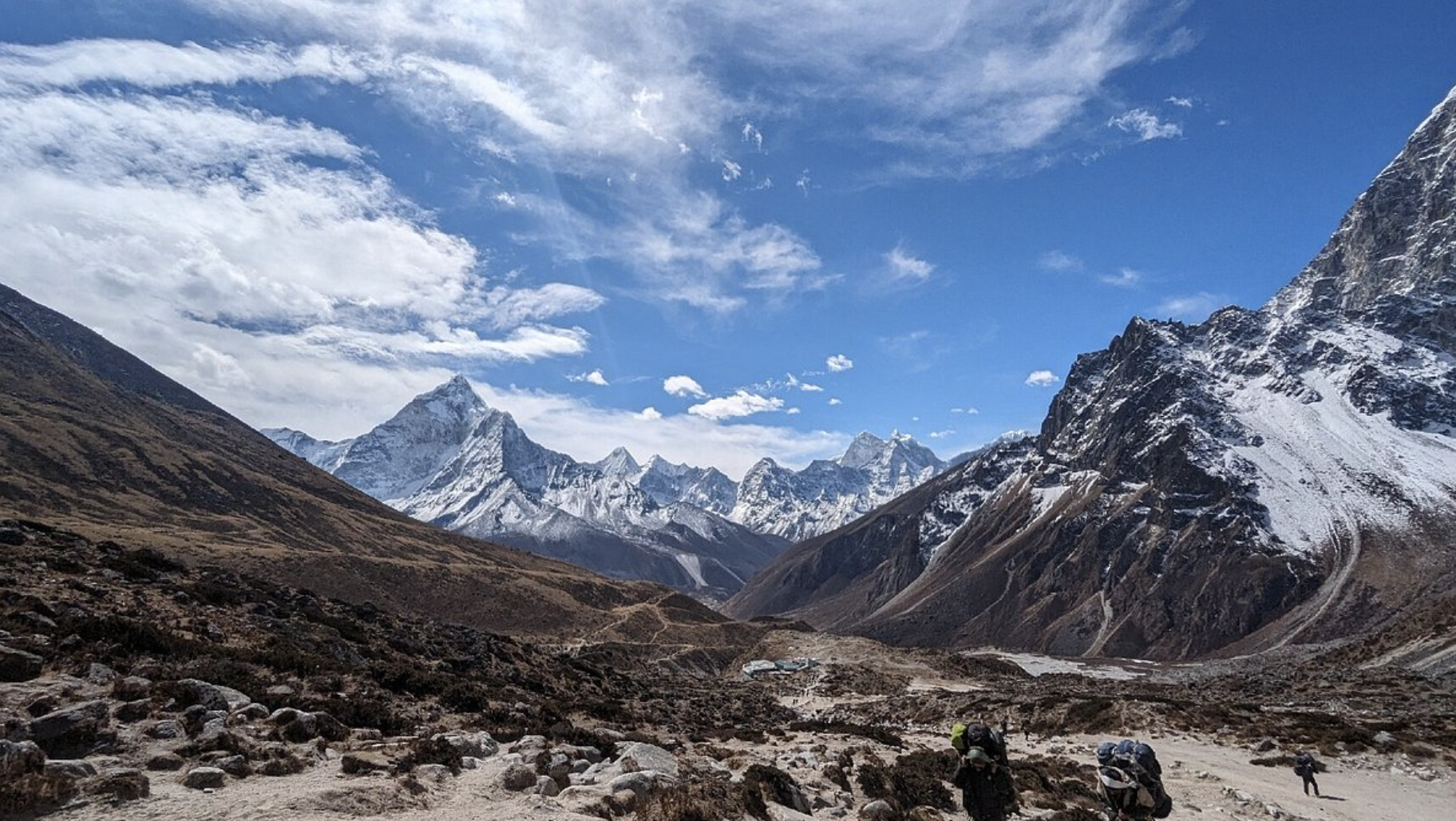
Things to Consider When Planning an Everest Base Camp Trek

Planning to hike to Everest Base Camp? Between altitude, weather swings and two weeks of tough trekking, preparation is everything. Here’s what you need to know before you lace up and head for the Himalayas.

Planning a hike to Everest Base Camp is no casual stroll through the park. It’s a high-stakes adventure that tests your endurance, resilience and ability to function at oxygen-light altitudes. Sure, the views are jaw-dropping — but so are the logistics if you’re not prepared. Altitude sickness, sudden weather shifts and red tape can turn your dream trek into a long, uphill regret. That’s why planning isn’t just helpful, it’s essential.

Whether you’re heading straight to the Everest Base Camp or eyeing an alternate route, knowing what lies ahead can mean the difference between a transcendent experience and a miserable slog. From the best months to go, to the gear you’ll need and how to train without breaking yourself, here’s everything you need to know before you lace up your boots.

When is the best time to hike Everest?

Timing your Everest Base Camp trek well is half the battle. While you technically can go year-round, not all seasons are created equal.

1. Spring (March to May): Best for views and blooms

Spring is prime time. Think clear skies, blooming rhododendrons and stable weather — ideal for trail selfies and spotting Himalayan monals, the brightly colored pheasants that are the national bird of Nepal. 

  • Daytime temps: 50°F to 59°F (10°C to 15°C) at lower elevations

  • Nights: Cold, especially over 4,000 meters

  • Sherpa tip: April is the sweet spot: fewer crowds than May, still great conditions. 

2. Autumn (September to November): Peak trekking season

After the monsoon washes away the dust and haze, fall treks serve up postcard-perfect mountain views.

  • Similar temps to spring

  • Heaviest trail traffic in October

  • Guide insight: Late October has unbeatable Everest views. Just book early — lodges fill up fast.

3. Winter (December to February): Quiet trails, harsh conditions

If solitude calls and you’re not afraid of the cold, winter trekking has its perks. But it’s not for the faint of heart.

  • Temps can drop below 5°F (-15°C). 

  • Snow may close passes and delay flights. 

  • Expert tip: Only attempt with proper gear — think sleeping bags rated to -4°F (-20°C) or colder.

4. Monsoon (June to August): Lush, wet and leech-y

The monsoon season is a hard pass for most.

  • Trails are muddy and slick.

  • Clouds often block the mountain views. 

  • Local advice: Only consider this season if trekking in rain-shadow regions like Mustang. 

How should you prepare physically for an Everest Base Camp hike?

Let’s get one thing straight: Trekking to Everest Base Camp isn’t mountaineering — but it is tough. You’ll be hiking five to eight hours a day for nearly two weeks, often uphill, sometimes in thin air, and occasionally wondering what possessed you to do this for fun. Here are some tips to make the most of your adventure:

1. Focus on endurance, not speed.

This isn’t a race; it’s a test of stamina.

  • Build aerobic fitness with hiking, cycling or jogging three to five times a week. 

  • Practice long hikes with a loaded backpack. 

  • Stair climbing is your new best friend — seriously, it’s eerily similar to some of the trails. 

  • Trek leader tip: “Go slow, rest often, and breathe deep. Rushing is the fastest way to get sick.”

2. Strength and core training help, too.

Your legs and core will take the brunt of the work — give them some love before you go.

  • Add squats, lunges and step-ups to your workout routine. 

  • Planks and other core moves boost balance on uneven ground. 

  • Don’t skip stretching — tight muscles are injury magnets. 

3. Altitude acclimatization matters more than fitness.

Even if you’re in marathon shape, the altitude doesn’t care.

  • Build in rest and acclimatization days. 

  • Hydrate constantly, eat well and prioritize sleep. 

  • Learn the signs of acute mountain sickness (AMS) — some of which include headache, nausea, dizziness, fatigue, loss of appetite and insomnia. 

  • Sherpa insight: Drink garlic soup. Locals swear by it for altitude. Can’t hurt (besides your breath)!

4. Simulate trail conditions if you can.

If you live at sea level, you’ll need to get creative.

  • Do weighted hikes and back-to-back long treks. 

  • Train in your actual boots — break them in now, not on the mountain. 

  • If you can get to high altitude before the trip, do it. 

Bottom line: Consistent training will pay off. It won’t just help you reach Base Camp; it’ll help you enjoy getting there.

How do you choose the right itinerary for your Everest trek?

Picking the right itinerary is about matching the trek to your fitness, time and what you want to get out of the experience (besides sore calves and amazing photos).

1. Classic Everest Base Camp Trek (12 to 14 days)

The “standard” route starts with that thrilling flight into Lukla and winding through Sherpa villages and high alpine valleys.

  • Great for first-timers with solid fitness

  • Teahouse accommodations with decent creature comfort

  • Includes a sunrise hike up Kala Patthar for front-row Everest views

  • Sherpa tip: Never skip acclimatization days. They’re the secret weapon to reaching Base Camp healthy and happy.

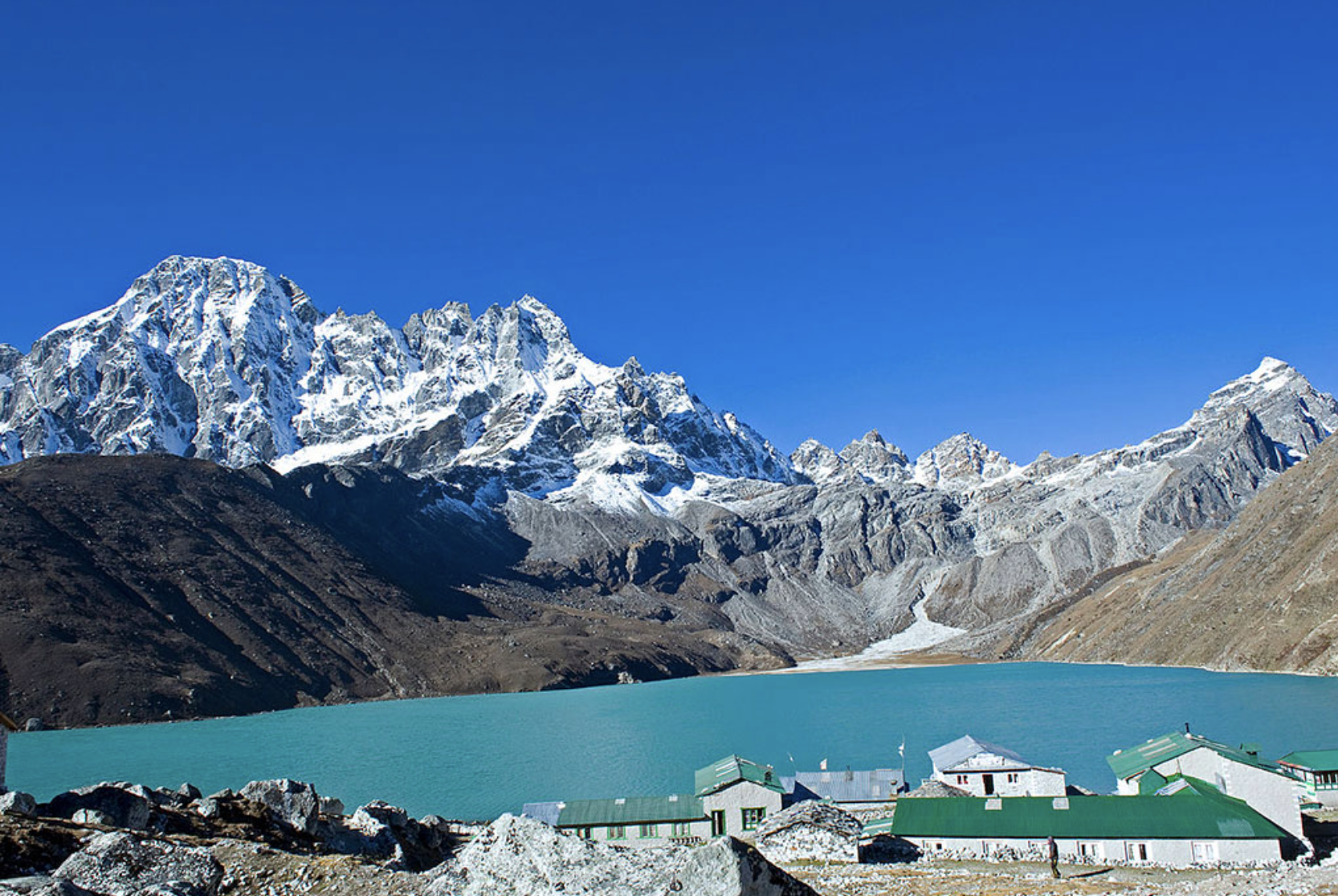
2. Gokyo Lakes and Cho La Pass Route (16 to 18 days)

Want a little more adventure and a little less crowd? This one’s for you.

  • Crosses the dramatic Cho La Pass (expect a little scrambling)

  • Passes turquoise lakes and the Ngozumpa Glacier

  • Reconnects with the classic trail near Lobuche

  • Guide insight: Perfect for strong hikers or those coming back for round two.

3. Jiri to Everest Base Camp (20+ days)

Feeling old-school? Follow the original path of early Everest expeditions — before Lukla’s airport existed.

  • Adds 6 to 8 days of lush mid-hill trekking

  • Builds in natural acclimatization with a slow, steady climb

  • Deeper look at rural Nepalese life away from touristy trails

  • Local advice: Expect basic lodges early on — but also some of the most authentic cultural experiences.

Itinerary planning tips:

  • Always build in 2 to 3 extra days for weather delays or recovery. 

  • Stick to the “climb high, sleep low” rule to help your body adjust. 

  • Consider hiring a local guide — they’re game-changers for logistics, safety and connecting with the culture. 

  • Pick a route that fits your pace, not your ego. Base Camp is a milestone, but the journey is where the real magic happens.

What permits and documents are required for the Everest trek?

You can’t just show up with hiking boots and a grin — there’s paperwork involved. Fortunately, it’s not too complicated once you know what’s required.

1. Khumbu Pasang Lhamu Rural Municipality Permit

This local permit funds development in the Everest region and replaced the old TIMS card system.

  • Cost: 2,000 Nepalese rupee, or currently about $15, per person (first four weeks)

  • Buy it in Lukla or Monjo (easy-peasy after you land)

  • Sherpa insight: Most guides handle this for you, but if you’re trekking solo, get it done at Lukla airport.

2. Sagarmatha National Park Entry Permit

Because you’re trekking through a national park — and Everest’s backyard doesn’t maintain itself.

  • Cost: NPR 3,000, or about $23, per person for foreigners

  • Grab it in Kathmandu or at the park gate in Monjo

  • Guide tip: Save time by getting the permit in Kathmandu if you can — one less thing to stress about at the trailhead.

3. Gaurishankar Conservation Area Permit (for Jiri Route only)

If you’re taking the long way via Jiri, you’ll need this extra permit.

  • Cost: NPR 2,000 ($15)

  • Only necessary if you’re starting below Lukla

  • Issued in Kathmandu at the National Trust for Nature Conservation (NTNC) office

Required documents checklist:

  • Valid passport (at least 6 months before expiration)

  • 2 to 4 passport-sized photos (for permits)

  • Cash in Nepali rupees for permit fees

  • Pro tip: Keep your permits handy — you’ll flash them at multiple checkpoints. (Lose them, and you might be turned back. Not fun.)

What gear and equipment do you need for the Everest hike?

There’s no bad weather, only bad gear. On Everest trails, the weather can go from “sunburn season” to “snowpocalypse” in the time it takes to eat a granola bar. Smart packing is survival.

1. Layered clothing

The mountain demands flexibility. Dress like an onion: Peel or add layers as needed.

  • Base layer: Moisture-wicking thermal tops and bottoms

  • Mid layer: Fleece jacket or lightweight down sweater

  • Outer shell: Waterproof, windproof jacket and pants

  • Extras: Warm hat, neck gaiter, insulated gloves, UV-protective sunglasses

  • Sherpa tip: Bring a buff or scarf — perfect for battling wind, sun and the occasional yak dust storm.

2. Footwear and trekking essentials

Your boots are your best friends — or worst enemies if you don’t break them in first.

  • Waterproof trekking boots with ankle support (broken in, not brand new!)

  • Lightweight camp shoes or sandals for evenings

  • Wool or synthetic socks (plus spares to rotate)

  • Trekking poles for downhill stability (your knees will thank you)

  • Guide advice: Even if you feel young and invincible, use the poles. They’ll save your joints for future adventures.

3. Sleeping and personal gear

Teahouses provide beds and blankets, but you’ll need extra warmth at night.

  • Sleeping bag rated to at least -15°C, or 5ºF (or colder)

  • 35- to 50-liter backpack for your daily essentials

  • Headlamp with extra batteries (early starts are a thing)

  • Water bottles plus purification tablets or filters

  • Local insight: Purify all water. Bottled water is expensive, wasteful and often unavailable past Namche.

4. Optional but useful items

  • Microspikes or lightweight crampons (for winter treks)

  • Power bank or solar charger

  • Quick-dry towel and toiletries

  • Your favorite trail snacks (trust me, you’ll crave familiar tastes)

Packing smart means fewer worries — and more time gawking at Everest without numb fingers or blisters stealing the show.

Alternatives to the Everest Hike: Explore Other Iconic Treks in Nepal

Dreaming of the Himalayas, but not feeling the Everest traffic jam? Nepal’s got options — plenty of them — and some are just as epic (without the crowds).

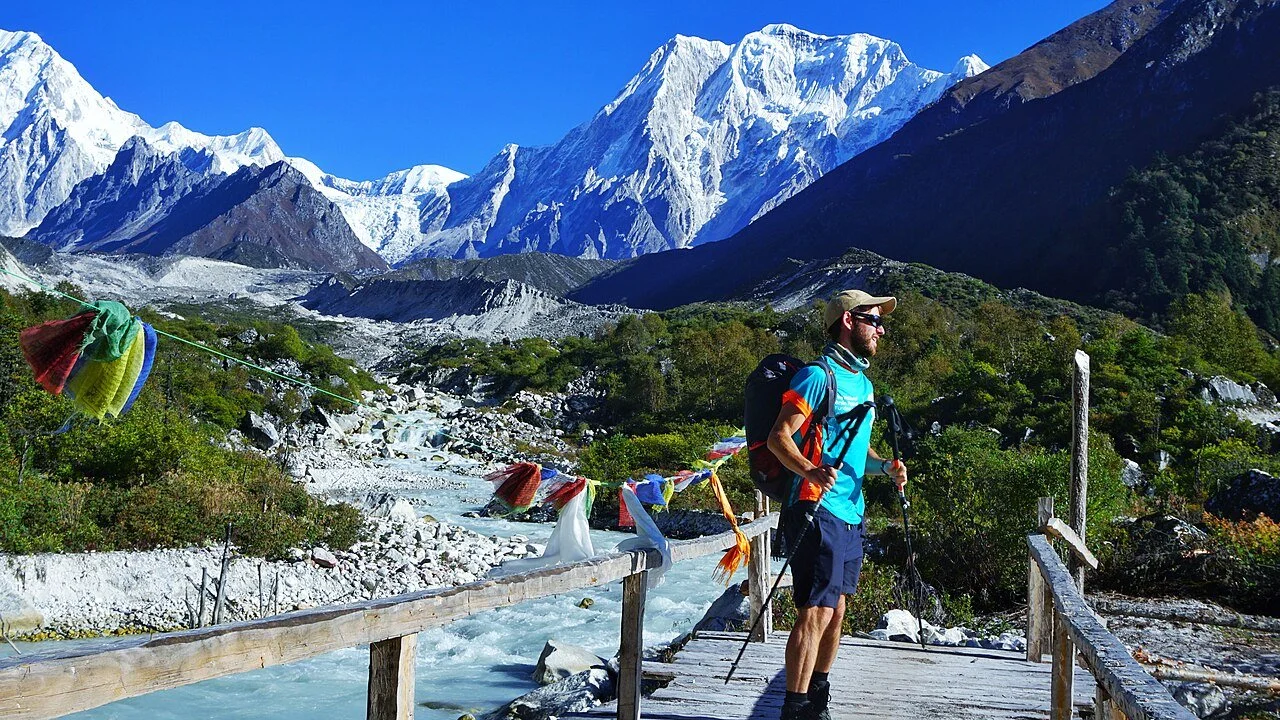
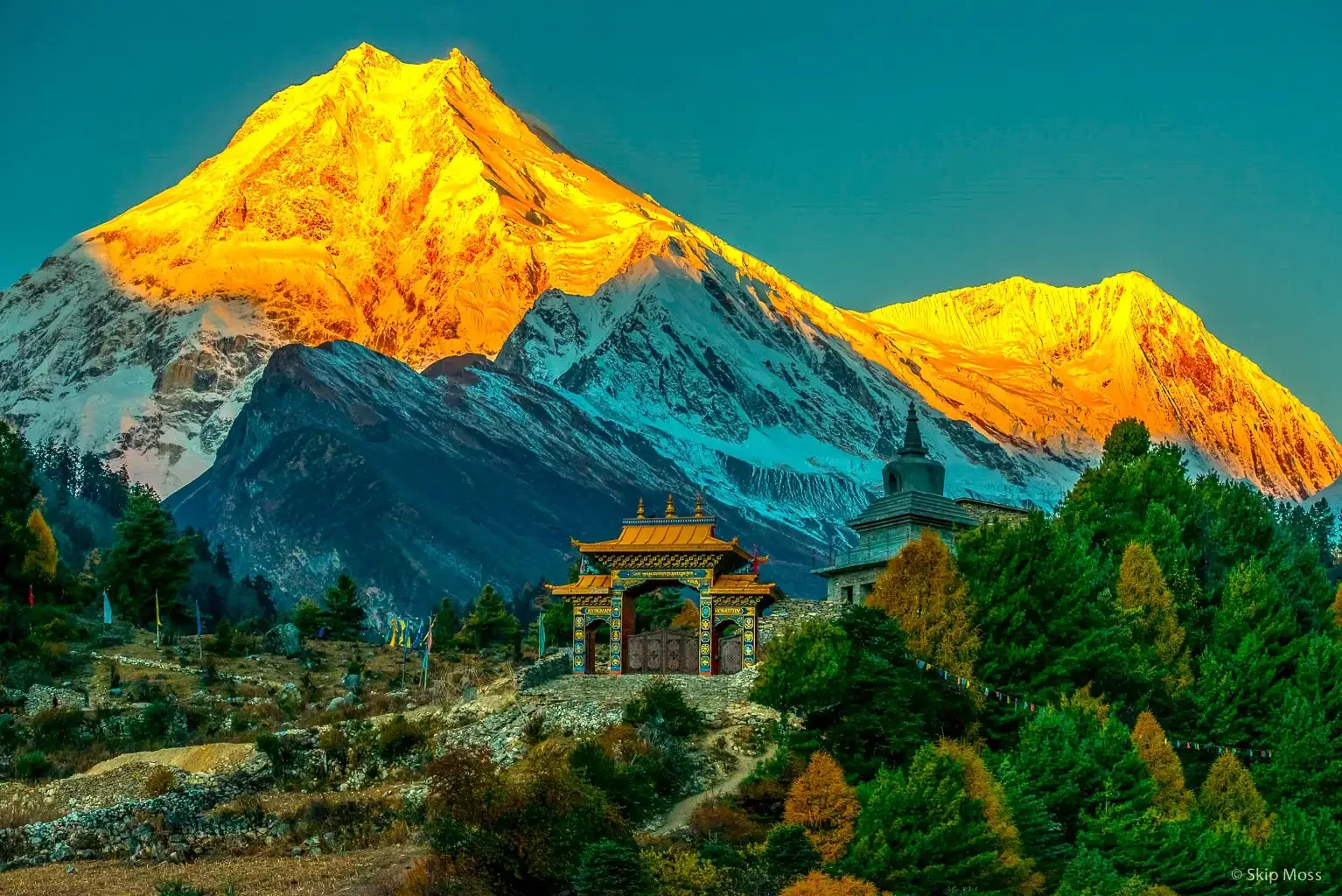
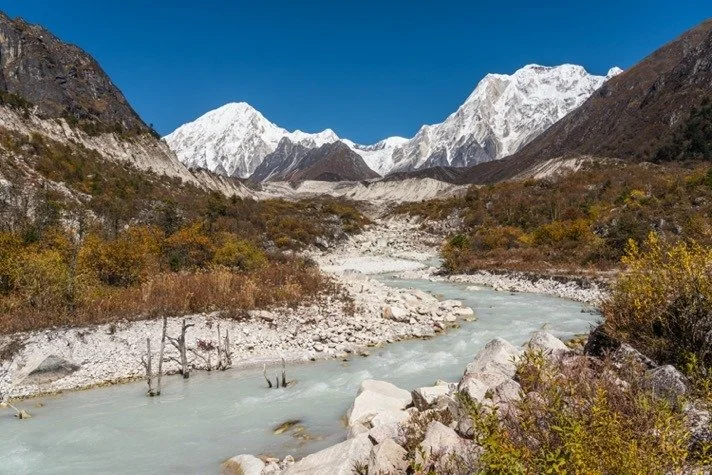
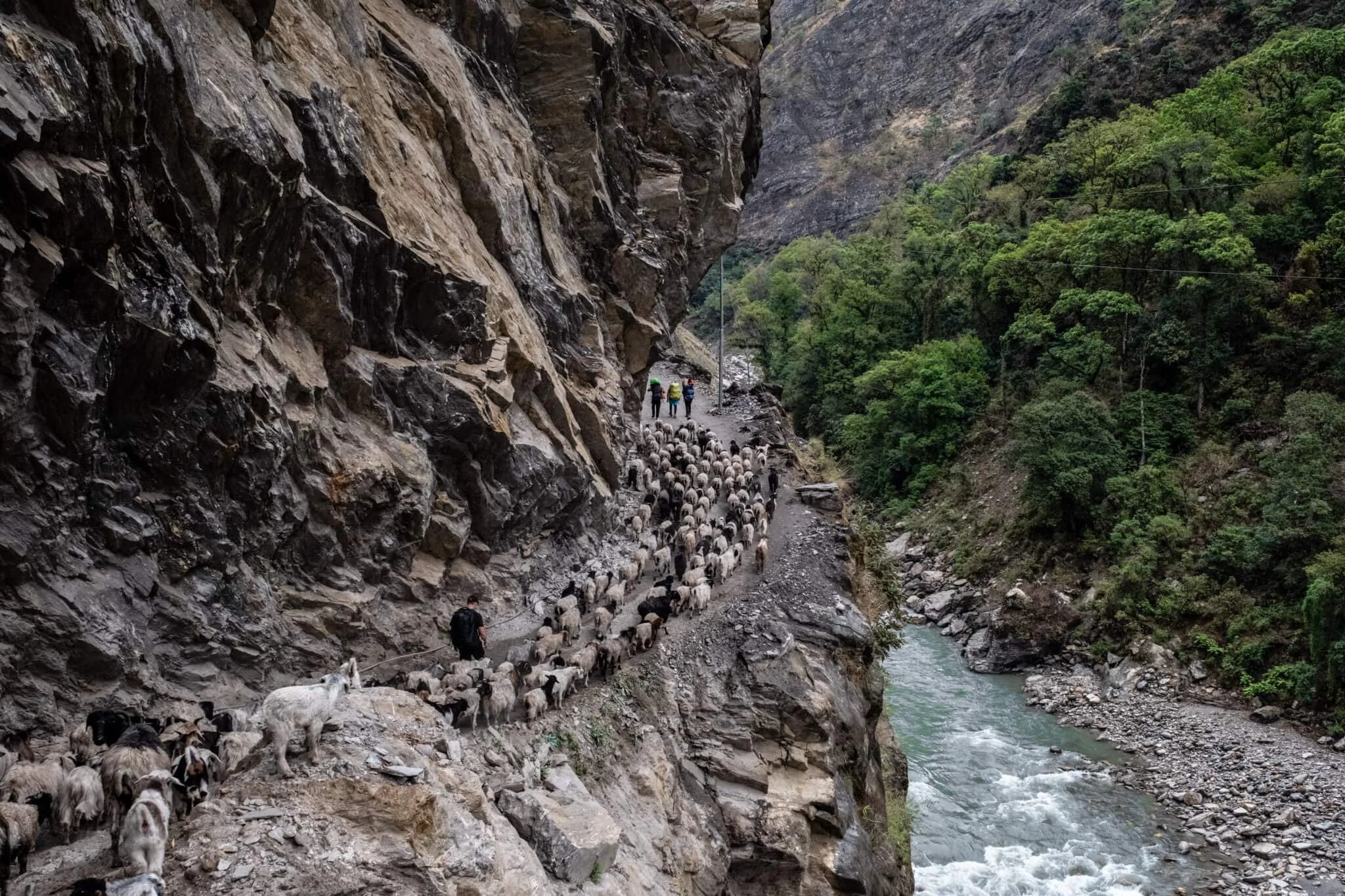
Manaslu Circuit Trek: Remote and culturally rich

If you want adventure and authenticity, Manaslu delivers.

  • Duration: 14 to 18 days

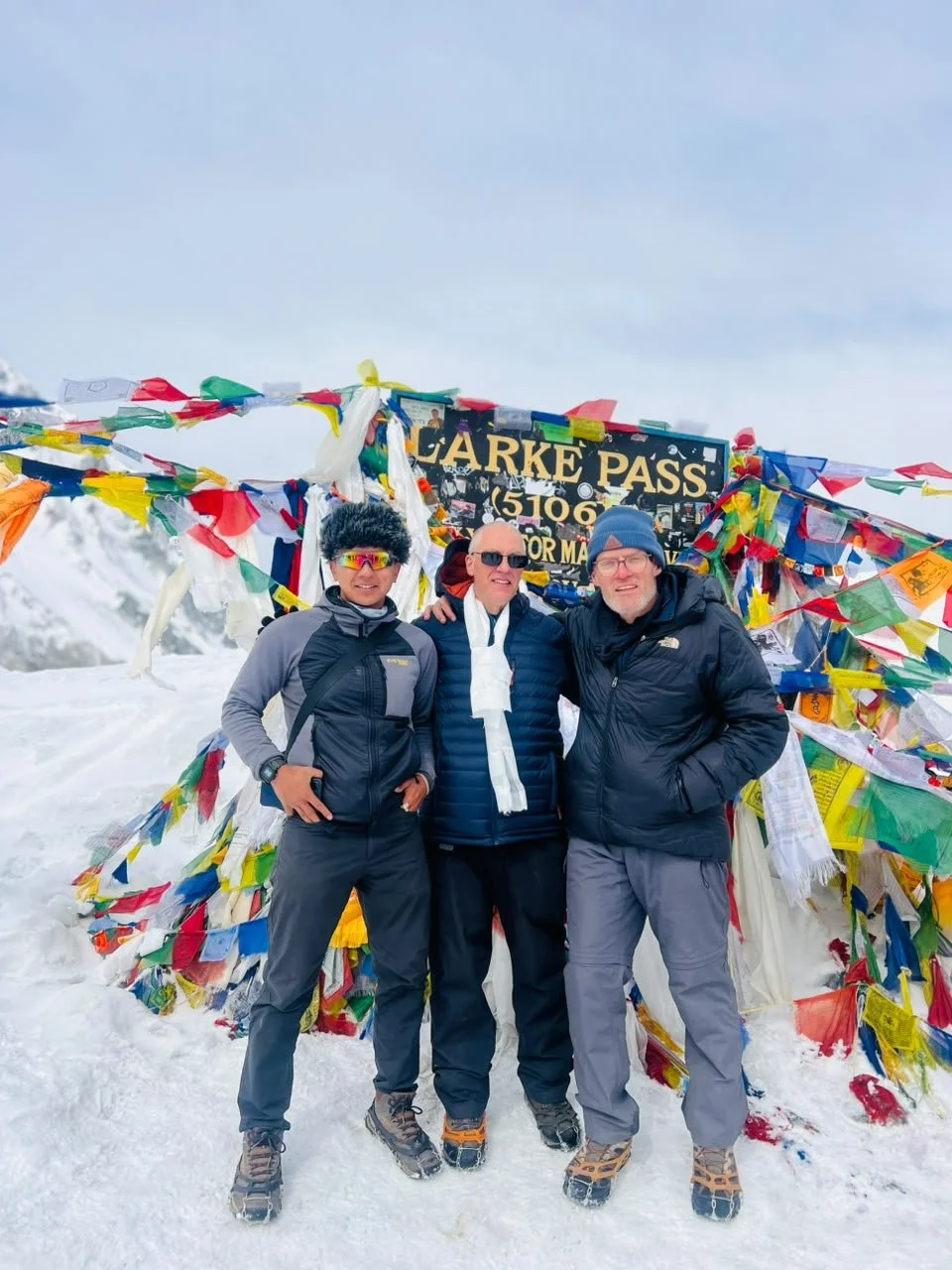
  • Max altitude: 5,160 meters at Larkya La Pass

  • Special permit and guide required (it’s a restricted area)

  • Local insight: Think traditional villages, Tibetan influences and lodges that feel a world away from commercial trekking routes.

Annapurna Base Camp (ABC): Shorter and scenic

Want killer mountain views without hitting extreme altitudes? Annapurna’s your trail.

  • Duration: 7 to 11 days

  • Max altitude: 4,130 meters

  • A lush mix of jungle, terraced fields and jaw-dropping peaks

Langtang Valley Trek: Close to Kathmandu, big on heart

After the 2015 earthquake, Langtang rebuilt — and it’s more welcoming than ever.

  • Duration: 6 to 9 days

  • Max altitude: 4,984 meters (Tserko Ri summit)

  • Deep cultural immersion with the Tamang community

Why consider alternatives?

  • Fewer crowds = more peaceful trails

  • Simpler logistics and lower costs

  • A deeper connection to Nepalese culture and landscapes

Choosing an alternative doesn’t mean settling. It means opening yourself up to trails just as soul-stirring — and maybe even more memorable.

Final Thoughts: Your Everest Hike Starts With Smart Planning

Trekking to Everest Base Camp is going to be a bucket-list brag and one of those top life experiences. And like any great adventure, it rewards those who plan smart, pace themselves and stay flexible when the mountain inevitably throws a curveball.

From picking the right season to training your body, from securing the right permits to packing gear that can handle a Himalayan weather tantrum, every choice you make now sets you up for success later. Preparation means freeing yourself to fully soak in the magic of the trail, the villages, the prayer flags whipping in the wind, and that first surreal glimpse of Everest itself. It can also mean survival.

Whether you end up at Base Camp or exploring a quieter circuit like Manaslu or Annapurna, one thing’s certain: The Himalayas will leave a mark on you. (And it won’t just be sore calves.)

Ready to start planning? Lace up, dream big and let the mountains handle the rest. –Sulabh Basnet

4 Tips for Winter Wilderness Travel

Wilderness travel in cold weather isn’t for the faint of heart — but the jaw-dropping views are worth it. Here’s how to stay warm, safe and ready for adventure in the wild.

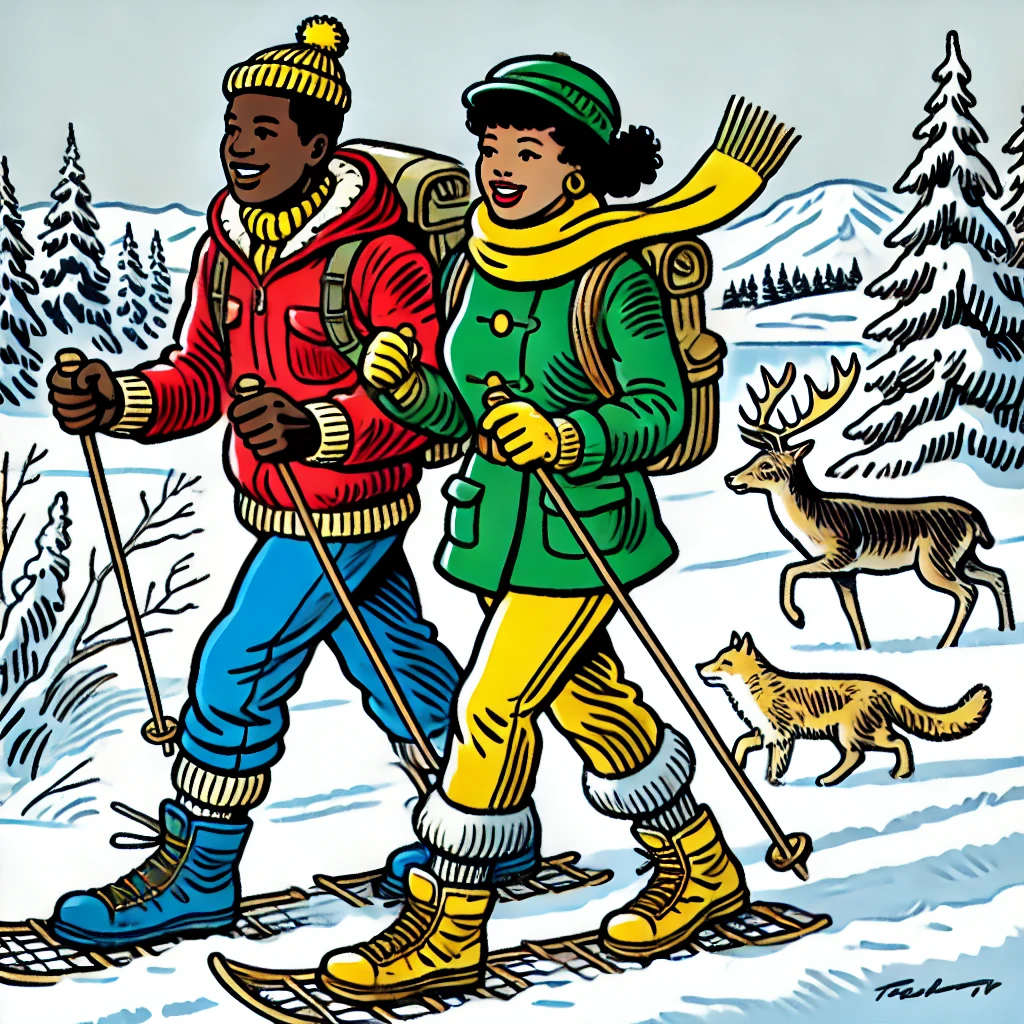
A couple snowshoe in the snow past a fox and deer

When it comes to wilderness travel in the winter, unless you’re prepared, you might have to go full Bear Grylls — yes, that could mean drinking your own pee to stay hydrated.

I’m joking…kind of. But winter wilderness adventures are no casual stroll through the snow. The landscapes might be jaw-dropping — mountains capped like frosted cupcakes, lakes frozen into sheets of glass — but they come with a bite sharper than the cold itself.

This one sounds obvious, but a cute hat and gloves set from Zara won’t cut it when you’re halfway up a mountain wondering if frostbite actually does turn your fingers black.

If you’re trading tropical resorts for trails and frost, a little prep goes a long way. Here are four essential tips to help you survive, thrive and soak in those wild winter views…without losing your mind—or your fingers.

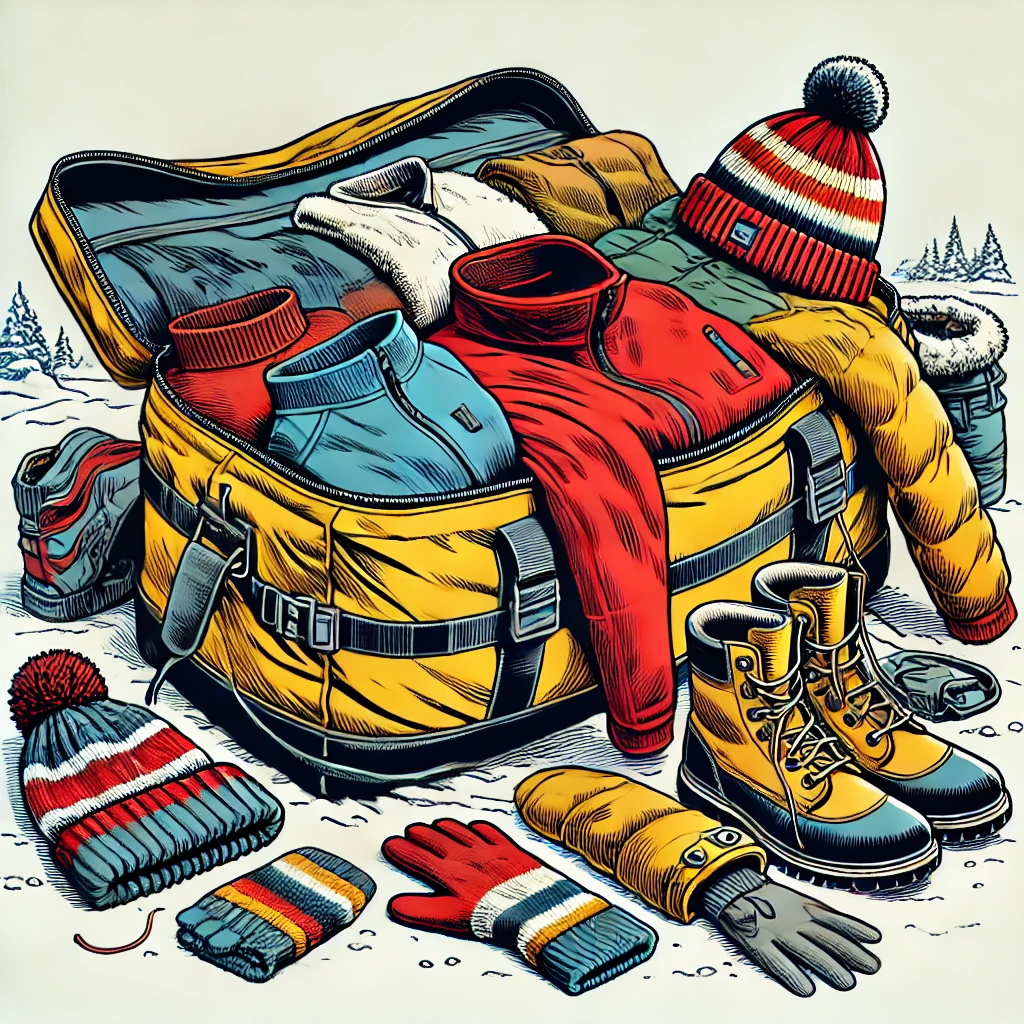
A soft yellow suitcase is filled with winter clothing

1. Make sure you have the right clothing. 

This one sounds obvious, but a cute hat and gloves set from Zara won’t cut it when you’re halfway up a mountain wondering if frostbite actually does turn your fingers black. Winter wilderness adventures are cold — like, “I can see my breath inside my tent” cold — and surviving them means dressing like you’re preparing for battle.

Start with layers:

  • A moisture-wicking base layer to keep sweat off your skin (yes, you’ll still sweat, even in the cold)

  • An insulating fleece or wool mid-layer to trap body heat like your life depends on it

  • A waterproof, windproof outer layer to fend off the elements — snow, sleet, or that icy wind that feels personal

Add in insulated boots, thermal gloves (mittens work even better), and a hat that actually covers your ears. Bonus points for bright clothing: When you’re in the wild, being easy to spot can come in handy.

Trust me, when you’re ankle-deep in snow, you’ll thank yourself for choosing function over fashion — though nobody’s stopping you from adding a little flair with a neck gaiter that screams, “I’m still fabulous in subzero temps.”

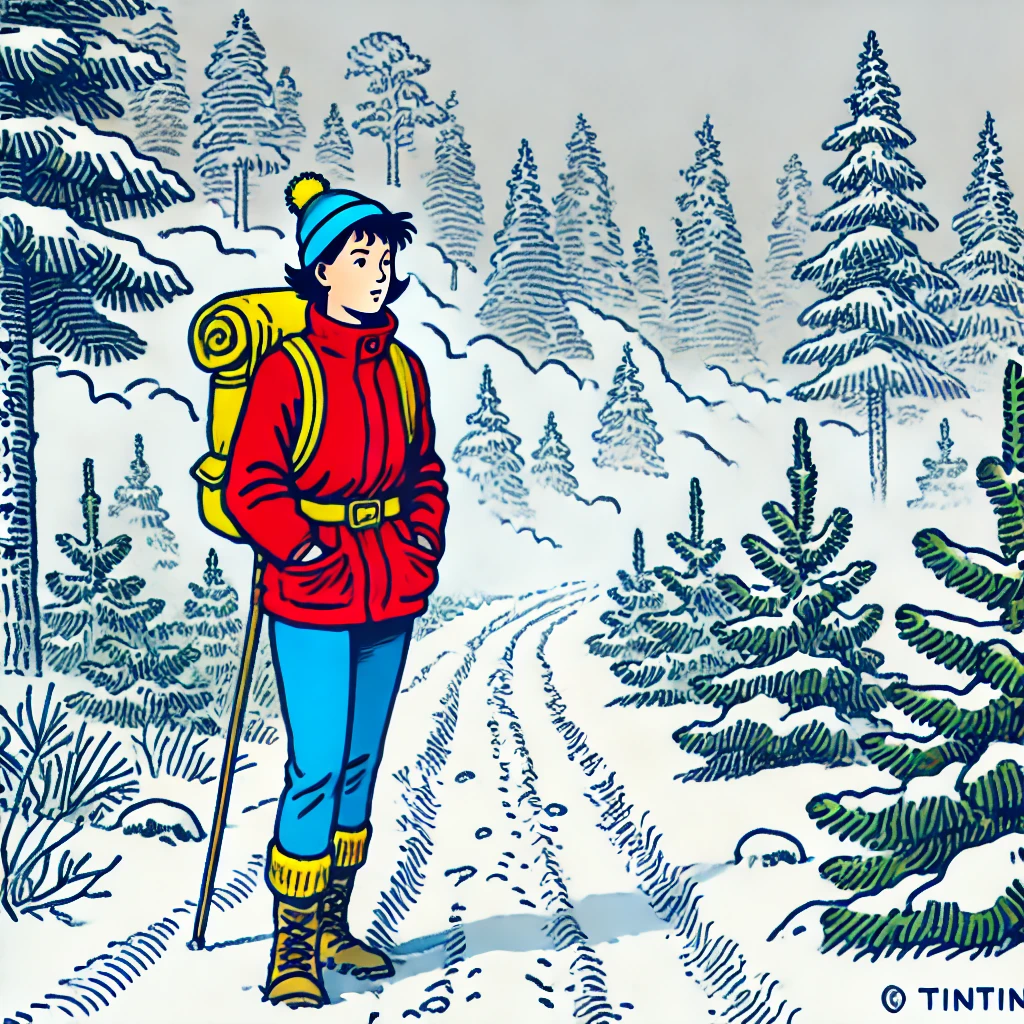
A woman hiker stands on a path in the woods

2. Stick to designated routes. 

Straying off the path sounds romantic, until you’re knee-deep in snow, lost and wondering if this is how the “found frozen like a popsicle” story ends. Stick to marked routes — they’re safer, they’re scenic, and they exist for a reason.

Some of the world’s best winter trails are ready to dazzle you:

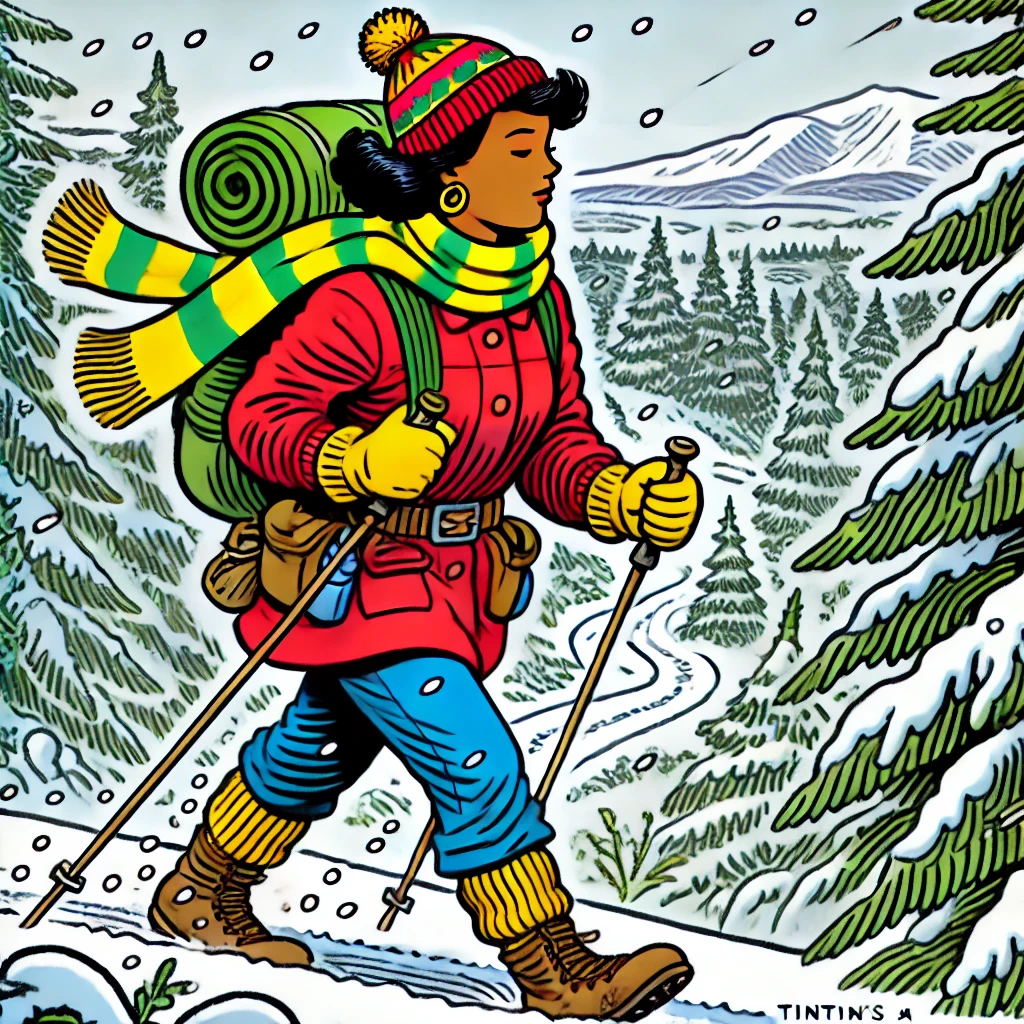
A woman with poles walks through a snowy forest

Appalachian Trail, USA: While the Appalachian Trail stretches over 2,000 miles, winter hikers flock to its New England portions. Think snow-draped pines, frozen streams and that eerie quiet you only get in deep winter. Just make sure to check trail conditions — what’s charming one day can turn treacherous the next.

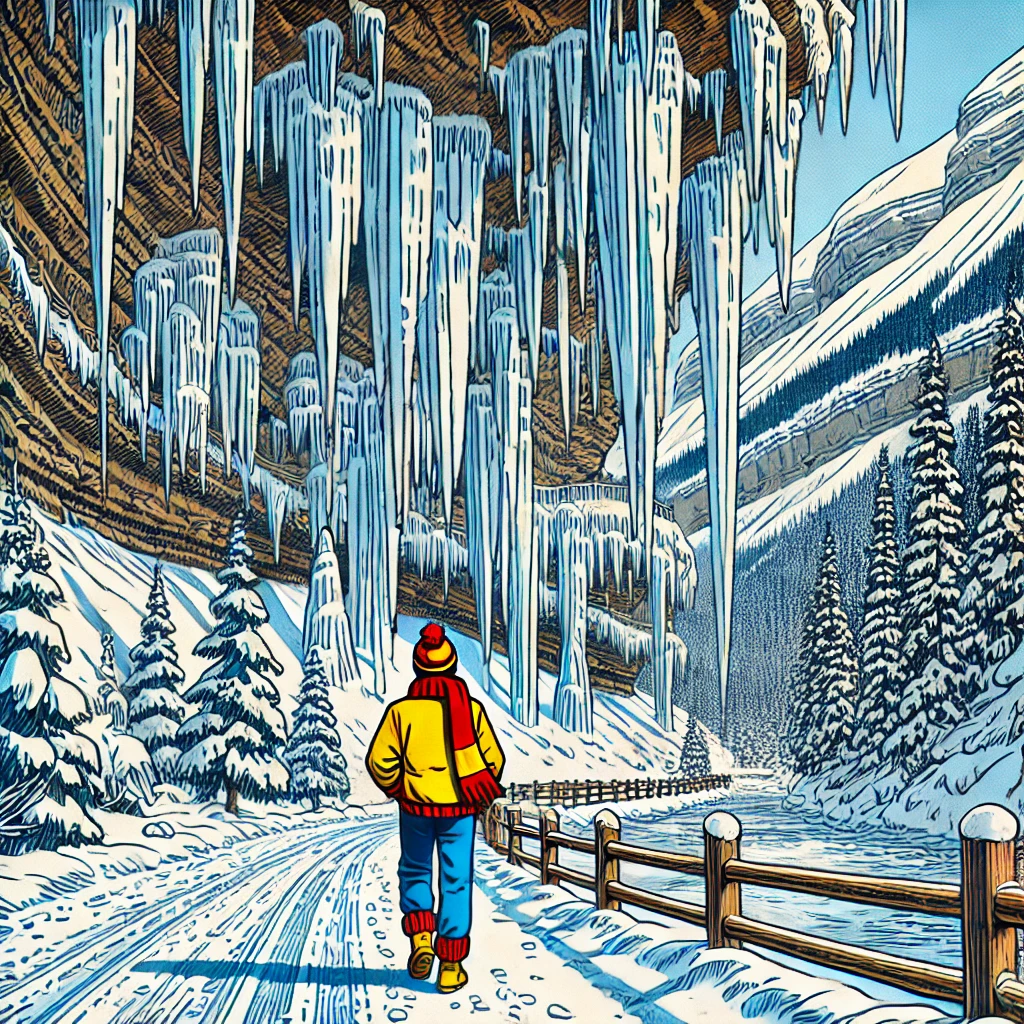
Icicles hang down as a person walks in the snow in Banff National Park

Banff National Park, Canada: Banff in winter is pure magic: frozen waterfalls, ice-blue lakes and peaks that look airbrushed. The Johnston Canyon Ice Walk is a must — stalactites of ice hang like chandeliers, and the sound of your boots crunching through the snow feels like you’re exploring Narnia.

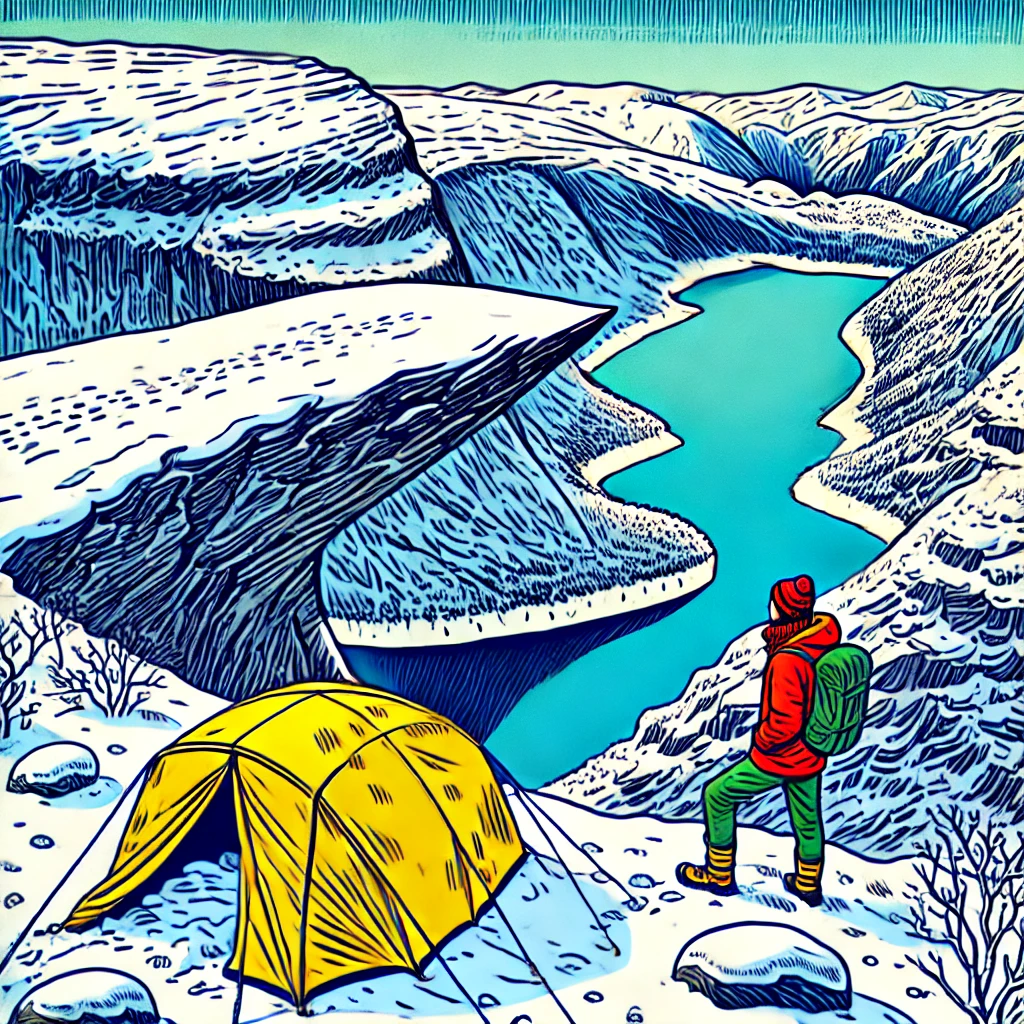
A person stands by a yellow tent by a fjord in Trolltunga, Norway

Trolltunga, Norway: Trolltunga’s iconic cliff juts out over a fjord like it’s daring you to stand on it. In winter, it’s quieter, snow-dusted and utterly surreal — but the trek there? It’s no joke. Plan wisely, and you’ll be rewarded with a view so pristine it feels stolen from another world.

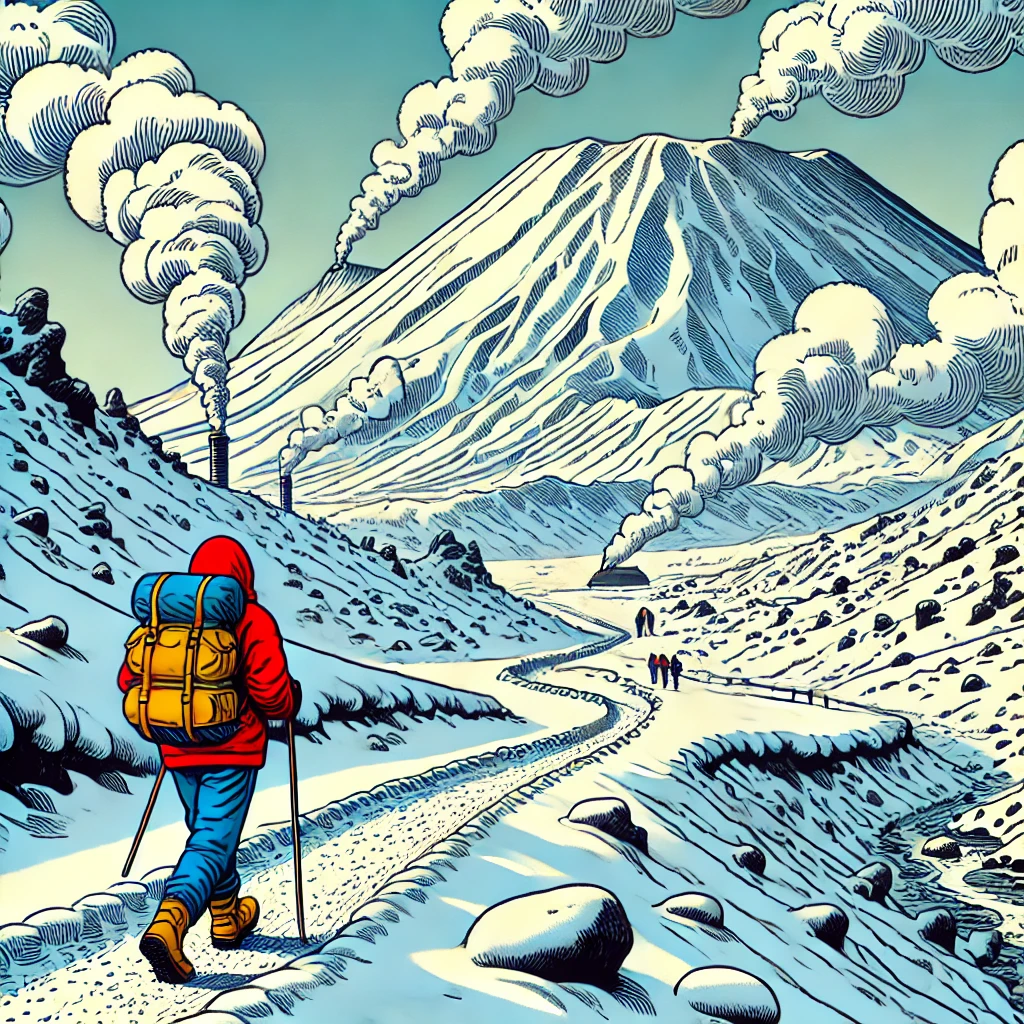
A person hikes in the snow at the Tongariro Alpine Crossing, New Zealand

Tongariro Alpine Crossing, New Zealand: It’s a far cry from the summer beaches of New Zealand. Volcanoes, snow and steaming vents — Tongariro in winter is otherworldly. The trail weaves through stark, frozen landscapes that look straight out of The Lord of the Rings. Just don’t underestimate the weather; it changes faster than you can say, “Mount Doom.”

Whether you’re hiking, snowshoeing or just trying to look epic for Instagram, respect the routes. They’ll take you to the kind of sights you’ll remember forever — without the risk of becoming a search-and-rescue story.

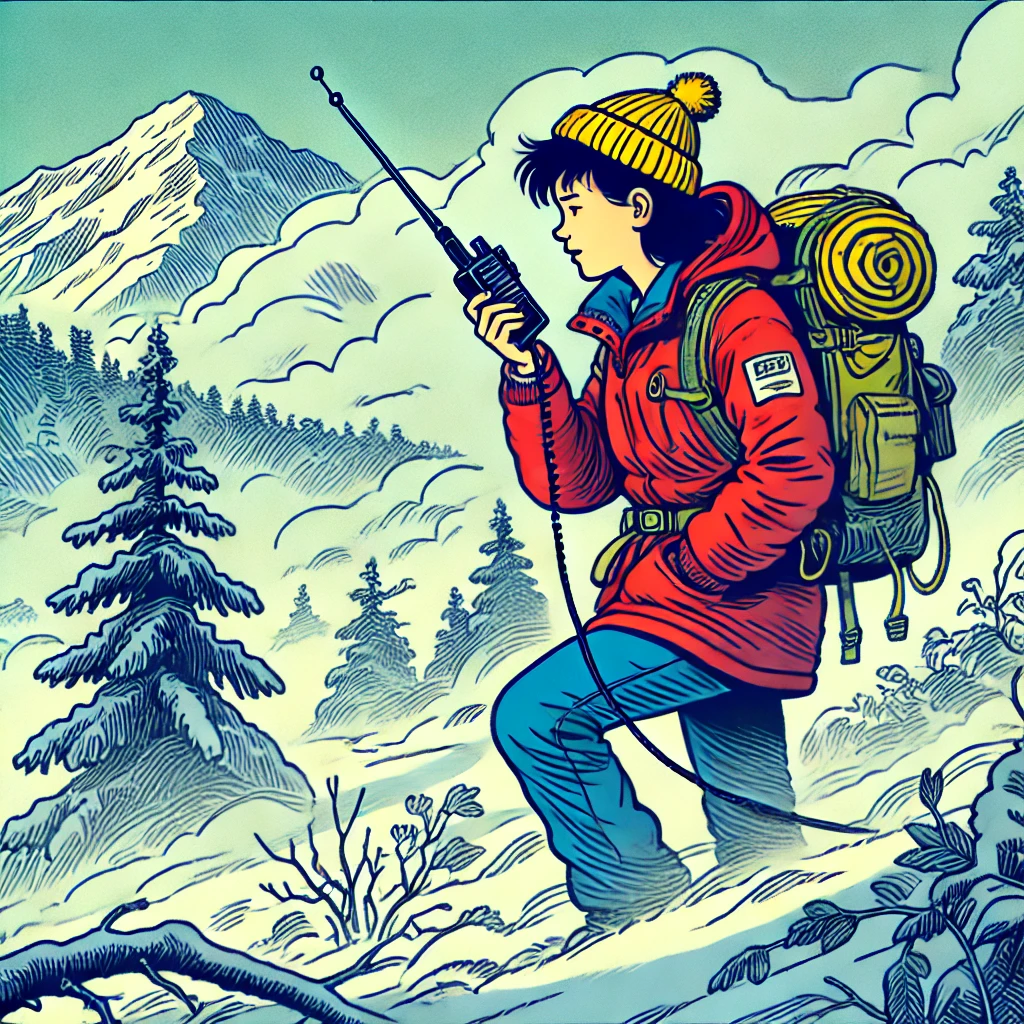
A woman talks on a two-way radio in the snowy wilderness

3. Pack a tech survival kit. 

Imagine this: You’re halfway along a snow-covered trail, surrounded by quiet pines and skies so crisp you’d swear they’re freshly washed. It’s peaceful — until a sudden fog rolls in, and you realize you’ve got no signal, no map and no idea where the path went.

That’s where a tech survival kit saves the day. Whether you’re battling the wilderness or just your questionable sense of direction, pack these essentials:

  • Offline GPS maps: Your smartphone or a GPS device with pre-downloaded maps can help get you out of a bind when the signal ghosts you.

  • Portable charger or power bank: Cold weather drains batteries fast. Keeping devices juiced up can be a literal lifesaver.

  • Personal locator beacon (PLB): These SOS devices transmit your location to rescue teams when things take a turn.

  • Headlamp with spare batteries: Winter means short days and long nights; visibility isn’t optional.

  • Two-way radios: When you’re hiking in a group, radios help you stay connected even in signal-free zones.

And because we’re all human, let’s be real: After a long day of freezing toes and conquering trails, you’ll want to kick back in your cabin and stream your favorite show. A VPN keeps your data safe on sketchy public Wi-Fi and bypasses geo-blocks. Fear not: It’s easy to learn how to choose the right VPN, so you can binge guilt-free. 

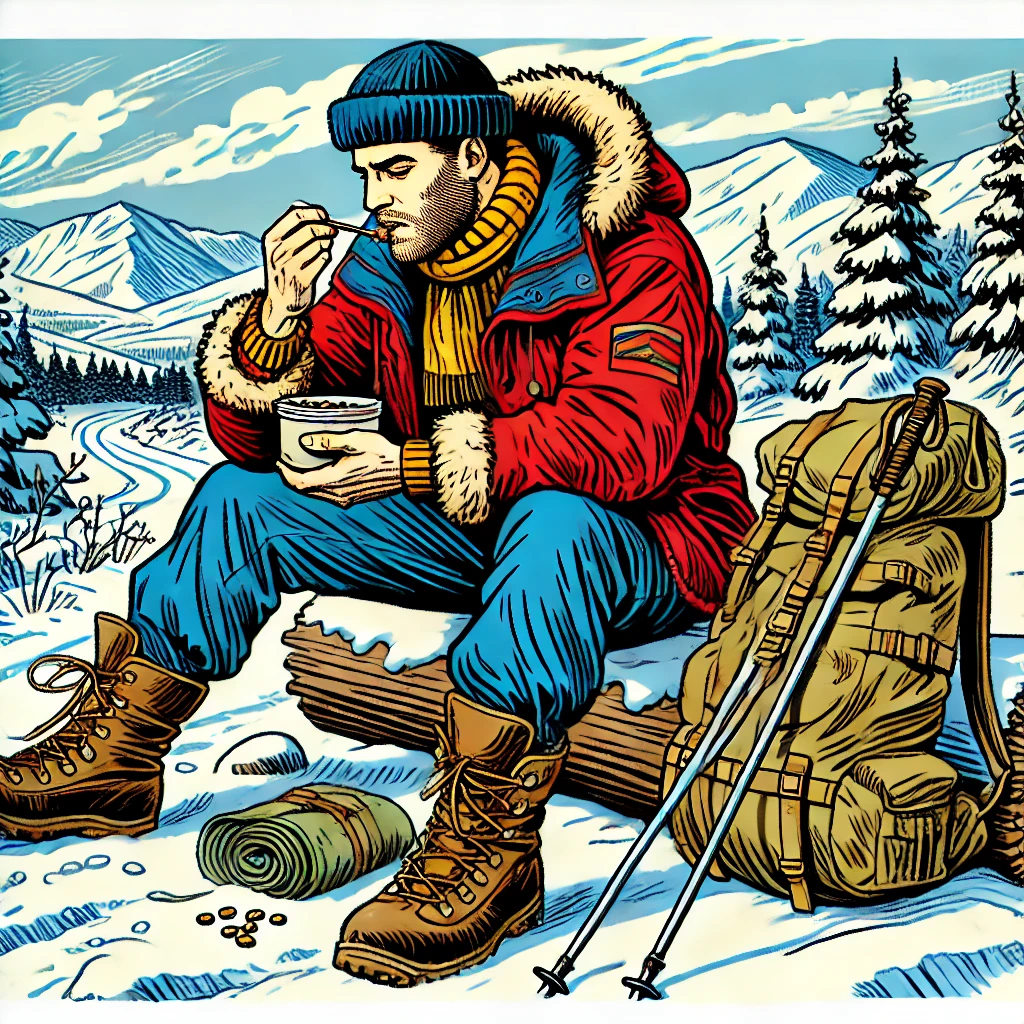
A man sits on a log eating snacks in the snow, with his poles and backpack next to him

4. Don’t forget the snacks and hydration. 

Here’s the thing about winter wilderness travel: Your body works overtime just to keep you warm. That means you’re burning calories like you’re training for an ultra-marathon — only you’re trudging through snow instead of sprinting.

Pack snacks that are high in energy and easy to eat on the go. Think:

  • Nuts and trail mix: Nature’s perfect snack for energy and crunch

  • Dried fruit: Portable, sweet and packed with quick calories

  • Energy bars: Compact fuel that’ll keep you moving without stopping for a meal

  • Chocolate: Because it’s delicious, and you deserve it

And don’t forget water! It’s easy to think you’re fine when you’re not sweating buckets, but dehydration in the cold sneaks up faster than you’d expect. Insulated bottles will keep your water from turning into an ice block, and if you’re feeling fancy, pack a thermos with hot tea, cocoa or broth — it’s like a warm hug when your fingers are starting to question your life choices.

Winter wilderness rule of thumb? When in doubt, snack and sip. Your body (and your mood) will thank you when you’ve got the energy to enjoy those views instead of fantasizing about the closest cheeseburger.

Two people walk along a forest trail in the snow

Wilderness Travel: Stay Chill and Don’t Freeze

Winter wilderness travel is as breathtaking as it is unforgiving. With the right gear, routes, tech and snacks, you’ll be ready to brave the cold and soak in the silence, the snow and the kind of views that are worth every icy step.

So, layer up, grab that thermos and get out there — the wild is waiting, and it’s not about to warm up for you. –Lucy Roberts


How to Plan Your Dream Amazon Adventure

Want to explore the largest rainforest on Earth? Should you head to Brazil, Peru or Colombia? Here are 5 tips to make your Amazon trip unforgettable.

A woman in a kayak looks through binoculars at the wildlife of the Amazon

One of the most memorable projects I ever worked on in school was about the Amazon. I remember it vividly: poring over pictures of sloths, parrots and winding rivers, reading about thick-canopied forests teeming with life and secrets. Since then, I’ve kept a close eye on what’s happening in South America and, when possible, have ventured to far-flung, wild places. But the Amazon — well, that’s still in a league of its own. And planning a trip there takes a bit of strategy. 

Few places on Earth compare to the Amazon — and with the right planning, you’ll be ready to discover it in all its intensity and wonder.
Two handsome tattooed men take a selfie on a canopy bridge in the Amazon


Here’s what you need to know to make the most of an adventure that, if done right, will feel like stepping into a whole new world.

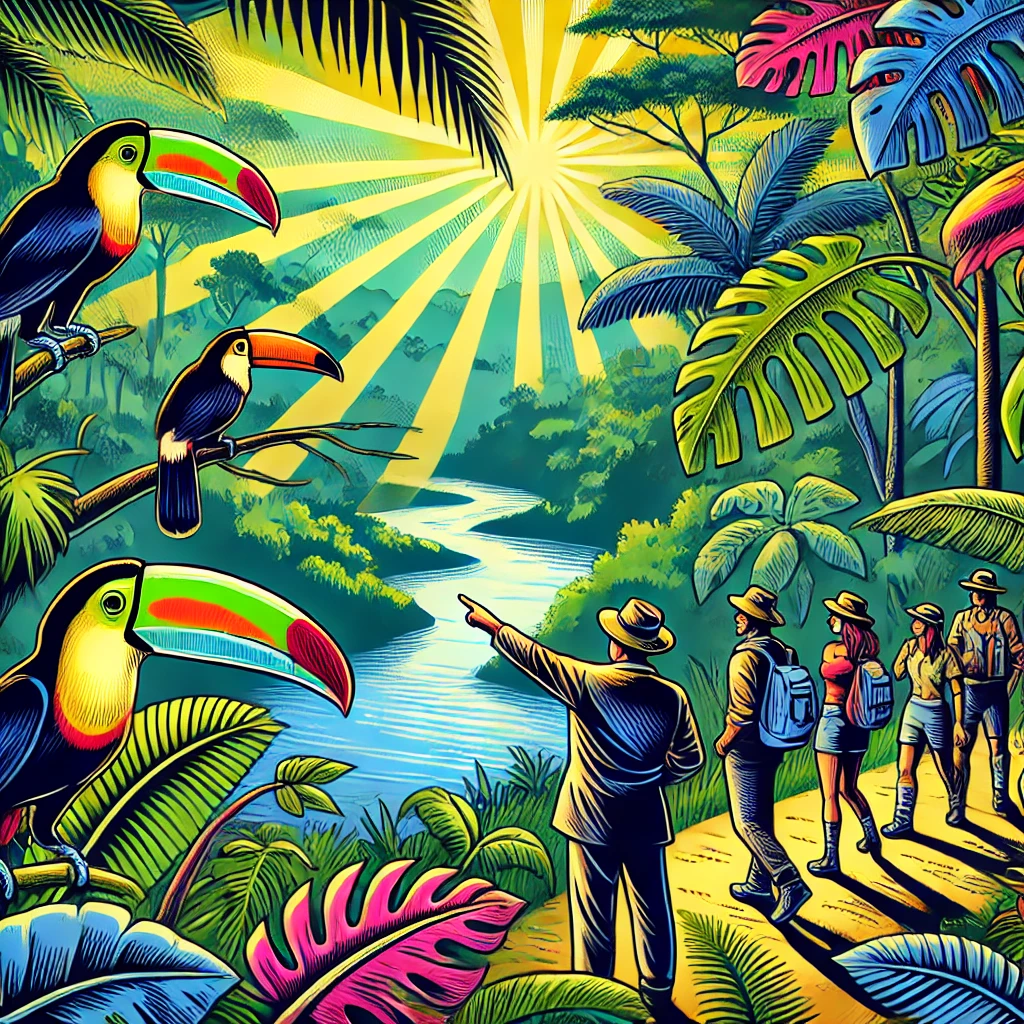
A guide points something out to a group of hikers in the Amazon with toucans perched nearby

1. Determine your adventure style. 

Let’s face it, “the Amazon” conjures up different images for everyone. Are you envisioning a canoe ride through quiet waterways, binoculars in hand, scanning for jaguars? Or are you more inclined toward guided nature hikes, where you can absorb insights on indigenous plants, medicinal herbs and Amazonian lore?

Brazil is your classic jungle adventure, with thrilling treks, wildlife galore and river communities, where you can experience a bit of daily life in the Amazon. Peru and Colombia, on the other hand, have national parks that blend cultural sites with nature, offering the chance to experience a little bit of everything — from visiting wildlife sanctuaries to learning about local customs.

A riverboat cruises down the Amazon while a jaguar and birds look on

2. Decide where in the Amazon you’re headed. 

The Amazon is a sprawling natural giant, stretching across nine countries and more than 2 million square miles. 

So, how do you decide where you want to go? Each Amazonian region offers something a bit different. Brazil’s Manaus is a popular gateway, but Peru offers incredible river cruises, and Ecuador is known for its pristine national parks. The location you choose will shape your experience, so let your interests lead the way. Want to get lost in deep jungle trails? Brazil might be your calling. More interested in a mix of culture, wildlife and guided excursions? Consider starting in Peru or Colombia.

An AI trip planner can be a lifesaver for navigating this decision, helping pinpoint destinations that fit your goals, timeline and budget.

A gay couple hold up a map with tropical birds around them as they plan an Amazon adventure

3. Find flights and accommodations. 

Getting to the Amazon usually starts with a flight into a major city, often São Paulo or Rio de Janeiro if you’re heading to Brazil. From there, you’ll hop on a regional flight to your main Amazonian destination, such as Manaus. For those aiming for Peru, Lima and Cusco serve as gateways to the country’s Amazon regions, with river cruises and jungle lodges that let you dive deep into the wilderness without having to go entirely off-grid.

While the Amazon isn’t a “budget” destination, booking early and looking at various starting points can help keep costs manageable. And if you’re going for Amazon guided tours, they often bundle accommodation and transport, so look for packages that offer flexibility and fit your adventure style. 

Don’t forget: Each region’s climate can vary, so check seasonal weather patterns. For instance, from late spring to early autumn, the dry season is ideal for wildlife spotting and hiking, whereas the wet season offers a lusher, greener landscape.

4. Pack like a pro. 

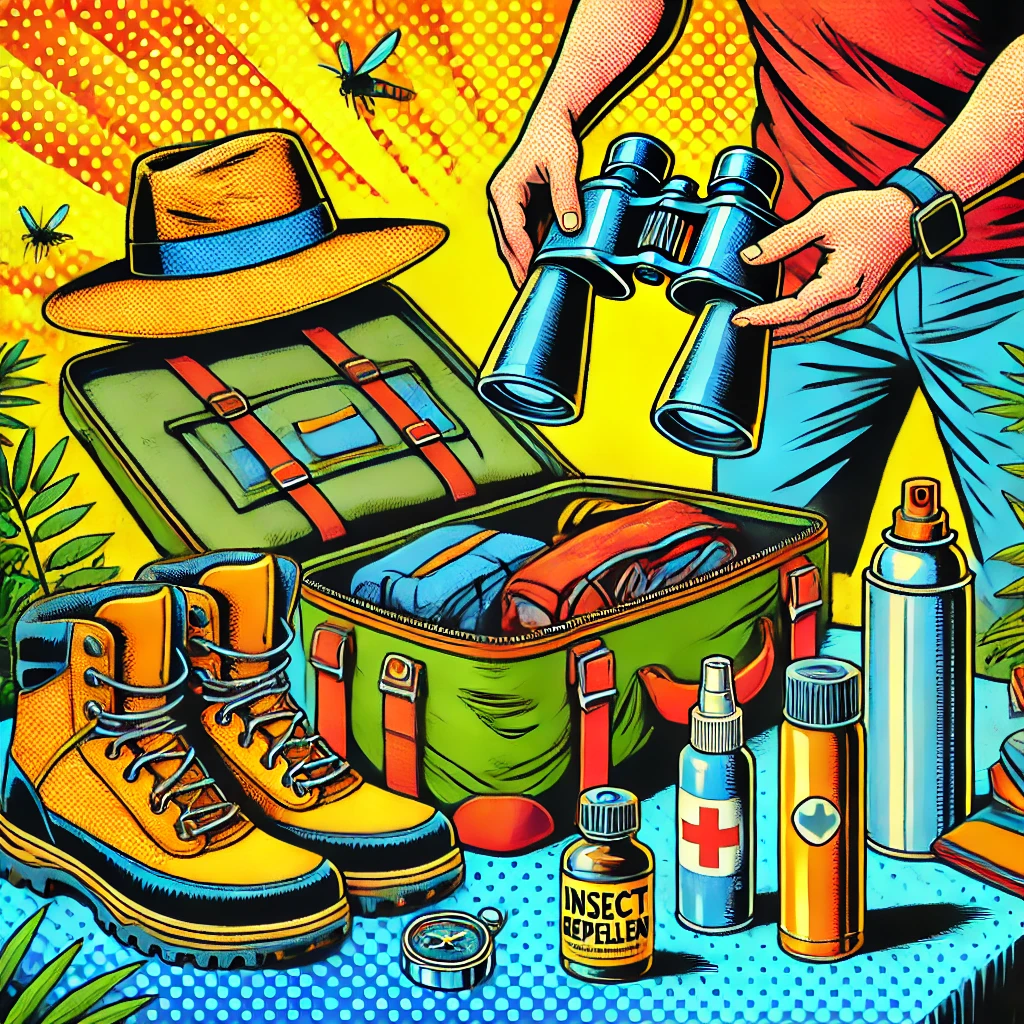
Packing for the Amazon isn’t quite like packing for your average vacation. It’s not just about comfort; it’s about being ready for any situation. Lightweight, moisture-wicking clothing is a must to handle the jungle’s heat and humidity, but you’ll also want durable hiking gear if you’re planning on hitting the trails. A waterproof jacket is non-negotiable, as are sunblock, a hat and any medications you need for the duration of your stay.

Here are some other important things to check off before you go:

  • Documents: Make sure your passport is current and you’ve got any necessary visas.

  • Vaccinations: Common vaccines like yellow fever are often recommended, along with malaria prevention.

  • Insect repellent: Trust me — you don’t want to skimp here. Stock up on good-quality repellent to keep those pesky bugs at bay.

  • Travel insurance: Medical emergencies in the Amazon are no joke. Make sure you’re covered for any unexpected costs in a remote area.

And be sure to bring a good flashlight, power bank and possibly a GPS for off-the-grid excursions. 

Even your packing strategy should be built for flexibility because in the Amazon, Mother Nature doesn’t always follow your plans. Prepare for a mix of hiking, boating and relaxing by packing a bit of everything — from flip-flops to sturdy boots.

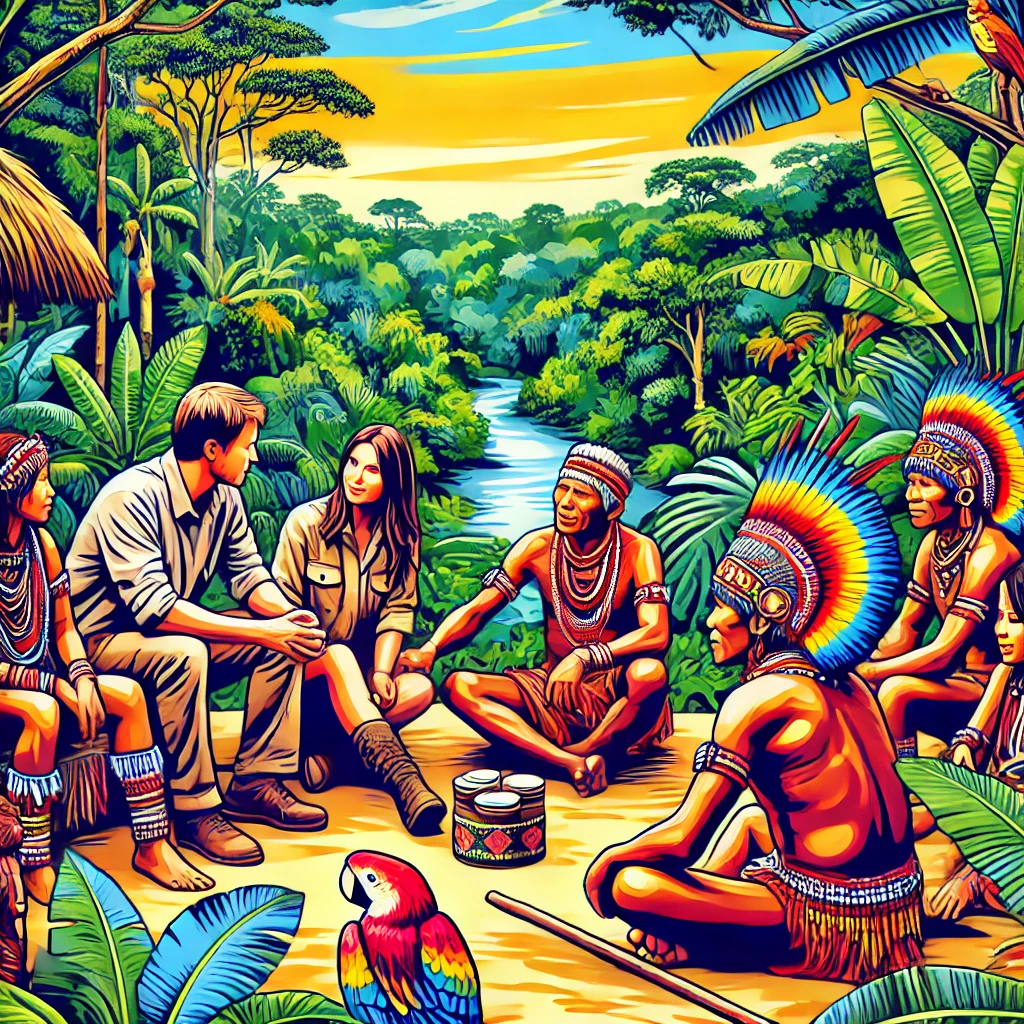
A couple sits in a circle with indigenous Amazonians in colorful feathered headgear

5. Embrace the local culture. 

One of the most rewarding parts of traveling in the Amazon is meeting people who call this vast region home. Tourism, when done thoughtfully, can support the communities and help preserve the forest. Look for ways to engage responsibly. Consider eco-lodges that prioritize sustainability, and always remember that you’re stepping into a place with its own rhythms and traditions.

Understanding and respecting local customs can lead to a richer experience. Many indigenous communities welcome travelers, but it’s always good to know local etiquette. And it doesn’t hurt to learn a few words of Portuguese or Spanish to show your respect and interest.

A girl stands on the bow of a small boat watching the pink dolphins of the Amazon

The Amazon Awaits

Few places on Earth compare to the Amazon, and with the right planning, you’ll be ready to discover it in all its intensity and wonder. So do your research, respect the rainforest and its people, and pack a good amount of curiosity. Get ready for a journey to one of the most unique ecosystems on the planet — one that, with any luck, will leave you a bit changed when you return. –Lucy Roberts

Budget-Friendly Everest Base Camp Trek Secrets

A thrilling Himalayan adventure can be within your reach. Here’s how to save money by staying and eating at teahouses, renting equipment, joining a group tour and other little-known tips from a local expert. 

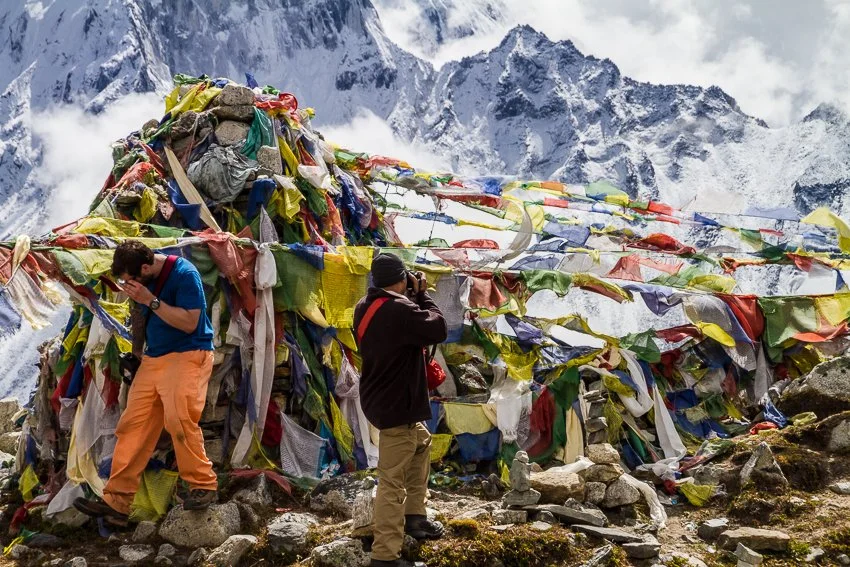
Pile of colorful prayer flags and two men at the Everest Base Camp

A trek to the Everest Base Camp doesn’t have to break the bank! A local tour operator offers his money-saving tips.

Undertaking the legendary Everest base camp trek is a dream shared by many adventure enthusiasts around the world. The appeal of standing at the base of the world’s highest mountain, surrounded by awe-inspiring Himalayan landscapes and experiencing Sherpa culture, is a truly once-in-a-lifetime trip. 

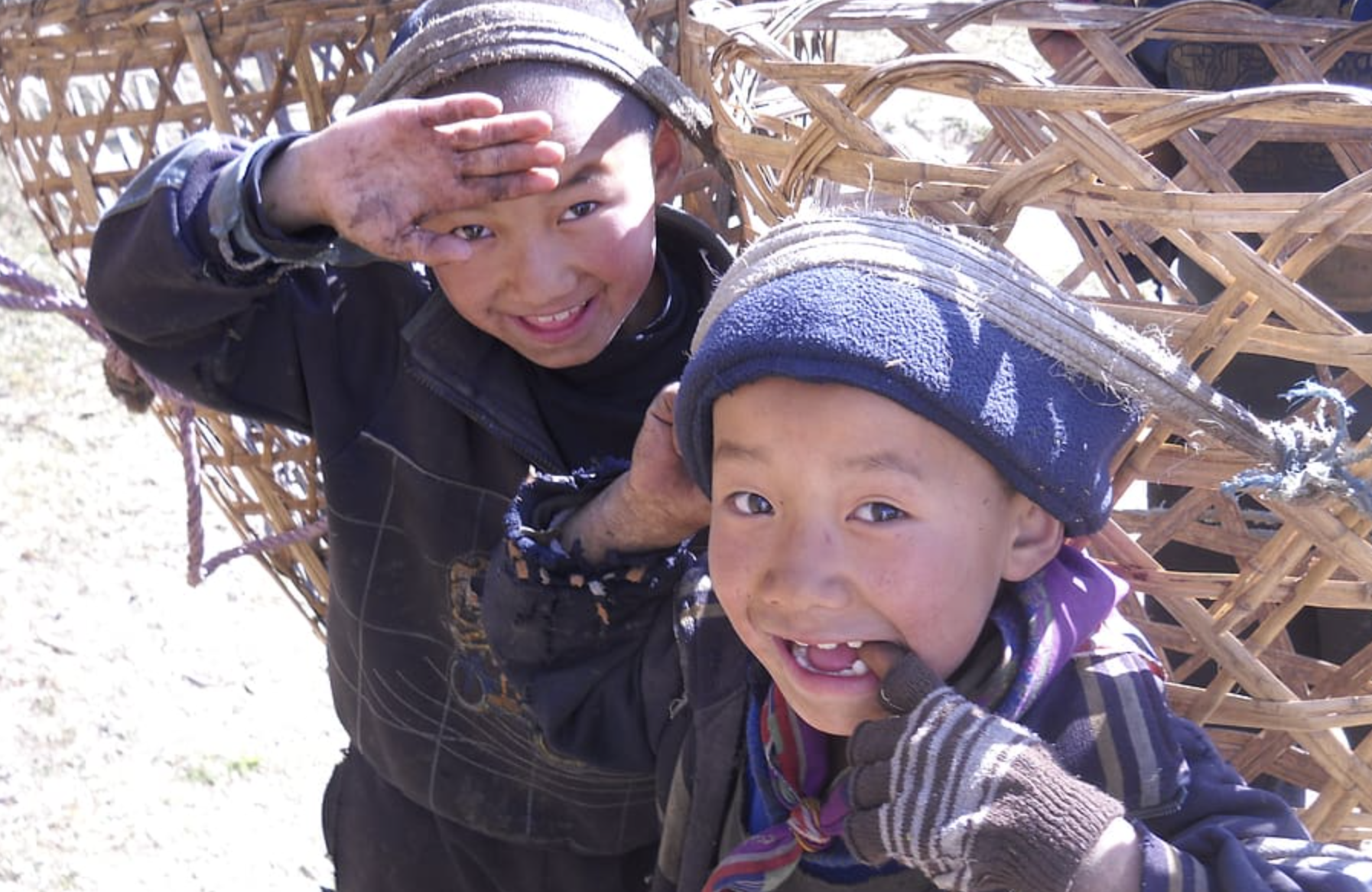
Two young Sherpa boys wearing hats, one with hand on forehead, the other with a finger in his mouth

Take the time to meet some Sherpas and learn some of their customs.

While it may seem like an expensive undertaking, as a co-founder of a local tour operator, I’m here to reveal budget-friendly tips and insights that will make your Everest base camp trek an affordable reality. Get ready to immerse yourself in the breathtaking beauty of the Himalayas…without worrying much about breaking the bank.

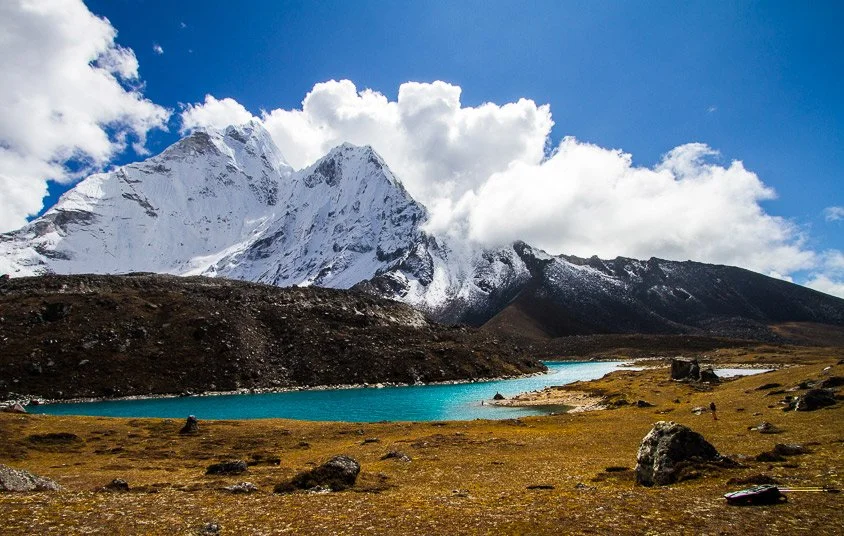
The backside of Ama Dablam, with Mount Everest, covered in snow, in the distance, and a gorgeous turquoise lake in the foreground

The backside of Ama Dablam with its gorgeous turquoise lake

Planning and Preparation for an Affordable Everest Base Camp Trek

Here are some key points to consider:


Go in the low seasons. 

Planning for the trek during the off-peak seasons (December to February and June to August) can significantly reduce the overall cost. Not only will you avoid the peak tourist flow on the trail, but you may also find discounted lodges and domestic and international flights.

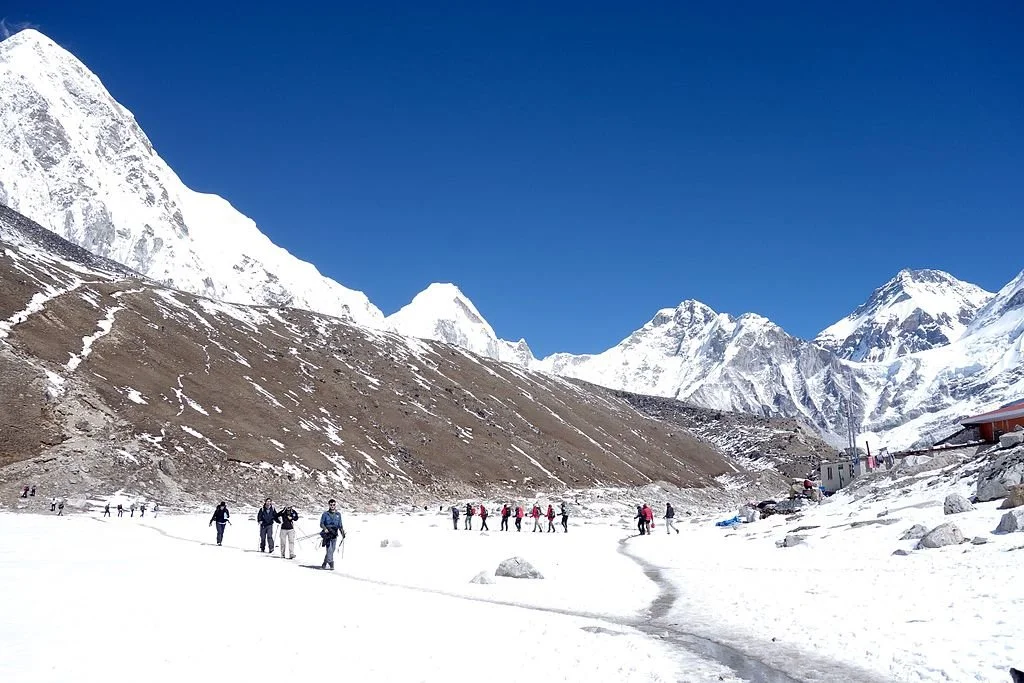
Groups of trekkers against the snow on Everest Base Camp adventure

Share the cost of a tour by joining a group.

Take a group tour. 

While independent trekking can be convenient and offer personal support from a guide and porter, joining a group is more cost-effective — you’ll be sharing the charges to hire a guide and porters. 

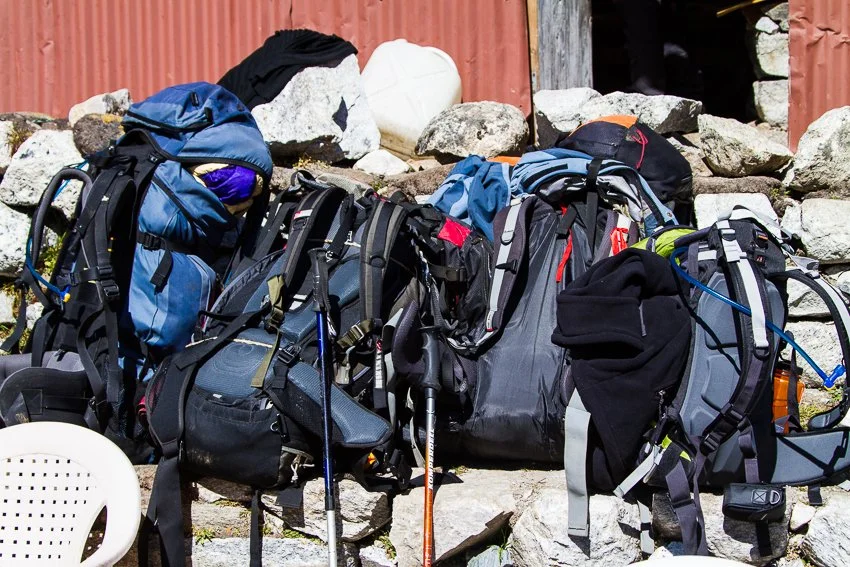
Line of backpacks and gear on ground on Everest Base Camp trek

There are opportunities to rent or borrow gear if you don’t want to make the investment.

Rent or borrow trekking gear. 

Make a detailed list of essential items, such as sleeping bags, trekking poles, hiking boots and waterproof jackets. Look for gear rental shops in Thamel or consider borrowing equipment from fellow trekkers. You also might be able to borrow items like a sleeping bag or down jacket from some of the major Kathmandu-based tour operators.

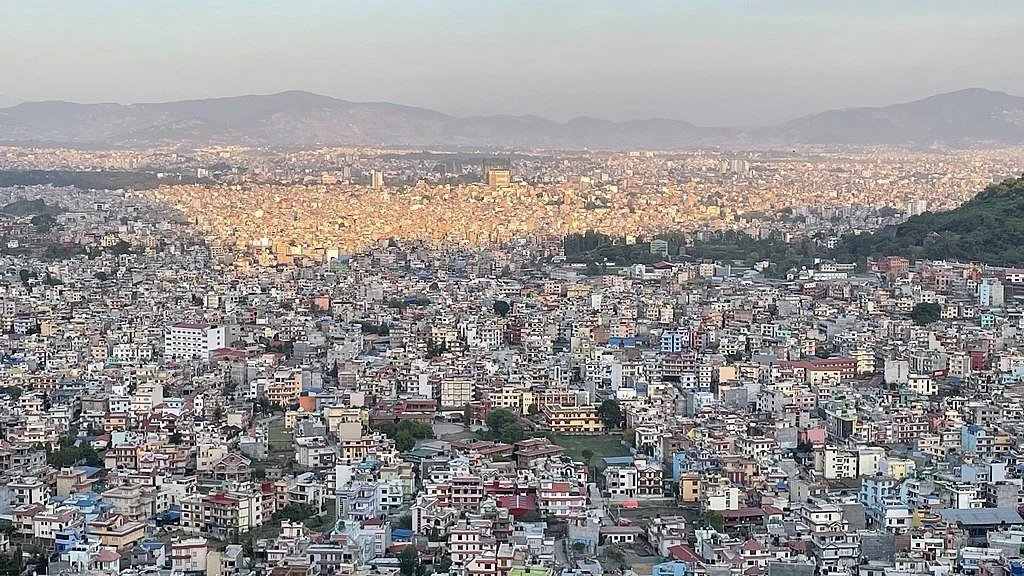
The city of Kathmandu sprawls out, jampacked with colorful buildings in this aerial view

The sprawl of Kathmandu. You can bus to Salleri, the jumping-off point for the trek, which is cheaper than flying.

Take the bus. 

A public bus or shared jeep from Kathmandu to Salleri may be a longer journey, but it’s a cheaper alternative to flying to and from Lukla.

Budget-Friendly Accommodations Along the Everest Base Camp Route

Getting affordable accommodation is entirely possible with following tips:

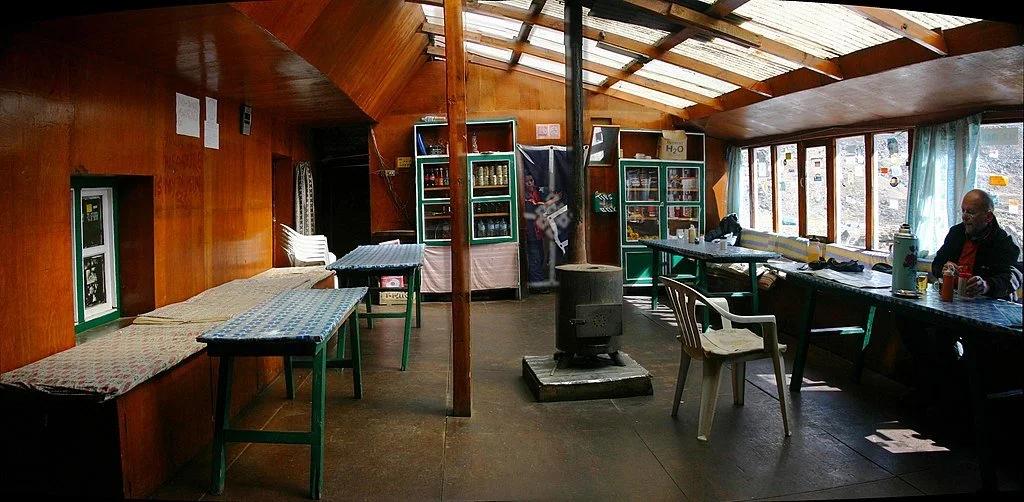
Interior of teahouse lodge on Everest Base Camp trek, with man at table

The teahouse lodges are much more affordable than their luxury counterparts.

Stay in teahouse lodges. 

Along the trail, there are numerous teahouse lodges that offer basic accommodation and meals. These no-frills lodges are more budget-friendly compared to luxury lodges like Yeti Mountain Home. Embrace the simplicity and warmth of teahouse stays, which also provide an opportunity to connect with other like-minded trekkers.


Share a room. 

To further minimize trip costs, consider sharing rooms with other trekkers. Many teahouses offer twin and triple sharing rooms, allowing you to split the bill. 

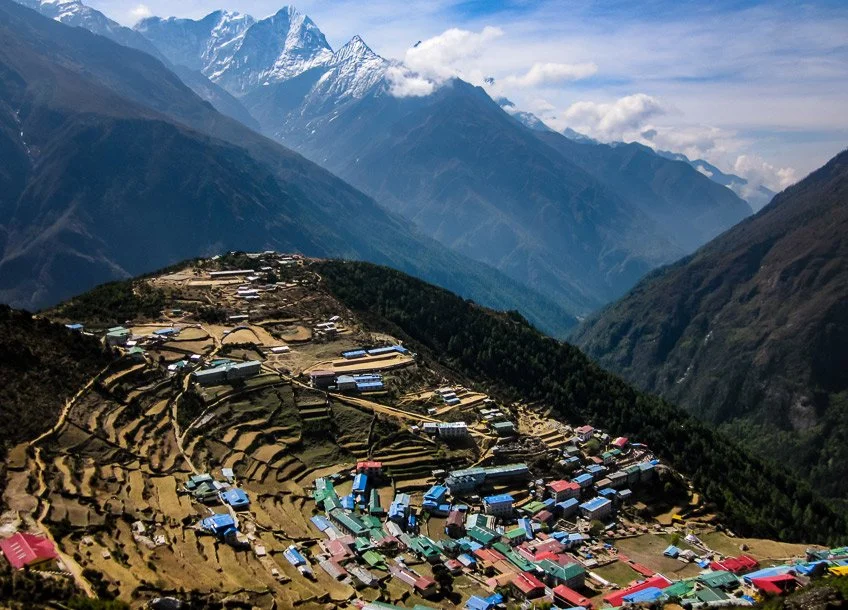
Aerial view of the colorful buildings built into the mountain in the village of Namche Bazaar along the Everest Base Camp trek

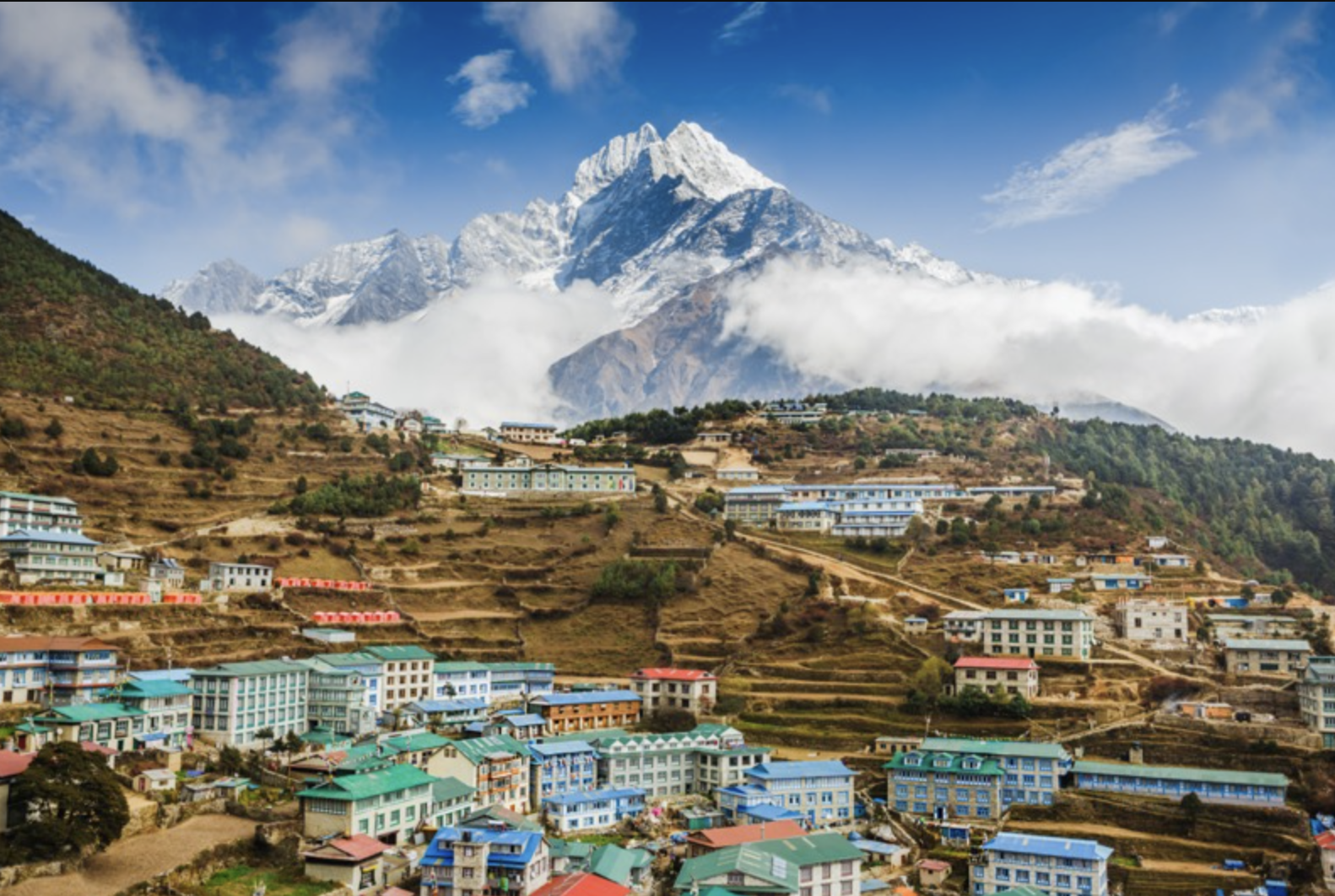
Colorful Namache Bazaar is built into the side of a hill and is home to most of the Sherpas in the travel biz.

 Shoot for lower-altitude villages. 

As you go higher, the cost of teahouse stays tend to increase. Choosing to stay more in lower-altitude villages, such as Namche Bazaar and Tengboche, can help save money and, at the same time, help you acclimatize to the altitude.


Everest Trek Food on a Budget

These handy tips on food options will help cut down costs of an Everest trek:

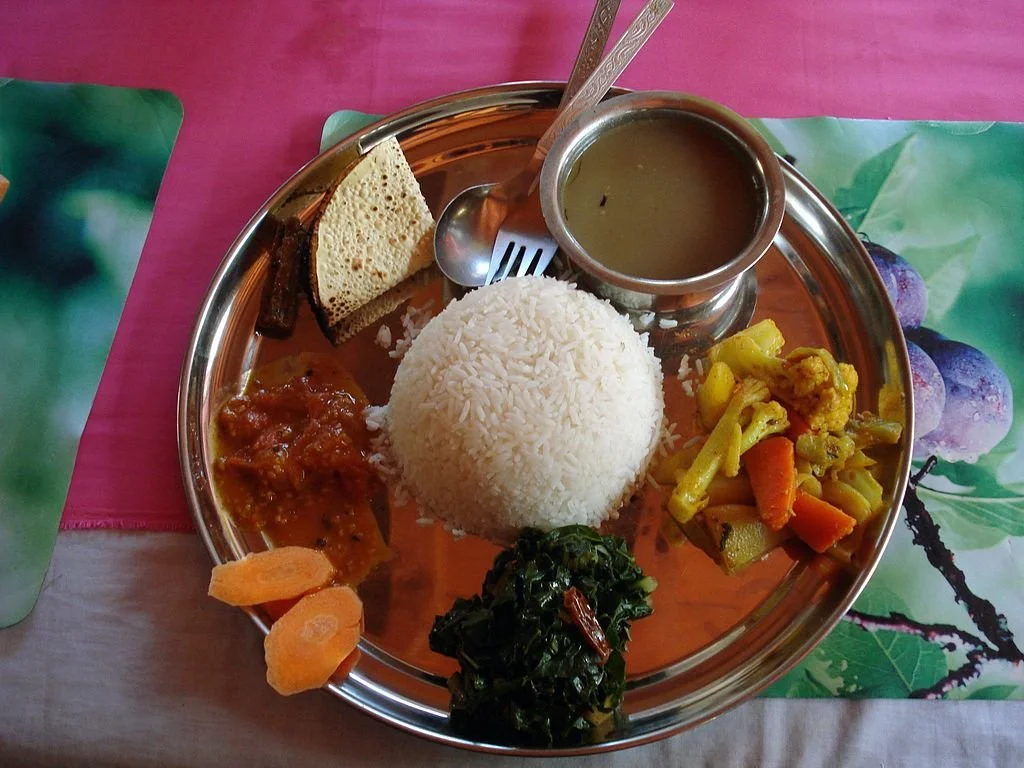
Nepalese dish dal bhat, with rice, curried veggies, spinach and broth

Teahouses serve dhal bhat, a traditional Nepalese dish — and it’s often all-you-can-eat.

Eat at teahouses. 

Go for local cuisine and enjoy the traditional dhal bhat (rice and lentil soup) offered in all teahouses. The meal provides a hearty — and affordable — source of energy. And you can get refills at no additional cost.

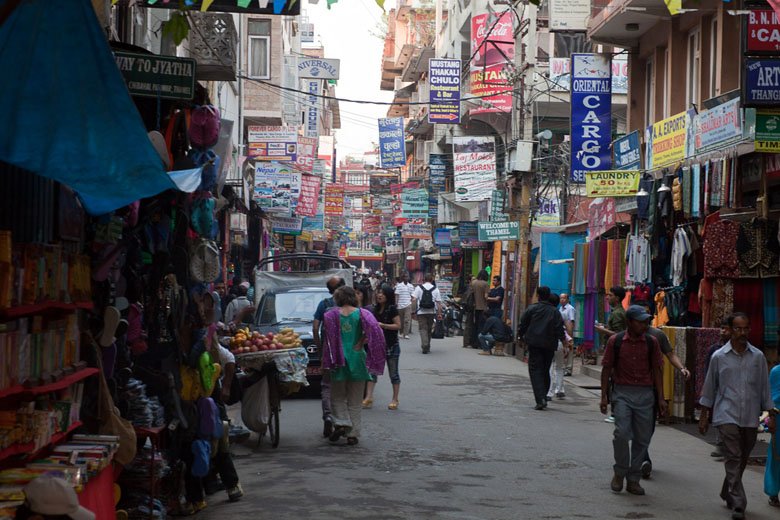
Kathmandu, Nepal street, with lots of colorful signs, stores and pedestrians

When you’re in Kathmandu, make sure to get a bunch of snacks to take with you.

Pack snacks. 

Stock up on energy bars, nuts and dried fruit in Kathmandu to avoid higher-cost options along the trail. These snacks are really helpful to quickly and cost-effectively boost your energy on the trail.

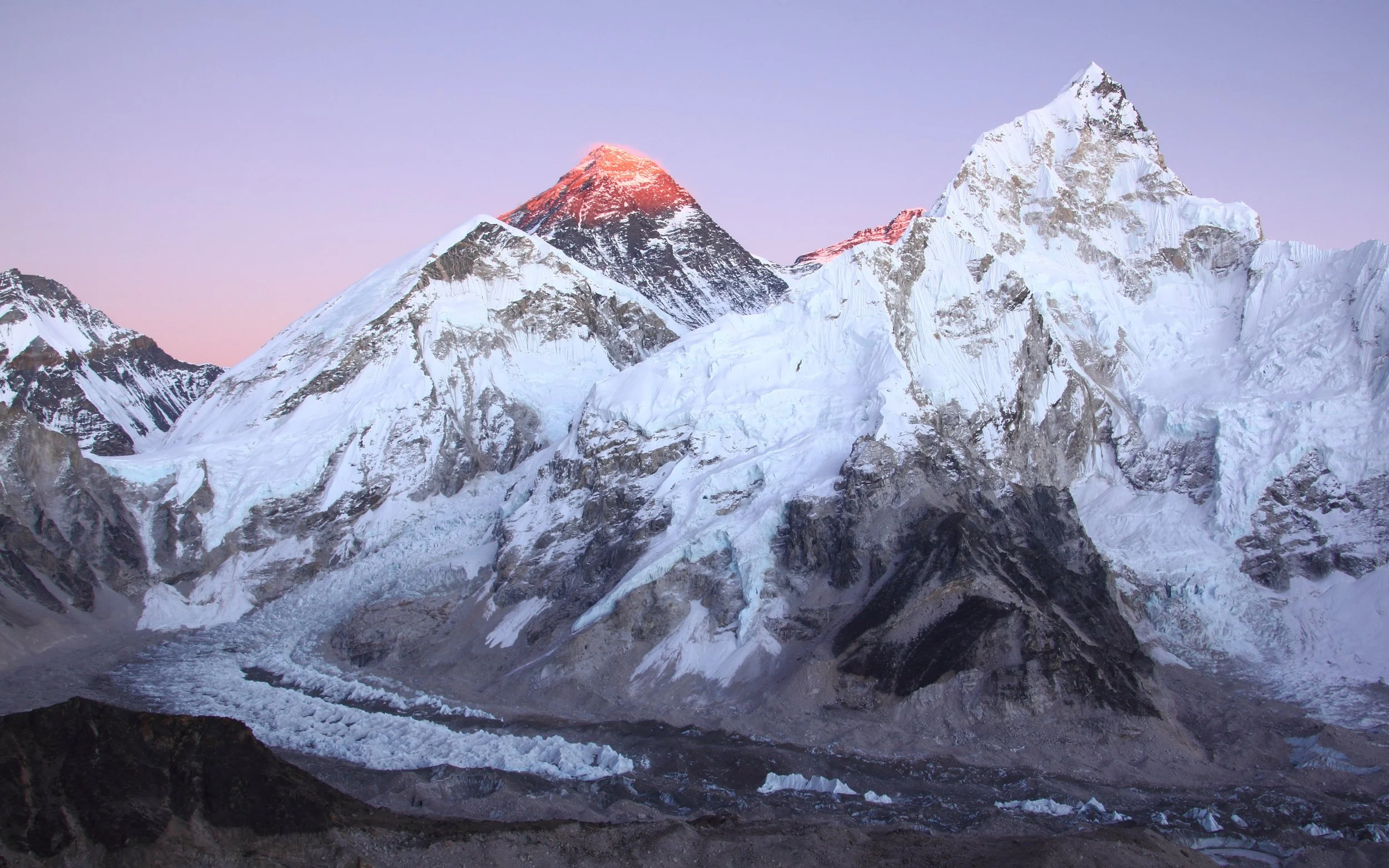
Sunset view from Kala Patthar, Khumbu Glacier in the foreground

The sunset over Kala Patthar is a highlight of the excursion.

Permits for an Everest Base Camp Trek

Navigating the permit process and organizing trip logistics can be overwhelming. But the good news is they’re not too expensive. Here’s what you need to know:


TIMS Card

Cost: 2000 Nepalese rupees (about $15)

The Trekkers’ Information Management System card (commonly known as a TIMS card) is a necessary permit for Everest base camp trek. Get the card in Kathmandu by visiting the Nepal Tourism Board or the office of the Trekking Agencies Association of Nepal.


Sagarmatha National Park Permit

Cost: NPR 3000 (about $23)

You must get a pass for Sagarmatha National Park to complete an Everest base camp trek. Obtain an SNP permit in Kathmandu, or you can get one on the trail.


Khumbu Gau Palika Card

Cost: NPR 2000 (about $15)

Another essential permit you need to enter the trail is the Khumbu Gau Palika Card. You can also obtain one on the trail. However, fill out the form in advance and keep the submission number for quick processing. Follow this link to register for the permit.

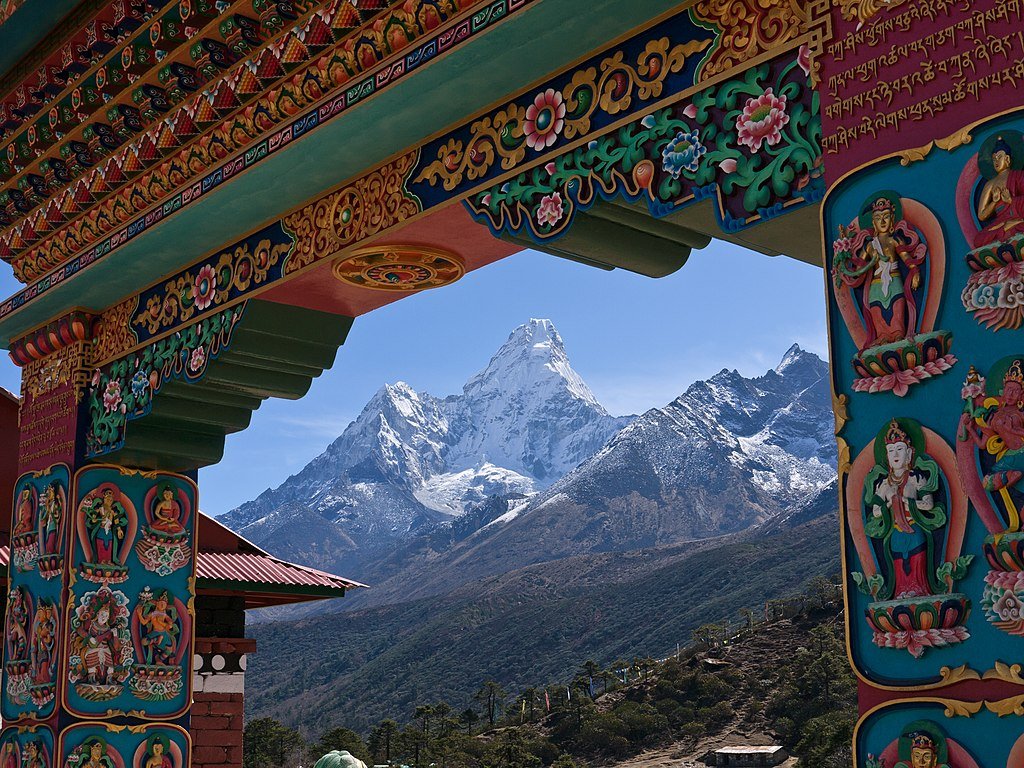
The colorfully painted archway leading to the Tengboche Monastery in Nepal with Mount Everest visible in the distance

A trek to the Everest Base Camp may be a priceless spiritual experience — but it doesn’t have to cost a fortune.

Everest Base Camp on a Budget

Planning for a budget-friendly Everest base camp trek allows you to experience the beauty of the Himalayas without worrying too much about your budget. By carefully planning your trek, choosing teahouses, eating local cuisine, and managing permits and logistics competently, you can make your dream of a Mount Everest base camp trek a reality. Get ready for breathtaking landscapes, meet Sherpas, experience their culture and experience unforgettable memories on a Himalayan adventure.

An Everest base camp trek is an exciting journey of self discovery, and with the right approach, it can be both affordable and life-changing. So, tie up your hiking boots, pack your backpack, and prepare for an impressive Himalayan adventure without the hefty cost. –Madhav Prasad 


Madhav is the tour coordinator and co-founder of Mosaic Adventure in Kathmandu. 

What to Know Before Embarking on an Antarctic Peninsula Cruise

Penguins and glaciers and icebergs, oh my! Pro tips and incredible sights to see in the Antarctic, including Drake Passage, Graham Land, Port Lockroy, Palmer Station, Deception Island, Half Moon Island and Paradise Bay. 

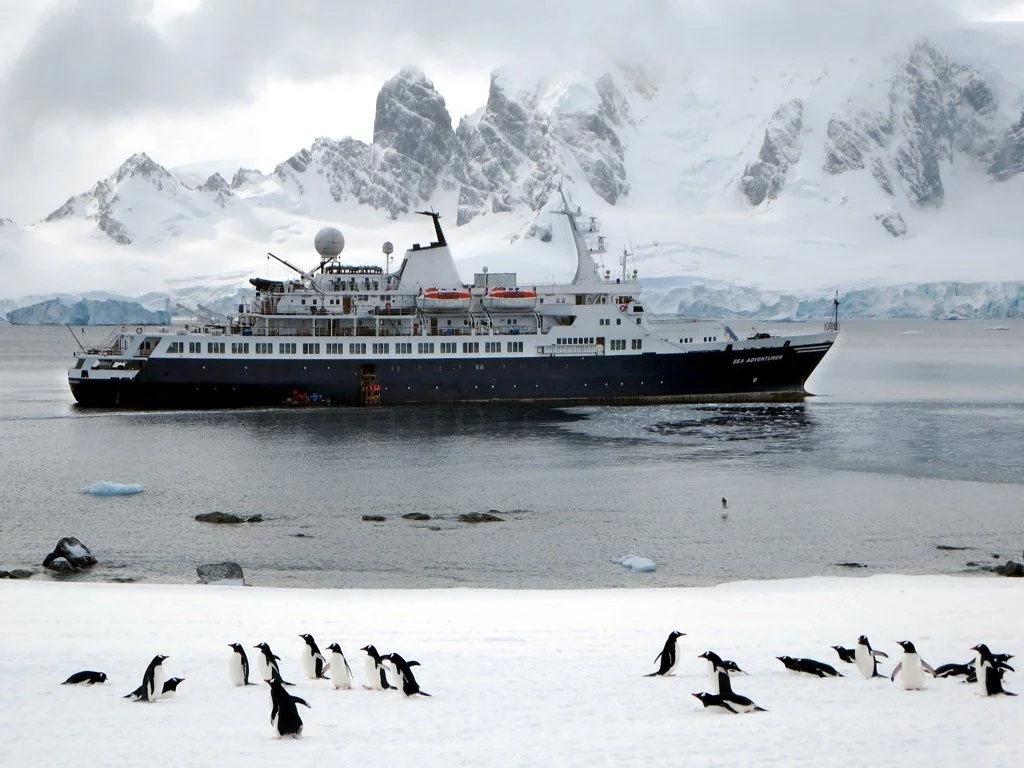
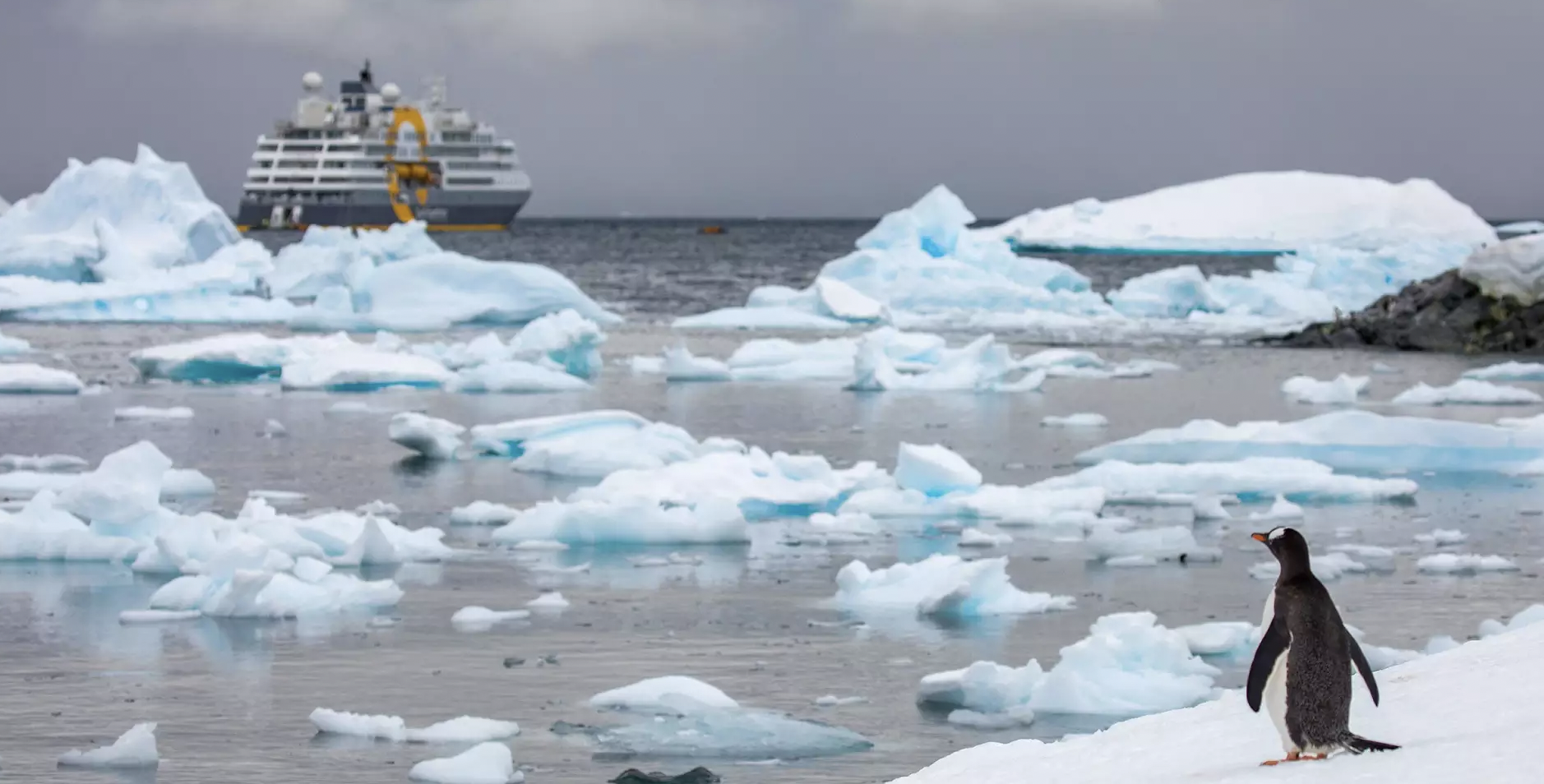
Penguin looks out at icebergs and large cruise ship in the Antarctic

A cruise through the Antarctic isn’t for the faint of heart — but could be the trip of a lifetime.

If you’re an adventure seeker, the Antarctic Peninsula is the ultimate extreme destination. The Antarctic Peninsula, also known as Graham Land or Palmer Peninsula, is the northernmost part of Antarctica and part of the larger West Antarctic Peninsula. It lies about 600 miles south of South America.

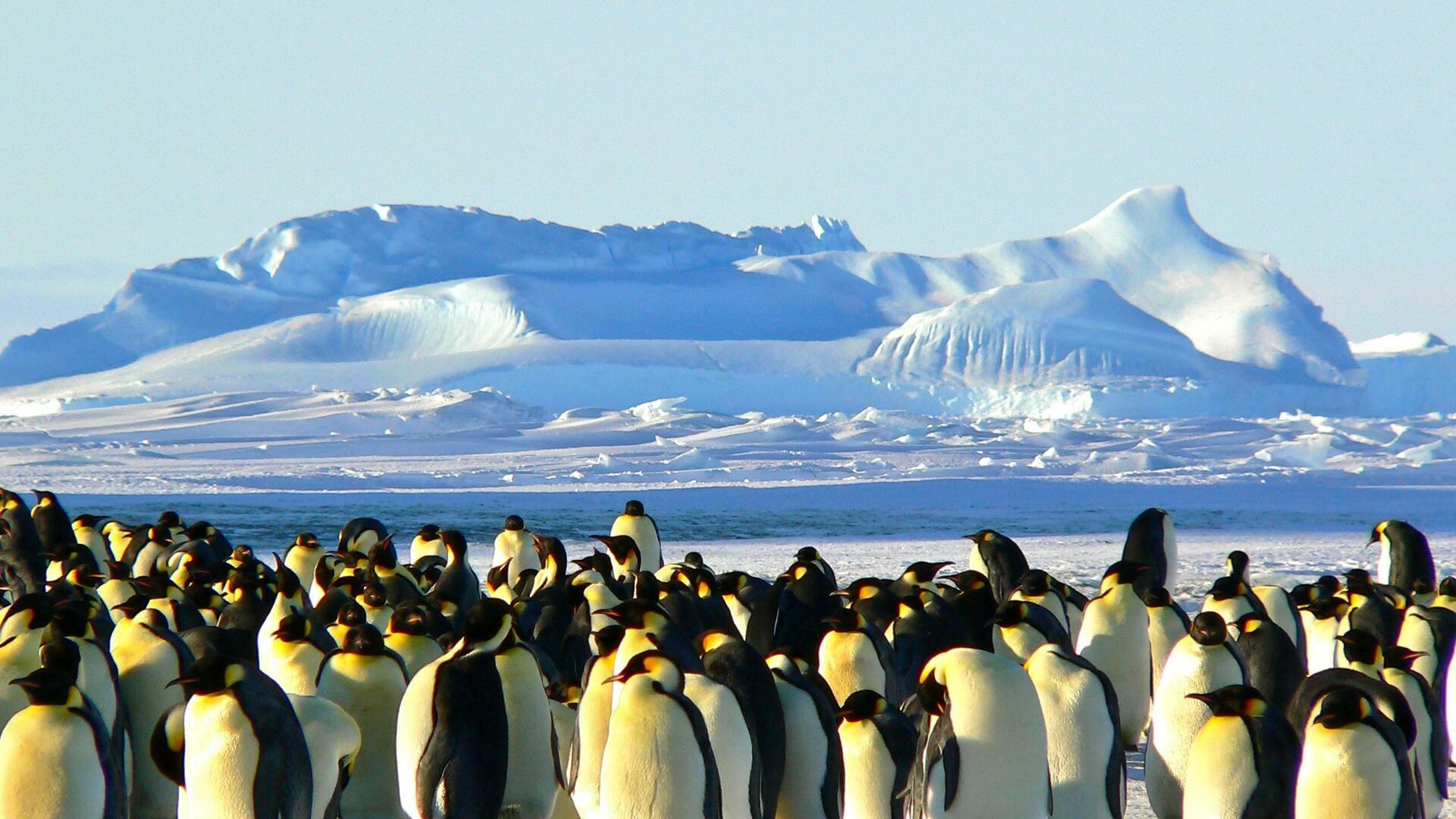
The landscape is mountainous, and there are numerous volcanoes in the region. You can expect to see a wide range of wildlife, including emperor penguins, killer whales and seals.

Altitude sickness might not be something you think of when visiting the Antarctic, but the highest point is 2.5 miles above sea level.

Taking an Antarctic Peninsula cruise is the best way to explore this remote, inhospitable region.

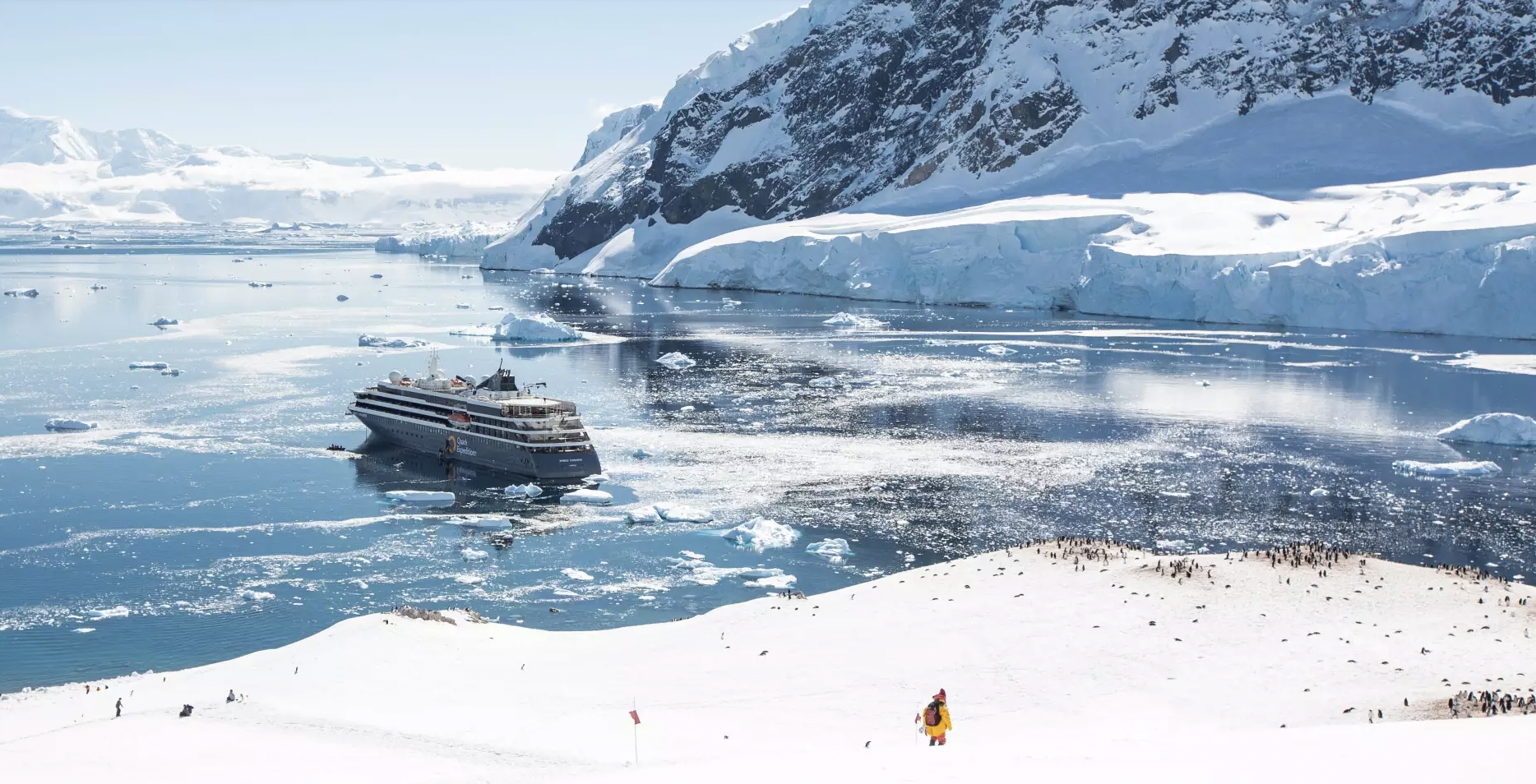
Large cruise ship offshore of Antarctic Peninsula, where a person in yellow coat and backpack walks

This isn’t your typical cruise, that’s for sure!

Essential Tips for an Antarctic Peninsula Cruise

Find the right time to go

The best time to take a cruise to the Antarctic Peninsula is during the austral summer, which runs from November to March. During this period, the weather is more stable and the days are longer. 

Sunsets can last up to three hours — making for some spectacular photographs. 

Plus, you’re more likely to see wildlife, as animals are more active during the summer. The first penguin chicks hatch in mid-December, so if you want to catch a glimpse of them, this is the ideal time to go. The whales also begin to arrive in mid-December, and there are plenty of them in January. The ice thins a bit, too, allowing tourists to explore farther south.

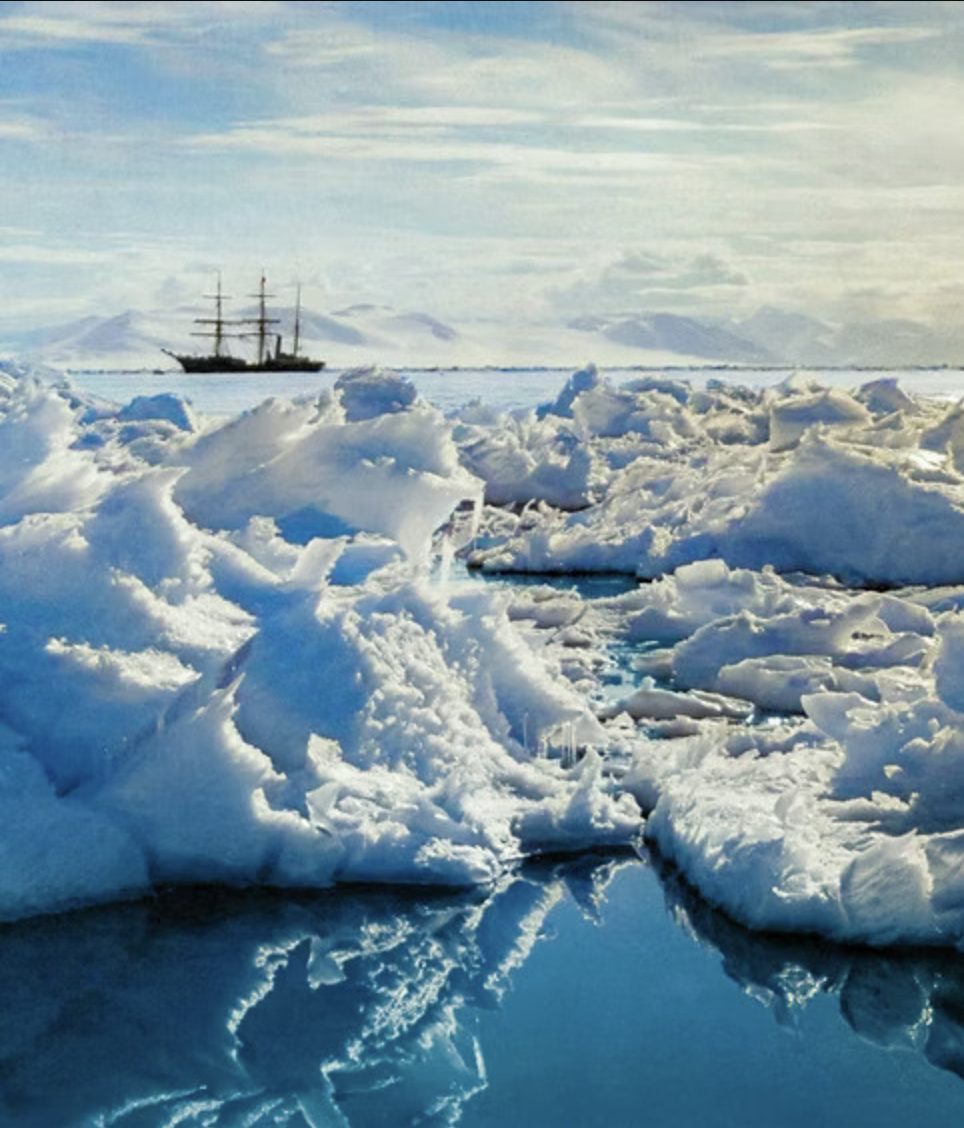
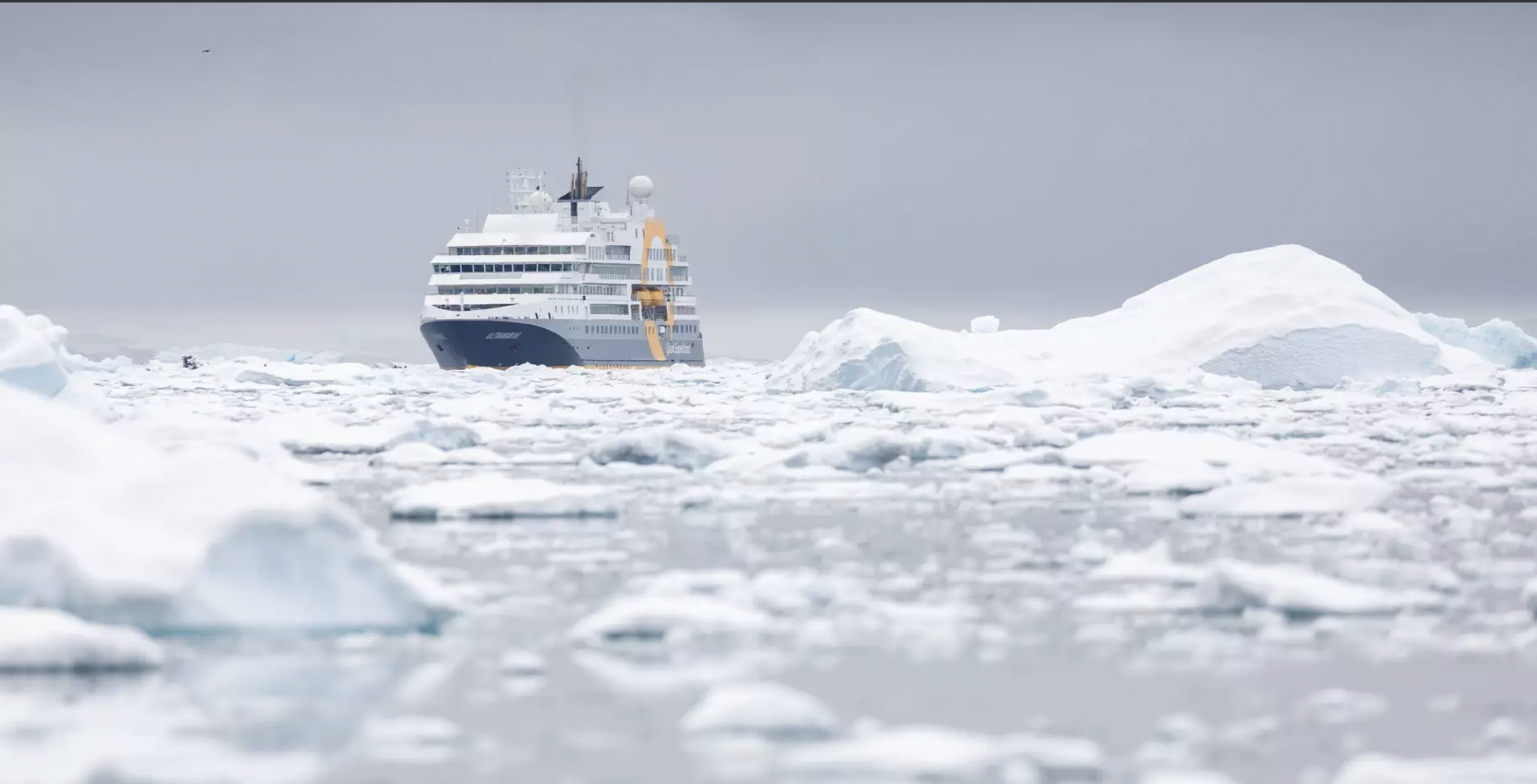
Antarctic cruise ship in ice-filled water

A luxury cruise ship plies the ice-filled water of the Antarctic.

Choose the right cruise. 

Luxury cruise ships are popular as they offer a variety of itineraries and amenities such as all-suite accommodations, fine dining and experienced guides. However, don’t just settle for any cruise. Conduct ample research to decide if a large or small boat is more suitable for your needs.

A top factor to consider when choosing an Antarctic Peninsula cruise is your budget. You should decide first how much you’re willing to spend. You don’t want to go too high and break the bank, but you also don’t want to go too low and risk a subpar experience. With these criteria in mind, you can narrow down your options and find a cruise that best fits your budget and interests. 

Pack properly. 

The Antarctic Peninsula is cold and windy, so it’s essential to pack the right clothes for the trip. Bring lots of layers and wear waterproof winter gear. 

Don’t forget sun protection, as the sun can be very strong even during the cold season.

Bring several pairs of gloves, a hat, a scarf and sunglasses to protect yourself from the elements. Ensure your clothing is comfortable and non-bulky so you can easily move around during shore visits.

Finally, if you’re an amateur photographer, bring enough memory cards and batteries for your camera. 

Pro tip: Pack a power strip, as the cabins on cruise ships usually have limited electrical outlets.

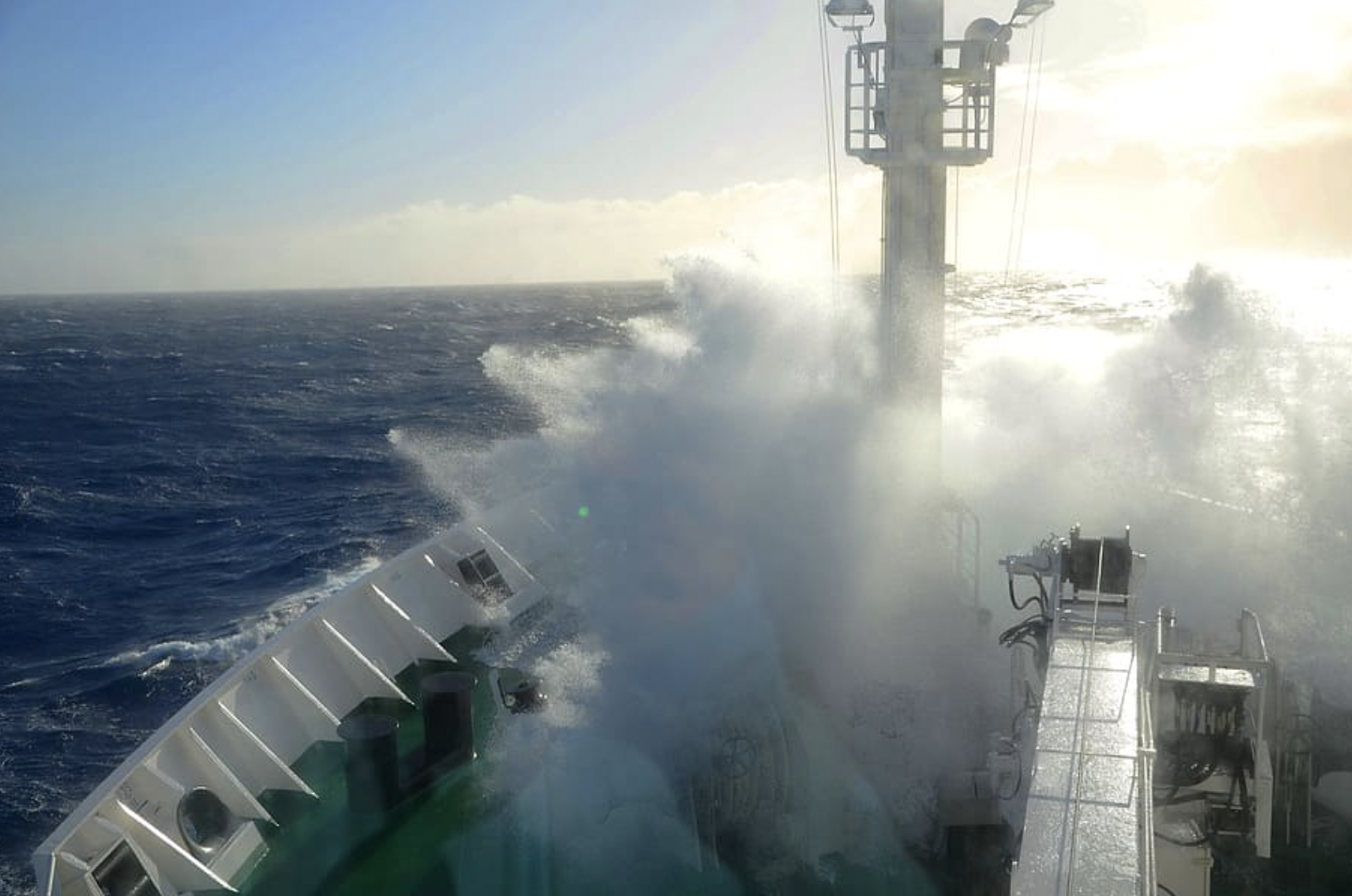
Waves crashing over the bow of a large ship while crossing the Drake Passage

The roughest stretch of water is the Drake Passage — one of the most turbulent areas in the world.

Prepare for rough seas. 

Be ready to face the unique challenges of sea travel, including:

The Drake crossing: To reach the peninsula, your cruise ship will cross the Drake Passage, where the Atlantic and Pacific Oceans meet. This is one of the roughest stretches of sea in the world. So you never know if you’re going to experience the turbulent “Drake shake” or the tranquil “Drake lake.” I recommend contacting your doctor for any advice before you go and packing enough anti-seasickness medication for this stretch.

Altitude sickness: It might not be something you think of, but the highest point in Antarctica is 2.5 miles (over 4,000 meters) above sea level. On top of that, the average temperature in summer is around -13°F. Drier air, less oxygen, intense cold and harsh winds can trigger altitude sickness. The best thing to do is to drink lots of water to keep yourself hydrated. 

Know the Antarctic regulations. 

To minimize environmental impact on the peninsula, the cruise industry participates in detailed environmental assessments. They also must obey international maritime laws and coordinate itineraries through pre-season planning.

While in the Antarctic Peninsula, you have to follow International Association of Antarctica Tour Operators (IAATO) guidelines:

  • Protect the wildlife.

  • Respect restrictions in protected areas.

  • Keep the peninsula pristine. 

  • Respect scientific research stations. 

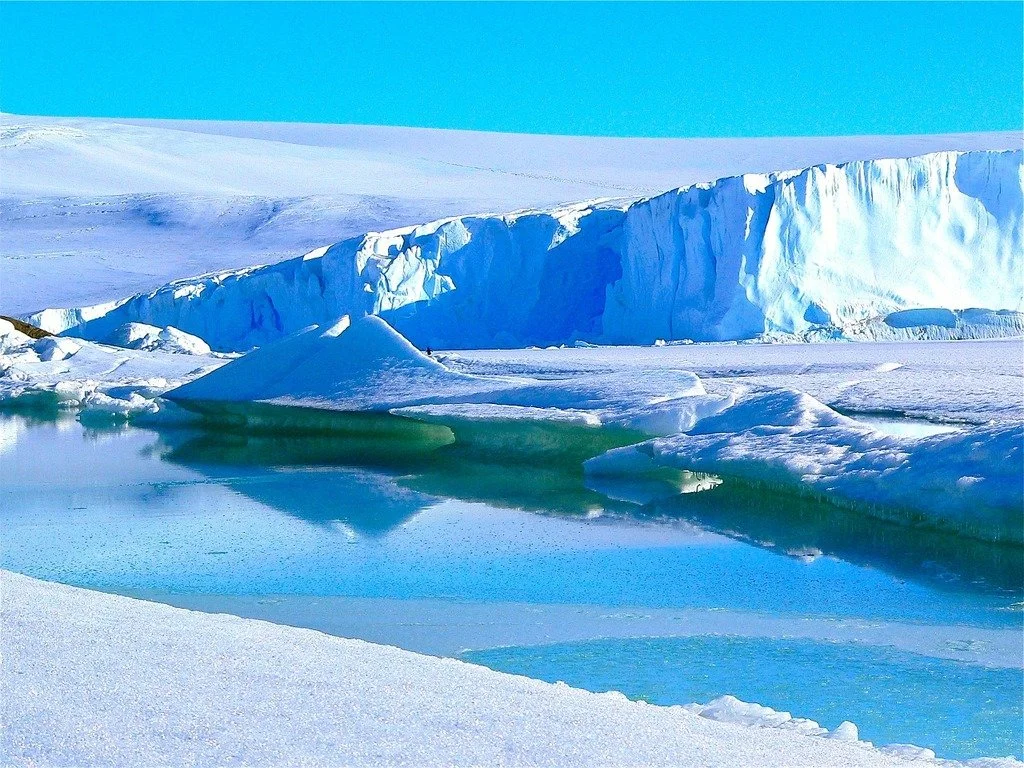
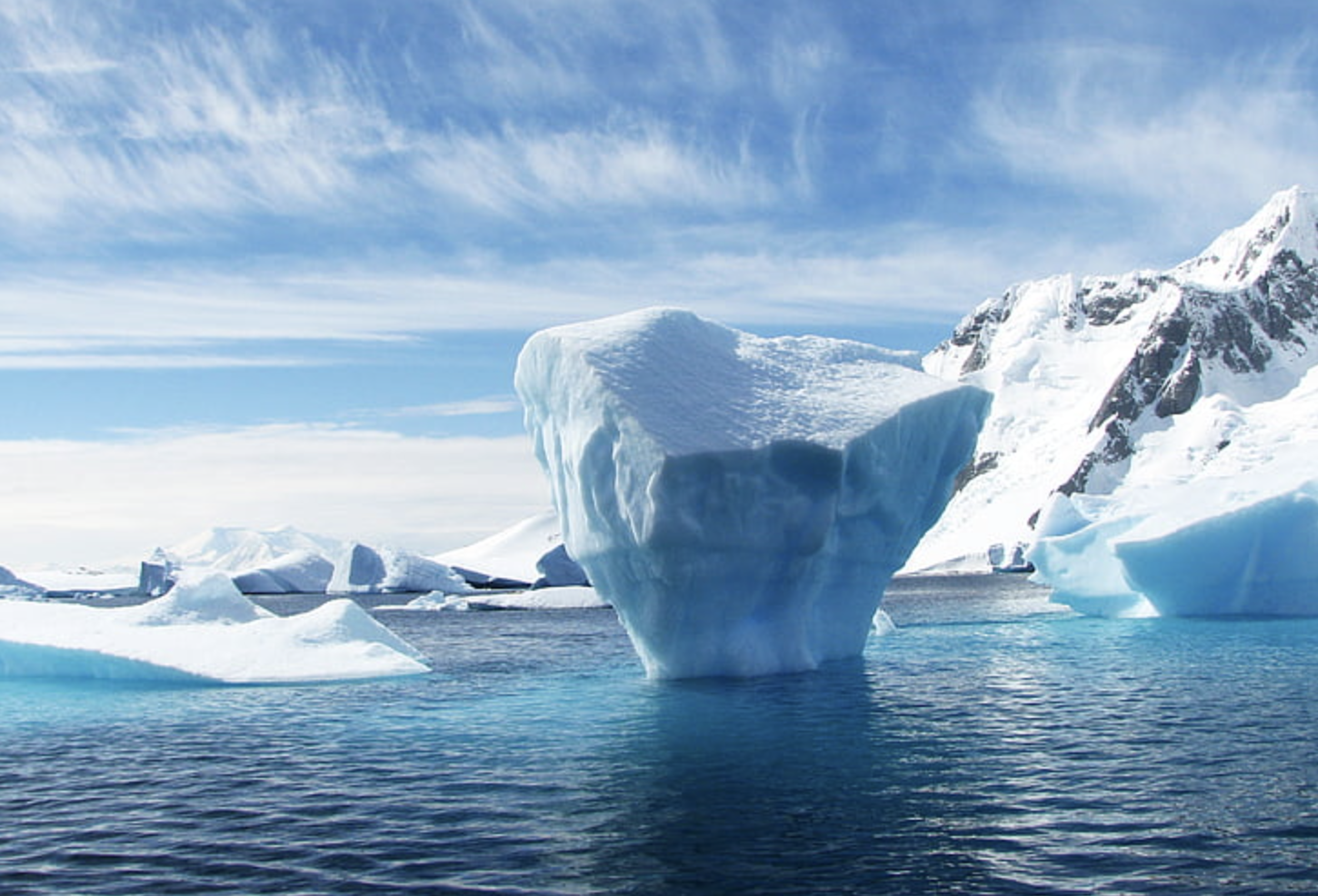
Gorgeous blue skies, waters and icebergs in Antarctica

Thanks to the plays of light in the Antarctic, you can end up with some gorgeous photos.

Photographing the Antarctic Peninsula

There’s no shortage of picturesque views in the Antarctic Peninsula. Here are my tips to capture spectacular photos:

  • During the polar summer, from November to February, the sun stays above the horizon and never sets — a phenomenon known as the midnight sun. Take advantage of the unusual plays of light to take pictures of the same features from different angles and at different times of day.

  • To capture more focused and vibrant photos, use the color contrast between land and sea. The turquoise water will provide an eye-catching backdrop for pictures with icebergs and wildlife.

  • You don’t want your camera to freeze during the expedition, so keep it warm in an insulated case.

Red tents set up in the snow on the Antarctic Peninsula

For the brave, there are outdoor activities on the Antarctic Peninsula, including camping.

Adventure Activities on an Antarctic Peninsula Cruise

Here are some activities to look forward to on the Antarctic Peninsula:

Kayaking: Kayaks are a great way to explore the nearby glaciers and islands up close and personal. Just make sure there are lifejackets and drysuits for this adventure.

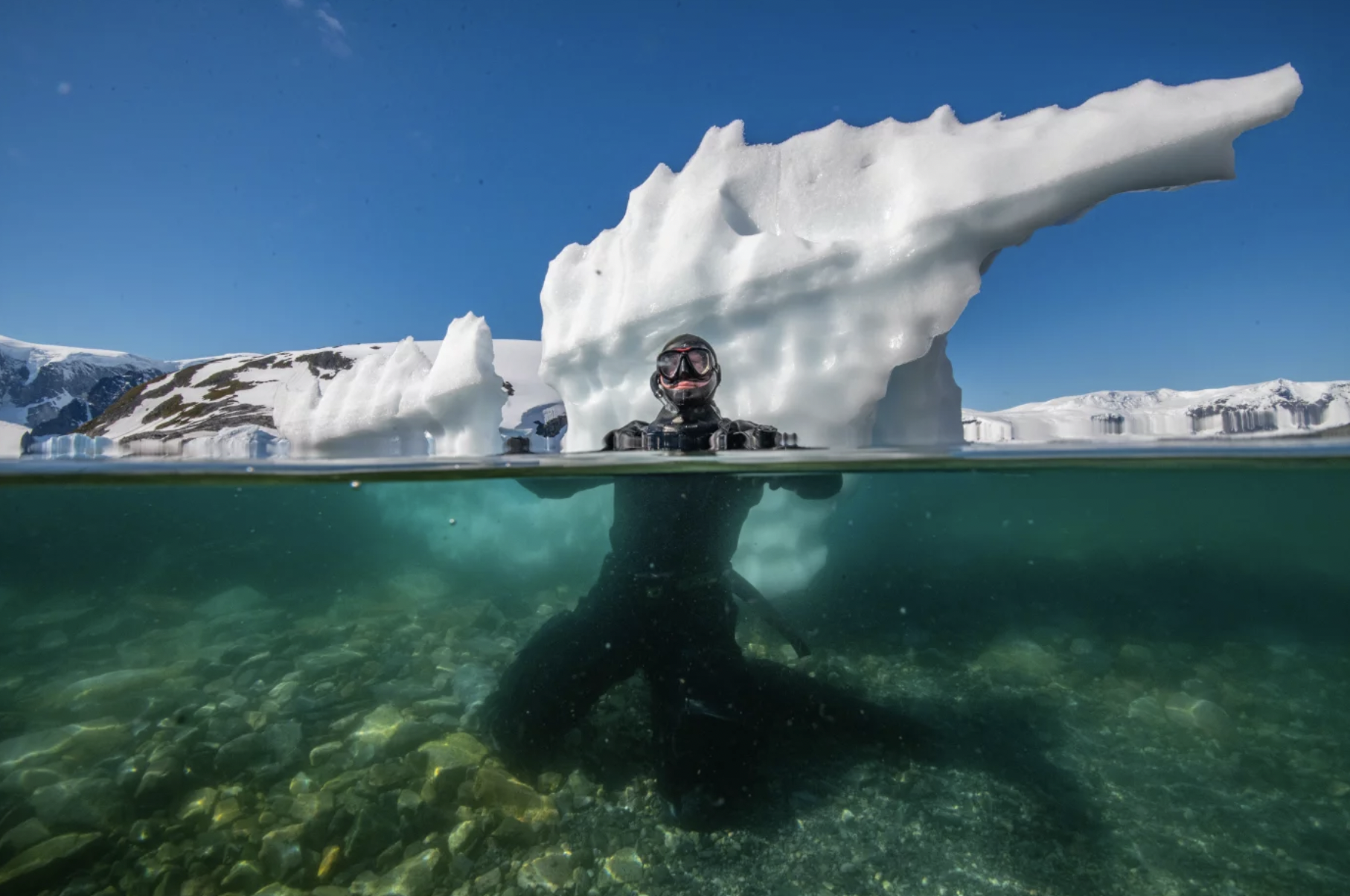
Scuba diver with head out of the water by ice formations in the Antarctic

Believe it or not, diving is an option in the Antarctic.

Diving: For certified divers, you can go 20 meters beneath the surface of the icy water. That should be deep enough to see the fascinating sea life. Whether you can dive largely depends on the weather conditions. 

Camping: Camp overnight in Antarctica under the stars for a once-in-a-lifetime experience. Just be sure to bring thermal underwear, breathable down jackets, turtlenecks, thick socks, and thermal under-gloves or warm mittens.

Hiking and mountaineering: Take guided hikes to explore some of the most stunning landscapes in the world. For experienced climbers, there are also challenging mountains to scale. Pack a pair of sturdy boots with rigid soles. Your tour operator will provide climbing gear, such as ropes. 

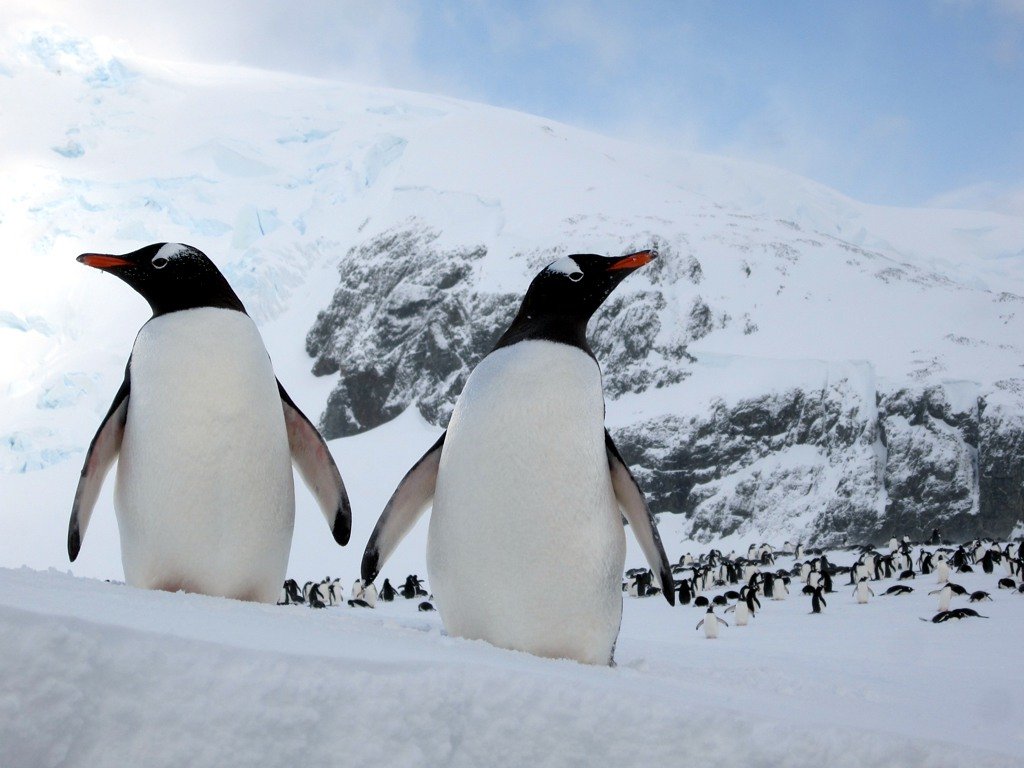
Two gentoo penguins in the foreground, with large group of other penguins on the snowy slopes of Antarctica

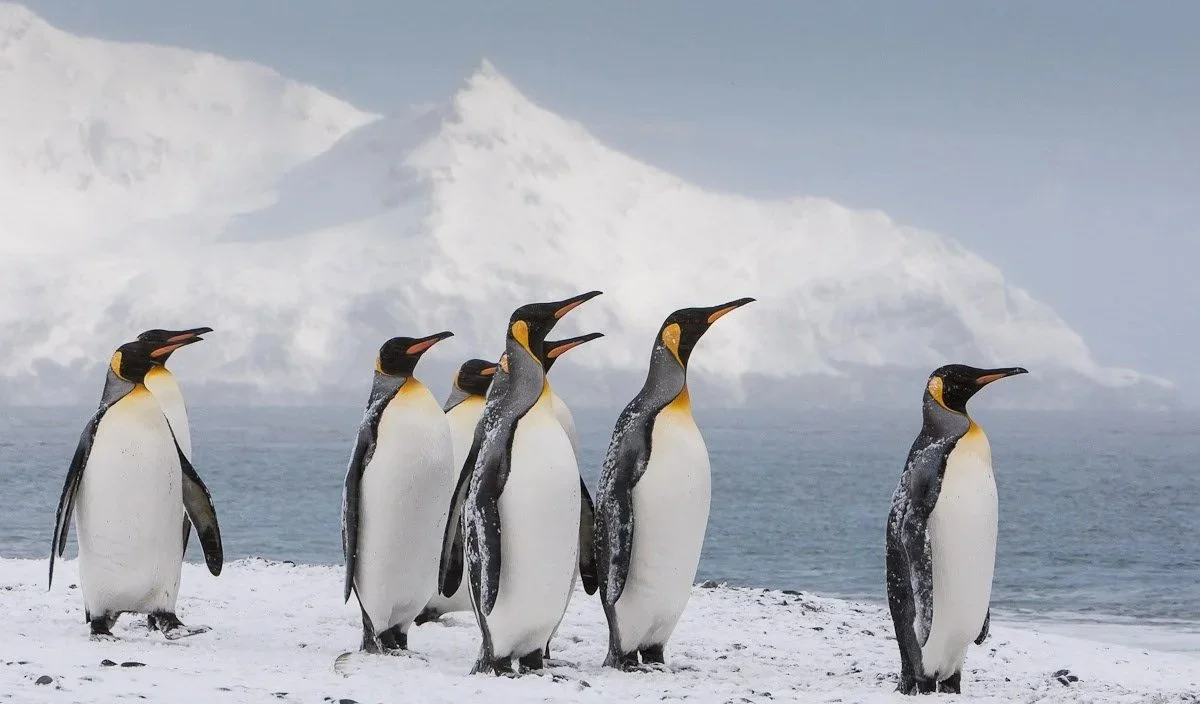
Let’s face it: Penguins, like these gentoos, are a big draw of this region.

Sights to See on an Antarctic Peninsula Cruise

Landscapes and Wildlife

Some of the natural wonders to look forward to seeing in Antarctica include:

Unique landscapes: There are many volcanic beaches, frozen tundras and ice caves to explore. Also, melting snow exposes a rugged mountain chain that’s habitat for interesting plant life and invertebrates. 

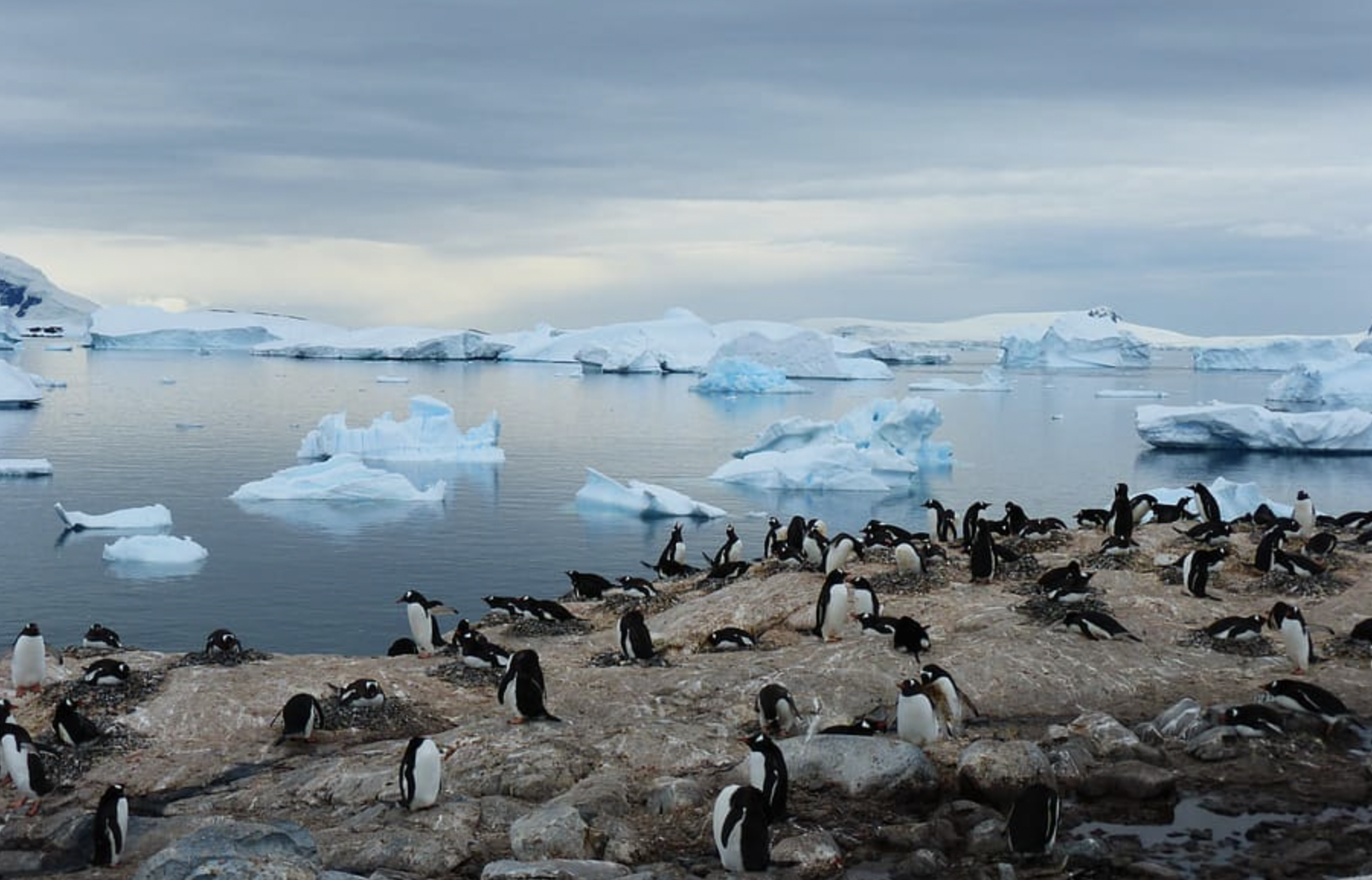
Penguins on the rocks by iceberg-filled water of the Antarctic

In addition to penguins, look out for seals, whales and other seabirds.

Wildlife: The Antarctic Peninsula has numerous wildlife species, including majestic whales and albatrosses and other seabirds. You’re sure to see different types of penguins, including the gentoo, chinstrap and Adélie penguins, as well as crabeater, leopard and Ross seals.

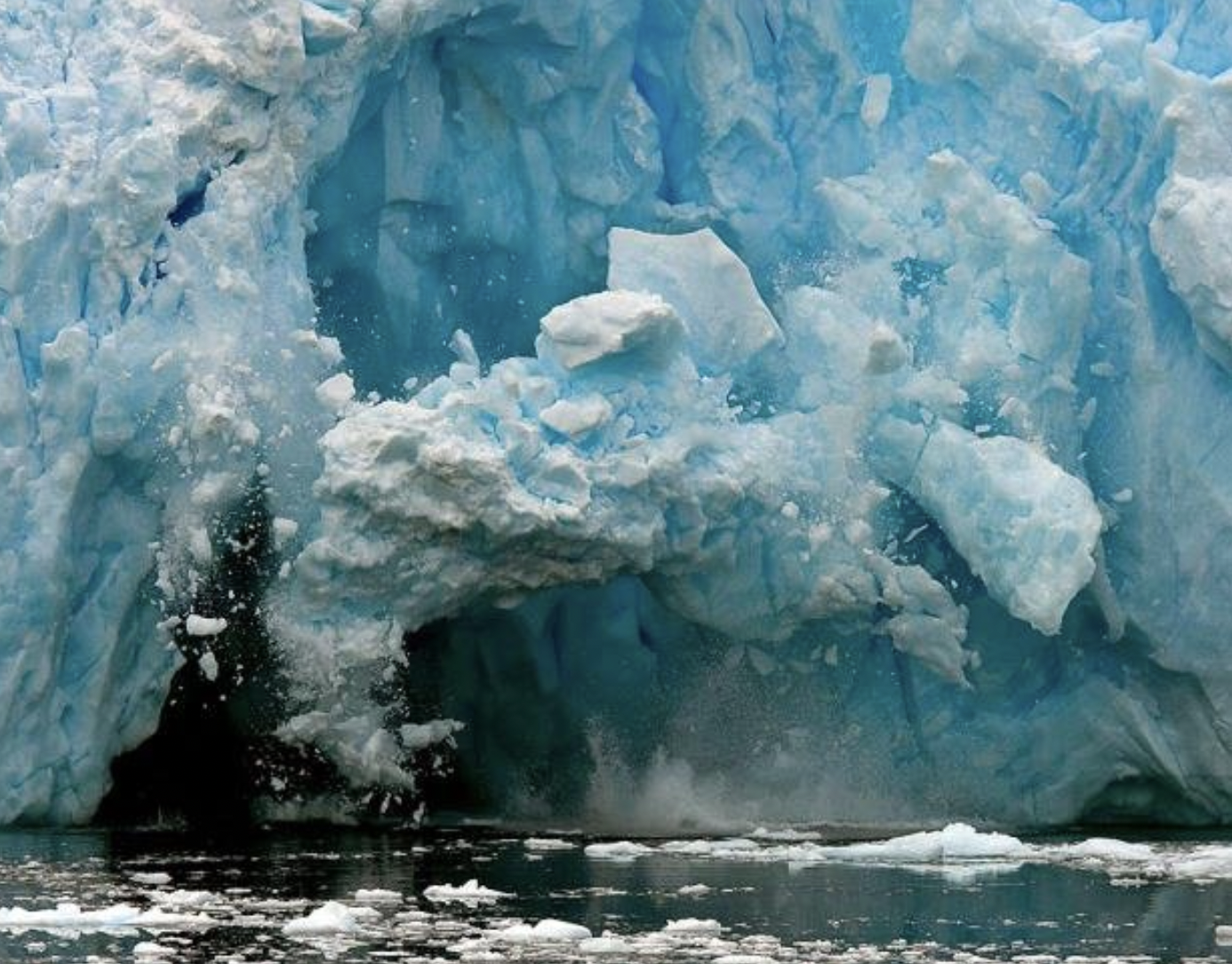
Calving glacier with parts crashing down into Neko Harbor

Neko Harbor is a good spot to try to catch a calving glacier as it sheds massive chunks of ice.

Glaciers: Witness the beauty of massive glaciers, from those towering above Lemaire Channel to the calving ones in Neko Harbor, which shed massive chunks as they go through valleys and deep fjords. Those pieces that have broken off? We call them icebergs. 

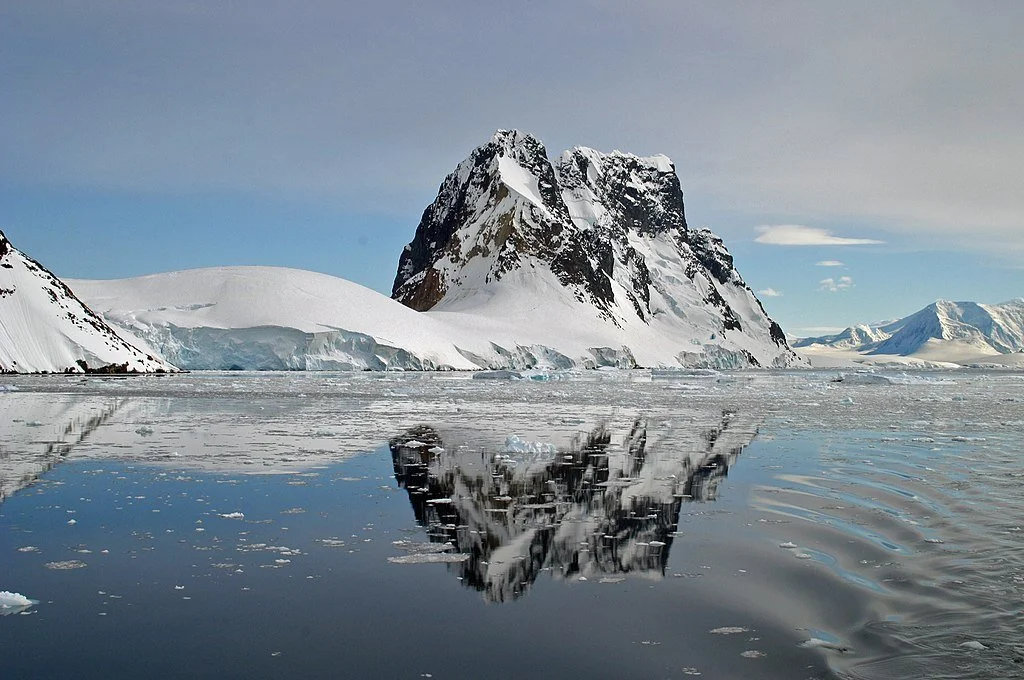
Snow-covered rock formation in Lemaire Channel, Antarctica

Lemaire Channel

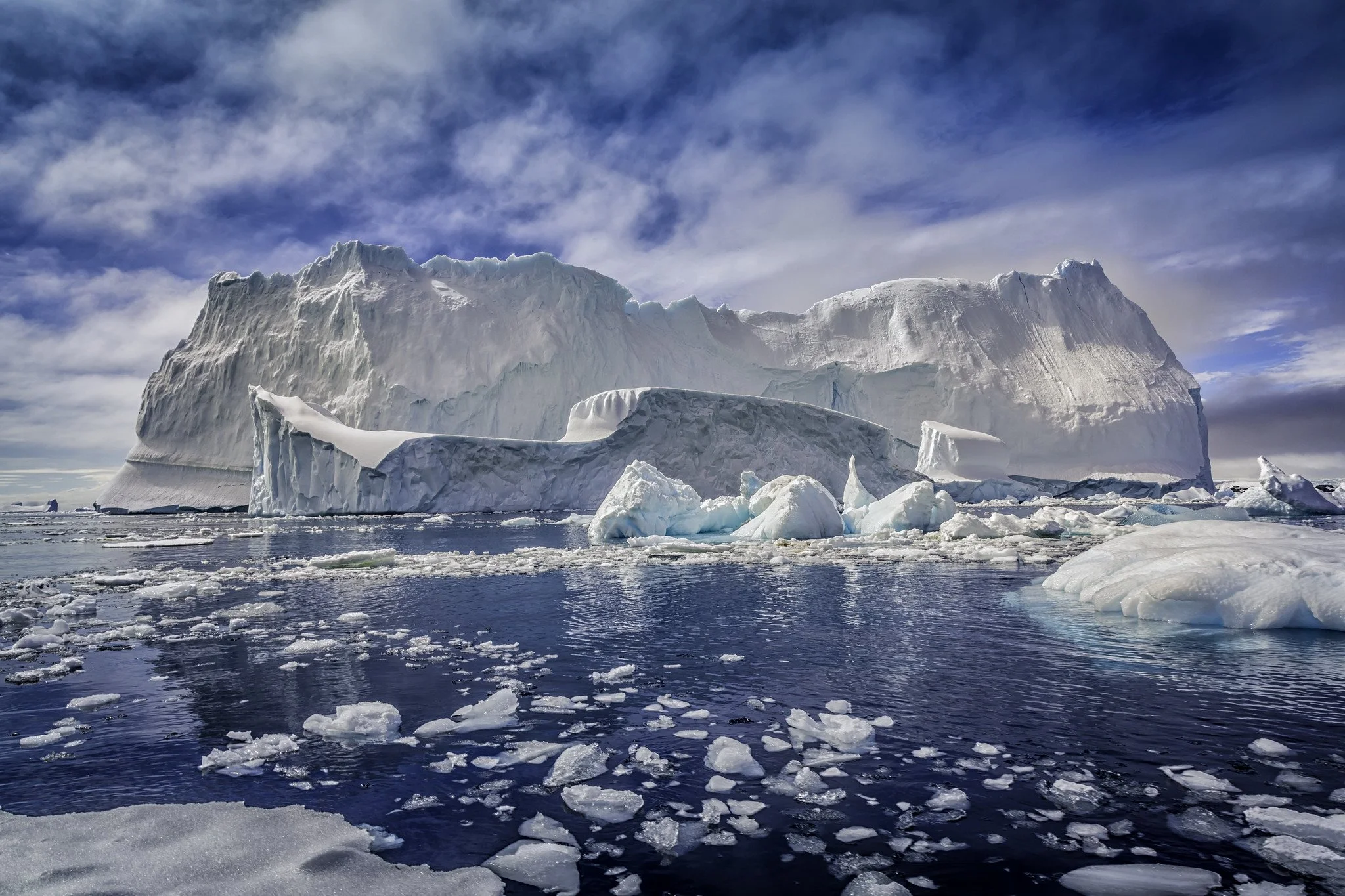
Giant icebergs: The Antarctic Peninsula is home to some of the world’s largest and most spectacular icebergs. These floating giants are awe-inspiring sights not to be missed.

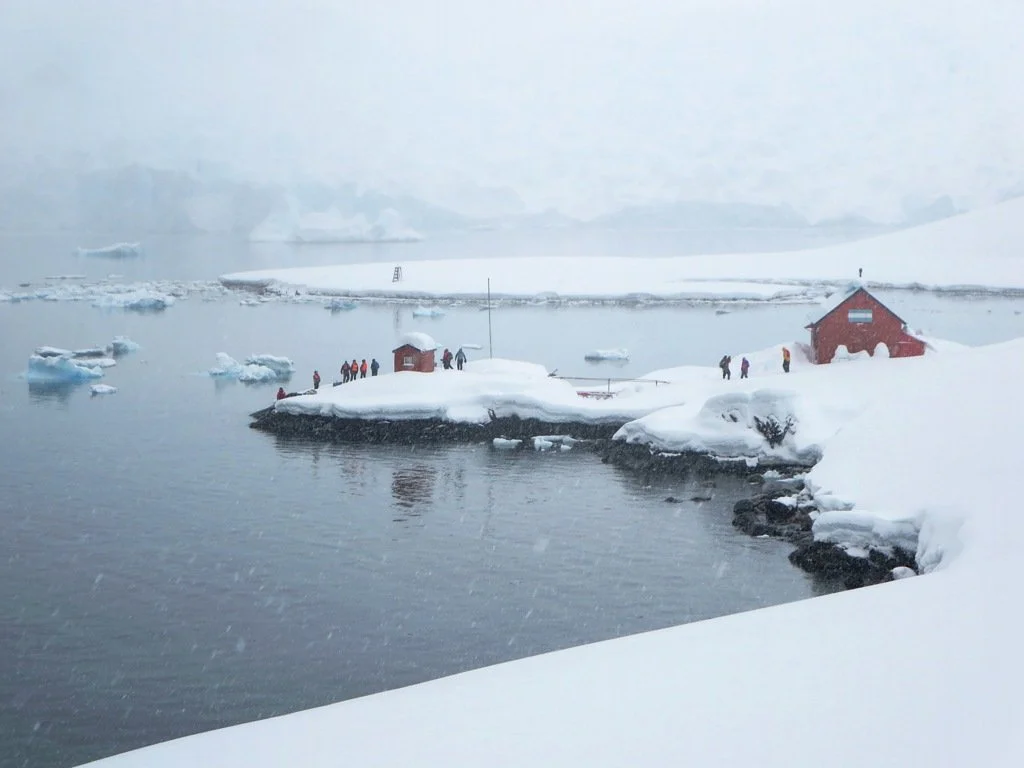
Red buildings of the Paradise Bay Research Station, with people outside on the snow of the Antarctic Peninsula

Paradise Bay Research Station

Must-Visit Locations on an Antarctic Peninsula Cruise

Deception Island

First discovered by seal hunters in 1820, the island was named for the way it deceived explorers — both by its concealed entry point, called Neptune’s Passage, and by its seemingly safe harbor, Port Foster, which sits within an active volcano. The harbor is actually a caldera, where the top of the volcano collapsed and gives the island its ringlike shape. 

More than 50% of the island is covered by thick glaciers and is home to various wildlife species. The harbor and its black sand beaches are popular destinations for tourists and scientists alike. There are also hot springs, where visitors can take a dip in the 98.6ºF water.

Half Moon Island

Half Moon Island is home to many penguins, seals and seabird species. Part of the South Shetland Islands, Half Moon boasts incredible views made even more spectacular by its crescent shape.

Paradise Bay

Paradise Bay is a popular cruise ship destination and one of the two main Antarctic ports. It’s rich in wildlife, including penguins, seals and whales. It is also home to a research station where visitors can learn more about the Antarctic environment. On a clear day, you can see the snow-covered peaks of Adelaide Island in the distance. 

Historical Sites

Visit abandoned research stations, such as Palmer Station and Port Lockroy, to learn about the history of human exploration and habitation in Antarctica.

These sites offer a fascinating glimpse into the past, with artifacts and photographs from many decades ago providing insight into what it was like to be a scientist in the Antarctic. 

Breathtaking Sunrises and Sunsets

Finally, don’t miss the breathtaking sunrises and sunsets in Antarctica. Get up early to catch the first light of dawn and watch as the sky changes colors from pastel shades to deep orange-red. 

At night, witness the mesmerizing beauty of the stars twinkling above the icy landscape. It’s an experience you’ll never forget! –Kayla Gallocher

Icebergs in the Antarctic, with purplish sky and water

The white of icebergs and glaciers contrast sharply with the beautiful blues and purples of the sky and water.

Preserving the Magic of the Amazon

The largest rainforest on Earth cleans our air and water. But it’s rapidly being destroyed. Here are 3 ways you can help save the Amazon Rainforest — including an ethical visit. 

The largest rainforest on the planet helps keep our air and water clean.

As the world’s biggest rainforest, the Amazon has several functions crucial to our planet’s environmental health. Alarmingly, it’s also one of the foremost victims of the climate crisis. In 2022 alone, 430 square kilometers of the Amazon was destroyed. That’s over 126 times the size of Central Park in New York City.

The Amazon, which produces one-fifth of the Earth’s oxygen, is being cut down at an alarming rate.

Why We Need the Amazon Rainforest

While it comprises only 2% of the world’s landmass, the Amazon is responsible for producing 20% of the oxygen on the planet. One of its primary functions is to sequester carbon — or, in other words, gather large amounts of carbon dioxide and convert them to oxygen. Carbon sequestration benefits us by cleaning air and water sources. The process can even control flooding. This is why the Amazon is rightfully known by the moniker “the Lungs of the Earth.”

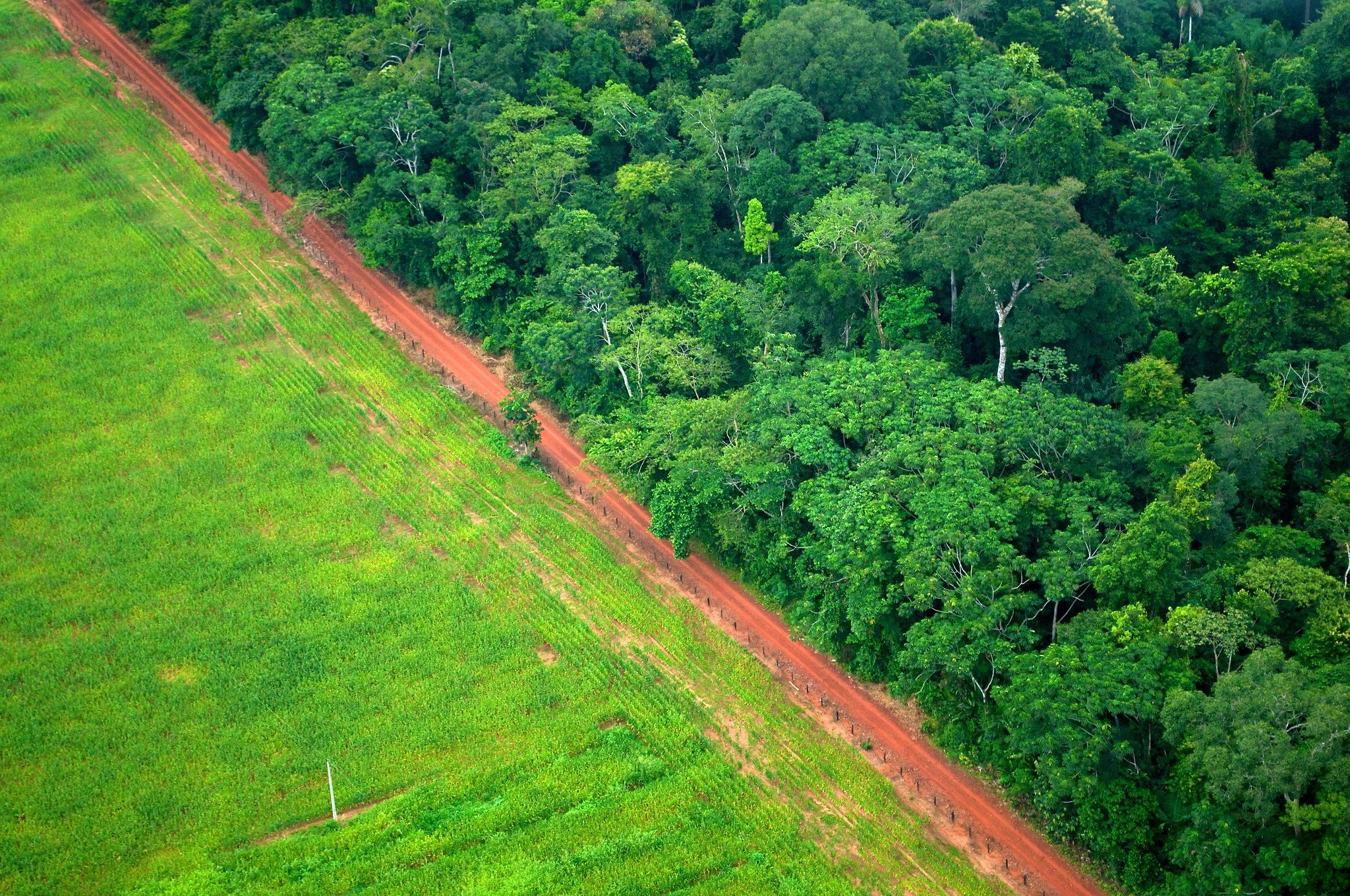
Unfortunately, the forest and its inhabitants continue to struggle against several issues. The foremost challenge it faces today is rapid deforestation due to agriculture, mining, logging and construction. 

Ultimately, assertive legislation is key to reversing the damage done to the Amazon. This was made clear when Brazil’s deforestation policies in the mid-2000s eased the rate of destruction in the rainforest, according to a study by the University of Arizona

Yet, while policies play a crucial role in saving the Amazon, there are many ways for you as an individual to contribute to its preservation.

A satellite image that shows the deforestation of the Amazon — the same image from less than a decade ago would have been all dark green.

3 Ways to Help Save the Amazon

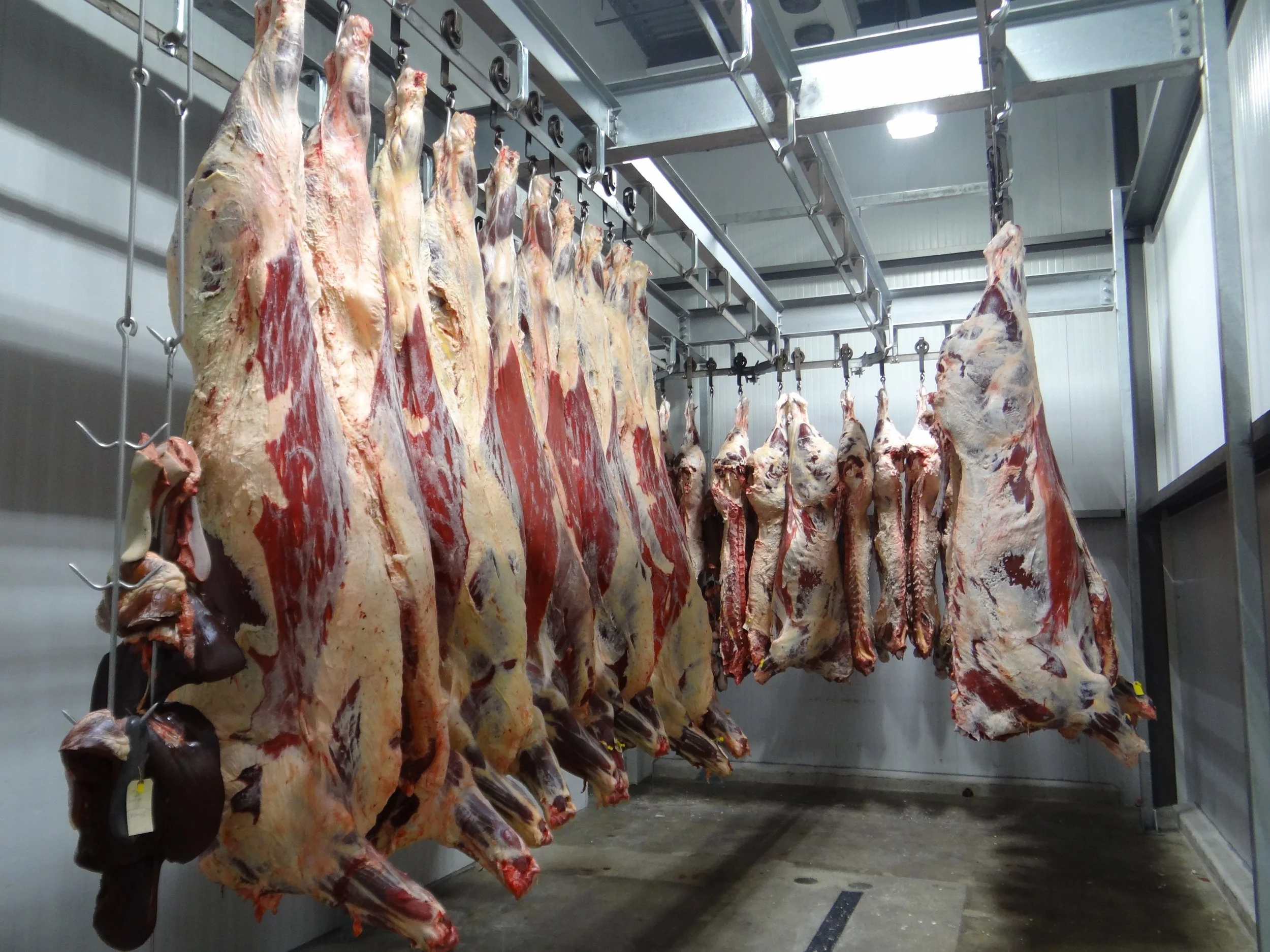
In Brazil, beef is raised for consumption on land that was once part of the Amazon.

1. Practice mindful consumption. 

The majority of deforestation efforts come about due to the production of items like paper, wood and beef. 

Minimize your use of paper to help reduce the demand for its production. You can also check for an FSC label to find out if your paper was sourced ethically and doesn’t threaten endangered animals that rely on trees for survival.

Brazil, where 60% of the Amazon is located, is also a major producer of beef. The biggest beef producer in the region, JBS S.A., raises cattle from deforested Amazon land. On the whole, around 70% of the Amazon is deforested to raise cattle for beef. While not everyone wants to be a vegetarian, you can reduce consumption to help decrease the demand for beef production.

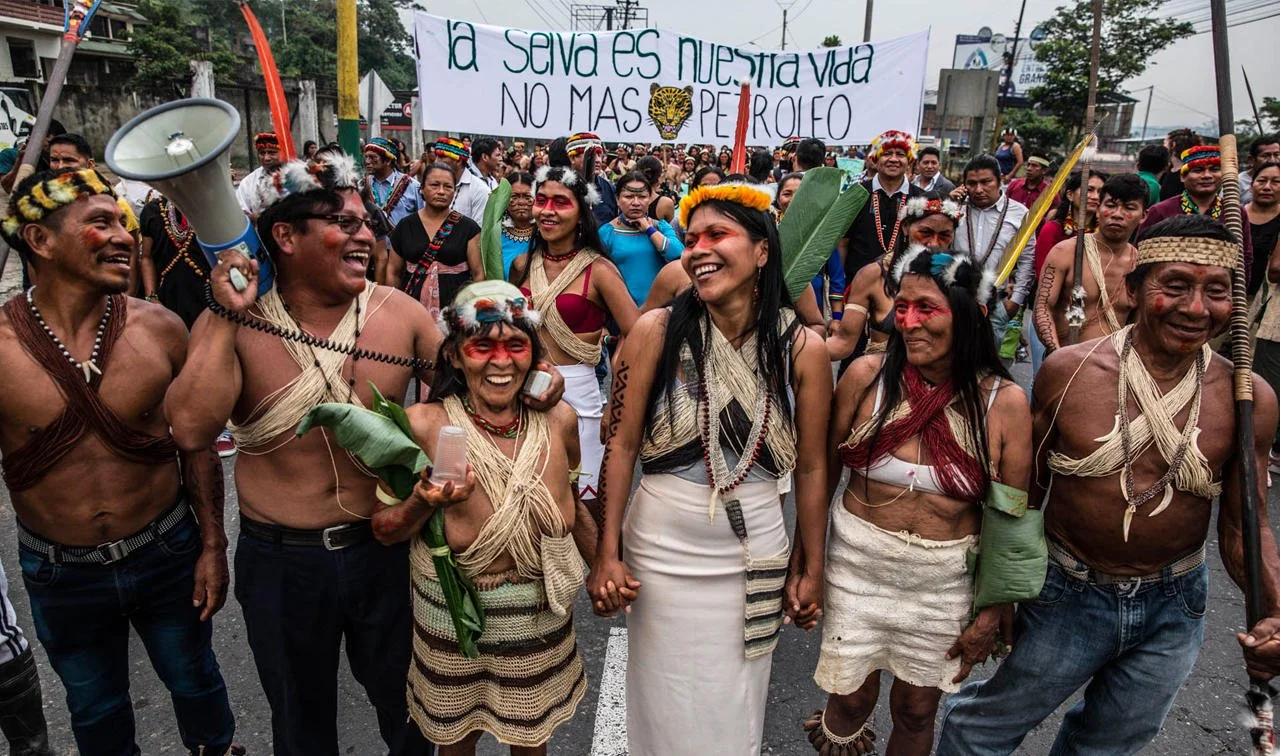
Consider volunteering for groups like the Rainforest Action Network that protest against the stealing of indigenous lands and the deforestation of the Amazon.

2. Connect with advocates and organizations. 

There are countless grassroots organizations and initiatives dedicated to preserving the Amazon. For instance, the Rainforest Action Network (RAN) successfully pushed Burger King to stop using rainforest beef. 

You can join local groups in your area or support larger ones like the RAN or Amazon Watch. They can use your help in their efforts to call out and boycott businesses that support deforestation in the region.

If you want to visit the Amazon, make sure you go through a group that focuses on preservation of this valuable natural resource.

3. Make an ethical trip to the Amazon. 

If you want to see Amazon for yourself, be sure to do so in an ethical and respectful manner. After all, just like the Daintree Forest in Australia, the Amazon is also a UNESCO World Heritage Site. To visit the Amazon ethically, look for accommodations that work with environmental preservation initiatives. These providers offer guides and activities that immerse you in the Amazon’s biodiversity. And you might even end up lending a hand to their preservation efforts!

Two adorable squirrel monkeys in the Amazon

These adorable critters, known as squirrel monkeys, are just some of the wildlife you could see in the Amazon.

The paper and beef industries are destroying the largest rainforest on Earth. Do your part to help stop these atrocities.

The Amazon and its rapid degradation is of urgent concern. As it is responsible for several processes that keep the environment in good health, everyone should be involved in helping preserve it. –Alyson Yesha Corbett

5 of the World’s Most Underrated Adventure Travel Destinations

The lemurs of Madagascar, the prayer flags of Nepal, the rock faces of South Korea, the azure waters of Slovenia and the mountainside fortresses of Bhutan: These are the best-kept secret destinations for trekking and other outdoor activities.

templeofgurupadmasambhava.jpg

The Temple of Guru Padmasambhava is just one of the many delights found in Bhutan, one of the lesser known (albeit a bit tricky to visit) adventure travel destinations.

Choosing a destination for your next adventure can feel downright overwhelming. Trekking in Greenland? Bouldering in Utah? Paddling the Caribbean? Throwing a dart at a map and hoping it lands somewhere cool?

When the entire globe is your playground, it can be tough to choose. Hey, nothing like a list of suggestions to get the wheels turning, right? 

Madagascar is an adventure travel destination that rivals the Galapagos in the “did I just step into a Dr. Seuss book?” factor.

Here are five of the world’s most underrated adventure travel destinations, all with their own unique appeal. Maybe that means the bucket list just got five lines longer. Better get planning!   

Baobad trees in Madagascar definitely up the Dr. Seuss factor.

Baobab trees in Madagascar definitely up the Dr. Seuss factor.

1. Madagascar 

This far-flung island off the eastern coast of Africa isn’t just dancing lemurs — it’s an adventure travel destination that rivals the Galapagos in the “did I just step into a Dr. Seuss book?” factor. For lovers of nature, this island boasts biodiversity in spades, with chameleons, primates, frogs and sealife calling it home. For adventurers, its lack of cars means every step becomes part of an exploratory trek. 

Many spots on Madagascar are home to lemurs.

Many spots on Madagascar are home to lemurs.

Between Madagascar’s Mantadia and Ranomafana National Parks, visitors will find miles and miles of hiking trails seemingly from another planet. After exploring inland, adventurers can migrate to the coast to unwind at pristine stretches of beach, like the impossibly turquoise Nosy Be island, which doubles as a lemur habitat. 

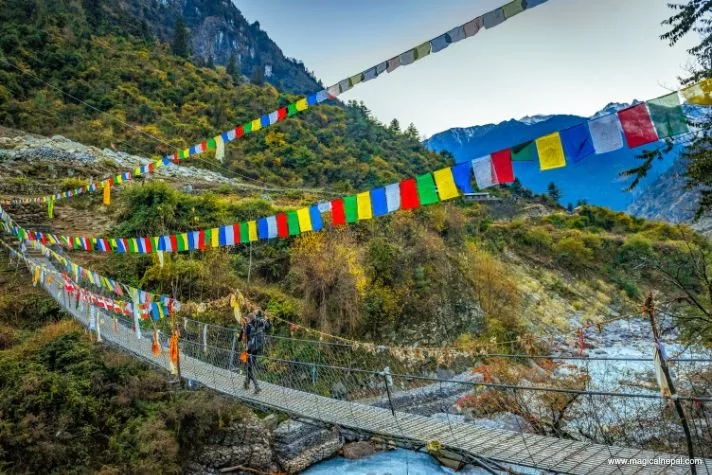
Prayer flags are found throughout Nepal. They’re said to carry prayers and mantras on the wind.

Prayer flags are found throughout Nepal. They’re said to carry prayers and mantras on the wind.

2. Nepal 

Perched atop the spine of the planet, Nepal might not seem “underrated” at all. Here’s the thing: With big names like Everest within its borders, it’s certainly one of the ultimate adventure destinations of the world. 

The base camp at Everest, the highest mountain on the planet, is a colorful spot to kick off a trek.

The base camp at Everest, the highest mountain on the planet, is a colorful spot to kick off a trek.

However, it’s a country that can feel entirely too challenging or out of reach for many travellers. When its main attraction is the tallest mountain on Earth, Nepal can be a bit intimidating to the masses. But you can, and should, visit even if you’re not planning on setting foot in a base camp. There’s something about trekking in Nepal, prayers flag fluttering overhead, rhododendrons blooming, towering peaks in the foreground… It’s magical. Don’t keep putting it off until you’re better, older, wiser, whatever. 

Paro Taktsang, a Buddhist monastery in Bhutan, clings to the cliffside.

Paro Taktsang, a Buddhist monastery in Bhutan, clings to the cliffside.

3. Bhutan 

As much as the idea of isolation has taken on an entirely new meaning in the recent past (curse you, COVID!), Bhutan exemplifies one of the most fascinating applications of isolation in the tourism world. Having only just allowed television into the country in 1999 and still prohibiting the sale of goods like tobacco, Bhutan has opened to the ideas of the rest of the world on its own schedule. This includes tourism.

The masked dances of Bhutan take place annually. Try to catch one — it’s said to purify the soul and bring good luck.

The masked dances of Bhutan take place annually. Try to catch one — it’s said to purify the soul and bring good luck.

Even getting into Bhutan feels a bit like jumping through hoops. You’ll need to be invited by a citizen of the country (unless you hold a passport from India, Bangladesh or the Maldives), or be a guest of the government. You’ll be required to pay a set daily fee to see the country, and the geographical isolation of the nation makes flights costly and complicated. 

However, if you manage to wrangle a visit, you’ll be rewarded with some of the most exceptional, unspoiled scenery the world has to offer, as well as a rich culture developed without interruption from the outside world. From 7,000-meter summits to lush green valleys, the natural landscape is simply unreal. Of course, the dzongs (fortresses) perched atop impossibly steep cliffs are one of the gems of Bhutan. The chance to explore this unknown destination is a rare treat and undoubtedly worth the effort. 

Cycling and great food come together for wellness travels in South Korea.

Cycling and great food come together for wellness travels in South Korea.

4. South Korea 

This small country (slightly larger than the U.S. state of Indiana) is an absolute goldmine when it comes to outdoor adventure. And South Korea’s relative lack of “hype” in the adventure travel world is a blessing in disguise. 

Rock climbers will find numerous sites for adventure in South Korea.

Rock climbers will find numerous sites for adventure in South Korea.

While others flock to Iceland and the Rockies, you can discover South Korea’s expansive hiking trails and climbing-ready rocky cliffs in peace. There are 20 mountains a stone’s throw from Seoul, making outdoor adventure an easy outing once you’re done eating your way through the capital (which you definitely should). Rock climbers will find more places than they could hope to cover in one trip, and many of these locations are so beautiful that the locals believe spirits call them home.

Because of a robust road system, South Korea is a must for cyclists looking to put in miles somewhere new, and the snowy slopes near Pyeongchang are perfect off-the-beaten-path destinations for snow sports enthusiasts. No shortage of adventure to be had here!

A small isle in Lake Bled in Slovenia is home to the Pilgrimage Church of the Assumption of Mary.

A small isle in Lake Bled in Slovenia is home to the Pilgrimage Church of the Assumption of Mary.

5. Slovenia

Slovenia typically isn’t considered one of Europe’s many top-notch travel destinations. But as incredible as Italy and Spain will always be, Slovenia is truly one of the most underrated adventure travel destinations in the world. 

The gorgeous Soca River in Slovenia is a great spot for kayaking, rafting and other water sports.

The gorgeous Soca River in Slovenia is a great spot for kayaking, rafting and other water sports.

It’s a teeny country, but it offers the Slovenian Alps, the bright blue Soca River, hidden beaches on seaside stretches and beautiful Lake Bled. Whether you’re looking to kayak, swim, hike, go canyoneering or just savor a fantastic view, Slovenia delivers. Plus, you’re not going to be battling crowds or dodging selfie sticks while you explore. 


Apologies in advance for the wanderlust. Which of these underrated adventure travel destinations will you be visiting first? –Lukas Saville