adventure travel

How to Prepare for the Manaslu Circuit Trek (Without Becoming a Fitness Freak)

You don’t need to be an elite athlete to trek around Manaslu. Here’s how to build the endurance, strength and stamina you’ll need before hitting the trail.
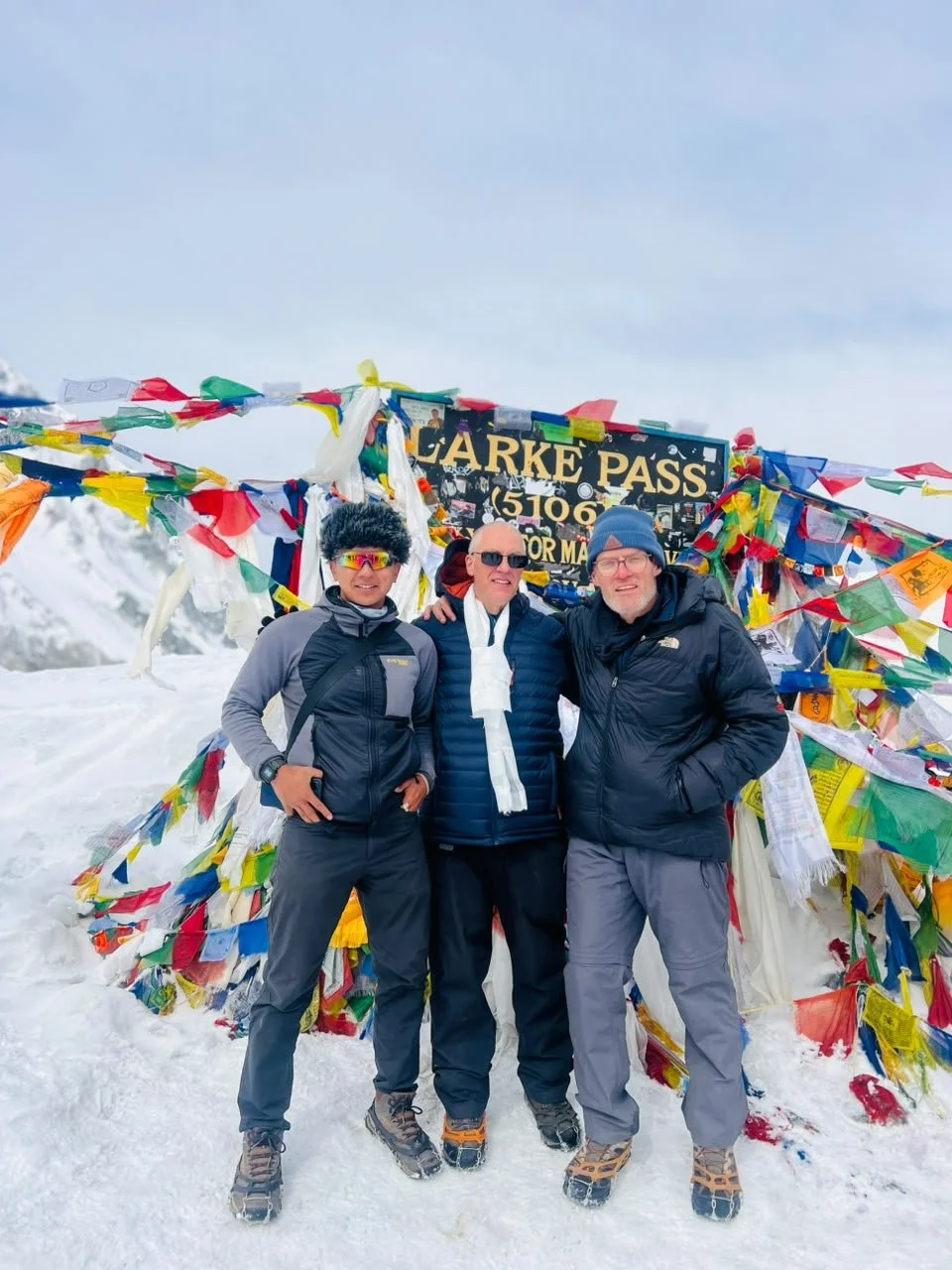
Three men stand in the snow by the colorful prayer flags at Larke La Pass in Nepal

The Manaslu Circuit trek in Nepal has all the ingredients of a Himalayan epic: remote mountain villages, swaying suspension bridges, forests that give way to stark alpine landscapes and, looming over it all, 26,781-foot (8,163-meter) Mount Manaslu, the eighth-highest mountain on Earth. 

It’s exactly the sort of experience that makes Nepal one of the world’s most underrated adventure travel destinations — especially once you venture beyond Everest. Of course, getting that far off the beaten path requires some serious legwork.

Like Larkya La. At 16,929 feet (5,160 meters), Larkya La Pass is the literal and figurative high point of the trek. By the time you reach it, you’ll have spent days steadily gaining elevation, sleeping in increasingly remote villages and discovering that what looked like a perfectly reasonable incline from a distance is, in fact, another freakin’ hill.

The good news? You don’t need technical climbing skills — or the physique of someone who spends weekends dangling from cliffs — to complete the Manaslu Circuit trek.

You do, however, need stamina.

Most itineraries take around 13 to 16 days, with six to eight hours of walking on many days. The challenge isn’t one heroic burst of athleticism. It’s getting up the next morning and doing it again.

And again.

At altitude.

That kind of stamina is one of the biggest things to consider when planning an Everest Base Camp trek — and it matters just as much on the Manaslu Circuit.

Here’s how to prepare your body for the Manaslu Circuit so you can spend more time admiring the Himalayas and less time wondering why you thought this was a good idea.
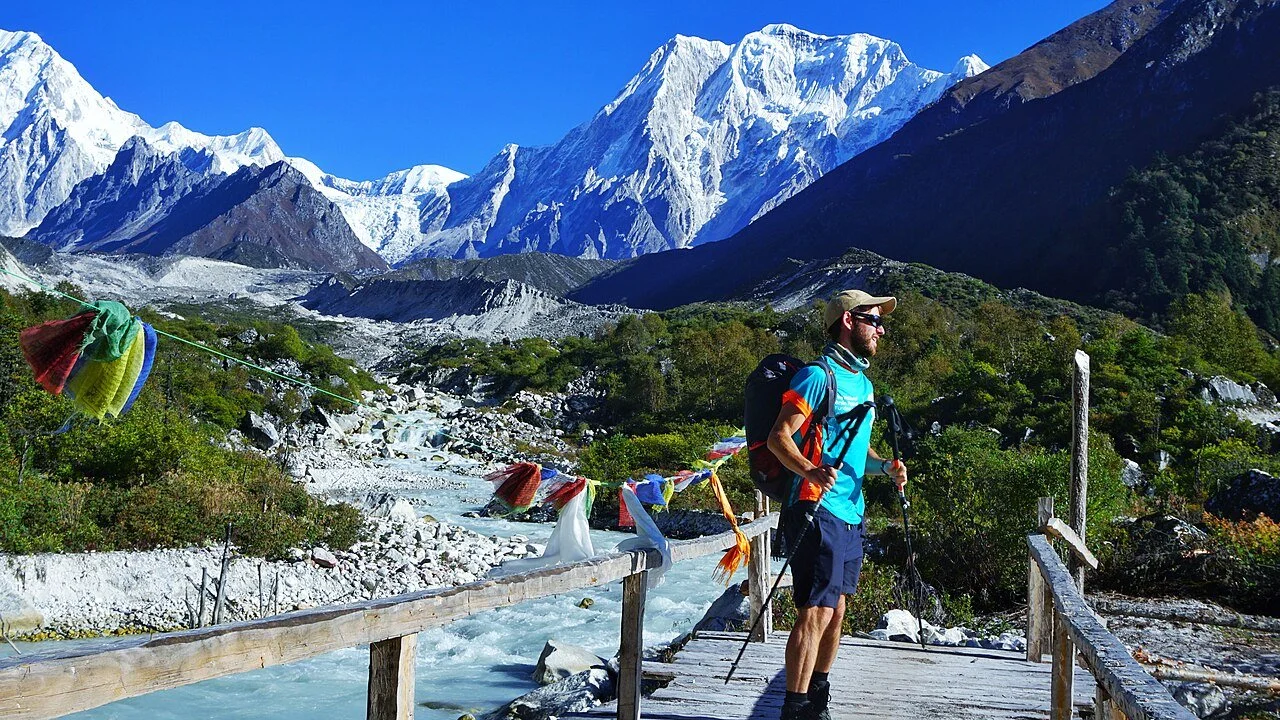
A man hikes the Manaslu Circuit trek in Nepal on a wood bridge with snow-covered mountains in the background

How fit do you need to be for the Manaslu Circuit trek?

Let’s get this out of the way first: You do not need to be an elite athlete.

The Manaslu Circuit is physically demanding, but nobody’s timing you. There’s no medal waiting at Larkya La for whoever gets there first. In fact, at high altitude, trying to be the fastest person on the trail is a particularly bad strategy.

What matters more is cardiovascular endurance, leg strength and the ability to keep moving for several hours at a comfortable pace.

On a typical trekking day, you might walk for six to eight hours across a mixture of dirt trails, stone steps, forest paths, suspension bridges, and long ascents and descents.

Then you’ll wake up and do something similar tomorrow.

That cumulative effort is what catches people off guard.

If you’ve already completed something like the Langtang Valley Trek — or tackled the Everest Base Camp trek on a budget — you’ll have a useful idea of what Nepalese teahouse trekking entails. Manaslu goes higher and can involve longer days, but the basic preparation is similar: Build endurance, strengthen the muscles that will carry you up and down the mountains and resist the temptation to treat trekking like a race.
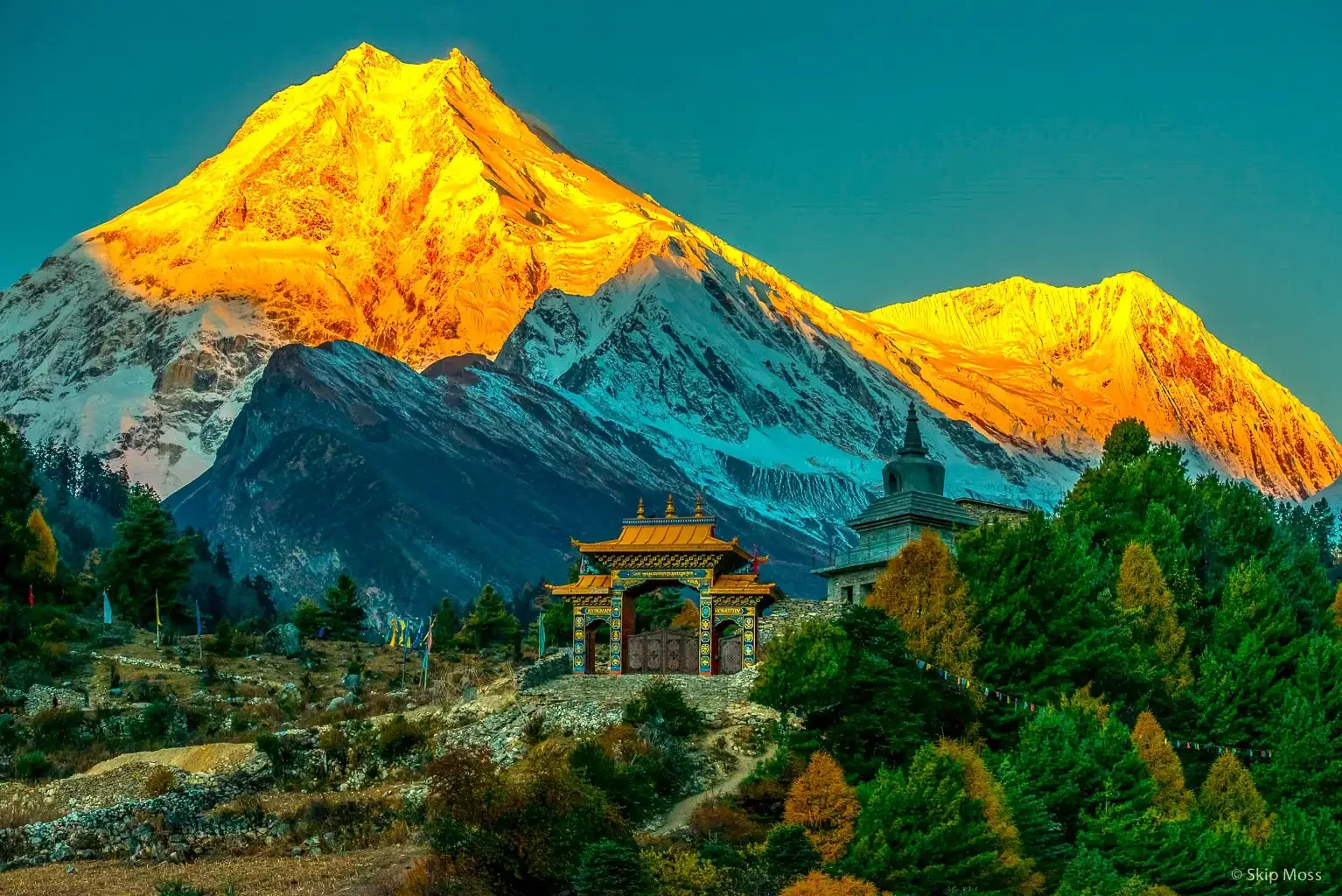
Sunset turns the mountains gold with a temple by a forest on the Manaslu Circuit trek in Nepal

Why is the Manaslu Circuit trek so difficult?

No single part of the Manaslu Circuit requires superhuman fitness. Instead, several challenges pile on top of one another.

You’re walking all day — for days. 

Depending on your itinerary, a trekking day can cover roughly 6 to 12 miles (10 to 20 kilometers).

That might not sound intimidating if you regularly walk or hike at home. But your neighborhood stroll probably doesn’t include several thousand feet of elevation change, rocky trails and a Himalayan mountain pass.

The real test is repetition. A six-hour hike is one thing. Six hours today, another six tomorrow and another six the day after that is something else entirely.

That’s why endurance training for the Manaslu Circuit matters more than being able to run a particularly fast mile.

The air gets thin. 

Altitude is the great equalizer.

As you climb, atmospheric pressure drops, which means less oxygen is available to your body with each breath. Above roughly 9,800 feet (3,000 meters), you’ll probably notice that activities that seemed easy lower down suddenly require considerably more effort.

A staircase can become an event.

The Manaslu Circuit gradually takes trekkers through increasingly high settlements:

Location
Altitude
Namrung
8,629 feet / 2,630 meters
Lho
10,433 feet / 3,180 meters
Samagaun
11,581 feet / 3,530 meters
Samdo
12,713 feet / 3,875 meters
Dharmasala
14,633 feet / 4,460 meters
Larkya La Pass
16,929 feet / 5,160 meters

You can train your heart and legs before you leave home. You can’t completely train your body for how it will respond to altitude.

That’s why proper acclimatization on the Manaslu Circuit trek is essential. A sensible itinerary builds in enough time for your body to adjust rather than rushing upward.

What goes up must eventually come down. 

Everyone worries about climbing.

Your knees would like a word.

Long descents put considerable stress on your quadriceps, knees and ankles. After hours of downhill trekking, even people with strong cardiovascular fitness can end up with trembling legs.

That’s one reason your Manaslu Circuit training plan should include strength work, not just cardio.
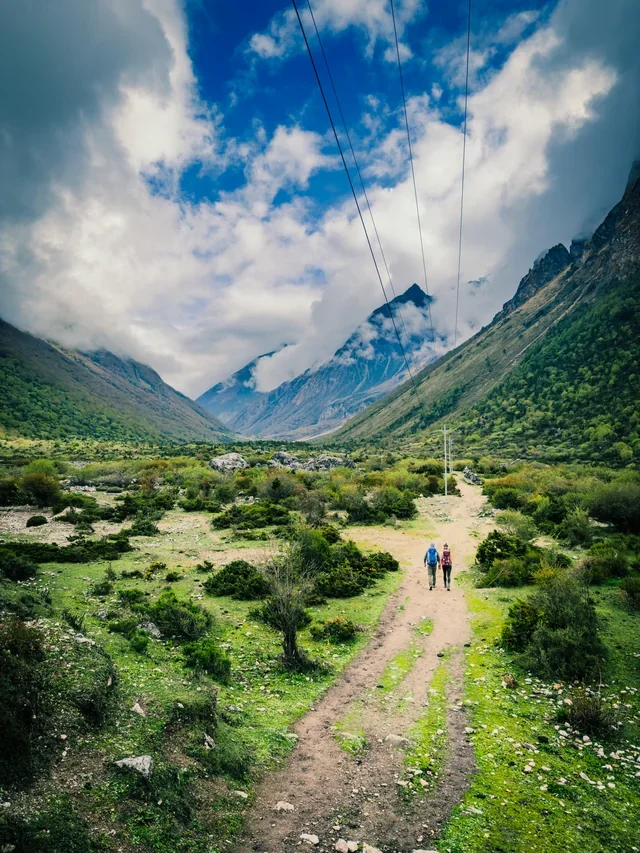
Two hikers walk a dirt path under telephone wires on the Manaslu Circuit trek in Nepal

When should you start training for the Manaslu Circuit?

Ideally, start about eight to 12 weeks before your trek.

That gives you enough time to gradually increase your endurance and strength without suddenly subjecting your body to an ambitious boot camp because you remembered you’re going to Nepal next month.

If you did remember you’re going to Nepal next month, don’t panic.

Four weeks of consistent walking, hiking and strength training is still considerably better than four weeks of sitting on the couch worrying about Larkya La.

The key word is gradual. Increasing your mileage or workout intensity too quickly is an excellent way to arrive in Nepal with an injury, which rather defeats the purpose.
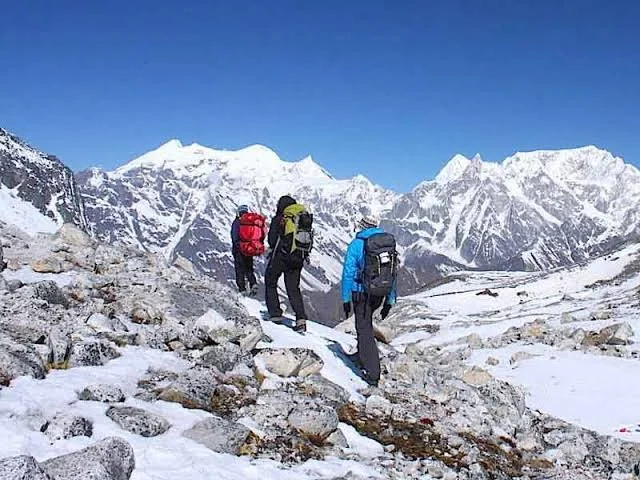
Three trekkers walk through the snowy mountains on the Manaslu Circuit trek in Nepal

An 8-Week Manaslu Circuit Training Plan

You don’t need an elaborate fitness program. You need consistency.

Weeks 1–4: Build Your Base

For the first month, concentrate on getting your body accustomed to regular activity.

Aim for:

  • Four or five walks per week of about 45 to 60 minutes

  • One weekend hike lasting two to three hours

  • Regular stair or hill climbing

  • Two light strength sessions per week

  • At least one proper rest day

Don’t obsess over speed.

You’re training your body to remain active for increasingly long periods, not preparing for the 100-meter dash.

If you have access to hills, use them. If you live somewhere aggressively flat, stairs and an incline treadmill are your new mountains.

Weeks 5–8: Make It Harder

Once you’ve established a base, start increasing the duration and difficulty of your workouts.

Try adding:

  • Brisk walks of 4 to 6 miles (6 to 10 kilometers)

  • Weekend hikes lasting four to six hours

  • Longer stair or incline-treadmill sessions

  • Two strength-training sessions per week

  • Hikes while carrying a daypack

Gradually work toward carrying around 11 to 15 pounds (5 to 7 kilograms), assuming that’s similar to the weight you’ll carry in Nepal.

And if you can find a trail with lots of elevation change, even better. Your legs need to learn that downhill is work too.

The Final Two Weeks: Stop Trying to Become Superman

The fortnight before your trip isn’t the time to suddenly double your mileage.

You’re unlikely to make dramatic fitness gains at this point. You are capable of exhausting yourself or getting injured.

Gradually reduce your training volume while continuing to walk and stay active. Prioritize sleep, hydration and recovery.

The goal is to step onto the trail rested and healthy — not to limp into Kathmandu because you decided to squeeze in one last monster workout.
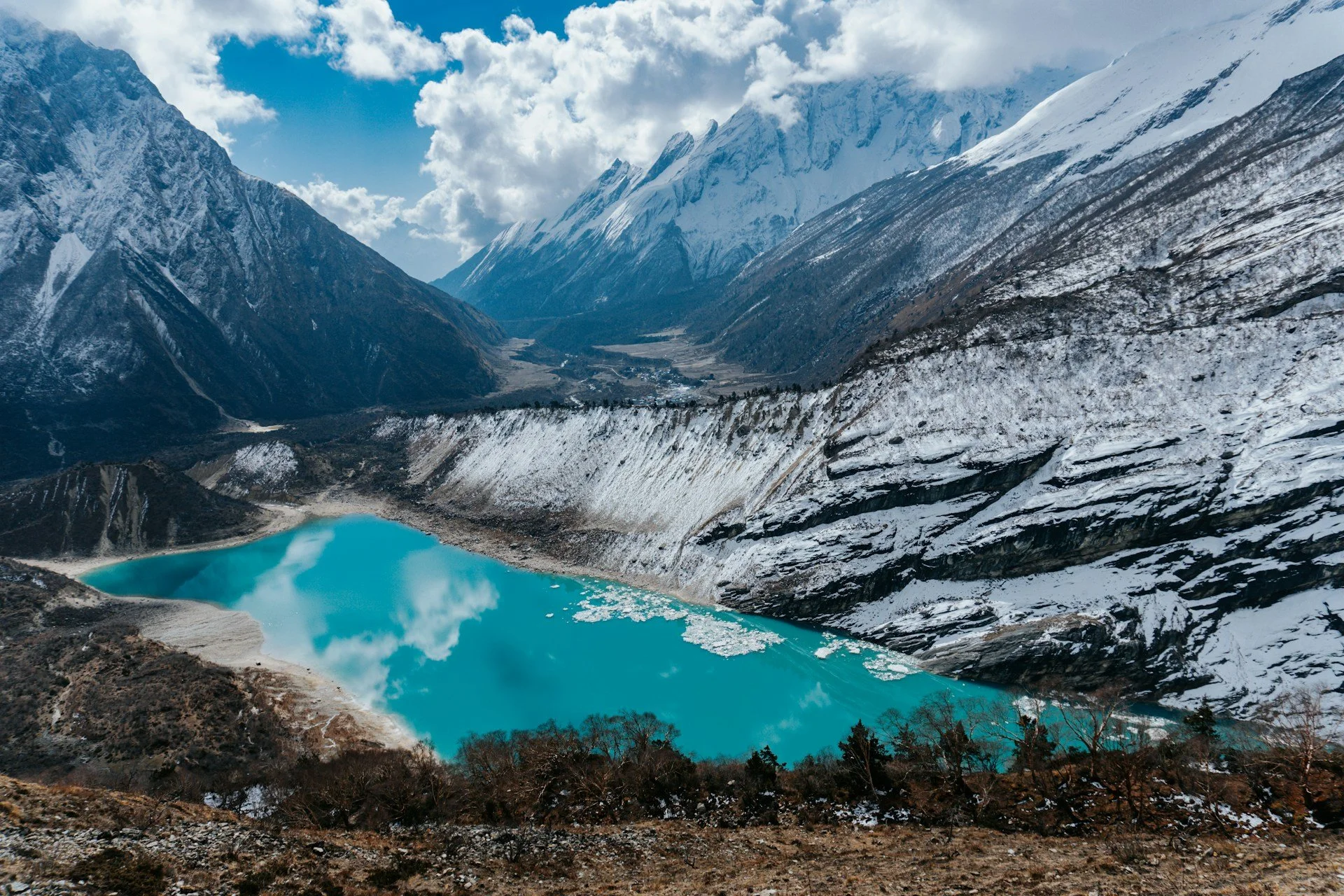
An aqua-colored lake in the snowy mountains of the Manaslu Circuit trek in Nepal

The Best Cardio for the Manaslu Circuit Trek

If you only choose one form of cardio, make it hiking.

Nothing prepares you for walking uphill for hours quite like walking uphill for hours.

But you don’t have to spend every weekend in the wilderness. Useful cardio exercises include:

  • Hiking

  • Brisk walking

  • Incline treadmill walking

  • Stair climbing

  • Cycling

  • Swimming

  • Rowing

  • Trail running

A general target of 150 to 300 minutes of moderate aerobic exercise per week is a useful starting point for many adults, but your training should gradually include longer sessions that mimic actual trekking days.

More important than hitting a magic number is being able to remain active comfortably for several hours.
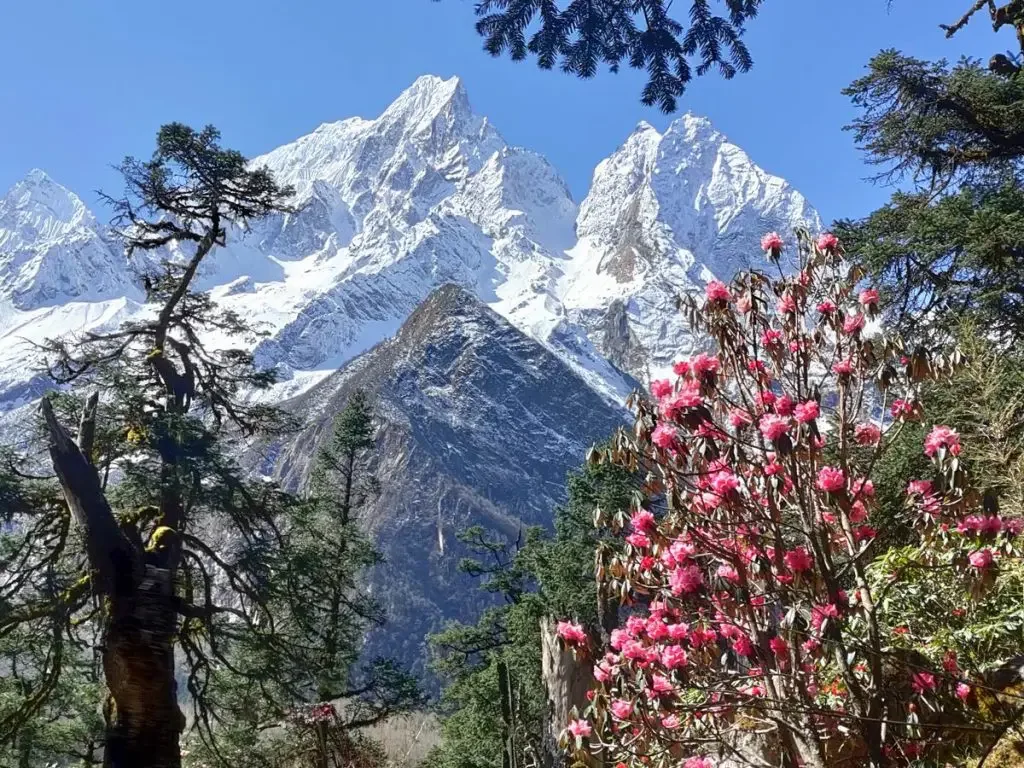
Evergreens and pink flowers by the snowy mountains of the Manaslu Circuit trek in Nepal

Strength Training for the Manaslu Circuit

You don’t need to become enormous.

This isn’t that kind of vacation.

For trekking, functional strength is what matters: strong legs to propel you uphill and control your descents, a stable core for uneven terrain and enough upper-body strength to comfortably carry your daypack.

Train Your Legs

Focus on exercises such as:

  • Squats

  • Lunges

  • Step-ups

  • Bulgarian split squats

  • Calf raises

Step-ups are particularly useful because they mimic one of the great recurring themes of Himalayan trekking: Oh look, more steps.

For downhill preparation, controlled lunges, step-downs and slow lowering movements can help strengthen the muscles used to stabilize your body during descents.

Strengthen Your Core

A strong core helps with balance and stability, particularly when you’re negotiating rocks, steps and uneven trails with a backpack.

Try:

  • Planks

  • Side planks

  • Bird dogs

  • Dead bugs

  • Mountain climbers

You don’t need a six-pack.

You need to remain upright.

Don’t completely ignore your upper body.

Even with porter support, you’ll probably carry a daypack for hours at a time.

Push-ups, rows and shoulder presses can help strengthen your shoulders and upper back so your pack doesn’t become your mortal enemy by Day 4.

Train with the backpack you’ll actually carry. 

This is one of the easiest parts of preparing for the Manaslu Circuit Trek to overlook.

Walking for five hours is different when several pounds are hanging off your shoulders.

Even if a porter carries your main luggage, your daypack will probably contain things like:

  • Water

  • Extra layers

  • Rain gear

  • Snacks

  • Camera or phone

  • Sunscreen

  • Personal medication

Work up gradually to a pack weighing around 11 to 15 pounds (5 to 7 kilograms), or whatever you realistically expect to carry.

Better yet, train with the actual pack you’re taking to Nepal. This gives you time to adjust the straps, figure out where it rubs and discover that the water bottle pocket you thought was ingenious is impossible to reach without dislocating a shoulder.

Hike on consecutive days. 

Here’s where weekend warriors can get fooled.

You finish a six-hour hike on Saturday and feel fantastic. Success!

But on the Manaslu Circuit, Sunday isn’t a recovery day.

It’s another trekking day.

As your training progresses, occasionally schedule hikes or long walks on two consecutive days. If your fitness and schedule allow, try three.

You’re teaching your body something extremely useful: how to recover overnight and keep going when your legs aren’t entirely thrilled about it.

Work on flexibility and mobility. 

Stretching won’t magically carry you over Larkya La, but maintaining good mobility can make repeated days of walking considerably more comfortable.

After workouts, pay particular attention to your:

  • Hamstrings

  • Hip flexors

  • Calves

  • Glutes

  • Lower back

Yoga can also complement a trekking program by improving flexibility, balance and body awareness.

Just don’t replace your hiking with yoga and assume your chakras will carry you up the mountain.

Eat like someone who’s training for a trek. 

The weeks before a major trek are not the ideal time for a crash diet.

Your body needs fuel to adapt to increasing amounts of exercise.

A balanced training diet should include plenty of carbohydrates for energy, protein for muscle recovery, healthy fats and a variety of fruits and vegetables. Staying well hydrated during training is also a useful habit to establish before you arrive in Nepal.

There’s no need for an exotic “Himalayan training diet.”

Eat well. Eat enough. Drink water.

Your legs will appreciate it.

Your brain needs training, too. 

There’s another “muscle” you’ll need on the Manaslu Circuit: your brain.

Long-distance trekking requires patience. Weather changes. Trails get muddy. Accommodation becomes basic. You may sleep badly. Your legs will ache. Someone will inevitably tell you that today’s destination is “just another hour” away.

And sometimes the mountain simply wins the argument.

Mental preparation means accepting that discomfort is part of the experience without turning every difficult moment into a crisis.

Experienced trekking guides understand something that gym statistics can’t measure: A steady trekker who listens to their body and maintains a positive attitude often does better than a fitter person who pushes too hard.

Slow down. Take breaks. Eat. Drink. Listen to your guide.

The mountain isn’t going anywhere.
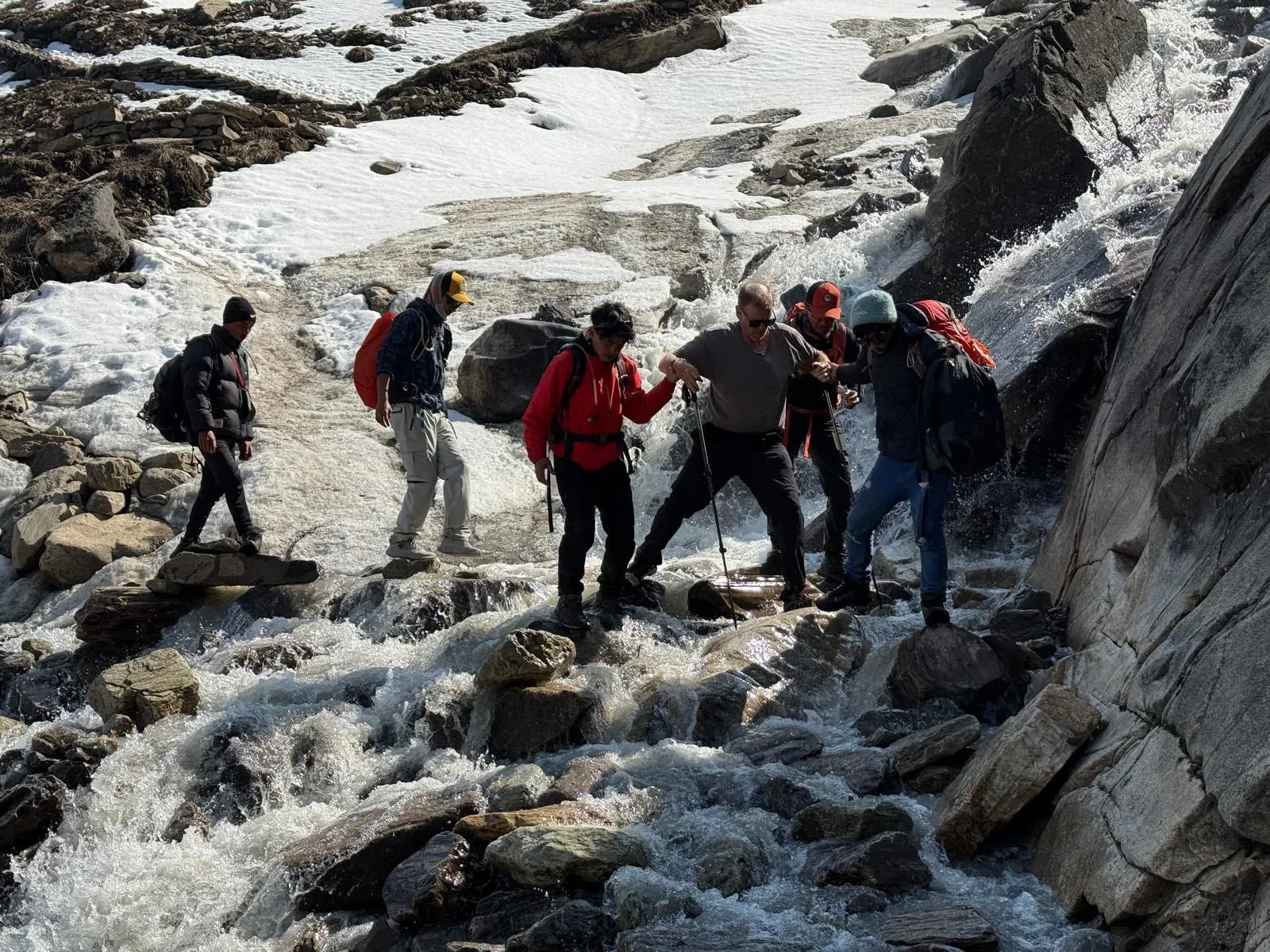
Trekkers help a man cross a river on rocks along the Manaslu Circuit trek in Nepal

Common Manaslu Circuit Training Mistakes

A few mistakes can make an already challenging trek considerably harder:

  • Waiting until the last few weeks to start training

  • Running exclusively instead of practicing long walks or hikes

  • Training only for uphill climbs

  • Ignoring leg and core strength

  • Never hiking with a backpack

  • Increasing mileage too quickly

  • Skipping rest and recovery days

  • Arriving in Nepal exhausted from overtraining

  • Trying to maintain your sea-level walking pace at altitude

Perhaps most importantly, don’t compare your pace with everyone else’s.

At altitude, slow isn’t failure.

Slow is strategy.
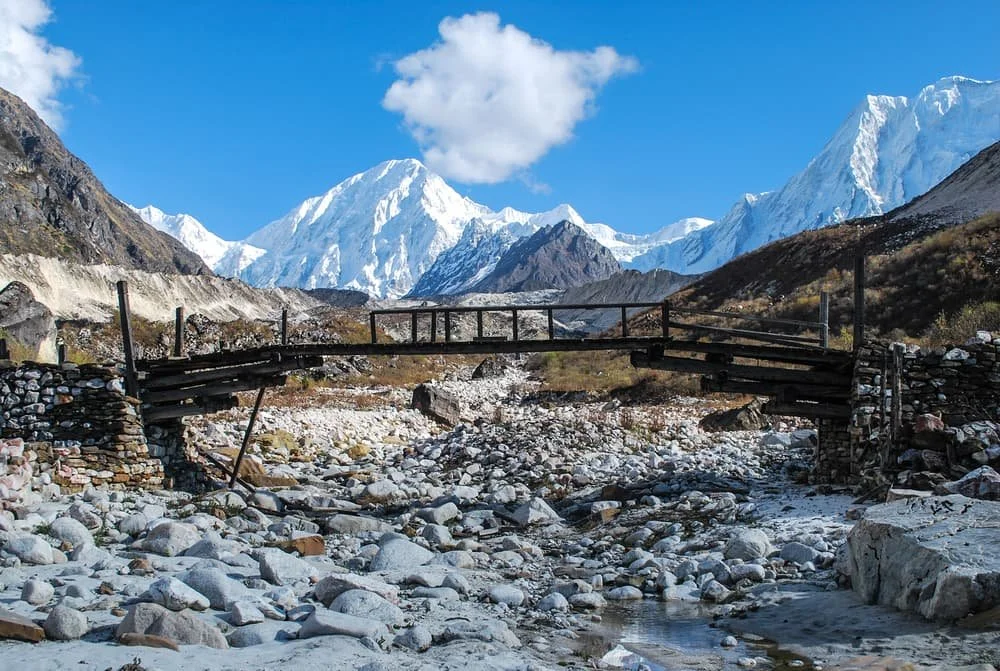
A wooden bridge covers snow-covered rocks in a river bed with mountains all around along the Manaslu Circuit trek in Nepal

You’re training to enjoy Manaslu, not just survive it. 

There’s a big difference between being physically capable of completing the Manaslu Circuit trek and actually enjoying it.

That’s the real reason to train.

You’re traveling halfway around the world to walk through one of Nepal’s most spectacular mountain landscapes, passing Buddhist monasteries, mani walls, forests, rivers and villages influenced by centuries of Tibetan culture.

You want enough energy left to notice them.

Start training eight to 12 weeks before departure if you can. Build cardiovascular endurance. Strengthen your legs and core. Walk hills and stairs. Carry a backpack. Practice hiking on consecutive days.

Then give your body time to acclimatize once you reach the Himalayas.

Because when you finally reach Larkya La Pass, surrounded by a sweep of snow-covered peaks, you probably won’t care how quickly you got there.

You’ll just be very, very glad you trained for it. –Samita Maharjan
Volcano Travel: The World’s Most Dramatic Places to Watch the Earth Breathe

The Earth is peppered with dramatic, impressive locations where its underground secrets bubble and flow to the surface. These are the most astounding.

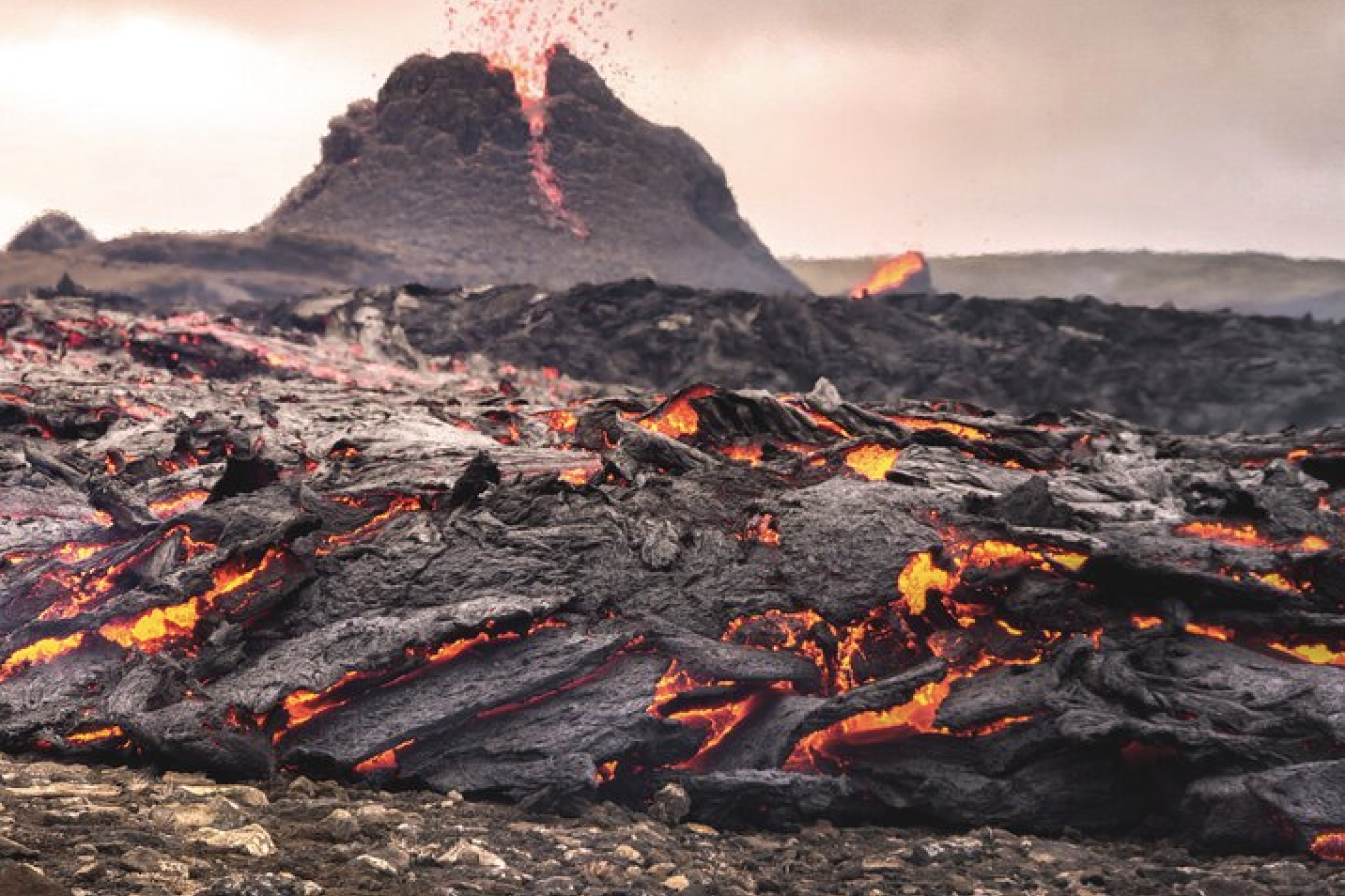
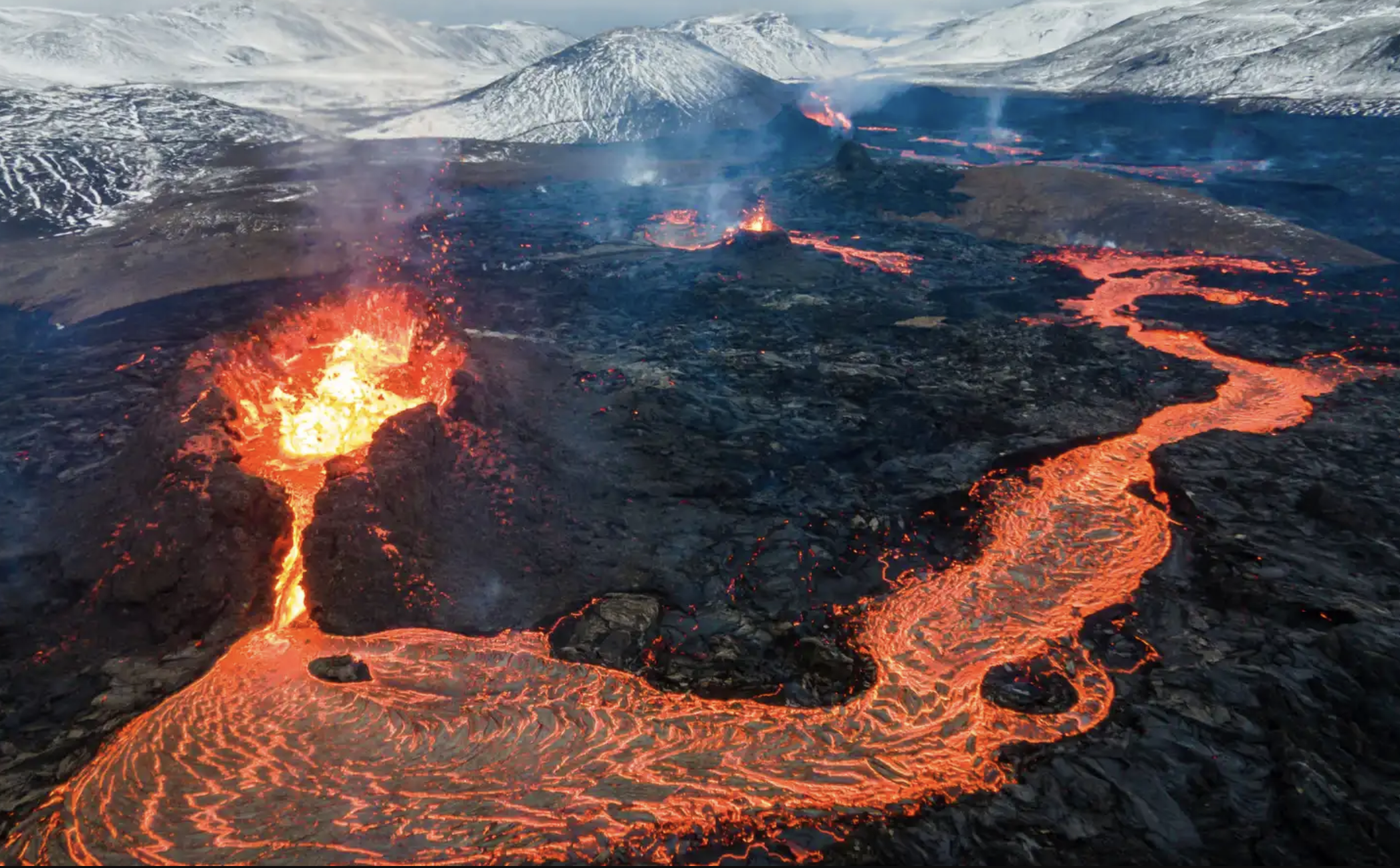
Fagradalsfjall volcano in Iceland with a big river of lava flowing out

Fagradalsfjall in Iceland

This planet of ours is full of wonders so incredible that for thousands of years more primitive peoples believed they were the acts of gods, either blessing or cursing the lands on a whim. 

Black sand beaches that experience storms so violent the early Norsemen thought that Thor was striking his hammer. 

Rock formations so otherworldly that they could only have been created by giants who stepped across the sea to fight monsters. 

Mountains so unusually shaped that the native tribes believed their scratch-like markings were created by giant bears. 

The most violent, dramatic, and spellbinding of these locations is unquestionably the volcanoes that pepper the surface of the planet. In some cases, ancient people believed that they were the chimneys of great gods, where armour and weapons were forged underground for their wars against titans and demons; in others, these molten warrens were home to demons who imprisoned gods and held them hostage.

While science speaks louder than folklore and we now understand how volcanoes work, there’s nothing that can prepare the mind for watching a volcano erupt before our very eyes. The violence, majesty and incredible visual impact of seeing the earth breathe liquid fire is something no person can understand or appreciate until they’ve seen it for themselves. That’s why I’ve curated a list of the world’s most dramatic volcanoes (consistently erupting and possible to visit) to pave the way for you.

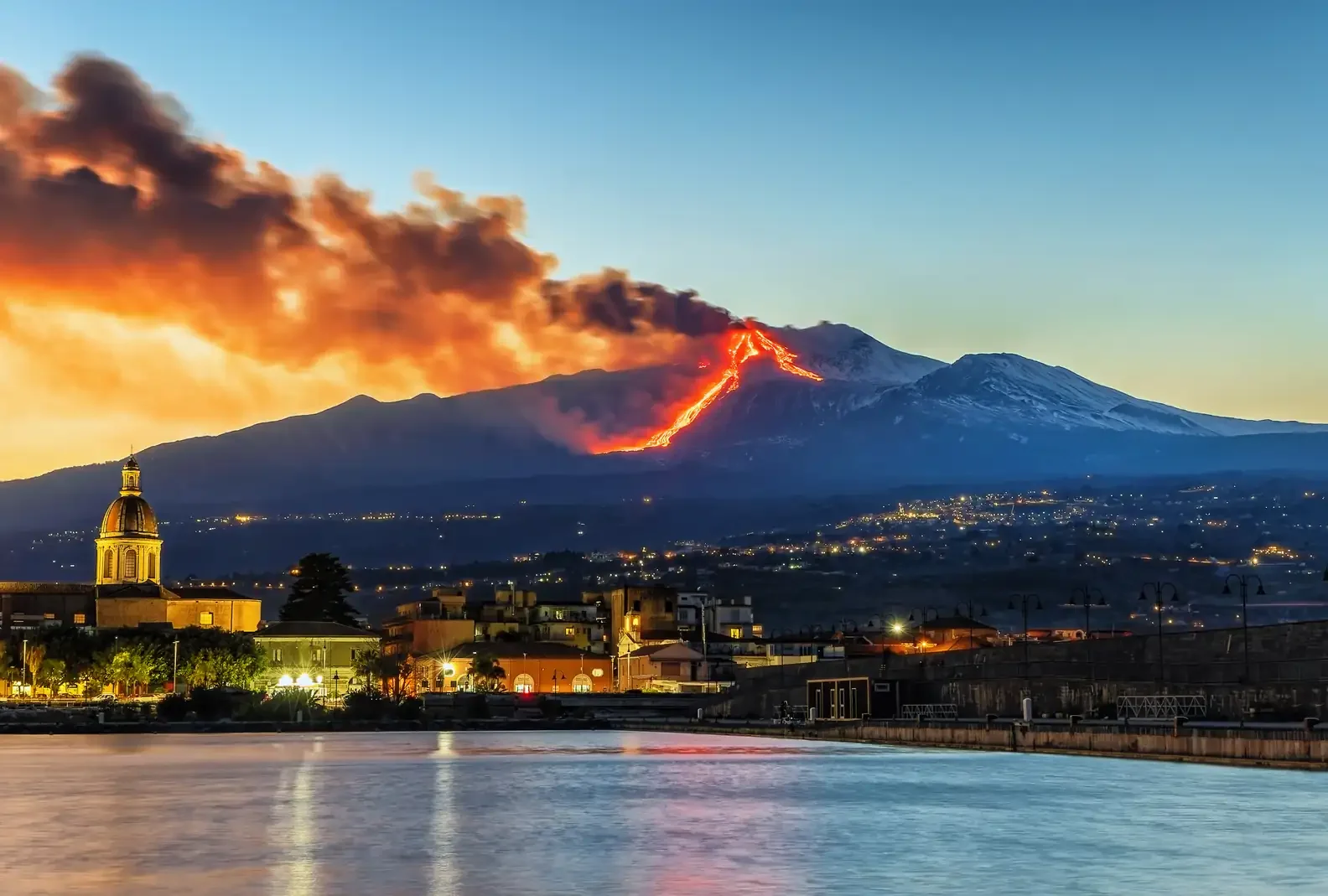
Mount Etna erupting, with smoke and lava on Sicily, Italy, with a city in the foreground in the evening

Mount Etna in Italy

Adventure Travel: Volcano Edition

While the volcanoes we’re about to explore are all “visitable” by the public, their locations require some serious flight time. Given that many of these volcanoes erupt in what are considered fairly remote locations (and assuming that your trip takes you to more than one), my travel plan for these experiences includes private jet travel. When you book a private jet, you’re allowing yourself the freedom to move through multiple destinations without having to change flights, worry about lost bags, or concern yourself about scheduling your life to work with an airline’s plans. 

Smaller jet classes are also able to get you to remote terminal destinations, so give the idea some thought. And now, off to your fiery, awe-inspiring volcano experiences!

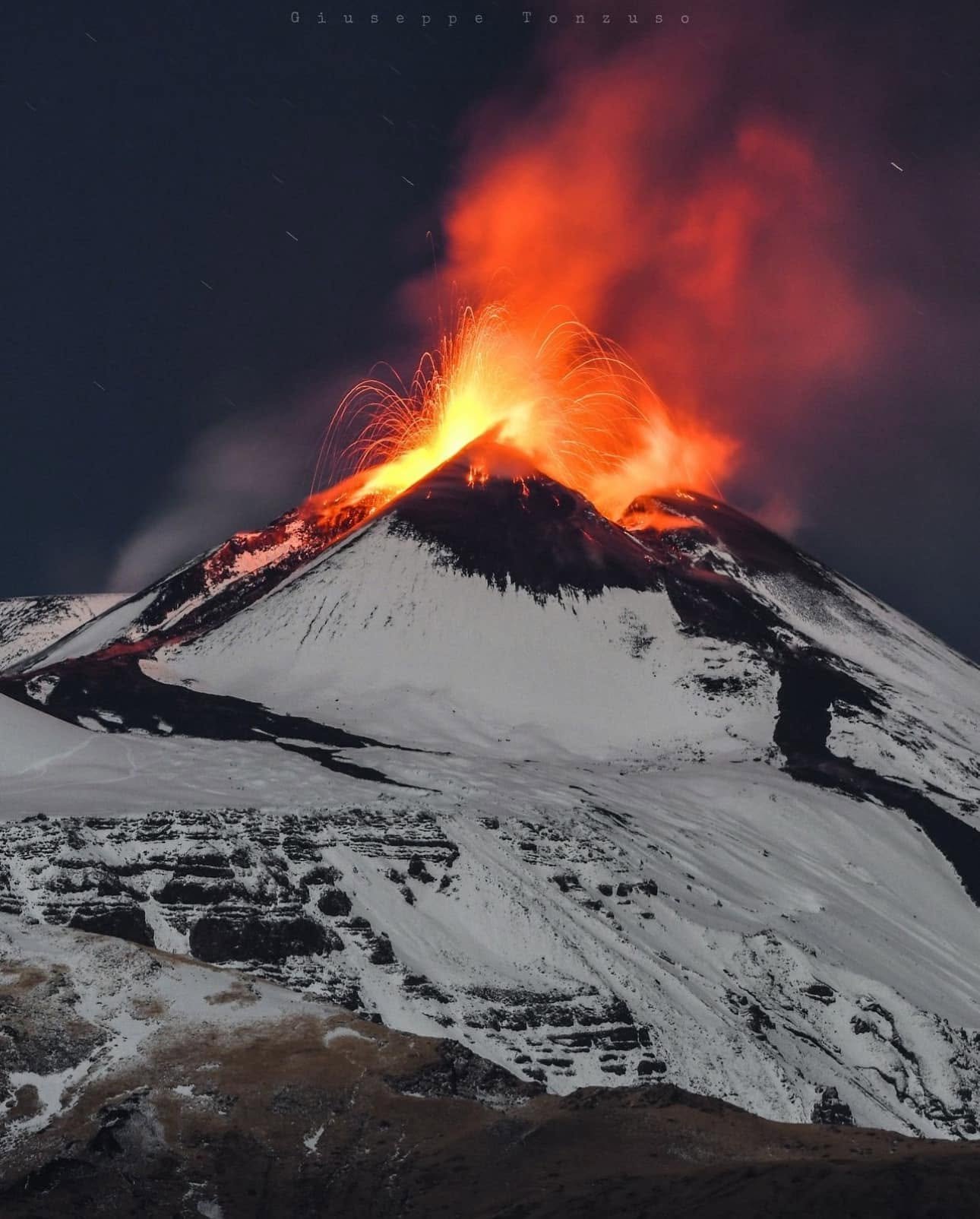
A snowy Mount Etna volcano erupts in Italy

Mount Etna

This is Europe’s largest and most active volcano and arguably the easiest to access of any consistently erupting volcano in the world. 

Rising to an impressive height of about 11,000 feet (2 miles or 3,300 meters), Mount Etna can be found on the eastern coast of Sicily, Italy and currently erupts a few times each year. 

The lava fountains are miraculous to behold, often shooting up hundreds of feet into the air and surrounded by rivers of molten rock, making for a truly magnificent sight.

There are cable cars, off-road buses and guided hikes that will take you to safe viewing areas where bright orange and gold contrast against the deep blue Mediterranean sky. 

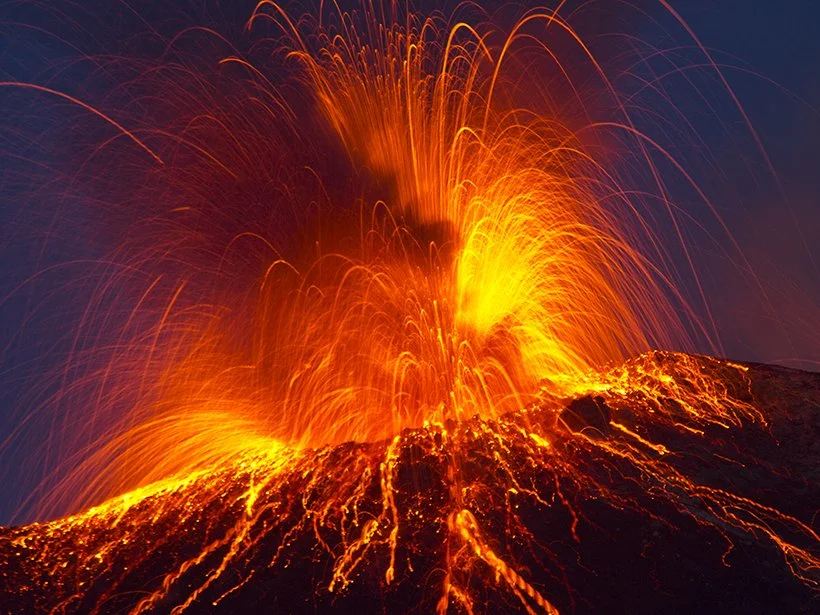
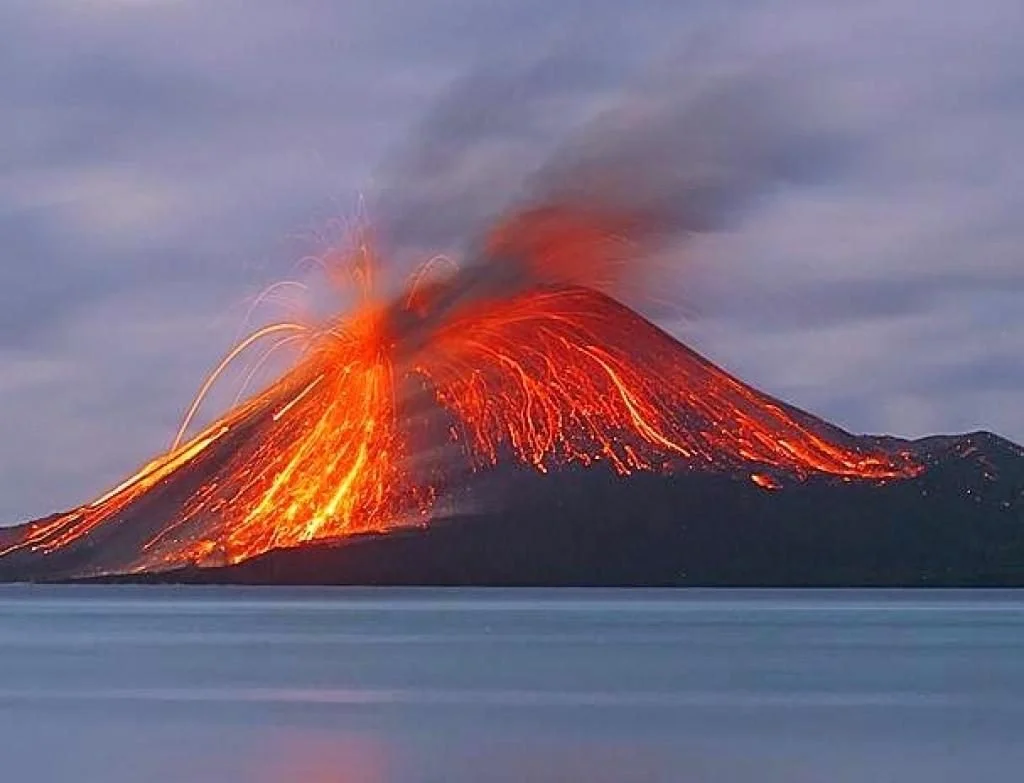
The volcano Stromboli off of Sicily, Italy erupts in arcs of flame and rivers of lava

Stromboli

We’re in Italy again, this time to see Stromboli, a volcano on a small namesake island off the coast of Sicily. Known as “the Lighthouse of the Mediterranean,” this volcano has been erupting continuously for about 2,000 years. Eruptions take place every few minutes and blast almost white-hot lava bombs and ash into the air from its crater summit in such a distinctive way that volcanologists actually gave this kind of eruption its own name: the Strombolian eruption. 

Visitors can hike up the mountain (with certified guides only) to several viewing locations or watch the fireworks from offshore: Sunset experiences make for the most impressive views.

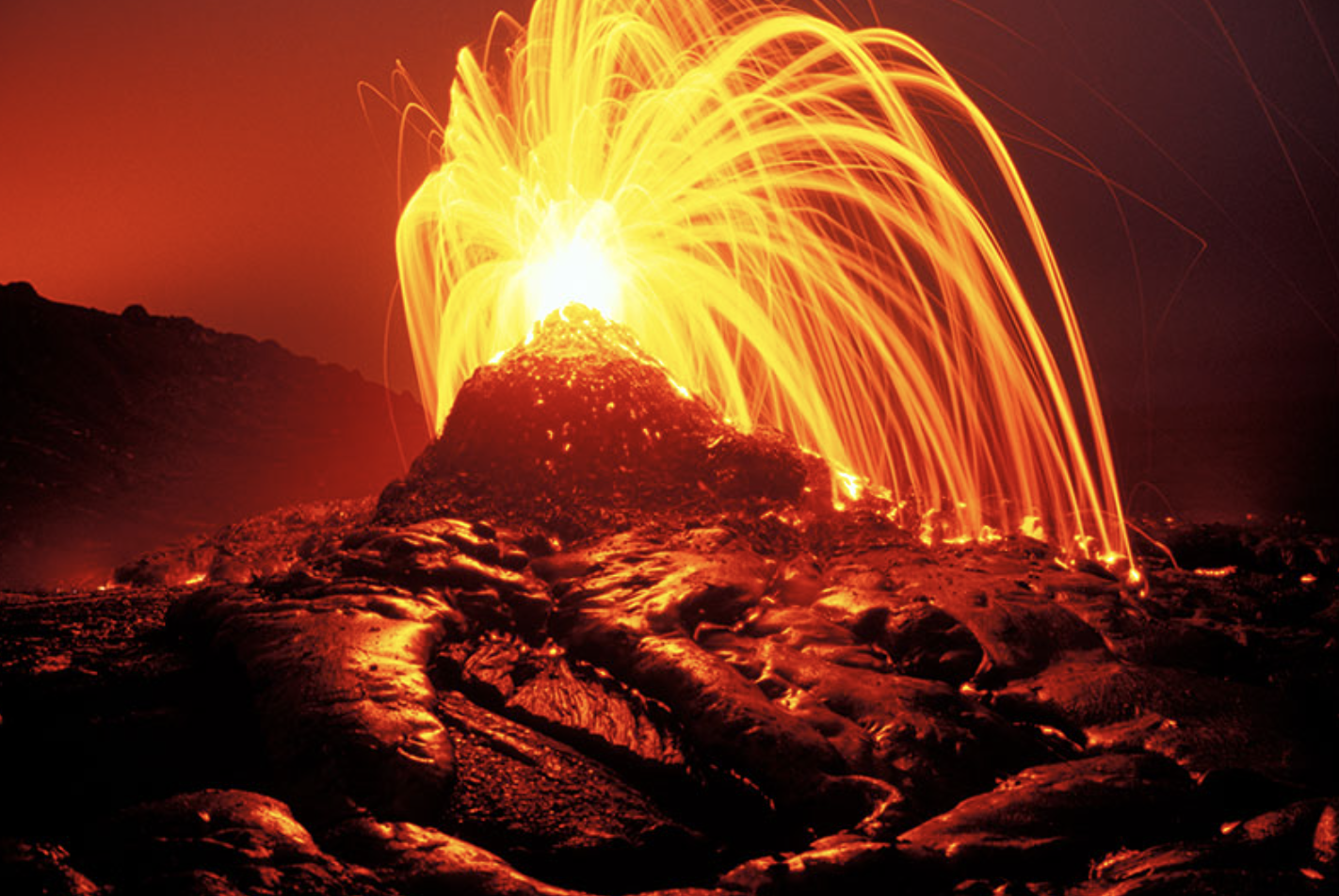
The volcano Kīlauea in Hawaii, USA, erupts in streams of light

Kīlauea

We’re off to Hawaii next, to one of the best known volcanoes on the planet: Kīlauea.This beast of a mountain is located inside the borders of the glorious Hawaii Volcanoes National Park and is definitely one of the most unusual natural wonders in the U.S

With eruptions varying from fiery lava lake views to the drama of molten rock shooting 100 meters into the air and glowing red nights visible from park overlooks, it’s a very popular tourist destination. 

Viewing areas are carefully managed by local park rangers, which makes Kīlauea one of the safest spots on the planet to view the violent glory of a volcanic eruption.

The volcano Fagradalsfjall in Iceland erupts, with black volcanic rock, lit by orange magma

Fagradalsfjall

Before the eruption in 2021 that made this Scandinavian mountain a household name, Fagradalsfjall hadn’t even so much as muttered a word for almost 800 years. 

Since then, this volcano has completely rewritten the Reykjanes Peninsula, ripping it open to expose spectacular fissures, and making it into one of the foremost volcanic adventure travel destinations in the world and a major reason to visit Iceland.

Visitors can hike across blackened lava fields to see brightly glowing rivers of lava squeezing their way up through the ground and sometimes even exploding into the air. 

Iceland’s impeccable site monitoring and management allows the country to open or close the fields to the public depending on safety concerns and flow on any given day; even when these routes are closed, there are “from a distance” viewing options that let you in on the action.

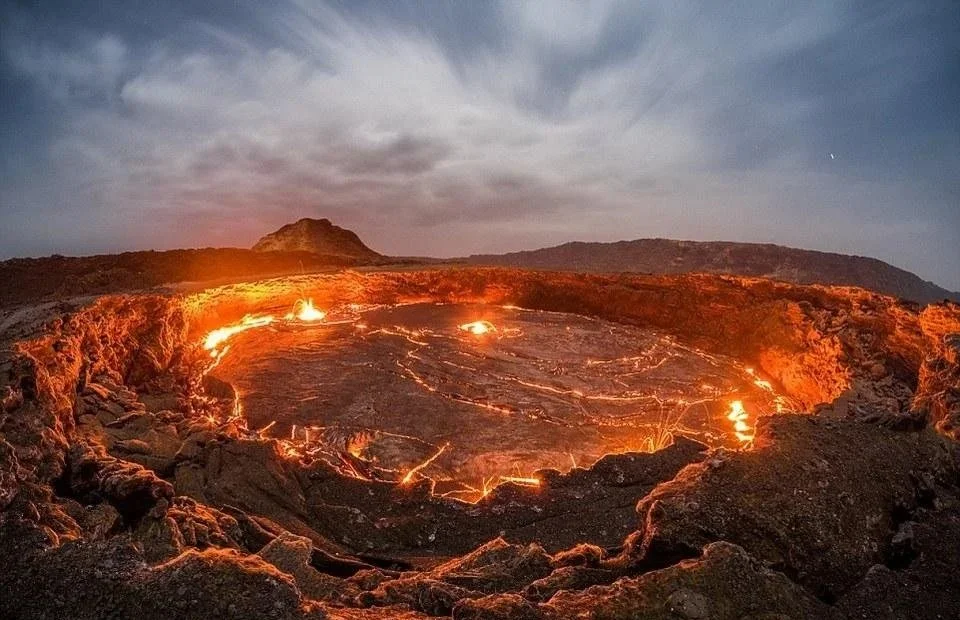
The crater of Erta Ale volcano in Ethiopia

Erta Ale

You’ll find Erta Ale in Ethiopia, buried in one of the hottest places on Earth, belching forth streams of molten rock and providing a challenging but more than worthwhile experience. 

In the Danakil Depression, around 410 feet (125 meters) below sea level, a geological wonderland awaits those with the gumption to explore it. Erta Ale can only be reached on foot, on multi-day expeditions across sweltering landscapes. 

At the summit of this unusual volcano, visitors will get to see a churning lake of lava, the surface constantly cracking open with motion and reforming as the magma churns. The journey to this location is very physically demanding, but the adventure you claim as a reward is certainly worth the hard work.

Streams of lava pour down Stromboli Volcano in Italy

Stromboli Volcano in Italy

Choose Your Own Volcano Adventure

These incredible volcanoes are some of the most underrated adventure destinations. They ask for extra effort from their visitors, but they reward those daring enough to make the trip with sights they’ll never see anywhere else. Where will your journey begin? –Mark Wood

Thrill-Seeker’s Paradise: Top Destinations for Adventure and Adrenaline

From roller coasters in Orlando to bungee jumps in New Zealand and shark cage dives off South Africa’s coast, these global hotspots deliver the kind of pulse-pounding travel stories you’ll be telling for years.

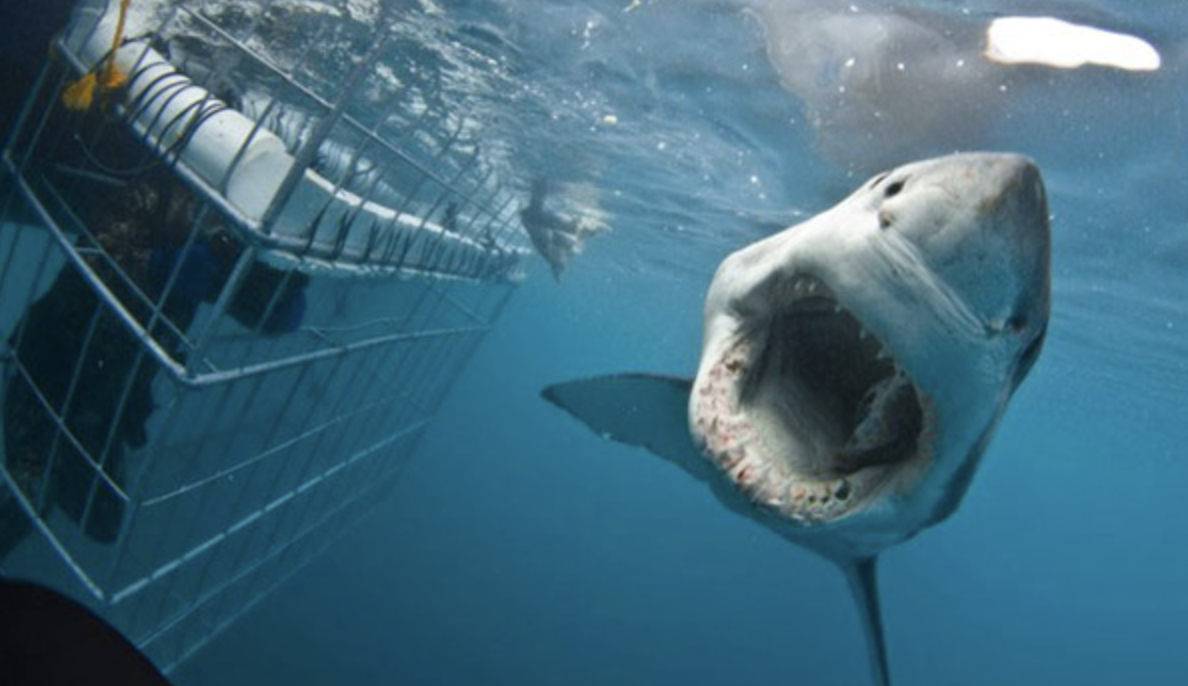
A shark with its jaws open wide approaches a diving cage near Cape Town, South Africa

If cage diving with sharks in Cape Town is your idea of a good time, you’ve come to the right article!

Some travelers chase sunsets. Others chase the surge of adrenaline that comes right before the drop.

If you’re the kind of person who loves adventure travel, you probably measure a trip not by how relaxed you felt but by how loudly you screamed, You already know the world is one giant playground. There are places built for speed. Places shaped by mountains, rivers and tectonic drama. Places where you step to the edge, look down and think, Well… here goes.

Here’s where to go when “relaxing” just won’t cut it.

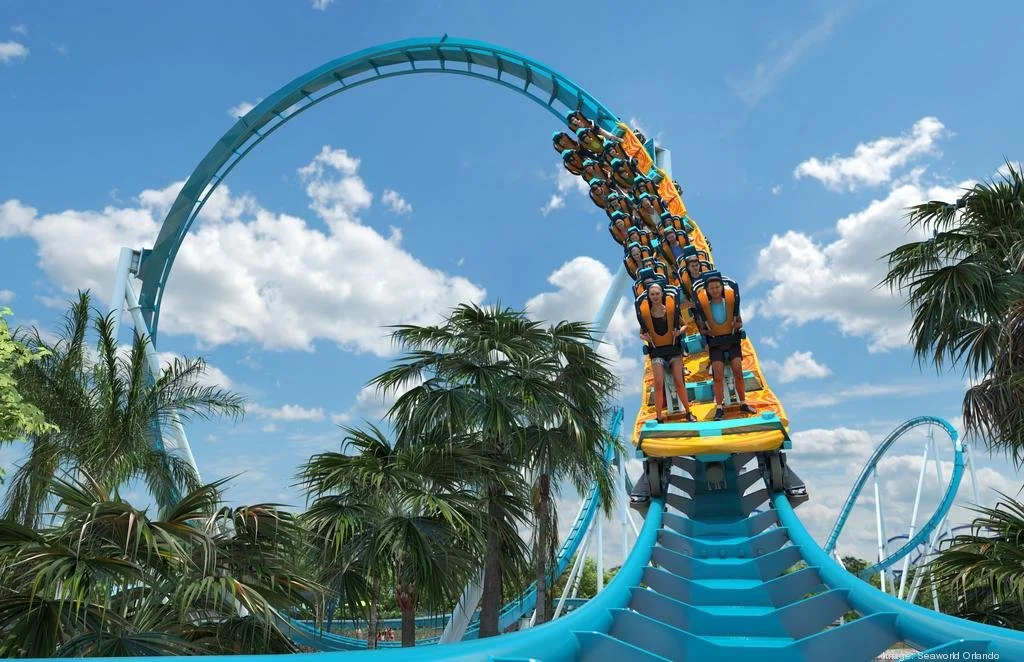
A roller coaster coming out of a loop at Sea World, Orlando, Florida

Orlando, Florida, USA: Where Adrenaline Meets Imagination

Few cities commit to spectacle quite like Orlando. Yes, it’s the theme park capital of the world — but it’s also a place where you can spend the morning defying gravity and the afternoon skimming across wetlands in an airboat.

The heavy hitters are legendary: Universal Studios Orlando, Walt Disney World and SeaWorld Orlando. At Universal, you’ll rocket through superhero cityscapes, outrun dinosaurs and step inside cinematic worlds that blur the line between ride and reality. The Incredible Hulk Coaster doesn’t ease you in. It launches you. The Jurassic-themed attractions don’t gently float. They drop.

And if you’re planning to lean all the way into the experience, there’s a practical side to the thrill. Learning how to get a Universal Studios credit card can unlock credit card perks for theme park travelers — think rewards on everyday spending that translate into discounts on park tickets, dining and merchandise. Add in early access to attractions, VIP seating for shows and special offers, and suddenly your roller coaster obsession comes with strategy. It’s not just about riding more. It’s about riding smarter.

Beyond the parks, Orlando delivers hot-air balloon rides at sunrise, luxury resorts that feel like escape pods and airboat tours that skim across glassy water where gators sun themselves. Adrenaline here comes in many forms.

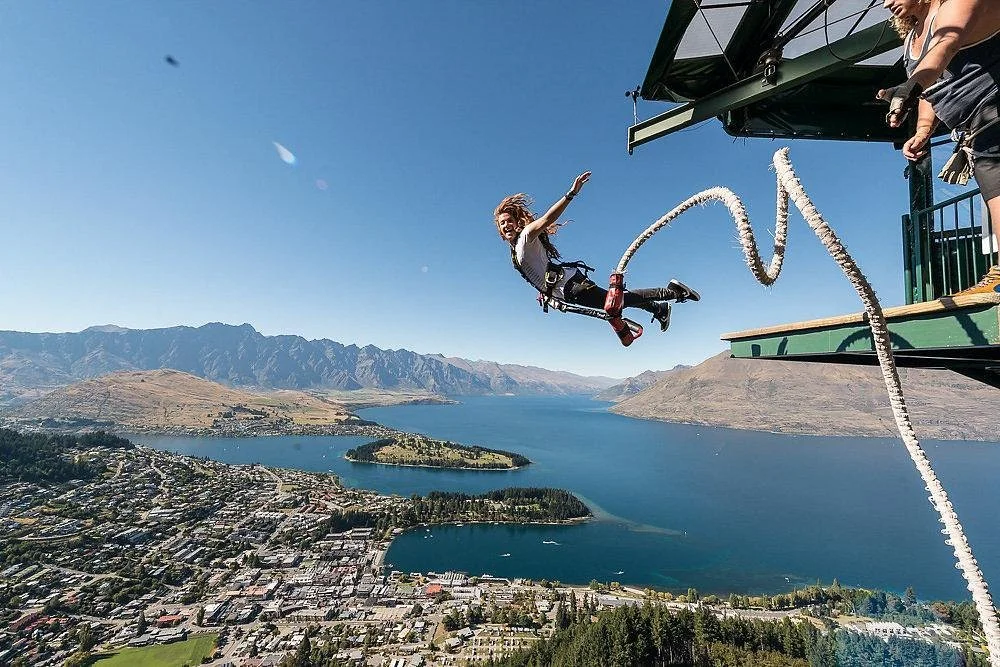
A person bungee jumps off a platform by the water over Queenstown, Australia

Queenstown, New Zealand: The Original Leap

In Queenstown, the mountains feel close enough to touch and the air hums with possibility. Tucked beside Lake Wakatipu and framed by the jagged peaks of the Remarkables, this South Island town proudly calls itself the Adventure Capital of the World.

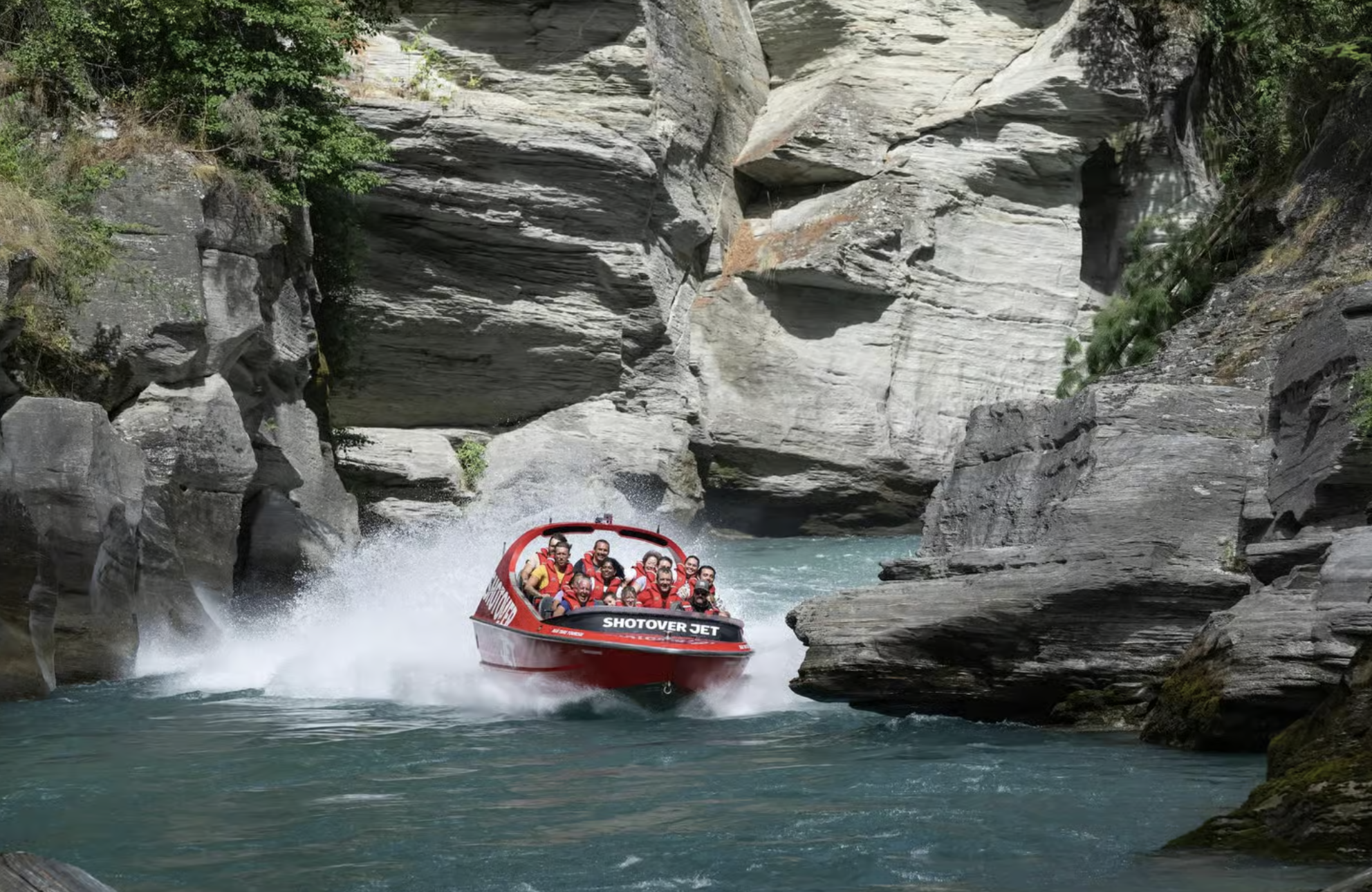
It’s not an empty slogan. The first commercial bungee jump launched from the historic Kawarau Bridge, and people have been stepping off it ever since — willingly. Jet boats scream through the narrow canyons of the Shotover River at absurd speeds, spinning in controlled chaos between rock walls.

Skydiving here feels almost unfair. You fall through open sky with snow-dusted peaks and impossible blue water below you. Mountain biking, paragliding and alpine hiking round out the menu. Queenstown doesn’t gently suggest adventure. It dares you.

RELATED: Renting a car in Queenstown

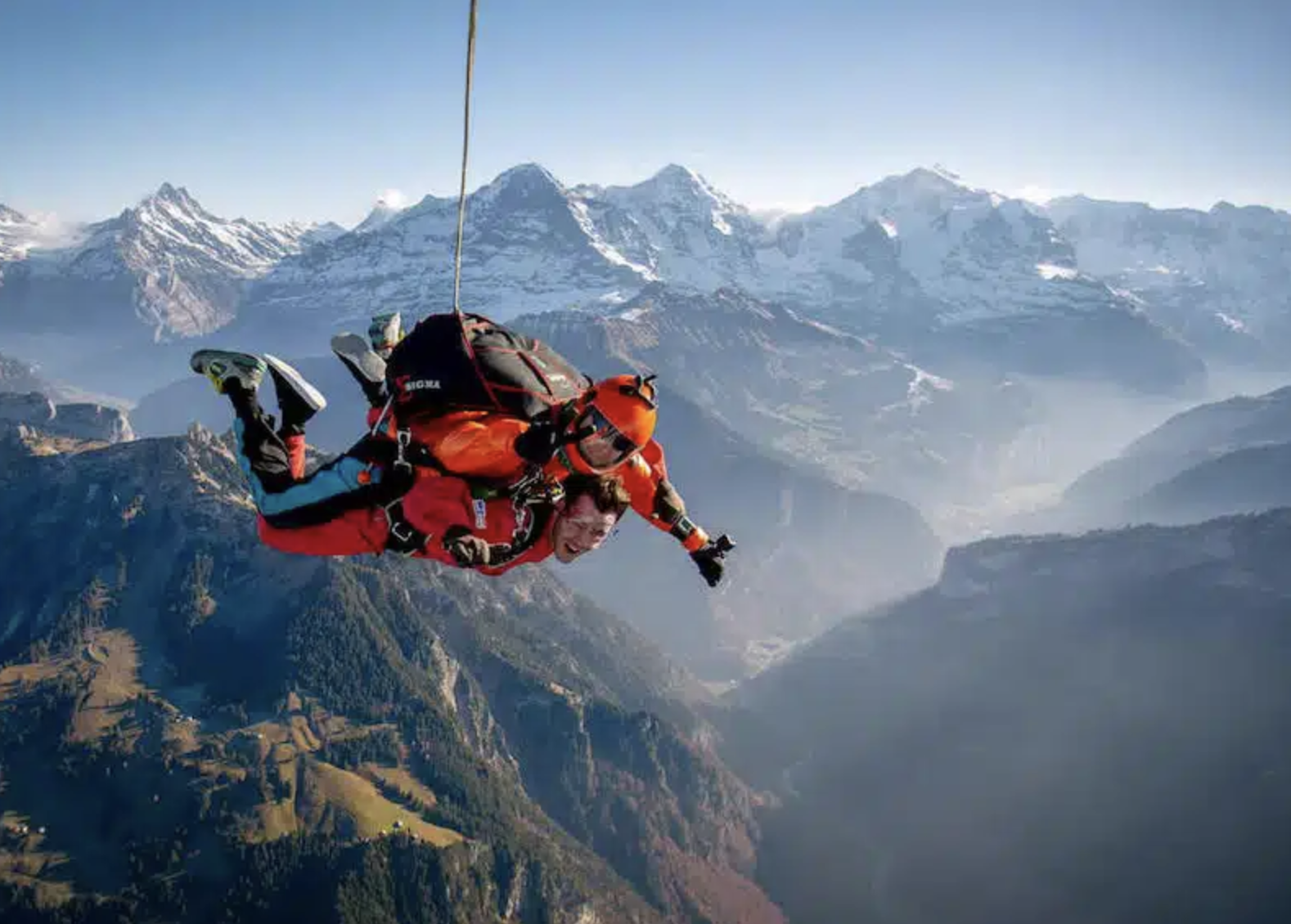
Two people skydive in the Swiss Alps

Interlaken, Switzerland: The Alps From 10,000 Feet

Set between two shimmering lakes and backed by the Swiss Alps, Interlaken looks serene from afar. Don’t be fooled.

Skydiving over this alpine landscape is one of the most cinematic free-falls on the planet. You leap from 10,000 feet, the air sharp and cold, snow-capped peaks rising like teeth from the horizon. The descent is pure clarity.

If you prefer your thrills slightly closer to earth, canyoning through glacial water, paragliding above turquoise lakes and hang gliding across alpine ridges offer their own kind of rush. Interlaken pairs postcard beauty with high-octane daring — a combination that’s hard to resist.

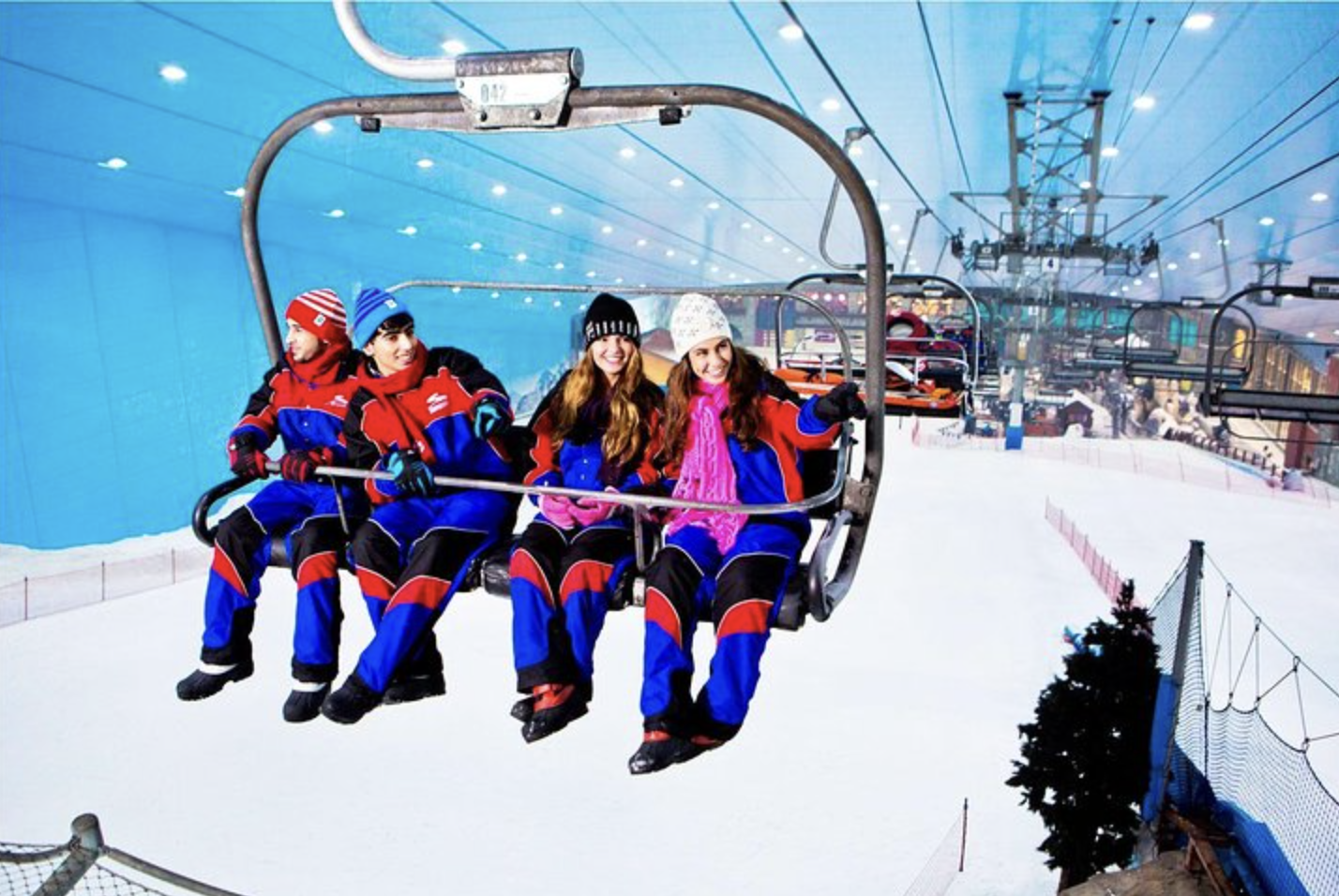
Four people sit on a chairlift in an indoor ski resort in Dubai, UAE

Dubai, United Arab Emirates: Desert Speed and Vertical Drama

This city understands spectacle. It builds it taller, faster and flashier. Dubai thrives on over-the-top attractions. These aren’t things to do with kids in Dubai. They’re not the best museums in Dubai. They’re the spaces created for adrenaline junkies.

In the desert, 4x4 vehicles crest golden dunes before plunging down the other side in controlled slides, engines roaring against an endless horizon. From the air, skydiving over the iconic Palm Jumeirah reveals the palm-shaped island in geometric perfection.

Then there’s the vertical thrill: racing to the observation deck of the Burj Khalifa, the tallest building in the world, via one of the fastest elevators anywhere. In a single day, you can ski indoors, bash dunes outdoors and stand higher than almost anyone else on earth. Subtle, it is not.

A man spreads his arm and legs out as he ziplines above the jungle canopy in Costa Rica while a group of people watch from a tree platform

Costa Rica: Rainforest, Rivers and Raw Energy

In Costa Rica, nature sets the agenda. Rivers carve through jungle. Volcanoes steam quietly. The air smells alive.

What are the best things to do in Costa Rica? White-water rafting surges through churning rapids. Ziplining in the cloud forests of Monteverde sends you flying above the canopy, the forest unfolding beneath your feet. Hiking near Arenal Volcano brings you close to raw geological power, while the Pacific coast delivers surf breaks that challenge even seasoned riders.

Here, adventure feels organic. The land itself invites you to test your limits.

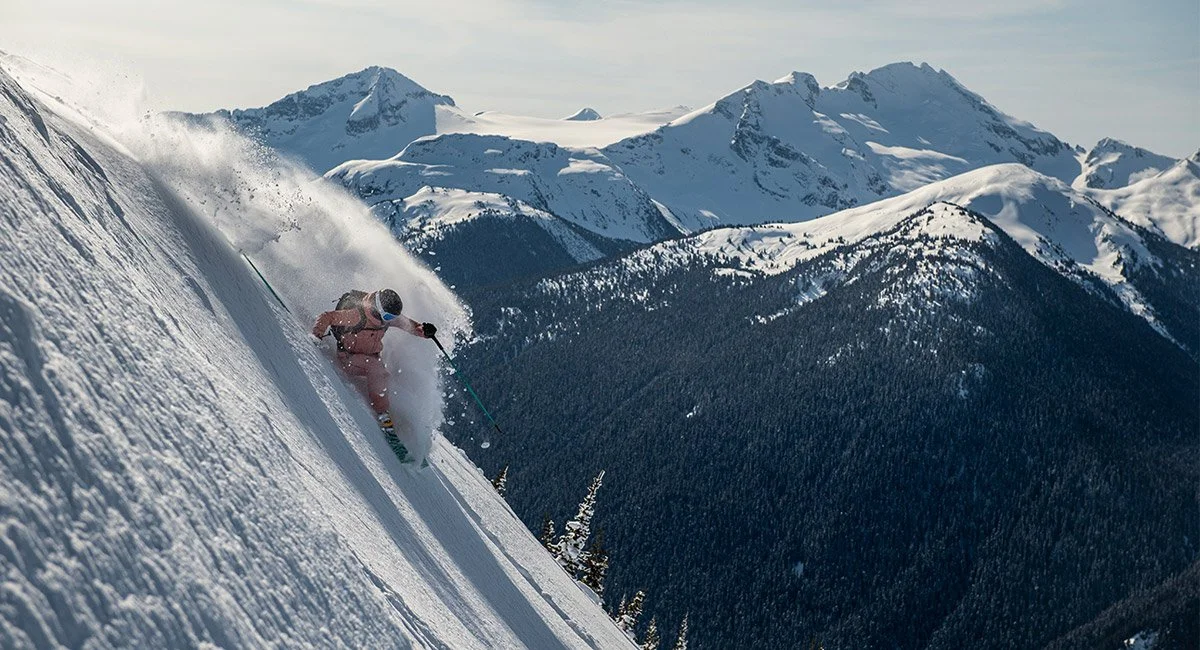
A person snowboards down a steep slope in Whistler, Canada

Whistler, Canada: Snow and Speed

Whistler transforms with the seasons, but the adrenaline never disappears.

In winter, Whistler Blackcomb delivers world-class skiing and snowboarding across vast alpine terrain. In summer, the same mountains morph into mountain biking trails, zip-line routes and high-altitude hikes.

The Peak 2 Peak Gondola glides between mountaintops, suspended high above valleys and forests. It’s less about speed and more about the delicious awareness of height — that slight tightening in your chest as you look down.

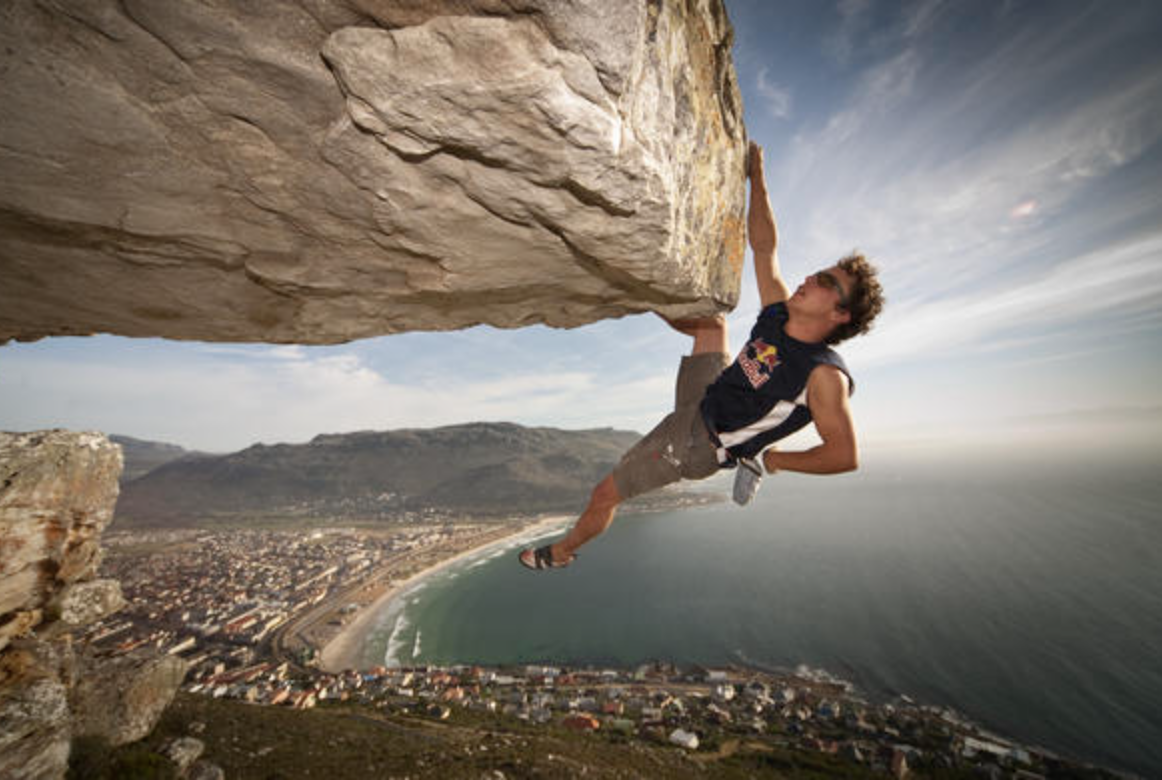
A mab climbs a rock ledge on Table Mountain high avove Cape Town, South Africa

Cape Town, South Africa: Beauty With Teeth

Cape Town may be one of the most photogenic cities on the planet, but it’s not content to sit still.

Climbing Table Mountain rewards you with panoramic views of ocean and city, wind whipping at your jacket. For a sharper spike of adrenaline, shark cage diving near Gansbaai places you face-to-face with great whites in cold Atlantic water.

Add paragliding over the coastline and rugged hikes in the Cape of Good Hope Nature Reserve, and Cape Town becomes a study in contrasts: serene landscapes and primal thrills.

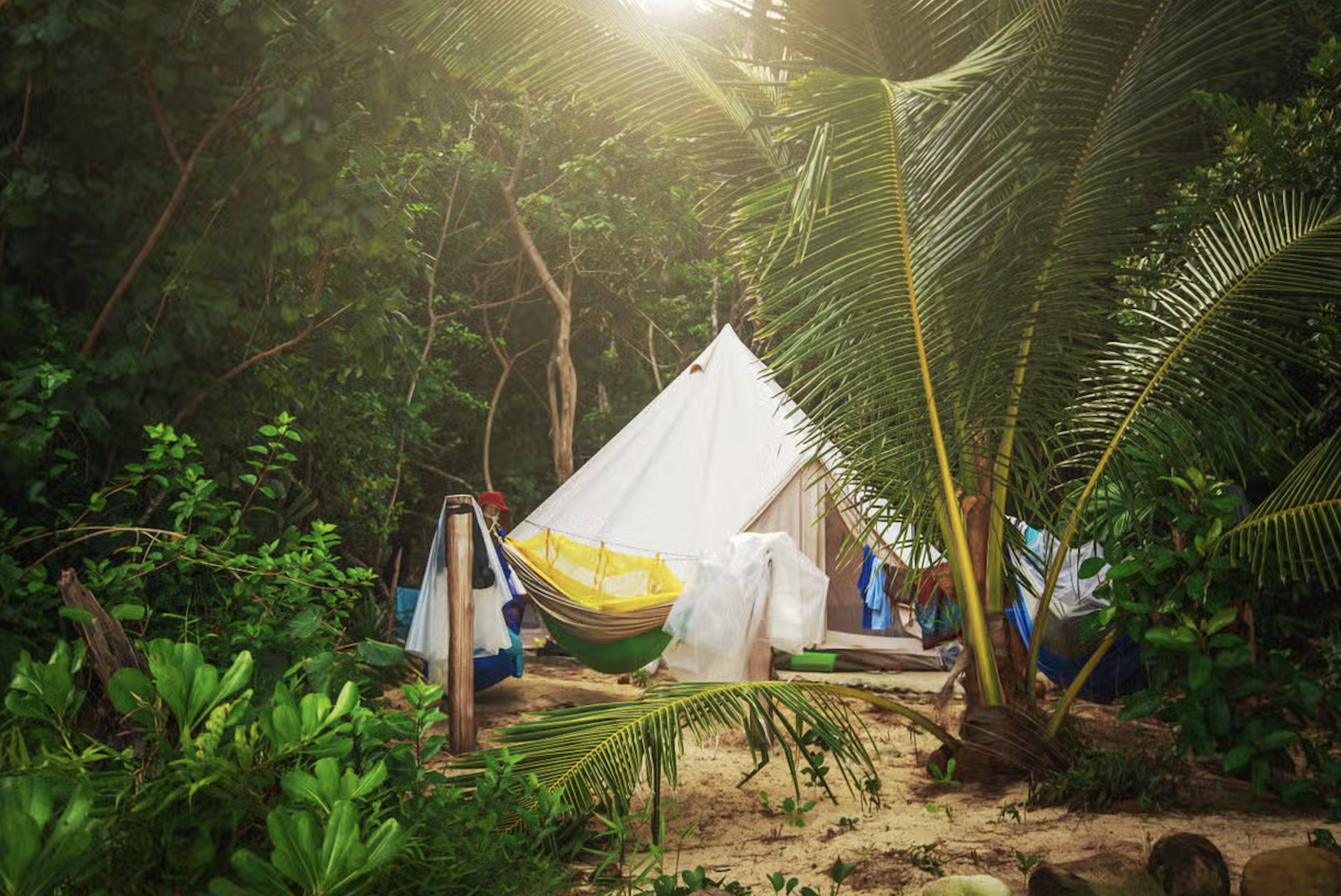
A tent and campsite set up in the Amazon Rainforest in Brazil

The Amazon Rainforest, Brazil: Into the Wild

The Amazon Rainforest doesn’t offer polished theme park thrills. It offers immersion.

Here’s how to plan your dream Amazon adventure: Deep in the jungle, you zipline above dense canopy, kayak through winding tributaries and camp beneath a sky stitched with unfamiliar stars. Guided wildlife safaris reveal monkeys, vibrant birds and, if you’re lucky, the elusive jaguar.

This is adventure stripped down to essentials: heat, humidity, sound and the feeling that you are very small in a very vast world.

A red jet boat races down the Shotover River in Queenstown, New Zealand, past rock formations

A jet boat races down the Shotover River in Queenstown, New Zealand.

Adventure Travel: Your Next Leap

The world is not short on adrenaline. It’s waiting in roller coaster launch tunnels in Orlando, on suspension bridges in New Zealand, in Alpine air over Switzerland and beneath the surface of South African waters.

Whether you’re strategizing your theme park perks with a Universal Studios credit card or planning your first skydive over the Alps, one thing is certain: the stories that stay with us are rarely the calm ones.

Your next rush is out there. The only real question is how high you’re willing to go. –Gina Glazier