MEXICO

The Best Folk Art Guide in Oaxaca

A Q&A with Linda Hanna, who shares the appeal of Oaxaca, Mexico, her passion for textiles and the now sadly closed Casa Linda B&B.
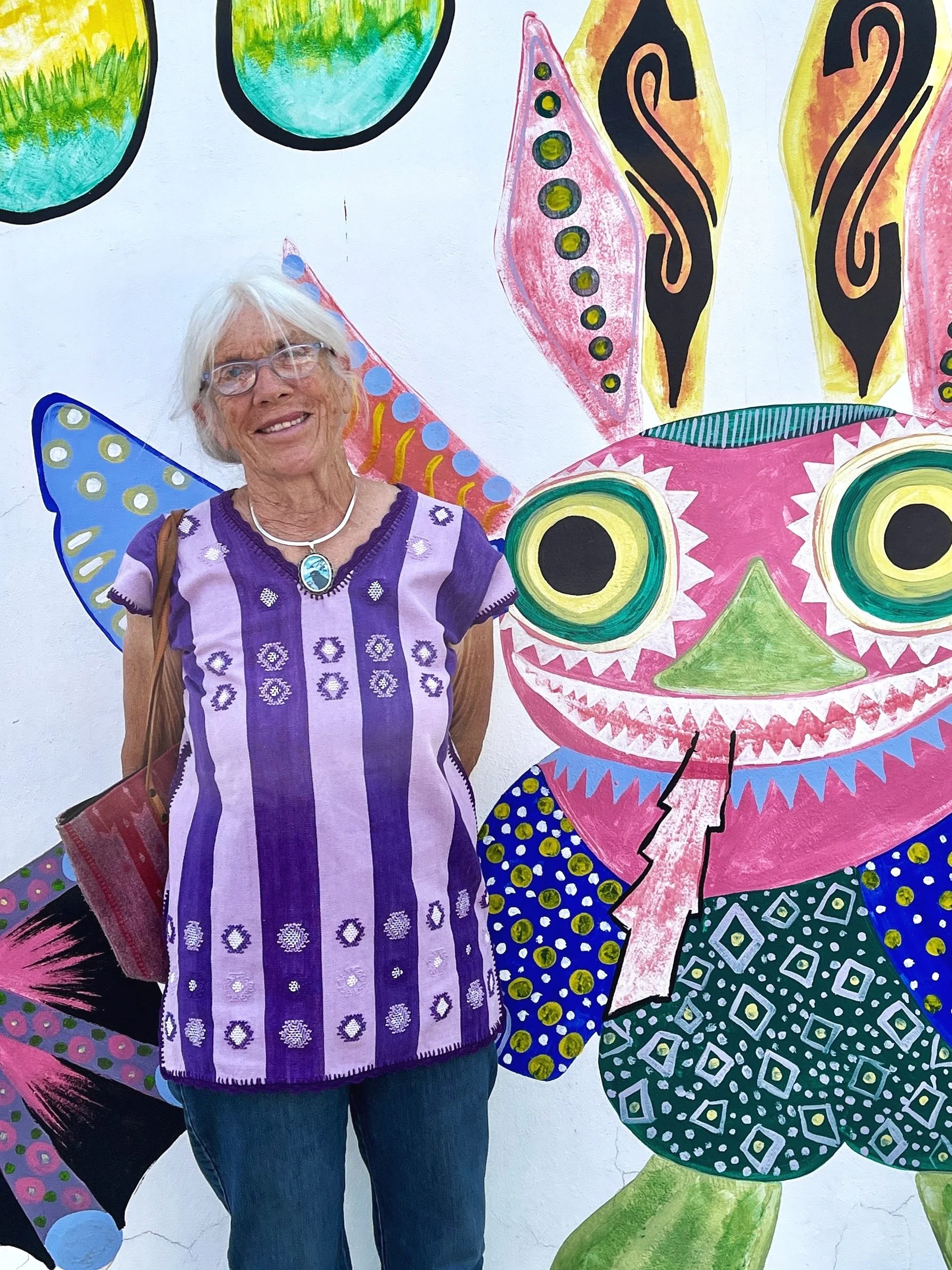
Linda Hanna, folk art guide extraordinaire

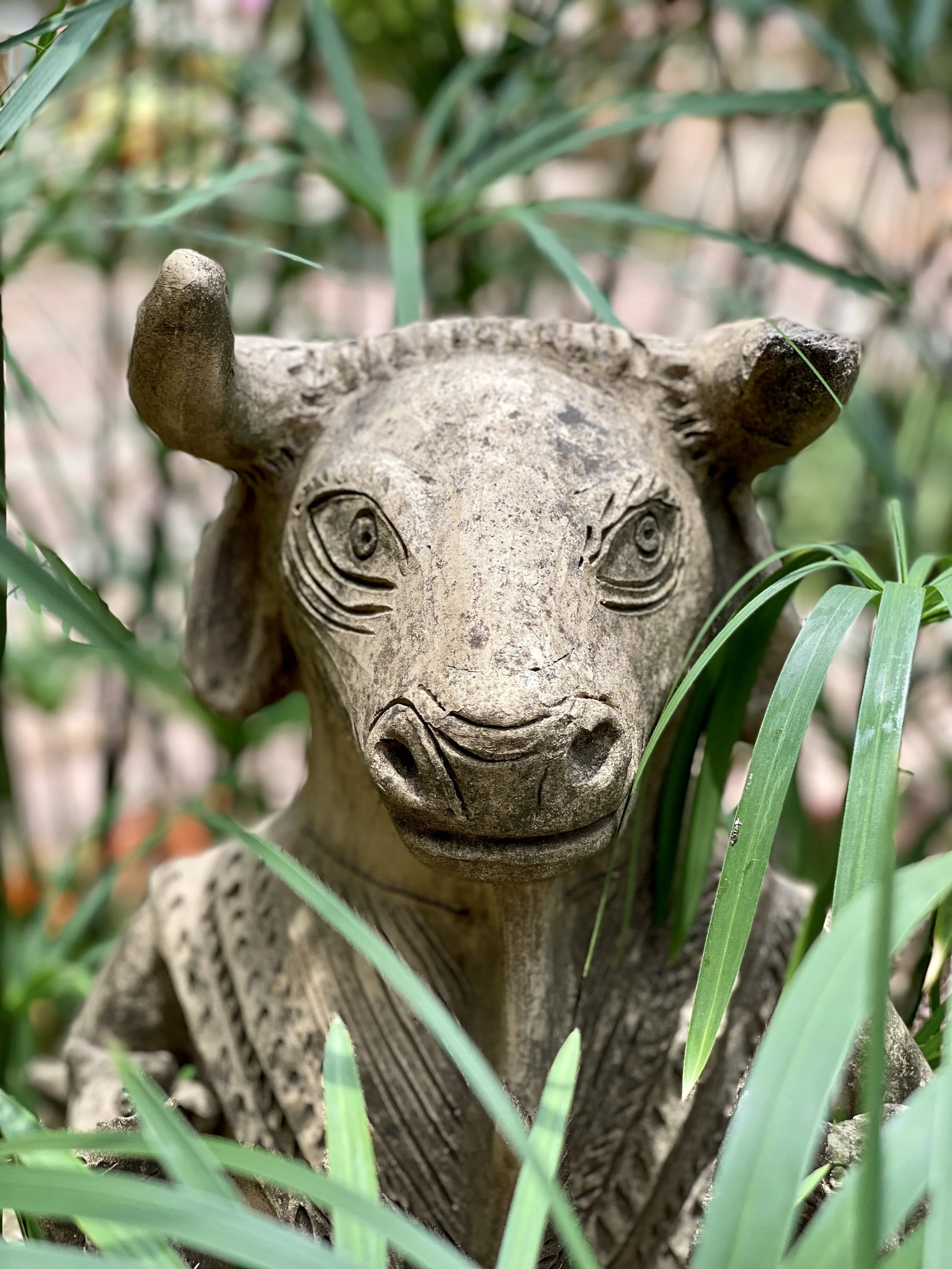
If you have a passion for folk art, as Duke and I do, Oaxaca has to be on your Mexico itinerary. And if you want to visit the workshops of the local artisans of this colorful state, there’s no better guide than Linda Hanna. 

I first heard about Linda in Viva Oaxaca: An Insider’s Guide to Oaxaca’s Charms, and authors Robert Adler and Jo Ann Wexler didn’t exaggerate when they describe her as an expert who knows most of the region’s artisans personally. In fact, Linda is the one who chooses the artists who will represent Oaxaca at the national Feria Maestros del Arte (Masters of Art Fair) held at the yacht club in Chapala, Jalisco each year.

Head, heart and hand: I believe creating folk art involves these three elements.
— Linda Hanna

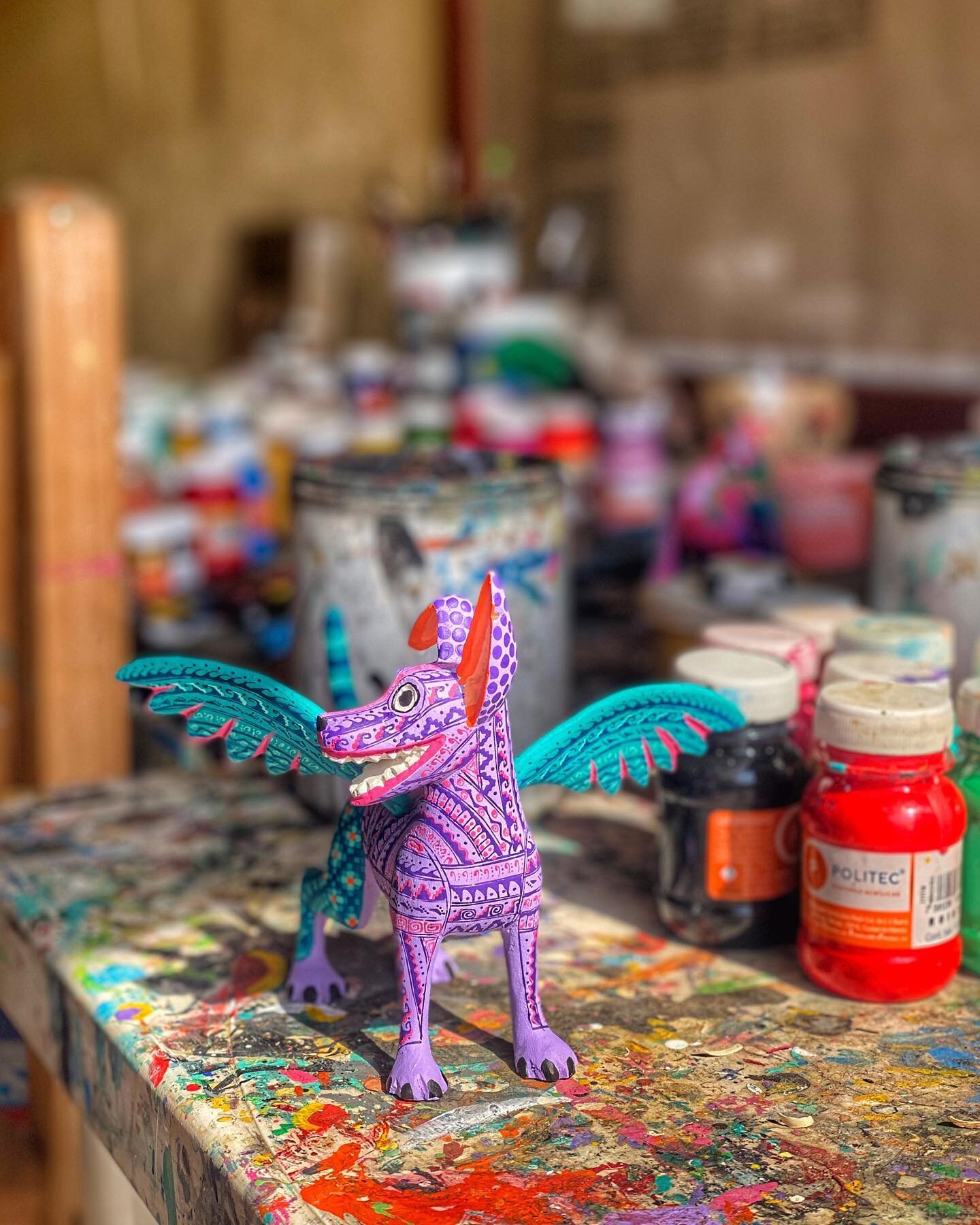
Linda’s a charming guide who’s eager to cater your day trip to whatever villages best represent your passion. The pueblos around the city of Oaxaca hold a variety of talented artisans creating various products, but the three biggies are alebrijes, pottery and rugs. 
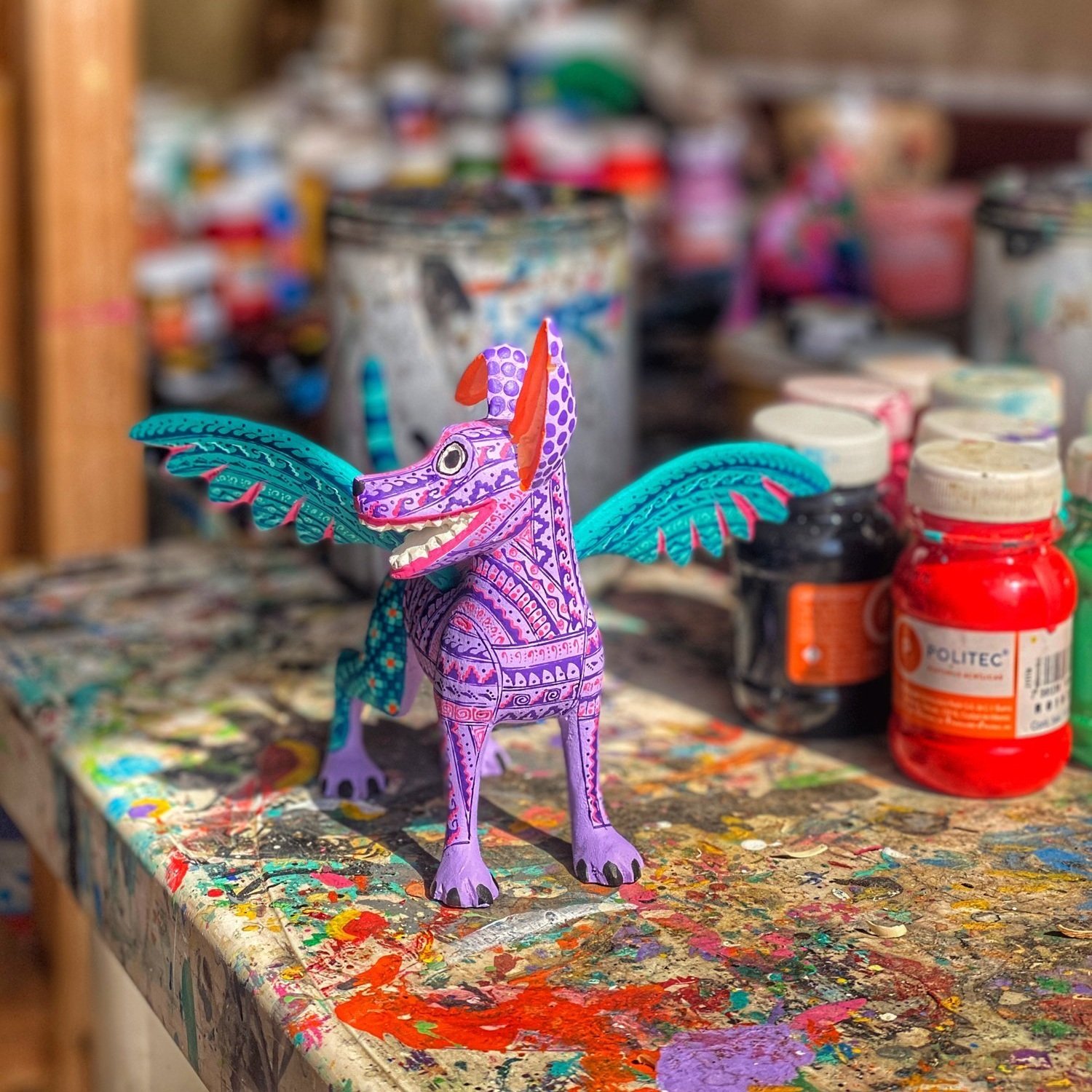

What exactly are alebrijes?

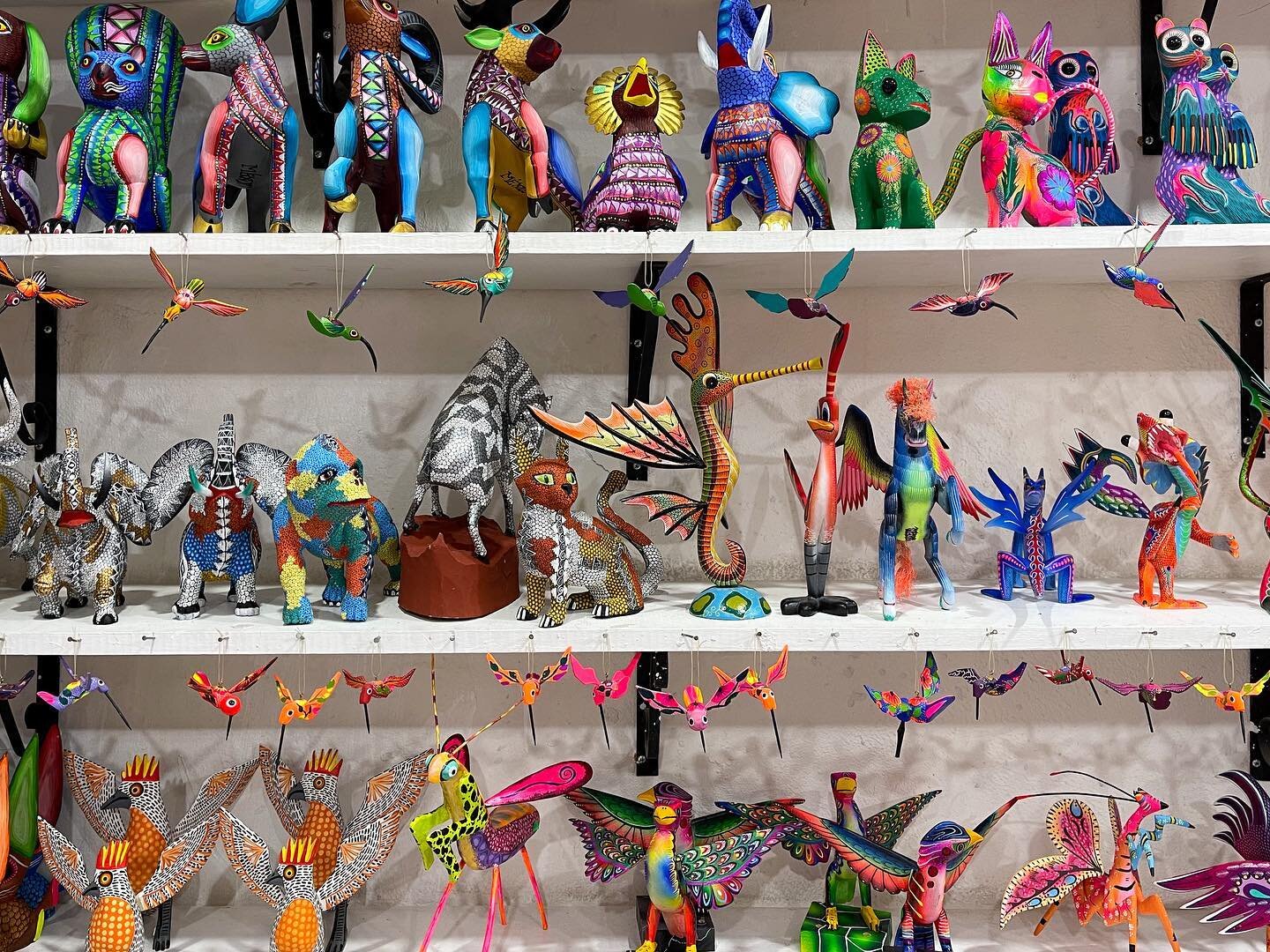
Fantastical creatures inspired by a fever dream: Learn more about our favorite Mexican folk art tradition.
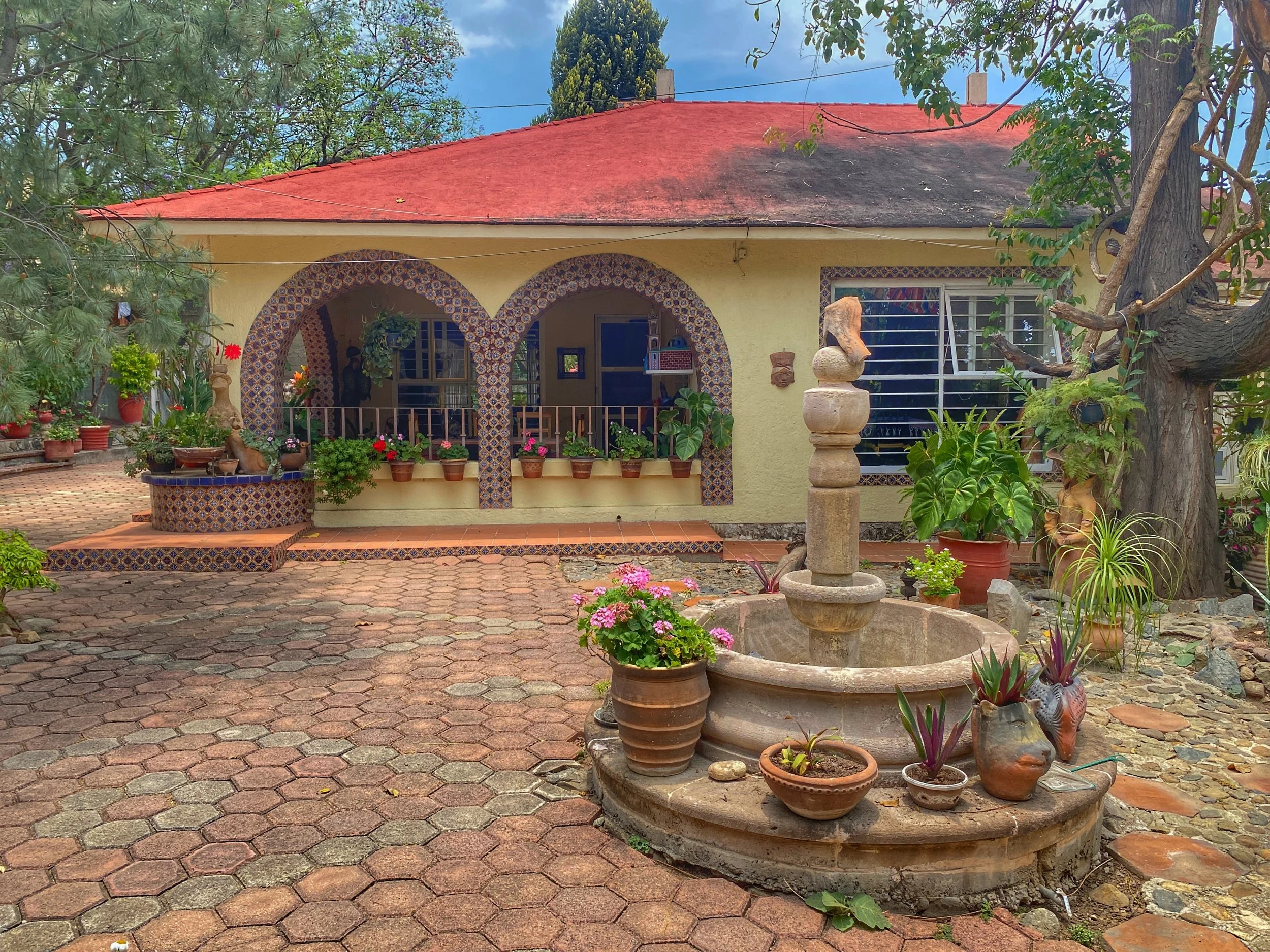

Casa Linda in Oaxaca

The lovely Casa Linda, outside of Oaxaca de Juárez

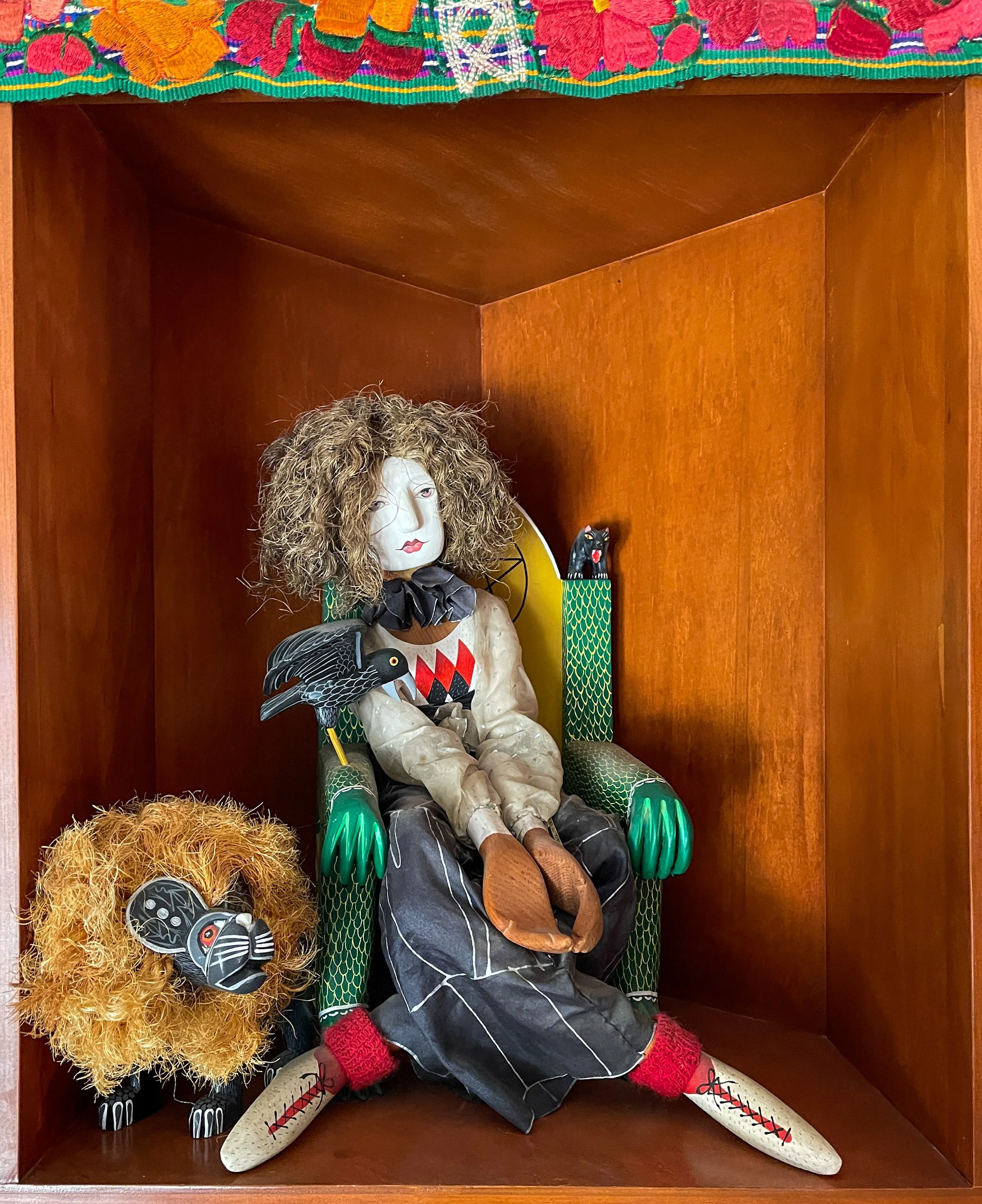
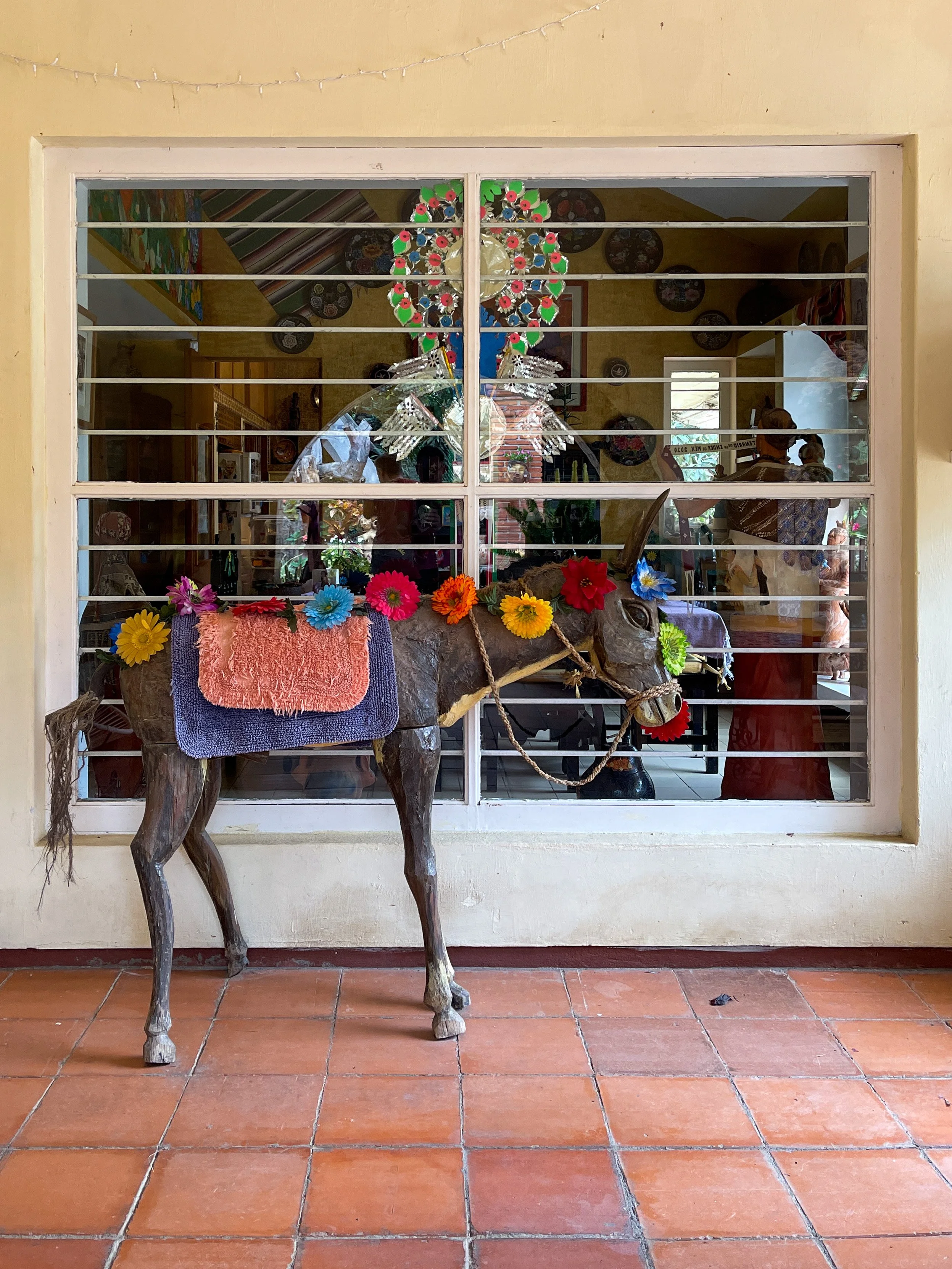
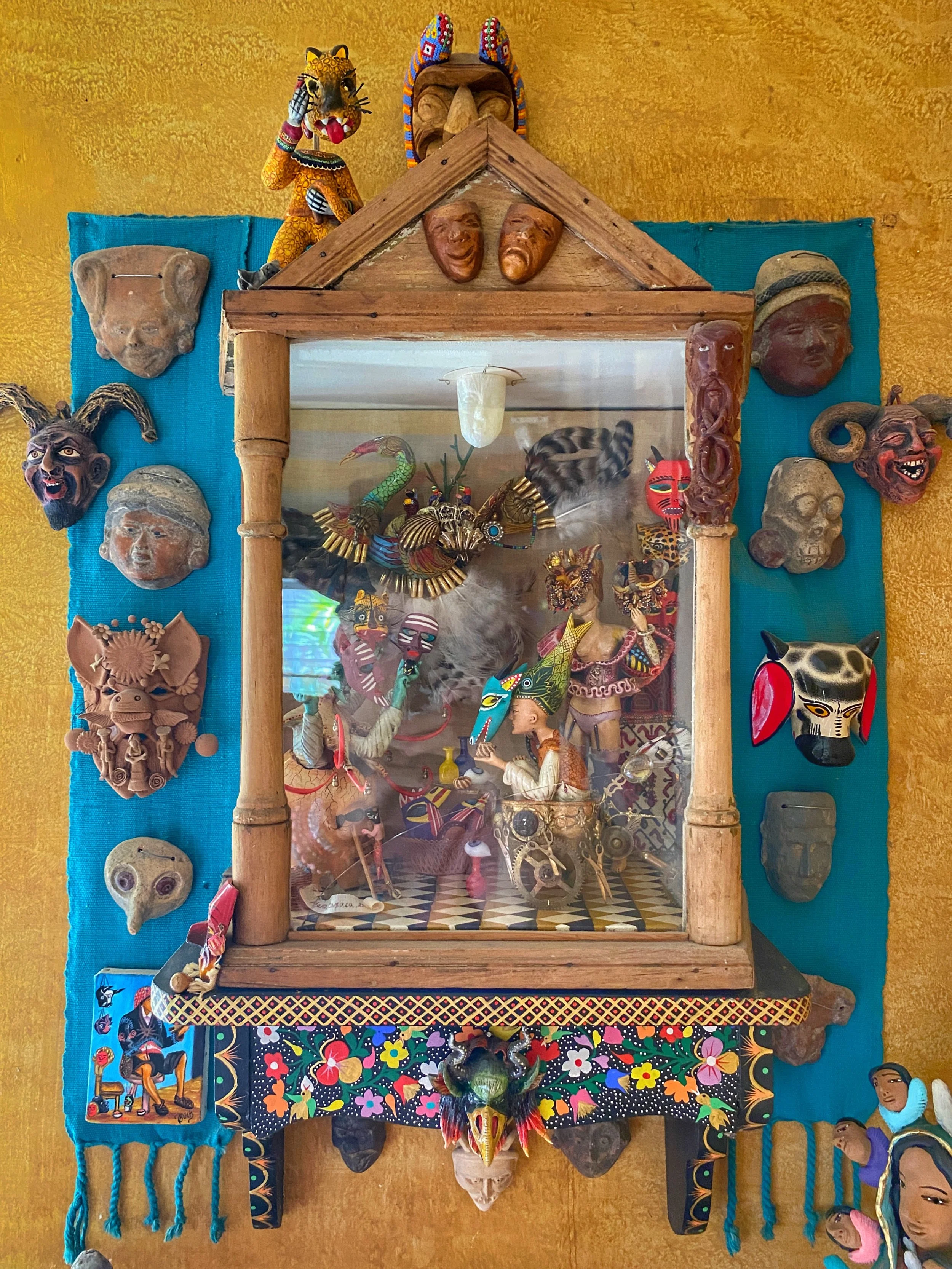
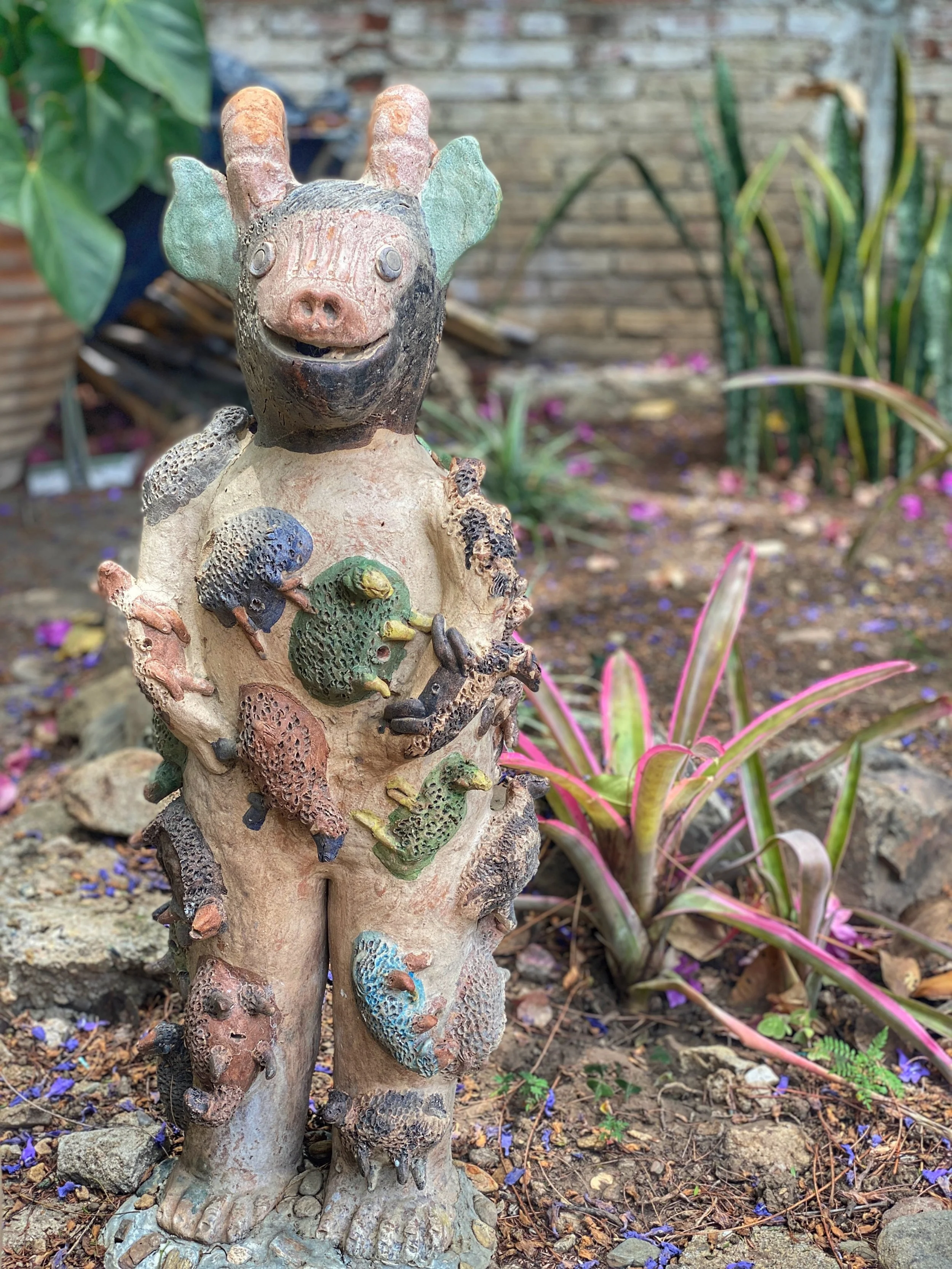
We spent the better part of a delightful day with Linda, visiting woodcarving workshops, and ending the tour with a visit to her home, which is filled with so many amazing pieces of locally created folk art, it could very well be a museum. She even made us lunch — a watermelon-based gazpacho with mango chunks that Duke and I can’t stop thinking about. 

Want to learn more about folk art day trips in Oaxaca? Email Linda at folkartfantasy@gmail.com.
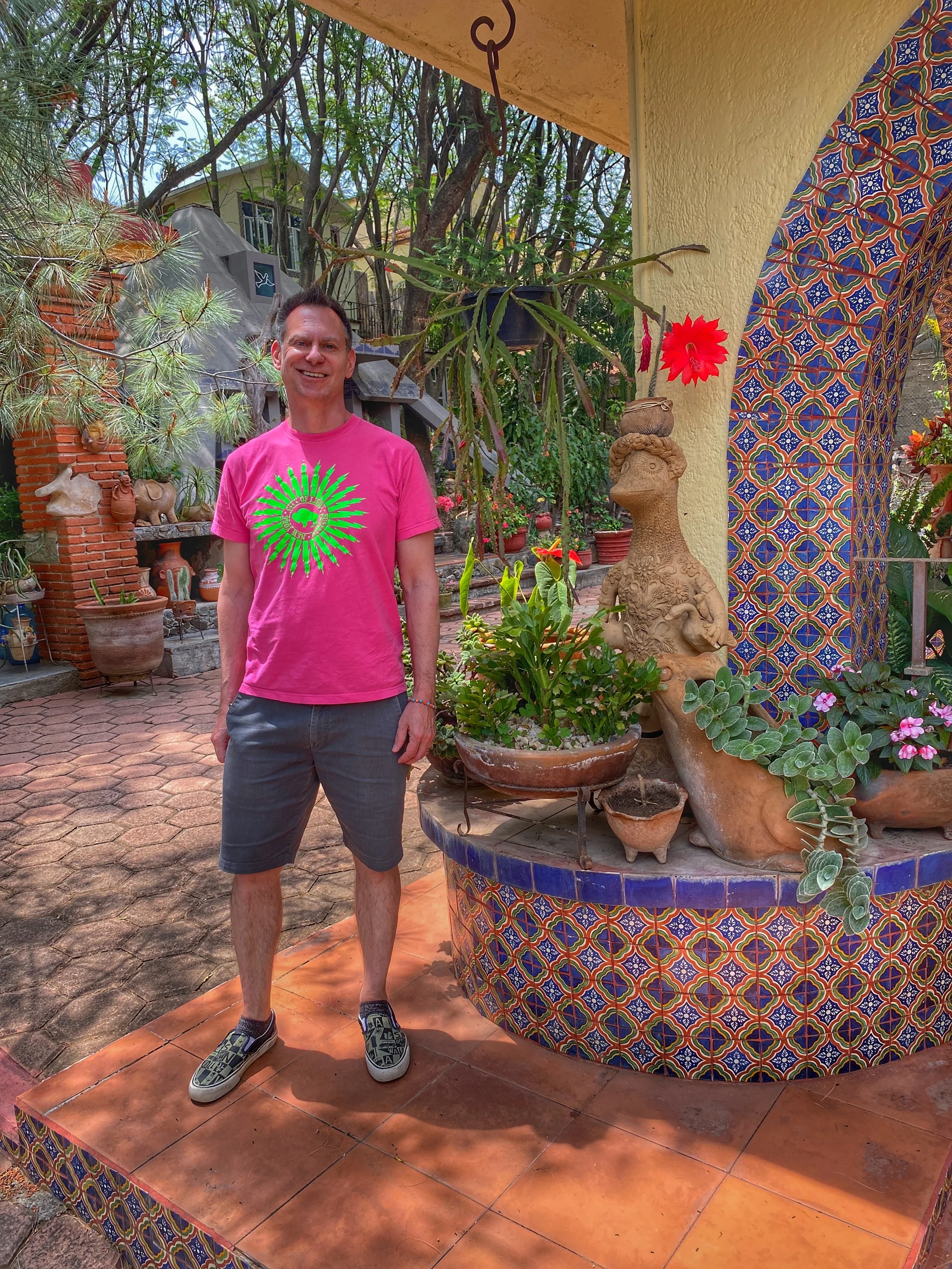
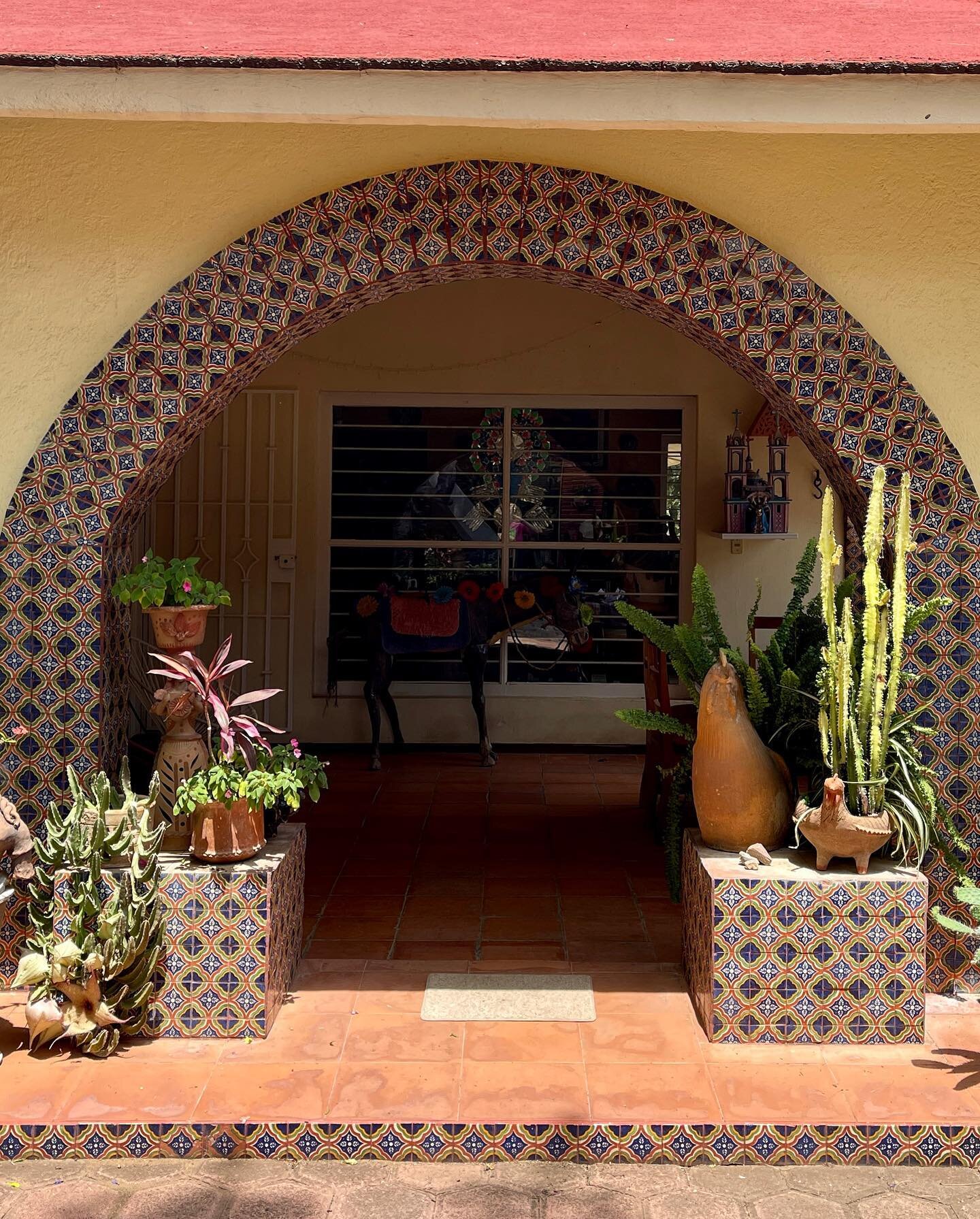
Duke by tiled exterior of Casa Linda

Duke is still dreaming of the watermelon gazpacho he had at Casa Linda.
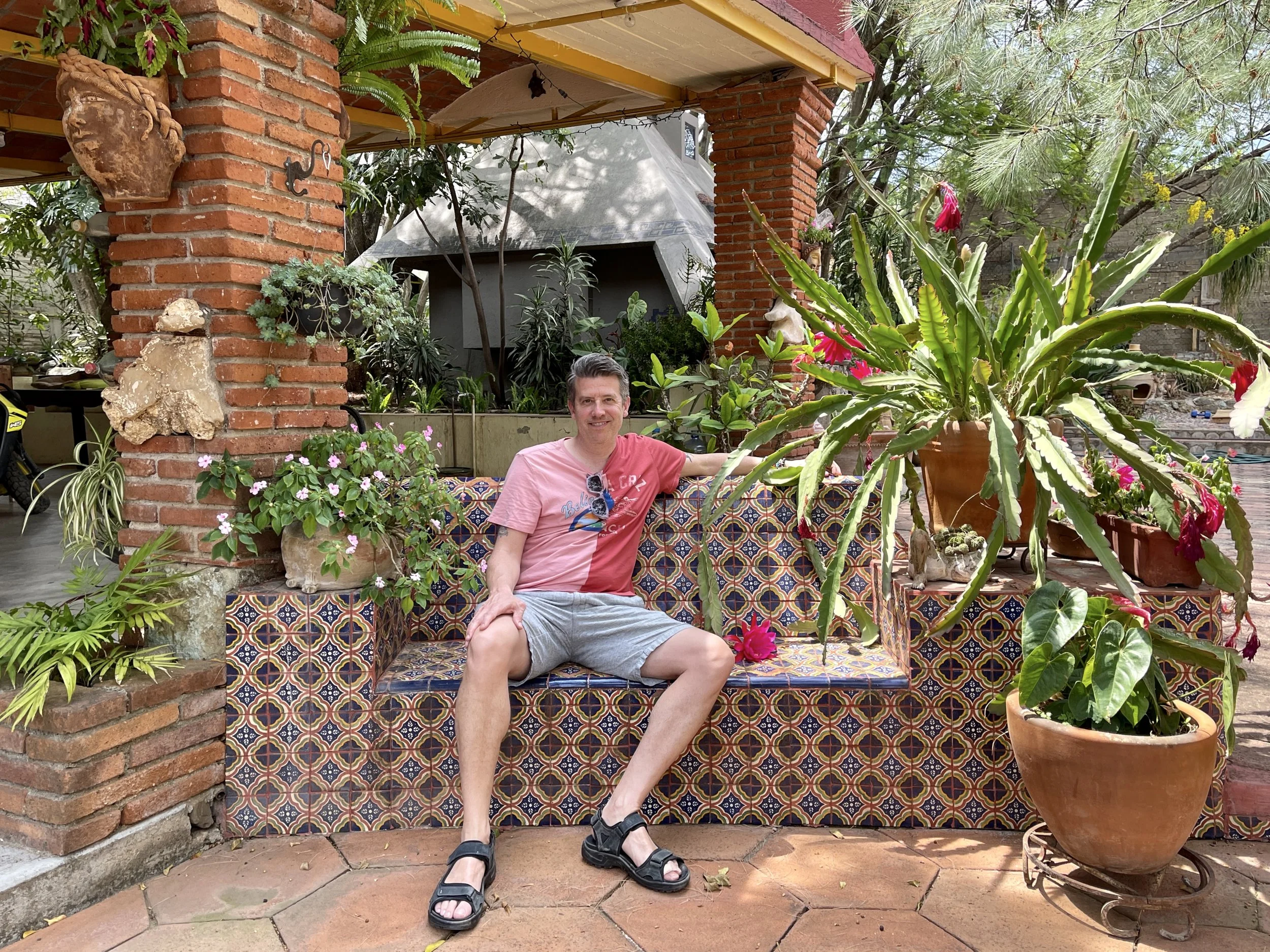
Wally on tiled bench at Casa Linda

Wally’s happy place is being surrounded by lush plants and amazing folk art.

Here’s our Q&A with this fascinating expat and fellow folk art fanatic:

What first drew you to Oaxaca?

I first visited Oaxaca with my oldest daughter in 1992. She had been in Chiapas, and we came to Oaxaca for a weekend. It just so happened to overlap the last Monday in July, so the Guelegetza festival was full on. It was like being in nonstop fiesta mode and with many, many vendors offering the various folk arts of Oaxaca. 

I had been a weaver and designer of wearable art for 15 years in California, so I was completely in awe of the diversity and quality of the Oaxacan textiles. 
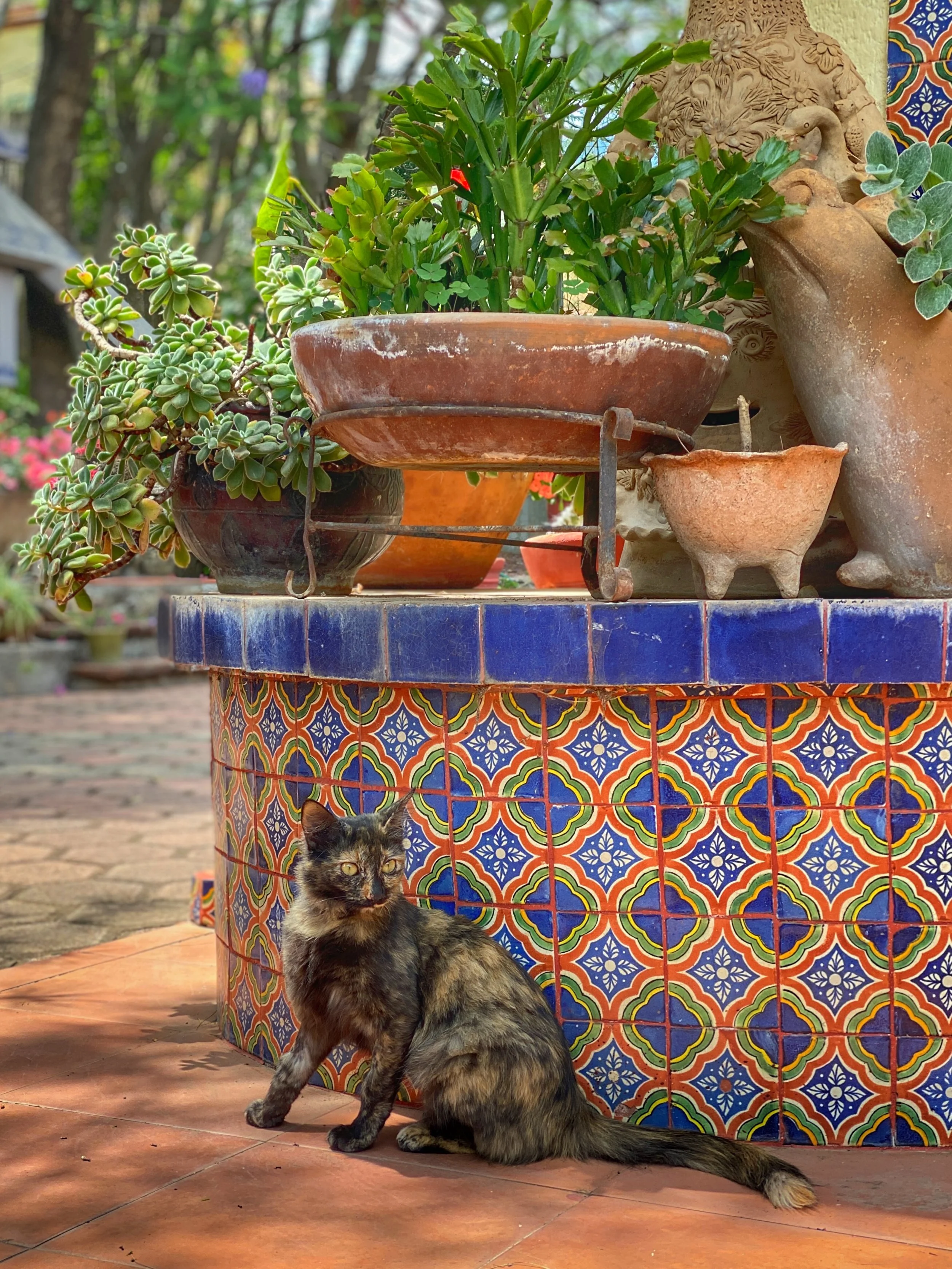
Cat by Mexican tilework

One of the many kitties roaming the grounds

What has kept you there?

As it turned out, my daughter decided to live in Oaxaca when she finished her BA. By then, I was teaching elementary school in Richmond, California. Whenever I had vacation time, I booked another trip to Oaxaca, and finally, in 1997, I decided I would come for a year so I could improve my Spanish and then try and find work in a different school district. So, in August of 1997, I arrived in Oaxaca — and apart from visits to the States and a few other places, have never left. 

I rented a place in town (about a seven-minute walk to the Zócalo) for about four years. At that point, I knew that I was going to stay in Oaxaca for the duration of my life. It was then I decided maybe I ought to invest in property and was eventually shown the house in San Andrés Huayapam in which I’m still living. It is about five miles northeast of old Oaxaca and also about 600 feet higher. I knew when I first saw the house that it would be perfect for my growing collection of Oaxacan folk art. 
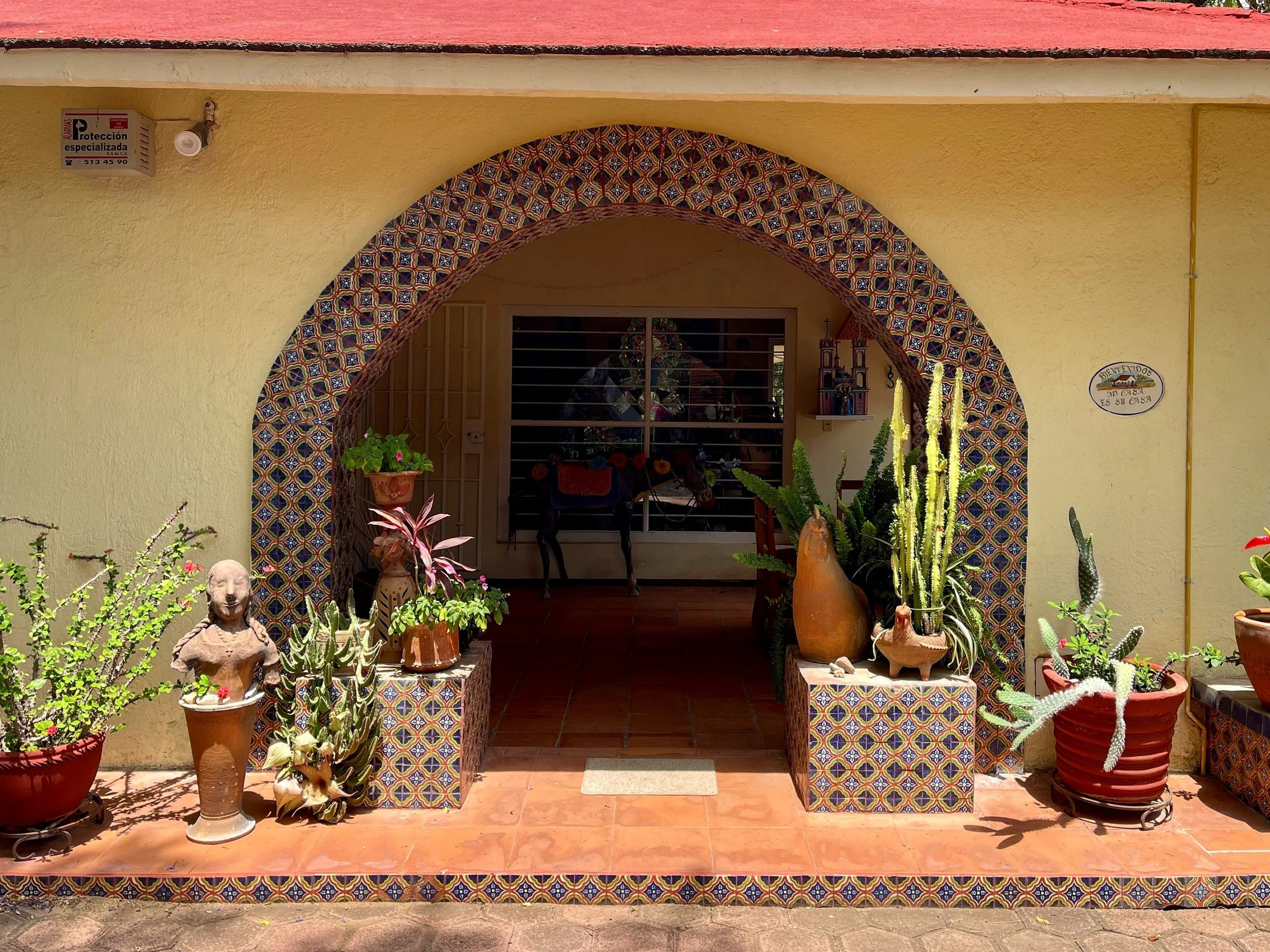
“Mi casa es su casa,” reads the plaque at Linda’s charming home.

Tell us about your B&B. When did you open it? What inspired you to do so?

In the beginning, I didn’t have a car — only my bike, which I would ride into town and to the pool, which was another obsession at that time. 

It was a friend, Carol  Ross, who suggested that I get a car so I could help her with folk art tours. She was also the person who nudged me into opening a B&B in my home. 

The thing that made my B&B a bit different was that I would also offer full-day tours to visit the folk artists whom I had gotten to know in the years I had been in Oaxaca. 

At first I was resistant and only wanted to be a host for friends or friends of friends. However, that was a really short list. I made the decision to go on the internet in 2006 and operated Casa Linda until COVID happened. Finally, in 2021, I closed Casa Linda, but I am still doing the tours even though I no longer have the website. 
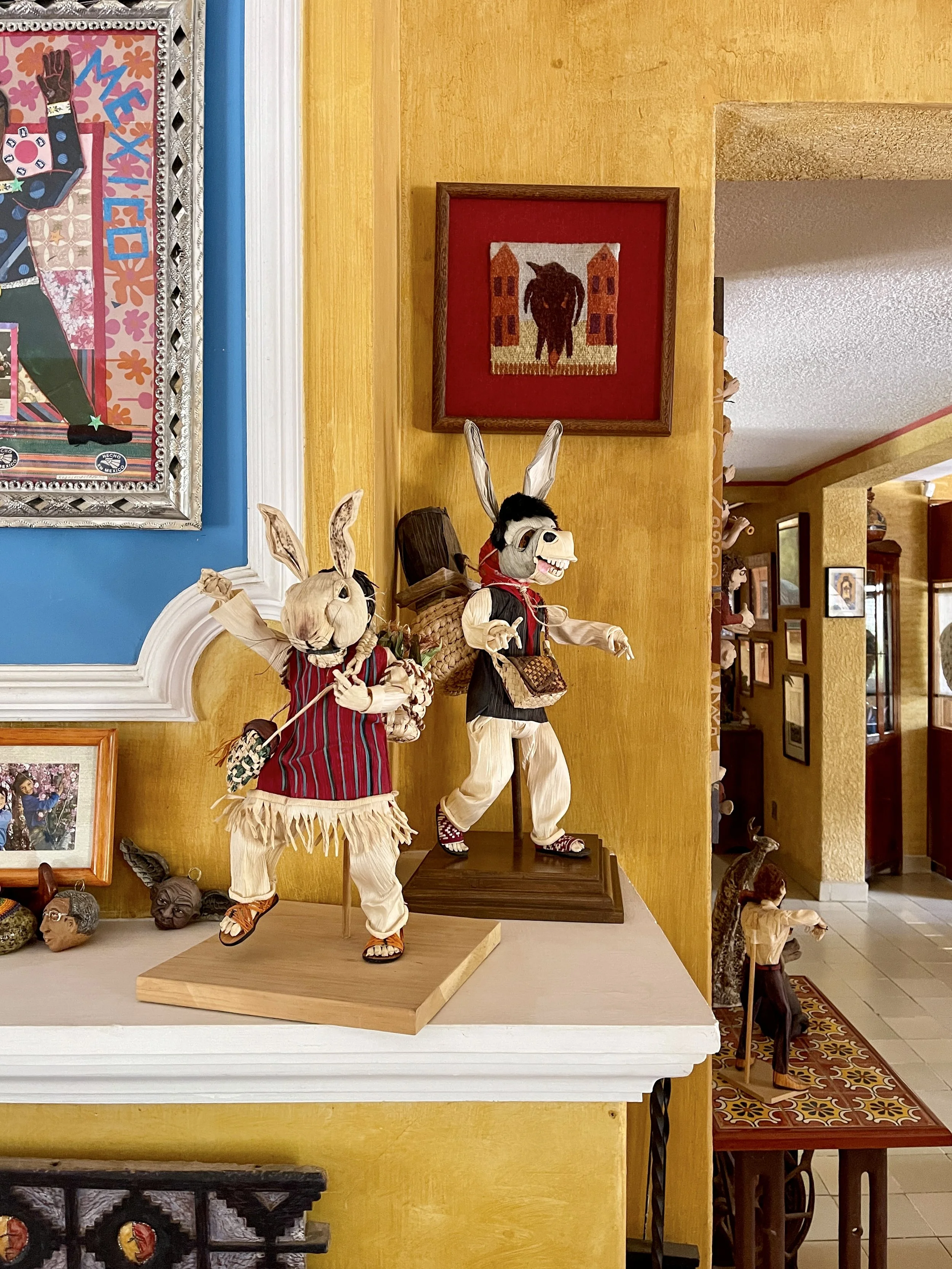
Everywhere you look at Linda’s home you’ll find great examples of local folk art.

You’re a big fan of folk art. What about it most appeals to you?

I believe my interest in folk art came by way of textiles, which was a passion and vocation I had developed in California. When I moved to Oaxaca — which is the Mexican state with the most diverse textile traditions — I knew I had settled into the place I belonged. 

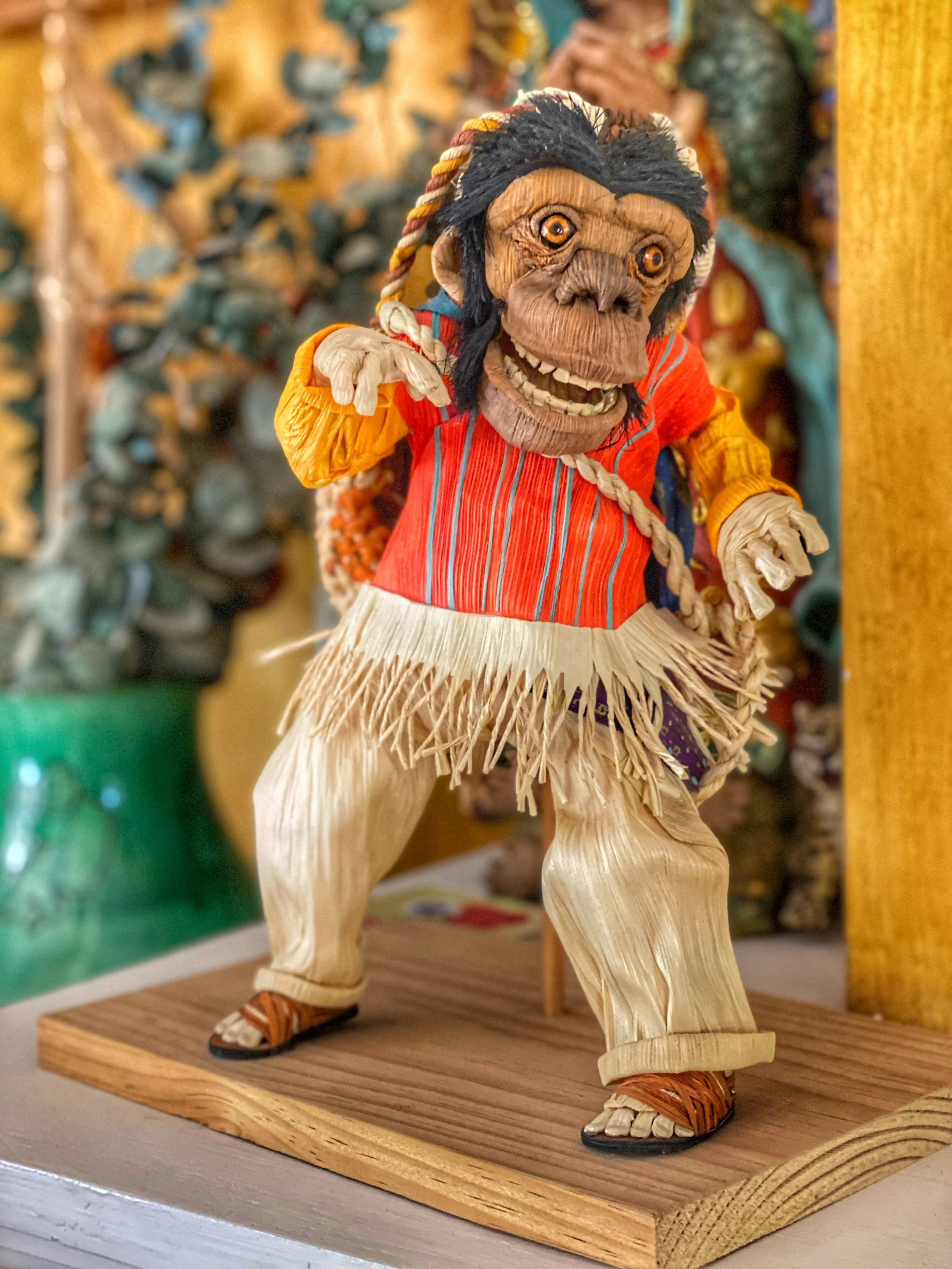
However, I don’t think it’s possible to live in Oaxaca and not be impressed by its many other wonderful folk art traditions, which include ceramics, woodcarving, tin, gourds, corn husk and silver jewelry, to name a few. 

For most of my adult life I have thought that the ideal job would incorporate the three H’s — that is, head, heart and hand. I believe creating folk art or perhaps all art involves these three elements. I certainly experienced it when I was a weaver, and it seemed perfectly natural to support craftspeople in Oaxaca. 
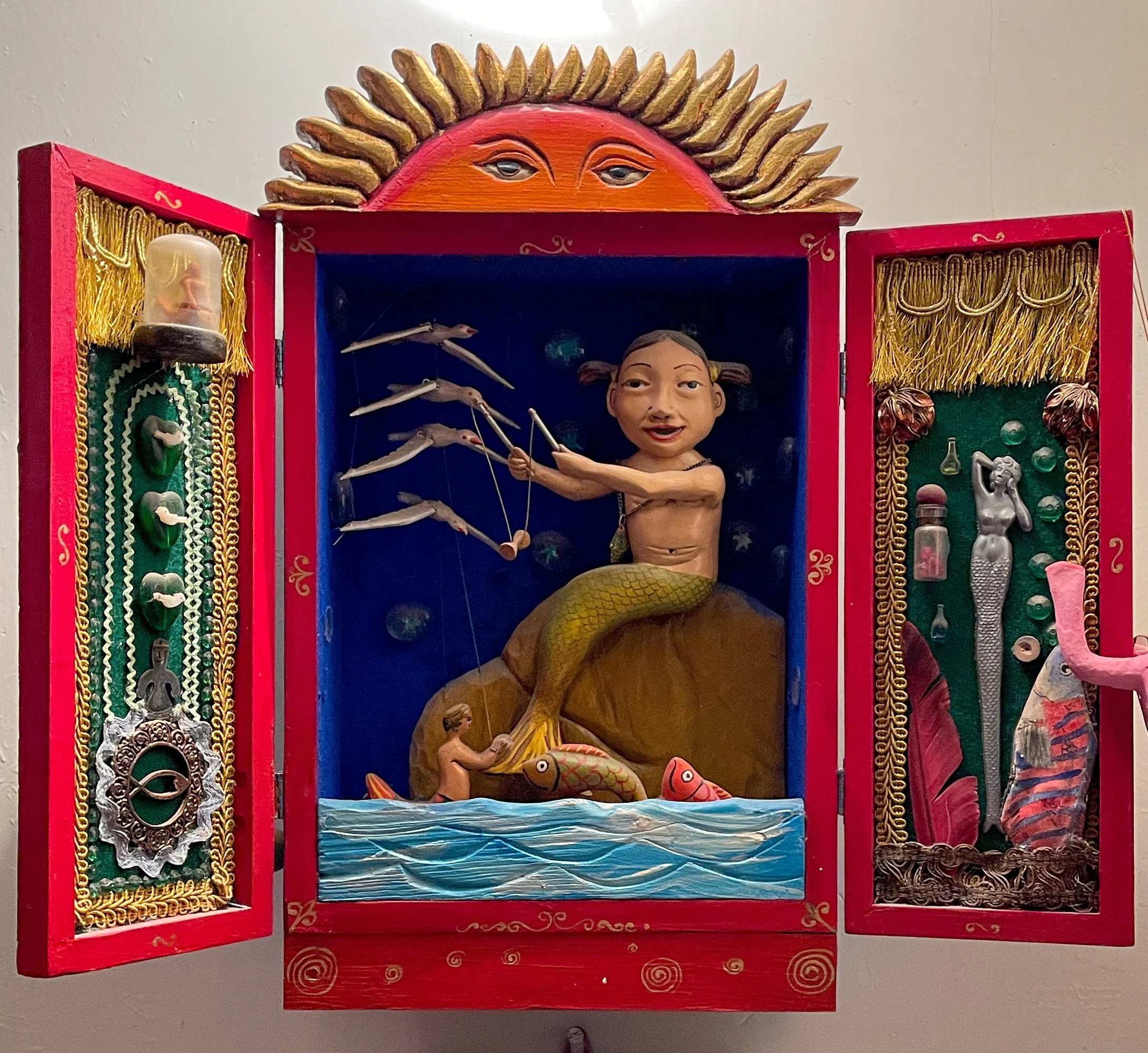
A sirena (mermaid) takes center stage in this retablo.

What are some of your favorite types of folk art? 

As I mentioned, I was drawn first to the textile crafts. Since I had been a weaver, I was more experienced in being able to appreciate the expertise and skill of these artesanos. 

I have been often asked if I wanted to do weaving again here, but in fact I haven’t wanted to. I would much rather take visitors to meet and see the work of these remarkable craftspeople.

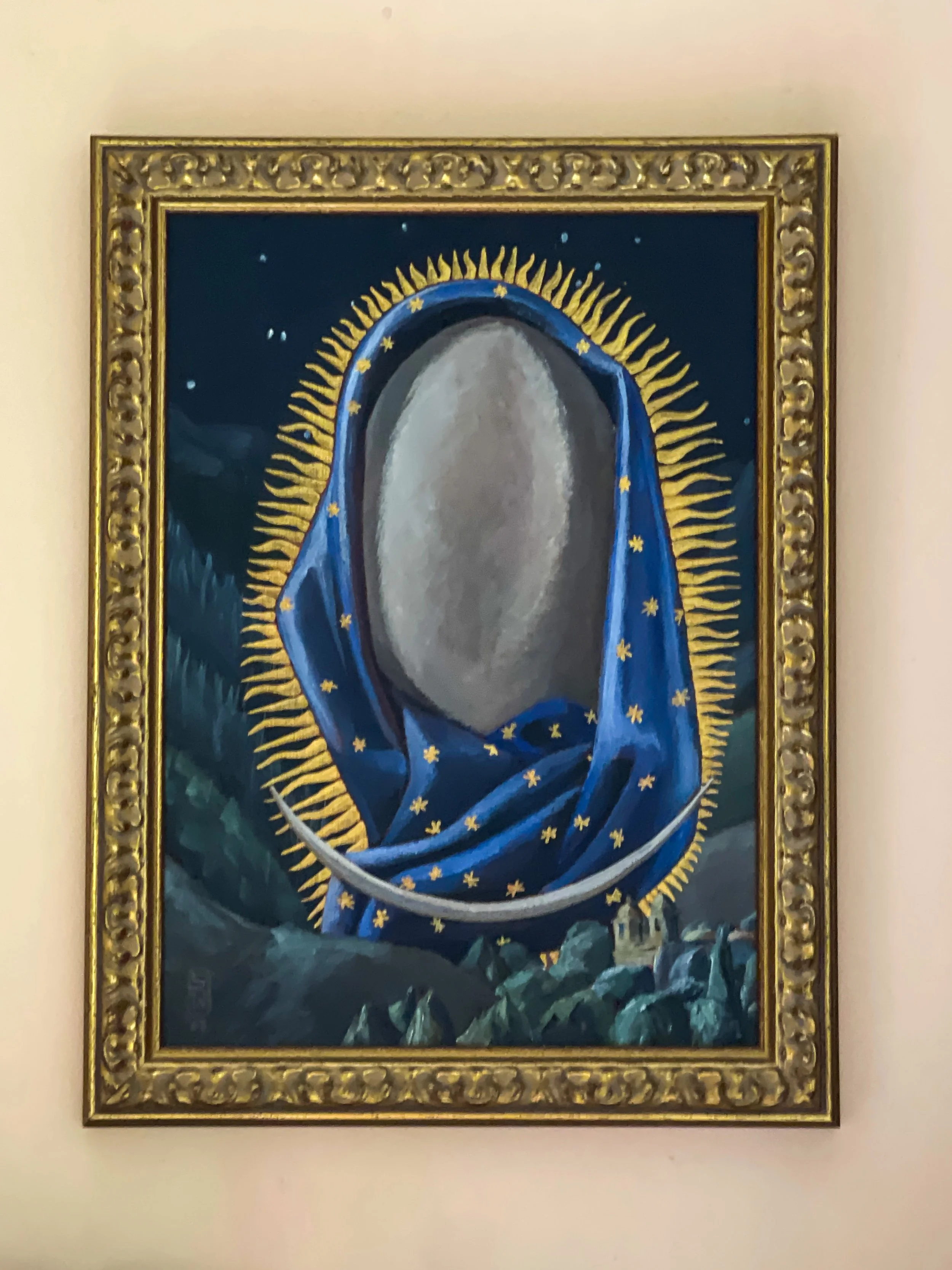
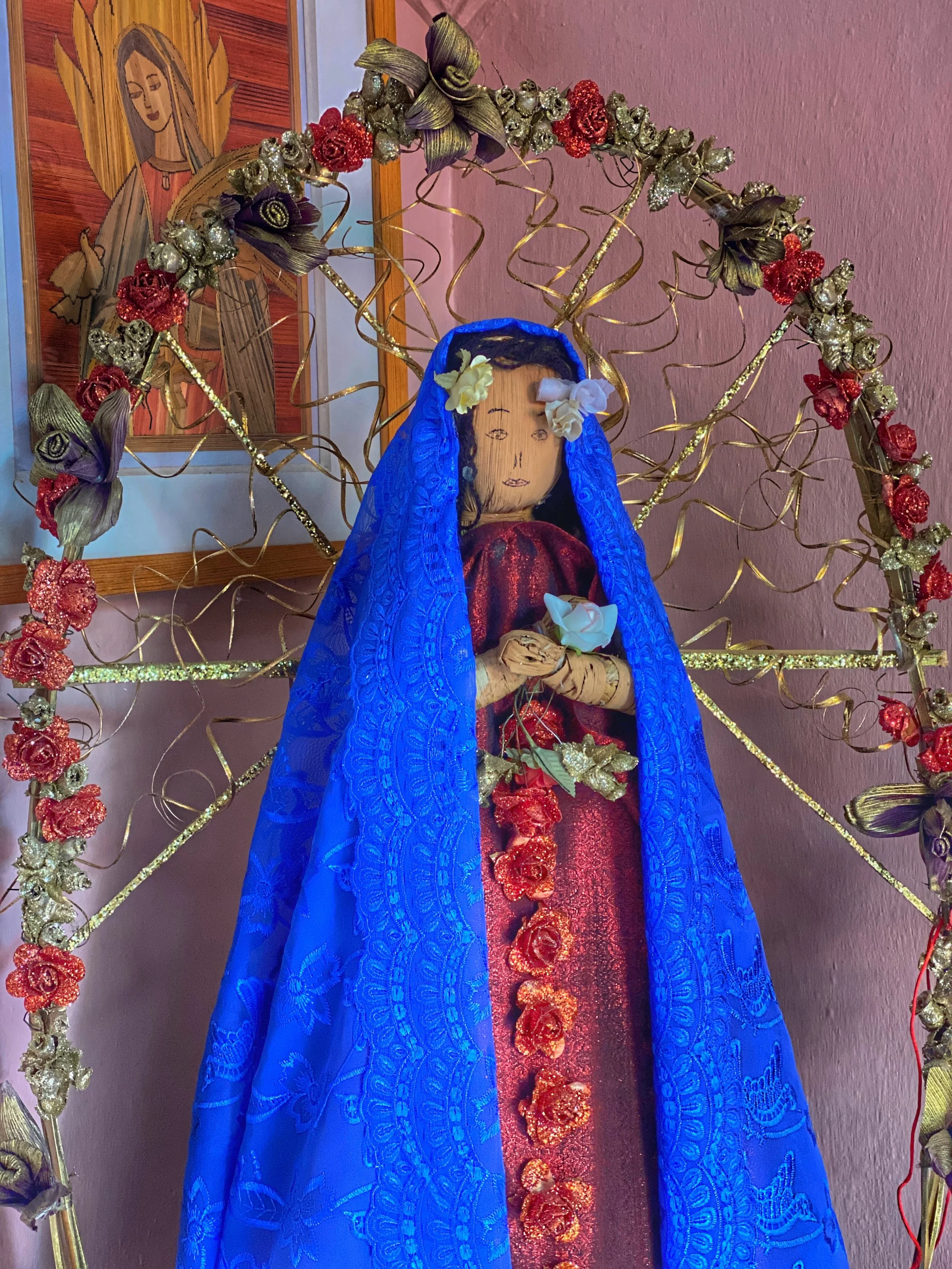
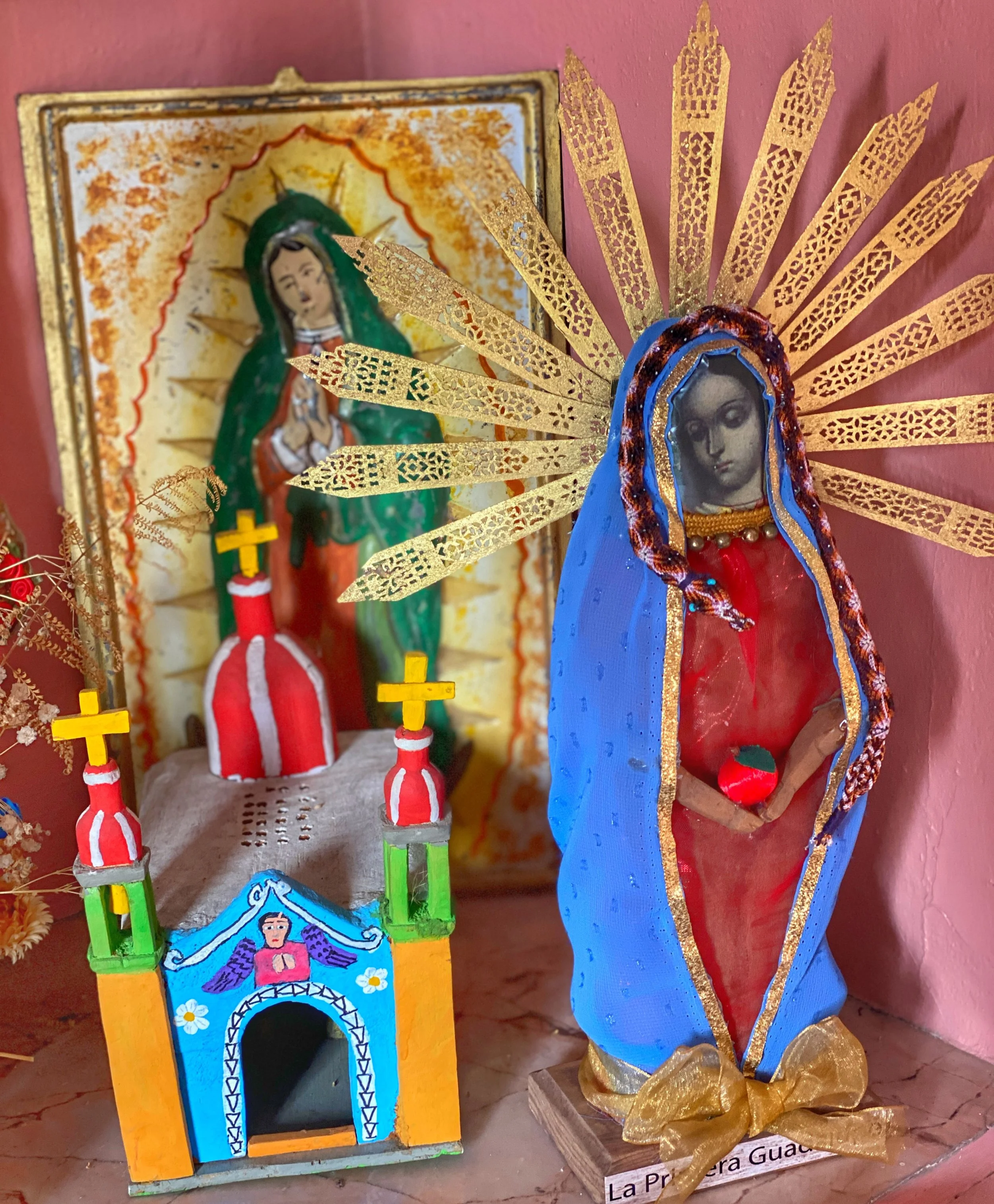
My interest in textiles culminated in an exhibition called Rosas y Revelaciones. This is a homage to the Virgin of Guadalupe as seen through the garments that I commissioned 85 artesanos to make from 13 different states, but mostly from Oaxaca. 
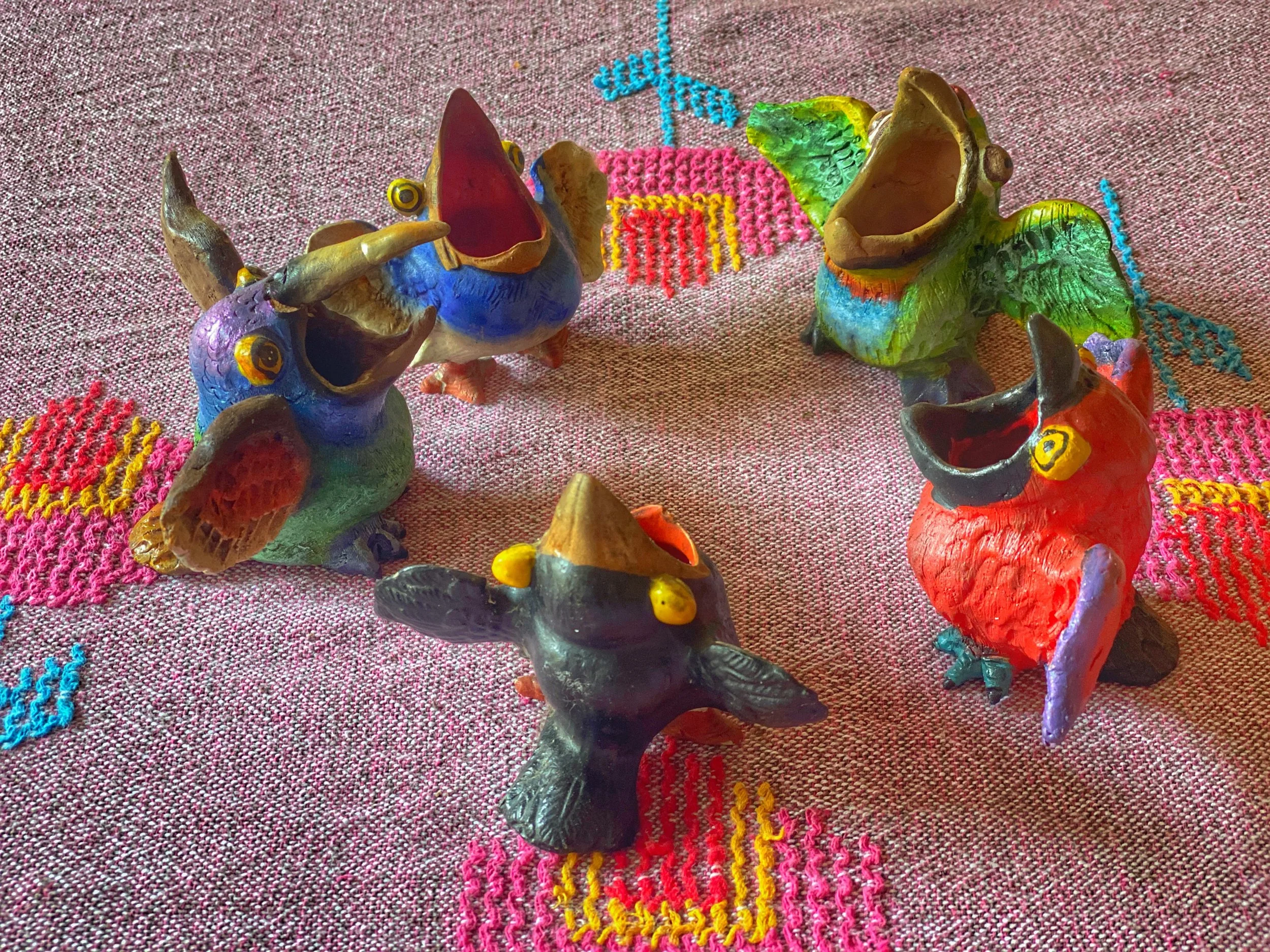
Colorful open-mouthed bird handicrafts

These hungry birds appropriately adorn the dining table.

How did you start getting to know the locals who create this folk art? 

The way I came to know a number of the artesanos making high-quality crafts was by going to exhibitions or into galleries and writing down the names and villages where they lived. I would then go, and if I didn’t have an actual address I might ask a colectivo driver or maybe a cantina owner if they knew this person. Then I would go to their home. Now it’s easier, as almost everyone has a cell phone, and many more craftspeople are on the internet. 
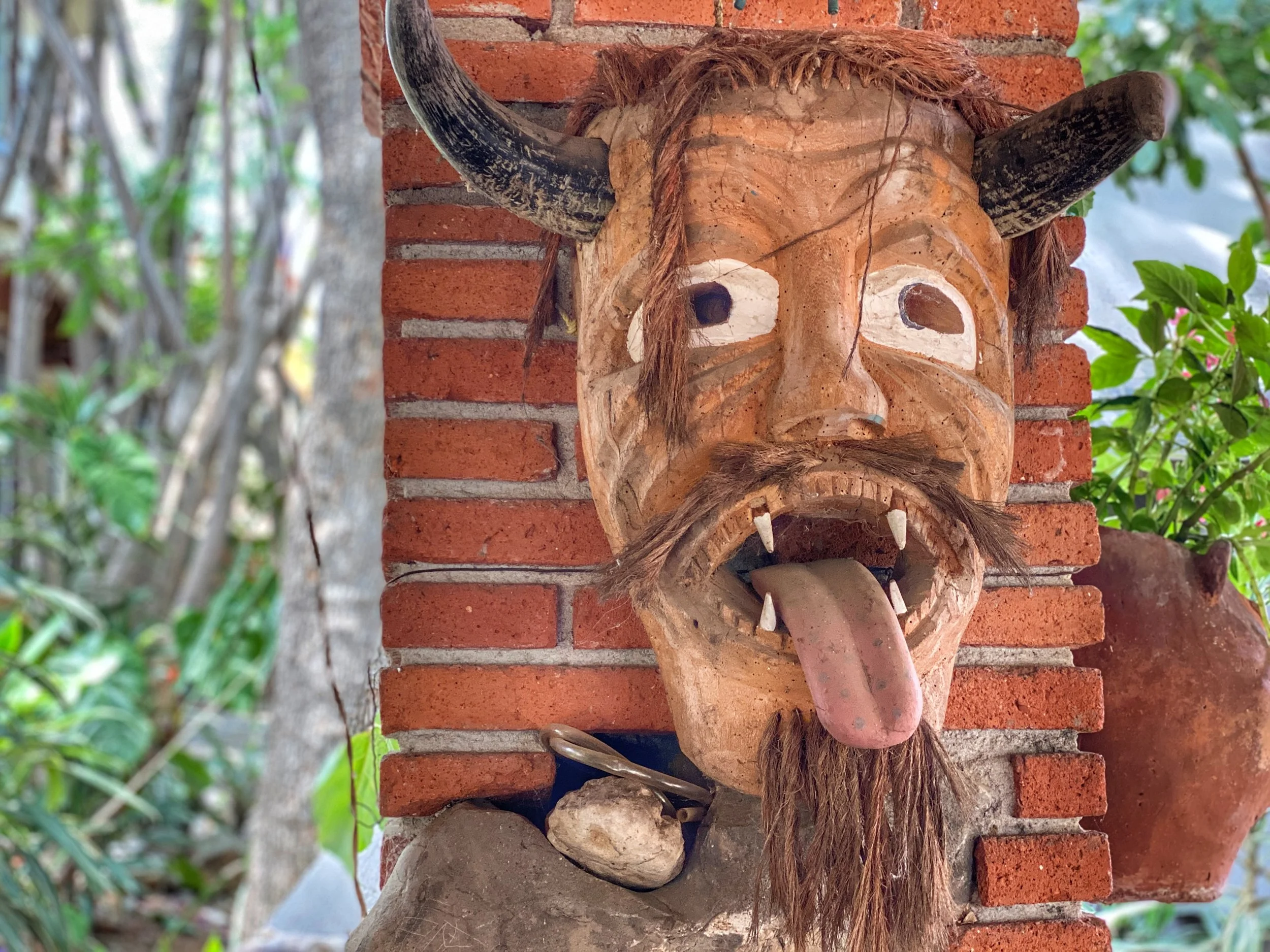
Devil mask with tongue out

A creepy-cool mask hanging in the open-air garage

What’s the best-kept secret about Oaxaca?

I don’t know if it’s really a secret, but I think Oaxaca is a place of endless delights. I have been writing about its folk arts, but there is a whole other world of its archaeology, which continues to reassert itself in folk art. 

There are also the worlds of food and mezcal, which could entirely fill a visitor’s itinerary.

There are still 16 languages spoken in Oaxaca and those people more often identify with their indigenous group before seeing themselves as Mexicans. 
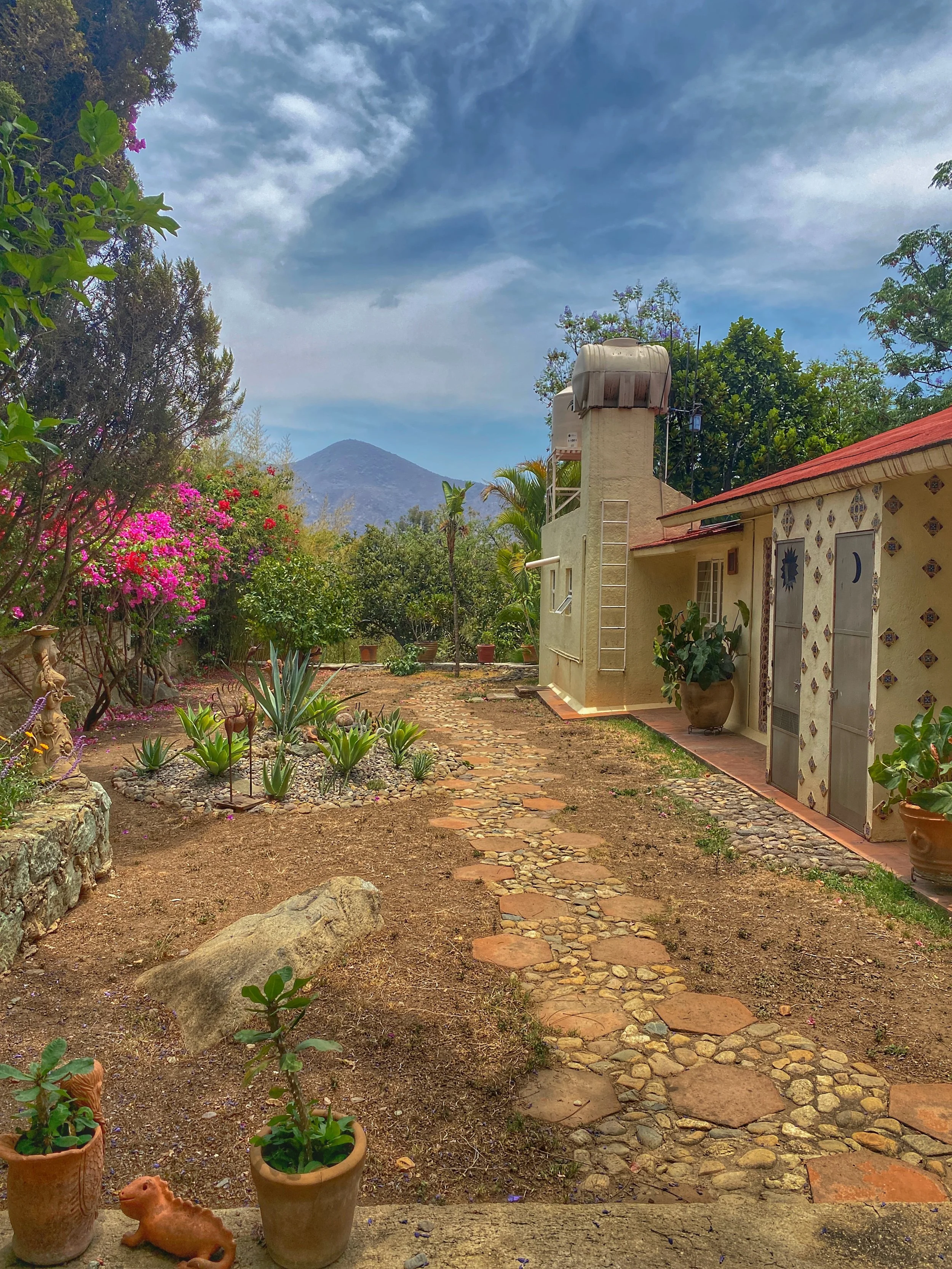
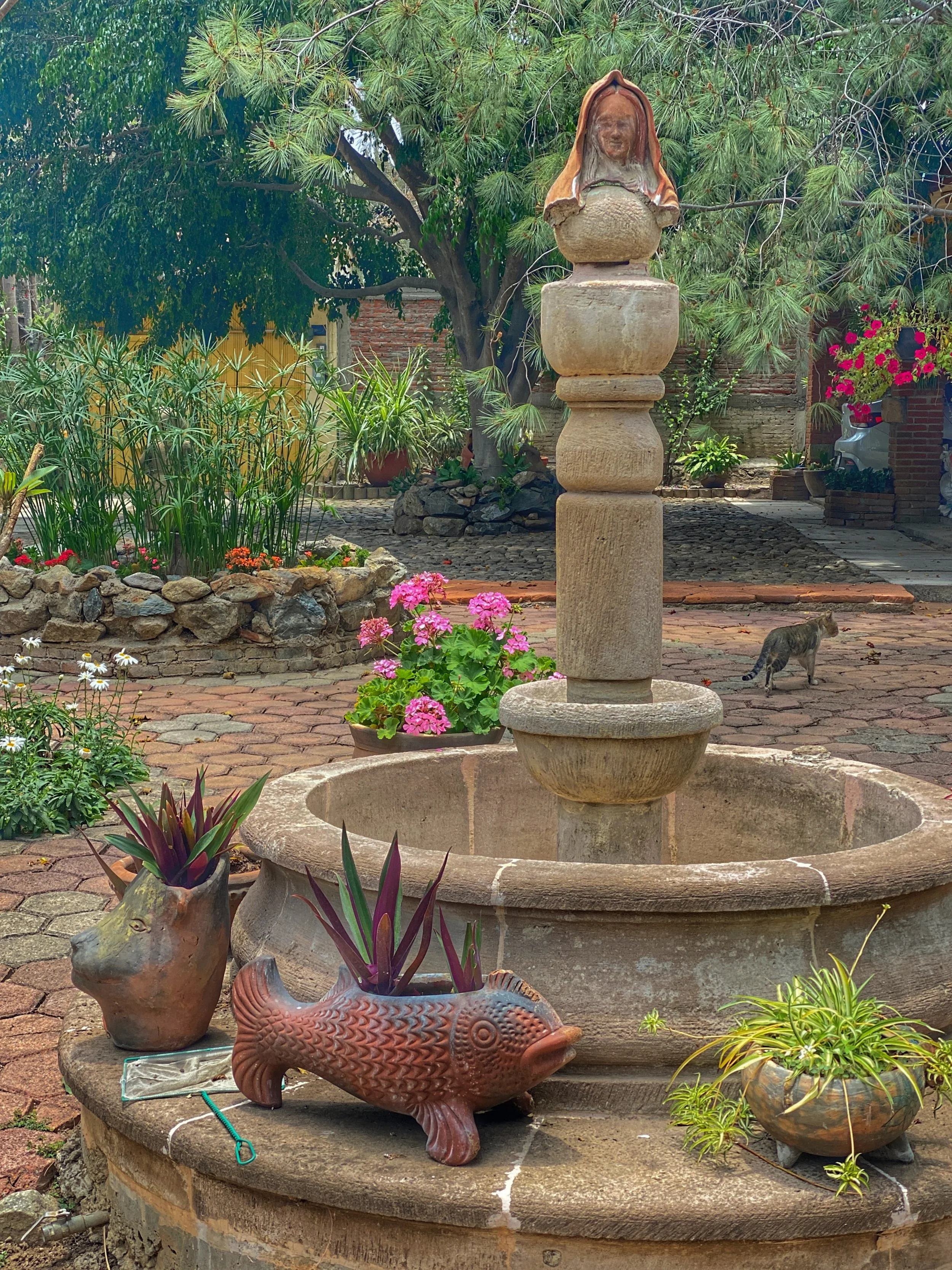
The side yard at Casa Linda

What’s something that could only happen in Oaxaca?

Is Oaxaca perfect? No — but then what place is? There are far too many blockades for reasons no one can ever seem to figure out. But it also is a place that one can live without supplementary heating or air conditioning. There are few places in the world that can boast that.
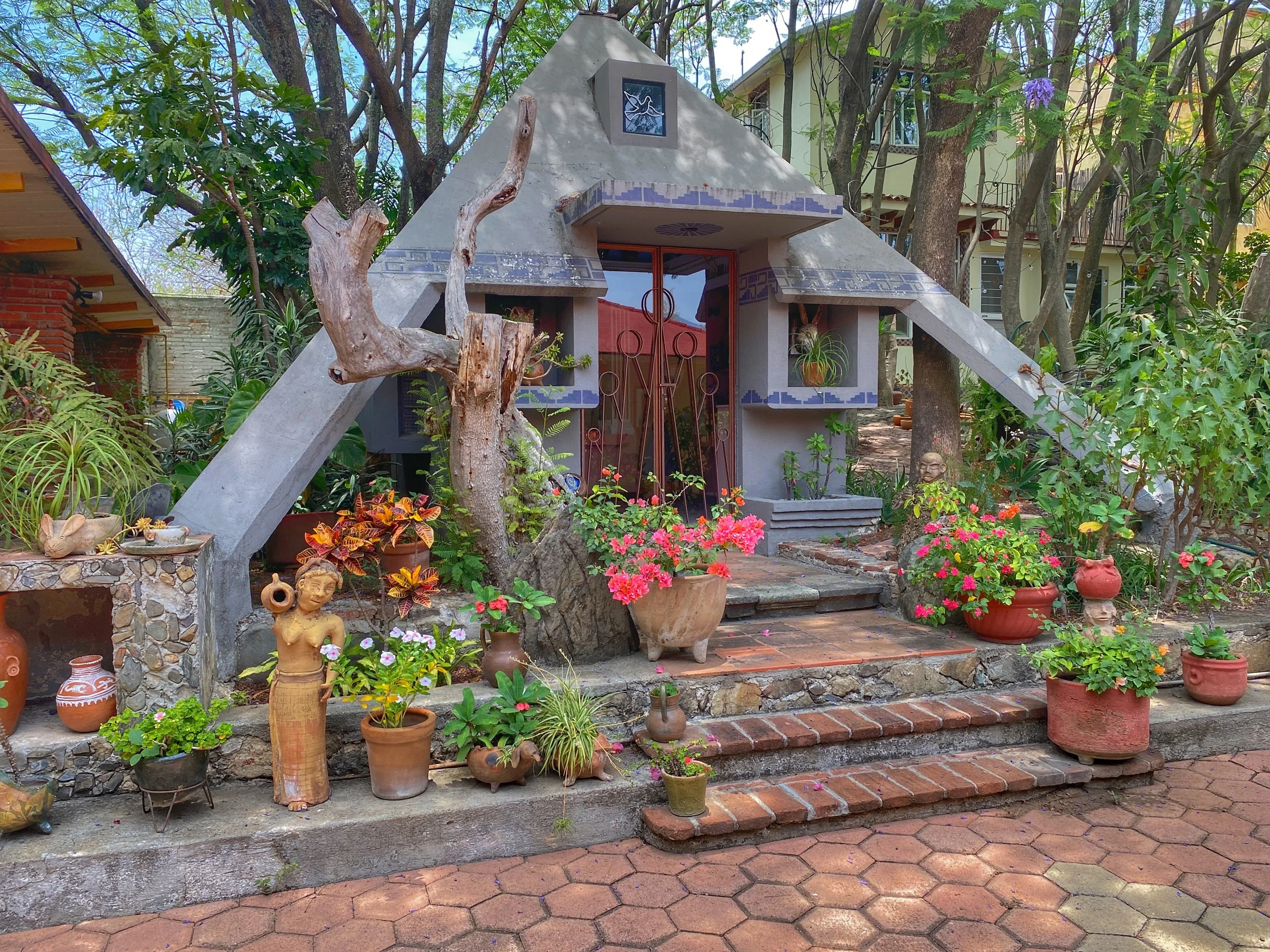
Triangular shrine with flowers out front

When we asked Linda what this triangular structure was, she told us it was a shrine.
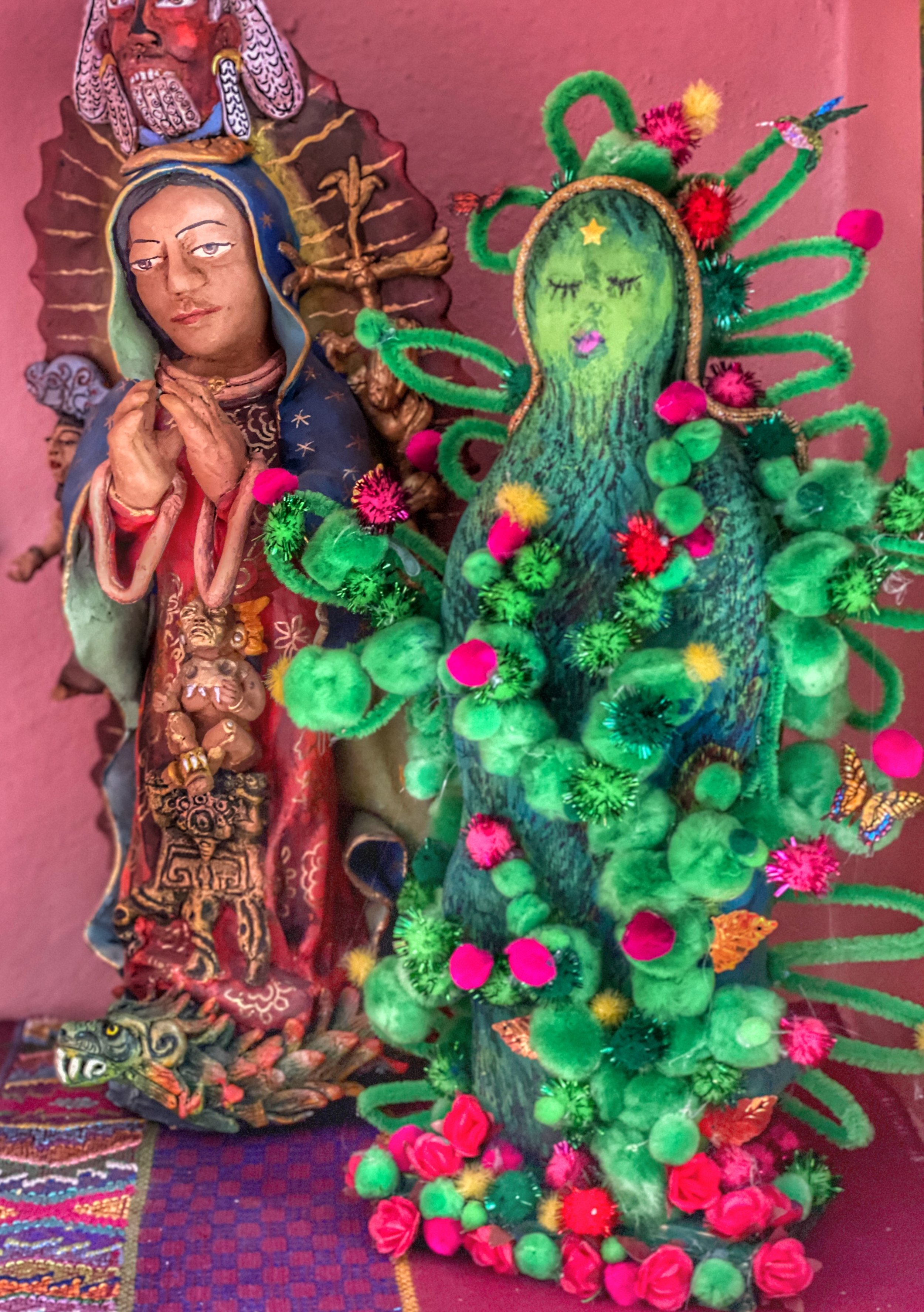

If you want to hire Linda as a folk art guide (and really there’s no one else better for the job), email her at folkartfantasy@gmail.com. –Wally
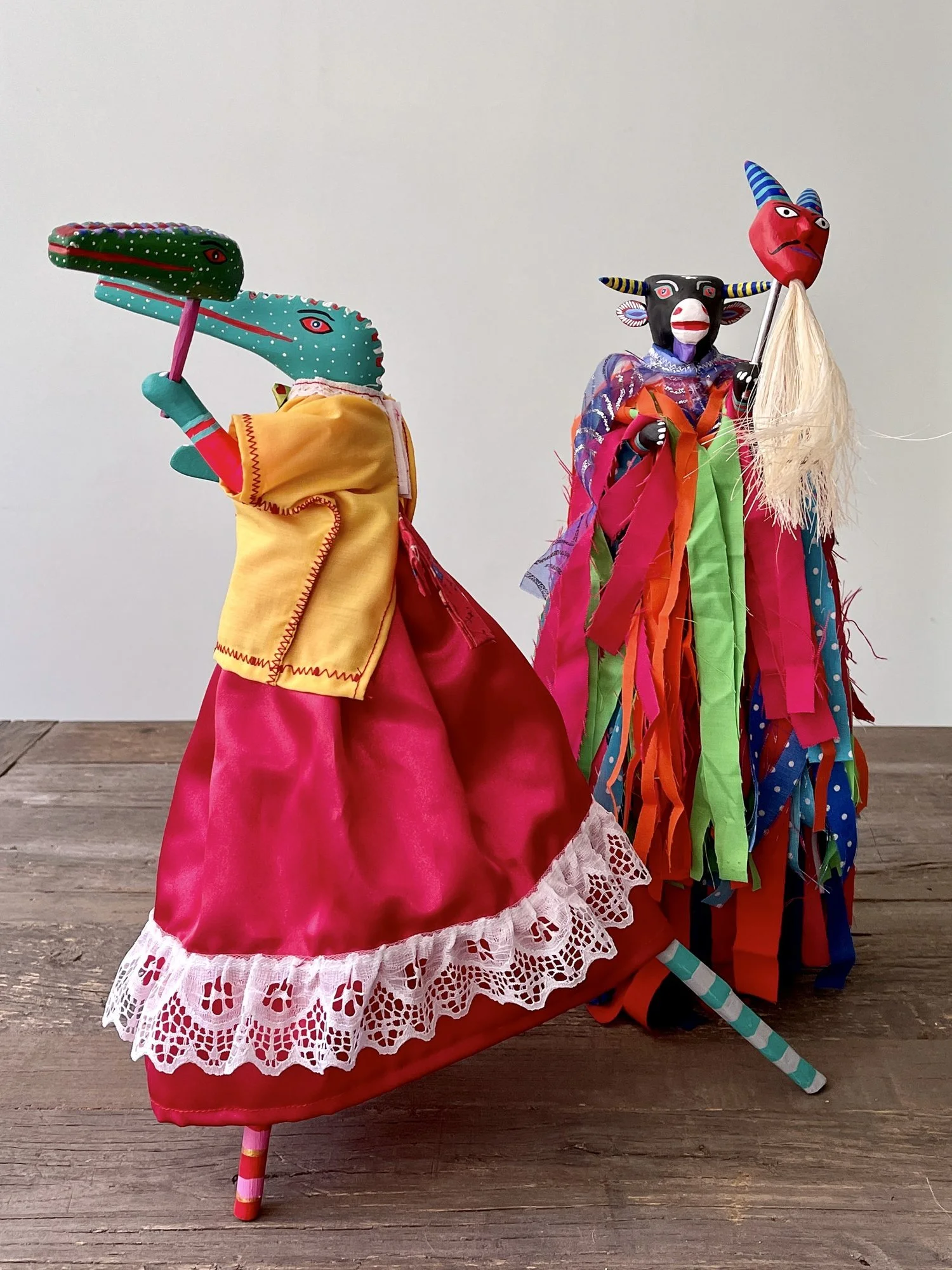

Two alebrijes, ones a gator in a dress, the other a bull in a costume of rags

Meet the Woodcarvers of Oaxaca

Here are the artisans who create alebrijes and other wood handicrafts, including Martín Melchor Ángeles, who carves whimsical creations that can’t help but make you smile.

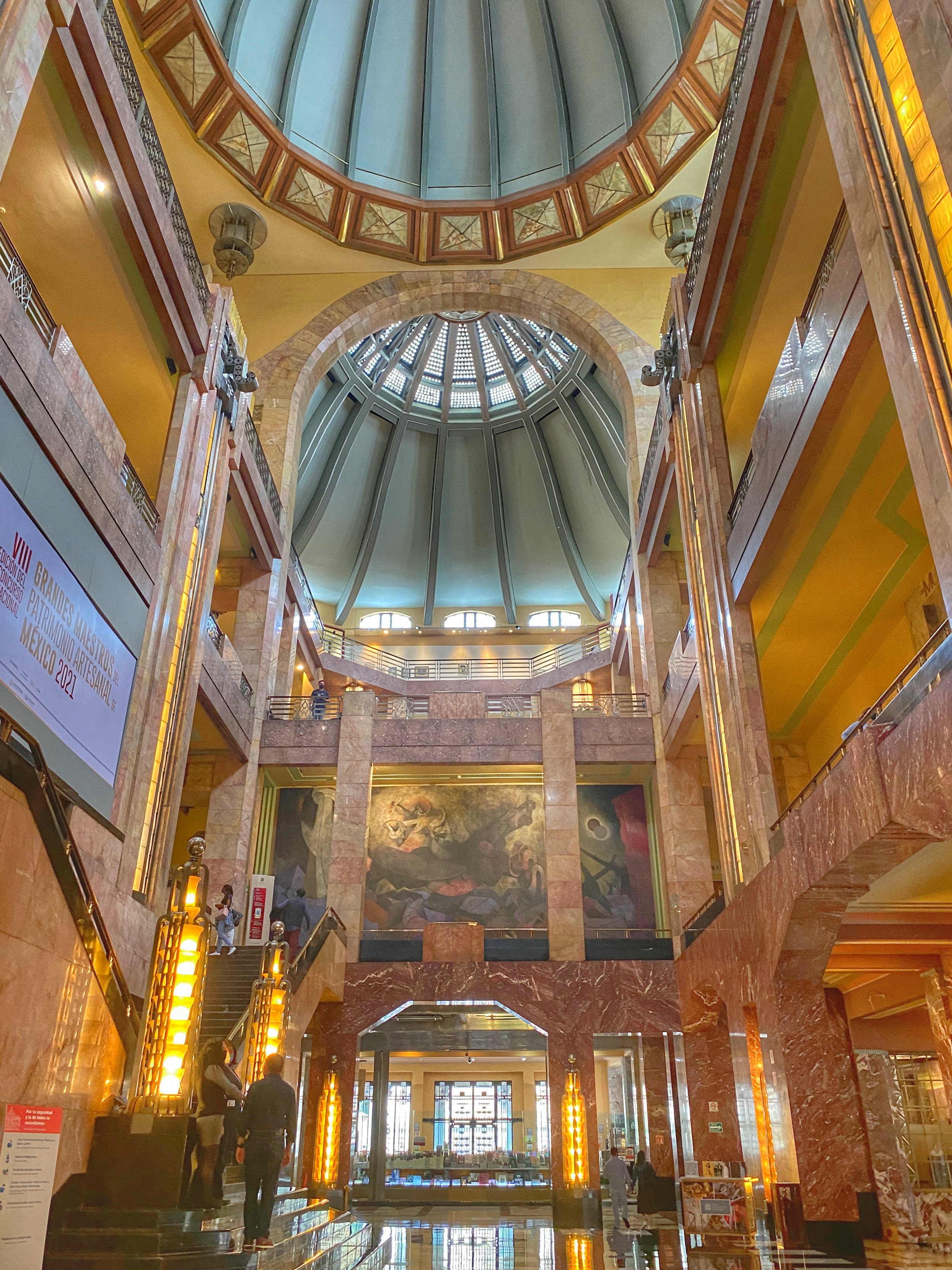
The Marvelous (and Controversial) Murals at the Palacio de Bellas Artes in Mexico City

Make the rounds at the Palace of Fine Arts in CDMX’s Centro to see works from some of Mexico’s most famous muralists, including Diego Rivera, José Clemente Orozco and David Alfaro Siqueiros.

This provocative mural was being renovated when we visited the Palacio de Bellas Artes and could only be viewed from across the way.

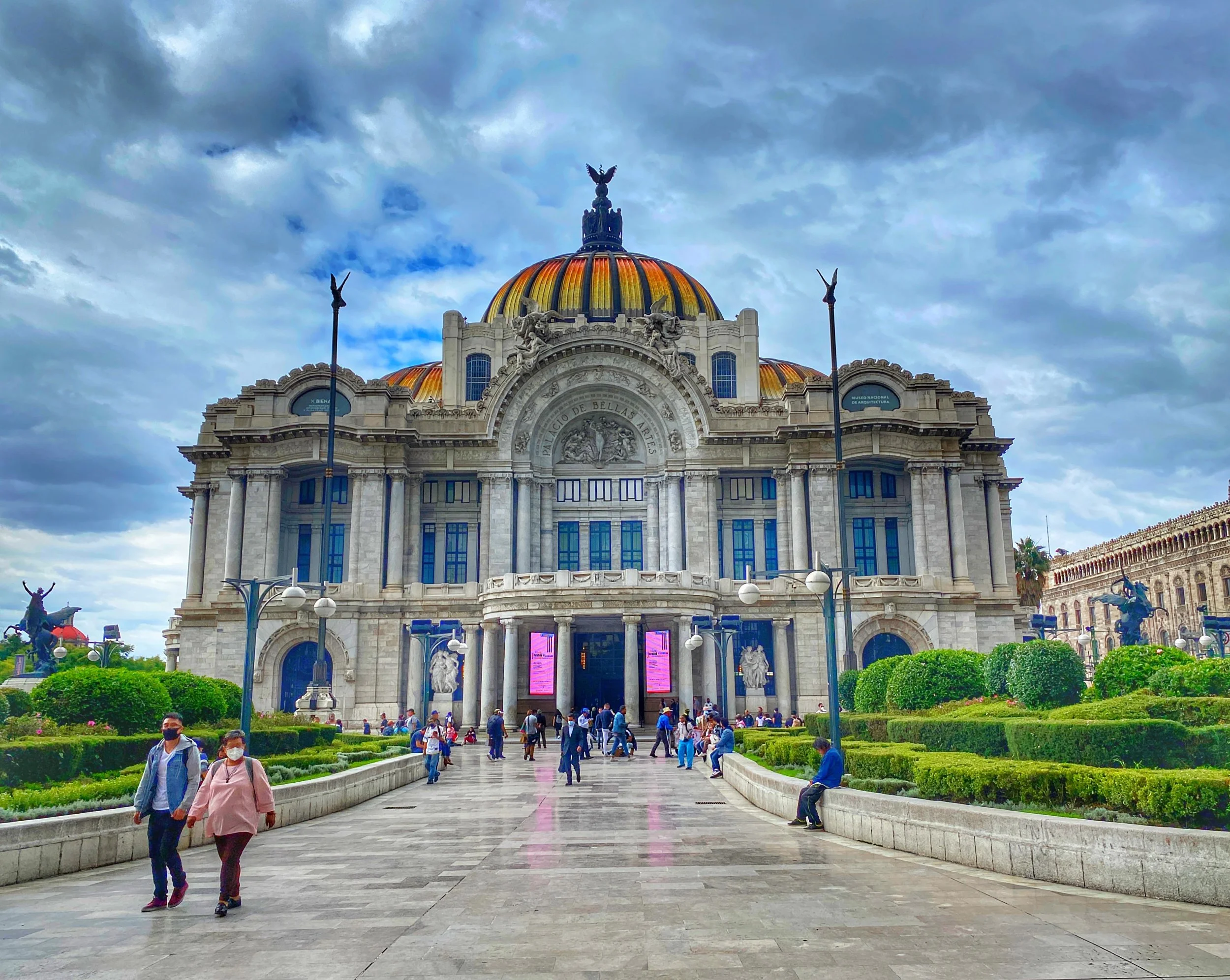
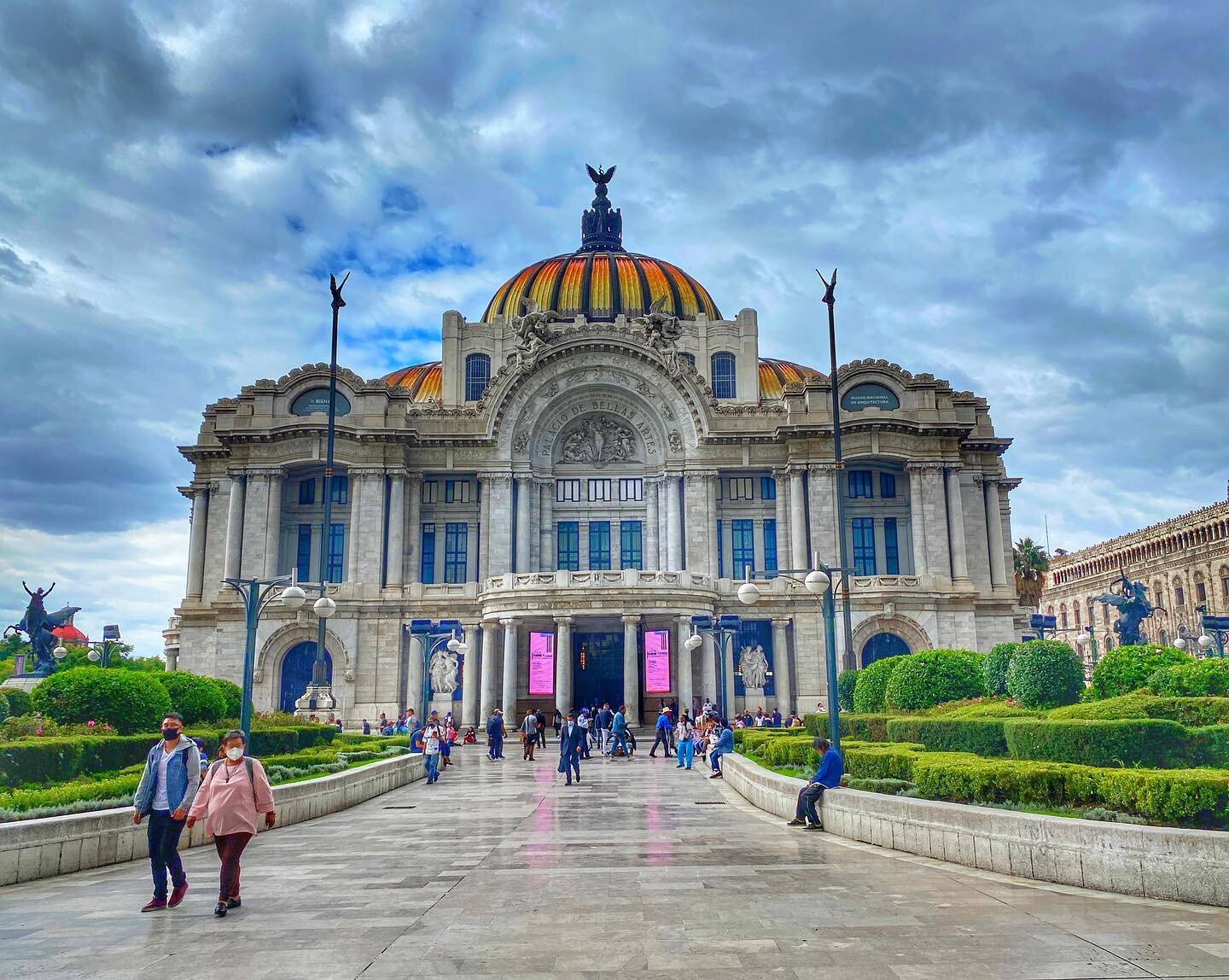
On our first trip to Mexico City, we only admired the Palacio de Bellas Artes from afar — namely, from the Sears across the street, which affords the best view of that gorgeous Art Nouveau dome, glowing in an ombre that starts with bright saffron and fades to pale yellow. 

Instead, we followed a scavenger hunt of sorts, rambling around Centro in a search for its most Instagrammable spots

The Palacio de Bellas Artes is more than just a pretty façade — there’s a gallery of famous murals inside.

This time, we planned to actually enter the Palacio de Bellas Artes, though we had no idea what lay within. Duke and I were pleasantly surprised to discover that the top floor was devoted to a gallery of murals from some of Mexico’s most famous artists. 

Interior of Palacio de Bellas Artes

The inside of the Palace of Fine Arts in Mexico City isn’t too shabby, either. Be sure to get tickets for the mural museum when you visit.

We purchased our tickets on the ground floor, then climbed the grand staircases up two flights. The murals form a ring around the space, with the center open, letting you look down at the palace’s lobby or admire the murals from afar. When we visited, one of the murals was being restored and we could only see it from across the way.

Sit and admire Diego Rivera’s kooky mural — which Rockefeller rejected.

El Hombre en el Cruce de Caminos o El Hombre Controlador del Universo

Translation: Man at the Crossroads, or Man, Controller of the Universe

Date: Date: 1934

Artist: Diego Rivera

It’s a battle between capitalism, as represented by figures including Charles Darwin (the fellow with a white beard surrounded by animals)…

Detail from Diego's El Hombre en el Cruce de Caminos o El Hombre Controlador del Universo

…and Communism, depicted on the righthand side, with Leon Trotsky, Karl Marx and Friedrich Engels all making appearances.

Fascinating fact: The original Man at the Crossroads was commissioned for the Rockefeller Center in New York City. But when Nelson Rockefeller got wind that it included a depiction of Vladimir Lenin and a Soviet May Day parade, he ordered it destroyed — before it was even completed.


González Camarena’s mural moves from slavery to spiritual liberation.

Liberación o La Humanidad Se Libera de la Miseria

Translation: Liberation, or Humanity Frees Itself From Misery

Date: 1963

Artist: Jorge González Camarena

Fascinating facts: This is a re-creation of a no-longer-existing mural that had been painted on the Edificio Guardiola, where the Bank of Mexico placed its vaults. The first part shows a man tied up in a coffin and a nude tattooed woman to protest agrarian policies after the Mexican Revolution and slavery. The last section to the far right depicts a mestizo woman (someone of indigenous and European blood) — a radiant symbol of spiritual liberation.


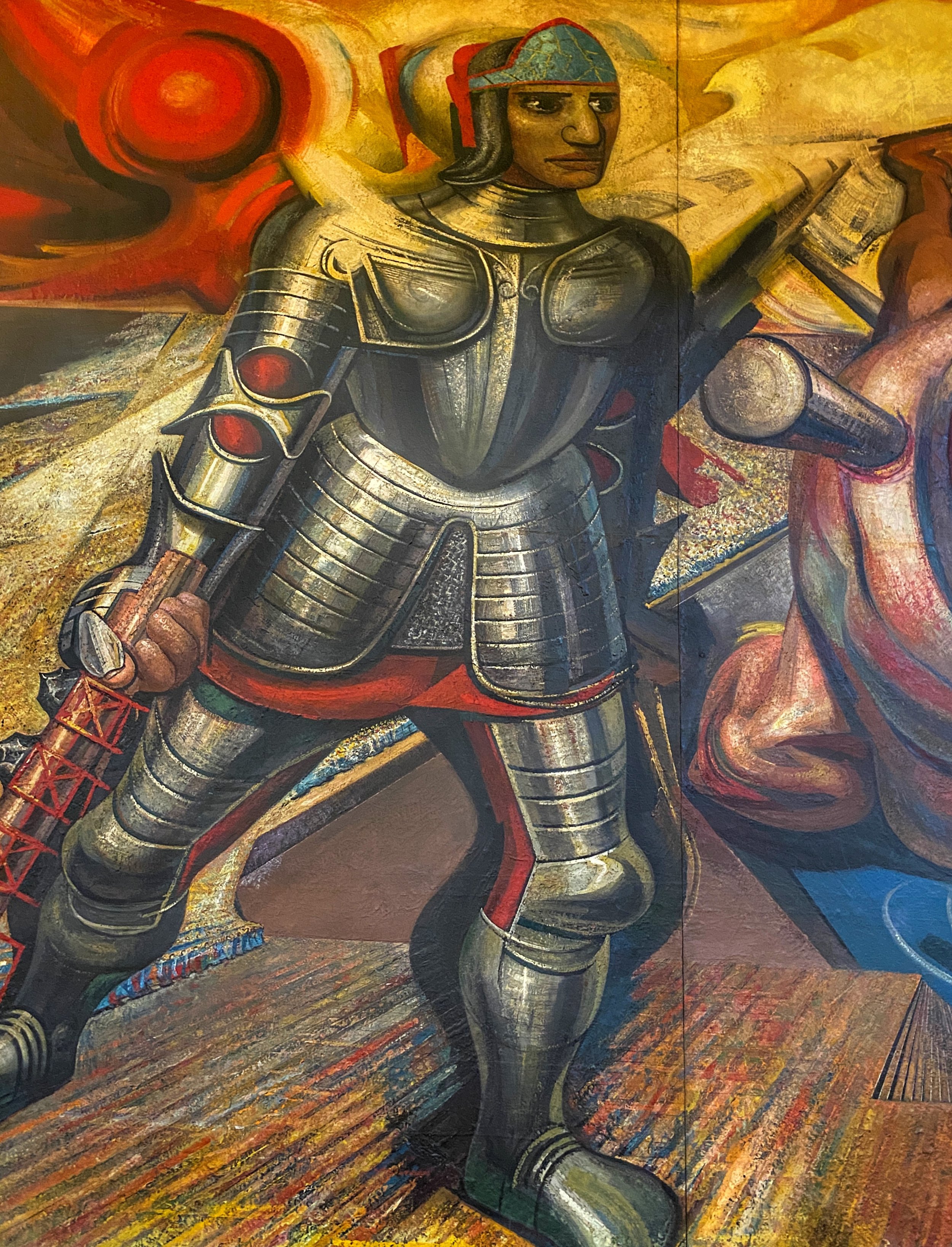
Knight in Apoteosis de Cuauhtémoc mural

Siqueiros’ mural presents revisionist history, where an Aztec ruler isn’t conquered by the conquistadors.

Apoteosis de Cuauhtémoc o Cuauhtémoc Redivivo and Tormento de Cuauhtémoc
(Díptico Monumento a Cuauhtémoc)

Translation: Apotheosis of Cuauhtémoc, or Cuauhtémoc Resurrected and Torment of Cuauhtémoc (Monumental Diptych to Cuauhtémoc)

Date: 1951

Artist: David Alfaro Siqueiros

The Aztec ruler Cuauhtémoc had his feet burned until he caved and told the Spanish where to find a treasure trove.

Fascinating facts: One panel shows a revisionist history, what the artist wishes had happened — that the Aztec emperor Cuauhtémoc had defeated the Spanish conquistadors. The other shows what really happened: The ruler was tortured by the Spanish, who burned his feet until he revealed the location of Montezuma’s treasure.


Alegoría del Viento mural at Bellas Artes

Note the personifications of the wind blowing in this Art Deco mural fragment.

Alegoría del Viento o El Ángel de la Paz o La Aviación

Translation: Allegory of the Wind, or The Angel of Peace, or Aviation 

Date: 1928

Artist: Roberto Montenegro

Fascinating facts: This is the only portion of the original Art Deco work at the former Colegio Máximo de San Pedro y San Pablo that survived the humidity. It’s the oldest mural in the collection.  


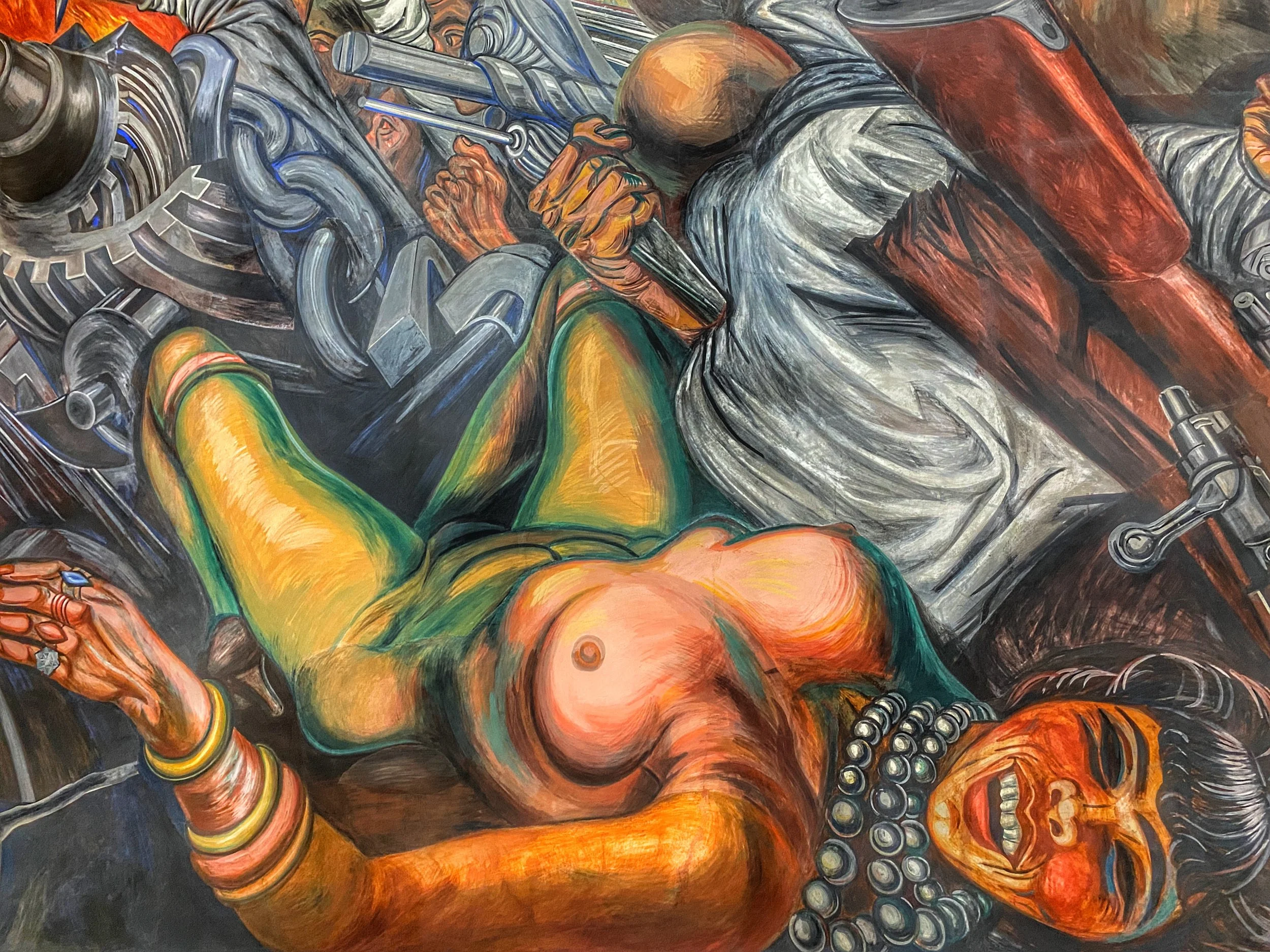
Man vs. machinery battle it out in Orozco’s bizarre and disturbing mural.

Katharsis o La Eterna Lucha de la Humanidad por un Mundo Mejor

Translation: Catharsis, or Humanity’s Eternal Struggle for a Better World

Date: 1935

Artist: José Clemente Orozco

Detail of La Chata in Katharsis by Orozco

A detail of La Chata, the infamous pug-nosed prostitute in Orozco’s mural

Fascinating facts: Orozco, like his contemporary Diego, was no stranger to controversy, as evidenced by this horrific vision of dystopia. The naked woman, wearing a massive pearl necklace, grins outward and opens her legs to a piece of machinery. She’s known as La Chata (Pug Nose) and has the dubious honor of being considered one of the most repulsive images in art. 


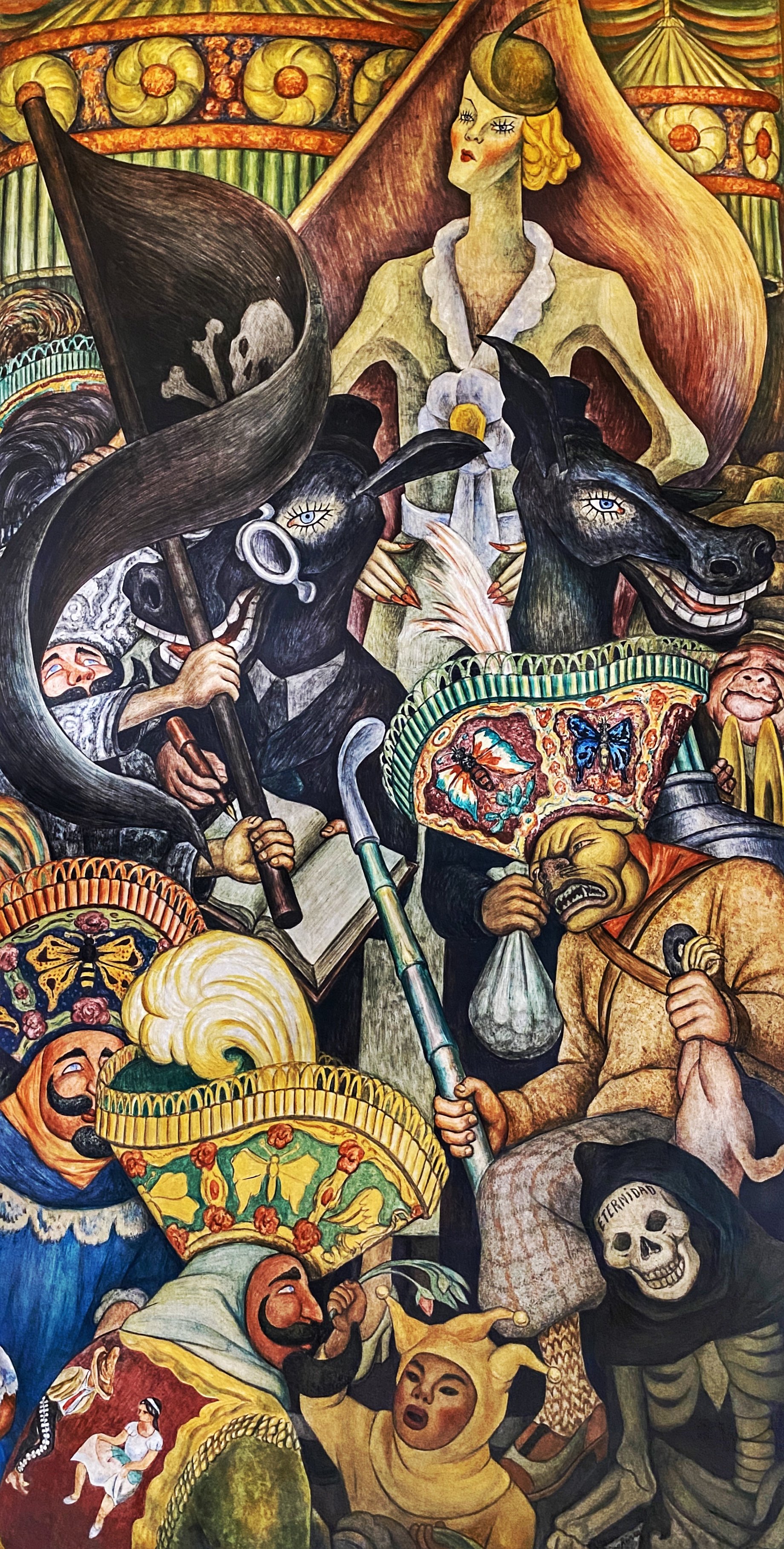
México Folclórico y Turístico by Diego

Rivera’s mural panels poked fun at White tourists and played upon circus themes.

México Folclórico y Turístico and Dictadura
(Políptico Carnaval de la Vida Mexicana)

Translation: Folkloric and Touristic Mexico and Dictatorship (Carnival of Mexican Life Polyptych)

Date: 1936

Artist: Diego Rivera

Section of México Folclórico y Turístico by Diego

There’s a lot to find offensive in these murals, from an officer depicted as a pig to a flag that sports a swastika.

Fascinating facts: Alberto Pani commissioned the series for his Hotel Reforma. But Diego, ever the shit-stirrer, inserted political motifs and unflattering representations of tourists. Pani “touched up” the offensive bits; Diego sued and won, and was allowed to restore his work. But the hotelier put the work into storage, where it remained hidden away until it was sold to the government in 1963 and installed at Bellas Artes. 

Murals are, by their nature, public works of art. If you’re in CDMX’s Centro neighborhood, take a quick spin through the murals of the Palacio de Bellas Artes — and see if you can spot all the controversial sections. –Wally

Exterior of the Palace of Fine Arts in CDMX

Palacio de Bellas Artes
Avenida Juárez s/n
Centro
Cuauhtémoc
06050 Ciudad de México
Mexico


Eva Bracamontes, Bué the Warrior and Other Street Artists of Puerto Vallarta

A tour of Puerto Vallarta’s murals and street art, including those commissioned to help save a coral reef.

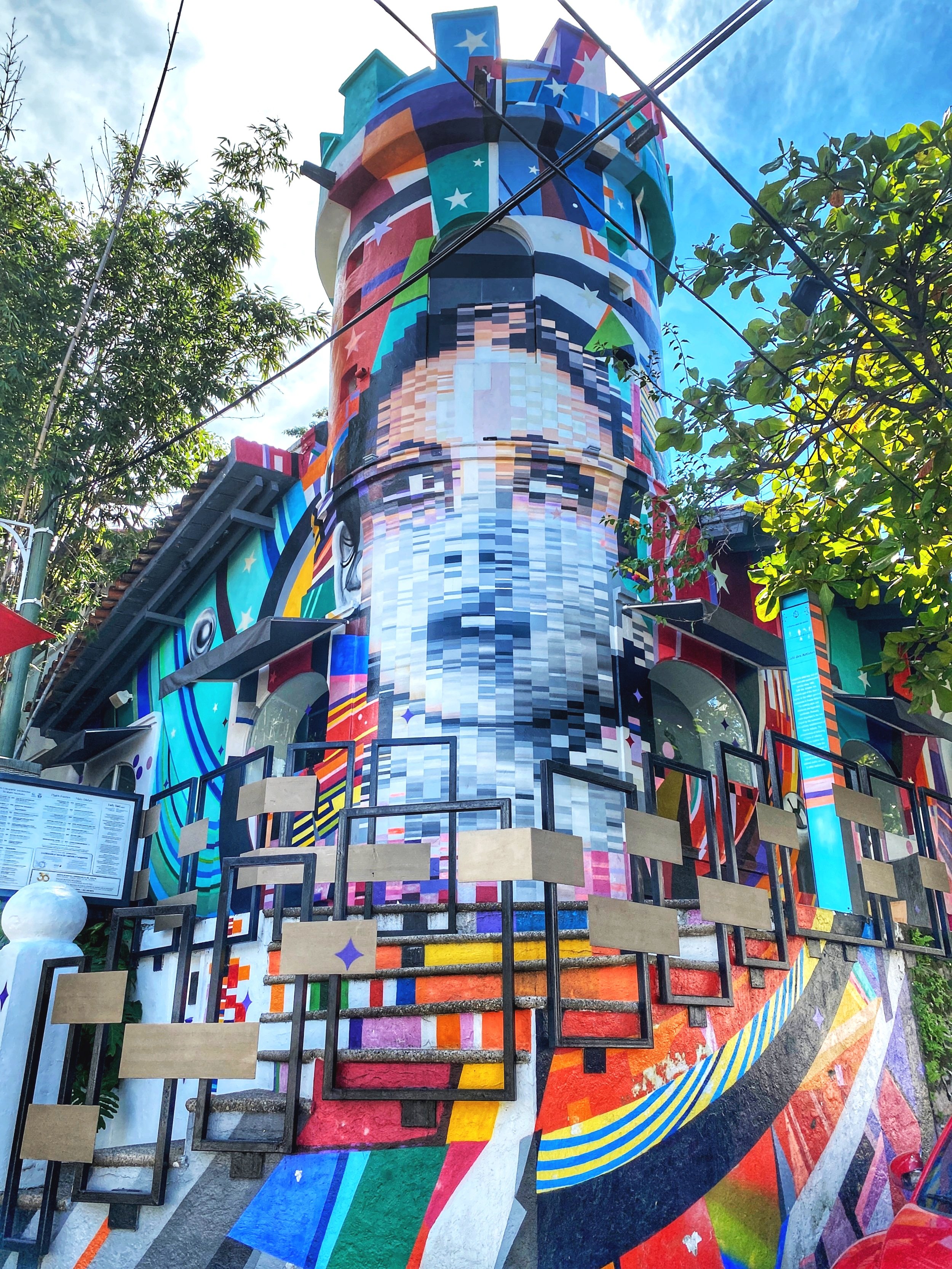
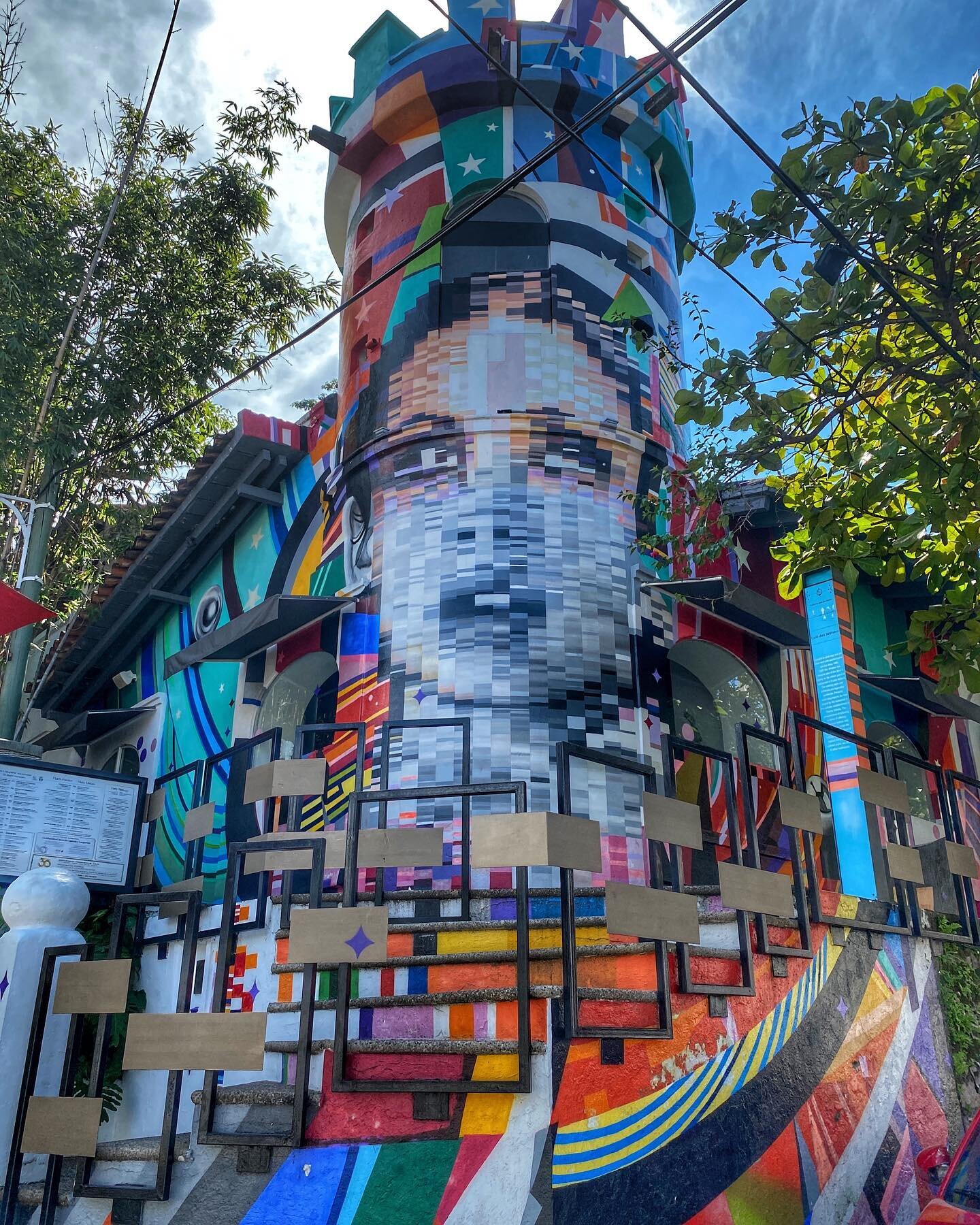
A mural titled La Diva del Futuro (The Diva of the Future) covers the façade of Café des Artistes, one of the most famous restaurants in Puerto Vallarta.

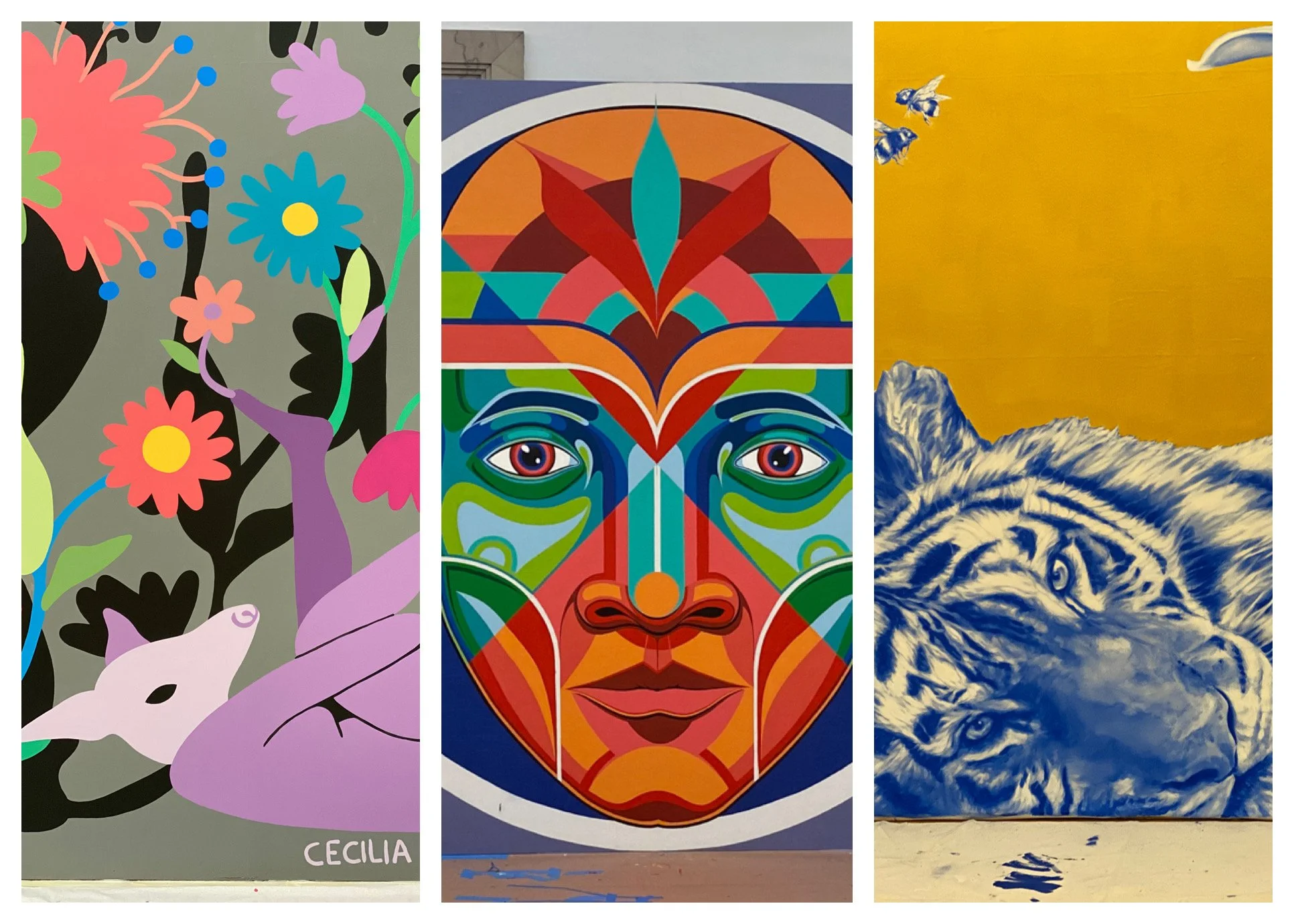
Wally and I have an appreciation for street art. This democratic and creative medium of social expression takes many forms, from simple tags to beautiful and sophisticated works of art. The best part is that it’s accessible to everyone. 

Because our walks were somewhat random, this is not a comprehensive collection of street art in Puerto Vallarta — but it highlights a few of our favorites. The cobblestone streets of PV’s city center are walkable, and there’s no better way to experience its vibrant street art and murals than by foot. 

The best part about street art is that it’s accessible to everyone. 
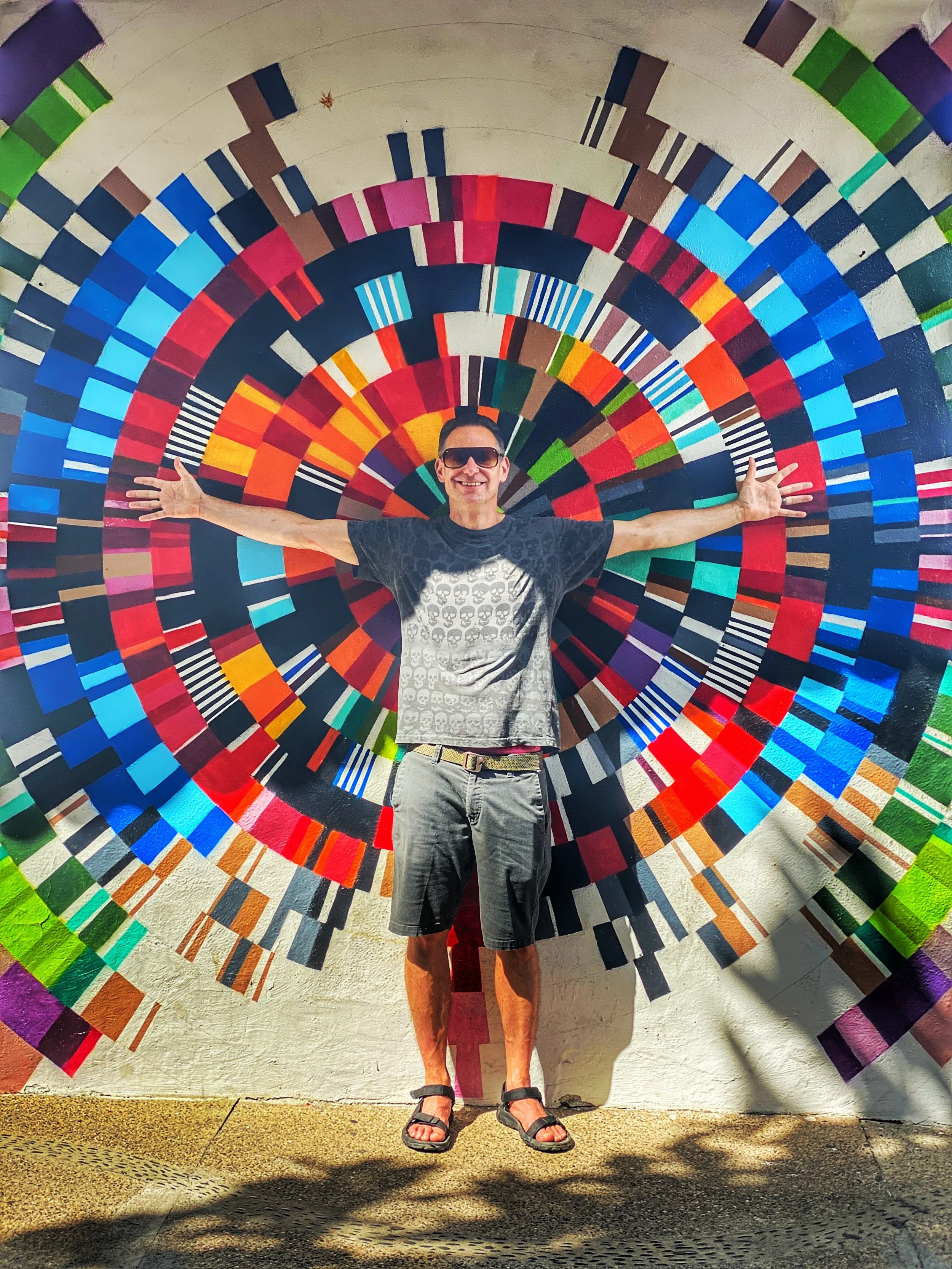
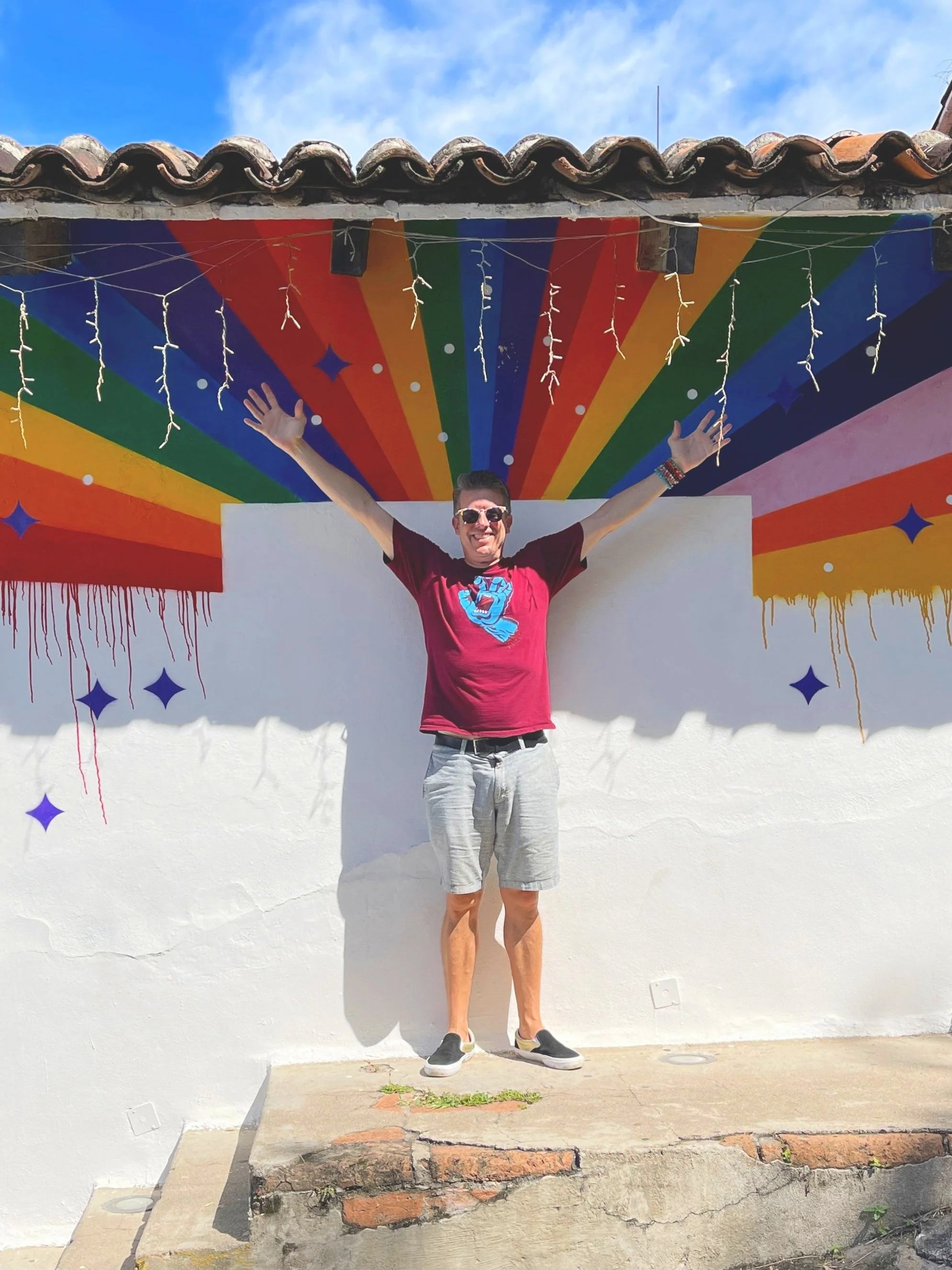
Man with arms outstretched in front of colorful circular street art

Duke radiates a love of street art while wandering around Puerto Vallarta.

Reef-er Madness: The Restore Coral Mural Project 

The Mesoamerican Reef system, also known as the Great Maya Reef, stretches from the northern tip of the Yucatán Peninsula down through Honduras’ Bay Islands. It’s the second largest barrier reef in the Western Hemisphere. 

In recent decades, climate change and ocean acidification have threatened this fragile ecosystem, endangering the existence of the sea creatures who inhabit it. 

As part of a wider initiative, several large-scale works were commissioned in 2016 by the Restore Coral Mural Project. Using public spaces in towns across Mexico, an array of international and well-known local artists were invited to create murals to raise awareness and promote the importance of reef conservation. 

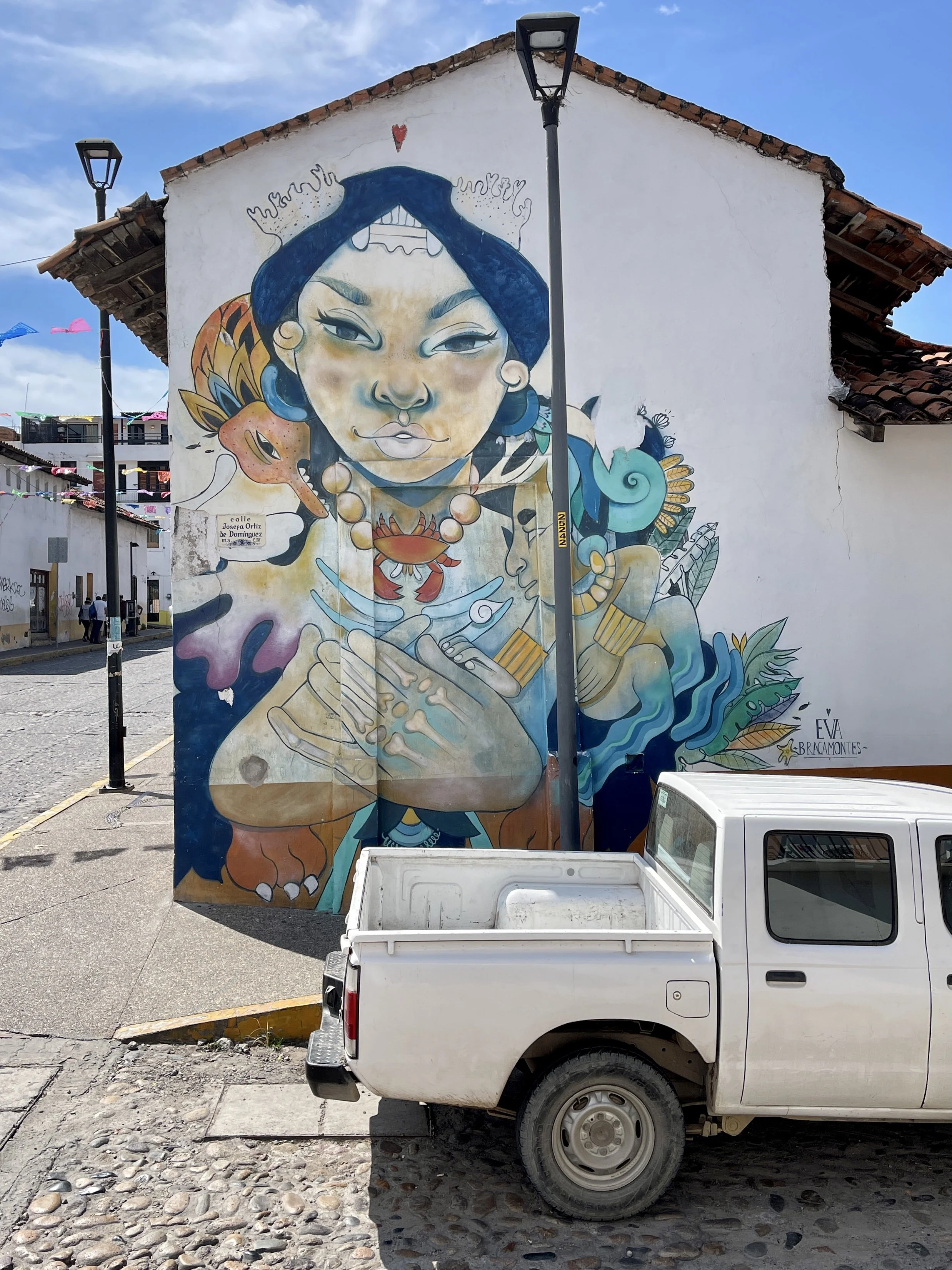
Mural of sea goddess in Puerto Vallarta

Eva Bracamontes’ Resurrection aims to bring new life to Mexico’s coral reefs.

Veracruz-based illustrator and street artist Eva Bracamontes uses vivid colors, focusing on indigenous women and references to Mesoamerican culture. 

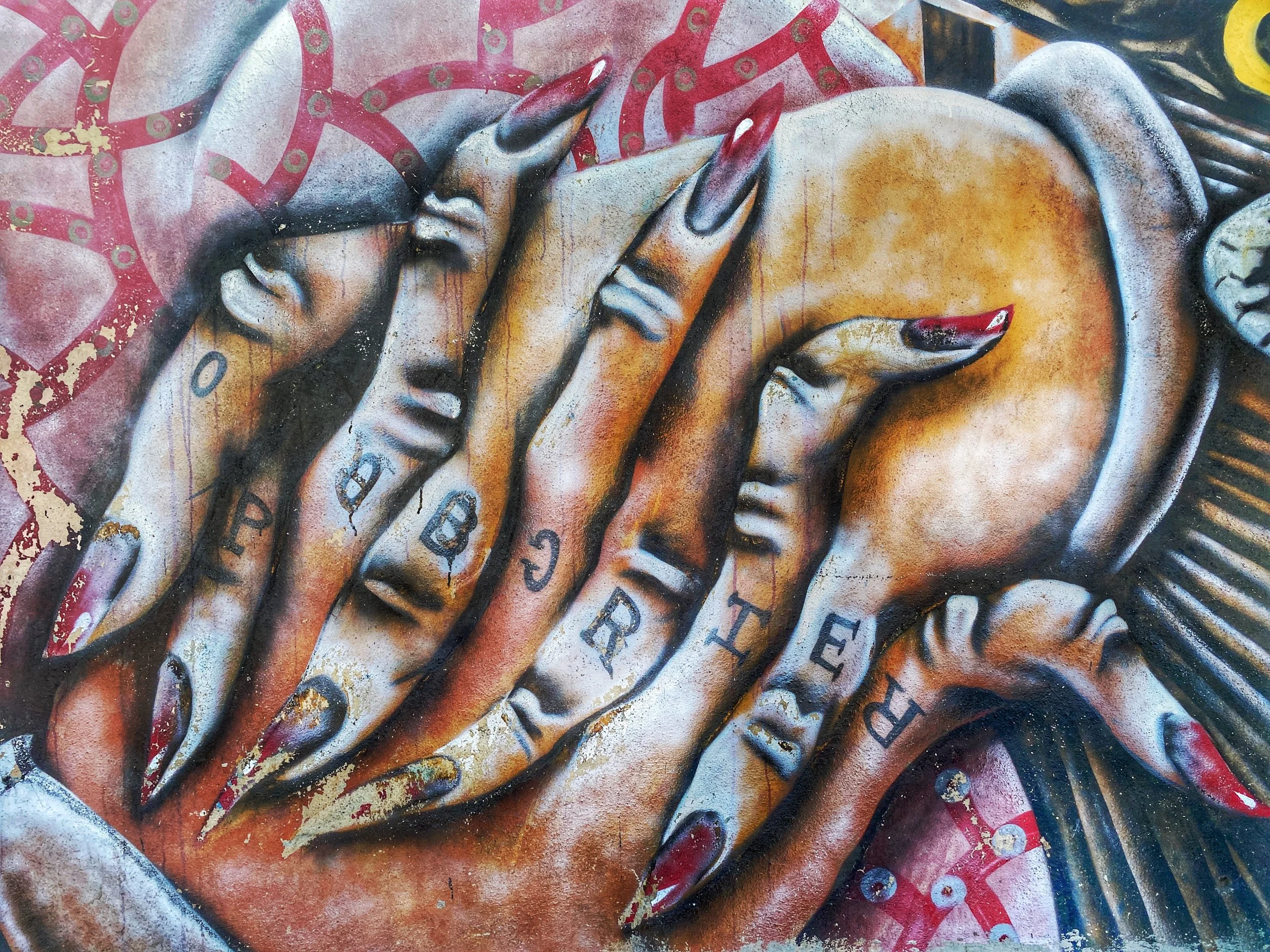
Her mural Resurrection portrays a mystical dark-haired woman gazing serenely into the distance. She’s connected to the sea, wearing a coral crown and a crab necklace. A fantastic yet monstrous-looking creature is biting at her neck while an Ancient Mayan offers comfort. The bones of the woman’s hand are visible through her skin — perhaps a metaphor of the fragility of the reef. 

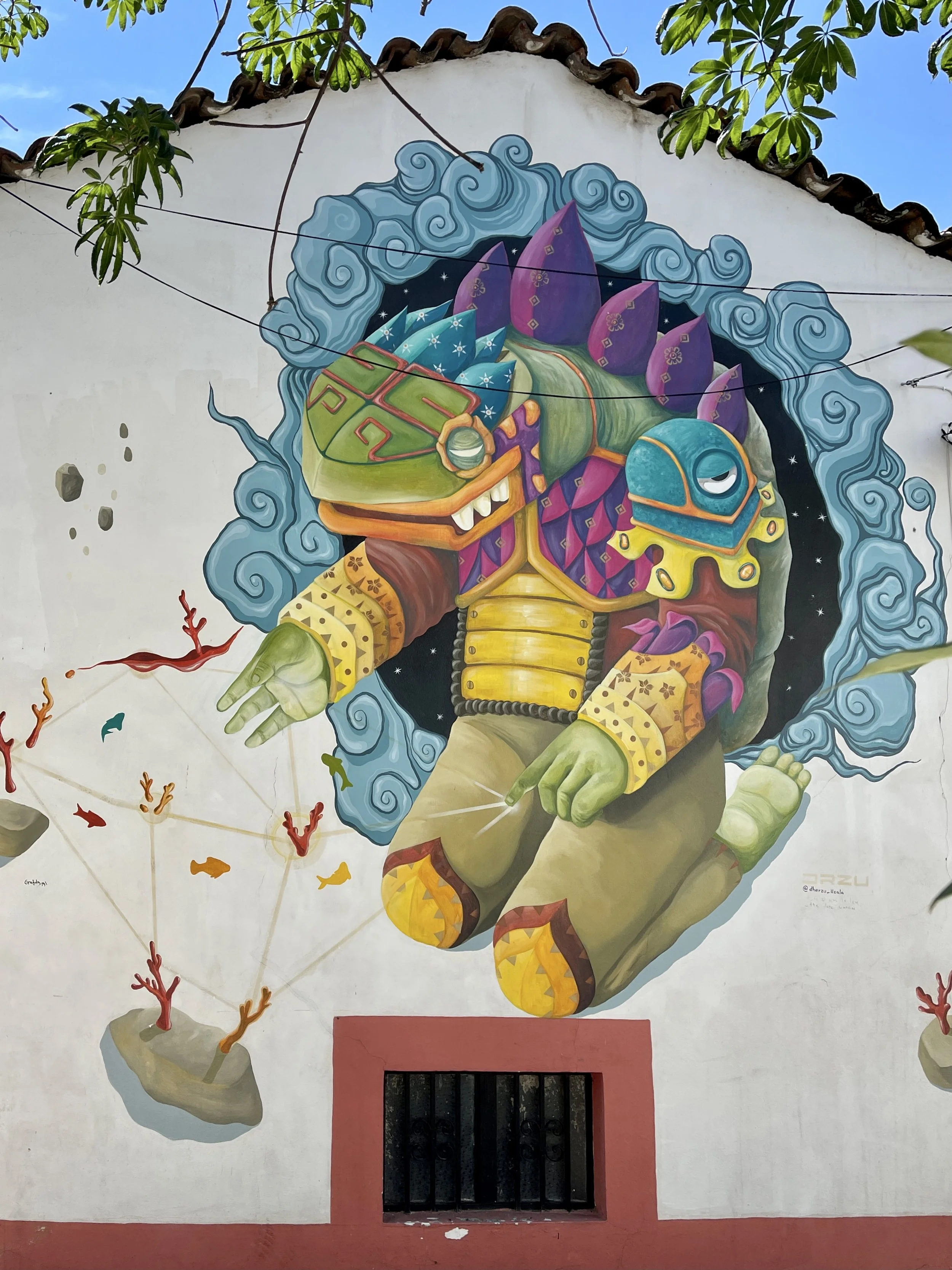
Mural of humanlike turtle in Puerto Vallarta

Wonder if this fella’s related to the Teenage Mutant Ninja Turtles?

DRZU aka Dherzu Uzala’s contribution depicts an intergalactic humanoid sea turtle reaching out from space to regenerate a reef — a network of energy and intersecting lines emanating from its hands. According to the World Wildlife Fund, nearly all species of sea turtles are now classified as endangered, with three of the seven existing species being critically endangered. 

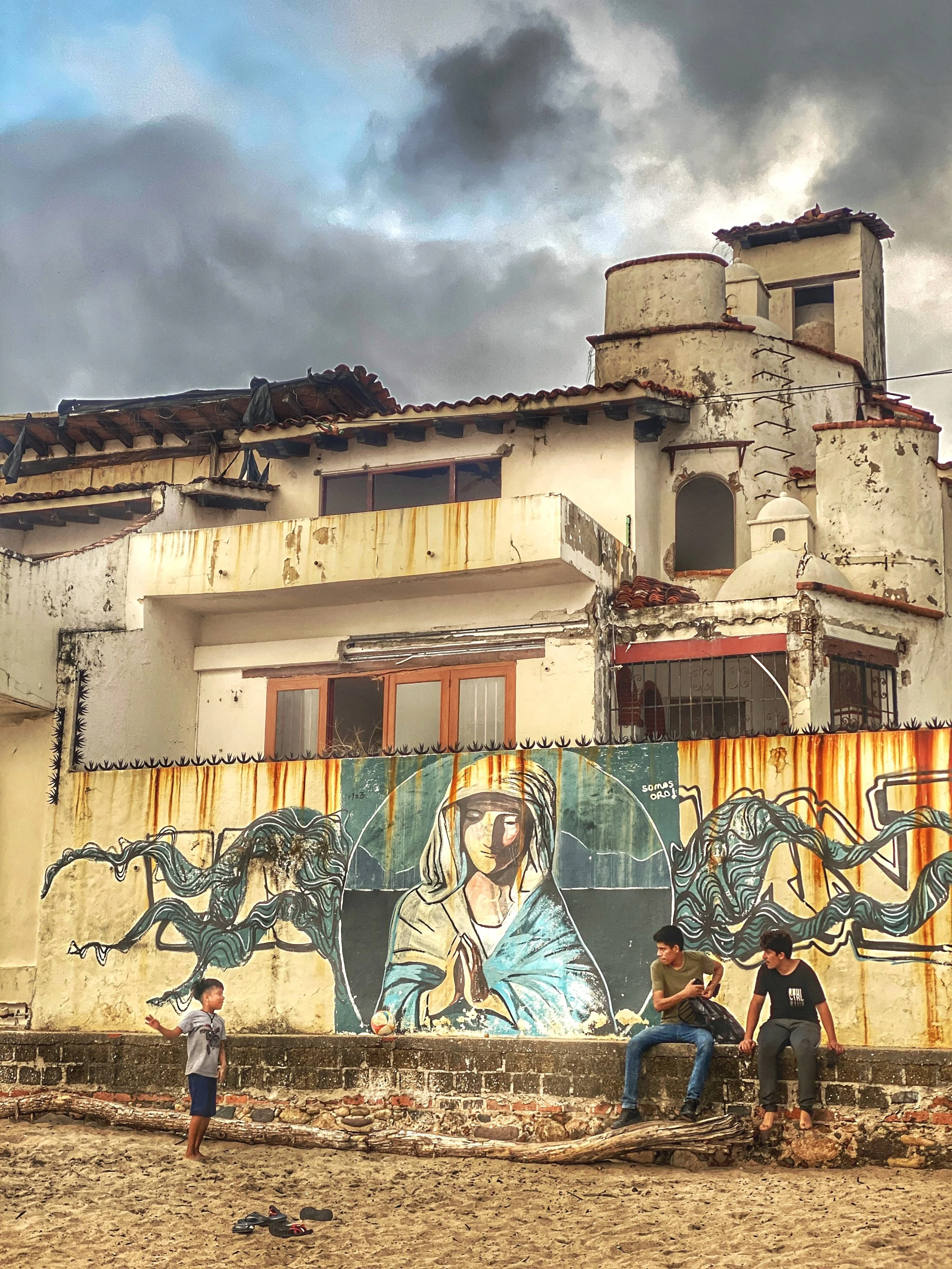
Kids sitting on beach by mural of the Virgin Mary

The Virgin Mary watches over some kids on the beach.

Other Art Around Town 

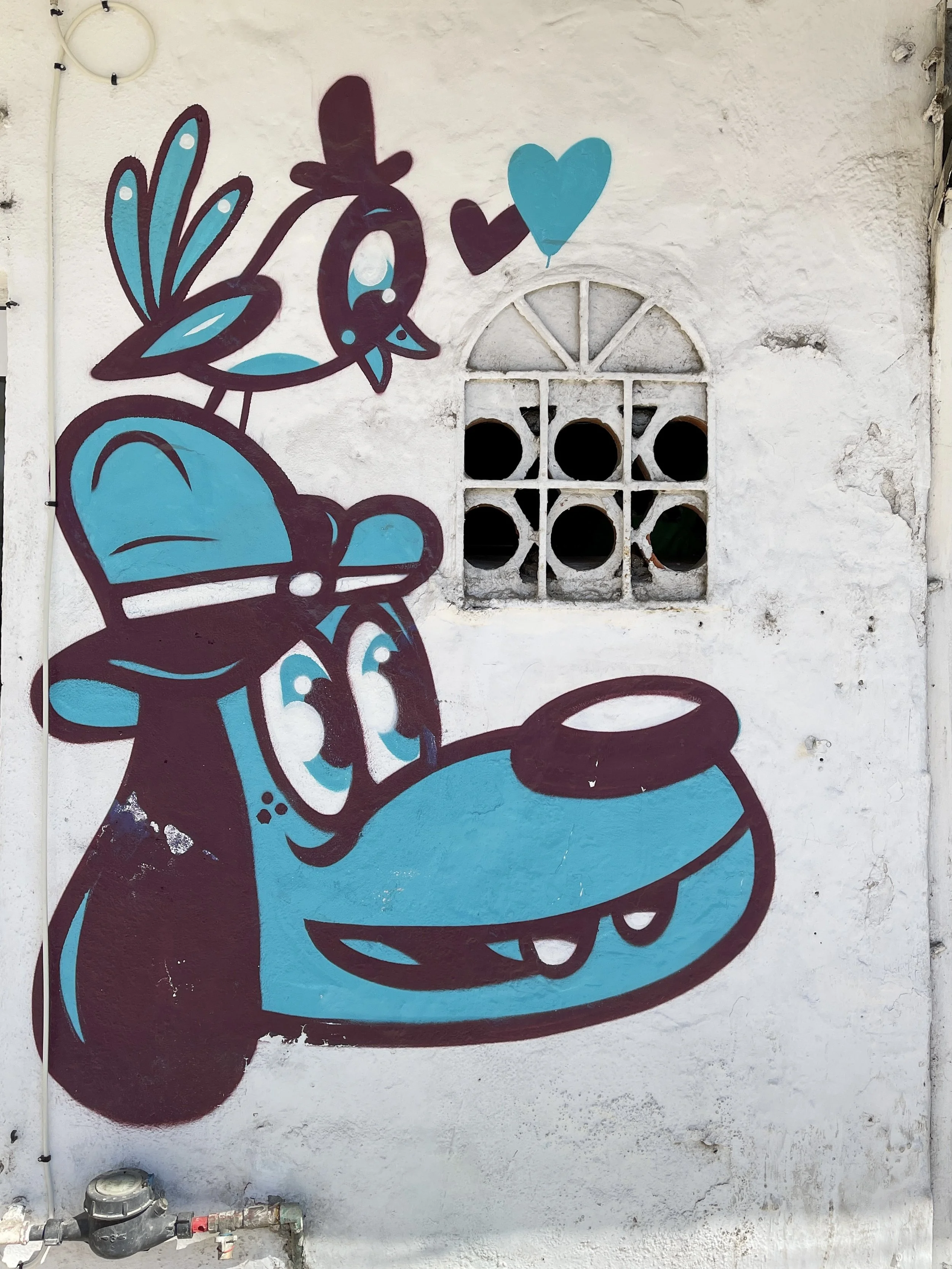
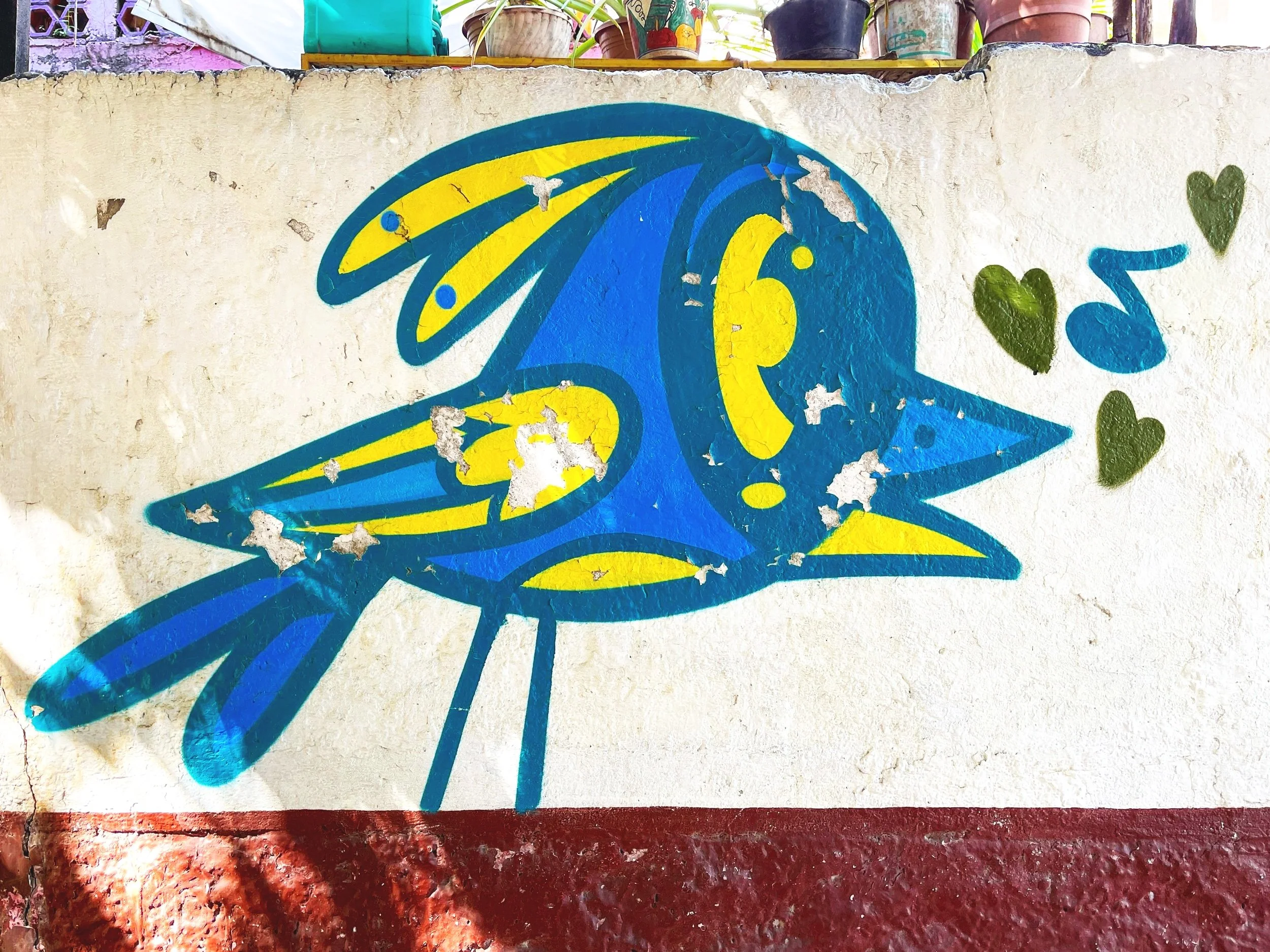
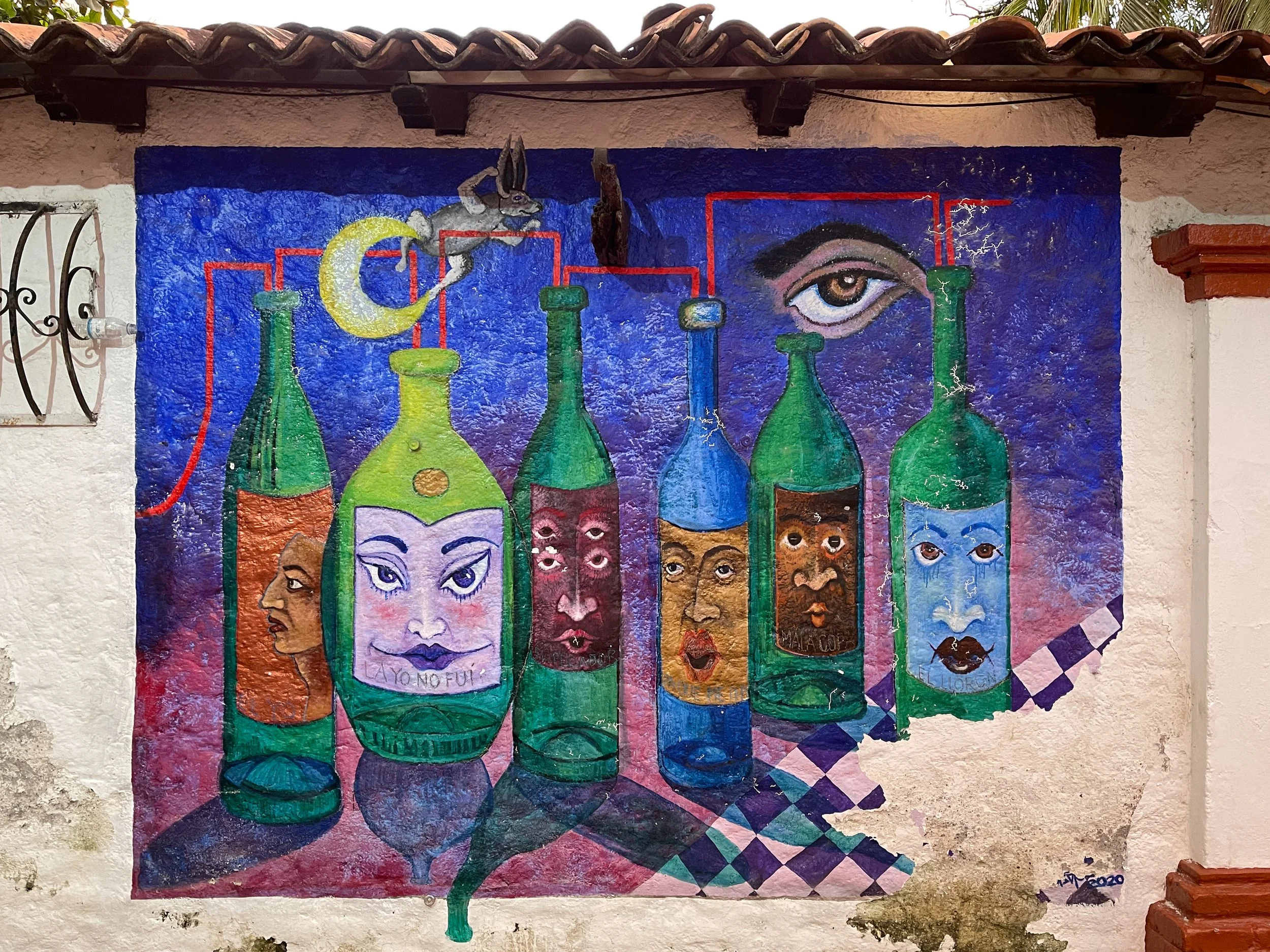
You can’t help but smile when you see the recognizable and playful style of Dave De Rop aka Bué the Warrior. The Belgian street artist describes his style as “naïve, childlike, positive and with good vibes,” with roots in skate and hip-hop cultures.

Blue dog street art

Whimsical animals created by the Belgian graffiti artist known as Bué the Warrior

A little birdie told us De Rop describes his art as naïve and inspired by skate culture.

De Rop emigrated from Ghent to Mexico in 2015. To earn money, he used his great grandmother’s recipe and opened a waffle restaurant, complete with an art gallery, named Holly Waffles. The concept has since moved to Reno, Nevada, USA.  

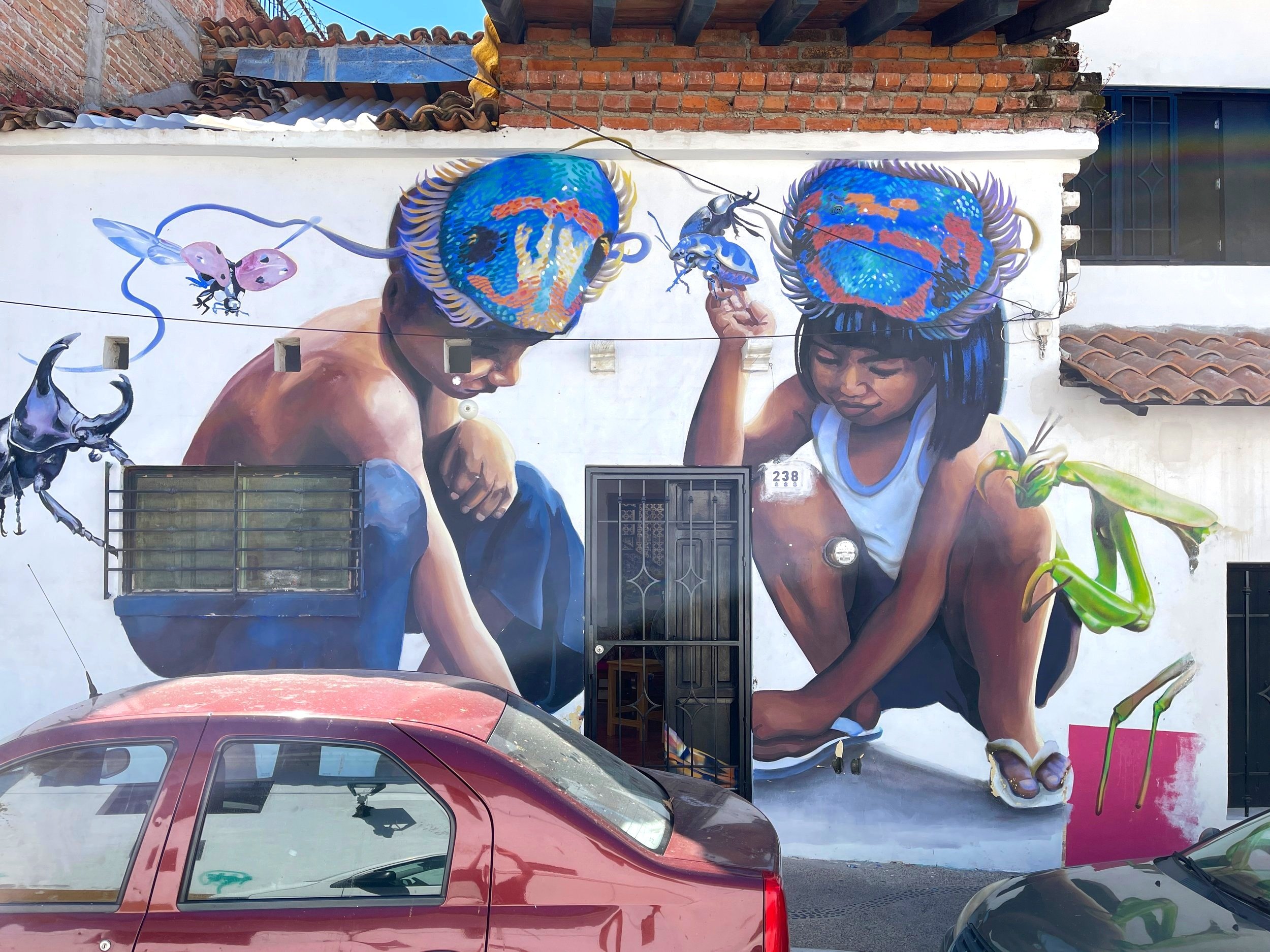
Mural of squatting kids playing with giant insects

A boy and a girl play with giant bugs, including a praying mantis, horned rhinoceros beetles and a ladybug. We’re not sure exactly what they’ve got on their heads, though.

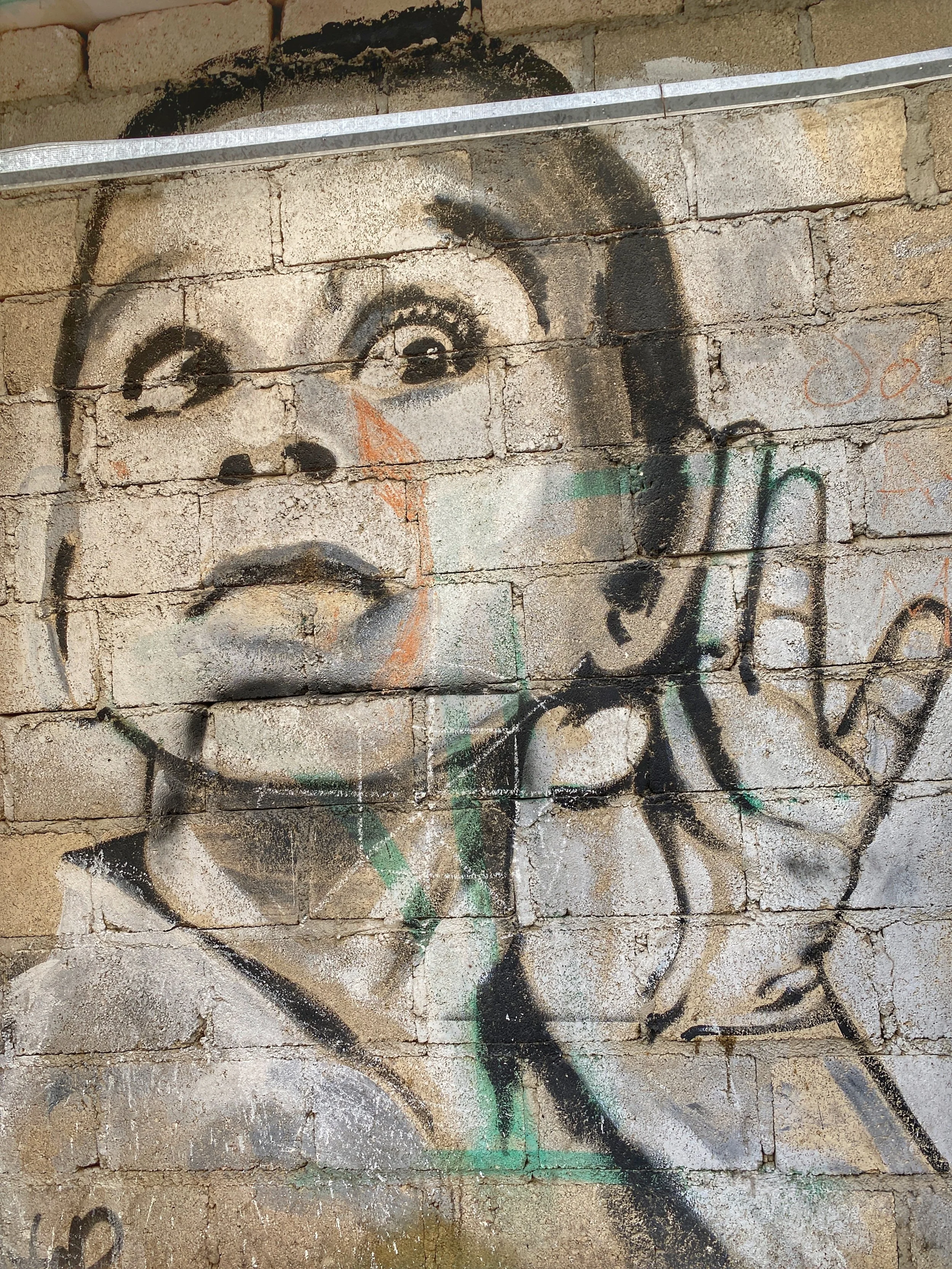
Graffiti of boy listening

What’s that you say?

Graffiti of boy screaming

There’s no need to shout!

Mesoamerican mermail mural reaching out

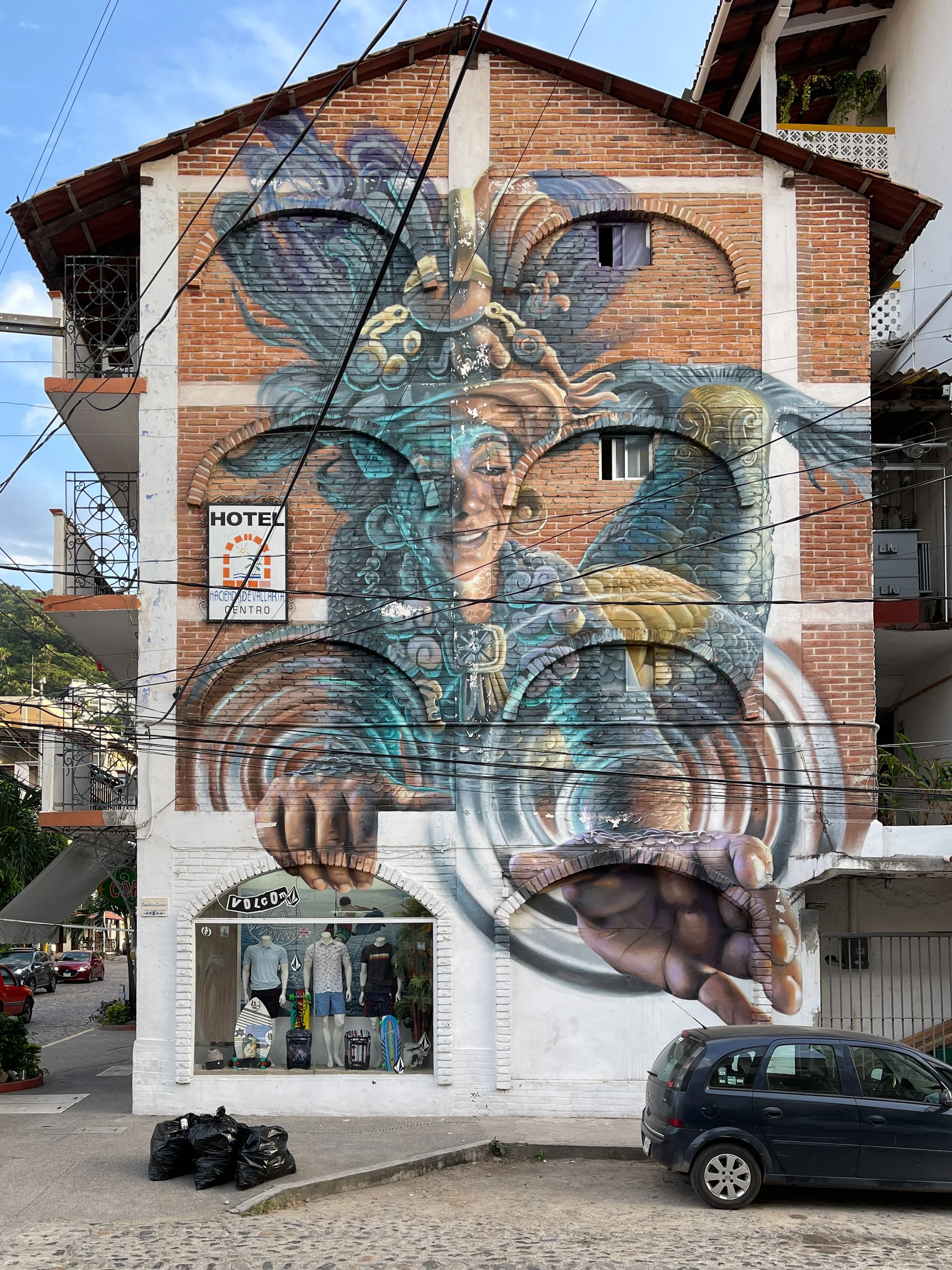
A mermaid with a spectacular headdress reaches a surprisingly realistic hand out from the water on one side of Hotel Hacienda de Vallarta Centro.

Adrian Takano Rojos is a self-taught artist originally from Mexico City who now lives in Puerto Vallarta. His photorealistic murals are often a mix of magical realism and Mesoamerican imagery. Their subject matter almost always connects to the artist’s cultural roots and depictions of indigenous peoples. 

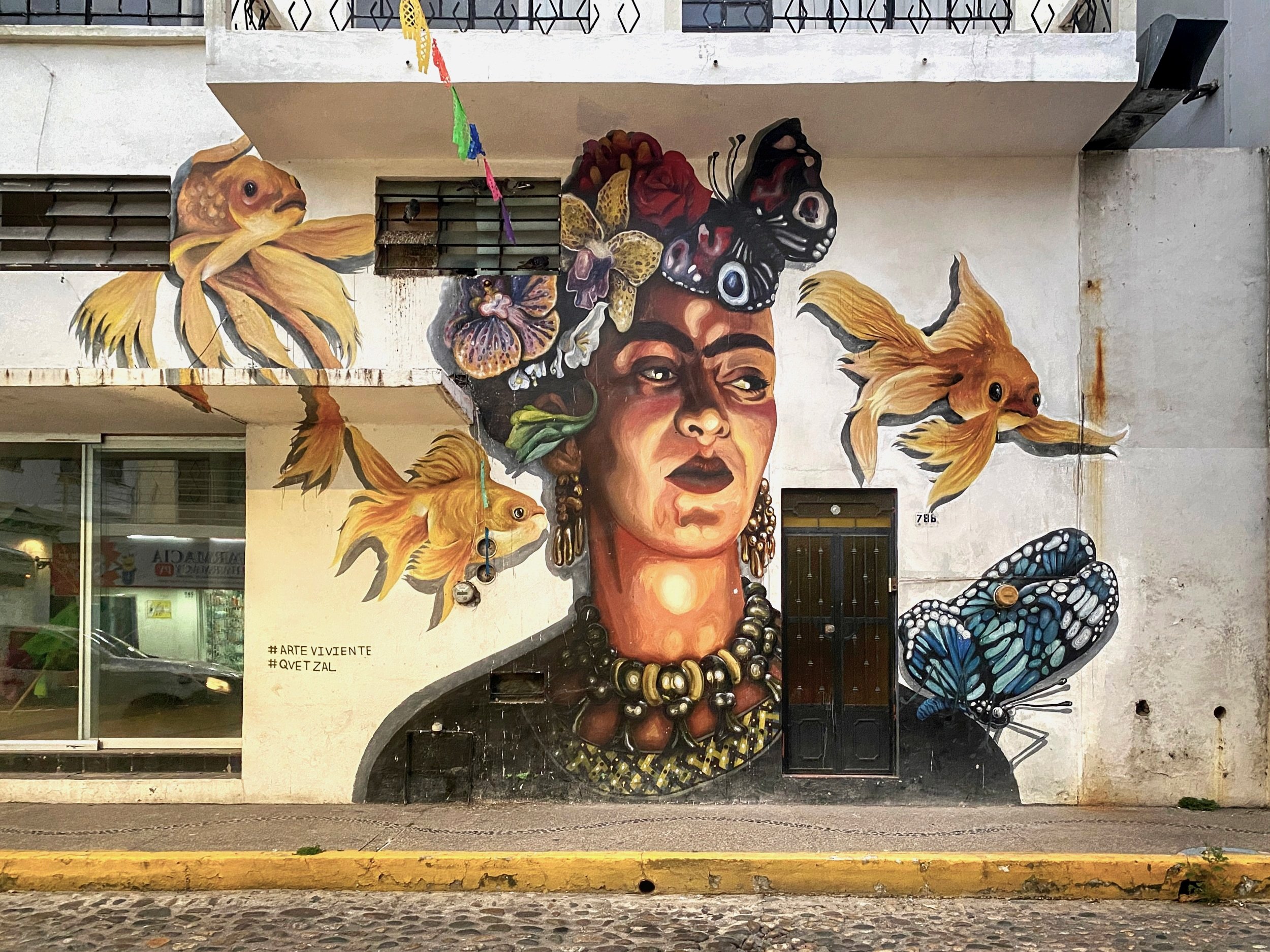
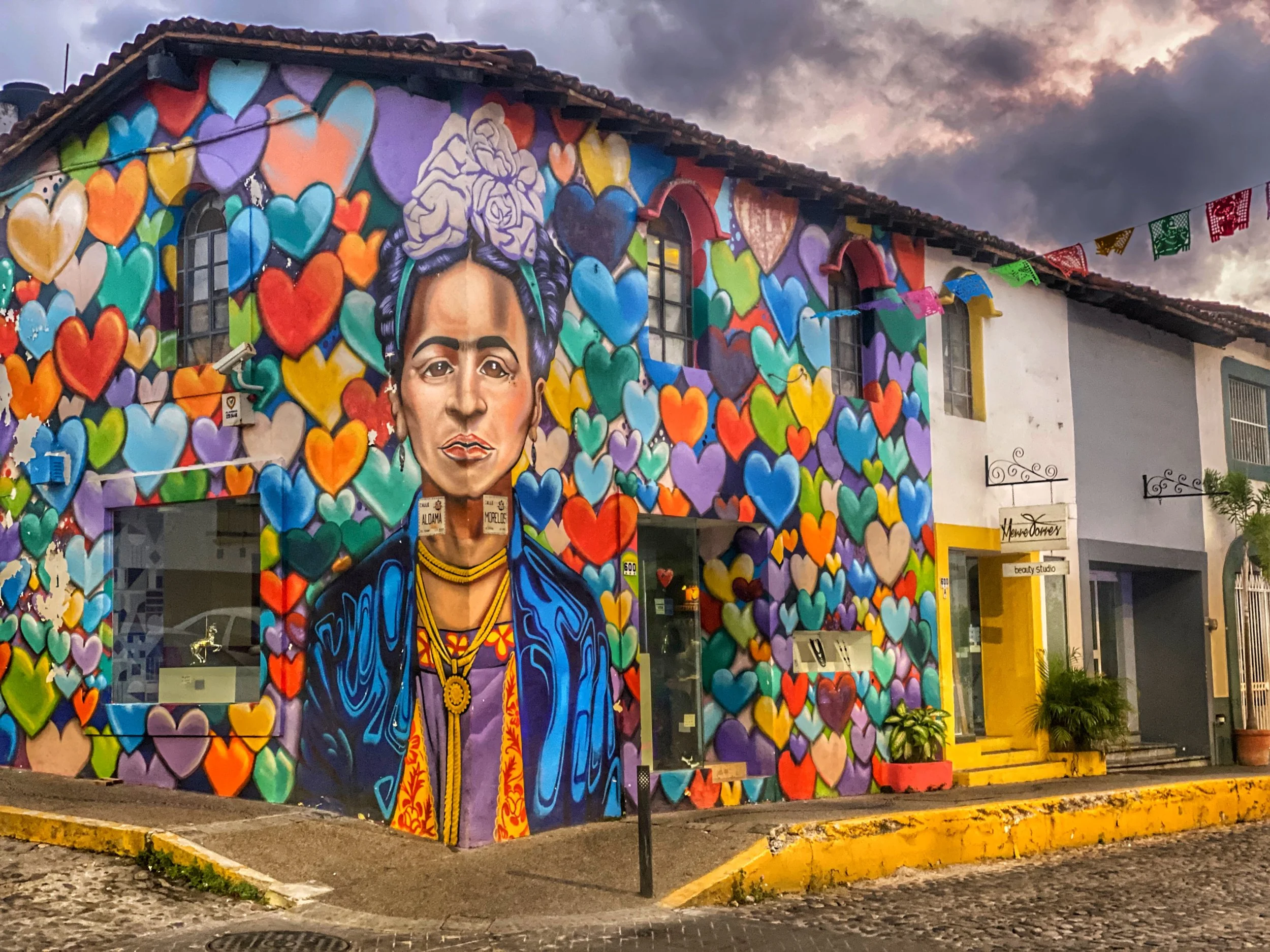
The iconic Frida on a mural by an artist known as Qvetzal

On the corner of Morelos and Pípila Streets, you’ll find an expressive and poetic mural by Qvetzal that’s an homage to Frida Kahlo. The iconic painter is depicted with a colorful butterfly perched on her shoulder and flowers adorning her head and is accompanied by three fantail goldfish swimming around her. 

When you’re in Puerto Vallarta, don’t just cab everywhere. Take a day to wander the town — and admire the street art. –Duke

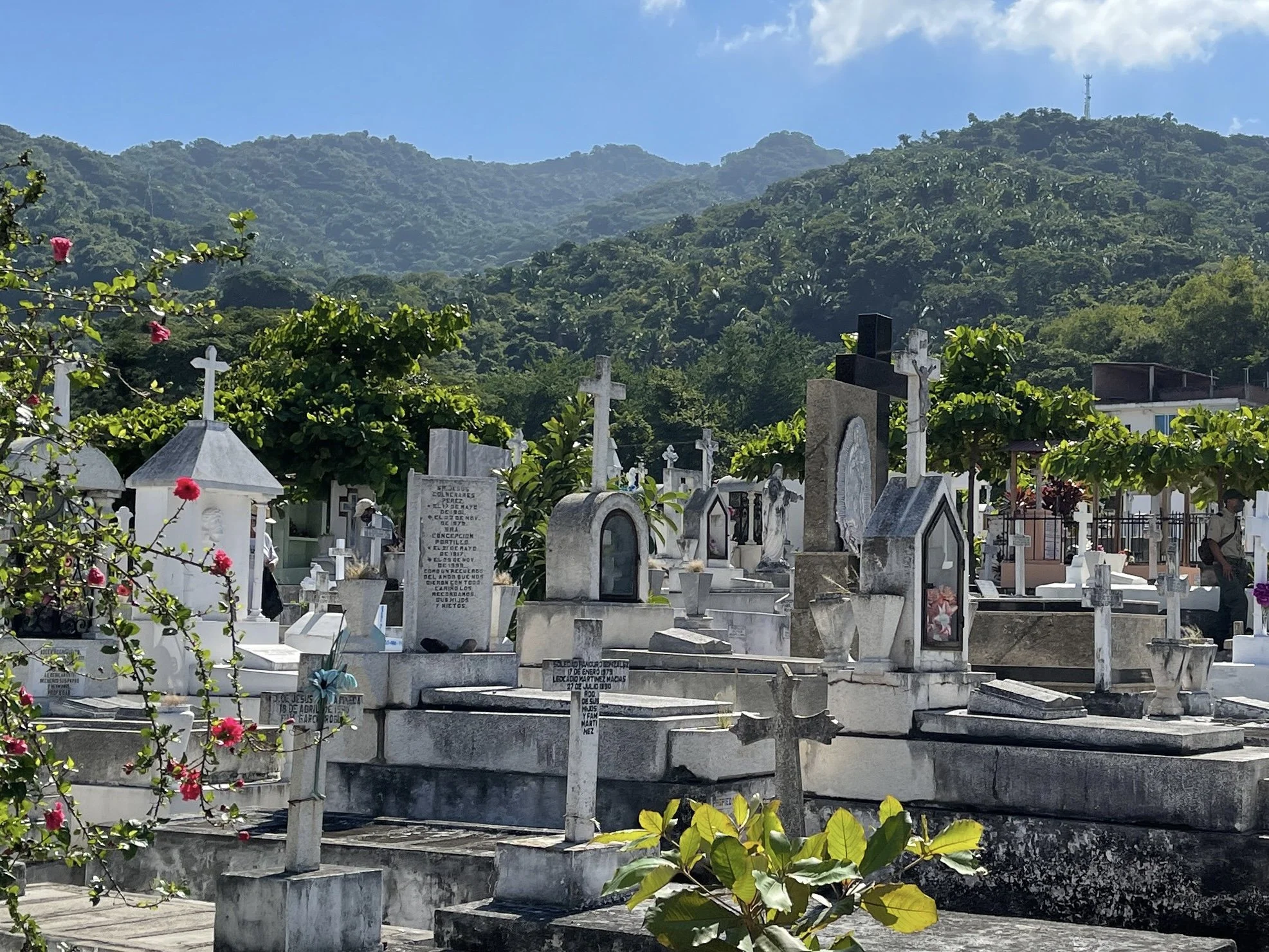
Haunting the Panteón 5 de Diciembre

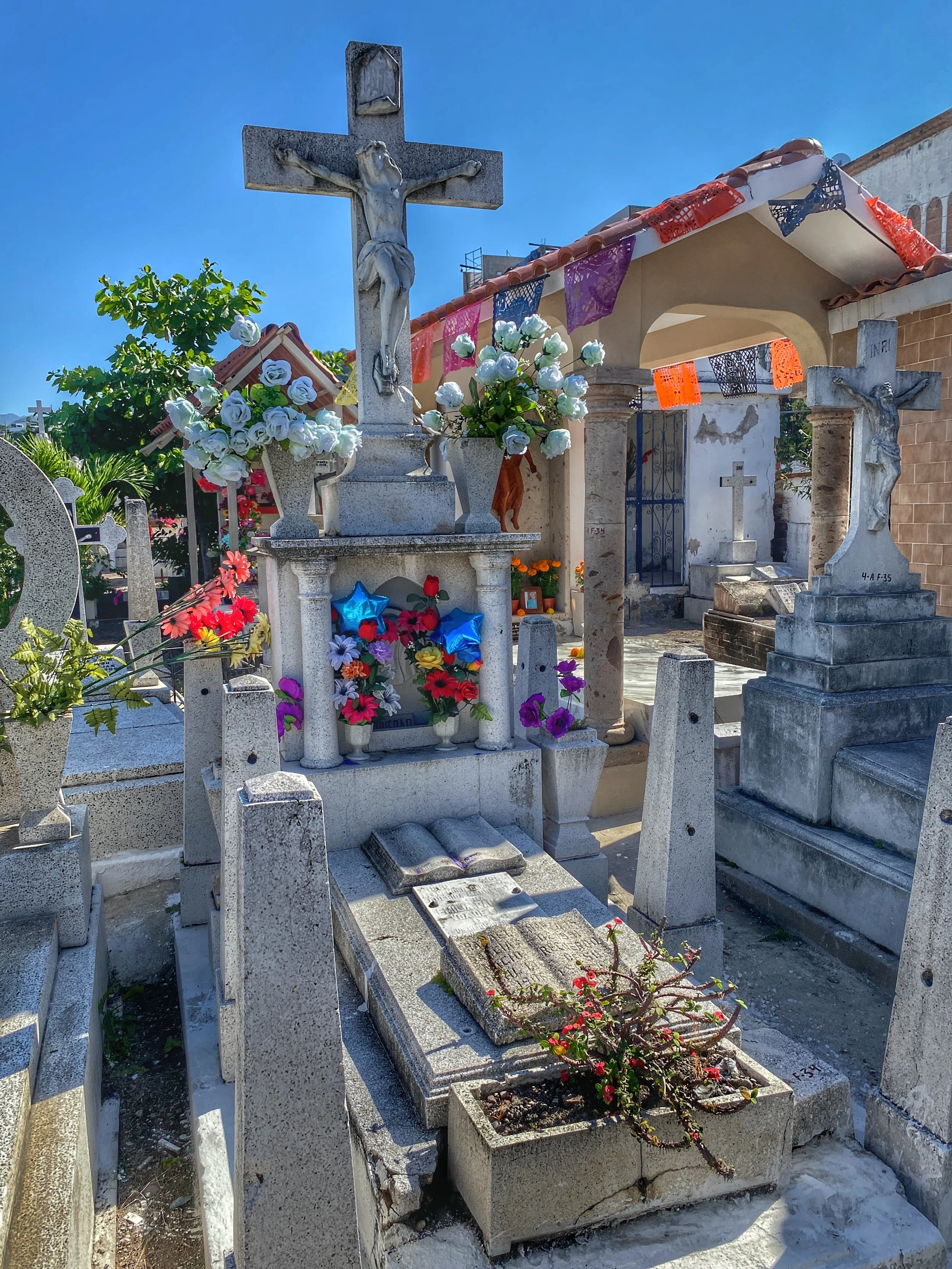
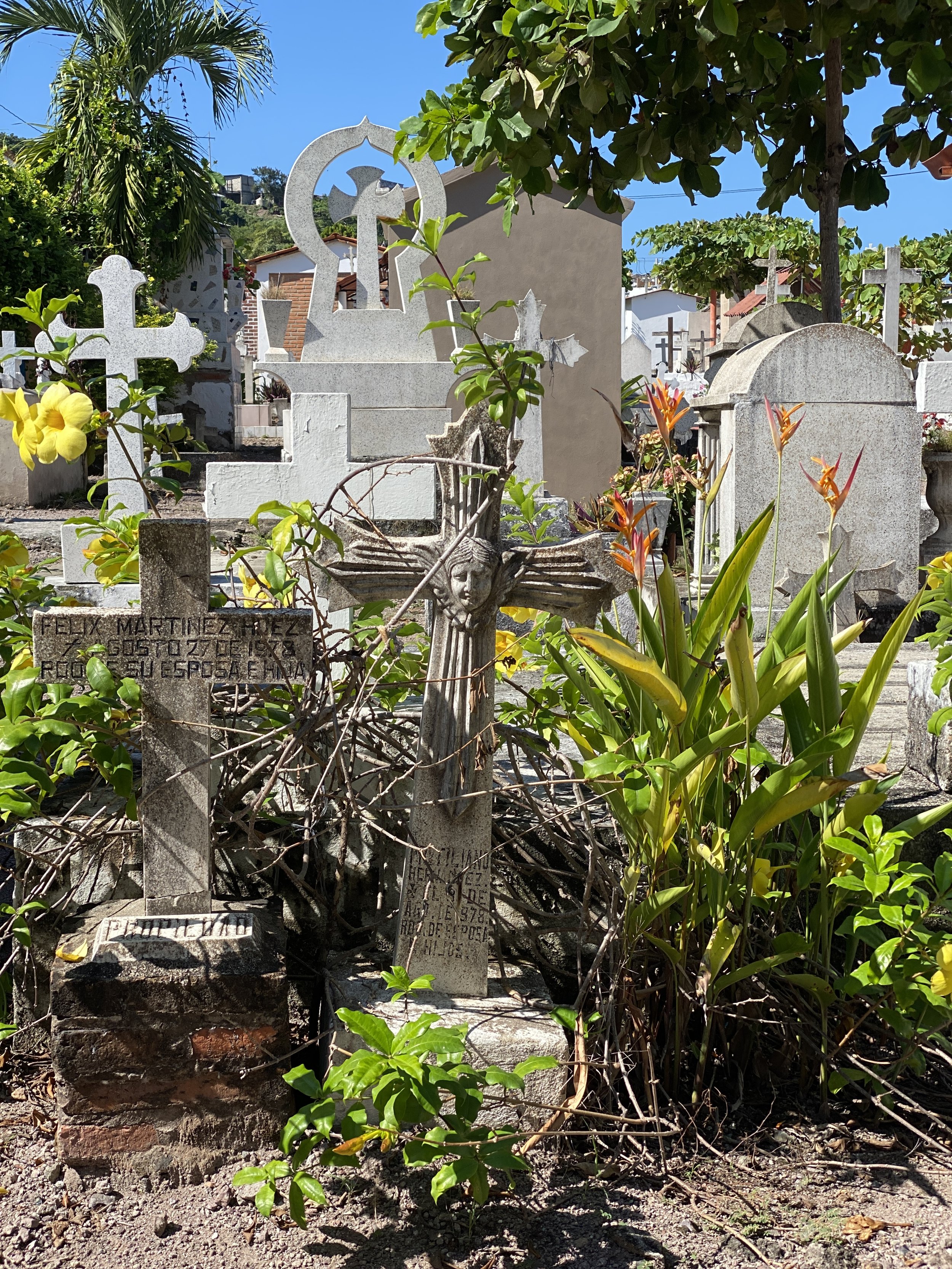
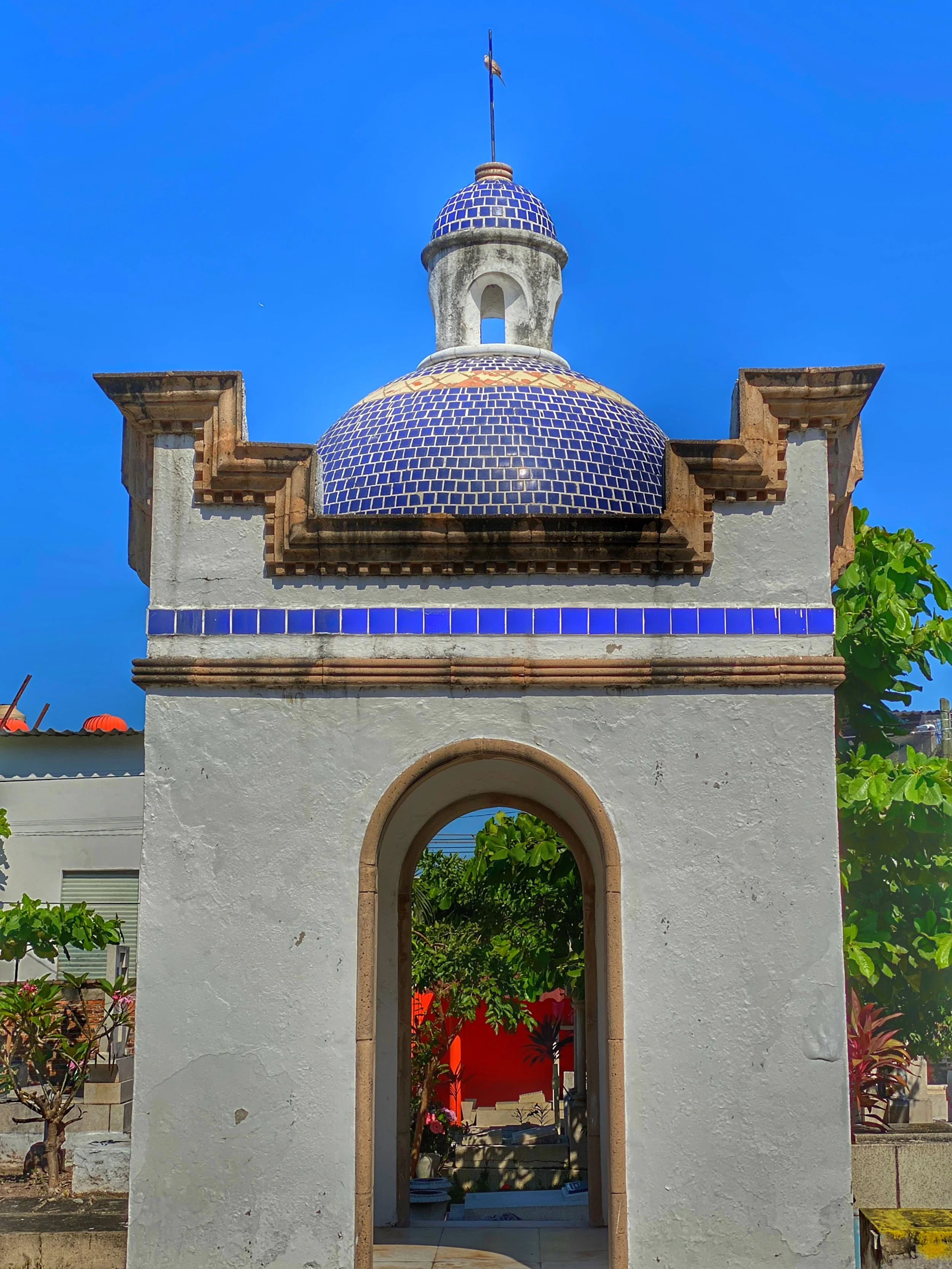
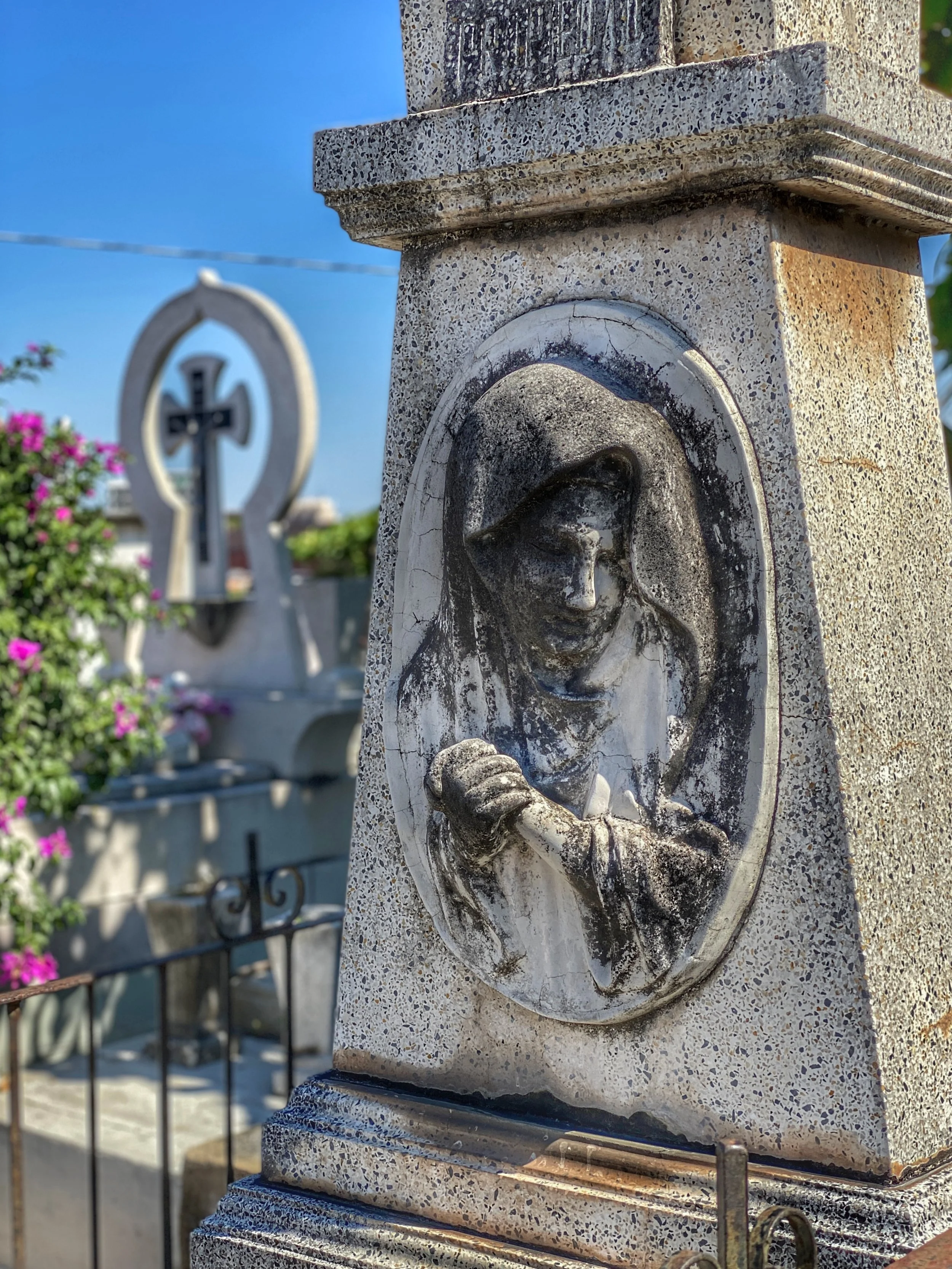
This Puerto Vallarta cemetery is home to a heartbroken ghost. 

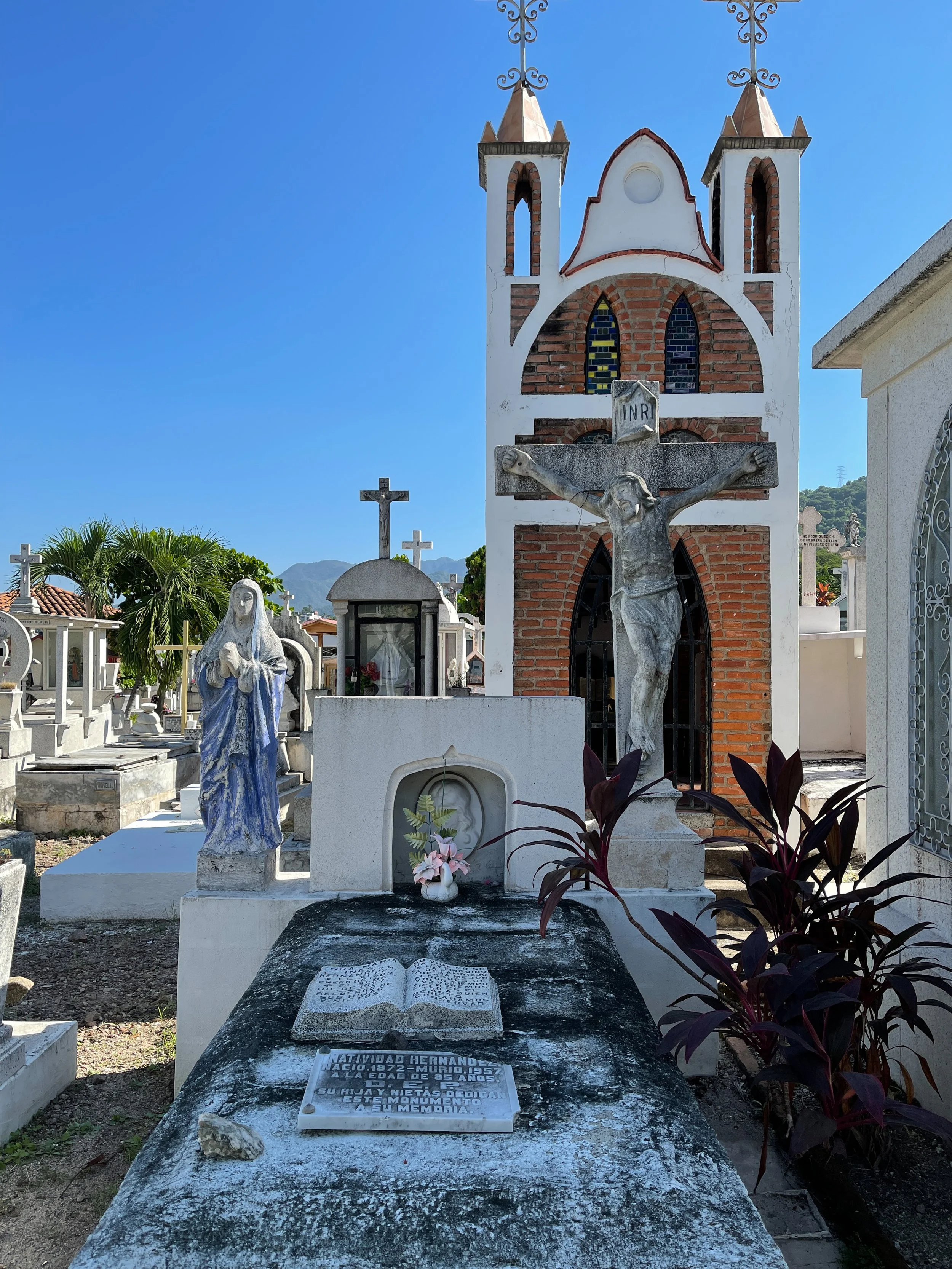
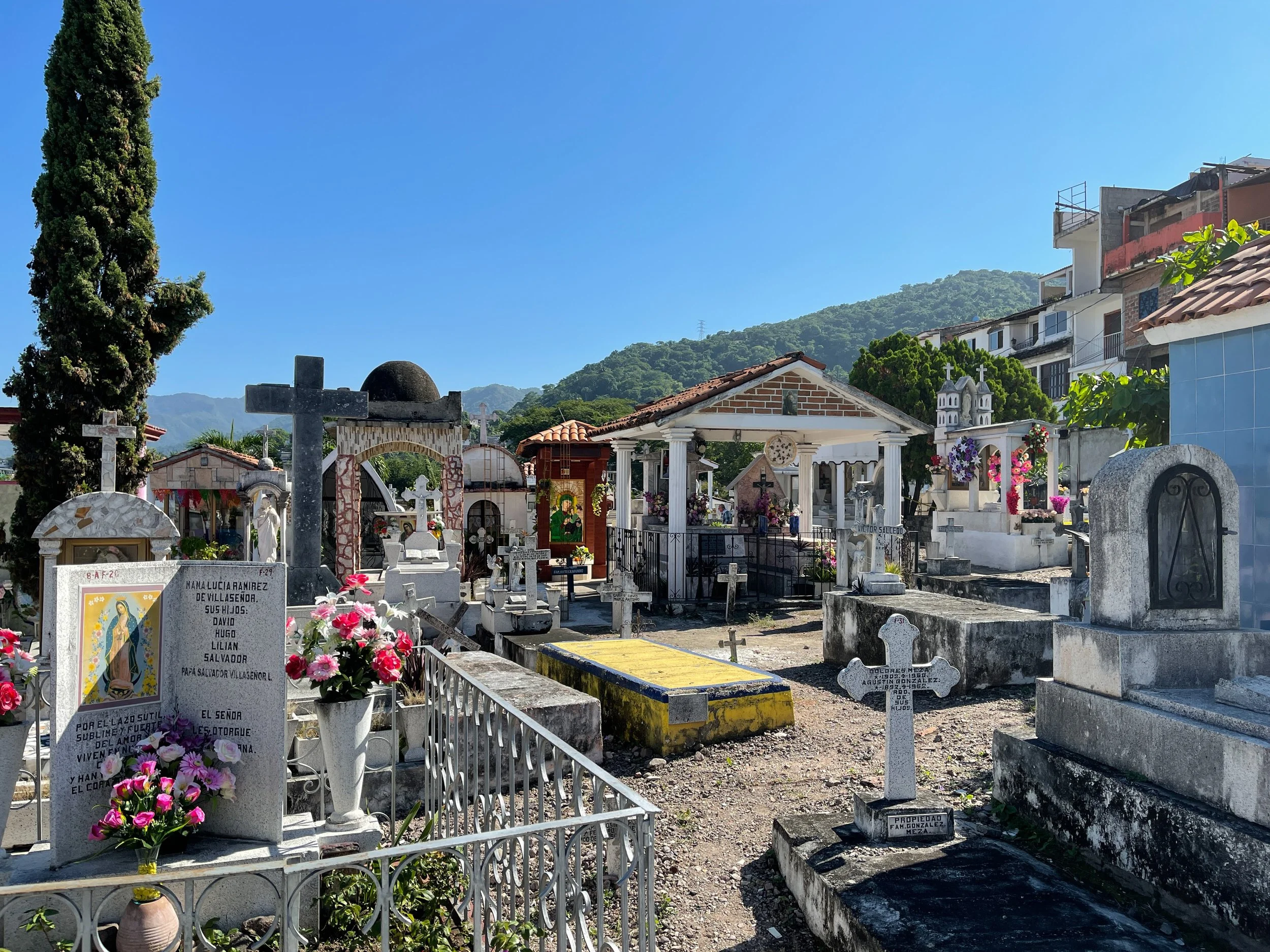
Panteon 5 de Diciembre graves with hills in background

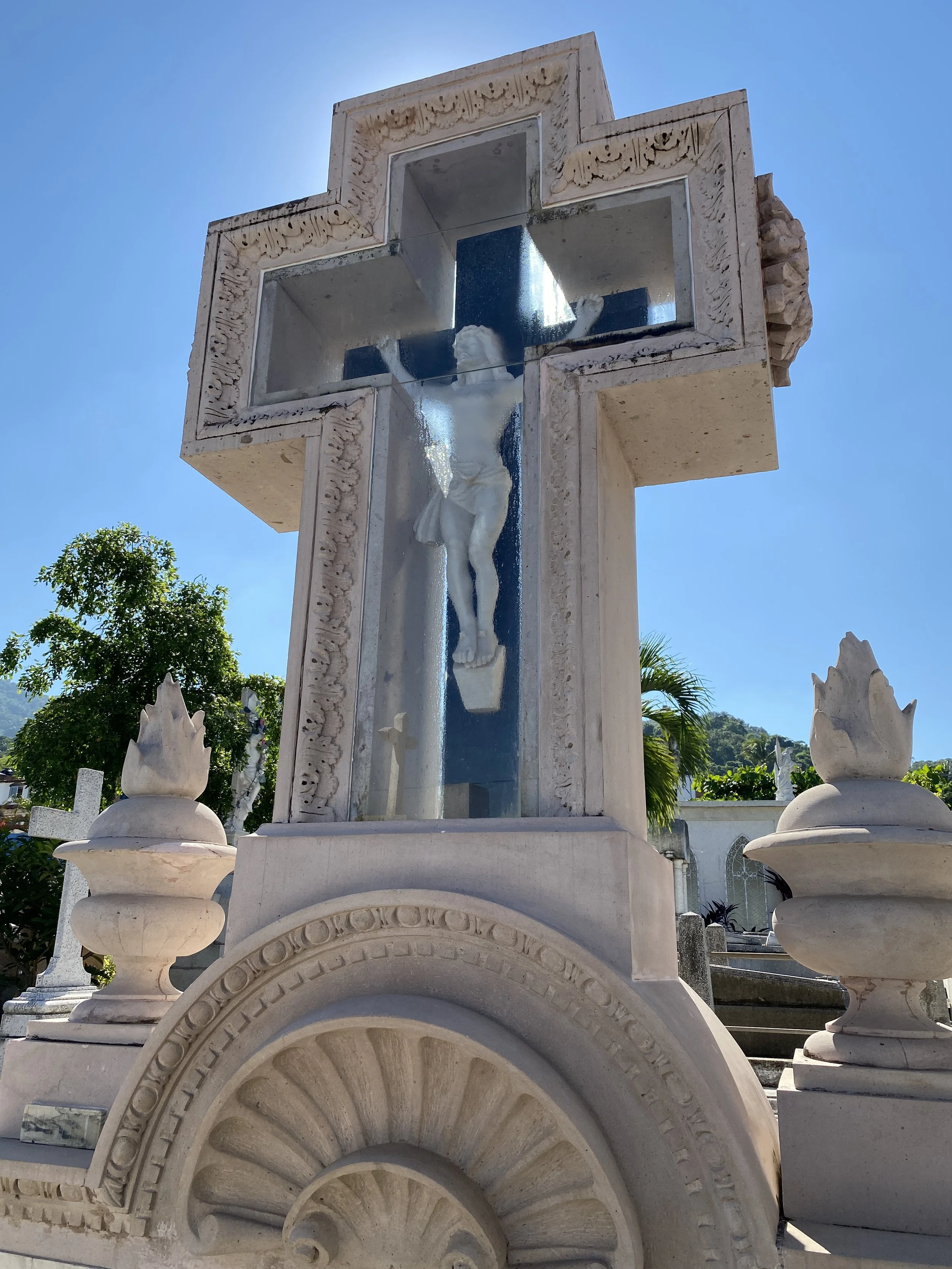
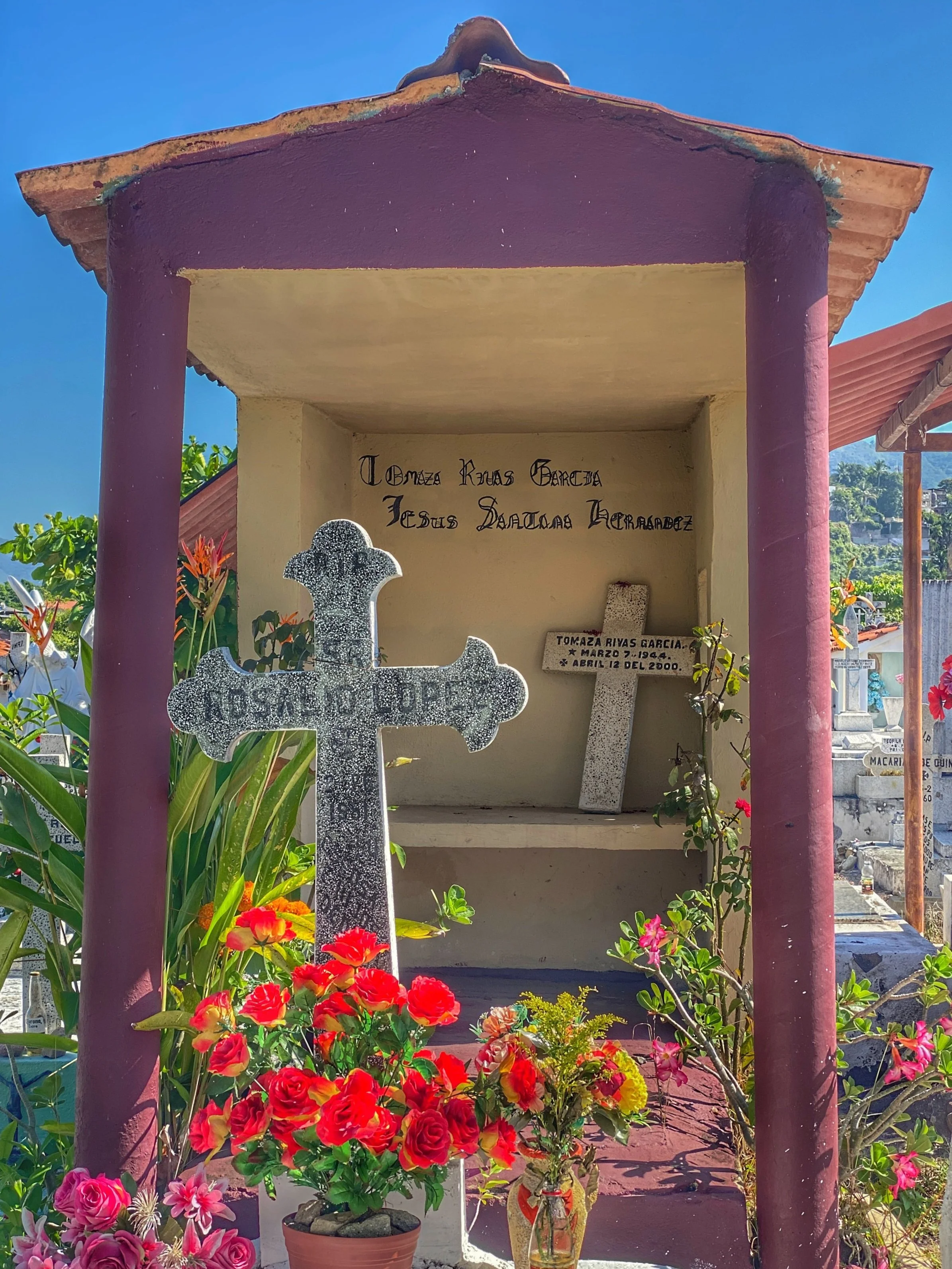
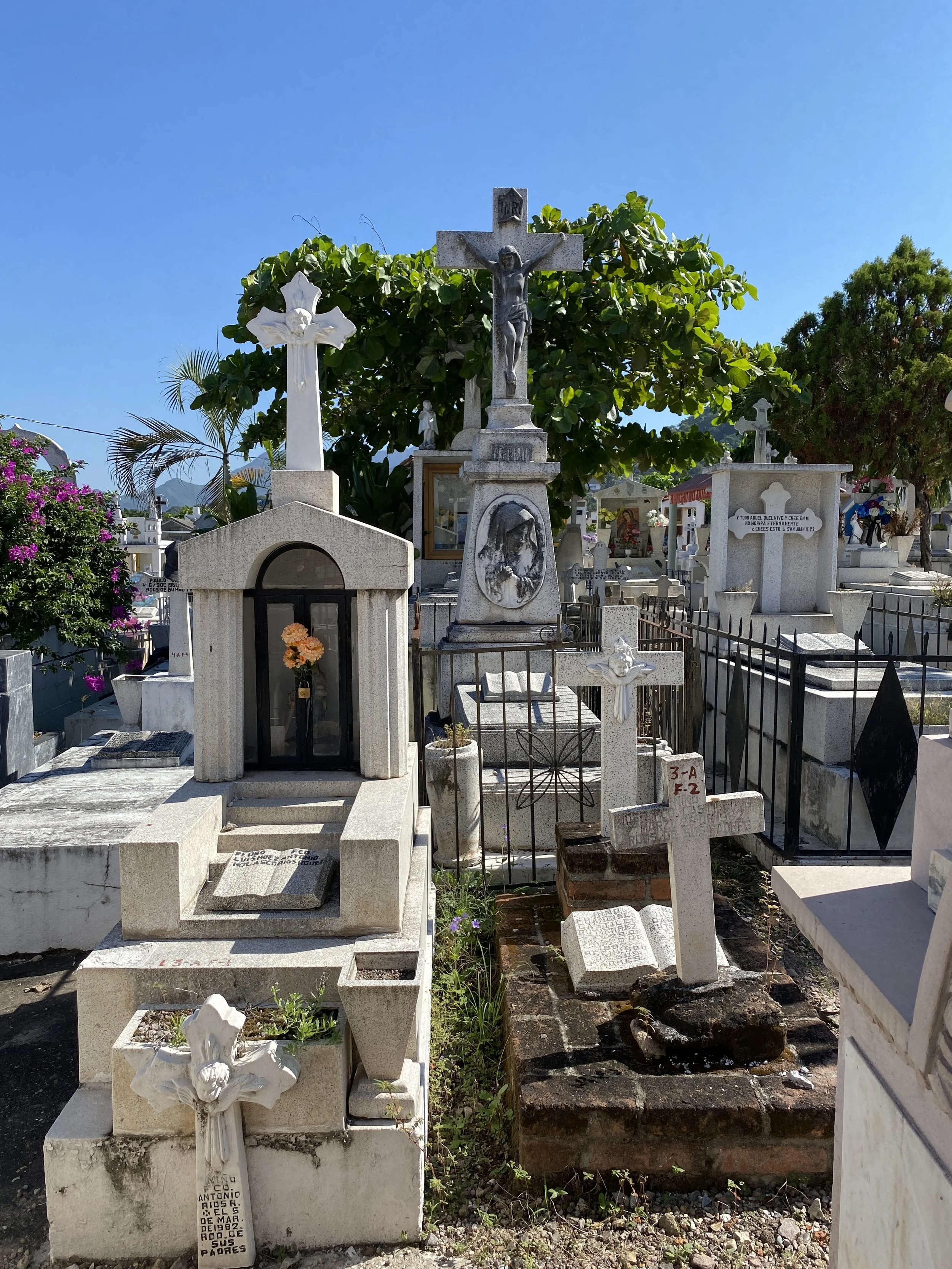
The Panteón 5 de Diciembre: Puerto Vallarta’s main cemetery

Official records for the cemetery date back to 1916, when some bodies discovered in Hidalgo Park were interred in the Pantheon 5th of December — named for the PV neighborhood it’s located in. 

What’s so special about that date? Locals honor December 5, as it was on that day in 1929 that the Puerto Vallarta Ejido was formed. This collective offered land for local farmers to lease — the government appropriated 2,808 hectares from the Union en Cuale silver mining company in a show of egalitarianism after the Mexican Revolution.

On dark nights, the ghost of a woman can be seen making the trek from Hidalgo Park to the Panteón 5 de Diciembre.
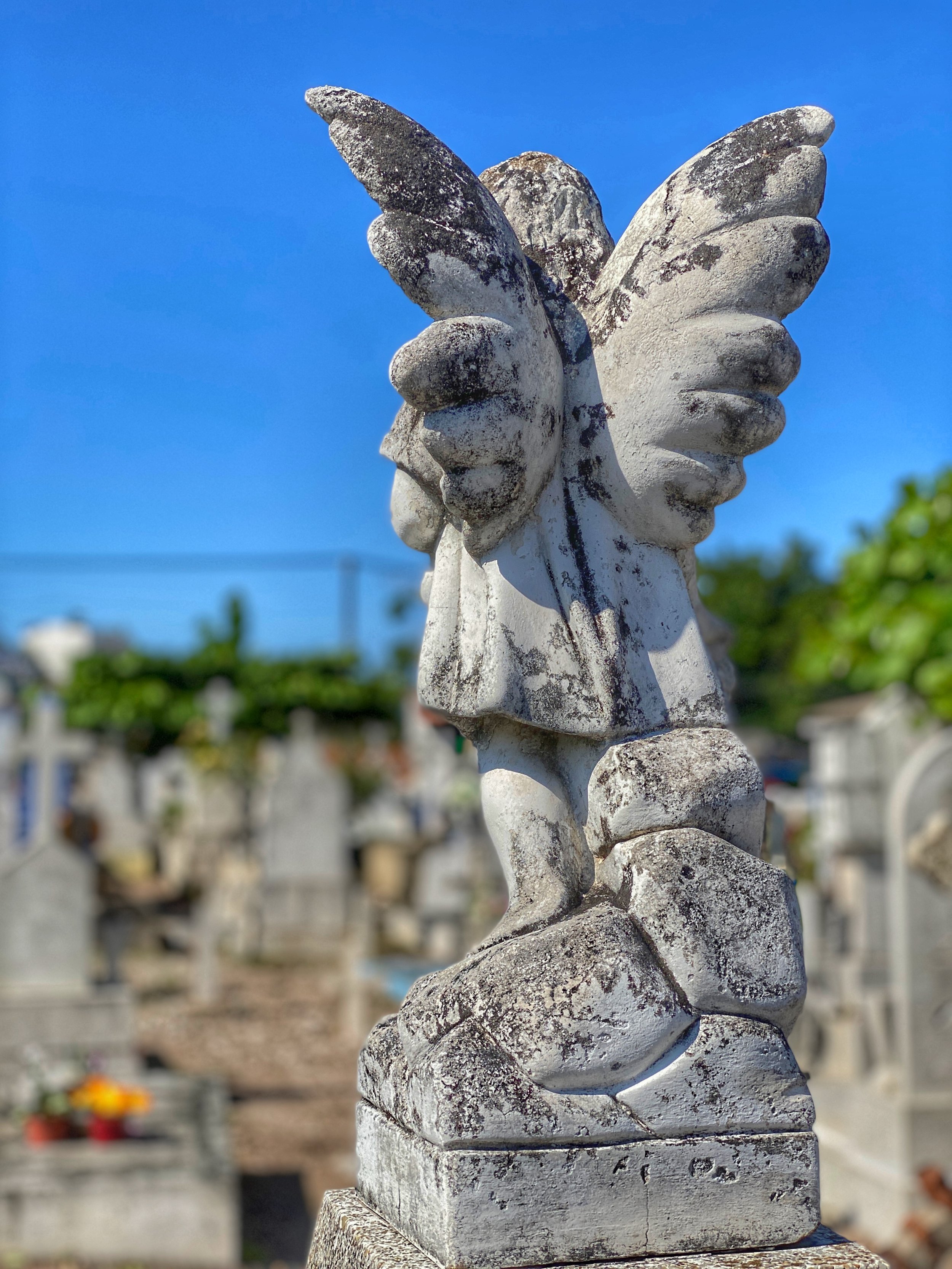
Back of stone cherub at cemetery

Look homeward, angel: A woman’s ghost visits her husband’s grave after their remains were separated.

The Ghost of Hidalgo Park

As you can imagine, the transfer of the remains wasn’t foolproof. Some of the bones are said to remain at the old site. 

On dark nights, Vallartenses (as locals are called) say that a woman can be seen making the trek from the old burial site to the Panteón 5 de Diciembre. She must get tired, for cab drivers have reported her requesting a ride — with the dead giveaway that she’s actually levitating above the ground! 

One taxi driver, during a storm in the early 1960s, picked up the woman, noting that she smelled of roses. She wore a black dress with white circles that made him think of eyes watching him. 

The cabbie kept asking if the young woman was married, and she eventually acknowledged that she was. What the driver didn’t know at the time was that the couple were dead and had once been buried together. But while the husband’s remains had been relocated to Panteón 5 de Diciembre, the wife’s were left behind at Hidalgo Park. 

“I’ve come to comfort him,” the passenger said. A flash of lightning illuminated the sky — and when the taxi driver looked into his rearview mirror, the backseat was empty. 

But then the woman spoke again, talking of the painful separation from her husband. The cabbie saw her floating over the sidewalk and through the closed gate to the cemetery. 

Inside the taxi, the smell of roses turned to the stench of decay. 

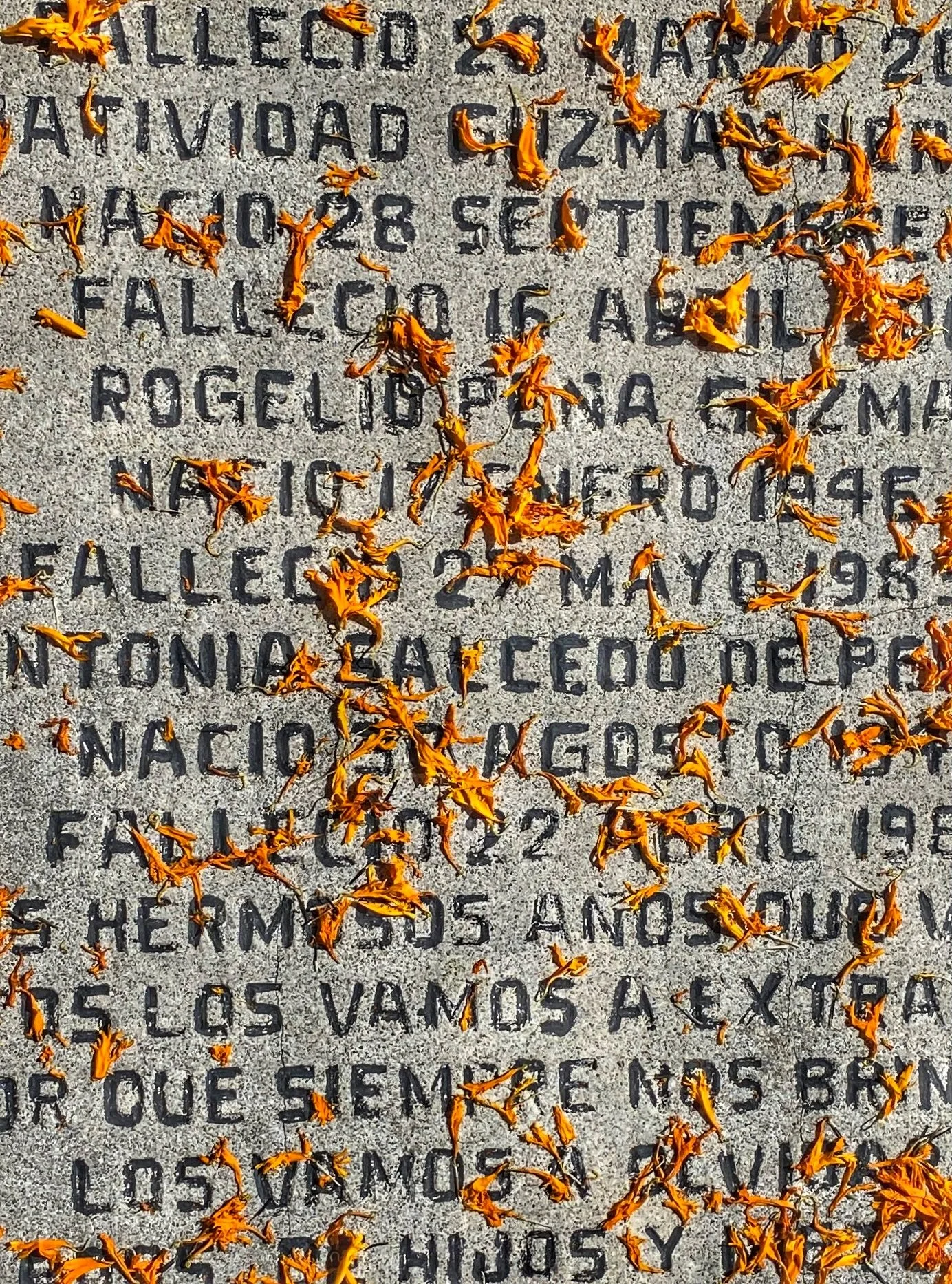
Tombstone with writing and marigold petals

Dried marigold petals on a tombstone

A Visit for Día de los Muertos 

Duke and I visited on November 1. We hoped to see families placing bright orange marigolds, candles, photos, food items and cigarettes on the graves to lead their loved ones back from the afterlife. Instead, we only saw a couple of cans of beer left out, and a few families cleaning some of the gravesites. 

Perhaps the lack of activity was due to the fact that Day of the Dead really kicks into gear the next day. Plus, even though it was fall, the midday sun blazed down upon us scorchingly, and we tried to keep to the shade as much as possible. 

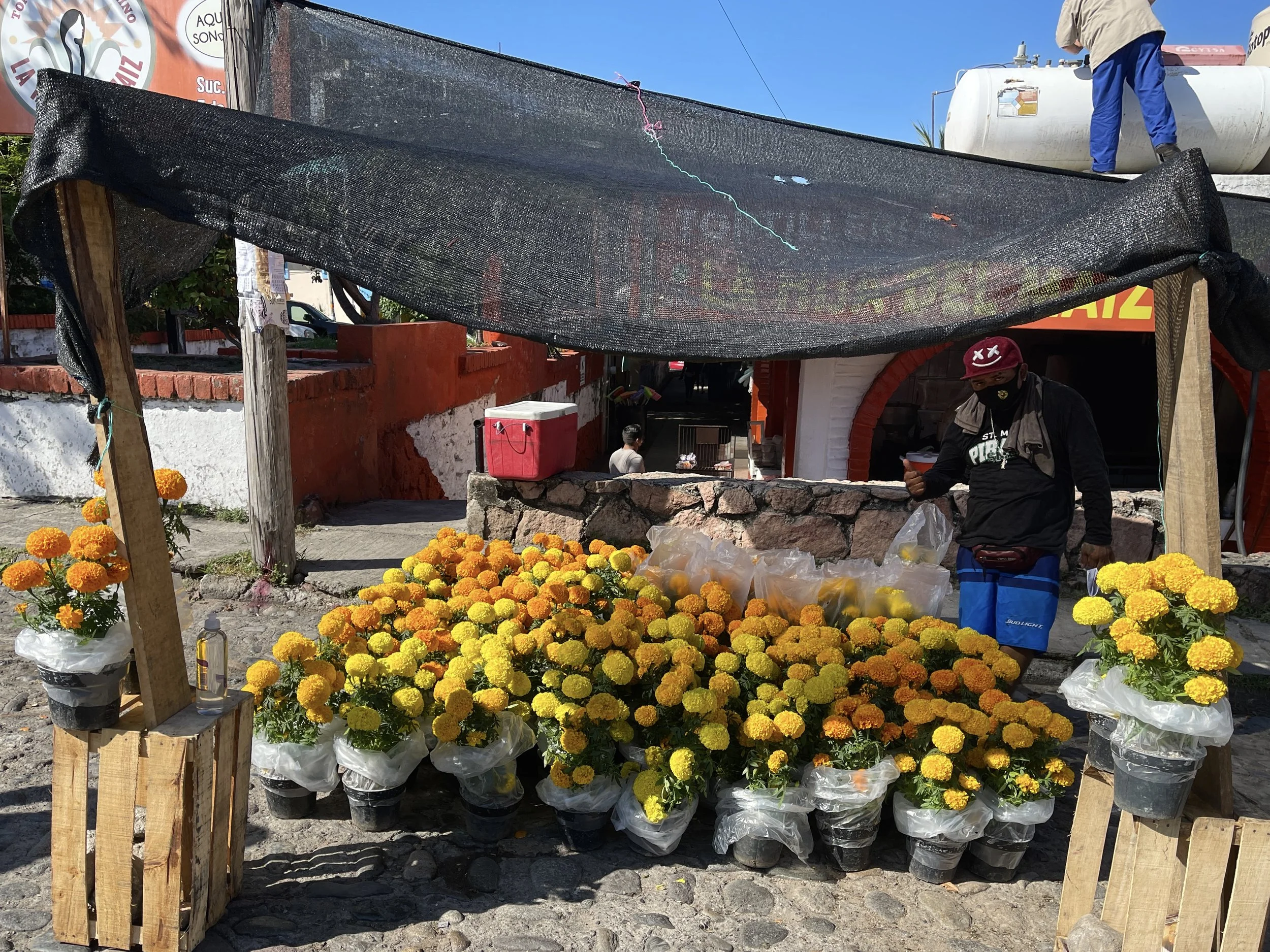
Flower stall in front of the Panteon 5 de Diciembre

A vendor sells marigolds outside the cemetery — the flower is especially popular around the Day of the Dead.

La Muerte Está Viva Parade

I was bummed to discover that we were one stinking day early on our visit. On November 2, a parade called La Muerte Está Viva (Death Is Alive) progresses from the cemetery to the Plaza Lázaro Cárdena, where a folk art festival is held. 

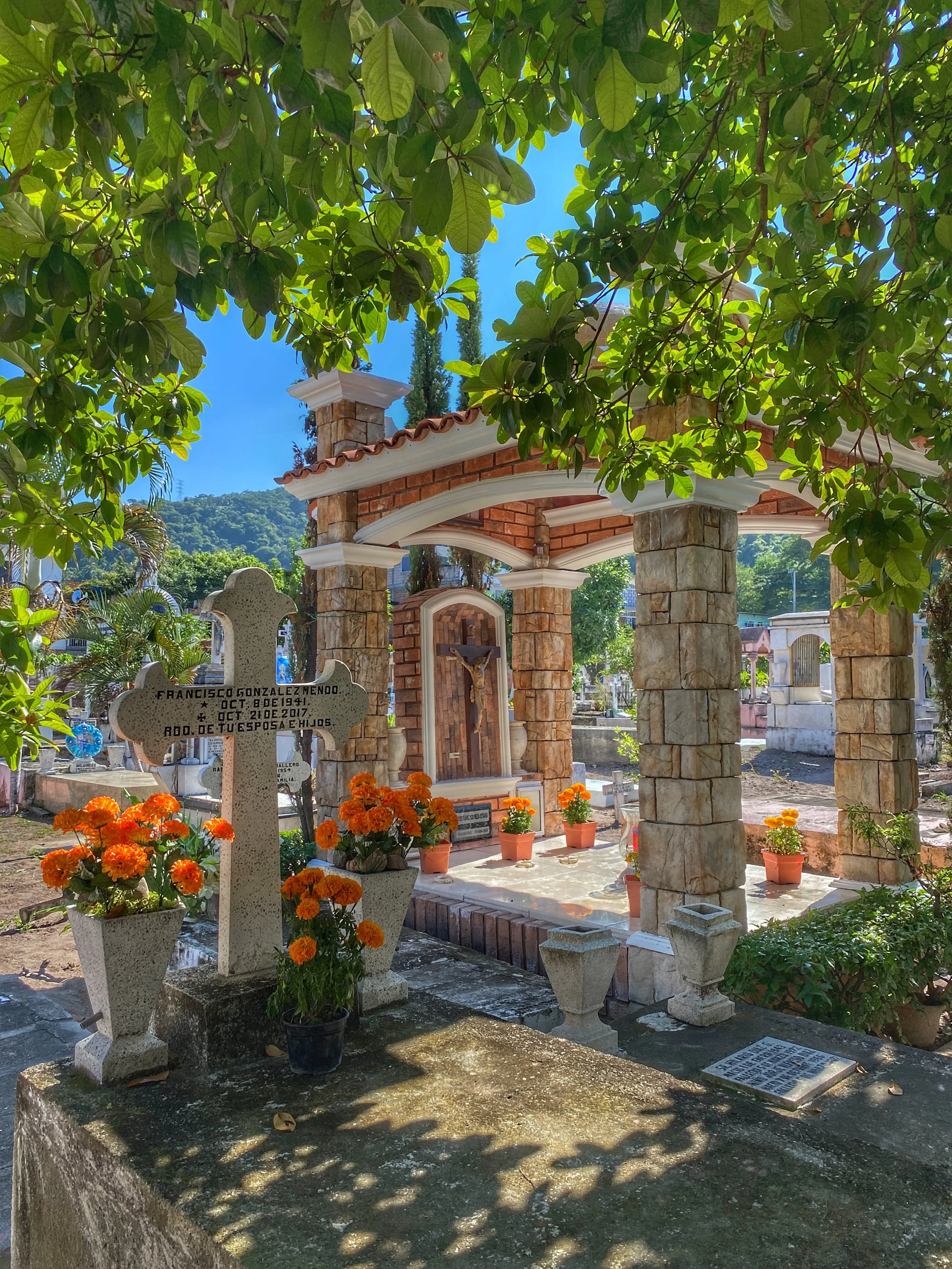
Elaborate stone grave with marigolds at Pantheon 5th of December

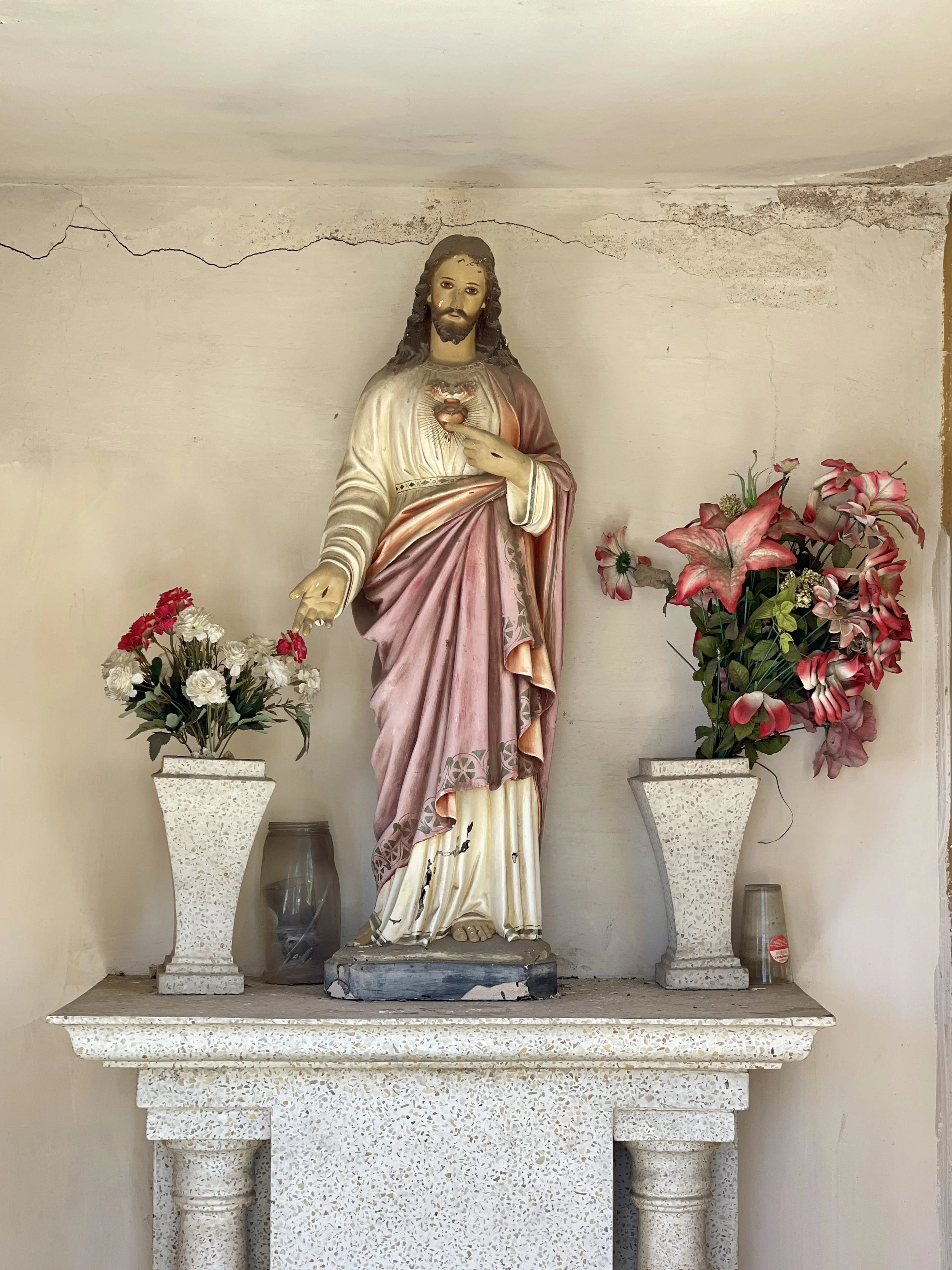
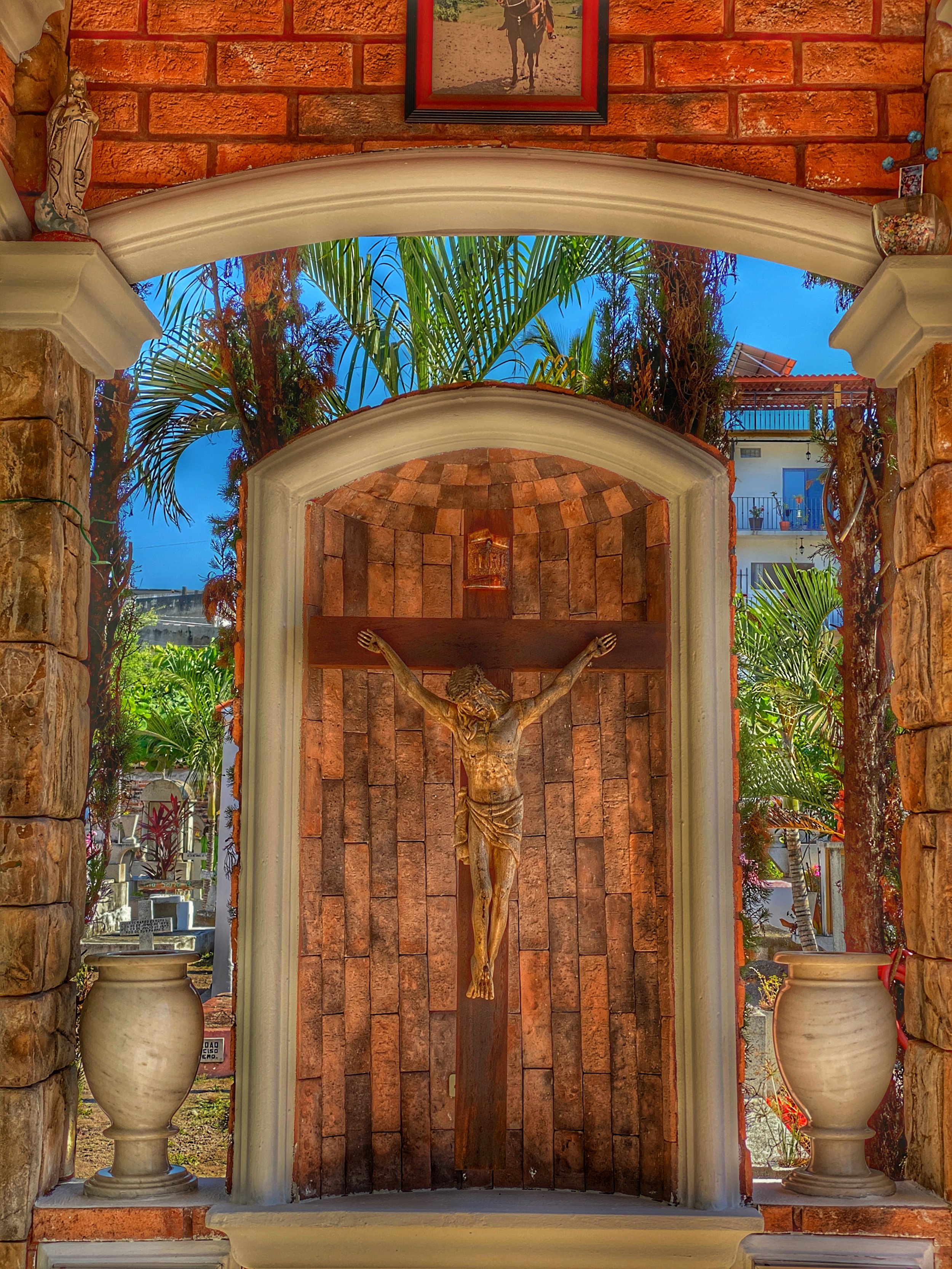
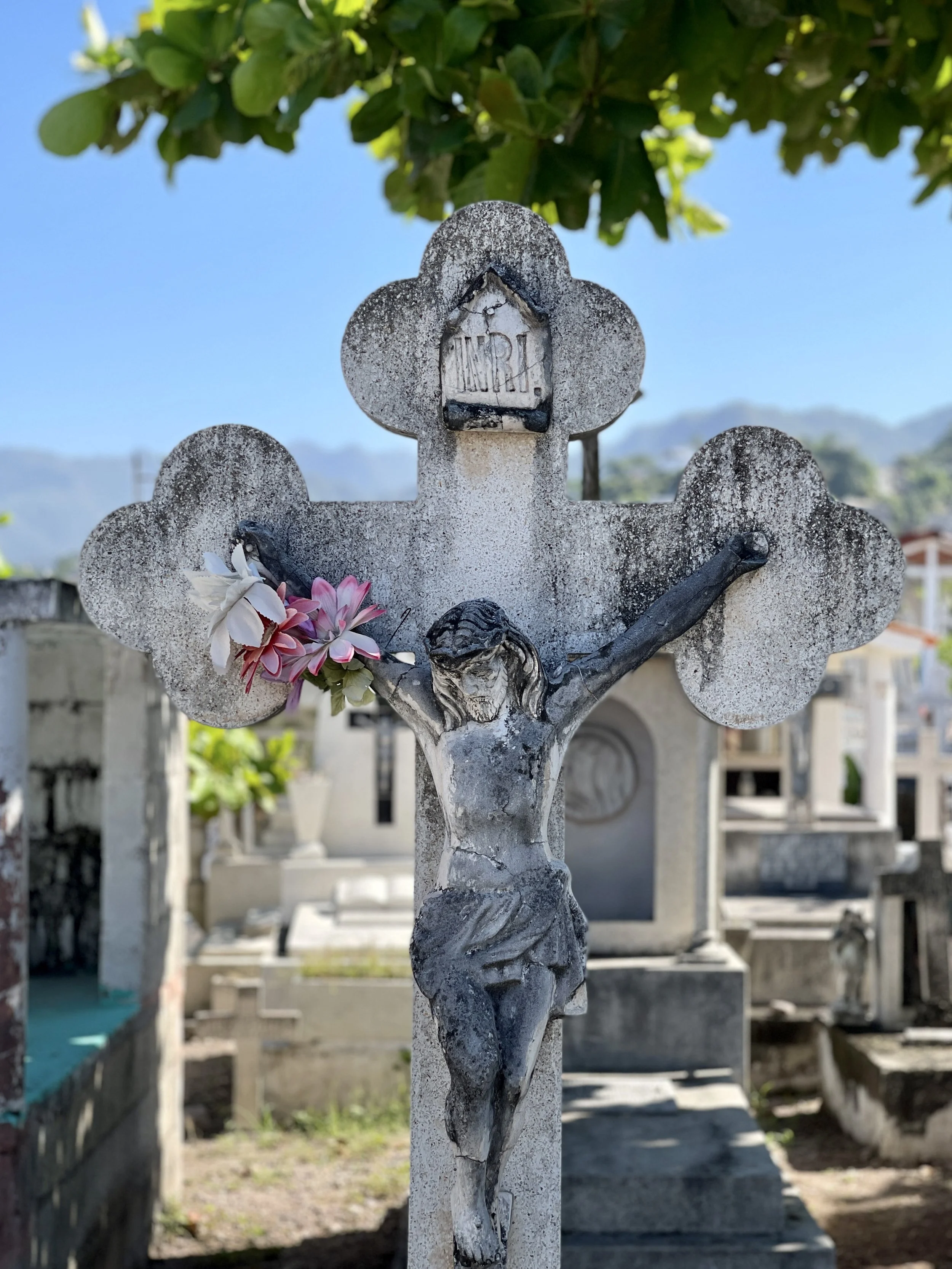
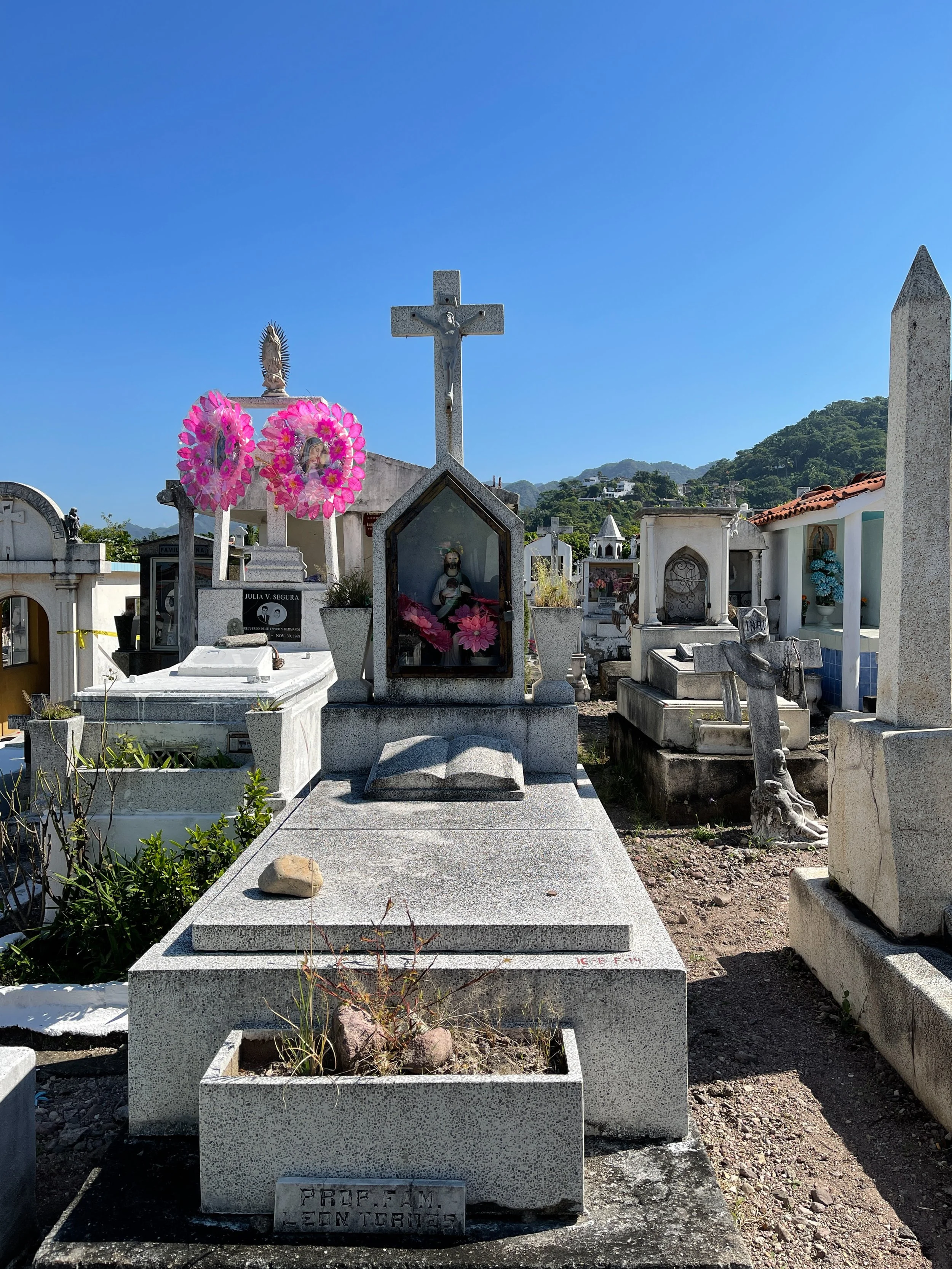
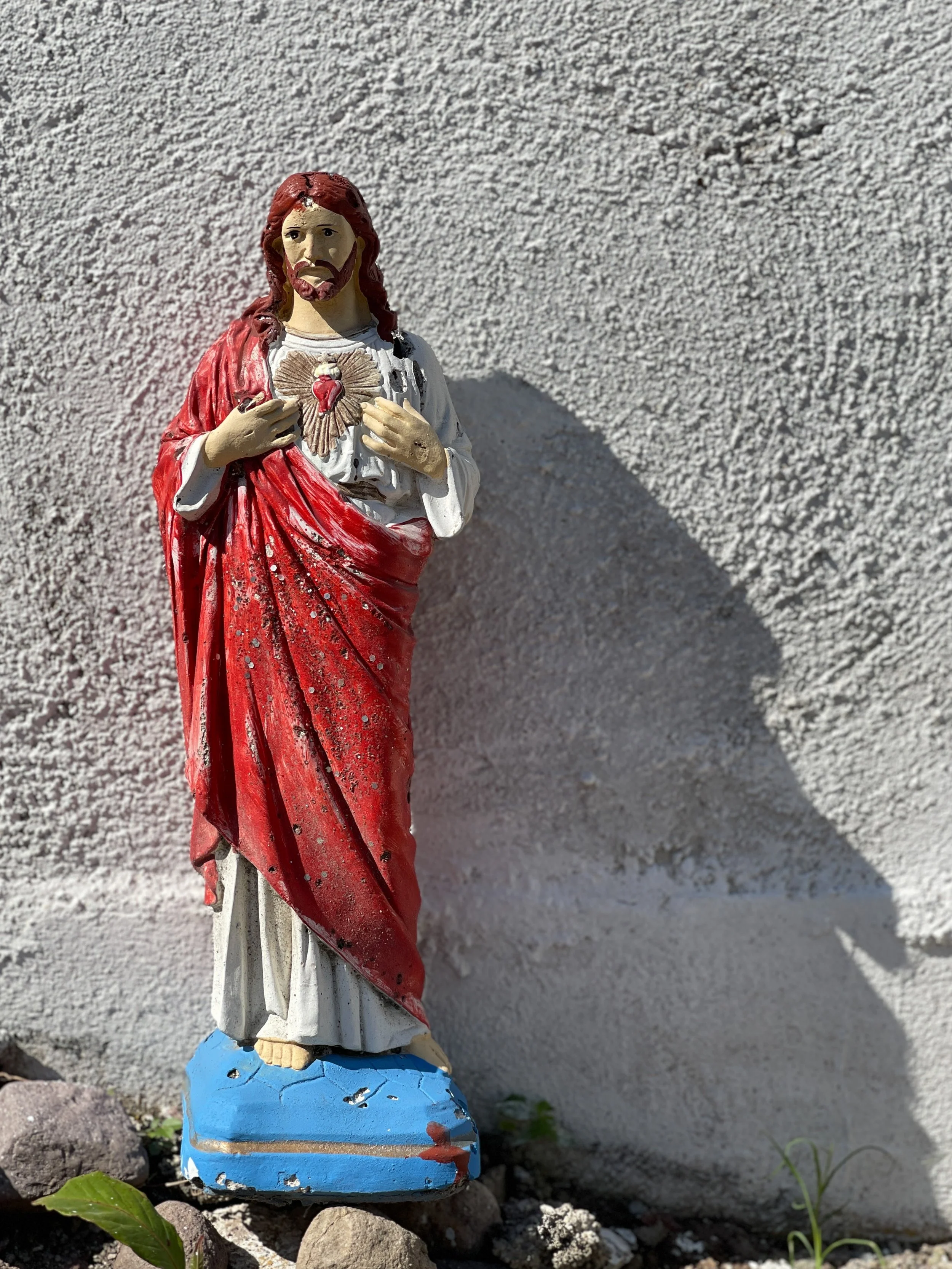
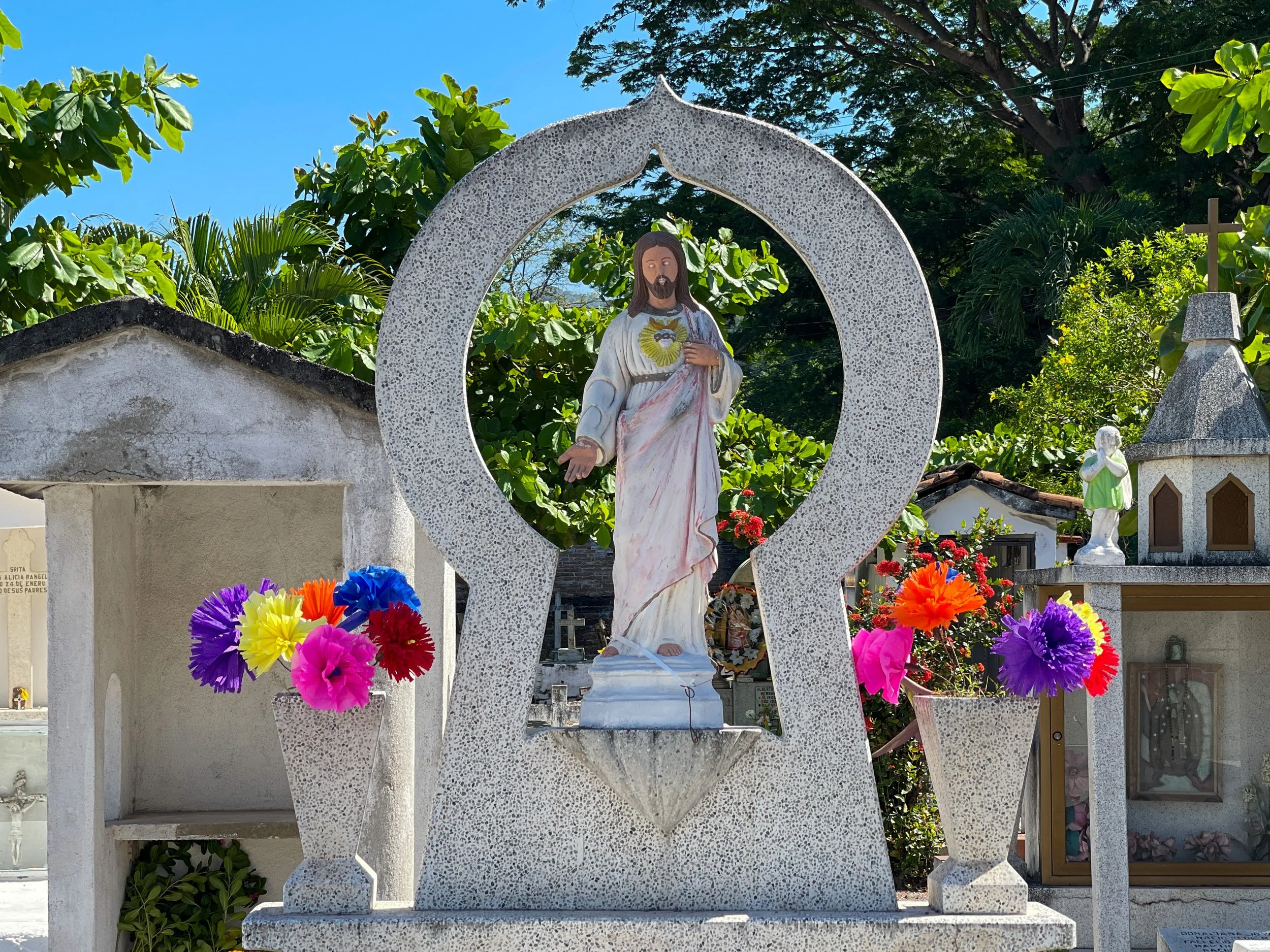
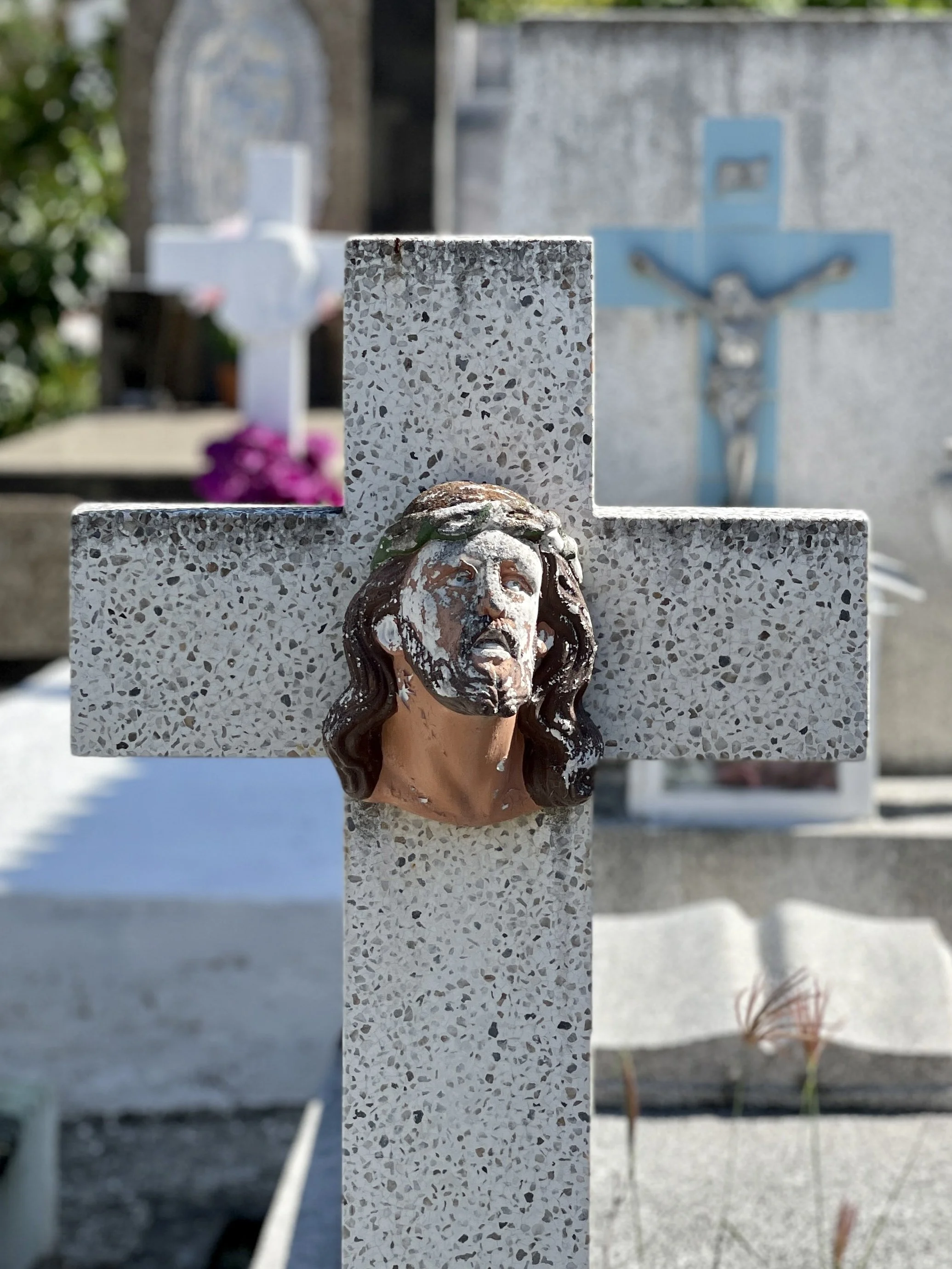
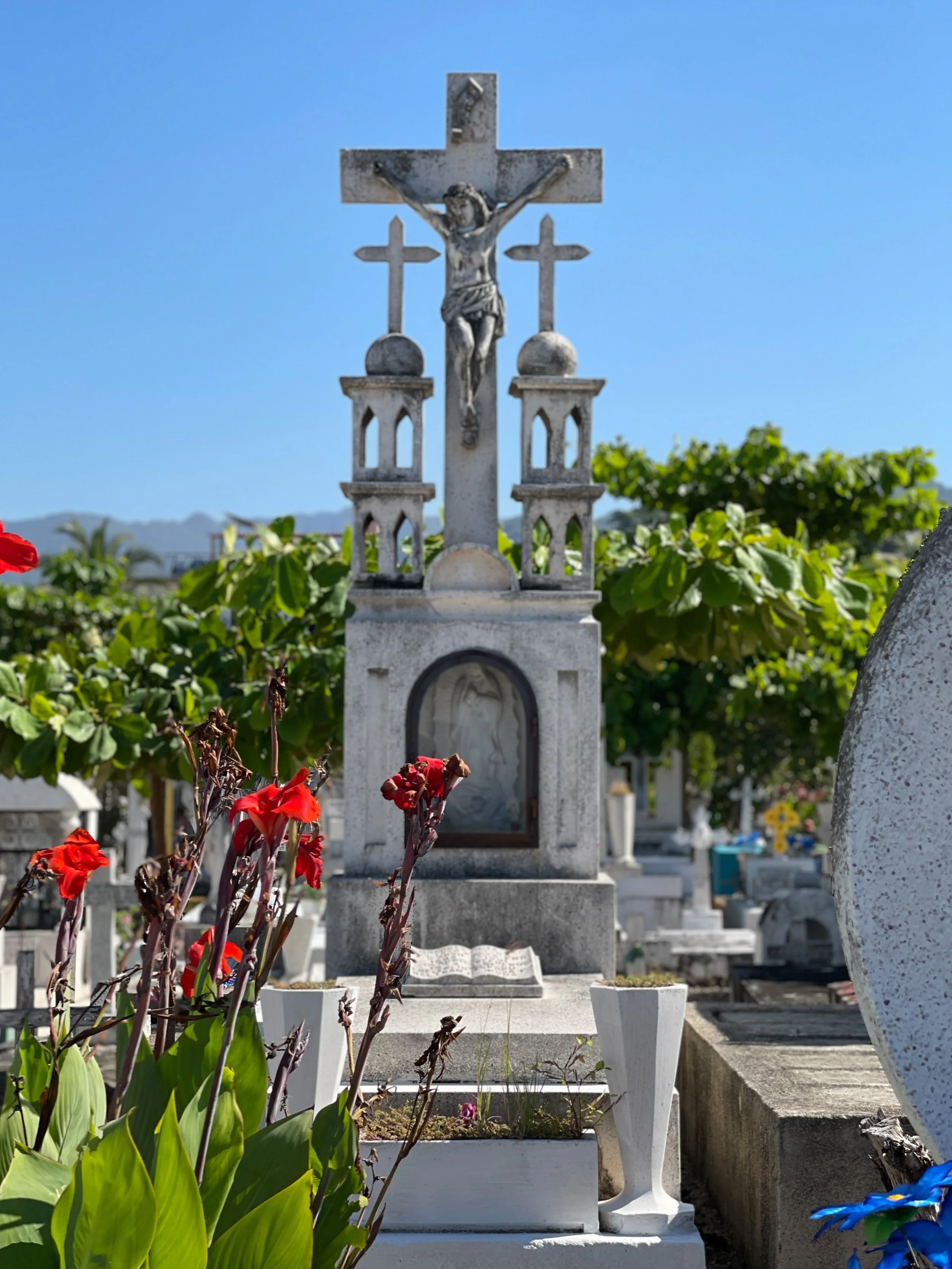
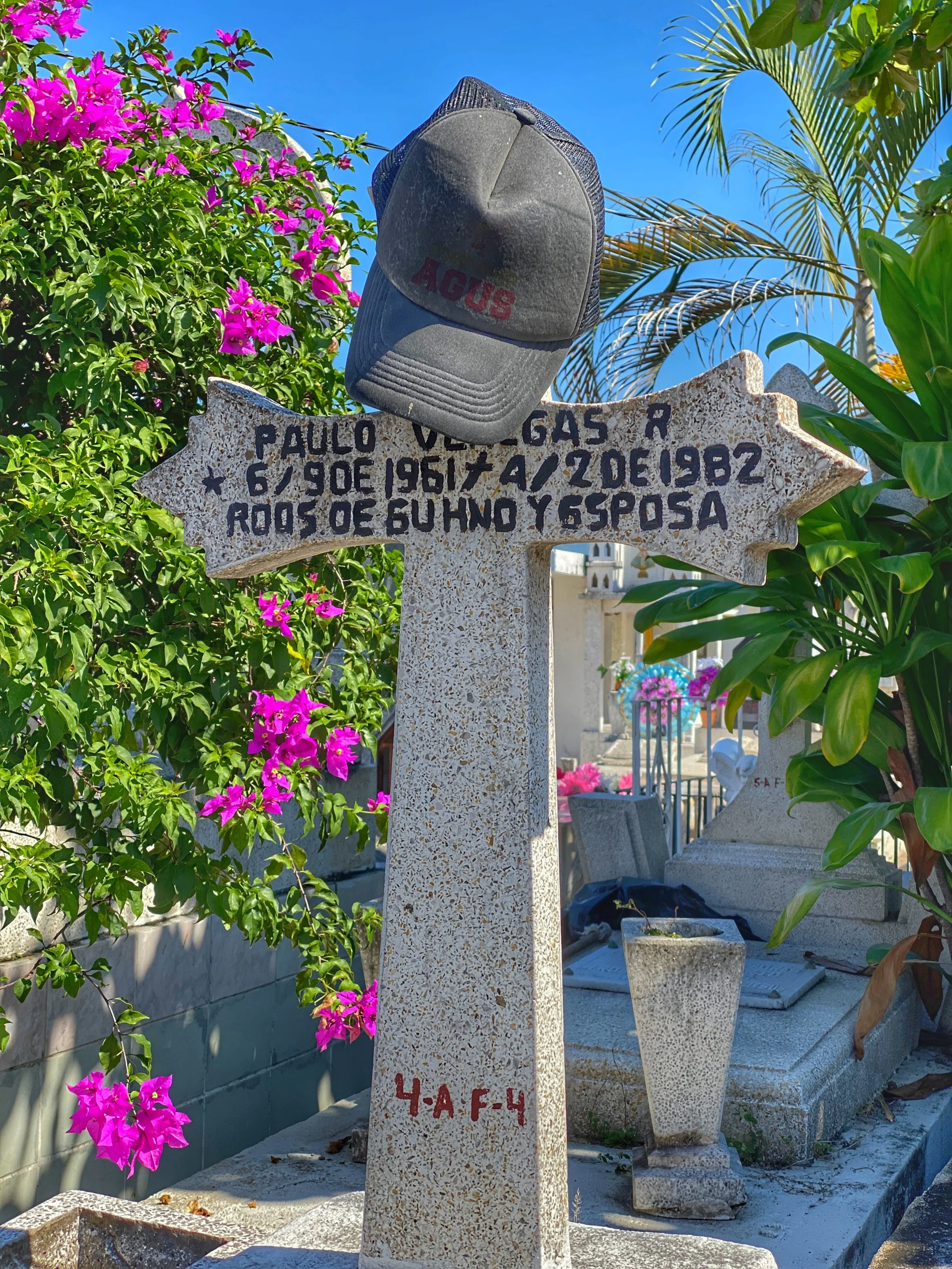
The Pantheon 5th of December has everything from gorgeous gravesites like this one to simple crosses with hand-painted Jesus heads.

If you find cemeteries as intriguing as Duke and I do, the Pantheon 5th of December is worth a visit. Just keep an eye out for a woman in a black dress whose feet don’t quite touch the ground. –Wally

Panteón 5 de Diciembre
Brasilia 715
5 de Diciembre
48350 Puerto Vallarta
Jalisco
Mexico


Where’s the Best Breakfast in Puerto Vallarta?

Three of our favorite brunch restaurants — plus the best coffee in PV.

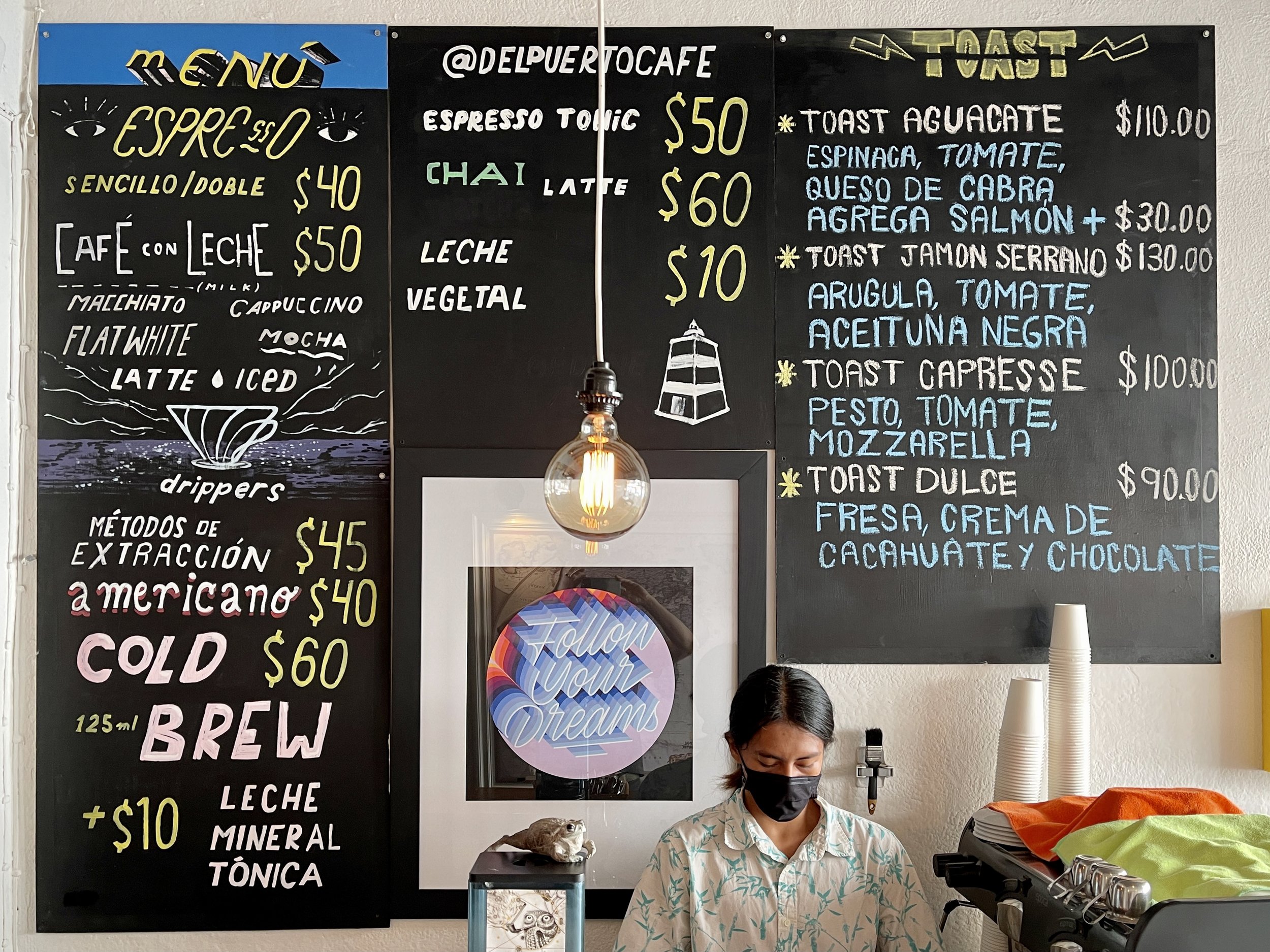
The offerings at our fave coffeeshop in PV, Puerto Café

Part of the fun of a trip for me is the research before. This includes looking for potential places to eat, especially breakfast. You know what they say: Breakfast is the most important meal of the day. 

Read on to find out our top recommendations for Puerto Vallarta, Mexico. 

We jokingly lamented that we missed the Naked Pool Party, which had taken place a couple of days before. 
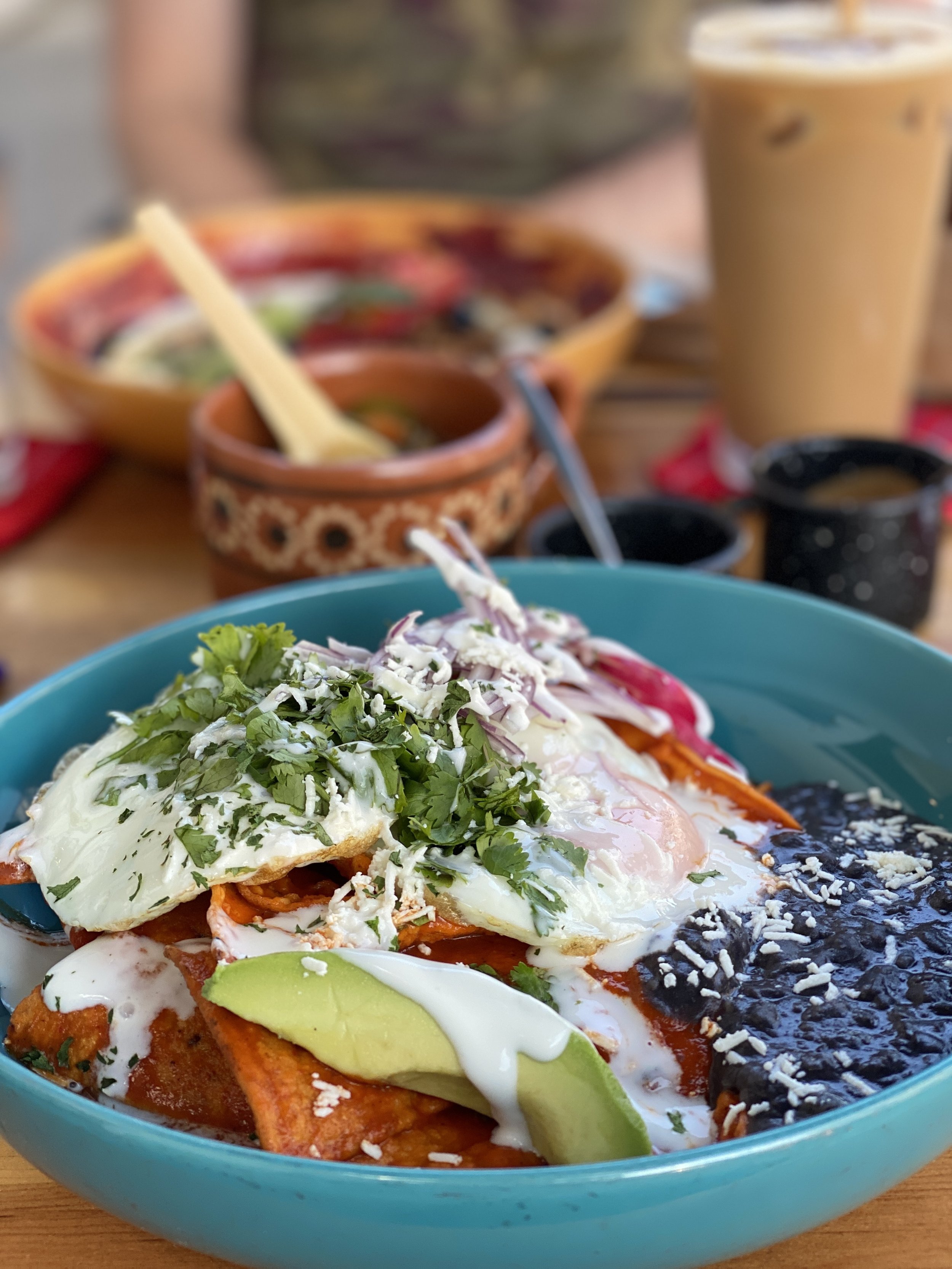
Chilaquiles at Calmate Cafe in Puerto Vallarta

Relax and enjoy a delicious and healthy(ish) breakfast at Cálmate Café. Wally got the chilaquiles.

1. Cálmate Café 

We ate here twice twice during our short stay in Puerto Vallarta, once for breakfast and once for lunch. Both times the food was delicious. Their menu offers a variety of healthy meal options as well as coffee, freshly squeezed juices and smoothies. 

We liked that it was outside of the main tourist tract and had a relaxed neighborhood vibe. The first time we had breakfast here, we arrived shortly after the streets had been washed. The cobblestones were still glistening in the sunlight, and we watched the morning unfold as we ate. The café lives up to its name, which can be translated as “take it easy.”

I ordered the eye- and mouth-pleasing yogurt and granola with fresh fruit and Wally ordered one of his go-tos: chilaquiles.

The outdoor seating area is small but cozy, and the servers were friendly. Plus, we got to pet a seemingly endless parade of dogs. 

Exterior of Calmate Cafe with server

Why sit in the crowded restaurant when you can dine on the sidewalk patio?

Cálmete Café
Calle Honduras 218
5 de Diciembre 
48350 Puerto Vallarta
 

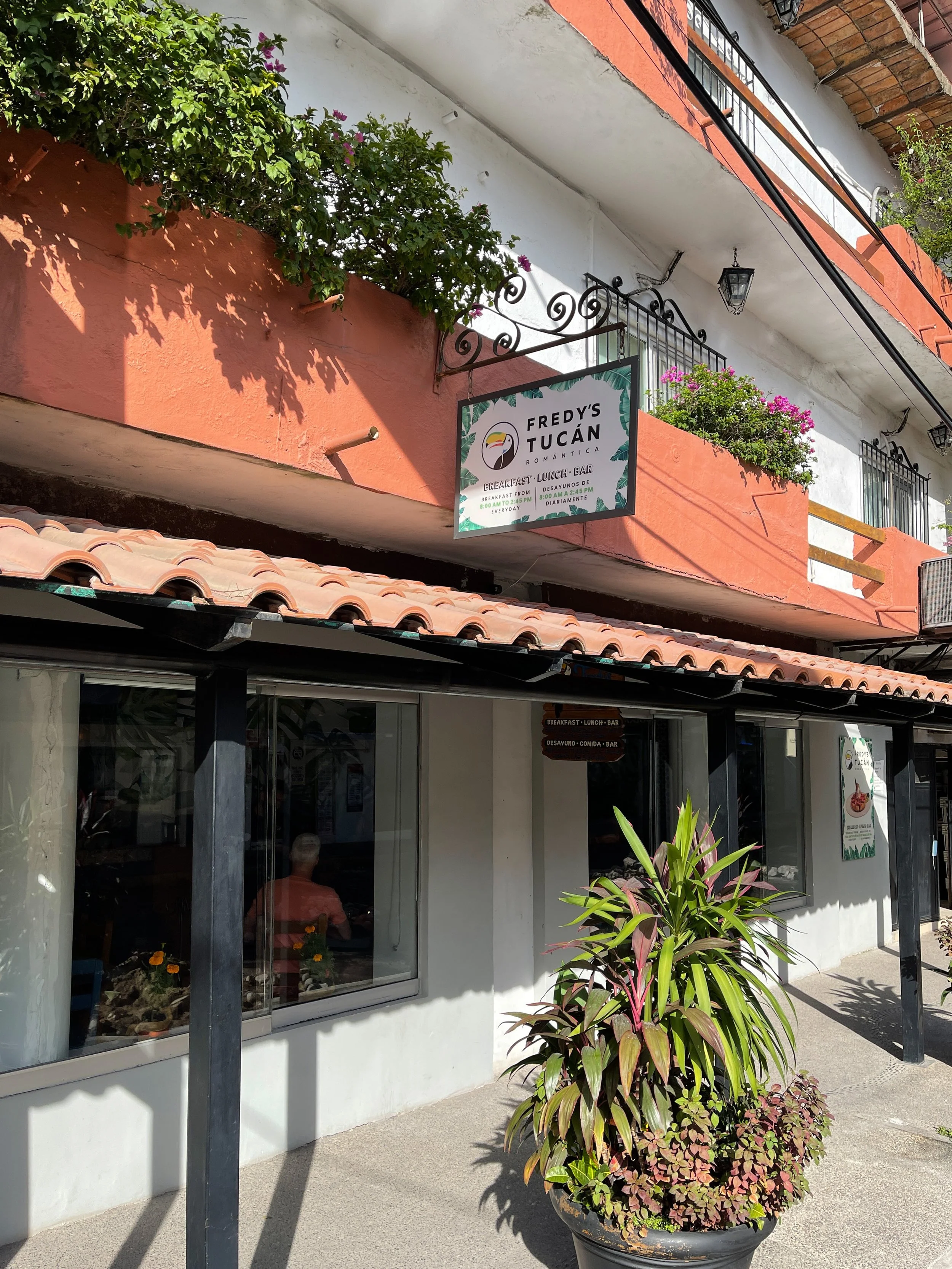
Exterior of Fredy's Tucan restaurant in Puerto Vallarta

Fredy’s Tucán, a breakfast staple in the Zona Romántica

2. Fredy’s Tucán

Located on Basilio Badillo in the heart of the Zona Romántica, aka Old Town Puerto Vallarta (aka one of the most gay-friendly areas on the planet), this popular breakfast spot is a well-oiled machine. Fredy’s originally opened in 1983 as an open-air bar and evolved into the restaurant it is today. 

There’s a reason tourists flock here. The servers are attentive, the food is well-priced — and did I mention it’s also delicious? On offer for breakfast are waffles, omelets, pancakes and Mexican dishes like chilaquiles and huevos rancheros. Plus, how can you say no to the charming older man offering you a selection of freshly baked pastries to start your day?

When we left, satisfied and ready to explore, there was a queue outside to get in. Trust us, you won’t leave hungry. 

Fredy’s Tucán
Basilio Badillo 245
Emiliano Zapata
8380 Puerto Vallarta

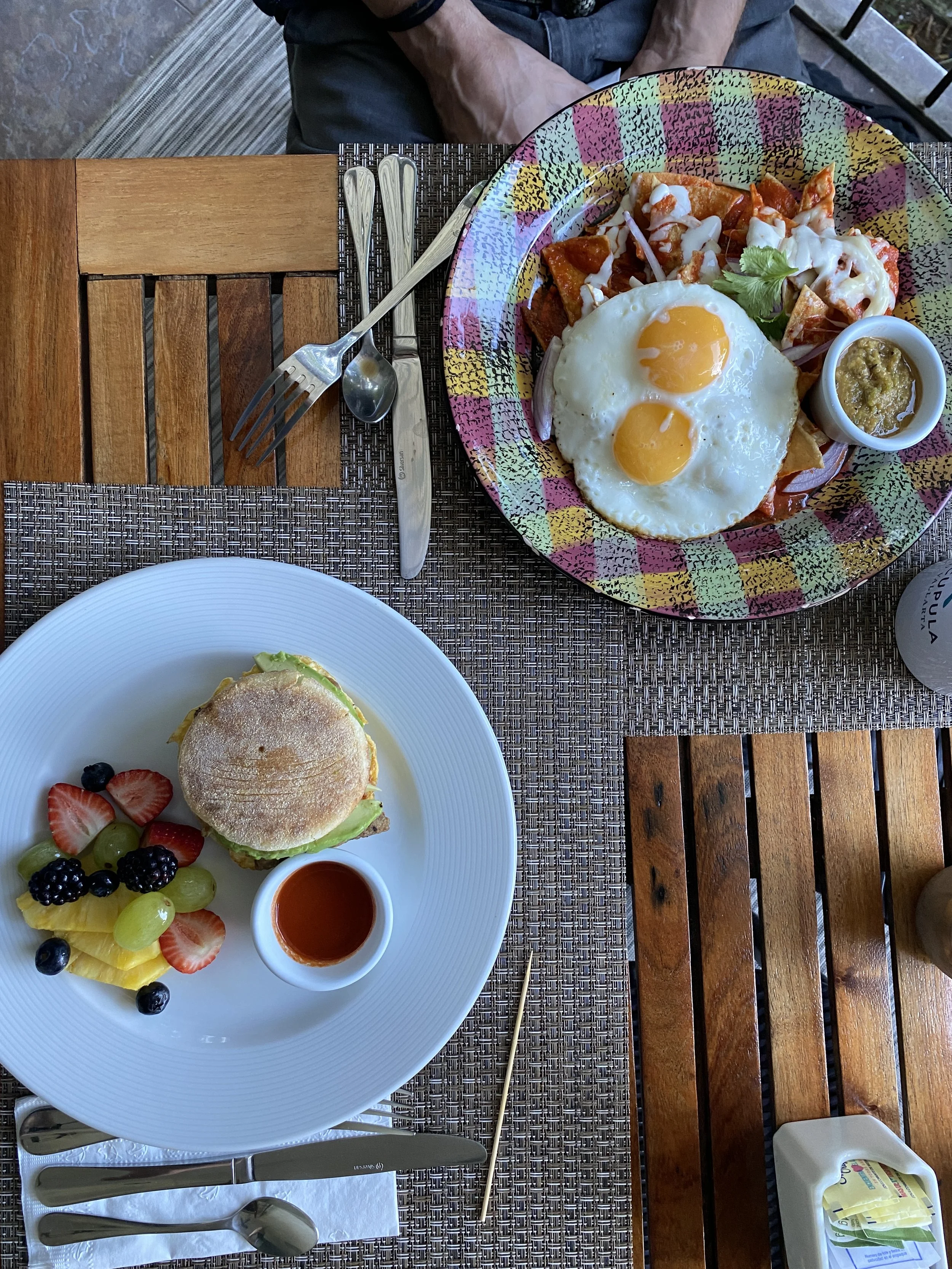
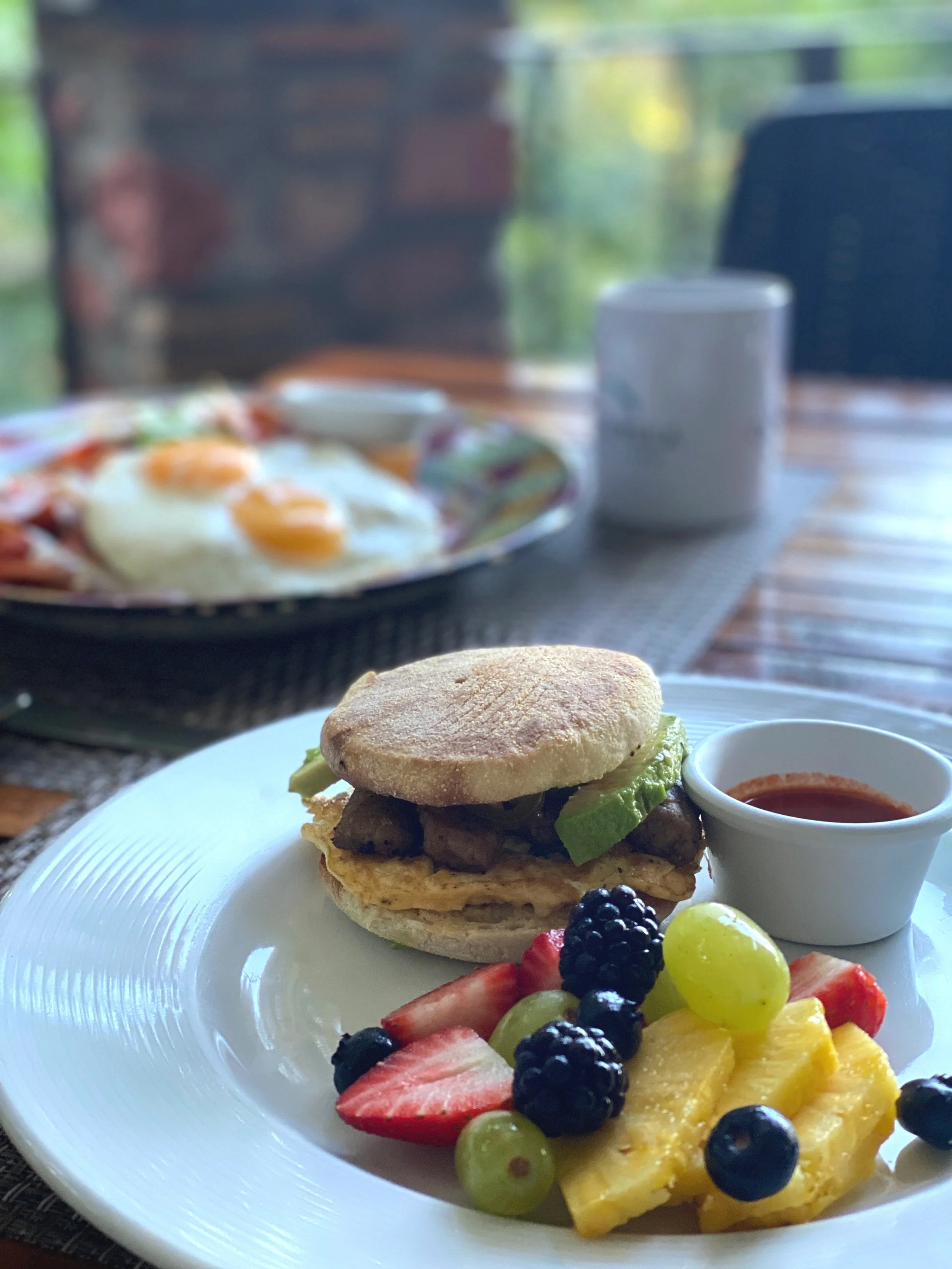
Breakfast sandwich and eggs at Casa Cupola's Bistro

When in doubt, order the breakfast sandwich.

3. Bistro at Casa Cupula

Nestled in the hills among the tropical greenery of the Amapas neighborhood of PV is the gay-owned, LGBTQ- friendly boutique hotel, Casa Cupola and its onsite restaurant, Bistro at Casa Cupola. The lush setting reminded me of our visit to the spectacular Botanical Gardens earlier in the trip. 

It’s a steep climb up Callejón de la Igualdad but certainly worth it. (You could also bypass the hike and catch an Uber or cab there.)

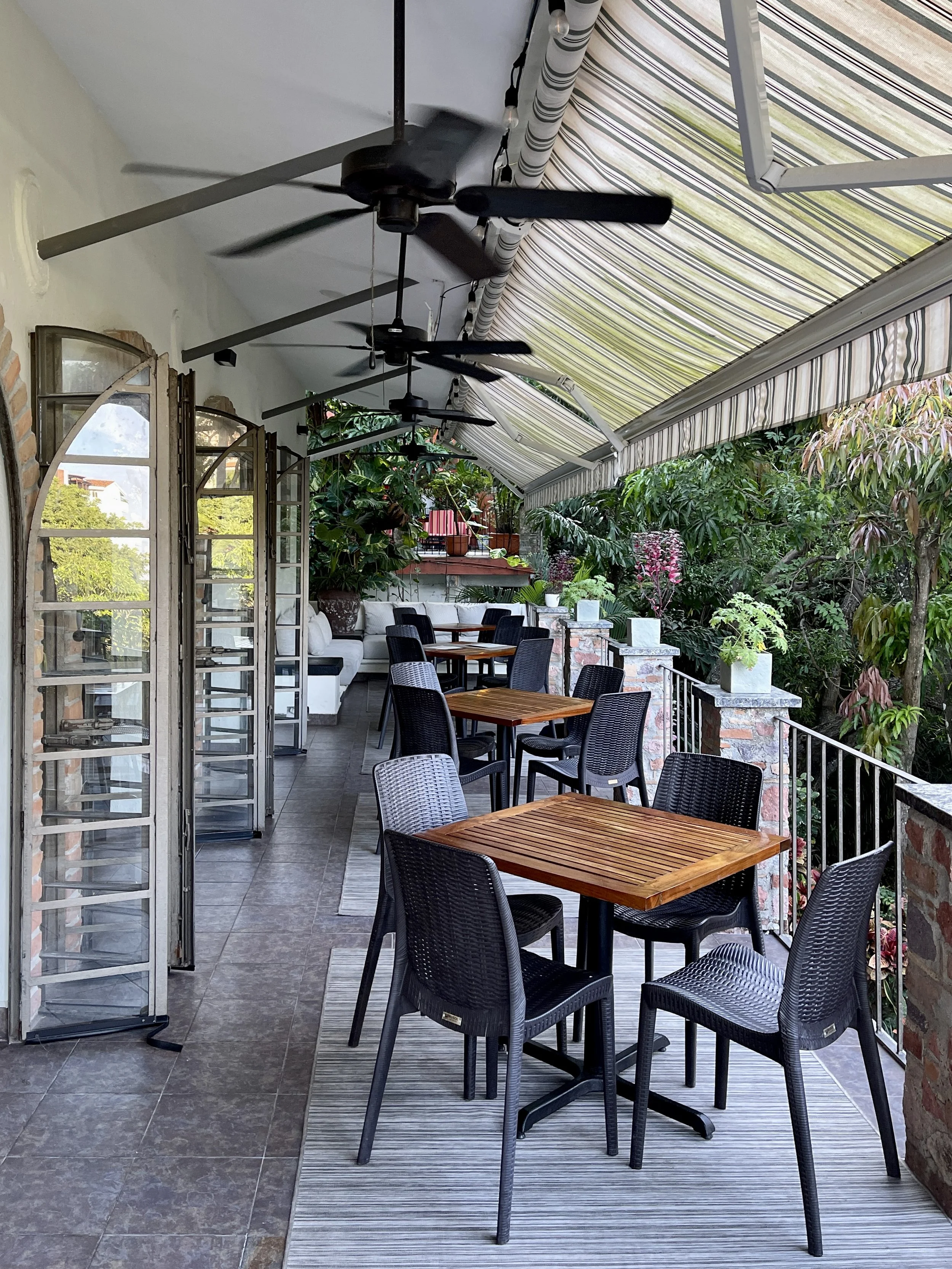
You enter through a separate entrance for the bistro, which is located farther up the road. We arrived shortly after the restaurant opened and were seated on the sun-dappled patio as ceiling fans spun lazily overhead. Our server was attentive and the food delicious. We felt like we were in our very own private hacienda. 

We jokingly lamented that we missed the hotel’s Naked Pool Party, which had taken place a couple of days before. 

A peaceful breakfast on the deck in the hills just outside of PV at Casa Cupola.

Bistro at Casa Cupola
Callejón de la Igualdad 129
Amapas
48398 Puerto Vallarta
 

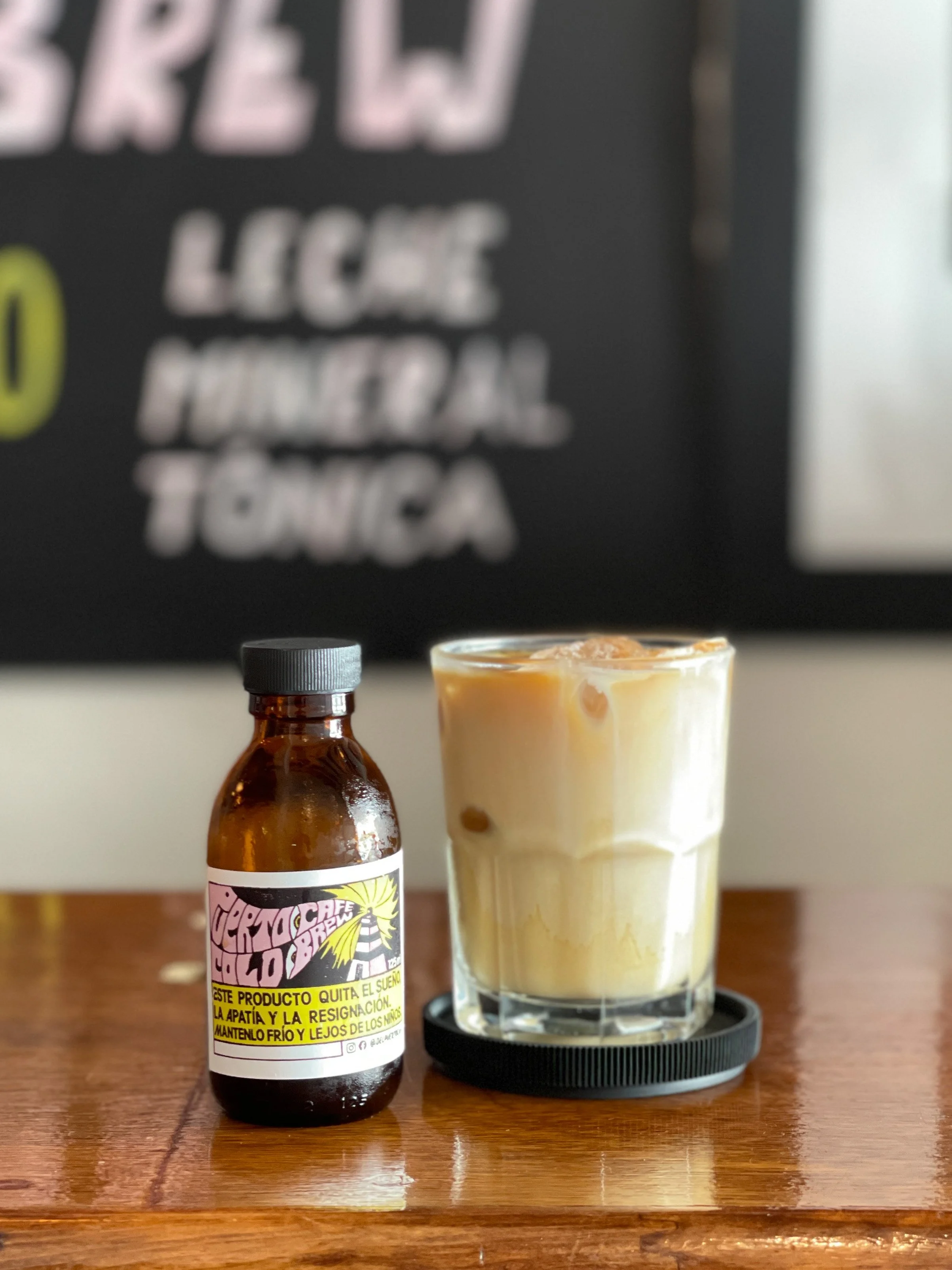
We liked the small medicinal-looking bottles the Puerto Café cold brew comes in so much we took one home.

4. Puerto Café 

Hands down, this was our favorite spot to get our caffeine fix. This hip, cozy coffeeshop serves the best coffee in town. It’s located on Calle Morelos, not far from the seaside Malecón promenade — kitty-corner from the black and white lighthouse they use in their logo. When we were there, someone had scrawled, “Fuck Digital Nomads” on the wall at the front of the space and good music spun on the turntable.

I loved their delicious (and potent) housemade cold brew coffee. Each serving comes in its very own small brown bottle like something a snake oil salesman would peddle. They also make a solid iced latte, which Wally enjoyed.

Part of what makes Puerto Café so special is the coffee they serve. All varieties are by Guadalajara-based Café Estelar, a specialty roaster that proudly works directly with regional producers to offer single-origin Mexican coffee beans. 

Just make sure to get there earlier in the day if you appreciate cold brew, as they produce it in limited batches daily and had run out on one of our visits. –Duke

Man at counter talking to barista at Puerto Cafe

With great local coffee and a cool vibe, Puerto Café is a fun spot to escape the heat and get your caffeine fix.

Puerto Café
Morelos 540
Proyecto Escola
Centro
48300 Puerto Vallarta

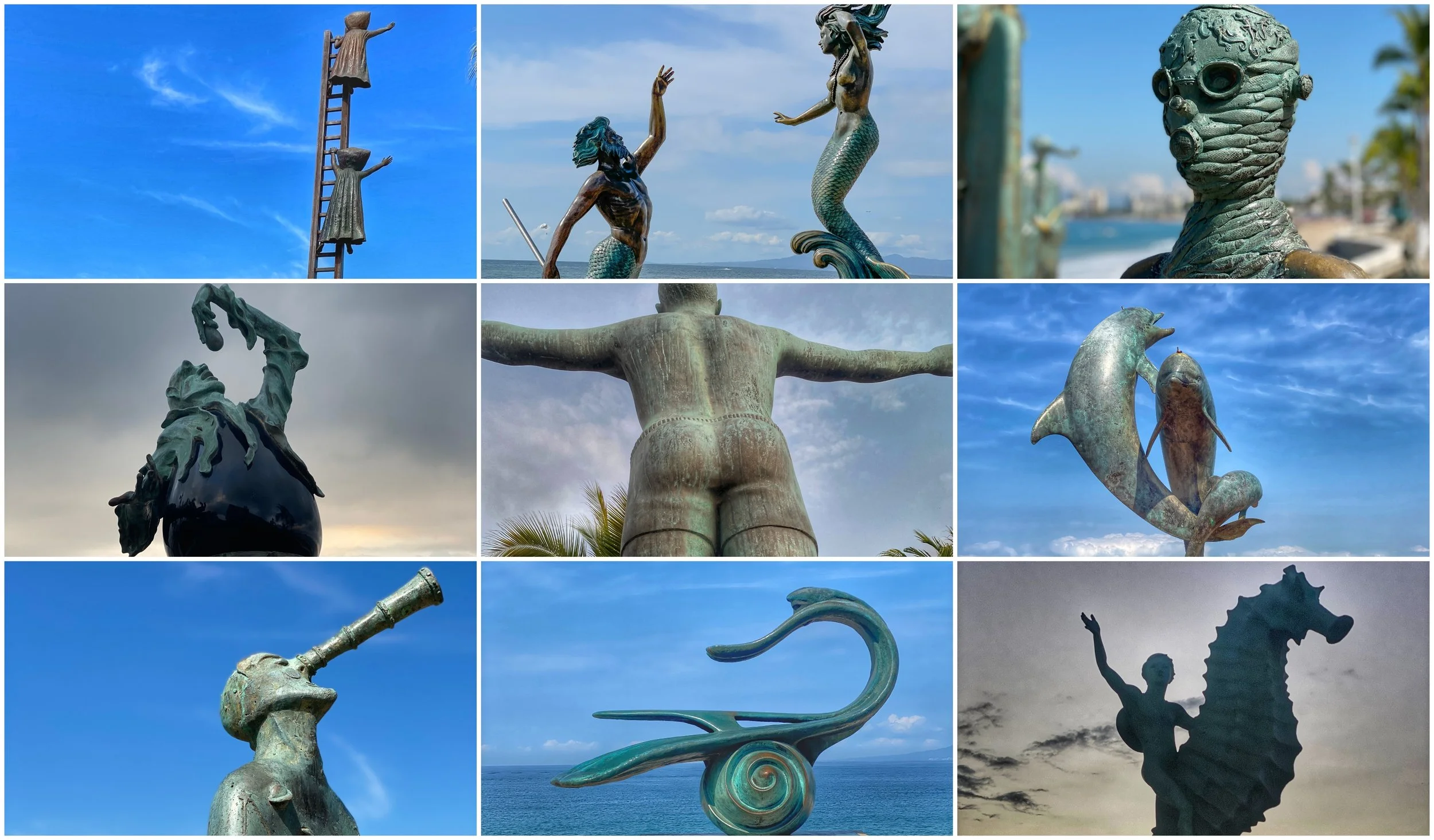
A Tour of the Malecón Sculptures in Puerto Vallarta

You might recognize Caballero del Mar (The Boy on the Seahorse), but here’s a cheat sheet for the other statues along the PV boardwalk.

Man on chair of La Rotunda del Mar in Puerto Vallarta

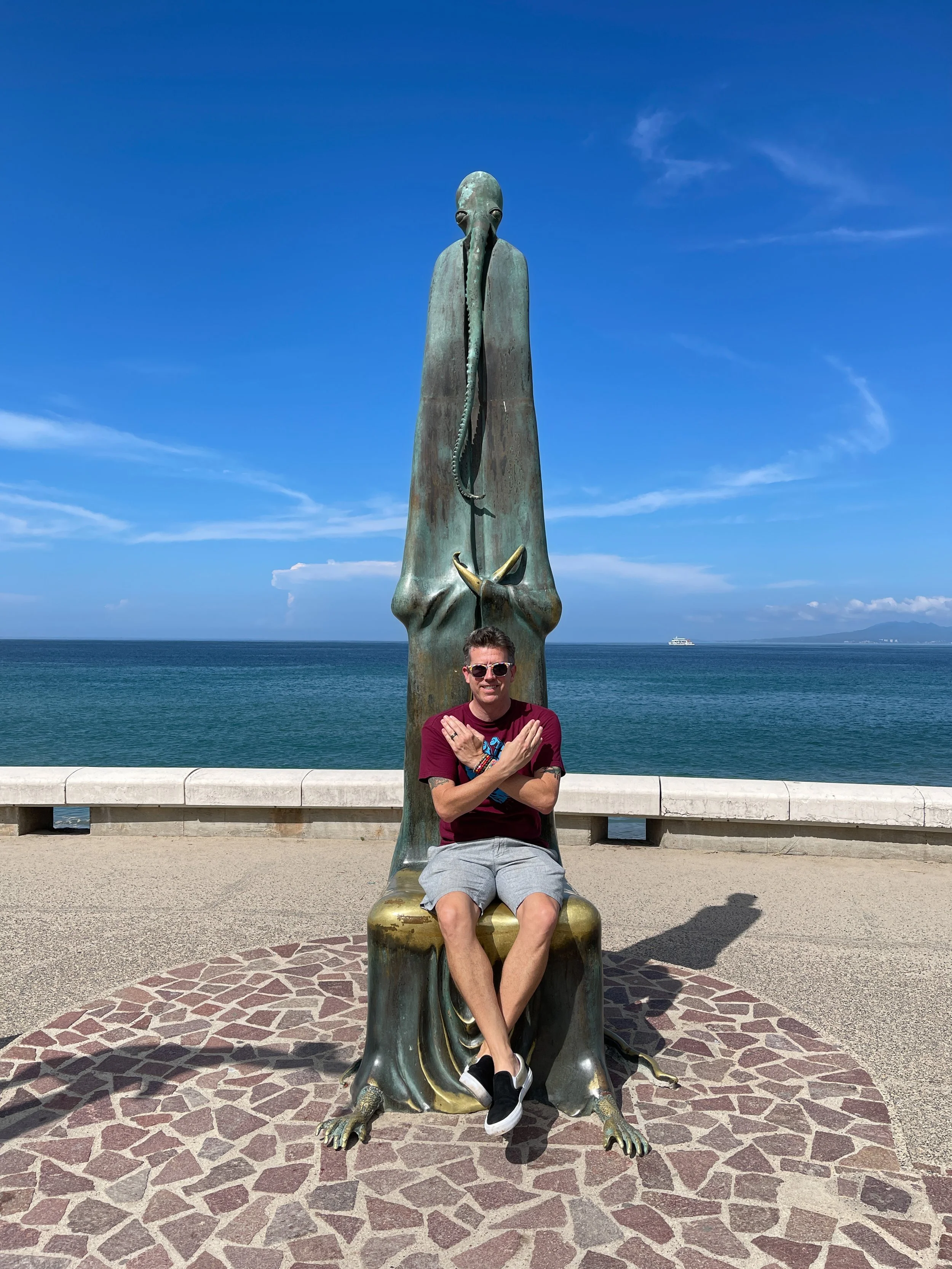
Wally has a seat and imitates his favorite sculpture on the Malecón, the creepy, cool La Rotunda del Mar (The Roundabout of the Sea).

If you spend any time in Puerto Vallarta, you’ll inevitably find yourself strolling along the Malecón, the boardwalk that lines the Bahía de Banderas. It’s not an old-fashioned wooden boardwalk as you might see in the States; it’s a wide concrete promenade lined with tourist shops, massive restaurants and clubs blaring music. It’s where everyone in PV goes to congregate, acting as a town square for tourists and locals alike.

You’ll have to get used to being constantly called out to (“hassled” is perhaps too harsh a word, but one you might be using after a few days). 

“Malecón” is simply the Spanish word for a waterfront promenade.

The Malecón stretches for about a mile, from the edge of the Zona Romántica, over the Cuale River, and on into Centro, the center of town, up to the Hotel Rosita on Calle Treinta y Uno de Octubre. Its first incarnation was as a breakwater built in 1936 and named the Paseo de la Revolución. It later became the Paseo Díaz Ordaz before getting enlarged and becoming the Malecón as we now can experience it. (In fact, “malecón” is simply the Spanish word for this type of waterfront promenade.)

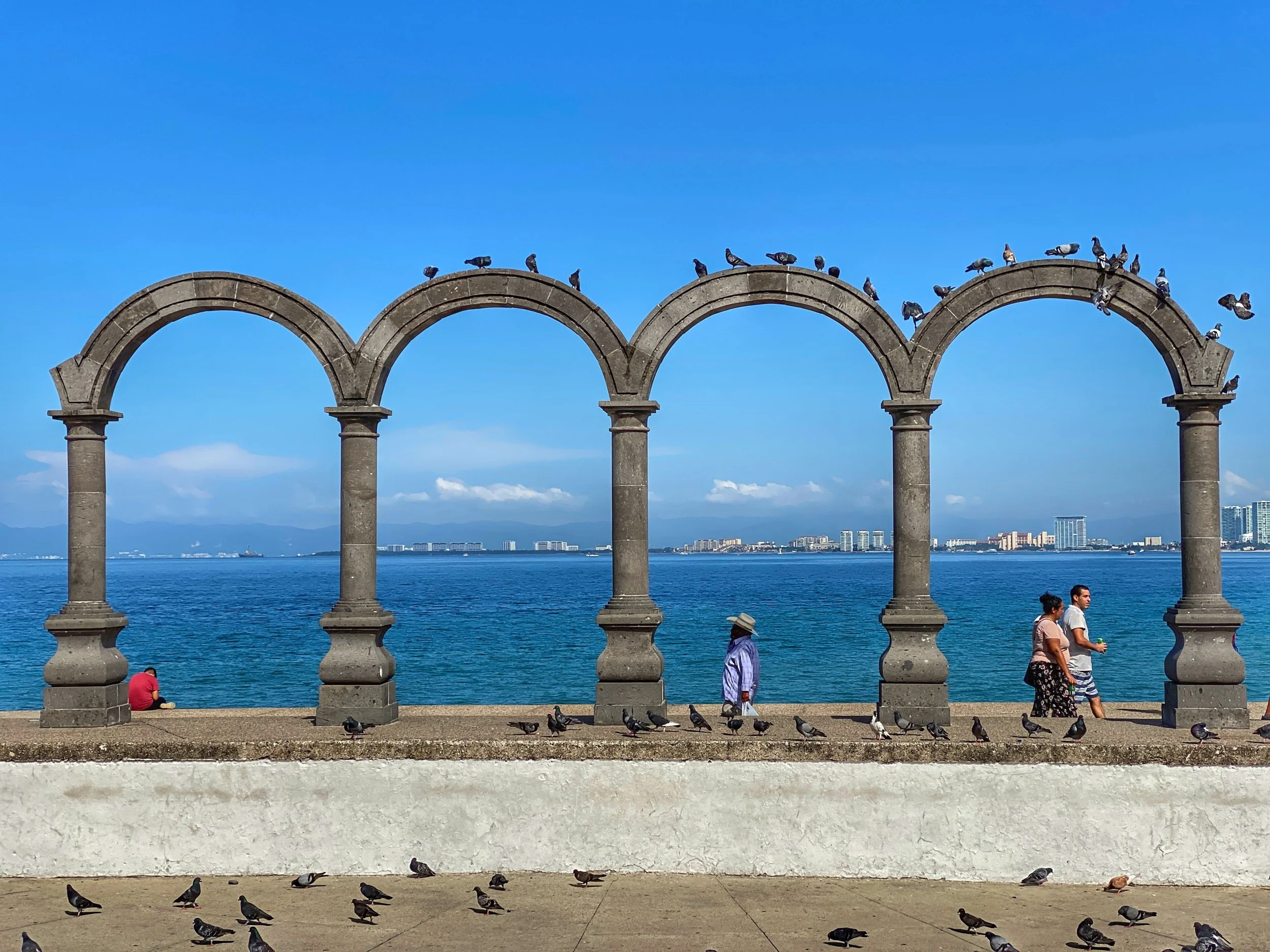
The iconic Los Archos (The Arches) that are now there are a replica, as the originals were damaged in 2002 by Hurricane Kenna. The first were built during the colonial period and brought from a hacienda in Guadalajara.

Los Archos on the Puerto Vallarta Malecon

Los Archos frame Bahía de Banderas and the spit of land called Nuevo Vallarta, where many of the big resorts and hotels are located.

When you want to get some exercise, perhaps in the late afternoon, when the sun isn’t blazing down so fiercely, take a tour of the public sculptures that line the Malecón. 

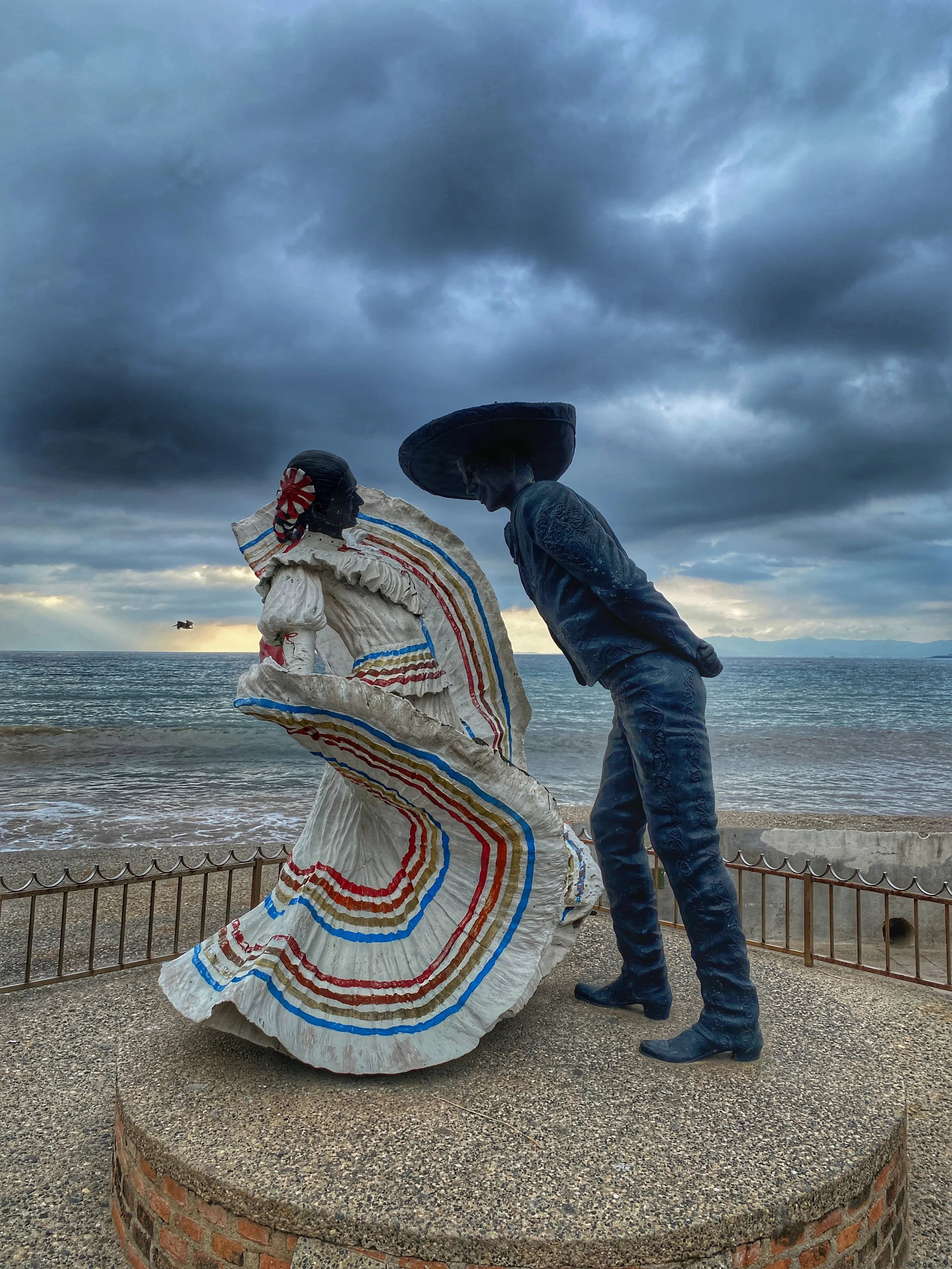
Bailarines de Vallarta sculpture on the Malecon in Puerto Vallarta

Bailarines de Vallarta (Dancers of Vallarta) by Jim Demetro, 2006

Fun fact: The couple is performing the jarabe tapatio, the Mexican hat dance, which originated as a courtship ritual. 

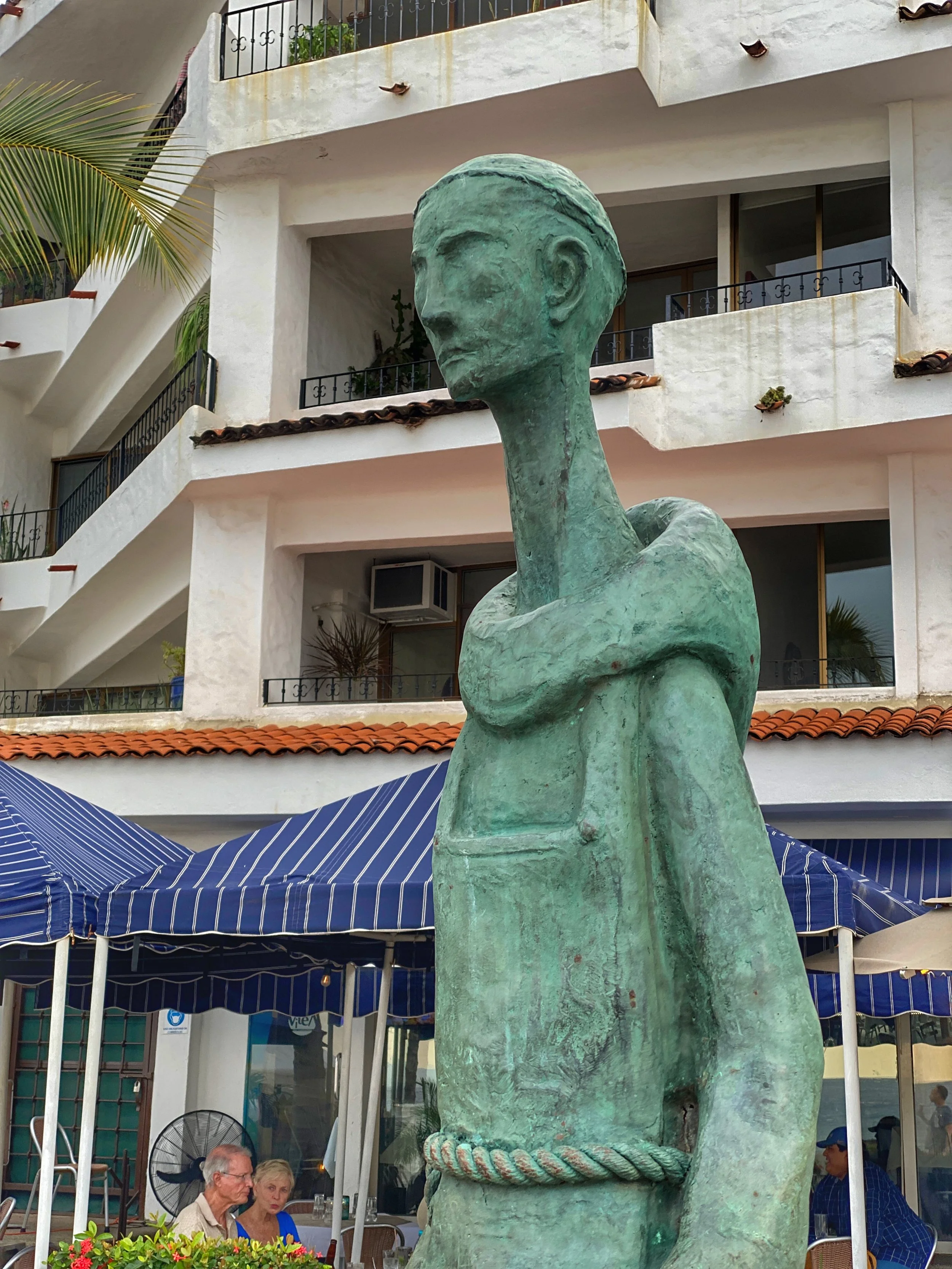
San Pascual Bailón sculpture on the Malecon in Puerto Vallarta

San Pascual Bailón by Ramiz Barquet, 2008

Fun fact: The 16th century Spanish Franciscan friar, aka Paschal Baylón, became the patron saint of cooks.

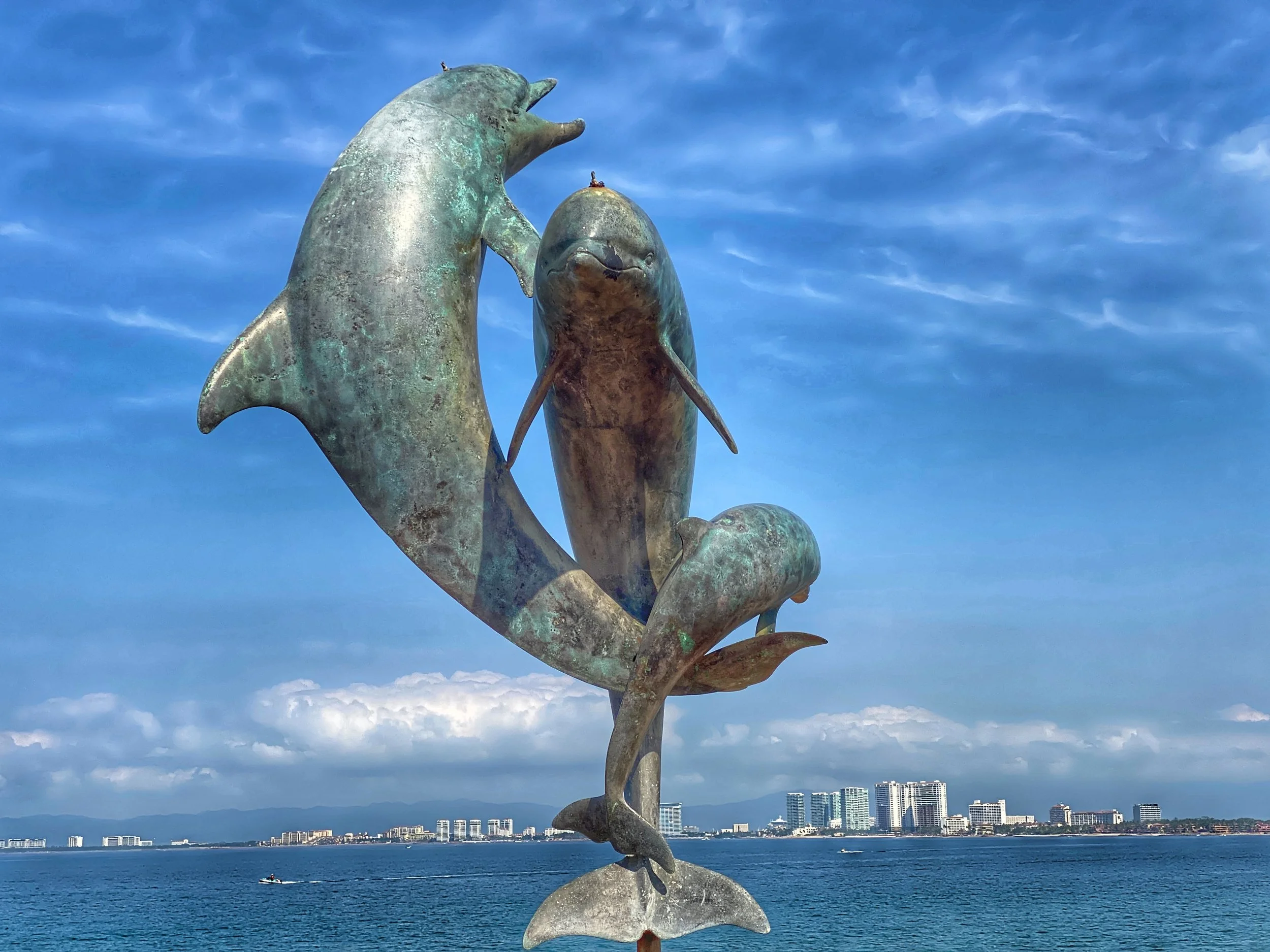
La Fuente de la Amistad sculpture on the Malecon in Puerto Vallarta

La Fuente de la Amistad (The Friendship Fountain) by James “Bud” Bottoms and Octavio González Gutiérrez, 1987

Fun fact: The sculpture was a gift from Puerto Vallarta’s sister city, Santa Barbara, California. The dolphins symbolize peace, protection and brotherhood between the two cities.

The artists were inspired by a myth of the Chumash, a native people from what’s now Southern California. The Earth goddess, Hutash, created a rainbow bridge to connect the Chumash from their island to the mainland. And even though she warned those crossing not to look down, some did, losing their balance and falling. But as they plummeted into the ocean, the goddess transformed them into dolphins so they would not die.

Caballero del Mar (sculpture at sunset on the Malecon in Puerto Vallarta

Caballero del Mar (The Boy on the Seahorse) by Rafael Zamarripa, 1976

Fun fact: The first statue to be erected on the Malecón, it has become a symbol of the city. 

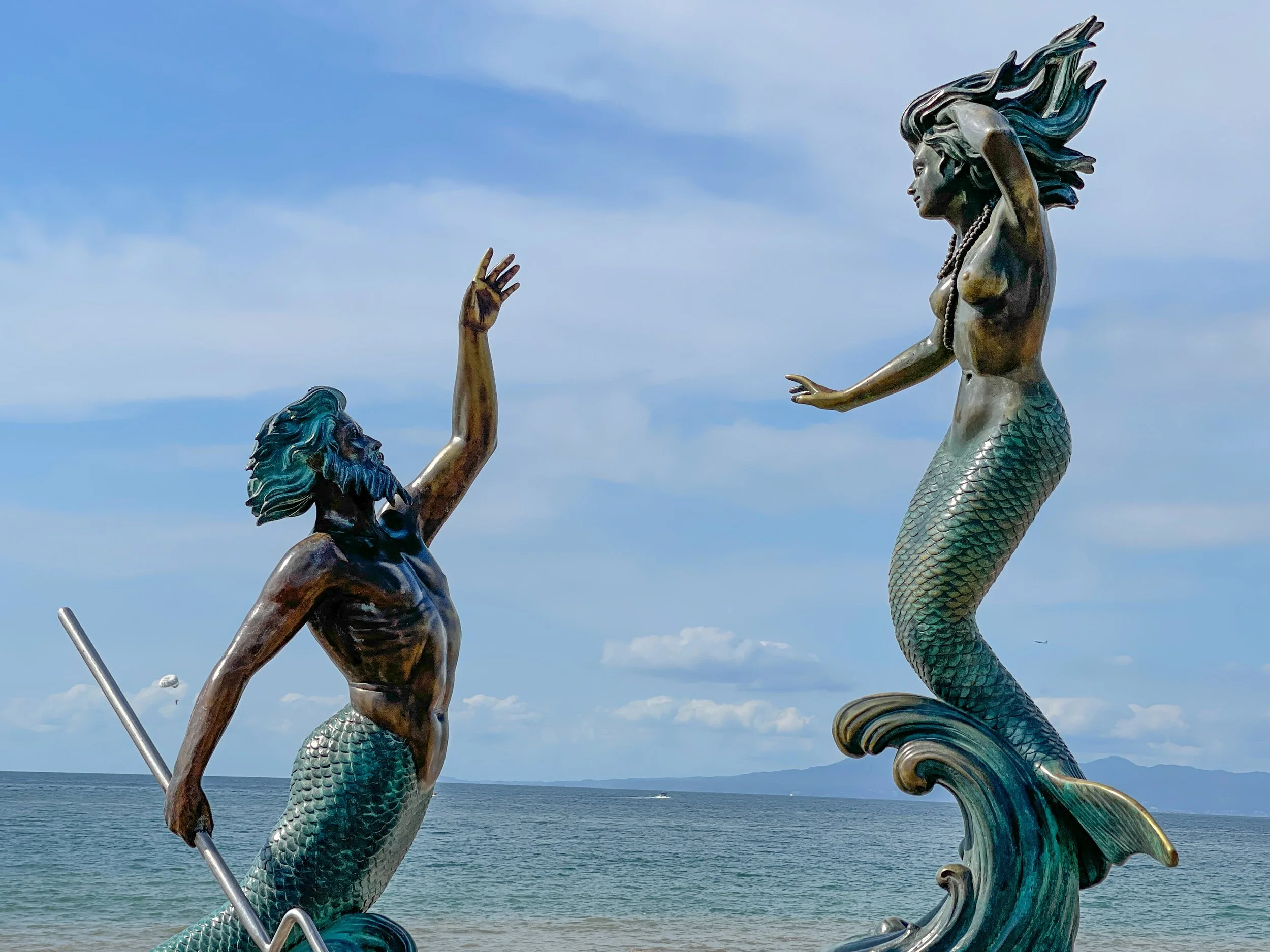
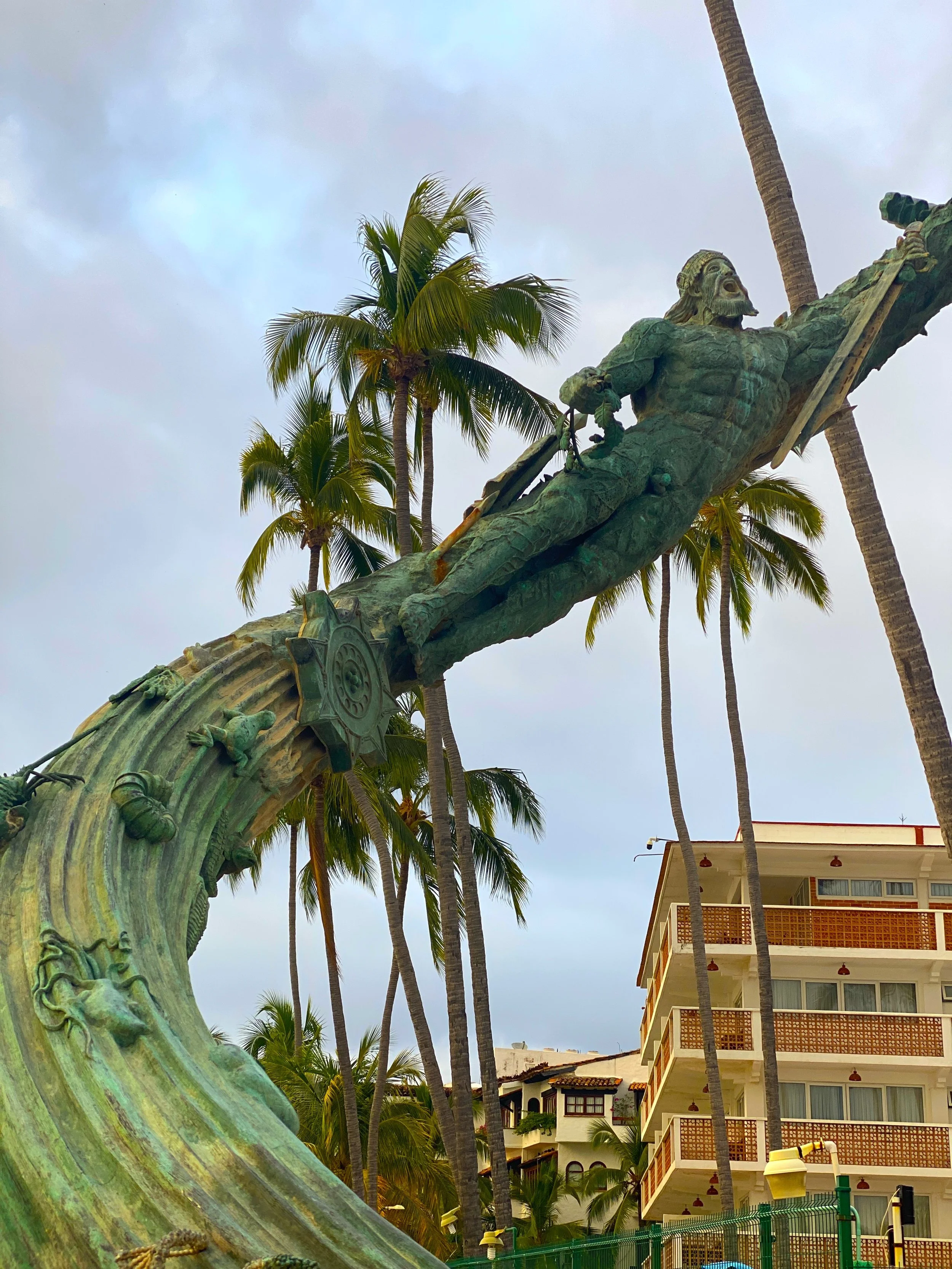
Triton and the Nereid sculpture on the Malecon in Puerto Vallarta

Triton and the Nereid by Carlos Espino, 1990

Fun fact: In Greek mythology, Triton was the son of Poseidon, the god of the sea, and nereids were sea nymphs who would help sailors during storms.

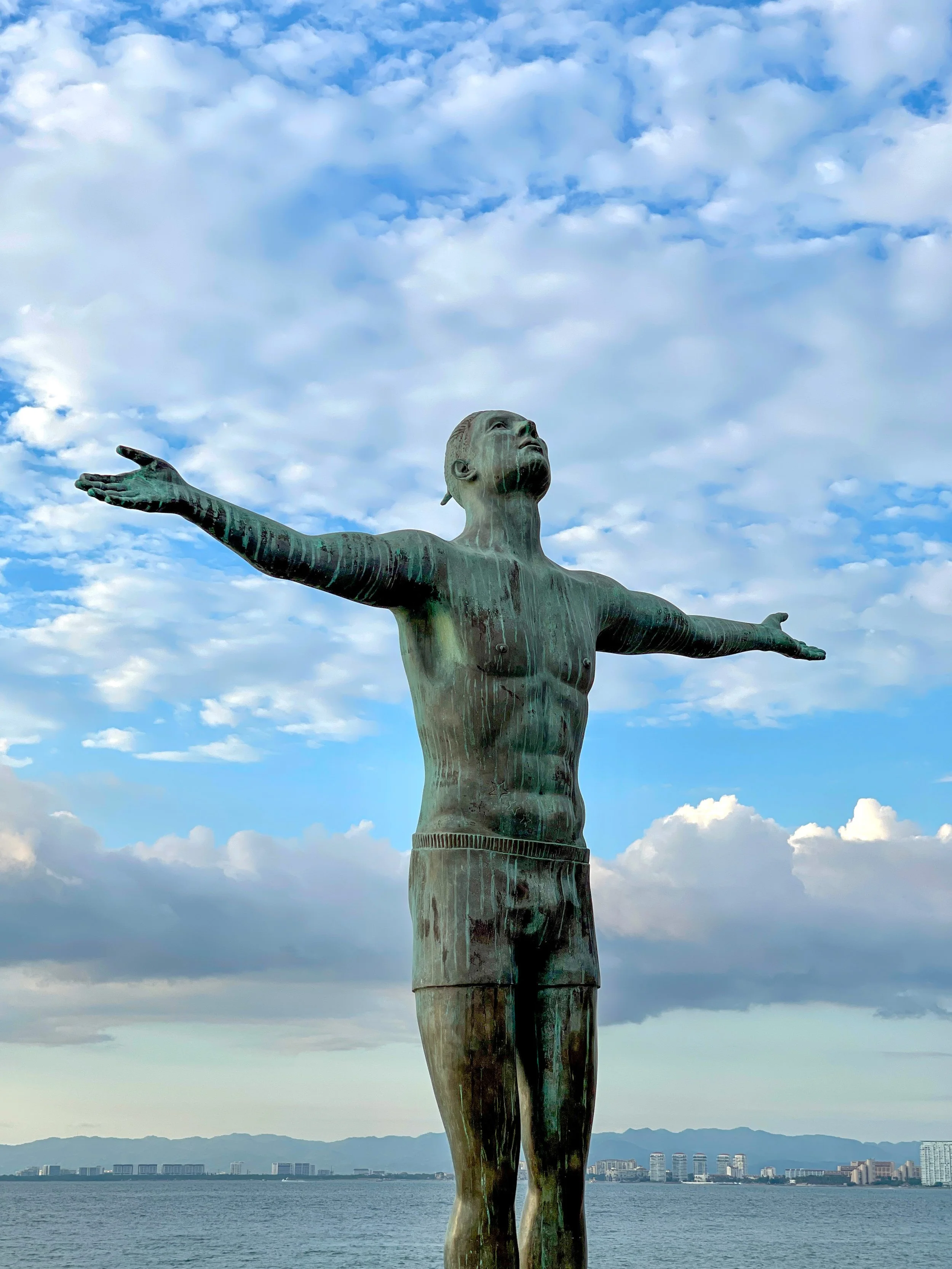
Lluvia sculpture on the Malecon in Puerto Vallarta

Lluvia (Rain) by Jovian, 2020

Fun fact: The artist says, “I tried to present a man with open arms as a symbol of openness, positively receiving what the world offers him with a gesture of happiness and fulfillment, eyes looking up into the rain without that affecting his peace but rather enjoying the water that falls on his body and making him feel free and alive.

That is what Vallarta is for me: a city with great openness, which welcomes locals and strangers with open arms. I have never known another city where people who come from other places feel so at home.” 

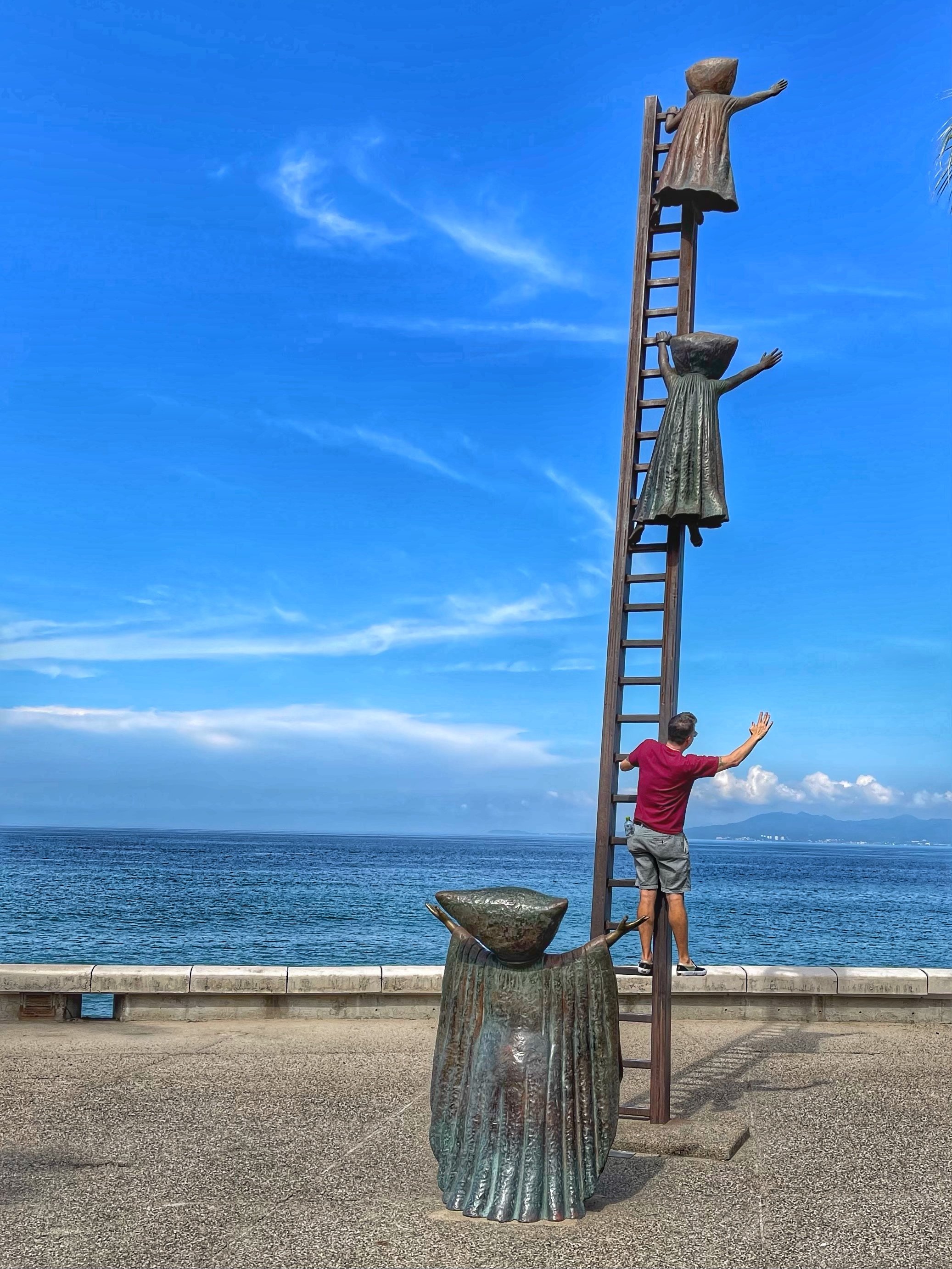
Man climbing ladder on En Búsqueda de la Razón sculpture on the Malecon in Puerto Vallarta

En Búsqueda de la Razón (In Search of Reason) by Sergio Bustamante, 2000

Fun fact: Another of our faves, this statue divides its audience — some think the mother is pleading with her children to come down, while others think she’s encouraging them to explore new heights.

Metal chairs from La Rotunda del Mar sculpture on the Malecon in Puerto Vallarta

La Rotunda del Mar (The Roundabout of the Sea) by Alejandro Colunga, 1996

Fun fact: These strange steampunk creatures, a fantastical mélange of humans, animals and tech tools, are inspired by the folk tales the artist heard as a child. Incidentally (and perhaps not surprisingly?), this is Duke and my favorite sculpture along the Malecón.

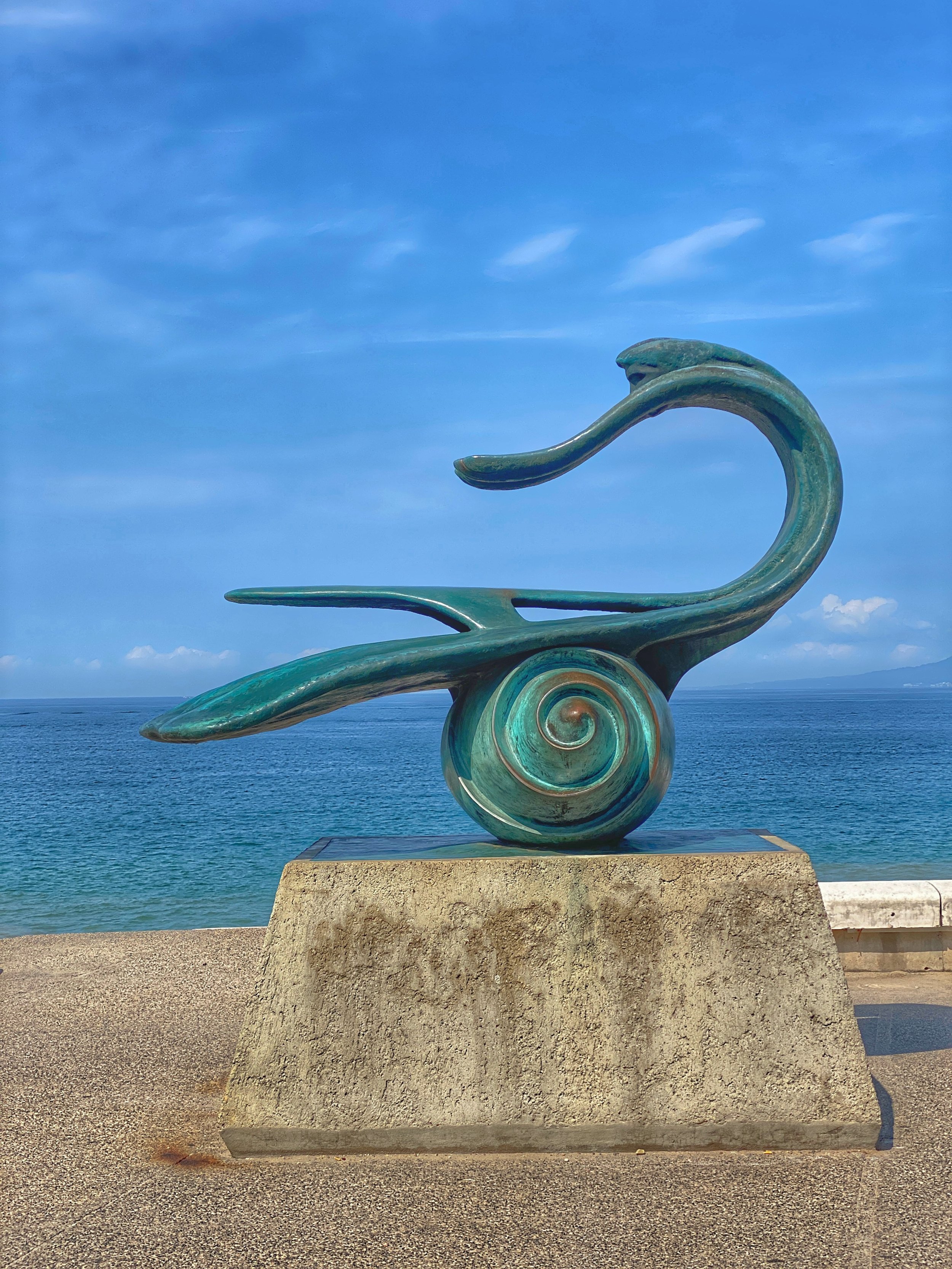
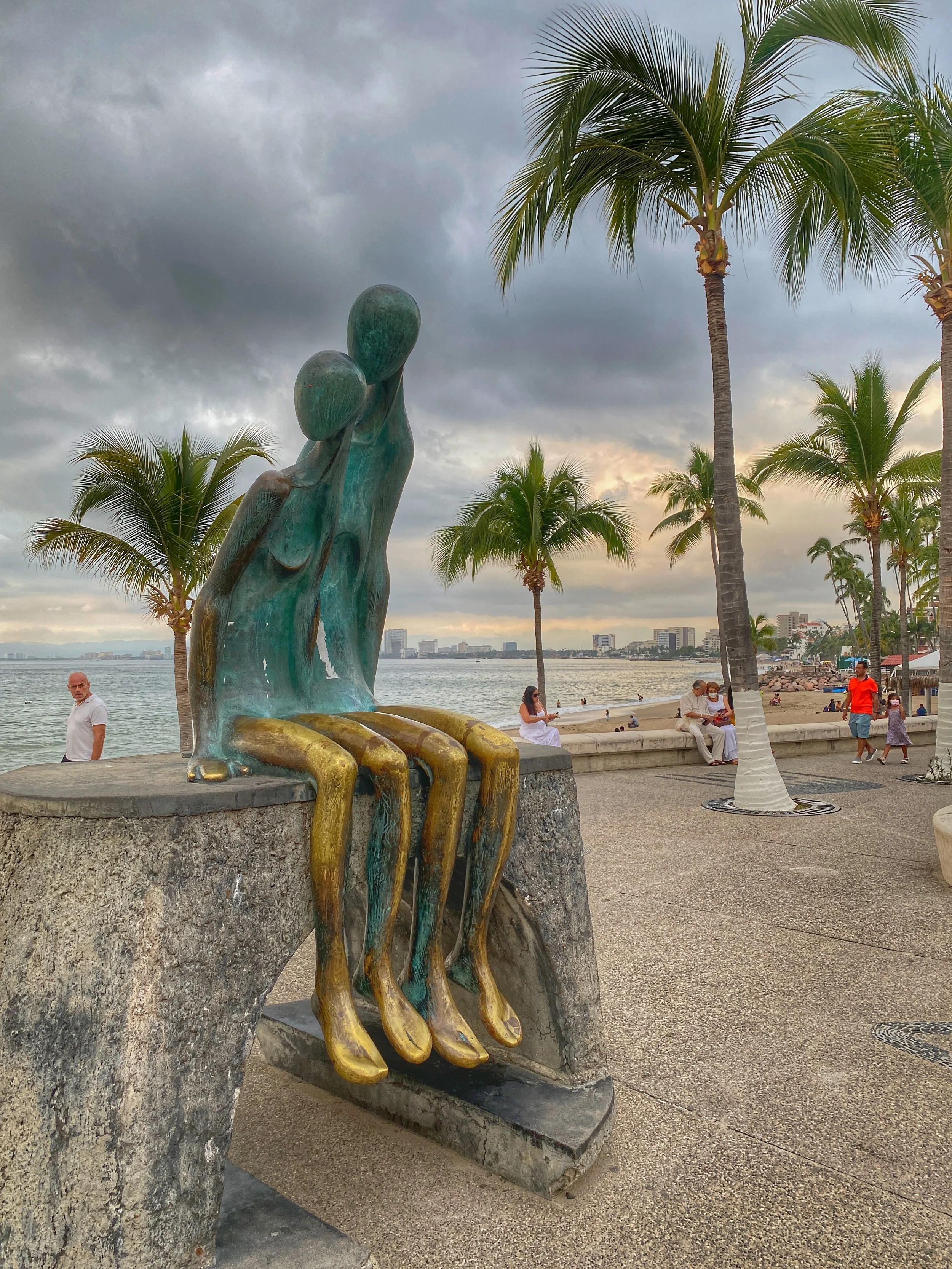
Naturaleza Como Madre sculpture on the Malecon in Puerto Vallarta

Naturaleza Como Madre (Nature as Mother) by Tapatio Adrián Reynoso, 1997

Fun fact: If the shape confuses you a bit, it’s a wave that’s becoming a woman…while balancing on a snail shell. 

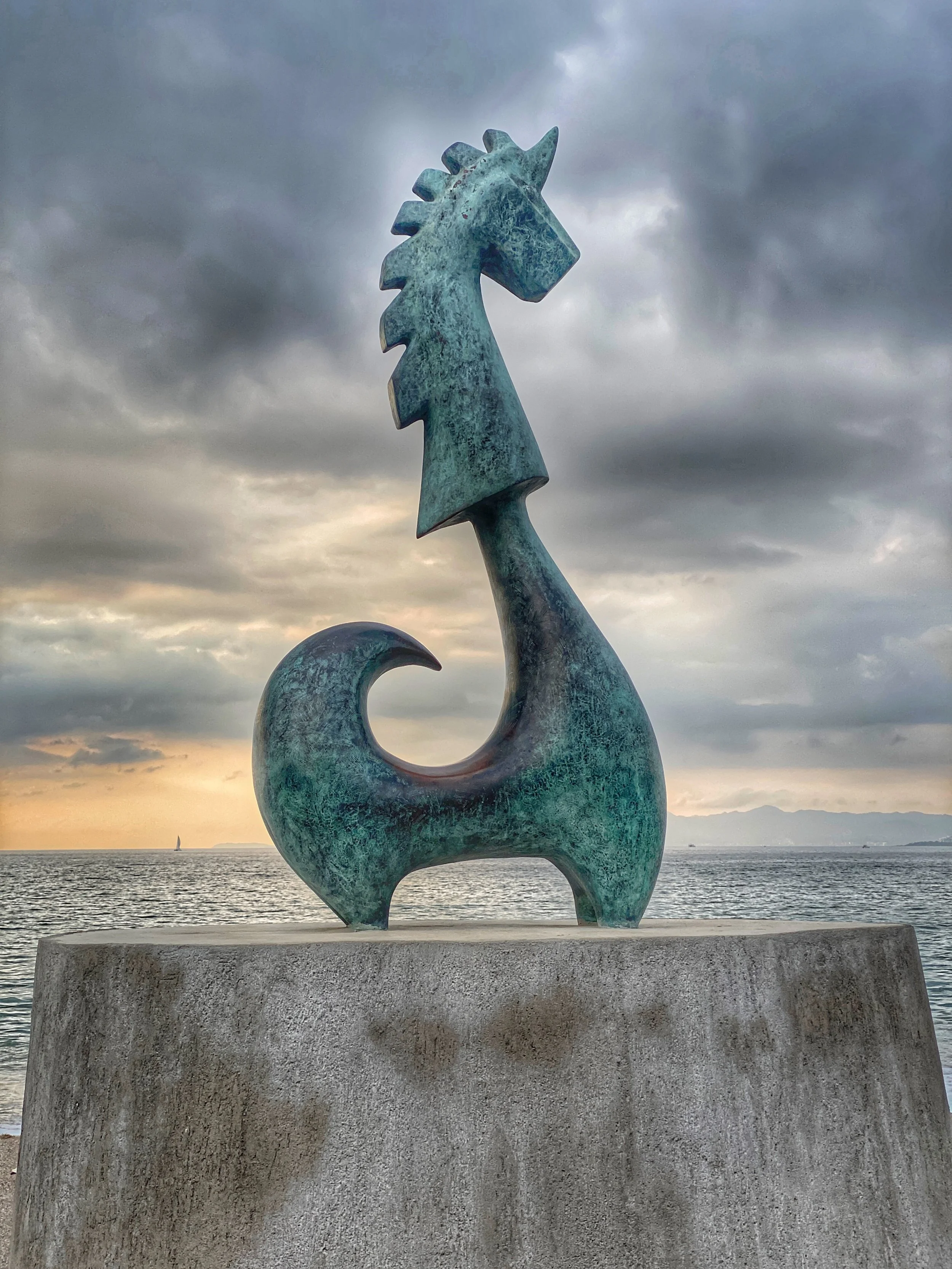
Unicornio de la Buena Fortuna sculpture on the Malecon in Puerto Vallarta

Unicornio de la Buena Fortuna (Unicorn of Good Fortune) by Aníbal Riebeling, 2011

Fun fact: No surprise, given its name, but it’s said to be good luck to touch it. In fact, the city had to raise the base to help deter people from climbing on top of it for pictures.

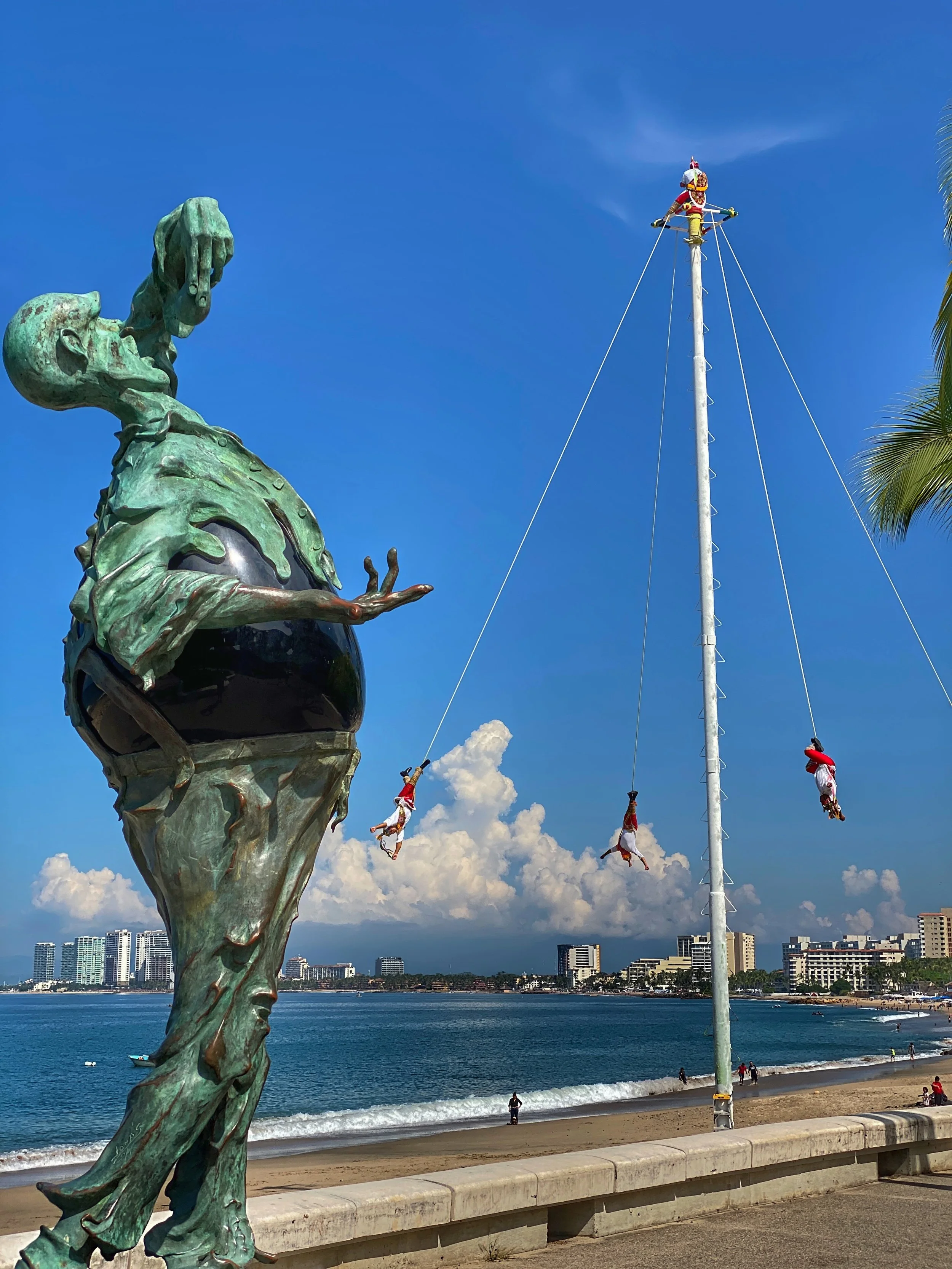
El Sutil Comepiedras sculpture on Malecon in Puerto Vallarta with voladores in background

El Sutil Comepiedras (The Subtle Rock-Eater) by Jonás Gutiérrez, 2006

Fun fact: No one knows why exactly this man wants to eat rocks (as if there’s anything subtle about that), aside from the fact that he’s supposed to be a magician.

The statue is a great spot to watch the Voladores de Papantla spin around a pole on ropes attached to their feet. These “Flying Men” are part of an ancient ritual.

La Nostalgia sculpture on the Malecon in Puerto Vallarta

La Nostalgia by José Ramiz Barquet, 1976

Fun fact: One of the oldest on the Malecón, placed there in 1984, the sculpture is inspired by the love story between the sculptor and his wife, Nelly Galván-Duque Tamborrel. The couple met but then lost touch for 27 years before meeting again and getting married.

Detail of The Millennia sculpture on the Malecon in Puerto Vallarta

The Millennia by Mathís Lídice, 2001

Fun fact: There’s a double-helix DNA strand at the bottom to show that humans evolved from the sea alongside octopi, fish, frogs and lizards. This is followed by the French Charlemagne, the king of the Francs, bearing a sword, then the pre-Columbian poet-king Nezahualcoyotl. And the future is represented by a woman releasing a dove of peace.


So take a break from sunbathing, get a little culture and take some fun photos — it’ll give you an excuse to avoid the incessant hawkers trying to lure you into a sale. –Wally

A Perfect Morning in La Condesa, Mexico City

One of CDMX’s hippest hoods has its own distinct vibe with the racetrack-turned-oval-park Avenida Amsterdam and an array of eye-catching Art Deco architecture, green spaces and cafés. 

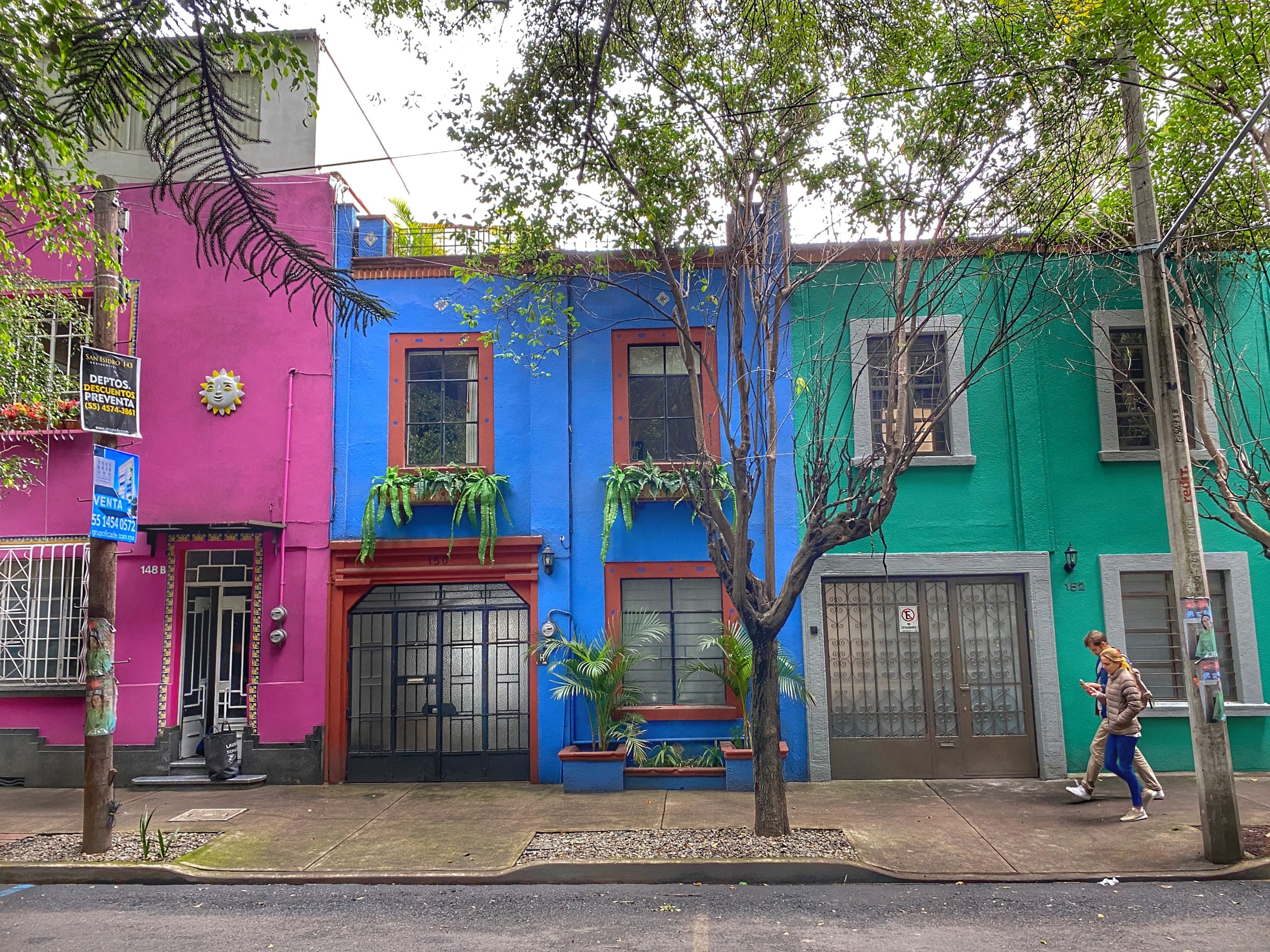
Colorful buildings along Avenida Amsterdam in Mexico City

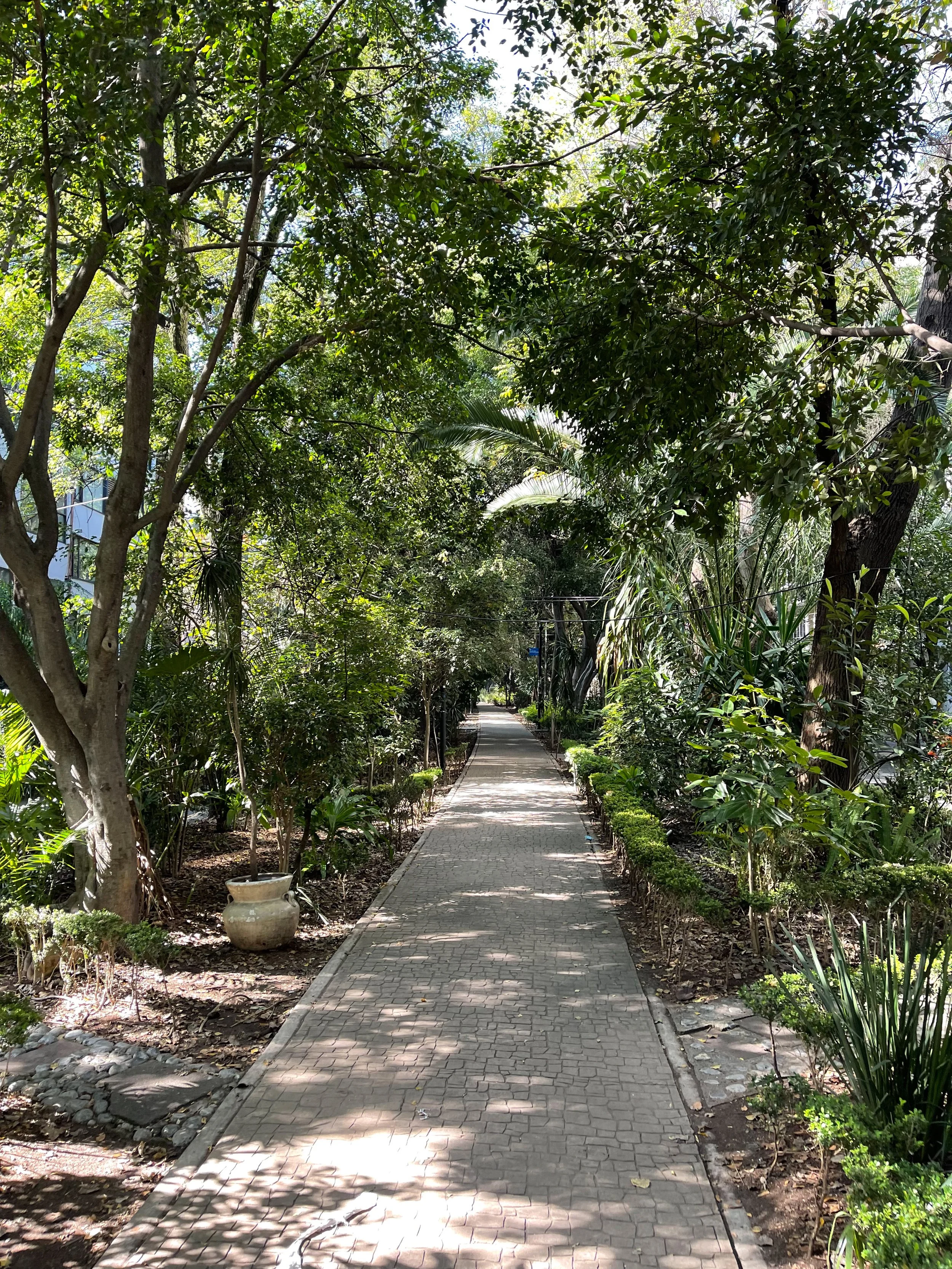
If you’re in Mexico City, you’ve got to take a walk around the colorful colonia of La Condesa — especially the pedestrian-friendly, lush Avenida Amsterdam.

At the beginning of the 20th century, Mexico City began to experience the influence of a new international artistic movement, which had great importance in graphic and industrial design, the decorative arts and architecture. What was this revolutionary style? Art Deco, of course. 

Art and design are still a driving force in the hip, pedestrian-friendly neighborhood of La Condesa. Here’s how to spend a pleasant morning in the colonia (neighborhood).

Art and design are a driving force in the hip, pedestrian-friendly neighborhood of La Condesa.
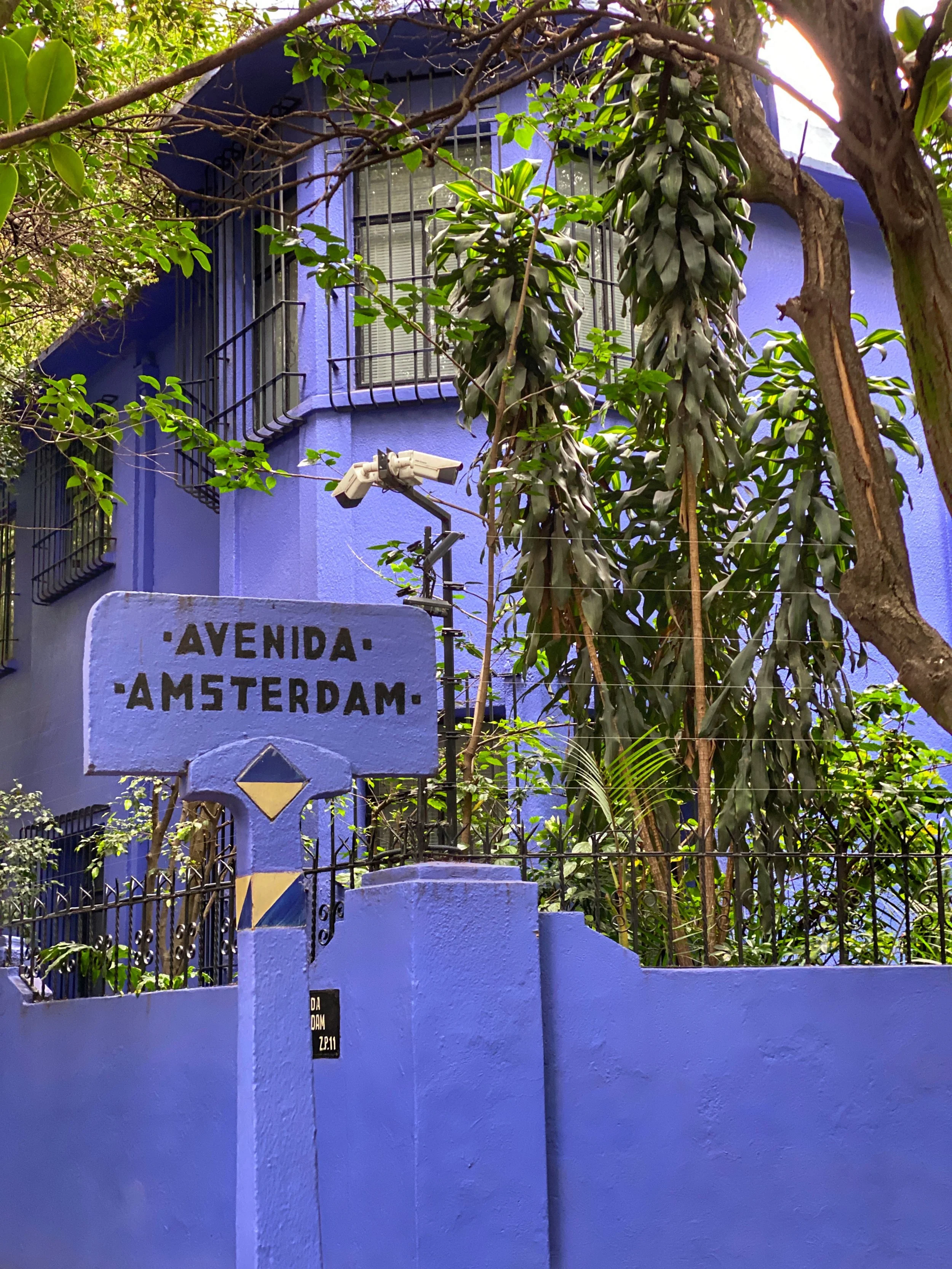
Purple house with sign out front for Avenida Amsterdam in Mexico City

This periwinkle house and sign became a familiar guidepost for us.

1. Go round Avenida Amsterdam and the surrounding streets.

Start your day by heading to Avenida Amsterdam in Hipódromo, the heart of La Condesa. The avenue gets its shape from a former horse racing track. 

Median park along Avenida Amsterdam in Mexico City

Following the old horse racing track, Avenida Amsterdam is now a median green space in the heart of La Condesa.

Stroll along the central pedestrian median of Avenida Amsterdam and stop to gaze at La Fuente de la Glorieta Popocatépetl. The 1927 Art Deco fountain by José Gómez Echeverría is popularly known as the Bomba. The fountain consists of a dome supported by four white columns decorated with tiles. An aperture at the top allows sunlight to illuminate it, if only for a fleeting moment. 

Edificio San Martin in La Condesa, Mexico City

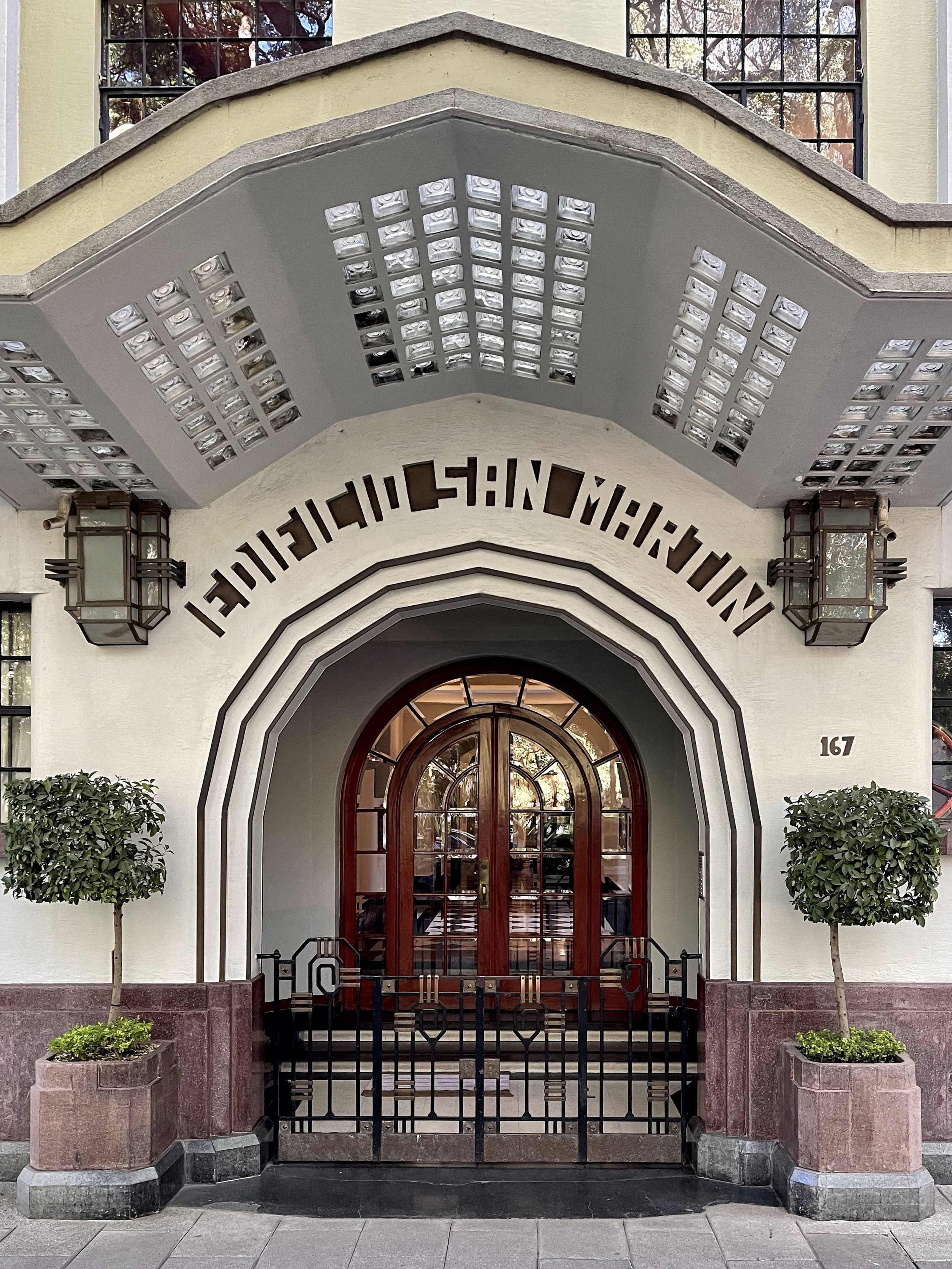
There are lots of Art Deco delights to discover while wandering around La Condesa, including Edificio San Martín.

As you wander this neighborhood, admire the Art Deco and Streamline Moderne doorways and façades of mansions and apartments that line the streets. The San Martin building, designed by Ernesto Ignacio Buenrosto, with its symmetrical entrance and canopy on Avenida México, perfectly characterizes the Art Deco style.

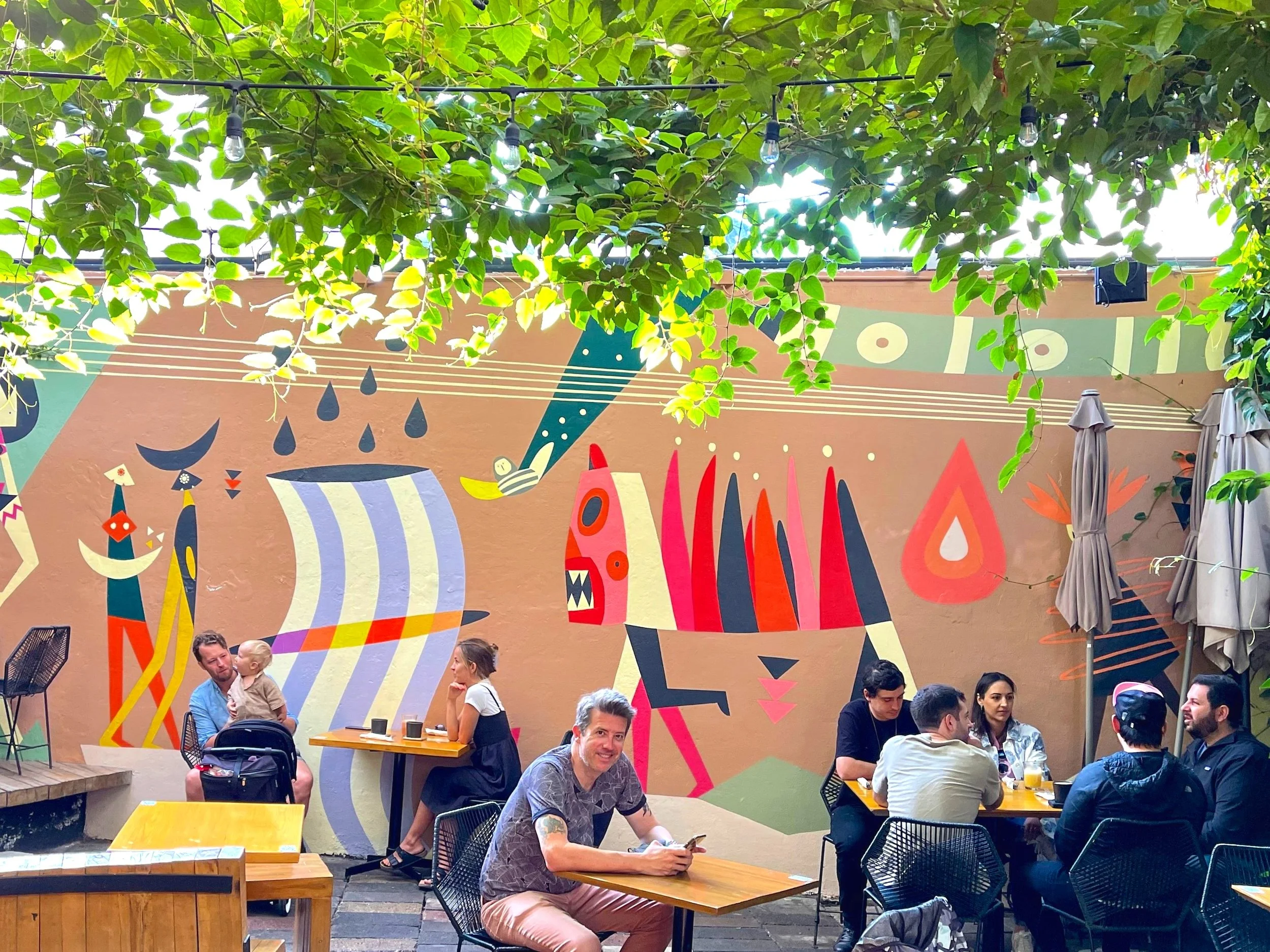
Wally’s all set for brunch at the cozy back patio at Frëims in La Condesa. He and Duke of course loved the mural.

2. Grab breakfast on Frëims’ charming back patio.

Fuel up for the day at one of our favorite spots in La Condesa, Frëims (Avenida Amsterdam 62B). The space occupies the renovated first floor of a former 1920s home reimagined as a bookstore, record shop and restaurant serving food and a variety of coffee drinks. 

We were seated at a table on the sun-dappled patio. While we were there, the gallery and garden wall mural featured a collaborative installation by Colombian artist Sofía Echeverri and Oaxacan illustrator Vero Anaya called The Origins of Knowledge. The artists describe their imaginative pieces as embodying the concept of “soróbora”: the juxtaposition of sorority, a society of women, and ouroboros, the snake that nurtures itself and symbolizes infinity by eating its own tail. 

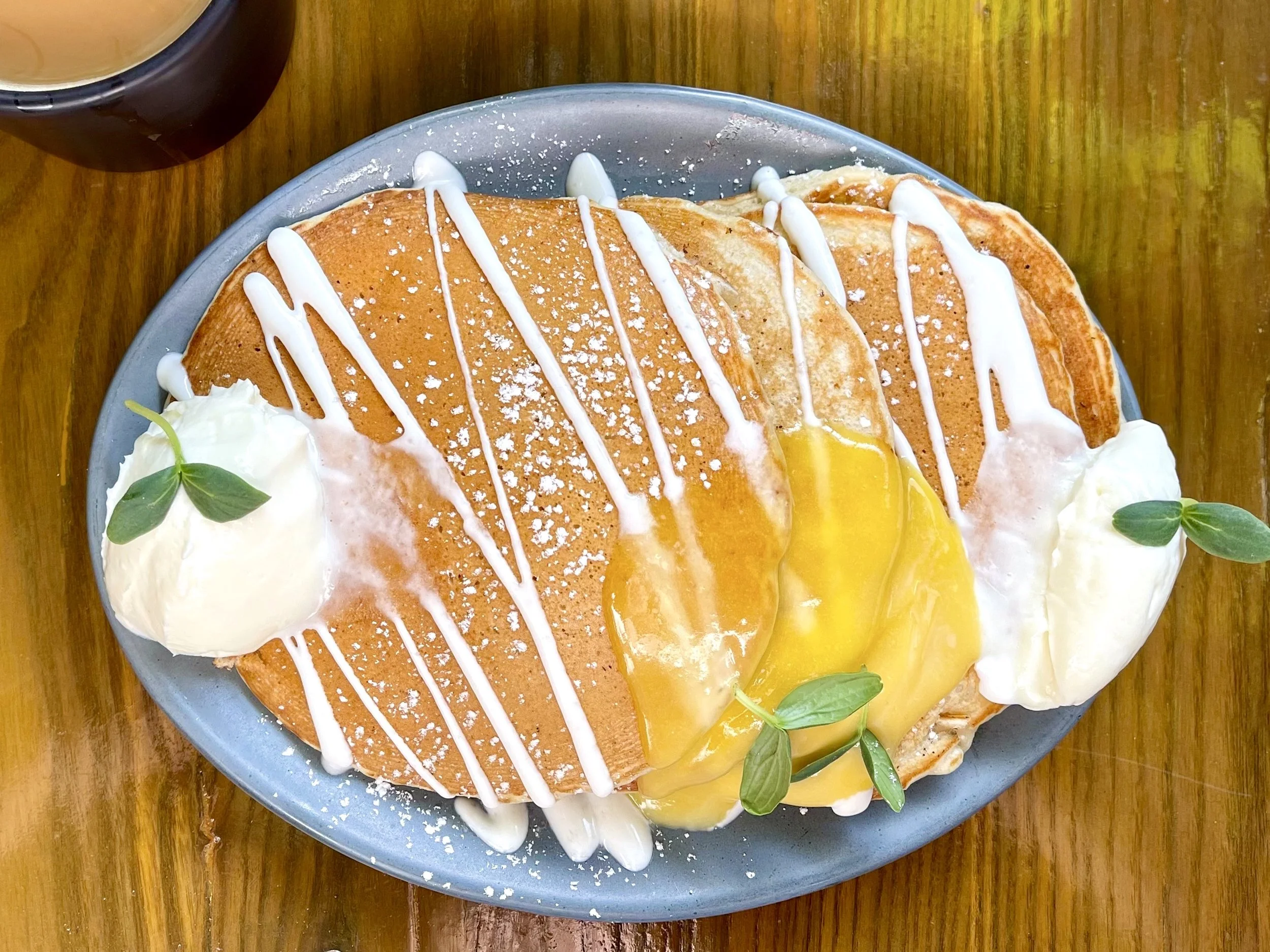
Lemon pancakes at Freims restaurant

Lemon ricotta pancakes

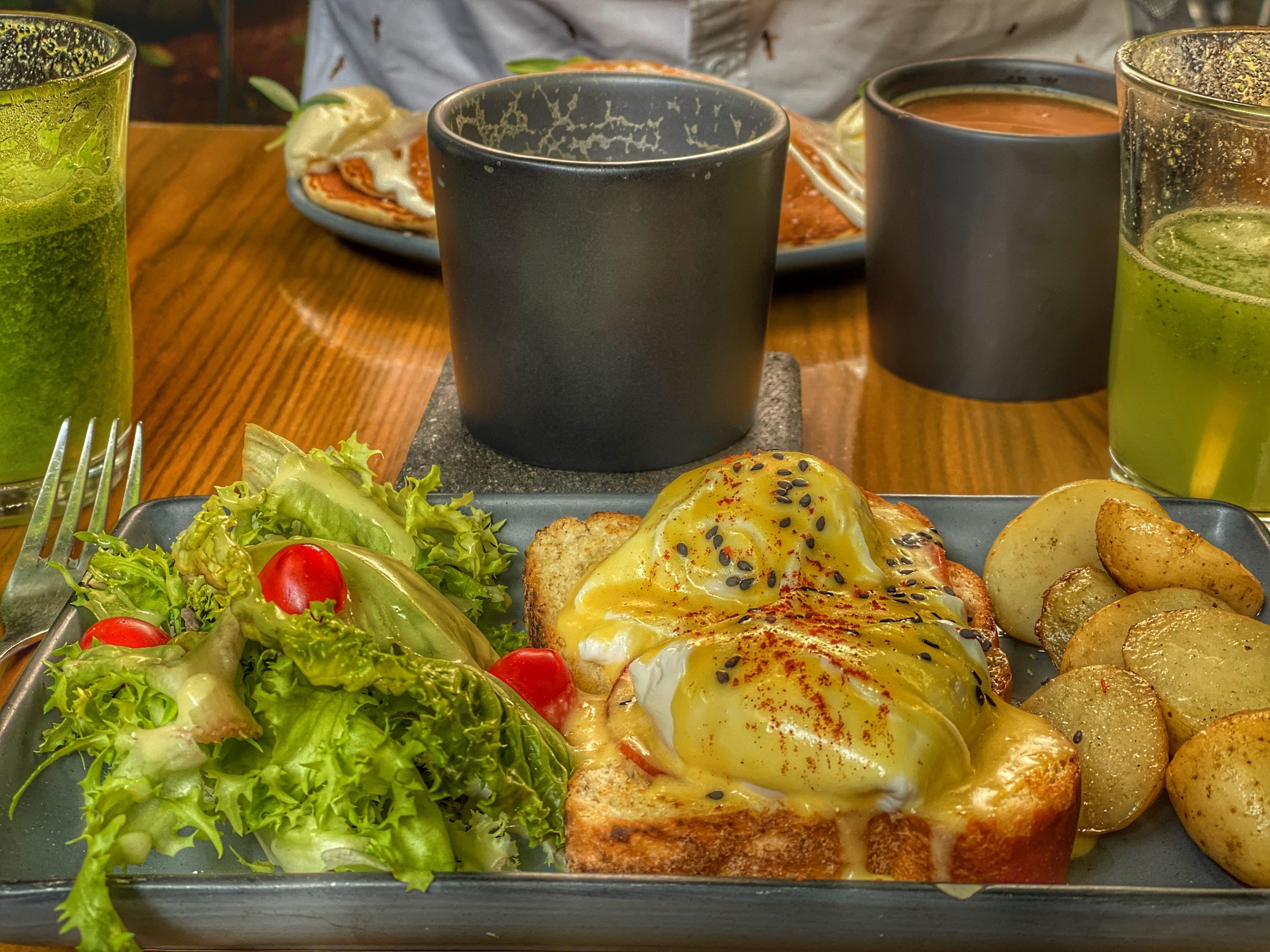
Eggs Benedict at Freims restaurant

Eggs Benedict

I tried the lemon ricotta pancakes and Wally got his usual huevos benedictinos, paired with a coffee for me and a latte for Wally. We also ordered two Vecinos, a fresh-squeezed juice blend of pear, lime, cucumber and cardamom. 


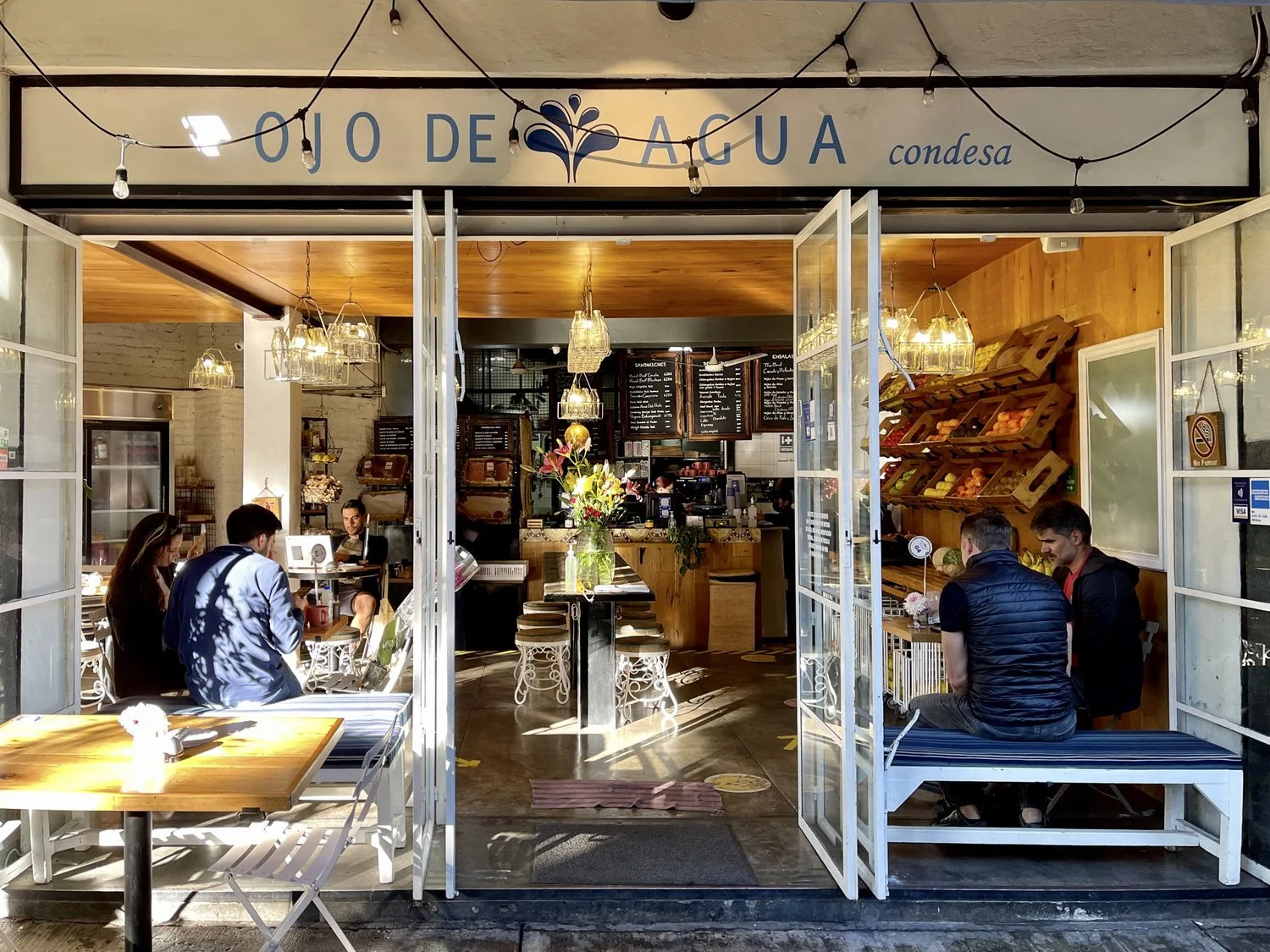
Facade of Ojo de Agua in La Condesa, CDMX

ANOTHER BREAKFAST OPTION: Ojo de Agua in La Condesa


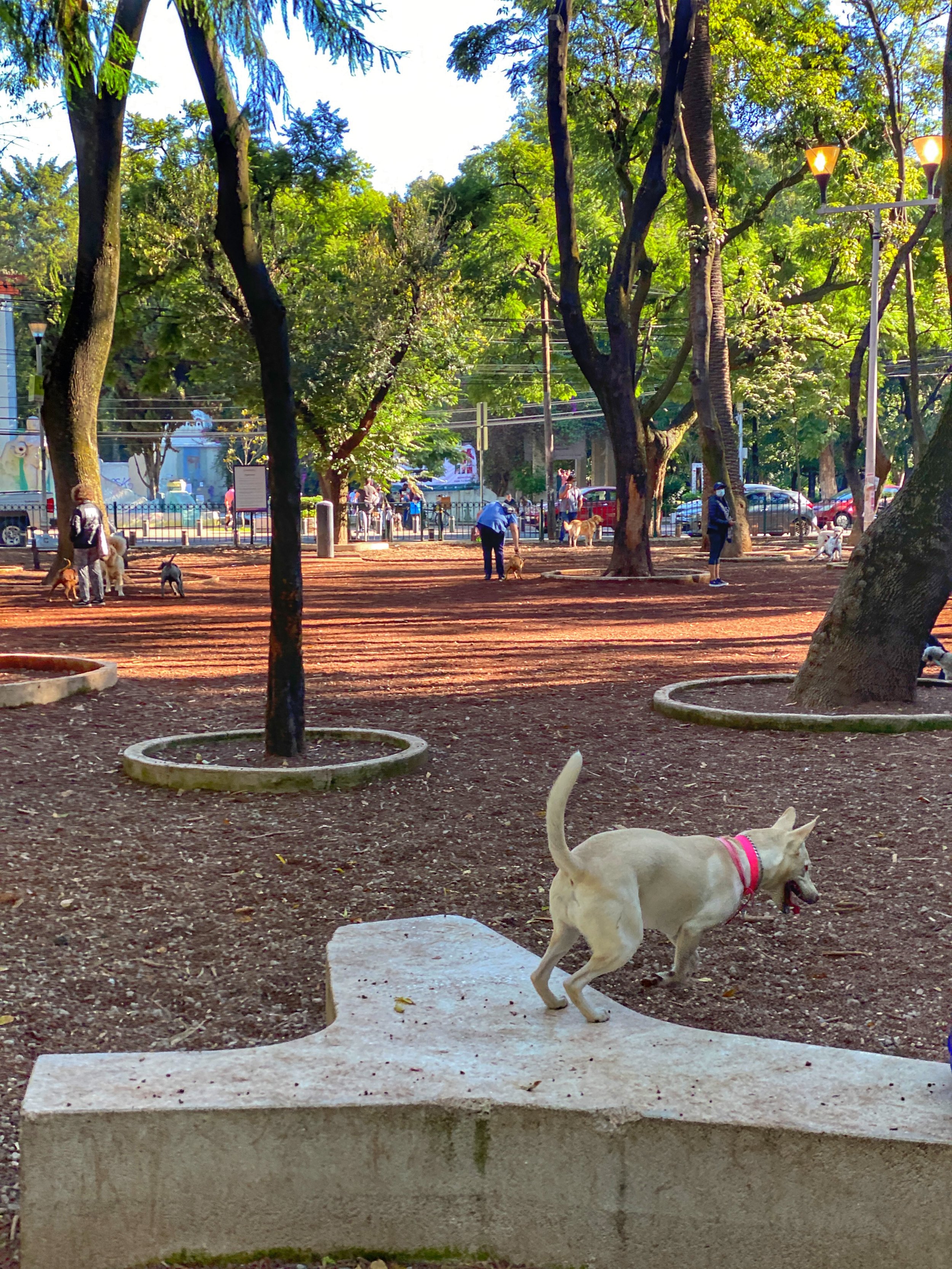
Dog park in Parque Mexico, Mexico CIty

A large section of Parque México is devoted to a dog park.

3. Take a walk in the park…Parque México, that is. 

Officially Parque San Martín, La Condesa’s large urban park was built on the former site of the elite Jockey Club de México — and everyone refers to it as Parque México now.  Built in 1927 the park is a favorite among families, dog walkers and skateboarders. 

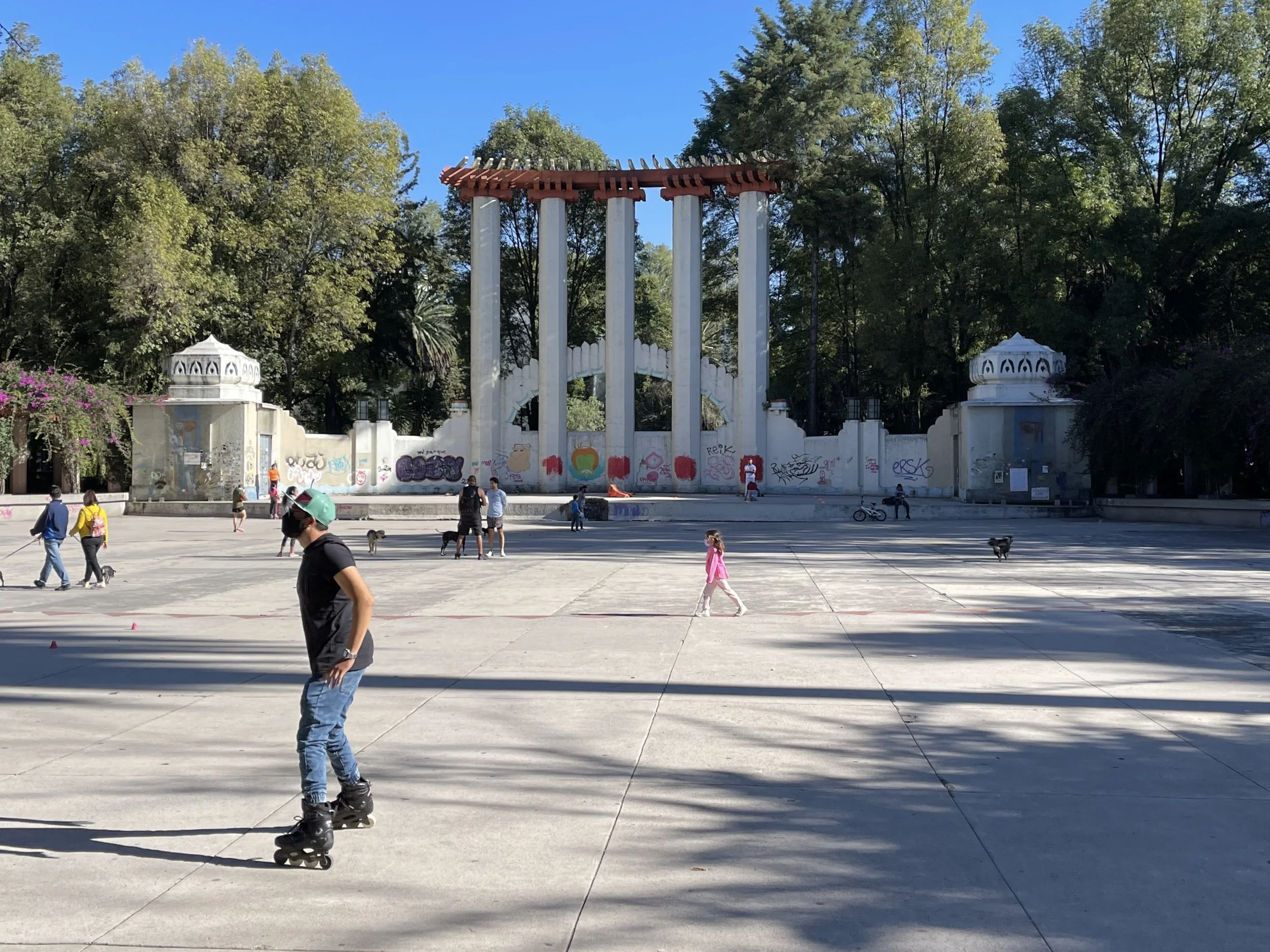
Rollerbladers and others enjoying the Teatro al Aire Libre Coronel Lindbergh in Parque Mexico, Mexico City

This plaza, named for Charles Lindbergh, offers a space for dog walkers, children and rollerbladers to congregate.

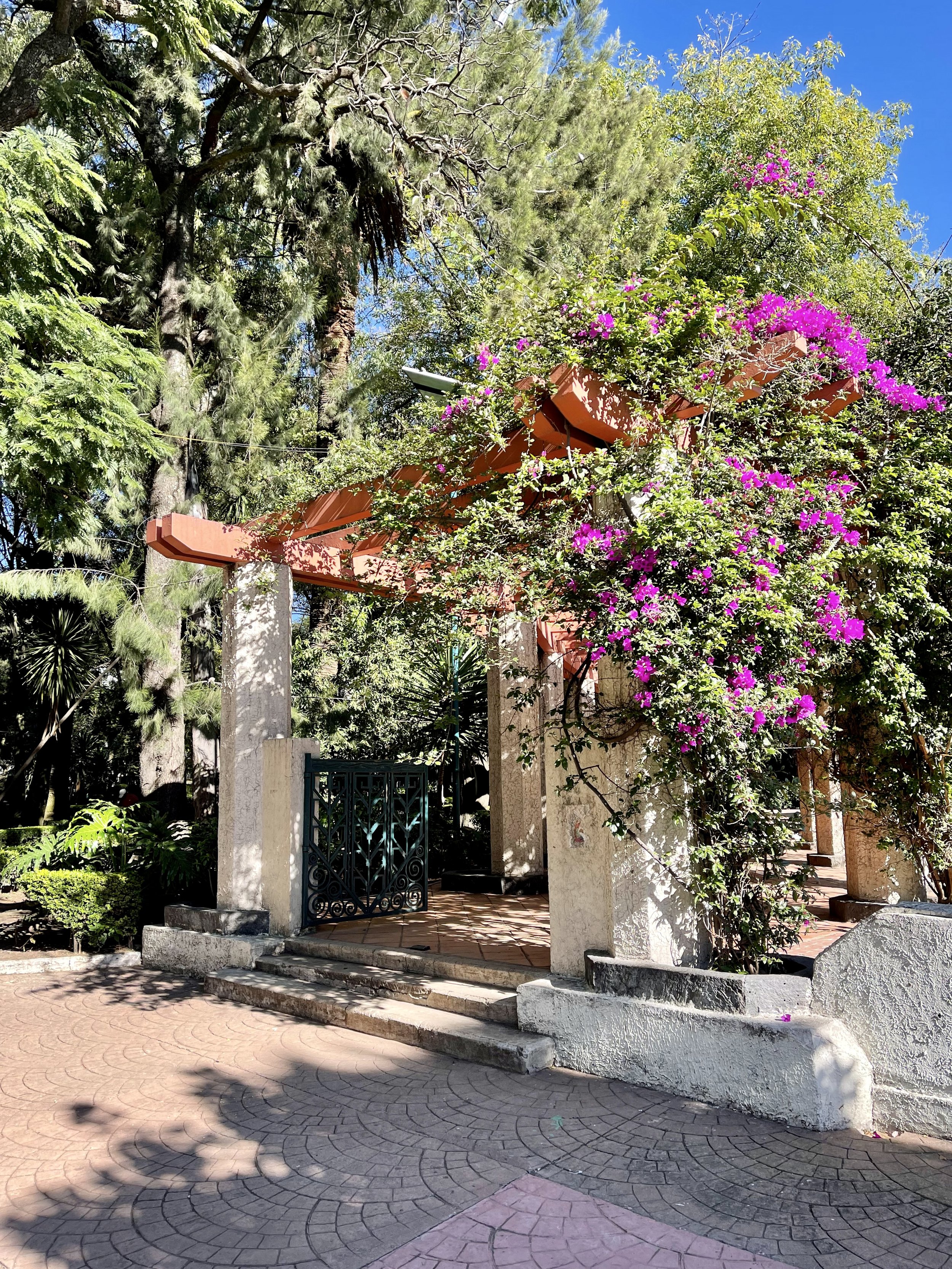
Bougainvillea covering a pergola in Parque Mexico, CDMX

Bougainvillea covers the pergola that surrounds the open-air theater.

At the front of the park, there’s a communal space consisting of five pillars topped with a canopy and bordered by a pergola. The exterior walls are covered with graffiti and when we walked by, we watched a group of kids learning to rollerblade.

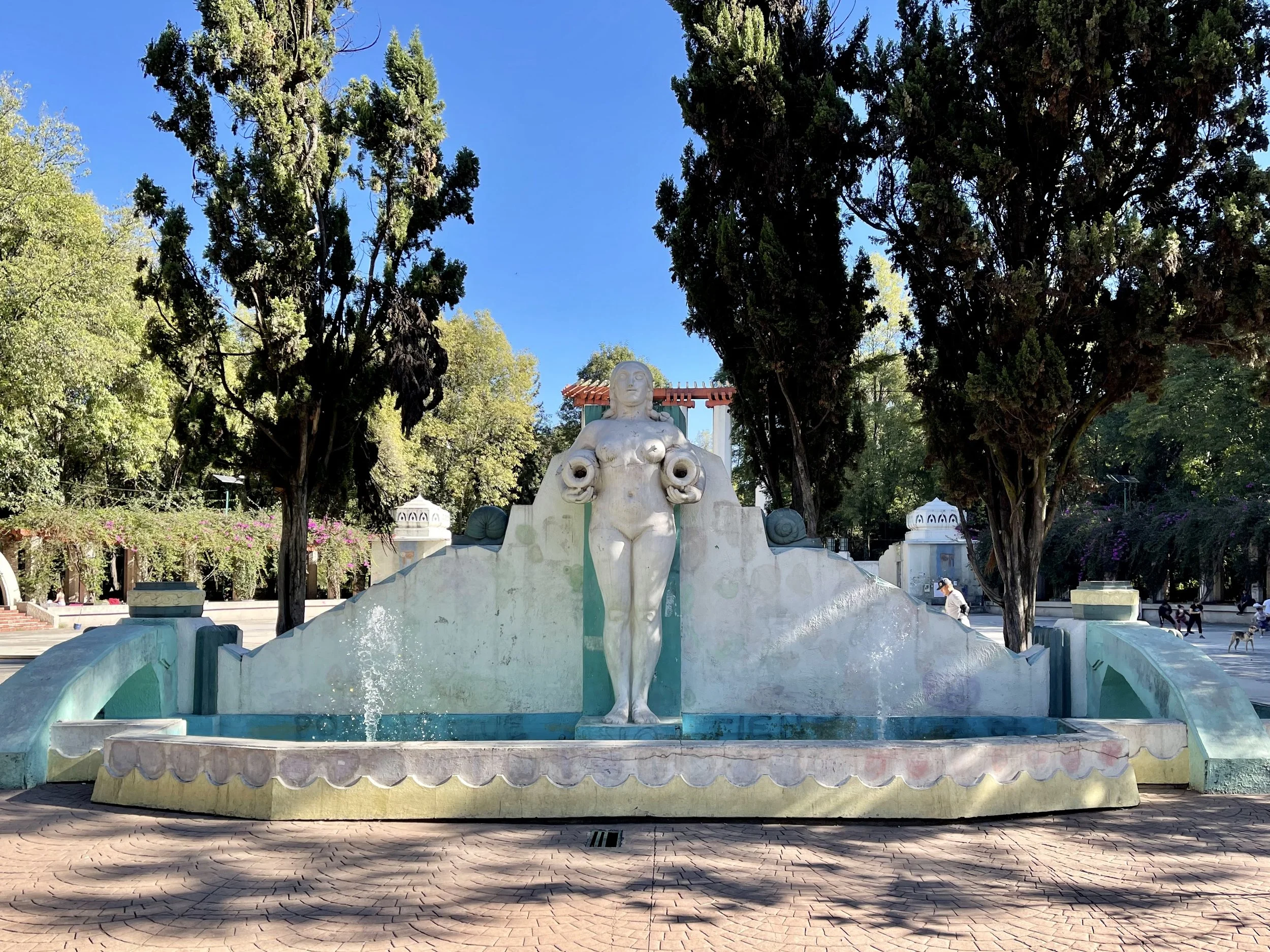
Fuente de los Cántaros in Parque Mexico in Mexico City

Nice jugs! El Fuente de los Cántaros (Fountain of the Pitchers) was modeled after Luz Jiménez, once the go-to model for indigenous Mexicans.

Standing serenely in front of the open-air Teatro al Aire Libre Coronel Lindbergh, named in honor of the American aviator, is a concrete figure of a nude woman holding a pair of jugs (literally). Known as Fuente de los Cántaros (Fountain of the Pitchers), it depicts Luz Jiménez, who modeled for its creator, José María Fernández Urbina, as well as Diego Rivera and Tina Modotti. She was considered the it girl archetype of the Mexican indigenous woman.

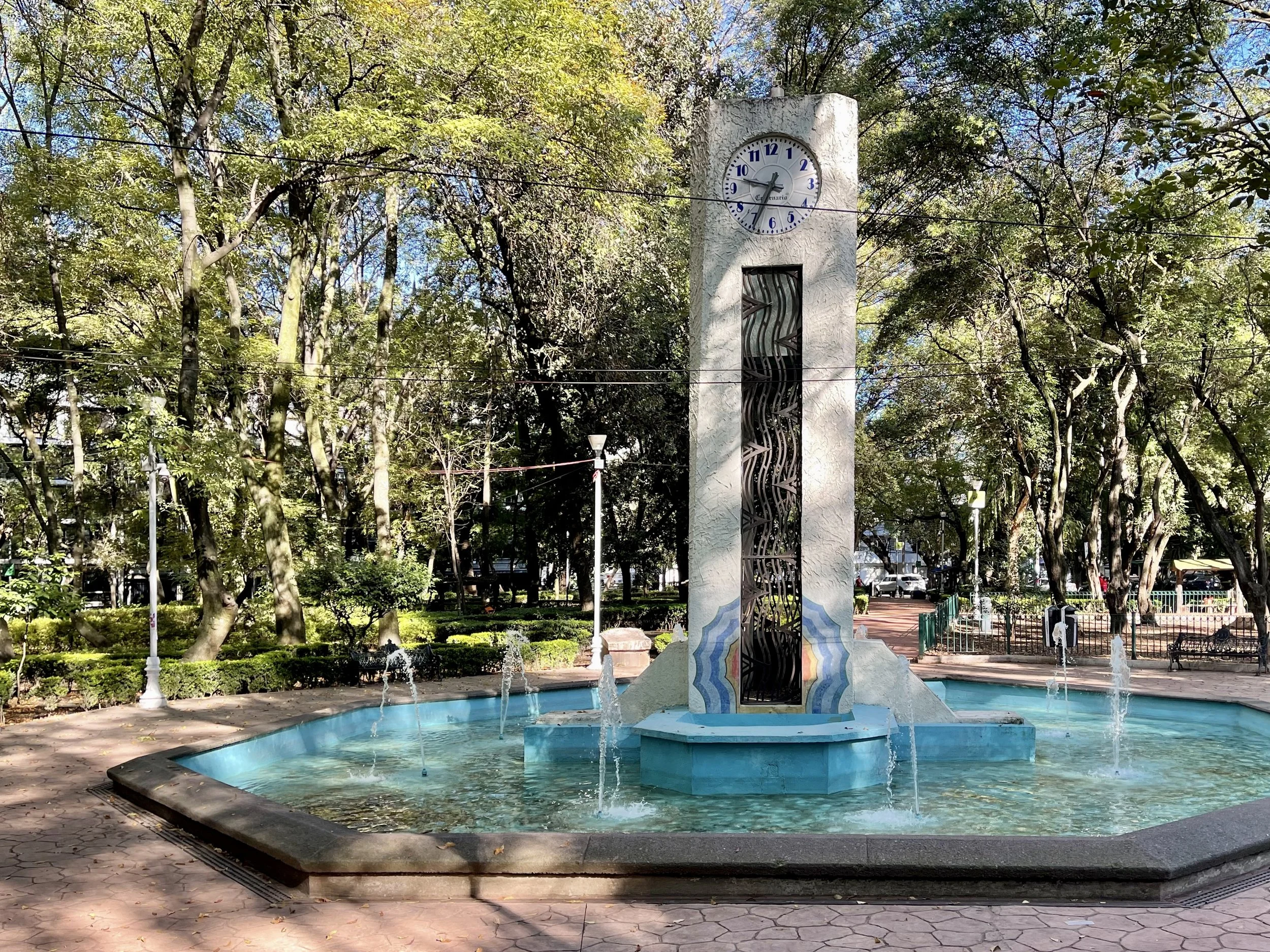
Clock tower fountain in Parque Mexico, CDMX

This clock tower with Art Deco ironwork, designed by Leonardo Noriega, has bells that chime to mark the hour.

Every visitor to Mexico City should spend some time in this colonia — if not use it as a base, as we did, staying in the delightful and chic Octavia Casa. –Duke

Catch the Bazar Sábado While You Can

The ephemeral San Ángel market in Mexico City is worth saving a Saturday for.

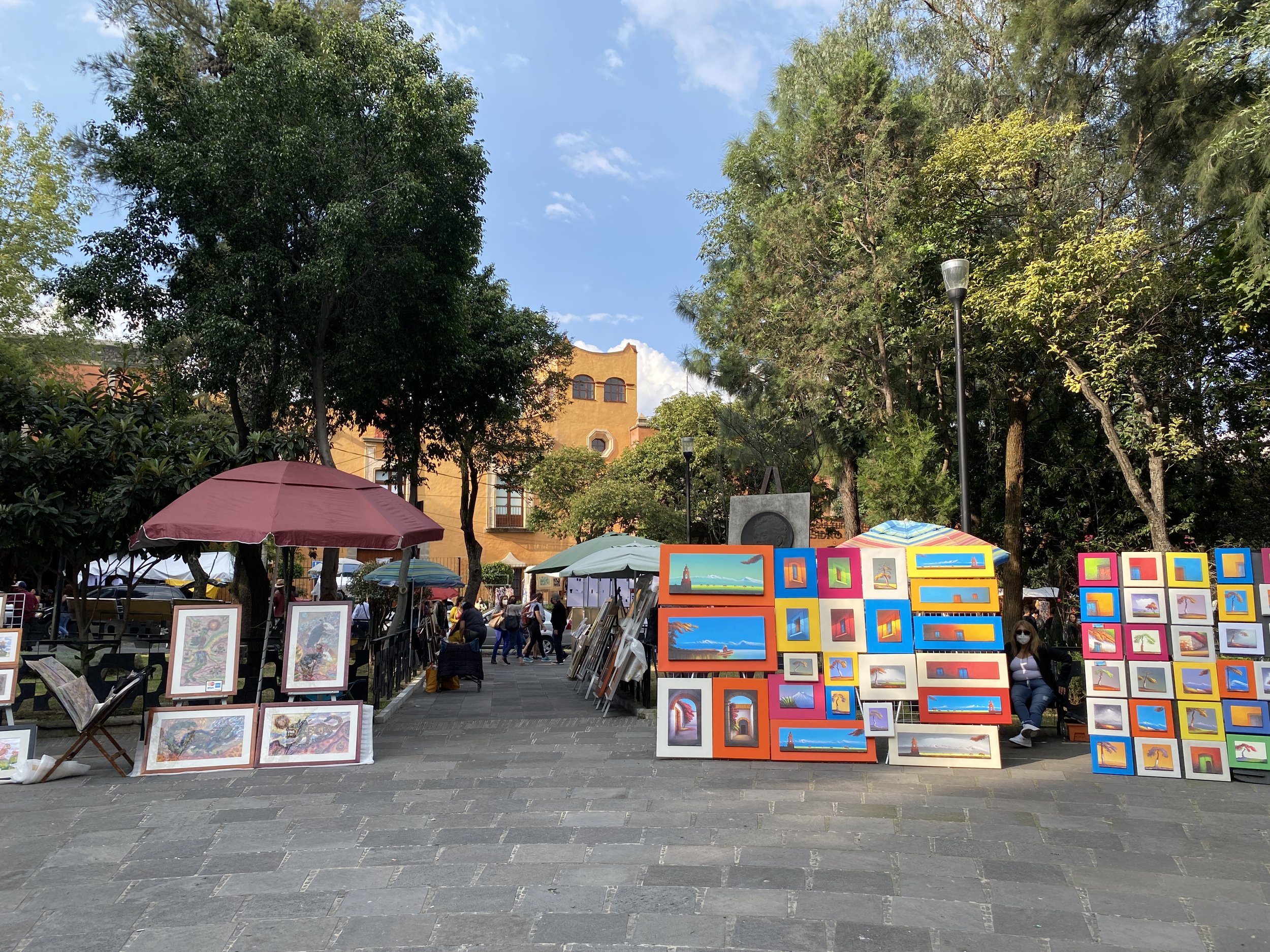
Paintings for sale outside at the Bazar Sábado

Handicrafts, artworks, pottery and other goodies are on sale at the Saturday Bazaar — one day a week only.

Unlike the village of Brigadoon, which rises out of the Scottish mist once every 100 years, the no-less-enchanting Bazar Sábado in the colonia (neighborhood) of San Ángel in Mexico City bursts into life every Saturday. An artisanal market rises and fills the hilly cobblestone streets, Plaza del Carmen and surrounding shops.

Originally, the colonia, located southwest of Centro, the city center, was a weekend retreat for Spanish nobles, who built their 19th century colonial-style homes here. 

The enchanting Bazar Sábado in San Ángel bursts into life every Saturday. The artisanal market fills the hilly cobblestone streets, plaza and surrounding shops.
Market stalls selling handicrafts at the Bazar Sábado

The handicraft portion of the bazaar lines the street.

Shopping in San Ángel, CDMX

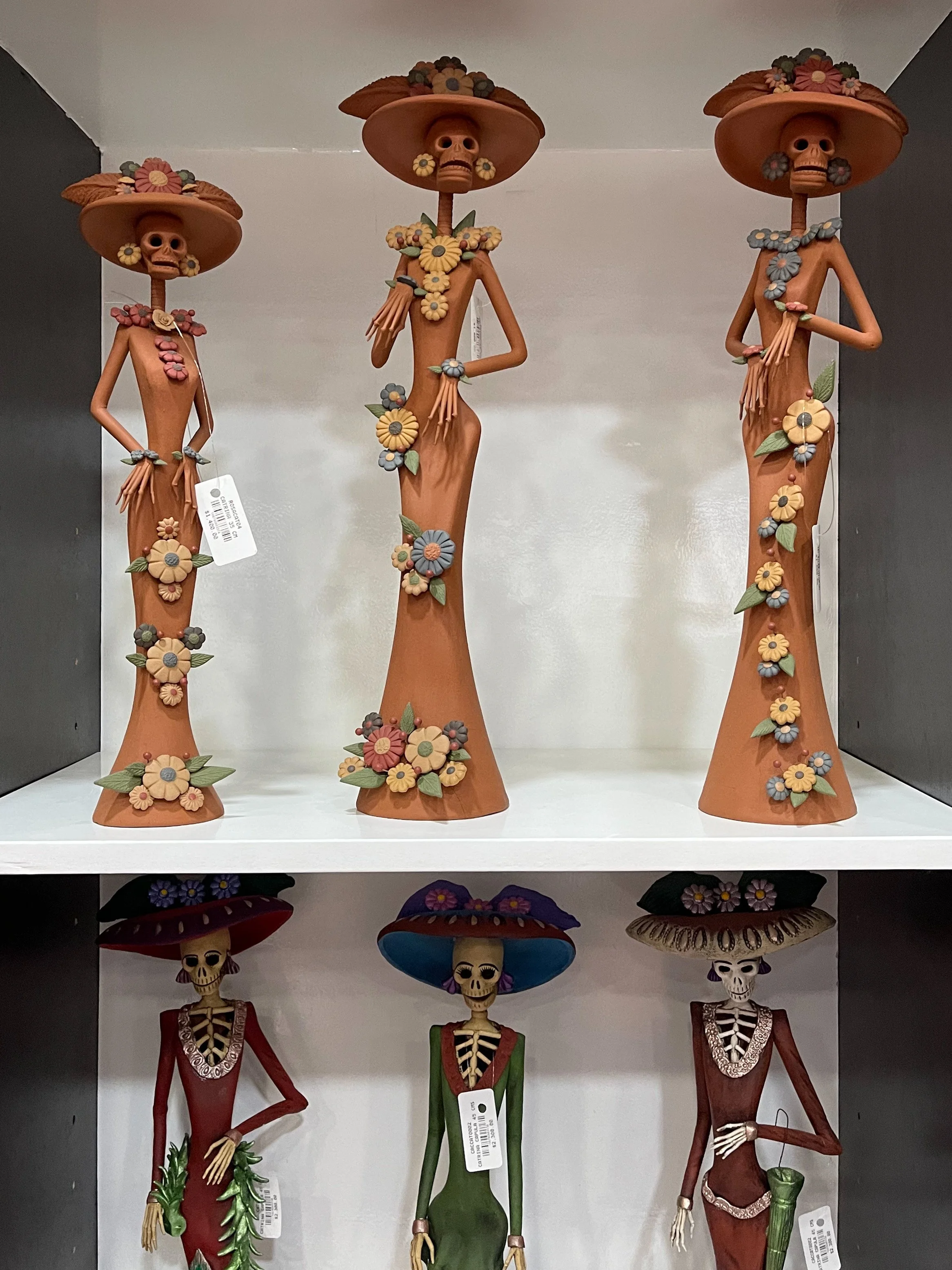
A few of the shops, including Caracol Púrpura, have beautiful contemporary and traditional objects for sale but were too expensive for us. We wanted to take some pictures to write about their shop but they told us no photos when they saw us getting ready to take a few snaps. We managed to capture a few anyway — we are the Not So Innocents Abroad after all! 

Sign of the store Caracol Púrpura

A high-end shop in San Ángel

No photos allowed!

Catrinas for sale at Caracol Púrpura

Long and lean Catrinas

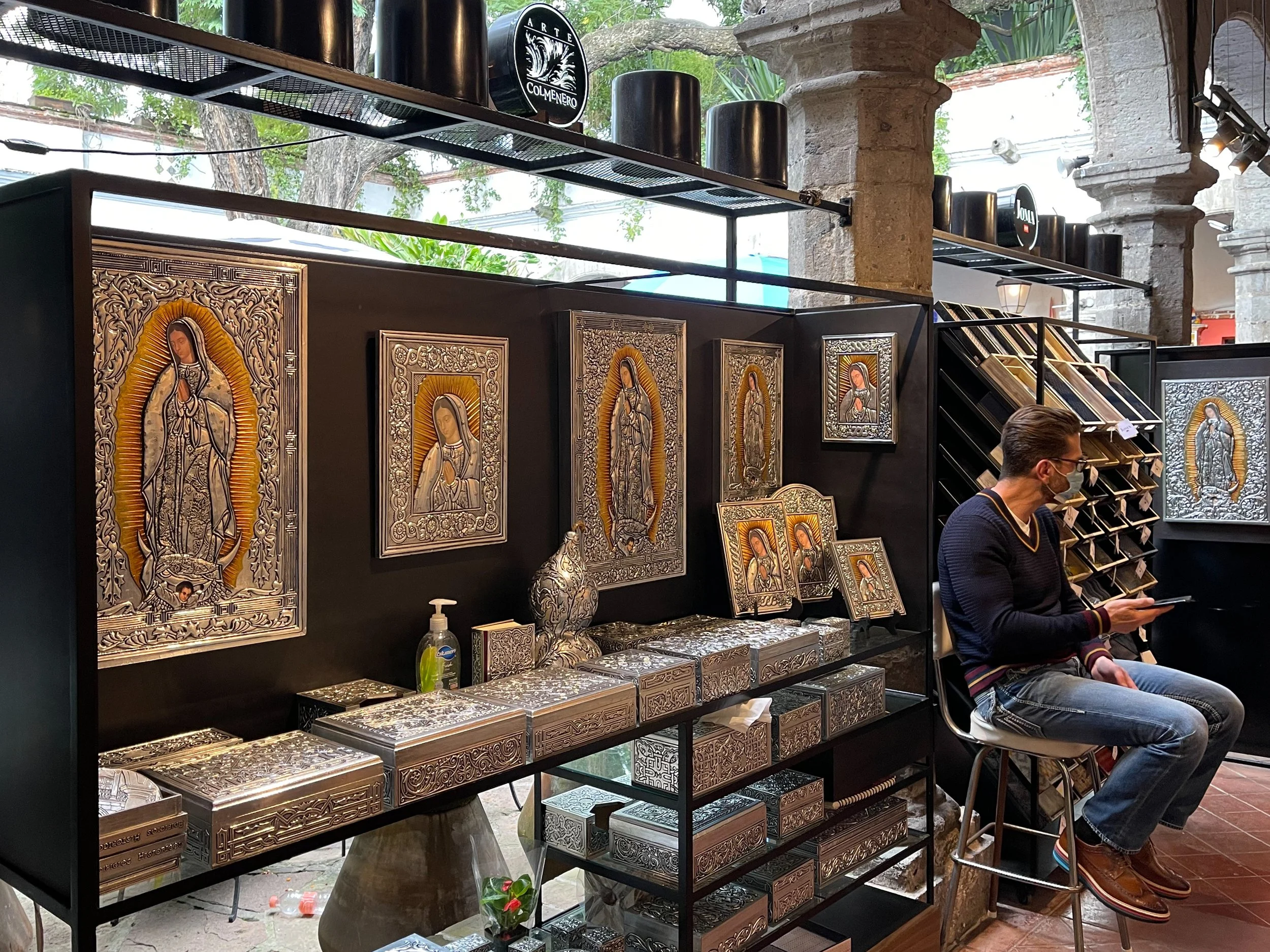
Man selling pressed tin artwork of the Virgin Mary at the Bazar Sábado

Pressed tin depictions of the Virgin Mary

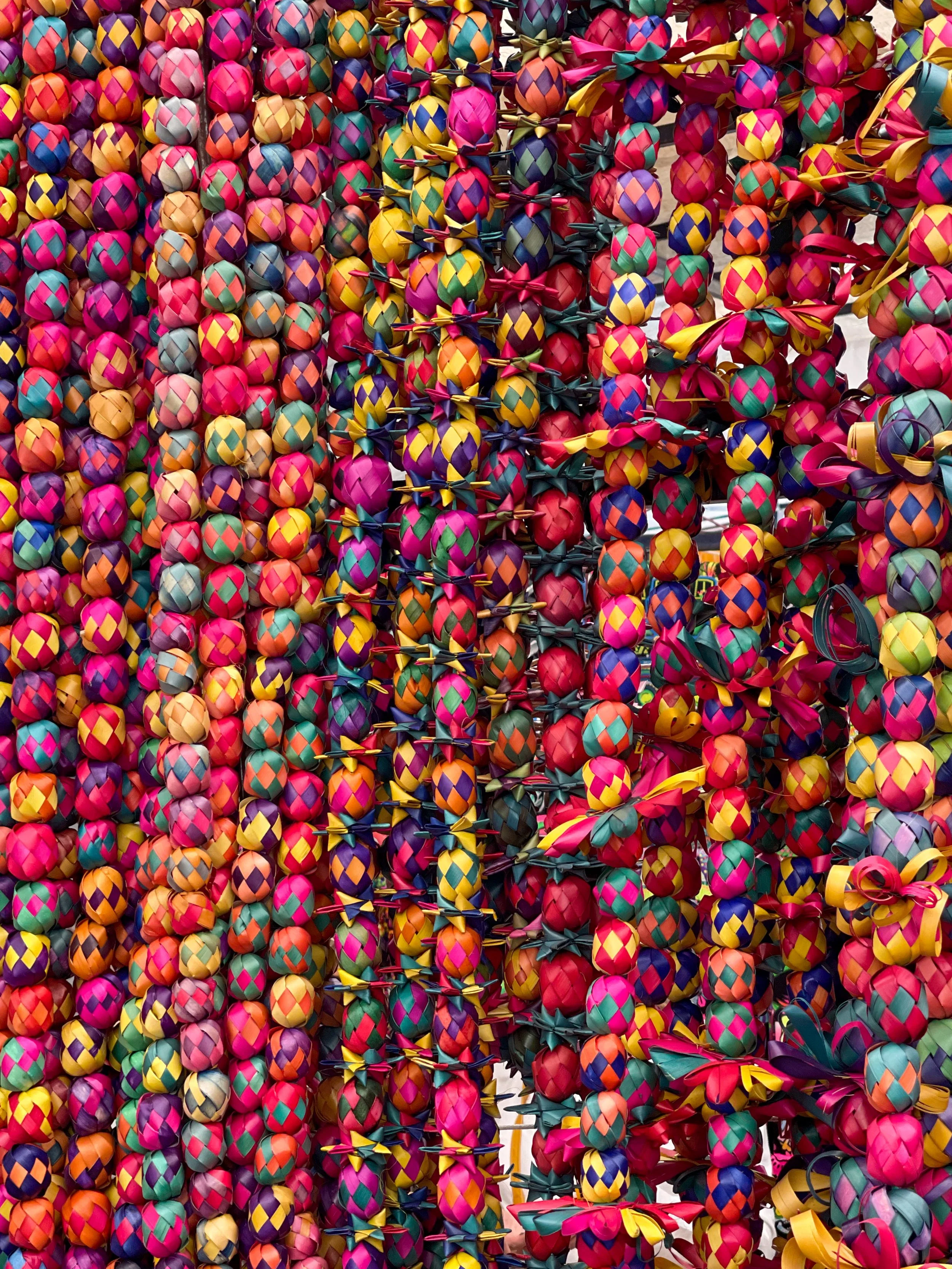
Colorful woven garlands at the Bazar Sábado

Colorful garlands woven from palm leaves

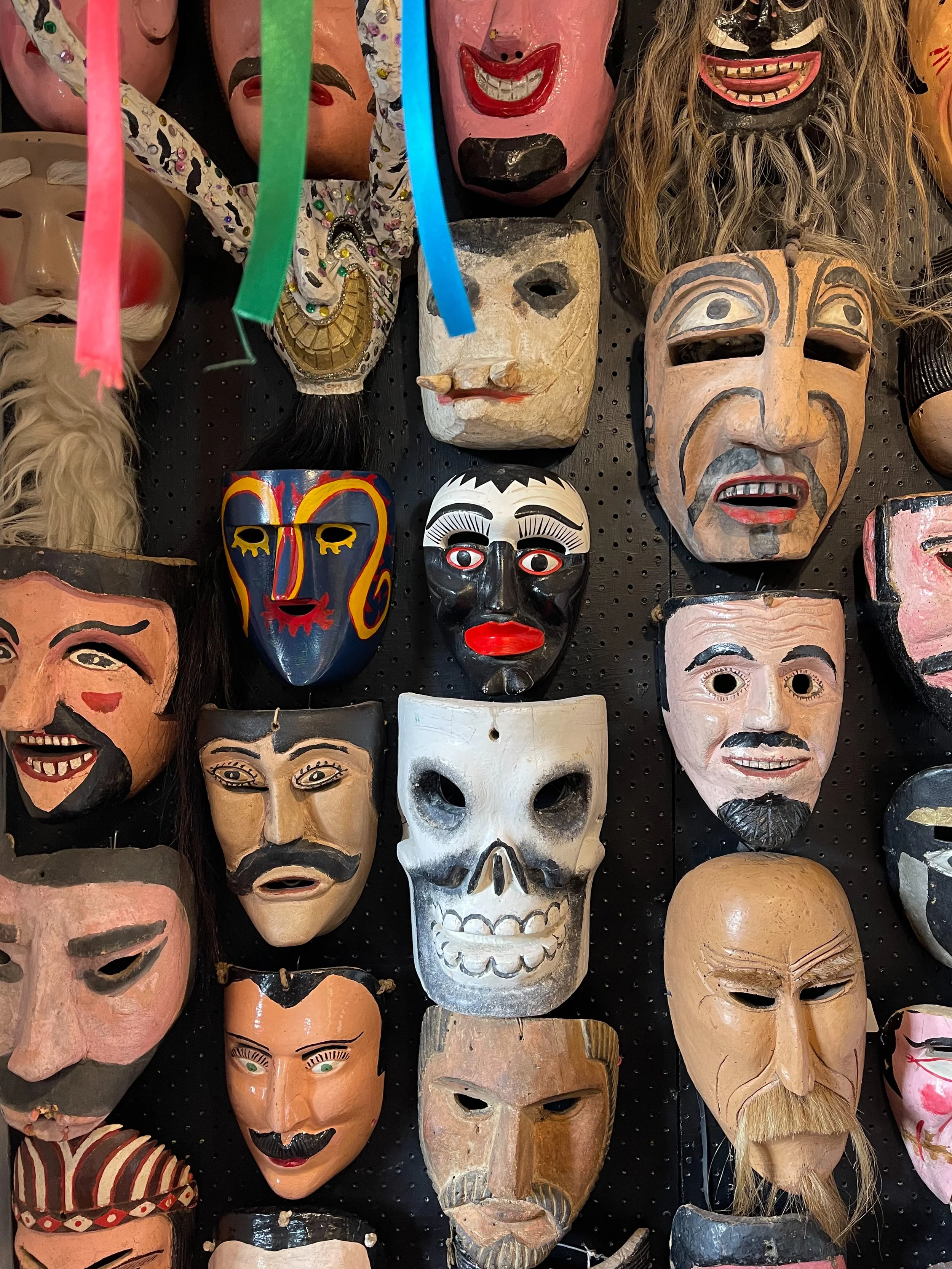
Painted masks for sale at the Bazar Sábado

A fun selection of masks for sale

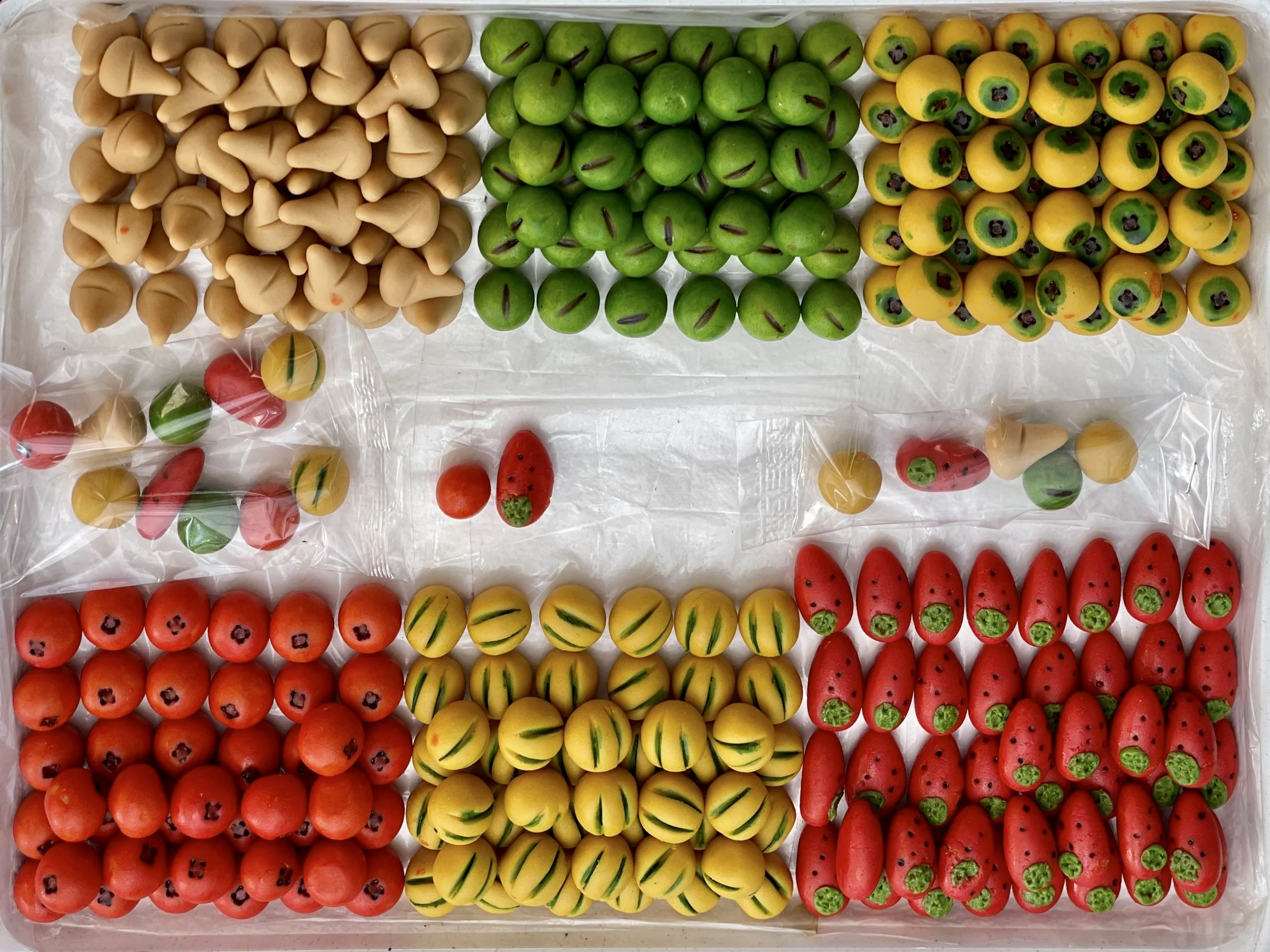
Marzipan fruit at el Bazar Sábado

These adorable tiny fruits are made of marzipan.

The next shop we entered was called Paskwarho. While Wally and I looked at a display of hand-painted dishware, we met Arturo, an expat and cofounder, who relocated from Chicago. I’m assuming that my Midwestern accent and Spanglish tipped him off. He kindly said to me that even after living in the country for many years he still doesn’t understand everything that’s said to him. 

We bought a papier-mâché skull rattle with an articulated jaw that was handmade by one of the women who works in the shop as well as a burnt orange and white casserole baking dish hand-painted in the capulineado style, a pointillist flower pattern named after the town where they’re made. 

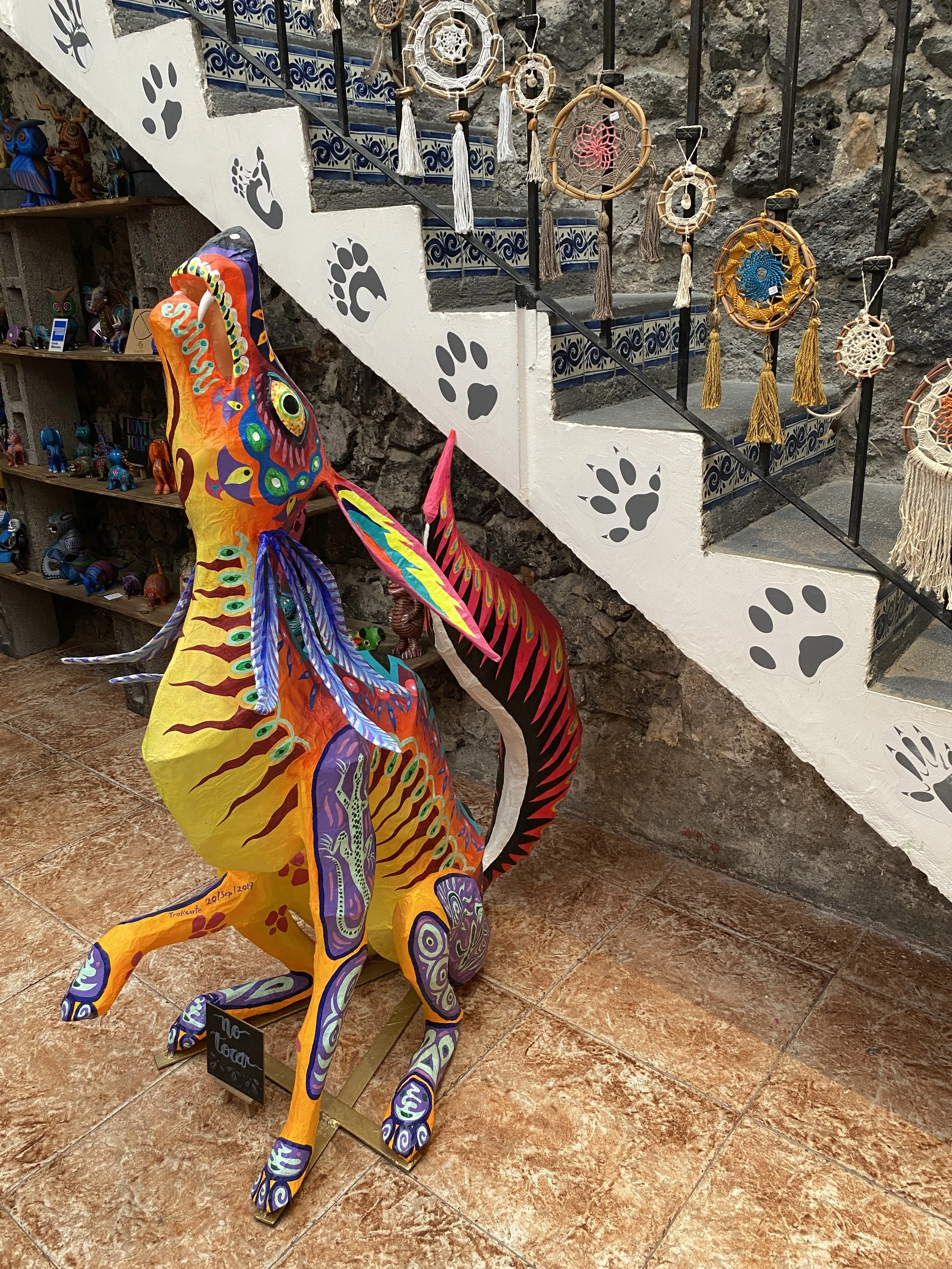
Colorful howling wolf alebrije by stairs

A large howling wolf alebrije — fantastical Mexican folk art creatures

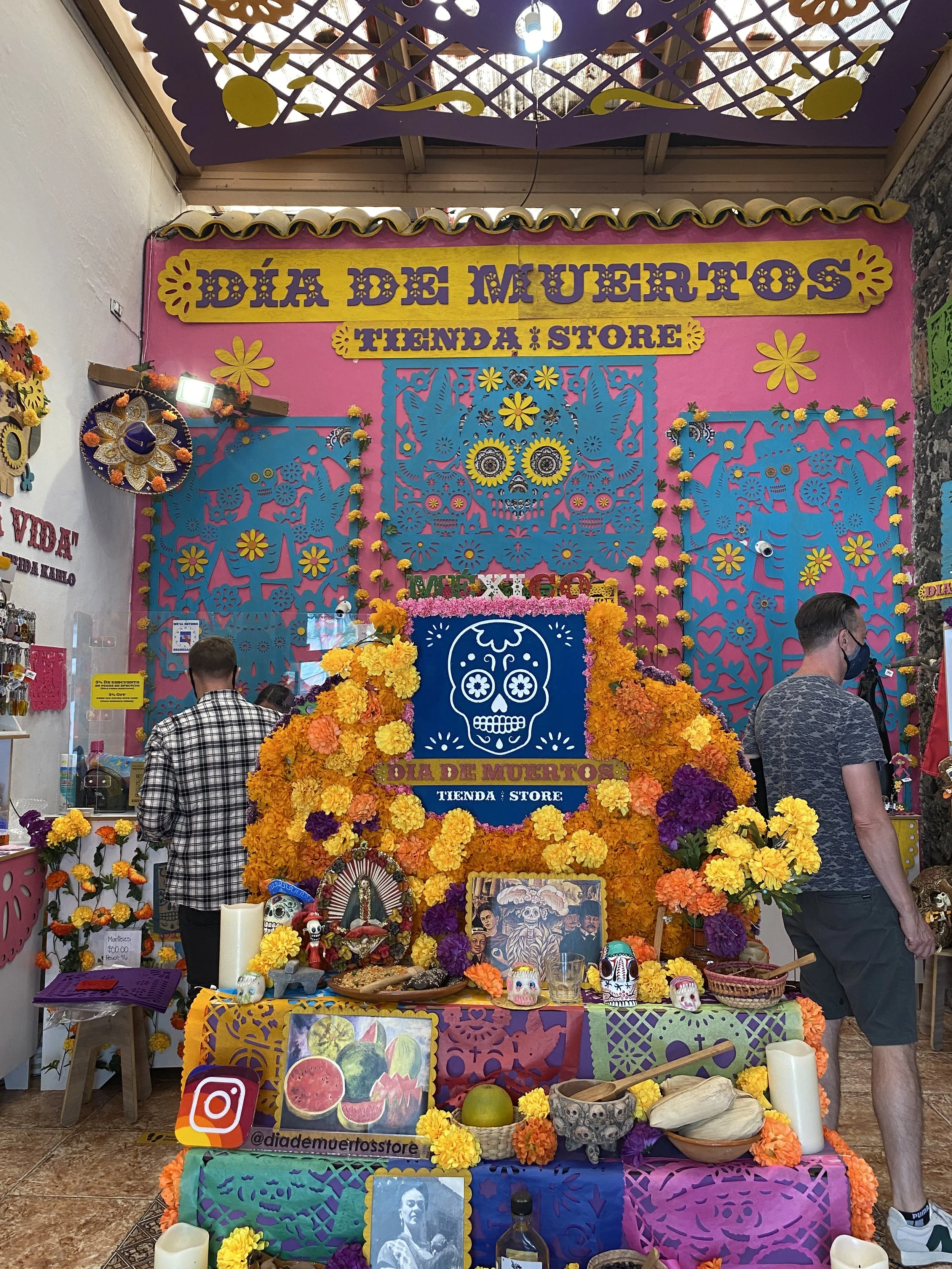
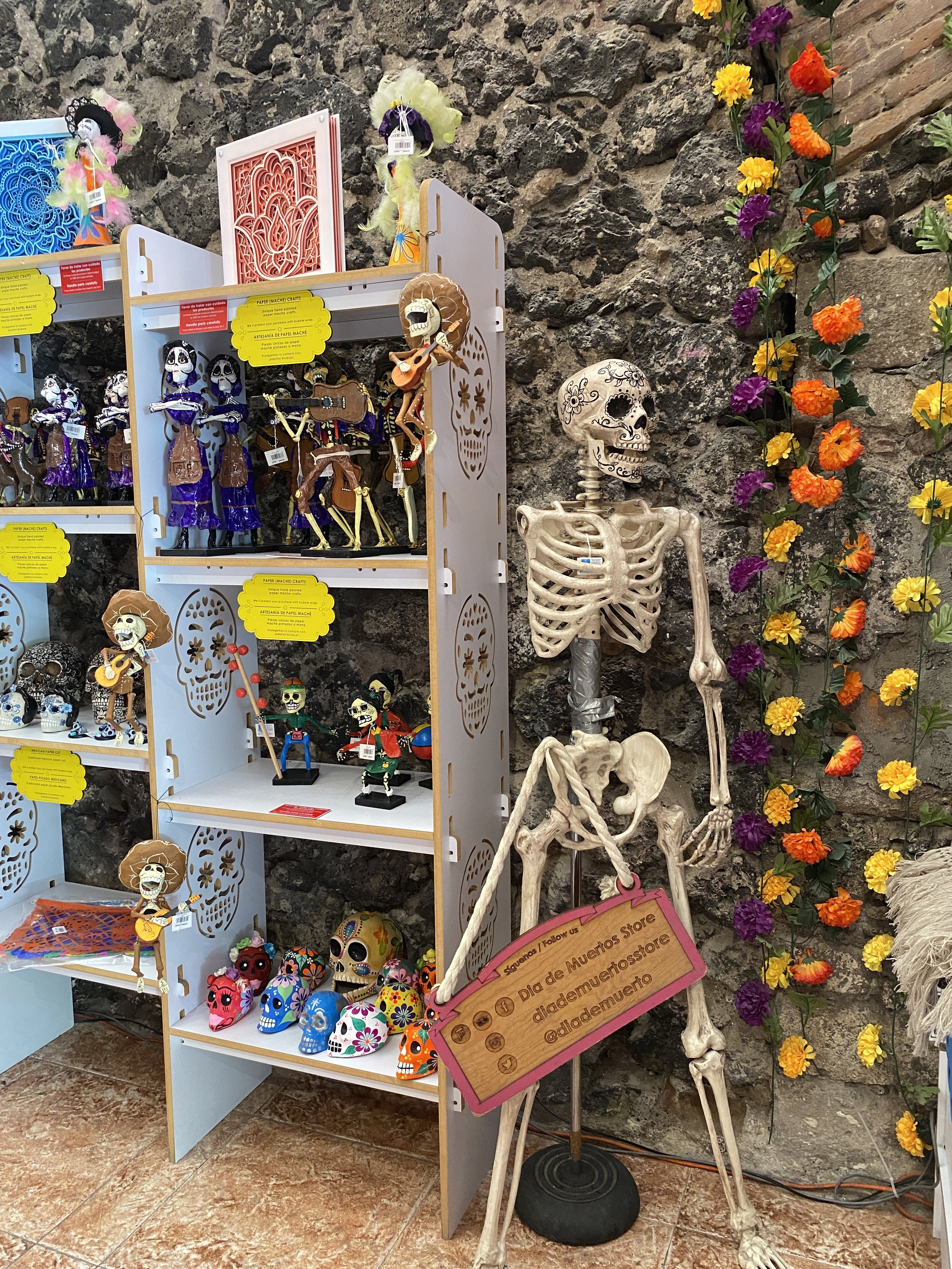
Día de Muertos tienda at the Bazar Sábado

A store devoted to Día de Muertos

Skeletons, skulls and catrinas for sale at the Bazar Sábado

Skeletons, skulls and marigolds

Artisans Galore

Outside are a multitude of tented stalls selling everything from handicrafts to jewelry to pottery and more. We purchased a couple of T-shirts and a change purse to keep our growing collection of coins.

The market can get crowded, but uttering a simple, apologetic, “Con permiso” goes a long way and will help you pass others politely. It’s like saying, “Excuse me” in English. 

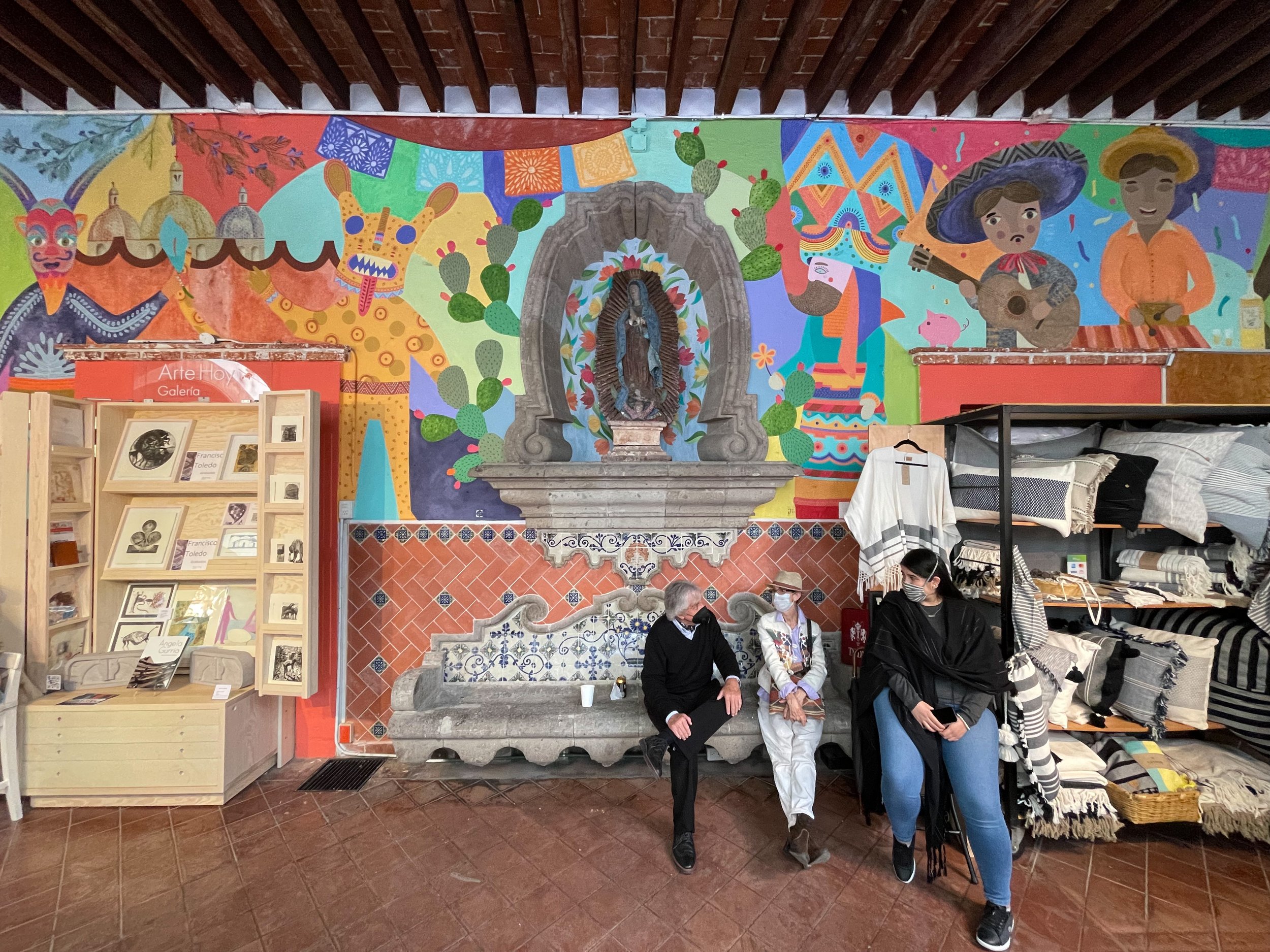
People sitting below mural at el Bazar Sábado

A delightful mural in the building that houses part of the Bazar Sábado

The Bazar Sábado was founded in 1960 as the first of its kind before relocating to its current home in 1965 and contains hundreds of artists and an open-air interior courtyard with a restaurant. After taking our temperature and offering us hand sanitizer, we were permitted to enter. 

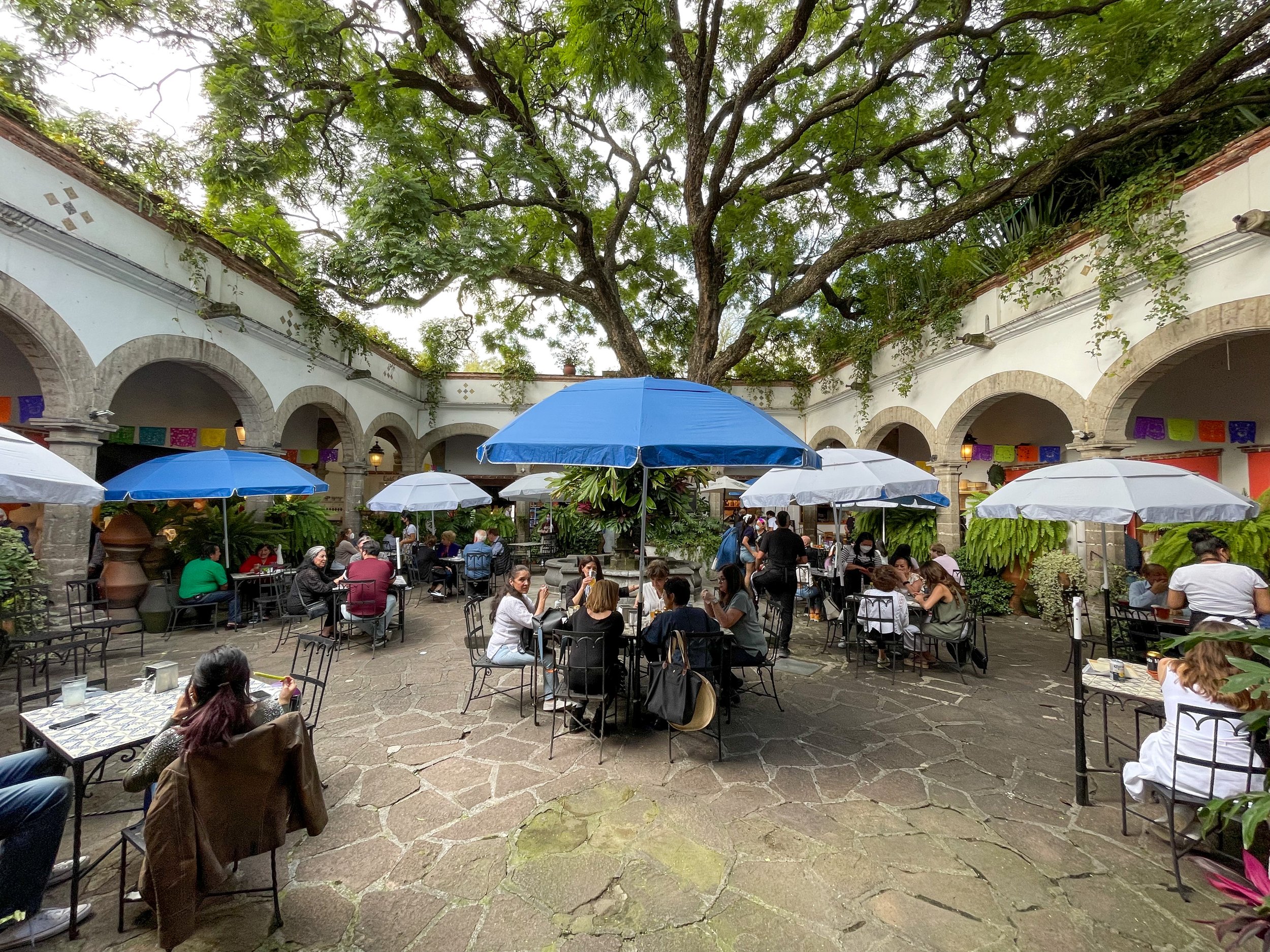
Courtyard restaurant with large tree at the Bazar Sábado

There’s a restaurant in the central courtyard, where women cook up meals on large griddles.

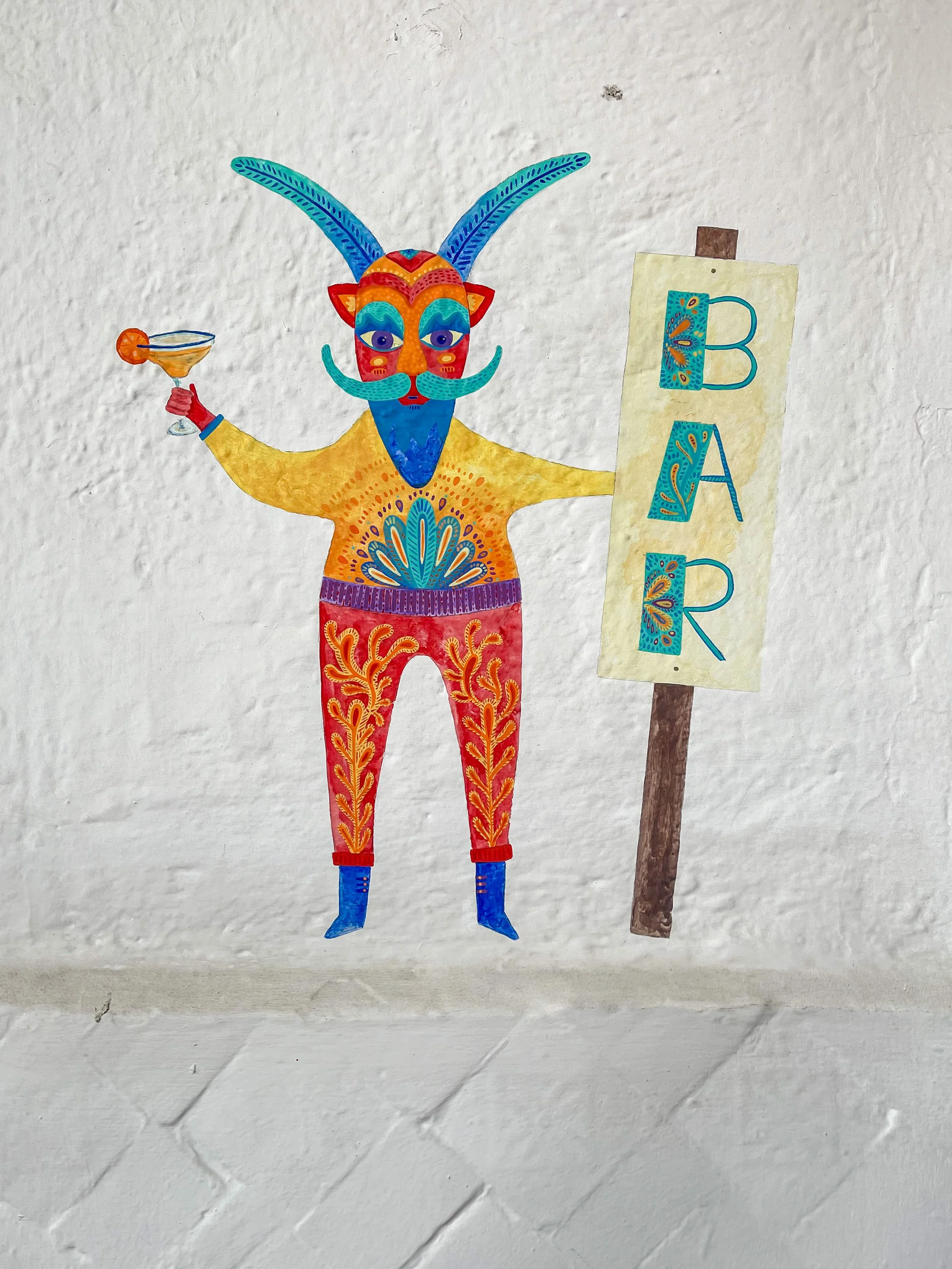
Sign that says "Bar" with monster drinking a margarita

Follow the sign.

Woman and man drinking at bar in the Bazar Sábado

And grab a drink at the small bar.

A devilishly cool sculpture hanging in one of the rooms adjoining the courtyard

We found a stand for Cervecería Monstruo de Agua, a Mexico City-based microbrewery offering a distinctive range of beers. They were one of my favorite discoveries on this visit. I had purchased a couple of bottles of Sugoi, a blonde ale brewed with agave, ginger and lemongrass at a small beer shop in La Condesa. I mean, who can resist a brand whose mascot is an axolotl, an amphibian with a long tail, six hornlike appendages and bulging eyes and whose name translates as “water monster” in Náhuatl? Not us! We ended up buying a small round glass with the creature embossed on it. 

Whimsical animal sculptures

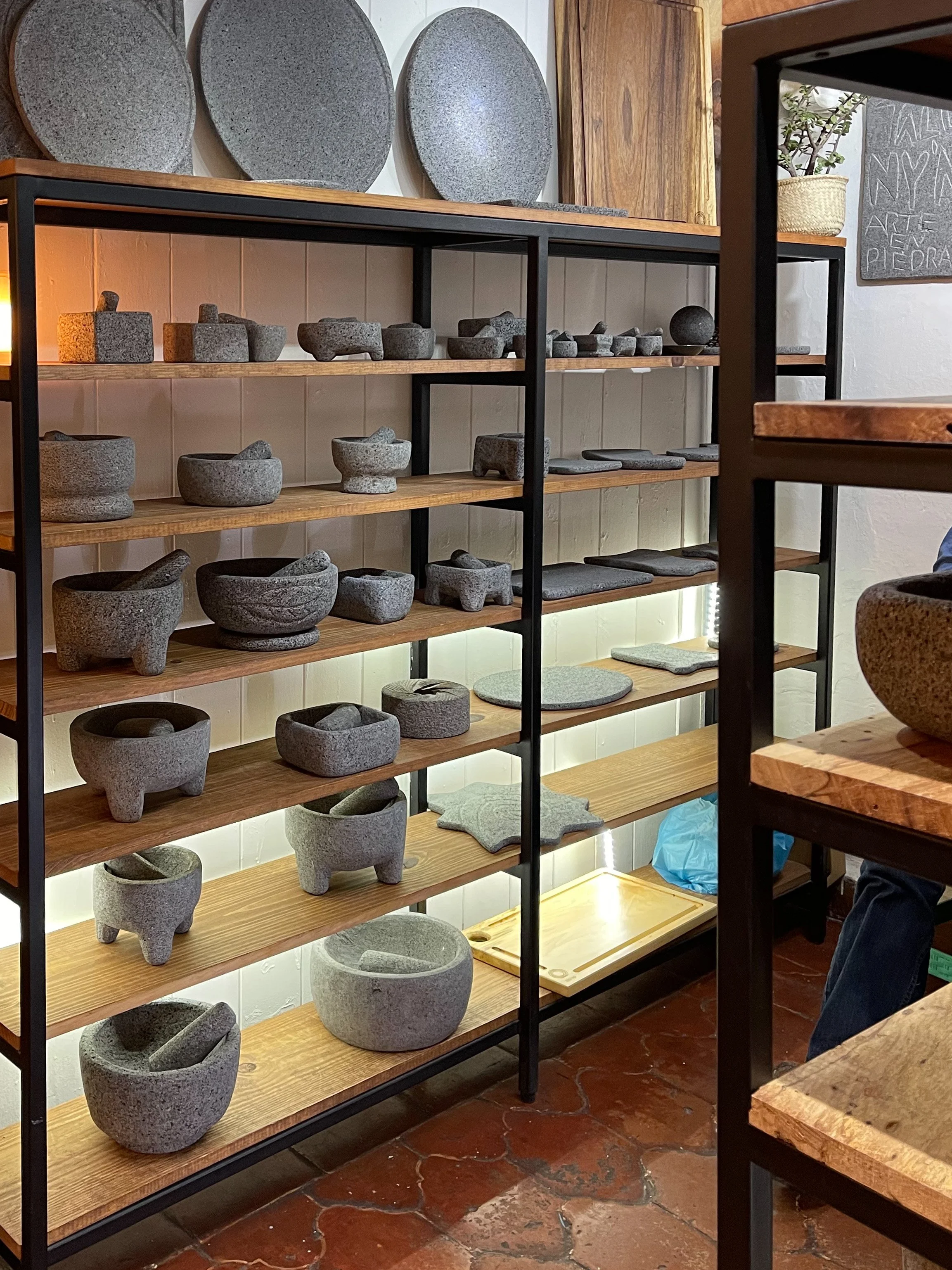
Volcanic rock pottery at the Bazar Sábado

Molcajetes made of volcanic stone are a must for home-made guacamole.

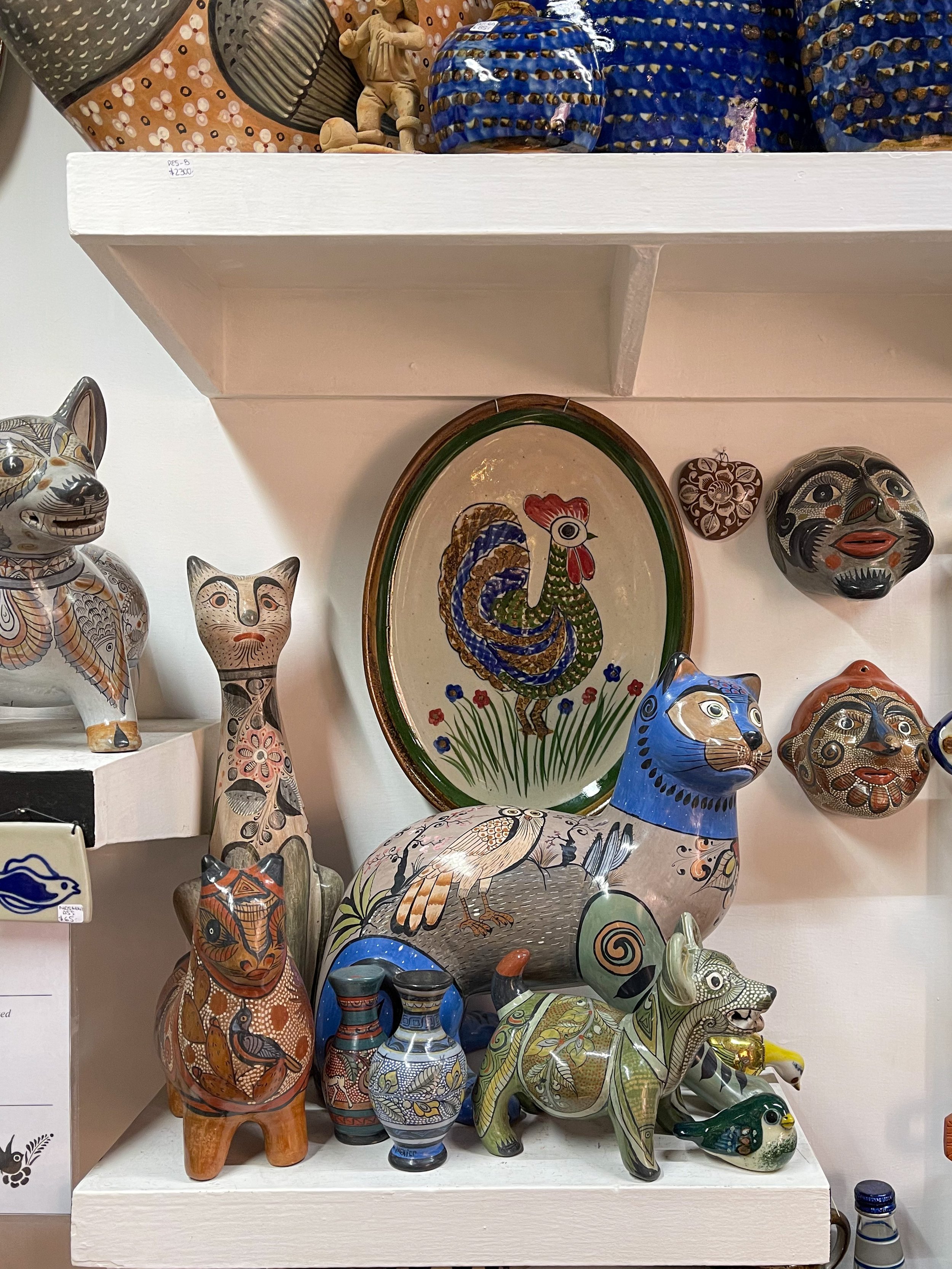
We were delighted to discover Cerámica San Germán, a shop filled with traditional hand-painted ceramics and stoneware from the town of Tonalá. We purchased several bowls and a plate depicting the nahual, a jaguar-like cat with a smiling face. 

Also of note were the wares of Silva Dufour. I loved the colors and satin-finish glazes of their ceramic objects, which included scarab beetles and contemporary interpretations of traditional helmet masks. 

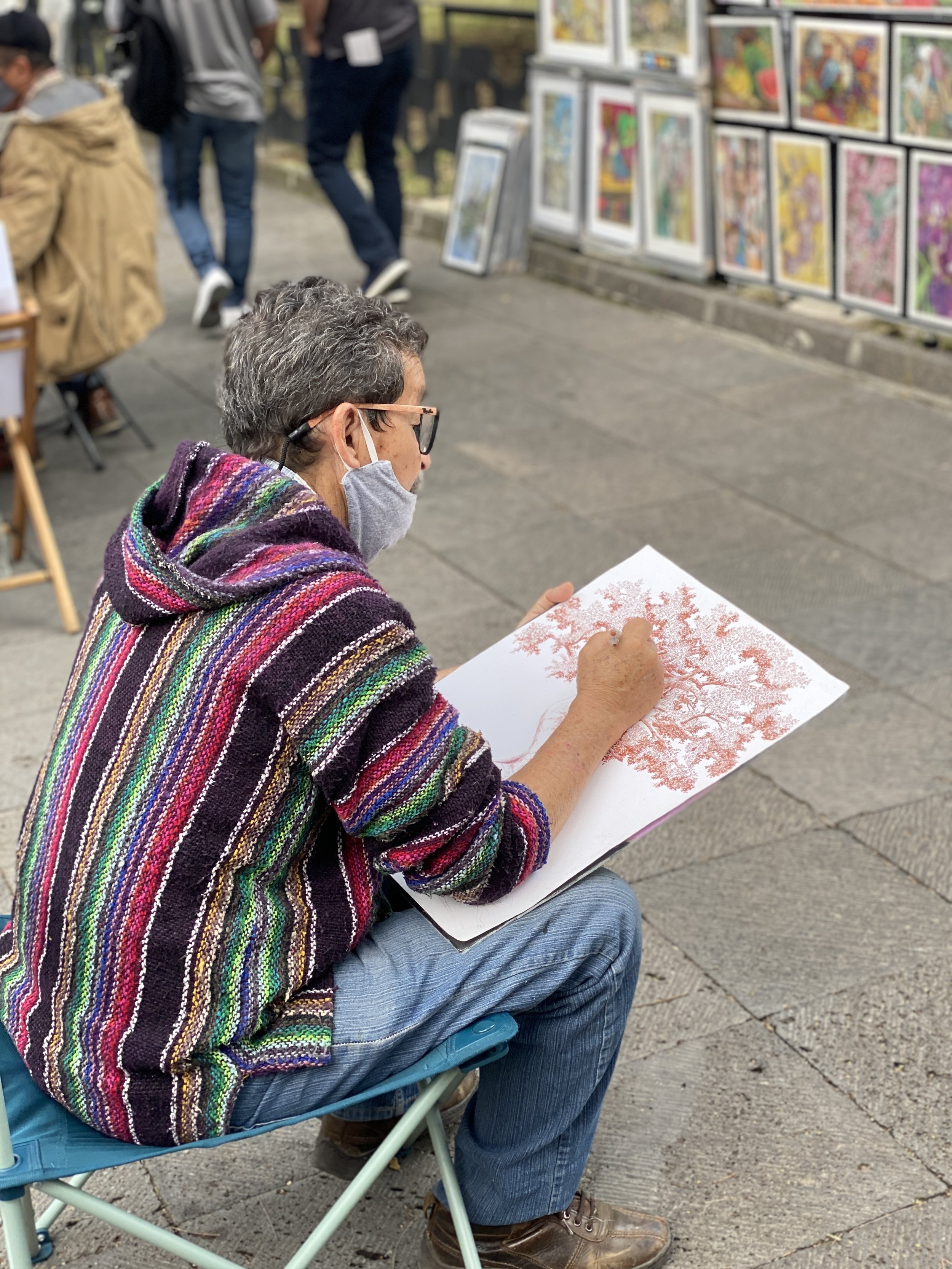
Artist working on a drawing outside at the Bazar Sábado

One of the artists at work

When we exited the bazaar, we brought the unfinished open bottles of Monstruo de Agua with us. An elderly local artist in the park, which is filled with painters selling their artworks, told us that it’s prohibited to drink alcohol outside. I’m not sure the police would have noticed, but we returned to the building to finish our beers. Better to err on the side of caution than to risk violating the law in another country. 

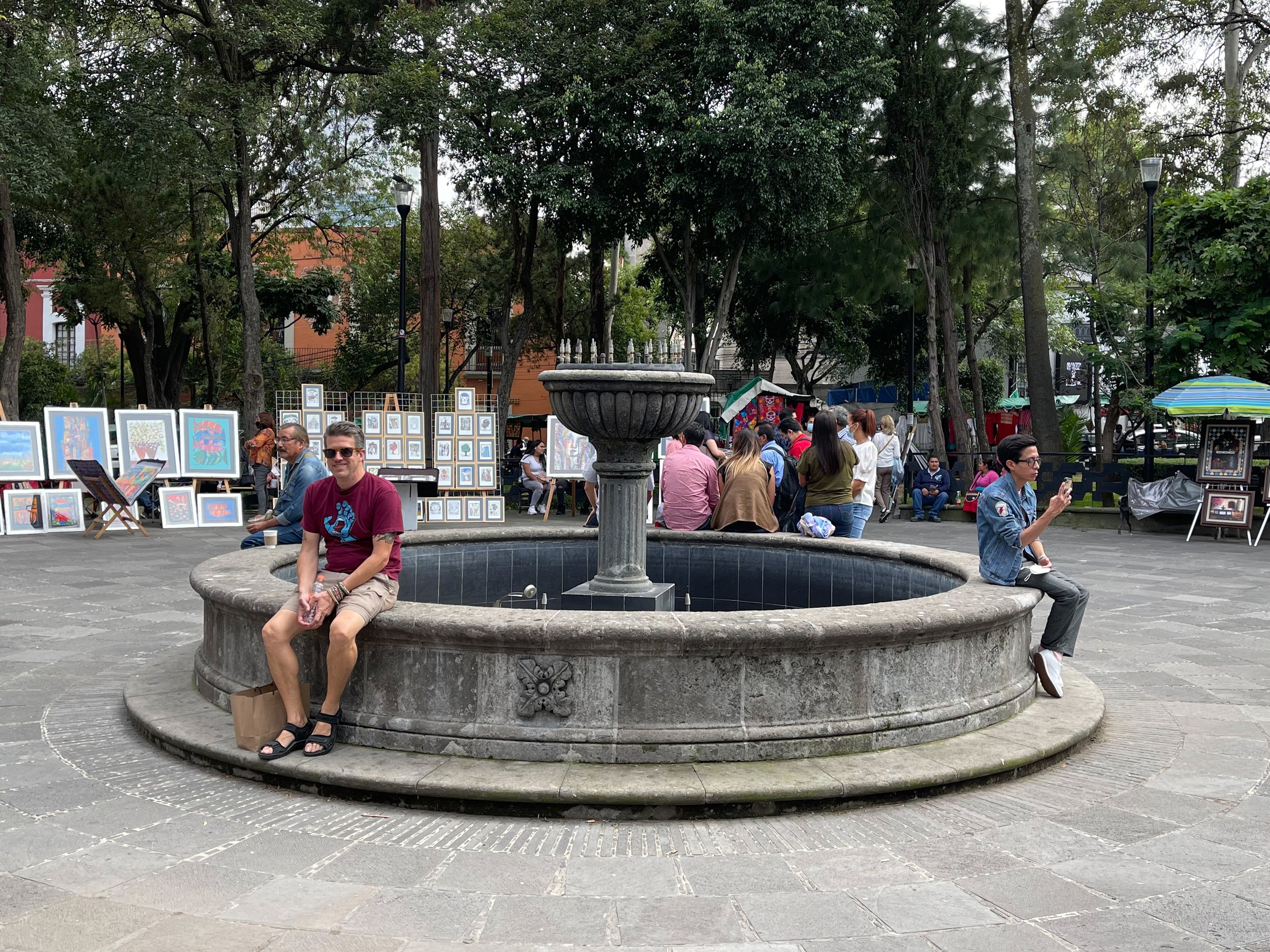
Men sitting on fountain in plaza of el Bazar Sábado

The plaza with this fountain is surrounded by artists selling paintings.

Luchadore masks for sale at Bazar Sábado

Which luchador mask would you choose?

Wally purchased a few desiccated Roses of Jericho (aka resurrection plants) from a street vendor as gifts for his coworkers, and we wandered down the hill into Happening, a store and gallery that carried cool clothes and objects from local artists and designers. While there I saw La Escalera, a bold graphic print by Boston-born, Mexico City-based artist Sophie Greenspan. Wally remarked that it reminded him of the modern architecture of Luis Barragán, which we had experienced earlier in the day on a tour with The Traveling Beetle. 

The impressive tiled cupolas of Nuestra Señora del Carmen are visible from the end of the thoroughfare — just a stone’s throw from the bustling market area. 

We’ll definitely return to San Ángel on our next trip to CDMX (we’re utterly smitten), especially for the basement crypt at the Templo y Museo del Carmen to see the mummified bodies of wealthy donors to the Carmelite order. And for a chance to view the embalmed severed hand of former Mexican President Álvaro Obregón in the basement of the WWI monument to him. Who knew such a charming neighborhood held such gruesome secrets? –Duke


El Bazar Sábado

Plaza San Jacinto 11
San Ángel
Álvaro Obregón
01000 Ciudad de México
CDMX
Mexico

Puerto Vallarta Botanic Garden: Mexico’s Eden

Our budding romance with this lush nature preserve, which gets our vote for the best thing to do in PV. 

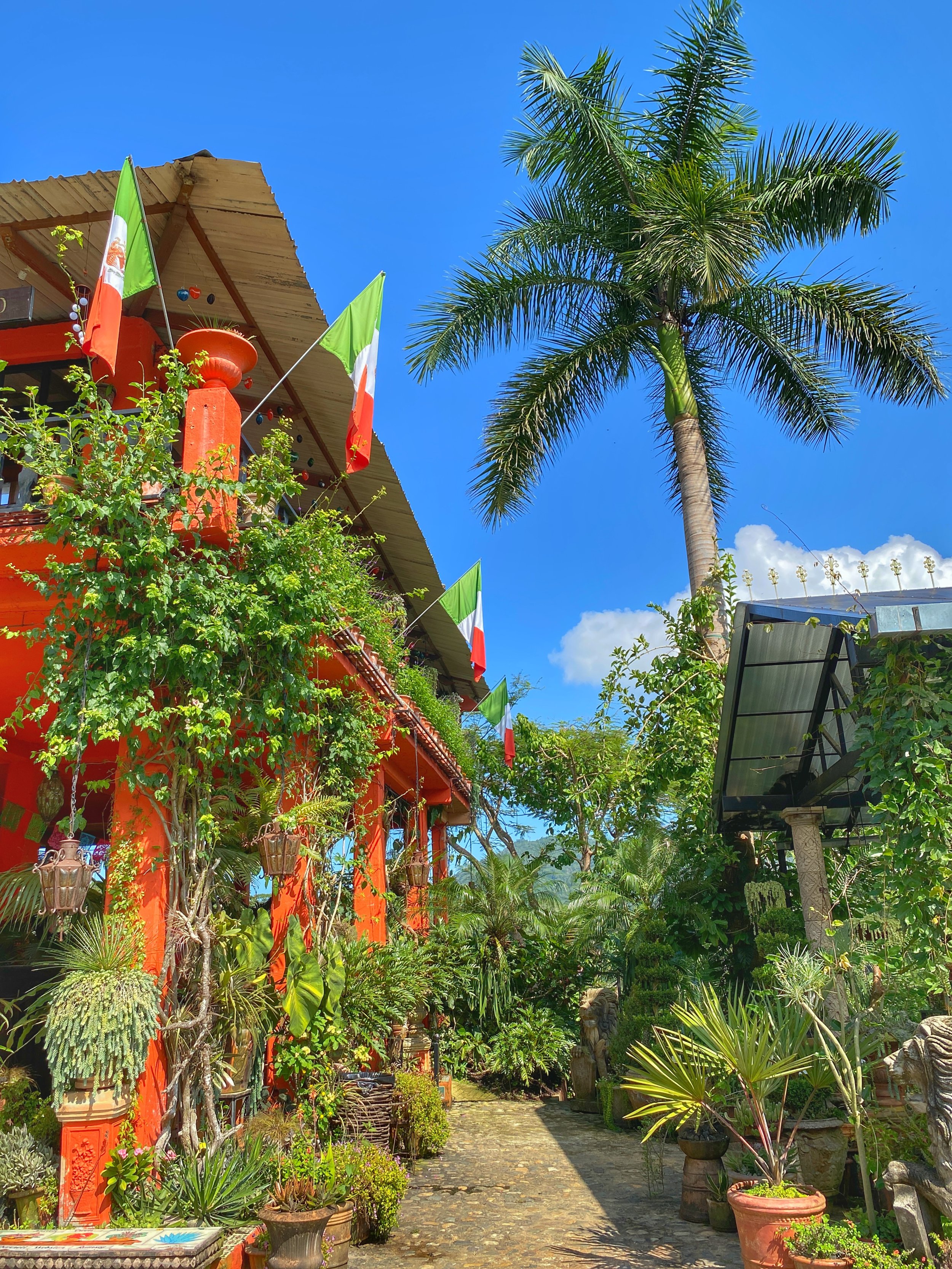
Hacienda de Oro at the Puerto Vallarta Botanical Gardens

The orange-hued Hacienda de Oro houses a restaurant and gift shop, with the Cactus House to the right.

At first, we didn’t embrace the laidback, beach-oriented vibe of Puerto Vallarta. Duke and I are used to filling our itineraries with things to do — and the most culture PV has to offer are drag shows like Mama Tits’ Confessions of a Ho! (you couldn’t make this shit up).

Needless to say, we were excited to learn about the Puerto Vallarta Botanic Garden. And, not surprisingly, our trip there was our favorite part of our vacation.

The most culture PV has to offer are drag shows like Mama Tits’ Confessions of a Ho!

So we were excited to learn about the Puerto Vallarta Botanic Garden. And, not surprisingly, our trip there was our favorite part of our vacation.

We didn’t come fully prepared — no bug spray, Duke wearing sandals and me in suede Vans — but kudos to you for reading this to prepare for your visit. 

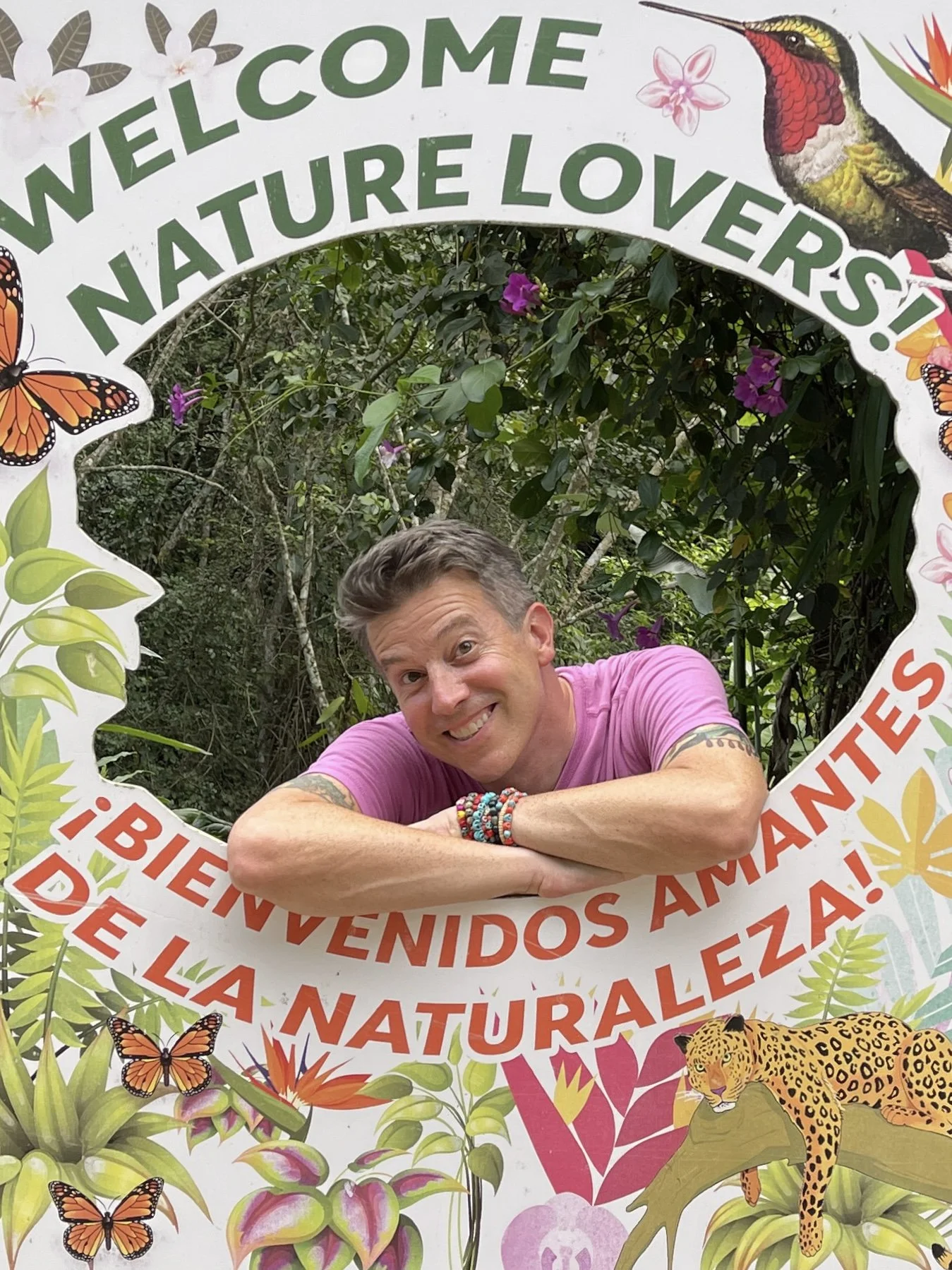
Man with sign at Puerto Vallarta Botanical Gardens

Look how happy exploring the botanic garden made Wally.

Take a Hike

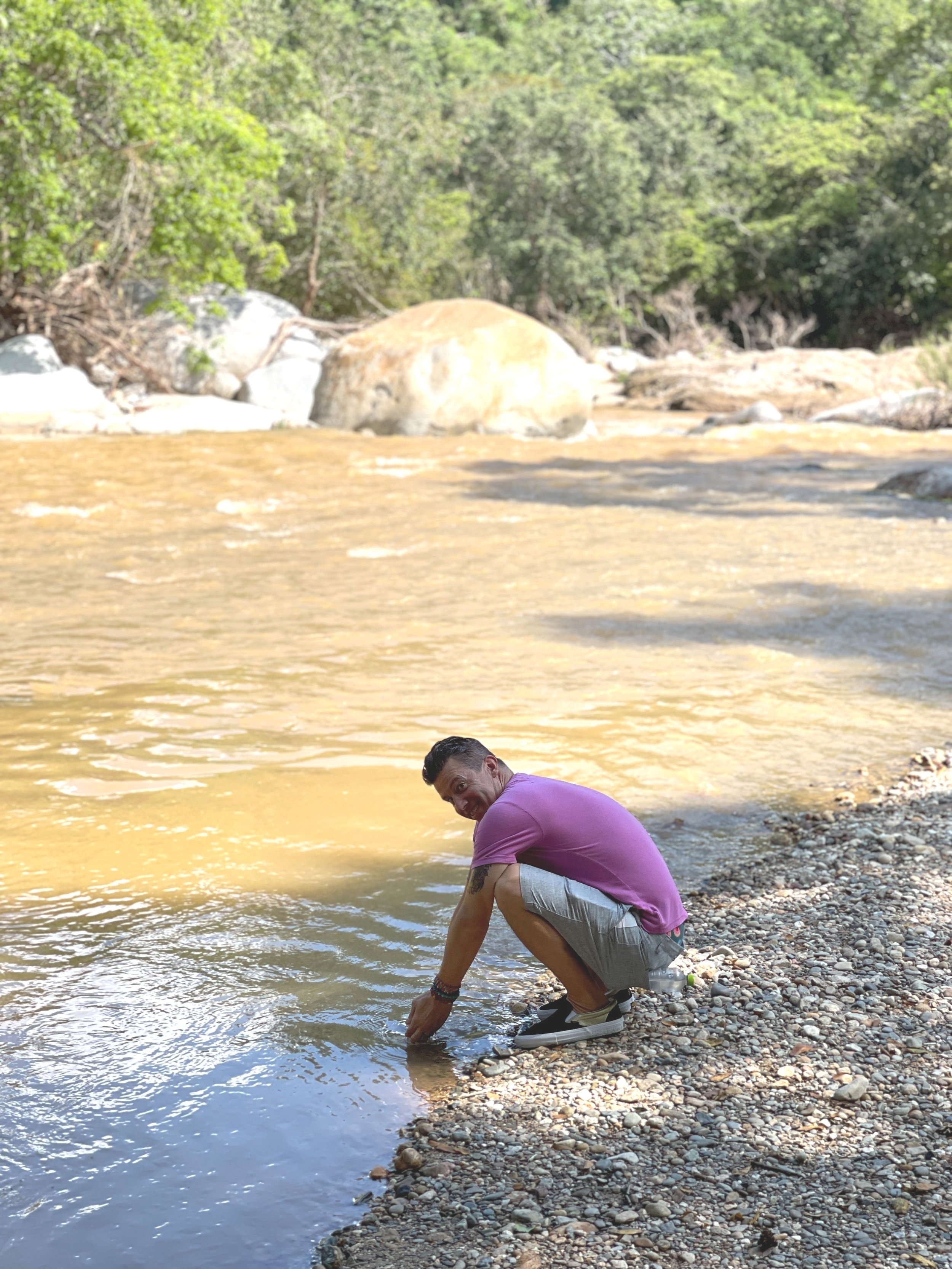
If you’re into hiking, there are numerous trails through the surrounding jungle. We started along one behind the Cactus House and found ourselves down by the river. I squatted down to wet my hair and neck. I’m not sure if we would have gone swimming in the brown water even if we had swimsuits, but it might be a good idea to wear yours just in case you really need to cool off. 

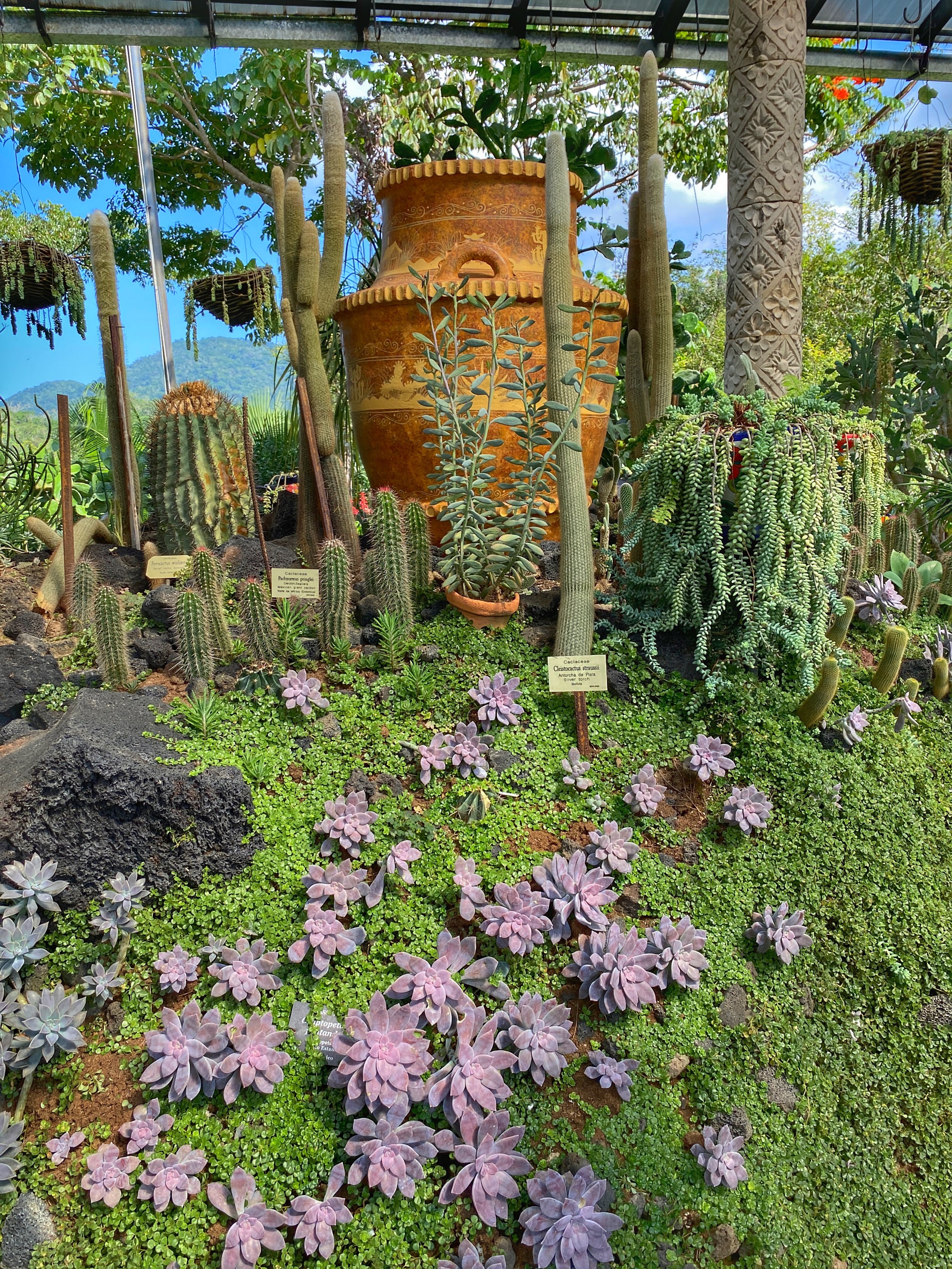
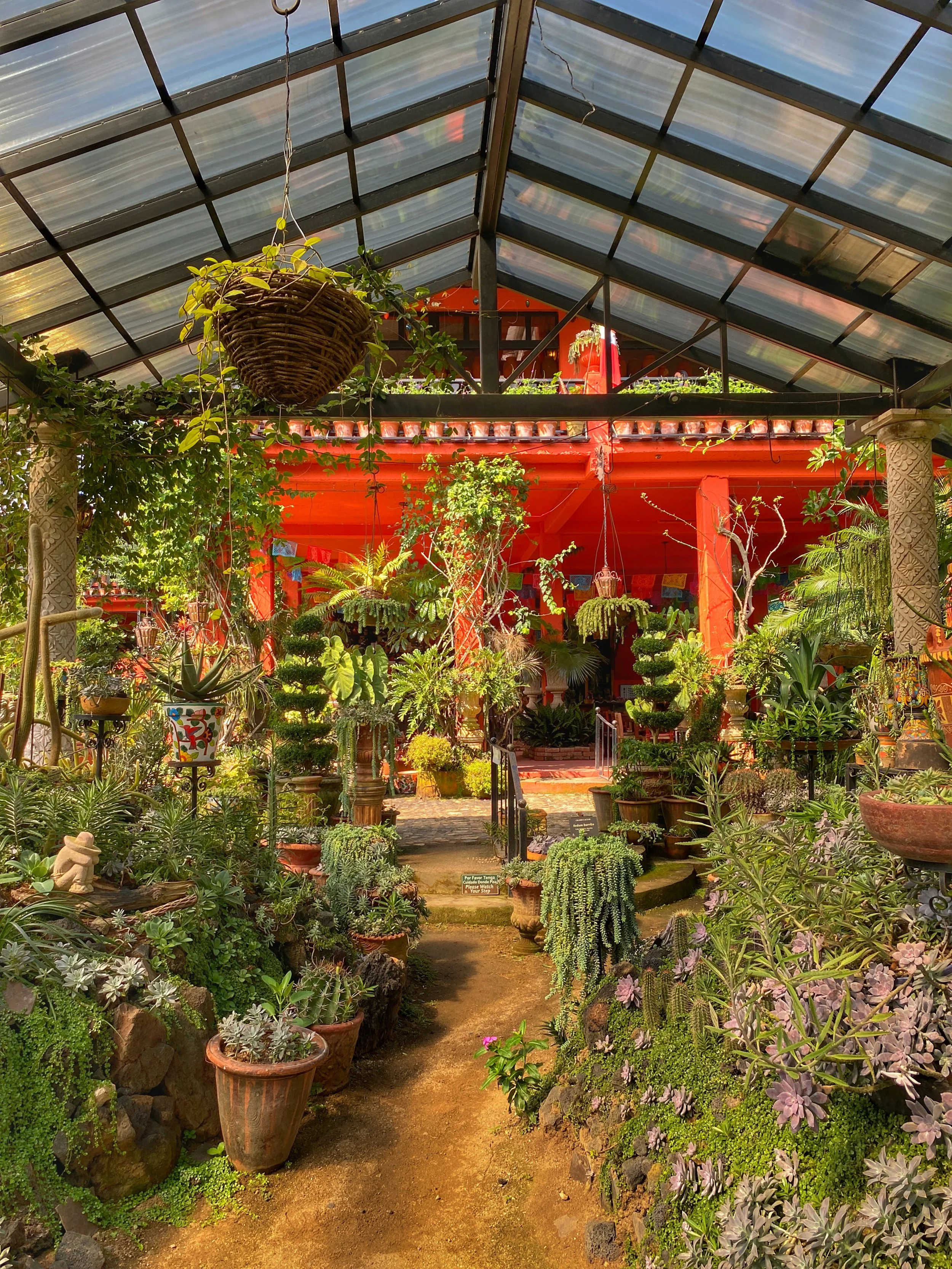
Cactus house at Puerto Vallarta Botanic Garden

The Cactus House is filled with succulents and, yes, cacti.

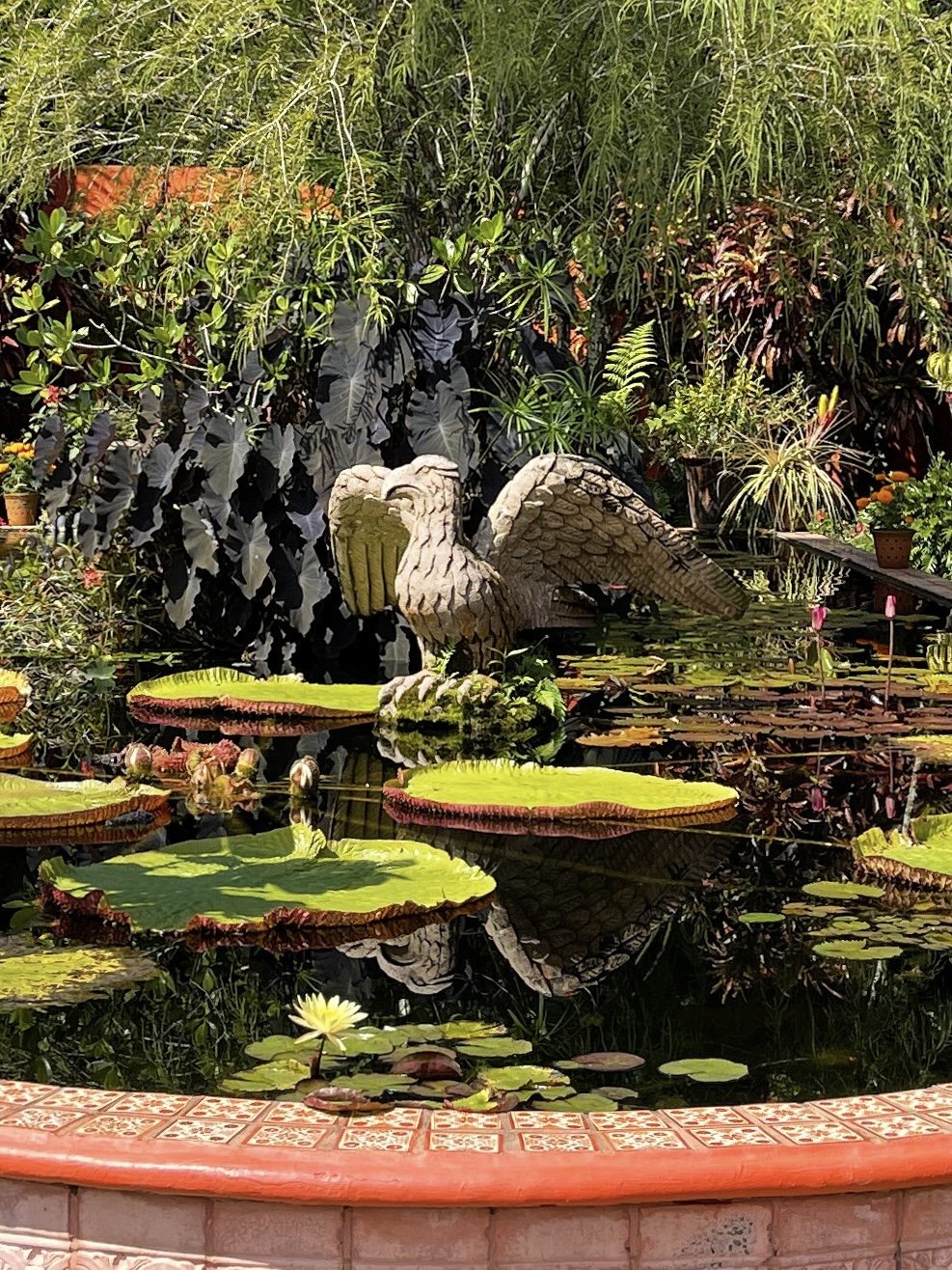
Fountain with eagle sculpture at Puerto Vallarta Botanic Garden

The fountain in front of the Hacienda de Oro features an eagle, a symbol of Mexico.

Wally cools off in the river.

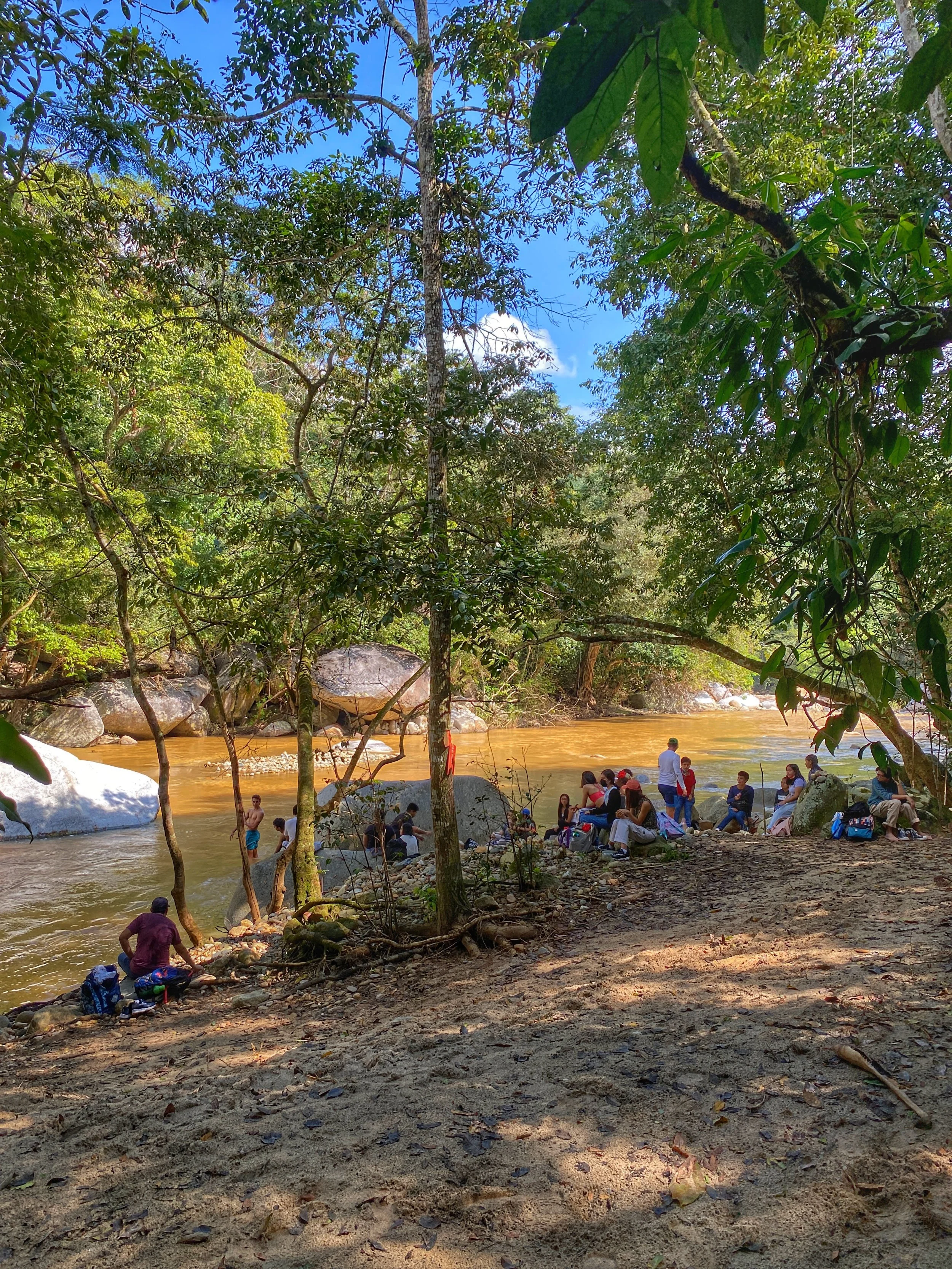
Teens wading in river at Puerto Vallarta Botanical Gardens

A group of teens go swimming.

We continued over some slippery rocks and passed a group of local teens wading in the river before continuing along the Jaguar Trial. A sign informed us that its rating level was “difficult.”

“Would’ve been nice to have that marked on the map,” I muttered. 

But Jaguar turned out not to be too difficult; it’s just uphill for much of the time. I was kind of hoping we’d run across the eponymous feline, but no such luck. 

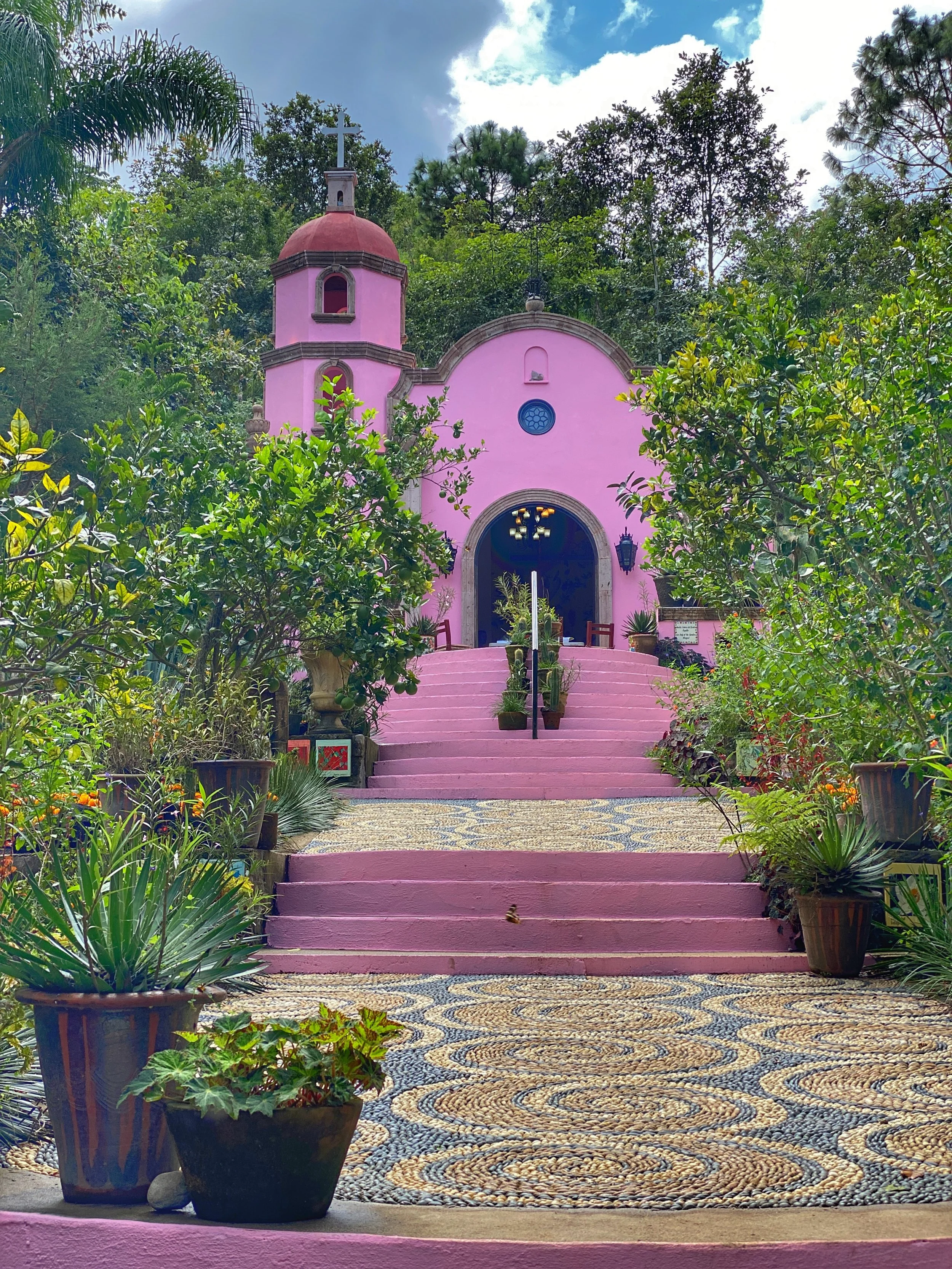
Pink chapel at Puerto Vallarta Botanical Gardens

The adorable pink chapel on the grounds, Our Lady of the Gardens

Goin’ to the Chapel

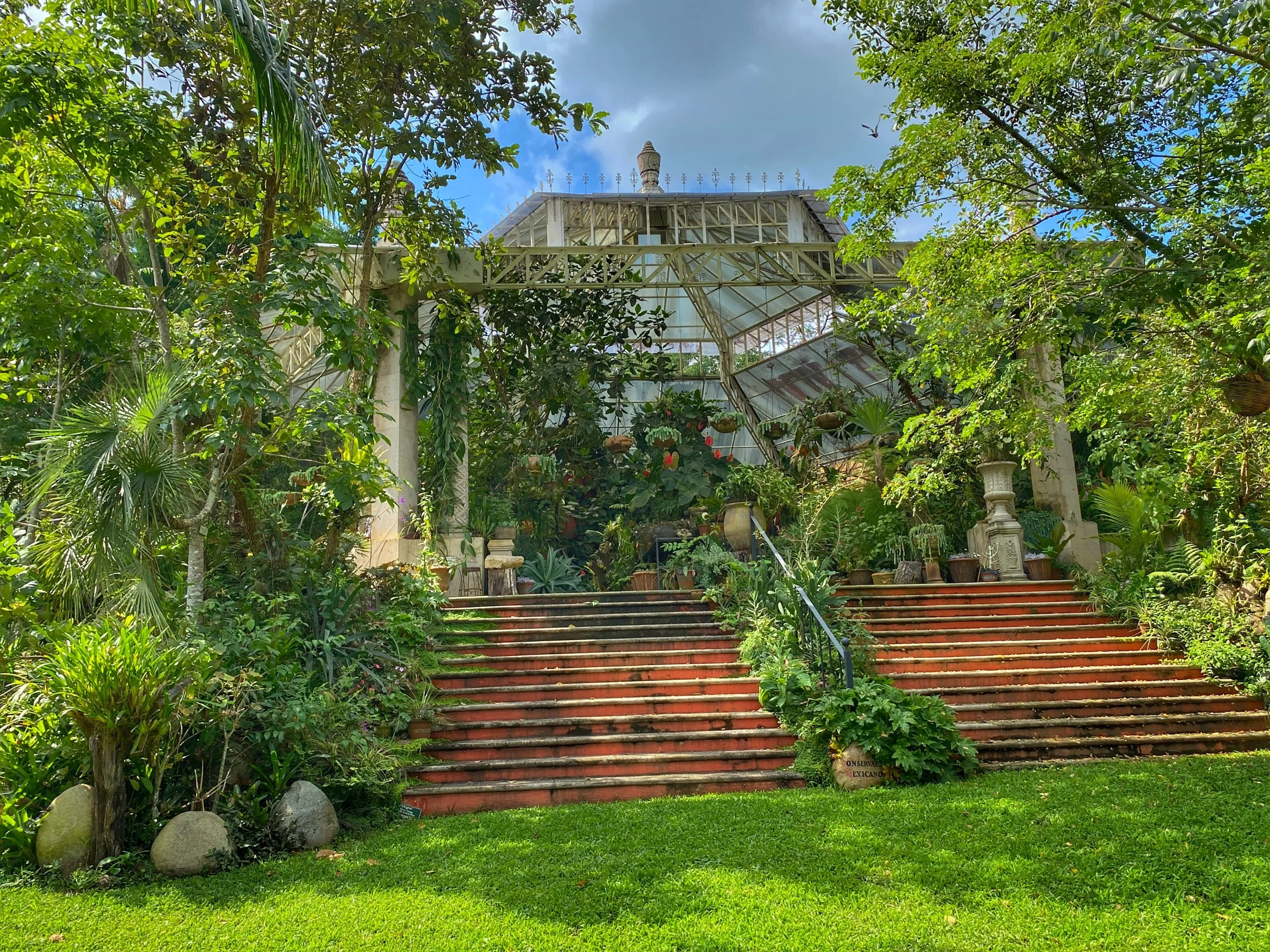
After the hike, we wandered a few of the areas near the restaurant and gift shop, including the octagonal conservatory of native plants, before crossing the Bridge of Dreams and stumbling upon the adorable pink church, Our Lady of the Gardens.

Octagonal conservatory at Puerto Vallarta Botanic Garden

You can’t tell from this angle, but this conservatory is octagonal-shaped.

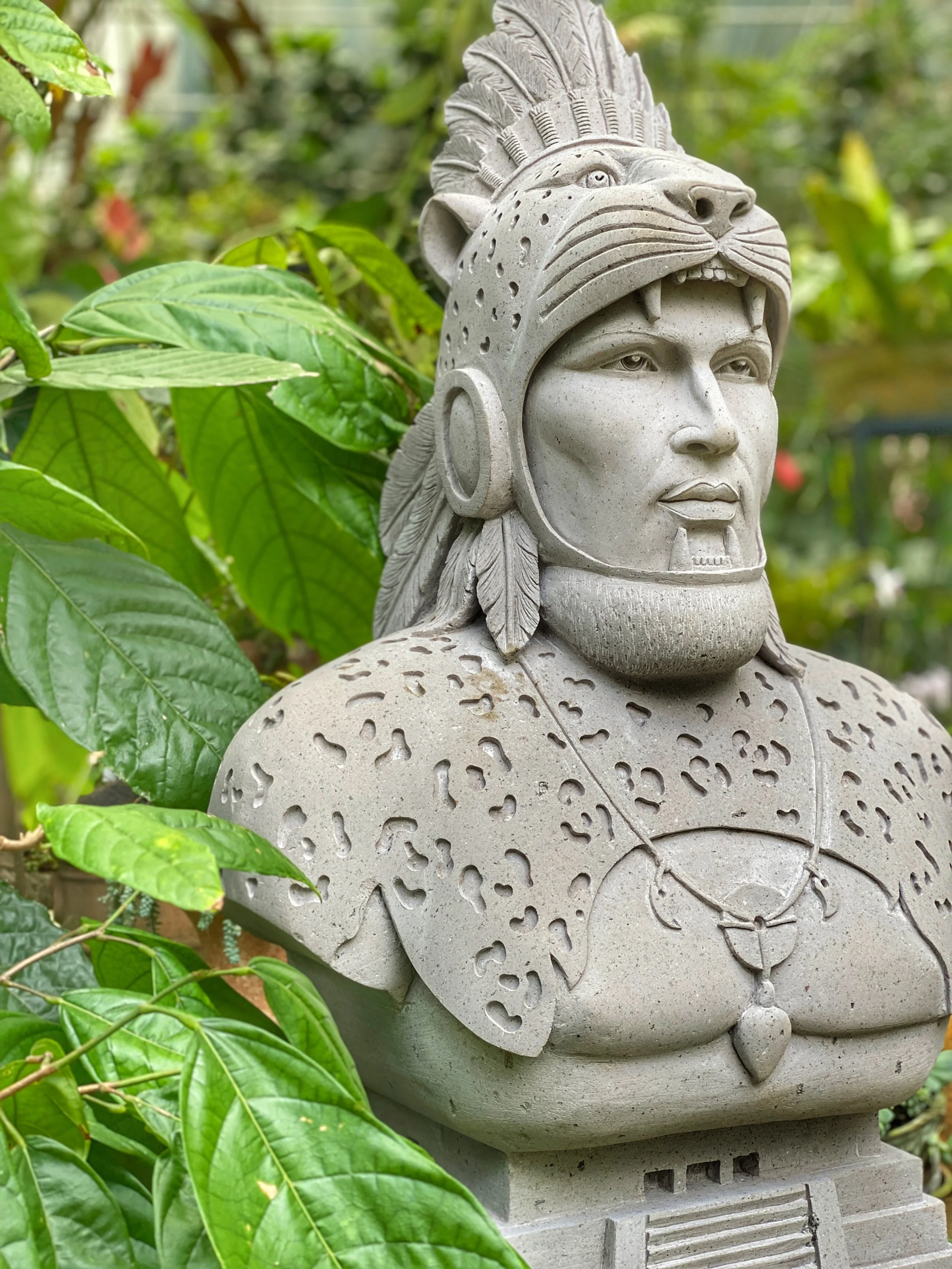
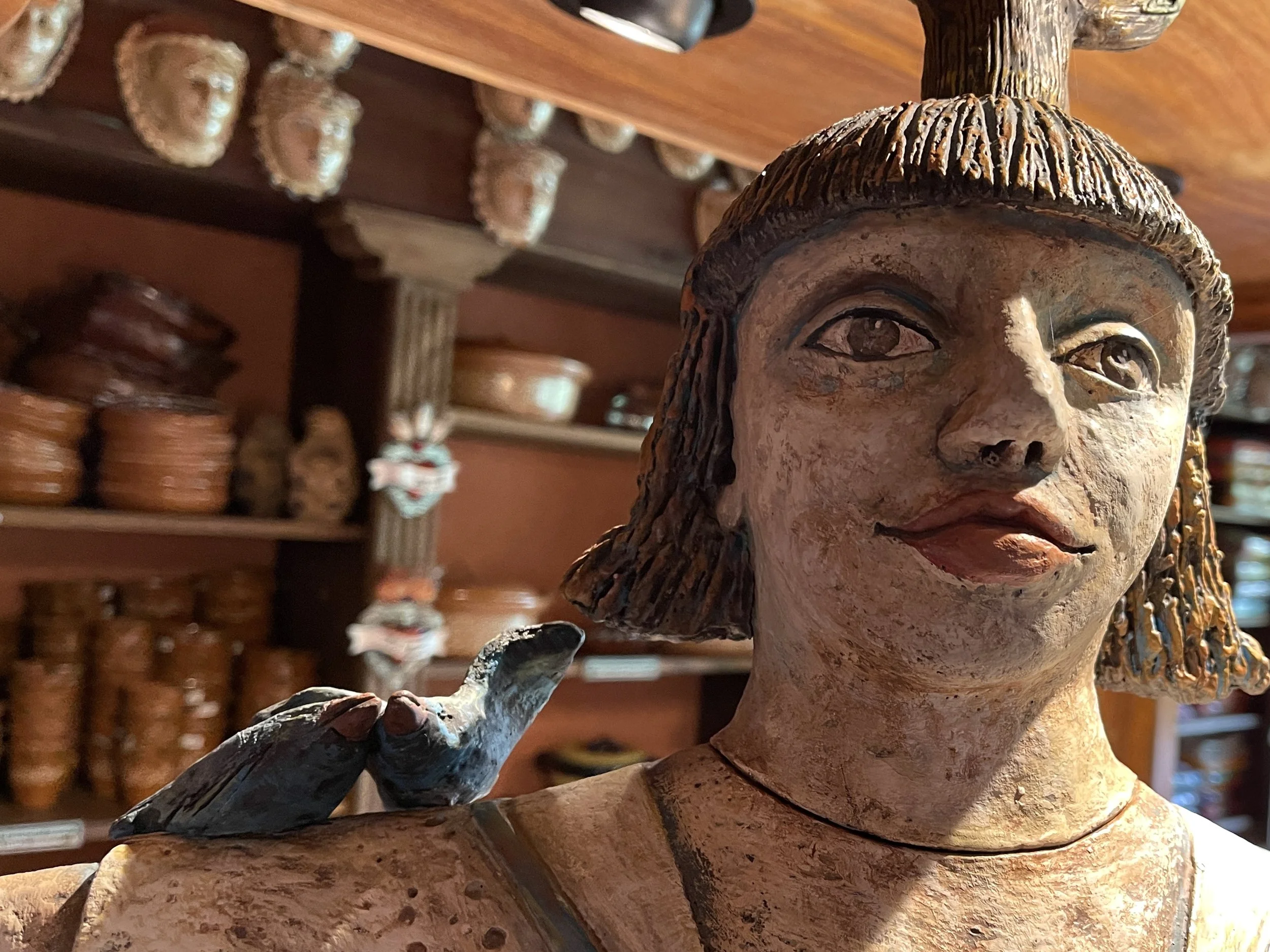
Bust of priest in jaguar suit at Puerto Vallarta Botanic Garden

A priest in a jaguar pelt

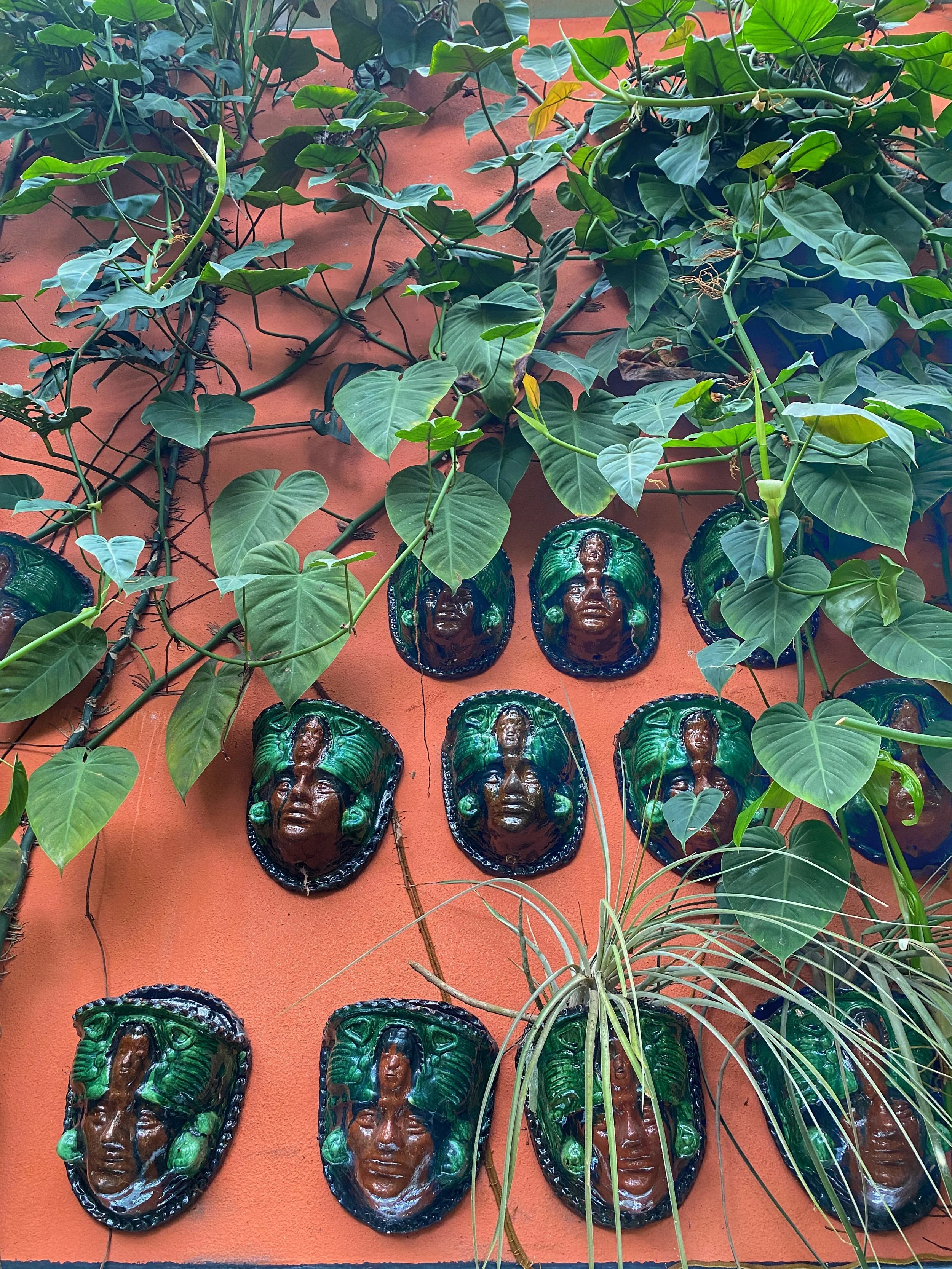
Masks and plants on wall at Puerto Vallarta Botanic Garden

Masks cover the back wall.

Statue of maize god at Puerto Vallarta Botanic Garden

A statue of a man holding maize, one of the most important crops to the Mesoamericans who lived here

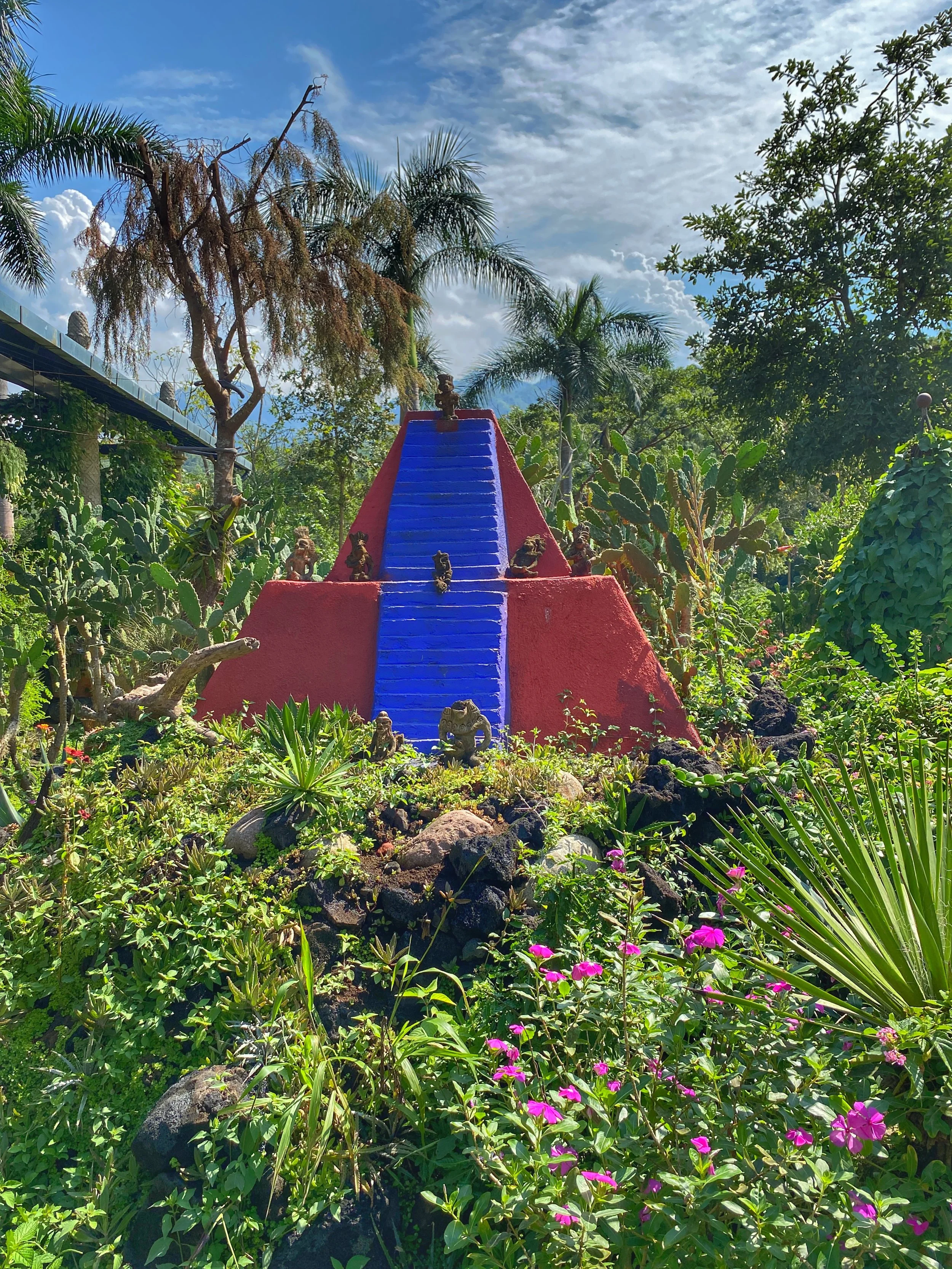
Replica of Aztec pyramid at Puerto Vallarta Botanic Garden

This pyramid is a replica of the one at La Casa Azul, Frida Kahlo’s home museum in Mexico City.

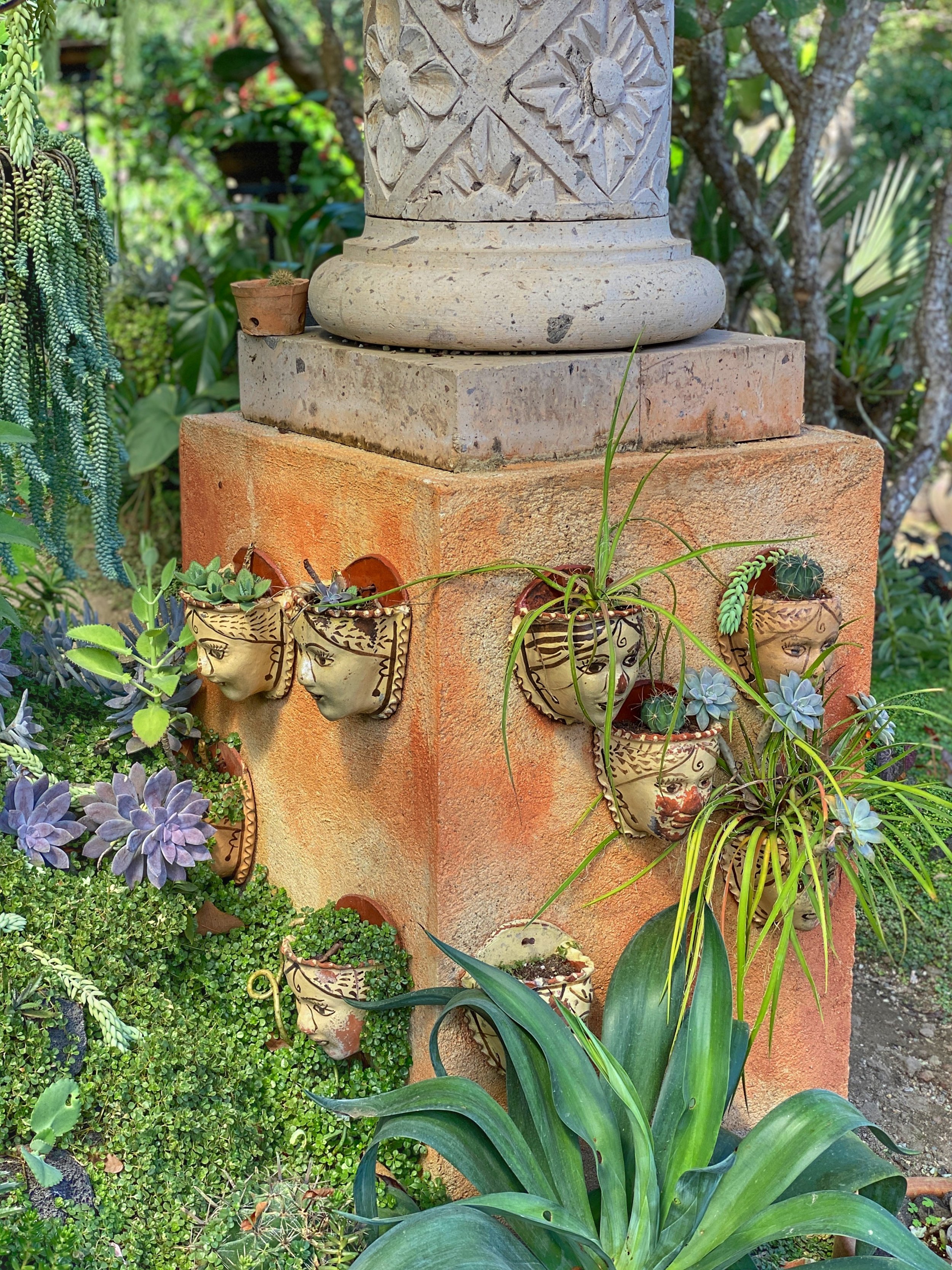
Column with head-shaped planters at Puerto Vallarta Botanic Garden

“If they had planters like this at the gift shop, I would have bought some,” Duke says.

Man at the Bridge of Dreams in Puerto Vallarta Botanical Gardens

Duke on the Bridge of Dreams

Bridge of Dreams at Puerto Vallarta Botanical Gardens

El Puente de los Sueños leads to the chapel.

We couldn’t go inside the small chapel because they were putting up new wallpaper — a  bright yellow background filled with plants, birds and butterflies. It’s going to give the space a modern feel and make it oh-so-Instagrammable. 

Man on pink steps at Puerto Vallarta Botanical Gardens

Wally on the pink stairs in front of the chapel

The man in charge of the project came over to chat with us, giving us advice (buy some insect repellent and carry it everywhere in defense of the no-see-ums; take a day trip to San Sebastián). 

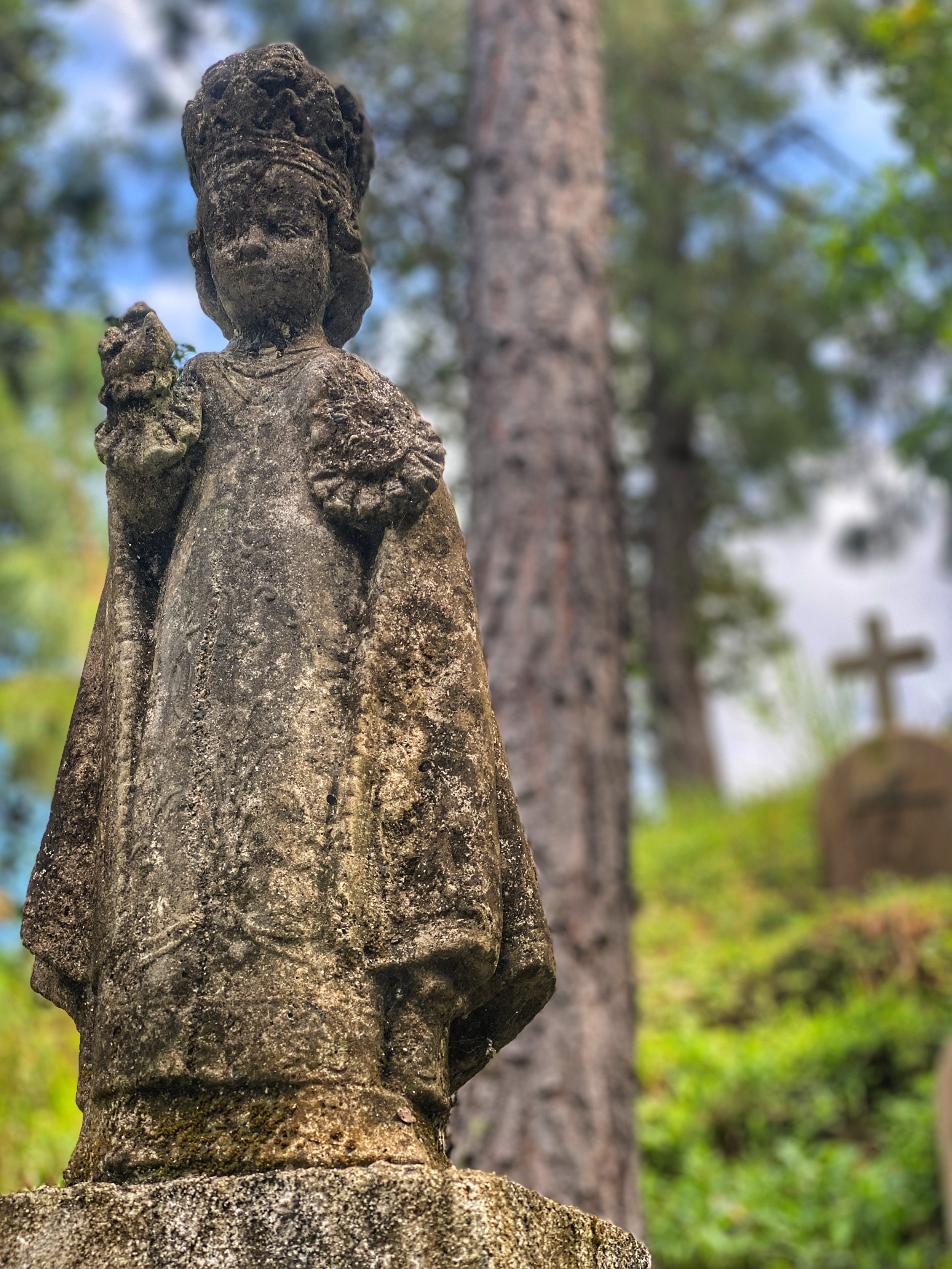
Grave with statue of child king at Puerto Vallarta Botanical Gardens

The Infant of Prague in the graveyard

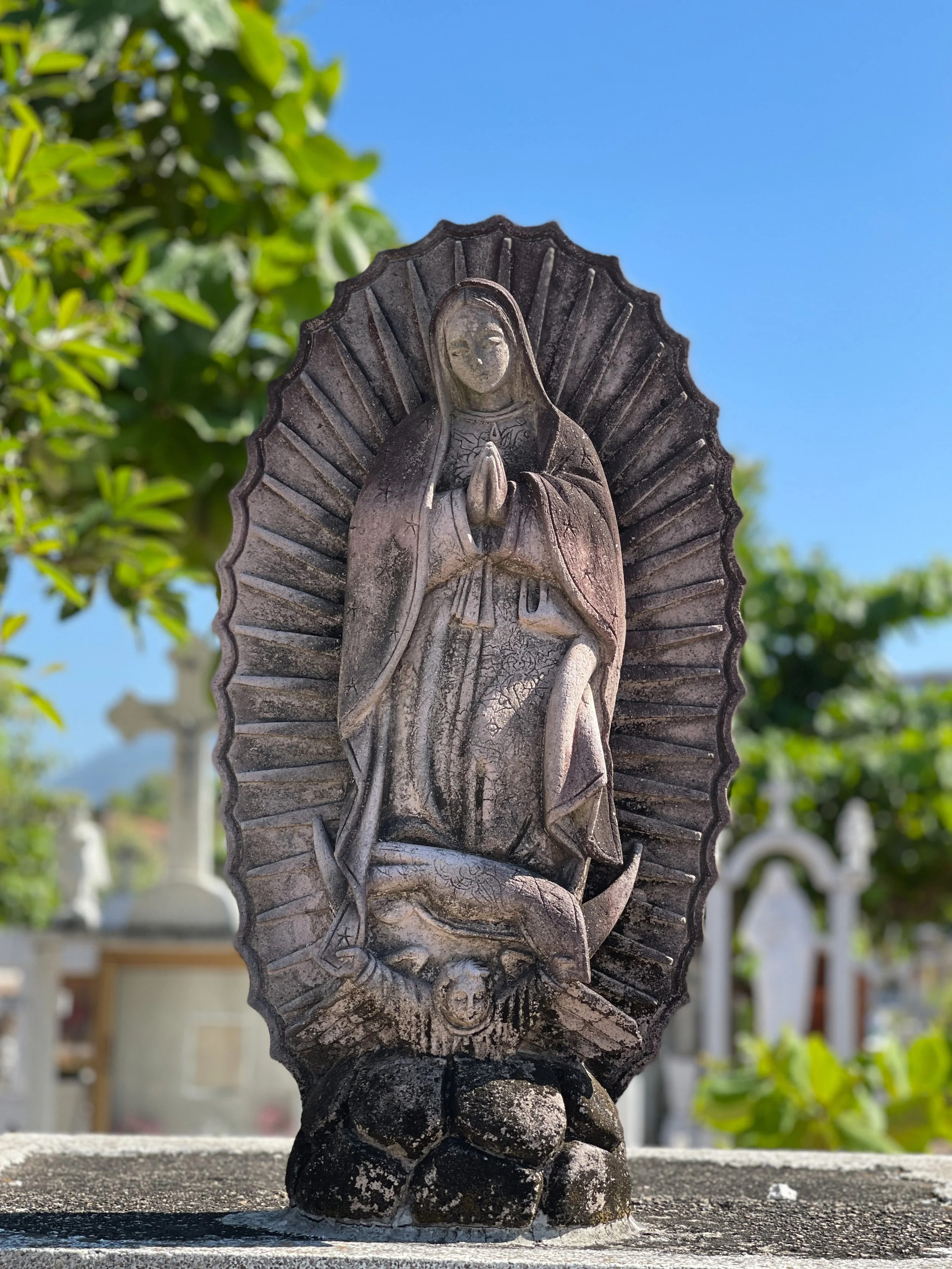
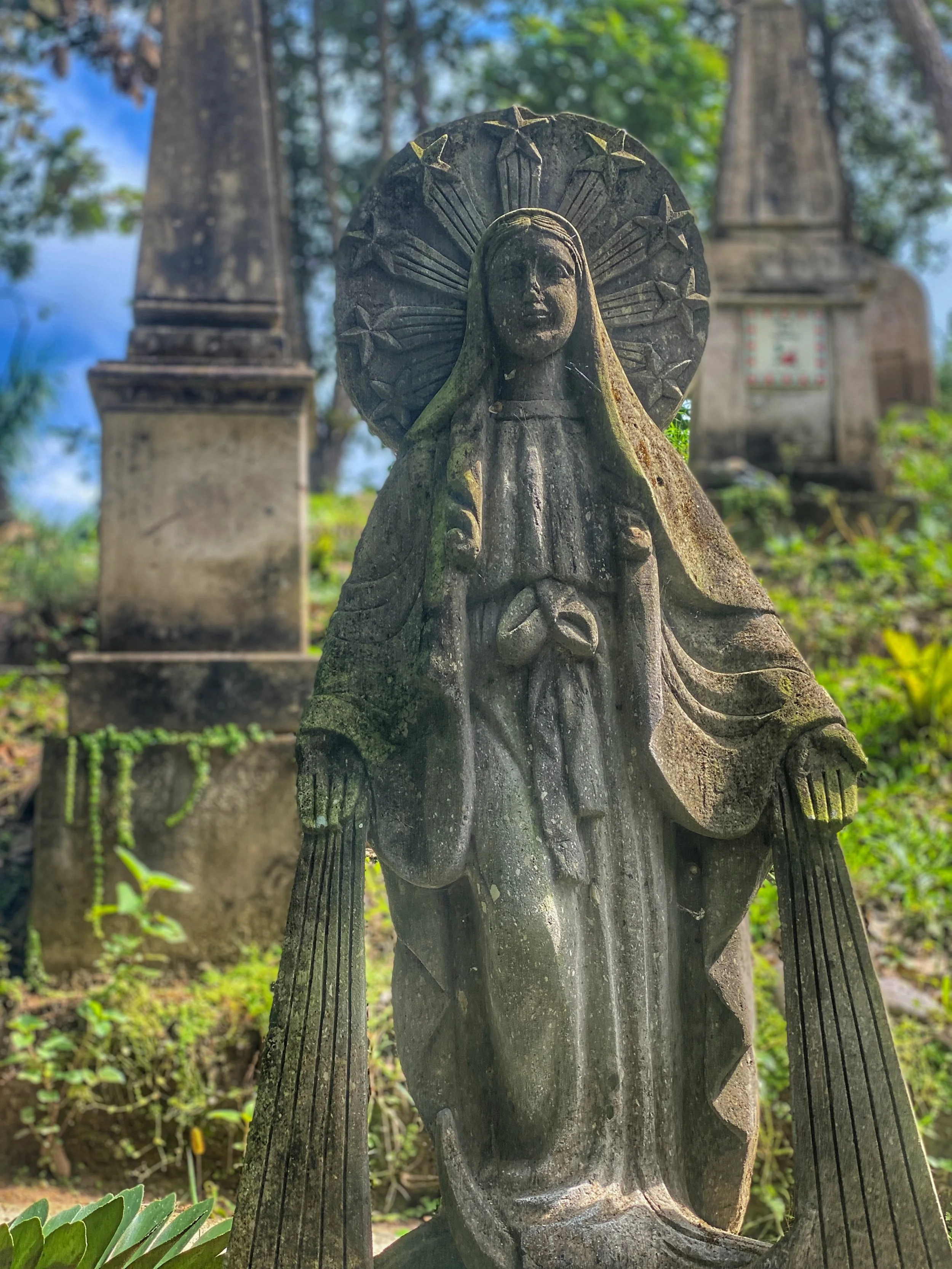
Statue of the Virgin Mary at the graveyard in Puerto Vallarta Botanical Gardens

The Virgin Mary watches over some tombs.

Grave in shape of white church with Virgin at Puerto Vallarta Botanical Gardens

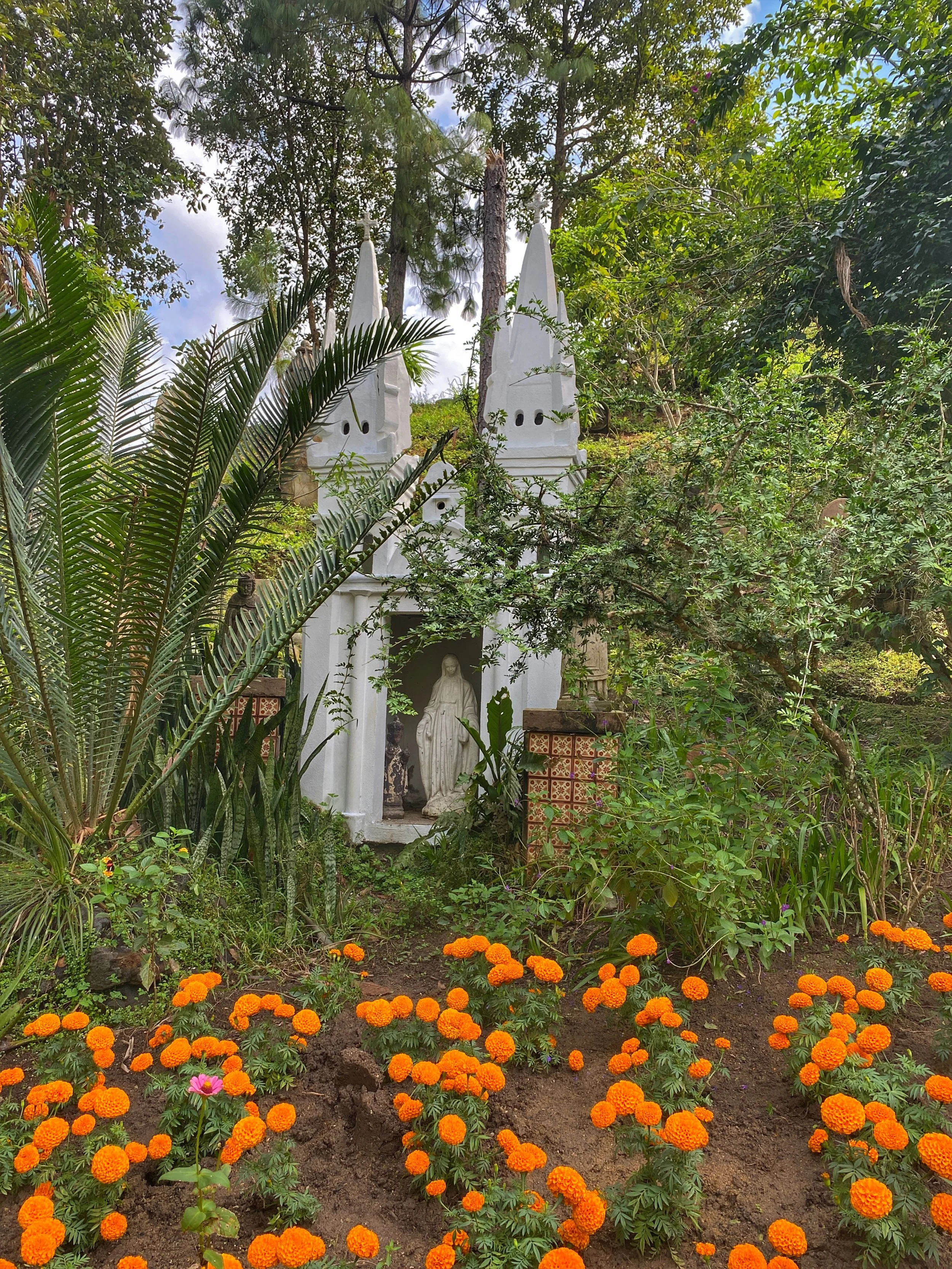
Graves, some with elaborate statuary like this small church with the Virgin Mary within, line the hills on either side of the chapel.

There are graves scattered on either side of the hill leading up to the church — with those of pets to one side. If I happen to die while I’m in the area, I couldn’t hope for a better eternal resting place. 

Tropical birds eating fruit at Puerto Vallarta Botanical Gardens

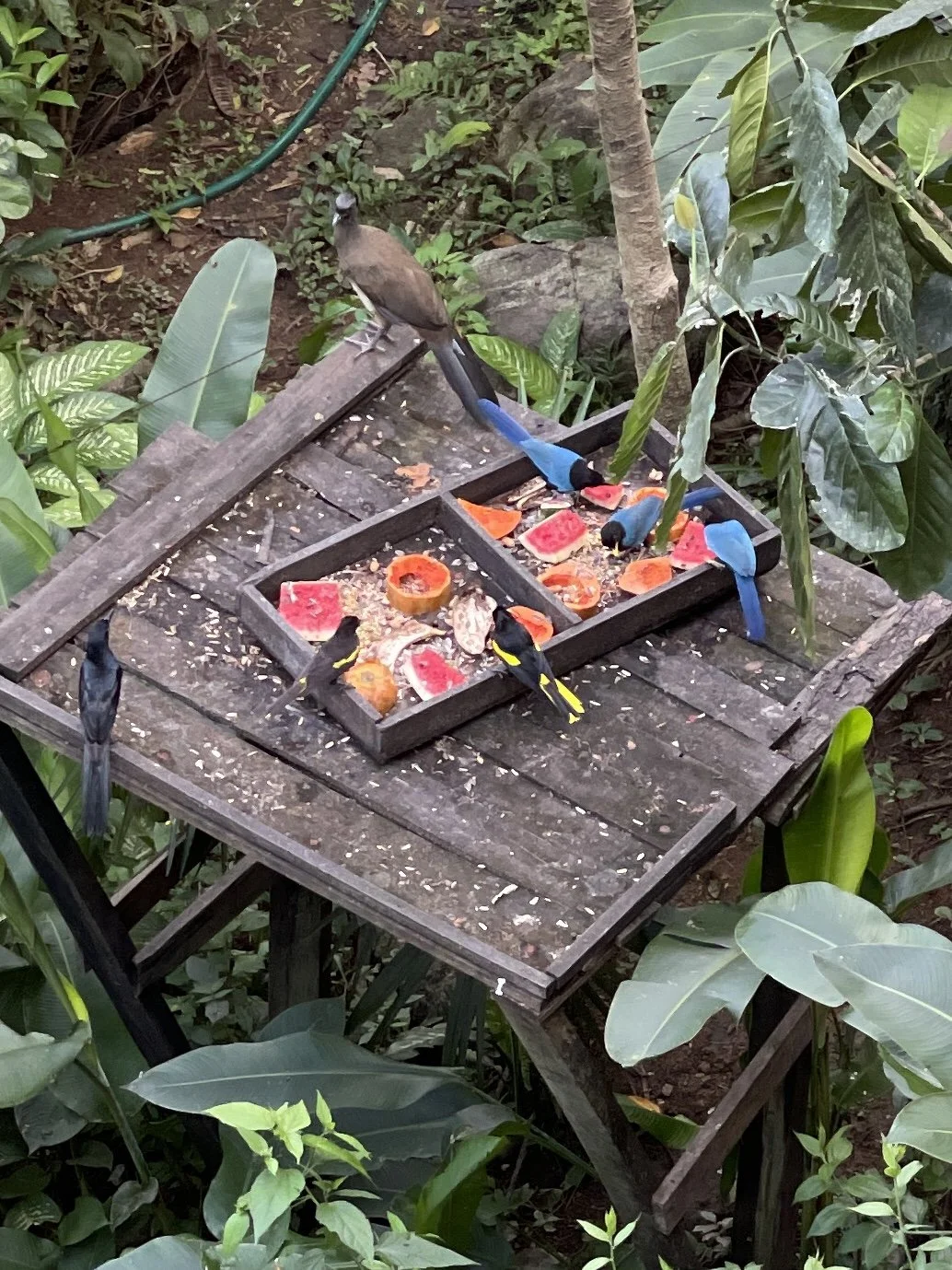
When the staff put out this tray of fruit, one colorful species of bird after another stopped by to dine.

Birdwatching at the Hacienda

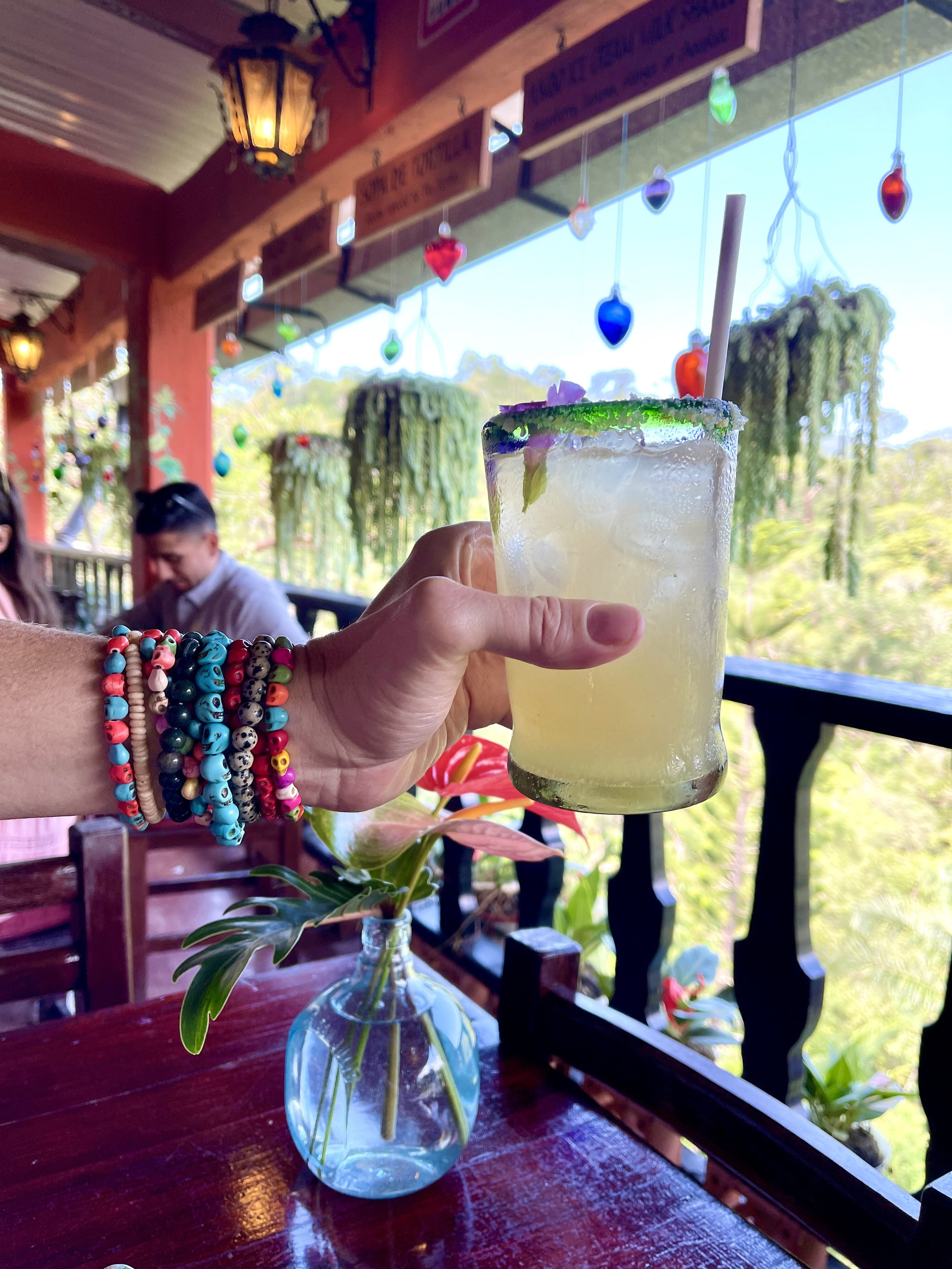
By this time, we were hungry and in need of refreshment, so we went back to the Hacienda de Oro and had a great lunch — guacamole, grilled fish tacos, chicken quesadillas Xochimilco and two Cadillac margaritas, por su puesto. (Incidentally, the margs were quite strong and left us un poco barrato). 

Hand holding margarita at Puerto Vallarta Botanical Gardens restaurant

You can’t take a break on the Hacienda de Oro balcony without getting a margarita. Just be careful: They’re strong!

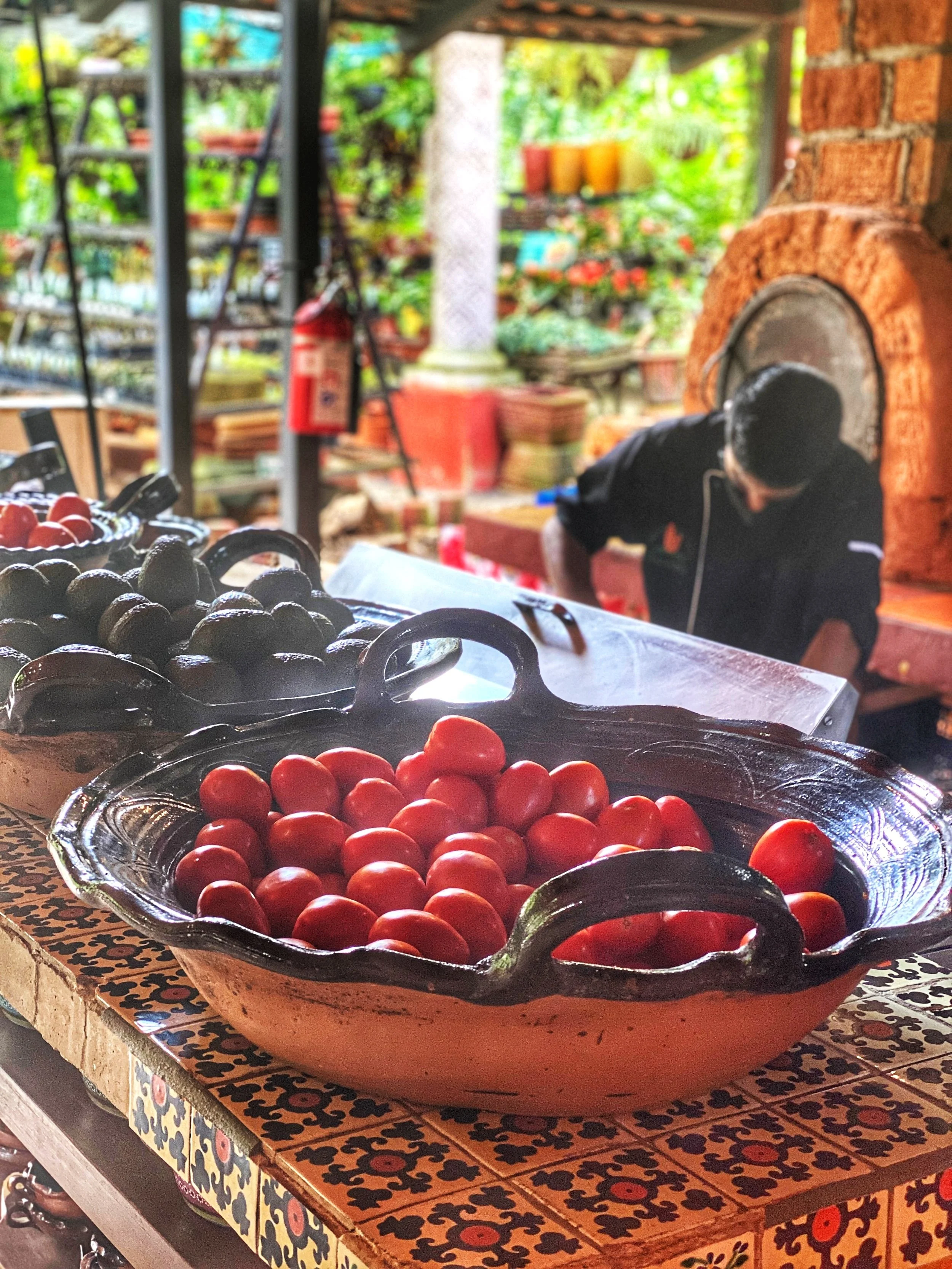
The food was tasty — whipped up in this open-air kitchen.

A violist stood by the tables playing songs, including “Dust in the Wind.” At first I was a bit annoyed we’d be pressured into tipping him, but it ended up being nice having the strains of music waft around us, and when I looked up at him, his eyes crinkled with a grin — and I didn’t mind slipping him some pesos in appreciation.

He was a nice guy and during one of his breaks, he told us to look over the balcony, pointing down to a spot where the staff had left out tropical fruits to attract a variety of birds in a rainbow array of bright colors. 

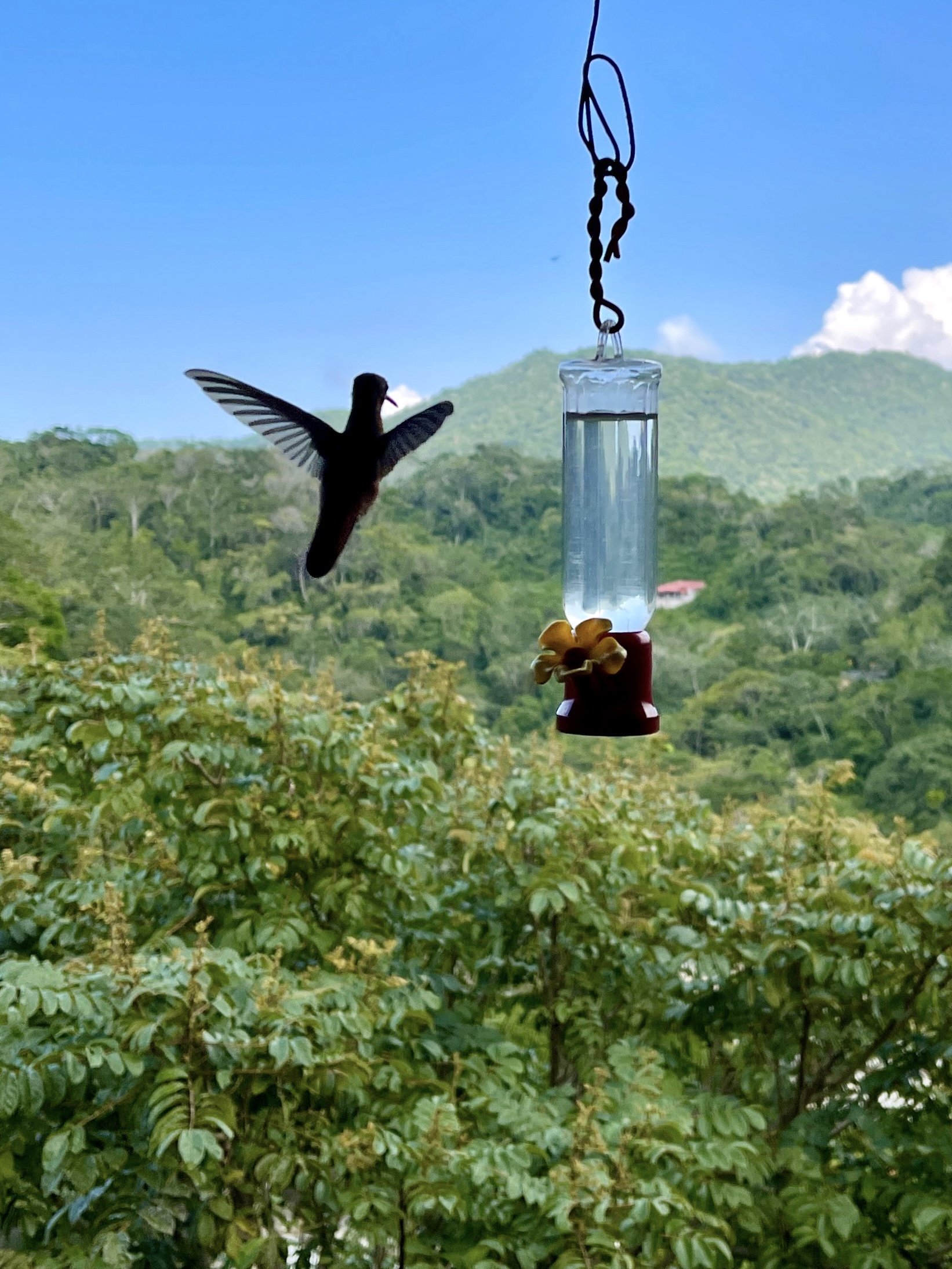
Hummingbird at feeder at Puerto Vallarta Botanical Gardens

A hummingbird at the feeder on the balcony

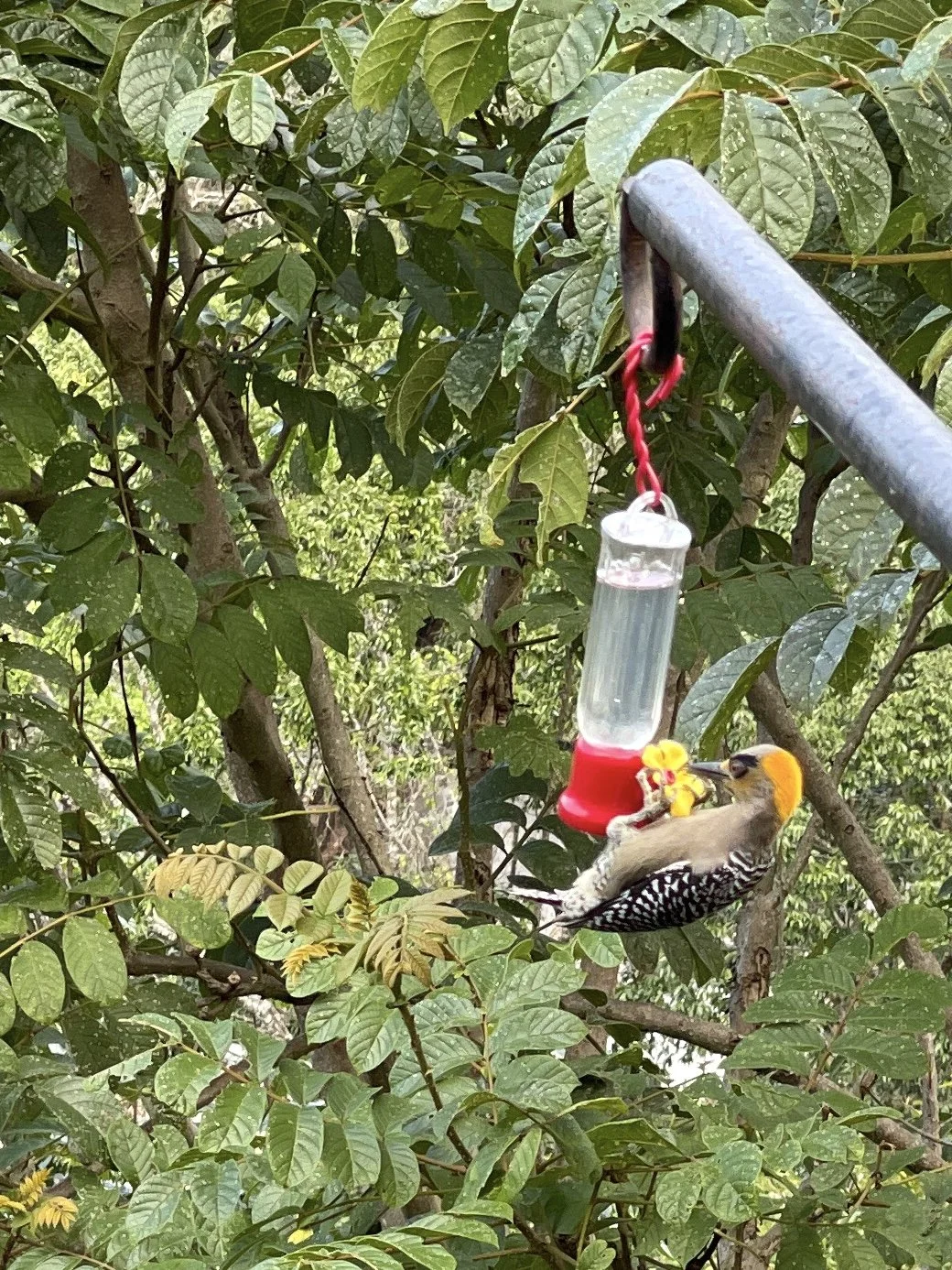
Woodpecker at feeder at Puerto Vallarta Botanical Gardens

Next to stop by was a woodpecker.

He saw how excited we were — I could take up birdwatching if they were all this colorful and amazing — and kept pointing out new birds to us. 

After lunch we did some shopping. I can tell you that the handicrafts here are among the best you’ll find in the PV area. (The ubiquitous markets along the waterfront, which peddle tourist-oriented fare, get dismissively dubbed “mercados de basura,” or “trash markets,” by Duke.)

And the prices aren’t bad. I bought a blue wool dinosaur stuffed animal, a cloth Frida ornament and a ceramic skull rattle. 

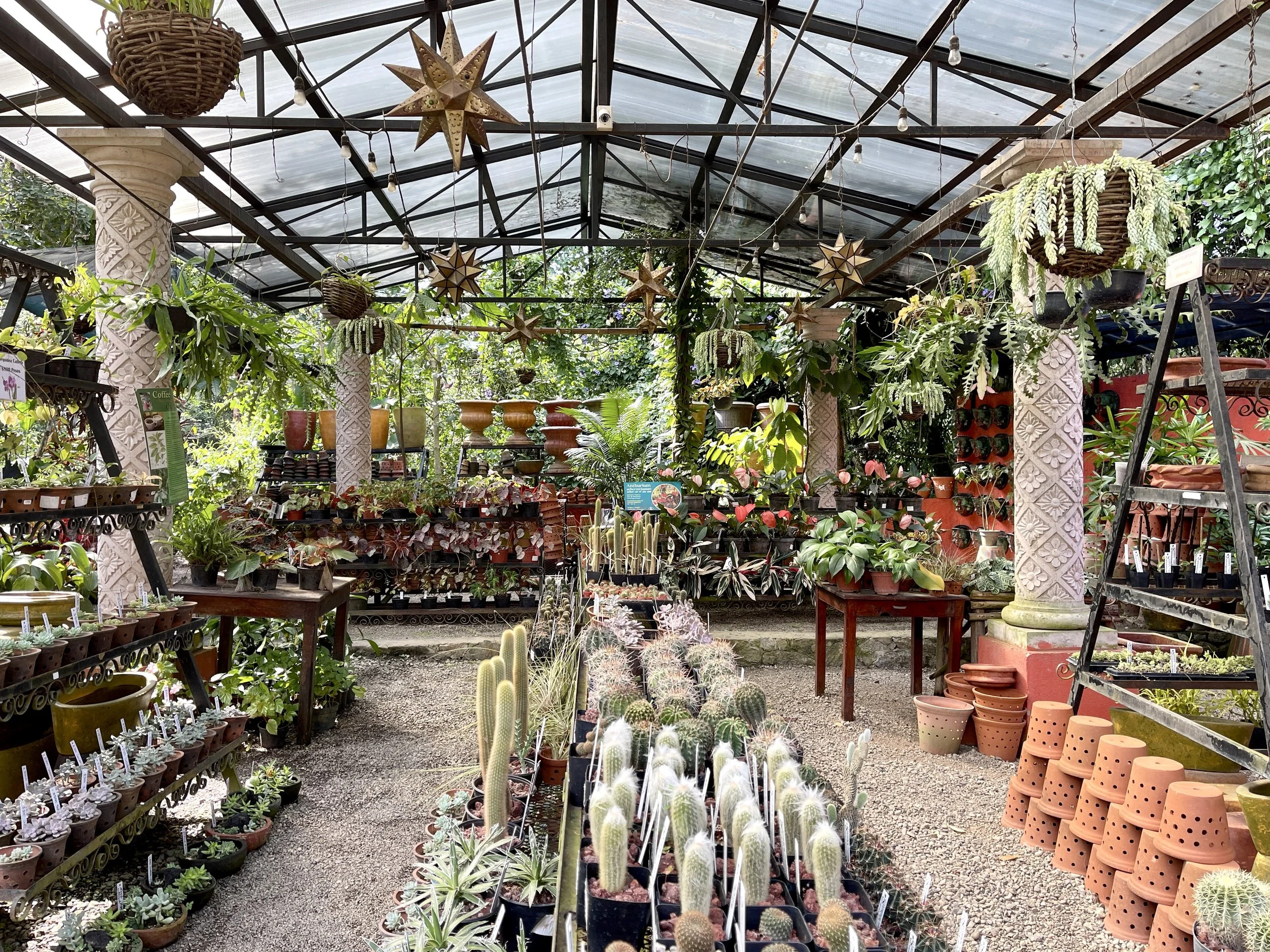
Plants for sale at Puerto Vallarta Botanical Gardens

Plants and pots for sale

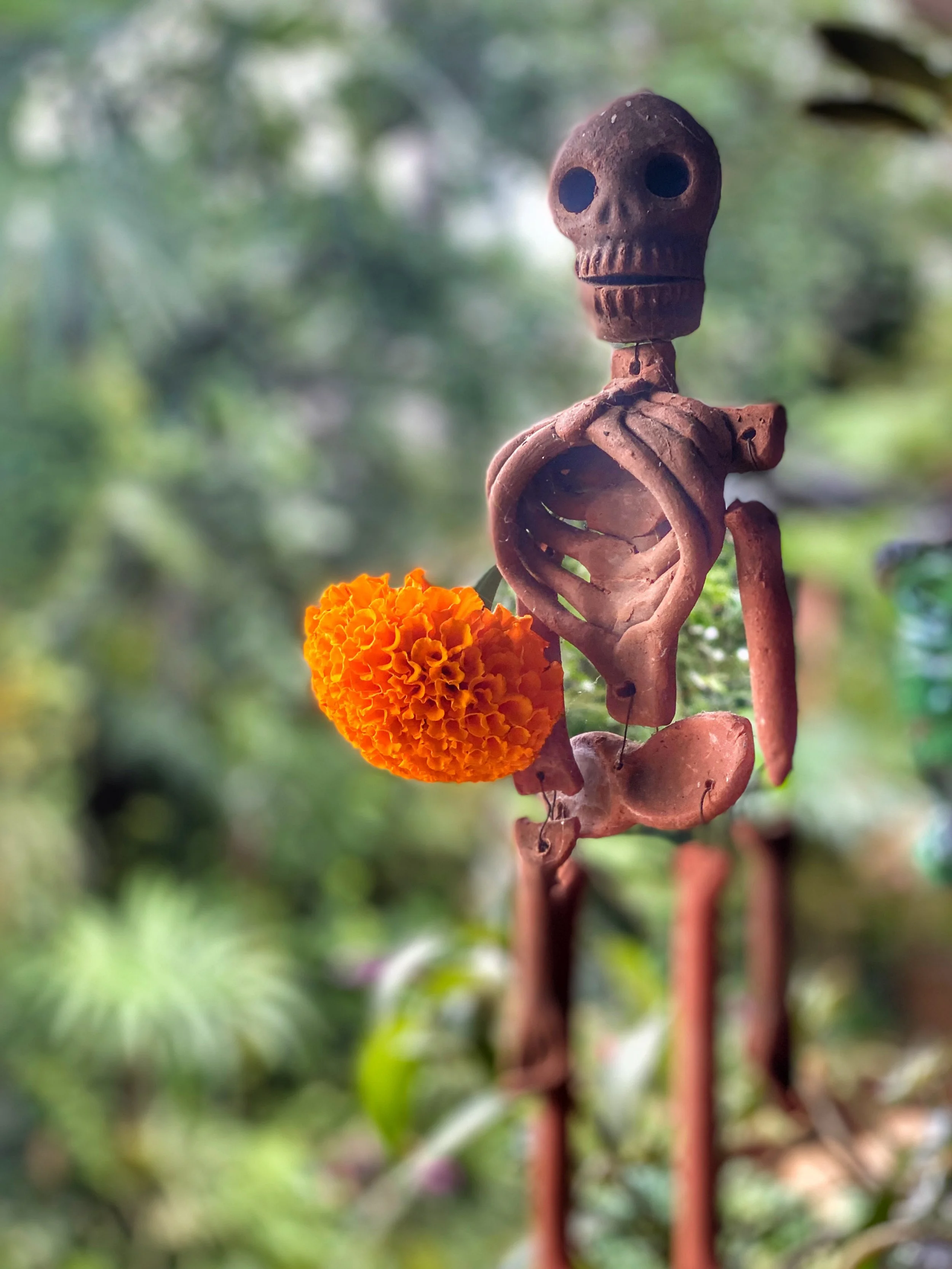
A skeleton and marigold for Día de los Muertos

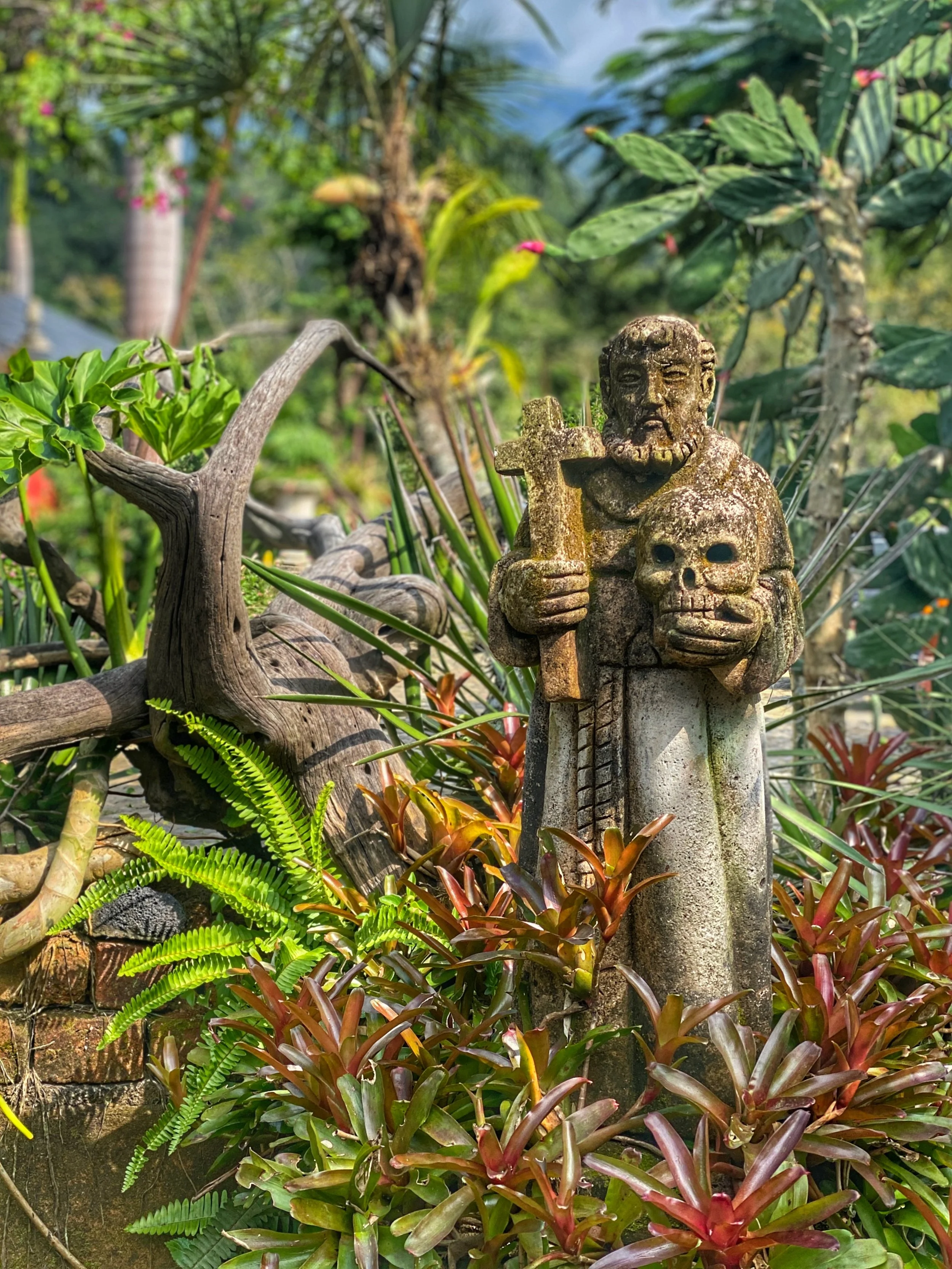
Small statue of saint with skull amid plants at Puerto Vallarta Botanic Garden

St. Francis holding a skull to contemplate death

Objects for sale at gift shop at Puerto Vallarta Botanic Garden

We found the items on sale at the gift shop to be of high quality at a fair price.

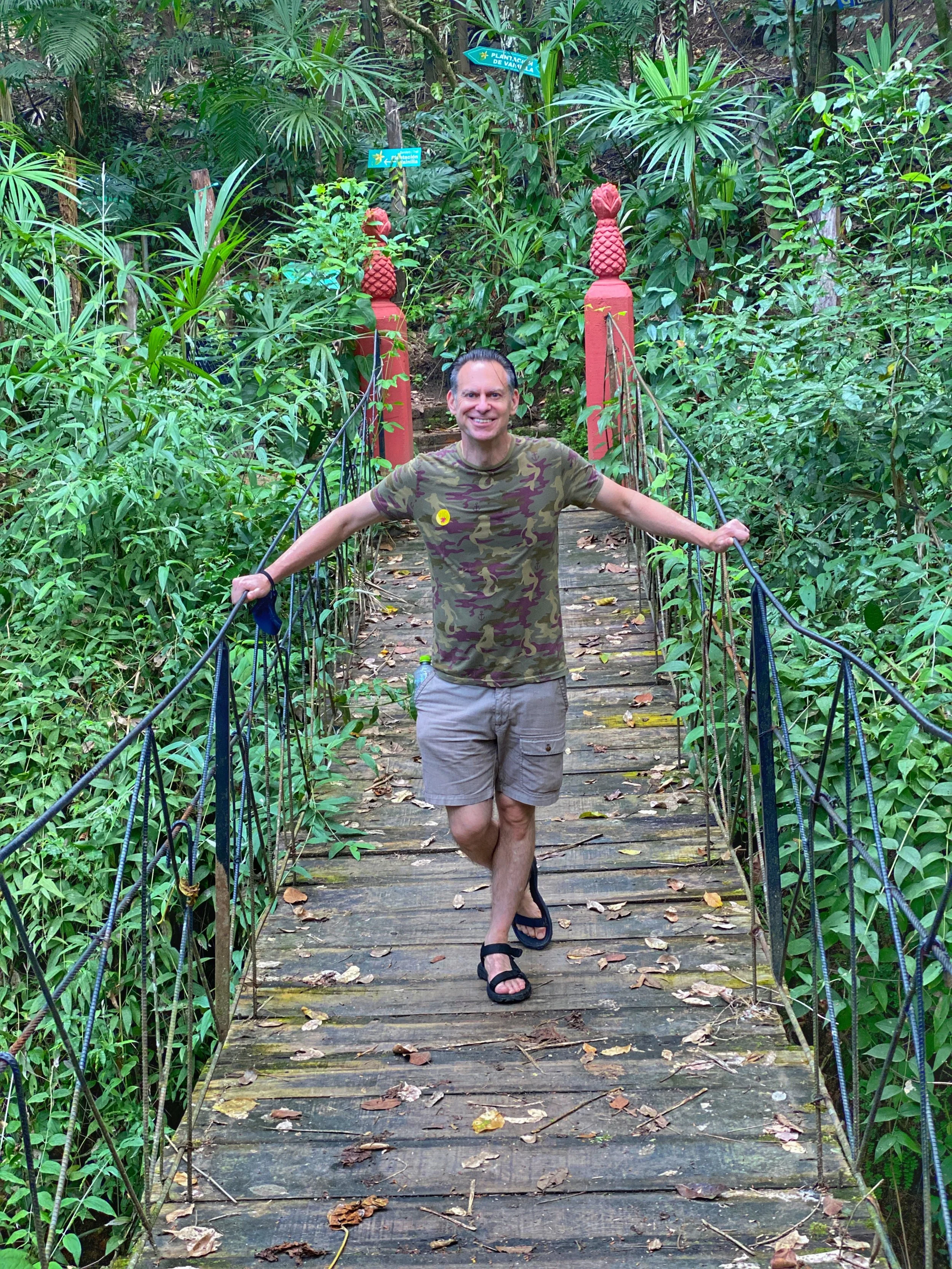
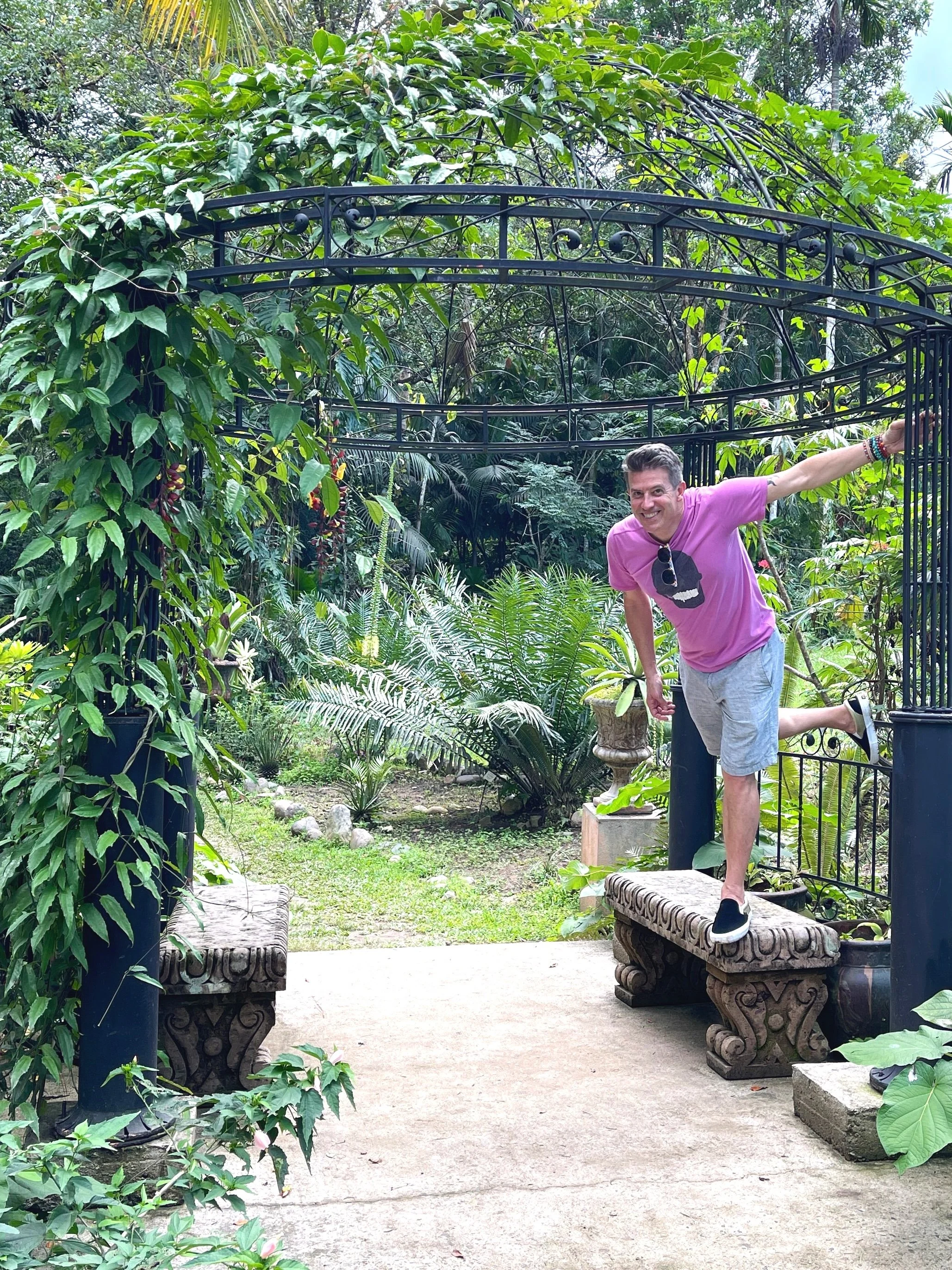
To wrap up our visit, we went back to the main road and found the offshoot that leads to the Gazebo Bridge and then crossed the Swinging Bridge to the Vanilla Plantation. 

Man on Swinging Bridge at Puerto Vallarta Botanic Garden

Duke wasn’t afraid to cross the Swinging Bridge.

Wally in the ironwork gazebo

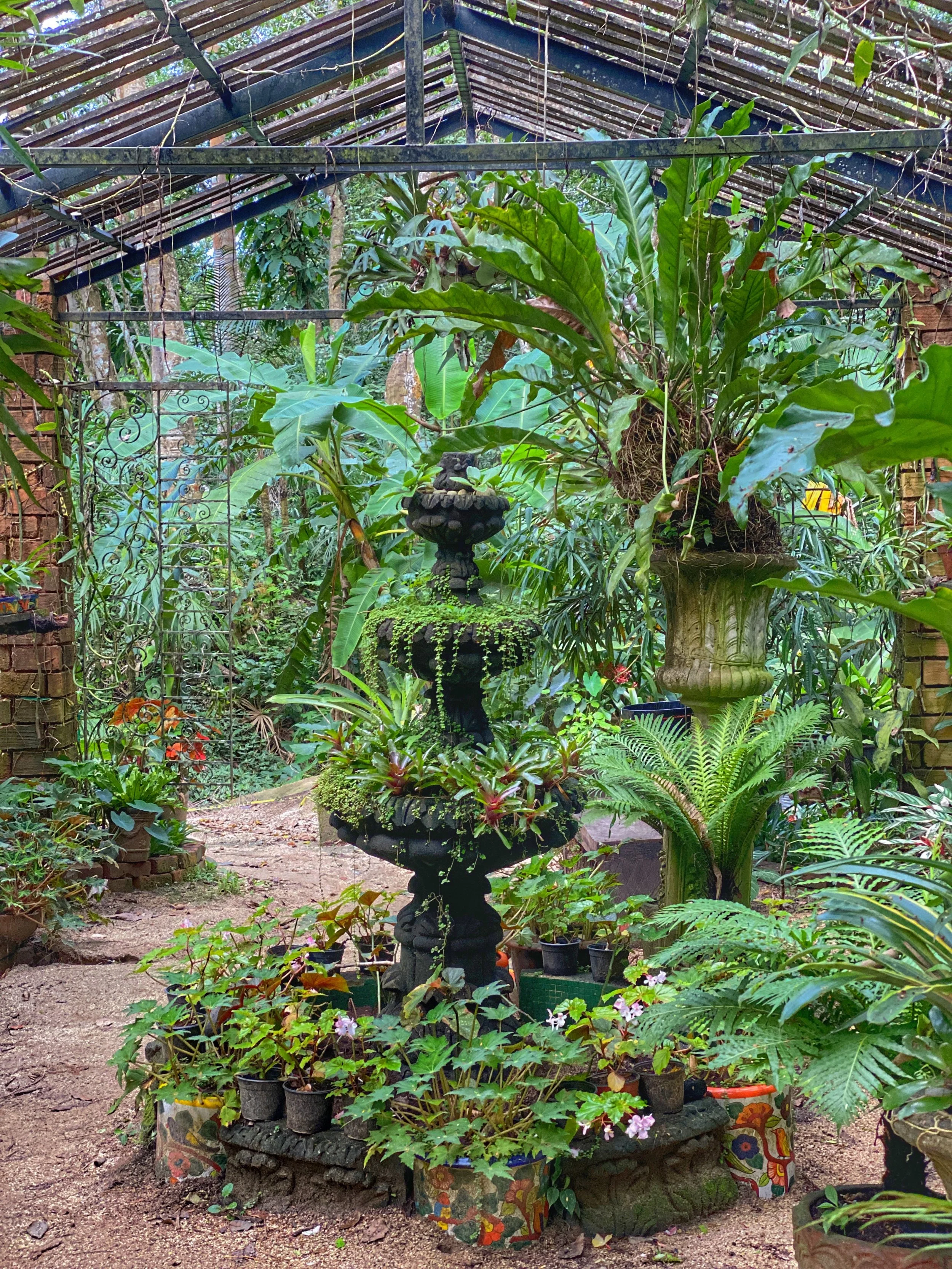
Plant-covered fountain in greenhouse at Puerto Vallarta Botanic Garden

A plant-filled fountain we passed en route to the Vanilla Plantation

Ready to call it a day, we headed back up the road to the entrance, where there’s an open-air hut. The staff there can call you a taxi with a fixed price. The Zona Románitca is just under 40 minutes north.

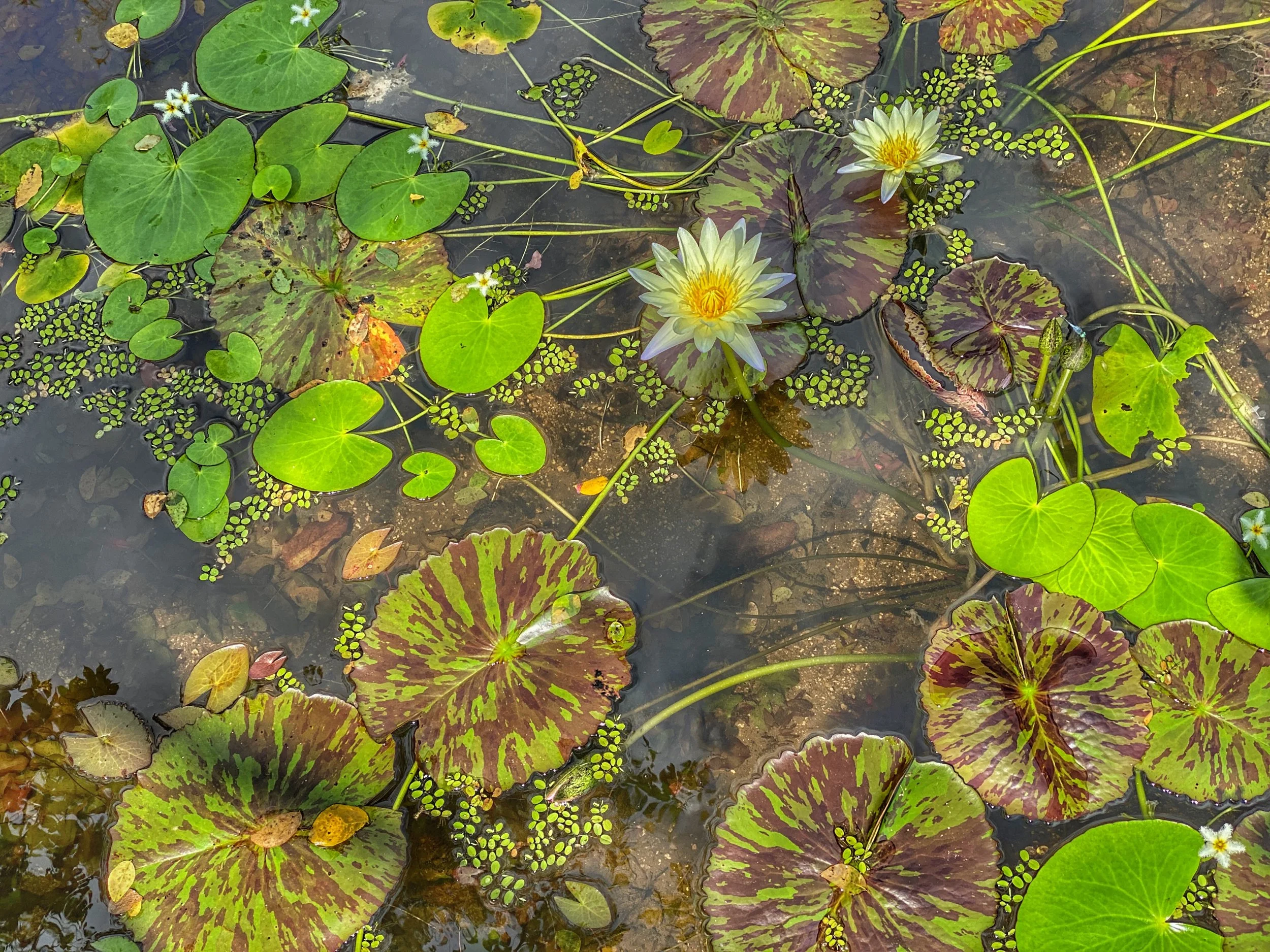
Lotuses and lilypads in pond at Puerto Vallarta Botanic Garden

Lily pads and lotuses in one of the ponds in the gardens

All in all, we spent the better part of the day at the botanic garden, getting in a hike, eating a great meal, seeing exotic birds, doing some shopping and exploring the lush grounds. Tickets are well worth the 200 peso (about $9.50 when we visited) admission charge. By the way, kids under 4 get in free.

The beach has its perks. And drag shows are fun once in a while. But we wouldn’t visit PV without a trip here. It’s anything but your garden variety attraction. –Wally
 

Jardín Botánico Vallarta (Puerto Vallarta Botanical Gardens)

Carretera Puerto Vallarta
Carretera Costera a Barra de Navidad Kilómetro 24
48425 Jalisco
México


Secret Gardens: Read More

Animal Symbolism in Pre-Columbian Pottery at the Museo Nacional de Antropología

The meanings behind monkeys, jaguars, ducks, bats, dogs and other animals in Mesoamerican myths as depicted in pre-Columbian artifacts at the National Museum of Anthropology in Mexico City.

Coati sculptures of pre-Columbian pottery at the Museo Nacional de Antropología

A lot of the exhibits at the National Museum of Anthropology in CDMX depict animals — each of which held symbolic meaning for the ancient peoples of Mexico.

Something that’s always fascinated me about ancient cultures are the similarities in beliefs with other civilizations around the world. Despite being oceans apart, many shared highly developed civilizations and a deep reverence for the natural world. 

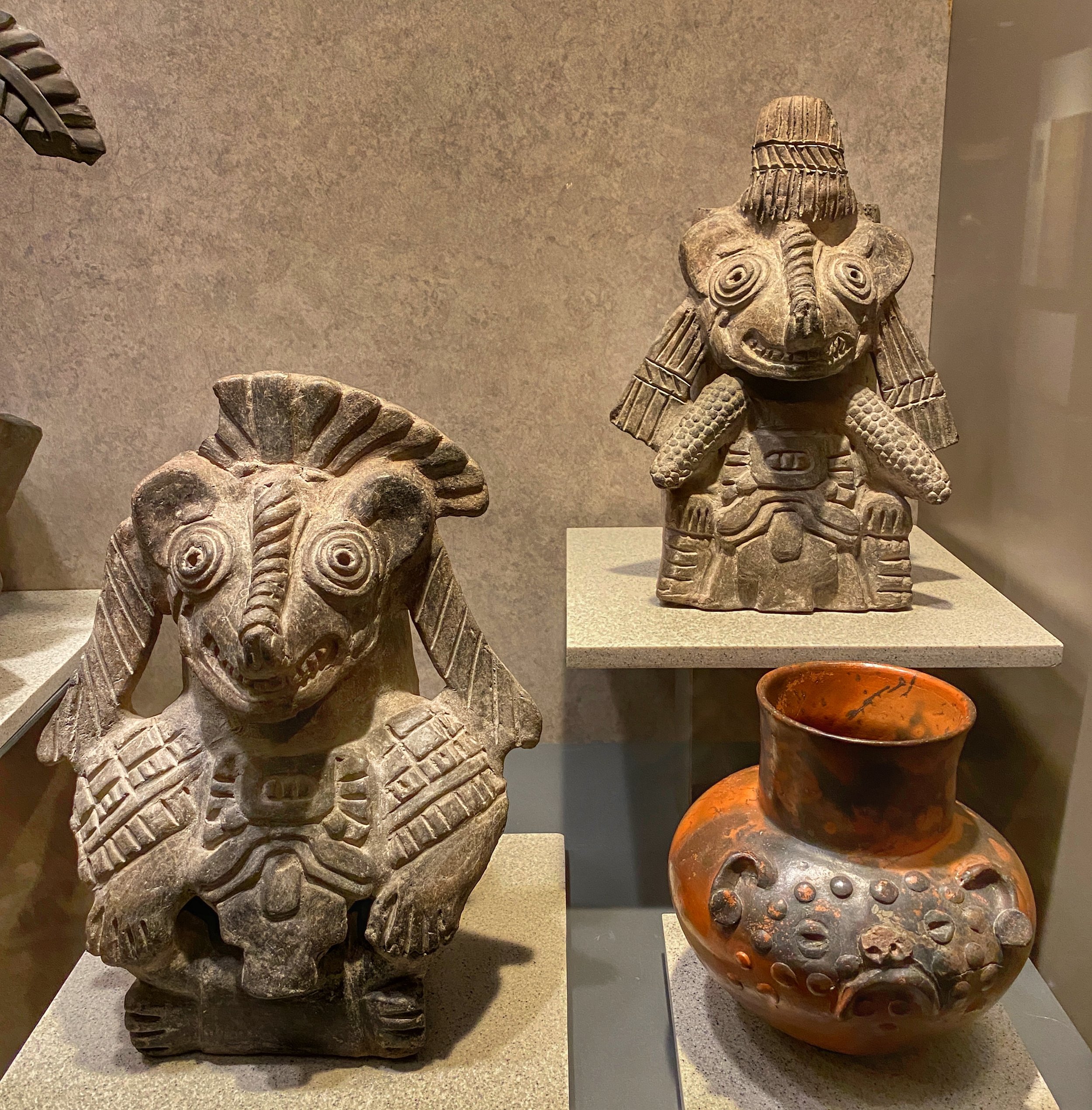
We saw this in action during our last visit to Mexico City, when we finally made it to the Museo Nacional de Antropología. The scale and scope of the galleries at the museum is dizzying. Wally and I don’t like to overdo it, so we spent half a day just wandering through the first floor. One of the highlights for me was the large number and variety of Mesoamerican animal-shaped effigy vessels on display. Like other ancient societies, the pre-Columbian peoples believed that certain animals embodied a spiritual energy in which sacred beings manifested themselves. 

Conquistadors developed such an appetite for Xoloitzcuintli Mexican hairless dogs that they nearly ate them into extinction. 

These ritual objects were not used in everyday life; they were often placed in tombs as burial goods. Animals played a key role at all levels of society and symbolically linked the three cosmic realms of the universe: the heavens, earth and underworld.

Stone Aztec calendar at the Museo Nacional de Antropología

Aztec cosmology posited that time is cyclical — and that we’re in the Fifth Sun, the final cycle of the world.

Here Comes the (Fifth) Sun

According to the Aztec legend of the Fifth Sun, time is cyclical. Four suns, or eras, have passed, created by a different deity and successively destroyed. Each cycle included inhabitants who died or transformed into various creatures, including monkeys, turkeys, dogs and fish. Our present world happens to be the Fifth Sun. 

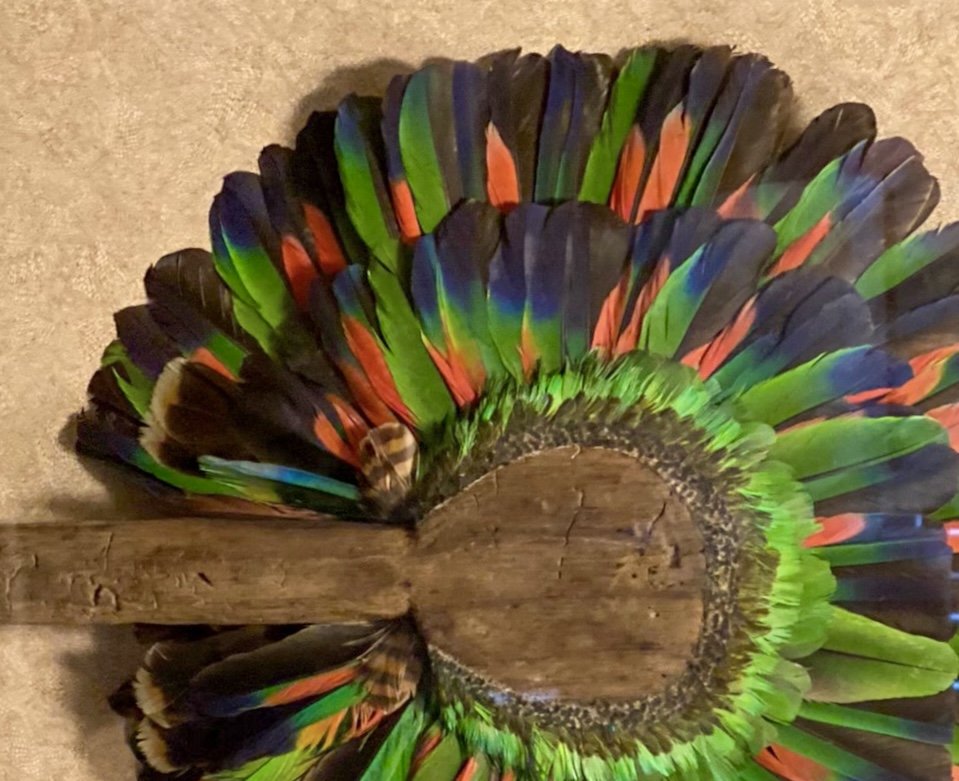
Brightly colored feathers were used in religious ceremonies.

The pre-Columbian people used animals for a variety of purposes. Parrots and macaws, for example, provided a source of food as well as prized blue-green plumage used to adorn headdresses. However, animals also held great symbolic significance. They served as cultural and cosmic metaphors based on their habitat and natural features. 
Duck pre-Columbian pottery at the Museo Nacional de Antropología

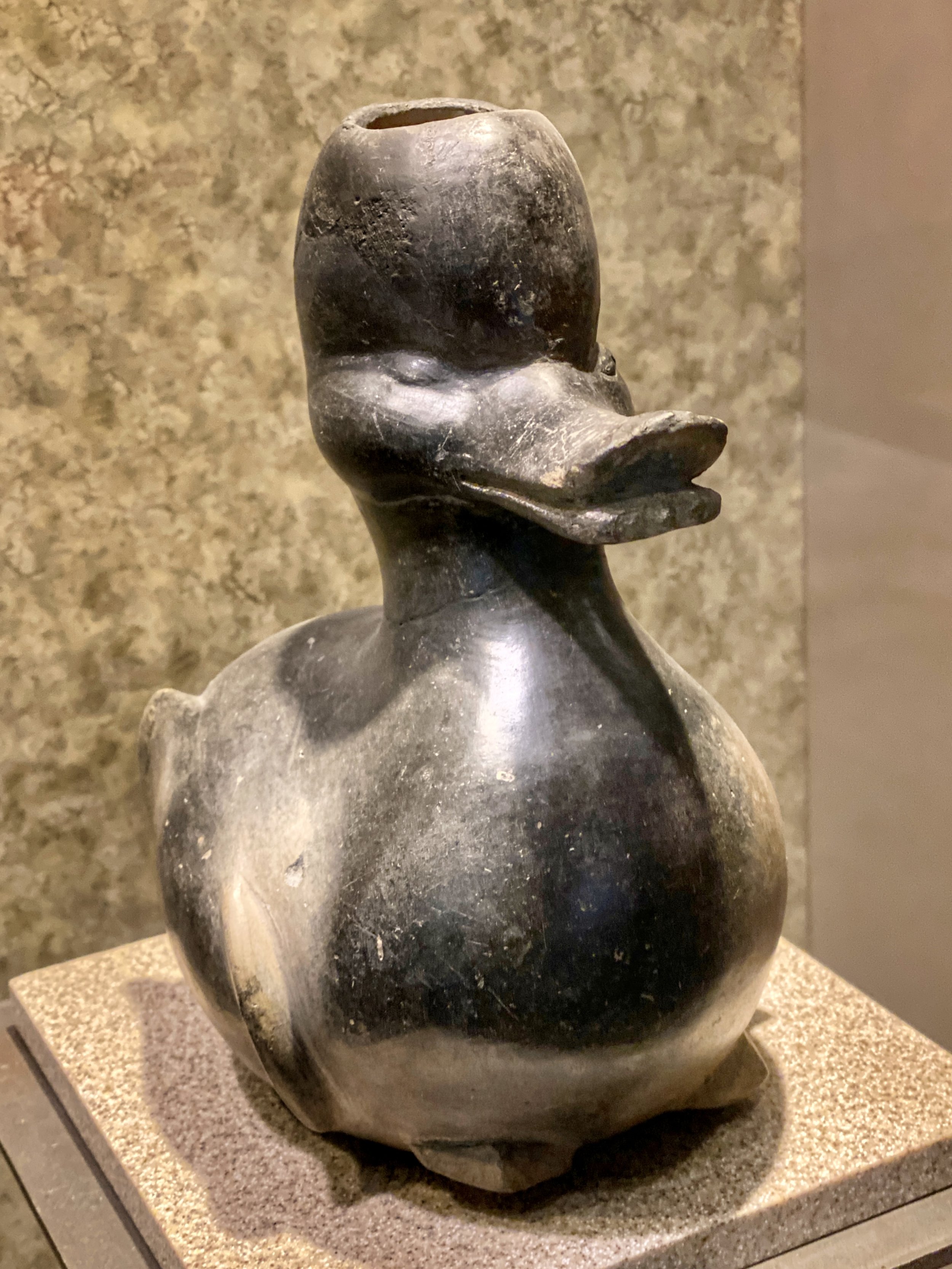
Ducks were particularly holy to Mesoamericans, as they moved between three realms: water, the sky and land.

Just Ducky

Birds symbolized the celestial realm, the sun and moon in particular, and were considered messengers between the natural and spiritual worlds. 

Ducks were particularly holy, perhaps because they ticked all the boxes: They can fly, walk on land and dive underwater, possessing the ability to travel freely between these different spheres. 

Ducks and related birds were also associated with the wind god Ehécatl (pronounced “Eh-heh-ka-tul”), one of the avatars of Quetzacoatl, the great plumed serpent. The deity was frequently portrayed with a duckbill-like appendage on his face, which he used to summon the winds. 

The Maya considered bodies of water to be pathways to the Underworld. Ducks and other waterfowl were ritualistically sacrificed, eaten and used to ward off demons.

Coatimundi pre-Columbian pottery at the Museo Nacional de Antropología

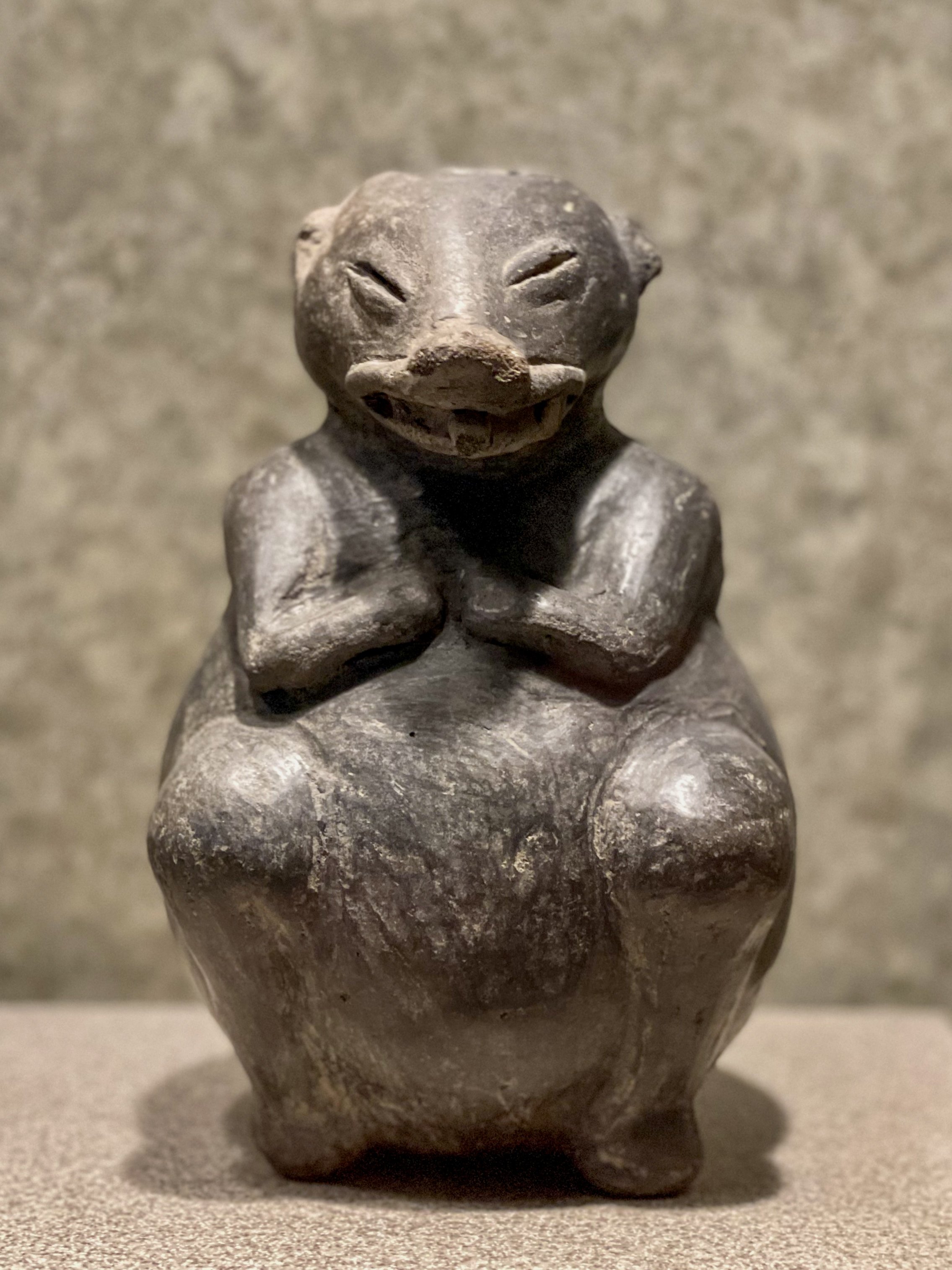
This little guy represents a coatimundi, which figures in a Mayan myth that involved a decapitated head in the Underworld.

Coati Encounters of the First Kind

The coatimundi, or coati, are members of the raccoon family. They have distinct mask-like markings on their faces, resembling a combination of kinkajou, anteater, raccoon and bear cub. 

In the Popol Vuh, the sacred text of the Maya, a bat rips off the head of Hunahpu, one of the Hero Twins, and takes it to the ball court of Xibalbá (the Underworld) to be used in place of a rubber ball. A coati fashions a fake head from a calabash squash and places it on the shoulders of the headless hero. Hanapu’s brother Xbalanque places Hanapu’s head back on his shoulders, and the brothers succeed in defeating the Lords of Xibalbá.

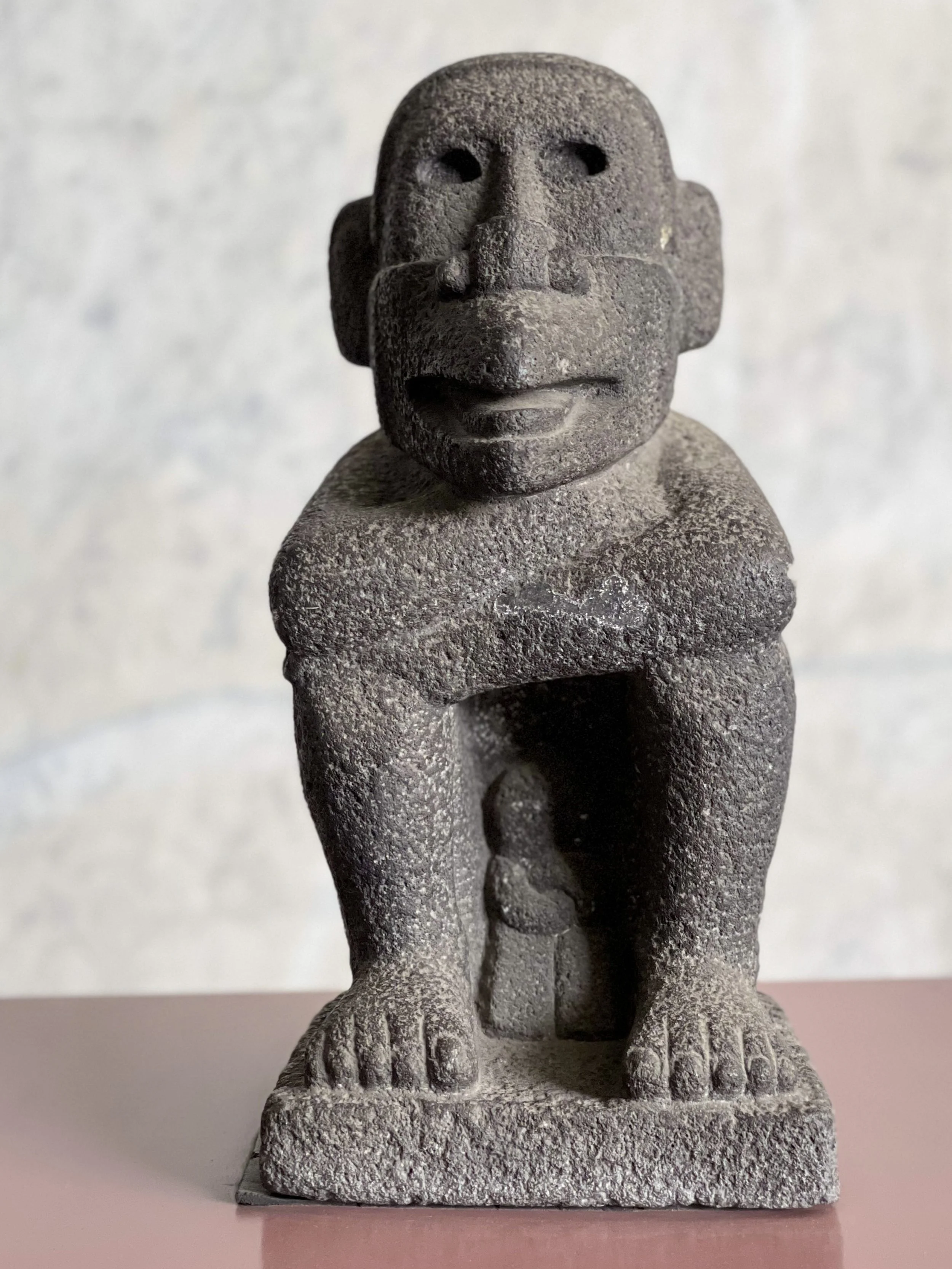
Sitting monkey pre-Columbian pottery at the Museo Nacional de Antropología

Monkeys represented the good (luck and joy) and the bad (immorality).

Monkeys: Sacred Simians 

Spider and howler monkeys are the two most common species native to the tropical lowlands of Mexico. Playful and social in nature, these nimble primates live in the high forest canopy and are mankind’s closest living relative. They were symbols of good fortune and joy, as well as pleasure and immorality — the latter of which was punishable by death. Monkeys were domesticated and kept as pets by both Zapotec and Aztec nobility and weren’t used for food or sacrifice. 

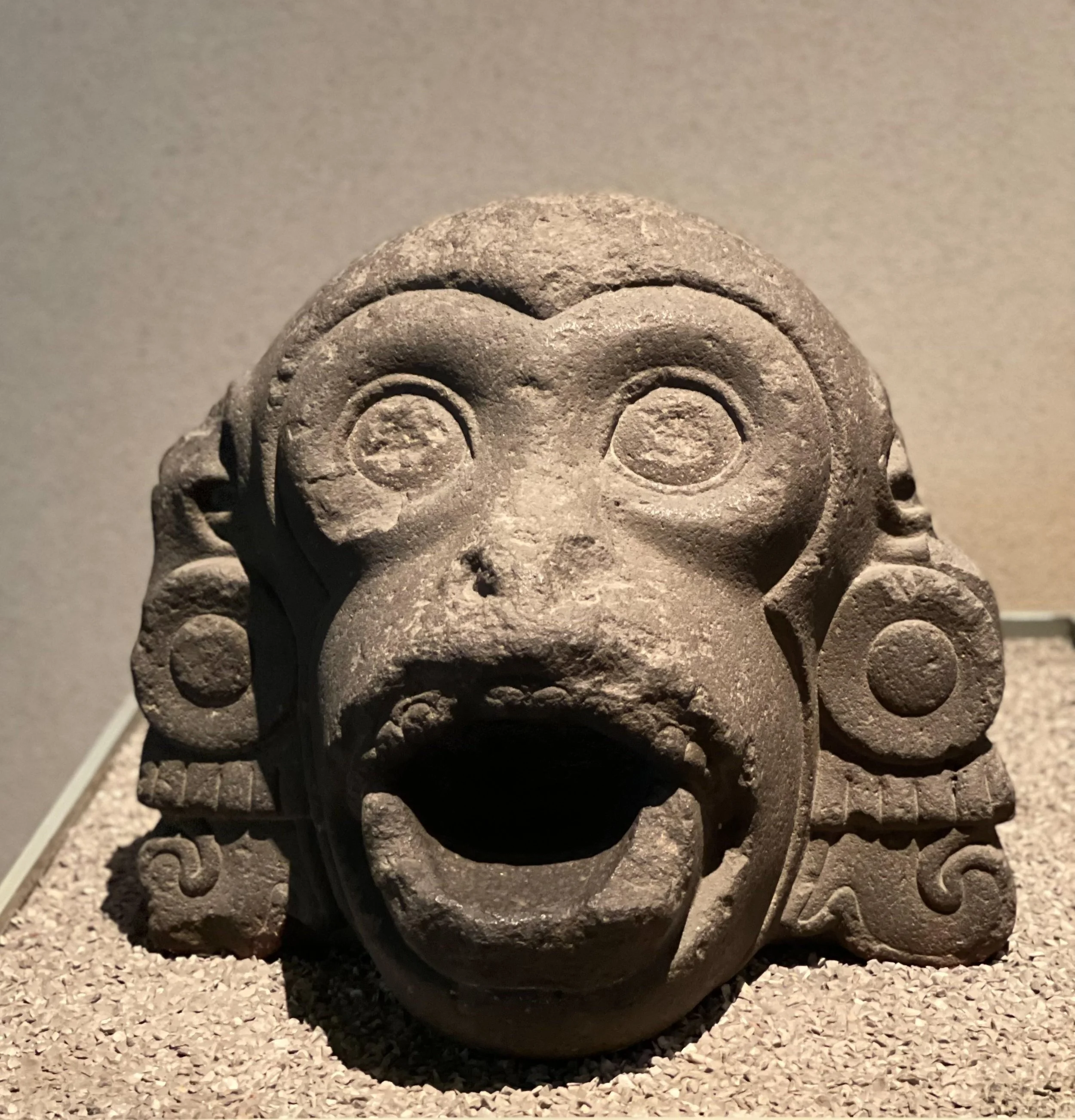
Head of monkey pre-Columbian pottery at the Museo Nacional de Antropología

The “leftovers” of the Second Sun cycle of the universe were turned into jabbering monkeys.

Statue of Ehecatl the god of the wind at the Museo Nacional de Antropología

Ehecatl, the Aztec god of the wind, was associated with monkeys.

Monkeys were also associated with the Aztec wind god Ehécatl. According to the legend of the Fifth Sun, the disobedient survivors of the Second Sun, whose cataclysmic end included hurricanes and floods, were transformed into monkeys by Ehécatl. Deprived of the ability to speak, they were condemned to emit meaningless noises for the rest of their existence. 

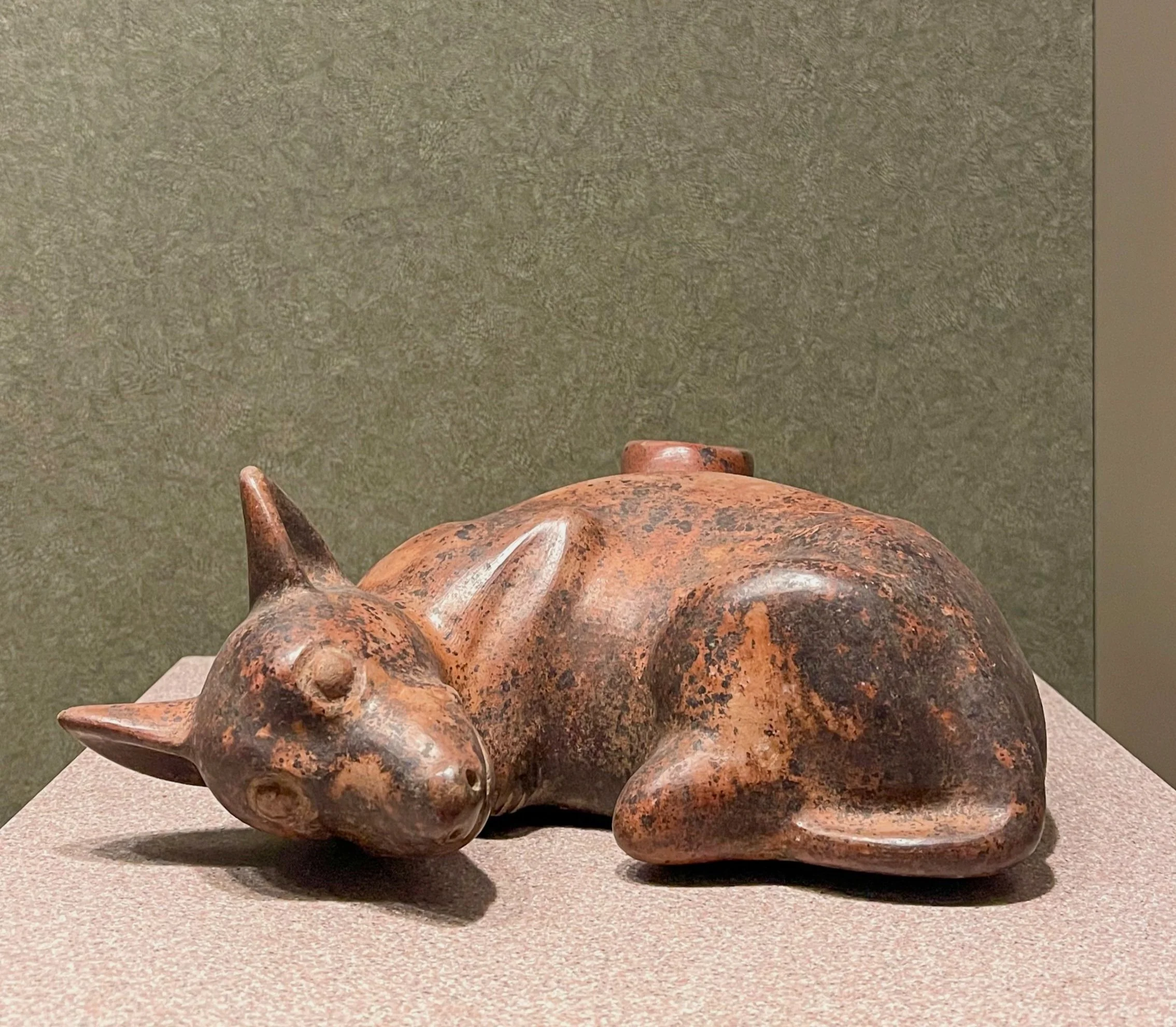
Xoloitzcuintli dog pre-Columbian pottery at the Museo Nacional de Antropología

A person’s spirit would hold onto a Xoloitzcuintli dog’s tail to be guided through the Underworld.

Dogs Truly Are Man’s Best Friend

Before the Chihuahua became the most popular dog breed from Mexico, there was the hairless Xoloitzcuintli (pronounced “Show-low-eats-queent-lee”). This breed got its name from Xolotl, the god of lightning and death, and itzcuintli, dog. To the ancient Aztec and Maya, the canine was created by Xolotl to guard the living and guide the souls of the dead through the perils of Mictlán, the Underworld. Deceased souls held onto the dogs’ tails as they led their owners through the afterlife. They were also bred as a source of food — in fact, the conquistadors developed such an appetite for them that they nearly ate them into extinction. 

The most common depictions of Xoloitzcuintles take the form of small ceramic vessels known as Colima dogs for the modern state of Mexico where they are commonly found. More than a few of these red clay objects are depicted with chubby bodies — this may be an indication that they were fattened up to be eaten.

Frida Khalo and Diego Rivera owned a brood of Xolos, and Wally and I saw a few sunning themselves at el Museo Dolores Olmedo, which houses a large collection of works by this famous duo.

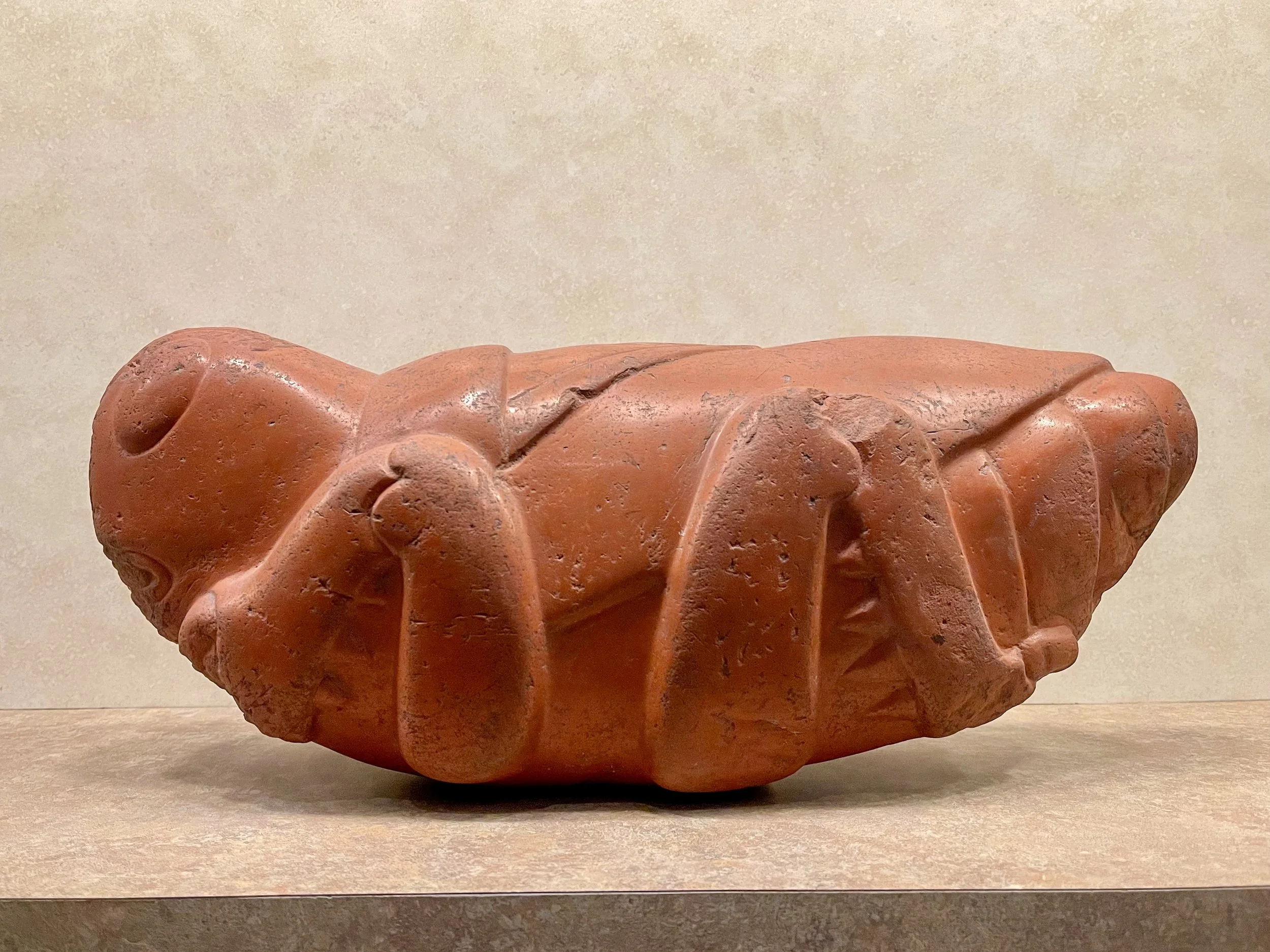
Grasshopper pre-Columbian pottery at the Museo Nacional de Antropología

Grasshoppers were associated with agriculture and fertility — but could also mean destruction.

The Grasshopper: the Insect That Sings for Its Supper

The name of Chapultepec Park, where the Museo Nacional de Antropología is located, comes from Náhuatl for “Hill of the Grasshopper.” This hill rises from the center of the park, was a sacred place for the Aztec and is where Chapultepec Castle stands. 

Grasshoppers were associated with agriculture and fertility and were associated with the period following the annual rainfall, which brought an abundance of the insects. 

In addition to their symbolic importance, the Aztec snacked on chapulines, cooking them on clay surfaces with spices. 

To the Mexica, they represented the duality of abundance vs. destruction: Drought triggers the solitary grasshopper to become social, changing color from green to yellow and black. Under such conditions, they move in swarms, devouring crops and vegetation.

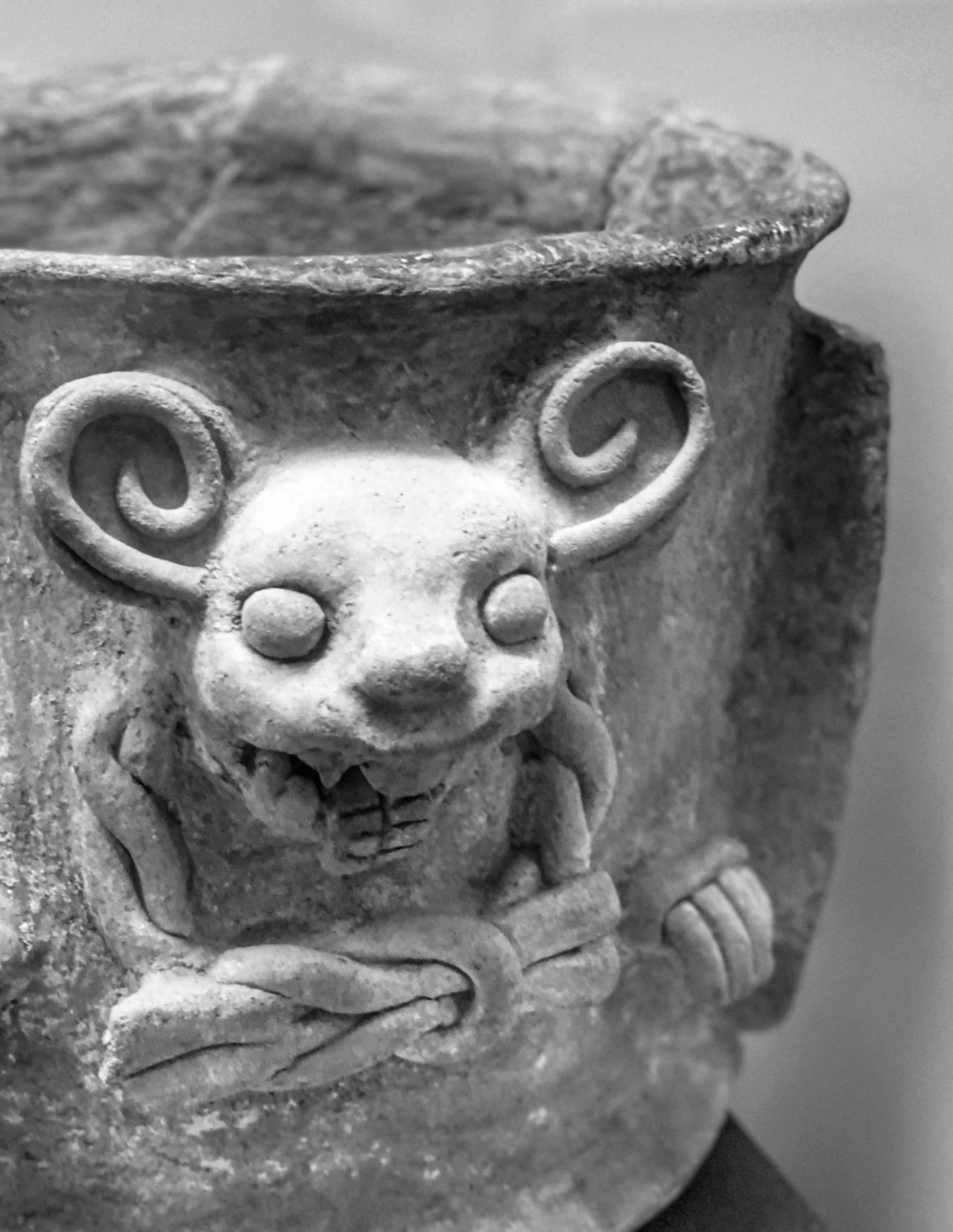
Bat on bowl of pre-Columbian pottery at the Museo Nacional de Antropología

Bats were paired with the Underworld, which was accessible via the caves they live in.

Bats Out of Hell

Bats are nocturnal creatures that travel the sky by night and hide in caves by day, which Mesoamericans believed were portals to the Underworld. 

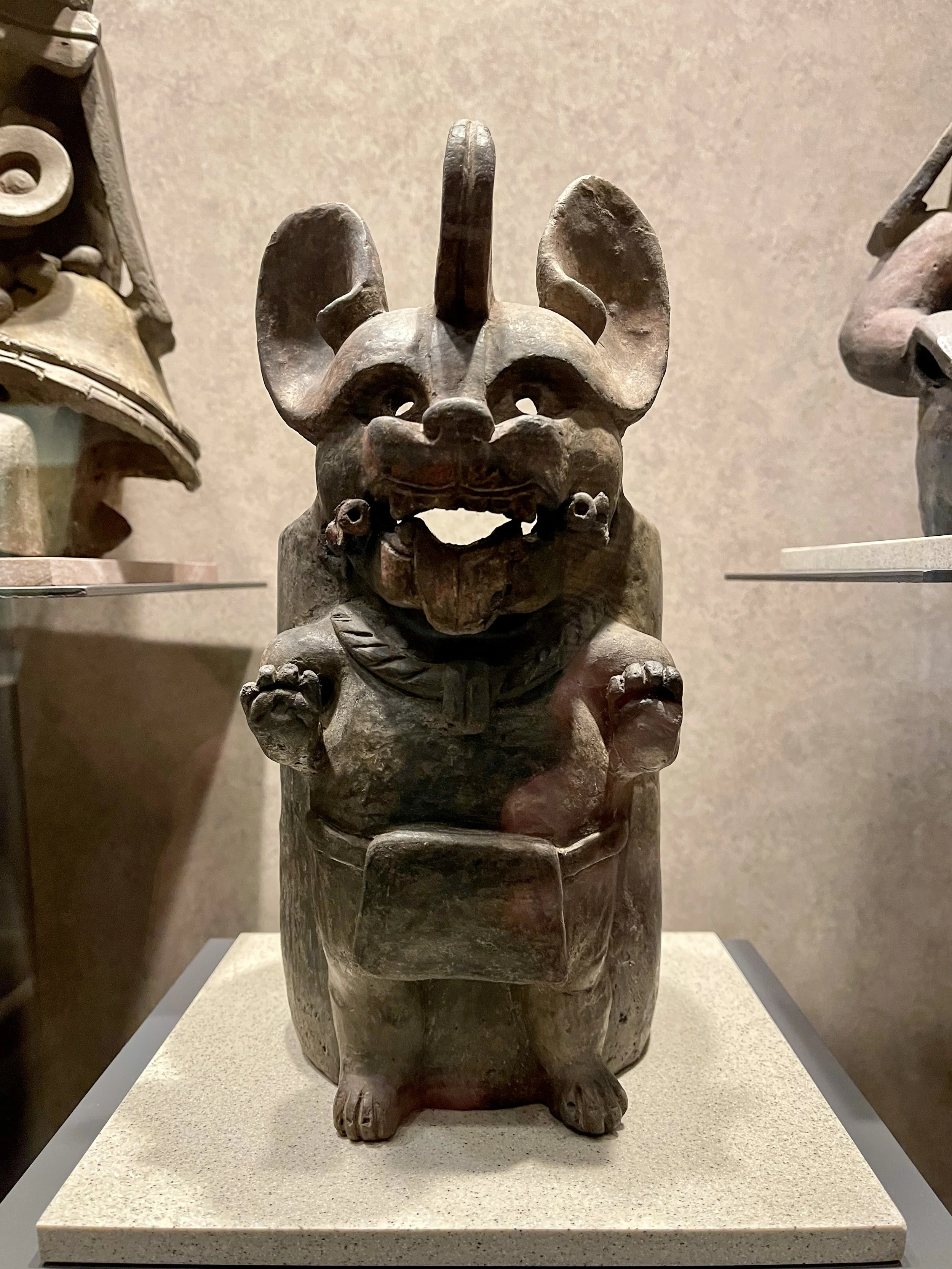
Bat pre-Columbian artifact at the Museo Nacional de Antropología

The stuck-out tongue on this bat statue hinted at the creature’s blood-sucking nature and connected it to the practice of human sacrifice.

The Zapotec venerated the god Camazotz, who had the head of a bat and was associated with night, death and sacrifice. Most likely due to the sanguinary diet of the vampire bat, native to most regions of Mexico, where it feeds on the blood of mammals, the creature became associated with rites of bloodletting and human sacrifice practiced to honor the gods and secure bountiful harvests. 

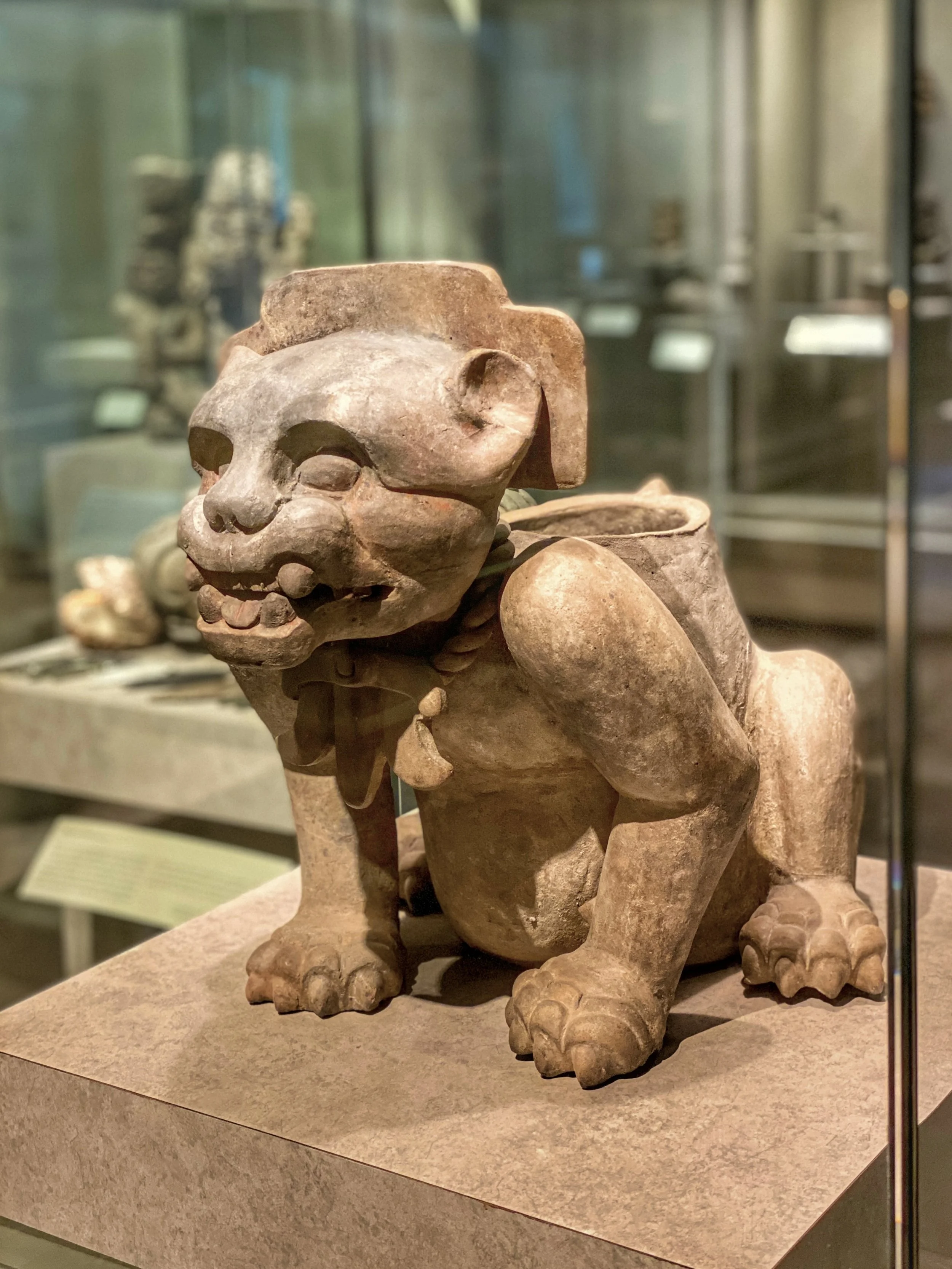
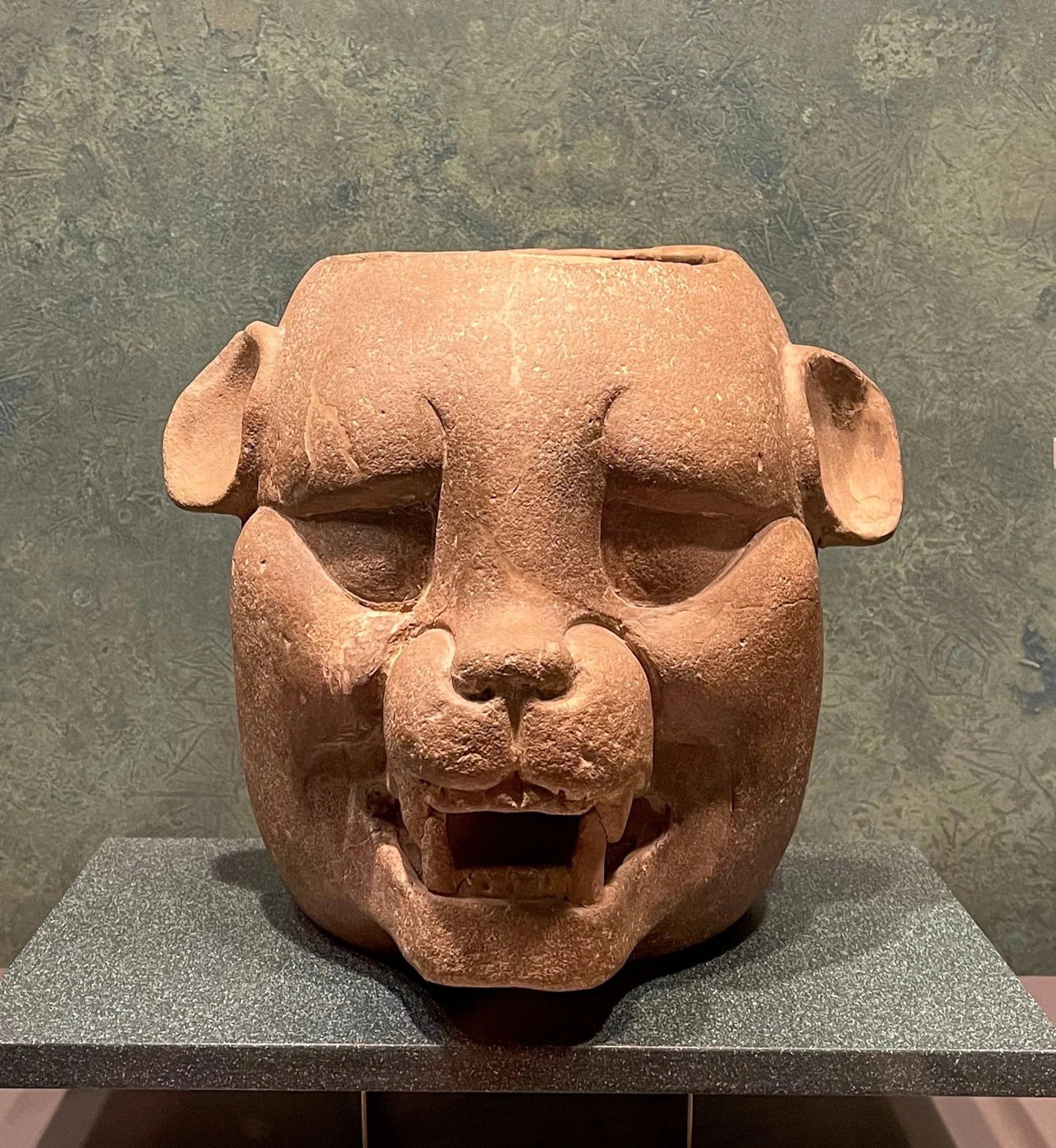
Jaguar pre-Columbian pottery at the Museo Nacional de Antropología

A common symbol in ancient Mesoamerica, the jaguar was linked to power and protection from evil.

Jaguars Hit the Spot(s)

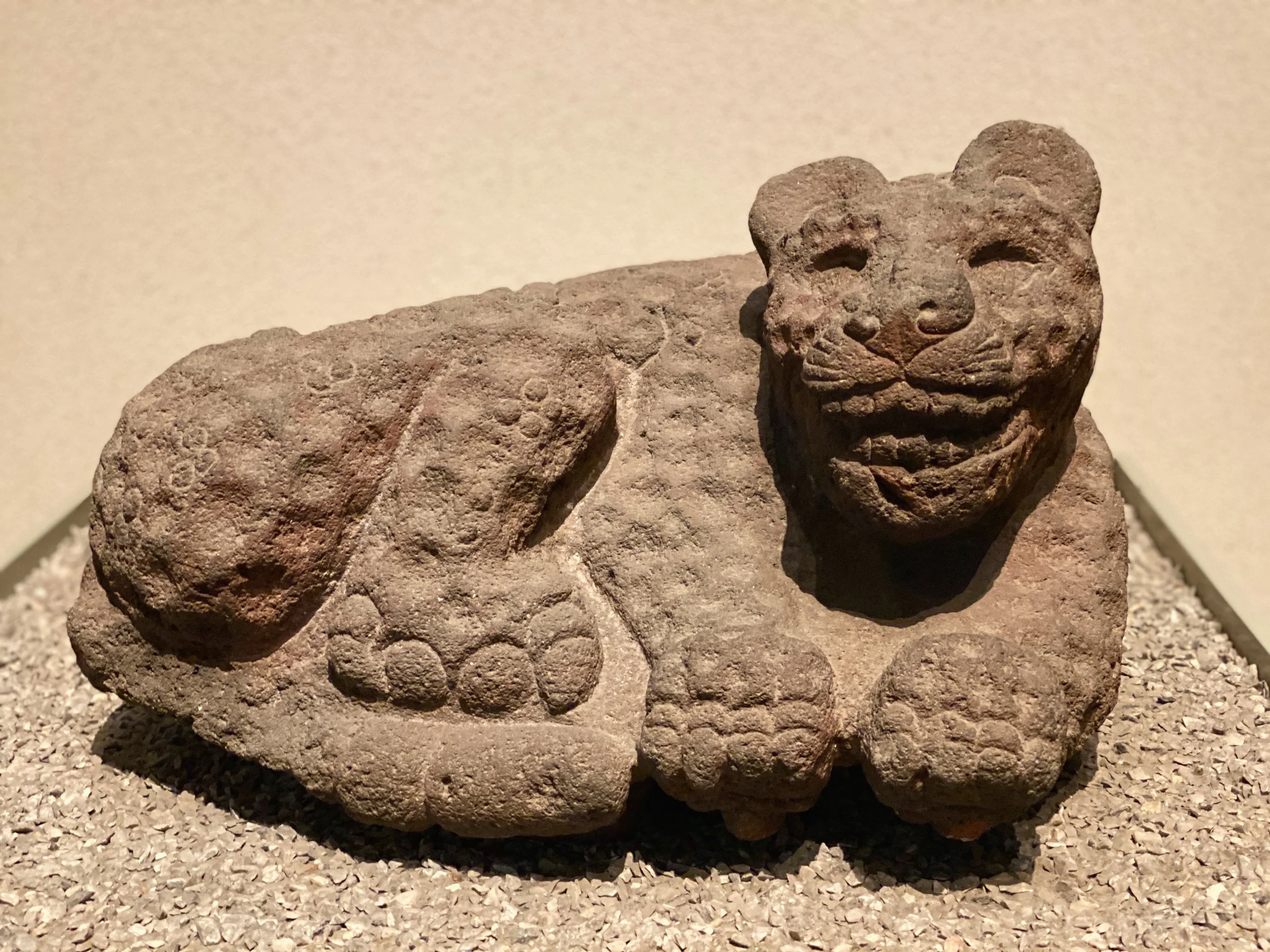
The jaguar was one of the most important sacred symbols of power, ferocity and protection from evil. According to Mexica lore, a jaguar and an eagle both sacrificed themselves to bring light to the world, and in doing so became gods. 

Jaguars were believed to have the ability to travel between the worlds.

Laying jaguar pre-Columbian pottery at the Museo Nacional de Antropología

The Maya connected the jaguar’s spots with heavenly lights.

The jaguar is closely associated with the “night sun” (the sun during its nightly trip through the Underworld) and darkness as well. As such, the big cat was thought to have the ability to move between the worlds of the living and the dead. The Maya venerated the feline, seeing heavenly lights in its spots. –Duke