USA

The Big Island Is the Hawaii for Couples Who Think They’re Over Hawaii

Plan the perfect Big Island couples getaway with manta ray snorkeling, black sand beaches, Volcanoes National Park and Hawaii’s most scenic drives.

There’s a particular kind of traveler who has done Waikiki once, spent a wedding anniversary fighting for pool chairs in Wailea, and quietly concluded that Hawaii is a beautiful place ruined by everyone else who also read about it. 

If that describes you and your partner, the Big Island is the rebuttal. It works precisely because the island is too large and too strange for crowds to accumulate anywhere except a handful of resort lobbies, and because most visitors never drive more than 30 minutes from their hotel.

I should know. I nearly skipped it.

The Island That Doesn’t Feel Like a Resort

The scale changes the math of a trip. The Big Island covers about 4,028 square miles, roughly the size of Connecticut, and holds a population smaller than Anaheim, California. 

The couples who fall for this island are the ones who treat it as a road trip with a hotel attached rather than a resort with an island attached.

Drive 20 minutes in any direction from the Kona resort strip and you’re alone on lava fields, or in coffee country at 1,500 feet in air that smells like roasting beans, or on a black sand beach where the only other visitors are green sea turtles who got there first.

The couples who fall for this island are the ones who treat it as a road trip with a hotel attached rather than a resort with an island attached. That mental flip matters more than any single reservation you will make, and it explains almost everything else in this post.

A Day That Actually Feels Like Yours

A few specifics from my own circling of the island, in the order i’d do them again.

Start with Kealakekua Bay at 7 a.m., kayaking across water so clear you can watch spinner dolphins pass 40 feet below. The afternoon wind arrives around noon and turns the bay to chop, so the early start isn’t optional, and the reward for it is having a marine sanctuary nearly to yourselves.

Then drive south through Kau to Punaluu, where the sand is genuinely black and the turtles haul out most afternoons like they own the place — because, legally speaking, they more or less do. 

Continue to South Point, the southernmost spot in the United States, where locals cliff-jump off a 40-foot ledge, and you can decide together that watching counts as participation.

End in Waimea, the upcountry cattle town at 2,670 feet, where paniolo ranching culture predates Texas cowboys by decades. Merriman’s has been doing farm-to-table there since 1988, before the phrase existed on menus, and the drive back down to the coast at dusk, with the Kohala mountains going purple behind you, is the kind of thing you’ll describe to friends (who will assume you’re exaggerating).

Date Night, Rewritten

Here’s the evening that outranks every scheduled romantic gesture I’ve attempted anywhere else. Sunset at a Mauna Kea overlook around 6:30 p.m., above the cloud layer, followed by manta ray night snorkeling off Keauhou at 8 p.m.

You float on the surface in dark water, holding a light board, while 14-foot animals somersault a foot beneath your masks with their mouths open, feeding on plankton that the lights attract. 

It’s not what most people mean by date night. That’s exactly the argument for it. The operators run at better than a 90% sighting rate, the whole thing takes two hours, and you’ll talk about it at dinner parties for the next decade.

The Unromantic Logistics That Make It Work

This Big Island punishes improvisation, so handle the boring parts early.

You’ll drive between 60 and 120 miles on any day you do something interesting. The restaurants worth planning around are rarely in the resort corridor. Rideshare coverage thins to nearly nothing past Waikoloa after dark, and more than one couple has ended a romantic evening waiting 90 minutes for a driver who never accepted the ride.

The fix is an easy one: Book a Kona car rental for the entire stay rather than day-by-day, from a local operator that delivers the car to your hotel or the airport. This spares you the arrival-day counter line that eats the first two hours of a five-day trip. 

And if the occasion is an anniversary or honeymoon, it’s worth knowing that a luxury car rental in Kona runs meaningfully less than the equivalent on Maui or Oahu. 

The Queen Kaahumanu Highway at golden hour, lava fields going amber on both sides and the top down, is the single best driving hour in the state. And it costs about what two resort dinners do.

Whatever you book, confirm that the mileage terms cover an island this size. A single loop runs about 220 miles before you add a foot of side trips.

Where to Base and What to Skip on the Big Island

Base on the Kona side for reliable sun and the manta trip. If Kilauea is erupting, add one or two nights in Volcano Village, because falling asleep to a faint red glow over the caldera is worth rearranging a reservation for, and the eruption viewing crowds thin dramatically after 8 p.m.

Skip the impulse to split the trip with a second island. The interisland flight, the second rental car, and the repacking consume a full day of a week you’ll wish was longer. 

The Big Island keeps producing new versions of itself, rainforest to lava desert to alpine summit, faster than you can experience them.

Hawaii's crowded islands are crowded for defensible reasons. This one just quietly has more, spread across more space, with fewer people standing in front of it. Go before the couples fighting over pool chairs figure that out. –Oliver Brooks
Houston Travel Tips: 5 Things to Know Before Booking Your Trip

Houston travel tips to help you plan smarter, including when to visit, whether to rent a car, where to eat and how to map out your days.

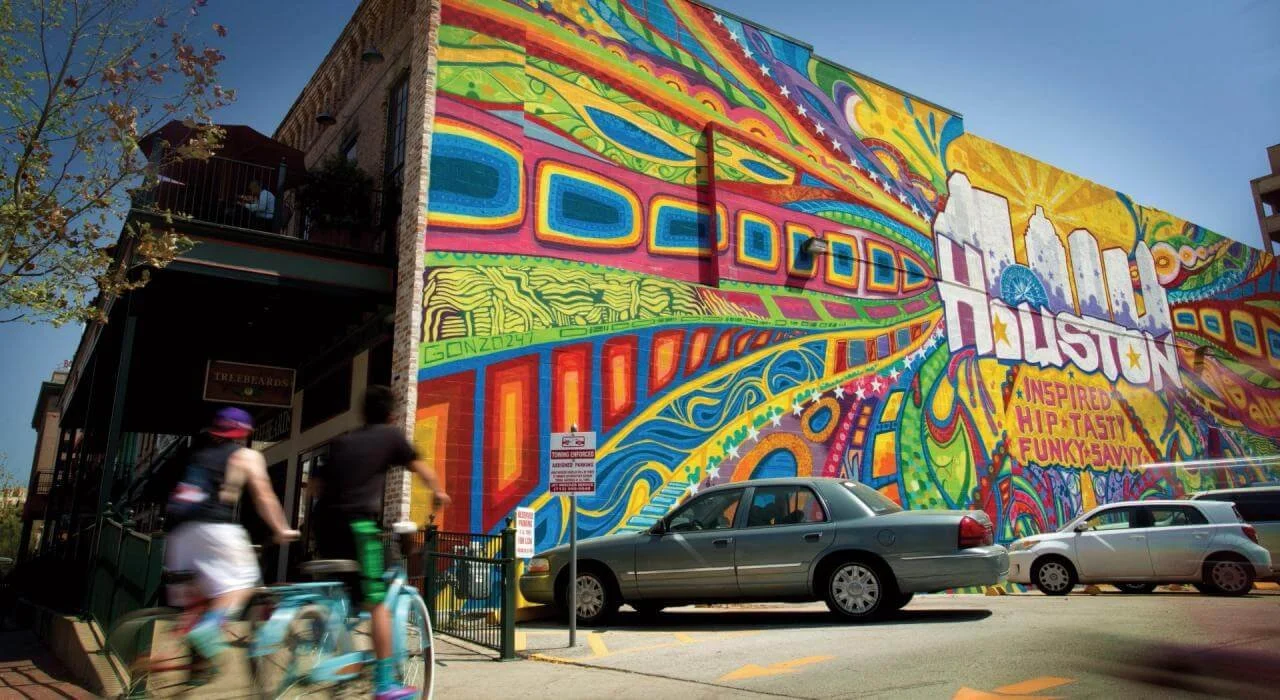
Colorful mural in Houston, Texas

Planning a trip to Houston sounds easy enough at first. You picture NASA, great museums, barbecue, Tex-Mex, maybe a baseball game and a hotel pool you can justify as “recovery time.” Then you open your map app.

Suddenly, your breezy Houston vacation has turned into a geometry problem. The Museum District is here. Space Center Houston is way down there. The restaurant everyone told you to try is in a strip mall 35 minutes away. Your hotel is “central,” technically, but Houston’s version of central may still involve a highway.

That doesn’t mean Houston is hard to visit. It just means the city rewards a little planning. Houston is huge, humid, delicious, spread out and full of surprises. Get your logistics right and you can have an excellent trip. Wing it completely and you may spend more time in transit than you do seeing the city.

Here are five Houston travel tips to know before you book.

1. You’ll most likely want a car.

Houston is a driving city. For most visitors, especially anyone hoping to see several parts of the city, a car makes the trip much easier.

Think of Houston less like a compact weekend city and more like a collection of mini-trips. One morning might take you to the Museum District. Another day might be built around Space Center Houston. Dinner could be in Montrose, the Heights or Chinatown.

Rideshares work well for shorter hops, but they can add up fast if you’re crossing town multiple times a day. Before you book your hotel, look into rental cars in Houston. You may find that having your own wheels gives you more freedom and less schedule stress.

Take the weather in Houston seriously — especially during hurricane season.

2. Houston weather can be more intense than you may expect.

Houston doesn’t do “a little warm.” In summer, the city can feel like it’s been wrapped in a wet towel and placed under a heat lamp. The humidity is real, the sun is serious, and the air conditioning indoors can be aggressive enough to make you wish you’d packed a sweatshirt.

If you’re planning lots of outdoor time, spring and fall are generally more comfortable than peak summer. If you’re visiting in summer anyway, build your days accordingly. Do outdoor activities early, drink lots of water, pack breathable clothes and bring a hat you actually like enough to wear. 

Weather should also factor into your hotel and car choices. Make sure your room has reliable air conditioning. If you’re renting a car, good AC isn’t a luxury. It’s a survival tool with cupholders.

And while Houston is famous for heat and humidity, sudden storms can be part of the package too. Heavy rain can affect roads, traffic and plans, especially during the wetter months and hurricane season. Keep an eye on the forecast, take flood warnings seriously and give yourself extra time when weather looks messy.

3. Plan by area, not by theme.

This may be the most important Houston travel tip: Don’t plan one “museum day,” one “shopping day” and one “food day,” unless everything on each list happens to be near each other. Houston is too spread out for that.

Instead, plan by geography. Pick one anchor activity for each day, then build around it.

If you’re going to the Museum District, pair it with Hermann Park, the Houston Zoo, Rice Village or dinner nearby. If you’re heading to Space Center Houston, treat that as the centerpiece of the day and look for stops in the Clear Lake or Galveston direction. If you want to explore Montrose or the Heights, give yourself time to wander, eat, shop and linger instead of trying to sprint across town afterward.

And if you’re planning to visit Meow Wolf’s Radio Tave, Houston’s gloriously weird immersive art experience in the Fifth Ward, treat that as its own anchor too. It’s the kind of place where you don’t just pop in, snap a photo and move on. You wander through portals, poke around strange rooms, follow whatever mystery is unfolding and eventually wonder whether you’re still in Houston or have been gently abducted by an interdimensional radio station. Pair it with nearby food, drinks or a Downtown stop rather than trying to wedge it between attractions on opposite sides of the city.

A good Houston itinerary might look like this:

Day 1: Downtown, Theater District, Discovery Green and a game or show
Day 2: Museum District, Hermann Park and Montrose
Day 3: Space Center Houston, Kemah or Galveston
Day 4: Fifth Ward, Meow Wolf’s Radio Tave, the Heights and Buffalo Bayou Park

That kind of planning saves time, cuts down on backtracking and makes the city feel much more manageable. It also leaves room for the best kind of travel moment: the unplanned stop. In Houston, that might be a taco truck, a tiny Vietnamese bakery, a mural or a cocktail bar.

Sure, you can get great Tex-Mex and barbecue in Houston — but make sure you venture out and try other cuisines as well.

4. Take the Houston’s food scene seriously.

Houston is one of the great American food cities, and the best advice is simple: Be curious.

Yes, you can get excellent barbecue and Tex-Mex. You should. But don’t stop there. Houston’s food scene reflects the city itself: Mexican, Vietnamese, Nigerian, Indian, Chinese, Cajun, Creole, Pakistani, Korean, Thai, Ethiopian and many more cuisines all have a place at the table.

Some of the best meals in Houston won’t announce themselves with dramatic architecture or velvet ropes. They may be in a strip mall, next to a nail salon, under fluorescent lights — a setting that looks unbothered by Instagram. Go anyway.

That’s part of the fun of visiting Houston. The city isn’t always polished in a traditional tourist-brochure way. It sprawls. It surprises. It hides some of its best food in plain sight. Ask locals where they eat, not just where visitors go. Search by neighborhood and cuisine. Leave at least one meal open for a recommendation you get after you arrive.

And if you’re building an itinerary around food, remember the previous tip: Group restaurants by area. A lunch reservation across town can quietly eat an entire afternoon if you don’t plan for drive time.

Cowboy about to be thrown of his bucking horse as part of the Houston rodeo

The rodeo can be fun — but prices go up when it comes to town.

5. Timing can change the price of your trip.

Houston hotel prices can shift dramatically depending on what’s happening in town. A week that looks mysteriously expensive may overlap with a major convention, concert, sporting event, college tournament, energy conference or rodeo season.

Before you book, check the event calendar. Look at what’s happening at NRG Stadium, Toyota Center, Daikin Park and the George R. Brown Convention Center. Also check dates for the Houston Livestock Show and Rodeo, which brings huge crowds in late winter and early spring.

If your dates are flexible, click around. Moving your trip by even a week can sometimes make a big difference in hotel rates and availability. If your dates aren’t flexible, book early and choose a hotel based on the area where you’ll spend the most time.

The same goes for restaurant reservations, museum tickets and special attractions. Houston is a major city with a major visitor economy, so don’t assume you can always glide in at the last minute. A little advance planning can save money and prevent the “Why is everything sold out?” panic spiral.

The Saturn V rocket on display at Space Center Houston

FAQs: Visiting Houston

Is Houston worth visiting?

Yes. Houston is worth visiting for its museums, food, sports, neighborhoods, performing arts, NASA connection and easy access to Gulf Coast day trips. It’s especially rewarding for travelers who like big, diverse cities and don’t mind planning around distance.

Do you need a car in Houston?

Most visitors will find Houston easier with a car. Public transit can work well in specific areas, including downtown, the Museum District, NRG Park and the Texas Medical Center, but many major attractions and restaurants are spread across the city. If you don’t rent a car, choose your hotel carefully and group your itinerary by neighborhood.

What is the best time to visit Houston?

Spring and fall are usually the most comfortable times to visit Houston, especially if you plan to spend time outdoors. Summer can be very hot and humid, while late winter and early spring can be busy because of rodeo season and major events.

How many days do you need in Houston?

A long weekend gives you enough time for a first taste of Houston: one day for museums, one day for food and neighborhoods and one day for Space Center Houston or another major attraction. Four or five days is better if you want to add Galveston, shopping, sports or a slower-paced food crawl.

Is Houston walkable for tourists?

Some parts of Houston are walkable, including pockets of downtown, the Museum District, Montrose and the Heights. But Houston as a whole isn’t a city where most visitors can rely on walking alone. Plan for driving, rideshares or public transit between neighborhoods.

What is Houston known for?

Houston is known for Space Center Houston, NASA’s Johnson Space Center, world-class museums, major sports teams, the Houston Livestock Show and Rodeo, diverse neighborhoods and one of the most exciting food scenes in the U.S.

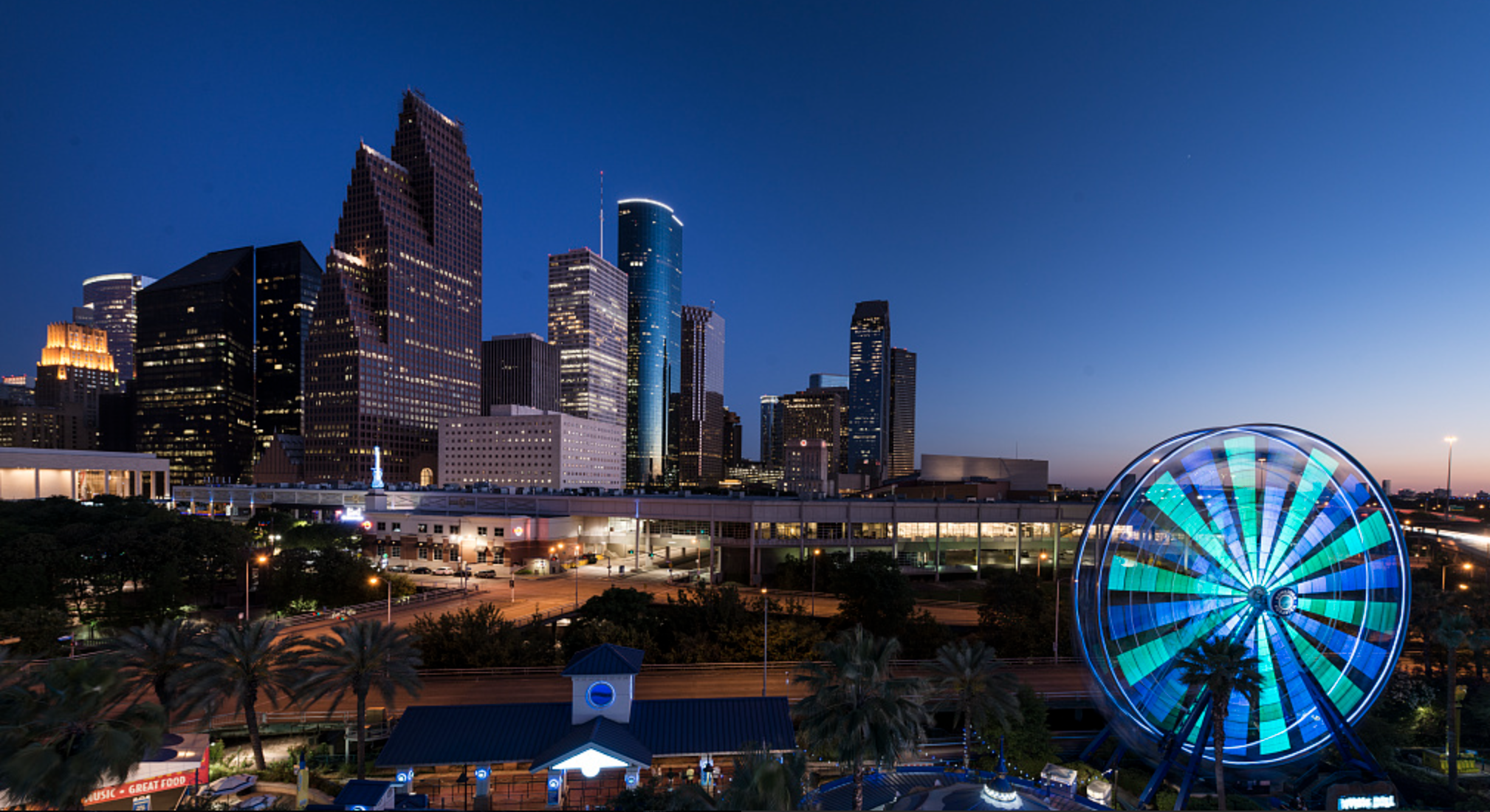
The Houston, Texas skyline at night, with a lit-up Ferris wheel in the foreground

Houston is a big city, but you can group your adventures by area to maximize your time.

Houston Is Big. That’s Part of the Fun.

Houston isn’t a city you conquer by accident. It’s too large, too spread out and too full of detours for that. But with a little planning, those detours become the point.

Rent a car if it makes sense. Respect the weather. Build your days by neighborhood. Eat widely. Check the calendar before you book. Do those five things and Houston becomes much easier to love: a big, bold, generous city where the best part of the trip might be the thing you found between the itinerary you planned. –Abigail Walters


GIDDYUP! MORE TEXAS: 

Quirky Dallas

Artsy Marfa

5 Wedding Destinations in the U.S. Your Guests Will Actually Thank You For

The best destination weddings balance your dream day with a trip guests will genuinely enjoy. These five destinations do both.

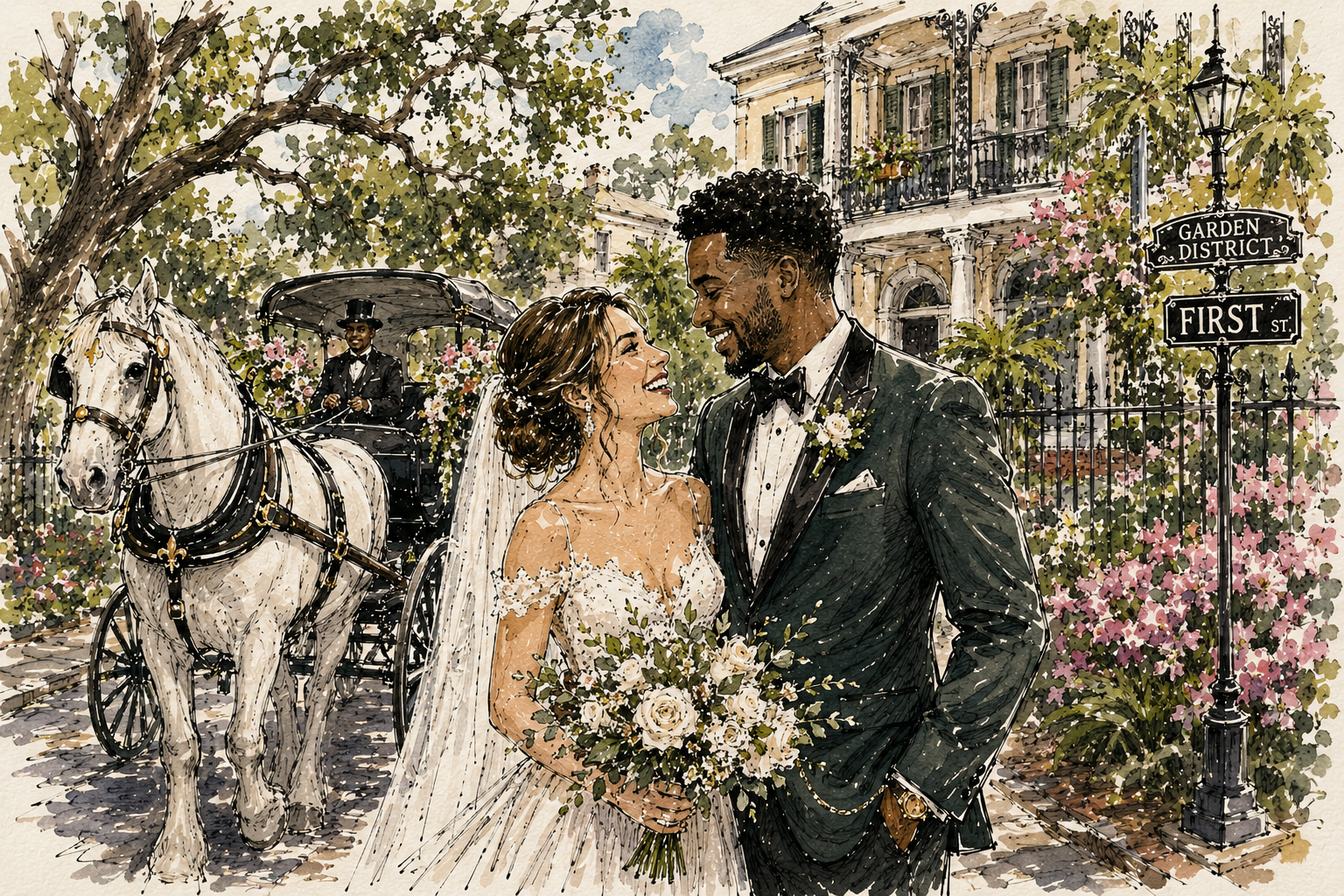
A bride smiles up at the groom while posing by a horse-drawn carriage and flower-covered mansion in New Orleans' Garden District

Destination weddings get a bad rap. Mention one, and someone inevitably pictures draining their savings account to attend a ceremony on a remote beach, where the only available activity is awkward small talk with distant relatives.

But destination weddings don’t have to be an elaborate hostage situation disguised as a celebration.

Destination weddings don’t have to be a hostage situation disguised as a celebration.

The best ones strike a balance between what matters to you and what makes the trip enjoyable for everyone else.

The best ones strike a balance between what matters to you as a couple and what makes the trip genuinely enjoyable for everyone else. Because if you’re asking guests to use vacation days, book flights and figure out childcare, it helps if the destination itself feels like part of the gift. But before you arrange the room block for wedding guests, it’s key that you choose the right destination.

The good news? Some cities practically do the heavy lifting for you. Whether you’re prioritizing weather, logistics or making sure your wedding weekend becomes a trip people still talk about years later, these five destinations deliver.  

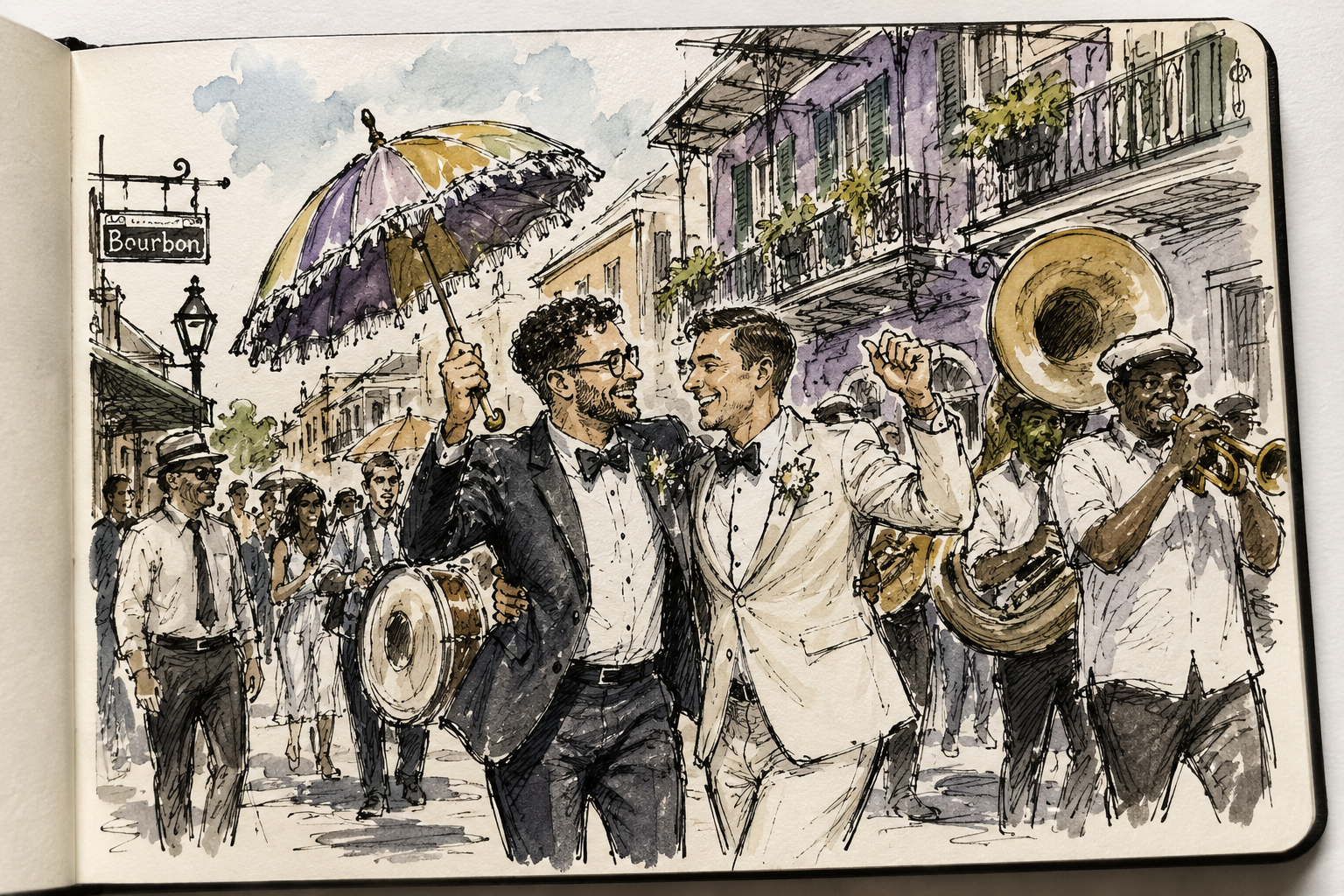
Two grooms, one holding a parasol, dance down the street at their wedding in the French Quarter of New Orleans with a jazz band playing

1. New Orleans: For Couples Who Want a Wedding With Personality

Some cities host weddings. New Orleans is the wedding.

Few places lean into celebration quite like the Big Easy. Picture exchanging vows in a hidden courtyard before leading guests through the French Quarter in a joyful second-line parade. Add Creole and Cajun cuisine that will ruin bland wedding chicken forever, and you’ve got the recipe for an unforgettable weekend.

The city practically creates the atmosphere for you.

  • The French Quarter offers historic romance and undeniable character.

  • The Warehouse District delivers a more contemporary, artsy vibe.

  • The Garden District surrounds guests with grand homes and lush gardens worthy of a Southern fairy tale.

Your guests may arrive for the wedding, but don’t be surprised if they leave planning a return trip.

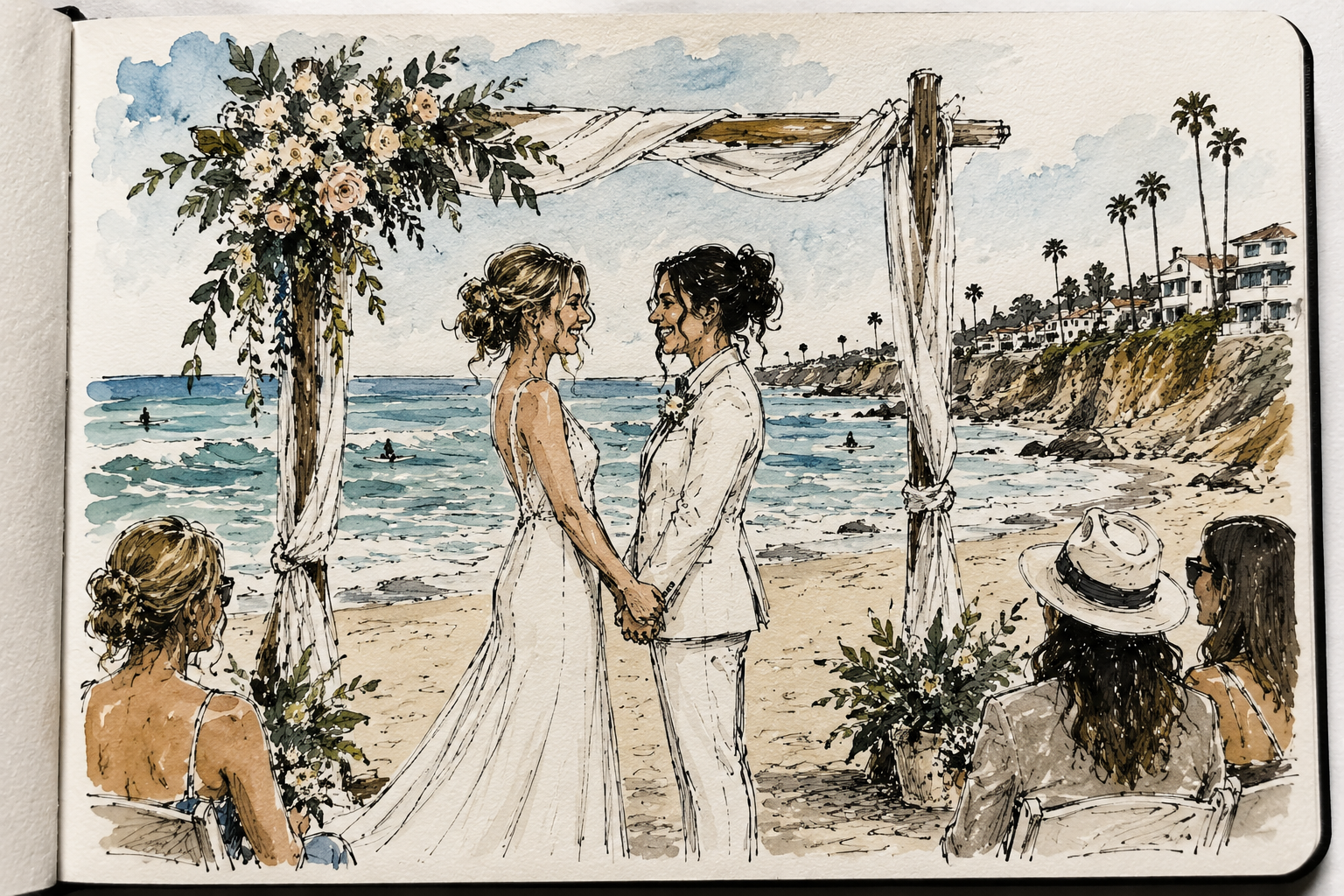
Two women get married on the beach under a wood structure covered in white cloth and flowers in San Diego

2. San Diego: Because Nobody Wants to Gamble With the Weather

Wedding planning involves enough uncertainty. The forecast doesn’t need to be one of them.

With mild temperatures and sunshine most of the year, San Diego is one of the safest bets for couples hoping to avoid weather-related drama. The city’s laidback coastal vibe also means guests can easily turn the celebration into a mini vacation.

Beyond the postcard-worthy beaches, you’ll find elegant resorts, historic hotels and garden venues that stay beautiful year-round. Visitors can spend downtime exploring Balboa Park, strolling downtown or simply enjoying the coastline. There are also some underrated day trips from San Diego that might appeal.

A thoughtful bonus: Many beaches offer complimentary beach wheelchairs, making ocean access more inclusive for guests with mobility needs.

A few timing tips:

  • May through October: Classic Southern California beach weather with warm, sunny days

  • November through April: Cooler temperatures and fewer crowds create a more relaxed experience

  • January through March: The highest chance of rain, though still lower than many destinations

If predictability is your love language, San Diego may be your perfect match.

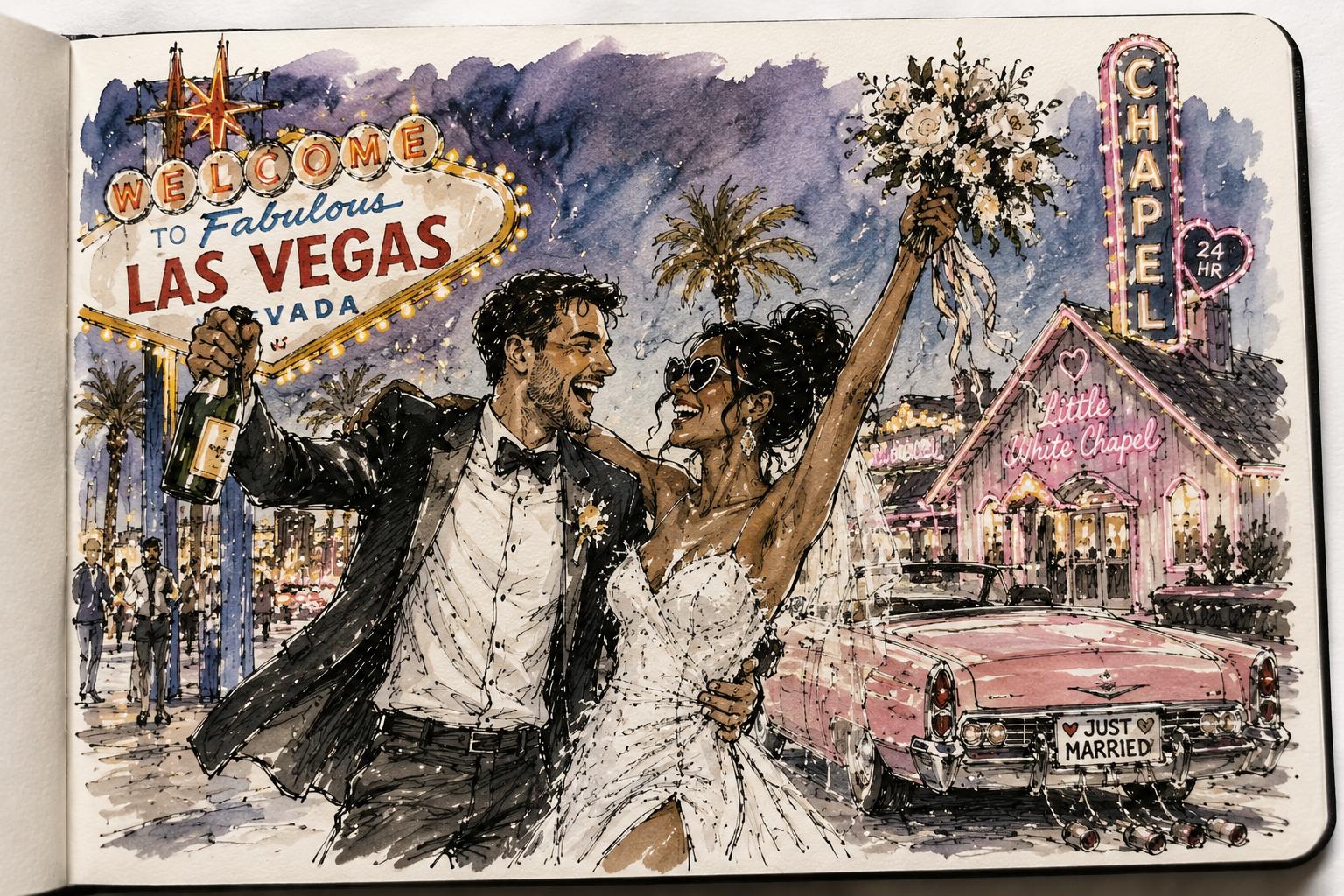
Newlyweds celebrate by neon signs, a pink convertible and a wedding chapel in Las Vegas

3. Las Vegas: Surprisingly Stress-Free

Las Vegas may be famous for impulsive weddings, but it’s also one of the easiest places to plan one intentionally.

The city has streamlined the process to an art form. Couples simply need to be over 18, provide government-issued identification and confirm they’re not currently married. There’s no waiting period, meaning you can obtain your marriage license and tie the knot the same day.

International couples especially appreciate how straightforward the process is. Marriages performed in Las Vegas are generally recognized worldwide, though additional documentation, including a certified marriage certificate and apostille, may be required, depending on your home country.

Best of all, Vegas knows exactly what it is. Guests have endless entertainment options, flights are plentiful, and venues range from delightfully over-the-top to surprisingly elegant. And yes, there are things to do in Vegas besides gamble. For one thing, it’s home to world-class restaurants.

If your priorities are simplicity, convenience and making sure nobody spends the reception complaining they’re bored, Vegas delivers.

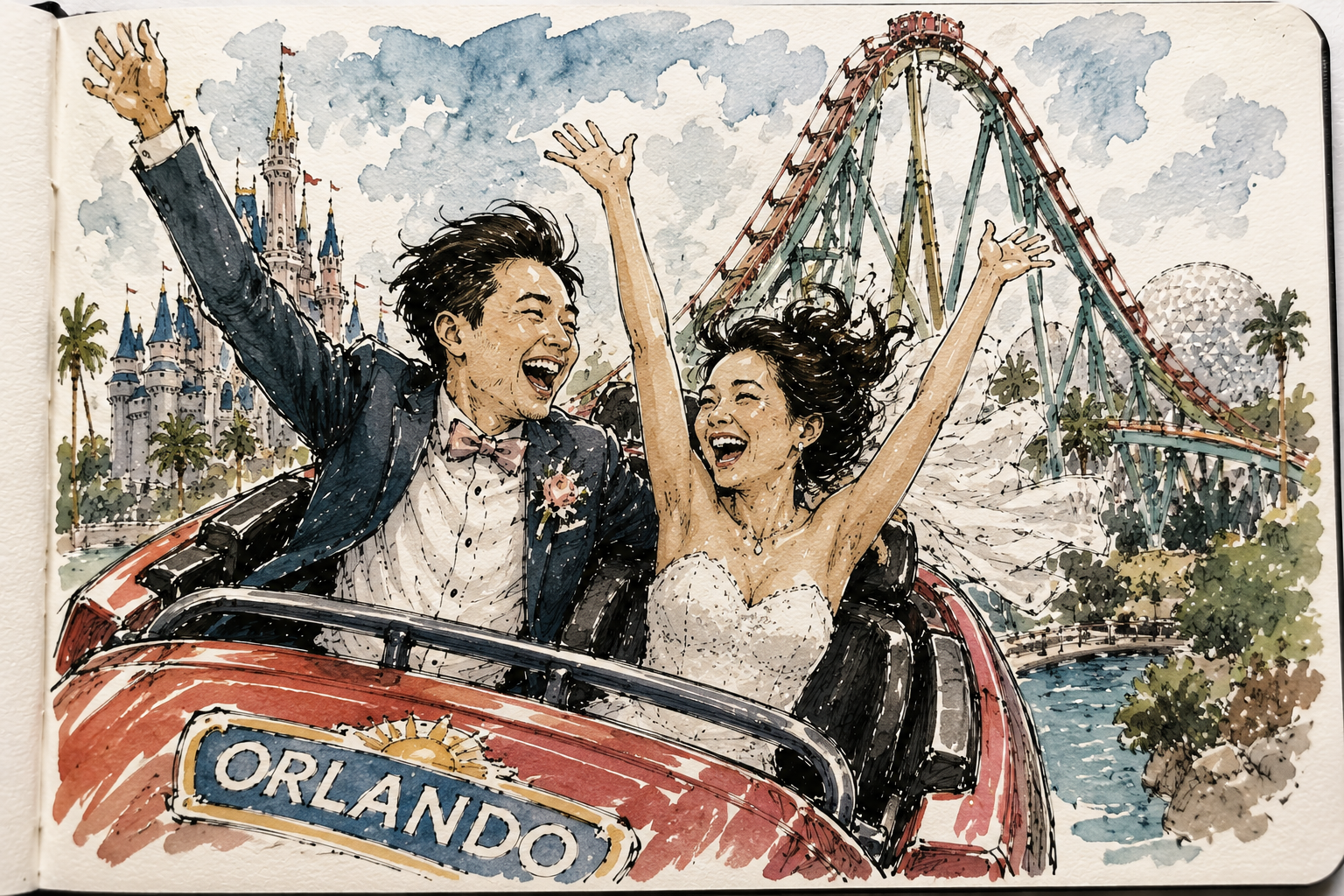
A groom and bride raise their hands as they ride a rollercoaster in Orlando, Florida, with the Disney World castle and Epcot ball in the background

4. Orlando: For the Couple With a Guest List the Size of a Small Nation

Every family has that wedding guest list that somehow expands to include toddlers, grandparents, second cousins and people your parents insist you absolutely must invite.

Orlando handles that kind of logistical challenge exceptionally well.

As one of the country’s biggest tourist destinations, the city is designed to accommodate large groups. You’ll find venues ranging from botanical gardens and museums to luxury resorts and, yes, world-famous theme parks.

But Orlando’s real superpower is infrastructure.

Professional childcare services can accommodate both individual families and larger events. Transportation options make moving dozens of people around surprisingly manageable. And with a major international airport offering abundant flight options, getting everyone there becomes much less complicated.

When your biggest challenge is coordinating a crowd ranging from age 2 to 82, Orlando makes it feel almost easy.

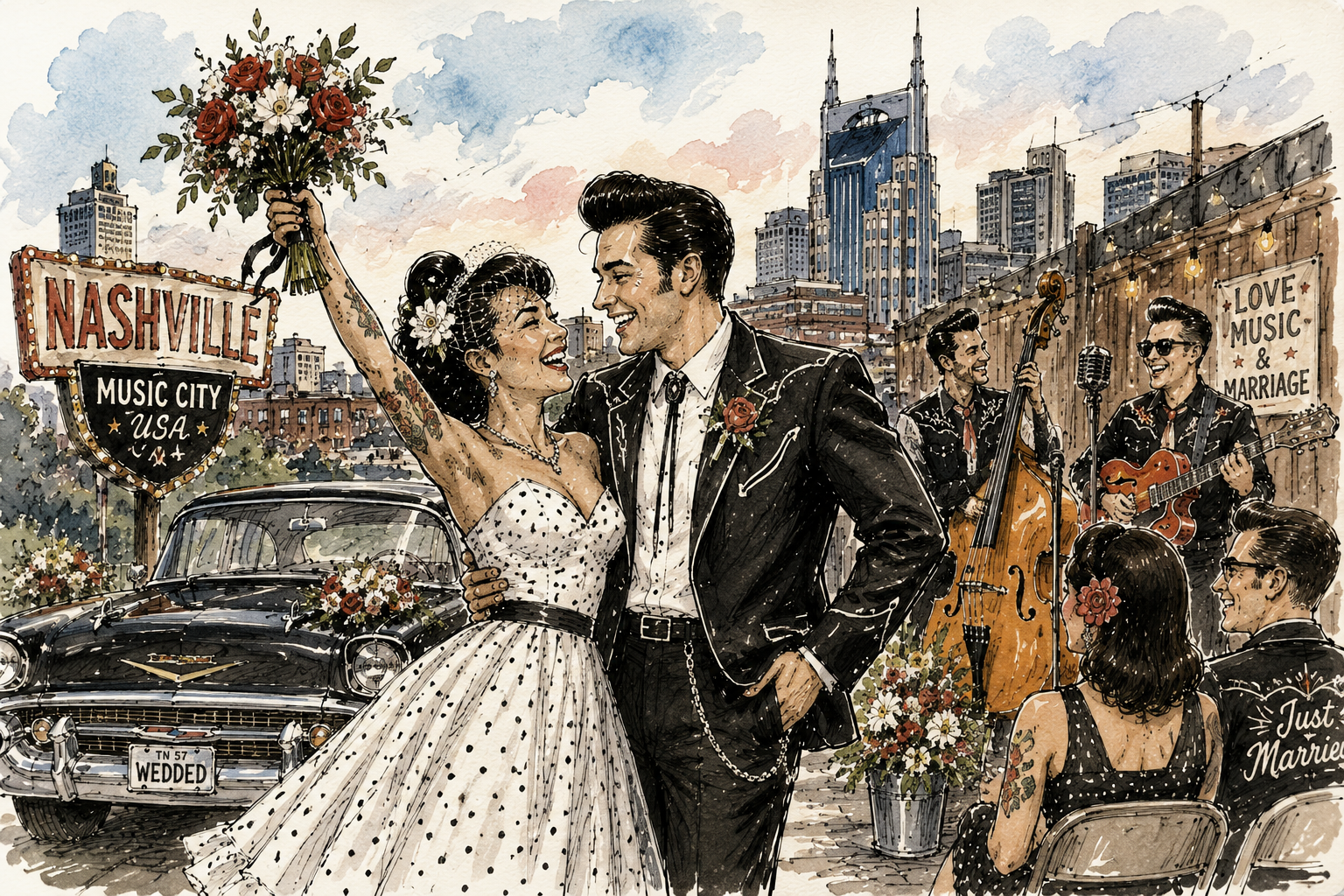
A rockabilly couple get married in Nashville, Tennessee, by a black classic bar, a sign and downtown buildings, as a band plays

5. Nashville: Turn Your Wedding Into a Weekend Everyone Remembers

The best destination weddings don’t just create memorable ceremonies. They create memorable weekends.

Nashville excels at exactly that.

The city offers venues for nearly every aesthetic. Cheekwood Estate & Gardens delivers timeless elegance with its historic mansion and manicured grounds. Meanwhile, the Wedgewood-Houston district caters to couples seeking industrial-chic spaces with a creative edge.

But Music City’s biggest advantage happens between wedding events.

Guests can explore the Country Music Hall of Fame, discover local restaurants, wander Broadway’s legendary honky-tonks or stumble upon live music seemingly everywhere they go. The wedding becomes the centerpiece of the weekend rather than the only attraction.

For the best experience:

  • April through October generally offers the most pleasant weather.

  • Ceremonies held in Metro Parks require special event permits.

  • Events involving alcohol or amplified music require Park Board approval at least 60 days in advance.

A little planning goes a long way, leaving everyone free to enjoy the celebration.

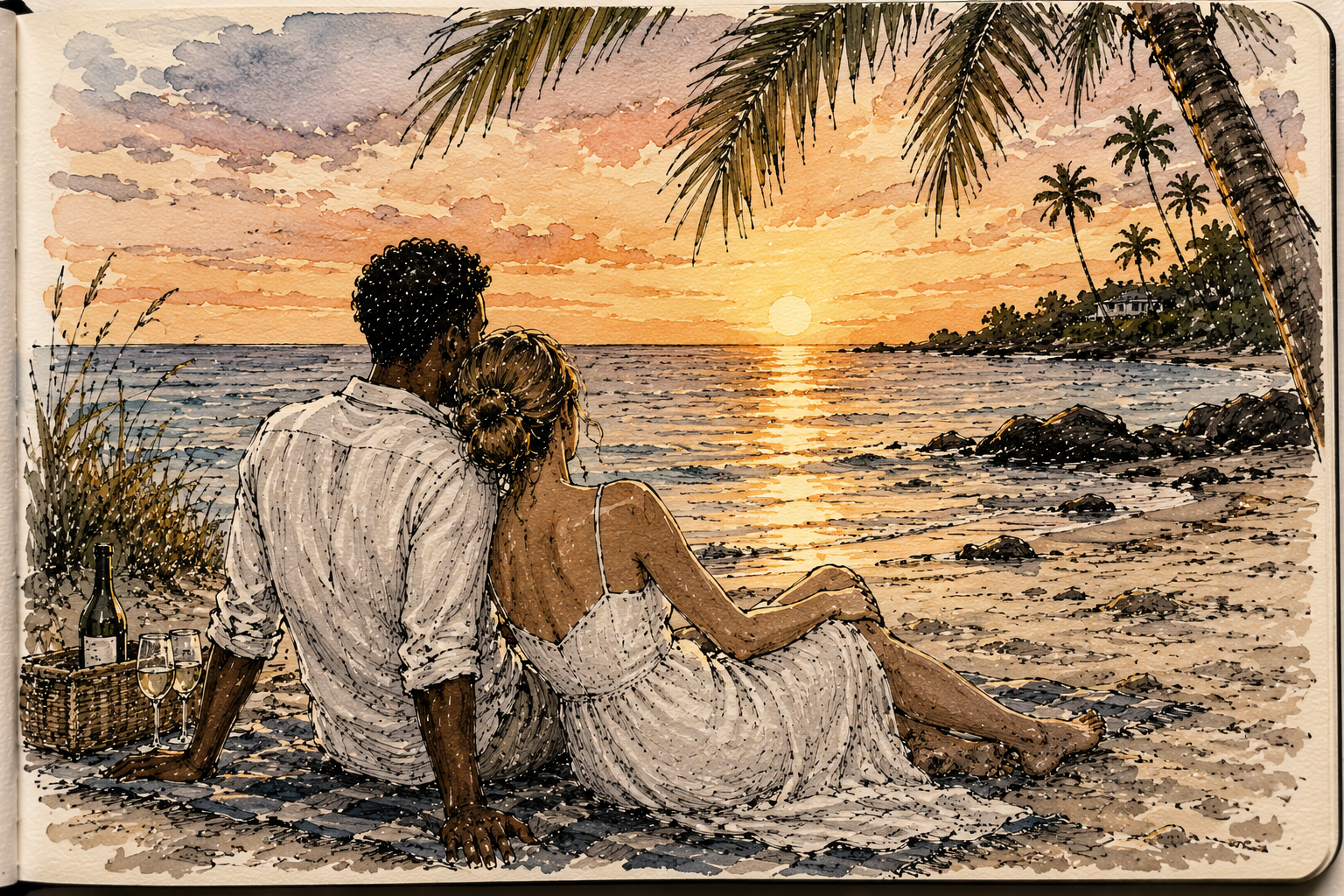
A couple on their wedding night sit on a blanket on the beach, watching the sun set and drinking wine

The Secret to a Great Destination Wedding

The best destination weddings don’t happen because you picked the trendiest location on Instagram.

They work because you remembered that your guests are taking a trip, too.

When you choose a destination that solves your biggest concern — whether that’s weather, logistics or simplicity — while giving guests a place they’re genuinely excited to visit, everyone wins.

Years later, people probably won’t remember the centerpieces. They’ll remember dancing through New Orleans behind a brass band, watching the sunset in San Diego or discovering their new favorite honky-tonk in Nashville.

That’s the kind of wedding worth traveling for. –Sarah Sidney


Not quite at the stage where you’re planning the wedding? Here’s how to pick the perfect proposal destination.

FAQ: David Byrne’s Theater of the Mind: A Spoiler-Free Guide to the Immersive Experience

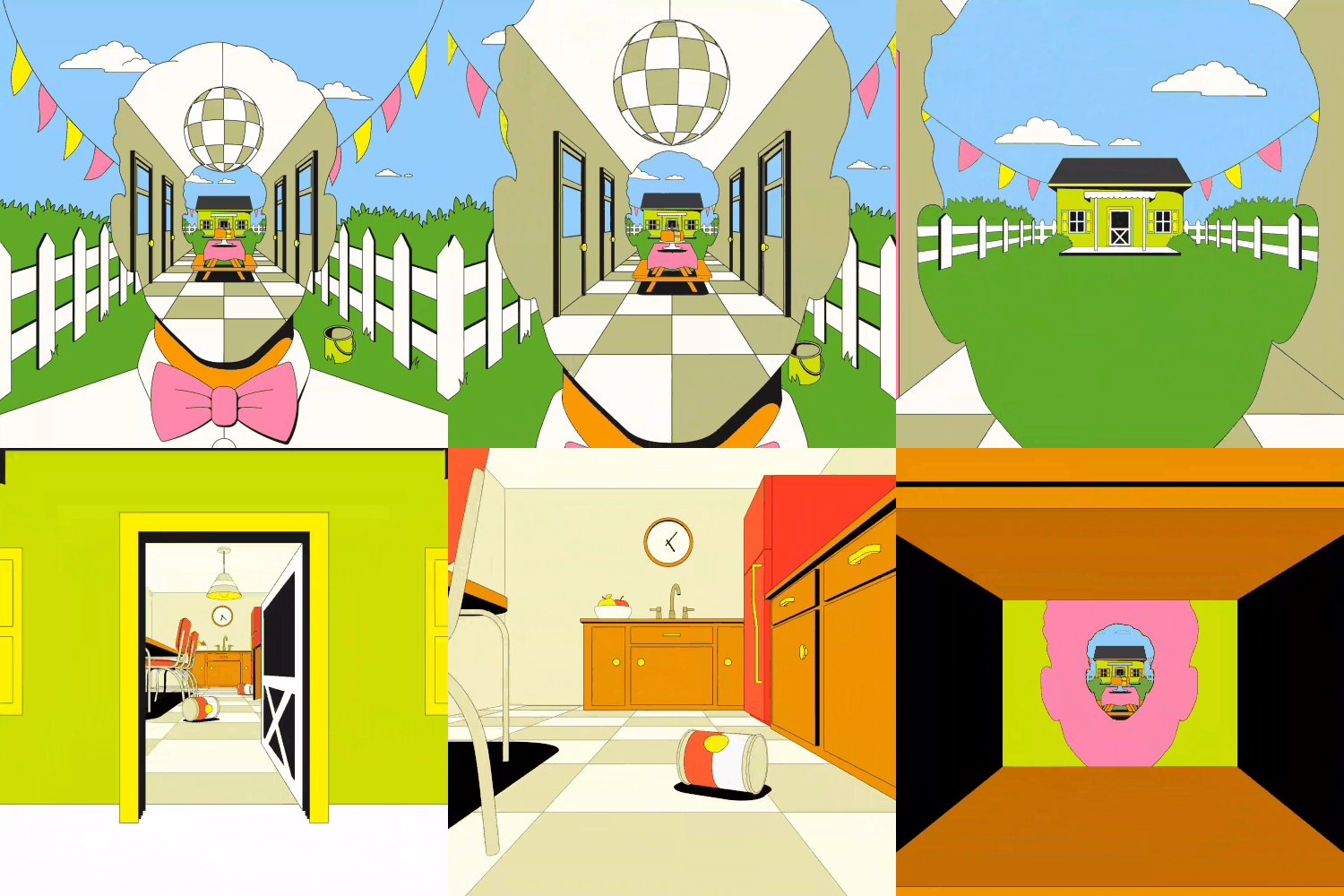
A gif showing scenes from the house in the immersive experience Theater of the Mind

A neuroscience funhouse? Yes. A David Byrne concert? Absolutely not. Everything you need to know before you go — without spoiling any of the tricks. 

Here’s the pitch: David Byrne — Grammy winner, Talking Heads frontman, the man who once performed an entire Broadway show in an excessively broad-shouldered gray suit — has co-created an immersive experience in a century-old Chicago landmark building where a small group of strangers walks through a series of rooms and gets their perception of reality gently, gleefully dismantled. The New Yorker declared it “an ambitious addition to the genre of immersive art… a through-the-looking-glass fantasy.” 

We had to check it out. And we had about a thousand questions going in — most of which we’re going to answer for you here, without ruining any of the magic. Consider this your no-spoiler field guide.

Theater of the Mind

The Basics

Where Reid Murdoch Building
333 N. LaSalle St.
River North, Chicago
When Through July 12, 2026
Tues–Sun, timed entries
every 15 minutes
Duration 75 minutes
Group 16 people per session
Tickets $69–$99
goodmantheatre.org
312-443-3800
Ages Recommended 10+
Phones Off and stowed —
this means you

What is Theater of the Mind? Qu’est-ce c’est?

Theater of the Mind isn’t a play. It’s not a concert. It’s not an escape room, though the room-to-room structure might make you think so at first. The best working description: It exists somewhere in the margins of creepy festival funhouse meets cool high school science experiment.

More precisely: You follow a guide through a surreal 15,000-square-foot installation as a group of just 16 audience members. Over 75 minutes, you move through a series of rooms where you’ll participate in thought-provoking neuroscience experiences and learn how easily your own senses can deceive you. Byrne himself has called it a “neuro funhouse,” though he’s acknowledged it evolved into something more. 

Is it actually autobiographical? Are we watching David Byrne’s life story?

Sort of — and Byrne himself is delightfully ambivalent about it. “I wasn’t sure how I felt about the character being named David and having little elements of my life in it,” he said. “But I also thought, why not? A lot of the stuff is not exactly biographical or autobiographical.” 

That hedging is worth taking seriously, because the show plays deliberately with the line between real and invented. The guide’s mother, for example, dabbles in painting. In reality, it was Byrne’s late father who painted as a hobby. 

The show borrows from his life and then quietly rearranges the furniture.

What is real: Byrne was born in Dumbarton, Scotland, to a Catholic father and a Presbyterian mother — a combination that caused enough tension in the extended family that his parents eventually packed up and emigrated, first to Hamilton, Ontario, then to Arbutus, Maryland, where his father worked as an electronics engineer.

Byrne describes himself as having undiagnosed autism, calling it a superpower that lets him hyperfocus on creative work.

Go in ready to be a willing participant in a series of jaw-dropping perceptual experiments — and you’re going to have a great time.

The bigger theme running through the biographical material isn’t any single memory but the question of memory itself. “We like to think that our brains are recording machines,” Byrne has said. “But they’re not. Every time we remember, we’re kind of making things up, embellishing. Not intentionally lying, but if our identity is made up of ‘I’m the person that this happened to, who was born here, and this happened to me’ — does that mean our sense of identity is in question as well?”

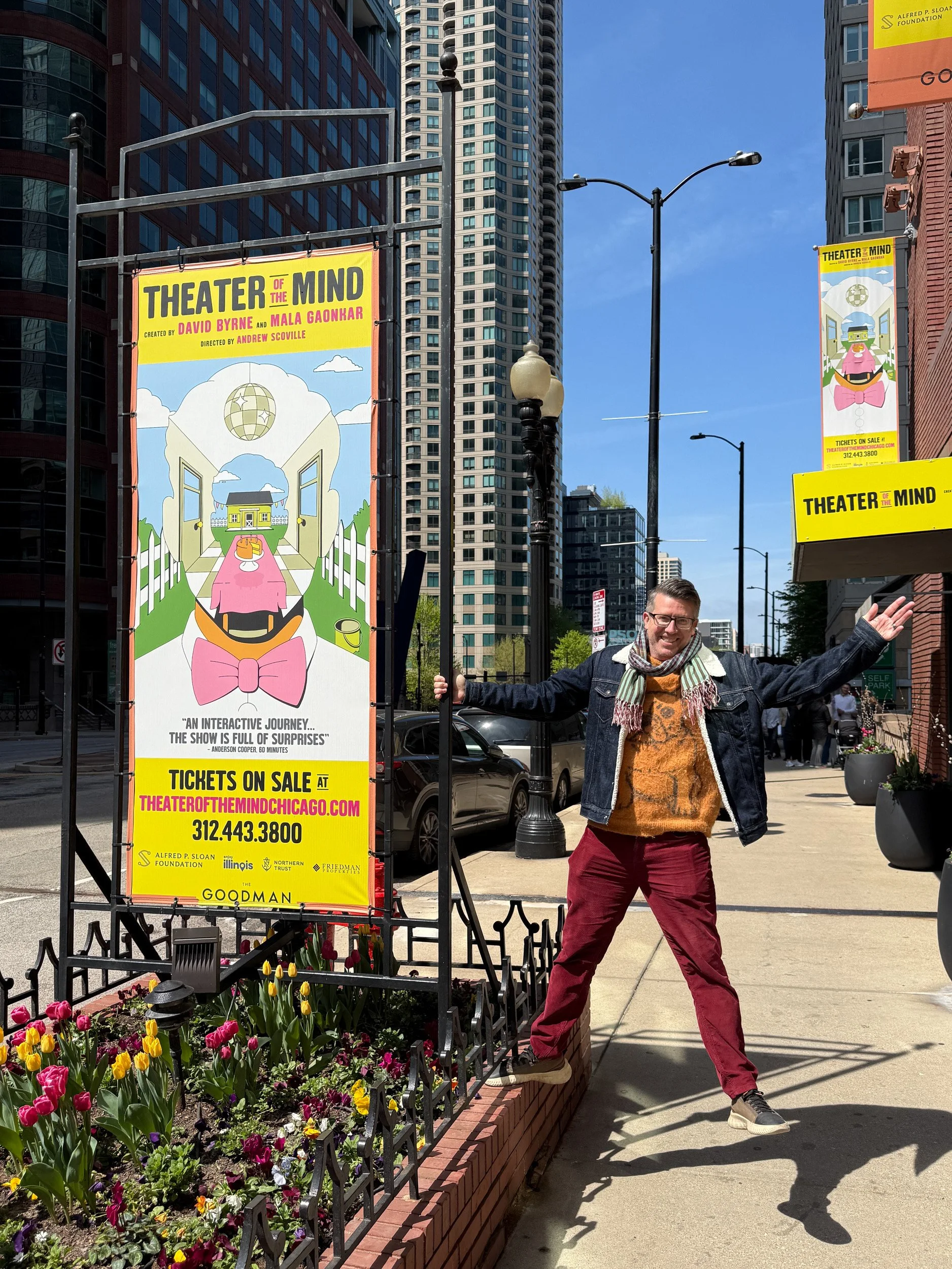
A man hangs off the sign for Theater of the Mind, an immersive experience by David Byrne, on a street in downtown Chicago

Is Theater of the Mind only for Talking Heads fans?

You certainly don’t need to be a Talking Heads fan for any of this to land. In fact, it might be better if you’re not — you’ll walk in with zero expectations to disappoint and zero nostalgia to protect.

Byrne himself has acknowledged that Talking Heads fans might show up expecting music and David. “I’m hoping the word gets out — that I’m not in it, that it’s not musical,” he said.

There is one original Byrne composition in the show — described by director Andrew Scoville as a “banger” — but this is not a concert, a jukebox or a nostalgia trip. It’s something genuinely new, which is either the most David Byrne thing imaginable, or the least.

Does David Byrne actually appear? Will I get to meet him?

Let’s be direct about this, because a lot of Talking Heads fans are going to show up expecting a concert cameo and we don’t want anyone to feel ambushed: David Byrne will not be performing in Theater of the Mind. He’s the co-creator, not the performer.

What do you actually do in there? What should I expect?

We’re not telling you. That’s the point. But here’s what we can say about the shape of it without ruining anything:

Some spaces may be dizzying or disorienting. The experience includes cognitive and sensory manipulations, including flashing and moving lights.

There’s a definite story, but if you go in expecting a tight narrative arc, recalibrate your expectations. Instead, go in ready to be a willing participant in a series of jaw-dropping perceptual experiments — and you’re going to have a great time.

One practical note worth passing along: Wear comfortable shoes. The experience requires a lot of walking, though the creative team builds in ample opportunities to sit along the way. You won’t be standing for 75 minutes straight.

I hate audience participation. Is this going to put me on the spot?

Reasonable fear. The answer is: No, not in the way you’re imagining. For those wary of immersive theater, don’t worry. The show doesn’t put audience members on the spot or ask them to improvise.

There is some audience participation, but the experience is interactive without being in your face. If you don’t want to say anything, you don’t have to. If you want to talk about that time you tripped on acid, well, your group will be happy to hear it.

Will my experience be the same as my friend’s? 

Because of the visceral, personal nature of immersive work, no two participants will have the same experience.

Part of that is by design: Different actors play the guide at different performances, and the audience’s own reactions and participation shape the way the narration unfolds. Part of it is the nature of neuroscience itself — the whole point is that our perceptions differ even when we’re standing in the same room.

Comparing notes afterward is basically required. Plan for a drink after.

Who’s Mala Gaonkar, and why does she co-get top billing?

Mala Gaonkar is an investor and philanthropist working at the intersection of finance, data science and human behavior. She and Byrne had been collaborating on ideas around neuroscience and perception for years before creating Theater of the Mind.

Their earlier collaboration, Neurosociety, translated cognitive science into interactive environments. Theater of the Mind builds on that work by weaving a series of experiments into a single narrative, shifting the role of the audience from observers to participants. Byrne brings the artistic vision, Gaonkar brings the scientific rigor, and the result is something neither would have made alone.

Any content warnings? What should I know before I go?

The experience includes flashing and moving lights, cognitive and sensory manipulations, some adult themes, and spaces that may be dizzying or disorienting. Recommended for ages 10 and up.

Cell phones, smartwatches and any wearable devices that light up must be completely turned off during the experience or left in a locker at the entrance. Not on silent. Off. (Yes, they mean it. No, this is not negotiable. Yes, you’ll survive.)

Also: Once the experience begins, there’s no late admittance, and refunds will not be issued for tardiness. Build in extra time. The Reid Murdoch Building is right on the river — treat the walk along the Chicago River as part of the experience.

If you have specific sensory concerns, the Goodman has a detailed sensory guide available (Note: It contains spoilers). Email Access@GoodmanTheatre.org for accommodations.

It’s been extended — how long do I actually have to see this?

Theater of the Mind runs through July 12, 2026, with multiple experiences per day at the Reid Murdoch Building. Timed entry slots begin every 15 minutes. Tuesday evenings through Sunday afternoons.

Tickets run $69–$99 and are available through the Goodman Theatre box office at 170 N. Dearborn or at theaterofthemindchicago.com. 

Is Theater of the Mind coming to a city near me?

For now, Chicago is it. The show had its world premiere in Denver in 2022-23, and Chicago is its second home. As of publication, there are no announced tour dates beyond the current run. 

OK, but was it actually worth $90?

Here’s the honest version: Cool? Yes. Mind-bending? Absolutely. Worth the price? That depends on you.

The 75 minutes goes fast — maybe faster than you’d like given what you paid. There are moments that will genuinely stop you in your tracks, and you’ll be talking about specific rooms for days. But if you’re someone who measures an evening by hours-per-dollar, you may walk out doing math you don’t love.

Here’s our actual recommendation: If you read this FAQ and thought, ‘that sounds intriguing’ — go. The people who get the most out of Theater of the Mind are the ones who show up curious and willing. If you’re already there mentally, you’ll leave glad you went. –Wally

Unusual Natural Wonders of the USA That Are Worth Seeing

Skip the skyline. From Bryce Canyon’s alien rock spires and Yellowstone’s bubbling geysers to the Grand Canyon, Niagara Falls and Hawaii’s volcanic hot springs, these unusual natural wonders reveal the wild, weird beauty of the USA.

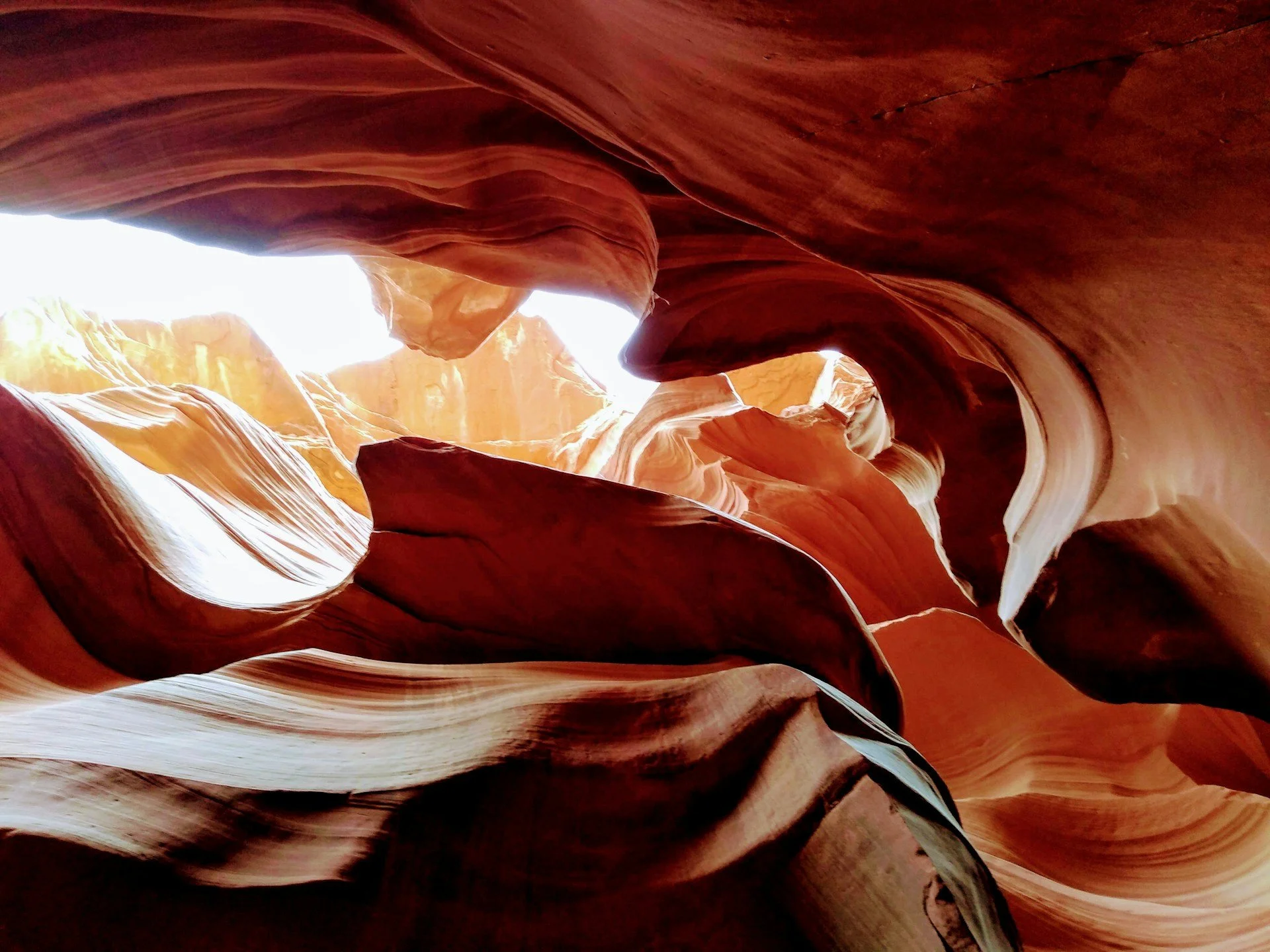
Curving rock formations in Antelope Canyon in Arizona

The United States may be known for cities like New York and Los Angeles, but its landscapes are where things get properly weird — in the best way. From eroded stone spires to volcanic hotbeds and mirror-clear lakes, the country offers natural wonders that feel closer to science fiction than sightseeing. Below are some of the most unusual natural sights in the USA that are genuinely worth the trip.

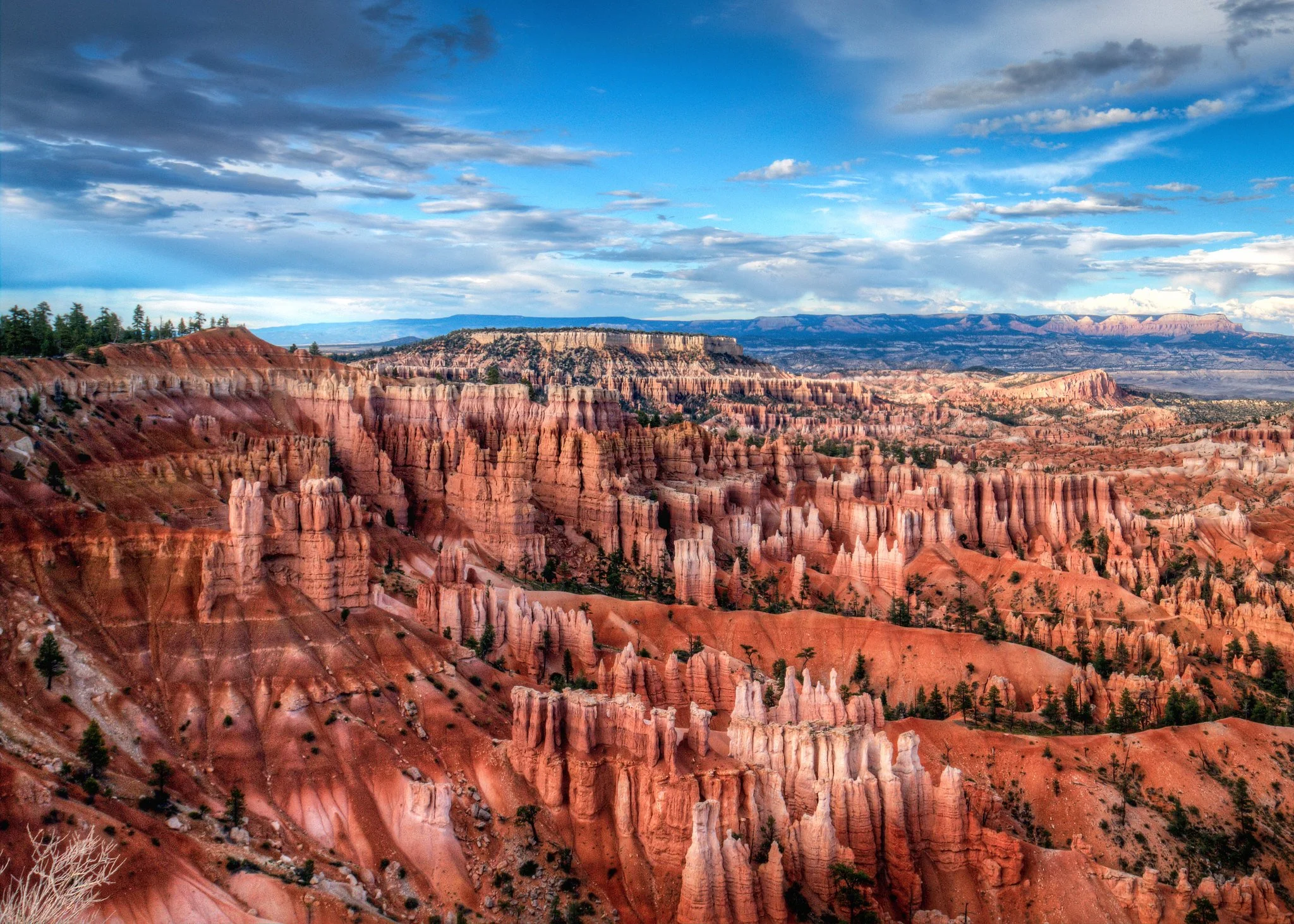
Row after row of hoodoo rock formations at Bryce Canyon in Utah

The Most Amazing U.S. National Parks

America’s national parks are protected spaces that preserve rare ecosystems and showcase landscapes that don’t exist anywhere else on Earth.

Bryce Canyon in Utah is famous for its hoodoos: tall, thin rock spires shaped by centuries of erosion. At sunrise and sunset, the whole canyon glows like it’s lit from within, which explains why people travel halfway around the world just to stare at rocks.

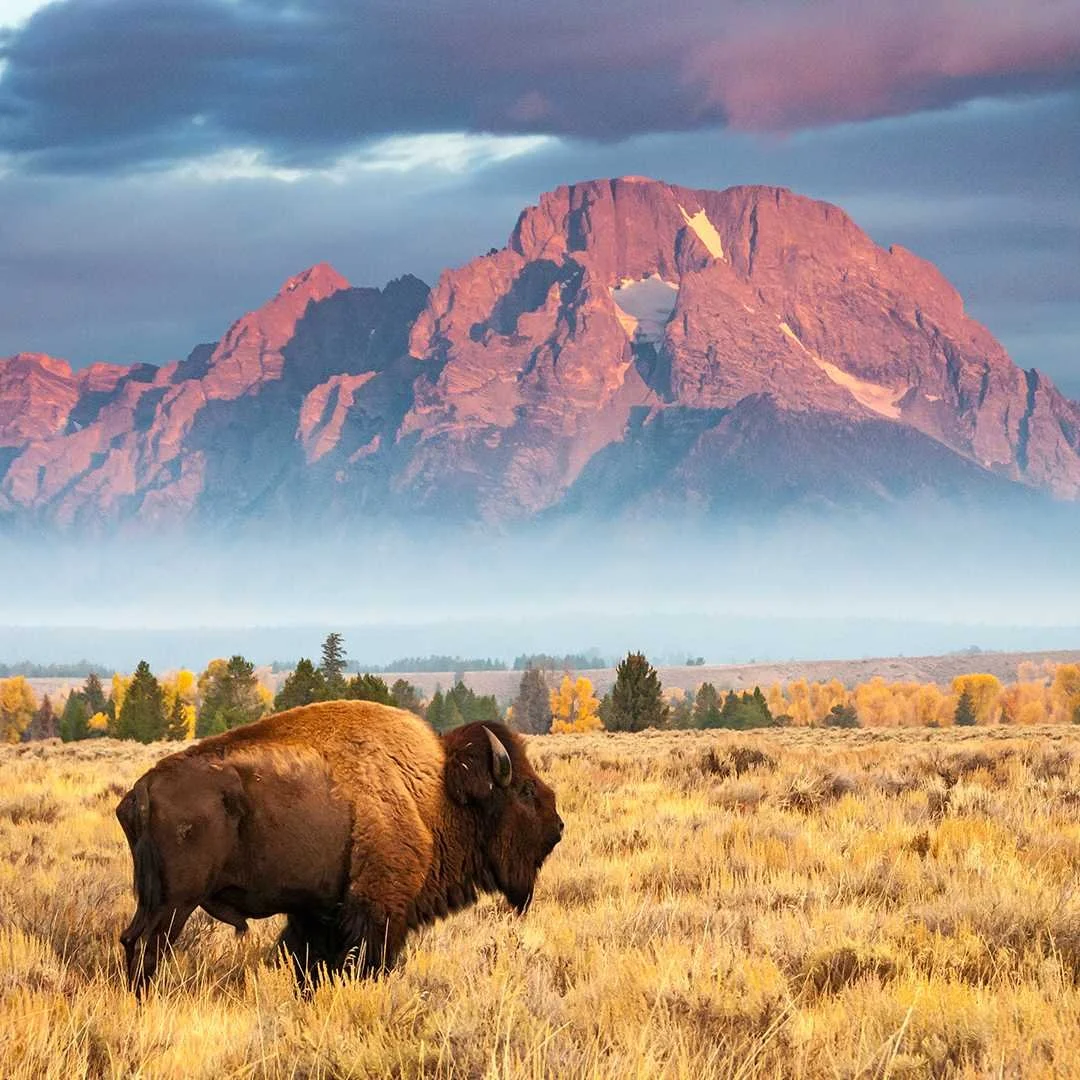
A bison in yellow grass by mountainous rock formations in Grand Teton Park in Wyoming, USA

Then there’s Grand Teton National Park in Wyoming, where jagged peaks rise dramatically above glacial lakes. It’s the kind of place that makes even casual hikers feel outdoorsy and wildly competent.

Tip: If international travel is already on your radar, some travelers explore long-term mobility options like a Dominica passport, which can simplify border crossings and expand where — and how easily — you roam beyond the USA.

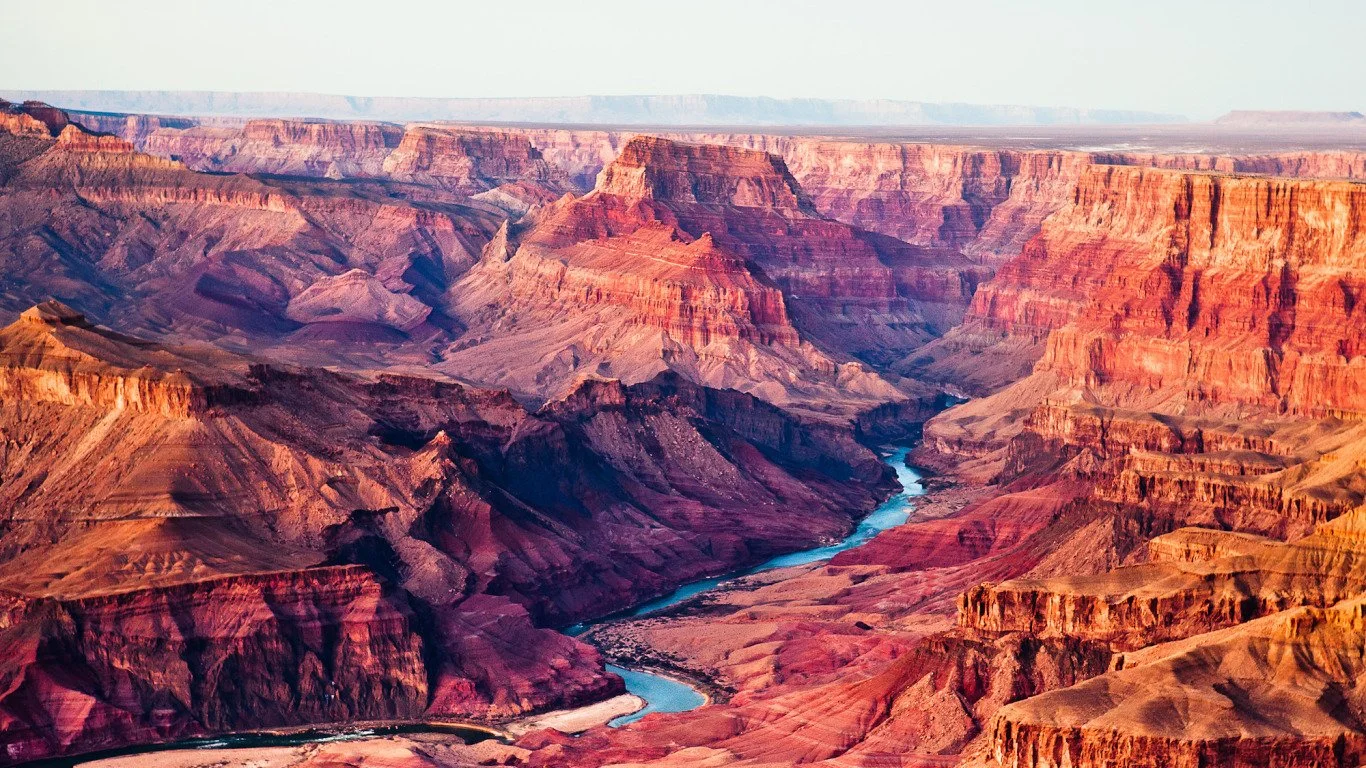
A river running through the Grand Canyon in Arizona

Unique Geological and Natural Formations in the U.S.

The United States doesn’t do subtle geology.

The Grand Canyon in Arizona is a mile-deep reminder that nature has both patience and drama. Carved by the Colorado River over millions of years, it’s vast enough to make photos feel useless and silence feel necessary.

Massive hot spring with blue, green and yellow water inside, at Yellowstone National Park in the U.S.

Yellowstone National Park is another level entirely. Sitting atop one of the largest active volcanic systems on the planet, it’s home to geysers, bubbling hot springs, and surreal mineral colors that look Photoshopped but very much are not.

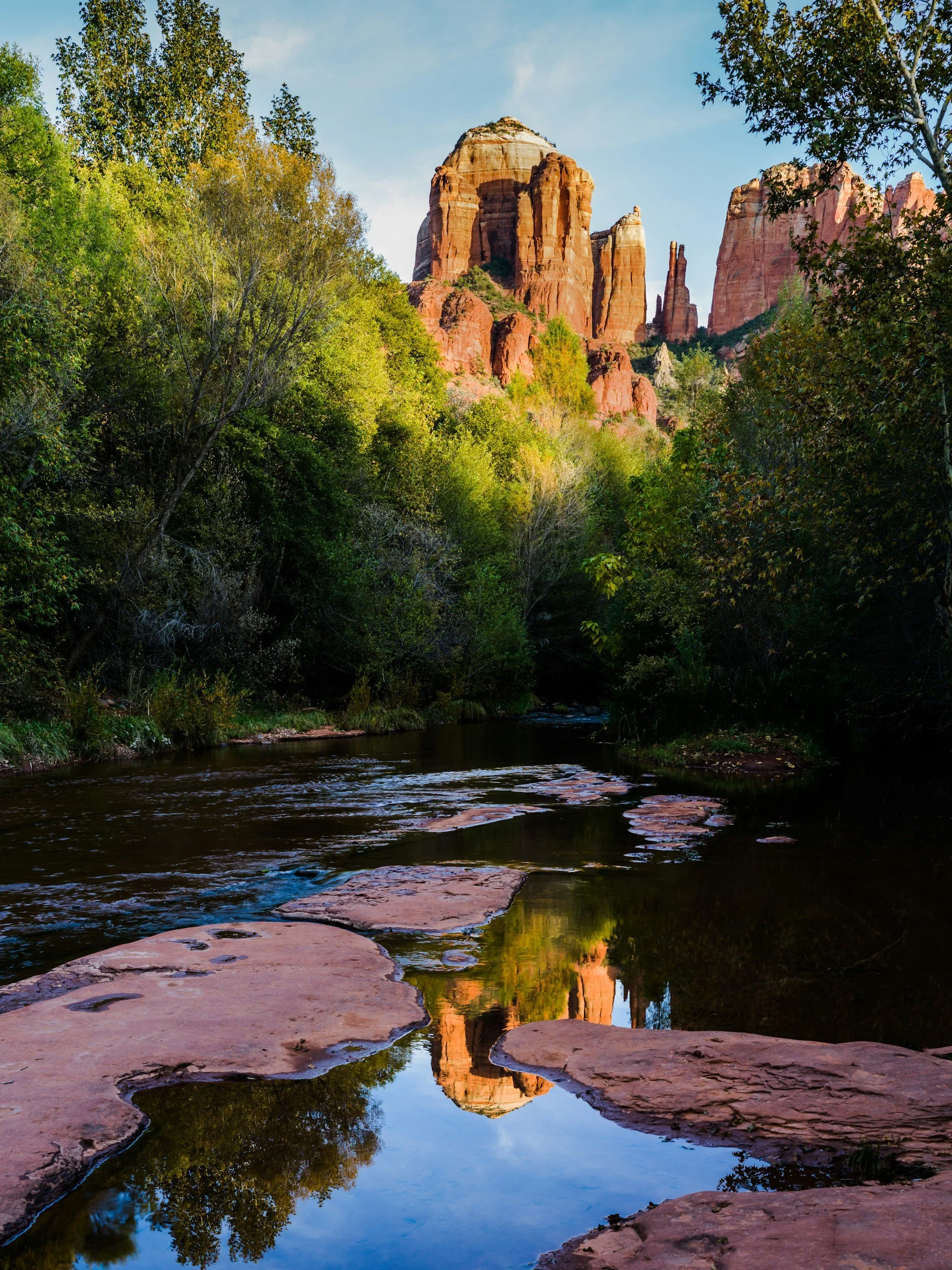
Rock formations and trees, with their reflections in small pools in Sedona, Arizona, USA

Sedona, Arizona rounds out the trio with towering red rock formations that shift color throughout the day. It’s a magnet for photographers, hikers and people who swear the rocks have “energy.” 

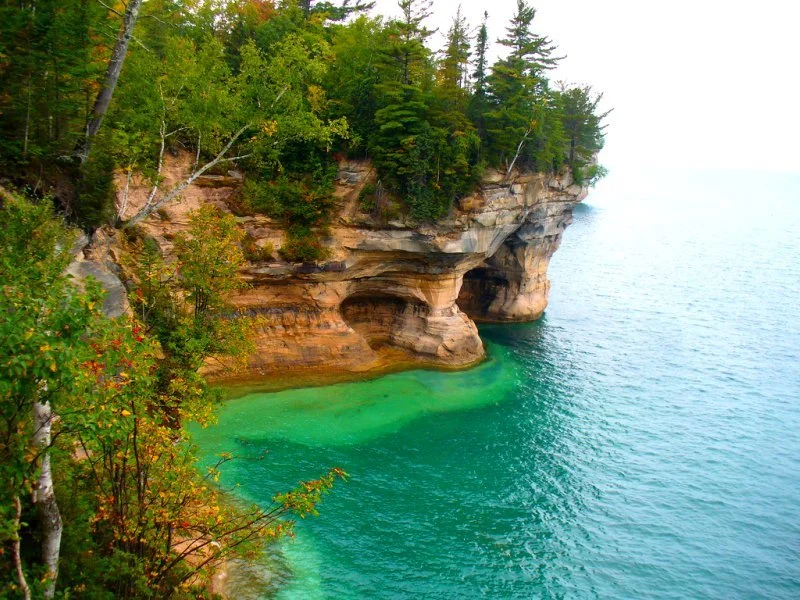
Waterside cliffs with caves and trees above the greenish waters of Lake Superior

Water Wonders of the USA

America’s water features can be just as dramatic as its deserts and canyons.

Lake Superior in Minnesota is so large it behaves like an inland sea, complete with rocky shorelines, shipwrecks and weather that changes its mood fast. It’s beautiful, intimidating and absolutely worth seeing.

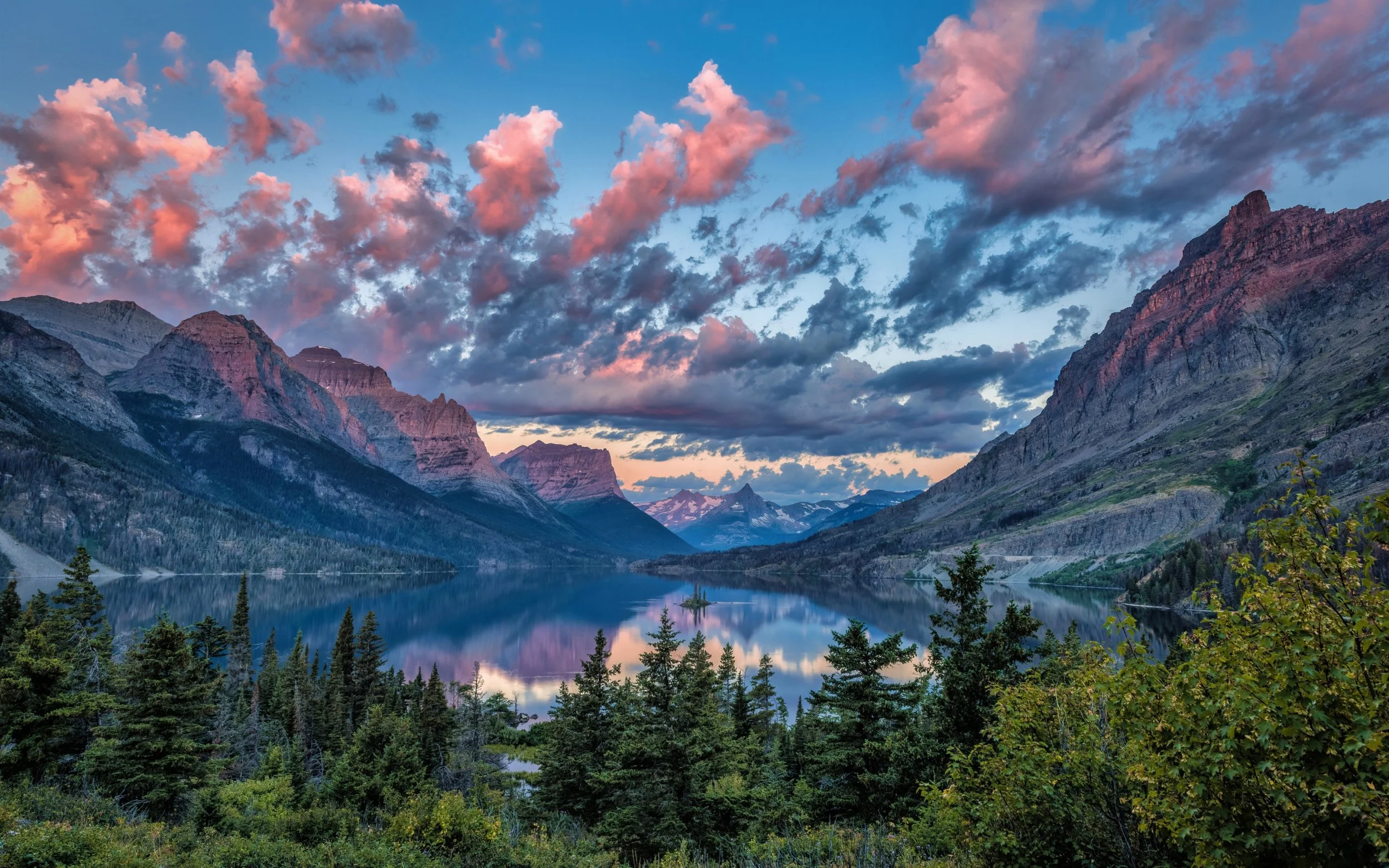
Dramatic mountains, clouds and trees at Saint Mary Lake, Montana, USA

Saint Mary Lake in Montana is famous for its clarity and glacier-fed blues, especially when framed by surrounding mountains. Calm, cold and postcard-perfect.

A boat gets near the base of Niagara Falls

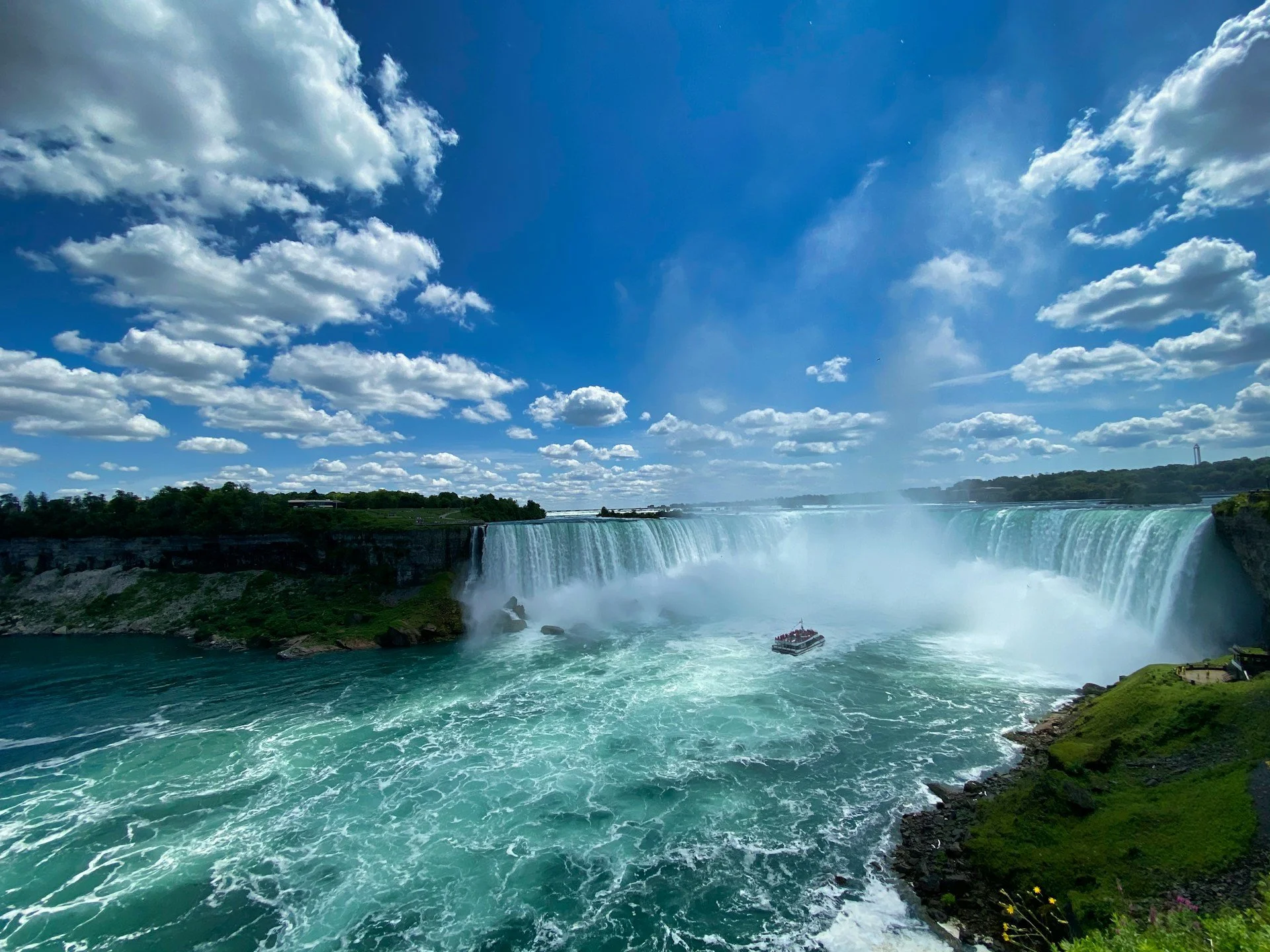
And then there’s Niagara Falls. Loud, powerful and unapologetically excessive, it remains one of the most impressive waterfalls in the world. Walking near the falls feels less like sightseeing and more like standing next to a force of nature that doesn’t care about you.

A volcano with lava pool in Hawaii, USA

For geothermal water lovers, Hawaii delivers with hot springs and volcanic landscapes that feel almost prehistoric — a rare blend of relaxation and raw earth energy.

An arch on a clifftop at the Grand Canyon in the United States

Practical Tips for Travelers to U.S. National Parks

Seeing these natural wonders takes more than just showing up. A little planning goes a long way — especially when the landscapes are remote and the distances are large.

  1. Plan your route in advance. Many parks require timed entry, permits or advance reservations during peak seasons. Check before you go so you’re not turned away at the gate.

  2. Think about timing. Summer is prime hiking season, but shoulder seasons like fall and spring often mean fewer crowds and better light. Some parks are magical in winter — if you’re prepared.

  3. Rent a car. Public transportation rarely reaches the most interesting natural sites. A car gives you freedom, flexibility and access to the weird stuff.

  4. Be honest about physical demands. Hiking, kayaking and uneven terrain are common. Bring proper footwear, layers and a realistic sense of your limits.

  5. Don’t ignore legal logistics. If your travel plans extend beyond the U.S. — or you’re thinking more international — consulting global citizen lawyers can help you navigate visas, passports and cross-border travel considerations without surprises.

The cities may get the headlines, but it’s the hoodoos, geysers, canyons, and waterfalls that remind you just how strange — and spectacular — the USA really is. –Anatoly Yarovyi

Snowed-In Layover at MSP: Skyways Survival, Saunas & Sweet Spots

Got a layover at Minneapolis–Saint Paul International Airport? Here’s how to amuse yourself, from a terminal massage to a quick trip downtown via the skyways.

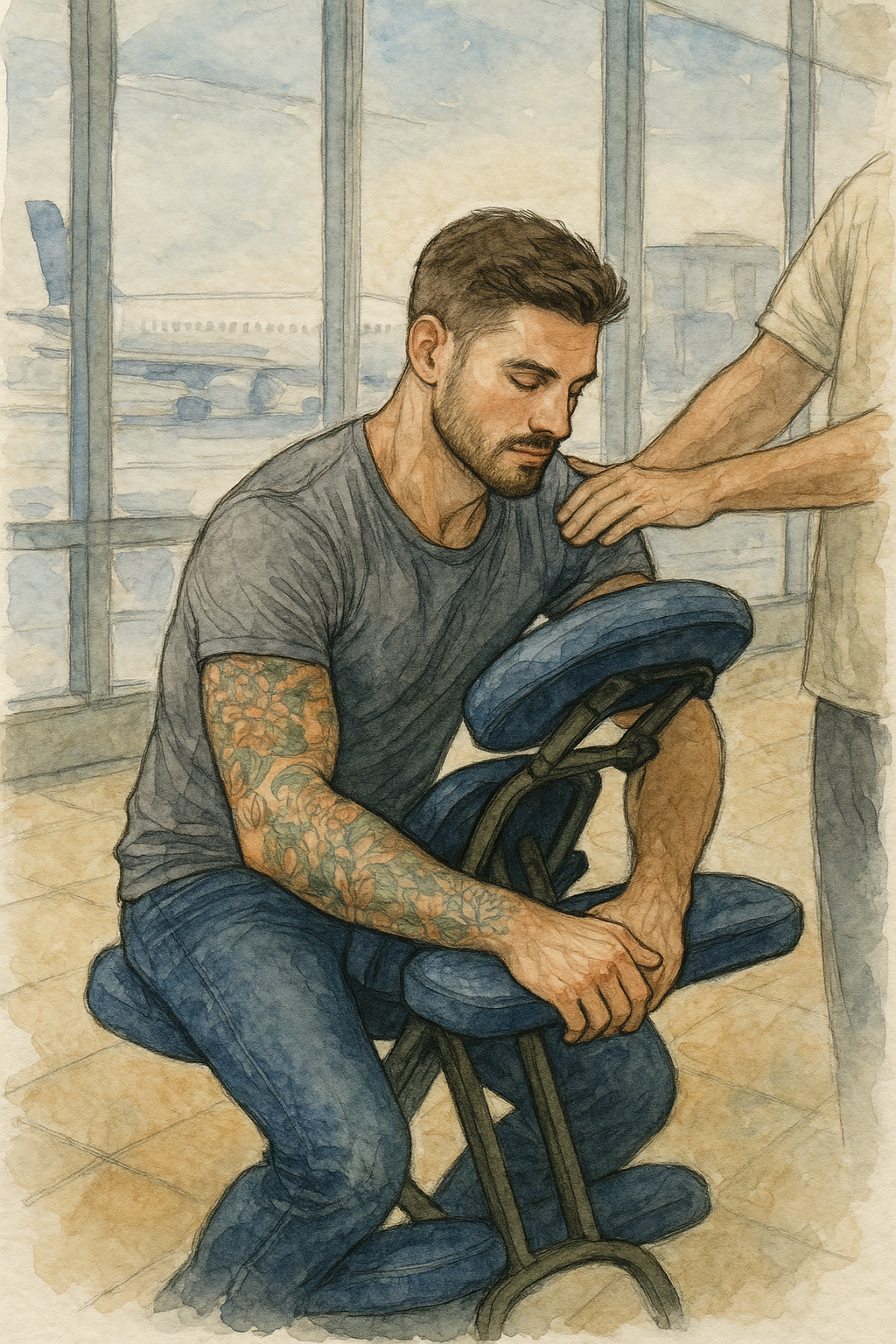
A handsome man with a tattoo sleeve gets a chair massage at MSP airport

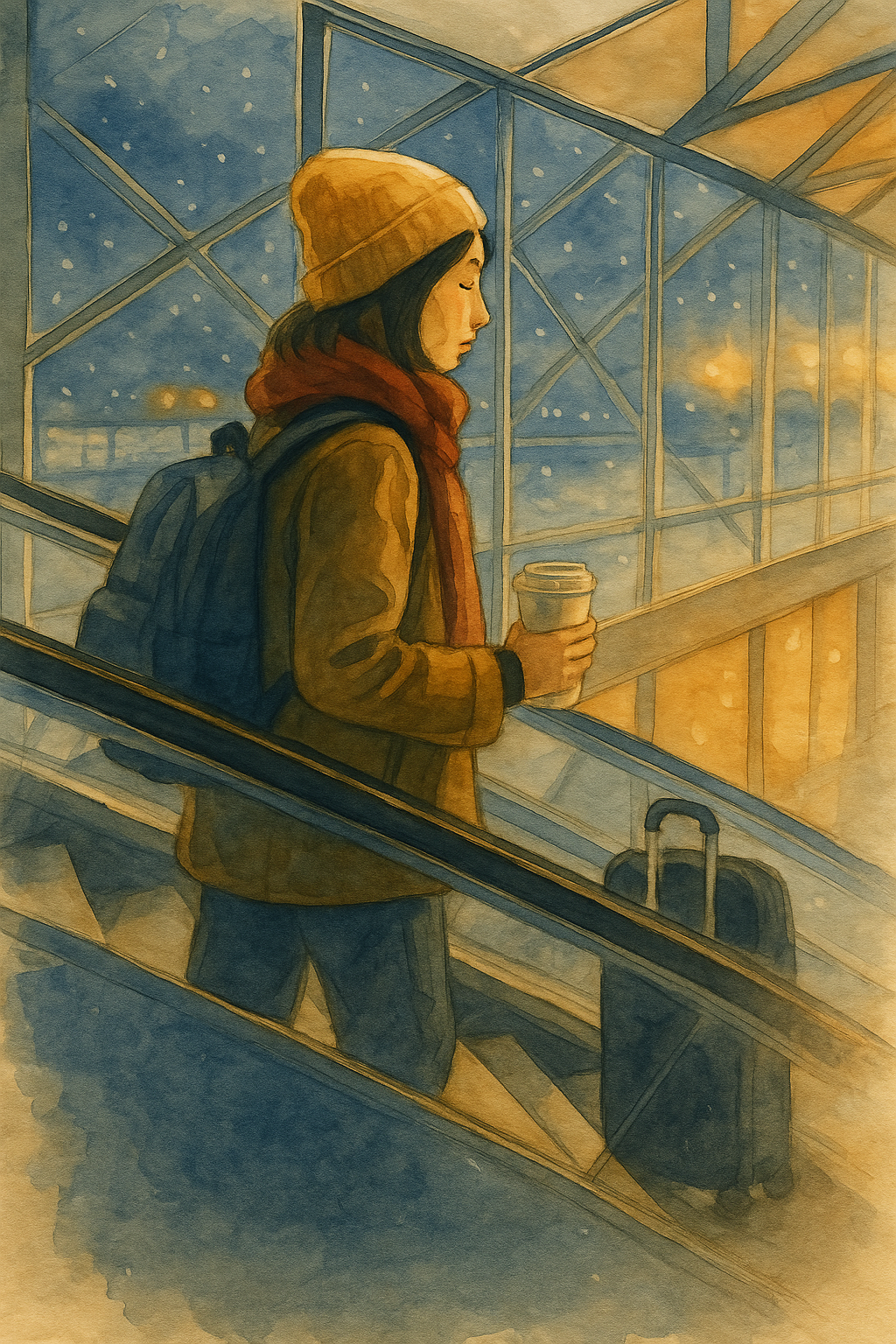
You step off the plane, and the jet bridge exhales a blast of arctic air. Outside, Minneapolis is a snow globe; inside, the terminal hums with gate changes and scarf-wrapped travelers clutching hot coffee. You’ve got three to six hours until your next flight. Great. 

But a winter layover at MSP can be fun. It’s an invitation to warm up, wander smart and waste precisely zero time.

A woman in winter garb holds a to-go cup of coffee and goes down an escalator at MSP airport with her suitcase

The 3-to-6-Hour MSP Game Plan: Choose Your Own Cozy

Before you sprint toward the nearest cinnamon roll, map the layover by time:

  • 3 hours or less: Stay terminal-side. Walk to reset your circulation, grab one indulgent local treat, book a shoulder-saving mini-massage, and pick one micro-mission (reading nook, art stroll or people-watching perch near a window).

  • 4–5 hours: Consider a quick city dip. The Metro Blue Line from MSP to downtown runs directly from both terminals. Trains run frequently, and the ride to the core is under half an hour each way, so you can touch base with Minneapolis without flirting with a missed connection.

  • 6 hours: Stretch your legs downtown via the skyways (more on that below), nibble something warm, and loop back with a cushion to spare.

Pro tip: If you drove to the airport: Avoid terminal garage sticker shock by pre-booking off-site MSP parking so arrival and departure are frictionless. It’s dull logistics that pays you back in actual fun once you’re landside.

A man holds a cup of coffee while looking out the window at MSP airport

MSP Terminal Comforts: Heat, Knead, Feed

This is a winter layover: Your core mission is warmth and circulation. Inside MSP, you’ll find:

  • Quick kneads. Ten to 30 minutes in a massage chair can reset even the surliest spine before a long haul. If you’re the “I didn’t know my neck could make that sound” traveler, build one mini-treatment into your itinerary.

  • Warmth by walking. Terminals here are made for laps. Lace up, cue a podcast, and walk 10 to 20 minutes between bites or tasks. Your joints (and mood) will thank you at cruising altitude.

  • Strategic calories. Think “one hot + one hydrating”: soup or a toasted sandwich plus a giant water to counteract the dehydrating air. If you do coffee, chase it with water so you don’t arrive at your gate feeling like a raisin in a parka.

  • Delay insurance. Put your meds, a spare pair of socks, and a portable battery in your personal item — not the carry-on you gate-check when overheads fill up. If chaos hits, you’ll still be functional. If chaos really hits, you’ll appreciate how to not freak out if you lose your wallet — mindset and method matter when travel gets messy.

A woman smiles as she walks through the Skyway in Minneapolis, Minnesota

Want a Taste of Minneapolis? Ride & Glide

If your layover is 4–6 hours and the weather isn’t actively auditioning for a disaster movie, do the quick city loop:

  1. Hop on the Blue Line. From Terminal 1 or 2, board the light rail toward downtown. Trains are frequent, and it’s a straight shot to Nicollet Mall/Target Field. Check schedules and any service alerts before you commit; the official pages keep them current.

  2. Enter the sky. Downtown’s enclosed walkways are the city’s winter superpower — roughly 10 miles of climate-controlled routes connecting about 80 blocks. Think of it as a heated maze where you can wander without windburn. Hours vary by building (weekday-heavy), so plan for daytime/early evening access.

  3. A tiny “sky-tour.”

    • From the Nicollet area, duck into an entrance and follow overhead signage toward retail or food courts.

    • Loop two to four blocks, pausing where you see cozy seating or bakery smells (the best compass).

    • Snap a skyline peek from an elevated window and then reverse course. The goal isn’t maximal sightseeing; it’s staying toasty while you get a feel for Minneapolis’ unique winter rhythm — walking without ever going outside.

  4. Time discipline. Set a departure alarm that gets you back on the Blue Line with a generous buffer. Winter means slower everything; your future self would like to avoid cardio sprints in snow boots.

Weather reality check: Minneapolis winters can deliver serious wind chills. If you’re curious how cold it really feels, the National Weather Service’s wind chill chart translates temps and wind into “what your face experiences,” so you can decide whether street-level detours make sense, or if indoor skyways should be your sole playground.

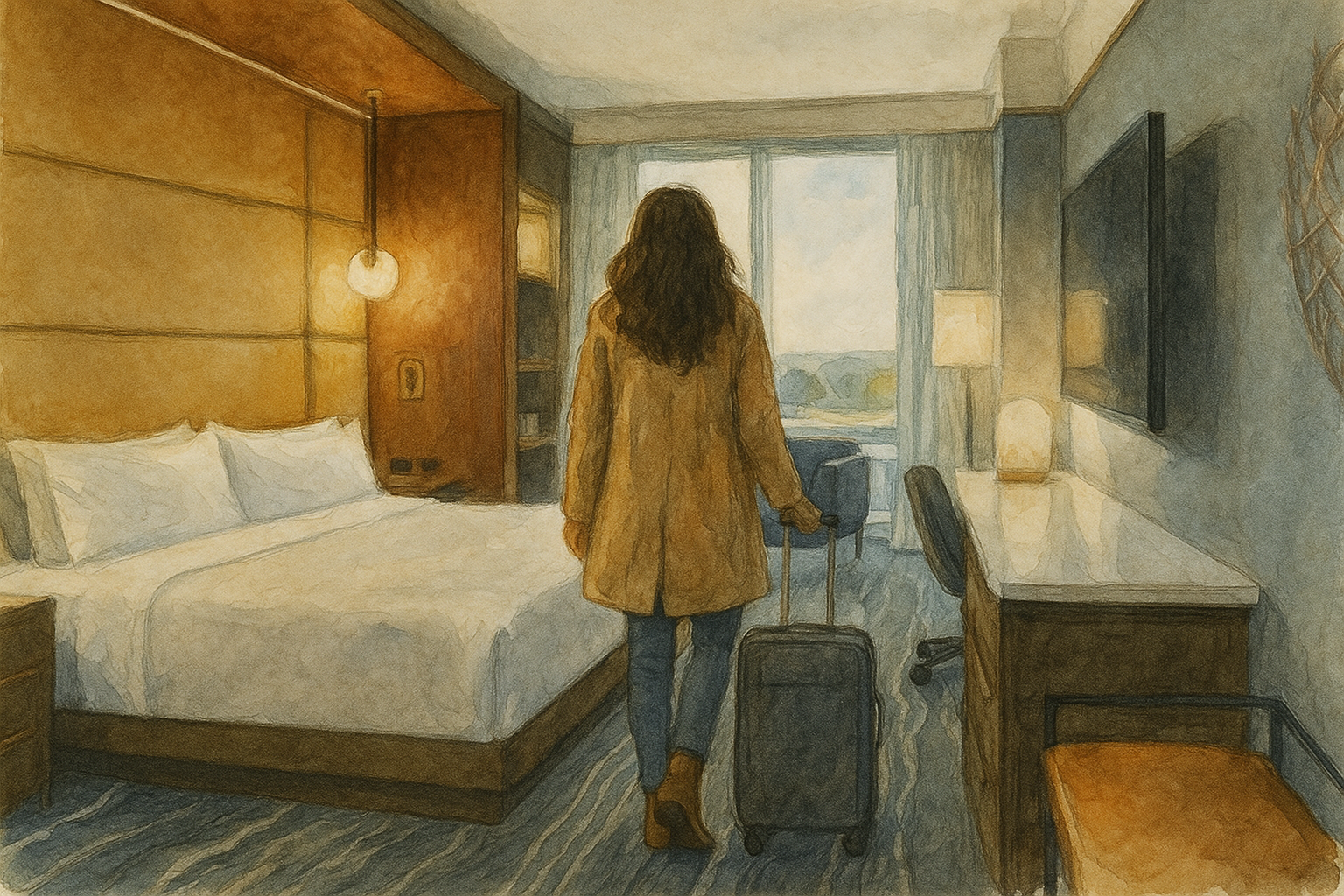
A woman enters her hotel room with her suitcase at the InterContinental MSP

Heat Therapy, Minnesota Edition: Saunas, Steam and “Warm Enough” Hacks

No, MSP isn’t Helsinki. But you can still nudge your core temp upward without a full spa day:

  • Hotel-adjacent warmth. The InterContinental MSP connects to Terminal 1 via skybridge and (when operating) offers a dedicated TSA checkpoint window for carry-on travelers — handy if you’re starting or ending in Minneapolis and want a “roll out of bed, roll onto plane” morning. Even if you’re not staying the night this time, earmark it for a future trip when you are starting in MSP; the path beats a frosty curbside dash. (Always verify current hours before you plan around them.)

  • Make your own sauna lite. Swap a bulky coat for tactical layers you can modulate: thermal tee, mid-layer fleece, packable shell. Layering beats sweating, then freezing, especially when you’re transitioning between warm terminals, brisk platforms and steamy coffeeshops. (If you’re revisiting your packing system, you might find the field-tested notes on what to pack for South America useful — different continent, same principles of warmth, weight and sanity.)

  • Hands and feet first. Carry a tiny tube of unscented balm (for nose and lips), thin glove liners that work with phone screens, and wool socks that keep your toes snug and warm. If you’re prone to Raynaud’s, stash disposable hand warmers and use them before you feel the sting.

  • Hydrate and humidify. Winter air is bone-dry. Drink more water than you feel comfortable with, and if you’re sensitive, a pocket-sized saline spray can do wonders. Your skin will forgive you by the next boarding call.

  • Mindset matters. Long layovers feel better with a small, self-sufficient kit and a loose plan — exactly the ethos of how to survive and actually enjoy off-grid travel. You don’t need a cabin in the woods to use those habits; an airport in February will do.

The Minneapolis skyline with the Stone Arch Bridge over the Mississippi River in the foreground, as a plane flies overhead

Micro-Itineraries for an MSP Layover

3-Hour Thaw: Staying Airside

  • 0:00–0:10 — Walk a long loop to shake off the plane

  • 0:10–0:40 — Quick chair massage, shoulders + neck

  • 0:40–1:10 — Soup and water; download podcasts or audiobooks

  • 1:10–2:10 — Art stroll + bookshop browse; text the friend you always forget to text

  • 2:10–3:00 — Gate shift, stretch, board

4½-Hour Tour: Touching the City

  • 0:00–0:15 — Exit to the Blue Line platform; set your return alarm

  • 0:15–0:45 — Train to Nicollet Mall; enter an indoor walkway; browse a couple of blocks for a warm lunch

  • 0:45–1:45 — Loop through the skyways; peek at street views from elevated windows

  • 1:45–2:15 — Train back to MSP

  • 2:15–3:00 — Security + hydration + boarding buffer

6-Hour Itinerary: Maximizing Comfort

  • Split your time:

    • An hour of movement (walks)

    • An hour of eating (twice)

    • An hour of errands (charging, reorganizing your bag), plus transit and buffers

    • If the wind-chill reading makes you wince, keep the whole thing indoors and bask in the fact that Minneapolis lets you wander for blocks without ever braving the curb.

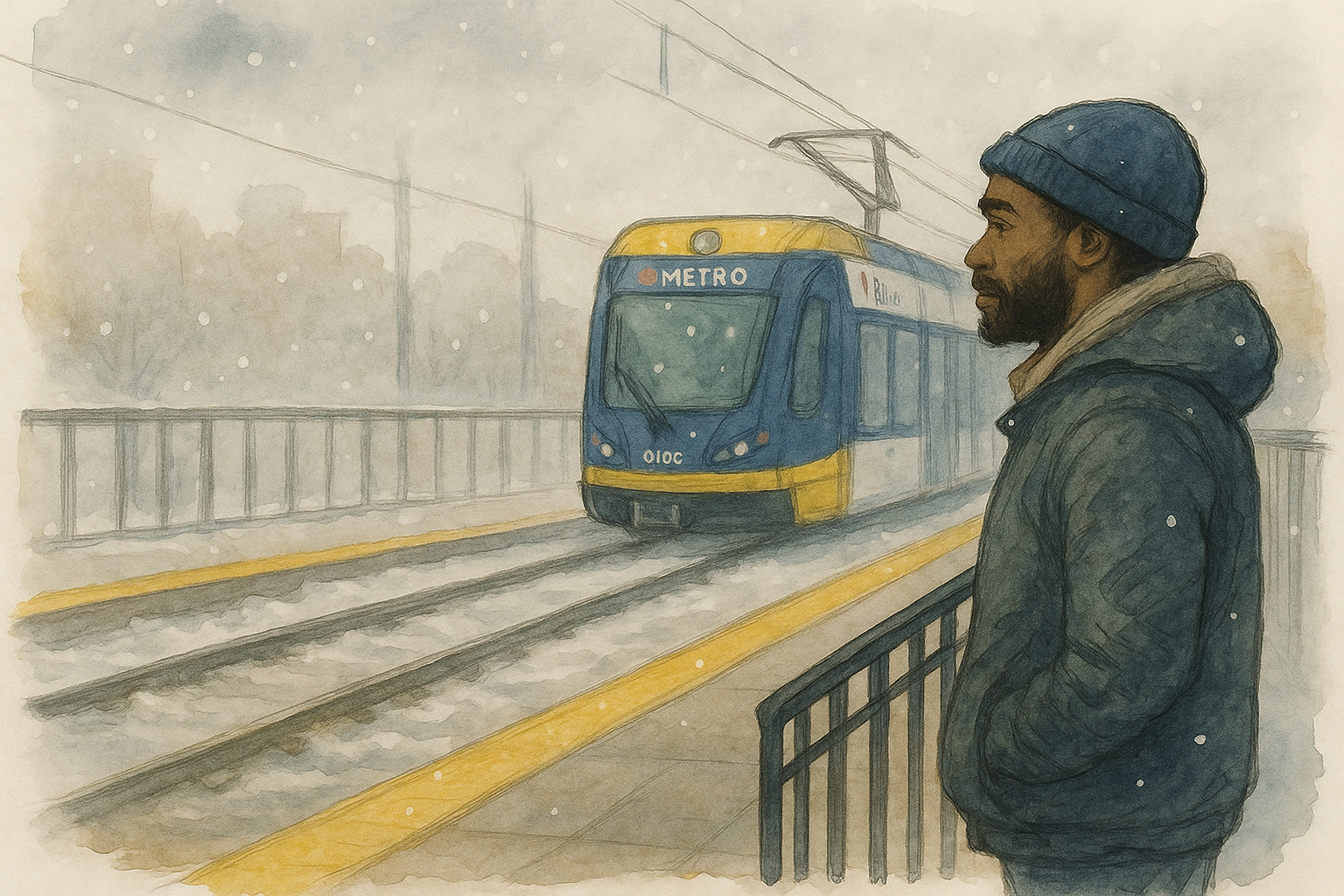
A man stands on the platform of the Blue Line metro in Minneapolis, Minnesota in the snow

Minneapolis Winter Know-Before-You-Go

  • Transit timing. Blue Line frequency and travel times are predictable, but winter can slow transfers. Always skim the official page right before you commit to the downtown hop; it’ll flag any service changes.

  • Skyway hours vary. Many connections keep weekday business hours, with shorter weekends. If you’re planning a Saturday or Sunday wander — or an evening hop — expect a smaller network than the lunch-hour rush.

  • Layer logic beats heavy coats. You’ll move between overheated interiors and brisk platforms; being able to peel or add is the difference between “glow” and “sweaty popsicle.”

  • Security reality. Liquid rules are still very much a thing in the U.S., so consolidate your gels/creams into a 1-quart bag, and don’t gamble on oversized lotions. If you need a refresher, the official TSA liquids rule is the no-drama reference — worth a peek before you hit the checkpoint on your way back to the gate.

  • Money and ID always accessible. Keep a small “essentials kit” (ID, a backup credit or debit card, some cash, phone) on your person.

  • If you’re a “park and fly” person. For multi-day trips, booking offsite parking in advance means you’re not circling garages at odd hours or paying top-tier prices on return day. Treat it like lodging: The earlier you book, the saner the rate and the smoother your exit.

  • Pack a small mercy. A spare pair of socks. Trust me. Dry wool on cold feet is a personality upgrade. It’s something you don’t ever want to forget to pack.

A gay couple with their carry-on luggage and backpacks have a meal and glasses of wine at a cafe in Minneapolis

A snowed-in layover can be a slog, but it can also be a strangely lovely intermission: a heated stroll above the streets, a real meal, a reset for your brain and back, and a tiny story to take home. You don’t need to conquer Minneapolis in an afternoon; you just need to leave warmer, calmer, and a little bit smug about how well you used the time. –Munazza Faisal

Underrated Weekend Getaways From San Diego

Perfect weather. Gorgeous beaches. Ho hum. From Julian to Baja Wine Country, these underrated weekend getaways from San Diego offer desert stars, mountain cabins, Mexican vineyards, retro pool scenes and all the apple pie you can handle.

A palm tree-lined road in San Diego, leading to the water, at sunset

Let’s be honest: Living in San Diego is both a blessing and a trap. Sunshine 300 days a year. Fish tacos everywhere. Beaches that make postcards jealous.

So why on Earth would anyone want to leave?

The thing about living in San Diego is that the constant perfection can start to feel monotonous.

That’s why it’s essential to escape, even if it’s just for a weekend.

Because perfection gets boring. Eventually, even the world’s most ideal climate starts to feel like a screensaver that won’t turn off. And when that happens, you need to swap your palm trees for pine trees, your surfboard for a road map, and your Baja hoodie for something that actually counts as a jacket.

Here’s how to do that — without joining the crowds in L.A. or pretending Joshua Tree isn’t overrun.

Snow covers the ground at Lake Cuyamaca near Julian, California

1. Julian (for Pie, Pines and People Who Think Snow Is a Novelty)

An hour east of San Diego, Julian feels like stepping into a parallel universe where the air smells like apples and nobody owns a surfboard. The town sits in the Cuyamaca Mountains, complete with crisp air, gold rush history and a suspicious number of pie shops.

Go in autumn if you can — apple-picking season turns the place into a Hallmark movie, minus the sappy soundtrack. In winter, there’s even snow. Actual snow! For San Diegans, it’s practically witchcraft.

Stay overnight, hike around Lake Cuyamaca, and leave with the smug glow of someone who “did the mountains this weekend.”

A giant brown snake sculputre in the desert at Borrego Springs, California

2. Borrego Springs (Desert Solitude With Bonus Giant Lizard)

Two hours northeast lies Borrego Springs, the only International Dark Sky Place in California. Translation: The stars are so intense, they look like they’ve been Photoshopped.

By day, explore Anza-Borrego Desert State Park. Think canyons, slot trails and giant metal sculptures scattered through the sand. The 350-foot serpent alone is worth the drive (and the photos).

By night, grab a drink at a local dive, then lean back and watch the Milky Way show off. It’s as close as you’ll get to peace without joining a silent retreat.

Colorful chaise deck chairs by a pool at a Mid-Century Modern home in Palm Springs, California

3. Palm Springs (Mid-Century, Modern Escape)

Palm Springs isn’t exactly a secret, but it remains one of the easiest transformations you can make in a single afternoon: from San Diego surf rat to martini-sipping poolside minimalist.

The desert heat, the Mid-Century design, the ridiculous pool floats — it all works. Rent a retro Airbnb or book a spa hotel, and spend the weekend pretending you’re in a Slim Aarons photo.

Yes, it’s a bit performative. That’s half the fun.

Vineyards in the misty hills of Baja Wine Country in the Valle de Guadalupe, Mexico

4. Baja Wine Country (The World’s Most Chill Vineyard Scene)

Cross the border and drive an hour south into Valle de Guadalupe, Mexico’s not-so-secret wine country. It’s Napa … if Napa cost half as much and didn’t take itself so seriously.

You’ll find open-air restaurants, rolling vineyards and boutique hotels built from reclaimed shipping containers. Order a mezcal cocktail you can’t pronounce, and accept that you’ll probably come home with a few extra bottles.

Pro tip: The sunsets here are the kind that make your phone camera give up and say, “Just live in the moment.”

Trees and a rocky stream near Idyllwild, California

5. Idyllwild (A Forest Hideaway for People Who Still Own Flannel)

Two hours north, tucked into the San Jacinto Mountains, is Idyllwild — a tiny town of artists, hikers and dogs who all seem suspiciously happy. It’s cabin country at its best: pine needles underfoot, jazz bars at night, and trailheads that start behind coffeeshops.

It’s the ideal reset button after a week of traffic, Slack notifications and ubiquitous oceanfront.

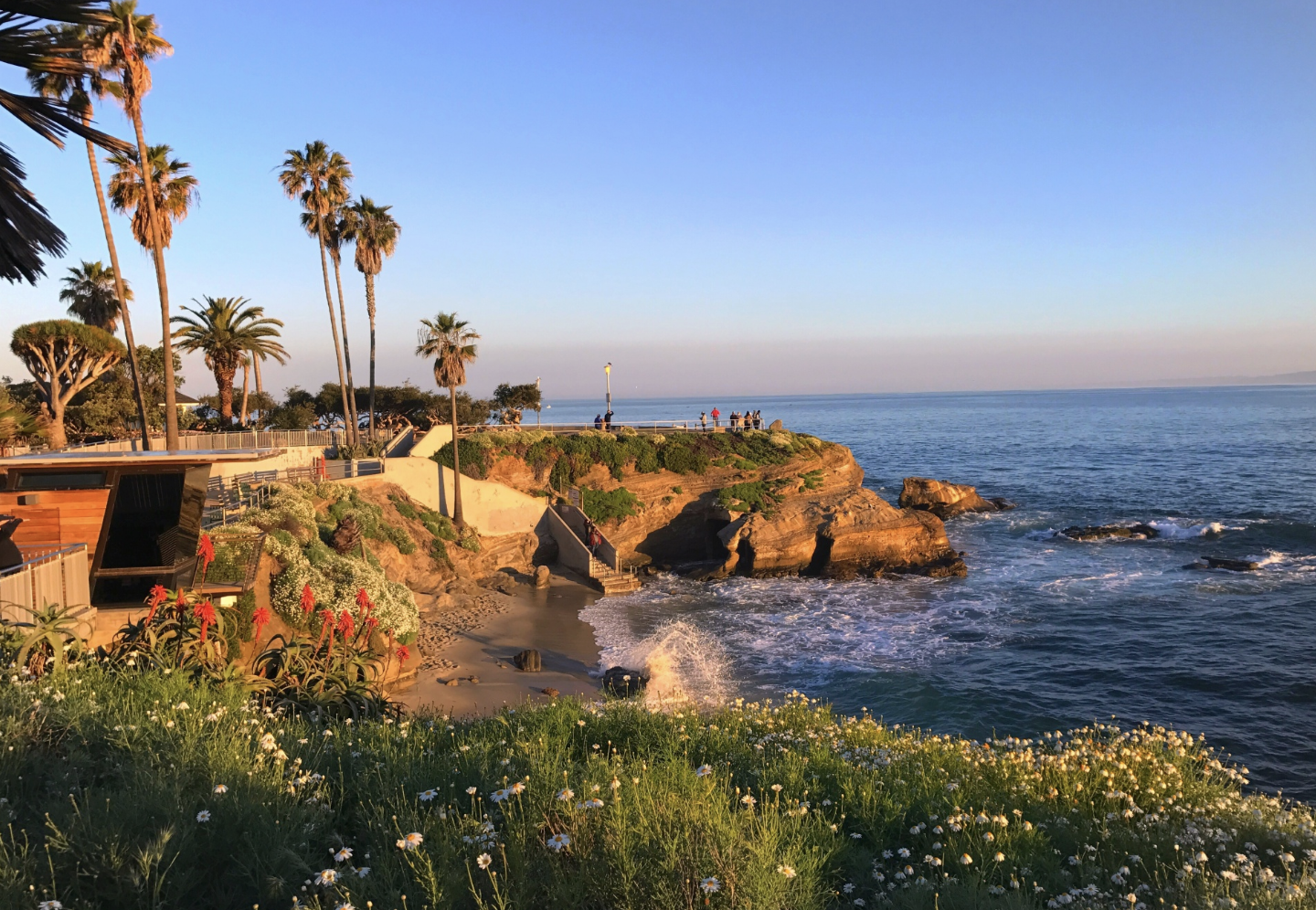
A rocky promontory with flowers and palm trees in San Diego overlooks the Pacific Ocean

The Joy of Leaving Paradise

If you’ve ever thought, “I need a vacation from my vacation city,” you get it. The thing about living in San Diego is that the constant perfection can start to feel monotonous. That’s why it’s essential to escape, even if it’s just for a weekend.

You don’t have to plan it from scratch, either. Here’s a curated list of weekend getaways from San Diego that’ll help you find your next mini-adventure — whether that means soaking in a hot tub with mountain views or eating your body weight in pie.

The trick isn’t leaving San Diego forever; it’s remembering that there’s a whole world beyond your idyllic bubble. Sometimes, stepping into the desert or up into the mountains makes you appreciate the beach even more.

And when you roll back into town, tanlines fading and cooler full of wine, you’ll remember why you live here in the first place.

Just don’t tell the tourists that paradise actually gets old. It’ll ruin the mystique. –Shahroz Yousaf


Savannah’s Telfair Academy: Classical Casts, Impressionism and the Bird Girl

Housed in an 1818 Regency-style mansion, the Telfair Academy is the oldest art museum in the South. A can’t-miss stop in Savannah for art lovers, history buffs and fans of Midnight in the Garden of Good and Evil.

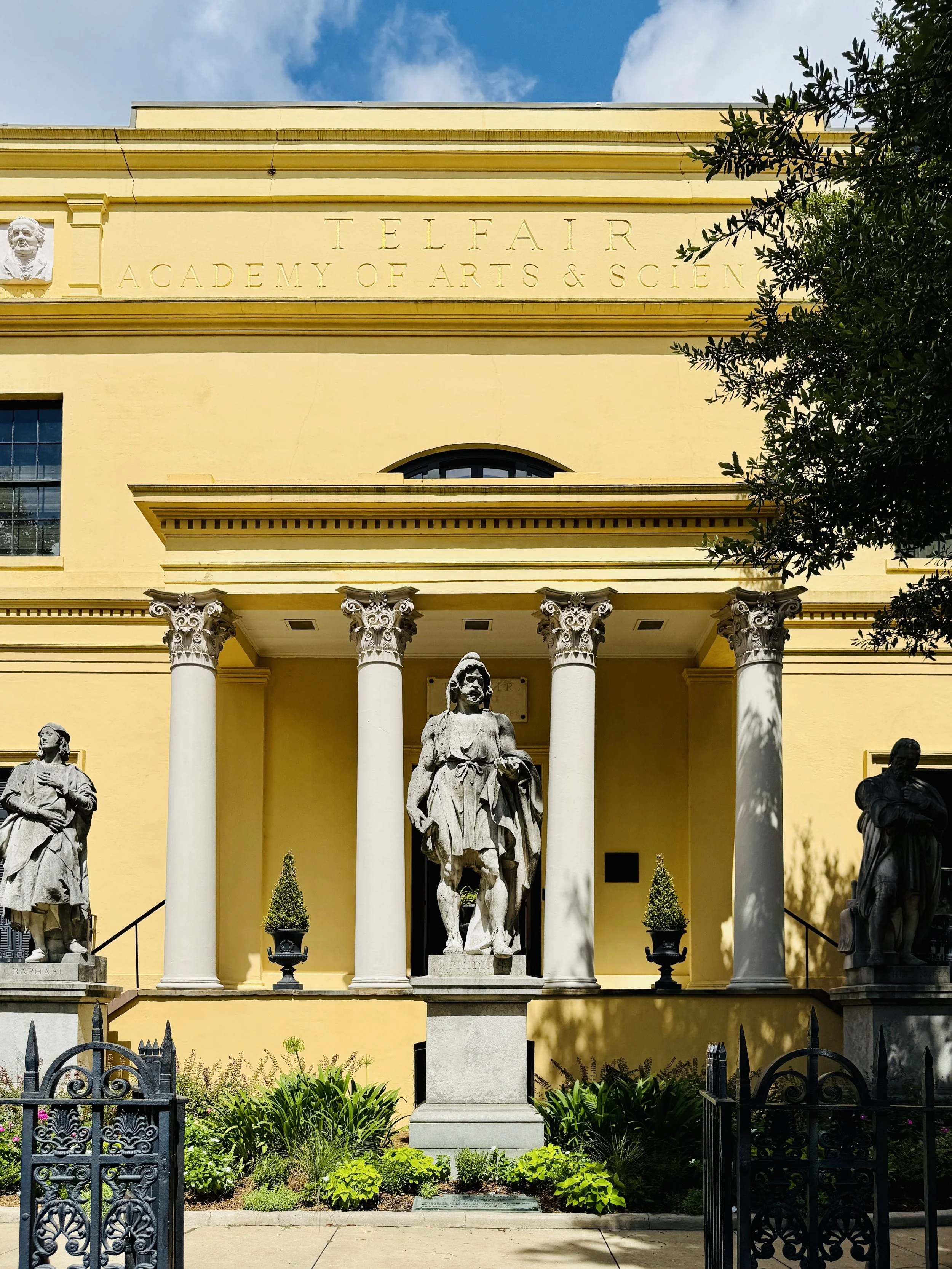
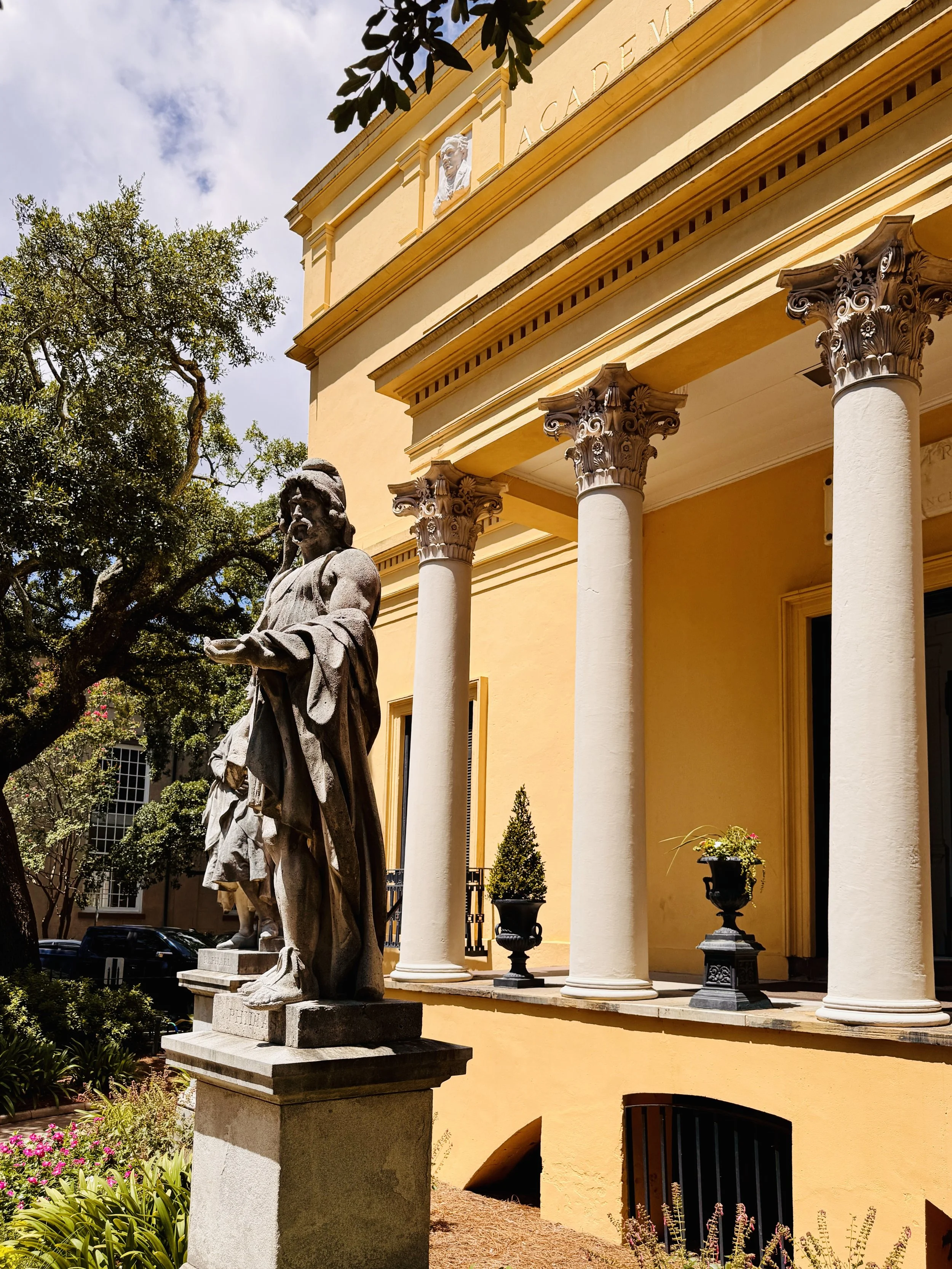
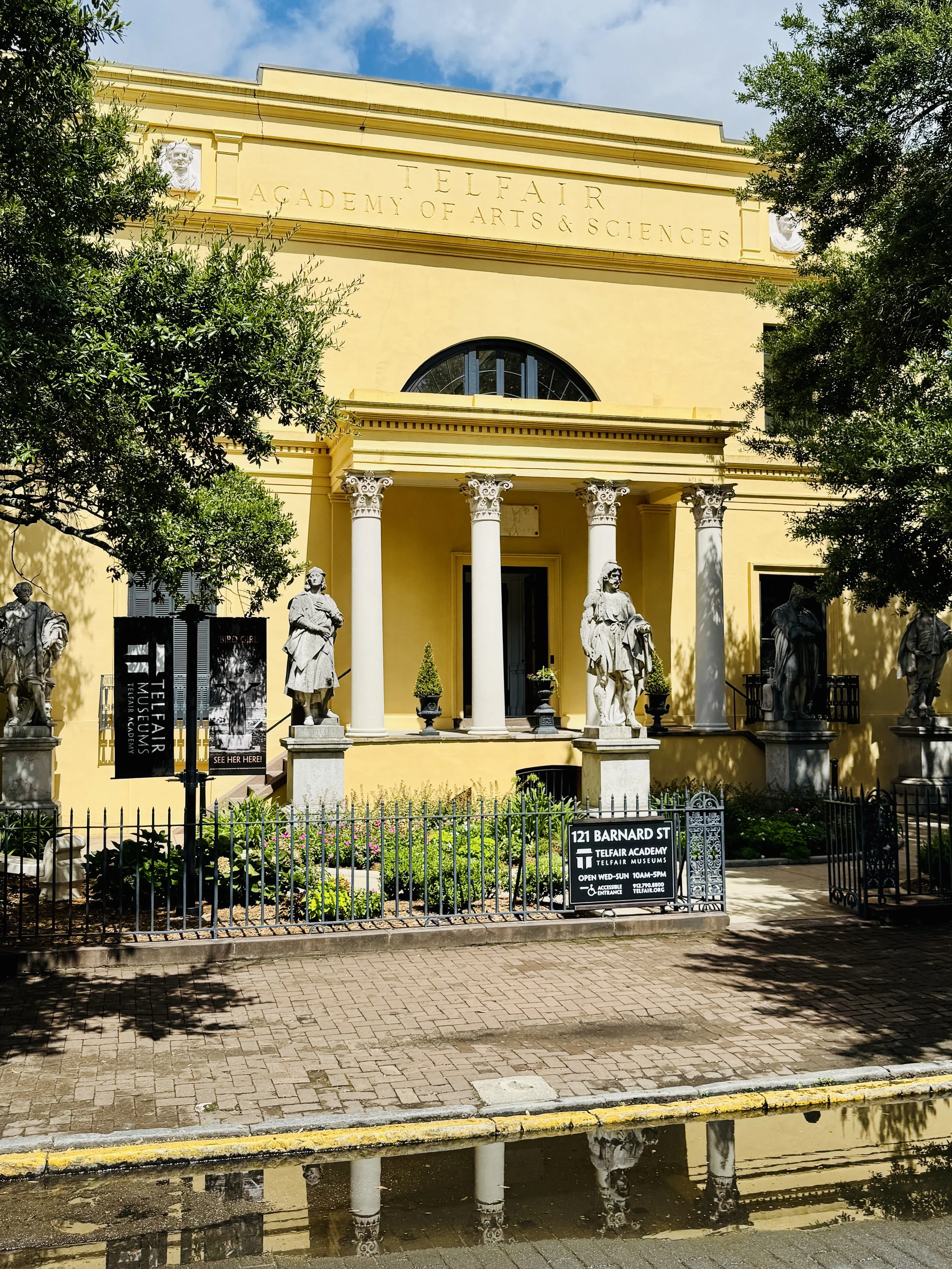
The yellow facade of the Telfair Academy in Savannah, Georgia, with statues of famous artists and classical columns

The Telfair Academy sits on the east side of Telfair Square, and is a short walk from West Broughton Street.

There’s just something about Savannah, Georgia: the moss-draped live oaks, the historic squares, and the beautiful architecture always draw us back. It’s a living, breathing city that honors its past while still looking toward the future.

Wally and I had visited Savannah many times before — wandering through the artsy, emerging Starland District, strolling up and down Broughton, and popping into the SCAD gift shop more than once. This time though, we decided to visit the Telfair Museums, which included the Telfair Academy and the Owens-Thomas House & Slave Quarters

When we arrived at the Telfair Academy of Arts and Sciences, we were greeted by the towering sculptures of Phidias, Michelangelo, Raphael, Rembrandt, and Rubens. Hewn from limestone by Austrian sculptor Viktor Tilgner, each figure stands seven feet, six inches tall. Their commanding presence at the entrance to the stately edifice set the perfect tone for what awaited us inside.

We ascended the steps of the central porch and purchased our tickets at the museum gift shop, which included admission to all three museums: the Telfair Academy, the Jepson Center & Telfair Children’s Art Museum , and the Owens-Thomas House.

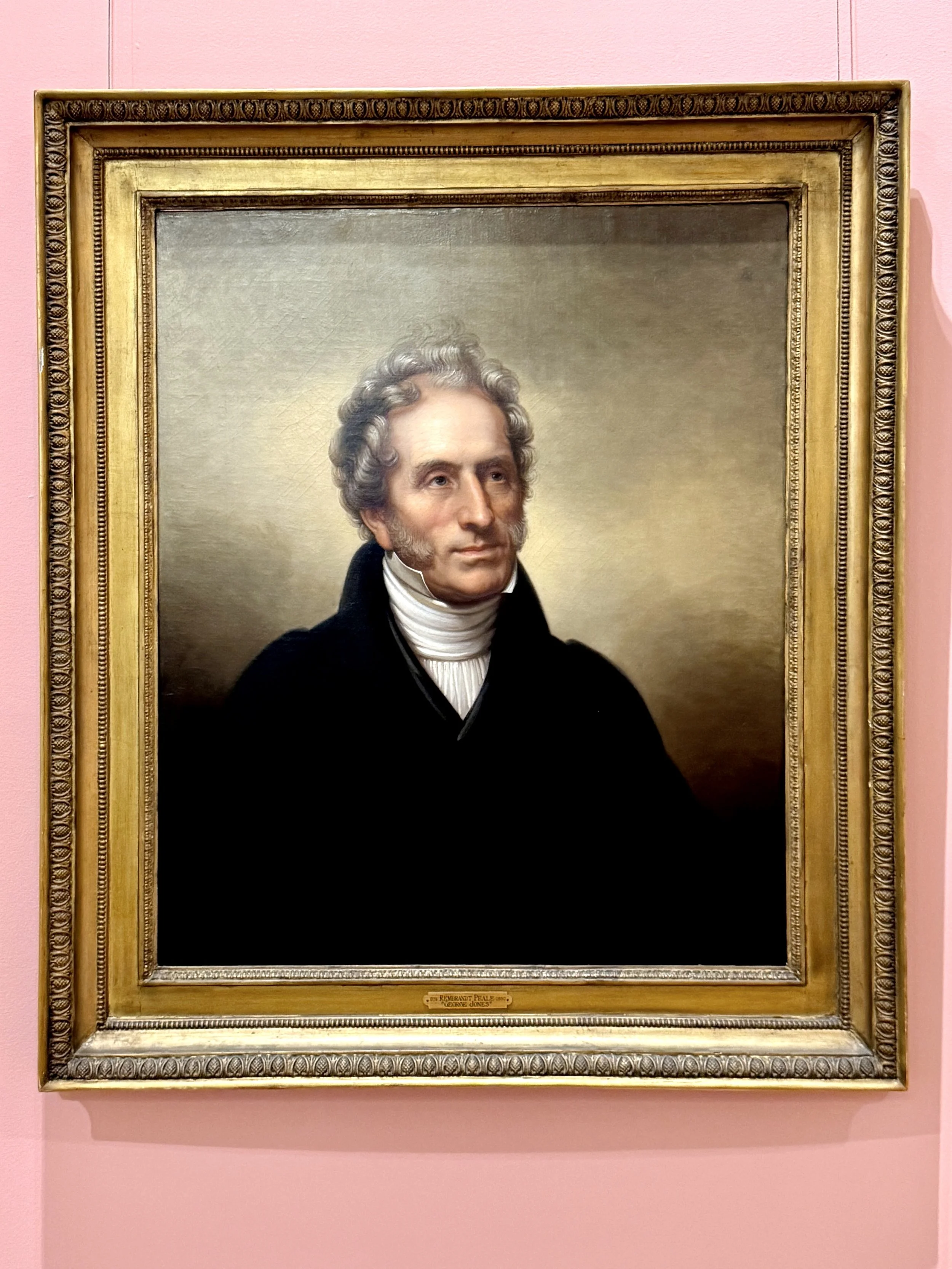
Portrait of Dr. George Jones by Rembrandt Peale, 1834

Portrait of Dr. George Jones by Rembrandt Peale, 1834

The History of the Telfair Academy of Arts and Sciences

The story of the South’s oldest public art museum begins with the death of Mary Telfair, the last surviving member of one of Savannah’s most prominent antebellum families. When she passed away on June 2, 1875, at the age of 84, she entrusted her Regency-style residence and its contents, along with a generous portion of her personal fortune, to the Georgia Historical Society. Her will stipulated that the home be converted into an institution dedicated to introducing art and culture to the public.  

Fun fact: Mary Telfair’s bequest establishing the Telfair Academy preceded the idea for New York City’s Metropolitan Museum of Art by just one month, which was conceived by a group of men in Paris on July 4, 1866.

But instead of opening its doors, the house stood silent, caught in legal limbo for nearly a decade. Distant relatives challenged her will, alleging that she was not of sound mind. The dispute dragged on until it reached the U.S. Supreme Court, which ultimately upheld her wishes in Jones v. Habersham in 1883.

With the legal hurdles cleared, the Society’s board appointed the academically trained Carl Ludwig Brandt as the museum’s first director. A German-born painter who had crossed the Atlantic in 1852, Brandt was a trusted friend of Mary’s younger sister, Margaret Telfair Hodgson. In 1874, she commissioned him to paint a portrait of her late husband, William Brown Hodgson. That painting was unveiled at the 1876 dedication ceremony for Hodgson Hall, which Margaret had built in her husband’s memory to house the Society’s collections and library.  

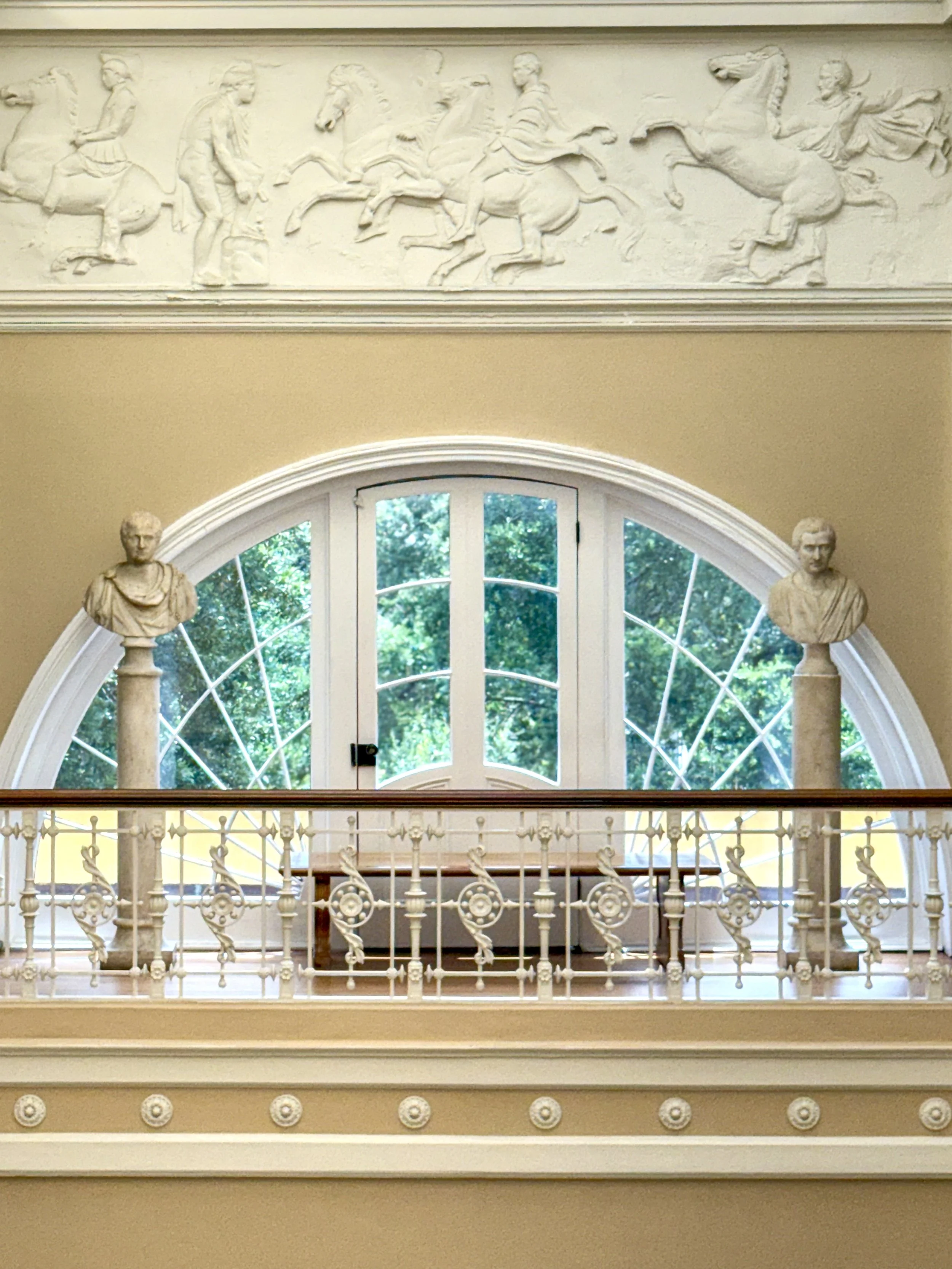
Perhaps it was this connection that convinced the board, and Brandt found himself tasked with the daunting job of converting the home into a cultural institution. He was given $20,000 (about $640,000 today) and passage across the Atlantic to procure works that would shape the museum’s permanent collection: engravings, oil paintings, full-scale plaster replicas of classical statuary, and casts of the Parthenon frieze and east pediment.

When Brandt returned, the board brought on architect Detlef Lienau to enlarge and adapt the home for its new purpose. Lienau removed the original staircase, raised the roofline, expanded the skylight, and effectively doubled the building’s size. Where the garden and former slave quarters once stood, he added a sculpture gallery at street level, topped by a rotunda to showcase the works Brandt had acquired in Europe.

On May 3, 1886, the former family residence officially reopened as the Telfair Academy of Arts and Sciences, marking a bold new chapter in Southern cultural history as the first museum in the United States to be founded by a woman.

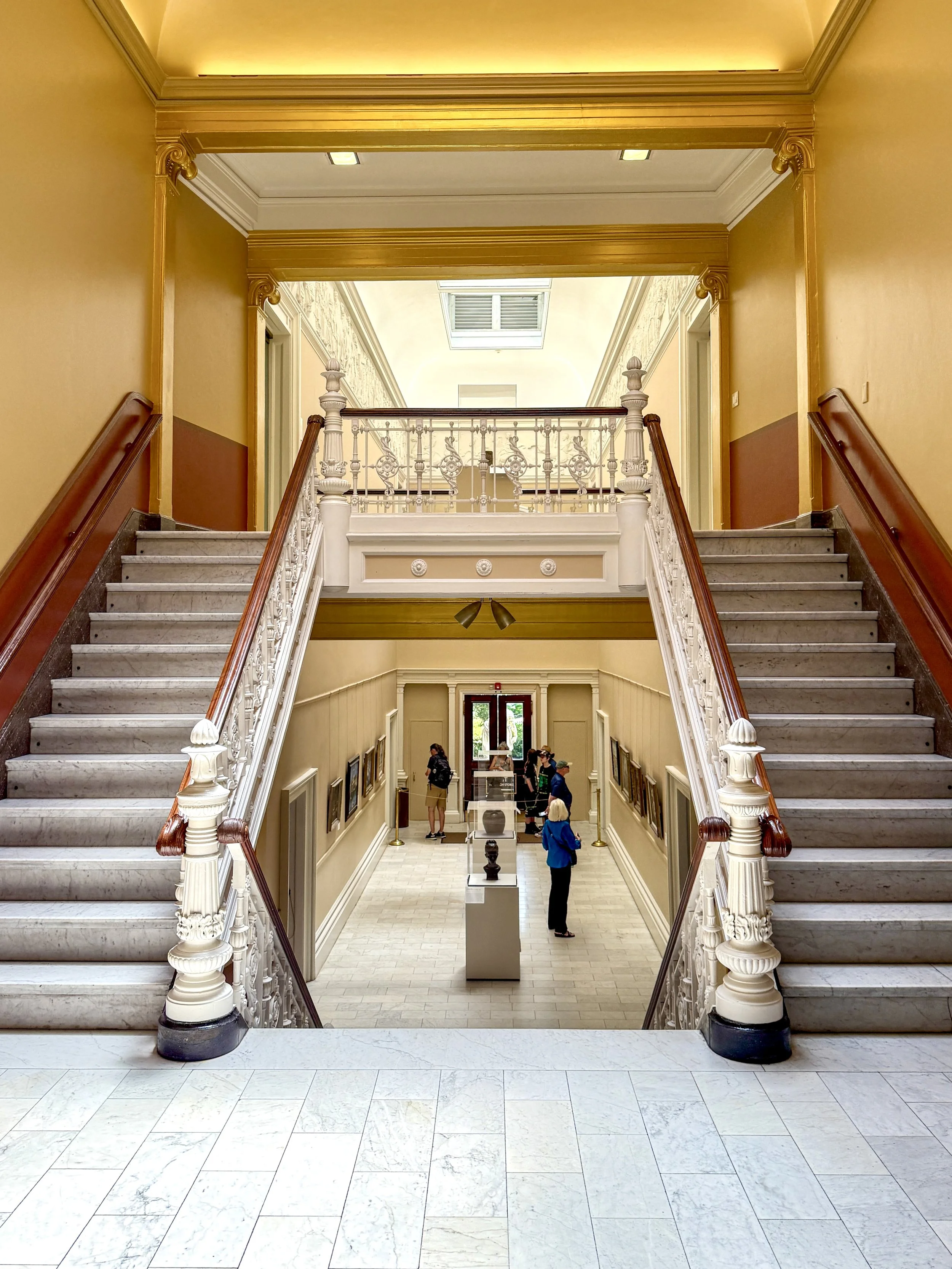
Staircases at the Telfair Academy in Savannah, Georgia,, and visitors looking at paintings in the hallway

Entrance Hall and Octagon Reception Room

The entrance hall of the Academy bears little resemblance to the original house. Lienau replaced the pine floors with marble and widened the passage to allow guests to move freely through what had once been a private residence. Today, the central corridor displays a range of works — from Harriet Hyatt Mayor’s 1915 bronze sculpture Art and Science to notable examples of 20th century American and French Impressionism and beyond.  

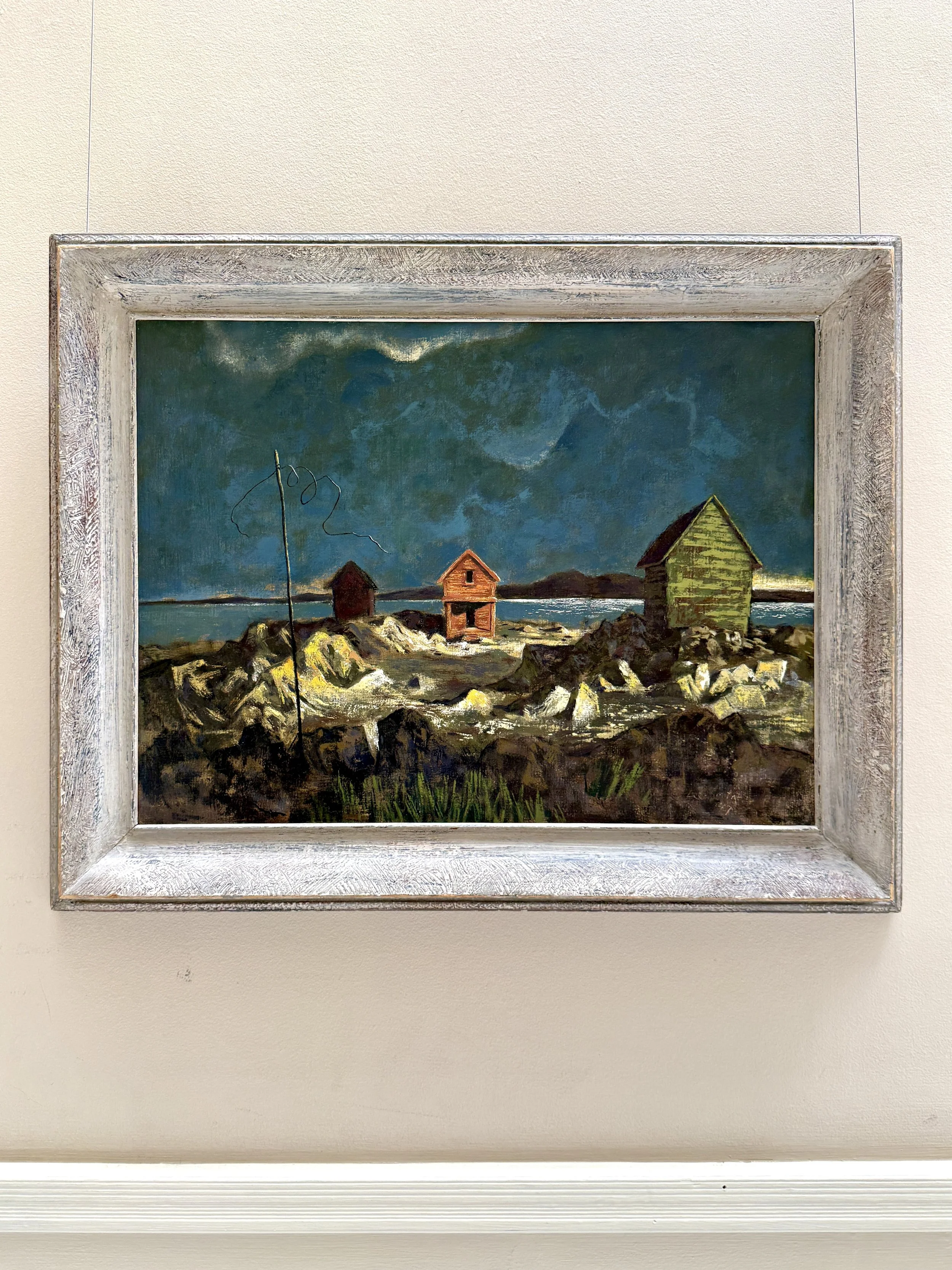
Three Shack Landscape by Hughie Lee-Smith, 1947

Three Shack Landscape by Hughie Lee-Smith, 1947

Hughie Lee-Smith’s haunting surrealistic painting Three Shack Landscape depicts three weathered shacks — one dark brown, one red and one green — standing along a desolate, rocky shoreline beneath heavy blue and gray clouds. A burst of light cuts through, illuminating the dunes and stones around them, while in the foreground a lone pole with a twisted wire juts toward the sky, heightening the sense of isolation.

Lee-Smith was born in Eustis, Florida in 1915 and spent part of his youth in Atlanta before moving to Ohio, where he graduated from the Cleveland School of Art in 1938. After a brief stint in the Navy stationed on the Great Lakes Naval Training Center during World War II, he briefly taught art in South Carolina before settling in Detroit, where economic opportunities for African Americans were more abundant. 

Lee-Smith moved to New York City in 1958, where he taught at the Art Students League. In 1967, he reached a milestone as the second Black artist to be elected to full membership in the National Academy of Design.

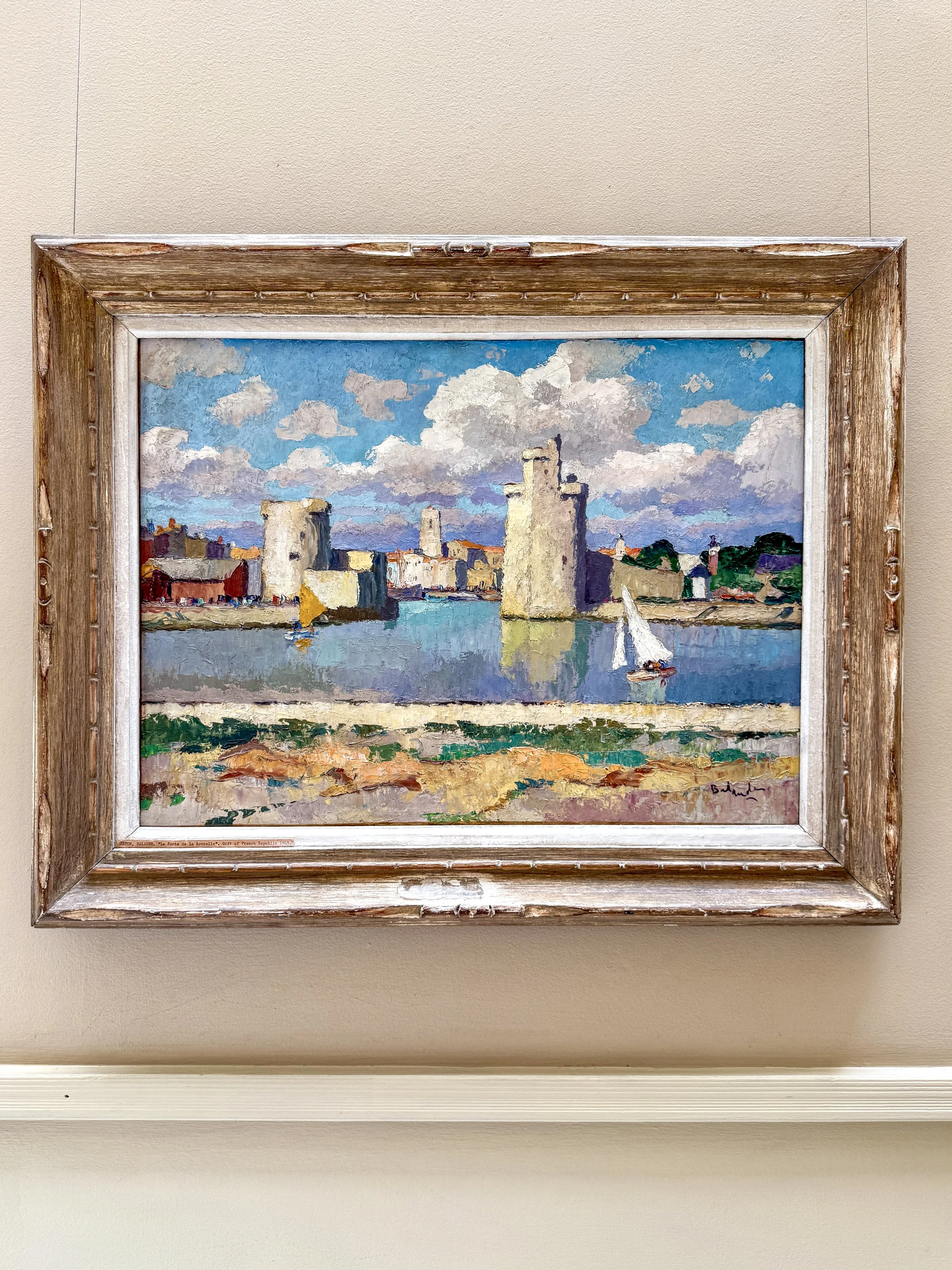
Le port de la Rochelle by Gaston Balande, 1949

Le port de la Rochelle by Gaston Balande, 1949

French impressionist painter Gaston Balande’s Le port de la Rochelle captures a lively view of the harbor in La Rochelle, a historic seaport on France’s Atlantic coast. Painted around 1949, the piece reflects the influence of Paul Cézanne, particularly in his exploration of color, line, and form. Rather than relying on traditional perspective and chiaroscuro, light and shade techniques that defined Western art since the Renaissance, Balande used these elements to create depth and solidity. 

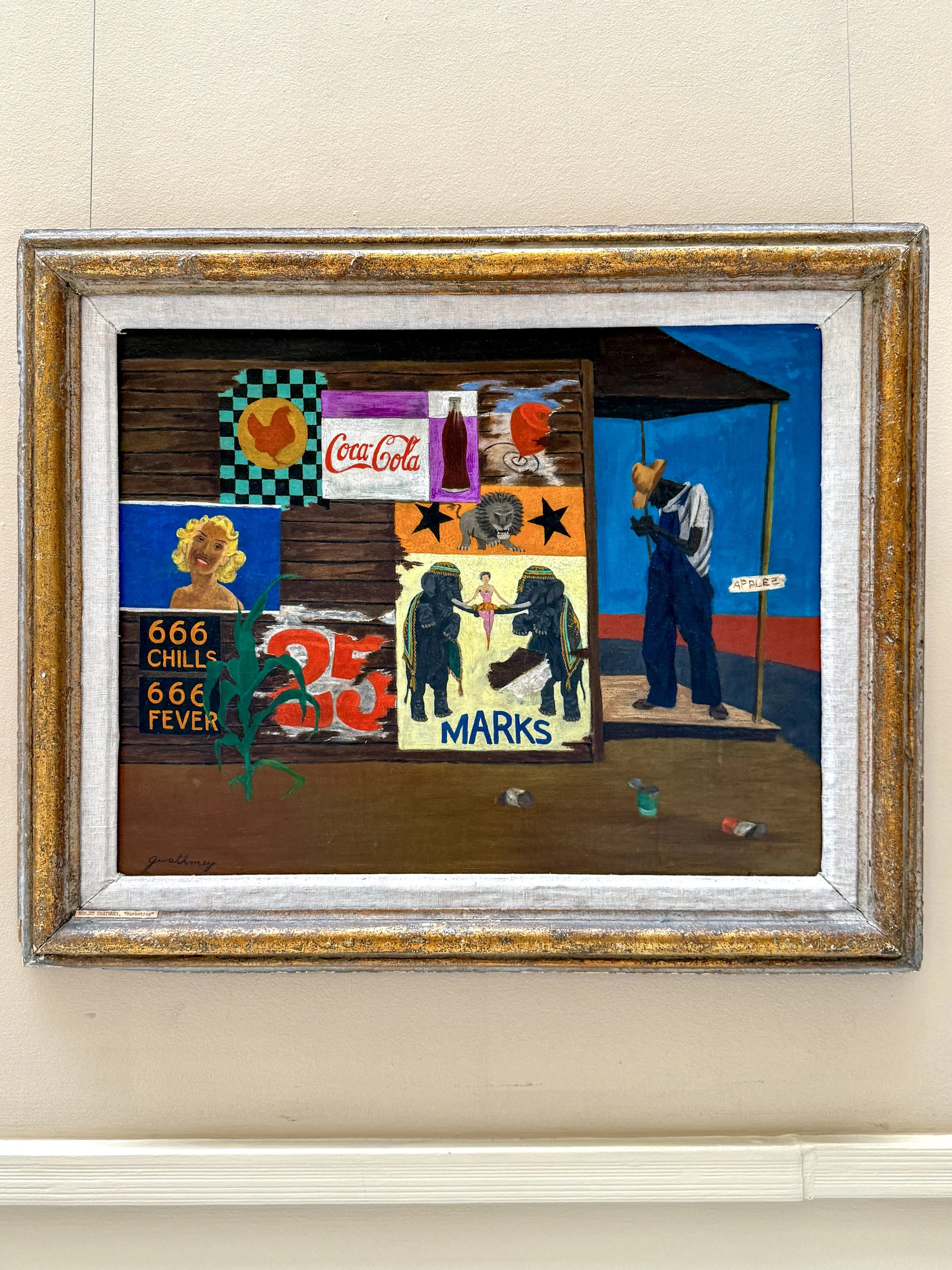
Marketing by Robert Gwathmey, 1943

Marketing by Robert Gwathmey, 1943

Robert Gwathmey was an American social realist painter known for his depictions of rural life in the American South, particularly the plight of African American sharecroppers. Born in Richmond, Virginia, in 1903, Gwathmey was deeply influenced by his experiences and observations of the South. In 1944, he spent time working alongside sharecroppers in Rocky Mount, North Carolina, to better understand their lives and challenges. 

Like his contemporaries Jacob Lawrence and Ben Shahn, Gwathmey developed an abstracted figurative style. He utilized bold geometric shapes, flat planes of vibrant color, and minimal shading to convey his social commentary. This approach emphasized form and composition over naturalistic detail, giving his works a powerful and visually striking impact. 

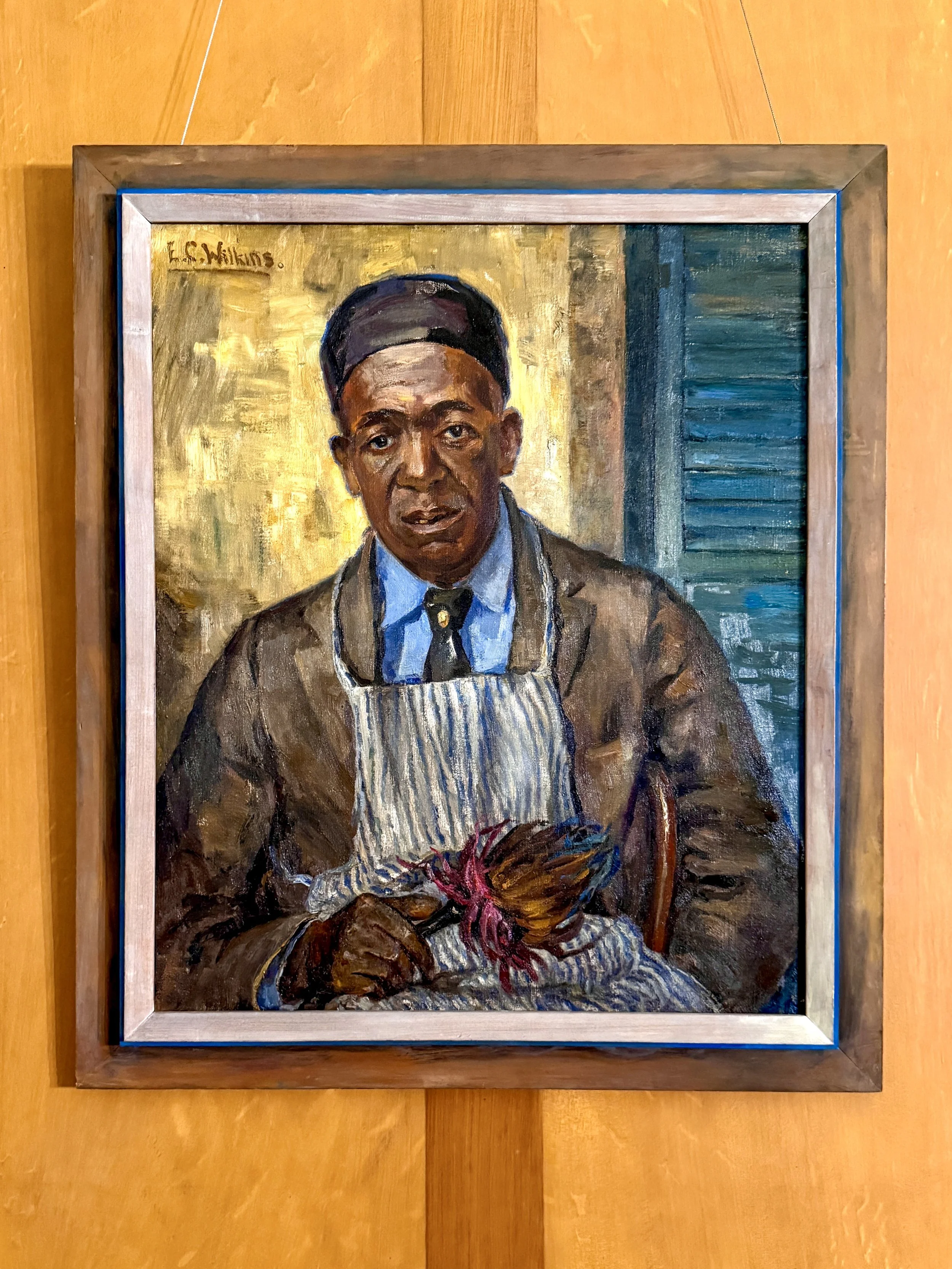
Jerry by Emma Cheves Wilkins, 1944

Jerry by Emma Cheves Wilkins, 1944

Octagon Reception Room

At the front of the Academy is the Octagon Reception Room. Once a traditional period room, it’s been reimagined to host the exhibition One Museum, Many Facades: Telfair Through the Ages. The walls still feature a rare, surviving example of early 19th century trompe-l'œil wood graining, a highly realistic, illusionistic painting technique that was popular when the mansion was built in 1818. 

The room’s sparse décor makes the portrait of Jerry Dickerson above the fireplace mantle all the more special. Savannah artist Emma Cheves Wilkins painted it around 1942, shortly before Dickerson’s retirement after more than 25 years as a janitor at the Academy. This work captures him in his recognizable work attire: a collared shirt, tie, pin, apron and feather duster in hand. He lived in the basement offices, the former slave quarters and carriage house for the mansion.

After leaving the Octagon Reception Room, we passed the former Dining Room, which was undergoing restoration. Continuing down the hall, we came upon a set of staircases with ornate iron railings.

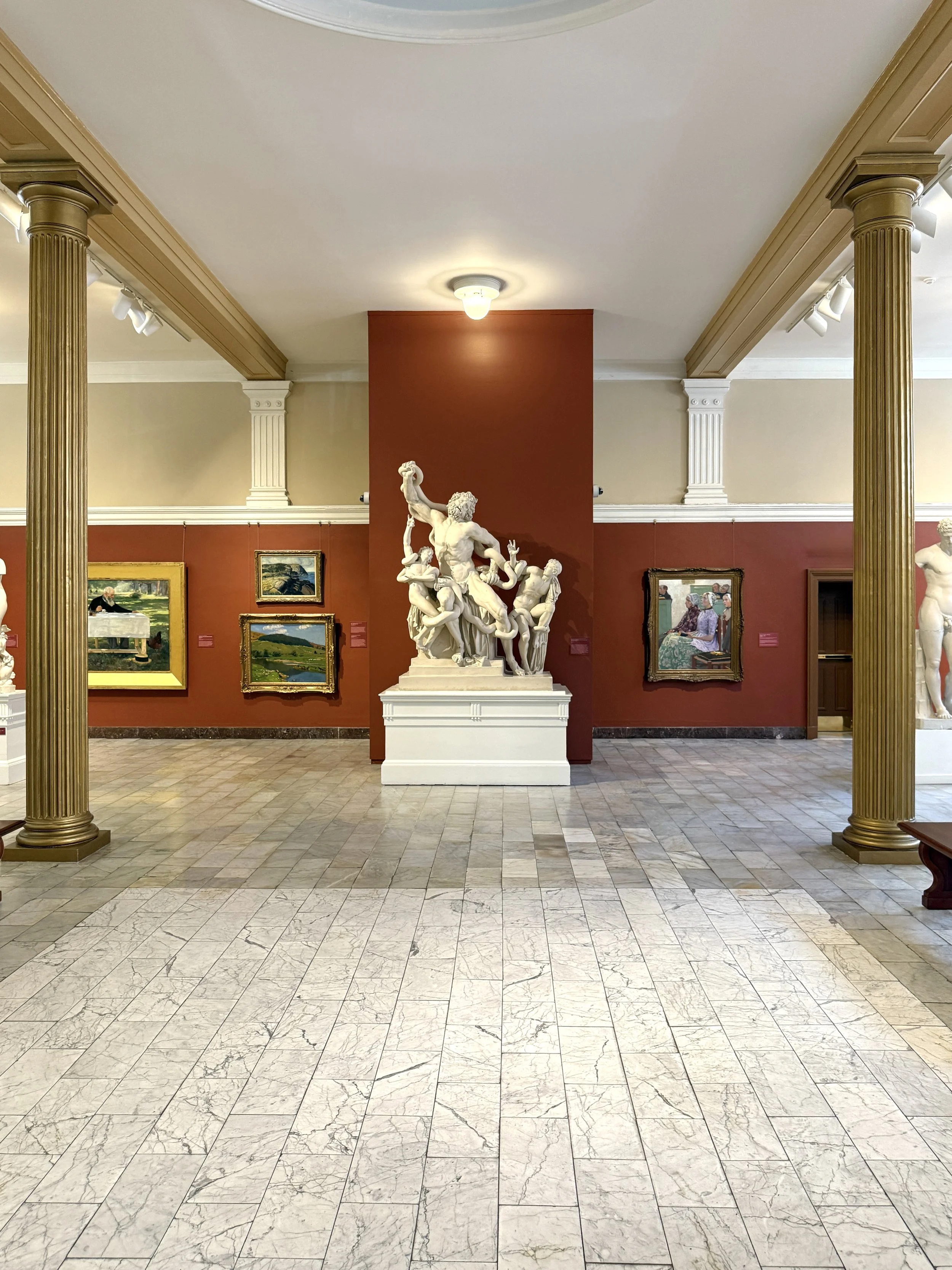
The Sculpture Gallery at the Telfair Academy in Savannah, Georgia, with a lighter section of the floor where a fountain once stood, and a statute of Laocoön and His Sons against the wall

The view of the Sculpture Gallery from the top of the stairs reveals a subtle distinction in the flooring. The lighter-colored area on the marble floor marks the spot once occupied by a fountain installed in 1966 and removed in 1973. 

The Sculpture Gallery

One set of stairs leads to the upper level, while the other descends into the Sculpture Gallery. We took the latter, and the moment we entered, my eyes were drawn to the dramatic plaster cast of Laocoön and His Sons — a copy of the famous Hellenistic masterpiece, which dominates the center of the gallery. Discovered in Rome in 1506 and now housed in the Vatican Museums, the sculpture depicts the Trojan priest Laocoön and his sons, Antiphantes and Thymbraeus, locked in a desperate struggle against deadly sea serpents.

When it first opened, the gallery displayed more than 70 plaster cast reproductions of classical sculptures, including the colossal Toro Farnese, which depicts the myth of Dirce, a cruel queen who was tied to a wild bull and dragged to her death by Amphion and Zethus for their mistreatment of their mother, Antiope.

There’s an unverified rumor that sometime in the 1970s, an Academy curator hosted a “sledgehammer party,” where guests were invited to destroy several of the institution’s large plaster casts. While it makes for a colorful story, there’s no proof to support it.

What almost certainly did happen is less dramatic: artistic tastes changed, and as the museum acquired more original works, the collection was gradually reduced, and in some cases destroyed, due to the high cost of maintaining them.

Top part of a statue of Pudicita, 1st century BCE (cast made before 1893) at Telfair Academy

Pudicita, 1st century BCE (cast made before 1893)

Many of the works now displayed on the walls of the Sculpture Gallery were acquired through the efforts of Julius Garibaldi “Gari” Melchers, an American artist who served as the Academy’s fine arts advisor after Brandt. During his tenure, he acquired more than 70 works for the permanent collection, including many of the museum’s most treasured American Impressionist and Ashcan School paintings.

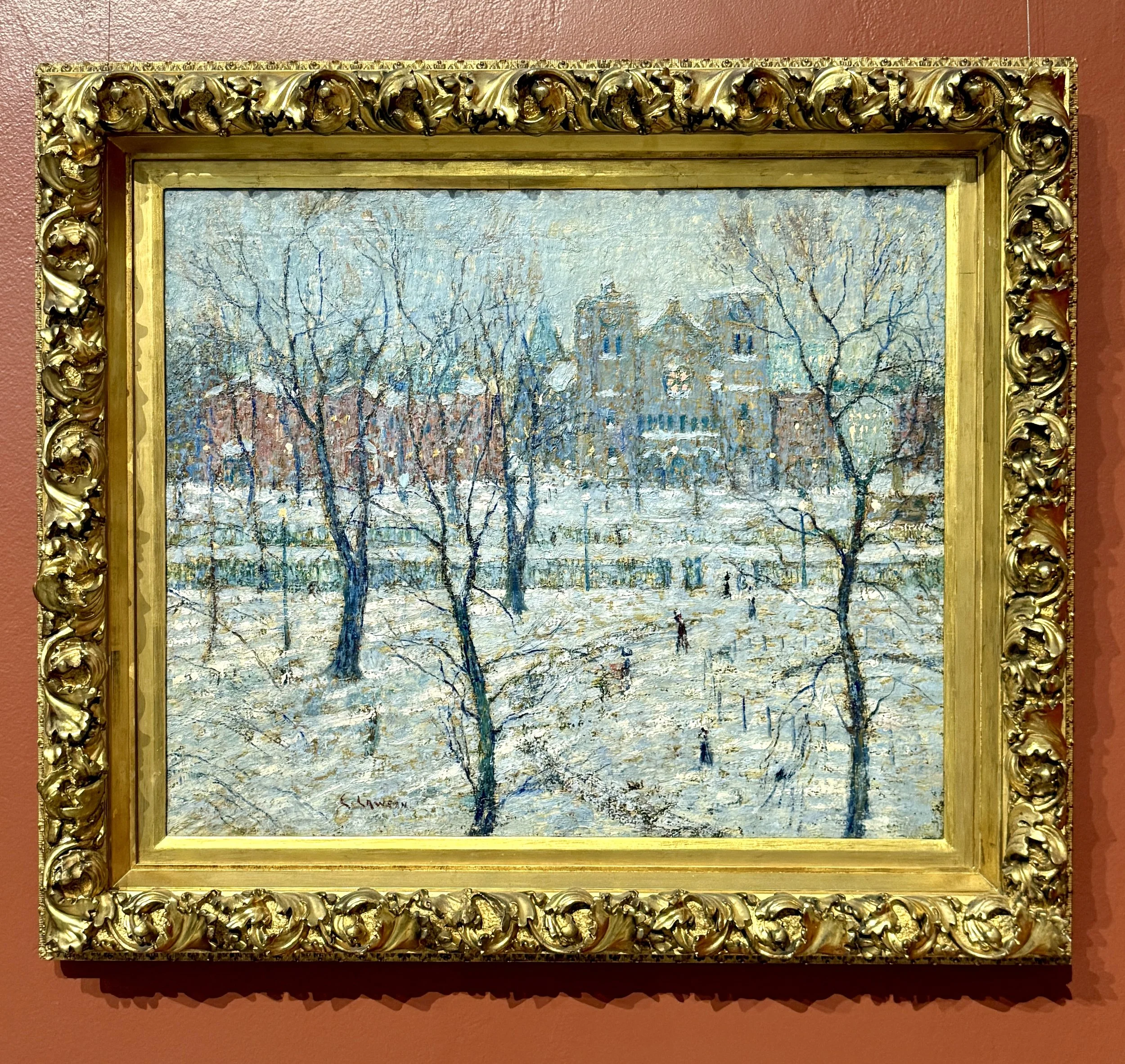
Stuyvesant Square in Winter, by Ernest Lawson, 1907

Stuyvesant Square in Winter, by Ernest Lawson, 1907

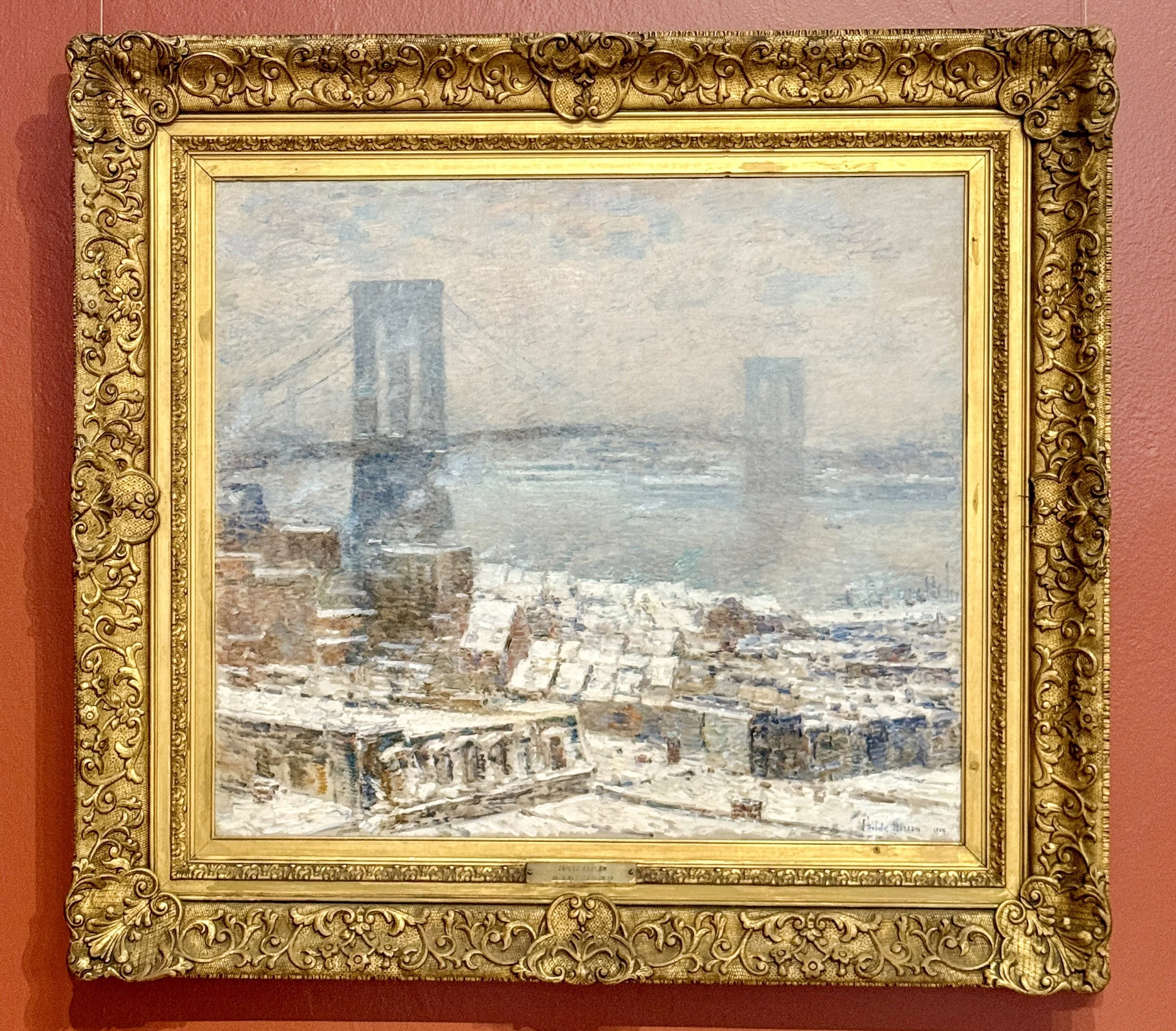
Brooklyn Bridge in Winter by Childe Hassam, 1904

Brooklyn Bridge in Winter by Childe Hassam, 1904

After returning from Paris in 1889, American Impressionist painter Childe Hassam frequently turned his attention to New York City as a subject of his art. The city’s dynamic urban life provided ample inspiration for his work. In Brooklyn Bridge in Winter, Hassam employs pastel colors, a high vantage point, and broken brushstrokes — formal elements characteristic of Impressionism. This style, which he adopted during his time studying in Paris, emphasizes capturing the fleeting effects of light and atmosphere. Like the French Impressionists, Hassam was committed to portraying contemporary subjects drawn from daily life, and New York’s vibrant streets offered him endless material.

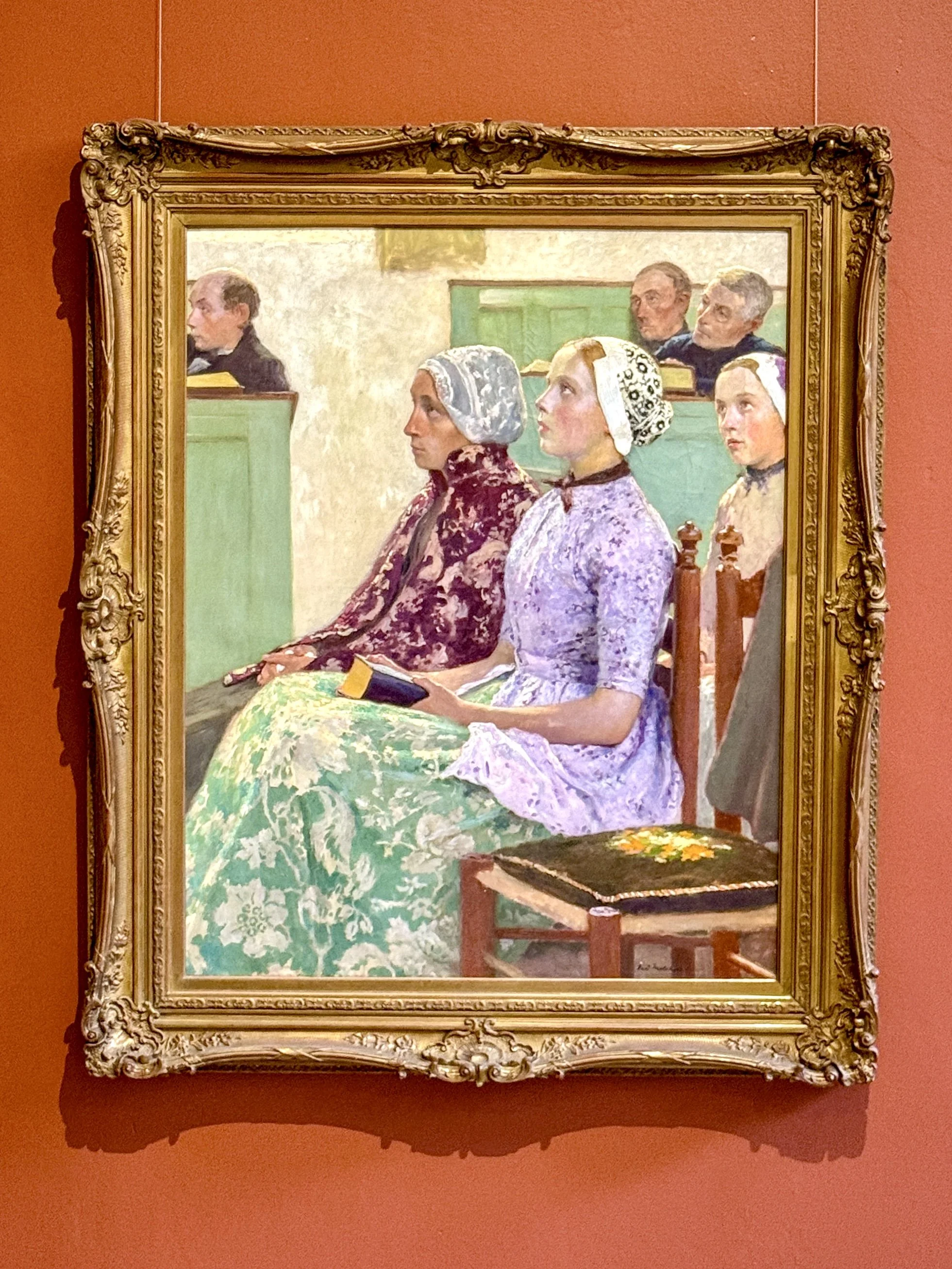
Vespers by Gari Melchers, 1892

Vespers by Gari Melchers, 1892

Vespers contains all the hallmarks of  Melchers’s early work: rural Dutch subject matter, a vibrant and colorful palette, and a keen interest in decorative pattern and texture. In this painting Melchers portrays Dutch villagers as hardworking, strong, and devout, tapping into a nostalgic yearning for traditional rural life during a time of rapid industrialization. The painting was originally owned by Walther Rathenau, an industrialist, writer and politician from Berlin who helped found the German Democratic Party.

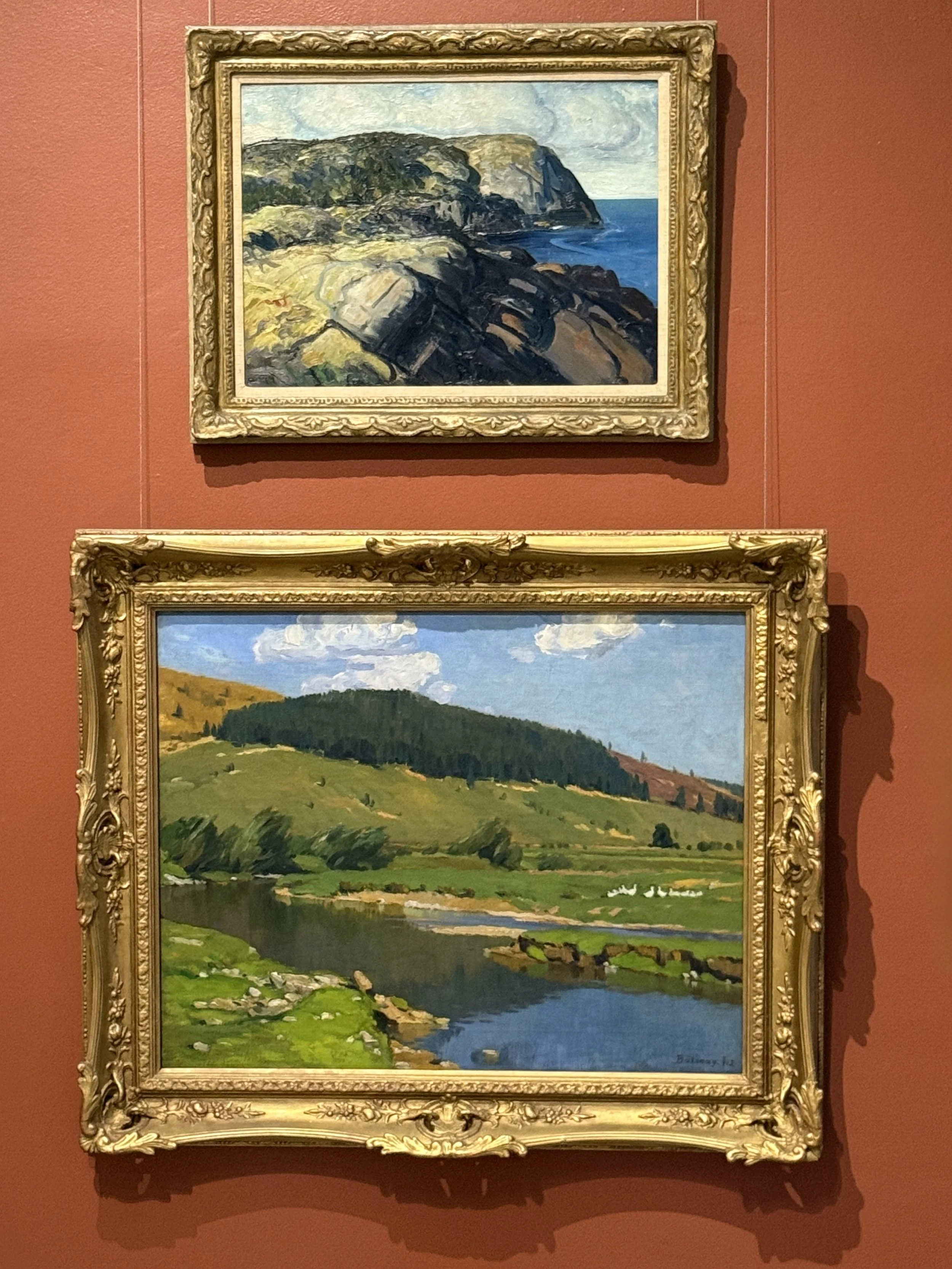
Landscape grouping, with Shaghead by George Wesley Bellows and By the River by István Boznay, 1913 

Landscape grouping, with Shaghead by George Wesley Bellows and By the River by István Boznay, 1913 

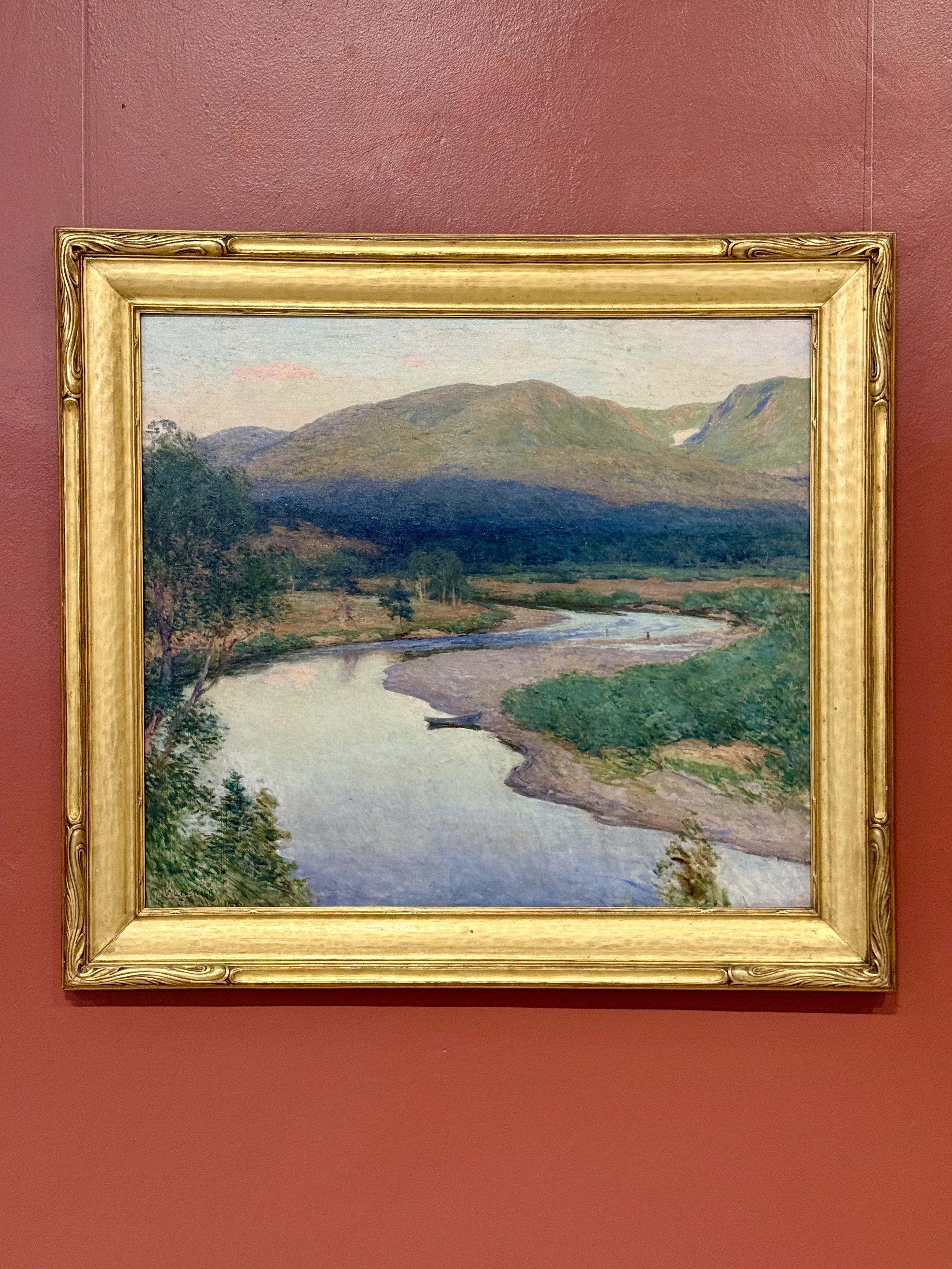
Lingering Snows by Willard Leroy Metcalf, 1924

Lingering Snows by Willard Leroy Metcalf, 1924

In this panoramic view of mountains and a stream, Willard Leroy Metcalf captures the serene beauty of a New England spring. The painting showcases his signature Impressionist style, characterized by subtle harmonies of green and purple tones that evoke the gentle light of the season. This relatively large canvas was likely painted on site in Woodstock, Vermont, on the Ottauquechee River. Metcalf employs quick, textured brushstrokes, allowing the canvas to show through, to define the trees and left shore. Thicker paint applied with a palette knife in a blend of salmon and lime represents the sky, while soft, lightly mottled colors depict the river, the right shore, and the deep blue mountain shadow. Most striking is the irregular patch of snow resting in the upper right mountain dale, its whiteness matched only by the reflected white clouds in the river.

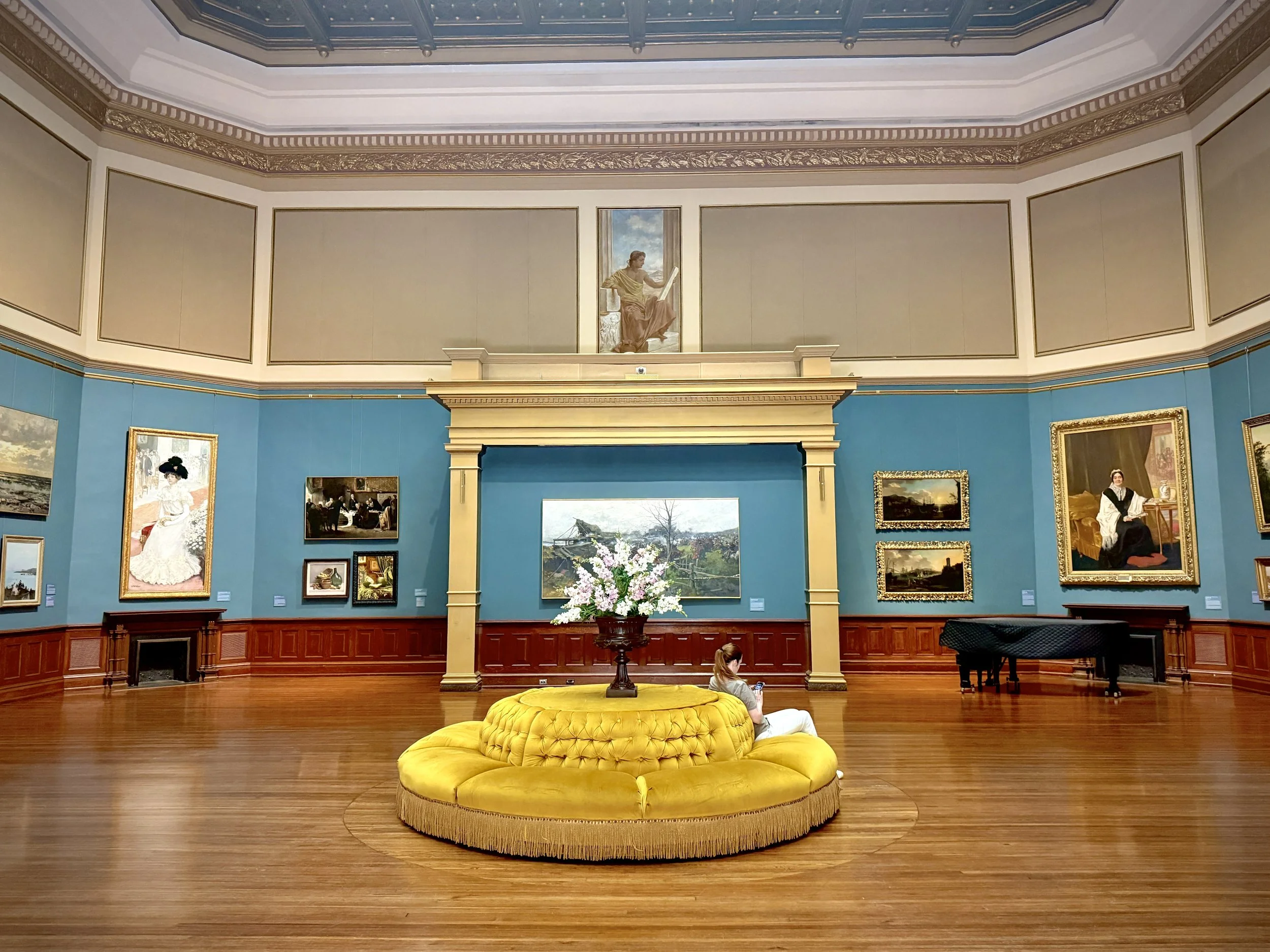
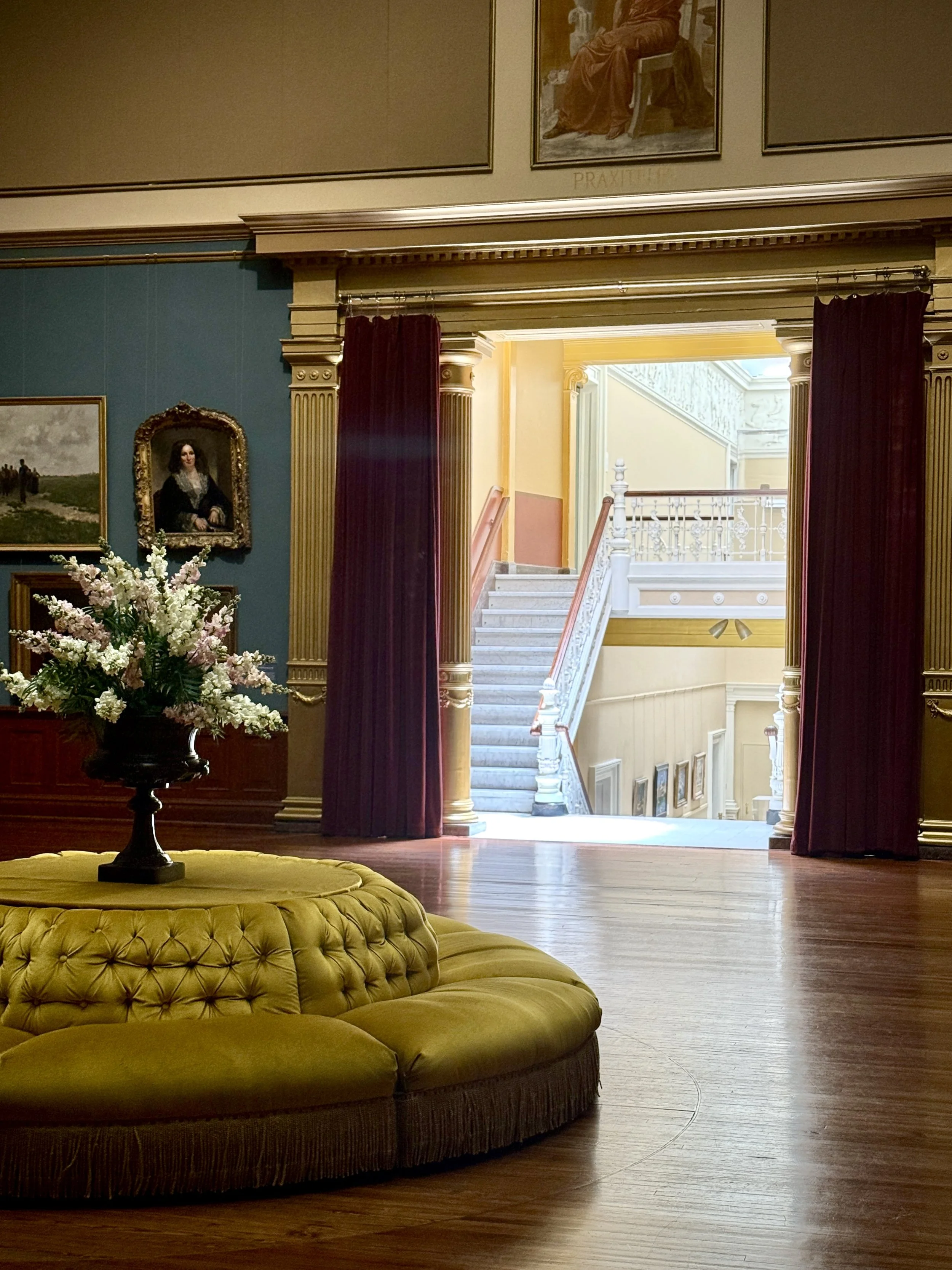
The Rotunda Gallery at the Telfair Academy in Savannah, Georgia, with blue walls covered with paintings, and a yellow circular settee with a vase of flowers atop it and a woman sitting on it, looking at her phone

The Rotunda Gallery

We made our way back up the stairs and into the Rotunda Gallery: a breathtaking, spacious two-story room designed by Brandt and Lienau to emulate the grandeur of a 19th century European salon. Artworks in this style are hung close together on the walls, as opposed to being spaced out individually. 

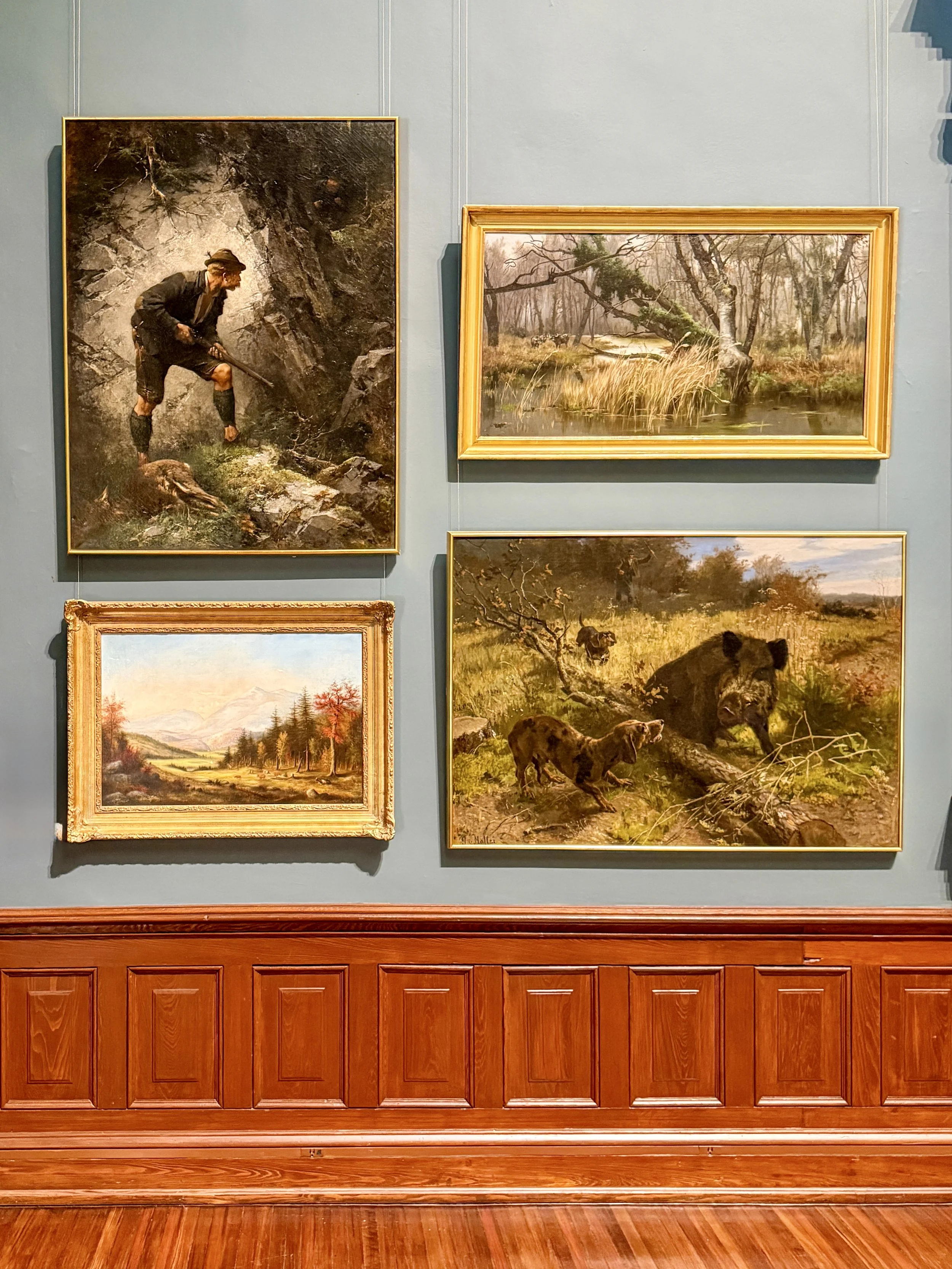
Grouping featuring works by Adolf Lüben, Robert Seldon Duncanson, George Majewicz and Guido Von Maffei

Grouping featuring works by Adolf Lüben, Robert Seldon Duncanson, George Majewicz and Guido Von Maffei

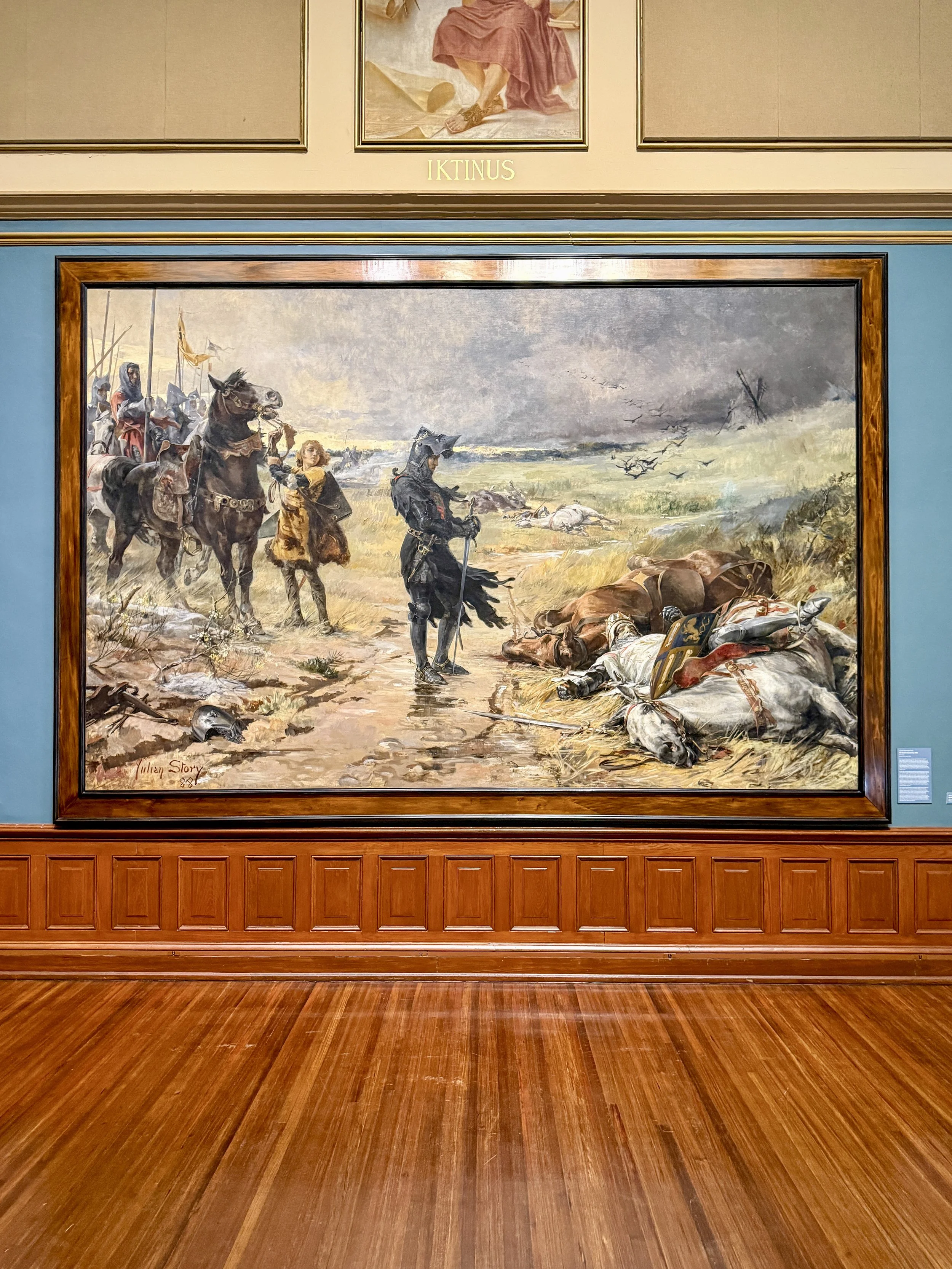
Look up, and you’ll see four paintings by Brandt positioned at the cardinal points of the gallery. Each work depicts a master of one of the four primary art forms, according to his view: Apelles for painting (west), Iktinos for architecture (north), Praxiteles for sculpture (east), and Albrecht Dürer for printmaking (south). The inclusion of three Ancient Greek artists reflects the late 19th century reverence for classical art and culture.

The Black Prince at Crécy by Julian Russell Story, 1888

The Black Prince at Crécy by Julian Russell Story, 1888

Brandt purchased the impressive The Black Prince at Crécy from the artist Julian Story in 1889. Brandt acquired the painting with his own funds and donated it to the museum upon his death. The dramatic work portrays the aftermath of the Battle of Crécy during the Hundred Years’ War, and contrasts the historic figure of the Black Prince (the Prince of Wales) with the lifeless body of the fallen King John of Bohemia, highlighting the clash of heroism and tragedy on the battlefield.

La Parabola by Cesare Laurenti, 1895

La Parabola by Cesare Laurenti, 1895

Cesare Laurenti was born near Ferrara, Italy, but spent most of his life in Venice — the setting of La Parabola. In Laurenti’s day, German artists nicknamed the work Lebensbrücke, or Bridge of Life

In a letter to Brandt, Laurenti explained that the painting was meant to reflect the course of human life, “the race toward pleasure, until clouds of weighty thoughts and sorrow come to disturb the serenity of the young soul.” 

The first part of the scene is a lively celebration: two young men invite a group of young women to join in songs and laughter. At a doorway, a suitor representing Love kisses a girl’s cheek as she steps inside. 

But the mood soon darkens. The same girl, now pensive, appears behind a window, her youth already fading. The scene then shifts to the entrance of a church, where “poor suffering souls seek relief.” Here, Laurenti wrote, “one can see the man, who, clad in priestly garments, represents Faith.”

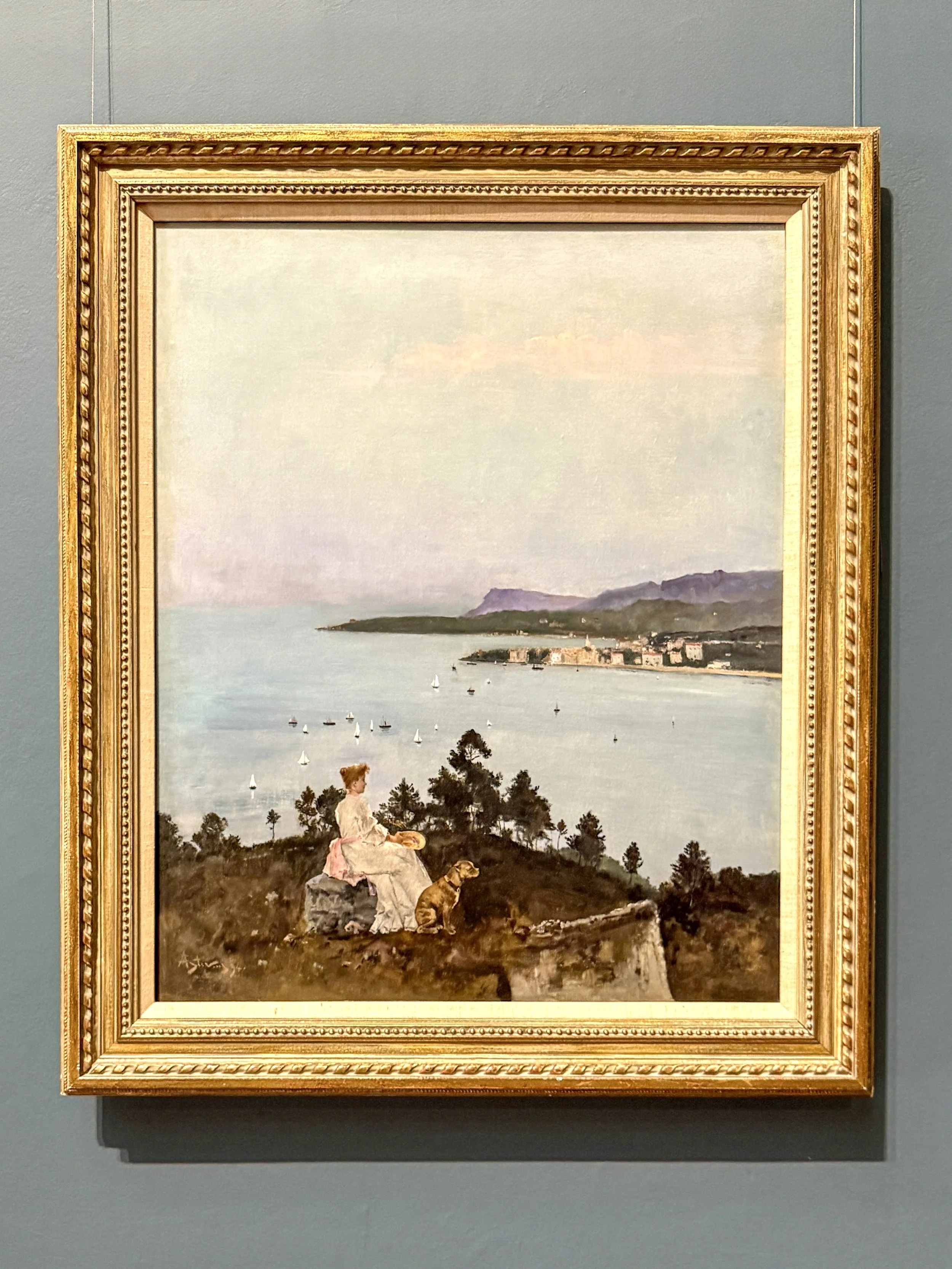
Jour de régates, Menton (Regatta Day, Menton) by Alfred E. Stevens, 1894

Jour de régates, Menton (Regatta Day, Menton) by Alfred E. Stevens, 1894

A view of the upper gallery of the Telfair Academy in Savannah, Georgia, with a plaster casting of part of the frieze from the Parthenon in Athens, Greece

A view of the upper gallery, with a plaster casting of part of the frieze from the Parthenon in Athens, Greece

Second Floor Galleries 

Upstairs, the rooms that once served as the Telfair family’s bedrooms were converted into galleries and feature works from the Academy’s permanent collections as well as temporary exhibitions. To make space for hanging art, original features like windows and fireplaces were covered up, leaving wide, uninterrupted walls for display.

The first two galleries held the ongoing exhibit Craft Along the Coast and included works from Telfair’s permanent collection that date from the 18th to the late 20th centuries. The first gallery presents examples of woodworking, ceramics and painting, while the second focuses on Savannah’s silversmithing traditions. Both galleries tell stories of markets and craft legacies, helping to draw lines of continuity through a dynamic history.

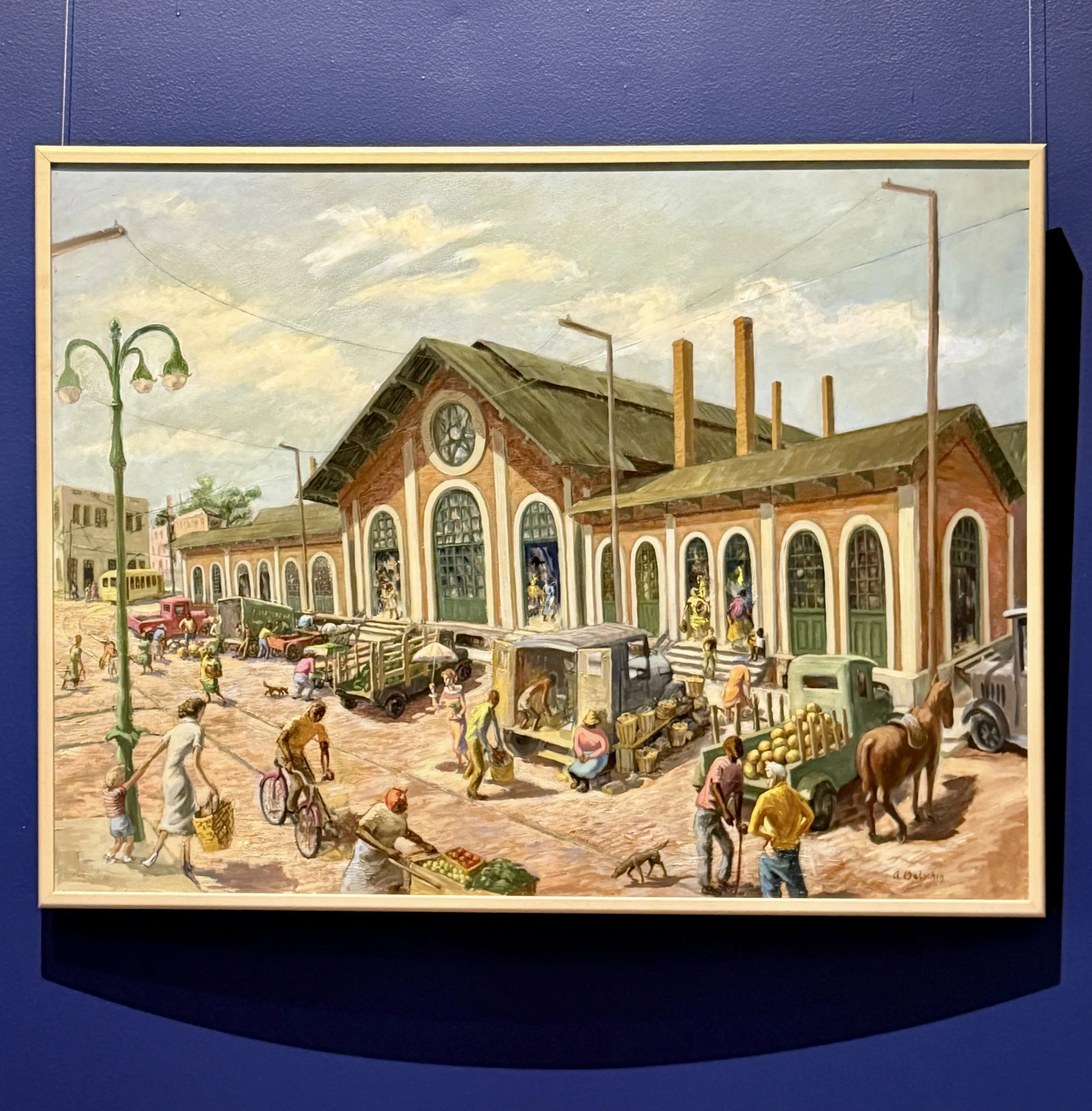
Old City Market by Augusta Denk Oelschig, 1950

Old City Market by Augusta Denk Oelschig, 1950

Savannah native Augusta Denk Oelschig painted Old City Market, a lively portrayal of the City Market building that occupied Ellis Square from about 1872 to 1953. In the scene, the market pulses with life: Shoppers, vendors, produce stands and even animals are in motion across the square. 

When the building was razed in 1954, the loss galvanized the community, and helped spark the creation of the Historic Savannah Foundation the next year, which continues to protect and preserve the city’s historic architecture. 

In 1947, during a trip to Mexico, Oelschig met muralists Diego Rivera and José Clemente Orozco, whose work left a lasting impression on her. Inspired by the political and social themes in their art, she returned to Savannah with plans for a mural depicting the history of Georgia. Intended for the Savannah High School, her drafts included imagery of Ku Klux Klan members whipping African Americans and a reference to a politician later associated with the the Klan. Unsurprisingly, the school’s conservative officials rejected the proposal.

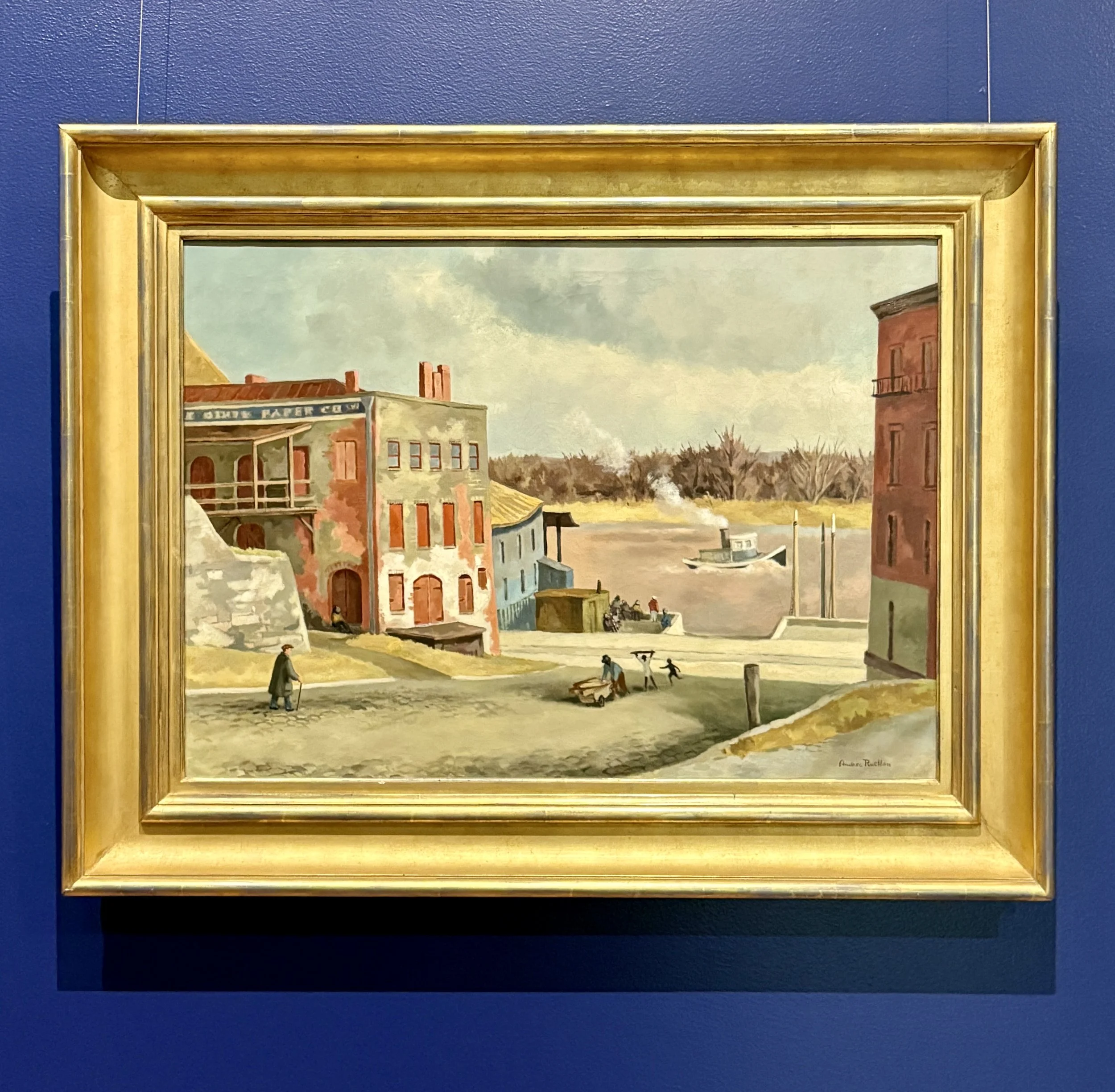
Savannah by Andrée Ruellan, 1942

Savannah by Andrée Ruellan, 1942

In Savannah, Andrée Ruellan captures the view of the river seen between buildings and down a cobblestone ramp that leads to the wharves. The painting’s small figures (including a man with a cane and a vendor with children) evoke the quiet, everyday life of the waterfront rather than a bustling port. 

Savannah’s riverfront historically relied on ramps (Barnard, Bull, Abercorn, Lincoln, etc.) down to River Street and its wharves, which is exactly the kind of setting Ruellan sketched. The waterfront was also a center for local craft traditions; Savannah has a documented history of woodcarving and walking-stick makers.  

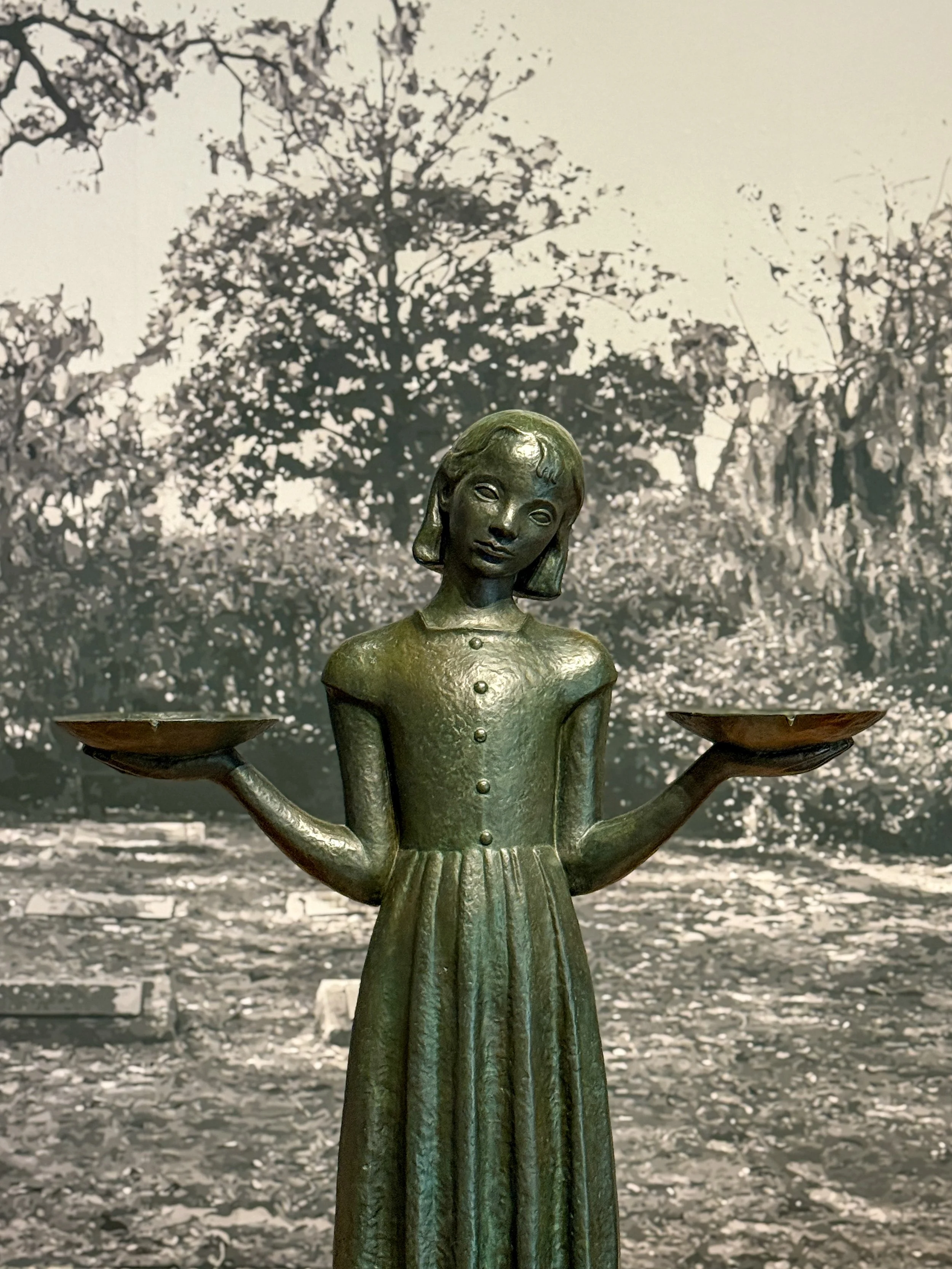
The statue of the Bird Girl statue, holding two bowls in her hands, in an exhibit at the Telfair Academy in Savannah, Georgia

The iconic Bird Girl. Her outstretched arms don’t actually symbolize the weighing of good and evil — the shallow bowls in her upturned hands were intended to hold water and birdseed. 

The Bird Girl of Midnight in the Garden of Good and Evil Fame

I was especially intrigued by the gallery featuring Before Midnight: Bonaventure and the Bird Girl. It showcases artwork from Bonaventure Cemetery, including the famous statue. 

Created in 1936 by Sylvia Shaw Judson, a sculptor from Lake Forest, Illinois, Bird Girl was first exhibited in 1938 at the Art Institute of Chicago under the title Girl With Bowls. Judson originally cast six versions, one in lead and five in bronze, but later stated that only four bronze casts were ever made. 

One of the original bronzes was purchased by Savannah native Lucy Boyd Trosdal and installed in her family’s plot in Bonaventure Cemetery, where it was affectionately nicknamed “Little Wendy.”

For decades, the statue remained largely unnoticed — until photographer Jack Leigh captured its haunting image at dusk for the cover of John Berendt’s bestselling nonfiction novel Midnight in the Garden of Good and Evil, thrusting “Little Wendy” and the city into the national spotlight. Concerned about the crowds it began to attract, Trosdal removed the statue from the cemetery and loaned it to the Academy, ensuring it would be protected for future generations.

Fun fact: Jim Williams, the central figure in Midnight in the Garden of Good and Evil, wasn’t just a successful antiques dealer and historic preservationist — he also served as president of the Telfair Academy.

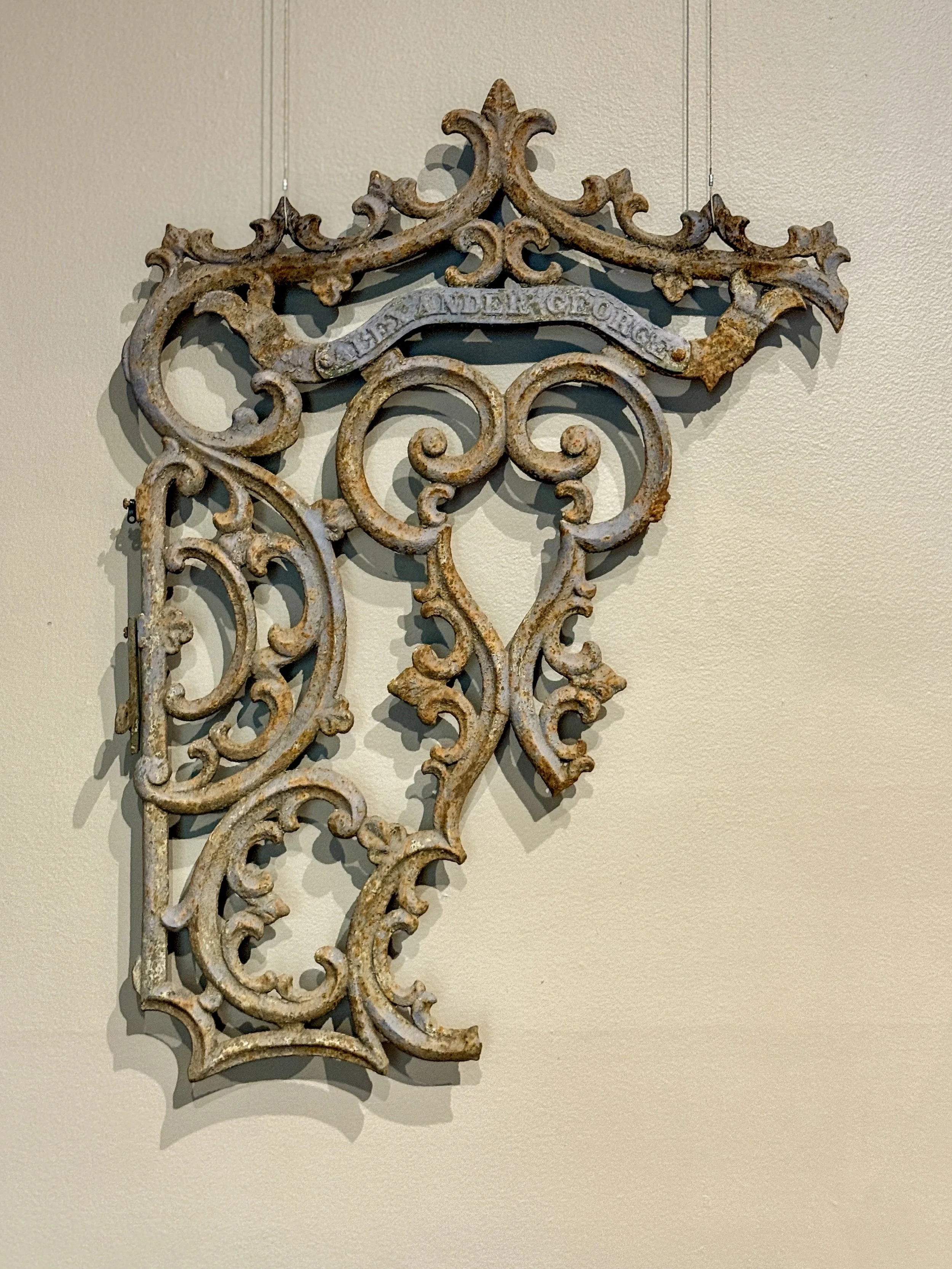
An iron gate fragment from Bonaventure Cemetery hangs on the wall at Telfair Academy in Savannah, Georgia

An iron gate fragment from Bonaventure Cemetery hangs on the wall. 

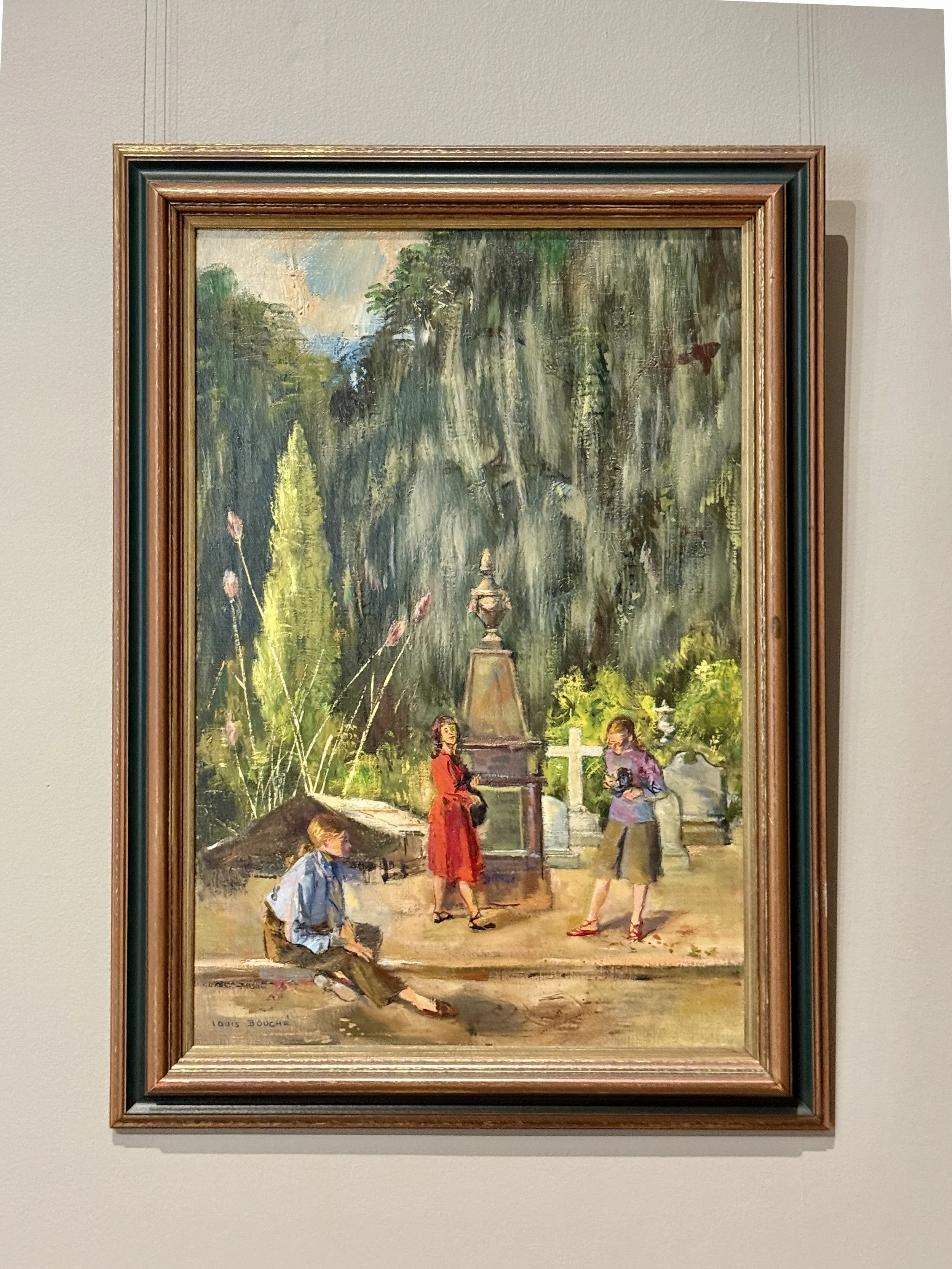
Bonaventure by Louis Bouché, 1969

Bonaventure by Louis Bouché, 1969

Bonaventure Cemetery by Henry Clernewerck, 1860

Bonaventure Cemetery by Henry Clernewerck, 1860

Plaster bust of the Telfair Academy’s first director, Carl Brandt, by John Walz, 1891, in Savannah, Georgia

Plaster bust of the Academy’s first director, Carl Brandt, by John Walz, 1891

Stay Awhile: Interiors in Art 

The last gallery featured a selection of paintings from the Academy’s permanent collection that focused on interior settings. 

Rather than emphasizing a specific narrative, the labels beside each painting encouraged visitors to form their own interpretations of the works. 

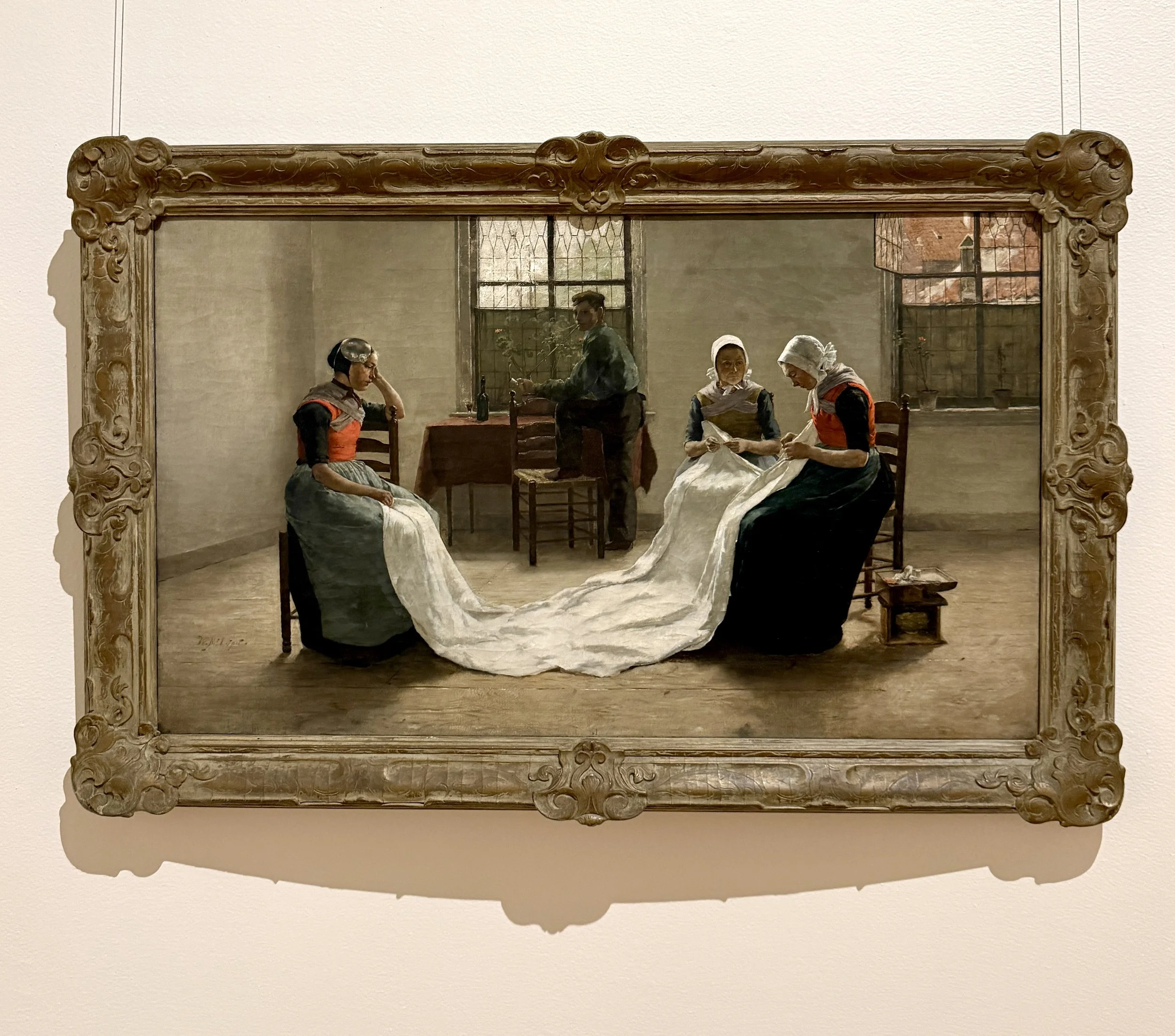
The Lacemakers by Walter MacEwen, 1900

The Lacemakers by Walter MacEwen, 1900

In The Lacemakers, three seated Dutch women are engaged in tatting the edges of a large piece of white fabric. Behind them, a man stands by a window, smoking a pipe and staring at the woman on the left, who seems lost in thought. The palette is dominated by muted, silvery tones, enlivened by the bright red bodices of two of the women and the tiny potted flowers on the windowsills.

A native of Chicago, Walter MacEwen had originally planned to pursue a career in business, but an unexpected event changed the course of his life.

When a destitute painter asked MacEwen for a small loan, the artist left his paint and brushes as collateral. He never returned to collect them, and MacEwen began to experiment with the abandoned materials.

By 1877 he had departed for Europe, where he studied under Frank Duveneck at the Royal Academy in Munich, and later at the Académie Julian in Paris. By the mid-1880s, MacEwen had established studios in Paris and Holland spending sixty years in Europe before returning to the United States in 1939. 

Café Fortune Teller by Mary Hoover Aiken, 1933 

Café Fortune Teller by Mary Hoover Aiken, 1933 

The style of Café Fortune Teller evokes elements of American scene painting, characterized by its focus on everyday life and its narrative quality. The work was completed on the island of Ibiza prior to the outbreak of the Spanish Civil War and depicts the artist reading her own fortune amidst the bustle of a café. In 1936, Mary Hoover met the Savannah-born poet Conrad Aiken, whom she married in 1937. Her later works included portraits of famed author T.S. Eliot and British painter Edward Burra, and she also had solo exhibitions at the Telfair in 1964 and 1975.

Wally and I visited on a weekday and spent about 90 minutes exploring the galleries and browsing the gift shop. Admission for adults was $30, valid for seven days from the date of purchase and offers access to all three museums. –Duke

Telfair Academy Visitor Information

Hours of Operation

Open Wednesday through Monday, 10 a.m. to 5 p.m.  
Closed on Tuesdays  

Admission Fees

Tickets grant unlimited access to all three Telfair museums (Telfair Academy, Jepson Center and Owens-Thomas House) for seven days from the date of purchase. 

Adult: $30  
Senior (65+): $27  
Active military (with ID): $27  
Student (ages 13 to 25, with ID): $20  
Child (ages 6 to 12): $10  
Child (5 and under): Free  

Accessibility and Visitor Services

Wheelchair accessible: Yes. Entrance is on the south side facing President Street (with nearby accessible parking and elevator access).  

Sketching: Allowed with pencil only; sketchbooks no larger than 8½ by 11 inches. No easels or sitting on the floor.  

Photography: Non-flash photography is permitted for personal use unless otherwise posted. Tripods, selfie sticks, lights and other gear are prohibited.  

Checkroom policy: Bags larger than 11 by 14 inches must be checked. Laptops and luggage are not accepted.  

Strollers: Restricted in the historic Telfair Academy and Owens-Thomas House but welcome at the Jepson Center.  

Why You Should Visit the Telfair Academy

Historical significance: Established in 1886, it’s one of the first public art museums in the U.S. and the first in the South.  

Architectural beauty: A Regency-style mansion designed by English architect William Jay (built 1818 to 1820).  

Collections and highlights: 19th and 20th century American and European art, restored period rooms, decorative arts and the famed Bird Girl statue.  

Telfair Academy 

121 Barnard Street 
Savannah, Georgia 31401
USA


The Sea Loft Treehouses of Deer Island: Sea Pine’s Hidden Gem

Where is Deer Island? This hideaway within Sea Pines Plantation feels like a secret world on stilts. These quirky octagonal “treehouse” villas have roots in radical planning, not just marsh mud.

I was about 12 years old the first time I stumbled upon the enchanting enclave of Deer Island. At the time, my family spent a week vacationing on Hilton Head Island every year, and most afternoons, my brother, the Hollister girls and I would hop on our bikes to explore the winding trails of Sea Pines. We often ended up in Harbour Town for ice cream — but now and then we’d take a detour. And that’s how we found it: the treehouses of Deer Island, hidden away, like something out of a storybook.

Years later, when my parents retired and made Hilton Head their full-time home, my husband, Duke, and I continued the tradition: going for bike rides just like I did as a kid — only now we stop for coffee, frozen cocktails and ice cream. On one of those visits, we discovered a shortcut to Harbour Town. As we pedaled along Calibogue Cay Road, looking for a secret passage to Harbour Town we had heard about, I spotted a small sign and a narrow path disappearing into the woods. Curiosity (and the promise of shade) pulled us in.

Why octagons?

Because they’re practical and poetic. No big blank walls to block views. Every angled facet has a window or sliding glass door, offering wraparound vistas and loads of natural light.

As we emerged from the path, the houses immediately clued us into the fact that we had found a back entrance to Deer Island. This maritime hammock surrounded by salt marsh has its road access at the other end, accessible by a wooden bridge over the colorfully named Heddy Gutter Creek near CQ’s Restaurant. 

The main entrance to Deer Island across from Harbour Town

It’s the houses on Deer Island that immediately capture your attention. Perched among the trees, and built around a central pillar, these octagonal dwellings feel like the Ewok Village on the Forest Moon of Endor. 

But these homes aren’t simply whimsical treehouses. They were part of a bold, eco-conscious vision that redefined coastal development — decades before “sustainable” became a corporate buzzword. The 74 freestanding Sea Lofts were unlike anything else on Hilton Head Island: a cross between futuristic retreat and Swiss Family Robinson hideaway.

How Sea Pines Gave Rise to a Treehouse Island

The story of Deer Island begins in 1956 with developer Charles E. Fraser, who set out to build a different kind of coastal community — one that didn’t pave over paradise to put up a parking lot. A law school graduate with a passion for conservation, Fraser turned his Sea Pines Plantation Company into a proving ground for planning principles that would go on to influence resort communities from Kiawah Island, also in South Carolina, to Costa Rica. (The word “Plantation” was eventually dropped from the name due to its associations with slavery.)

Fraser’s philosophy was simple but radical: Build around nature, not over it. That meant curving roads to preserve trees, designing low-slung homes that blended into the landscape, and enforcing strict architectural guidelines banning bright colors, boxy footprints and big egos.

“We didn’t want to build a resort,” Fraser once said. “We wanted to build a community.”

Sea Pines became a visionary experiment in eco-conscious design as well as a haven for architecture buffs, environmentalists, and anyone who prefers to sleep where the egrets (and alligators) roam.

By the late 1960s, Sea Pines was booming. The iconic red-and-white Harbour Town Lighthouse was completed in 1970, and Hilton Head was quickly becoming a premier coastal destination. Amid this growth, Fraser and his team, including renowned landscape architect Hideo Sasaki and urban designer Stuart Dawson, began sketching out something entirely different: a marshfront community that would feel like a private island while still offering access to nearby beaches, restaurants and shops.

That idea became Deer Island. Completed in 1971, it marked a bold shift in Sea Pines’ residential offerings. Instead of vacation estates, the Sea Lofts were designed to be compact, elevated and unconventional. These octagonal bungalows featured open floor plans that maximized views and minimized environmental impact. Each home overlooks a tidal creek or salt marsh, without disrupting the lush canopy of trees.

Fraser’s team believed the natural landscape should take the lead. While the rest of the island leaned into more conventional development, Deer Island embraced its own quiet charm: no shops, hardly any traffic — just birdsong, breezes and the occasional deer wandering beneath your house. Because, yes, we’ve seen plenty of deer on Deer Island.

Yes, there are plenty of deer on Deer Island — but the treehouses are the stars.

Deer Island Homes: A Style Designed to Disappear

If you’ve ever been to Sea Pines and wondered, “Where are all the houses?” — that’s the point. Deer Island takes that idea to the extreme. From across the marsh, the homes vanish into the canopy. Even up close, you might find yourself squinting through loblolly pines, palmettos and live oaks, trying to spot the angular lines of a Sea Loft villa. These houses were meant to exist in harmony with their surroundings.

Fraser and his team set strict guidelines: low rooflines, muted earthy colors and tree preservation. In fact, if you have to cut down a tree on a Sea Pines property, you’re required to plant new ones to match the original trunk’s diameter in inches. 

The result? A neighborhood that feels like it grew there — even though every detail was carefully planned, down to the last railing. 

Architecturally, it’s a style referred to as Hilton Head Modern, or sometimes, Lowcountry Modern. Think deep overhangs, shaded porches, wide windows and colors inspired by the ubiquitous live oaks. You won’t find any pink stucco or coral trim here. It’s less Miami Beach flash, more Zen retreat in the marsh.

The Octagonal Treehouses of Deer Island

Now let’s talk shape.

The Sea Loft villas are small — roughly 800 to 900 square feet — but they pack a punch. Each is octagonal, lifted one story aboveground on wooden pilings. I’m not the only one who calls them “treehouses,” and while no rope ladders are involved, the vibe is spot on.

Why octagons? Because they’re practical and poetic. No big blank walls to block views. Every angled facet has a window or sliding glass door, offering wraparound vistas and loads of natural light. Inside, the open floor plan and vaulted ceilings make the small footprint feel more spacious. 

And because the homes are up on pilings, you’re always eye level with the birds and squirrels. Beneath the houses, deer graze. As mentioned, the island lives up to its name.

On top of the views, the design is functional. The elevated structure lets floodwaters pass beneath, which is kind of a big deal on a barrier island prone to hurricanes. The shape helps diminish wind during storms. And the materials — often cedar siding, weathered to a silvery brown — hold up beautifully in salt air.

The People Behind the Planning of Deer Island

There may not be a single “starchitect” behind Deer Island, but its DNA can be traced back to a team of forward-thinking planners. Fraser may have been the frontman and public face of the project, but his collaborators included some of the most influential figures in landscape architecture and urban design of the 1960s and ’70s.

Take Sasaki, widely regarded as one of the most influential landscape architects of the 20th century. He believed that good design should serve both people and the planet — a rare point of view at the time. Working alongside his colleague Dawson at Sasaki, Dawson & DeMay, the pair helped shape Sea Pines into a model of what environmentally conscious development could look like. Dawson introduced the concept of “leisure villages” and laid out the roads in short loops, T-intersections and cul-de-sacs — not just to reduce traffic, but to preserve views and soften the human footprint. To this day, planners still point to his designs as best in class.

Supporting players included local landscape architect Joe Harden, who laid out much of Sea Pines’ lush greenery and trails, and Phil Lader, a young planner who later wrote about Fraser’s groundbreaking approach. Even the Sea Pines Architectural Review Board deserves a shoutout; they enforced the color palettes and tree preservation like they were protecting the Mona Lisa.

Still, it all comes back to Fraser. He may not have drawn every line or plotted every trail, but he set the tone — and made sure everyone followed it.

A Living Legacy (With Real Estate Perks)

Fast forward 50 years. Hilton Head has undeniably changed. Sea Pines has grown, the lighthouse area has been completely renovated, and plenty of the early homes have been replaced by larger, multimillion-dollar structures (though they still adhere to his aesthetic).

But not on Deer Island.

Here, the original 74 Sea Loft villas are still standing — weathered, yes, but proudly so. They’ve been updated inside, though, and a few have gotten modest expansions or screened-in porches. But the exteriors? Still hugging trees. Still octagonal. Still charming.

Heddy Gutter Creek. leading out to Calibogue Sound

In an industry where teardown culture reigns, Deer Island is a time capsule that’s only gained value. Buyers today are part of a design legacy. A slice of Sea Pines history. A front-row seat to the marsh.

Prices reflect that. In the past few years, sales have ranged from mid-$600,000 to just over $1 million, depending on the view and renovation level. 

Real estate agents pitch it as immersive natural surroundings” and private tranquility, but you could just say: It feels good here. Like someone actually cared about how people would live — and how the land would look half a century later.

Spoiler: It looks great.

Deer Island: A Small Isle With a Big Idea

Deer Island may be small, but it punches well above its weight — architecturally, historically and spiritually. It’s a place where planners once dared to ask, “What if we didn’t bulldoze the trees?” — and then literally built the homes around (and among) them. A place where you can sip coffee on your deck while snowy egrets and blue herons glide past.

It’s Hilton Head at its most thoughtful. Most peaceful. Most quietly radical.

And in a world where luxury often means “more,” Deer Island whispers a different kind of promise: less square footage, more soul. The kind of place that still feels like a secret.

So if you ever find yourself in Sea Pines, look for that discreet entrance en route to Harbour Town and follow it. See what happens when development makes room for the wild things. You might just find yourself dreaming of life inside one of these architectural marvels like we do. –Wally

The First Homosexuals at Wrightwood 659: Rewriting Art History With a Queer Lens

This powerful global exhibition traces the emergence of queer identity through more than 300 artworks — at a time when LGBTQ+ visibility matters more than ever.

Peace 1 by Zhang Huan, a sculpture of a nude golden man about to ring a large metal bell, at Wrightwood 659 in Chicago, during The First Homosexuals exhibit

Peace 1 by Zhang Huan, 2001

When Wally and I heard about The First Homosexuals: The Birth of a New Identity, 1869–1939 at Wrightwood 659, we were immediately intrigued. We had missed the first iteration, which ran in 2022. This new presentation promised to be larger in scale, and suggested something truly ambitious — a visual journey recontextualizing art history by presenting a wide range of works through a queer lens. 

This exhibition is especially important because it comes at a perilous time when LGBTQ+ voices are increasingly under attack across political and cultural spheres. In the face of bans, restrictions on school curricula, and renewed efforts to limit or erase queer visibility, The First Homosexuals reclaims that space by affirming that queer identity has an enduring, complex and creative legacy. 

“The First Homosexuals” is especially important because it comes at a perilous time when LGBTQ+ voices are increasingly under attack across political and cultural spheres.

I was reminded of Masculin/Masculin, a provocative exhibition Wally and I saw at the Musée d’Orsay in 2013. Drawing primarily from European painting and sculpture, the show turned the traditional male gaze on its head — shifting the focus from the female form, so often idealized in art, to the male nude. By presenting works from 1800 to the early aughts, the show invited viewers to reconsider the male body, not just as a symbol of strength or virility but as an object of desire.

While Masculin/Masculin traced the idealization of the male body in European art, it didn’t place those depictions within the broader context of queer history. The First Homosexuals at Wrightwood 659 takes that next step, expanding the lens across five continents and inviting viewers to consider queerness as something shaped by history, society and culture — often coded, but always present. 

One of the gallery walls with a bench at The First Homosexuals exhibit at Wrightwood 659 in Chicago

The First Homosexuals included more than 300 works by 125 queer artists from 40 countries.

Its point of departure is 1869, when Karl-Maria Kertbeny, an Austrian-Hungarian writer and activist, introduced the term “homosexual” anonymously in a German pamphlet advocating reform of Prussian sodomy laws — a linguistic turning point that shifted same-sex love from act to identity. 

A woman passes by Wrightwood 659, which has U.S. and Ukraine flags and a sign promoting The First Homosexuals exhibit

You’ll definitely need to book ahead (and book early) when you see a show at Wrightwood 659.

Our Arrival at Wrightwood 659 in Lincoln Park

After breakfast at one of our favorite spots, the Bourgeois Pig, Wally and I strolled up the leafy stretch of Wrightwood Avenue in Chicago’s Lincoln Park. We were surprised to find a modest four-story red brick façade at 659. But the small group forming outside and a sign promoting the exhibition reassured us that we were in the right place.

The modern home next to Wrightwood 659 in Chicago

The modern concrete building attached to the exhibit space is actually the home of one of the cofounders of Wrightwood 659.

I initially assumed the gallery’s entrance was through the modern concrete cube next door — but that was actually the private residence of media entrepreneur and philanthropist Fred Eychaner and his husband, Danny Leung. Eychaner is the founder of the Alphawood Foundation, a charitable organization, and cofounder of Wrightwood 659.

Inside, a docent greeted us in the light-filled atrium and explained that the building was constructed in the 1920s as an apartment complex. Despite its external appearance, the interiors have been stripped and radically reimagined by Japanese architect Tadao Ando.

Two floors of Wrightwood 659 with exposed brick and concrete, with the sculpture Peace 1 by Zhang Huan visible

A historic apartment building was reimagined as a striking modern art gallery.

The Tadao Ando-designed stairwell at Wrightwood 659 in Chicago

Architect Tadao Ando transformed the interior with his minimalist design.

We stood in awe of the space’s understated tranquility. Ando preserved the outer walls, which are clad in irregular, weathered Chicago common brick, an earthy contrast to the interior’s sleek geometric simplicity. 

In the far corner, an Escher-like concrete staircase begins its ascent. More than just a functional connector between levels, it serves as a kind of contemplative path, guiding visitors upward in a calm, deliberate rhythm. It’s a signature Ando gesture: structure becoming experience, architecture becoming journey.

Dance to the Berdash by George Catlin

Dance to the Berdash by George Catlin, 1837

Before the Binary: Origins of Queerness

The exhibition unfolds gradually across three floors and eight thematic sections, beginning with “Before the Binary.” This gallery sets the stage for the installation’s sweeping journey, inviting viewers to reconsider how same-sex love and gender diversity have been expressed and celebrated throughout history, long before  queer identity emerged in the form we recognize today.

Prior to the subjugation brought by European colonization, many non-Western cultures regarded same-sex behavior as a fluid part of life rather than a fixed identity. This changed dramatically with the arrival of colonial powers, who introduced prejudices and legal systems and cultural prejudices that criminalized same-sex relationships. Along with this intolerance came a new binary: homosexual and heterosexual — categories rooted in 19th century European science and psychology. These labels spread globally reshaping how people understood desire, identity and themselves.

George Catlin’s painting, Dance to the Berdash, depicts a ceremonial dance performed by the Sac and Fox Nation honoring a “two-spirit” individual. The term berdache, used by Catlin, is an outdated and derogatory French term historically applied to two-spirit people. 

In his journals, Catlin describes the scene as “very funny and amusing,” and expresses bewilderment where a “man dressed in woman’s clothes … driven to the most servile and degrading duties” would be celebrated and “looked upon as medicine and sacred.”

Despite his evident bias, Catlin’s work offers a rare glimpse into the deeply spiritual and cultural roles that two-spirit or third-gender individuals have historically held in many Native American communities.

Portrait of Chevalier d'Eon by Jean Condé

Portrait of Chevalier d'Eon by Jean Condé, published by John Sewell in a 1791 issue of The European Magazine

The Chevalière or Chevalier d’Éon (1728-1810), was an early gender-nonconforming figure and a French diplomat, spy and soldier. 

In 1755, while presenting as a man, d’Éon was sent to Russia disguised as Mademoiselle Lia de Beaumont to persuade Empress Elizabeth I of Russia to ally with France against England and Prussia. From 1777 onward, d’Eon lived publicly as a woman and was officially recognized as such by King Louis XVI.

In this print, d’Éon is portrayed as a middle-aged woman wearing a dark dress with a chemisette, a lace cap and the star of the Order of St. Louis, an honor awarded for distinguished military service and espionage.

As evidence of the shifting political and cultural landscape of the era, d’Éon spent much of her adult life in London, where her gender identity was the subject of constant speculation. It was even the subject of a court trial declaring d’Éon to be a woman, though a surgeon later attested on her death certificate she had “male organs.”

Anacreon and Cupid by Bertel Thorvaldsen

Anacreon and Cupid by Bertel Thorvaldsen, 1824

Bertel Thorvaldsen’s neoclassical Anacreon and Cupid depicts the Ancient Greek poet Anacreon being struck by Cupid’s arrow, causing the older man to fall in love with the youthful god of love. The relief is inspired by Anacreon’s text, Ode III, which ends with Cupid flying away, satisfied he can still attract love with his arrows, while the poet is left alone with his longing. 

The term homosexual didn’t yet exist, and art about the classical past enabled the representation of same-sex eroticism under the guise of historical reference. 

The artist’s nearby ink and graphite sketch literalizes the erotic element of the sculpture, portraying Cupid fondling the poet’s groin. 

In Ancient Greece, the ideal same-sex relationship was seen as one between an older man and a teenage boy. This kind of relationship was tied to ideas about teaching the younger generation how to be good citizens. Same-sex desire was accepted — but only in ways that supported the male-dominated social system.

Portrait of Rosa Bonheur by Anna Klumpke

Portrait of Rosa Bonheur by Anna Klumpke, 1898

Portraits: Icons and Outlaws

“Portraits” features artists who dared to make homosexuality visible long before it was safe or legal to do so. 

American artist Anna Klumpke’s tender pastel portrait captures her partner, Rosa Bonheur, in the final years of the celebrated French painter’s life. The two met in 1895, when Klumpke was 39 and Bonheur was 73. They soon moved in together, and their relationship endured until Bonheur’s death in 1899.

Rosa Bonheur was one of the most renowned animal painters of the 19th century. An independent woman and openly lesbian, she famously obtained official permission from the Paris police to wear men’s clothing — a permit she justified by explaining that traditional women’s attire was impractical for working in stables and slaughterhouses, where she sketched animals for her work.

By the way, there’s a delightful bar, Rosa Bonheur, in Paris, named after this icon. 

Retrato de un Anticuario (Portrait of an Antiquarian) by Robert Montenegro

Retrato de un Anticuario (Portrait of an Antiquarian) by Robert Montenegro, 1926

Roberto Montenegro’s 1926 portrait of antiques dealer Chucho Reyes is rich with visual codes that still resonate in queer iconography today — a limp wrist, a tilted chin and a wry smile. In the foreground, a silver ball subtly reflects the artist’s own face, a quiet but unmistakable act of self-insertion and queer affirmation.

An early figure in the Mexican muralist movement, Montenegro often pushed against the boundaries of revolutionary aesthetics. In a mural for the Secretaría de Educación Pública in Mexico City, his depiction of a nude, androgynous Saint Sebastian drew criticism for being out of step with official nationalist values. 

Montenegro was ultimately compelled to repaint it. In his private commissions, however, he enjoyed greater artistic freedom — freedom he fully embraced in this intimate and symbolically coded portrait.

Portrait of James Baldwin by Beauford Delaney

Portrait of James Baldwin by Beauford Delaney, 1944

In this vibrant portrait, Beauford Delaney depicts the 20-year-old African American author James Baldwin before the writer’s rise to literary fame. Delaney renders Baldwin’s face in expressive strokes of green, yellow and purple, capturing not just likeness but inner light. The two men, both openly gay and trailblazing artists of color, shared a profound, formative bond. 

Baldwin regarded Delaney as a mentor and father figure. Reflecting on Delaney’s influence, he wrote, “The reality of his seeing caused me to begin to see.” 

Though Baldwin would become a powerful voice in the civil rights movement, his open sexuality often left him marginalized within the movement’s leadership.

He went on to become one of the most influential gay writers of the 20th century, penning such landmark works as Giovanni’s Room (1956).

Profile of a Man With Hibiscus Flower (Felíx) by Glyn Philpot

Profile of a Man With Hibiscus Flower (Felíx) by Glyn Philpot, 1932 

This intimate portrait features Felíx, a French Caribbean model who sat for the British artist Glyn Philpot several times in 1932. The composition, with its flattened perspective and floral motif, recalls Paul Gauguin’s canvas Jeune Homme à la Fleur, evoking themes of sensuality and exoticism. While the painting echoes colonial-era visual tropes, Philpot’s broader oeuvre is distinguished by its empathetic and often dignified representations of Black subjects, challenging the stereotypes prevalent in early 20th century European art. 

The Elegant Ball, The Country Dance by Marie Laurencin

Le Bal élégant, La Danse à la campagne (The Elegant Ball, The Country Dance) by Marie Laurencin, 1913

Relationships: Intimate Worlds

The section titled “Relationships” explores the personal and social dimensions of queer lives. From Marie Laurencin’s sensual and playful female imagery to Andreas Andersen’s portrait of his younger brother and his friend, their works reflect the sheer diversity and joy of queer intimacy. 

La Danse (The Dance) by Marie Laurencin

La Danse (The Dance) by Marie Laurencin, 1919

Marie Laurencin (1883-1956), a French Cubist, created an idiosyncratic body of work that excluded men and placed women at the center, something truly revolutionary considering that she worked in Paris, in an environment dominated by male artists. A member of Pablo Picasso’s gang, Laurencin’s unique take on Cubism is particularly evident in The Elegant Ball, The Country Dance, a fragmented and angular portrayal of two women dancing front and center. 

The canvas The Dance illustrates Laurencin’s departure from Cubism and marks the development of her own visual language, one that embraces a softer, more fluid style in which women’s bodies seem to merge and dissolve into one another. Laurencin’s dreamlike, ethereal compositions represent a feminist counterpoint to the stylistic tendencies of the male-dominated Cubist avant-garde.

Interior With Hendrik Andersen and John Briggs Potterin Florence by Andreas Anderson

Interior With Hendrik Andersen and John Briggs Potter in Florence by Andreas Anderson, 1894

The Norwegian painter Andreas Andersen depicts his younger brother, Hendrik and their friend, American painter John Briggs Potter, when the trio were living together in Florence in 1894. To our modern eyes, this is a stunning image of a homosexual relationship — but the reality is that men of this era didn’t think that loving or having sex with other men was abnormal or put them into a sexual category. 

Potter, who eventually married a woman, was close to Isabella Stuart Gardner of the eponymous Boston museum. The exact relationship between Hendrik and Potter isn’t known, though Potter was painted by a number of known queer painters and himself painted portraits of handsome men.

Sueño marinero (Sailor’s Dream) by Gregorio Prieto

Sueño marinero (Sailor’s Dream) by Gregorio Prieto, 1932

Gregorio Prieto was a member of the influential Spanish cohort known as the Generation of ’27, alongside the poet

Federico García Lorca. While his work is well known in Spain, it hasn’t received the recognition it merits. 

Prieto’s two paintings exhibited at Wrightwood exemplify his use of the mannequin as a surrealist trope. Prieto employed mannequins as a metaphor for homoerotic love. Indeed, Sailor’s Dream seems to insinuate the act of oral sex, while Full Moon implies stimulation by hand.

Le Sommeil de Manon (Manon’s Sleep) by Madeleine-Jeanne Lemaire, 1907

Le Sommeil de Manon (Manon’s Sleep) by Madeleine-Jeanne Lemaire, 1907

Changing Bodies, Changing Definitions: Redefining Beauty 

The exhibit then pivots to “Changing Bodies, Changing Definitions, where we witness how the nude evolved in art in relation to shifting conceptions of sexuality. In the 19th century, artists often depicted ambiguously gendered adolescents — but by the early 20th century, those figures gave way to striking portraits of well-muscled men and women. Romaine Brooks’ androgynous nude of her female lover sits alongside Tamara de Lempika’s muscular female nude. 

The French novelist Marcel Proust and his lover, Reynaldo Hahn, referred to Madeleine-Jeanne Lemaire as Maman, or Mother, acknowledging her centrality to queer relationships and networks. Lemaire hosted a regular salon well attended by homosexuals, including Proust, Hahn and others such as Sarah Bernhardt, whose work is also featured in this exhibition.

The close-knit queer relationships that defined Lemaire’s social circle also come through in her painting. While many of her female contemporaries avoided overt eroticism, Lemaire’s Manon’s Sleep presents a nude figure who is neither orientalized nor classicized, her sensuality left unapologetically unframed by allegory or genre.

The recently discarded clothes in the left-hand corner appear to take the shape of a female figure lounging in a chair, perhaps watching the nude woman sleep. Lemaire’s soft color palette, decadent textiles and languid figure also seem to emulate Rococo aesthetics, perhaps in a nod to the genre’s own scenes of erotic subversion.

Nackte Schiffer (Fischer) und Knaben am grünen Gestade (Naked Boatmen [Fishermen] and Boys on the Green Shore by Ludwig von Hofmann

Nackte Schiffer (Fischer) und Knaben am grünen Gestade (Naked Boatmen [Fishermen] and Boys on the Green Shore by Ludwig von Hofmann, 1900

Ludwig von Hofmann enjoyed a prominent career as a painter in the late 19th and early 20th centuries. At the time, Germany — newly unified — looked to Ancient Greece as a cultural model, embracing public nudity as a sign of health, virtue and classical refinement. This free body culture (abbreviated as FKK in German) encouraged public nudity as a sign not of prurient interest, but of health and moral virtue.

Segregated from urban homosexual culture by questions of class and occupation, this image of nude boys and men, while undeniably homoerotic, works hard to de-emphasize its inherent suggestive qualities through a committed attention to labor.

Wrestlers by Thomas Eakins

Wrestlers by Thomas Eakins, 1899

Thomas Eakins, celebrated along with Winslow Homer as two of the finest 19th century American painters, here produced a study for an even bigger painting of a gymnasium featuring, among other scenes, two young men wrestling.

While depicting an actual wrestling move, the painting allows two men a moment of full-body contact that escapes inscription as homosexual. They are, moreover, curiously relaxed, even inert, in what is ostensibly a battle for dominance.

Nu Assis de Profil (Seated Nude in Profile) by Tamara de Lempicka

Nu Assis de Profil (Seated Nude in Profile) by Tamara de Lempicka, 1923

Tamara de Lempicka’s seated nude exists in a space of gender nonconformity, much like the artist herself. The figure’s heavily muscled body and tanned face suggest a masculine presence, perhaps shaped by outdoor labor, while the visible breast and porcelain skin point to a more traditionally feminine traits. The body is angled away from the viewer so as to heighten this sense of indeterminacy.

After moving from Poland to Paris in 1918, Lempicka gained recognition for her Art Deco portraits of glamorous, androgynous figures. Her style and subjects reflect her social circle, which included queer women like the writers Vita Sackville-West and Colette, and her own experiences as an openly bisexual woman.

Venus and Amor by Gerda Wegener

Venus and Amor by Gerda Wegener, 1920

History: Echoes of Antiquity 

One of the most powerful sections, “History,” features works that portray an idealized classical past as an alibi to depict homoerotic imagery. Hans Von Marées’ Five Men in a Landscape feels suspended in a timeless queer utopia, while Rupert Bunny’s muscular Hercules takes on both dragons and sexual subtext. 

Venus and Amor is Gerda Wegener’s vision of lesbian Arcadia. In her uniquely Art Deco style, Wegener depicts a garden populated by the Three Graces, Cupid and Venus, the latter helping Cupid draw his bow. Cupid is represented as distinctly nonbinary, with rosy cheeks and nascent breasts. Like the figure of Puck in Shakespeare’s A Midsummer Night’s Dream, Wegener seems to suggest Cupid’s mischievous nature is connected to his gender transgression. 

When this canvas was completed, Wegener was so popular in France that the government bought three of her works for the Louvre, which are now in the Centre Pompidou collections. 

Sadly, she spent her later years in poverty and died in 1940, shortly after Nazi Germany invaded Denmark.

The Joy of Effort by Robert Tait McKenzie, 1912

The Joy of Effort by Robert Tait McKenzie, 1912

Robert Tait McKenzie was a Canadian physician, educator, athlete and sculptor who became director of athletics at the University of Pennsylvania. He donated hundreds of bronze homoerotic images of athletic young men to UPenn, where many are still on display. 

He was a key figure in sports medicine and rehabilitative medicine, designing prosthetics for wounded soldiers. He extolled the value of exercise early, especially for those who worked primarily with their minds. Despite the undeniable homoeroticism in his work, he was married, as the norms of his time dictated.

Cumulonimbus by Kotaro Nagahara

Cumulonimbus by Kotaro Nagahara, 1909

Kotaro Nagahara (1864-1930) was one of the early innovators of yōga, or Western-style painting, in late 19th-century Japan. The relatively conservative style of his male nudes (note the lack of visible genitals) may reflect the impact of the “nude debate” (ratai ronso) in Japanese art circles in the 1890s. The influence of Western nude painting fueled an intense debate among Japanese artists about the nature of propriety and indecency, and some yoga painters like Kuroda Seiki caused controversy for displaying nude paintings to the public. In this cultural atmosphere, it’s not surprising that Nagahara took a more discreet approach here in obscuring the figure’s genitalia.

Slaves by Gabriel Morcillo

Slaves by Gabriel Morcillo, 1926

Colonialism and Resistance: Imported Shame, Native Pride

But art is never just about aesthetics. In “Colonialism and Resistance,” the exhibition explains how Western imperialism often coded queerness as foreign or degenerate, while simultaneously fetishizing it. A pernicious side effect of colonialism was that Western suppressive ideologies on homosexuality were imposed on conquered lands — many of which went from respecting same-sex relations to writing homophobic laws into their legal codes. 

Gabriel Morcillo’s painting Slaves is a striking example of how Orientalist aesthetics were often used to veil overt homoeroticism. Like many artists of his era, Morcillo employed the exoticized imagery of the so-called “East” to explore themes of male beauty and sensuality, subjects that were daring and even dangerous to depict in the 1920s and early ’30s. He later experienced both the favor and the fallout  of political affiliation: Between 1950 and 1955, he was commissioned by dictator Francisco Franco to paint several portraits, both standing and on horseback. With the arrival of Spain’s democratic Transition, Morcillo was classified as a Francoist, and his work largely vanished from art history books, despite its considerable artistic merit.

L’après-midi (In the Afternoon) by David Paynter

L’après-midi (In the Afternoon) by David Paynter, 1935

David Paynter’s In the Afternoon offers a rare and quietly radical vision of male intimacy in early 20th century South Asian art. Born in 1900 in Sri Lanka (then Ceylon), Paynter was known for merging Western classical techniques with South Asian subjects, often weaving subtle references to same-sex desire into his work.

In this painting, two young men share an intimate gaze, one delicately holding a flower — echoing the sensuality of Gauguin’s Polynesian women but recast through a defiantly queer lens. The image stands in quiet resistance to colonial-era moral codes that had, by that time, already begun to reshape attitudes toward sexuality across South Asia.

Before the British imposed Section 377 of the Indian Penal Code in 1861 — which criminalized “carnal intercourse against the order of nature” — many Asian cultures held more fluid and nuanced understandings of gender and sexuality. Paynter’s work gestures toward that precolonial cultural memory, reclaiming tenderness between men as both natural and beautiful.

La Danza (Dance) by Elisàr von Kupffer

La Danza (Dance) by Elisàr von Kupffer, 1918

Beyond the Binary: Gender, Reimagined

Finally, “Beyond the Binary” delivers what may be the show’s most revelatory section. Featuring more than 60 works, it draws direct connections between early queer and trans identities. 

Among the highlights is one of the first self-consciously trans representations in art: Gerda Wegener’s 1929 portrait of her spouse Lili Elbe. 

This section also includes paintings from the Elisarion, a utopian queer villa in Switzerland. One of these images is believed to depict the first same-sex wedding scene in art history.

Elisàr von Kupfer, who preferred to be called Elisarion, founded a spiritual movement he named Clarism, which rejected the gender binary as a perversion of divine will. Proud of his own feminine physical features, von Kupfer adorned his temple in Minusio, Switzerland, with paintings of similarly androgynous and nonbinary figures. While von Kupffer was a pioneer in challenging gender and sexual norms, he was also a white supremacist, and his work was influenced by Aryanism. He sought to engage Adolf Hitler in correspondence, though there is no evidence that the dictator ever replied. 

In von Kupffer’s utopia, gender was fluid and inclusive — but race, clearly, was not. His example shows how radical views in one realm did not necessarily extend to others.

Untitled (kuchi-e [frontispiece] with artist’s seal Shisen) by Tomioka Eisen

Untitled (kuchi-e [frontispiece] with artist’s seal Shisen) by Tomioka Eisen, 1895

This image was made as an illustration for the novel Sute obuna, an adaptation of the mystery novel Diavola (1885) by the British author Mary Braddon. From the 1880s onward, many European mystery stories were translated into Japanese and adapted to Japanese contexts. This could have the effect of producing unique and humorous juxtapositions between the Japanese characters and their Western mannerisms, as seen in this moment of unexpected male intimacy. Tomioka Eisen was a prolific illustrator during the Meiji Period, trained in ukiyo-e methods. He also produced a small number of erotic works, which were circulated privately.

Lili med fjerkos (Lili With a Feathered Fan) by Gerda Wegener, 1920

Lili With a Feathered Fan by Gerda Wegener depicts her husband, Einar Wegener (who later became Lili Elbe), holding a green feather fan. The painting is significant as an early example of transgender representation in art, created during a period when Lili was beginning to express her gender identity more openly. 

Lili first emerged in 1904 when Gerda asked Einat to pose in women’s clothing after one of her female models failed to show up. This moment marked the beginning of a public and private transformation. In the early ’20s, Lili began living more fully as a woman, and in 1930 she underwent one of the first known gender-affirming surgeries. 

Their relationship inspired the 2015 film The Danish Girl. Tragically, Lili died in 1931 from complications following the final stages of her surgeries. 

Peter (A Young English Girl) by Romaine Brooks

Peter (A Young English Girl) by Romaine Brooks, 1923

Romaine Brooks’ work from this period captures early 20th century lesbian life, with portraits of friends, lovers and fixtures of the queer world she inhabited. Here, Brooks depicts the nonbinary British artist known as Gluck, who also went by the name Peter. Gluck insisted on being addressed as “Gluck, no prefix, suffix or quotes” — rejecting any gendered association with their identity.
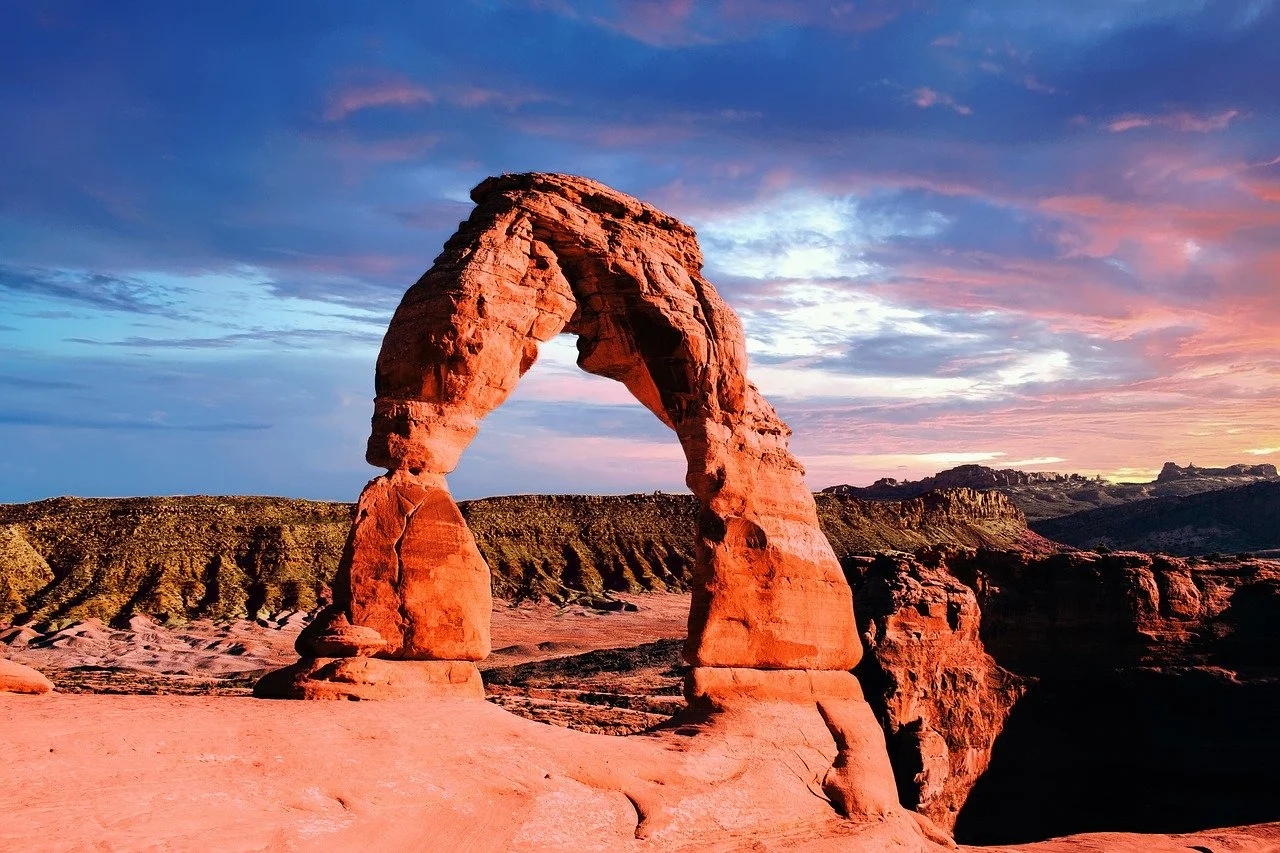
Statue of the goddess Athena by a stairwell at The First Homosexuals at Wrightwood 659 in Chicago

Amazing architecture, powerful art, dedicated docents and a relaxed, uncrowded flow make Wrightwood 659 well worth a visit.

Wrightwood 659 Does It Right 

Wrightwood 659 intentionally limits the number of visitors and requires timed-entry tickets purchased in advance. This keeps exhibitions intimate and uncrowded, allowing visitors to reflect deeply without distraction.

The First Homosexuals brings together more than 300 works by 125 queer artists from 40 countries, drawn from over 100 museums and private collections around the globe. Each loaned piece contributes to a sweeping, multifaceted narrative of queer identity, resilience and creativity. 
A table and benches by big windows in a quiet nook at Wrightwood 659 in Chicago

A quiet nook with a view at Wrightwood 659

Wally and I were struck not only by the scale of the exhibition, but by the obvious care with which it was assembled. Every element — from the curation of individual works to the flow of the galleries — felt deeply considered, designed to honor the artists, their histories and the communities they reflect.
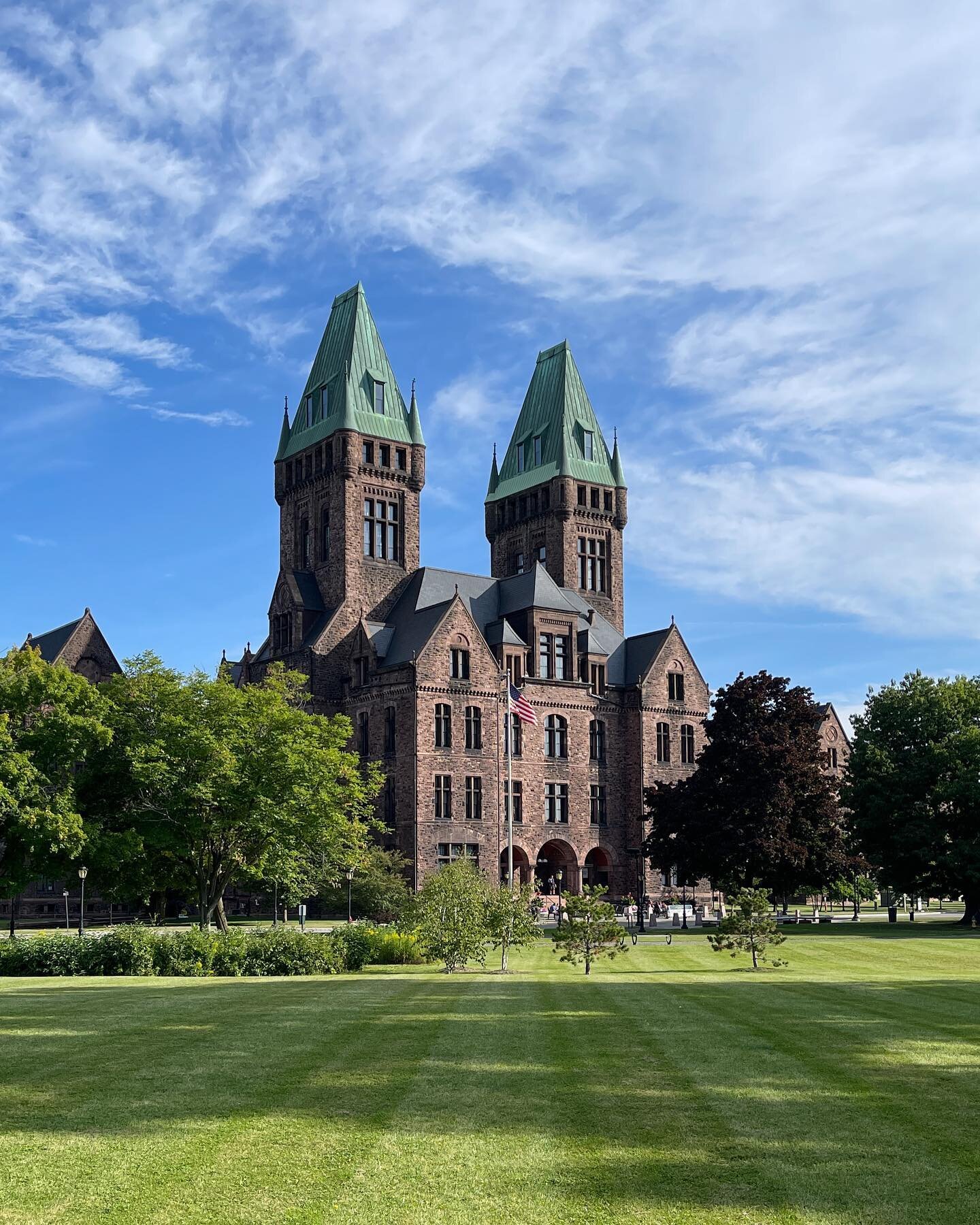
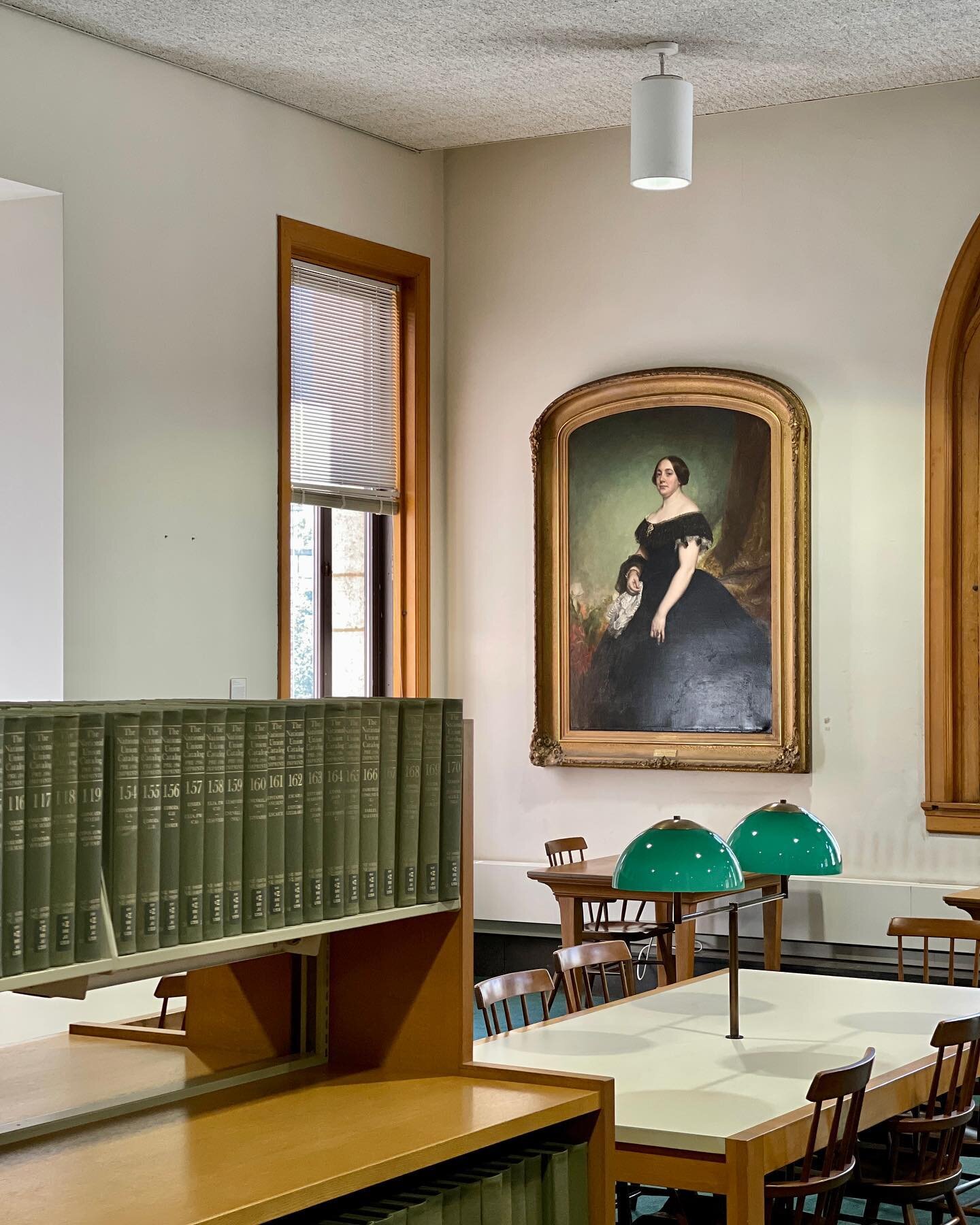
We had the added privilege of visiting on a day when docents were present, enriching the experience with personal reflections and deeper context about the artists and their work. Their stories added an intimate, human layer to an already powerful presentation. –Duke

The entrance to Wrightwood 659 gallery

Wrightwood 659

West Wrightwood Avenue
Chicago, Illinois 
USA