How Europe Recovers From Terrorist Attacks

Life returns to normal astonishingly quickly for Europe — and Brussels was no exception

Life returns to normal astonishingly quickly for Europe — and Brussels was no exception

AN UPDATE FROM A TRAVELER IN BELGIUM THE DAY AFTER THREE BOMBINGS KILLED OVER 30 PEOPLE.


Here’s a special report from Belgium the day after the terrorist bombings at the airport and train station killed more than three dozen people and wounded hundreds more.


I'm in Brussels right now at the train station. As a train passenger, I can tell that it is amazing how quickly the Europeans get back to their normal schedules after such deplorable events.

Even some jokes have been exchanged about the event.
It’s never “too soon.”

Apart from the military personnel on the quais, today is a travel day like any other. The train from Amsterdam was relatively full — no noticeable security enhancements either. We just boarded as always with our luggage.

People were calm, smiling and doing what they do on any other day. Even some jokes have been exchanged with colleagues, train and hotel personnel and fellow passengers about the event. It's never “too soon,” as the attitude is to move forward and carry on as before without letting anything disrupt normal behavior. Humor is never irreverent but a simple act of defiance to the recent attacks.

In short, life goes on…immediately. –Kent


MORE FROM KENT: American Expats Tell What’s It’s Really Like to Live in Paris

Our First Night in Baroda, India

Wally visiting his friend George, an American expat now living in India

Wally visiting his friend George, an American expat now living in India

Wherein we travel to Vadodara, meet Prakash and learn a secret gay greeting.


Maps will tell you the city is now known as Vadodara (pronounced "Va-doh-dra")  — but most everyone we mentioned the name to just stared at us, blinking uncomprehendingly, until we followed up with, "Baroda." 

"Ah, yes, Baroda." 

It translates to something like “I touch (or kiss) your feet.”

Flying High With IndiGo Airlines

We took the no-frills airline IndiGo for our flight to Baroda.

They have two ramps — one in the front and one in the back — which made boarding a smooth, pleasant experience.

Their cheeky in-flight magazine is called Hello 6E (which we imagine is a play upon "hello, sexy").

Not only was the flight on time, a testament to IndiGo's commitment to punctuality, the plane interior was clean and comfortable.


How to Greet Gays in India

Our host George met us at the airport and we headed for his apartment, located in the Ellora Park district, via a green and yellow auto rickshaw. He lives in what he described as a middle-class apartment complex and pays $160 a month for rent.

As we caught up, George told us that his friend Prakash was stopping by to meet us and taught us a phrase adopted by the Gujarati gay community. It's borrowed from the hijra (India's transsexuals) and is pronounced, "Pah-ga lah-goo." It translates to something like "I touch (or kiss) your feet." To really impress the person you meet, you drag out the last syllable so it's something like, "Pah-ga lah-goooooooooo!"

Prakash is employed by an NGO and distributes condoms and safe-sex literature. He has a soft, round, feminine face, with a touch of gloss on his full lips and perfectly plucked eyebrows, framed by dark, slightly wavy hair. This may explain why some men perceive him as hijra. He belongs to Dalit, the lowest caste, considered untouchable.

He's a total sweetheart and helps George out as a sort of assistant. We learned that the name Prakash means "light" in Hindi.

Our bringer of "light" was also quite a character. 

"Justin Bieber" — which he pronounced "Bay-burr" — "is my boyfriend," he said, smiling naughtily, "and Obama is my husband." –Duke

How to Enjoy Feria

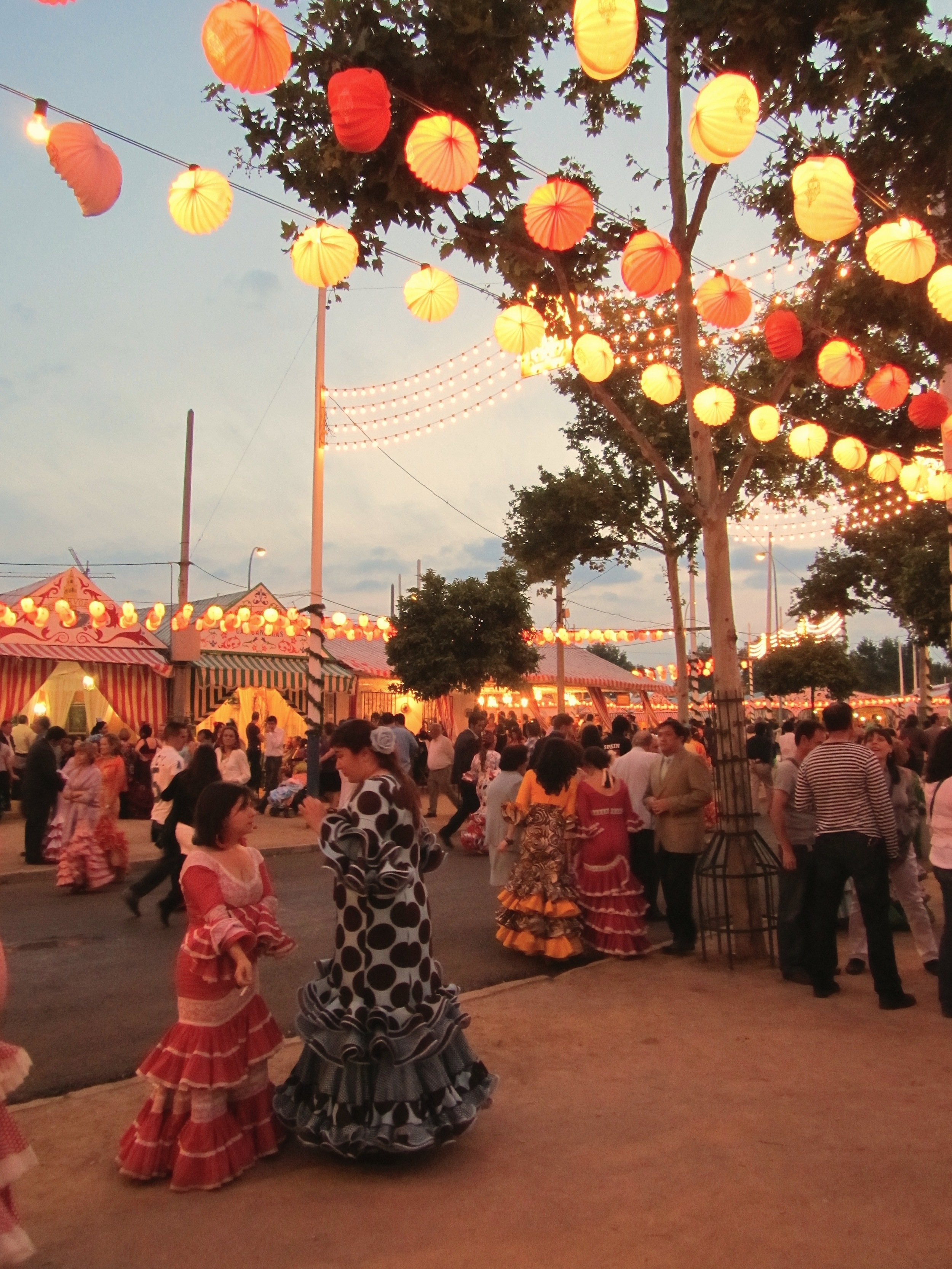
The fairgrounds in Sevilla, Spain during Feria are filled with women in flamenco dresses

The fairgrounds in Sevilla, Spain during Feria are filled with women in flamenco dresses

The annual spring festival is one of the most fun things to do in Seville, Spain. Follow these seven tips.


Our first clue was the flamenco dresses. They were everywhere.

Duke and I happened to be in Sevilla, Spain for its spring festival, Feria. The six-day celebration takes place two weeks after Semana Santa, Easter Holy Week. Instead of creepy parades of men in colored robes with pointy hats, Feria is a nonstop party.

You can drink all night, maintaining a steady but slight buzz, without getting so drunk you pass out.

Here’s how best to take part in the festivities of Feria:

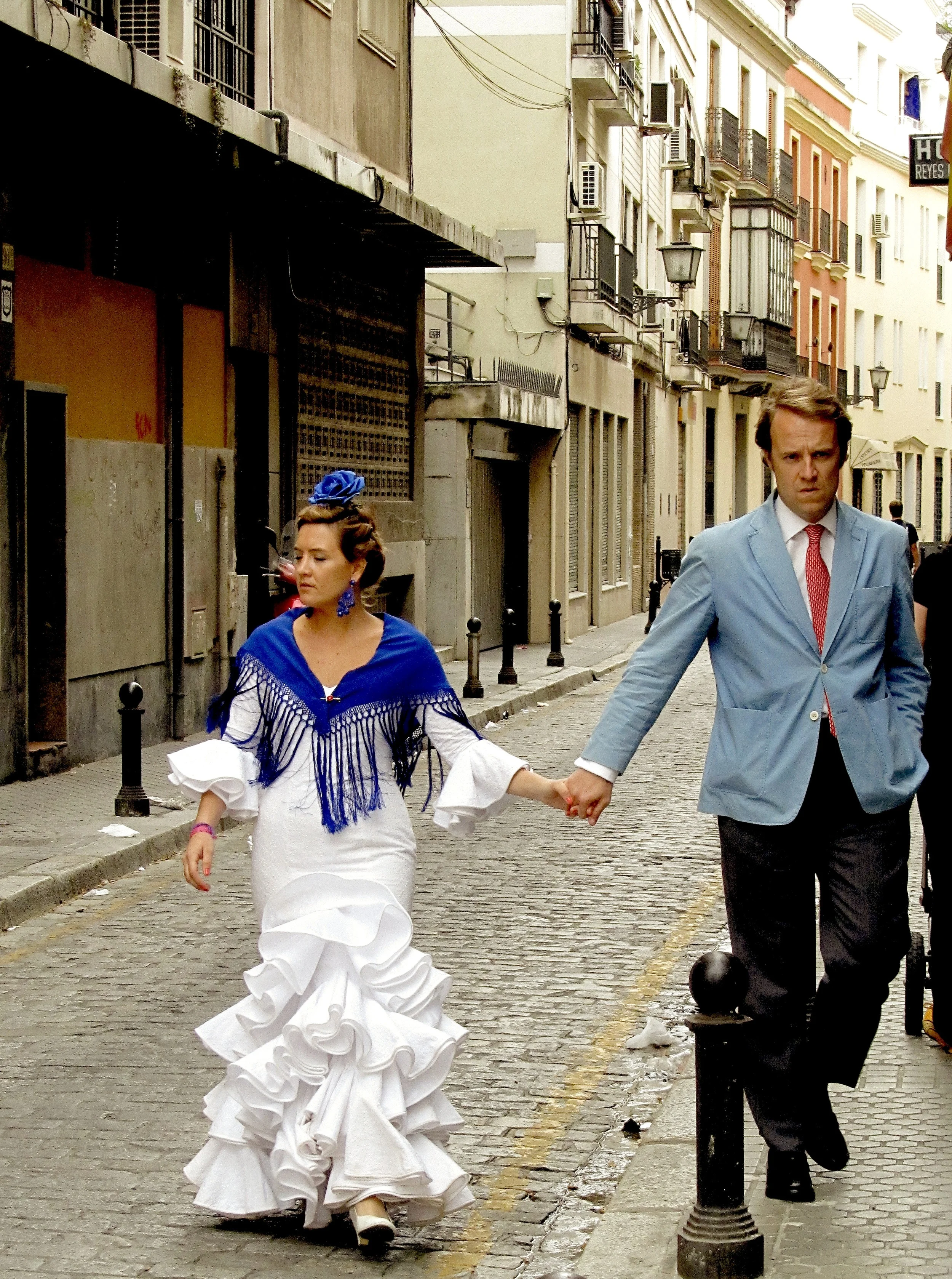
Couples all dolled up for Feria walk the streets of Sevilla

Couples all dolled up for Feria walk the streets of Sevilla


Treat yourself to a flamenco dress.

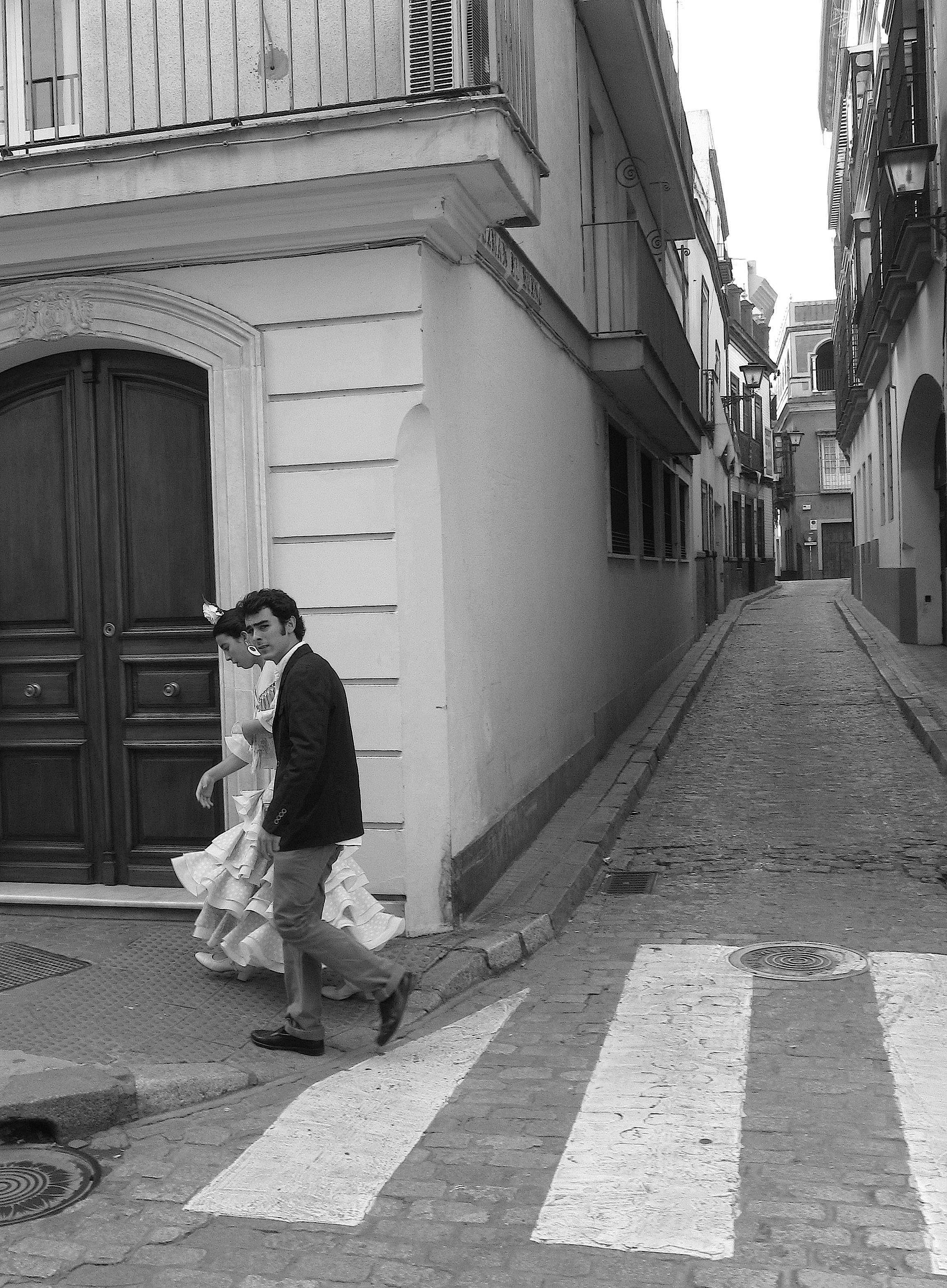
As I mentioned, anywhere you go in Sevilla during this time, you’ll see women and girls of all ages wearing flamenco dresses. The traditional flamenco is black, white and/or red with polka dots (traje de lunares), finished with dramatic ruffles that start above the knees and cascade down to the hem. While there are modern versions in all sorts of colors, the basic silhouette doesn’t change.

The dress originated in the Gypsy, or Roma, community in Andalusia in the south of Spain.

To complete the outfit, some women put their hair into a bun, drape a fringed shawl over their shoulders, and place a flower behind their ear or atop their head. And don’t forget the fans that can be opened with a dramatic snap!

I thought it was great to see all sorts of people respecting their local heritage and donning a flamenco dress. You can imagine kids in the United States being too cool for school and not wanting to play along. But it seemed as if in Sevilla, everyone joined in the fun.

Women in flamenco dresses are common sights in Sevilla during Feria

Women in flamenco dresses are common sights in Sevilla during Feria


Befriend some locals.

Easier said than done, I know. But it’s your only ticket into the most exclusive parties during Feria, the casetas.

We lucked out. Our friend Dan was living in Sevilla and hooked us up with a caseta party.

This is what happens inside those Feria casetas. All night long

This is what happens inside those Feria casetas. All night long

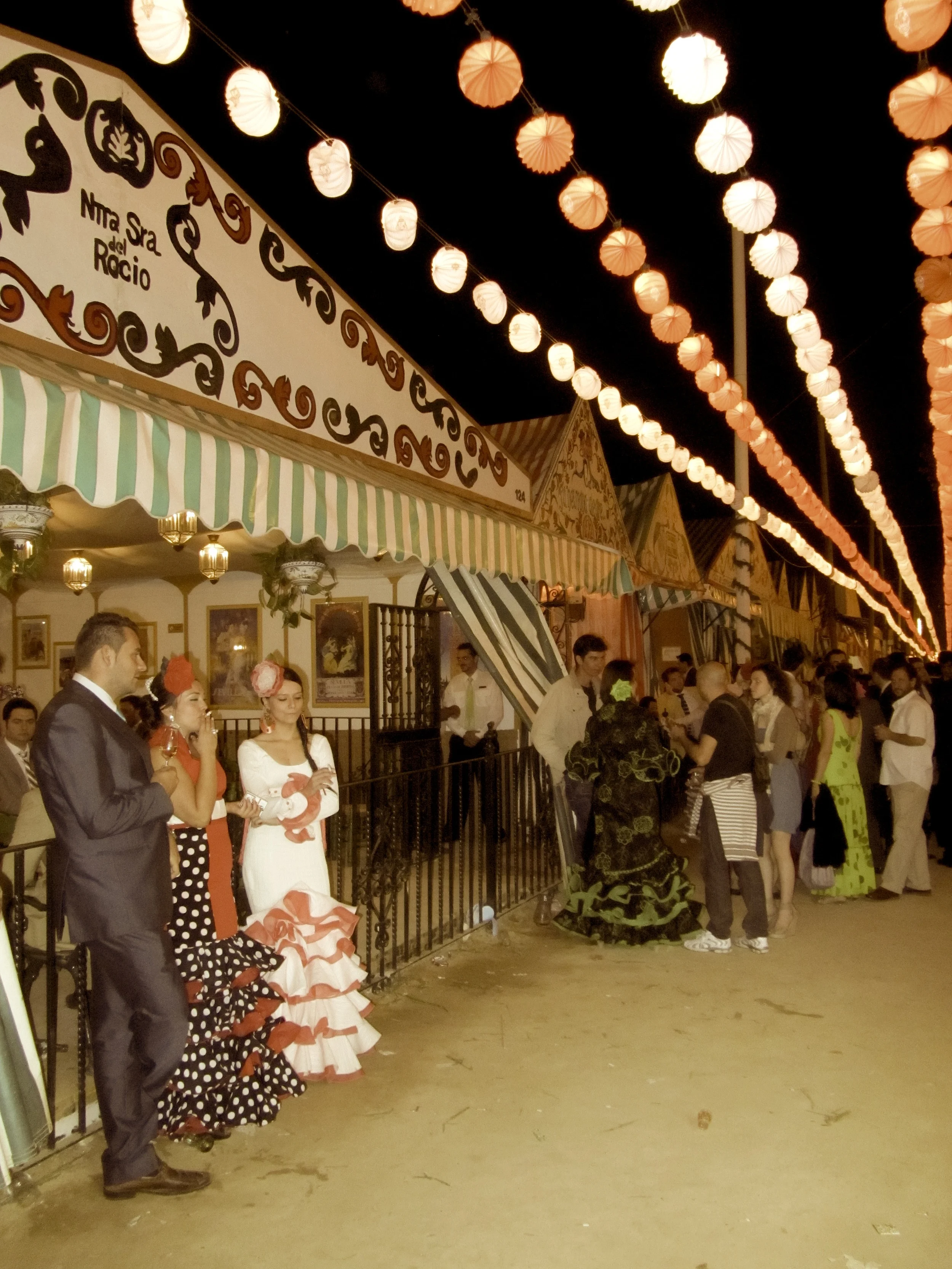
Lined up along the extensive fairgrounds, beneath strands of colored lights are more than 1,000 tent-like structures known as casetas, literally, “little houses.”

Prominent families, groups of friends, businesses and other groups own these coveted temporary structures.

People pay a great deal for a caseta, so they want to make sure they get their money’s worth, Dan told us.

The Feria fairgrounds, with a line of casetas, where the real parties take place

The Feria fairgrounds, with a line of casetas, where the real parties take place


Be ready to stay up late.

Dan and his friends partied every night during Feria, dancing until the wee hours — and then going to work with very little to no sleep.


Try the official drink.

At the back of the tents are a small bar and kitchenette.

We drank a refreshing concoction call rebujito — a mixture of a lemon-lime soft drink and the sherry the region is famous for. (“This isn’t your grandmother’s cooking sherry,” our friend Jo assured us.)

Where does rebujito get its name? When I asked at the party, someone twirled his finger in the air and said it meant “round and round.”

It actually comes from the diminutive of the verb rebujar. So technically I suppose it means something like “little messes”?

No matter its origin, the 50/50 ratio means you can drink all night, maintaining a steady but slight buzz, without getting so drunk you pass out. After all, participants need to dance till dawn — and then put in a day’s work.


Be sure to eat the tapas — even if it's pig cheeks.

The only food that was passed around was a tapa in a brown sauce covering a mystery meat. When we asked what it was, someone said, “pig” and grabbed their cheek.

We might not necessarily be inclined to try pig cheek, but hunger can work wonders to lower one’s culinary inhibitions. Duke and I grabbed a toothpick each and plopped the app into our mouths.

We gave each other the raised-eyebrow, not-bad nod and grabbed some more.

It wasn't until we had returned to the States and I stopped into Publican Quality Meats one lunch break that I discovered what exactly pig cheek looks like when it’s not drowning in sauce.

The butcher pointed at a thick strip of fat.

“That’s pig cheek?” I asked.

He nodded, adding that the restaurant often uses it instead of bacon.

I honestly couldn't see even a thin vein of meat within all that fat.

“Well, no wonder we liked it so much,” I sighed.

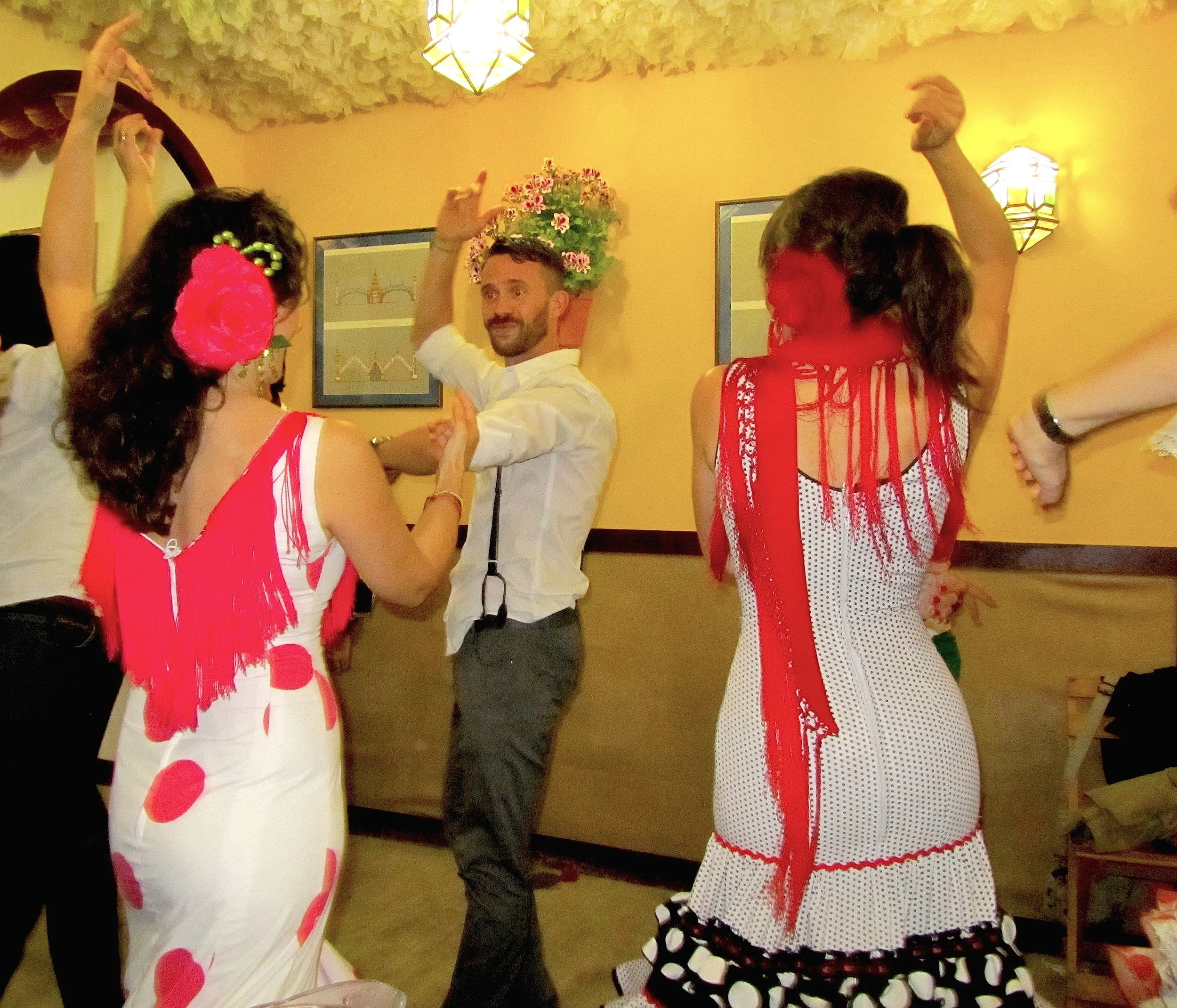
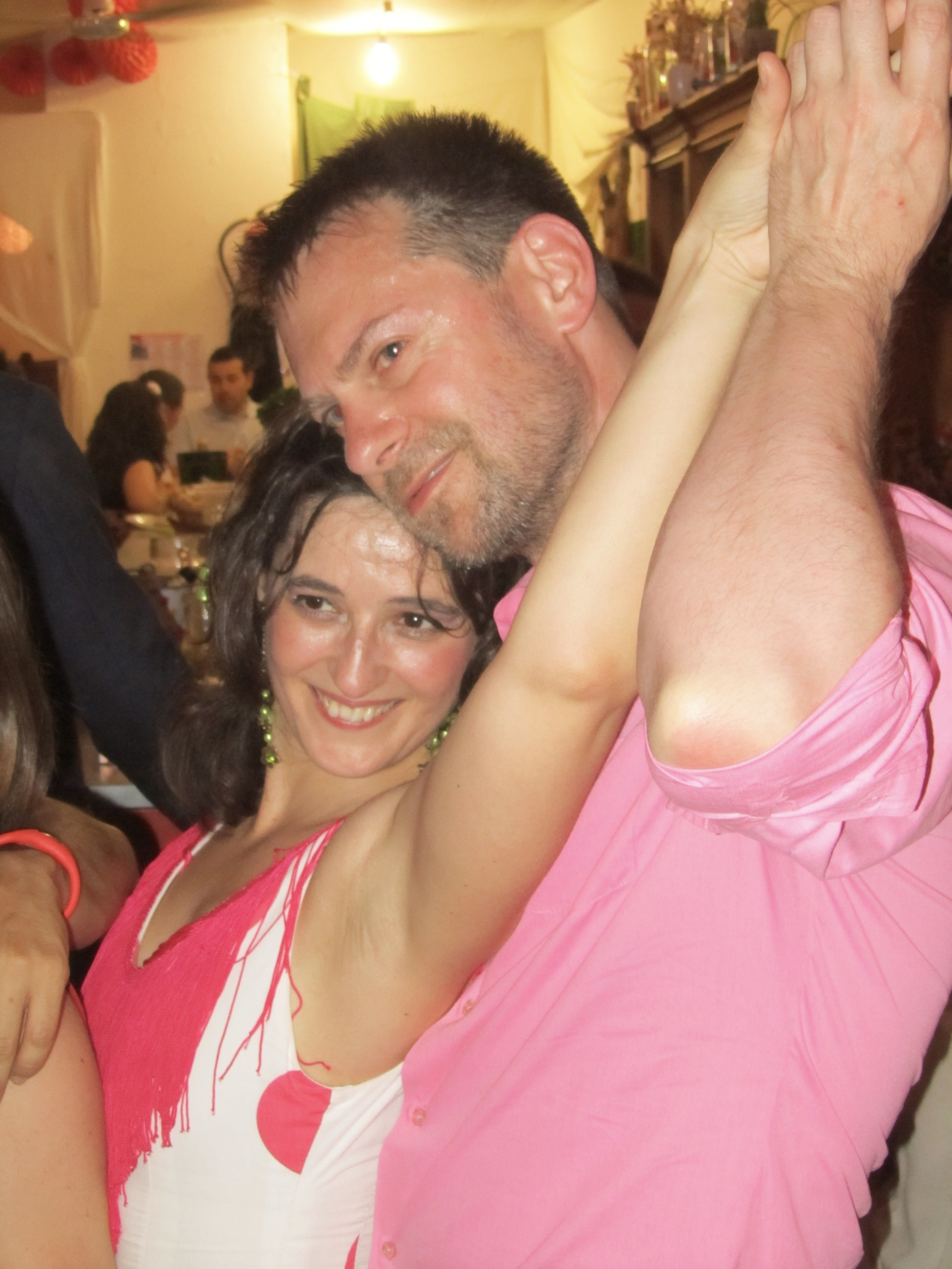
Cristina and Duke dance the Sevillana

Cristina and Duke dance the Sevillana


Learn the local dance.

Even though we hardly spoke any Spanish, and hardly any of them spoke English, we found most people in our caseta friendly. Cristina, a gorgeous woman who was there with her girlfriend, taught Duke how to dance the Sevillana, the city’s local dance.

She somehow led Duke while also giving him directional hints with a simple nod of her head. Watching them twirl around the dance floor, you’d never know it was Duke’s first go at a Sevillana. He and Cristina seemed to have a psychic link.


Wander the carnival.

After too many pig cheeks and not enough rebujitos, Duke and I decided to take our leave. We left the caseta to wander the fairgrounds. One whole section houses amusement park rides and a midway with games. This area, for some reason, is called Calle de Infierno, or Hell Street.


If you find yourself in Sevilla in early spring, try to time your visit to coincide with Feria. It’s a spectacle worth being a part of — if only for the flamenco dresses. –Wally 

Mehrauli Archeological Park: Delhi's Hidden Gem

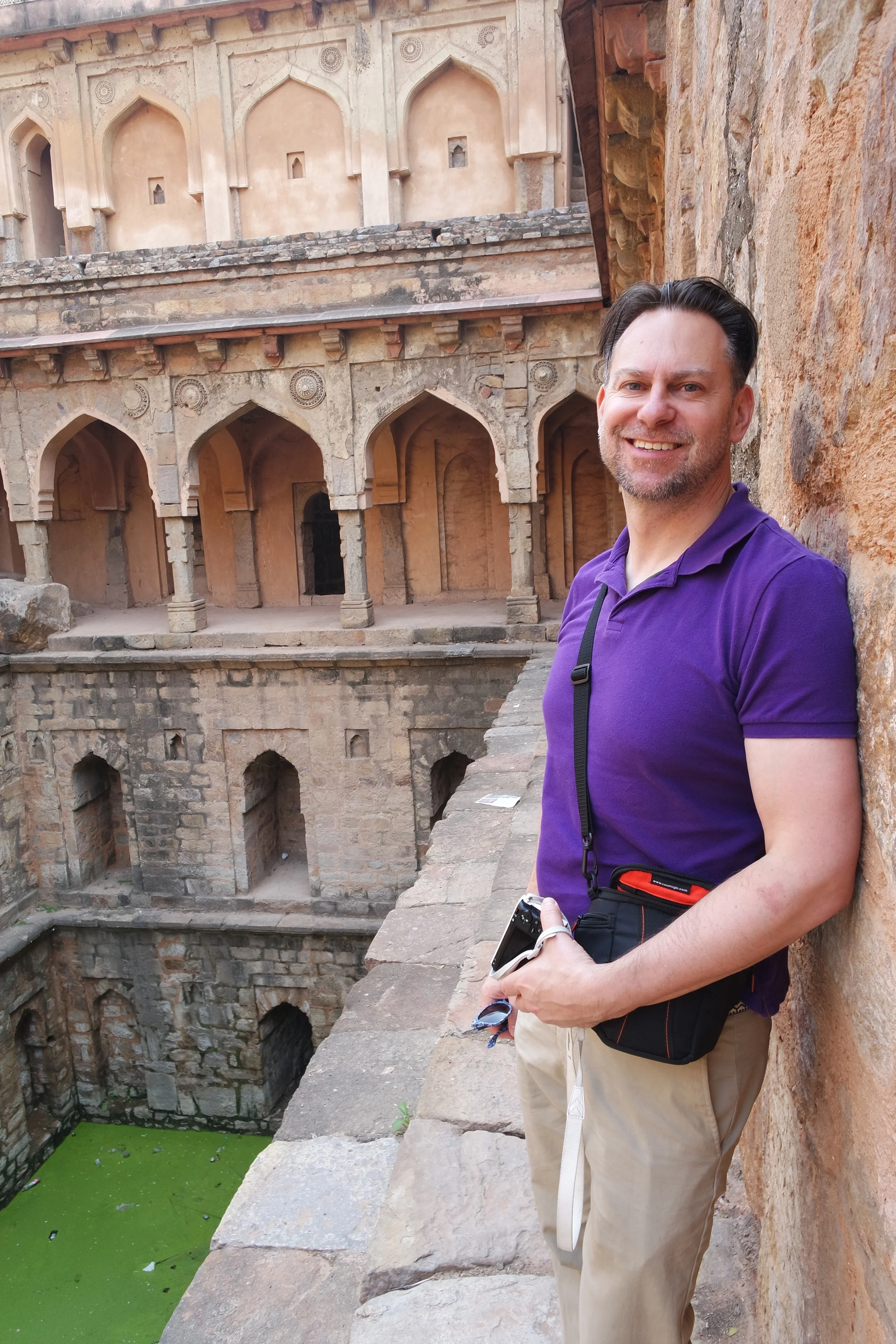
Wally overcame his fear of heights to shimmy along narrow ledges at the Rajon Ki Baoli stepwell in Mehrauli Archeological Park

Wally overcame his fear of heights to shimmy along narrow ledges at the Rajon Ki Baoli stepwell in Mehrauli Archeological Park

An ancient stepwell in the jungle is one of Delhi's lesser-known attractions.


Talk about off the beaten path — even our driver had to ask directions to find Mehrauli Archeological Park. But it's a fun adventure, especially the stepwell.

The park lies beyond the Qutb Minar complex and was the site of the first urban settlement in Delhi.

One false step, and you could plummet to almost certain demise.

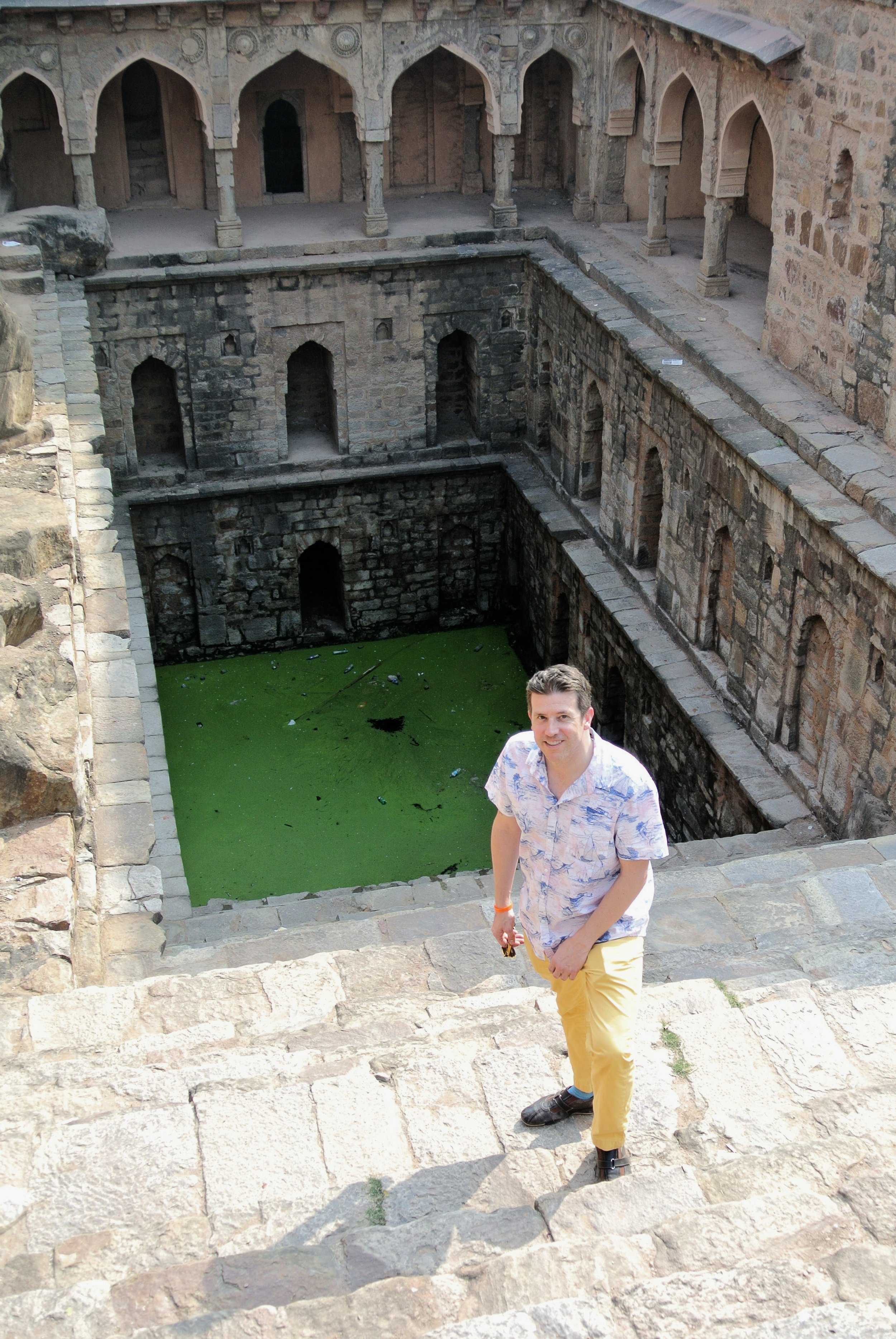
We drove through a slum, taking a dirt road and arriving at Rajon Ki Baoli, a stepwell built by Dalat Khan during the reign of Sikander Lodi in 1516.


Duke at the Rajon Ki Baoli stepwell in Mehrauli Archeological Park

Duke at the Rajon Ki Baoli stepwell in Mehrauli Archeological Park

Rajon Ki Baoli

The remains of ancient hydraulic systems, stepwells were of special importance as a source of water, a place to socialize and provide relief during extreme summer heat.

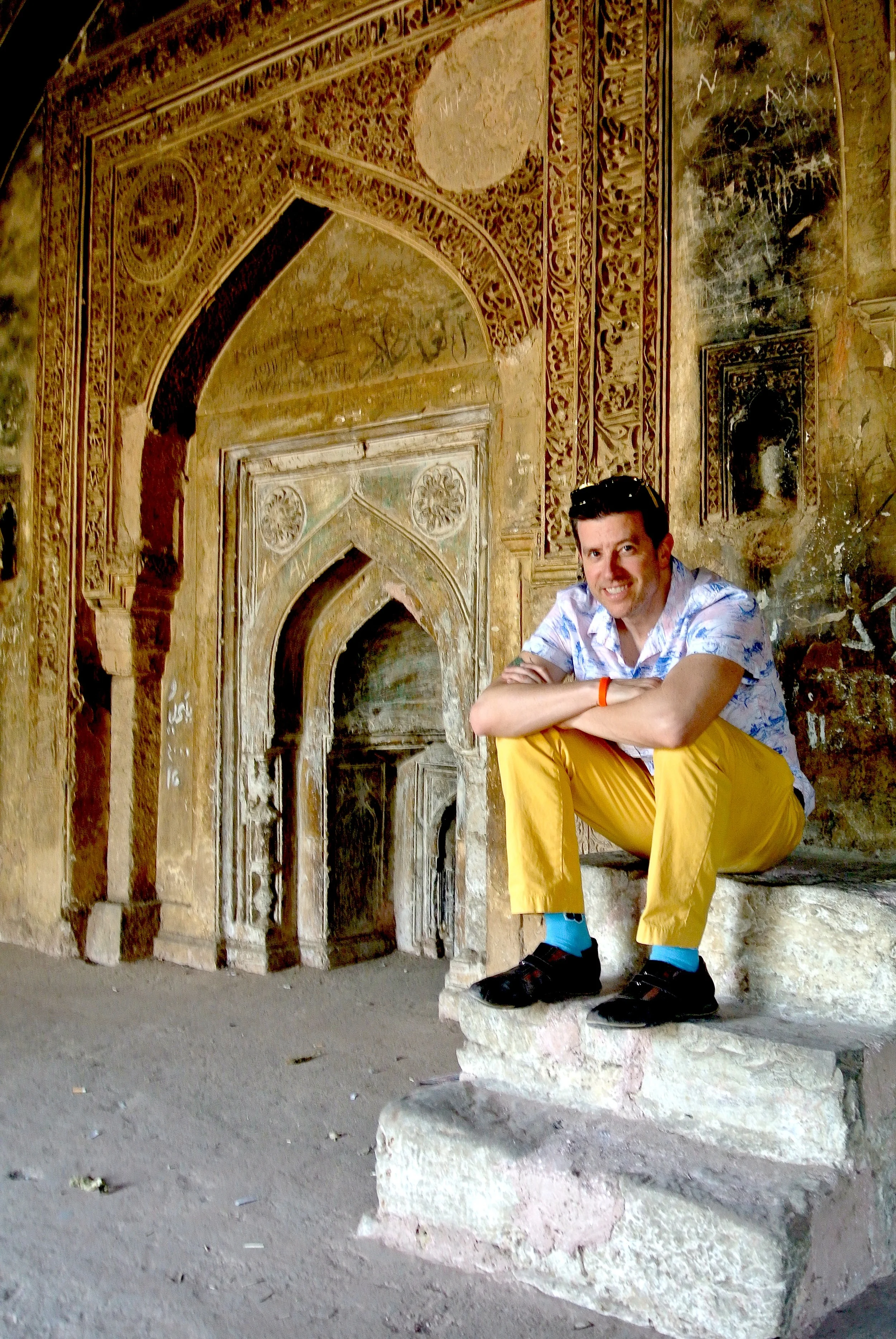
Wally in the mosque atop the stepwell

Wally in the mosque atop the stepwell

We stepped into the cool recess of one of the porticoes located near the perimeter ledge and made our ascent up a pitch-black, narrow flight of stairs, the walls smoothened from the passing of a thousand hands. We arrived at a landing, which included a small, elevated tomb and mosque. Its inner walls contained marks of vandalism etched into the walls.

Warning: If you suffer from vertigo, like Wally, you could be at risk here. There aren't any guardrails, and some of the paths are narrow. One false step, and you could plummet to almost certain demise.


Jamali-Kamali Mosque

After we visited the stepwell, our driver took us to the Jamali-Kamali Mosque. Local lore holds that banished djinn haunt the mosque and converse with passersby in animal voices.

There's not a lot to see here. But two security guards unlocked an iron gate and led us to a rooftop courtyard, which included a mausoleum ornamented with the remains of cobalt blue-colored tile and some unmarked cenotaphs.

After we had a good look around, they led us back out, and we realized they were expecting baksheesh (a tip) as a reward.


Metcalf's Canopy

Built in 1850 by Charles Metcalf as an architectural folly — an ornamental structure intended to look old — Metcalf's Canopy sits atop a small grassy hill and overlooks the Jamali-Kamali Mosque.

While here we saw a couple being filmed. We didn't know if it was a scene from a Bollywood movie or an elaborate engagement video. 

Another highlight: We saw three puppies pile together to bask in the sunlight and take an afternoon nap. –Duke

Local lore holds that banished djinn haunt the mosque and converse with passersby in animal voices.

Haint Blue Porch Paint

My parents painted the ceiling of their front porch haint blue, a tradition in the Lowcountry

My parents painted the ceiling of their front porch haint blue, a tradition in the Lowcountry

Tired of evil spirits raiding your home? Victim of vengeful ghosts? Try haint blue! 

No one wants to share their home with angry, vengeful spirits. And that's exactly what haints are.

These ghosts are trapped somewhere between the worlds of the living and the dead. Needless to say, that makes them grumpy.

Gullahs paint the ceilings of their porches a pale blue to keep away pesky poltergeists.

Gullahs, the descendants of African slaves who worked the plantations of Georgia and South Carolina, found a clever way to exploit the spirits' one weakness: They cannot cross water.

Rather than digging a moat around every one of their homes, they decided to trick the haints. 

By taking lime, milk and some odd pigments, and mixing them up in a pit, the Gullahs ended up with a pale blue color. They used to this to paint the ceilings of their porches to keep away the pesky poltergeists.

Sure enough, it fooled the haints, who believed they couldn't cross the threshold and found another home to haunt. 

As a bonus, wasps, too, get tricked, local superstition has it. They supposedly mistake haint blue for the sky and build their nests elsewhere.

The tradition lives on today in the South. My mother has painted the ceiling of her front porch and sunroom a lovely haint blue.

As for sinister spirits of the dead? Haint no spirits here! –Wally

Exploring the Qutb Minar Complex

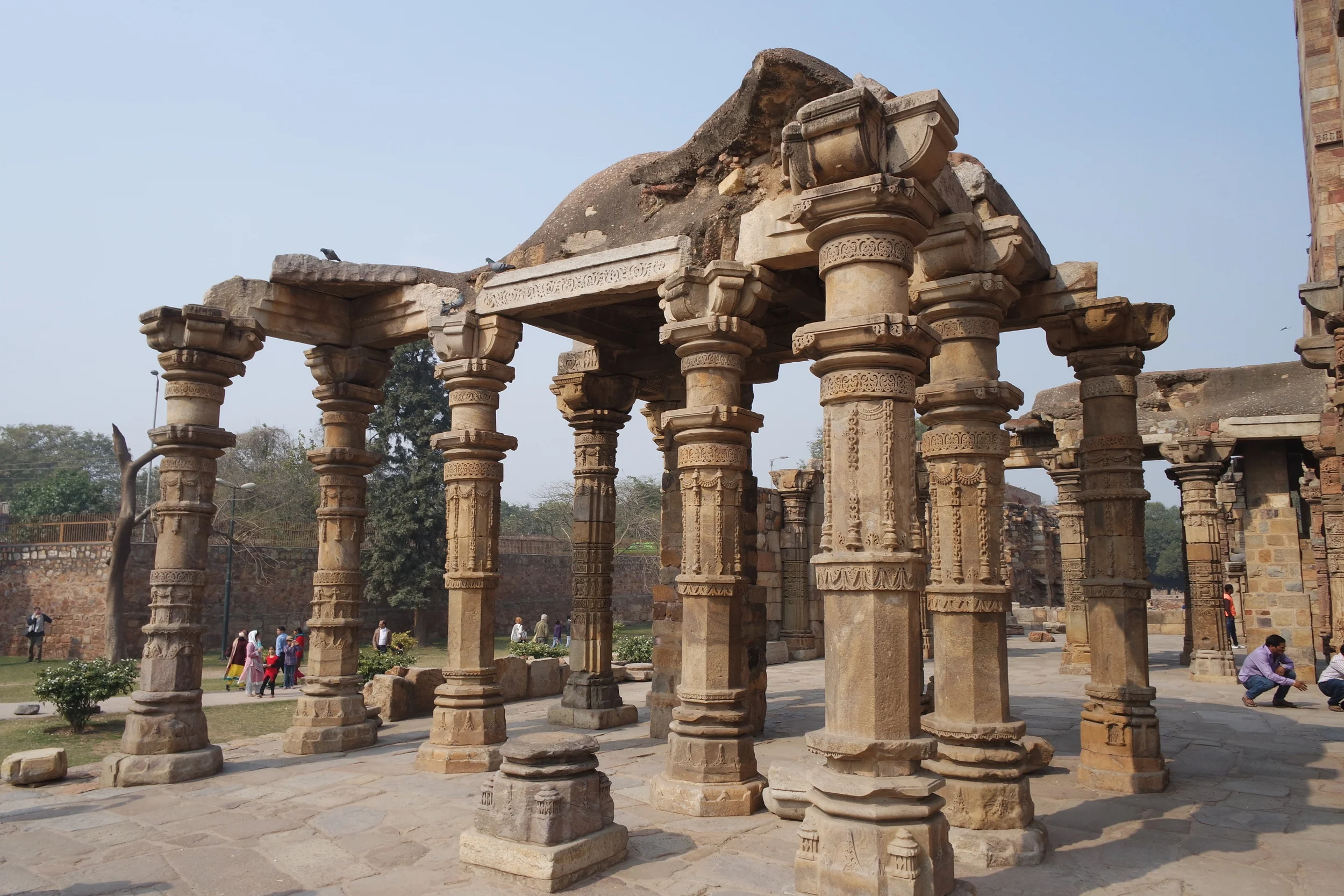
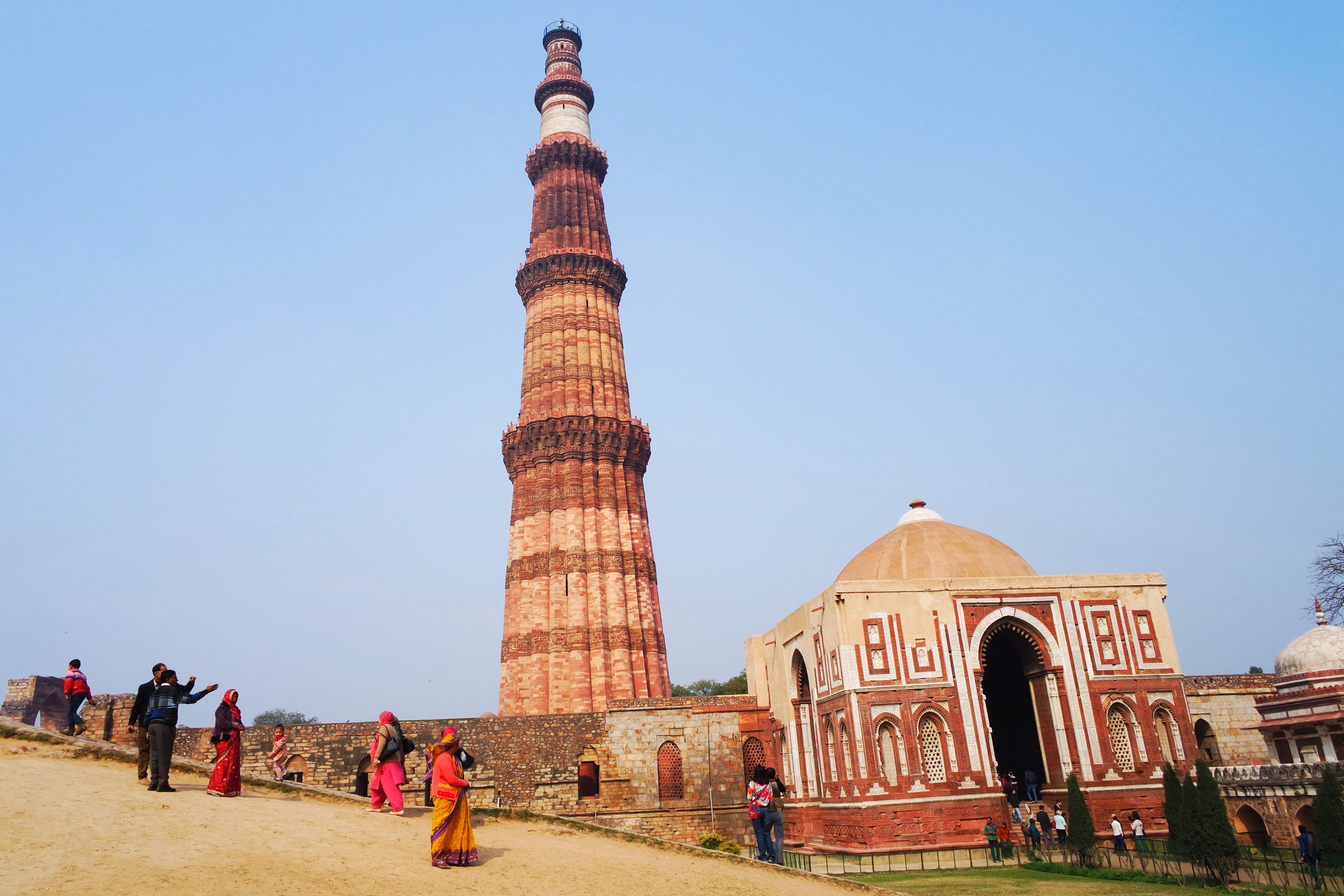
The Quwwat-ul-Islam Mosque in the Qutb Minar complex features columns from pillaged Hindu and Jain temples.

The Quwwat-ul-Islam Mosque in the Qutb Minar complex features columns from pillaged Hindu and Jain temples.

A must-see attraction in Delhi, these towers and mosques feature aspects of Hindu, Jain and Islamic architecture.


We had a great time wandering the Qutb Minar complex one afternoon. Here we break down the various parts.


Alai Minar

We ate lunch on the low stone wall that faced the Alai Minar, an enormous grooved stump of lime mortar and rubble masonry that reminded me of smaller version of the Devils Tower National Monument.

Anyone who can stand with his or her back to the pillar and link their hands behind it will be blessed with good fortune.

The unfinished monument, looming 80 feet above the landscape, was the Muslim ruler Ala-ud-din Khilj's failed grand attempt to build a tower twice the height of the Qutb Minar. Through an opening in the rubble, you can see the inner core, around which the staircase would have been built.


Quwwat-ul-Islam Mosque

We passed through a pillared colonnade built from the inventive reuse of pillaged temples that had previously existed on the site and entered the Indo-Islamic Quwwat-ul-Islam Mosque. An inscription on the eastern portal states that the structure was built with material from 27 demolished Hindu and Jain temples.

Elaborate pillars stolen from other religions' temples now decorate the Quwwat-ul-Islam Mosque.

Elaborate pillars stolen from other religions' temples now decorate the Quwwat-ul-Islam Mosque.

Fragments of friezes depicting humans, animals and deities can be seen incorporated into the structure. Many of these motifs appear out of place, what with the Islamic tendency to find human depictions blasphemous, relying instead on geometric pattern. Perhaps these were used as a political statement of the people they conquered.

Standing within the courtyard of the mosque is a curious, virtually corrosion-free 35-foot iron pillar that dates back to the 4th century CE. It bears an inscription stating that it was erected as a flagstaff in honor of the Hindu god Vishnu.

Popular tradition holds that anyone who can stand with his or her back to the pillar and link their hands behind it will be blessed with good fortune. However, a fence erected in 1997 now keeps fortune-seekers away, likely put in place to prevent damage to the column from sweat — which contains a high amount of salt that acts as a corrosive agent.


Qutb-Minar

Next to the mosque is the Qutb-Minar in red and buff sandstone. We thought perhaps that we would not be able to get a decent picture of the tower due to the amount of haze. However, moving to the opposite side, the foggy gloom miraculously disappeared, and we were able to take some beautiful shots.

The Qutb Minar tower

The Qutb Minar tower

Qutb-ud-din Aibak erected the tallest brick minaret in the world in 1193 after the defeat of Delhi's last Hindu kingdom. It was constructed to celebrate the victory of Mughal armies over the Hindu rulers. It has five distinct levels, each decorated differently, with a small balcony separating them.

Having recently read William Dalrymple's City Of Djinns, I could not find a more suitable description than his “like a fully extended telescope placed lens-down on a plateau in the Aravalli hills.”

Wally wanted to know why the tower was closed. I had read that there was some sort of stampede, where a bunch of people got trampled trying to exit en masse.


Alai Darwaza

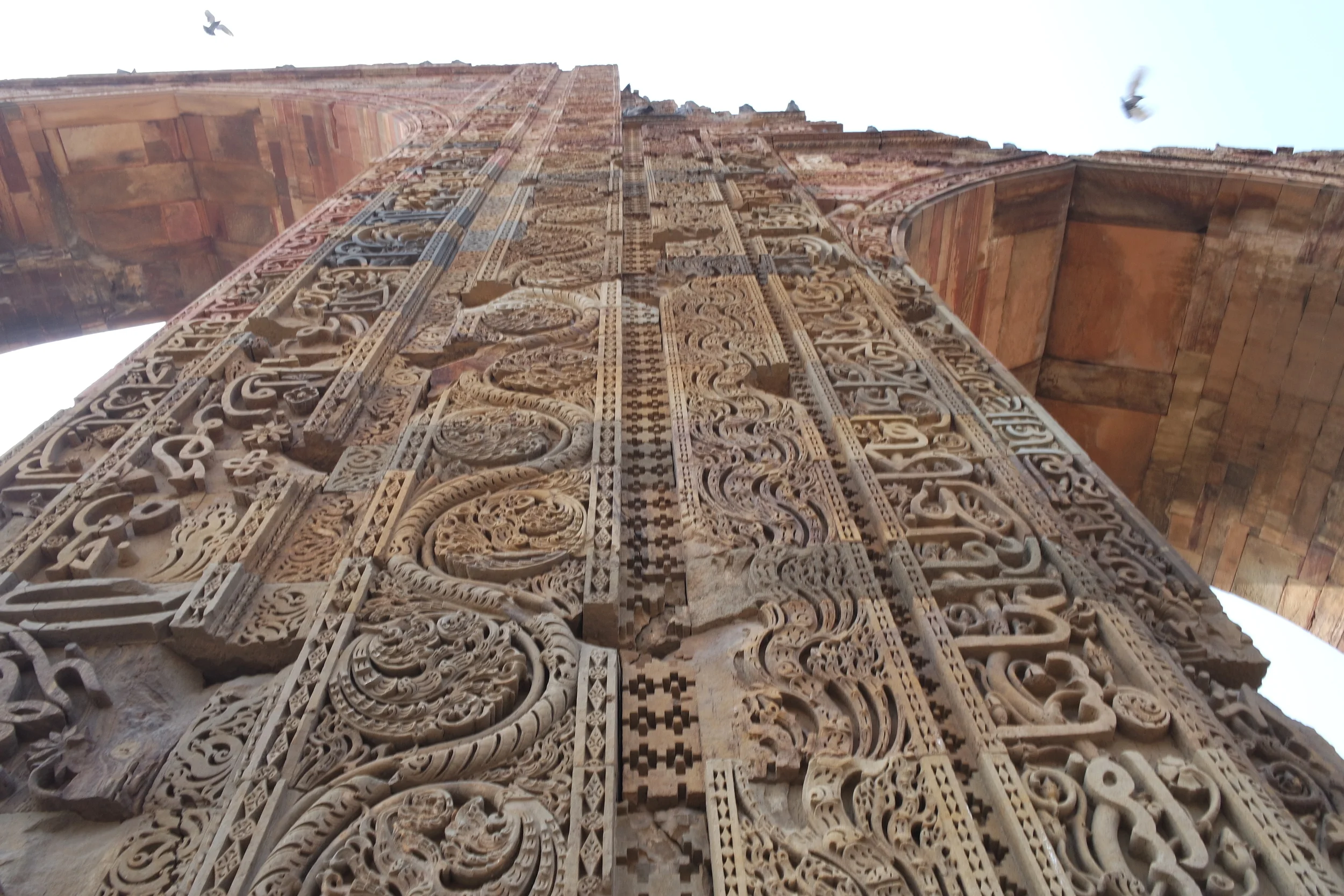
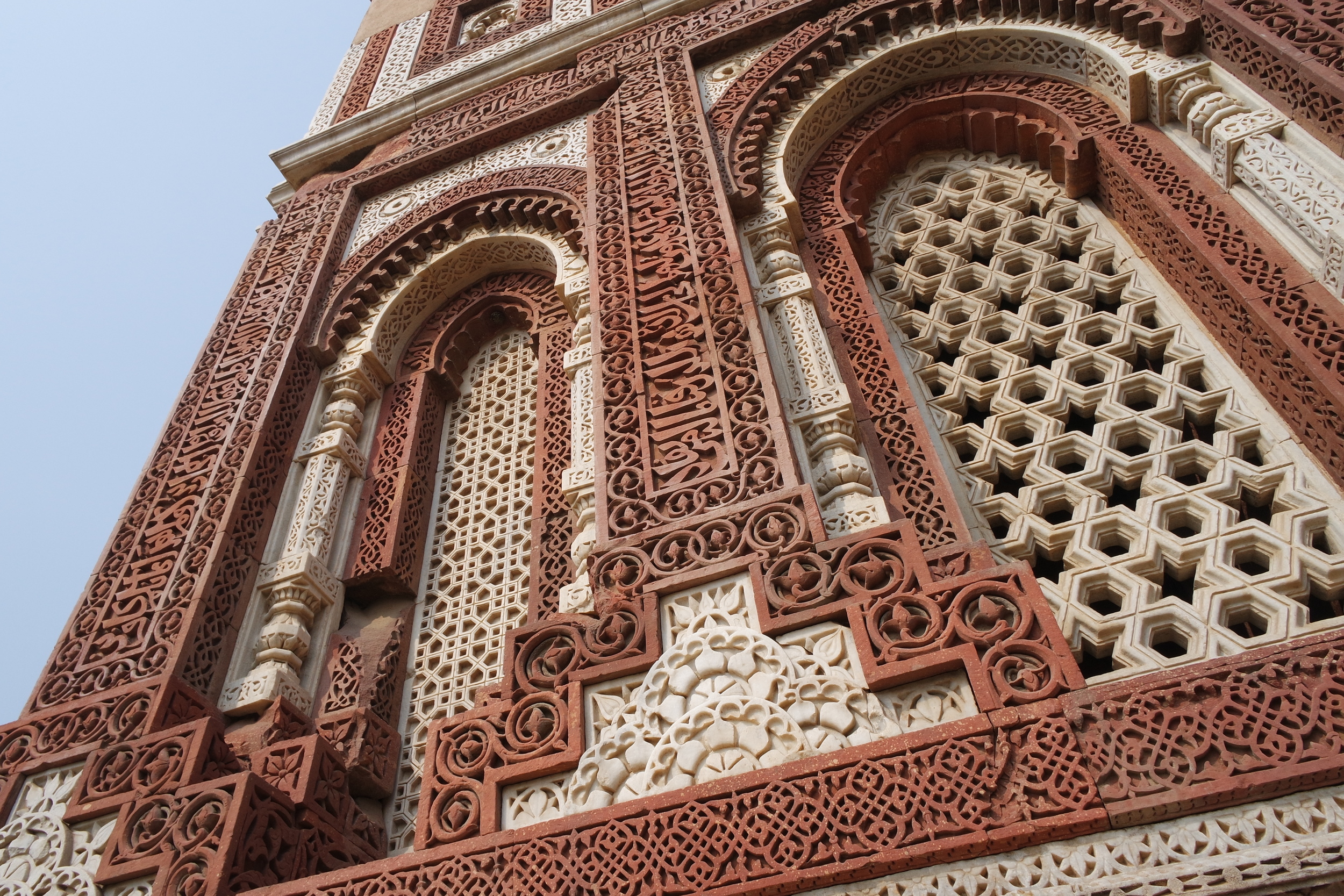
Originally conceived as one of four grand gates to the mosque, the Alai Darwaza was the only structure to be completed. The domed gateway is decorated with red sandstone and contrasting white marble bands carved with calligraphic inscriptions.

The red sandstone and white marble façade of the Alai Darwaza Mosque in the Qutb Minar complex

The red sandstone and white marble façade of the Alai Darwaza Mosque in the Qutb Minar complex

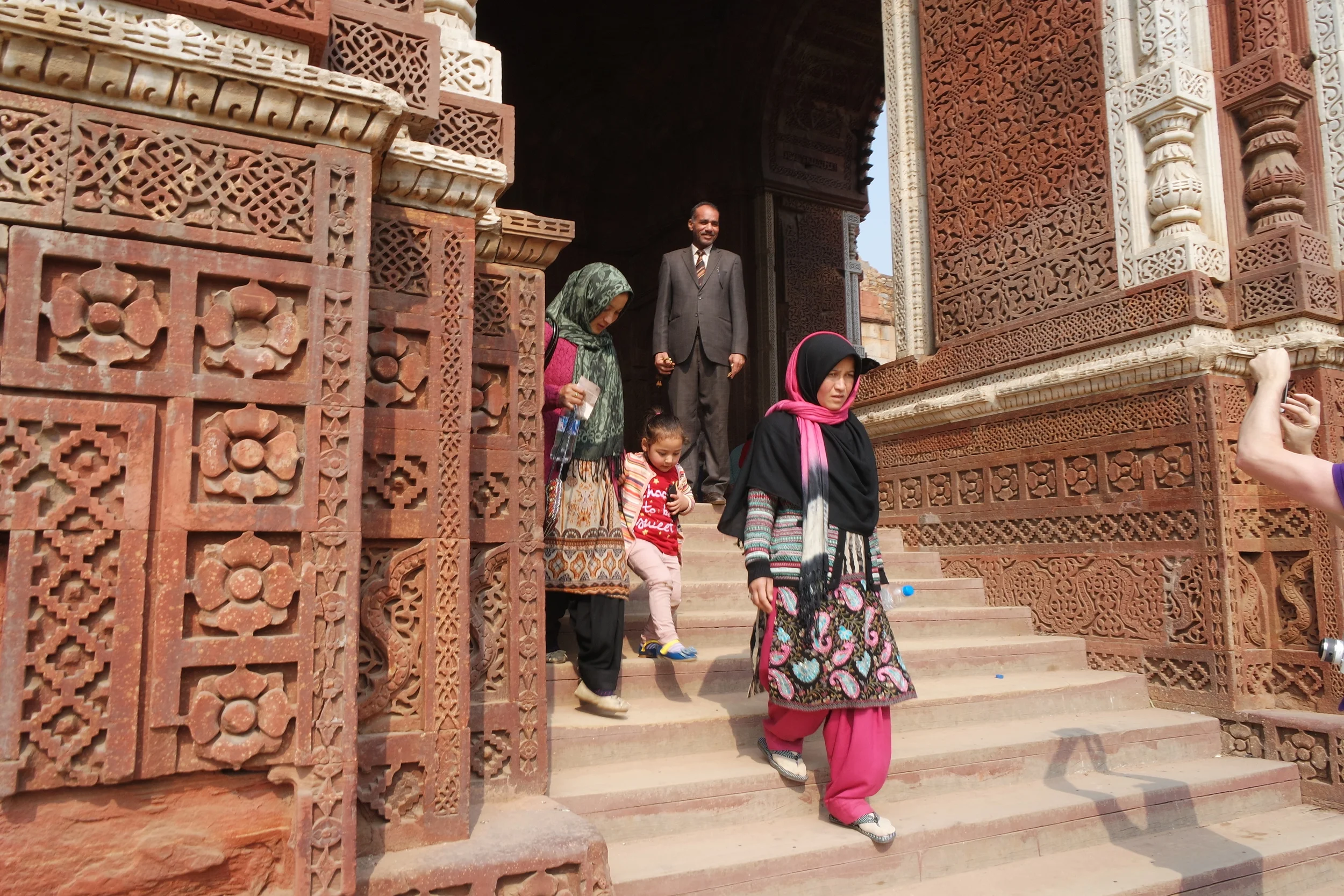
Visitors leave the Alai Darwaza Mosque in the shadow of the Qutb Minar.

Visitors leave the Alai Darwaza Mosque in the shadow of the Qutb Minar.

We entered the vaulted space, which is punctuated by intricately carved stone jali screens. Dust motes floated in the bright, pervasive sunlight as it passed through, casting star-shaped patterns onto the gate interior. It's an impressive sight.

If we had to choose between the Red Fort and Qutb Minar, we’d take this complex any day. –Duke

5 Strange World Traditions

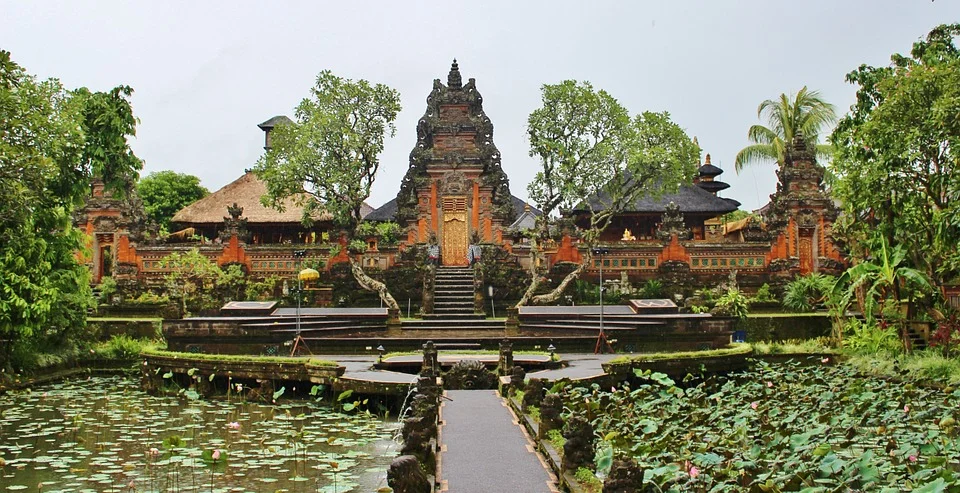
A temple in Ubud on Bali — just don't go in if you're on your period!

A temple in Ubud on Bali — just don't go in if you're on your period!

The more you travel, the more weird traditions you’ll encounter — and that’s some kind of wonderful.


Part of the wonderment of travel is experiencing cultures that are vastly different from your own. It expands your mind; it helps you understand how we’re indelibly shaped by our environments.

It’s easy to fall into the trap of feeling superior, that places that don’t follow our conventions are somehow more barbaric.

“I didn’t fly halfway around the world to not go into any temples just because it’s that time of the month,” she exclaimed.

But that’s what makes world travel so fun. Get out of your comfort zone. See things from another point of view. Travel truly changes you.
Here’s a sampling of some of the strangest customs I’ve experienced on my travels.


On Bali, menstruating women cannot enter Hindu temples.

The idea is that women on their periods are somehow “unclean.” But my friend Christina was having none of it.

“I didn’t fly halfway around the world to not go into any temples just because it's that time of the month,” she exclaimed.

“Hey,” I responded, “I won’t tell if you don’t.”


In Thailand, there’s no concept of the closet for gays.

As hard as this is to believe, this is what I was told by my friend Deb, who was living in Bangkok at the time.

Apparently being gay isn’t something you have to hide in Thailand. Which I suppose means there’s no repression, and you just tell everyone around you when you first realize you have feelings for the same sex.

Honestly, this one still astounds me, and I’m not sure I fully believe it. I feel like it would make Thailand the only country on Earth where it was totally OK to be gay.


In Morocco, men hold hands and kiss hello.

There’s nothing gay about it. But Muslim men are quite physical with each other. It’s not unusual to see two grown men walking arm in arm down the street or even holding hands.

And when they greet each other, they kiss on the cheek. The man who drove us to the Sahara used me to demonstrate the traditional greeting. He kissed me once. Twice. Thrice. Four times! It seemed a bit excessive. I mean, who’s got time for that?


In Sevilla, Spain, you toss your napkins right on the floor.

You stop at a tapas bar for some delicious nibblies, and when you’re done, you nonchalantly throw your soiled napkin onto the ground.

“It took me a while to get used to this,” my friend Jo said. “But honestly — they’d rather you do that than leave them on the bar.”


In Peru, you pour out booze as an offering to Mother Earth.

The Andean people worship the Earth as Pachamama, and whenever they have an alcoholic drink, they pour a bit out to honor her.

“What about if you’re in someone’s home?” I asked my guide one evening at our campsite on the Inca Trail.

“Yes,” he told me.

“What about if you’re at a restaurant?” I asked.

He nodded again. “Yes.”

“It’s kind of like pouring one for your homies,” I said. But he didn’t understand. –Wally

Chancay Burial Dolls

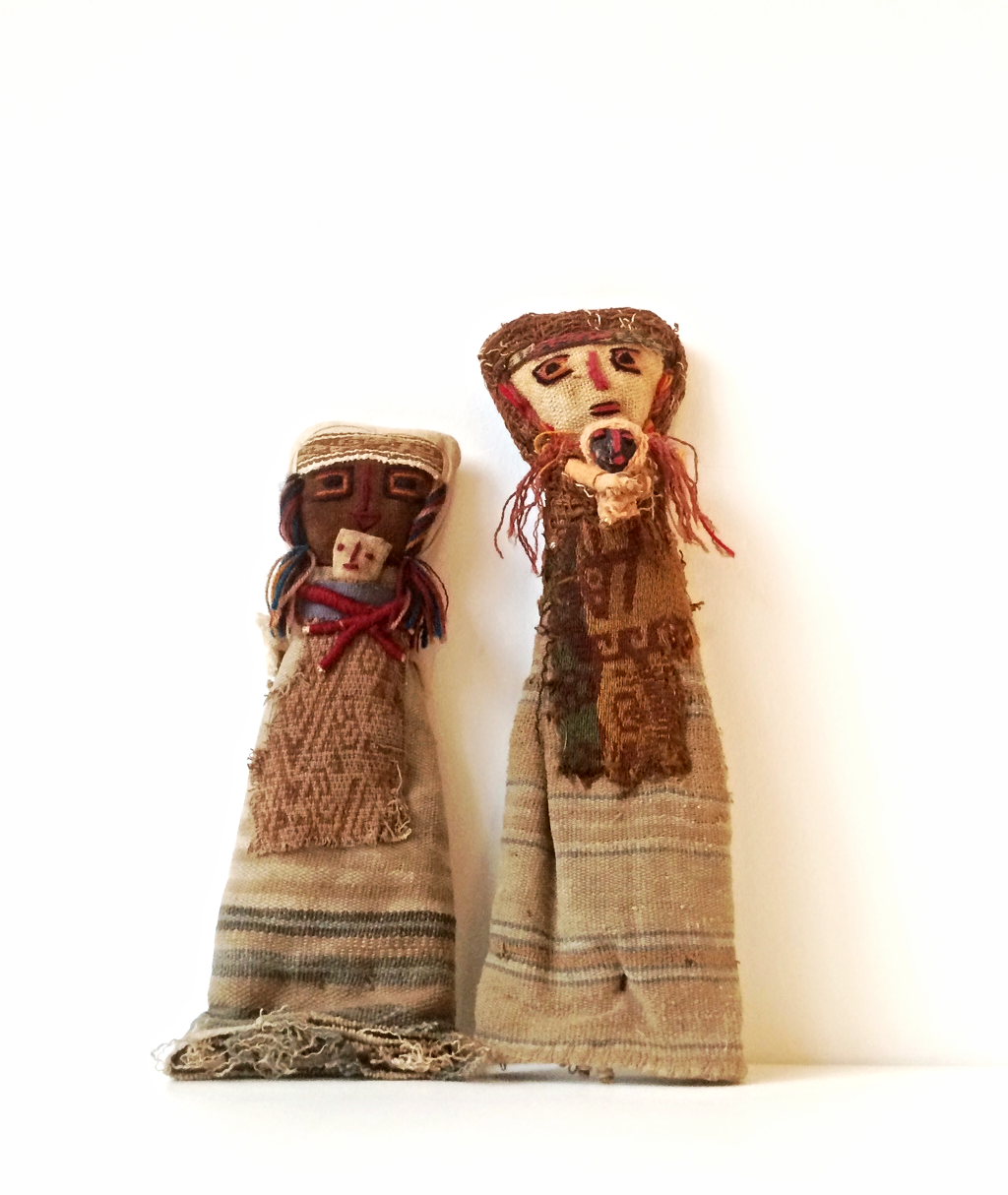
These Chancay burial dolls from Cusco, Peru, which Wally named Claudia and Lucha, have dollies of their own

These Chancay burial dolls from Cusco, Peru, which Wally named Claudia and Lucha, have dollies of their own

A pre-Incan people had these dolls to accompany them to the afterlife.

Wally purchased these folk art Chancay burial dolls in 2006 on a trip to Cusco, Peru. The dolls are modern-day reproductions modeled after ancient cloth figures found in the graves of elite Chancay people, whose culture flourished in the arid coastal valley of Peru during 1000-1460 CE. The Chancay culture is believed to have been conquered and incorporated into the Inca Empire in the mid to late 13th century. 

Their exact purpose has been a subject of debate, but I'd like to believe that these were similar to the figurines placed in ancient Egyptian tombs with the intent to follow their loved ones into the next life. 

I’d like to believe that these were similar to the figurines placed in ancient Egyptian tombs with the intent to follow their loved ones into the next life.

Indigenous Peruvian artisans recreate these dolls in a traditional style, incorporating remnants of ancient textile fragments recovered from pre-Colombian burial sites. –Duke

India’s Public Urination Problem

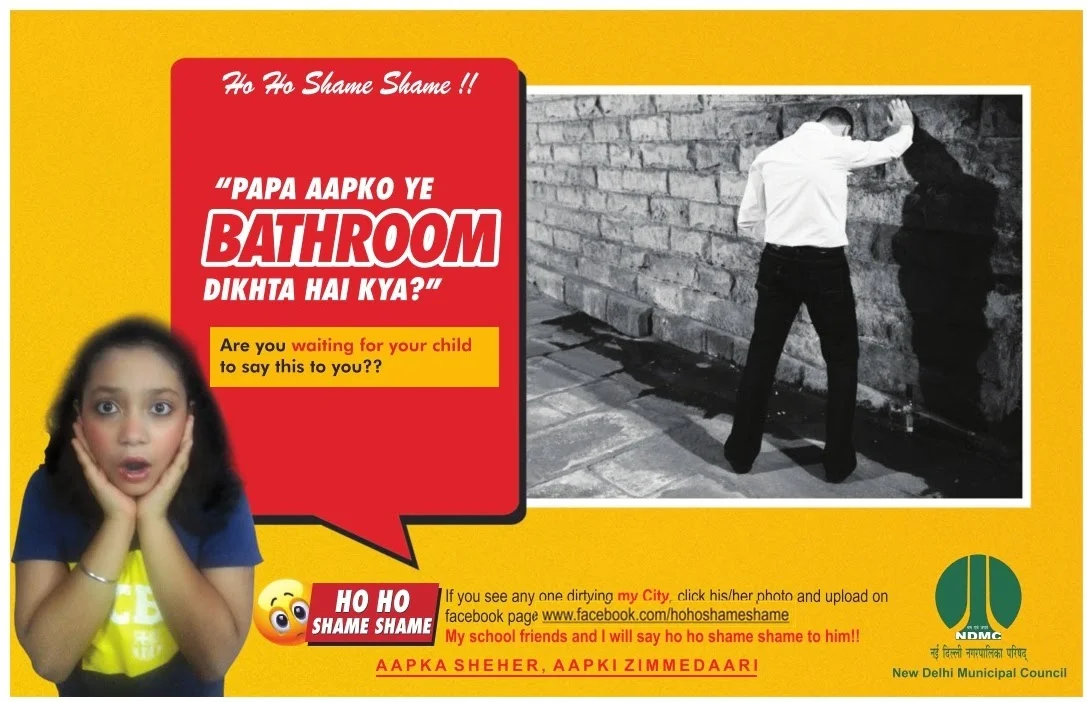
India's more recent campaign to shame men who urinate in public

India's more recent campaign to shame men who urinate in public

Ho ho shame shame! With Indian men seemingly peeing everywhere but in a toilet, the country has come up with an unusual campaign to shame offenders.


The billboard certainly caught our eye. It featured a young girl, hand raised to her mouth, with the slogan, “Papa!! Ho Ho Shame Shame! You are urinating in public?”

Using the concept that there is no better deterrence than shaming from your peers to encourage others to change their behavior, India has created a campaign with the objective of preventing public urination.

Toilets first and temples later.
— Prime Minister Narendra Modi

In smaller type at the bottom of the sign were instructions on where to upload images of offenders.

This wasn't something we observed occasionally while traveling in India. It was something we observed continually. Indian men who felt the urge urinated anywhere, without reservation, backs turned to the world, disregarding the consequences of their actions. We heard that the soil as well as the water have become subject to bacterial contamination.

The problem is also due to the lack of access to toilets in both urban and rural areas. Considering the abundance of Hindu shrines, current Prime Minister Narendra Modi was prompted to declare, "Toilets first and temples later." –Duke

What Is a Djinn?

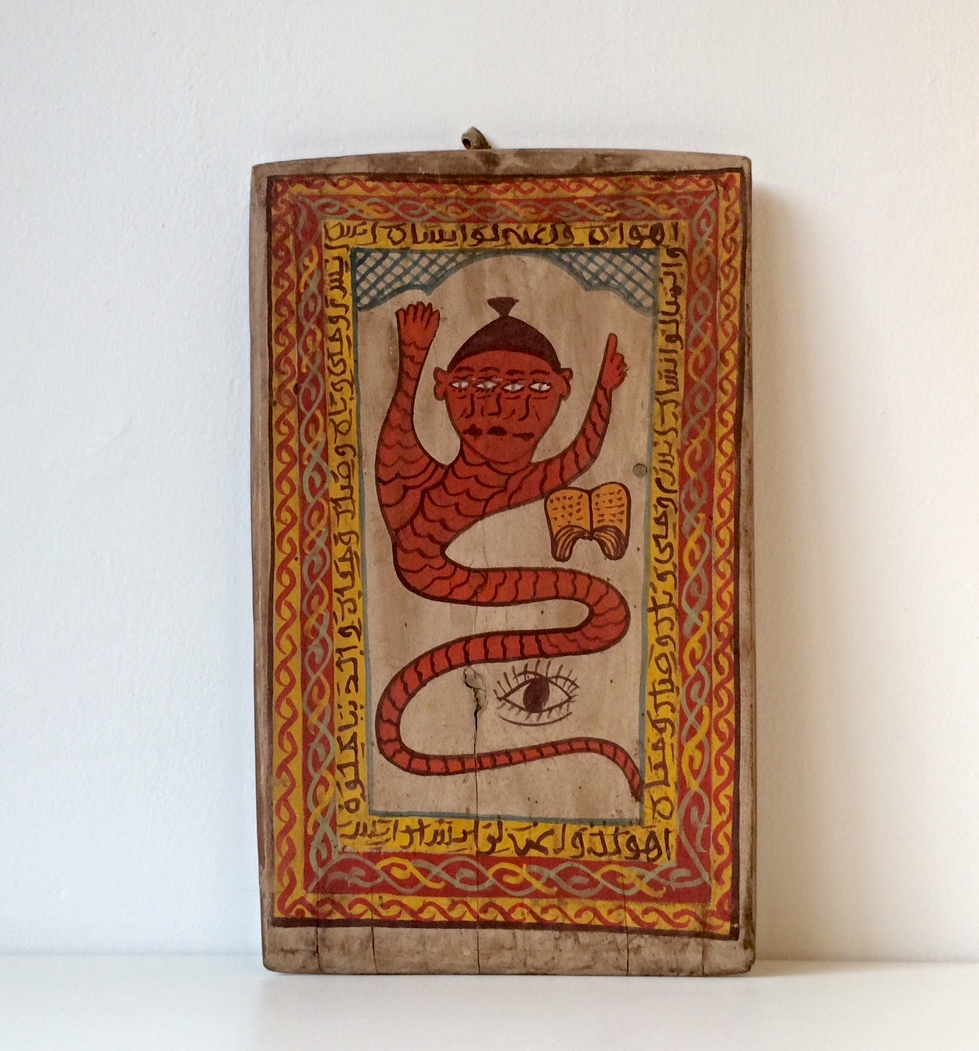
We bought this Quranic teaching tablet depicting what we imagine is a djinni from Ensemble Artisinal, an artists' co-op, in Marrakesh for about $35.

We bought this Quranic teaching tablet depicting what we imagine is a djinni from Ensemble Artisinal, an artists' co-op, in Marrakesh for about $35.

Djinns, jinn, genies: Why we believe in these creatures from Arabic folklore.


I’m not typically someone who believes in the supernatural. I want to believe in ghosts, angels and the like. I just don’t think the evidence is there.

That being said, after our trip to Morocco, I do believe in djinn (also known as jinn or genies — djinni, jinni, genie in the singular). These magical creatures, created by Allah from “smokeless fire,” are talented shapeshifters, like Robin Williams’ genie in Aladdin. Supposedly some djinn are good — but most tend to be tricksters if not downright devious. They even get some shoutouts in the Quran.

I ignored him and kept jabbing the blade into the ground.

I learned about the prevalence of belief in djinn in present-day Morocco in Tahir Shah's excellent book, The Caliph's House, about renovating a house in Casablanca (inevitably drawing connections to that other famous tome — “It’s A Year in Provence for Morocco!”). The triad of servants who tremble in fear at the property’s local djinni are quite hilarious.

But we learned the hard way that there’s nothing funny about djinn.


The Cursèd Dagger

Sure, we joke about it now. But at the time, we were fully convinced there was a djinni responsible for the bizarre situation that took place as we tried to leave the country.

It was the first thing we purchased in the Marrakech souk, and I was quite excited about the find: a ceremonial dagger with a hilt made from the bone of a camel.

When it came time to pack up for our trip home, Duke held up the dagger in our room in the riad and said, “We’ll have to make sure this goes into the checked luggage.” Which is exactly where he put it.

The next morning at the airport, after we had checked our bags and were going through the X-ray machines, the attendant asked us to open our bag. Sitting right there on top was…the dagger.

We were told we could just go back and put the dagger into our checked luggage. Having seen the suitcase pass into the depths of the airport on a conveyor belt, I was skeptical.

“Let’s just prep another bag to check,” I told Duke. And of course we put the dagger in that bag (both Duke and I distinctly remember doing so), then waited in line back at check-in.

We found out it would cost us $75 or so to check another bag, so we decided to forgo that. Back in the room with the X-ray machines, I opened the bag…but couldn’t find the dagger anywhere inside.

Finally, in desperation, I opened our carry-on. Sure enough, right on top, sat the dagger. I could almost imagine a devious smile upon its surface.

And then, something came over me. I grabbed the dagger and started stabbing the floor.

“What are you doing?!” Duke shouted, horrified.

I ignored him and kept jabbing the blade into the ground.

“Wally! Stop it!” Duke implored.

“I just want the blade to break so I can at least keep the handle,” I explained, continuing my frenzy.

“You’ve got a knife out in a crowded airport!” Duke pointed out sensibly. “Do you want to get arrested?”

And then the spell broke. My head cleared, and I looked down at the dagger clutched in my hand.

“Oh my God,” I said, shuddering. “Let’s get rid of this.”

I marched over to a trashcan and tossed the cursèd thing inside.

“There was a djinni in there!” I whispered. “It didn’t want the blade to leave Morocco.”

Duke, wide-eyed and relieved, nodded in agreement.

So, no, we don’t believe in ghosts. But we do believe in djinn. –Wally


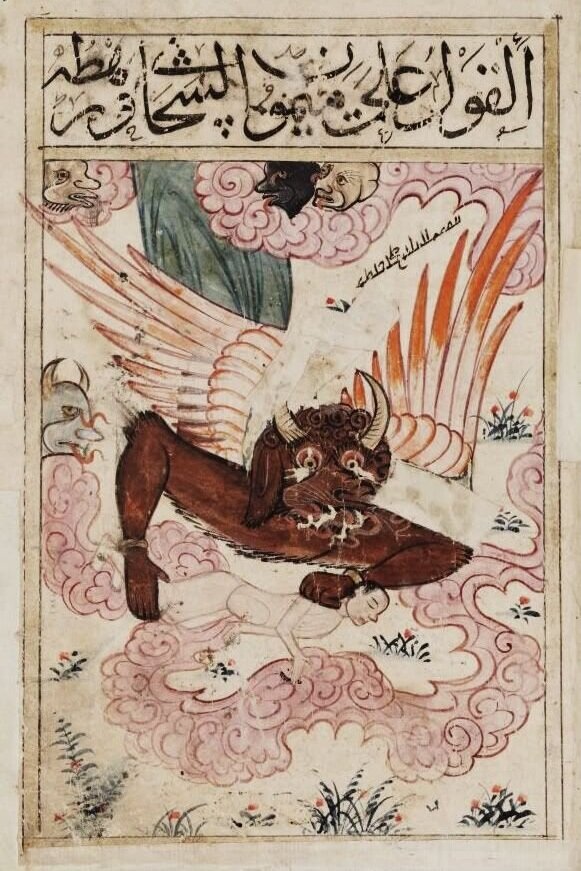
jinni.jpg