Heritage Hotels: Dungarpur Edition

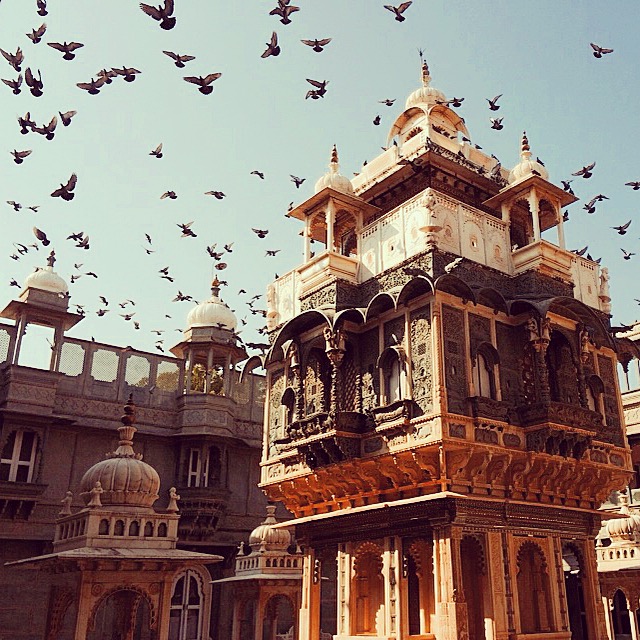
The stunning One-Pillared Palace inside the courtyard of the Udai Bilas heritage hotel in Dungarpur, India

The stunning One-Pillared Palace inside the courtyard of the Udai Bilas heritage hotel in Dungarpur, India

At Udai Bilas Palace, you can literally live like a king — or Hercule Poirot.


After a rocky start, we arrived at the historic Udai Bilas Palace, a 19th century summer palace-turned-heritage hotel and were greeted by its manager, Kalvendra Singh.

As we went to gather our luggage, he stopped us and told us that the porter would take it to our suite — which, incidentally, was amazing. The time-weathered hand-carved wooden doors opened into a spacious, high-ceilinged room with a sitting area near an open window, where a panoramic view of the royal family’s private temple seemed to float serenely upon a small isle in the waters of Gep Sagar Lake.
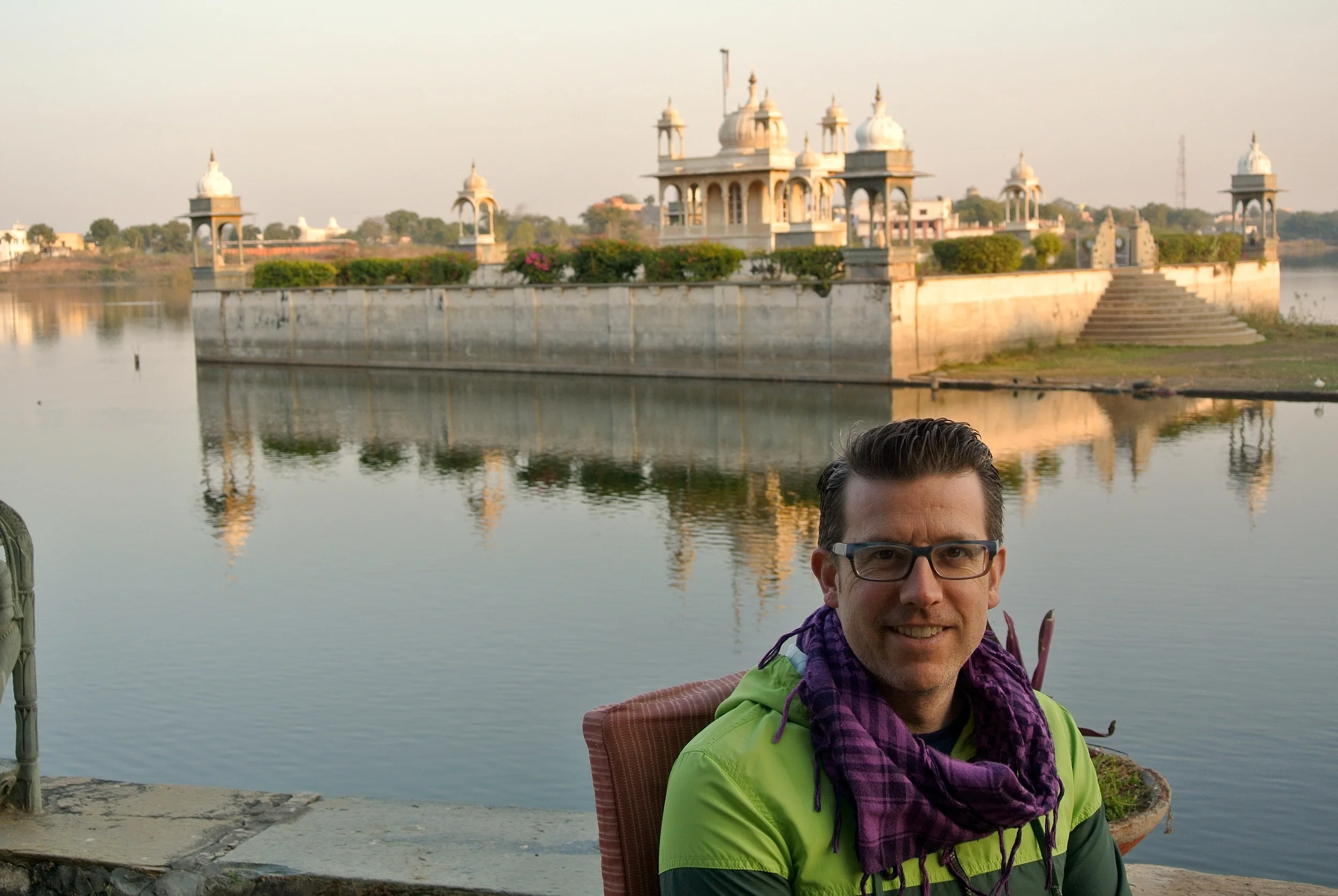
Wally with the impressive backdrop of the family temple on a small island at Hotel Udai Bilas Palace

Wally with the impressive backdrop of the family temple on a small island at Hotel Udai Bilas Palace

When you first turn the corner into the dining room, you honestly cannot help but gasp.

Best of all, we got to stay in this luxury for what equated to about $75 a night.

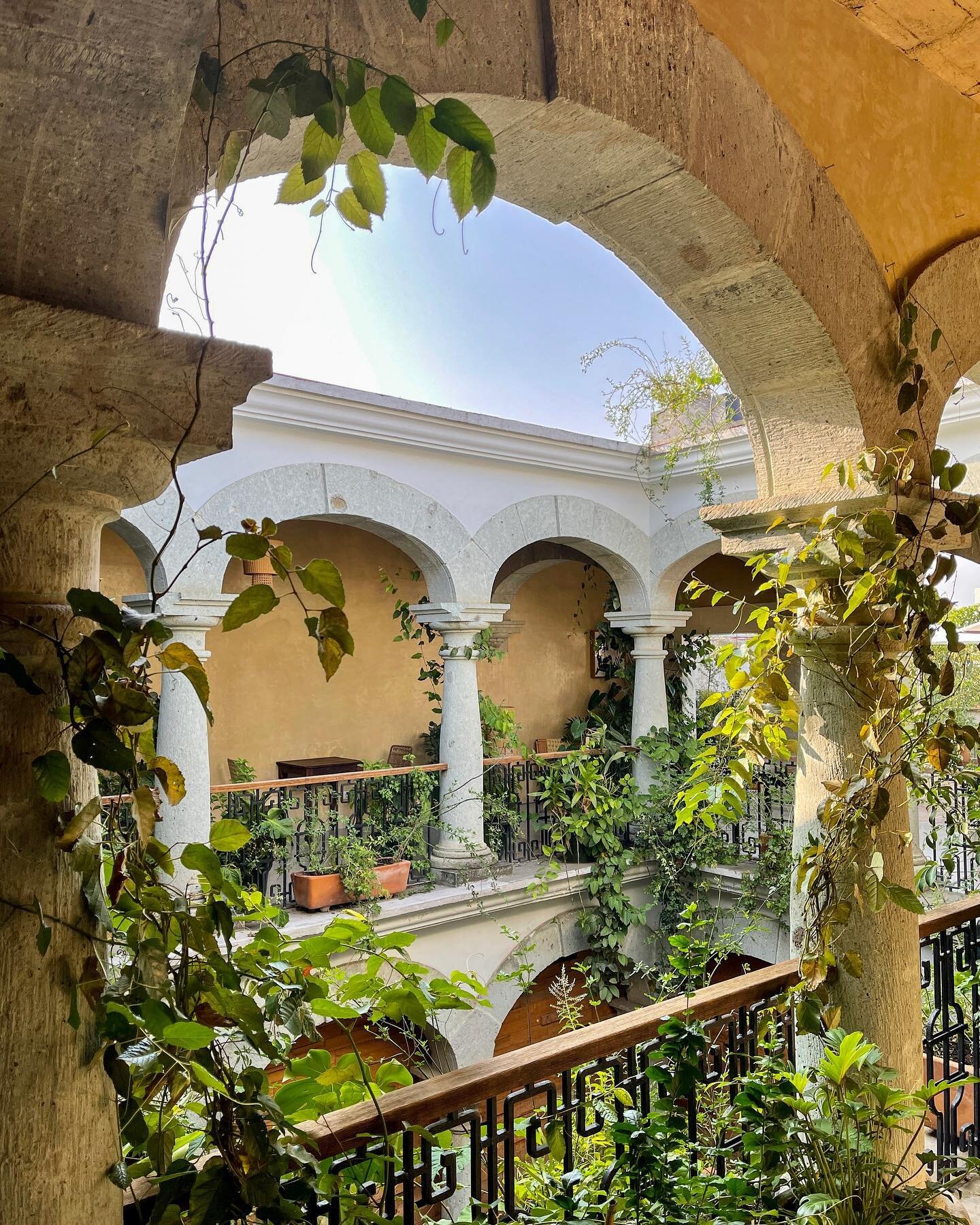
The interior courtyard contains a magnificent mini-palace pavilion know as the Ek Thambia Mahal or the One-Pillared Palace — so named as it is built around a single pillar.
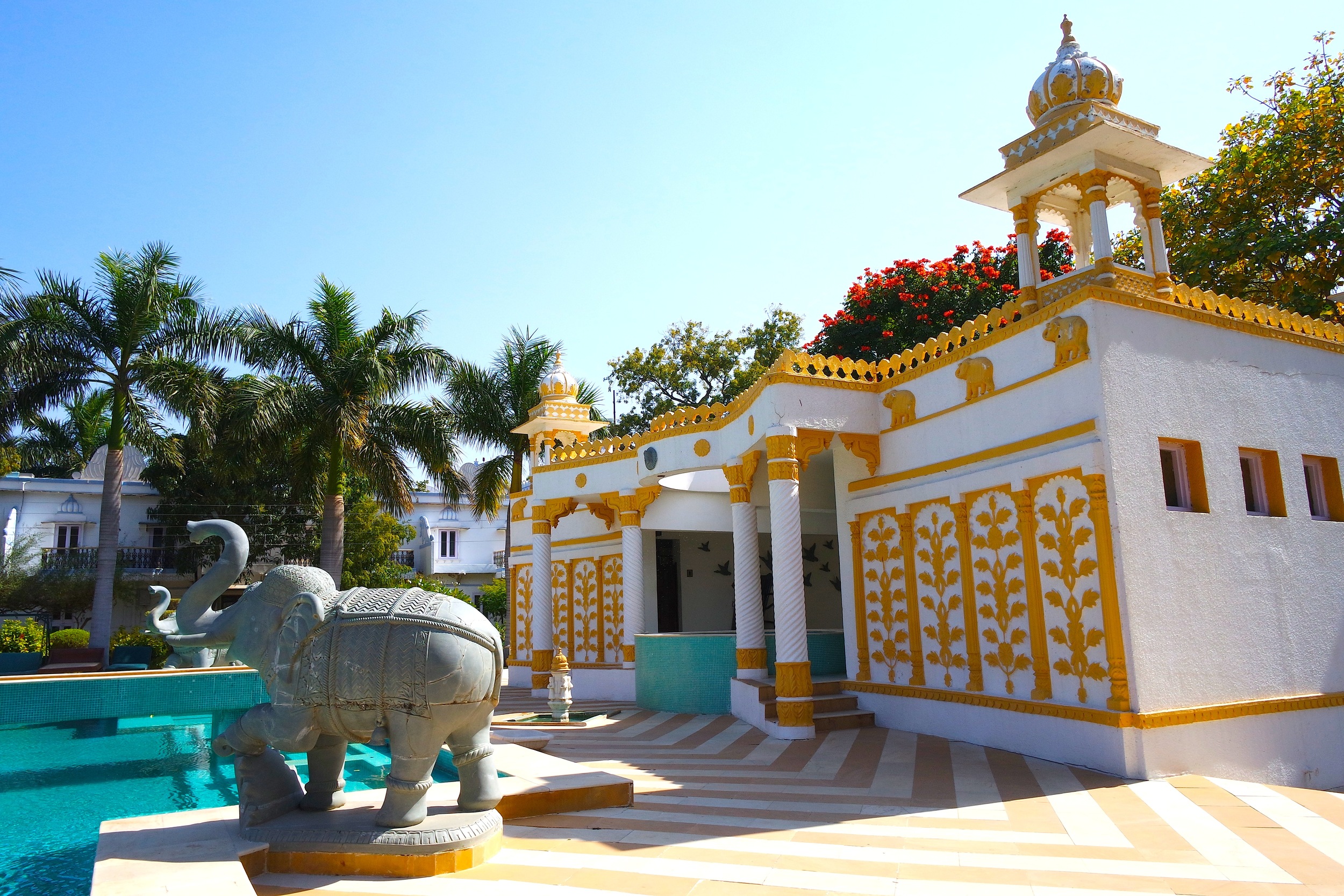
The gorgeous pool at Udai Bilas

The gorgeous pool at Udai Bilas

The grounds were amazing. You can enjoy refreshments by the infinity pool or take a walk through the gardens, which have a menagerie of exotic fowl, including a pair of emus.
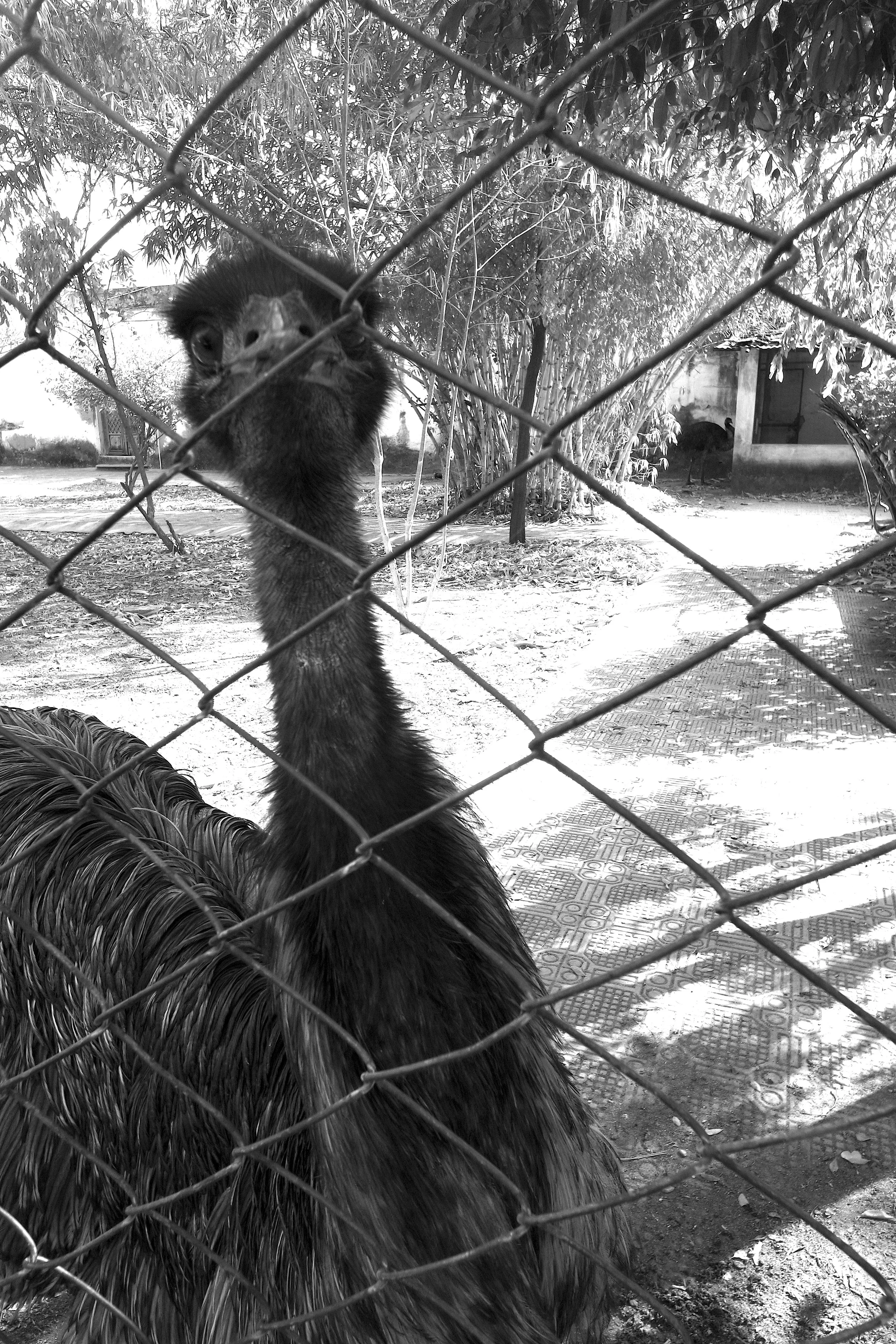
Keep your distance from the emu, part of the menagerie at Udai Bilas Palace

Keep your distance from the emu, part of the menagerie at Udai Bilas Palace

As I was passing through the courtyard to return to our room, Mr. Singh asked if I wanted to meet the maharajah. I'll admit I was a bit star-struck. I’m not sure what I was expecting, but I certainly was a bit surprised to see that the maharajah was wearing a burgundy nylon tracksuit and sitting behind the manager’s desk, reviewing a ledger.

I shook his hand and told him what an impressive place the palace was. He told me he was not the maharajah of Dungarpur but was instead from Sirohoi, Rajasthan. He owns the Bikaner House located on Mount Abu, Rajasthan's lone hill station.

He asked if the accommodations were suitable and if I was having a pleasant stay.

Of course the answer was yes.


Murder Most Foul

Wally is a bit (OK, completely) obsessed with the BBC Agatha Christie series. So it was no surprise when he suggested that Udai Bilas was exactly the sort of place Hercule Poirot would stay — and end up solving the mystery of the corpse found floating in the dining room’s water feature.

I agreed: The palace was like stepping into the exotic setting of an Agatha Christie novel. Many rooms contained taxidermied animals, the prized trophies from various royal hunting expeditions.

While we were staying at Udai Bilas, I imagined a plot out of a Christie novel.


Cast of Characters

(In order of appearance)


Daphne Beaumont, an aging and fading actress and central character

Gemma Marsh

Emily Grey

Julia Woolgar

Margaret Trout, a dowdy American tourist on holiday

Nathan Grey

Dr. Trevor Marsh

Jasper Tennant, ornithologist

Patrick Cook

Cecil Hawthorne, ethnologist


The players include a group of wealthy elderly tourists. This was inspired by real life: Sharing the palace with us was a small group of tourists from Oregon on a tour of Rajasthan. The local attraction, the Juna Mahal, happened to be on their guide’s list of must-see sights. George affectionately referred to them as “the raisin ranch.”

In my murder mystery, which I’ve titled Birds of Paradise, the group of tourists is led by Jasper Tennant, an ornithologist who promises this group a glimpse of the rare bird species, the great Indian bustard, which has been hunted nearly to extinction.

I never got around to penning a plot, though. Suffice it to say, the weapon most definitely would have been the small bronze statuette that stood at the end of the dining table holding a votive.

After the sun had set, we enjoyed pre-dinner cocktails inside the Mews, the old stables, which have been converted into a museum for the maharajah’s classic car collection and a small airplane with a motorized propeller.
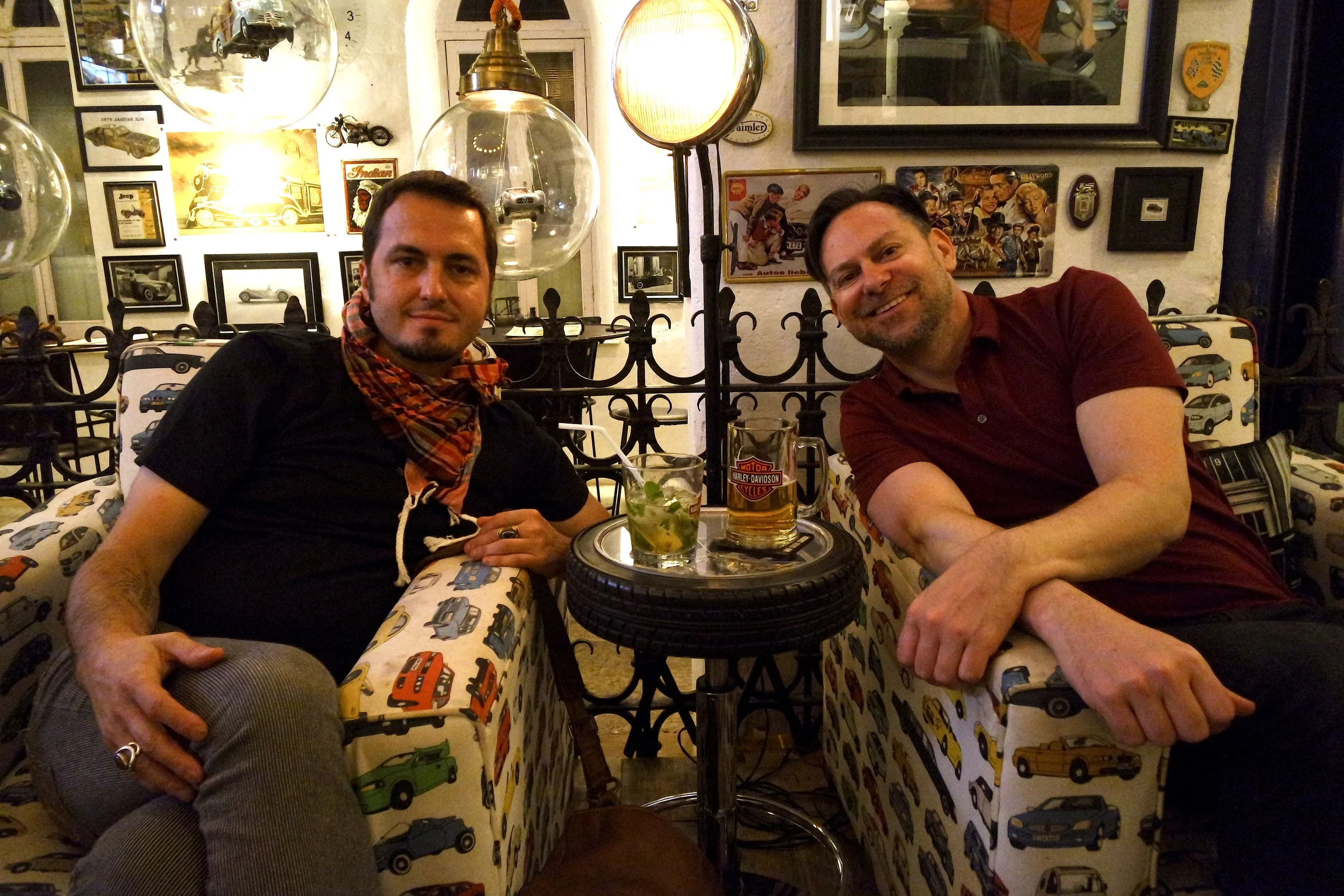
George and Duke enjoy the hydraulic lift, part of the fun of pre-dinner cocktails at the Mews at Udai Bilas

George and Duke enjoy the hydraulic lift, part of the fun of pre-dinner cocktails at the Mews at Udai Bilas

There's a bar at the end that features a hydraulic lift. After some of the raisin ranchers had cleared out, we were able to have a seat on the platform, which raised up for a bit.

When you first turn the corner into the dining room, you honestly cannot help but gasp.
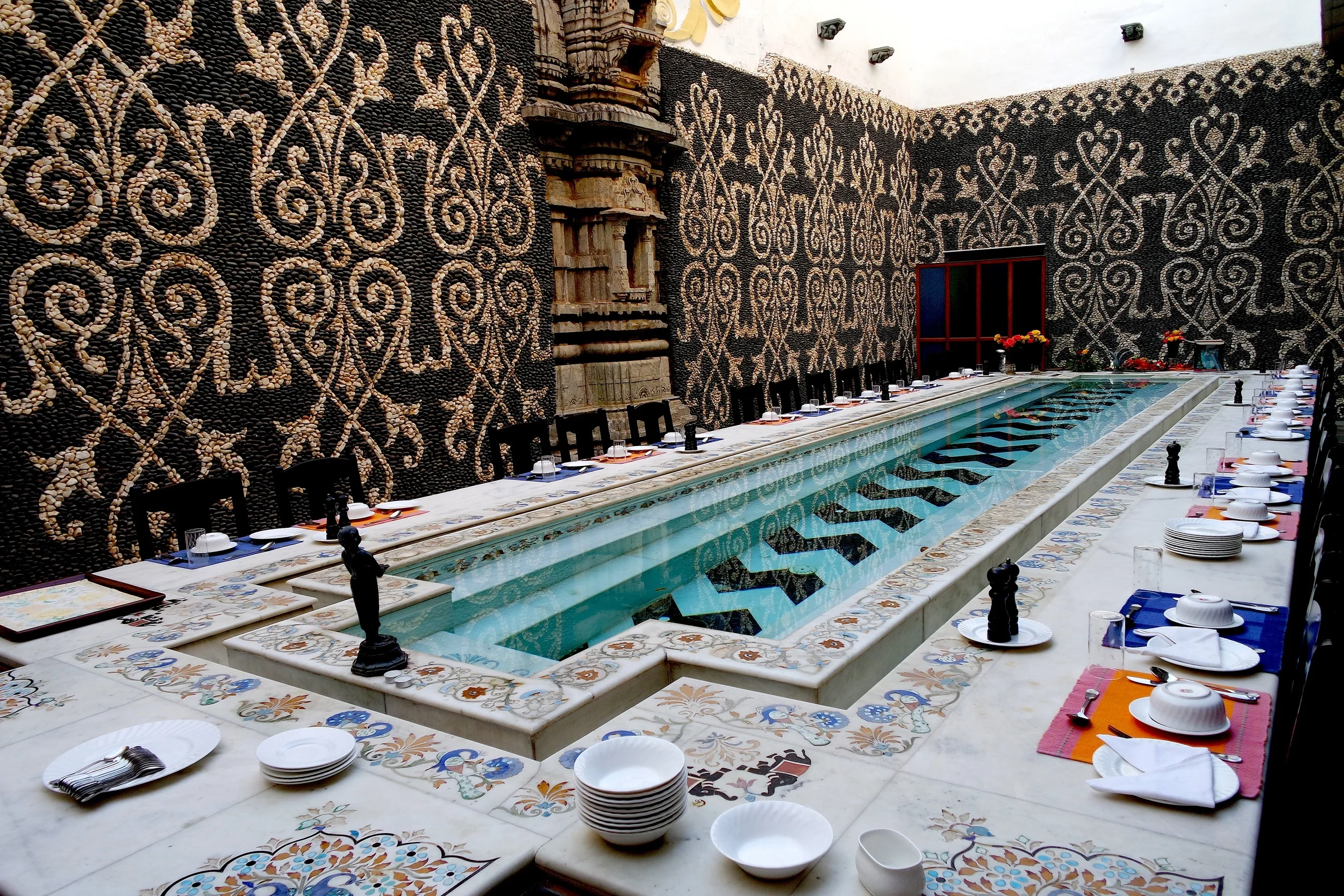
The epic open-air dining room at Hotel Udai Bilas Palace. A quick swim before supper, anyone?

The epic open-air dining room at Hotel Udai Bilas Palace. A quick swim before supper, anyone?

Dinner is served at a monolithic white marble table inlaid with pietra dura and a water feature that could double as a lap pool running along the center. Our roof was the expansive, star-filled sky. –Duke

In Search of Bahamian Food

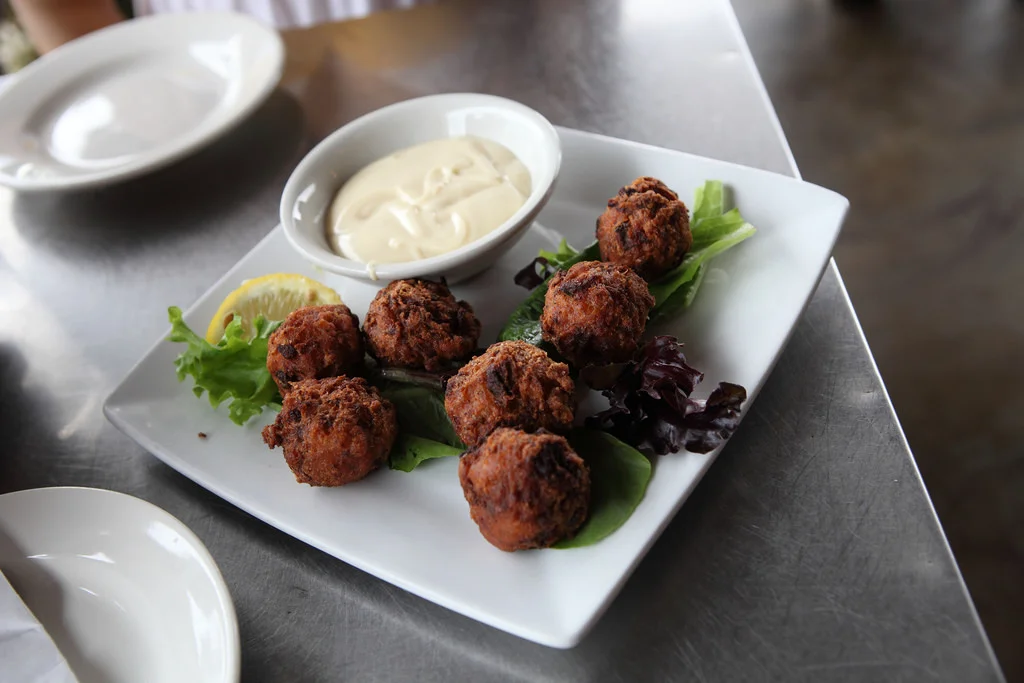
Wally sure would have loved to have tried some conch fritters like these in the Bahamas

Wally sure would have loved to have tried some conch fritters like these in the Bahamas

Wally tries his hardest to sample conch fritters, conch chowder — heck, anything conch.


When I travel, I enjoy experiencing authentic traditional cuisine. So when I visited Grand Bahama Island one holiday season, I felt it was my rite of passage to sample conch, a local favorite.

Technically, they’re sea snails — but I’m afraid that if I say this, no one will want to try them.

Conch (pronounced “konk”) is similar in texture to a clam. The shells, with their flared, thick outer lip and pink-colored orifice, are commonly sold in souvenir shops. Heck, you’ve probably held one up to your ear to “hear the ocean.”

Technically, they’re sea snails —  but I’m afraid that if I say this, no one will want to try them.

You might also recall conch as the shell the boys in Lord of the Flies use as a trumpet to call meetings and the item you had to hold if you wanted to speak — before all hell broke loose. Which brings me to my first meal on the island.


Shell Shocked

I found a Bahamian restaurant specializing in conch. It was small, no-frills and empty.

Ten minutes later, a skinny girl emerged, handed us menus and disappeared into the back of the restaurant. 

Ten minutes later, she returned, presumably to take our order.  

“We’ll start with the conch fritters,” I said.

She wrote the order down carefully and disappeared again.

Ten minutes later, she reappeared.

 “No conch fritters,” she told us.

I was a bit disappointed, but persistent, so I replied, “We’ll have two cups of the conch chowder then, please.”

She wrote the order down and strolled back to the kitchen.

After another 10-minute lapse, she returned. “No conch chowder,” she said. I was beginning to understand what they mean by “island time.”

Hungry and determined, I scanned the menu and replied, “Oh, OK, we’ll have the crack conch.”

With great concentration, she wrote this down.

As she began to walk away I decided to call her back. “May I ask: Do you have anything conch?”

She shook her head. “No conch. Bad weather.”

This struck me as particularly absurd — not only because she could have told us this half an hour ago, but because the weather in the Bahamas is pretty much gorgeous year-round, with the temp barely fluctuating between the high 70s and the low 80s.

Later in the week, as I was wandering the island, I came upon a man collecting conch. Next to him was a huge pile of the beautiful, pinkish, coral-colored shells. The weather must have improved.

To this day, Duke and I will use that refrain to get a laugh out of each other, like the Soup Nazi on Seinfeld: No conch. Bad weather. –Wally

The Unpleasant Experience of Hiring a Driver in India

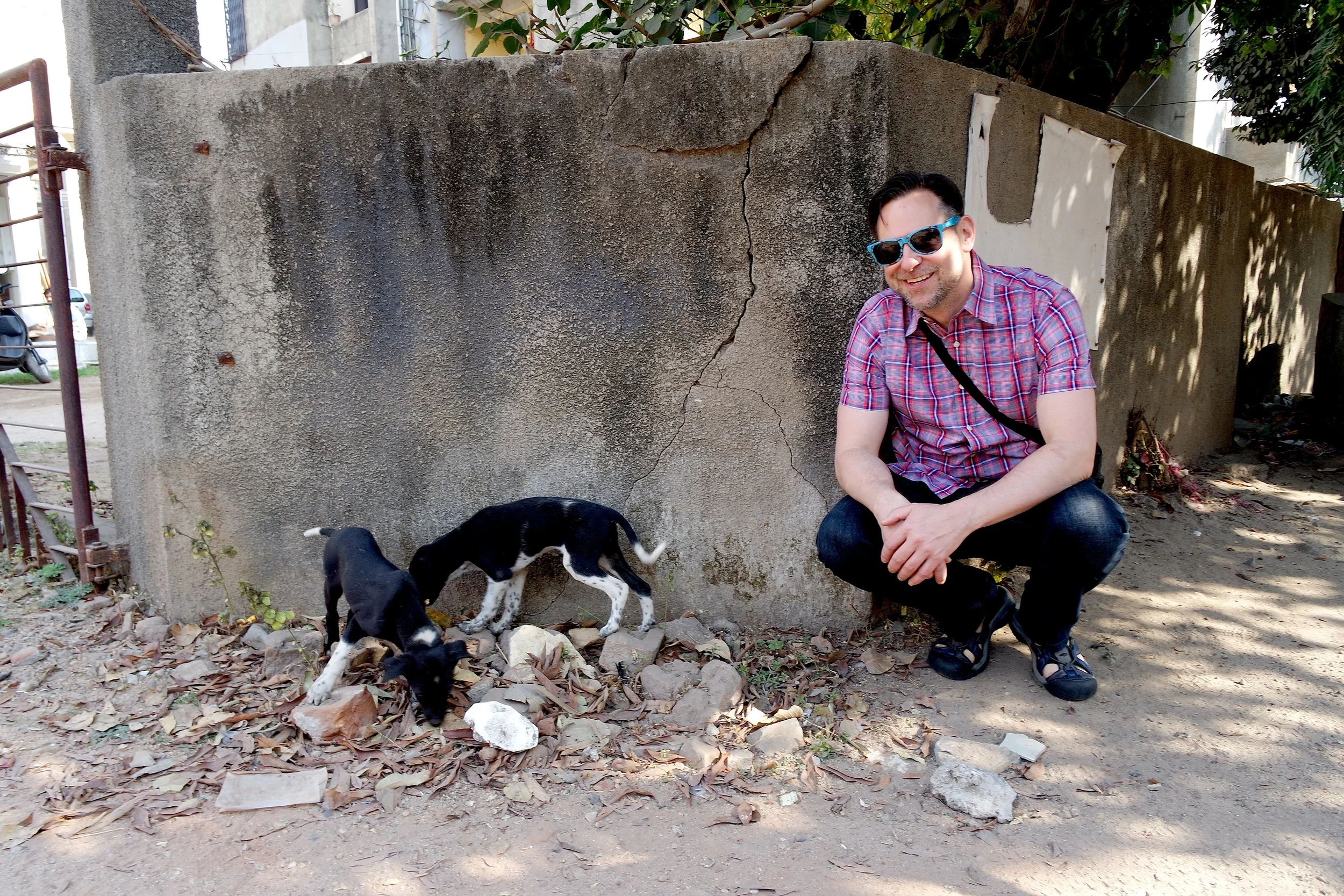
Darkness turned to daylight as we awaited our driver. At least we had stray dogs to keep us company

Darkness turned to daylight as we awaited our driver. At least we had stray dogs to keep us company

Our road trip from Baroda to Dungarpur taught us not to expect your driver to speak English, show up on time or care about your sanity.

We weren't having any luck finding a driver who spoke English. (Prakash informed us that people who spoke English got the good jobs, and apparently “chauffeur” doesn’t fit into that category.)

An online search revealed a company called TaxiForSure. It seemed professional. It was also pretty much our only option. So we arranged transport to Dungapur. We requested a pick-up of 5 a.m. According to Google Maps, it’s a pretty straightforward four-hour drive from Baroda.

A sullen, if handsome, 20-something driver showed up, playing what seemed to be techno versions of Bollywood music blared at full volume.

At 5 the next morning, our friend and host George got a confirmation text from TaxiForSure, which provided the driver’s name, license plate number and estimated arrival time.

A few minutes later, he received a call from someone at TaxiForSure, who regretted to inform us that our original driver would not be coming — his car broke down.

I’d like to point out that no matter how much you try to plan, things can change unexpectedly (and inevitably, it seems), for India moves in its own unpredictable way.

We were waiting outside in front of George’s apartment building (he calls it his “tenement”). George saves his kitchen scraps to leave outside for the cows. As he was tossing a bag onto the heap, a neighbor who was up early yelled at him, telling him not to just throw it there — that there’s an actual place to leave food scraps down the street near the ashram. The neighbor was just doing his part to attempt to reduce the ridiculous amount of garbage strewn about. Indeed, everywhere you go, you see cans, paper and plastic bags picked at and chewed on by rats, jackdaw birds, stray dogs and cows.


How “OK, OK” Can Mean Anything But

We waited. George called back after a half-hour had passed, and then again every 15 minutes. The conversations went something like this:

“The driver is in the area.”

“The driver is very close.”

“The driver is 3 to 5 minutes away.”

“The driver is 2 to 3 minutes away.”

George hung up in a huff. “Indians will always tell you, ‘OK, OK,’” he said. “But that doesn’t mean anything. It can mean he’s hours away, or he could be here in 5 minutes. I’ve learned they tell you what you want to hear — even if it’s not the truth.”

Two hours in total had passed before George received another text from TaxiForSure.

Your taxi has arrived.

It was now 7 a.m.

Beep! Beep! A sullen, if handsome, 20-something driver named Pankach, who only spoke Gujarati showed up, playing what seemed to be techno versions of Bollywood music blared at full volume, which we endured the entire trip.

Before we left Baroda, he pulled the car over, and a man approached and gave him a bag full of clothes. Then our road trip was in full swing.


Road Trippin'

Once we were outside the city limits, the scenery changed, and we began to pass rural homes, which were transformed into hand-painted advertisements for the sturdy but humble materials cement and brick.

Many of the signs touted Ambuja Cement. The company's logo is a comically proportioned man with a tiny head and a ginormous right bicep embracing a pair of buildings.

Elaborate conical Hindu temples dotted the landscape, confections in bubblegum pink, white, mint and lemon yellow. Cloth flags atop spires fluttered in the breeze.

We weren't sure we were ever going to make it. But we were finally en route to Dungapur, otherwise known as the City of Hills, located at the southernmost Aravalli mountains of Rajasthan.

We almost got used to the Bollywood Molly dance party in the car. Almost. –Duke

RELATED: 3 Tips for Hiring a Driver in India

No matter how much you try to plan, things can change unexpectedly (and inevitably, it seems), for India moves in its own unpredictable way.

Holy Cow! Sacred Cow!

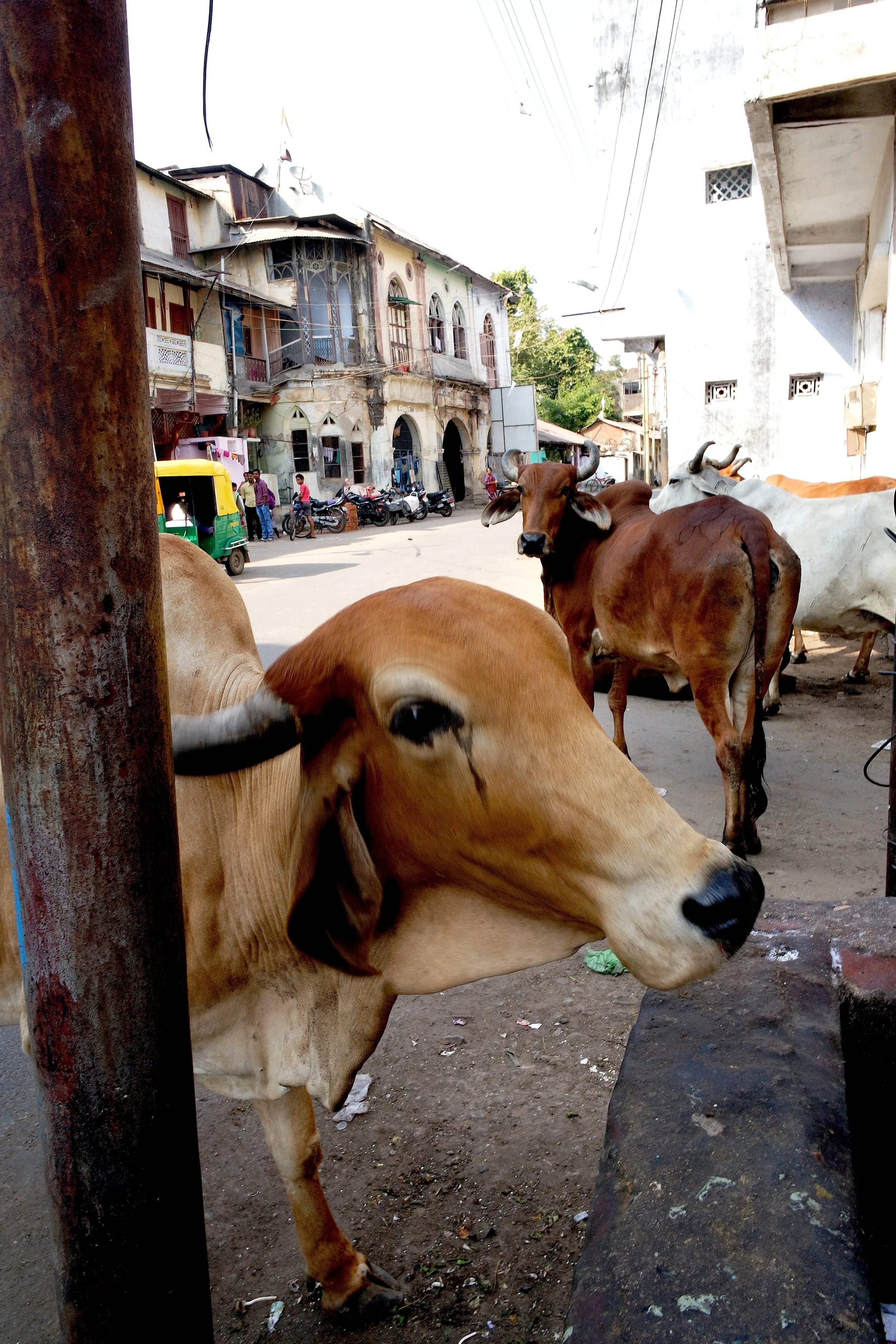
Cows like these have free rein in India, where they are revered by Hindus.

Cows like these have free rein in India, where they are revered by Hindus.

Why are cows in India revered as holy? A look at Hindu history reveals why bovines are so blessed there.

Let’s face it. Cows aren’t the most noble of beasts.

If you were to tell me that the world’s 900 million Hindus revered horses above all other creatures, I’d get it. They’re fast, graceful, gorgeous and more than a teensy bit intimidating.

As cows amble along those dirty, dusty streets, you see them chomping away at the ever-present piles of garbage.

It’s enough to make you think that Indians have a funny way of showing their devotion.

But their gangly, cud-chewing brethren? I really don’t get it.

Don’t Have a Cow, Man

Historian Mukul Kesavan helps reveal the Indian mindset: “For Hindus, the desi cow is a beautiful thing,” he writes. “Its large eyes, its calm, its matte skin tinted in a muted palette that runs from off-white to grey through beige and brown, its painterly silhouette with its signature hump, make it the most evolved of animals.”

Seeing cows in action in India made me think otherwise. Sure, they have the ultimate right of way on the chaotic, congested roads, causing many a traffic jam. But as they amble along those dirty, dusty streets, you see them chomping away at the ever-present piles of garbage. 

It’s enough to make you think that Indians have a funny way of showing their devotion.

Despite this, though, Hindus do take their beliefs seriously. In September 2015, a 50-year-old man in Uttar Pradesh was lynched by a mob. His crime? There were rumors that his family had been storing and eating beef.


Where’s the Beef?

I decided to investigate the root of this bovine reverence.

Turns out Hindus don’t worship cows so much as forbid worshippers from killing them, according to ReligionFacts. 

Some of the Rigveda, ancient Sanskrit hymns, refer to the cow as the goddess Devi as well as Aditi, the mother of the gods herself. Cows were also a favorite of Lord Krishna.

“He is said to have appeared 5,000 years ago as a cowherd and is often described as bala-gopala, ‘the child who protects the cows,’” PBS reports. “Another of Krishna’s holy names, Govinda, means ‘one who brings satisfaction to the cows.’ Other scriptures identify the cow as the ‘mother’ of all civilization, its milk nurturing the population.”

Thousands of years ago, Hindus stopped eating beef.

“This was most likely for practical reasons as well as spiritual,” ReligionFacts says. “It was expensive to slaughter an animal for religious rituals or for a guest, and the cow provided an abundance of important products, including milk, browned butter for lamps and fuel from dried dung.”

Panchagavya — a fermented concoction using cow’s milk, curds, ghee butter, urine and dung — is consumed by Hindu worshippers (shudder). 

“Most Indians do not share the Western revulsion at cow excrement,” according to ReligionFacts, “but instead consider it an earthy and useful natural product.”

By the early centuries CE, a cow became the appropriate gift to present to a brahman, one of Indian society’s high-caste priests. So revered were cows that killing one was seen as being equal to murdering a brahman. 

Gandhi went so far as to say, “If someone were to ask me what the most important outward manifestation of Hinduism was, I would suggest that it was the idea of cow protection.”


Keep It Moo-ving

Not all Indians view the cow so favorably, though.

“What is the greatest traffic hazard in Delhi today? Cows,” writes Bibek Debroy, a columnist for India’s Financial Express, according to PBS. “As our national animal, the tiger may be close to extinction. But the cow is very much around and may soon become our new national animal.”

How to deal with these menaces to society? Debroy offers a tongue-in-cheek solution, PBS continues. “Let them have reflectors and, if not license plates, at least identity cards. Only genuine Delhi cows should be eligible for social security and other benefits.” –Wally

Places to Visit in Vadodara: Ganesha Temple and Sayaji Baug

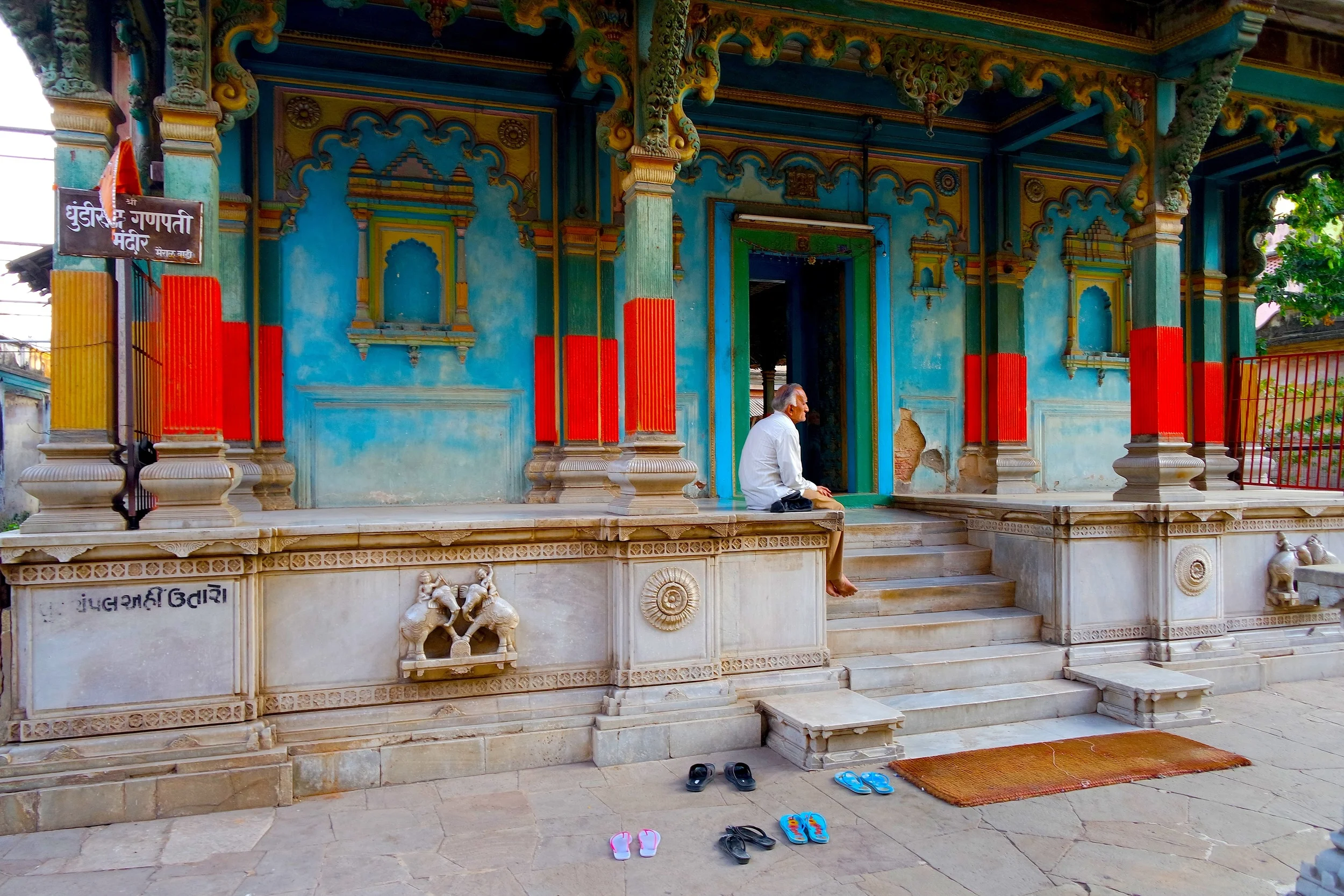
Visitors leave their shoes outside the Dhundiraj Ganpati Mandir temple in Baroda, India

Visitors leave their shoes outside the Dhundiraj Ganpati Mandir temple in Baroda, India

The zoo is a popular attraction, while the Dhundiraj Ganpati Mandir Temple could be Baroda’s best-kept secret.


At the edge of Sursagar Lake, we asked an auto rickshaw driver if he could take us to the Dhundiraj Ganpati Temple, which is located deep within the city’s old quarter.

He responded with, “OK, OK,” which George warned us is what Indians say no matter what you ask. In this case, I’d like to point out that “OK’’ didn’t mean that the driver knew exactly where the temple was. We quickly realized this, as he proceeded to get lost and stopped frequently, asking for directions, bumming a cigarette off a couple of nonplussed college students.

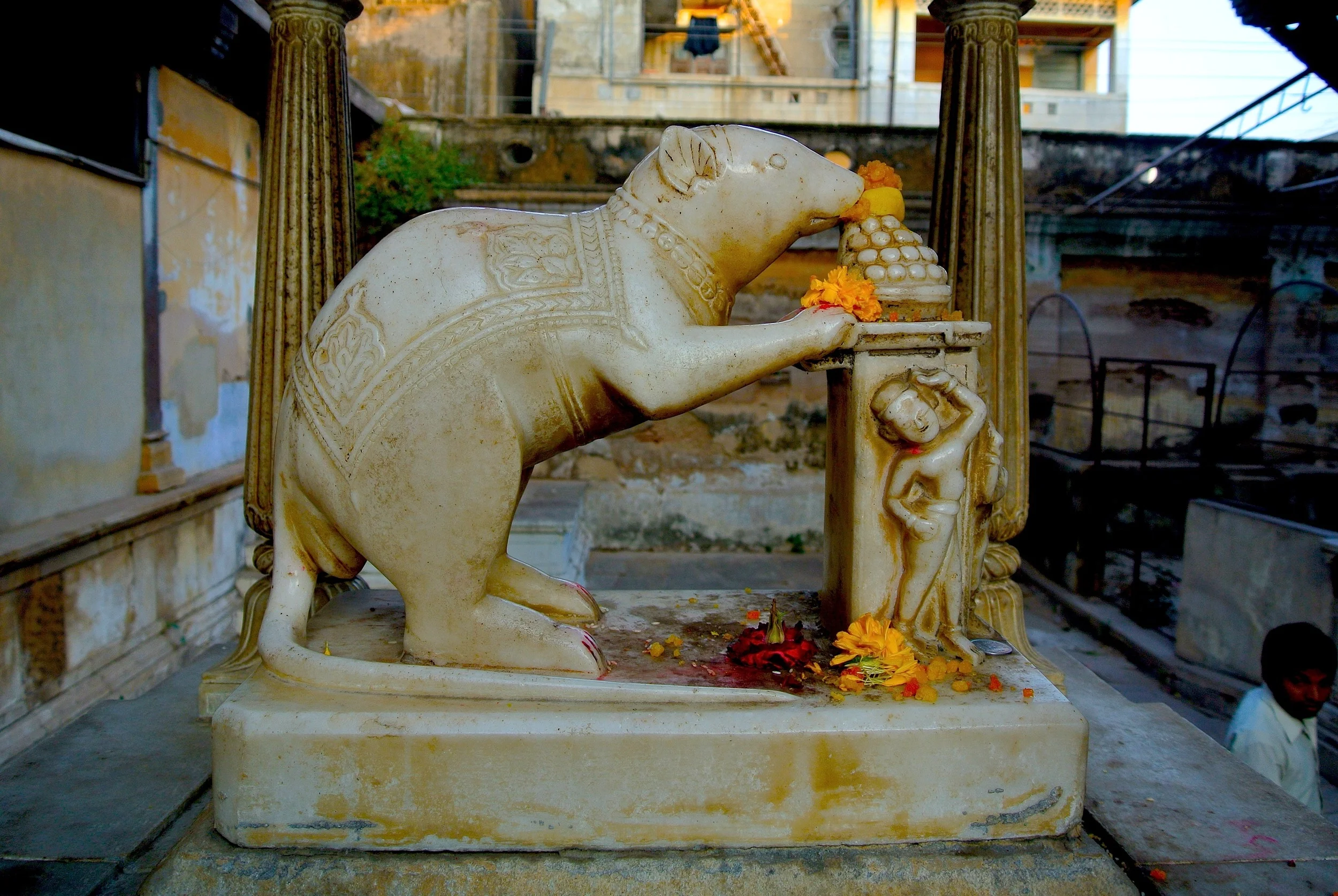
Patrons looked upon the mouse deity with reverence, genuflecting and kissing its feet.

As we made our way into the winding streets of the old quarter, we passed innumerable buildings, some crumbling, while others have collapsed into rubble.

George commented, “They don't even know how to get around their own city — but how could they?" And he’s right. Baroda’s labyrinthine lanes are as if a child imagined it, with every usable square foot of space occupied.

When we finally arrived, it turned out the Mandir was closed. Our driver got out and knocked on a doorway not far from the temple entrance to ask what time it opens. That’s not something that would have occurred to us Westerners. We would have just looked for a sign, and not finding one, would have left disappointed.


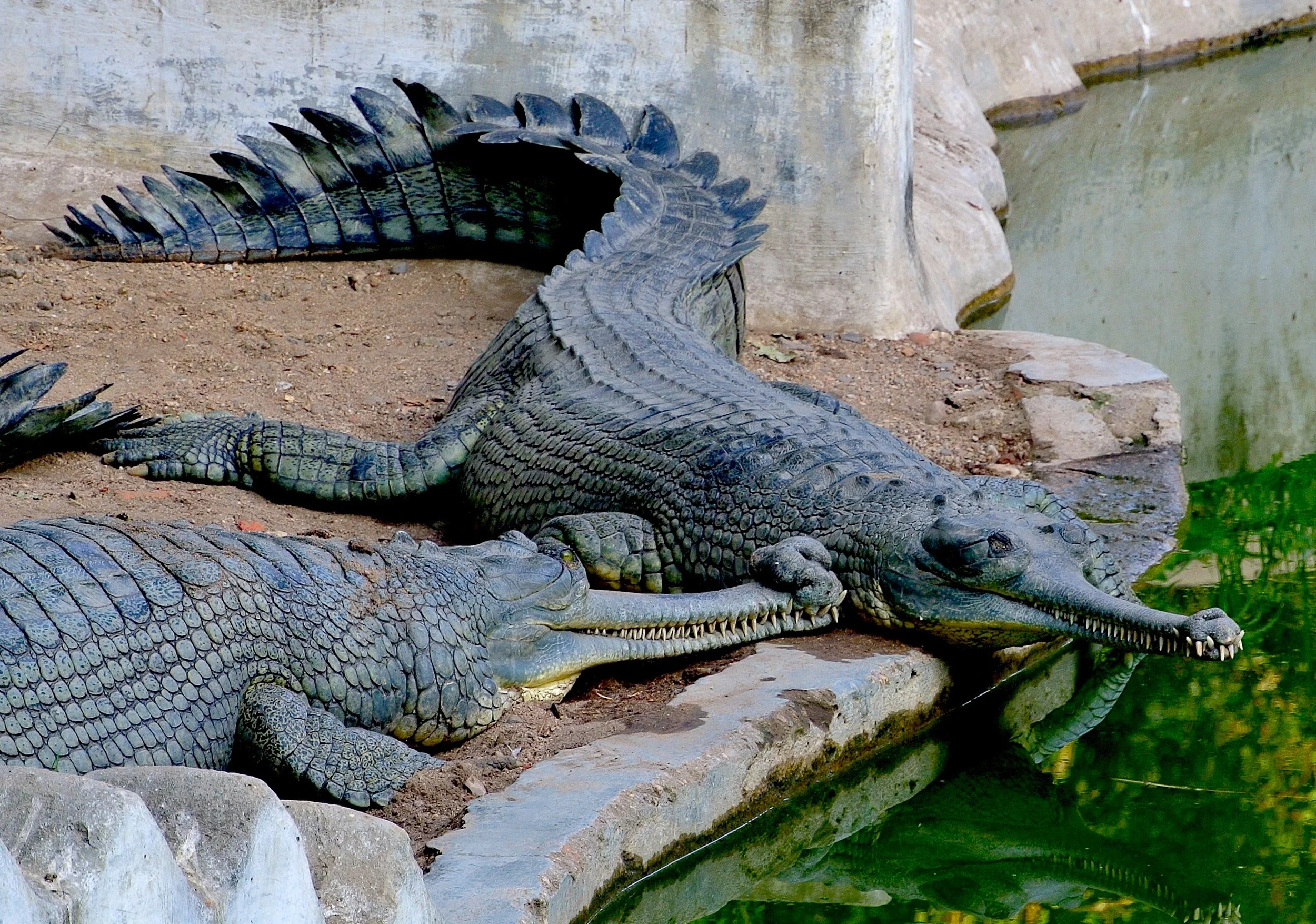
Check out the snouts on these gharial crocodiles at the zoo in Baroda

Check out the snouts on these gharial crocodiles at the zoo in Baroda

Zootopia

We had hours to kill before the temple opened, so we headed off to the zoo.

En route, we passed the Baroda Museum and Gallery. The structure was designed to resemble the Victoria & Albert Museum of London. Built in 1894, it contains a collection of art, sculpture, ethnography and ethnology.

The zoo is part of a large park called Sayaji Baug. We strolled past a small mound with a sun motif that turned out to be a clock made of flowers.

We also crossed over train tracks. The train was a gift to the children of Baroda from the Gaekwad dynasty and has since been replaced with a larger version that also accommodates adults.

Our favorite part of the zoo was the gharial crocodiles. The name originates from the Hindu word ghara, which is a clay pot with a long neck, much like their narrow snout shape. The male crocodile has a bulbous growth at the end of its snout.


Time for a Temple Run

Later that day, we returned to Dundiraj Ganpati Mandir, which was built 169 years ago. One of the city’s oldest, most cherished temples dedicated to the elephant-headed god Ganesha, it’s the only one made completely out of wood.

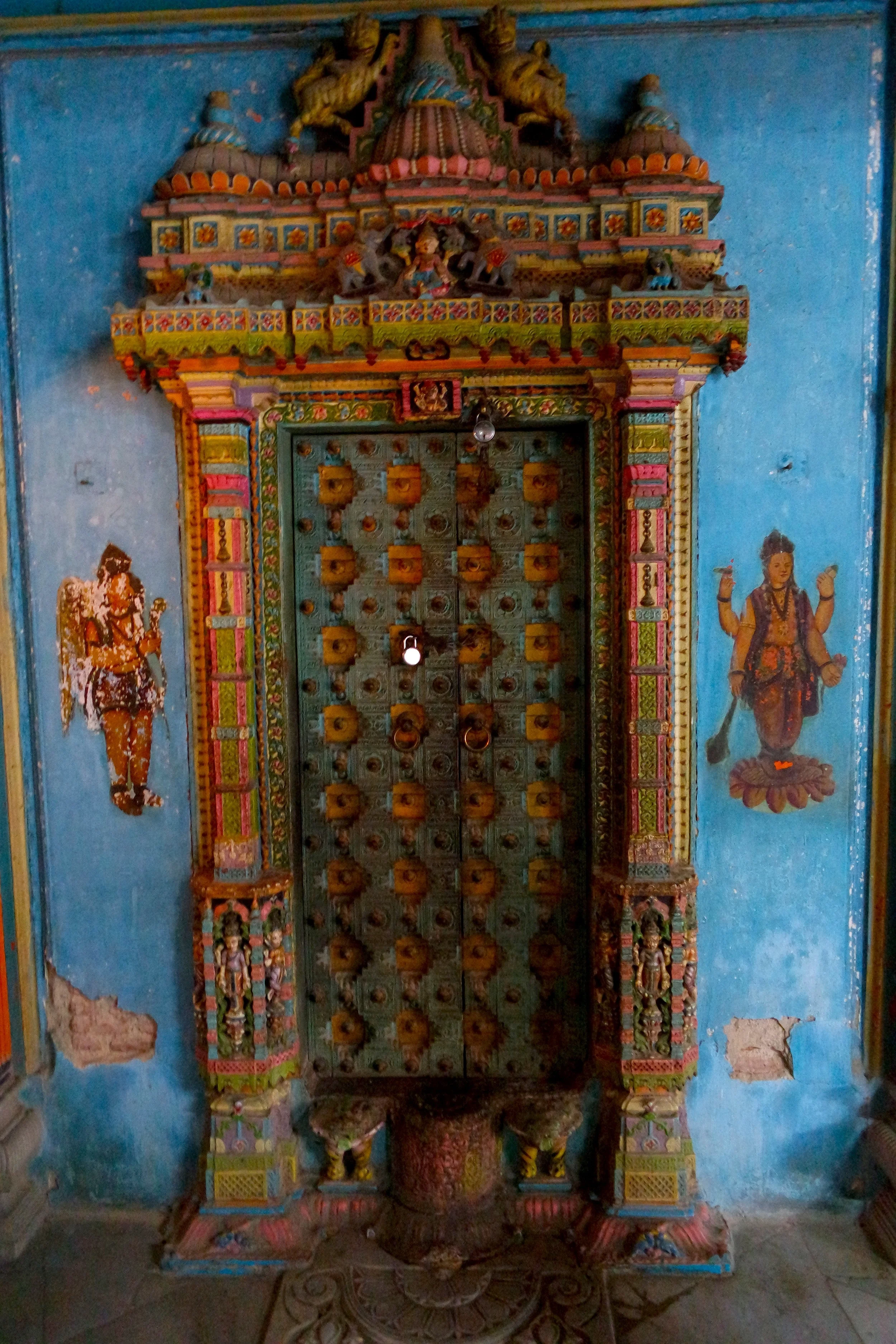
An intricately carved and painted door at the wooden Dhundiraj Ganpati Mandir Temple in Vadodara, India

An intricately carved and painted door at the wooden Dhundiraj Ganpati Mandir Temple in Vadodara, India

The temple exterior is a pale green and quite dilapidated. But as you pass through the entrance doors and into a small courtyard, the temple itself appears in a lovely shade of blue.

Worshippers kiss the feet of Kroncha, a mouse deity, at a temple in Vadodara, India

Worshippers kiss the feet of Kroncha, a mouse deity, at a temple in Vadodara, India

The first thing we saw was Kroncha, the mouse. Instead of being in his usual spot at the feet of Ganesha, he was located atop a pedestal. Patrons looked upon the deity with reverence, genuflecting and kissing its feet. Perhaps one of the reasons he's a popular Hindu deity is that he is known as the destroyer of all obstacles. And here we thought elephants were scared of mice.

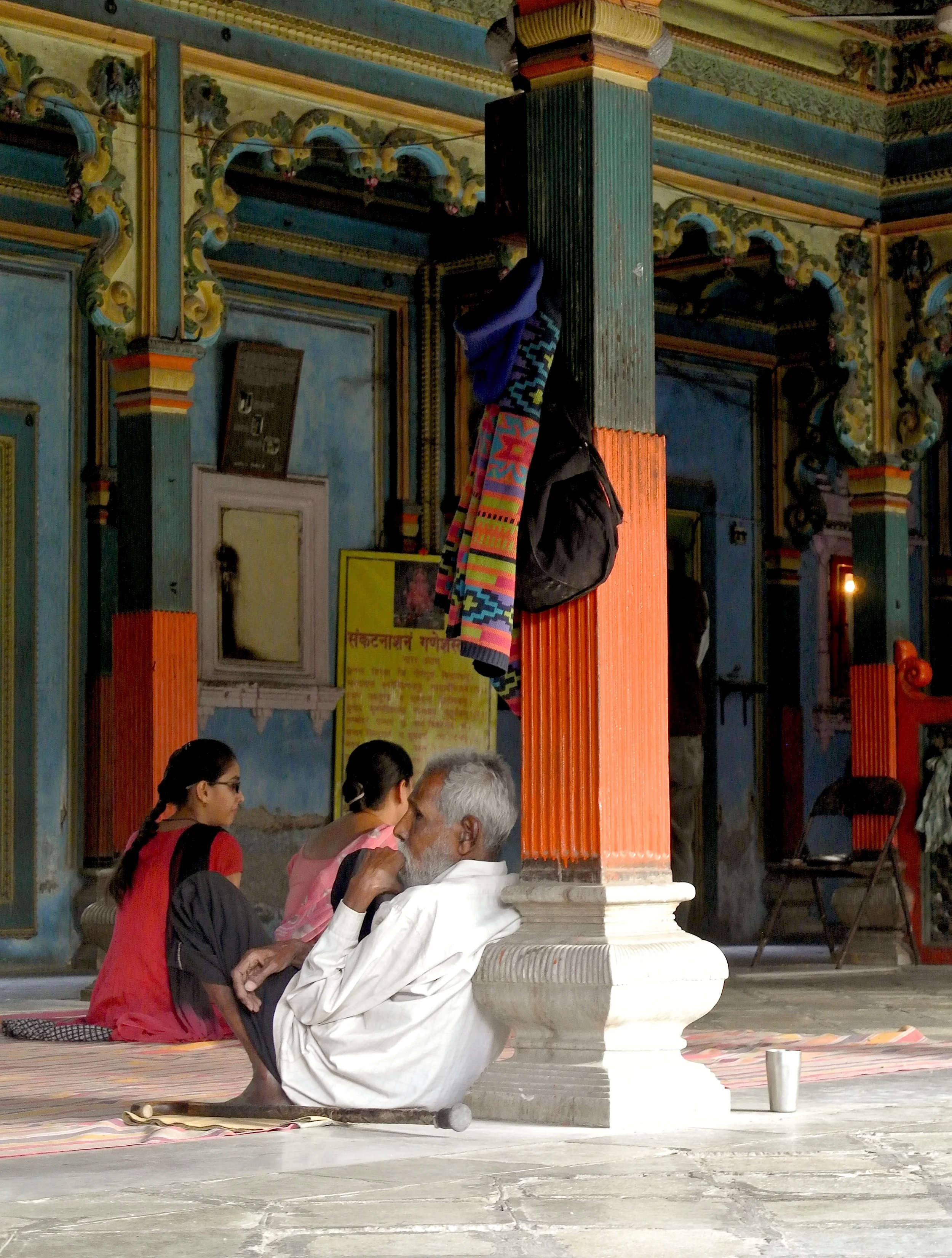
Worshippers inside a temple to Ganesha, the elephant-headed Hindu deity

Worshippers inside a temple to Ganesha, the elephant-headed Hindu deity

The marble idol of Lord Ganesha is placed with idols of his wives Riddhi and Siddhi within the inner temple.

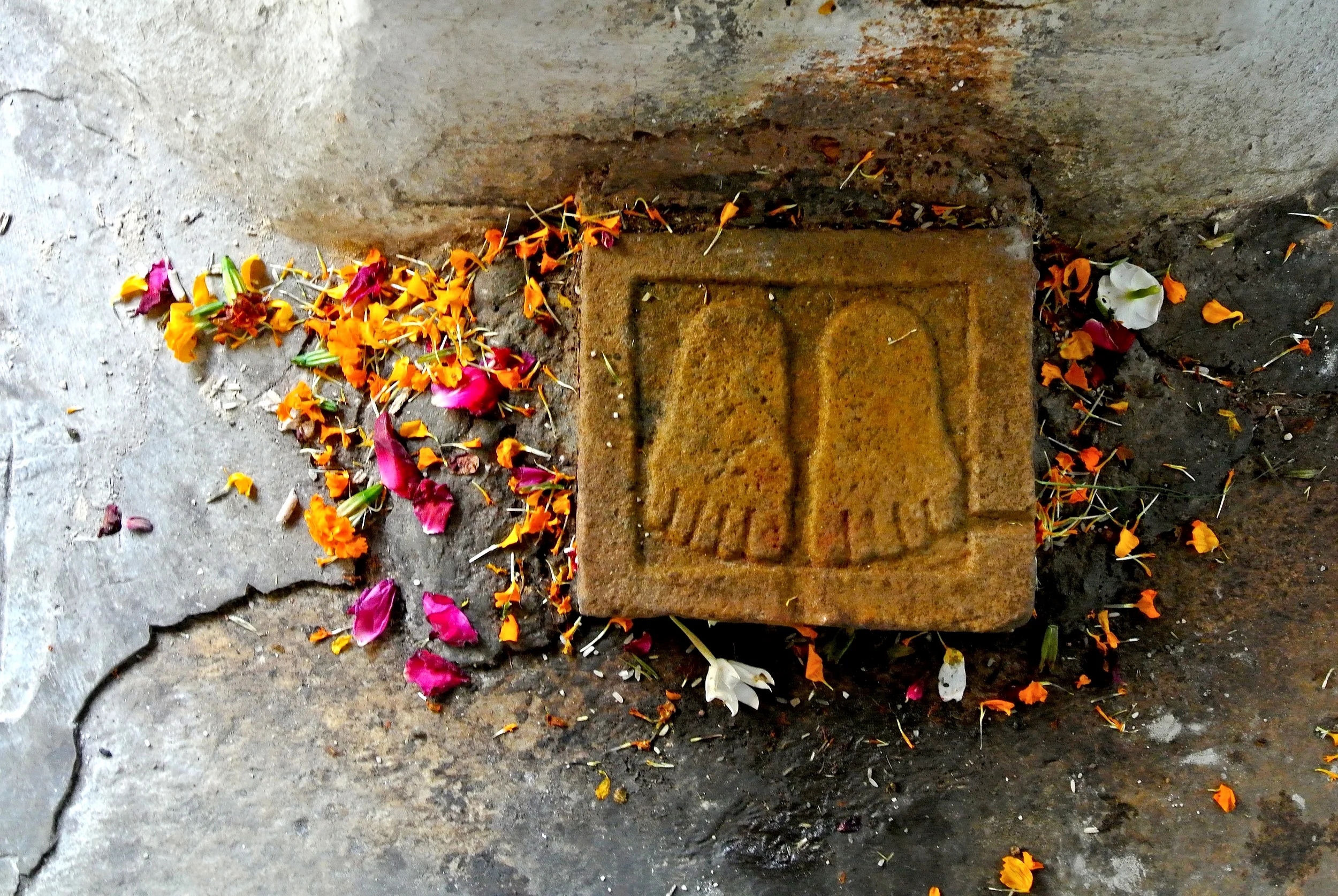
The Buddha's footprints at the Dhundiraj Ganpati Mandir Temple in Baroda, India

The Buddha's footprints at the Dhundiraj Ganpati Mandir Temple in Baroda, India

Off to the side of the temple, in a courtyard in the back, don’t miss the Buddha’s stone footprints, which were covered with scattered petals or puja, a ritual offering of flowers as a symbol of love and devotion.

The temple's not easy to get to — but it's worth the effort. –Duke


Safari Advice

What can you expect on an African safari? What are “the Big Five” animals to see? And is it dangerous?

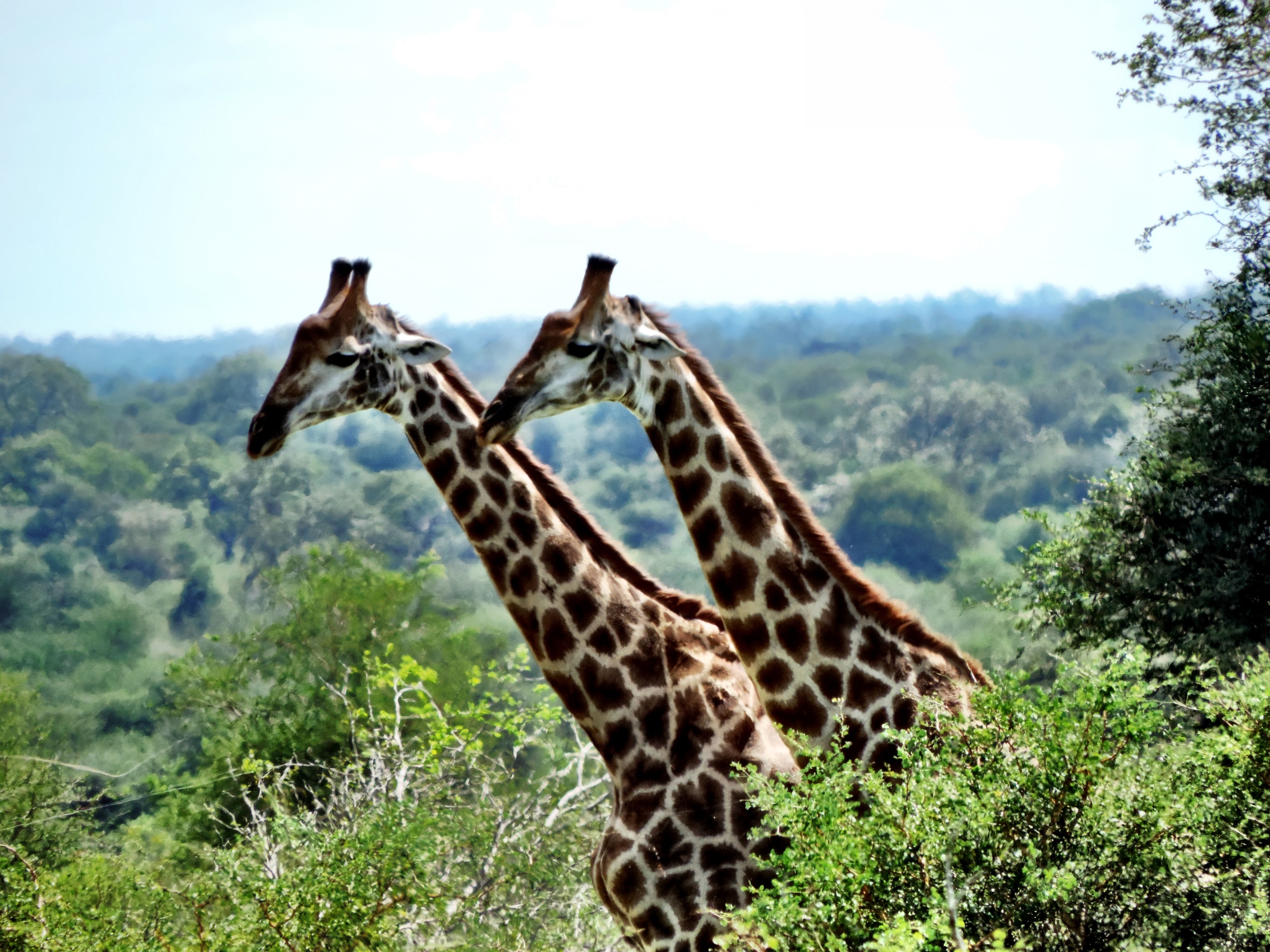
Giraffes at Kruger National Park in South Africa

Giraffes at Kruger National Park in South Africa

Wanderlust runs in the family. My cousin Kelly has taken two trips to Africa lately, including a safari at Kruger National Park in South Africa.

Here’s what her safari was like — and what you can expect if planning an excursion of your own. –Wally

The main rule in Kruger is that you don’t get out of your car.

What was the biggest surprise on your safari?

The biggest surprise was how many types of animals we saw. I expected to see elephants, zebras, giraffes, hippos, hyenas, etc. But I was so excited to see things like wild dogs, white rhinos, warthogs, kudus and even some cheetahs!

And, we saw so many babies — almost every type of animal had their babies with them. You see a lot of newborn animals in the summer (October through March). We were there in January. 

If you want to see babies, try going on a safari from October through March

If you want to see babies, try going on a safari from October through March


What was your favorite part?

Seeing the animals. Some people feel they had a successful trip to the park if they see “the Big Five,” which includes elephant, leopard, lion, rhino and buffalo. I did see the Big Five! That’s what you go to Kruger for, and there isn't much else to do there.


What’s a typical day like on safari?

We would be on safari early in the morning and late in the afternoon. Then, once we were back in camp by 6:30 p.m., we would cook dinner and talk about what we saw that day.

It’s typical to go to bed early so that you can be out by 5 a.m. to start your safari.


What were the people like?

They were great. Of course you’re surrounded by tourists, but a lot of South Africans go to Kruger, too. It’s a special part of their heritage.

The park rangers are very knowledgeable and interesting to talk to about the animals.


Did you ever feel like you were in danger?

No. The main rule in Kruger is that you don’t get out of your car.

There could be a lion 5 feet away, lying in the grass. We even went on night drives with a ranger, and I never felt like we were in danger.

On our last day in the park, we saw two lions lying in the middle of the road. We got pretty close to them to take pictures and I finally decided I should roll up my window — got a little nervous there.


What was the most interesting thing you ate?

Our friends cooked boerewors [a South African sausage, apparently] on the grill, which was so good.

And malva pudding [which contains apricot jam and is topped with cream sauce] for dessert is delicious.


Learn any fun expressions?

Some of the slang phrases we picked up from our friends were:

just now, which really means “in an unknown amount of time.” For example, "We’ll be eating dinner just now" (don’t get too excited, as that could mean two hours from now).

shame is typically used as a response to something negative, but some people use it all the time: "I am feeling so sick right now." "Shame." "I missed seeing the leopard in the tree." "Shame." Or "Our plane doesn't leave until 8 p.m." "Shame."

torch is a flashlight.

biltong is dried meat, or jerky.


Any final advice for those who want to go on a safari?

Here’s a special tip: Don’t forget to take malaria medicine!

A Guide to Indian Street Food: Vadodara Edition

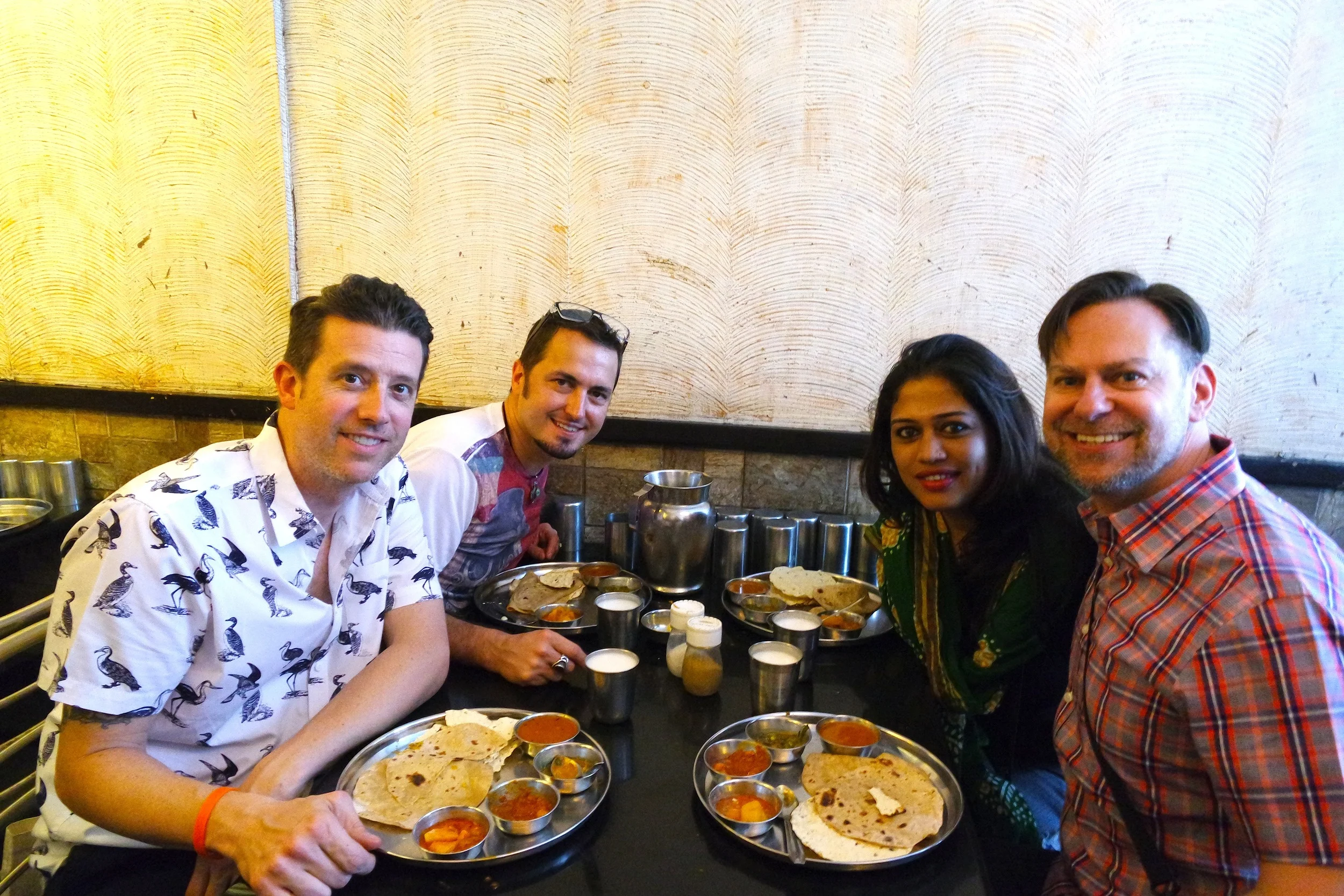
Wally, George, Manvi and Duke stuffing themselves silly on all-you-can-eat thali

Wally, George, Manvi and Duke stuffing themselves silly on all-you-can-eat thali

We have thali with the prettiest transsexual in Gujarat and sample paan, gulab jamun, pani puri and jelabi.


George took us to the offices of two NGOs, Lakshya Trust and Project Pehchān. The staff had just sat down to lunch to share some tiffin that had been delivered. They were so sweet, offering some to us. 

But we had other plans. We invited two hijra to join us for lunch, but Angeli had just had a sex change operation (she had her testicles removed; the penis would be a later surgery) and was on a strict diet of food she had to prepare at home to prevent infection. So the gorgeous Manvi joined us. 

I’ve never been very good at spitting. The reddish-brown fluid left my mouth in sloppy, staccato bursts.


thali

We walked down the street to experience the Gujarati version of thali, which George called "Indian tapas." 

We were seated at a table, where four round stainless steel trays were placed in front of us, each holding four small ramekins.

We had barely been there for 30 seconds before the servers, each bearing one item, began to fill our ramekins with food — which they will do continuously until you ask them to stop. We stuffed ourselves silly.

The meal included: 

  • Roti
  • Moong dal
  • Curries
  • Chana masala
  • Sabzi

It was all washed down with chaas, a buttermilk drink.


gulab jamun

For dessert we tried gulab jamun, which are balls of deep-fried ricotta-like cheese soaked in a sugary syrup and flavored with green cardamom and rose water.


paan

After lunch, George took us to a stall where we tried a traditional digestive known as paan.

It was quite the production and fun to watch. The paan vendor spread a seemingly absurd amount of ingredients onto a moist betel leaf, including:

  • Rosewater jam
  • Mint
  • Camphor
  • Tobacco
  • Rajsi gulab (cardamom seed pieces coated with silver — yes, actual silver!)

He folded these into compact triangular pouches that you pop into your mouth, gently chew and suck the insides out. The sensation was odd — like chewing a waxy tree leaf with an astringent, menthol wood-mulch filling.

The act produces an ample amount of saliva, which you're meant to expectorate. I’ve never been very good at spitting. The reddish-brown fluid left my mouth in sloppy, staccato bursts.


pani puri, or golgappas

The sidewalk that surrounds Sursugar Lake in the middle of Baroda is truncated. It would suddenly disappear, forcing us to walk amidst the chaotic traffic of auto rickshaws, cars and mopeds.

A 120-foot-tall statue of Lord Shiva stands at the center of the lake.

As we started our circumambulation, we saw a small billboard atop the Art Deco façade of the Pratap Cinema that displayed the peculiarly titled action movie Baby.

When we had almost gone all the way around the lake, we stopped at a street vendor selling a popular street sweet called pani puri, or golgappas.

This is one of George's favorite snacks and he treated us to the tiny, spherical fried puffs, which are briefly submerged in flavored coconut water, popped in the mouth and eaten whole.


jalebi

To complete our Gujarati culinary tour, George also took us to a sweet shop where we purchased jalebi, a traditional Indian sweet similar to a funnel cake. It's made with whole-wheat flour and is soaked in sugar syrup. Saffron in color, they're compact, coil-shaped, glossy and sweet. –Duke
 

The Pishtaco of Peru

A publication on the Peruvian monster, the pishtaco

A publication on the Peruvian monster, the pishtaco

Why one of the world’s creepiest vampire legends lingers to this day.


While hiking the Inca Trail in Peru, we heard stories about the monster that haunts the Andes: the pishtaco.

Despite its goofy moniker, there’s nothing funny about this vampiric creature. Its name comes from the local Quechua word pishtay, which means to behead, slit the throat or cut into slices.

Pishtacos lure their victims into the depths of the jungle, where they…wait for it…suck out and feast upon their body fat.

That should give you an idea what this monster does to its victims. But that’s not all.

It’s described as looking suspiciously like a white man who’s sometimes seen wearing a broad-rimmed hat.

Our guides would tell us to be wary and not to follow any strangers down a mountain path at night, for pishtacos lure their victims into the depths of the jungle, where they…wait for it…suck out and feast upon their body fat.

The legend probably derives from the arrival of the conquistadors — lighter-skinned invaders rumored to kill locals for their prized body fat.

“The first written account of pishtacos — or at least of a belief in pishtaco-like behavior — comes from the 16th century,” Daniel Engber writes on Slate. “The priest Cristóbal de Molina, a scholar of native languages and Incan culture, described a certain squeamishness among the natives living around Cuzco. They wouldn’t even deliver firewood to a Spanish home, he wrote in 1571, for fear of being killed and having their fat used as a remedy for some foreign disease.”


A retablo depicting the horrific work of the pishtaco

A retablo depicting the horrific work of the pishtaco

Modern-Day Pishtacos

Belief in the pishtaco lingers to this day. In fact, it’s been reported that the Andean people have rejected food aid, thinking it’s a ruse to plump them up to steal their fat. Honestly, from what I saw of them, their diet, which mainly consists of various varieties of potatoes, is doing a fine job of that all by itself.

A good deal of the blame lies with a gang of villains caught in 2009. The tale that arose was later considered a hoax or governmental cover-up — but it sure makes for a good ghost story.

The gang members hunted in the jungles of Huánuco, luring or kidnapping up to 60 victims, who were bludgeoned and beheaded.

Then came the grisly part: They’d hang the corpses upside-down and use candles below to melt off the bodies’ fat, which was collected in empty Inca Kola bottles. The human fat they collected was supposedly sold to supply the European beauty market.

Gathered around a campfire along the Inca Trail, far from civilization, it was easy to imagine figures lurking at the edges of the trees. We didn’t even consider investigating. –Wally

Laxmi Vilas Palace, Vadodara

Laxmi Vilas Palace in Vadodara, India, as seen from the back gardens

Laxmi Vilas Palace in Vadodara, India, as seen from the back gardens

One of the must-see places to visit in Vadodara, India.


When we awoke early the following morning, the nearby ashram was playing devotional music, which George says is the same every day. Somehow there is something soothing in these sounds, paired with the way the light filtered through the window, a pink lemonade sun rising beside a lone radio tower.

Our first stop of the day was the Laxmi Vilas Palace. Home to the Gaekwad dynasty, the surname supposedly roughly translates to “cow door.” Or maybe “protector of cows.”

Mant committed suicide for fear that he had got his calculations wrong and that the place would fall down.

We stopped at the reception desk to pick up audio guides and met Avanish Pawal. He asked where we were from, as a relative of his is working in Milwaukee as an interior designer. He informed us that a few of the rooms were closed to the public because there was a photography shoot in progress.

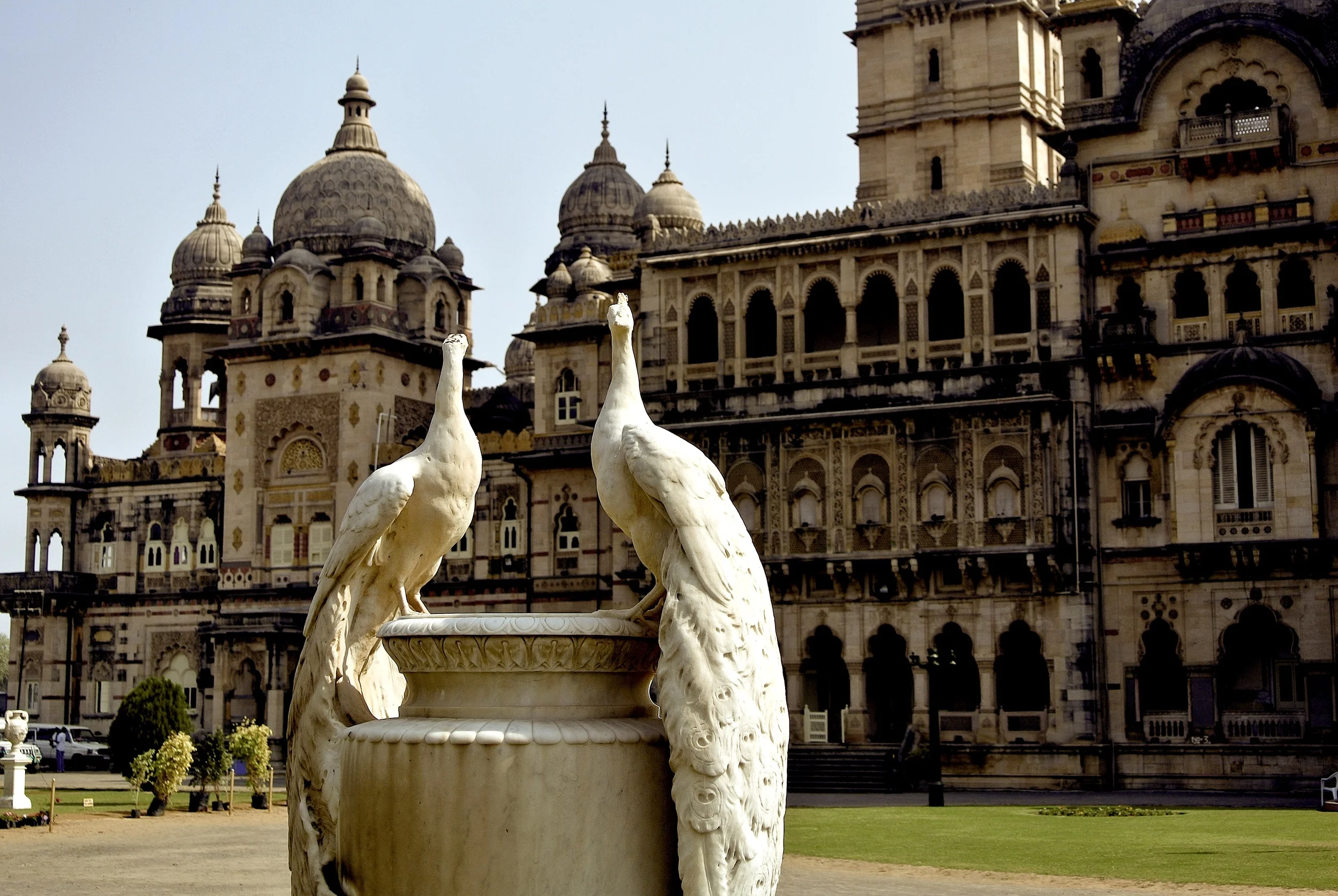
We began our tour by viewing the palace from the garden, with its European-style statues, including a beautifully carved peacock urn.

Commissioned by Maharaja Sayajirao Gaekwad III, the palace’s original design was by architect Major Charles Mant, but was finished by Robert Fellowes Chisholm in 1890 after Mant committed suicide for fear that he had got his calculations wrong and that the place would fall down.

Duke and Wally in front of Laxmi Vilas Palace, a highlight of Vadodara, India
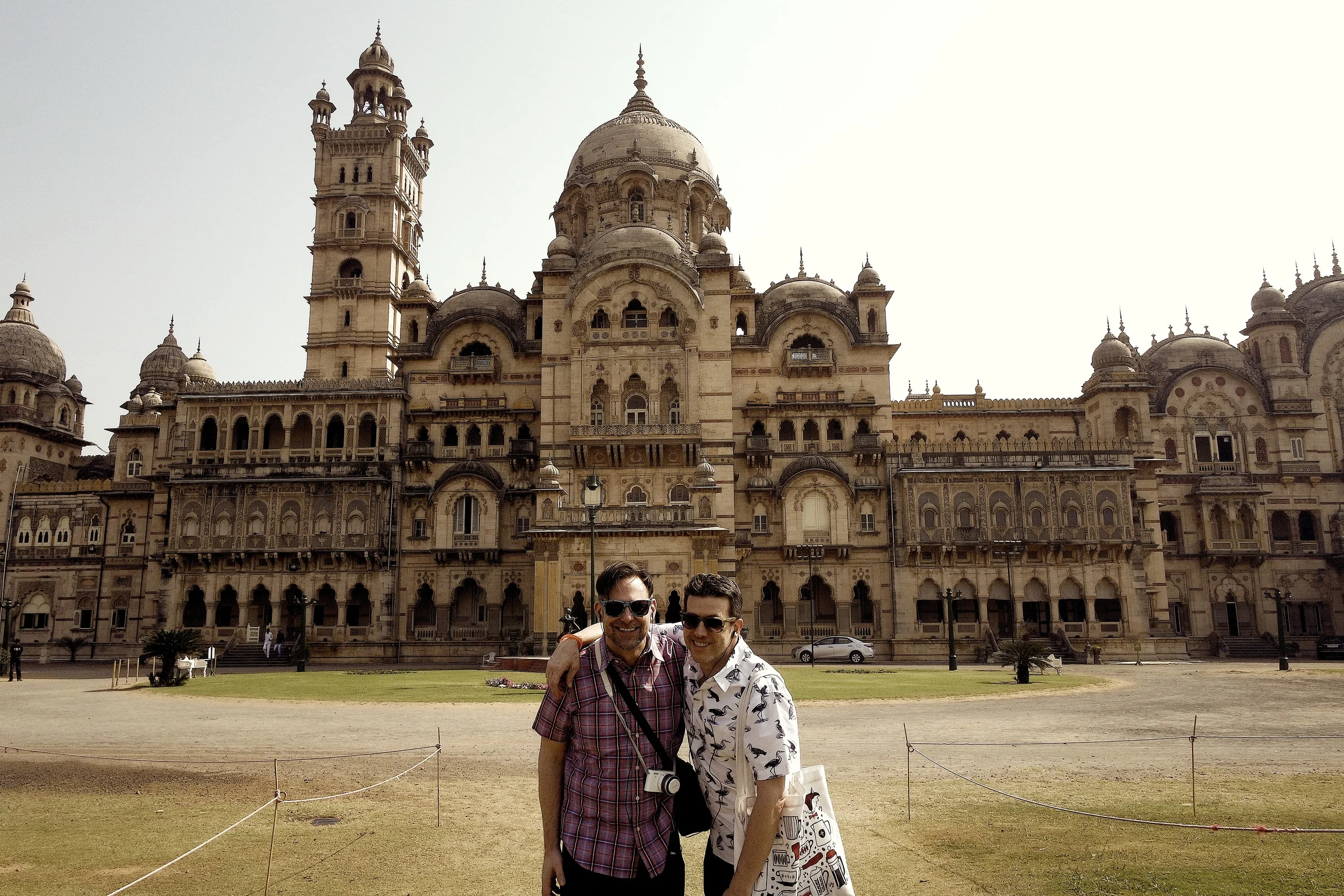
Duke and Wally in front of Laxmi Vilas Palace, a highlight of Vadodara, India
The palace was erected in Indo-Saracenic style — a fusing of traditional Indian design elements, Mughal Empire Saracenic style and Gothic Revival, which were favored by both Mant and Chisholm.

Local tradition holds that it was the most expensive private building constructed anywhere in the world during the 19th century.

At the time of construction, its interiors were considered quite modern, resembling a European estate with such amenities as elevators.

Part of the ground floor is open to the public. However, photography of the interior is prohibited.

One of the highlights for me was the armory, which displayed an impressive collection of swords, maces and claw-like weapons designed to fit over the knuckles called bagh naka, which means “tiger’s claw” in Hindi.


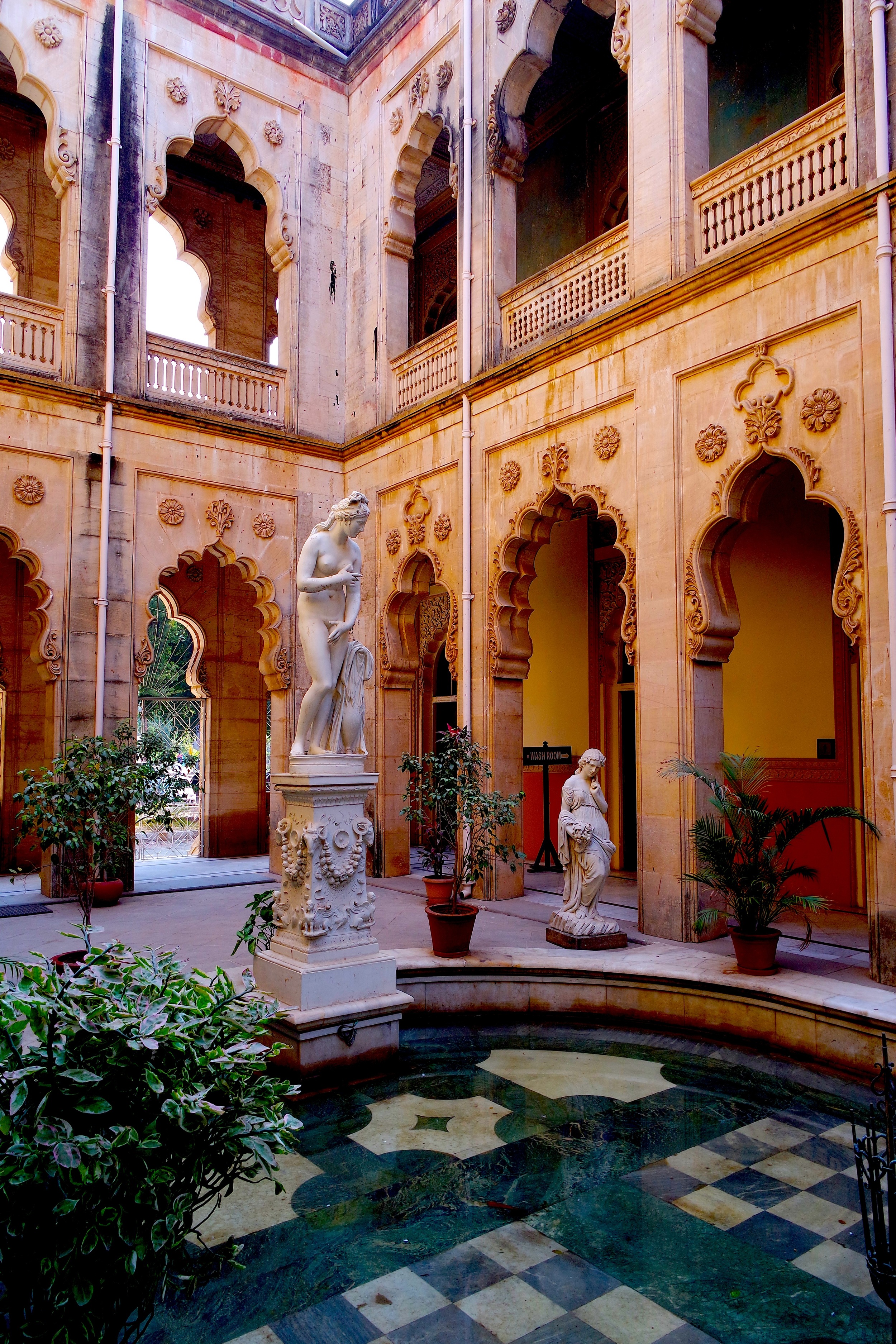
We didn’t get to see Durbar Hall, as it was closed for an elaborate photography shoot. But we did get to enjoy the Italianate courtyard with its marble statuary and water fountains just outside of it.

Gorgeous interior courtyard at Laxmi Vilas Palace in Vadodara, India

Gorgeous interior courtyard at Laxmi Vilas Palace in Vadodara, India

If there’s one attraction to see in Vadodara (commonly known as Baroda), this is it. –Duke

American Expats Tell What It’s Really Like to Live in Paris

Kent and Michael, our Parisian expat correspondents

Kent and Michael, our Parisian expat correspondents

What do Parisians really think about Americans? What are the secret spots in Paris? Have things changed since the terror attacks?


Kent and Michael are a couple from the United States who have been living in Paris for years. They’ve been together for over a decade, despite being total opposites. Kent thrives on different cultures and loves travel. Michael has a caustic wit and enjoys the comfort and convenience of American society.

I decided to pose some questions to them both about what it’s like being an expat in gay Paree.

Fat, middle-aged couples who dress like they are going on a hike talking loudly. You can spot them a mile away.

“Kent’s answers are long and heartfelt,” Michael says. “I’m sure they will totally work in this snap-snap, in-your-face world we live in. She loves your questions.”

Then: “Let me drink my wine first. Je suis près [I’m ready].” –Wally

The lovely couple celebrating Halloween on the Paris Métro

The lovely couple celebrating Halloween on the Paris Métro

What’s your favorite thing about Paris? 

Kent: My favorite thing about Paris is that no matter how often you visit or how long you lived here, there is always something new to discover, whether a neighborhood, restaurant, venue, etc. Like our most recent find last summer was a watering hole called Ground Control: a deserted train junction converted into an open-air beer and wine garden on the north side of Paris.

Michael: It’s like being stuck in the 1970s but you can have a smartphone. 


What’s the dumbest thing Parisians do? 

Kent: Restaurants often make you share menus. Waiting in line is really pushing and shoving in a crowd.

Michael: It’s a tie. They complain about air conditioning being environmentally bad, but then in winter they use electric heaters to heat the outside. Also they think AC causes diseases. 


Have things changed since the terror attacks? 

Kent: The only thing you really notice since the attacks are more armed military guards on post at certain locations. Otherwise, life seems to continue as it was. The week after the Bataclan attack, we ate at a fantastic Italian restaurant owned by Italians that was mobbed like any other weekend. It was literally steps from one of the restaurants that was attacked.

Michael: Have things changed since the terror attacks? Not like in the U.S. Days after, everyone was out. They defy, unlike Americans, who watch media that spins them into an uneducated hate frenzy. There are men with machine guns all over…like Tel Aviv.


How do American tourists act in Paris? 

Kent: American tourists indeed live up to their stereotypes, often not adapting to the local culture. Most stereotypes apply: Americans tend not to make efforts to speak French and expect everyone to speak English. Parisians may or may not find this a bit arrogant. If a Parisian is a little younger and travelled, he or she will tend to be open to speaking English and even showing off their language skills.

Americans also tend to be loud. The normal indoor or even outdoor voice used by the French tends to be several levels lower than a standard American range. So what seems like normal talking levels is actually quite a bit louder to the locals.

You see this a lot in restaurants where a table of Americans draws some disparaging looks from neighboring French who obviously consider the voice volumes a bit obnoxious. The Americans tend to be oblivious.

Also, Parisians can call out the American tourists by the way they dress. Middle-class families tend to wear comfortable, non-fashionable jeans with braided belts, docksiders or sneakers with sports backpacks and/or huge purses.

Michael: Fat, middle-aged couples who dress like they are going on a hike talking loudly. You can spot them a mile away. Khakis or casual shorts or jeans with Nike running shoes or those lesbian-looking shoes from The Walking Company.


Most useful French phrase? 

Kent: Key phrase: At a restaurant, to get a waiter’s attention, one should say “S’il vous plaît!” Not so much “Excusez-moi.”

Michael: Sucez-moi? [a polite way to say, “Suck me”]


What do Parisians really think about Americans? 

Kent: Overall, Parisians have a love/hate relationship with Americans. Some idealize the U.S.: 24-hour stores, more conveniences, friendlier people (especially in customer service), better opportunities, better income…

Other Parisians see the negative side: lack of culture and history, and a more soulless, capitalistic way of life.

Michael: They bitch how fat and uncultured we are but take pics of a Reese’s end cap at a store like it was the Empire State Building and watch all our TV shows and movies. We are the popular kid they hate but want to know.


Best secret spot in Paris?

Kent: The longstanding Andy Wahloo restaurant that is like eating at your crazy uncle’s mansion, complete with secret smoking rooms you can only access through a secret door of a hallway wardrobe.

Michael: Chez moi. Je blague [I joke]. Um…Rosa Bonheur [a bar in Parc des Buttes-Chaumont]. It always pleases tourists, straight or gay, when we bring them.