8 Wild Facts About Saffron

Why are people mad about saffron? The fragile tendrils of the Crocus sativus flower yield the most expensive spice in the world. 
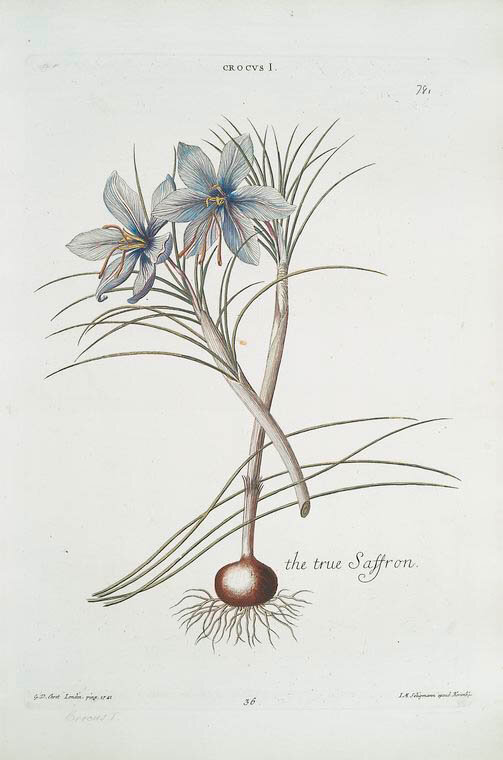
Three small strands that jut out of the crocus flower are what we use as the spice saffron.

Three small strands that jut out of the crocus flower are what we use as the spice saffron.

The most precious and costly spice in our cupboard — and most likely yours — is saffron, which comes from Crocus sativus, the saffron crocus. Its name is derived from the Arabic za’faran, which has its roots in the word for yellow. Today, Iran is the world’s top producer, though the plant is also a cash crop of Spain, Greece, Morocco and the Kashmir region of India. 

Saffron might not be worth its weight in gold — but it’s the most expensive spice in the world.

Saffron might not be worth its weight in gold — but it’s the most expensive spice in the world.

1. It’s said that a pound of saffron is worth more than a pound of gold, but this turns out to be a myth. 

Despite this, saffron is still the most expensive and labor-intensive spice in the world. Fortunately, a little goes a long way. It only takes a pinch to infuse its aromatic, earthy flavor and brilliant color. Saffron is integral to far-ranging dishes, from Spanish paella to Indian biryani, from Persian pilau to the yeasted saffron buns of Cornwall, England. Its widespread usage was often introduced by conquerors: the Moors in Spain and the ancient Persians in India. 

The crocus is sterile and needs to be planted each year, and then harvested by hand.

The crocus is sterile and needs to be planted each year, and then harvested by hand.

Interestingly, saffron is a sterile plant that is difficult to reproduce without human intervention. New plants are grown by digging up and replanting the corm (the bulb-like part of the stem). Its high price makes sense: There’s no way to harvest the delicate crimson filaments of the Crocus sativus mechanically. The strands, known botanically as stigmas, must be carefully removed from the heart of the small violet blooms by hand, and there are only three per flower. To put this into perspective, approximately 350 tiny threads of saffron make up a single gram. So, it takes about 75,000 flowers for 1 pound of saffron: Its retail value is estimated at around $5,000 a pound. A pound of gold as of this writing is worth over $27,000.

Buddhist monks, like these in Cambodia, don’t waste saffron on dyeing their robes; they use other natural dyes, including tumeric.

Buddhist monks, like these in Cambodia, don’t waste saffron on dyeing their robes; they use other natural dyes, including tumeric.

2. The robes of Buddhist monks aren’t actually dyed with saffron.

When I think of my first trip to Southeast Asia, I can picture the vivid saffron-colored robes worn by the Buddhist monks of Cambodia. According to monastic discipline, the robes must be made from cloth that is naturally dyed using indigenous plants, barks or spices, though saffron is too expensive to be used widely. Instead, that distinctive yellowish-orange color most often comes from the knobby turmeric root.

Perhaps the association with saffron and the dye used for monks’ robes comes from a transliteration of the botanical name for turmeric, curcumin, which originates from the Arabic kurkum, meaning saffron. 

I can attest to the dyeing power of turmeric, from the intense amber stains it left on my hands and the chute of my juicer.

What exactly is Donovan’s “Mellow Yellow” about? Who’s this Saffron he’s mad about?

What exactly is Donovan’s “Mellow Yellow” about? Who’s this Saffron he’s mad about?

3. The song “Mellow Yellow” by Donovan was actually about a female sex toy.

The first time I recall hearing the word saffron was riding in a car with my dad while he was listening to an oldies station. The song was “Mellow Yellow,” written and recorded by the Scottish singer Donovan. It begins, “I’m just mad about Saffron. Saffron’s mad about me.” I wasn’t sure if it was saffron the spice or a woman with that name that made him mellow. But when the song was released in 1967, a rumor emerged that it was about smoking bananadine cigarettes, the scraped and dried white pith of a banana peel, which were believed to have hallucinogenic properties. The myth has since been debunked, as Wally can attest from a high school “experiment,” when he tried smoking dried banana peels, to no effect.
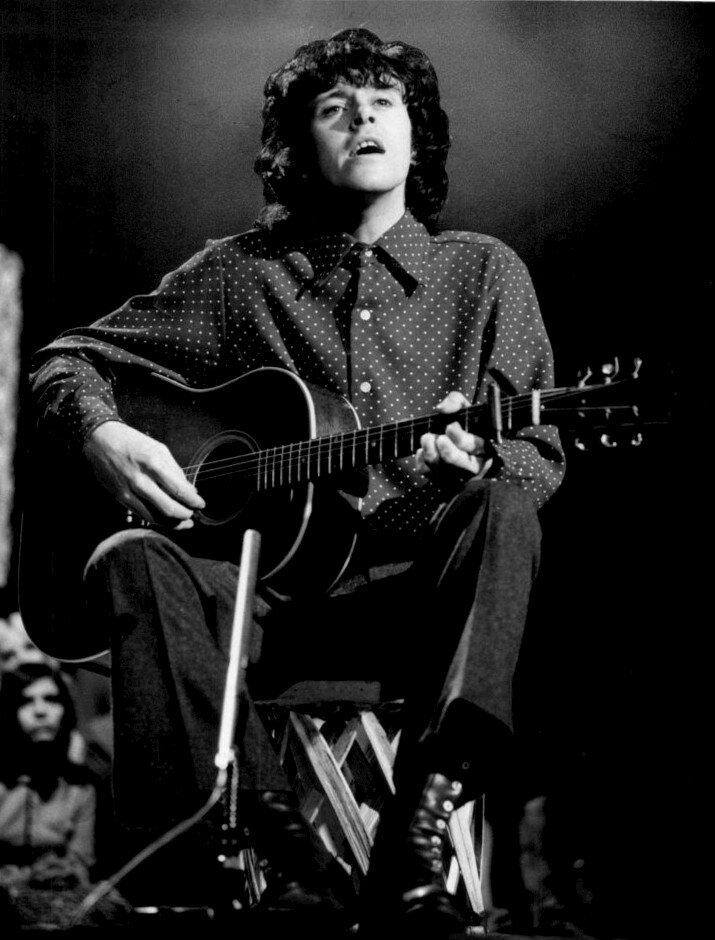
Donovan admitted that “Mellow Yellow” was about a vibrator.

Donovan admitted that “Mellow Yellow” was about a vibrator.

Donovan later admitted in an interview in NME that the idea for the song came from an ad for a yellow vibrator that he saw in the back pages of a magazine. You can catch the reference in the lyrics “Electrical banana is gonna be a sudden craze.” 

Could this have been the sex toy that inspired the lyrics “electrical banana”?

Could this have been the sex toy that inspired the lyrics “electrical banana”?

As for the phrase “mellow yellow,” it first appeared a half-century earlier in James Joyce’s Ulysses in a description of the protagonist’s unfaithful wife Molly Bloom’s buttocks. 

Not surprisingly, the name Saffron gained popularity after the release of Donovan’s song. Quite rightly.
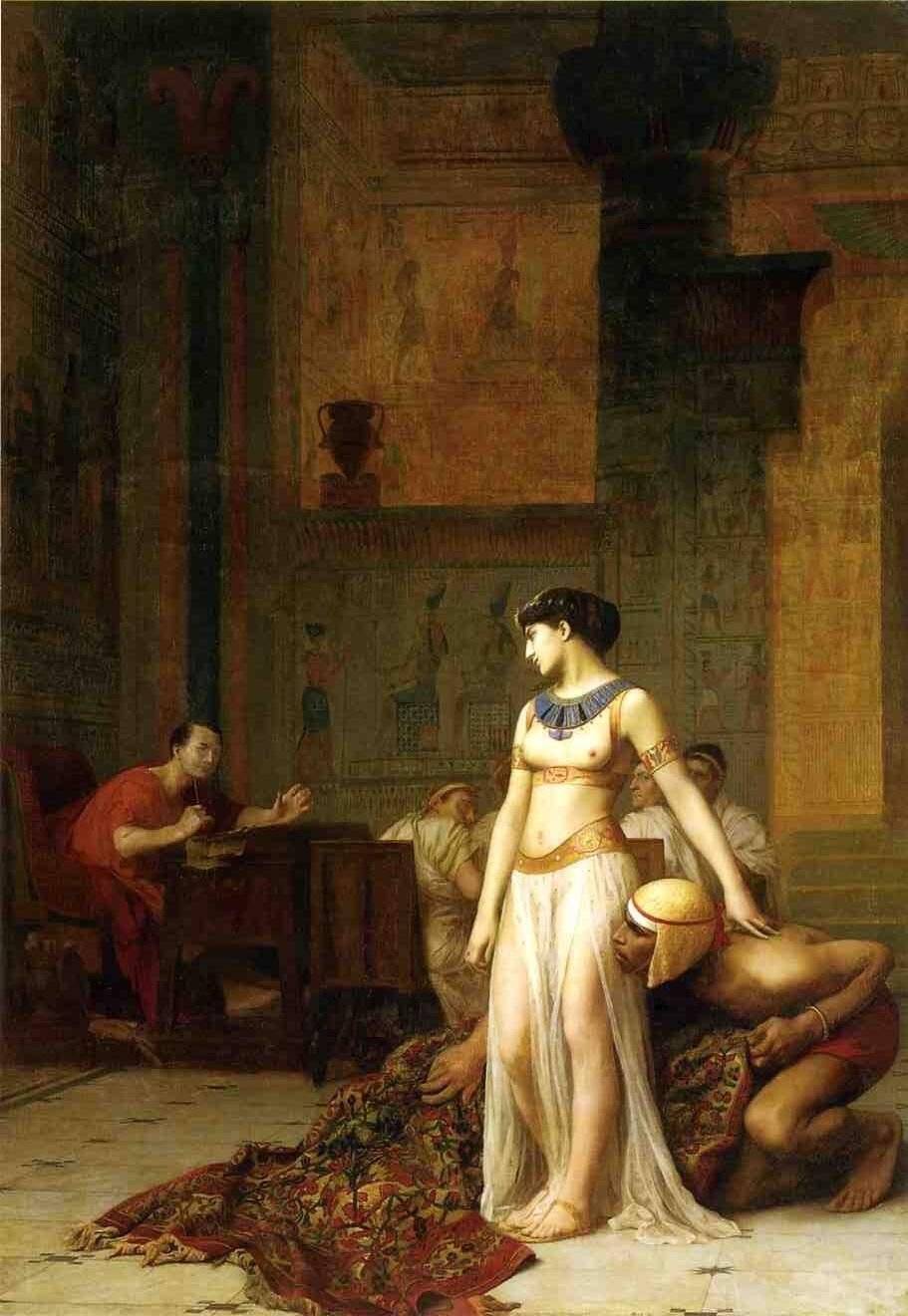
Cleopatra had undeniable sex appeal and claimed two Roman leaders as her lovers. Was it because of her saffron and mare’s milk baths?

Cleopatra had undeniable sex appeal and claimed two Roman leaders as her lovers. Was it because of her saffron and mare’s milk baths?

4. Cleopatra and Alexander the Great used saffron as a health and beauty hack.

Cleopatra, the legendary seducer of not one but two powerful men of Ancient Rome, bathed in saffron-infused mare’s milk as an all-natural bronzer and aphrodisiac to enhance her allure. The lactic acid contained in milk is believed to gently exfoliate dead skin cells, while saffron gave her skin a healthy glow and acted as a perfume. In fact, saffron baths were a luxurious trend amongst the elite of Rome. And the Macedonian ruler Alexander the Great enjoyed soaking in saffron-colored water, convinced it would heal his battle wounds. 

An illuminated manuscript that depicts women shopping at a spice merchant’s stall

An illuminated manuscript that depicts women shopping at a spice merchant’s stall

5. People in the Middle Ages were willing to die for saffron.

The marketplaces of Medieval Europe were filled with the exotic spices and spoils of returning crusaders. Saffron was so popular in 14th century Europe that the theft of a single ship en route to Basel, Switzerland, carrying 800 pounds of the spice led to the 14-week Saffron War that lasted until the shipment was returned. 
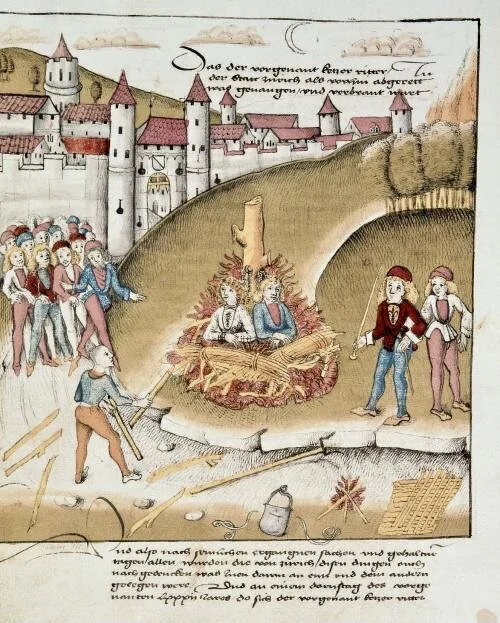
Perhaps these two were caught selling counterfeit saffron — and were burned at the stake!

Perhaps these two were caught selling counterfeit saffron — and were burned at the stake!

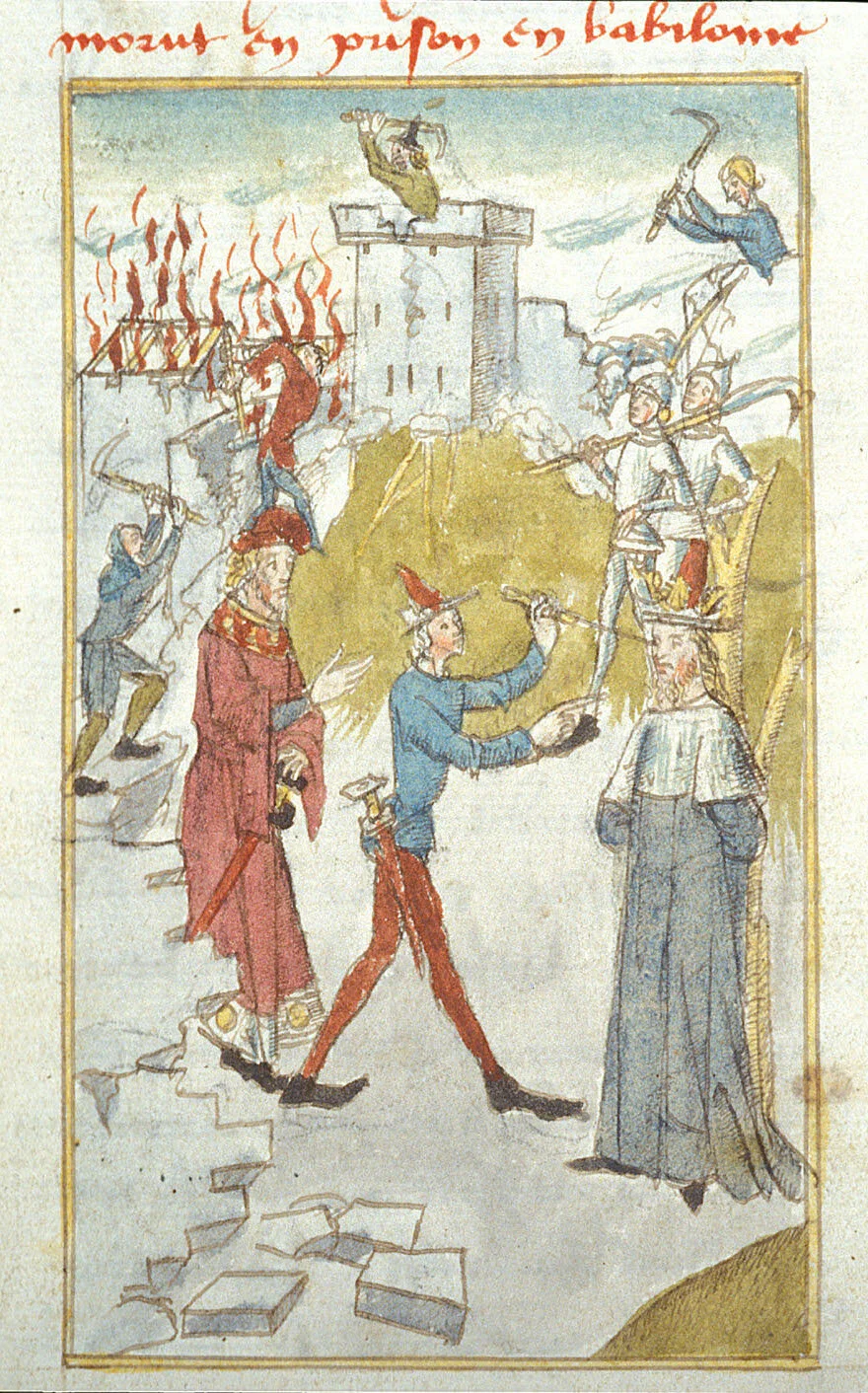
Its purity was of such importance that the Safranschou code was enacted to deter fraud. Because of saffron’s high price tag, cheap substitutes were often passed off as authentic saffron. Merchants caught selling adulterated forms of the spice faced the possibility of imprisonment, public burning or being buried alive. 

Be careful getting too transfixed by dancing nymphs — you might end up being turned into a flower!

Be careful getting too transfixed by dancing nymphs — you might end up being turned into a flower!

6. Saffron features prominently in a couple of Greek myths. 

In the most common version of the story, a handsome Arcadian youth named Krokos was passing through the Athenian woods, when he spied the nymph Smilax dancing with her friends. He was bewitched and began to visit the forest regularly to seek her out. For a time, Smilax allowed him to find her but couldn’t decide if she should let herself be courted by a mortal. The gods were not amused, though, and lost patience with the couple. They struck Krokos with their wrath, transforming him into a small purple flower that bears his name, the crocus. Its bright red stigmas glow with his fiery, unrequited love. Smilax was simultaneously turned into a thorny briar vine. Why such a choice? Because the vine would strangle the flower, the would-be lovers were prevented from ever meeting again.
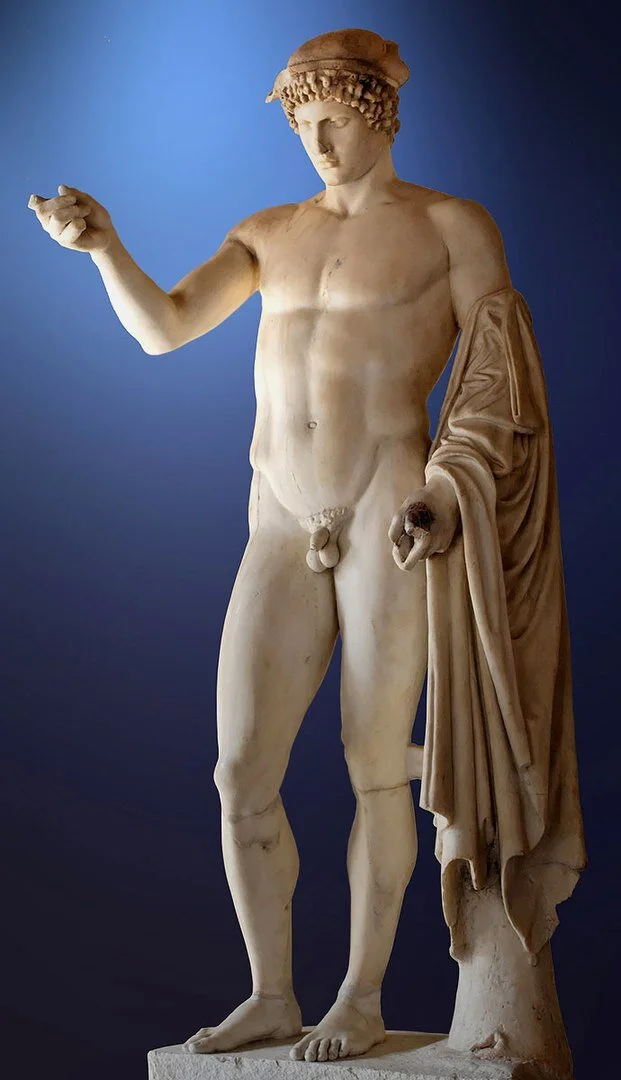
The bisexual Greek god Hermes had a male lover who was killed by a discus — so he turned him into a crocus.

The bisexual Greek god Hermes had a male lover who was killed by a discus — so he turned him into a crocus.

In an alternate version of the tale, the Greek trickster god Hermes was smitten with a young Spartan named Krokos, or Crocus. One day, while playing a game of discus, Hermes accidentally struck the young man on the head, killing him instantly. Distraught by what had happened, Hermes turned his lover into a purple flower, which became known as the crocus. And the three drops of blood upon his head became the red stigmata used for the spice saffron.  
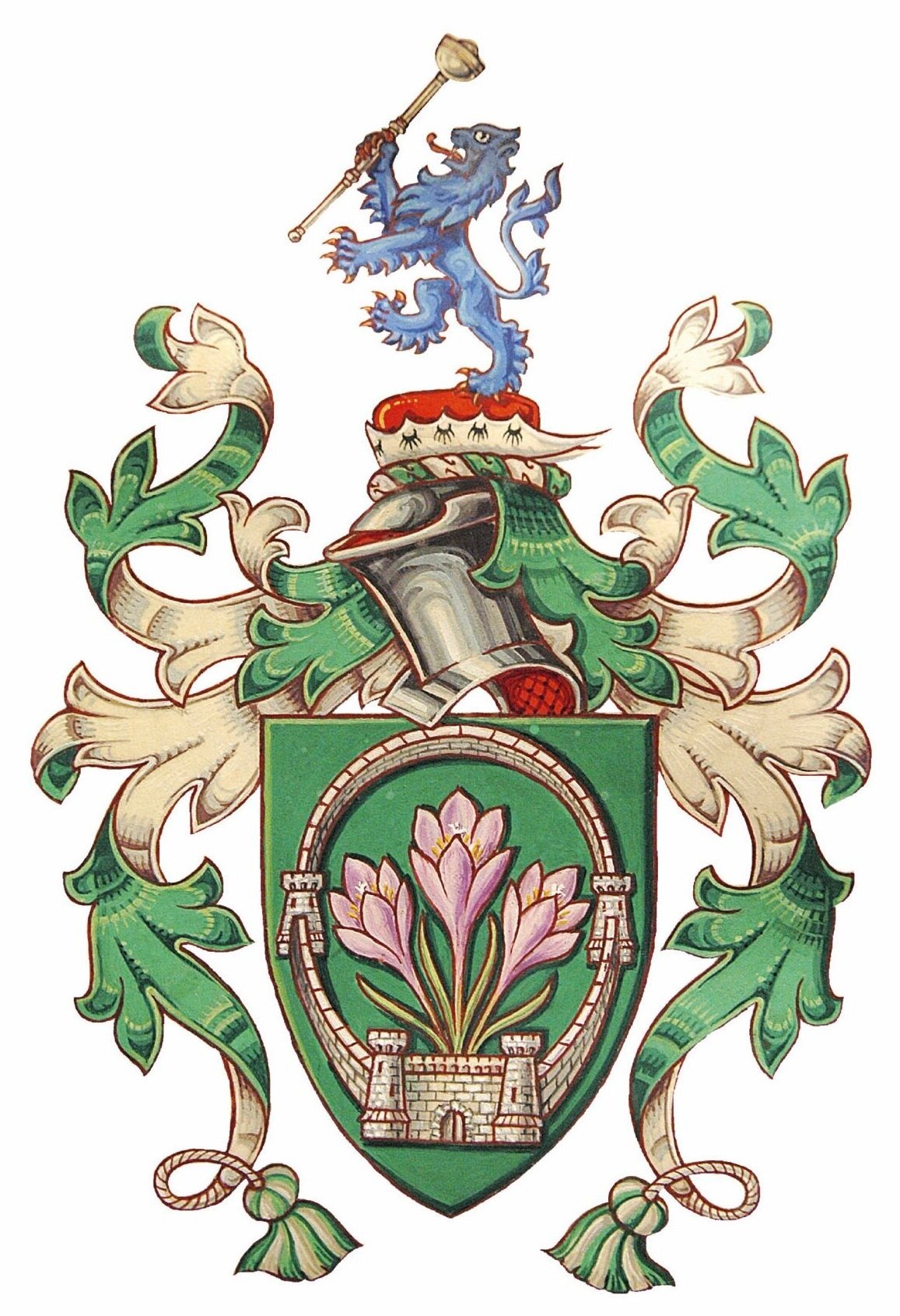
The coat of arms for the town of Saffron Walden in England — note the three crocus flowers at the center

The coat of arms for the town of Saffron Walden in England — note the three crocus flowers at the center

7. Saffron found its way to Britain from the Crusades.

Britain’s often damp and chilly weather seems far from the perfect climate for producing saffron, which thrives in arid terrain. However, it was grown commercially in the fields of Norfolk and Suffolk from the 15th to 18th centuries. It was most likely brought to England from the Holy Land during the Crusades, either by the Knights of St. John or, as popular lore goes, by a pilgrim who risked his life by concealing a saffron corm in the hollow of his walking staff. 

The spice was cultivated in large quantities in the village of Chipping Walden and brought prosperity to the small town — so much so that it changed its name to Saffron Walden. The lasting impact can be seen on the town’s official coat of arms: three crocus flowers surrounded by two castle towers and its walls, a heraldic pun — as in, “Saffron Walled-in.” 

A lot of saffron in Spain finds its way into paella.

A lot of saffron in Spain finds its way into paella.

8. Each country has its own standard for grading and classifying saffron, based upon aroma, color and flavor.

Not all saffron is created equal. There are different strengths or grades determined by how much of the yellow stamen is still attached to the stigma. In Spain, for example, there are four varieties: coupe, la mancha, río and sierra. Coupe is pure red stigmas only and has the highest amount of crocin, the property responsible for the distinct aroma of saffron. For Iranian traders, the highest grade is sargol, which means “top of the flower” in Farsi and consists of the strongest grade with only the tips of the dried red stigmas. –Duke


The Birth of Islam and the First Two Khalifas: Abu Bakr and Umar

Who were the first khalifas after the death of the Prophet Mohammed? And how did they shape the new religion of Islam?

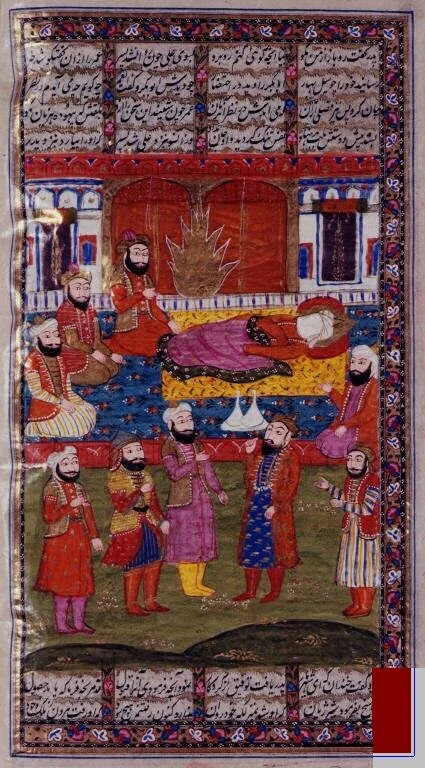
The selection of Abu Bakr as the first successor to the Prophet Mohammed caused the Sunni-Shiite schism in Islam that remains to this day.

The selection of Abu Bakr as the first successor to the Prophet Mohammed caused the Sunni-Shiite schism in Islam that remains to this day.

The time immediately after a spiritual leader’s death can make or break a budding religion — and determine in what direction it goes. 

So it was for Islam after the death of Mohammed. Muslims needed another leader, but how could anyone compare to the irreplaceable Prophet — especially since he had declared that there weren’t going to be any more God-guided messengers like himself?

Abu Bakr is chosen as the Prophet Mohammed’s successor.

Abu Bakr is chosen as the Prophet Mohammed’s successor.

A group of decision-makers unanimously decided upon Abu Bakr, a close companion of Mohammed, giving him the title khalifa (or, caliph, to the Western world). The designation was quite modest: It means “deputy.”

Not everyone was happy with the decision. Ali, whose father had adopted Mohammed, was essentially a brother to the Prophet. He was also the first male Muslim, and time and time again, he showed his valor in defending Mohammed and Islam. 

But Ali had his youth working against him. He was just over 30, while Abu Bakr was almost 60. At the time, choosing a younger man over an older one was unthinkable. In fact, the word for a tribal leader, sheikh, literally translates to “old man.”

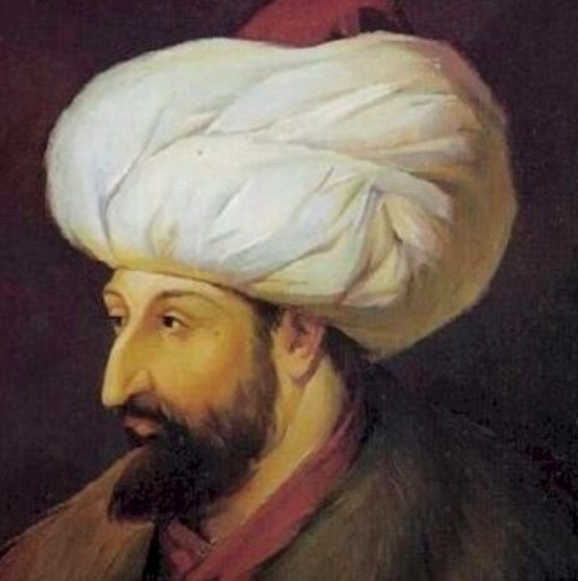
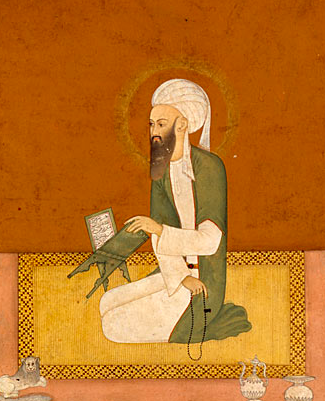
The first khalifa Abu Bakr, founder of the Sunni branch of Islam

The first khalifa Abu Bakr, founder of the Sunni branch of Islam

Abu Bakr, the First Khalifa: The Start of Sunni vs. Shi’i 

The disagreement between the two men’s factions eventually led to the major sects of Islam: Those who favored Ali developed into Shi’i, which means “Partisans.” Abu Bakr led the Sunnis. 

Tribes soon began to secede from the alliance that Mohammed had forged, refusing to pay the charity tax to the treasury at Medina. 

“Had Abu Bakr allowed these departures, Islam would surely have gone in a very different direction,” writes Tamim Ansary in Destiny Disrupted: A History of the World Through Islamic Eyes. “It might have evolved into a set of practices and beliefs that people embraced individually. But Abu Bakr responded to the crisis by declaring secession to be treason.”

Abu Bakr held the role of khalifa for a short time (11-13 AH, or 632-634 CE) but set a hardline, all-or-nothing orthodoxy — in contrast to his genial persona as a kindly old man known to pass out candy to children on the street. (Note: The Islamic calendar follows a dating system designated AH, from the Latin anno hegirae, "in the year of the Hijra,” when Mohammed and his followers migrated from Mecca to Medina and established the first Muslim community, or Umma.)

Abu Bakr died from a chill after a bath — but not before he named Omar as his successor.

Abu Bakr died from a chill after a bath — but not before he named Omar as his successor.

The Second Khalifa: Omar the Powerful, Omar the Forgotten

A hot bath, a cold breeze — and, a mere two years into his role as khalifa, Abu Bakr was on his deathbed. Not wanting any arguments, he named Omar (aka Umar) as his successor, with young Ali passed over once again.

Omar was about as opposite as you could get from the gentle Abu Bakr. He was a large rough-and-tumble kind of dude, with a legendary temper. In fact, he had been on his way to kill Mohammed, when he passed his sister, reading under a tree. When she told him she had become a Muslim, he snatched the Qur’an from her hand. It was open to a verse that seemed to speak directly to Omar, and that was it. He was converted. 

Omar shaped the religion in numerous lasting ways — an impressive legacy despite not being well known. During his time as khalifa, from 13-24 AH (634-644 CE), “he set the course of Islamic theology, he shaped Islam as a political ideology, he gave Islamic civilization its characteristic stamp, and he built an empire that ended up being bigger than Rome,” Ansary writes. “Any one of these achievements could have earned him a place in the who’s who of history’s most influential figures; the sum of them make him something like a combination of Saint Paul, Karl Marx, Lorenzo di Medici and Napoleon. Yet most people outside Islam know him only as a name and perhaps a one- or two-sentence descriptor: he’s the second khalifa, a successor of Mohammed — that’s about it.”

Omar who? The second khalifa of Islam, should be known to all as the man who shaped the Muslim world and ruled over an empire larger than Rome’s.

Omar who? The second khalifa of Islam, should be known to all as the man who shaped the Muslim world and ruled over an empire larger than Rome’s.

Omar set out to make Islam a just and egalitarian community — while launching a military campaign that succeeded despite overwhelming odds. 

His choice to use the term jihad to describe a war of conquest kicked off the controversy that lasts to this day. Jihad translates to “struggling,” and is supposed to only apply to fighting in self-defense. In an ironic bit of moral gymnastics, Islam is believed to be a realm of peace, therefore violence against non-Muslims can be justified because that bloodshed is ultimately helping expand the realm of peace. That strikes me as a bogus argument. Then again, Jesus preached peace, yet Christians have used religion to validate countless atrocities, from the Crusades to modern-day homophobia. 

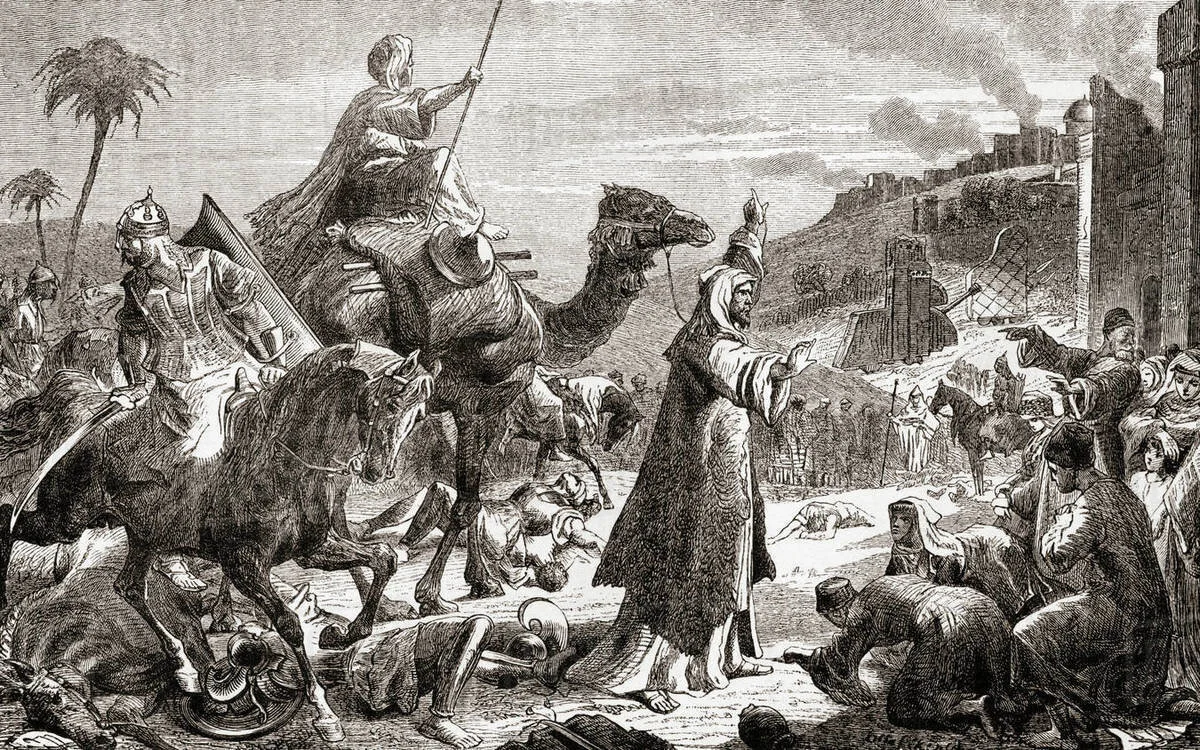
Omar marches into Jerusalem. The khalifa was tolerant when it came to religious worship, which made him popular with those he conquered.

Omar marches into Jerusalem. The khalifa was tolerant when it came to religious worship, which made him popular with those he conquered.

When Omar defeated a city, he allowed the Christians and Jews to worship as they pleased; they just had to pay a tax that was less than they were paying their Byzantine overlords. This seemed like a good deal to them. 

“By the time Omar died, Islamic rule covered more than 2 million square miles. How is this possible?” Ansary asks. “Religious Muslims offer the simple explanation that Muslims had the irresistible supernatural aid of Allah. Academic historians explain the Byzantine and Sassanid empires had just fought a ruinous war with each other, and despite their seeming might, they were both rotten to the core and ready to fall.” 

In 634 CE, a Persian slave named Lu’lu stabbed Omar multiple times in the back. No one’s sure if it was personal or in revenge for a military defeat. Either way, the influential reign of the man some consider as the true founder of the Arab empire, came to an abrupt end. –Wally

The Male Nude in Art

A virtual tour of the Masculin/Masculin exhibit at the Musée d’Orsay in Paris, including works by Egon Schiele, Kehinde Wiley, Gustave Caillebotte and Pierre et Giles.

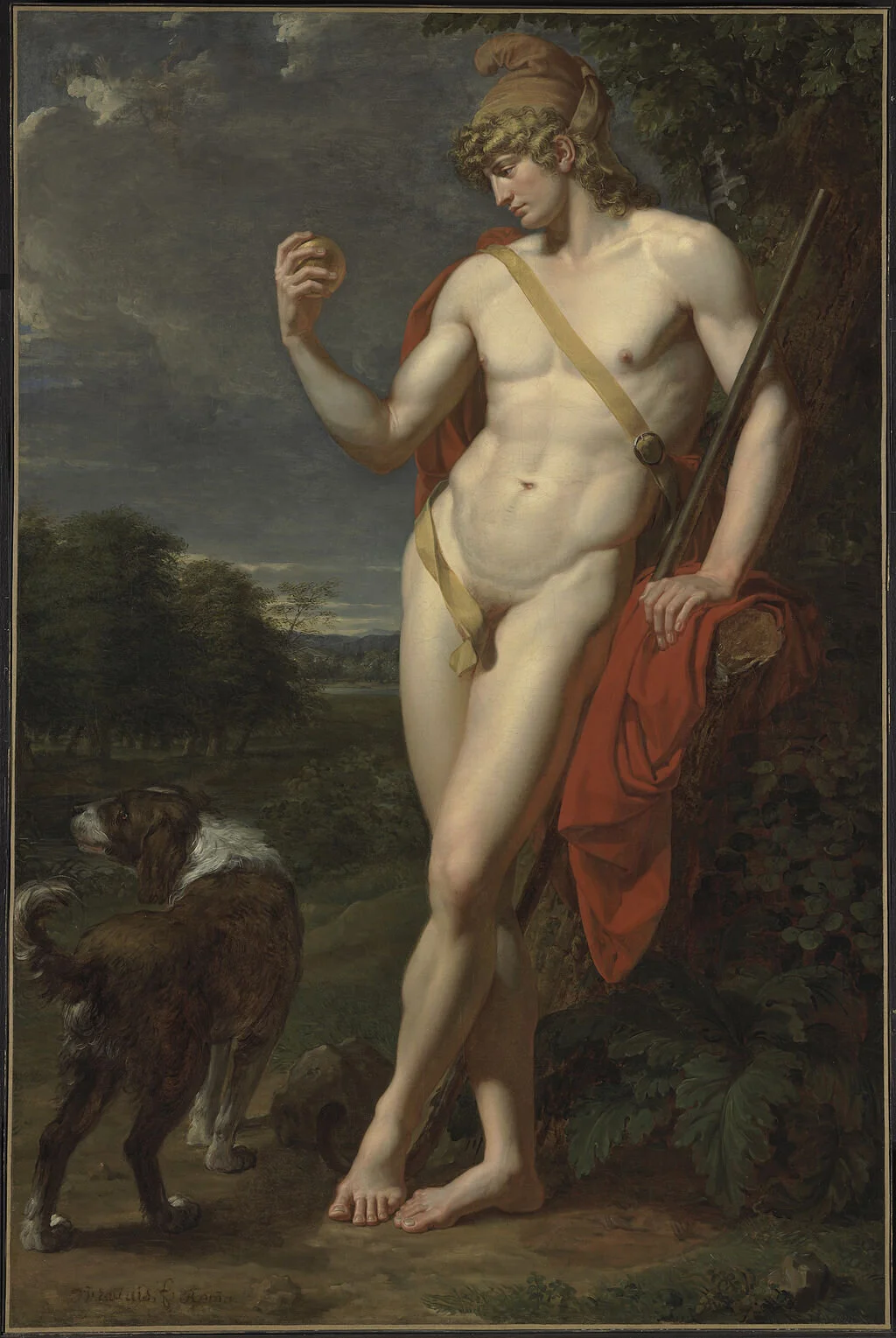
Le Berger Paris (The Shepherd Paris) by Jean-Baptiste Frédéric Desmarais, 1787

Le Berger Paris (The Shepherd Paris) by Jean-Baptiste Frédéric Desmarais, 1787

The perfection of the male figure was first seen through the lens of the Ancient Greeks. Their idealized depictions celebrated the male body as a reflection of heroic and athletic beauty. The few female sculptures that existed during this period were clothed and chaste in comparison. 

At some point the male nude fell out of favor, and the female nude became the central subject of objectification. Historically speaking, the typical viewer of artwork was male, and this display of the female physique for pleasure turned the female nude into an accepted object of male desire.

Imagine if you will then, how excited Wally and I were in Paris in the fall of 2013. We had decided to visit the Musée d’Orsay, and saw that its featured exhibit was Masculin/Masculin: L’homme nu dans l’art de 1800 à nos jours (The Male Nude in Art From 1800 to Today). The exhibition ran from September 24, 2013 to  January 2, 2014. 

We arrived with Wally’s parents, Dave and Shirley, in tow. When we mentioned that we were excited to see a special exhibit all about the male nude, the Shirl replied, “I don’t need to see that.” Her loss! Though we can’t say we weren’t a bit relieved; seeing galleries full of nude men with your parents could get a little awkward. 

Mercure (Mercury) by Pierre et Gilles, 2001

Mercure (Mercury) by Pierre et Gilles, 2001

Nude Male Art Galleries Galore!
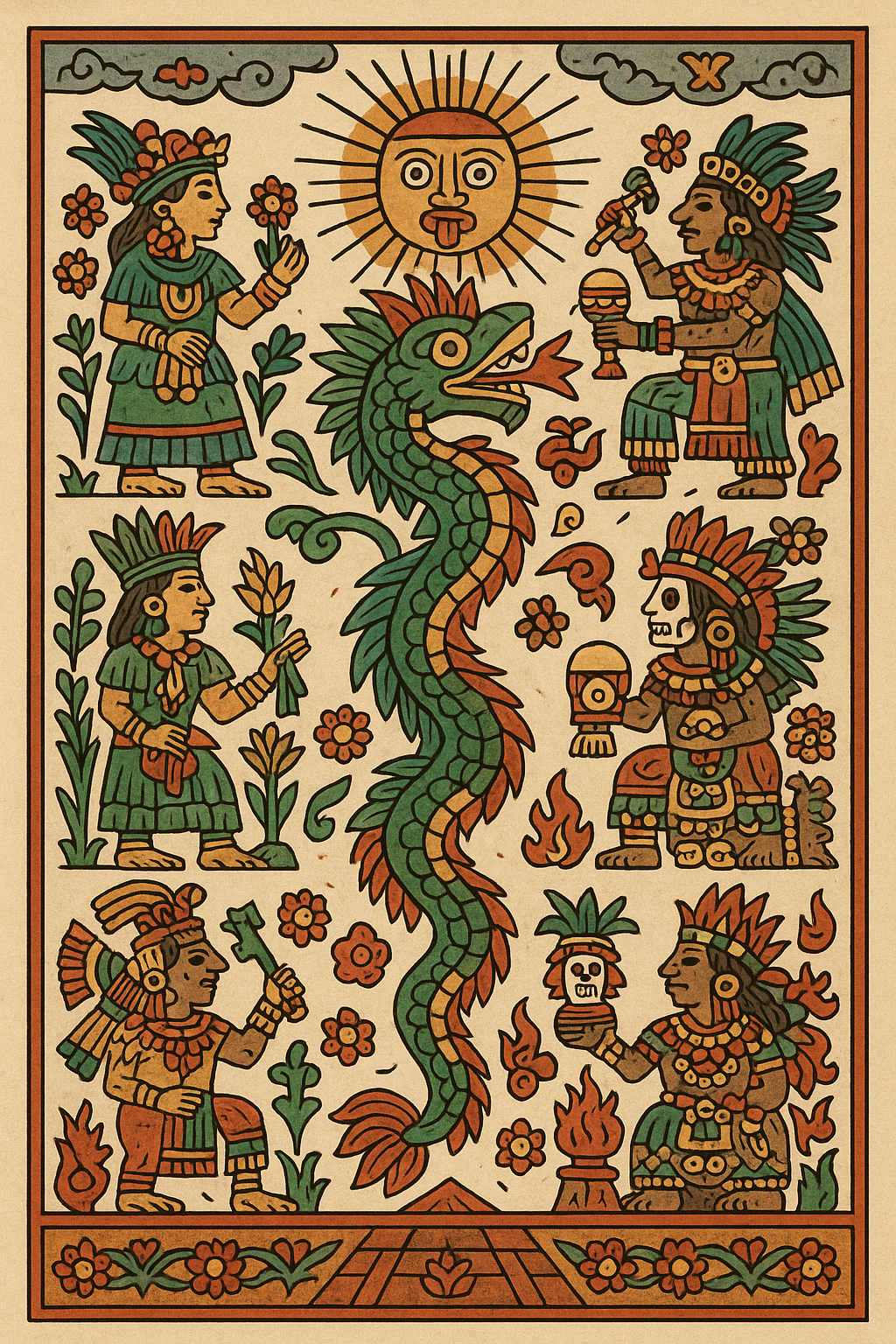
Inside, a larger-than-life banner featured a stylized work of French art photography duo Pierre et Gilles titled Mercure (Mercury), the heroic winged messenger and trickster deity of Roman mythology. 

Please note that, as you can imagine from the title, this post includes images of male nudity. 

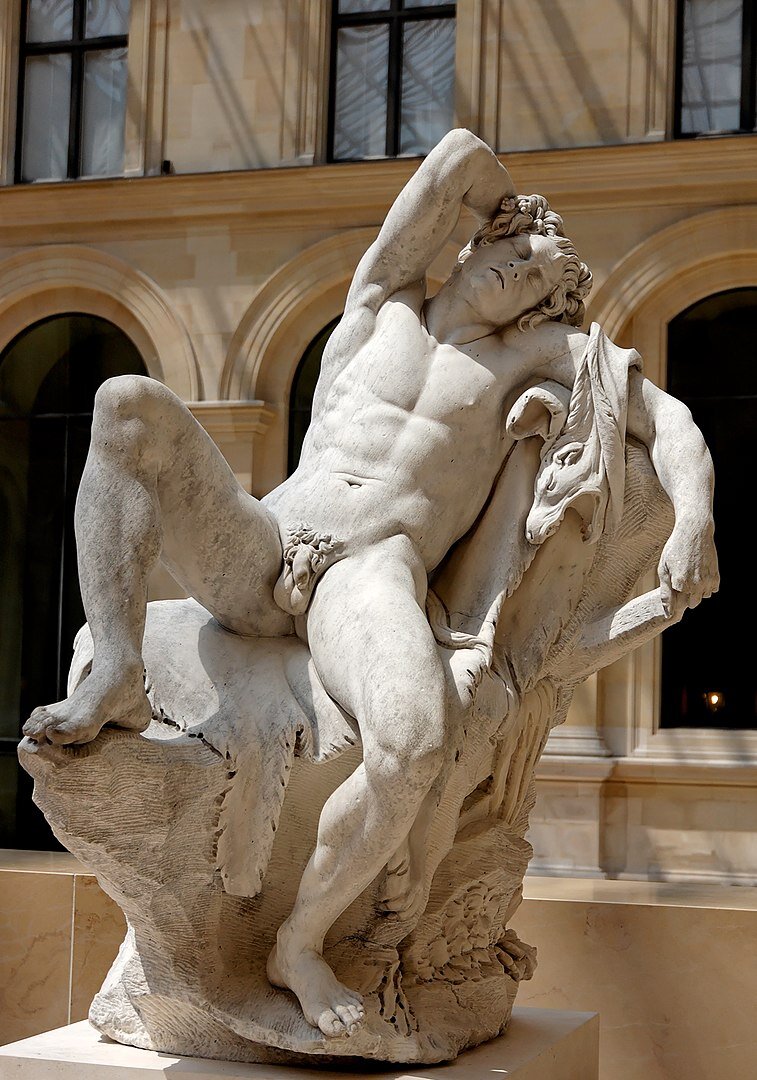
Barberini Faun by Edmé Bouchardon, 1726

Faune endormi (Sleeping Faun), a copy of the Barberini Faun, by Edmé Bouchardon, 1726

The Ideal Man

The exhibition is arranged thematically and began by introducing us to “L’Idéal classique, the Classic Ideal.” This concept has existed since the Ancient Greeks chiseled away at marble to depict perfectly sculpted male bodies (pun intended). In my humble opinion, though, these were rarely erotic — sure, they had rockin’ bods, but the statues’ minuscule, flaccid genitalia unappealingly evoke wilted zucchini blossoms.

One such exception was the life-size copy of the Barberini Faun by Edmé Bouchardon on loan from the Louvre. I can clearly remember seeing an image of the Barberini Faun projected onto a screen in my college art history class in its erotic, spread-eagled glory. The figure is a satyr, or faun — usually depicted as a creature half-man, half-goat but in this case referencing a follower of Dyionysus, the god of pleasure and wine. 

Seeing the sculpture in person felt voyeuristic — the viewer is allowed to gaze at something forbidden: a man sleeping, or perhaps passed out from all that wine. The nude form is lounging back, with his legs splayed, giving everyone a view of the goods. 

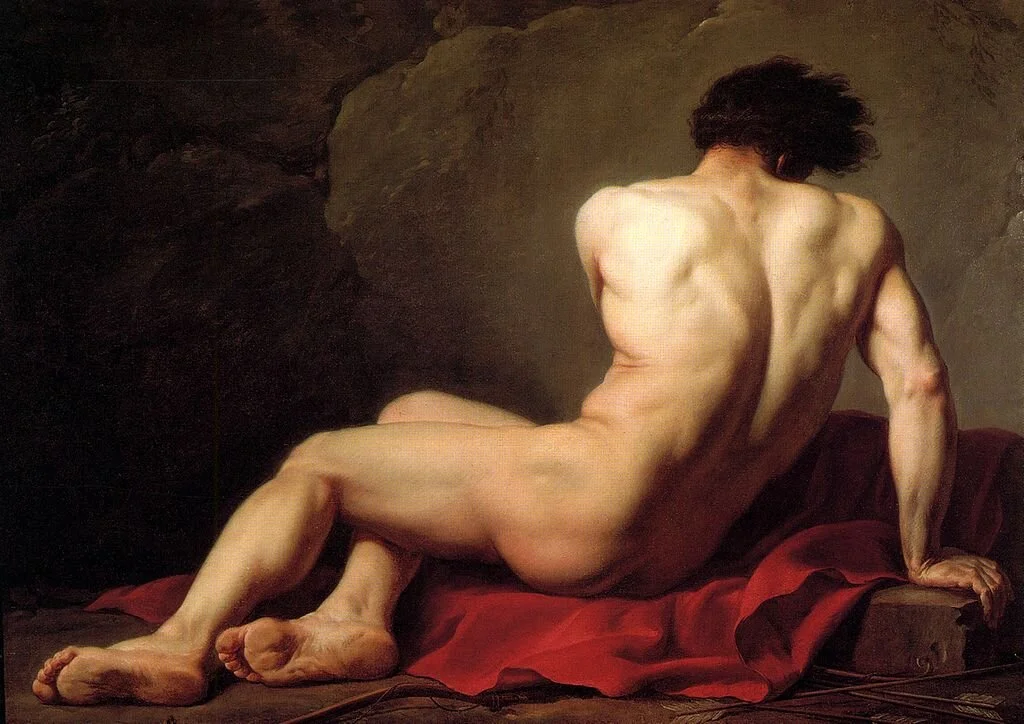
Académie d’homme dit Patrocle (Academy of a Man, Called Patroclus) by Jacques-Louis David, 1780

Académie d’homme dit Patrocle (Academy of a Man, Called Patroclus) by Jacques-Louis David, 1780

One of the first works of art we viewed was Académie d’homme dit Patrocle (Academy of a Man, Called Patroclus) by Jacques-Louis David, from 1780. 

Patroclus was a character from Homer’s Iliad who died fighting the Trojans. The painting was produced by David during his stay in Italy as a Prix de Rome laureate. Turned away from the viewer, the figure's accentuated muscles reminded me a bit of Michelangelo's studies for the Libyan Sibyl, Phemonoe, the finished result of which adorns the ceiling of the Sistine Chapel in Rome. 

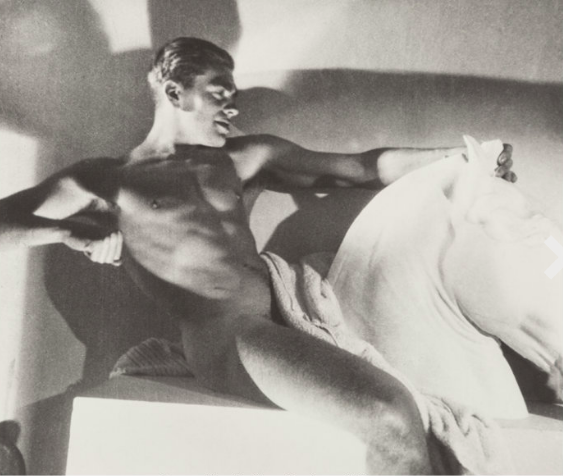
Horst in the Pose of an Ancient Greek Horseman by George Hoyningen-Huene, 1932

Horst in the Pose of an Ancient Greek Horseman by George Hoyningen-Huene, 1932

Gods and Heroes

The second theme, “Le Nu héroïque, the Heroic Nude,” also dates back to the Ancient Greeks. It was assumed that a hero had little need for armor, and that the strength of his body was the measure of his worth.

David by Antonin Mercié, 1892

David by Antonin Mercié, 1892

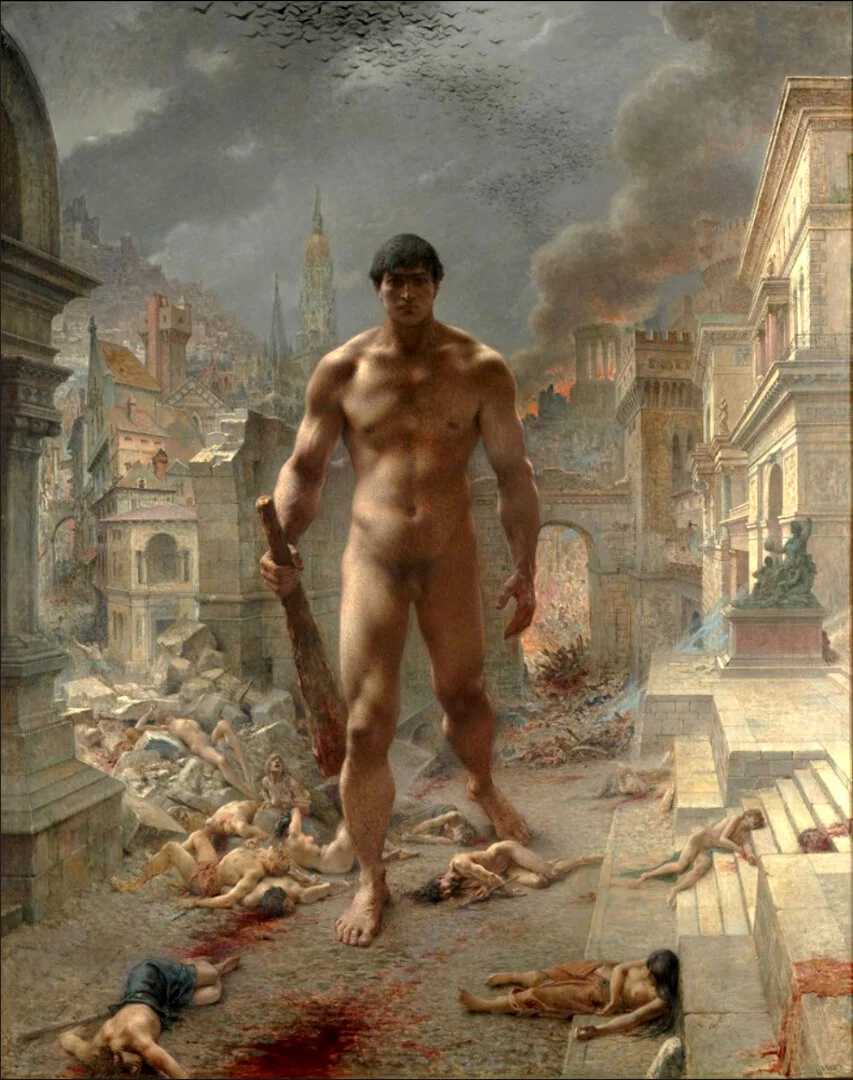
Fléau! (Scourge!) by Henri-Camille Danger, 1901

Fléau! (Scourge!) by Henri-Camille Danger, 1901

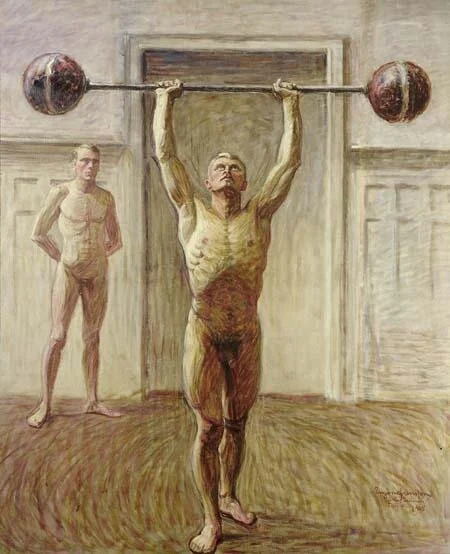
Pushing Weights With Two Arms -2 by Eugène Fredrik Jansson, 1913

Pushing Weights With Two Arms -2 by Eugène Fredrik Jansson, 1913

A noteworthy inclusion in this gallery was Pushing Weights with Two Arms -2 by Eugène Fredrik Jansson, a Swedish artist. He began his career painting atmospheric landscapes and cityscapes rendered in shades of blue, but in later years turned his focus to painting male nudes. Jansson became a swimmer and winter bather to combat the chronic health issues he’d suffered since childhood. He often visited Stockholm’s Flottans Badhus, the Navy Bathhouse, where he met sailors who served as the models for his paintings. 

Pushing Weights was a series of paintings by Jansson. In this particular one, a naked athlete stands near a doorway, his gaze fixed on a man, possibly Knut Nyman, Jansson’s “close companion,” lifting a barbell above his head. 

Based upon the homoerotic subtext, it’s possible that Jansson was a closeted homosexual and that the works he produced during this period reveal the strong attraction he felt for his subjects. 

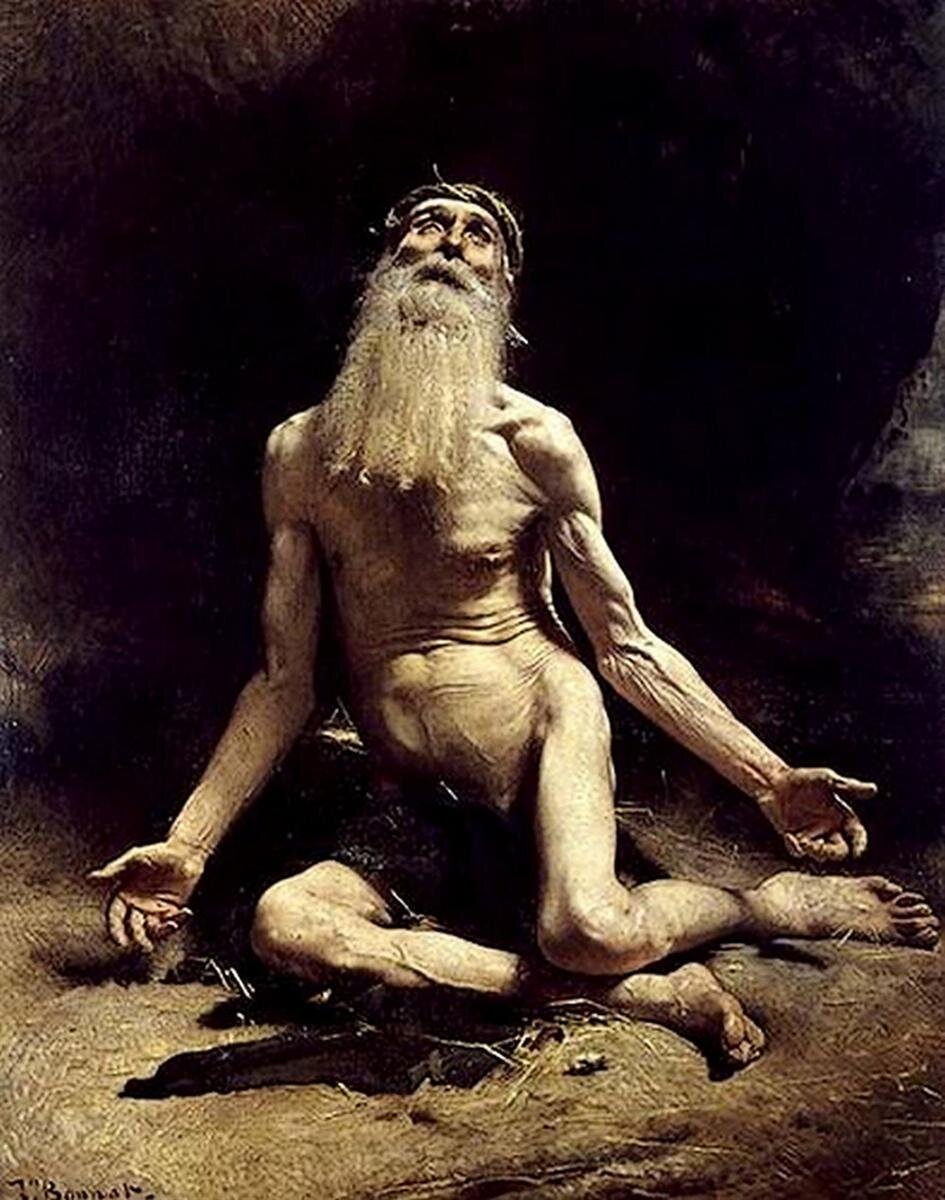
Job by Léon Bonnat, 1880

Job by Léon Bonnat, 1880

The Naked Truth

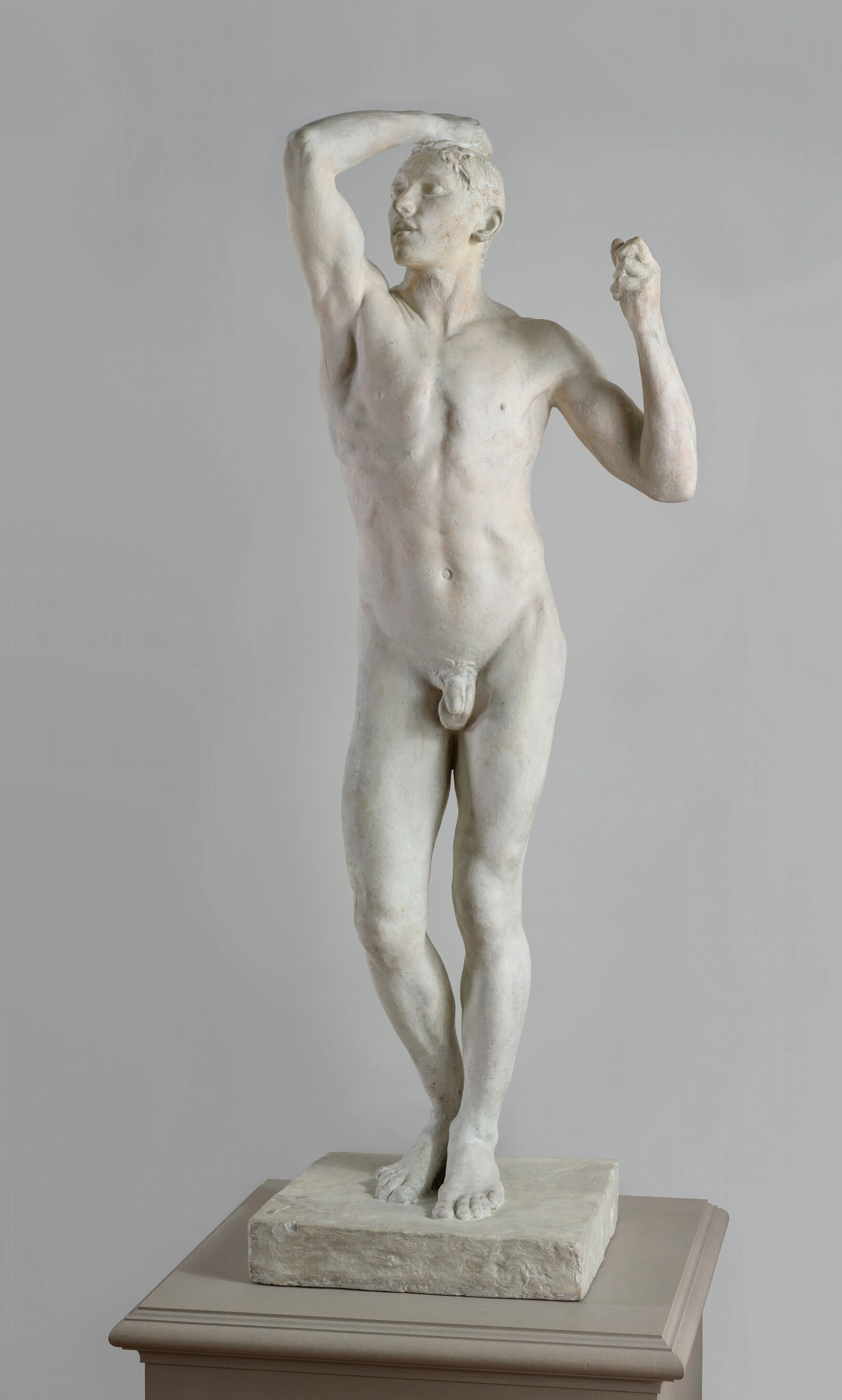
The third theme focused on “Nuda veritas, sans complaisance, The Naked Truth Without Compromise.” The idea of the authentic nude abandons the conventions of classical perfection to portray the body in realistic accuracy. 

L’Age d’airain (The Age of Bronze) by Auguste Rodin, 1877

L’Age d’airain (The Age of Bronze) by Auguste Rodin, 1877

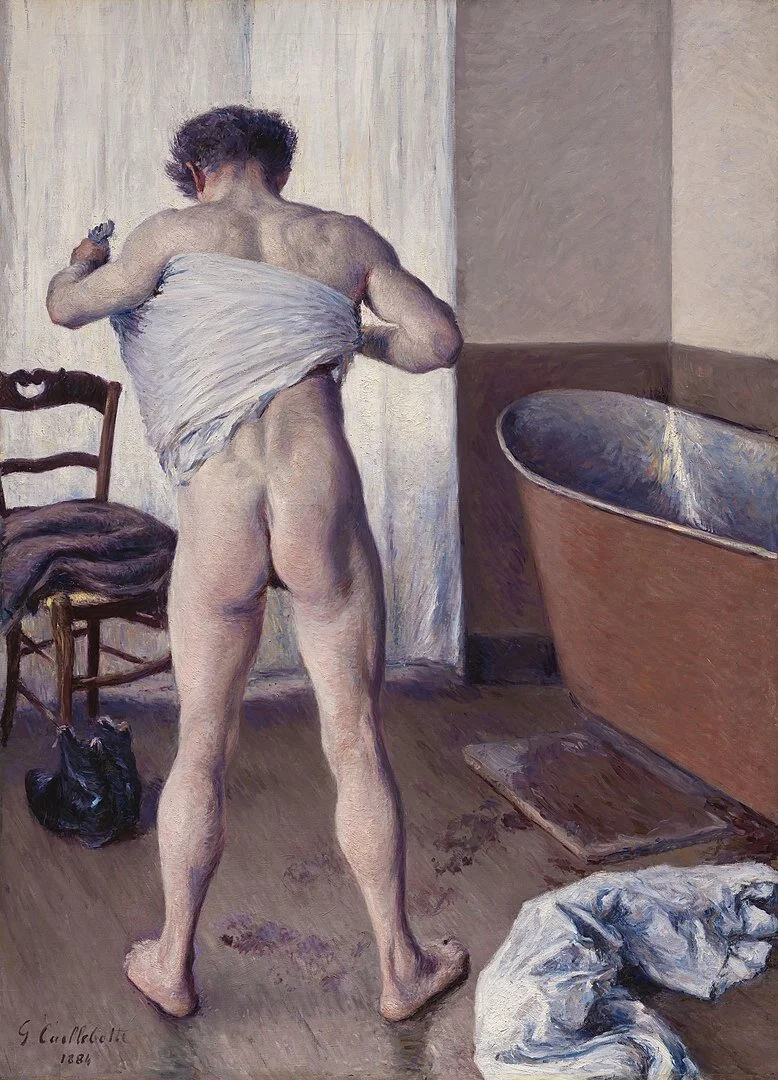
Homme au Bain (Man at His Bath) by Gustave Caillebotte 1884

Homme au bain (Man at His Bath) by Gustave Caillebotte, 1884

What I like about Homme au bain (Man at His Bath) by Gustave Caillebotte is that it depicts a very private moment. A man is drying himself with a towel after a bath. His back is turned away from the viewer; he is neither posing for the painting nor has any intention of being seen.

David and Eli by Lucien Freud, 2004

David and Eli by Lucien Freud, 2004

The reclining nude male figure with the dad bod depicted in British painter Lucian Freud’s portrait David and Eli is his friend and studio assistant David Dawson. The dog is Eli, one of the artist's beloved whippets. Freud’s late nudes are noted for their uncompromising scrutiny of the human body. The artist utilized a technique known as impasto, where layers of paint and brushstrokes blend and converge to reveal the materiality of the flesh. The oil paint applied to the figure of David and the bedsheet beneath him was Cremnitz white, a type of white lead paint that Freud favored for its luminosity. 

Jeune homme nu assis au bord de la mer (Young Male Nude Seated Beside the Sea) by Hippolyte Flandrin, 1836

Jeune homme nu assis au bord de la mer (Young Male Nude Seated Beside the Sea) by Hippolyte Flandrin, 1836

Vitalism: Naughty by Nature 

“Im Natur, In Nature,” the fourth theme is all about men en plein air, as they say in France. As the 19th century world became increasingly industrialized, academies across Europe favored realistic subjects, and people embraced vitalism, an anti-mechanical return to nature. This movement encouraged male nakedness during outdoor activities, including bathing, as a means to rejuvenate the spirit and increase virility. 

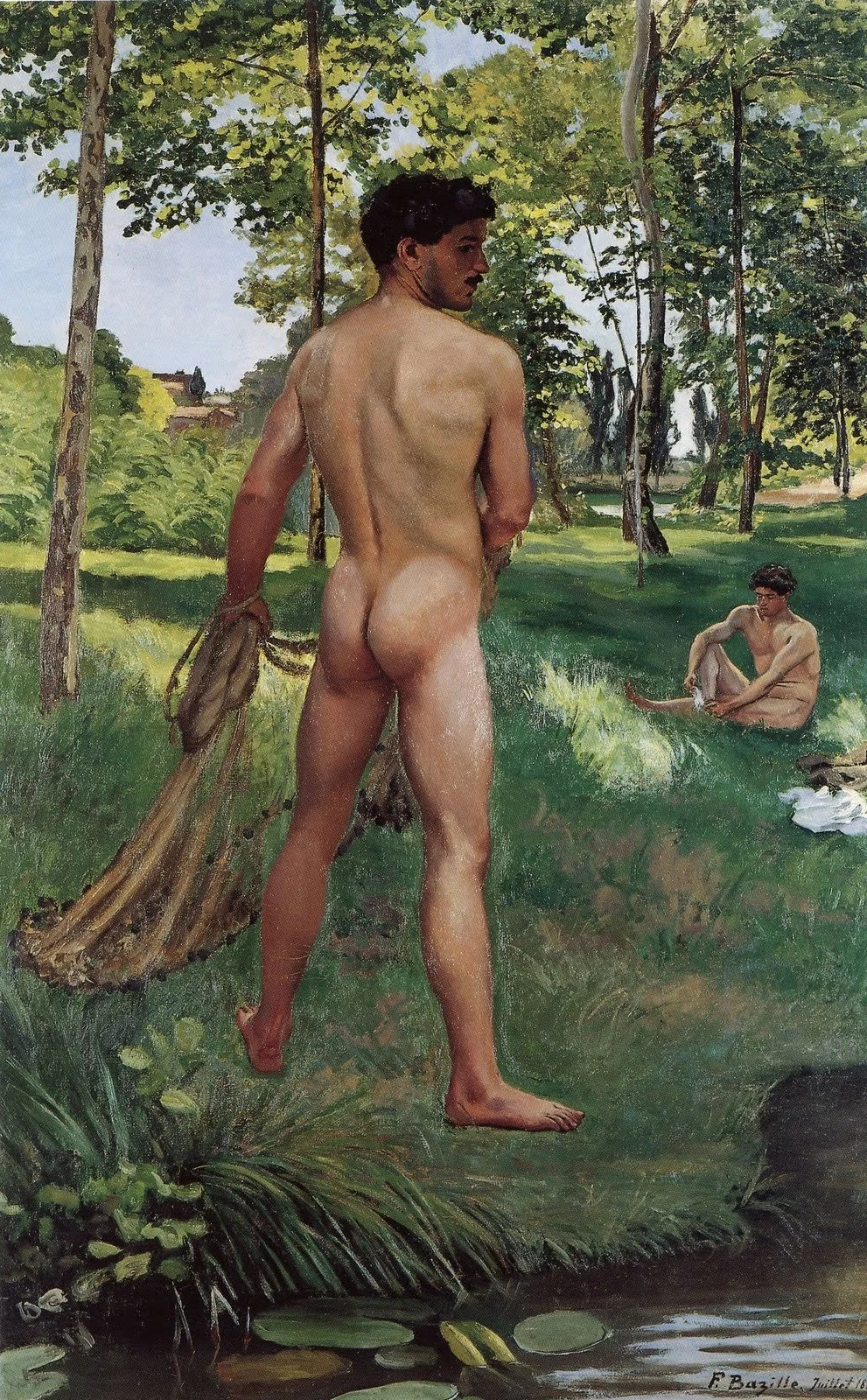
The Fisherman With a Net by Frédéric Bazille, 1868

The Fisherman With a Net by Frédéric Bazille, 1868

There’s an underlying eroticism and intimacy to The Fisherman With a Net by Frédéric Bazille. Whether unintentionally homoerotic or not, the subject in the foreground of the painting is an athletic young man prepared to cast a net into a pond. He’s clearly positioned to show off his “assets” and looks every bit like a modern-day hipster — all that’s missing is a pair of skinny jeans and a PBR. Another man in a state of undress can be seen in the background. 

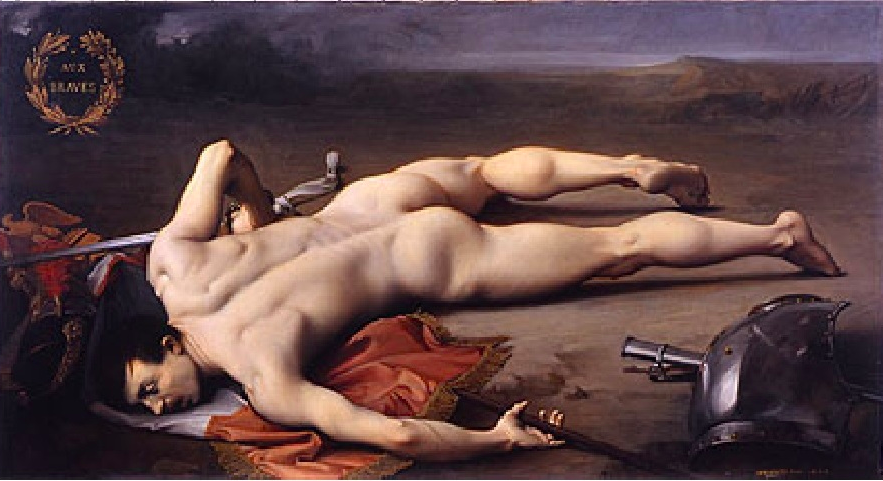
Mort pour la patrie (Dying for the Fatherland) by Jean-Jules-Antoine Lecomte du Nouÿ, 1892

Mort pour la patrie (Dying for the Fatherland) by Jean-Jules-Antoine Lecomte du Nouÿ, 1892

This Mortal Coil

We continued wandering the galleries until we came to the one titled “Dans la douleur, In Pain,” which focused on the fragile balance of life and death. Man is not immortal; these works of art were a grim reminder of the shortness of life and the frailties of the mind and body. 

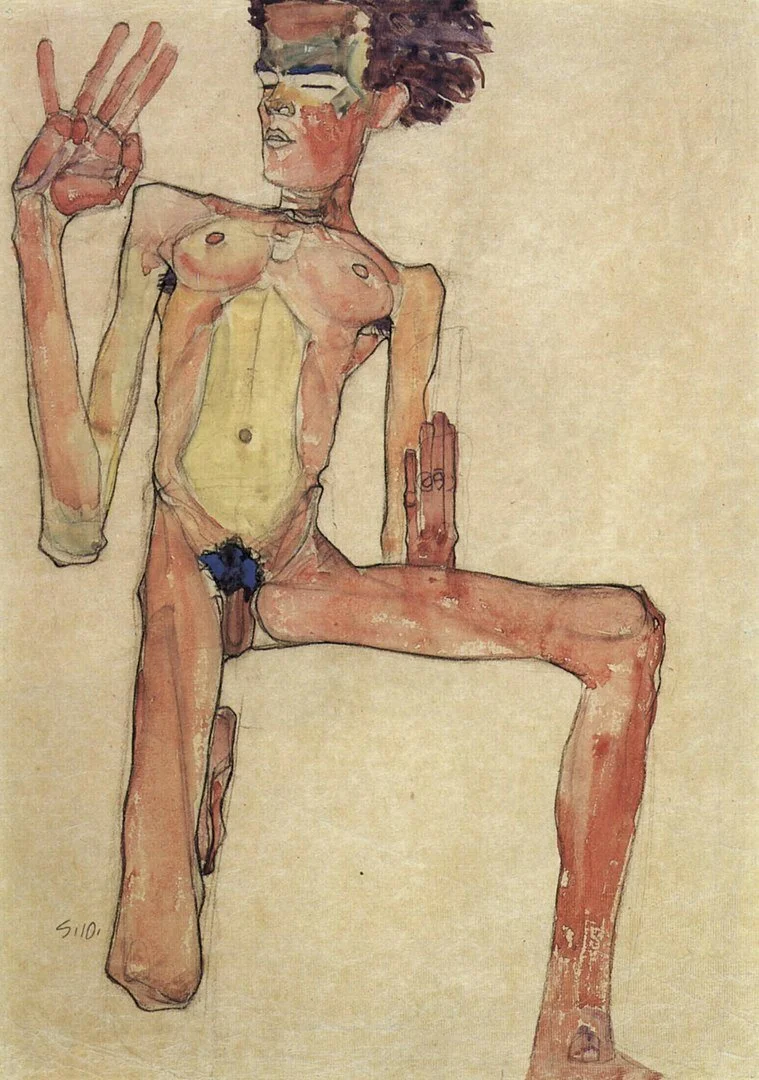
Kneeling Nude With Raised Hands (Self-Portrait) by Egon Schiele, 1910

Kneeling Nude With Raised Hands (Self-Portrait) by Egon Schiele, 1910

Egon Schiele is famous for his raw figurative works. A protégée of Gustav Klimt, Schiele had a muse and lover named Walburga “Wally” Neuzil, who had previously modeled for Klimt. Schiele’s color palette and expressive drawings remind me of French artist Henri de Toulouse-Lautrec. Where Lautrec elevated the world of underground nightlife, Schiele’s art was an exploration of the human condition, often depicting the twisted bodies and raw sexuality of his subjects. 

In Kneeling Nude With Raised Hands, Schiele offers himself up to the viewer. The angst of his contorted, angular body, jaundice-colored flesh and red-rimmed eyes certainly questioned the artistic conventions of gender, sexuality and morality of pre-war Vienna. His hands and limbs appear to be pressed firmly against an invisible surface, possibly a mirror, while the negative space outlining Schiele’s form serves as a window for his figure to float in space and time. 

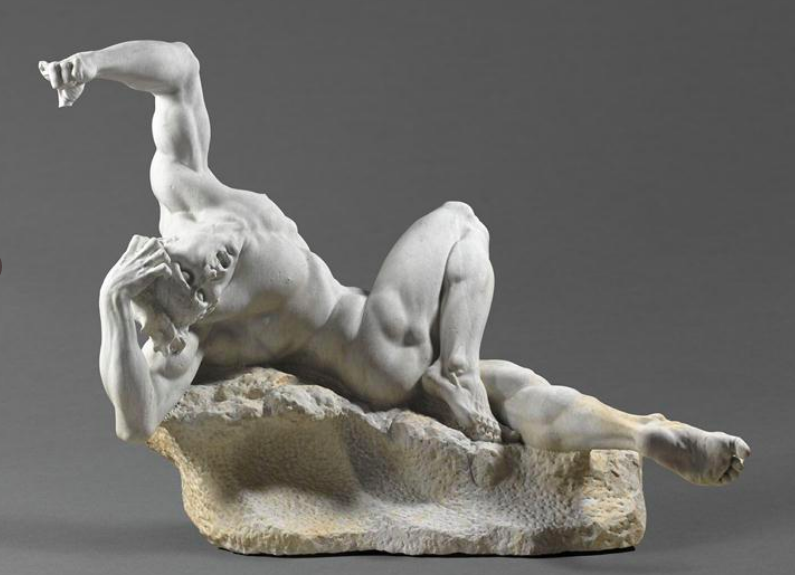
L’Abîme (The Abyss) by Just Becquet, 1901

L’Abîme (The Abyss) by Just Becquet, 1901

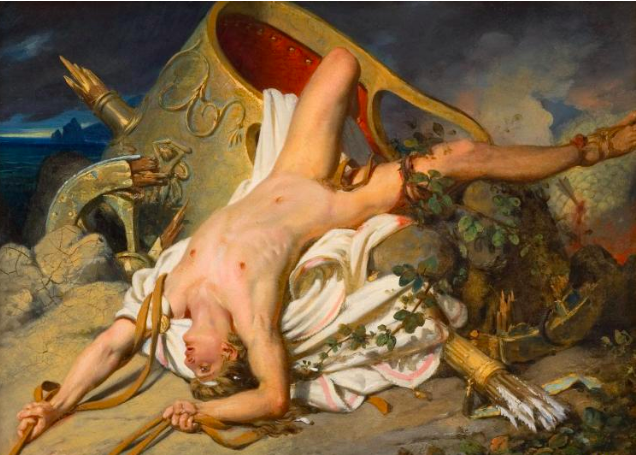
La mort d'Hippolyte (The Death of Hippolytus) by Joseph-Désiré Court, 1825

La mort d'Hippolyte (The Death of Hippolytus) by Joseph-Désiré Court, 1825

Homosexuality: The Object of Desire Laid Bare 

The final room explored the theme “L’Objet du désir, The Object of Desire,” and focused on the more contemporary subtext of homosexual desire and objectification. A notice outside stated that some viewers may find the artwork beyond too provocative or offensive — but of course Wally and I found this titillating and weren’t in the slightest bit deterred.

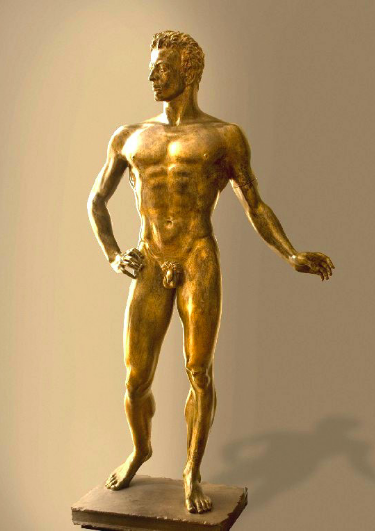
Der Wäger (The Wager) by Arno Breker, 1939

Der Wäger (The Wager) by Arno Breker, 1939

Upon entering the space, we were greeted by a life-size nude male bronze figure by German sculptor Arno Breker. Called Der Wäger (The Wager), the figure stands chest out, looking every bit like a vintage beefcake photo from the 1940s. His hand is placed on his hip in an unintended effeminate manner. The sculptor’s neoclassical style made him a favorite of Adolf Hitler, who felt Breker’s works embodied fascist Nazi ideology. 

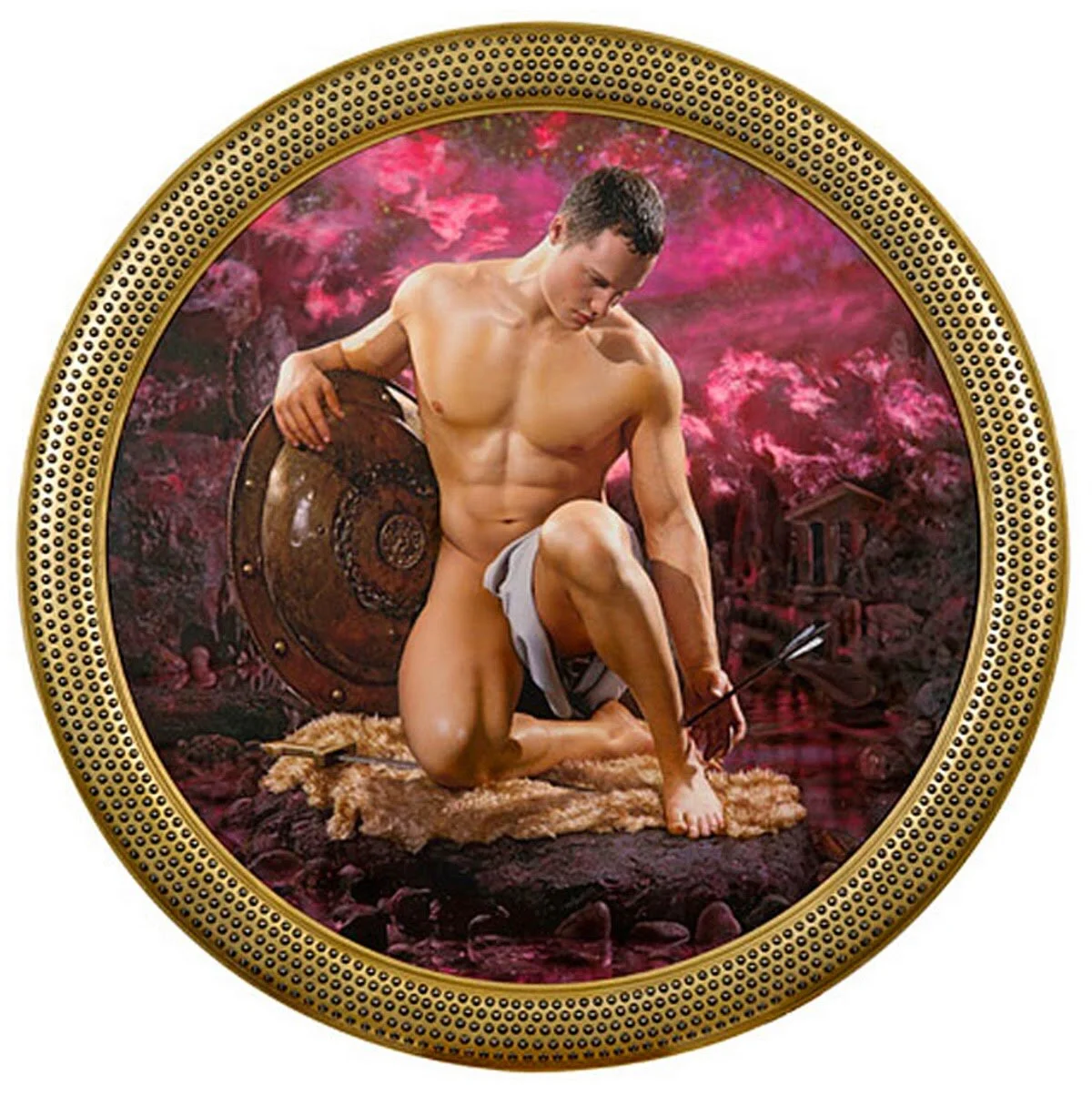
Achille by Pierre et Gilles, 2004

Achille by Pierre et Gilles, 2004

David et Jonathan (Jean-Eves et Moussa) by Pierre et Gilles, 2005

David et Jonathan (Jean-Eves et Moussa) by Pierre et Gilles, 2005

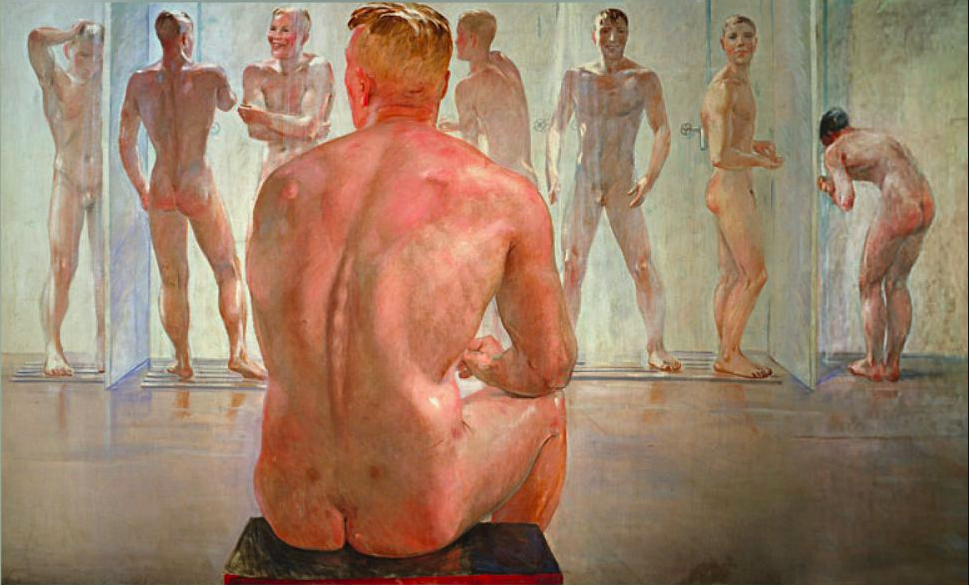
La douche, Après la bataille (Shower, After the Battle) by Alexander Deyneka, 1942

La douche, Après la bataille (Shower, After the Battle) by Alexander Deyneka, 1942

La douche, Après la bataille (Shower, After the Battle) by Alexander Deyneka was inspired by a black and white photograph of presumably nude athletes that Soviet photographer Boris Ignatovich had presented to Deyneka. It took the painter five years to complete. The provocative work depicts a group of strapping young men taking a communal shower. The muscular back of an onlooker is seen in the foreground. For me, the painting brings back high school anxieties of showering and sharing the locker room with the wrestling team. There’s a tension between heterosexual aspirations and homoerotic desire. 

Death of Abel Study by Kehinde Wiley, 2008

Death of Abel Study by Kehinde Wiley, 2008

Kehinde Wiley is a contemporary African American artist known for his large-scale paintings that highlight the image and status of young urban Black men in contemporary culture by placing them in scenes that are regal and European in origin. His photorealistic compositions reinterpret classical portraiture and are often combined with layered, vivid ornamental motifs. Gazing at the monumental Death of Abel Study — it measures a whopping 11 feet high by 25 feet wide — I couldn’t help but ask myself, is the man dead, being objectified, or both? 

Incidentally, Wiley was the first Black gay artist selected to paint a presidential portrait. He was commissioned in 2017 to paint a portrait of former President Barack Obama for the Smithsonian National Portrait Gallery.

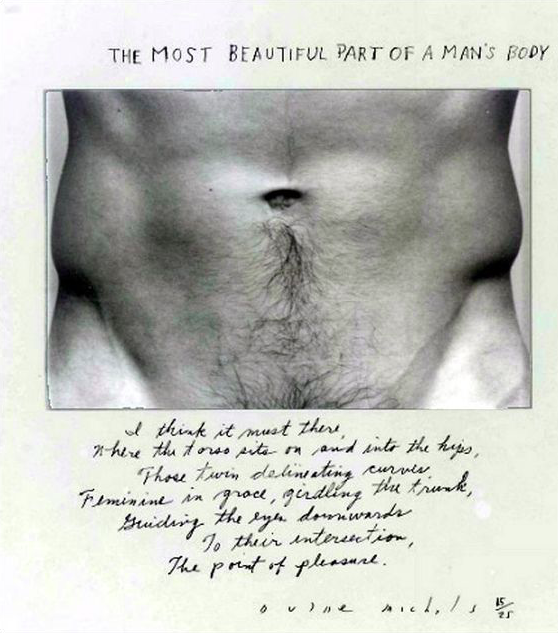
The Most Beautiful Part of a Man's Body by Duane Michals, 1986

The Most Beautiful Part of a Man's Body by Duane Michals, 1986

Le Sommeil d’Endymion (The Sleep of Endymion) by Anne-Louis Girodet, 1791

Le Sommeil d’Endymion (The Sleep of Endymion) by Anne-Louis Girodet, 1791

There really wasn’t anything too outrageous to be seen as we wandered through Masculin/Masculin, but it was refreshing to view the galleries of traditional paintings, sculptures and contemporary works that examined and objectified men for a change. –Duke

King Josiah and the Formation of Jewish Law

Revised stories of the patriarchs proved powerful propaganda, and Deuteronomy presented the moral code of early Judaism — with a surprising amount of human rights. 

The penultimate king of Judah, Josiah is held up as the best of the best. We have him to thank for the Judaism practiced today.

The penultimate king of Judah, Josiah is held up as the best of the best. We have him to thank for the Judaism practiced today.

King Josiah receives more superlatives of awesomeness than any other figure in the Old Testament. And with heavy hitters like Moses, David and Joshua, that’s saying something. 

“Before him there was no king like him, who turned to the Lord with all his heart and with all his soul and with all his might, according to all the law of Moses; nor did any like him arise after him,” gushes 2 Kings 23:25.

Not too bad for a kid who was crowned in 639 BCE at the tender age of 8, after his father, Amon, was assassinated in a coup, having reigned only a year.

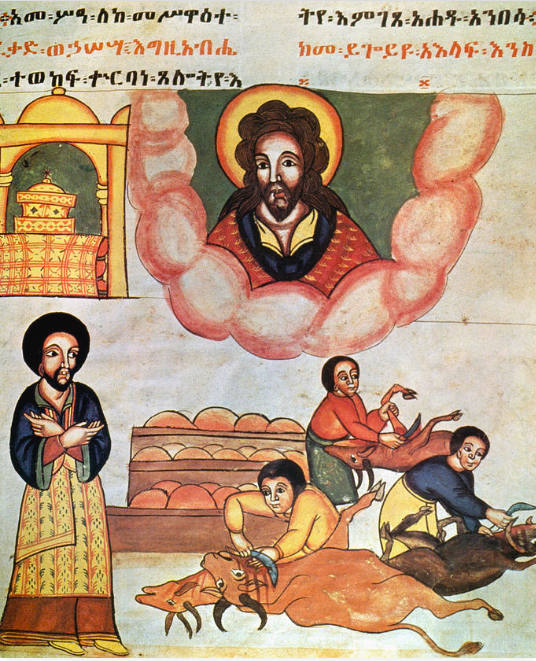
King Josiah oversees a ritual sacrifice in this illustration from an Egyptian manuscript.

King Josiah oversees a ritual sacrifice in this illustration from an Egyptian manuscript.

Of course, it turns that the early books of the Old Testament were written in the 7th century BCE, when Josiah ruled the kingdom of Judah. The writings were planned specifically to bolster his vision of a unified Israel, where everyone abandoned all other deities to worship only YHWH (aka Yahweh, or God), according to Israel Finkelstein and Neil Asher Silberman in The Bible Unearthed: Archaeology’s New Vision of Ancient Israel and the Origin of Its Sacred Texts. 

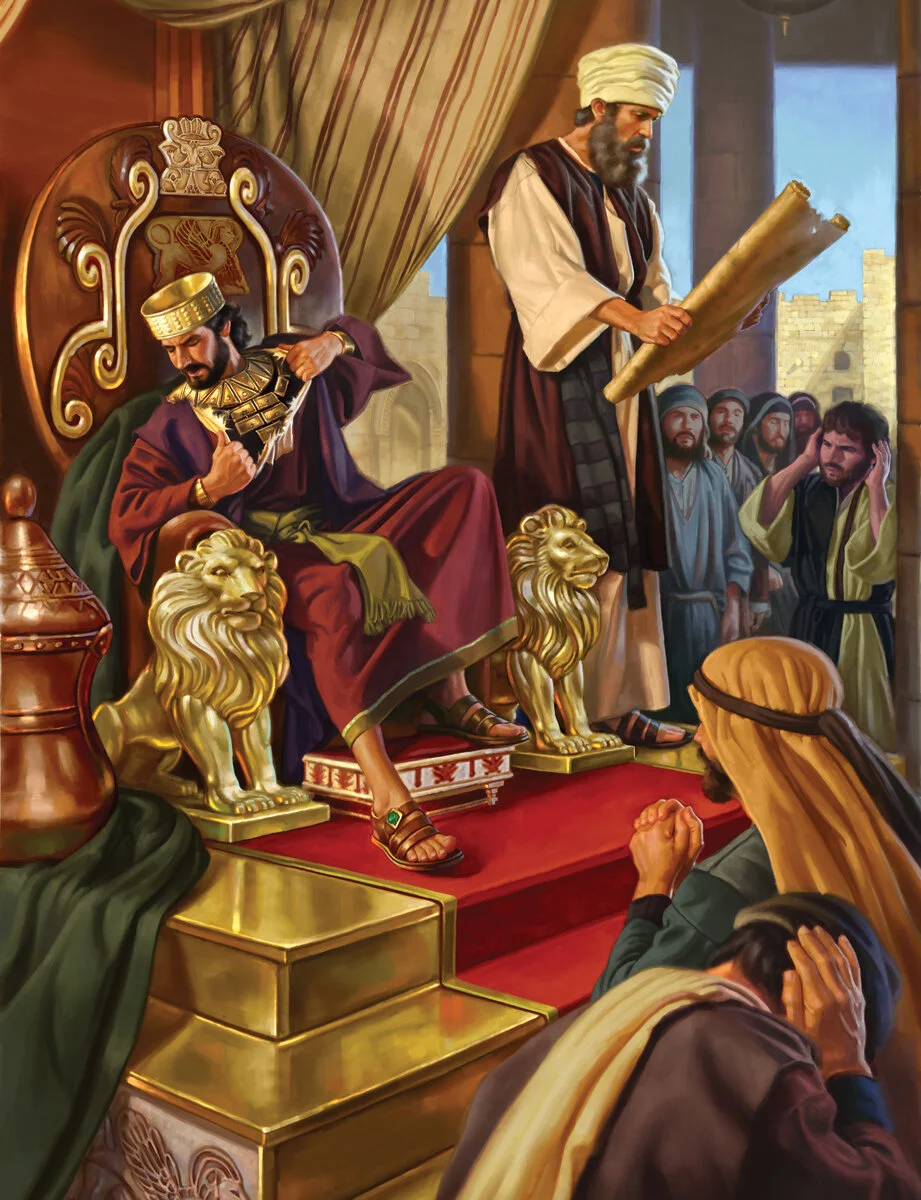
The book of Law that King Josiah discovered in the Temple was, most likely, the original book of Deuteronomy. We’re not sure why this prompted him to tear his robe, though.

The book of Law that King Josiah discovered in the Temple was, most likely, the original book of Deuteronomy. We’re not sure why this prompted him to tear his robe, though.

Finding the Book of Law

In the 18th year of Josiah’s reign, 622 BCE, the king commanded his high priest to renovate the Temple. During the work, a new book of Law turned up. 

“That book, identified by most scholars as an original form of the book of Deuteronomy, sparked a revolution in ritual and a complete reformation of Israelite identity,” Finkelstein and Silberman explain. “This was the formative moment in the crystallization of the biblical tradition as we now know it.”

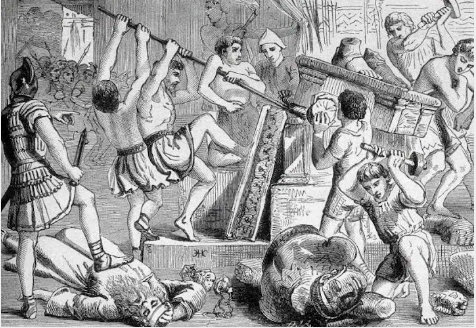
King Josiah has the idols of Baal destroyed (and the priests killed) in this illustration by Gustave Doré.

King Josiah has the idols of Baal destroyed (and the priests killed) in this illustration by Gustave Doré.

According to Josiah and other hardcore monotheists, there was a lot of work to be done (and undone). 

The new book of Law “suddenly and shockingly revealed that the traditional practice of the cult of YHWH in Judah had been wrong,” the authors continue. 

Pagan practices were taking place even within the confines of the Temple itself. Josiah had all the iconography of Baal removed, along with anything used to worship the sun, moon and stars, and had it all burned. He also broke down the houses of the male cult prostitutes (!!!). 

That was just the beginning. Josiah marched northward, smashing stone altars to other gods and killing their priests. 

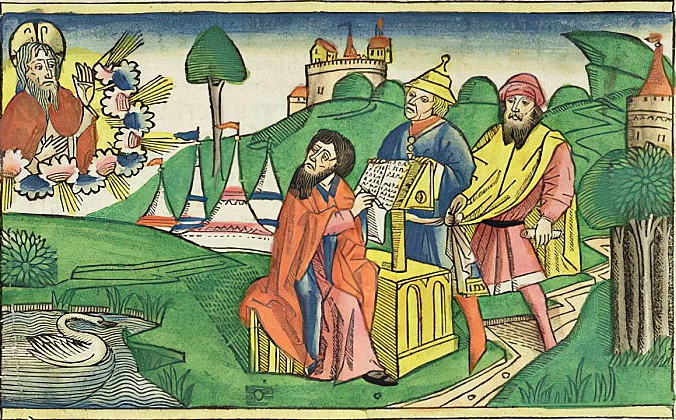
The frontispiece to the book of Deuteronomy in the Nuremberg Bible

The frontispiece to the book of Deuteronomy in the Nuremberg Bible

A Revolution in Human Rights

The new Law wasn’t all just destruction and death, though.

Josiah made Passover an official holy day, which linked him with Moses, who was involved in the holiday’s gruesome origin

More than this, “Deuteronomy calls for the protection of the individual, for the defense of what we would call today human rights and human dignity,” write Finkelstein and Silberman. “Its laws offer an unprecedented concern for the weak and helpless.” 

For example, Deuteronomy 15:7-8 states, “If there is among you a poor man … you shall open your hand to him, and lend him sufficient for his need, whatever it may be.” Imagine if that were still in practice today.

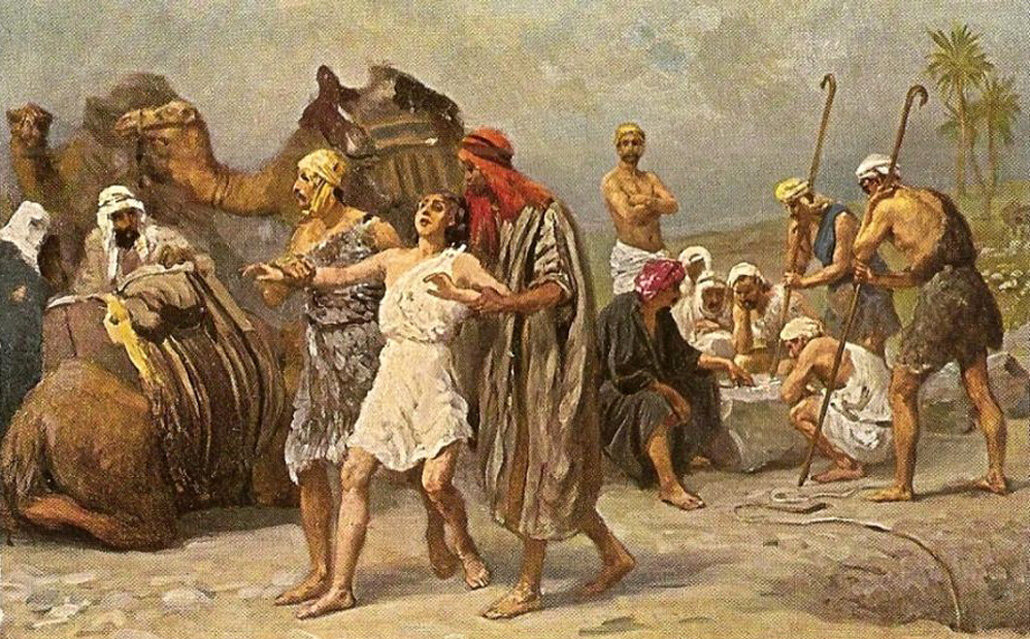
Joseph’s awful brothers sold him into slavery. He was born too soon — thanks to the book of Deuteronomy, his servitude would only have lasted six years.

Joseph’s awful brothers sold him into slavery. He was born too soon — thanks to the book of Deuteronomy, his servitude would only have lasted six years.

In addition, Josiah’s law gave inheritance rights to wives, instructed farmers to give tithes to the poor every third year, protected resident aliens from discrimination and freed slaves after six years of servitude. 

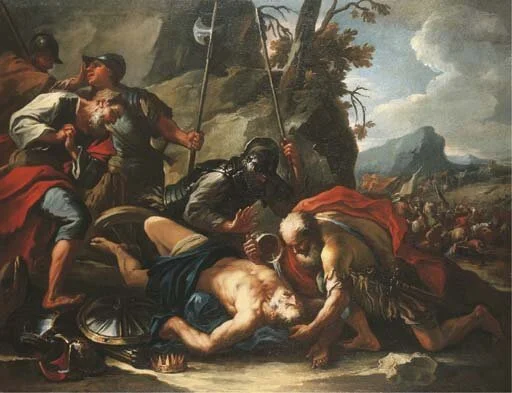
The Death of King Josiah by Francesco Conti, who lived 1681-1760

The Death of King Josiah by Francesco Conti, who lived 1681-1760

Josiah’s Lasting Legacy

Was Josiah successful in his campaign of religious centralization? Perhaps not on as broad a scale as he would have liked. Evidence suggests that he “failed to stop the veneration of graven images, since figurines of a standing woman supporting her breast with her hands (generally identified with the goddess Asherah) have been found in abundance within private dwelling compounds at all major late-seventh century sites in Judah,” explain Finkelstein and Silberman. 

One god just wasn’t enough for the ancient Judahites — many a household had figurines of the goddess Asherah like this one.

One god just wasn’t enough for the ancient Judahites — many a household had figurines of the goddess Asherah like this one.

In 610 BCE, the new pharaoh, Necho II, launched a military expedition, allying with Egypt’s old foes the Assyrians to battle an even greater threat: the Babylonian Empire.

No one is quite sure why Josiah joined the fray against Egypt. Whatever the reason, it was a decision that led to his death. 2 Kings 23:29 glosses over the loss of the greatest king of Judah as if the writer were embarrassed: “In his days Pharaoh Necho king of Egypt went up to the king of Assyria to the river Euphrates. King Josiah went to meet him; and Pharaoh Necho slew him at Megiddo, when he saw him.”

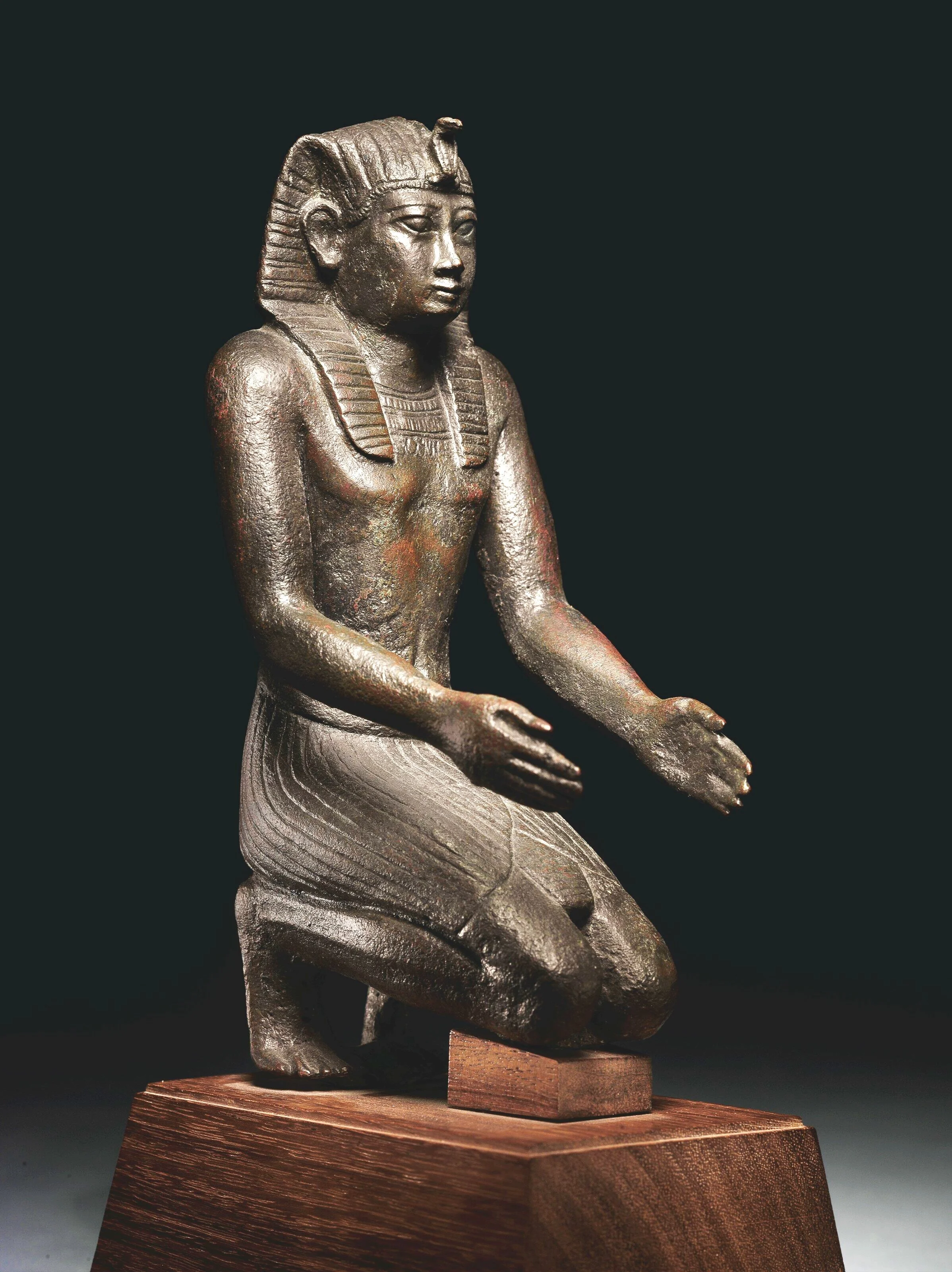
Pharaoh Necho II, who killed King Josiah. The Old Testament glosses over this event, as if the writers were embarrassed and wanted to downplay it.

Pharaoh Necho II, who killed King Josiah. The Old Testament glosses over this event, as if the writers were embarrassed and wanted to downplay it.

“In his days Pharaoh Necho king of Egypt went up to the king of Assyria to the river Euphrates. King Josiah went to meet him; and Pharaoh Necho slew him at Megiddo, when he saw him.” (2 Kings 23:29)

“In his days Pharaoh Necho king of Egypt went up to the king of Assyria to the river Euphrates. King Josiah went to meet him; and Pharaoh Necho slew him at Megiddo, when he saw him.” (2 Kings 23:29)

“One thing is clear. The Deuteronomistic historian, who saw Josiah as a divinely anointed messiah destined to redeem Judah and lead it to glory was clearly at a loss to explain how such a historical catastrophe could occur and left only a curt, enigmatic reference to Josiah’s death,” write Finkelstein and Silberman. “Decades of spiritual revival and visionary hopes seemingly collapsed overnight. Josiah was dead and the people of Israel were again enslaved by Egypt.”

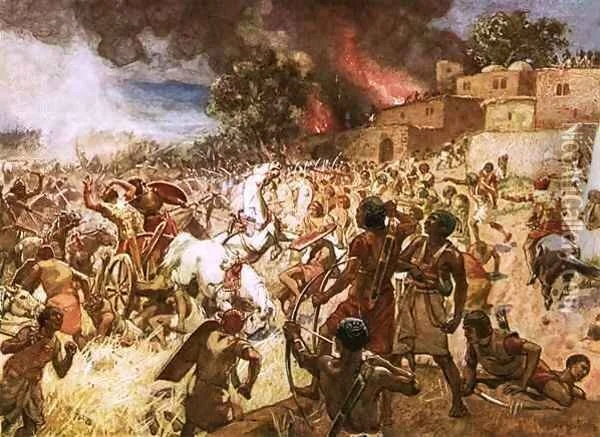
By 597 BCE, all the cities of Judah had been crushed under the Babylonian assault, culminating with the defeat of Jerusalem, which was burned to the ground. The Babylonian ruler, Nebuchadnezzar, looted the Temple and deported all but the poorest inhabitants of Judah. 

The Babylonians, led by King Nebuchadnezzar, defeated Judah, enslaved its people and burned Jerusalem to the ground.

The Babylonians, led by King Nebuchadnezzar, defeated Judah, enslaved its people and burned Jerusalem to the ground.

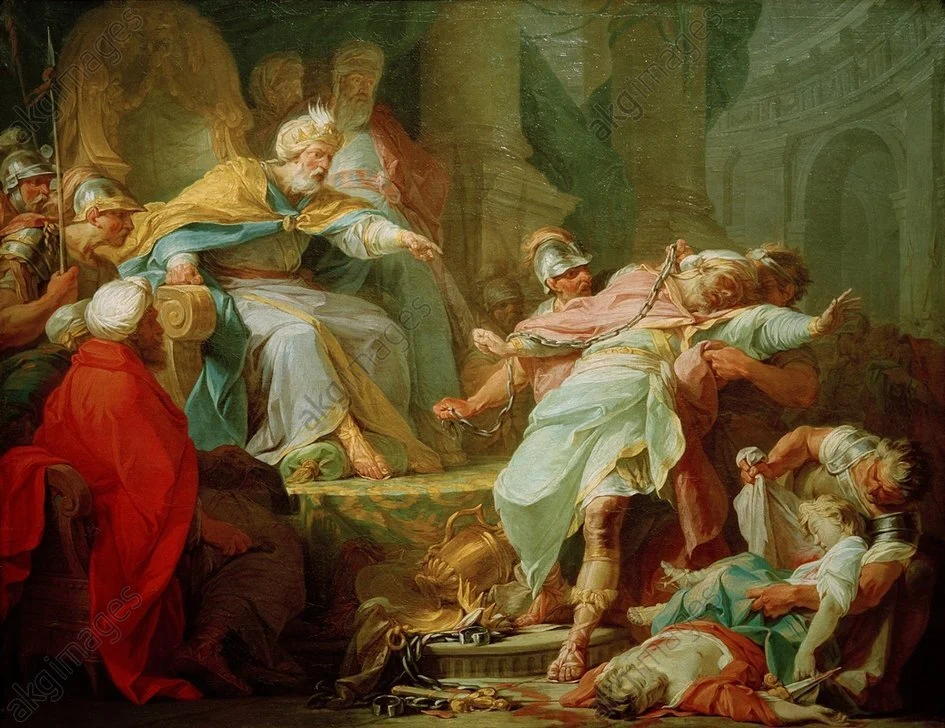
Judah’s last king, Zedekiah, was captured. He had to watch the Babylonians slaughter his sons before he was blinded.

Zedekiah, the last king of Judah, didn’t fare so well. Tragedy of Zedekiah by Charles Monnet, 1750

Zedekiah, the last king of Judah, didn’t fare so well. Tragedy of Zedekiah by Charles Monnet, 1750

Nebuchadnezzar had Zedekiah blinded — only after the king of Judah had watched his sons get slaughtered.

Nebuchadnezzar had Zedekiah blinded — only after the king of Judah had watched his sons get slaughtered.

Nevertheless, there was a power in Josiah’s movement. His revisionist history and rallying cry have become parts of the most popular book on the planet. And the laws of Deuteronomy found within “served as the foundation for a universal social code and system of community values that endure — even today,” write Finkelstein and Silberman. –Wally 

Cochineal Red: How Bugs Created One of the World’s Most Expensive Colors

From Aztec “cactus blood” to British redcoats to a Starbucks scandal, cochineal has long been coveted. Just don’t tell your vegetarian friends they’ve probably eaten bugs.

Who’d have thought that a tiny cactus-eating bug would end up being responsible for one of the most-sought-after dyes?

Who’d have thought that a tiny cactus-eating bug would end up being responsible for one of the most-sought-after dyes?

Primal and elemental, the color red is associated with such varied emotions as love, sin, anger — and even, thanks to Charles Dickens — the frustration that comes from red tape, a metaphor for the rigid rules and procedures of bureaucracy. 

First coveted by the ancient Aztec and Inca civilizations, the highly prized crimson dye-producing cochineal insect has been used since then to create the color red. It even enabled the Spanish Crown to finance its empire for nearly two centuries. 

It takes nearly 70,000 cochineal bugs to make a single pound of red pigment.
For a long time, a Mexican bug had the entire world seeing red.

For a long time, a Mexican bug had the entire world seeing red.

Bugging Out: The Nopal Cactus and the Cochineal 

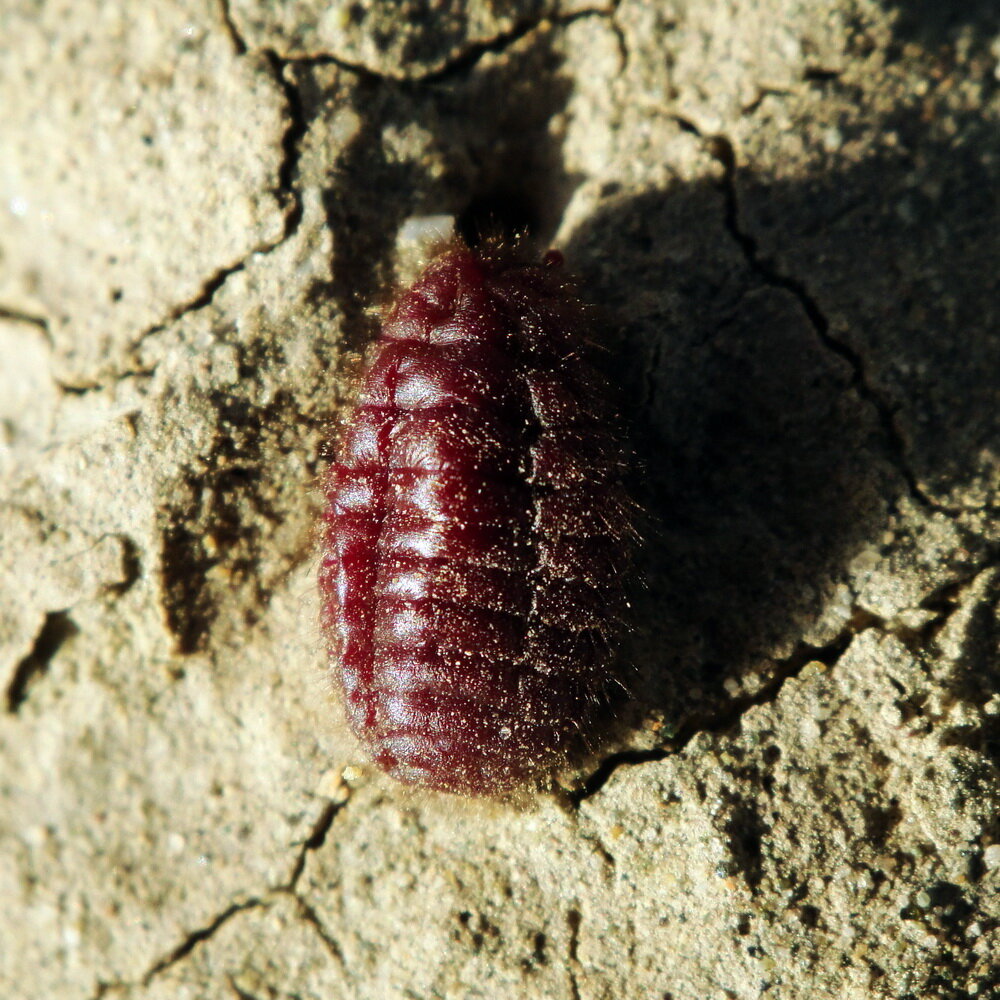
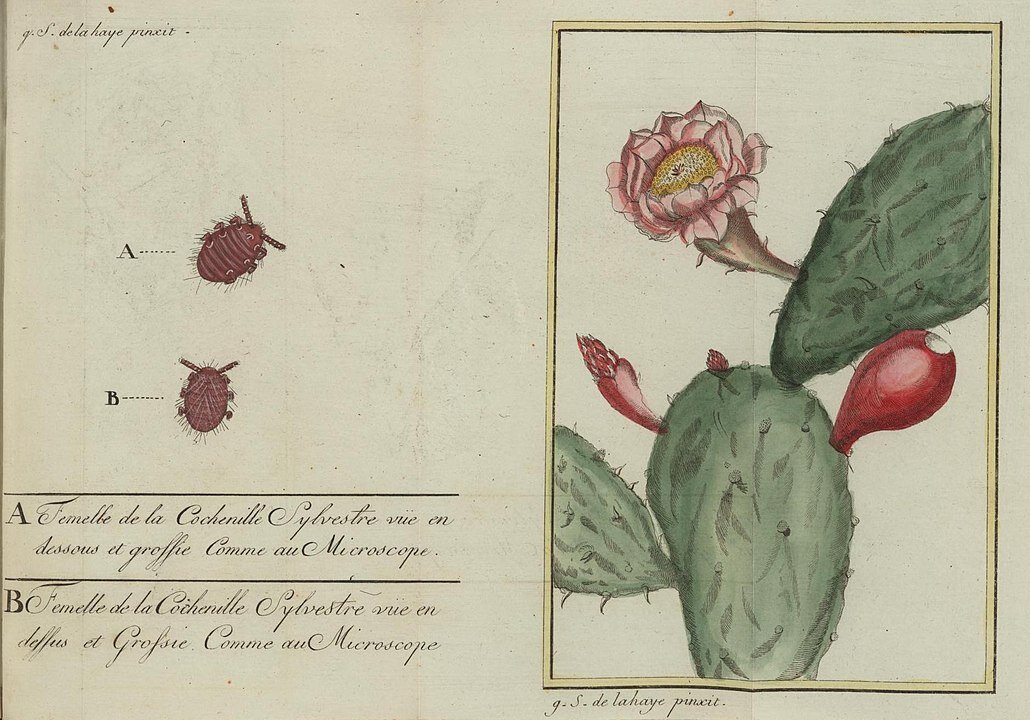
Although occasionally referred to as a beetle, cochineal (pronounced “coke-in-neel”) is in fact a scale insect, a parasitic bug that attaches itself to a host plant, drawing sustenance from it. They’re about the size of a peppercorn and resemble a burgundy-colored piece of gnocchi. 

It’s the female cochineal bugs that can be used to create red — it just takes 70,000 of them to make 1 pound of dye.

It’s the female cochineal bugs that can be used to create red — it just takes 70,000 of them to make 1 pound of dye.

At maturity, it produces a white, cottony covering as camouflage to hide from predators. Clusters can be found in abundance on the wide, flat “paddles” or “pads” of the nopal, the fruit-bearing prickly pear cactus. In addition to their downy coats, the female cochineal produces a chemical called carminic acid, which is the source of the color used to make a red dye. 

The lifecycle of a Polish variety of the cochineal insect

The lifecycle of a Polish variety of the cochineal insect

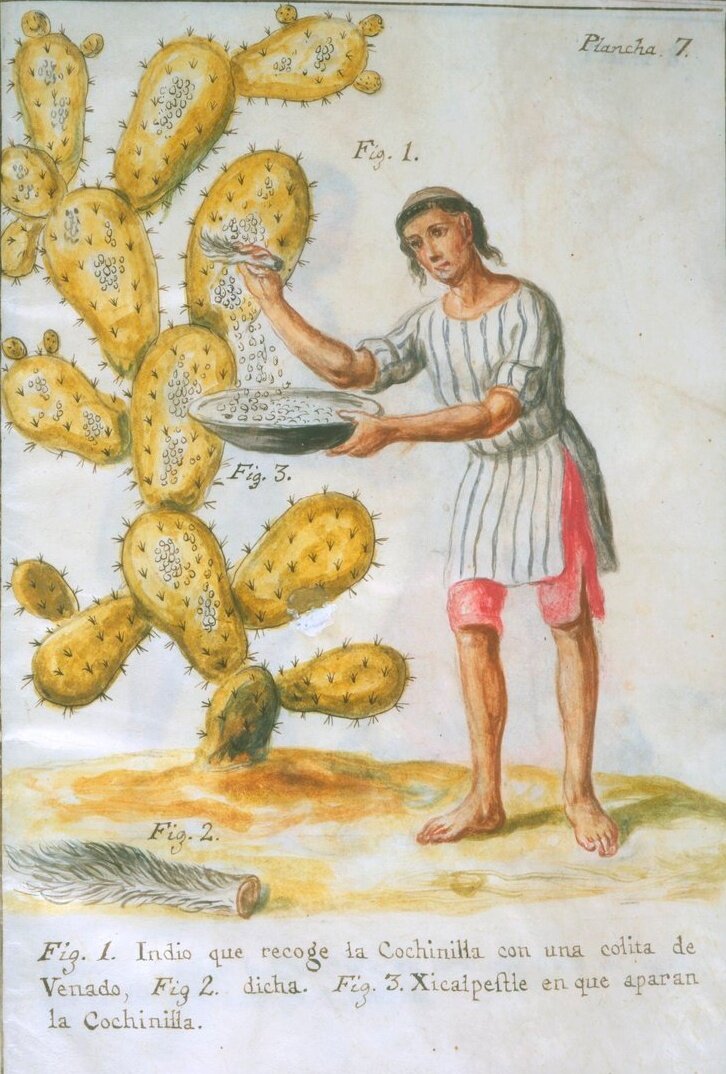
The Aztecs were the first to domesticate cochineal and referred to the insects as nocheztli, Nahuatl for “cactus blood.” A colorfast pigment was produced by harvesting and grinding the dried carcasses of the female cochineal bug into a fine powder. In the dyeing process, a mordant is used to fix the color. Different metallic compounds yield different shades. Aztecs often added a mordant of aluminum sulfate to the dye bath to bind the carminic acid to ritual and ceremonial textiles worn by their rulers as a symbol of wealth and status. 

A red to dye for

A red to dye for

Blood Money

Cochineal quickly became a prized commodity for Spain soon after Hernán Cortés and the conquistadors discovered macnu, the scarlet-colored pigment sold in cakelike form in the Aztec markets of Tenochtitlan. The Spanish saw the commercial value of these bugs, which quickly became the third-most valuable export of the New World, after gold and silver. 

Nothing in Europe could match the bright red that came from the cochineal bug. The Madonna With the Iris, from the workshop of Albrecht Dürer, circa 1500-1510

Nothing in Europe could match the bright red that came from the cochineal bug. The Madonna With the Iris, from the workshop of Albrecht Dürer, circa 1500-1510

Cochineal red finally escaped the clutches of Spain-controlled Mexico, thanks to a sneaky botanist named Thiéry de Menonville. Here are pages from his sketchbook showing cochineal and the nopal cactus.

Cochineal red finally escaped the clutches of Spain-controlled Mexico, thanks to a sneaky botanist named Thiéry de Menonville. Here are pages from his sketchbook showing cochineal and the nopal cactus.

It takes nearly 70,000 insects to make a single pound of pigment. At the time, Europe didn't have a dye that matched the brilliance and longevity of cochineal. For this reason, cultivation was restricted to Spanish-controlled Mexico from the 16th century up until 1777, when a young French botanist by the name of Nicolas-Joseph Thiéry de Menonville managed to smuggle cochineal-infested cactus pads to Haiti. 

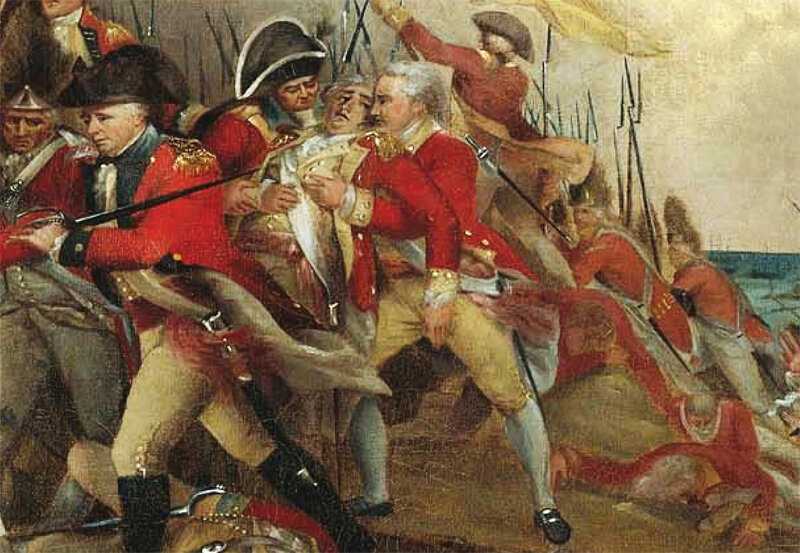
Some of the iconic redcoats of the British military were dyed with cochineal — the fact that they somewhat masked blood stains was a bonus.

Some of the iconic redcoats of the British military were dyed with cochineal — the fact that they somewhat masked blood stains was a bonus.

The Redcoats Used It, as a Madder of Fact

The term “redcoats” was coined in Tudor Ireland to refer to the British military uniform, which included the now-iconic fiery red jacket.

Only officers’ coats were dyed scarlet with cochineal bugs.

Only officers’ coats were dyed scarlet with cochineal bugs.

After passing the New Model Army ordinance in 1645, the British military officially adopted red as its uniform color. Most were dyed a rusty red using the cheaper and more accessible madder root. The costlier scarlet obtained from cochineal was reserved for officers and sergeants. It’s said that red was used because it wouldn’t show blood stains, but blood dries to a blackish color, and this is believed to be a myth. 

Taste the rainbow — as well as some bugs! Prior to 2009, the “natural color” used to make your favorite red candies, including Skittles and Starburst, came from dried, ground-up cochineal insects.

Taste the rainbow — as well as some bugs! Prior to 2009, the “natural color” used to make your favorite red candies, including Skittles and Starburst, came from dried, ground-up cochineal insects.

Food for Thought: You’re Eating Bugs!

Not limited to clothing, cochineal (or carmine, as it’s also called) is used to give alcoholic beverages, cosmetics, shampoo and pharmaceuticals a bright red color. 

It’s also used in food. In 2012, cochineal made headlines when Starbucks faced a public relations furor. Vegetarians and others who didn’t like the idea of eating bugs learned that the source of the red color in popular food items such as their Red Velvet Whoopie Pie and Strawberries and Crème Frappuccino contained insect guts. 

But the U.S. Food and Drug Administration has tested and approved cochineal as a food coloring. To make this more appealing to consumers, it's often listed by other designations. So the next time you’re picking up something at the store, watch out for these ingredients, which are all other names for cochineal or carmine: E120, carminic acid, crimson lake or natural red 4 — because, really, what’s more natural than bugs?

I’ve unintentionally swallowed my fair share of insects while riding my bike to work. Sure, it’s gross — but compared to synthetic red dyes such as Red No. 2 and Red No. 40, which carry far greater health risks and are derived from coal or petroleum byproducts, bugs sound positively appetizing. –Duke

National Museum of Mexican Art: A Hidden Gem in Chicago

Remedios Varo, Frida Khalo and Diego Rivera are all part of the rich heritage of Mexican artists honored at this all-too-often-overlooked museum.

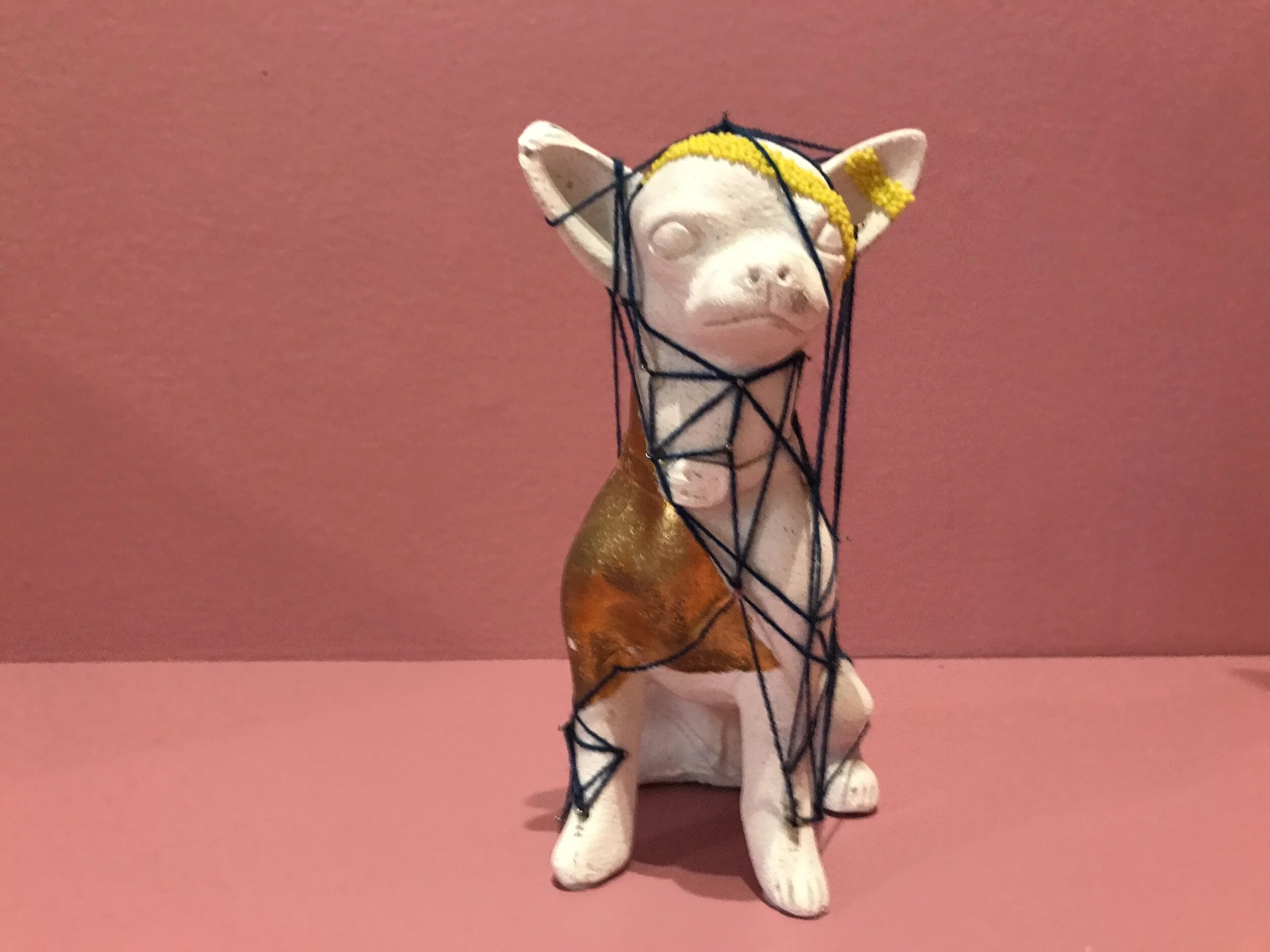
If you’re not all tied up, make a visit to the National Museum of Mexican Art in Chicago — it’s dog-gone great!

If you’re not all tied up, make a visit to the National Museum of Mexican Art in Chicago — it’s dog-gone great!

It’s one of our favorite fall activities. Every October, Duke and I make a trip to the National Museum of Mexican Art on the South Side of Chicago to see the ofrendas set up for the Day of the Dead. These altars for loved ones who have died are always colorful, touching and artistic — and, despite being tributes to the dead, they never fail to make you smile. 

An ofrenda to Diego Rivera, one of the most famous Mexican artists of all time

An ofrenda to Diego Rivera, one of the most famous Mexican artists of all time

Plus, it’s an excuse to wander the Pilsen neighborhood to see its street murals and grab some tacos and tamales. Pilsen is known as a Mexican neighborhood, though the artists who once called it home got priced out and vacated to Logan Square (and have most likely been priced out again and moved on to the new up-and-coming enclave). 

When you visit the museum, be sure to take a walk through the colorful neighborhood of Pilsen and go mural-hunting.

When you visit the museum, be sure to take a walk through the colorful neighborhood of Pilsen and go mural-hunting.

We were unable to see the ofrendas this year because of that pesky pandemic, so we reached out to the museum to tell us a bit more about one of the most impressive cultural centers in the city and to share their favorite artists (the founder seems particularly fond of the Surrealists).

The gift shop at the museum is filled with great Mexican handicrafts.

The gift shop at the museum is filled with great Mexican handicrafts.

When the museum reopens, be sure to visit. It’s a small space, so you could easily see it all in one visit. And the gift shop is an exhibition itself, filled with Mexican handicrafts, from brightly painted fantastic beasts to comical skeletons. If that’s not enough to entice you, admission to the National Museum of Mexican Art is always free.

Here’s a Q&A with the museum’s founder, Carlos Tortolero. –Wally 

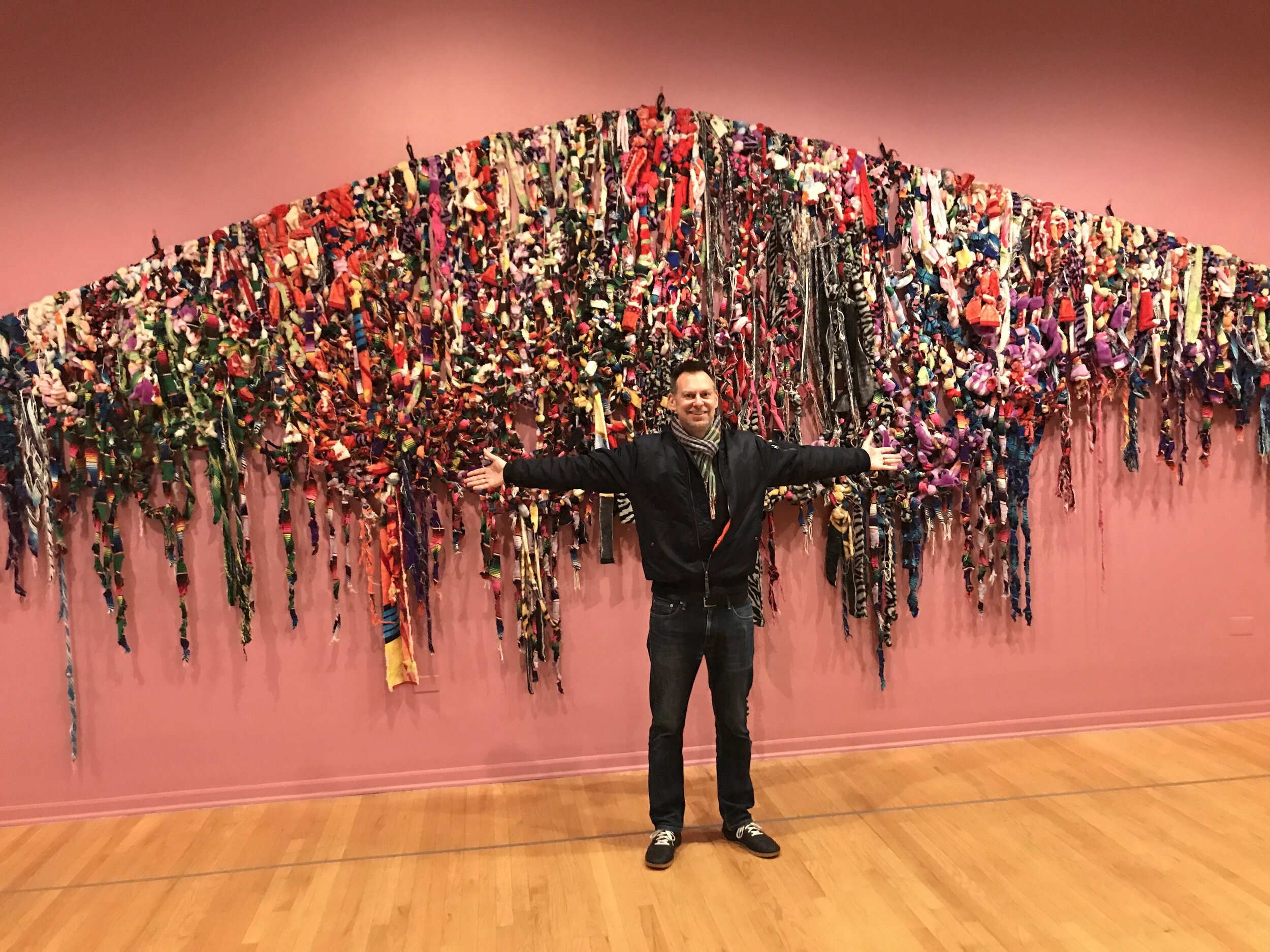
Duke loves the National Museum of Mexican Art thiiiiiiiis much!

Duke loves the National Museum of Mexican Art thiiiiiiiis much!

Wally in front of a cool exhibit with knitted fruit

Wally in front of a cool exhibit with knitted fruit

How did the museum come about?

Founder Carlos Tortolero, a former high school teacher who’s now president of the museum, invited four of his fellow teachers and his sister, also a teacher, to form a nonprofit to create a museum in 1982.

CHema Skandal’s take on lotería cards depicts Donald Trump as “the Evil One.” After launching his political career by calling Mexicans rapists and drug dealers, we agree with that moniker.

CHema Skandal’s take on lotería cards depicts Donald Trump as “the Evil One.” After launching his political career by calling Mexicans rapists and drug dealers, we agree with that moniker.

What is its mission?

To showcase the richness of Mexican art from both sides of the border from ancient times to the present.

Laura Molina’s Amor Alien from 2004 is part of the museum’s permanent collection.

Laura Molina’s Amor Alien from 2004 is part of the museum’s permanent collection.

Tell us about Mexican art.

Mexican art is an amazing cultural tradition. From ancient times to the present, the manifestations of Mexican art have earned worldwide recognition.


Who are some of your favorite artists?

Artists who are deceased that I admire are:

  • Saturnino Herrán

Saturnino Herrán, The Offering, 1913

Saturnino Herrán, The Offering, 1913

  • Remedios Varo

Remedios Varo, Simpatía (La Rabia del Gato), 1955

Remedios Varo, Simpatía (La Rabia del Gato), 1955

  • José Celmente Orozco

José Celmente Orozco, The Trench, 1926

José Celmente Orozco, The Trench, 1926

  • Diego Rivera

Diego Rivera, detail from Dream of a Sunday Afternoon in Alameda Park, 1948

Diego Rivera, detail from Dream of a Sunday Afternoon in Alameda Park, 1948


  • David Alfaro Siqueiros

David Alfaro Siqueiros, La Marcha de la Humanidad, 1966

David Alfaro Siqueiros, La Marcha de la Humanidad, 1966

  • María Izquierdo

María Izquierdo, Viernes de Dolores, 1945

María Izquierdo, Viernes de Dolores, 1945

  • Frida Kahlo

Frida Kahlo, The Two Fridas, 1939

Frida Kahlo, The Two Fridas, 1939


  • Salvador Dali

  • Rene Magritte


Living artists: 

  • Patssi Valdez

Patssi Valdez, The Enchanted Garden, 2005

Patssi Valdez, The Enchanted Garden, 2005

  • John Valadez

John Valadez, Pool Party, 1987

John Valadez, Pool Party, 1987

  • Marcos Raya

Marcos Raya, Girl With Prosthesis, 2010

Marcos Raya, Girl With Prosthesis, 2010

  • Nahum Zenil

Nahum Zenil, Con Todo Respecto, 1983

Nahum Zenil, Con Todo Respecto, 1983

Murals have long been an important part of Mexican culture.

Murals have long been an important part of Mexican culture.

What’s special about the Pilsen neighborhood?

Pilsen has historically been a port of entry for immigrants from Europe and now from Mexico. There’s a dynamism of activism that has always made Pilsen stand out from other communities. Pilsen also has excellent restaurants and bakeries based on Mexican cuisine.

Skeletons are a popular motif in Mexican art — especially around Día de los Muertos.

Skeletons are a popular motif in Mexican art — especially around Día de los Muertos.

What else is the museum used for?

The museum hosts numerous events during the year, from health workshops dealing with health issues like HIV, cancer and lupus, community fundraisers, immigration presentations, city-wide initiatives and, of course, presentations of authors, musical groups and theater.

Popocatépetl and Iztaccíhuatl by Jesus Helguera welcomes visitors to the permanent collection gallery at the National Mexican Museum of Art.

Popocatépetl and Iztaccíhuatl by Jesus Helguera welcomes visitors to the permanent collection gallery at the National Mexican Museum of Art.


Ancient Egyptian Words You Should Know

Do you know your ba from your ka? What’s a vizier? How about a cartouche? Our handy glossary of Ancient Egyptian terms will have you speaking like a pharaoh in no time.

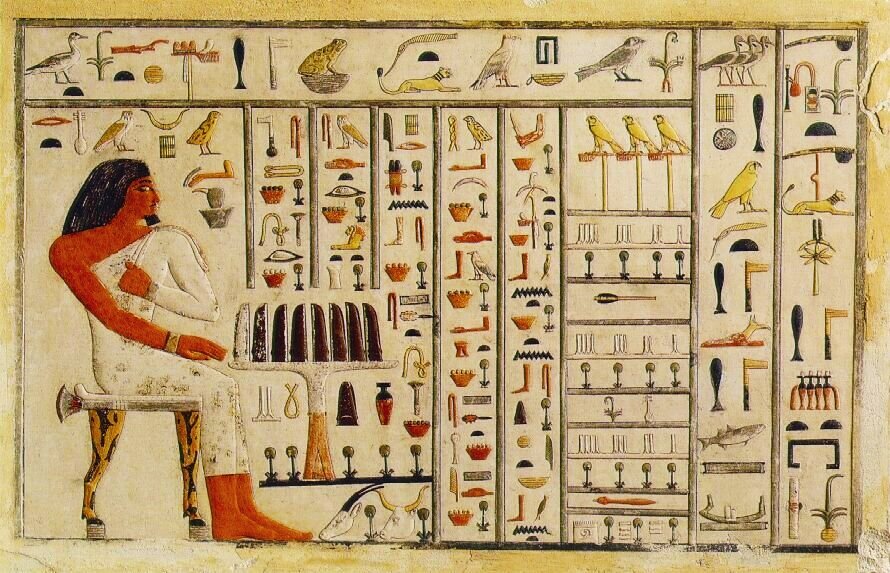
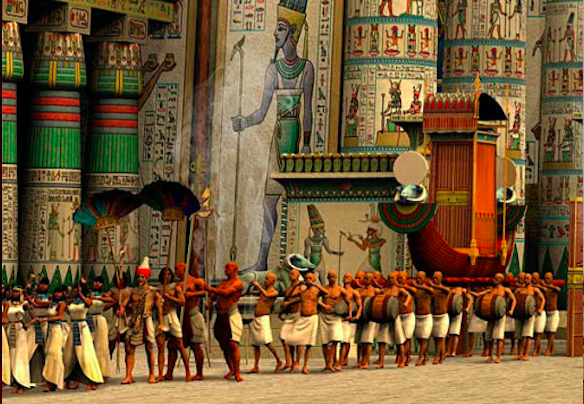
How many Ancient Egyptian terms can you spot in this image?

How many Ancient Egyptian terms can you spot in this image?

The terms we use to describe the religion, history and artifacts of Ancient Egypt are a strange mishmash of words that have French, Greek, English, Arabic — and yes, sometimes even Egyptian — origins.

Talk Like an Egyptian 

As you read more about the fascinating and complex world of Ancient Egypt, it helps to familiarize yourself with the terms that come up the most often. It’s probably a good idea to bookmark this page for easy reference — especially if you’re considering a visit. 🤗 

ankh.jpg

ankh: The hieroglyphic symbol for life, similar to a cross but with a loop in place of the upper arm. It was especially popular in jewellery and on temple carvings, where it was held in the hands of deities or being given by them to the pharaoh, to represent their power to sustain life and to revive human souls in the afterlife.

atef.jpg

atef: The atef crown was made up of the White Crown of Upper Egypt with red ostrich feathers on either side. It was worn by the god of the underworld, Osiris.

ba.jpg

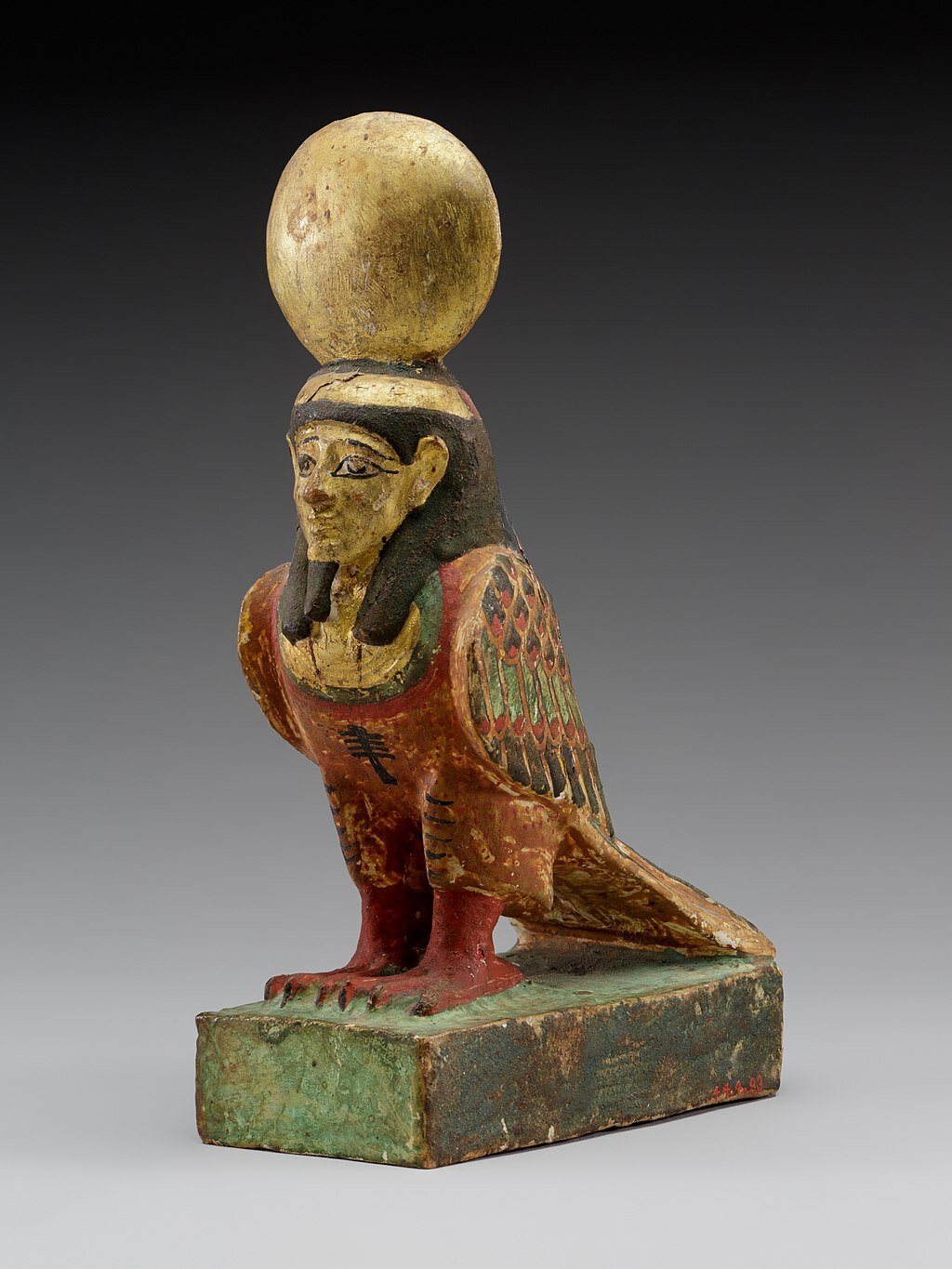
ba: The ba is, essentially, the concept of the soul. Depicted as a bird with a human head, it could leave a person’s tomb to fly about. 

barque.jpg

barque: These thin boats that curve up at either end were the transports of the gods, especially during festival processions. In temple sanctuaries, models of barques held statues of a deity. When a pharaoh died, a barque would transport them on their way to becoming a god.

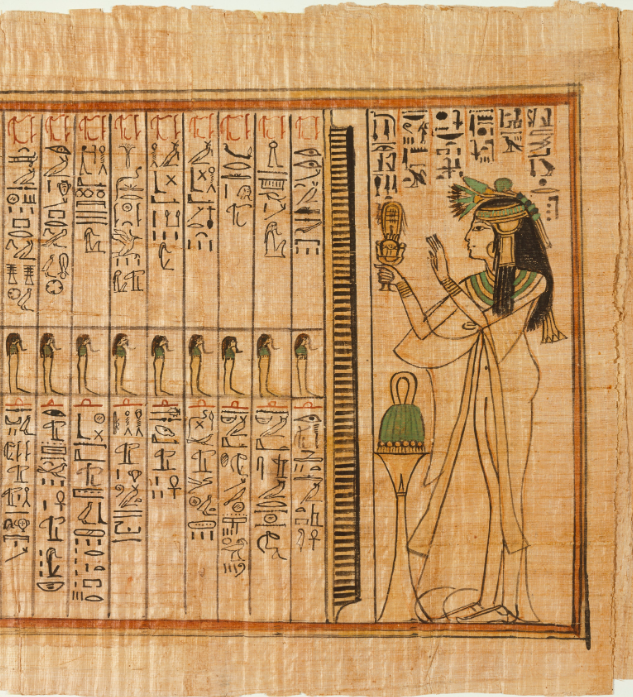
bookofthedead.jpg

Book of the Dead: This is the modern name ascribed to a collection of 200 hymns, rituals and spells that allowed the deceased to travel safely through the underworld and enter the afterlife. Ancient Egyptians knew it as the Spells for Going Forth by Day.

canopicjars.jpg

canopic jars: Four containers used to store the preserved internal organs of the deceased (the lungs, stomach, liver and intestines) extracted during the mummification process. Each jar was topped with the head of one of the god Horus’ sons.

cartouche.jpg

cartouche: The oval frame that surrounds the name of a king, queen or god in inscriptions.

coffintexts.jpg

Coffin Texts: Collected during the First Intermediate Period, around 2134-2040 BCE, these 1,185 incantations and other forms of religious writing were inscribed on coffins to help the deceased navigate the afterlife, providing maps of the underworld and the best way to avoid dangers on one’s way to paradise.

deshret.jpg

deshret (or Red Crown): The crown, with a square base that curved upward into a point and had a coil spiraling out in front, was worn by the rulers of Lower Egypt.

djed.jpg

djed: A representation of the spine, it symbolized stability. A djed amulet was often placed in coffins, where the backbone of the deceased would lay, to ensure eternal life. During a Sed festival, the pharaoh, with the help of priests, would raise a djed column. 

duat.jpg

Duat: The underworld, home of the gods Osiris, Anubis and Ma’at, as well as many grotesque monsters. The sun deity Ra travels through the Duat every night, where he battles the serpent Apep, or Apophis. This is where a deceased person’s soul travels for judgment. 

eyeofhorus.jpg

Eye of Horus (aka udjat eye or wedjat eye): A falcon’s eye that acts as a protective talisman and symbolizes rebirth after death. Its origins lie in a myth where the evil god Set plucks out one of his nephew Horus’ eyes

faience.jpg

faience: A powdered quartz paste that ranges in color from turquoise to teal. Modeled and sometimes fired, it was commonly used for jewelry, pottery and sculptures.

hedjet.jpg

hedjet (or White Crown): The crown of Upper Egypt, it’s often irreverently (but accurately) described as looking like a bowling pin.

hieroglyphs.jpg

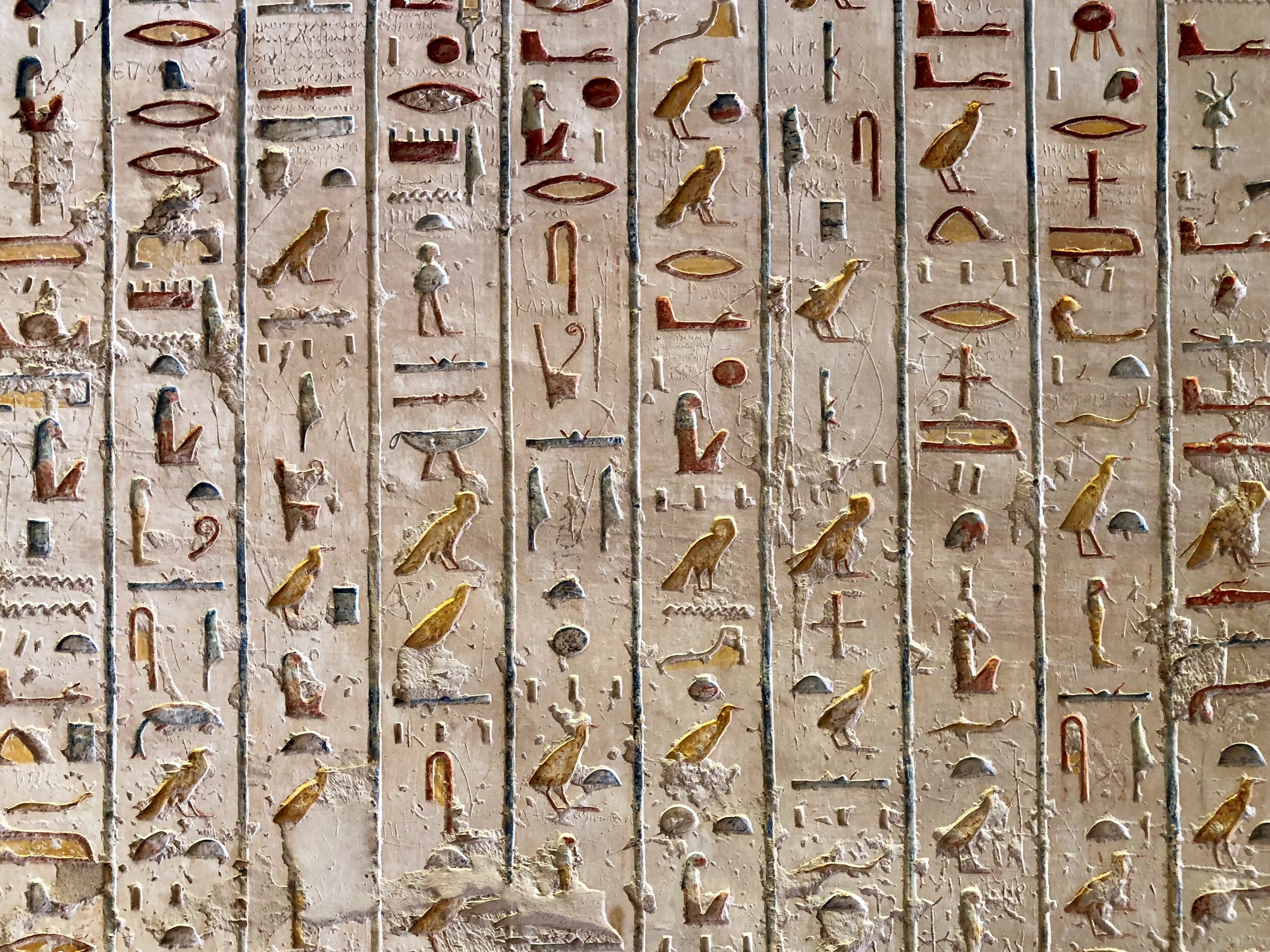
hieroglyphs: Think of them as the emojis of their day. Often mistakenly called hieroglyphics, they make up the system of pictorial writing used in Ancient Egypt. Though they sometimes represented the actual objects they depicted, hieroglyphs usually stood for particular sounds. 

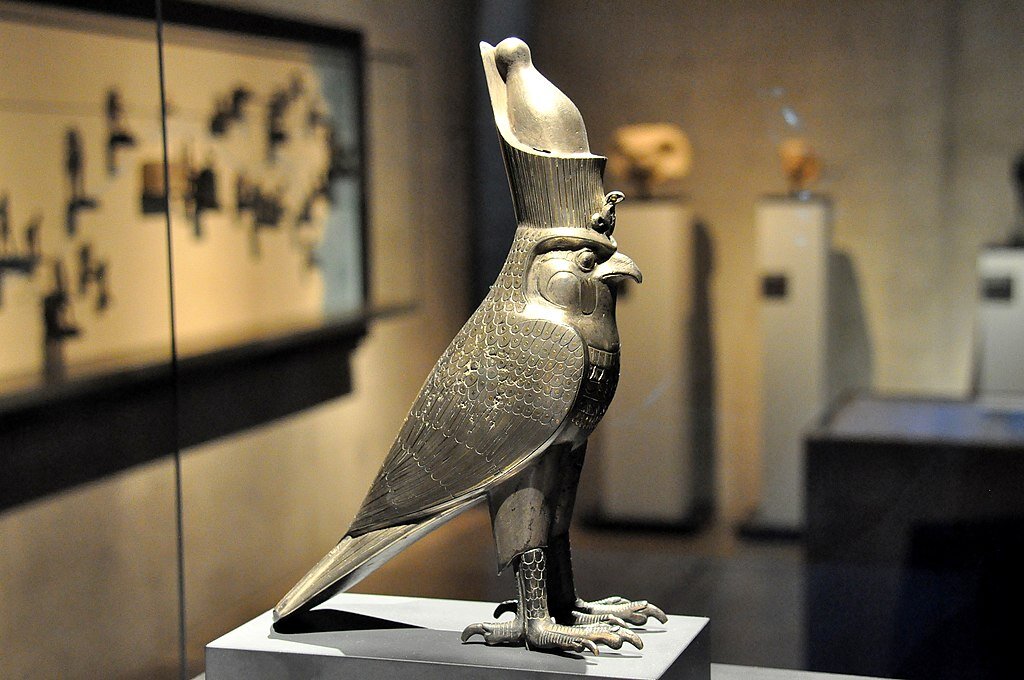
horusname.jpg

Horus name: Beginning in the Predynastic Period, pharaohs would take on an additional name, cementing their relationship with the falcon-headed god Horus. The pharaoh oversaw their entire country and, like the bird of prey, could strike at enemies below. 

hypostylehall.JPG

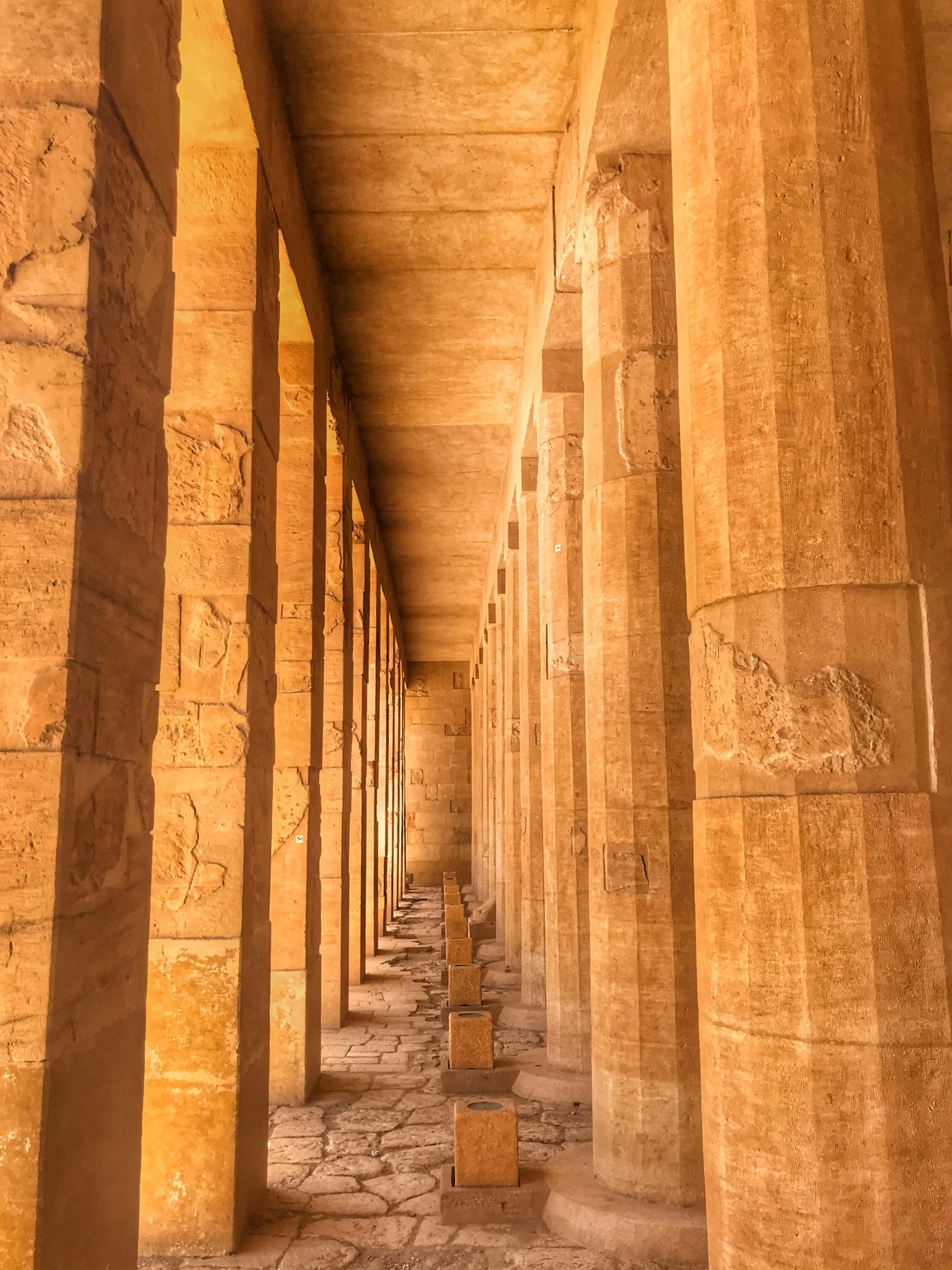
hypostyle hall: The reception area of a temple. Originally, most would have had a roof over rows of densely packed columns with capitals depicting palms, papyri or lotuses to represent the lush island of creation.

ka.jpg

ka: The best way to describe this is as a soul — it’s someone’s other self, what makes them unique. It’s with a person throughout their life, but upon death the ka and the body become separate. The body has to be preserved, and the ka nourished, or it will starve and cease to exist. It’s represented as a human with upraised arms — or just the arms raised at a 90-degree angle. 

khepresh.jpg

khepresh (or Blue Crown): Often worn by pharaohs when going into war, the khepresh was a blue headpiece with a uraeus on the brow.

kohl2.png

kohl: Black powder made from galena ore (the chief source of lead) mixed with oil and used as an eyeliner by women and men.

loweregypt.jpg

Lower Egypt: The Ancient Egyptian worldview was upside-down compared to ours. Lower Egypt was the northern half of Egypt, so called because the Nile flows north before entering the Mediterranean Sea. Its capital was Memphis.

maat.jpg

ma’at (aka maat): The principle of balance and cosmic order, personified by a goddess of the same name. It was a pharaoh’s duty to rule according to ma’at.

mammisi.JPG

mammisi: A birth house, where a woman would go to deliver a child and recover for two weeks or so. These chapels were often situated in front of a temple and were said to be where a god had been born.

mastaba.jpg

mastaba: A type of tomb first created in the Old Kingdom. From the Arabic word for “bench,” they were rectangular and flat-roofed, with a substructure belowground. As time went on, architects stacked stories atop them, leading to step pyramids and, eventually, the triangular pyramids like those at Giza.

nemes.jpg

nemes: A striped head covering worn by pharoahs. It covered the brow and skull, hung down on the side to rest on the shoulders, and was drawn together in the back in a sort of ponytail. King Tut was a fan. 

openingofmouth.png

Opening of the Mouth: A ceremony held at the tomb, where the mouth of a mummy was symbolically opened so the dead could use their senses in the afterlife.

opetfestival.png

Opet: A festival held during the inundation, or flooding of the Nile. The statue of the chief god Amun would travel upon a barque from his sanctuary at Karnak to Luxor Temple.

papyrus.png

papyrus: The writing surface used by Egyptian scribes. Derived from the pith of the stalks of papyrus, which grew along the banks of the Nile, the plant was also used to make boats, sandals, baskets and rope. 

pectoral.jpg

pectoral: An elaborate necklace that covered much of the chest.

pharaoh.jpg

pharaoh: The supreme ruler of Ancient Egypt. He or she (there are a few times when a woman took the throne, like the remarkable Hatshepsut) was considered a god.

pschent.jpg

pschent (or the Double Crown): A combination of the deshret and hedjet crowns, it showed that the pharaoh controlled both Lower and Upper Egypt.

pylon.jpg

pylon: A massive gateway leading into a temple. Some held rooms, like the one for the harem at Medinet Habu.

pyramidtexts.jpg

Pyramid Texts: The earliest religious texts of Ancient Egypt. These spells, religious beliefs and myths were inscribed on the walls of Fifth and Sixth Dynasty pyramids (2465-2150 BCE). They were used to magically transform the deceased into the god of the afterlife, Osiris. Composed of 2,217 spells grouped into 714 “utterances,” they gave way to the Coffin Texts.

rekhyt.jpg

rekhyt: A stylized lapwing bird with wings spread and human arms raised in adoration, representing the general populace or the pharaoh's subjects. When depicted on the walls of ancient temples, it signified that the public was allowed in that area. 

sarcophagus.jpg

sarcophagus: A large stone container that held a mummy's coffin. Its name comes from the Greek sarkophagos, meaning “flesh-eater.”

sedfestival.jpg

Sed: A festival of rejuvenation that renewed the powers of a pharaoh, it was usually — but not always — held in their 30th year of rule.

senet.png

senet: A game played in Ancient Egypt. No one knows the rules, but they think it was a bit like chess. Pieces were usually fashioned from animal bone or clay. 

shabti.jpg

shabti (also shawabti or ushabti): A small mummy statuette of a servant placed in tombs that could be magically brought to life to perform tasks for the deceased in the afterlife.

sistrum.jpg

sistrum: A sacred rattle made of a wood, metal or clay frame set loosely with crossbars strung with small metal discs. It was shaken during ritual dances for the goddess Hathor and later Isis.

sphinx.jpg

sphinx: A mythological beast with the body of a lion that usually had the head of a pharaoh or god. The famous one sits outside Cairo at Giza. 

stele.jpg

stele (also stela): An upright slab of stone that served as a monument, inscribed with religious or historical text.

upperegypt.jpg

Upper Egypt: The southern half of the kingdom of Ancient Egypt. It’s called Upper Egypt because the Nile River flows northward, from Upper to Lower Egypt. Its capital was Thebes.

uraeus.jpg

uraeus: A rearing cobra in a threatening pose that represented divine authority, worn as a crown or head ornament by Ancient Egyptian divinities and rulers. It showed that the pharaoh had the protection of the goddess Wadjet, the patroness of Lower Egypt.

vizier.jpg

vizier: The second in command after the pharaoh. The role held many responsibilities, including administration of the government, security, judgement and the safety of the empire.

wasscepter.png

was scepter: A staff that’s often forked at the bottom and topped with the head of a creature, possibly the Bennu bird, a mythological heron who wears the atef crown. Carried by gods and pharaohs, the was scepter stood for power and dominion. –Wally

The True Story of the Assyrian Conquest of Judah

The Old Testament says that good King Hezekiah fended off the Assyrian army at Jerusalem, but his triumph was undone by bad King Manasseh. Archaeology proves otherwise.

Instead of scurrying home in defeat, did the Assyrians actually successfully conquer Jerusalem?

Instead of scurrying home in defeat, did the Assyrians actually successfully conquer Jerusalem?

It just doesn’t seem fair that the fate of an entire kingdom would be dependent upon its king’s behavior — namely whether or not he worshiped other gods besides YHWH (Yahweh). 

But that’s exactly what happens throughout the Old Testament. In general, the kingdom of Judah fared much better than its northern neighbor, Israel, which was ultimately laid to waste by Assyria.

A contemporary record explains how Sennacherib laid siege to city after city throughout Judah, conquering them with ramps and battering rams.

He captured King Hezekiah and kept him “like a bird in a cage.” 
The Bible tells us that King Hezekiah defeated the Assyrians with divine intervention. But archaeological evidence from the time suggests otherwise.

The Bible tells us that King Hezekiah defeated the Assyrians with divine intervention. But archaeological evidence from the time suggests otherwise.

Hezekiah and the Miraculous Defeat of Assyria

With King Sargon II of Assyria dead since 705 BCE, Hezekiah (who reigned from 727-698 BCE) decided it was time to rebel, entering a coalition backed by Egypt. Of course, that prompted the new ruler of Assyria, Sennacherib, to gather his formidable army and march upon Judah. 

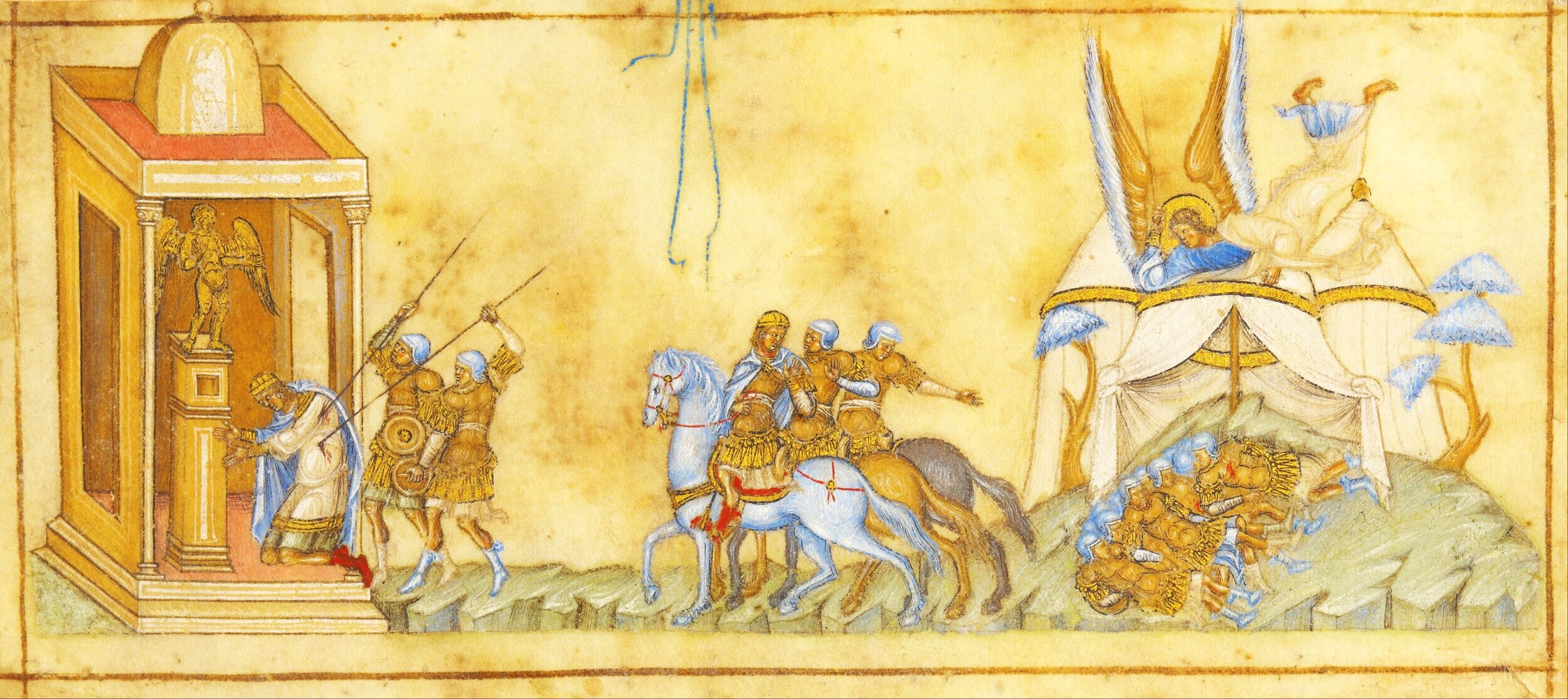
The book of 2 Kings in the Bible tells the story of a miraculous defeat: The Angel of the Lord went forth, slaying 185,000 soldiers in the Assyrian camp. Needless to say, that frightened King Sennacherib enough that he scurried home — only to be murdered by two of his sons. 

After his supposed defeat, the Assyrian ruler Sennacherib was killed by two of his own sons.

After his supposed defeat, the Assyrian ruler Sennacherib was killed by two of his own sons.

For some reason, Hezekiah’s son and successor, Manasseh (698-642 BCE), isn’t impressed enough with the power of Yahweh to insist upon sole worship of the deity. He makes a theological about-face, and even goes so far as to burn his son as an offering to one of the local gods, practice soothsaying and augury, and deal with mediums and wizards. (Sounds like fun to me — except for the human sacrifice bit.)

The evil King Manasseh had to repent for his sins in the Old Testament — but historical evidence doesn’t jibe with the Bible’s version of events.

The evil King Manasseh had to repent for his sins in the Old Testament — but historical evidence doesn’t jibe with the Bible’s version of events.

Archaeology Tells a Different Story

Were the Assyrians defeated during their invasion of Judah? If the story in the Old Testament seems almost too fantastical to believe, that’s because it probably is. Archaeological evidence — granted, some from the Assyrian point of view — tells another version.

A contemporary record explains how Sennacherib laid siege to city after city throughout Judah, conquering them with ramps and battering rams. He captured King Hezekiah and kept him prisoner in his palace, “like a bird in a cage,” while the Assyrian army plundered his land. 

So who’s telling the truth? The authors of the Bible or the Assyrian historians?

Bad news for biblical literalists: “The devastation of the Judahite cities can be seen in almost every mound excavated in the Judean hinterland,” write Israel Finkelstein and Neil Asher Silberman in The Bible Unearthed: Archaeology’s New Vision of Ancient Israel and the Origin of Its Sacred Texts.

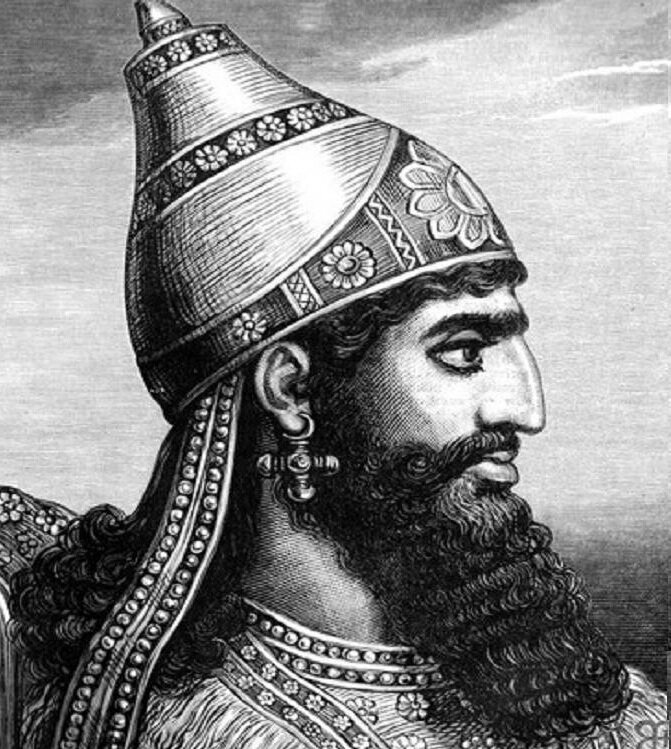
Sennacherib, the ruler of Assyria at the time of Hezekiah and Manasseh

Sennacherib, the ruler of Assyria at the time of Hezekiah and Manasseh

Manasseh and Assyria

Perhaps Manasseh is remembered so poorly because he actually became one of Assyria’s most loyal vassal states — despite the prosperity it brought. 

“[A] seventh century text reporting tribute given by south Levantine states to the Assyrian king indicates that Judah’s tribute was considerably smaller than that paid by the neighboring, poorer Assyrian vassals Ammon and Moab,” write Finkelstein and Silverman.

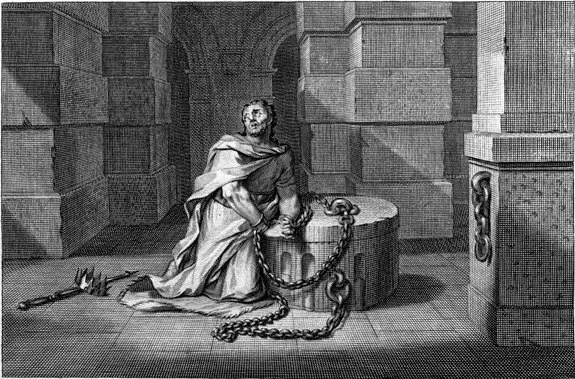
Manasseh was said to be captured and marched to Assyria in chains — including one through his nose. But a contemporary record says it was Hezekiah who was captured and kept “like a bird in a cage.”

Manasseh was said to be captured and marched to Assyria in chains — including one through his nose. But a contemporary record says it was Hezekiah who was captured and kept “like a bird in a cage.”

In another document, Manasseh is reported as giving gifts to the Assyrian king and helping him conquer Egypt. And while this certainly would have displeased anyone who wanted a free, unified kingdom of Israel, Manasseh’s long reign of 55 years was a peaceful time for Judah. 

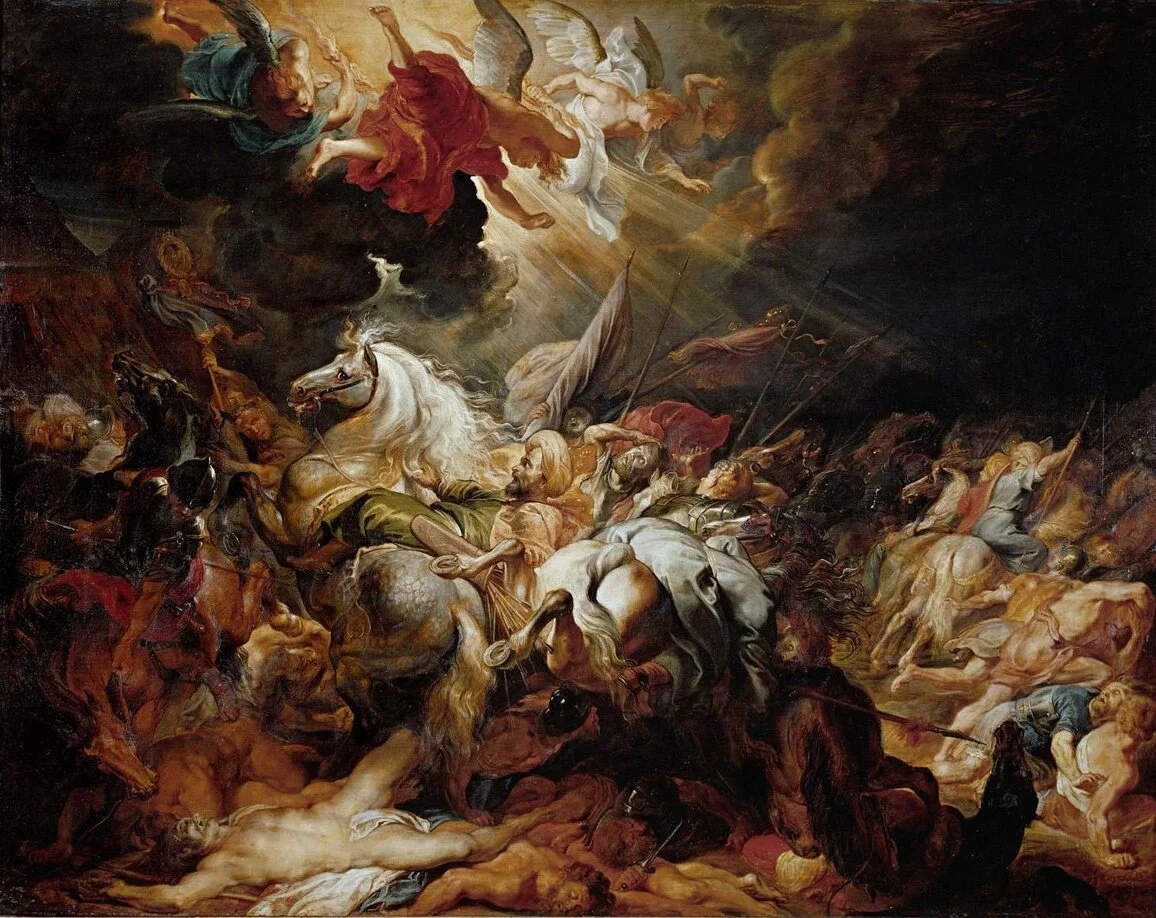
The Defeat of Sennacherib by Peter Paul Rubens, 17th century

The Defeat of Sennacherib by Peter Paul Rubens, 17th century

“For all the Bible’s talk of Hezekiah’s piety and YHWH’s saving intervention, Assyria was the only victor,” Finkelstein and Silverman write.  “Sennacherib fully achieved his goals: he broke the resistance of Judah and subjugated it. Hezekiah had inherited a prosperous state, and Sennacherib destroyed it.”

The author of the books of Kings seems to have hoped that by the time he wrote his version of the account, people would have forgotten what actually had happened. For centuries, this is what people have believed — until archeological evidence has come along to prove them wrong. –Wally

Apple Cider Donut Bread

Sweet! A favorite fall treat gets a new preparation in this dessert recipe that uses stuff you’ve probably got at home already. 

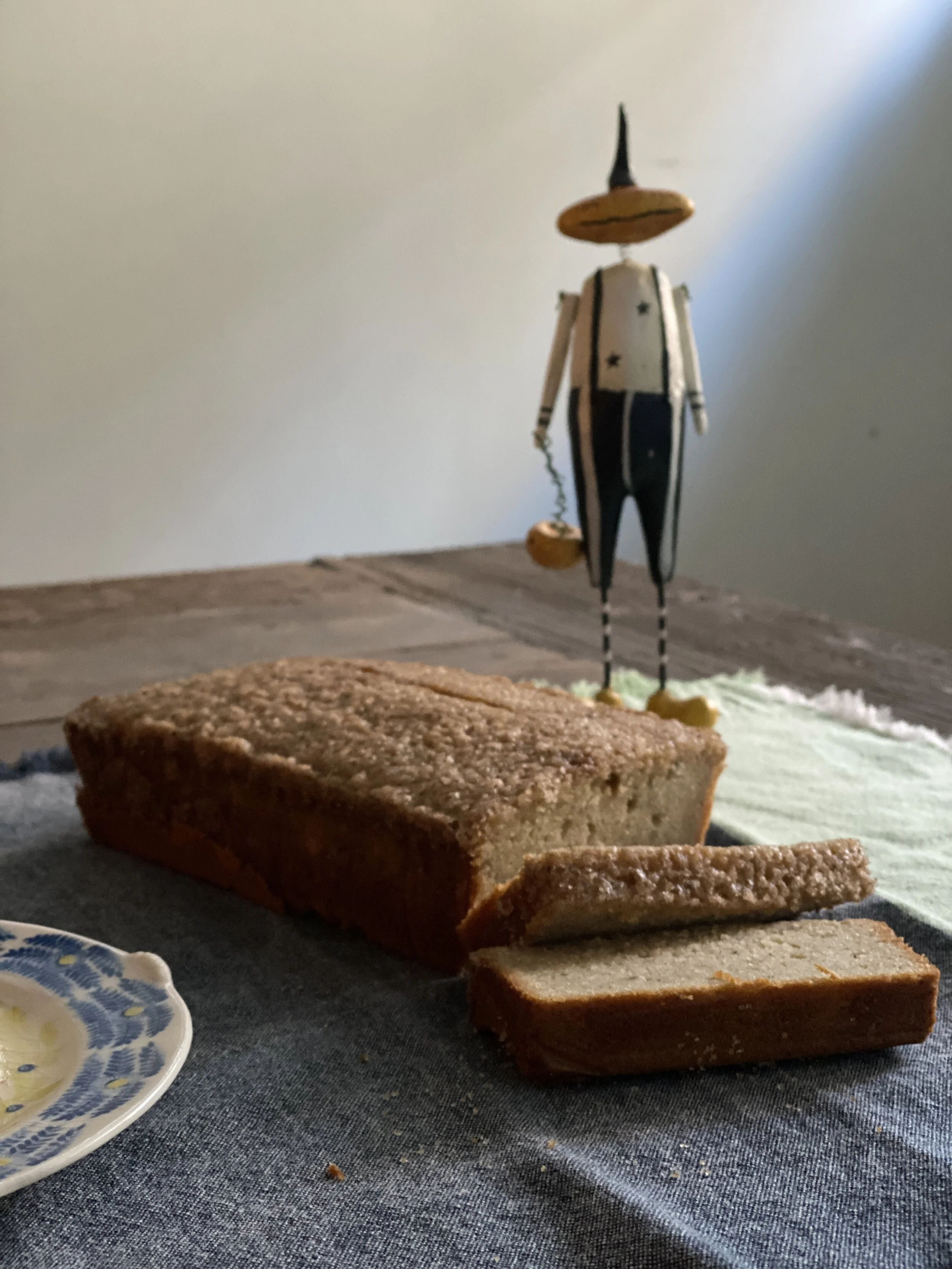
A new fall tradition: whipping up some apple cider donut loaves!

A new fall tradition: whipping up some apple cider donut loaves!

Fall has officially arrived in Chicago. The mild 80-degree days of early October plummeted to the 30s and 40s in the blink of an eye. This delicious baked loaf is the perfect combination of fresh cider cake-style donuts and cinnamon sugar.  

I miss our annual autumnal visit to my family in Ellicottville, New York and going through the legit-scary Pumpkinville cornstalk maze. After making it through, Wally and I would always treat ourselves to some fresh-pressed apple cider and cider donuts. You know the kind that are still warm, a little bit cakey and covered with generous amounts of cinnamon sugar?

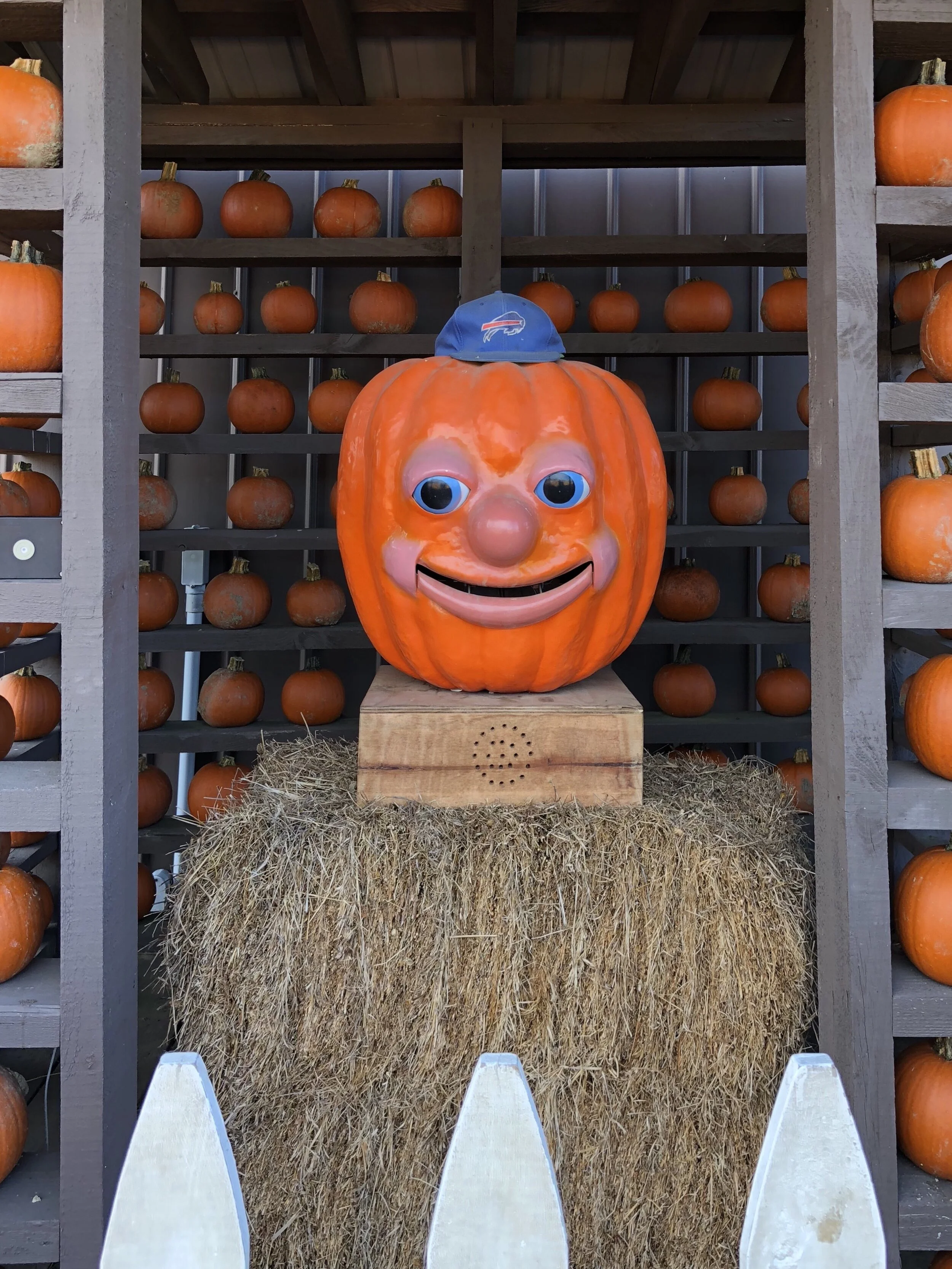
Duke and Wally goofing around at Pumpkinville, with their creepy friend Chris in the background

Duke and Wally goofing around at Pumpkinville, with their creepy friend Chris in the background

Our favorite fall tradition: visiting Pumpkinville in Ellicottville, New York, with its a-maize-ing corn maze

Our favorite fall tradition: visiting Pumpkinville in Ellicottville, New York, with its a-maize-ing corn maze

You can imagine how excited I was when I found a recipe on Epicurious for apple cider donut loaf. Three loaves and a bit of experimentation later, I finally figured out the right ratio. This bread has a subtle apple flavor and is totally acceptable to eat for breakfast. You probably have everything you need in your fridge and pantry right now except cider — so what are you waiting for?

Eggs, flour, spices: Check your kitchen — we bet you’ve got most of these ingredients already.

Eggs, flour, spices: Check your kitchen — we bet you’ve got most of these ingredients already.

Ingredients

  • 1 large apple, peeled, cored and chopped 

  • 1½ cups apple cider

  • ½ cup whole milk

  • ¼ cup sour cream

  • 1 teaspoon vanilla extract

  • 2½ cups all-purpose flour 

  • 1½ teaspoons baking powder 

  • ½ teaspoon baking soda

  • 1 teaspoon salt

  • ½ teaspoon ground cinnamon

  • ¼ teaspoon ground nutmeg

  • ¼ teaspoon ground allspice

  • 8 tablespoons (1 stick) unsalted butter, room temperature 

  • ¾ cup brown sugar

  • ½ cup organic granulated cane sugar 

  • 3 large eggs, room temperature 

Anything topped with cinnamon sugar is A-OK in our book.

Anything topped with cinnamon sugar is A-OK in our book.

Cinnamon Sugar 

1 tablespoon ground cinnamon 

⅓ cup granulated sugar

How you like them apples? Some people have said there’s not enough apple taste, so ramp that up if you want.

How you like them apples? Some people have said there’s not enough apple taste, so ramp that up if you want.

Preparation

Adjust oven rack to middle position and preheat to 350°F. 

Grease and flour a loaf pan. Line the bottom with parchment paper. 

For the apples, I used a Honeycrisp, but a Granny Smith would work, too.

Place the chopped apple and cider in a saucepan and bring to a boil. 

Lower heat and simmer for 8 minutes until reduced to 1 cup. 

Remove from heat and let cool, then pulse in a food processor until puréed. The texture will resemble apple sauce. 

In a separate bowl, combine the flour, baking powder, baking soda, salt, nutmeg and allspice. Set aside. 

Using a stand mixer, beat the butter, sugar and brown sugar until light and fluffy, about 3 minutes. 

Add the eggs, one at a time, beating well after each addition. 

Add sour cream and beat until incorporated, about 1 minute. 

Decrease mixer speed to low and add the flour mixture in three batches. After the first portion of the flour mixture is added, pour in the apple mixture. Then add the other two batches of the flour mixture, scraping down the sides and bottom of the bowl with rubber spatula as needed. Increase the speed to medium and beat until just combined, about 30 seconds. 

Add vanilla and beat once more, just to combine, about 10 seconds. 

Pour the batter into the prepared pan. 

Bake for 50 to 55 minutes until the tester inserted into the loaf comes out clean. 

Leave to cool for about 1 hour. 

Generously sprinkle the top of the loaf with cinnamon sugar.

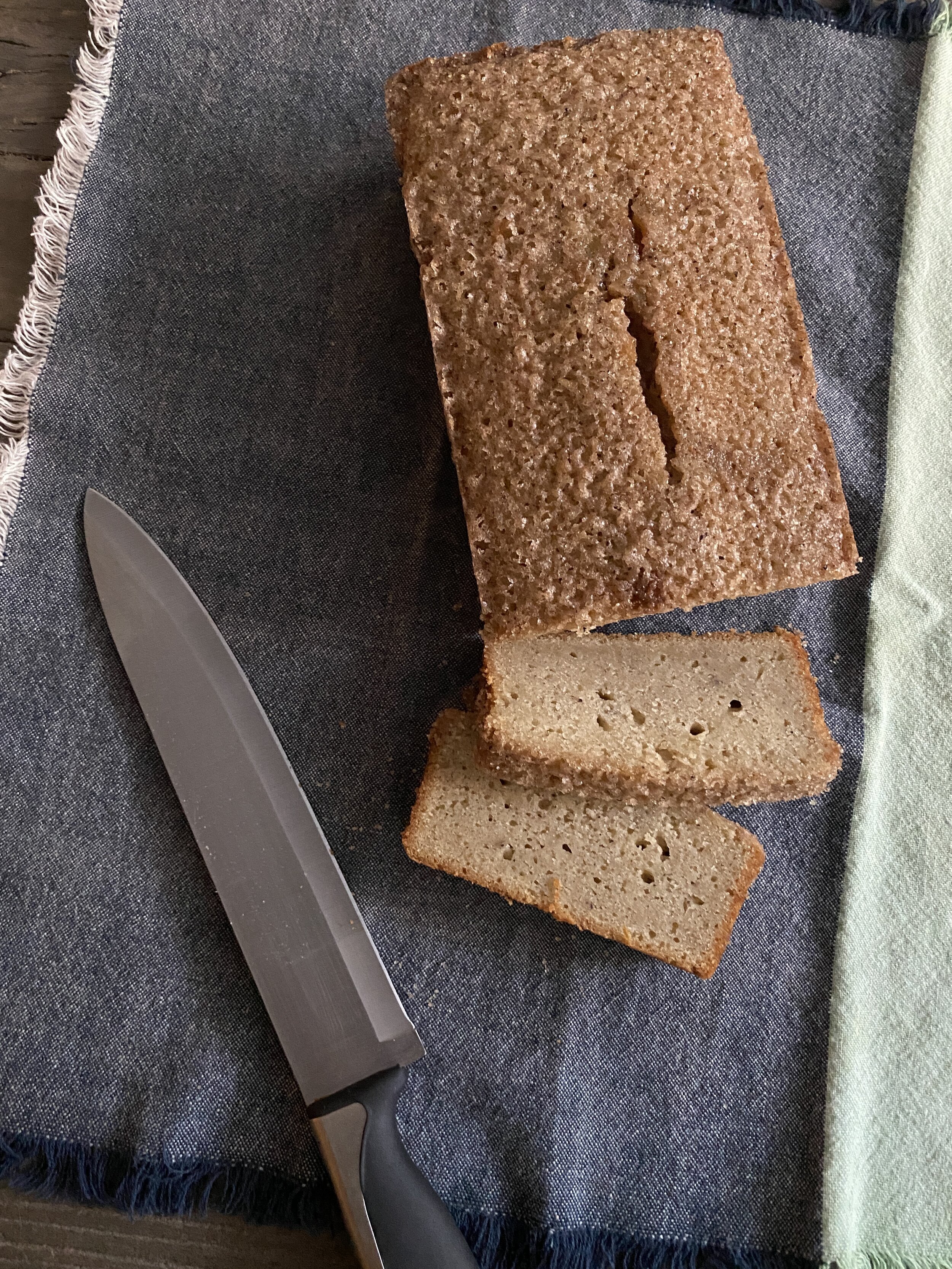
Everyone’s favorite apple cider donuts now come in bread form!

Everyone’s favorite apple cider donuts now come in bread form!

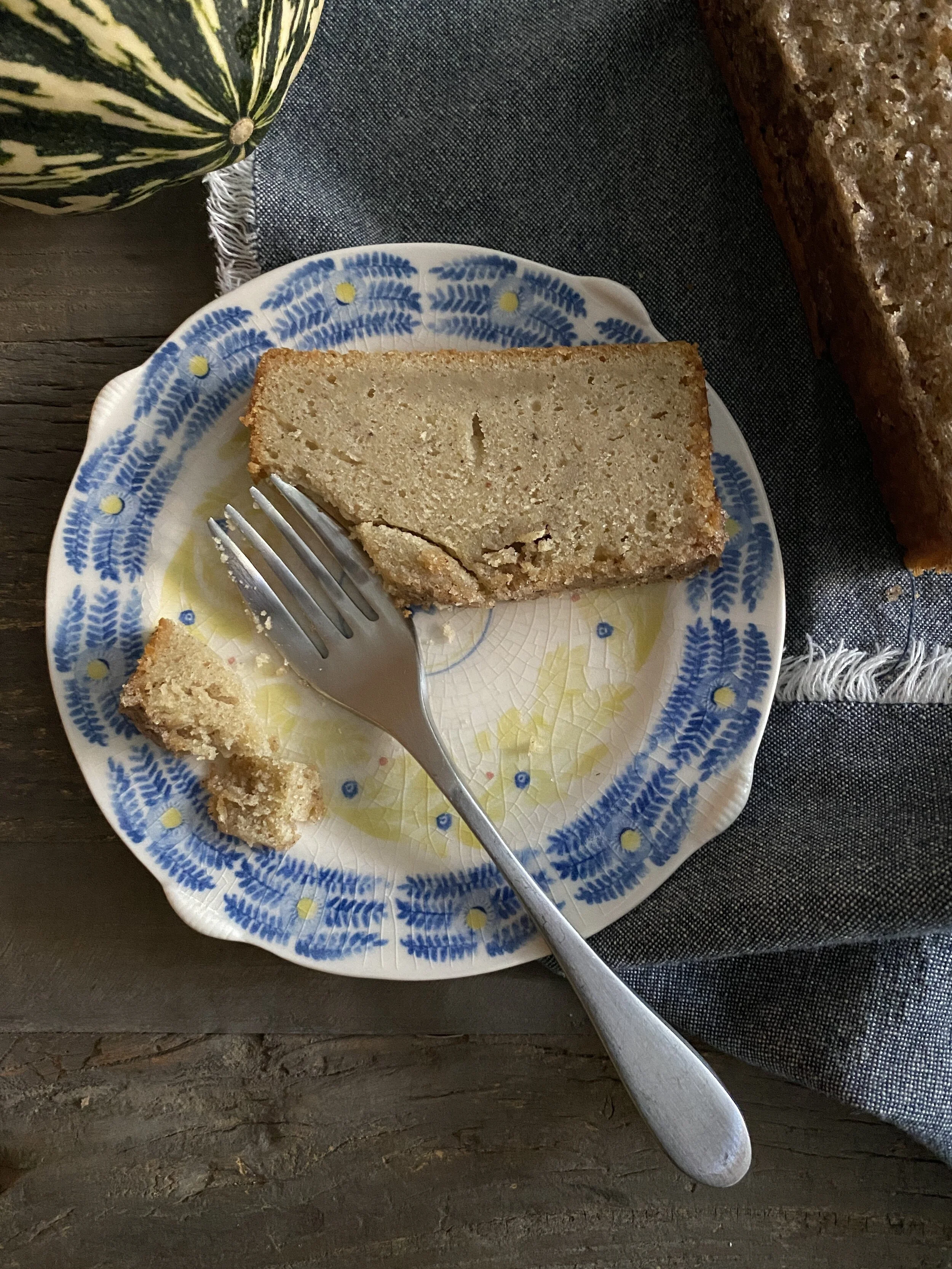
We think this sweet treat works for breakfast or dessert!

We think this sweet treat works for breakfast or dessert!

The end result is a bit subtle on the apple front, but there’s a nice burst of apple flavor when you first take a bite. We’ve added an apple to the original recipe to increase the concentrated flavor; see if that works for you. If you find something you really like, please let us know in the comments section. –Duke

For the Love of Latin Food

Most cooking sites get Mexican, Puerto Rican, Cuban and Dominican recipes wrong. Familia Kitchen sets out to correct that by highlighting authentic family recipes.

Home cooking should be easy and delicious.

Home cooking should be easy and delicious.

I admit that when it came to Latin cuisine, I was hopelessly naïve. I expected all of the countries of Central and South America to have the bold, spicy flavors of Mexico. So I was quite surprised when I got to Peru and realized that the national cuisine had little in common with Mexico’s. But the soups I had along the Incan Trail to Machu Picchu were absolutely delicious, and I had a tres colores ceviche that might be the best I’ve ever had. I also enjoyed my alpaca medallions on the shore of Lake Titicaca — just don’t ask me about the guinea pig.

Now, as a more seasoned traveler (and foodie), I realize that every country has its own distinct cuisine, each delicious in its own way.

Food is an essential part of travel for us, and Duke and I eat as globally in our cuisine as possible. So it was with great excitement and anticipation that we awaited the launch of Familia Kitchen, by my friend and former colleague, Kim. –Wally

What’s not to love about Latin food, in all its many varieties?!

What’s not to love about Latin food, in all its many varieties?!

Grandmother cooking is fast, because abuelas know how to get dinner on the table quickly. And it’s authentic, because it comes from their heart and their homeland soil.
— Kim Caviness, CEO and editor in chief, Familia Kitchen

What made you decide to launch Familia Kitchen? 

I’ve long been fascinated by what people cook at home, for themselves. On a regular weeknight and on important occasions, like a family holiday: What do they make and why? If I meet someone new, I’ll try to find a way to ask them a typical thing they make for dinner and about their family food heritage — by the way, it almost always comes from their mother’s culture. Their face lights up when they start talking. 

Food is family is history is identity. 

Li’l Kim in Puerto Rico, already a big fan of food

Li’l Kim in Puerto Rico, already a big fan of food

I grew up in Puerto Rico, right by San Juan, surrounded by so many cousins and aunts and uncles. My mother’s family goes back many generations on the island. We rotated from aunt to aunt for family holidays, which always involved lots of cooking.

In Puerto Rico, my family owned a little hotel, a guesthouse called El Canario. It was my mother’s house when she grew up. My grandmother, Rocío — which  means “morning dew,” isn’t that so pretty? — lived next door. That’s the Latino way: Family lives near each other and gets together a lot, over food. My parents would often invite our American hotel guests back to our place across the street for drinks. Dad had this tiki bar in our apartment and he’d swish up daiquiris and piña coladas, and Mom would make delicious dishes, often Puerto Rican traditional ones. I’d watch her in the kitchen. I wanted to do that when I grew up.

Kim’s family owned El Canario Hotel near San Juan, Puerto Rico, where they’d invite guests to their apartment-cum-tiki-bar across the street.

Kim’s family owned El Canario Hotel near San Juan, Puerto Rico, where they’d invite guests to their apartment-cum-tiki-bar across the street.

Now I’m the grownup hosting family holiday meals, and if I want to make authentic dishes from my childhood, the only way to get them is straight from Mom. There are lots of good blogs, but when I consult the major recipe websites, they don’t get Latino food right. They often mix up Mexican and Puerto Rican, Dominican, Cuban and so on. They water down the flavors and ingredients. They use the wrong kind of rice or not-quite-right spices. It seems like they see all Latinos as one monolithic Hispanic food segment. Sometimes, they’ll have a talented chef doing a traditional dish “Nuevo Latino” style. Which usually sounds great and I’m all for innovation, but it will list 20+ ingredients and steps. You couldn’t make it for a normal, daily, family dinner. 

Kim, with her son, Bob

Kim, with her son, Bob

For years, I’d think to myself: That’s not how Latina abuelas — our good-cook grandmothers — would make that dish. Why overcomplicate?  And how do we keep their recipes alive?

So I determined to do something about it. I decided to create a website with only authentic abuela cooking. We’d publish the favorite family recipes of Latino/a/x homecooks who have their go-tos dishes memorized. Who know when and how to break traditional food rules — and when not to. They are the OG keepers of our culinary traditions.

Mmmmm…nachos!

Mmmmm…nachos!

When did you get the idea for the site? 

The specific idea for Familia Kitchen, a crowdsourced and curated Latino/a/x family recipes and food stories website, came to me the week of Christmas 2019, when I was trying to find a Puerto Rican recipe online — and struck out. 

Nine months later, like a baby: Familia Kitchen launched. Our mission is to celebrate and collect Latinx families’ favorite recipes, as we really make them. We’ll go country by country, island by island, memorializing families’ favorite recipes before they get lost to time. 

Kim, Lisa and Ana decided to found Familia Kitchen — the kind of Latinx recipe site they dreamed of.

Kim, Lisa and Ana decided to found Familia Kitchen — the kind of Latinx recipe site they dreamed of.

What’s your site’s mission?

Our dream is to create the best, biggest and most authentic treasury of Latinx culinary legacies — for all 19 Spanish-speaking destinations in Latin and Central America and the Caribbean — showcasing their simplicity and sophistication. Very important: We’ll celebrate the home cooks who submit by posting their bylines, family food stories and cook’s notes.

Boricua-style Puerto Rican rice with chicken. Sharing your family’s recipes on Familia Kitchen could score you a free trip home!

Boricua-style Puerto Rican rice with chicken. Sharing your family’s recipes on Familia Kitchen could score you a free trip home!

Tell us about your recipe contests. 

One of the ways Familia Kitchen will gather the best traditional Latinx recipes is by inviting users to submit to our 12 Familia Kitchen recipe contests a year. Each month, we’ll feature one defining dish from a Latinx country or island and invite cooks to submit their family’s favorite. In October, we launched with Your Familia’s Favorite Puerto Rican Arroz con Pollo. In November, we switched to Your Familia’s Favorite Mexican Pozole. We will publish every recipe and food story submitted. They’re all authentic, time-honored and loved. 

Familia Kitchen will build our culinary treasury one recipe, one food story at a time.

At the end of each year, the cook who submits the “most popular” family recipe — the most likes, most shares, most comments — will win a trip (flight, hotel, an amazing meal) for two to their Latinx homeland. Our tagline is “Cooking your way home” — and Familia Kitchen is excited to literally make that happen for one Latinx cook and their plus-one each year. We’ll also donate 5% of our profits each year to a Feeding America Latino community program.


What’s your favorite aspect of Latinx cuisine?
The richness of the regionality of each Latinx nation’s flavors and food histories. And the way each destination’s food is different from each other in foundational ways, yet in the same food family. Cuban and Argentinian cuisines are pretty different, yet they are both unmistakably “Latino.”

Family gathered to celebrate young Kim’s birthday.

Family gathered to celebrate young Kim’s birthday.

What’s the best part about cooking?

Feeding people you love: friends and family. I also love experiencing someone’s life and family through their food stories and memories. When they tell you that this is the very beef picadillo that they always ate at their grandparents’ house on Father’s Day when they were growing up. And then you make that picadillo, with its hints of that family’s own way of cooking and living — you can literally taste a time and place and people. Food anthropology.

One of Kim’s favorite recipes: pasteles with pork, wrapped in banana leaves

One of Kim’s favorite recipes: pasteles with pork, wrapped in banana leaves

What are some of your favorite recipes?

I love so many. We have a recipe for pasteles with pork, green bananas and yautia from a friend I went to elementary school with that takes me back in time to Puerto Rico of 100 years ago. My husband’s cousin Anjie, whose family came from Spain to New Mexico in the 1600s, submitted their never-see-it-anywhere-else recipe for sweet chile rellenos with hatch chiles that is a revelation. A friend, Susana, who is from Peru, sent me her family recipe for the fish ceviche they eat at the beach. What an honor. 

ceviche.jpg

And one of my co-founders, Ana: Her husband Brian writes a regular column for us called “Guero Corner.” Guero is a nickname Mexicans give light-haired people. The funny thing is he’s the gringo family cook who sits with his Mexican mother-in-law, an amazing abuela cocinera nicknamed Gollita. One of our most popular recipes on the site right now is his: Gollita’s porkchops with tomatoes and onions, which are unlike any porkchops I’ve had before. They are tangy, textured and so easy! My husband and son said they are the best chops they have ever had, and now I make them on the regular.

What do you love about “abuela cooking,” as you call it?

Grandmother cooking — it’s the best. Here’s why: It’s trusted. It’s been honed over decades to its most simple and delicious version. It’s fast, because abuelas know how to get dinner on the table quickly. And it’s authentic, because it comes from their heart and their homeland soil.

Tacos could be one of the most versatile of dishes, with a potentially infinite amount of variations — almost always tasty.

Tacos could be one of the most versatile of dishes, with a potentially infinite amount of variations — almost always tasty.

What ingredients are essential for a Latinx home chef?

For all Latinx cuisines? I’d have to say rice, of course, as well as garlic — which means we all need a good garlic press to squeeze every liquidy last bit from each clove. 

If Wally sees a cubano on the menu, there’s no turning back.

If Wally sees a cubano on the menu, there’s no turning back.

What’s something most people don’t know about Latinx cuisine?

How complex and sophisticated each country’s dishes are. They’re not as spicy as people think. And how wide the range of cuisine is. Peruvian is as different from Mexican cuisine as German is from Italian food.

Wally has already whipped up a huge batch of Doña Felipa’s sofrita — and is experimenting by putting it on pretty much everything he can think of.

Wally has already whipped up a huge batch of Doña Felipa’s sofrita — and is experimenting by putting it on pretty much everything he can think of.

Tell us about Doña Felipa, your neighborhood “abuela.”

One day I heard someone speaking Spanish while watering her back garden, which is literally next to my house in Chicago. I could tell from the woman’s accent she was from Puerto Rico. What are the chances? I waited for her to finish her phone call, introduced myself, and we immediately started talking. 

Doña Felipa, who is 83, and I discovered we both love cooking, and that cemented our friendship. She and I spend a lot of time at her kitchen counter, while she chops and teaches me how she makes our island’s most traditional dishes. Even now we do that, wearing masks.

Doña Felipa loves to tell stories of growing up on the western side of the island and raising her kids in Chicago. She spoils us with Puerto Rican food packages all the time. Last month, she brought over a little statue of El Niño Divino, the divine child Jesus, to watch over our health and house. She blessed me right there on the street in front of our house, on busy Diversey. Total abuela thing to do.

Everyone should live next to a Puerto Rican abuela. 

Or the next closest thing: Cook like one. #abuelacooking