EGYPT

Atenism: Akhenaten’s Experiment in Monotheism

The world’s first monotheistic religion wasn’t Judaism — it happened in Ancient Egypt during what’s known as the “Amarna heresy.”
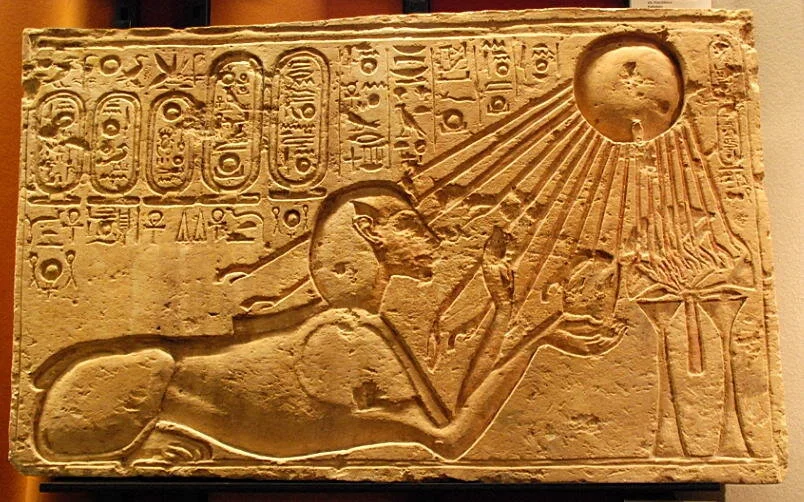
akhenatensphinx.jpg

Oh my gods! Everyone knows that Ancient Egypt was polytheistic, with a troupe of animal-headed gods that were worshiped for thousands of years. And it’s true. Ancient Egypt was polytheistic — except, of course, for those 20 years or so when it wasn’t.

Many of us thought that the Jews were the first monotheists in history. But sometime early in his reign, from 1353-1336 BCE, the Egyptian Pharaoh Akhenaten upended centuries of polytheistic practices and decreed that there was only one god: the sun itself.

Ancient Egypt was polytheistic — except, of course, for those 20 years or so when it wasn’t.

Sun worship started with his father, Pharaoh Amenhotep III, who identified himself with a minor god, the Aten, elevating it to the status of a favored god and personal deity.
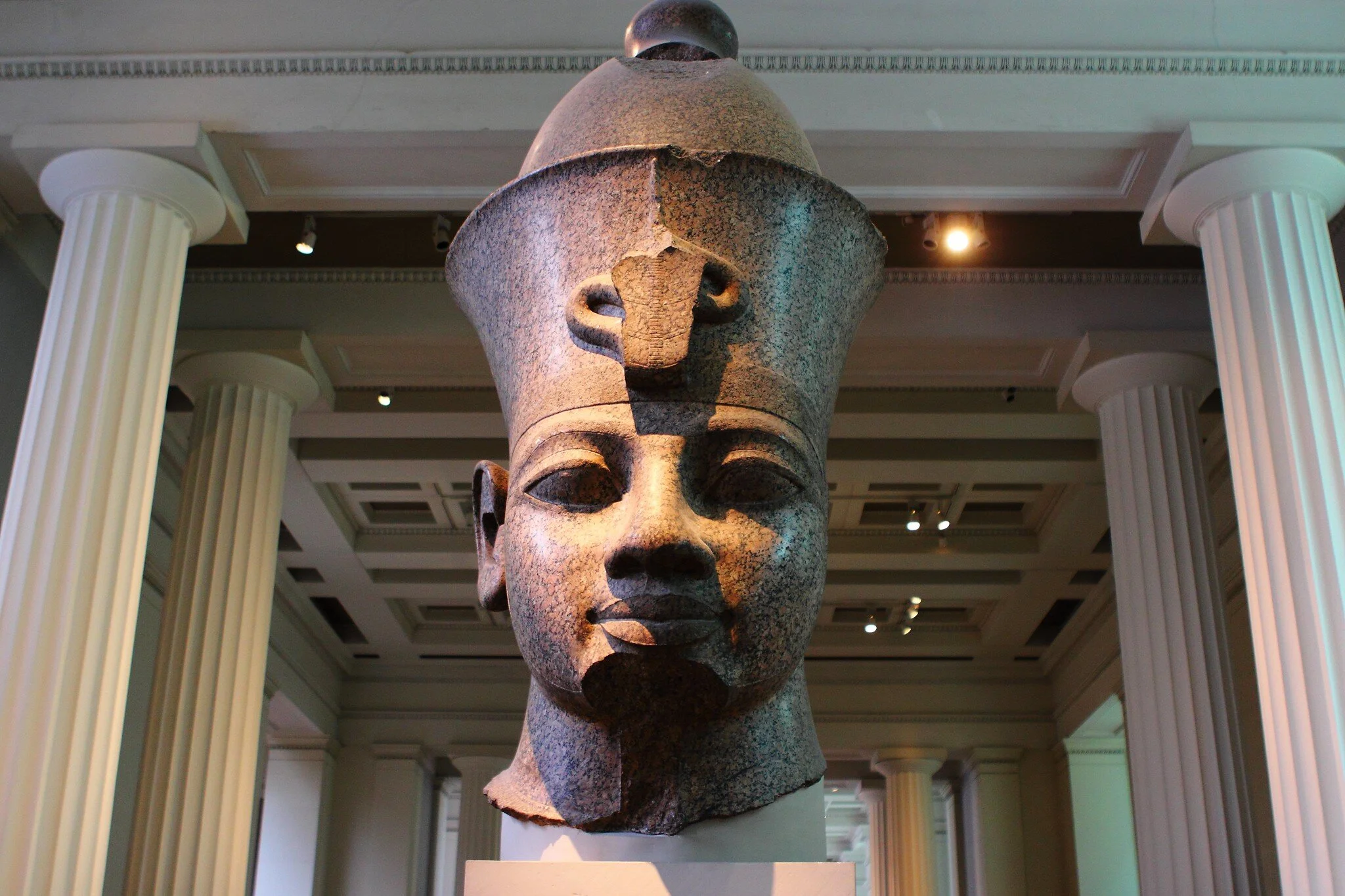
Amenhotep III might have initiated the intense worship of the Aten that took over his son, the pharaoh who became Akhenaten

Amenhotep III might have initiated the intense worship of the Aten that took over his son, the pharaoh who became Akhenaten

Like Father, Like Sun

After Amenhotep III died, his son ascended the throne under the name Amenhotep IV, which meant The God Amun Is Content. But the pharaoh, in the fifth year of his reign, changed his name to Akhenaten, He Who Is Effective on the Aten’s Behalf, when he became convinced that the Aten was the one true god. 

Egyptologists never fail to point out that the Aten is the “solar disc,” though I’m not sure how that differs from just saying that they worshipped the sun.

Gerhard Fecht, who taught Egyptology at the Free University of Berlin and who died in 2006, noted the similarity of the pronunciation in ancient times of Aten (“yati”) and father or forefather (“yata”), which he believed was far from a coincidence. Akhenaten styled himself as the son of the sun and the father of his people, and he believed that he would merge with the sun in death. 
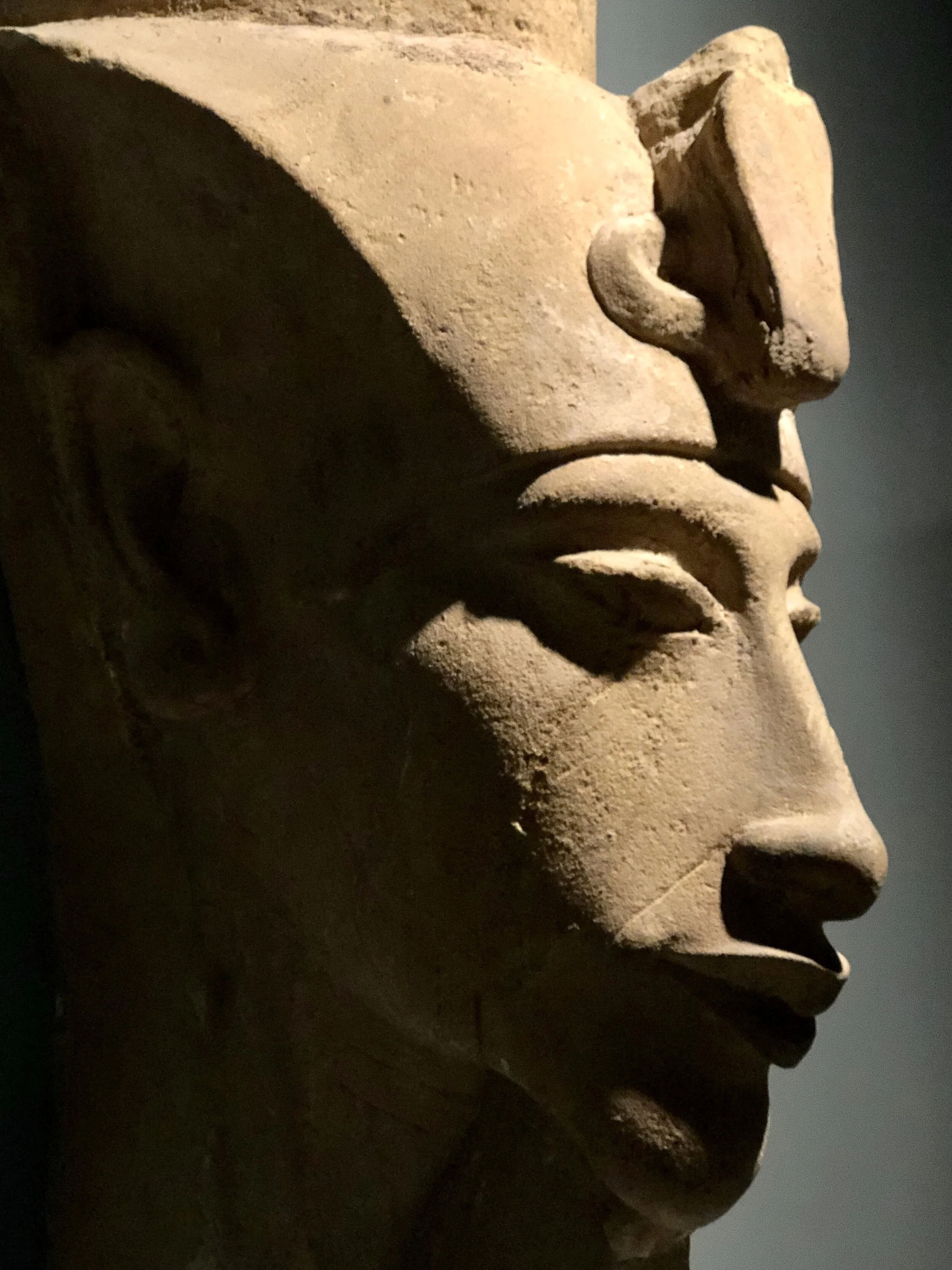
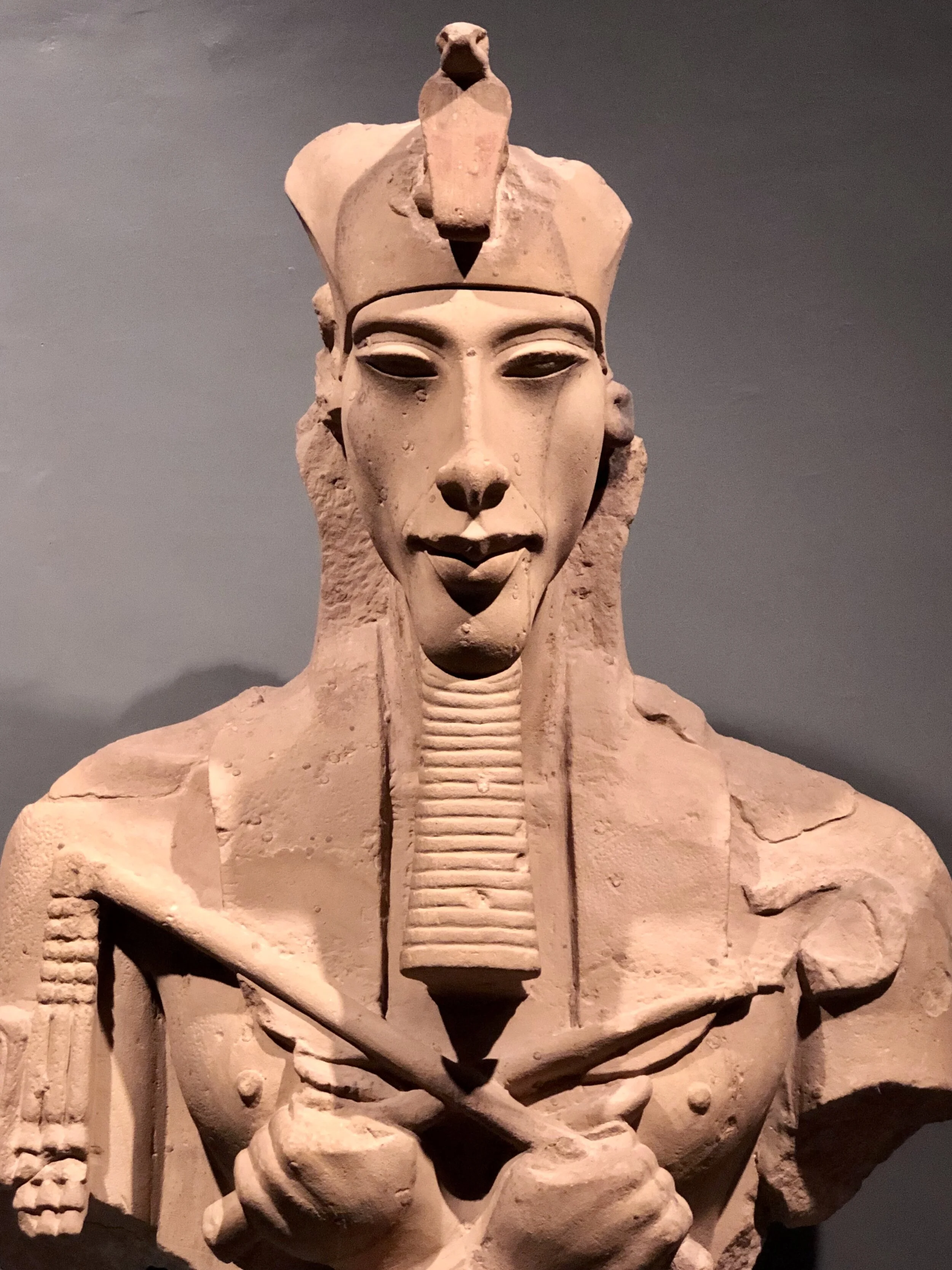
Wally and Duke are particularly partial to the Amarna style of art, as shown in this statue of Akhenaten

Wally and Duke are particularly partial to the Amarna style of art, as shown in this statue of Akhenaten

The Upsides of the So-Called Amarna Heresy

History hasn’t looked favorably upon Akhenaten, deeming him “the Heretic King” for having the gall to shift Ancient Egypt from polytheism to monotheism for a short period and for moving the capital from Thebes to a new city, Akhentaten, now referred to as Amarna.


There’s much to admire about this fascinating ruler, though. For one thing, he created a new style of art — strangely captivating genderbending statuary on the one hand and paintings that convey an intimate realism on the other — when the rest of the three millennia of Ancient Egypt had a remarkably stagnant style. If we can believe the artwork (and we have every reason to be skeptical, since imagery was used for propagandist purposes throughout the ancient kingdom), Akhenaten was utterly devoted to his queen Nefertiti.


We’re also led to believe that Akhenaten doted on the six — count ’em, six — daughters he had with Nefertiti. Most pharaohs would have been disappointed by not having at least one son who could become heir to the throne, but Akhenaten was so enamored of his daughters, he included depictions of them in the artwork he commissioned — an uncommon practice for the time. 
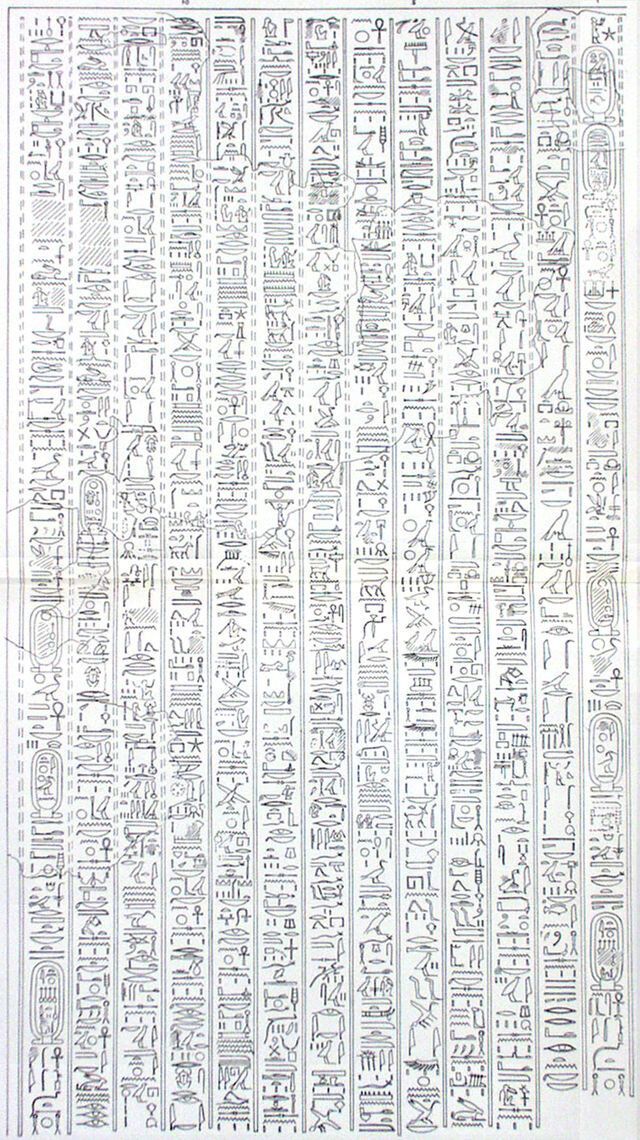
There’s evidence that The Hymn to the Aten influenced one of the Psalms in the Bible

There’s evidence that The Hymn to the Aten influenced one of the Psalms in the Bible

The Great Hymn to the Aten

This controversial pharaoh was a man who loved nature, waxing poetic in the Great Hymn to the Aten, which it’s believed he wrote himself. This poem begins:

For you are risen from the eastern horizon and have filled every land with your beauty;
For you are fair, great, dazzling and high over every land,
And your rays enclose the lands to the limit of all you have made;
For you are Re, having reached their limit and subdued them for your beloved son;
For although you are far away, your rays are upon the earth and you are perceived.

When your movements vanish and you set in the western horizon, 
The land is in darkness, in the manner of death. 
People, they lie in bedchambers, heads covered up, and one eye does not see its fellow.
All their property might be robbed, although it is under their heads, and they do not realize it.
Every lion is out of its den, all creeping things bite. 
Darkness gathers, the land is silent. The one who made them is set in his horizon.

Scholars delight in pointing out how similar the Bible’s Psalm 104 is to the second stanza. It’s not too far-fetched to accuse the Psalm author, who wrote hundreds of years after the Aten hymn, of plagiarism.

Akhenaten and Nefertiti, with three of their daughters, basking in the holy rays of the sun, known as the Aten in Ancient Egypt

Akhenaten and Nefertiti, with three of their daughters, basking in the holy rays of the sun, known as the Aten in Ancient Egypt

Who’s Worshipping Whom?

In his book Akhenaten: Egypt’s False Prophet, Nicholas Reeves argues that Akhenaten worshipped the sun, while the populace of Egypt worshiped Akhenaten. He sees the move to monotheism as a political ploy to strengthen the pharaoh’s power. This point is strengthened by the carvings found in the few tombs used outside of Akhentaten: Instead of gods and goddesses, they feature the royal family prominently.

Atenism created a new trinity. Instead of Amun, the father who jerked off to create the twin siblings, his son Shu and daughter Tefnut, you had the Aten, Akhenaten and Nefertiti. In fact, their six daughters rounded out the royal family, providing a new version of the Ennead, the nine gods of creation.

Aten’s temples were open to the air, a striking contrast to previous Egyptian places of worship, notably the dark and mysterious confines of the temples to Amun, known as the Hidden One. Other temples held a small chamber at the back, the sanctuary, or holy of holies, which housed the cult image of the deity. But with the Aten there was no need for a statue — the god could be seen blazing up in the sky, its warmth felt upon the skin during daylight.
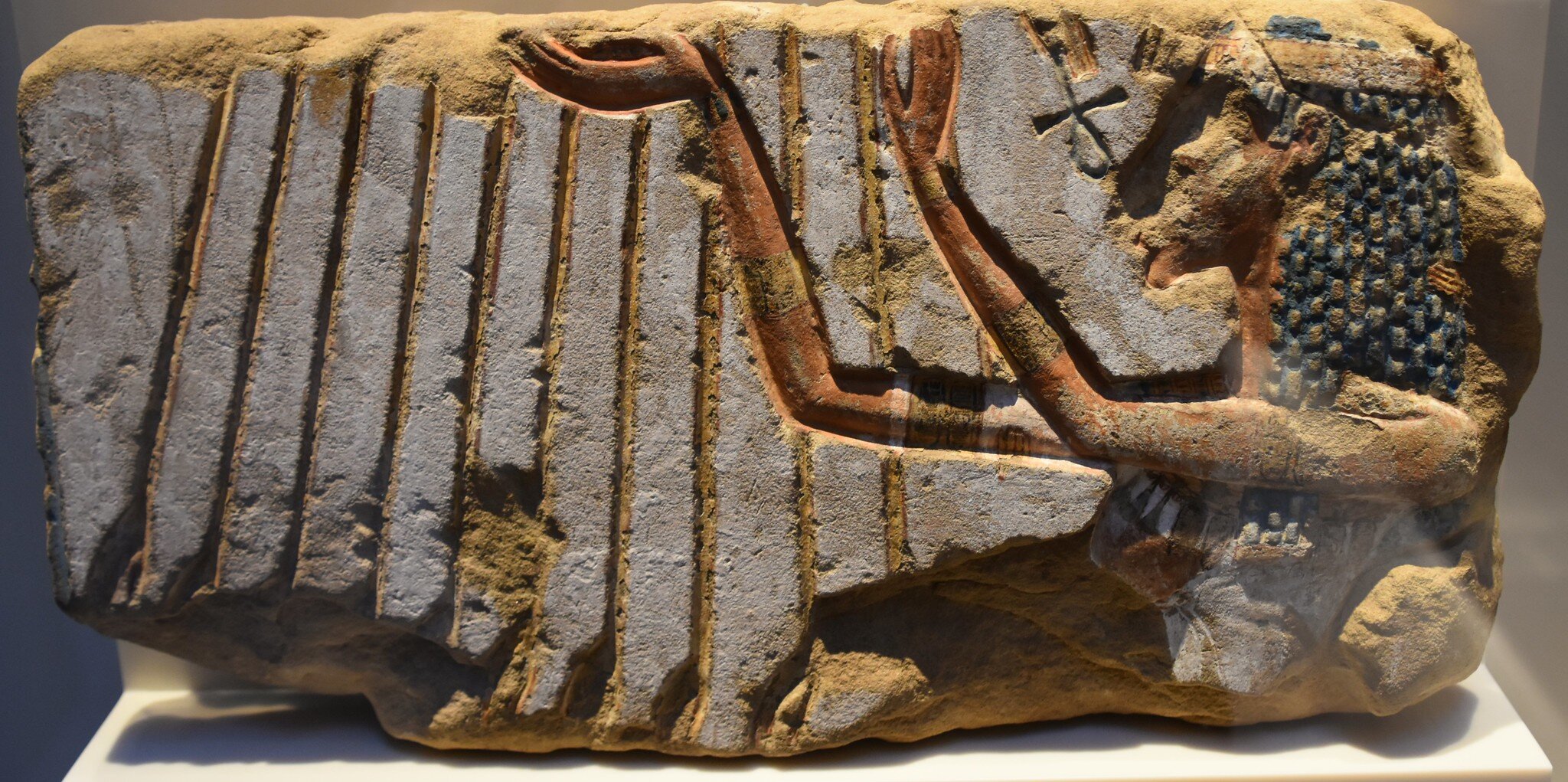
A relief from the Karnak Temple shows Akhenaten worshipping the sun. The new religion was probably appealing at first, with its focus on life and beauty instead of death

A relief from the Karnak Temple shows Akhenaten worshipping the sun. The new religion was probably appealing at first, with its focus on life and beauty instead of death

Eat, Drink and Be Merry

Atenism’s popularity was short-lived, perhaps even beginning to wane while Akhenaten was still alive. But its initial appeal is easy to imagine. 

For centuries, Ancient Egyptians were obsessed with death; their great monuments, elaborate spells and mummification rituals were meant to assure a pleasant afterlife. But Atenism focused instead on the here and now, on life on this Earth. 

In the past, Egyptian tombs were located on the West Bank of the Nile, most notably the Valley of the Kings. But Akhenaten broke with tradition, designating the eastern hills as the site of the royal tombs and lesser cemeteries. No longer would death be associated with the west and the god Osiris, evoking the sunset and a bleak finality. Instead, death was now connected to the sun that rose from the eastern cliffside, offering light and hope each day.

The Militaristic Move to Monotheism

Most likely in the 10th year of his reign, Pharaoh Akhenaten ceased to tolerate any mention of other gods aside from the Aten, and launched an all-out war against the old deities, Amun and his consort Mut in particular. 

“An order went out from the palace to smash up the divine statues and hack out the names and images of these gods wherever they occurred — on temple walls, on obelisks, on shrines, on the accessible portions of tombs,” Reeves writes. 

The priesthood of the chief god, Amun, in particular, didn’t fare well under Akhenaten’s decree to worship only one deity: the Aten

The priesthood of the chief god, Amun, in particular, didn’t fare well under Akhenaten’s decree to worship only one deity: the Aten

The persecution spread to the common people as well. Eye makeup containers and commemorative scarabs from this time have been found with the hieroglyphs for other gods gouged or scratched out. 

We don’t just have to take Reeves’ word for how bad things got. Here’s what Manetho, a priest and historian from the Ptolemaic Kingdom in the early third century BCE, wrote about Akhenaten’s monomania:

…not only did they [pharaoh’s men] set towns and villages on fire, pillaging the temples and mutilating images of the gods without restraint, but they also made a practice of using the sanctuaries as kitchens to roast the sacred animals which the people worshipped; and they would compel the priests and prophets to sacrifice and butcher the beasts, afterwards casting the men forth naked.

Upon Akhenaten’s death, his son and successor, King Tut, returned Egypt to polytheism

Upon Akhenaten’s death, his son and successor, King Tut, returned Egypt to polytheism

King Tut Restores the Old Gods

After Akhenaten’s death, his son Tutankhamun’s reign didn’t last long — but did effect major change. Tut brought Ancient Egypt back to polytheism, after his father’s failed experiment. His Restoration Stela paints a bleak picture of how badly things had gotten in such a short time: 

…the temples and the cities of the gods and goddesses, starting from Elephantine as far as the Delta marshes … were fallen into decay and their shrines were fallen into ruin, having become mere mounds overgrown with grass. Their sanctuaries were like something which had not yet come into being and their buildings were a footpath [i.e., public] — for the land was in rack and ruin. The gods were ignoring this land. … if one prayed to a god, to ask something from him, he did not come at all; and if one beseeched any goddess in the same way, she did not come at all.

Akhenaten undeniably wreaked havoc upon the social order. His persecution of the gods that had been worshipped for millennia must have greatly unnerved the populace. He created countless enemies by stripping the priests of Amun of their power and stealing their great wealth to build his new capital city. He didn’t concern himself with the military or economics. For all his focus on hope, he left Ancient Egypt in worse shape than when he took the throne. 

But his revolutionary religious vision, even if it was self-centered, very well could have planted the seeds of the monotheistic religions that dominate the world today. –Wally
Controversial Theories About Akhenaten, Ancient Egypt’s “Heretic King”

The monotheistic pharaoh has spawned numerous crackpot theories, including his having Marfan syndrome and Nefertiti becoming king. 

Pharaoh Akhenaten: the face that launched a thousand conspiracy theories

Pharaoh Akhenaten: the face that launched a thousand conspiracy theories

Everything we think we know about Ancient Egypt can be completely upended with a new discovery of something as seemingly innocuous as a single stone carving. That being said, this article focuses on the research and theories of Nicholas Reeves, in his book, Akhenaten: Egypt’s False Prophet, republished in 2019.

Reeves poses some controversial speculations about the brief but mysterious Amarna Period, jumping to sensationalist conclusions with only the scantest of evidence. I want to believe him, though, especially since he served as the director of the Amarna Royal Tombs Project from 1998 to 2002.

Does the Amarna style of art reveal a hereditary disease?

Does the Amarna style of art reveal a hereditary disease?

It Runs in the Family? The Marfan Syndrome Theory

Egyptian art remained remarkably static for millennia. You can picture it in your head: The side-profile carvings and paintings with their legs bent and posed one in front of the other, inspiring the Bangles’ song “Walk Like an Egyptian.” But, much like the move from polytheism to monotheism, the Amarna Period also resulted in an intriguing new art aesthetic.

The unusual Amarna style, especially the statuary, has been a major reason some Egyptologists entertain the theory put forth by Alwyn L. Burridge that Akhenaten suffered from Marfan syndrome. The illness’ symptoms do include features found on the depictions of the pharaoh and his family: slender bones, a long face, an elongated skull, spidery fingers and a wide pelvis, among others.

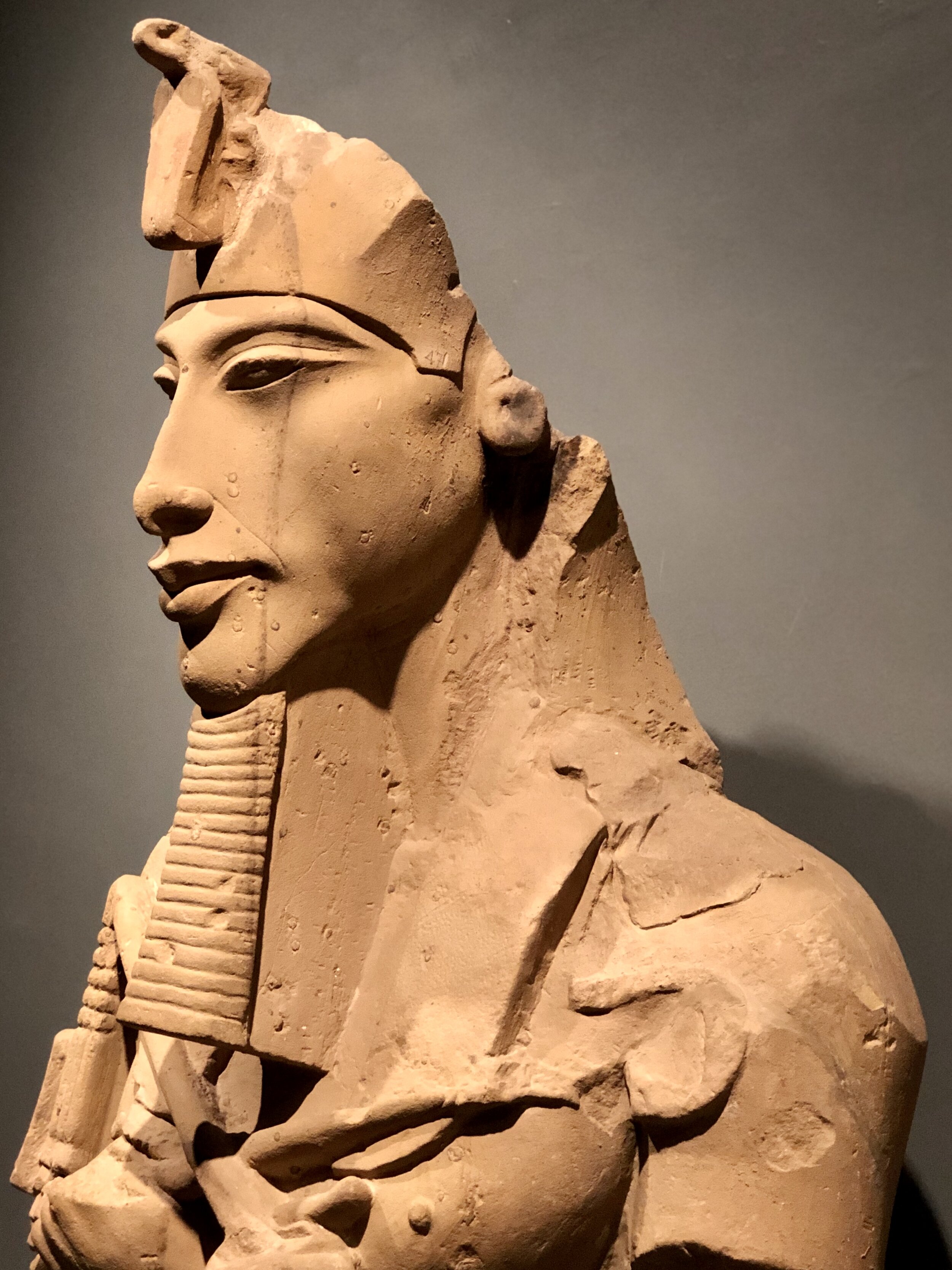
This depiction of Akhenaten most likely was carved early in his reign and probably reveals what he actually looked like.

This depiction of Akhenaten most likely was carved early in his reign and probably reveals what he actually looked like.

If this is indeed the case, the repercussions would have been severe: Akhenaten and his offspring would have been susceptible to sudden death due to a weakened cardiovascular system and would have likely gone blind in adulthood.

It would explain a lot, argues Reeves. A report that Akhenaten wanted “to see the gods” could have meant that he could only dimly discern the rays of the sun. He was skilled in music (“traditionally a vocation for the blind,” according to Reeves). Amarna art emphasizes the sense of touch and often depicted the pharaoh with a crutch or walking stick. And at least one of the fetuses mummified in the tomb of his probable son Tutankhamun, revealed skeletal deformities.

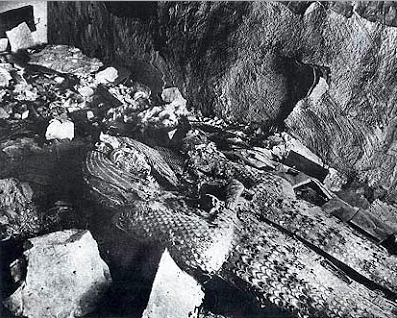
The desecrated sarcophagus in Tomb 55 in the Valley of the Kings

The desecrated sarcophagus in Tomb 55 in the Valley of the Kings

The Mummy in Tomb 55

In 1907, the archeologist Theodore M. Davis uncovered what he referred to as the Tomb of Queen Tiye, or Tomb 55. He found evidence that the tomb had been discovered before, a few millennia ago: 200 years after the remains were initially interred, Ancient Egyptian workers stumbled upon the sepulcher while digging away to build the tomb of Ramesses IX. Queen Tiye, the Great Royal Wife of Amenhotep III, was moved out of the tomb, perhaps to separate her from her “heretic” son, Akhenaten.

The mummy cache found in KV55

The mummy cache found in KV55

Queen Tiye, the mother of Akhenaten

Queen Tiye, the mother of Akhenaten

Reeves thinks there’s a good chance the remaining coffin and mummy in Tomb 55 is that of Pharaoh Akhenaten, who ruled from 1353-1336 BCE, especially given the violence of its desecration: “The names were systematically cut out, and the identifying face torn away to destroy the eyes, nose and mouth and effectively deny the king’s spirit sight, air and sustenance; for good measure a stone was hurled at the coffin’s head just before the party left,” Reeves explains. 

Kiya, who shared wifely duties with Nefertiti, was a scapegoat for Akhenaten’s questionable decisions.

Kiya, who shared wifely duties with Nefertiti, was a scapegoat for Akhenaten’s questionable decisions

The Other Wife: The Mysterious and Maligned Kiya

While Nefertiti was the pharaoh’s chief wife, Akhenaten had a secondary spouse, Kiya, whom he also greatly loved, if we can infer that from the fact that she had a lavish estate of her own at Amarna. While Nefertiti gave birth to one daughter after another, Kiya is believed to have borne Akhenaten a son: the famous Boy King, Tutankhamun. 

Reeves posits that Kiya might well have been a princess of the Mitanni people. Her name essentially meant Monkey, Reeves informs us. But behind her playful façade, he says that she was “cruel and self-seeking” and “may even have been regarded, by posterity, as the evil genius behind many of Akhenaten’s excesses.”

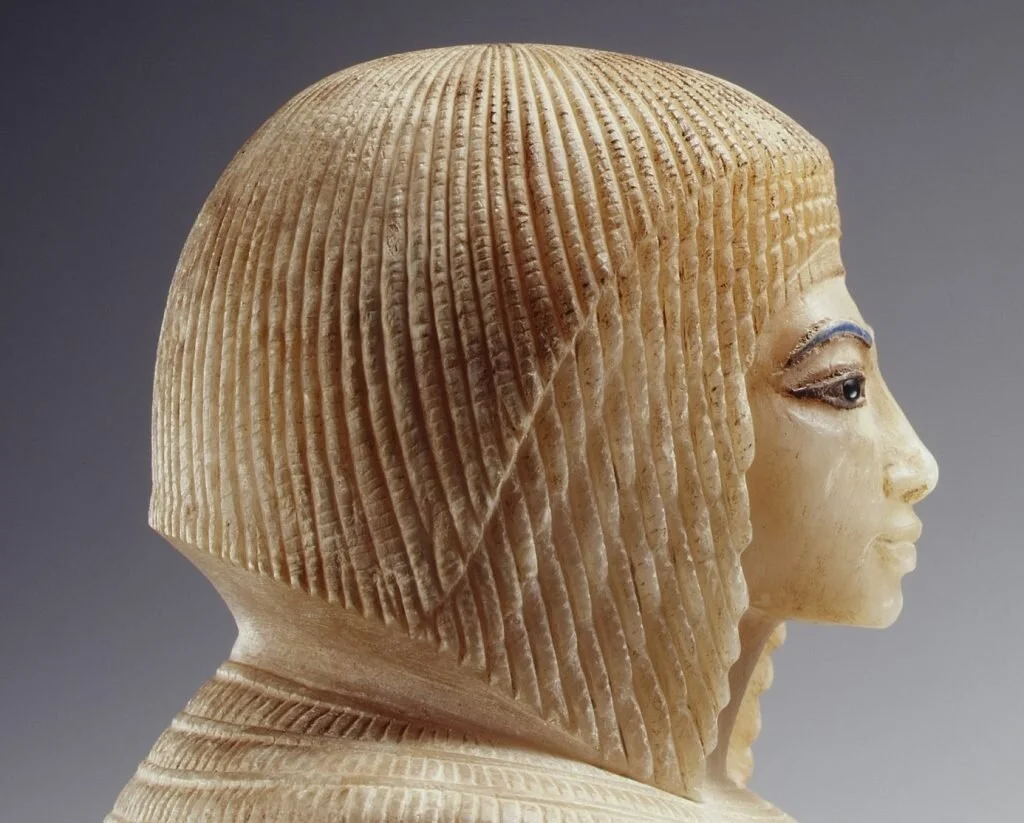
A canopic jar with Kiya’s head upon it — other artifacts depicting her were viciously vandalized.

A canopic jar with Kiya’s head upon it — other artifacts depicting her were viciously vandalized.

Her inscriptions have been scratched out, and her statues have had their eyes gouged out. References to Kiya were superimposed with figures and texts of Akhenaten’s daughters, and her coffin and canopic jars were repurposed for the pharaoh’s reburial. 

Did Princess Meritaten simultaneously give birth to her daughter and granddaughter?!

Did Princess Meritaten simultaneously give birth to her daughter and granddaughter?!

Who Says Incest Is Best?

As I’ve mentioned, Reeves loves a good conspiracy theory, and another one rears its head when discussing the historical record of Akhenaten’s progeny. Two additional daughters get mentioned: Meritaten-tasherit and Ankhesenpaaten-tasherit. The -tasherit ending equates to “Jr.,” and the first part of the names are the same as two of the pharaoh’s daughters by Nefertiti. 

Was Akhenaten a bit too fond of his daughters by Nefertiti?

Was Akhenaten a bit too fond of his daughters by Nefertiti?

“The implications of this are serious, however,” Reeves writes, “since the father of these children can have been none other than Akhenaten himself.”

Case closed?

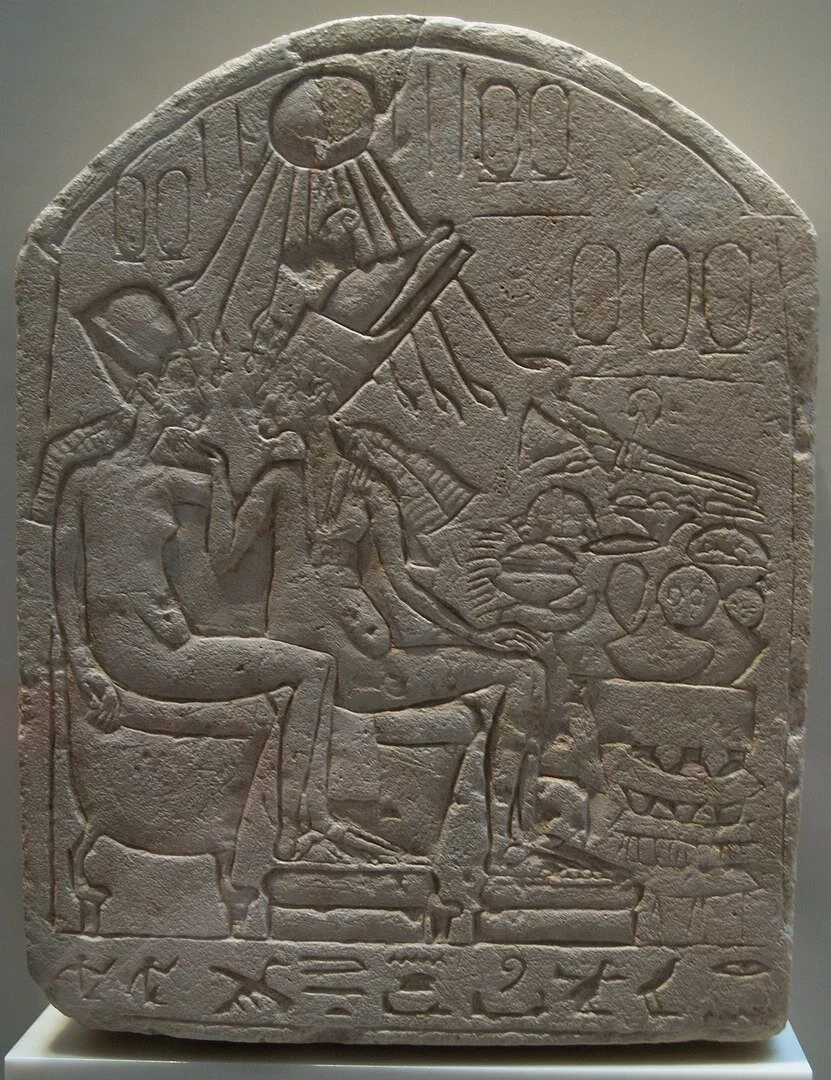
Is this a carving of Akhenaten’s gay lover — or a woman who became his co-pharaoh?

Is this a carving of Akhenaten’s gay lover — or a woman who became his co-pharaoh?

Smenkhkare: The Unknown Pharaoh — and Akhenaten’s Gay Lover?

Confusing matters even more, a new pharaoh emerges on the scene while Akhenaten still sat upon the throne. Who was this co-regent? 

A small stele, or stone monument, from this time, made for a military officer named Pase, depicts two kings sitting side by side. One has his arm around his co-pharaoh, who is turning to affectionately touch the other’s chin. Because they’re both styled as kings, Egyptologists in the 1920s and beyond were convinced that this single stone revealed that Akhenaten was gay — never mind all the children he had. 

More recent discoveries have revealed that there’s a likely suspect right under our noses: Pharaoh Smenkhkare was probably none other than his famous wife, Nefertiti. –Wally

The Rise and Fall of Ancient Egypt’s Amarna

Akhenaten moved the capital from Thebes to an undeveloped stretch of land in the middle of the country. It didn’t last long.

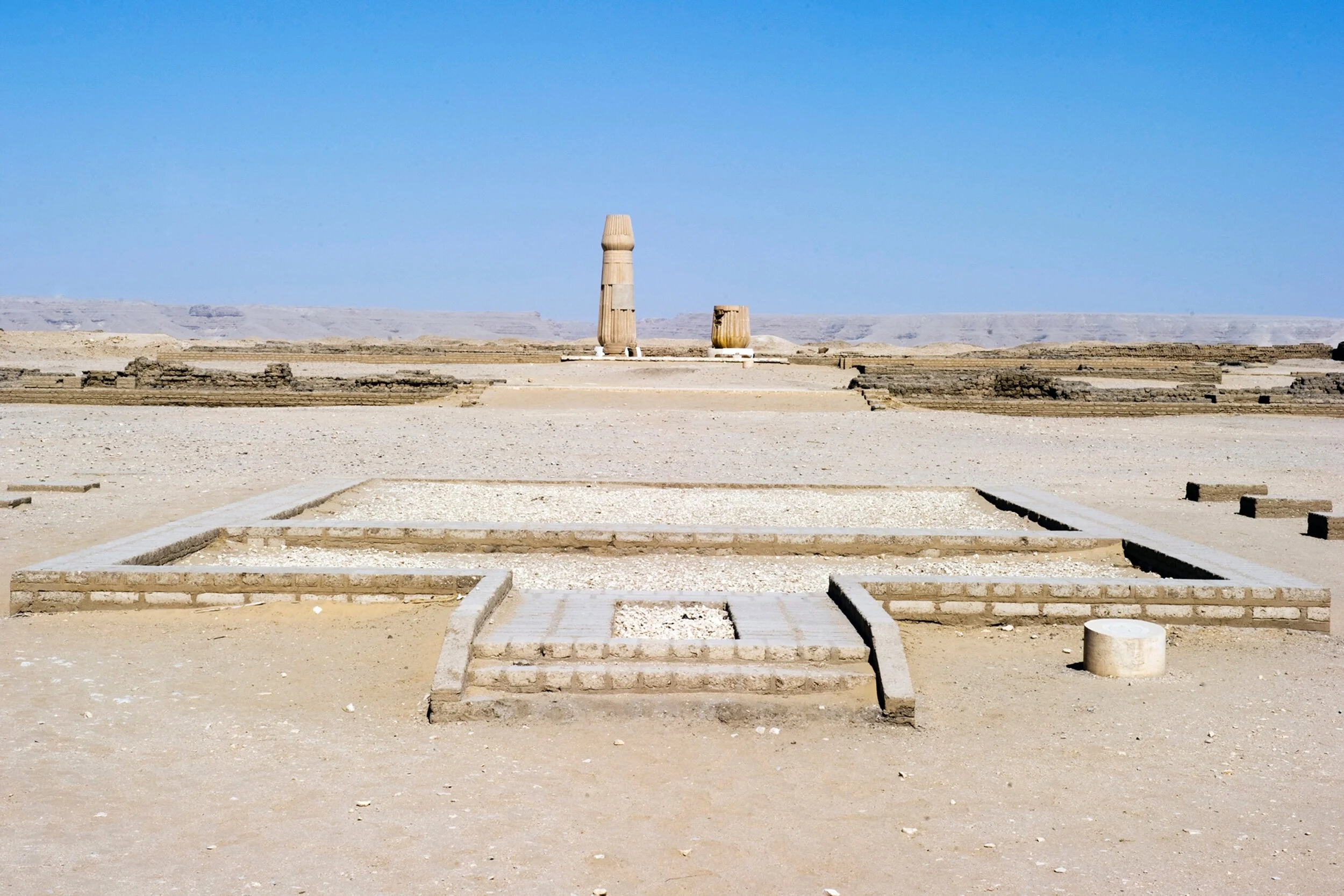
Unlike the other monuments of Ancient Egypt that are well preserved, little remains of the short-lived capital of Amarna

Unlike the other monuments of Ancient Egypt that are well preserved, little remains of the short-lived capital of Amarna

Pharaoh Akhenaten, now disparaged as a heretic, made some bold decisions that completely uprooted thousands of years of Ancient Egyptian tradition, including the move to the worship of a single god. This brief era, lasting less than two decades, is known as the Amarna Period and took place in the 1300s BCE. Not surprisingly, all that remains of Akhenaten’s legacy are fragments here and there, some of which had been buried for thousands of years in the sand, some of which were torn apart and repurposed in construction projects elsewhere in the country — and some of which surely have yet to be discovered.

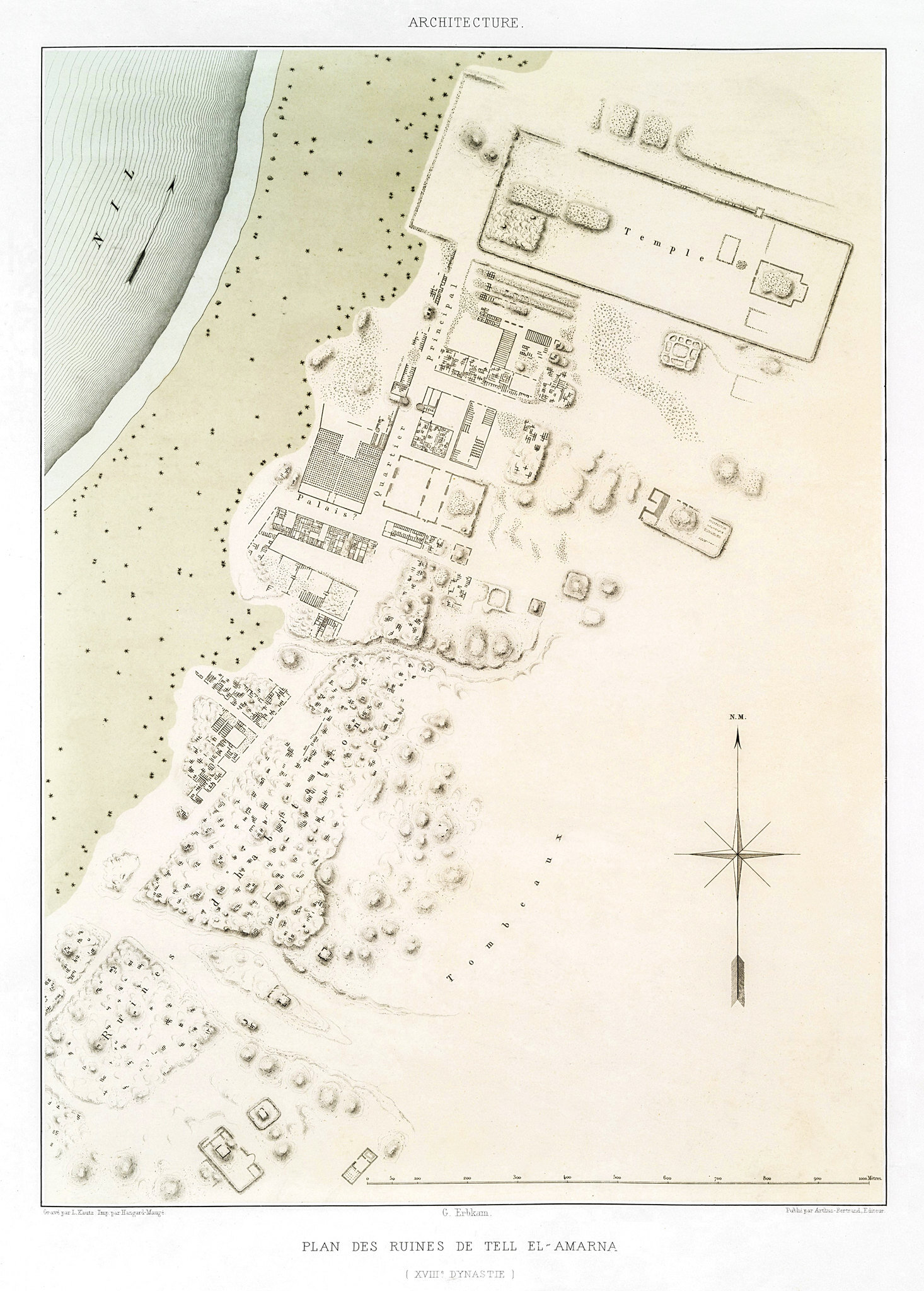
A map of Amarna, with a large temple to the Aten at the top

A map of Amarna, with a large temple to the Aten at the top

The Move to Amarna: The New Capital of Akhenaten

At this time, the cult of the chief deity, Amun, held great power, particularly in Thebes, modern-day Luxor, which had become the religious and political center of Egypt. Perhaps as an attempt to reduce the power of the Amun priesthood, Akhenaten (the name he adopted, as he was previously known as Amenhotep IV) decided to decree that all worship be shifted away from Amun and the rest of the pantheon to a minor sun god, the Aten. On top of that, he moved the capital to an unoccupied stretch of desert along the Nile, bordered to the east by cliff walls that would house the royal tombs. He named the new city Akhentaten (Horizon of the Aten), confusingly similar to his new name. The city is now referred to as Amarna. The site was located on a barren stretch of the desert that lay between Lower Egypt’s capital, Memphis (200 miles to the north), and Upper Egypt’s capital, Thebes (250 miles to the south), making it a good spot to administer both lands.

Why did Akhenaten make this drastic move? Despite the fact that many Egyptologists delight in thinking it was the doing of a religious maniac who decreed that the old gods were false and that only one deity, the sun, deservered reverence, it was “dictated less by theological insanity than by court intrigue and politics,” writes Nicholas Reeves in his book Akhenaten: Egypt’s False Prophet, republished in 2019.

When you declare that all of the old gods are forbidden but one, as Pharaoh Akhenaten did, you’re going to piss off a lot of people — especially the wealthy and powerful priesthood of Amun, the former chief deity

When you declare that all of the old gods are forbidden but one, as Pharaoh Akhenaten did, you’re going to piss off a lot of people — especially the wealthy and powerful priesthood of Amun, the former chief deity

An Assassination Attempt?

Reeves, always one to lend credence to a conspiracy theory, hints that a brush with death could have led to the move. “If Akhenaten had narrowly escaped assassination — and his subsequent persecution of the Theban god does indeed suggest a grudge of considerable magnitude — then he was now moving cleverly and decisively to outflank the opposition.”

While the Amun priesthood certainly had their gripes with a sudden loss of power and wealth, Reeves suggests that the population, the younger ones in particular, viewed the move to a new capital as an exciting adventure, “a contrast to the staid and perhaps stale atmosphere of conservative Thebes,” he writes. “For the new generation, pharaoh was the hero of the hour, the man who had re-established true order on the Egyptian world. There was energy in the air; the people believed.”

All that remains of the once-impressive north palace of Amarna

All that remains of the once-impressive north palace of Amarna

Akhentaten: Nearly a Decade in the Making

It was nine years before Akhentaten celebrated its official inauguration — “and to judge from the number of wine-jar dockets of this date recovered from the site, it must have been quite a party,” Reeves writes.

Although Akhenaten wasn’t known for his economic aptitude, he started out with overflowing coffers. Much of the wealth of his new capital came from the pilfered stockpiles of the old gods, Amun in particular.

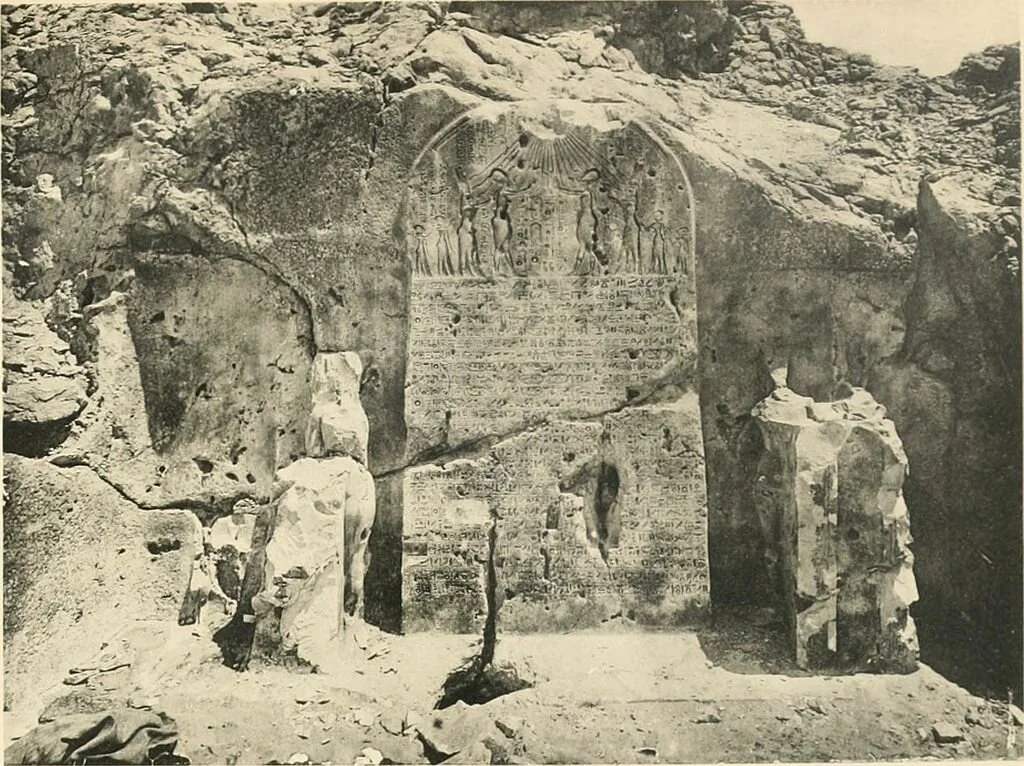
Akhenaten and his family can be seen worshipping the Aten (aka the sun) in a tomb carved into the cliffs outside of Amarna in this photo from 1903

Akhenaten and his family can be seen worshipping the Aten (aka the sun) in a tomb carved into the cliffs outside of Amarna in this photo from 1903

Amarna art focused on nature, reflecting the lush oasis Akhenaten created

Amarna art focused on nature, reflecting the lush oasis Akhenaten created

Today Amarna is a desert wasteland, so it’s difficult to imagine that it once was a lush, green oasis, filled with trees and bushes, as depicted in the reliefs of the time. One of the highlights of the city were its gorgeously painted pavements showing scenes of nature. They were uncovered by the archeologist Flinders Petrie (amusingly described by Reeves as “legendary but dour”) in 1891. Petrie took great pains to preserve these works of art — but a local farmer destroyed most of them in a fit.

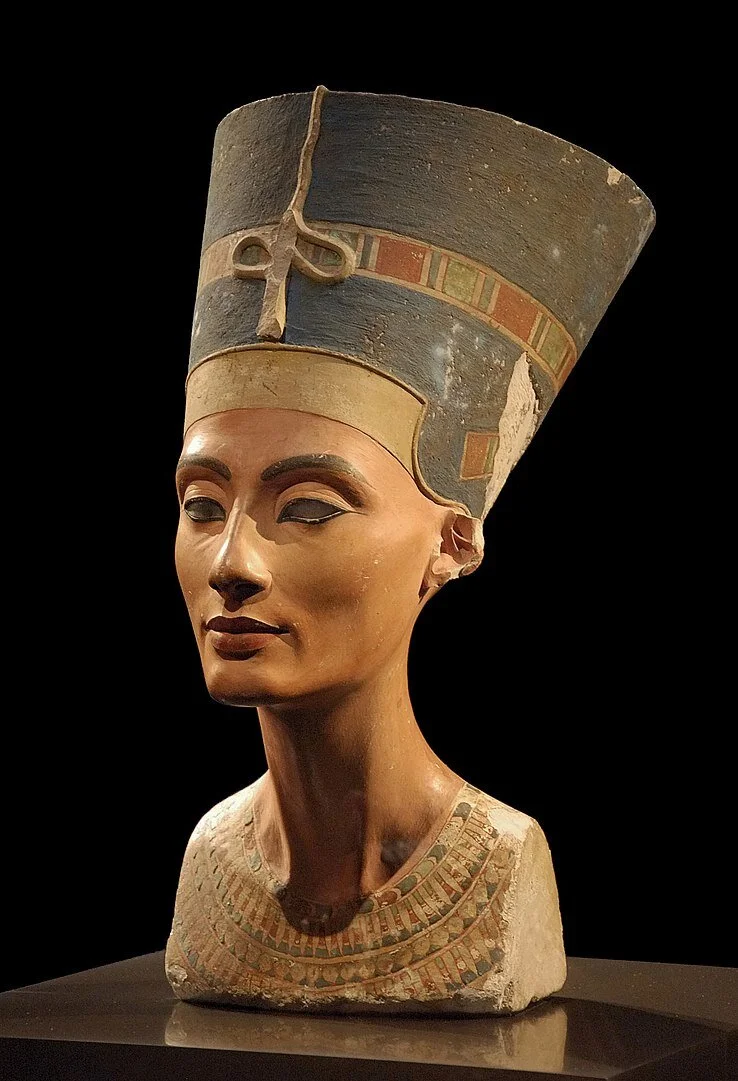
Even Hitler fell under the spell of the beautiful Nefertiti, as depicted in her famous bust

Even Hitler fell under the spell of the beautiful Nefertiti, as depicted in her famous bust

Hitler and the Famous Bust of Nefertiti

The palace and major temple were located in the north, so it’s interesting that many of the higher-end villas, like that of the vizier (a role we might now call prime minister), were built in the south — as far as possible from the pharaoh to still be within the boundaries of Akhentaten.

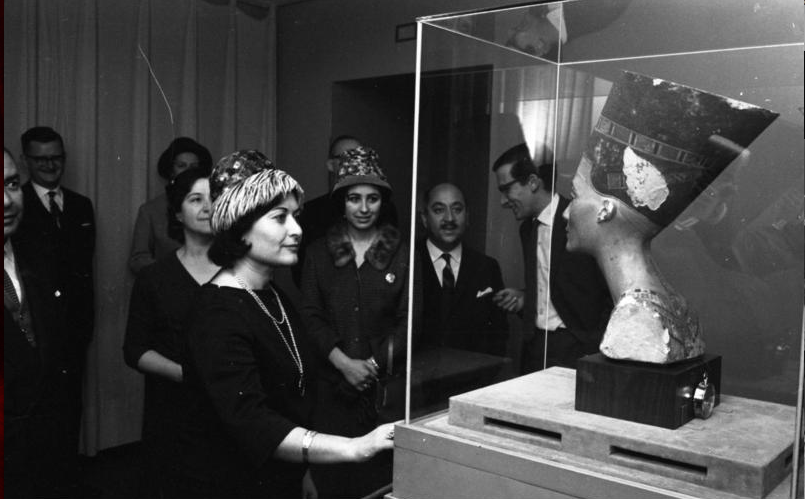
It was in one of these villas, owned by the artist Thutmose, whose house doubled as his studio, that the famed one-eyed bust of Nefertiti was found. If you want to see it in real life, you’ll have to visit the Berlin Museum. There was talk that the sculpture would be returned to Egypt during World War II, but Hitler liked Nefertiti’s “Aryan” appearance, declaring, “What the German people have, they keep!”

If you want to see the bust of Nefertiti, you’ll have to go to Berlin, as these visitors from 1963 did

If you want to see the bust of Nefertiti, you’ll have to go to Berlin, as these visitors from 1963 did

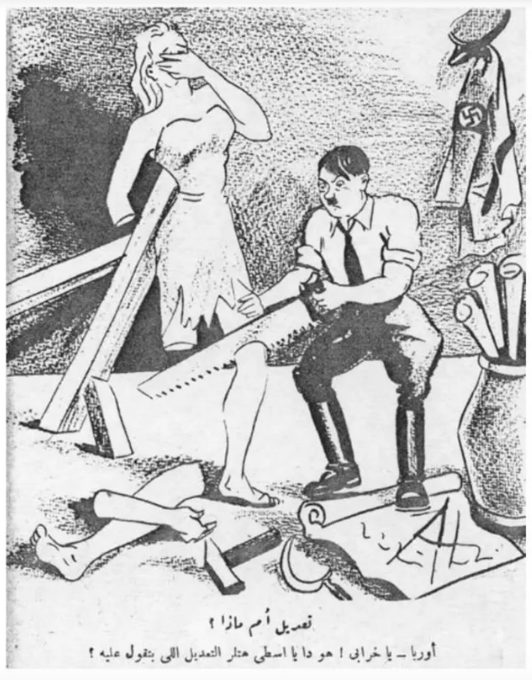
A political cartoon in an Egyptian newsweekly from 1940: The woman, who represents Europe, is shouting, “Oh, no! Hitler, is this the new order you preached about?!”

A political cartoon in an Egyptian newsweekly from 1940: The woman, who represents Europe, is shouting, “Oh, no! Hitler, is this the new order you preached about?!”

This statue of Nefertiti was a particular favorite of Adolf Hitler’s, and for four years had been kept inside a fortified anti-aircraft gun tower next to the Berlin Zoo. 

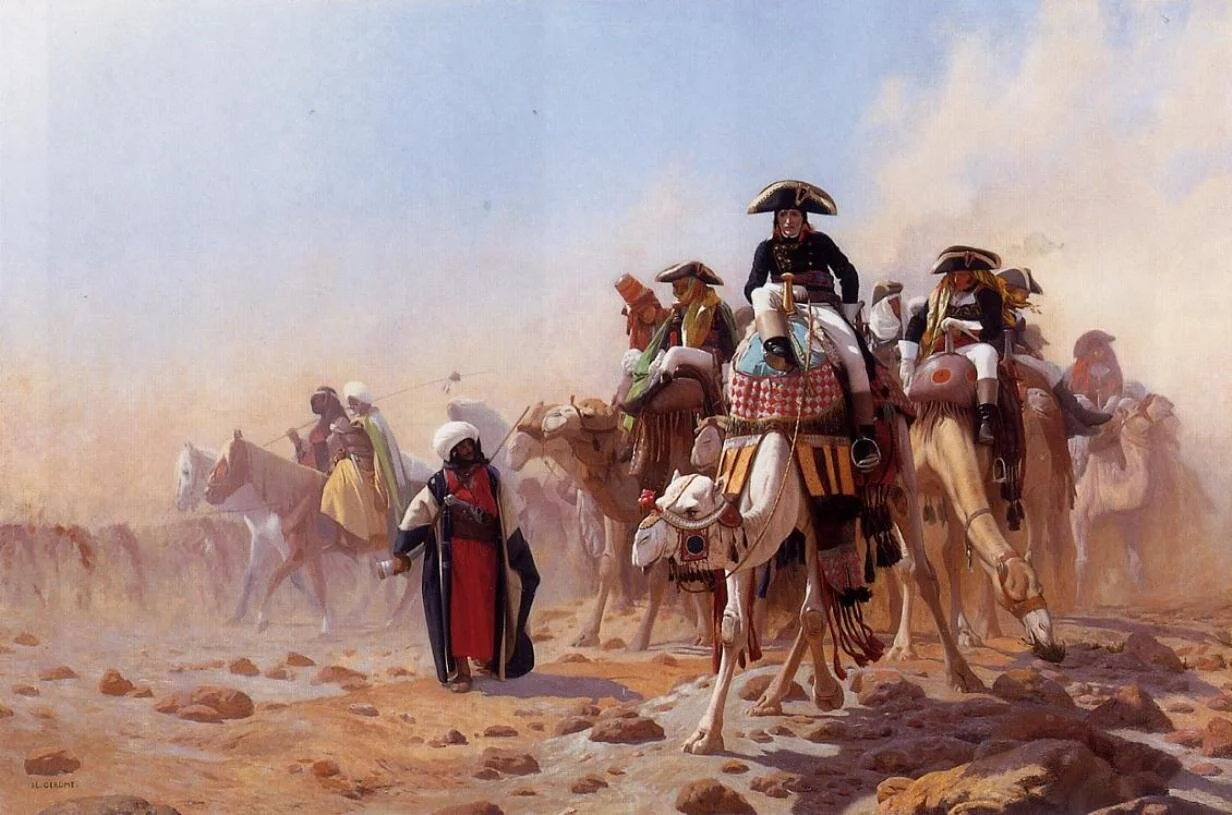
Napoleon During His Campaign in Egypt by Jean-Léon Gérôme, 1863

Napoleon During His Campaign in Egypt by Jean-Léon Gérôme, 1863

Napoleon and Amarna

Amarna remained undiscovered for so long in great part because the local population, “whose habit of shooting first and greeting later deterred the curious from taking an interest in the area,” according to Reeves.

The first Westerners to lay eyes on Amarna were members of Napoleon Bonaparte’s expedition of 1789-1799. The French had come in search of a new passage to India. On all French ventures at the time, scholars were brought along to study and record the culture and history of the lands they passed through, and this was no exception. In fact, Napoleon had 139 of these “savants” in his party.

Very little remains of Amarna today — most buildings were used in other construction projects or simply abandoned

Very little remains of Amarna today — most buildings were used in other construction projects or simply abandoned

All’s Well That Ends Poorly

The new capital was, ultimately, a failed experiment. It only lasted 17 years. There’s no record of how or when Akhenaten died, but Reeves, of course, wouldn’t be surprised if he was the victim of foul play.

Whatever the cause, the Egyptian people weren’t too bummed at the city’s (or pharaoh’s) demise. As Reeves writes:

For ordinary folk, there is little doubt that Akhenaten’s actions as king over time inflicted the greatest misery: the people were confused by the man’s religious vision, frightened by the ruthless manner in which it was imposed, and quite likely appalled by his personal behaviour. Denied the celebration of the traditional religious festivals which gave form to their year, and brought to the very verge of bankruptcy by their king’s over-ambitious schemes and administrative incompetence, disillusionment was clearly widespread.

Akhenaten’s successor, none other than Tutankhamun, moved the capital back to Thebes, and reverted to polytheism — changing the end of his name from -aten to -amun to signify an allegiance with the previous chief deity, Amun. 

History hasn’t looked favorably upon Akhenaten, a pharaoh whose drastic actions and lack of acumen in ruling nearly ran the legendary empire into the ground. –Wally

The Tomb of Mereruka: An Entrancing Vision of the Afterlife

Get the additional ticket at Saqqara to see the finely preserved Ancient Egyptian mastaba of Pharaoh Teti’s vizier.

mererukatomb5.JPG

It should come as no surprise that Wally and I love exploring old cemeteries, especially ones that have monuments and mausoleums dedicated to famous people — from the park-like Père Lachaise in Paris, France to Graceland Cemetery, the final resting spot for Chicago’s version of nobility, not far from where we live. 

Before our trip to Egypt, the allure of exploring the culturally rich and diverse monuments of antiquity were obviously a large part of our ambitious itinerary. We had a brief window of only two days in Cairo — one of which was to see the Egyptian Museum, the other the Pyramids of Giza. 

But when our friend Margaret suggested we add on the less touristy (yet, some would argue, equally important) sprawling ancient burial ground of Saqqara — home of the oldest known pyramid in Egypt and necropolis to kings and nobles dating back 3,500 years or more — we thought, sign us up!                                           

A bas-relief on the wall leading to the suite of Mereruka’s son Meryteti shows nude male figures. The side-lock braids was a hairstyle worn by youths

A bas-relief on the wall leading to the suite of Mereruka’s son Meryteti shows nude male figures. The side-lock braids was a hairstyle worn by youths

Misguided at Saqqara

We had just finished exploring the parchment-hued limestone mastaba tombs of the Unas complex and had become increasingly frustrated with our guide, Ahmed. Earlier in the day, we had visited Giza and missed seeing the Solar Boat Museum as he apparently hadn’t included it as part of our pre-arranged itinerary. How unreasonable of us to assume we’d have a guide who would provide us options instead of rushing us through the sites so he could end his day early. 

“And that’s Saqqara,” Ahmed told us. 

“But what about that tomb with the cool statue?” Wally asked. 

Ahmed stared blankly at us as if he didn’t have the faintest notion of what we were talking about.

“Hold on,” Wally said, flipping through his notebook. “Here it is! Mereruka’s tomb.” 

“That costs extra,” Ahmed said.

“What part of of ‘we are only here once and want to see everything and are happy to pay extra’ don’t you understand?” a frazzled Wally exclaimed.

Ahmed acted like a petulant child as he led us back to the car to reluctantly return to the kiosk to purchase the additional tickets. (They cost a mere 80 Egyptian pounds, or about 5 bucks, by the way.)

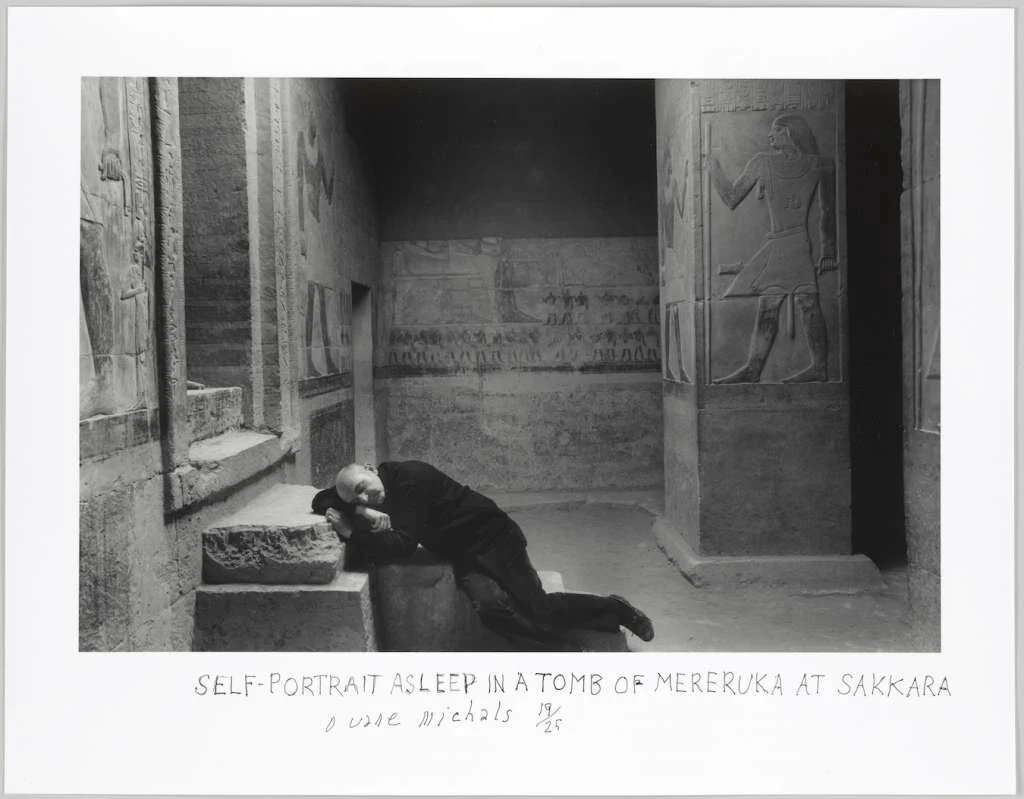
The renowned gay photographer Duane Michals takes an interesting self-portrait at the Tomb of Mereruka — surely one that our guide Ahmed would not have approved of

The renowned gay photographer Duane Michals takes an interesting self-portrait at the Tomb of Mereruka — surely one that our guide Ahmed would not have approved of

During the Old Kingdom, from around 2686-2181 BCE, the wealthiest and most important non-royal members of Egyptian society were interred in monolithic bench-like burial structures referred to as mastabas. Mereruka served as the vizier, chief justice and son-in-law under the rule of the Sixth Dynasty Pharaoh Teti. As befitted his influential political position, he was buried in the largest of the non-royal tombs in Saqqara. 

On either side of the tomb entrance, the vizier Mereruka can be seen with his wife shown in a diminutive size in front of him

On either side of the tomb entrance, the vizier Mereruka can be seen with his wife shown in a diminutive size in front of him

Little Women

Outside the entrance to the mastaba, relief portraits on the jambs on either side of the unassuming doorway depict Mereruka with a diminutive figure of his wife Sesheshet Watethathor standing at his feet and only coming up to about his knee. This symbolic device was employed in Egyptian art to show an individual’s importance or authority. The larger the scale, the more powerful; by extension, the lesser the scale, the more passive the role. Such was the lot of most women in Ancient Egypt (though there are exceptions to every rule, as King Hatshepsut proves).

In this historic photo from 1934, an artist copies the inscriptions and sketches the tomb

In this historic photo from 1934, an artist copies the inscriptions and sketches the tomb

A Marvelous Mastaba

The mastaba was first excavated in 1892 by French archaeologist Jacques de Morgan and actually contains three tombs in total, divided into 31 interior chambers. Of these suites, 21 are dedicated to Mereruka, five to his wife and five for his son Meryteti. 

Inside the well-preserved tomb are finely detailed two-dimensional reliefs depicting scenes of everyday life — including activities the deceased vizier and his family wished to continue in the afterlife. Amongst the birds and beasts, hieroglyphic inscriptions on the walls and corridors of Mereruka’s suites bear his various titles. 

Although their heads are missing, we admired a relief depicting the vizier and his wife. It’s a timeless image of two entwined hands preserved in stone: Mereruka leading his beloved through the afterlife. 

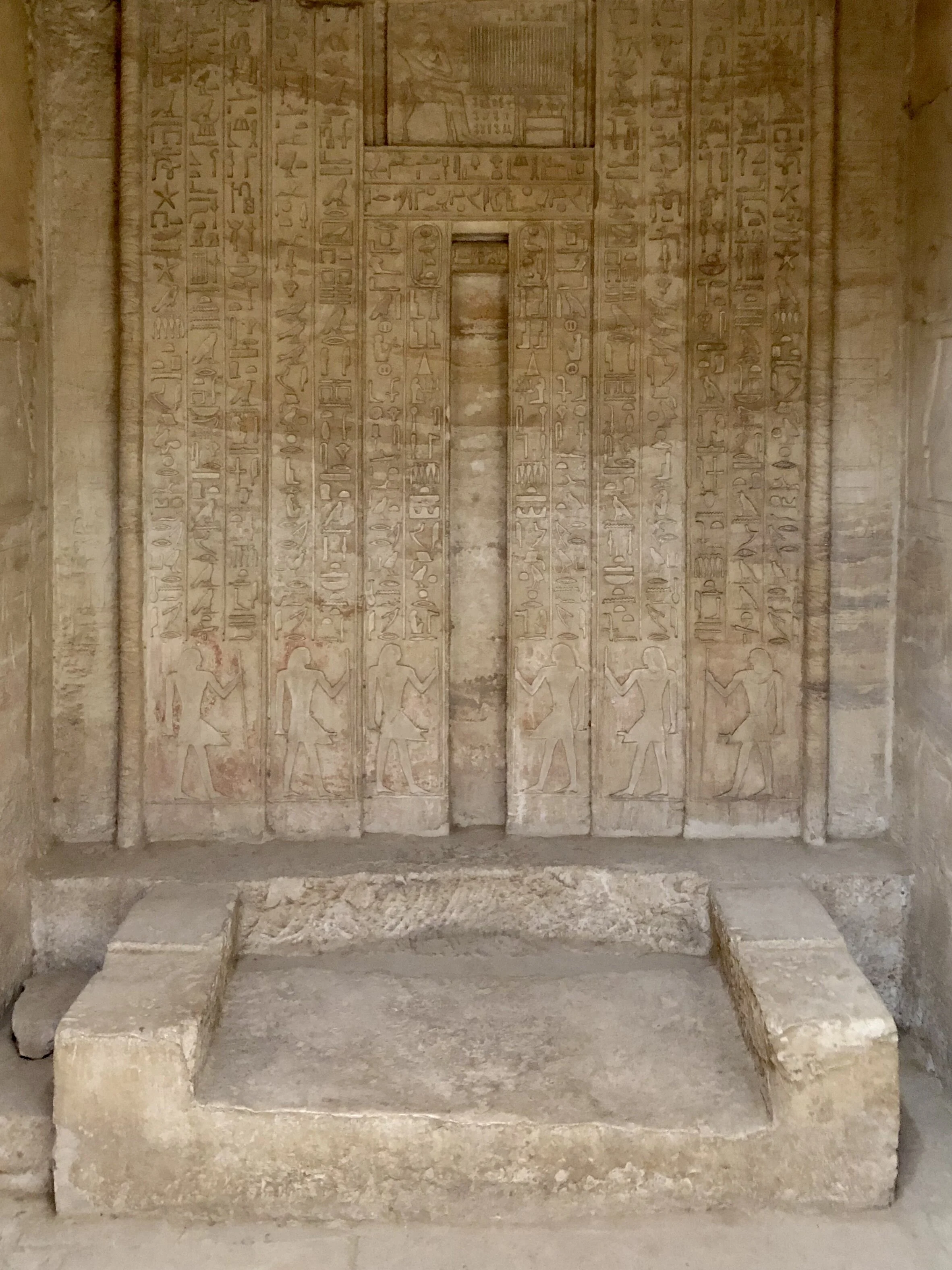
Ancient Egyptian tombs had false doors, through which the spirit could come and go

Ancient Egyptian tombs had false doors, through which the spirit could come and go

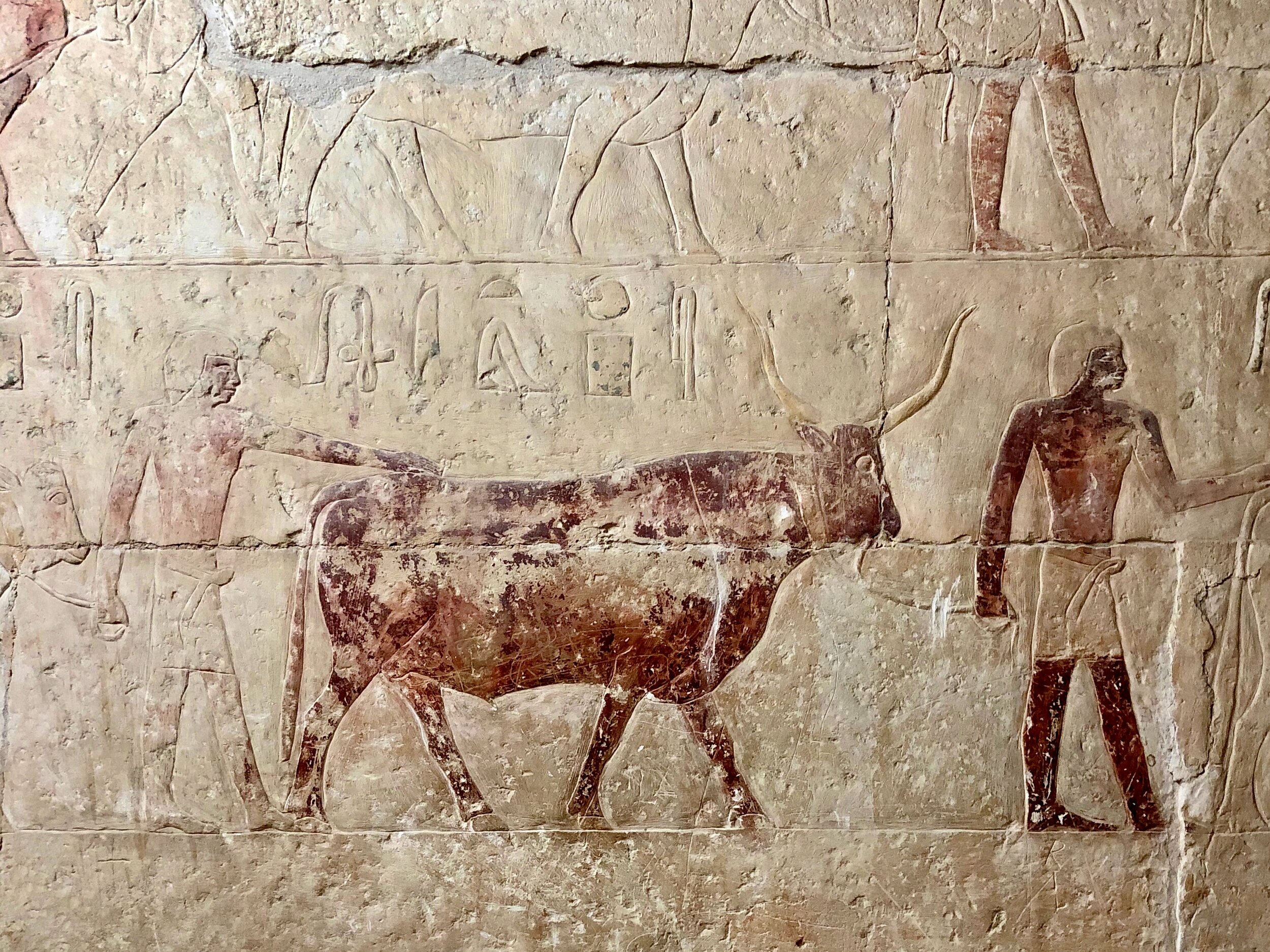
If you carve it, it becomes real: Depictions of offerings were as good as the real thing to Ancient Egyptians

If you carve it, it becomes real: Depictions of offerings were as good as the real thing to Ancient Egyptians

Farther into the tomb was the requisite false door, an architectural feature allowing the deceased to pass between the world of the living and the dead. Recessed rectangular panels are inscribed with a hieroglyphic list of provisions and facing inward at the bottom are six standing figures of Mereruka. Centered above the door the deceased is depicted seated on a stool with the fore and hind legs of a lion before a table of ritual offerings. Below this is a raised slab where food and drink could be placed by the living for the benefit of the dead. 

The famous statue of Mereruka is a large part of the appeal of this tomb complex

The famous statue of Mereruka is a large part of the appeal of this tomb complex

The Statue of Mereruka: A Step in the Right Direction 

The largest room, and the one photographed in our guidebook, is the mortuary chapel, an impressive six-pillared ceremonial chamber, where Mereruka’s priests and family would come to pay homage to the deceased vizier. Quietly presiding over the hall is a life-size statue of Mereruka stepping out from a recessed doorway. 

On the floor of the room is a stone ring. 

“What was that for?“ Wally asked Ahmed, who said he had no idea.

In my research, I learned that it was used for tethering sacrificial animals, including the sacred Apis bulls. Hopefully Ahmed reads this post and learns something — besides how to properly behave as a guide. 

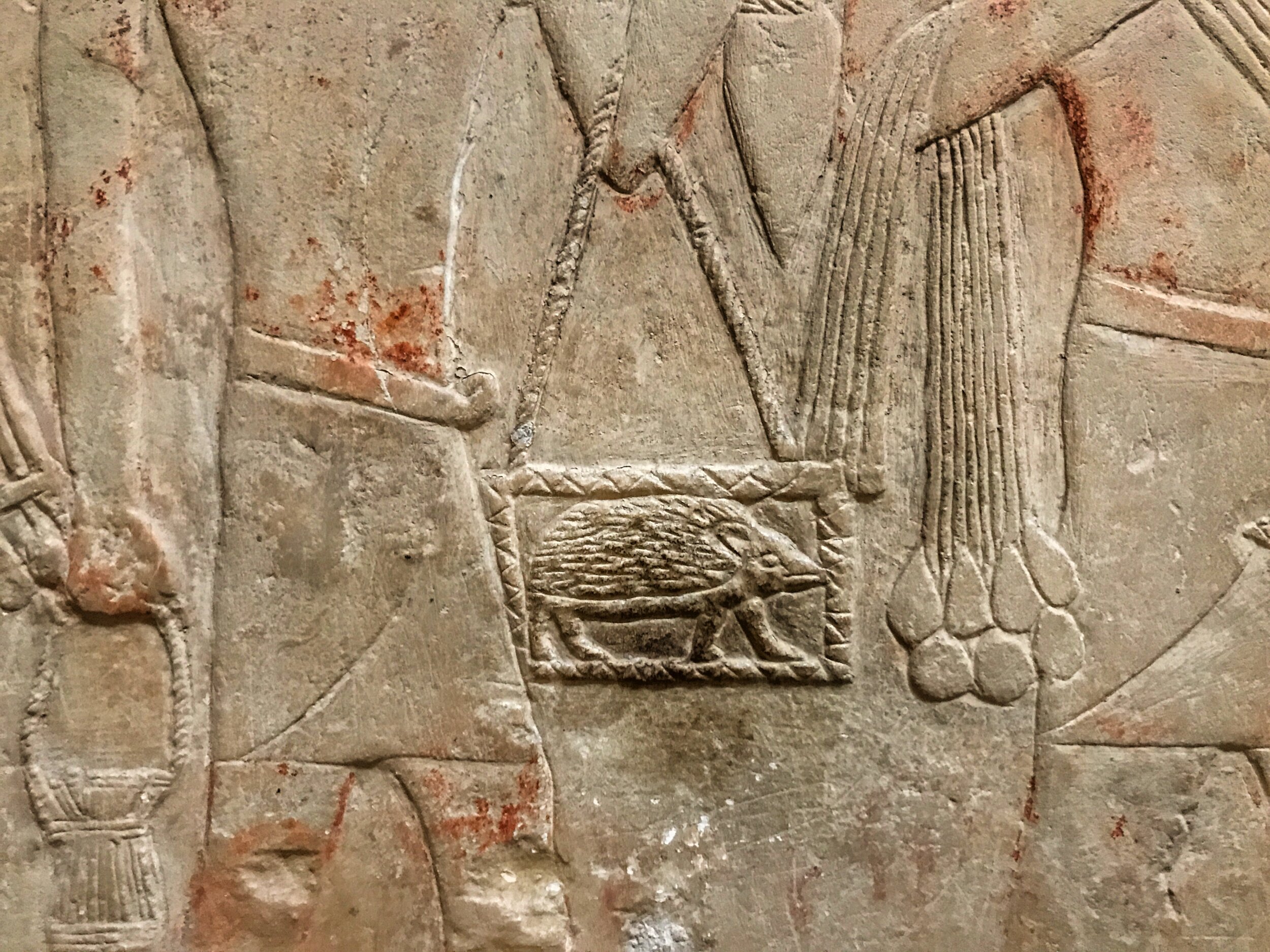
We hope this hedgehog was going to be a pet — and not a sacrifice

We hope this hedgehog was going to be a pet — and not a sacrifice

Mereruka holds hands with his son

Mereruka holds hands with his son

A scene depicting sculptors and metal workers — note that some of the artisans are dwarfs

A scene depicting sculptors and metal workers — note that some of the artisans are dwarfs

As Wally and I wandered about, Ahmed caught a small group of American tourists touching the reliefs on the walls. For a brief moment, he became passionate and shouted, “Don’t touch! You’re breaking my heart!” Then, he muttered to us, “Why would they think it’s OK to touch the walls? You wouldn’t touch the paintings in the Louvre!” 

Then, in a moment, he was back to his sullen self, annoyed that we still wanted to explore. He told us he’d be waiting for us outside — but not before informing us that no photography was allowed. We obviously didn’t take heed. –Duke


The Easy-to-Miss Mastabas of Saqqara

The three royal Saqqara tombs of Inefrt V, Unas-Ankh and Idut offer a glimpse into the daily life of Ancient Egyptians. 

Ancient Egyptians believed that a drawing of a sacrifice was as good as the real thing

Ancient Egyptians believed that a drawing of a sacrifice was as good as the real thing

For most of us, there are a couple of certainties about death: You can’t take it with you, and you can’t bring the dead back to life. 

When pondering the finality of death, we try to reason with fate that it’s not our time to go while simultaneously contemplating the frightening prospect that one day, no matter how hard we try to avoid it, we’ll all end up as worm food. 

Two of the mastaba’s rooms were purchased by Edward Ayer, the first president of the Field Museum in Chicago.

Strangely enough, these entire rooms were dismantled and traveled by boat to the Windy City, where they were added to the Field’s permanent collection. They can still be viewed today. 
Step through the doorway to enter a world over 4,000 years old

Step through the doorway to enter a world over 4,000 years old

Not so for the royal and upper-class families of Ancient Egypt, who, although having lived life very much in the present, were preoccupied with achieving the ideal afterlife. The planning and preparation of sophisticated abodes where their souls would reside for eternity often began shortly upon birth. And when a pharaoh did die, if the right precautions were taken, their soul went on to enjoy living among the gods, while the souls of nobility were reborn into a utopia. 

Wally walks like an Egyptian — and you should, too!

Wally walks like an Egyptian — and you should, too!

Duke’s happy we decided to explore the mastabas at Saqqara

Duke’s happy we decided to explore the mastabas at Saqqara

A few Old Kingdom burial structures, known as mastabas (pronounced “mast-a-bahs”) are located within the cemetery complex of Pharaoh Unas at Saqqara. Built for his viziers, wives and offspring, these “forever homes” survived, immutable, for thousands of years, likely due to being hidden under sand. The flat-roofed, low-slung structures are all similar in size, with their exterior walls built of durable limestone blocks. 

Servants bear offerings of beer, bread, fowl, meat and other goodies

Servants bear offerings of beer, bread, fowl, meat and other goodies

Spirits in the Material World: Inefrt V’s Mastaba

The first mastaba that Wally and I went into was the tomb of Inefrt V, a vizier who served Pharaoh Unas from his mid to late reign around 2430 BCE. This was the most powerful title amongst the Egyptian social hierarchy, after that of king — in fact, they’re often called the prime ministers of the time — and Inefrt’s loyalty earned him a coveted final resting spot. 

Finely sculpted limestone relief carvings throughout his tomb depict daily life. The mere utterance of the hieroglyphic inscriptions that accompany them were believed to spark magical powers to prepare the soul of the deceased for the next world.

Six small figures of the deceased, carved in sunken relief, face the central niche of the false door, which was used by the ka, or spirit

Six small figures of the deceased, carved in sunken relief, face the central niche of the false door, which was used by the ka, or spirit

In the offertory chapel, one of several rooms, we paused in front of a niche with a false door. After the deceased had been laid to rest, family members and priests continued to bring food and other offerings, which were placed on a low bench-like slab in front of the false door through which the spirit, or ka, would pass through in order to receive sustenance. The dead, you see, still had to eat and drink even if they no longer held a physical form. 

One of the mastabas shows offerings for Prince Unas-Ankh to enjoy during his afterlife

One of the mastabas shows offerings for Prince Unas-Ankh to enjoy during his afterlife

The Princely Digs of Unas-Ankh

The second mastaba tomb we entered belongs to Prince Unas-Ankh, the son of Queen Nebt and King Unas, who died around 2400 BCE. It was discovered and excavated in 1908 by British Egyptologist James E. Quibell, then the chief inspector at Saqqara. Many historians have speculated that the prince died before his father, as no male heir took the throne upon Unas’ death. 

Surprisingly realistic depictions of fish are shown swimming beneath a boat

Surprisingly realistic depictions of fish are shown swimming beneath a boat

Scenes devoted to daily life include seated scribes going about their work

Scenes devoted to daily life include seated scribes going about their work

Two of the mastaba’s rooms, the offertory chapel and antechamber, were purchased from the Egyptian government by American business magnate Edward Ayer, the founding father and first president of the Field Museum of Natural History in Chicago. Strangely enough, these entire rooms were dismantled and traveled by boat to the Windy City, where they were added to the Field’s permanent collection of Ancient Egyptian artifacts. They can still be viewed today. 

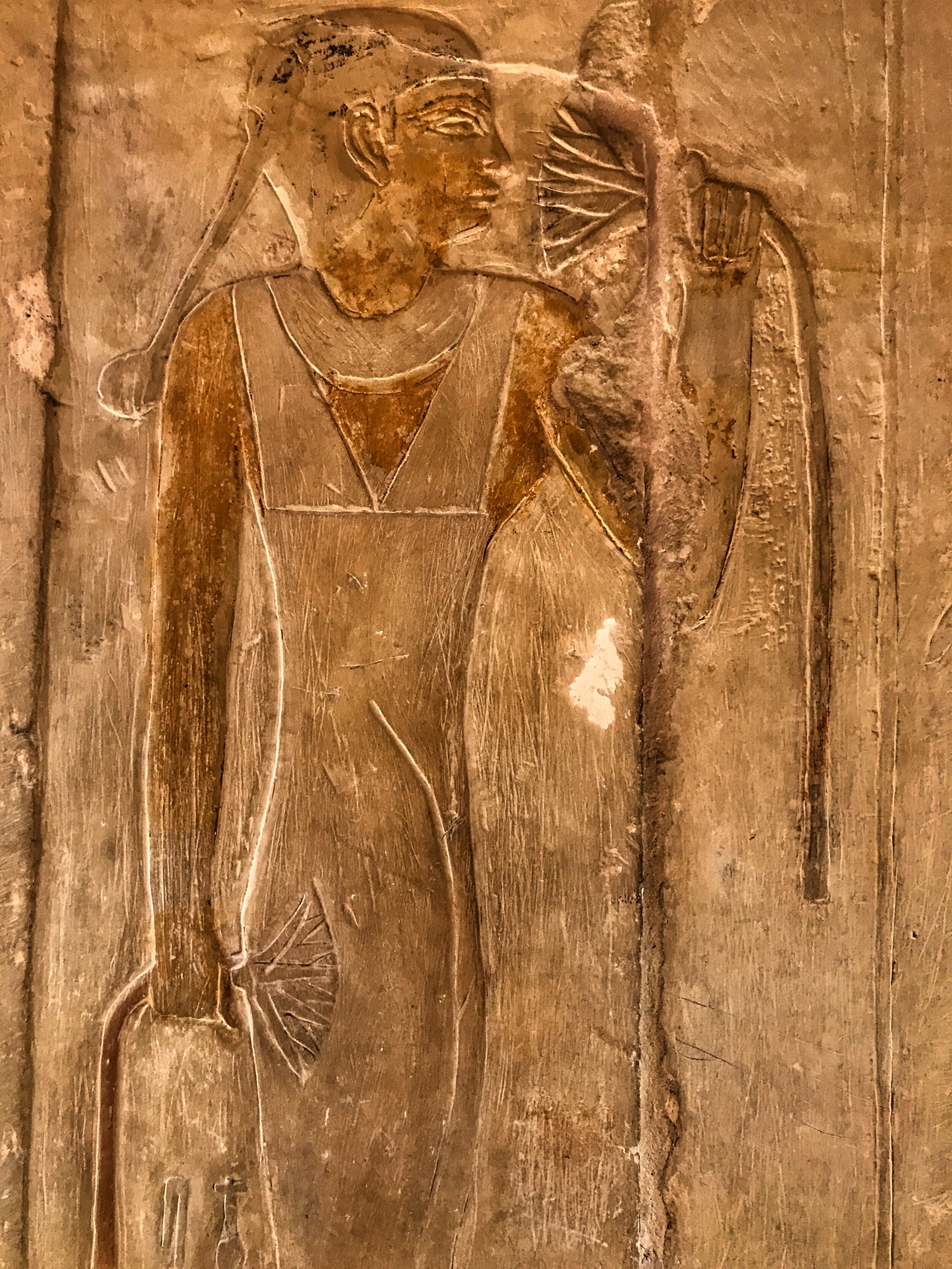
Why build a tomb when you can steal one like Princess Idut did? She’s shown smelling a lotus blossom, a symbol of rebirth

Why build a tomb when you can steal one like Princess Idut did? She’s shown smelling a lotus blossom, a symbol of rebirth

Princess Idut and the Usurped Lair of Ihy

The mastaba tomb of the vizier Ihy was the last of this group. Dated to circa 2360 BCE, it was discovered by British Egyptologist Cecil Firth in 1927 and further excavated by French Egyptologist Jean-Philippe Lauer. What makes this tomb particularly interesting is that it was later usurped and reused by Pharaoh Teti’s daughter, Princess Idut, who bears the title of king’s daughter of his body. Ihy’s name was erased, and scenes originally made for the vizier were adapted, with the figure of the princess replacing that of poor Ihy. These were executed in shallow relief and, perhaps because they were made over existing ones, are inferior in quality, in my opinion. 

That baby hippo better watch out for the crocodile!

That baby hippo better watch out for the crocodile!

One of my favorite reliefs within the mastaba depicts a hippopotamus giving birth with a crocodile waiting to gobble up the newborn in its snapping jaws.

Be sure to visit the mastabas after exploring the depths of Unas’ pyramid

Be sure to visit the mastabas after exploring the depths of Unas’ pyramid

The Mastabas of the Unas Complex

The mastaba tombs Wally and I saw at Saqqara were multi-roomed affairs with corridors and a mortuary chapel with a false door for worship and offerings to the deceased. Reliefs often included scenes of hunting, netting fish, herding and butchering animals, threshing grain and other farming activities corresponding to events and experiences that the departed would have enjoyed in everyday life.

One of the main concerns beyond death for royalty and nobles alike was that the deceased would require food, and plenty of it. This bas-relief shows a graphic depiction of butchers slaughtering a bull

One of the main concerns beyond death for royalty and nobles alike was that the deceased would require food, and plenty of it. This bas-relief shows a graphic depiction of butchers slaughtering a bull

As our guide Ahmed hurried us past the mastaba entrances, we stopped and pointed at the doorways.

“What’s in there?” Wally asked.

“Some tombs,” Ahmed said, dismissively.

“Well, let’s go in then. We might only be here once — we want to see everything,” Wally said.

“That’s fine,” Ahmed snapped, obviously annoyed. “We can do that. But they’re all the same.”

Not only was this an alarming statement from a guide, who should be proud of his country’s heritage, it also just wasn’t true.

It wasn’t until then that we told Ahmed we were travel bloggers — and he looked sheepish and then upset, suddenly changing his tune, telling us that it was unfair to have withheld this detail from him and that he would have given us a different tour had he been informed. We thought that was a poor way to treat clients, and I can only imagine that he shared the same dispassionate and rushed tours with everyone.

That’s bull! Don’t let your guide at Saqqara try to pass by the mastabas in the Unas complex

That’s bull! Don’t let your guide at Saqqara try to pass by the mastabas in the Unas complex

Because of our lackluster Giza and Saqqara experience arranged through the Kempinski hotel concierge in Cairo, I would recommend getting the locations and sights you want to visit in writing and agreed upon the day before your visit. We didn’t — and as a result were subject to the rushed whims of our guide.

Admission to Saqqara cost 150 Egyptian pounds (about $9.50 at the time). Ahmed took us to the Step Pyramid, the entrance hall to Djoser’s Funerary Complex, the Pyramid of Unas, the above-mentioned mastaba tombs and the Imhotep Museum. Knowing what we know now, though, we could have easily have seen more time at Saqqara, including the Serapeum; the tomb of Irukaptah, nicknamed the “Butcher’s Tomb;” the tomb of Queen Nebt, one of the wives of King Unas; and the Tomb of the Two Brothers, possible gay lovers. –Duke


The Many Layers of Luxor Temple

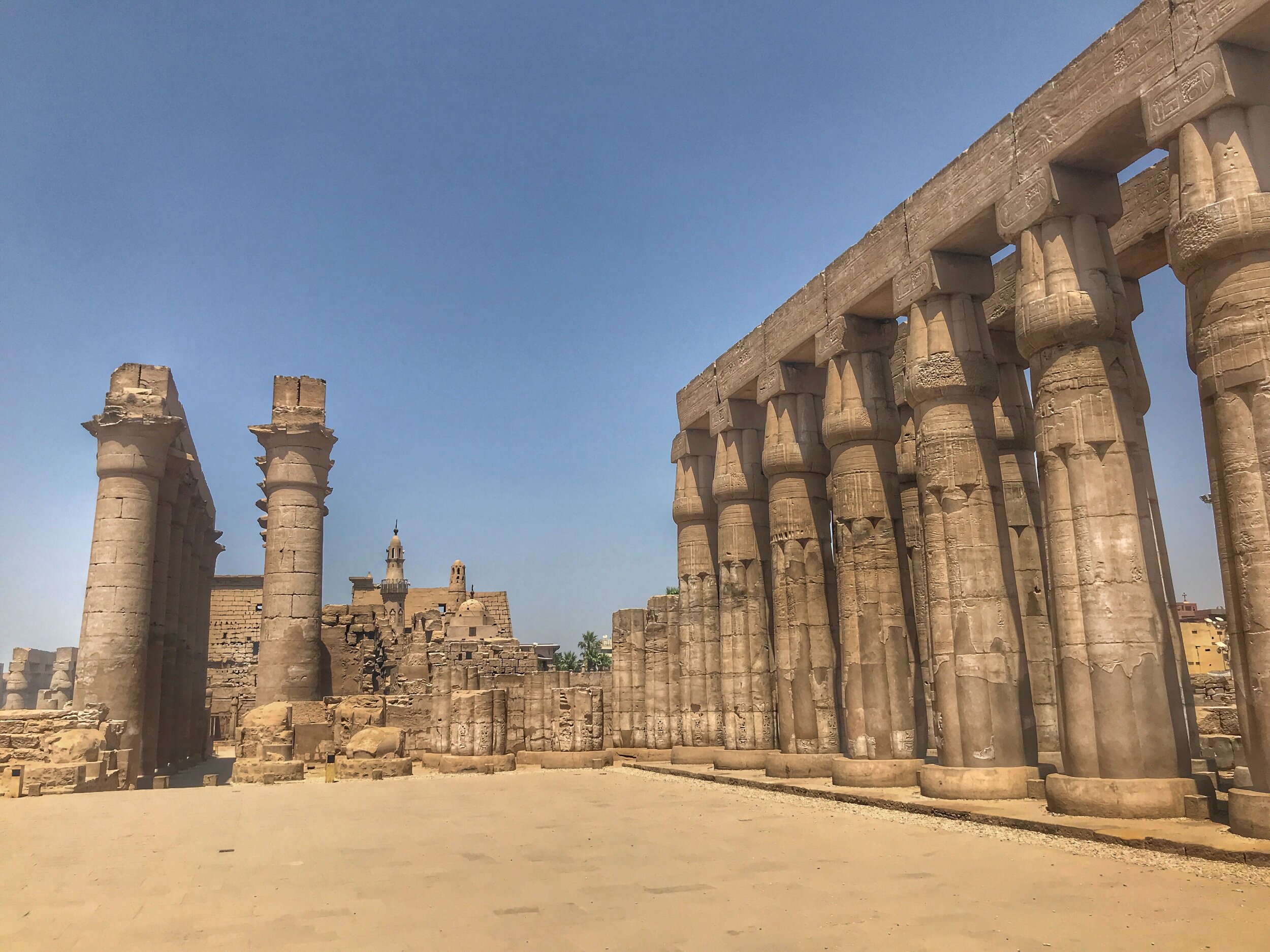
The town of Luxor now surrounds this ancient complex built as a festival site by Amenhotep III and added on to by Hatshepsut, King Tut and Alexander the Great.

The modern city of Luxor has been built around the ancient temple complex

The modern city of Luxor has been built around the ancient temple complex

Americans never wanted a monarch like our friends across the pond, against whom we rebelled to set up a democracy. So we don’t know what it’s like to get caught up in a king’s or queen’s jubilee as the Brits do. 

It was a similar type of celebration that led to Luxor Temple. Amenhotep III, having been on the throne for 30 years, was due a Sed festival, an ancient rite to represent the rejuvenation of the pharaoh and renew his contract with the gods. Not every pharaoh made it three decades on the throne — at a time when that was pretty much the life expectancy — and Amenhotep was determined to celebrate his jubilee unlike any of his forebears. 

Don’t miss the carvings of none other than Alexander the Great worshipping Amun-Min, whose massive hard-on points toward the legendary, bisexual conqueror.
Luxor Temple was an important place of worship for 3,000 years!

Luxor Temple was an important place of worship for 3,000 years!

He looked three miles south of Karnak Temple and directly across the Nile from his mortuary temple at a small shrine that acted as the “southern residence” of the composite god Amun-Ra. The town of Luxor, known as Thebes in ancient times, now surrounds the temple complex.

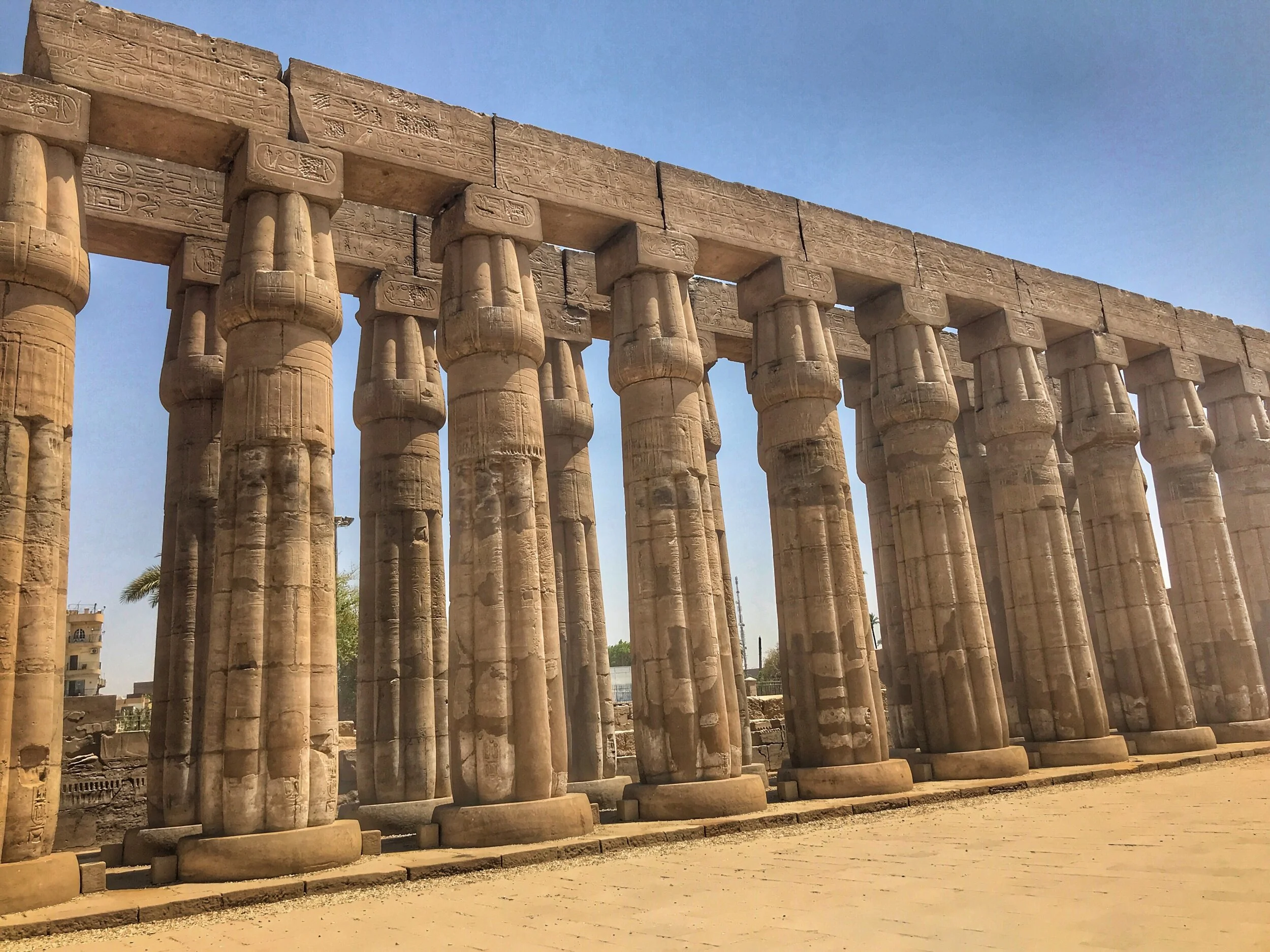
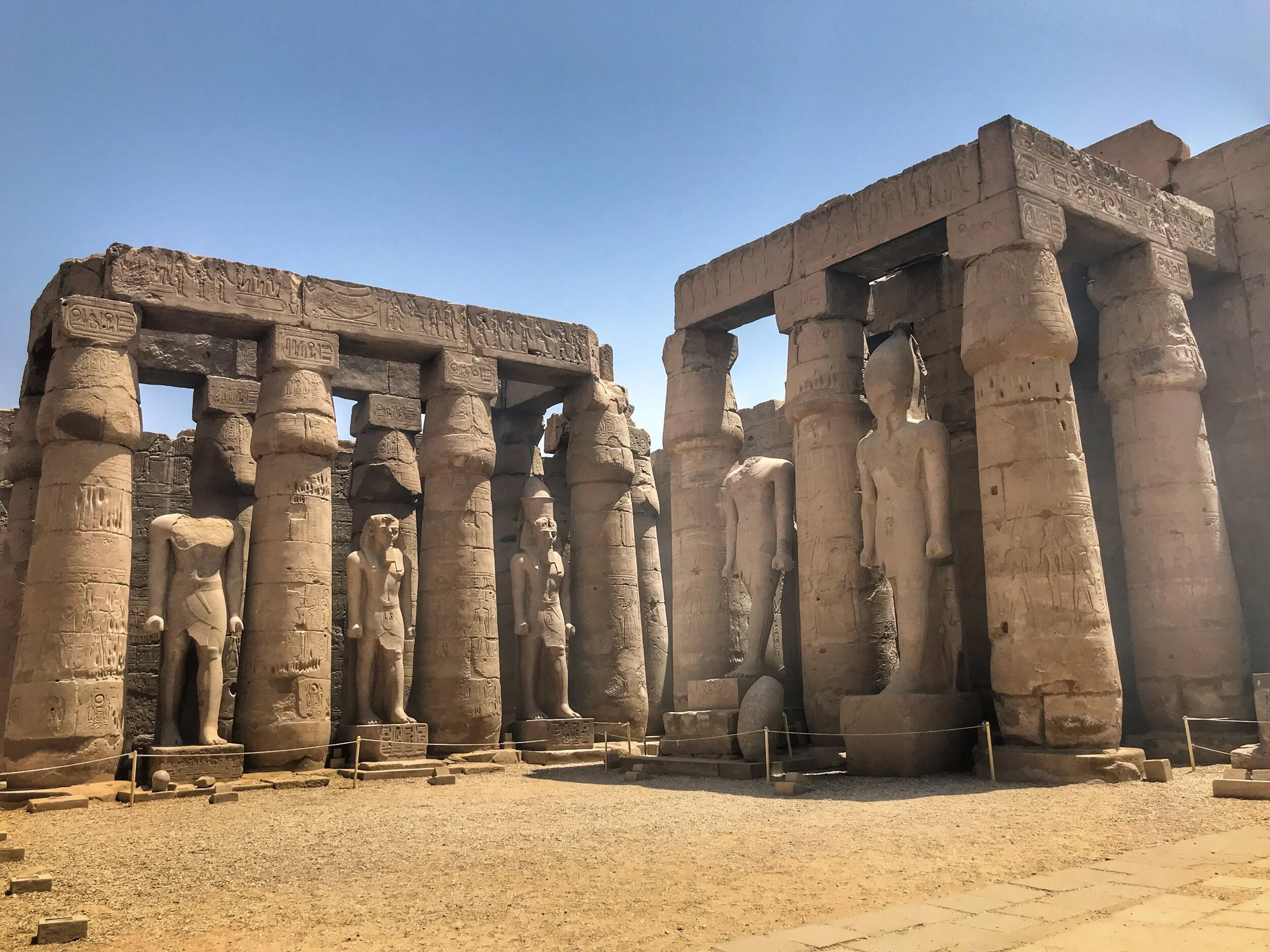
This colonnade was designed to resemble bundles of papyrus, an important plant for the Egyptians, used to make paper, sandals and other essentials

This colonnade was designed to resemble bundles of papyrus, an important plant for the Egyptians, used to make paper, sandals and other essentials

Amenhotep III had his architects design a vast open court with double rows of columns that resemble bundles of papyrus. The pharaoh was becoming more and more interested in solar worship, so he instructed that no roof cover this structure, allowing the sun’s rays to fill the space. With electrum walls and silver furnishings, you can only imagine how blinding the court would have been on a sunny day, filling worshippers with a sense of awe at the power of Amun-Ra.

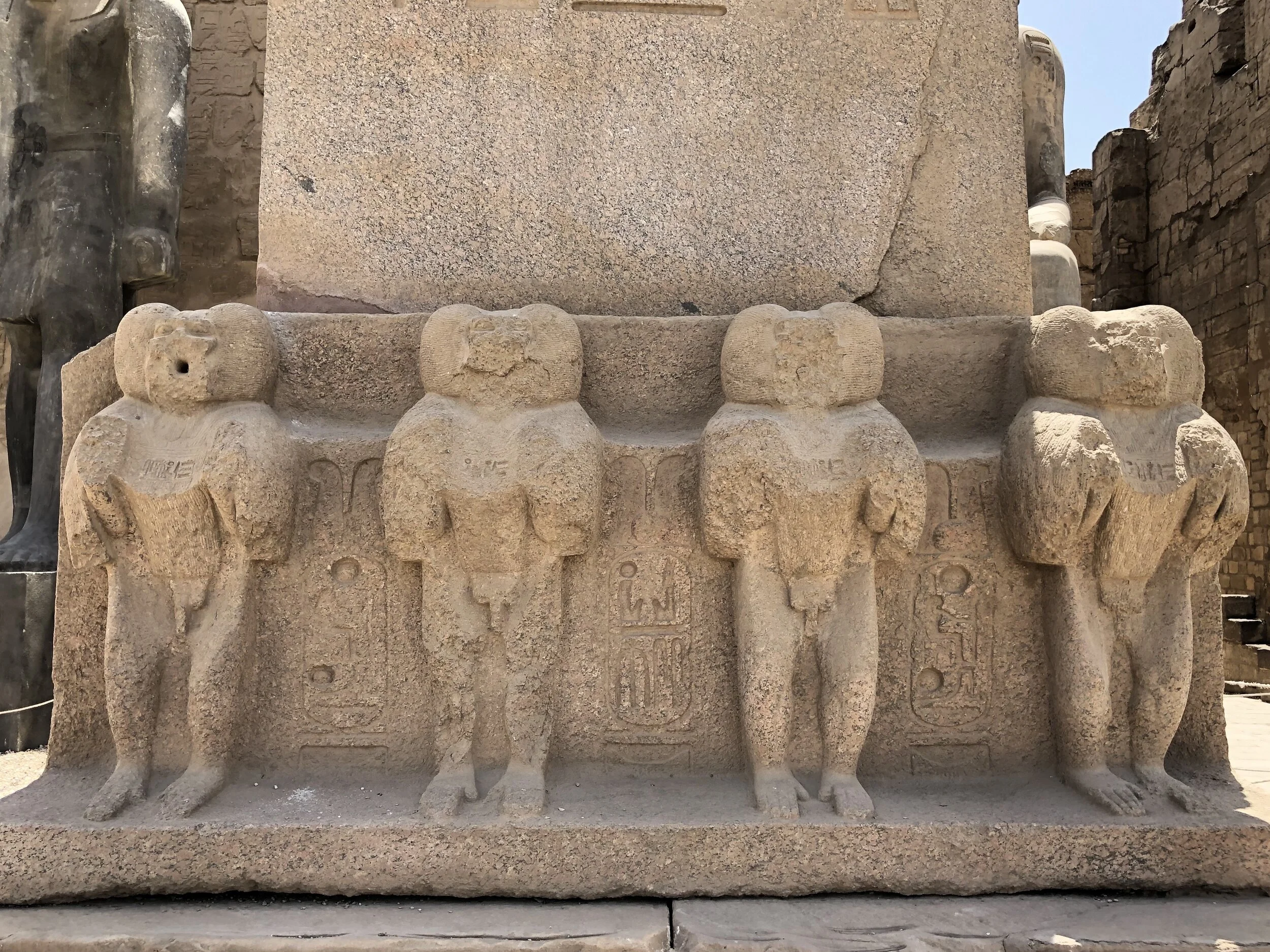
Because they make noise at sunrise, as if in greeting, baboons were connected to sun worship for the Ancient Egyptians

Because they make noise at sunrise, as if in greeting, baboons were connected to sun worship for the Ancient Egyptians

Son of God

But Egyptologists say that the most important room in Luxor Temple is a small one at the back, behind the shrine where the solar barque, the god’s vessel, was kept, and next to an offering room. In this seemingly unobtrusive chamber, Amenhotep III rewrote his history (a favorite pastime of the pharaohs). He tells the tale of how his mother, Mutemwia, was visited in her bedchamber by what looked like her husband, Thutmose IV, but was actually the chief deity, Amun-Ra. 

The inscription at Luxor is a much more graphic recounting than the divine parentage story Hatshepsut inscribed in her mortuary temple. Amenhotep seems to delight in the details of his mother’s arousal:

She awoke because of the god’s scent and cried out with pleasure before his majesty. … She rejoiced at the sight of his beauty, and love of him suffused her body. …

“How great is your power!” … Your dew permeates all my limbs.” And then the majesty of this god did all that he desired with her.

Amenhotep-ruler-of-Thebes is the name of this child that I have placed in your womb. … He shall exercise potent kingship in this entire land. … He shall rule the Two Lands like Ra forever.

Speaking of graphic depictions, the Amun worshipped here was conflated with the fertility god Min and was depicted with an impressive erection. Don’t miss the carvings here that show none other than Alexander the Great worshipping this god, whose massive hard-on points toward the legendary, bisexual conqueror.

Alexander the Great, crowned as pharaoh, worships Amun in the form of Min, who has one arm, one leg and one giant erection

Alexander the Great, crowned as pharaoh, worships Amun in the form of Min, who has one arm, one leg and one giant erection

Luxor Temple became the primary stage for kingly rituals, including the Opet festival, when the Amun statue at Karnak would come for a visit.

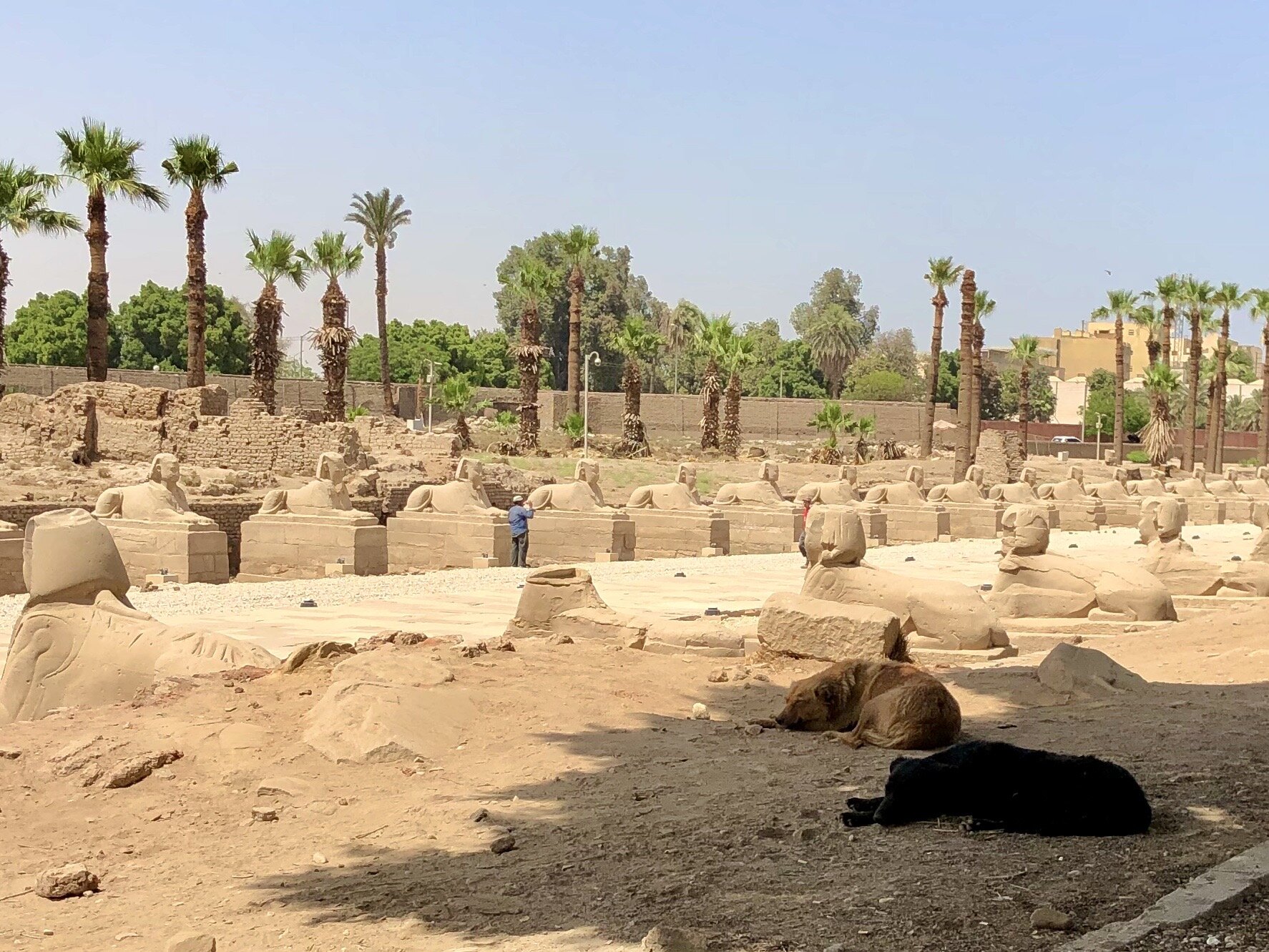
An avenue of sphinxes once stretched for two miles, connecting Luxor to Karnak Temple

An avenue of sphinxes once stretched for two miles, connecting Luxor to Karnak Temple

Various pharaohs put their stamp on Luxor, as seen in the Court of Ramesses

Various pharaohs put their stamp on Luxor, as seen in the Court of Ramesses

A Favorite of the Pharaohs

Over the course of 3,000 years, pharaohs added onto or rebuilt the temple. It’s interesting that Amenhotep III is known as the Sun King, and that his son, Amenhotep IV,  later chose the name of Akhenaten when he infamously shifted worship away from the pantheon led by Amun to a single deity, Aten, the sun itself. It seems the son took the father’s solar passion to an extreme. 

While Amenhotep laid the foundation for a colonnade in front of his sun court, it was completed by Akhenaten’s short-lived son, the famous Tutankhamun. Inside the massive hall, columns soar 60 feet into the air, and six striding colossi wowed visitors. 

Unlike so many other temples of Ancient Egypt, Luxor is open-aired, highlighting its connection to the sun

Unlike so many other temples of Ancient Egypt, Luxor is open-aired, highlighting its connection to the sun

Ramesses II, who never shied away from an opportunity to proclaim his greatness, added on to Luxor, installing a forecourt, a pylon gateway and statues out front. To obtain the construction materials needed, he engaged in another preferred pastime of the pharaohs: razing and raiding the temples and pyramids of ages past. 

Ramesses shifted the axis of the temple to the east to align it with Karnak, to which it was connected by a sphinx-lined processional avenue.

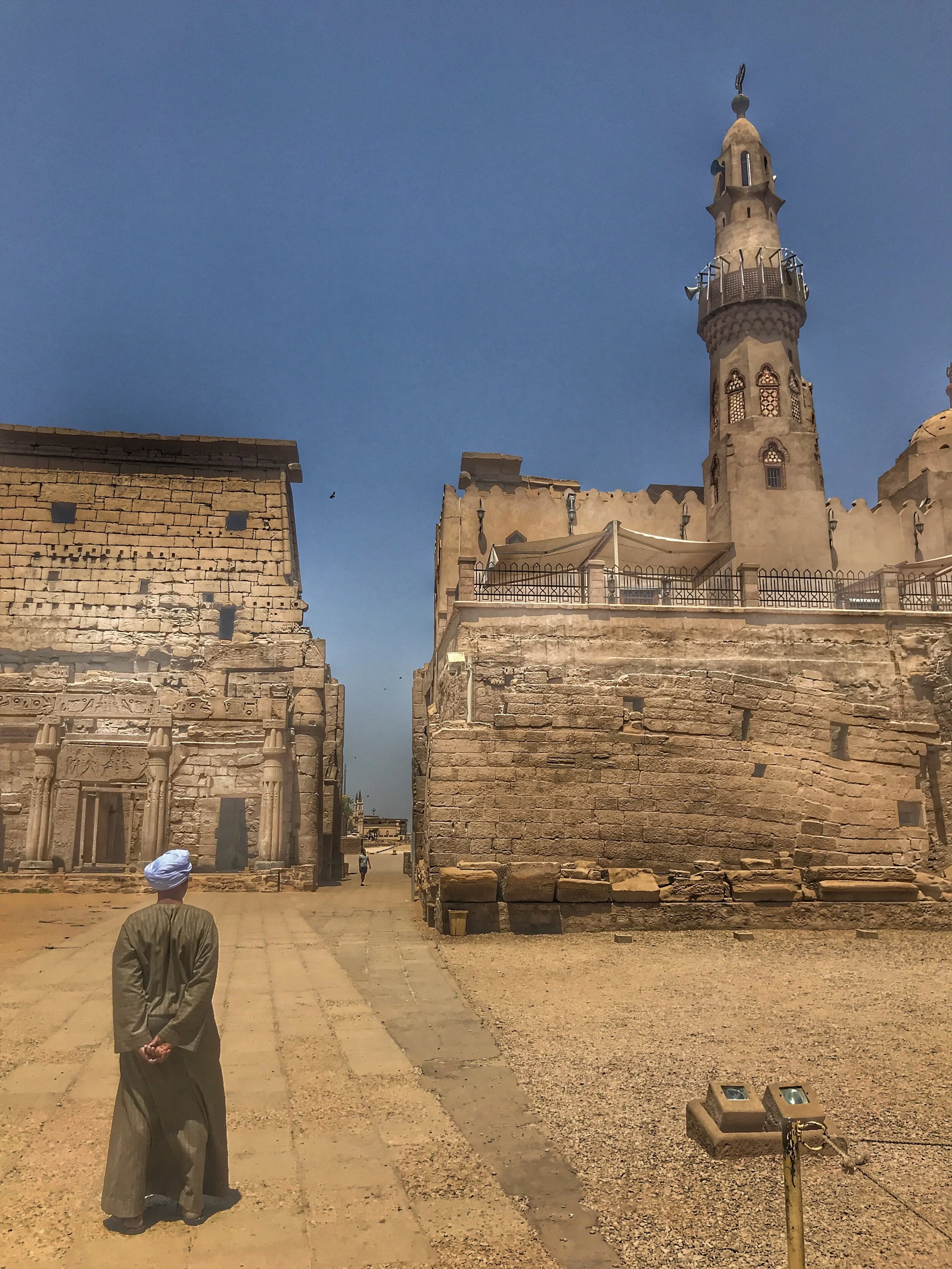
You can see where the ancient stone wall ends and the new mosque built atop it starts

You can see where the ancient stone wall ends and the new mosque built atop it starts

Religions Built Atop One Another 

Luxor, like most of the temples of Ancient Egypt was at some point buried in the shifting sands of the desert. But at no sight is this more clear than here, where you can literally see the different colors of the rock showing what was buried for millennia. 

Old meets new and Islam meets Ancient Egyptian at Luxor

Old meets new and Islam meets Ancient Egyptian at Luxor

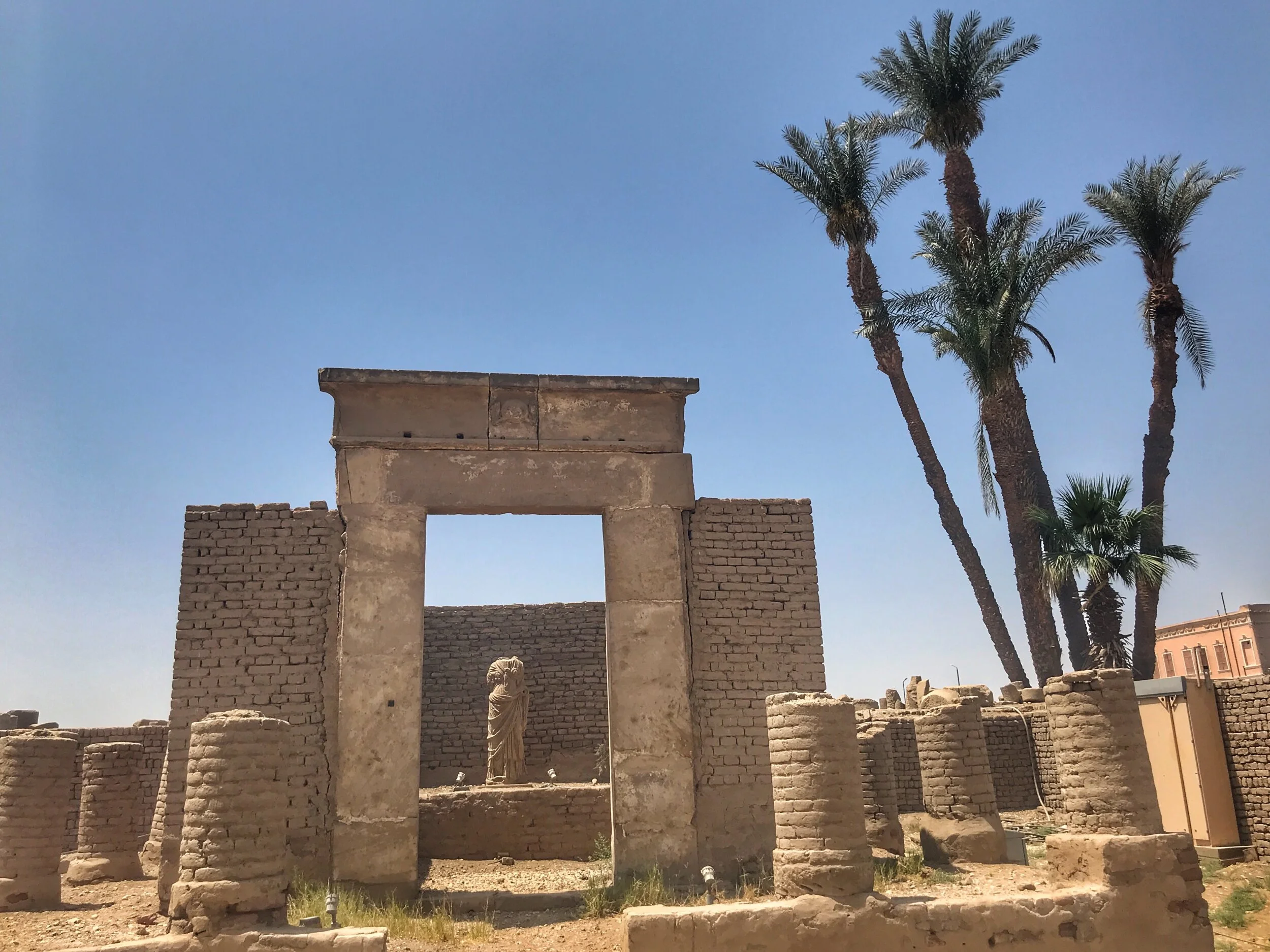
You can also see how the complex was converted to various Christian churches in the 4th to 6th centuries, when Romans incorporated the entire complex into a castrum, or fortified military encampment. Icons of various holy figures can still be seen painted on one of the walls. 

In the late 3rd century, during the reign of Diocletian, this section of Luxor became a Roman legionary shrine. Part of the fresco can still be seen

In the late 3rd century, during the reign of Diocletian, this section of Luxor became a Roman legionary shrine. Part of the fresco can still be seen

With the rise of Islam, Muslims built a mosque atop one of the churches here. This striking place of worship sits perched atop one of Luxor’s surrounding walls and is still in use to this day. 

Venture to the back of Luxor Temple to see statues of King Tut and Queen Ankhesenpaaten

Venture to the back of Luxor Temple to see statues of King Tut and Queen Ankhesenpaaten

A Bizarre Ritual Out Back

While we wandered the open-air structures at the back of the temple, past two pairs of decaying statues, an Egyptian policeman approached us. The ubiquitous machine gun strapped across his chest that never failed to put me ill at ease was counteracted by his beaming smile. 

He signaled for us to follow him. A bit nervous but curious, Duke and I followed him into a nook in the far corner of the complex. The policeman gestured for our phone to take a picture. With Duke’s iPhone in hand, he began a series of strange choreography, intertwining our fingers of one hand and having us touch the ancient stone with the other. (I know you’re not supposed to touch the monuments, but when an armed guard tells you to do something, you obey. Sure enough, we weren’t the first to follow this bizarre ritual — the stone was worn, polished by the oils of countless hands.) He snapped a shot, then had us hold our hands toward each other in a prayer gesture, like we were about to play pattycake. Snap, another picture. And finally, he had us keep our hands in that position but place them against the wall in the same spot we had previously touched. 

An armed policeman ran Duke and Wally through a series of strange motions — though they have no idea what it all meant

An armed policeman ran Duke and Wally through a series of strange motions — though they have no idea what it all meant

It was all quite amusing, though we’re not sure what exactly was the desired outcome. Perhaps it was an ancient spell for fertility — and if that’s the case, what a waste doing it on a couple of gays. 

We offered the cop a tip, known as baksheesh in Arabic, which he gladly pocketed. 

Admission to Luxor Temple costs 140 Egyptian pounds, or less than $9 at the time of this writing. –Wally


The Magical Pyramid of Unas at Saqqara

Home of the bewitching Pyramid Texts, including the Cannibal Hymn — ancient magic spells cast to assure the pharaoh an eternal afterlife.

The Saqqara complex, about an hour south of Giza

The Saqqara complex, about an hour south of Giza

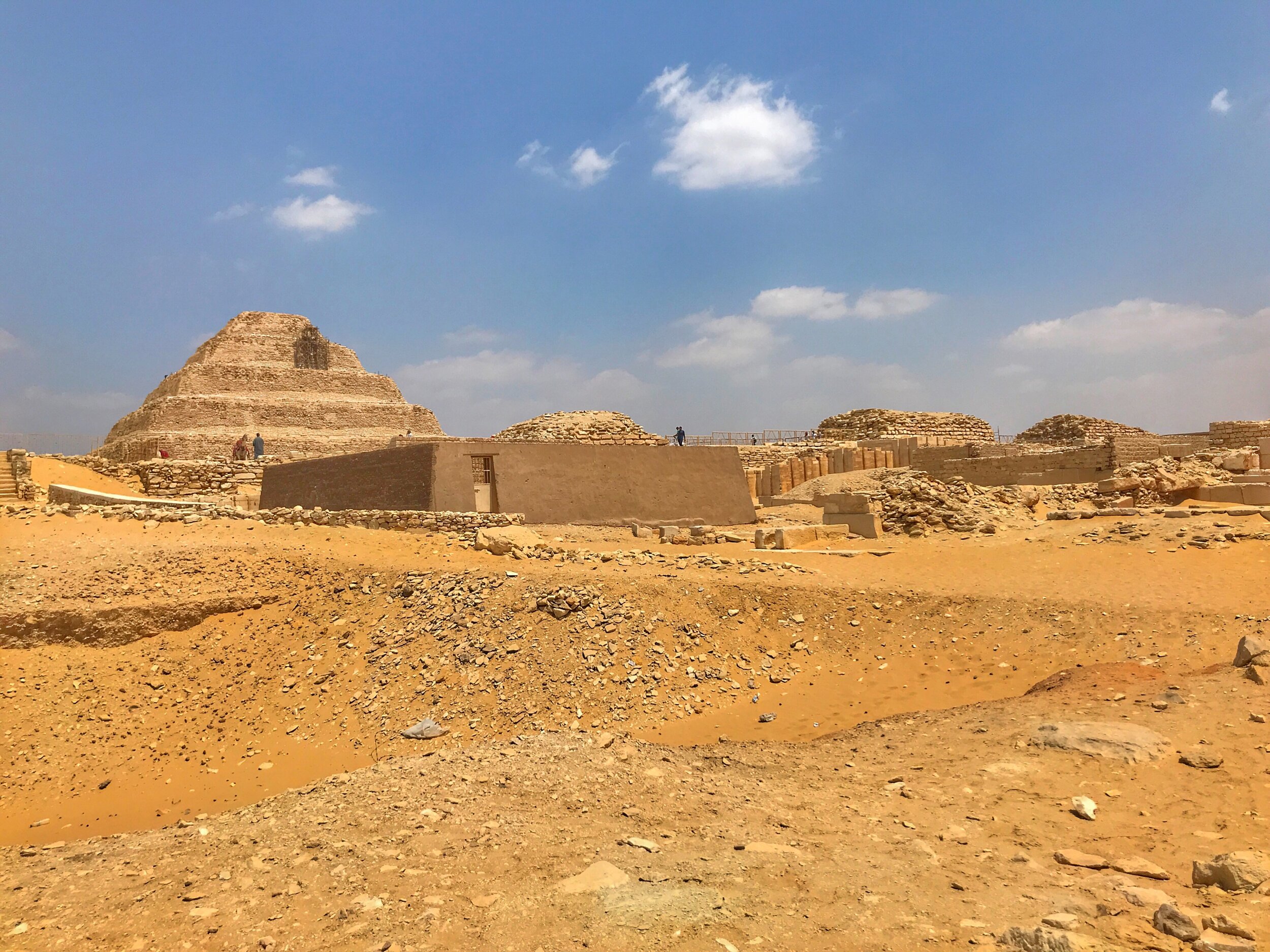
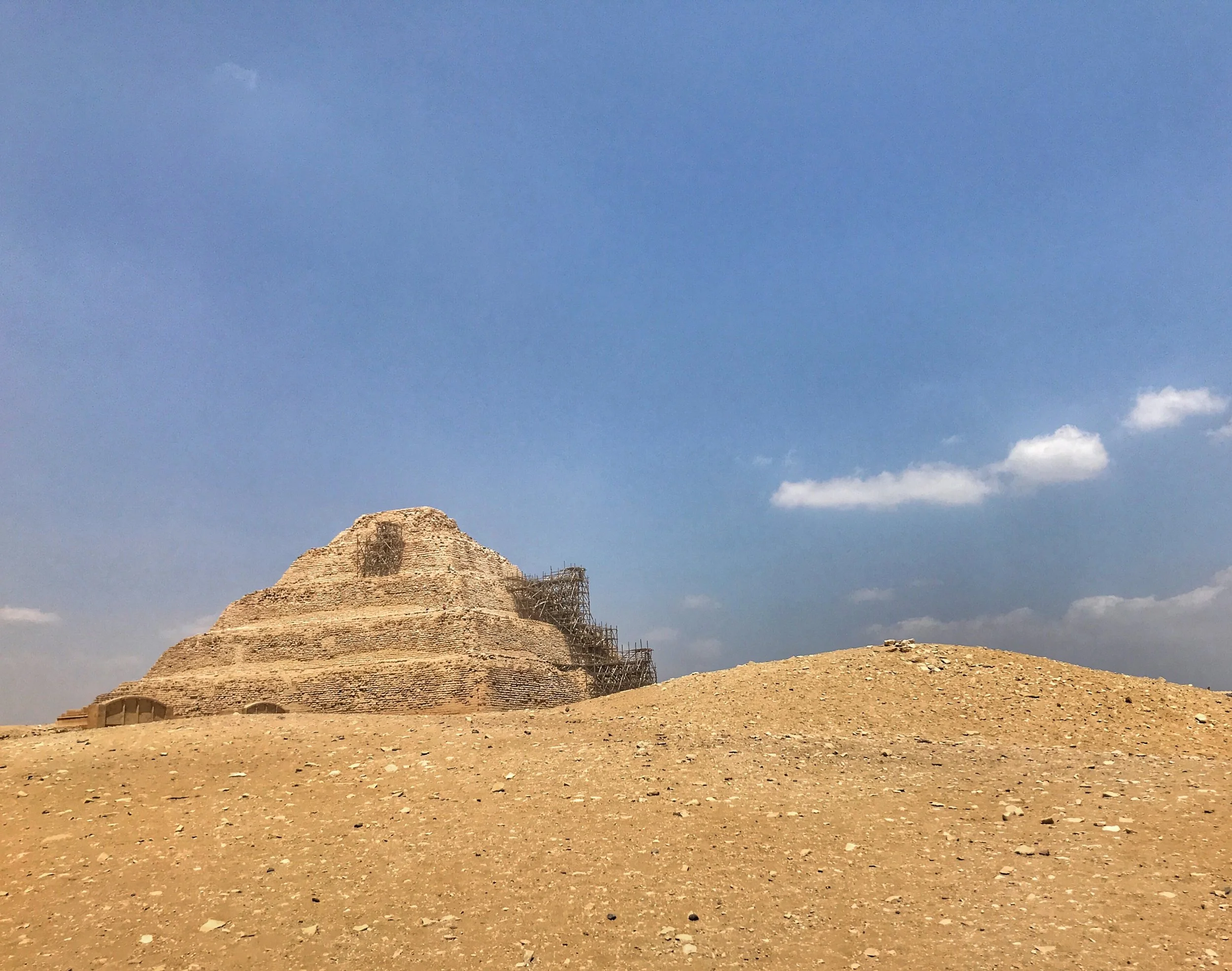
South of the Step Pyramid of Djoser at Saqqara lies one of Egypt’s most important Old Kingdom monuments, the Pyramid of Unas, whose walls are covered in ancient spells. 

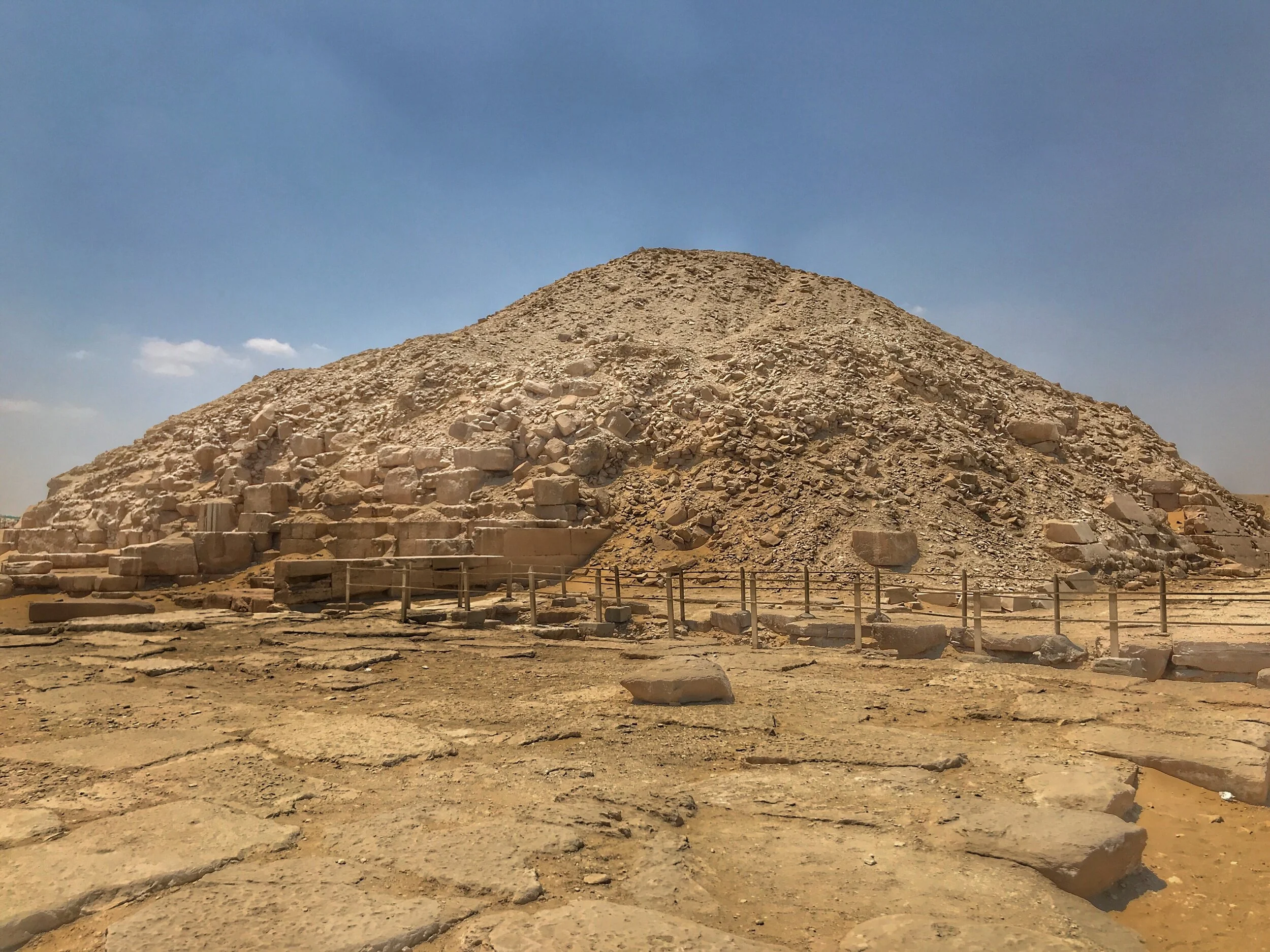
What remains of the Pyramid of Unas, though, looks more like a crumbling mound of sand, stone blocks and debris than a royal pyramid. After walking past the Step Pyramid and being told that was unsafe to enter, Wally gestured to the collapsed structure before us, looking dubious, and asked our guide, “But it’s safe to go inside this one?”

The texts carved into the walls include the Cannibal Hymn, which, strangely, describes the dead king consuming the gods themselves.

Built 80 years after the Step Pyramid of Djoser, the Pyramid of Unas is the smallest of the Old Kingdom pyramids. The complex was originally known as Nefer asut Unas, or Beautiful Are the Places of Unas, who was the ninth and final ruler of the Fifth Dynasty. 

A small mountain of rubble and sand are all that’s left of the Pyramid of Unas — but you can explore the tomb carved beneath it

A small mountain of rubble and sand are all that’s left of the Pyramid of Unas — but you can explore the tomb carved beneath it

Unas, Dos, Tres

Pharaoh Unas reigned for 15 to 30 years, succeeding Djedkare Isesi, who might have been his father. Little is known of Unas’ activities during his reign, which was a time of economic decline (perhaps he spent too much money on his tomb?). He died without an heir, and his daughter married his successor, a commoner named Teti, whom historians consider the founder of the Sixth Dynasty. Unas’ wives, Nebet and Khenut, were buried in a double mudbrick tomb called a mastaba, adjacent to his pyramid.

It’s hard to imagine that it’s safe to explore the tunnels and chambers under this crumbling mound

It’s hard to imagine that it’s safe to explore the tunnels and chambers under this crumbling mound

The Pyramid of Unas itself is over 4,400 years old, part of the Saqqara complex, a necropolis used by pharaohs for millennia. It remained unexplored until the French Egyptologist Gaston Maspero uncovered it in 1881. Excavations later took place between 1899 and 1901, leading to the discovery of the tomb of King Hotepsekhemwy, the first king of Egypt’s Second Dynasty (back around 2890 BCE) as well as numerous shaft tombs from the 26th and 27th Dynasties.

Doesn’t it look like Gaston Maspero, the French Egyptologist who rediscovered the pyramid, made a call on his cell phone inside the tomb?

Doesn’t it look like Gaston Maspero, the French Egyptologist who rediscovered the pyramid, made a call on his cell phone inside the tomb?

Keep in mind that without the step pyramids of Saqqara, even in their sad current state of demise, there wouldn’t be the Great Pyramids of Giza. This is where the ancient architects tried out their designs, moving from mastabas to step pyramids and finally to the towering Wonders of the Ancient World that still stand to this day.

Access to the Pyramid of Unas is included with the 150 Egyptian pound (less than $10) admission to the Saqqara necropolis. Our guide Ahmed recommended that we visit this tomb in lieu of going inside the Pyramid of Khafre at Giza as Khafre’s doesn’t have any relief carvings inside. Wally and I ignored his advice and went inside the Pyramid of Khafre as well, which was an absolute highlight not to be missed.

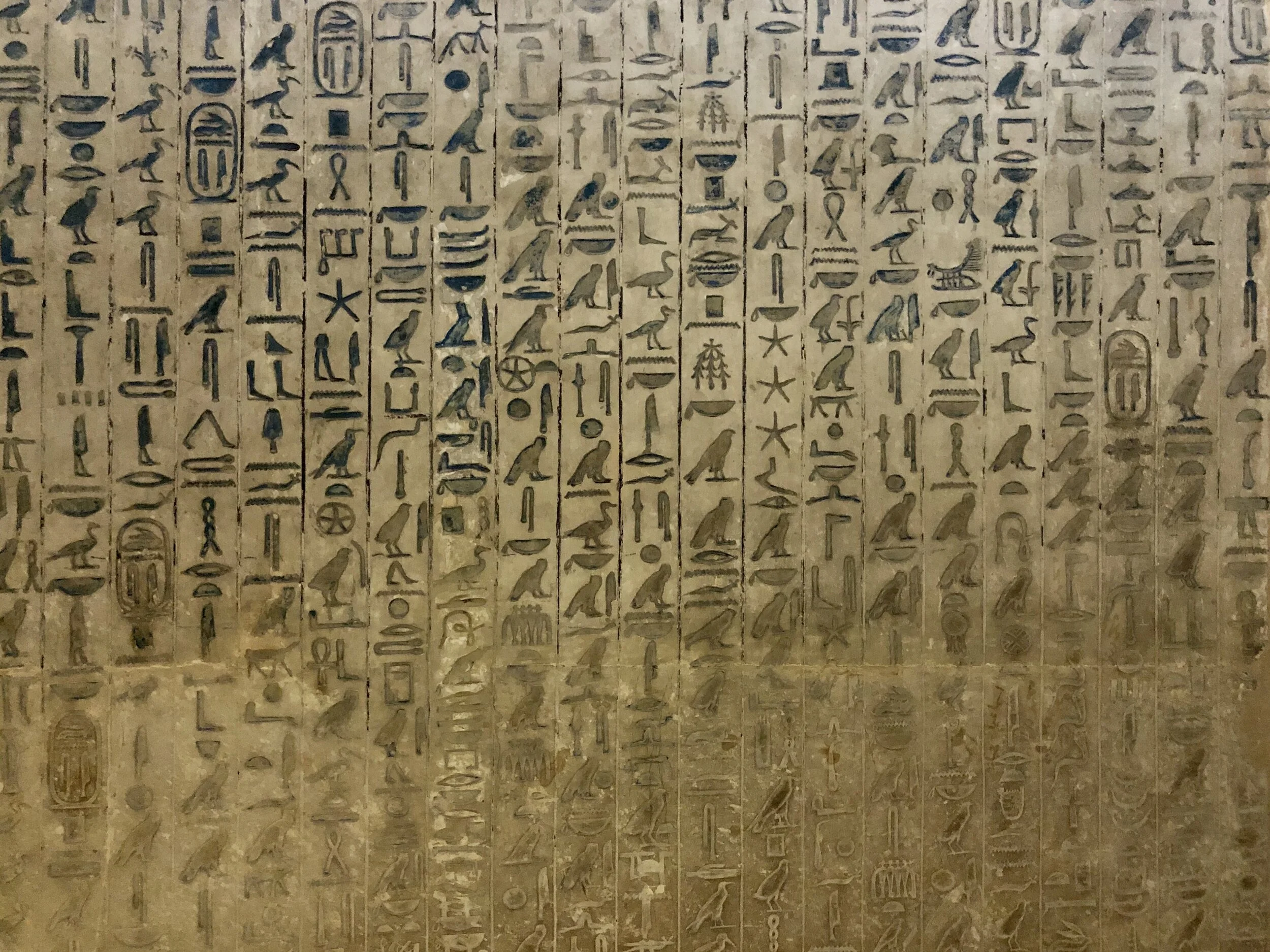
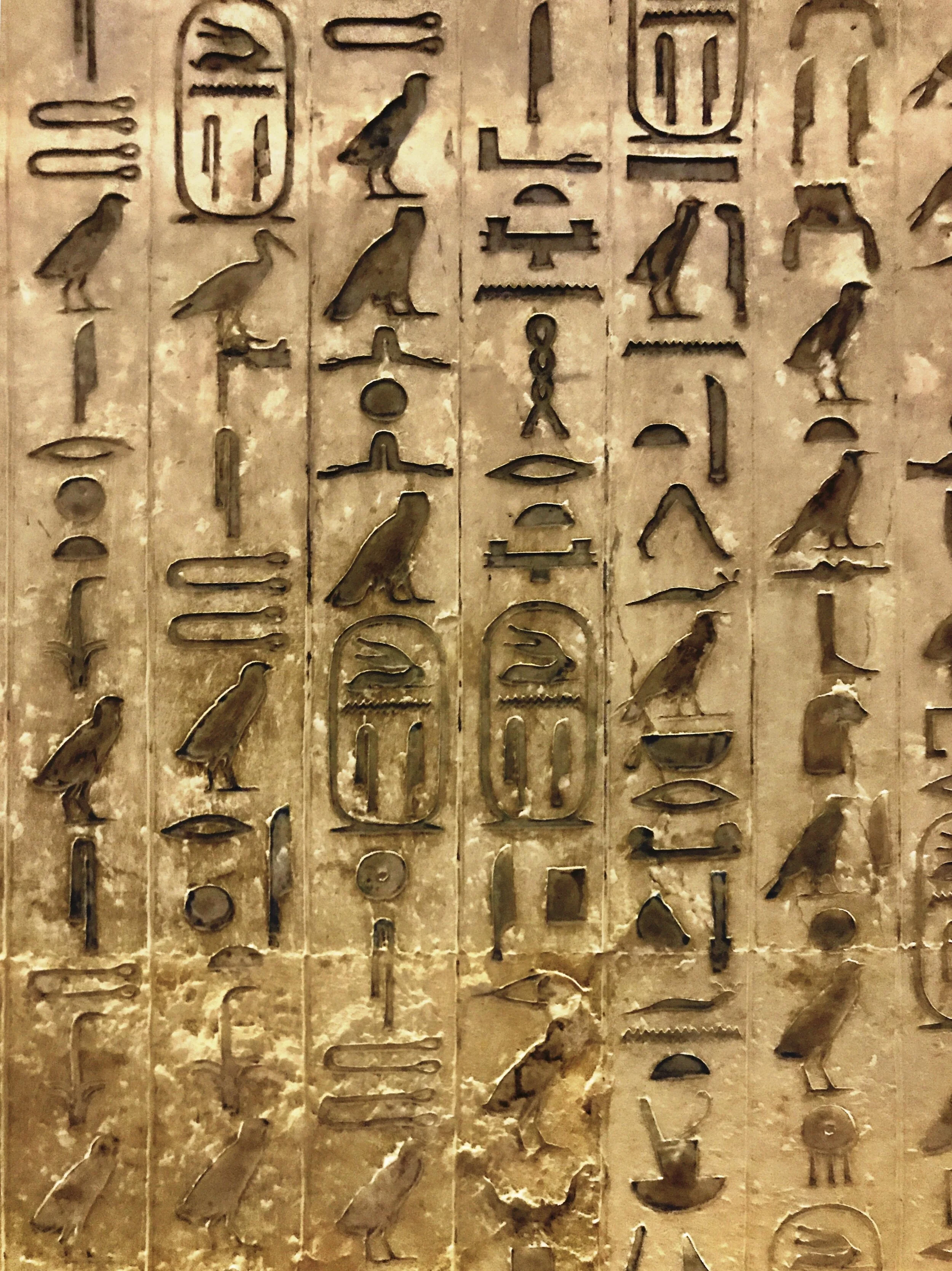
These ancient hieroglyphics are actually the oldest known collection of spells and were used to grant the pharaoh life after death

These ancient hieroglyphics are actually the oldest known collection of spells and were used to grant the pharaoh life after death

It’s What’s Inside That Matters: The Pyramid Texts and the Cannibal Hymn

The ground-level entrance to the Pyramid of Unas is surrounded by an open metal railing located on the north side. Wally and I clambered down the low, narrow passage using an angled wooden ramp similar to the one at the Pyramid of Khafre. Once inside the depths of the tomb, there’s a small vestibule where it’s possible to stand, that leads to the antechamber and a pair of adjoining rooms.

Carvings of famine in the causeway in the Unas complex

Carvings of famine in the causeway in the Unas complex

What makes this tomb unique is that it was the first to feature the mysterious Pyramid Texts, the earliest surviving collection of religious spells. The texts offer instructions and the power to grant life after death. 

In the antechamber, the texts carved into the walls address the rebirth of Unas, his ascent into the sky and his mystical union with the sun god Ra (aka Re) as well as the fascinating Cannibal Hymn, which, strangely, describes the dead king consuming the gods themselves. Here are some of the more colorful excerpts:

A god who lives on his fathers,
who feeds on his mothers …

Unas is the bull of heaven
Who rages in his heart,
Who lives on the being of every god,
Who eats their entrails
When they come, their bodies full of magic
From the Isle of Flame …

Indeed, Khonsu [the Moon], who slaughters the lords, cuts their throats for Unas, and takes out for him what is in their bellies. He is the messenger whom he sends out to chastise.

Indeed, Shesmu [the wine-press god] cuts them up for Unas and cooks for him a meal out of them in his evening cook pots.

Unas is he who eats their magic, who swallows their spirits.
Their great ones are for his morning meal,
Their middle-sized ones for his evening meal,
Their little ones for his night meal,
Their old men and the old women are for his fuel.

Negotiating the afterlife was no small feat for an Ancient Egyptian pharaoh and required some 700 incantations. Of these texts, 283 are inscribed on the limestone walls of the subterranean antechamber, or horizon room, and burial chamber of the pyramid. A third chamber known as the judgement room is devoid of inscriptions, indicating that the pharaoh couldn’t be aided by sacred texts when answering for his mortal deeds before Osiris, the lord of the afterlife.

Pharaohs didn’t want to give up the good life, so they had elaborate incantations carved in their tombs to assure a pleasant afterlife

Pharaohs didn’t want to give up the good life, so they had elaborate incantations carved in their tombs to assure a pleasant afterlife

The Pyramid Texts predate the more famous Book of the Dead. These spellbooks do not mean that death was the Ancient Egyptians’ main preoccupation. In fact, it’s just that they enjoyed life so much they took every means possible to continue feasting, hunting, playing games and the like in an everlasting paradise as a god beyond death.

To the west is the burial chamber with its black basalt sarcophagus symbolizing the fertile earth. The proximity of the Pyramid Texts to the deceased acted as afterlife insurance for the pharaoh. Incised on the white alabaster-lined walls of the burial chamber, ritual texts for the rebirth of the king refer to the sun’s rays as a ladder Unas could use to ascend to the heavens. 

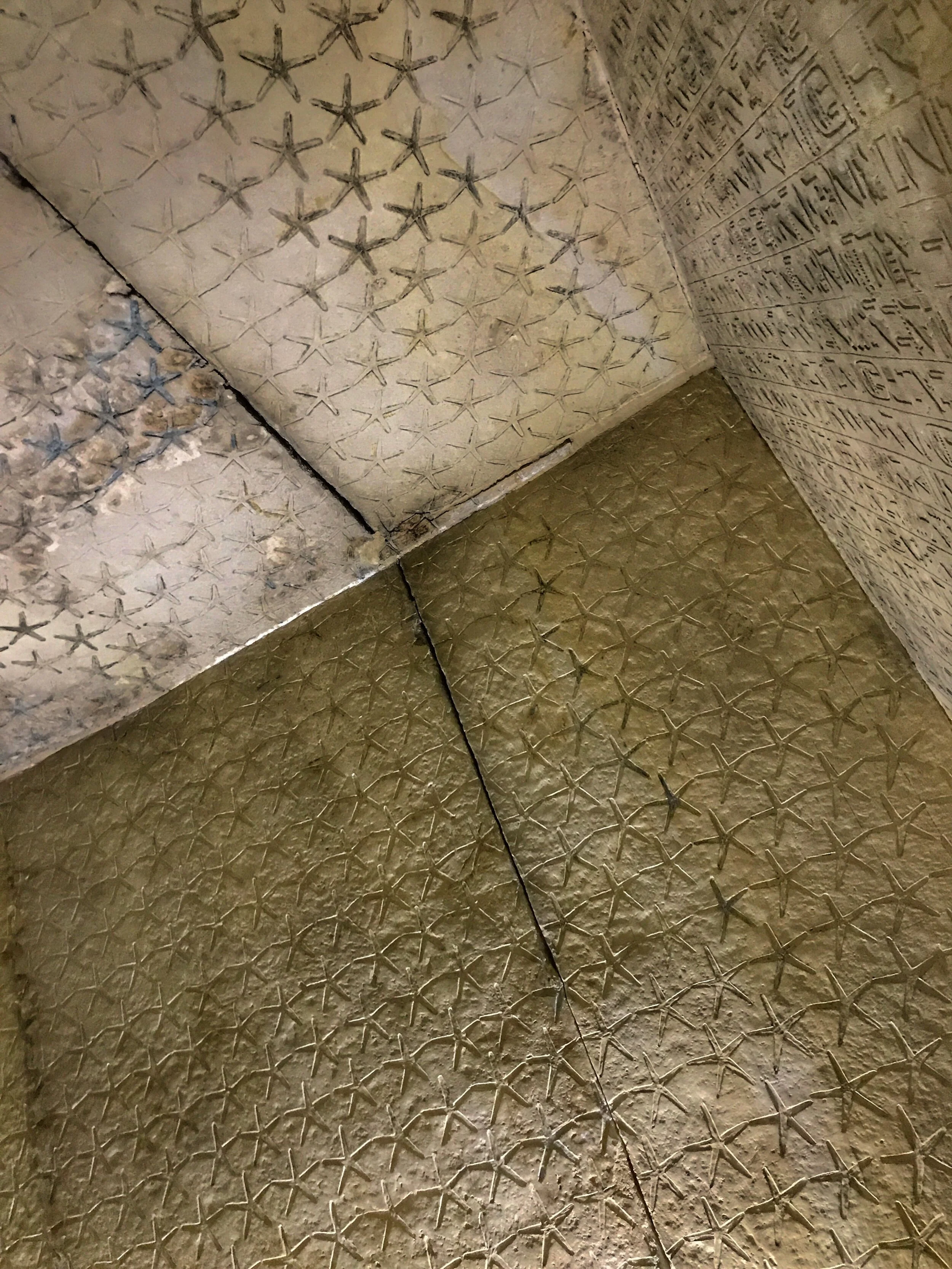
The vaulted burial chamber ceiling is embellished with a pattern of stars (which looked more like starfish to Wally and me). When the burial chamber was excavated by Maspero, the sarcophagus was found to be empty, aside from an arm and skull fragments, still covered with skin and hair.

The ceiling of the burial chamber in the Pyramid of Unas is covered with stars

The ceiling of the burial chamber in the Pyramid of Unas is covered with stars

We were told to tip the men inside so they’d use their flashlights to reveal some of the carvings, which can only be seen with the lights off. As we entered the small room, another tour group was being shown the trick. Duke and I watched, squinting at the wall but not seeing anything. Eventually, we looked at each other, shrugged and moved on. –Duke

When you’re in Cairo, find a guide who’s not an ass like ours was — and spend an afternoon in the ancient necropolis of Saqqara

When you’re in Cairo, find a guide who’s not an ass like ours was — and spend an afternoon in the ancient necropolis of Saqqara


Lesser-Known Egyptian Gods

Nut, Geb, Bes and Ptah, oh my! A who’s who of Egyptian deities.

tawaretgoddess.jpg

Even if you’re familiar with the stars of the Ancient Egyptian pantheon like Osiris and Re, you probably don’t know some of their colorful cohorts. Meet the less well-known but still batshit crazy gods and goddesses who sport the head of a lion, crocodile, dung beetle and other creatures.


aten.png

Aten

Aka: Aton

Domain: The sun

Description: The sun with a uraeus (the sacred asp) at its base, with rays of light that each end in outstretched hands, some of which hold ankhs when shining upon anyone in the royal family.

Strange story: Historians believe that Pharaoh Akhenaten’s decree to abandon the old gods and worship only the Aten is the first instance of monotheism — and could very well have influenced the Jewish religion.

bes.jpg

Bes

Aka: Aha

Domain: Protector of children and pregnant women

Description: A dwarf with a large head featuring bulging eyes, a protruding tongue, a beard and a lion’s mane. Sometimes depicted with a large belly and sagging breasts

Consort: Beset 

Strange story: Pilgrims would spend the night in incubation chambers covered with images of Bes and Beset to cure themselves of infertility or impotence.

geb.png

Geb

Domain: Personification of the Earth, healing — colds, fevers and scorpion stings in particular

Description: A man lying on his side, one arm supporting himself, beneath his spouse, Nut, the personified sky. Grain sprouts from his ribs and vegetation from his back.

Consort: Nut

Strange story: His laughter is what causes earthquakes.

hapi.png

Hapi

Aka: Hapy

Domain: The yearly flooding of the Nile

Description: A man with a swollen belly, long hair and pendulous female breasts, sometimes with a cluster of papyrus on his head

Strange story: One ancient text relates that 1,089 goats were sacrificed to Hapi in a fertility rite.

khepri.png

Khepri

Domain: The sun

Description: A black scarab, or dung beetle, or a man with one for his head.

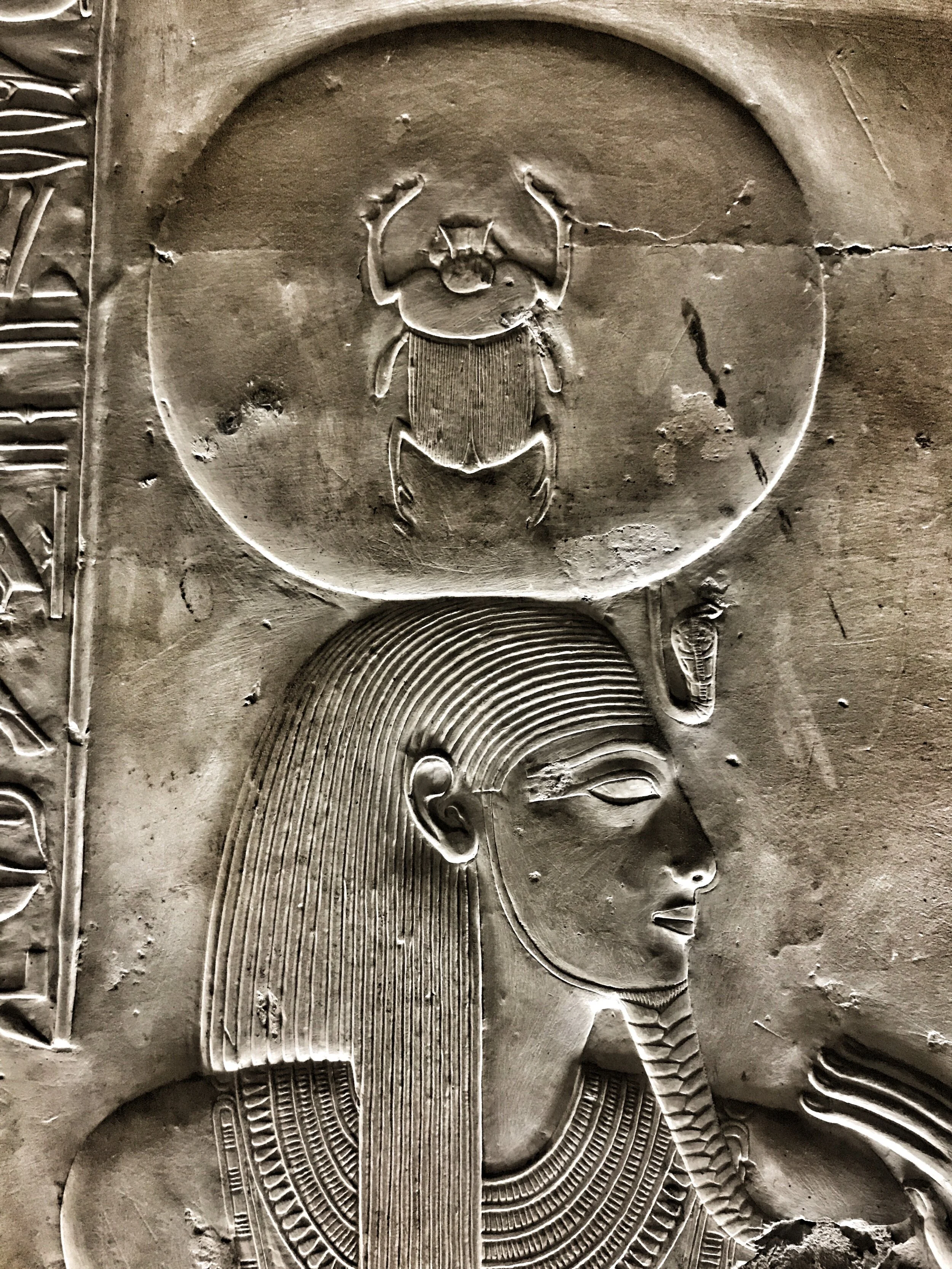
Strange story: Male scarabs push around small balls of dung. Ancient Egyptians believed that the sun, in turn, was pushed through the sky every day by Khepri.

min.jpg

Min

Aka: Amun-Min

Domain: Male virility

Description: A black mummified man who holds his wrappings in his right hand and his hard-on in his left, though he’s often shown with only one arm and one leg

Strange story: Offerings to Min depicted lettuce, a symbol of sex due to its semen-like milky sap.

neith.jpg

Neith

Domain: War, creation, motherhood and the funerary process

Description: One of the oldest of the Egyptian pantheon, Neith’s iconography shifted through the centuries. She’s sometimes shown as a woman holding an ankh and was scepter or wearing the Red Crown of Lower Egypt. She’s also depicted holding a bow and arrow or a harpoon. As the mother of Sobek, she’s shown suckling a small crocodile at each breast. The goddess could also appear in the guise of a serpent or fish.

Strange story: She’s so wise that even the sun god Re comes to her for counsel. But if you don’t follow her advice, she gets so angry she’ll make the sky fall. 

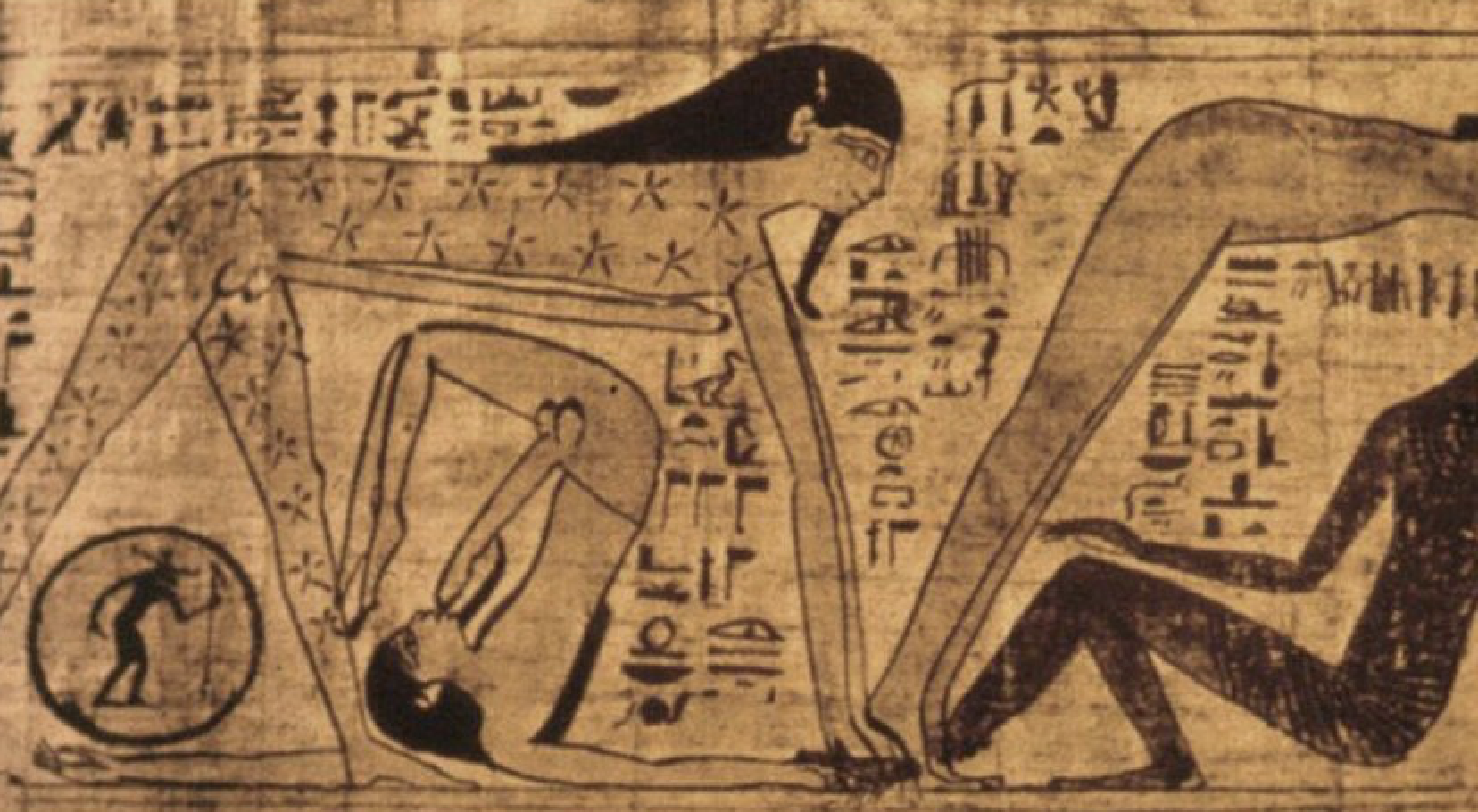
nut.jpg

Nut

Domain: The sky

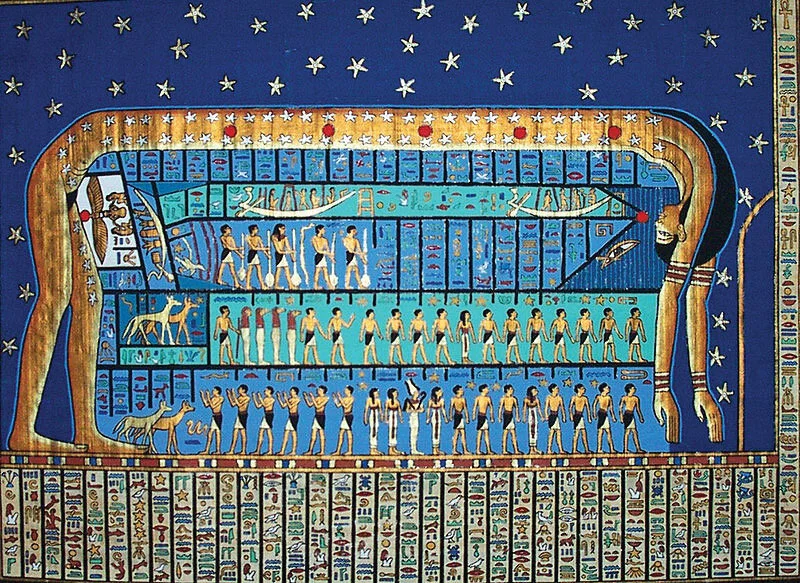
Description: A naked woman bending over to form the heavens, her feet and hands on the horizon below. She’s sometimes depicted as a cow or sow.

Strange story: Every night, she swallows the sun, giving birth to it in the morning.

ptah.jpg

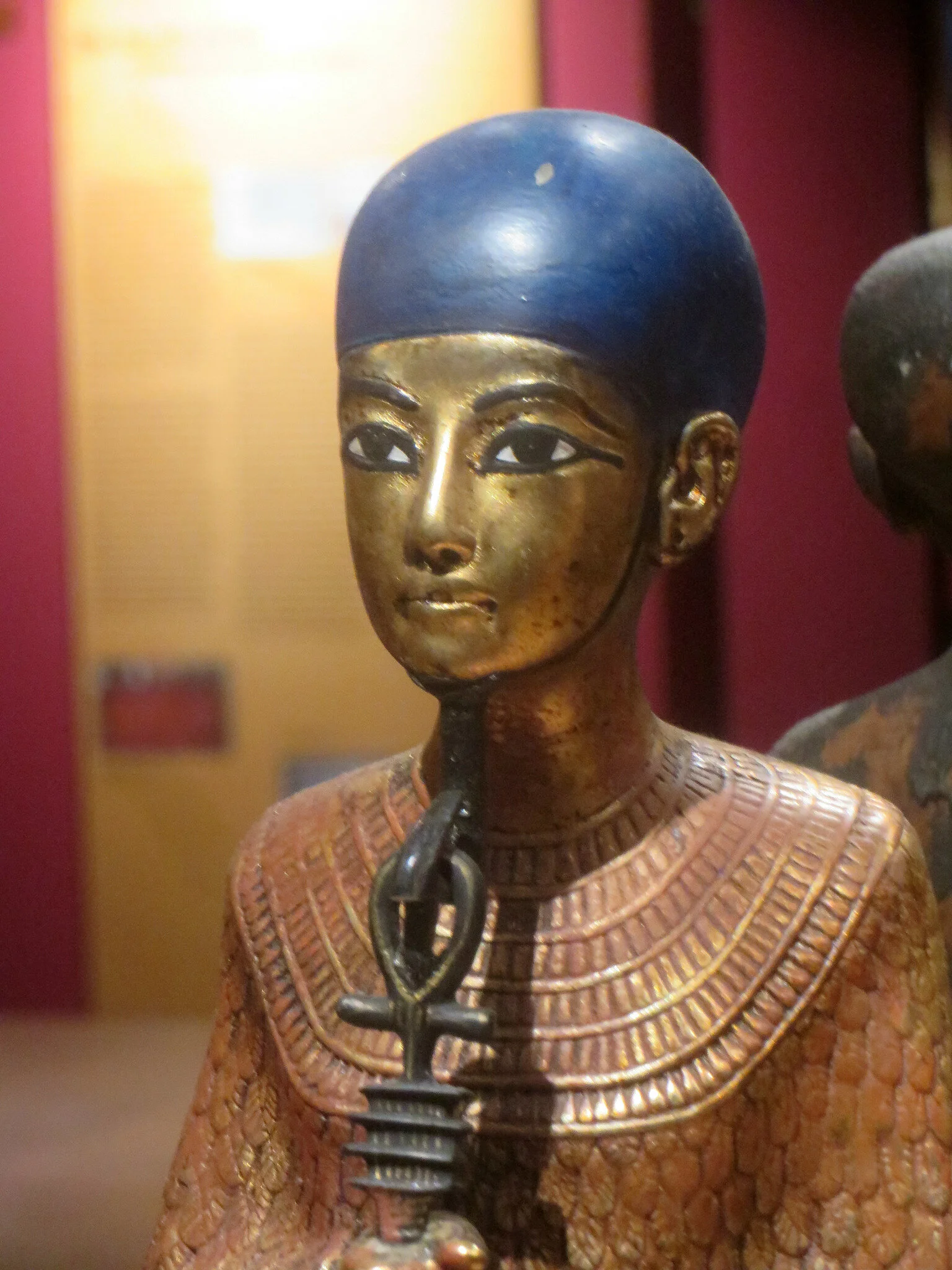
Ptah

Aka: Ptah-Nun

Domain: Creation and craftsmanship

Description: A mummified man with a long, thin erection, wearing a skull cap and false beard and carrying a scepter

Consort: Sekhmet

Strange story: While some believed that Ptah created the world on his potter’s wheel, others credited him with thinking or speaking the world into existence.

sekhmet.jpg

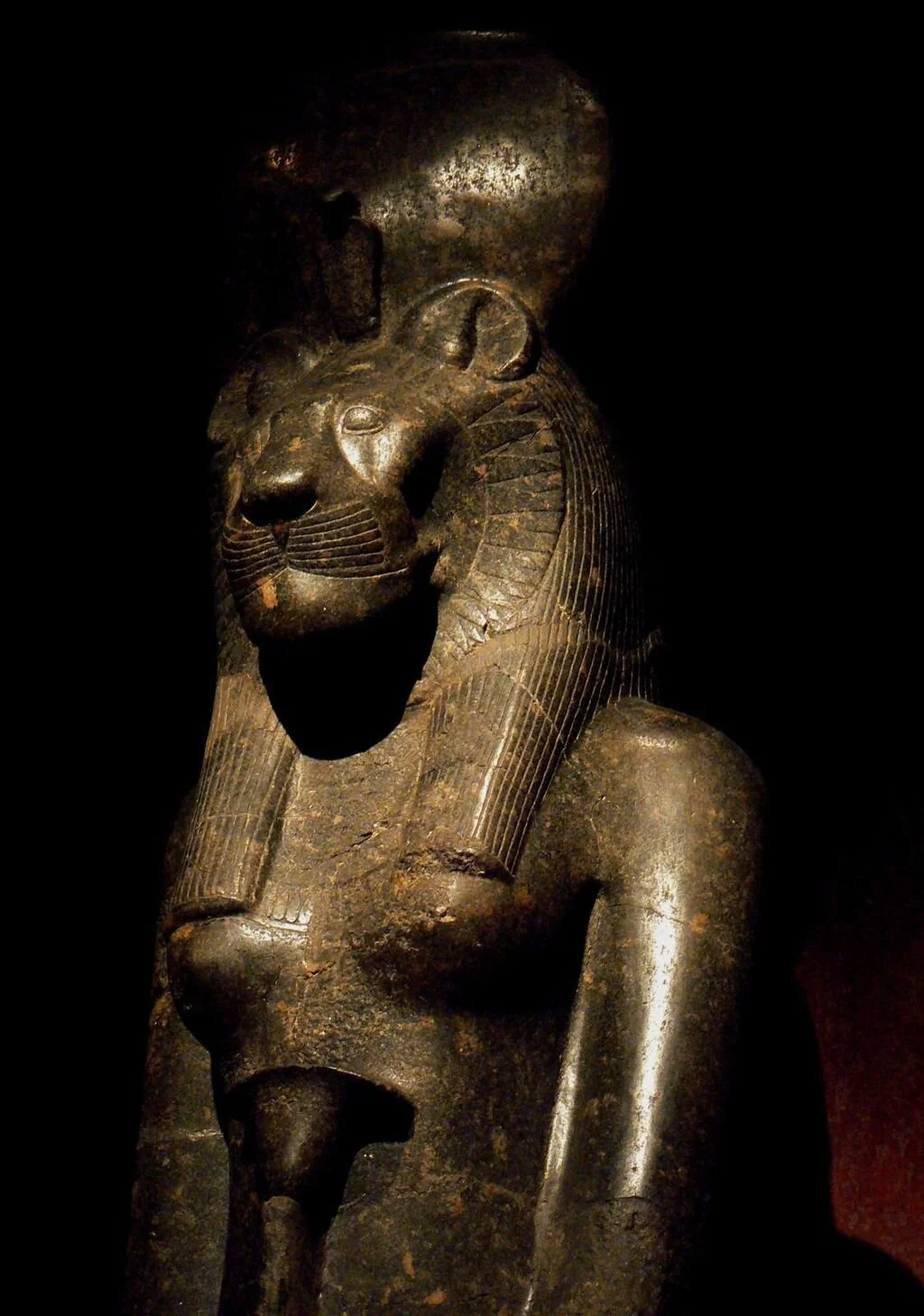
Sekhmet

Domain: Violence and healing

Description: A lion-headed woman

Consort: Ptah

Strange story: When the sun god Re grew old, his subjects plotted against him. To punish them, Re sent Sekhmet, who, in a destructive frenzy, went on a rampage, breathing fire and nearly wiping out the entire human race.

sobek.jpg

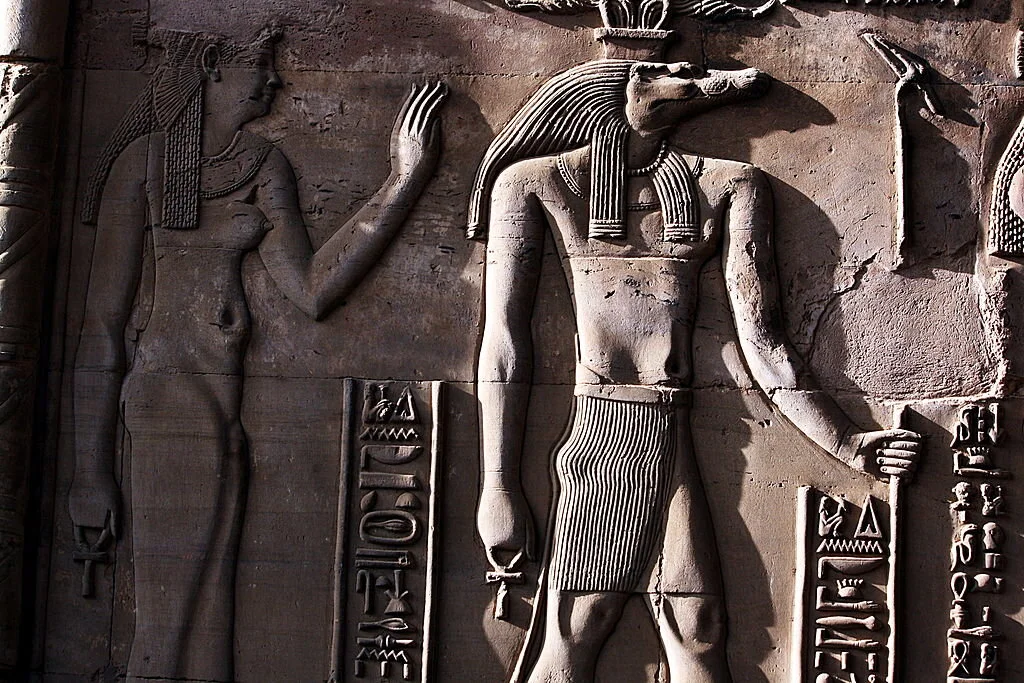
Sobek

Domain: Water

Description: A man with a crocodile head, sometimes wearing a headdress with tall feathers, horns and the sun

Strange story: Watch out, ladies! Sobek’s nickname is the Raging One because he’s known to “take women from their husbands whenever he wishes according to his desire.”

Pro tip: One of the less-visited temples in Egypt, Kom Ombo, is dedicated to Sobek and has a museum of mummified crocodiles next door.

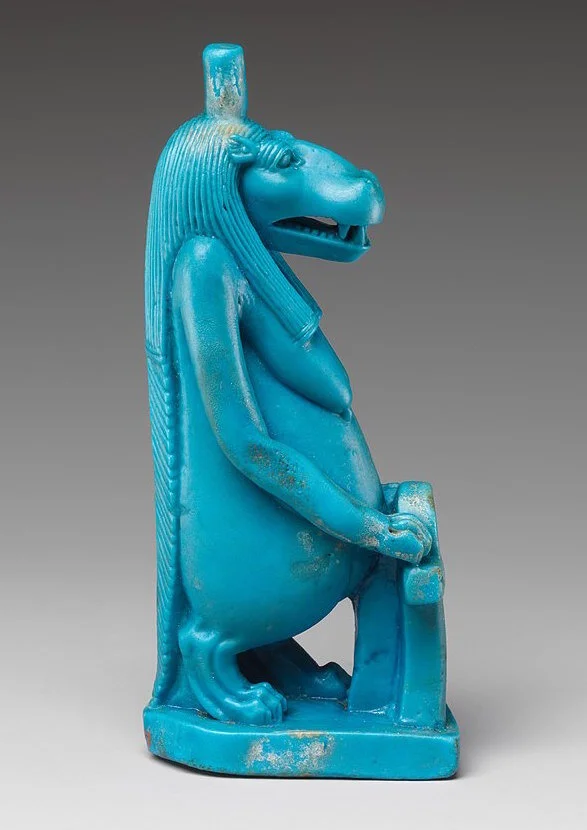
taweret.jpg

Taweret

Aka: Tawaret

Domain: Motherhood

Description: A grimacing hippo with sagging tits and a pregnant belly

Consort: Seth or Bes

Strange story: Containers made of faience were shaped like Taweret to hold breast milk. Two holes in the nipples allowed the milk to be poured out for magic rituals. –Wally

The Major Egyptian Gods and Goddesses

Who the heck were Anubis, Osiris, Thoth and Amun? Learn about Egyptian deities and the crazy stories of Egyptian mythology.

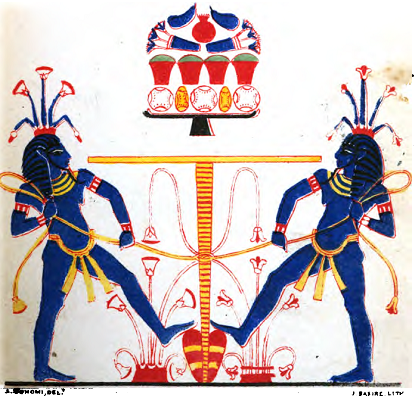
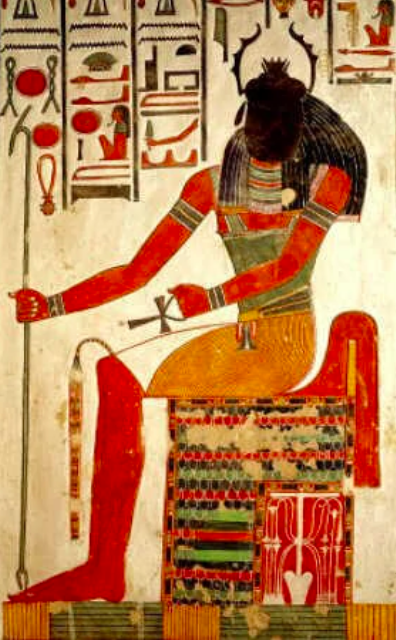
Look for the various deities from Egyptian mythology as you explore temples like Dendera, with this colorful wall featuring Thoth, Horus, Isis and others

Look for the various deities from Egyptian mythology as you explore temples like Dendera, with this colorful wall featuring Thoth, Horus, Isis and others

As a kid, I loved mythology (still do) — but I hated how many different versions there were of every tale. Couldn’t they all just agree upon one story and stick with it?

Of course, now, as an adult, I realize things aren’t that simple. Deities begin as one thing and evolve into something else. They get conflated with other gods. Their worship extends to a new region, where they take on new aspects. 

If you’re planning a trip to see the wonders of Egypt, it’s helpful to know a bit about the gods and goddesses beforehand. Temple carvings can blur together after a while, so it’s more fun to be able to spot the deities in the images: Hey! I know that green-skinned mummy-looking dude! That’s Osiris, lord of the afterlife! 

Here’s a primer on this often-bizarre pantheon, mostly culled from The Complete Gods and Goddesses of Ancient Egypt by Richard H. Wilkinson. (And be sure to check out our glossary of the lesser-known Ancient Egyptian gods, too!)

amun.jpg

Amun

Aka: Amon, Amen, Amun-Re

Domain: The sun and fertility. As the supreme god of the Egyptian pantheon, he’s also credited in some tales for thinking the world into being.

Description: A human male, often with the head of a ram

Consort: Mut

Strange story: A young daughter of the reigning pharaoh was given the role of divine wife of Amun. Her duties including rubbing the phallus of the god’s statue until she felt it “orgasm.”

anubis.jpg

Anubis

Domain: Mummification, death and the afterlife

Description: A man with a black jackal head

Strange story: Anubis mostly likely got this head because desert canines would scavenge the shallow graves in early cemeteries, and people sought protection from the very creature that would threaten their eternal peace.

bastet.jpg

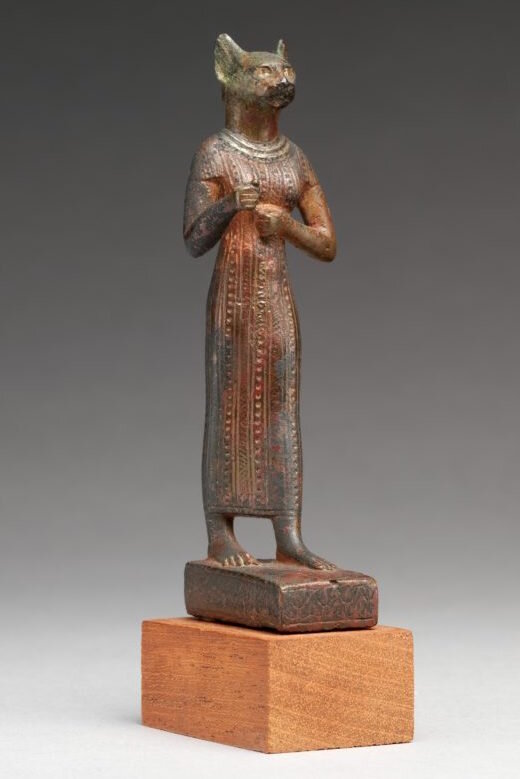
Bastet

Aka: Bast

Domain: Cats and pregnancy

Description: A woman with the head of a cat, or simply a cat itself

Strange story: Entire cemeteries at Saqqara and elsewhere are filled with cat mummies killed as offerings to the goddess.

hathor.jpg

Hathor

Domain: Women, female sexuality and motherhood, as well as music and happiness

Description: A woman with bovine features, usually cow ears, as can be seen atop Hathor columns. Sometimes depicted as a cow or a woman wearing a vulture cap.

Consort: Hathor is, alternately, the mother and wife of Horus.

Strange story: One of her nicknames is Mistress of the Vagina. When the sun god Re was depressed, Hathor flashed her pussy at him. It did the trick: Re laughed and rejoined his fellow gods.

horus.jpg

Horus

Aka: Re-Horakhty

Domain: The sky, sun and kingship

Description: A falcon-headed man or infant

Strange story: During an epic battle with his Uncle Seth, Horus climbed a mountain with his mother Isis’ decapitated head. He fell asleep, and Seth snuck up and gouged out Horus’ eyes and buried them. Lotuses sprouted from the eyes, and the goddess Hathor restored Horus’ sight by pouring gazelle milk over the sockets.

isis.jpg

Isis

Domain: The cosmos, magic, mourning and the dead

Description: A woman with large horns and the solar disc atop her head, sometimes with wings

Consort: She’s the sister and wife of Osiris, with whom she had Horus.

Strange story: A popular way to depict Isis was to show her breastfeeding Horus. Because pharaohs were the living incarnation of Horus, Egyptian kings were said to drink Isis’ breast milk as well.

maat.jpg

Maat

Aka: Ma’at

Domain: Truth, justice and the cosmic order

Description: A woman with a bird’s tail feather atop her head, sometimes shown with wings under her arms

Consort: Thoth

Strange story: Upon death, the heart was placed upon a scale. If it weighed less or the same as the feather of Maat, the person had led a virtuous life and could go on to the afterlife. If not, they’d be devoured by the demoness Ammit, who was part lion, hippo and crocodile. 

mut.jpg

Mut

Domain: Motherhood

Description: Early depictions show her with the head of a lioness, but she’s most often shown as a woman in a feathered dress wearing either the White Crown of Upper Egypt or the Double Crown of the Two Lands.

Consort: Amun

Strange story: Mut was sometimes shown with an erection and three heads — those of a vulture, lion and human. In this aspect, she was said to be “mightier than the gods.”

osiris.jpg

Osiris

Domain: Ruling over death, resurrection and fertility, he’s the lord of the underworld.

Description: A green mummy holding the crook and flail, symbols of Egyptian royalty, and wearing the atef crown, a white bowling pin-like headpiece flanked by two tall feathers

Consort: Isis

Strange story: His jealous brother Seth murdered him and chopped him into pieces, hiding the body parts all over Egypt. Osiris’ dutiful wife, Isis, hunted down and found all the pieces, save one: his pecker.

re2.JPG

Re

Aka: Ra (though he merged with many other deities as well, including Amun and Horus)

Domain: The sun

Description: The sun, encircled by a cobra, sometimes with wings. He has a falcon head in his Re-Horakhty version.

Strange story: In one myth, Re created the world. When he “cut” his cock, possibly a reference to circumcision, two deities sprang from the drops of blood: Hu (Authority) and Sia (Mind).

seth.jpg

Seth

Aka: Set

Domain: Violence, chaos, confusion, cunning and storms

Description: A man with a long tail and a strange curved animal head that has tall, squared-off ears

Strange story: He molested his nephew Horus but then lost the throne of Egypt when he unwittingly ate lettuce that had Horus’ jizz on it

thoth.jpg

Thoth

Domain: Knowledge and the moon

Description: A man with the head of an ibis, a now-extinct bird with a long, thin, curved beak. Sometimes also shown as a baboon

Strange story: Thoth invented writing and is the Lord of Time, recording history. Scribes would pour out a drop of water for him from their brush pot as a libation at the beginning of each day. –Wally


Were Hatshepsut and Senenmut Lovers?

From speculation that he was gay to that infamous graffiti, we investigate Pharaoh Hatshepsut’s most-trusted advisor, who rose from nothing to become one of the most powerful men at the time. 

Senenmut was certainly Hatshepsut’s right-hand man — but did their relationship extend into the bedroom?

Senenmut was certainly Hatshepsut’s right-hand man — but did their relationship extend into the bedroom?

Were they or weren’t they? Egyptologists have debated whether or not Hatshepsut, the woman who became pharaoh, and her right-hand man, Senenmut, were an item. 

Senenmut, who was most likely about 20 years older than Hatshepsut, started out as a nobody. He didn’t come from a respected family — in fact, he was the son of a low-level official in a backwater village 15 miles from the capital city of Thebes (modern-day Luxor). Yet somehow he was chosen for a position at the palace, overseer of the large hall. In this role, Senenmut was in charge of the audience hall, where the king and queen would sit upon their thrones and receive visitors and hear petitions. And that was just the beginning.

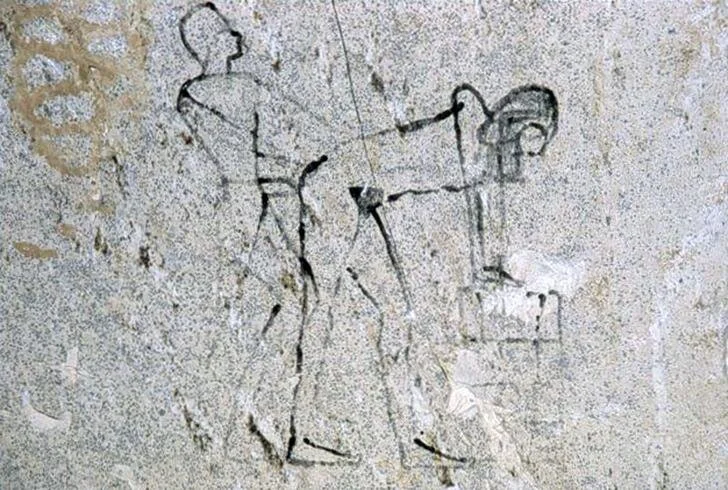
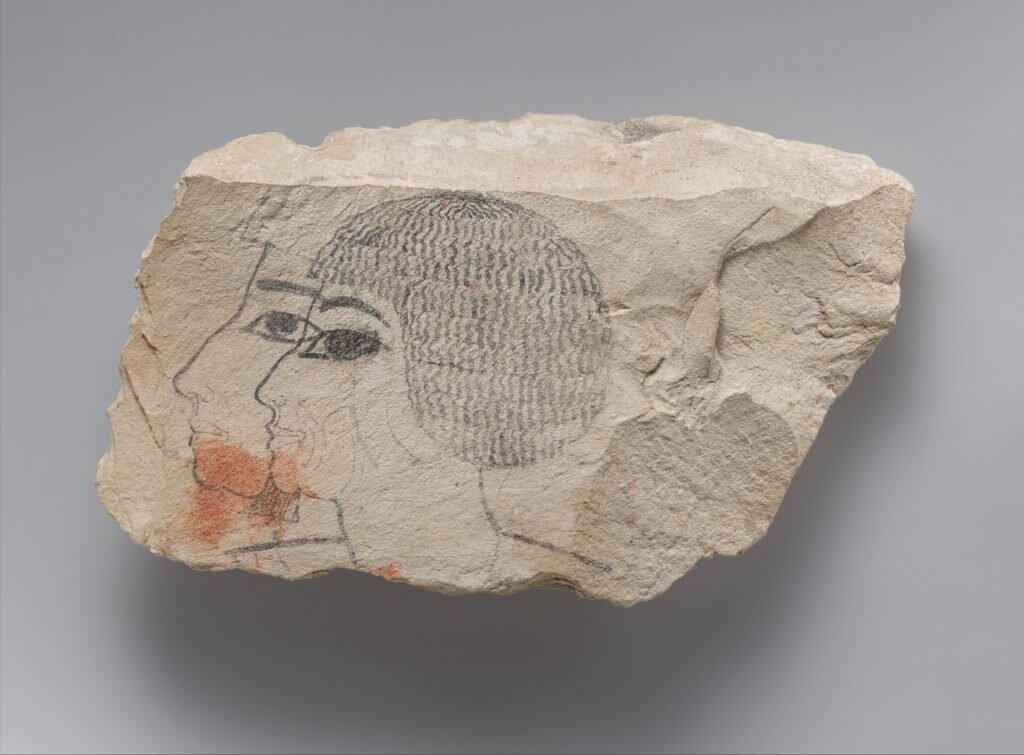
Archaeologists found a drawing of a man and woman having sex doggie-style.

Some think it was a political satire of who really wore the pants, so to speak, in the relationship between Hatshepsut and Senenmut. 
Senenmut was soon promoted to overseer of the two granaries of the god Amun, a position that gave him access to great wealth and made him an economic authority. In addition to having control of the religious storehouse of wealth, Senenmut also became steward of the king’s and queen’s palaces, thereby controlling vast portions of the Ancient Egyptian economy. 

It’s hard to imagine how one man could do so many things, but Senenmut must have proved himself imminently capable, for he continued to collect titles, becoming responsible for more and more aspects of the state religion and government.

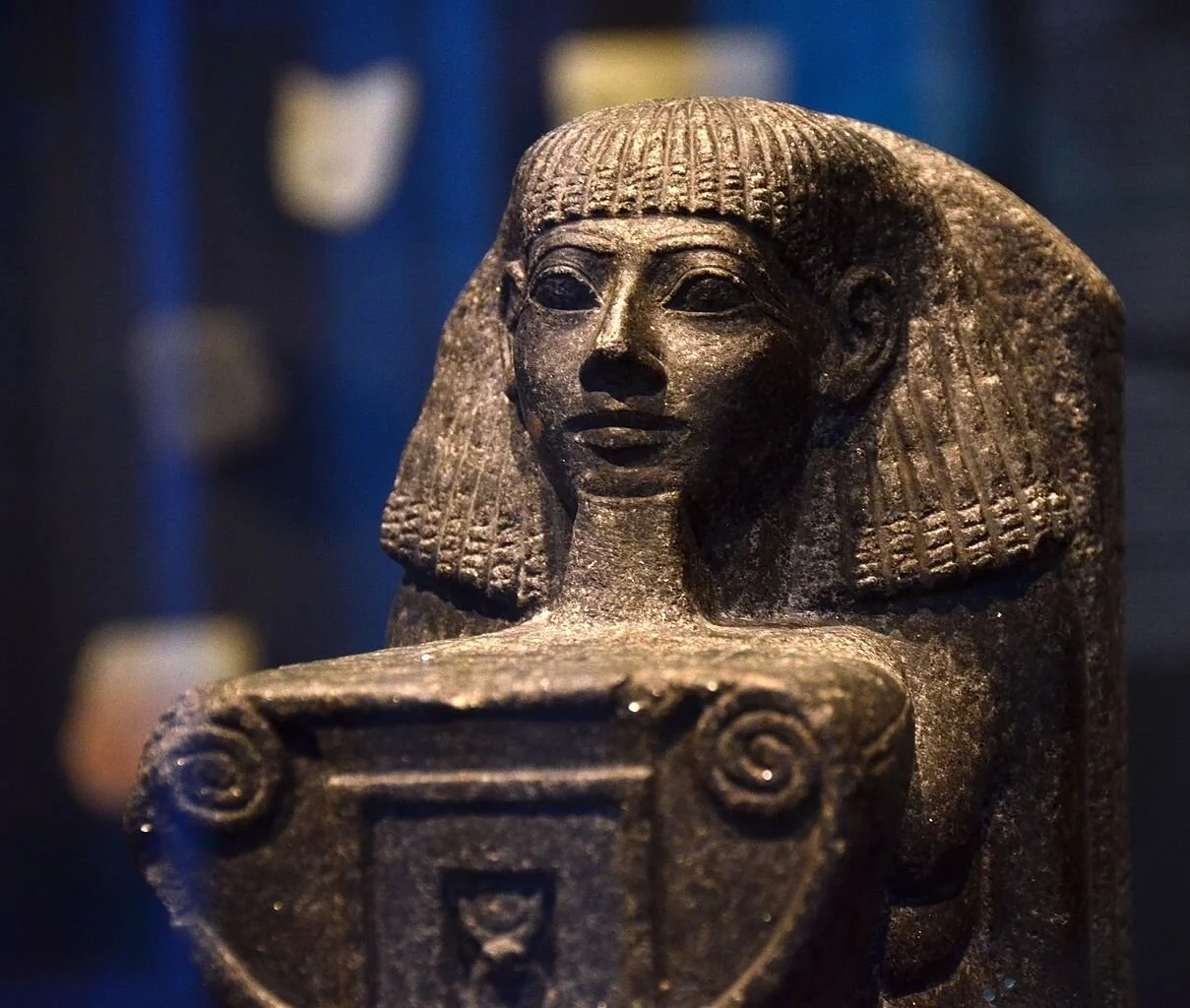
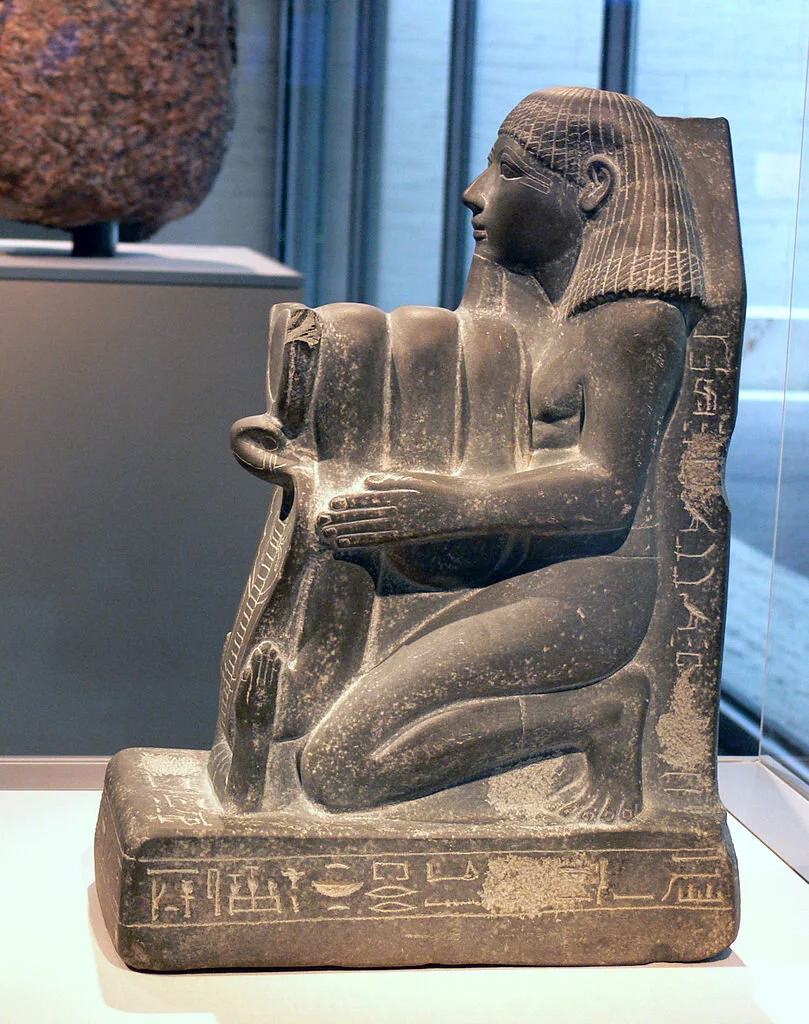
Royal tutors like Senenmut were depicted in this strange, blockish style — perhaps to emphasize their role as protectors of their charges

Royal tutors like Senenmut were depicted in this strange, blockish style — perhaps to emphasize their role as protectors of their charges

Wet Nurse for the Brain: Tutor to Neferure

One of the aspects of his illustrious career of which Senenmut was most proud was his role as tutor to Thutmose II and Hatshepset’s daughter, Neferure. It seems he wasn’t allowed to depict himself in the presence of Pharaoh Hatshepsut, but he commissioned numerous statues showing him as tutor to little Neferure — a way of declaring his connection to the royal family.

“The title for the royal tutor in Egyptian is mena nesut, which essentially means ‘male breast for the king’; that is to say, it is the masculine version of a wet nurse whose milk provided an infant with nourishment and protection against disease,” Kara Cooney writes in The Woman Who Would Be King, a marvelous account of Hatshepsut’s life. “The Egyptians believed that a wet nurse became related to her charge through the milk she fed the baby — in a sense, artificially creating blood relations.” 
In a similar sense, a male tutor nourished the mind of his young charge, pretty much becoming part of the family. Senenmut was such a father figure to young Neferure that many have speculated that she was actually his child instead of sickly Thutmose II’s.
“Much ink has been spilled on conjectures about the relationship between Hatshepsut and Senenmut,” Cooney writes, “however, there is no clear indication that Senenmut was anything more than Neferure’s tutor and protector, albeit a very close one.”  

Does this naughty graffiti show Senenmut taking King Hatshepsut from behind?

Does this naughty graffiti show Senenmut taking King Hatshepsut from behind?

The Case of the Doggy-Style Graffito

After Thutmose II died, Hatshepset’s nephew Thutmose III became pharaoh. Because he was still a child, Hatshepsut acted as regent for the Egyptian throne, ultimately declaring herself co-pharaoh. 


Hatshepsut led a colorful early life, including a period when she acted as a “wife” to the chief god of the Egyptian pantheon

Hatshepsut led a colorful early life, including a period when she acted as a “wife” to the chief god of the Egyptian pantheon


As ruler of Egypt at a time of great prosperity, Hatshepsut launched numerous construction projects, including the amazingly modern-looking Deir el-Bahari, her funerary temple, in the mid-1400s BCE. A crude drawing found nearby has launched a thousand speculations on the relationship between Hatshepsut and Senenmut. 

Senenmut wanted to be close to his queen in the afterlife. His tomb chapel sits in the hills overlooking Deir el-Bahari, the Mortuary Temple of Hatshepsut

Senenmut wanted to be close to his queen in the afterlife. His tomb chapel sits in the hills overlooking Deir el-Bahari, the Mortuary Temple of Hatshepsut

When archaeologists excavated the tombs in the hills above the Mortuary Temple of Hatshepsut, they were, I’m sure, delighted to find a drawing of a man fucking a woman from behind. Surely this was a political satire of who really wore the pants, so to speak, in the relationship between Hatshepsut and Senenmut. 
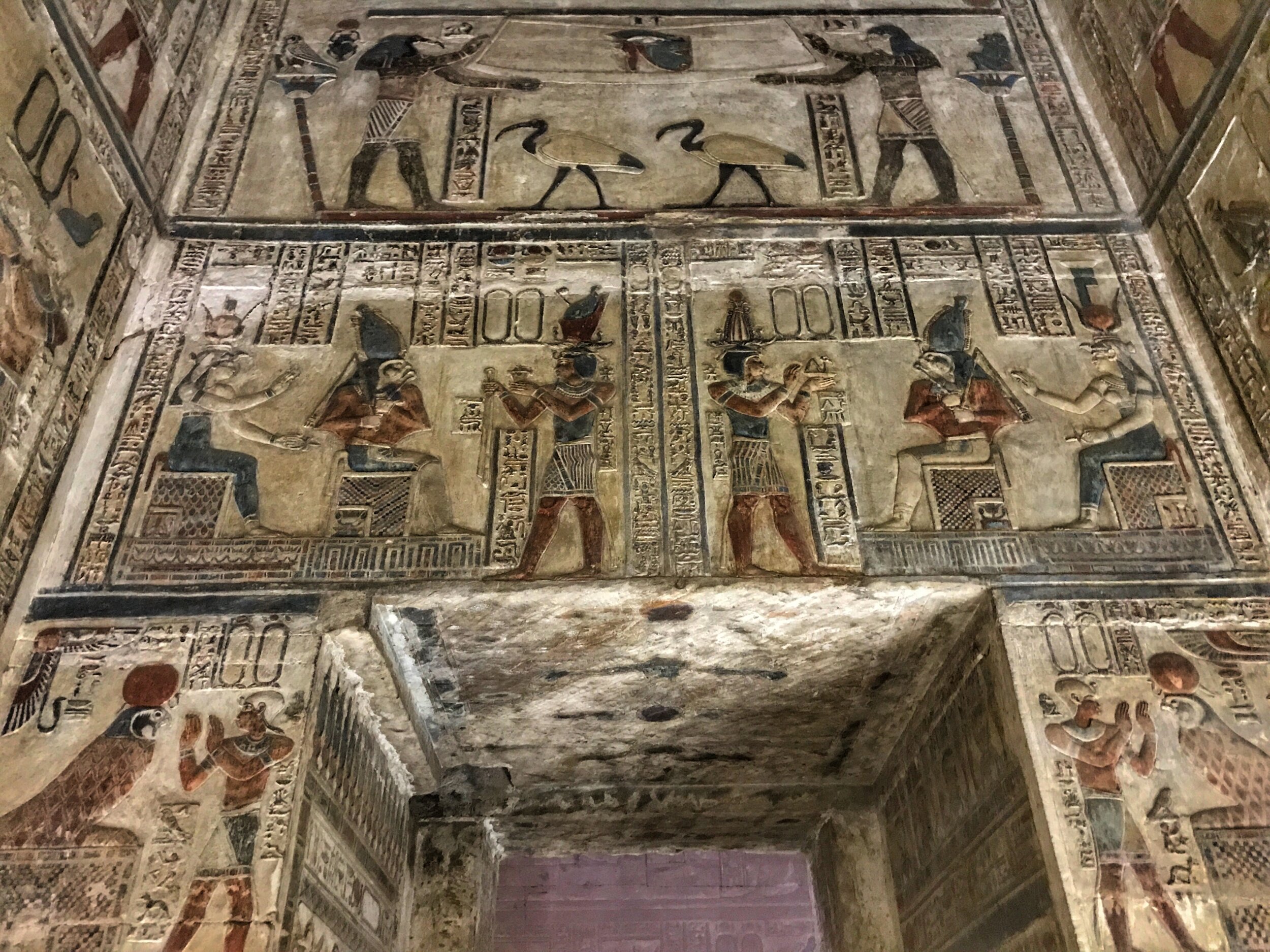
But there’s nothing to mark the woman as Hatshepsut — no crown, no label — or anything that points to the man being Senenmut, for that matter. It was just too good of a story to pass up. 

While that famous graffito might not reveal that the pharaoh and her trusted advisor were intimate, there are other clues: Senenmut’s image was sneakily included in parts of Hashepsut’s mortuary temple, and his sarcophagus was of a matching pair with Hatshepsut’s.
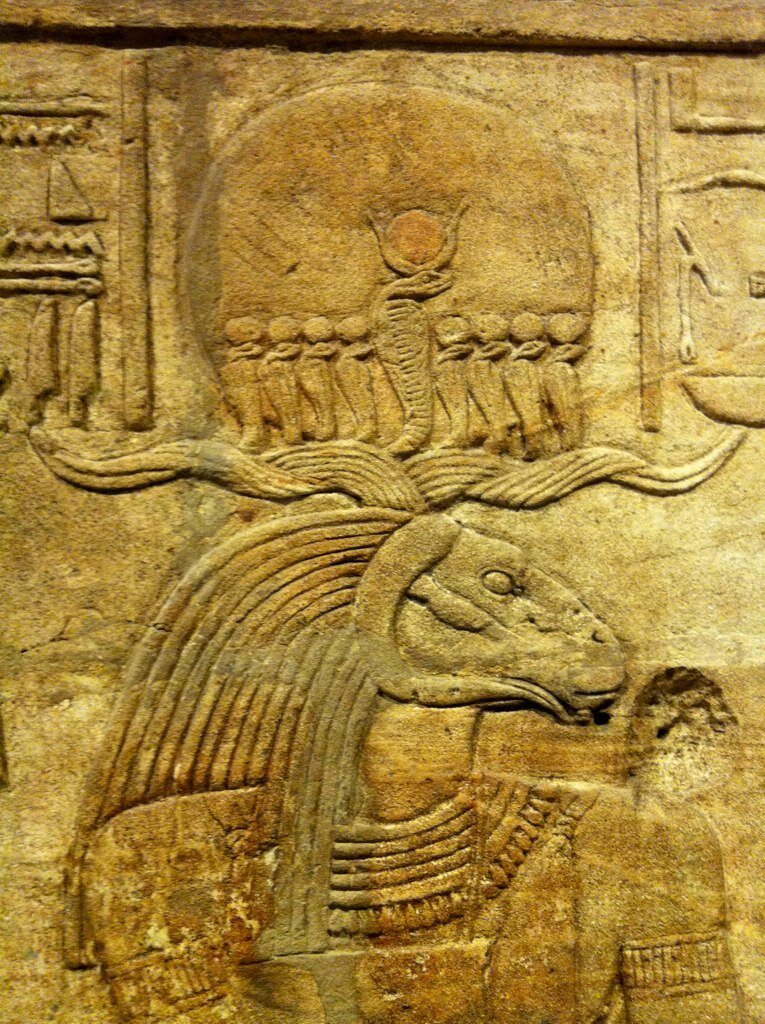
There’s one other fact that raises suspicions about Senenmut’s connection to his female king, Cooney points out: “Not one of his dozens of statues, reliefs, and temple depictions records the existence of a family of his own,” she writes. “Without a doubt, if anything should make us wonder about the nature of his relationship with Hatshepsut, it is his lack of a wife. All Egyptian elites married.” 

Even if Senenmut was gay — and there might not have been anything wrong with that! — he probably would have still married. Did Hatshepsut just want him as a lover all to herself?

Even if Senenmut was gay — and there might not have been anything wrong with that! — he probably would have still married. Did Hatshepsut just want him as a lover all to herself?

Was Senenmut Gay?

Perhaps Senenmut just preferred the company of men. “The ranks of Egyptian elites undoubtedly included some men with same-sex desires, and some of these men might even have been able to talk of their sexual interests openly,” Cooney writes. 

But assuming that was the case, evidence indicates that gays in Ancient Egypt would have still married, in the hopes of having sons to pass on their legacy. 

Maybe Hatshepsut insisted she have Senenmut all to herself.

Portraits found in Senenmut’s tomb present a less-flattering, probably more-realistic view of what he looked like

Portraits found in Senenmut’s tomb present a less-flattering, probably more-realistic view of what he looked like

What Did Senenmut Look Like?

The statues of Senenmut as tutor to Princess Neferure show him as young and idealized. But the portraits in his tomb are probably more accurate: They “show him as a timeworn man with a hooked nose, lines etched into the skin around his mouth, a flabby, weak chin, and fleshy lips,” Cooney writes, adding, “If these latter images are to be believed, he was not a handsome man.”

Despite being one of the greatest royal advisors in Ancient Egypt, Senenmut was left with an unfinished tomb and an empty, shattered sarcophagus

Despite being one of the greatest royal advisors in Ancient Egypt, Senenmut was left with an unfinished tomb and an empty, shattered sarcophagus

A Sad End for Senenmut

Whether or not Hatshepsut and Senenmut were lovers, it’s obvious he wanted to be near her in the eternity of the afterlife. While his tomb chapel sits in the hills overlooking the Mortuary Temple of Hatshepsut, he planned to have his body buried in a separate tomb closer to hers. To have a separate location for the tomb, instead of digging it below the funerary chapel, was a right that had previously been reserved for royalty. 

There’s evidence Senenmut lived for about 20 years after Hatshepsut’s death, but no records show that he retained his high position. It’s believed he lost much of his prestige after his beloved perished — and Thutmose III’s subsequent attempt to erase Hatshepsut’s kingship from history certainly wouldn’t have helped. 

Thutmose III, the a-hole who tried to wipe Pharaoh Hatshepsut’s reign from history

Thutmose III, the a-hole who tried to wipe Pharaoh Hatshepsut’s reign from history

Senenmut’s tomb was left unfinished and sealed without his corpse. His sarcophagus was dragged up to his tomb chapel in the Theban hills — though his mummy was never put inside it. The sarcophagus, constructed of quartzite, a durable material, was found smashed into pieces, a task that “would have required extensive labor and great expense,” Cooney writes. “Someone really wanted him disgraced.”

A man who had been that powerful for so long, who was an essential companion to an unconventional pharaoh, surely made many enemies along the way. So it shouldn’t be surprising that there were those who hated him enough to deface his tomb chapel and went to great effort to annihilate his sarcophagus. 

Ancient Egyptians believed that your tomb needed depictions of you so your spirit could find its way back to the preserved corpse each morning throughout eternity. Destroying a mummy and sarcophagus was a way of leaving poor Senenmut’s spirit wandering aimlessly for the rest of time, homeless and separated from all the wealth he had accrued in his impressive life. –Wally