airports

Understanding Your Rights When Your Flight Is Delayed During Travel to or From the EU

European flight delayed? You might have more passenger rights than you realize. Here’s what you’re owed, what airlines must provide, and how to claim compensation the easy, stress-free way.

Three passengers sit at an airport under a sign showing delayed flights, with a plane outside the window

Air travel and delays go together like wine and cheese — except only one of those pairings is pleasant. Fortunately, the EU has some of the strongest flight-delay protections in the world. Whether you’re flying to, from or through an EU airport, you may be entitled to food, hotels, refunds or even cold hard compensation.

This guide breaks down exactly what your rights are, why they matter, and how to use them when you’re stuck on the wrong side of a departure board.

Flight delays can derail vacations, business trips and the sacred duty of restocking French pharmacy skincare.

Luckily, EU air passenger rights are some of the strongest in the world.
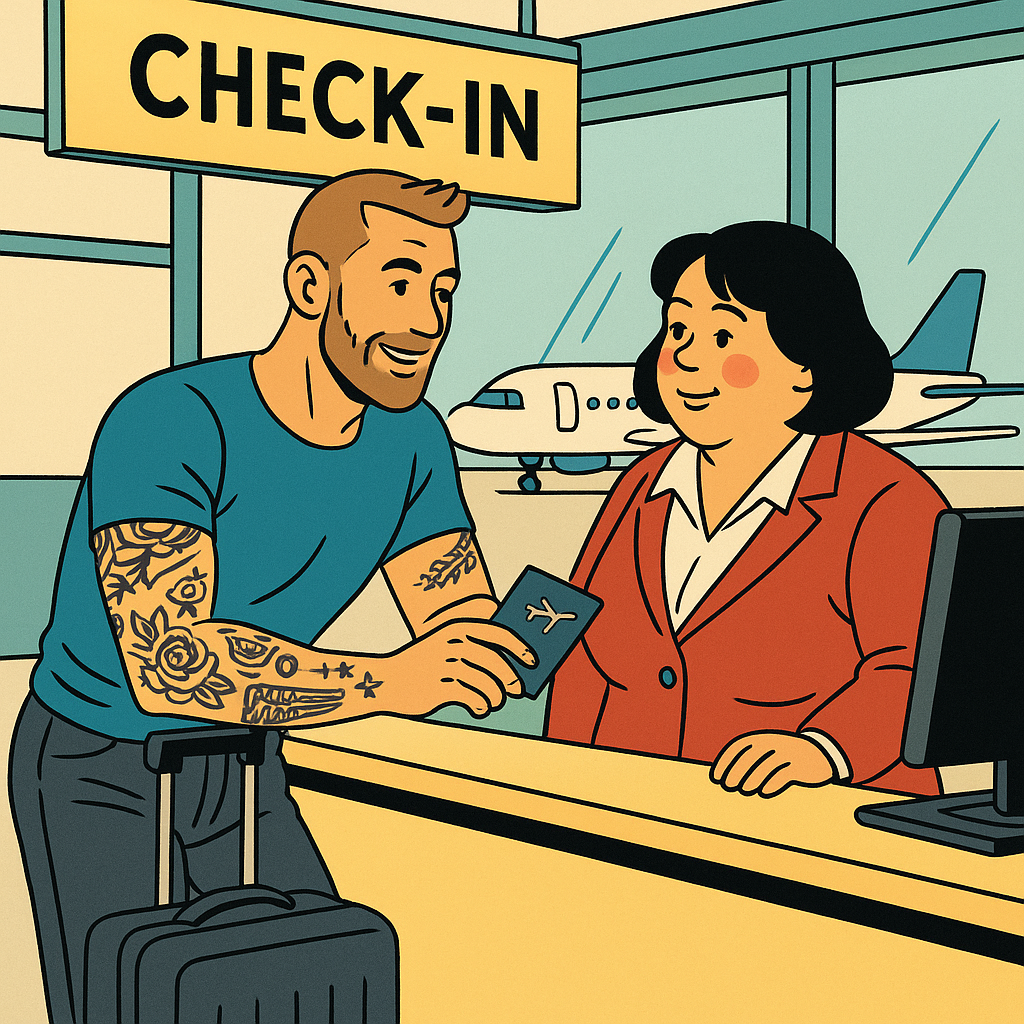
A man with tattoos on his arms and a beard flirts with the woman at the check-in counter at an airport, making her blush

Who Is Covered Under EU Passenger Rights?

Not every traveler falls under EU rules, so a quick check is in order. You’re covered if:

  • Your flight departs from a country in the EU or EEA (European Economic Area, essentially EU + Norway, Iceland and Liechtenstein), regardless of the airline

  • You’re flying into the EU or EEA and your airline is based in the EU/EEA

  • You have a valid ticket and checked in on time (no fashionably late arrivals here)

If your itinerary ticks these boxes, congratulations — you’ve unlocked a handy bundle of passenger protections.
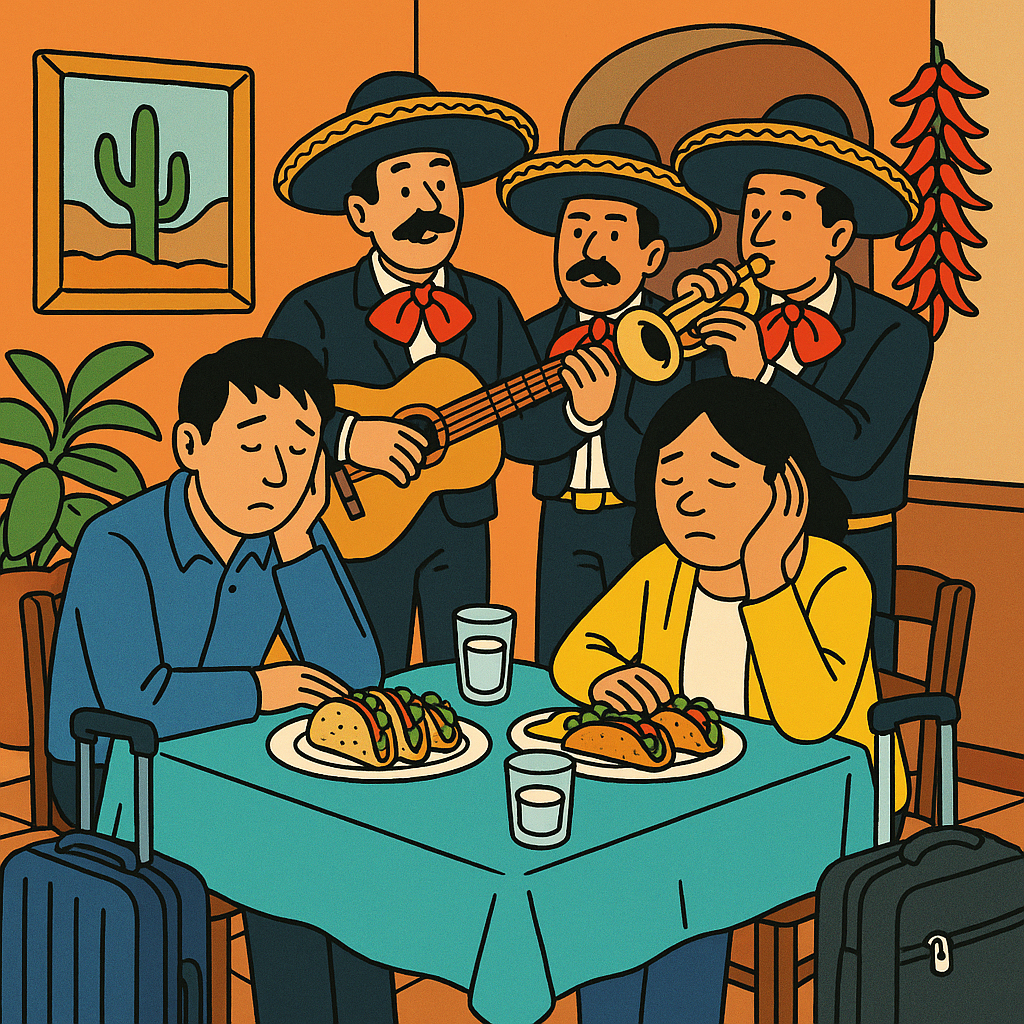
A couple are tired, holding their ears at a Mexican restaurant as a mariachi band plays behind them

When a Delay Triggers Your Rights

Not all delays are created equal, but your rights start kicking in long before compensation enters the chat. As the clock ticks, so do your entitlements:

  • Meals, drinks and communication support

  • Hotel stays if the delay drags into the night

  • Refunds or rebooking after the five-hour mark

  • Compensation if the airline is actually at fault

The longer the delay, the more the EU insists airlines take care of you — as they should.
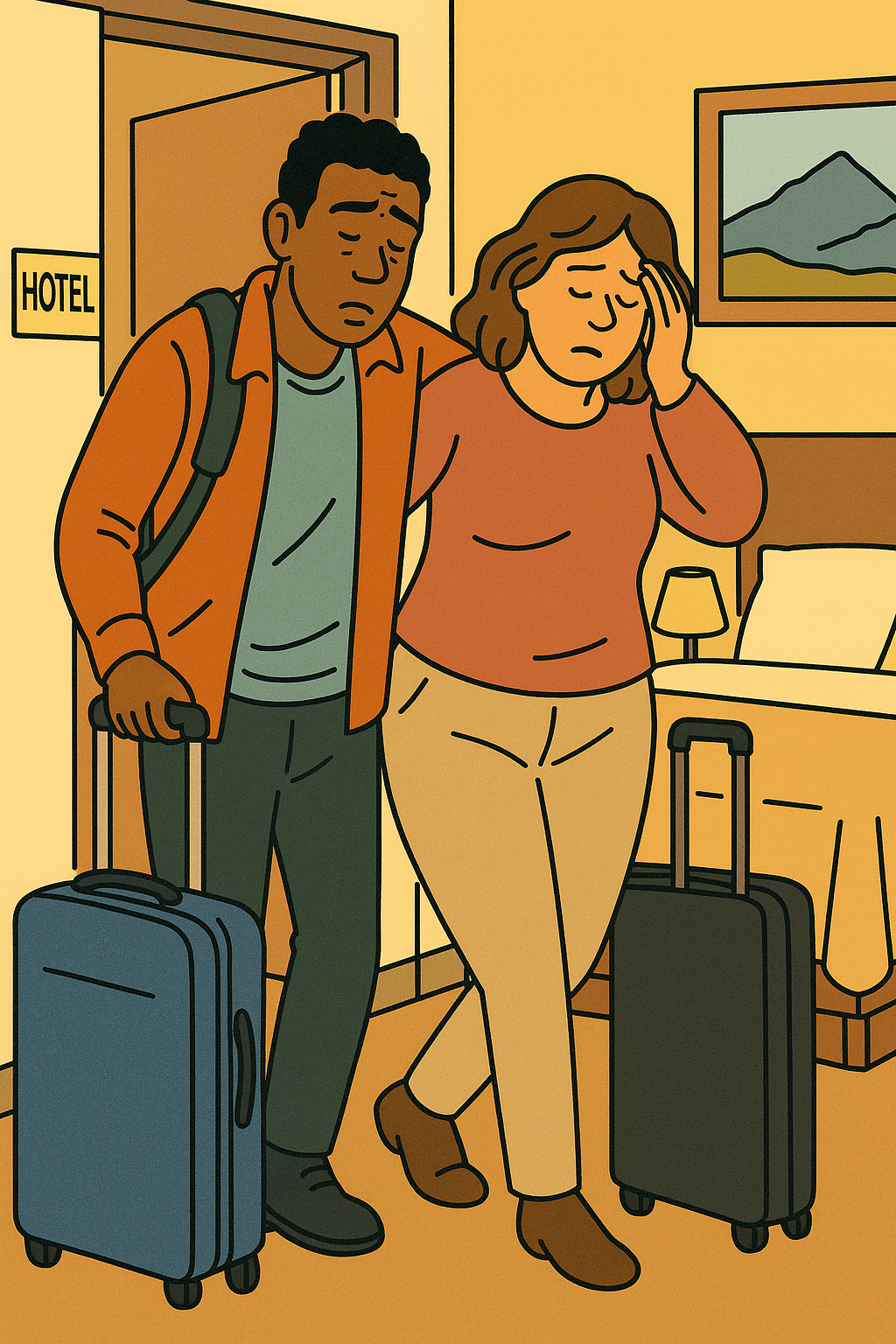
A couple walks into a hotel room, exhausted, with their roller suitcases

Assistance You Should Receive During a Delay

EU rules break it down by flight distance:

  • Short flights: after about 2 hours

  • Medium distance: after about 3 hours

  • Long haul: after about 4 hours

Once those thresholds hit, the airline owes you “reasonable” food and drinks (interpretations of reasonable may vary), plus access to calls or emails so you can rearrange plans.

If the delay goes full Cinderella and hits midnight, the airline must provide a hotel and transport between the airport and your lodging — even if the delay wasn’t their fault.
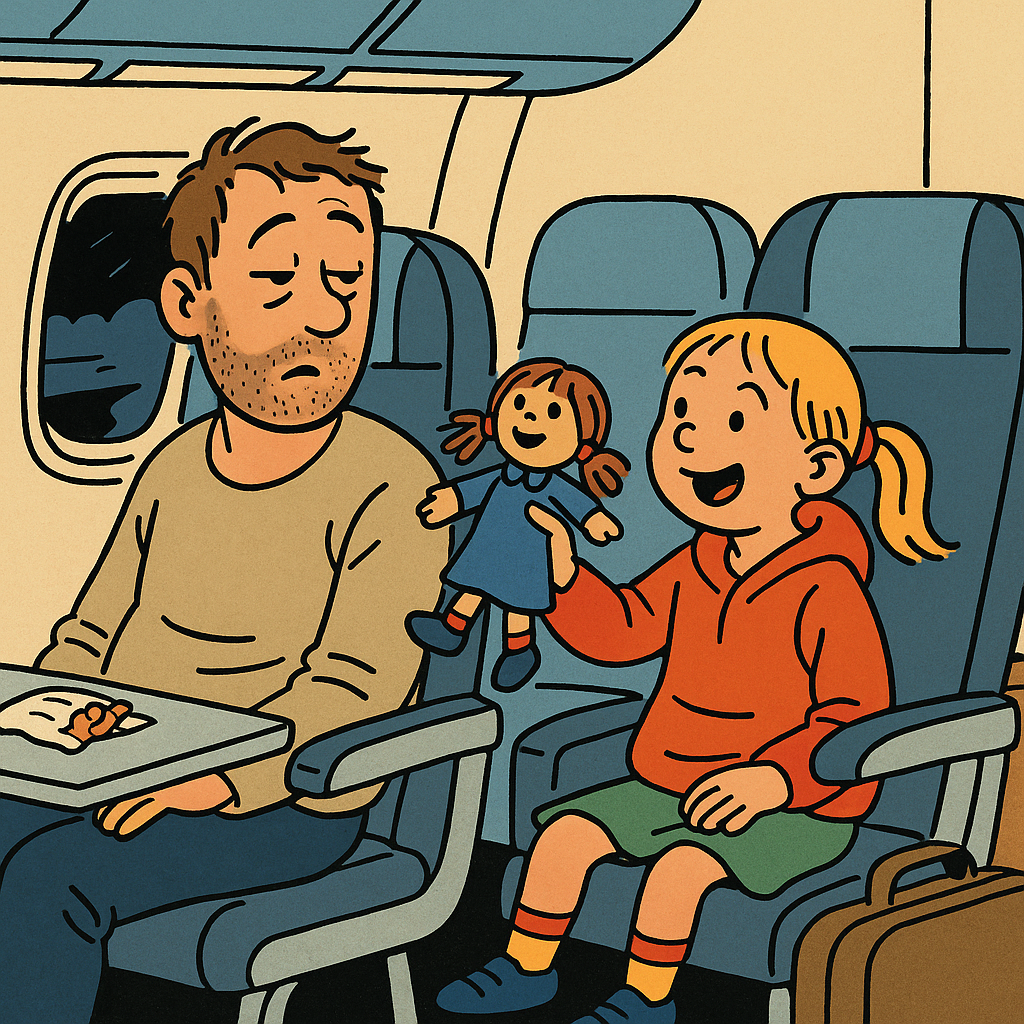
An exhausted, unshaven man sits on an airplane, looking over at a young girl in a ponytail, chatting away and holding up her doll

When a Long Delay Entitles You to a Refund

If your flight is delayed five hours or more, you’re no longer obligated to keep the relationship alive. You can walk away — kindly, firmly — and request a full refund for the unused portion of your ticket.

If your delay makes a connecting trip pointless, you can also ask to be flown back to your original airport.


Compensation for Delays That Are the Airline’s Responsibility

This is where things get interesting. You may qualify for compensation if:

  • You arrive 3+ hours later than planned

  • The delay was the airline’s fault, not extraordinary circumstances

  • Your journey falls under EU coverage rules

Compensation ranges from €250 to €600, depending on flight distance. Airlines can reduce the amount by half if they get you to your destination only slightly later than planned — but only if you accept the reroute.

This compensation is in addition to meals, hotels and refunds. Yes, you can get both.
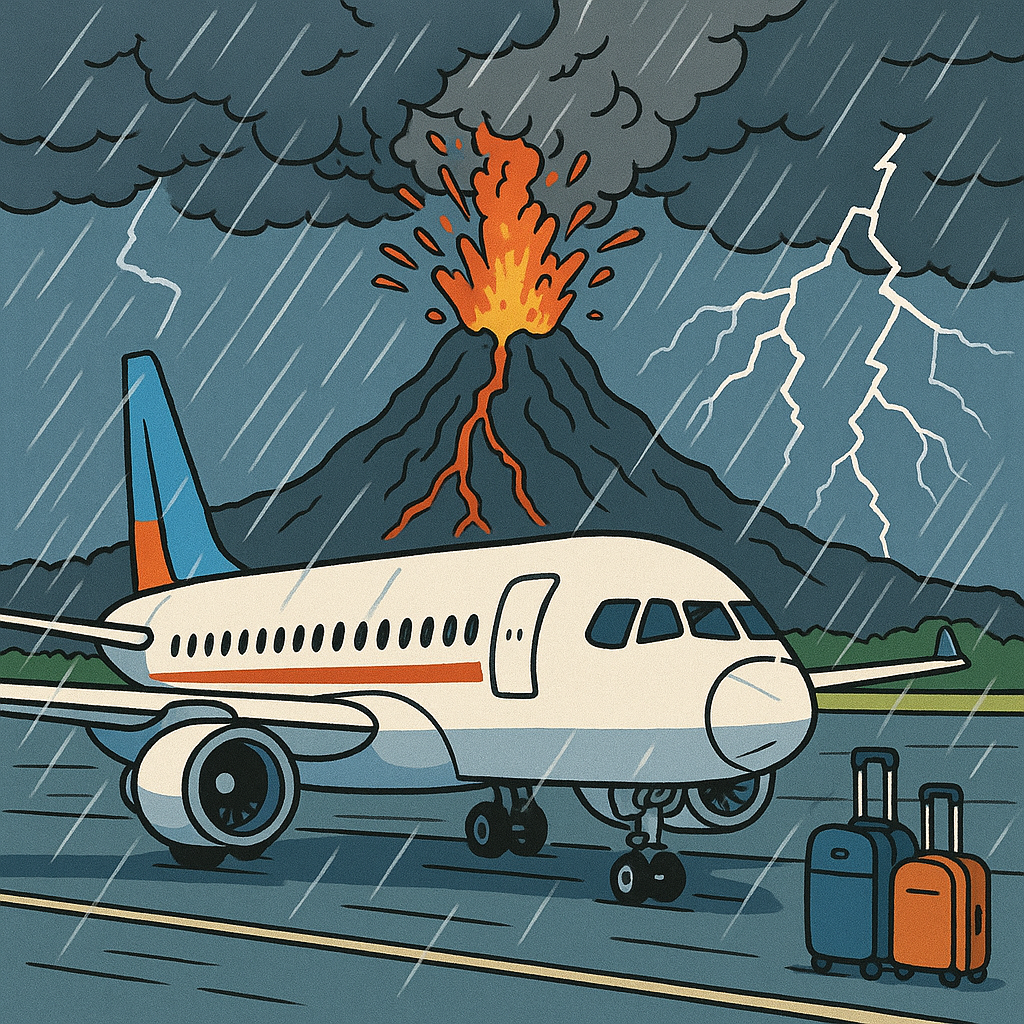
A volcano erupts lava during a thunderstorm by an airplane on the tarmac with a couple of suitcases nearby

What Counts as Extraordinary Circumstances

Some delays really are out of an airline’s hands. These don’t qualify for compensation, but your care rights still stand. Extraordinary circumstances may include:

  • Intense, unsafe weather

  • Airport or airspace closures

  • Air traffic control restrictions

  • Political instability impacting safety

Even here, airlines must keep you fed, hydrated, and sheltered until things clear.
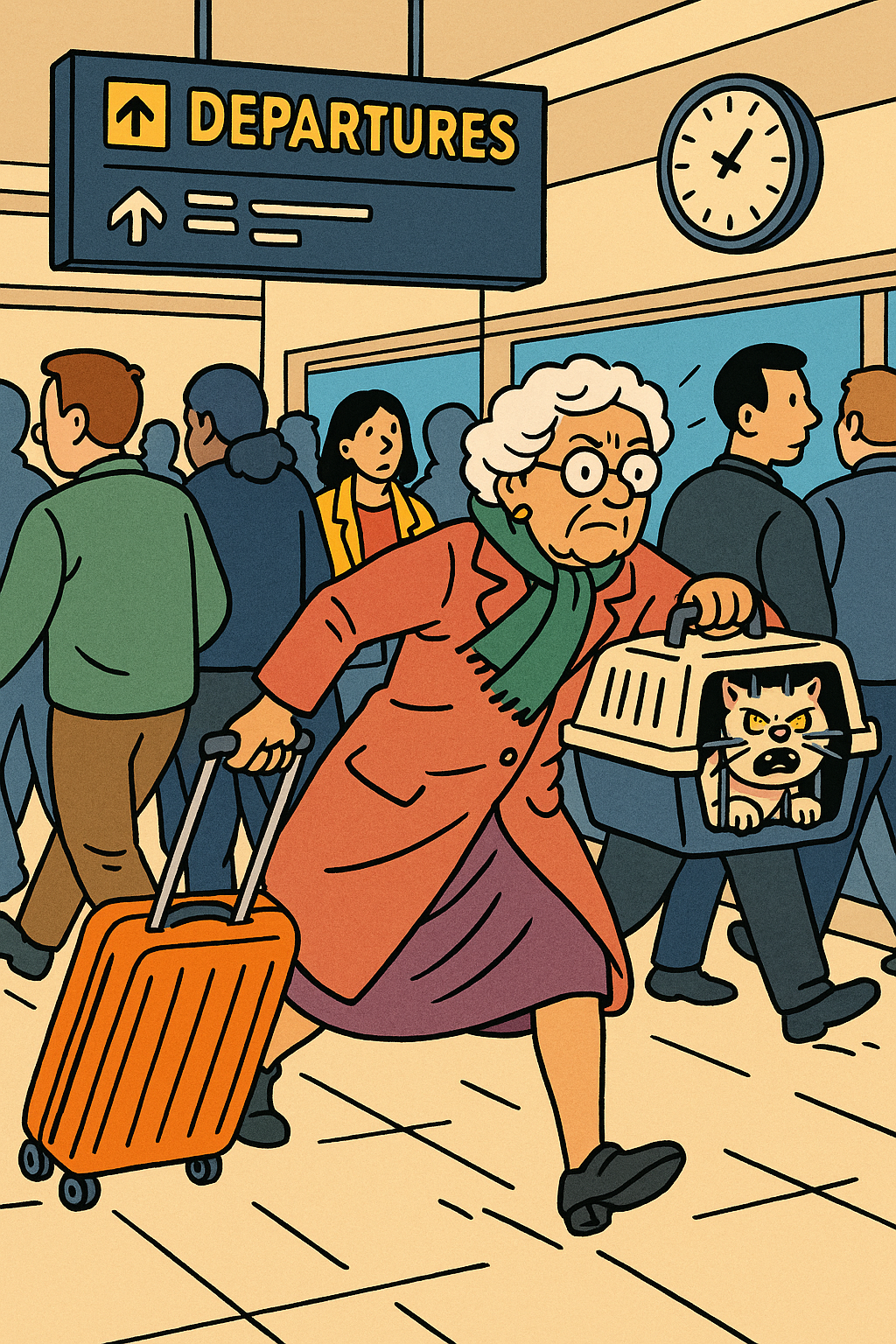
A determined, white-haired old lady rushes through the airport to make a connection, the cat in the carrier she holds upset

What Happens If You Miss a Connection

Missing a connection is peak travel misery. But if both flights are on the same booking and you reach your final destination 3+ hours late, you may be owed compensation.

It doesn’t matter if your second flight is outside the EU — if your journey started within the EU, your rights follow you all the way home (or all the way to Lisbon, Paris, or the Croatian island you still can’t pronounce).
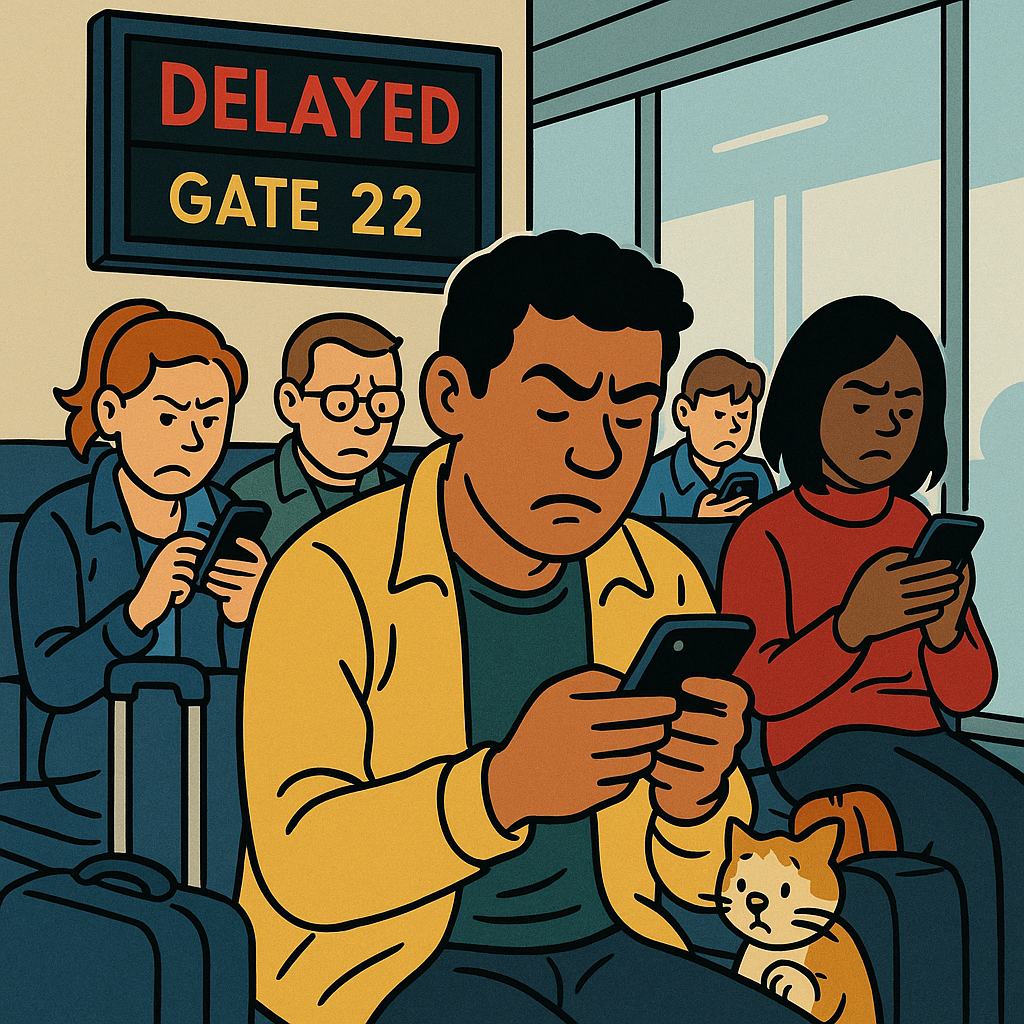
Everyone sitting in the waiting area of an airport gate are on their phones, annoyed, and a sign above their heads shows their plane is delayed, and there's also a sad cat

What Airlines Must Tell You During a Delay

Airlines have to inform you of your rights, both via posted notices and written guidance when a delay activates your entitlements.

Spoiler: They’re not always great at this.

Even if they never mention your rights, your protections still apply — which is why it’s crucial to save everything: boarding passes, confirmations, receipts, and the timestamped existential texts you sent from the gate.


Why You Should Document Everything

If you later decide to submit a claim, documentation is your best friend. Note:

  • Exact arrival time (doors open = the official moment)

  • Any expenses you paid out of pocket

  • What airline staff told you

Think of it as assembling a tidy little evidence folder — future-you will be grateful.
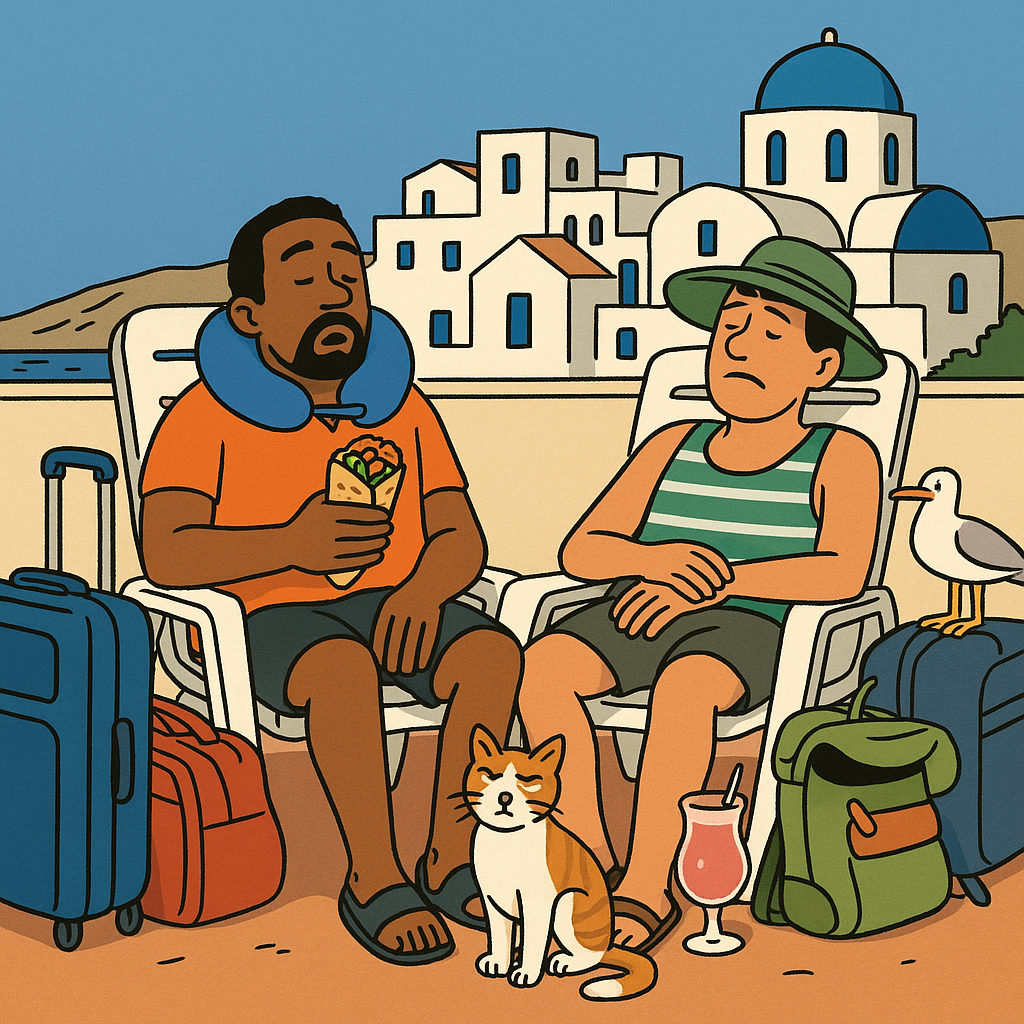
A gay couple sits, exhausted, in Mykonos, Greece, one with a neck pillow and holding a gyro, the other with a tropical drink next to a cat, as a seagull stands on their luggage

Claiming Compensation Through a Service

Airlines sometimes resist. They may delay, deny or make the claim process feel like emotional CrossFit.

That’s why many travelers use professional claim services. These companies take on the paperwork, the followups and the arguments — and only charge a fee if they win.

Passengers can claim compensation for a delayed flight through services like AirHelp, which aid travelers in understanding their rights and navigating the process without stress, jargon or chase-the-airline energy.
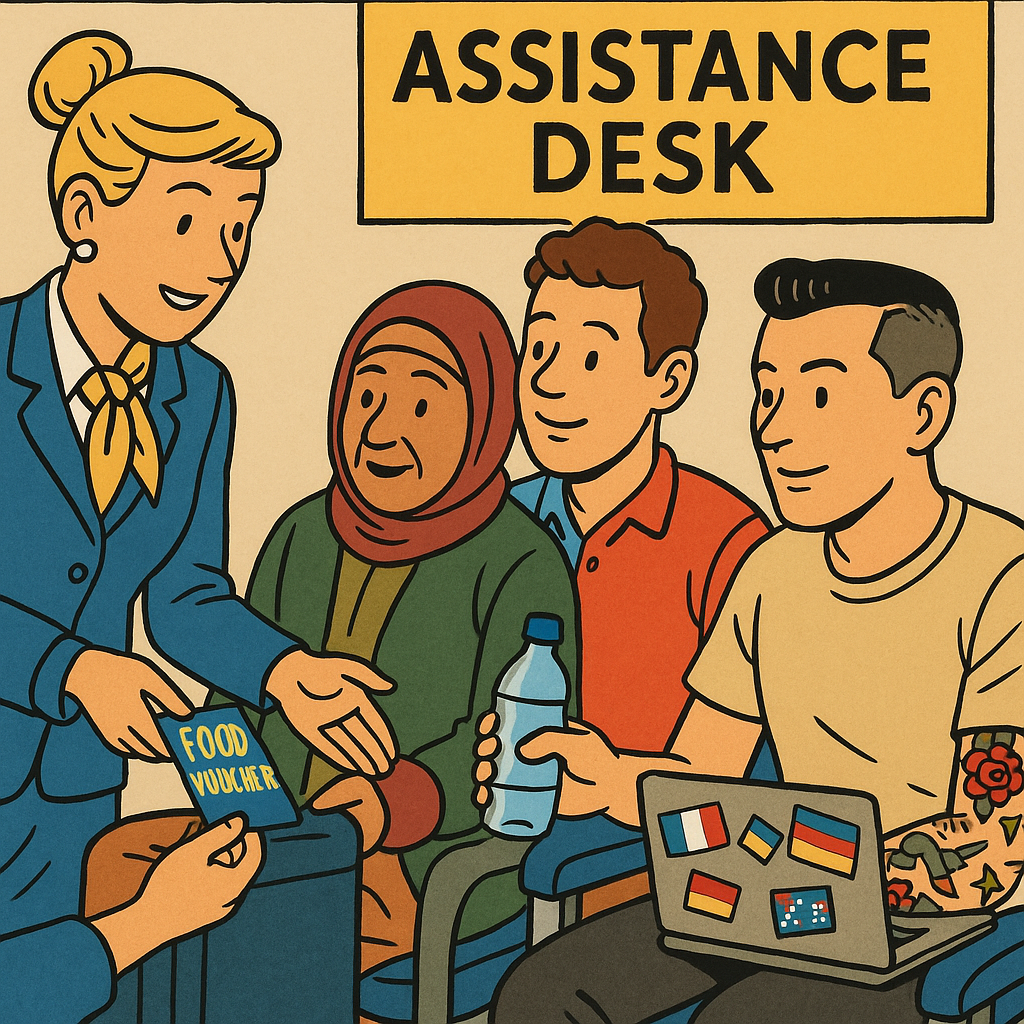
A woman at the assistance desk of an airport hands out food vouchers and bottles of water to passengers who have had delayed flights

Final Advice for Travelers

Flight delays can derail vacations, business trips and the sacred duty of restocking French pharmacy skincare. Luckily, EU air passenger rights are some of the strongest in the world.

If a delay hits, remember:

  • Your right to meals and care kicks in early

  • Refunds and rebooking appear at five hours

  • Compensation might be waiting if the airline is responsible

Stay calm, keep your documents and always double-check what you’re owed. And if you’d rather skip the bureaucracy entirely, a claim service can help make sure you receive every euro you deserve.

With the right knowledge, even a delay can’t stop you from traveling smarter — and maybe even arriving with a story worth telling. –Anya Thorne
Snowed-In Layover at MSP: Skyways Survival, Saunas & Sweet Spots

Got a layover at Minneapolis–Saint Paul International Airport? Here’s how to amuse yourself, from a terminal massage to a quick trip downtown via the skyways.

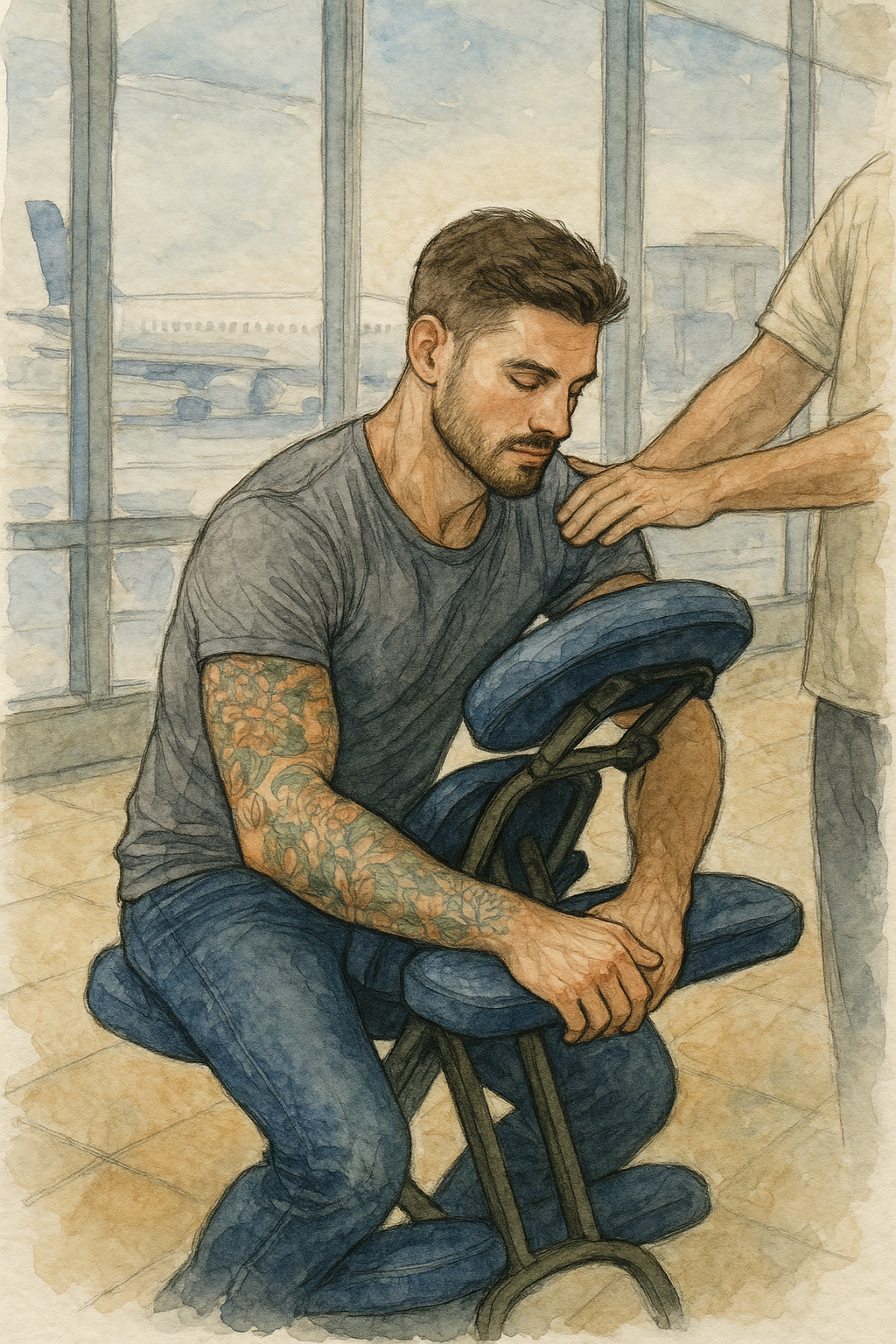
A handsome man with a tattoo sleeve gets a chair massage at MSP airport

You step off the plane, and the jet bridge exhales a blast of arctic air. Outside, Minneapolis is a snow globe; inside, the terminal hums with gate changes and scarf-wrapped travelers clutching hot coffee. You’ve got three to six hours until your next flight. Great. 

But a winter layover at MSP can be fun. It’s an invitation to warm up, wander smart and waste precisely zero time.

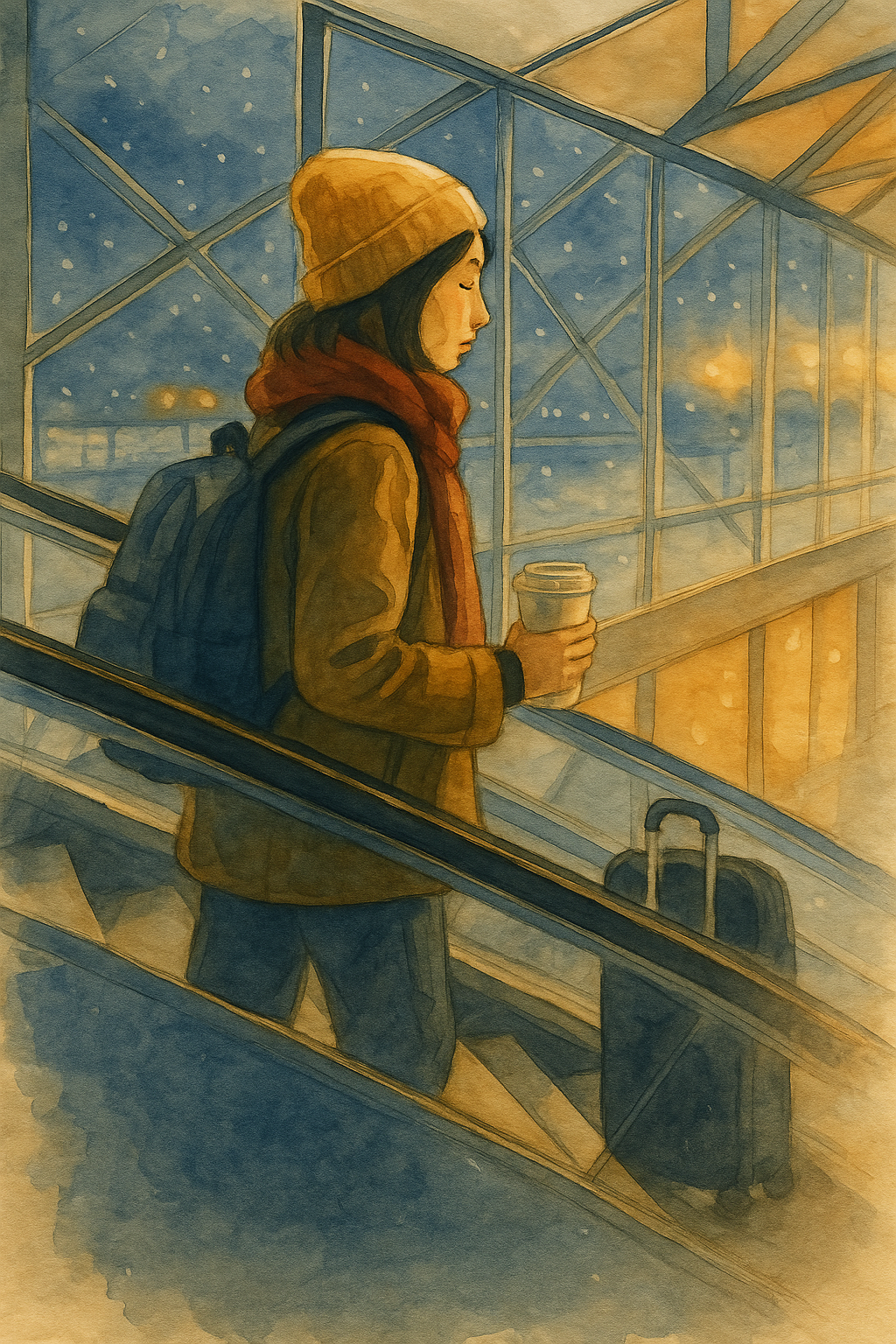
A woman in winter garb holds a to-go cup of coffee and goes down an escalator at MSP airport with her suitcase

The 3-to-6-Hour MSP Game Plan: Choose Your Own Cozy

Before you sprint toward the nearest cinnamon roll, map the layover by time:

  • 3 hours or less: Stay terminal-side. Walk to reset your circulation, grab one indulgent local treat, book a shoulder-saving mini-massage, and pick one micro-mission (reading nook, art stroll or people-watching perch near a window).
  • 4–5 hours: Consider a quick city dip. The Metro Blue Line from MSP to downtown runs directly from both terminals. Trains run frequently, and the ride to the core is under half an hour each way, so you can touch base with Minneapolis without flirting with a missed connection.

  • 6 hours: Stretch your legs downtown via the skyways (more on that below), nibble something warm, and loop back with a cushion to spare.

Pro tip: If you drove to the airport: Avoid terminal garage sticker shock by pre-booking off-site MSP parking so arrival and departure are frictionless. It’s dull logistics that pays you back in actual fun once you’re landside.

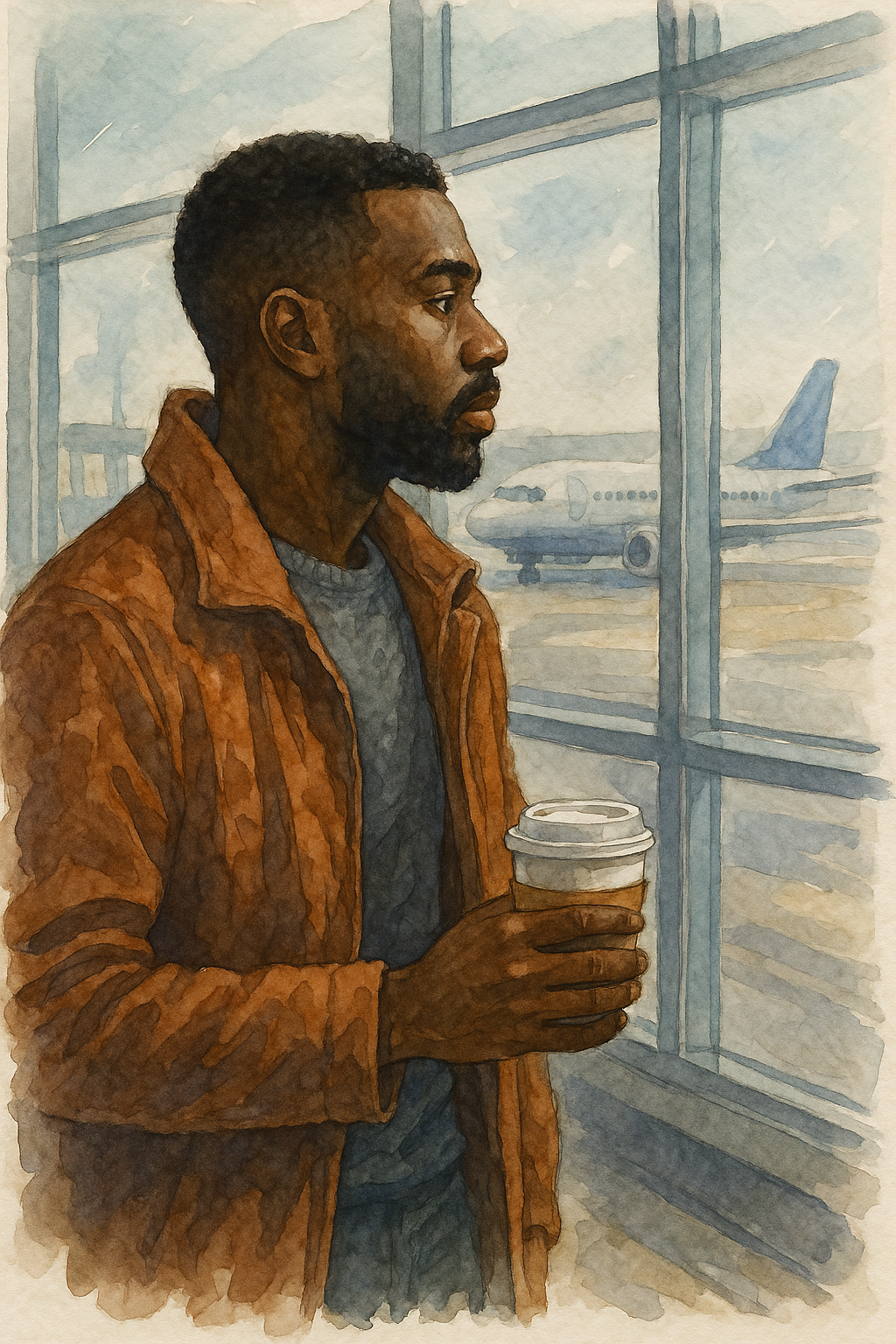
A man holds a cup of coffee while looking out the window at MSP airport

MSP Terminal Comforts: Heat, Knead, Feed

This is a winter layover: Your core mission is warmth and circulation. Inside MSP, you’ll find:

  • Quick kneads. Ten to 30 minutes in a massage chair can reset even the surliest spine before a long haul. If you’re the “I didn’t know my neck could make that sound” traveler, build one mini-treatment into your itinerary.

  • Warmth by walking. Terminals here are made for laps. Lace up, cue a podcast, and walk 10 to 20 minutes between bites or tasks. Your joints (and mood) will thank you at cruising altitude.

  • Strategic calories. Think “one hot + one hydrating”: soup or a toasted sandwich plus a giant water to counteract the dehydrating air. If you do coffee, chase it with water so you don’t arrive at your gate feeling like a raisin in a parka.

  • Delay insurance. Put your meds, a spare pair of socks, and a portable battery in your personal item — not the carry-on you gate-check when overheads fill up. If chaos hits, you’ll still be functional. If chaos really hits, you’ll appreciate how to not freak out if you lose your wallet — mindset and method matter when travel gets messy.

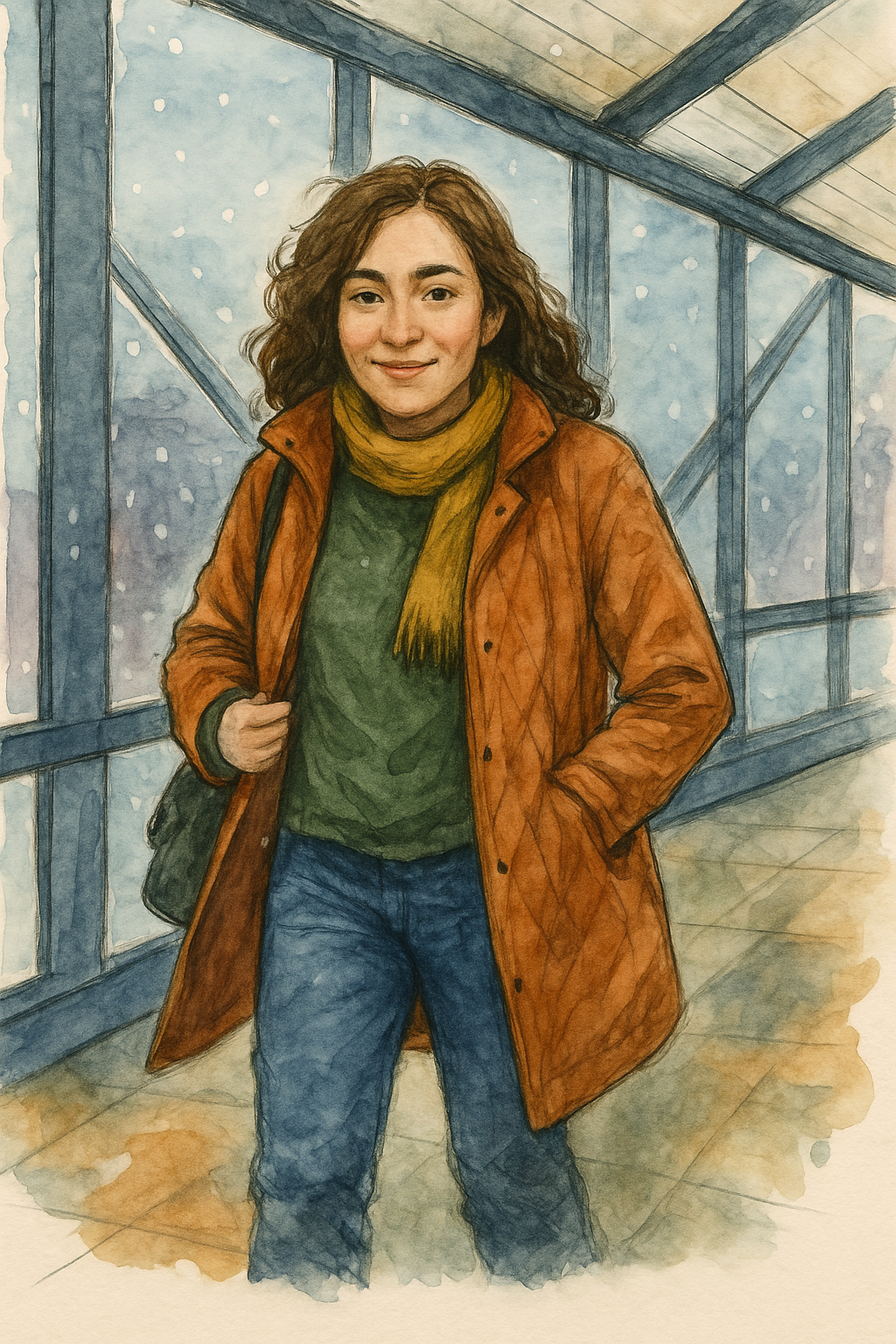
A woman smiles as she walks through the Skyway in Minneapolis, Minnesota

Want a Taste of Minneapolis? Ride & Glide

If your layover is 4–6 hours and the weather isn’t actively auditioning for a disaster movie, do the quick city loop:

  1. Hop on the Blue Line. From Terminal 1 or 2, board the light rail toward downtown. Trains are frequent, and it’s a straight shot to Nicollet Mall/Target Field. Check schedules and any service alerts before you commit; the official pages keep them current.

  2. Enter the sky. Downtown’s enclosed walkways are the city’s winter superpower — roughly 10 miles of climate-controlled routes connecting about 80 blocks. Think of it as a heated maze where you can wander without windburn. Hours vary by building (weekday-heavy), so plan for daytime/early evening access.

  3. A tiny “sky-tour.”

    • From the Nicollet area, duck into an entrance and follow overhead signage toward retail or food courts.

    • Loop two to four blocks, pausing where you see cozy seating or bakery smells (the best compass).

    • Snap a skyline peek from an elevated window and then reverse course. The goal isn’t maximal sightseeing; it’s staying toasty while you get a feel for Minneapolis’ unique winter rhythm — walking without ever going outside.

  4. Time discipline. Set a departure alarm that gets you back on the Blue Line with a generous buffer. Winter means slower everything; your future self would like to avoid cardio sprints in snow boots.

Weather reality check: Minneapolis winters can deliver serious wind chills. If you’re curious how cold it really feels, the National Weather Service’s wind chill chart translates temps and wind into “what your face experiences,” so you can decide whether street-level detours make sense, or if indoor skyways should be your sole playground.

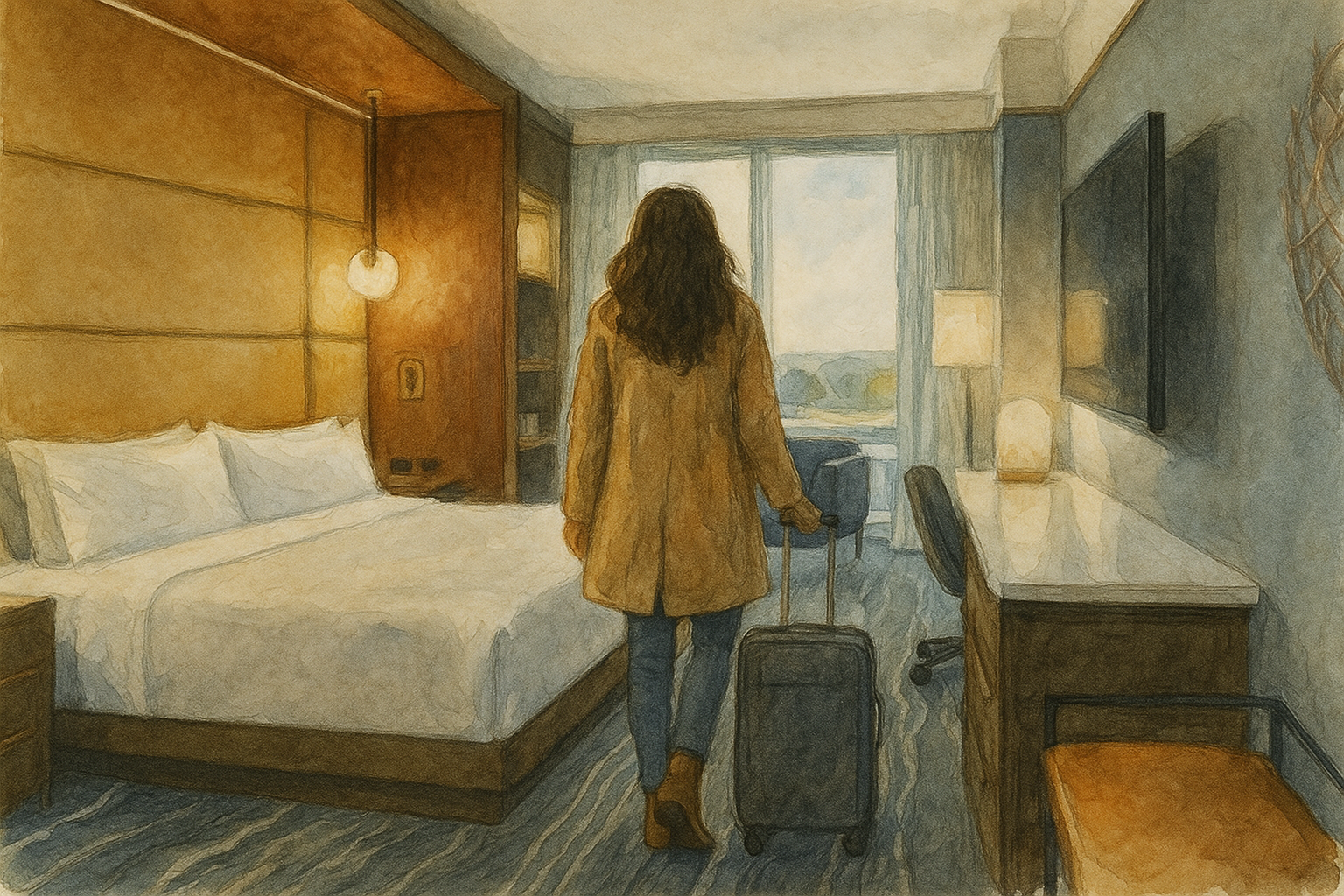
A woman enters her hotel room with her suitcase at the InterContinental MSP

Heat Therapy, Minnesota Edition: Saunas, Steam and “Warm Enough” Hacks

No, MSP isn’t Helsinki. But you can still nudge your core temp upward without a full spa day:

  • Hotel-adjacent warmth. The InterContinental MSP connects to Terminal 1 via skybridge and (when operating) offers a dedicated TSA checkpoint window for carry-on travelers — handy if you’re starting or ending in Minneapolis and want a “roll out of bed, roll onto plane” morning. Even if you’re not staying the night this time, earmark it for a future trip when you are starting in MSP; the path beats a frosty curbside dash. (Always verify current hours before you plan around them.)

  • Make your own sauna lite. Swap a bulky coat for tactical layers you can modulate: thermal tee, mid-layer fleece, packable shell. Layering beats sweating, then freezing, especially when you’re transitioning between warm terminals, brisk platforms and steamy coffeeshops. (If you’re revisiting your packing system, you might find the field-tested notes on what to pack for South America useful — different continent, same principles of warmth, weight and sanity.)

  • Hands and feet first. Carry a tiny tube of unscented balm (for nose and lips), thin glove liners that work with phone screens, and wool socks that keep your toes snug and warm. If you’re prone to Raynaud’s, stash disposable hand warmers and use them before you feel the sting.

  • Hydrate and humidify. Winter air is bone-dry. Drink more water than you feel comfortable with, and if you’re sensitive, a pocket-sized saline spray can do wonders. Your skin will forgive you by the next boarding call.

  • Mindset matters. Long layovers feel better with a small, self-sufficient kit and a loose plan — exactly the ethos of how to survive and actually enjoy off-grid travel. You don’t need a cabin in the woods to use those habits; an airport in February will do.

The Minneapolis skyline with the Stone Arch Bridge over the Mississippi River in the foreground, as a plane flies overhead

Micro-Itineraries for an MSP Layover

3-Hour Thaw: Staying Airside

  • 0:00–0:10 — Walk a long loop to shake off the plane

  • 0:10–0:40 — Quick chair massage, shoulders + neck

  • 0:40–1:10 — Soup and water; download podcasts or audiobooks

  • 1:10–2:10 — Art stroll + bookshop browse; text the friend you always forget to text

  • 2:10–3:00 — Gate shift, stretch, board

4½-Hour Tour: Touching the City

  • 0:00–0:15 — Exit to the Blue Line platform; set your return alarm

  • 0:15–0:45 — Train to Nicollet Mall; enter an indoor walkway; browse a couple of blocks for a warm lunch

  • 0:45–1:45 — Loop through the skyways; peek at street views from elevated windows

  • 1:45–2:15 — Train back to MSP

  • 2:15–3:00 — Security + hydration + boarding buffer

6-Hour Itinerary: Maximizing Comfort

  • Split your time:

    • An hour of movement (walks)

    • An hour of eating (twice)

    • An hour of errands (charging, reorganizing your bag), plus transit and buffers

    • If the wind-chill reading makes you wince, keep the whole thing indoors and bask in the fact that Minneapolis lets you wander for blocks without ever braving the curb.

A man stands on the platform of the Blue Line metro in Minneapolis, Minnesota in the snow

Minneapolis Winter Know-Before-You-Go

  • Transit timing. Blue Line frequency and travel times are predictable, but winter can slow transfers. Always skim the official page right before you commit to the downtown hop; it’ll flag any service changes.

  • Skyway hours vary. Many connections keep weekday business hours, with shorter weekends. If you’re planning a Saturday or Sunday wander — or an evening hop — expect a smaller network than the lunch-hour rush.

  • Layer logic beats heavy coats. You’ll move between overheated interiors and brisk platforms; being able to peel or add is the difference between “glow” and “sweaty popsicle.”

  • Security reality. Liquid rules are still very much a thing in the U.S., so consolidate your gels/creams into a 1-quart bag, and don’t gamble on oversized lotions. If you need a refresher, the official TSA liquids rule is the no-drama reference — worth a peek before you hit the checkpoint on your way back to the gate.

  • Money and ID always accessible. Keep a small “essentials kit” (ID, a backup credit or debit card, some cash, phone) on your person.

  • If you’re a “park and fly” person. For multi-day trips, booking offsite parking in advance means you’re not circling garages at odd hours or paying top-tier prices on return day. Treat it like lodging: The earlier you book, the saner the rate and the smoother your exit.

  • Pack a small mercy. A spare pair of socks. Trust me. Dry wool on cold feet is a personality upgrade. It’s something you don’t ever want to forget to pack.

A gay couple with their carry-on luggage and backpacks have a meal and glasses of wine at a cafe in Minneapolis

A snowed-in layover can be a slog, but it can also be a strangely lovely intermission: a heated stroll above the streets, a real meal, a reset for your brain and back, and a tiny story to take home. You don’t need to conquer Minneapolis in an afternoon; you just need to leave warmer, calmer, and a little bit smug about how well you used the time. –Munazza Faisal

TWA Flight Center: 8 Facts About the Futuristic Mid-Century Modern Masterpiece

Channeling the Jet Age, the Eero Saarinen-designed Terminal 5 at New York’s John F. Kennedy Airport received a second life as the lobby of the TWA Hotel.

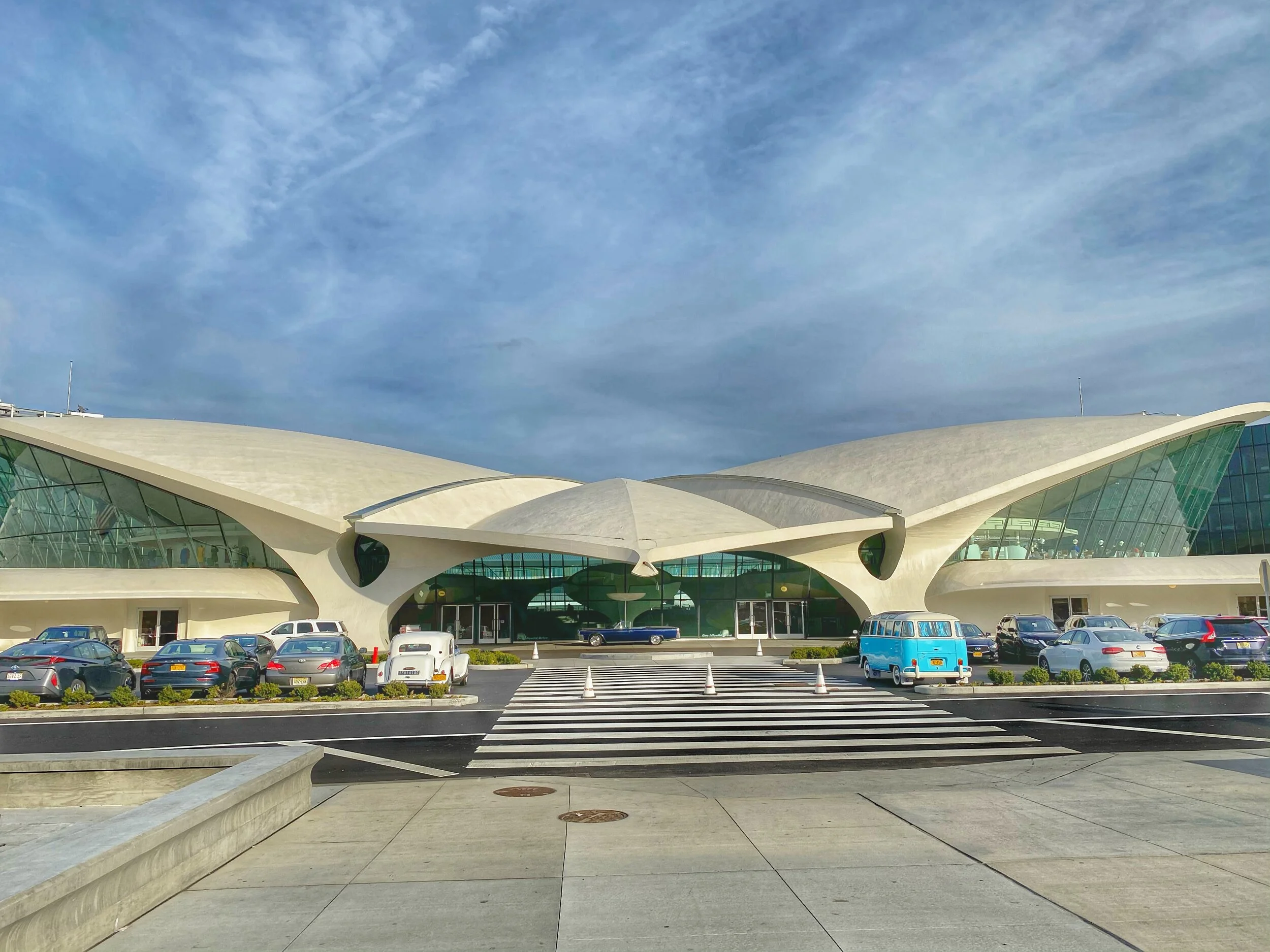
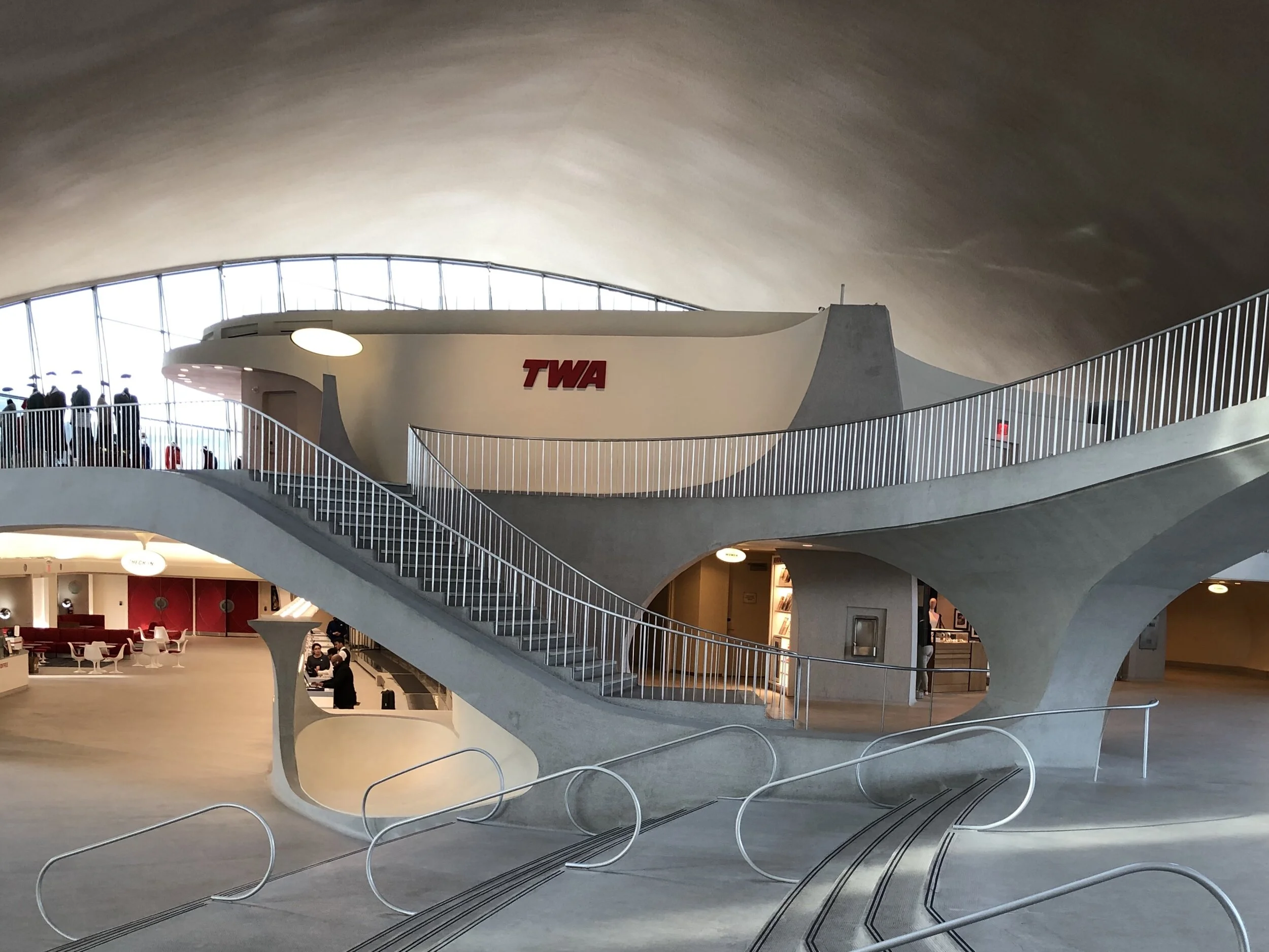
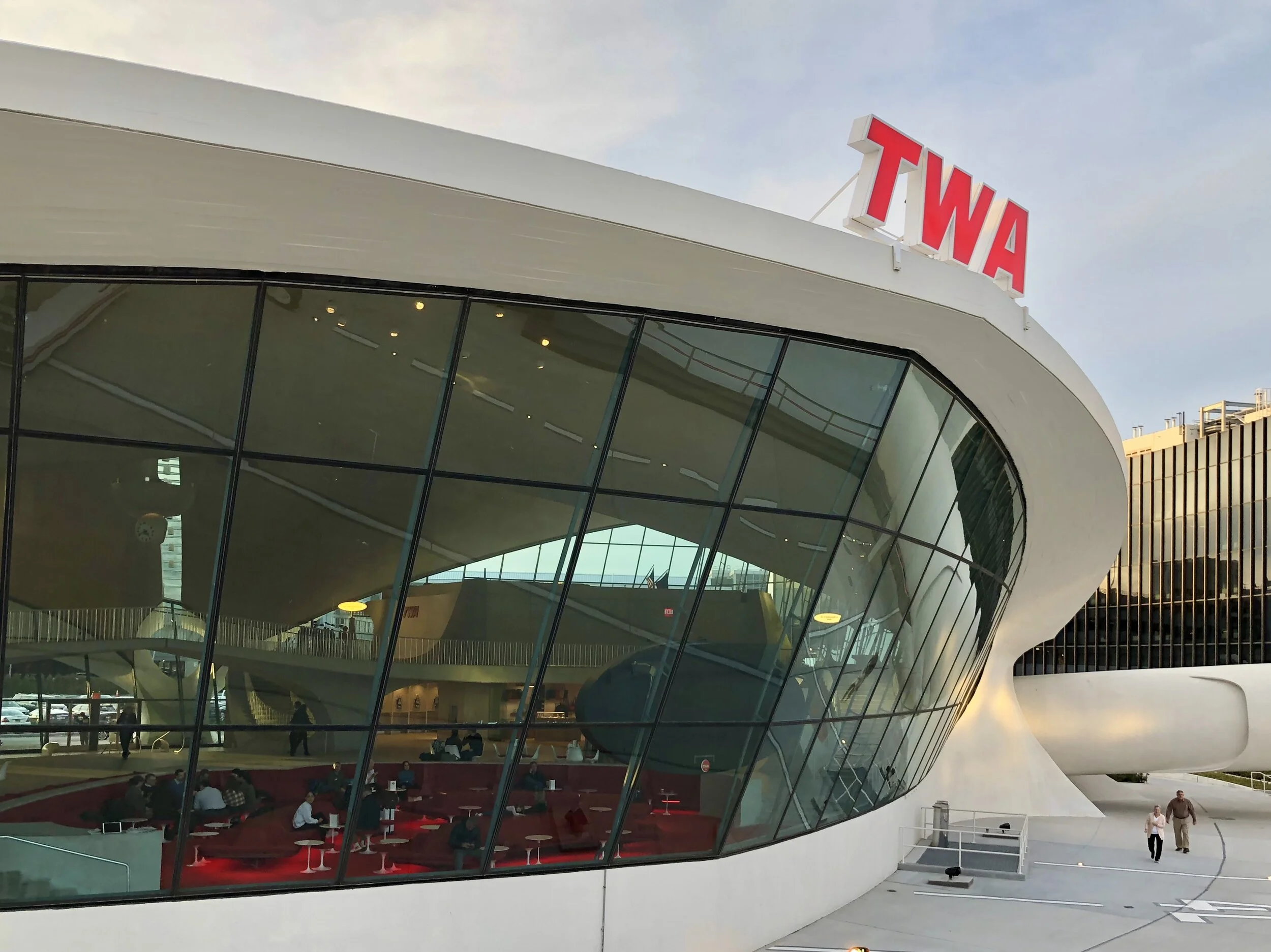
Whether you think it looks like a bird or a sea turtle, there’s no denying the architectural excellence of the TWA Flight Center.

Whether you think it looks like a bird or a sea turtle, there’s no denying the architectural excellence of the TWA Flight Center.

When I had to travel to New York to attend Shoppe Object, an independent home and gift show, at Pier 36, where I’d be assisting the Hay wholesale team with taking orders, Wally figured he’d tag along. 

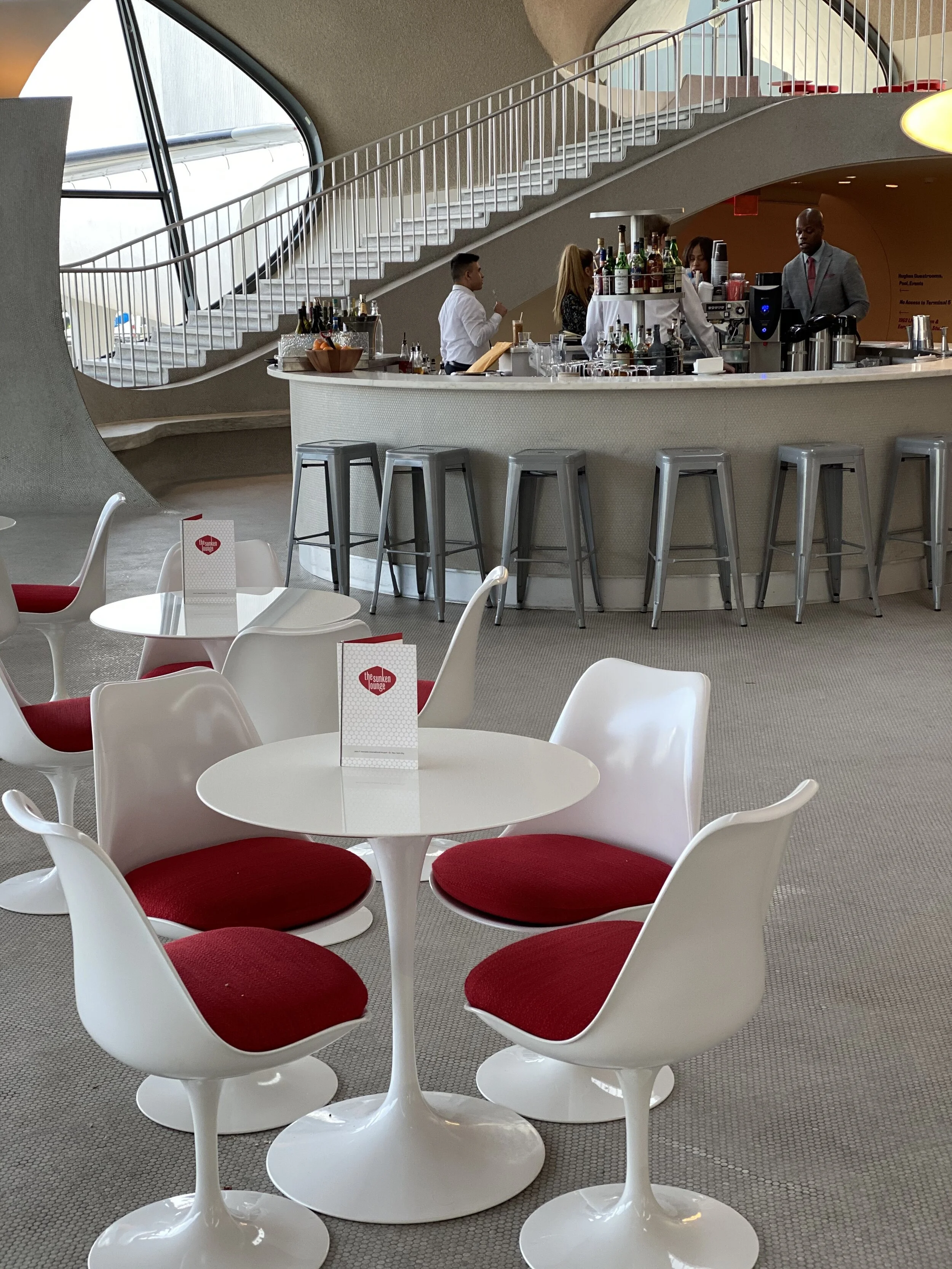
We flew into JFK a day early and put aside an extra hour or so to visit Terminal 5, or T5, and get a drink at the Sunken Lounge and explore the iconic Eero Saarinen-designed TWA Flight Center. 

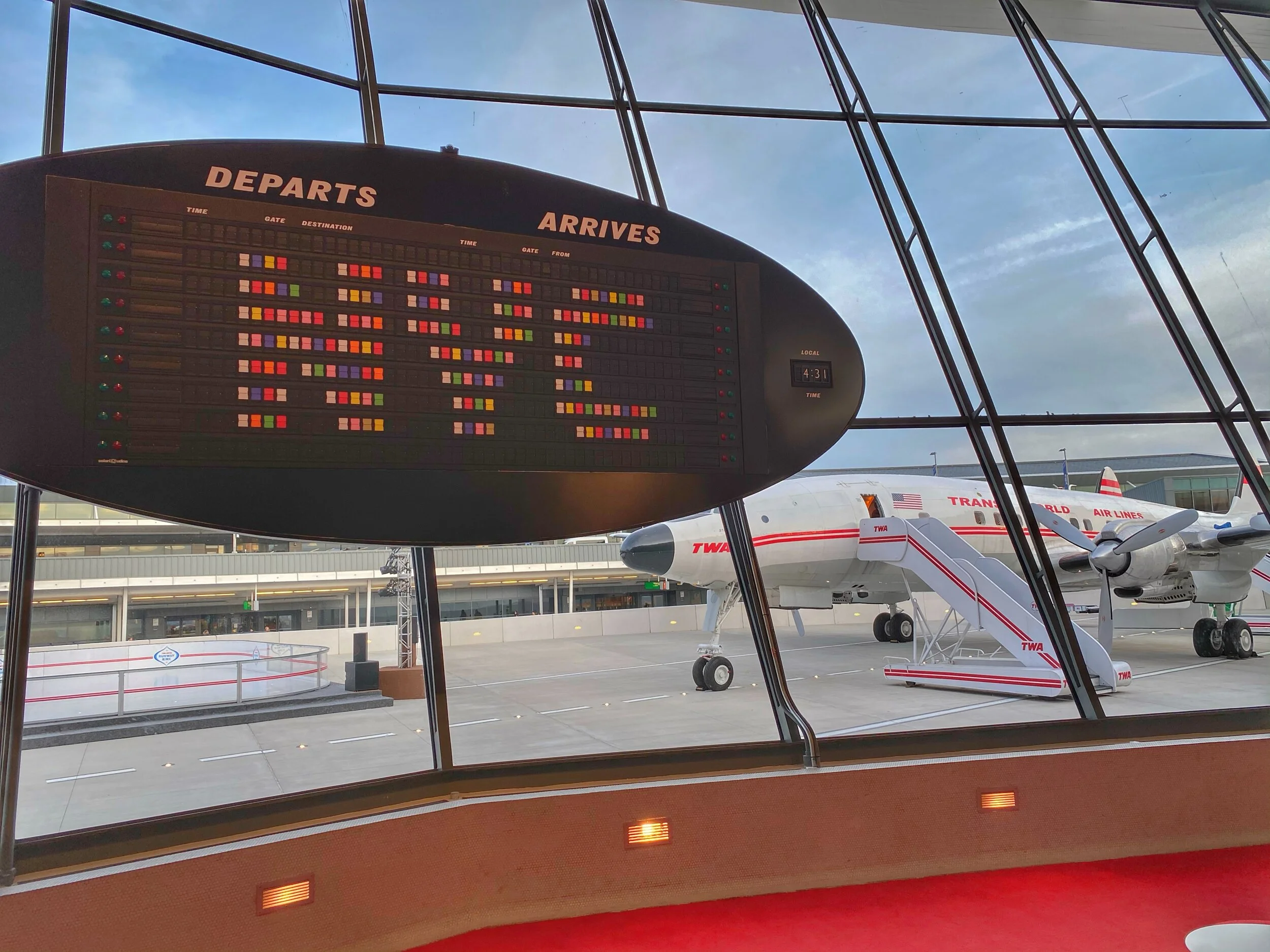
One of the first things you’ll see is this amazing check-in desk for the TWA Hotel, with the departures and arrival board (it might be old-fashioned, but it’s got up-to-date listings) and staffers in retro outfits.

One of the first things you’ll see is this amazing check-in desk for the TWA Hotel, with the departures and arrival board (it might be old-fashioned, but it’s got up-to-date listings) and staffers in retro outfits.

The space reminded me of Antoni Gaudí’s La Sagrada Família Cathedral in its organic sensibility.

To me, this was Saarinen’s cathedral to aviation.

After we disembarked, we took the AirTrain to Terminal 5, then followed the signs directing us to the TWA Hotel. 

Here are eight interesting facts about the TWA Flight Center. 

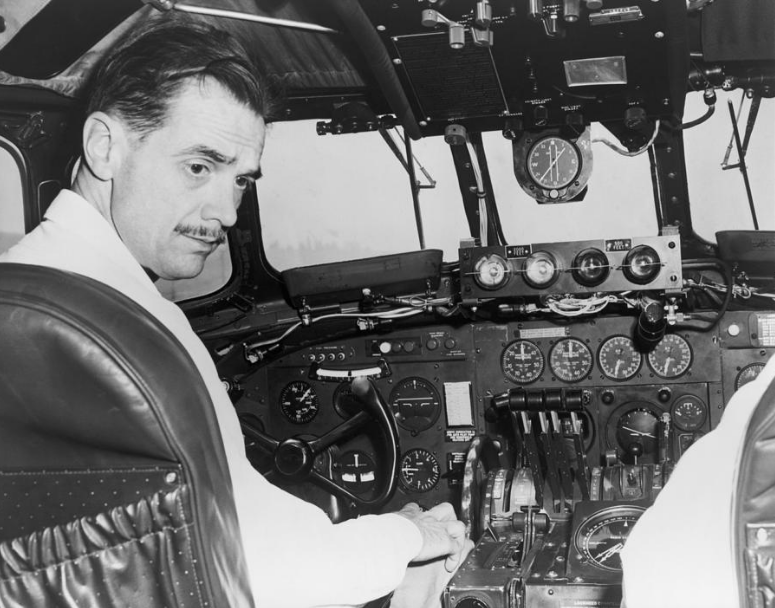
Howard Hughes in the cockpit of a TWA plane. He bought the airline and commission the construction of the Flight Center.

Howard Hughes in the cockpit of a TWA plane. He bought the airline and commissioned the construction of the Flight Center.

1. Playboy Howard Hughes hired Eero Saarinen to build the terminal, costs be damned. 

Prior to becoming a recluse and taking up residence of the penthouse at the Desert Inn Hotel in Las Vegas, Howard Hughes, one of the wealthiest men in the world, dabbled in motion picture direction, production and aviation. He acquired control of TWA (short for Trans World Airlines) in 1939, without ever holding an official position. 

Known to want the best that money could buy, in 1959, Hughes commissioned Eero Saarinen, the Finnish-American architect behind the 630-foot-high Gateway Arch in St. Louis, Missouri, to design a terminal for the airline. Never one to keep to a budget, construction costs for the terminal ballooned from $9 million to $15 million (equal to a staggering $130 million in 2021).

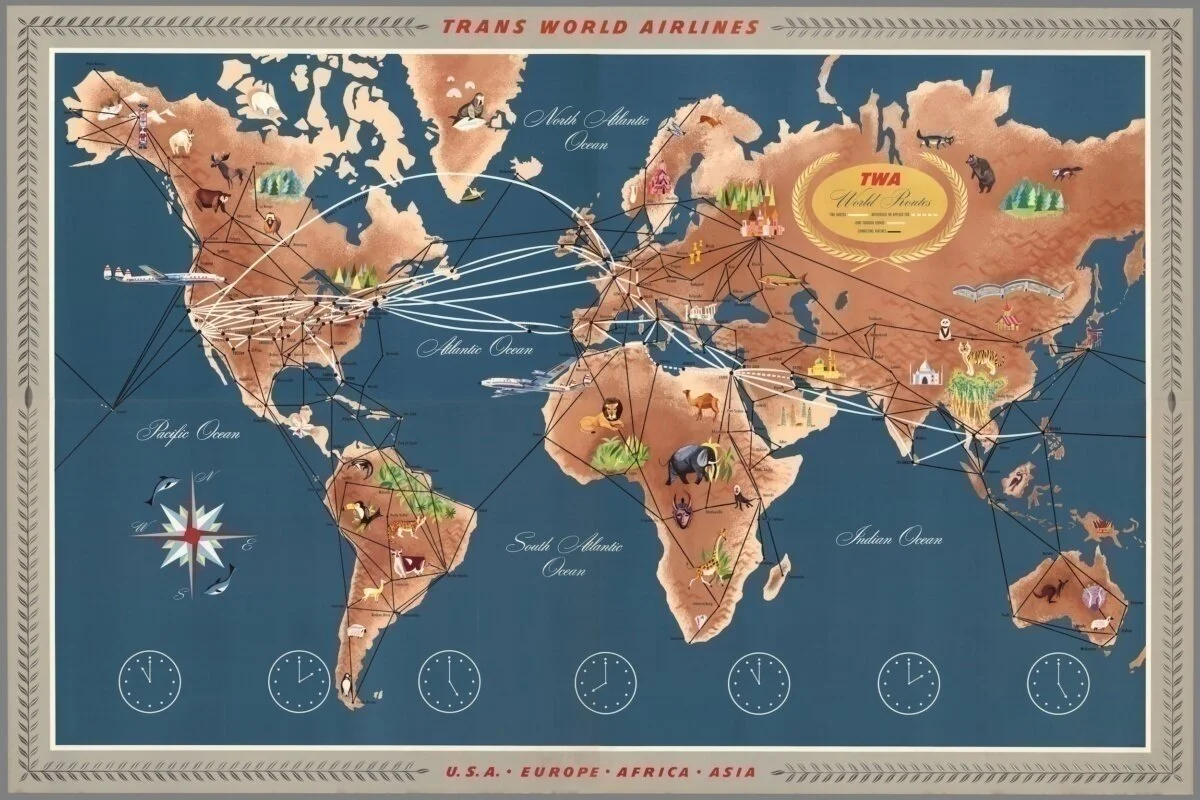
An old map that shows TWA’s routes

An old map that shows TWA’s routes

Fun fact: Hughes was well known for his dalliances with celebrities of both sexes, including Katherine Hepburn, Cary Grant, Ginger Rogers and Olivia de Havilland.  

The sky blue VW bus out front is totally groovy, man.

The sky blue VW bus out front is totally groovy, man.

2. Saarinen got the inspiration for his mid-century modern marvel from a grapefruit.

Often described as a swooping bird, I found the structure to more closely resemble a sea turtle. 

The TWA Flight Center was dedicated to the Golden Age of travel and was a marvel of mid-century modern design when it opened in May 1962, nearly 60 years ago — the likes of which the world had never seen. 

If Eero Saarinen didn’t eat grapefruit, the TWA Flight Center would never have been conceived.

If Eero Saarinen didn’t eat grapefruit, the TWA Flight Center would never have been conceived.

Legend has it that the architect arrived at the building’s evocative form one morning during breakfast, after flipping over a hollowed-out grapefruit rind and pressing down in the middle. 

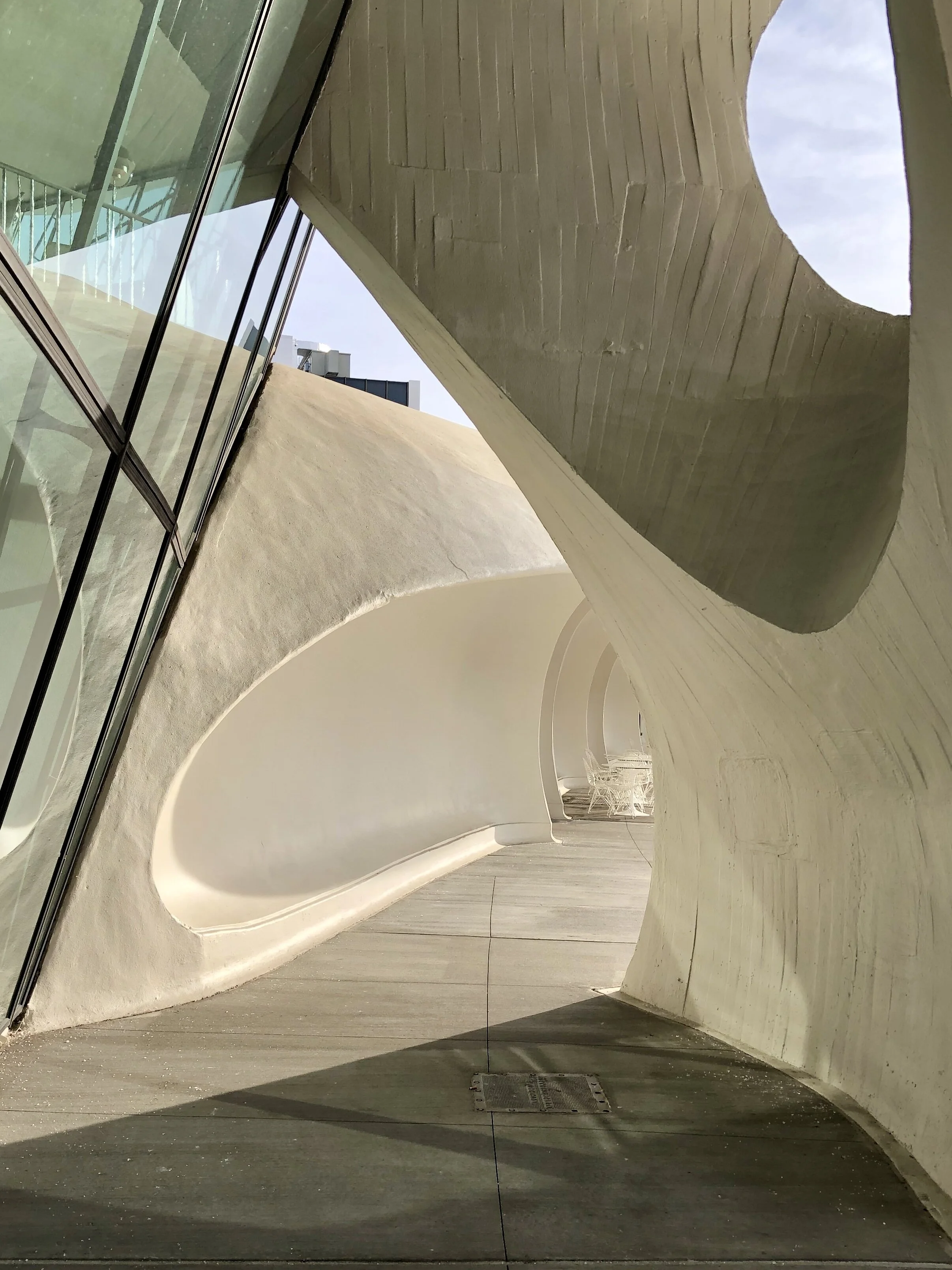
The Flight Center’s shell-shaped roof consists of four symmetrical reinforced concrete forms separated from one another by narrow skylights. Inside, undulating organic forms of the 200,000-square-foot lobby merge inward — soaring ceilings blend into walls, and those walls become floors. The space reminded me of Antoni Gaudí’s La Sagrada Família Cathedral in its organic sensibility. To me, this was Saarinen’s cathedral to aviation.

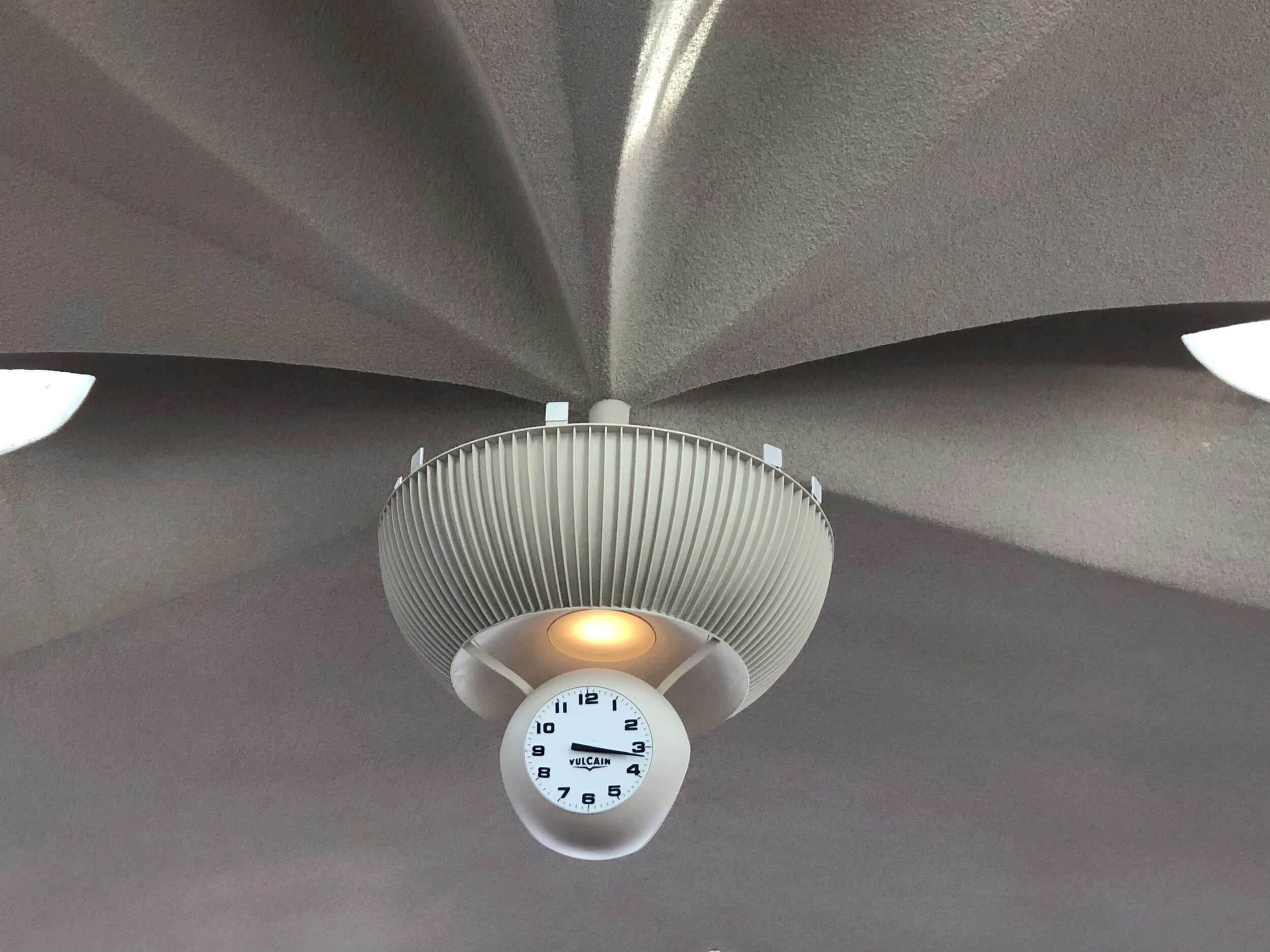
At the center of the terminal’s vaulted ceilings, the original Vulcain clock still keeps the time.

The original clock high above, positioned where the many arches converge on the ceiling

The original clock high above, positioned where the many arches converge on the ceiling

Speaking of time, Saarinen’s ran out all too soon. Sadly, the designer never lived to see his finished creation. He died at the age of 51, during surgery to remove a brain tumor, in 1961 — one year before the Flight Center was complete.

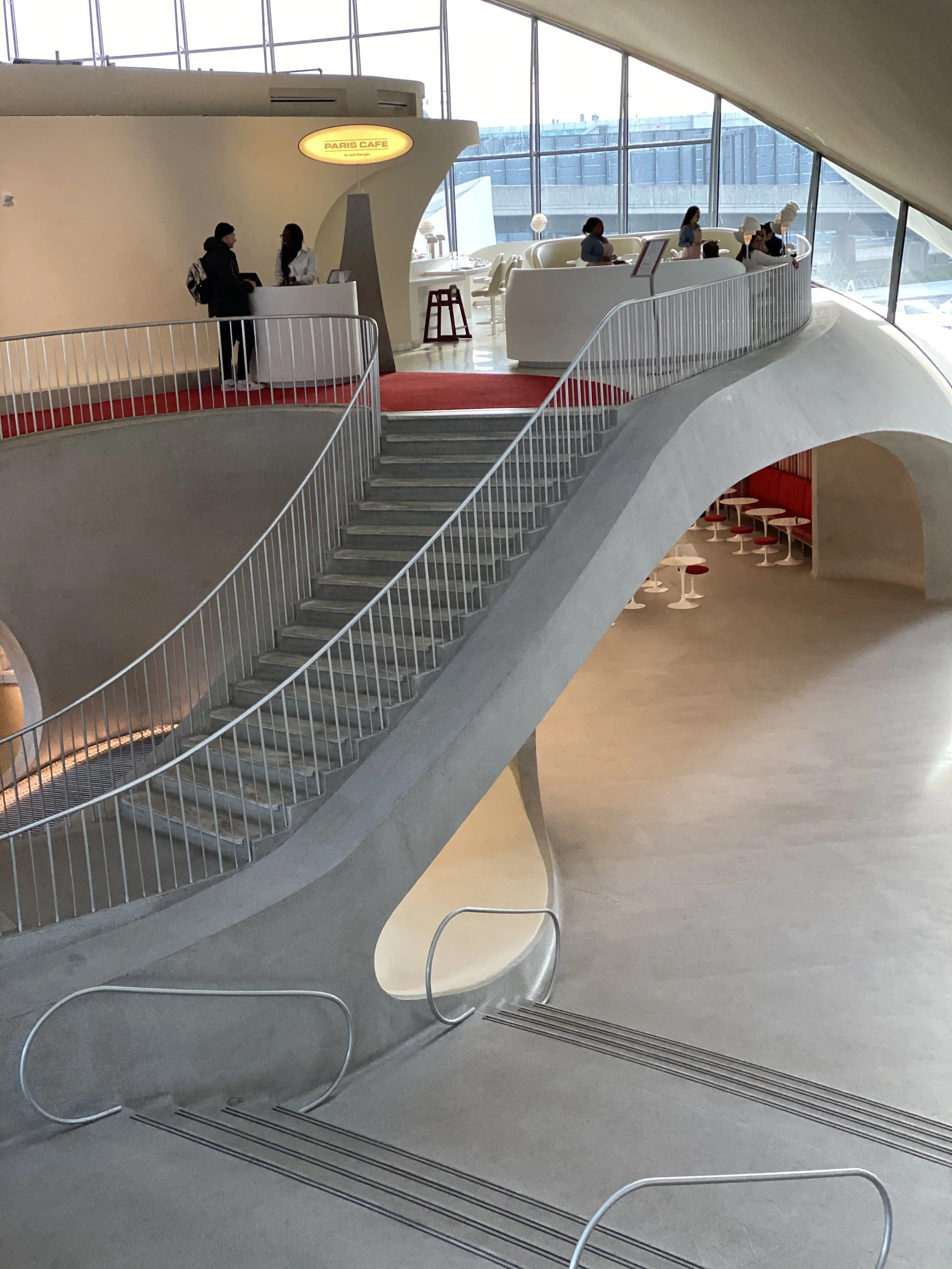
Swooping staircases and curving walkways fill the interior.

Swooping staircases and curving walkways fill the interior.

3. The media adored the TWA Flight Center, but one of Saarinen’s fellow architects described it as part of a “nightmare.”

Today, Saarinen is revered as one of the most important architects of the 20th century. However, when the TWA Flight Center opened in 1962 at what was then Idlewild Airport, not all of the attention it attracted was positive. The press was enthusiastic about his design, heaping acclaim on the structure’s dynamic form and fluid interior. 

But some of Saarinen’s peers were critical of his work. British architect and critic Alan Colquhoun was quoted in Architectural Design as saying the Flight Center was “like the monster forests of a child’s nightmare, where a toadstool may be 20 feet high or like the dematerialized and unearthly forms of an Expressionist film set.”

You can understand why critic Alan Colquhoun would say the interior feels like an Expressionist film set — but why does that have to be a bad thing?

You can understand why critic Alan Colquhoun would say the interior feels like an Expressionist film set — but why does that have to be a bad thing?

It was designated as a New York City landmark in 1994 and listed on the National Register of Historic Places in 2005. 

Planes are a lot bigger than they used to me, rendering Terminal 5 obsolete.

Planes are a lot bigger than they used to be, rendering Terminal 5 obsolete.

4. The iconic terminal was ultimately too small to work for larger planes and closed for almost two decades. 

By the mid-’70s, the aging hub became impractical — Saarinen’s design couldn’t accommodate the proliferation of wide-body jets that could carry hundreds of passengers at a time. The terminal was still used for smaller planes but eventually closed, with the last flight departing from there in 2001. 

Duke chillaxes on the chili pepper red seating.

Duke chillaxes on the chili pepper red seating.

5. Saarinen didn’t just design the TWA Flight Center — he also created a color for it. 

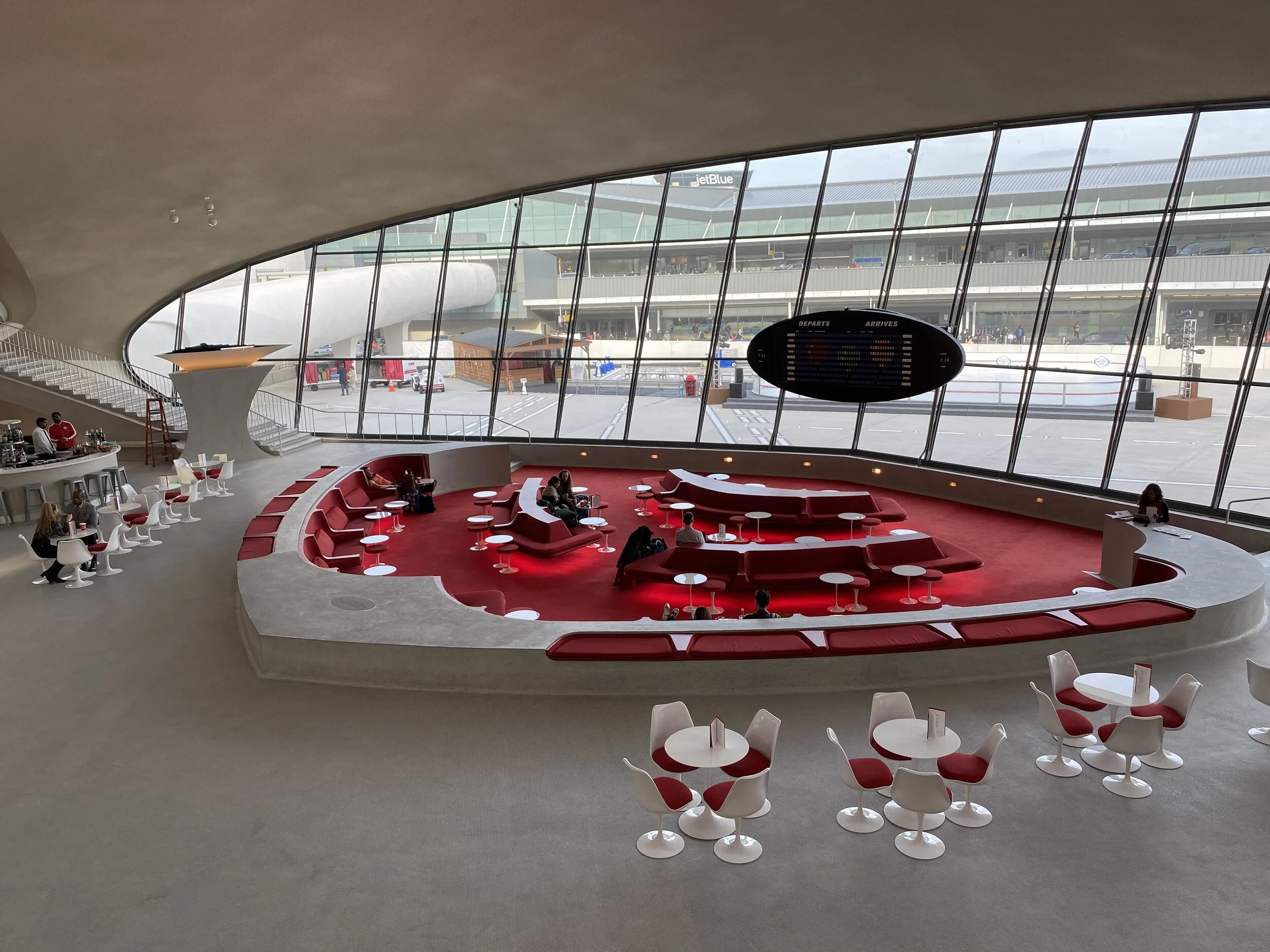
The signature hue, chili pepper red, which Saarinen developed for the Flight Center can be seen everywhere, from the banquettes and furnishings to the hallway carpeting in the hotel buildings. It stands out in stark contrast to the predominant white interior.

Incidentally, the space was originally outfitted by acclaimed Parisian industrial designer Raymond Loewy, the creative mind behind the 1959 TWA twin globes logo. 

The Sunken Lounge as seen from the second floor.

The Sunken Lounge as seen from the second floor

6. The Sunken Lounge is the hippest spot to grab a drink at JFK.

The centerpiece of the space is the Sunken Lounge cocktail bar, complete with Tulip chairs and pedestal tables designed by Saarinen for Knoll. 

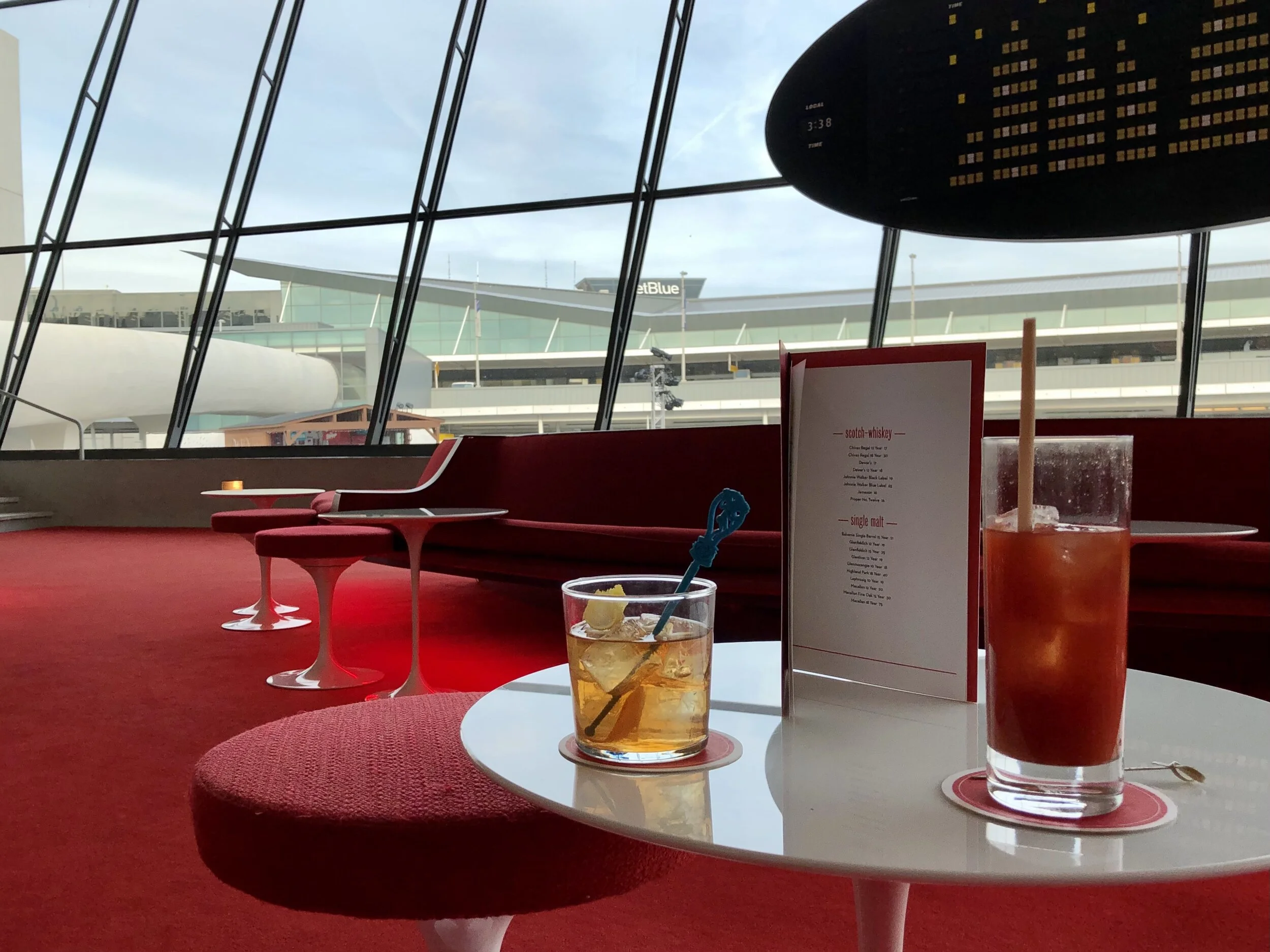
I ordered an Idlewild old fashioned, while Wally got a Bloody Mary. We were particularly delighted with the retro swizzle stick featuring a dancing Shiva, the Hindu god.

The drinks might be spendy, but the atmosphere makes it worthwhile.

The drinks might be spendy, but the atmosphere makes it worthwhile.

Wally’s a sucker for spicy Bloodys.

Wally’s a sucker for spicy Bloodys.

There’s something comforting about the click-click-click of the retro departures board.

There’s something comforting about the click-click-click of the retro departures board.

A split-flap departures board, by Solari di Udine, the Italian manufacturer that made the terminal’s original, displays custom messages instead of flight info. There are over 34,000 tiles on the sign, creating a nostalgia-inducing whir and clatter throughout our visit.

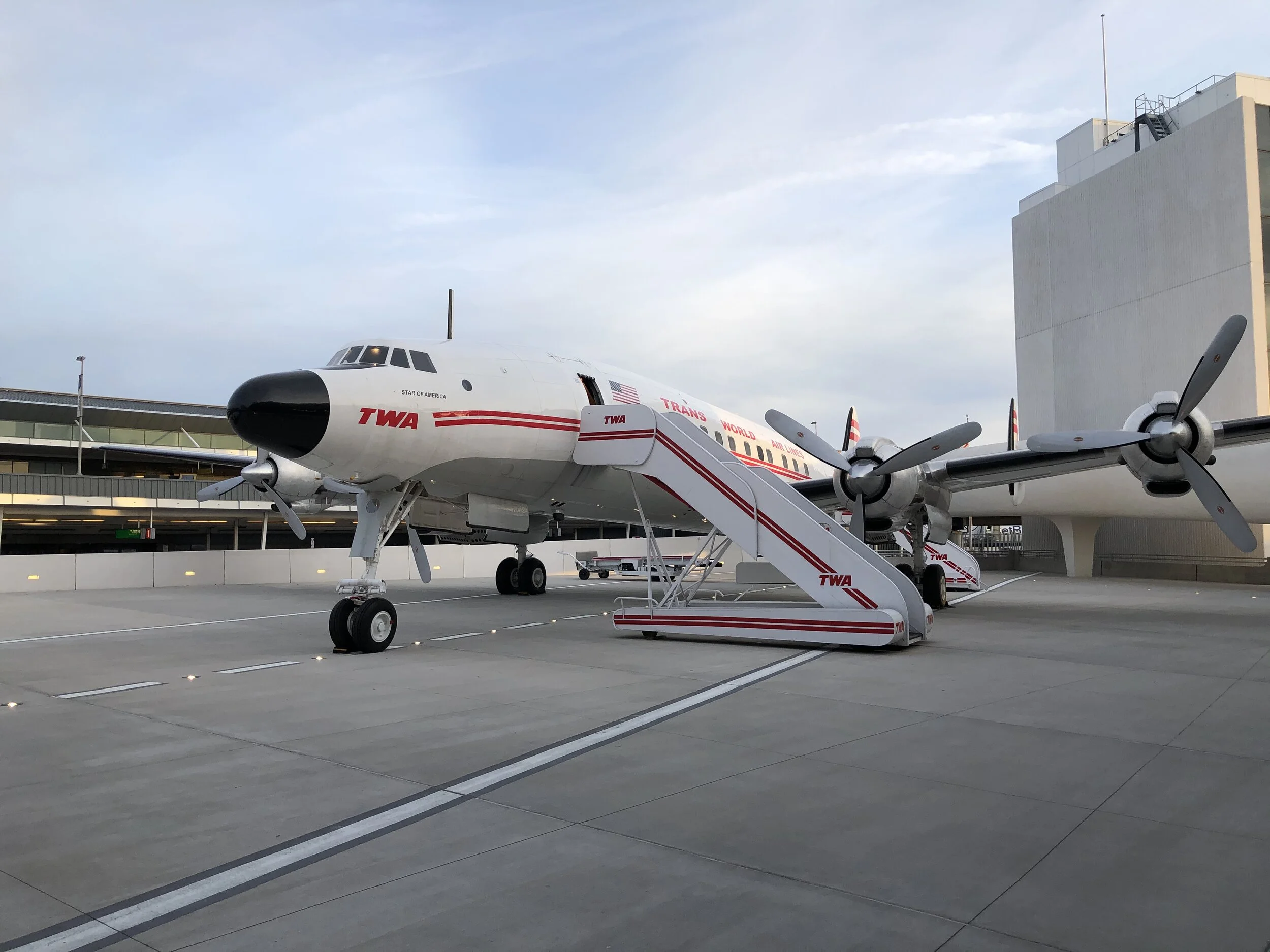
De plane! De plane! One imagines this plane was named Connie cuz she’s a Lockheed Constellation.

De plane! De plane! One imagines this aircraft was named Connie cuz she’s a Lockheed Constellation.

7. The on-site plane, Connie, is now a cocktail lounge — though she once ran drugs in South America.

While enjoying a drink in the Sunken Lounge, you can see a vintage plane through the floor-to-ceiling windows. Wally and I knew we had to explore it. 

Wally’s off to see if there’s any pot left on Connie from her drug-smuggling days.

Wally’s off to see if there’s any pot left on Connie from her drug-smuggling days.

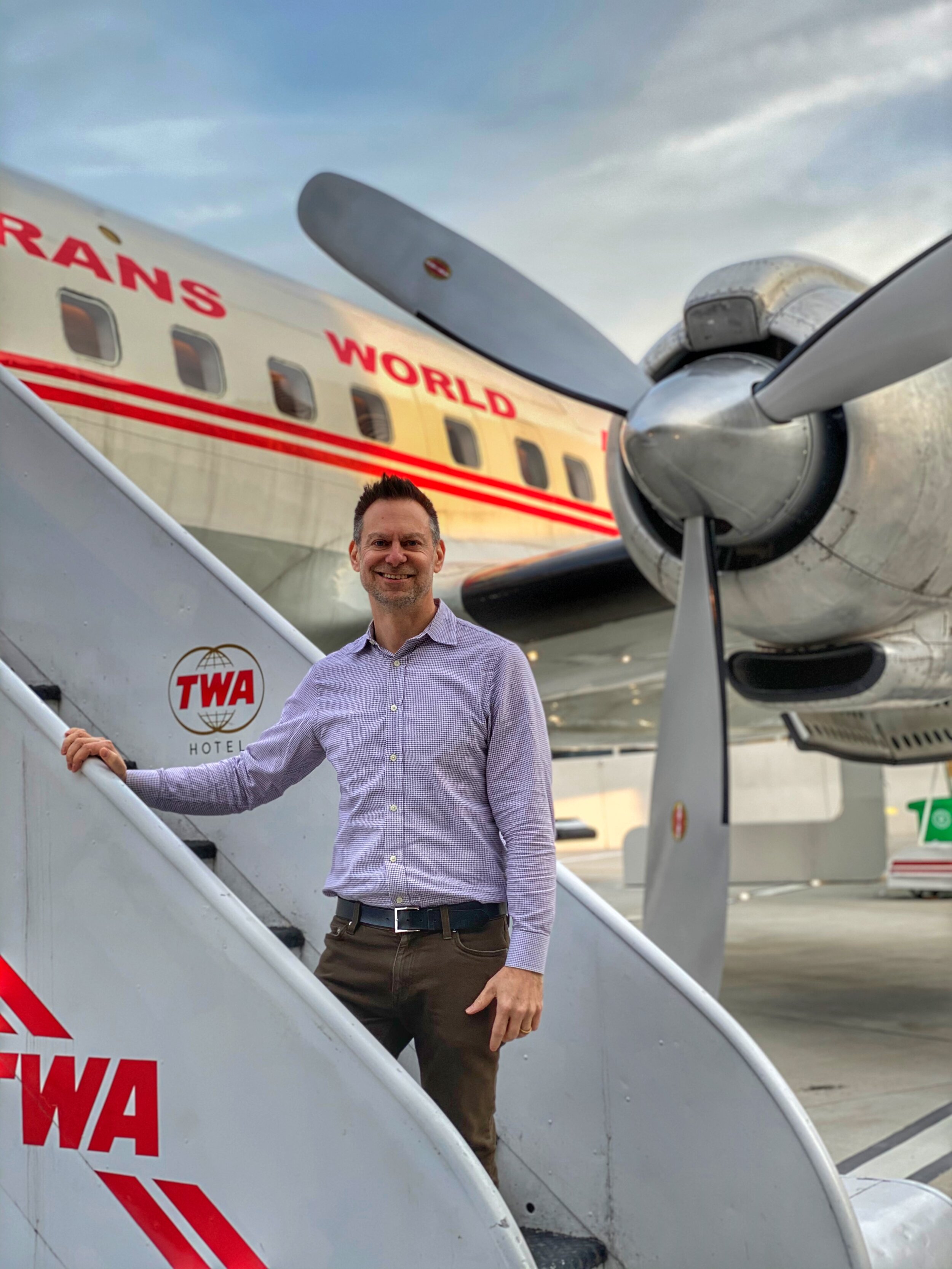
There’s no ticket needed for Duke to board this plane!

There’s no ticket needed for Duke to board this plane!

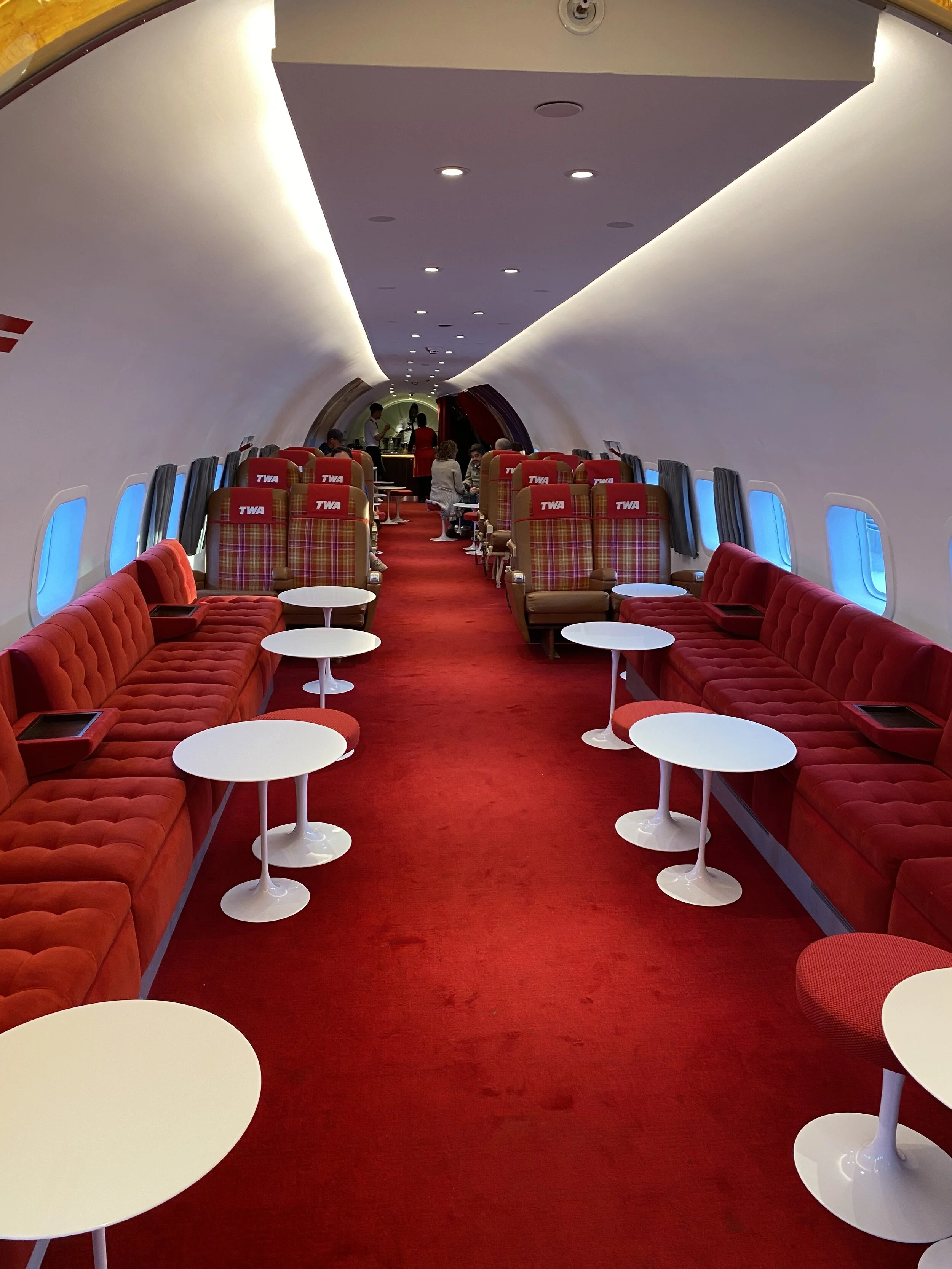
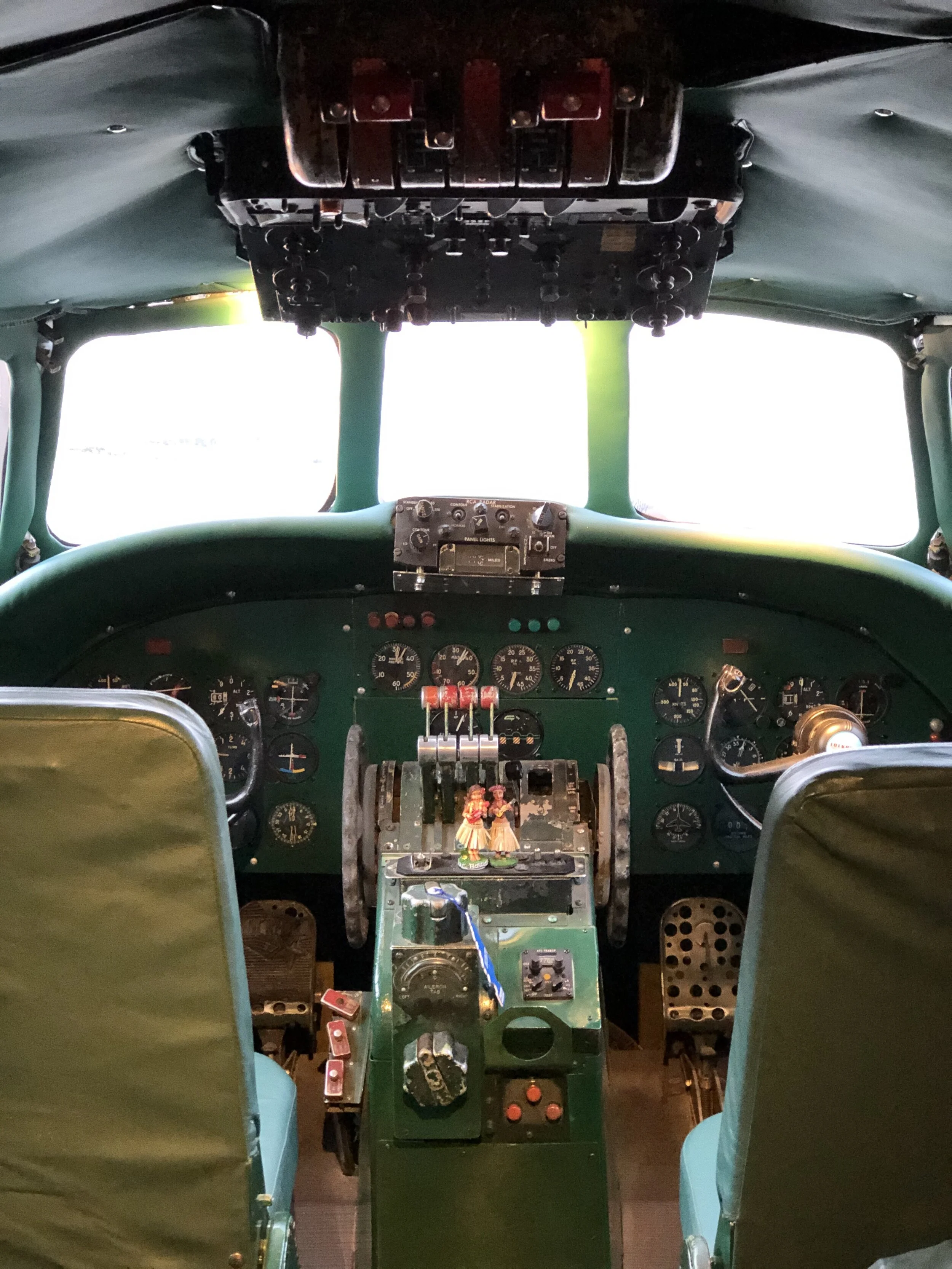
A 1958 Lockheed Constellation L 1649A — a four-propeller airplane commissioned by Hughes and affectionately known as Connie — sits parked on the tarmac behind the terminal. Its interior has been transformed into a delightful, one-of-a-kind cocktail lounge. 

Grab a drink and some nibblies inside Connie, a plane-turned-cocktail bar.

Grab a drink and some nibblies inside Connie, a plane-turned-cocktail bar.

Check out the cockpit while onboard Connie.

Check out the cockpit while onboard Connie.

In the interim between being a part of the TWA fleet and being a star of the Flight Center, Connie engaged in some dubious activities, including delivering marijuana for a Colombian drug cartel before being abandoned in Honduras, according to Air & Space magazine.

Saarinen designed the Tulip chairs and pedestal tables found throughout the space.

Saarinen designed the Tulip chairs and pedestal tables found throughout the space.

8. A restoration project returned the Flight Center to its former retro space-age glory.

The impeccable attention to detail of the restoration of the former terminal was overseen by Richard Southwick, partner and director of historic preservation at New York-based architecture firm Beyer Blinder Belle. 

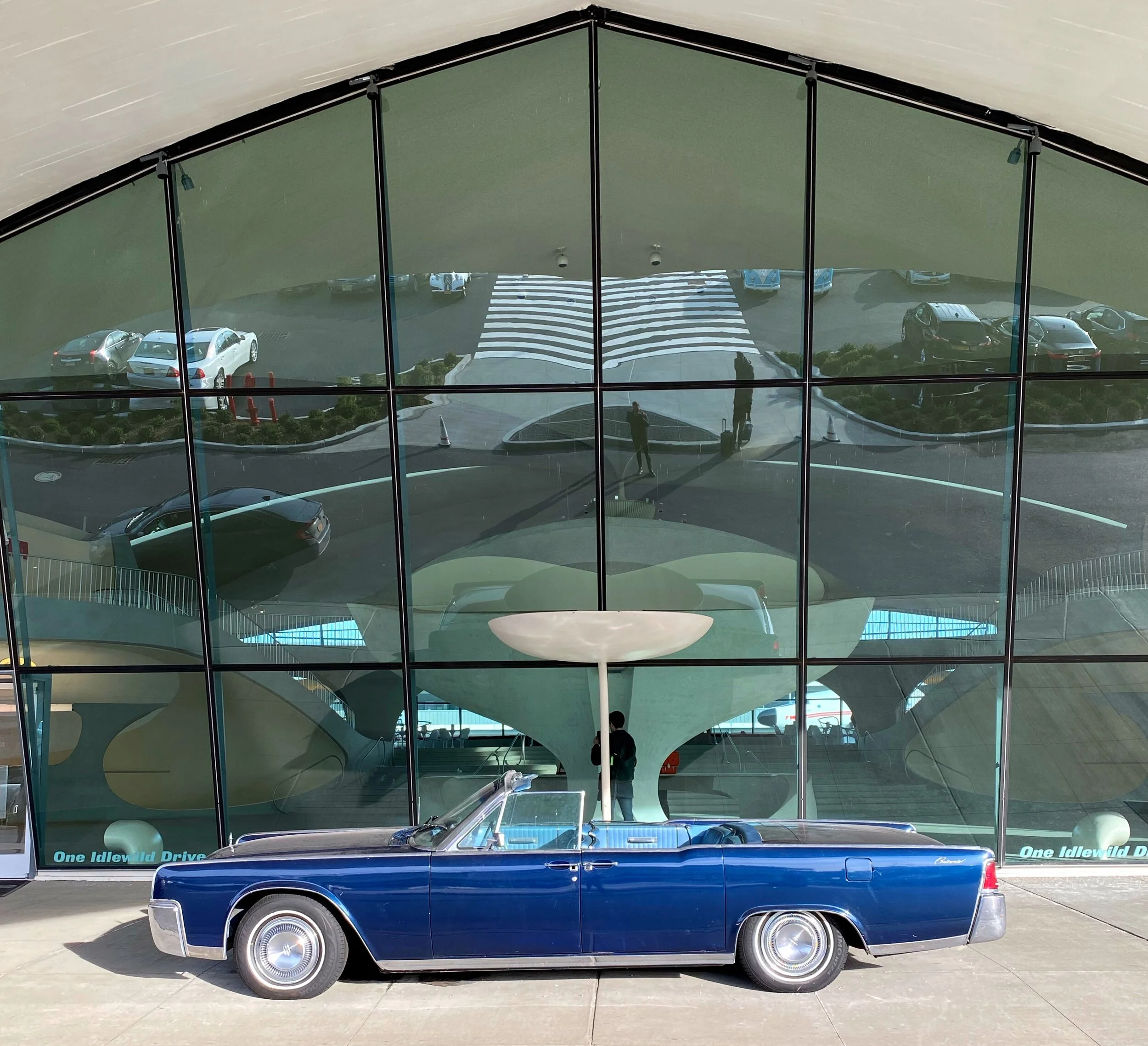
A vintage convertible sits out front of the Flight Center.

A vintage convertible sits out front of the Flight Center.

One design element that was particularly challenging was the ceramic penny tiles specified in Saarinen’s original design. A total of 20 million custom ½-inch-diameter bisque-colored mosaic tiles were sourced and used over the course of both phases of the project, covering the floors and swooping interior walls. 

The organic yet futuristic forms create a Jetsons sort of feel, retro and space age all at once.

The organic yet futuristic forms create a Jetsons sort of feel, retro and space age all at once.

Those things on the wall are called payphones. They’re sort of like mobiles, except they were stationary.

Those things on the wall are called payphones. They’re sort of like mobiles, except they were stationary.

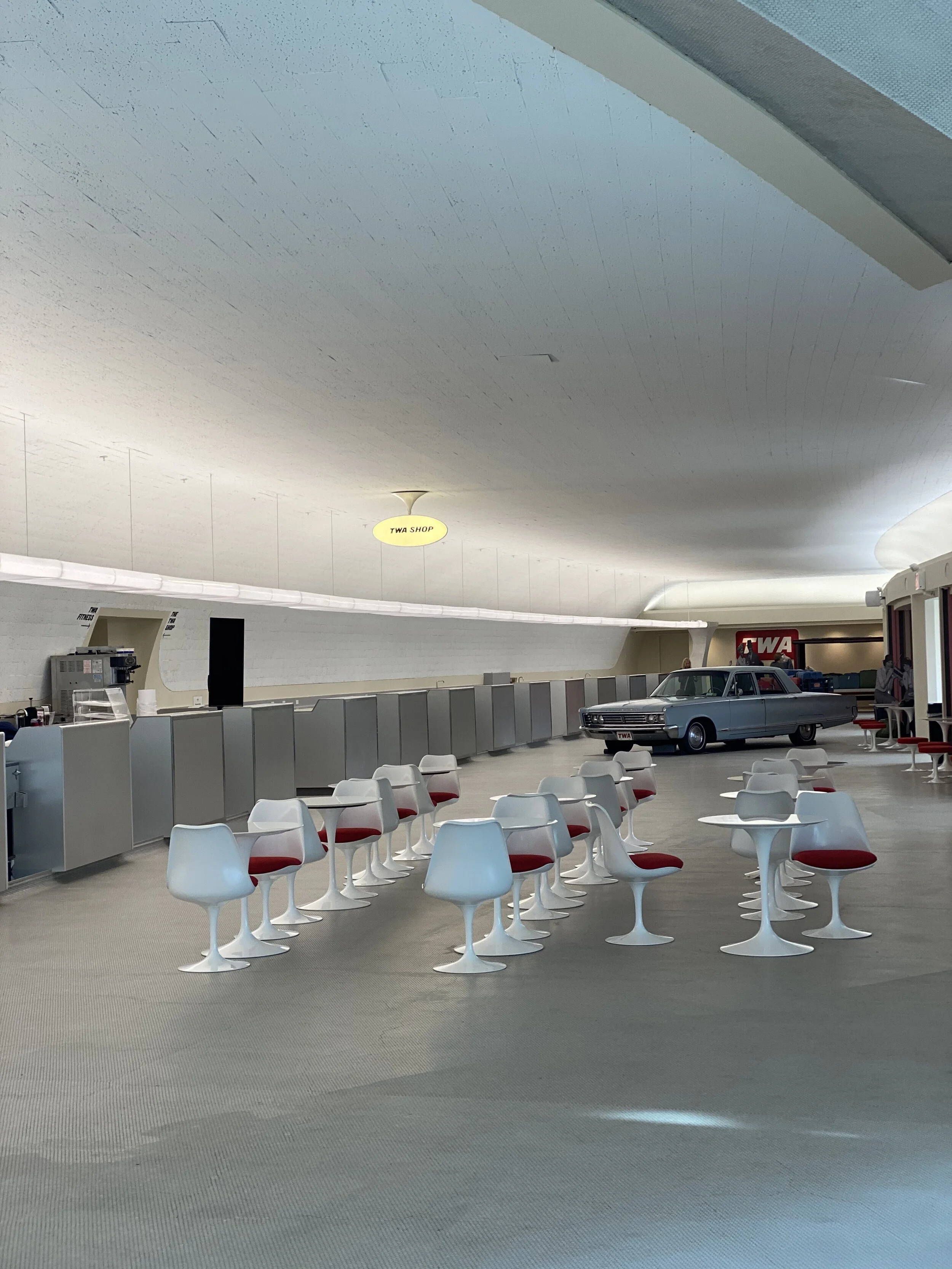
There’s an odd little seating area (with another classic car) off to the left when you enter.

There’s an odd little seating area (with another classic car) off to the left when you enter.

Vintage magazines and snacks at the newsstand by the bathroom

Vintage magazines and toiletries at the newsstand by the bathroom

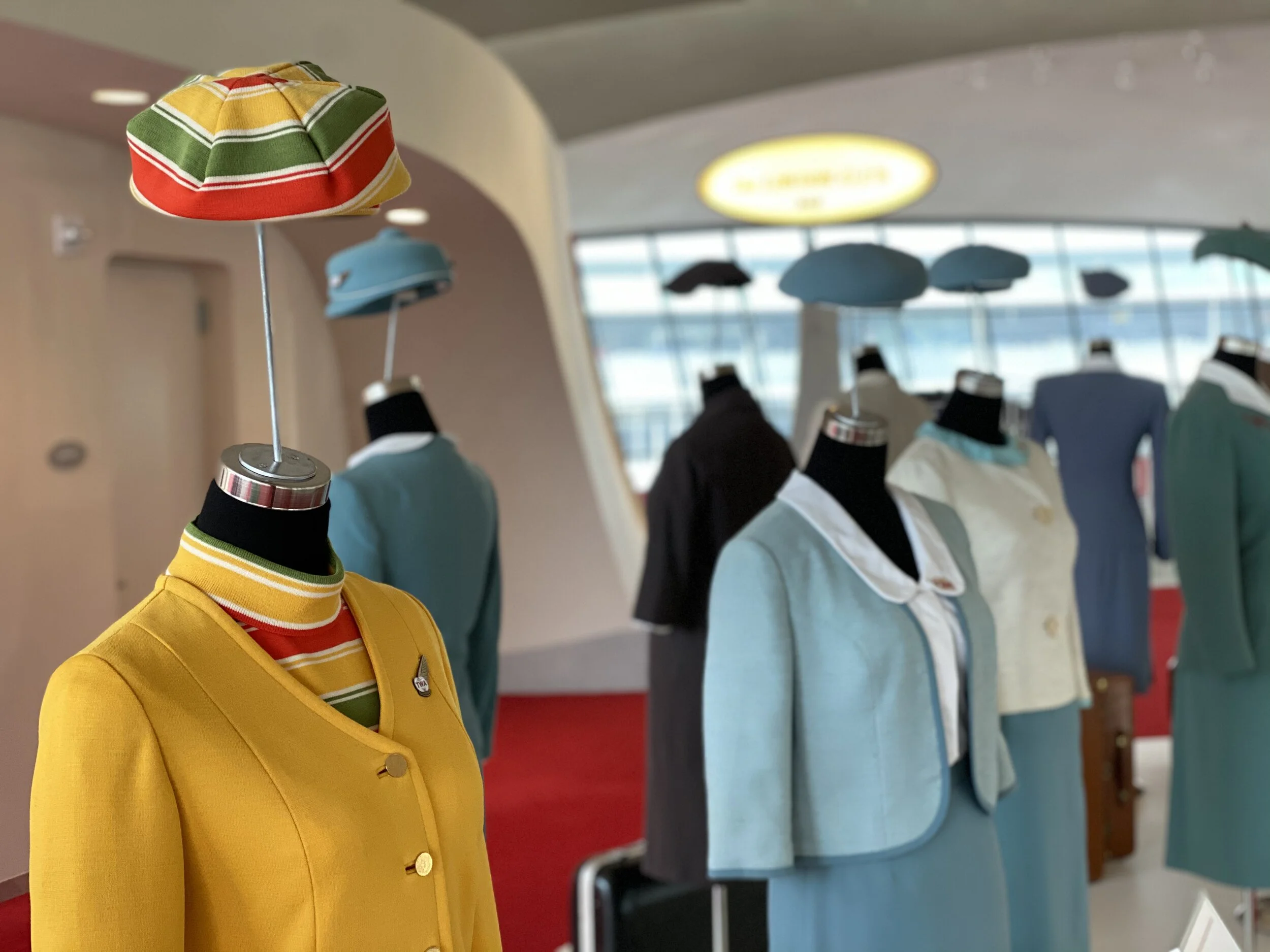
The upper level features a mini-museum of TWA artifacts, including flight attendant uniforms from the 1940s to the 1990s. Designs from Valentino, Cassini and Balmain are on display, along with vintage flight bags. 

The Paris Café on the second floor

The Paris Café on the second floor

Famous designers like Valentino designed flight attendant uniforms for TWA. They’re on display upstairs.

Famous designers like Valentino designed flight attendant uniforms for TWA. They’re on display upstairs.

The Paris Café is located on the second floor of the Flight Center and occupies the footprint of the original Lisbon Lounge. 

The pair of corridors featured in the 2002 Steven Spielberg film Catch Me If You Can, starring Leonardo DiCaprio and Tom Hanks, once led to boarding gates and now offers access to the two wings of the TWA Hotel, Hughes and Saarinen, which partially encircle the terminal.

If you’ve got some extra time before or after a flight at JFK, be sure to stop by the TWA Flight Center for a drink and some photos. Saarinen’s design somehow manages to be retro and futuristic at the same time. –Duke

Follow the signs the Terminal 5, and you’ll be rewarded with the architectural and design wonder that is the TWA Flight Center.

Follow the signs the Terminal 5, and you’ll be rewarded with the architectural and design wonder that is the TWA Flight Center.


TWA Flight Center
John F. Kennedy International Airport
JFK Access Road
1 Idlewild Drive
New York, NY 11430