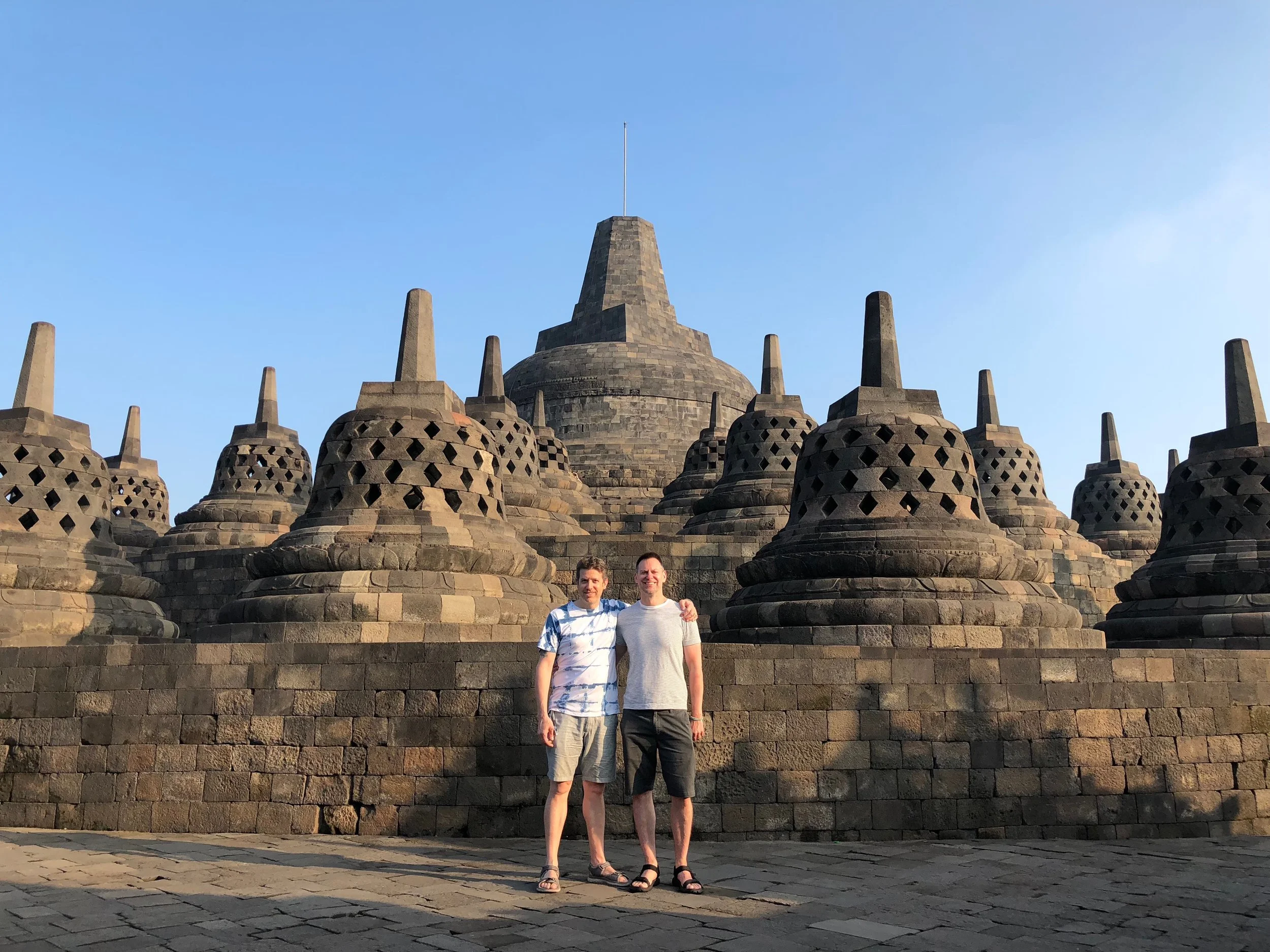
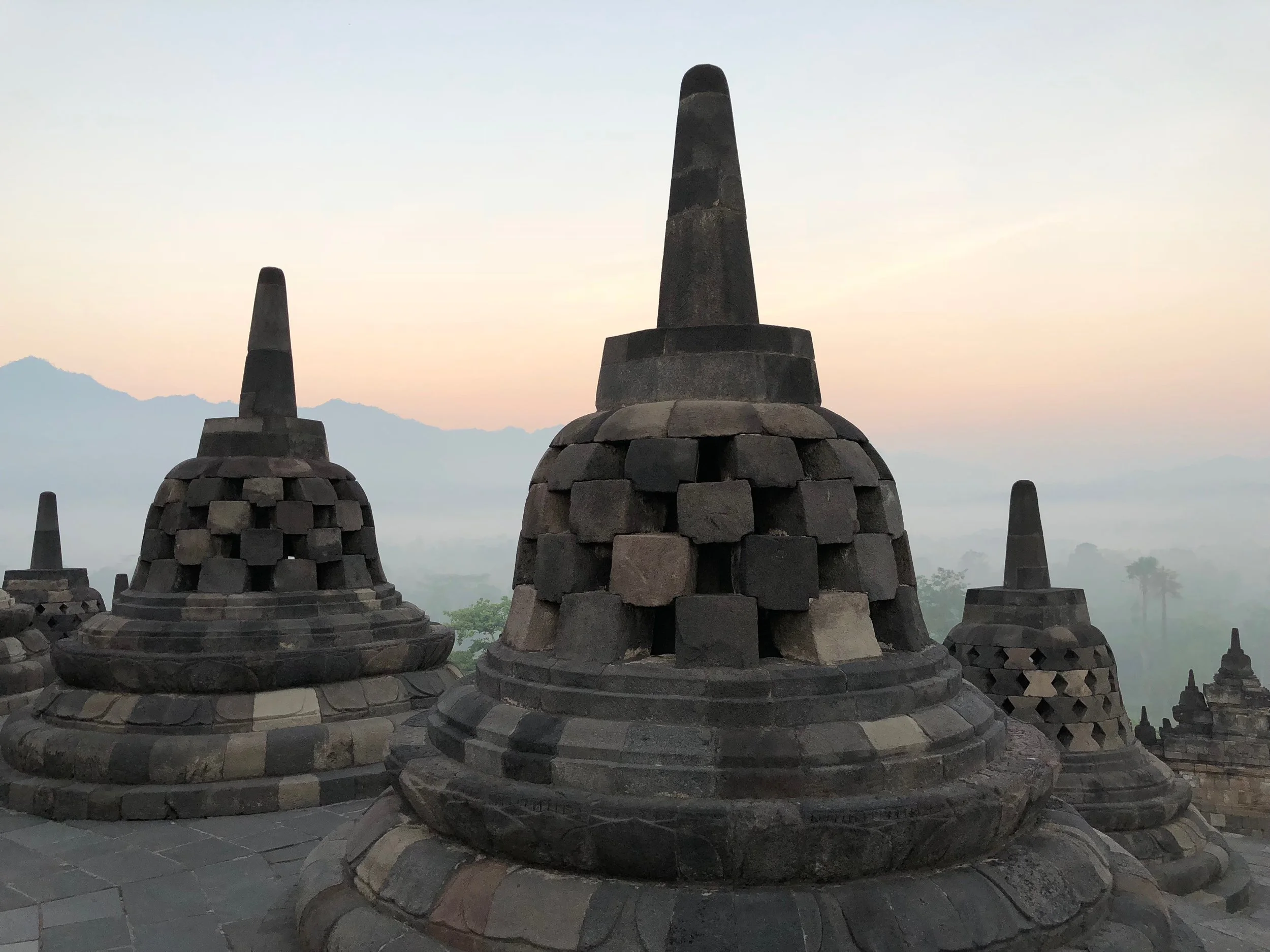
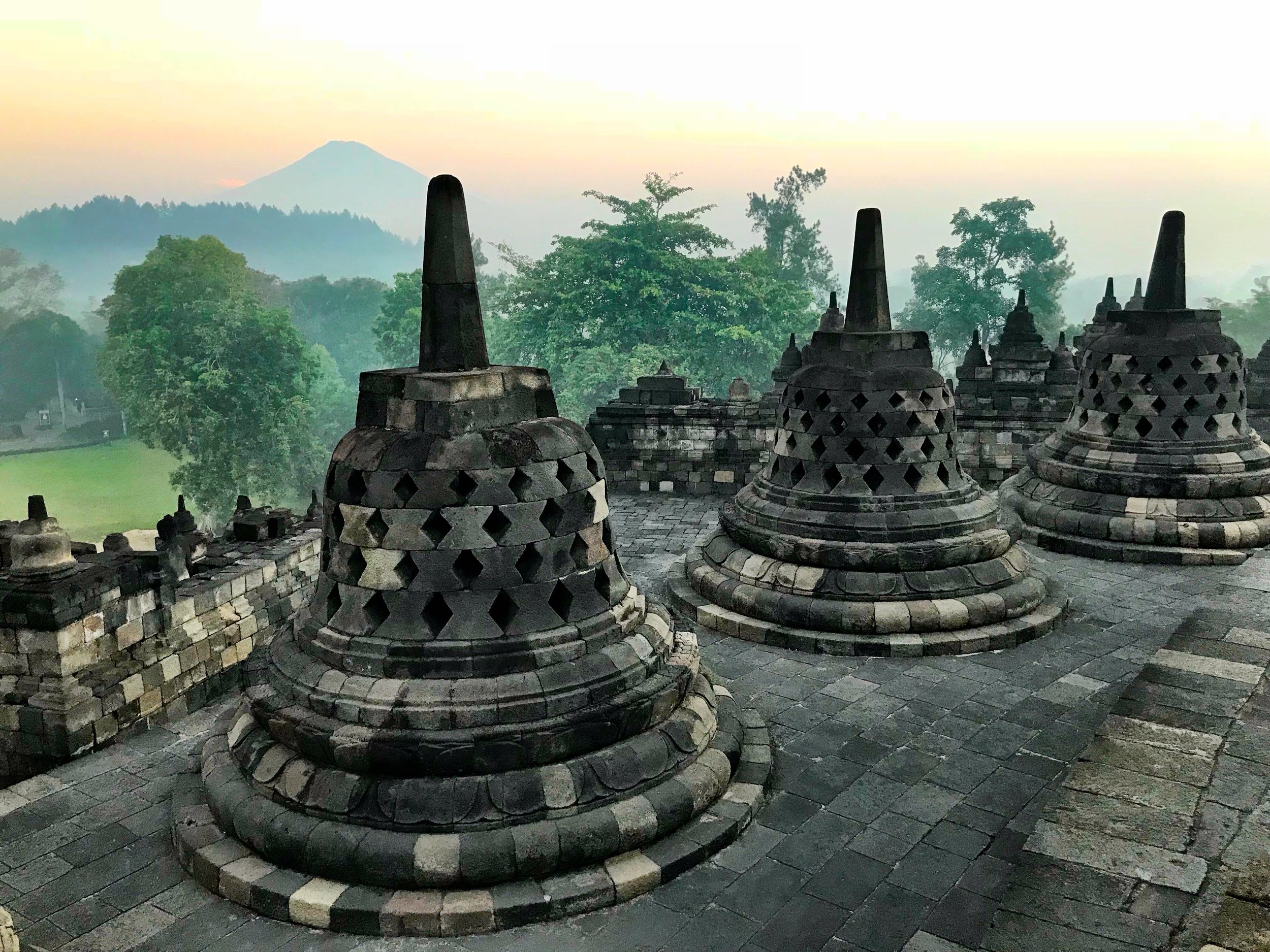
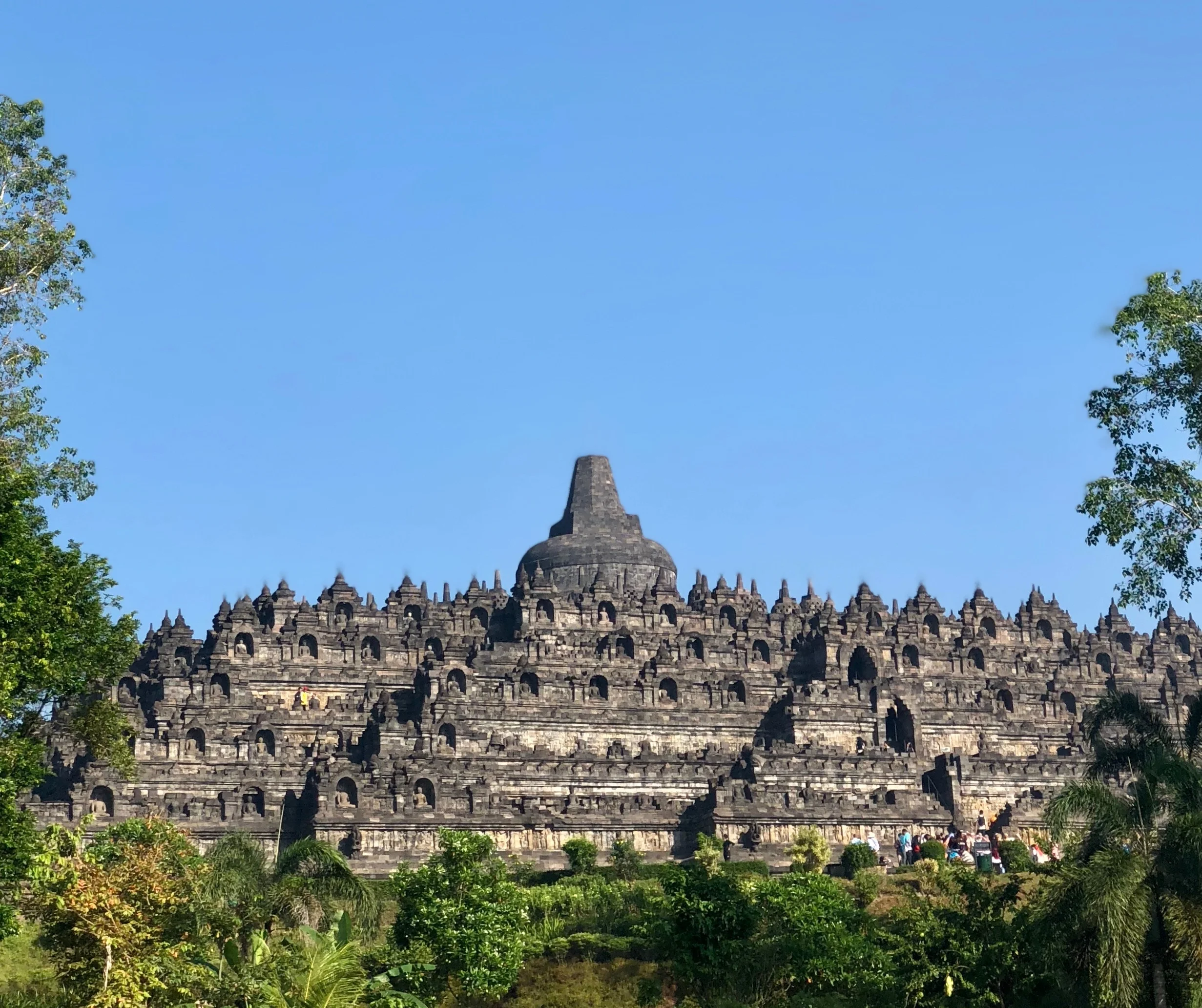
INDONESIA

Witnessing a Hindu Festival at Pura Samuan Tiga

We stumbled upon a full moon festival of Siat Sampian at a local temple near Goa Gajah, Bali — glimpsing a fascinating ritual but missing the big fight.
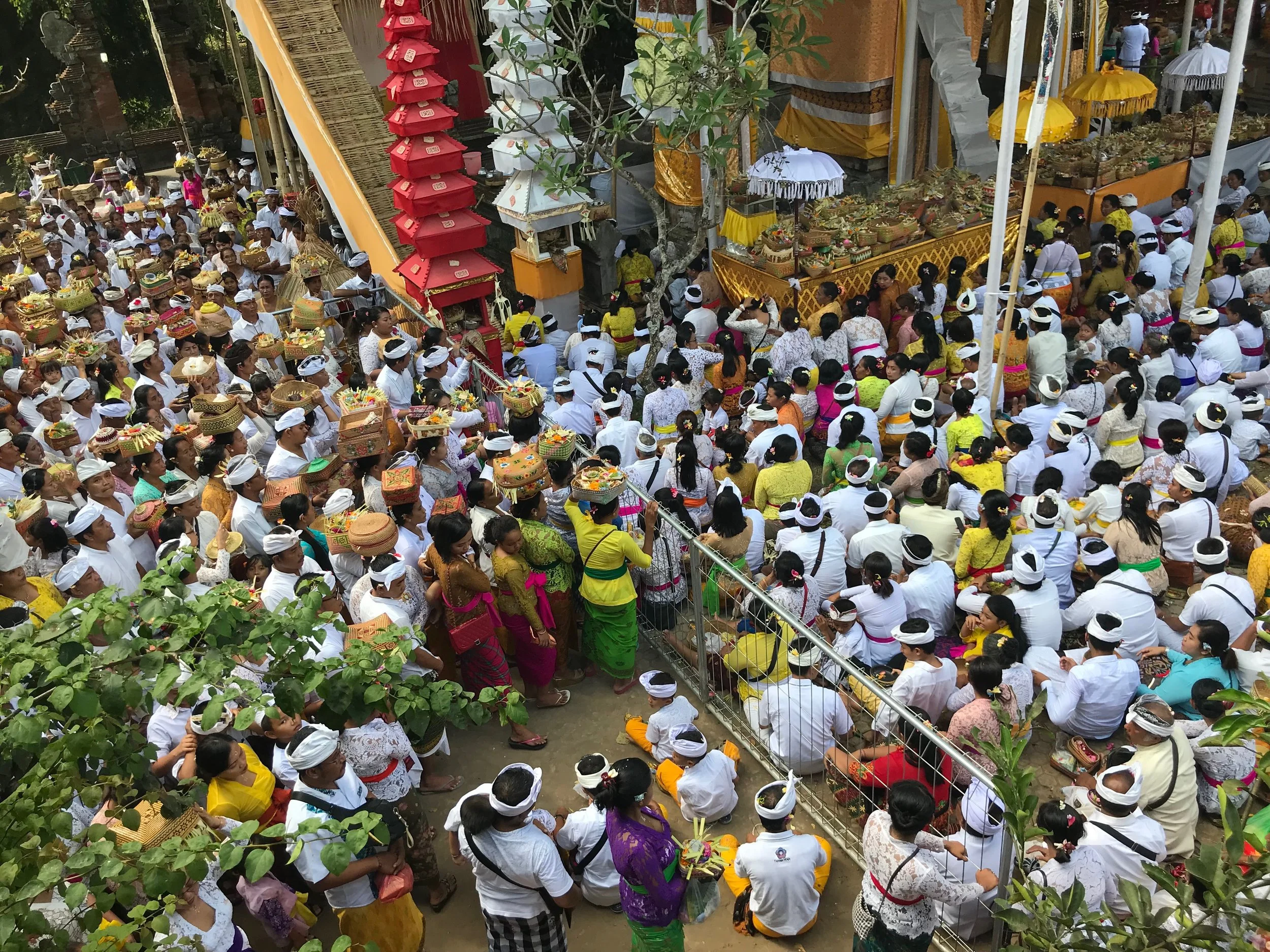
Pura Samuan Tiga, during the precursors to the Siat Sampian festival

Pura Samuan Tiga, during the precursors to the Siat Sampian festival

Our driver seemed to be trying to dissuade us from visiting Pura Samuan Tiga.

“It will be very, very crowded,” he told us, “because of the festival for the full moon. Not a good time to go.”

But hearing there was a festival only made us want to visit all the more.

Temples popular on the tourist trail are always worth seeing, but we recommend finding at least one local temple on every trip. It’s a fascinating glimpse into another religion — especially when it’s the ever-enigmatic Hinduism, the major world religion I understand the least.
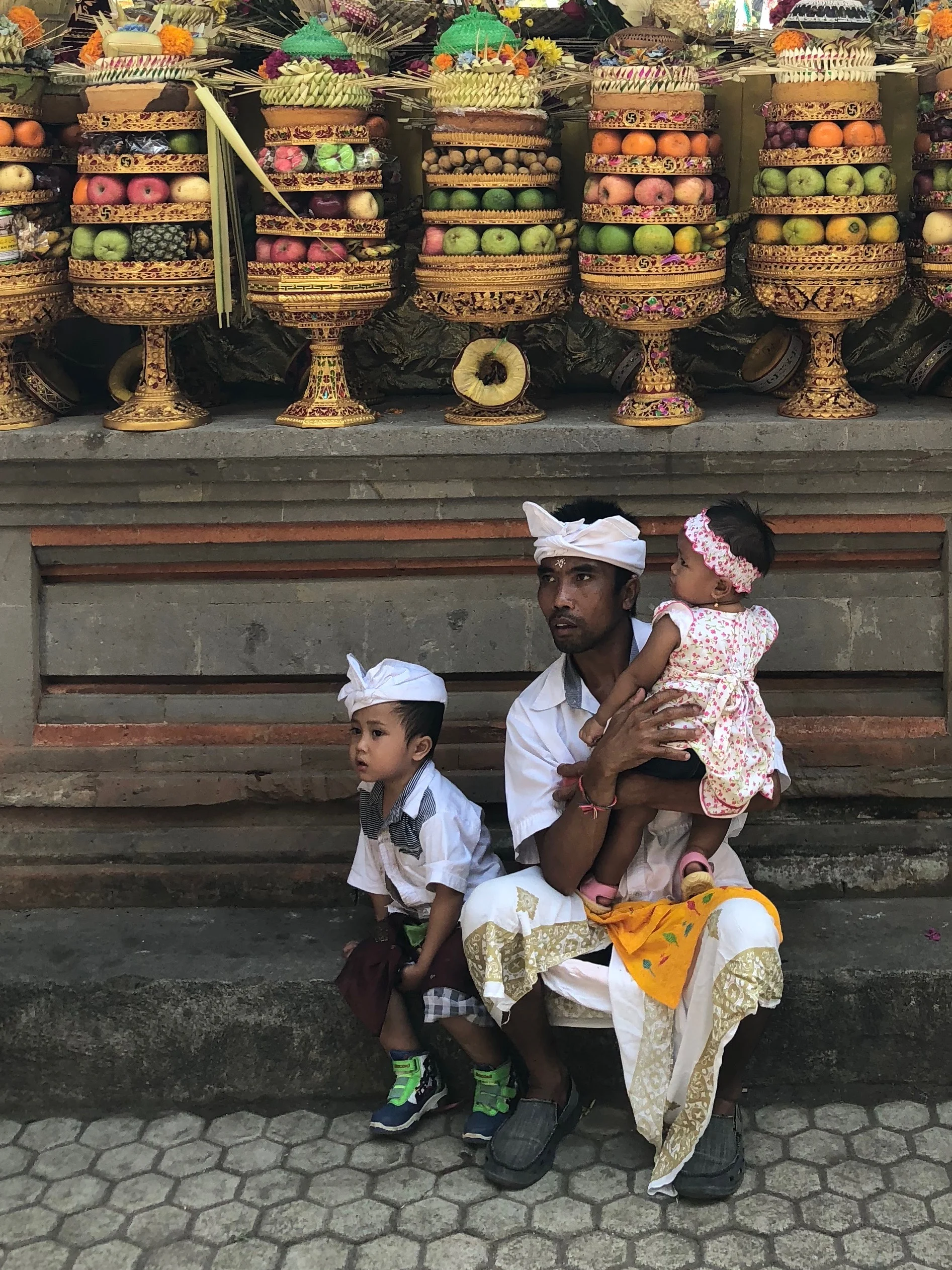
A man and his children pause under the elaborate temple offerings
A man and his children pause under the elaborate temple offerings

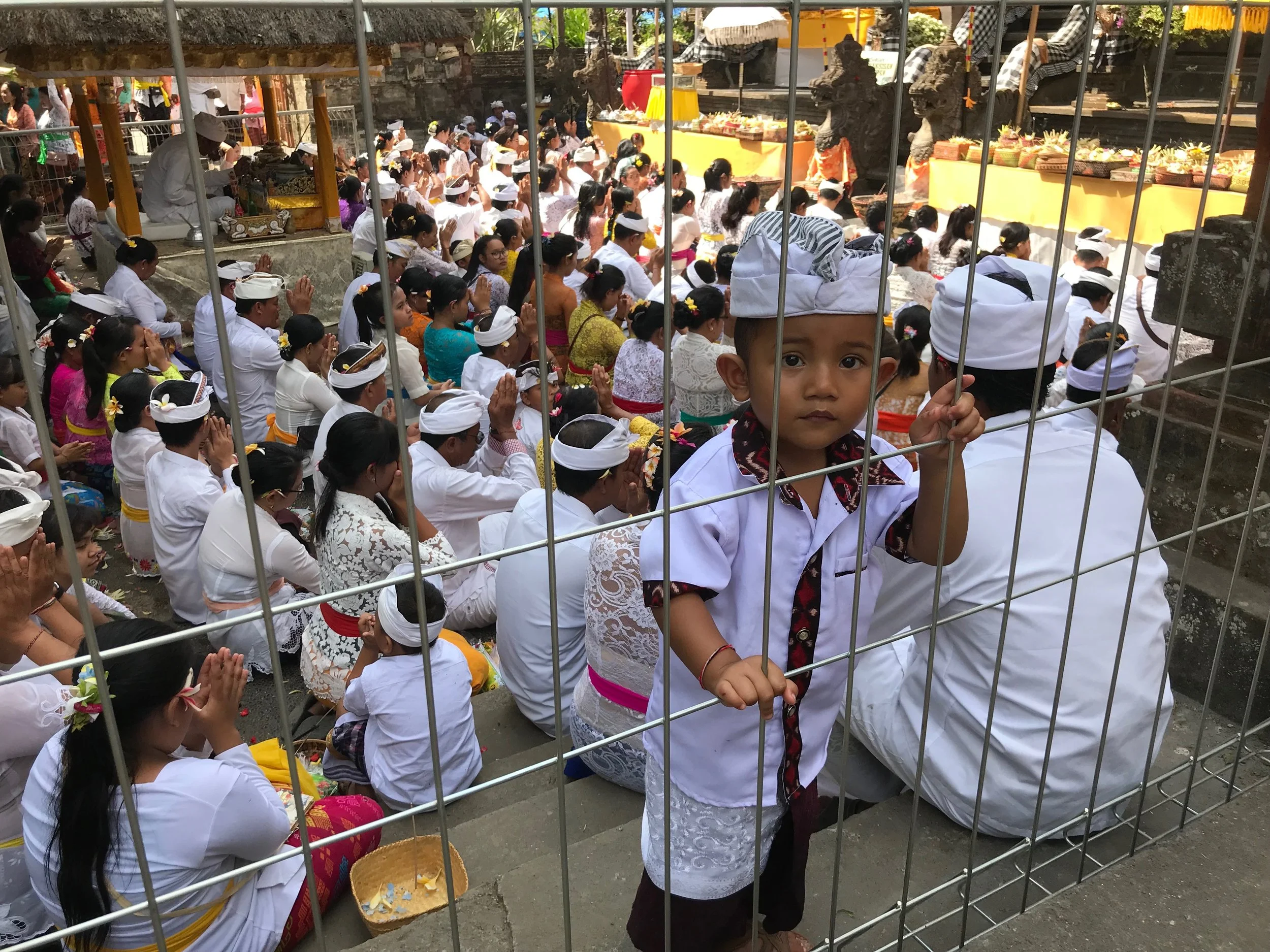
Fences close off areas of worship at Samuan Tiga

Fences close off areas of worship at Samuan Tiga

Duke, a total Ravenclaw when it comes to research, will spend hours poring over websites and books when building out our itineraries for a trip. He found Samuan Tiga and suggested a stopover en route to the nearby giant mouth cave of Goa Gajah. Located in the village of Bedulu in the Gianyar regency, the temple is about a 20-minute drive from Ubud, where we based ourselves.

Pura Samuan Tiga might not be one of the most visited temples on the island — but it gives you a great feel for what these sprawling Hindu temple complexes are like. Especially if you’re lucky enough to happen upon it during a festival.
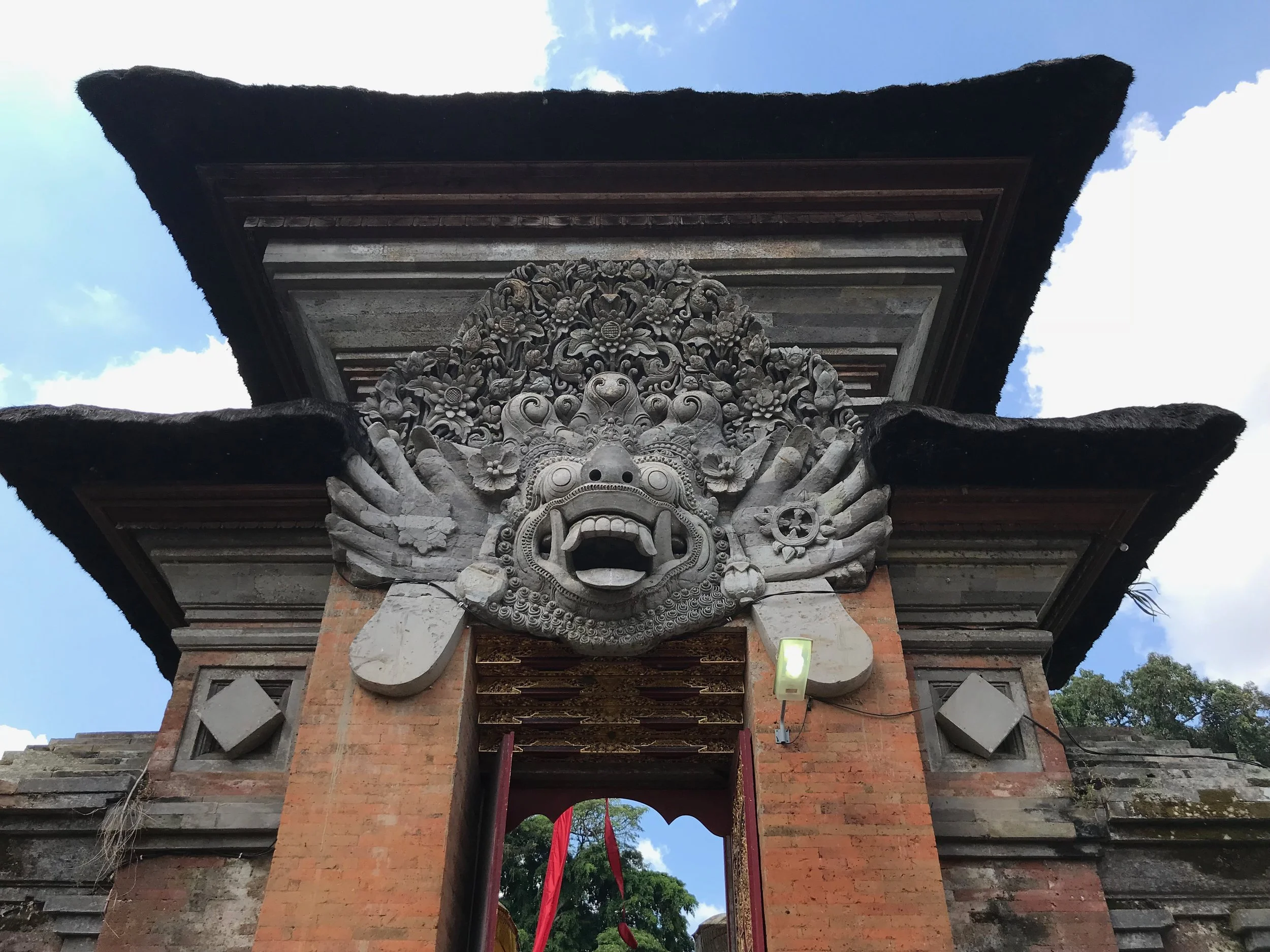
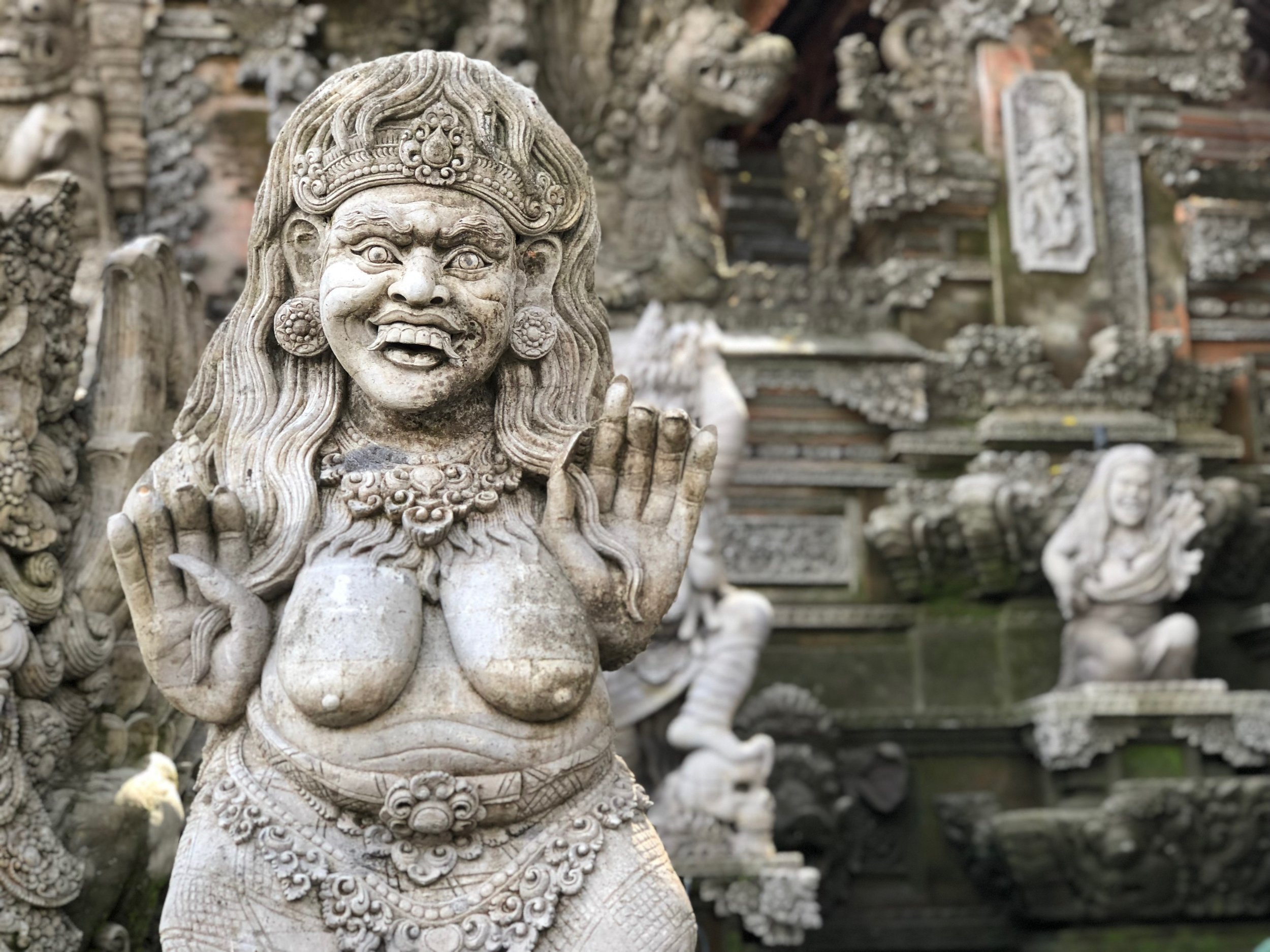
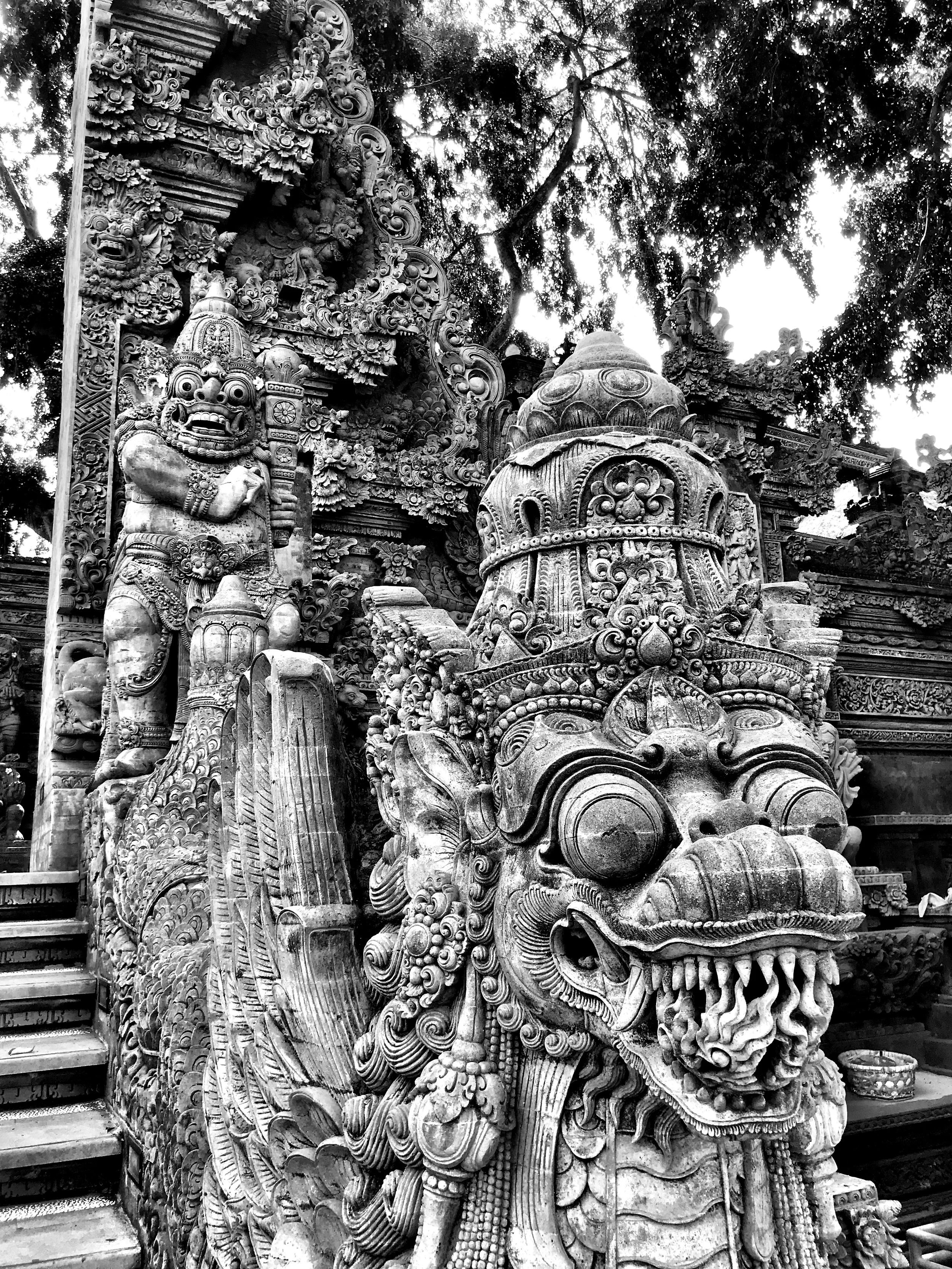
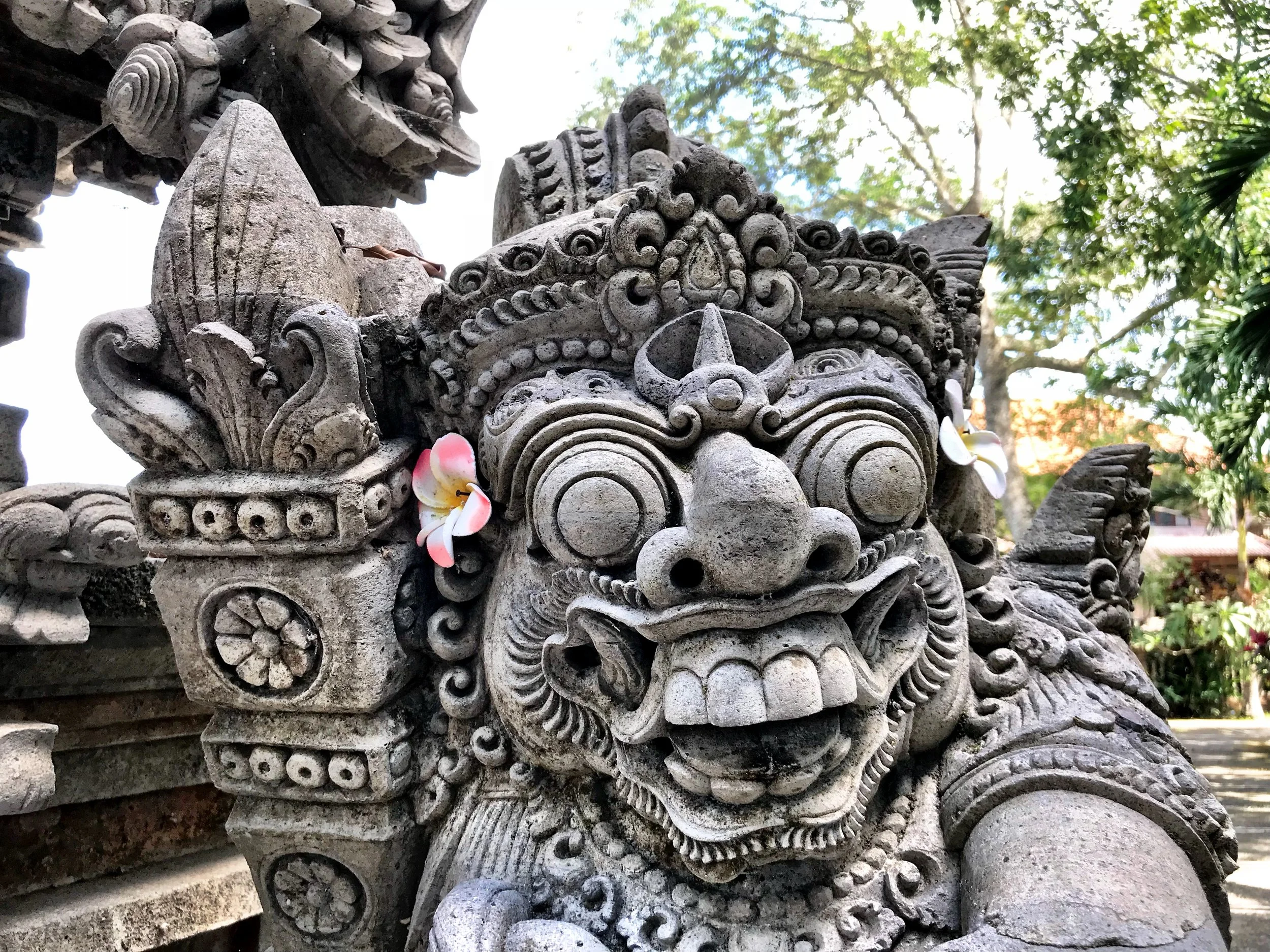
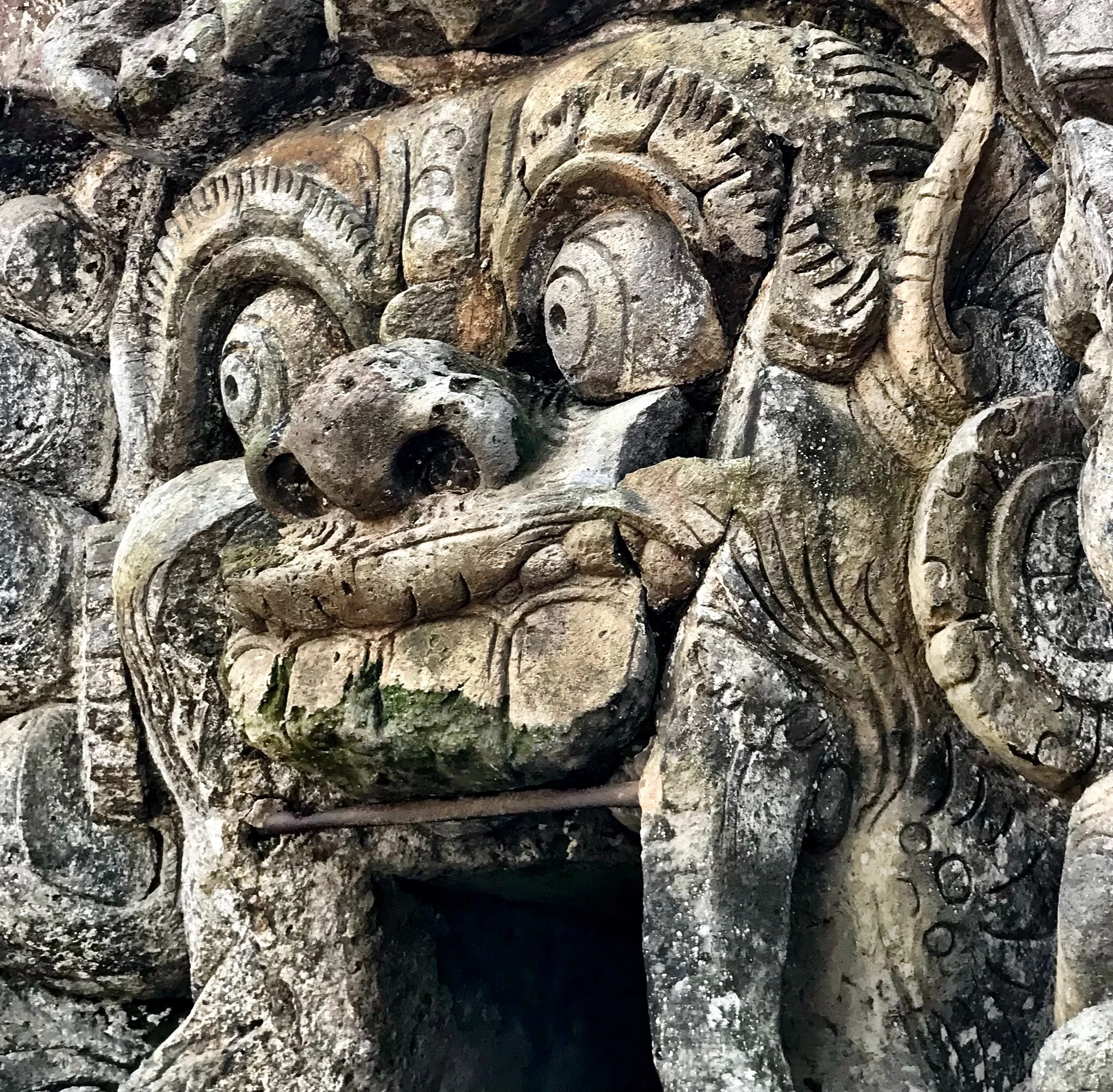
Bhoma guards the temple from malevolent spirits
Bhoma guards the temple from malevolent spirits

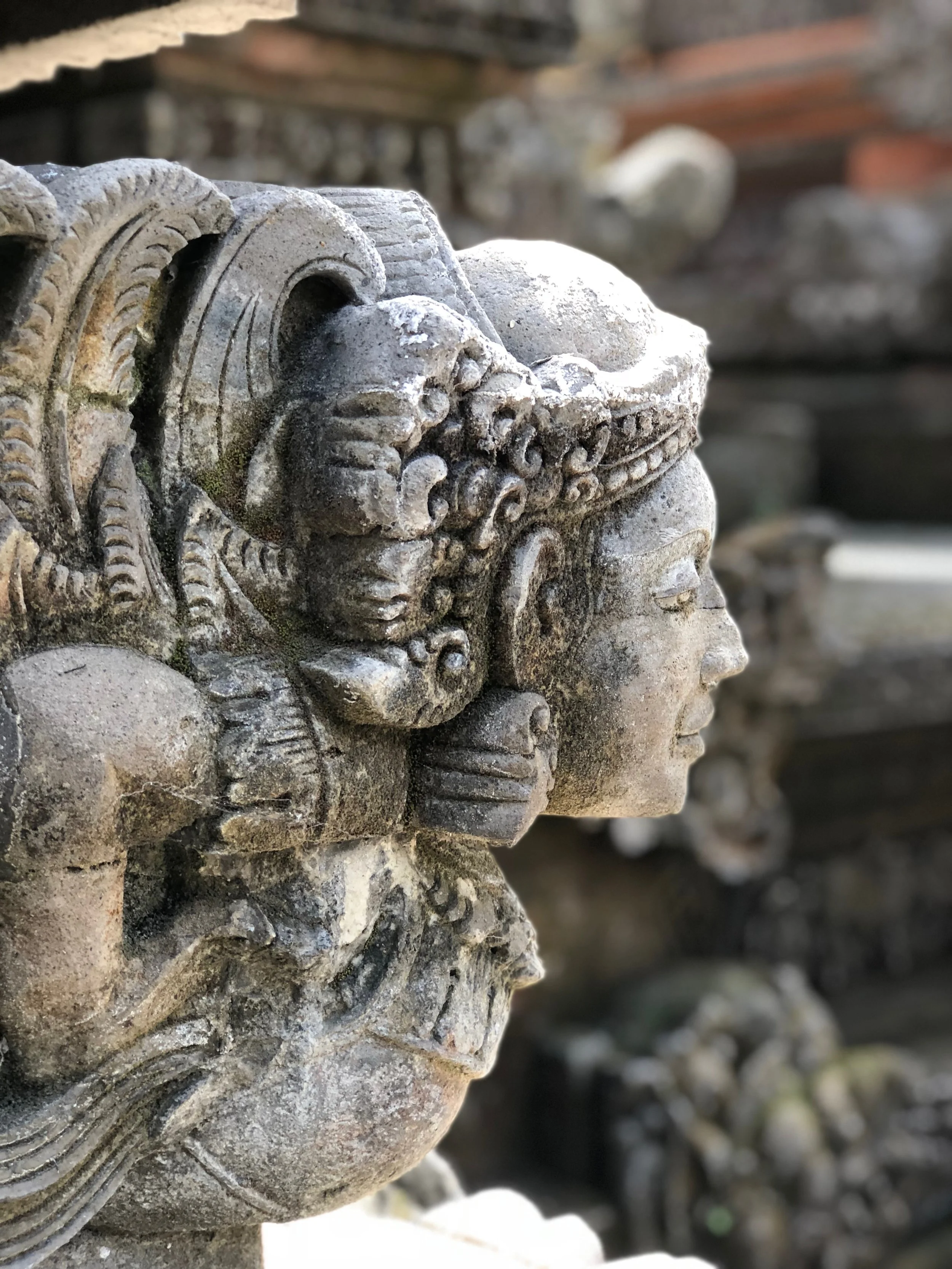
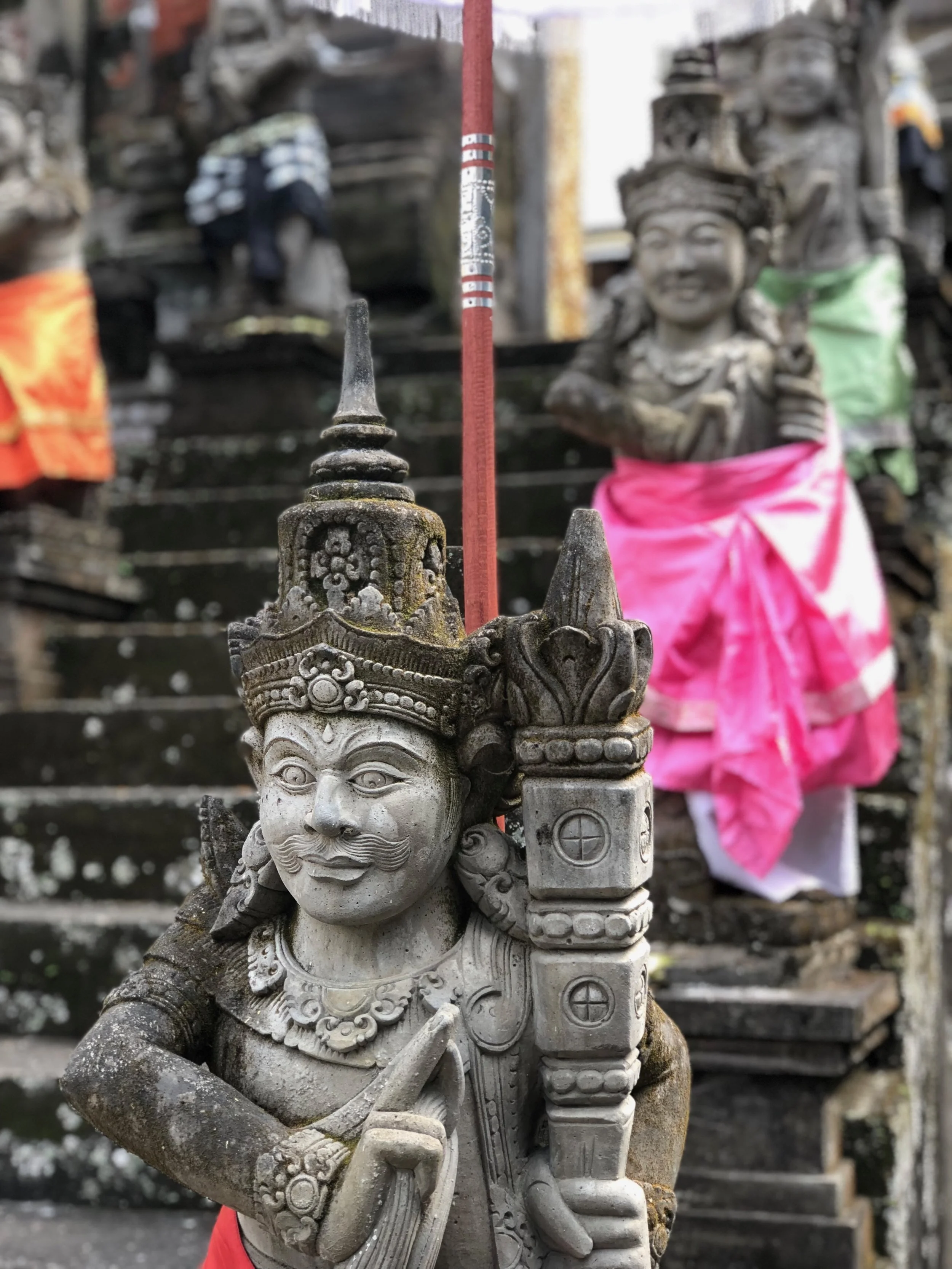
The statuary in the temple was originally carved from volcanic rock
The statuary in the temple was originally carved from volcanic rock

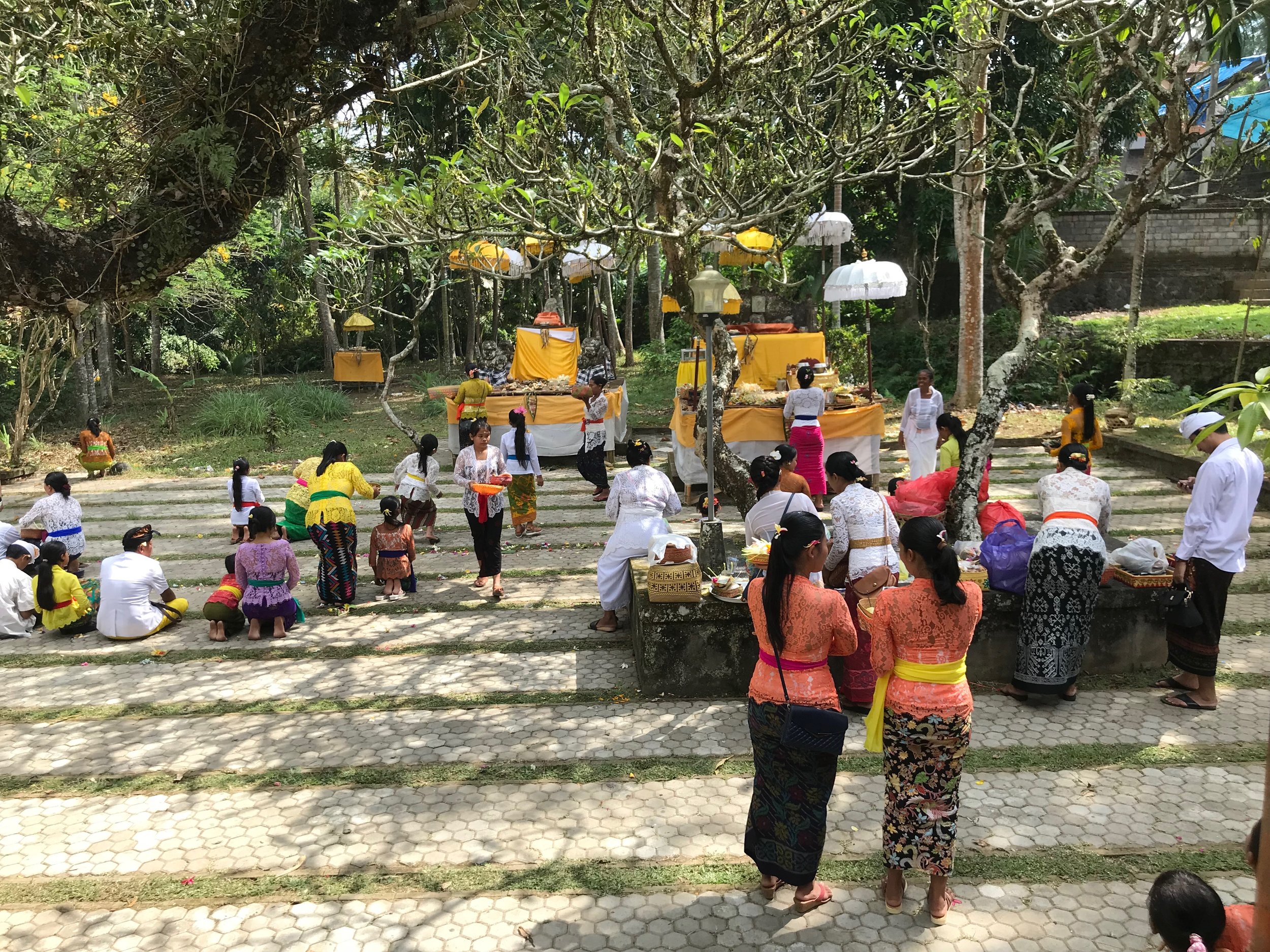
One of the outer courtyards at Samuan Tiga, which was much less crowded than those within
One of the outer courtyards at Samuan Tiga, which was much less crowded than those within

The vast, bustling temple complex evokes the feel of a village market

The vast, bustling temple complex evokes the feel of a village market

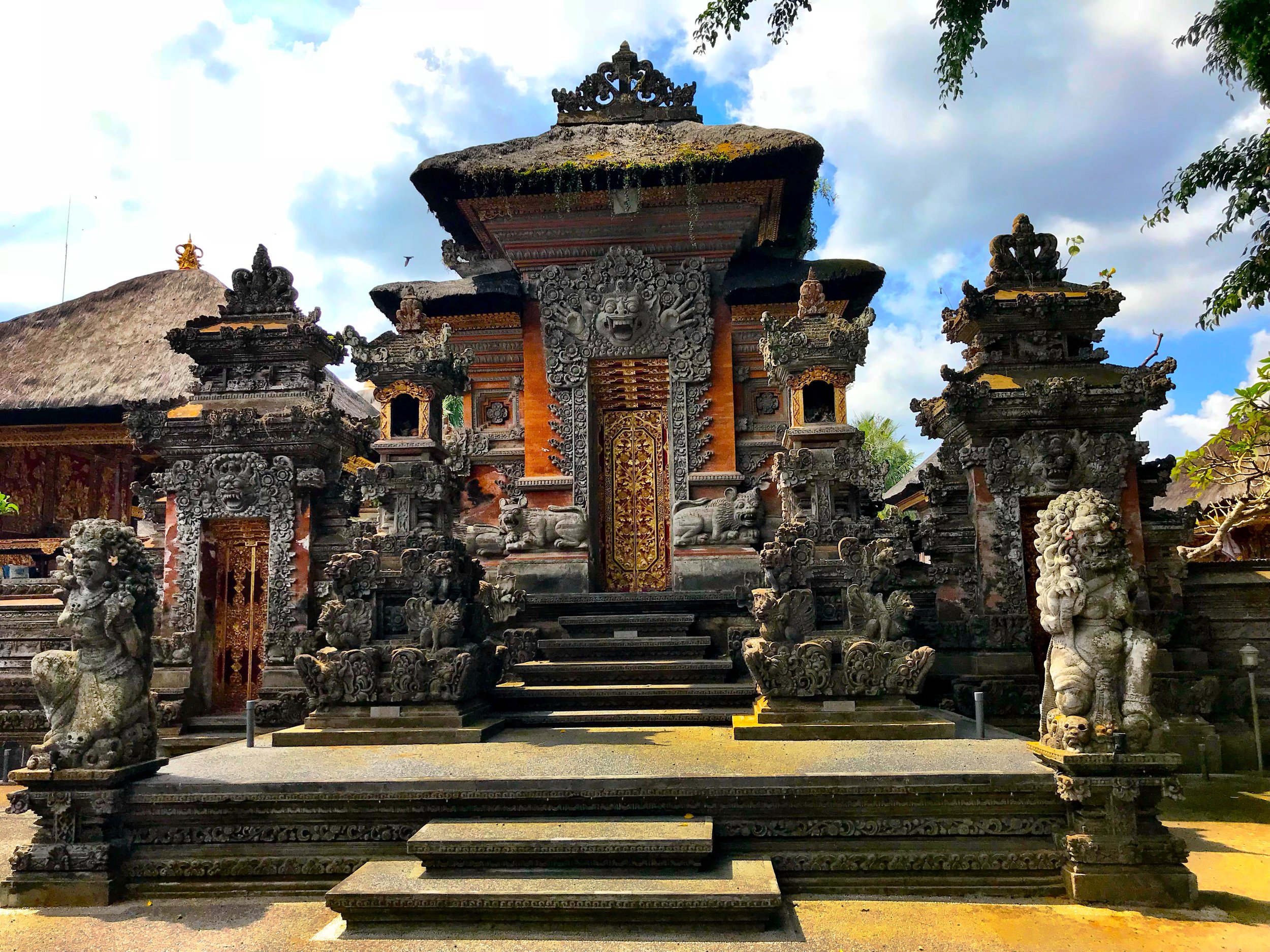
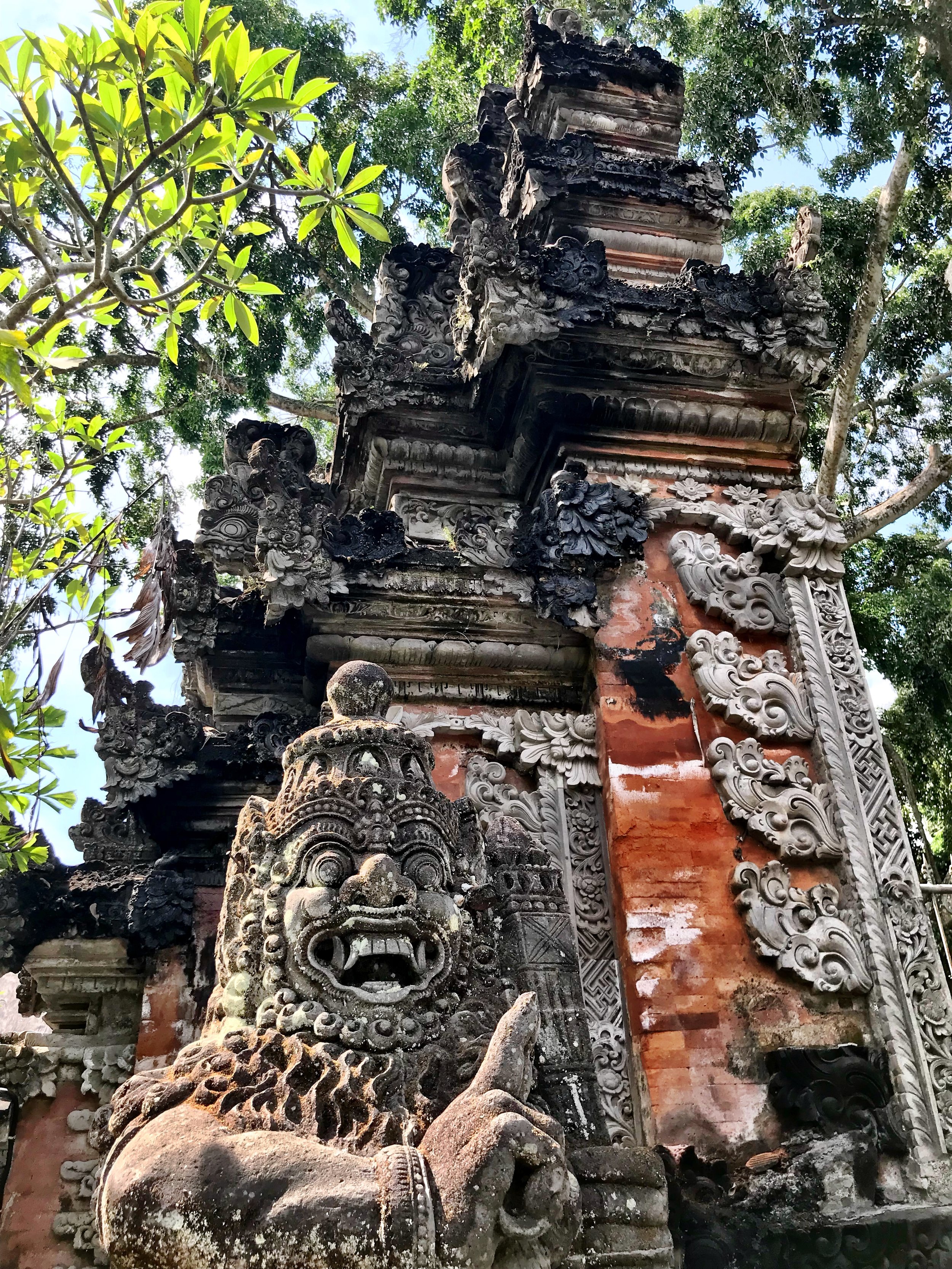
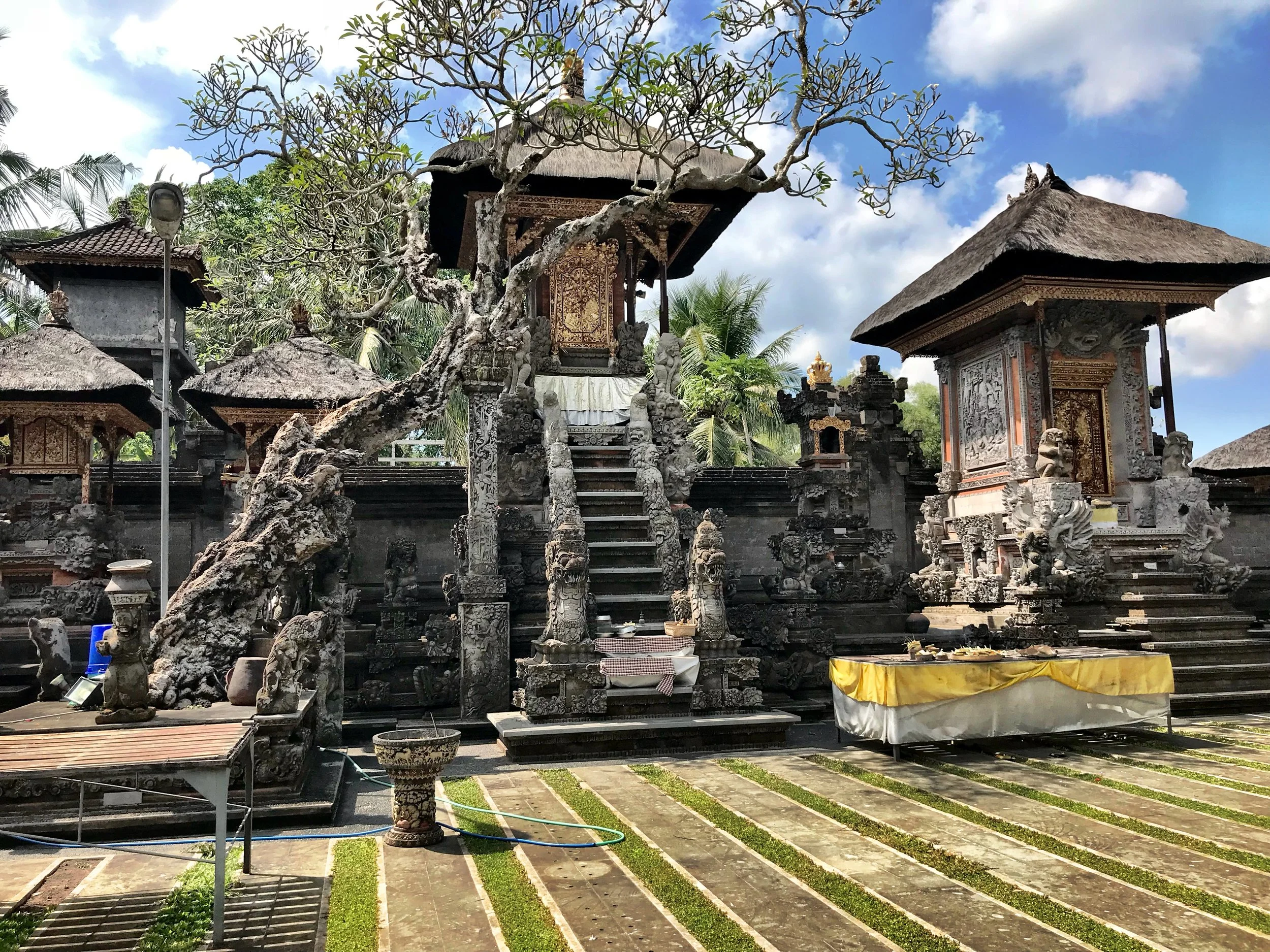
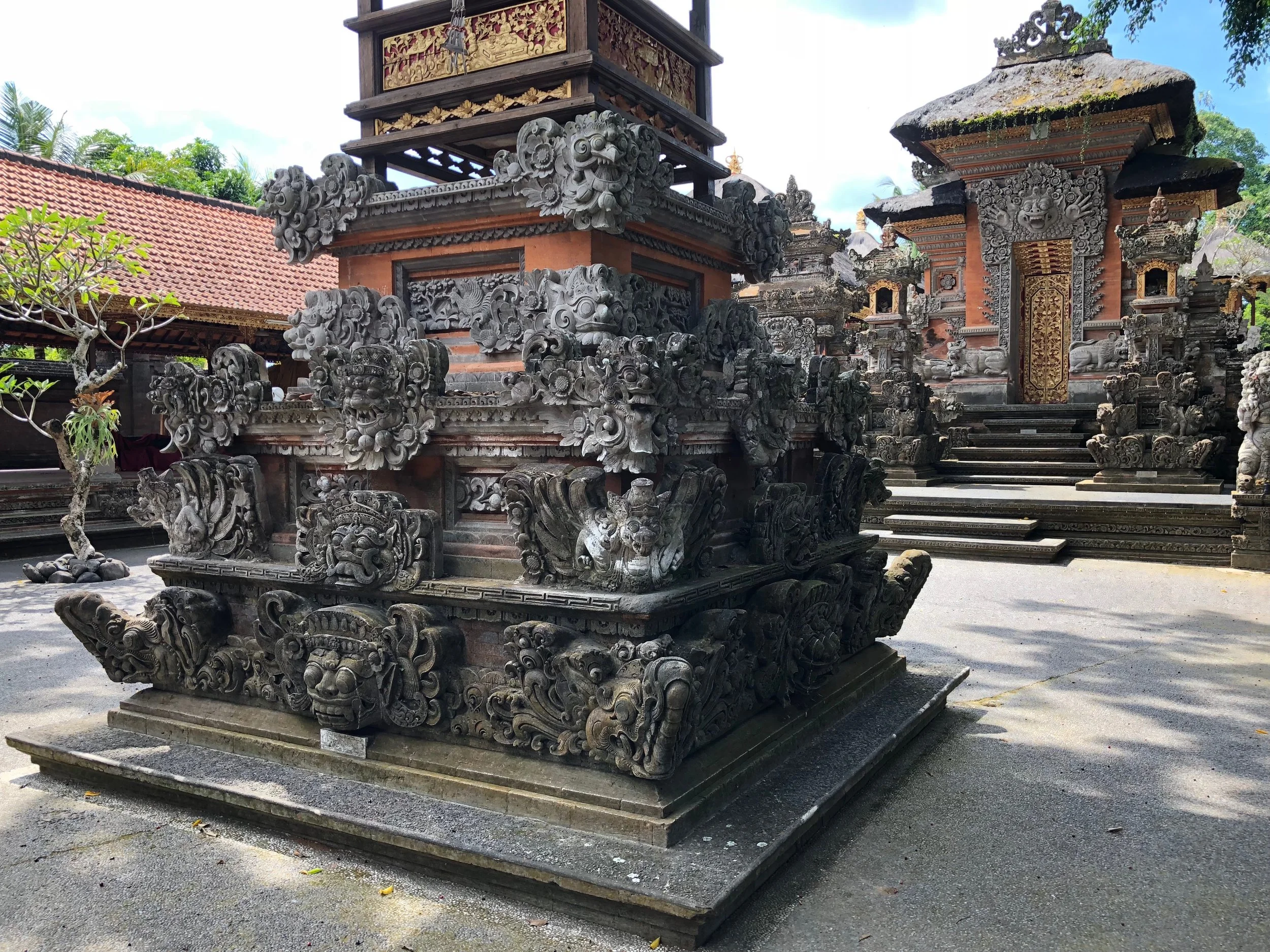
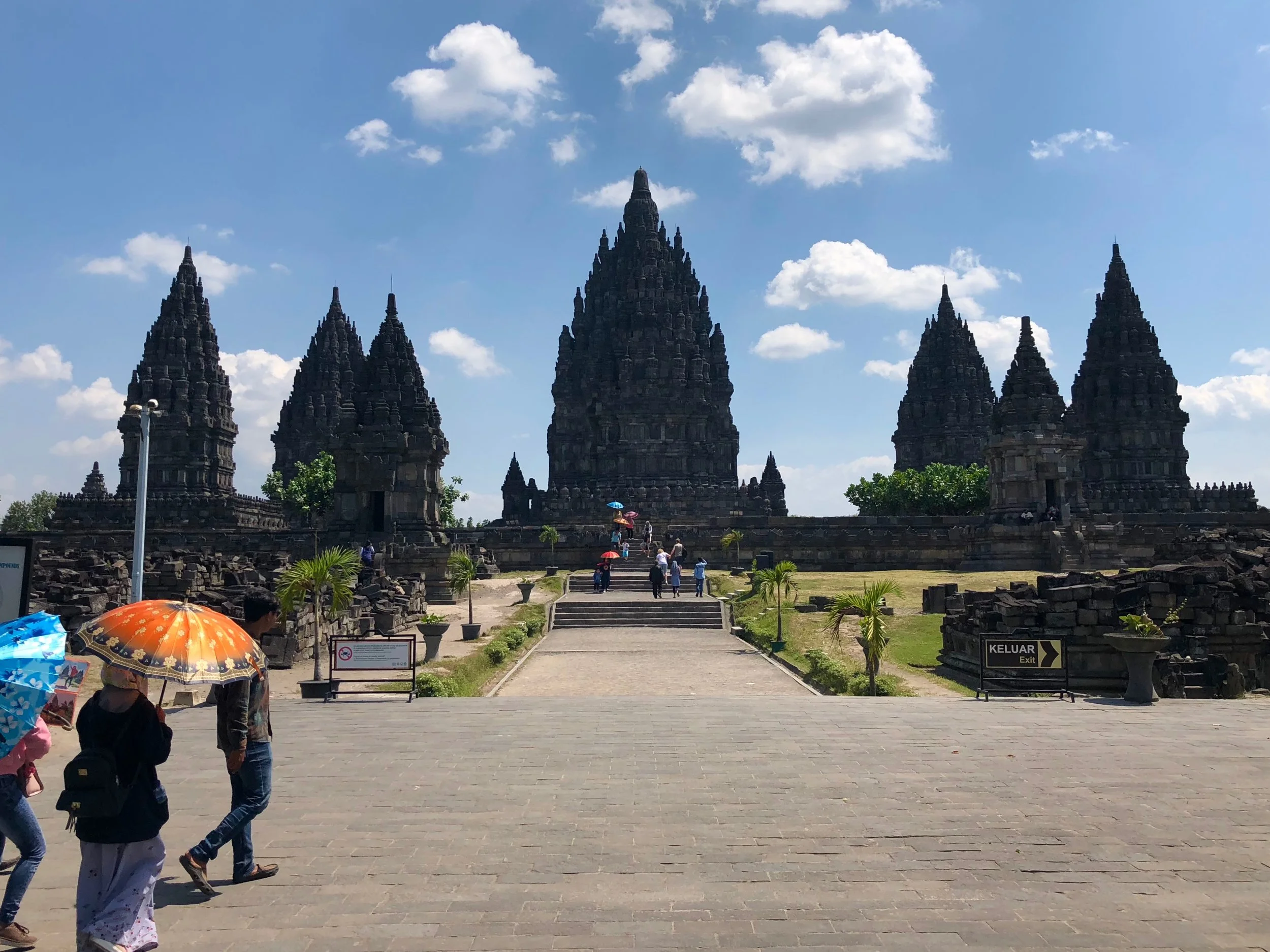
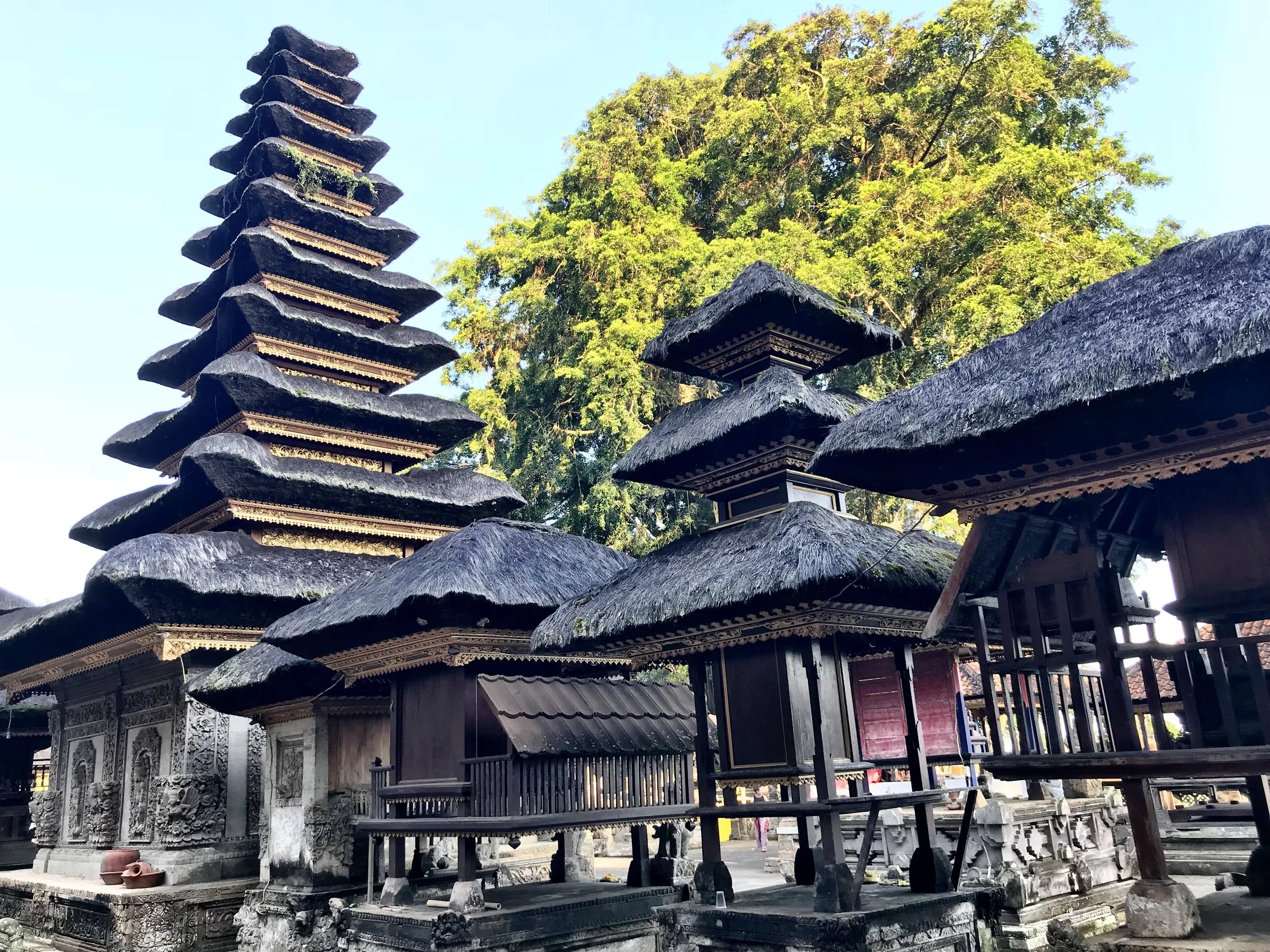
Built between 988 and 1011,  the temple sports typical Balinese religious architectural design, with its soaring orange brick gates, weathered teak open-air pavilions, volcanic stone carvings of bulging-eyed monsters and thatched triangular rooftops. While most temples on Bali (pura in the local tongue) have three courtyards, Samuan Tiga is much larger, with seven.

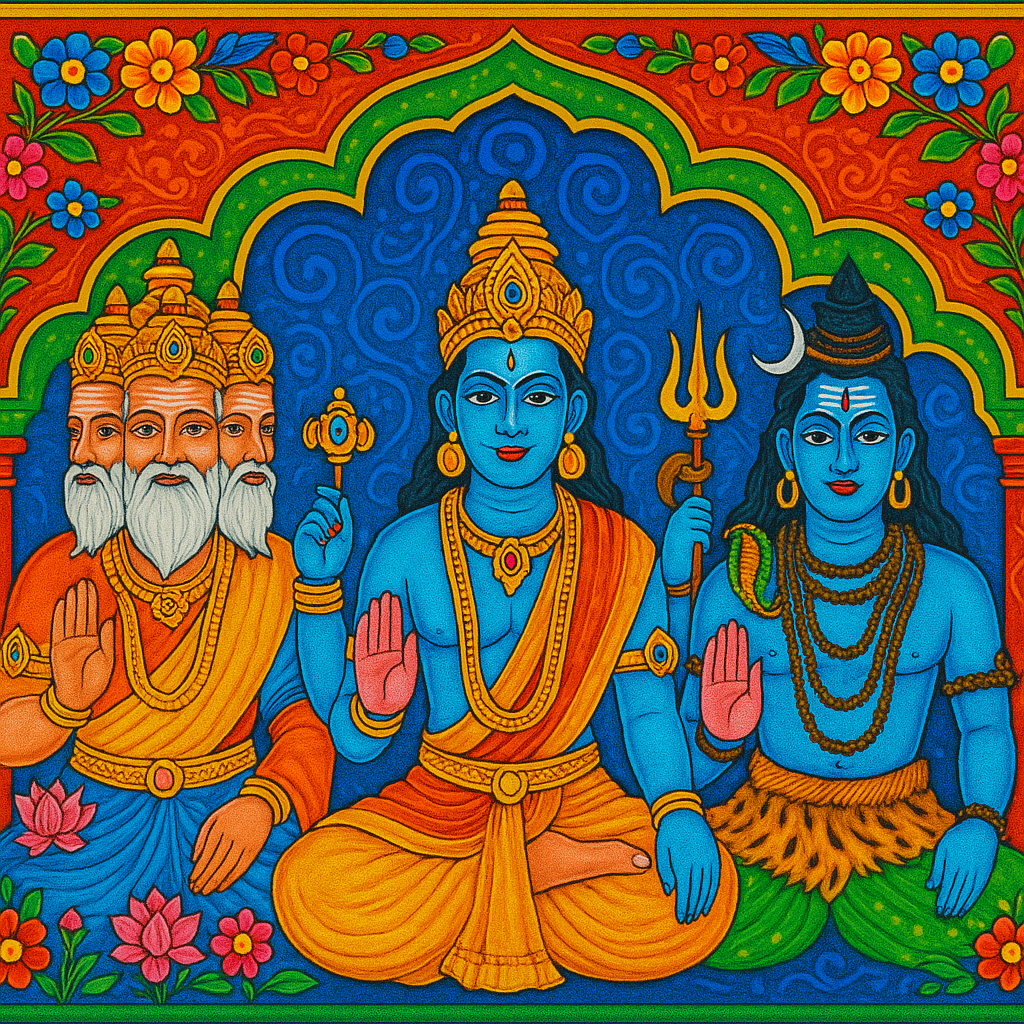
There’s some debate around the reason for the temple’s name, which translates to “the meeting of the three.” Local lore holds that three warring Hindu sects came together to resolve their issues. The royal priest decreed that each kingdom would have three main temples, which represented not only the Hindu trilogy of Brahma, Vishnu and Shiva but the mountain, village and sea as well.
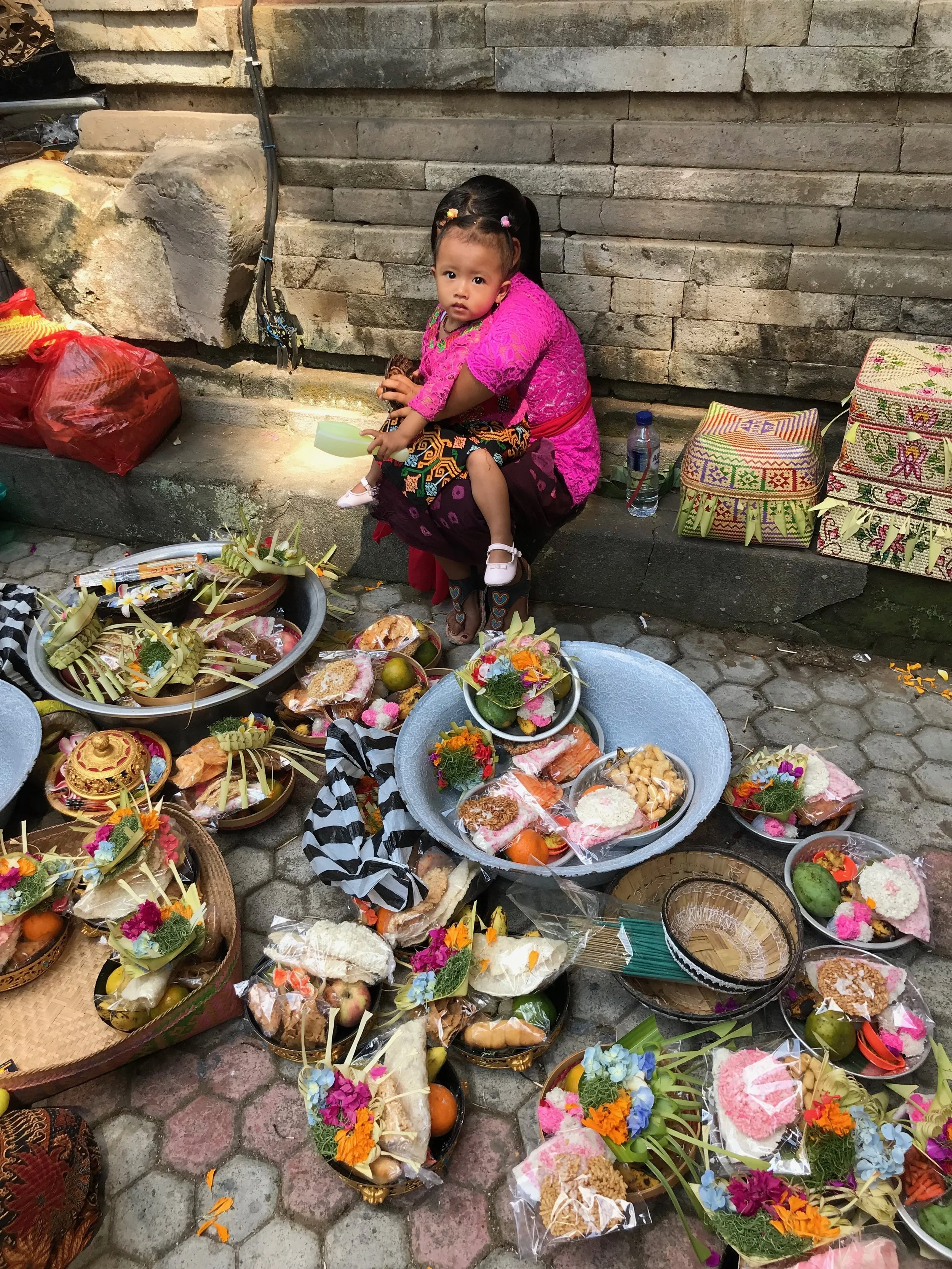
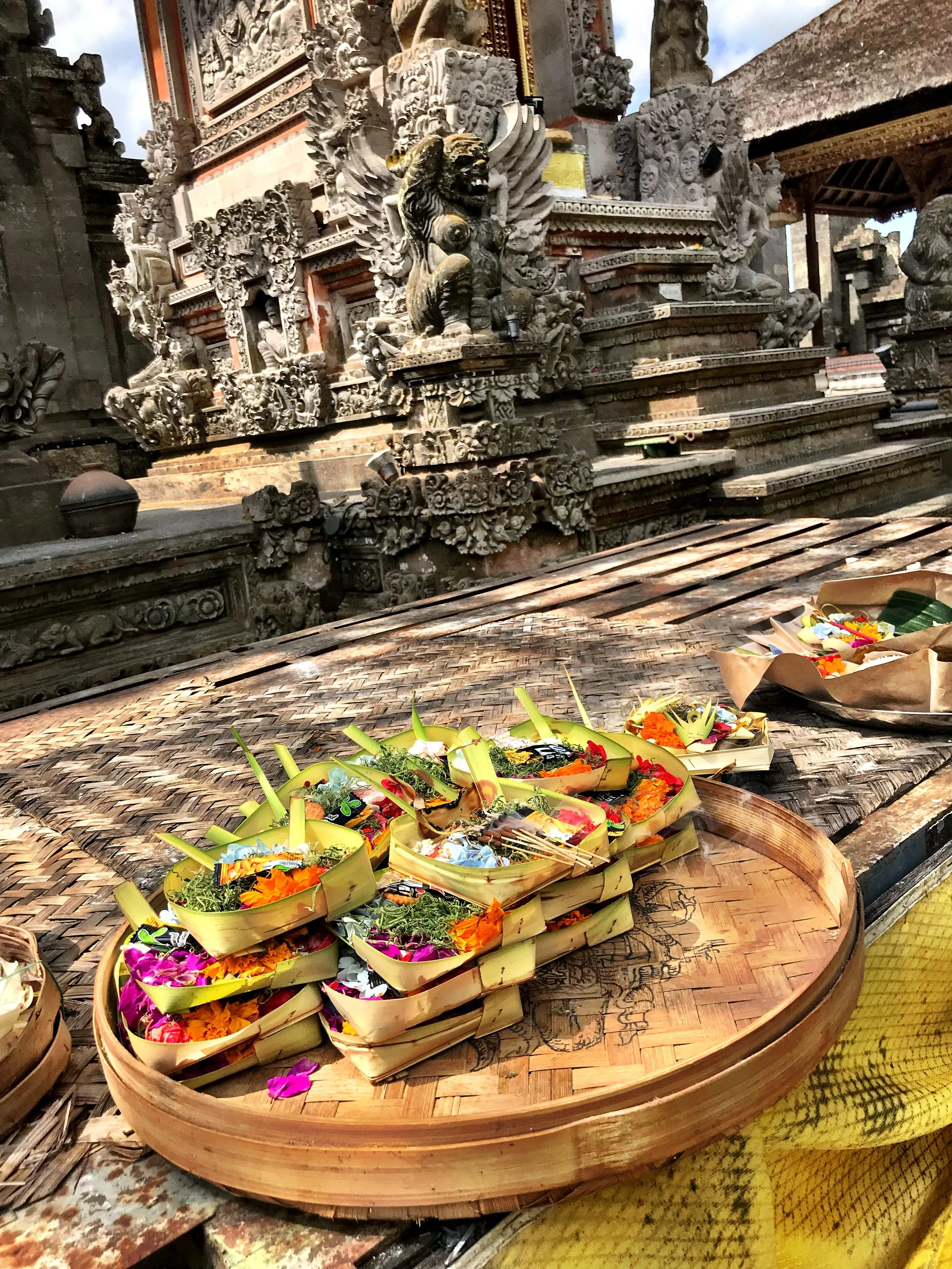
One area of the temple was filled with offering baskets

One area of the temple was filled with offering baskets

Like a National Geographic Article Come to Life

We had stumbled upon one of the oldest Hindu rituals on Bali: Siat Sampian (War of the Offerings), which takes place every 10th full moon. While we saw many crowds praying in the various courtyards, apparently we missed the battle that would take place later, when hundreds of pilgrims playfully “attack” each other, throwing arrangements called sampian, which consist of woven palm fronds pointing out like the rays of the sun.

That’s the trouble with knowledge sharing, even in this age of the internet. It was tough even discovering the name of the temple — and we didn’t learn about the details of the festival until we were back home. I wish our driver or another local had known more about Siat Sampian, and we could have tried to time our visit with the frenzied fake fight. Sigh.

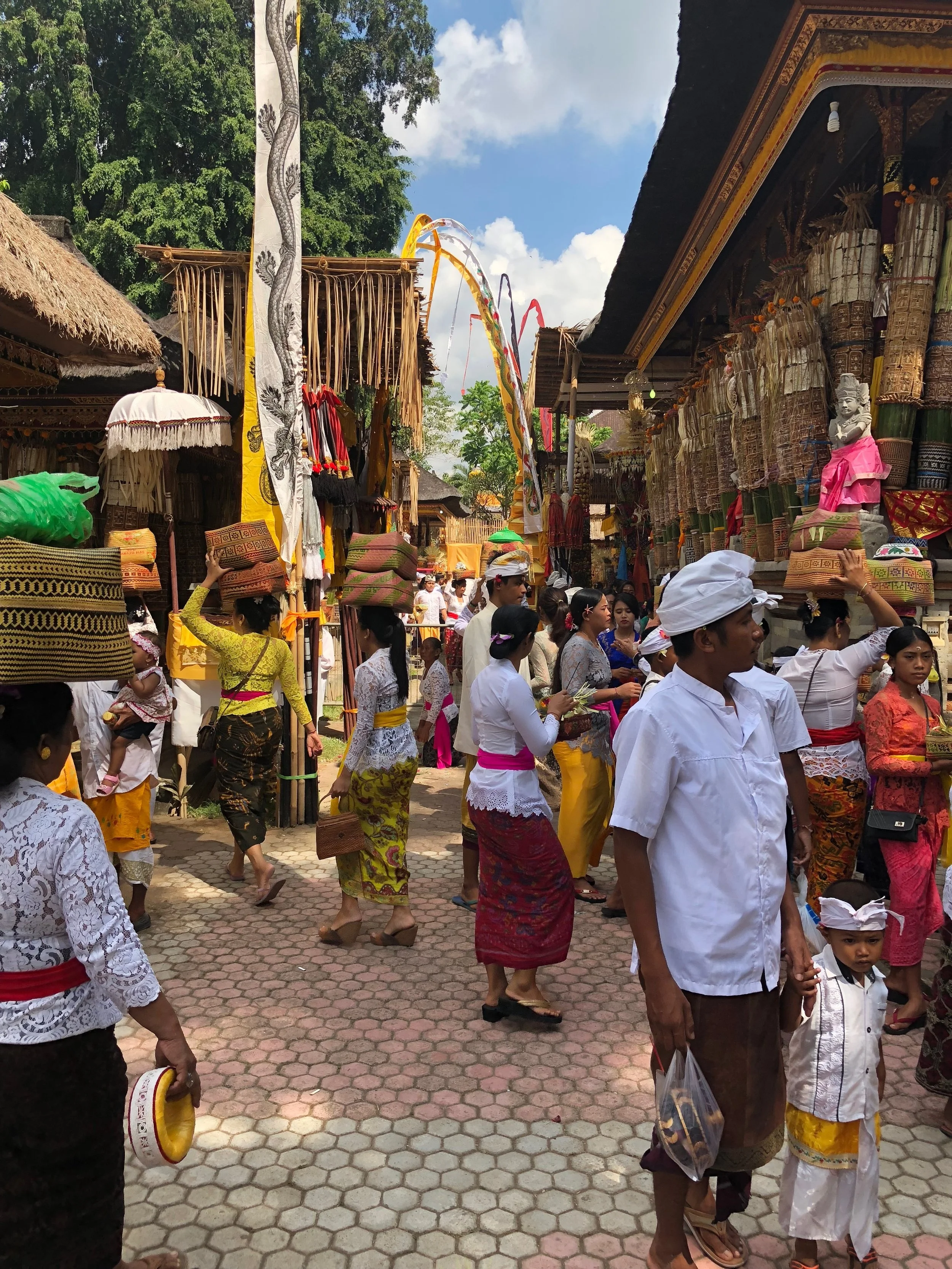
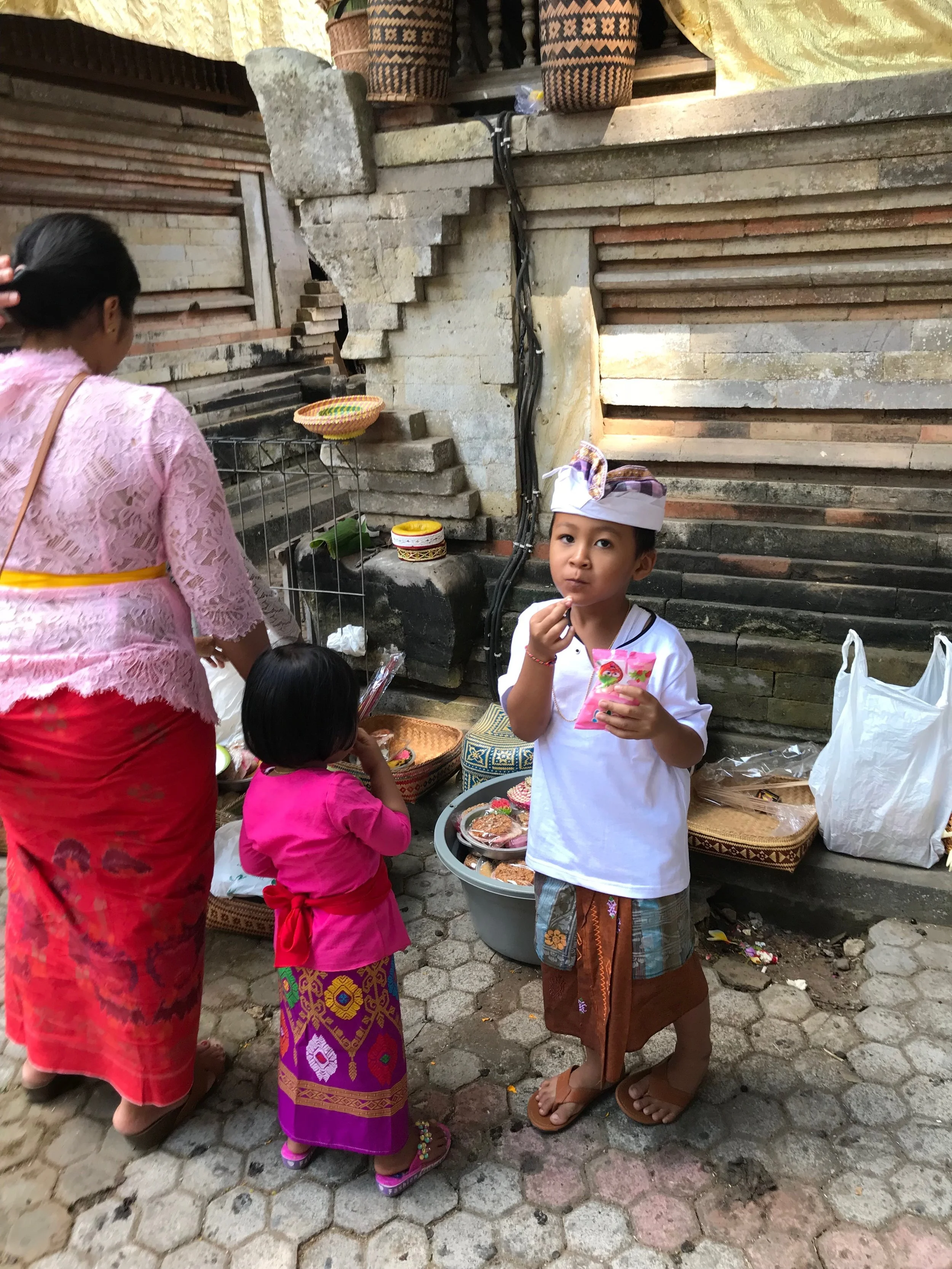
There was still much to see, though. Women carried stacked woven baskets atop their heads, all dressed in long-sleeved lace tops, most of them white, paired with brightly colored sashes around their waists and ankle-length floral sarongs. Children, also in vibrant sarongs, munched on snacks.
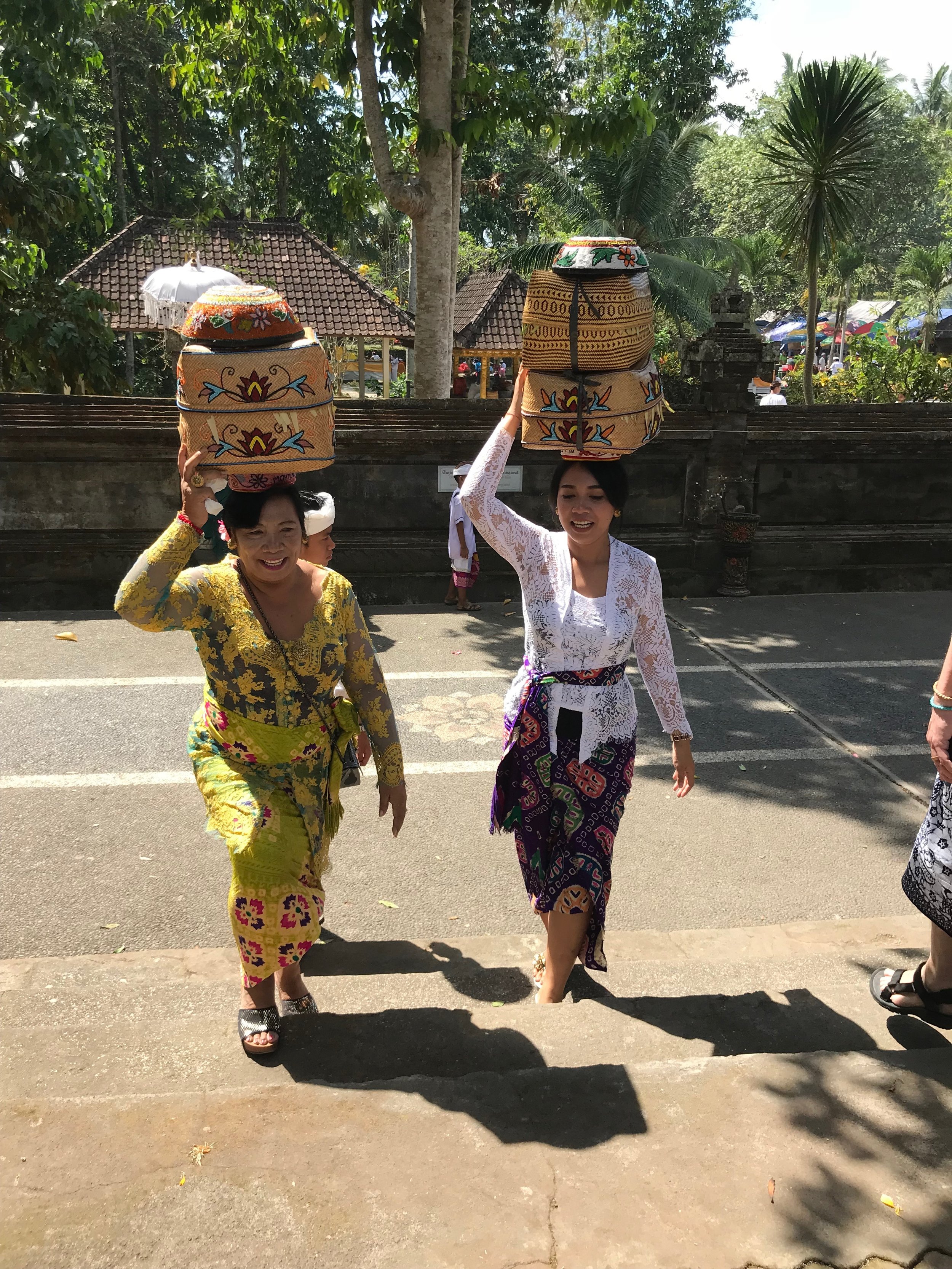
Women carry their loads in woven containers atop their heads
Women carry their loads in woven containers atop their heads

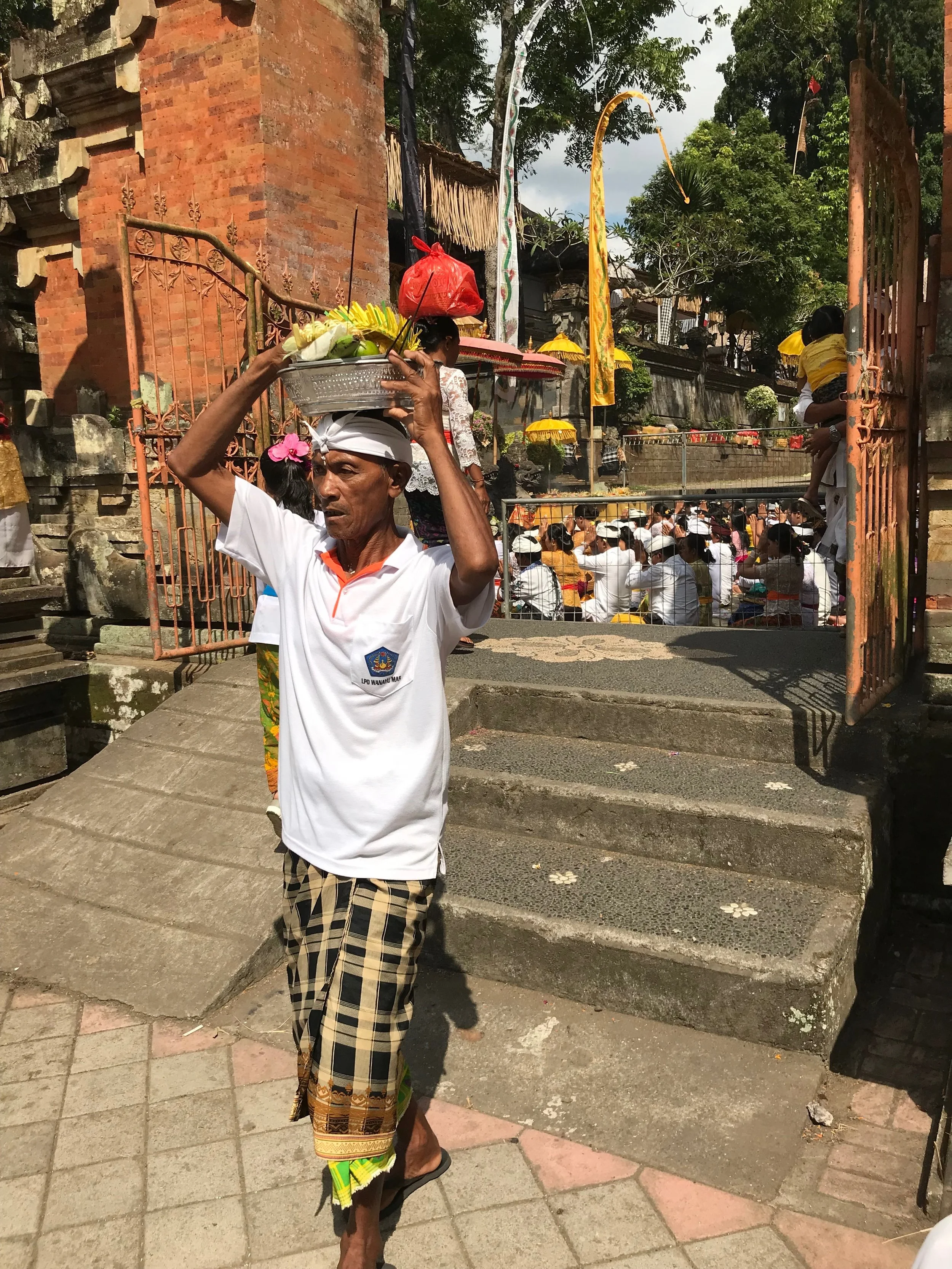
Some of the men have adopted this means of carrying offerings
Some of the men have adopted this means of carrying offerings

Children probably spend hours at the temple during the festival and snack throughout the day
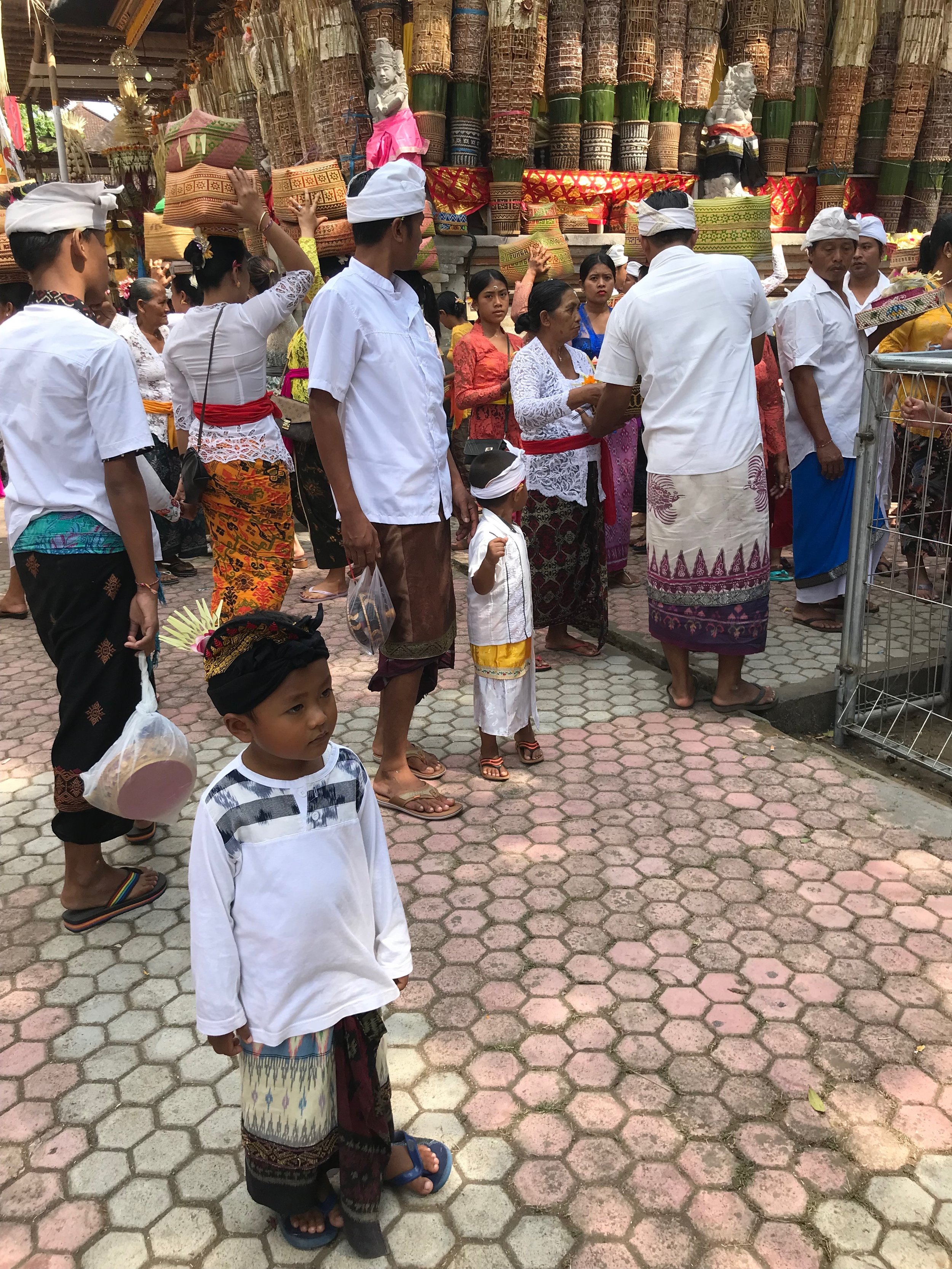
Children probably spend hours at the temple during the festival and snack throughout the day

Samuan Tiga sports seven courtyards — more than your typical Balinese temple — and they were all quite crowded

Samuan Tiga sports seven courtyards — more than your typical Balinese temple — and they were all quite crowded

In certain parts of the temple, facing raised platforms, people crowded into tight spaces, sitting down to pray — a vast sea of worshippers, most of whom wore white shirts, the men also in white headbands with a sort of bow in front. Everyone sat quietly, arms extended in front of their faces, their hands pressed together. This is the purification process before the comedic war to come.
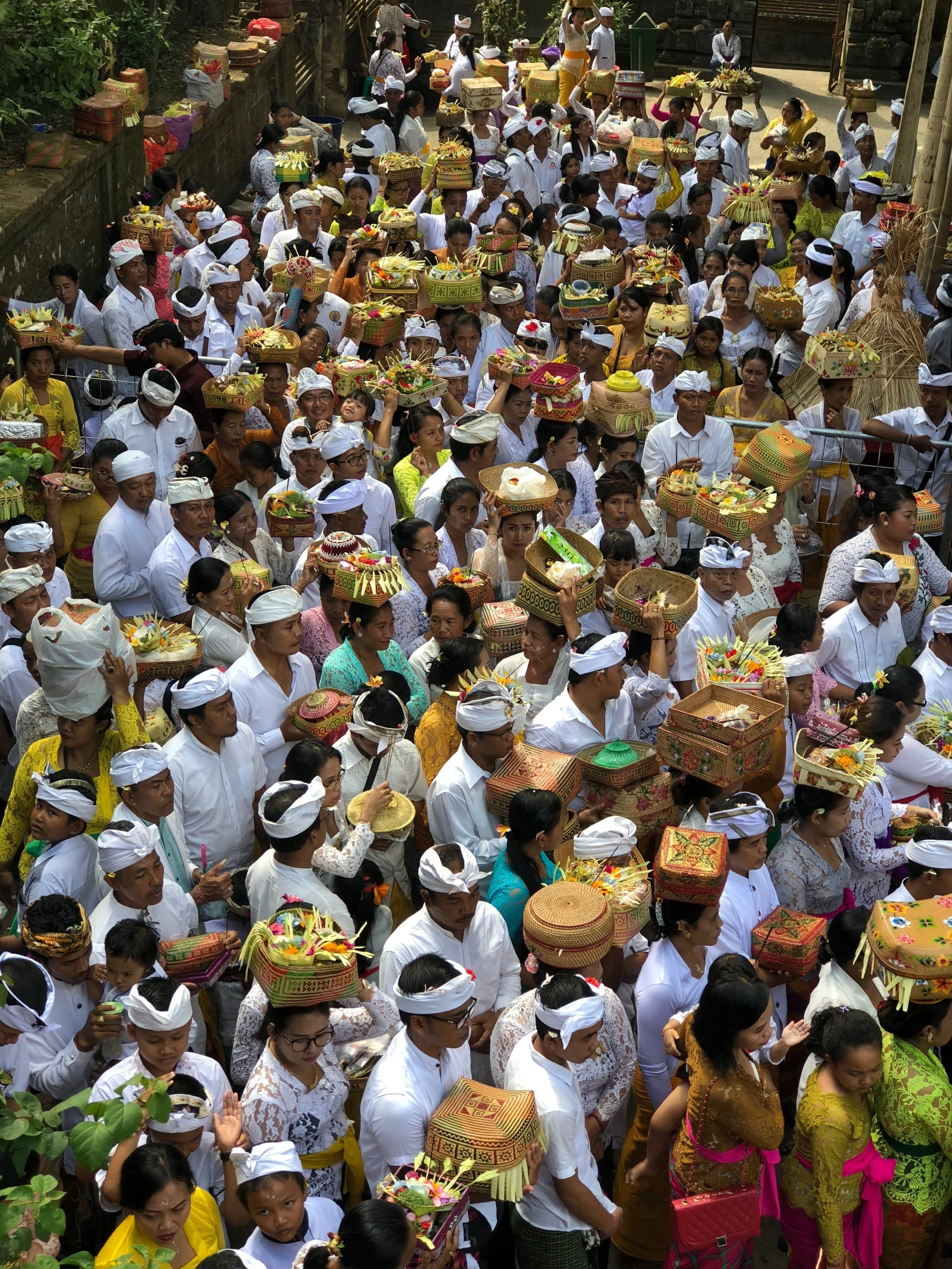
The crowds got downright claustrophobic in quite a few areas
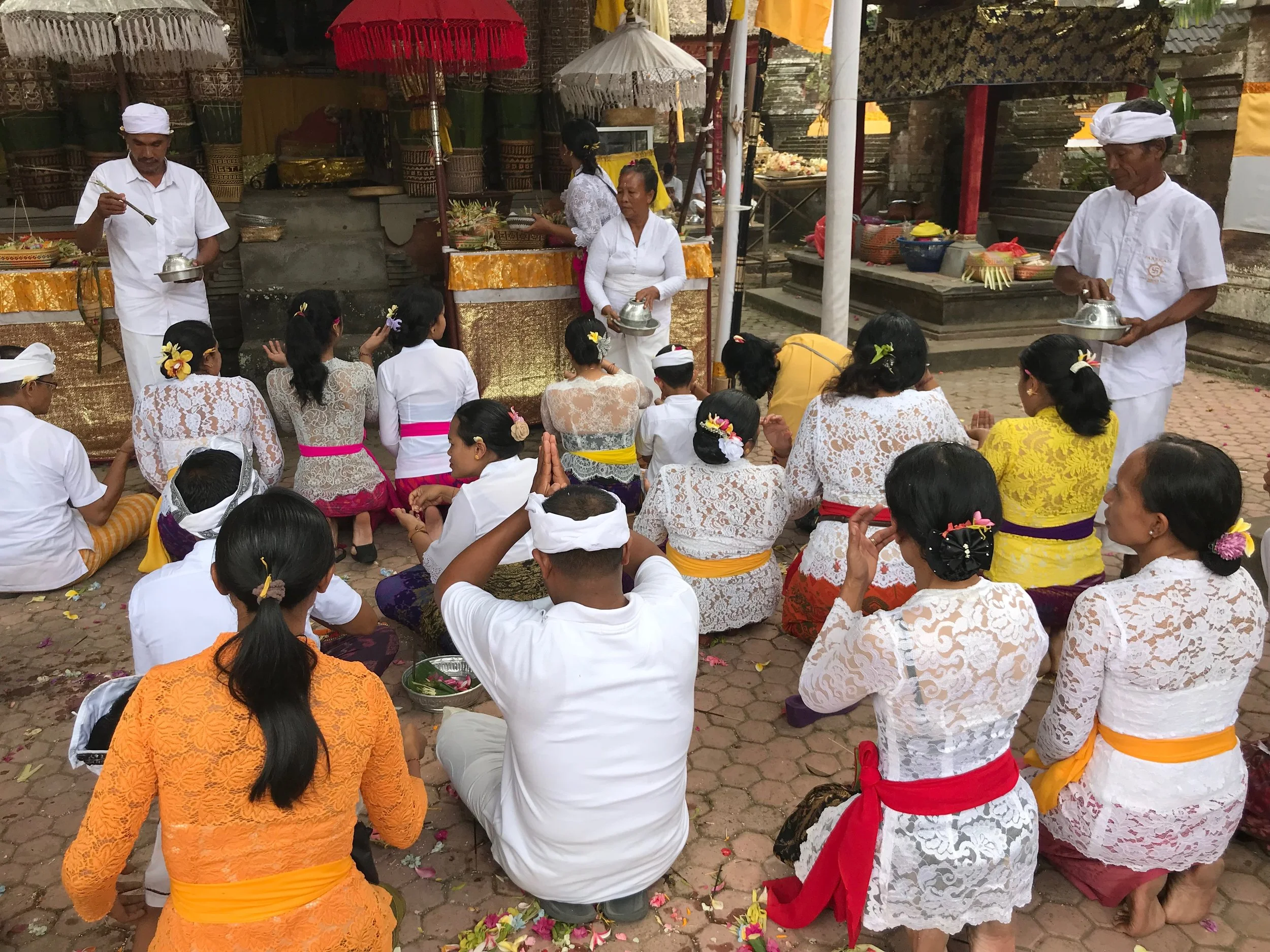
The crowds got downright claustrophobic in quite a few areas

People worshipped in different courtyards
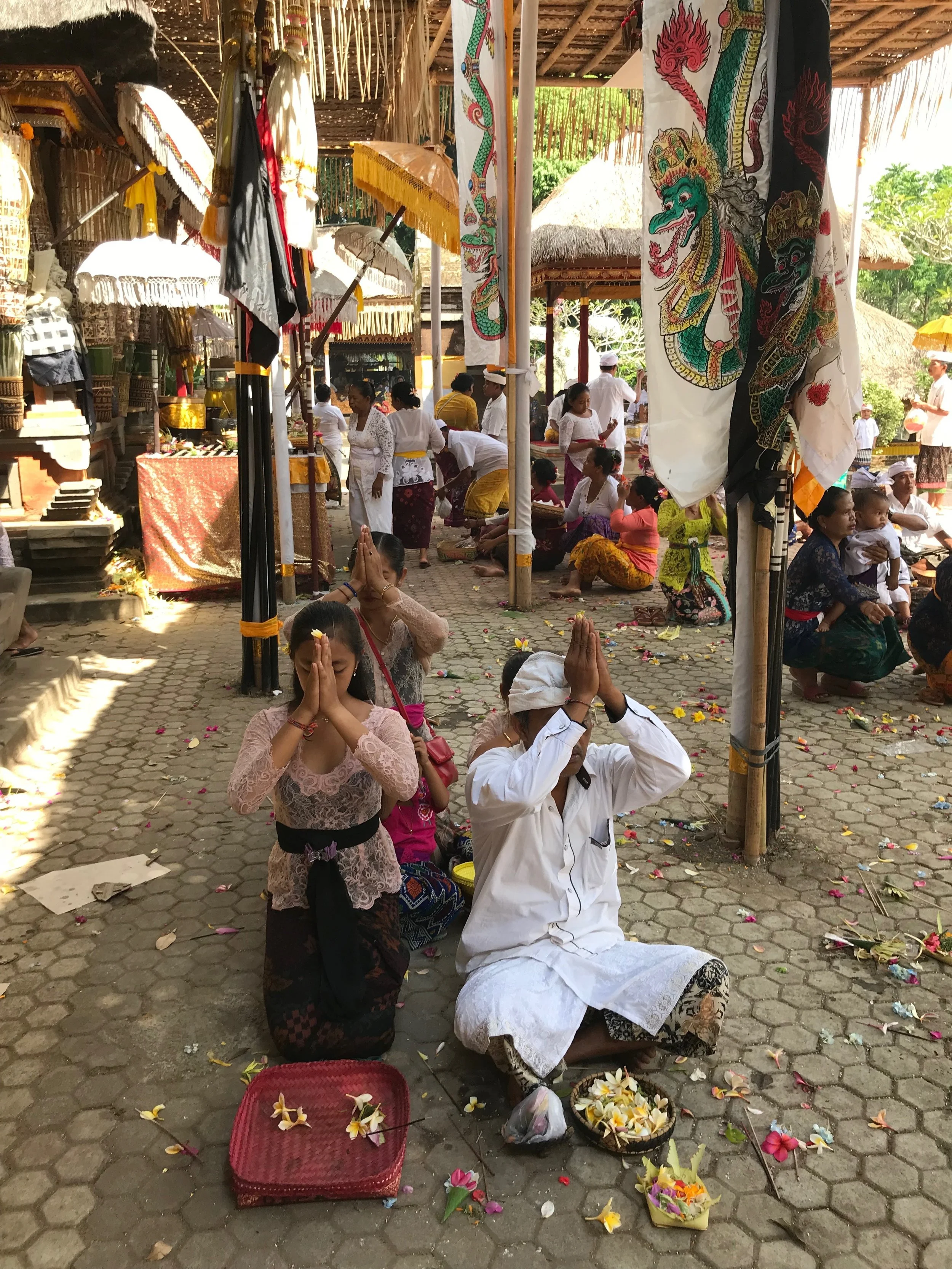
People worshipped in different courtyards

This area was right off of the Barong pavilion

This area was right off of the Barong pavilion

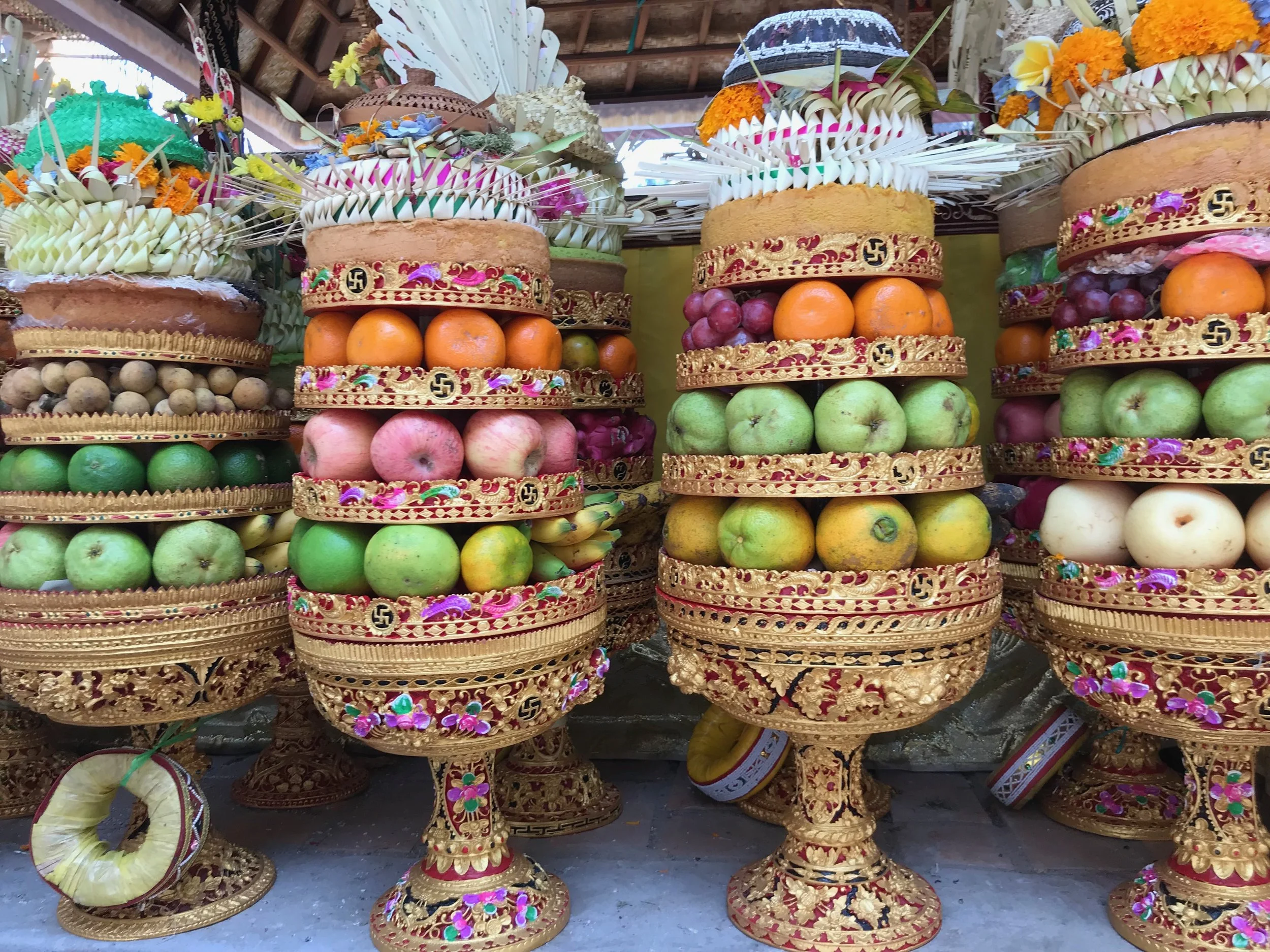
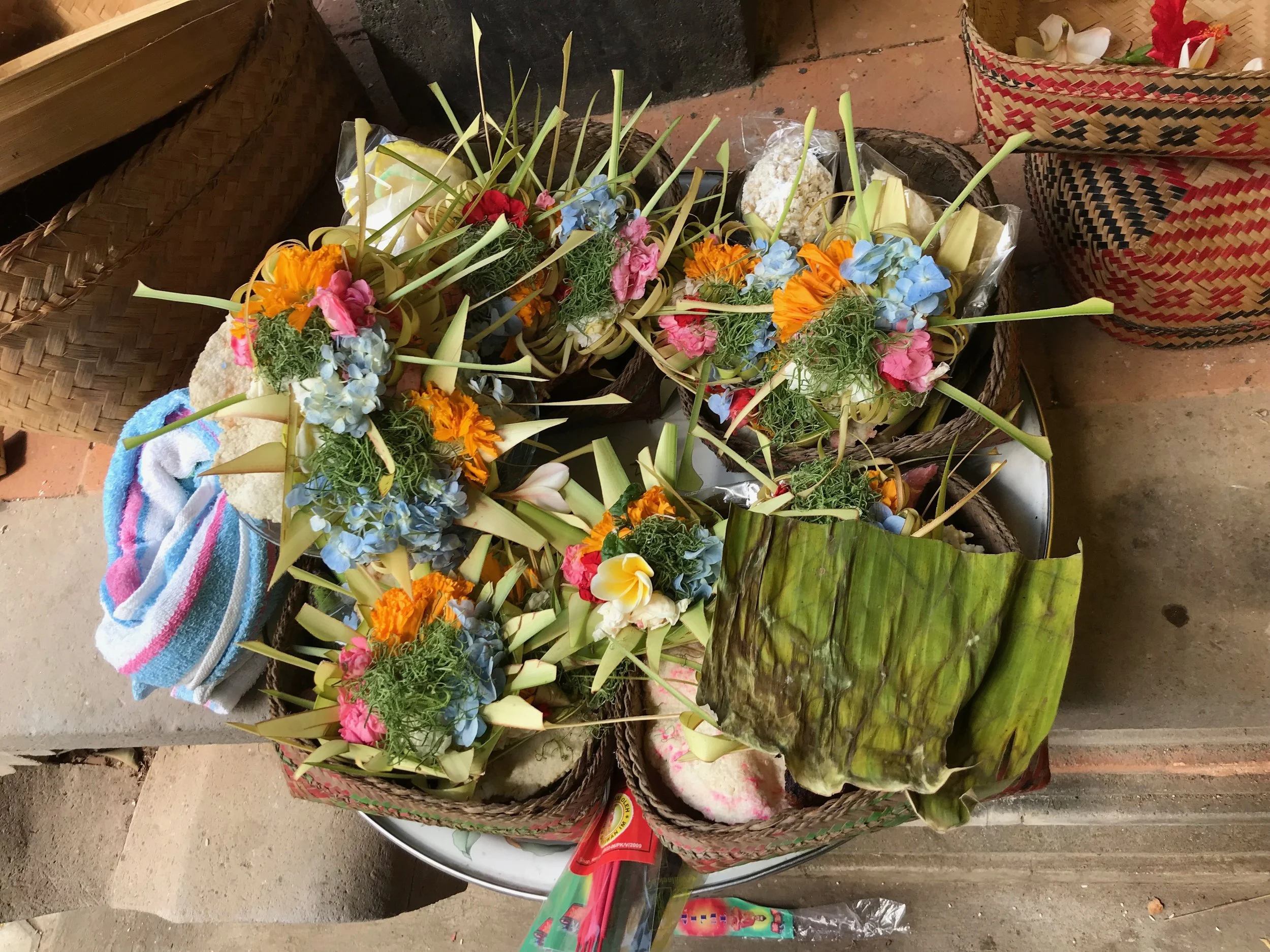
Offering baskets were everywhere, small square trays woven from palm fronds and filled with rice, flowers and fruit.
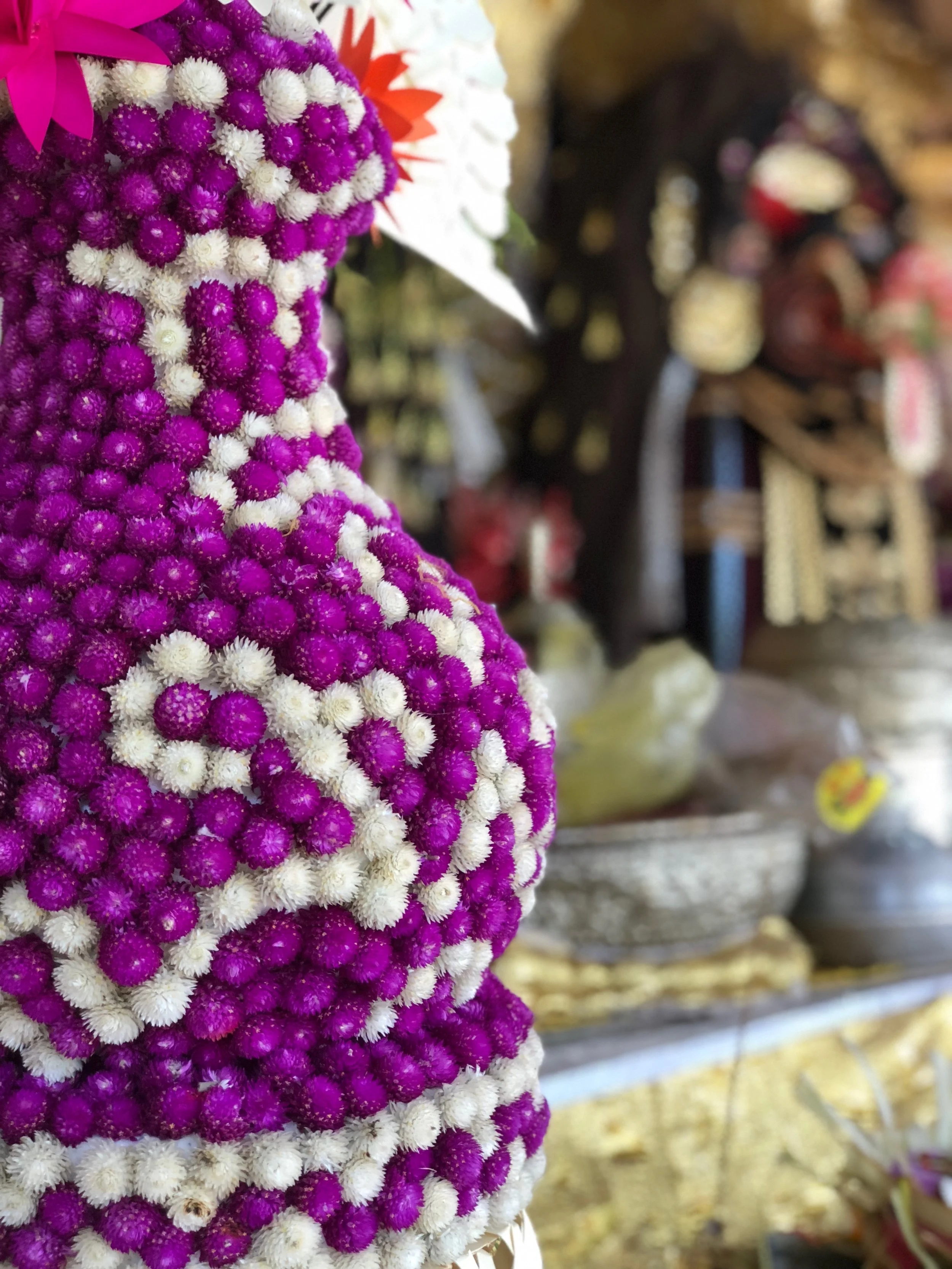
An elaborate floral offering
An elaborate floral offering

Beautiful offerings for the gods
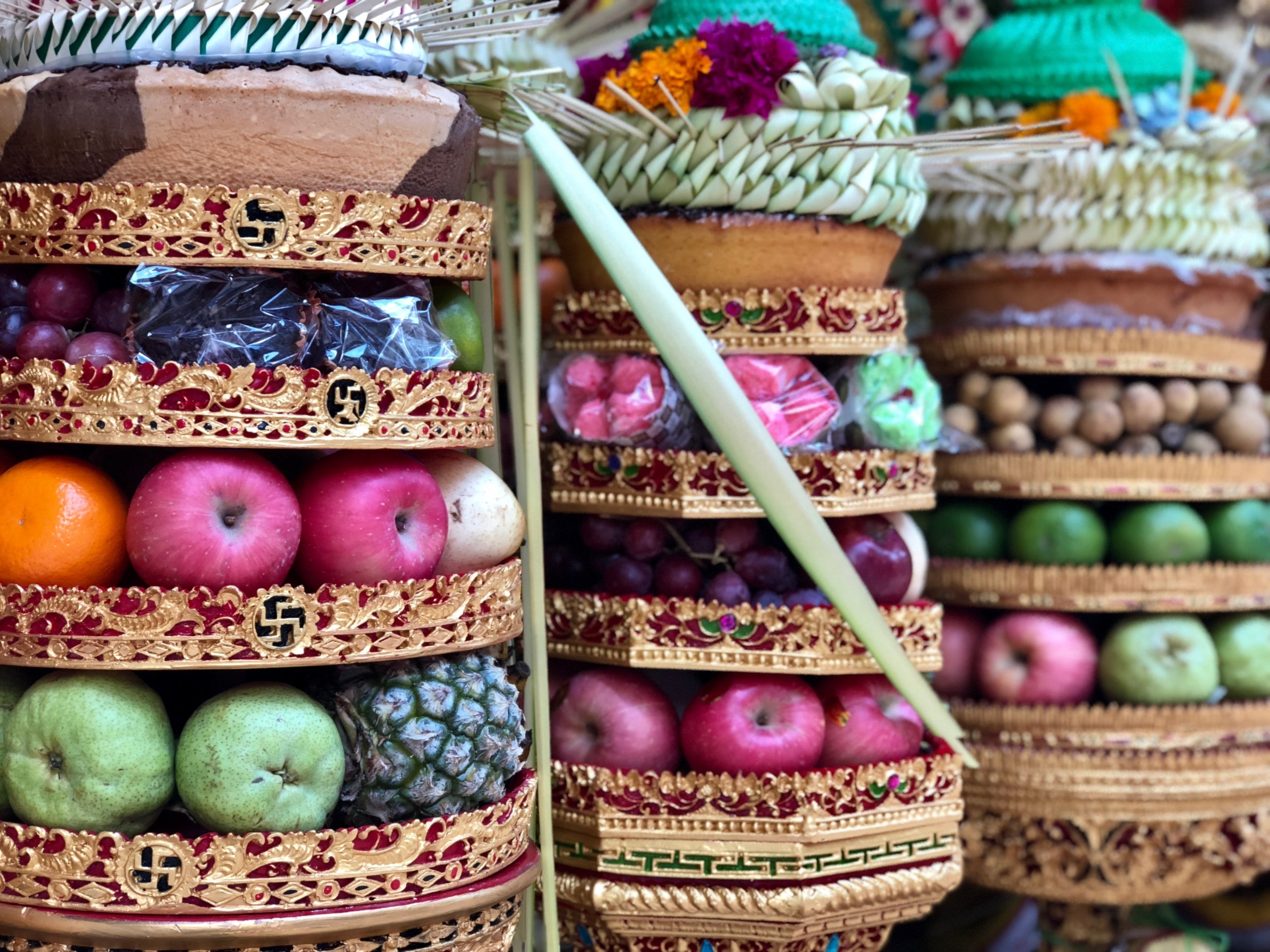
Beautiful offerings for the gods

Fruit is a popular offering
Fruit is a popular offering

Worshippers create small offering dishes filled with flowers and food

Worshippers create small offering dishes filled with flowers and food

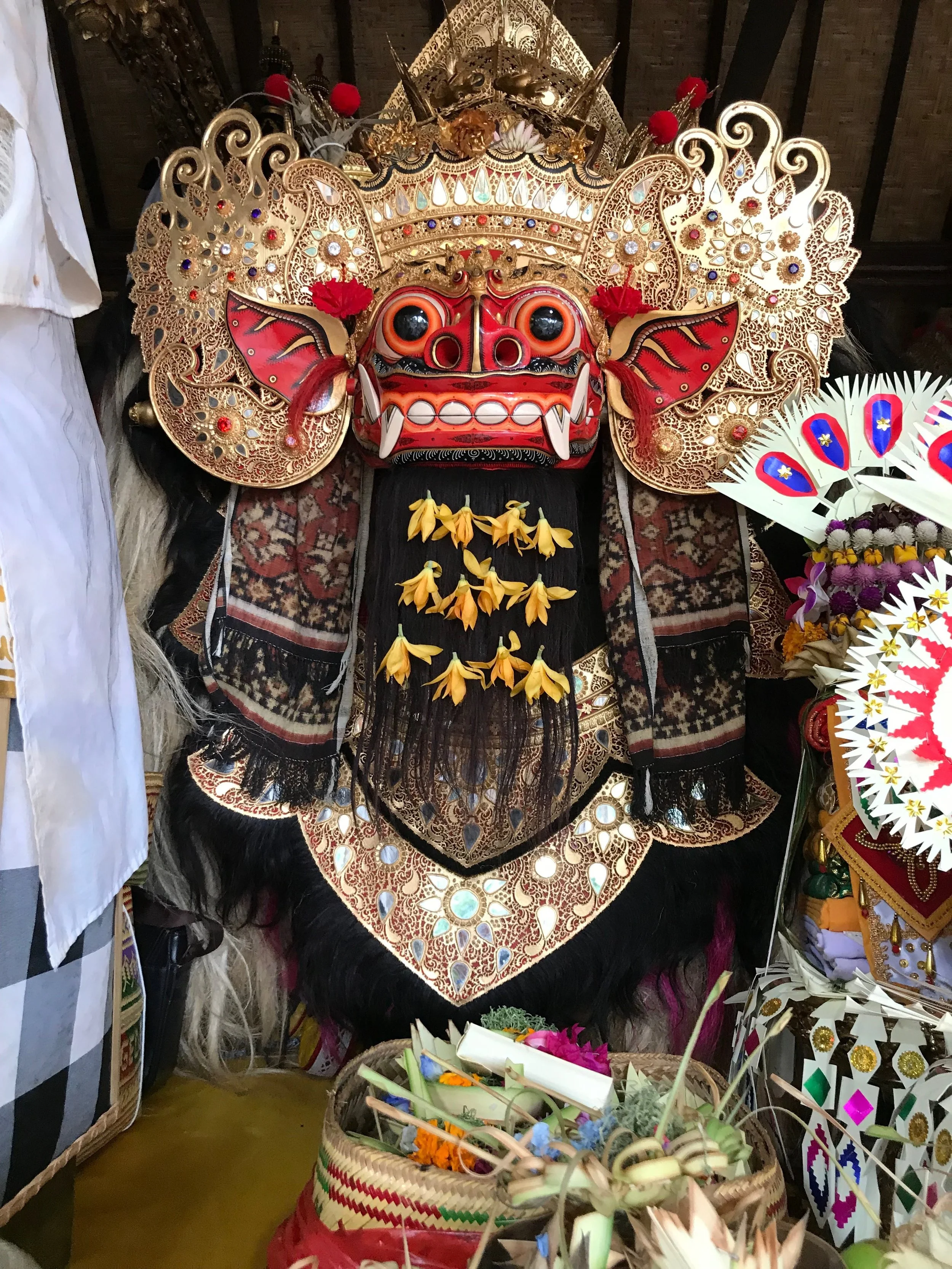
An entire pavilion was filled with masks of Barong, who, despite his sharp fangs and wide eyes, is actually the personification of good.
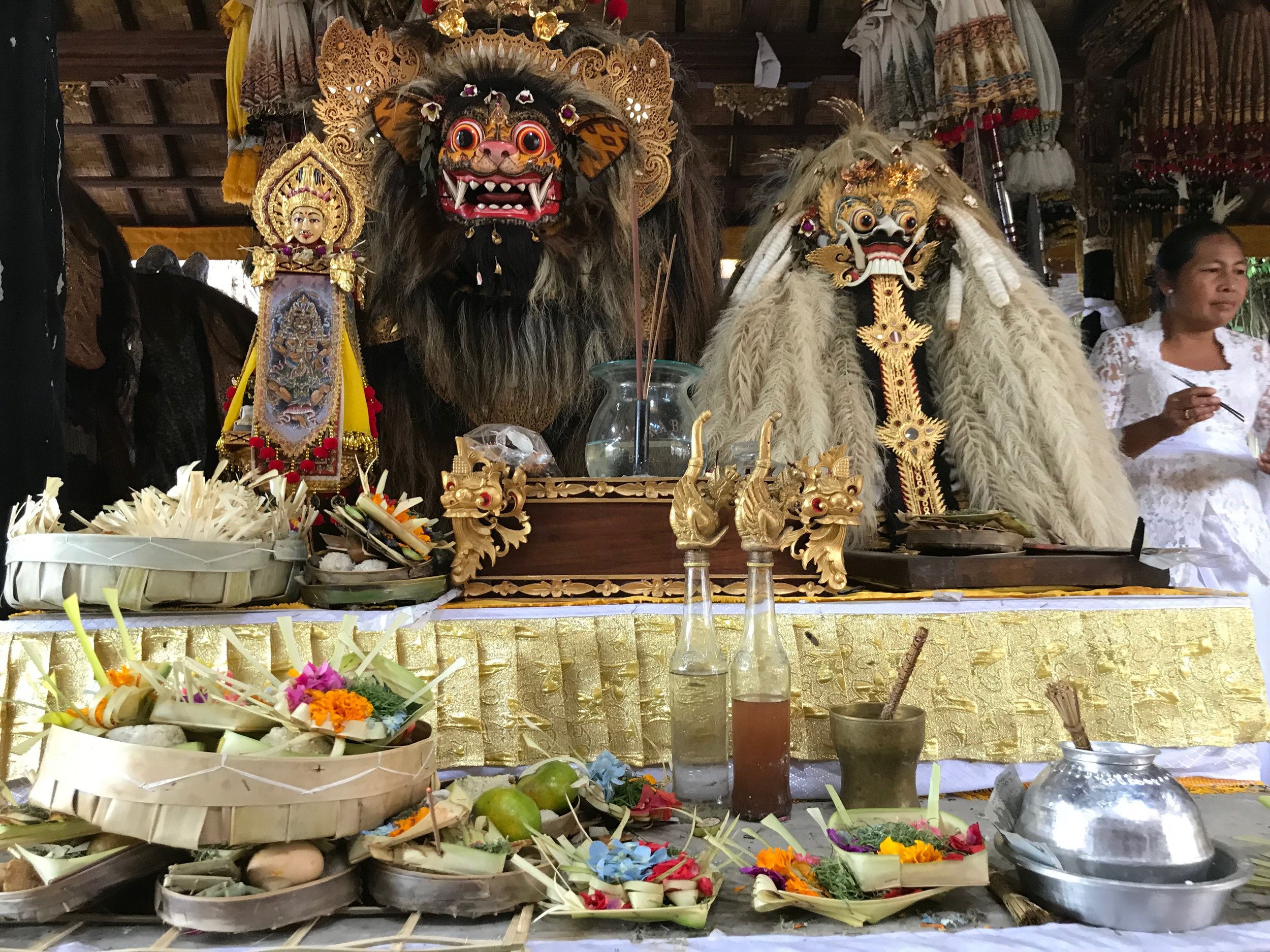
Barong masks receive offerings 
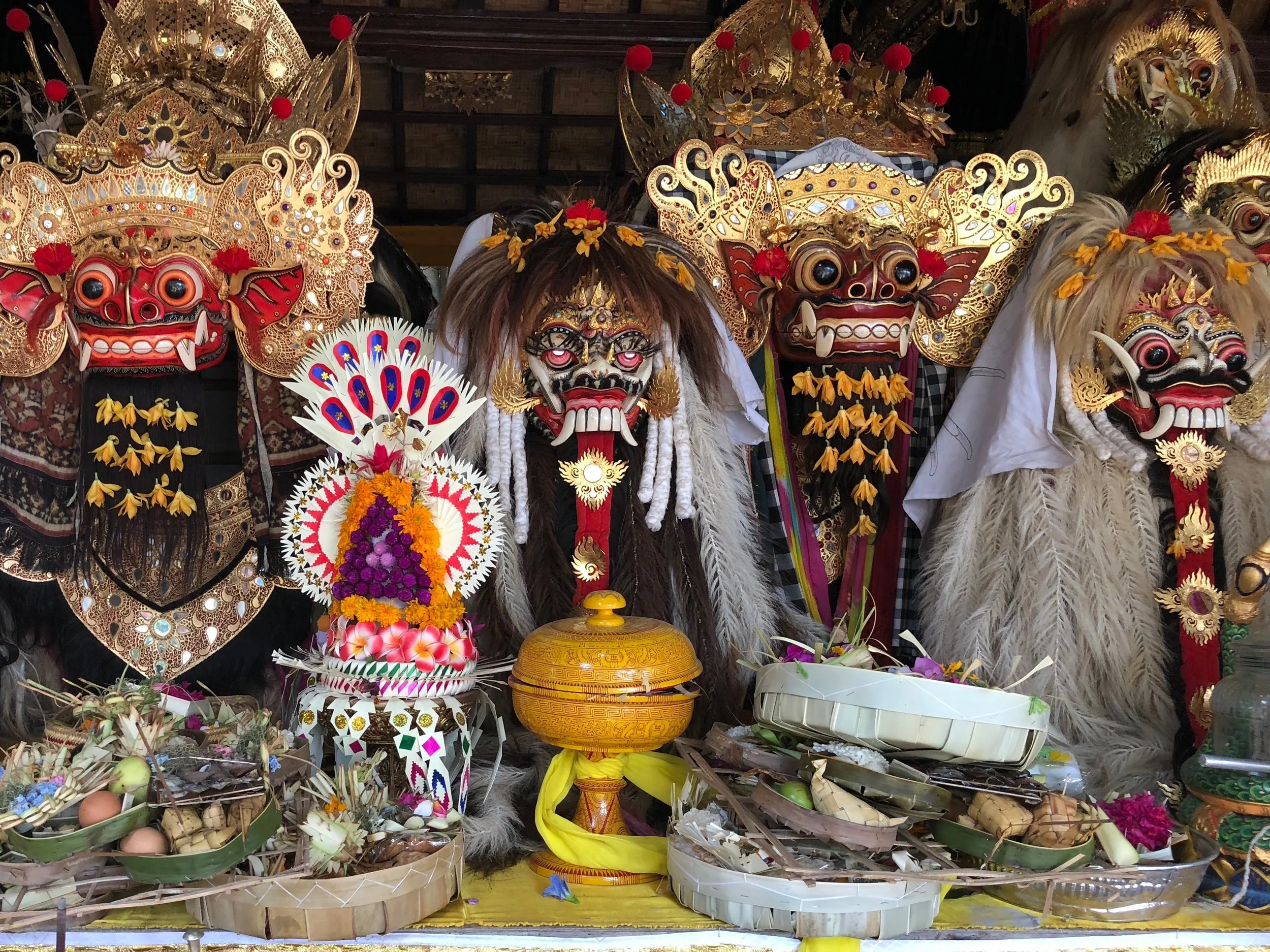
Barong masks receive offerings 

As frightening as he looks, Barong is actually reprepsentative of all that is good
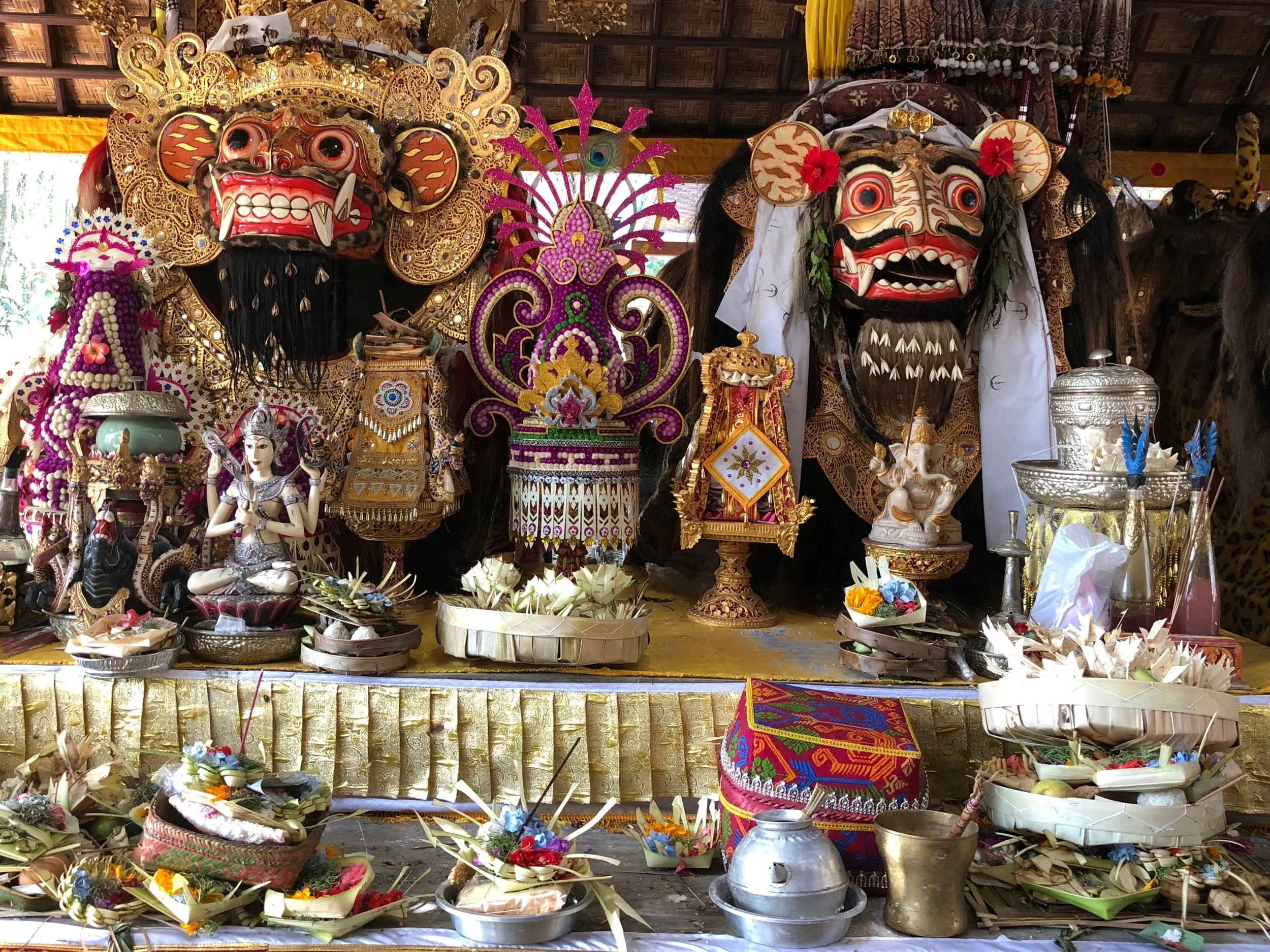
As frightening as he looks, Barong is actually reprepsentative of all that is good

Masks of Barong lined an entire pavilion at Samuan Tiga

Masks of Barong lined an entire pavilion at Samuan Tiga

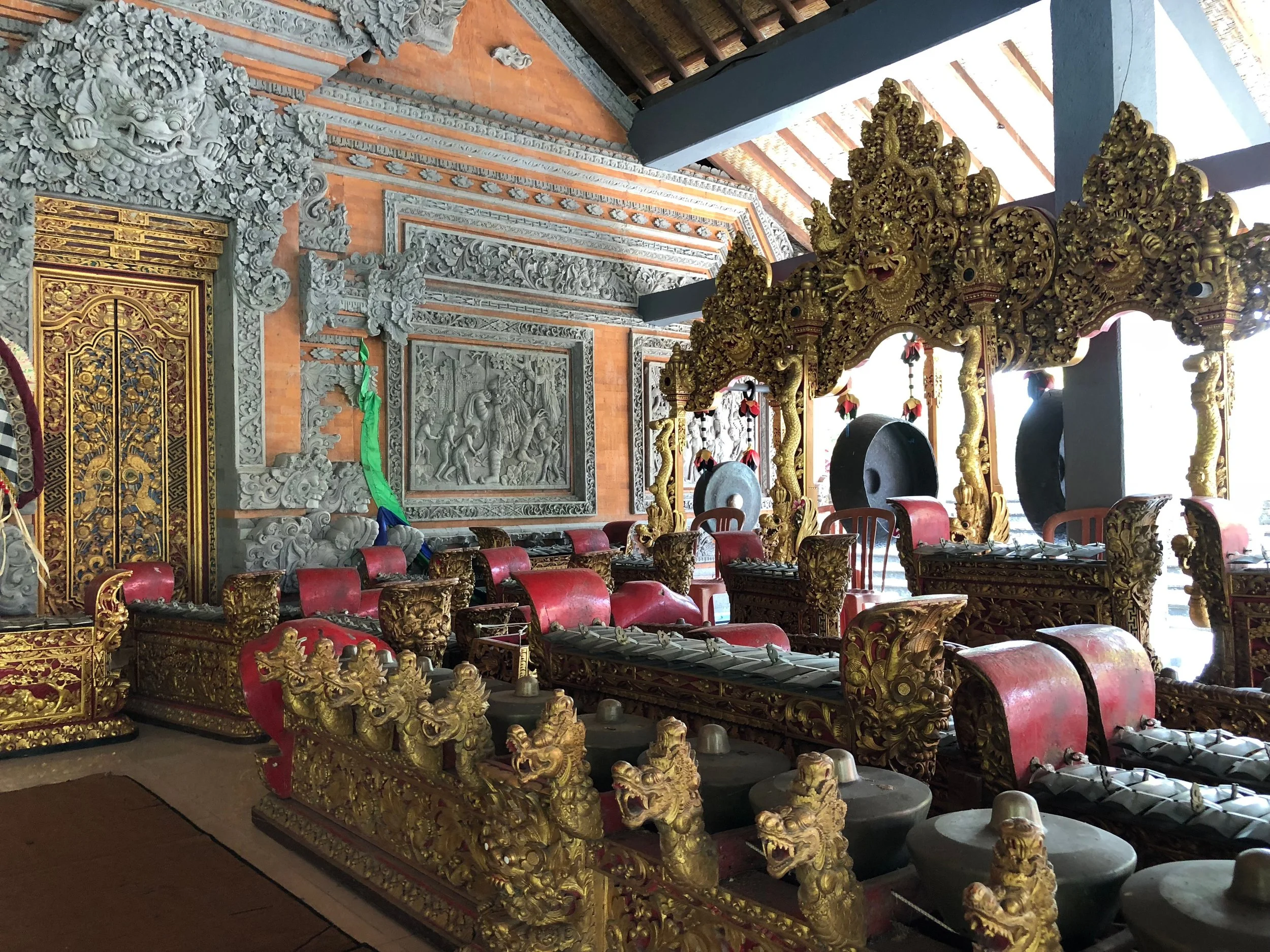
In one corner of the temple complex, we stopped to listen to an entirely female gamelan troupe. I had always heard of the percussion-heavy, xylophone-like instruments being played by men and wondered if this was a new phenomenon.
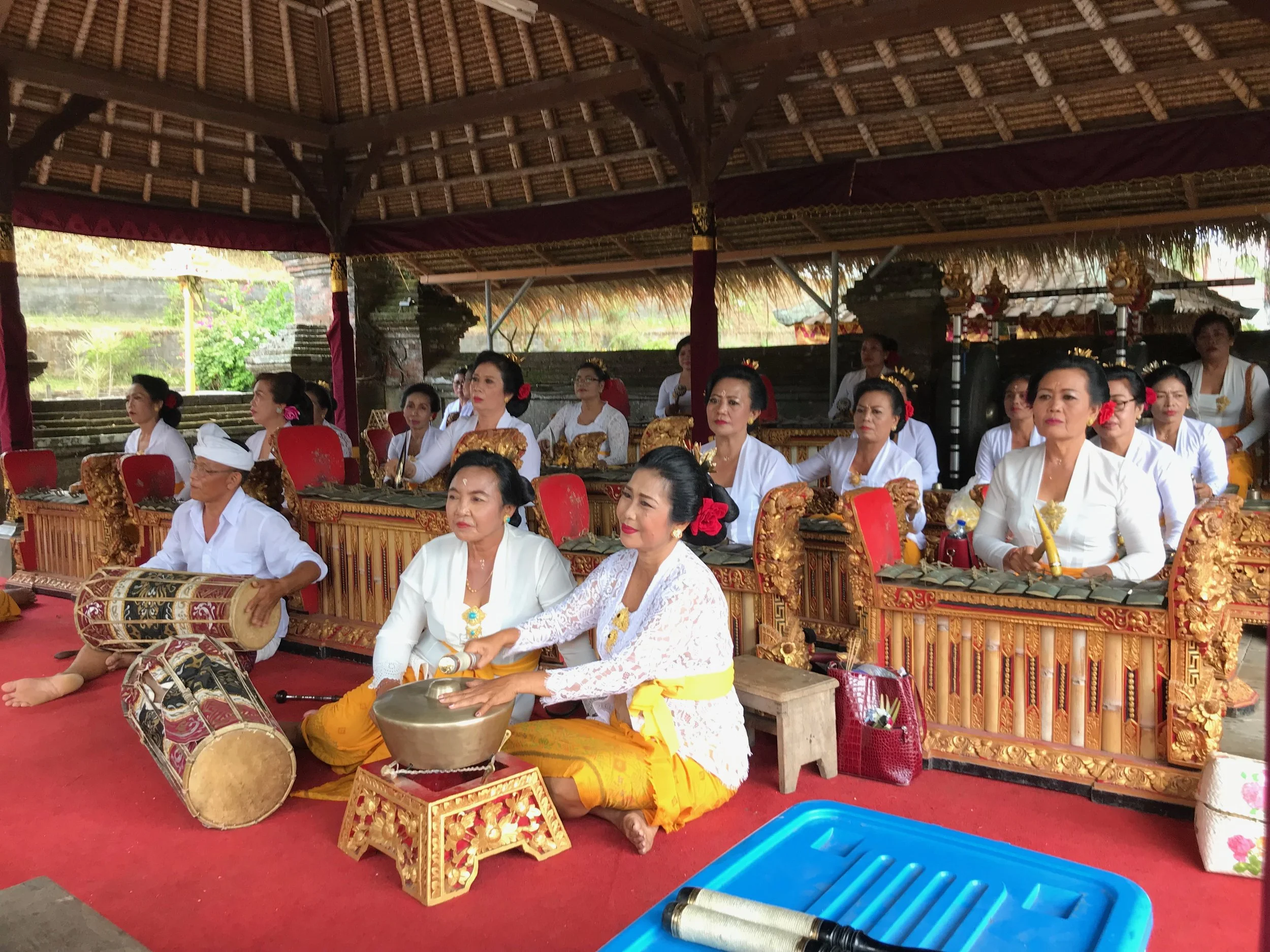
An all-female gamelan band

An all-female gamelan band

As they played their jarring and discordant yet strangely hypnotic tunes, a man in costume approached for a dance. Covered in layers of colorful fabric with shimmering gold designs, barefoot, boasting long nails like claws, he descended the stairs. As he got closer, what caught my eye most was his frightening visage: a wide, wrinkled brown mask with a sweeping black mustache. Its features seemed pinched from the nose, lending an overall appearance of a rodent, not softened by the floral headband framing his face. If anything, it looked like foliage that had caught as he burrowed in the dirt. He made slow, sweeping movements, only his hands twitching rapidly, like the fluttering wings of a raven.

We think the character might be Topeng Bujuh, a comic figure in Balinese performances.
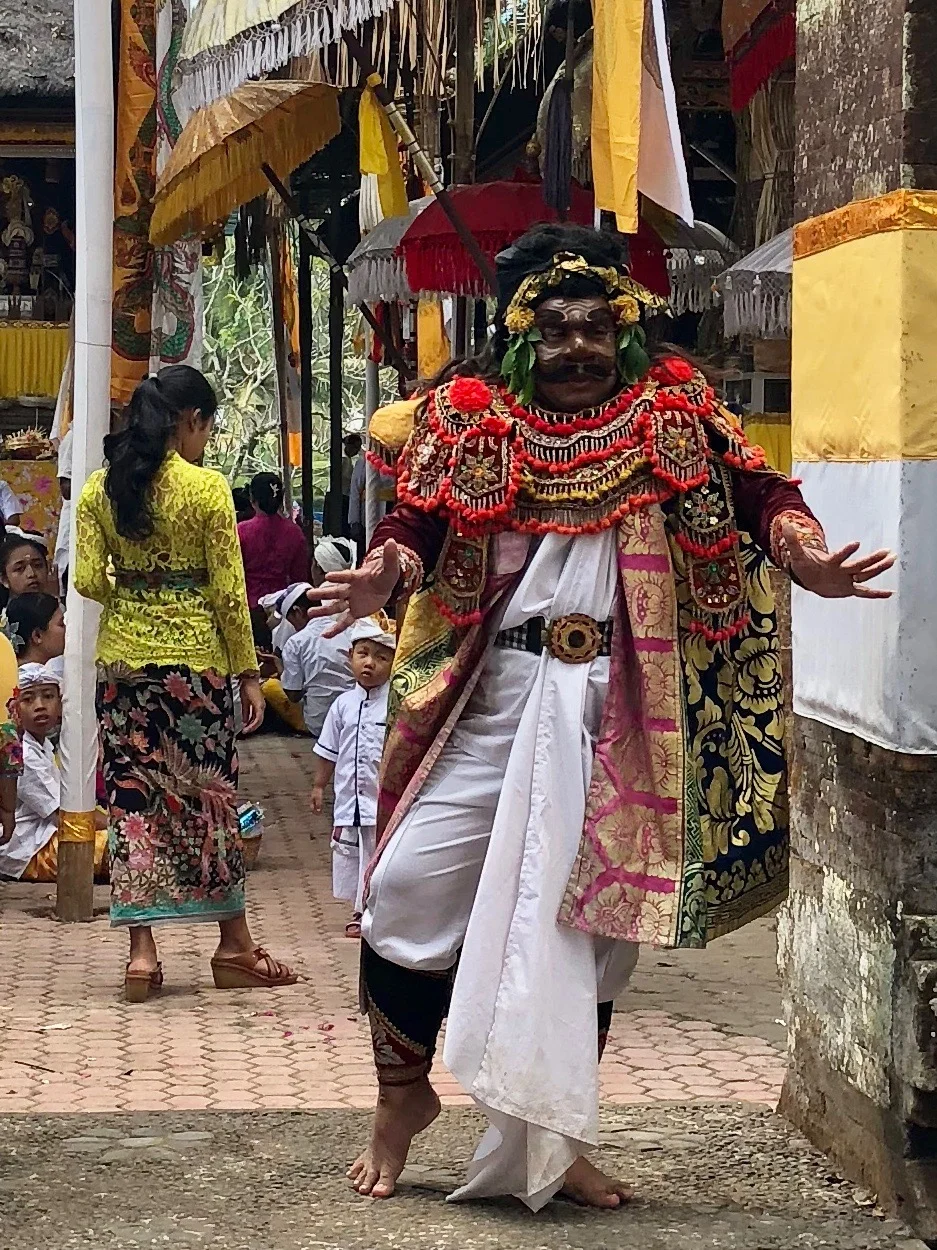
A creepy costumed character danced to the gamelan music

A creepy costumed character danced to the gamelan music

As we wandered through the courtyards, most people were extremely happy to see us. They grinned, said hello, greeting us with a sembah (a gesture of respect, similar to the Thai wai, where you place your palms together in front of your chest and bow). I took the opportunity to snap quick photos of the worshippers and almost every time, they smiled back at me, unoffended, much to my relief. It seemed they were happy to share their experience, that they were glad a couple of Western tourists had felt their sacred festival worthy of a visit. –Wally
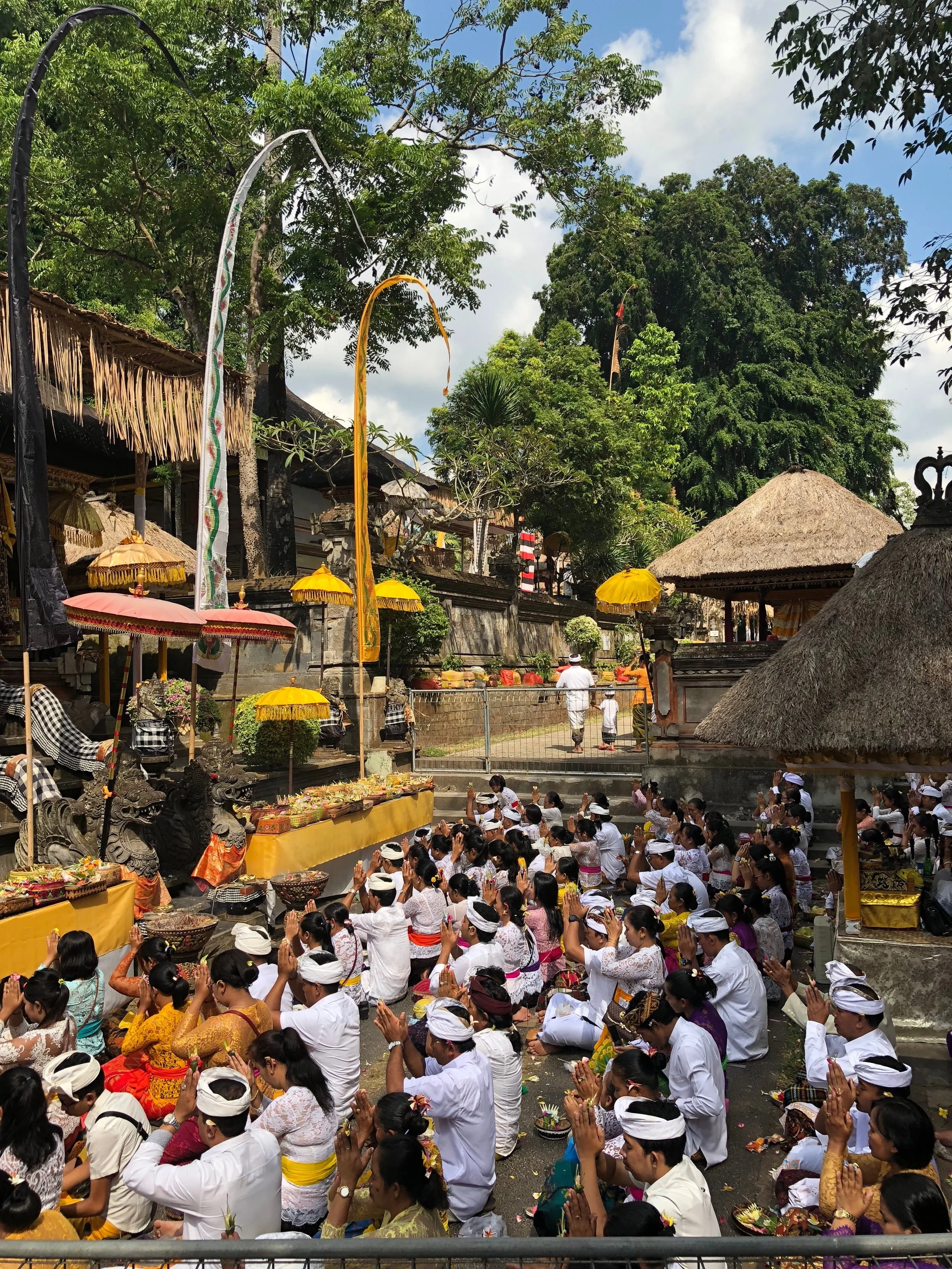
Pura Samuan Tiga is one of the largest Hindu temples in central Bali

Pura Samuan Tiga is one of the largest Hindu temples in central Bali

Pura Samuan Tiga
Jalan Pura Samuan Tiga
Bedulu
Blahbatuh
Kabupaten Gianyar
Bali 80581
Indonesia
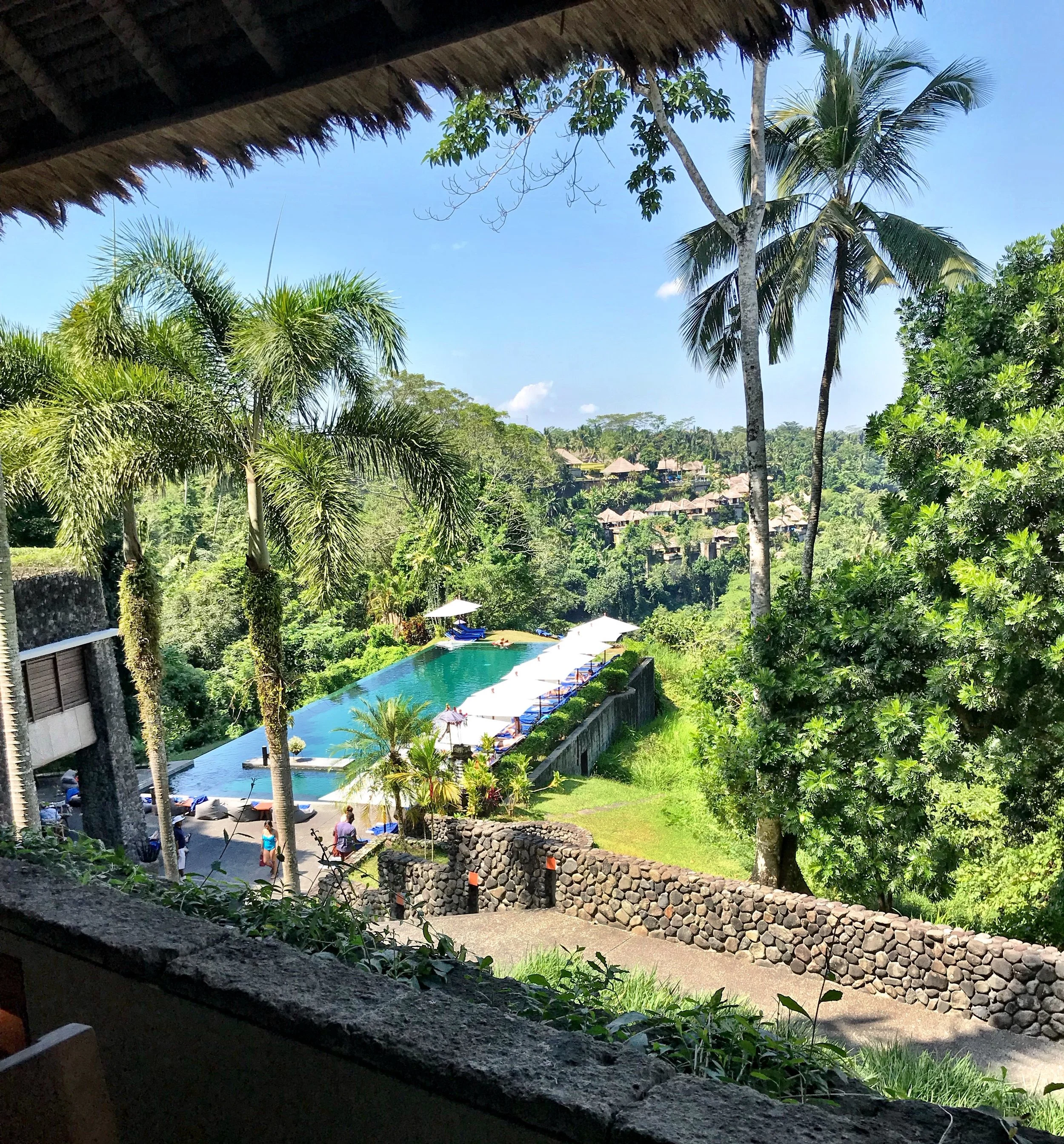
Alila Ubud: A Luxury Resort Nestled in a Jungle Valley

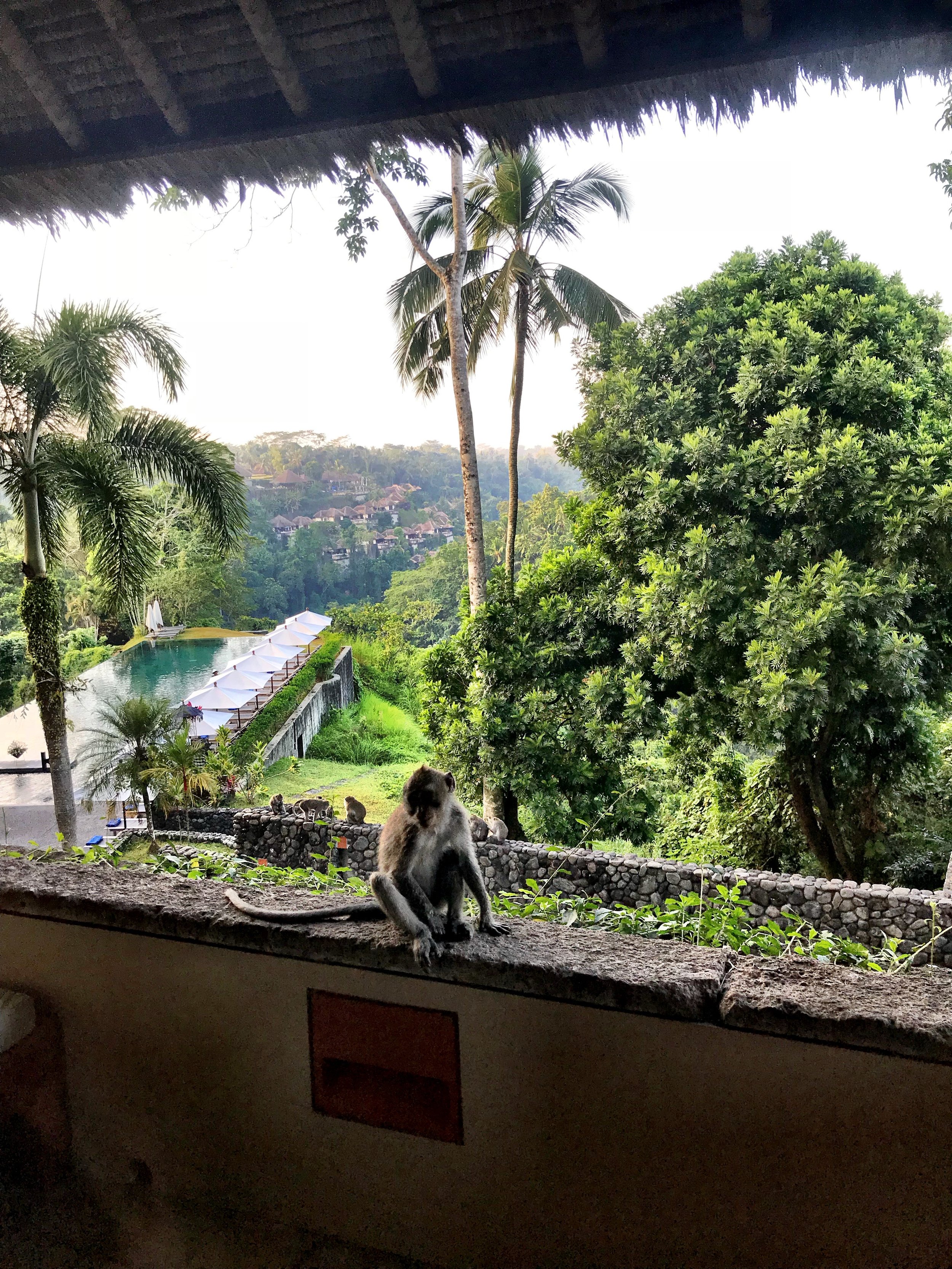
Can we just talk about the amazing infinity pool at this Bali hotel? And the amazing food? And the monkeys scurrying about?

This was the breathtaking view we awoke to every morning

This was the breathtaking view we awoke to every morning

By the time I began looking for places for Wally and me to stay in Ubud, Bali, I was faced with an overwhelming amount of choices. I wanted to be close to the town’s cultural center, temples, shops and restaurants, but far enough away that it would feel like a retreat from the inevitable throngs of tourists. One look at an image of the epic infinity pool overlooking a landscape of tropical jungle greenery on the Alila Ubud website and I was hooked.

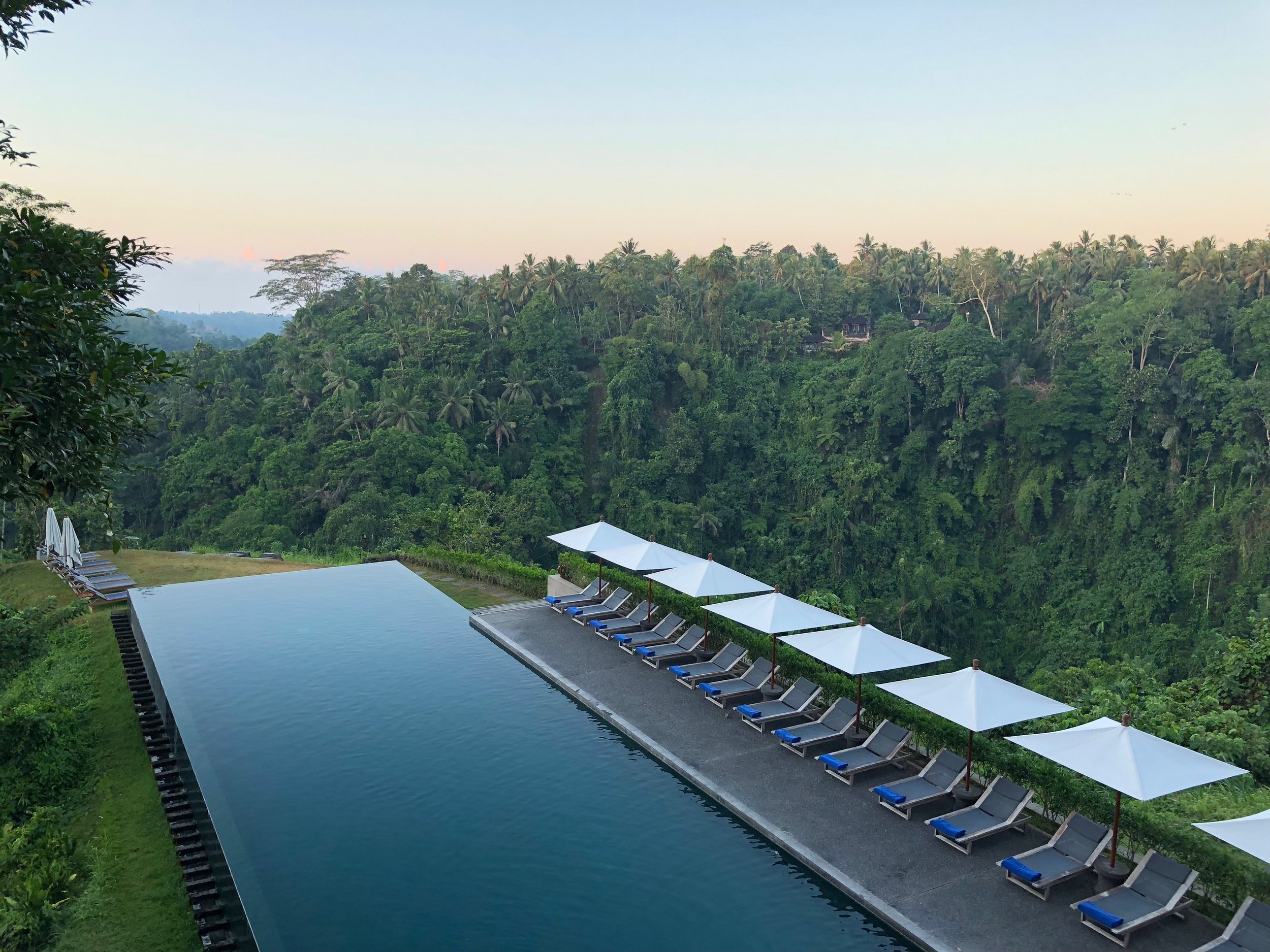
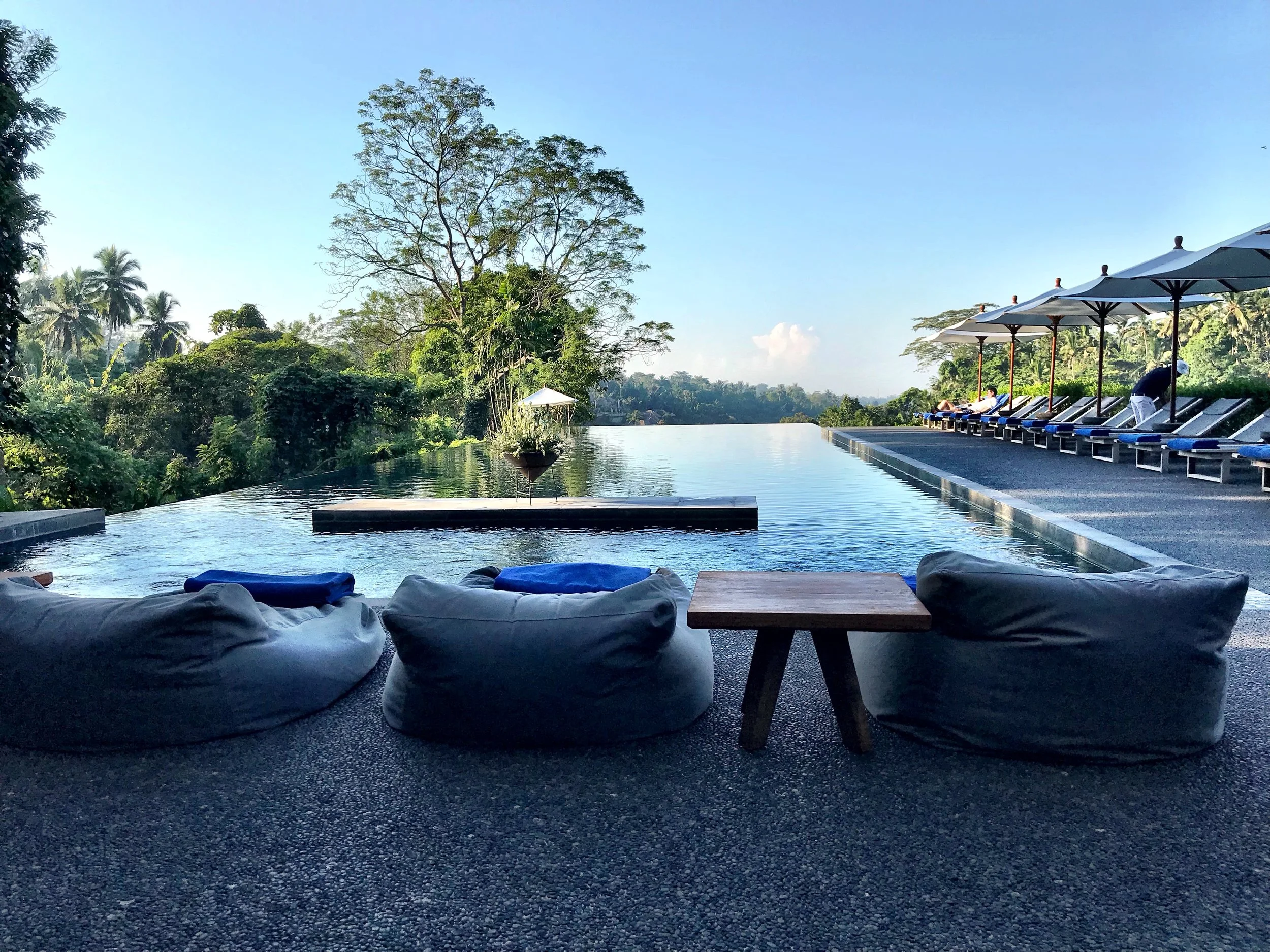
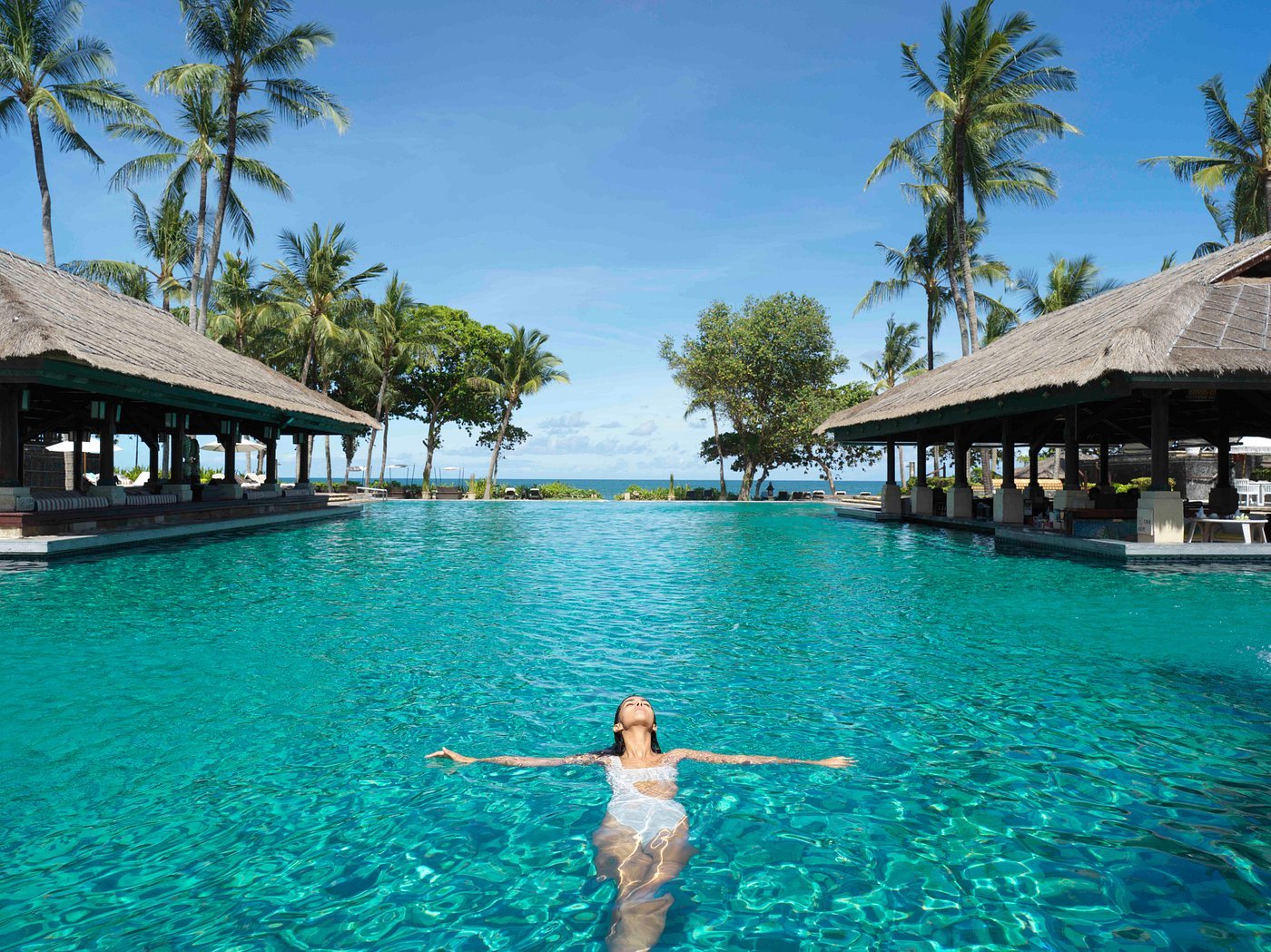
The infinity pool consists of a slim rectangle of water whose edges disappear into the terraced jungle hillside.
The resort is comprised of groups of villas scattered throughout the compound

The resort is comprised of groups of villas scattered throughout the compound

When we landed at the Ngurah Rai International Airport, it was well after midnight and buzzing with new arrivals. Apparently we weren’t the only flight to reach the isle of Bali so late at night — or early, depending on how you look at it. After collecting our luggage, we met our chauffeur outside the terminal and asked if the airport was typically this crowded. He replied with a smile, “Yes, always.”

The pool really is the star of the show at the Alila

The pool really is the star of the show at the Alila

Alila Ubud

Our base for our Bali trip was the Alila Ubud, which is just over an hour’s drive from the airport. Located high up in the mountain village of Payangan, our real adventure began once our driver turned onto a private meandering road that led to the resort. It was well after 2 a.m. when we checked in, following a nearly 24-hour journey from Chicago. The concierge warmly greeted us at the reception pavilion, offering us cold towels and jamu, a traditional Indonesian healing tonic.

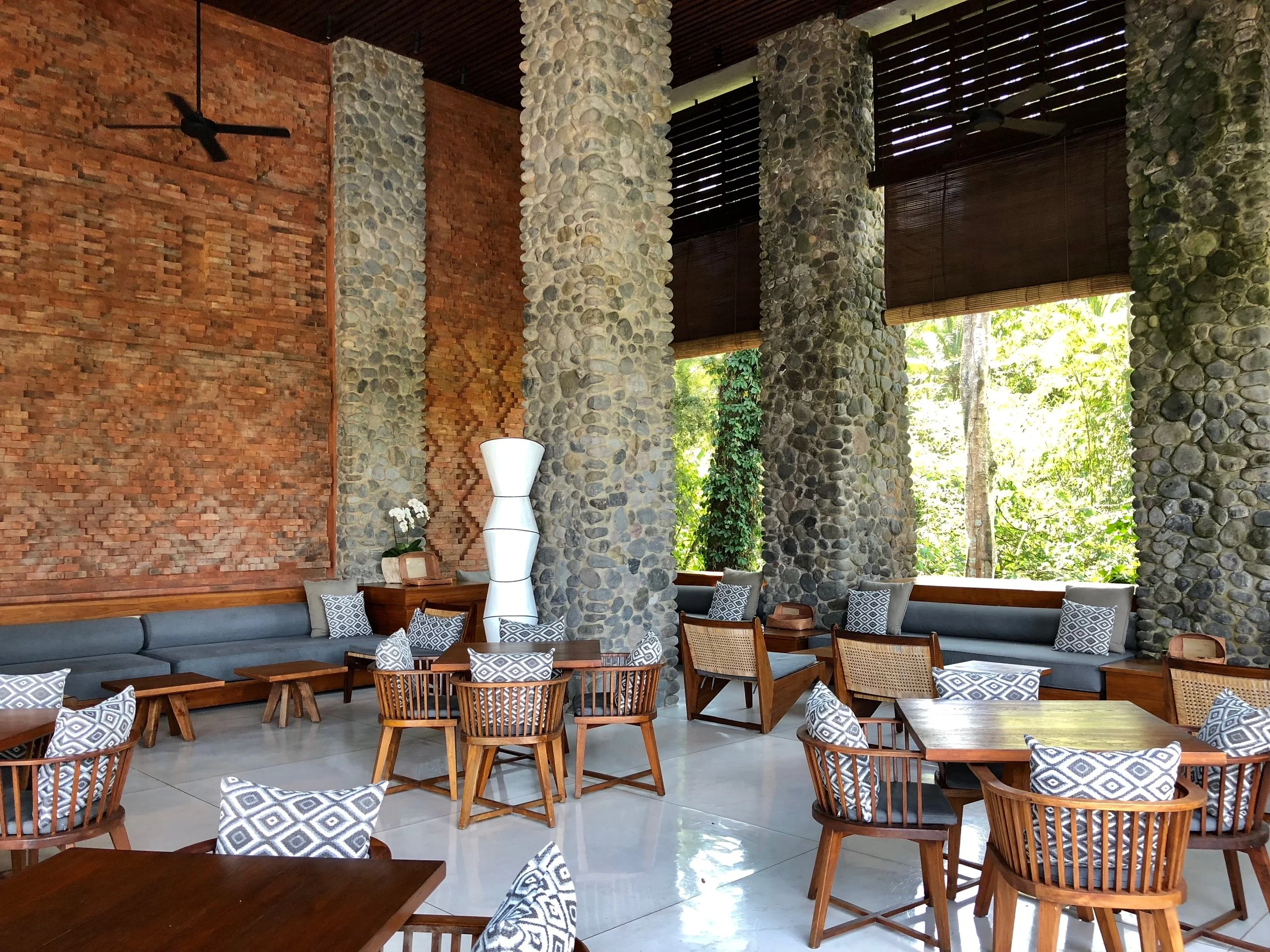
The open-air lobby at Alila, where helpful staff are always on hand

The open-air lobby at Alila, where helpful staff are always on hand

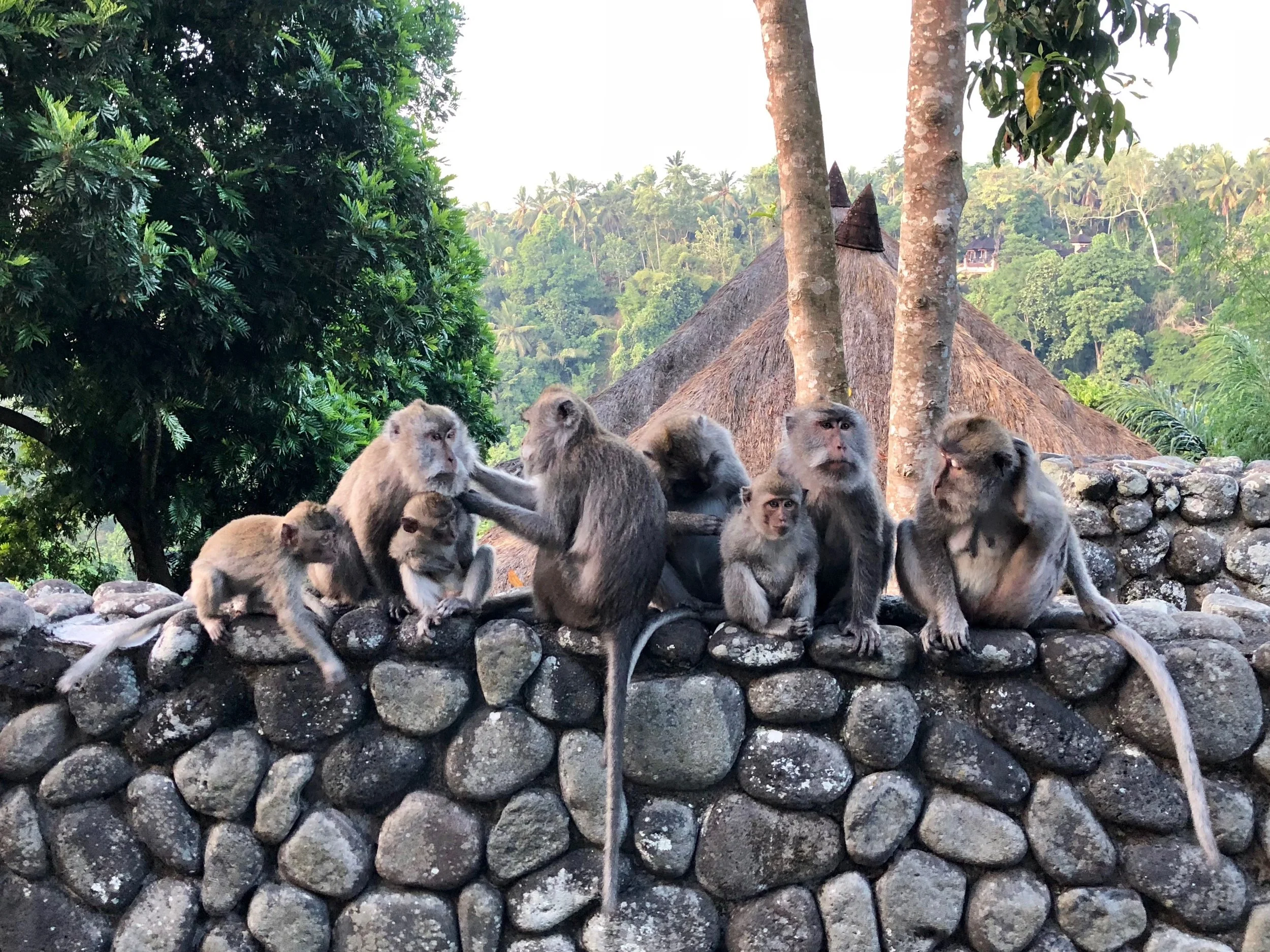
The concierge escorted us to our room and instructed us to secure the patio doors leading to the balcony to prevent a wild monkey infiltration. “Does it have a name?” Wally asked. To which the concierge replied, “No, there are many.”

This group of monkeys gathered on the wall outside our room

This group of monkeys gathered on the wall outside our room

Alila, formerly the Chedi, was conceived by the acclaimed firm Kerry Hill Architects. The sprawling, tranquil complex is surrounded by rice terraces and is roughly 15 minutes from Ubud, the enclave that exploded exponentially after Elizabeth Gilbert’s bestselling memoir and subsequent movie, Eat, Pray Love.

There’s lush tropical foliage in every direction you look

There’s lush tropical foliage in every direction you look

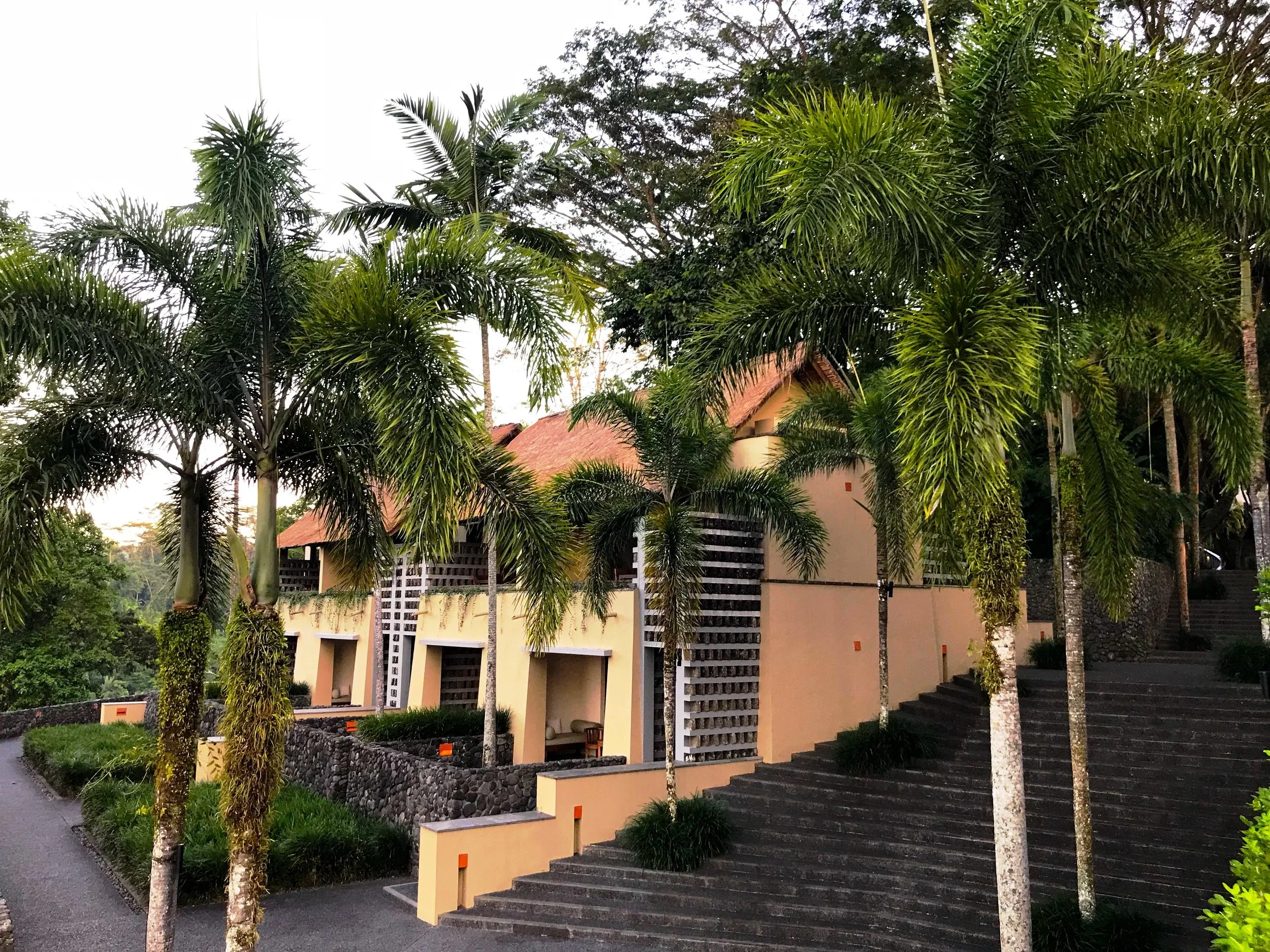
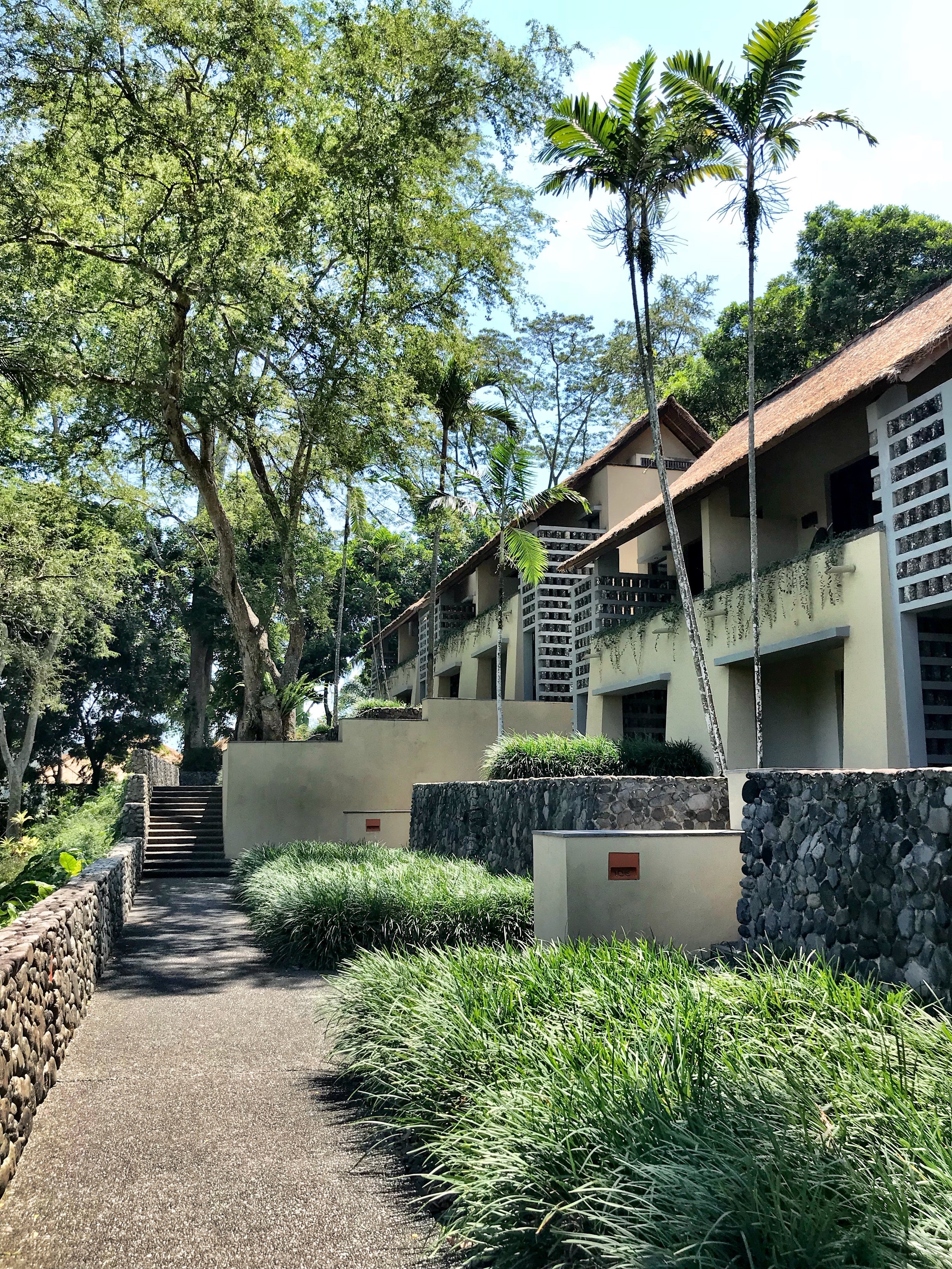
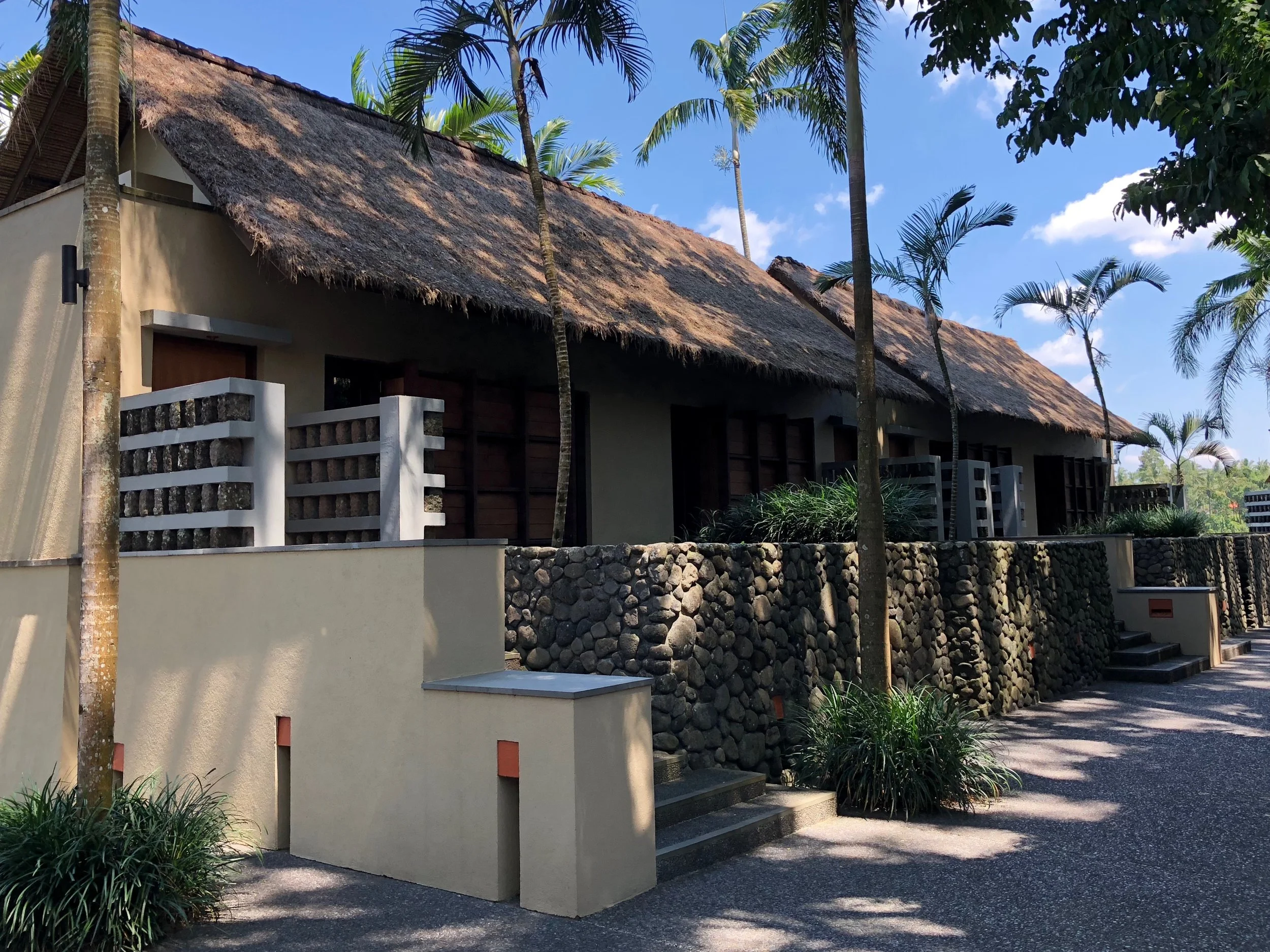
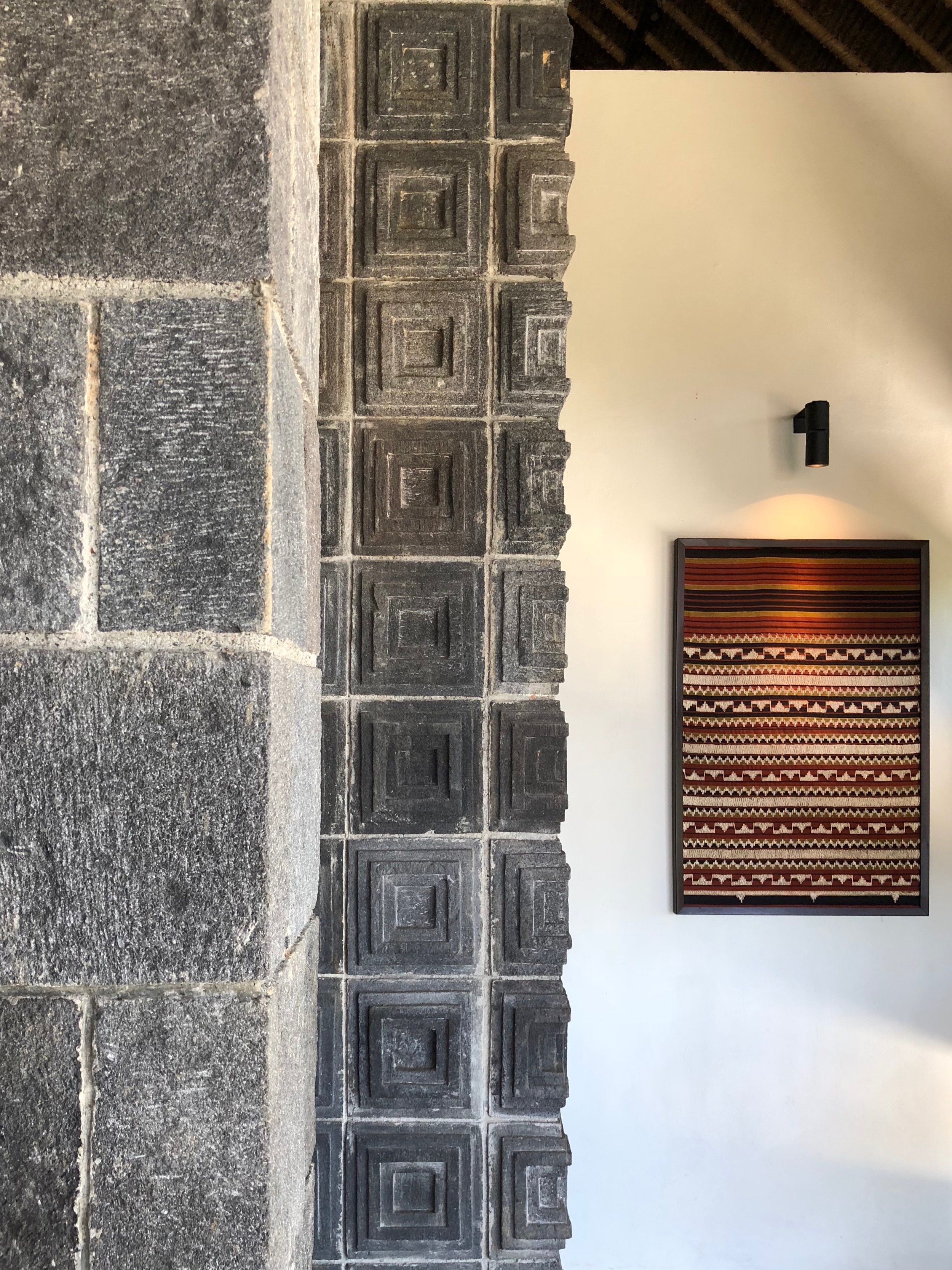
The hotel’s layout was inspired by traditional Balinese hillside villages and has been adapted to the site’s topography. Paths meander past the property’s rooms and private treehouse-like guest villas. Stepped walkways evoke the surrounding terraced rice paddies. Paying respect to traditional Balinese architecture, local materials have been thoughtfully incorporated into its design, including hand-cut volcanic stone, alang alang grass thatch and coconut wood. Stones from the Ayung River were used in the steps and exterior walls. As a result, the Alila’s earthy palette harmoniously blends with the landscape surrounding the resort.

The neutral tones of the buildings at Alila blend in well with the natural environment

The neutral tones of the buildings at Alila blend in well with the natural environment

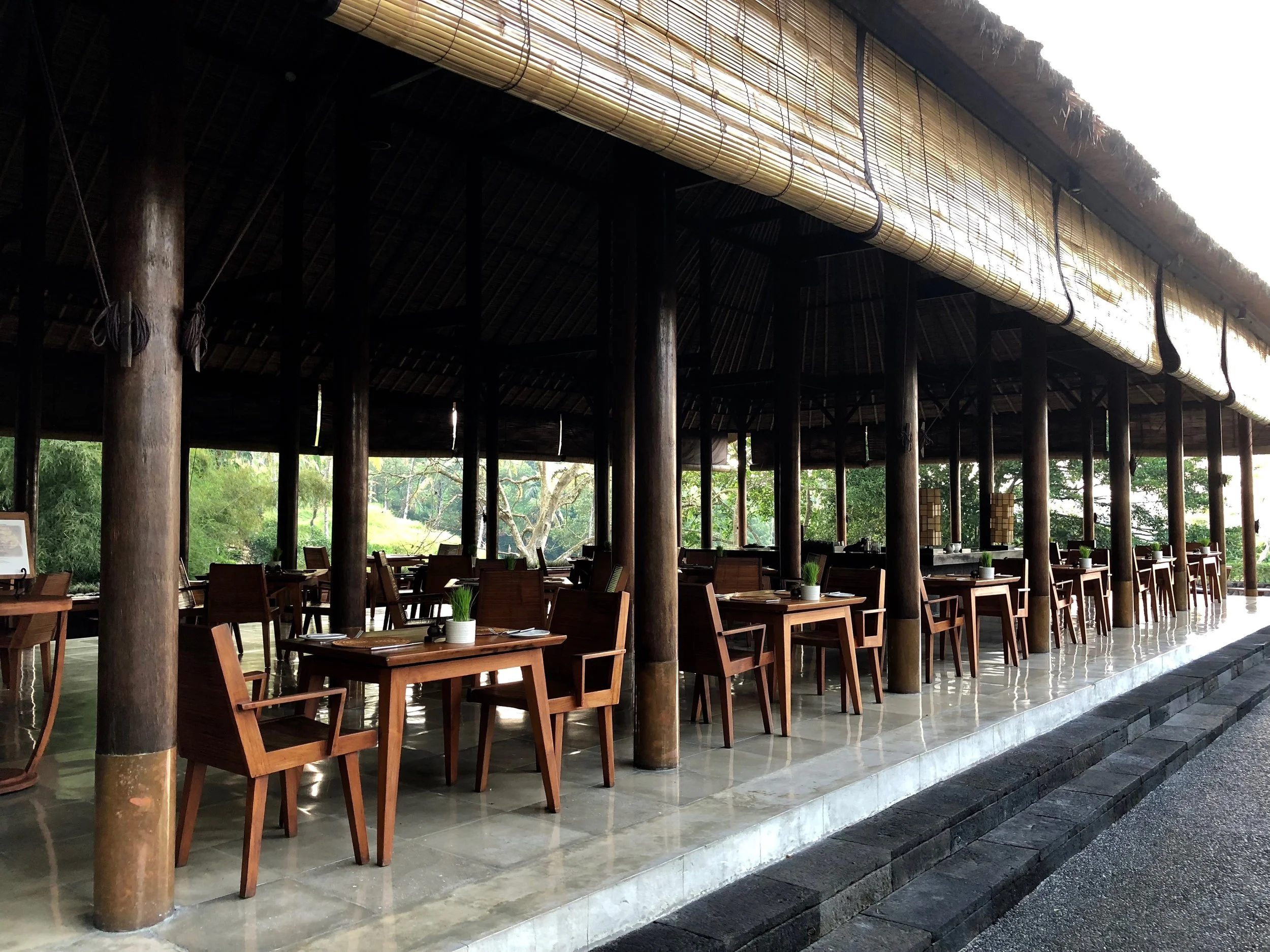
The elongated open-air dining pavilion, Plantation, is located beneath a grass canopy supported by soaring palm pillars and is open for breakfast, lunch and dinner. The executive chef behind the signature restaurants creations is Erwan Wijaya, whose menu features regional Balinese and international cuisine using locally sourced seasonal ingredients. Service was friendly and impeccable. We had the pleasure of being attended to on more than one occasion by the lovely Marianthi.

The Plantation restaurant pavilion

The Plantation restaurant pavilion

A typical breakfast at Alila: fresh baked goods, a trio of smoothies, coffee and nasi goreng (pink sunglasses Wally’s)

A typical breakfast at Alila: fresh baked goods, a trio of smoothies, coffee and nasi goreng (pink sunglasses Wally’s)

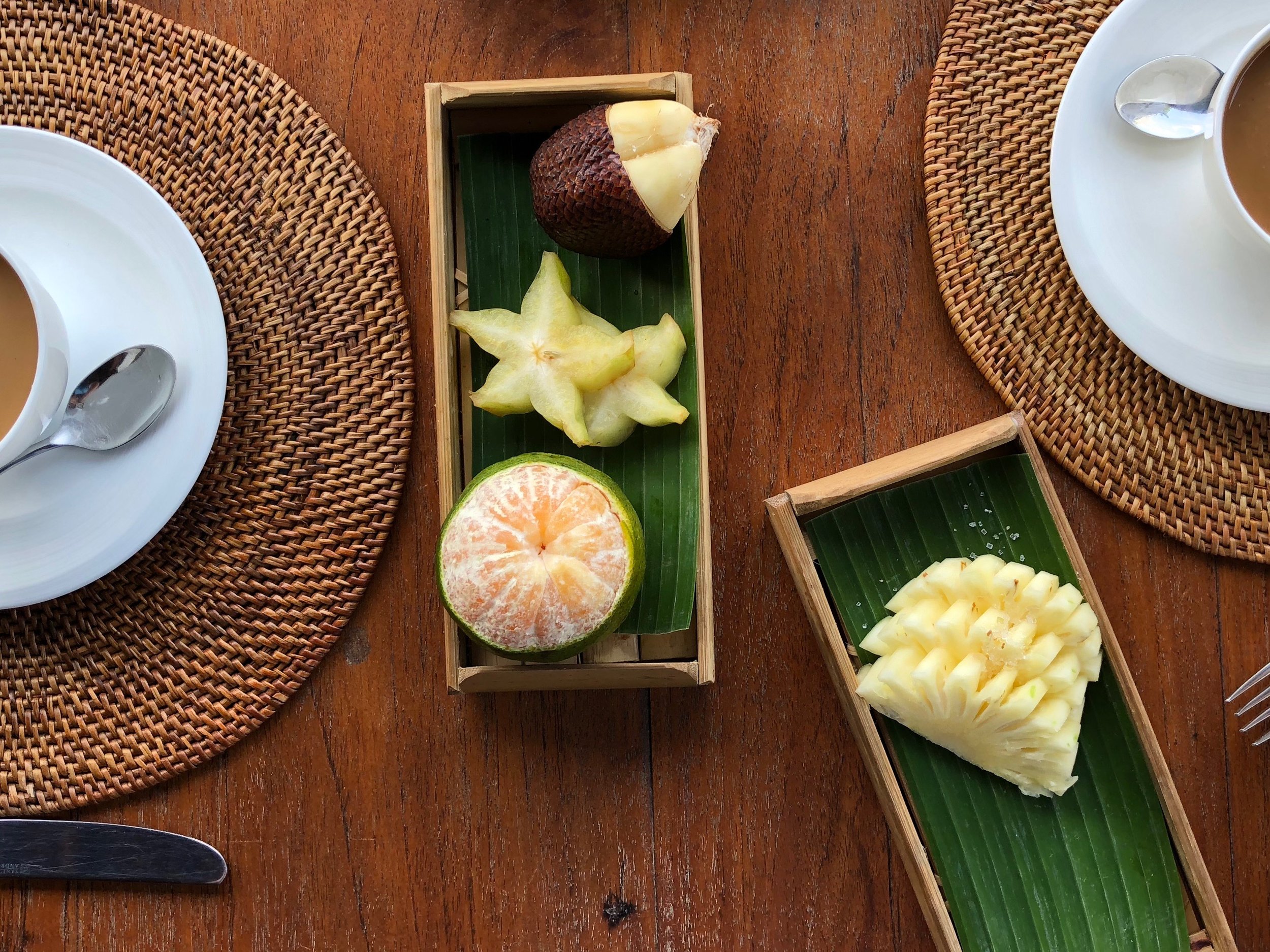
Exotic fresh fruit, including snakefruit, starfruit, pomelo and pineapple

Exotic fresh fruit, including snakefruit, starfruit, pomelo and pineapple

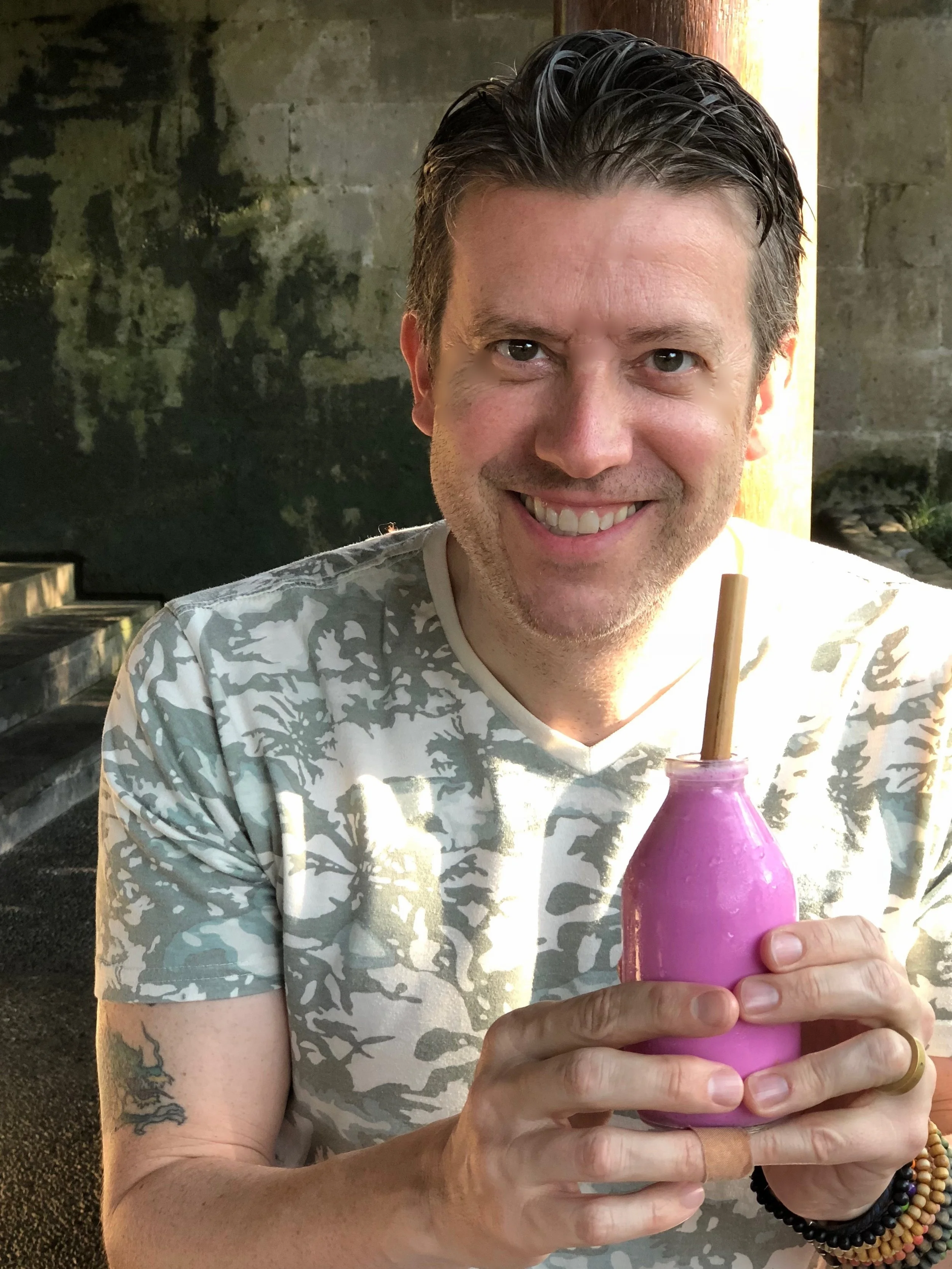
Wally likes pink drinks best

Wally likes pink drinks best

Breakfast options changed daily and we were always excited to try the trio of shareable juices and smoothies, tropical fruit plate, assorted pastries and varieties of nasi goreng. Plus, the coffee was excellent and brewed to order. We tried to exclude Western fare, but one morning we did cave. I tried the bostock brioche French toast with almond cream and Wally the eggs Benedict, which were equally delicious.

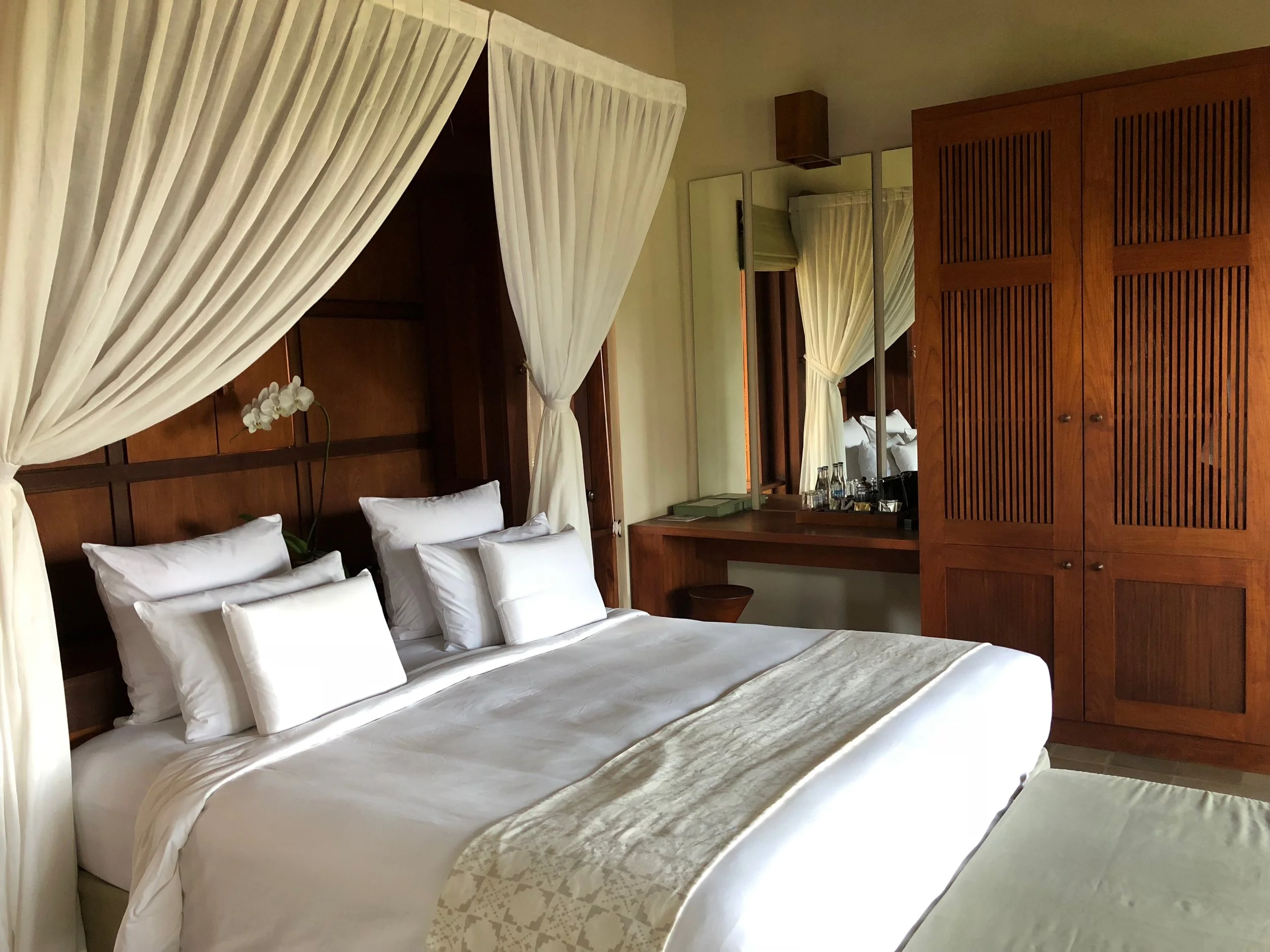
Our room at Alila. Wally particularly loved the mosquito netting

Our room at Alila. Wally particularly loved the mosquito netting

A Room With a View

We stayed in an understated superior room, which was cozy, with its vaulted thatched ceiling and limestone floors. Our king-size bed was shrouded in netting, which Wally loved to close in the evening, picturing himself, no doubt, as a Victorian-era naturalist traveling through the tropics. Also sharing our room was a gecko who chose to evaluate us from afar, perched high upon the wall. One night, we were awoken by a couple of monkeys fitfully skittering across our rooftop.

Curious George pays a visit to our balcony

Curious George pays a visit to our balcony

Our room included small touches with a big impact, including refillable glass bottles of water that were replenished daily and eco-friendly reusable bamboo straws.

After sightseeing and wandering Ubud, the private balcony attached to our room was the perfect perch to unwind and enjoy a quiet moment to read. We were happy that our room was centrally located, near the pool and restaurant. The complex, which seems to stretch for miles, required a few guests to be transported in golf carts to reach their rooms.

We hired a driver and ventured out daily, but if you decided to stay on the resort grounds, the Alila offers bikes for exploring the outlying area, an art gallery that features regional arts and crafts, a small boutique and a spa.

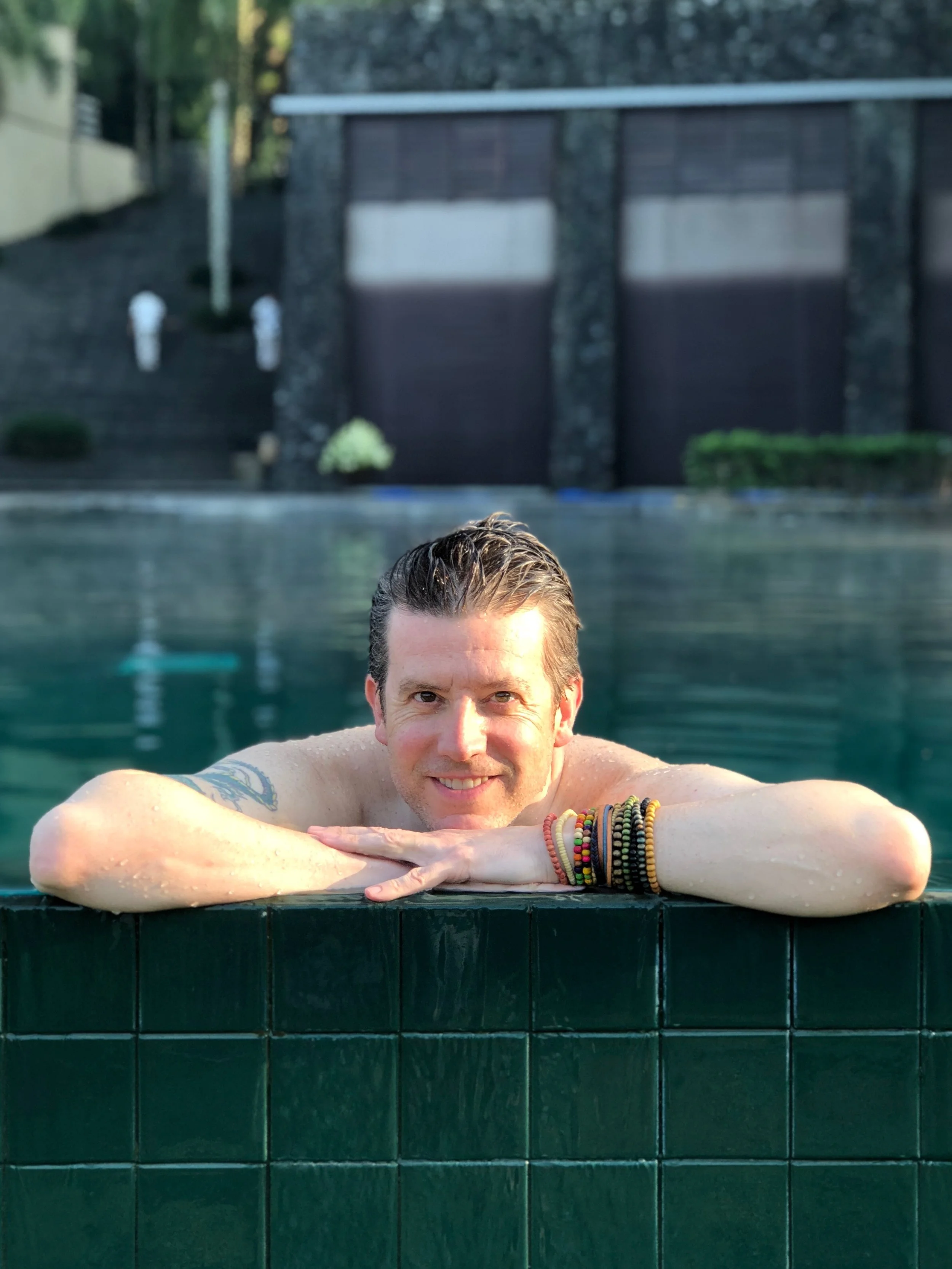
Every morning before breakfast, Wally and Duke had a swim in the pool as the sun rose

Every morning before breakfast, Wally and Duke had a swim in the pool as the sun rose

Duke leans on a wall near the resort’s spa

Duke leans on a wall near the resort’s spa

To fill in time between meals and relaxing, the Alila offers complimentary afternoon coffee and tea with an assortment of bite-size desserts. They even offer nightly entertainment, including movies by the pool.

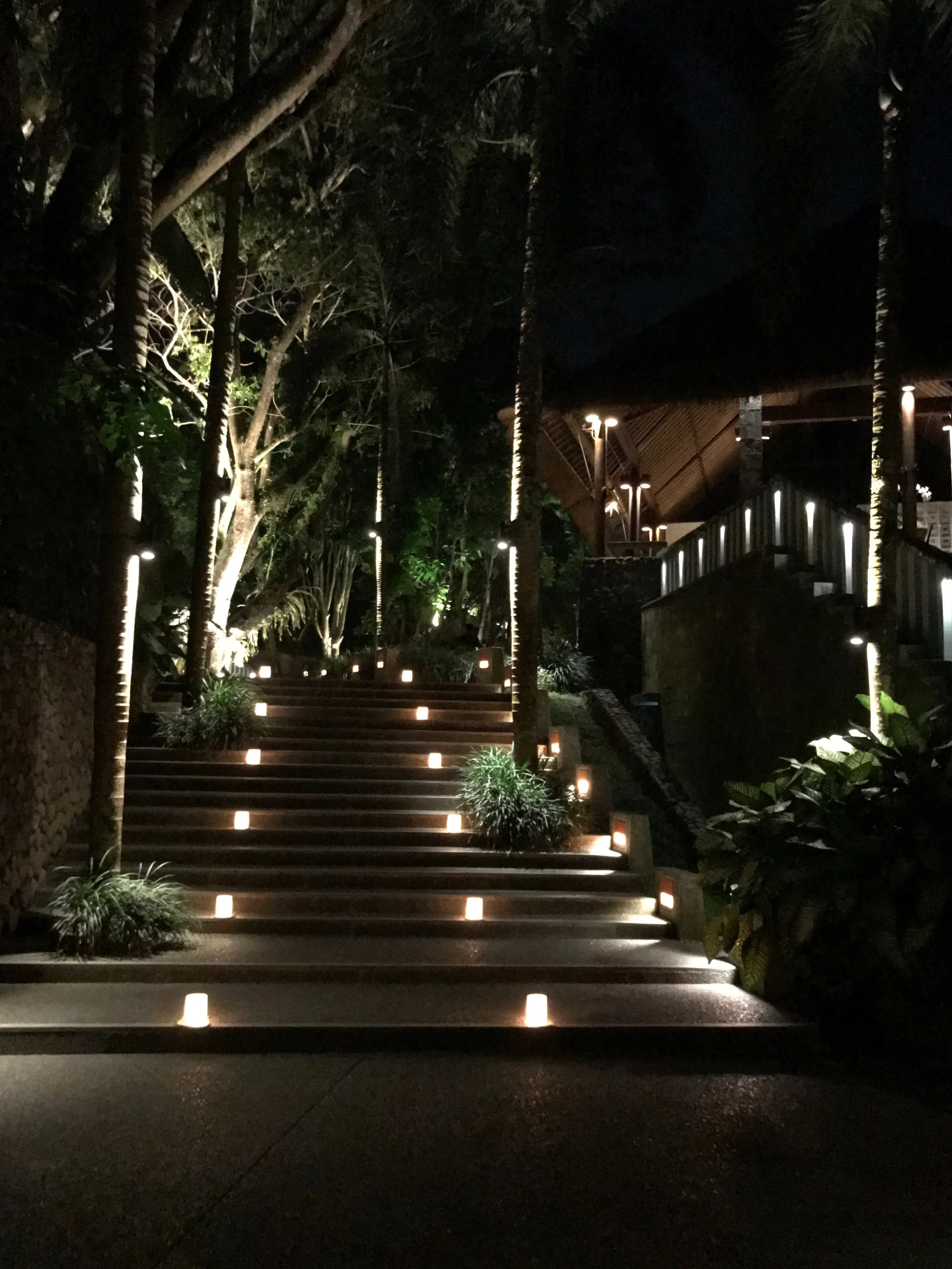
The stairs are lit at night

The stairs are lit at night

The Cabana Lounge opens to the infinity pool

The Cabana Lounge opens to the infinity pool

The bar in the lounge — also where they set up tea, coffee and nibblies in the late afternoon

The bar in the lounge — also where they set up tea, coffee and nibblies in the late afternoon

The hotel’s shuttle service has fixed arrival and departure times, but we found it fairly easy to hire a cab for about $6 to return us to the resort. The staff was personable and always wished us a good morning. When we would return after a day’s exploration, they welcomed us back, addressing us as Mr. Duke and Mr. Wally.

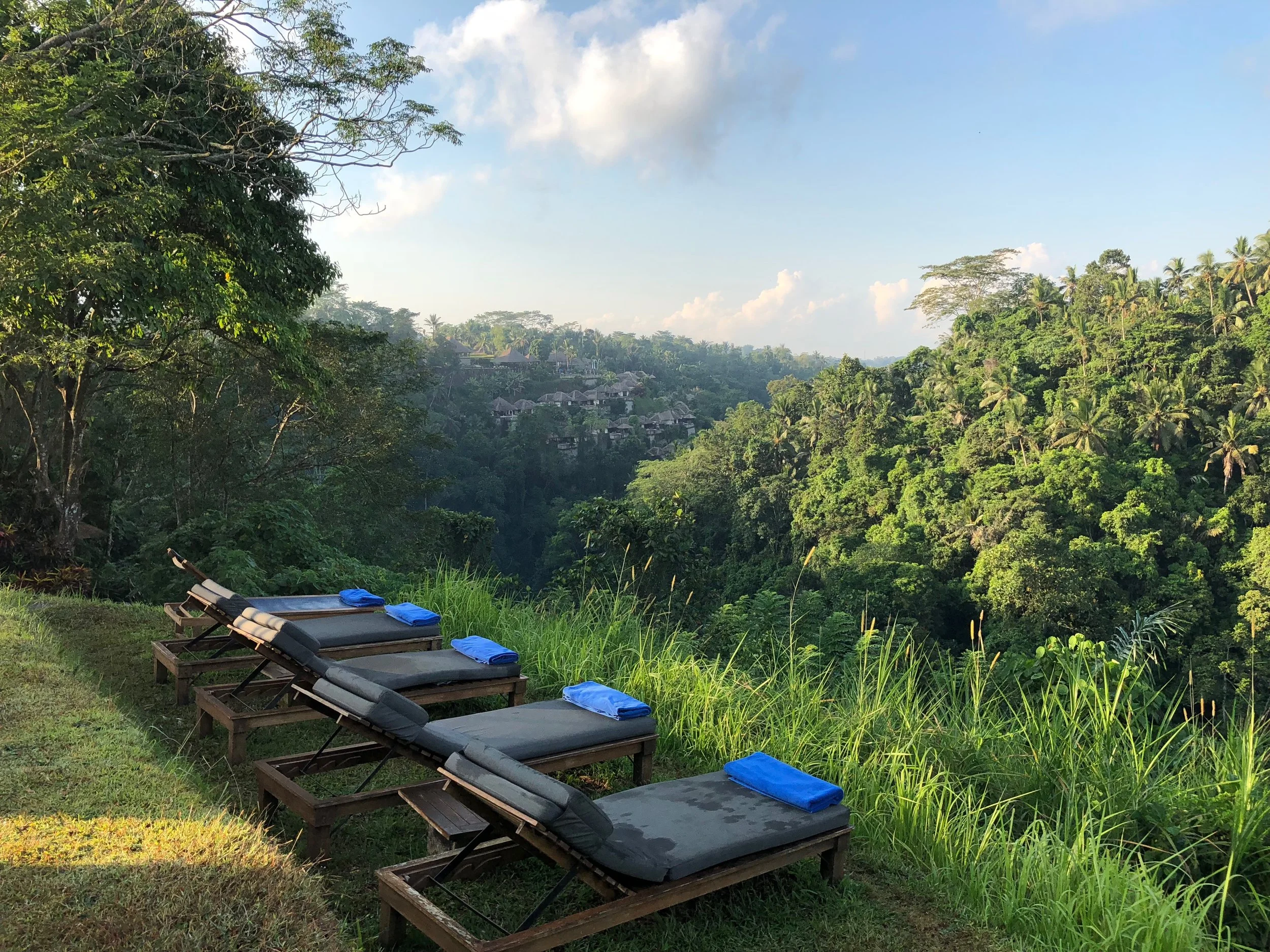
A group of chaises longues at the edge of the valley

A group of chaises longues at the edge of the valley

To Infinity and Beyond

The infinity pool consists of a slim rectangle of water whose edges disappear into the terraced jungle hillside. Our room’s proximity to the pool made it easy to have a quick swim every morning before breakfast, steam rising from the water as the sun rose.

Morning yoga classes overlooking the pool were held at the Cabana Lounge, where guests can take in views of the forest while holding a warrior pose.

The infinity pool seems to flow out into the valley beyond

The infinity pool seems to flow out into the valley beyond

A minor criticism is the internet system, which required entering a complicated code for every use. This is particularly irritating on a smartphone, when you are logged out every time the phone goes idle. On top of that, the signal was weak at every time but the middle of the night. Our jet lag-induced insomnia was the only time we were able to use wifi.

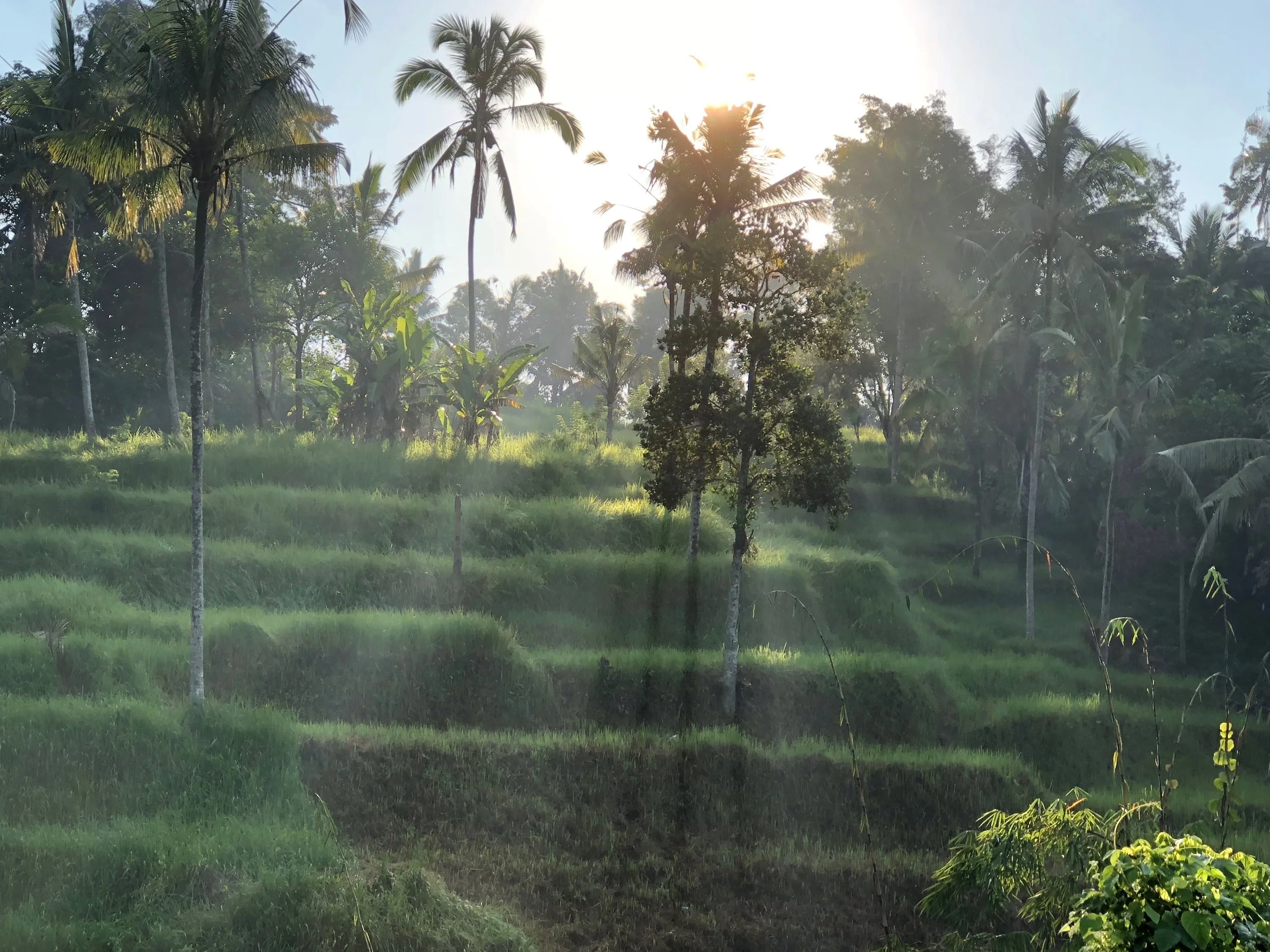
The Alila is surrounded by gorgeous, green rice terraces

The Alila is surrounded by gorgeous, green rice terraces

Paths wind throughout the complex and its environs

Paths wind throughout the complex and its environs

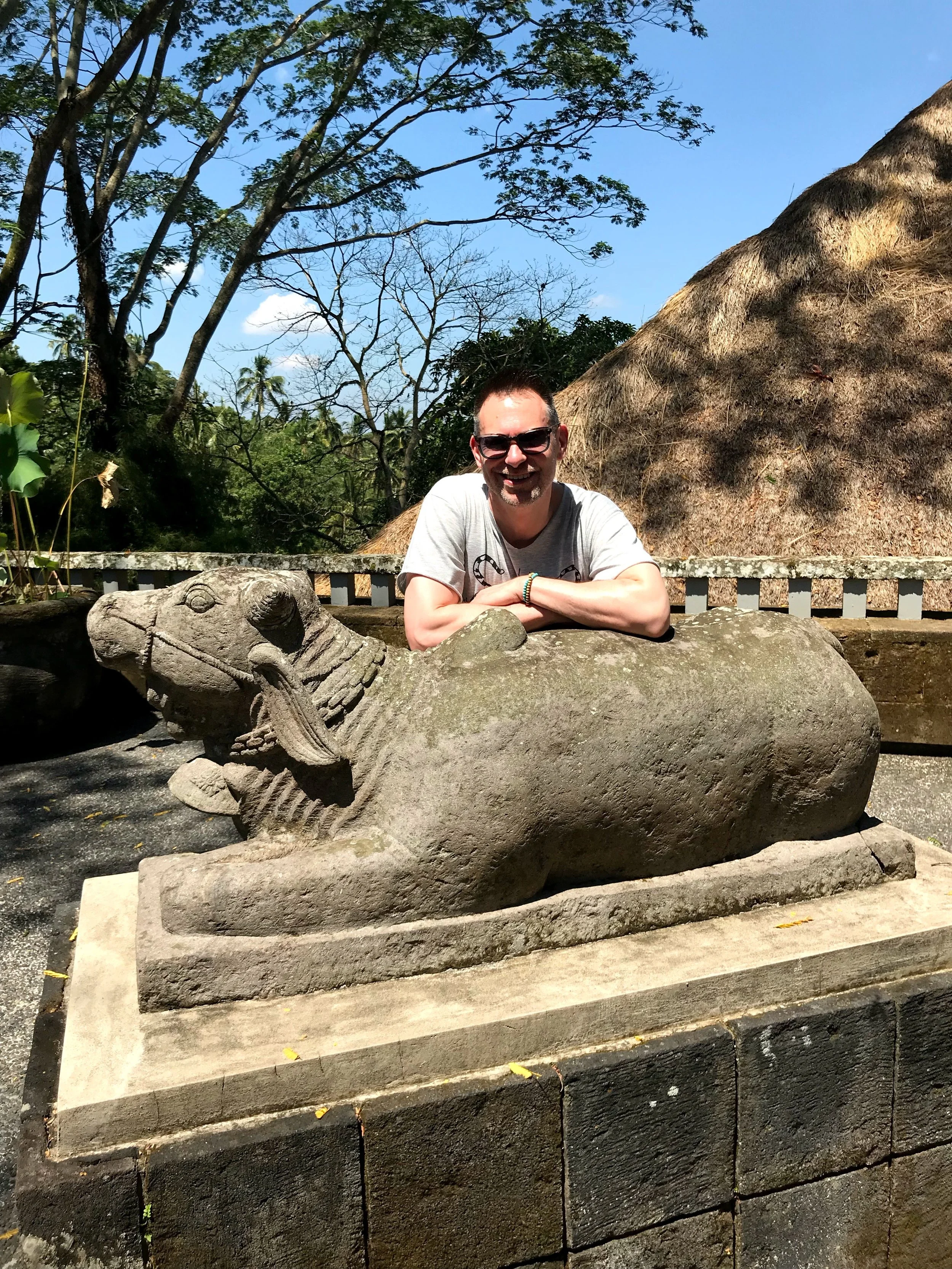
Maybe it’s because Wally is a Taurus, but Duke is obsessed with the Nandi bull

Maybe it’s because Wally is a Taurus, but Duke is obsessed with the Nandi bull

Looking out at the mist-covered tropical greenery as we left on our final morning, Wally and I reflected upon our stay, knowing we had been somewhere special, a place we wouldn’t soon forget. –Duke

Our rooms were conveniently located near the restaurant and pool

Our rooms were conveniently located near the restaurant and pool

alilaubuddetails.JPG

Alila Ubud
Desa
Melinggih Kelod
Payangan, Gianyar
Bali 80572
Indonesia

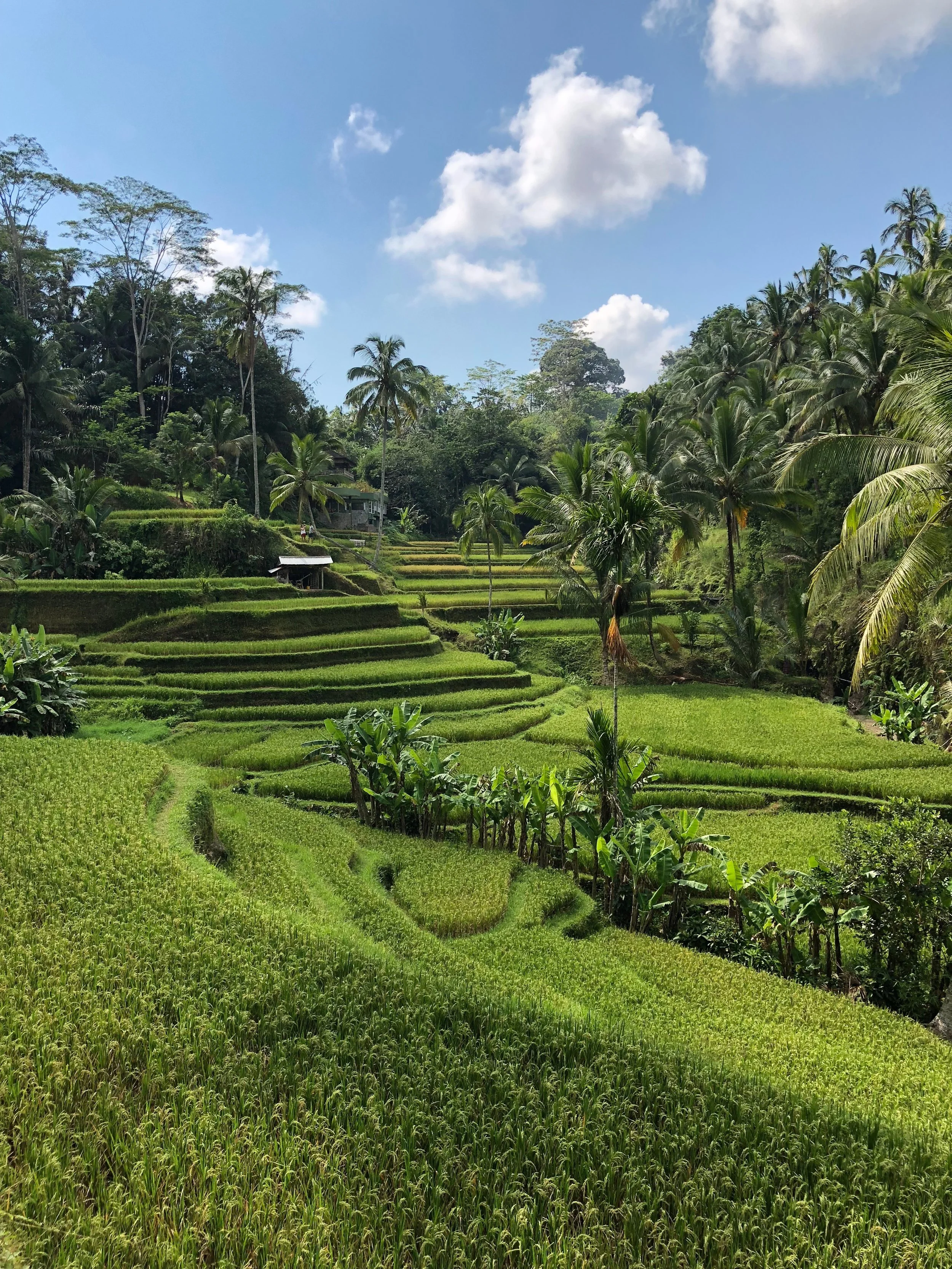
The Picture-Perfect Tegallalang Rice Terrace of Bali

Your photos of these gorgeous rice terraces will make your friends green with envy.

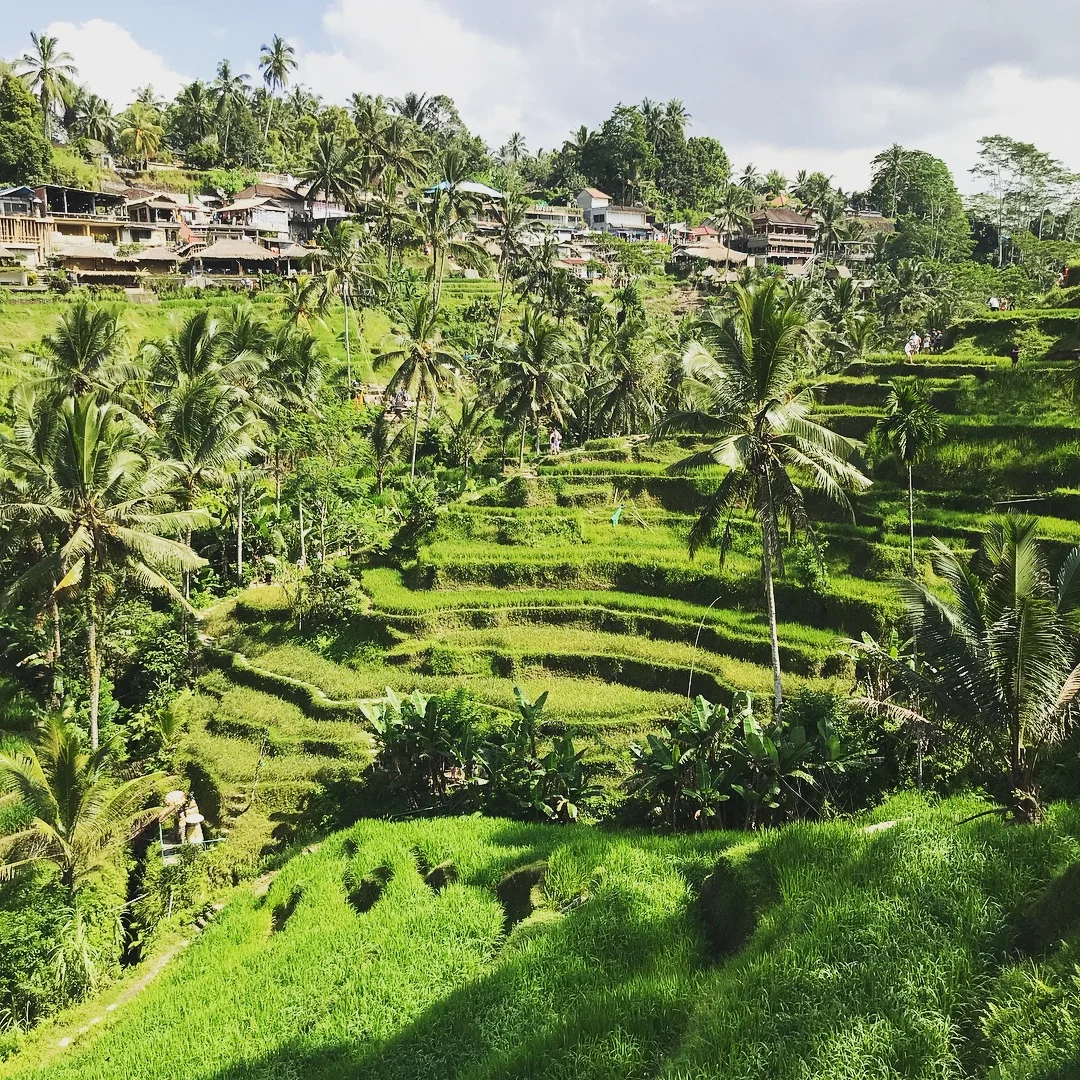
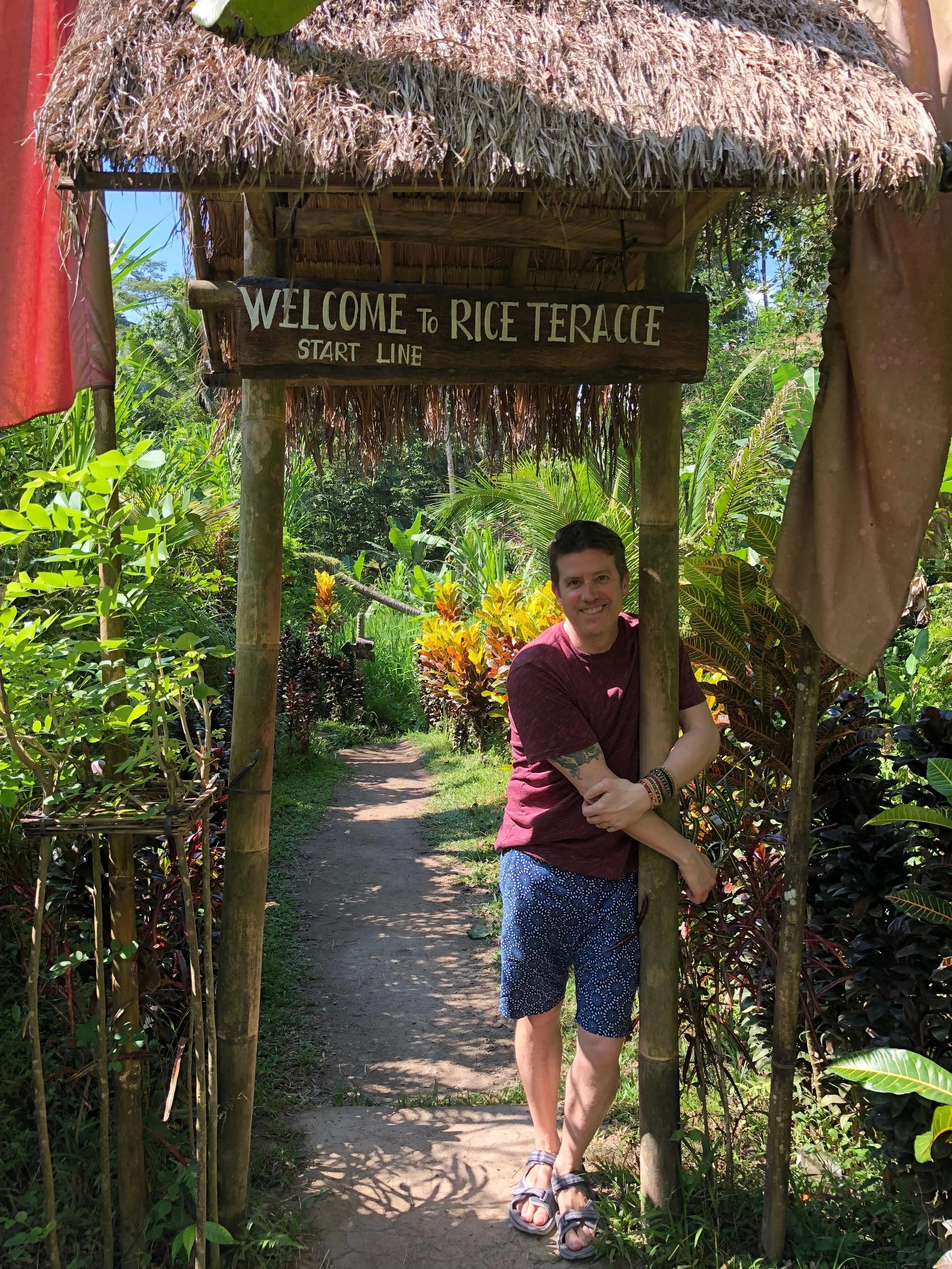
If you’re in the Ubud area, make a stop at the Tegallalang Rice Terrance

If you’re in the Ubud area, make a stop at the Tegallalang Rice Terrance

Chances are if you’ve ever done an Instagram or Pinterest search and entered the keyword “Bali,” you’ve seen more than a few images of the terraced rice paddies of Tegallalang and tourists posing beneath the multicolored Love Bali sign.

This highly photogenic and popular tourist destination is located about 30 minutes north of Ubud.

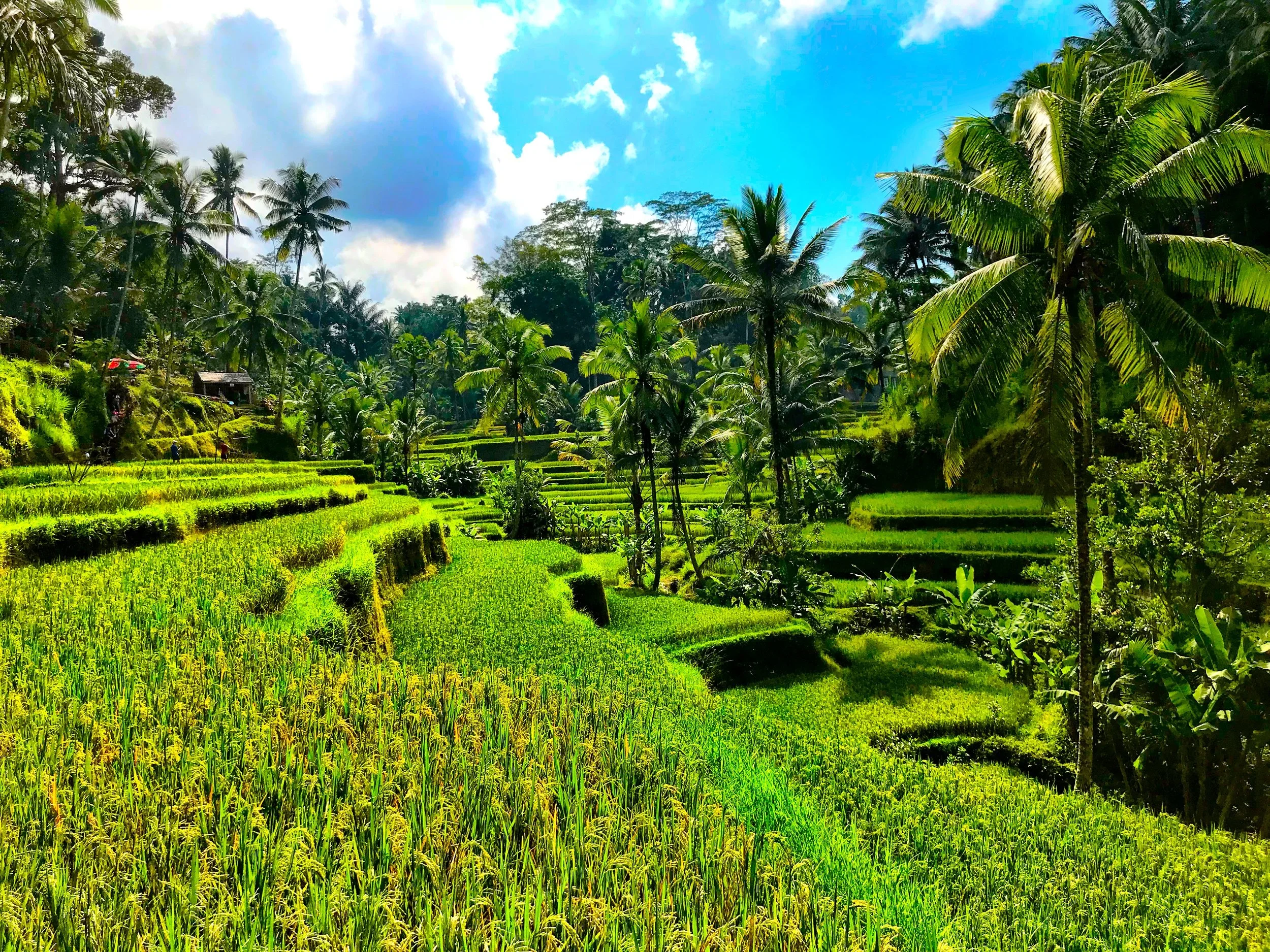
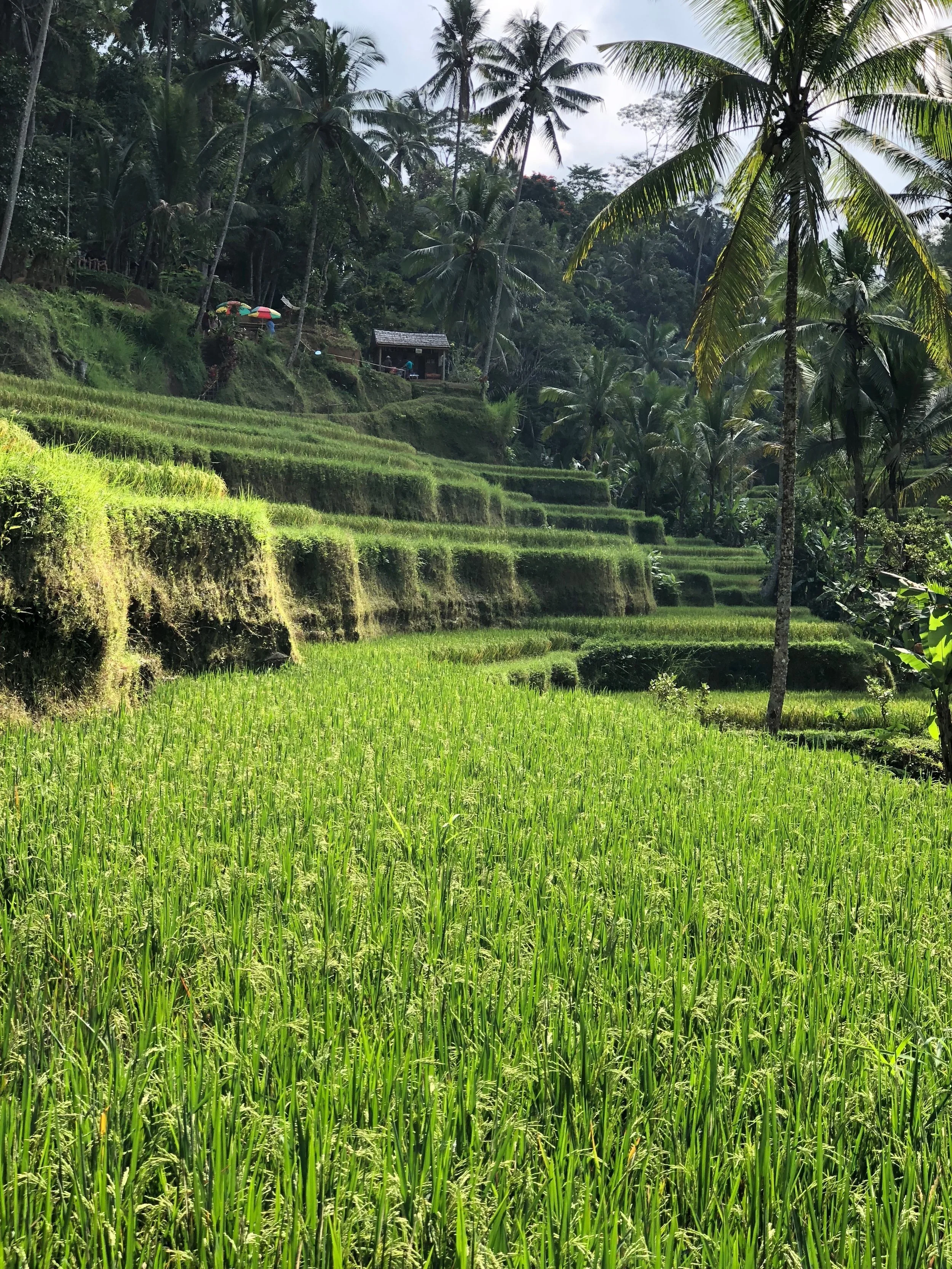
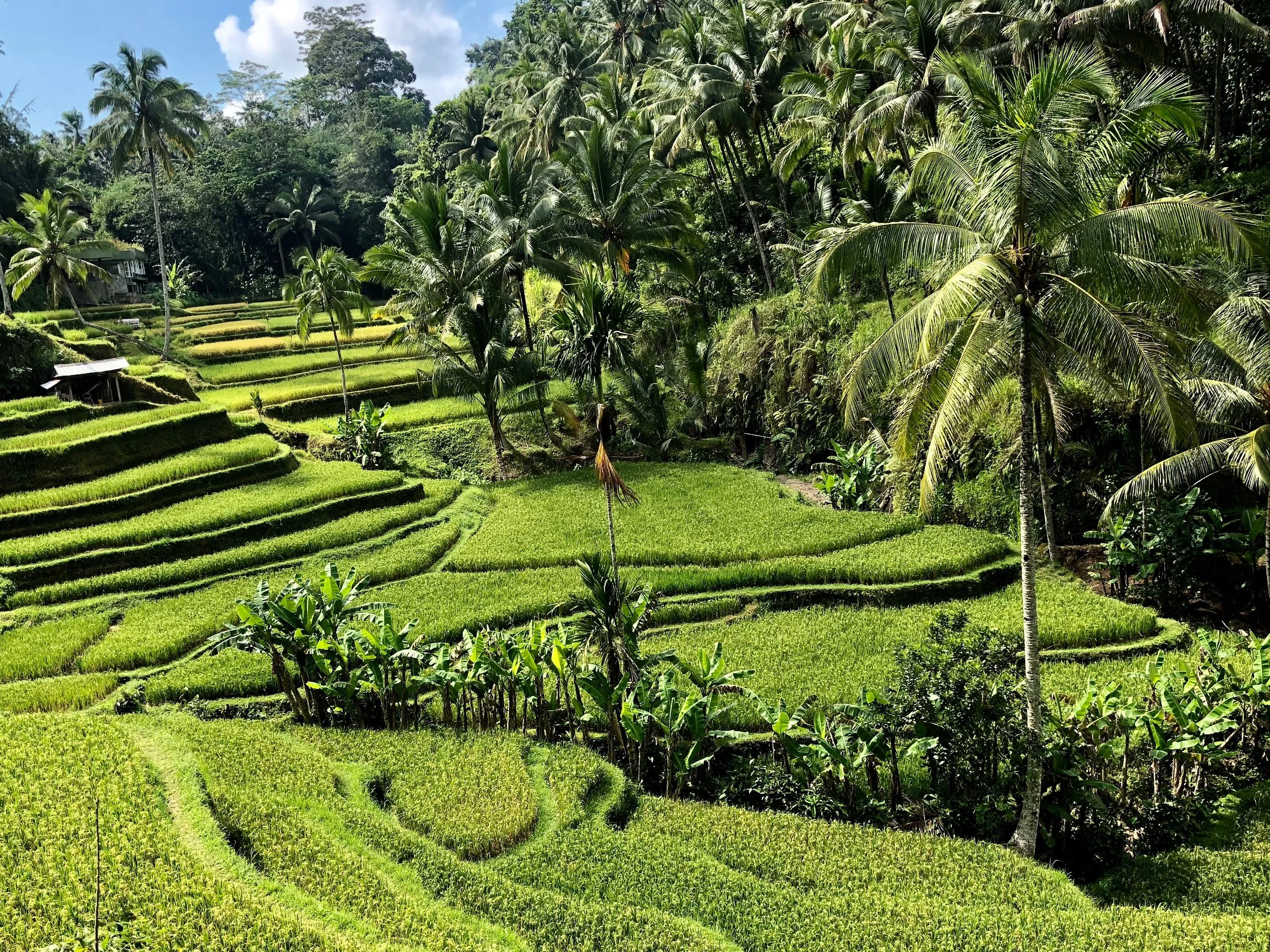
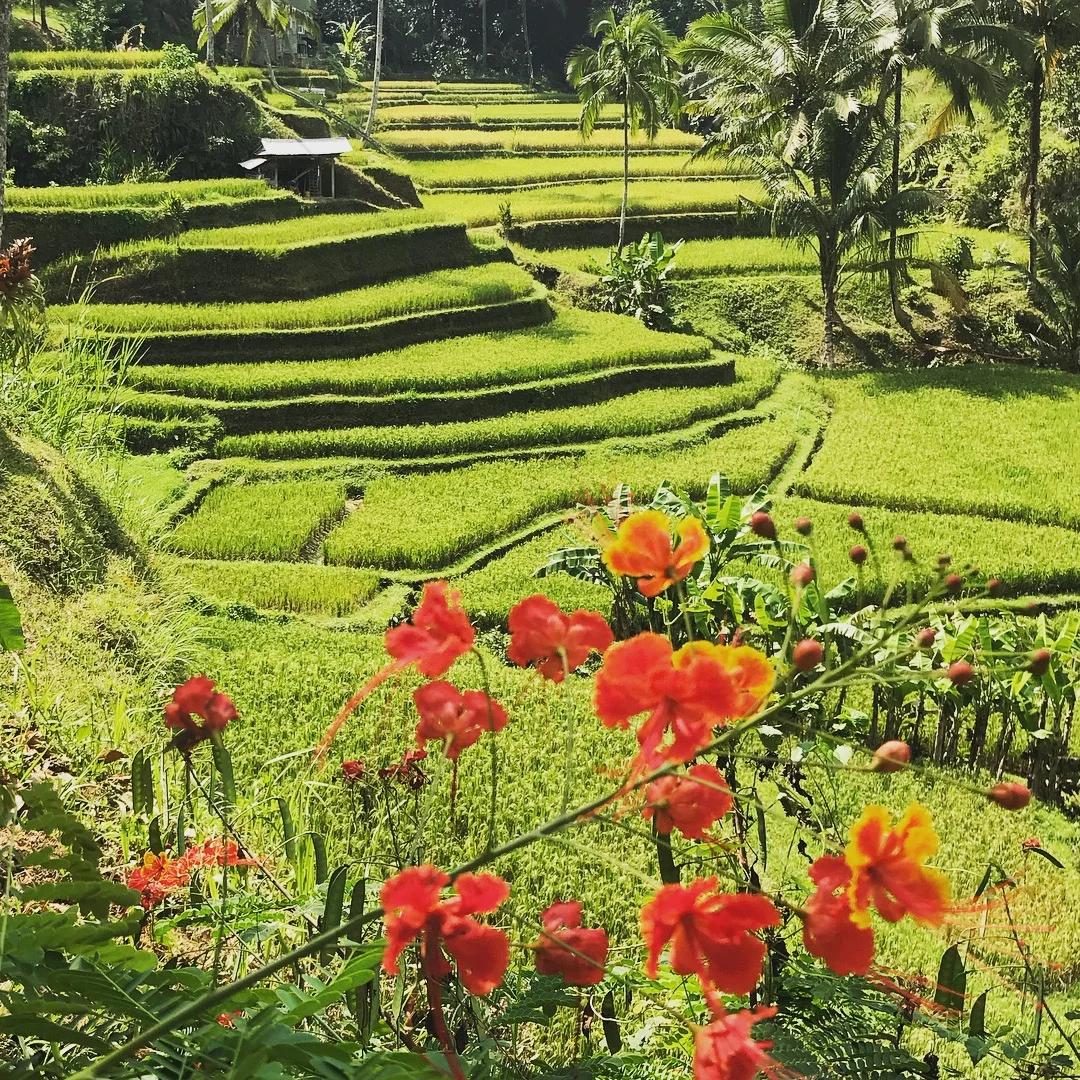
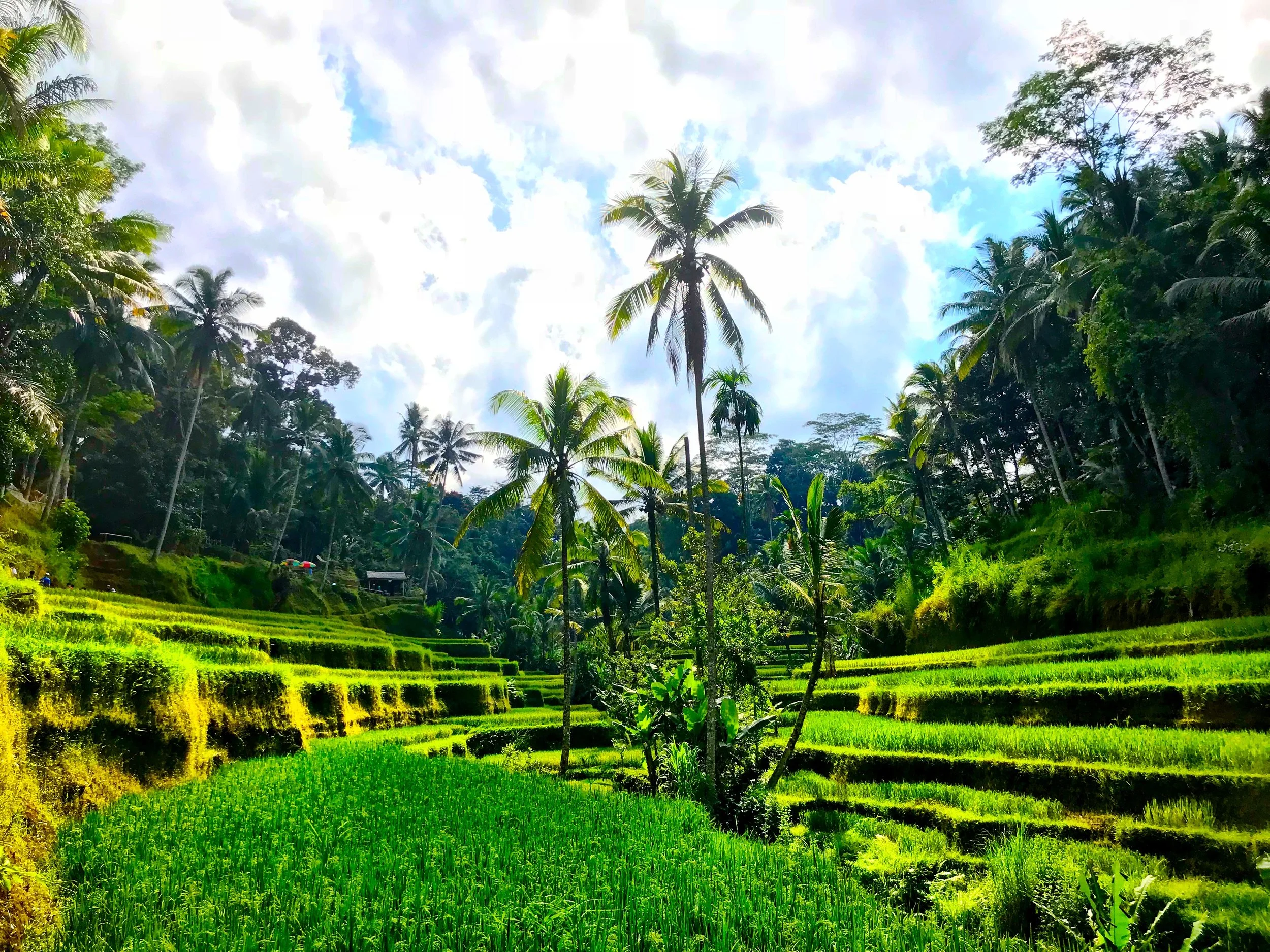
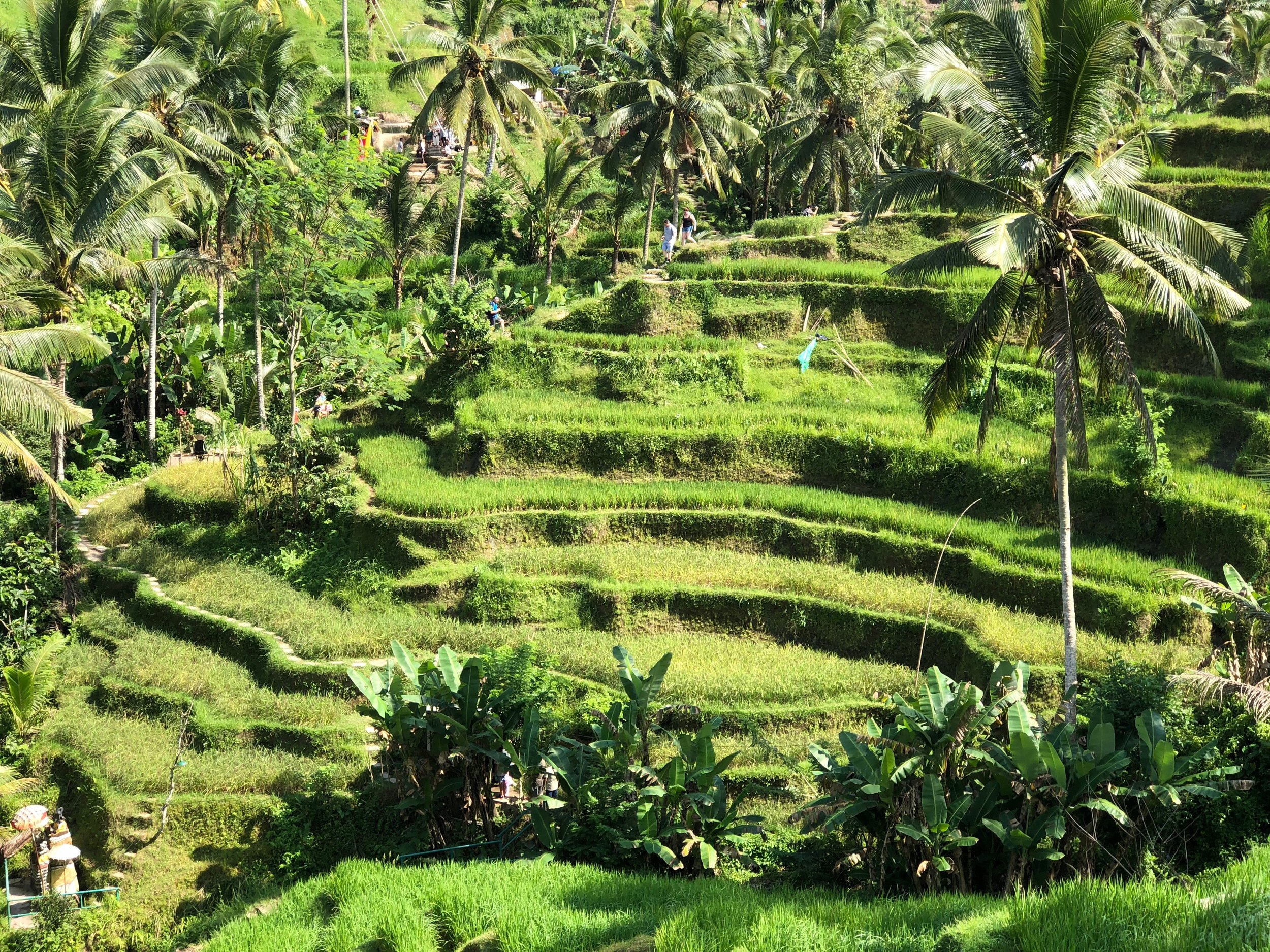
We gazed out, awestruck by the sea of emerald green terraces whose sinuous lines follow the contours of the hillside.
Get there as early as possible to avoid the crowds and the heat of the day

Get there as early as possible to avoid the crowds and the heat of the day

Wally and I hired a driver and left from our hotel early enough in the morning to (hopefully) avoid the throngs of tourists. When we arrived at the large parking lot, we were not entirely surprised that it was already beginning to fill up. I was confused at first if we were in the right place, as there are large printed banners for Ceking Rice Field. I later learned that this is the name of the village where Tegallalang is situated.

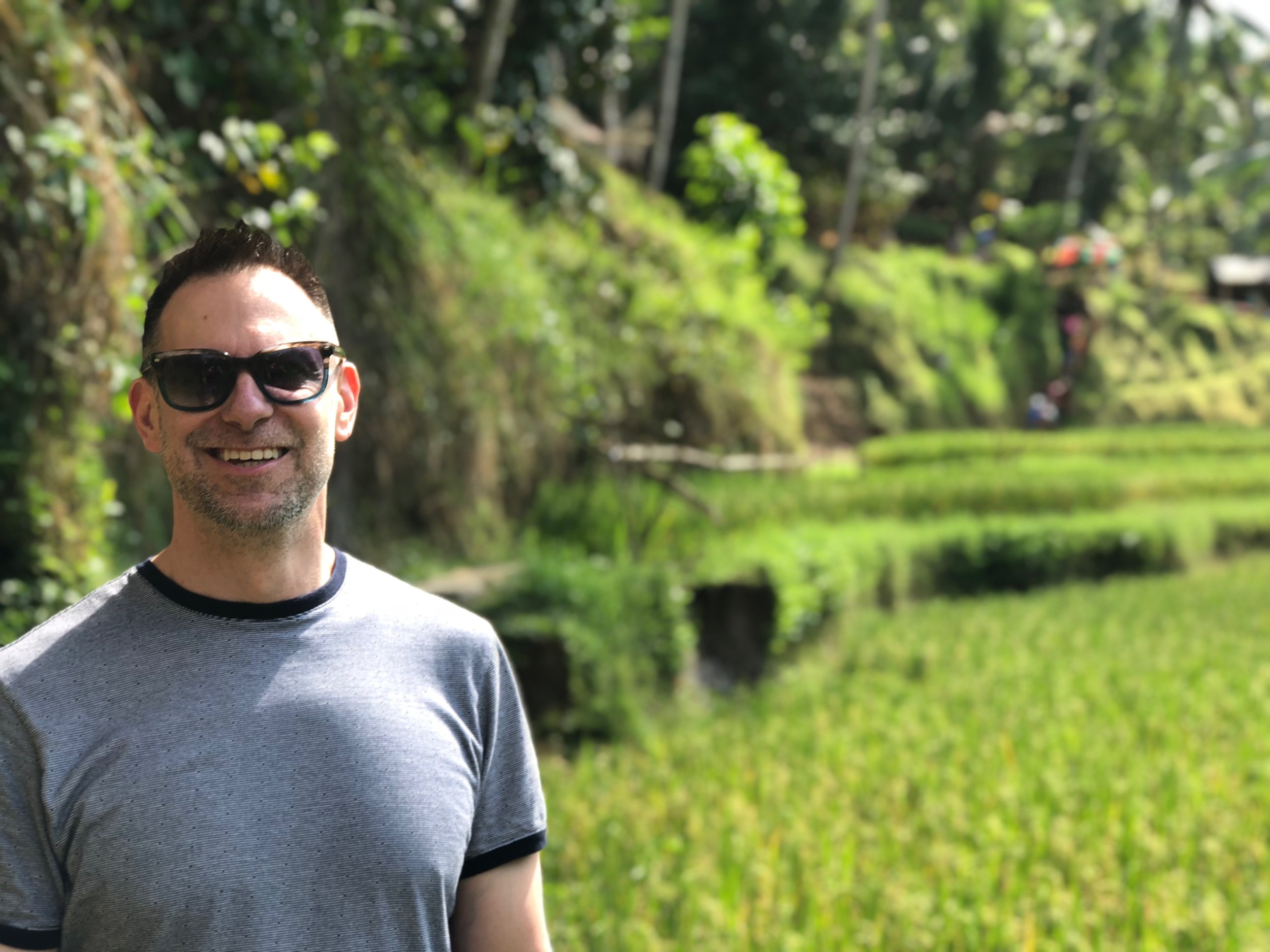
Duke enjoying the beautiful setting

Duke enjoying the beautiful setting

Wally’s excited for the adventure to begin!

Wally’s excited for the adventure to begin!

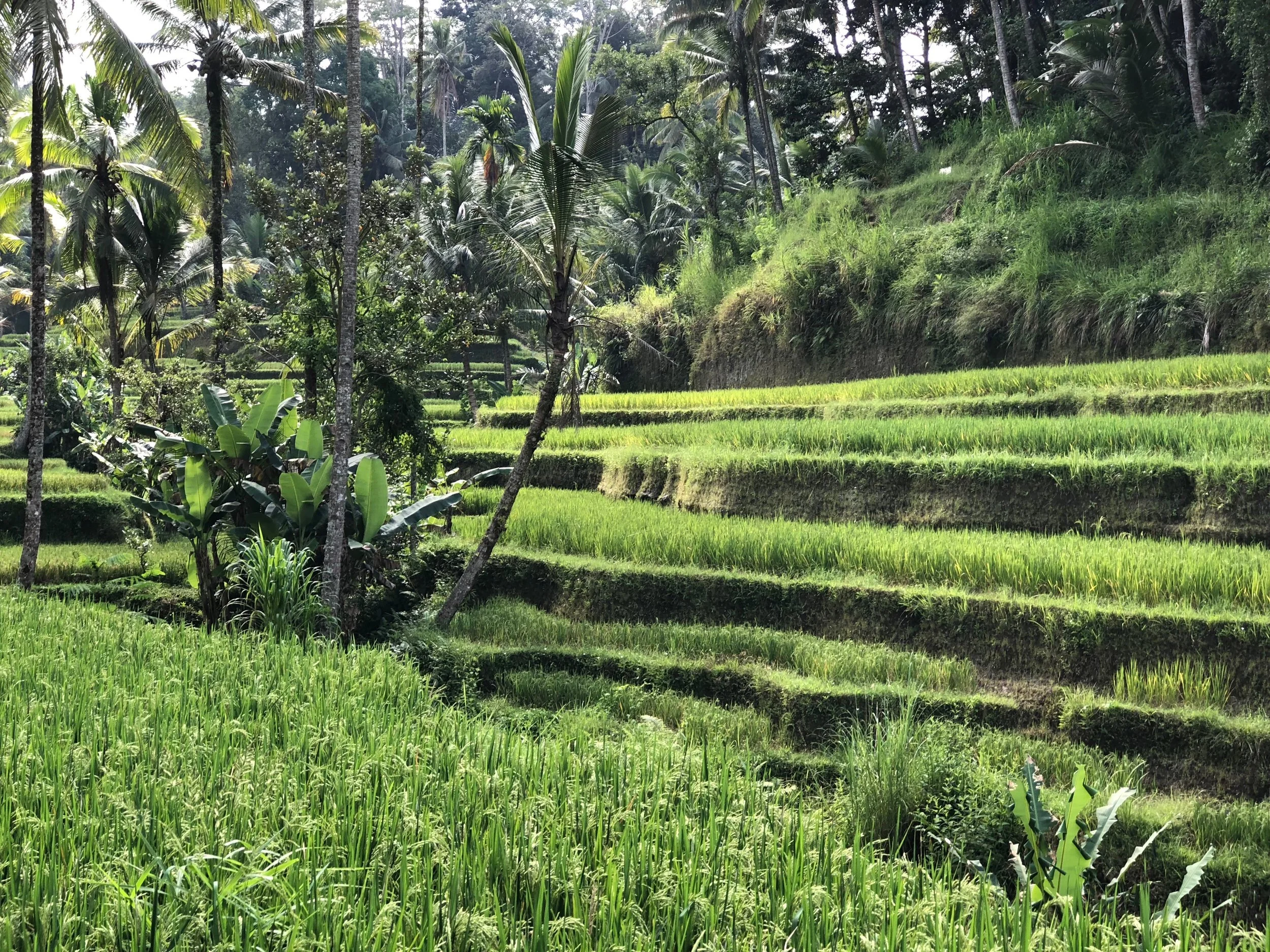
Even though you can’t see them, there are paths to follow through the rice paddies

Even though you can’t see them, there are paths to follow through the rice paddies

It’s amazing to think that this rice is gathered by hand

It’s amazing to think that this rice is gathered by hand

Rice Rice Baby

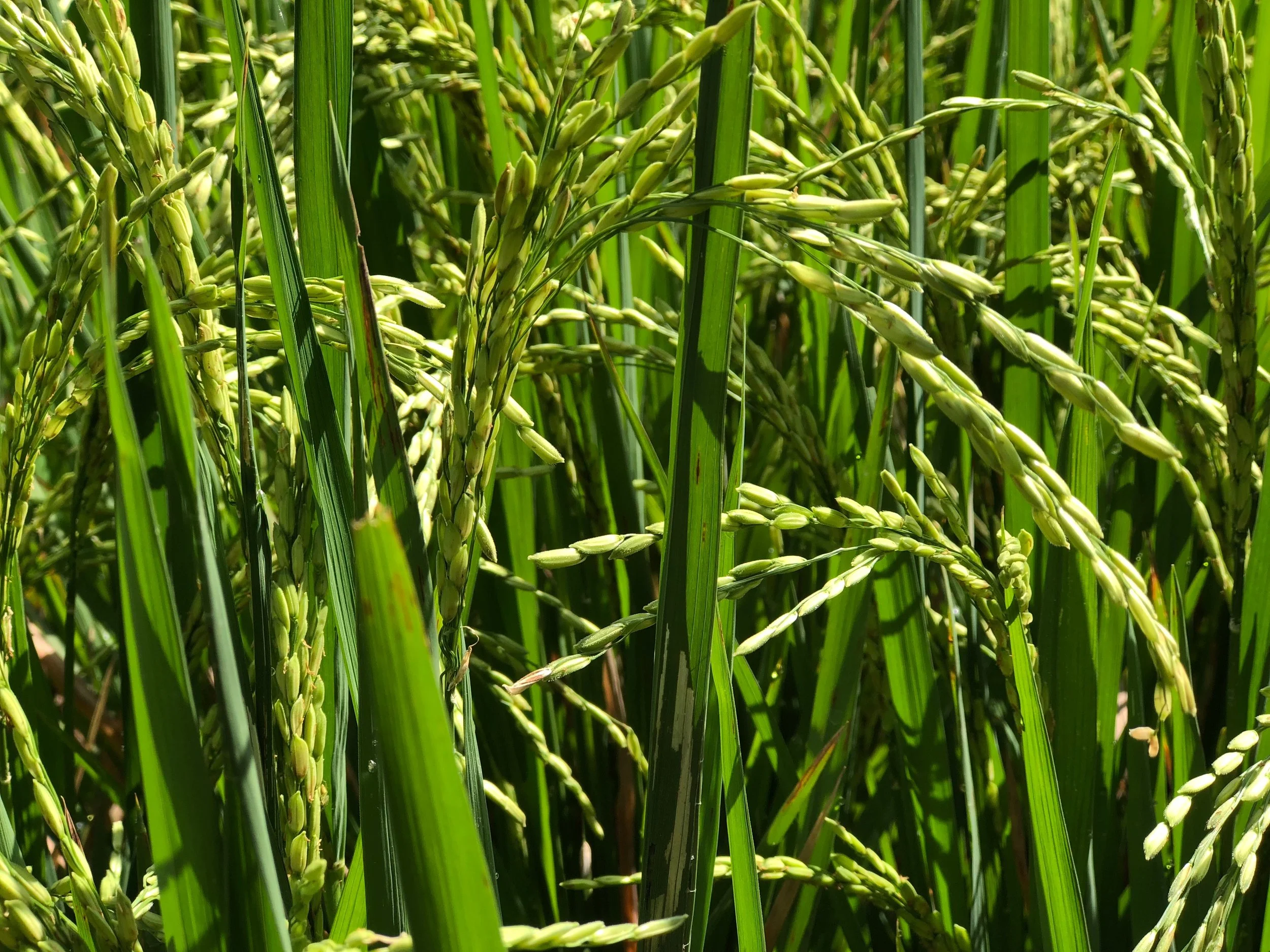
Rice is a staple food for the Balinese, reflected in the endless regional variations of nasi goreng, and a small amount often appears in traditional woven palm leaf offerings. Cultivation adheres to a well-organized cycle initiated by ritual observance at water temples — the nearby Gunung Kawi Sebatu temple is dedicated to Dewi Sri, the goddess of rice and fertility.

Bali’s tropical climate allows for rice to be grown year round, and the terraces of Tegallalang were lush and green on our visit in late April. It’s humbling to learn that the harvesting process is done completely by hand. The sheaves are thrashed in bunches to release the grains, which are then washed and laid out in the sun to dry.

The undulating green hills are iconic of Bali

The undulating green hills are iconic of Bali

It Takes a Village

As consumers, when we think of rice, we may only see it as a pre-packaged commodity to be purchased off the shelves of a grocery store. We don’t imagine how it came to be there — namely, the result of a sophisticated agrarian community dating back to the 8th century, whose shared labor, known as subak, encourages farmers to work together to preserve the traditional egalitarian irrigation system passed on from generation to generation. This practice follows the Balinese philosophy Tri Hita Karana, in which humans, spirits and nature are intertwined in a harmonious, mutually beneficial relationship.

Wally and I paid a donation fee of 10,000 rupiah each (about $1) to enter. Standing at the top of hill, we gazed out, awestruck by the sea of emerald green terraces whose sinuous lines follow the contours of the hillside.

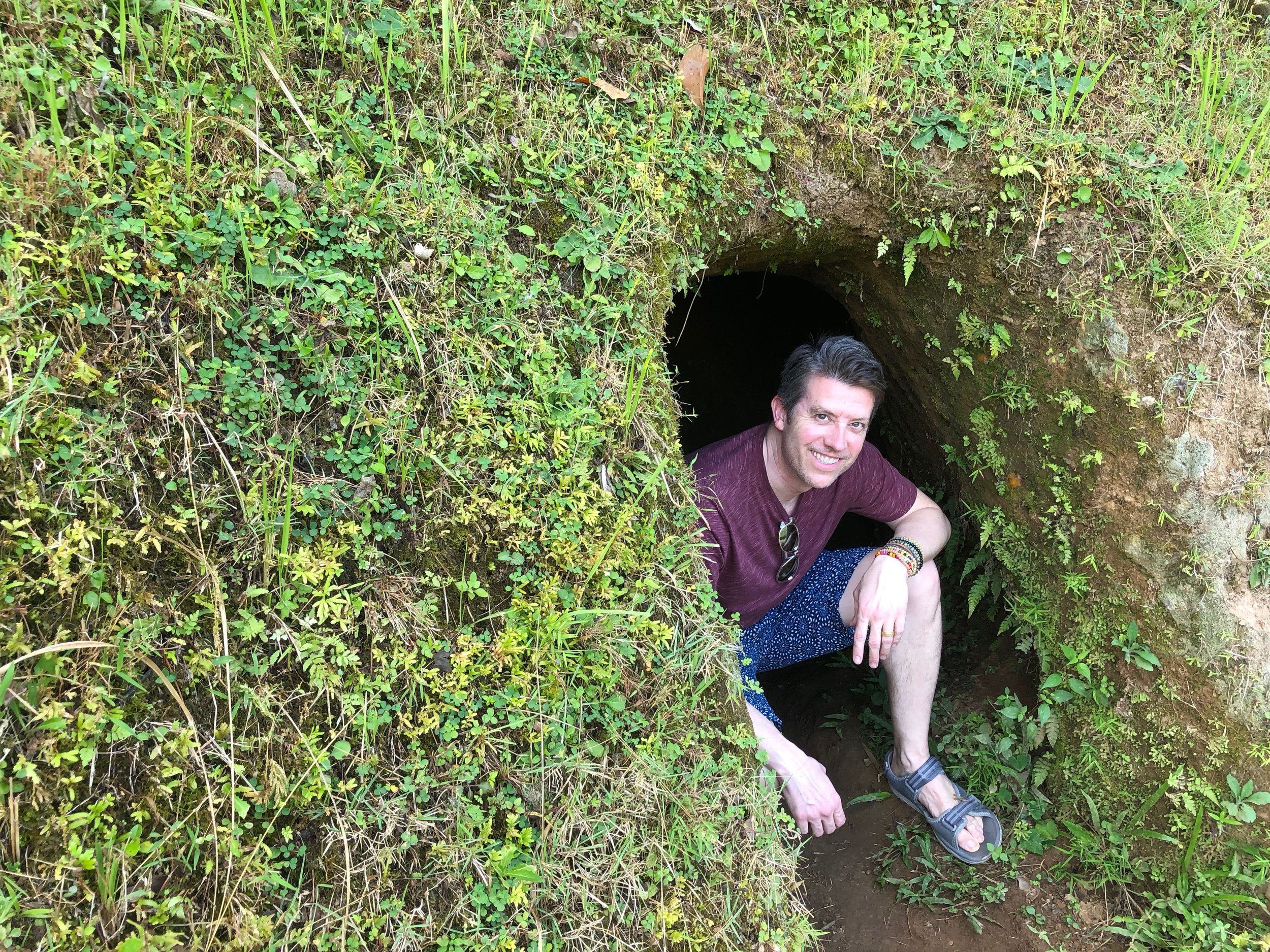
Wally saw a small cave and crawled through it until he came out this end

Wally saw a small cave and crawled through it until he came out this end

There were a few other tourists captured in our photographs, but it didn’t bother us and added scale and color to our images. We hiked down mud steps to the valley floor and walked up the other side, meandering the narrow footpaths that cut through the paddies.

To prevent birds from eating the grain laden stalks, farmers have employed an ingenious technique using bamboo poles and strings. One version creates horizontal movement when the string is tugged and another activates a set of empty aluminum cans that loudly rattle.

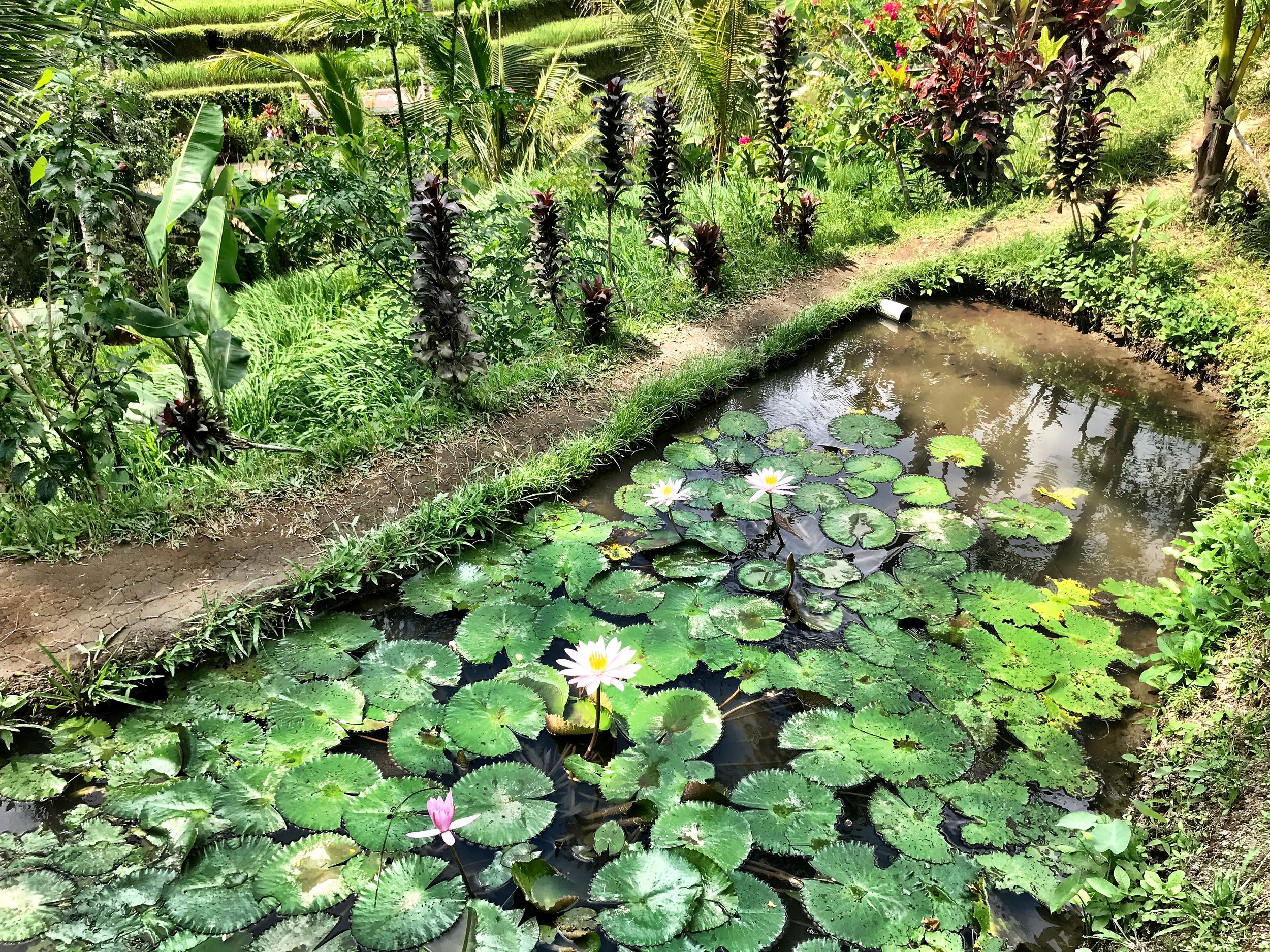
A lotus pond we stumbled upon

A lotus pond we stumbled upon

You’ll marvel at the sheer scale of what you’re seeing

You’ll marvel at the sheer scale of what you’re seeing

50 Shades of Green

We spent a little over an hour wandering through the terraces and footpaths. Make sure to bring comfortable footwear, suitable for moderate trekking, bug repellent, sunscreen and bottled water, as the landscape is fairly exposed and open.

At one point, we were at the far end of the valley and couldn’t find our way out. Instead of following a group of equally baffled tourists, we backtracked past the swings, where you can swoop out over the terraces for that perfect Instagram photo or video. I refused to do this, as it seemed like something only basic bitches would do. Wally argued that it’s a requisite shot for all the influencers, so I told him he could take one if he wanted.

These stepped terraces are a marvel of ancient engineering

These stepped terraces are a marvel of ancient engineering

There’s no clear way to go, and we had to backtrack to find our way out

There’s no clear way to go, and we had to backtrack to find our way out

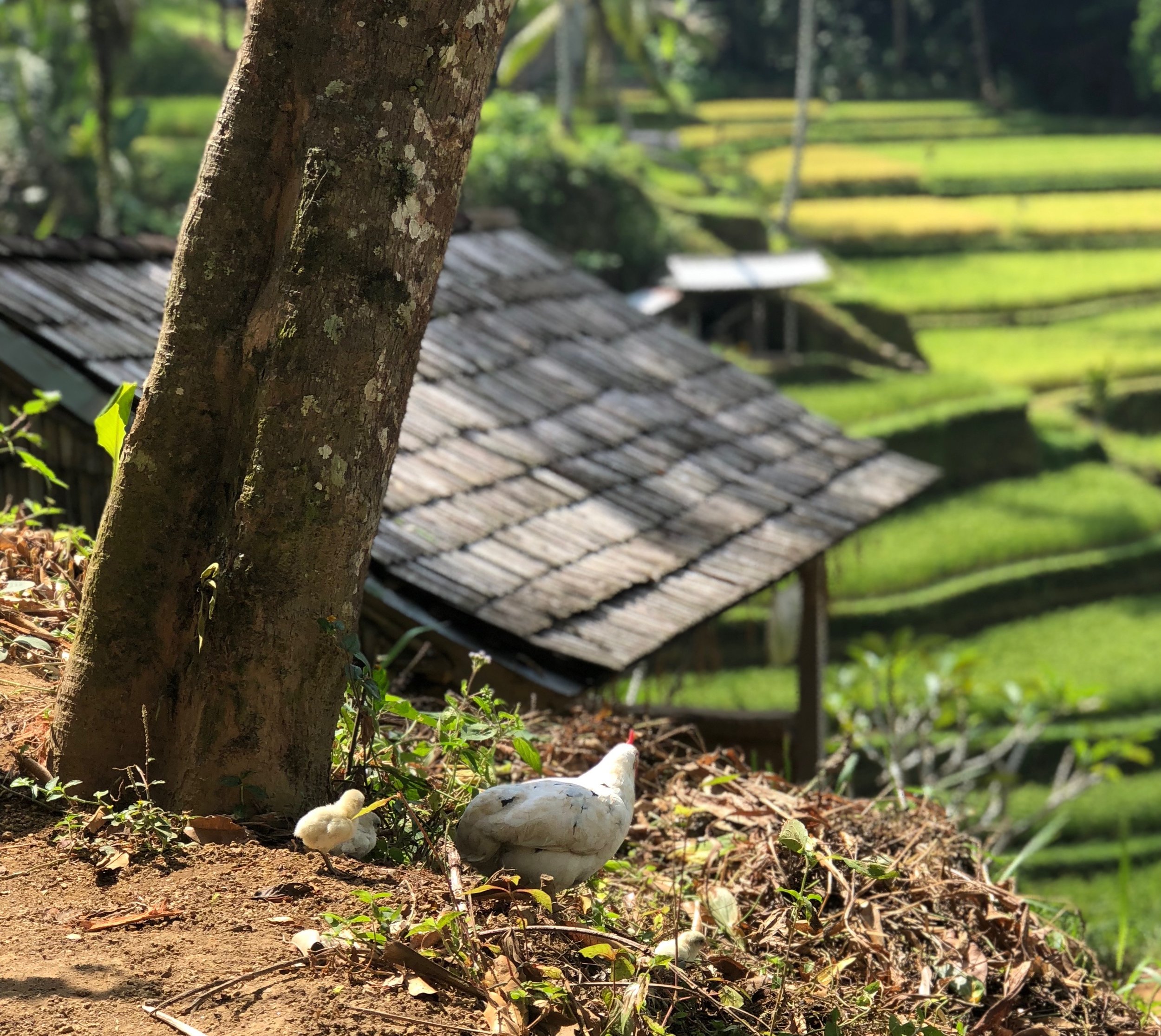
Atop one hill, a hen and her chicks toddled around

Atop one hill, a hen and her chicks toddled around

We went back down the valley and took a different fork in the road, eventually ending up on the other side by the road we had originally come from, passing hikers going in the opposite direction.

There are small shops selling I ♥ Bali tote bags, clothing, cold drinks, coffee luwak (which is basically green coffee beans that have been partially digested and defecated by a mongoose) and other assorted souvenir fare along the way. We picked up a couple of Bintang Radler, but we’re still kicking ourselves that we didn’t purchase one of the ubiquitous penis-shaped bottle openers we saw here and in Ubud. They’re available in various sizes, have a set of balls and come in light or dark wood.

Tegallalang has much to offer, though some travelers visit Jatiluwih instead

Tegallalang has much to offer, though some travelers visit Jatiluwih instead

Why We Chose Tegallalang

Prior to adding the rice terrace to our itinerary, I had weighed the pros and cons of Tegallalang and Jatiluwih. Jatiluwih, although recognized as an UNESCO World Heritage Site, was over an hour from Ubud and a bit problematic when plotting out an efficient route using Google Maps that included the other places we wanted to visit.

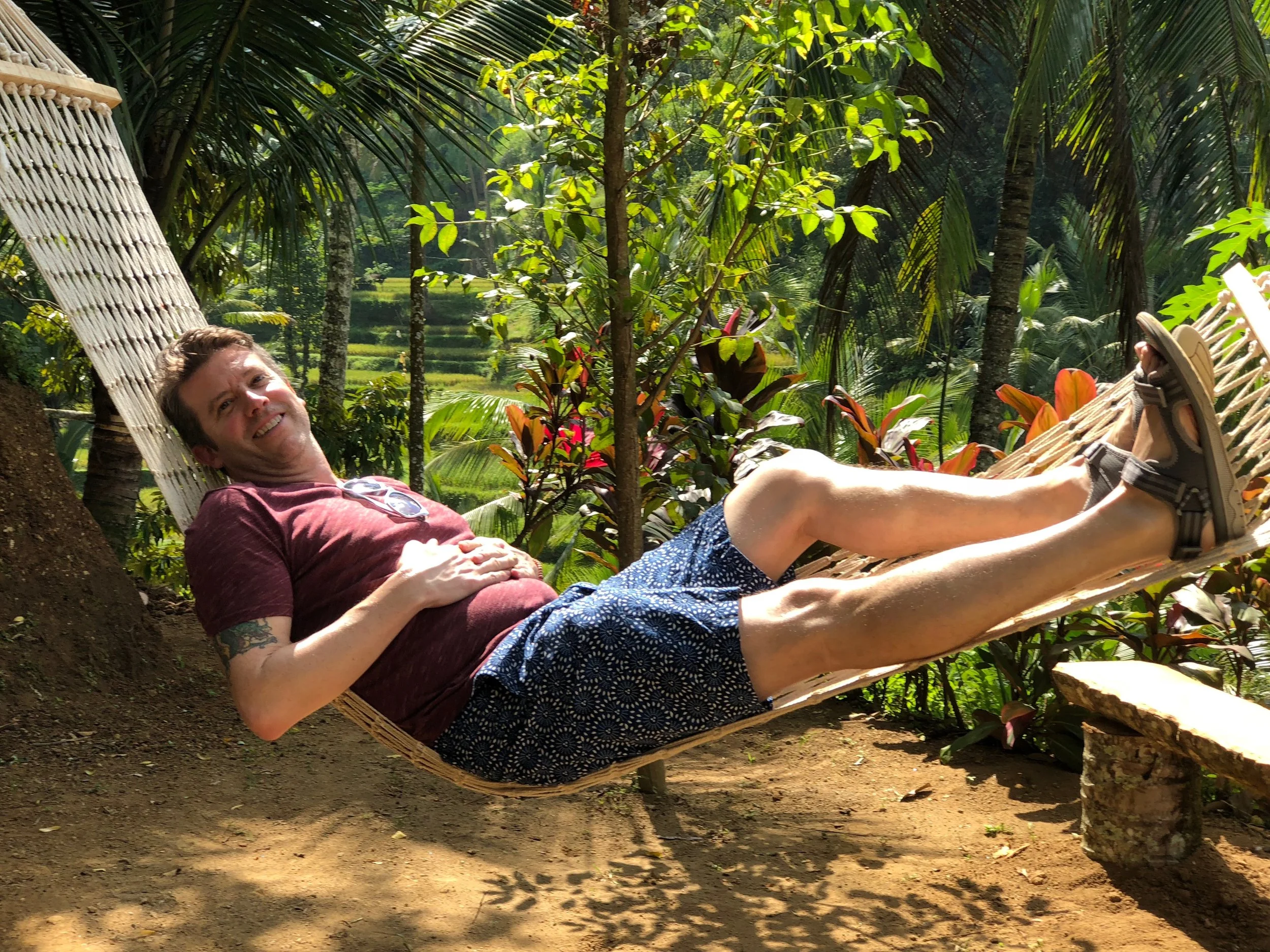
Wally’s never met a hammock he didn’t try out

Wally’s never met a hammock he didn’t try out

I understood that Tegallalang would very likely be more touristy and read reviews where some people had negative experiences and had felt like they were perpetually being asked for donations as they wandered through the paddies. This was not something we encountered, but after learning more about the cooperative subak system, it does make sense, as these are working fields and there’s a lot of creativity and hard work that goes into maintaining the terraces. My advice is to carry a few small bills with you in case a farmer requests payment if you want to take photos and try your best to stay on the designated pathways.

Even though our time in Bali was all too brief, I’m grateful we were able to check Tegallalang off our list. And in case you’re curious, Wally didn’t end up doing the swing by the Love Bali sign — he took one look at the dropoff and his vertigo prevented this from happening. –Duke

tegallalang6.JPG

Tegallalang Rice Terrace
Jalan Raya Tegallalang
Tegallalang
Kabupaten Gianyar
Bali 8056
Indonesia
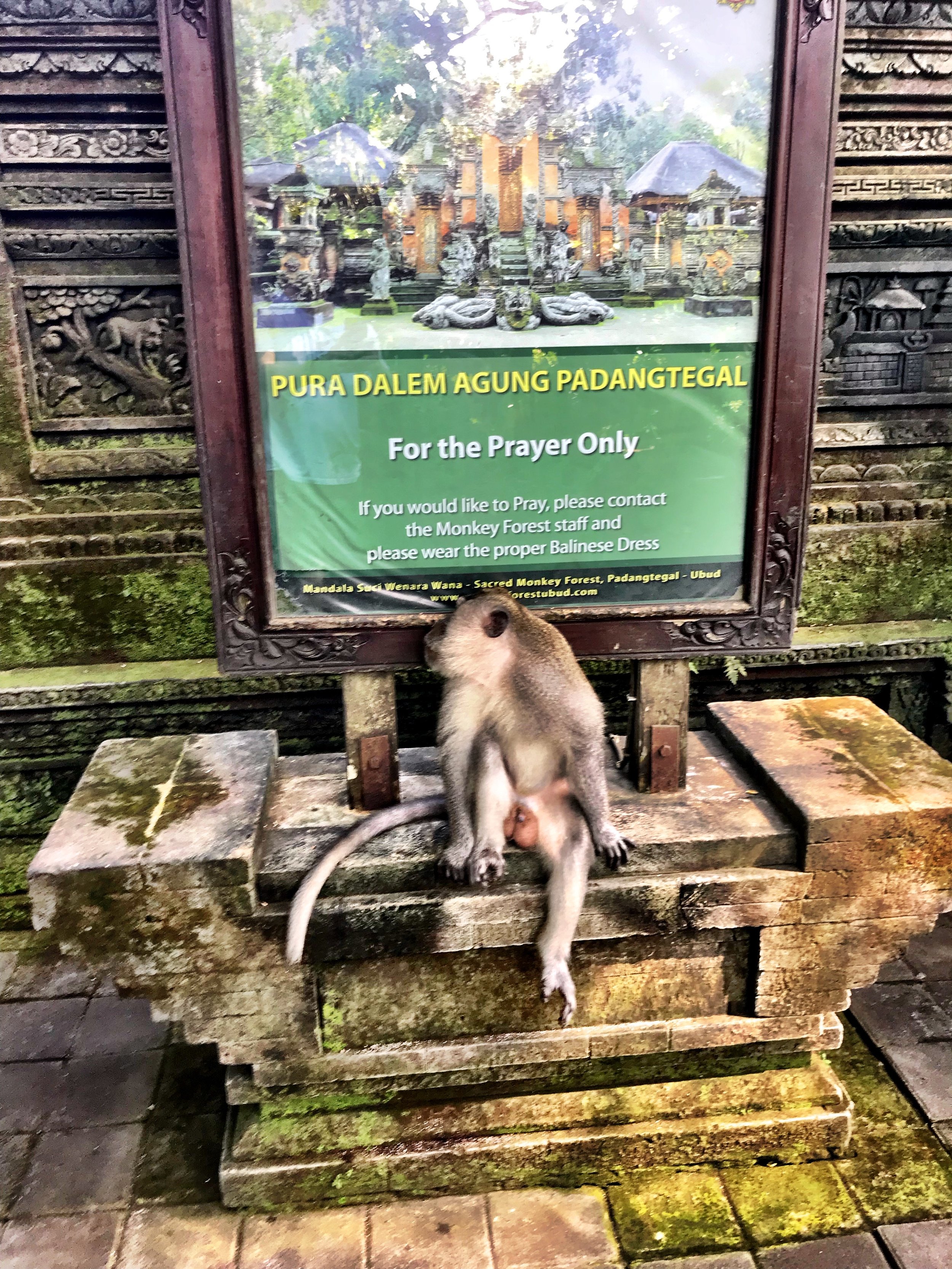
The Dangers of the Ubud Monkey Forest

The Monkey Forest is worth wandering, but perhaps not with children. It’s fitting that the Great Temple of Death lies within this sanctuary, where people get bitten by monkeys every day.

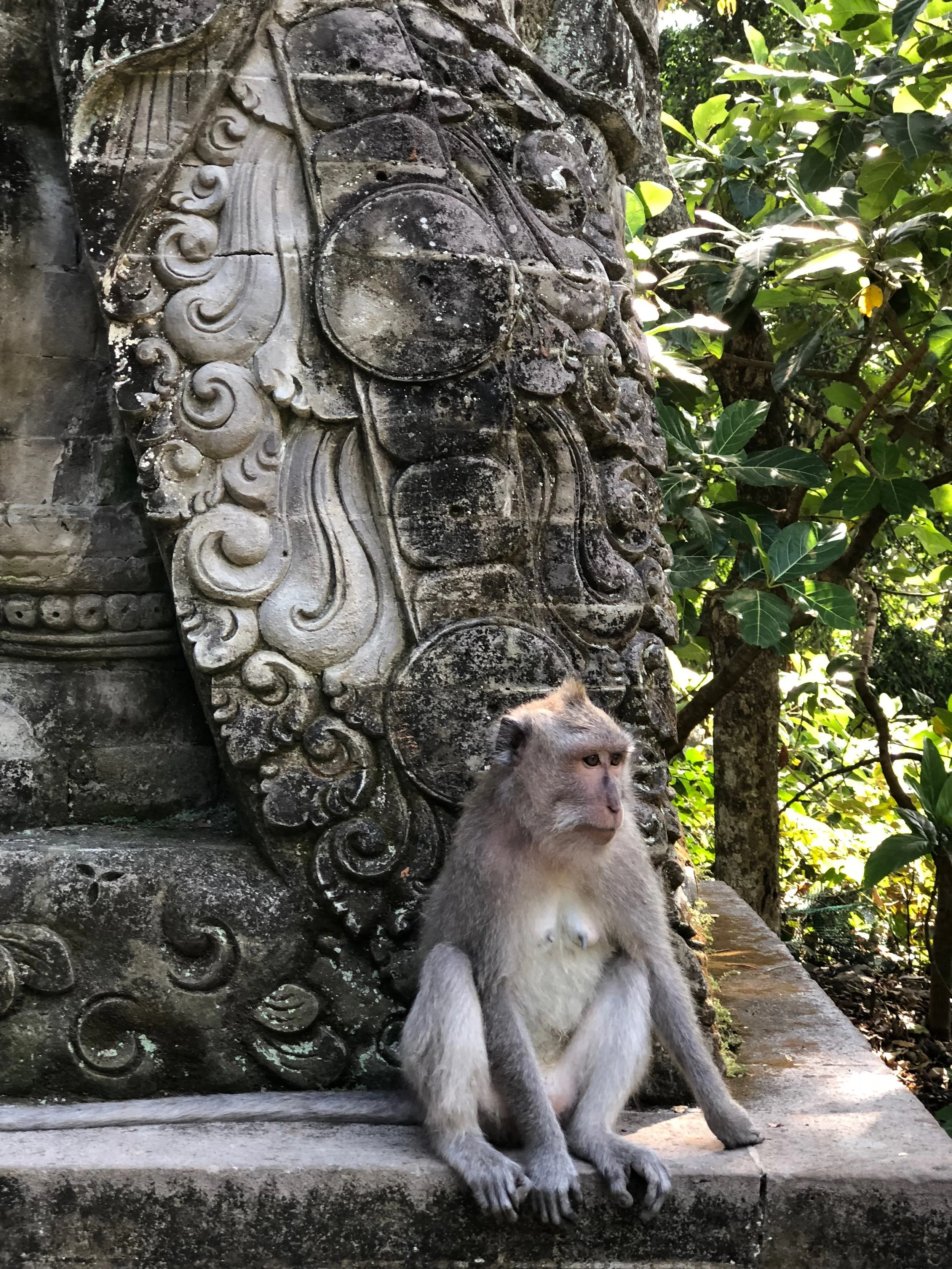
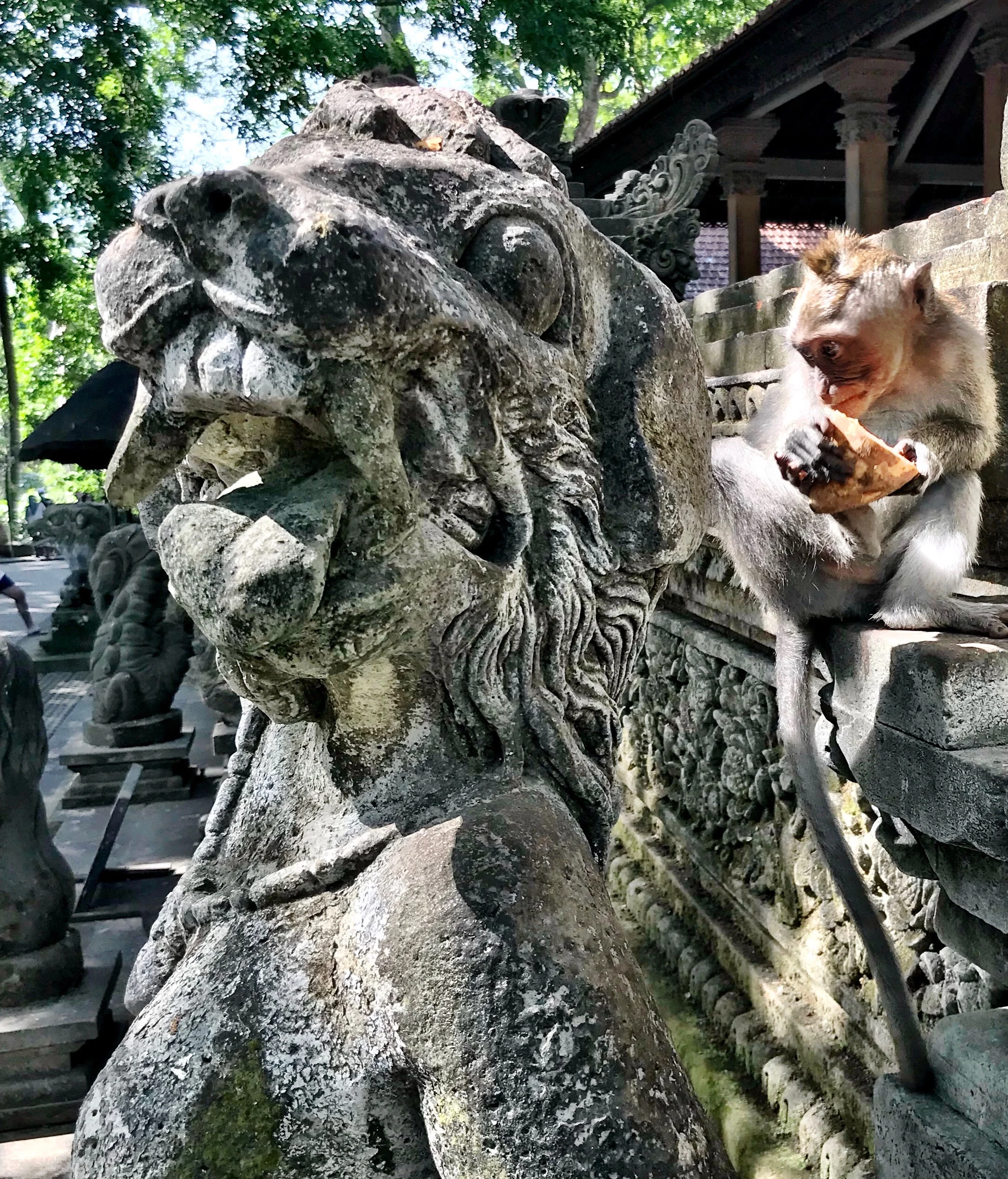
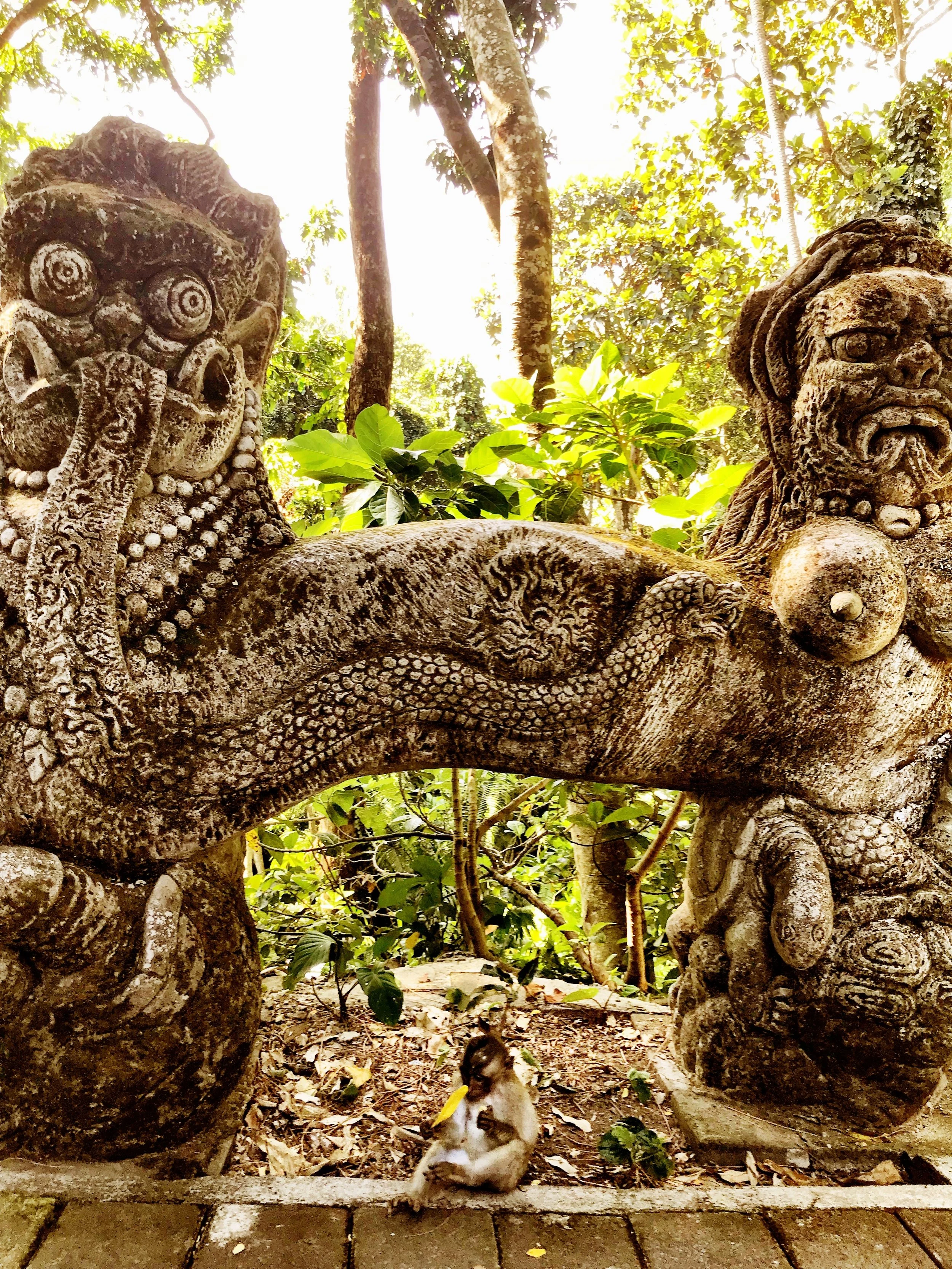
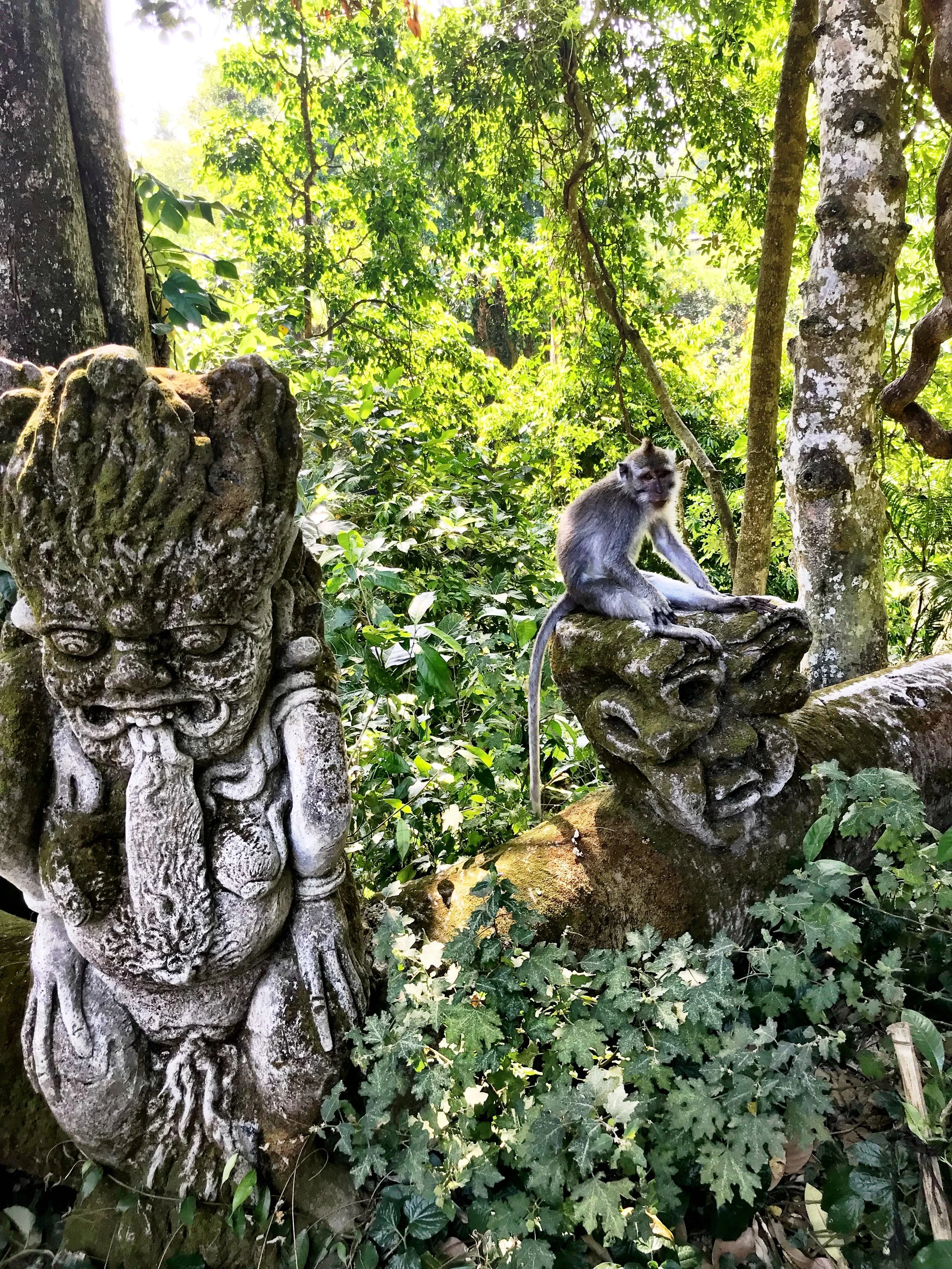
Gorgeous stonework and mischievous macaques abound in the Monkey Forest

Gorgeous stonework and mischievous macaques abound in the Monkey Forest

Things might have been much worse if we hadn’t had a somewhat scary encounter the night before we planned to visit the Monkey Sanctuary in Ubud, Bali, Indonesia.

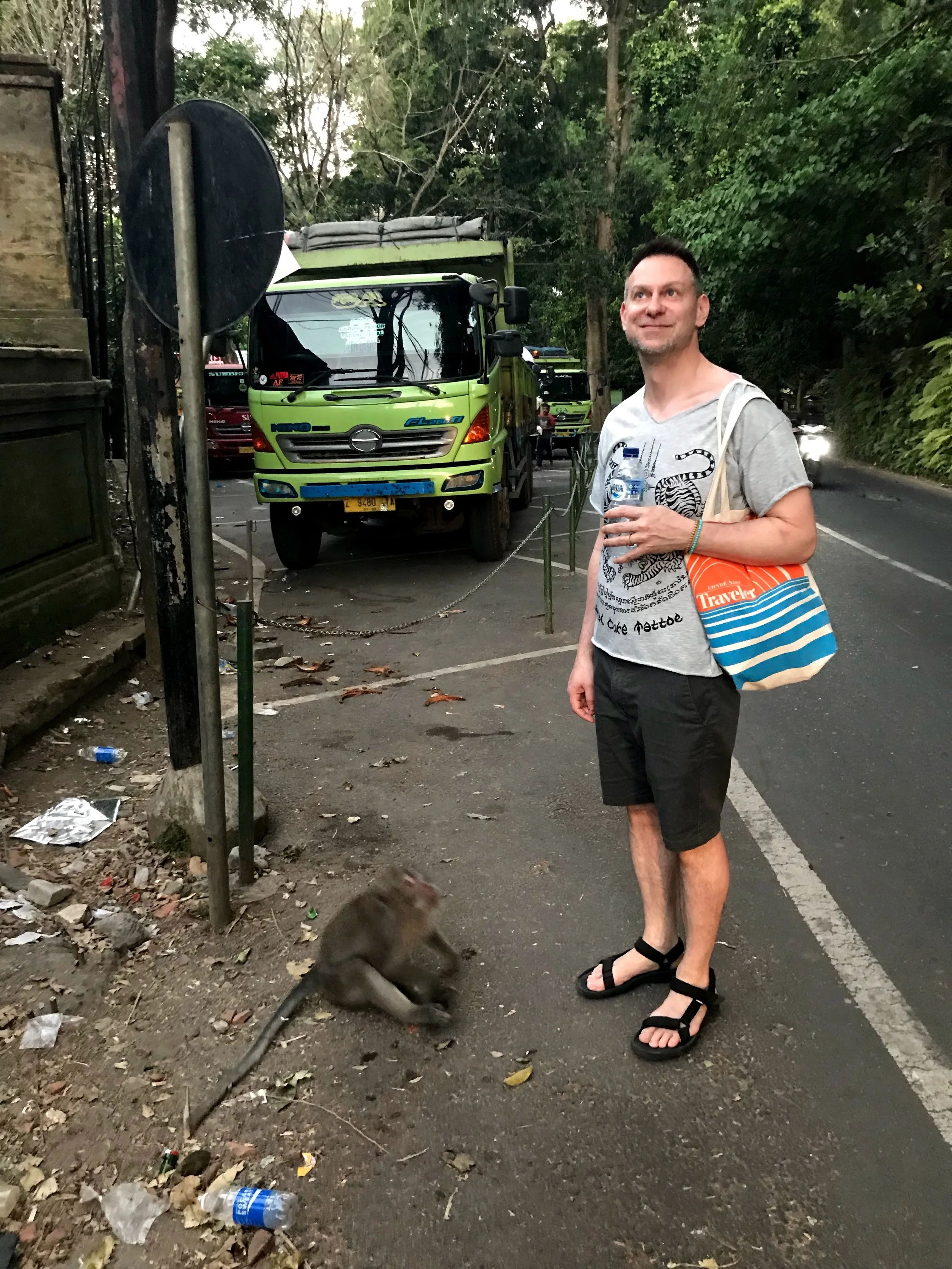
We were wandering down Monkey Forest Road, right at the turn, near one of the entrances to the forest. A large macaque monkey scampered down a power line and stopped a few feet in front of Duke.

He was looking up at another monkey on the roof of a shop and I snapped a photo. And then, in a flash, the monkey jumped onto Duke, grabbed his water bottle, hopped off of him and scurried down the road a bit. It all happened so quickly, Duke didn’t even have time to react.

The monkey opened its mouth and sank its teeth into the girl’s shoulder, before darting away.

The girl screamed and screamed, yet her banshee-like wails failed to draw the attention of any staffers.
The moment right before the monkey jumped onto Duke and stole his water bottle

The moment right before the monkey jumped onto Duke and stole his water bottle

We watched in astonishment as the monkey unscrewed the lid, poured some water out onto the street and scooped it up with its palms to drink.

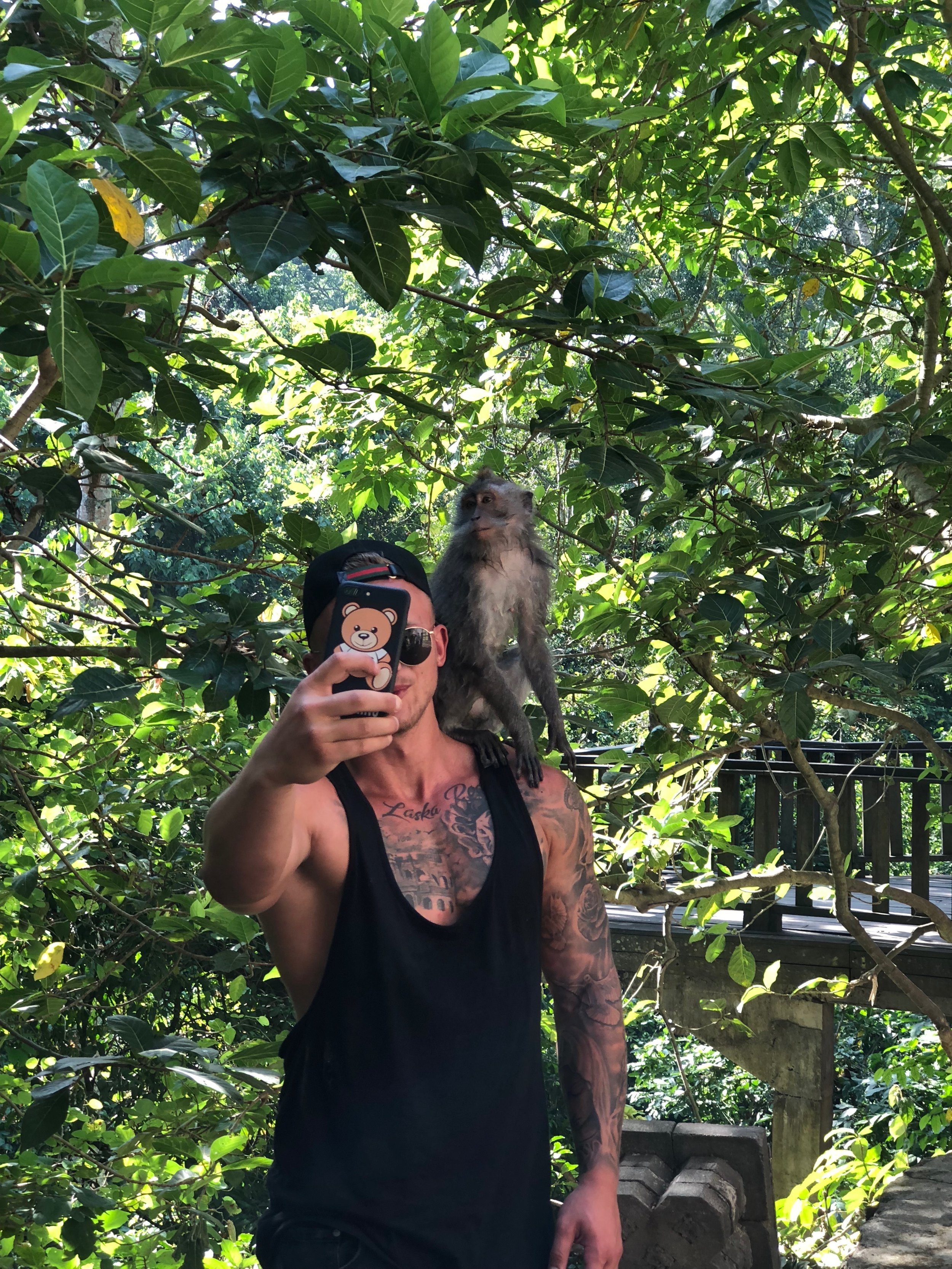
As cool as it might be to get a selfie with a monkey, we can’t advise it

As cool as it might be to get a selfie with a monkey, we can’t advise it

The last time I visited Bali, 17 years ago, I let a monkey crawl onto my back, and that picture became a now-legendary Christmas card. I might have done so again — but this incident was enough to put the fear of God — or perhaps the fear of Hanuman, the Hindu monkey god —  into me.

The statue by the Monkey Forest entrance hints at what could happen to unsuspecting tourists!

The statue by the Monkey Forest entrance hints at what could happen to unsuspecting tourists!

Entering the Monkey Forest: It All Starts Innocently Enough…

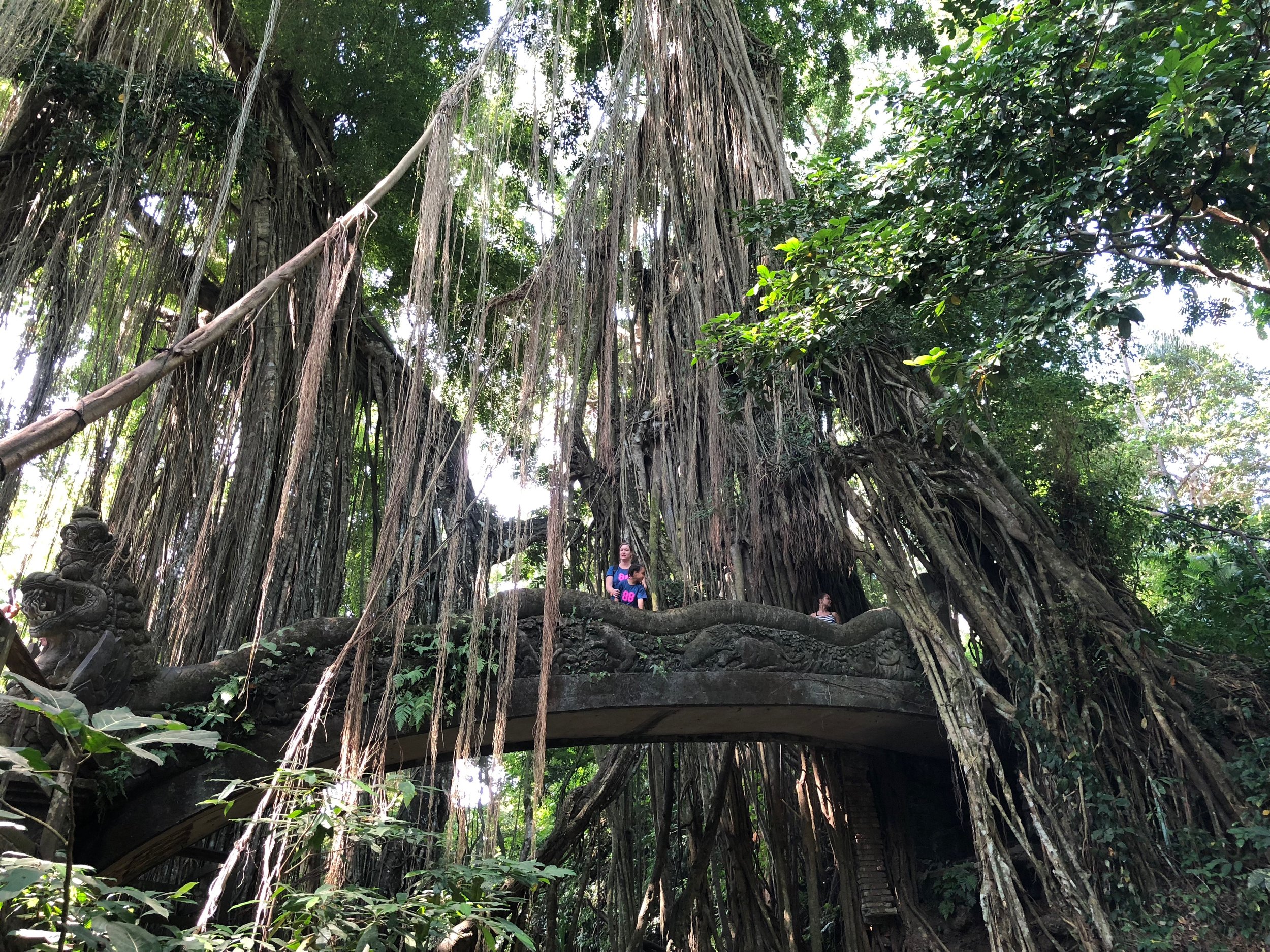
So it was with a newfound sense of caution (and, let’s face it, downright fear of these creatures) that Duke and I wandered into the Monkey Sanctuary. The setting is epic: a glen of primordial trees, bridges that criss-cross a ravine with a river below and not one, but two pura dalems, or temples of death.

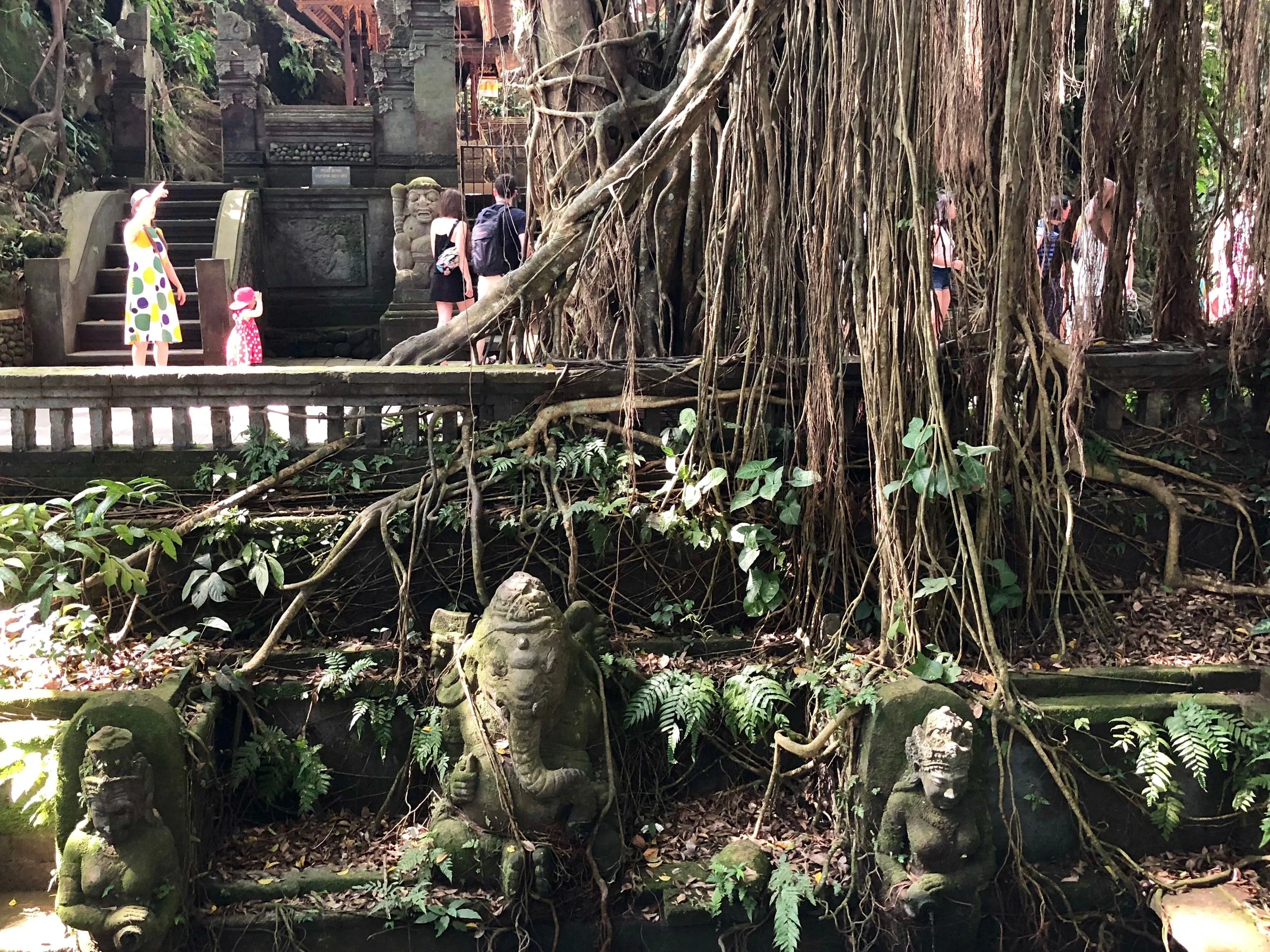
The setting, with banyan roots, bizarre statues, lush foliage and wild monkeys, is quite epic

The setting, with banyan roots, bizarre statues, lush foliage and wild monkeys, is quite epic

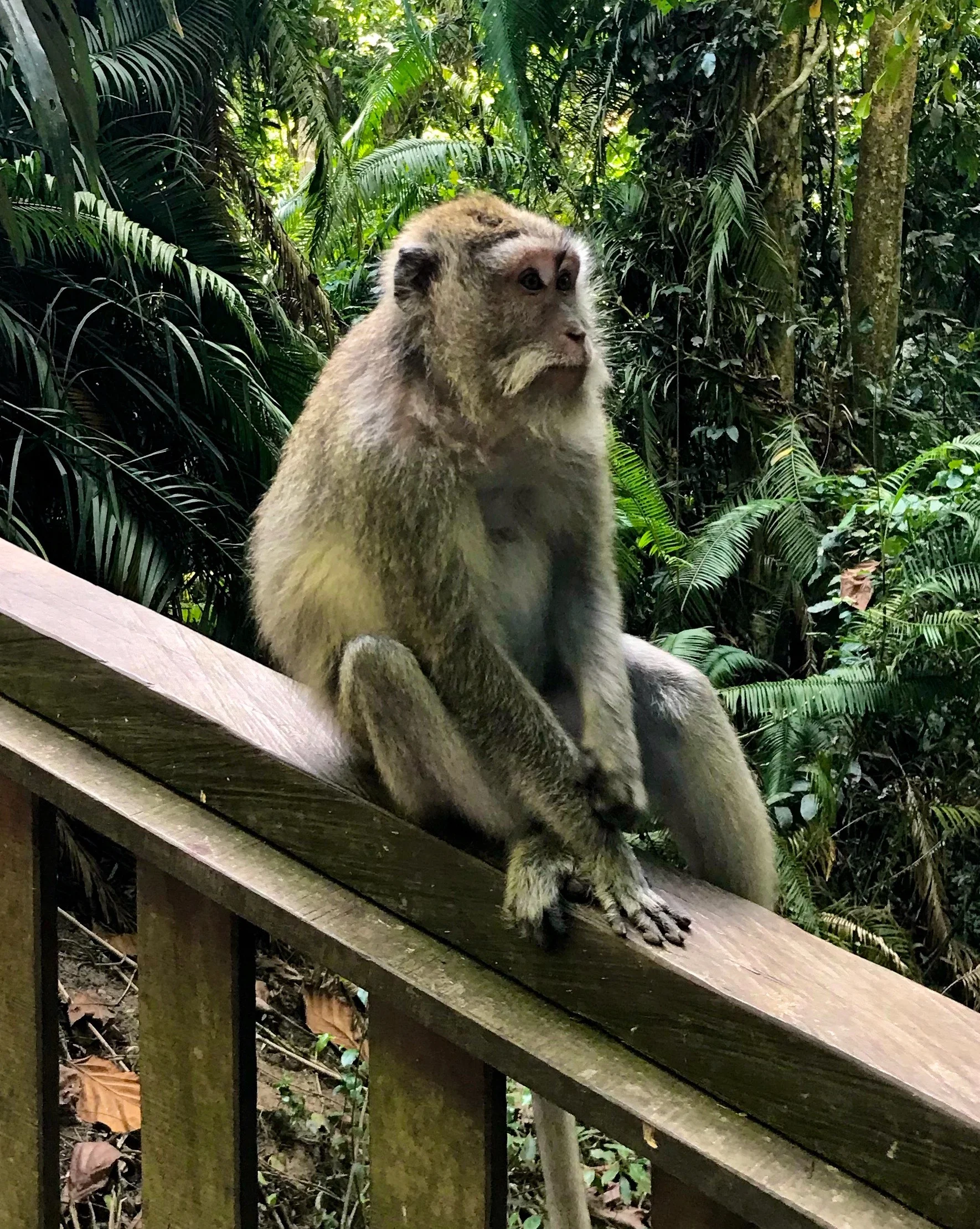
We headed to the right, down a path that leads to one of the bridges that span the chasm below. There are a few landings here, with metal railings where monkeys like to hang out. This is a good spot for photos. The monkeys here seemed to know they’re models, and you can snap some shots at a safe distance.

Down the path to the right is a landing where monkeys strike a pose

Down the path to the right is a landing where monkeys strike a pose

Hindus, like those on Bali, revere monkeys, in part because one of their main gods, Hanuman, is simian

Hindus, like those on Bali, revere monkeys, in part because one of their main gods, Hanuman, is simian

According to the park, there are about 600 monkeys in the area!

According to the park, there are about 600 monkeys in the area!

A path winds along the rock face at the edge of the river. It’s narrow and crowded and ends abruptly without a payoff. You might as well skip it.

Banyan roots have taken over parts of the sanctuary

Banyan roots have taken over parts of the sanctuary

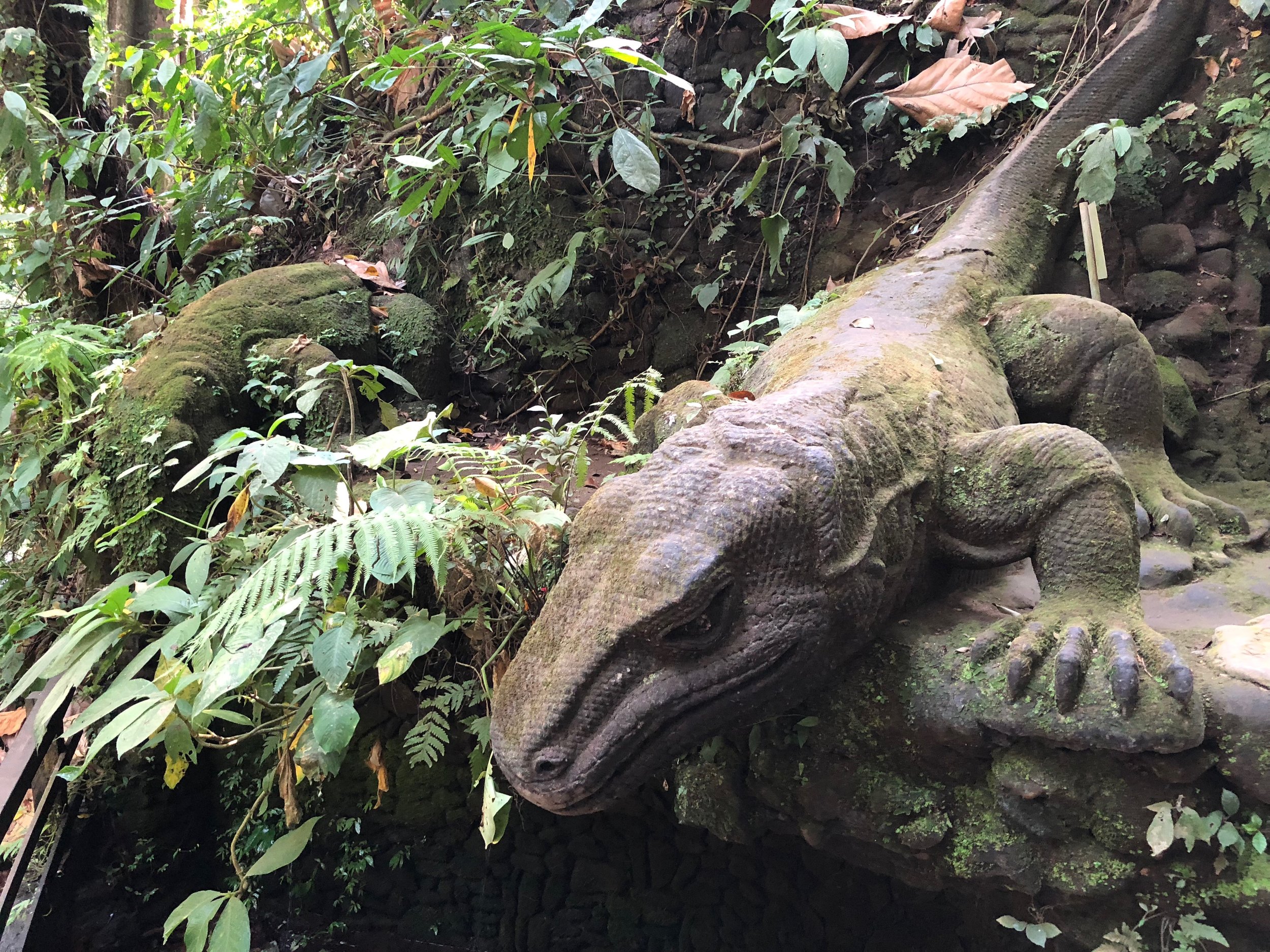
Wally, who was scared the entire time he was in the forest, thought these were real lizards at first

Wally, who was scared the entire time he was in the forest, thought these were real lizards at first

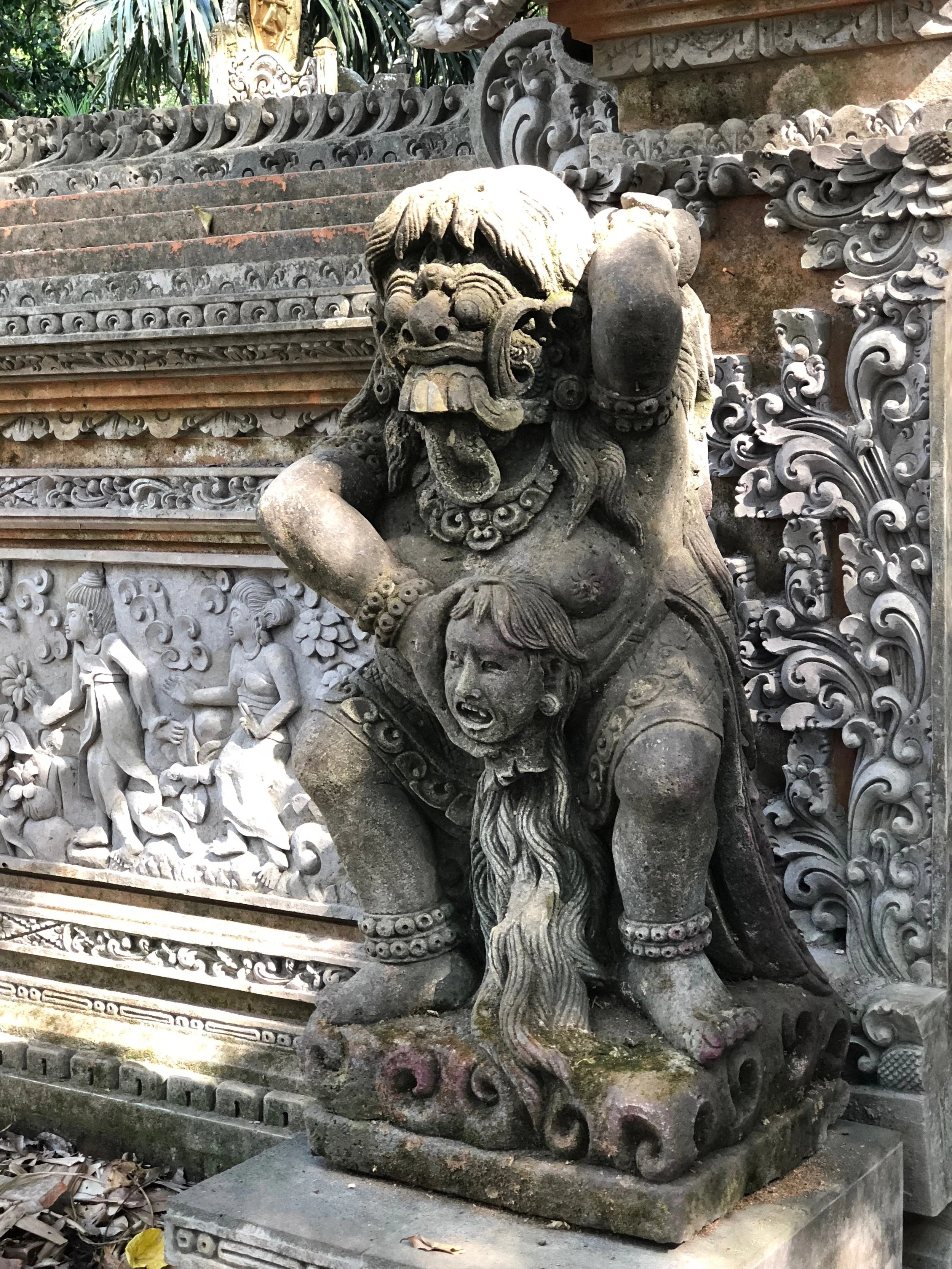
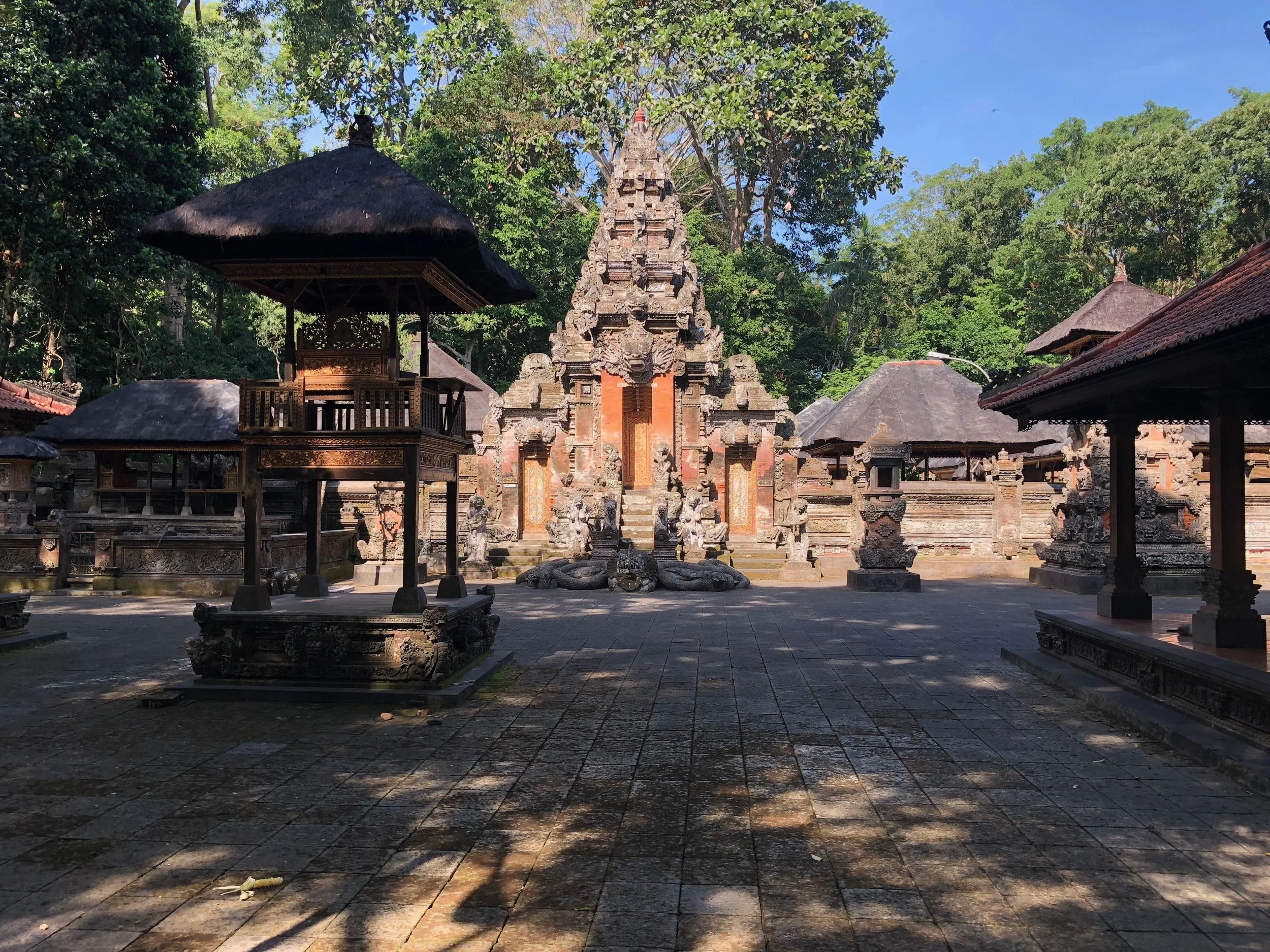
Following the main path takes you over another bridge and walkway above the ravine before leading you to a temple. Duke and I were delighted to notice the strange, monstrous statues out front. We had arrived at Pura Dalem Agung Pandangtegal, or the Padangtegal Great Temple of Death. Demonic sculptures, including those of the witch Rangda, adorn pura dalems.

The main temple of death in the forest is dedicated to the Hindu god Shiva

The main temple of death in the forest is dedicated to the Hindu god Shiva

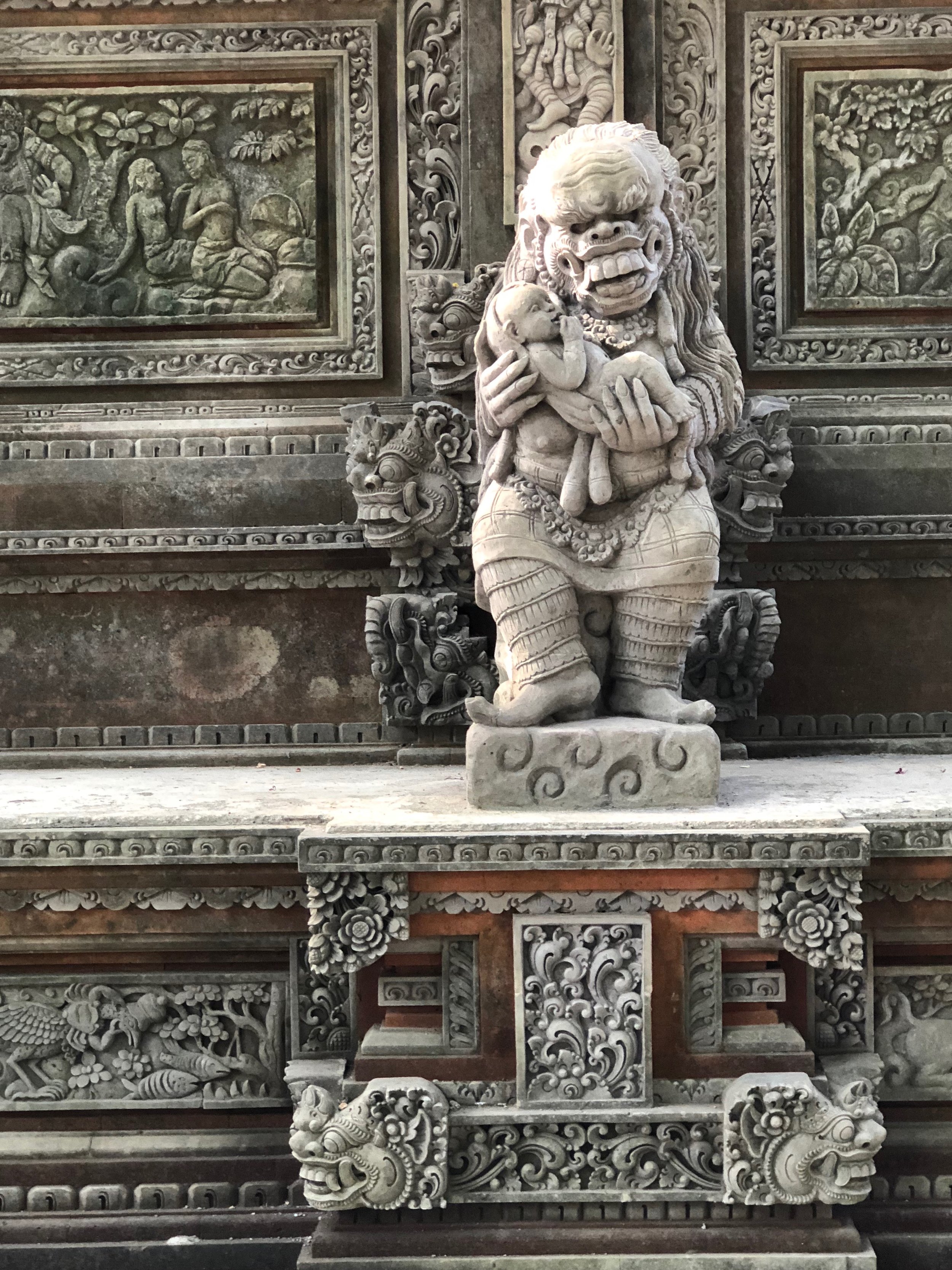
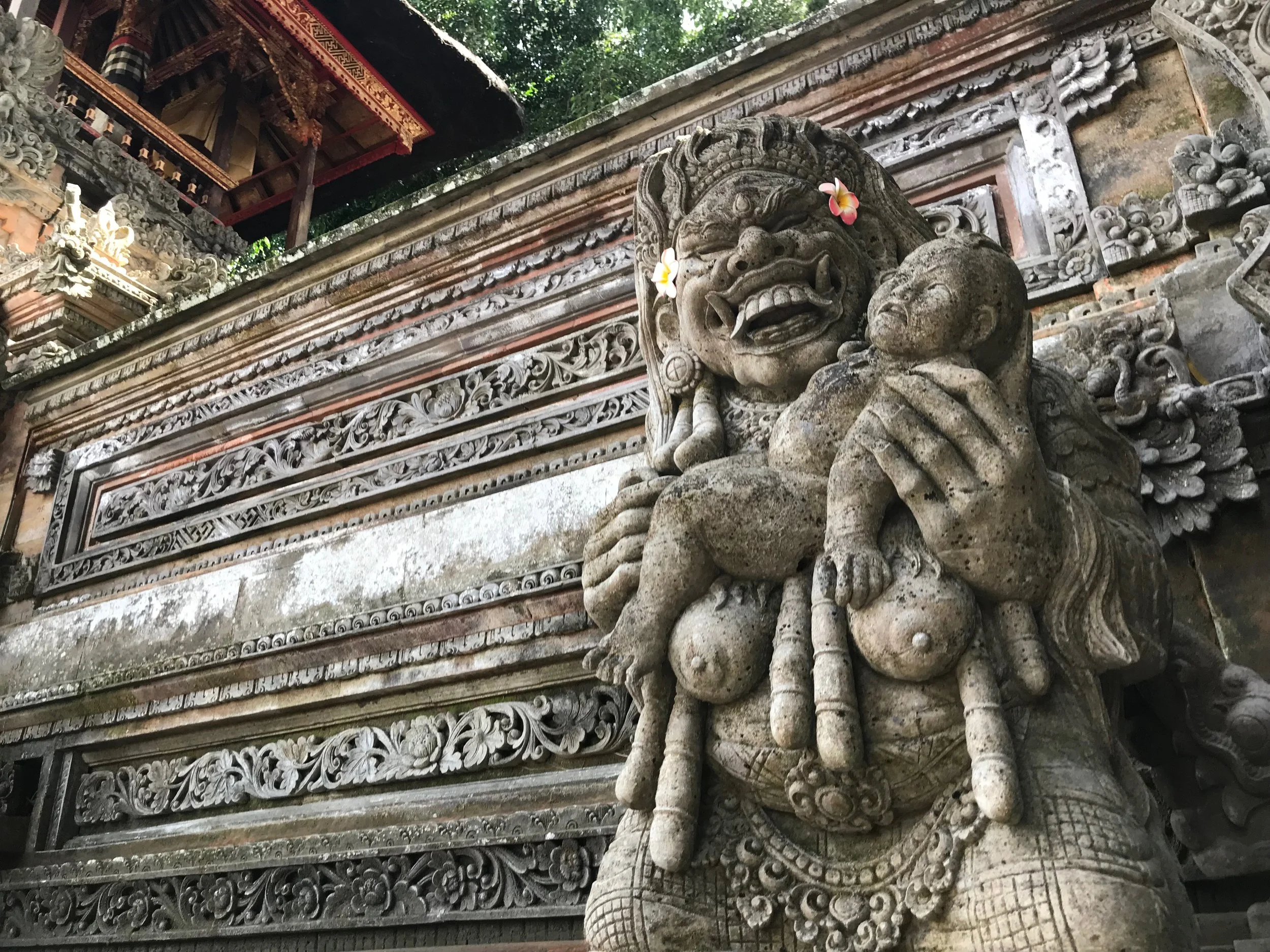
Rangda personifies evil — and loves to eat babies

Rangda personifies evil — and loves to eat babies

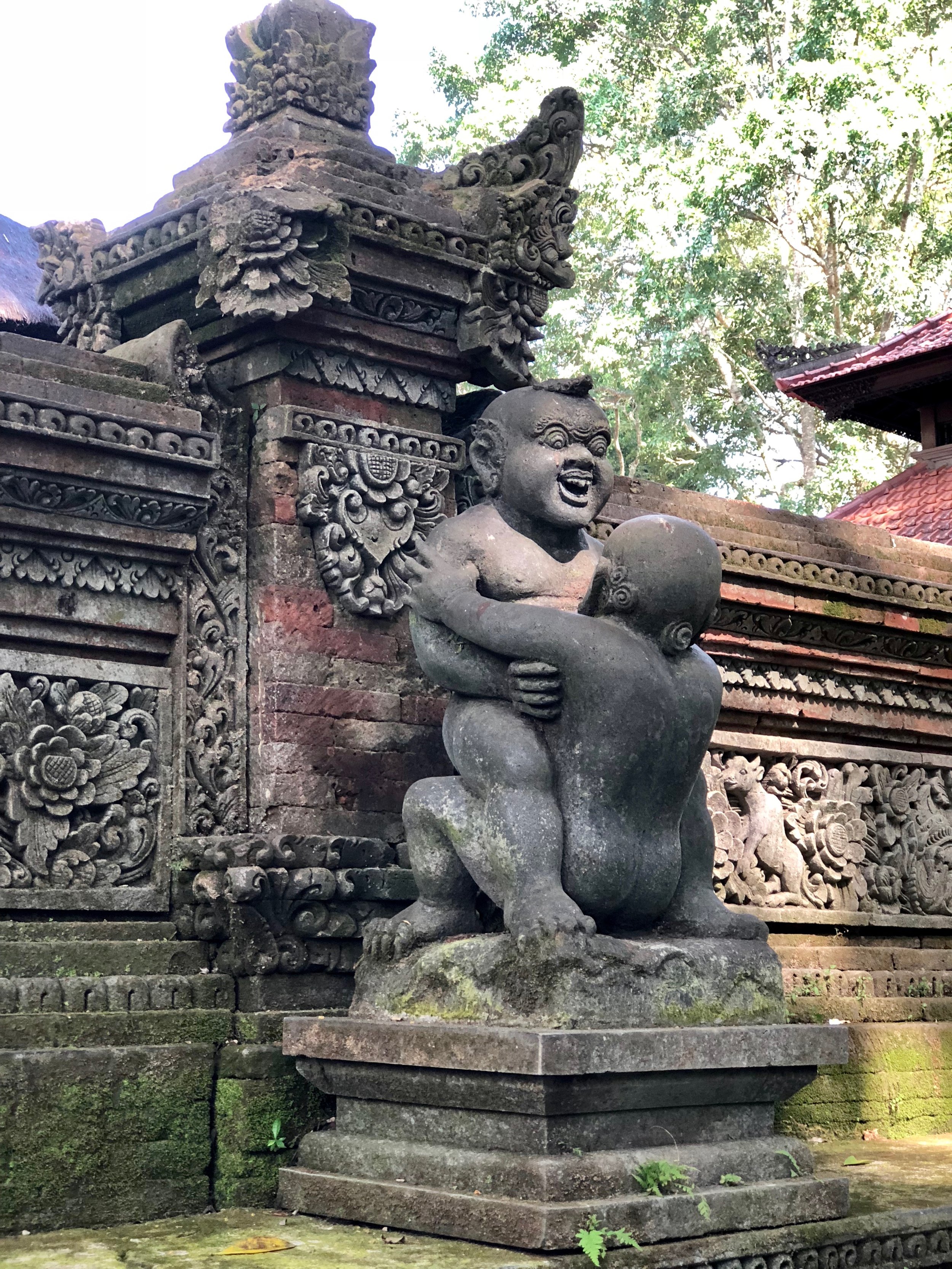
What are these naughty babies doing?!

What are these naughty babies doing?!

Statues of demons surround the temple of death

Statues of demons surround the temple of death


A young macaque with a mohawk posed on a ledge near the temple’s entrance, nibbling on what appeared to be a yam. While we were taking some pictures, a big lug came up beside us and smiled. “Cute,” he said, before telling us that he had just been bitten on the arm by one of these critters. He was just standing there, and a young monkey jumped onto his shoulder, supposedly unbidden. Before he knew it, she had sunk her teeth into his arm.

This little macaque was hanging out on the temple entrance

This little macaque was hanging out on the temple entrance

I could tell by his accent that he was French, but I still spoke English to him. “You need to go to the doctor!” I told him. He just laughed, and I said, “I’m serious! You could get rabies! You could die!” But he just kept chuckling like I was telling him the funniest bit of nonsense he’s ever heard, before wandering away.

There supposedly haven’t been any cases of rabies from monkeys in the sanctuary, but I don’t think it’s worth the risk — especially since my doctor told me that rabies is 100% fatal. If you get bitten at the forest, don’t take any chances and get rabies shots at the Toya Medika Clinic down the street.

They might look innocent — but they’re not

They might look innocent — but they’re not

Reality Bites: It’s All Fun and Games Until Someone Gets Bit

Not long after the French guy told us about how he been bitten, we saw a family allow a small monkey to crawl onto their young daughter for a photo op. It was like a train wreck — we couldn’t look away. When the girl wanted the monkey to get off of her, she tried to shake it off. Sure enough, the monkey opened its mouth and sank its teeth into the girl’s shoulder, before darting away.

The girl screamed and screamed, yet her banshee-like wails failed to draw the attention of any staffers.

We also saw a monkey grab a stack of cards from a woman’s open bag. The man with her literally pounced at the monkey and tried to retrieve the cards from it. We shook our heads in disbelief. It seemed wiser to let the monkey grow bored with its prize and drop it, once it realized it wasn’t edible.

Statues in the Monkey Forest tend to be grotesque — which Duke and Wally love

Statues in the Monkey Forest tend to be grotesque — which Duke and Wally love

It’s no exaggeration when I say that I was in a mild state of terror the entire time I was at the sanctuary. Any time we passed by a monkey, I’d freeze up and scooch past it as quickly as possible, my heart pounding through my chest.

Down from the temple is a bathing pool, and it was fun to watch the monkeys swing into the water and splash about — from a safe distance, of course.

Delightfully horrific statues pair nicely with the monkeys

Delightfully horrific statues pair nicely with the monkeys

Beyond this is a ring trail that’s more sparse. The trees aren’t as tall and I felt more exposed. We hurried along the path, horrified, when, at one point, we saw a monkey that had stolen a bottle of sunblock from some tourists. It unscrewed the top and was trying to drink the thick white liquid. The couple watching this were laughing, but we didn’t find it amusing.

At the end of the ring path, we saw a small building with a group of the sanctuary’s staff just hanging out smoking. We couldn’t help but think they should be in the more populated areas, stopping people from doing stupid things and attending to the kids who have been bitten.

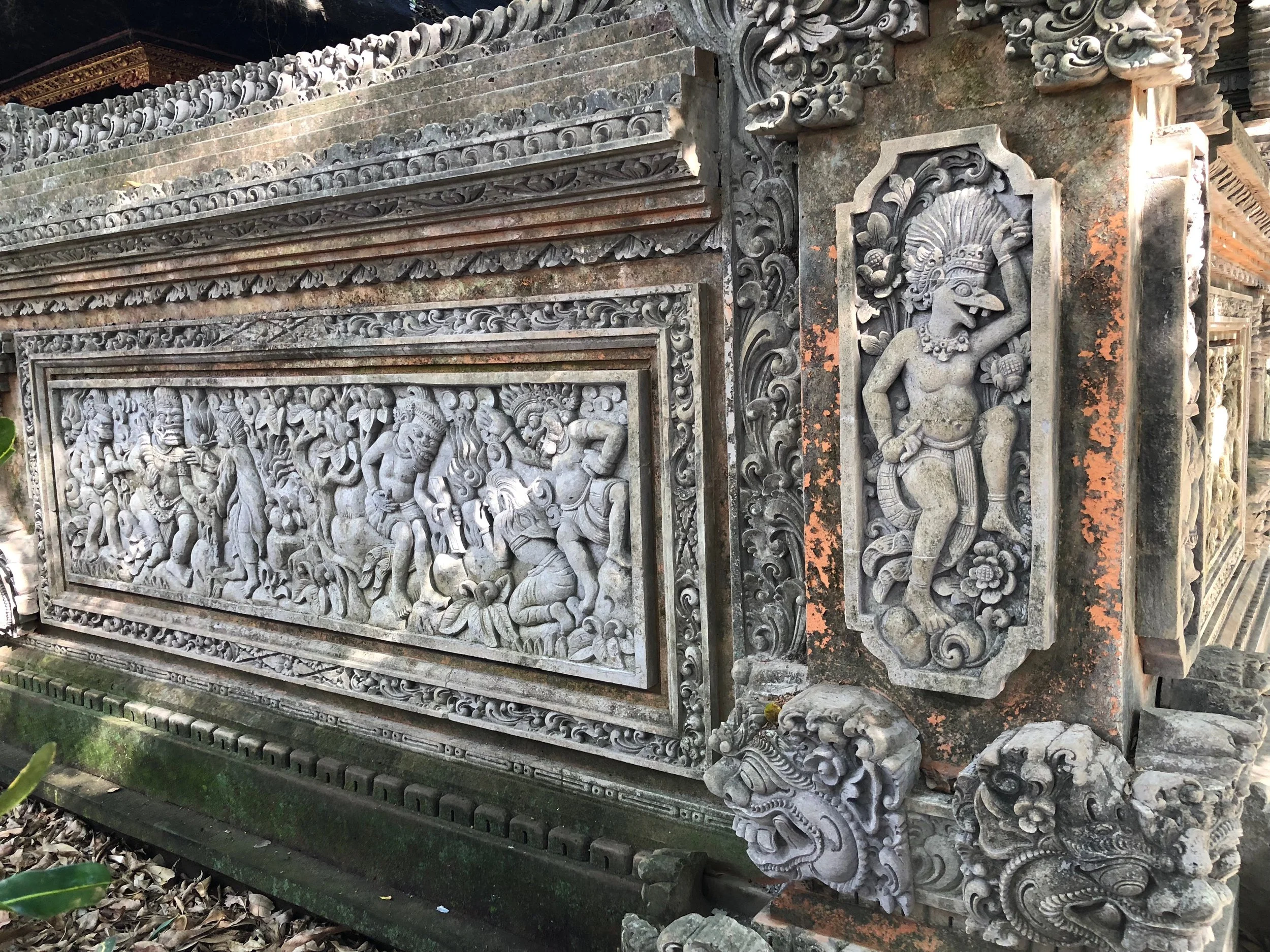
You can skirt around the exterior of the pura dalem and admire the bas reliefs

You can skirt around the exterior of the pura dalem and admire the bas reliefs

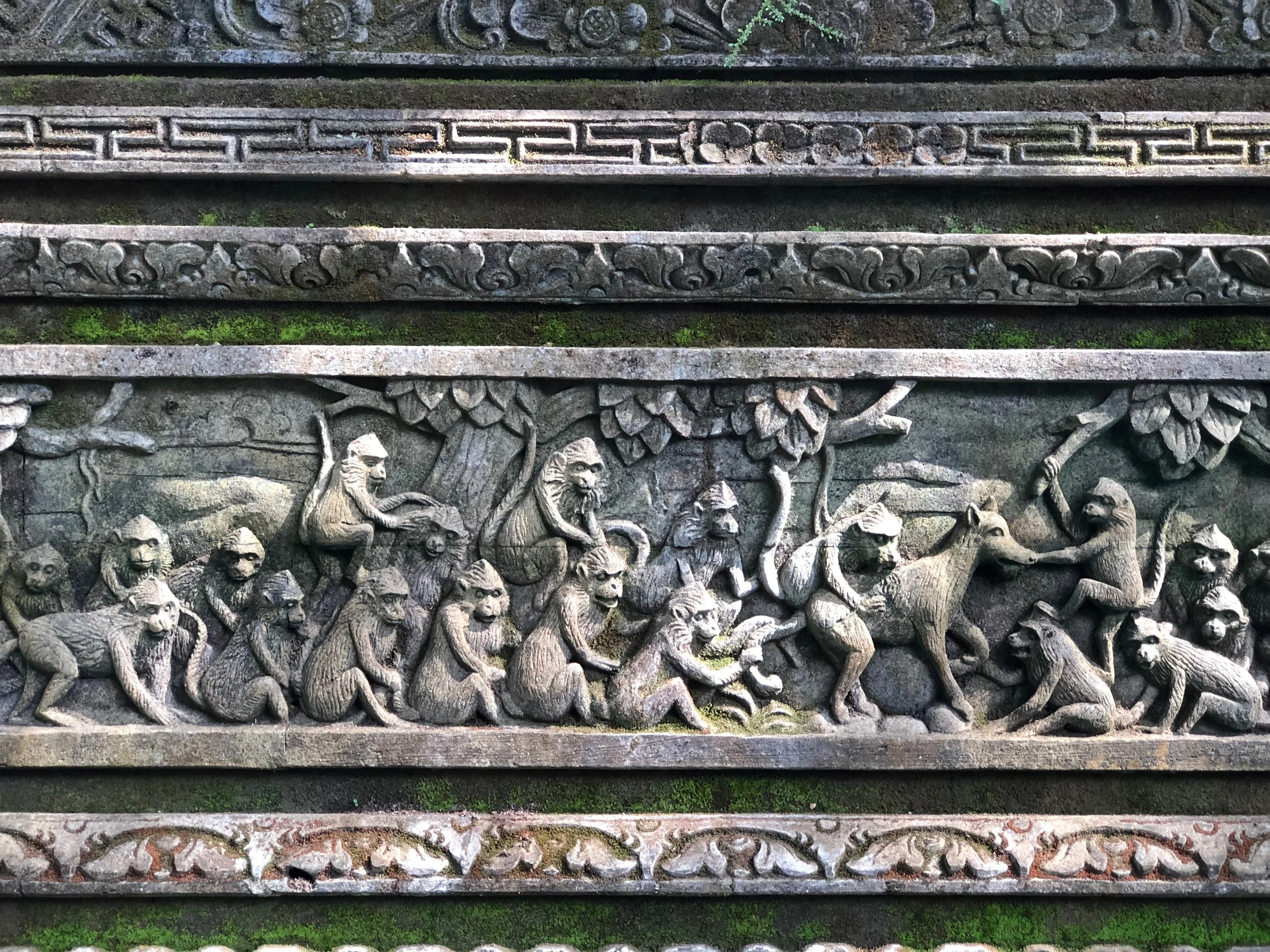
Frieze frame

Frieze frame

We circled back to the Great Temple of Death, bummed that tourists aren’t allowed to enter the temple grounds. We skirted around the exterior, though, peeking over the wall to see the courtyard within.

The Great Temple of Death inside the Monkey Forest isn’t open to tourists

The Great Temple of Death inside the Monkey Forest isn’t open to tourists

Another trail leads away from the temple, and we followed this down to another area of the nature preserve.

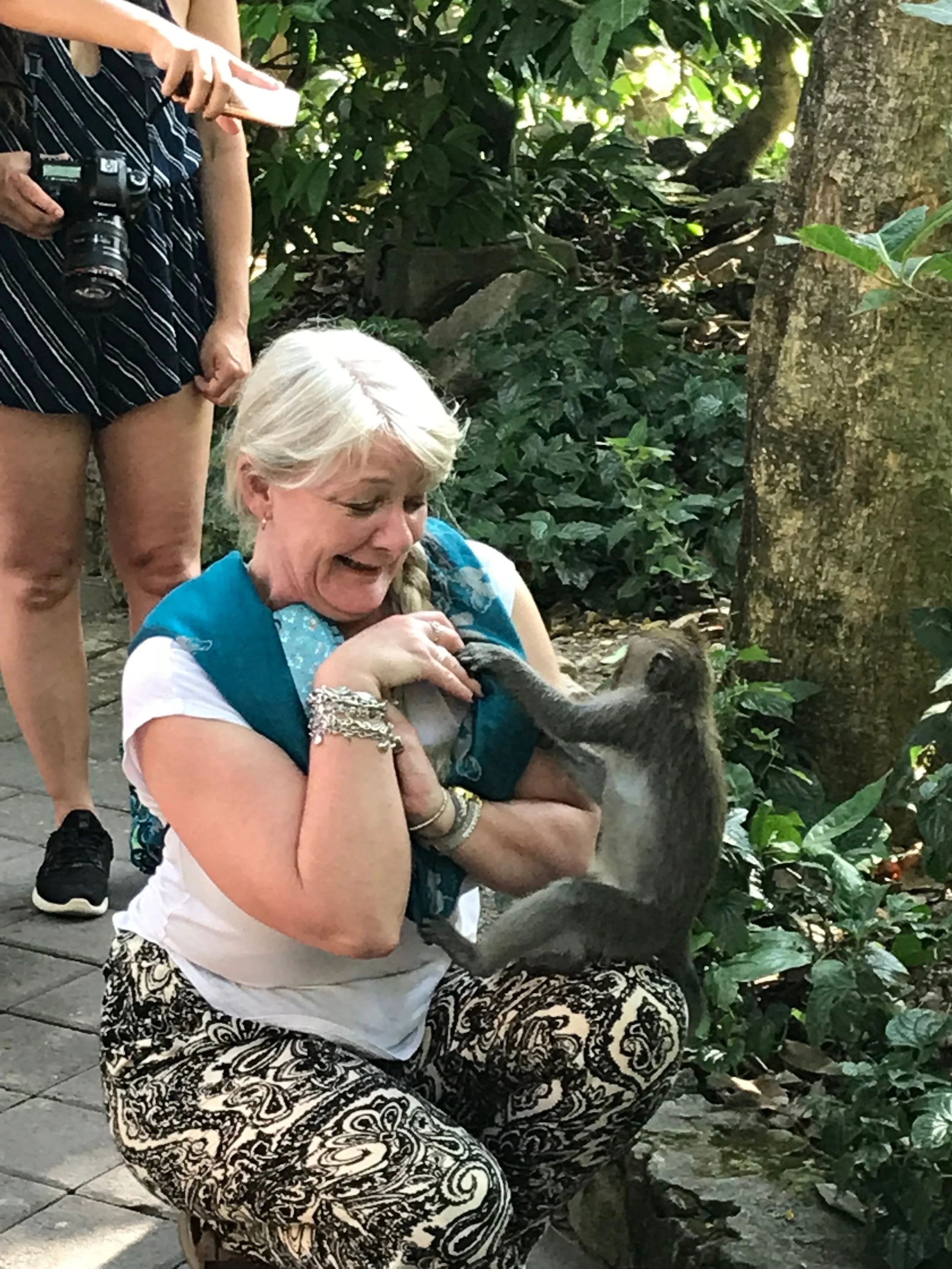
En route, we passed a woman squatting down to allow a monkey to climb onto her lap. When it started tugging at her braid, we had to go. We weren’t in the mood to see yet another person get bitten.

When you’re ready for the monkey to get off you, it might not be — and if you force it to move, you’ll probably end up getting bitten

When you’re ready for the monkey to get off you, it might not be — and if you force it to move, you’ll probably end up getting bitten

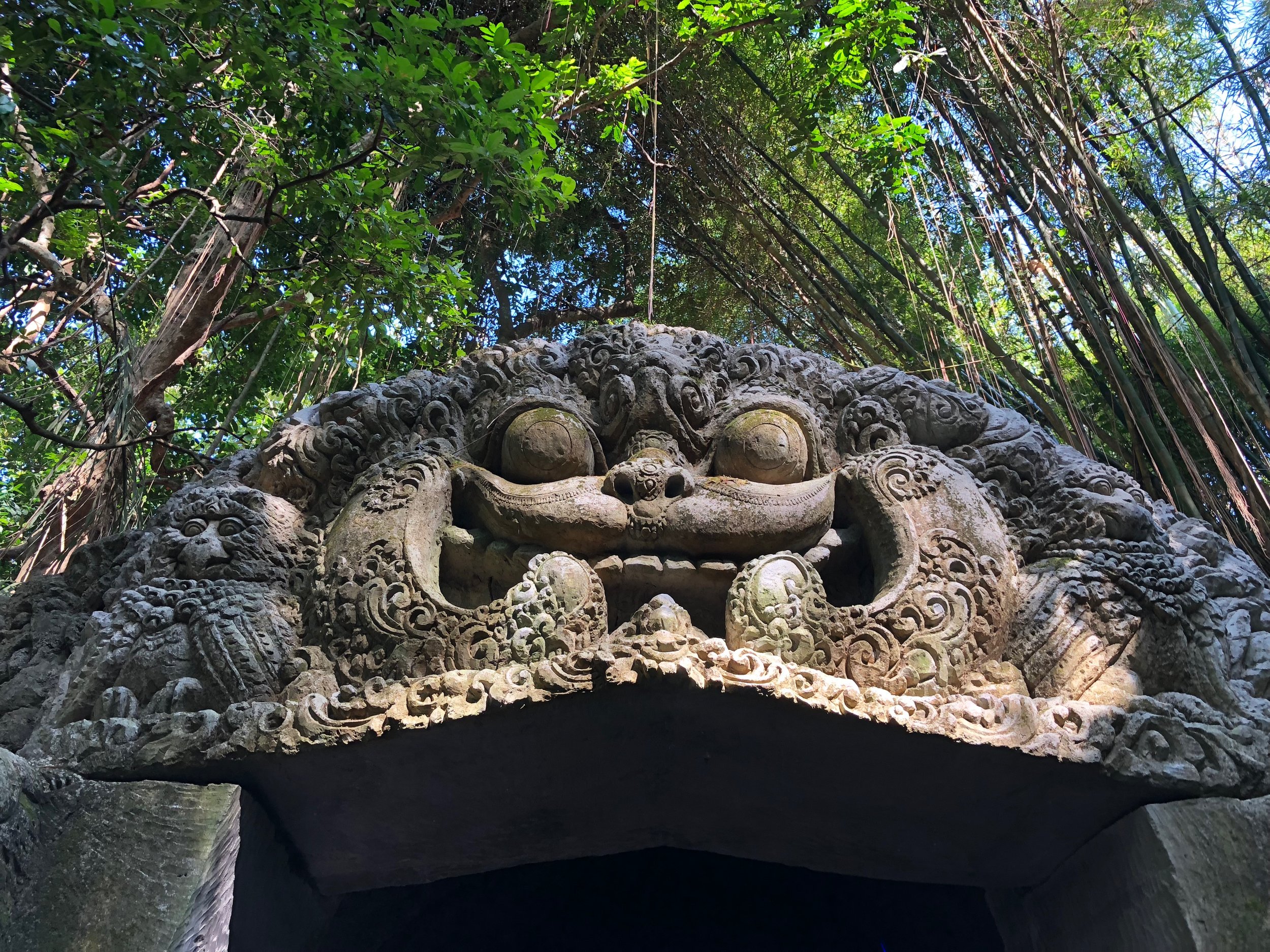
We ended up walking through a creepy tunnel lit by an eerie purple and green light. I kept praying we wouldn’t encounter any primates in that dark expanse, and thankfully, we did not.

The entrances to the tunnel by the parking lot sport giant faces

The entrances to the tunnel by the parking lot sport giant faces

The tunnel led to a parking lot, so we had to double back and head through it again. We followed a sign that pointed to a cremation temple and found ourselves at another end of the sanctuary, wary of a pack of monkeys nearby but eager to explore the small pura dalem. We couldn’t enter this temple of death, either, but admired the demonic statuary, while keeping an eye out for roving macaques.

The cemetery near the smaller temple of death is where bodies remain before a mass cremation, which takes place every five years

The cemetery near the smaller temple of death is where bodies remain before a mass cremation, which takes place every five years

At this point, we figured we had seen everything we could and decided to leave the Monkey Forest the same way we had come. We were on the home stretch, the exit about 100 yards away, when a particularly brazen monkey made a jump for Duke’s tote bag. He turned away, clutching it tightly to his body. The monkey made some rude noises and gestures to show its displeasure. But we were safe at last, having emerged from this ordeal with a healthy fear of monkeys. –Wally

Monkey see, monkey do

Monkey see, monkey do

Sacred Monkey Forest Sanctuary
Jalan Monkey Forest
Ubud, Kabupaten
Gianyar
Bali 80571, Indonesia

I was in a mild state of terror the entire time I was at the sanctuary.

The Buddhist Bas-Reliefs of Borobudur

A walk-through of the Borobudur temple carvings that depict the lives of the Buddha as told in the Jataka tales and Avadana.

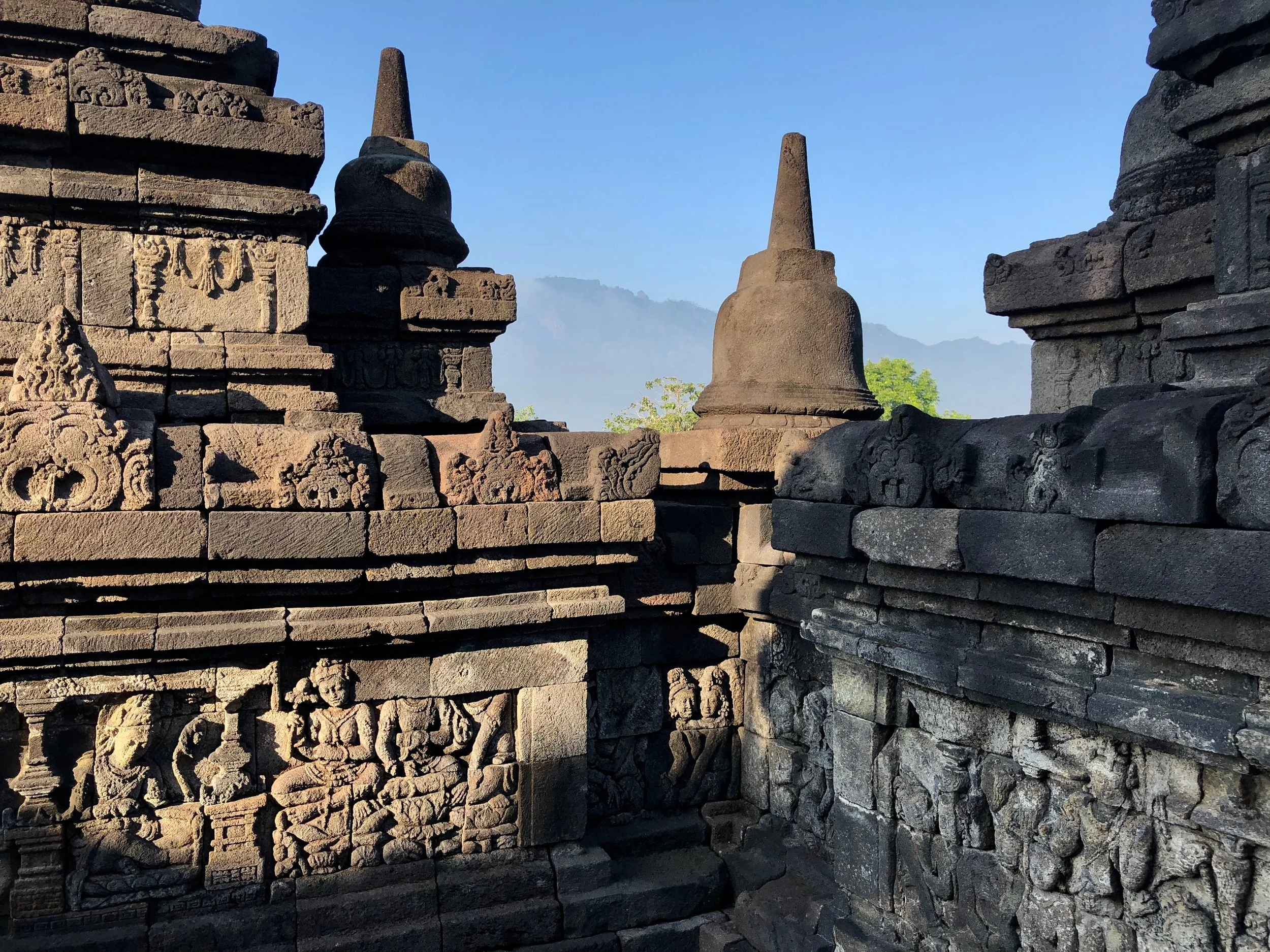
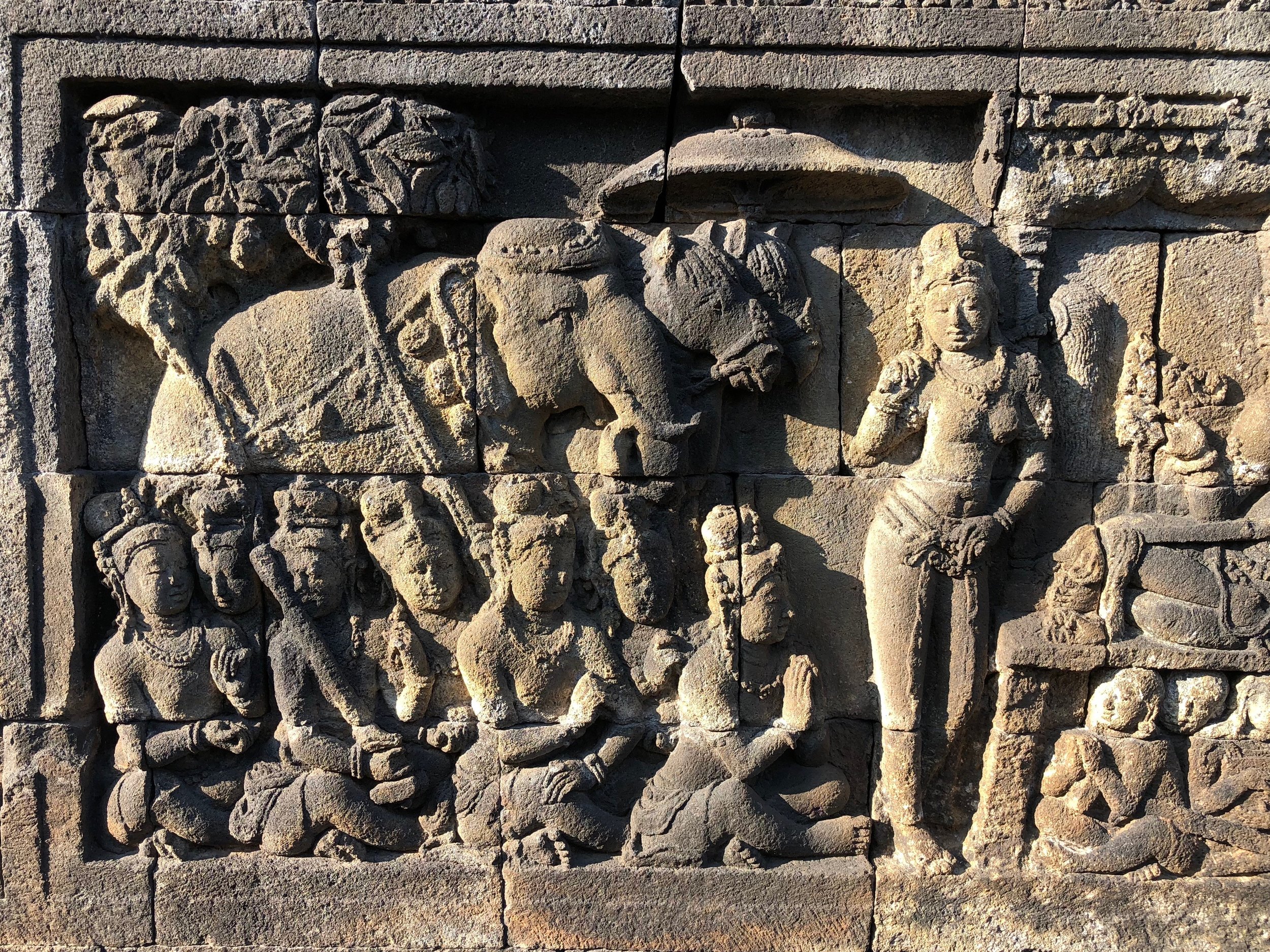
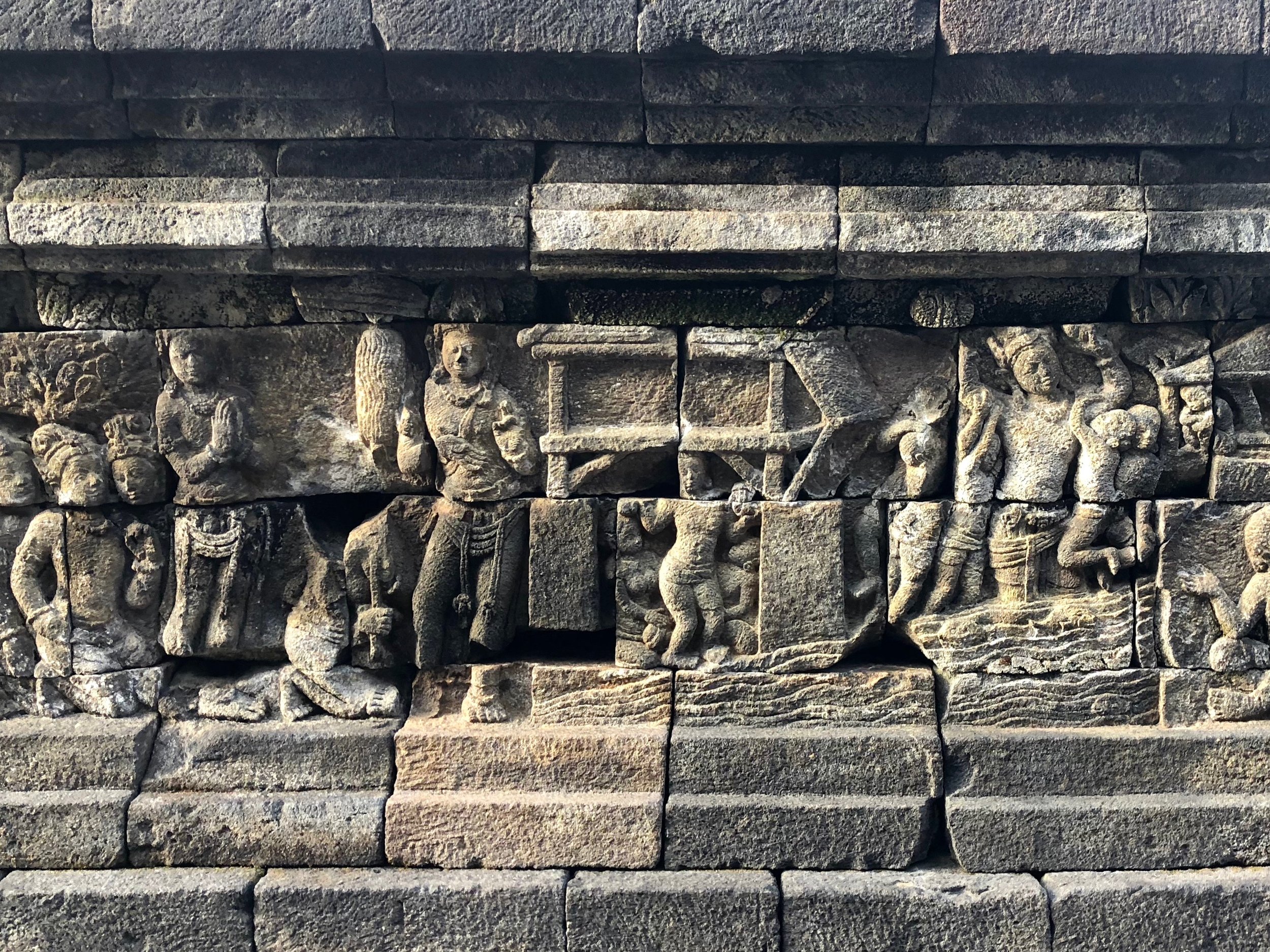
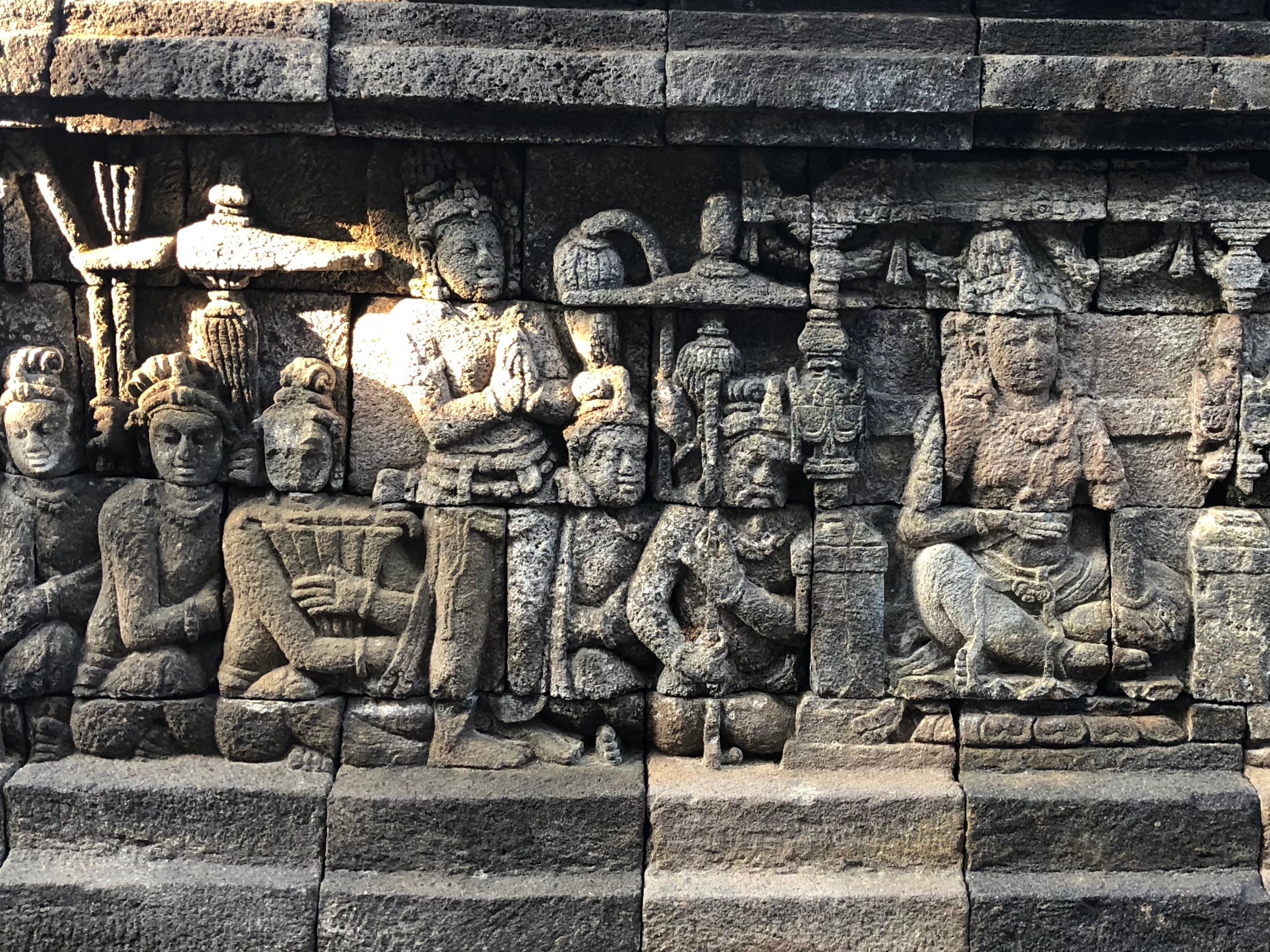
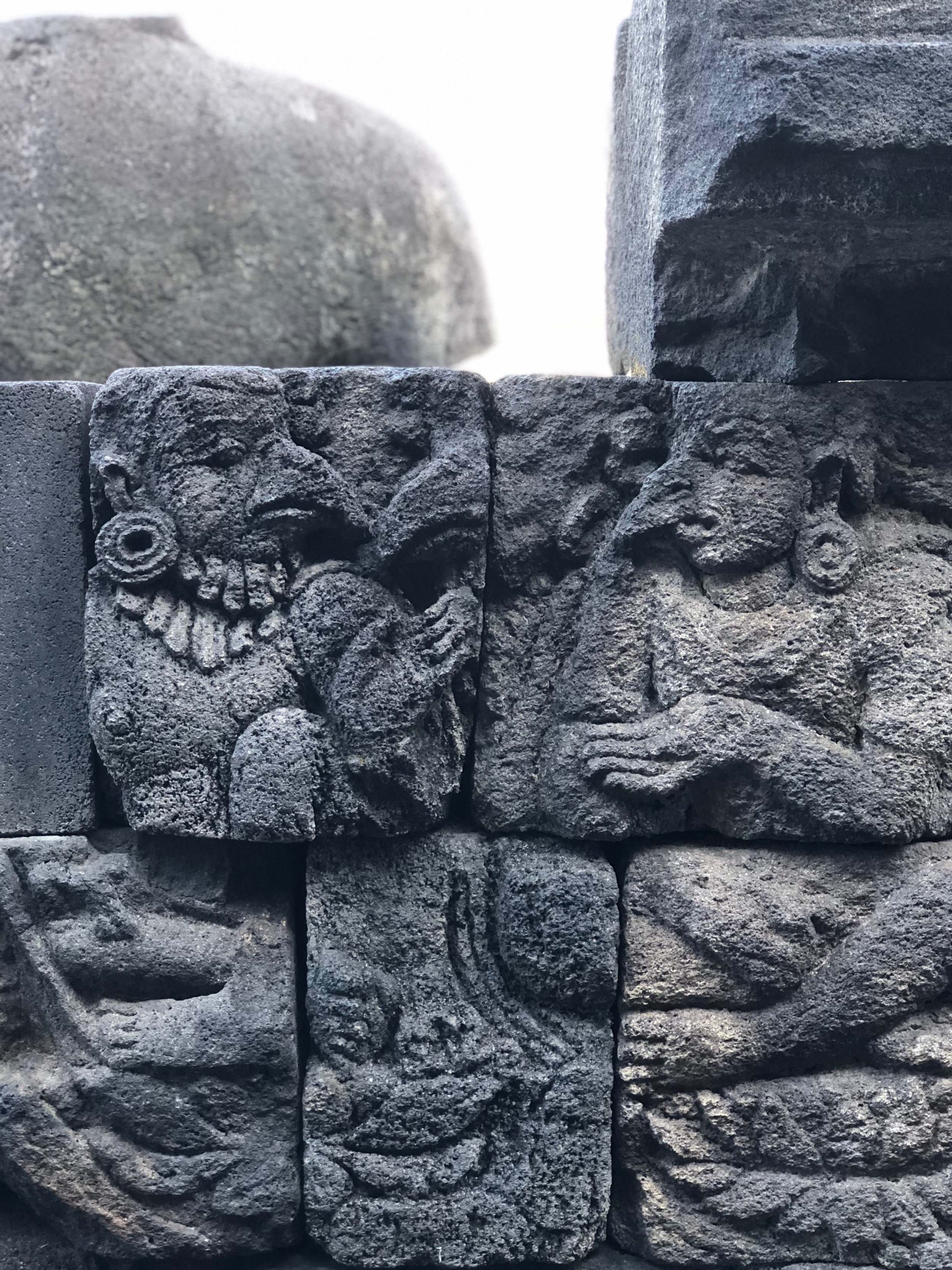
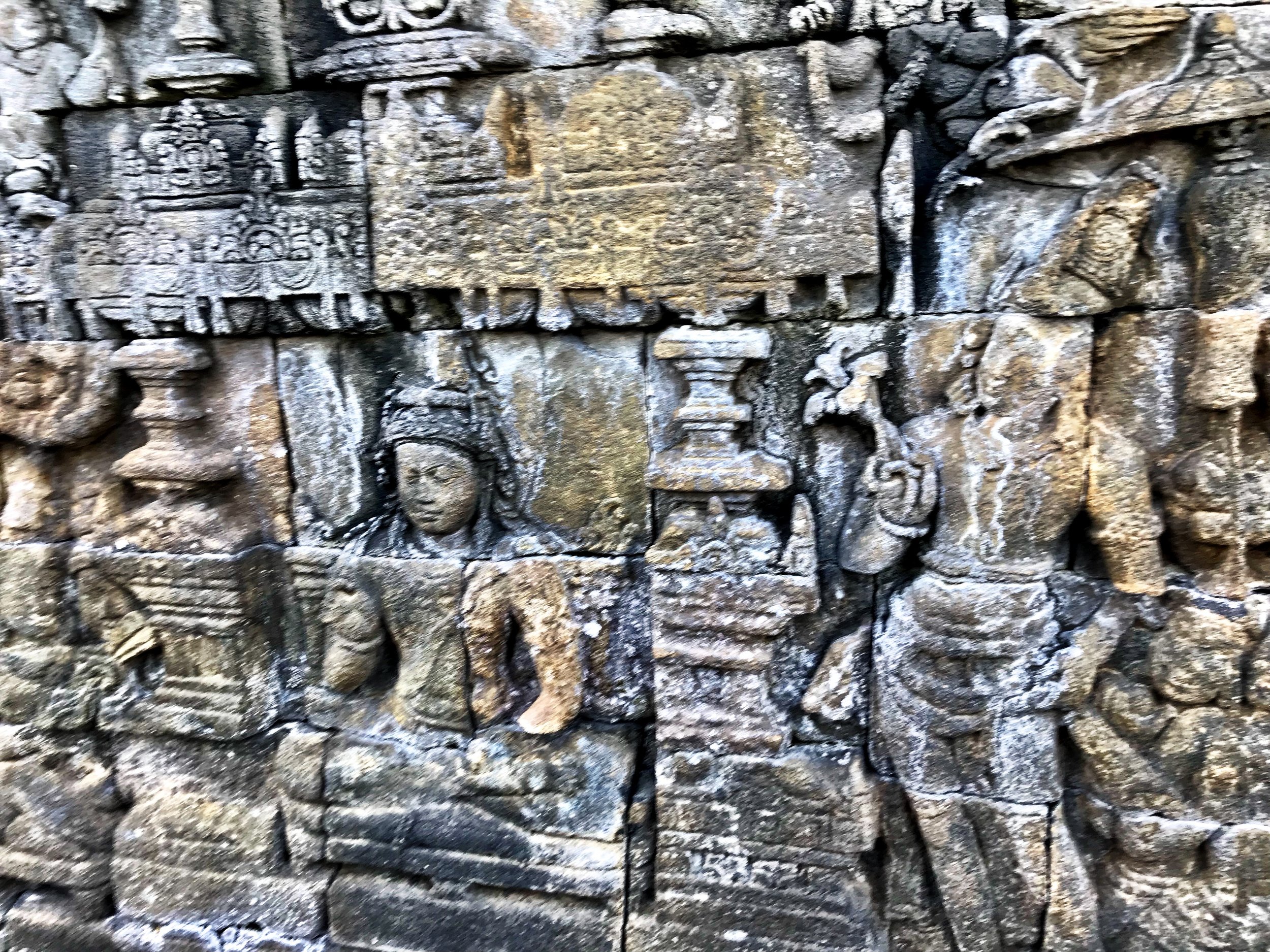
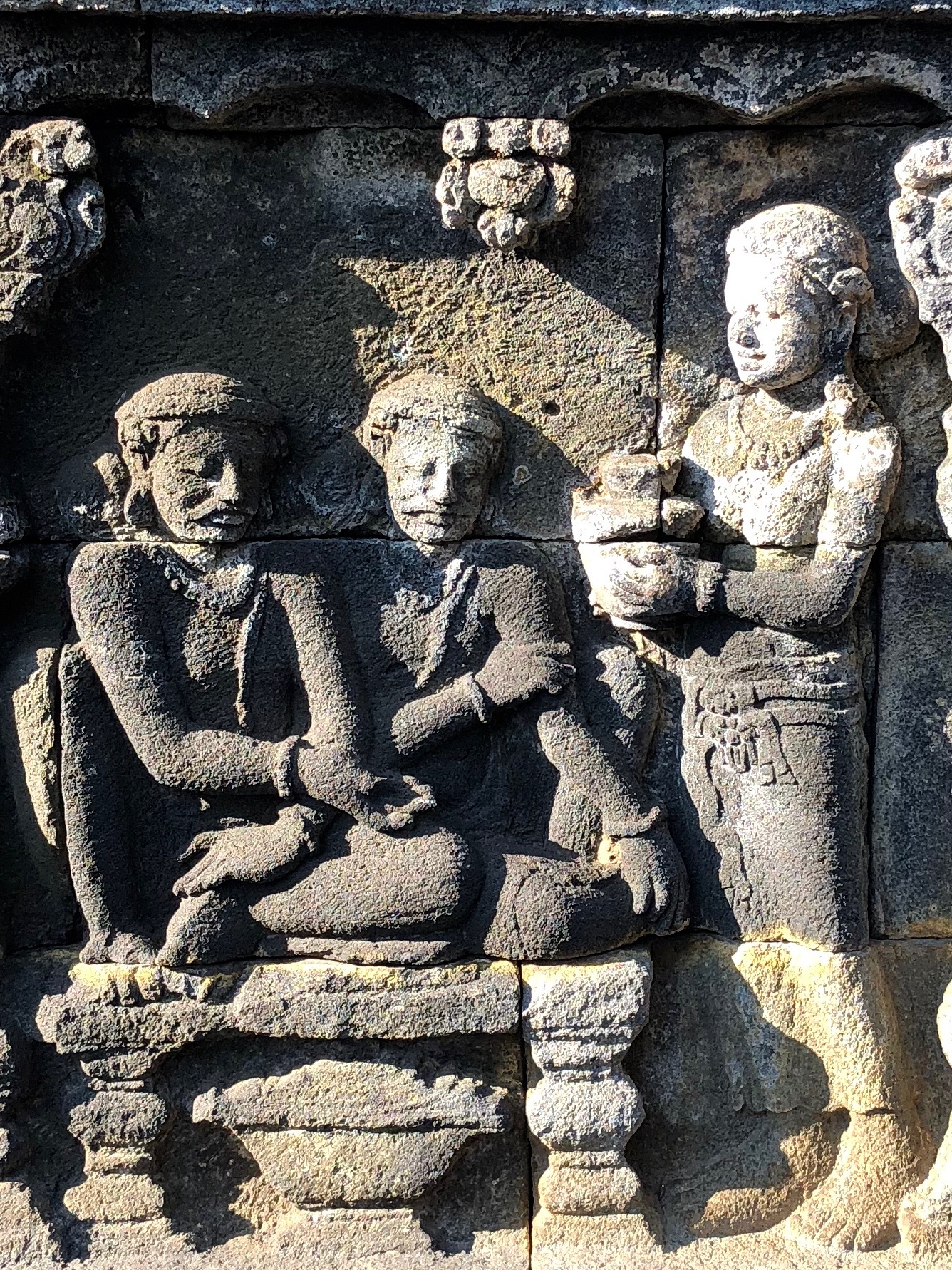
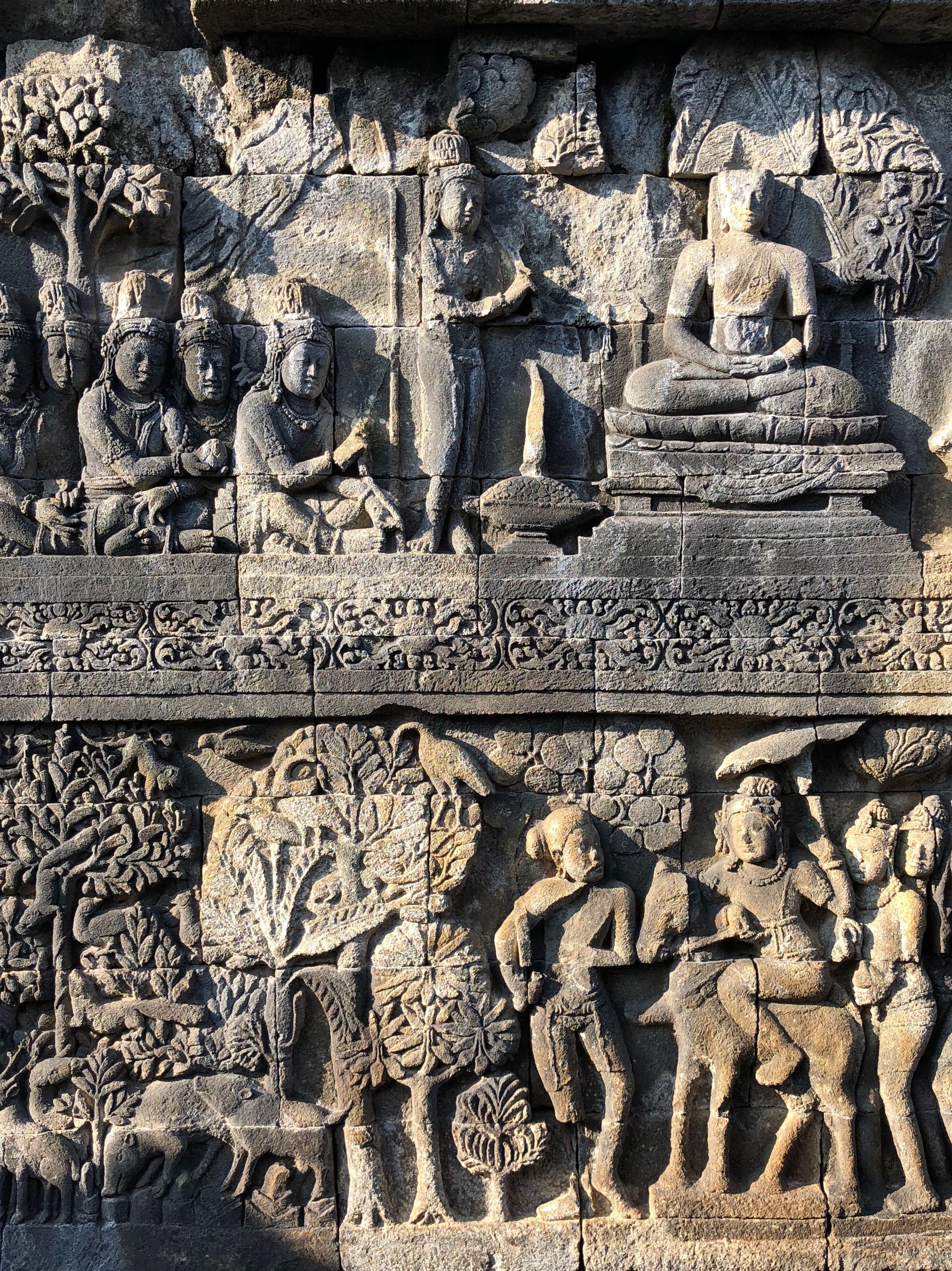
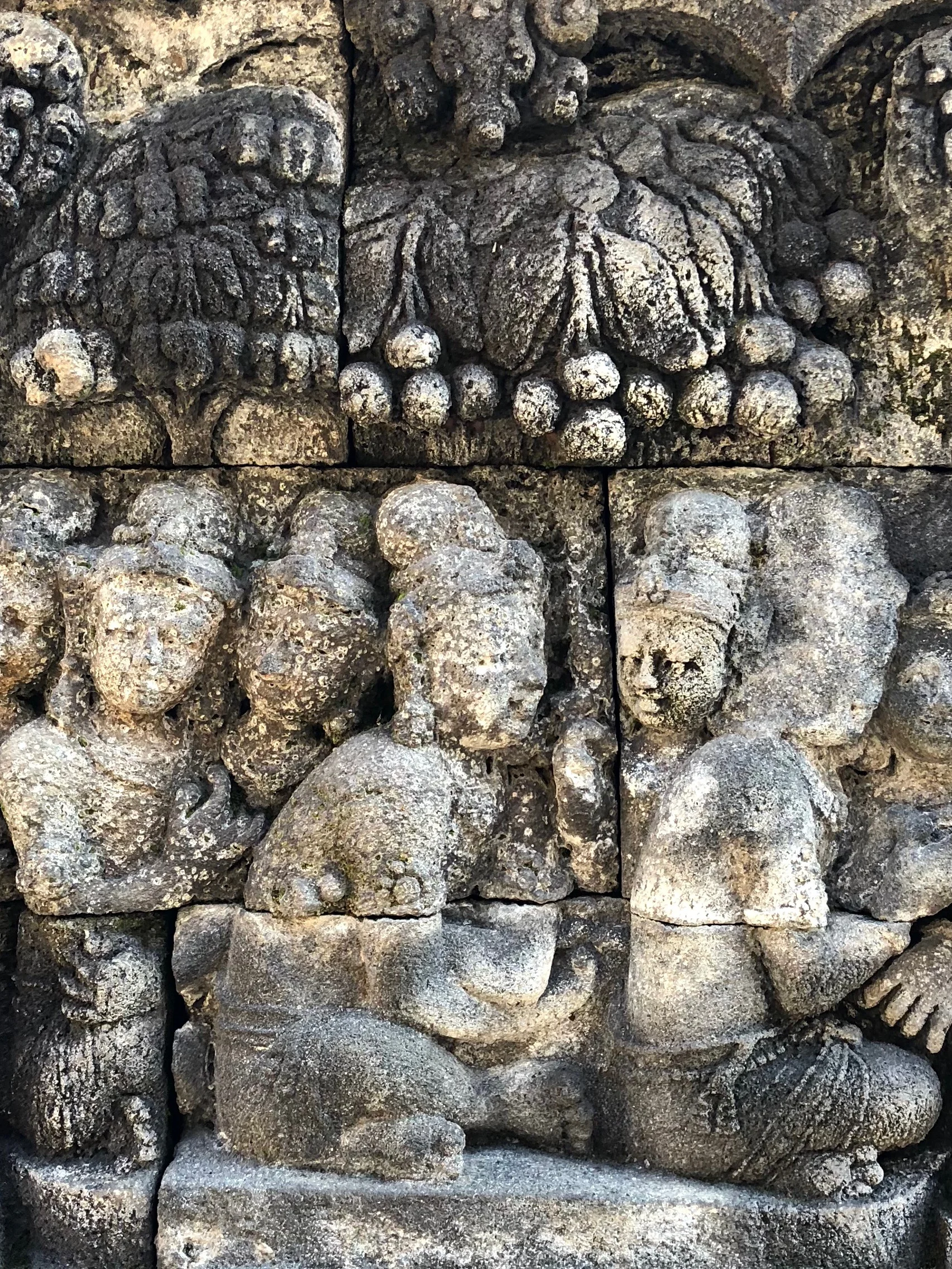
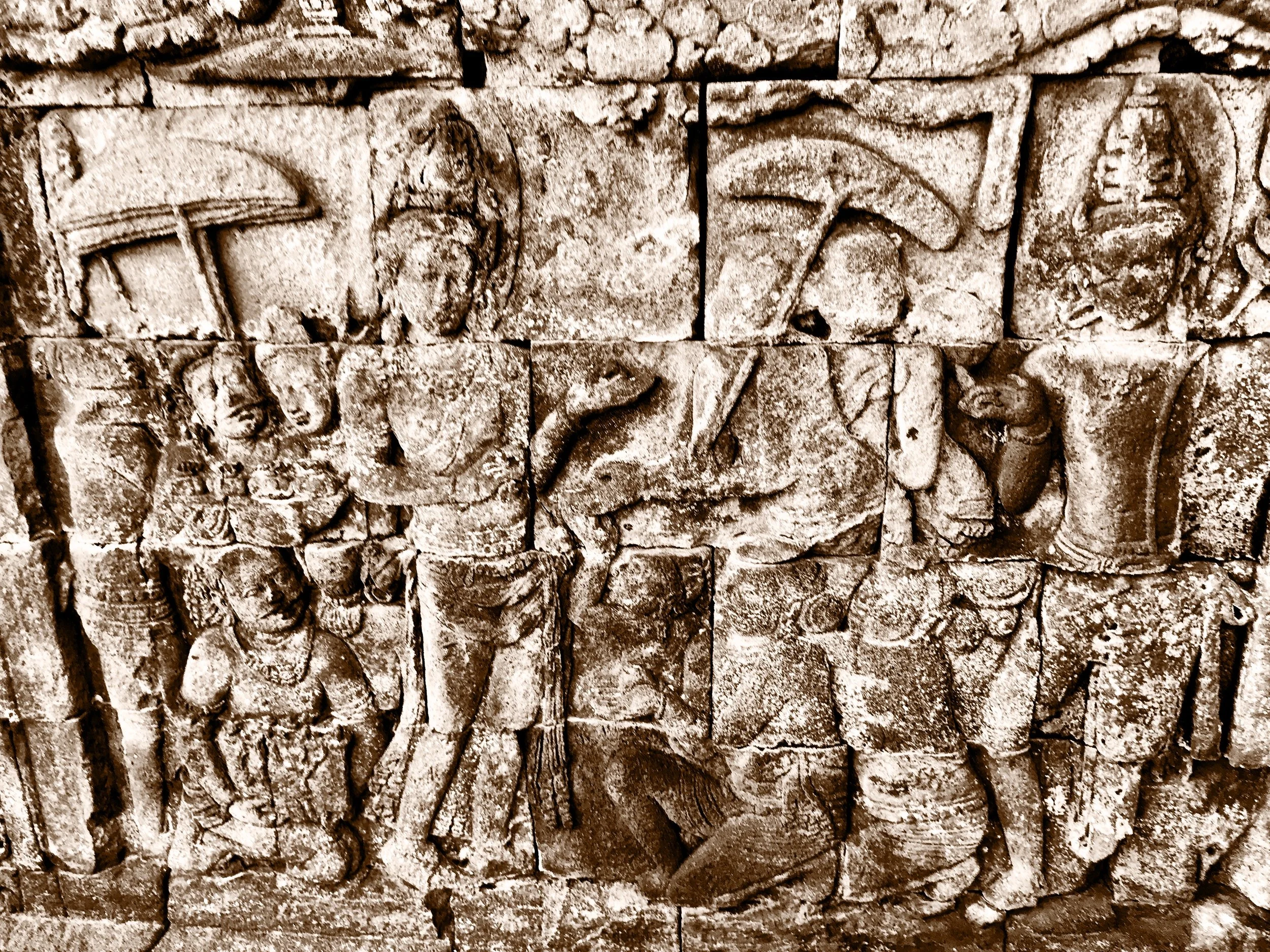
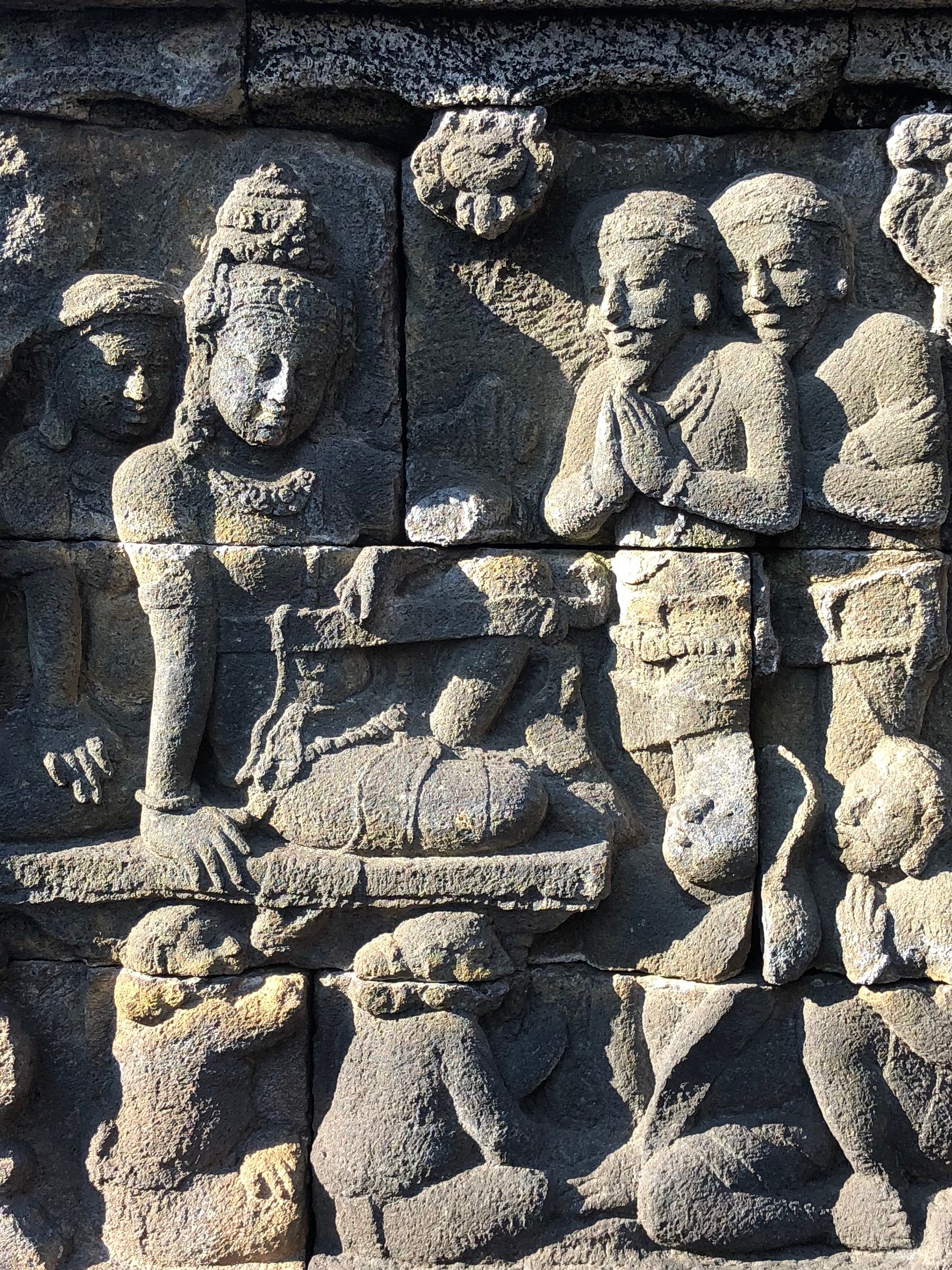
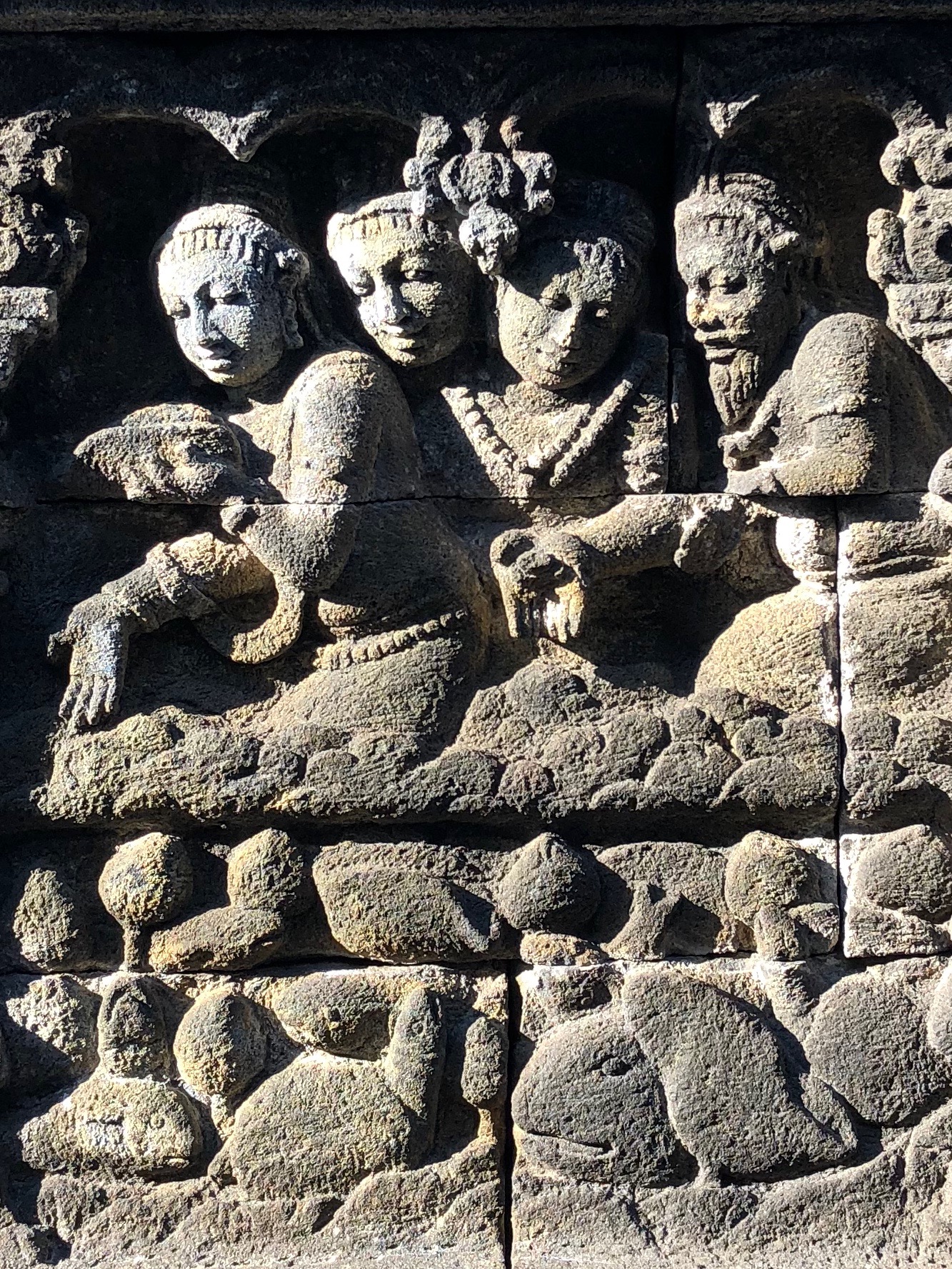
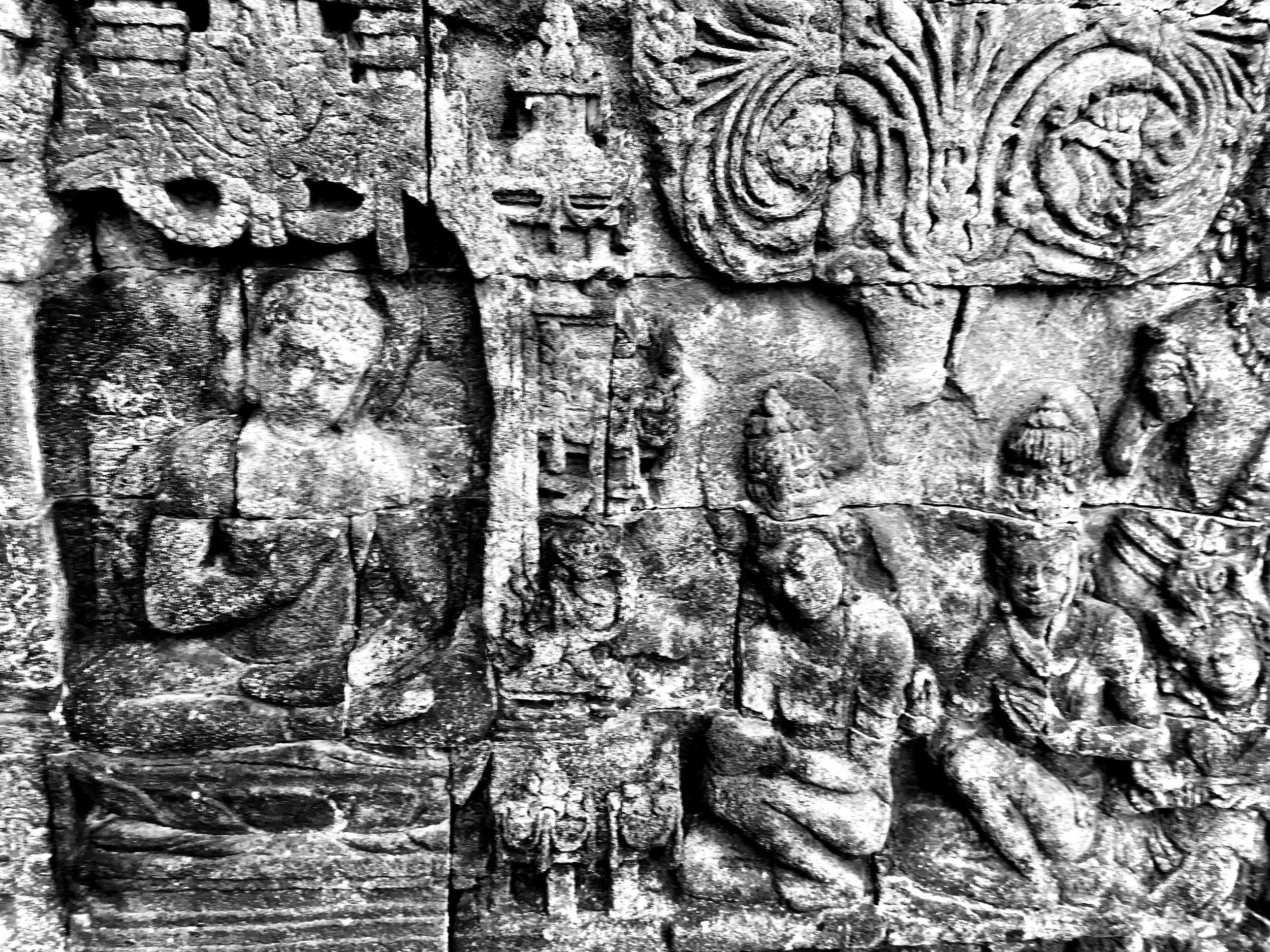
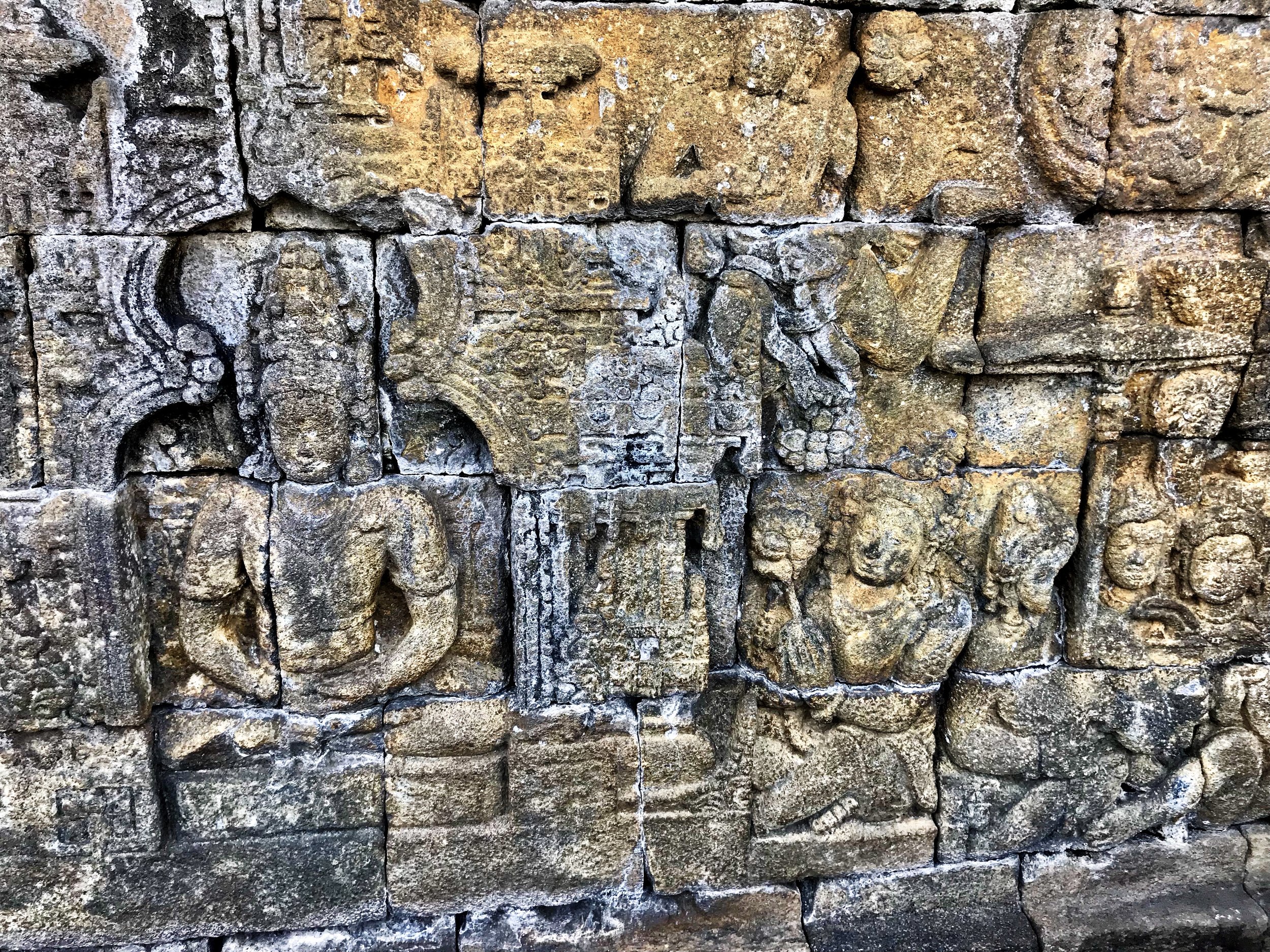
The carvings on some of the levels of Borobudur tell the story of the Buddha as well as his past reincarnations

The carvings on some of the levels of Borobudur tell the story of the Buddha as well as his past reincarnations

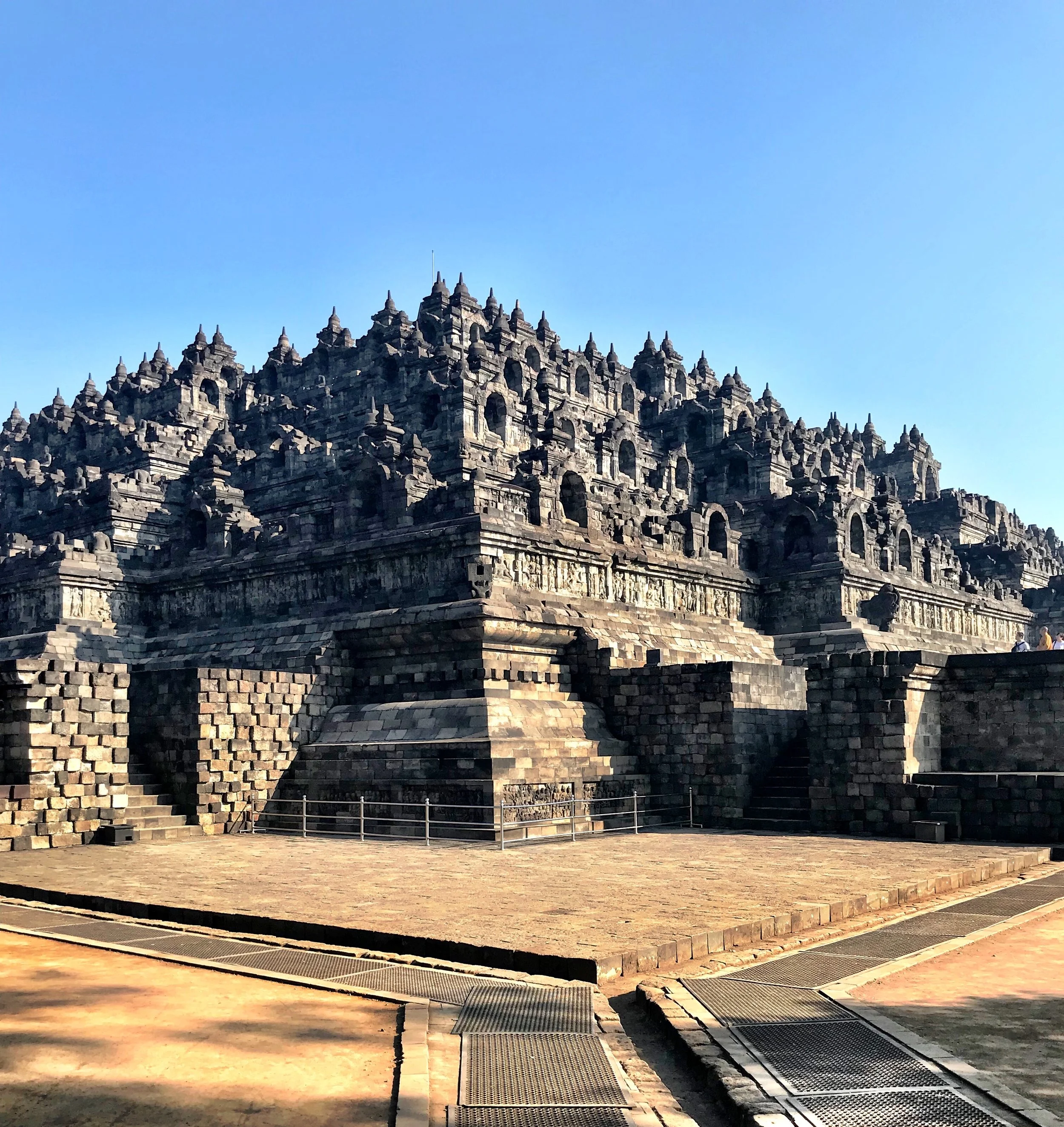
The incomparable 9th century Mahayana Buddhist sanctuary of Borobudur in Java, Indonesia contains the largest collection of decorative panels recounting the life of the Buddha. The structure rests upon an oversized base, and the body of the monument is composed of six raised platforms, including five terraced galleries. They’re square in form and diminish in scale with height. The uppermost trio of circular terraces are plain in comparison, but are augmented by 72 magnificent stone lattice-work stupas rising to the stupa on the summit. Because Borobudur has no inner chambers, it is considered a pilgrimage site.
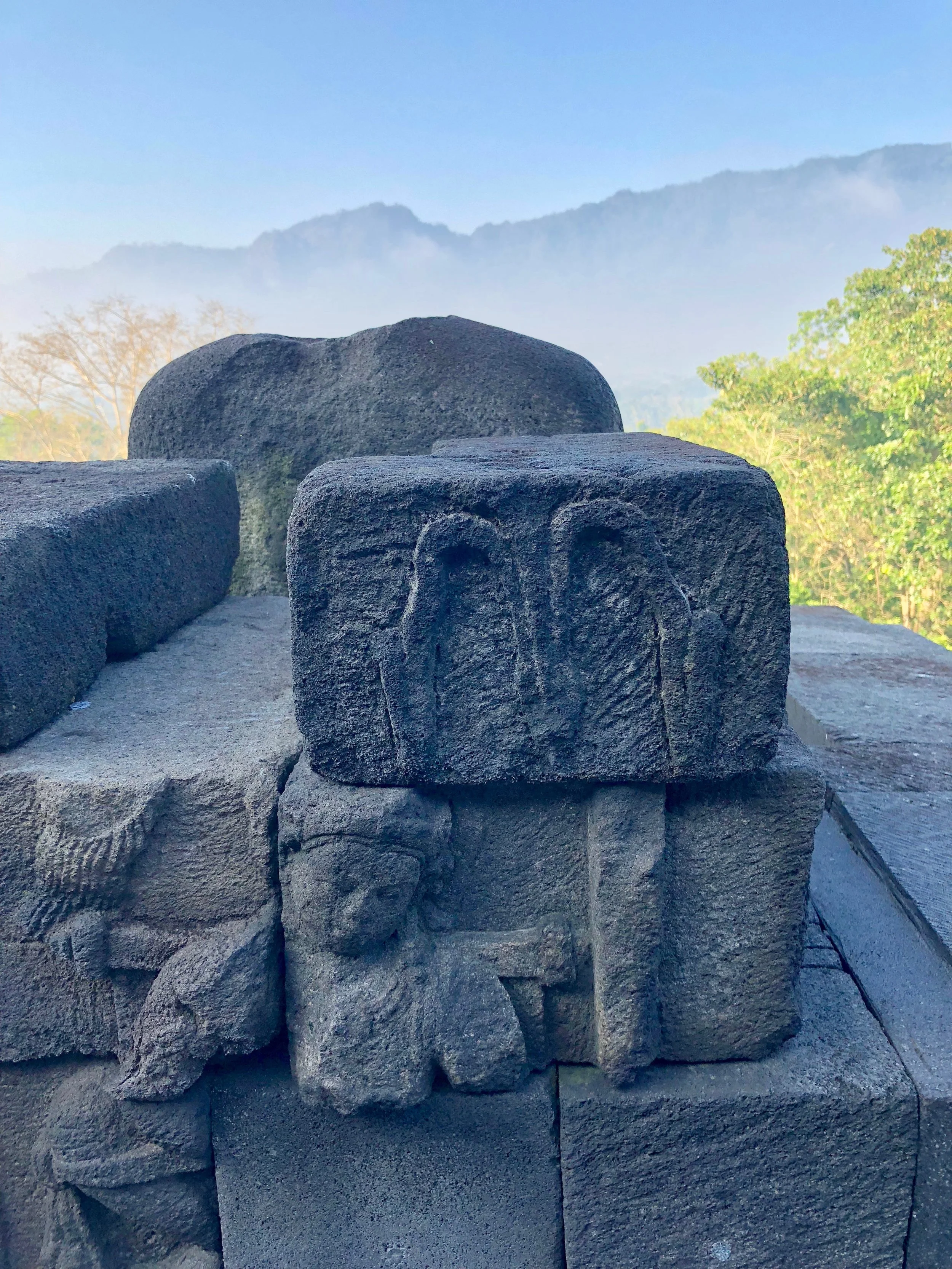
The builders of Borobudur recognized the need for a drainage system because of heavy rains that cause erosion

The builders of Borobudur recognized the need for a drainage system because of heavy rains that cause erosion

Pilgrims would have entered via the eastern stairs to ritually circumambulate (a fancy word for walking around) the sacred manmade mountain of chiseled gray andesite in quiet contemplation. It's here that the stories told in the narrative relief panels begin, with the birth of the future Buddha, Prince Siddhartha Gautama. According to legend, the infant stood and took seven steps. With each step, a lotus flower appeared, to prevent his tiny feet from touching the ground.

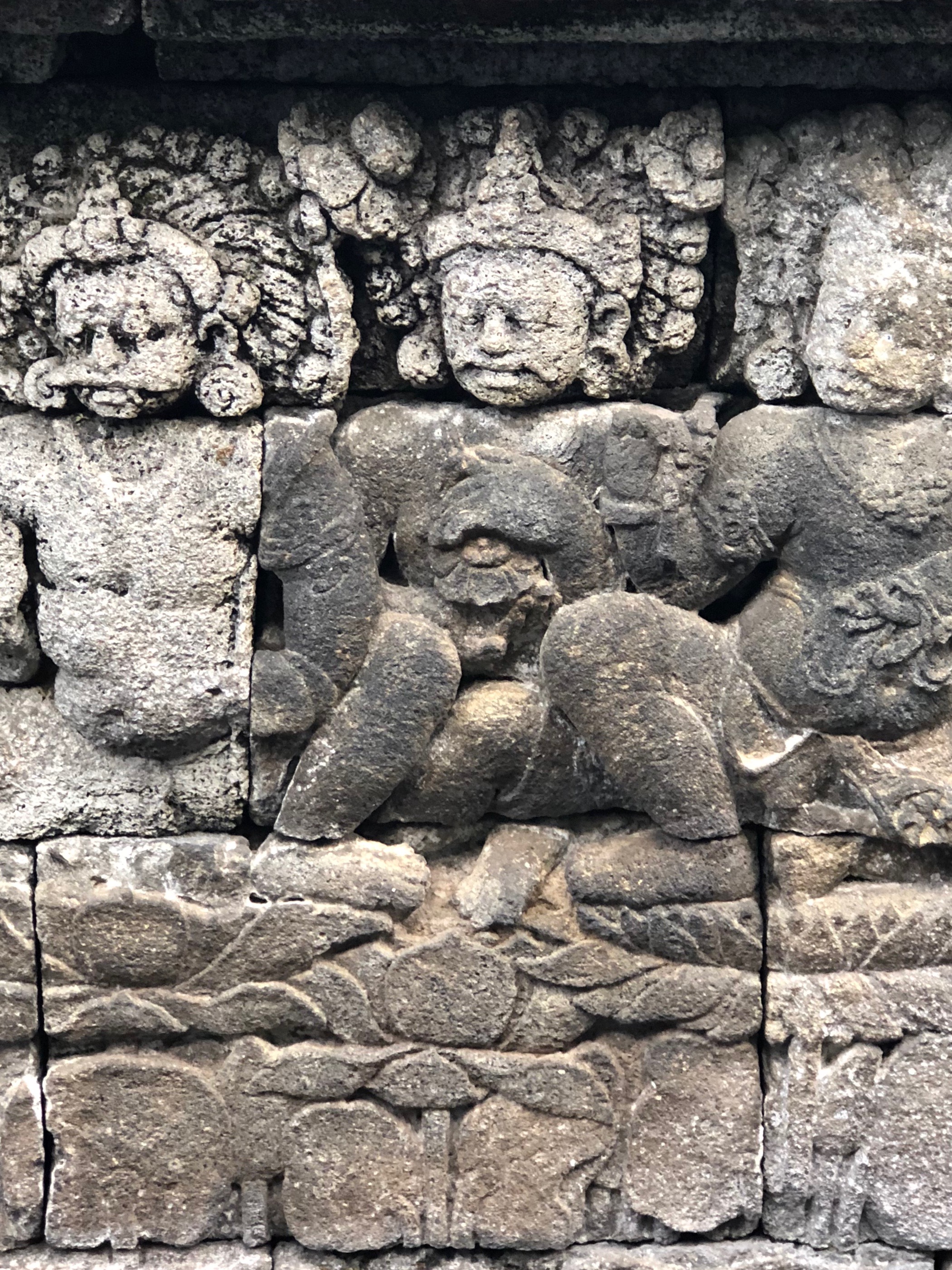
The corridors are filled with detailed murals depicting celestial beings, guardian demons, conch shells, jewel trees, durian fruit and a menagerie of animals, including elephants, deer and tree-dwelling monkeys, to name a few.

Animals are depicted in the carvings — including many that tell of the past lives of the Buddha

Animals are depicted in the carvings — including many that tell of the past lives of the Buddha

Open to the sky, the bas-reliefs adorning the 13-foot-wide passages create a broad platform and are read from left to right, moving in a clockwise direction around the monument, twisting in right angles from one terrace to another. The galleries represent the planes of existence that must be experienced before reaching the uppermost level of spiritual perfection.

Story Time: Jataka and Avadana

The first- and second-level stone reliefs depict tales from Buddhist lore, including the Jataka and Avadana. Wally and I had first seen these stories depicted in the frescoes of the Ajanta Caves in India.

The Jataka tales are about the Buddha before he was born as Prince Siddhartha. Thematically, they illustrate lessons in morality, karma and merit that distinguished the bodhisattva from all other creatures. As a bodhisattva, the Buddha was born and reborn numerous times, alternating from human to animal form, before he finally attained enlightenment.

Avadana are similar to Jataka, but the main figure is not the Buddha himself — the saintly deeds are attributed to other legendary people.

We didn’t experience the reliefs in chronological order, as our guide, Pras, led us down from the upper terraces, after we watched the sunrise.


borobudurtemple.JPG

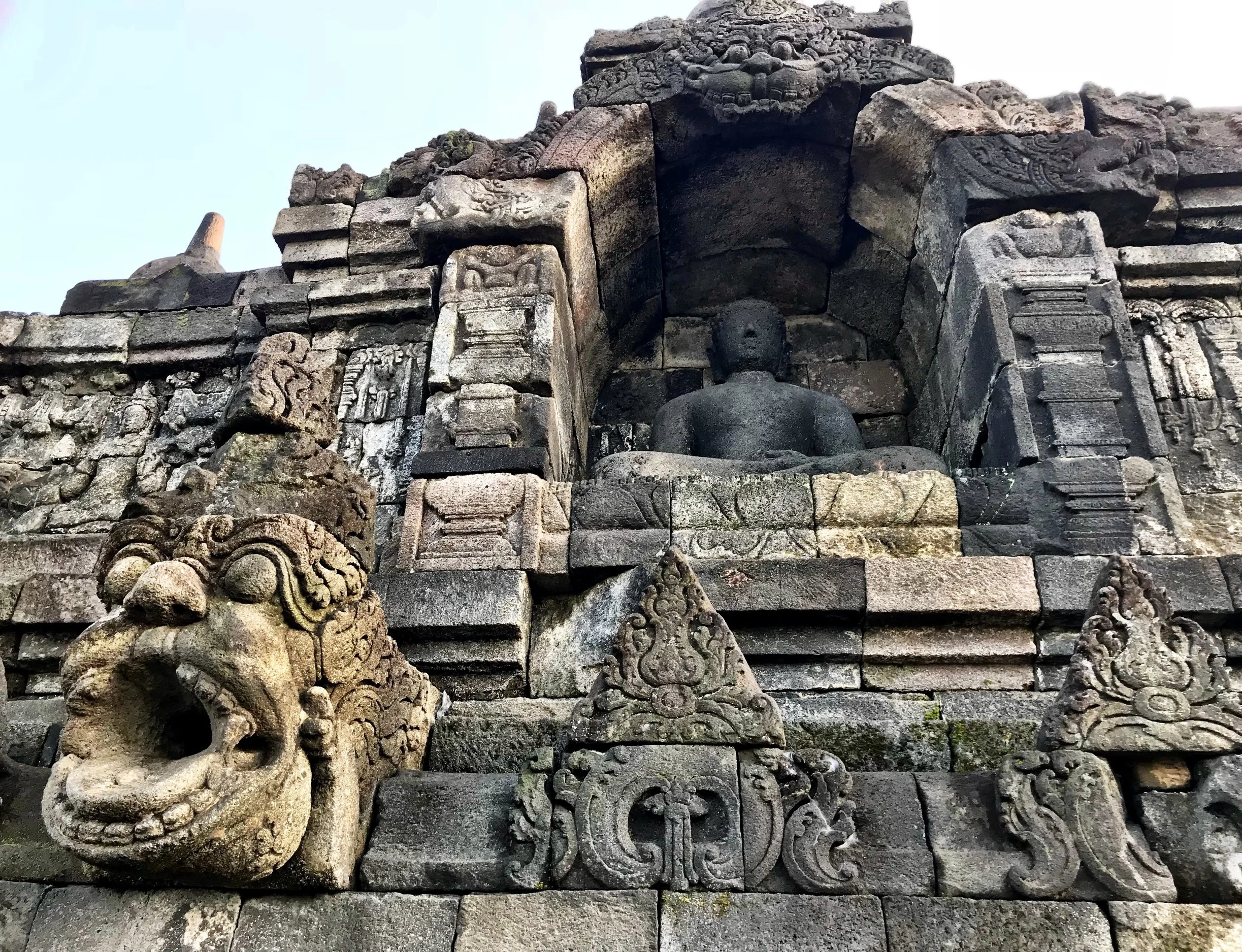
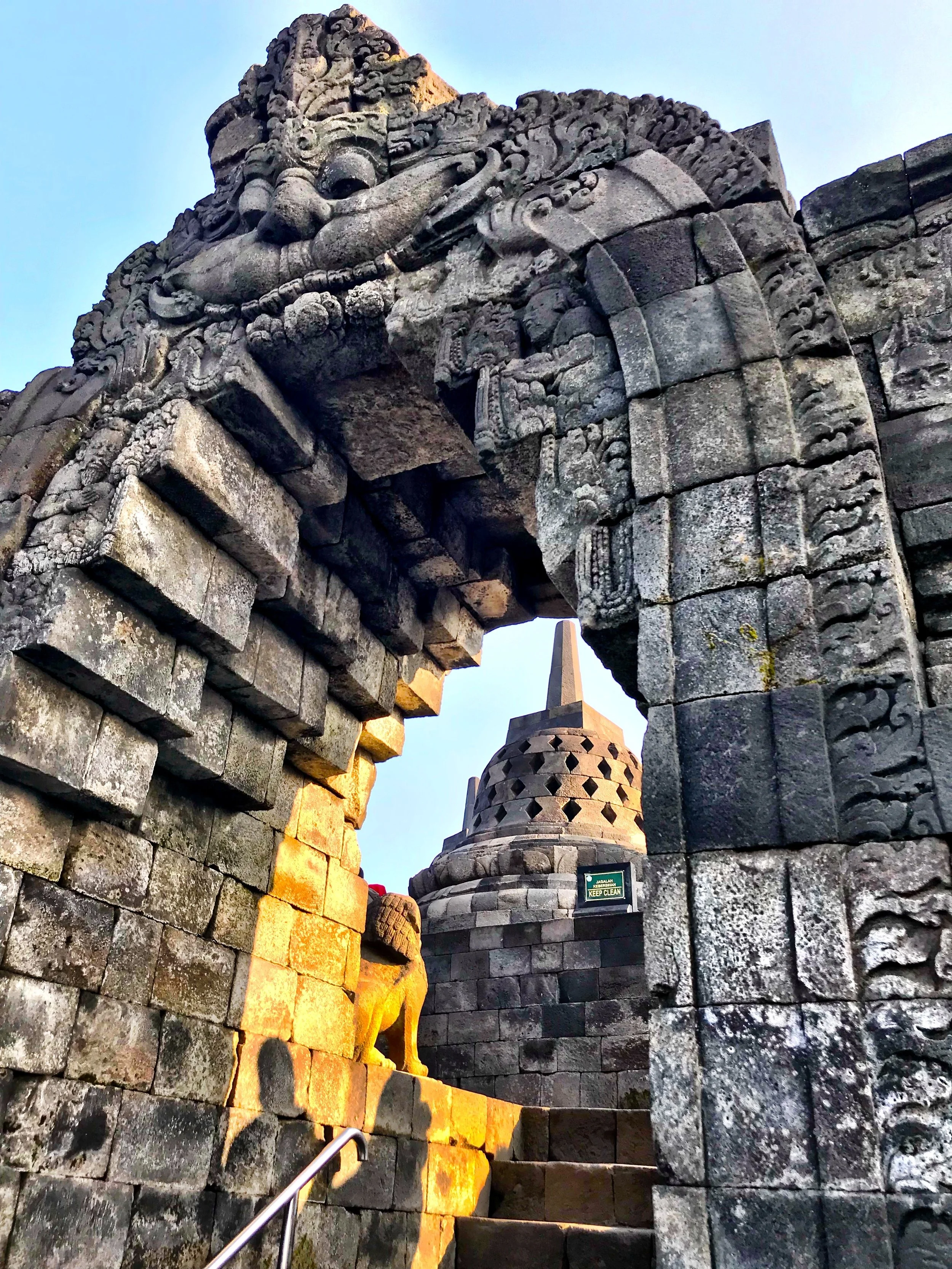
We paused on the stairway to admire one of the ornate archways depicting the fearsome face and open mouth of Kala.

According to folklore, Kala was created by the god Shiva to eradicate demons, though he’s sometimes identified himself as a demon named Rahu, who is said to have swallowed the universe, only to release it after being decapitated by the gods.

Be careful when crossing through arches formed by the mouth of Kala — his jaw is said to snap shut on those who have evil in their hearts

Be careful when crossing through arches formed by the mouth of Kala — his jaw is said to snap shut on those who have evil in their hearts

Locals like to joke that the stone at the top depicts the golden arches of McDonald’s

Locals like to joke that the stone at the top depicts the golden arches of McDonald’s

Why Many Buddhists Are Vegetarian

Pras pointed out a notable tale depicted in one of the panels known as The Hare’s Sacrifice. The bodhisattva was born as a hare. His closest friends were an otter, a jackal and a monkey. He continuously urged his friends to strive for right conduct and to be generous in their daily life. Wanting to put the hare to the test, the god Sakra appeared in the forest in the shape of a brahman who had lost his way and was starving. The otter brought seven fish, the jackal a lizard, and the monkey ripe fruits. The hare, however, couldn’t offer anything. The brahman lit a fire for an offering — and immediately the hare jumped in, offering himself as a meal. The king of the gods admired the saintly deed, and while resuming his own shape, he praised the hare for his self-sacrifice.

Pras explained that this was why many Buddhists are vegetarian, as they would not like to think that they are eating someone who may have been reborn as an animal. –Duke

Be sure to check out the carvings as you explore the multi-story Borobudur Temple in Java, Indonesia

Be sure to check out the carvings as you explore the multi-story Borobudur Temple in Java, Indonesia

Borobudur Temple
Jl. Badrawati
Kw. Candi Borobudur
Borobudur, Magelang
Jawa Tengah
Indonesia
Pura Dalem Ubud: The Temple of Death

Looking for things to do in Ubud? Wander among the demons — and attend a kecak dance — at Desa Pakraman Ubud.

The Pura Dalem lies on the outskirts of Ubud

The Pura Dalem lies on the outskirts of Ubud

NSFW: The temple is covered with depictions of bare-breasted demonic women

NSFW: The temple is covered with depictions of bare-breasted demonic women

As we drove out of town our last evening on Bali, I glimpsed a temple atop a hill on the outskirts of Ubud. There was something that called to me, and I made a note to investigate it the next morning. So after we had packed up our bags and our driver Made (pronounced Mah-day) picked us up, I directed him to the temple.

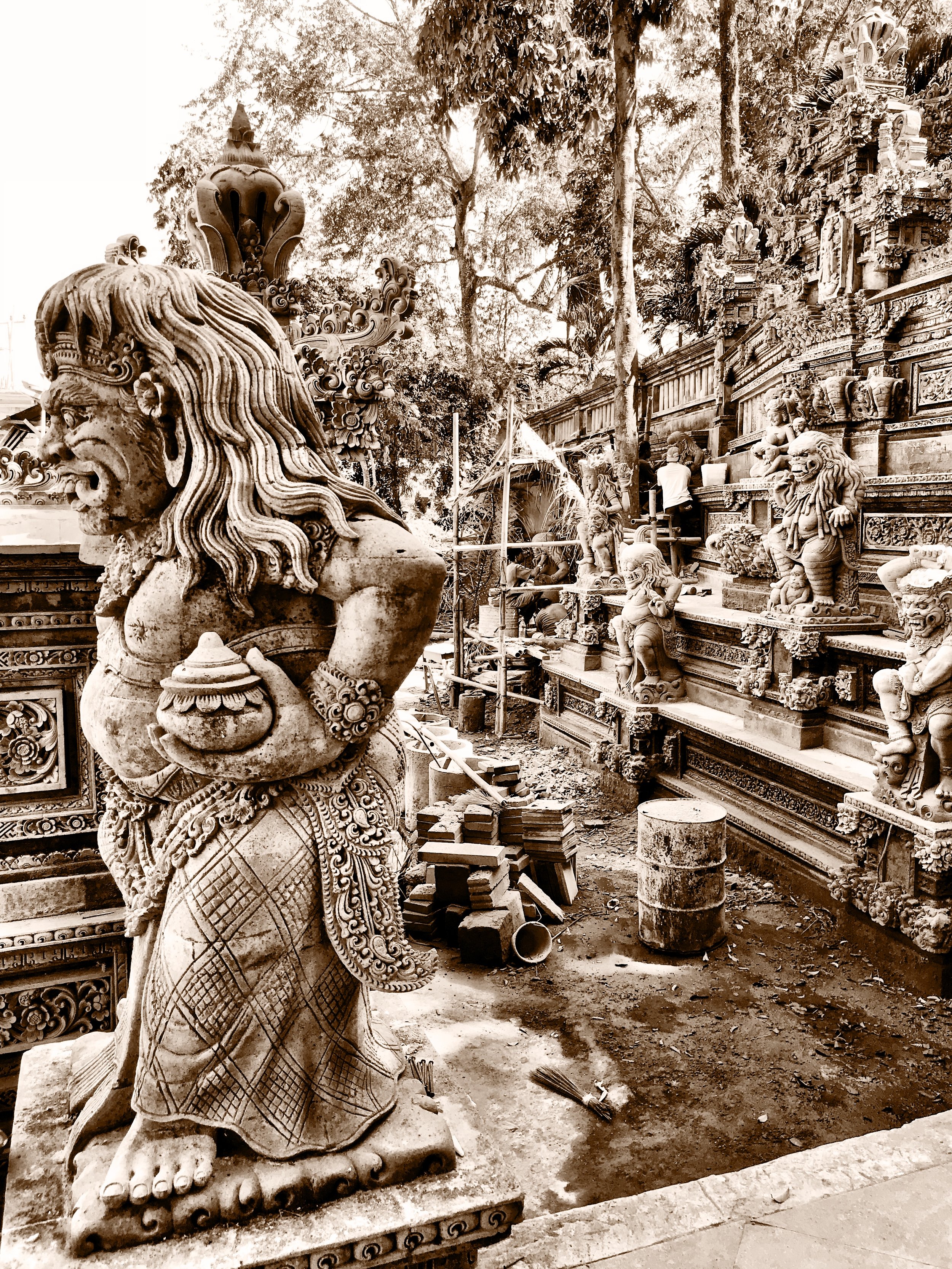
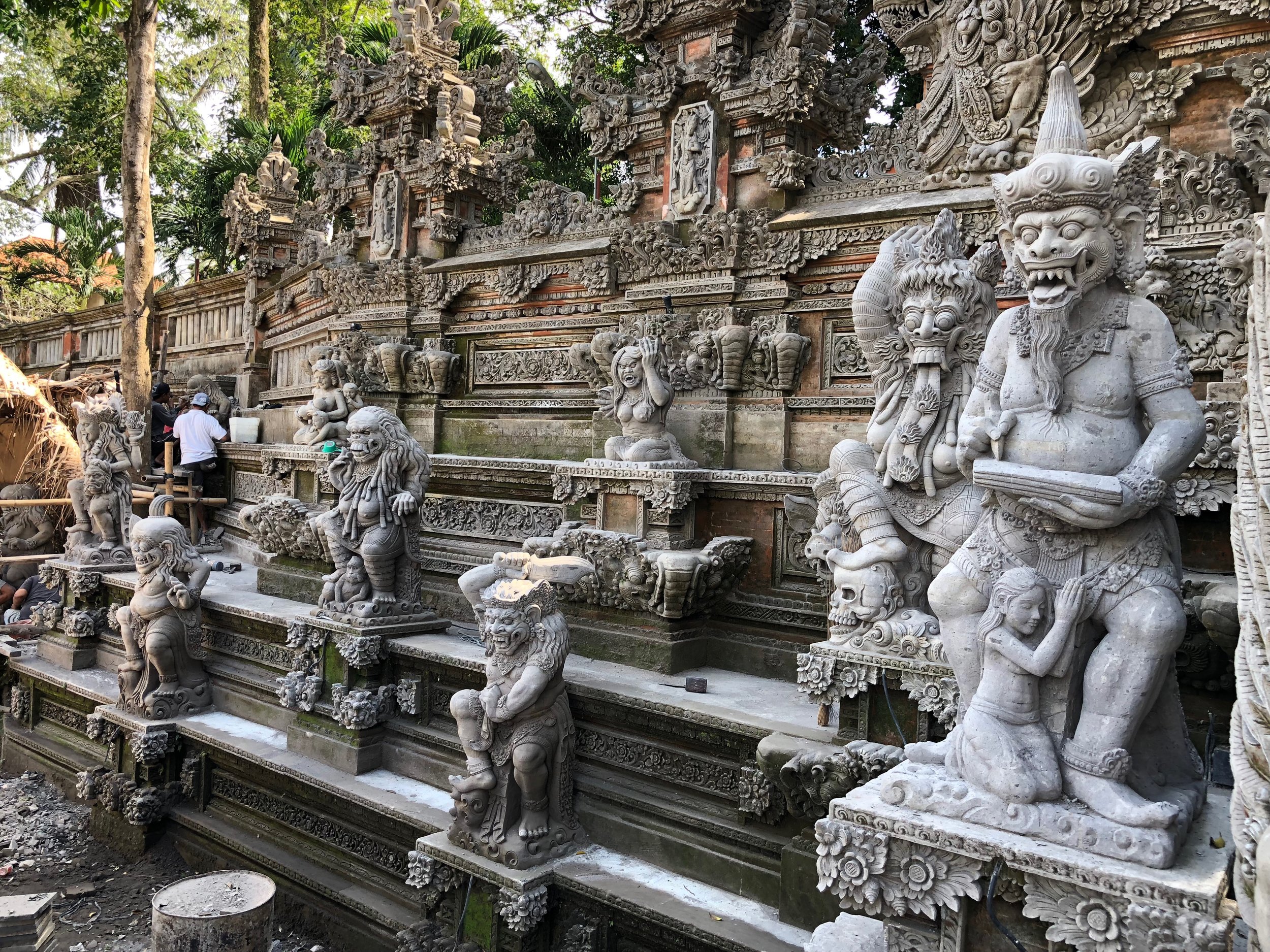
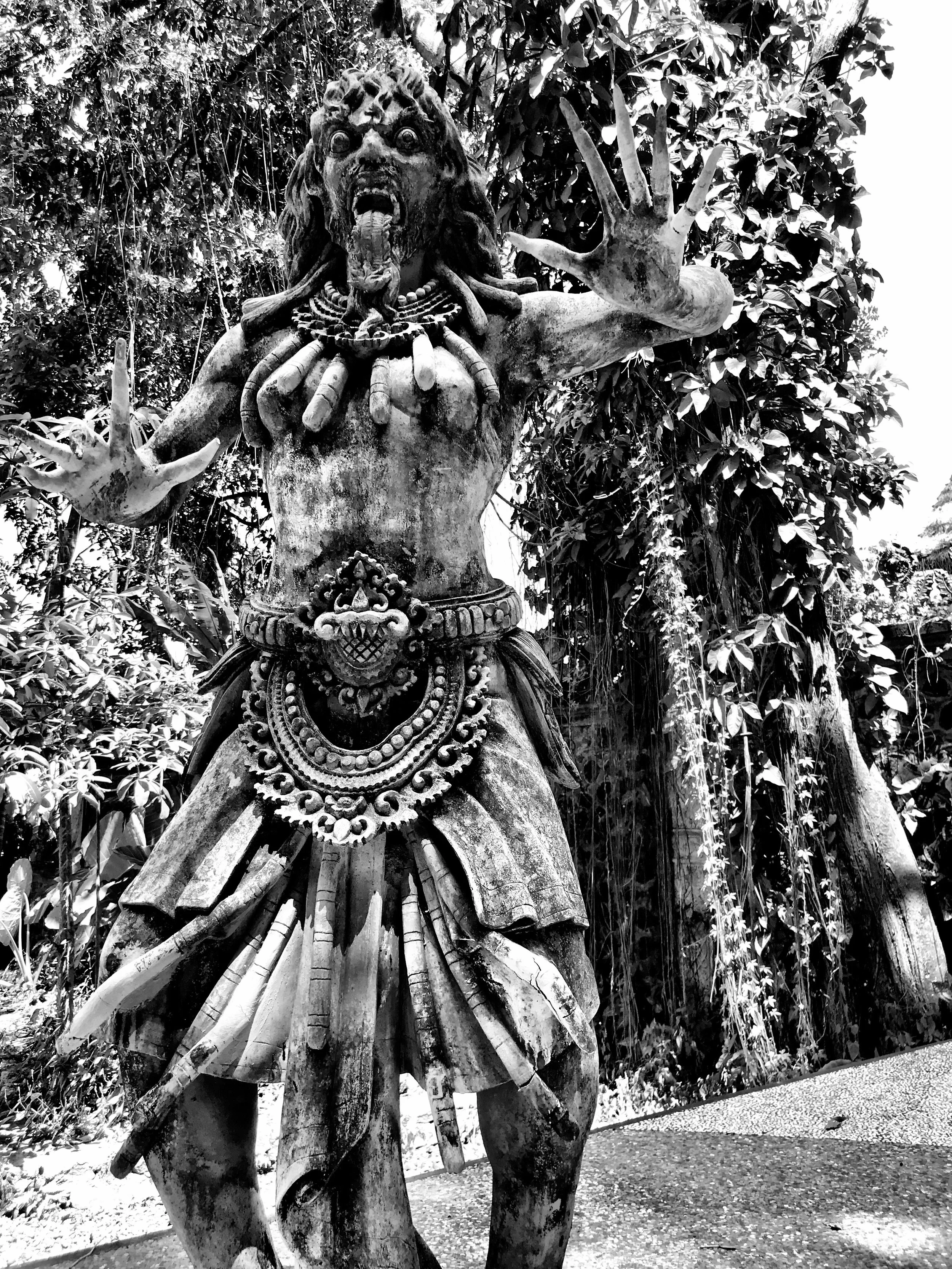
Duke and I were delighted to discover that it was a pura dalem, or temple of death. These temples always have the craziest statues and carvings depicting Balinese demons out front, menacing visitors with bulging bug eyes, fangs, long tongues and breasts that sag down to their stomachs.

These dramatically sliced gates are common at Balinese temples

These dramatically sliced gates are common at Balinese temples

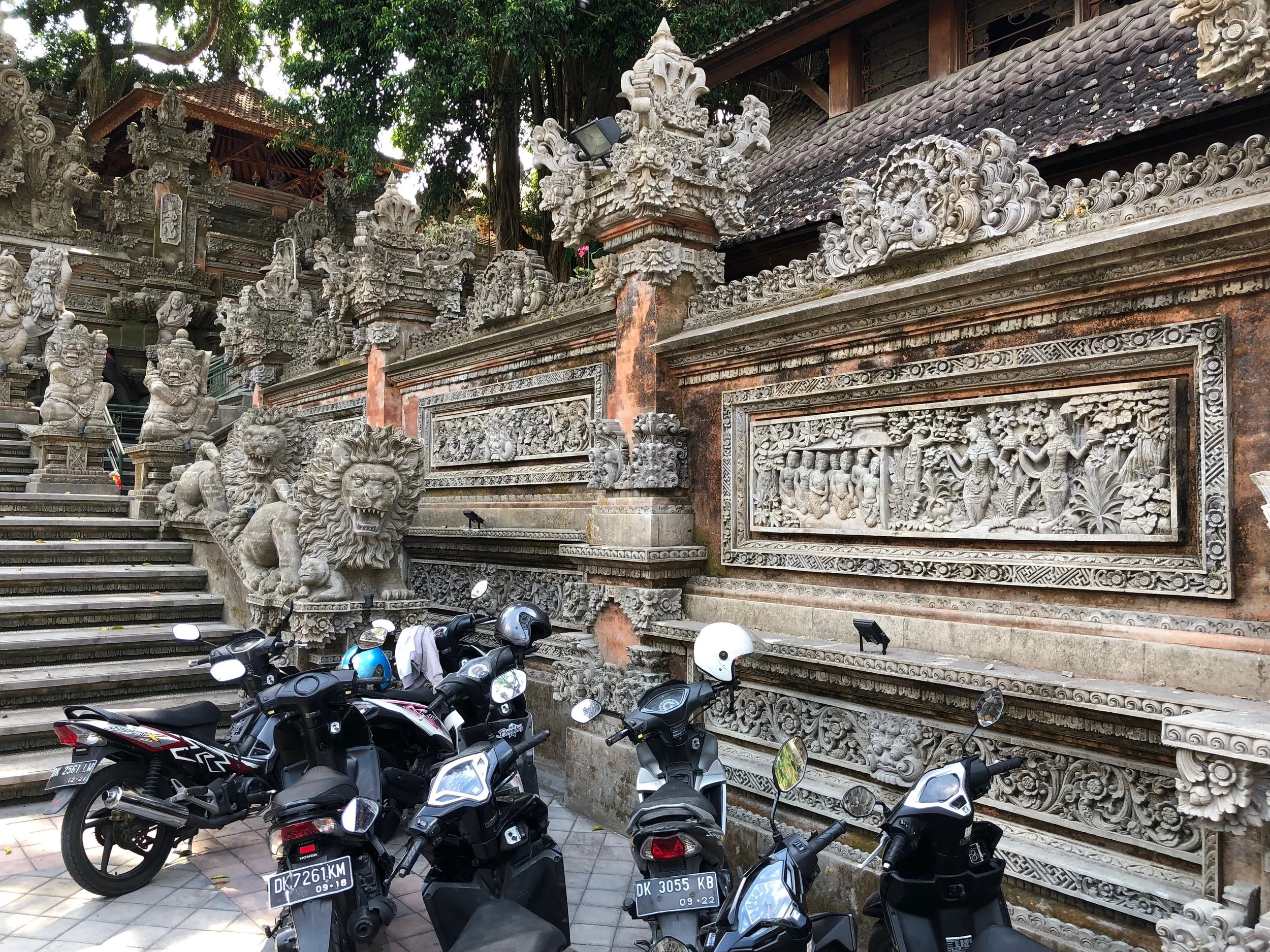
Motorbikes are ubiquitious on Bali

Motorbikes are ubiquitious on Bali

Many Hindu temples have balustrades that run the length of staircases in the shape of snakelike naga

Many Hindu temples have balustrades that run the length of staircases in the shape of snakelike naga

Snarling lions and hosts of demons line the entrance stairs. Duke and I couldn’t help smiling.

This is our Disneyland.

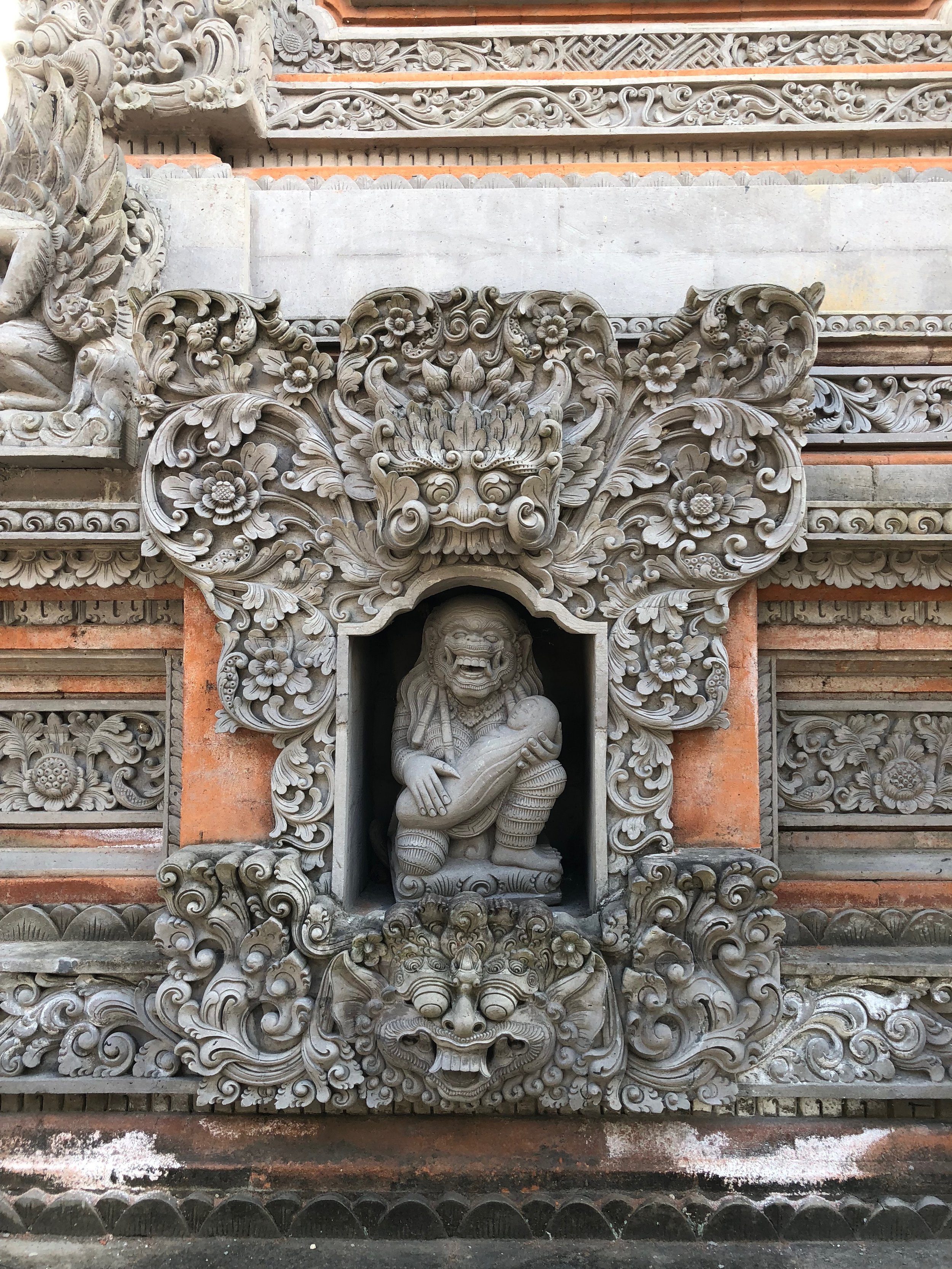
Pura dalems are dedicated to Rangda, the Demon Queen. She is the personification of evil, often depicted with pendulous breasts, fangs and unkempt hair. We passed a statue of her holding a baby in her arms — her favorite snack.

Rangda, the Demon Queen, loves to snack on innocent babes

Rangda, the Demon Queen, loves to snack on innocent babes

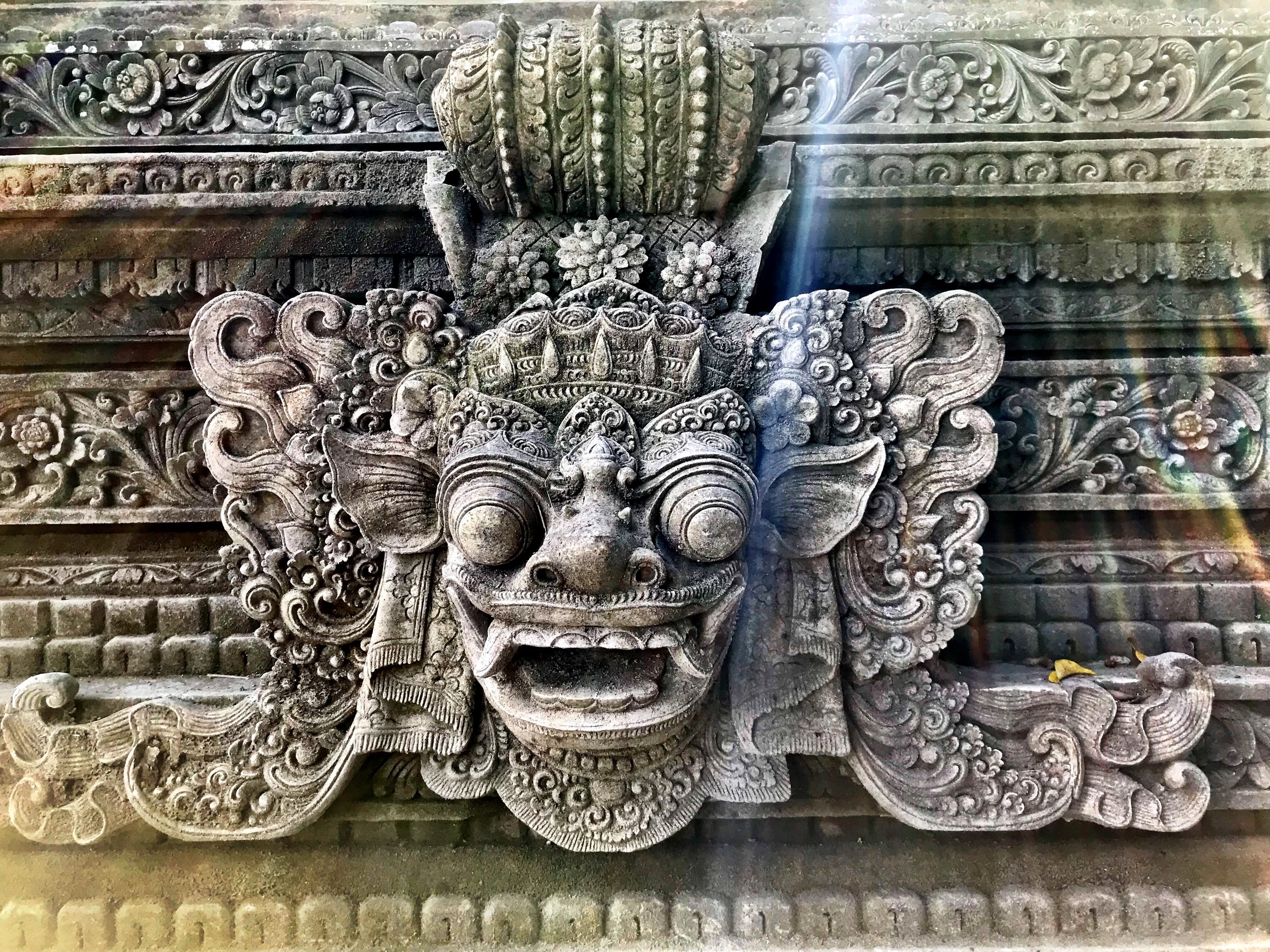
Many creatures in Balinese mythology — good and evil — have bulging bug eyes

Many creatures in Balinese mythology — good and evil — have bulging bug eyes

Balinese temples are composed of numerous open-air shrines

Balinese temples are composed of numerous open-air shrines

This was pretty much the only statue at the Pura Dalem Ubud that wasn’t monstrous

This was pretty much the only statue at the Pura Dalem Ubud that wasn’t monstrous

Monkeys, skulls and babies, oh my!

Monkeys, skulls and babies, oh my!

The entrance to the pura dalem has creepy creatures everywhere you look

The entrance to the pura dalem has creepy creatures everywhere you look

I’ve read that pura dalems are usually built at the lowest part of a village, as demons are associated with bhur, the underworld (some elements are consistent across religions). But this temple rises on a hill above Ubud. Maybe the Great Temple of Death in the Monkey Forest is the one situated at the lowest point.

Snarling lions and hosts of demons line the entrance stairs. Duke and I couldn't help smiling. This is our Disneyland.

Parts of the façade were being renovated when we visited

Parts of the façade were being renovated when we visited

Pura dalems are associated with bhur, the underworld, where demons reside

Pura dalems are associated with bhur, the underworld, where demons reside

It shouldn’t be surprising to learn that this is a temple of death

It shouldn’t be surprising to learn that this is a temple of death

Ferocious beasts populate the entrance to the temple

Ferocious beasts populate the entrance to the temple

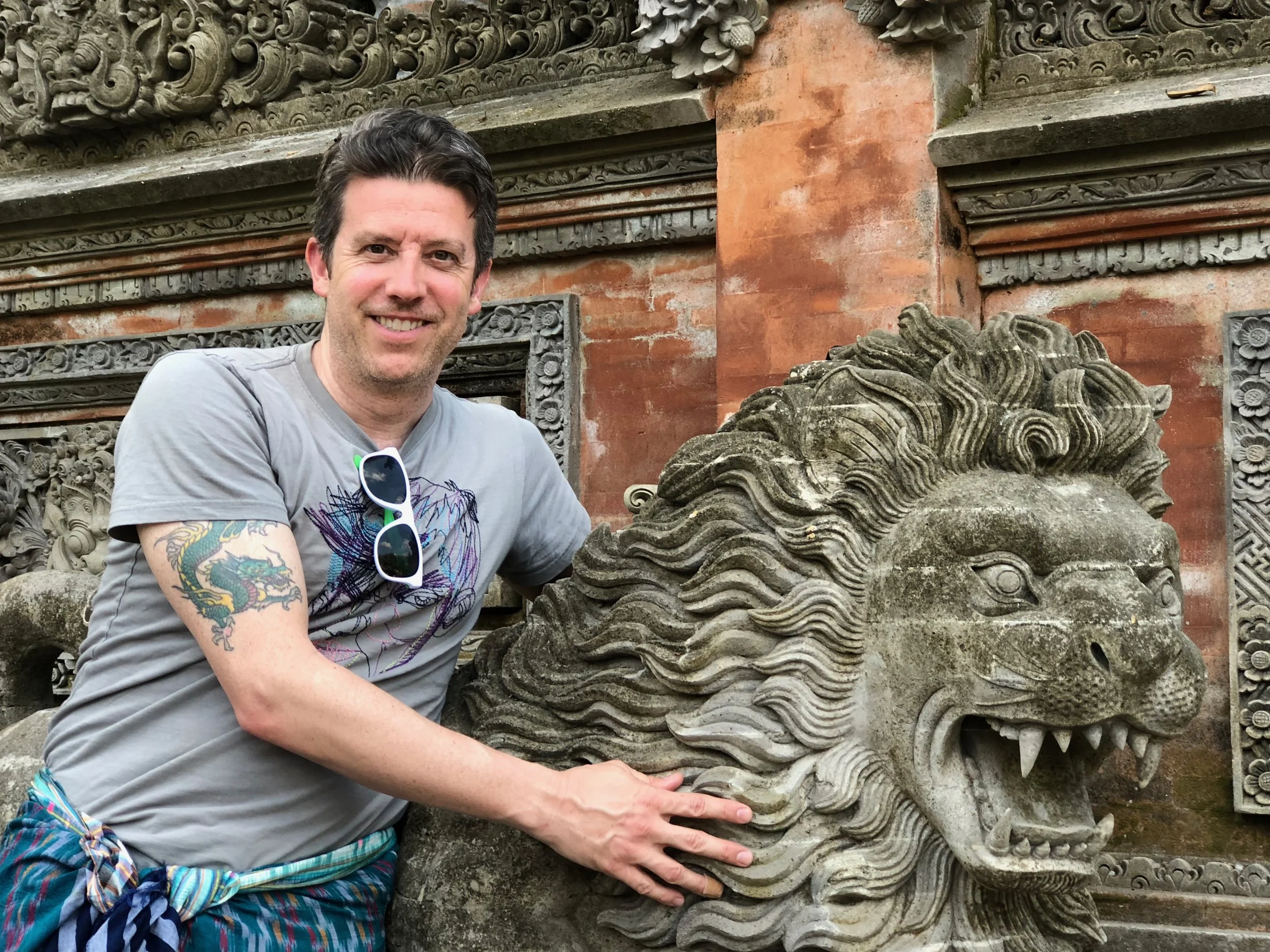
Wally loves himself a lion

Wally loves himself a lion

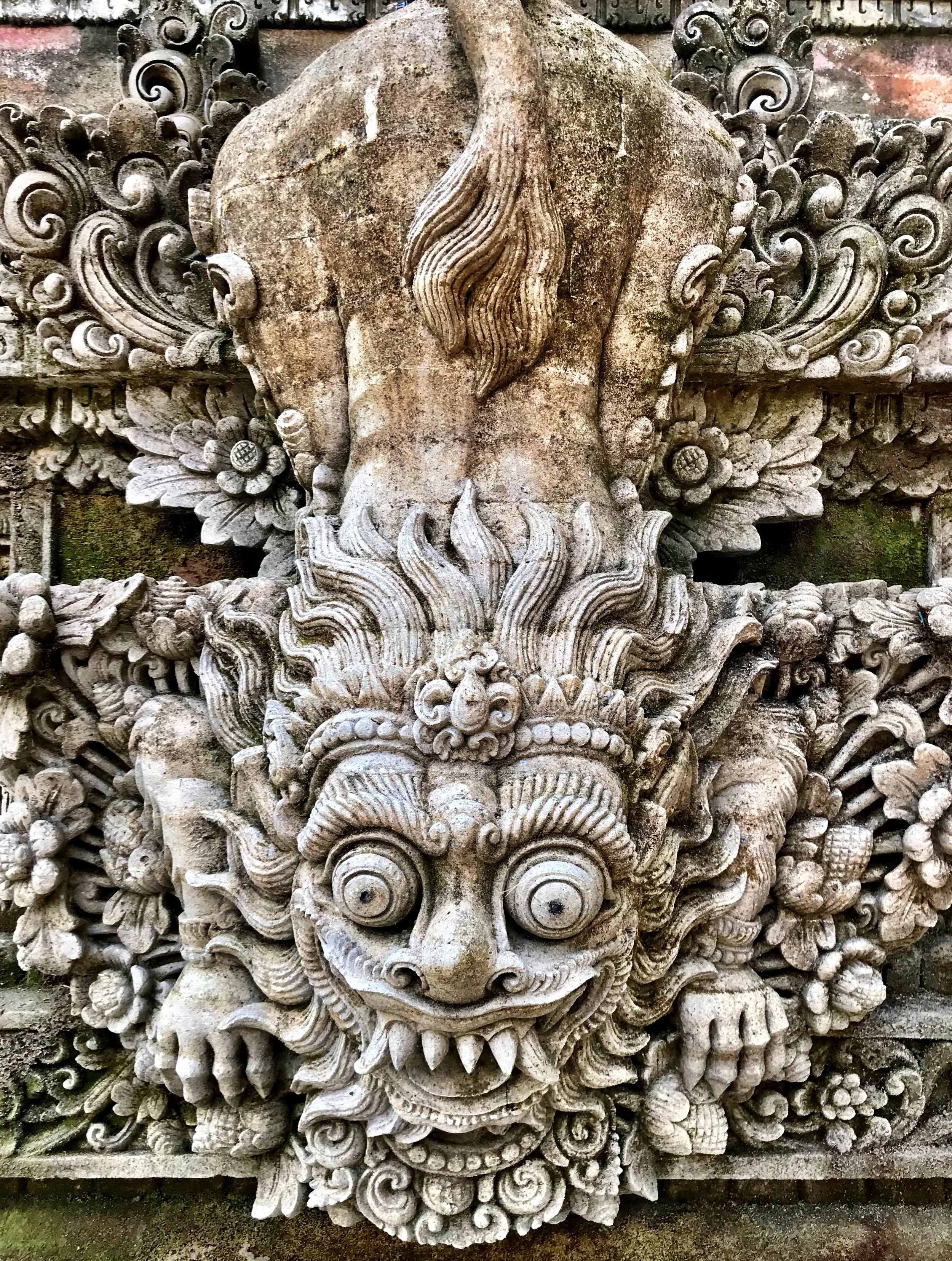
Downward-facing demon: a new yoga pose?

Downward-facing demon: a new yoga pose?

Sneaking Into the Temple of Death

We wandered around the temple complex, and I was surprised to see a large courtyard off to the left, for dancing. I wondered what kind of performances would take place at a temple of death.

After a bit of research, I learned that this temple hosts the Kecak Fire and Trance Dance, which sounds like an intense experience I’m bummed we didn’t see. I’d like to imagine the environment becomes charged with a mystical energy as the flames dance to  the dissonance of the native music. Perhaps the statues themselves come to life to join the dance.

The music pavilion near the dance performance space

The music pavilion near the dance performance space

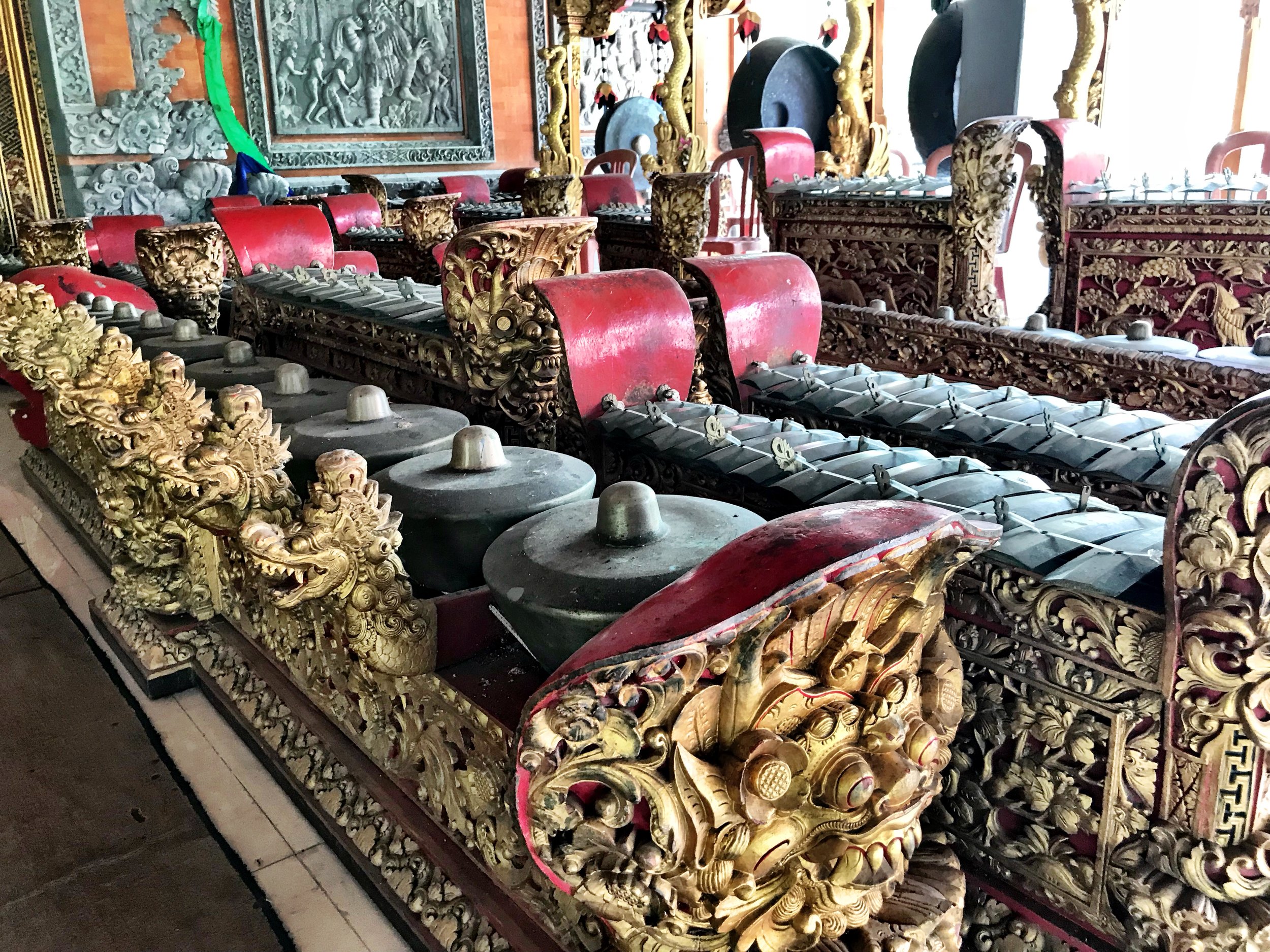
Balinese musical ensembles are called gamelans

Balinese musical ensembles are called gamelans

Wood and bronze xylophone-like instruments are common on Bali

Wood and bronze xylophone-like instruments are common on Bali

The instruments are intricately carved with creatures from Balinese mythology

The instruments are intricately carved with creatures from Balinese mythology

At the back of the dance area is a pavilion filled with row after row of the bronze instruments, many resembling xylophones, that comprise a gamelan ensemble.

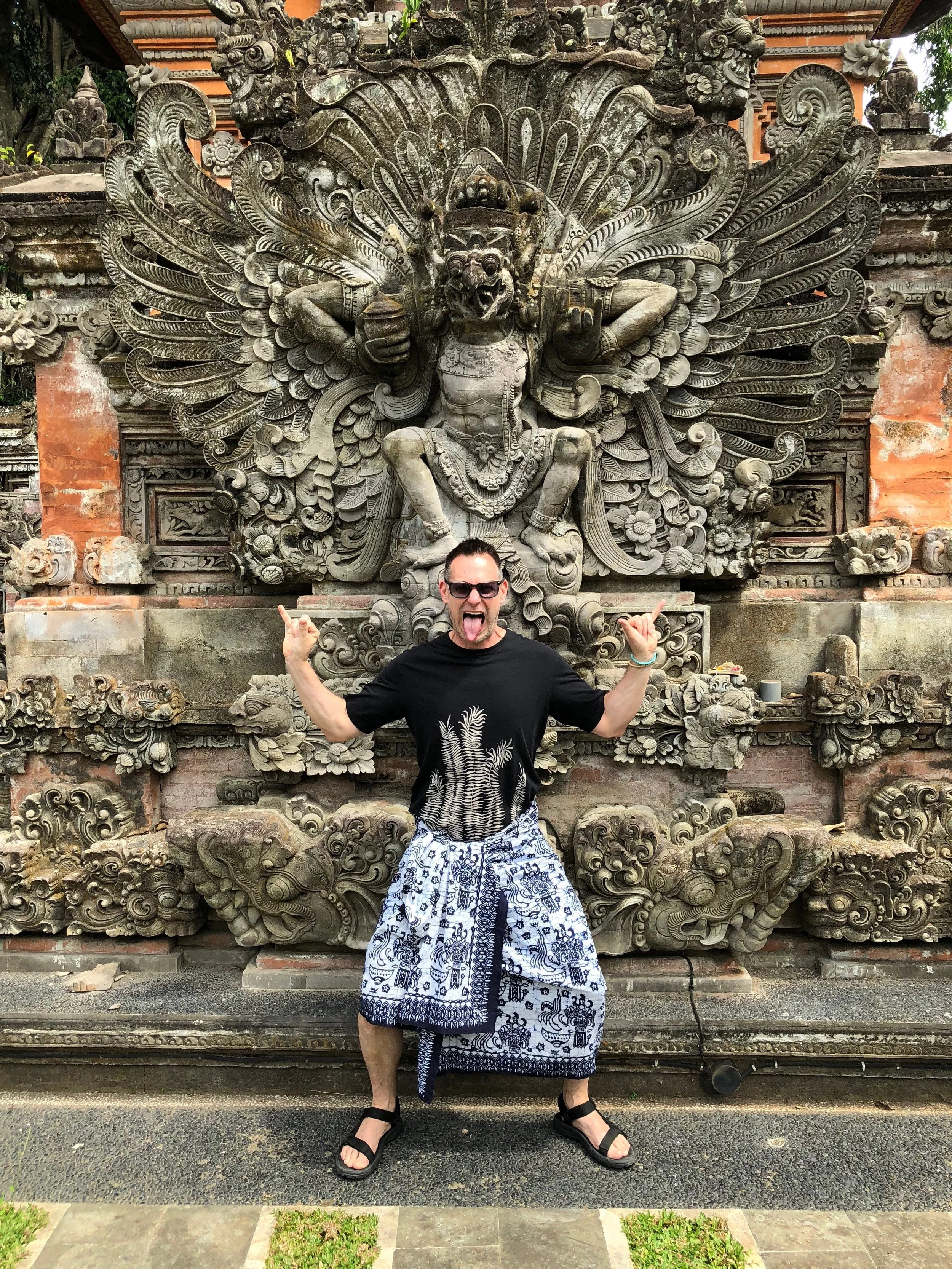
Which is Garuda and which is Duke?

Which is Garuda and which is Duke?

Mischievous Wally likes sneaking into temples

Mischievous Wally likes sneaking into temples

The interior of the temple was gated off, but Duke and I skirted around it until we found a gate we could stick our hand through and unlock from the other side. We opened it as quietly as possible, trying not to capture the attention of the construction workers nearby. The gate let out painfully loud squeal, and Duke and I slipped in quickly.

Lichen covers Balinese temples, lending an ancient air to even the newer ones

Lichen covers Balinese temples, lending an ancient air to even the newer ones

Maybe this is where you sacrifice your babies to Rangda

Maybe this is where you sacrifice your babies to Rangda

The interior courtyard of the pura dalem was locked — but that didn’t stop us from finding a way in

The interior courtyard of the pura dalem was locked — but that didn’t stop us from finding a way in

Shrine towers in the most sacred space of the temple

Shrine towers in the most sacred space of the temple

These woven baskets contain offerings to the gods

These woven baskets contain offerings to the gods

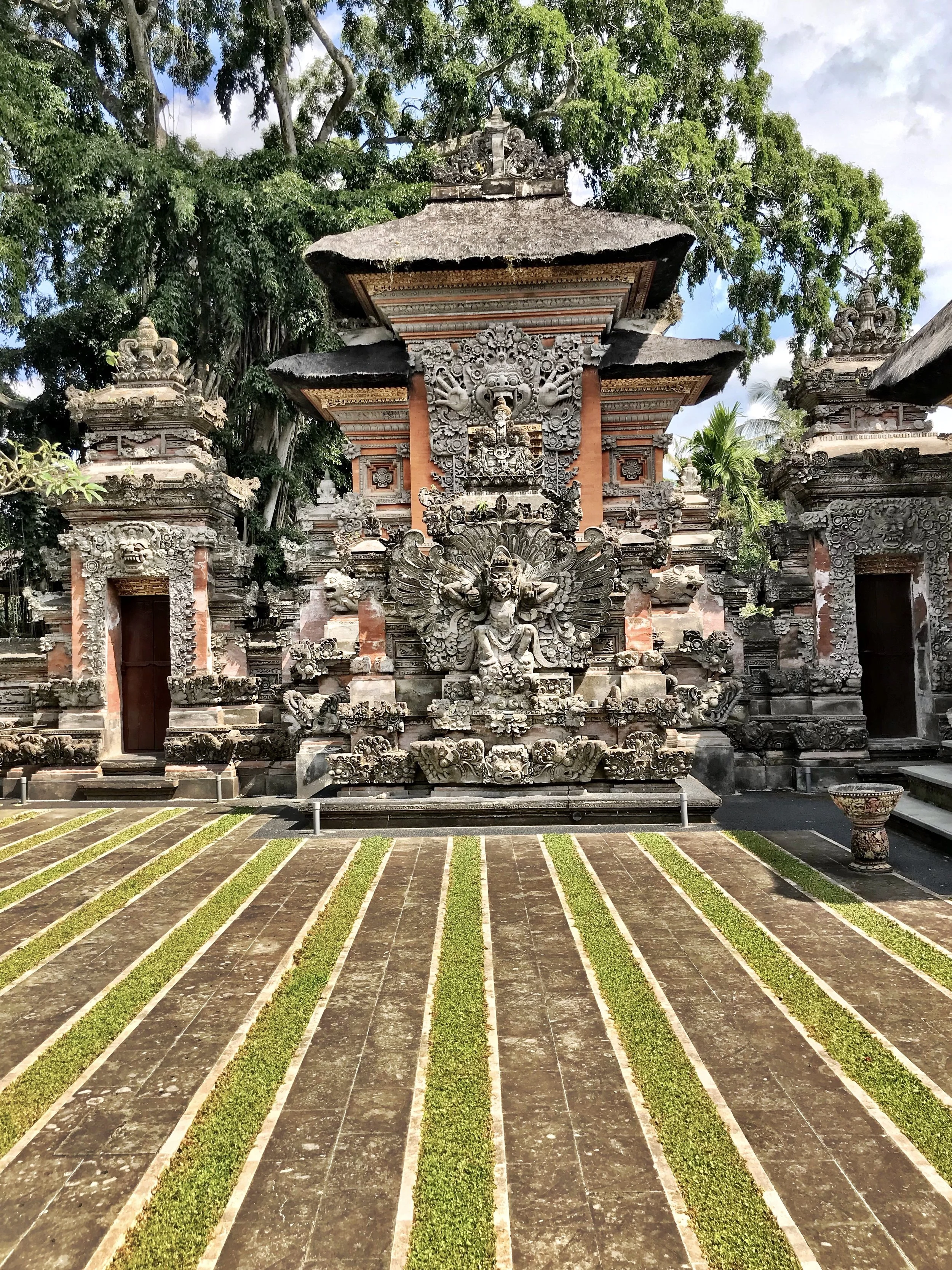
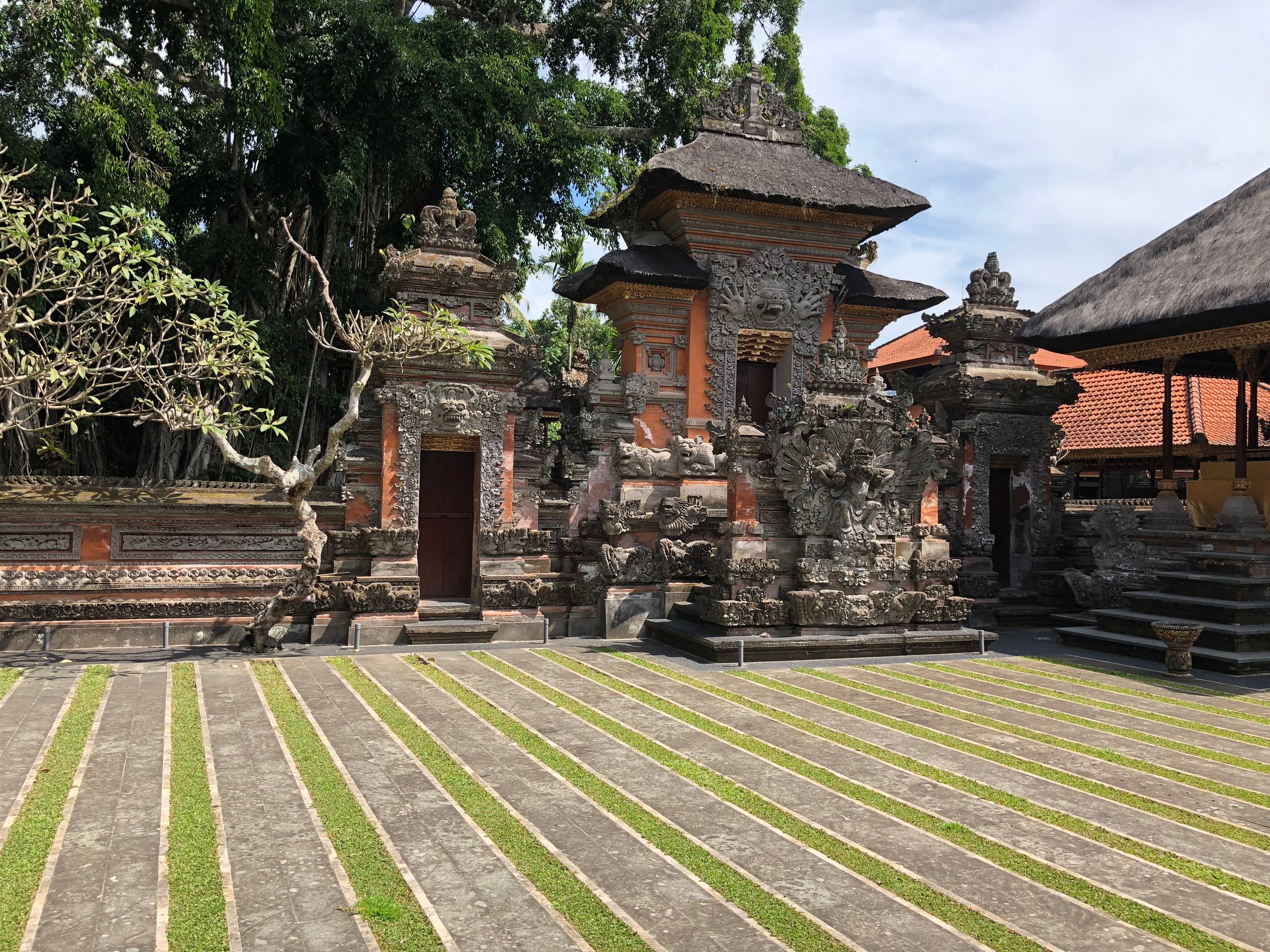
Various shrines rise jaggedly skyward in the interior courtyard, bright orange brick and pale stone carved into monstrous creatures. The ground, like many temples on the island, is striped, alternating bands of stone and grass, a dichotomy I imagine symbolizes the balance of good and evil so prevalent in the Balinese religion.

Like many temples in Bali, the interior courtyard features rows of grass and stone

Like many temples in Bali, the interior courtyard features rows of grass and stone

Could the alternating stripes on the temple floor symbolize good vs. evil?

Could the alternating stripes on the temple floor symbolize good vs. evil?

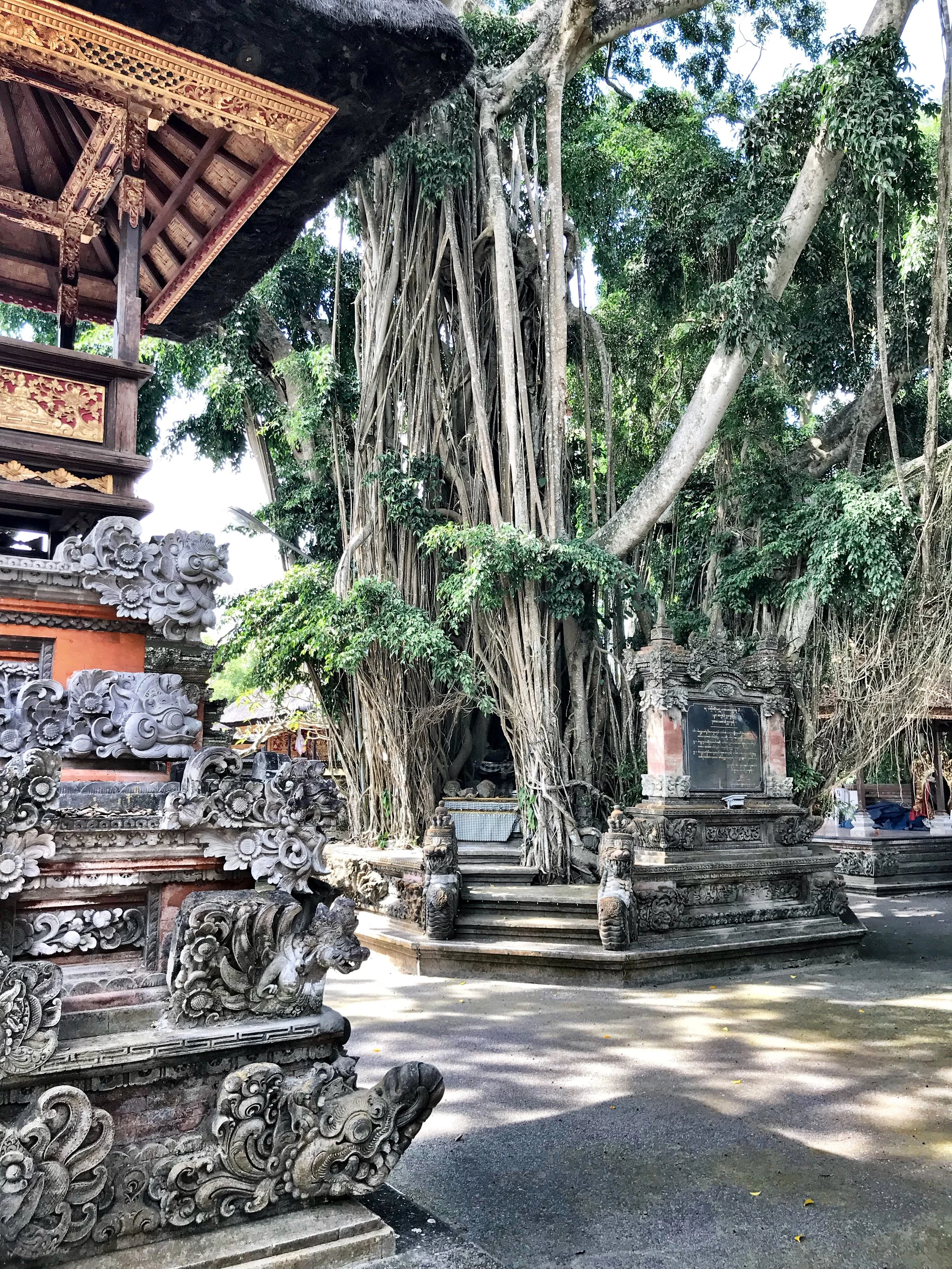
A holy banyan tree grows off to one side, its roots dangling in clumps like Rangda’s matted dreadlocks.

Banyan trees, with their roots that grow from above, are amazing works of nature

Banyan trees, with their roots that grow from above, are amazing works of nature

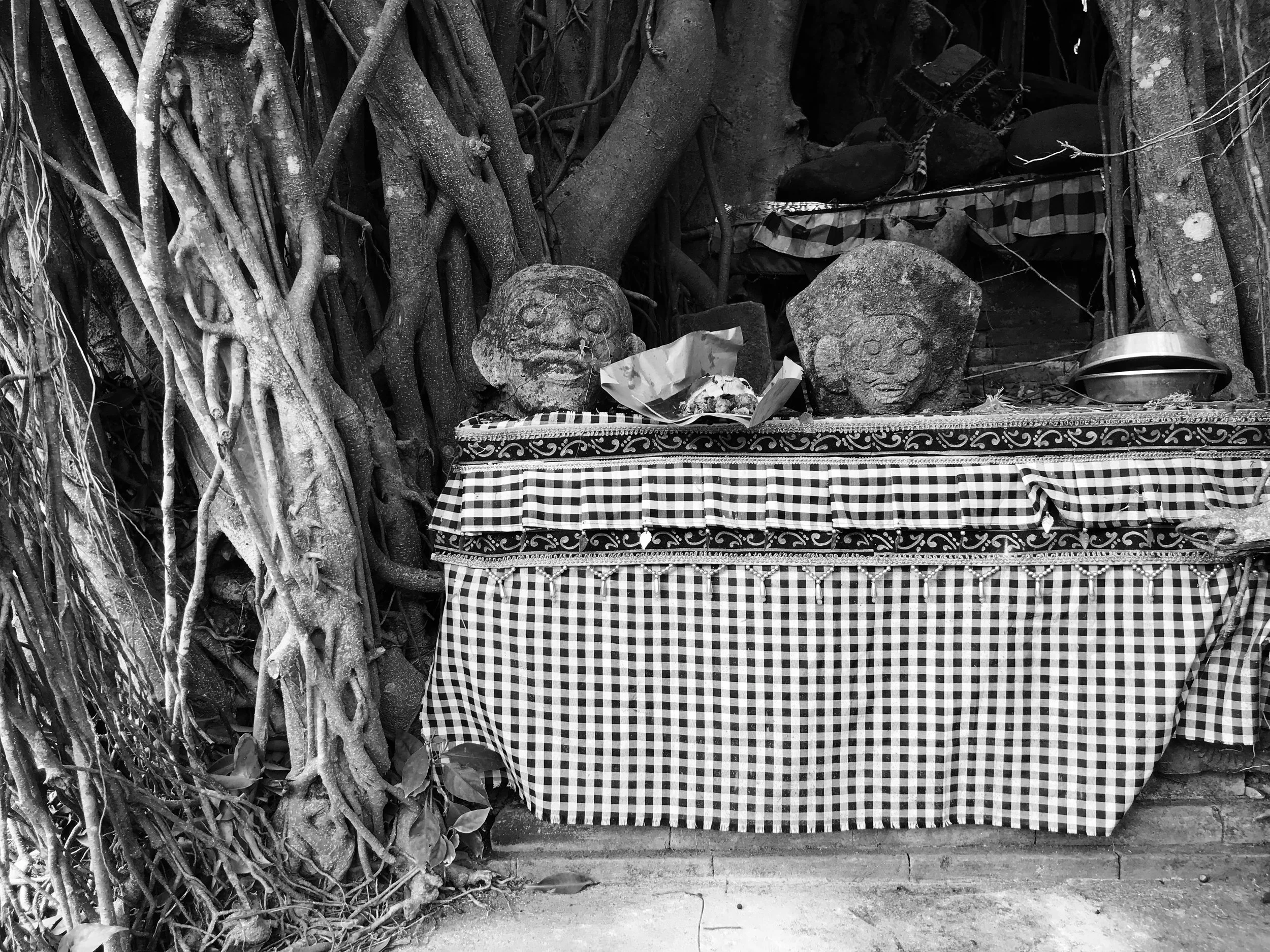
Many offering tables are covered with black and white checkered cloths

Many offering tables are covered with black and white checkered cloths

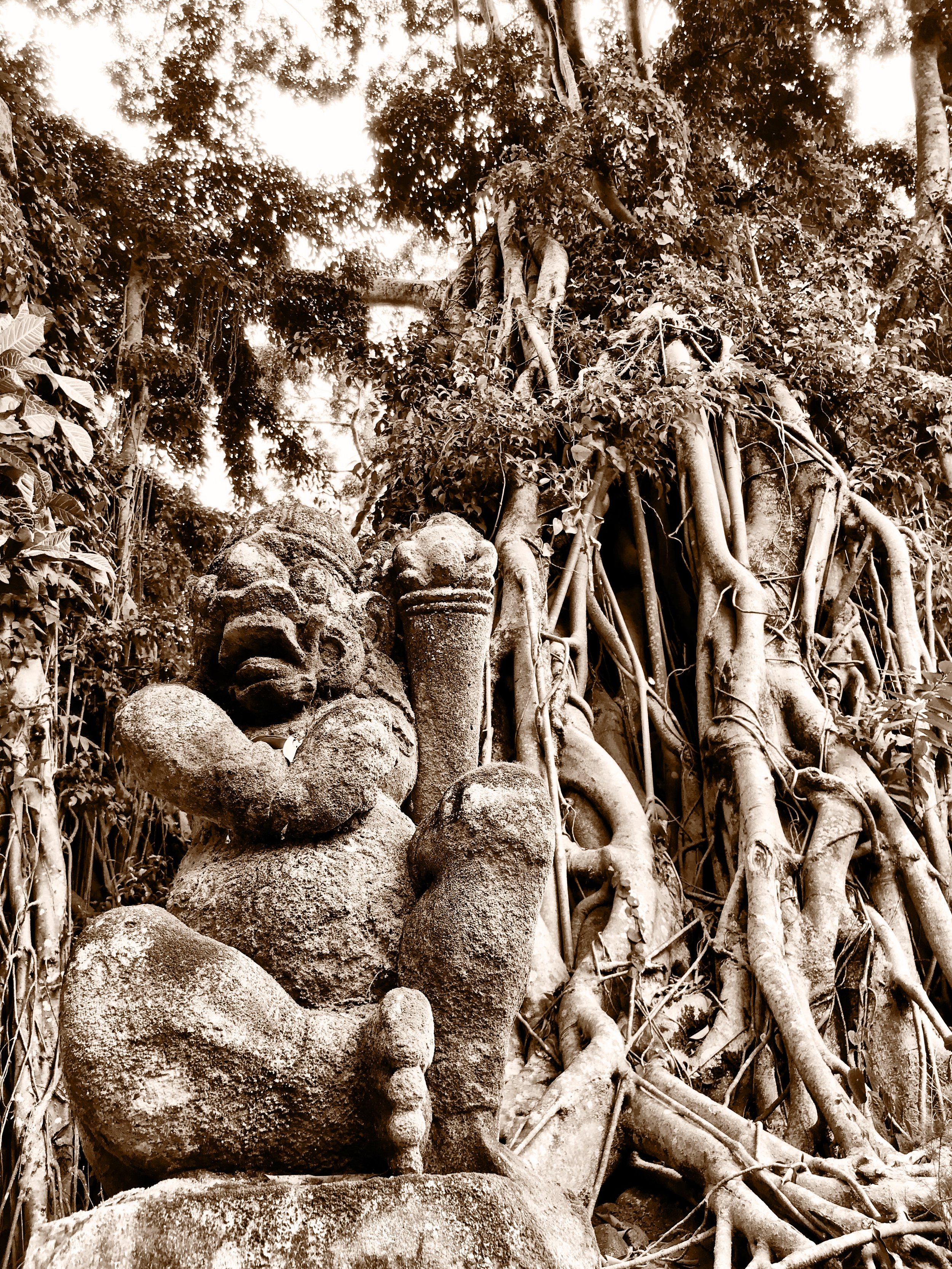
The gnarled roots of banyans pair nicely with demonic depictions

The gnarled roots of banyans pair nicely with demonic depictions

When someone dies on Bali, they’re temporarily buried, and their spirit resides in the pura dalem, according to Murni’s in Bali. It’s not until a cremation ceremony has taken place that the person is free to be reincarnated.

Despite the demonic depictions scattered throughout the pura dalem, I wondered if death isn’t something to be afraid of, amongst a people who believe in reincarnation. –Wally

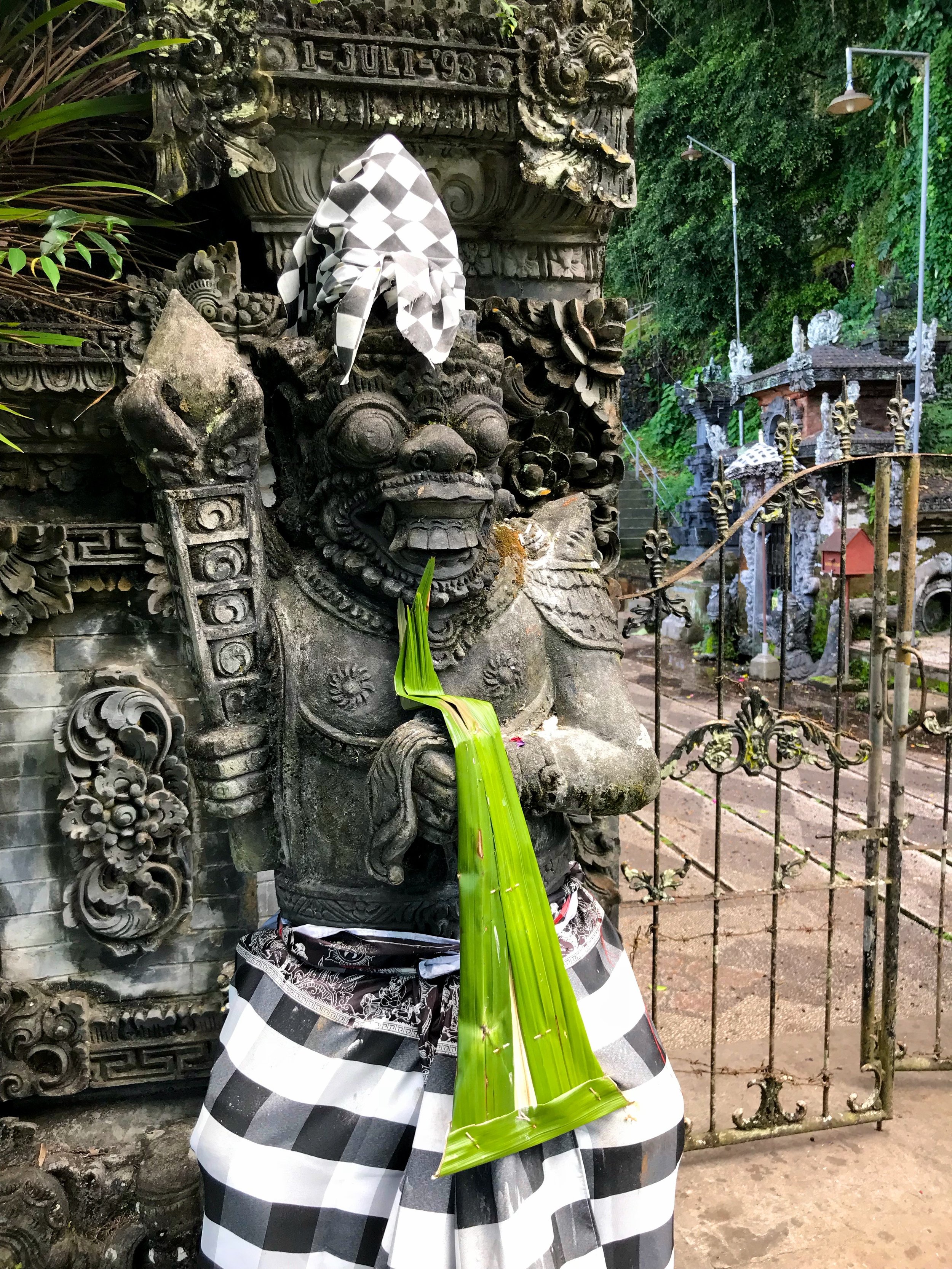
Many temple statues get adorned in sarongs

Many temple statues get adorned in sarongs

A bit of heavenly light shines upon one of the demons of death

A bit of heavenly light shines upon one of the demons of death

Pura Dalem Ubud

Jalan Raya Ubud, No.23
Ubud, Kabupaten Gianyar
Bali 80571, Indonesia
 

Borobudur: A Stunning Sunrise at a UNESCO World Heritage Sit

The largest Buddhist monument in the world, with its iconic bell-shaped stupas, is a must-visit on Java, Indonesia.

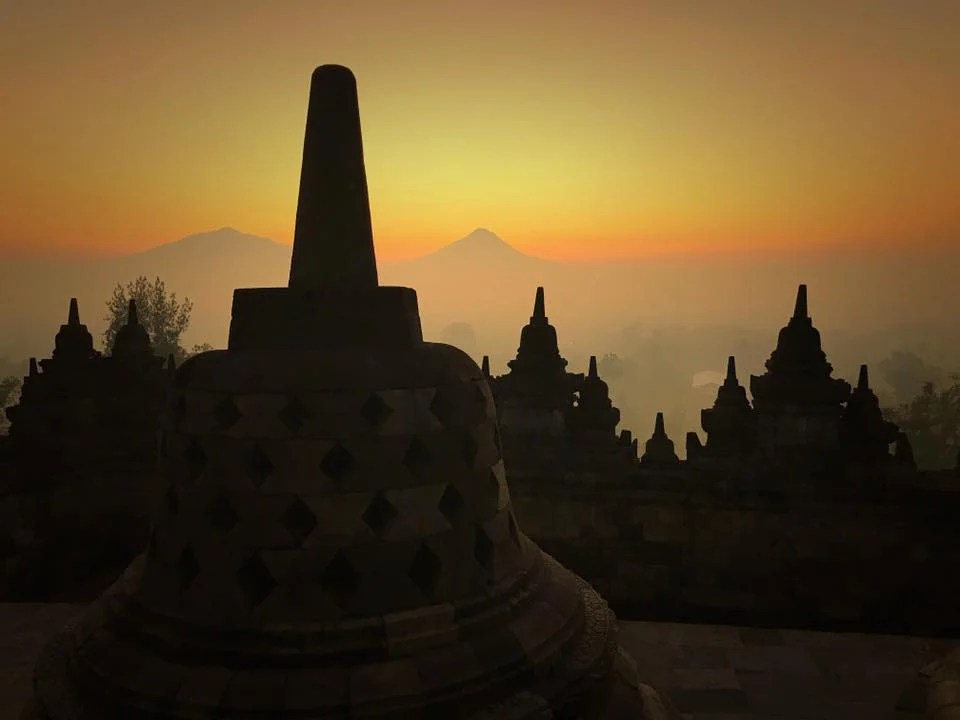
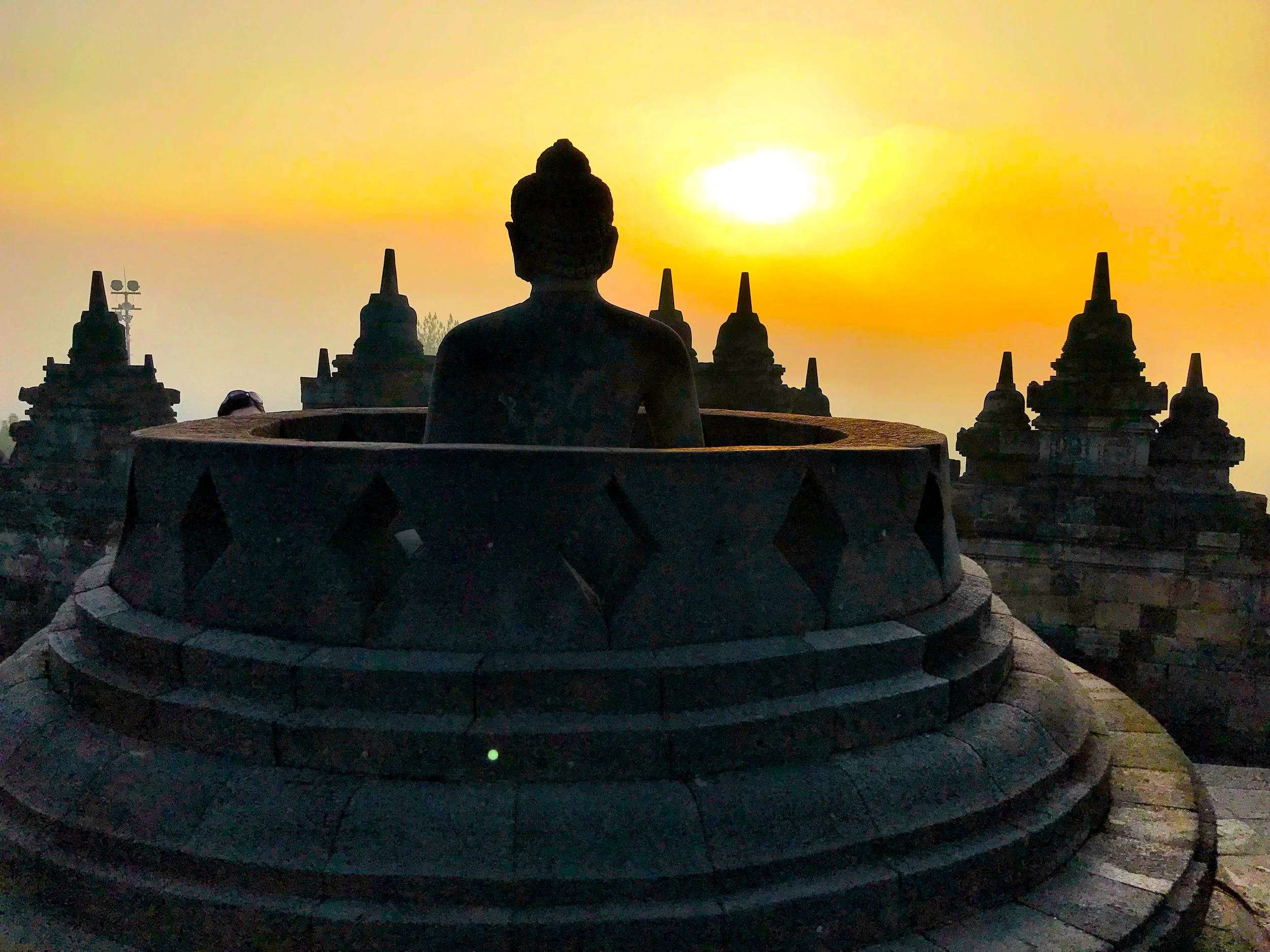
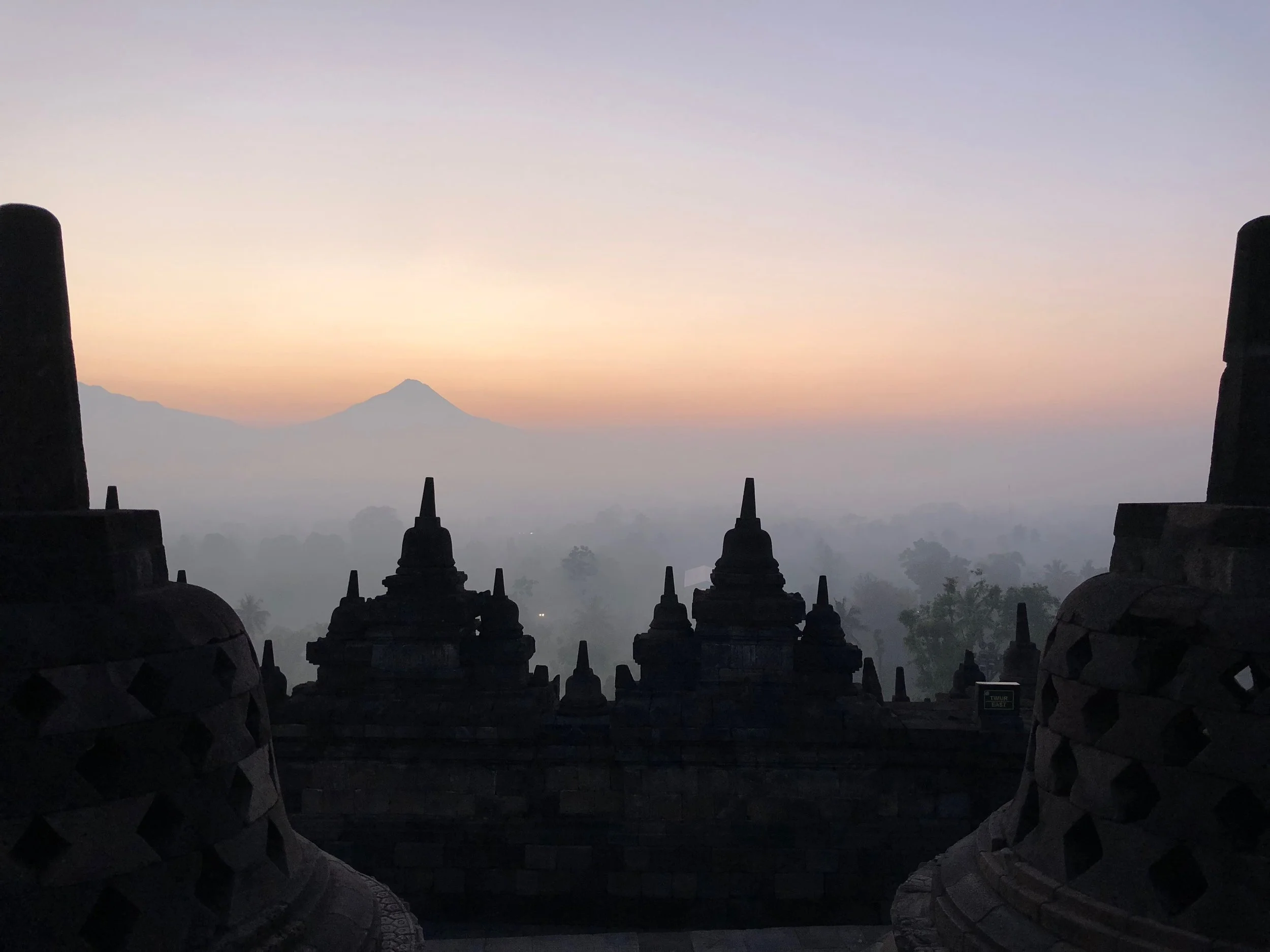
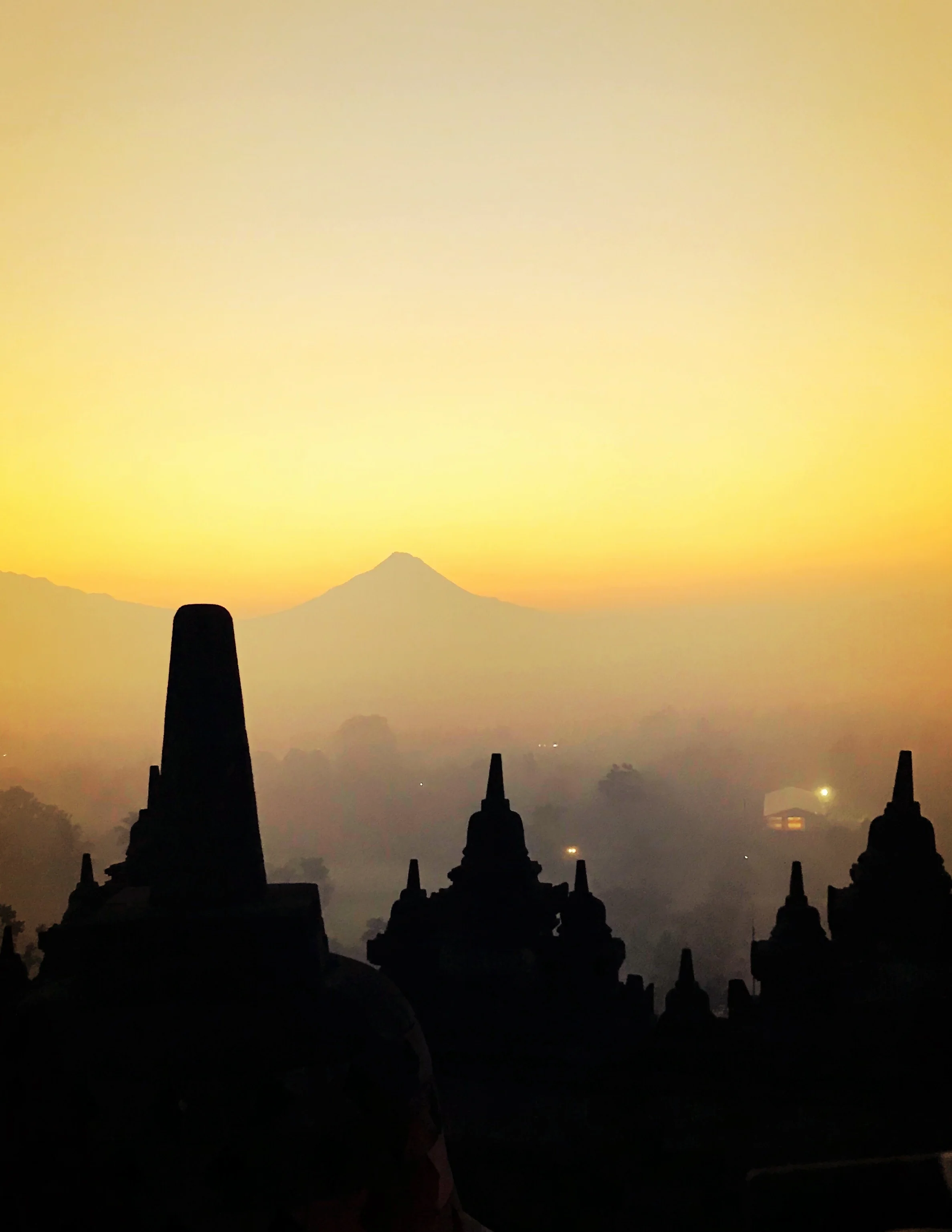
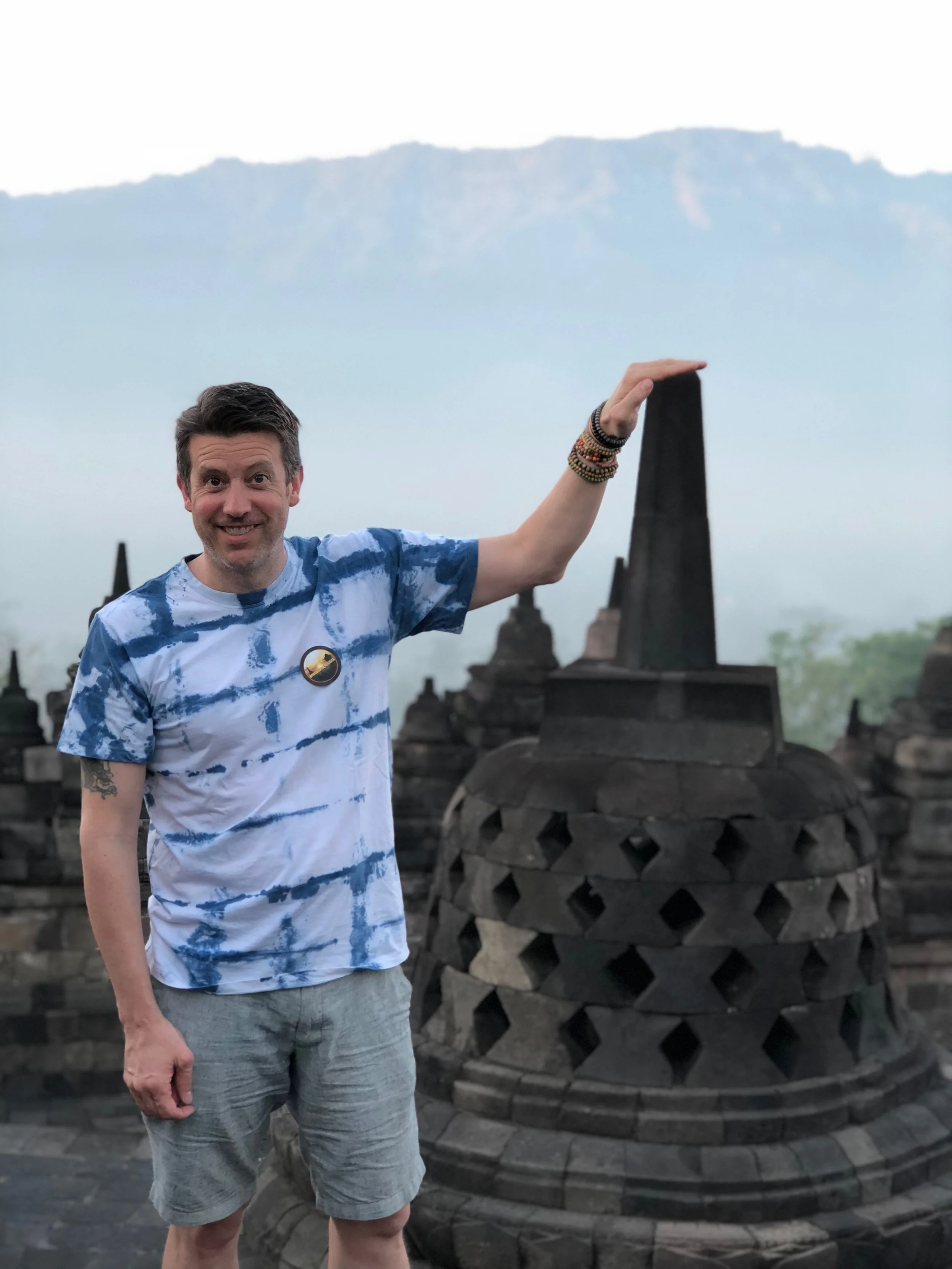
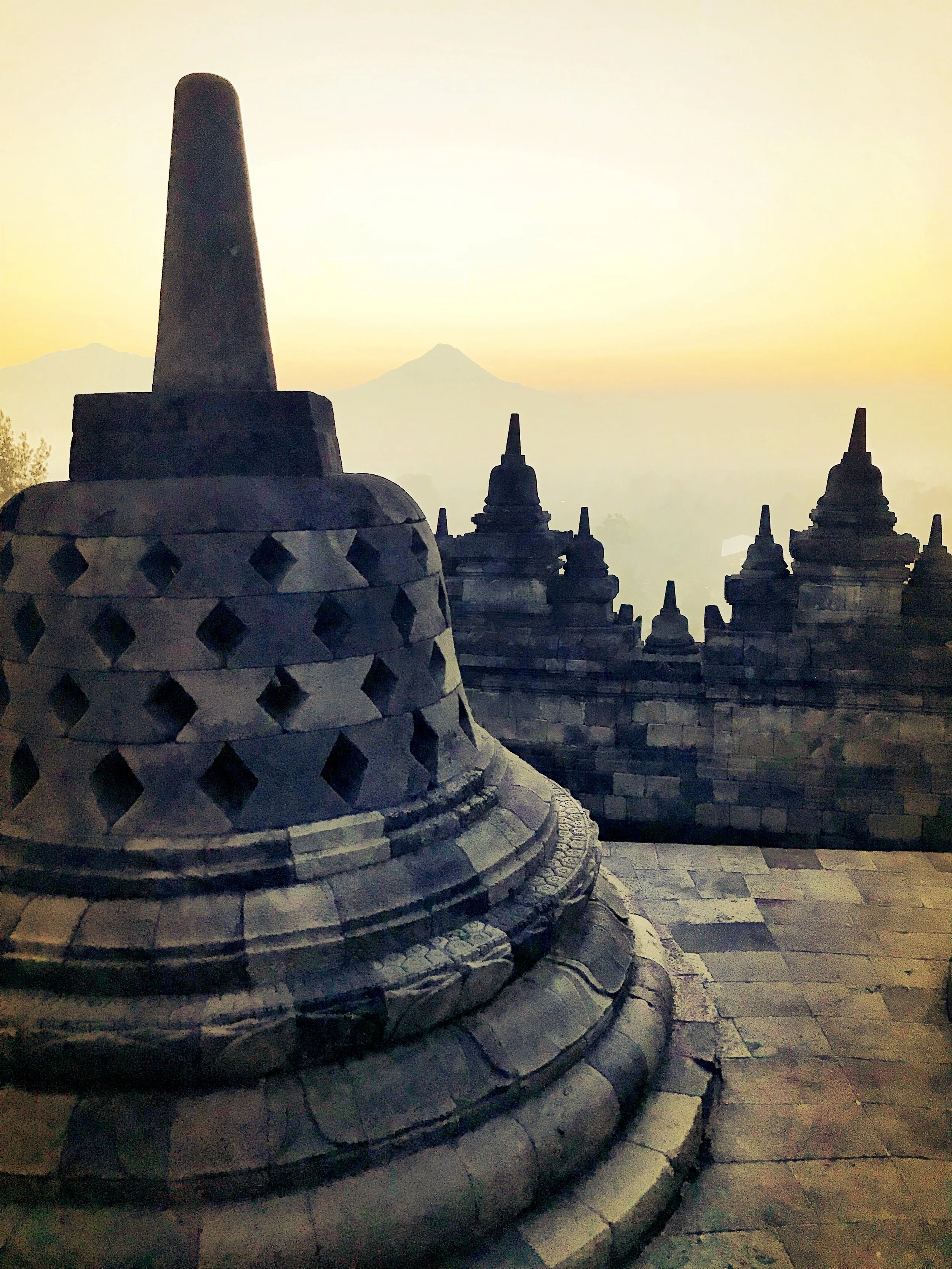
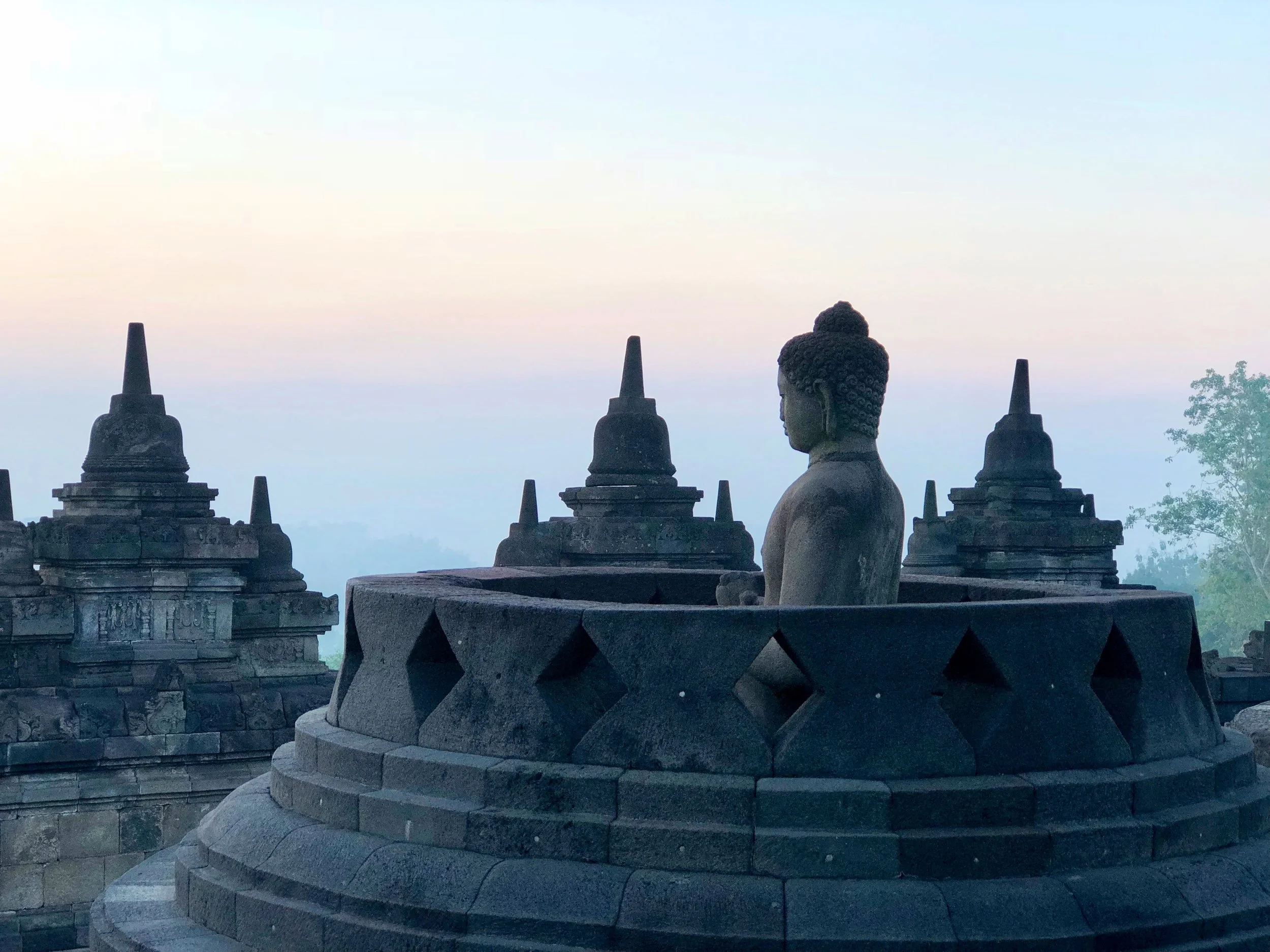
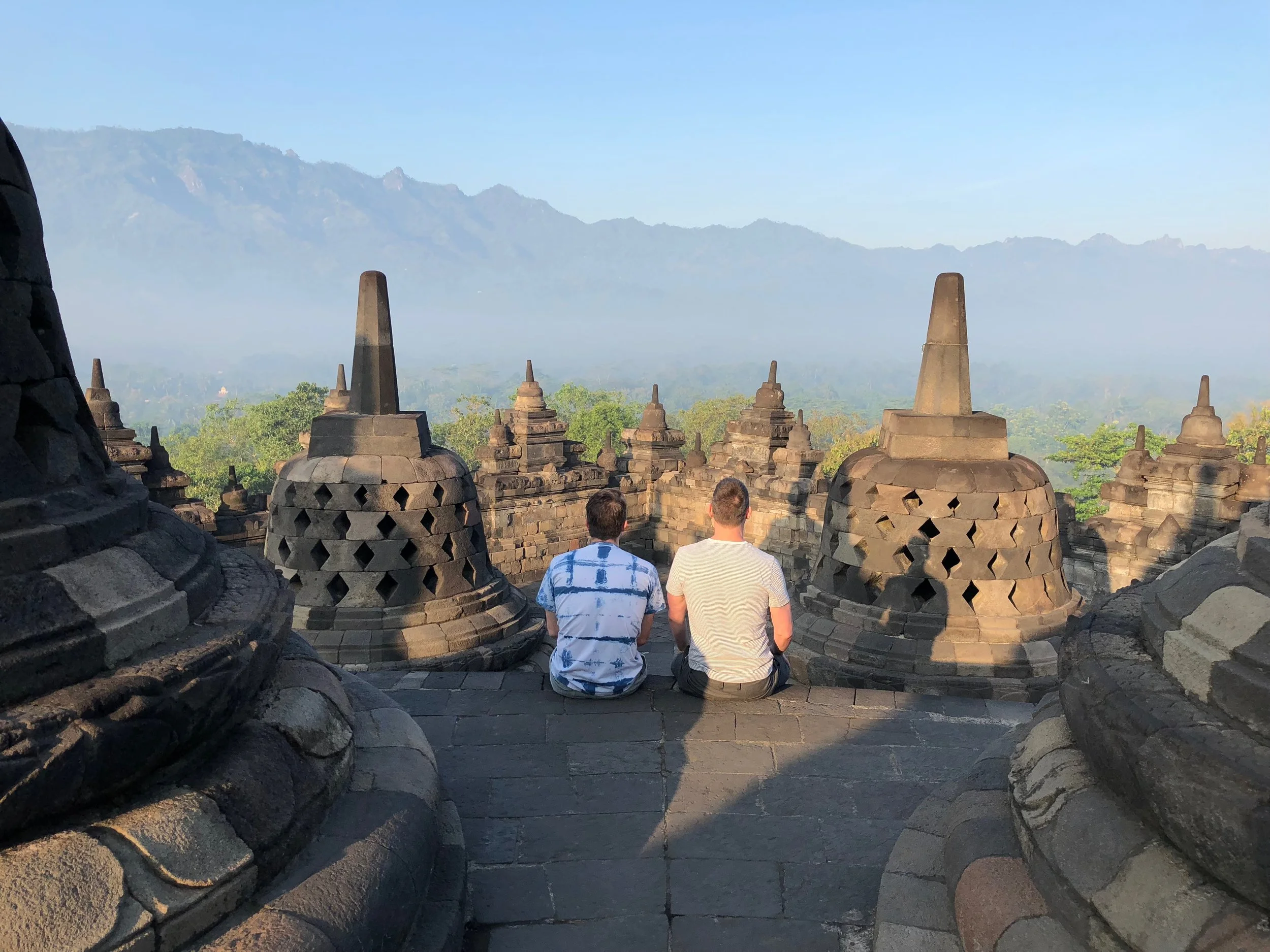
Book a sunrise tour at Borobudur to see the silhouettes of the stupas materialize from the morning mist

Book a sunrise tour at Borobudur to see the silhouettes of the stupas materialize from the morning mist

When Wally mentioned that we should visit Bali, I suggested we spend a few days on the nearby island of Java, exploring the largest Buddhist monument in the world, Borobudur. I had seen images of the magical 9th century monument rising from the jungle mist, with its countless perforated bell-shaped stone stupas and seated Buddha statues.

You have to carefully position yourself — and get there early — to frame your photos without any of the throngs of tourists

You have to carefully position yourself — and get there early — to frame your photos without any of the throngs of tourists

I purchased our tickets for the sunrise visit through the Plataran Borobudur Resort, where we were staying, for 870,000 rupiah each (about $60). On our second day, the concierge rang our villa at 4 a.m. As a precautionary measure, I also set my iPhone alarm — Wally and I never travel without earplugs, and I didn’t want to risk us sleeping through the call. We quickly got dressed and had coffee in the lobby before meeting our driver and heading out in the darkness to Borobudur.

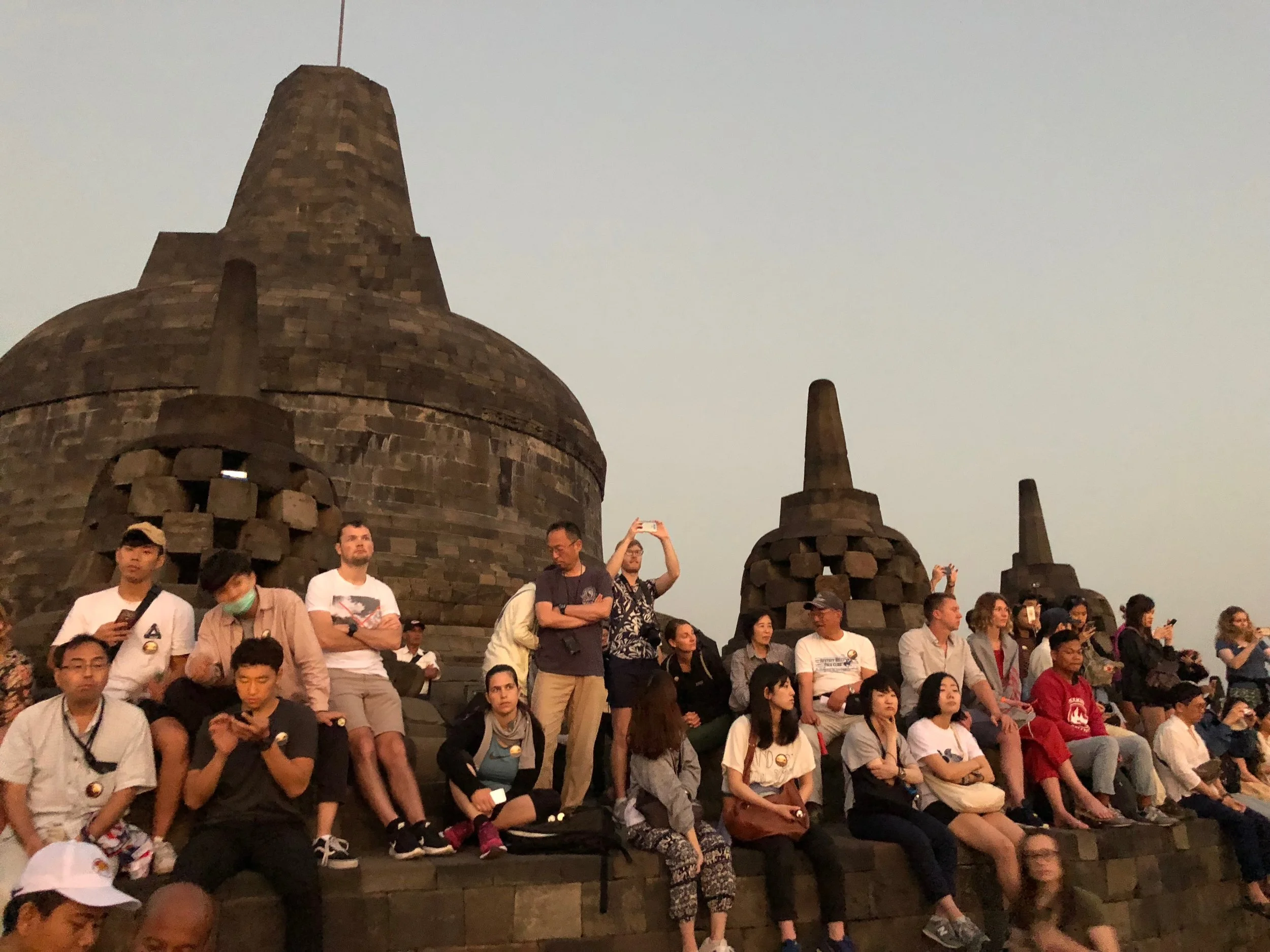
I wasn’t expecting us to be alone, but I also wasn’t expecting to share this experience with hundreds of others.
Volcanos can be seen in the distance — in fact, violent eruptions in the past covered the entire temple in ash for 800 years

Volcanos can be seen in the distance — in fact, violent eruptions in the past covered the entire temple in ash for 800 years

Our driver’s name was Wishnu. Without missing a beat, Wally asked if he was named after the Hindu deity Vishnu. He chuckled and said, “No, it’s just a very common name.” To which Wally replied, “So you don’t ride Garuda?” Wishnu took a moment to think about this, saying, “No, I ride Yamaha,” referring to his scooter.

We passed some parked buses, where local students awaited transport to Borobudur. When I asked Wishnu about them, he explained that the temple is a popular school trip but doesn’t open to the public until 6 a.m.

Stay after the sunrise to wander the various levels of Borobudur

Stay after the sunrise to wander the various levels of Borobudur

Shortly thereafter we arrived at the Manohara Hotel, which is located on the grounds of the historic site, and where sunrise tours depart from every morning. There clearly were a lot of people waiting to gain 4:30 a.m. access. I wasn’t expecting us to be alone, but I also wasn’t expecting to share this experience with hundreds of others so early in the morning.

As we queued up to enter, we were given a small flashlight and introduced to our guide, Pras. He told us that the site draws in an average of 300 visitors for sunrise and up to 56,000 per day during the high season.

This is the real Borobudur you don’t ever see in pictures — the hundreds of tourists all vying for a prime spot to photograph sunrise

This is the real Borobudur you don’t ever see in pictures — the hundreds of tourists all vying for a prime spot to photograph sunrise

Wally and I followed Pras up a central staircase, the beams from our flashlights bobbing as we made our way up to the circular seventh terrace. We squeezed ourselves behind a group of tourists who already had their cameras set up to capture the perfect shot of the first rays of sunlight.

Even though UNESCO insists upon a 15-kilometer non-commercial zone, there are still tall lights you can see during sunrise

Even though UNESCO insists upon a 15-kilometer non-commercial zone, there are still tall lights you can see during sunrise

Sunrise Over Borodudur

As we waited, the sun slowly rose, turning the sky a blaze of ever-changing scarlets, pinks, oranges and yellows, bathing the gray stone in a hazy golden light. In the distance, Mount Merapi and its twin Mount Merabu rose from the horizon in the morning mist — two of the four volcanoes that surround Borobudur.

After sunrise, Pras invited us to wander around the upper temple. As the crowds dissipated, we were able to get some great shots.

This Buddha went too far with a nose job

This Buddha went too far with a nose job

Wally was happy he could spend his birthday at Borobudur

Wally was happy he could spend his birthday at Borobudur

Duke added an excursion to Java onto our trip to Bali

Duke added an excursion to Java onto our trip to Bali

Pras explained the origin of the temple’s name, Bara-Budhara: Bara meaning temple and Budhara hill. Since a’s are pronounced as o’s in Javanese, it morphed into Borobudur.  

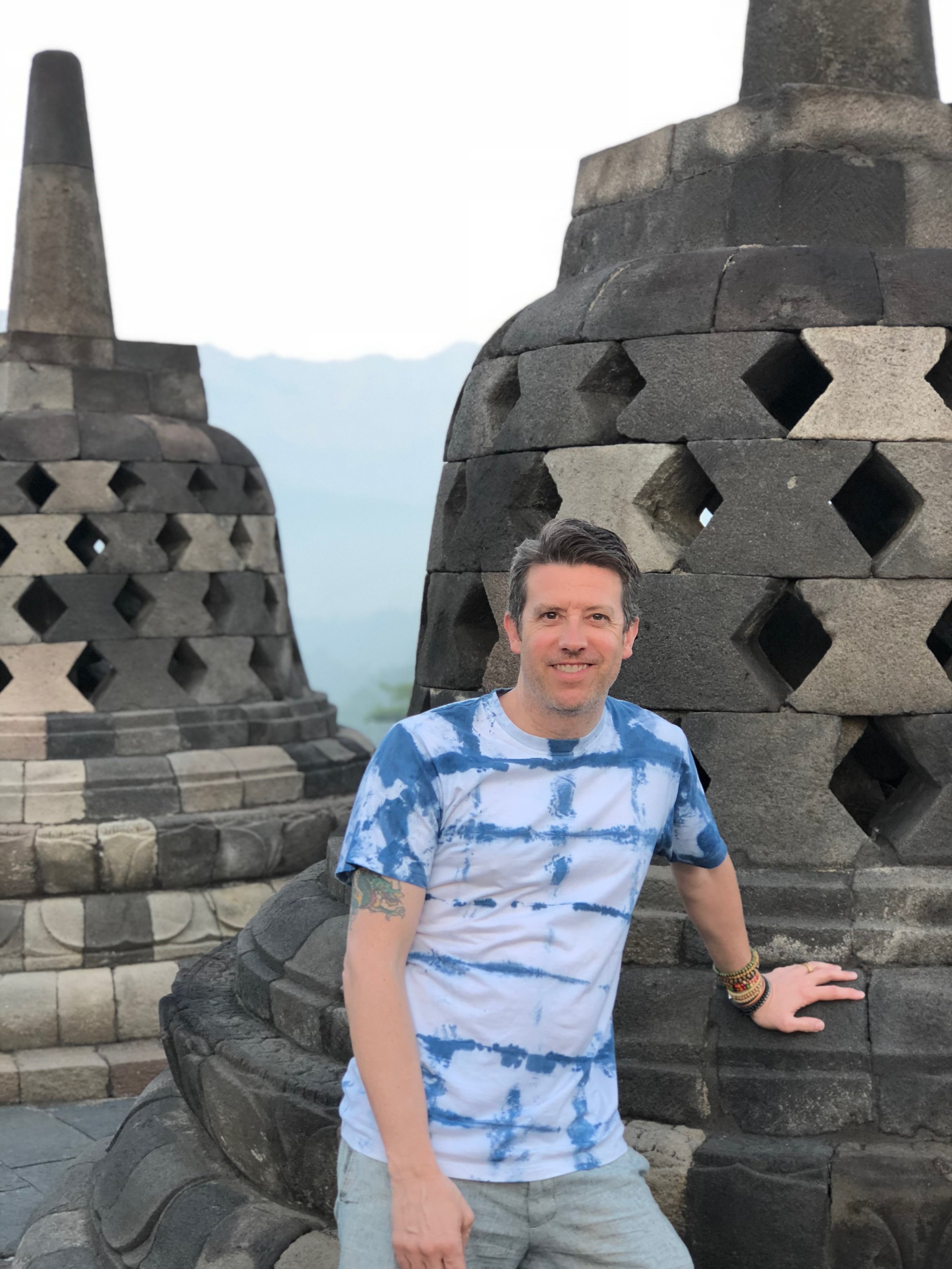
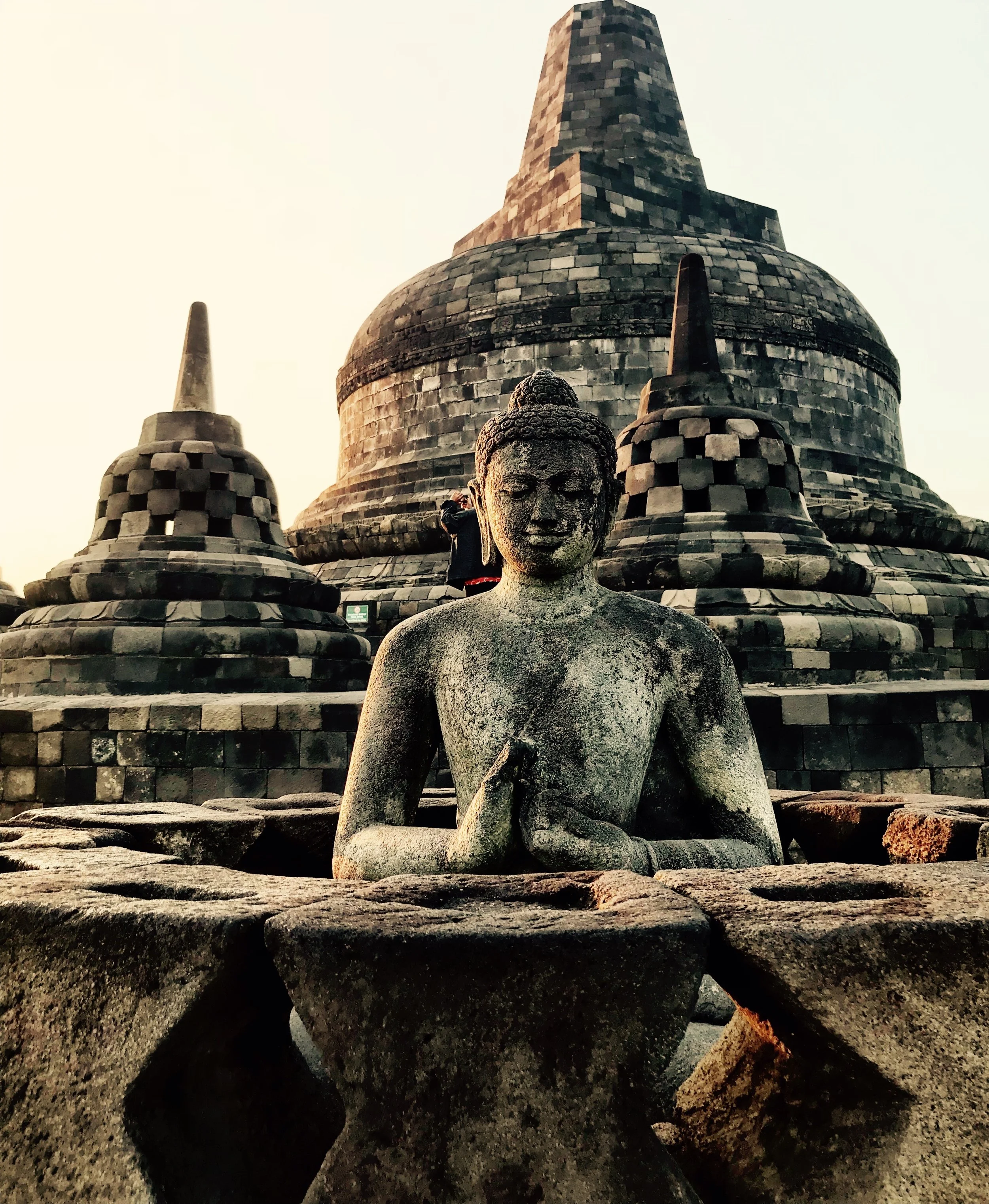
Before leaving the summit, Pras stopped in front of one of the bell-shaped sculptures. “This is the lucky stupa,” he told us. He explained that it was auspicious to circumambulate the central stupa clockwise an odd number of times. Wally wanted to walk around the structure five times because it was May 5 (the fifth day of the fifth month) and also his birthday. Pras kept count, holding up fingers each time we passed him. Upon completion, you touch the stone with your right hand — and you’ll have good luck.

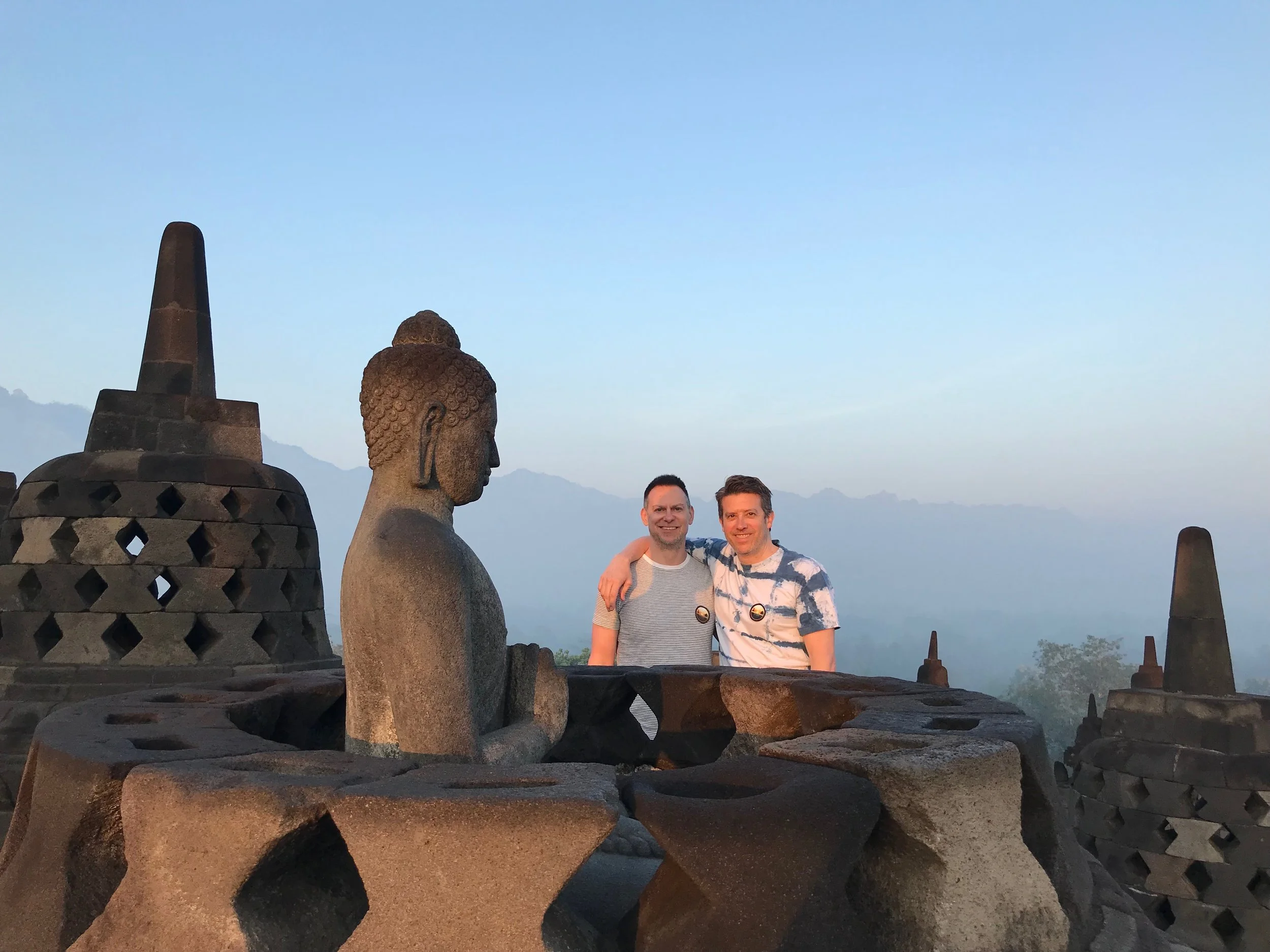
Wally and Duke love a good temple — and Borobudur is like no other

Wally and Duke love a good temple — and Borobudur is like no other

Knowing that Mount Agung had recently wreaked havoc on Bali, I asked Pras how regularly Merapi erupts. He told us that it’s the most active volcano in Indonesia and, far below, it sits upon a series of fault lines and grinding tectonic plates dramatically known as the Ring of Fire. He added that it blew its top most recently in 2014, blanketing Borobudur in a layer of ash that took laborers five months to remove by hand. (Incidentally, we were surprised to learn that Merapi had a minor eruption less than a week after we visited!)
Workers clean moss off the temple twice a month.

Workers clean moss off the temple twice a month.

The 9th century Buddhist temple has been impressively restored

The 9th century Buddhist temple has been impressively restored

Borobudur’s Magical Origins

According to traditional lore, the complex was designed and built in a single night by a divine giant named Gunadharma. After his task was complete, he laid down and fell asleep. Over time trees covered him, and his reclined profile is said to be visible in the peaks of the Menoreh Hills. He’s now called the Sleeping Buddha by locals.

Mythology aside, Borobudur was built by the Sailendra dynasty during the 8th and 9th centuries. It took three generations roughly 60 years to complete, and according to archeologists, was revised four times.

Seeing Borobudur from a distance doesn’t do justice to its grandeur. It’s an entirely different temple up close

Seeing Borobudur from a distance doesn’t do justice to its grandeur. It’s an entirely different temple up close

Borobudur is essentially a stepped pyramid comprised of nine concentric terraces crowned by a bell-shaped stupa dome. The monument was constructed from over a million blocks of andesite stone quarried from the banks of the Progo River and originally stood 137 feet tall. At some point, the triple-tiered stone umbrella chatra, which served as the pinnacle, was struck by lighting, shattering the central stupa and reducing the monument’s height to 113 feet. The chatra currently resides in the Karmawibhangga Museum in the Borobudur complex until it can be properly renovated and restored to its position atop the temple.

Was Wally the once-sleeping giant who created Borobudur in a single night?

Was Wally the once-sleeping giant who created Borobudur in a single night?

The terraces and the central stupa symbolize the 10 stages of development a bodhisattva must pass in order to become enlightened.

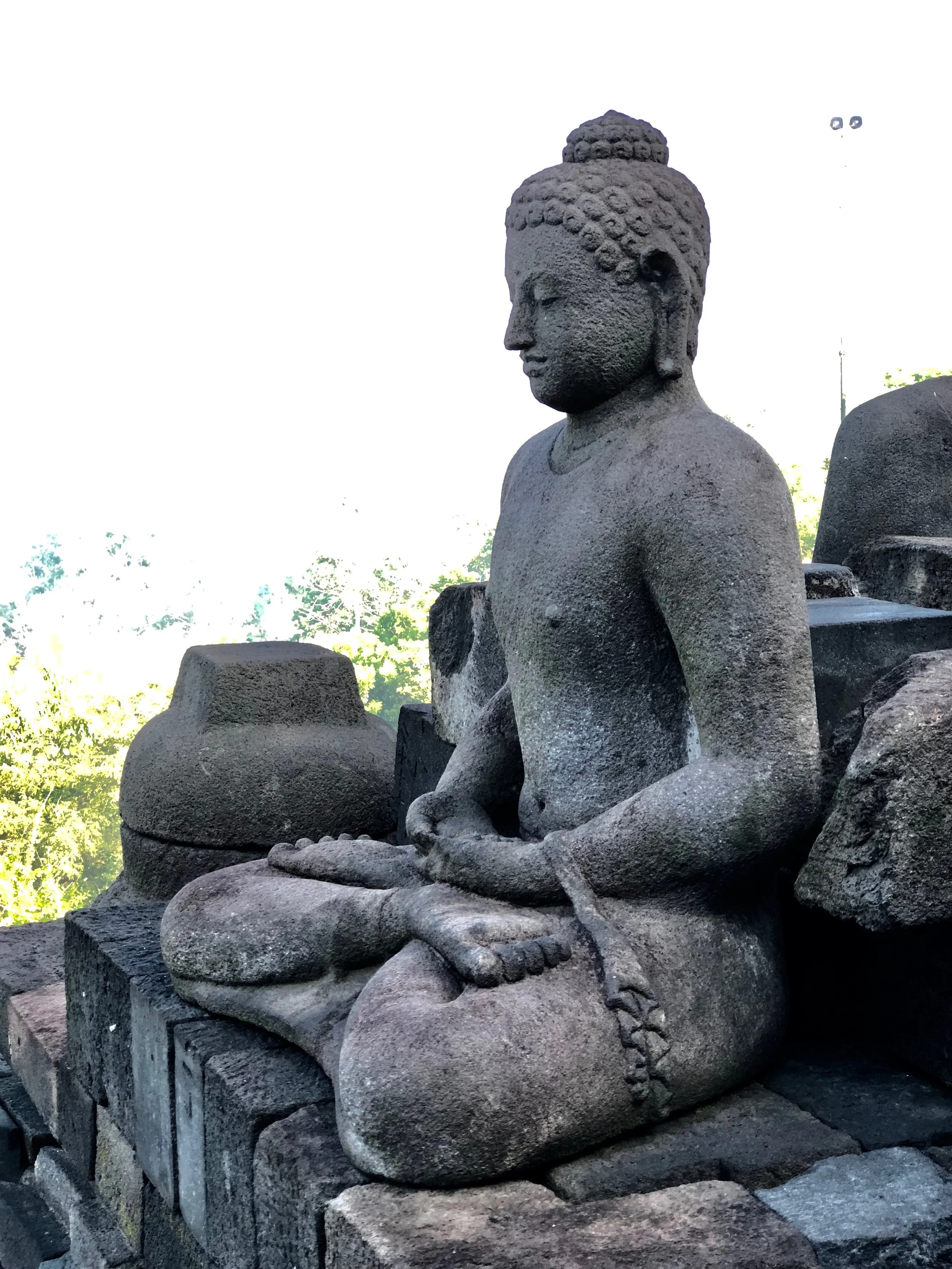
Only two of the 72 Buddha statues are uncovered on the temple’s upper terrace

Only two of the 72 Buddha statues are uncovered on the temple’s upper terrace

UNESCO World Heritage Site

The structure collapsed in 1970. Extensive restoration work initiated by the Indonesian government began three years later, in partnership with UNESCO and international contributions funded by private organizations. For nearly a decade, most of the monument was closed to the public as it was dismantled block by block, meticulously recorded and reassembled layer by layer. A complex drainage system and lead sheets were added to prevent water from trickling downward, as erosion from rainwater is the number one detriment to the site.

The sky turned numerous shades of orange and yellow during sunrise, before giving way to a gorgeous blue

The sky turned numerous shades of orange and yellow during sunrise, before giving way to a gorgeous blue

What a lucky way to spend Wally’s birthday!

What a lucky way to spend Wally’s birthday!

Borobudur makes Duke happy

Borobudur makes Duke happy

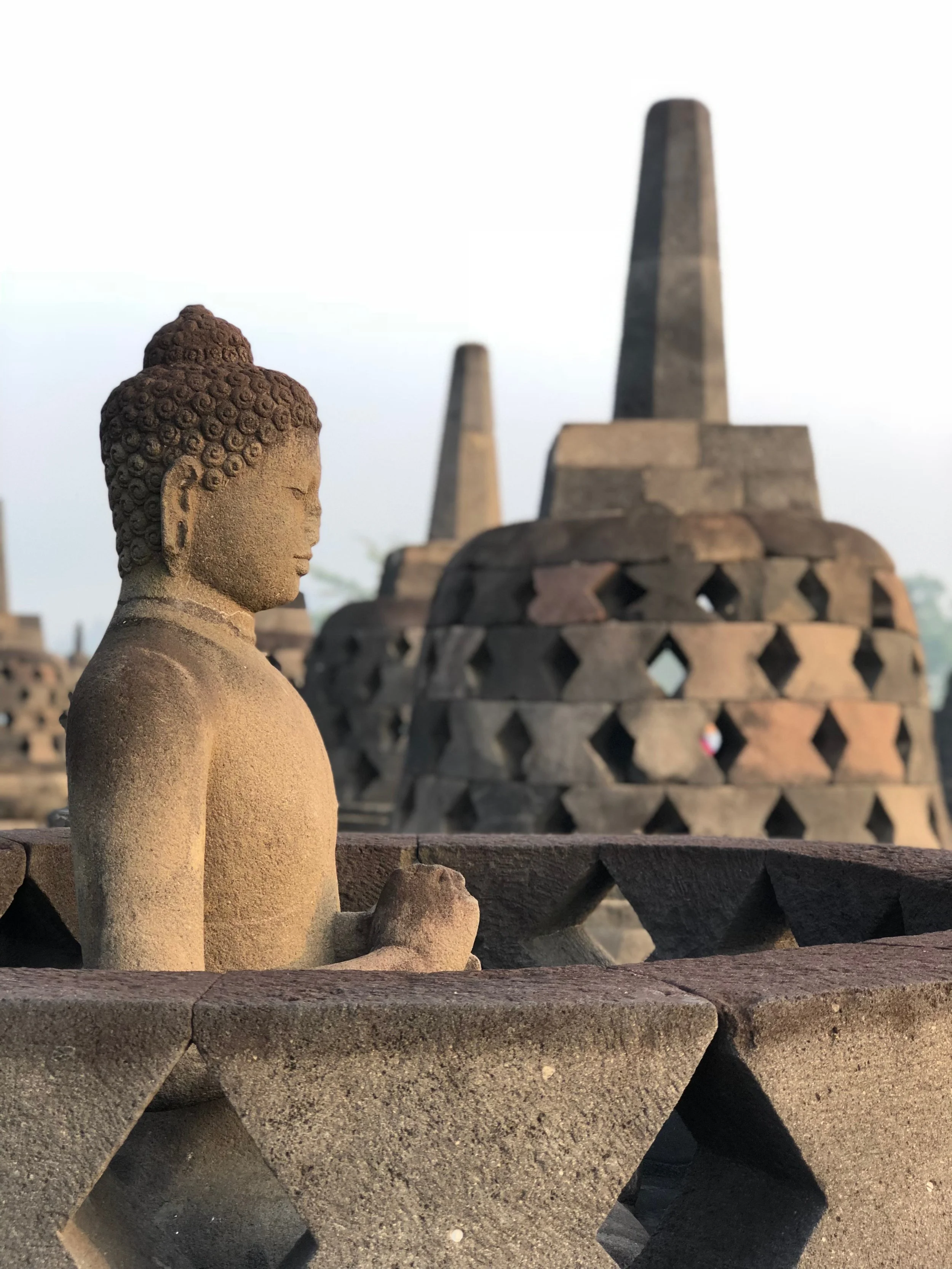
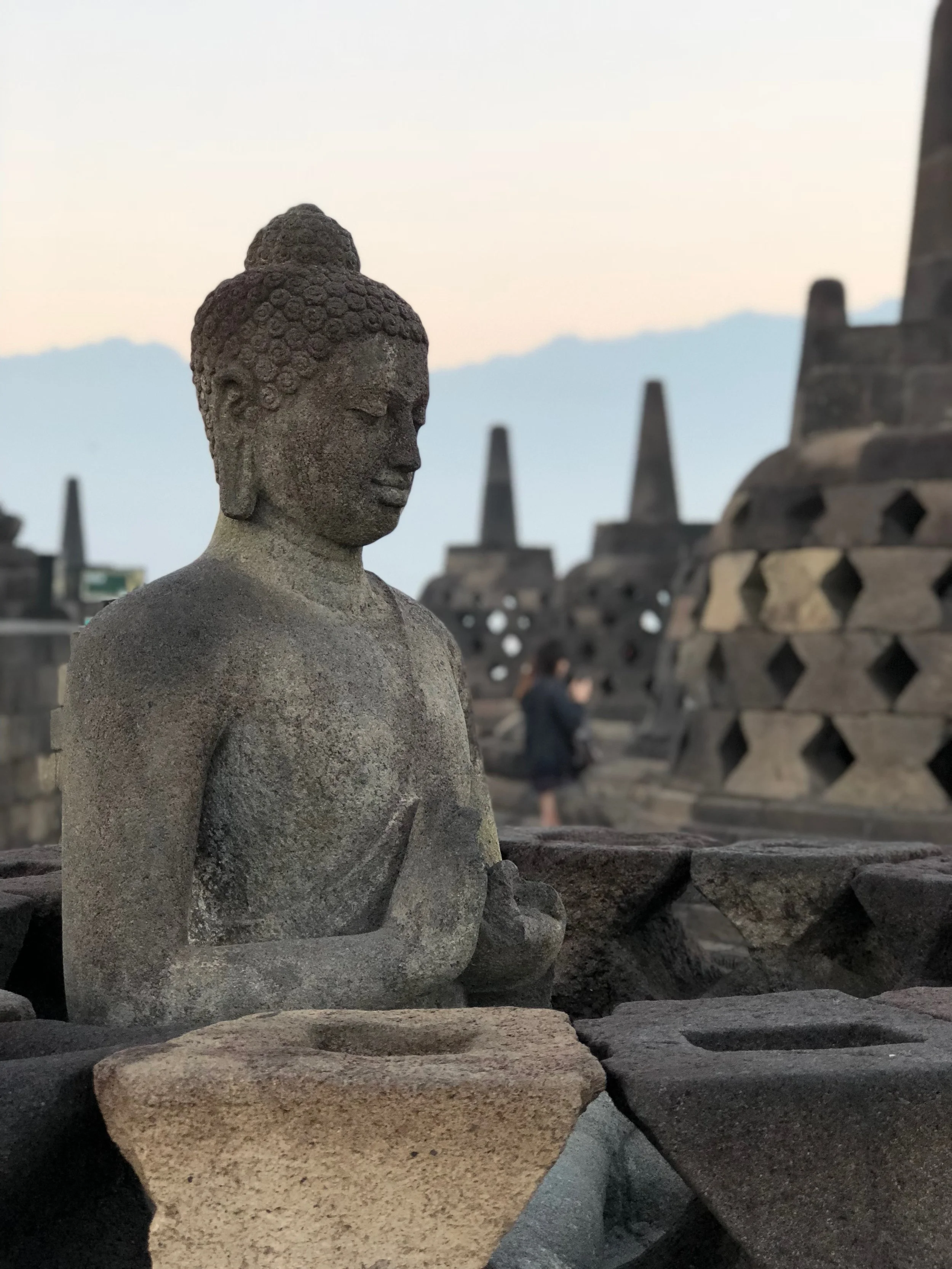
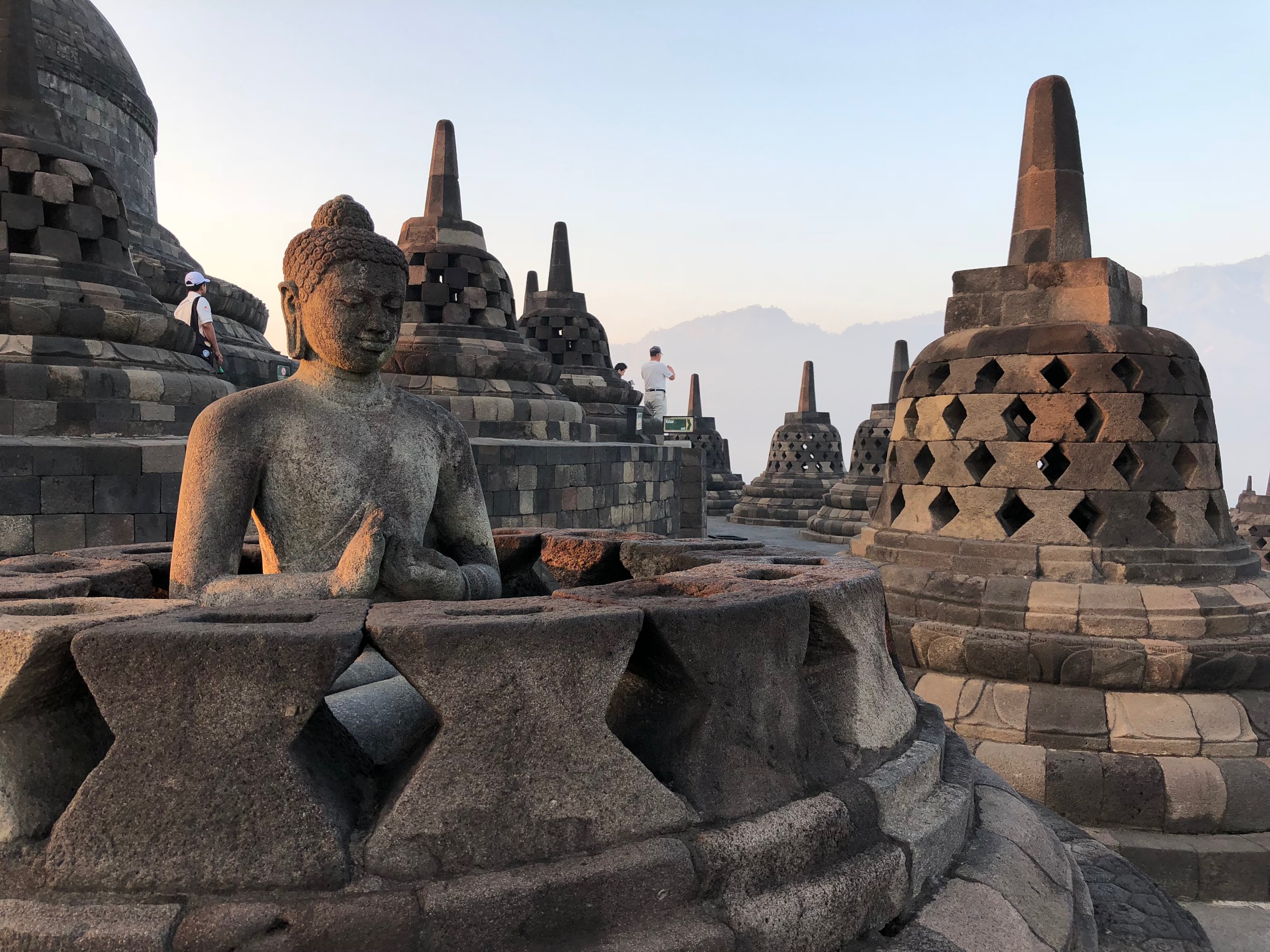
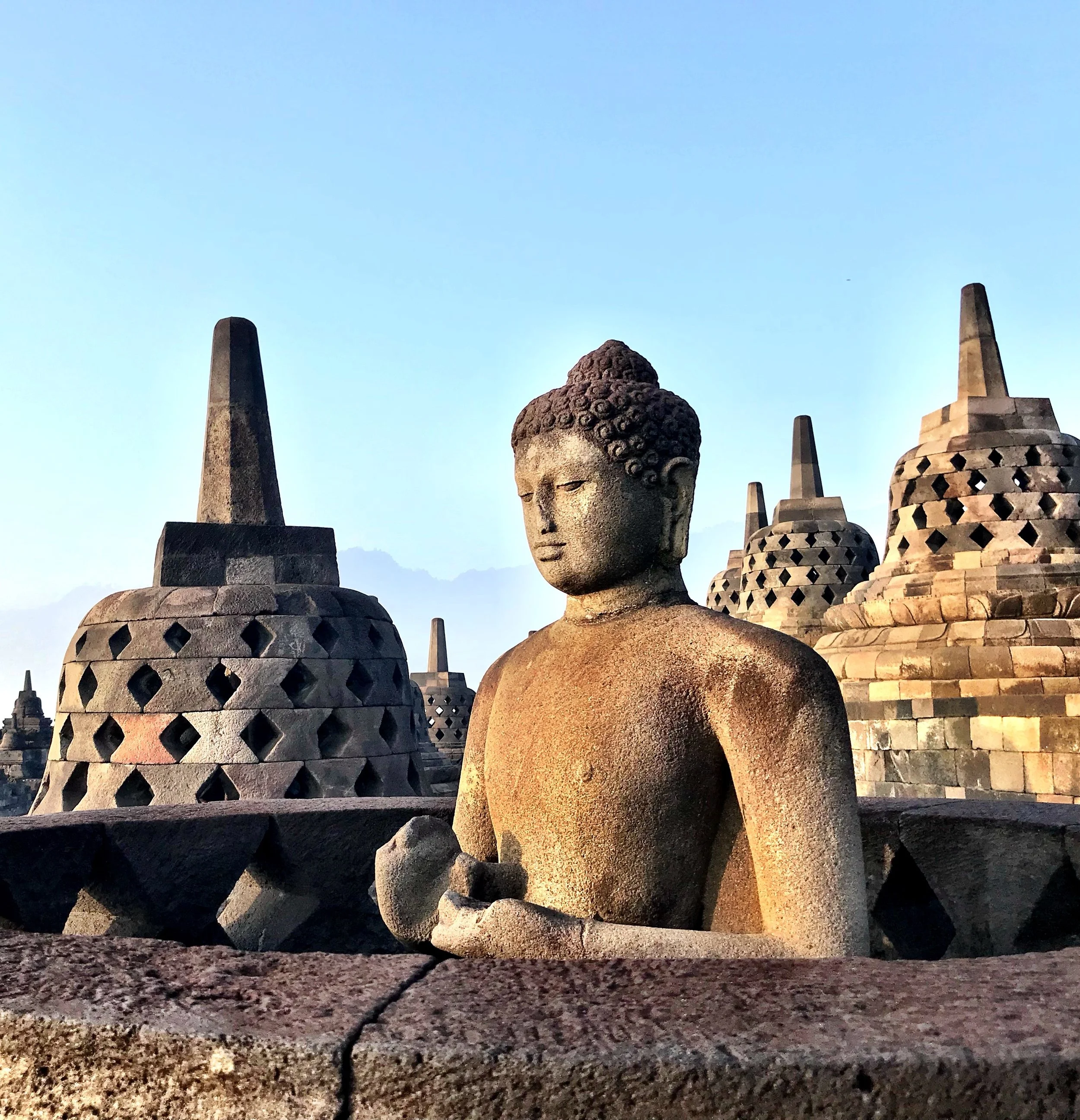
Each of the 72 perforated stupas, which locals referred to as “cages,” have a seated life-sized Buddha enthroned within. On the eighth level of Borobudur, two of these stupa are open. They weren’t able to be renovated, as 70% of the original material must be used in restoration to be declared a UNESCO World Heritage Site — a designation Borobudur was honored with in 1991. It’s actually pretty cool that a couple of the Buddhas aren’t covered by stupas and visitors get a chance to see what lies within. One of the Buddhas can also be found in the local museum.

Underneath each stupa hides a seated Buddha statue

Underneath each stupa hides a seated Buddha statue

There were 504 Buddha statues under the bell-shaped stupas because that’s how many times Buddha was reincarnated

There were 504 Buddha statues under the bell-shaped stupas because that’s how many times Buddha was reincarnated

UNESCO requires that all restoration work use at least 70% of the original materials

UNESCO requires that all restoration work use at least 70% of the original materials

Another requirement of the UNESCO site is that nothing commercial can be built within a 15-kilometer radius. Locals aren’t too pleased with this regulation, Pras told us, but we couldn’t help but think the site would certainly not be improved with a 7-Eleven at its base.

Borobudur, with its nine levels, was carved from the top down. In fact, parts of the base were never completed

Borobudur, with its nine levels, was carved from the top down. In fact, parts of the base were never completed

When Pras had completed the tour, he brought Wally and me to an open-air seating area near the main entrance where we returned our flashlights and enjoyed a traditional snack and coffee. As a memento, we each received a souvenir scarf.

Borobudur was a magnificent sight to behold, especially at sunrise. Its rings of galleries, terraces and sculptures were the perfect place for quiet reflection — even if it was with 200 or so strangers. –Duke

The Buddhas on each level sport different hand gestures

The Buddhas on each level sport different hand gestures

Wally and Duke admire the view

Wally and Duke admire the view

Borobudur Temple
Jl. Badrawati
Kw. Candi Borobudur
Borobudur, Magelang, Jawa Tengah
Indonesia
Spa Day Heaven: Padma Spa at Plataran Borobudur

If you’re in Java, relax with a massage and scrub — though it’s all about the volcanic stone tub and epic view.

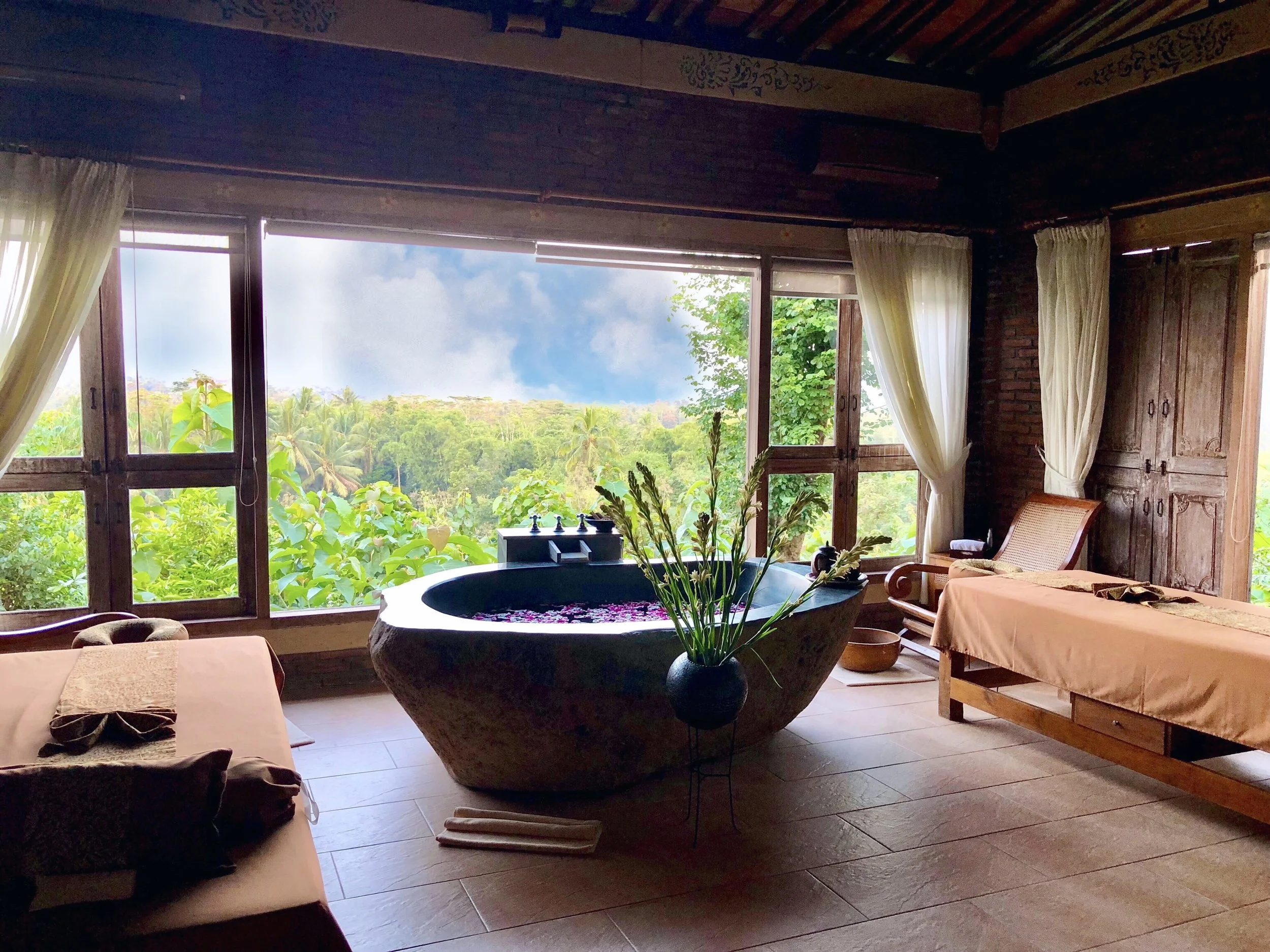
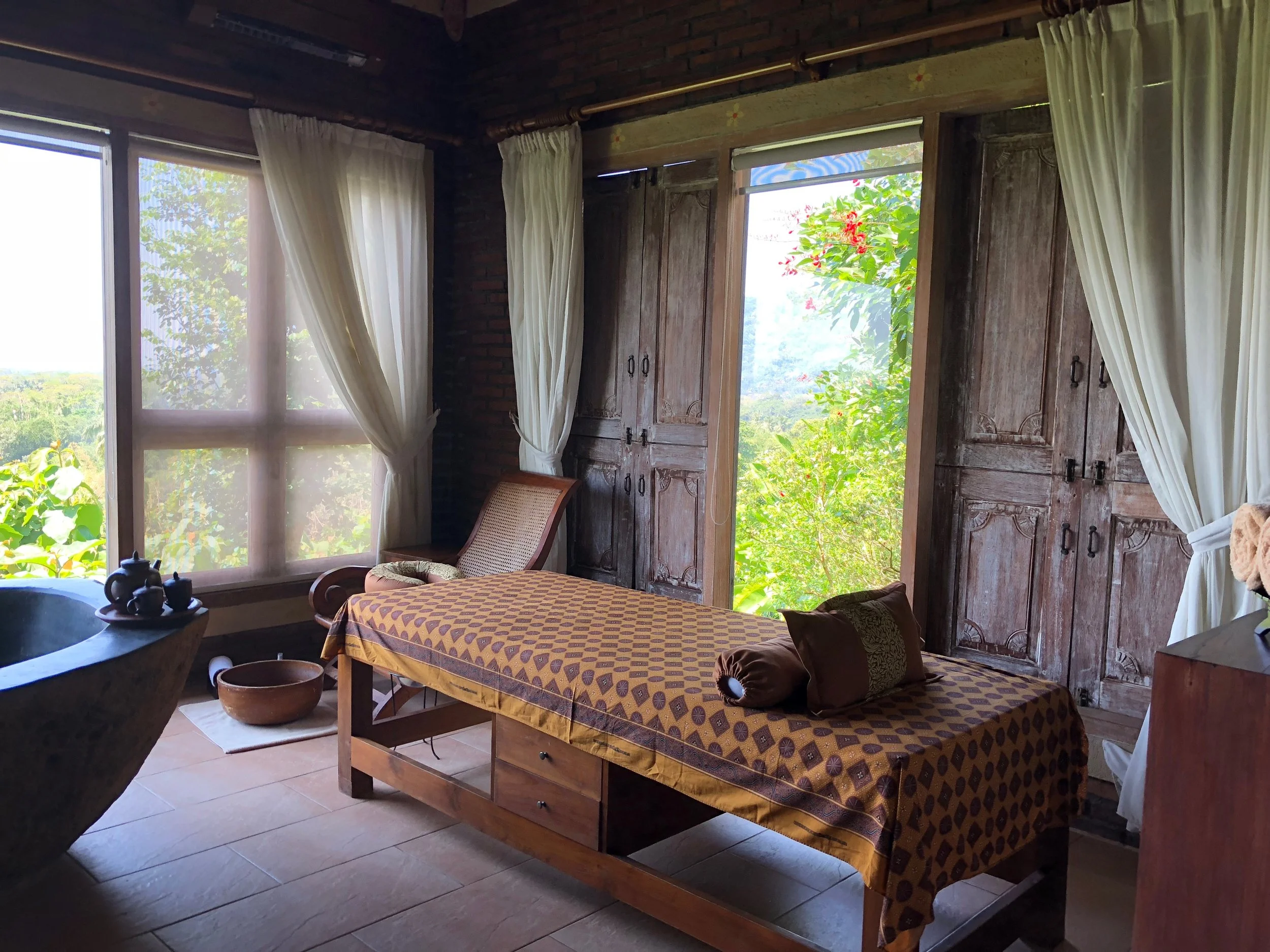
Our treatment room overlooked the jungle-covered mountain

Our treatment room overlooked the jungle-covered mountain

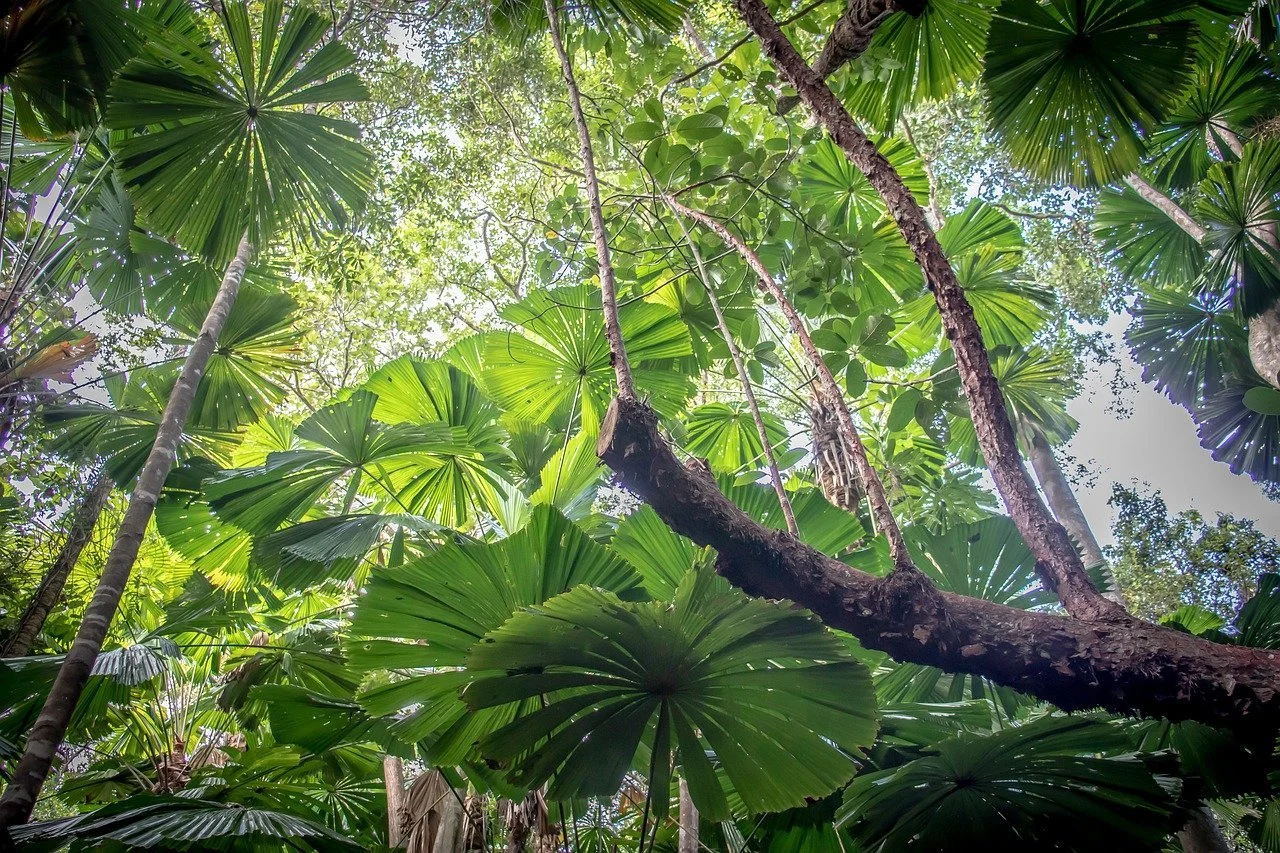
Indonesian hospitality is in full effect at Padma Spa at Plataran Borobudur Resort. The exotic teakwood villa that houses the space sits perched like a Javanese treehouse on a hillside overlooking a dense forest of teak, casuarina and rasamala trees.

The facility offers a wide range of options and features six treatment rooms equipped with bathtubs carved from volcanic stone taken from nearby Mount Merapi as well as a relaxation lounge, nail salon and gym. They also have a small but well-curated assortment of items for sale in the reception area.

Among the elements incorporated into the spa’s design are intricately hand-carved teak fretwork window panels reflecting the region’s cultural heritage.

The first thing we noticed was the volcanic stone tub, big enough for both of us.

The room offered floor-to-ceiling views across the jungle valley to the temple of Borobudur.
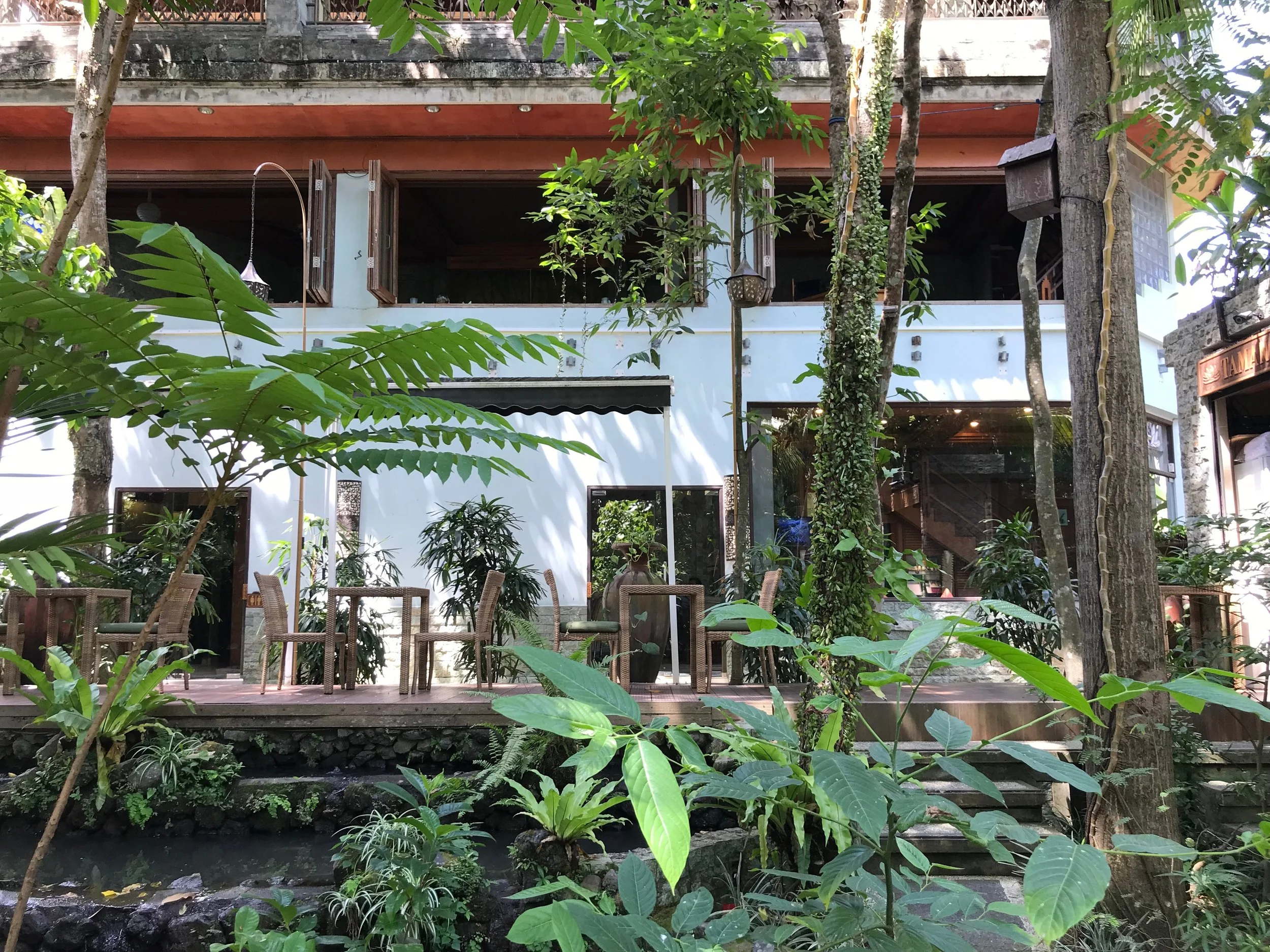
The spa is on the grounds of Plataran Borobudur

The spa is on the grounds of Plataran Borobudur

Java Nadi Massage

Our visit began with cool towels and cups of ginger tea. Wally and I opted for the 60-minute Java Nadi massage. The spa director suggested we add a body scrub from the treatment menu. We agreed to add the 45-minute Lakshmi scrub — and were glad we did.

When we entered our treatment room, the first thing we noticed was the freestanding Merapi stone soaking tub, big enough for both of us. Flooded with natural light, the room offered floor-to-ceiling views across the jungle valley to the ancient Buddhist temple of Borobudur in the distance.

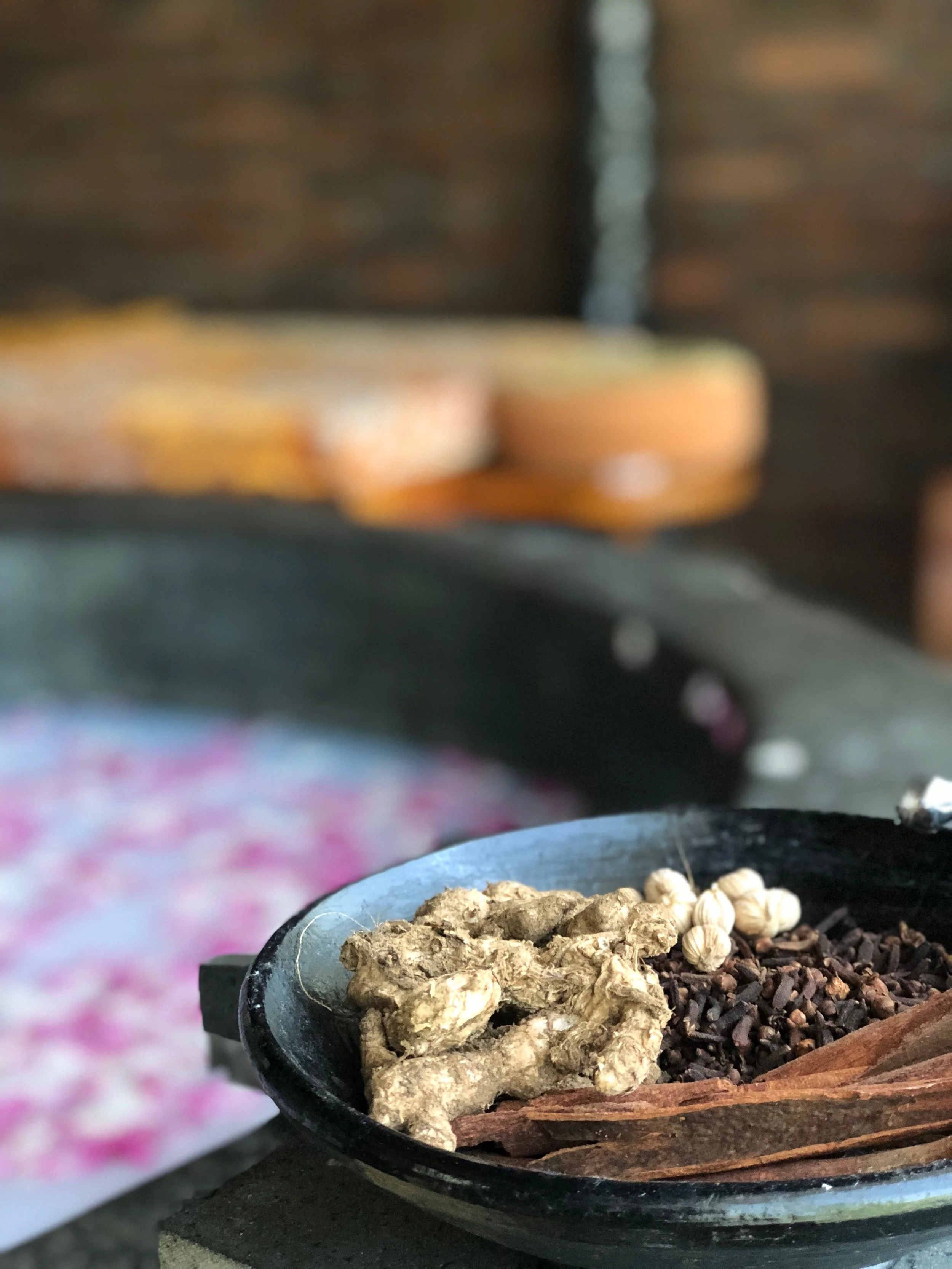
After we had changed into our robes, our feet were placed in basins of warm water to soak. Each therapist added bath salts, kaffir lime wheels, lemongrass, dried pomelo slices and peppermint essential oil, which gave off a delightfully revitalizing aroma.

Various natural ingredients are used in the spa’s treatments

Various natural ingredients are used in the spa’s treatments

We were asked to lie face-down under the top sheet on our massage tables. The tone from a single-note energy chime resonated as it was tapped three times before beginning.

The word “nadi” refers to the pathways or channels of energy that run throughout the human body. Java Nadi is a healing technique rooted in centuries-old traditions. Its aim is to restore balance and energy to the body.

A unique combination of slow, fluid movements, incorporating deep kneading and thumb pressure, this hands-on holistic treatment eases muscle and joint pain while increasing circulation.

When our massage had concluded, we experienced the hammam-like Lakshmi scrub: an aromatic combination of sandalwood, ground rice, lemongrass, candlenut and grapefruit that left our skin silky smooth.

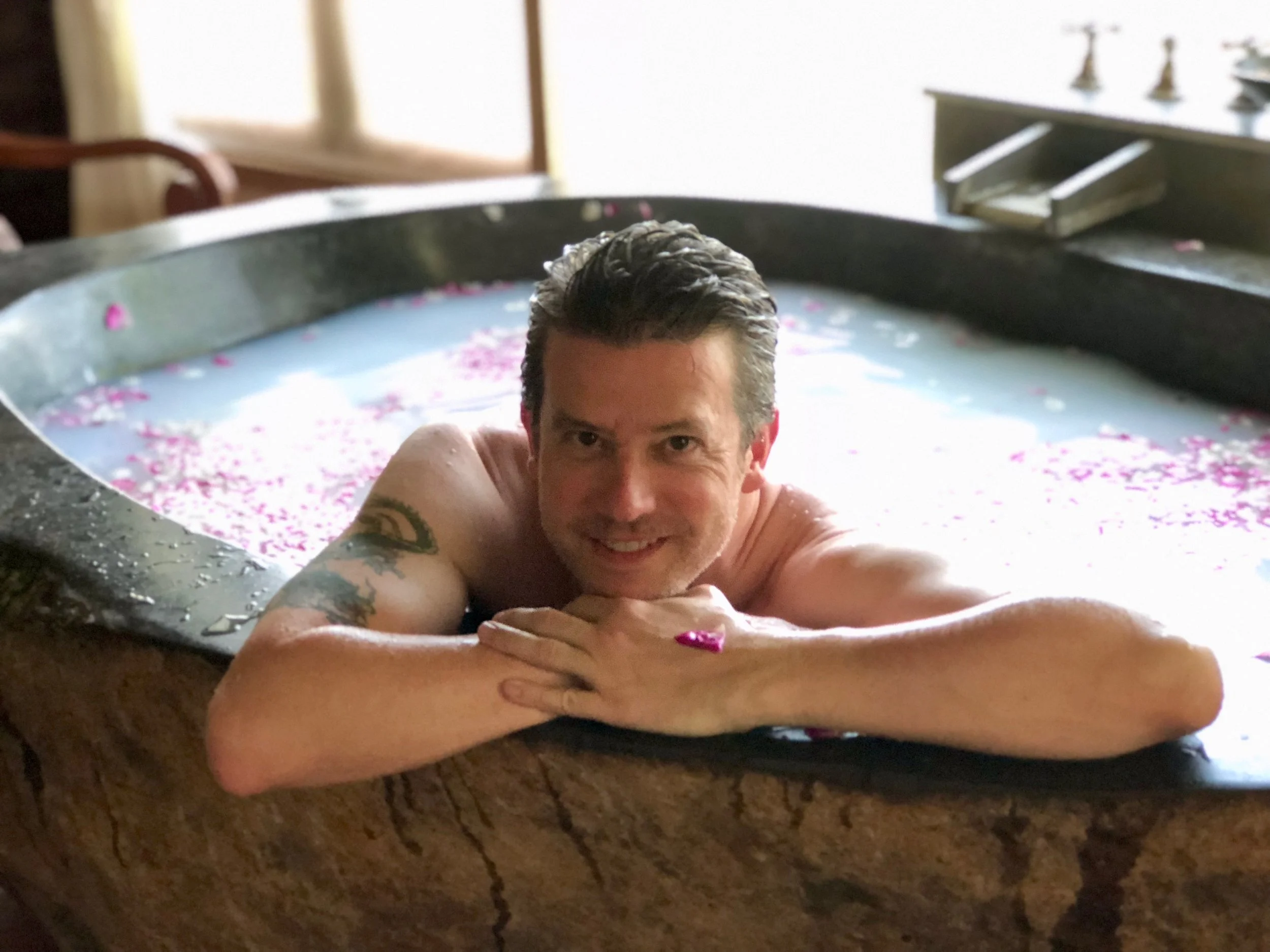
Wally didn’t want to ever get out of the volcanic stone bathtub

Wally didn’t want to ever get out of the volcanic stone bathtub

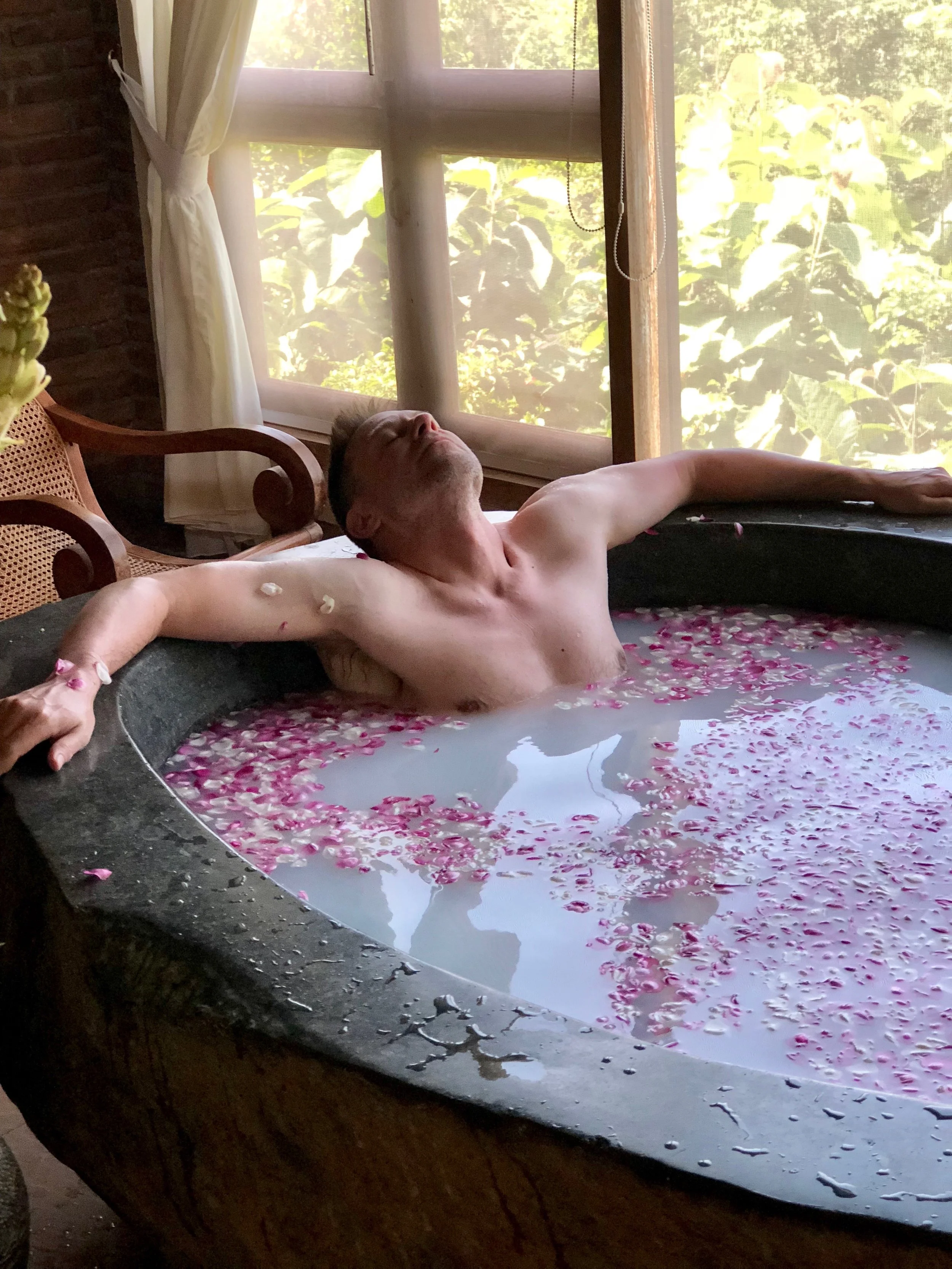
Duke relaxes in the milk bath after the massage and body scrub

Duke relaxes in the milk bath after the massage and body scrub

We finished by relaxing (OK, there was some goofing off as well) in the dramatic bathtub, which was filled with a lemongrass milk soak. As we gazed out the window, it felt like we were hovering over the landscape. Eventually, I was able to convince Wally to leave the tub.

I wanted to take home the earthenware teapot, batik robes and energy chime — but I didn’t want the bad karma. We loved every minute of our experience, and it put us in a deep state of relaxation. –Duke

Plataran Borobudur Resort & Spa
Dusun Tanjungan
Borobudur, Magelang
Jawa Tengah 56553
Indonesia
The Splendors of the Tirta Gangga Water Gardens

Take a day trip from Ubud through Heaven and Hell and discover the enduring appeal of this royal Bali water park.

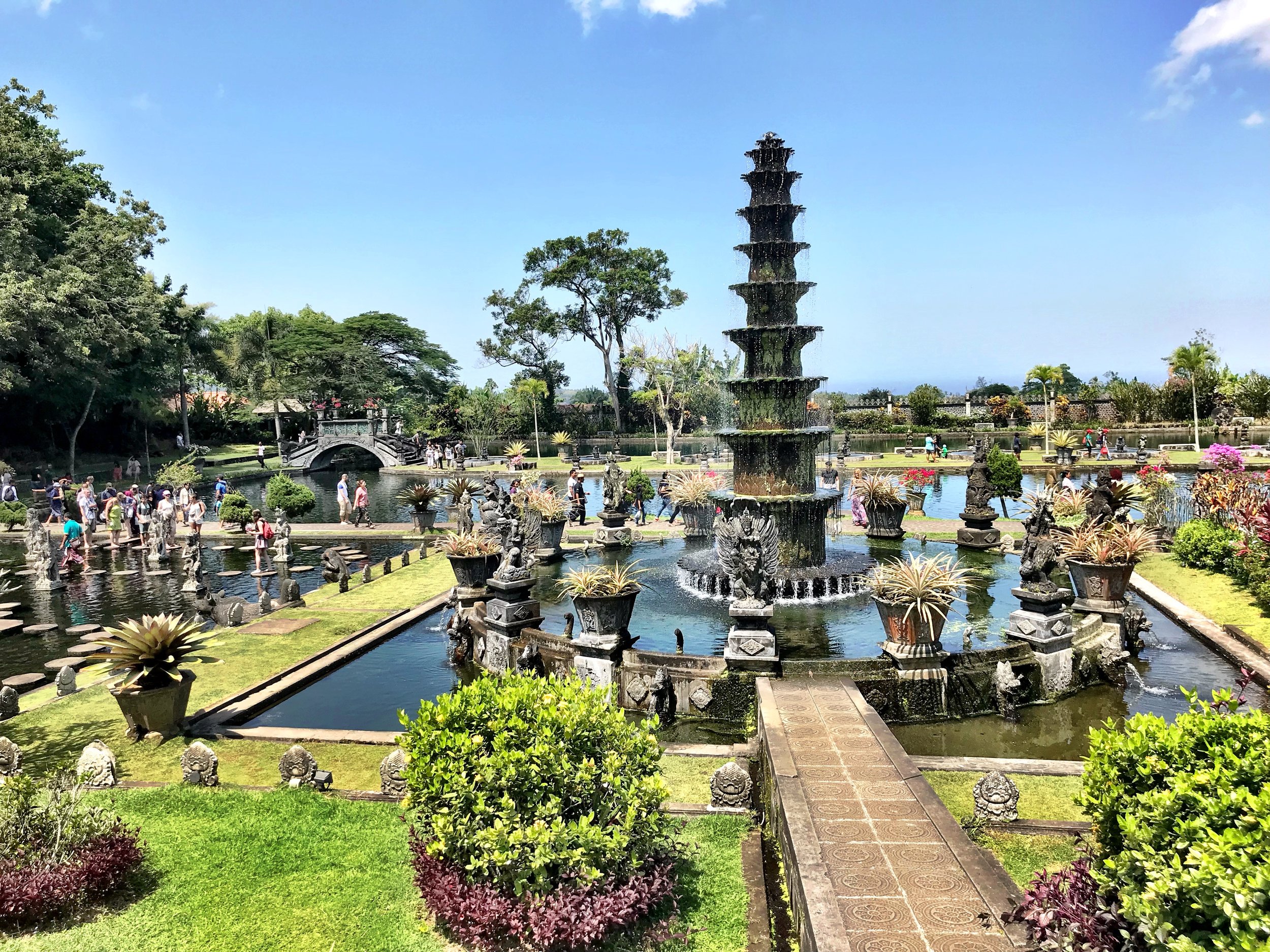
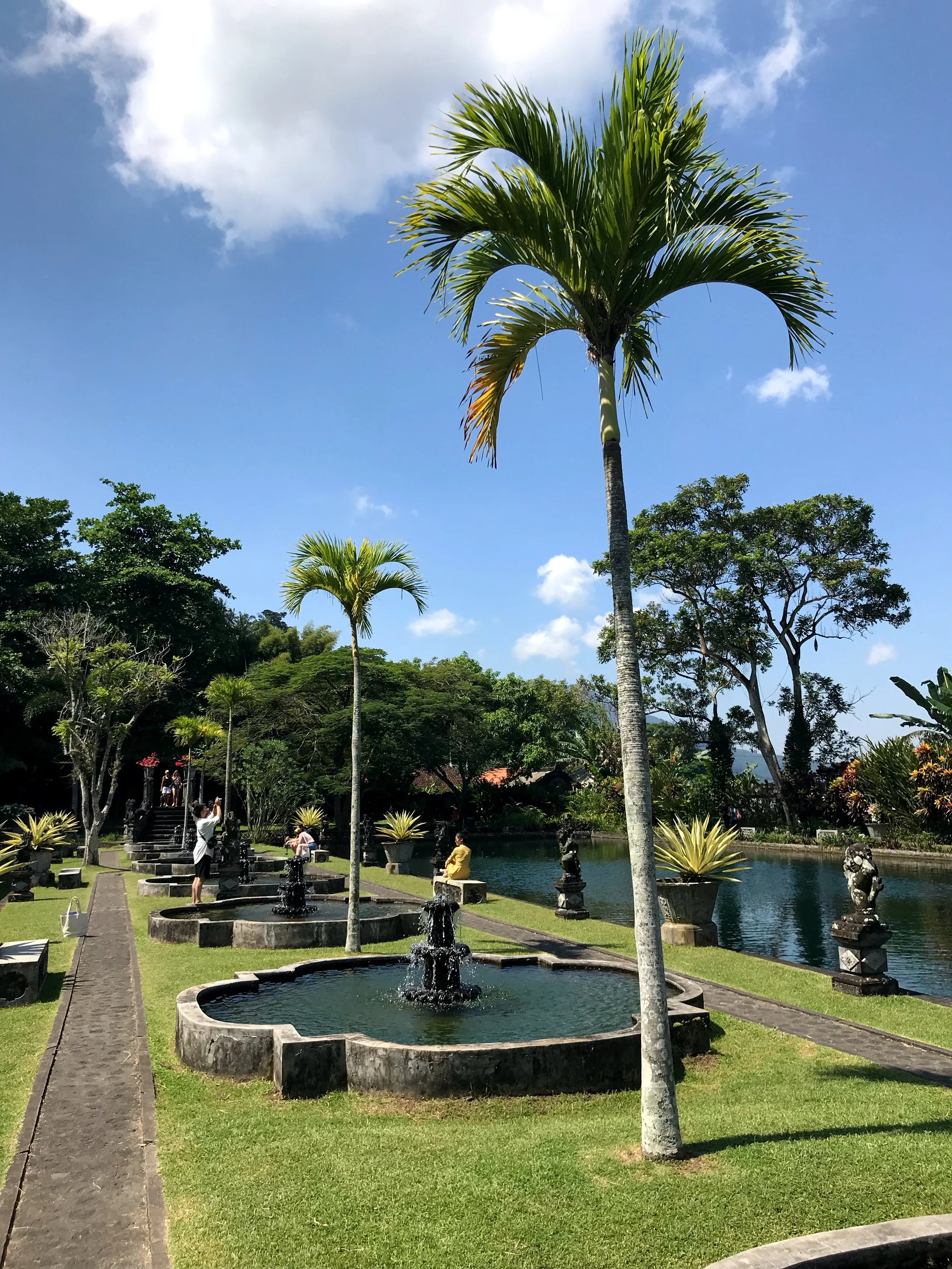
The last raja of Karangasem built these gorgeous gardens

The last raja of Karangasem built these gorgeous gardens

Our Bali itinerary was already filled with a week’s worth of activities packed into a handful of days. Then, on a whim, Wally suggested we add Taman Tirta Gangga, the lavish mid 20th century water gardens owned by the royal family of Karangasem, located two hours east of Ubud.

We had decided the night before to eliminate a few spots from our checklist, as we both quickly came to a realization from a previous day’s excursion — getting around on the two-lane roads on Bali is not the easiest, as they weren’t built for the amount of vehicles now using them.

If you bathe in the waters on a full moon, you will miraculously be blessed with youth and cured of illnesses.

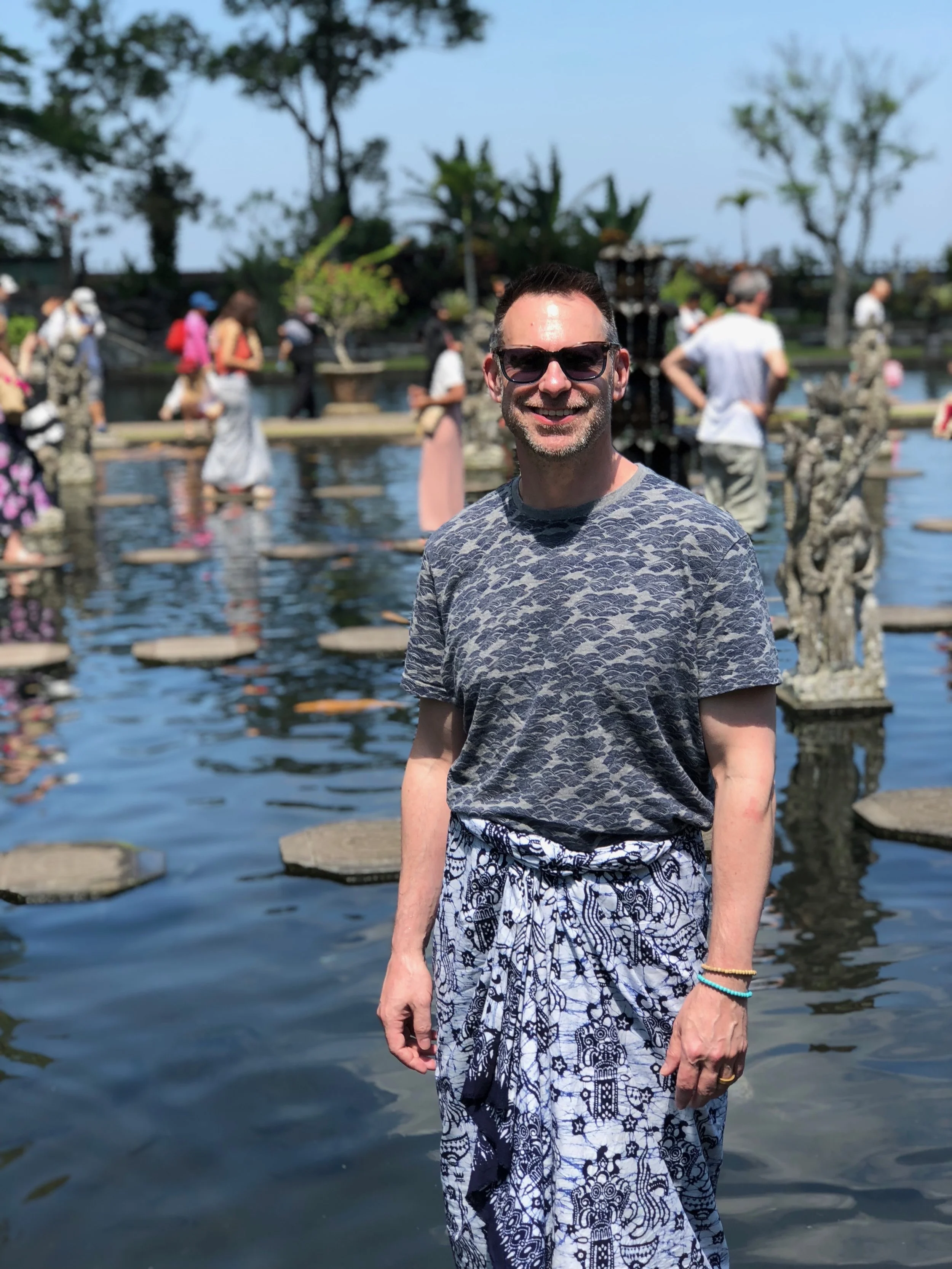
We had found and hired a driver that Wally liked because he was wearing a traditional sarong. Besides being affordable, our driver Made (pronounced Meh-day) cost about $50 for the day. I was resistant to visiting Tirta Gangga at first, but in the end agreed it’d be worth making a road trip.

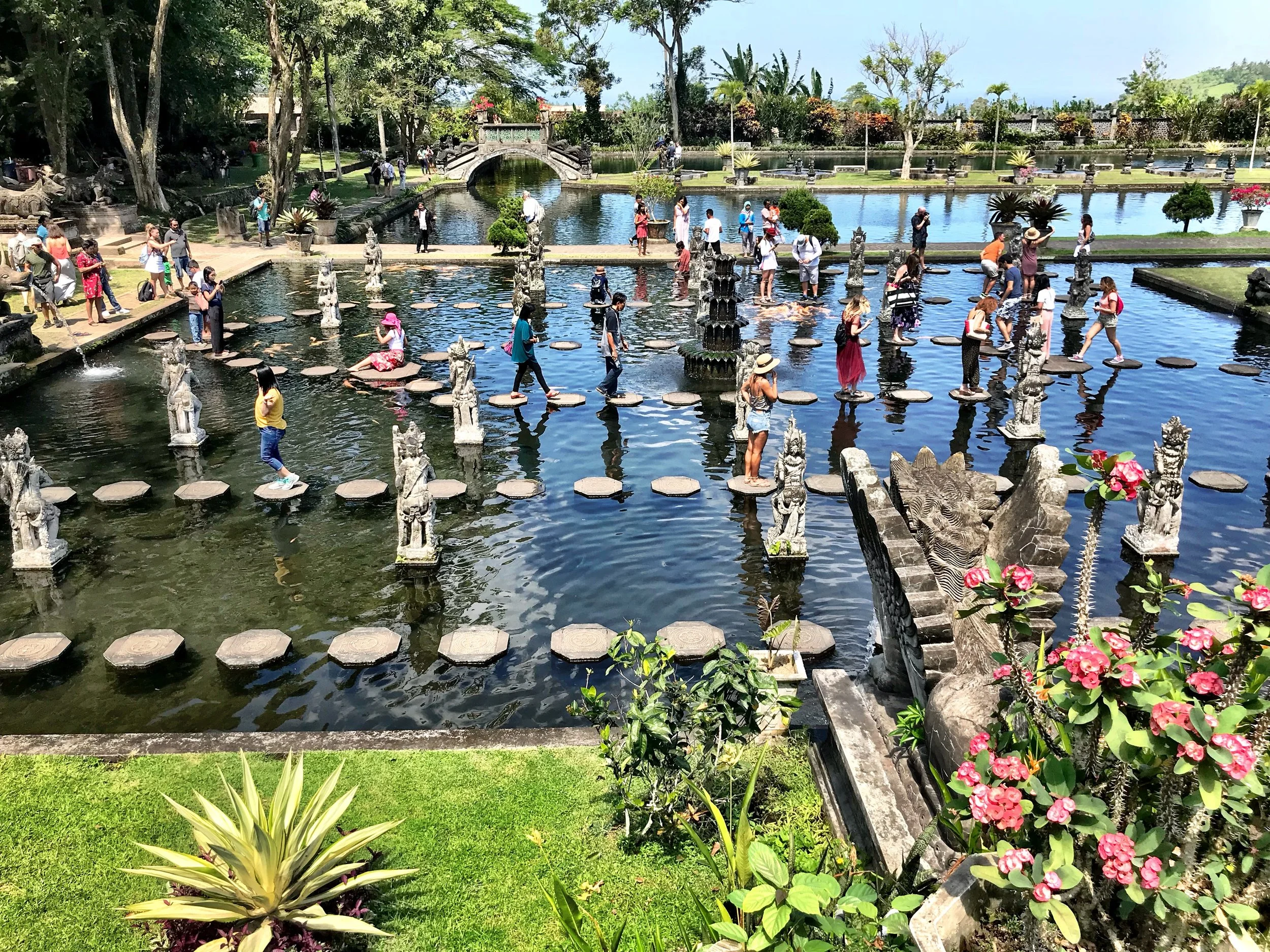
The stepping stones in the Mahabharata Pond at Tirta Gangga get a bit crowded

The stepping stones in the Mahabharata Pond at Tirta Gangga get a bit crowded

The Royal Water Gardens of Tirta Gangga

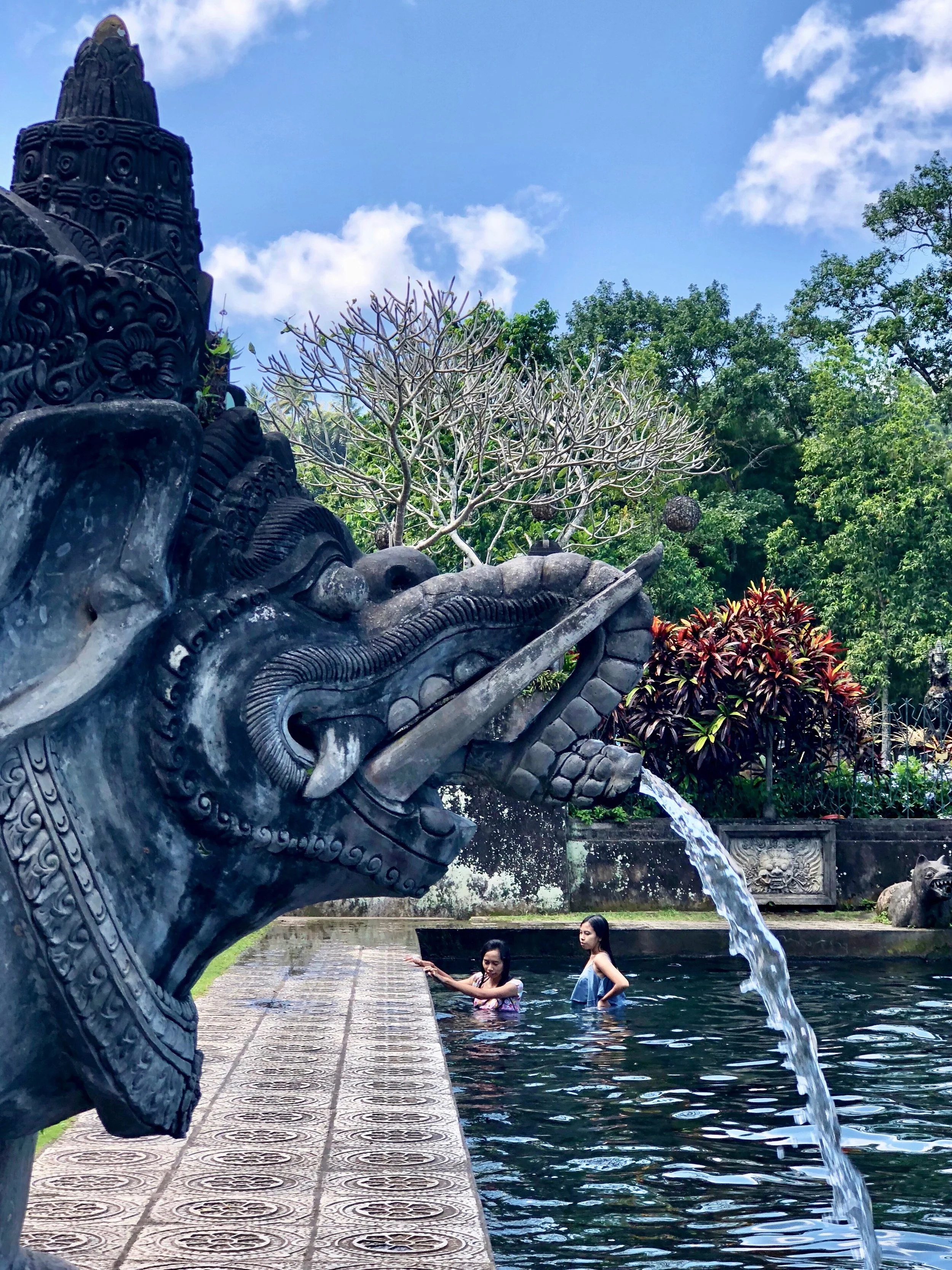
Tirta Gangga, whose name translates as “Blessed Water of the Ganges,” is surrounded by emerald green rice fields and rests upon a natural spring.

The enclosed recreational gardens occupy 2.5 acres and were built in 1948 by the last raja of Karangasem. An imaginative and budding architect, he was influenced by a visit to the gardens of Versailles, France.

During construction, it was a great surprise for visitors to find the raja spending his days knee-deep in the mud, steadily working alongside local craftsmen.

In this water garden, the source of its many water features is located beneath a sacred banyan tree named Rijasa by the villagers. Like the local river Ganges, it’s considered holy.

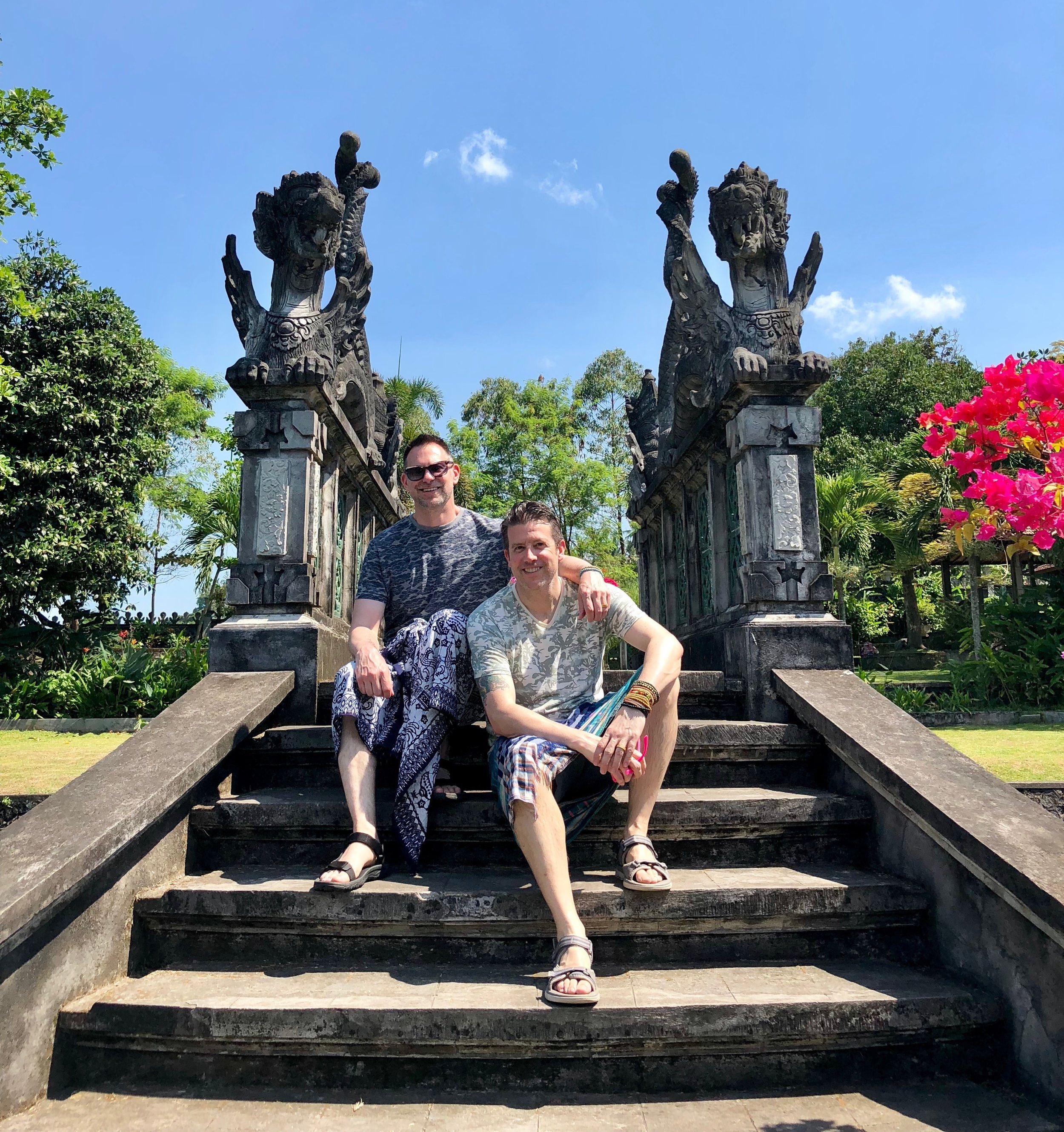
Duke and Wally on the bridge leading to Demon Island

Duke and Wally on the bridge leading to Demon Island

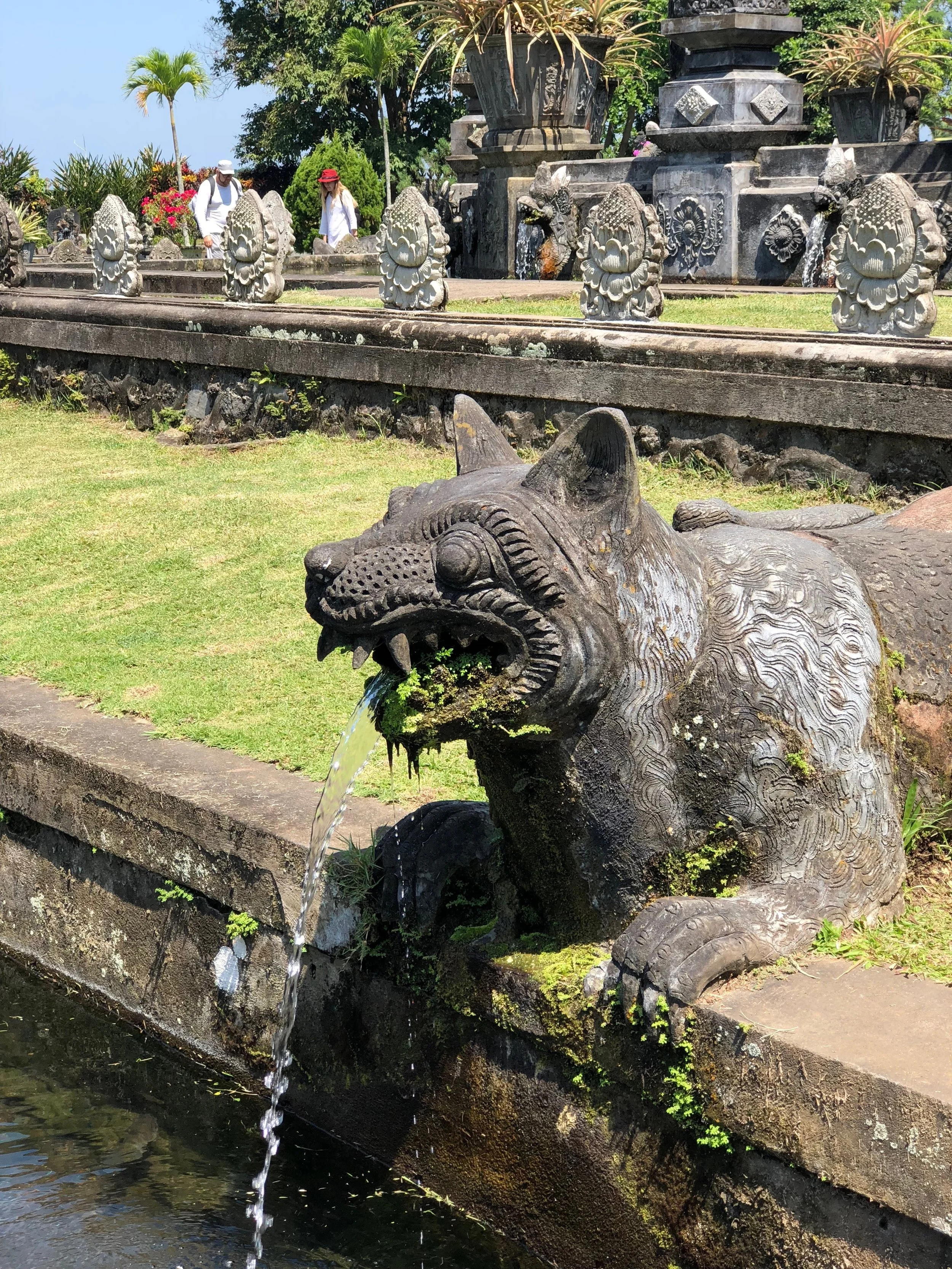
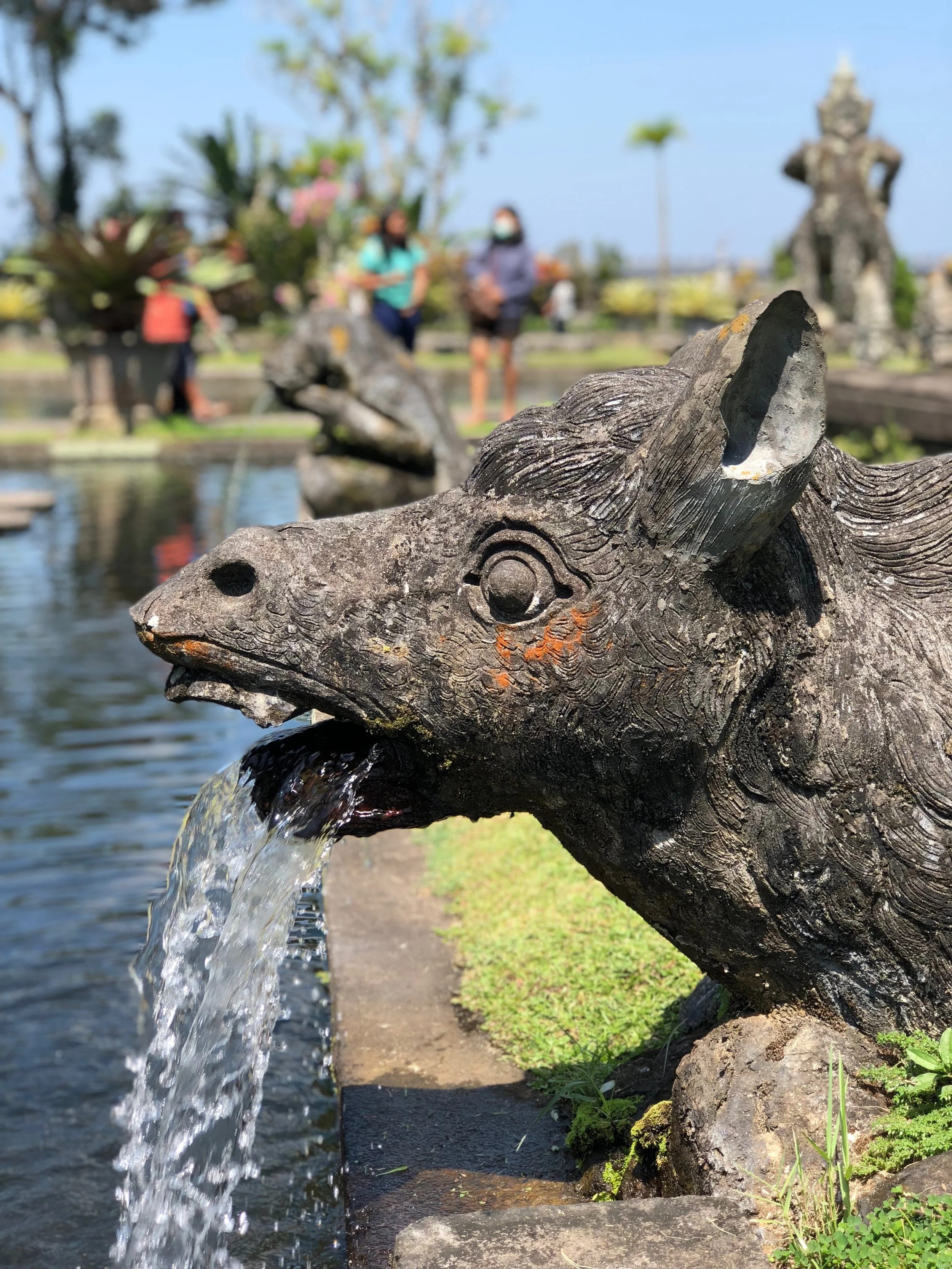
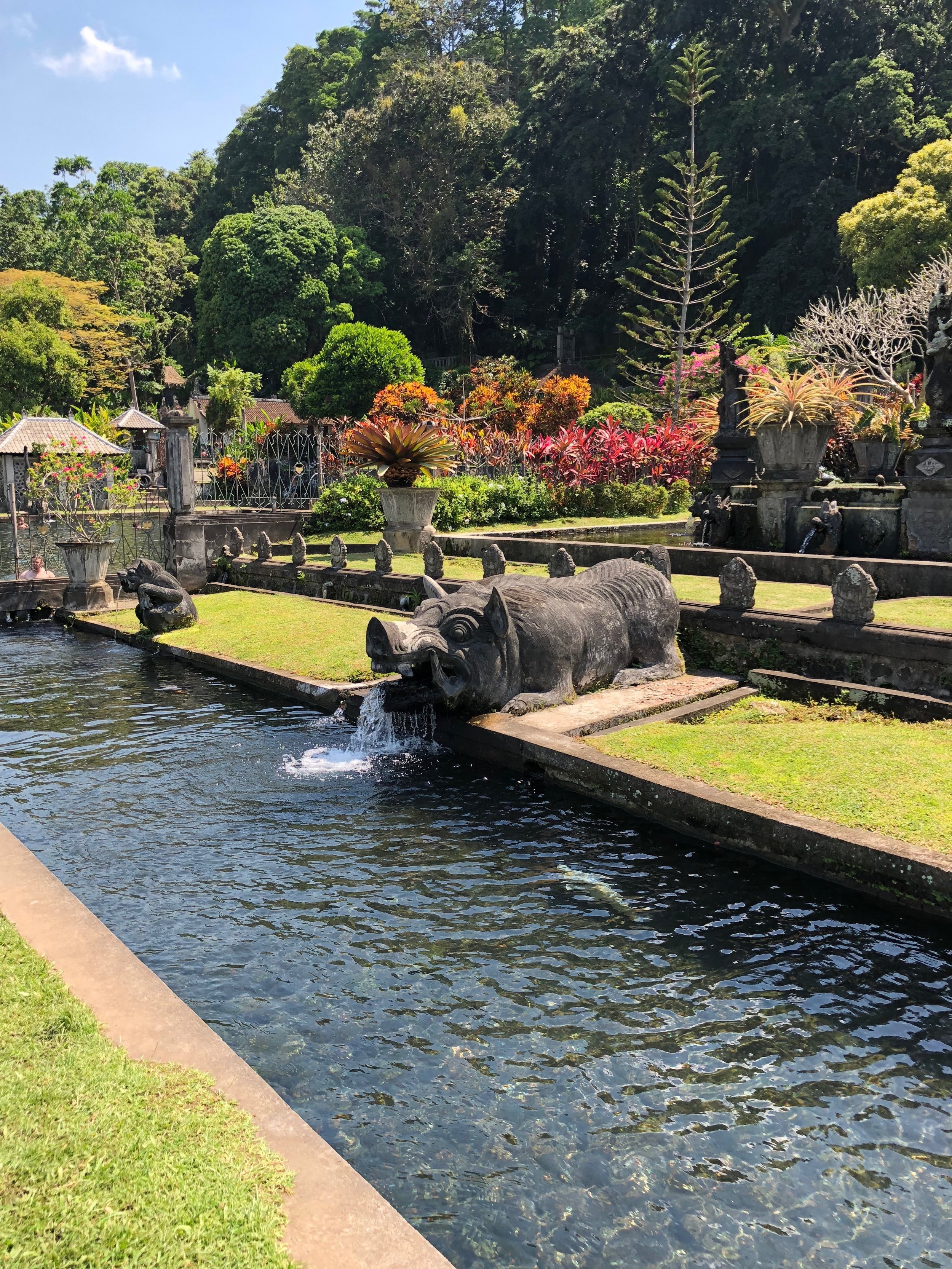
The waterspouts at Tirta Gangga depict various creatures

The waterspouts at Tirta Gangga depict various creatures

Local lore holds that if you bathe in the waters on a full moon, you will miraculously be blessed with youth and cured of illnesses.

When we arrived on a clear blue afternoon, the place was already a bit crowded. The gardens provided a glimpse into the Bali of old. The courtyards of Tirta Gangga are laid out on three levels, representing the Hindu concept of triloka, the mortal plane, the divine world and the lower realm of demons. Each level contains water features and sculptures that visitors can walk around and admire.

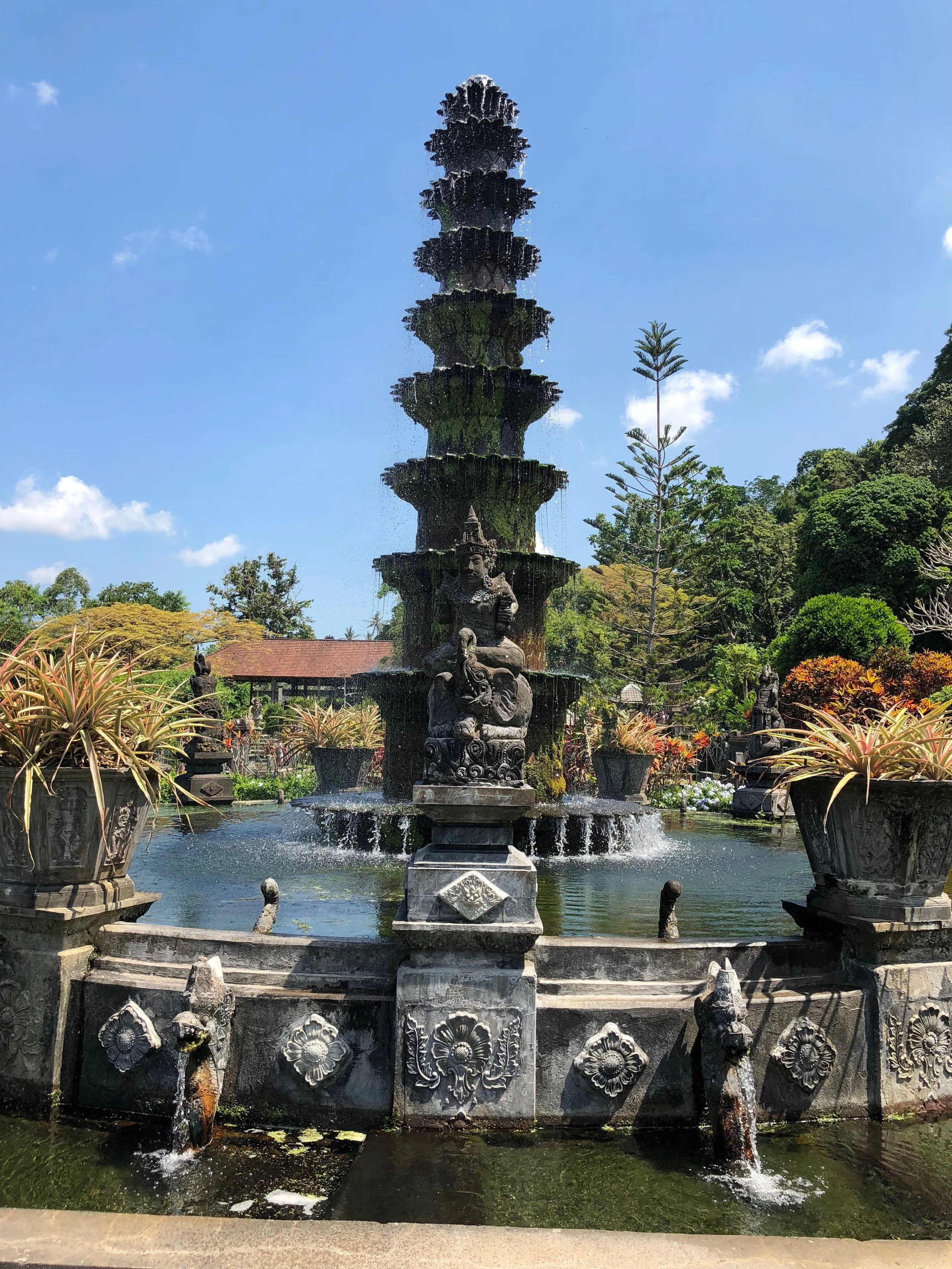
The first thing we saw when we entered was the monumental 11-tiered Nawa Sanga Fountain, which resembles a lotus and is Victorian in style. This fountain, together with the lower swimming pool and Mahabharata Pond, form the mortal bwah level of Tirta Gangga. The eight deity figures encircling the fountain represent the guardians of the cardinal directions and are positioned around the powerful central deity of Siwa, or Shiva, here represented as the fountain itself.

The 11 tiers of the Nawa Sanga Fountain were designed to resemble lotus flowers

The 11 tiers of the Nawa Sanga Fountain were designed to resemble lotus flowers

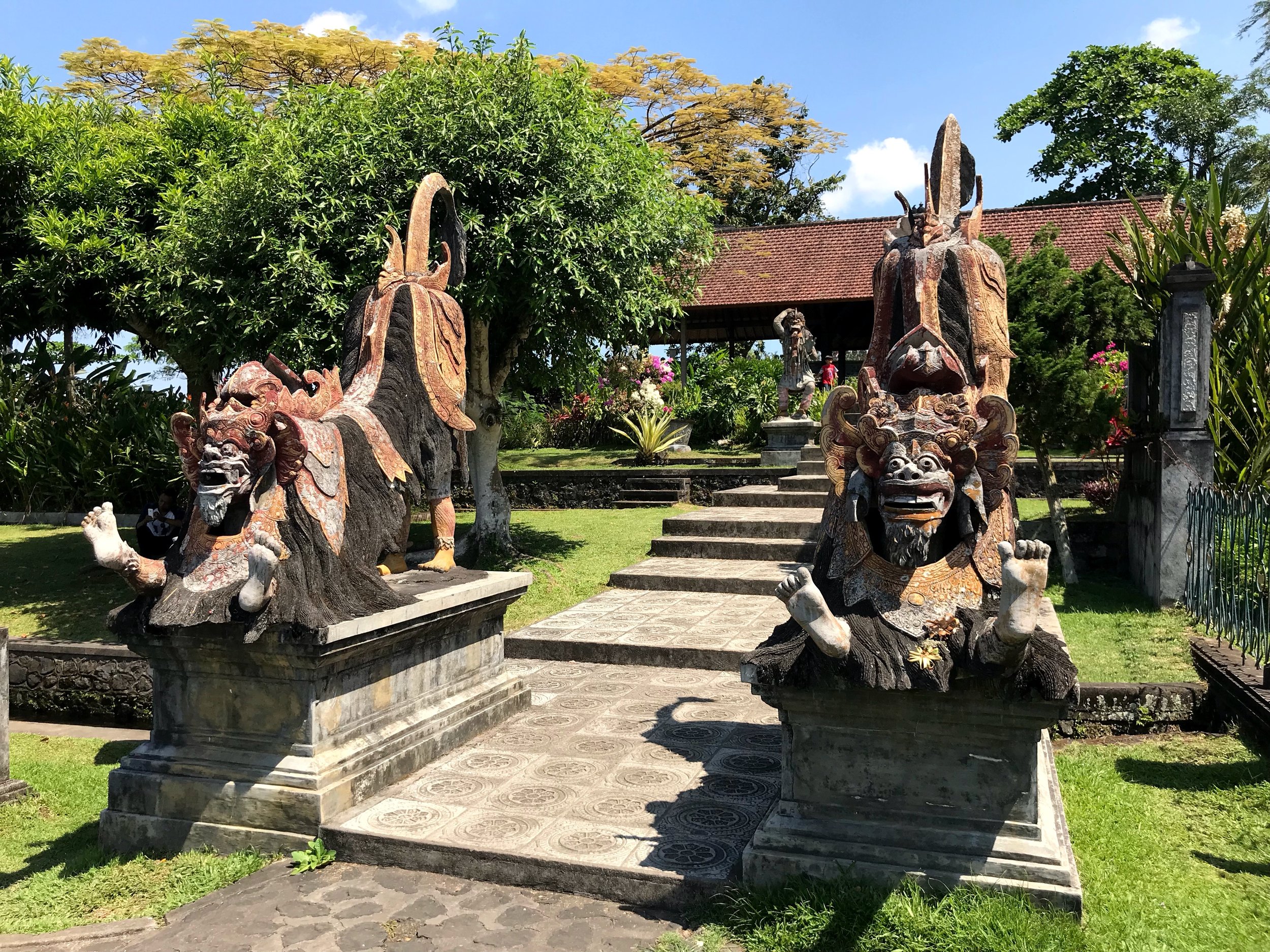
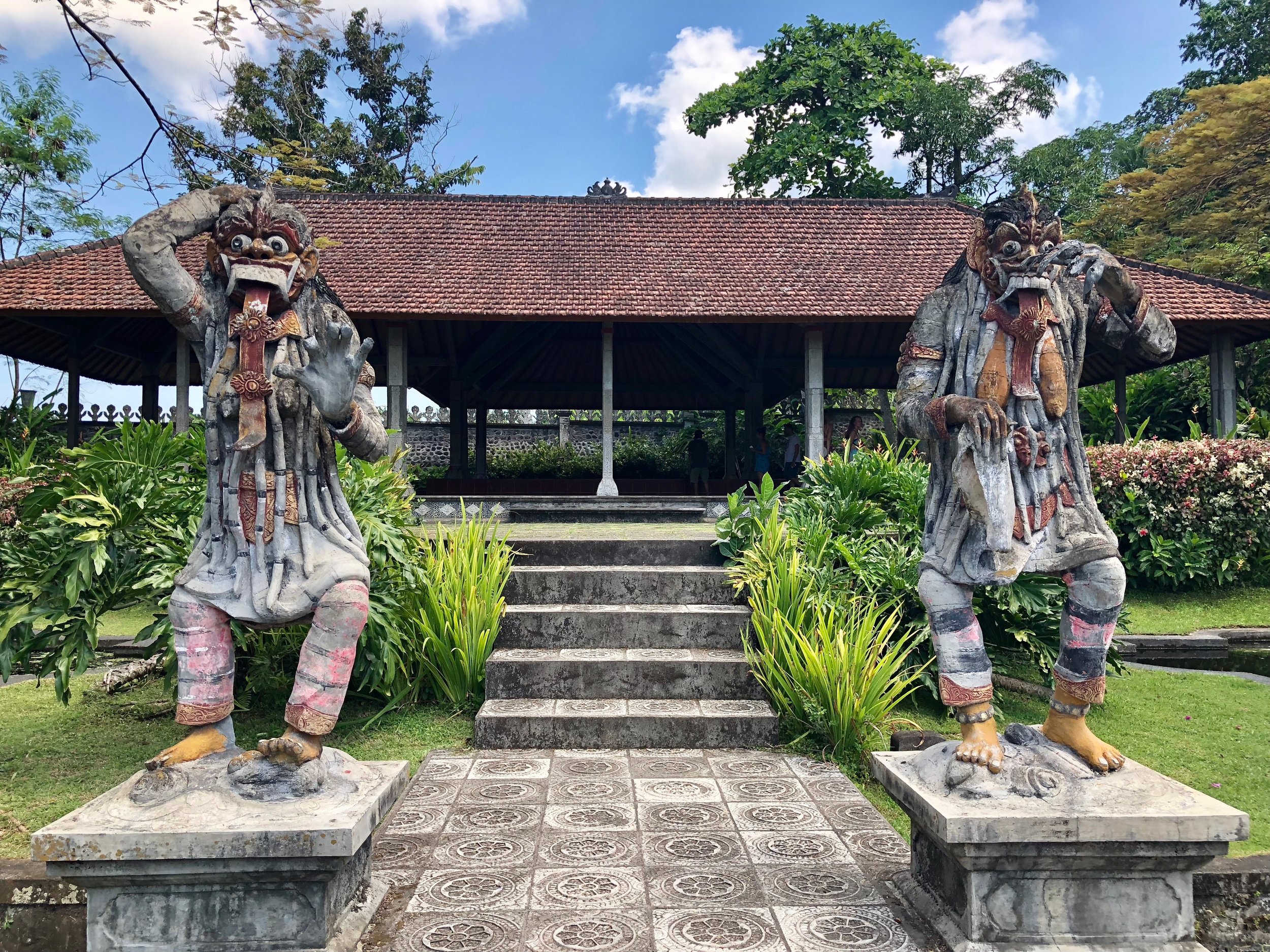
We followed the footpath leading directly to the auditorium pavilion, which is perched on the higher northern level, swah, the divine world and flanked by a pair of statues, reproductions of the original benevolent beast Barong, his humanlike feet playfully poking out in front.

Barongs, their feet sticking out in a comical manner, guard the back of the gardens

Barongs, their feet sticking out in a comical manner, guard the back of the gardens

Just beyond, in the garden’s northwest corner, lies a small meditation garden, with eight figures depicting samsara, the continuous cycle of life, death and rebirth, including three benevolent deities, a mortal man and mortal woman, and three horrifying demons.

Two Rangdas don’t make a right

Two Rangdas don’t make a right

Beware the demon queen!

Beware the demon queen!

One of the demons in the meditation area at the back of Tirta Gangga

One of the demons in the meditation area at the back of Tirta Gangga

Realizing we would most likely not attain enlightenment, at least not in this lifetime, we wandered over to the swimming pool. Wally was overheated and I agreed that it would be pretty special to cool off in a pool whose waters are considered sacred. After figuring out where the entrance was, we paid a small fee to take a plunge. Wally went in for a swim, while I dipped my toes in the bracing but refreshing spring water. Admittedly, I was a bit jealous that I hadn’t joined him, though I was amused by the antics of a group of college-age French boys.

Wally took a dip in the Lower Pool

Wally took a dip in the Lower Pool

A mythological creature spews water

A mythological creature spews water

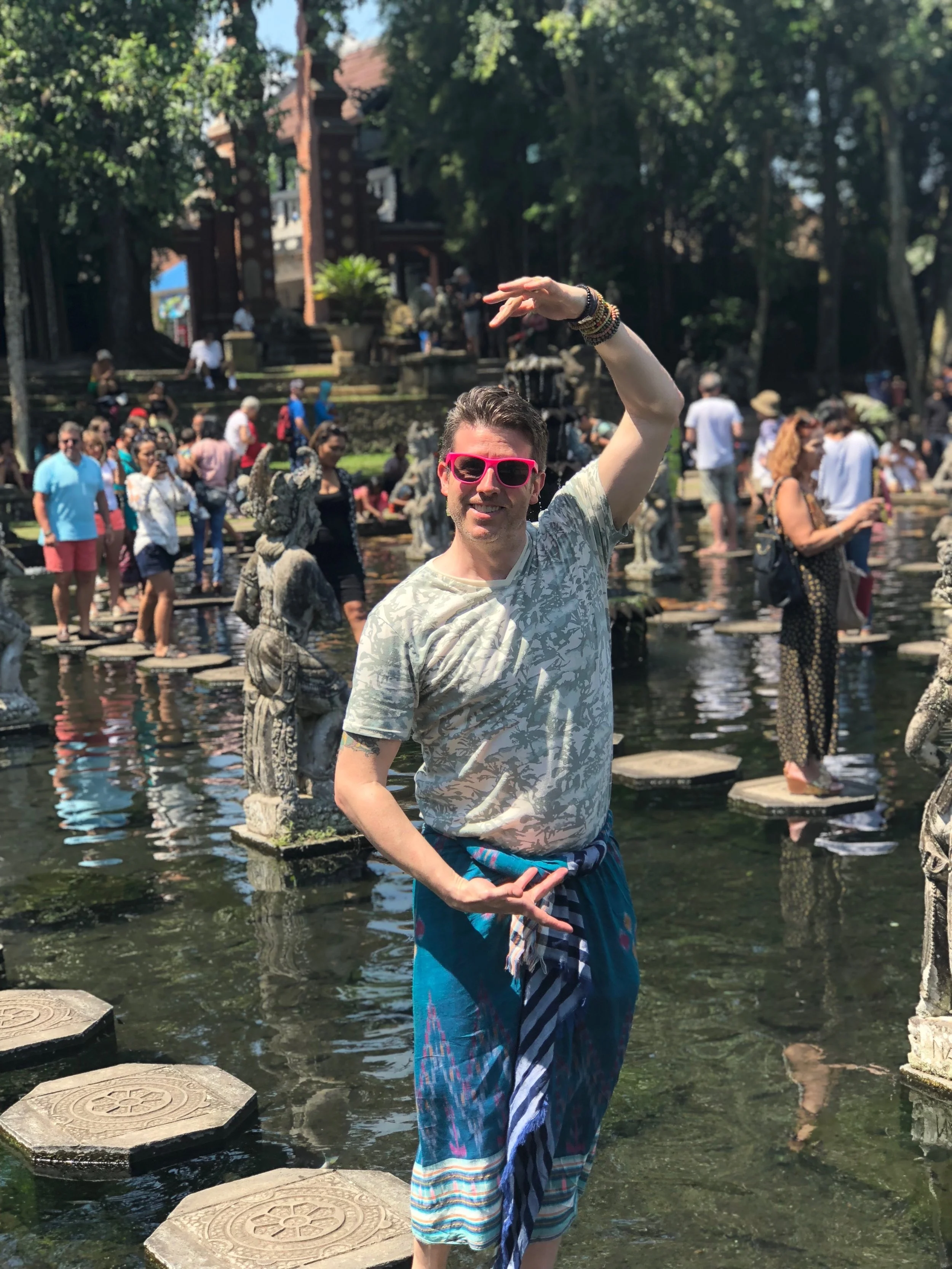
After our swim, we visited the Mahabharata Pond. The octagonal stepping stones enabled us to walk across its surface and admire the large koi fish swimming in its crystal-clear waters. This feature is very crowded, and it’s a bit nerve-wracking letting people squeeze past you on the tiny stones as you pause for a photo. Sometimes people had to backtrack all the way to the start because they met up with someone going the opposite direction.

Duke is steppin’ out

Duke is steppin’ out

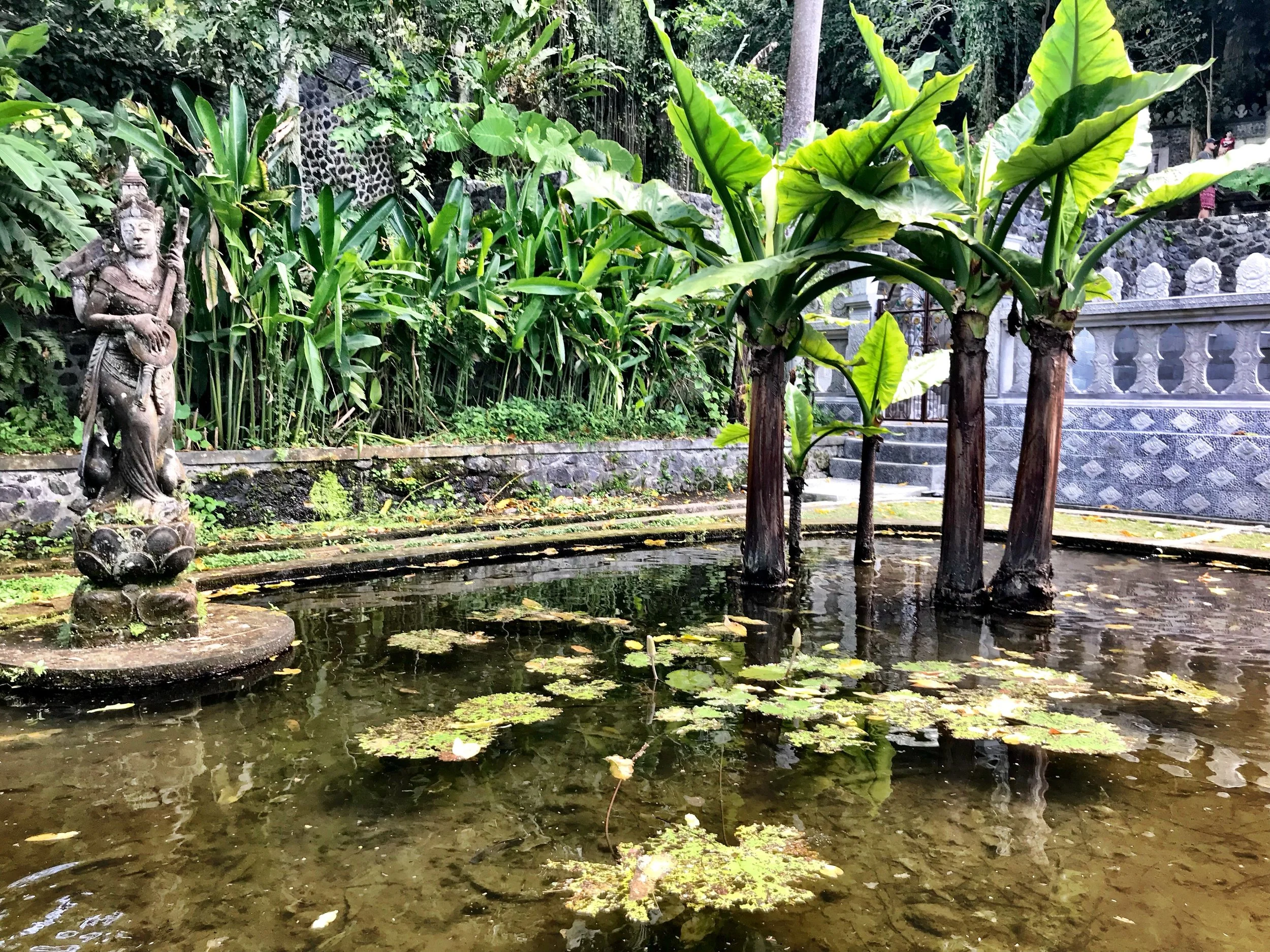
This celestial nymph is actually Wally

This celestial nymph is actually Wally

There are several stone sculptures spouting water into the pond. Other sculptures depict the mythical creatures of the Indian epic from which the pool got its name. The raja’s former country house, located just beyond the Versailles Pond, has been converted into an inn.

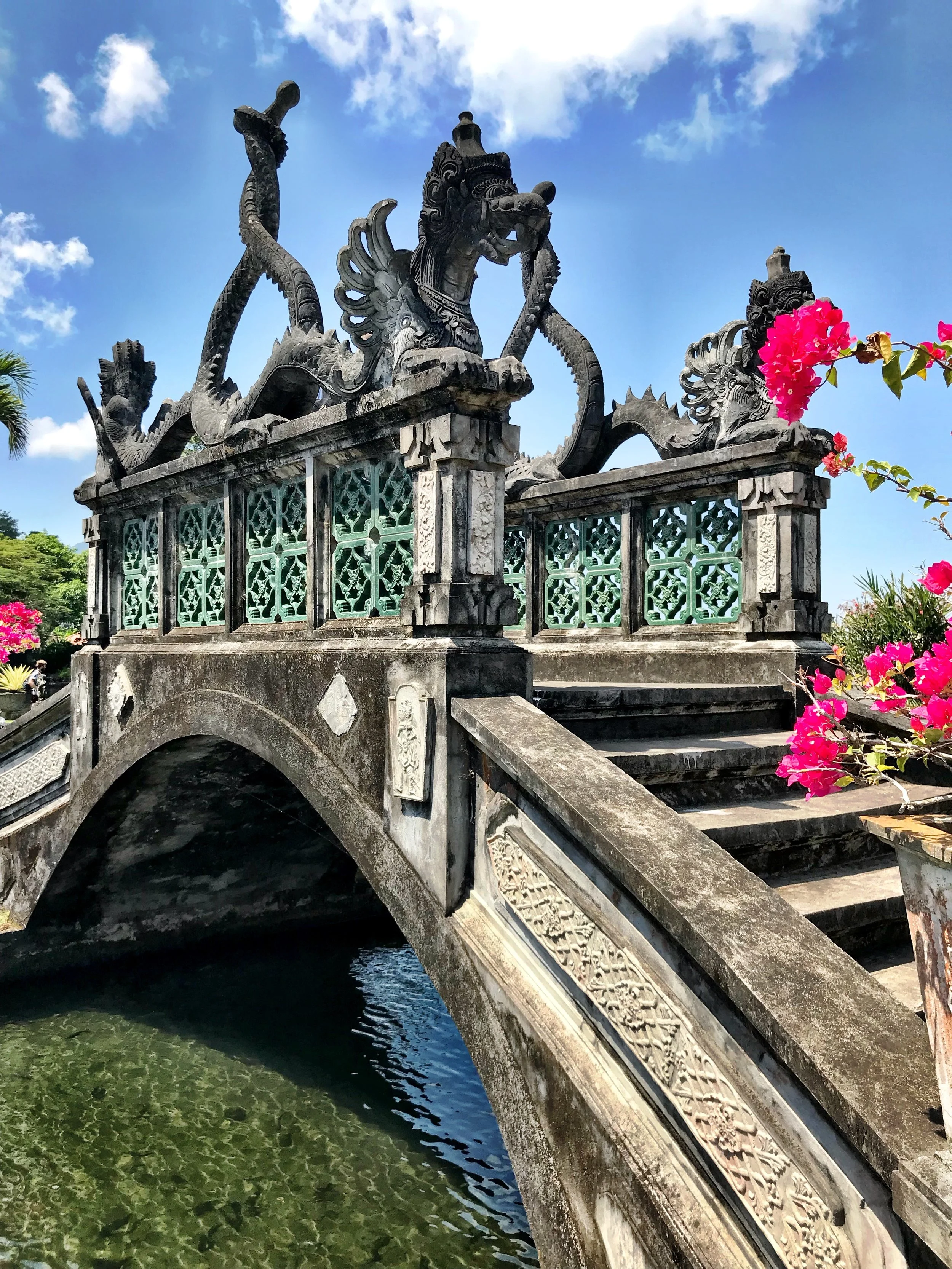
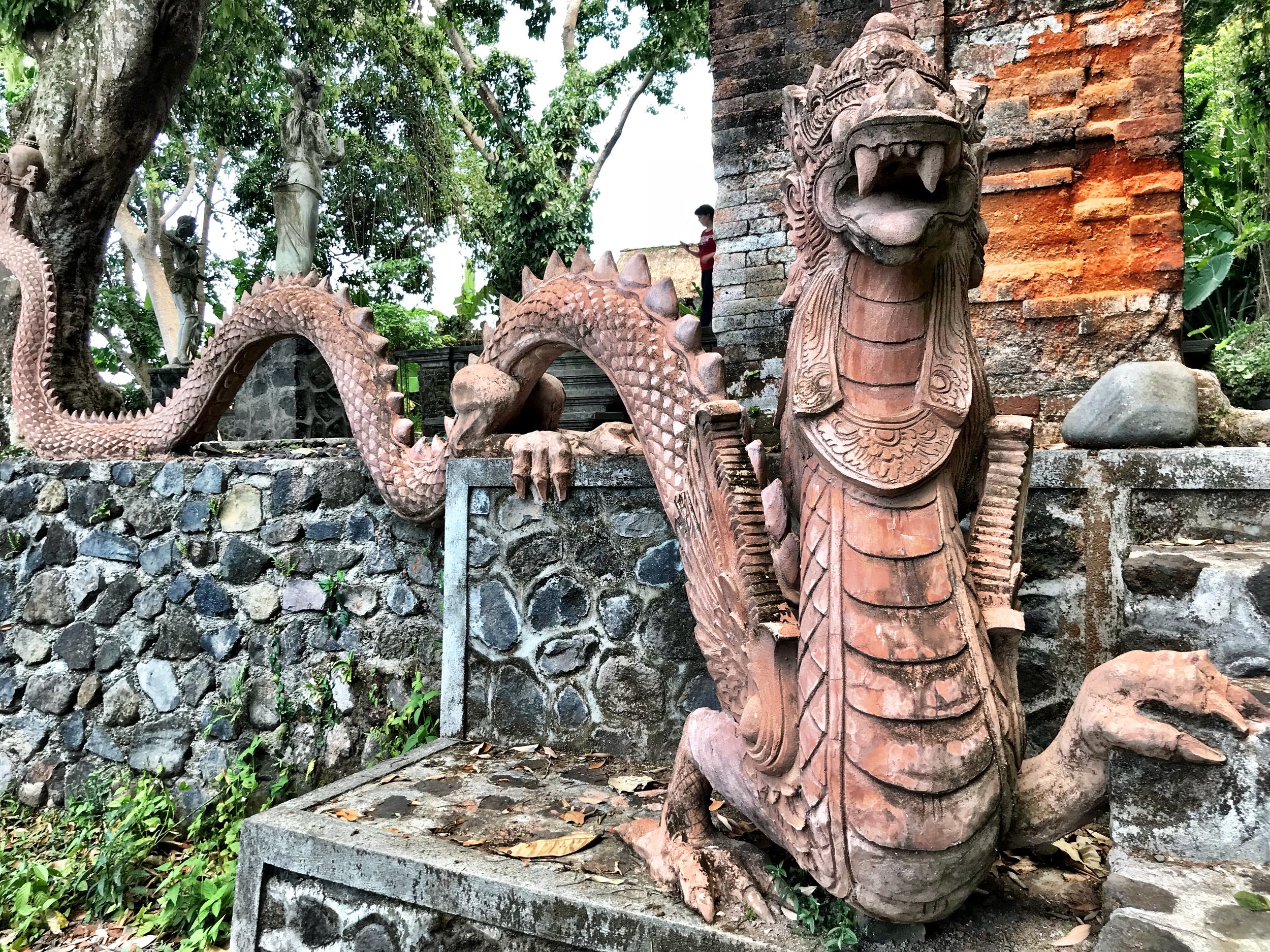
We eventually arrived at Tirta Gangga’s largest water feature, the South Pond, which is located to the left of the gardens’ entrance and incidentally bhur, the lower realm, where monsters reside. The pond contains the provocatively named Demon Island, which can be reached via a pair of bridges featuring ornately sculpted Balinese dragons.

Dragons perch atop the arched bridge to Demon Island

Dragons perch atop the arched bridge to Demon Island

Demon Island isn’t scary at all. It boasts a series of elegant quatrefoil-shaped fountains

Demon Island isn’t scary at all. It boasts a series of elegant quatrefoil-shaped fountains

The gardens were abandoned in 1963, when Mount Agung erupted unexpectedly after having been dormant for the past century. An ambitious restoration process began in 1979, led by the raja’s son, Anak Agung Made Djelantik, and was continued by Widoere Djelantik, the raja’s grandson, who has returned the gardens to their former glory.

Although the road trip to Tirta Gangga was a bit long, we both agreed how impressive it is and that it’s a special place worth visiting in Bali. –Duke

Tirta Gangga
Ababi
Abang
Karangasem Regency, Bali
Indonesia
The Chicken Church of Java, Indonesia
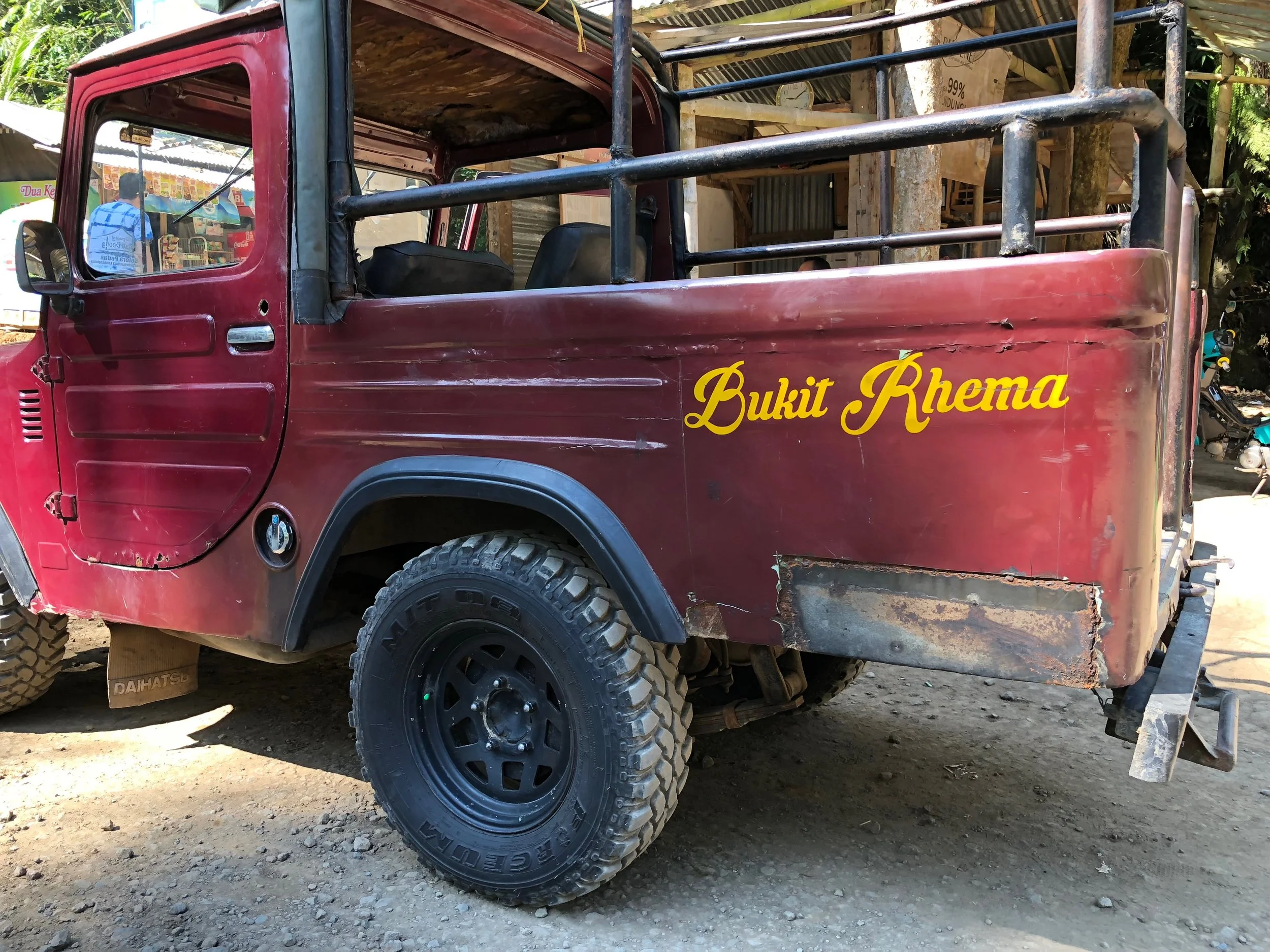
Bukhit Rhema is such a bird-brained idea that it’s a kitchcy — and dare we say egg-cellent — side trip to the temples of Prambanan and Borobudur.

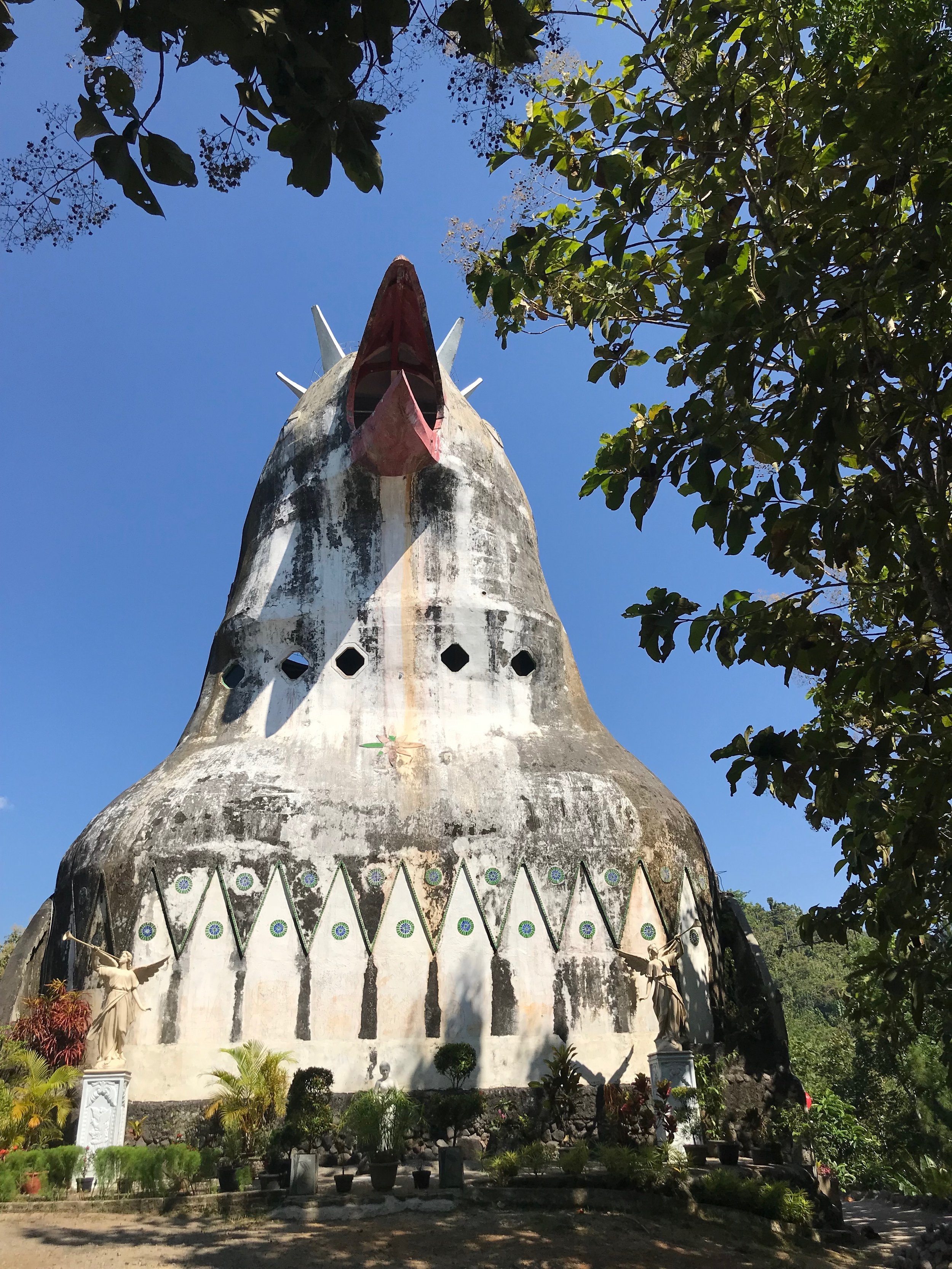
Known as the Chicken Church, it’s actually neither a chicken nor a church

Known as the Chicken Church, it’s actually neither a chicken nor a church

The Lord moves in mysterious ways.

And sometimes that means a church that’s built to look like a dove actually comes out looking more like an ignoble chicken.

To add insult to injury, the building known as the Chicken Church wasn’t ever supposed to actually be a church.

It’s the type of rundown place you’d imagine some doomsday cult taking over.

In fact, it’s rumored to be haunted by vampiric female ghosts.

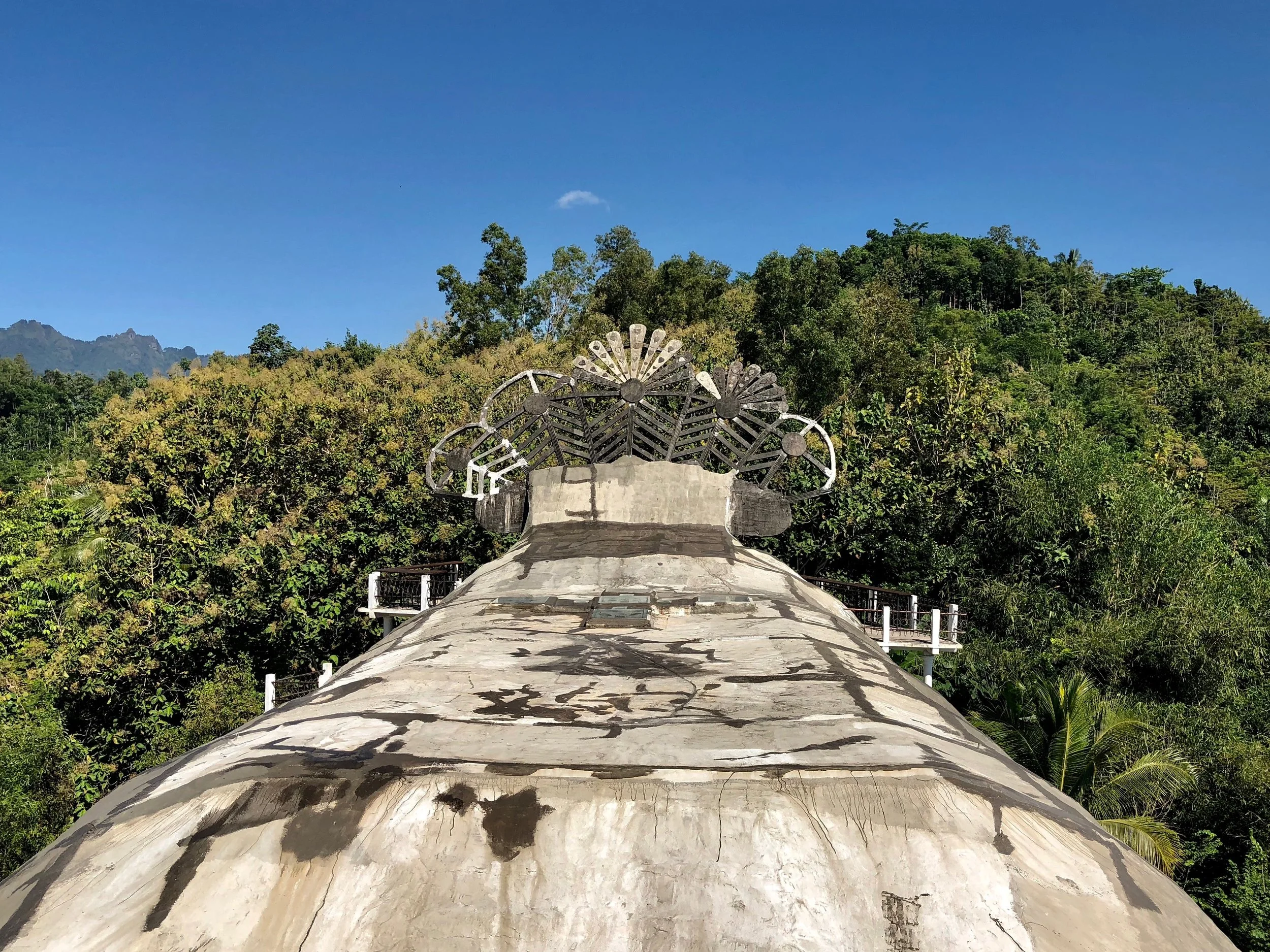
I know the man behind this unusual structure had a different vision in mind, but the end result is really quite comical. The “dove” has liberty spikes atop its head, crosses on its eyes and what appears to be a studded collar, giving it the look of a blotto punk rocker.

This is what it looks like when doves cry: The now-run-down structure was the vision of a man who was called to build a house of prayer

This is what it looks like when doves cry: The now-run-down structure was the vision of a man who was called to build a house of prayer

This unusual structure has taken roost in the middle of the jungle in Magelang, Indonesia on the island of Java, near the Hindu temple complex of Prambanan and the Buddhist temple of Borobudur.
Cars must park down the hill in a lot. A bit up the hill, you’ll see a ticket booth (the admission price is 10,000 rupiah, less than a buck). Then it’s a five-minute walk up a steep hill to get to the chicken. Think of it as a mini-pilgrimage.
Duke had seen images of an abandoned interior, covered in dust and graffiti, and to be honest, that’s what he was hoping to find. But the building has been renovated — though don’t expect too much.

The building would make a lovely setting for cult meetings

The building would make a lovely setting for cult meetings

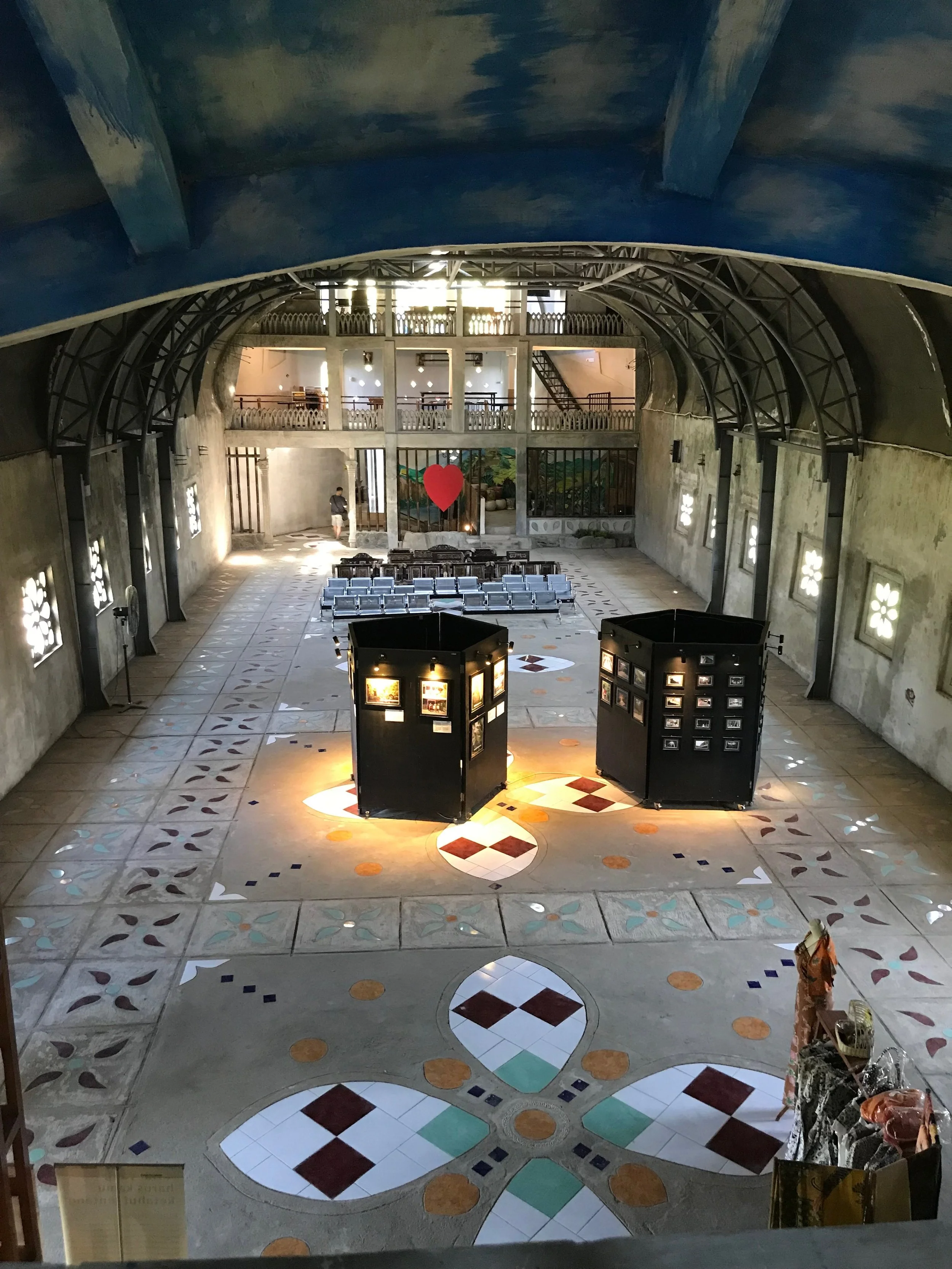
The cavernous interior is still quite bare-bones, featuring a cluster of seats in rows but no altar or anything else, in fact, that recalls a place of worship. It looks like a depressing concrete community center. The tilework on the floor is the most impressive part. It’s the type of rundown place you’d imagine some doomsday cult taking over.

It wasn’t ever fully furnished because its builder ran out of money.

It’s rumored to be haunted, home to kuntilanak, vampiric female ghosts from Indonesian folklore.

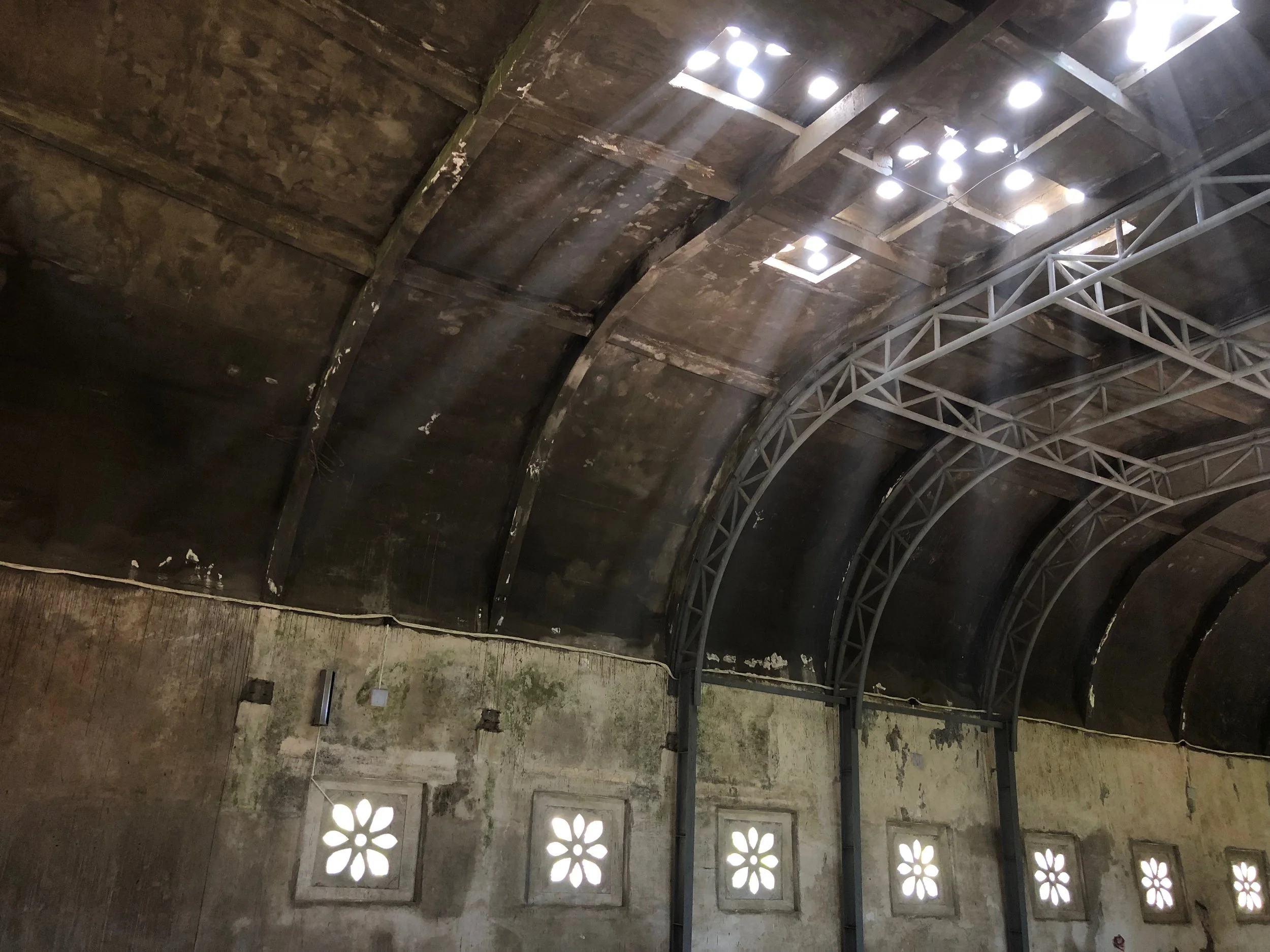
Heavenly rays of light illuminate the decaying interior

Heavenly rays of light illuminate the decaying interior

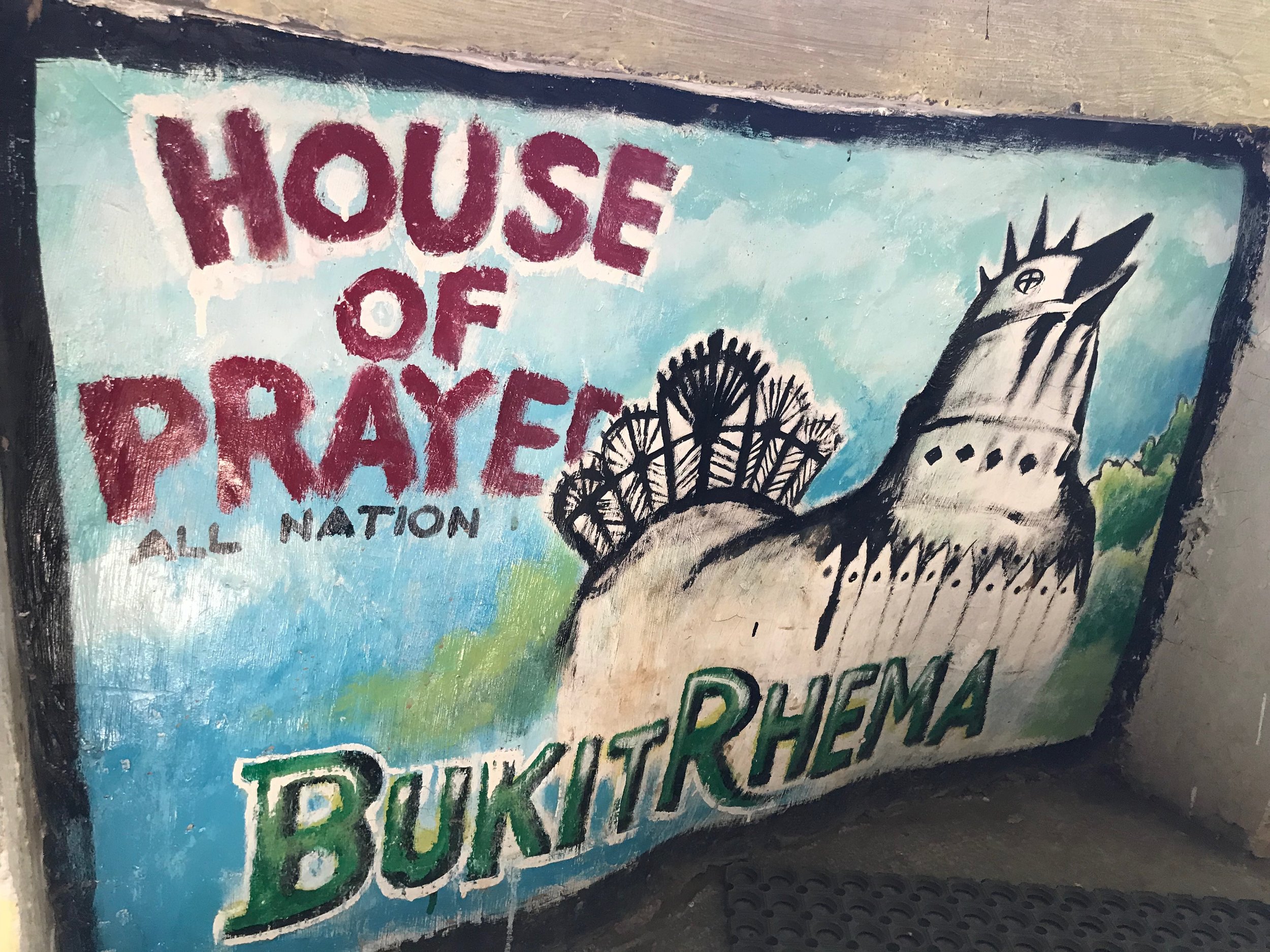
Whose birdbrained scheme was this, anyway? The idea came to Daniel Alamsjah in what he describes as a “vision from God.” One night after praying, he saw a dove with snow-white wings resting at the top of a hill. A voice asked him to build a house of prayer for all nations.  

The end result went a bit fowl (#sorrynotsorry), and locals started calling the structure Gereja Ayam, the Chicken Church.

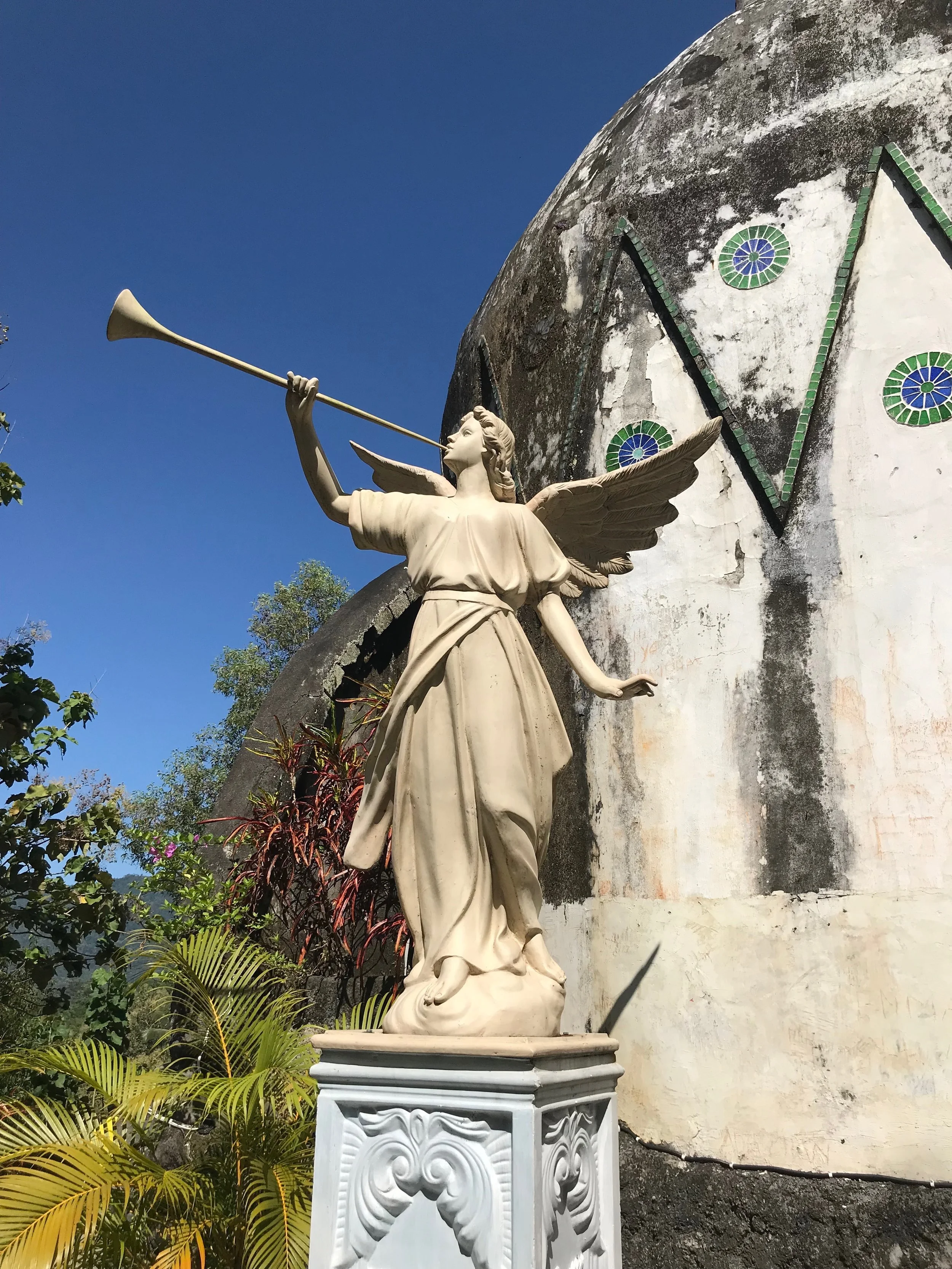
The angels out front are a nod to the builder’s Christian beliefs

The angels out front are a nod to the builder’s Christian beliefs

“Perhaps because of my Christian faith, people thought I was building a church,” Alamsjah told the Jakarta Globe. “I was building a prayer house, not a church, but a place for people who believe in God.”

In the 1990s, he was able to purchase the land, which was said to be offered at Rp. 2 million (a mere $170 at the time).

Looking back at the tail feathers from the lookout on the bird’s head

Looking back at the tail feathers from the lookout on the bird’s head

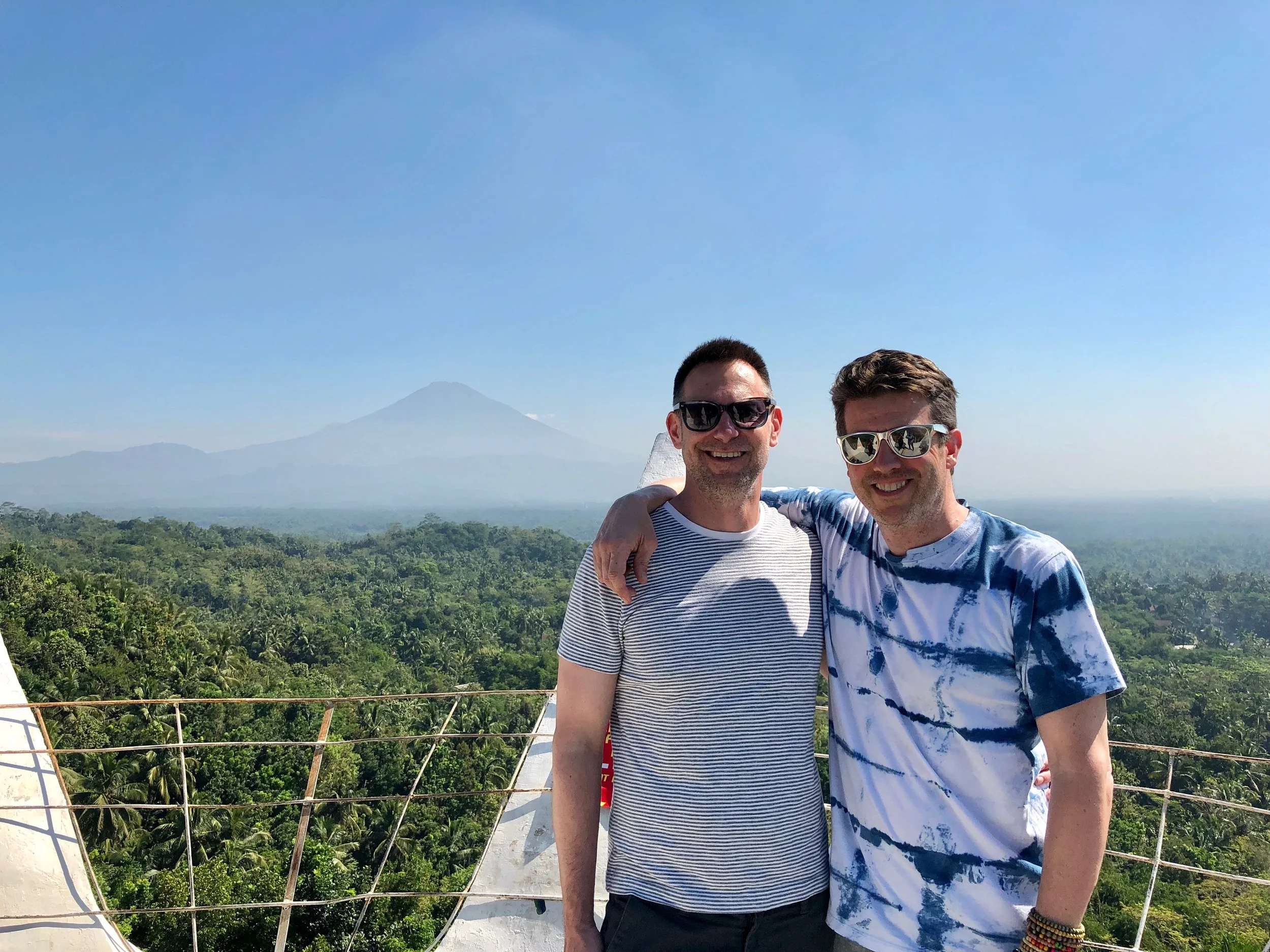
Bird’s-Eye View

Duke and I wanted to do the head first, so, upon entering the building, we turned to the right and began climbing up the back staircase. On the first landing, we were delighted to find a series of brightly painted cautionary tales, much like those tiny free comic booklets missionaries hand out on street corners (apparently they’re called Chick tracts). Inevitably, they’d have a scene where some poor sap suffered the flames of Hell, coming to the realization — too late — that he didn’t accept Jesus Christ as his personal savior.

The mezzanine is covered with brightly painted murals that display bad behaviors

The mezzanine is covered with brightly painted murals that display bad behaviors

From there, we continued our climb to the inside of the chicken’s skull. To access the lookout, you have to head up a tottering spiral staircase and step out onto a small platform atop the bird’s head. Thin metal guardrails encircle the lookout. My vertigo sent my head swimming, so I stayed as close to the center as I could (except, of course, to pose for a picture with a volcano in the background).

Duke and Wally atop the chicken’s, err, dove’s head

Duke and Wally atop the chicken’s, err, dove’s head

Two girls were also on the platform and asked if they could take our picture. We found that the kids on Java were fascinated by us — at the tourist sites, we couldn’t go 5 feet without being begged to pose for a photograph.

Looking out one of the windows on the ground floor

Looking out one of the windows on the ground floor

After practically tumbling down the spiral staircase, Duke and I headed to the first floor to check out the chicken’s butt. Toward the back of the building, there’s a strange area with dirt and an exposed wall. Photos of people touching the wall, ecstatic glows upon their faces, revealed that they believe there to be magic lying within.

Perhaps they’re scenes from the Chicken Church’s past: A dozen unfinished chambers lie underneath it, which were once used for rehabilitation.

“The rehabilitation that happened at this prayer house was for therapy for disabled children, drug addicts, crazy people and disturbed youth who wanted to fight,” Alamsjah says.

The “dove” has liberty spikes atop its head and crosses on its eyes, giving it the look of a blotto punk rocker.
This truck will take you up the hill if you don’t want to walk

This truck will take you up the hill if you don’t want to walk

We climbed up the back stairs, gave a girl our ticket for a free local treat that came with our price of admission. The snack turned out to be bahn cay, fried cassava root, the Javanese version of home fries.

We munched our carbs, gazing out at the lush green hills beyond, glad we made time for this quirky stopover.

Don’t be chicken: If you’re hitting Prambanan or Borobudur, make a chicken run (can’t stop making puns!) and include a visit to this unintentionally goofy site. –Wally

The Bukit Rhema was supposed to actually resemble a dove, the symbol of peace

The Bukit Rhema was supposed to actually resemble a dove, the symbol of peace

“Take me to my leader”

“Take me to my leader”

Bukhit Rhema
Gereja Ayam, the Chicken Church

Dusun Gombong
Kembanglimus, Kurahan, Karangrejo
Borobudur, Magelang
Jawa Tengah 56553
Indonesia