schools

Ben Youssef Madrasa Is Beautiful — Even When Someone Is Blocking Your Shot

Once home to hundreds of theology students, Ben Youssef Madrasa in Marrakech is now a hypnotic maze of cedarwood, tilework, tiny dormitories and tourists trying to stage the perfect Instagram reel.
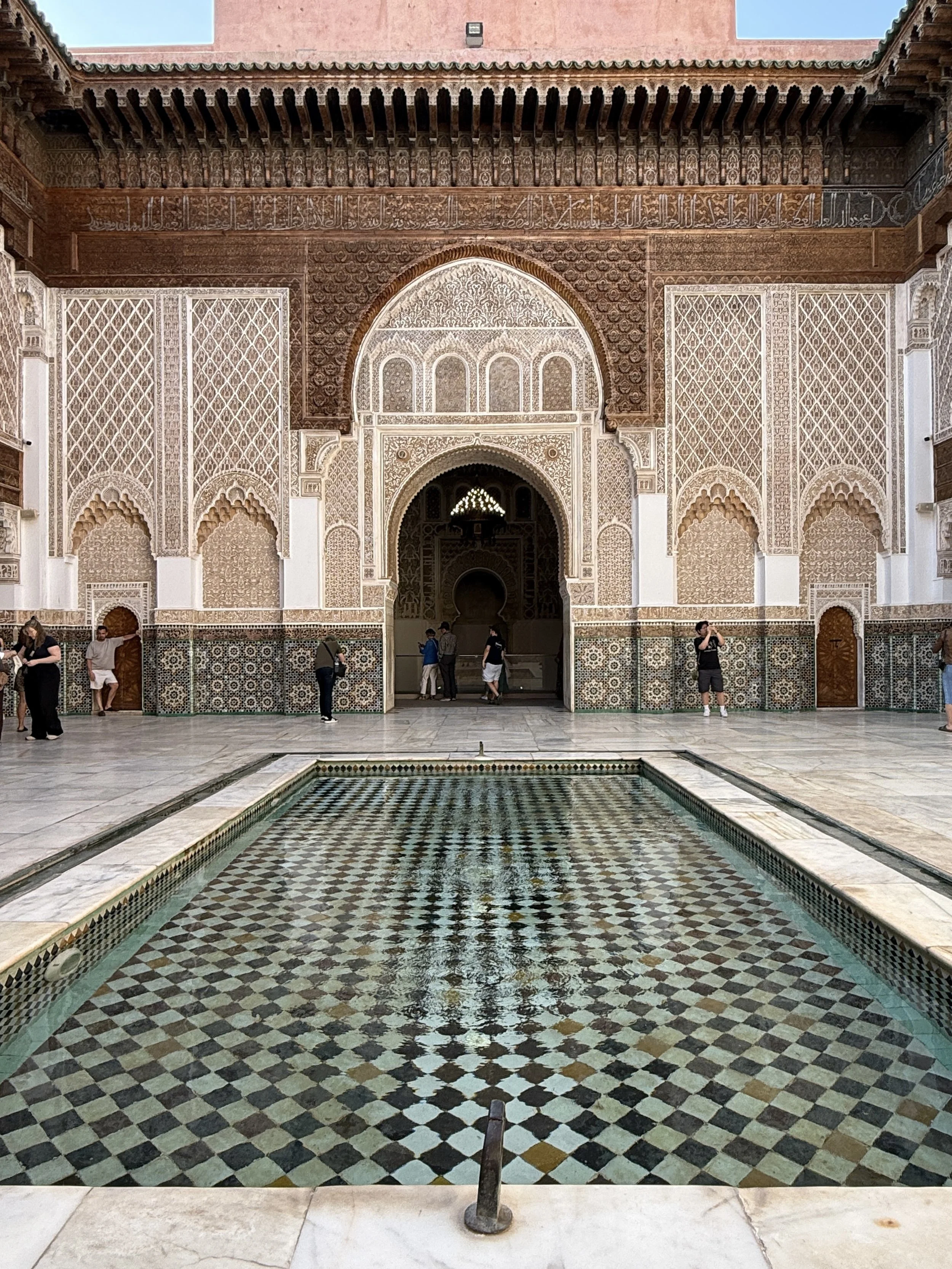
Courtyard of the Ben Youssef Madrasa with its reflecting pool in Marrakech, Morocco

En route to Ben Youssef Madrasa, you wind through the medina past scooters, cats, more cats, hanging lanterns, leather bags and shopkeepers trying to lure you into buying everything from slippers to saffron. The alleys feel compressed and chaotic — until suddenly they open up. Around a corner: a doorway. You’ve arrived.  

You step into the entrance, pay for your ticket — and then!

There were moments when the madrasa felt less like a historic site and more like the set of multiple simultaneous influencer campaigns.

The courtyard is almost absurdly intricate. Cedarwood curls across the ceilings in impossible patterns. Geometric zellige tilework climbs the walls with mathematical precision. Light bounces off the reflecting pool while visitors slowly circle the space trying to take it all in.

Or, in many cases, trying to take themselves in. During our visit, there were moments when the madrasa felt less like a historic site and more like the set of multiple simultaneous influencer campaigns. One woman posed dramatically at the edge of the reflecting pool while her friend shot video from approximately 14 different angles. Another visitor appeared to be filming a luxury perfume commercial involving slow-motion twirling. At one point, someone became visibly irritated that tourists were daring to walk through a public building during her photoshoot.

Which is unfortunate, because this place deserves your actual attention.

Planning Your Visit

Ben Youssef Madrasa

Address

Rue Assouel, Marrakesh Medina, Morocco

Hours

9 a.m. to 7 p.m.

Ramadan: 9 a.m. to 4:30 p.m.

Admission

50 dirhams (~$5) — foreign adults

20 DH — Moroccan adults

10 DH — children under 12

30 DH — groups of 21+

Time Needed

Plan for at least 45 minutes to an hour.

Dress Code

Modest clothing is best — shoulders and knees covered out of respect for the site.

Long before it became one of the most photographed spots in Marrakech, Ben Youssef Madrasa was one of the great centers of Islamic learning in North Africa. Built in its current form during the 16th century under the Saadian dynasty, the school once housed hundreds of students studying theology, law and philosophy within these walls. And despite the crowds, despite the cameras and despite the occasional accidental appearance in a stranger’s TikTok, there are still moments where the building completely silences you.
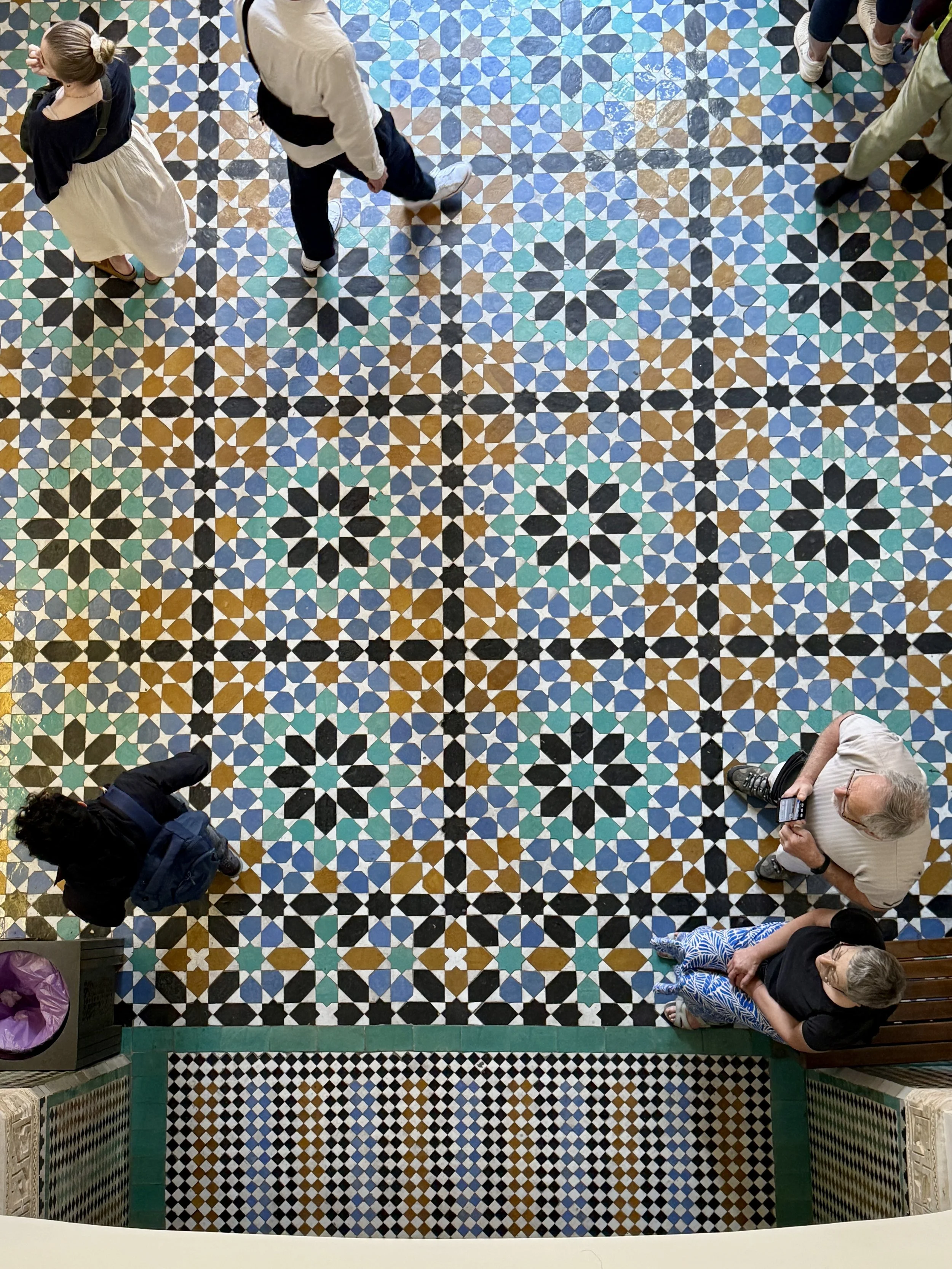
People  walk on the zellij tiled floor in the lobby of Ben Youssef Madrasa

Especially once you wander upstairs into the tiny student dormitories and realize the people who lived here were just young scholars sleeping in cramped little rooms beneath some of the most astonishing craftsmanship in Morocco.
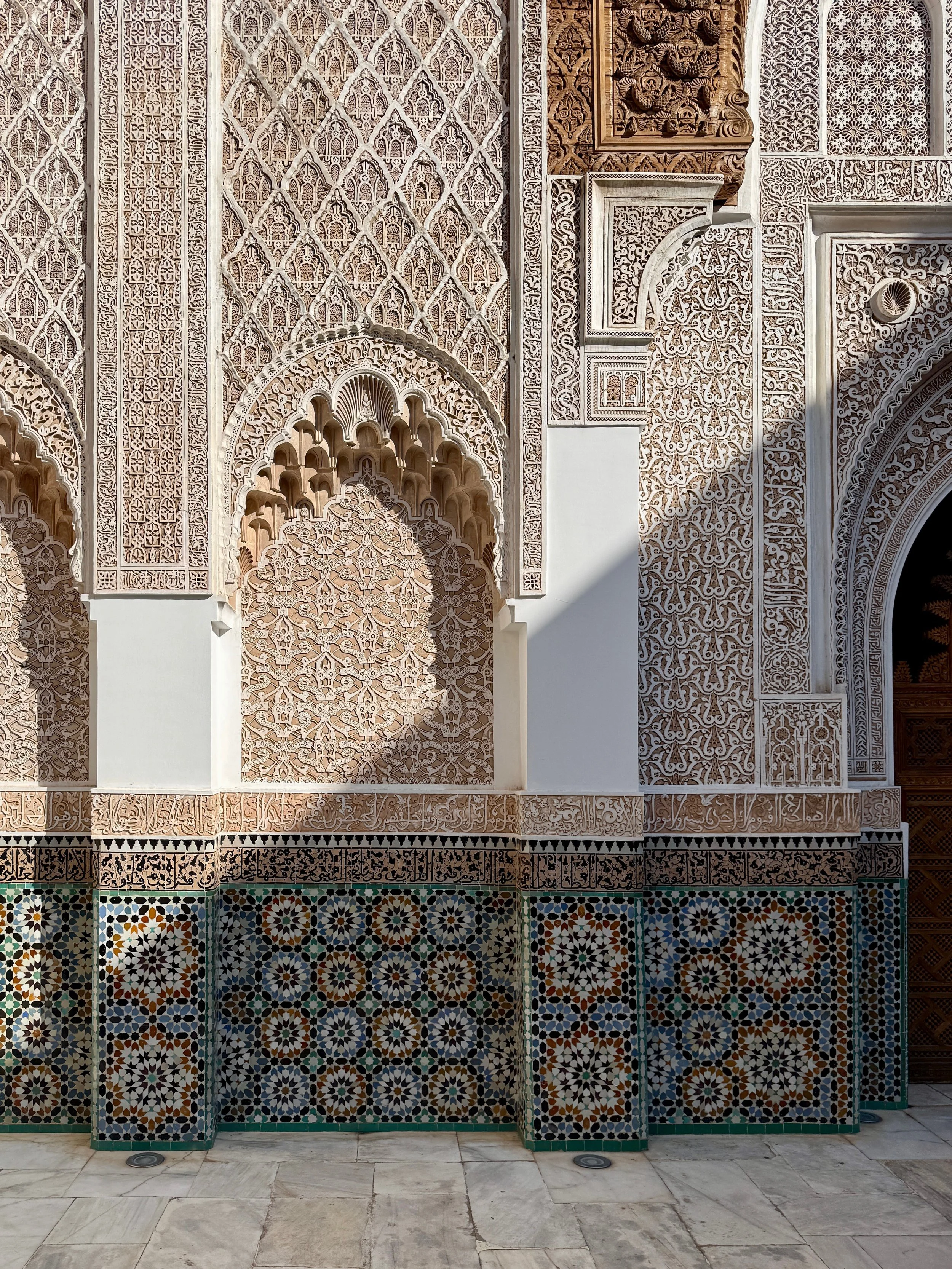
Ornate carvings and tilework at Ben Youssef Madrasa

The History of Ben Youssef Madrasa

Before it became one of Marrakech’s most photographed attractions, Ben Youssef Madrasa was built for something far less glamorous: studying.

The madrasa was connected to the nearby Ben Youssef Mosque, which was originally founded in the 12th century during the Almoravid dynasty under Sultan Ali Ben Youssef, the ruler the complex is ultimately named after. At the time, Marrakech was emerging as a major political, religious and intellectual center, and institutions like this helped establish the city as one of the most important hubs of Islamic scholarship in the region.

What visitors see today, however, mostly dates to a later reconstruction ordered by the Saadian Sultan Abdallah al-Ghalib in the 1560s. And the Saadians, to put it mildly, weren’t interested in subtlety.
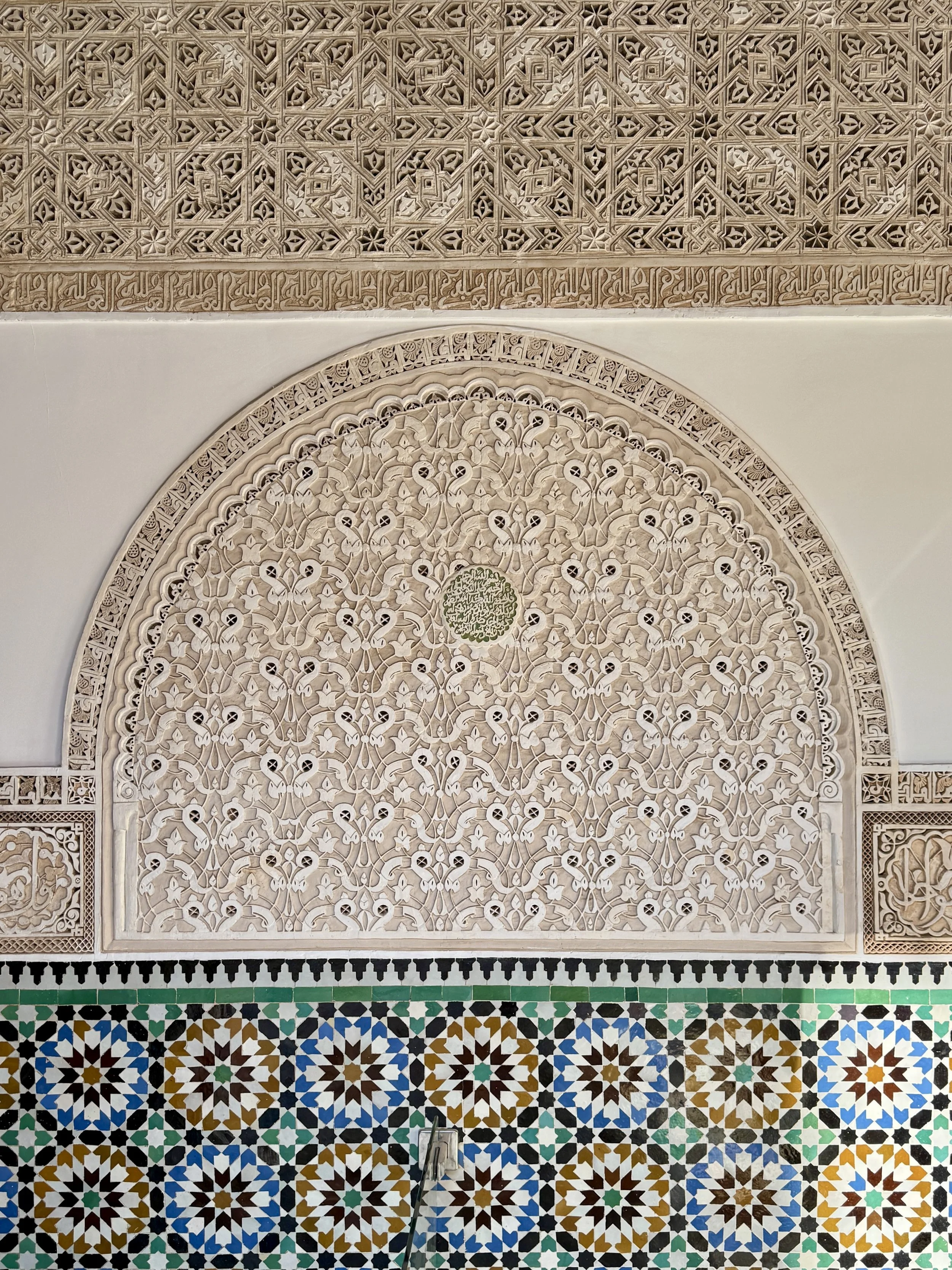
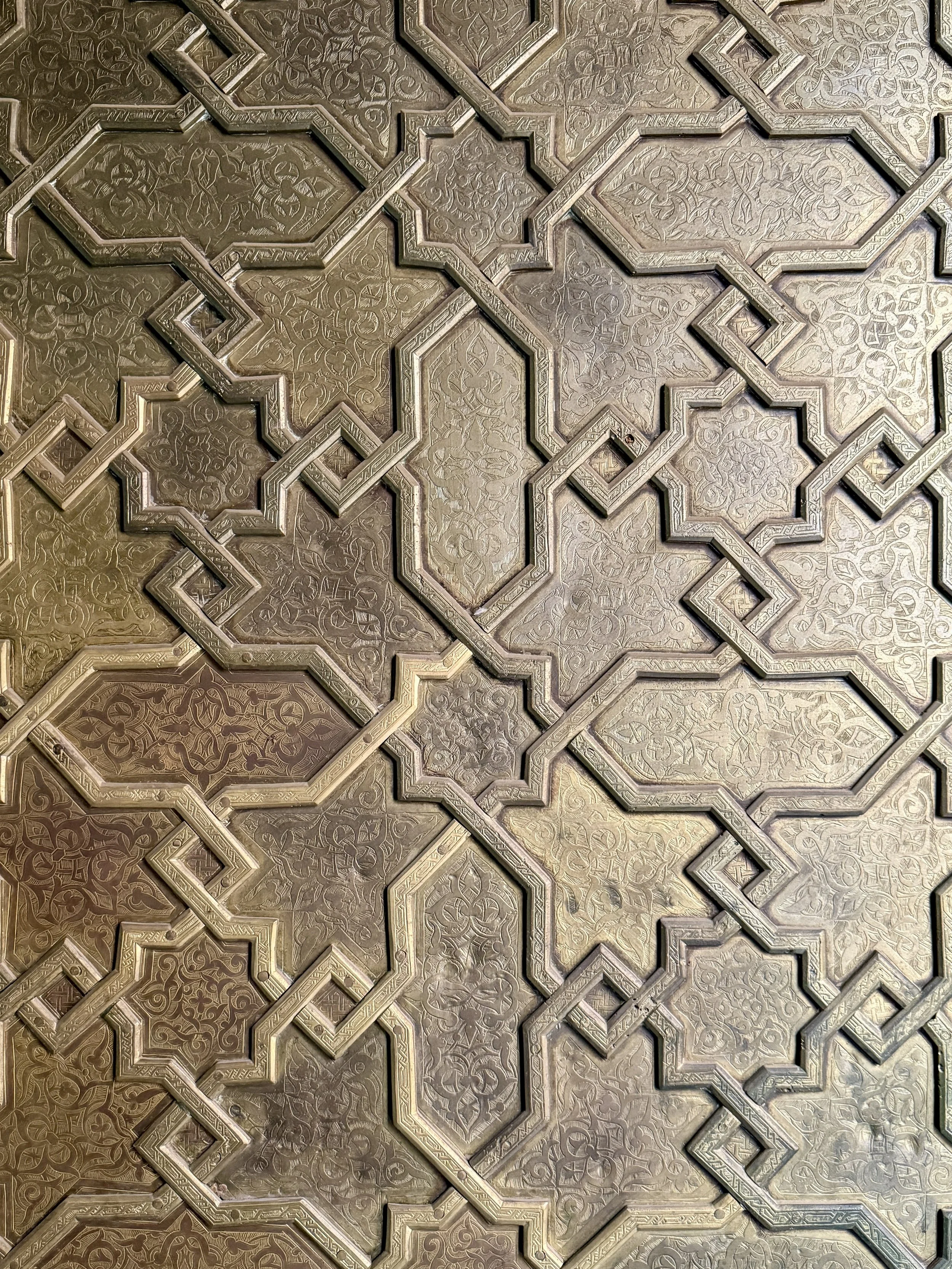
Beautiful carvings and tilework at Ben Youssef Madrasa in Marrakech
Starlike patterns carved on a wood door at Ben Youssef Madrasa
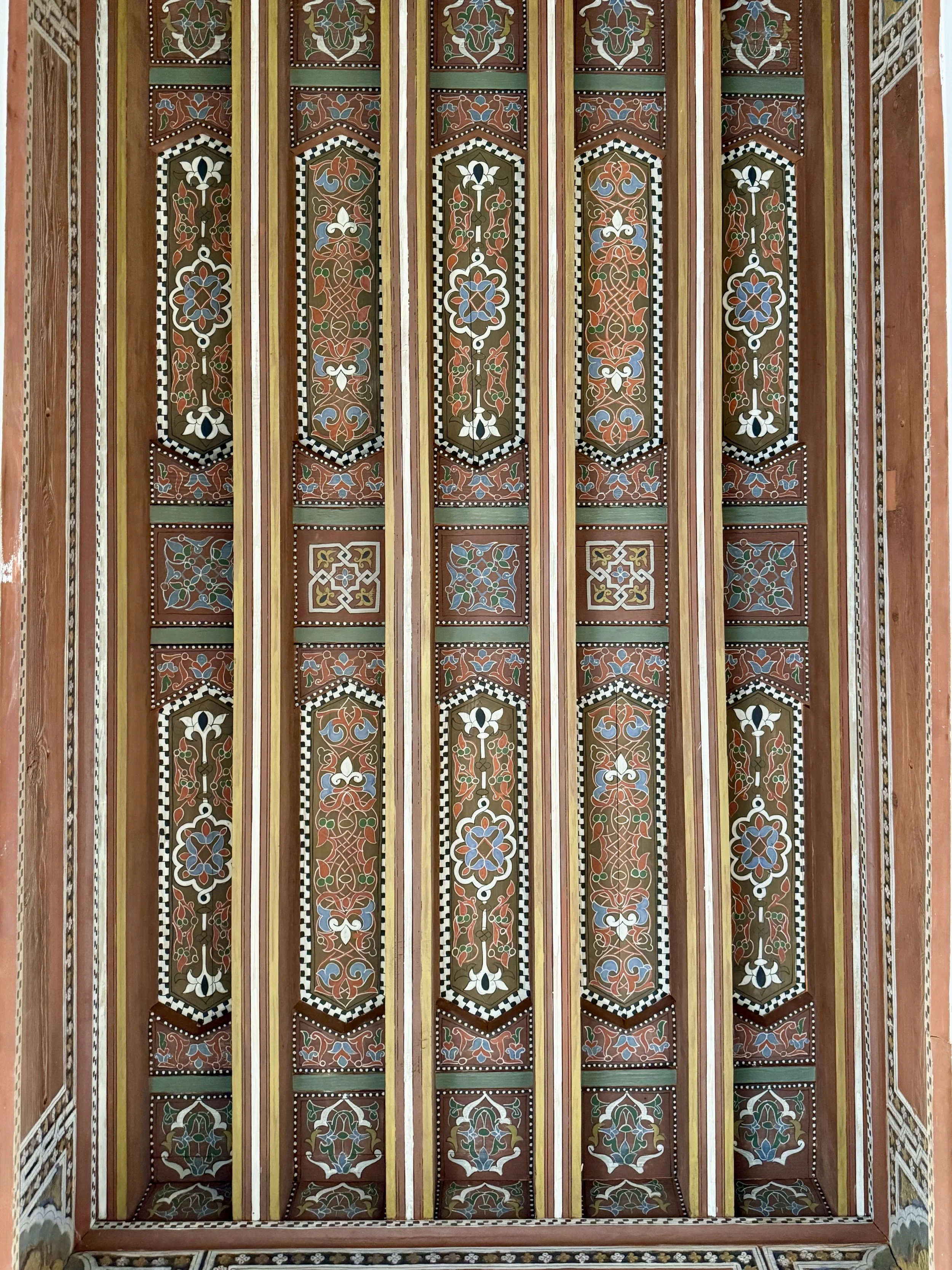
Gorgeous painted cedar ceilings at Ben Youssef Madrasa

The rebuilt madrasa was enormous for its time. Historians believe it housed as many as 900 students living in its 130 dormitory cells, and shared a single communal bathroom. Young men traveled here from across Morocco to study Qur’anic interpretation, theology, law and other religious sciences. Some likely arrived after journeys that took days or even weeks by foot or caravan, only to end up sleeping in rooms roughly the size of a walk-in closet — just three square meters, or about nine by nine feet. 

Which is part of what makes the place so fascinating today. Every visible surface seems carved, painted or tiled. The cedarwood ceilings resemble something pulled from a fantasy novel. The geometric mosaics are so precise they start to make your brain hurt if you stare too long. Yet the actual student quarters upstairs are tiny and more austere, built for discipline rather than comfort.

It’s a striking contrast — and very intentional. Islamic madrasas often placed beauty in communal and sacred spaces rather than personal luxury. The architecture itself became part of the educational experience, reflecting ideas about harmony, mathematics, craftsmanship and divine order.
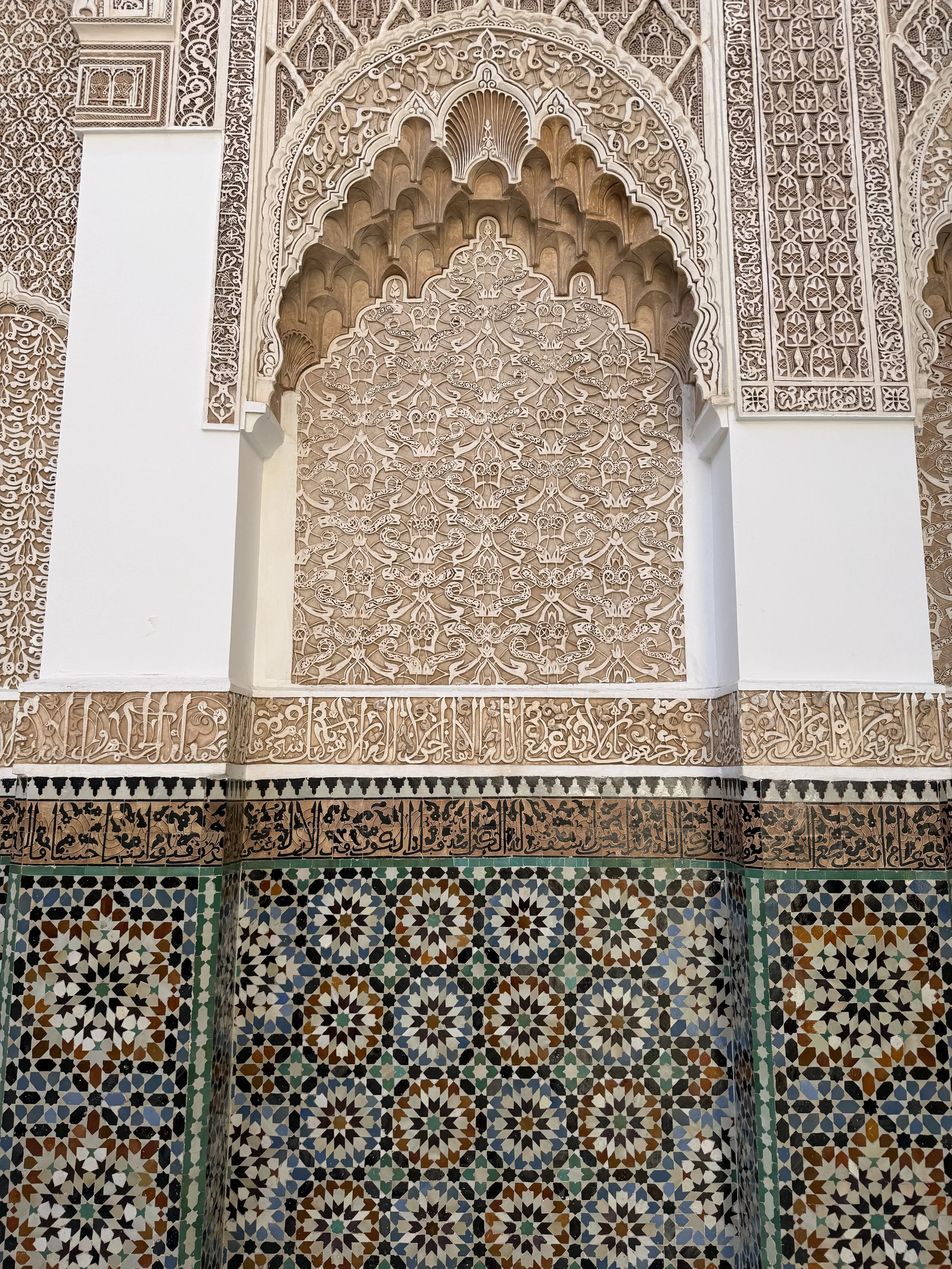
Gorgeous Islamic architecture at Ben Youssef Madrasa in Marrakech

And the craftsmanship here is genuinely staggering. The zellige tilework was assembled by hand, piece by piece. The carved stucco contains Arabic calligraphy and religious inscriptions woven into floral and geometric patterns. Massive cedar beams from the Atlas Mountains were transformed into intricately carved ceilings that somehow still look delicate centuries later.

The madrasa continued operating as a school until 1960 before eventually closing and later undergoing restoration. Today, instead of students memorizing scripture by oil lamp, the building is filled with tourists whispering “oh my God” while trying not to accidentally walk into someone’s selfie shoot.
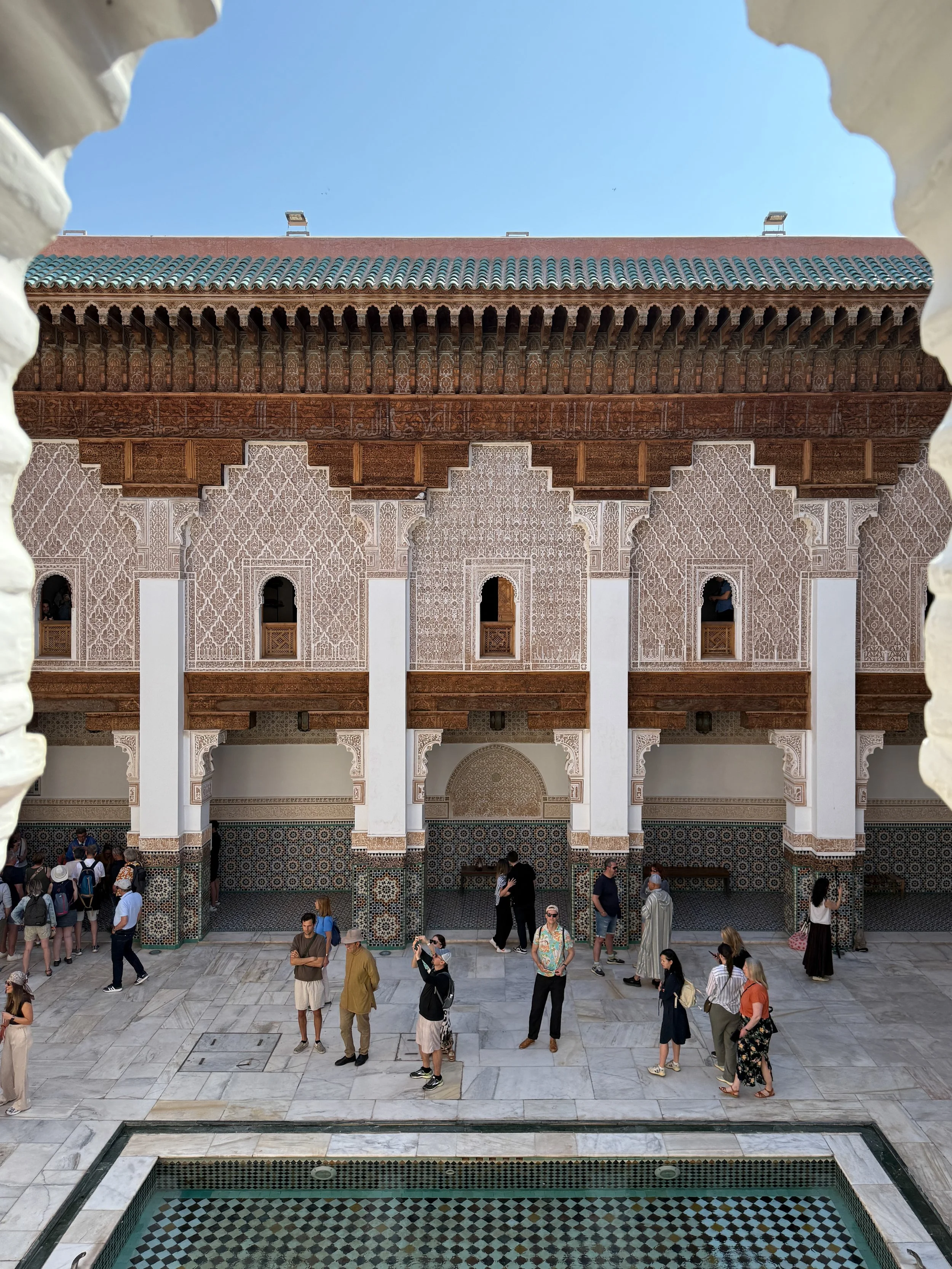
Tourists mill about the courtyard of Ben Youssef Madrasa in Marrakech

The Courtyard: The Big Reveal

There’s a very specific moment that happens when people enter the central courtyard of Ben Youssef Madrasa.

They stop.

Not politely. Abruptly. Like their brains need a second to process what they’re looking at.

The courtyard is the heart of the madrasa and the space most people picture when they think of Ben Youssef: the reflecting pool stretching down the center, the carved cedar balconies overhead, the walls wrapped in geometric tilework so intricate it barely seems possible that human hands made it. Every surface appears obsessed with detail. Even the empty spaces feel designed.

And somehow it never quite becomes visual overload.

Part of that comes down to symmetry. Islamic architecture often uses repeating geometric patterns to create a sense of balance and harmony, and Ben Youssef Madrasa leans into that philosophy hard. Your eyes keep finding echoes of shapes and lines repeating across the courtyard — arches mirroring arches, tiles reflecting tiles, carvings folding endlessly into themselves. It creates this strange feeling where the space feels both calming and hypnotic at the same time.
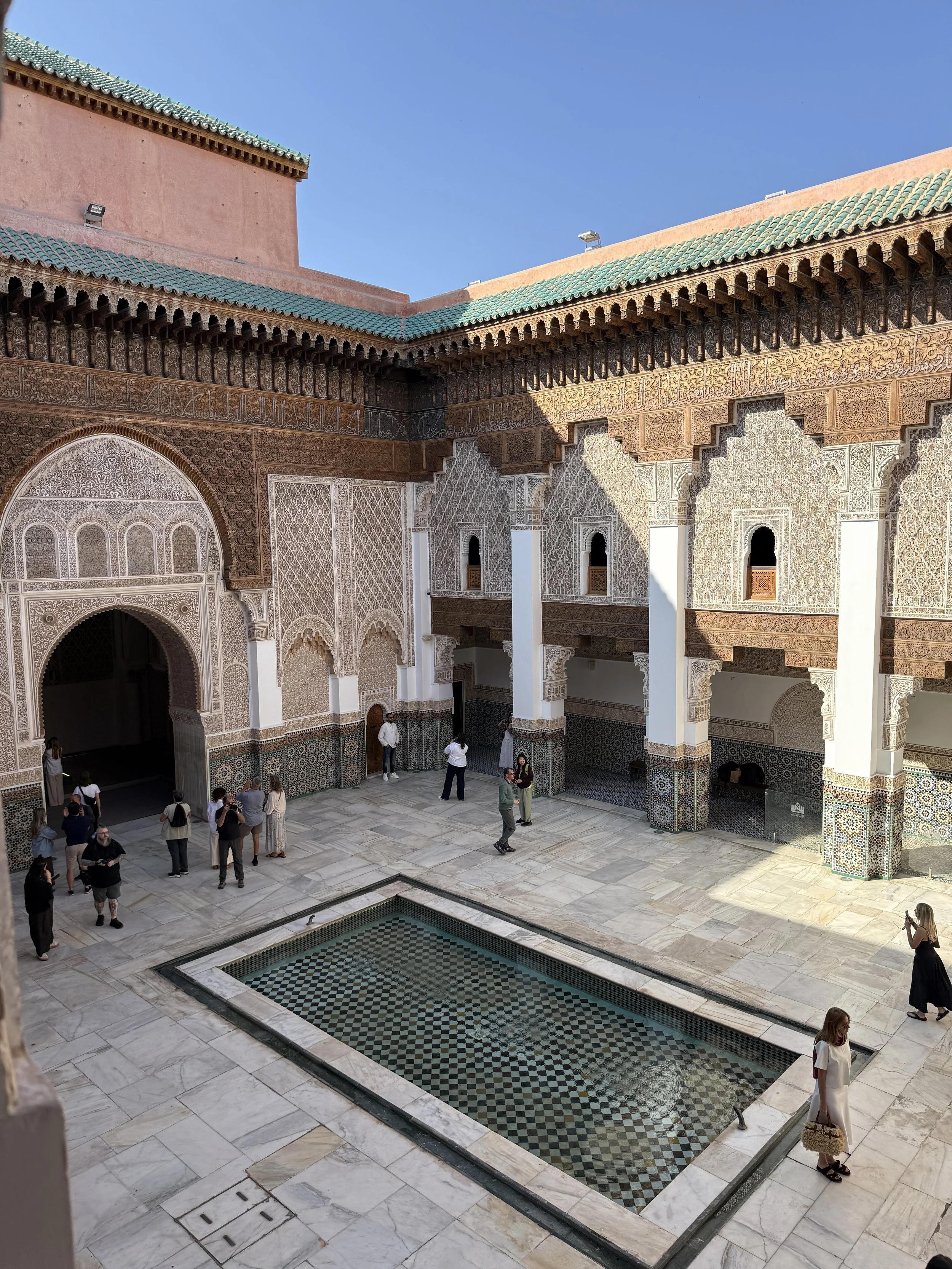
Tourists visit and take photos in the courtyard of Ben Youssef Madrasa in Marrakech

Then there’s the reflecting pool, which anchors the entire courtyard. Water plays an important symbolic role in Islamic architecture, representing purity and paradise while also helping cool the surrounding space. Here, the pool acts almost like a visual pause button amid all the detail. Of course, today it also serves another important function: becoming the exact spot where every tourist wants their photo taken.

At one point during our visit, there was an unofficial queue forming for people to stand dramatically beside the water while their companions directed increasingly elaborate poses. Gazing up thoughtfully. Turning slowly toward the camera. Looking over their shoulder. Touching the brim of their sun hat. It’s a terrible trend, and you’ll see it all over Marrakech. 

Meanwhile, the actual architecture remains the real star of the show.

It’s the kind of place where you keep spotting details long after you think you’ve fully taken it in.

And honestly, the best thing you can do here is occasionally stop trying to photograph every inch of it and just stand still for a minute. The courtyard was designed to inspire awe long before anyone invented Instagram. Sixteenth-century students probably walked through here every day and still found themselves impressed by the craftsmanship.

Though thankfully, they were less likely to block an entire archway for a slow-motion video.
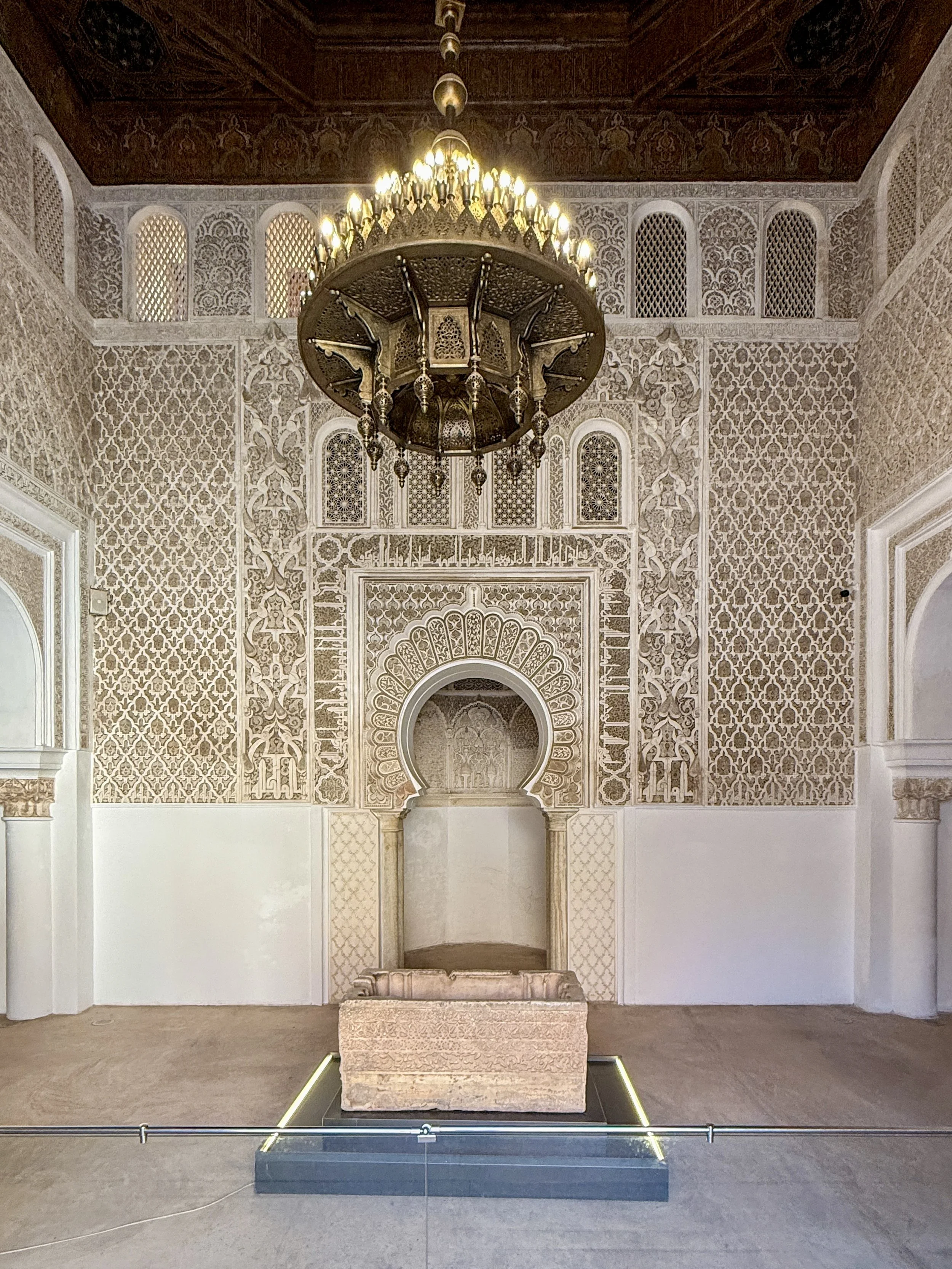
A chandelier hangs above the ablution basin in the Prayer Hall of Ben Youssef Madrasa

The Prayer Hall and Ablution Basin

Off the main courtyard is the prayer hall, though “hall” may make it sound grander than the visitor experience actually feels. You can look into it, but you can’t fully wander through the space, so it reads more like a richly decorated room just beyond the courtyard rather than a major stop on its own.

The entrance is framed by two finely decorated marble panels, while the arch leading into the entrance bay is embellished with palm leaves and pineapples. The mihrab, which indicates the direction of Mecca, has a pentagonal plan and an arched frame supported by four marble columns, with palm leaves and intertwining floral motifs worked into the design.
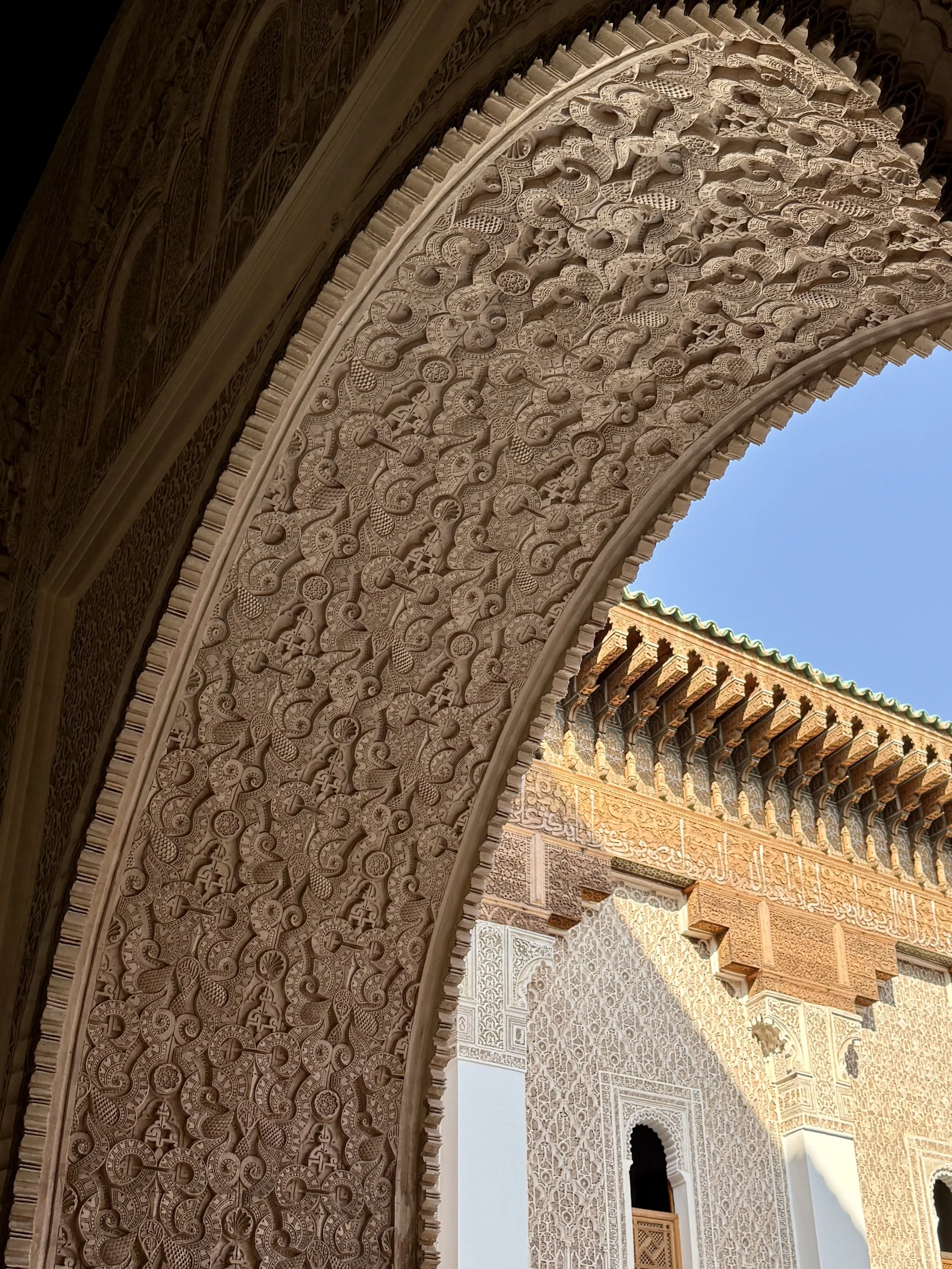
Carved arch  in the prayer hall looking into the courtyard of Ben Youssef Madrasa

Dominating the space is the ablution basin, which once served as a fountain for ritual washing before prayer. Its faces carry a partly legible Kufic inscription naming its patron, Abd al-Malik, son of the powerful Andalusian vizier Al-Mansur. The basin was imported from Andalusia by the Almoravid sovereign Youssef Ben Tachfine — a reminder that medieval Marrakech and Islamic Spain were deeply interconnected worlds, with artistic styles, craftsmen and ideas moving back and forth across the Strait of Gibraltar. Visitors who have explored places like the Alhambra in Granada or the Mezquita in Córdoba will likely recognize some of the same geometric motifs, carved stucco work and architectural sensibilities here.

The basin itself is decorated with floral and geometric motifs, along with carefully depicted animals including birds and fish. That detail is especially interesting because people often assume Islamic art avoids animal imagery entirely. 
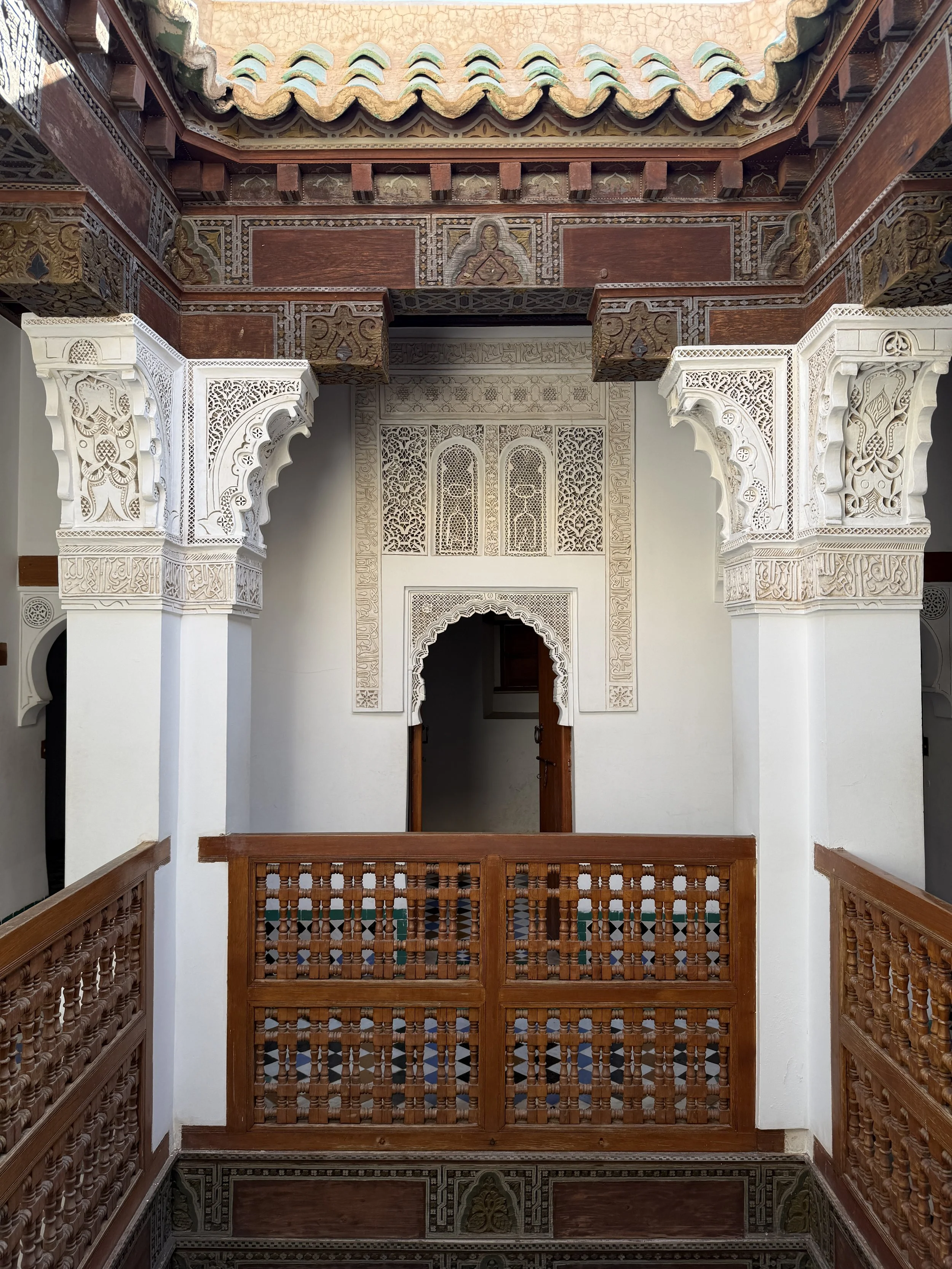
Wooden balconies in the hallways of the upstairs dormitories at Ben Youssef Madrasa

Upstairs in the Dormitories

A surprising number of visitors to Ben Youssef Madrasa never spend much time upstairs. I’m not even sure we ventured up there on our first visit more than a decade ago. 

Most people walk through the courtyard, take approximately 400 photos in front of the reflecting pool, glance into the prayer hall and move on. Which is a shame, because the upper level changes your understanding of the building.

The staircase leads into a maze of narrow corridors lined with tiny student rooms, and the contrast is immediate. Downstairs feels grand and ceremonial. Upstairs feels practical. Human. A bit severe.

Some of the dormitory cells are shockingly small — little more than sparse chambers with enough room for about six young boys to get packed in like sardines to sleep and study. After the extravagance of the courtyard below, the simplicity is almost startling. These students lived surrounded by extraordinary beauty without actually living luxuriously themselves.
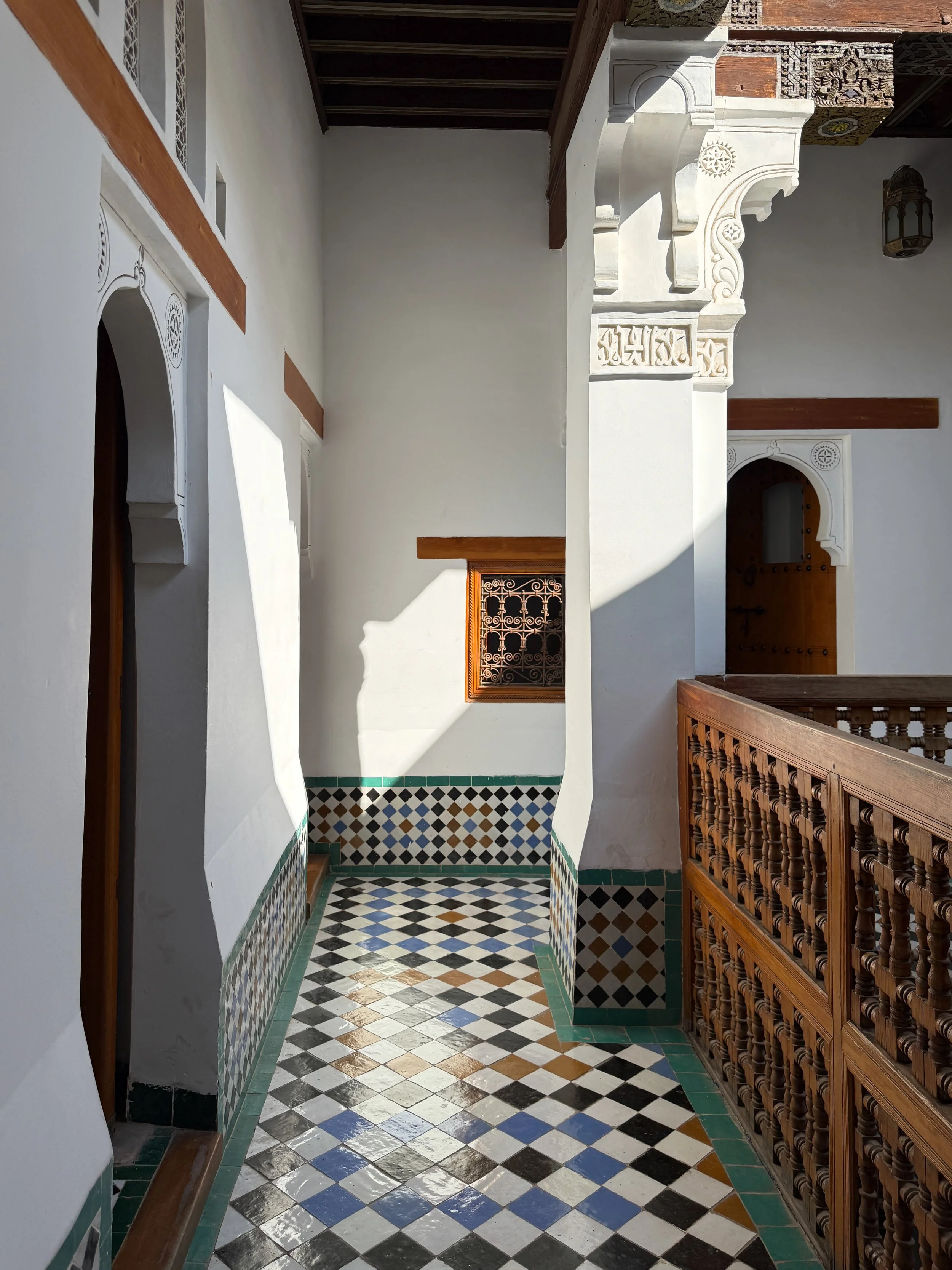
Upstairs hallway at Ben Youssef Madrasa in Marrakech, Morocco

The architecture downstairs wasn’t designed to pamper students. It reflected larger ideas about knowledge, faith, harmony and discipline. Meanwhile, the dormitories emphasized modesty and focus. You can easily imagine young scholars sitting cross-legged in these tiny rooms late into the evening, memorizing religious texts by lamplight while the sounds of the courtyard drifted upward through the open galleries.

The upstairs level also gives you some of the best views in the building.

From the balconies, you can look down into the courtyard and see the geometry of the madrasa as a complete composition. The reflecting pool stretches like a spine through the center while visitors below move slowly through the space like pieces on a game board. 
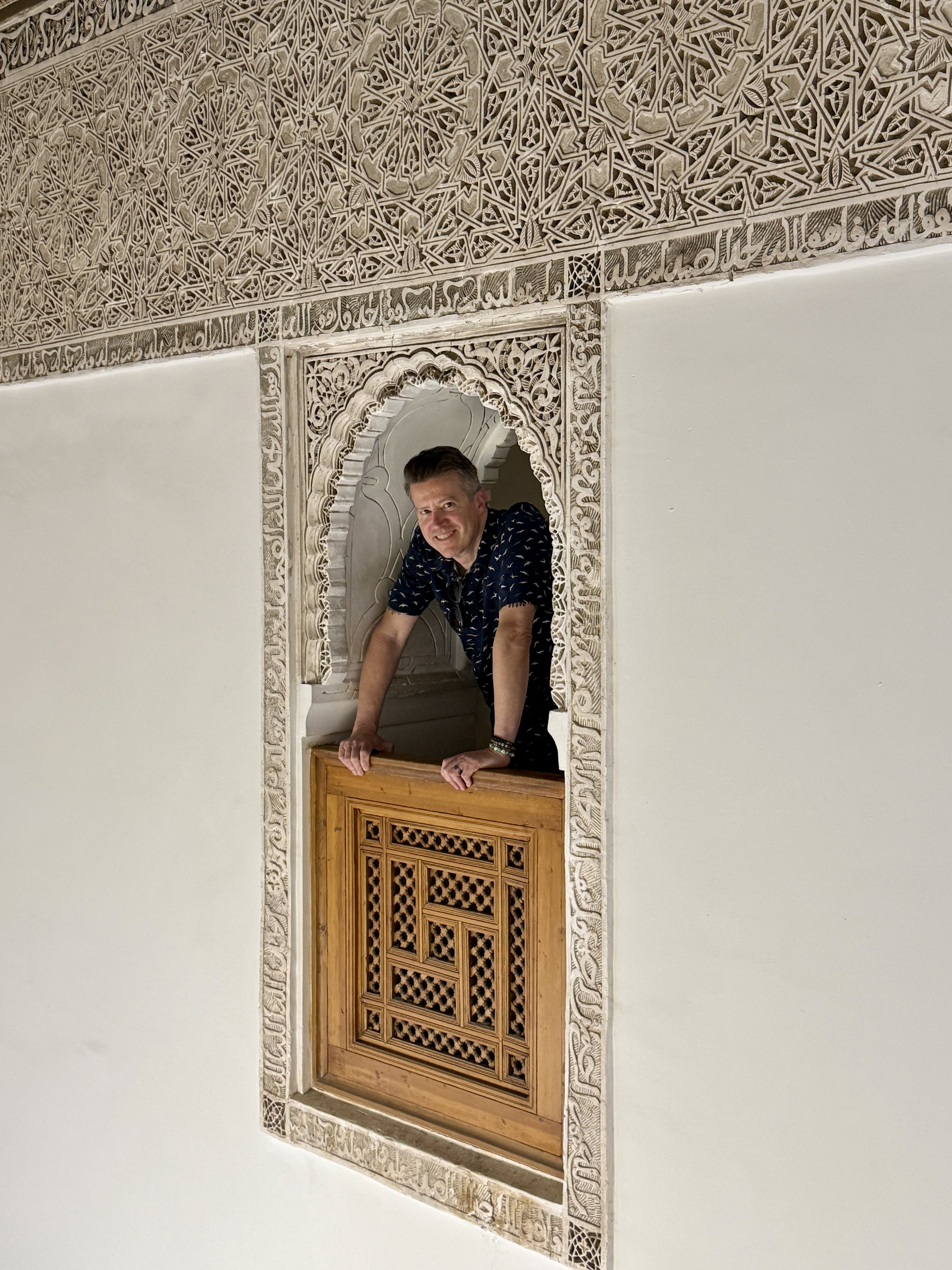
A man leans on a wood balcony in a carved arched interior window upstairs at Ben Youssef Madrasa

And I hate to say this since it could draw more influencer wannabes upstairs, but there are some nice photo opps up here. Station a photographer in one arched window while the subject poses on the balcony across the way. 

For now, the upper floor feels calmer overall. Fewer people linger there for long, which means you occasionally get rare moments where the building becomes quiet. It’s upstairs that Ben Youssef Madrasa stops feeling merely impressive and starts feeling inhabited.
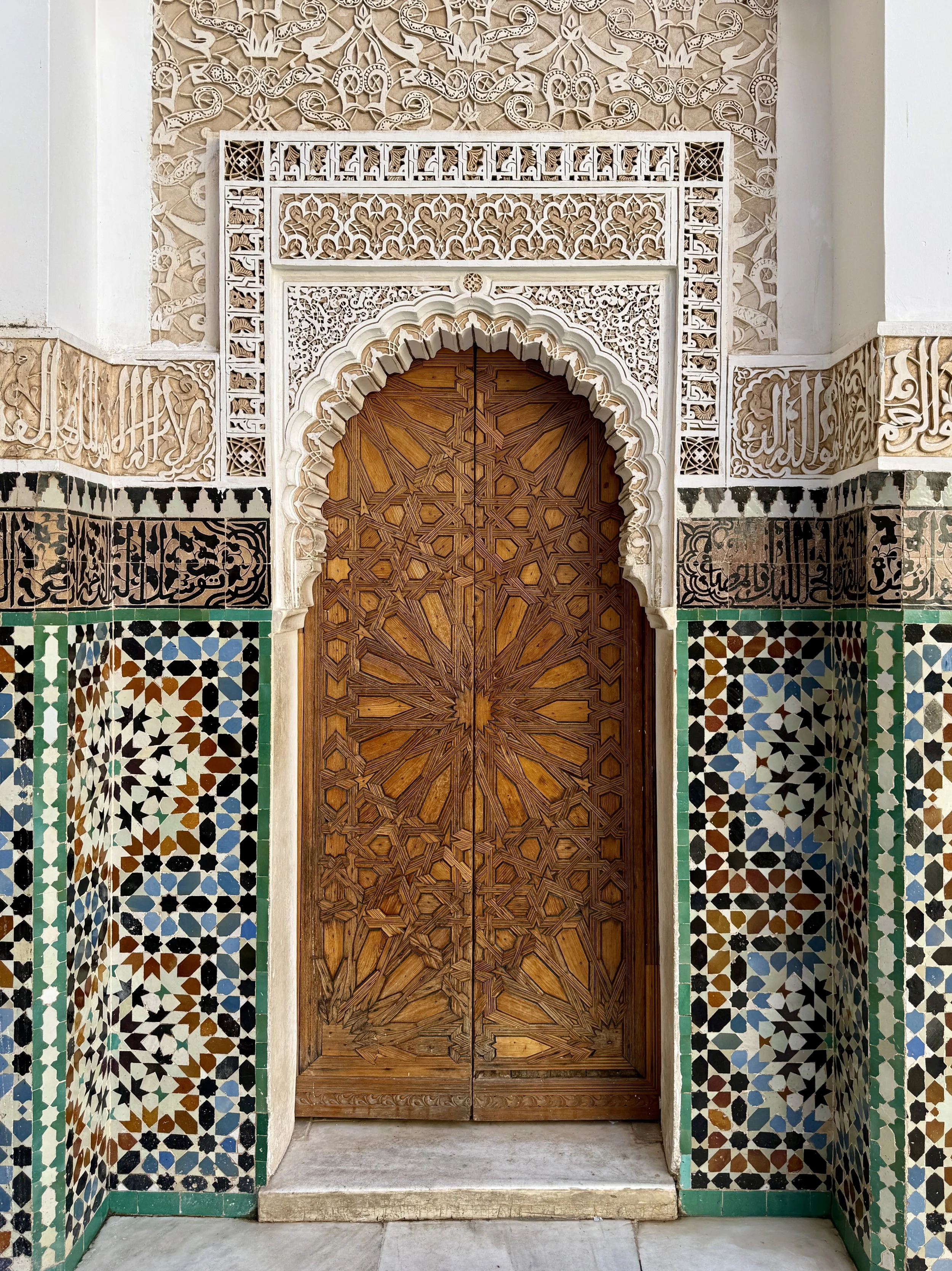
Carved Arabic calligraphy and patterns in plasterwork, a wooden door and zellij tiles at Ben Youssef Madrasa

Fascinating Details Most Visitors Miss at Ben Youssef Madrasa

It’s easy to walk through Ben Youssef Madrasa in a kind of architectural daze. But beneath the obvious beauty are dozens of small details that make the madrasa even more fascinating once you slow down enough to notice them.

The student rooms were intentionally austere. 

The contrast between the lavish courtyard and the tiny dormitory cells upstairs wasn’t accidental. Islamic madrasas often emphasized communal beauty and spiritual reflection over personal comfort. Students lived simply even while surrounded by extraordinary craftsmanship.
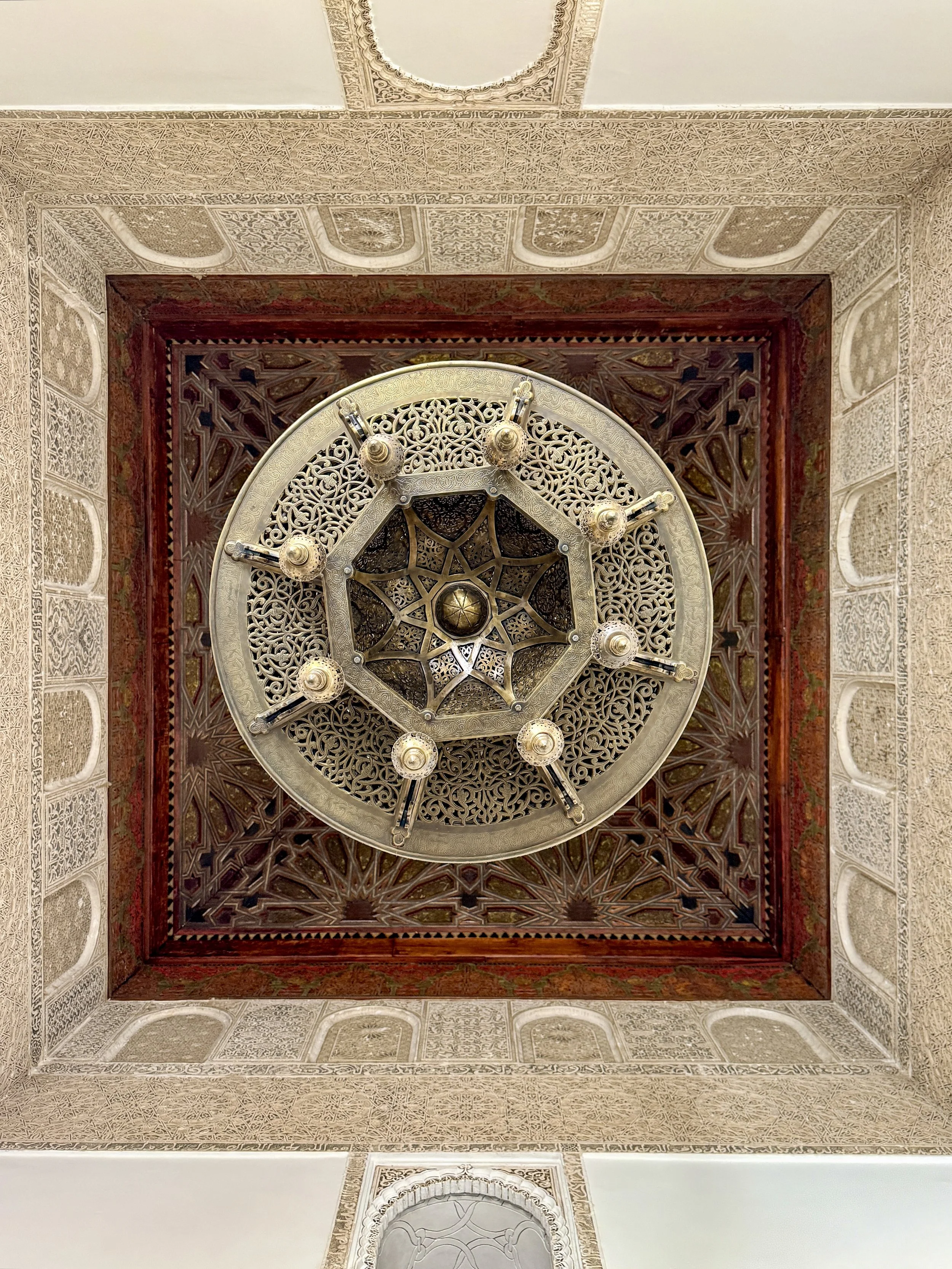
A light fixture at the entrance to Ben Youssef Madrasa in Marrkech

The cedarwood ceilings are functional, not just decorative. 

Many of the carved cedar elements came from Atlas Mountain cedar, prized not only for its beauty but also because cedar naturally resists insects and rot. Which means the ceilings weren’t just stunning — they were practical engineering.

The tilework is assembled piece by piece. 

The geometric mosaics, known as zellige (or zellij), are not painted patterns or prefabricated panels. Artisans individually cut and placed tiny pieces of glazed tile by hand into elaborate mathematical designs. Looking closely at the edges makes the craftsmanship feel even more impressive.

The reflecting pool was never meant for swimming. 

This may sound obvious, but judging by modern tourist behavior worldwide, it apparently needs to be stated occasionally. The water feature was symbolic and architectural, helping reflect light, cool the courtyard and create a sense of harmony.
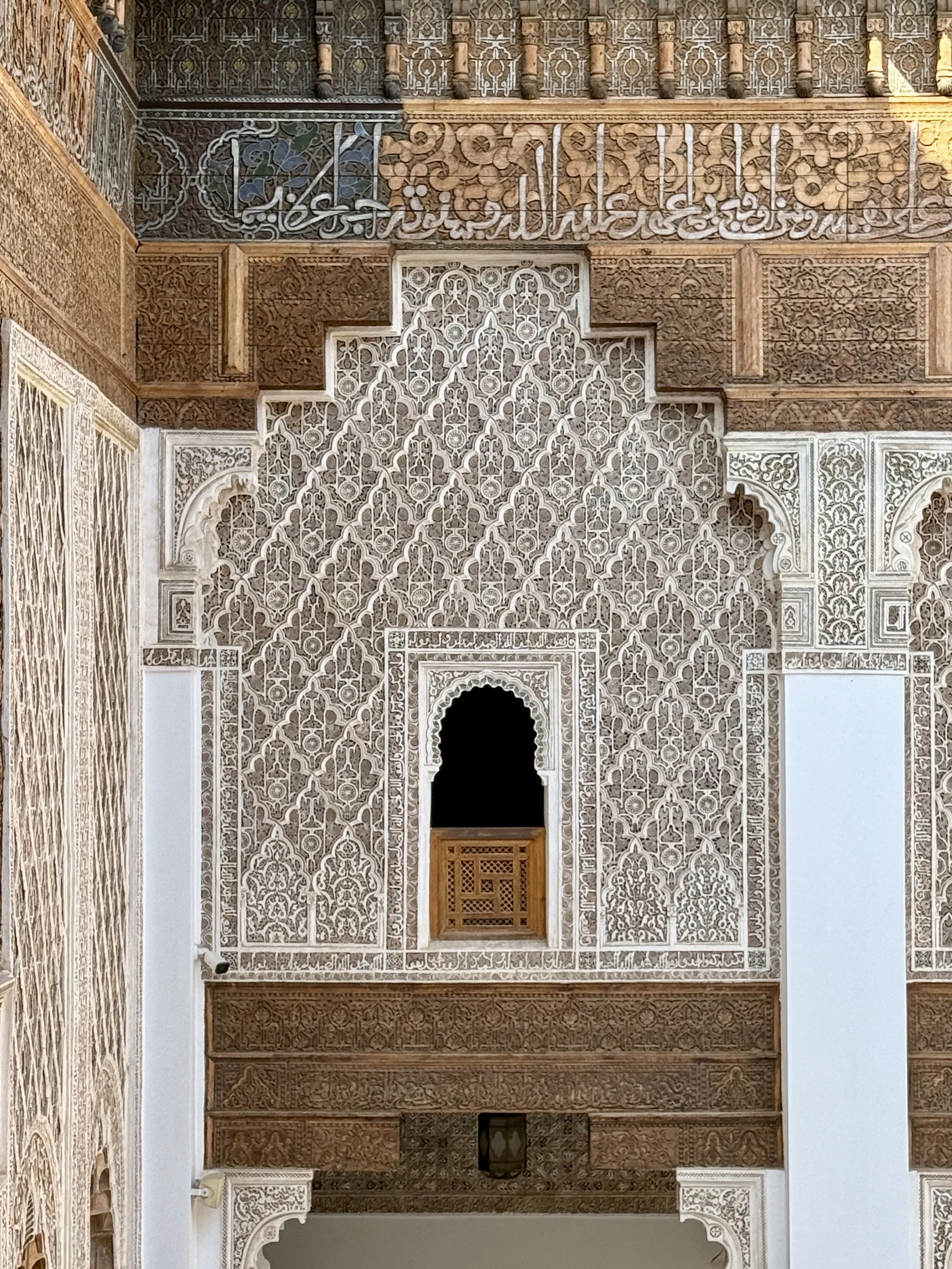
Arabic calligraphy and carved Islamic patterns in the beautiful Ben Youssef Madrasa

The calligraphy is saying something. 

Many visitors admire the carved Arabic inscriptions without realizing they contain Qur’anic verses, blessings and religious phrases woven directly into the decoration. The building itself is essentially layered with sacred text.
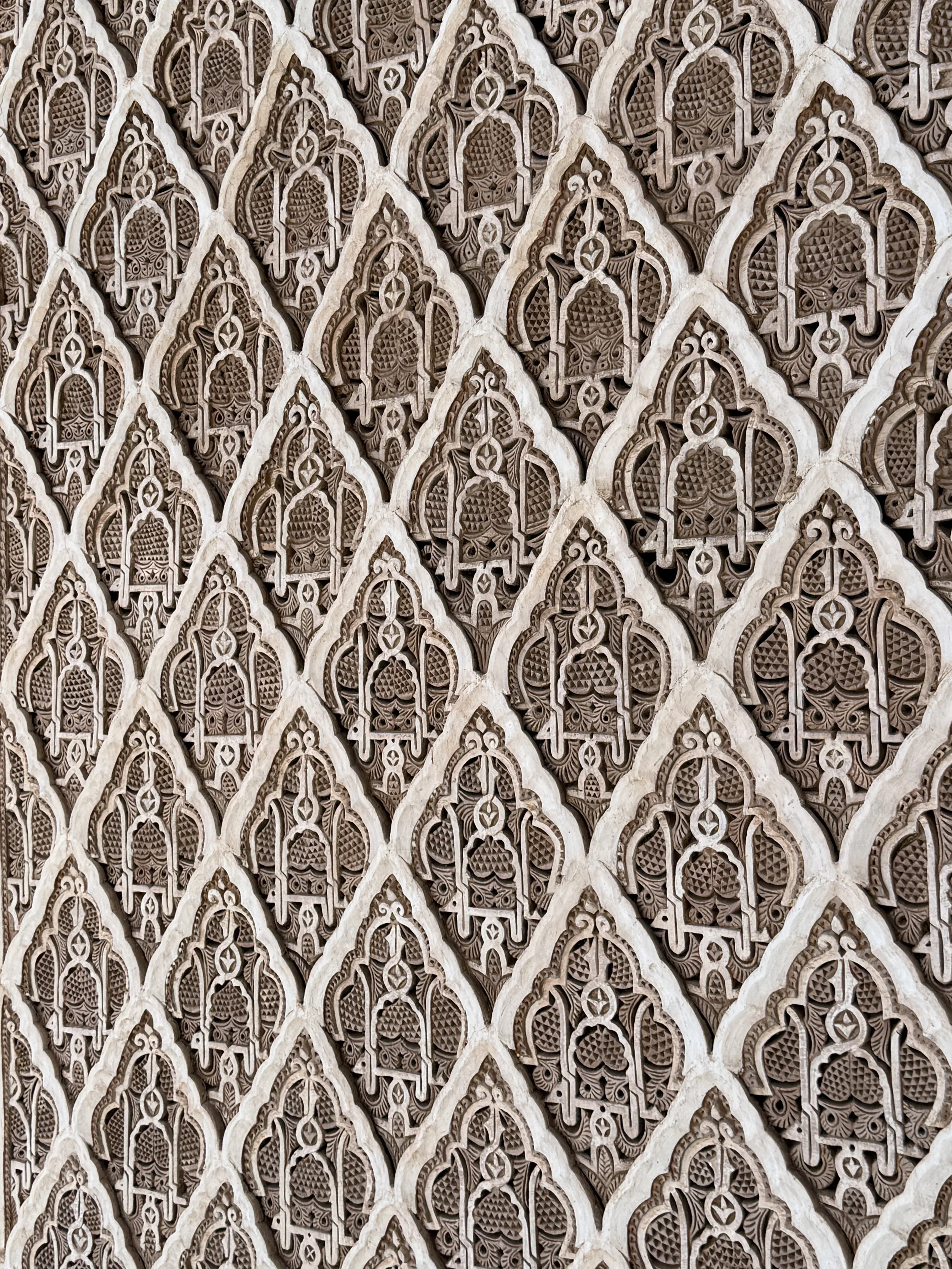
Amazingly detailed repeating patterns on the plaster walls of Ben Youssef Madrasa

The architecture manipulates your experience on purpose. 

The medina streets outside are noisy and enclosed. Then the madrasa suddenly opens into a bright symmetrical courtyard. That dramatic reveal is part of the experience. The building was designed to create emotional impact from the moment you entered.

It remained an active school until surprisingly recently. 

Ben Youssef Madrasa only stopped functioning as a college in 1960. Which means this isn’t some distant medieval relic disconnected from modern history. People were still studying here within living memory.

Upstairs is quieter because many tourists skip it. 

The dormitories tend to thin out the crowds significantly. If you want a calmer experience, go upstairs and linger longer than everyone else.

The acoustics are incredible. 

Even small sounds carry through the courtyard and hallways in unexpected ways. Footsteps echo softly across the tile. Conversations drift upward into the galleries. 
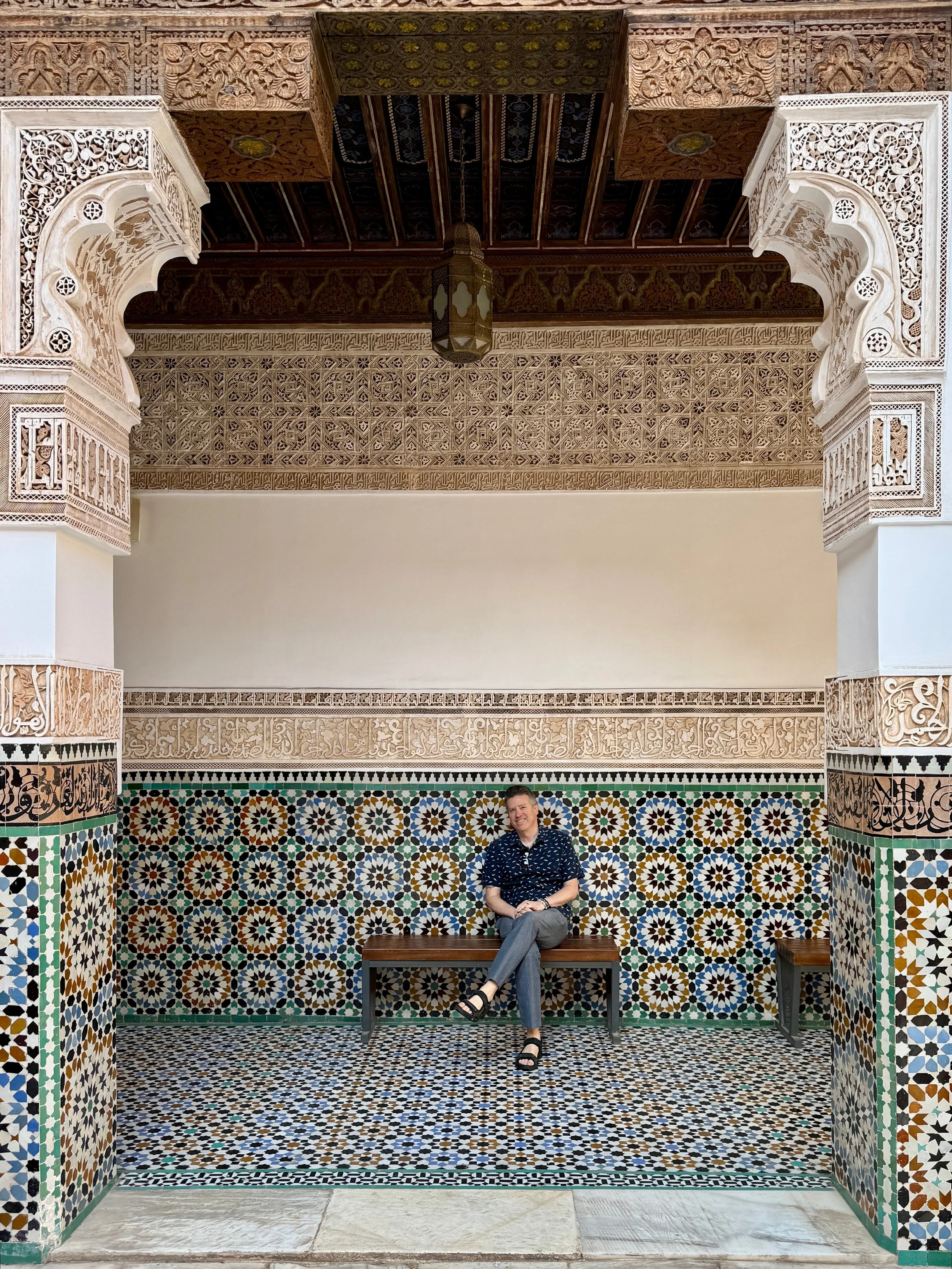
A man sits on a bench among colorful zellij tiles at Ben Youssef Madrasa,

Visitor Tips for Ben Youssef Madrasa

Go early. 

This is one everyone’s must-see list. 

By mid-morning, Ben Youssef Madrasa can become extremely crowded, especially in the central courtyard. Arriving earlier gives you softer light, slightly cooler temperatures and at least a fighting chance of seeing the reflecting pool without six simultaneous photoshoots unfolding around it.

Keyword: slightly.

But maybe not right at opening. 

We haven’t tested this out, but I wonder if maybe it’s not actually wise to go right when these attractions open. Because inevitably there are other others with the same idea, and you guarantee you’re entering with a crowd. 

I’m wondering if maybe it would calm down even just a bit a half an hour or an hour after opening. But again, it’s just a theory.

Don’t just do the courtyard. 

Some of the best details are actually around the edges: carved doorways, quieter side chambers, shadow patterns in the hallways and the transitions between rooms.

The madrasa rewards wandering.

Go upstairs — seriously. 

A surprising number of people barely explore the dormitory level, which is unfortunate because it completely changes how the building feels. The upstairs corridors are quieter, more atmospheric and far more revealing about what daily life here might actually have been like.

Plus, the views overlooking the courtyard are fantastic.
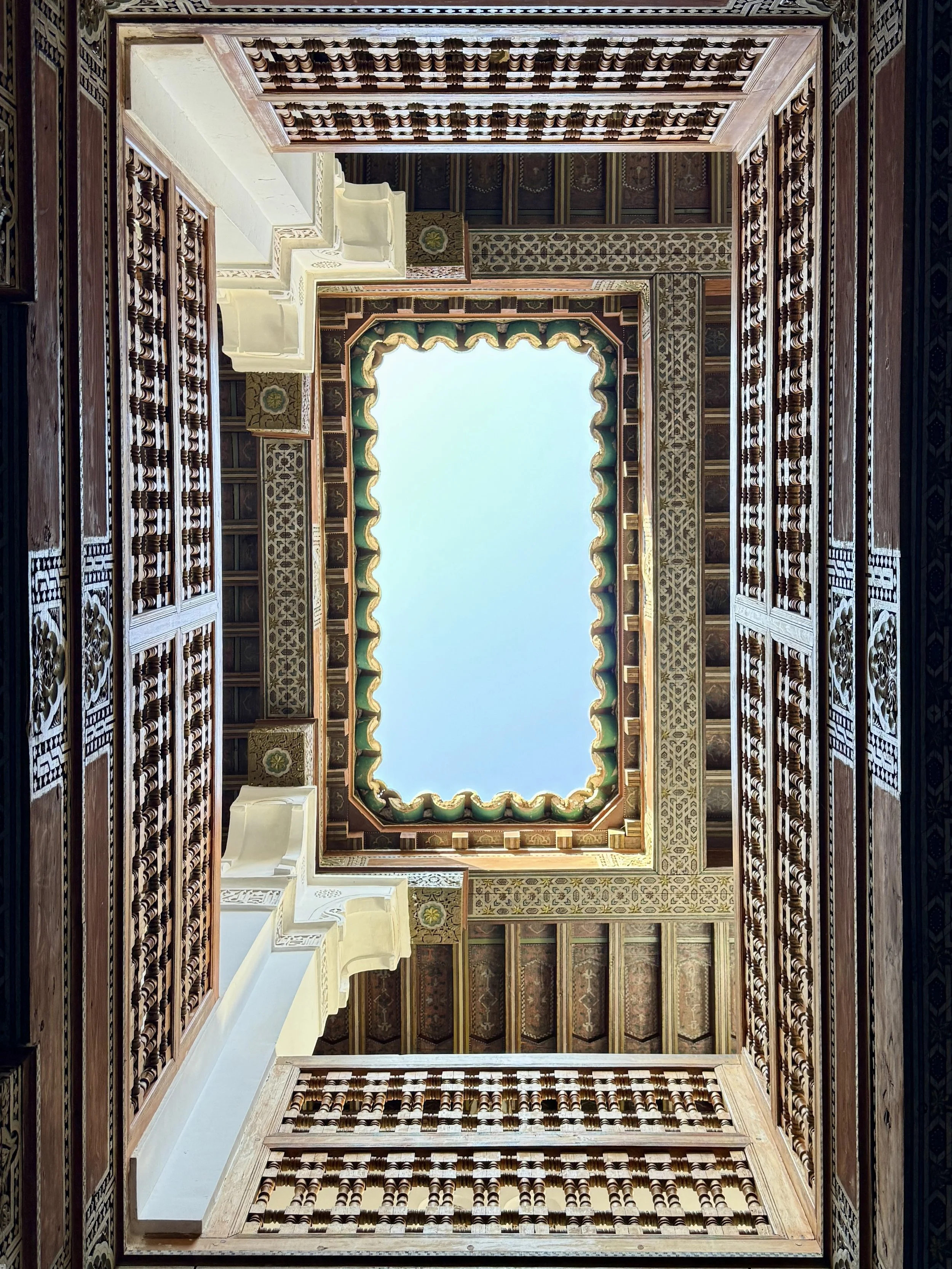
Looking up at an opening in the roof with elaborately carved cedarwood at Ben Youssef Madrasa

Look up constantly. 

This is good advice for Marrakech in general. Duke is obsessed with Moroccan ceilings, and for good reason.

The walls get most of the attention, but some of the most astonishing craftsmanship is overhead. The cedar ceilings are unbelievable and easy to miss if you stay focused at eye level.

Your neck may eventually resent you for this advice.
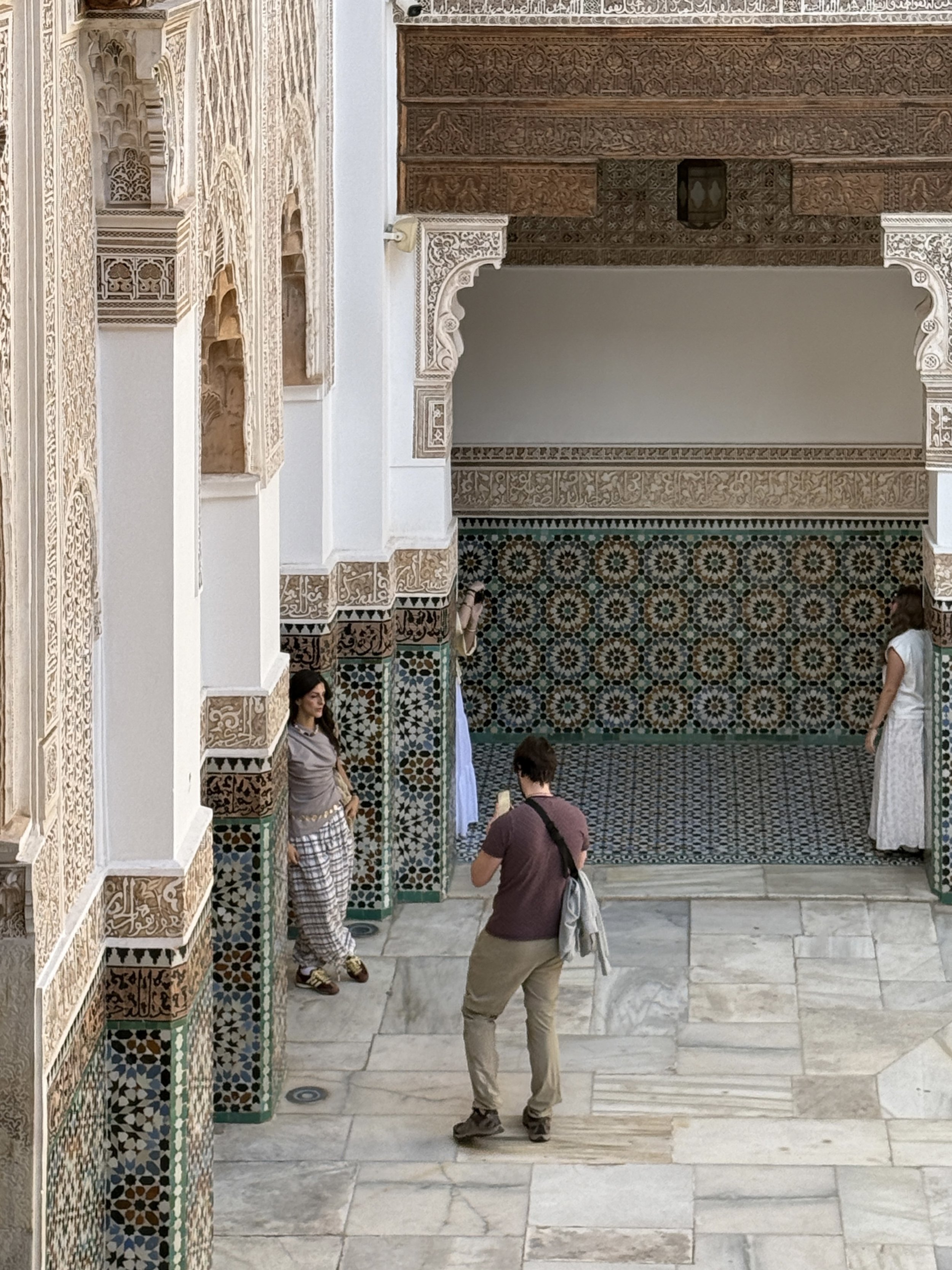
Women run through a series of poses to capture that perfect social media shot at Ben Youssef Madrasa's courtyard

Be prepared for the influencer culture. 

You’re going to encounter people filming elaborate content. It’s sadly unavoidable.

Some visitors behave as though they’ve rented the entire madrasa for a private campaign shoot. You can roll your eyes, but getting frustrated will only ruin your own experience.

Pair the madrasa with other nearby sites. 

Ben Youssef Madrasa works especially well alongside other attractions in the vicinity:

  • Dar El Bacha Museum of Confluences

  • Le Jardin Secret

  • Rahba Kedima spice square

  • The surrounding souks

Together they create a fuller picture of Marrakech beyond just checking famous landmarks off a list. –Wally

3 of the Best Places for Foreign Exchange Students to Study and Travel

Ready for an adventure-packed academic experience? The world is your classroom. Spain, Germany and Japan offer rich cultures, great opportunities for travel — oh, and quality study abroad programs, too. 

Person in pointed Japanese hat paddles boat down river under pink cherry blossom trees toward red bridge and white temple

Imagine being able to explore a setting like this while studying abroad! The famous cherry blossoms of Japan are just one unforgettable experience you could have as an international student.

Studying in a foreign country is an exhilarating and educational way to immerse yourself in other cultures. With so many opportunities to explore, it’s no surprise that a significant number of college students across the globe are international. Among the higher education population, Statista lists Australia as the top choice, with 31% of students from abroad. Canada follows, with 24%, and the U.K. comes in at third with 22%.

Remember: You can learn as much outside of the classroom as you can in it.

There are plenty of countries offering exciting foreign exchange programs. Even if they only last a year (or even a semester), the experience of living away from family, friends and a familiar environment can be intimidating — but it’s ultimately worth it. That’s why it’s essential you do your research first. 

Sydney, Australia waterfront, with wide promenade, red and white ferry and skyscrapers in the background

Australia tops the list of places to study abroad (and Sydney does seem pretty great) — but it’s hardly the only place to do so.

Factors to consider when choosing a school abroad

You can search for the “best schools for foreign exchange students” — but the results don’t always give you the complete picture. 

While immersing yourself in the local culture is undoubtedly the essence of studying abroad, you need to look beyond the quality and reputation of the educational institutions. One valuable way to gain deeper insights into the study experience is by tapping into the invaluable resource of student feedback.

Studocu’s World University Rankings list schools from North America, Latin America, Oceania and EMEA (Europe, the Middle East and Africa), including categories on quality of life, safety, on-campus housing and facilities. Being able to compare students’ views can help you assess if the environment is somewhere you’ll thrive. 

Aside from campus experience, you also need to factor in money and time. Studying abroad isn’t cheap, and there are various expenses to consider, from program fees to travel costs. Many schools offer scholarships for student exchange programs, but they’re highly competitive. Furthermore, applying for these programs takes time and patience, so make sure you stay on top of the requirements.

With that said, what are the best places to study abroad? Here are a few of the top destinations for foreign exchange students:

View of the Alhambra among trees in the hills of Granada, Spain

The town of Granda, Spain is filled with students, who enjoy the gorgeous views of the Alhambra and free tapas with their booze.

Spain

With delicious gastronomic destinations (tapas!) and cultural activities (from Gaudí’s La Sagrada Familia in Barcelona to the Alhambra in Granada), Spain has plenty to keep students busy when they’re not studying. Many students come to the country to master Spanish or take classes on European studies or international business. A bonus is that tuition fees are relatively more affordable than in the rest of Europe.

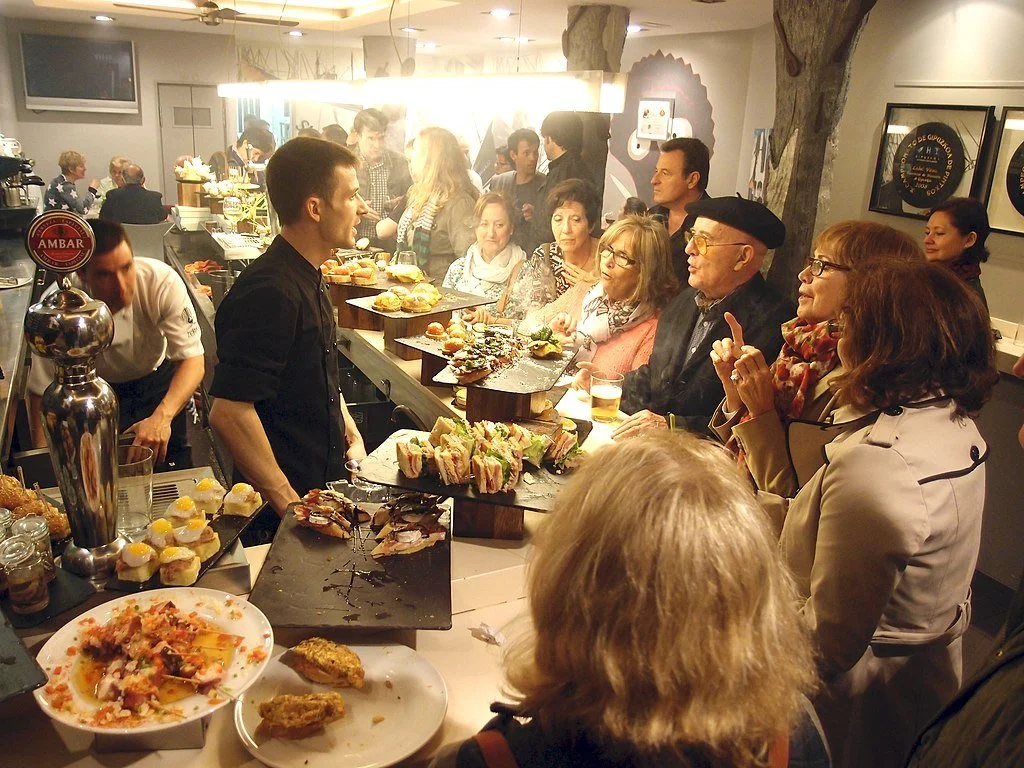
Diners eat a late dinner at a bar crowded with food and drinks in San Sebastian, Spain, while talking to a man in black shirt behind the counter

It’s not uncommon for Spaniards to have dinner as late as 9:30 or even 10:30.

Insider tips: 

  • There are plenty of study abroad programs in Spain, so there’s a good chance you’ll meet other students from your home country — bonding with them can help with homesickness.

  • Western Europeans tend to eat late, with Spain having the latest dinner time — 9:30 to 10:30 p.m.

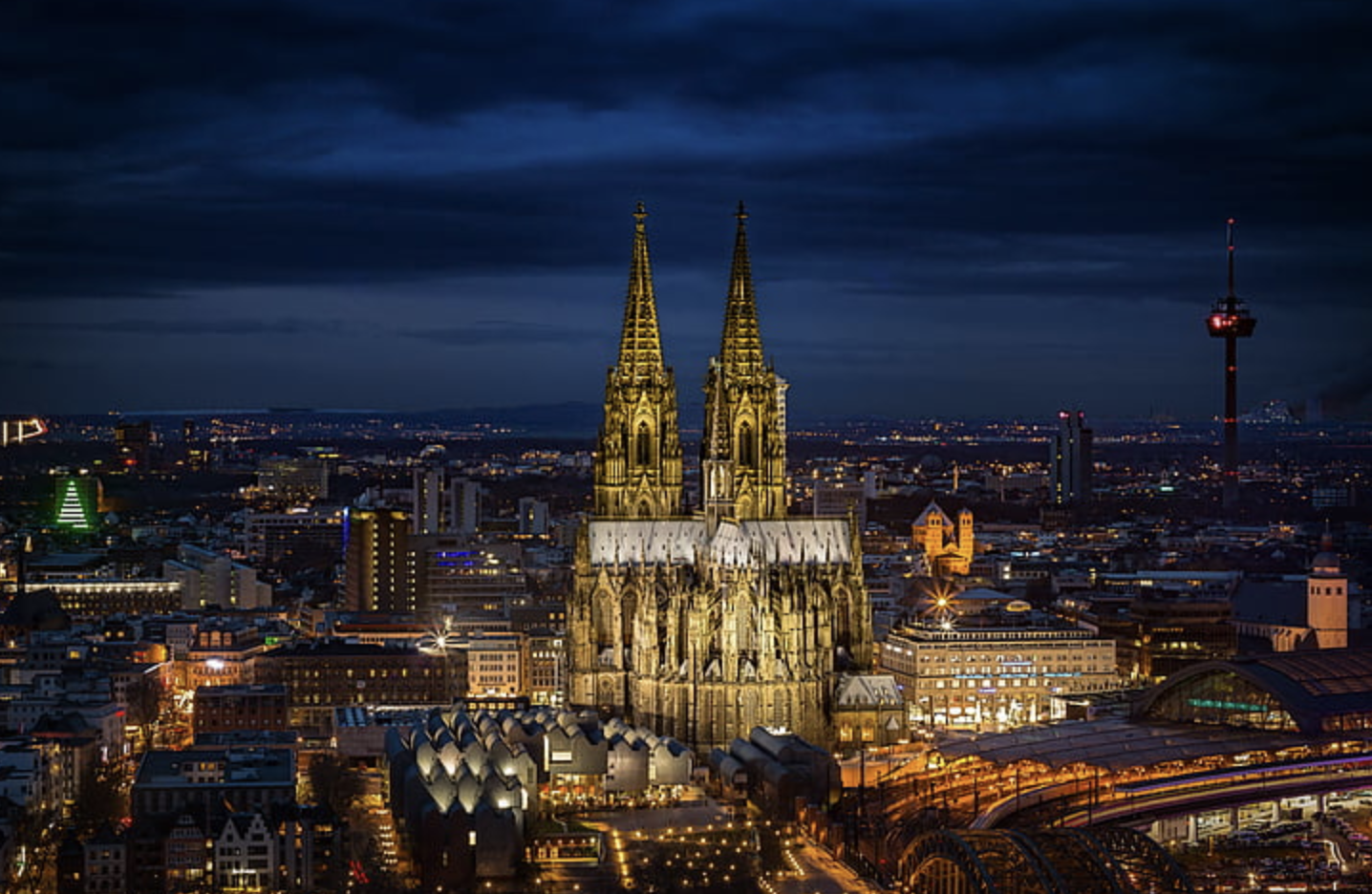
Cologne Cathedral and surrounding building in Koln, Germany, seen at night

German cities, like Köln, or Cologne, are especially good for students studying the sciences.

Germany

For those pursuing the sciences, Germany is one of your best bets. The country produces more than 30% of STEM (science, technology, engineering and math) graduates — a high share compared to other Western European countries. Aside from quality education, the country offers multicultural neighborhoods and historical landmarks, from the Brandenburg Gate in Berlin to Cologne Cathedral.

Insider tips:

  • Although Germans are stereotyped as stoic or unfriendly, with some time, they can be extremely warm and friendly. I’ve found that the best time to socialize is on Sunday, when most things are shut down.

  • Being punctual is very important in Germany, so make sure to arrive at classes or meetings on time.

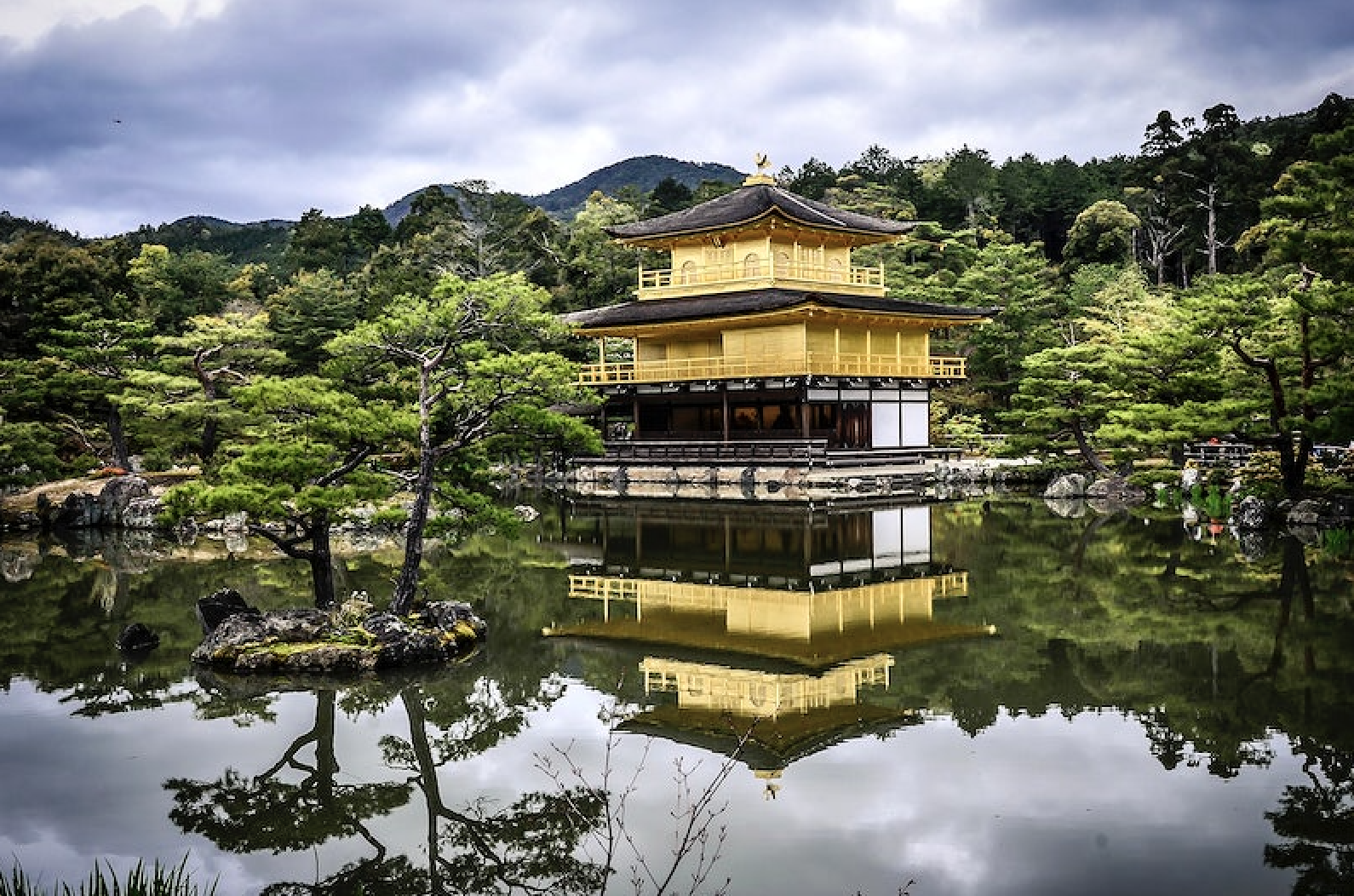
The Golden Pavilion in Kyoto, Japan, with yellow tiers among trees reflected in the water

Studying abroad in Japan probably isn’t always as zen as a trip to the idyllic Golden Pavilion in Kyoto.

Japan

With some of the world’s most advanced tech and beautiful zen-like architecture, Japan is a popular choice among students who want to immerse themselves in a foreign culture. 

This captivating country strikes a perfect balance between modern convenience and rich historical traditions, with its awe-inspiring temples adding to its allure (like the iconic Kinkaku-ji, or Golden Pavilion, in Kyoto).

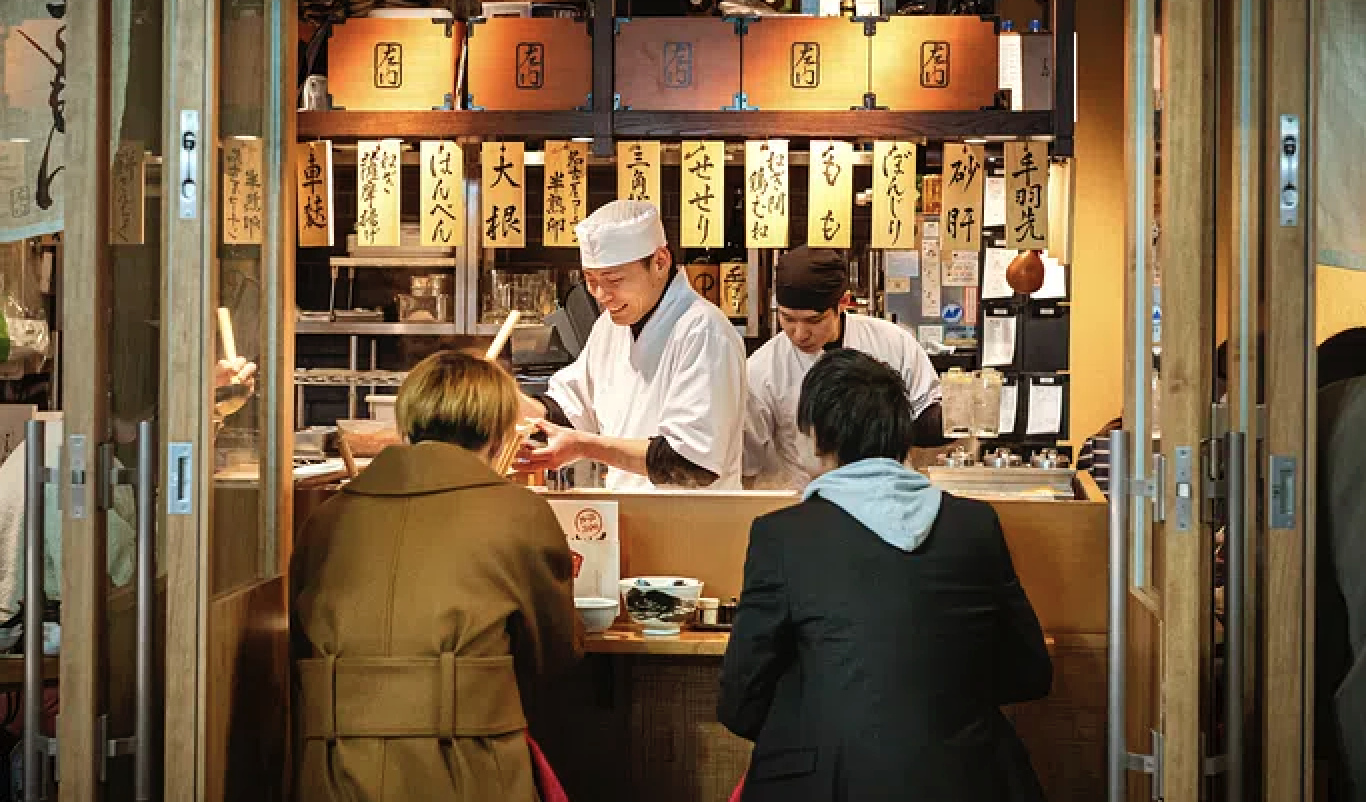
Chef smiles and serves food to woman and man at an izakaya pub

Immerse yourself in the culture, no matter where you’re studying — and, yes, in Japan that means eating a meal and drinking sake at an izakaya.

Insider tips:

  • If you’re living in a big city like Tokyo, student activities include shopping, eating delicious meals at a restaurant or a lively izakaya (Japanese pub), or belting out tunes at a karaoke bar.

  • Japanese people like to use puns rather than sarcasm or dark humor. Bonus: Learning puns can be a good way to expand your vocabulary. Some fodder: The Japanese for New York, ニューヨーク (nyūyōku), sounds the same as the word for “taking a bath”: 入浴 (nyūyoku). 

Being a part of a student exchange program is a rewarding and fulfilling experience. You can make the most of studying and traveling by putting yourself in the mindset of a resident versus a tourist when it comes to other cultures and making friends with fellow students and locals alike. Remember: You can learn as much outside of the classroom as you can in it. –Cliffton Perry

Instituto Allende: The Influential Art School That Shaped San Miguel de Allende

This art school and event space holds a special place in the charming town’s transformation. Stop by to see the cool murals and refuel at Murmullo café.

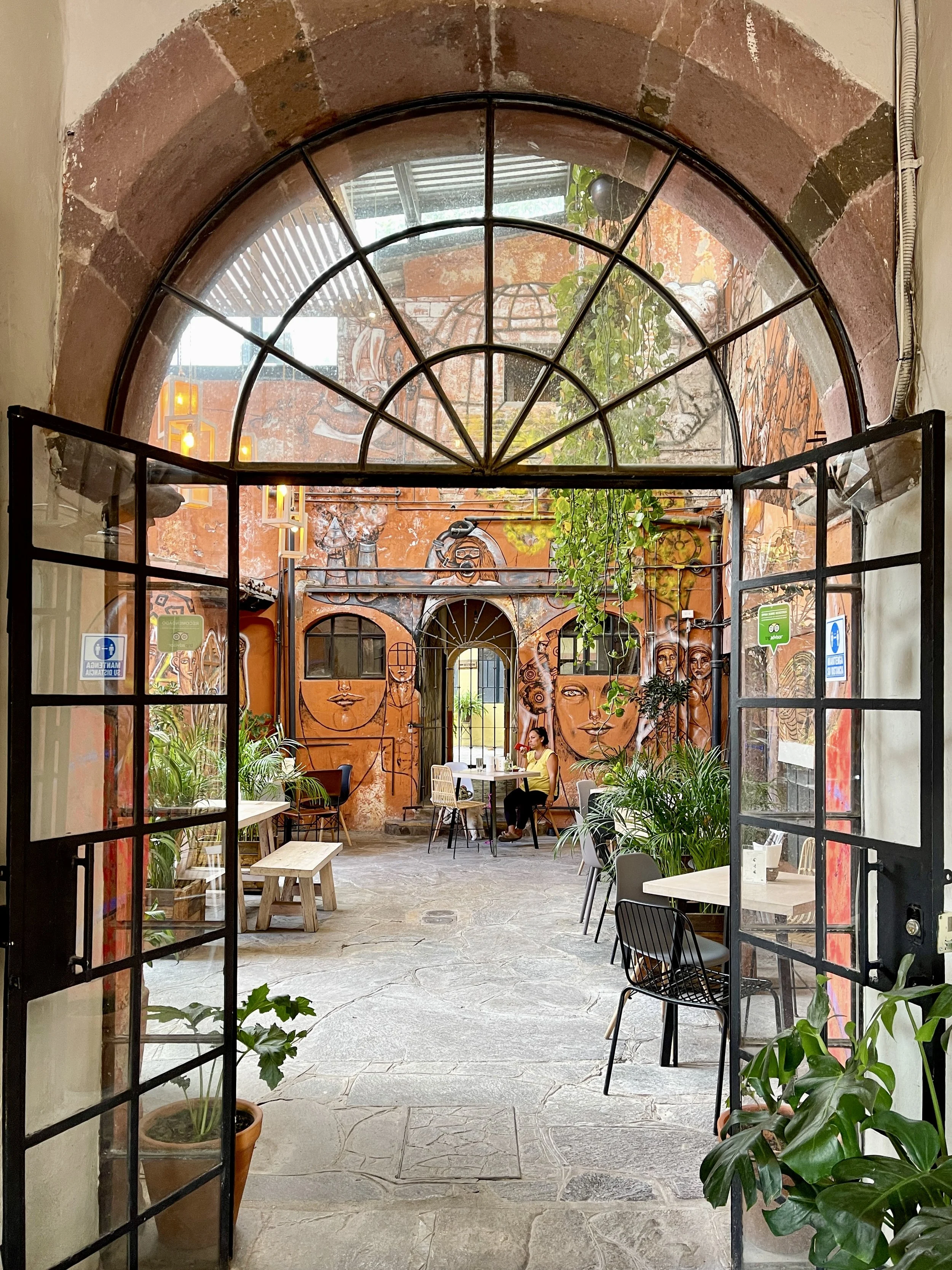
Colorful murals, tables and plants in interior courtyard at the Instituto Allende

Duke and Wally fell in love with the interior courtyard at the Instituto Allende.
The hulking adobe and fieldstone Instituto Allende is a bit outside of the historic city center of San Miguel de Allende, Mexico. Located on the southwest edge of the Centro, this art school was originally built in 1736 as the summer manor for the influential de la Canal family. 
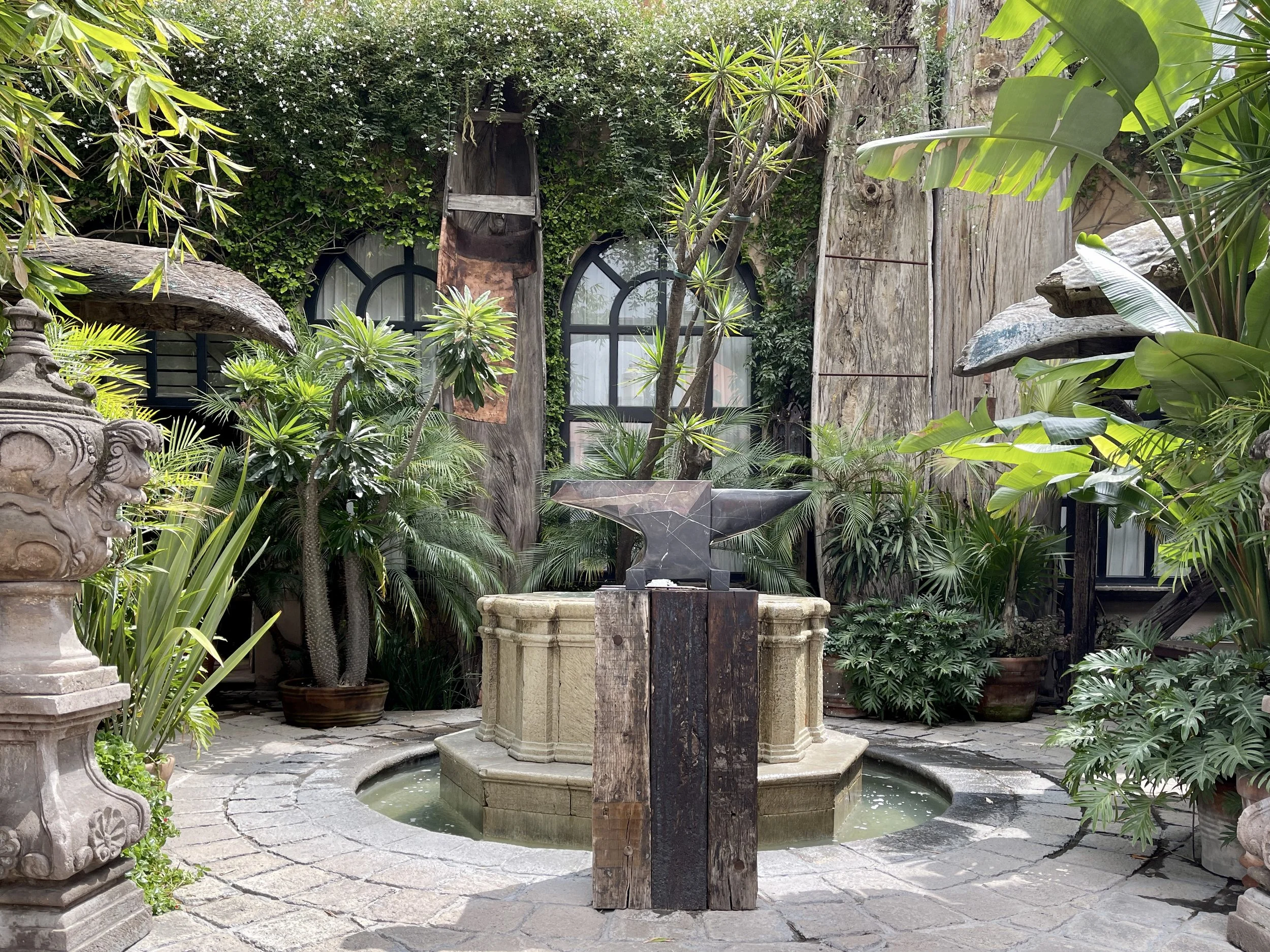
Courtyard with plants and greenery at Instituto Allende

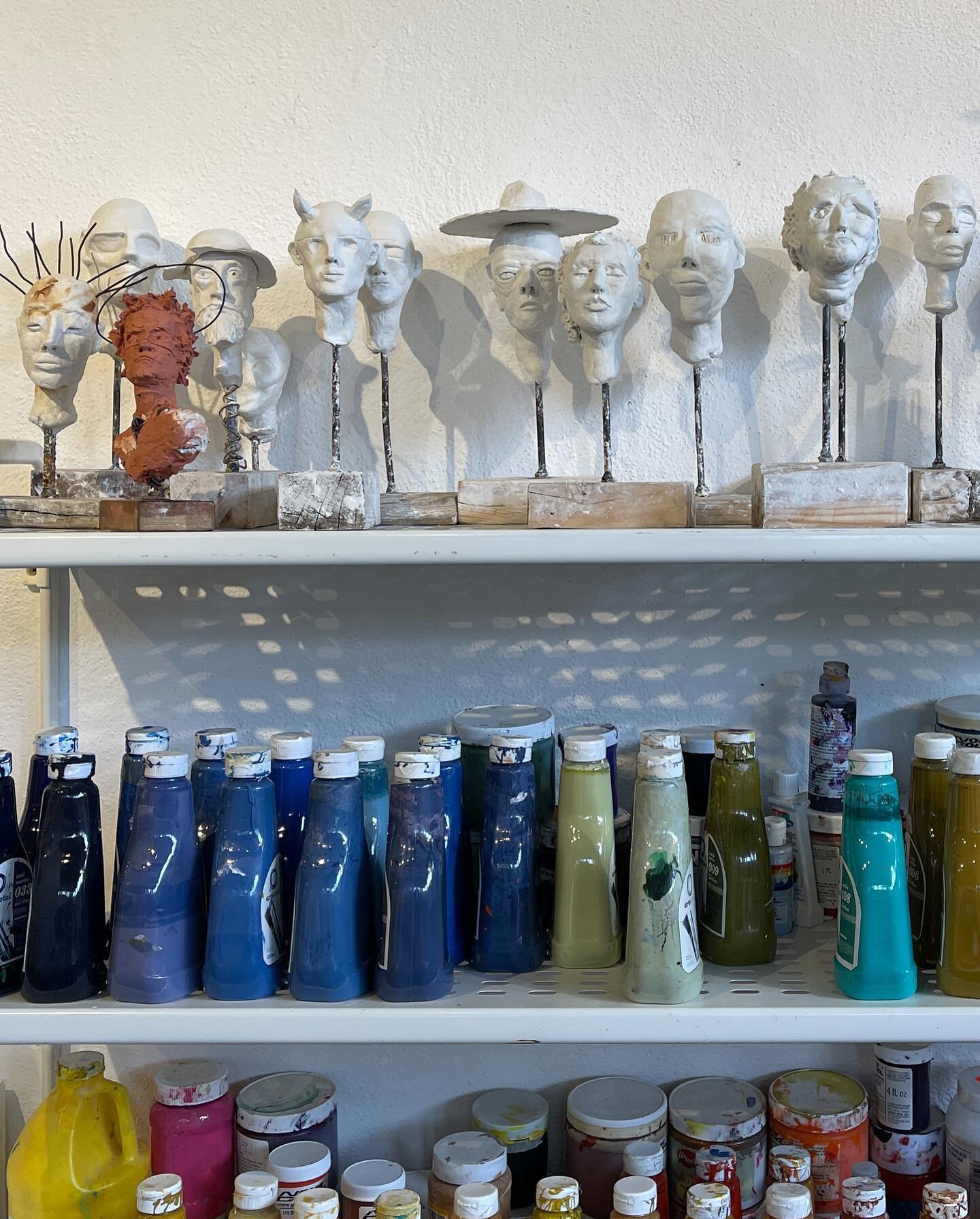
The Instituto Allende teaches a variety of fine arts, including sculpture.

San Miguel de Allende Goes Artsy 

After Mexico’s War of Independence in 1910, and the decline of silver mining, which had brought San Miguel de Allende its fortune, the colonial town faced an uncertain future. Credit for undertaking its transformation into an artists colony has largely been given to U.S. expat Stirling Dickinson, who became director of the Instituto Allende in the ’50s. 

Yet this is only part of the story. Native son and former Guanajuato governor Enriquez Fernández Martínez and his American wife, Nell Harris, were the instrumental force behind the art school’s founding. Their enduring legacy was carried on by their son Rodolfo, and his daughter Zara is the current director.  

However, it was not the first academic art school in SMA. Peruvian artist and diplomat-in-exile Felipe Cossío del Pomar, received support from President Lázaro Cárdenas to transform the 19th century convent of the Order of the Immaculate Conception, known locally as Las Monjas (The Nuns), into la Escuela Universitaria de Bellas Artes, the University School of Fine Arts. (The building is now occupied by the government-run cultural center known as the Centro Cultural Ignacio Ramírez “El Nigromante.”) 
Glass doors open to seating in courtyard of Instituto Allende and Murmullo cafe

Sterling Dickinson helped open up San Miguel de Allende as a center for the arts.

Class Act: Dickinson Comes oN the Scene 

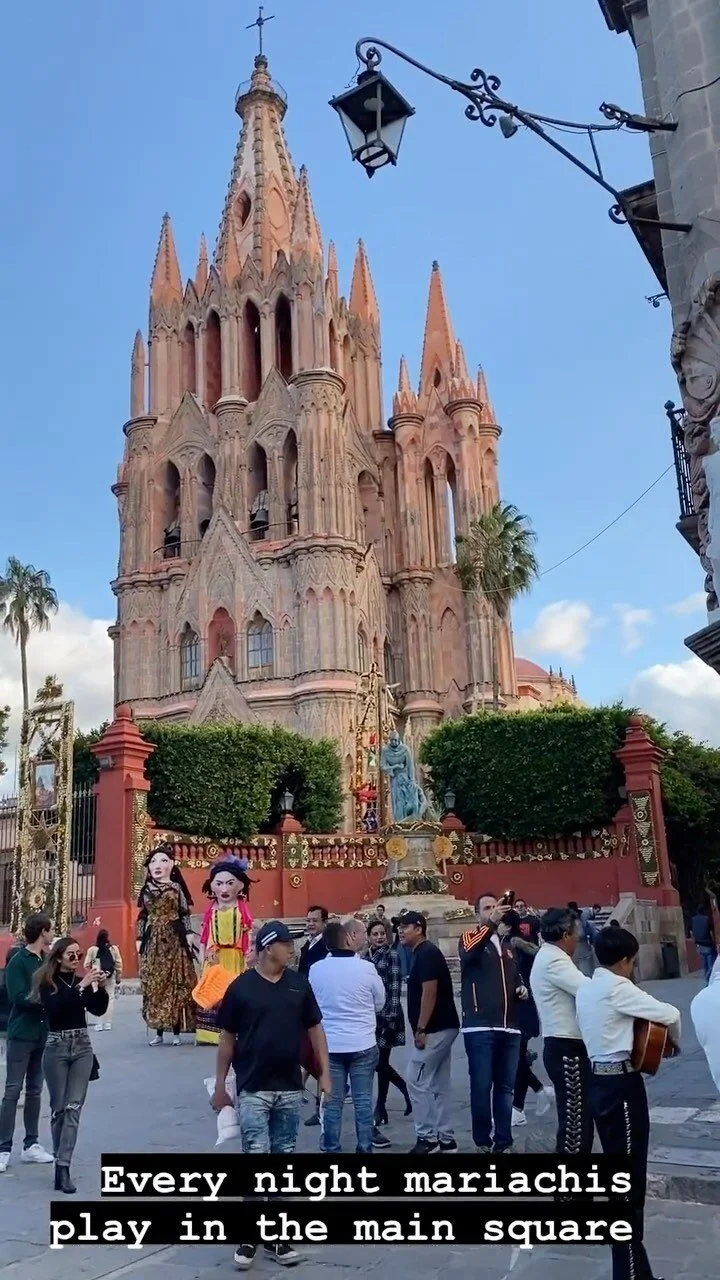
Dickinson’s arrival in 1937, at the invitation of Chicago Lyric Opera tenor and Hollywood actor José Mojica, helped shape the future of San Miguel de Allende. He was transported from the train station to the Jardín, the town’s main square, outside of La Parroquia church, in the wee hours of the morning by a mule-drawn cart. When he saw the cathedral’s spires rising out of the mist, he uttered, “My God, what a place!” We couldn’t agree more.

Days later, Dickinson decided to stay and purchased the ruins of a former tannery on a hill overlooking the town, which he converted into his home. The property and land cost a mere $90. Mojica was leading a coalition to promote San Miguel as a magnet for cultured tourists. Film stars, composers, singers, intellectuals, local politicians and artists showed up regularly at his soirées.
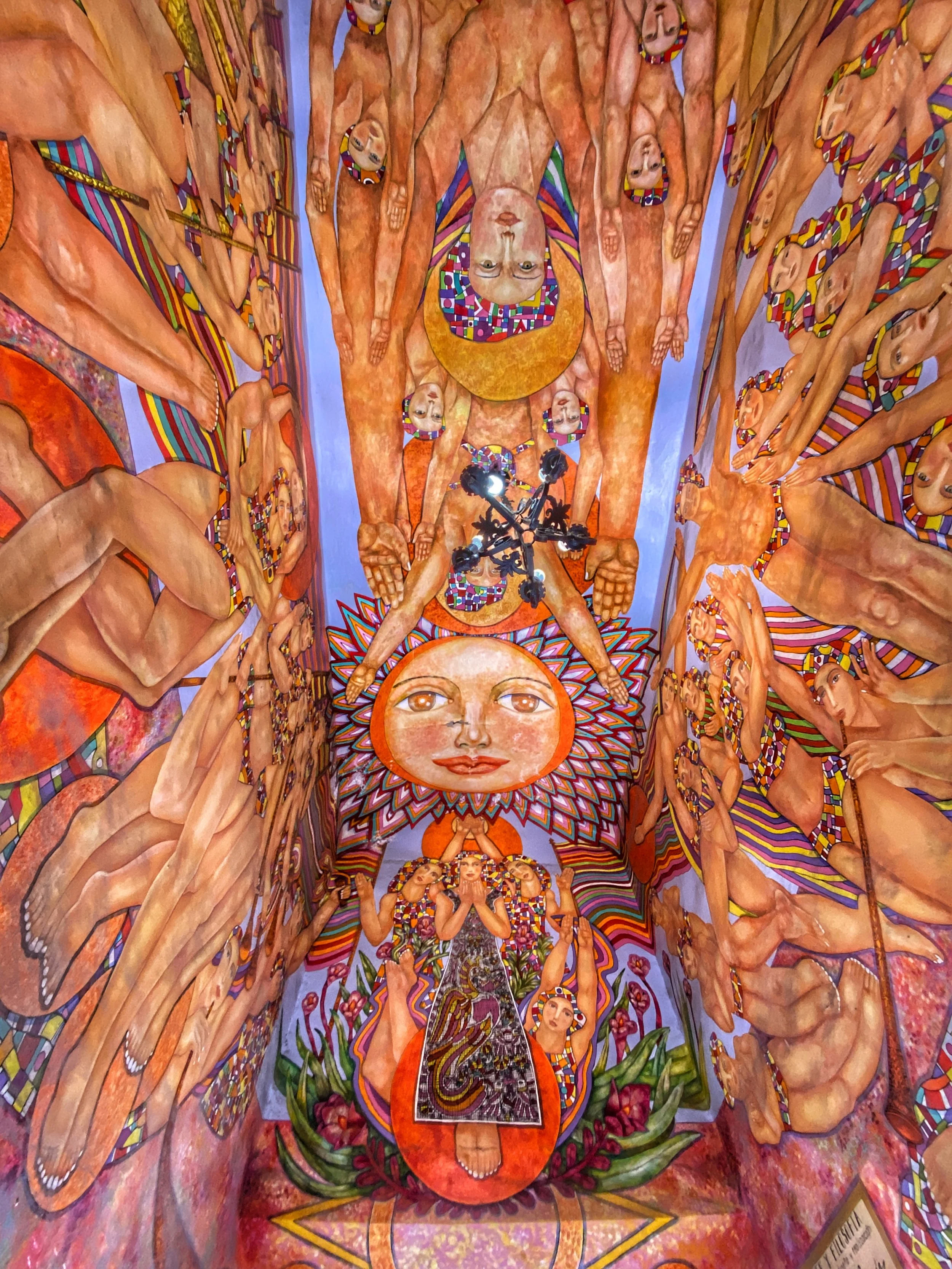
Chavez murals of people and the sun on the ceiling of the Instituto Allende

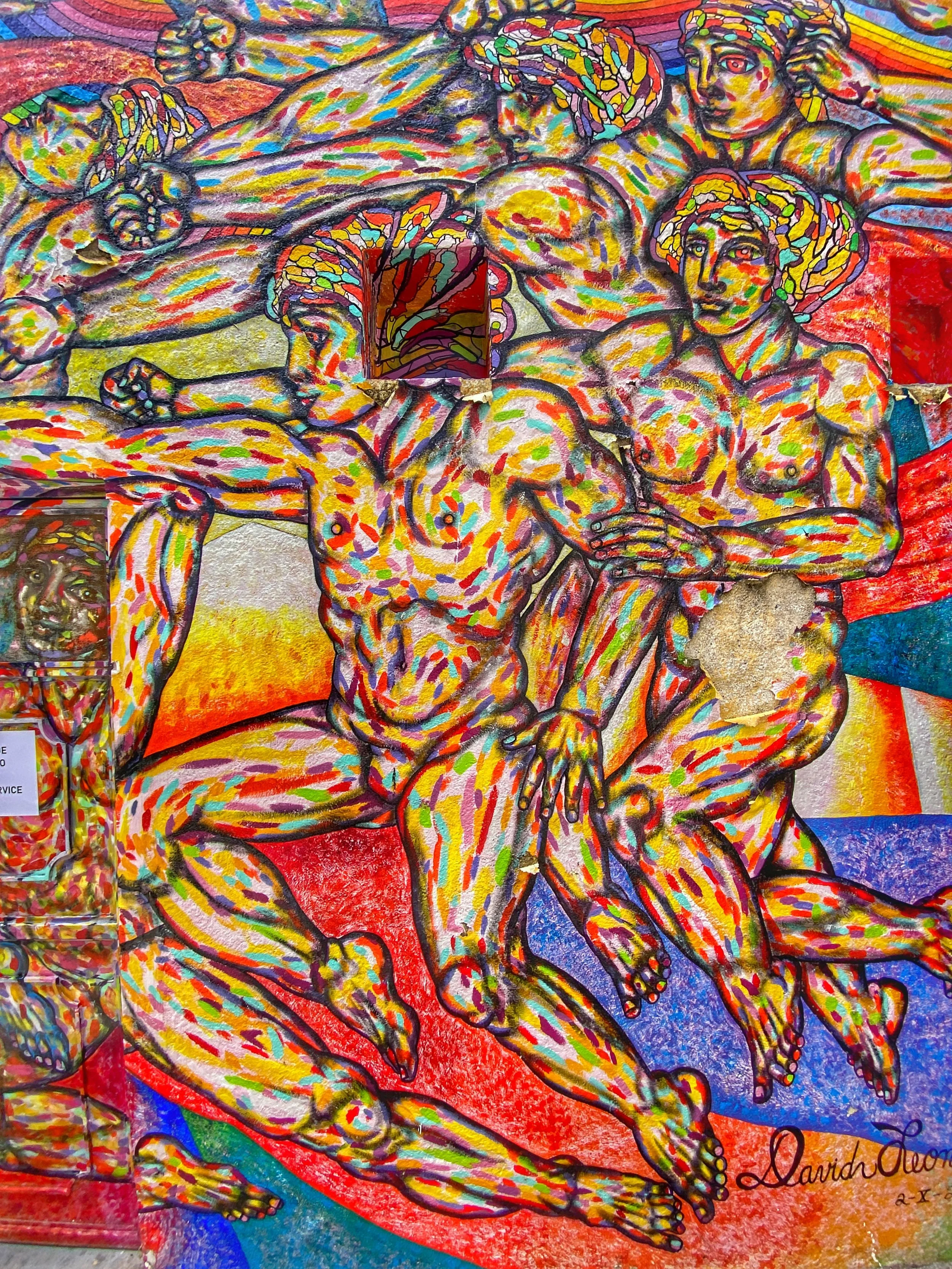
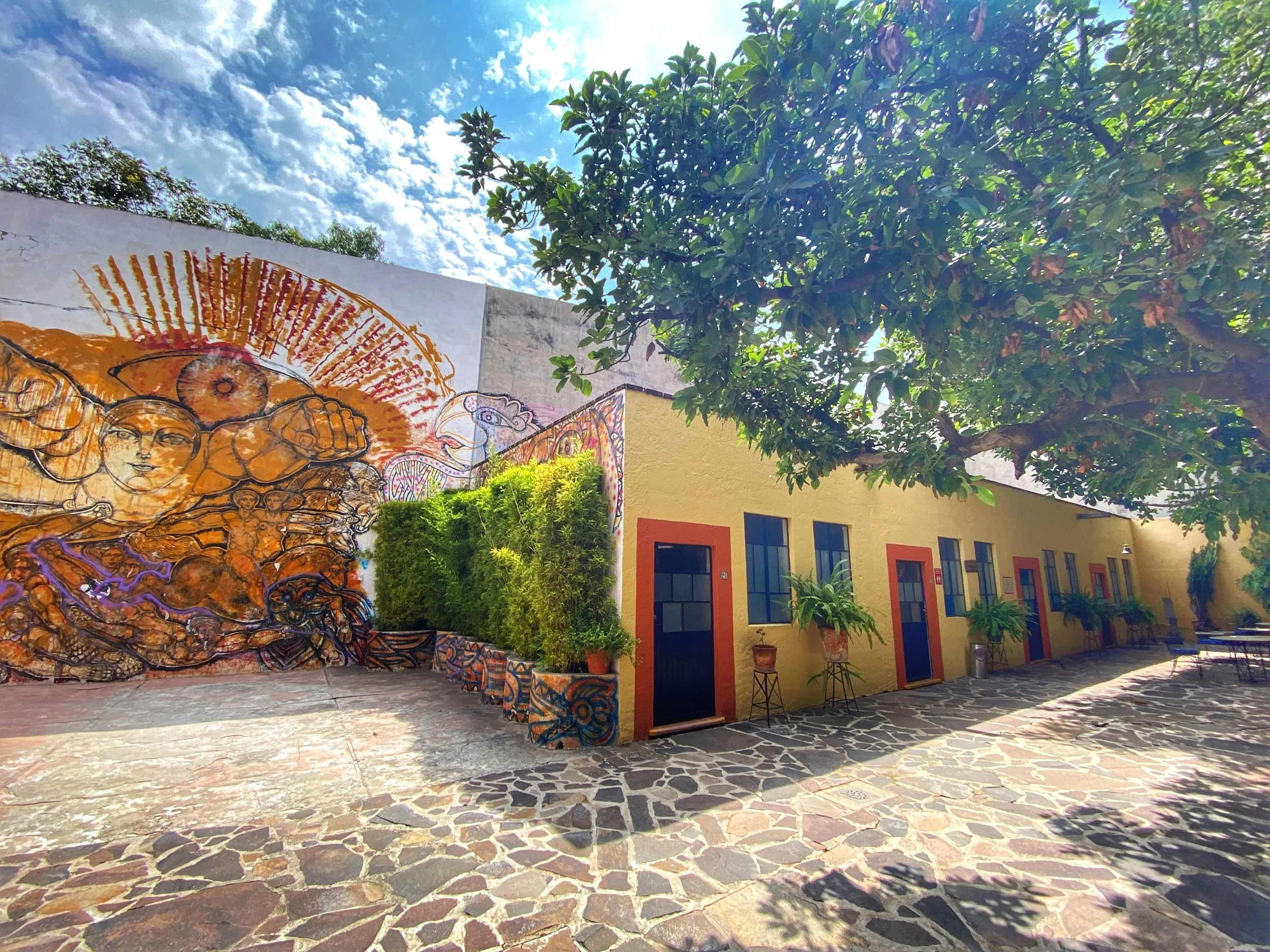
The Expressionist works of David Leonardo Chávez cover much of the Instituto.

After its founding, the Instituto Allende became part of the University of Guanajuato, offering master’s degrees in fine arts, and began to gain international recognition. By 1960 it had grown both in size and scope and also offered a bachelor’s program in fine arts. Enrollment at the school continued to rise, and the town’s cultural reputation attracted tourists and expats.
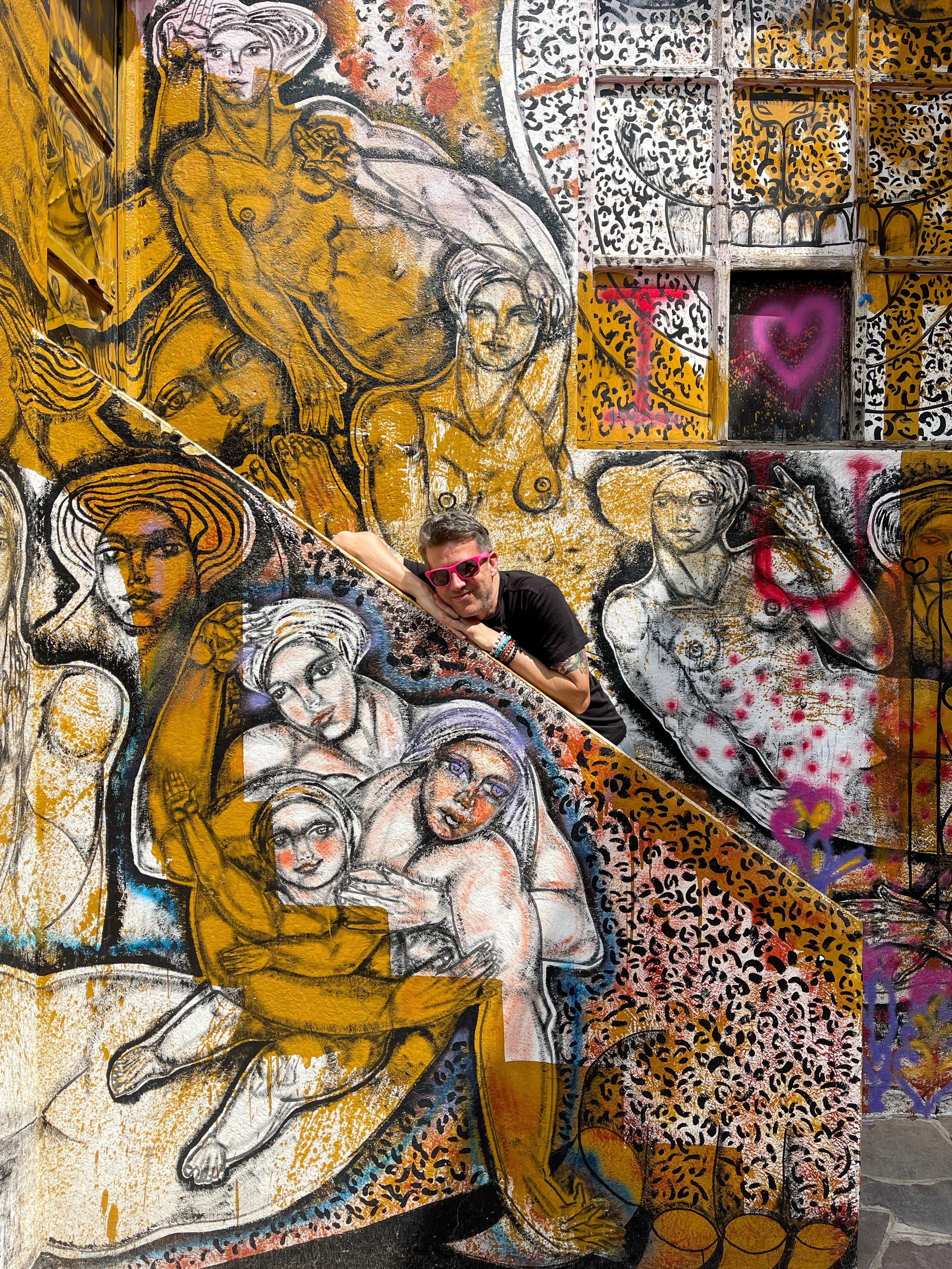
Murals of naked women with man in pink sunglasses at Instituto Allende

Wally couldn’t get enough of Chávez’s fantastical paintings.

Dickinson came from an affluent Chicago family and had a knack for public relations. His passion for the arts and the culture of San Miguel itself laid the groundwork for promoting the burgeoning school. A 1948 Life magazine article described San Miguel as a “G.I. Paradise,” and given the relatively affordable rents — $10 per month — it’s no surprise that veterans queued up for an opportunity to attend college here. 

As a teacher at the Instituto, Dickinson became known for his Aspects of Mexico course, which combined lectures and experiential field trips. He attempted to foster a relationship built on mutual respect for indigenous Mexican culture and history among his students (to various levels of success).

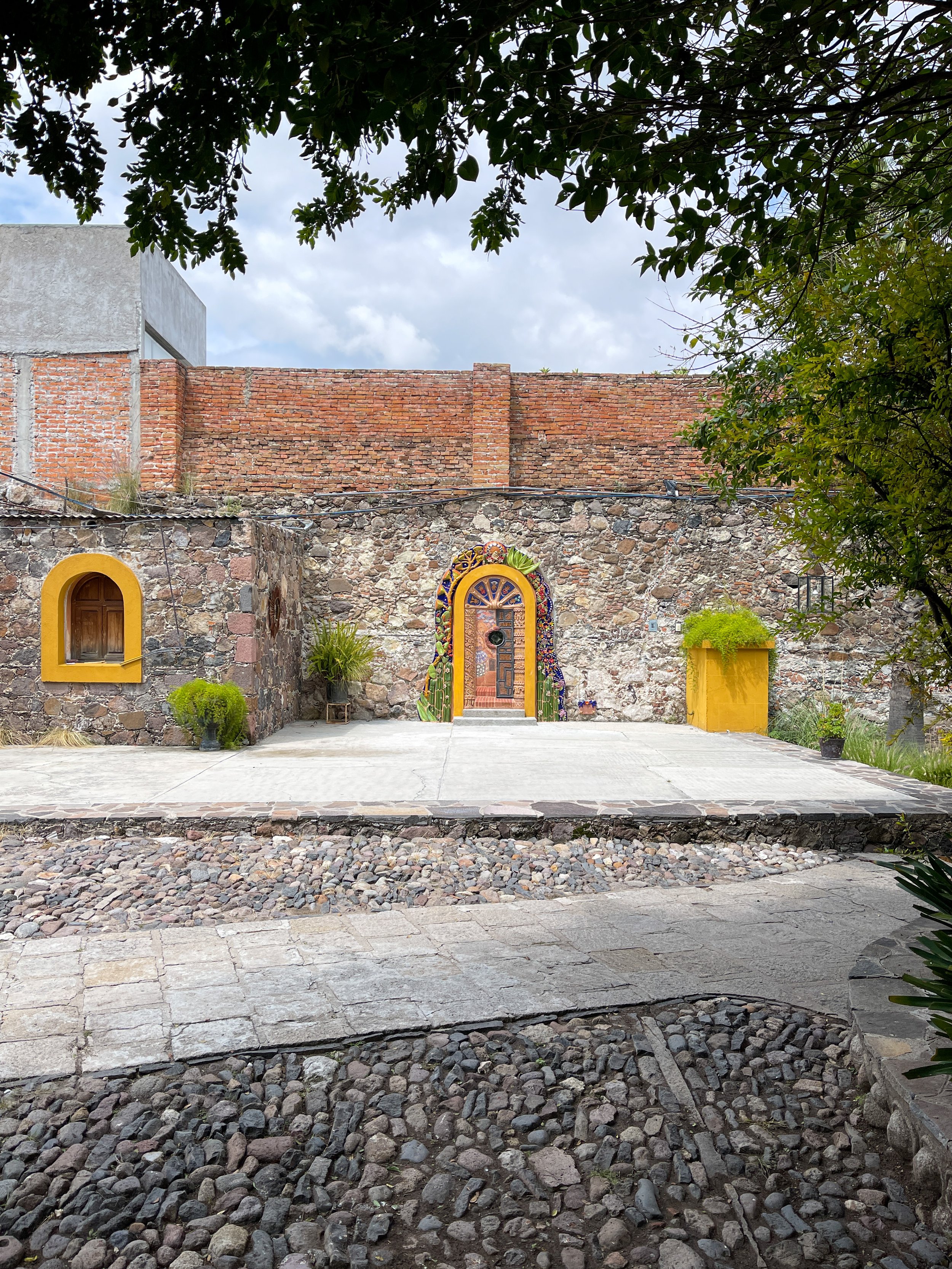
Stone walls and yellow frames at the Instituto Allende

Out back, you can wander around the beautiful campus and see the various classrooms.

Uncommon Grounds: A Walk Around Campus

Wally and I stopped by the main entrance of the Instituto on a Friday afternoon and found its massive wooden doors locked tight. Wally knocked on the door, and a janitor instantly opened it — only to inform us that it was closed to the public for a couple of days.

The institute is now split into two buildings: one for classes and a café, and another for weddings and other events. Unfortunately, we were unable to see the murals created in the 1950s by John DeMelim and James Pinto. 

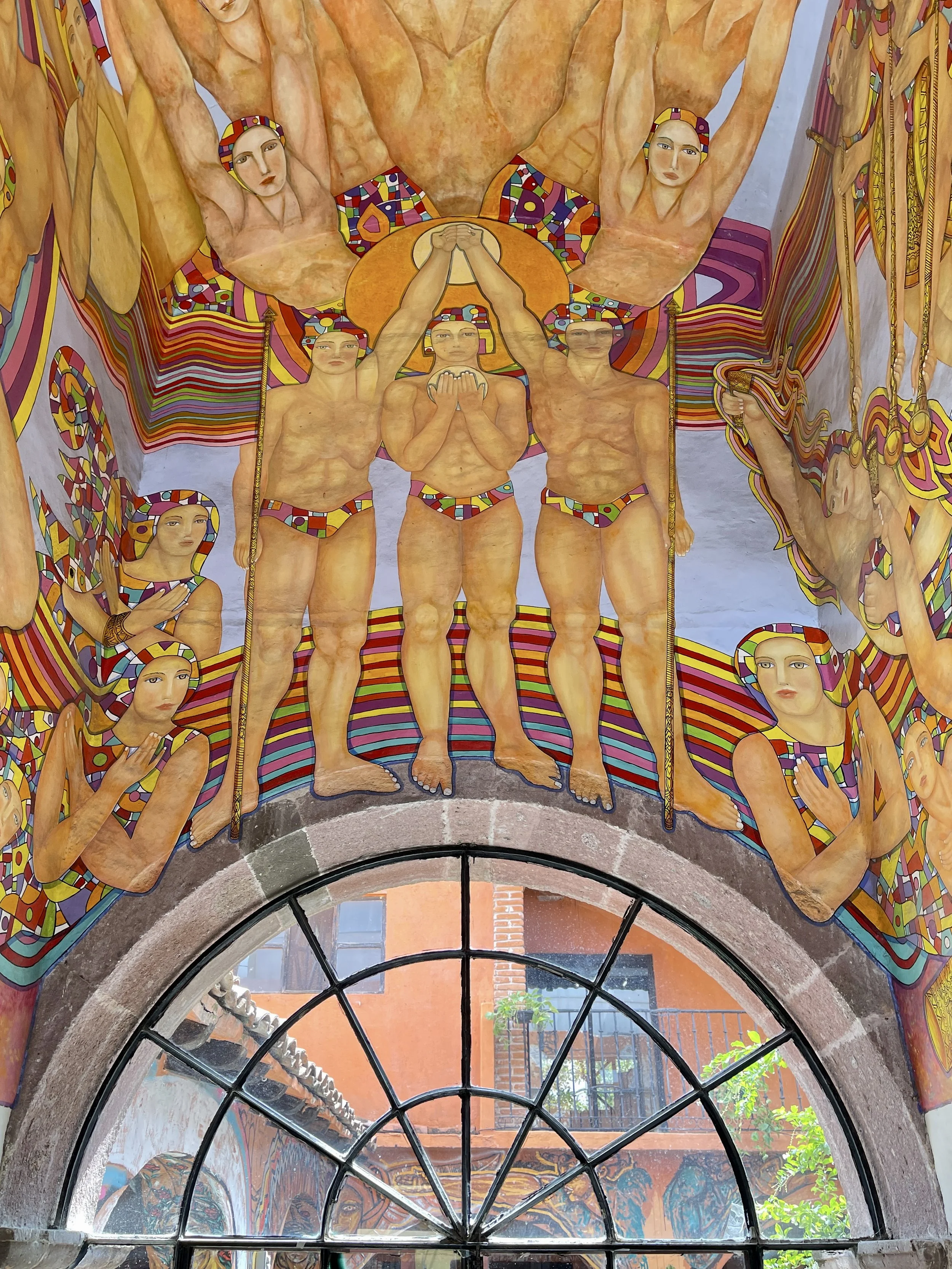
We were able to enter the school building, though, through the administrative offices, which had an exuberant mural by contemporary Mexican Expressionist David Leonardo Chávez that crowns the ceiling and part of the walls. The artwork is rich with jewel tones and patterns depicting stylized swimmers. 

Chavez mural of swimmers at the Instituto Allende

This mural of swimmers is one of the first you’ll see when you enter through reception.

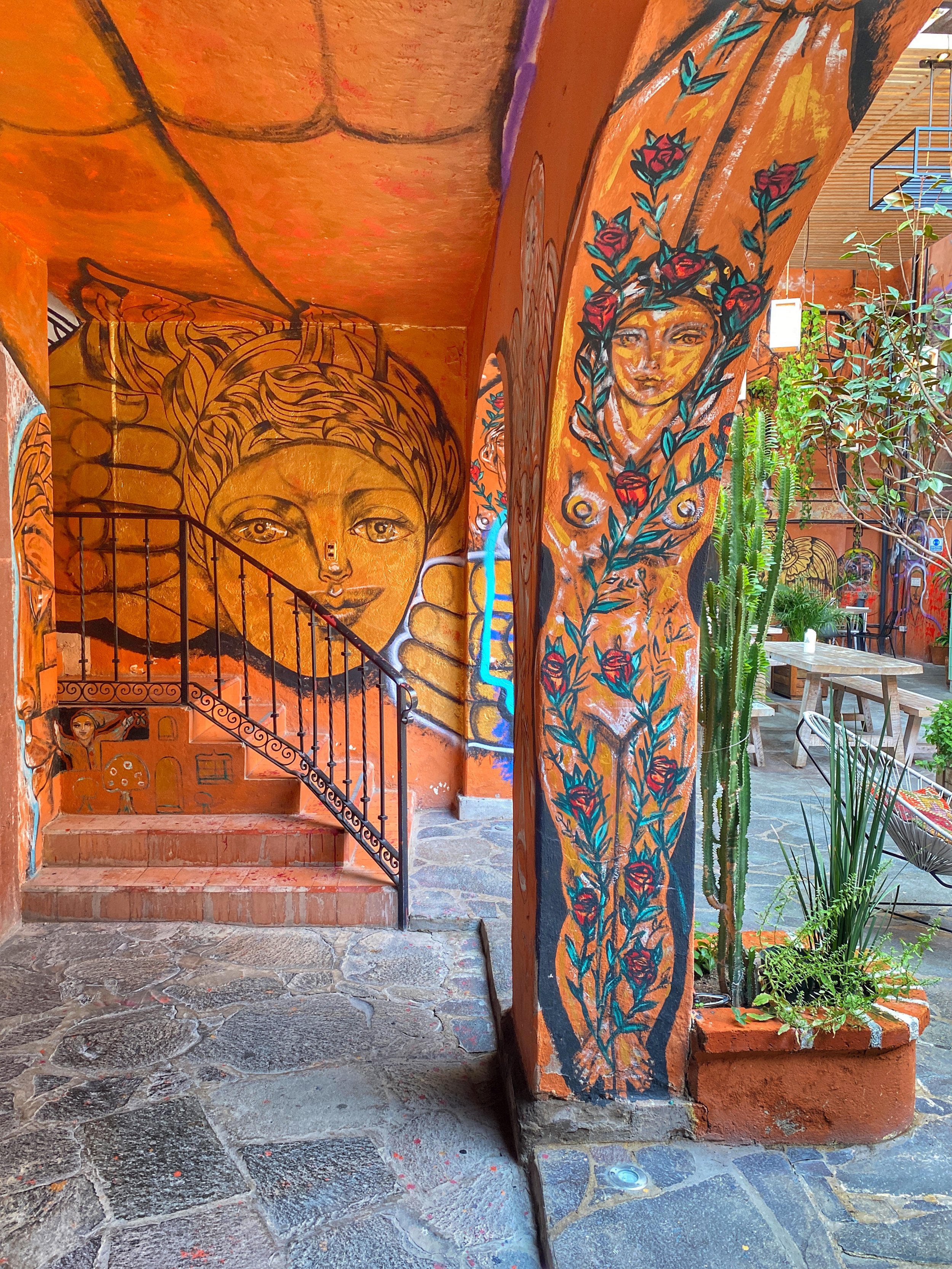
Murals of women and roses on orange wall at Instituto Allende

Not a bad place to get a degree in art, eh?

While wandering into the adjoining space, we paused to admire more of the painterly works of Chávez, which covers the walls. Beyond, a few students were scattered throughout the leafy park-like courtyard, sitting in the grass and enjoying the dappled afternoon sunlight. Stone paths bisect the grounds leading to pennant-shaped signs pointing students to the various workshops and studios, including ceramics, drawing, jewelry, painting, printmaking, sculpture and weaving. The school also offers a range of Spanish language immersion classes. 

Brightly colored Chavez mural of nude people at the Instituto Allende

A colorful mural by the bathrooms out back

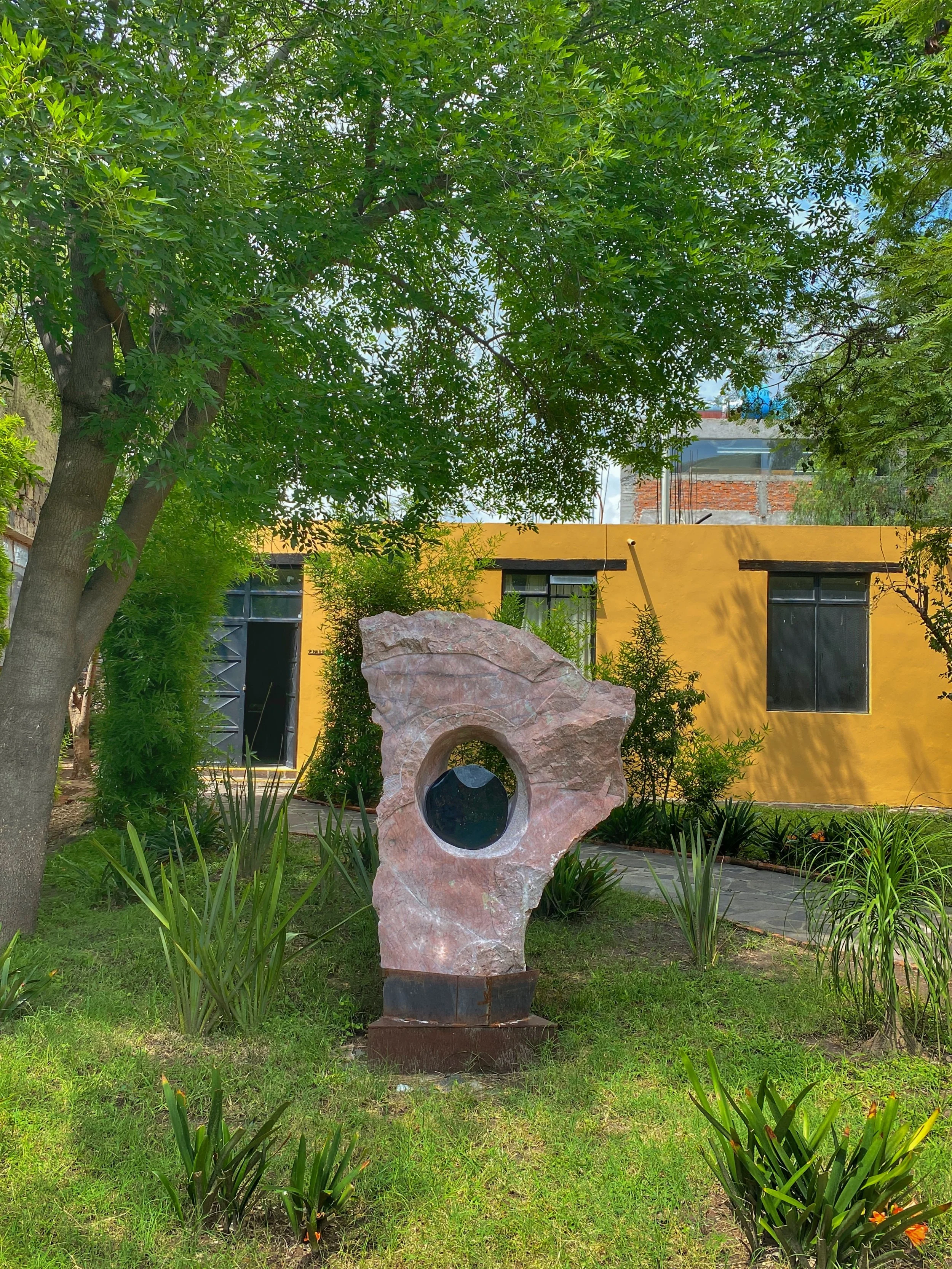
Statue with hole in center by lush foliage and yellow building at Instituto Allende

The Instituto was originally the summer residence of a wealthy family.

After taking a few photos, Wally and I exited on the far side of the campus, where a small group was setting up for an event in the enclosed egress. A young woman told us that this was for Rodarte, a bazaar for artists, makers and local designers from around Mexico to sell their works. The Instituto has always had a philanthropic component since its inception in 1950. Revenue from the event gives back to the community by providing art supplies for low-income students and teachers in the surrounding area.

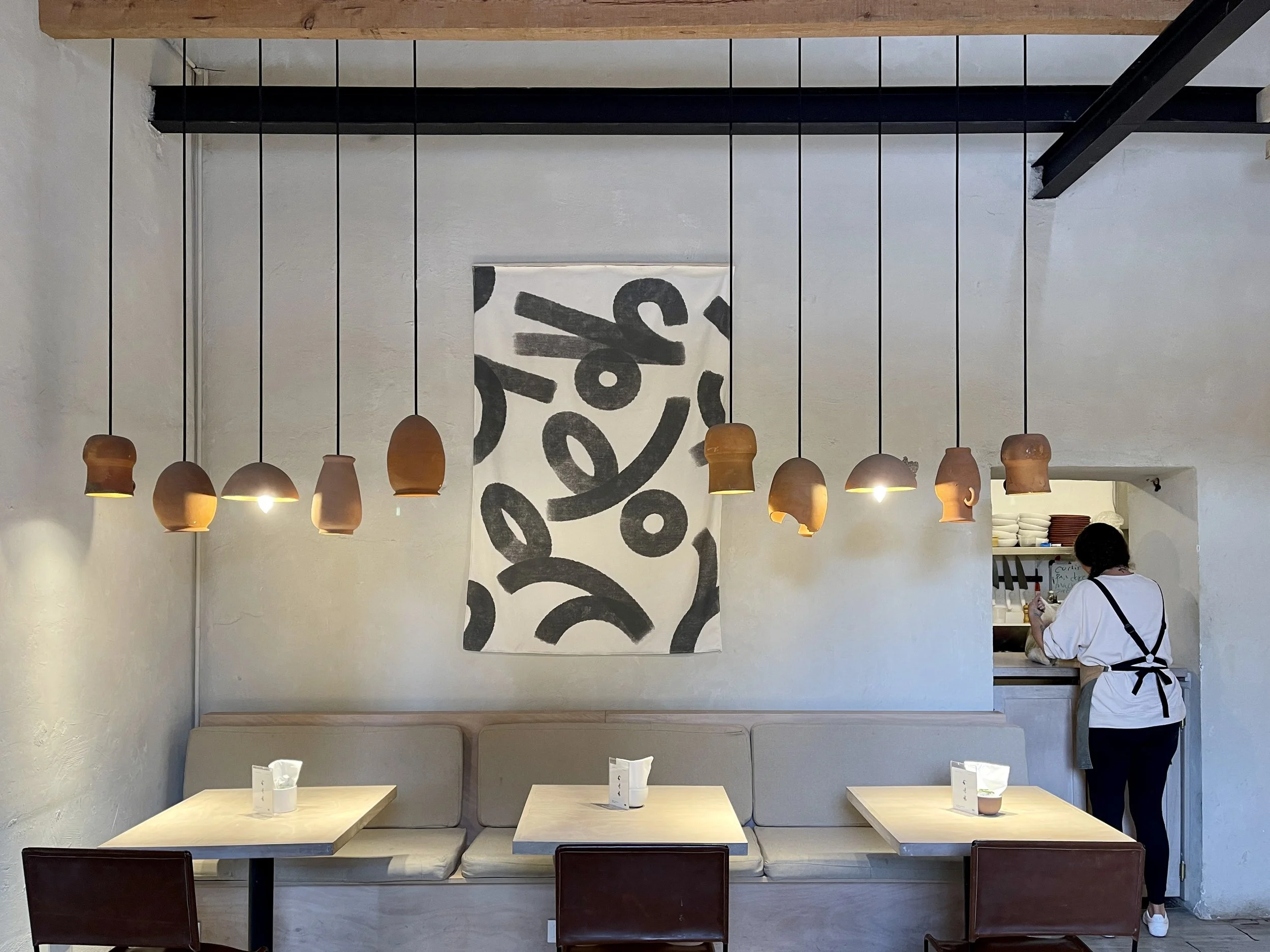
Minimalist white walls with ceramic pot lights at Murmullo cafe in San Miguel de Allende

The main section of Murmullo is chic and minimalist — but we chose to eat in the colorful mural-covered courtyard.

Murmurs and Musings at Murmullo Café

We left the grounds and had a snack at the charming Murmullo café, which is carved out from the Institute property. Our lively server recommended we split the falafel, which Wally and I ordered and agreed was quite possibly the best we’ve ever had. 

Falafel sandwich and salad on wood table at Murmullo

Quite possibly the best falafel pita we’ve ever had

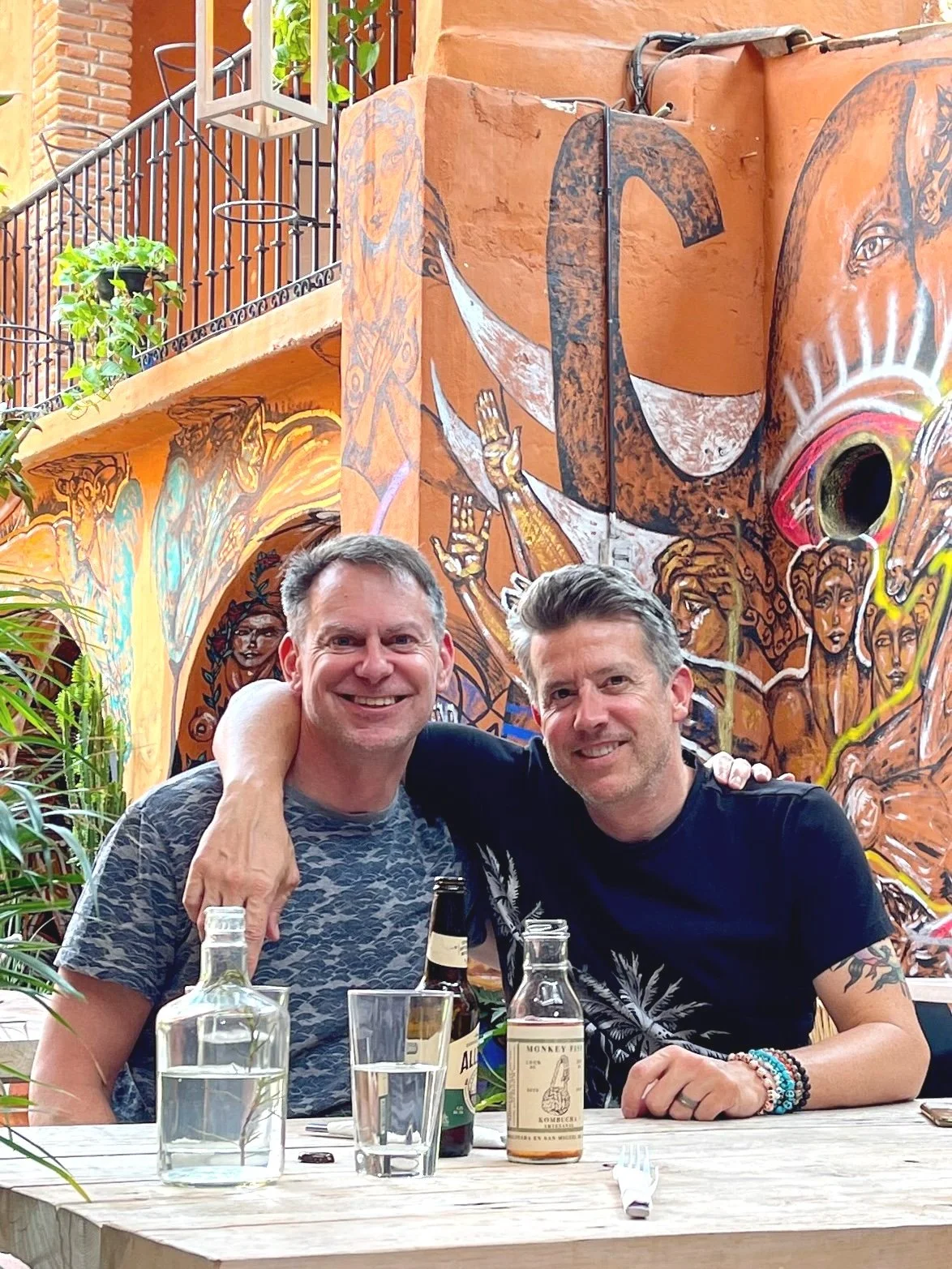
Two men at Murmullo cafe with bright murals behind them

Duke and Wally had a delightful lunch at Murmullo — great food, drinks, setting and service.

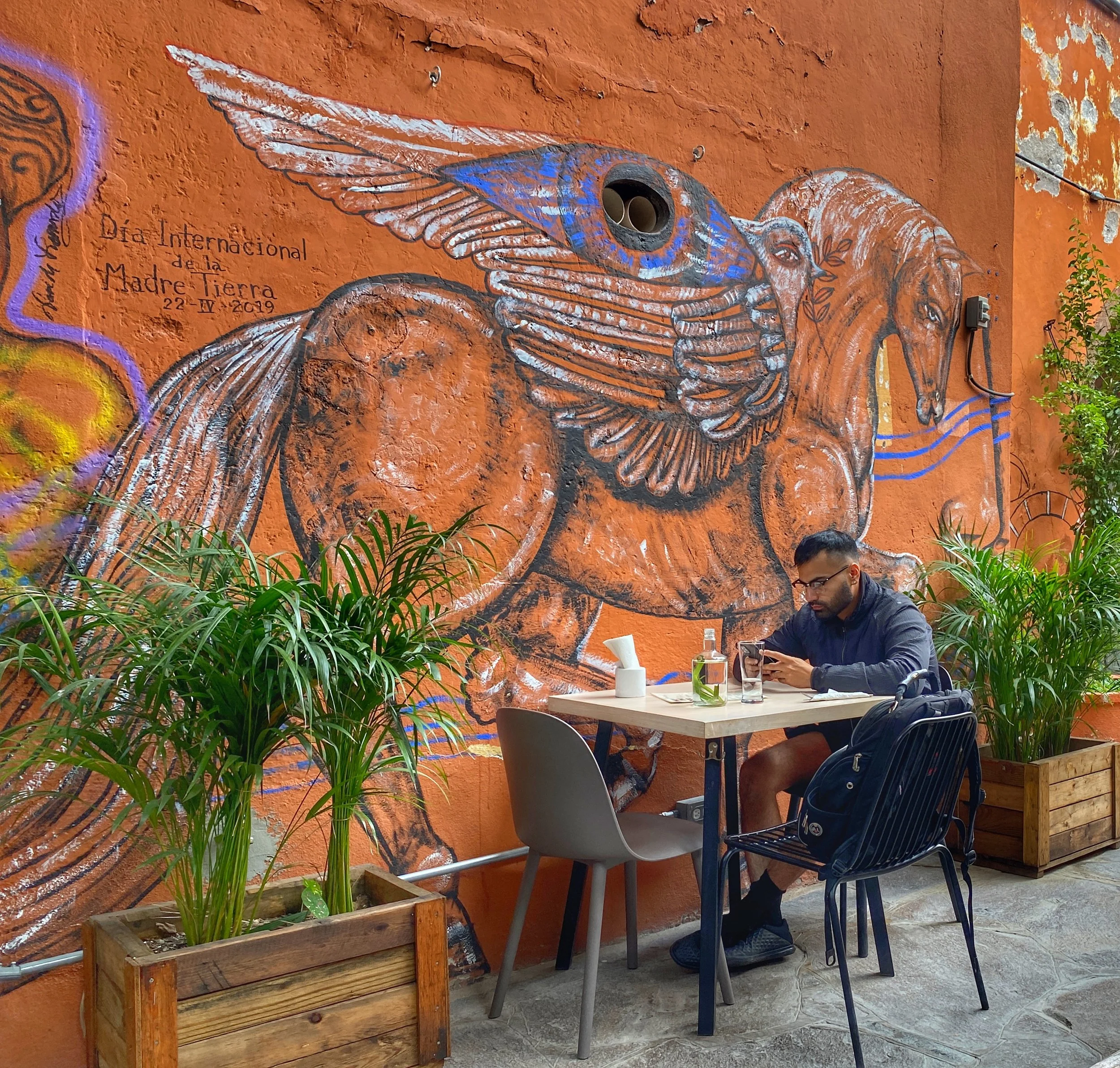
Mural of a pegasus on orange wall by dark-haired man in glasses at table at Murmullo cafe

You couldn’t ask for a cooler setting to enjoy a coffee, beer or bite to eat.

They also serve coffee, which was the perfect excuse for us to caffeinate with iced skim lattes, as well as beer and kombucha. The café has three different seating areas, two indoors and one outdoors. We chose the open-air courtyard, surrounded by Chávez’s fantastical work. The fare and the setting make it worth a visit. Try a coffee, a local microbrew and the falafel. You won’t regret it. –Duke

Back of Instituto Allende with mural, yellow walls and stone plaza

Instituto Allende

Ancha de San Antonio 22
Zona Centro
San Miguel de Allende
México