I Feel Like a Zombie Tiki Drink

Wally’s new favorite drink is a modern twist on a tiki classic, created by Chelsea Napper, bartender extraordinaire.
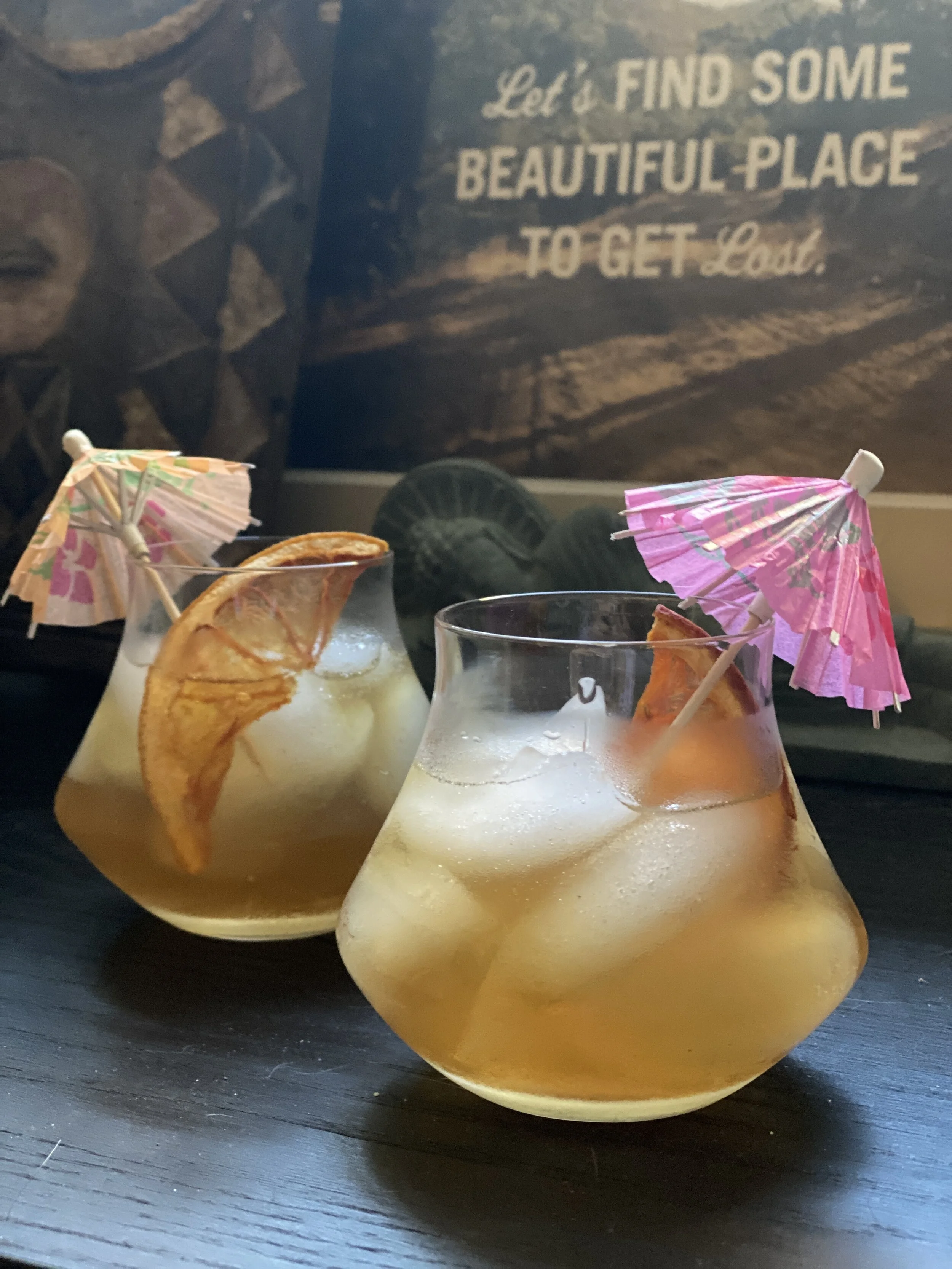
We just might have found you the perfect summertime cocktail: the I Feel Like a Zombie.

We just might have found you the perfect summertime cocktail: the I Feel Like a Zombie.

There’s just something so appealing about a tiki bar. All those masks and idols that are about as spooky as something out of a Scooby-Doo cartoon. The kooky glasses shaped like skulls or grimacing, bug-eyed faces. Those superstrong, fruity drinks that will knock you on your ass — some of which get set on fire! And, of course, the brightly colored garnishes, including cocktail umbrellas and bananas carved to look like dolphins.

So when you’re stuck at home (perhaps in the midst of a global pandemic) and the sun is shining and all vacations are canceled and you’re yearning for a bit of the tropics, consider whipping up a batch of I Feel Like a Zombies. 

Such was the case when we ordered a delicious tasting menu from Mr. Oiishi, a takeout and delivery concept launched during the coronavirus quarantine, where various chefs create their take on Asian comfort food. 

When we saw cocktail kits dreamed up by Chelsea Napper, bar director at Yugen in Chicago’s oh-so-trendy Randolph Street Corridor, we had to try one out. 

Napper says she came up with the drink by “thinking about the flavors of the classic zombie tiki cocktail but much more modern.”

Which got me thinking: What exactly is the drink version of a zombie, and where did it originate?

Heavy on the rum, with just the right amount of pineapple and grapefruit, chances are you’ll feel like a I Feel Like a Zombie again soon.

Heavy on the rum, with just the right amount of pineapple and grapefruit, chances are you’ll feel like a I Feel Like a Zombie again soon.

The History of the Zombie Cocktail

The first imbibable zombie was created by the appropriately named Donn Beach, the patron saint of tiki bars. He was so worried about someone stealing his recipe that he went to great lengths to keep the ingredients a secret — even from his own bartenders. The recipe, from 1934, consisted only of code numbers that corresponded to otherwise unlabeled bottles on his bar. Although many have tried to hunt down the exact recipe, there’s a good chance it has been lost to the ages (though Beachbum Berry has made it a lifelong quest to uncover the secret formula — and just might have succeeded). 

Beach is said to have referred to the zombie as “a mender of broken dreams” — and one so potent he wouldn’t serve more than two to a customer.
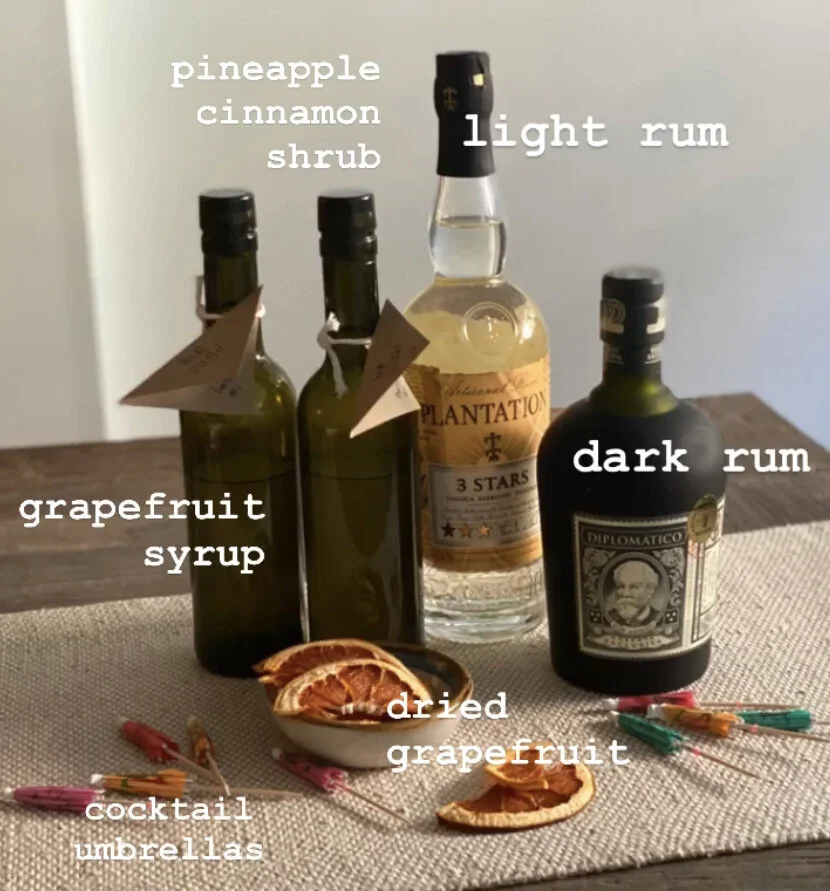
Everything you need to make this twist on the tiki classic, the zombie, including shrub and syrup.

Everything you need to make this twist on the tiki classic, the zombie, including shrub and syrup.

I Feel Like a Zombie Recipe

Ingredients

  • 1 ounce dark rum

  • 1 ounce light rum

  • 1 ounce pineapple cinnamon shrub

  • 1 ounce grapefruit syrup

  • 1 slice dehydrated grapefruit

“I recommend a light and dark rum for this cocktail, but if you’ve only got one or the other, that totally works,” Napper says.

Duke did some research and landed on Diplomático Reserva Exclusiva for dark rum and Plantation 3 Stars for light rum, which we picked up at our friendly neighborhood liquor store, Foremost in Uptown.

What the Heck’s a Shrub?

I had never heard of shrubs before. They’re also known by the unappetizing designation of “vinegar cordial.” The last time I knowingly drank vinegar was during a halfhearted attempt to pass a drug test for a summer job I didn’t want.

Shrubs are nonalcoholic syrups made of concentrated fruit, aromatics, sugar and, yes, vinegar.

Why are they called shrubs? Turns out the name is derived from the Arabic word sharab, meaning “to drink.” Shrubs were all the rage in Colonial America, when they were a tasty way to preserve fruit. Their popularity died out with the introduction of factory foods and home refrigerators but have resurged during the mixology revolution and rise of cocktail bars that like to have at least half of the ingredients in their $15 drinks be of obscure origin. 

Here’s a pineapple shrub recipe to try. And a general guide to making shrubs, stating that they typically follow a 1:1:1 ratio of fruit, sugar and vinegar.

Grapefruit Simple Syrup

As a big fan of sangria and old fashioneds, I’m familiar with simple syrup. This is essentially sugar water, so there’s no denying tiki drinks are on the sweet side — though it’s offset by the high amount of alcohol and the tartness of the vinegar.

Try this recipe for grapefruit syrup

Preparation

Once you’ve got everything you need, add the shrub and syrup to a cocktail shaker. Then add in the rum. 

Fill the shaker 3/4 of the way with ice and give it a good shake for about 10 seconds.

Strain and serve over fresh ice.

Garnish with a cocktail umbrella and dried grapefruit slice if you’re feeling fancy. Bonus points for serving in tiki glasses! –Wally

Why Are There Coyotes in Graceland Cemetery?!

Were coyotes introduced to get rid of the raccoons? And just how dangerous are the coyotes in Chicago?

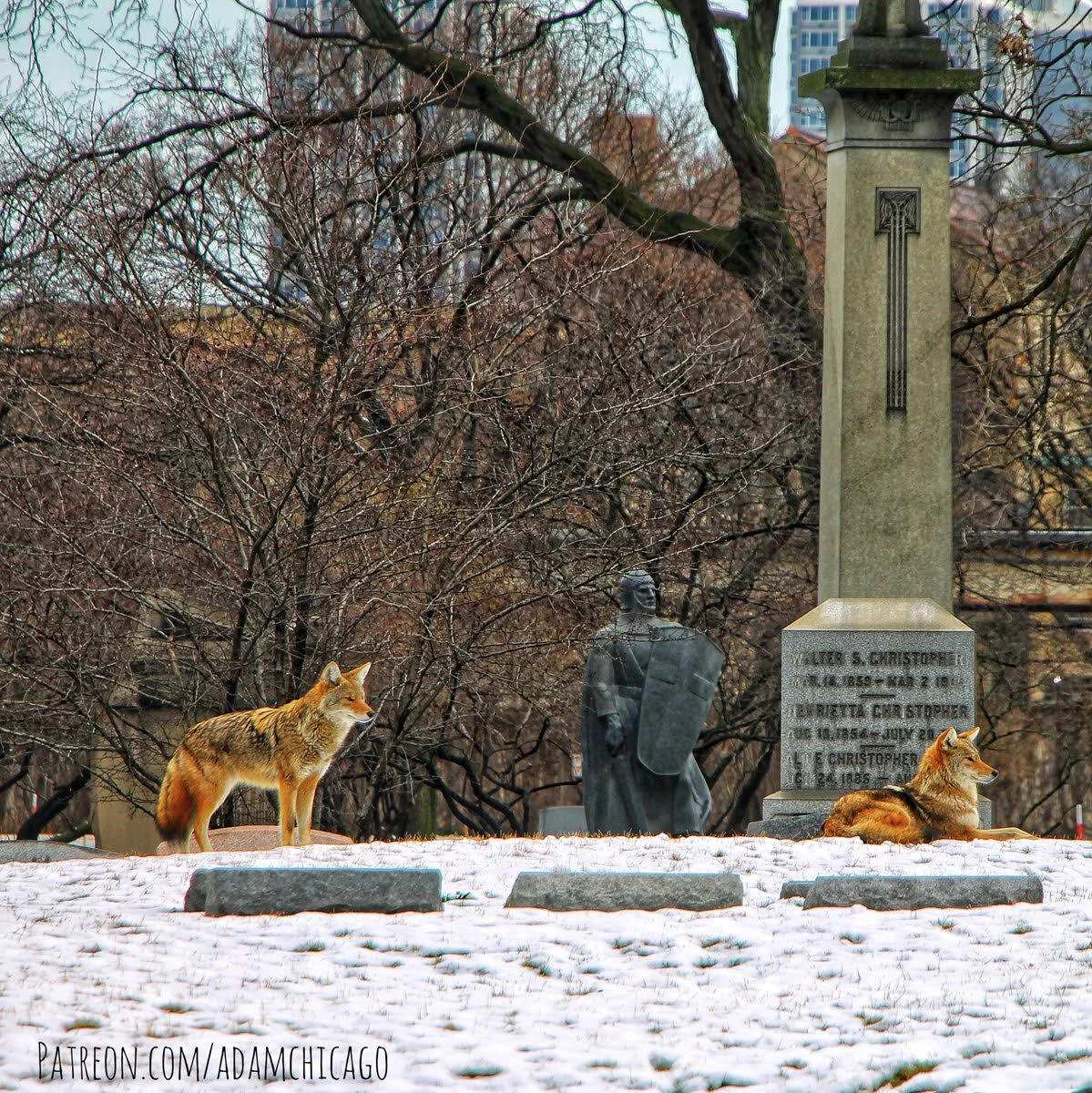
They’re cute — and a bit frightening. But the coyotes in Graceland Cemetery in Chicago haven’t hurt anyone and keep to themselves. Photo by Adam Selzer

They’re cute — and a bit frightening. But the coyotes in Graceland Cemetery in Chicago haven’t hurt anyone and keep to themselves. Photo by Adam Selzer

I never can resist a stroll through a graveyard. One winter day, I walked past the entrance of Graceland Cemetery at the intersection of Clark and Irving Park in Chicago. Before I even knew what I was doing, I found myself heading through the iron gates.

The cemetery is enormous and full of gorgeous old graves and mausoleums, some of which house the remains of famous Chicagoans, including the architect Louis Sullivan and the department store magnate Marshall Field.

Wally thinks this might have been the copse where the coyote made her den.

Wally thinks this might have been the copse where the coyote made her den.

As I wandered around the pond at the northern end of the cemetery, I noticed movement out of the corner of my eye. A dark shape emerged from a cluster of brambles about 20 feet away, its brown fur in stark contrast to the whiteness of the snow-covered ground. The creature stared at me, then crouched a bit, its ears flattening, and slowly began to prowl in my direction. I realized this must be a coyote — people in Chicago talk about these creatures roaming the streets at night — and despite its inherent cuteness, I had no doubt it could inflict some serious damage. 

I was carrying a tote bag with my laptop inside, which I now desperately clutched like a weapon, ready to swing it at the beast if it decided to attack me. I backed away, slowly at first, so I could keep the coyote within my sights. Once I had gained some distance, I started running through the snow, finding one of the roads that led to the main entrance. 

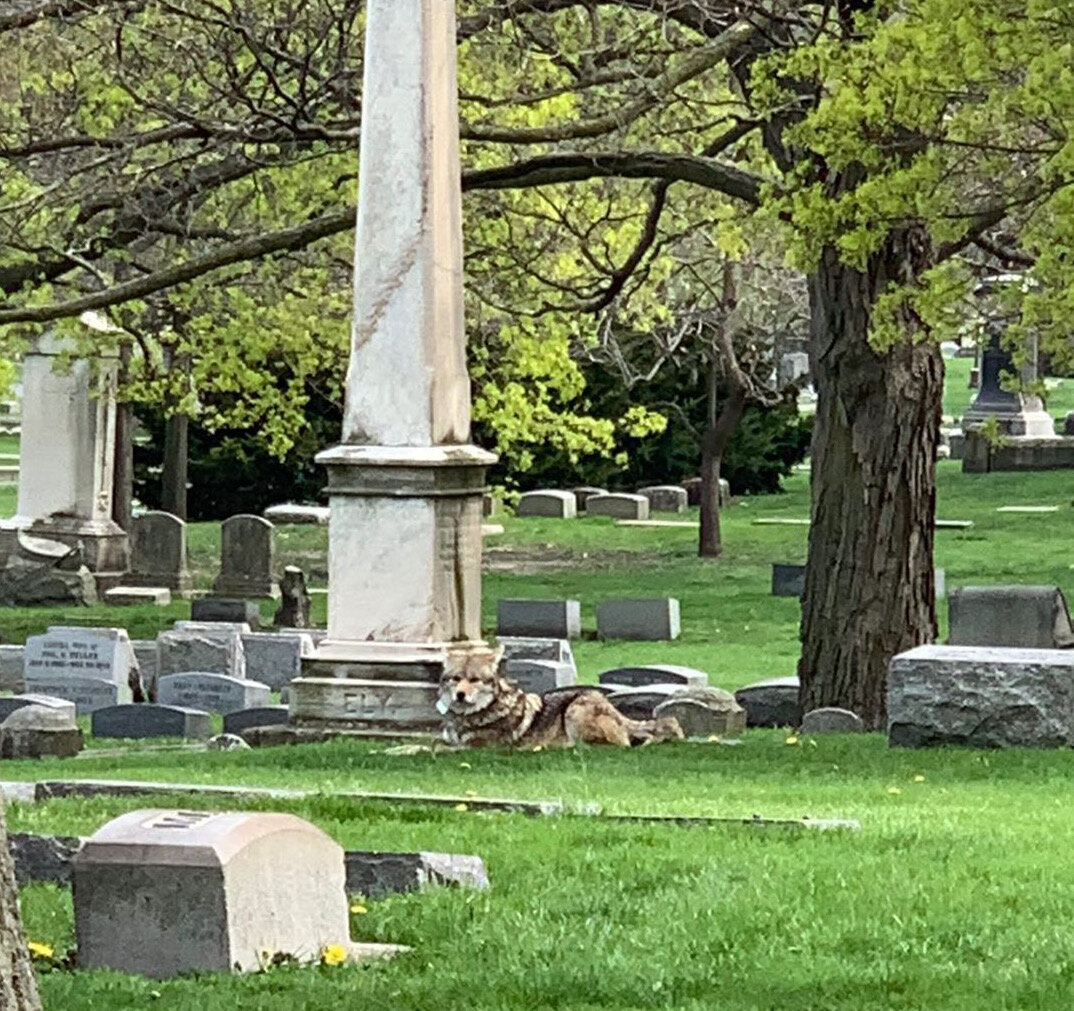
Can you spot the coyote? These wild canines help curb populations of raccoons, rats and geese at Graceland Cemetery. Photo by Adam Selzer

Can you spot the coyote? These wild canines help curb populations of raccoons, rats and geese at Graceland Cemetery. Photo by Adam Selzer

Out of breath and slightly traumatized, I darted into the cemetery office near the front gate. A young man smiled at me as I shouted, “There’s a coyote in the cemetery!”

“Oh, yes,” he said calmly. “There’s more than one.”

I blinked at him, dumbfounded. I mean, I understand why cities would allow squirrels and bunnies and even deer to roam our green spaces — but why would it be OK to have large wild dogs running free? As insane as it sounds, there could be up to 4,000 coyotes in Chicago, according to NPR.

“In fact,” the young man continued, “the city brought the coyotes into the cemetery to eradicate the raccoon problem.”

This was getting stranger and stranger. It seemed to me that, in this case, the solution might be worse than the problem. 

“I might have been imagining things,” I said, “but it seemed as if it was pursuing me, like it might attack.”

He nodded. “There’s never been an attack in the cemetery, but she just had a litter and was protecting them.”

That being the case, it sure would have been nice to have a warning posted, something along the lines of: Caution! Keep a lookout for a mother coyote that could maul you because she feels you’re a threat to her babies. Enjoy your visit!

As strange as it might seem, it turns out coyotes are indeed fixtures within Chicago city limits and are, in the vast majority of cases, not a threat to our safety. There are, of course, exceptions to this rule, such as the 6-year-old boy who was bitten by a coyote near the Nature Museum — though who knows? The kid might have done something to instigate the attack.

There are typically three to five coyotes within the grounds of Graceland Cemetery. Photo by Adam Selzer

There are typically three to five coyotes within the grounds of Graceland Cemetery. Photo by Adam Selzer

The Official Word on Coyotes at Graceland

Wanting to get to the bottom of this mystery, I reached out to Graceland’s staff to ask them about coyotes in the cemetery.

No one is sure of exactly how many coyotes are on the grounds, but employees estimate there are usually about three to five.

“The coyotes have never hurt anyone on the grounds and stay away from people,” says Jensen Allen, associate director at Graceland. “We do not allow people to feed them, which is usually what can cause animals to become accustomed to up-close human interactions.”

Did the city really introduce them to the cemetery to deal with the raccoon population?  

“We cannot verify whether they were brought into the city for any reason or not,” Allen says. “There are many stories out there, but we have heard from wildlife experts that this is not true per se. Coyotes have been part of the city for an extremely long time, and it is likely humans encroached upon their territories long ago and they have become used to surviving in urban areas.”

Either way, raccoons are more of an issue to people than the coyotes have ever been, she attests. “As I’m sure you know, raccoons are pretty fearless and will approach humans with no issue. We are thankful to our coyotes because they keep raccoons down as well as other vermin such as rats, mice, geese and any other troublesome wildlife animal.”

Our friend Sandy and her daughters visit Graceland often — and are always excited to see a coyote.

Our friend Sandy and her daughters visit Graceland often — and are always excited to see a coyote.

To learn more about coyotes (and be tempted to hold one of their cute little puppies — even though this is a very bad idea), check out the Urban Coyote Research Project. –Wally


Graceland Cemetery
4001 N. Clark St.
Chicago, IL 60613

Milk Bar Compost Cookies

Some people call them garbage cookies or kitchen sink cookies. While you’re baking up a storm at home, throw in whatever sweet and savory snacks that are near the bottom of the bag into this sinfully delicious dessert recipe.

Compost cookies: decadent and the perfect meeting of savory and sweet

Compost cookies: decadent and the perfect meeting of savory and sweet

It seems surreal now, as we move into the third month of our coronavirus quarantine. But back in early February, before the world screeched to a halt, I was in New York on a business trip and walked past one of Milk Bar’s locations, the sister bakery to the Momofuku restaurant group. It was around 9 p.m. and it was still hopping, so I decided not to go in. 

Since we won’t be going to NYC any time soon, I decided to make their famous compost cookies at home. You may wonder why they’re called compost cookies, or, alternately, garbage or kitchen sink cookies. Whatever you want to call them, there’s no denying how addictive and delicious they are. They’re the perfect marriage between satisfying my sweet tooth (with dark chocolate chunks and toffee bits) and Wally’s savory cravings (featuring one of his favorite snacks, potato chips). Although there are a lot of ingredients that go into these, what’s great about them is that you can easily incorporate and use up whatever you have on hand.

Compost cookies are easy and comforting to make — an ideal recipe to add to your rotation, during, say, a global pandemic, especially if you’ve grown tired of making banana bread.

It’s a great recipe for someone like my mom who’s known to throw random ingredients into her recipes. Compost cookies are easy and comforting to make — an ideal recipe to add to your rotation, during, say, a global pandemic, especially if you’ve grown tired of making banana bread.

Luckily for us, Christina Tosi, the award-winning chef, creative force and owner of Milk Bar, has graciously shared her recipes for their baked goods on their website. It seemed downright serendipitous when Tosi showed up as a guest judge on Nailed It! on Netflix as we were munching on the compost cookies I had baked.

I’ve made a couple of minor tweaks. The first batch I tried at the suggested temperature of 375°F came out more flat and crispy than I would like — Wally didn’t mind, but I can admittedly be a bit neurotic about these things. I don’t know if our oven is simply too hot, but I reduced the temperature to 350°F, and the baking time from 18 minutes to 12, with better results. 

The dough has so many bits and chunks in it — it’s seriously bonkers how many different things are in these cookies! For the best results, I recommend scooping out your dough with a 1½-inch-diameter cookie scoop and placing the balls in a resealable container in the freezer overnight. But if you can’t wait that long, a couple of hours will suffice. –Duke

Compost cookies are a fun take on chocolate chip cookies that pack in your favorite snacks.

Compost cookies are a fun take on chocolate chip cookies that pack in your favorite snacks.

Servings: 24 cookies

Active Time: 30 minutes 

Total Time: 2 hours, plus an optional overnight chill

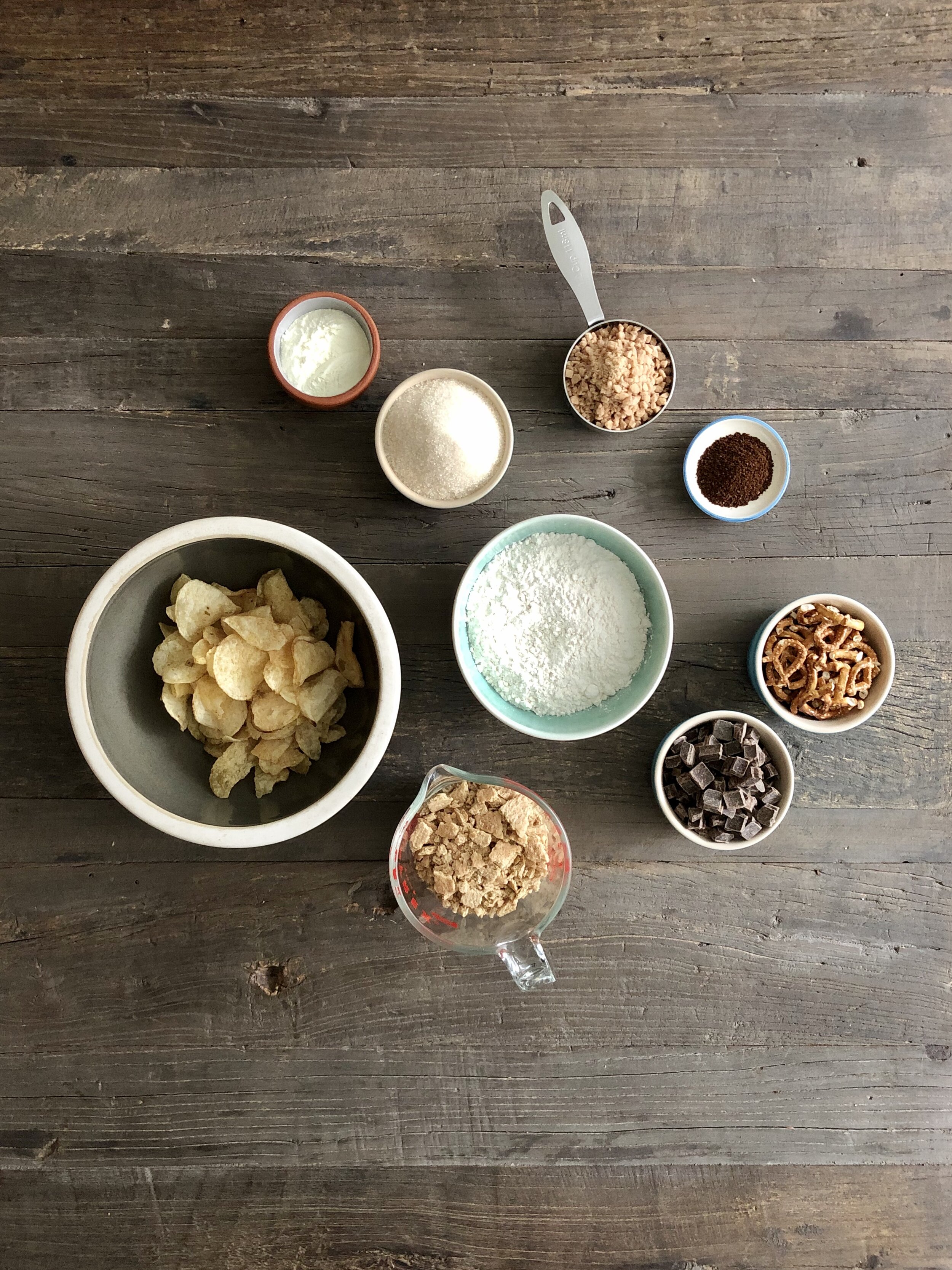
Potato chips, toffee, chocolate, pretzels — throw in whatever you’ve got left in the pantry!

Potato chips, toffee, chocolate, pretzels — throw in whatever you’ve got left in the pantry!

INGREDIENTS

  • 16 tablespoons unsalted butter, room temperature 

  • 1 cup granulated sugar

  • ⅔ cup light brown sugar, tightly packed 

  • 1 tablespoon light corn syrup

  • 1 egg

  • ½ teaspoon vanilla extract

  • 1⅓ cups flour

  • ½ teaspoon baking powder

  • ¼ teaspoon baking soda

  • 1 teaspoon kosher salt

  • ¾ cup chocolate chunks 

  • ½ cup Heath toffee bits 

  • ⅓ cup old-fashioned rolled oats

  • 2½ teaspoons ground coffee

  • 2 cups potato chips

  • 1 cup mini pretzels 

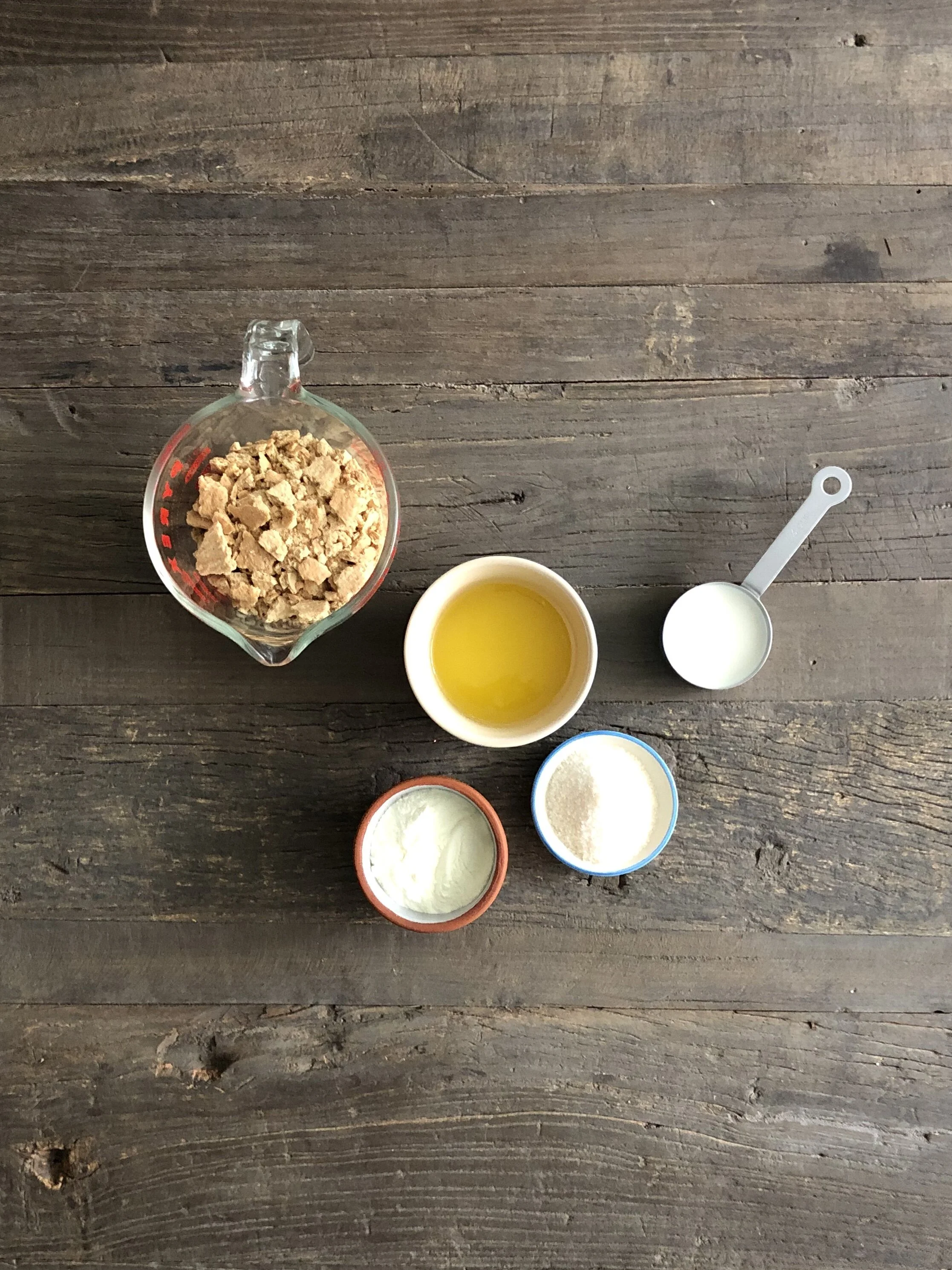
The first step is mix up the ingredients that could be used for a graham cracker crust — though here they’ll just create the base for the cookie dough.

The first step is mix up the ingredients that could be used for a graham cracker crust — though here they’ll just create the base for the cookie dough.

GRAHAM CRACKER “CRUST”

  • 1½ cups graham cracker crumbs

  • ¼ cup milk powder

  • 2 tablespoons sugar

  • ¾ teaspoon kosher salt 

  • 4 tablespoons unsalted butter, room temperature 

  • ¼ cup heavy cream

The graham cracker “crust”

The graham cracker “crust”

PREPARATION

Start with what Tosi calls a graham crust. I’m looking forward to trying this on the next Key lime pie I make, but here it’s used as a textural component in the cookies. Toss the graham cracker crumbs, milk powder, sugar and salt with your hands in a medium bowl to evenly distribute your dry ingredients.

Add the butter to the dry ingredients and toss again to evenly distribute. Then add the heavy cream. The butter and cream will act as a glue, adhering to the dry ingredients and turning the mixture into small pea-sized clusters. The crust should hold its shape if squeezed tightly in the palm of your hand. If it isn’t moist enough, mix in an additional 1 to 1½ tablespoons of butter.

Next, move onto the cookie dough. Combine the butter, sugars and corn syrup in the bowl of a stand mixer fitted with the paddle attachment. I swear by my KitchenAid stand mixer, but an old-school hand mixer will work, too. Cream together the ingredients on medium-high for 2 to 3 minutes. Using a spatula, scrape down the sides of the bowl, add the egg and vanilla, and beat for 7 to 8 minutes more. 

Reduce the speed to low and add the flour, baking powder, baking soda and salt. I usually add this in batches to prevent the flour from flying out of the bowl. Mix until the dough comes together, no longer than 1 minute. (Do not walk away from the appliance during this step, or you will risk over-mixing the dough.) Scrape down the sides of the bowl with a spatula.

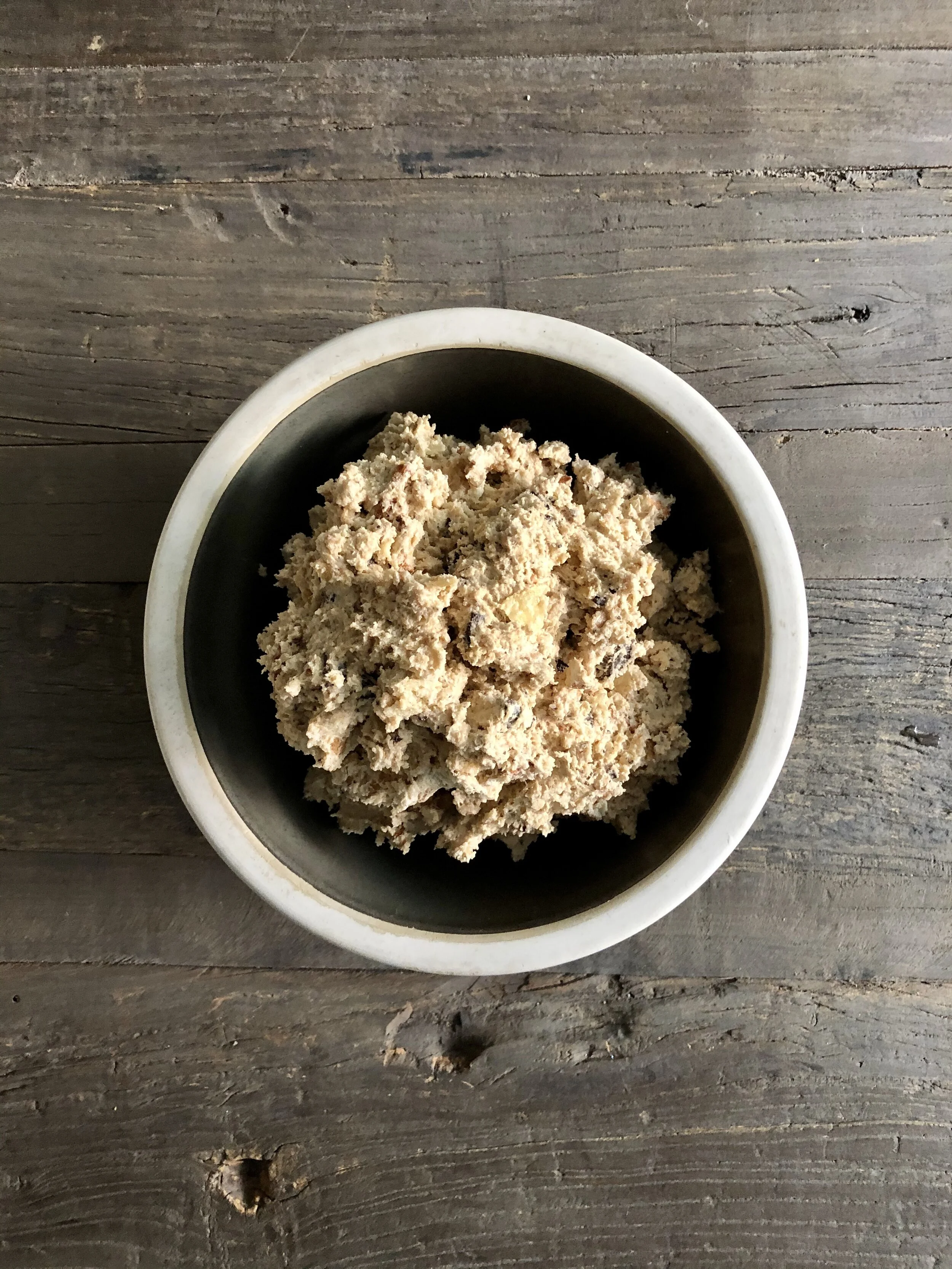
Still on low speed, add the chocolate chunks, toffee bits, graham cracker crust, oats and coffee, and mix until just incorporated, about 30 seconds. Add the potato chips and pretzels, still on low speed, until just incorporated. When you’re adding the potato chips and mini pretzels, it’s best not to mix them too much; you want to retain irregular bits and pieces. That way you can taste the salty-sweetness of the cookie.

Duke recommends freezing the dough for better results — if you can stand the wait!

Duke recommends freezing the dough for better results — if you can stand the wait!

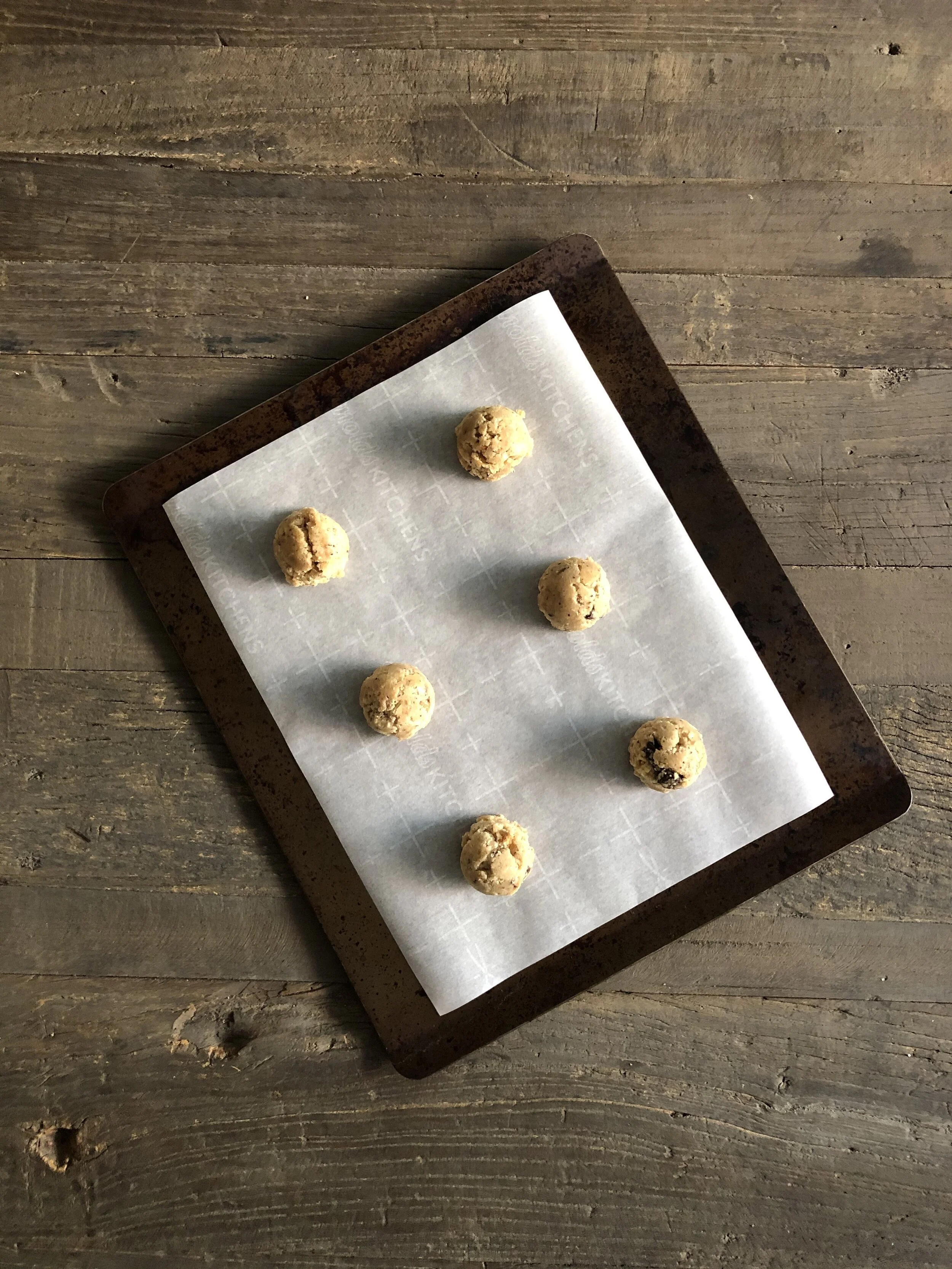
Using a 1½-inch-diameter cookie scoop, portion out the dough equally. I make a dome shape that’s flat on the bottom. Don’t bake your cookies at room temperature — they will end up flat like a pancake. Mine still came out pretty flat, but the longer I froze the dough, the more shape they kept. Place inside a resealable container and refrigerate for at least 2 hours, or freeze overnight. 

A cookie scoop helps shape the dough.

A cookie scoop helps shape the dough.

Preheat the oven to 350°F.

Arrange pre-scooped cookie dough a minimum of 4 inches apart on parchment or silpat-lined sheet pans.

Bake for 12 minutes. The cookies will puff, crackle and spread. After 12 minutes, they should be golden-brown. Give them an extra minute or so if that’s not the case.

Cool the cookies completely on the sheet pans before transferring to a plate or an airtight container for storage. Wally learned this the hard way — he wanted to have these right out of the oven, but the cookies didn’t have enough time to solidify. At room temp, cookies will keep fresh for five days; in the freezer, they will keep for one month.

Call ’em what you will — compost, garbage, kitchen sink — but these Milk Bar-inspired cookies are delicious by any name.

Call ’em what you will — compost, garbage, kitchen sink — but these Milk Bar-inspired cookies are delicious by any name.

Anahuacalli Museum: Diego Rivera’s Temple-Like Treasure Trove

El Museo Anahuacalli is unlike any other museum we’ve visited. Explore Rivera’s collection of pre-Hispanic artifacts after a visit to La Casa Azul.

If you’ve seen Frida’s Casa Azul, the Anahuacalli Museum is included in the ticket. Don’t miss it!

If you’ve seen Frida’s Casa Azul, the Anahuacalli Museum is included in the ticket. Don’t miss it!

My first introduction to Diego Rivera, one of Mexico’s most famous artists, was a seemingly ubiquitous, mass-produced print of Rivera’s painting El Vendedor de Alcatraces (The Calla Lily Vendor). This image can be seen hanging on the wall of many Mexican restaurants in Anytown, USA. 

Wally peeks behind a giant agave plant in the plaza in front of the museum.

Wally peeks behind a giant agave plant in the plaza in front of the museum.

The subject of the artwork is a peasant woman, head bowed, squatting and overwhelmed by a basket filled with an immense bunch of white calla lilies. Rivera was known for his murals with a message and many featured the great social inequalities of the working class and the indigenous peoples of his country. His larger-than-life paintings were commissioned by the Mexican government, Henry Ford, the Rockefellers and the San Francisco Stock Exchange building, among many others. 

If the light seems gauzy it’s because the panels of the thin vertical windows aren’t made from glass but alabaster, creating an ethereal air of mystery.
Frida’s nickname for Diego was Toad-Frog — and with his bulging eyes and belly, it’s not hard to imagine why.

Frida’s nickname for Diego was Toad-Frog — and with his bulging eyes and belly, it’s not hard to imagine why.

Perhaps what’s more interesting is that his passionate, colorfully attired and unibrowed wife, the eccentric Mexican painter Frida Kahlo is now better known than her erstwhile husband. Her birthplace and childhood home, La Casa Azul (the Blue House), was purchased by and shared with Rivera, who paid off the mortgage and financial debt left by Frida’s father Guillermo — undoubtedly accrued by Frida’s chronic health issues caused by a near-fatal street car accident she suffered when she was 18 years old. 

The first floor of the museum is filled with Mexican folk art.

The first floor of the museum is filled with Mexican folk art.

Diego’s Dream Museum

If you’re visiting Kahlo’s home, be sure to hold on to your ticket, as it also includes admission to Rivera’s equally intriguing and less visited Museo Anahuacalli. The museum is located on the southern end of Coyoacán, about a 30-minute Uber ride from La Conchita Plaza, where Wally and I departed from after spending the afternoon exploring the area. 

The museum’s name is derived from Cemanahuac, the name used by the Aztecs to refer to their world. It’s Nahuatl, the language of the Aztecs, for “the Place Surrounded by Water” a concept that paid homage to the swampy pre-Hispanic landscape of México. 

Diego and Frida purchased the parcel of land in the 1930s on the rocky and then underdeveloped lava deposit of El Pedregal colonia, or neighborhood. While working on a mural in America, Rivera was inspired by the Industrial Revolution, and envisioned a space where he and Kahlo could visit and contemplate their collection of pre-Hispanic artifacts. He spent every cent he could scrape together on acquiring these pieces, amassing over 50,000 in his lifetime. One of the stories told about his obsession involves his second wife, Guadalupe Marín, who ground up one of his prized figurines in a fit of anger and served it to him in a bowl of soup. 

Rivera obsessively collected local artifacts.

Rivera obsessively collected local artifacts.

Some of RIvera’s artifacts might have been acquired on the black market — maybe even this one, which Wally thinks looks like someone giving birth.

Some of Rivera’s artifacts might have been acquired on the black market — maybe even this one, which Wally thinks looks like someone giving birth.

Rumor has it that Rivera acquired more than a few of his artifacts on the black market. At the time, there weren’t any laws protecting the provenance of pre-Columbian antiquities, and for this reason, the market boomed amongst nationals and foreigners alike. However Rivera obtained his prized artifacts, it’s undoubtedly an impressive collection that reveals the reverence and curiosity he felt toward the past. An inscription by Rivera at the entrance to the museum reads, “I hereby return to the people what I could rescue from the artistic heritage of their ancestors.”

Jaguars were worshipped as gods by the ancient peoples of Mexico.

Jaguars were worshipped as gods by the ancient peoples of Mexico.

Before he died in 1957 at the age of 70, Rivera bequeathed his artifacts and vision for a space to conserve and share the collection with the people of Mexico. The passion project was completed posthumously by his daughter Ruth Rivera, the financial support of his close friend and patroness Dolores Olmedo and architect Juan O’Gorman, using plans left by Rivera.  


olmedohouse.JPG

Visit Dolores Olmedo’s amazing estate and see more works by Frida and Diego


All are welcome at the Museo Anahuacalli.

All are welcome at the Museo Anahuacalli.

Like Entering a Temple

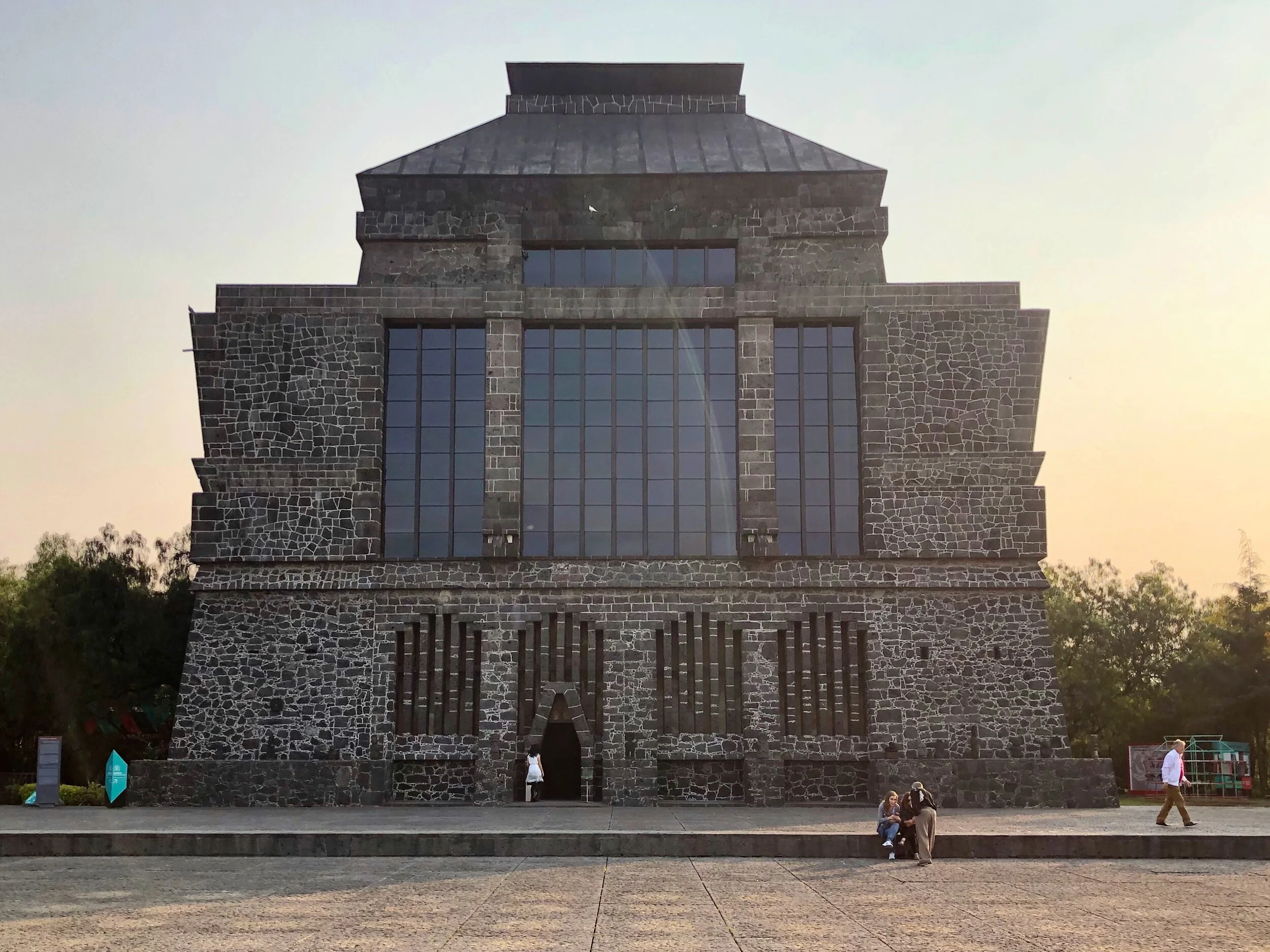
The imposing exterior of Anahuacalli is based upon a teocalli, a Mesoamerican temple standing on a truncated pyramid, rising dramatically from the edge of a broad, open plaza. Anahuacalli is sheathed entirely in black basalt, the igneous rock produced by the eruption of nearby Xitle, a volcano that destroyed the pre-Hispanic settlement of Cuicuilco that preceded Mexico City. 

A sign at the entry kiosk states:

En este establecimiento mercantil no se discrimina el ingreso a ninguna persona por motivos de raza, religión, orientación sexual o socioeconómica ni por ningún otro motivo.

This establishment does not discriminate against entry to any person on the basis of race, religion, sexual orientation, socioeconomic status or for any other reason.

Once inside, Wally and I immediately noticed a change in light and temperature; it was dim and cool, like the interior of a tomb. If the light seems gauzy it’s because the panels of the thin vertical windows aren’t made from glass but alabaster, creating an ethereal air of mystery. 

Gorgeous papel picado, or cut paper decorations hang above artifacts placed in niches.

Gorgeous papel picado, or cut paper decorations, hang above artifacts placed in niches.

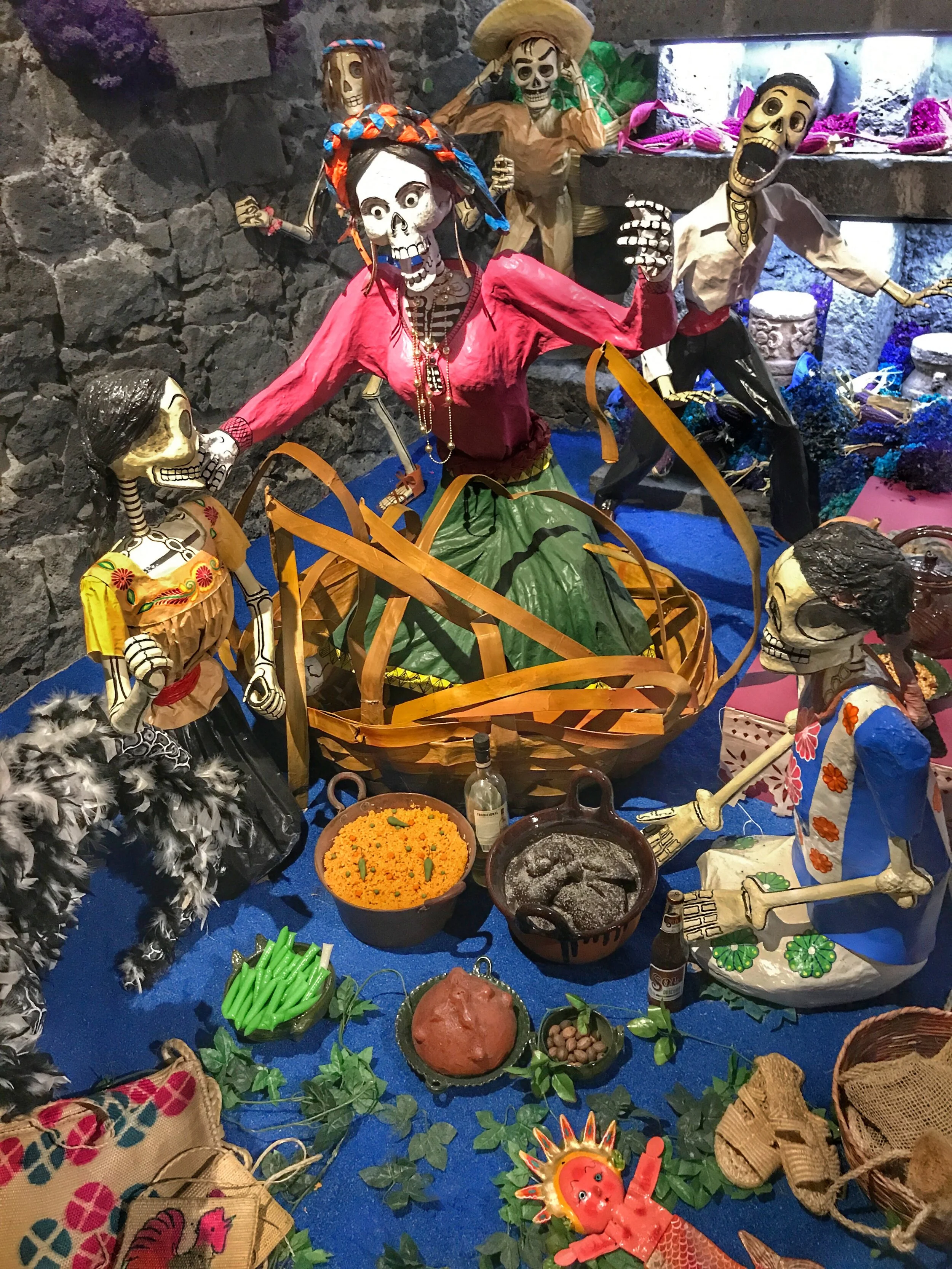
There’s a large ofrenda, an altar to Rivera.

There’s a large ofrenda, an altar to Rivera.

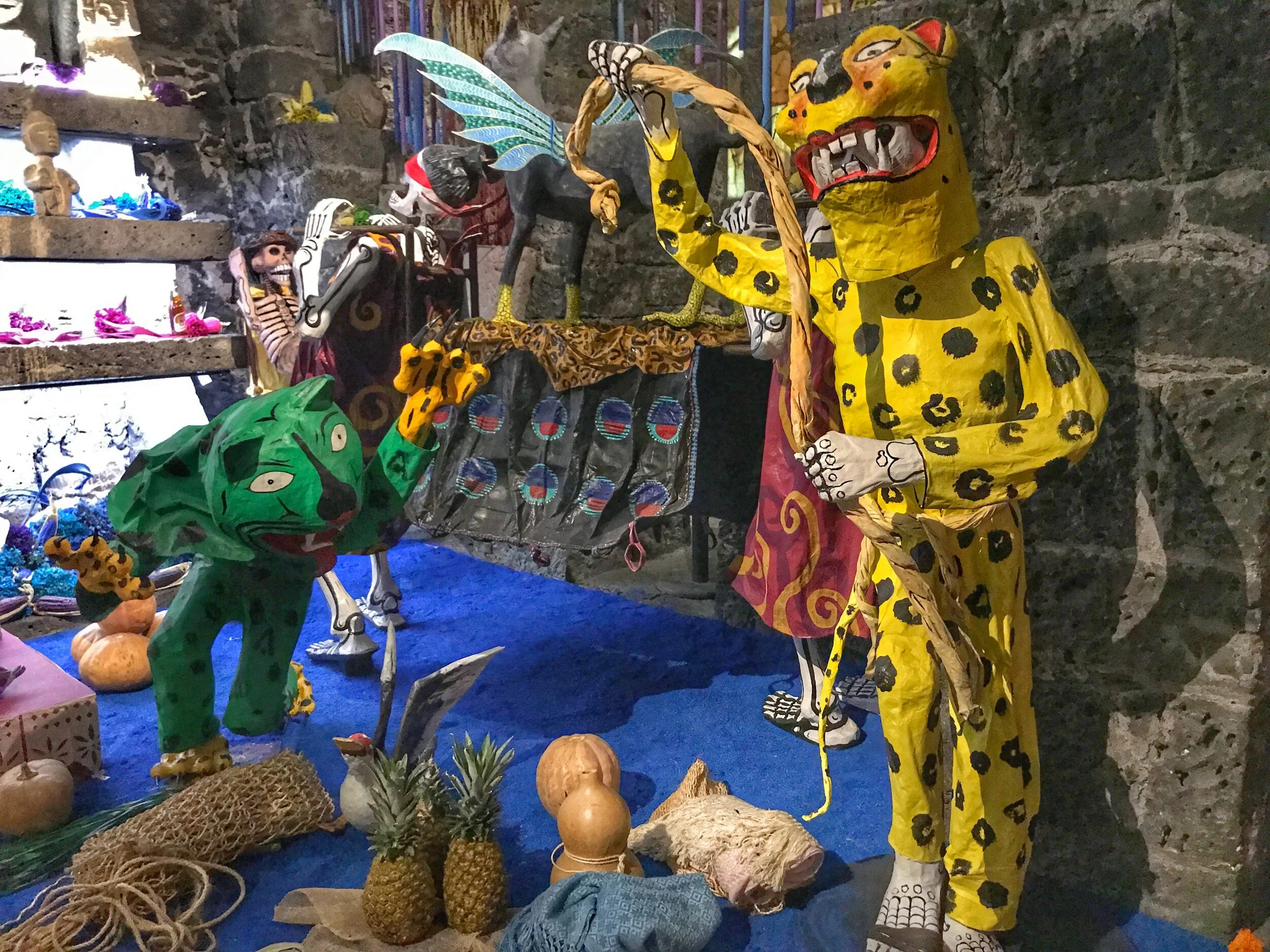
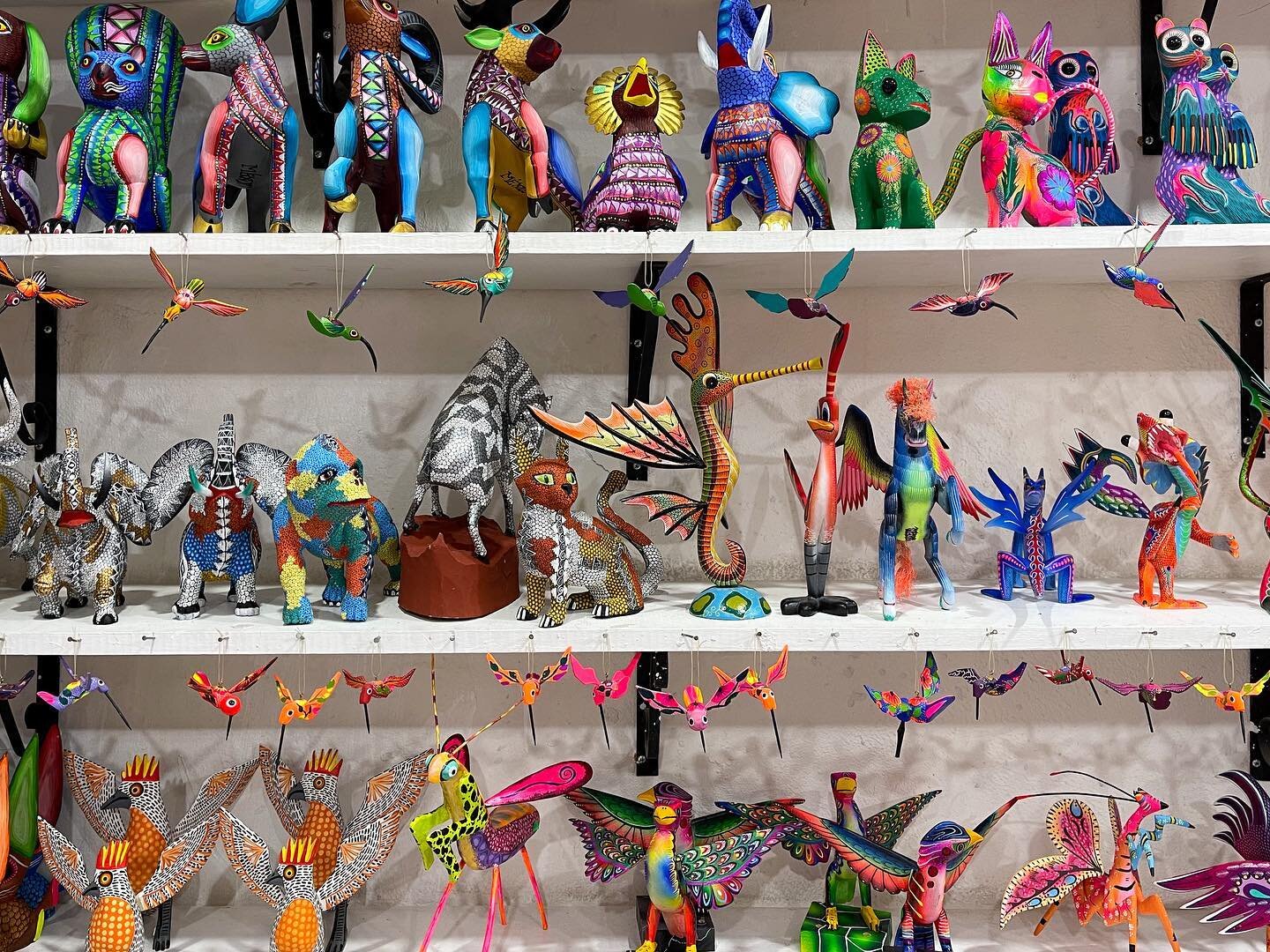
One of our favorite displays on the ground floor was the impressive and brightly colored ofrenda, a traditional and allegorical offering dedicated to the deceased Rivera. Adorning the ofrenda are life-size papier-mâché folk art sculptures are known as alebrijes—the word these fantastical creatures were repeatedly chanting in vivid fever dream that the artisan Pedro Linares had. 

Ofrendas often have skeleton figures and food and other items the deceased enjoyed in life.

Ofrendas often have skeleton figures and food and other items the deceased enjoyed in life.

Whimsical papier-mâché folk art creatures called alebrijes came to their creator in a feverish dream.

Whimsical papier-mâché folk art creatures called alebrijes came to their creator in a feverish dream.

The exuberant colors of the figures and papel picado, cut tissue paper banners, are all the more striking against the volcanic stone. 

Admire the cut tissue paper flags before venturing into the depths of the temple-like museum.

Admire the cut tissue paper flags before venturing into the depths of the temple-like museum.

Narrow alabaster windows give the museum an otherworldly quality.

Narrow alabaster windows give the museum an otherworldly quality.

From the Underworld to the Heavens

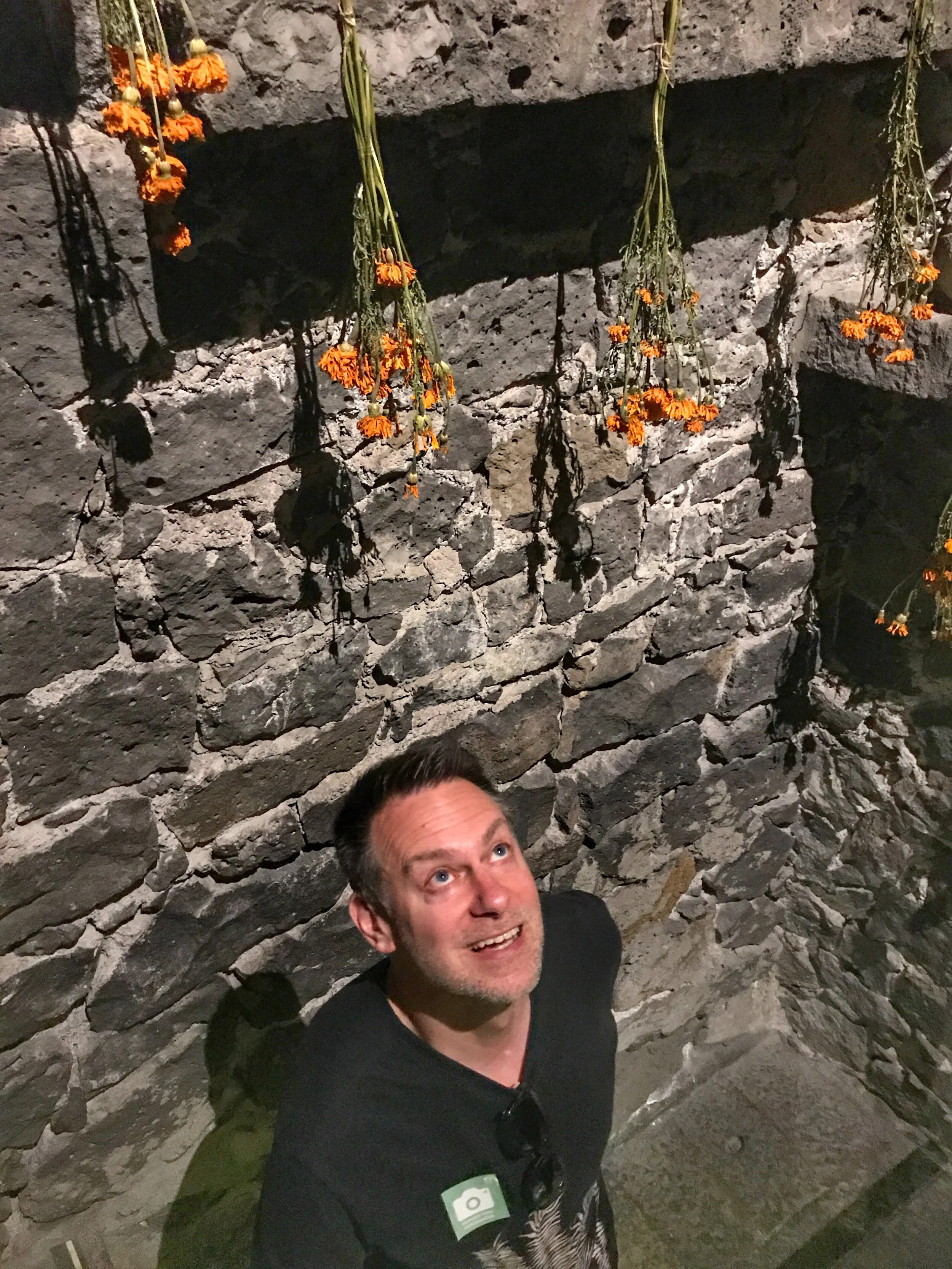
A stairwell symbolizing the entrance to the Mayan underworld of Xibalba descends past bouquets of dried marigolds. These flowers guide spirits to their altars using their vibrant colors and pungent scent. 

Bright orange marigolds help guide the way for spirits to visit this world.

Bright orange marigolds help guide the way for spirits to visit this world.

Duke looks up at the dried marigolds that fill this stairwell.

Duke looks up at the dried marigolds that fill this stairwell.

The Anahuacalli’s three levels are bisected by dramatic stone staircases leading to galleries with vitrines and niches filled with Rivera’s personal collection of more than 2,000 Zapotec, Maya, Aztec, Olmec and Toltec idols and artifacts ranging from utilitarian to religious objects. 

Rivera collected about 50,000 pre-Hispanic artifacts.

Rivera collected about 50,000 pre-Hispanic artifacts.

One of Rivera’s wives supposedly ground up one of his idols and served it to him in soup.

One of Rivera’s wives supposedly ground up one of his idols and served it to him in soup.

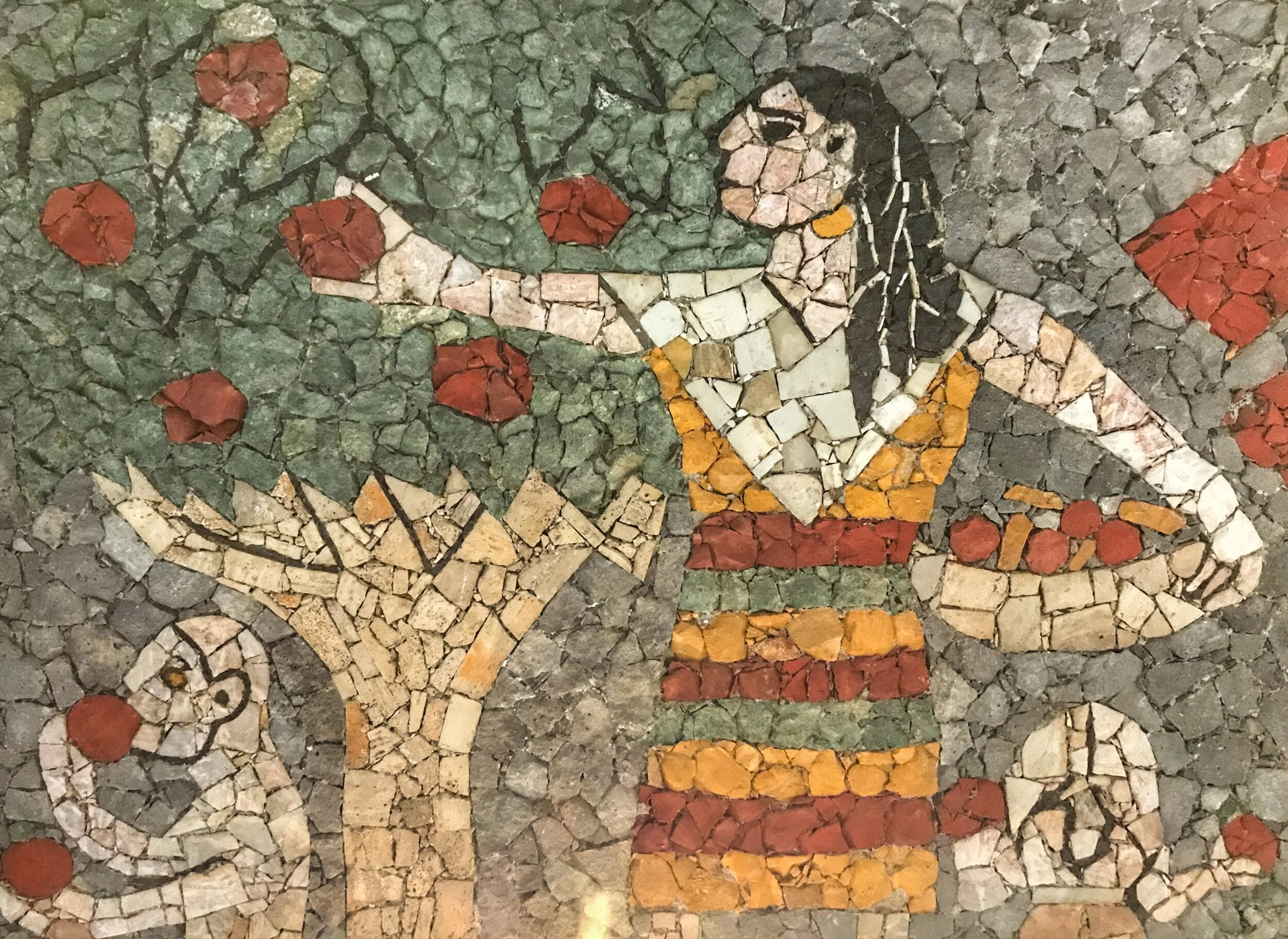
Make sure to look up at the ceilings, which showcase mosaics based on Rivera’s designs and communist inclinations. Most were inspired by the mythological creatures of the Mesoamerican canon, with a hammer and sickle thrown in for good measure. One mosaic depicts a toad — Kahlo’s nickname for Rivera was El Sapo-rana, or Toad-Frog — fitting, as he was a large, portly man with bulging eyes. Incidentally, his birthplace, Guanajuato, loosely translates to the Place of Frogs. 

Look up! Most of the ceilings have murals made from different colored rocks.

Look up! Most of the ceilings have murals made from different colored rocks.

A woman gathers fruit in one ceiling mural.

A woman gathers fruit in one ceiling mural.

Rivera wasn’t subtle about his fondness for Communism.

Rivera wasn’t subtle about his fondness for Communism.

The light-filled second floor of the museum was originally envisioned as Rivera’s art studio and contains a number of monumental charcoal sketches and studies for several of his murals. One in particular, El Hombre en el Cruce de los Caminos (Man at the Crossroads), is a fresco originally commissioned in 1932 for the Rockefeller Center in New York, but later destroyed and unceremoniously chiseled off the wall for its unflattering portrait of Rockefeller and depiction of communism.

On the second floor, you can see sketches for Rivera’s murals.

On the second floor, you can see studies for Rivera’s murals.

Another large-scale piece, Pesadilla de Guerra, Sueño de Paz (Nightmare of War, Dream of Peace), was a portable mural painted in 1952 for the Twenty Centuries of Mexican Art exhibition that traveled to various European cities. Its creator sold the work, which was censored by the Mexican authorities, to China. Nobody knows for certain where it is today. 

Also among Rivera’s artworks is a childhood drawing of a choo-choo train. 

Although the Anahuacalli is filled with niches showcasing Rivera’s beloved artifacts, it must house only a fraction of his collection.

Although the Anahuacalli is filled with niches showcasing Rivera’s beloved artifacts, it houses only a fraction of his collection.

Some galleries host temporary exhibits.

Some galleries host temporary exhibits.

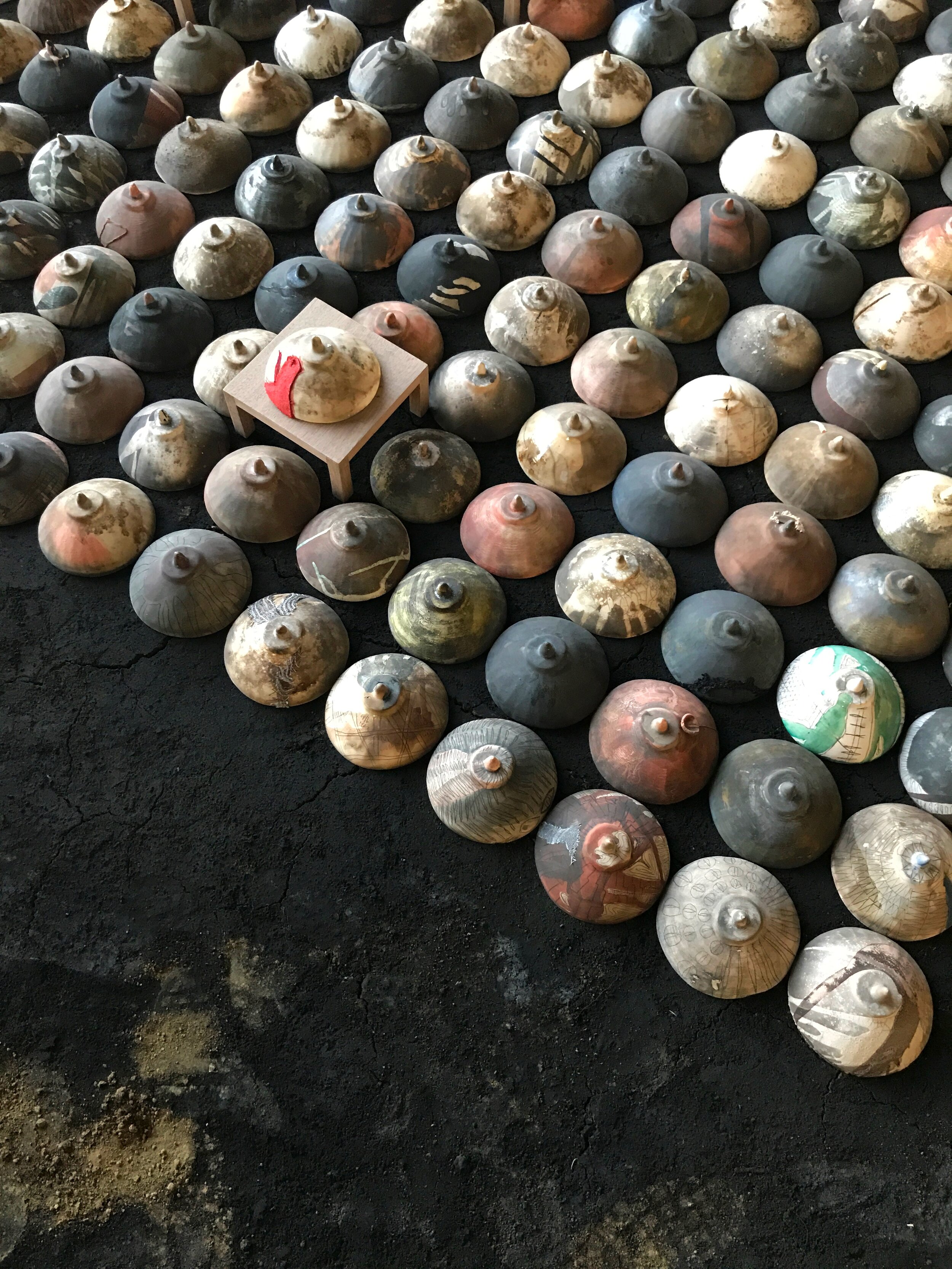
It’s also a space that hosts temporary exhibits and site-specific projects. While we were there in the fall of 2018, an exhibit titled Machama featured Adelia Sayeg’s sculptural ceramics. 

Dominating the second floor wall is an early rendering of Rivera’s famous Pesadilla de Guerra, Sueño de Paz mural.

Dominating the second floor wall is an early rendering of Rivera’s famous Pesadilla de Guerra, Sueño de Paz mural.

The circular piece in the center of the room was filled with small ceramic pieces by Adelia Sayeg.

The circular piece in the center of the room was filled with small ceramic pieces by Adelia Sayeg.

The museum’s interior embodies some of the same tenets as American architect Frank Lloyd Wright — specifically the concept of compression and release, with narrow stairwells and passageways opening abruptly into larger spaces. Rivera did meet with Wright in 1952 and consulted with him about the structure. 

anahuacallisun.JPG

Here comes the sun: Keep winding your way up through the museum to end up on the rooftop.

You’ll be temporarily blinded as you step out of the dark confines of the museum onto the rooftop terrace. Like Duke, you can admire the view of CDMX.

You’ll be temporarily blinded as you step out of the dark confines of the museum onto the rooftop terrace. Like Duke, you can admire the view of CDMX.

Wally takes a break from a long day exploring the neighborhood of Coyoacán.

Wally takes a break from a long day exploring the neighborhood of Coyoacán.

You wind your way up, floor by floor, until you step out onto the rooftop terrace, open to the sky, boasting panoramic views of the city. The sun bathed the outlying area in golden light. It was a perfect end to an incredible day. –Duke

Wally and Duke are all smiles at this truly one-of-a-kind museum, which they can’t recommend enough.

Wally and Duke are all smiles at this truly one-of-a-kind museum, which they can’t recommend enough.

Anahuacalli Museum

Museo 150
San Pablo Tepetlapa
Coyoacán
04620 Ciudad de México
CDMX
Mexico


The Cool Confines of the Luxor Museum

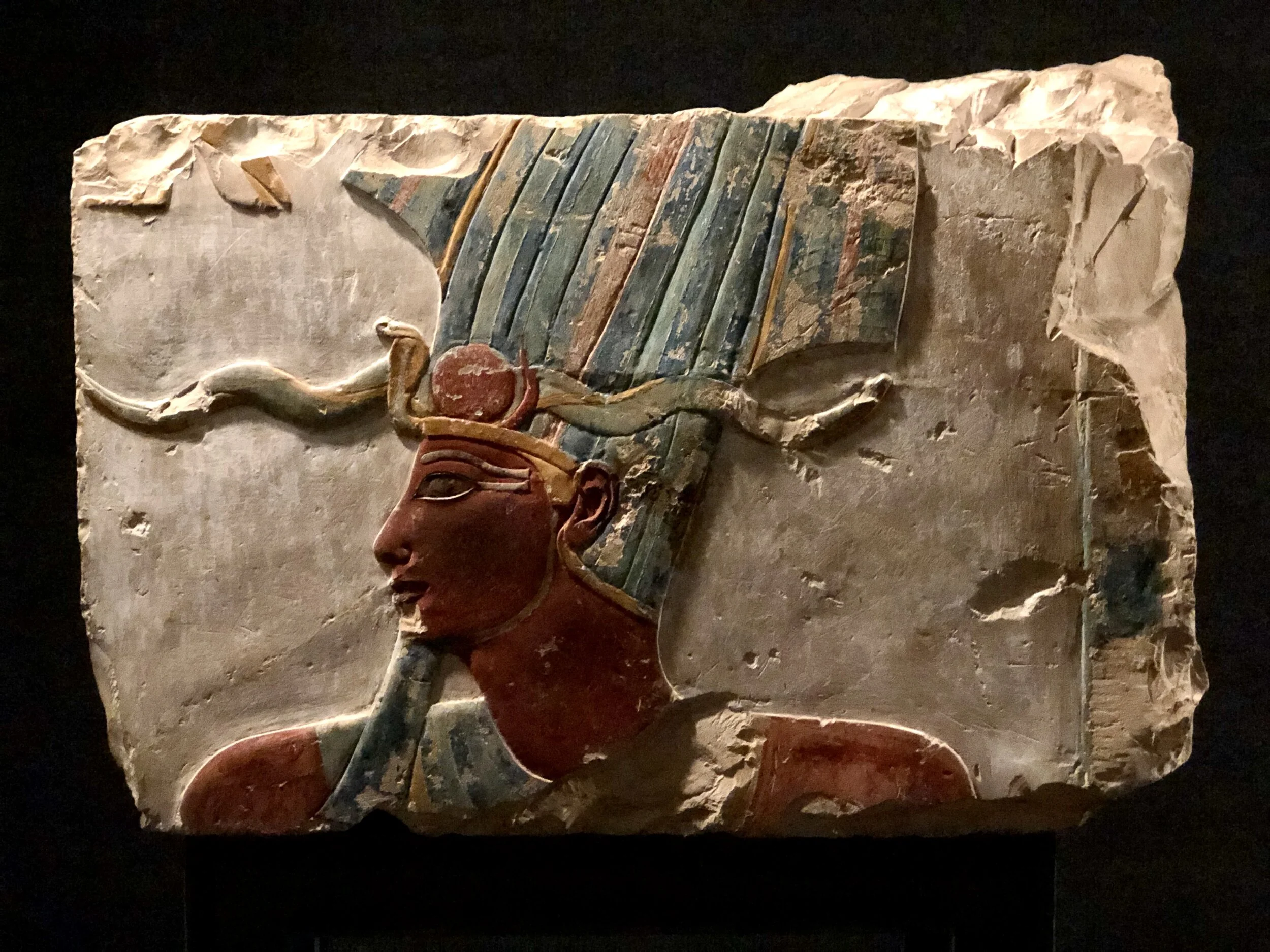
Whether you need a break from exploring the temples of Luxor and Karnak to escape the heat or just want to take a virtual tour, the Luxor Museum is filled with amazing statues and reliefs of King Tut, Akhenaten and other famous pharaohs, as well as Egyptian gods including Amun, Sobek and Sekhmet.

Not too many travelers bother with the Luxor Museum — but that’s a mistake.

Not too many travelers bother with the Luxor Museum — but that’s a mistake.

A processional route over a mile and a half long once connected the temples of Luxor and Karnak. There’s talk of renovating and reopening this roadway, and it would be an impressive sight, lined with noble sphinxes, with the glittering water of the River Nile twinkling off to one side. To be honest, though, I can’t imagine that long of a walk, with no shelter from the sun god Ra’s blazing heat. 

After you’ve explored Luxor or Karnak Temples, though, you can escape the intense sun with a visit to the Luxor Museum. Even though it’s situated about a 20-minute walk from Luxor Temple, partway to Karnak, it seems as if not too many tourists add this to their itinerary. 

When we suggested it to our guide, Mamduh, he looked a bit surprised, as if we might have been the first people he’s had make the request.

If you want to see a lot of the statues that once filled the temples of Ancient Egypt, you’ll have to visit a museum.

The interior is a cool, sleek white space with angles that give it a surprisingly modern feel. It’s not too large of a space, which means you can see the entire collection in an hour or so. 

Guides aren’t allowed to lecture about the various exhibits. So Mamduh, who had been with us all week, educating us on Ancient Egyptian culture and archeology, from Aswan up to Luxor, had to shift his role. He was no longer our teacher; he became a friend exploring the museum with us. Judging from the sparkle in his eye and his childlike sense of wonder, he hadn’t spent much time in the museum and looked at this as an opportunity to increase his education.

The mummified remains of Ramesses I have a colorful past, including a stint at Ripley’s Believe It or Not! in Niagara Falls, Ontario. Unlike at the Egyptian Museum in Cairo, you can actually photograph this mummy.

The mummified remains of Ramesses I have a colorful past, including a stint at Ripley’s Believe It or Not! in Niagara Falls, Ontario. Unlike at the Egyptian Museum in Cairo, you can actually photograph this mummy.

Where Are the Statues of Ancient Egypt?

The temples of Ancient Egypt, once packed with statues, are now sadly bereft of these works of art. I often remarked to Duke how much I wished the niches, sanctuaries and pedestals were still home to the statues that once adorned them. If you want to see these statues, you’ll have to visit a museum — and the one in Luxor fittingly houses numerous carvings that were unearthed at the nearby temples of Karnak and Luxor.

Before we started wandering the museum, we stopped into an auditorium to watch a short documentary about Thebes (the ancient city where Luxor now stands). The fim had a grainy, bootlegged quality that revealed how woefully outdated it is. It reminded Duke and me of the film reels we used to watch in elementary school. To be honest, I don’t recall much about it. If time is limited, this is definitely something you could skip.

Here’s a brief tour of the Luxor Museum, showcasing some of our favorite artifacts.

senusretosiride.jpg

Senusret I (circa 1971-1926 BCE)

Limestone 

Part of the colossal pillar of Pharaoh Senusret I from the White Chapel at Karnak, the structure was built to commemorate the first anniversary of the Sed Festival, held during the 30th year of his reign. Senusret is depicted in the traditional form of the god of the afterlife, Osiris, with arms folded across his chest and holding an ankh, the symbol of life, in each hand. 

senusretiii.jpg

Senusret III (1878-1840 BCE) 

Quartz 

This quartz head, found at Karnak, sporting the double crown and false beard, captures the humanity of the great Twelfth Dynasty ruler. His heavy-lidded eyes and supposed slight smile (I don’t really see it) represent  a break in the sculptural tradition of Egypt’s Middle Kingdom. 

amenemhatiii.jpg

Amenenhat III (1841-1792 BCE)

Black granite

Check out that look of disgust! Stern features like this were typical of the Middle Kingdom statuary.

ramessesiii.jpg

Ramesses III (1550-1532 BCE)

Graywacke

This cult statue of Ramesses III, the last great warrior king of the New Kingdom, wears a short wig surmounted by the double crown. One part of the sculpture, which decorated the Precinct of Mut at Karnak, was discovered in the 1930s by the Oriental Institute of Chicago. The other was unearthed in 2002 by an expedition team from Johns Hopkins University. 

thutmoseiii.jpg

Thutmose III (1490-1436 BCE)

Graywacke

Shown eternally youthful, Thutmose III is wearing a belt with his cartouche, an oval carving with the pharaoh’s name in hieroglyphics.

amunminrelief.jpg

Amun-Min relief (1490-1436 BCE)

Limestone

Look at those colors, still so bright after thousands of years! The chief deity Amun is merged with the fertility god Min. The relief, from Deir el-Bahari, was destroyed during the Amarna period and restored by a later pharaoh.

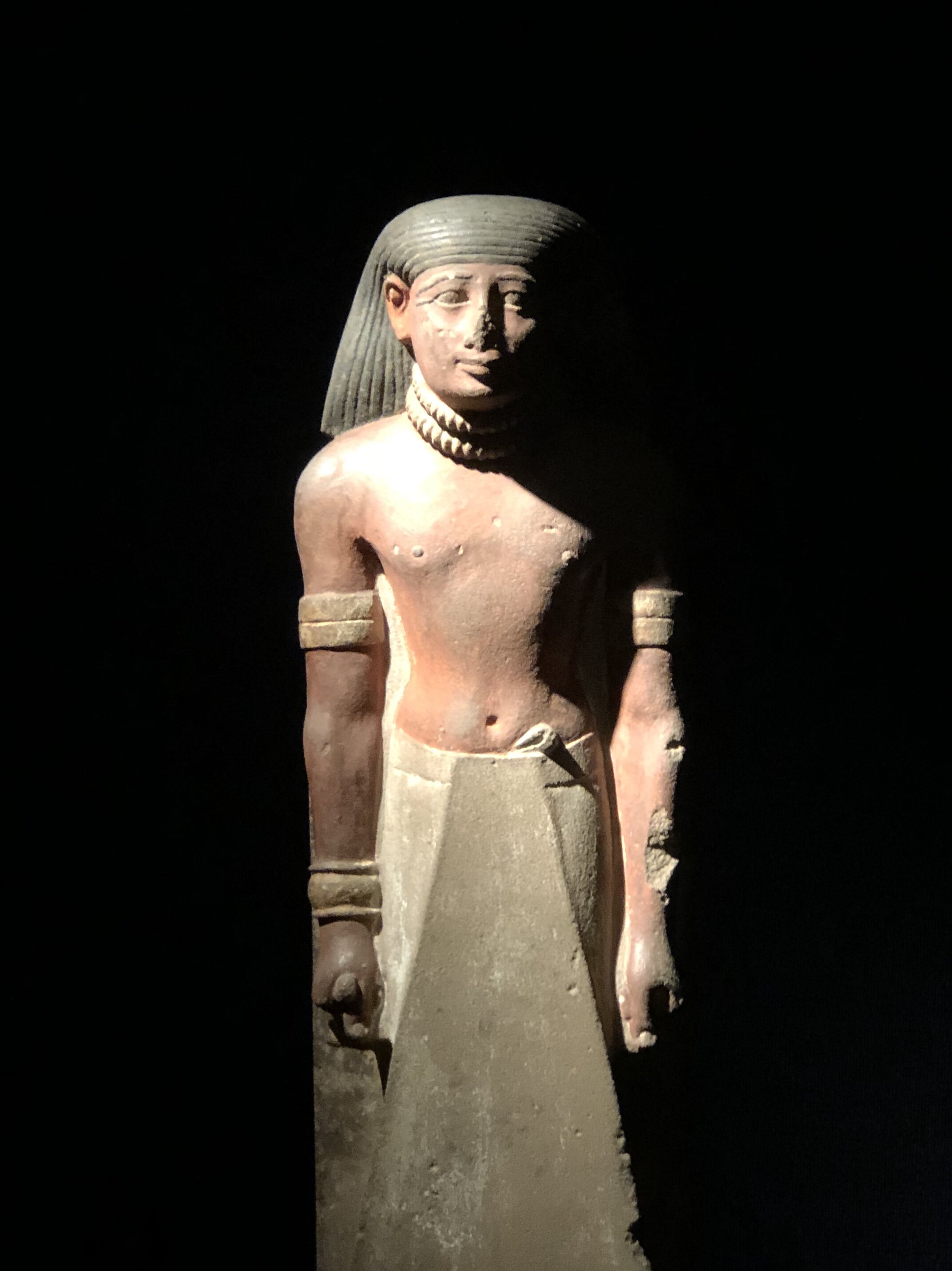
officer.jpg

Unknown officer (1440-1400 BCE)

Sandstone 

This uninscribed Eighteenth Dynasty painted statue depicts an officer wearing a shebyu collar. While these necklaces were often worn by New Kingdom pharaohs, they were also given as a reward for valor or distinguished service.

amenhotepii.jpg

Amenhotep II relief (circa 1426-1400 BCE)

Red granite

Amenhotep II was particularly proud of his prowess as an athlete and warrior. He’s shown shooting arrows through a target. In the inscription, he boasts of being so much stronger than normal men that he uses copper for target practice rather than wood, through which his arrows pass like papyrus.

sobekamenhotepiii.jpg

Sobek and Amenhotep III (circa 1386-1353 BCE)

Calcite, Egyptian alabaster

The crocodile-headed deity holds an ankh to bestow life to the youthful ruler. The statue was usurped by Ramesses II.

iwnit.jpg

Iwnit (1405-1367 BCE)

Diorite, possibly

This statue of Iwnit, a minor goddess from the Amduat and consort to the god Montu, was created during the reign of Amenhotep III. With dimples at the corner of her mouth, which give the impression of a fleeting smile, some call this the Mona Lisa of Karnak.

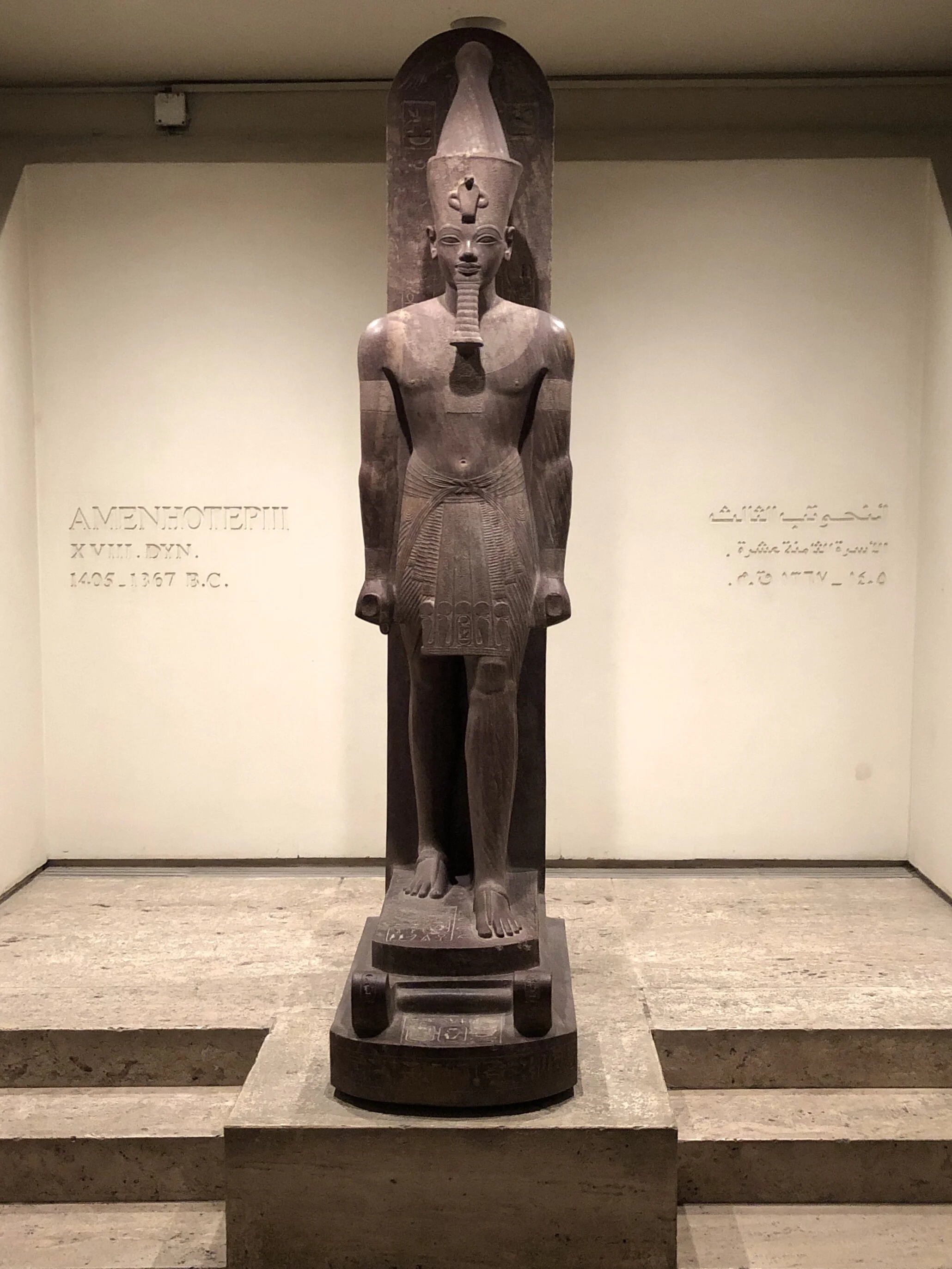
amenhotepiii.jpg

Amenhotep III (circa 1386-1353 BCE)

Quartzite

This New Kingdom figure of Amenhotep III was originally adorned with gold that was removed in antiquity, leaving some rough spots visible where armlets once were. 

sekhmet.jpg

Sekhmet

Gray granite  

The war goddess Sekhmet personified the fierce protective aspects of women and was known as the Mistress of Dread (coolest nickname ever?). In the New Kingdom she belonged to a group of goddesses known as the Eye of Ra. Here she’s shown with a broken sun disk above her head.

amenhotepscribe.jpg

Amenhotep, son of Hapu (1400 BCE) 

Granite 

This statue of a seated scribe with stylized fat folds represents Amenhotep, son of Hapu, an important official under Pharaoh Amenhotep III. A palette with two inkwells, one for red and one for black, hangs over his left shoulder. As overseer of all the king’s works, a post he reached later in life, he was responsible for many of Amenhotep’s ambitious building projects. Like Imhotep, he became deified after death. 

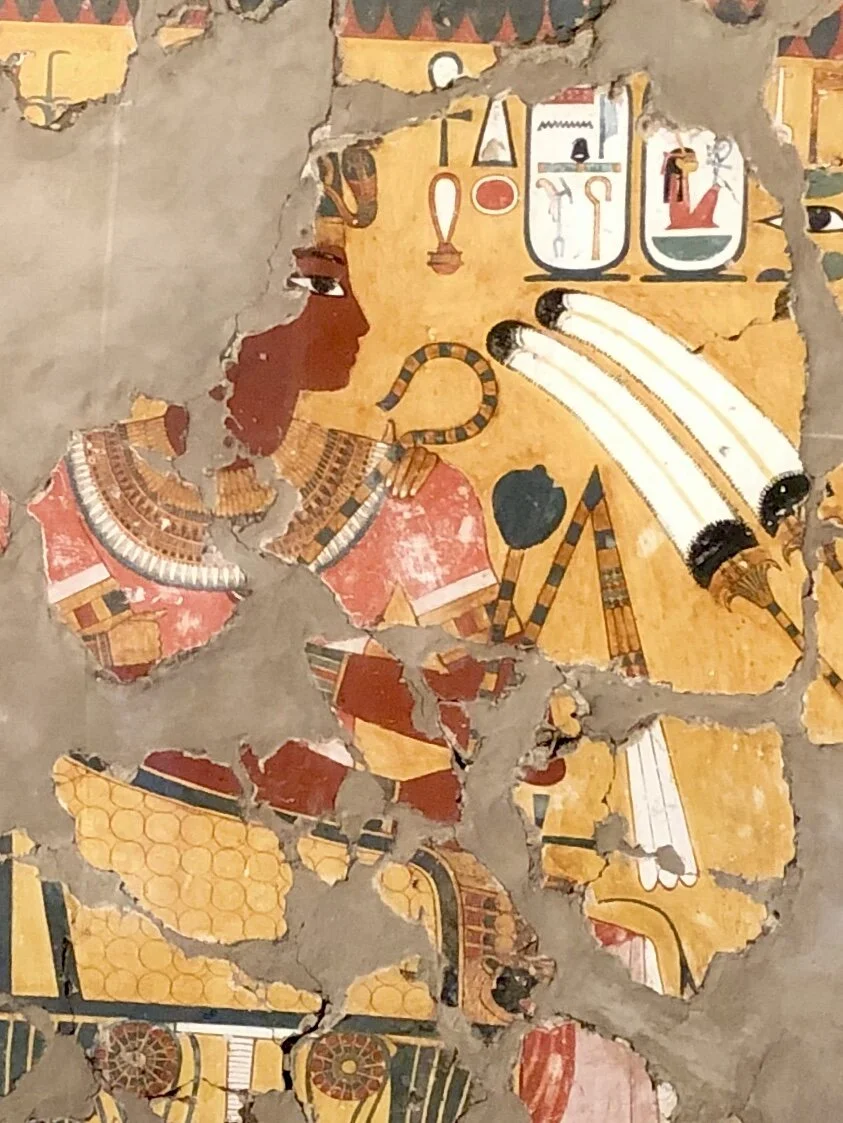
amenhotepiiipainting.jpg

Wall painting of Amenhotep III (circa 1386-1353 BCE)

Painted stucco

Sadly, all that’s left of this wall painting from the tomb of an official are fragments. The image shows Pharaoh Amenhotep III seated under a canopy, with his mother behind him and his enemies beneath him, a position of power. If you want to see what this would have looked like in full, the facsimile painted in 1914 by Egyptologist Nina de Garis Davies can be viewed at the Metropolitan Museum of Art in New York City. 

amenhotepiiikneels.jpg

Amenhotep III (circa 1386-1353 BCE)

Granodiorite 

This sculpture from north Karnak depicts the kneeling figure of Pharaoh Amenhotep III, a popular figure at the Luxor Museum. Holding a pair of flails, the king is kneeling during his coronation by the god Amun-Ra, whose now-missing hand would have originally rested upon Amenhotep’s crown. 

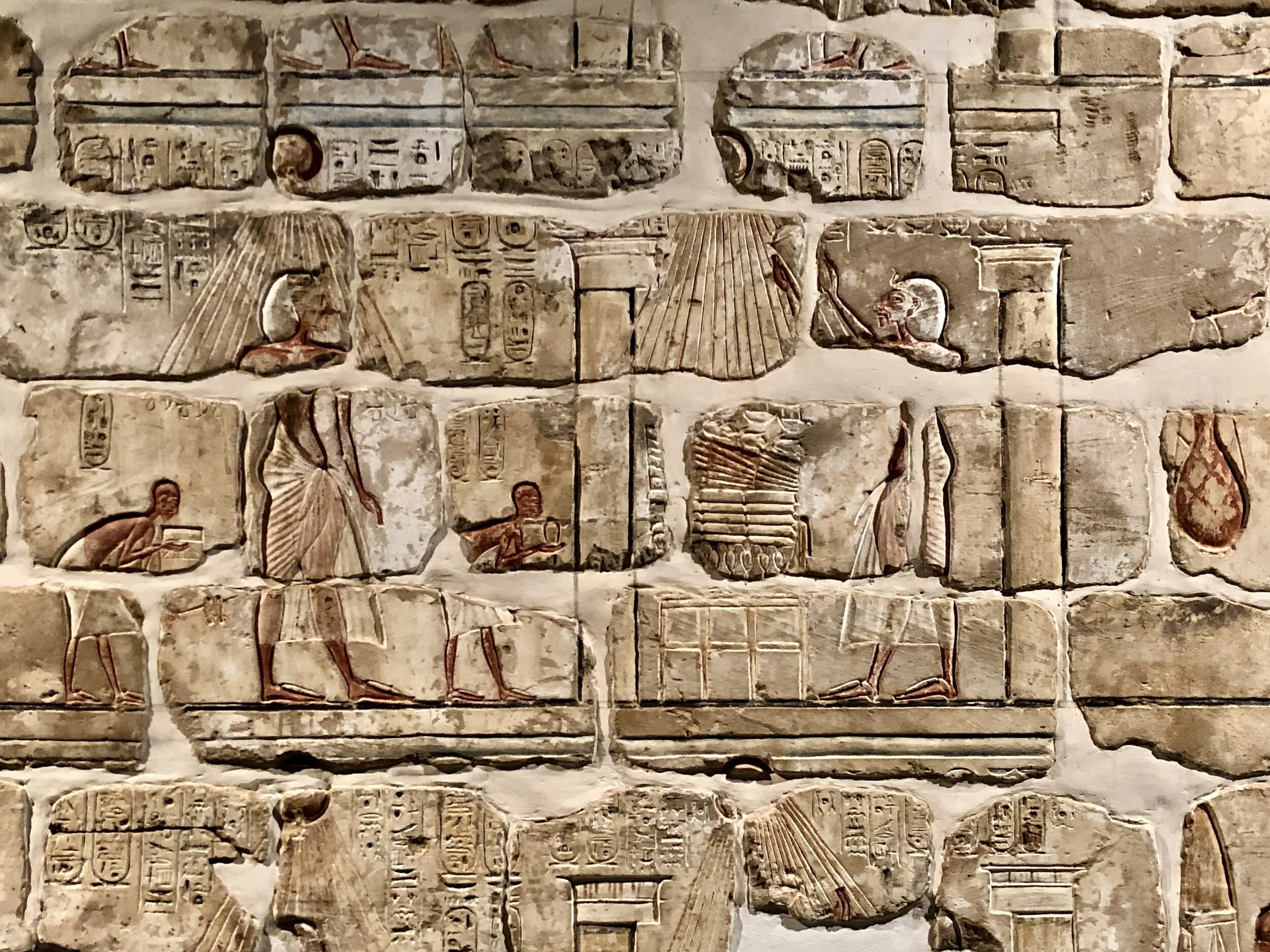
amarnawall.jpg

Temple wall of Amenhotep IV aka Akhenaten (circa 1380-1335 BCE)

Sandstone

This partially restored wall from a razed temple dates from the first five years of Amenhotep IV’s reign. The fragments,  known as talatat, were used as filling material and removed from the interior of the ninth pylon at Karnak. This scene depicts the so-called Heretic King and his wife Queen Nefertiti worshipping the multi-armed Aten, with images of daily life associated with the temple storehouses, workshops and breweries.

akhenaten.jpg

Akhenaten (circa 1380-1335 BCE)

Sandstone 

These are the remains of a colossal statue in the easily identifiable Amarna style (which we both love) found east of the Amun-Ra temple precinct, in an open court dedicated to the solar god Aten, built by Akhenaten in the third year of his reign. The colossi were knocked down and left in situ during the reign of Horemheb. During an excavation in 1925, Henri Chevrier, chief inspector of antiquities at Karnak, uncovered 25 fragments.

tutsphinx.jpg

Tutankhamun sphinx (1347-1336 BCE)

Calcite

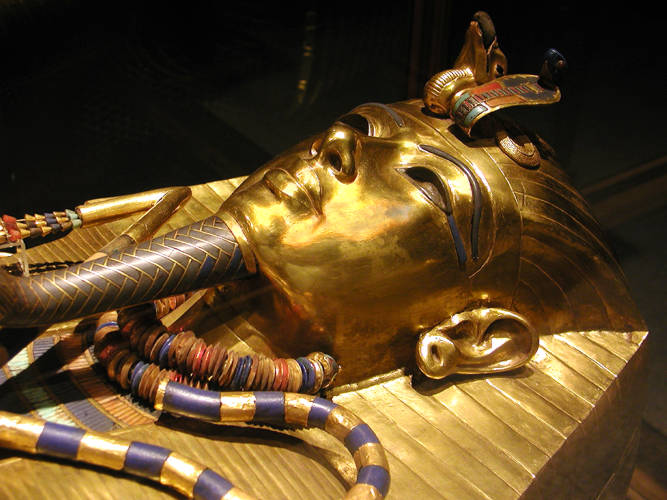
The face of this sphinx from Karnak Temple appears to bear the features of King Tut — most noticeably in the eyes and chin. This likeness wears a nemes headdress and originally had human arms that held a vase. 

tutamun.jpg

Tutankhamun as Amun (1347-1336 BCE)

Limestone

Amun, the patron deity of Thebes, is depicted in the form of the legendary Boy King. Tutankhamun restored the cult of Amun (and the other gods) after the death of monotheistic, monomaniacal Akhenaten.

horemhebatum.jpg

Atum and Horemheb (circa 1300-1292 BCE)

Diorite

The militaristic Pharaoh Horemheb kneels before the solar deity Atum, offering two nw jars. Atum is seated on a throne, holds an ankh and wears a long wig and a curved false beard, topped with the double crown of Egypt. Carved into the side of the throne is the sema tawny, lung and windpipe, symbolizing the union of the two lands (Lower and Upper Egypt). The well-preserved artwork was discovered in 1989, buried beneath the solar court of Amenhotep III at Luxor Temple. 

setii.jpg

Seti I (1323-1279 BCE)

Alabaster

Wally thinks the spot where his penis would be was a light switch. Seti I was a warrior king like his father Ramesses I before him. He was the husband of Queen Tuya and the father of Ramesses II also known as Ramesses the Great. A passionate builder, he’s responsible for the hypostyle hall at Karnak. 

nebre.jpg

Nebre (circa 1292-1189 BCE)

Sandstone

This work was discovered at a fortress that protected the western border of Egypt from the Libyans. Nebre served as a commander under Ramesses II and held multiple titles, including troop commander, charioteer of the king, overseer of foreign lands and chief of the Medjay, an elite police force. He holds the staff of office, topped by the lion head of Sehkmet, goddess of war. –Wally
 

Turkish Coffee Buns

Try Caleb’s twist — see what we did there? — on glazed cinnamon cardamom buns, where he activates the yeast in coffee instead of milk. (Believe it or not, it works!)

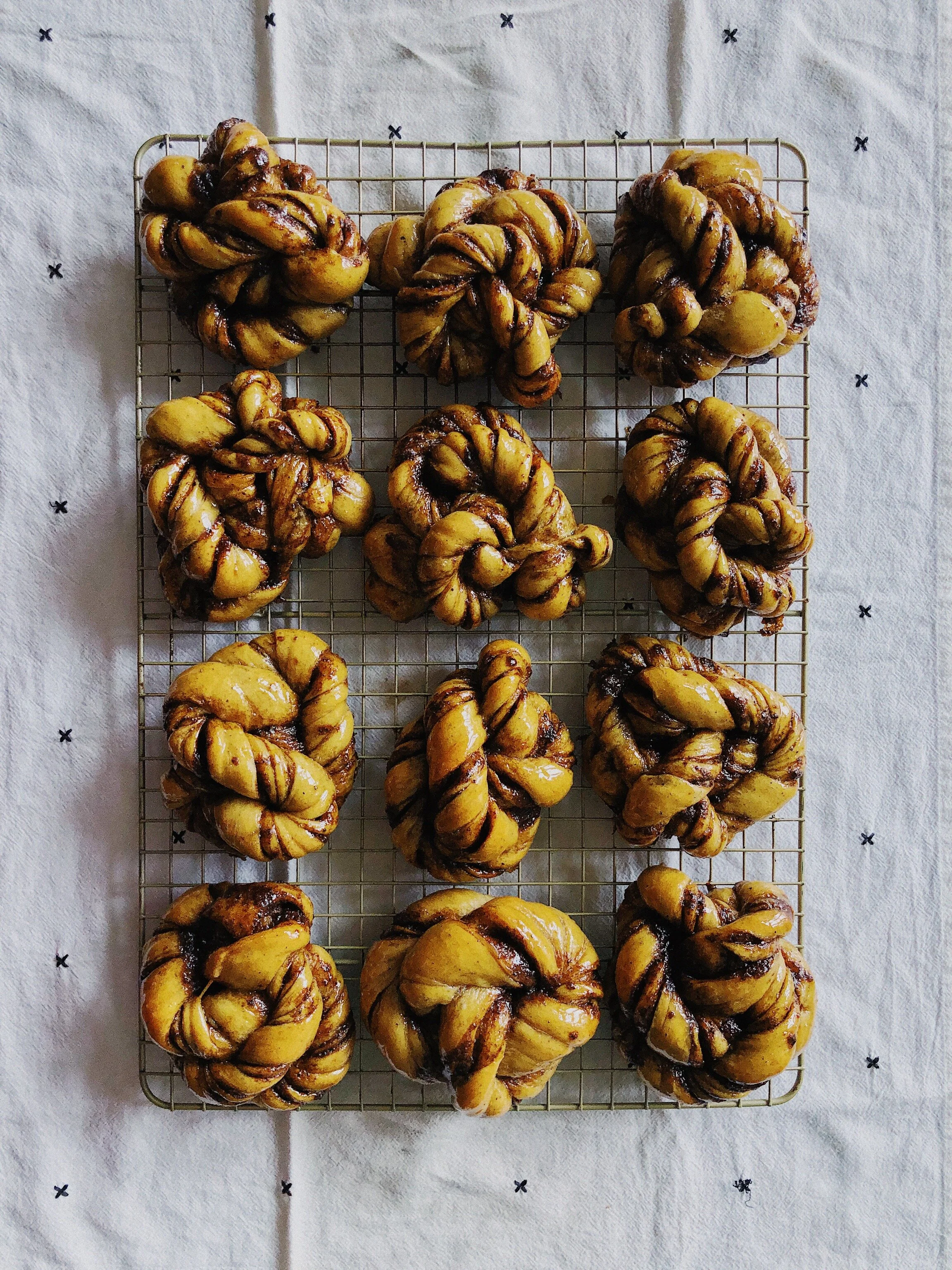
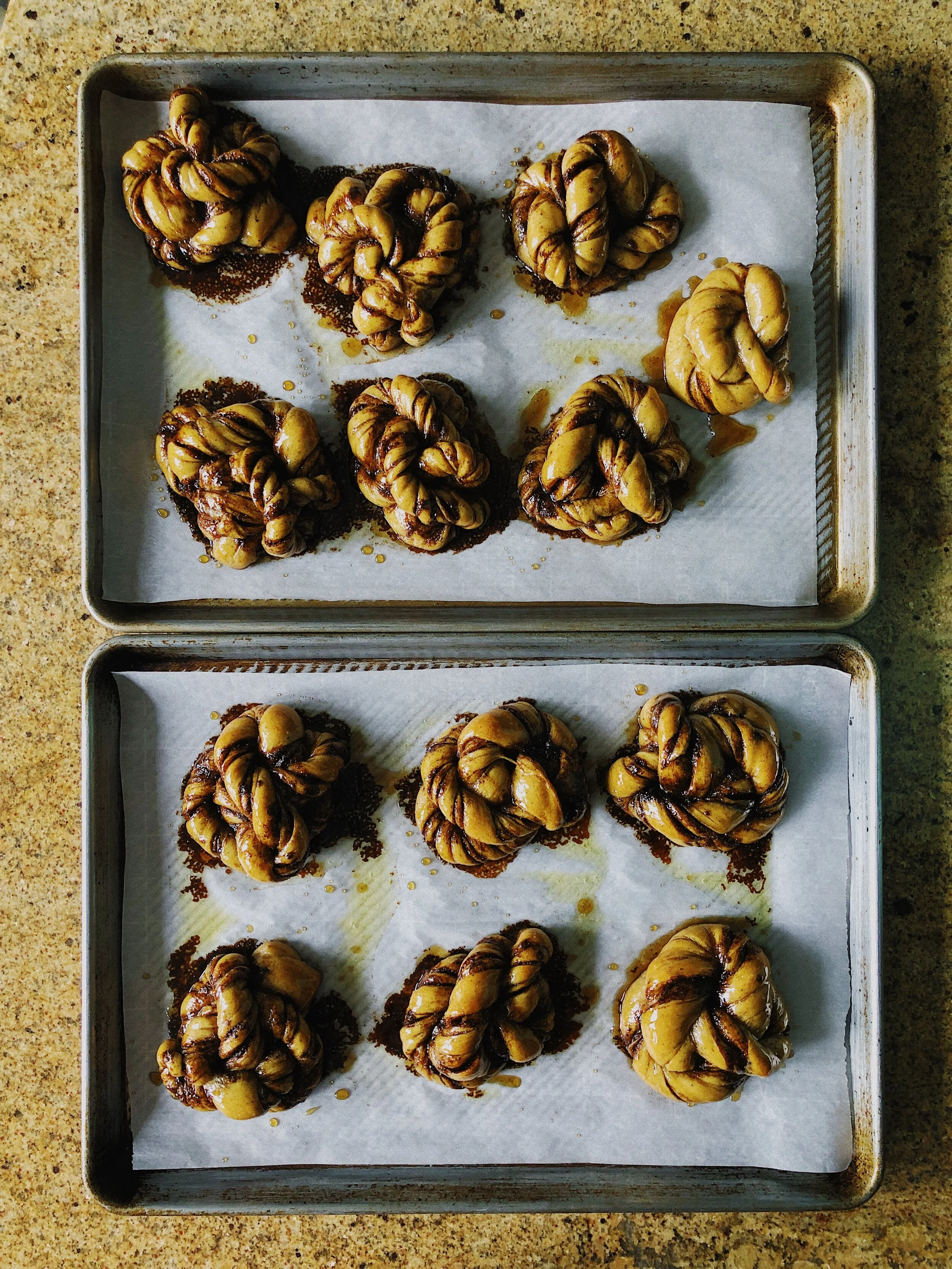
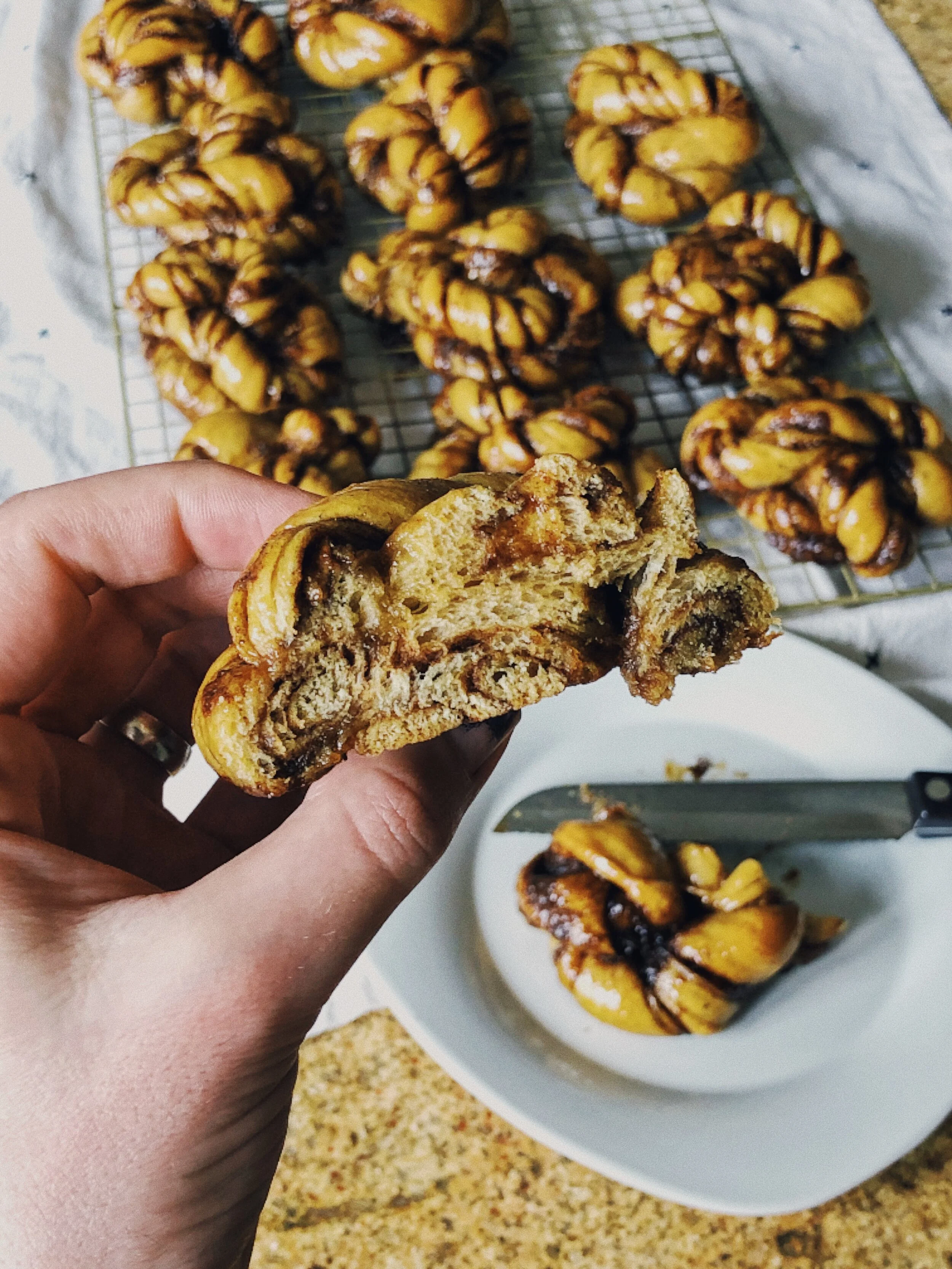
These delectable treats look almost too good to eat!

These delectable treats look almost too good to eat!

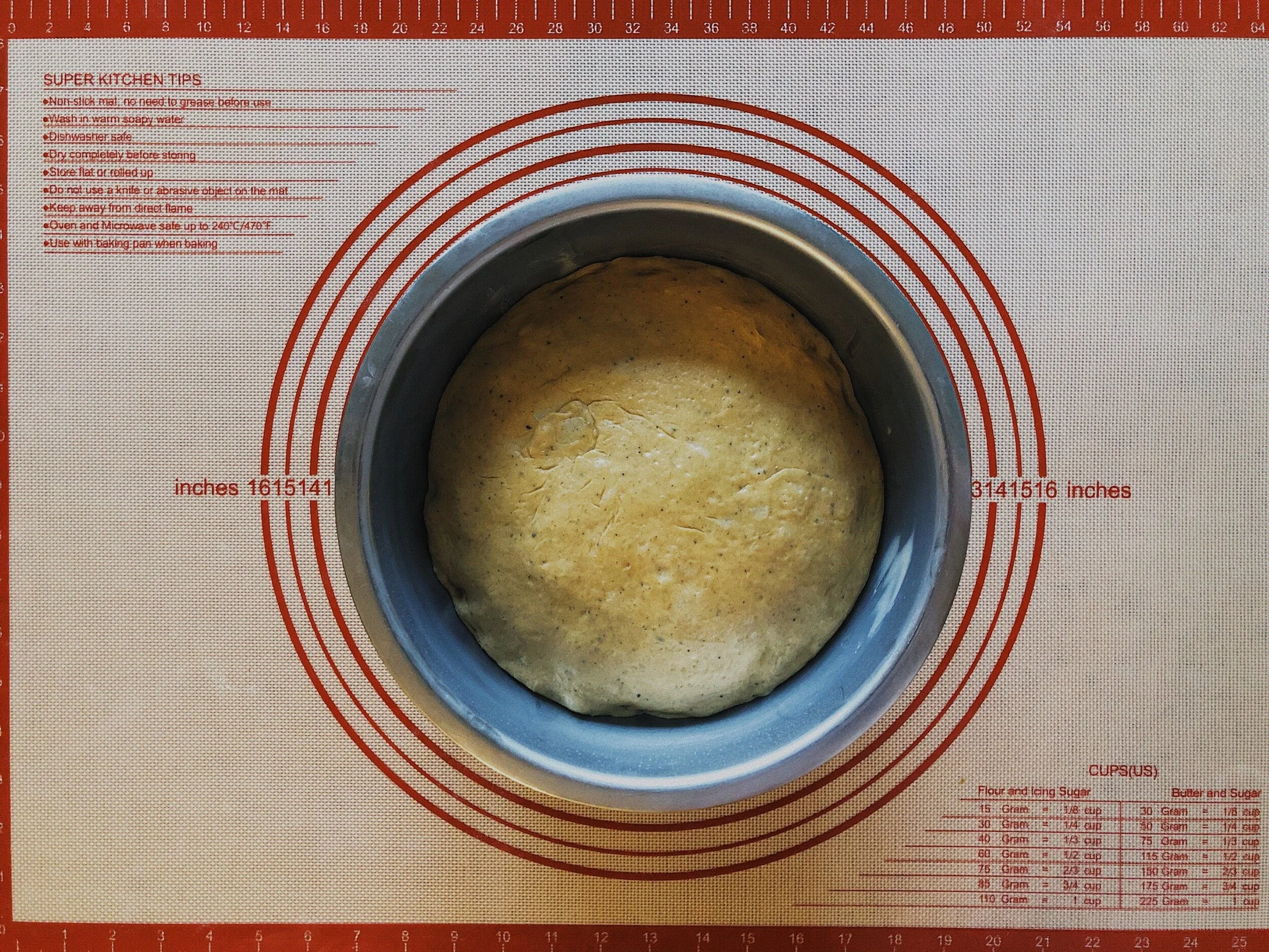
I recently had some amazing Turkish coffee buns at Lula Cafe in Chicago’s Logan Square neighborhood, and ever since I had been wondering if I could activate yeast in coffee instead of water or milk. So I tried it!

I made my own version of the buns and I’m quite proud of the bake. –Caleb

Servings: 8

Active Time:  1 hour, 10 minutes

Total Time: 5 hours, 20 minutes, plus an overnight proof

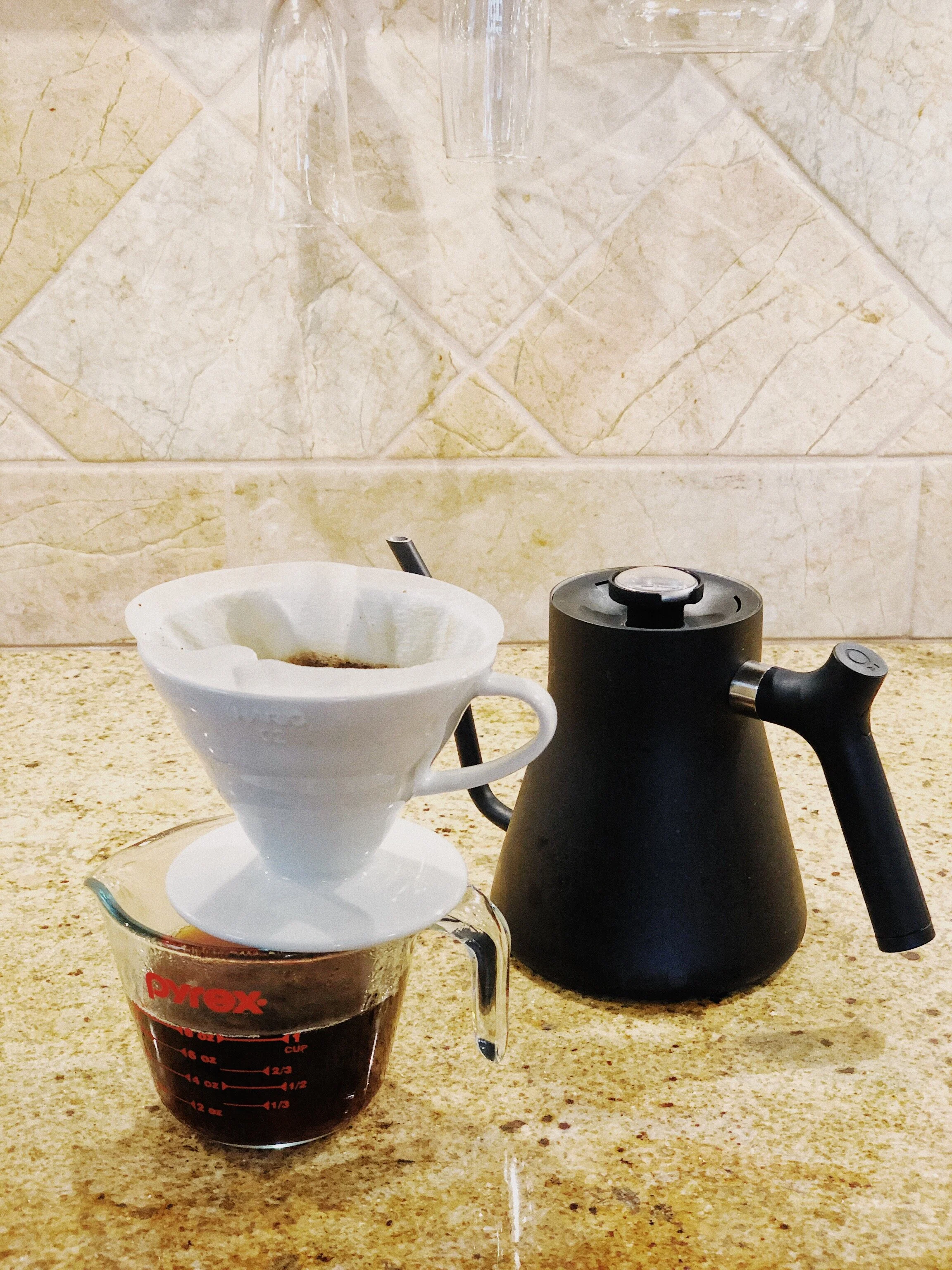
Brew up some coffee…

Brew up some coffee…

…cuz you’ll be activating the yeast in it!

…cuz you’ll be activating the yeast in it!

INGREDIENTS

Dough

    • 1 cup freshly brewed coffee

    • 1 teaspoon honey

    • 1 tablespoon active dry yeast

    • 1 egg

    • 1 egg yolk

    • 3½ cups bread flour (all-purpose is fine, too)

    • ½ cup granulated sugar

    • 1½ teaspoon ground cardamom (from about 3 teaspoons of pods)

    • 1 teaspoon fine kosher salt

    • 6 tablespoons room-temperature unsalted butter, plus more for bowl

You’ve got to prove the dough overnight — and this is a step you can’t skip!

You’ve got to proof the dough overnight — and this is a step you can’t skip!

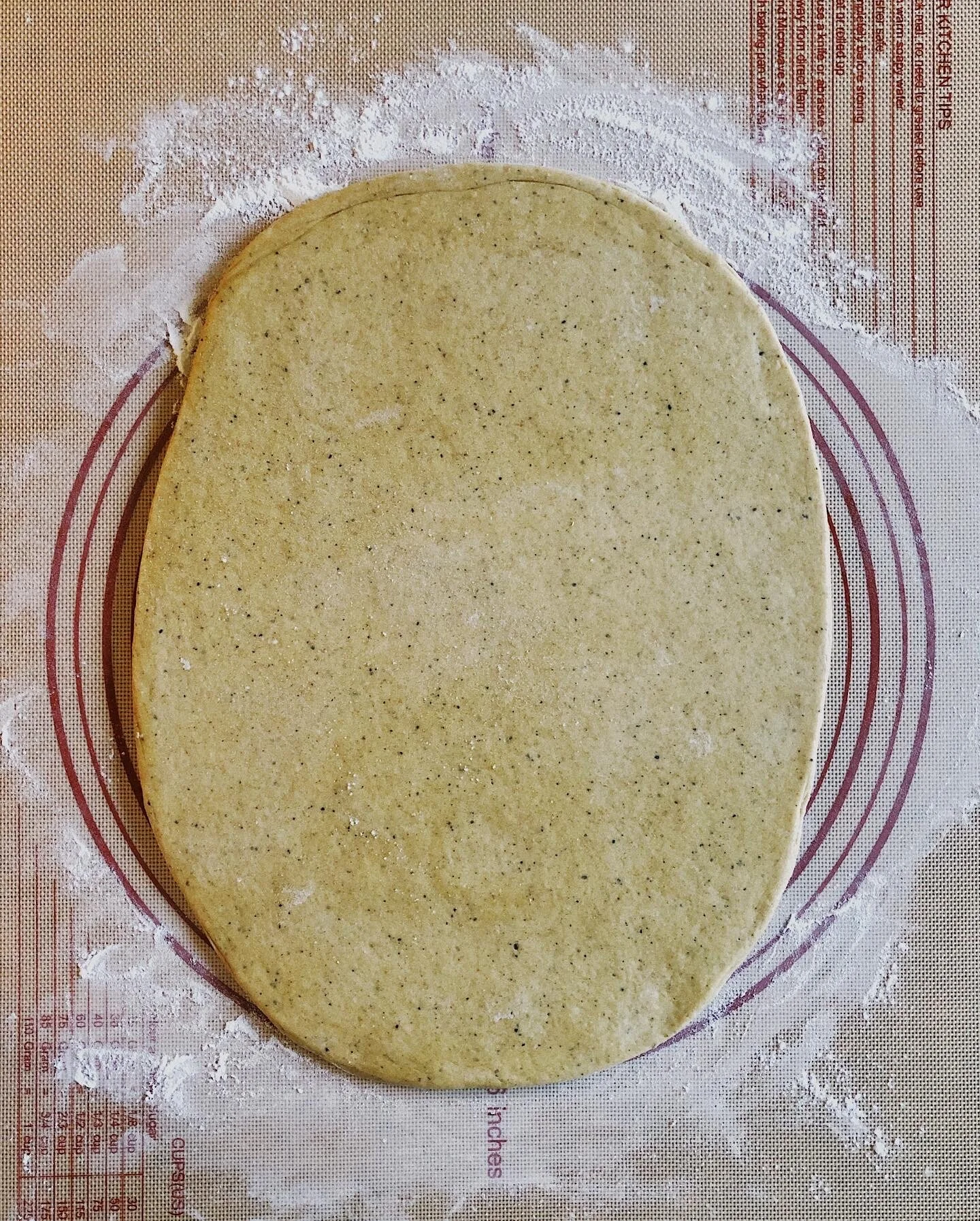
Roll out the dough before the twists and turns take place.

Roll out the dough before the twists and turns take place.

Filling and Assembly

    • 6 tablespoons room-temperature unsalted butter 

    • 2 tablespoons instant coffee or espresso powder

    • 1 tablespoon ground cinnamon

    • 1½ cups (packed) brown sugar, divided

    • all-purpose flour (for surface)

PREPARATION

Dough

Brew fresh coffee, and allow it to cool until lukewarm, ideally 110ºF-115ºF—any hotter and you’ll kill the yeast.

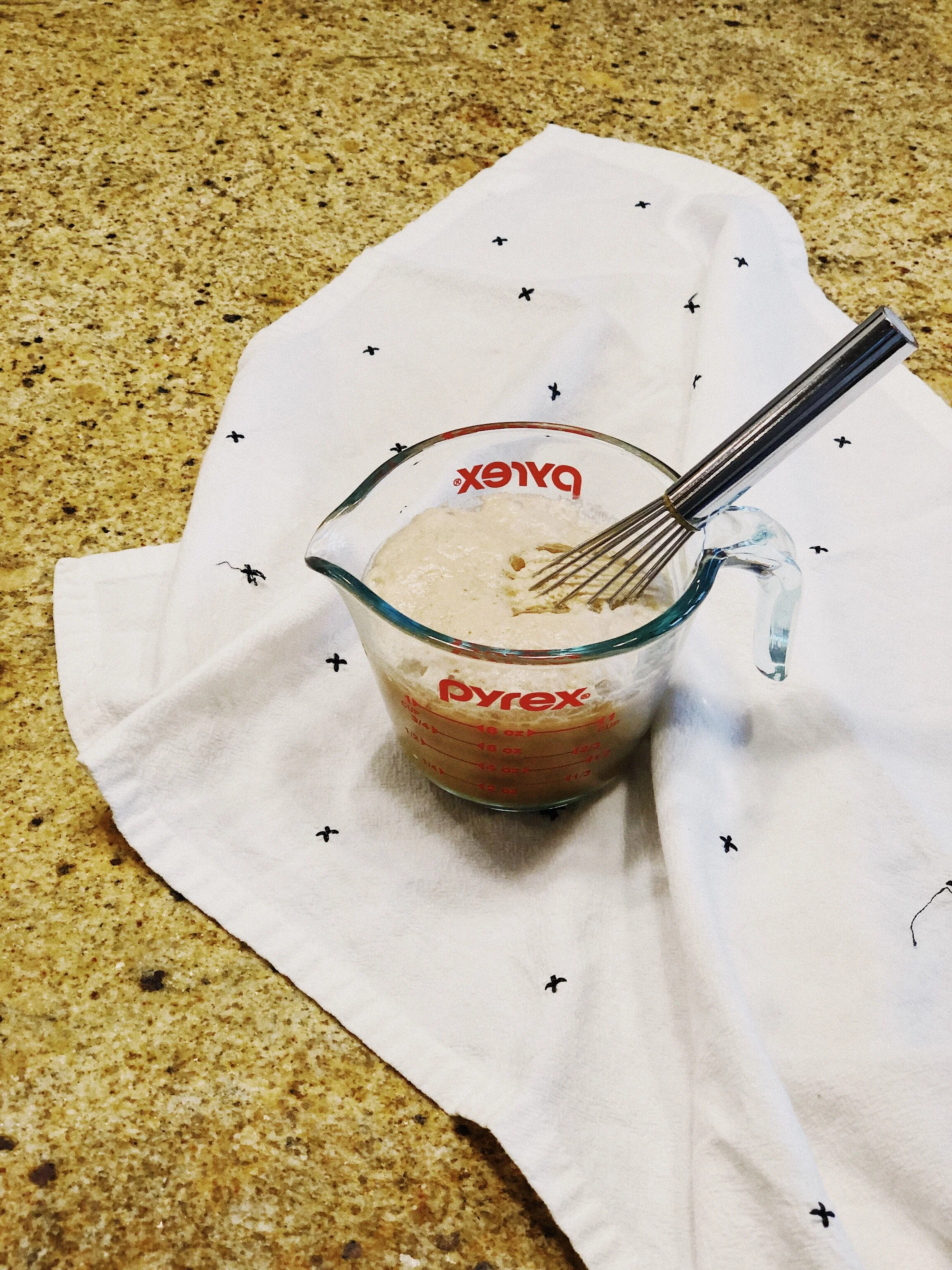
Pour the coffee into the large bowl of a stand mixer. Whisk in the honey and yeast, and let it sit for 10-15 minutes until there’s a layer of foam on the surface. This means the yeast is active.

Add the egg, egg yolk, flour, granulated sugar, cardamom and salt to the yeast mixture and mix with the dough hook on low speed until well combined. 

Increase the speed to medium and continue to mix until the dough is smooth and elastic, about 10 minutes. 

Gradually add butter, 1 tablespoon at a time. When you’ve added 6 tablespoons, mix until the dough is smooth, supple and shiny for 10-15 minutes to develop the gluten.

Transfer the dough to a large buttered bowl, cover with plastic wrap and a kitchen towel, and let it sit at room temperature until doubled in size, 1-1 ½ hours. 

Punch the dough down, cover the bowl tightly in plastic wrap and chill overnight. This is an important step: Don’t skip it. The slow proof creates more flavor because it gives the yeast more time to process the sugar.

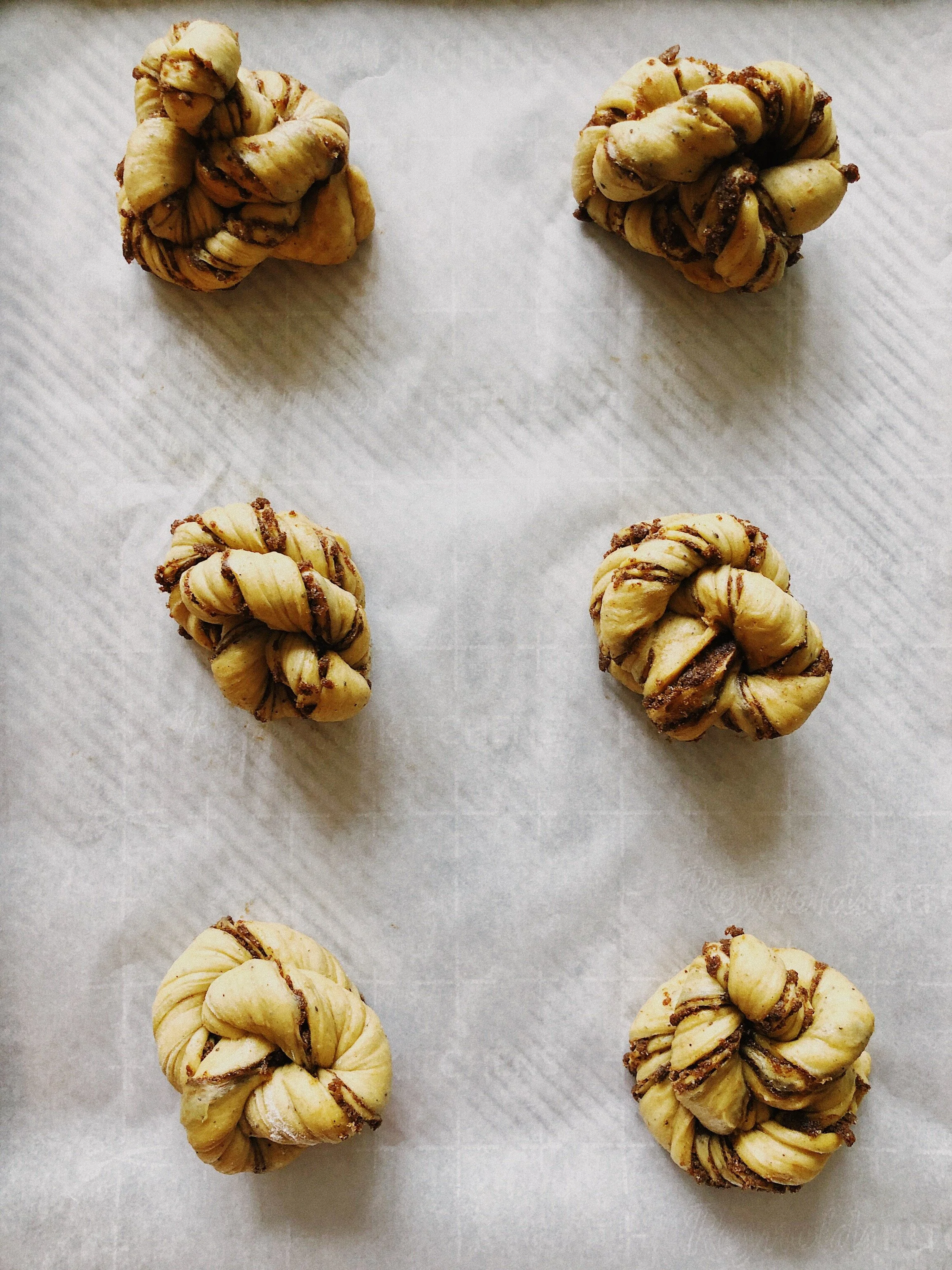
Knotty, knotty: You might need to watch a tutorial on how to get your buns looking so good.

Knotty, knotty: You might need to watch a tutorial on how to get your buns looking so good.

Filling and Assembly

Mix the butter, cinnamon and 1/2 cup brown sugar in a medium bowl until combined.

Work quickly and keep the dough as chilled as possible to make rolling more manageable. Turn out the dough onto a lightly floured piece of parchment paper and roll to a ¼-inch-thick rectangle, about 16 inches by 12 inches. Cover with plastic and chill until the dough is firm, 30-60 minutes.

Spread the butter mixture over two-thirds of the dough. Fold the plain side over the middle, then fold the opposite third over (like folding an envelope). Roll to a 12-inch-by-8-inch rectangle about ½-inch thick. Slice lengthwise into eight 1-inch-thick strips.

Working one at a time, lay each strip on a clean work surface with the long side facing you. Using your palms, gently twist each end in opposite directions until the entire strip is spiraled. Hold one end of the strip between your thumb and index finger. Working away from you, tightly wrap the strip around three fingers. Wrap it around your fingers again, placing the second loop closer to the palm of your hand. As you bring the strip across the back of your hand, cross over the first loop, angling toward the end of your index finger. Cross the dough over the front of your hand and tuck the end into the center while removing your fingers and pushing through to the other side to create a knot. 

If all of that seems a bit much, Epicurious has kindly offered up step shots. Whatever shape you make, just be sure the knots are tight.

Divide the twists between two rimmed baking sheets, spacing them evenly apart. Cover loosely with plastic wrap and let them sit at room temperature until they’ve doubled in size, 45-60 minutes.

Place the racks in the upper and lower thirds of the oven.

Preheat to 325°F. 

Bake the coffee buns, rotating pans from top to bottom and front to back halfway through, until they’re deeply golden brown, 25-30 minutes.

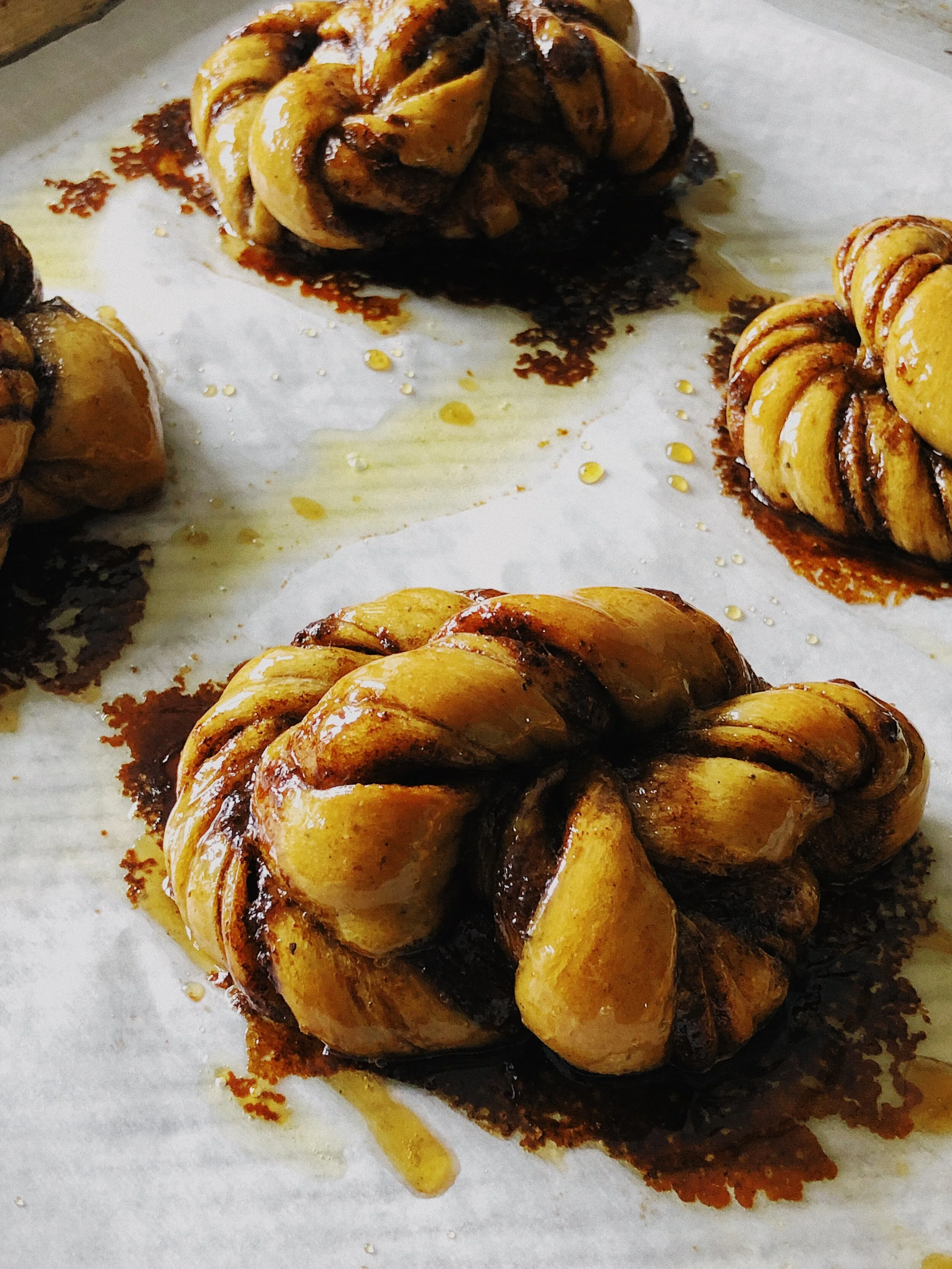
Bring the remaining 1 cup brown sugar and ½ cup water to a boil in a small saucepan. Generously brush the syrup over the hot buns. FYI: The glaze recipe makes enough for two or three rounds of brushing. Beware — brushing this many times will make for a sweet and sticky bun. Which, don't get me wrong, is delicious. But if you want less sweet, cut the recipe in half and brush the buns once. 

Syrupy sweetness! Don’t be shy with that glaze.

Syrupy sweetness! Don’t be shy with that glaze.

This take on Turkish coffee buns is one you won’t soon forget.

This take on Turkish coffee buns is one you won’t soon forget.

Note: If you want to make regular cinnamon buns with this recipe, consider the following swaps: 

  • Activate the yeast in whole milk instead of coffee.

  • Use 1 tablespoon of Chinese five-spice powder and 2 tablespoons of cinnamon (skipping the instant coffee or espresso powder).

Dig in!

Dig in!

The Mind-Bogglingly Gorgeous Nasrid Palaces at the Alhambra

No trip to Granada is complete without a tour of the Palacio de los Leones and the Palacio de Carlos V. Learn the colorful history, which includes an explosion and a dinner party massacre.

The Patio de los Leones, with its namesake fountain

The Patio de los Leones, with its namesake fountain

The impressive Alhambra complex in the charming town of Granada, Spain is a collection of palaces built at various times during its history. At the heart of the Nasrid Palaces complex is the Palacio de los Leones (Palace of the Lions). It’s likely that the structure was originally independent of the others, with the existing passage between the Comares Palace and the Palace of the Lions added sometime after the Muslim-ruled town of Granada fell to the Christians in 1492. 

This was our favorite part of the entire Alhambra complex.

This was our favorite part of the entire Alhambra complex.

Built at the peak of the Nasrid dynasty, the palace and cloister-like courtyard known as the Patio de los Leones (yes, you guessed it: the Patio of the Lions) was commissioned by Muhammad V during the second half of the 14th century, as a pleasure palace for the emir and his harem. 

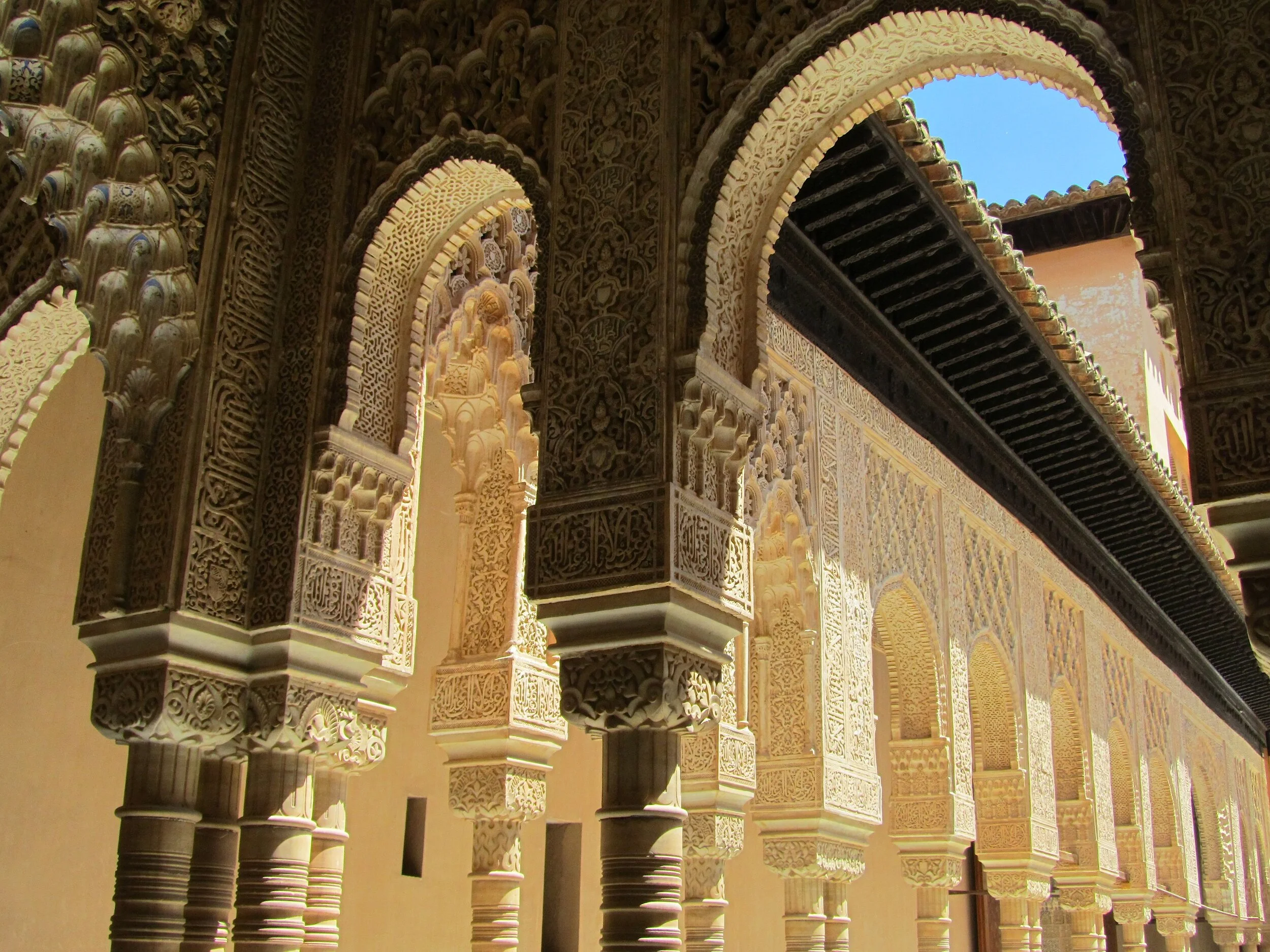
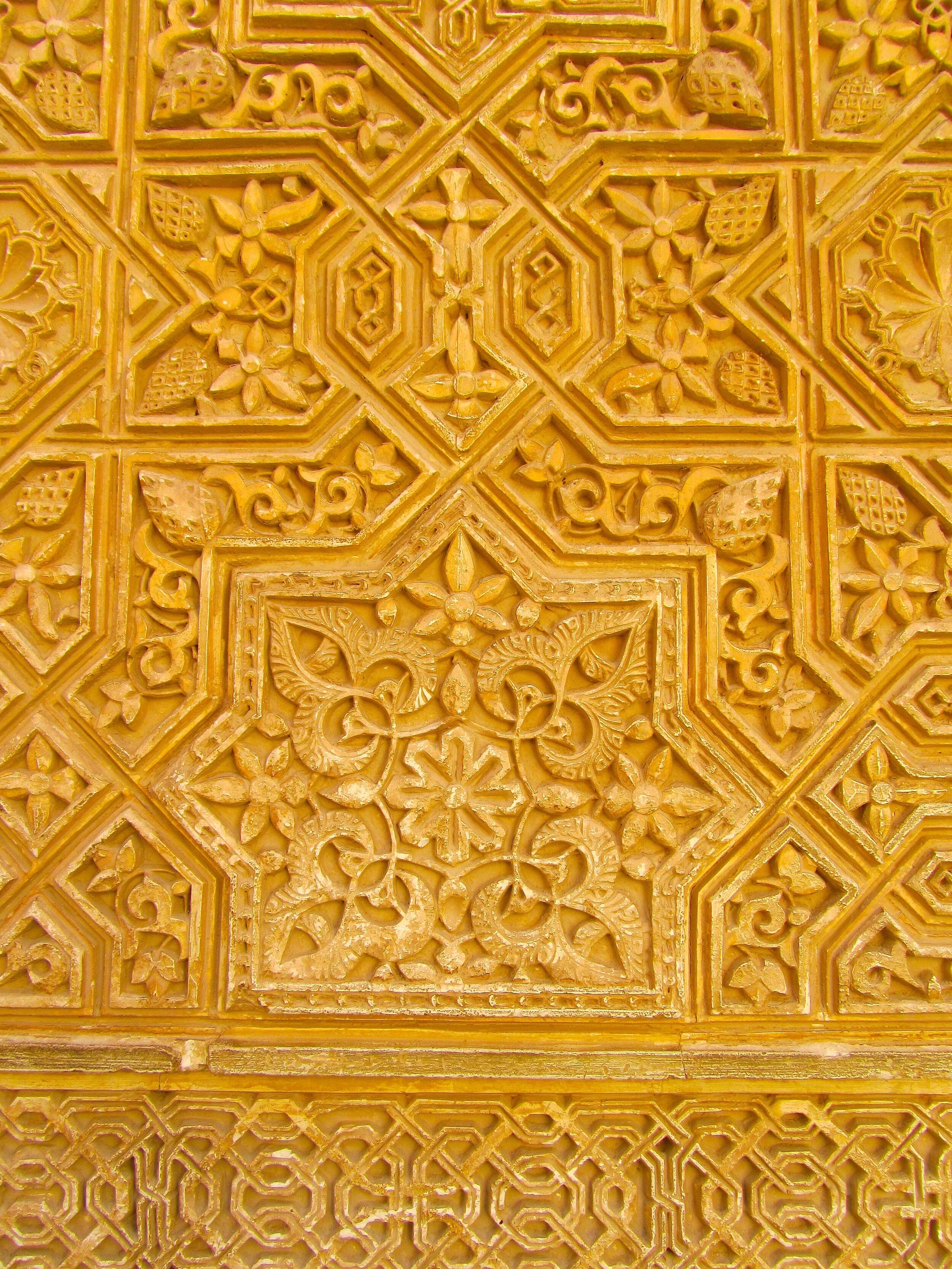
What Islamic art lacks in depictions of living creatures, it more than makes up for in beautiful patterns.

What Islamic art lacks in depictions of living creatures, it more than makes up for in beautiful patterns.

It was like something out of “Game of Thrones.”

The sultan invited the chief noblemen of the Abencerraje family to a banquet — and set about unceremoniously massacring all 36 of them.
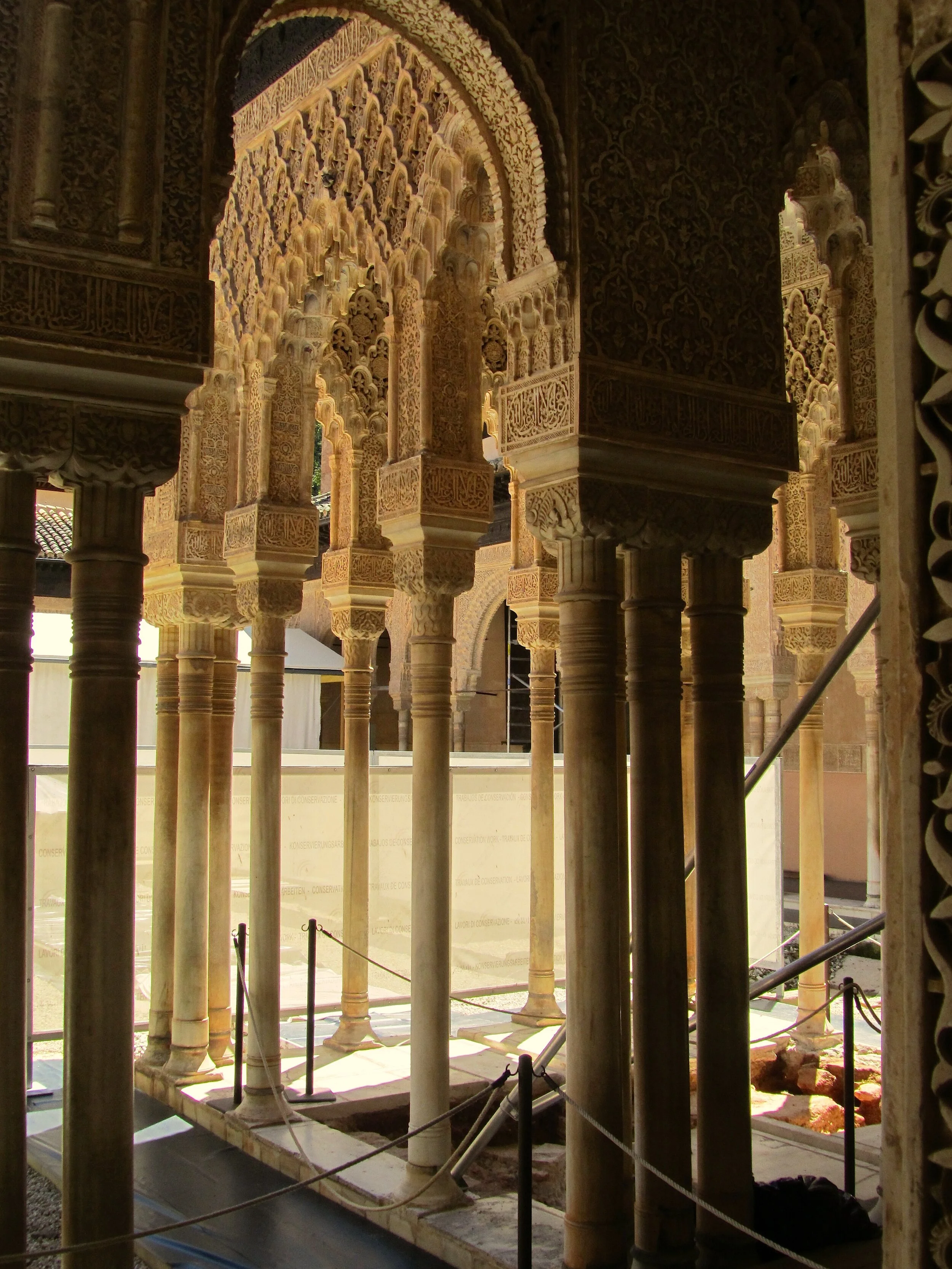
Delicate pillars frame restoration work.

Delicate pillars frame restoration work.

The two main structures we’re covering in this post are:

  • Palacio de los Leones

  • Palacio de Carlos V 

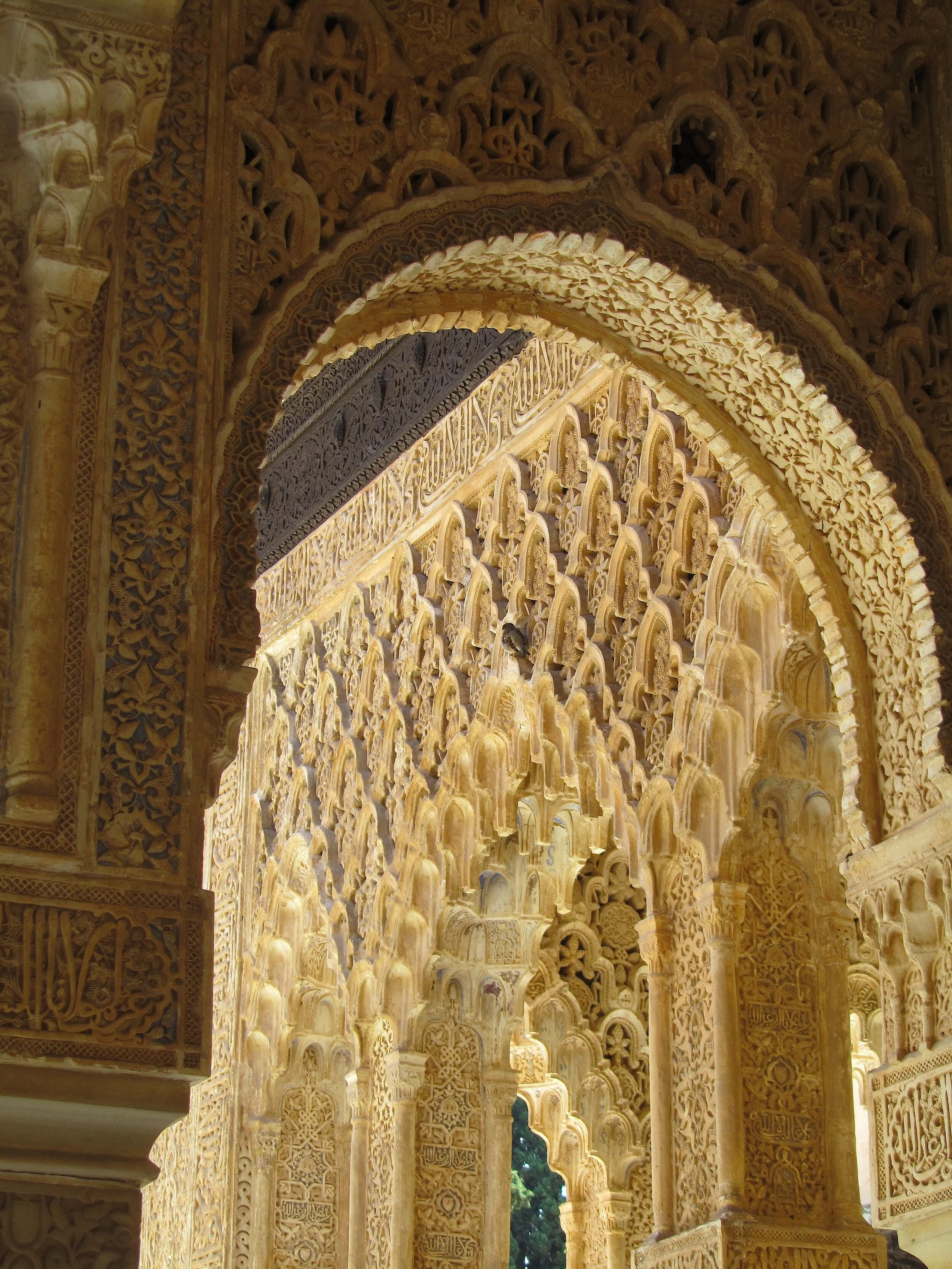
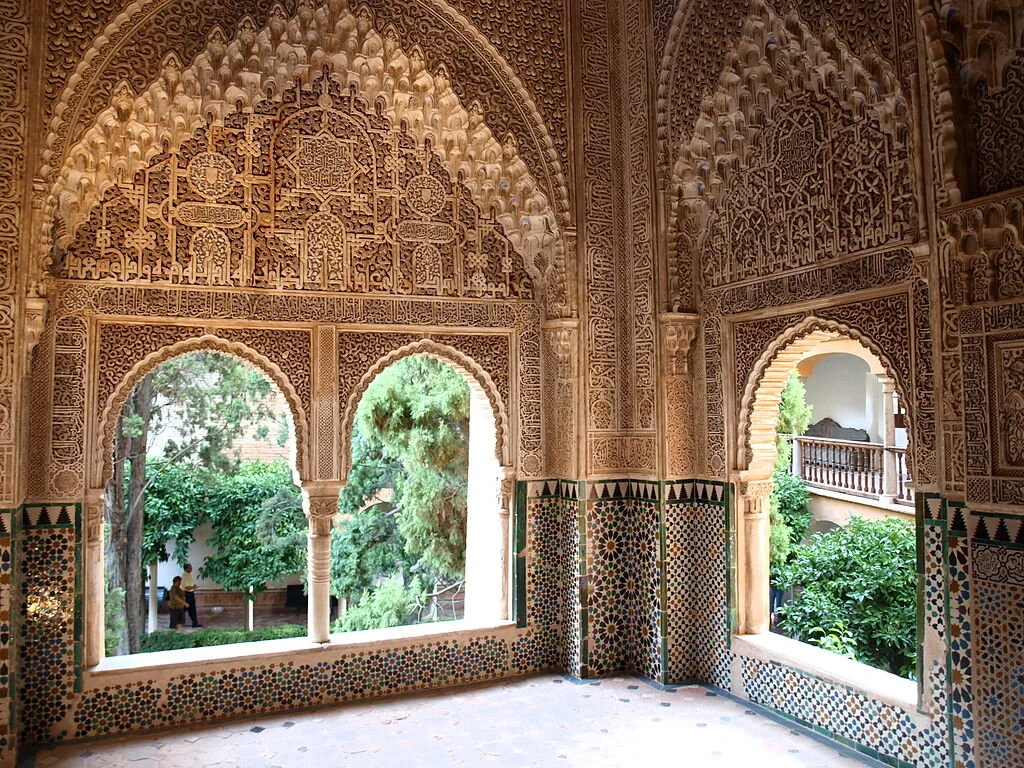
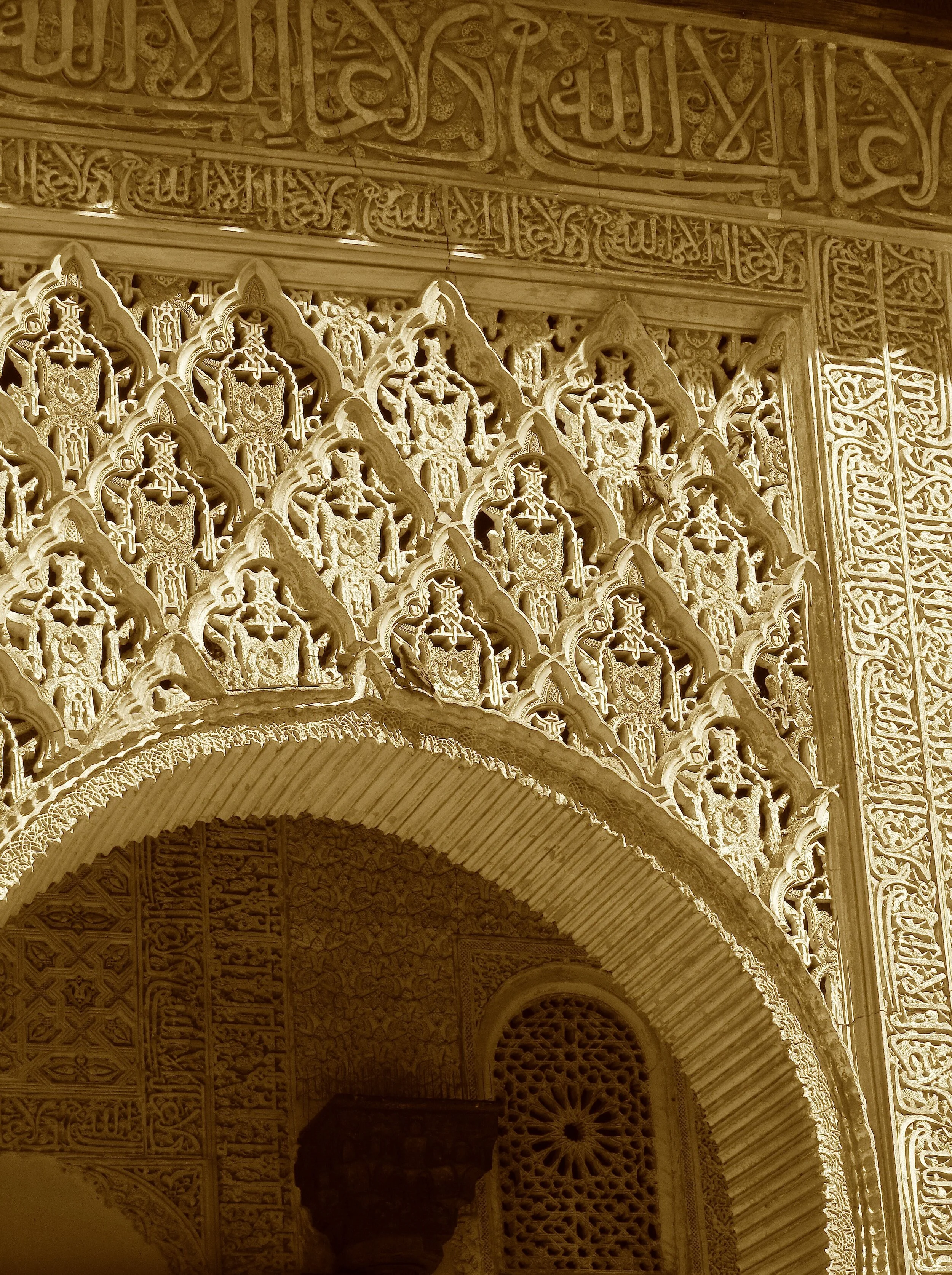
The wall carvings in this section of the Nasrid Palaces are truly spectacular. Can you spot the bird on its peculiar perch?

The wall carvings in this section of the Nasrid Palaces are truly spectacular. Can you spot the bird on its peculiar perch?


MORE ALHAMBRA POSTS

Explore the Generalife Gardens

Enter the Alcazaba fortress

Start your Nasrid Palaces adventure with the Mexuar and Comares Palace


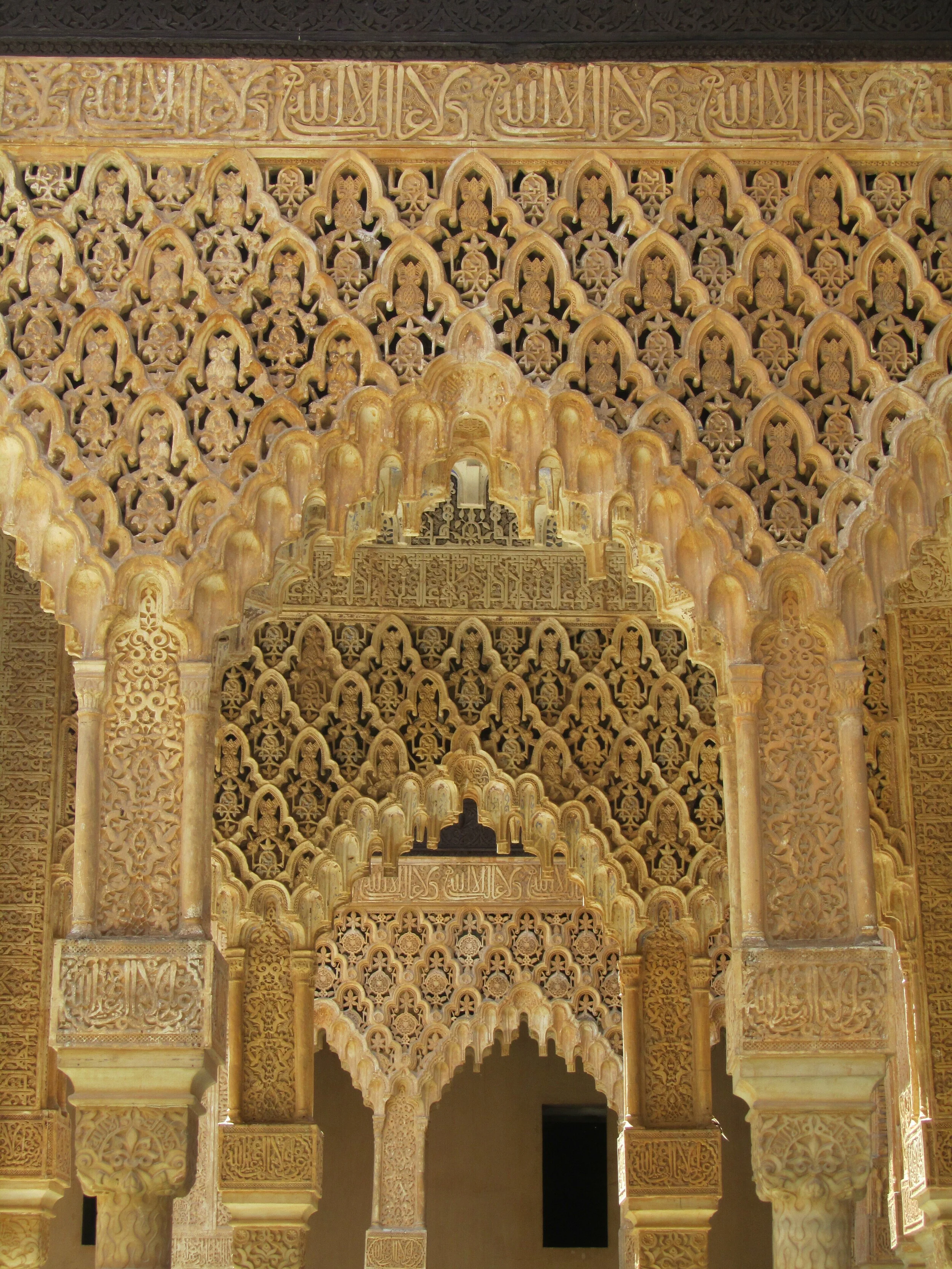
Everywhere you look, your vision is filled with stunning architecture and delicate carvings.

Everywhere you look, your vision is filled with stunning architecture and delicate carvings.

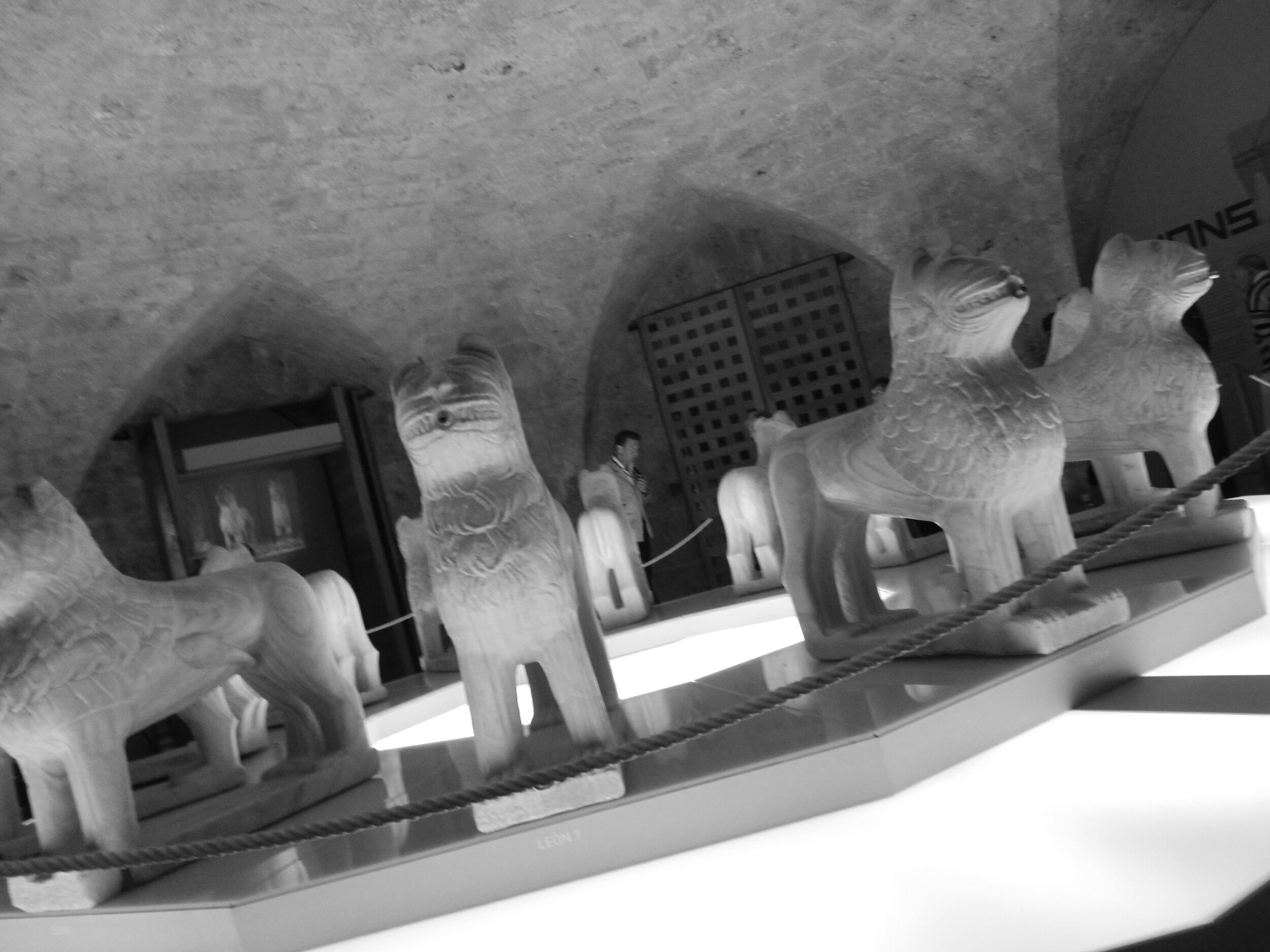
At the time of our visit, the palace’s impressive namesake fountain, a polygonal basin supported on the haunches of 12 rather primitive-looking white marble lions, was undergoing restoration. As we passed by the fountain under repair, we were told no photos were allowed. Incidentally, this didn’t prevent Wally from discreetly holding out his camera and snapping an image of the fountain as we passed by. 

Wally snuck a shot of the lion fountain while it was under repair.

Wally snuck a shot of the lion fountain while it was under repair.

The fountain is unusual, as representations of living creatures do not typically appear in Islamic art. 

The patio is divided into four quadrants, with running water channels symbolizing the four rivers that run through the Islamic idea of paradise: wine, water, milk and honey.

Windows look out upon the greenery, which was watered via ancient aqueducts.

Windows look out upon the greenery, which was watered via ancient aqueducts.

Four Rooms 

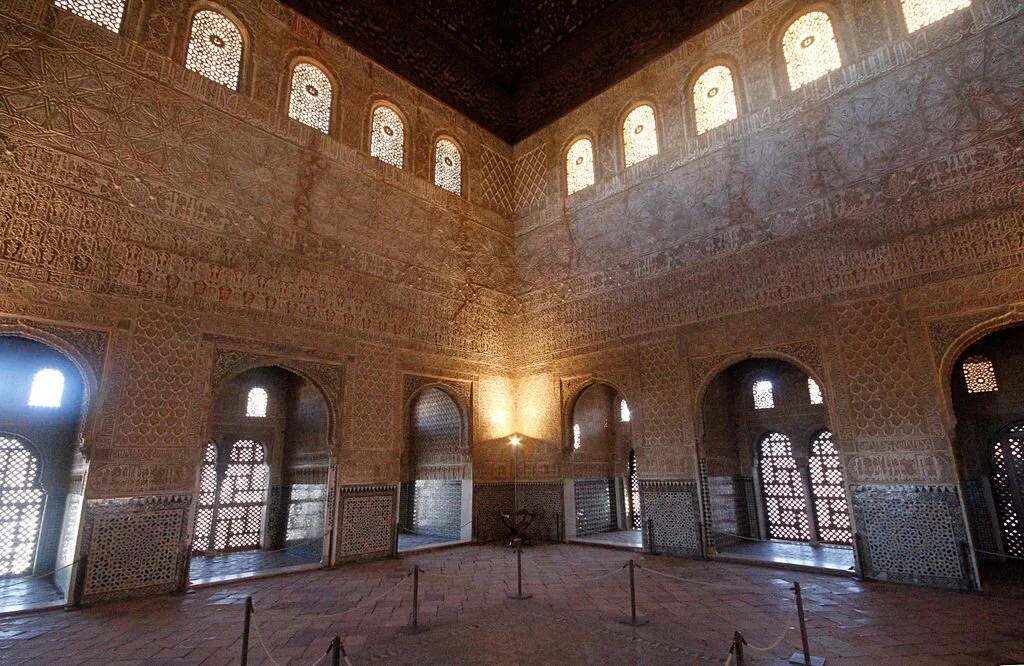
Slender columns with cubic capitals support the intricately carved arcades of stalactite-like muqarna arches surrounding the perimeter gallery. Its massive chambers open onto the courtyard with the Sala de los Abencerrajes to the south and the Sala de las Dos Hermanas to the north. The other two are the Sala de los Mocárabes, closest to the entrance, and the Sala de Los Reyes, to the west, which was closed during our visit. 

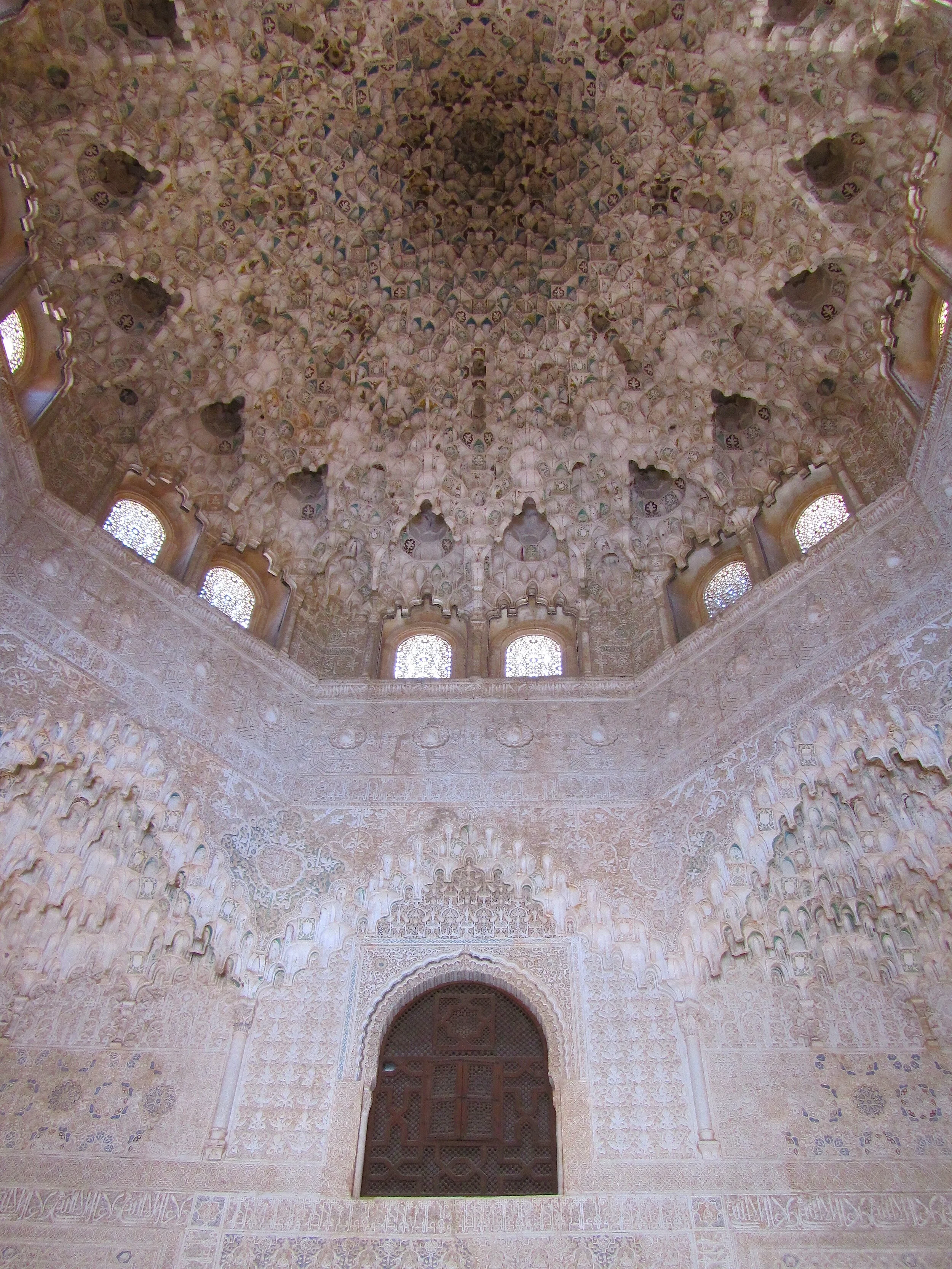
The domed ceiling of the Hall of the Two Sisters reminded us of a honeycomb.

The domed ceiling of the Hall of the Two Sisters reminded us of a honeycomb.

Sala de las Dos Hermanas, the Hall of the Two Sisters

The room takes its name from a pair of large white marble slabs set into the floor. Why these slabs were thought to be female relations is anybody’s guess. But the most outstanding feature of the room isn’t its floors — it’s the ceiling. Framed by a symmetrical eight-pointed star illuminated by light that filters through 16 latticed mashrabiya windows, the beautiful honeycombed ceiling of this two-storied hall is nothing short of breathtaking.

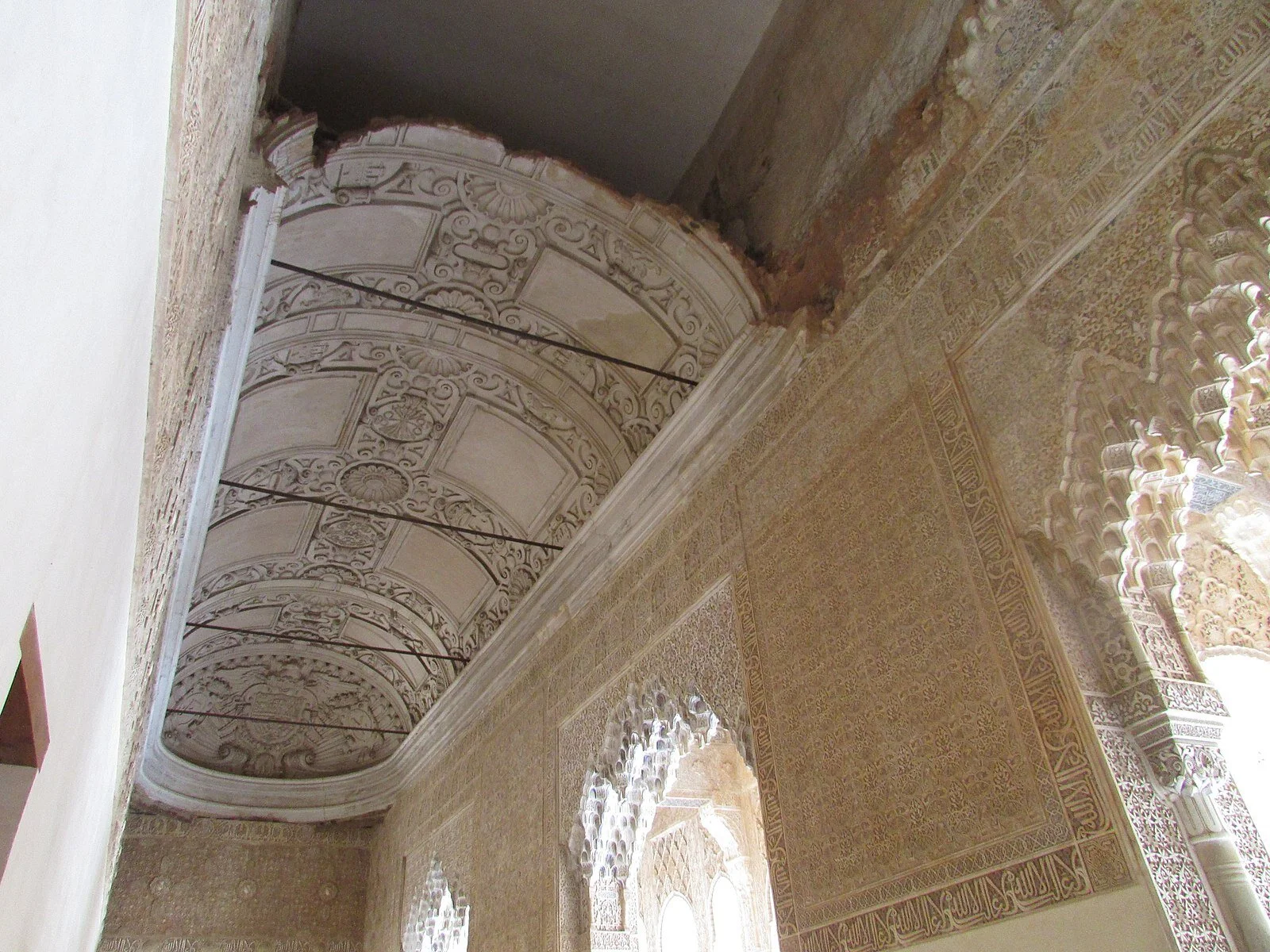
The conquering Catholic Monarchs never completed their plasterwork ceiling. It junked up the room, if you ask us.

The conquering Catholic Monarchs never completed their plasterwork ceiling. It junked up the room, if you ask us.

Sala de Los Mocárabes, the Stalactite Hall of Muqarnas 

This room most likely served as a reception hall due to its proximity to the palace entrance. It took its name from a vault of stepped plaster brackets resembling stalactites known as mocárabes, or muqarnas in Arabic, that once covered it. It’s believed that these ornamental vaults were a symbolic representation of the cave where the Angel Gabriel revealed the Qur’an to the Prophet Muhammed. Sadly, these mocárabes were removed due to the explosion of a powder magazine in 1590.

An incomplete plaster ceiling featuring the imperial shield of Felipe II and the initials of Ferdinand of Aragon and Isabella of Castile were added to replace the mocárabes in 1614. 

The Slaying of the Abencerrajes by Marià Fortuny, 1870

The Slaying of the Abencerrajes by Marià Fortuny, 1870

Sala de los Abencerrajes, Site of a Massacre

This beautiful chamber is steeped in lore and is the site of one of the Alhambra’s most popular legends — like something out of Game of Thrones.

According to one version of the tale, Sa’d, the 20th sultan of the Nasrid dynasty, and his brother Muhammad XIII, were worried about the growing political power of a prominent noble family, whose surname was Abencerraje. The sultan was told that the Abencerrajes were plotting against him. He invited the chief noblemen of the Abencerraje family to a banquet — and set about unceremoniously massacring them. The legend continues, suggesting that the reddish-brown stains on the marble fountain in the center of the hall are traces of blood from the 36 slain Abencerrajes. 

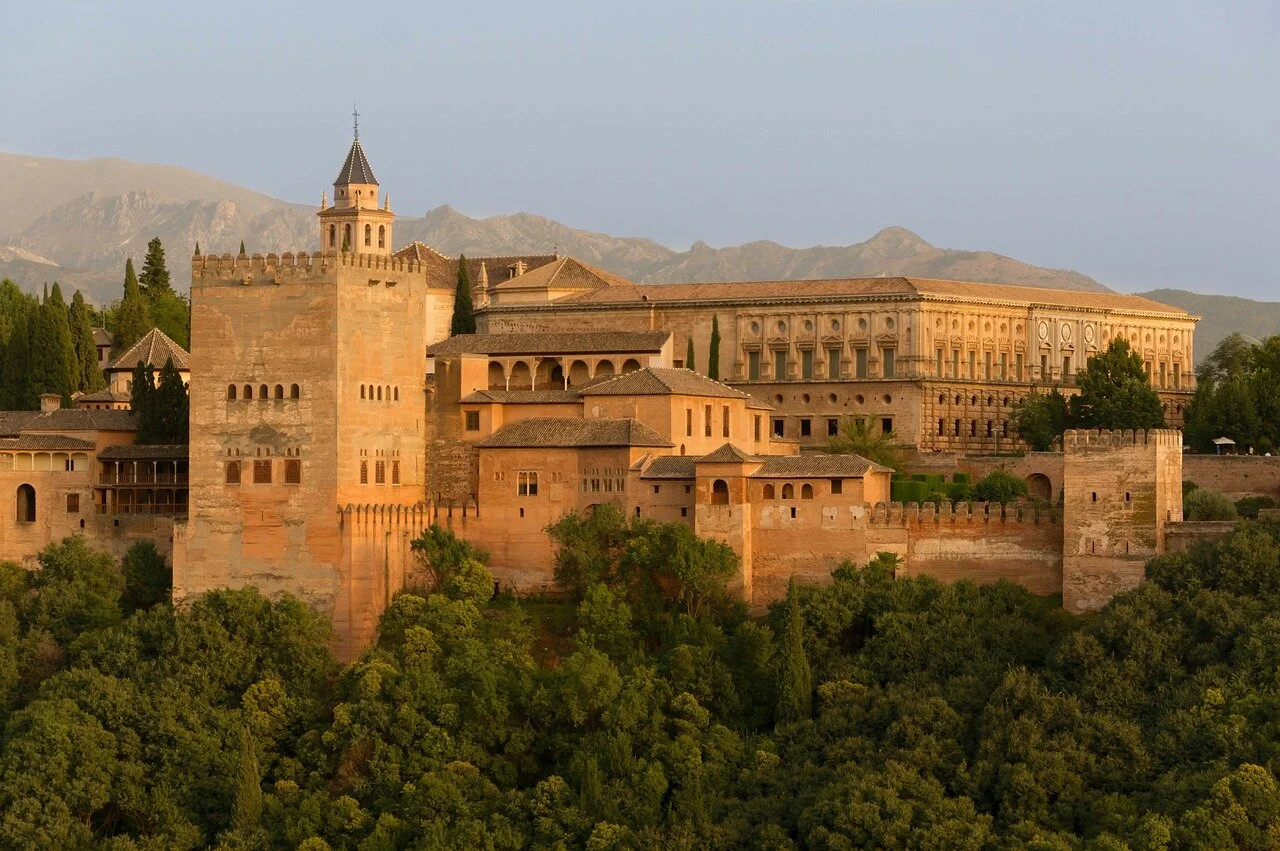
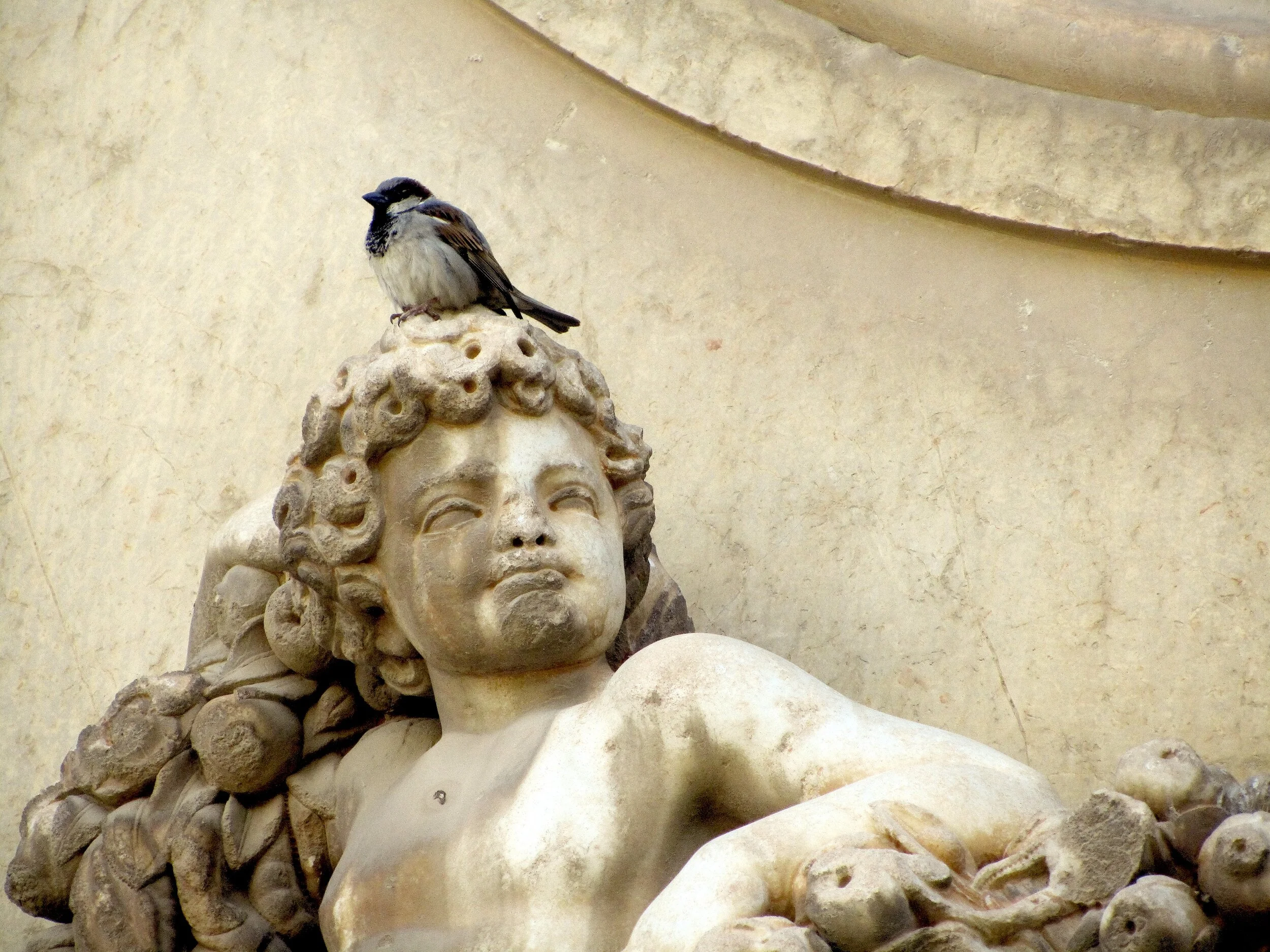
With cherubs adorning its exterior, the Palace of Charles V feels very different than the rest of the Alhambra. In fact, it pales in comparison to the ornate opulence of the Palace of the Lions.

With cherubs adorning its exterior, the Palace of Charles V feels very different than the rest of the Alhambra. In fact, it pales in comparison to the ornate opulence of the Palace of the Lions.

Palacio de Carlos V, the Palace of Charles V

Also located within the complex, the extravagant Renaissance-style Palace of Charles V is a striking contrast to the Moorish architecture of the Alhambra. During the occupation of the Christian monarchy, Charles V (1500-1558) visited the Alhambra and decided to build a grand palace there as a wedding gift to his wife, Isabella.

Portrait of Charles V on Horseback by Anthony van Dyck, 1620

Portrait of Charles V on Horseback by Anthony van Dyck, 1620

The palace was designed in 1528 by Pedro Machuca, though construction didn’t begin until 1553. Unfortunately, the project was abandoned in 1568 before it was completed, owing to the rebellion of the Moors in Granada, and remained unfinished until Leopoldo Torres Balbás devised a plan to restore the building in 1923. 

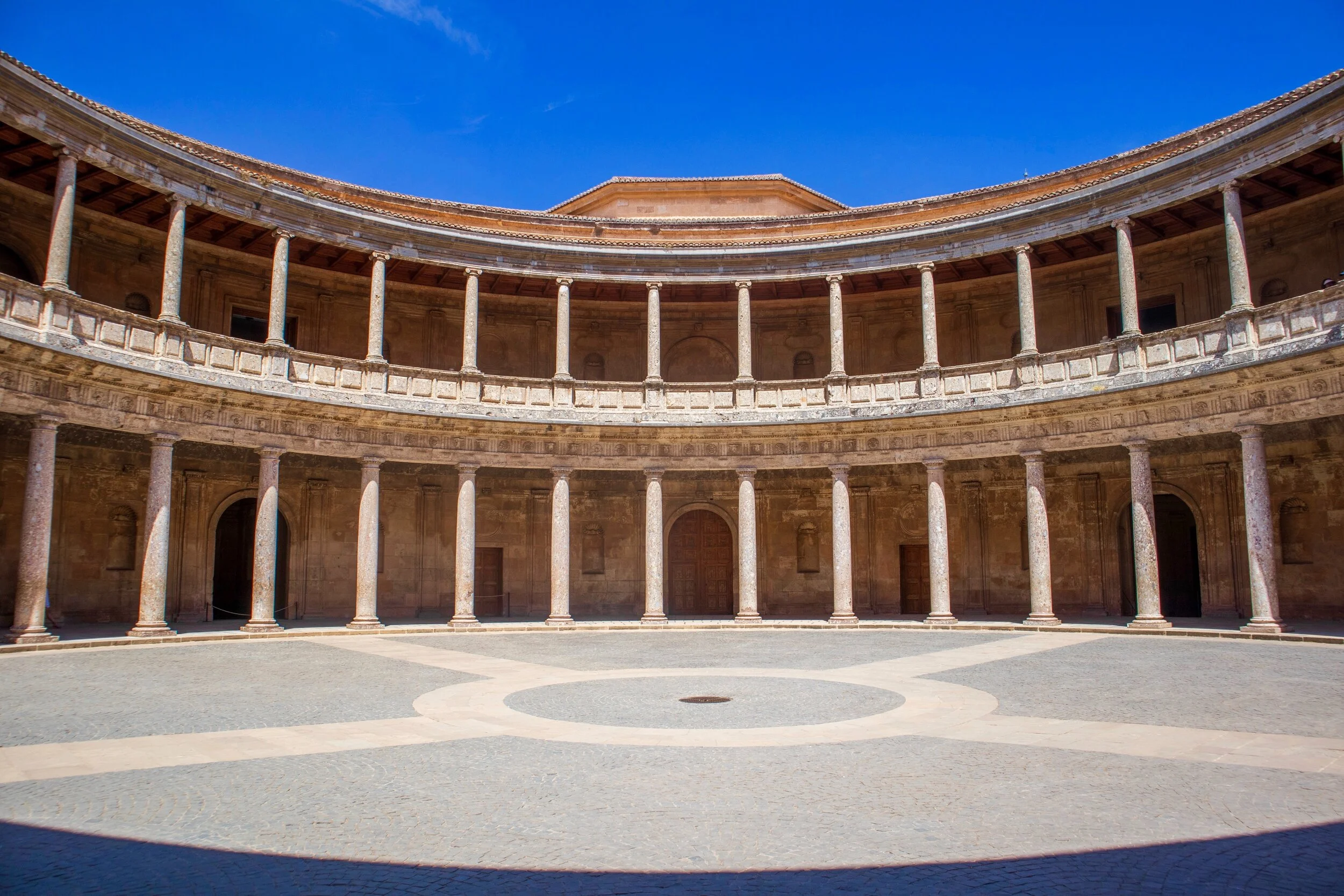
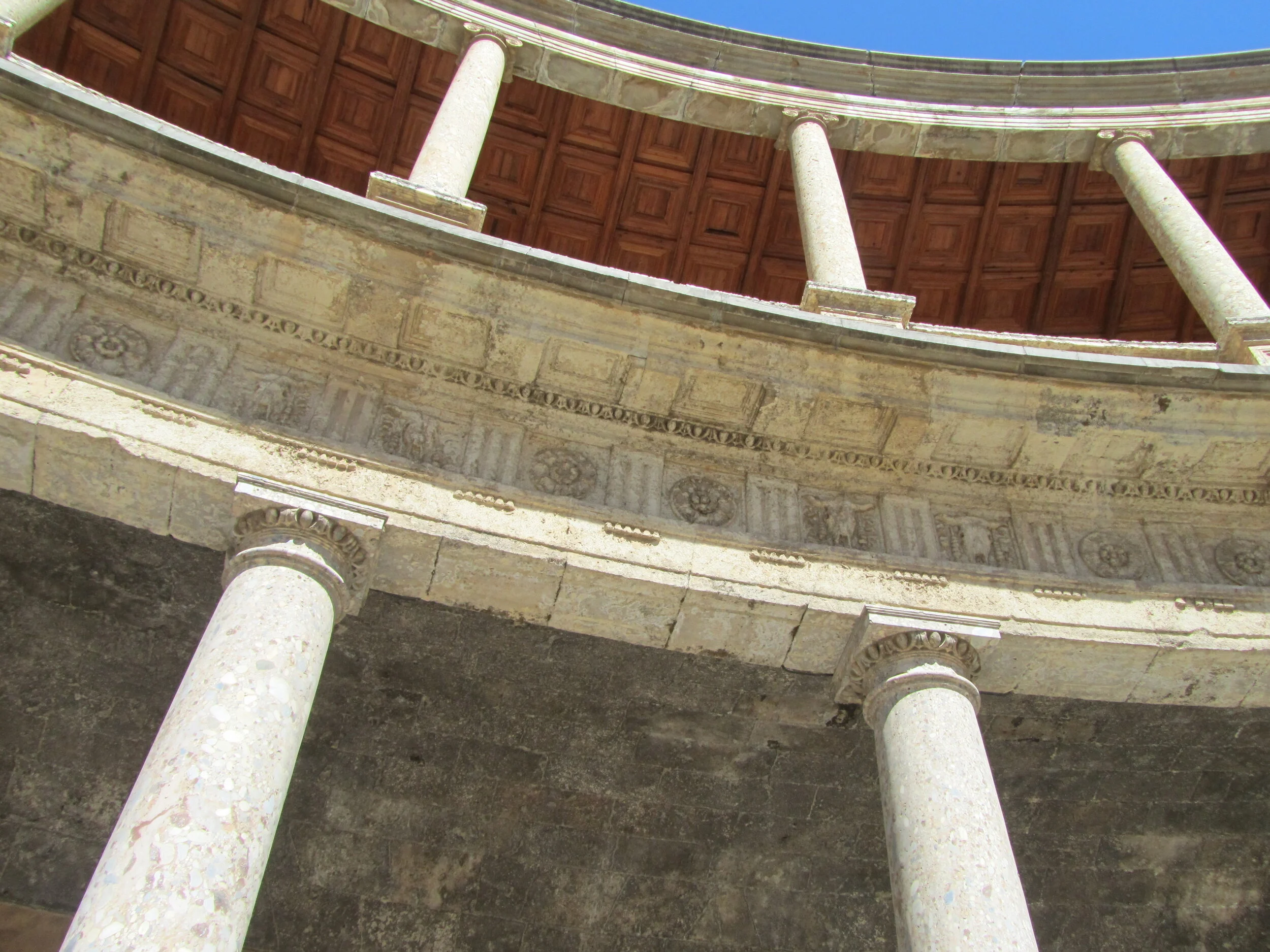
The two-story colonnade that encircles the palace

The two-story colonnade that encircles the palace

Its façade is embellished with bronze rings held in the mouths of lion heads, except for the corners, which are held by eagles. Inside is a circular peristyle courtyard. It felt like the interior of the Colosseum, with visitors strangely exposed from every angle.

The open-aired circular court of Charles V’s palace at the Alhambra, which felt like an arena to us

The open-aired circular court of Charles V’s palace at the Alhambra, which felt like an arena to us

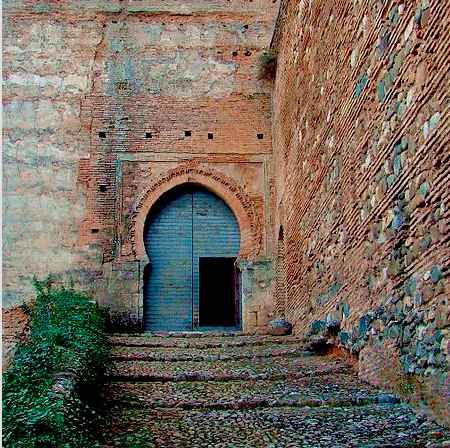
By this time, Wally and I were both experiencing sensory overload. We returned our headsets to our guide and exited through the Puerta de la Justicia (Gate of Justice). 
Touring the Alhambra had been a dream of Wally’s ever since he saw a report on it while studying abroad. He was stuck spending the winter in Germany studying Bauhaus architecture, which he found boring.

Touring the Alhambra had been a dream of Wally’s ever since he saw a report on it while studying abroad. He was stuck spending the winter in Germany studying Bauhaus architecture, which he found boring.

Getting There

Wally and I walked from our accommodations at Casa Horno del Oro in the Albaicín neighborhood until we reached the Plaza Nueva, Granada’s oldest square. From there you’ll follow Cuesta de Gomérez, the pedestrian street leading to the Alhambra. When you reach the Puerta de las Granadas (Gate of the Pomegranates), continue uphill until you reach the entrance pavilion. It’s a steep walk, but you can make it there in about 15-20 minutes.

A guided tour of the Alhambra cost about 46€ at the time we visited. –Duke

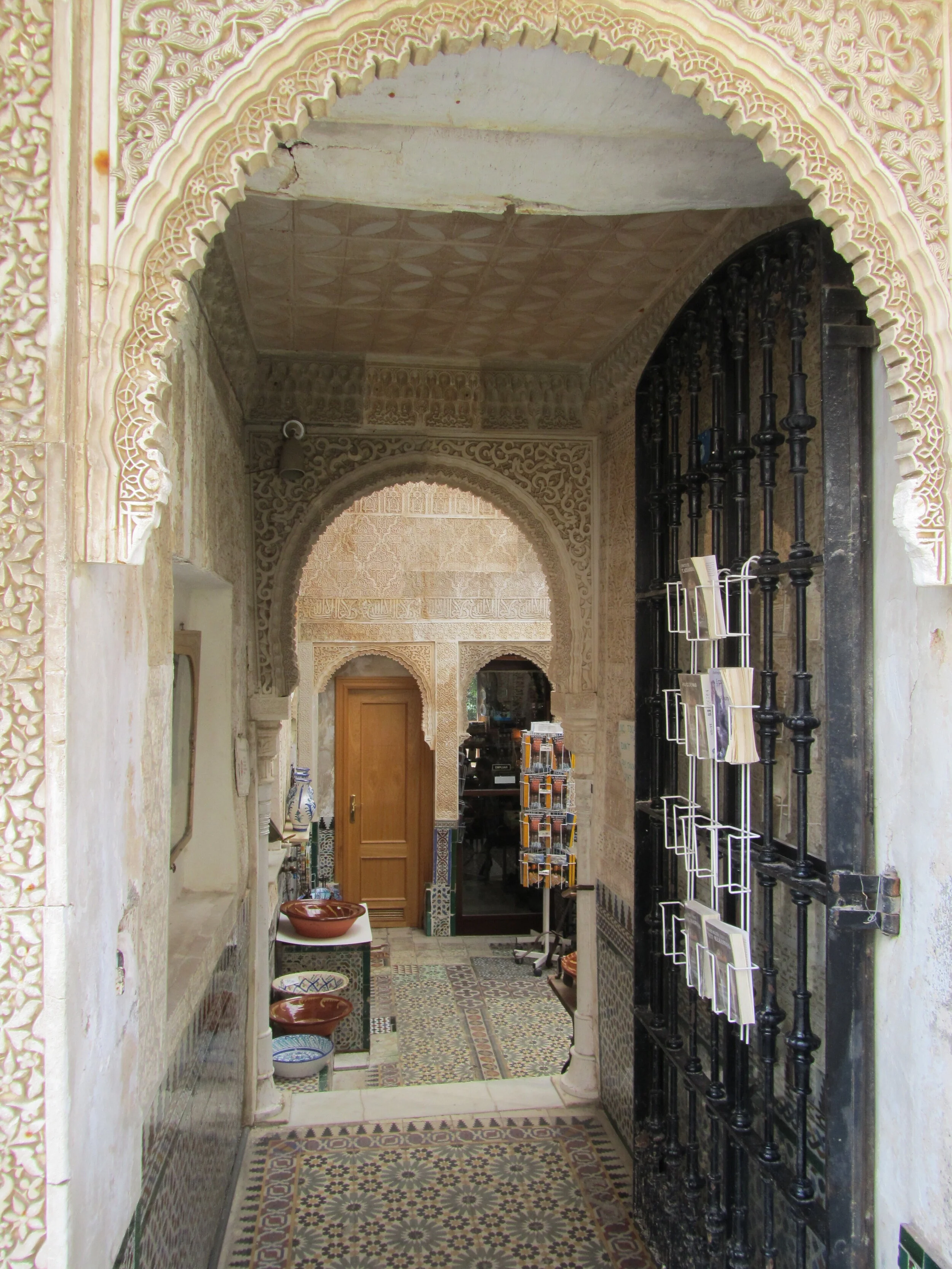
Exit through the gift shop.

Exit through the gift shop.


Gain an Audience at the Nasrid Palaces of the Alhambra

Start your exploration of the Nasrid Palaces with the Mexuar, Patio del Cuarto Dorado, Comares Palace and Salón de Los Embajadores. 

The Islamic Nasrid Palaces are the most spectacular part of the Alhambra complex.

The Islamic Nasrid Palaces are the most spectacular part of the Alhambra complex.

While we were in Spain, we found that most places, from neighborhood restaurants to international chains, didn’t follow any set schedule. They seemed to open and close on a whim. Los Palacios Nazaríes, or the Nasrid Palaces, are one of the only things in Spain that stick to a set schedule, so having a guide ensured that Wally and I didn’t miss our time of entry — if you do, you won’t be permitted to enter. 
And the Nasrid Palaces aren’t something you want to miss. The ornate interiors indicate that the structures were used as the private quarters of the sultan, his wives, his imperial harem and the rest of his family — unlike the Alcazaba, which served as a military fortress. 

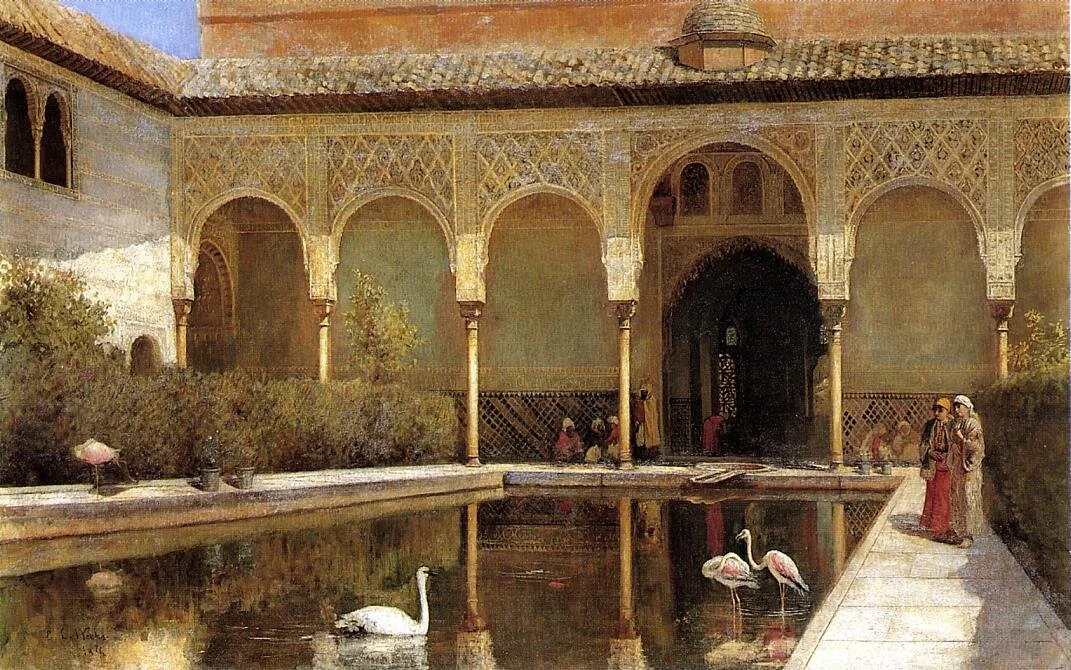
A Court in the Alhambra in the Time of the Moors by Edwin Lord Weeks, 1876

A Court in the Alhambra in the Time of the Moors by Edwin Lord Weeks, 1876

The two main structures we’re covering in this post are:

  • Mexuar

  • Comares Palace

Altogether, there were 22 successive sultans between 1238-1492 BCE — that’s an average of roughly 10 years per sultan over a period of 254 years! 

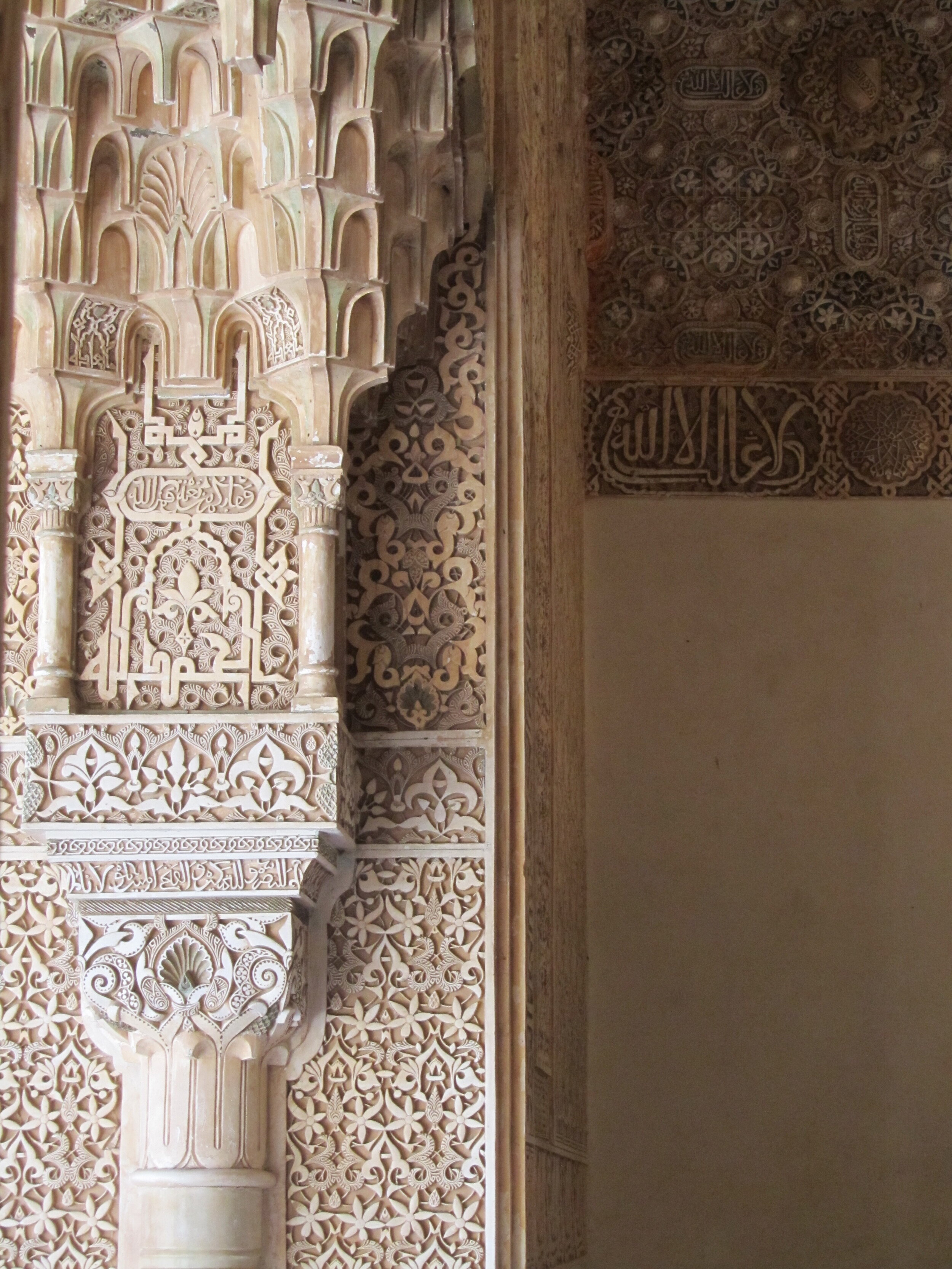
The walls are covered with brilliantly colored tilework, above which bands of sinuous kufic script are interwoven with floral ornament.

There are courtyards, a magnificent throne room, private quarters and restful gardens within. And although no furniture remains in any of the rooms, it’s the ornate designs and geometric patterns covering the walls and ceilings that are the true stars of the show.

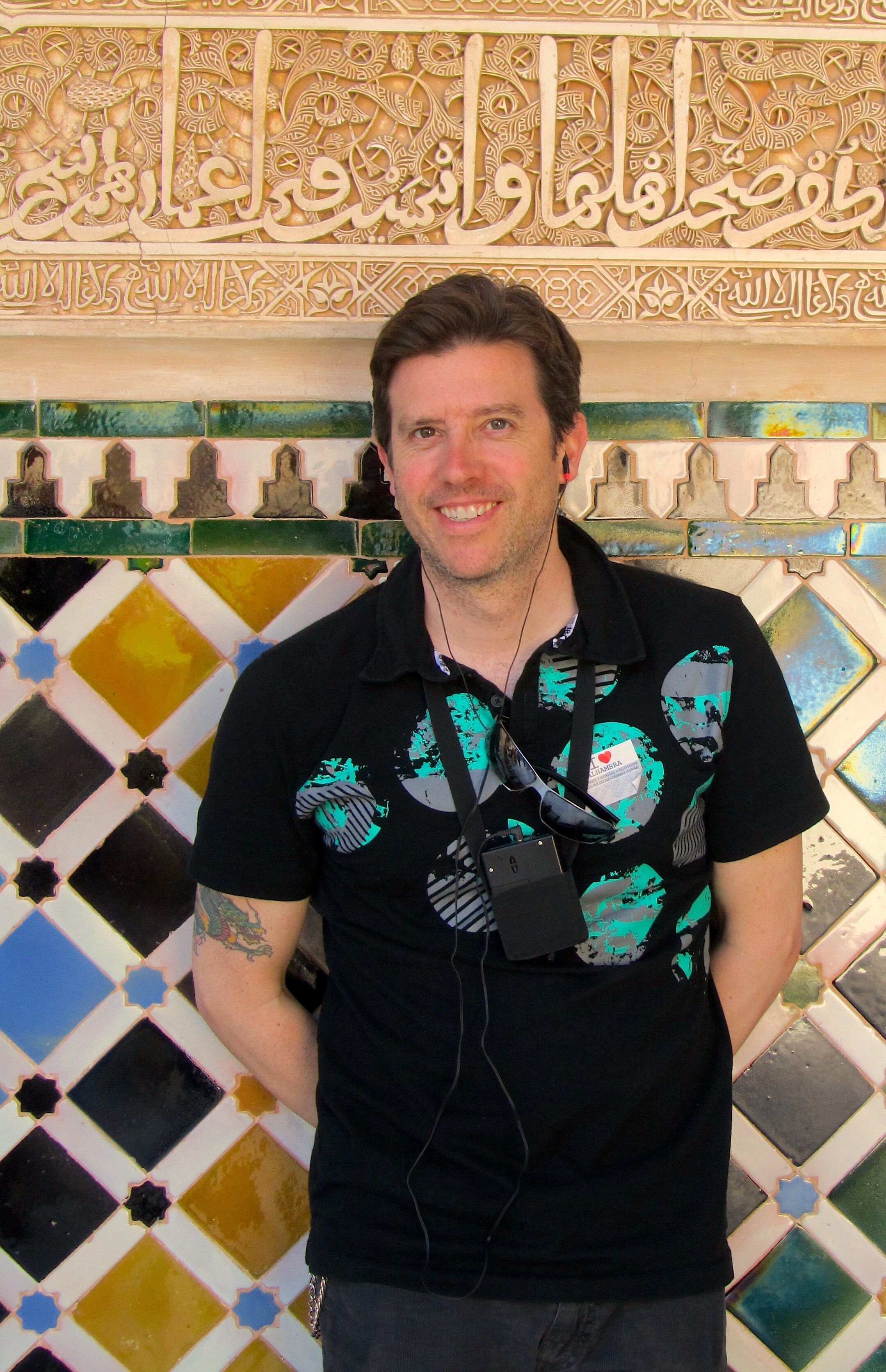
Wally likes to spend his birthdays touring memorable locales — and the Alhambra was something he had dreamed of for years.

Wally likes to spend his birthdays touring memorable locales — and the Alhambra was something he had dreamed of for years.

Mexuar Audience Hall

Our tour of the palace complex began with the Mexuar. This earliest surviving structure of the Alhambra is believed to have been commissioned by Ismail I (who ruled from 1314-1325). It was modified and enlarged by Yusef I (1333-1354), and later altered and completed by his son Muhammad V (1362-1391). The Mexuar served as a council chamber and reception hall to receive and conduct business with the general public. 

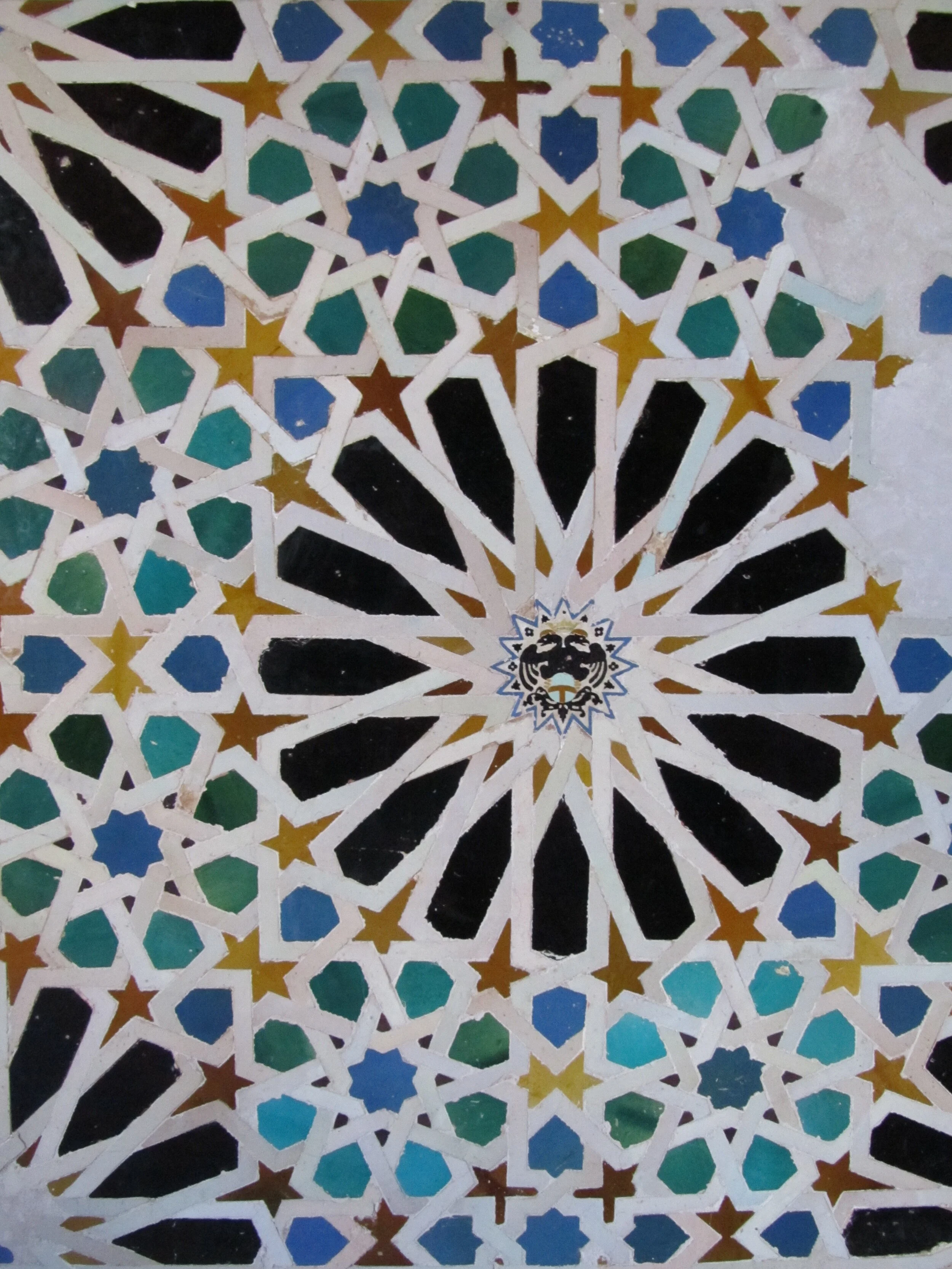
The Holy Roman Emperor Charles V put his stamp on the Mexuar tilework, incorporating some of his heraldic iconography, including a two-headed eagle.

The Holy Roman Emperor Charles V put his stamp on the Mexuar tilework, incorporating some of his heraldic iconography, including a two-headed eagle.

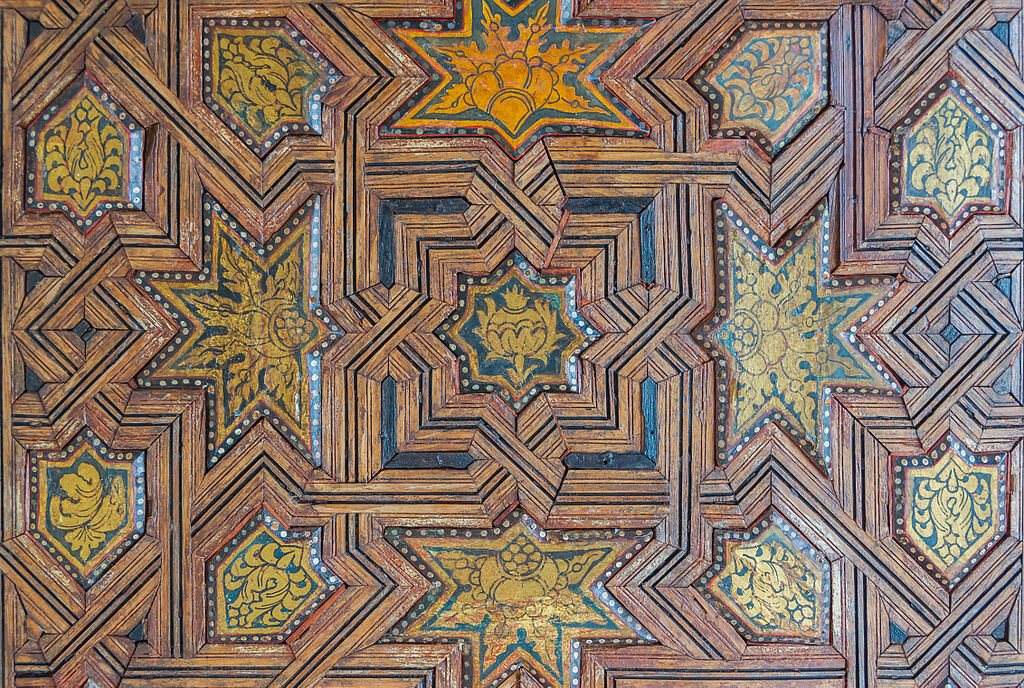
Be sure to look up at the decorative coffered cedarwood ceilings, referred to as artesonado in Spanish. Then look down a bit: The lower walls are completely covered with glazed ceramic mosaic tile panels arranged in a complex geometric pattern resembling interlocking stars in vivid shades of green, blue and yellow. A few bear evidence of the Catholic conquest, which ended Islamic rule in the region: Charles V’s heraldic emblem featuring a pair of pillars with a red ribbon draped between them as well as a double-headed eagle. A band of calligraphic ornamentation carved into the stucco panels encircling the room give the hall a formal air suitable for receiving dignitaries, with the declaration “There is no conqueror but Allah,” repeated multiple times in Islamic calligraphy.

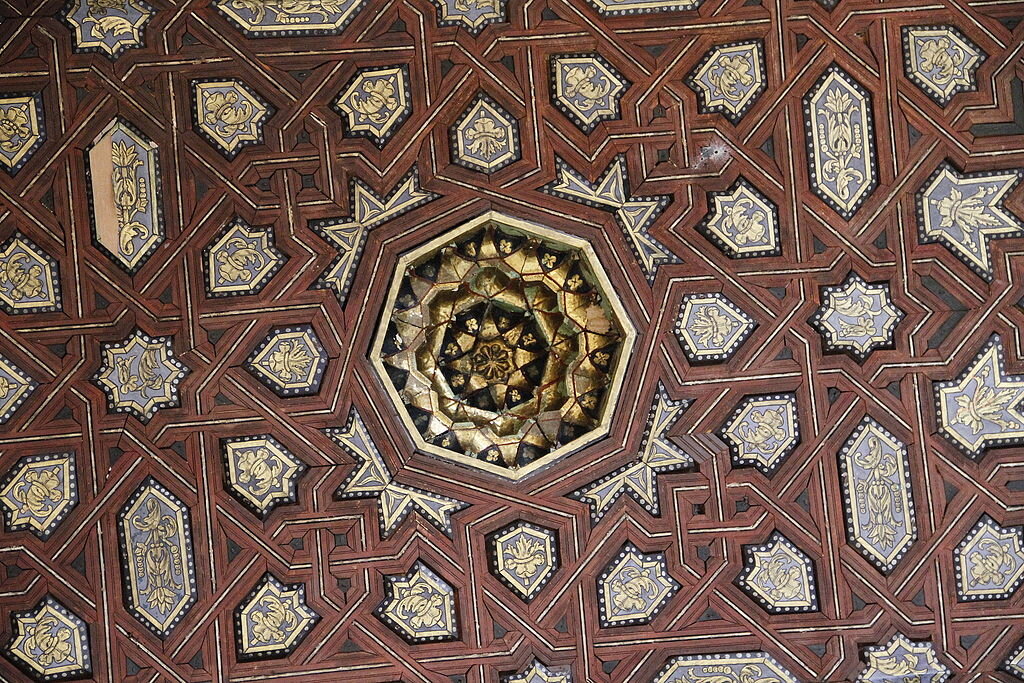
The gloriously gilded ceiling of the Cuarto Dorado

The gloriously gilded ceiling of the Cuarto Dorado

Patio del Cuarto Dorado, the Patio of the Golden Room

From the Mexuar, our group entered the adjoining enclosed courtyard known as the Patio del Cuarto Dorado (Patio of the Golden, or Gilded, Room). The lotus-shaped marble fountain in the center of the patio was fabricated in 1943 and is a replica of the original, which is now located in Daraxa’s Garden, adjacent to the Palace of the Lions. 

Islamic tradition stated that depictions of people are blasphemous, so the builders of the Alhambra created complex geometric patterns and scrollwork.

Islamic tradition stated that depictions of people are blasphemous, so the builders of the Alhambra created complex geometric patterns and scrollwork.

The chamber beyond is referred to as the Cuarto Dorado. It functioned as an anteroom between the Alhambra’s public and private spaces and takes its name from the gilt-wood ceiling that was added after the Christian conquest. 

Looking out at the Patio de Arrayanes

Looking out at the Patio de Arrayanes

Palacio de Comares and the Patio de Arrayanes: the Alhambra’s Money Shot

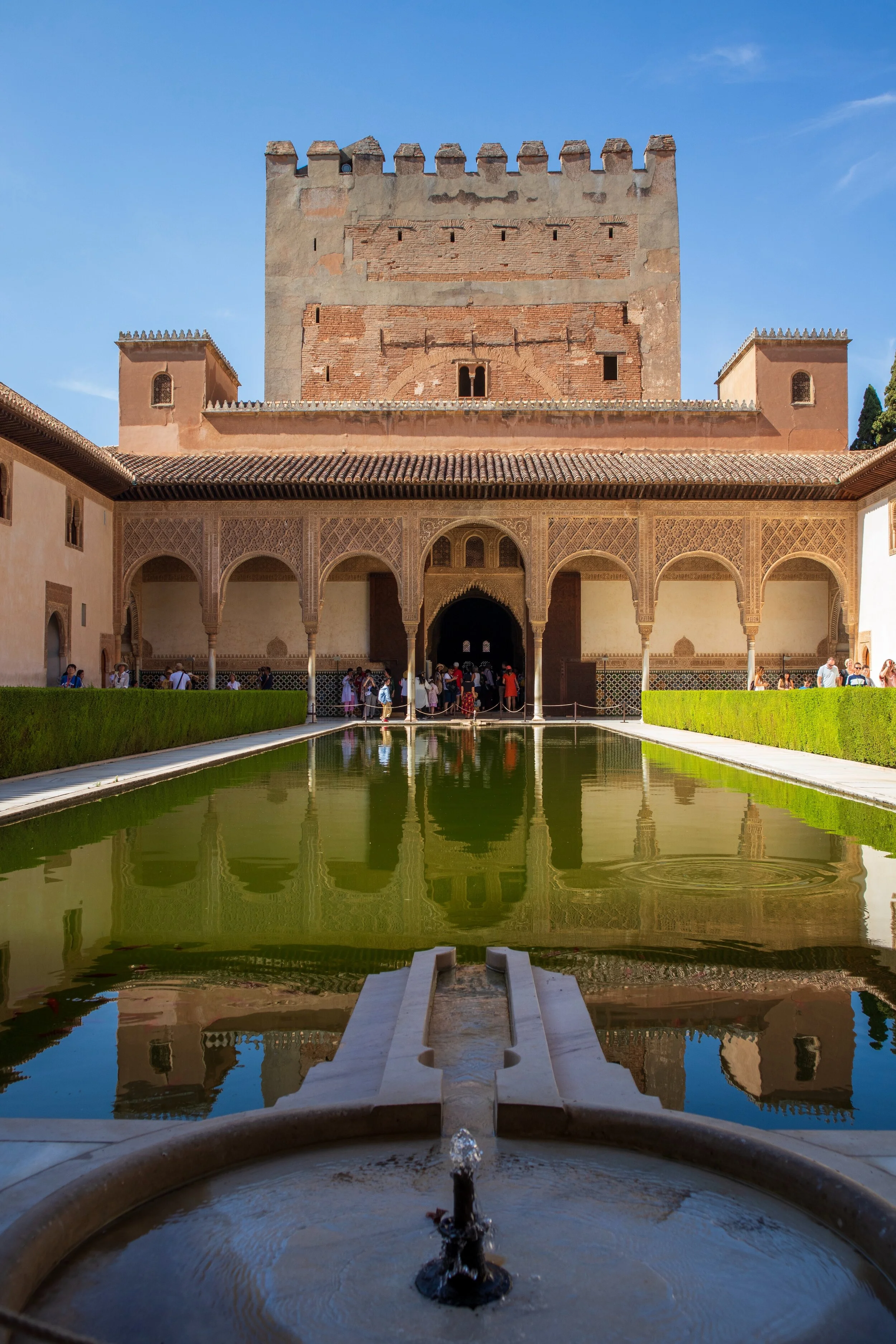
Immediately ahead is the Palacio de Comares (named for a nearby town that crafted the crystals used to make stained glass), the money shot of nearly every guidebook, as it’s here where the oft-photographed Patio de Arrayanes (Court of Myrtles) and its narrow glassy pool of water is located. This tranquil enclosed space was commissioned during the reign of Yusuf I and was named for the verdant clipped hedges that border the central pool. 

The two-story southern façade is the most highly embellished in the Alhambra and was renovated in 1369 by Muhammad V to celebrate his victory at Algeciras near Gibraltar in 1869. Behind its succession of arches is a geometrically patterned mosaic tiled wall and interwoven, lacy, carved stucco plasterwork, further embellished by the arabesque tree of life motif. A set of small windows with delicate fretwork mashrabiya screens for discreet viewing look down from the second floor into the courtyard. 

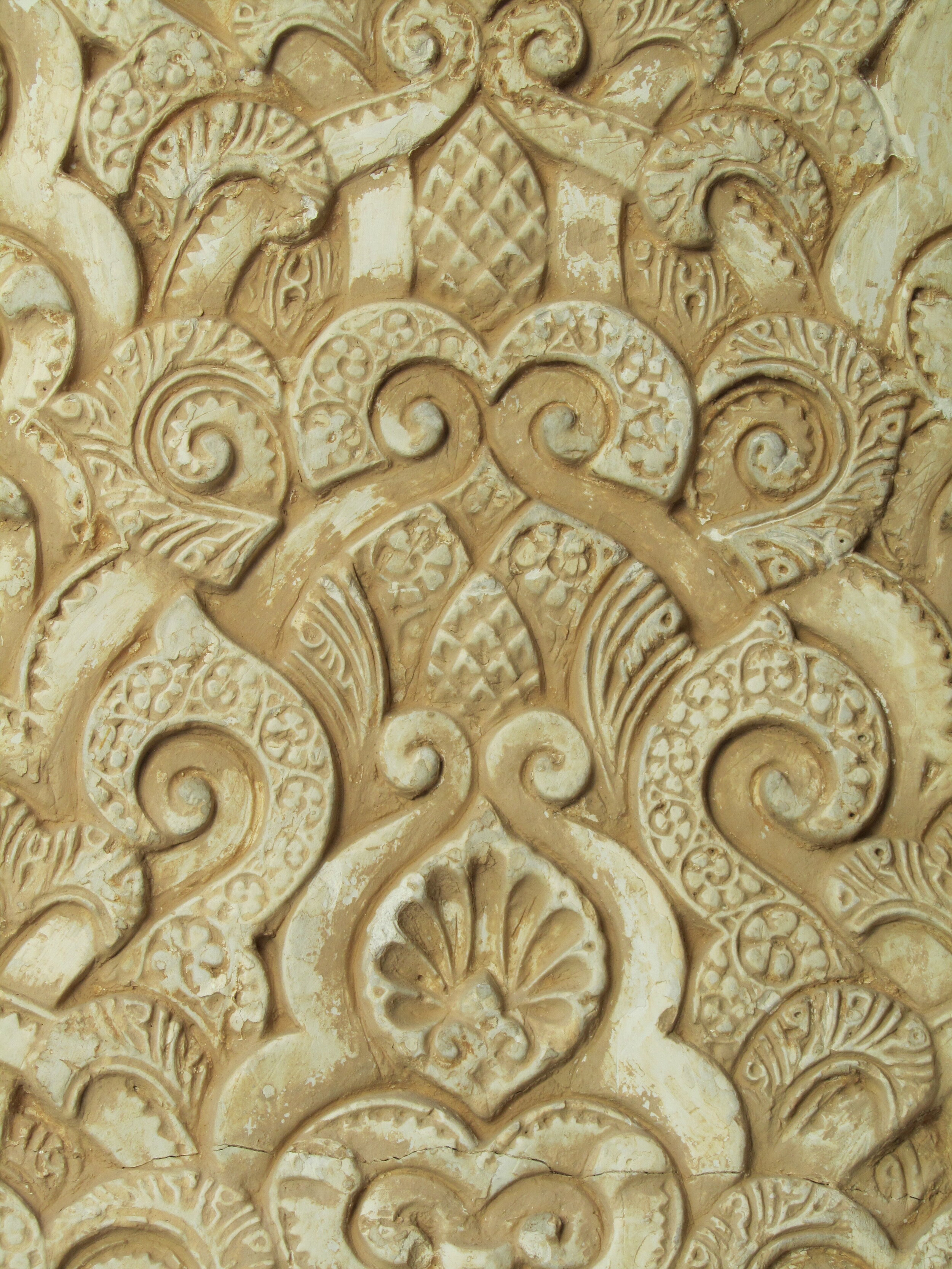
Pretty much every square inch of the Nasrid Palaces’ walls are covered with beautiful, ornate carvings.

Pretty much every square inch of the Nasrid Palaces’ walls are covered with beautiful, ornate carvings.

The north façade has a similar design to the south, yet is a single level and serves as the entry point for the Torre de Comares. This structure rises majestically above the palace arcade and is the tallest external tower of the Alhambra, with a height of 147 feet.

The Hall of the Ambassadors is where King Ferdinand and Queen Isabella met with Christopher Columbus to grant him permission to seek a new route to India (and we know how that turned out).

The Hall of the Ambassadors is where King Ferdinand and Queen Isabella met with Christopher Columbus to grant him permission to seek a new route to India (and we know how that turned out).

Salón de los Embajadores, the Hall of the Ambassadors

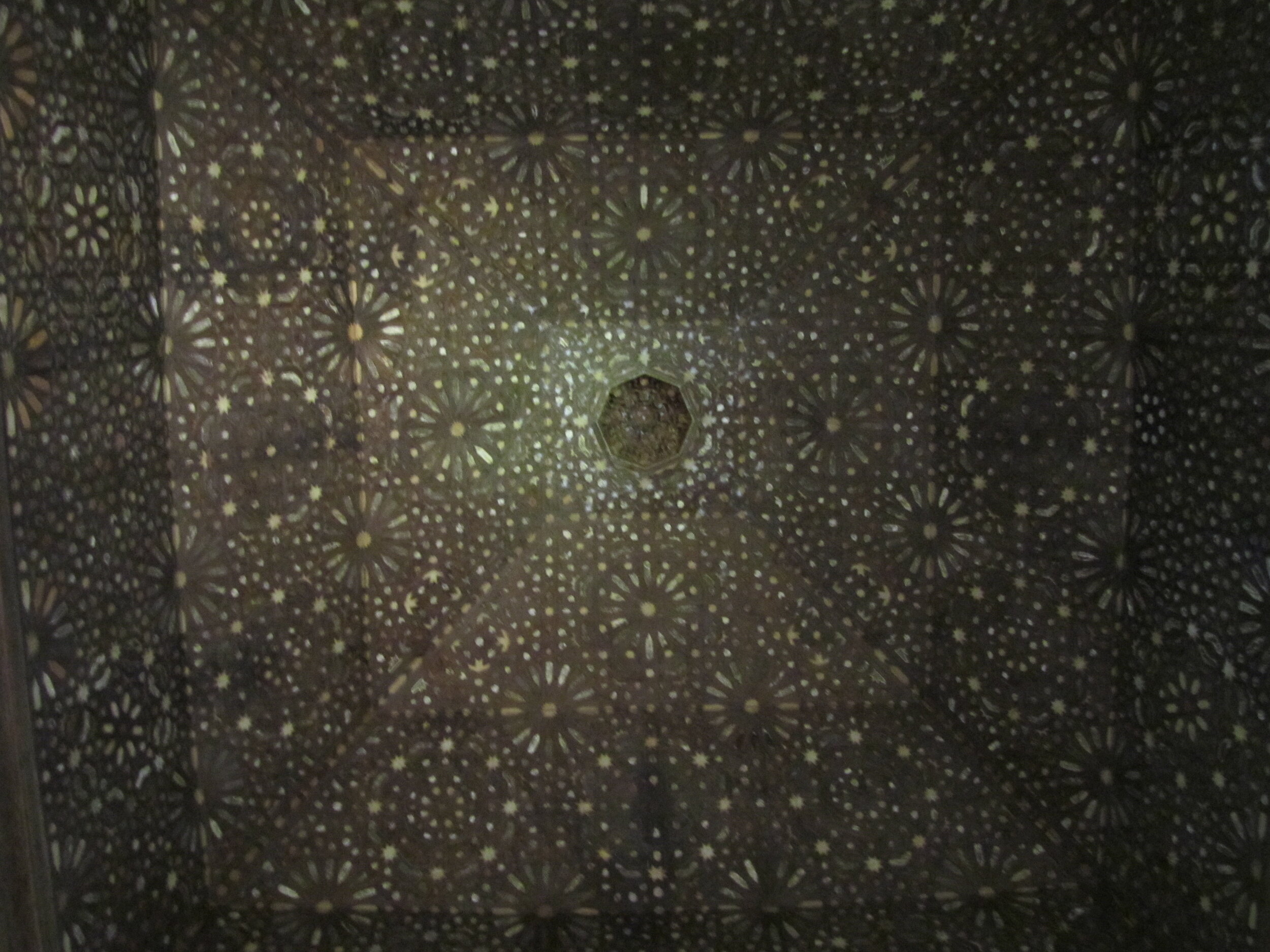
Inside the Torre de Comares is the grand reception hall known today as the Salón de los Embajadores, the Hall of the Ambassadors. Its vaulted wood ceiling is ornamented with a profusion of blue, white and gold inlay work in the shape of circles, crowns and stars, representative of the seven heavens of Islamic belief. The lower walls of the hall are covered with brilliantly colored tilework, above which horizontal bands of sinuous, vine-like kufic script are interwoven with floral ornament. One bears the inscription “Speak few words and you will leave in peace,” perhaps instructions for those requesting the audience of the sultan. I’m sure the sultan was busy, but that’s essentially like putting up a sign that says, “Keep it brief.”

The ceiling of the Hall of the Ambassadors resembles a starry sky.

The ceiling of the Hall of the Ambassadors resembles a starry sky.

The hall contains a total of nine alcoves, three per side, with windows known as cumarias, Spanish for stained glass, and incidentally where the palace gets its name from. Sadly, the windows are no longer there. A central niche opposite the entrance at the back of the hall was originally occupied by the sultan’s throne and contains the inscription “My lord, the victorious Yusuf, has decorated me with robes of glory and has made me the throne of his rule.”

You would cry, too, if it happened to you: King Boabdil Bids Farewell to Granada by Alfred Dehodencq, 1882

You would cry, too, if it happened to you: King Boabdil Bids Farewell to Granada by Alfred Dehodencq, 1882

Legend has it that Muhammad XII, known as Boabdil, the 22nd and final sultan of the Nasrid dynasty, met with his council in the Salón de los Embajadores on November 25, 1491 and signed the Treaty of Granada, capitulating the last Muslim territory in the region to Christendom. As Boabdil left the city with his entourage, he looked back from the mountain pass at the beauty of what he had lost, and wept. –Duke

If you’re in the South of Spain, you can’t leave without a visit to the amazing Alhambra.

If you’re in the South of Spain, you can’t leave without a visit to the amazing Alhambra.


The Alcazaba, the Fierce Fortress of the Alhambra

Tour the towers of the defensive outpost perched above the charming city of Granada in the South of Spain.

Start your tour of the Alhambra with the Generalife gardens and the Alcazaba fortress.

Start your tour of the Alhambra with the Generalife gardens and the Alcazaba fortress.

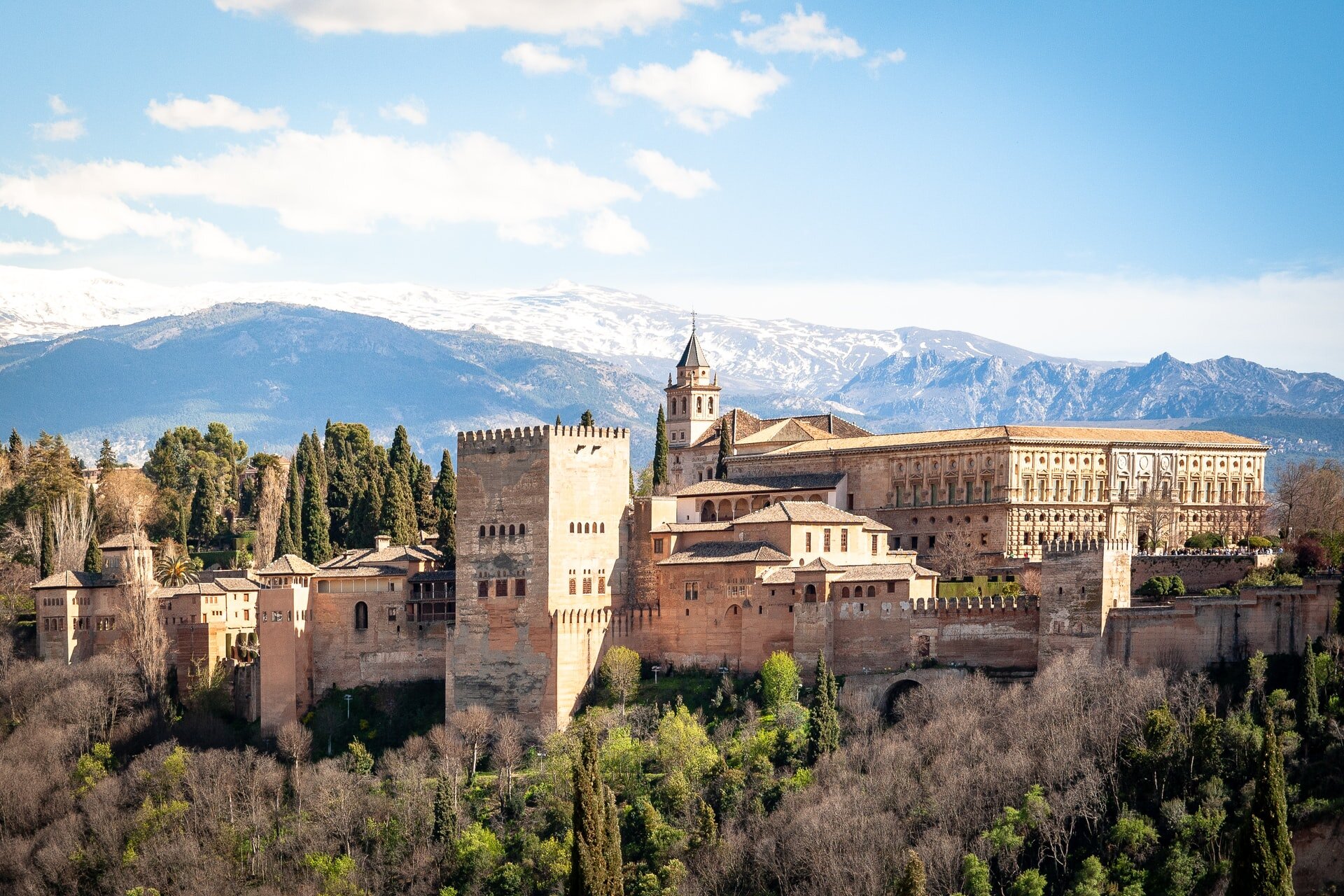
With the snow-capped peaks of the Sierra Nevada as a backdrop, it’s easy to see why the monumental fortress palace of the Alhambra is one of the most visited monuments in Spain, second only to the Sagrada Família in Barcelona. 

The complex of buildings was fittingly recognized as a UNESCO World Heritage Site in 1984, and served as residence to the Islamic sultanates of the Iberian Peninsula. Muslims ruled the region from the 11th to 15th century, until conquered by the Catholic monarchy in 1492. The Alhambra’s name comes from the Arabic al-Qal’at al-Hamra, or Red Fortress, owing to the reddish color of the clay-rich soil of the al-Sabika Hill ridge, where it rises from the terrain. That same ochre soil was used in the rammed, or compressed, earth brick walls of this impressive complex. 

A fortress doesn’t do any good if you simply open its doors to invaders.

But that’s exactly what King Boabdil did, after his fellow Muslims had ruled the region for nearly 700 years.
Touring the Alcazaba and the rest of the Alhambra made for a birthday Wally will never forget!

Touring the Alcazaba and the rest of the Alhambra made for a birthday Wally will never forget!

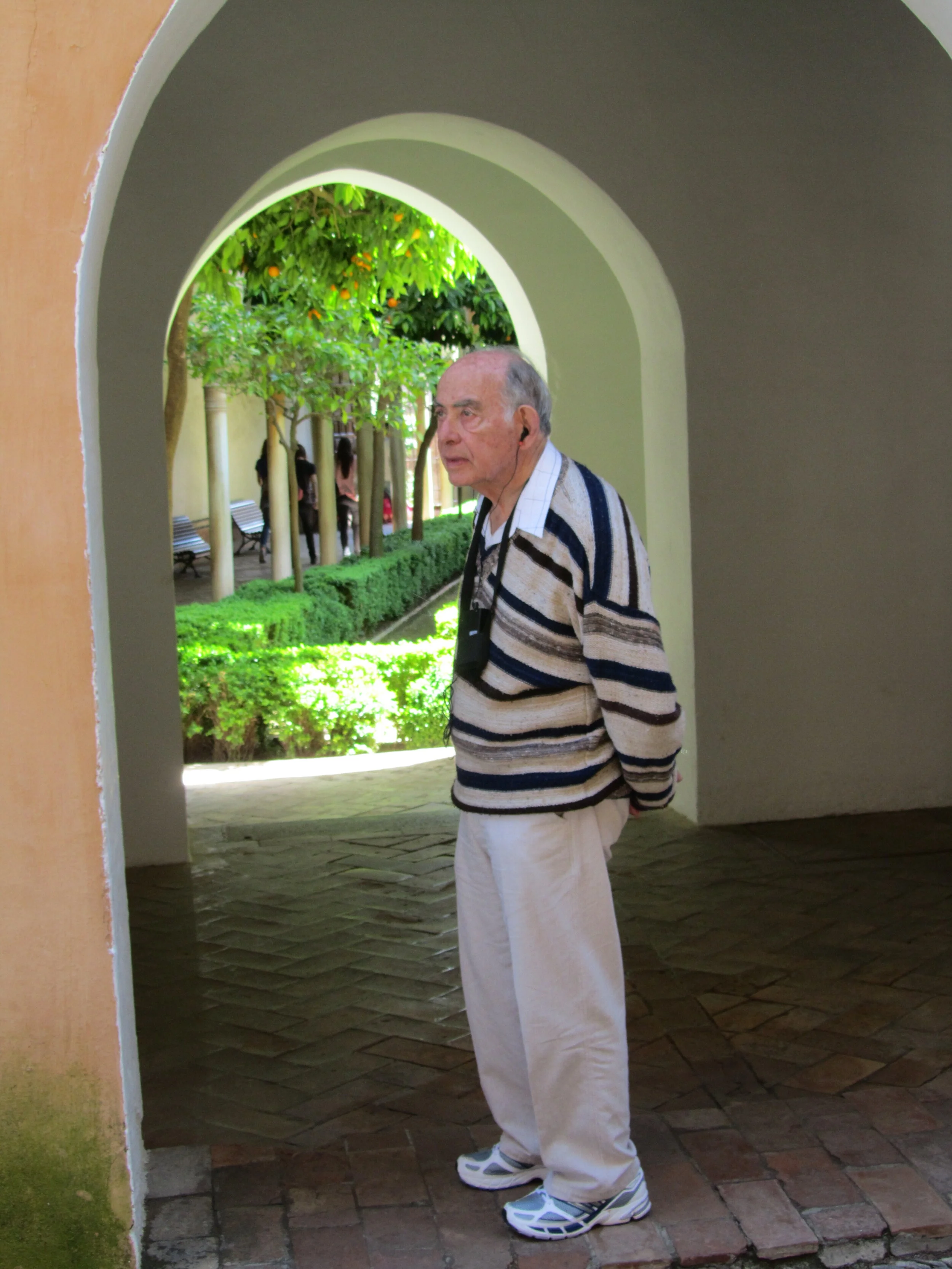
After literally taking time to stop and smell the roses in the gardens of the Generalife, we made our way to the Alcazaba, the fortress that once guarded the palace. We had booked our tickets for a guided tour (about 46€) months before, and a small group of ill-mannered and boisterous British tourists were part of our entourage. One of them was a doddering old man named Leslie, who frequently strayed from the group, and whose companions could be heard incessantly shouting, “Leslie! Leslie, come here!” to reel him back in. 

This is Leslie, wandering off again. “Leslie! Get back here!”

This is Leslie, wandering off again. “Leslie! Get back here!”

Plaza de los Aljibes, the Square of the Cisterns

Our group arrived at the Plaza de los Aljibes, the Square of the Cisterns, built after the Christian victory. The broad open space got its name from the underground cisterns built to collect rainwater below the square because the new occupants didn’t understand the complexities of the water channels the Arab engineers had created, leaving the aqueducts to fall into disrepair. Off to one side of the square lie the Nasrid Palaces, to the other, the Alcazaba.

The entrance to the Alcazaba, built by Muhammad I, the first sultan of the Nasrid dynasty

The entrance to the Alcazaba, built by Muhammad I, the first sultan of the Nasrid dynasty

The Alcazaba Fortress

The austere military enclosure of the Alcazaba fortress is strategically positioned at the summit of the westernmost end of the monumental site, overlooking the city of Granada. Its construction is attributed to Muhammad I (who reigned from 1238-1273), the founder of the Nasrid dynasty. A stark contrast to the opulent and residential Nasrid Palaces, its primary function was to shield its inhabitants from external attacks. 

The separations in the defensive wall allowed archers to fire at invaders.

The separations in the defensive wall allowed archers to fire at invaders.

Of the whole set of structures within the Alhambra, the Alcazaba is the oldest. The north-facing walls were built atop the remains of a 9th century castle constructed for the Zirid dynasty, who were Berbers from Algeria, and incorporated into the foundation walls. Here, Muhammad I strengthened the enclosure walls and constructed three of its 30 imposing towers. Our group entered the fortress from the plaza through a doorway cut into the high east-facing wall. 

Torre del Homenaje, the Tribute Tower

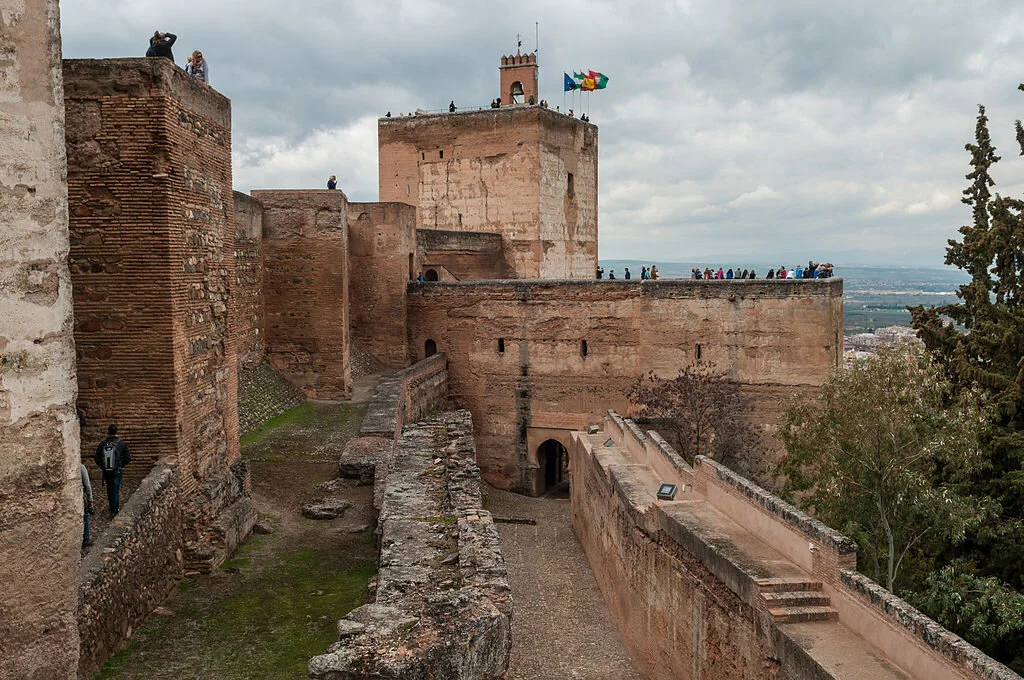
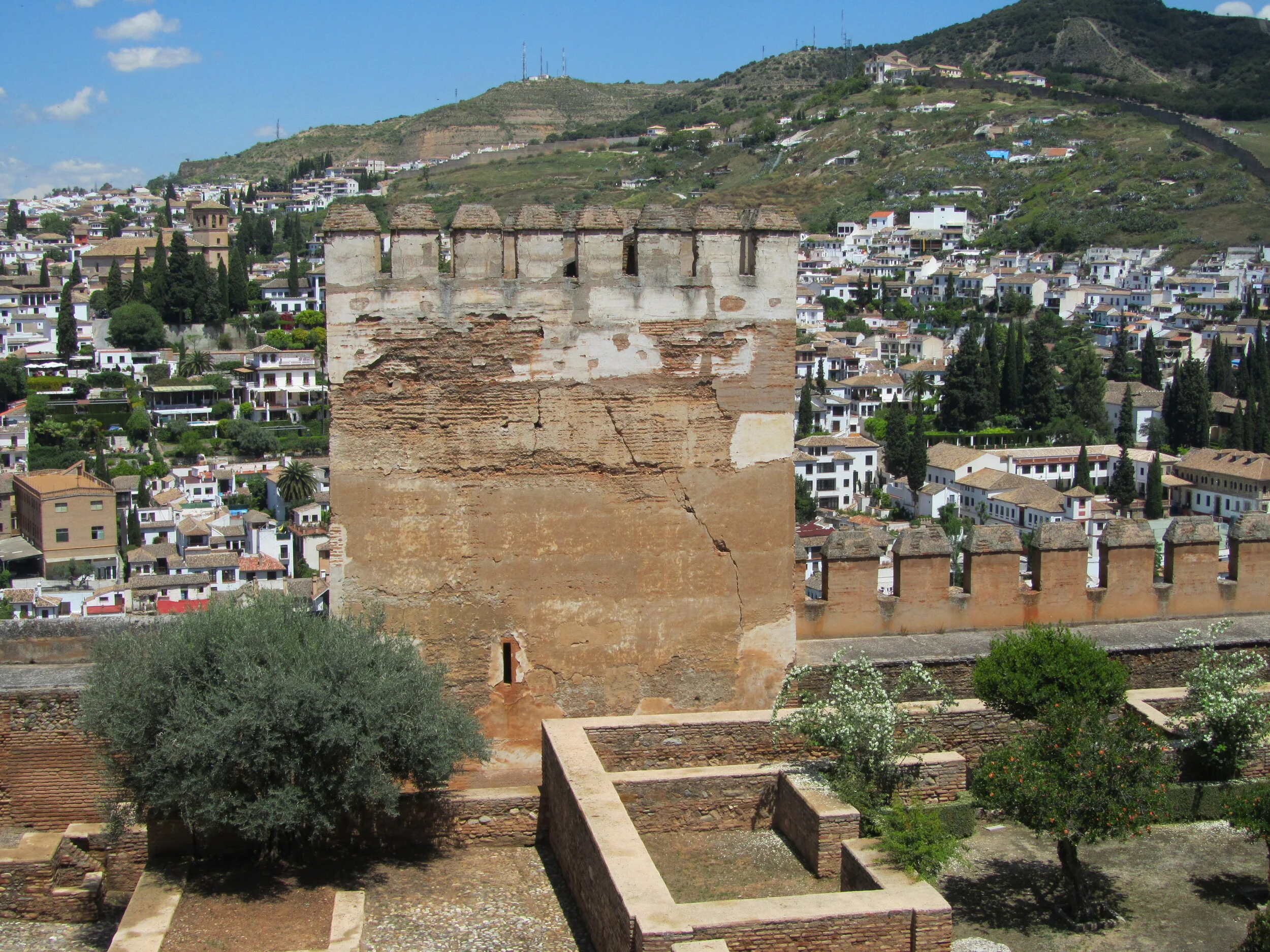
Located at the northeast corner of the perimeter wall is the keep, known as the Torre del Homenaje, which could be translated as the Tribute Tower or the Tower of Homage. It’s one of the highest of the Alhambra and was strategically the most important, as it served both defensive and offensive purposes. The upright crenellated “teeth,” aka the battlements along the top of the tower, protected sentries from attacks and allowed them to fire arrows at intruders. Throughout its history, the tower served many functions, including as royal residence to Muhammad I and as a prison during the Christian occupation. 

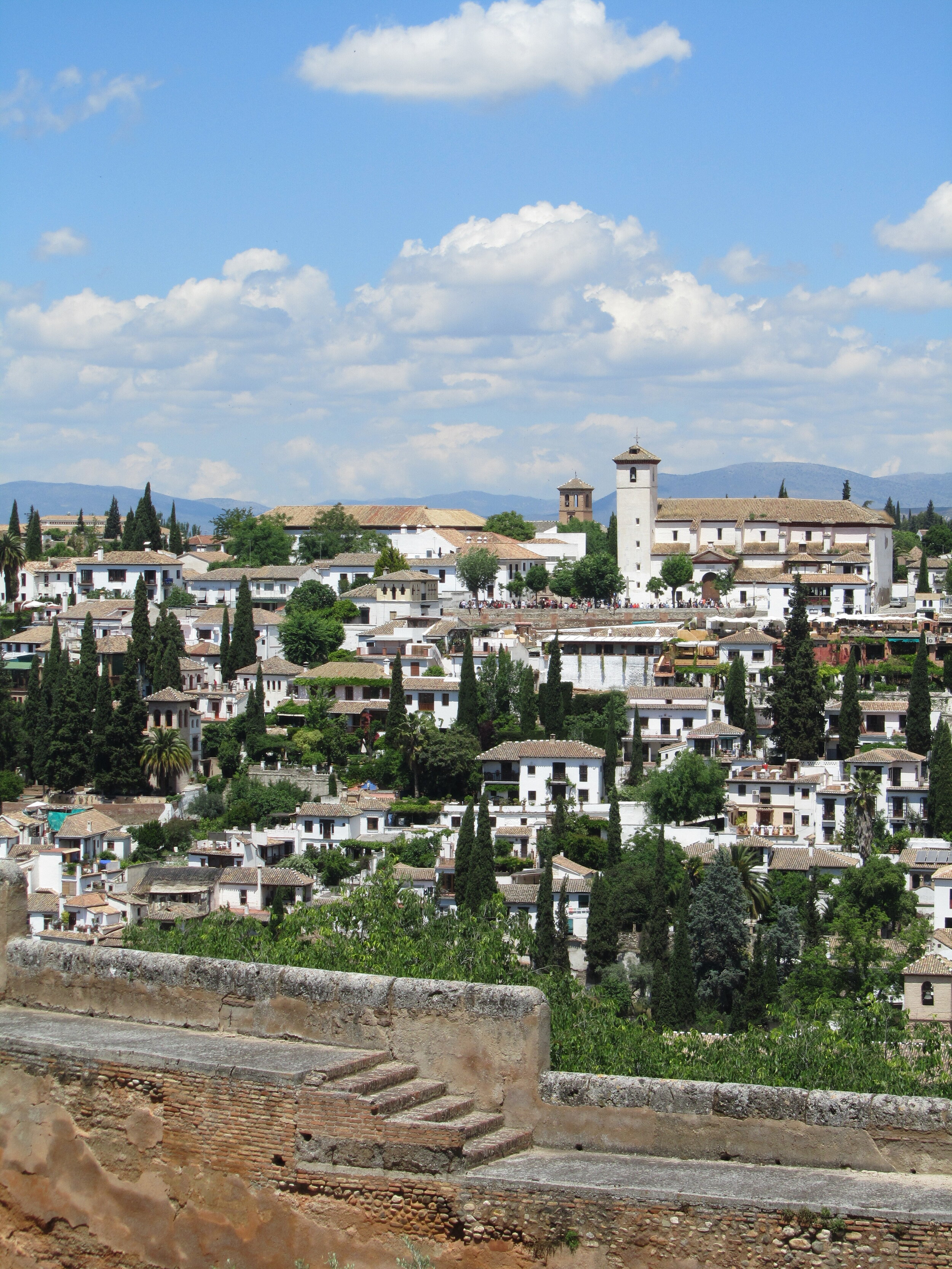
The towers of the Alcazaba, the Torre de la Vela in particular, provide great views of the white city of Granada below.

The towers of the Alcazaba, the Torre de la Vela in particular, provide great views of the white city of Granada below.

Torre de la Vela, the Watchtower

The Torre de la Vela, the Watchtower, defiantly perches on the far west end of the hill, where the previously mentioned modest Zirid castle once stood. It served as a watchtower, and the interior consists of four floors plus the terrace and a subterranean dungeon—a kind of command center in the middle of the fortress. 

Wally and I climbed the narrow staircase to the top to take in the panoramic bird’s-eye view of the rolling Andalusian hills and Albaicín, Granada’s Moorish neighborhood. The terrace is crowned by a bell tower, added by the Christian kings in the 18th century, which was used to signal significant news to the general populace. 

There are many thoughts on the origin of its name. The literal translation of the word vela is “candle,” but one theory posits that the bell was brought from Castil de Vela, a municipality located in the province of Palencia. Then again, it could be connected to the verb desvelar, which means to keep awake, possibly referring to the sounding bell and its ability to awaken anyone below from slumber. In any event, the bell is rung every January 2 to celebrate the taking of Granada from the Muslim sultans.

The Alcazaba at the Alhambra is cool to tour — but just wait till you see the ornate Nasrid Palaces!

The Alcazaba at the Alhambra is cool to tour — but just wait till you see the ornate Nasrid Palaces!

Torre Quebrada, the Broken Tower

This imposing monolithic tower stands within the shadow of the Torre de la Vela. I couldn’t find any specifics as to how it acquired its name, but one could presume that it suffered from seismic activity, or Napoleon's army, which decided to inflict damage by blowing up a few of the towers when they withdrew from the palace, petty and bitter at having lost the Peninsular War, which took place from 1808-1814. 

Visitors had to leave their weapons at the Puerta de las Armas.

Visitors had to leave their weapons at the Puerta de las Armas.

Puerta de las Armas, the Gate of Arms

Originally, the Bab al-Silas, or Puerta de las Armas, the Gate of Arms, functioned as the populace’s primary entrance. The doorway probably got its name from its associated use: Visitors were stopped and required to leave their weapons behind before gaining access. 

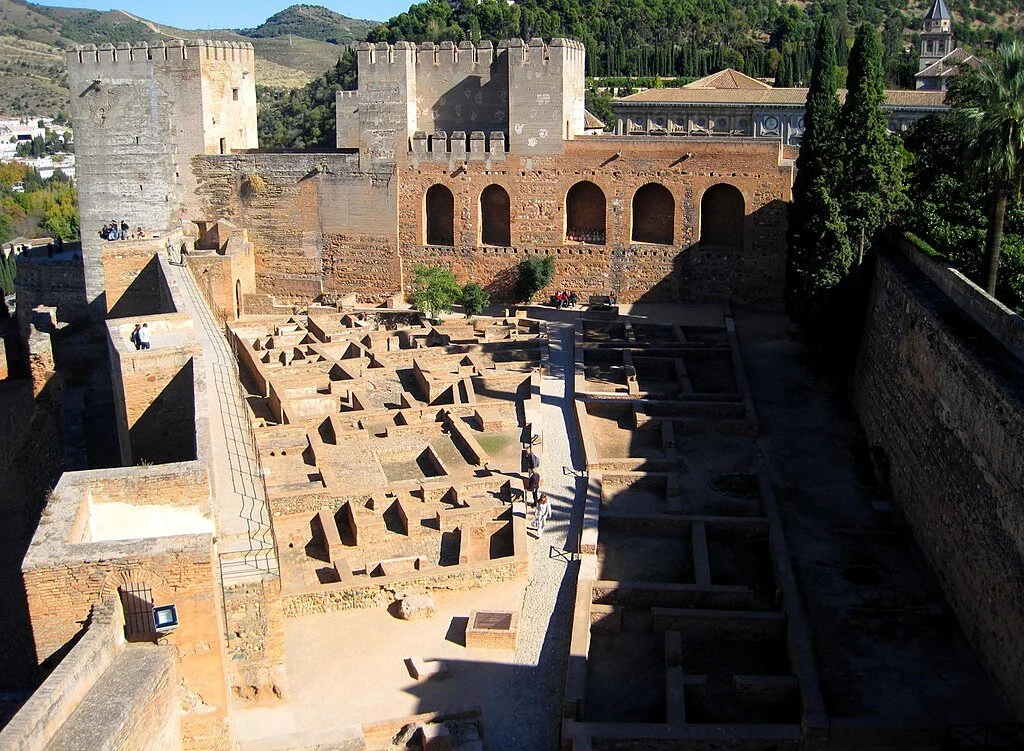
Part of the Plaza de las Armas contains the ruins of the Barrio Castrense, the foundations of the residential dwellings for the royal guard and soldiers needed for the defense of the sultan. 

The foundations of the military quarters can still be seen in the Plaza de la Armas.

The foundations of the military quarters can still be seen in the Plaza de la Armas.

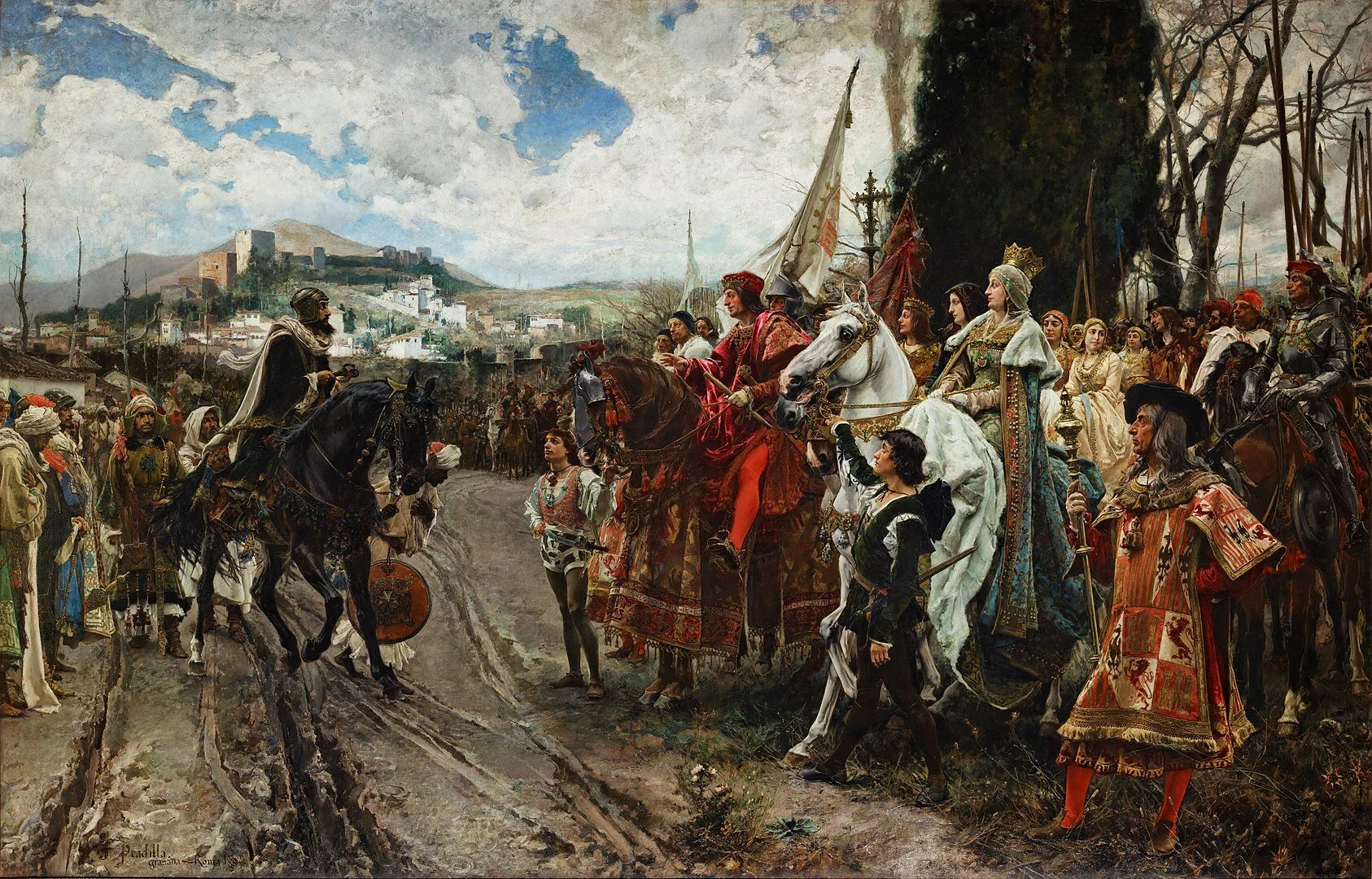
The Surrender of Granada by Francisco Pradilla y Ortiz, 1882, shows poor Baobdil turning over the keys to Granada to Ferdinand and Isabella.

The Surrender of Granada by Francisco Pradilla y Ortiz, 1882, shows poor Baobdil turning over the keys to Granada to Ferdinand and Isabella.

Letting the Catholics In

A fortress doesn’t do you any good if you simply open its doors to invaders. But that’s exactly what King Boabdil did, after his fellow Muslims had ruled the region for nearly 700 years. 

On January 2, 1492, Ferdinand II of Aragon and Isabella of Castile ceremoniously entered Granada, curiously in Muslim dress. They set up court in the Alhambra declaring it a Casa Real, or royal residence. One of their first orders of business? Declaring that all Jews and Muslims had to convert to Catholicism or leave the country. –Duke


Generalife: The Gorgeous Alhambra Gardens

The lush 13th-century garden complex offers a calm oasis overlooking Granada.

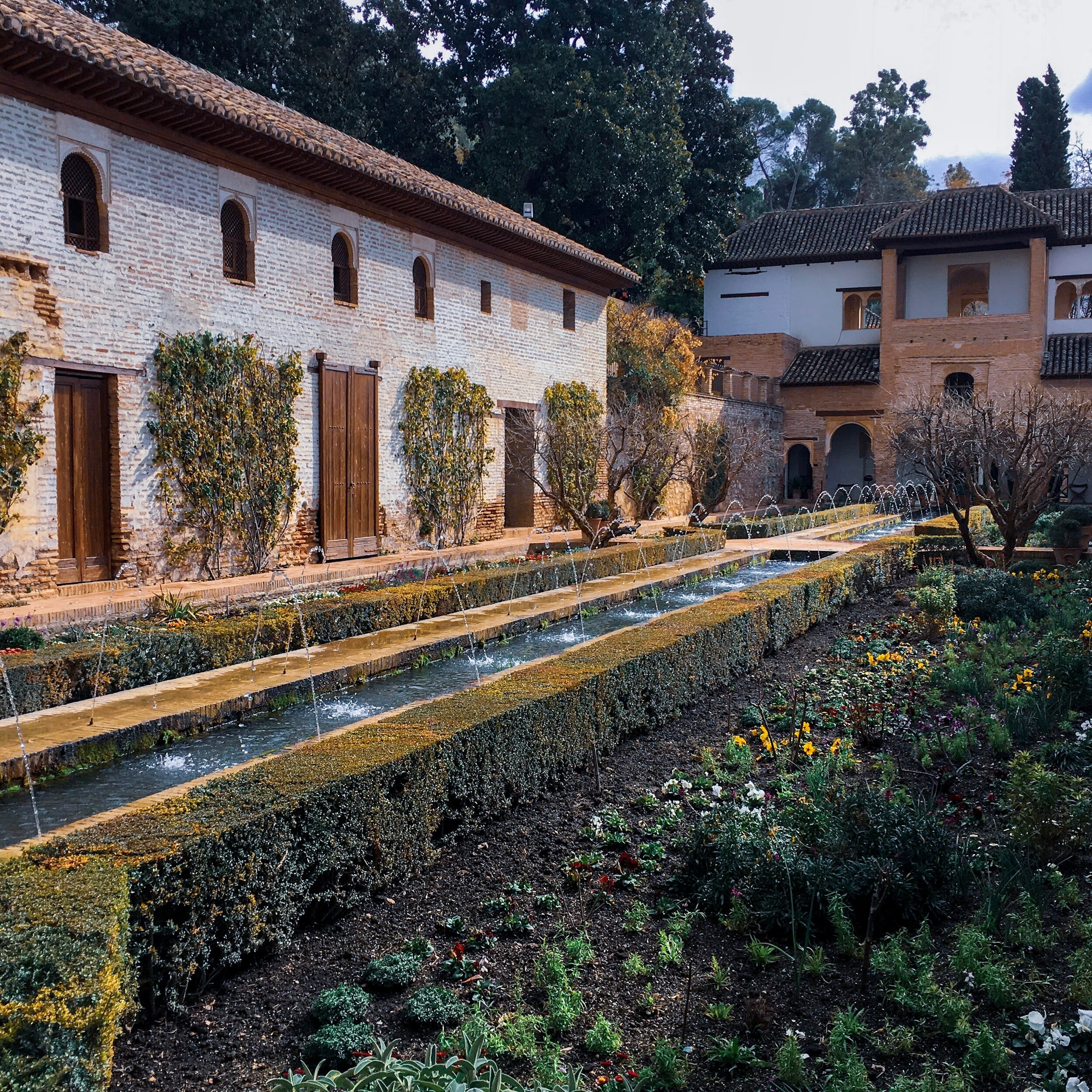
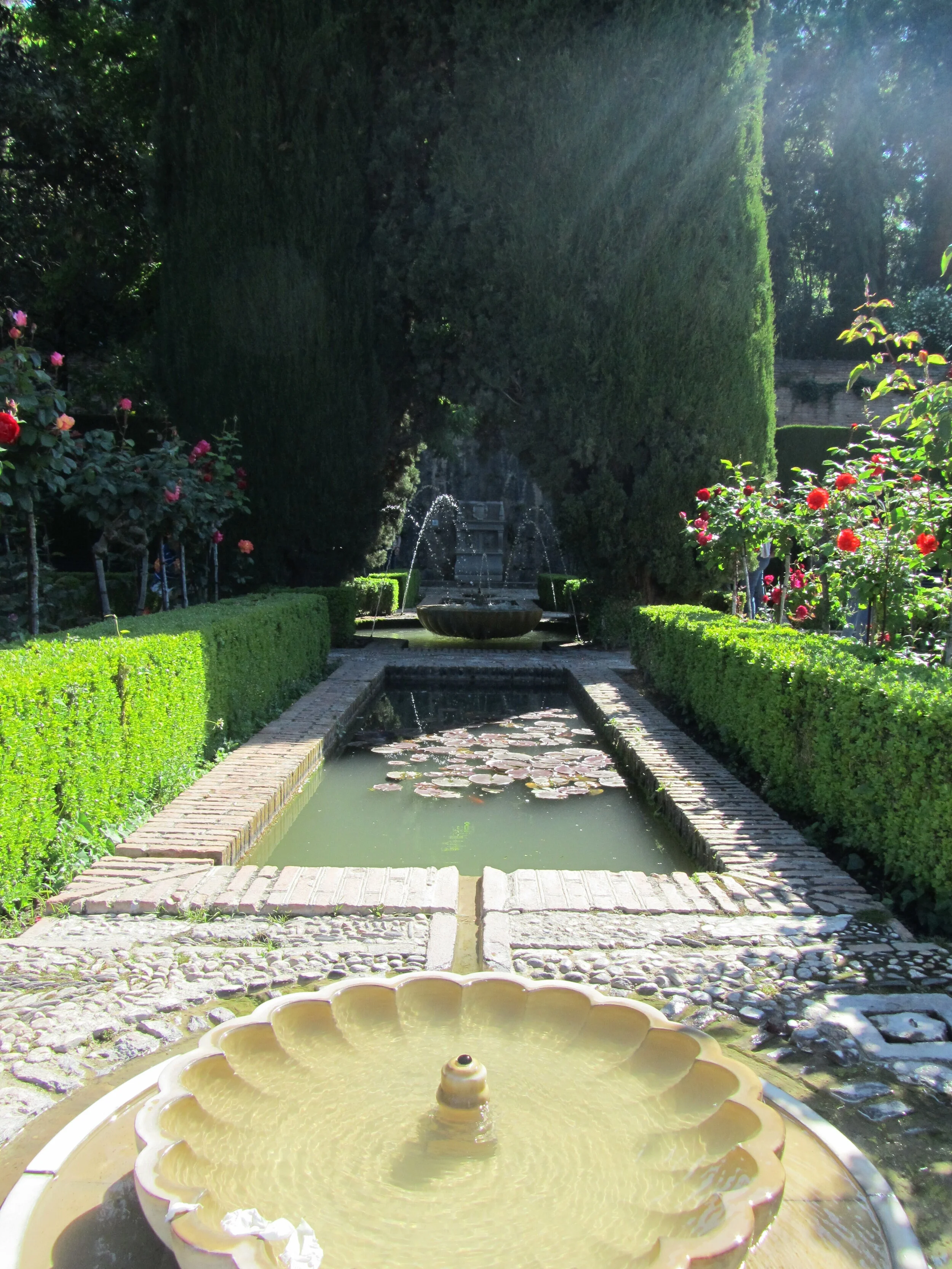
The Generalife gardens were created as a peaceful refuge for the Nasrid sultans

The Generalife gardens were created as a peaceful refuge for the Nasrid sultans

The Alhambra is one of those once-in-a-lifetime trips. When Wally and I learned that we could easily take a train from Sevilla to Granada, home to the historic medieval Moorish fortress of the Alhambra, we didn’t hesitate to add it to our itinerary. 

Duke and Wally love a good garden

Duke and Wally love a good garden

Wally and I purchased our skip-the-line tickets for a small-group guided tour months in advance for around 46€. We recommend going this route, but if you decide you don’t want a guide, general admission costs 14€. Wanting to beat the crowds as well as the midday heat, we opted for the earliest time slot, arriving around 9 a.m., shortly after the Alhambra opens.

Be sure to bring your passport as you’ll need to present it at the entrance pavilion. If you’re thinking of trying to purchase tickets the day of, it’s not worth the risk: The number of daily admissions is limited, and sold in three-hour time slots on a first-come, first-served basis, a policy enforced to help preserve the monument. 

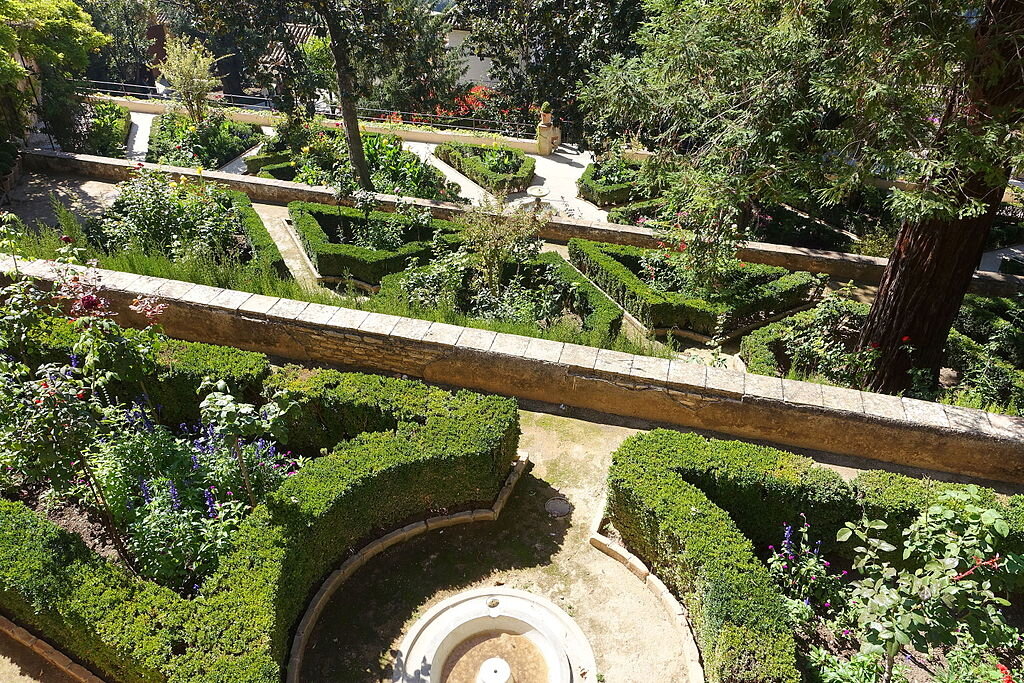
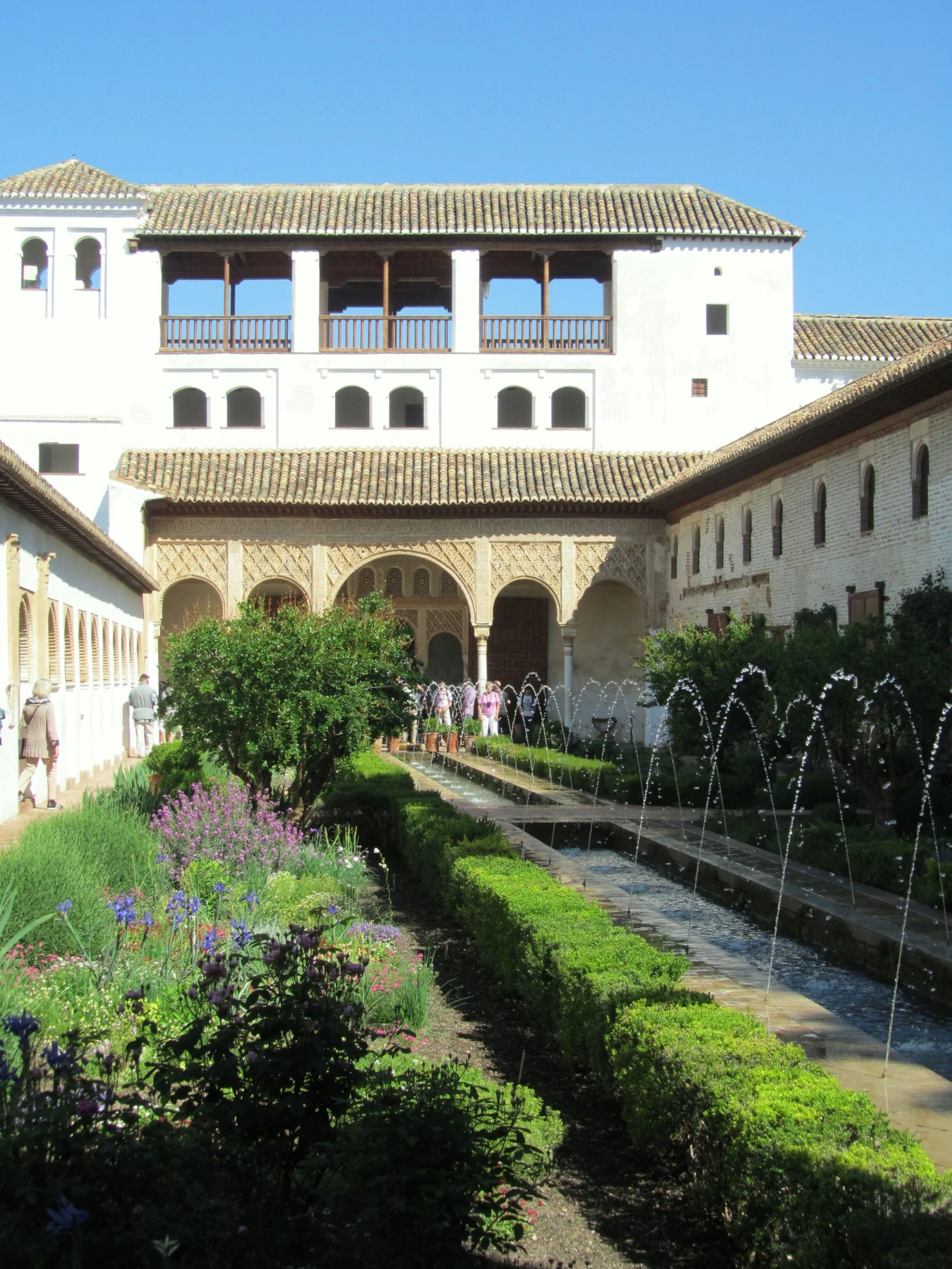
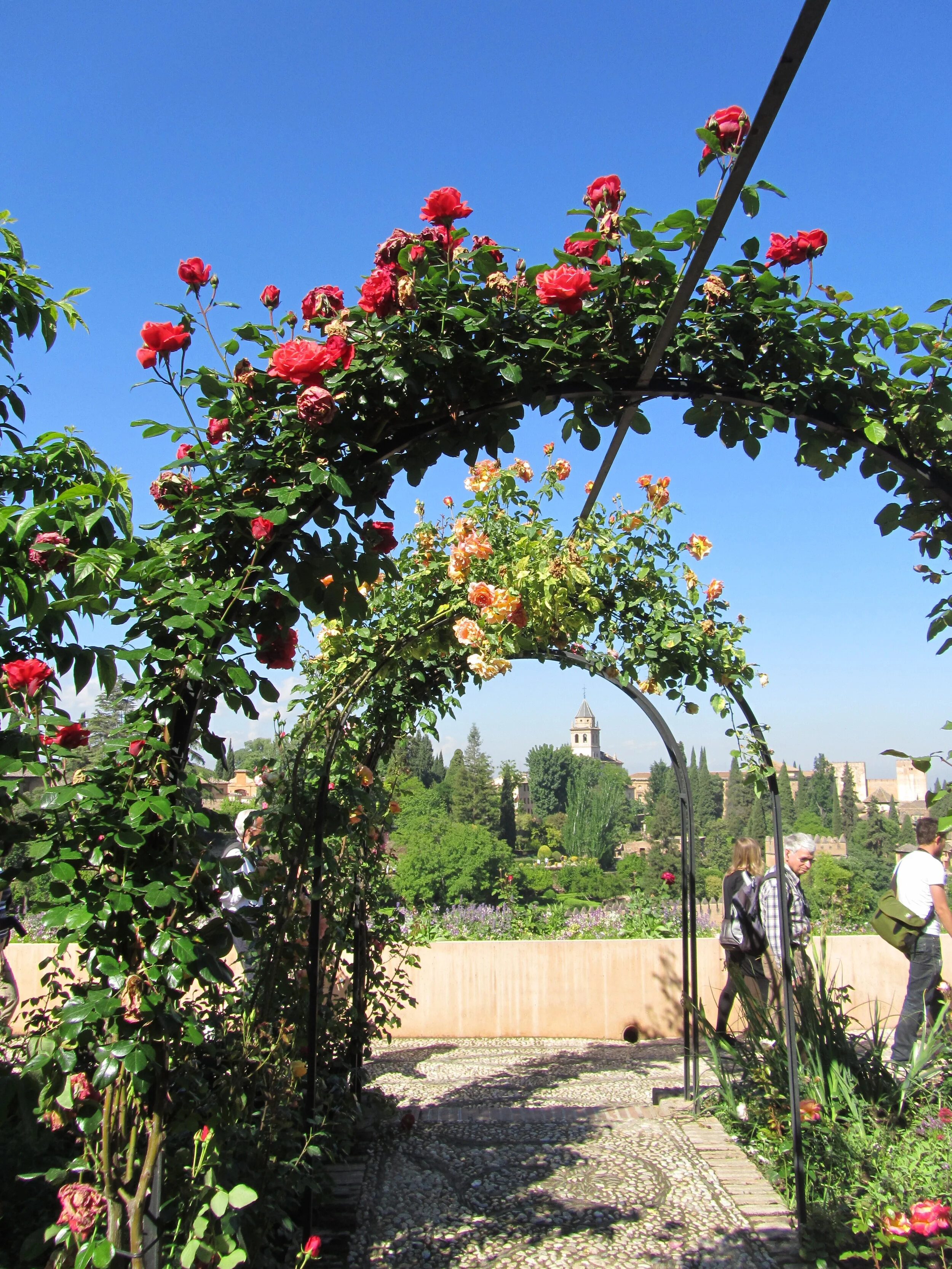
Courtyard terraces exude tranquility, where fragrant flowering jasmine, roses, orange trees and myrtles scent the air.

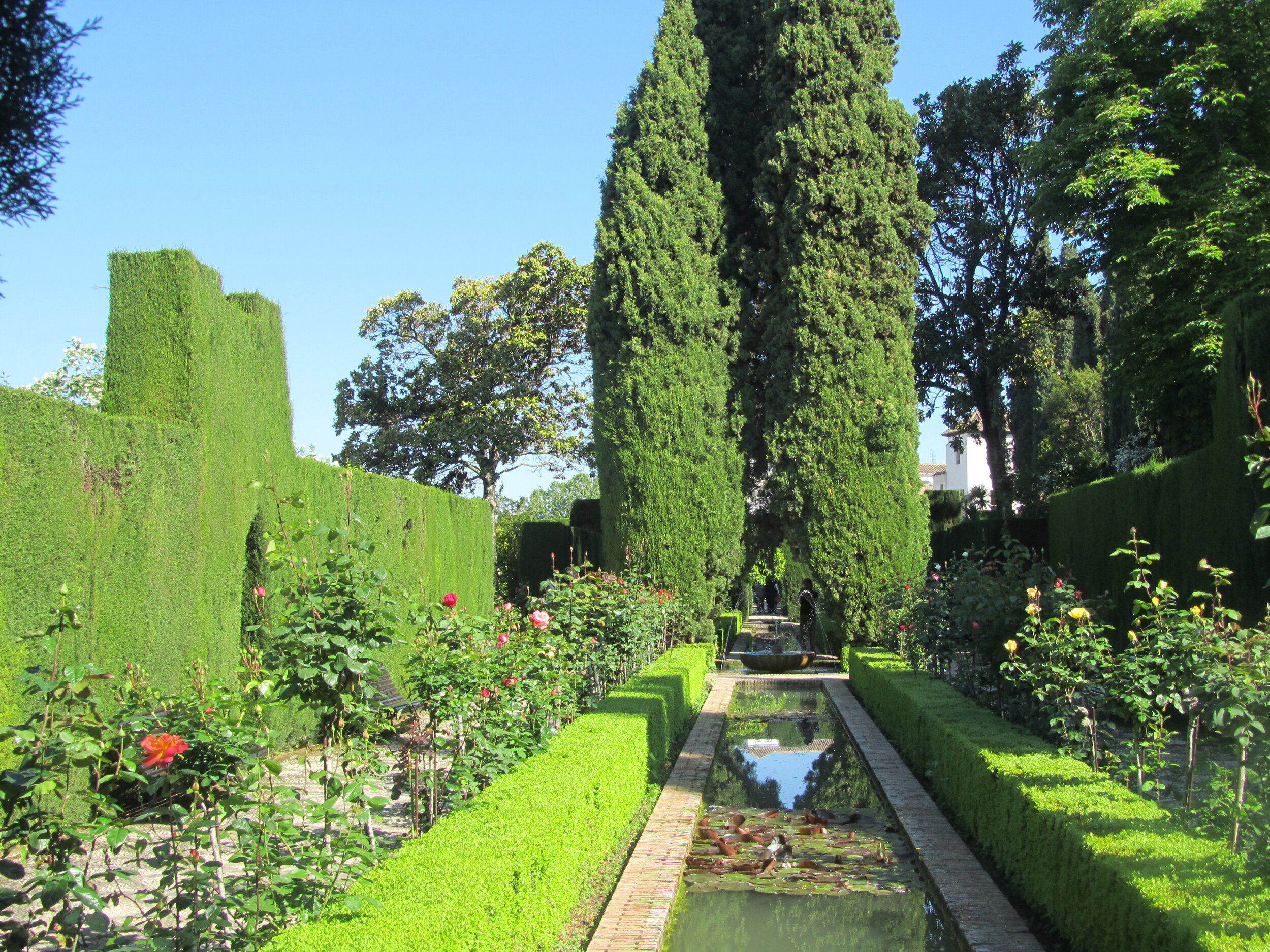
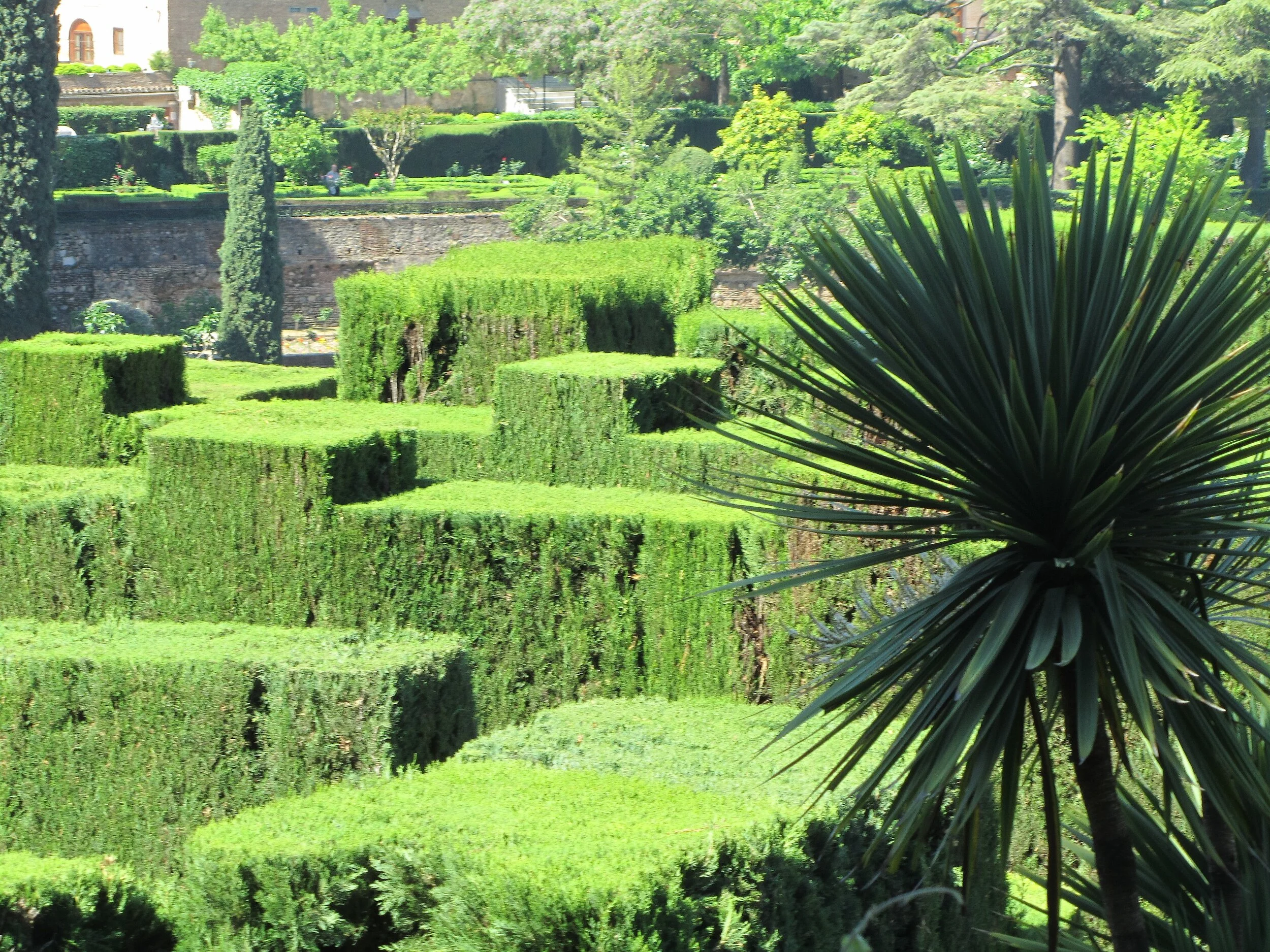
Towering cypress trees form a dense evergreen screen, lining both sides of the garden path.

Our tour of the Alhambra complex began with an exploration of the 13th-century gardens of the Generalife. 

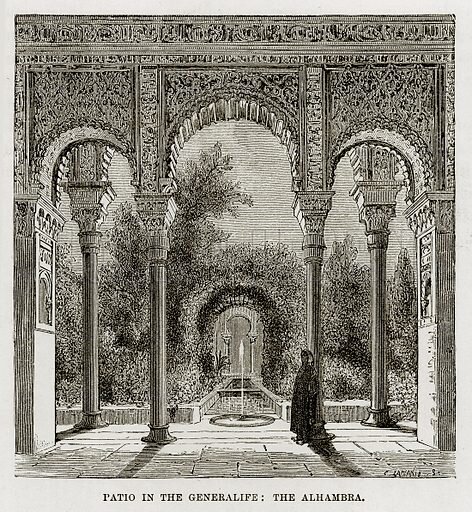
A historic illustration of the garden complex

A historic illustration of the garden complex

Paradise on Earth

Part of the Alhambra complex, the Generalife (pronounced Hay-nay-ral-lee-fay) served as a respite from palace life for the Nasrid sultans, the last of the Muslim dynasty that ruled Granada until 1492. It’s also a beautiful oasis for modern-day visitors. The name derives from the Arabic Jannat al-Arif, which typically gets translated to Garden of the Architect, though my research suggests Garden of Knowledge might be more accurate. 

The Generalife gardens are terraced, situated on a hill above the city of Granada

The Generalife gardens are terraced, situated on a hill above the city of Granada

Muhammad II, the second sultan of the Nasrid dynasty (who reigned from 1273-1302), commissioned the original estate as a summer palace. His successor, Muhammad III (1302-1309), enlarged and refined the gardens. 

The Generalife is set on a slope of the Cerro del Sol hillside, adjacent to but higher in elevation than the al-Sabika Hill, where the Alhambra stands. Its series of gardens were based on the Zoroastrian division of the universe into four parts, rooted in the sacred elements of earth, air, fire and water. 

Both the upper and lower gardens have been modified over the years. The present plantings were added by the architect Leopoldo Torres Balbás in 1931 and completed by Francisco Prieto-Moreno in 1951. 

Narrow reflecting pools can be found throughout the complex

Narrow reflecting pools can be found throughout the complex

Water Wonders

The soothing sound of gently gurgling water is ever present at the Generalife — its engineers developed a sophisticated irrigation and hydraulic system by building a dam and aqueduct that diverts water from the River Darro to what would otherwise be a barren hillside. 

The highlight of the Generalife is the Court of the Long Pond

The highlight of the Generalife is the Court of the Long Pond

This channel or canal, the Acequia Real (Royal Aqueduct), distributed water to the gardens, fountains and baths of the Generalife and the Alhambra, solidifying its identity as a palace city. Water holds many meanings in the Islamic world and was essential in maintaining agriculture and providing drinking water, and was respected as a divine gift. 

Arches of roses create picturesque frames of the city of Granada

Arches of roses create picturesque frames of the city of Granada

A Relaxing Respite

Courtyard terraces exude tranquility, where fragrant flowering jasmine, roses, orange trees and myrtles scent the air. Towering cypress trees form a dense evergreen screen, lining both sides of the garden path, which are embellished with smooth pebble mosaic patterns: white stones from the Darro and black ones from the Genil River. 

The amazingly intricate stonework is just a taste of what’s to come in the rest of the Alhambra complex

The amazingly intricate stonework is just a taste of what’s to come in the rest of the Alhambra complex

Try not to get lost in the hedge maze!

Try not to get lost in the hedge maze!

Wally and I climbed a flight of steps and ascended from the lower garden terrace to the semi-enclosed Patio de la Acequia, also known as the Court of the Long Pond. Jets of water, installed in the 19th century, arch over the center of the rectangular pool. The courtyard was originally divided into four quarters like the Court of the Lions inside the Alhambra. A pair of porticoed pavilions with overlapping glazed roof tiles stand at the north and south ends. The narrow open arcade along the south side was added in 1670 after the Reconquista, when Christians defeated the Islamic rulers of the Iberian Peninsula. 

The pleasant gurgling of fountains floats through the air

The pleasant gurgling of fountains floats through the air

A pleasure for the senses, the Generalife is a great way to start or end your exploration of the Alhambra, pause for a while and take in the atmosphere. We lingered in the gardens for about 45 minutes before marveling at the wonders of the nearby palaces. –Duke