This Asian Recipe for Cashew Chicken Curry Will Make You Feel Like You’re at Angkor Wat

This cashew chicken curry is a delish dish — and you don't even have to go all the way to Cambodia to enjoy it

This cashew chicken curry is a delish dish — and you don't even have to go all the way to Cambodia to enjoy it

Cambodian food is one of our favorite cuisines, and this is our absolute favorite dish — a culinary reminder of a fabulous trip.


Souvenirs of our various trips fill our home. But some of our souvenirs come in the form of food that evokes a meal we experienced and enjoyed abroad.

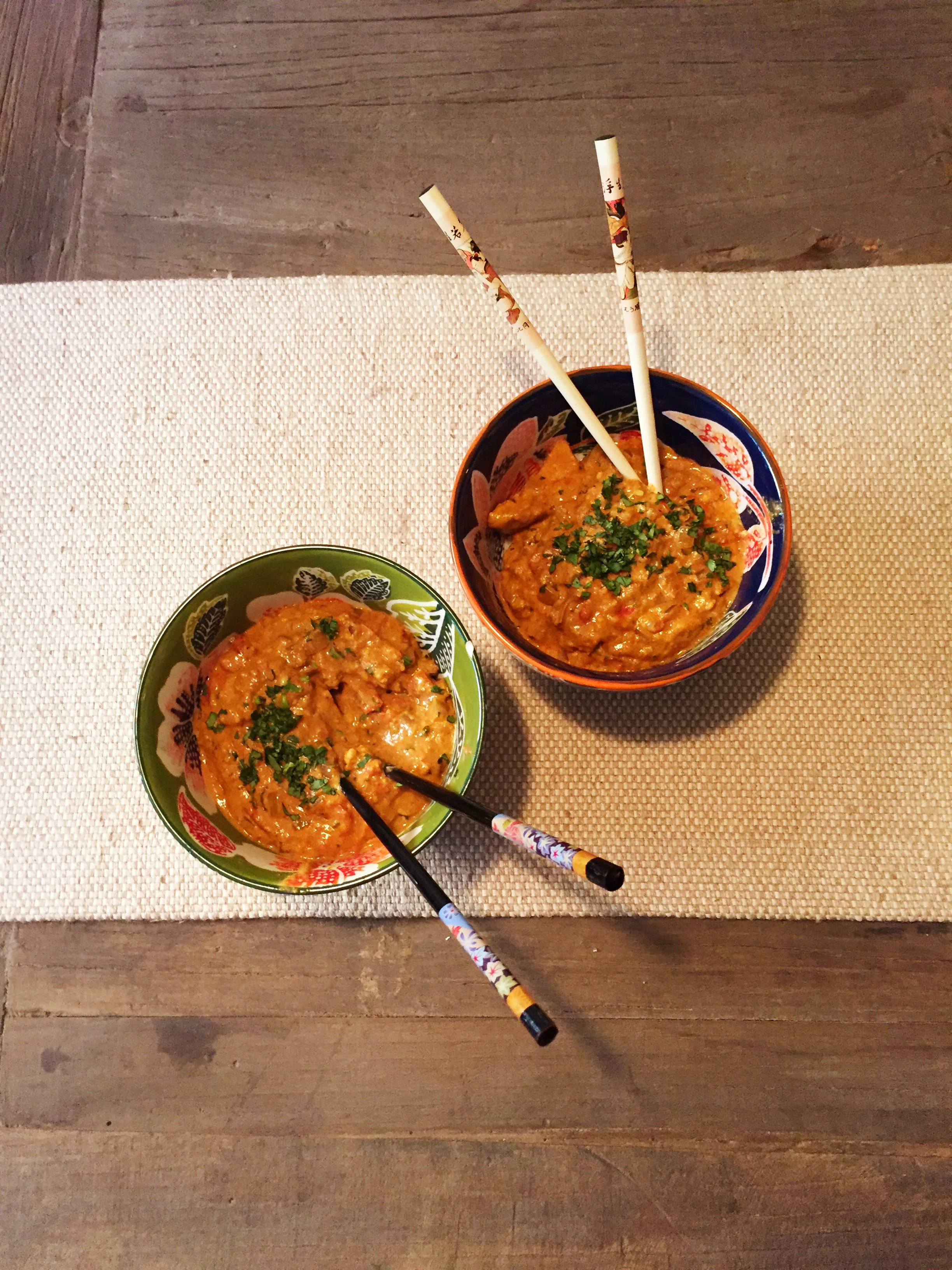
A go-to recipe and one of Wally's favorites is this cashew curry chicken, which reminds us both of a meal we had at an outdoor restaurant after visiting a floating village in Cambodia. (In fact, Wally liked the dish so much, he ordered it twice on that trip.)

This is a recipe adapted from Charmaine Solomon's Complete Asian Cookbook. The ground cashews, combined with the yogurt, provide a rich, creamy texture. Wally couldn’t believe how close it tasted to the meal we had on our Angkor Wat adventure.

Theirs was served in a young coconut, though I dish it up in deep bowls with a bit a jasmine rice.

Wally never fails to say, “This is delicious, as always,” then teases me by muttering under his breath, “Though it would have been even more delicious if it was served in a young coconut.” The brat.

We find that this dish is even better if it has time to develop flavor overnight. So if you want to eat it the same night you cook it, just make sure you have enough for leftovers!
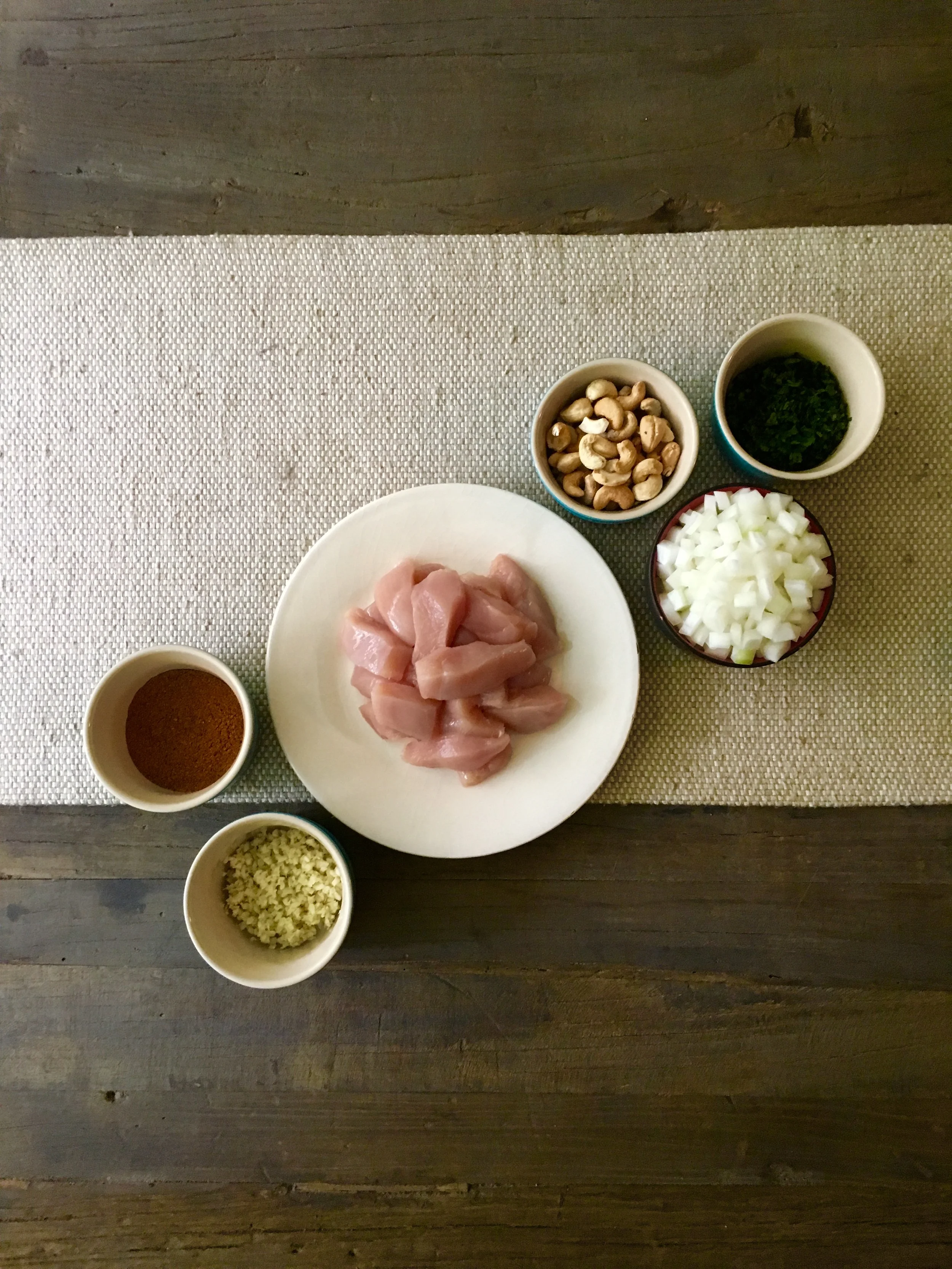
The ingredients for our cashew chicken curry. No young coconuts were harmed in the making of this recipe

The ingredients for our cashew chicken curry. No young coconuts were harmed in the making of this recipe


INGREDIENTS

  • ½ stick (¼ cup) unsalted butter
  • 2 medium onions (2 cups), finely chopped
  • 2 large garlic cloves, finely chopped
  • 1 tablespoon fresh ginger, finely chopped
  • 3 tablespoons curry powder (I prefer Vindaloo)
  • 2 teaspoons salt
  • 1 teaspoon ground cumin
  • ½ teaspoon cayenne
  • 3 pounds boneless chicken breast, cut into bite-sized pieces
  • 1 14.5-ounce can fire-roasted diced tomatoes
  • ¼ cup chopped fresh cilantro (save some as garnish)
  • ¾ cup unsalted cashews
  • ¾ cup plain Greek yogurt


PREPARATION

Heat butter in a 5- to 6-quart heavy pot over moderate-low heat until any foam subsides.

Add the onions, sautéing for 8 minutes.

Add the garlic and ginger, stir, and cook for 2 minutes.

Add curry powder, salt, cumin and cayenne and cook, stirring for another 2 minutes.

Add chicken and cook, stirring to coat it with the spice mixture, for about 6 minutes.

Add tomatoes, including the juice, and cilantro and bring to a simmer.

Then cover, stirring occasionally, until chicken is cooked through, about 40 minutes.


Just before serving:

Pulse cashews in a food processor until very finely ground.

Add to curry, along with yogurt.

Simmer gently, uncovered, until sauce is thickened, about 5 minutes.

Top with cilantro.

Serve over jasmine rice (young coconut optional). –Duke

ALSO TRY: The Best Guacamole Recipe Ever
 

Junkanoo Q&A: The Bahamas’ One Big Party

How do the dancers support such enormous costumes during the Junkanoo parade in the Bahamas?

How do the dancers support such enormous costumes during the Junkanoo parade in the Bahamas?

What goes on at the Junkanoo parade — and how do they make those crazy costumes?! If you go to the bahamas, time it for its one cultural event.


While I didn’t have the best time on Grand Bahama Island (“No conch. Bad weather”) and felt intimidated by our bus driver’s homophobia, I was lucky enough to time my trip with the Bahamas’ blowout event, Junkanoo.


When does Junkanoo take place?

The party happens on Boxing Day (December 26) and New Year’s Day (January 1). Christmas was often the only time slaves got time off, and their descendants continue the tradition.

The streets become a wild cacophony of pounding drums, clanging cowbells and shrill whistles. It’s intense.


Where does the name Junkanoo come from?

No one seems to know the answer. One camp insists it’s a reference to John Canoe, “an African prince and slave trader at the Gold Coast in Africa in the 17th century,” according to my-bahamas-travel.com. And while legend has it he bested the Brits, I’m still unclear why a slave trader would be so idolized by descendants of slaves.

Others say it derives from the French term “gens inconnus” (which when you say it properly does sound a lot like “Junkanoo”). It translates to “unknown people” and is said to be a reference to the masks worn during the festival.


What happens during the parade?

The streets become a wild cacophony of pounding drums, clanging cowbells and shrill whistles. It’s intense. The drums are often made of oil drums with goatskin stretched across the top.

People dance past (“rushin’,” as the locals say) in their elaborate costumes, sometimes atop floats. Some of the dancing is freeform, while other groups do a sort of shuffle in unison.

The parade has a definite Carnival feel to it.


The first Junkanoo celebration in the Bahamas falls on the day after Christmas

The first Junkanoo celebration in the Bahamas falls on the day after Christmas

How do they make those fabulous costumes?

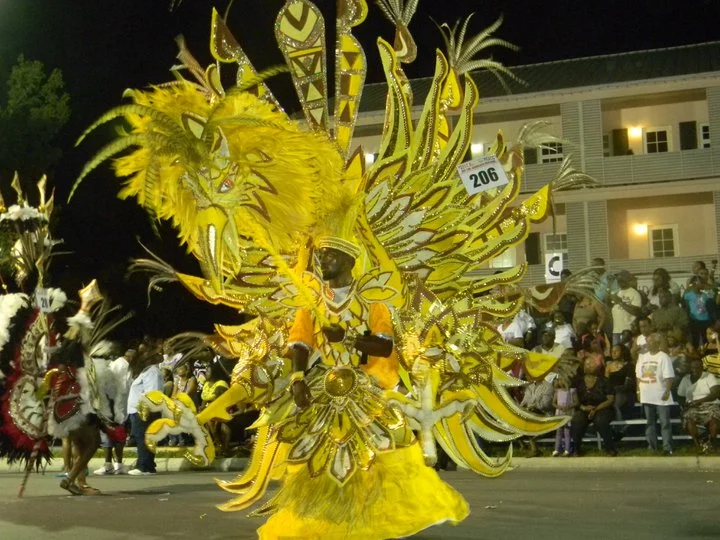
The colorful costumes worn by participants can be so massive, you wonder how a single person could support it. In some cases, the costume is five times as large its wearer.

While they look impressive, they’re mostly made of cardboard covered with crepe paper, feathers and glitter — that’s why they’re not that heavy. Some use aluminum rods for support and bits of wire to connect the pieces. Nowadays, many dancers use Styrofoam instead of cardboard.

“In the early Junkanoo days, the slaves in the Bahamas made their costumes from any material which they could find, such as shrubs, leaves, stones, bottles and paper,” according to my-bahamas-travel.com. Most costumes depicted the sea god Neptune and his wife Amphitrite.


If you are going to the Bahamas, chances are you're staying at one of the big resorts and you're not too worried about soaking up some of the local culture. That's good — 'cause I found the country to be largely devoid of anything that could be considered cultural. The one exception: Junkanoo. –Wally

Mumbai Tourism: How to Prepare Yourself for the Chaos

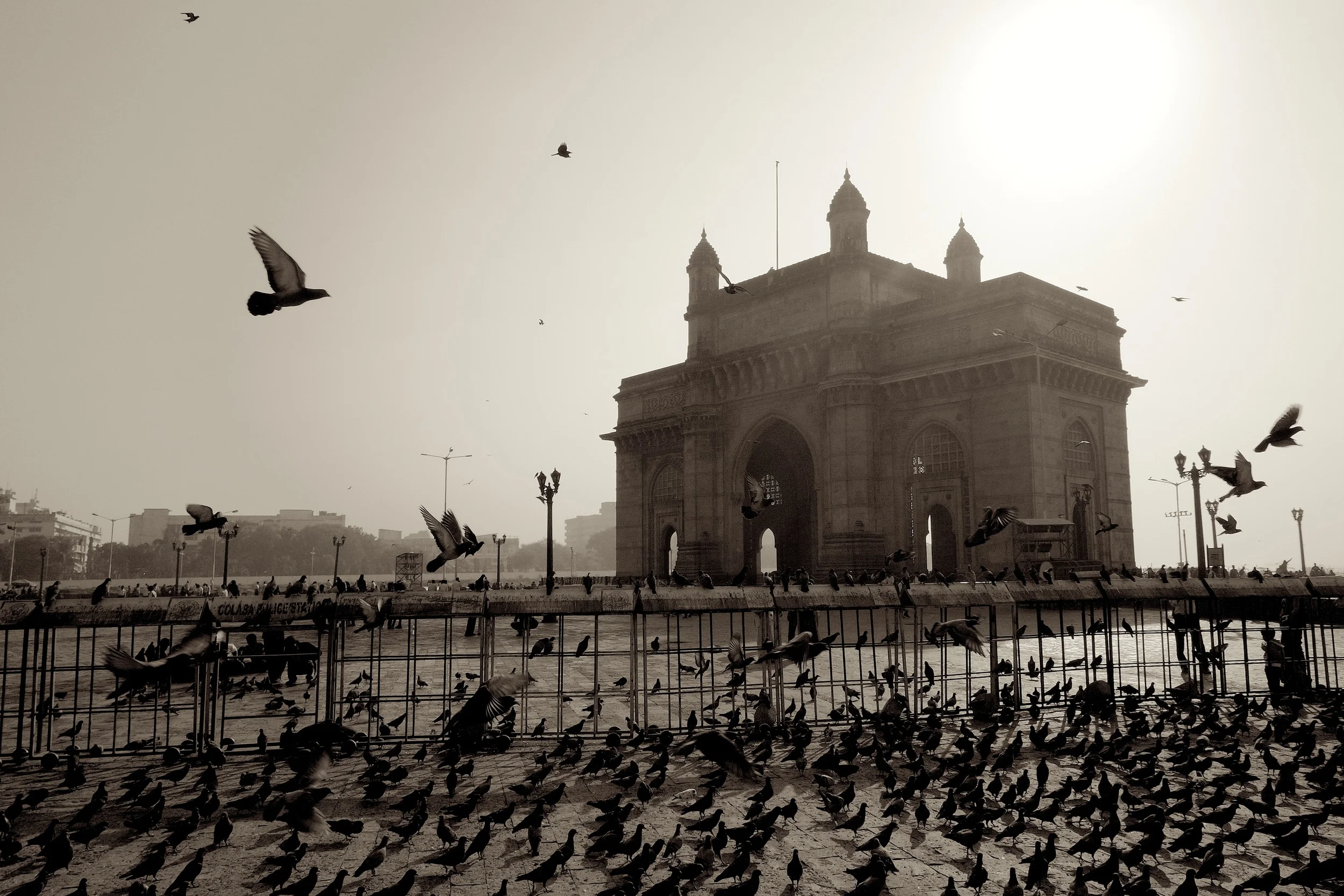
The Gateway to India in the Colaba neighborhood of Mumbai

The Gateway to India in the Colaba neighborhood of Mumbai

The Colaba neighborhood is a great place to station yourself. Just know what to expect navigating India’s largest metropolis.


Delhi feels like a small town compared with the bustling metropolis of Mumbai.

After a brief delay at the Aurangabad airport, Wally and I were off to Mumbai. It was our final day and a half, as we would be flying out the following night.

Practically every step we took, street hawkers would call out, “Pashminas!” to us. When we didn’t respond, some would ask if we wanted to purchase hash instead. The truth is, at this point I probably would have welcomed the latter.

I had found us an adorable boutique hotel called Abode in the neighborhood of Colaba. We read an article that described Colaba as Mumbai’s Greenwich Village.

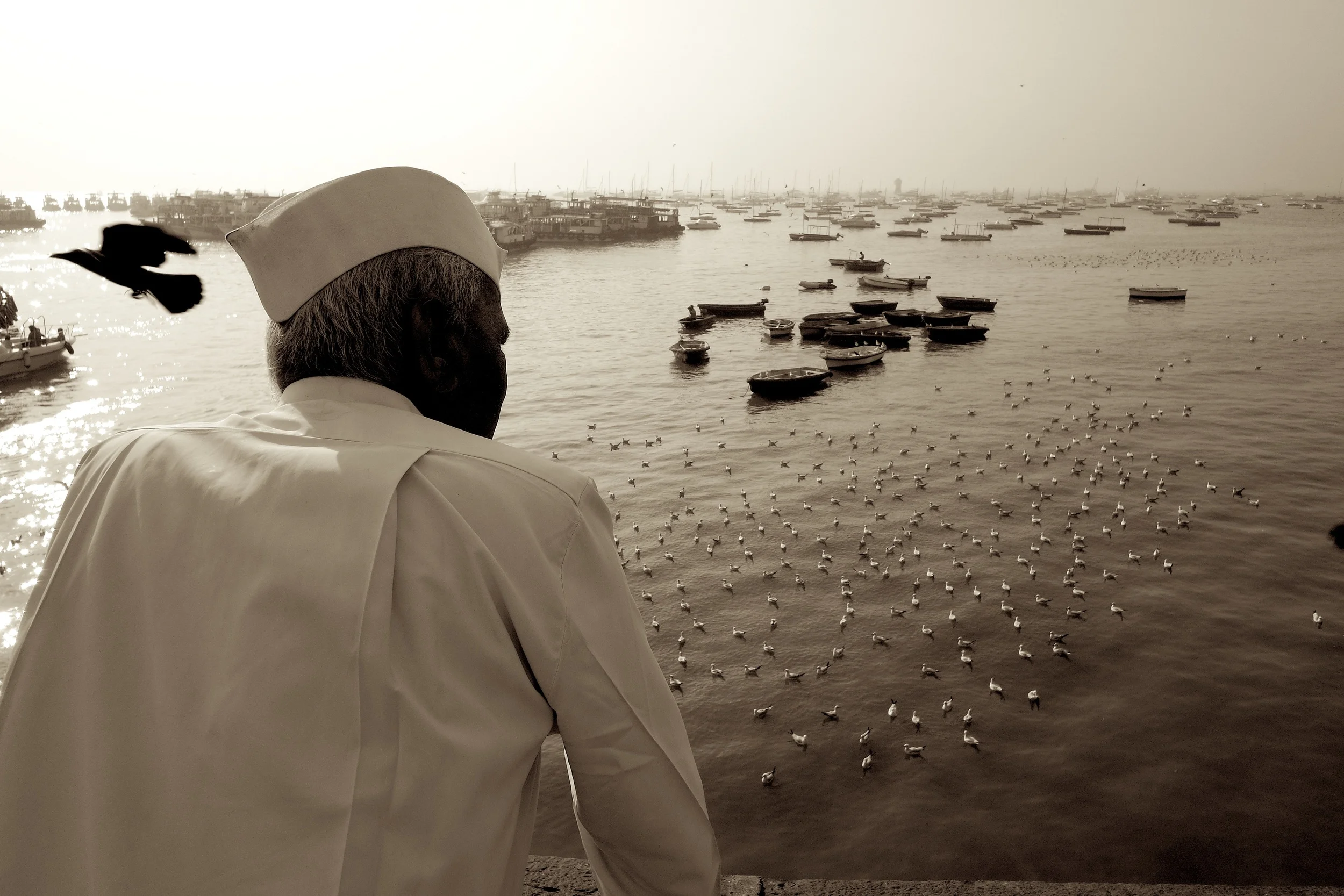
Looking out upon the Arabian Sea in Colaba, Mumbai, India

Looking out upon the Arabian Sea in Colaba, Mumbai, India

India is intense overall, and Mumbai’s size makes it simultaneously familiar yet foreign. Here are some things to know about the city:


Traffic is a bitch.

We arranged airport pickup through our hotel. Abode works with an NGO women-run taxi company, which empowers and employs female drivers in a vocation generally dominated by men.

Our driver, Husna, met us at the airport. Traffic came to a standstill once we left the airport. We were hoping our driver would play tour guide a bit, pointing out the sites as we crawled along. But she didn’t say one word to us. Instead, she just talked on her cell phone and, at one point, had a brief altercation with a traffic cop.
If the rural villages we passed through were about promoting the sales and use of concrete, Mumbai is all about marble. There were massive marble and granite warehouses and shops for as far as the eye could see.
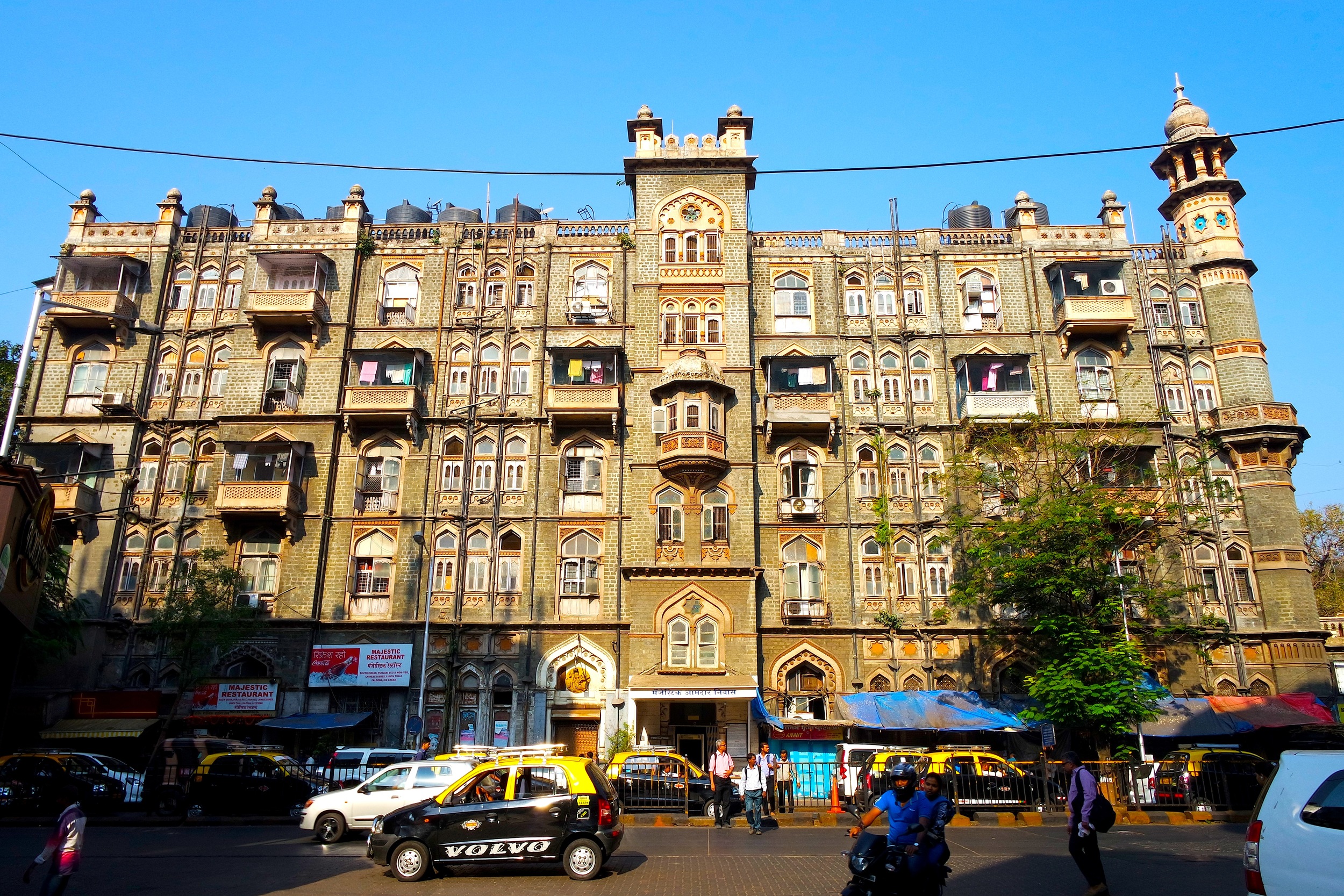
One of the many impressive buildings in Mumbai, India

One of the many impressive buildings in Mumbai, India

It seemed to take an eternity to reach our hotel, which is located at the southernmost tip of the city in Colaba. In actuality, it took us two hours. Not surprisingly, navigating this booming metropolis of over 16 million people can be a frustrating experience.
We ate lunch at the lively Café Mondegar, not far from our hotel and quite close to the tourist staple, Leopold Café. Our table faced the street and a wall mural by cartoonist Mario de Miranda filled with satirical caricatures depicting the café’s bustling interior and patrons.


The street hawkers won’t leave you alone.

Colaba is a touristy area on the waterfront. The famous Taj Mahal hotel is nearby, as is the Gateway to India.

Practically every step we took, street hawkers would call out, “Pashminas!” to us. When we didn’t respond, some would ask if we wanted to purchase hash instead. The truth is, at this point I probably would have welcomed the latter. My synapses had been worn down from processing all the things we had seen and places we had travelled in such a short period of time. You get no break in this frenetic city.

And don't even get me started on all the men selling giant squiggly balloons! How the heck would we get those things home — even if we wanted one?


Go where the locals go.

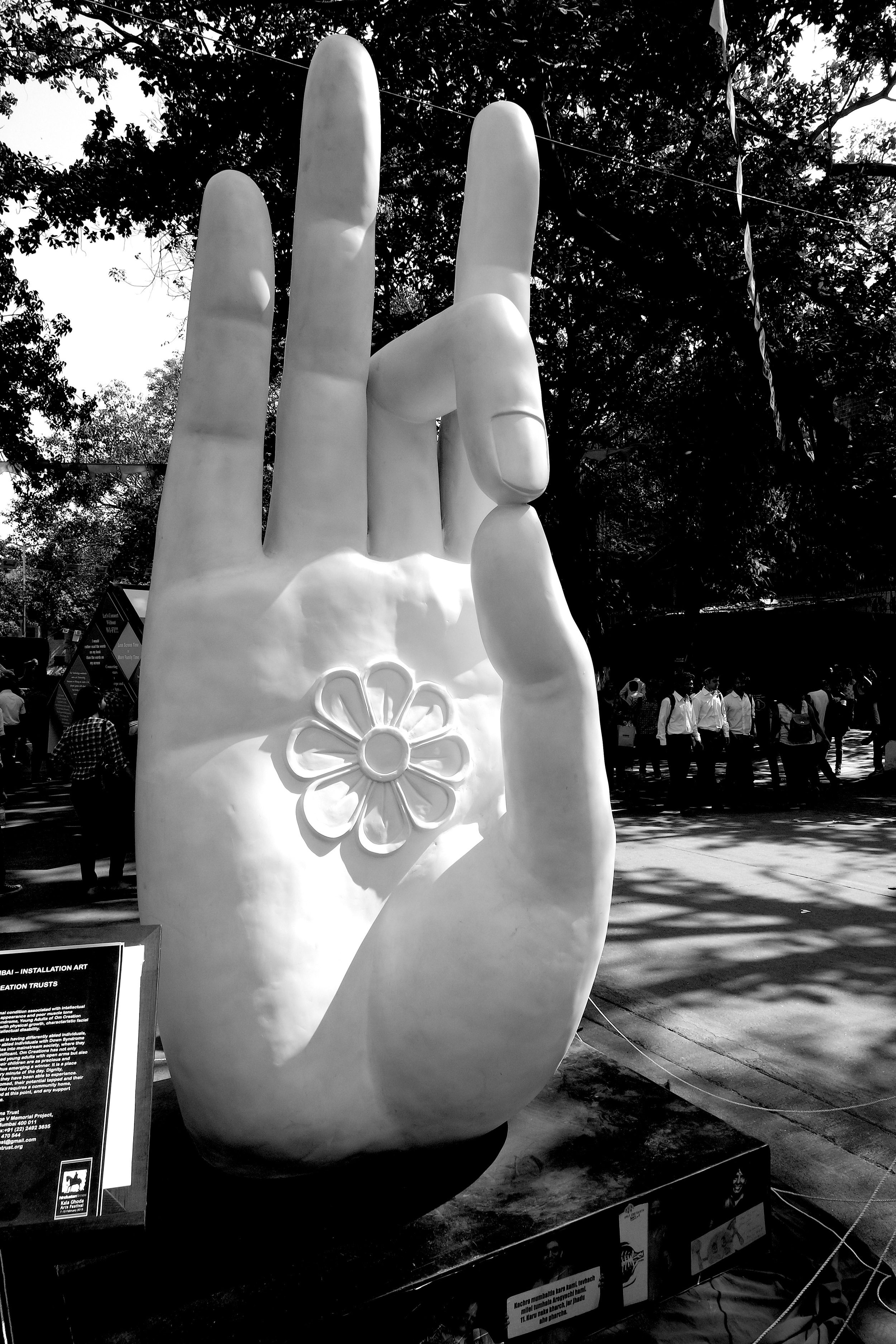
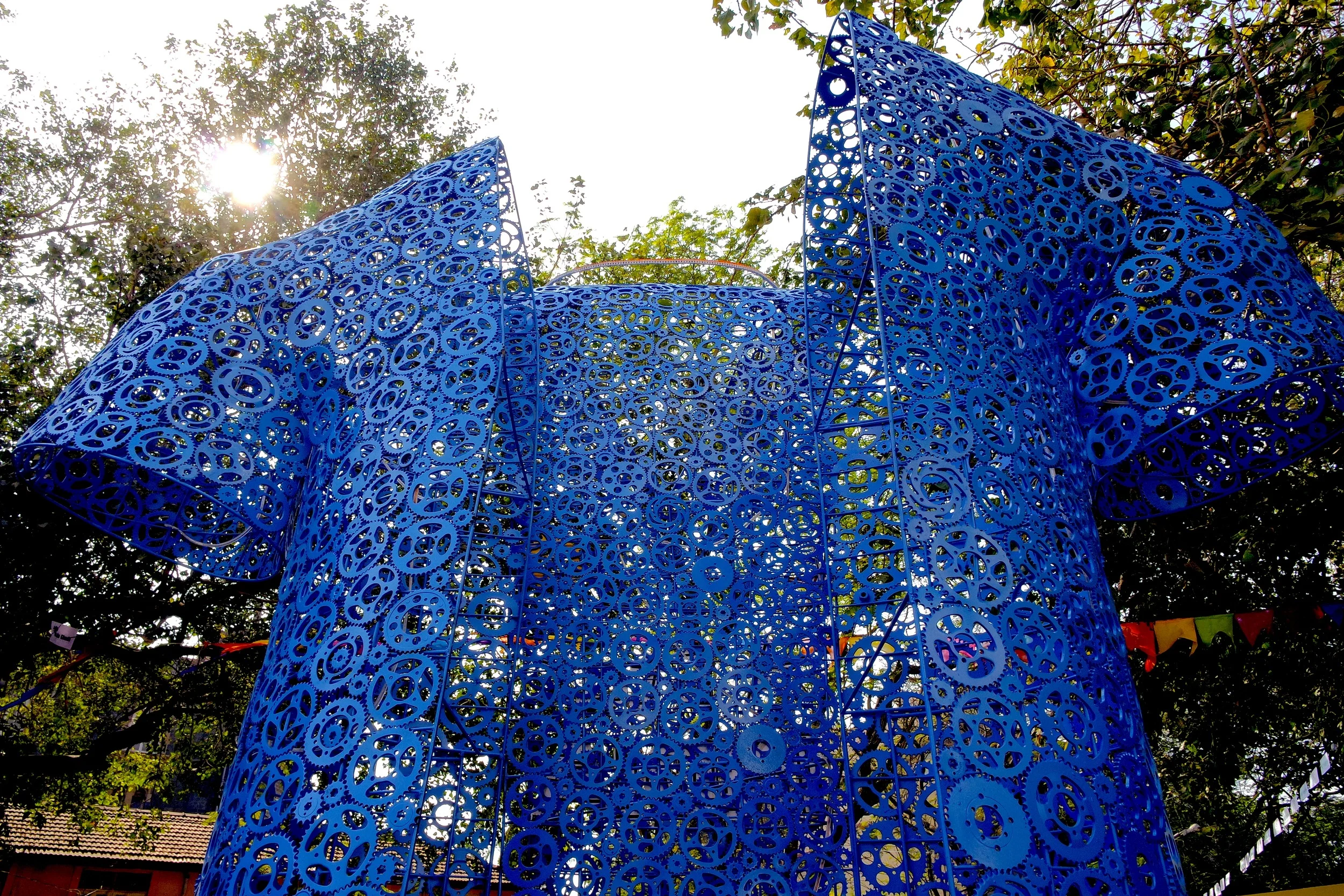
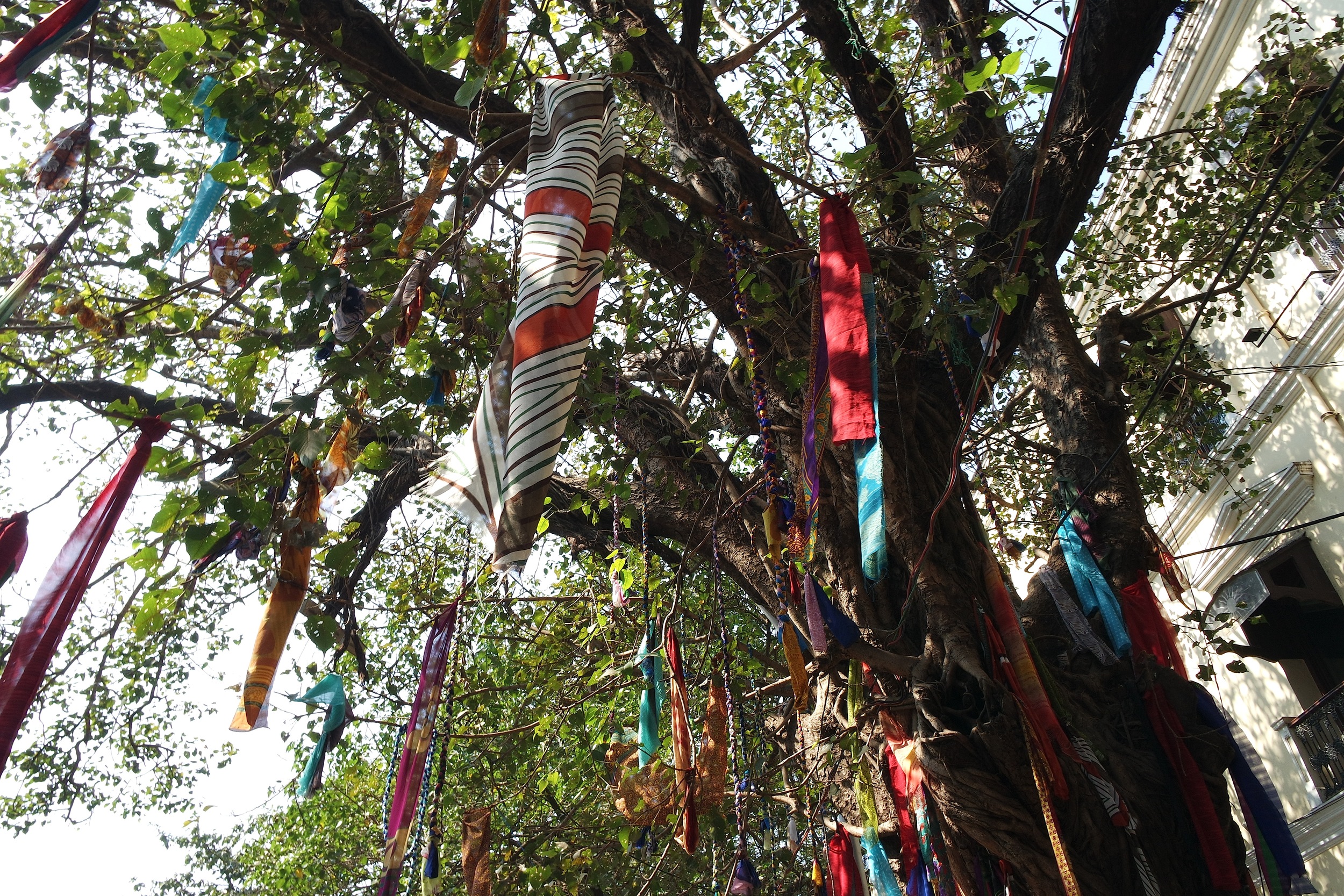
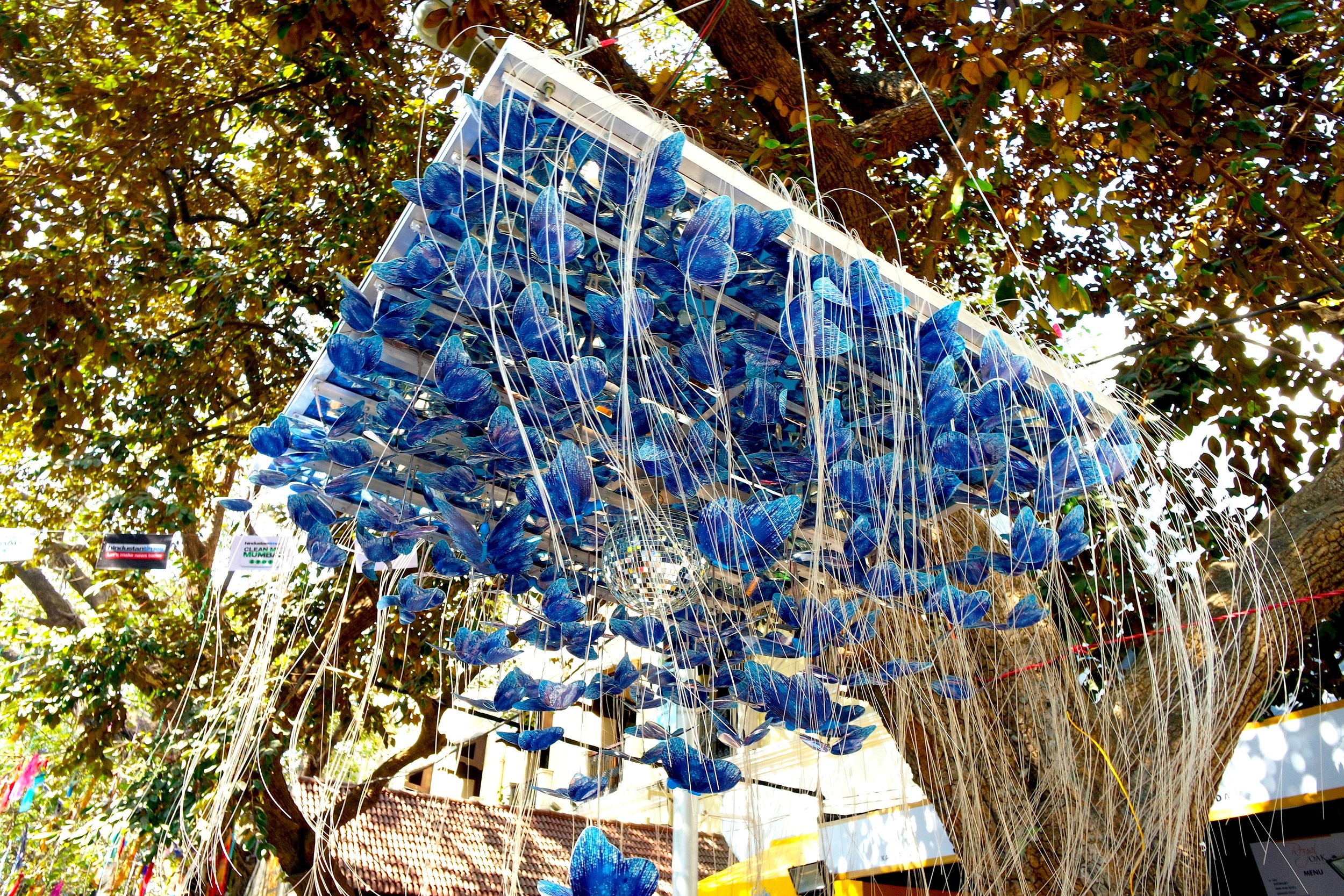
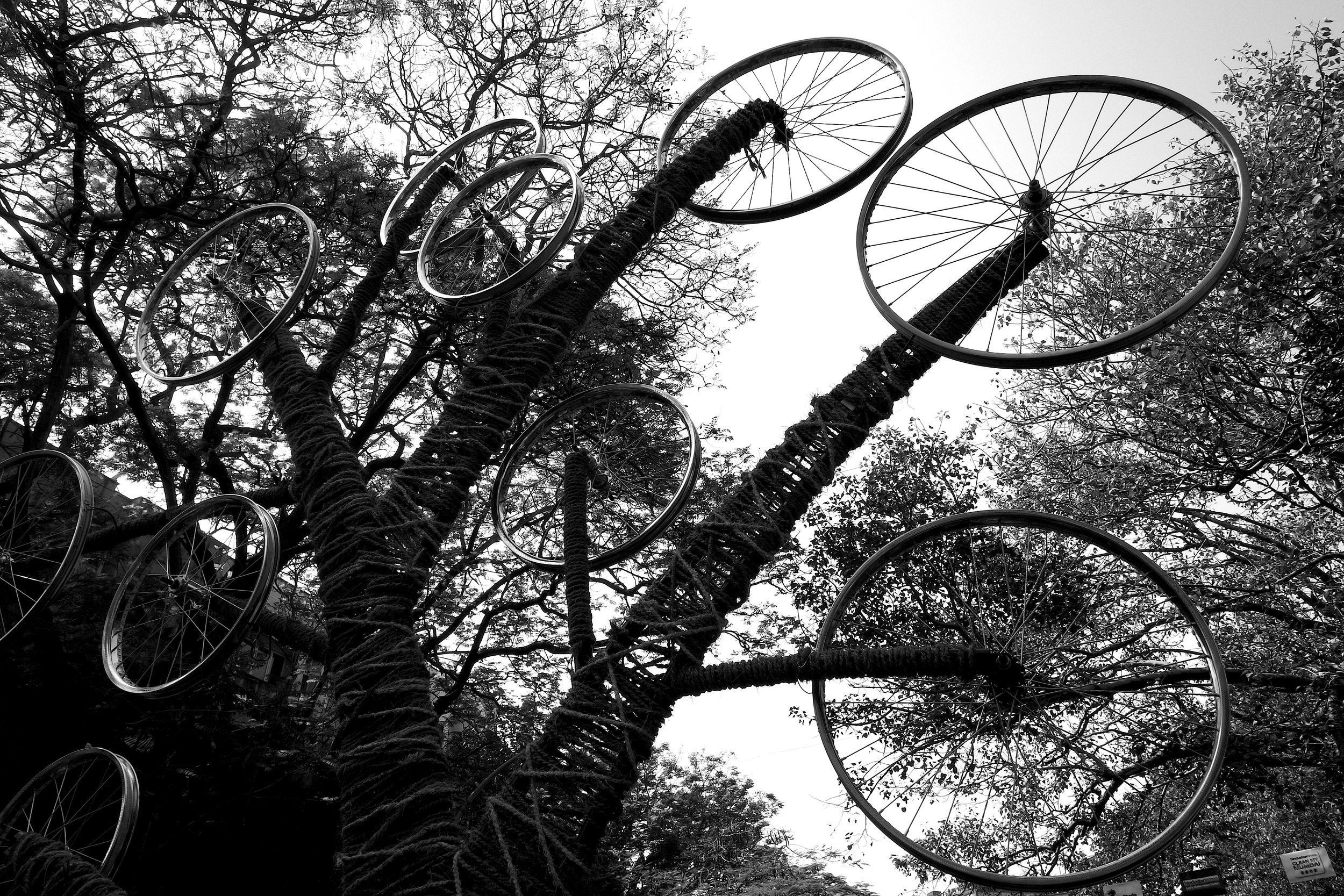
We decided to venture beyond Colaba and explore the Kala Ghoda district, where we stumbled upon its Arts Festival, not far from the Abode Hotel. The event takes its name from the neighborhood of Kala Ghoda (which translates to Black Horse, a reference to a black stone Colonial-era equestrian statue of King Edward VII that was previously located here. Incidentally, it was commissioned by the Sassoon family, who owned the Lansdowne House, where Abode now resides. The statue has since been relocated to the Byculla Zoo.)

Also of note is the Esplanade Mansion, which was fabricated in 1871 and shipped from England and is India’s oldest surviving cast iron building. Now a crumbling remnant, the structure was once a majestic structure that served as the Watson’s Hotel, the grandest in Mumbai. 

The Kala Ghoda Arts Festival is a combination of local art installations and includes craftspeople from across India. We purchased a vibrantly colored blue pottery turtle from Jaipur. The name comes from the deep blue glaze, used to color objects, which are fashioned from a unique dough-like mixture of gypsum, powdered quartz, powdered glass and gum.

We also bought a fun tote bag from Lemon Trunk with the message, “HORN OK PLEASE” that we had seen on the decorated backs of goods carrier trucks everywhere we went.
Halfway through the festival, Wally spotted the Alliance Française de Bombay table, which had a photo booth set up with a backdrop image of Mont Saint-Michel. He was delighted to practice his French and I smiled, pretending to understand what they were saying. 

The kids at the booth took our picture, and Wally and I like to think of ourselves as the centerpiece of their new ad campaign.
After we had left the festival and were returning to Abode, we passed the Chhatrapati Shivaji Maharaj Vastu Sangrahalaya Museum, which was formerly the Prince of Wales Museum of Western India (which is only slightly less of a mouthful to say). A few street artists were set up outside, one of whom was selling colorful bent wire cycle rickshaws. We purchased one, thanked him and arrived back at the hotel with our souvenirs. 

We had a great time, but the chaos of Colaba left us both fatigued. At times India can be her own worst enemy. –Duke

The Icelandic Phallological Museum and Other Strange Delights: Off the Beaten Path Iceland

The buildings in Reykjavik, Iceland are covered with street art

The buildings in Reykjavik, Iceland are covered with street art


Some of the more bizarre things to do in Reykjavik include the Big Lebowski Bar, a penis museum and street art tours. Plus: Iceland food, from hakarl to hotdogs with lamb meat.


Iceland has never been on our list of places to travel to. We just never really thought about it before. Sure, the Northern Lights sound pretty cool, and who wouldn’t like the chance to randomly run into that delightfully kooky Bjork?

But we’re not fans of cold and were wary of any country with the word “ice” in its name.

They have a penis from every animal, including humans.

So no — we never really considered visiting Iceland. That is, until I chatted with Lindsay and Shaun.

Read the first part of our conversation here, in which they talk about their initial reaction to the surreal landscape and what motivated them to visit, including a spa called the Blue Lagoon and the aforementioned Aurora Borealis. –Wally

Iceland is famous for its natural beauty. But it shouldn't come as a surprise that the country that brought us Bjork also has a quirky side.


What was the most surprising thing about your trip to Iceland?

Shaun: One is that there’s graffiti everywhere in Reykjavik. There’s some really cool graffiti.

Lindsay: I’d say like 20% are beautiful murals.

Shaun: Everything else is bad name tags.

Lindsay: We asked our tour guide about it. I thought he’d say, “Yah, it’s a problem.” But no. He was like, “Some people think it’s just graffiti, but it’s really a mural.” I wanted to tell him, “I’m an art director. I know the difference between graffiti and murals.”

Shaun: The other surprising thing is trash. It’s everywhere. I’d get up early in the morning to go to Dunkin’ Donuts — there was one, and I like Dunkin’ Donuts — and the street sweepers do not do a good job. They don’t pick up anything.

I don’t know if they’re allowed to, but people will walk through the streets drinking openly. Glasses from the pubs litter the streets in the morning. And there are beer bottles everywhere.


Anything you skipped on your visit?

Shaun: The one thing we didn’t do was the museums because there’s so much natural beauty. I was told the one museum you have to go to is the Icelandic Phallological Museum.

Lindsay: They have a penis from every animal, including humans.


That’s one I would have gone in!

What’s the nightlife like?
Lindsay: We didn’t go out out. But we did go to the Lebowski Bar. Twice.

Shaun: The first time we walked in, we didn’t even know what to make of the place. All the tables had “reserved” on them, but I don’t think they were actually reserved. So we went upstairs.

There are themes for different parts of the movie. There’s the Playboy lounge, where there’s a bunch of Playboys on the wall, and the diner. They have a bowling lane on the wall. Sideways, with a bowling ball stuck to it and all the pins.

Lindsay: The bar is covered in the rug.

Shaun: There are awesome Big Lebowski quotes everywhere. Like, “I can get you a toe by 3 o’clock.” I had to explain to Lindsay what that was.

The second time we went, they were playing ’80s movies on the big screen. They were playing Twins. Which we both realized we had never watched, and how ridiculous it is.

And in the front of the bar, they have this giant spinning carnival wheel with various types of white Russians, black Russians, Caucasian Russians…

Lindsay: They have like 15 different white Russians.

Shaun: The wheel would spin and you’d hear everybody screaming.

And this is right down the street from the Chuck Norris bar.

Lindsay: Which we didn’t go in.


What was the weirdest thing you saw to eat?

Lindsay: We went into this thinking the food will be terrible. We’re not going to find anything we can eat. And then we came to find out, the Icelandic people don’t actually eat the traditional foods, like fermented shark and whale [hákarl].

Shaun: Seriously, it’s rotting shark.

Lindsay: But we found food we could eat everywhere. It’s very American bar food.


Did you learn any expressions?

Shaun: By the end of the trip, we figured out how to say our hotel name. Poorly, but still.

We tried to be like, sound it out. And we’d listen on an app Lindsay downloaded — and it wouldn’t be anywhere close.

The Icelandic language has a kind of bounce to it.

Lindsay: They really pride themselves on their language. They want it to last forever. Even though they do use English a lot more.

We tried to say “thank you.” Our driver to and from the airport said it was “tikka tikka” — but it’s spelled with Ps.

Shaun: That’s what we’re saying — you can’t sound out anything in that country.


Any strange customs?

Lindsay: The service is not the same. You don’t pay gratuity. There’s a lot of self-service.

Shaun: If you’re at a restaurant and you order a soda, you go up and get it yourself at the fountain machine — even if it’s sort of in the kitchen.

And no one will bring you a check. You have to go get it.


Did you buy some cool souvenirs?

Shaun: They have these big Icelandic wool sweaters, which apparently are the thing you have to buy when you’re there. And then right next to them would be old American hair metal band shirts.


Anything else you’d say fellow travelers must experience?

Shaun: I do have to say that if you go to Iceland, you will hear about the hotdogs. [Dramatic pause] Have the hotdogs.

Lindsay: The best hotdogs I’ve ever had in my life.

We read about this hotdog stand in downtown Reykjavik, right near the club district.

They’re mostly made of lamb.

Shaun: In the countryside, they get so excited that it’s lamb season.

Lindsay: For three months, lambs roam pretty much the entire country.

Shaun: They’re so adorable — we make sweaters from them, and then we eat them.

Lindsay: They slaughter them in the fall after they’ve spent the whole summer gallivanting around.


Any Bjork sightings?

Shaun: We had a driver who mentioned he once picked up Bjork from the airport.

Lindsay: She was going to a holiday party and she had all the gifts she was giving out on her dress.

Shaun: And he said it took him half an hour to get her and her dress into the cab. 

Dhokra Legend: One of the Saddest Indian Stories

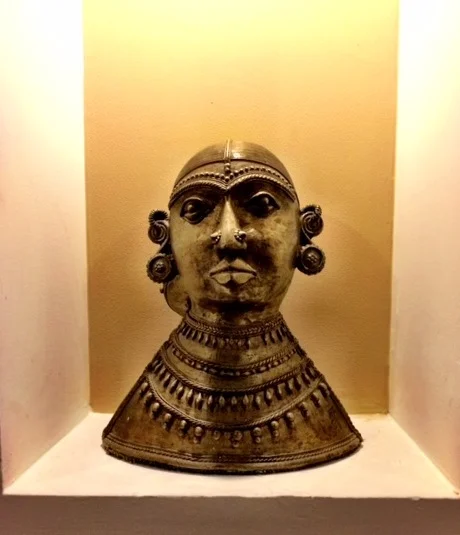
The Gond people of central India pray to Mitki, depicted here in a Dhokra metalwork sculpture, to fulfill their desires

The Gond people of central India pray to Mitki, depicted here in a Dhokra metalwork sculpture, to fulfill their desires

Star-crossed lovers met a gruesome demise — but at least some good art came out of it.


You could say it’s India’s version of Romeo and Juliet.

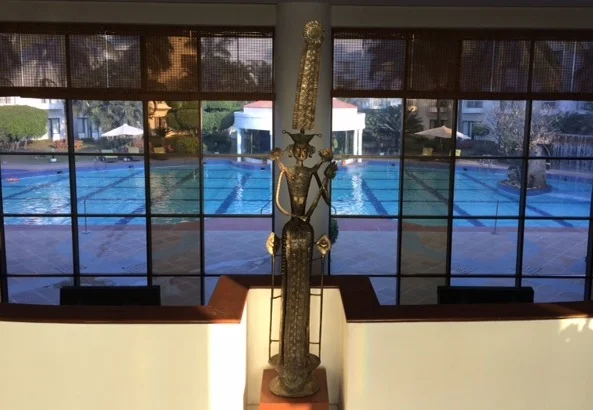
While staying at Lemon Tree hotel in Aurangabad, Wally and I oohed and ahhed over the many fine examples of the folk art showcased throughout. We were immediately drawn to the Dhokra metalwork sculptures, with their distinctive coiled surfaces and exaggerated, almost African vibe.

In the morning, when the door was opened, he was found dead, much to the glory of the great goddess, who had shown her power by coming during the night and sucking his blood.
— Maurice A. Canney, An Encyclopaedia of Religions

We asked a hotel employee if we could buy similar sculptures locally but were told they came from another region. Disappointed, we made a mental note to keep an eye out for these on our next visit to India.


A Dhokra sculpture of a queen, found outside our room at the Lemon Tree hotel in Aurangabad, India

A Dhokra sculpture of a queen, found outside our room at the Lemon Tree hotel in Aurangabad, India

Waxing Poetic

These intricate pieces take their name from the Dhokra Damar, a tribe native to the ancient Indus Valley civilization of Mohenjo-daro in current Pakistan.

One of the oldest traditional techniques in the world, dating back 4,000 years, it’s still practiced today.

The artisans use coils of beeswax and resin, a distinctive hallmark of Dhokra metalwork figurines.

Using what’s known as the lost-wax casting method, the wax object is covered with layers of clay. This takes on the negative form of the wax inside and becomes the mold for the metal that will be poured inside it and cast. 

Each mold can only be used once, as it is broken to remove the finished piece, making the finished sculpture one of a kind.


Appeasing a Bloody-Thirsty Goddess

The sculpture in the Lemon Tree’s lobby is Mitki, who according to popular folklore was a young girl with seven brothers who lived in the area of Bastar in central India.

As part of tradition, her brother brought home a young man to marry her. Mitki and Jhitku fell in love. But, as fate would have it, the brothers dreamed that the goddess, whom some believe to be a deification of the tiger, demanded a sacrifice.

The Gond people of central India did indeed once offer human sacrifices to the fearsome goddess Kali and to Danteshwari, the primary deity of the Bastar royal family. Human sacrifice supposedly continued into the 19th century, according to GluedIdeas.com. 

Here’s how it went down: “The victim was taken to the temple after sunset and shut up within its dismal walls. In the morning, when the door was opened, he was found dead, much to the glory of the great goddess, who had shown her power by coming during the night and sucking his blood,” writes Maurice A. Canney in his 1921 tome, An Encyclopaedia of Religions.

The brothers couldn’t find anyone else suitable, so they sacrificed Jhitku. Poor Mitki could not bear losing her soulmate, so she killed herself.

To this day, devotees from the Gond people worship these figurines, known collectively as Jhitku Mitki, to have their wishes granted. –Duke

The Truth About Living in China

Censorship, crazy drivers and hidden hotspots are all part of teaching in Beijing.

Angie and Steve were having a going-away party. But I had no idea where they were going away to.

Right as we said our goodbyes, I hugged Angie and asked, "By the way, where are you guys moving?"

Everything here is censored.
This is definitely not the place for you if you can’t live without Facebook!

"Lima, Peru" she replied.

"Oh my god! I want to hike the Inca Trail to Machu Picchu so bad!"

"We're planning a trip. You should come!"

"I will!" I declared.

And I did.

And we've followed Angie and Steve around the world, planning trips with them, including the Ankor Wat complex in Cambodia, when they were living in Kuala Lumpur, Malaysia.

Now they're teaching in Beijing, China, so I decided to see what it's like to be an American expat there. Here’s what Angie had to say. –Wally

What’s your favorite thing about Beijing?

I love the expat community we live in. Living in Beijing can be tough, but we live and work with some really great people.

The facilities at the school we work at are also really amazing, so it's easy to do all you need to do before you go home at the end of the day.


Least favorite thing?

Chinese drivers. We aren't allowed to drive a car, which puts us at the mercy of everyone.

I have a little tuk-tuk I drive the five minutes to work every day, and the subway is about a 10-minute drive away, so it's usually okay.


What’s the craziest thing the Chinese do?

In general, I find Chinese people to be oblivious. They walk into the street without looking and will run you over if they are lucky enough to have a car.


What’s the strangest thing you’ve eaten there?

I'm not a very adventurous eater, so this isn't really the best question for me. We tend to eat mostly at home or at a few of the Western restaurants that are around.


Have you experienced any instances of censorship or authoritarian government?

Everything here is censored.

Through my job and the really expensive direct line internet they pay for, I have access to almost anything. But outside of that, you're really limited. I can't even get Google Maps without using a VPN, and that’s hit or miss, depending on the day.

It seems to get worse depending on what is going on. Any special holiday or celebration, and everything will be locked down tight.

This is definitely not the place for you if you can't live without Facebook!


Most useful Mandarin phrase?

Duōshǎo qián? How much is that?

If you know that and your numbers, you can at least go shopping!


What do the Chinese think about Americans?

I've found my interactions with Chinese people to be mostly positive. The language is a big barrier, but if you can get past that, they're open and friendly.


Best secret spot in Beijing?

The hutongs: hidden areas of old Beijing, where you might find a tiny Korean taco fusion joint next door to an old Chinese family doing laundry.

Is There Any Good Shopping in Aurangabad?

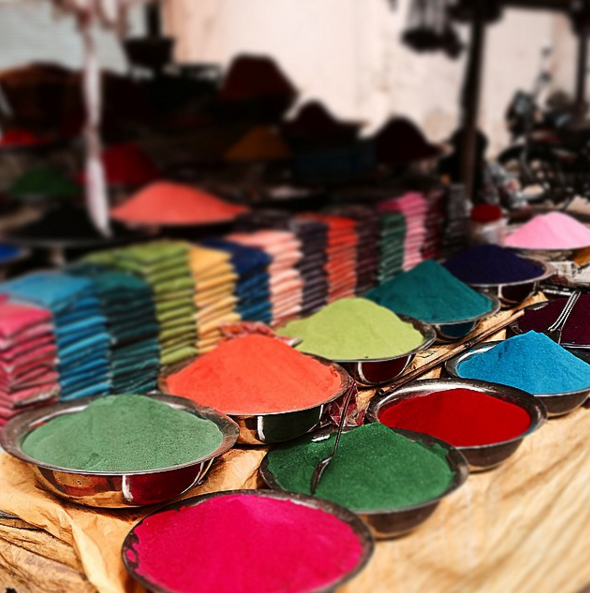
Piles of colored powder for sale at the Gulmandi Road Bazaar

Piles of colored powder for sale at the Gulmandi Road Bazaar

There aren’t a lot of places to visit in Aurangabad, aside from the Ajanta and Ellora Caves. But the Gulmandi Road Bazaar is worth checking out if you’ve got a little extra time. 

There’s not a lot to do in Aurangabad, India by itself. The city is best known as a jumping-off point for the Ajanta and Ellora Caves.

RELATED: Ajanta Caves Walk-Through

Ellora Caves: A Guide to the Amazing Rock-Cut Temples

But if you’re like Wally and me, you can find your fun anywhere.

Suddenly the seemingly hidden side street, filled with merchant stands, opened up before us as if by magic.

If you’ve got some extra time after visiting the caves, head to Gul Mandi market, located in the center of old Aurangabad. (For the record, it’s #19 of TripAdvisor’s 52 things to do in Aurangabad.)

We hired an auto rickshaw from our hotel and asked to be taken to the Old Quarter.

Aurangabad is known as the City of Gates. The city had 50-some during medieval times, though only 18 remain. These served as surveillance and security and as a means of collecting tolls when caravans passed through.

Our rickshaw driver parked on a side street and we got out to see what sort of shopping was to be found.

We wandered around Rangar Galli, where every store was pretty much selling the same product: clothes. We were disappointed that it was not a handicrafts market. But then we decided to go one block off the major thoroughfare — and suddenly the seemingly hidden side street, Gulmandi Road, filled with merchant stands, opened up before us as if by magic.


Marigolds and More

Known as the Gulmandi Road Bazaar, this street was a fascinating glimpse into the daily life of the locals. Merchants set up stalls on the side of the road, selling various items. We were most intrigued by the cart filled with piles of brightly colored powder, wondering if it was for the Hindu holiday Holi. (You’ve probably seen the pictures of people covered in every color imaginable — in fact, the trend has even extended to races here in the States.)

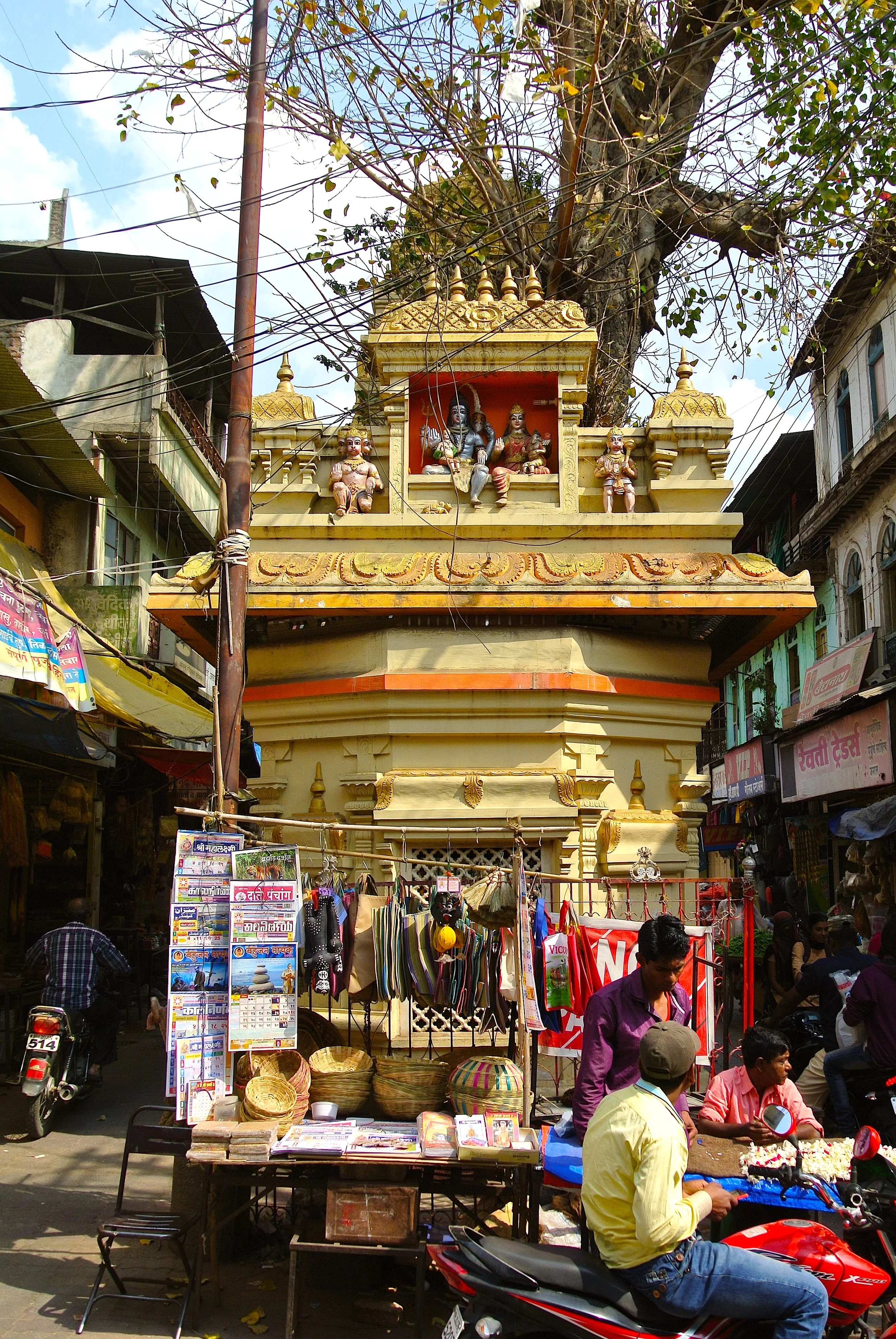
In the middle of the narrow thoroughfare is the Supari Hanuman Temple.

The Supari Hanuman Temple on Gulmandi Road in Aurangabad, India

The Supari Hanuman Temple on Gulmandi Road in Aurangabad, India

An old mystic spied us and asked where I was from. He had me join him in a mantra chant, calling out, “Krishna! Krishna! Krishna!” right there on the street — much to the amusement of passersby.

We crossed the alley, where a pair of women sat cross-legged, stringing together marigold flower garlands amidst a mountain of the orange blooms.

As we made our way up the opposite side of Gulmandi, we spotted a small shop selling incense and ephemera. Once inside, I spotted something I had been looking to get this whole trip: a small brass trishula, the sacred trident that’s the symbol of Shiva. The three prongs represent the god’s three roles as creator, preserver and destroyer. He’s pretty badass, huh? –Duke


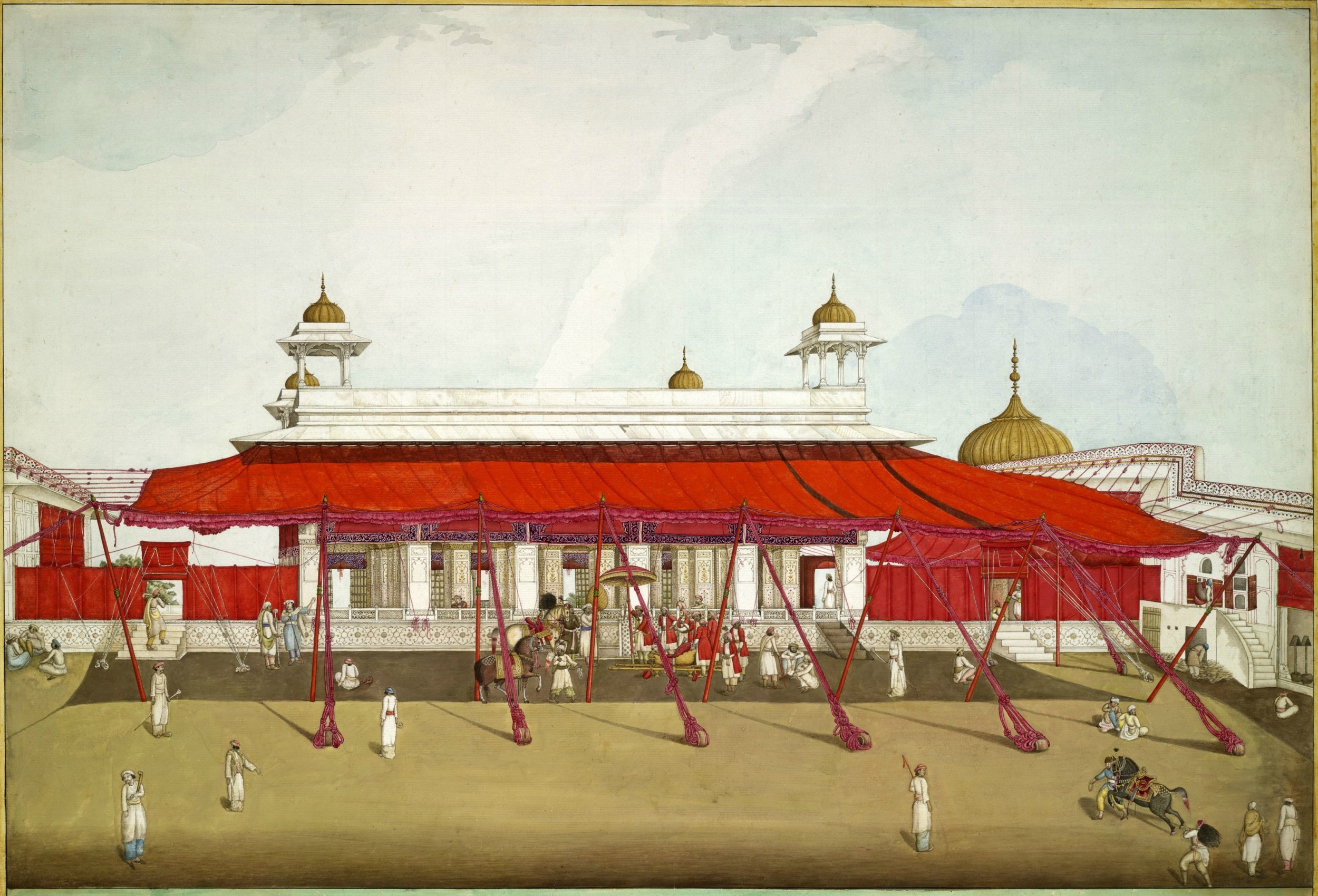
6 Historic Images of the Red Fort in Delhi, India

Ghulam Ali Khan's paintings reveal the splendor of This Mughal palace — now a sad shadow of its glorious past.


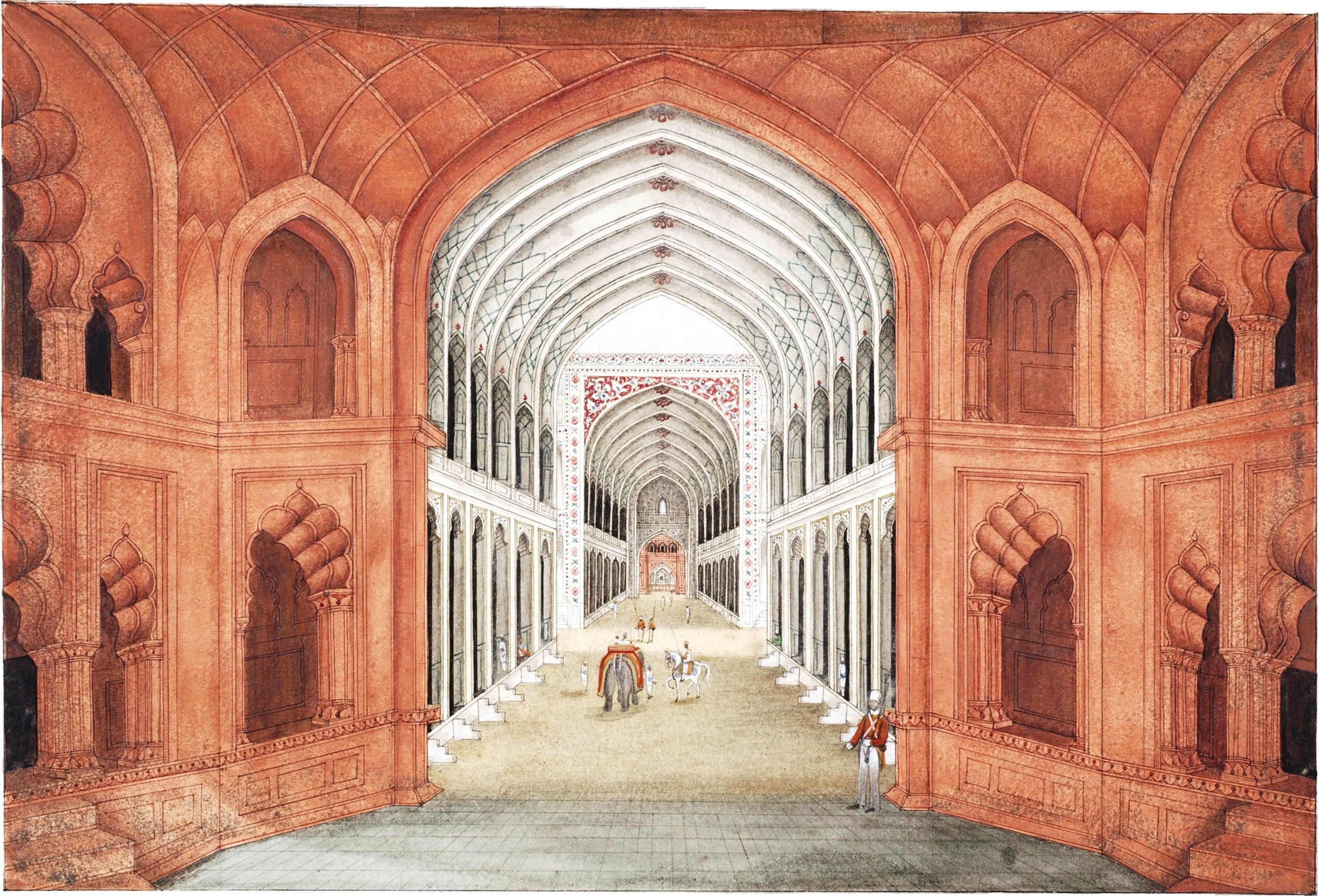
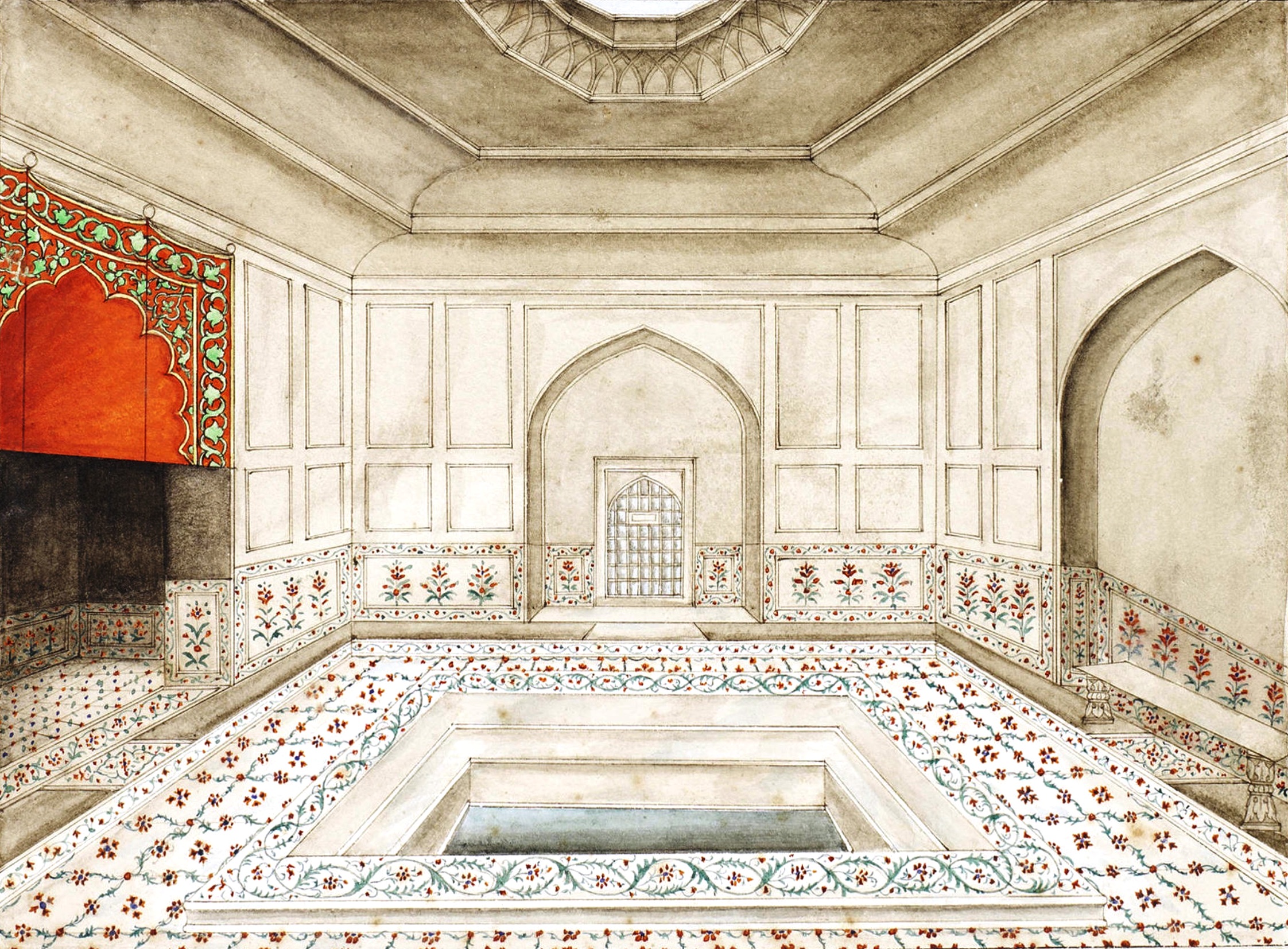
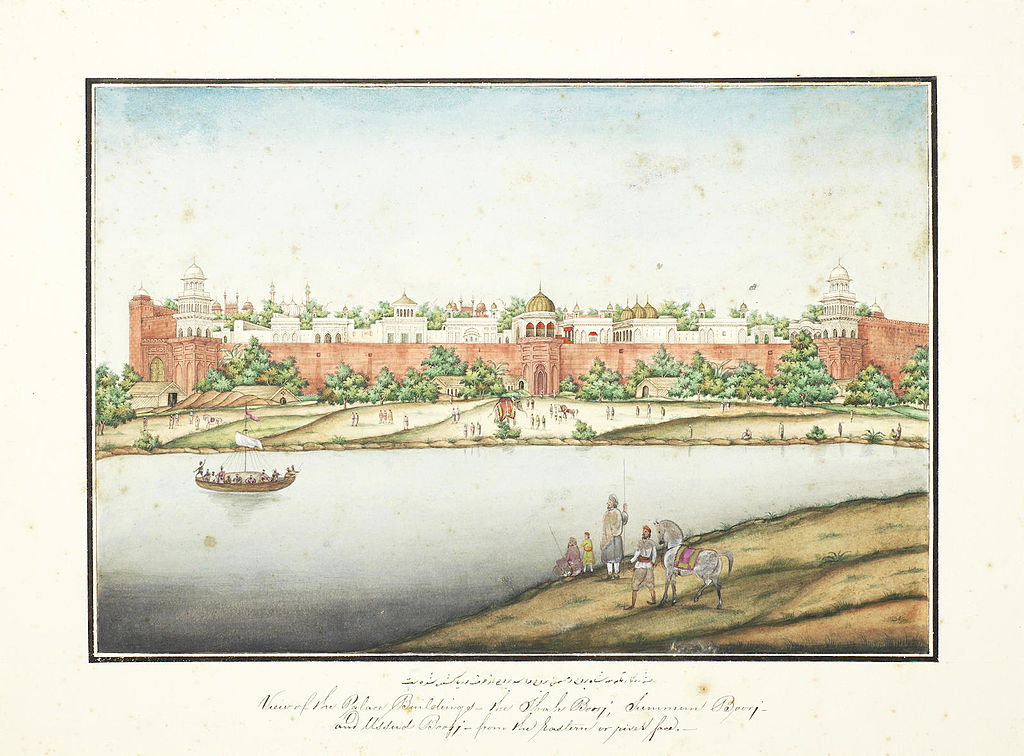
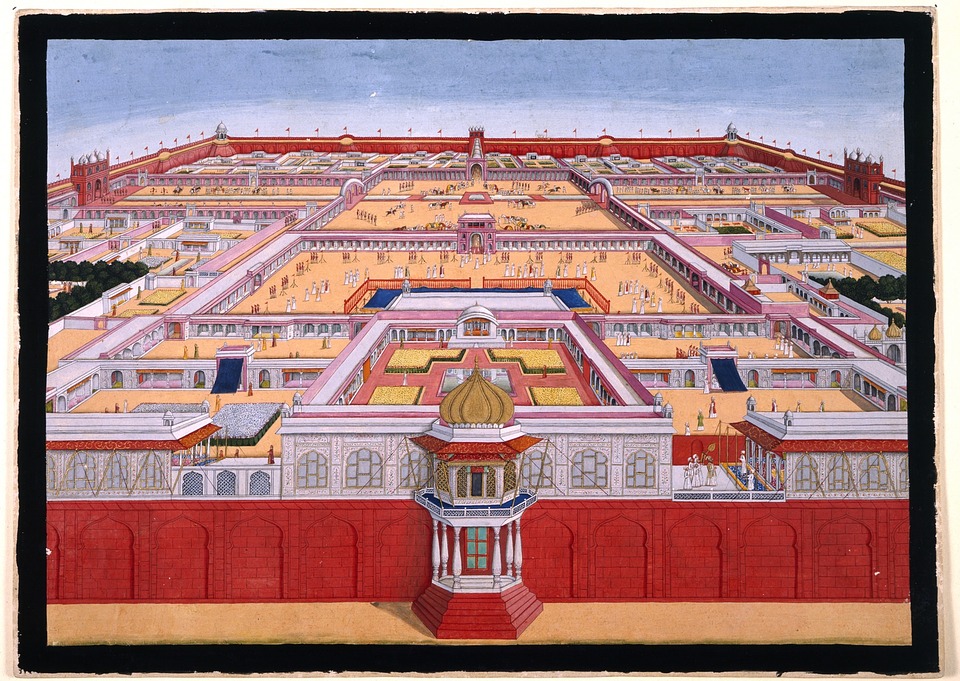
The images in the slideshow are watercolor paintings by Ghulam Ali Khan, the last royal Mughal painter. Thirty-one of his works were published as Sketches of The Delhee Palace & Delhee in 1854.
 

Oh, to have seen it in its glory days — before the Brits got their mitts on it, ransacking and demolishing much of it until it was but a shadow of its former glory.

Originally called Qila-e-Mubarak, or the Blessed Fort, its name was changed by the British. They didn't see it as so blessed, as they tore much of it apart, stripped it of its riches and built barracks within. They called it the relatively unimaginative Red Fort after the crimson sandstone used to construct the ramparts. The name stuck, and the locals started referring to it as Lal Qila in the native tongue.

The diamond is said to be cursed, bringing bad luck to any man who wears it.

Ironically enough, parts of the structure were actually once white, painted with lime plaster, according to IndiaTV and other sources.

Constructed over a decade, beginning in 1638, the Red Fort was designed by the architect Ustad Ahmad Lahauri. He's the man who's also behind a modest mausoleum you might know: the Taj Mahal.

The Red Fort was the Mughal emperors' palace for almost 200 years.

Bahadur Shah Zahar, the last of the line, was tried for treason by the British in the Diwan-i-Khas, the Hall of Private Audience. This is the part of the Red Fort where he'd greet his guests and couriers.

Emperor Zahar, who was 82 at the time, was found guilty, stripped of his title and exiled to Rangoon in what is now Myanmar.


A Cursed Diamond

The Diwan-i-Khas was said to have a solid gold frame studded with precious stones, including the world's largest diamond, the Koh-i-Noor (Persian for Mountain of Light). It was pillaged long ago and is currently part of the Crown Jewels in England.

It was the inspiration behind Wilkie Collins' mystery novel The Moonstone.

For, the diamond is said to be cursed, bringing bad luck to any man who wears it. Cleverly exploiting a loophole, only female members of the British royal family will put it on. –Wally


RELATED: Tips for Exploring Delhi's Red Fort

India's "Game of Thrones" Ruins: Daulatabad Fort and Bibi ka Maqbara, the "Baby Taj Mahal"

The ruins of Daulatabad, India

The ruins of Daulatabad, India

A creepy day trip from Aurangabad you can pair with the Ellora Caves.

It’s easy to imagine this city as cursed — and as something that sprang from the demented but brilliant mind of George R.R. Martin, the man behind Game of Thrones.

In 1327, Mohammed bin Tughlaq (sultan from 1325 to 1351) marched the entire population of Delhi to the more central Deogiri, making it the new capital and renaming it Daulatabad, the City of Fortune.

He darted through, sure he’d end up with bats clawing at his hair and face.

The people of Delhi protested, but nobody was allowed to stay — not even a cat or dog. According to Ibn Batuta, a medieval Berber Muslim traveler and scholar, “A search was made and a blind man and a cripple man were found. The cripple man was put to death while the blind man was tied with the tail of horse and was dragged to Daulatabad where only his one leg reached.”

The journey covered about 775 miles, and many people died along the way in the brutal heat.

Daulatabad should perhaps have been named the City of Misfortune, for it was abandoned after two years due to lack of water.

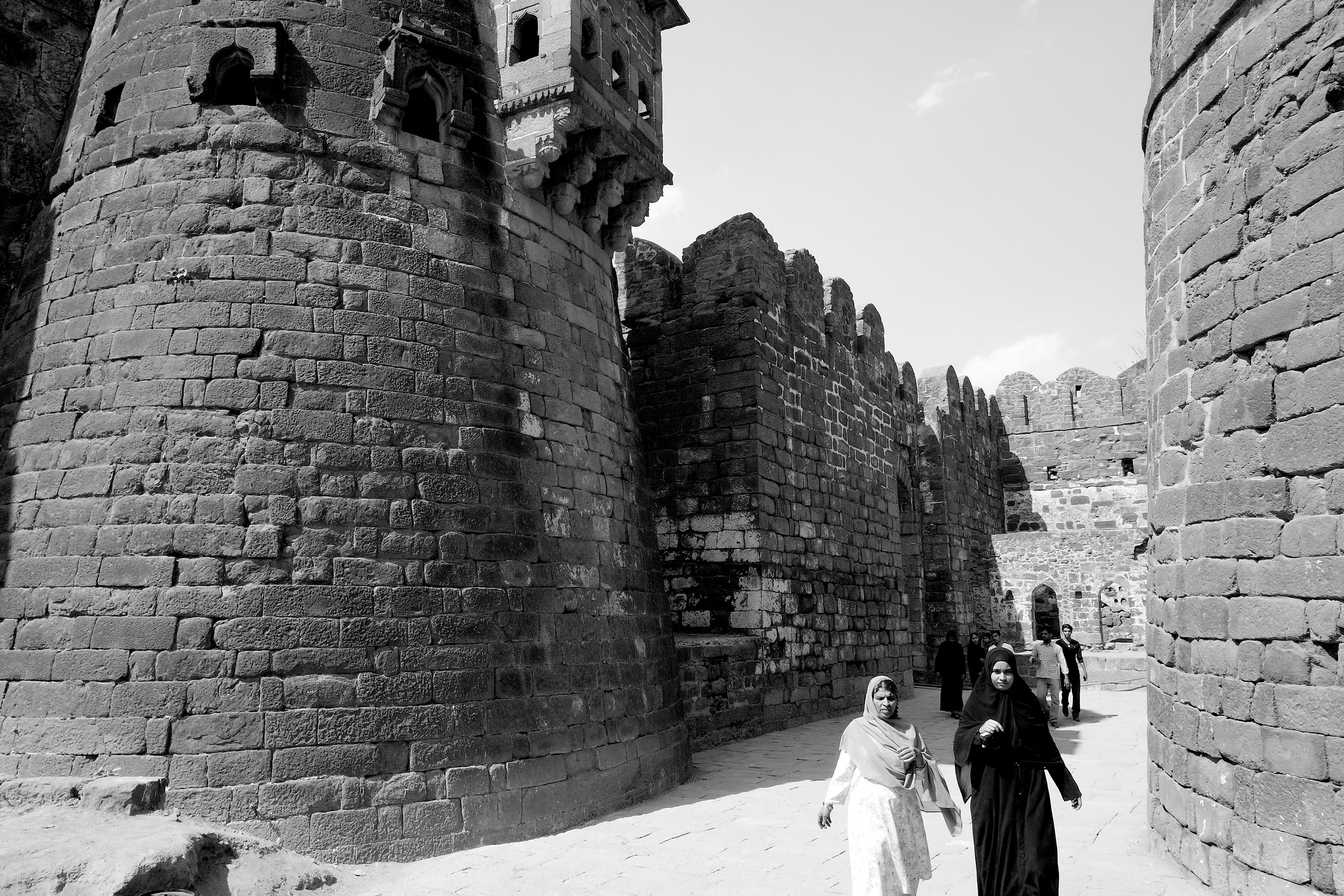
After exploring the Ellora Caves, our driver took us on to the fort. He dropped us off in a crowded dirt parking lot that sat outside the medieval fortified walls of the Daulatabad Fort.

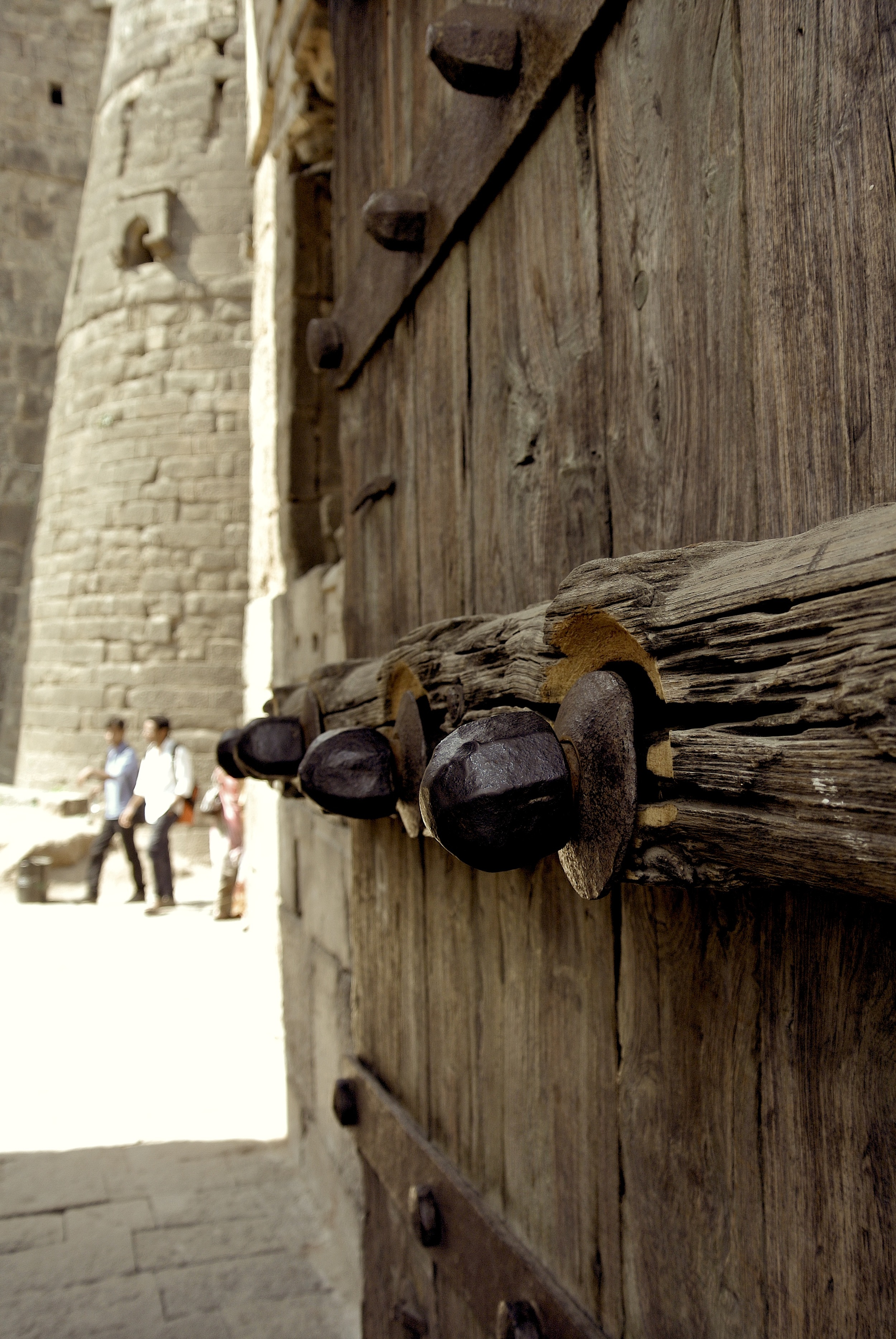
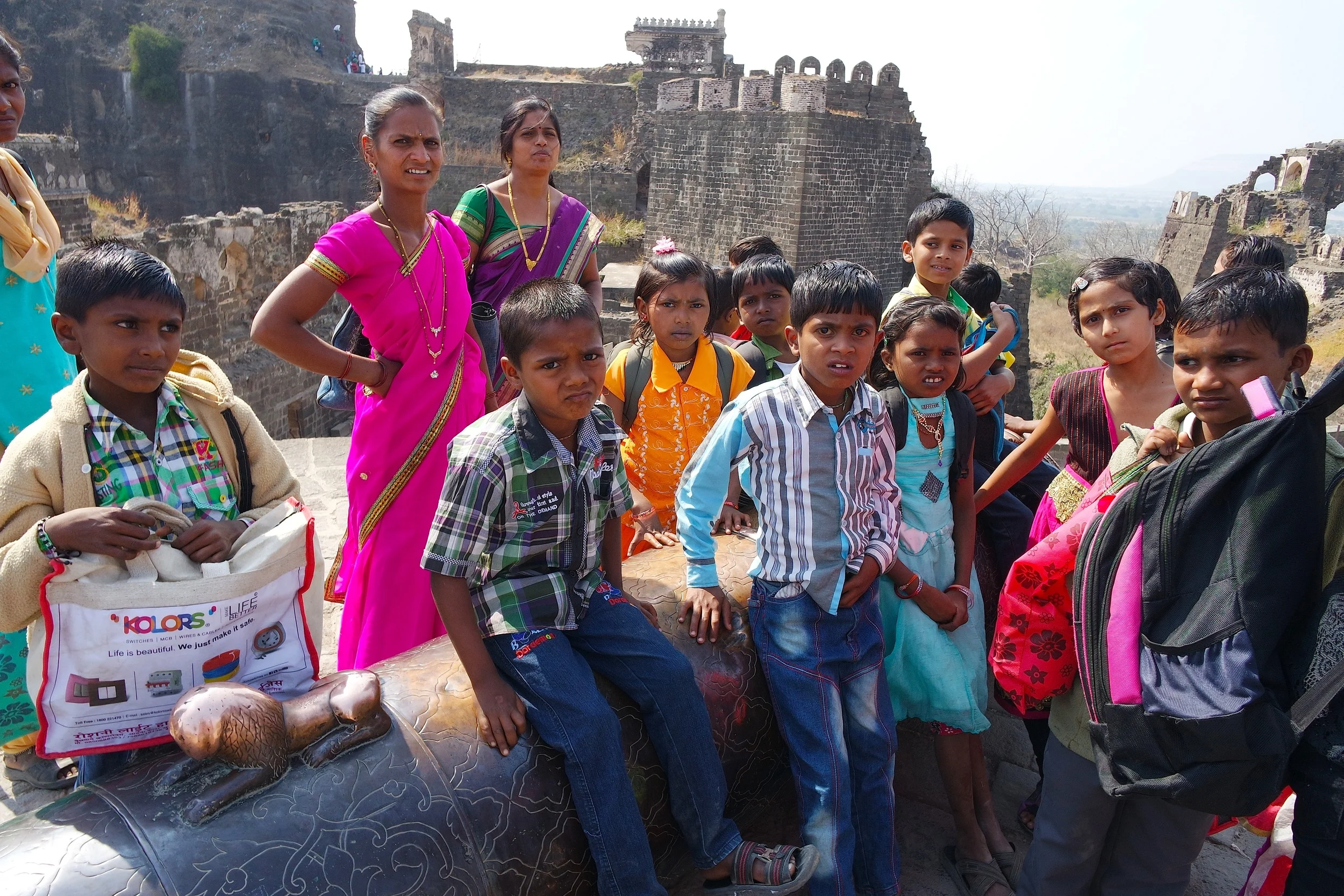
We entered the outer defenses through a pair of huge wooden doors covered with iron spikes into a walled courtyard, where several cannons sat within.

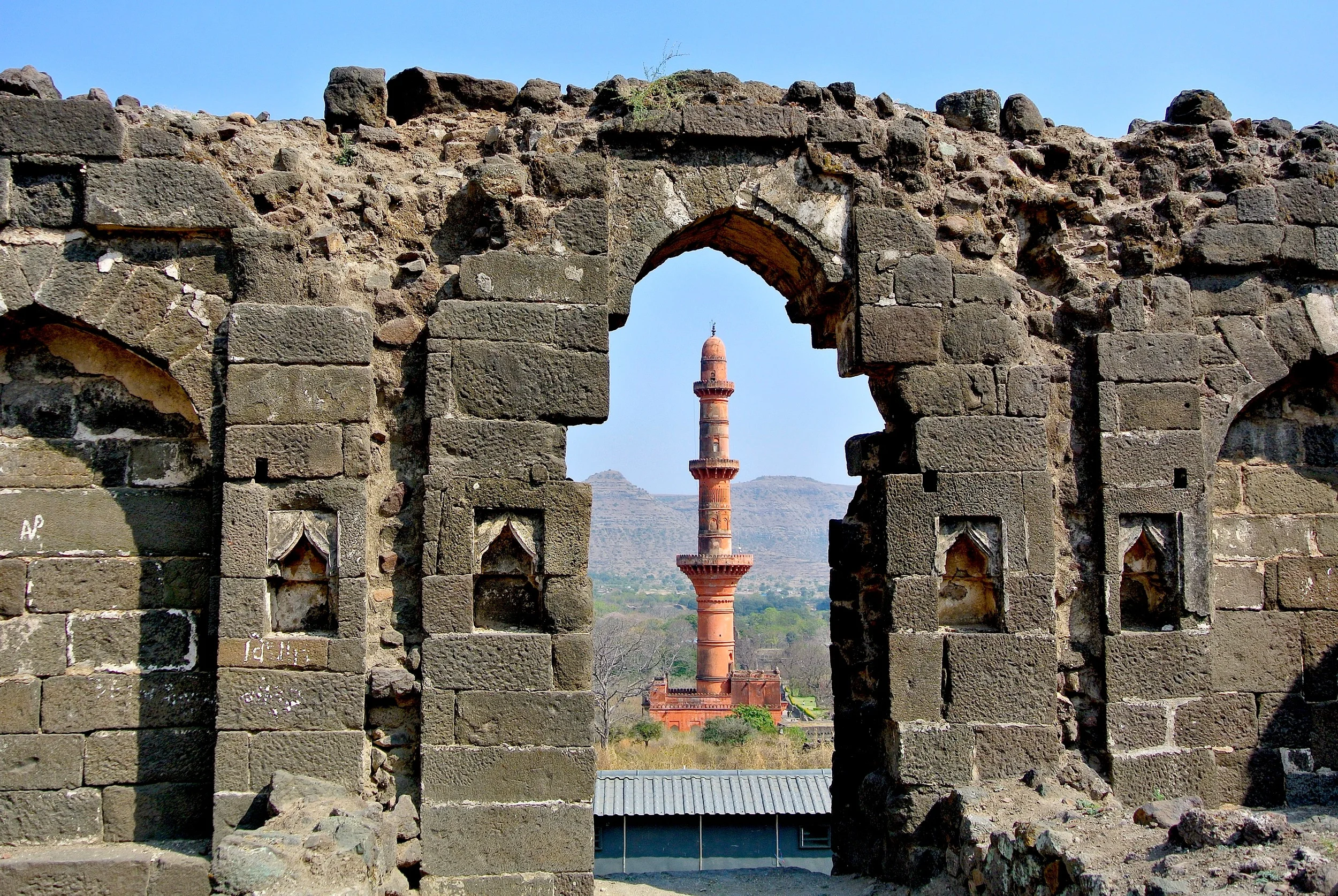
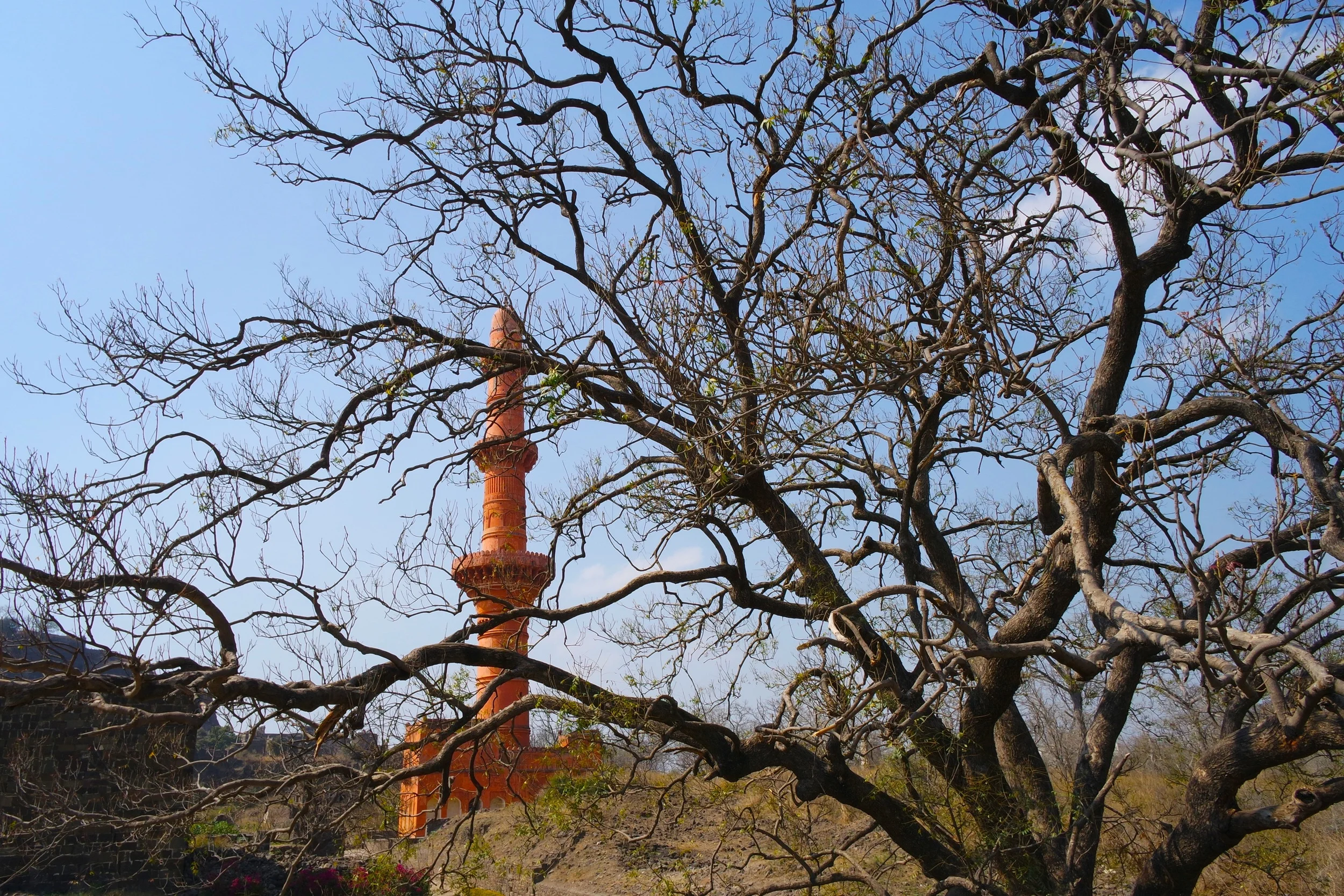
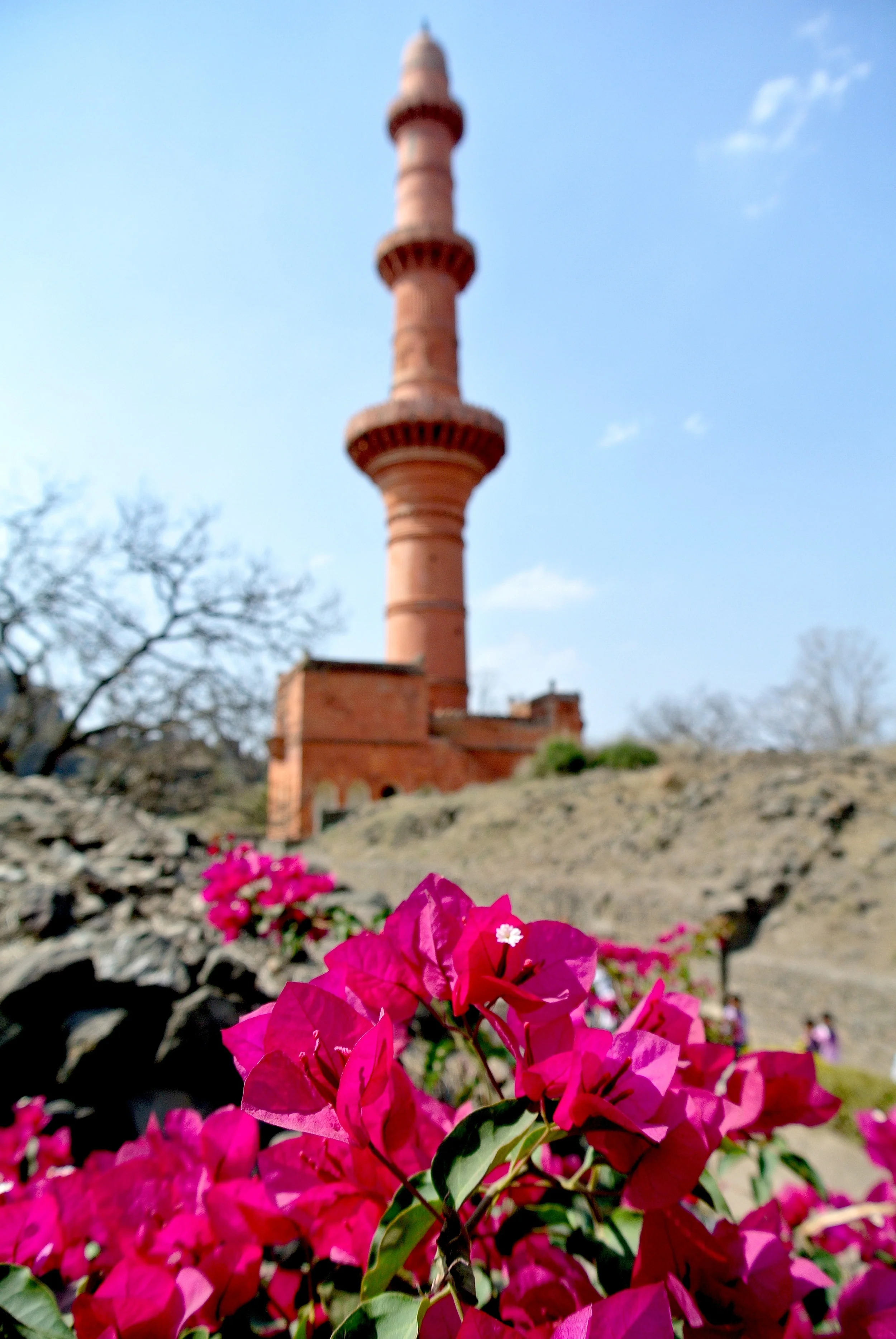
The Moon Tower at Daulatabad, the second tallest tower in India

The Moon Tower at Daulatabad, the second tallest tower in India


The Moon Tower

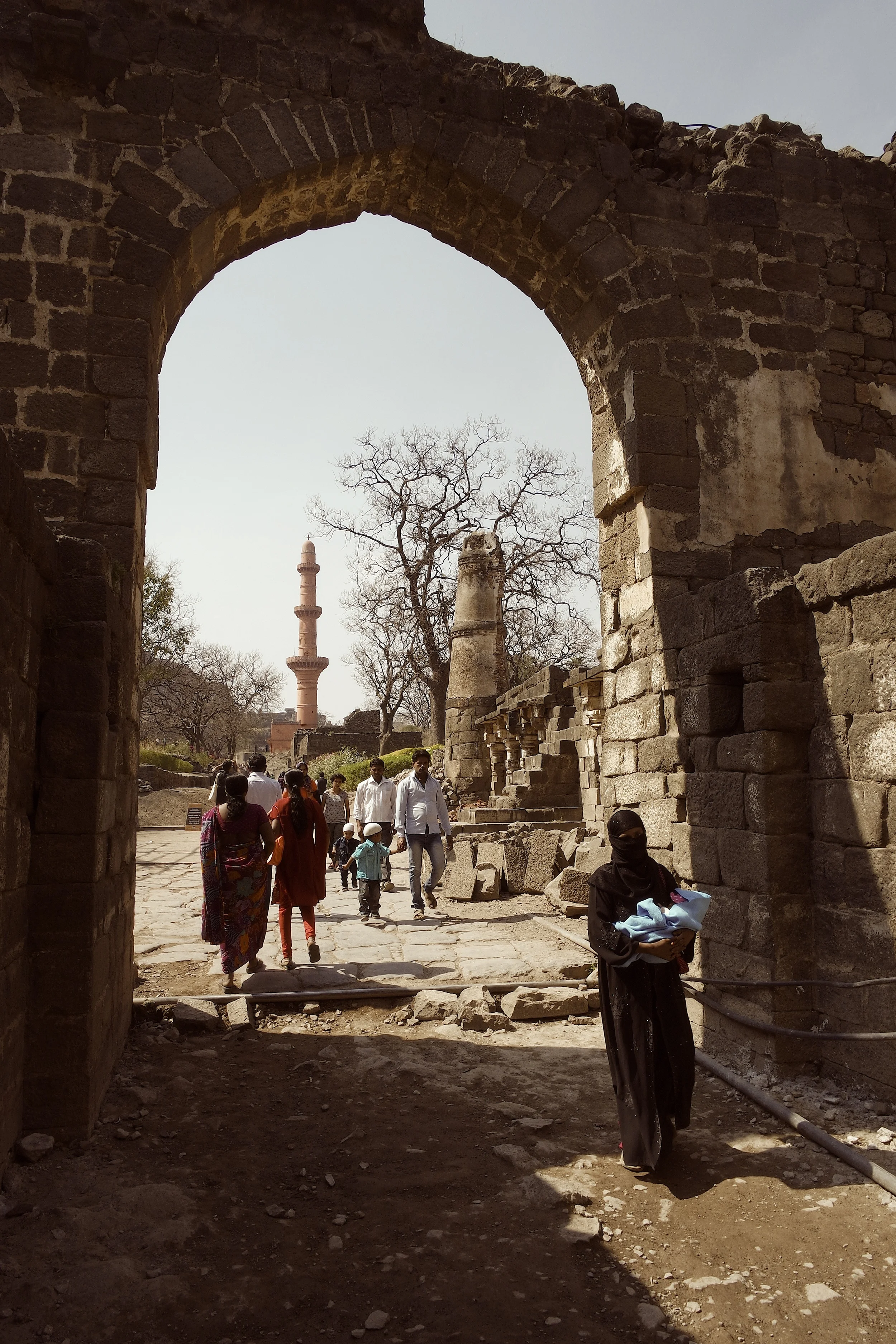
The Chand Minar, or Moon Tower, was built in 1435 as a symbol of victory by Sultan Alauddin to mark the conquest of the fort and is the second tallest tower in India after Delhi's Qutb Minar. However, it is also likely that it served as a minaret from which the Muslim call to prayer was made. 

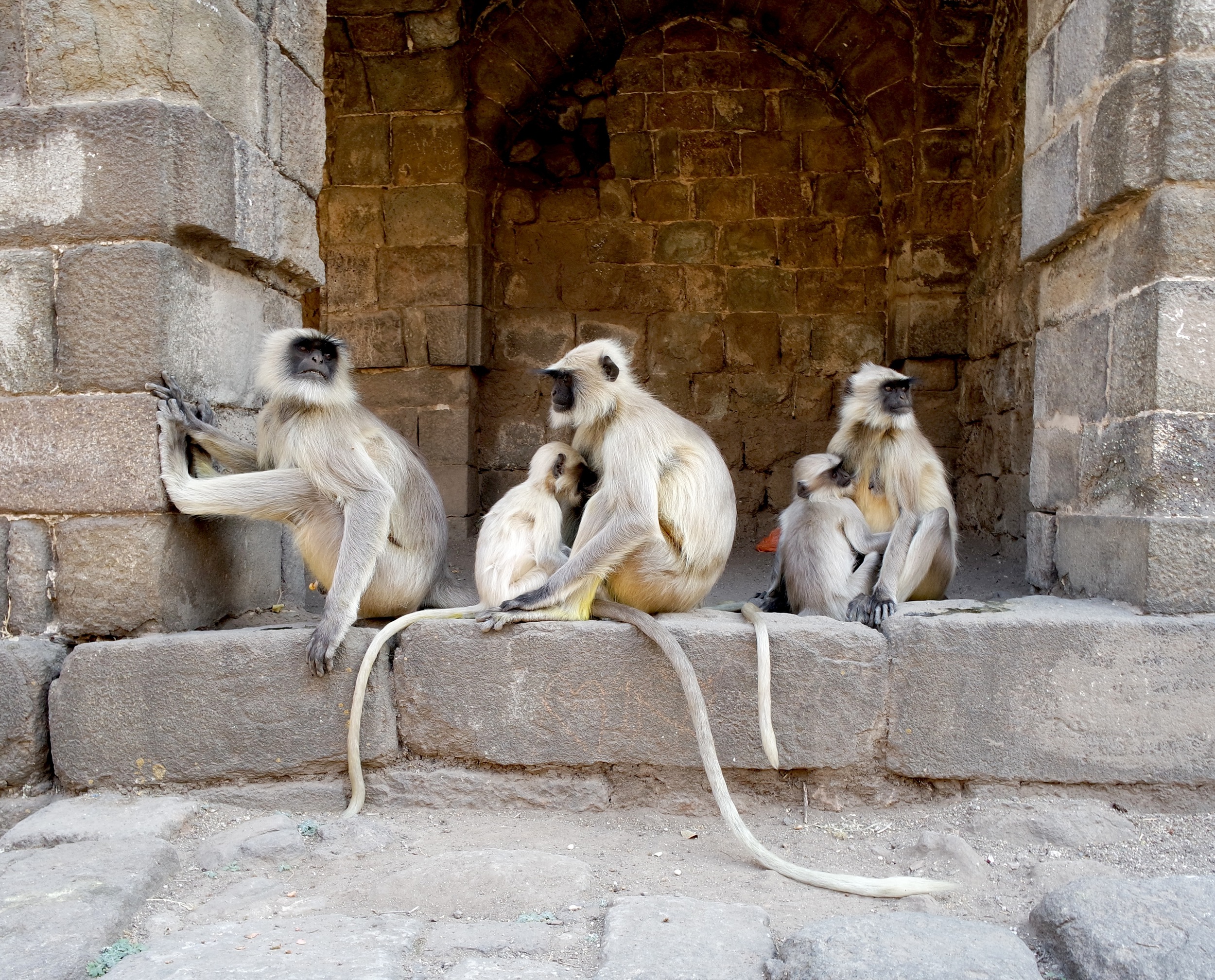
We continued uphill, passing a scattering of langur monkeys and through another gate, which led to the inner area of the citadel. 

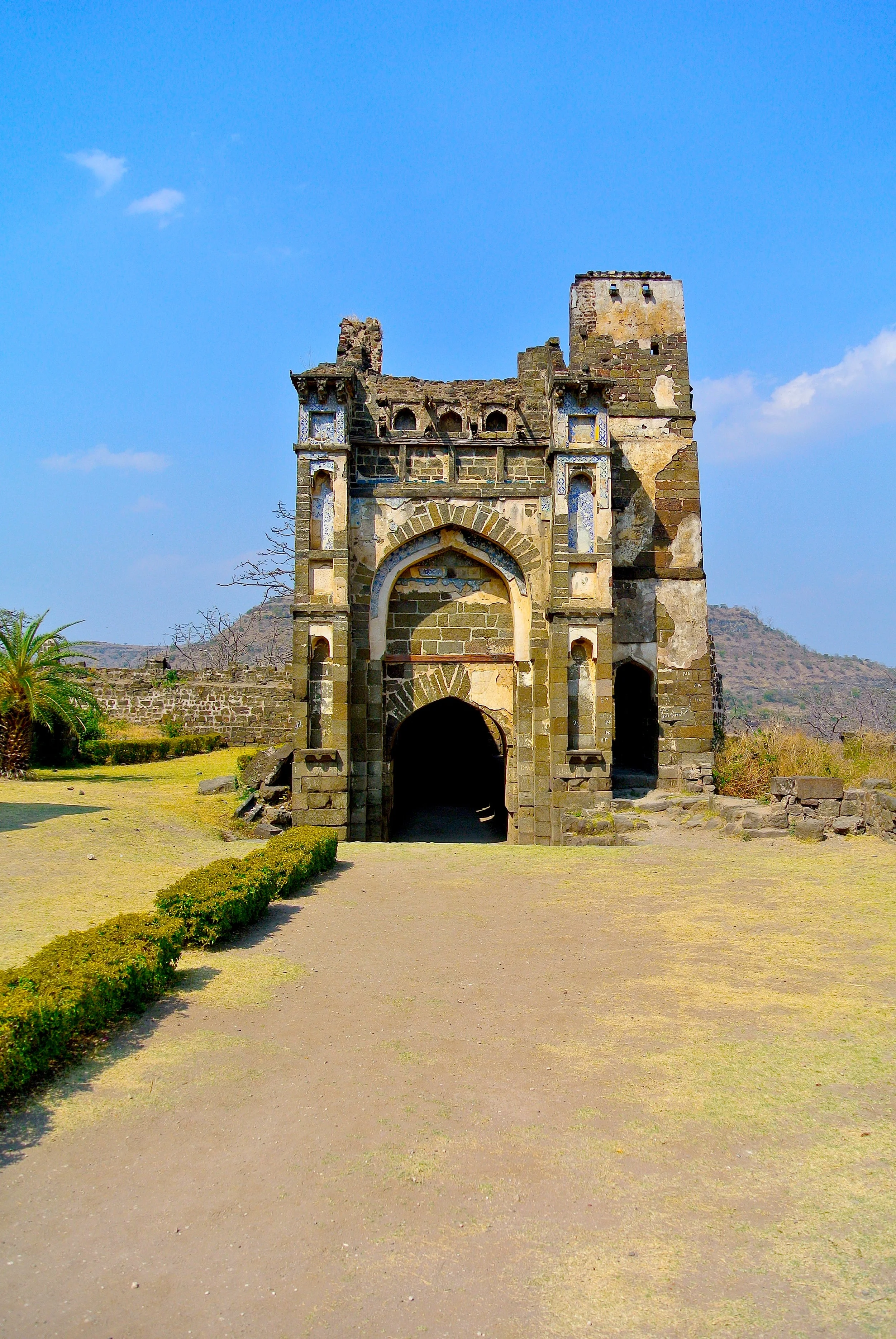
The Chinese Palace, or Chini Mahal, at Daulatabad in India

The Chinese Palace, or Chini Mahal, at Daulatabad in India


The Chinese Palace

Chini Mahal, or the Chinese Place, is so named because of the blue and white Chinese-style tiling that is still visible on parts of the building.

It was here that the last king of Golconda, Abdul Hasan Tana Shah was imprisoned in 1687 by the Mughal emperor Aurangzeb for 13 years until his death. 

The ornately decorated Mendha canon sits atop an elevated stone pedestal. There’s an intricately carved ram’s head at one end. Its rotation is wisely limited to 180 degrees — so opponents couldn't turn it to fire back towards the fort!

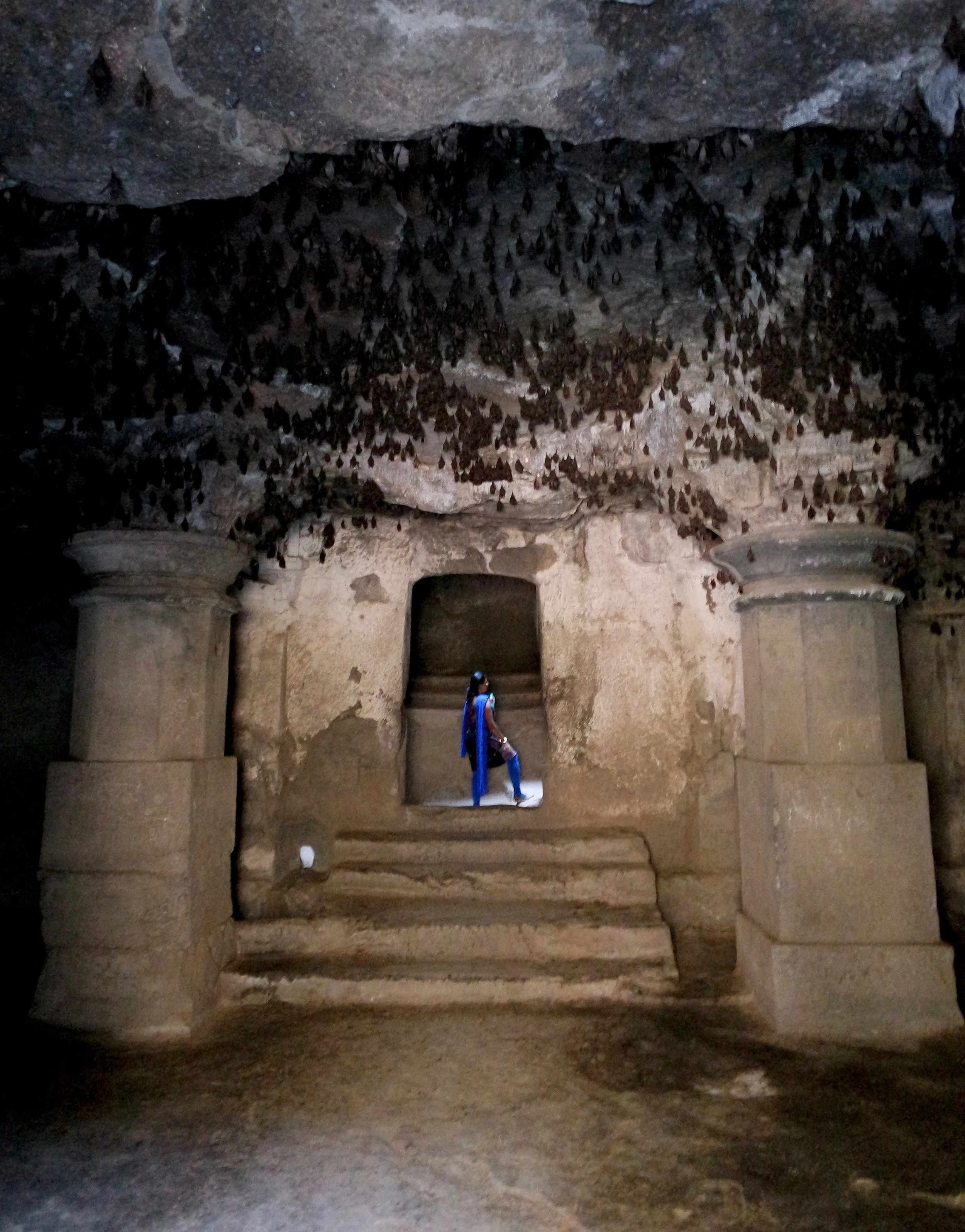
The freaky bat cave at Daulatabad, India

The freaky bat cave at Daulatabad, India


Moat and Bat Cave

We crossed the rock-cut moat, which was rumored to have once been filled with crocodiles, and passed into the Andheri, a pitch-black rock-cut subterranean tunnel.

Be sure you bring a flashlight, as you’ll be groping in the dark down a tunnel otherwise.

We entered through the top of the cave and saw daylight at the bottom. But first we had to pass through a somewhat large chamber.

I whispered to Wally, “I think there are bats in here.”

You could just make out darker forms swooping across the top of the cave.

I made a dash for it, but Wally was still trying to get his nerve up. Finally, he, too, darted through, sure he’d end up with bats clawing at his hair and face.

Luckily, we emerged unscathed. And sure enough, when we reached the outside and turned to look back, we saw the entire chamber was filled with roosting bats.

We decided to return to our driver and not continue the trek to the summit, where the former palace was located.

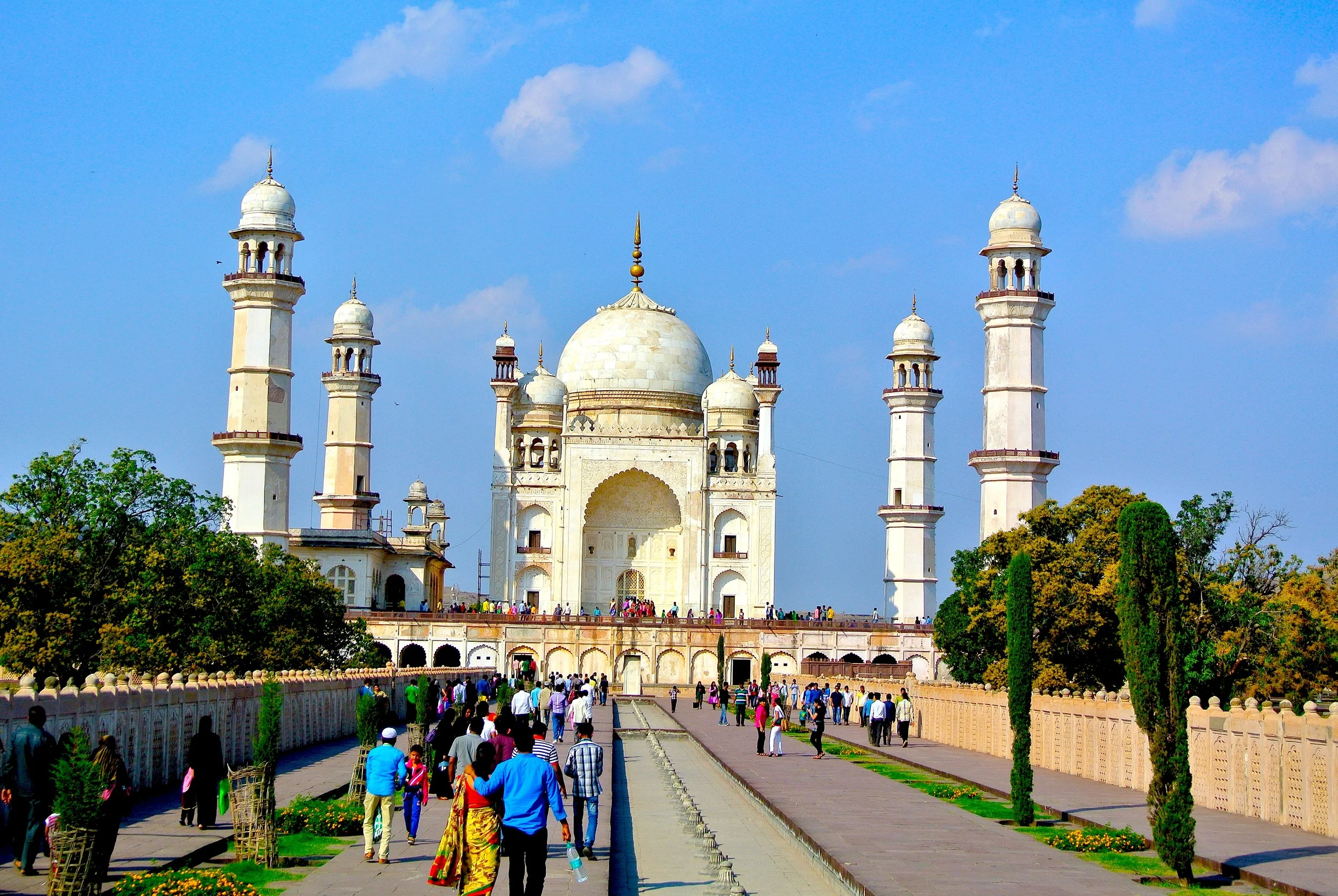
The Bibi ka Maqbara, or the Lady's Tomb — it's the poor man's Taj Mahal

The Bibi ka Maqbara, or the Lady's Tomb — it's the poor man's Taj Mahal


The Baby Taj Mahal

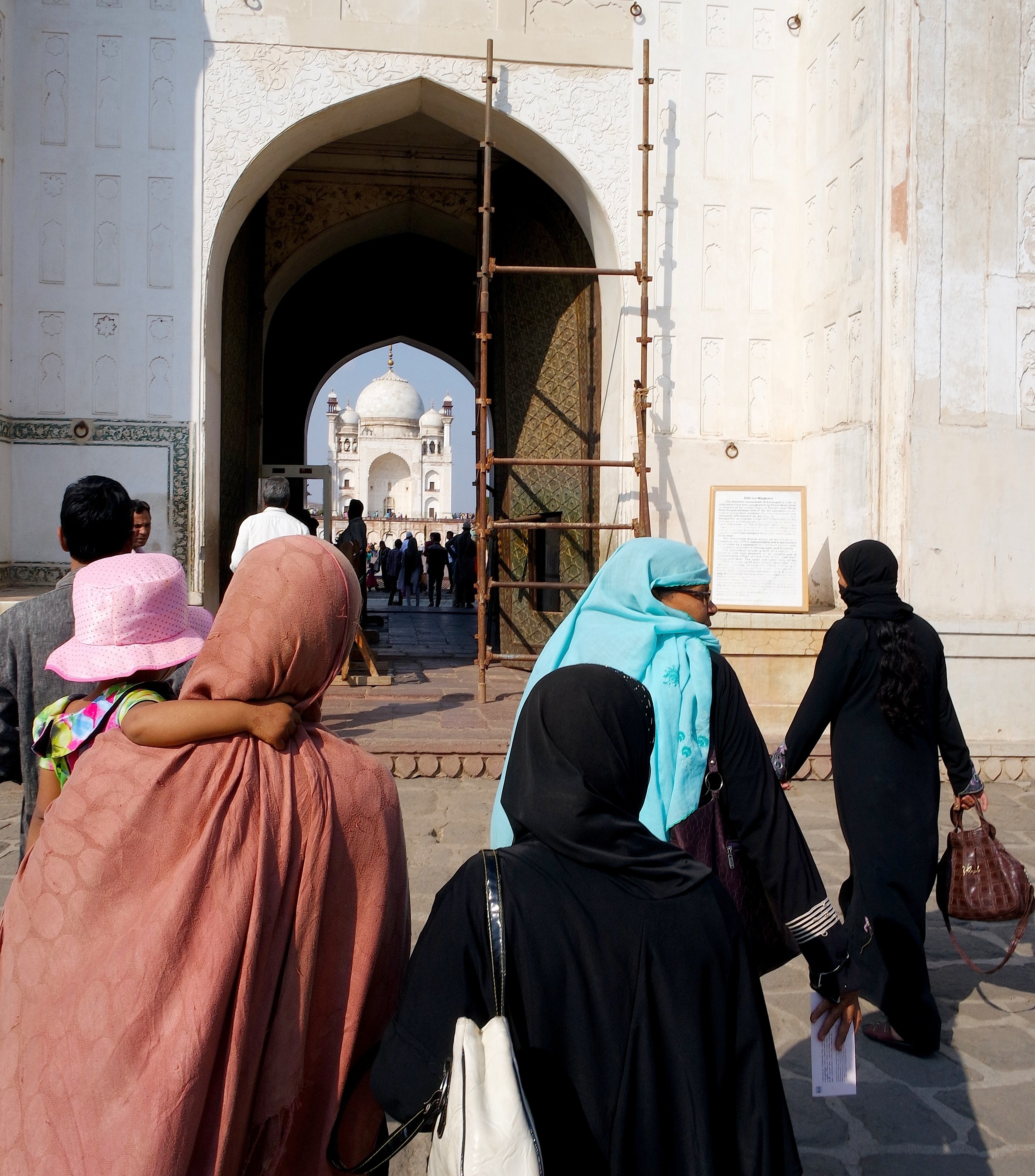
Our next and final stop on the day’s adventure, before returning to our hotel in Aurangabad, was the Bibi ka Maqbara, the Lady’s Tomb.

With the Deccan Mountains as its backdrop, the funerary palace was erected by Prince Azam Shah, the eldest son of Emperor Aurangzeb to honor his mother, Rubia-ul-Daurani.

The original plans were intended to rival the Taj Mahal, but Aurangzeb would not fully fund it. It’s believed that he blocked the transport of marble from various parts of the Mughal Empire that were intended for the tomb. Therefore, the structure is not completely made of marble — only the onion dome is. Instead, sandstone was covered in finely polished limestone plaster and used to complete the mausoleum, giving the tomb a faded and theatrical charm. 

Perhaps because its name starts with "Bibi," people affectionately call this the Baby Taj Mahal, and we were glad to see it — especially since we (horror upon horrors!) decided to skip the real deal.

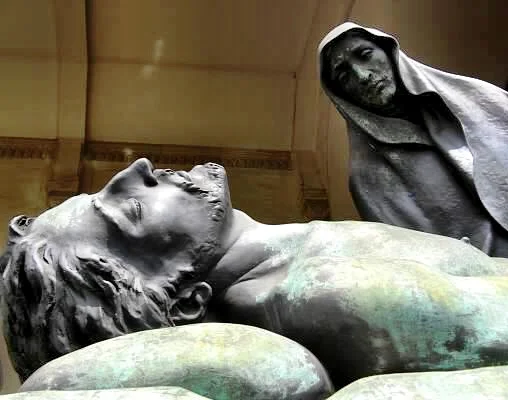
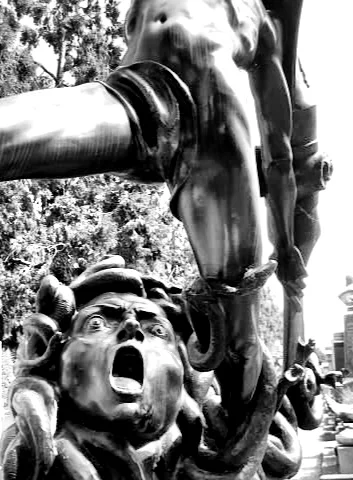
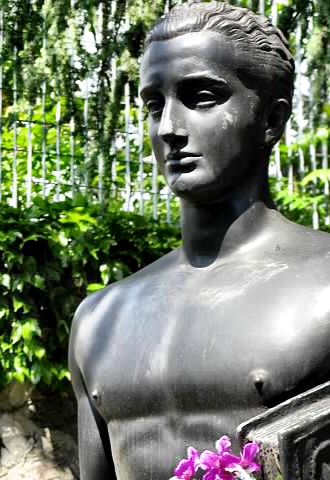
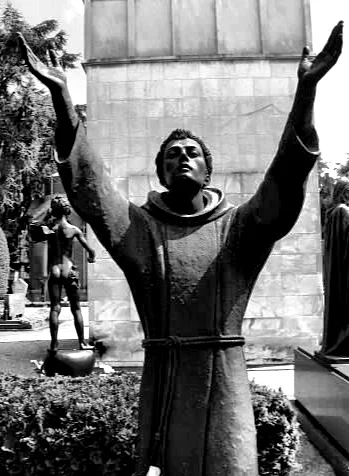
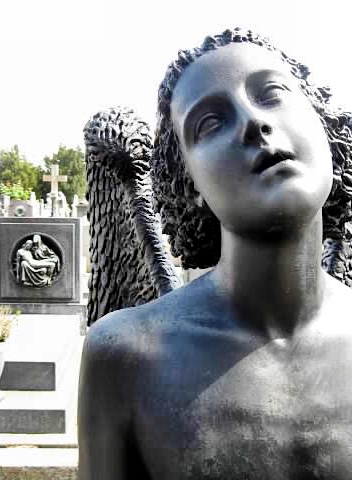
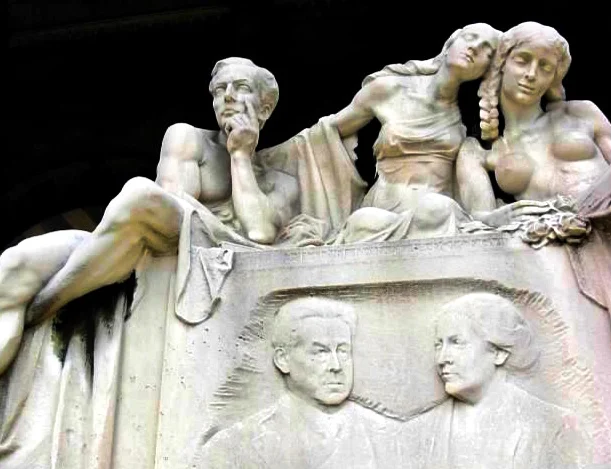
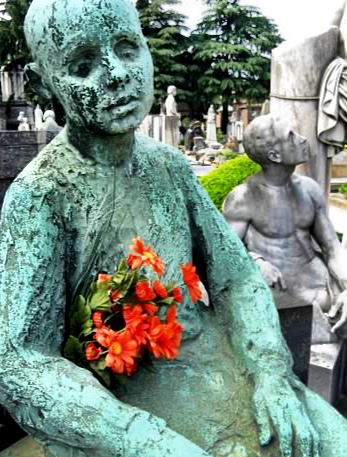
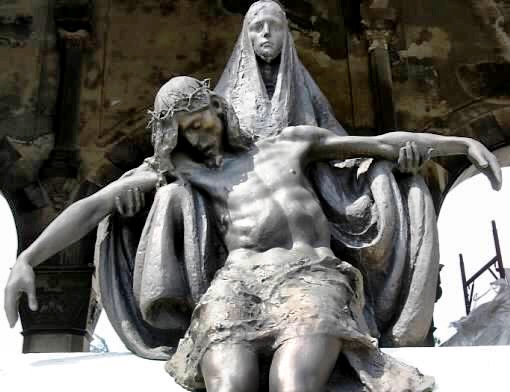
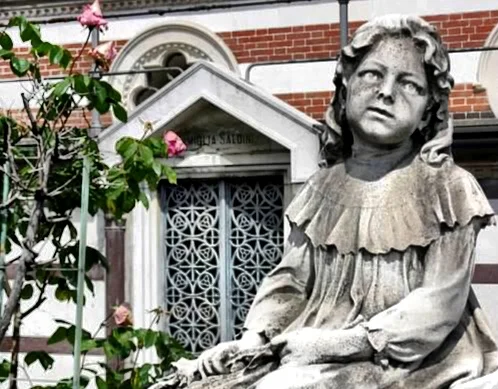
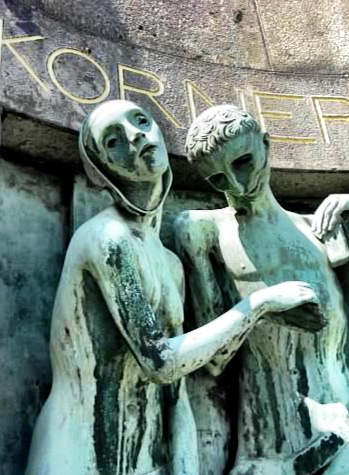
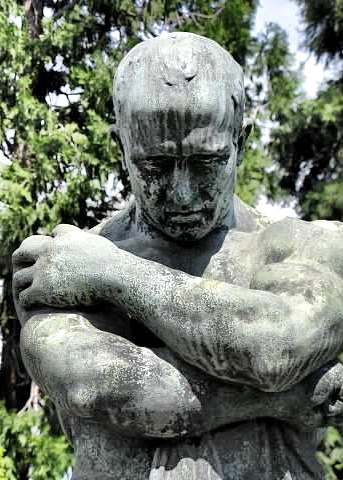
Monumental Cemetery, Milan: A Sculpture Slideshow

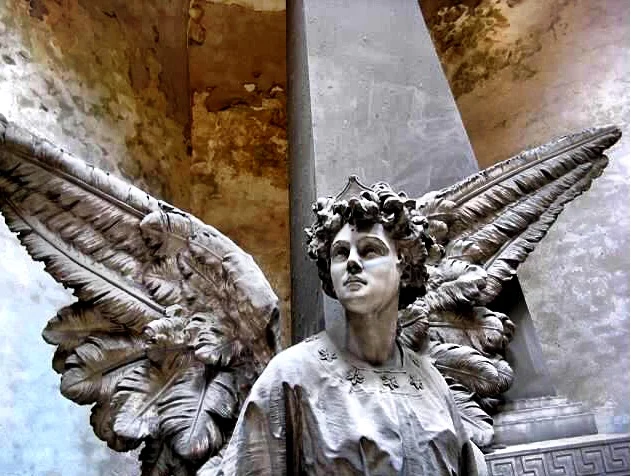
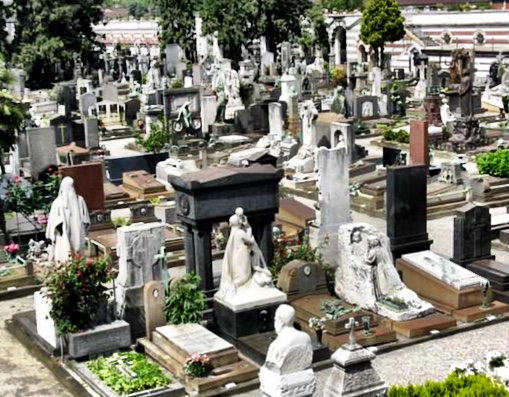
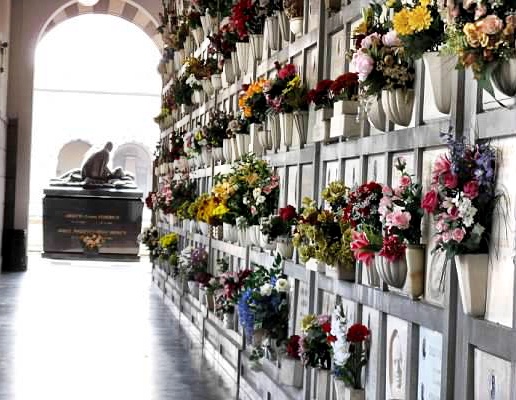
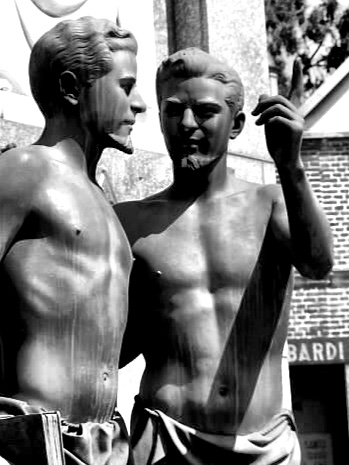
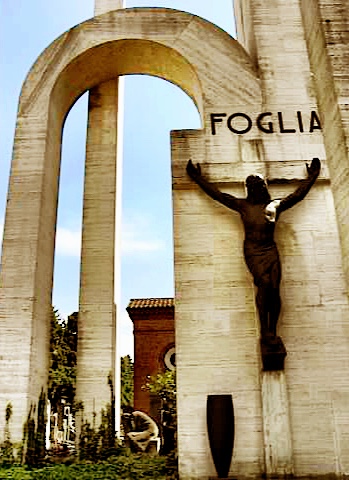
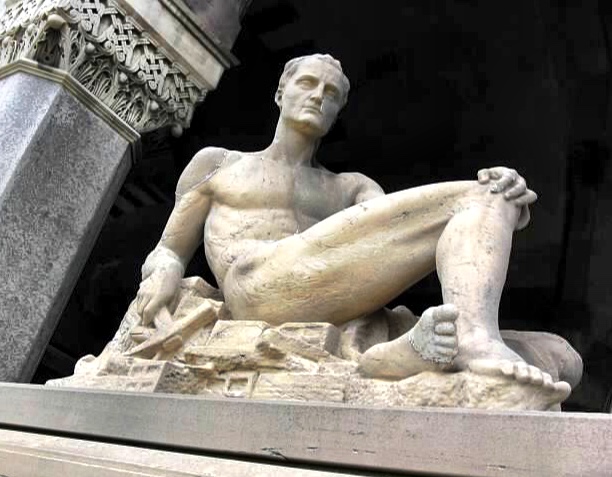
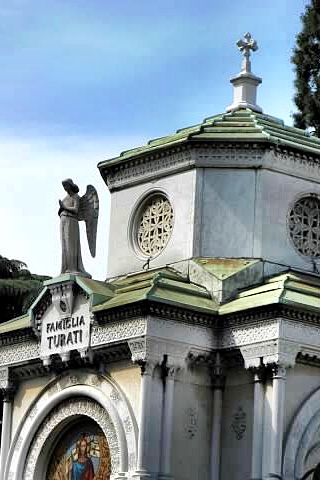
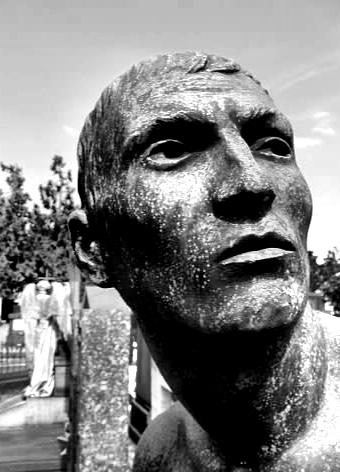
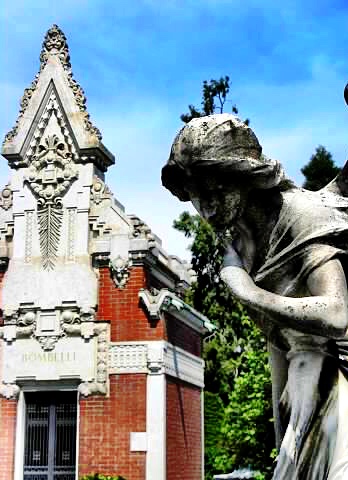
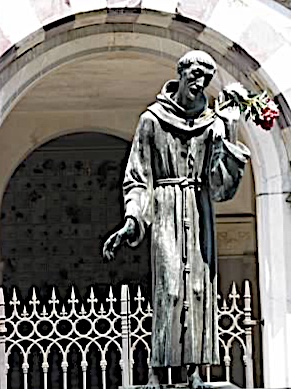
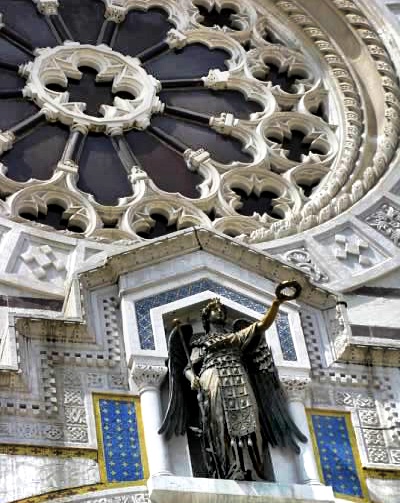
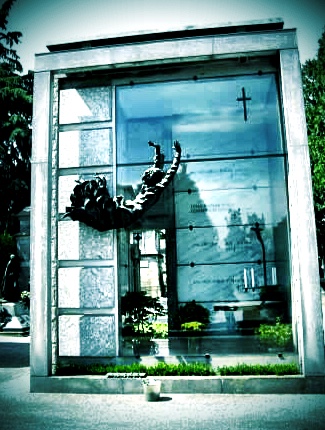
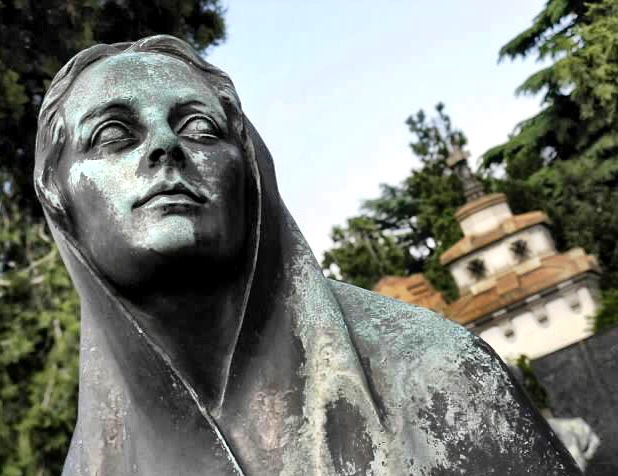
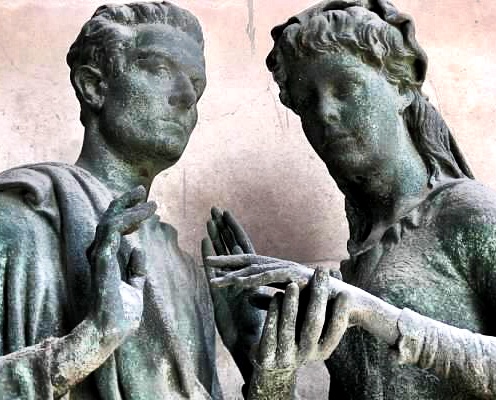
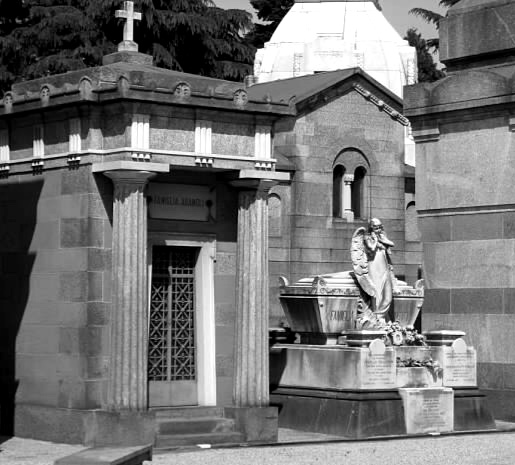
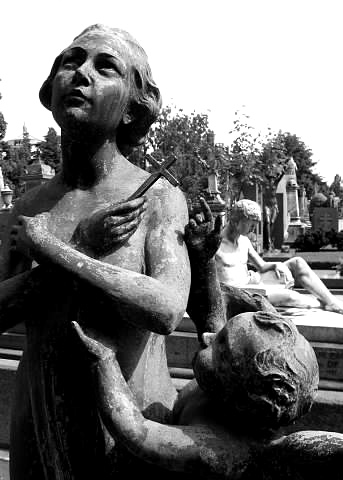
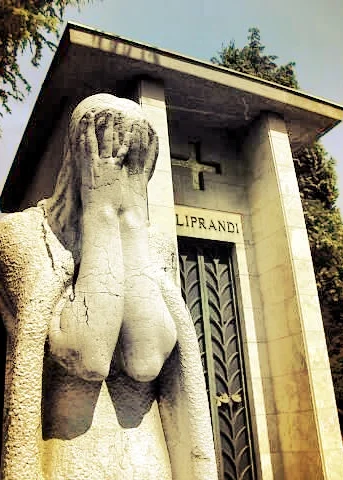
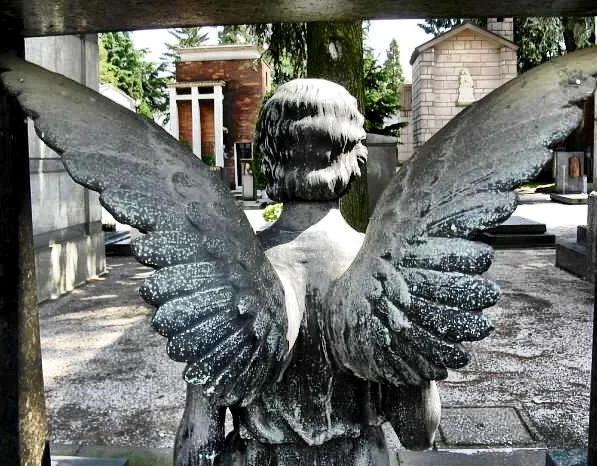
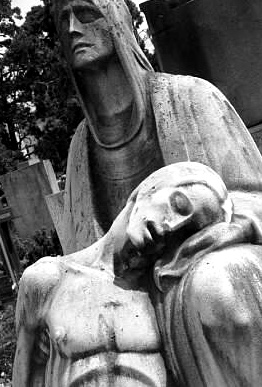
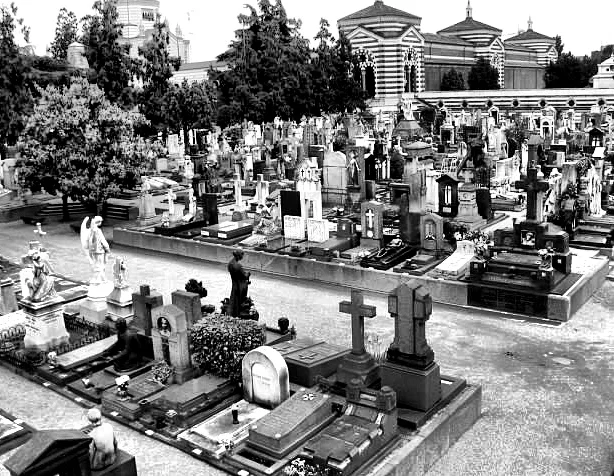
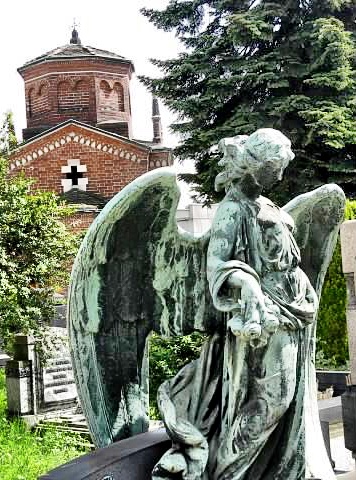
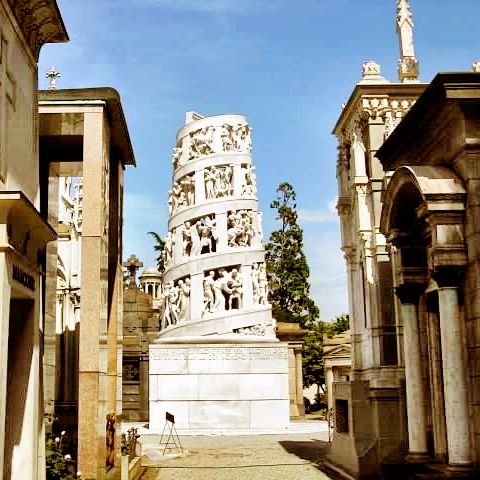
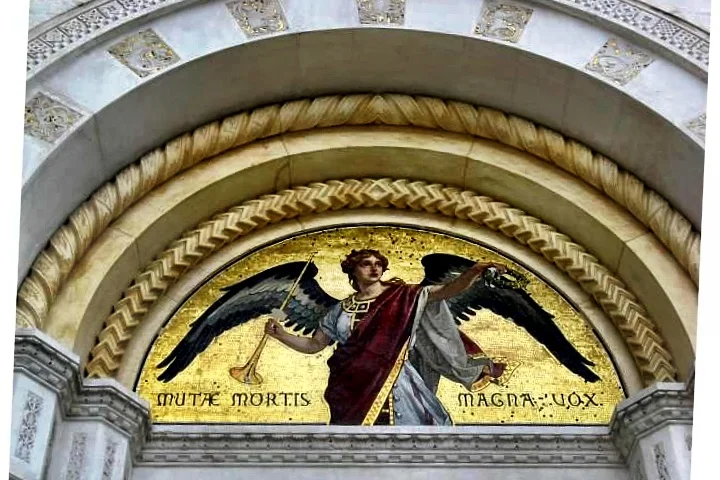
One of my favorite things to do in Milan, Italy was wander through this graveyard and its statues that rival Père Lachaise in Paris.

I love cemeteries. They're some of my favorite places to spend a quiet afternoon. And this particular cemetery was like being in a sculpture park. 

It was my last day in Milan, Italy, and I came upon the Monumental Cemetery by accident.

If you’re someone who thinks cemeteries are depressing, think again.

As I was crossing a street, I saw the collonaded archway entrance at the end of the block. I didn't know what it was. But I was irresistably drawn to it. 

Imagine my delight when I discovered it was one of the most impressive cemeteries I had ever seen. 

I wandered the lanes for a couple of hours, marveling at the sculptures, snapping away at with my camera. 

Here are 30-some of my favorite pictures. (As you can tell, I had a hard time narrowing these down. They're all just so amazing.)


Drop Dead Gorgeous

The cemetery, known locally as the Cimitero Monumentale, was constructed from 1863 to 1866.

Someone decided to consolidate all the small graveyards that were spread throughout the city of Milan into two large cemeteries. The "common" people got the Cimitero Maggiore, while the rich got the Monumental Cemetery, which, when it comes down to it, it actually a beautiful outdoor museum. 

Spread over 62 acres, the cemetery has three distinct sections: one for Catholics, one for non-Catholic Christians and one for Jews.

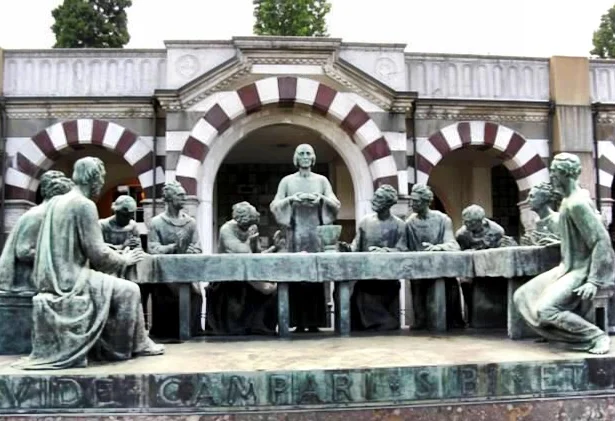
Fun fact: One of the mausoleums has an elaborate sculpture depicting the Last Supper. This is the final resting place of the Campari family, who brought us those potent red bitters of the same name.

If you're someone who thinks cemeteries are depressing, think again. The Monumental Cemetery in Milan is just the place to have a change of heart. It's, well, heavenly. –Wally