FOLKLORE

Dhokra Legend: One of the Saddest Indian Stories

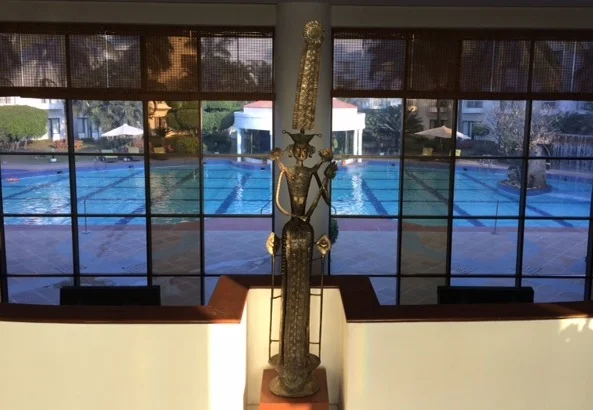
The Gond people of central India pray to Mitki, depicted here in a Dhokra metalwork sculpture, to fulfill their desires

The Gond people of central India pray to Mitki, depicted here in a Dhokra metalwork sculpture, to fulfill their desires

Star-crossed lovers met a gruesome demise — but at least some good art came out of it.


You could say it’s India’s version of Romeo and Juliet.

While staying at Lemon Tree hotel in Aurangabad, Wally and I oohed and ahhed over the many fine examples of the folk art showcased throughout. We were immediately drawn to the Dhokra metalwork sculptures, with their distinctive coiled surfaces and exaggerated, almost African vibe.

In the morning, when the door was opened, he was found dead, much to the glory of the great goddess, who had shown her power by coming during the night and sucking his blood.
— Maurice A. Canney, An Encyclopaedia of Religions

We asked a hotel employee if we could buy similar sculptures locally but were told they came from another region. Disappointed, we made a mental note to keep an eye out for these on our next visit to India.
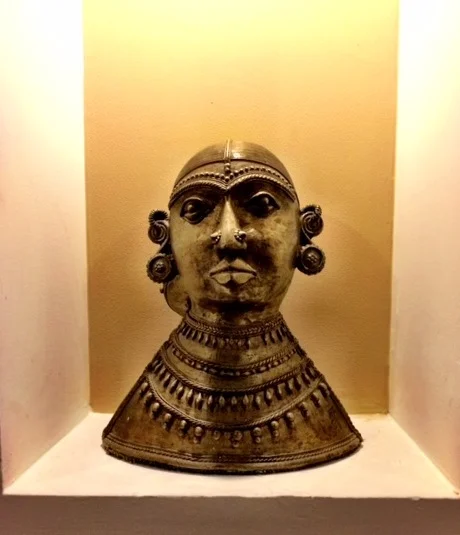
 

A Dhokra sculpture of a queen, found outside our room at the Lemon Tree hotel in Aurangabad, India

A Dhokra sculpture of a queen, found outside our room at the Lemon Tree hotel in Aurangabad, India

Waxing Poetic

These intricate pieces take their name from the Dhokra Damar, a tribe native to the ancient Indus Valley civilization of Mohenjo-daro in current Pakistan.

One of the oldest traditional techniques in the world, dating back 4,000 years, it’s still practiced today.

The artisans use coils of beeswax and resin, a distinctive hallmark of Dhokra metalwork figurines.

Using what’s known as the lost-wax casting method, the wax object is covered with layers of clay. This takes on the negative form of the wax inside and becomes the mold for the metal that will be poured inside it and cast. 

Each mold can only be used once, as it is broken to remove the finished piece, making the finished sculpture one of a kind.


Appeasing a Bloody-Thirsty Goddess

The sculpture in the Lemon Tree’s lobby is Mitki, who according to popular folklore was a young girl with seven brothers who lived in the area of Bastar in central India.

As part of tradition, her brother brought home a young man to marry her. Mitki and Jhitku fell in love. But, as fate would have it, the brothers dreamed that the goddess, whom some believe to be a deification of the tiger, demanded a sacrifice.

The Gond people of central India did indeed once offer human sacrifices to the fearsome goddess Kali and to Danteshwari, the primary deity of the Bastar royal family. Human sacrifice supposedly continued into the 19th century, according to GluedIdeas.com. 

Here’s how it went down: “The victim was taken to the temple after sunset and shut up within its dismal walls. In the morning, when the door was opened, he was found dead, much to the glory of the great goddess, who had shown her power by coming during the night and sucking his blood,” writes Maurice A. Canney in his 1921 tome, An Encyclopaedia of Religions.

The brothers couldn’t find anyone else suitable, so they sacrificed Jhitku. Poor Mitki could not bear losing her soulmate, so she killed herself.

To this day, devotees from the Gond people worship these figurines, known collectively as Jhitku Mitki, to have their wishes granted. –Duke
How to Protect Yourself From Jinns and Black Magic

blackmagic

Black magic in Islam is a serious concern — and the holy writings offer numerous ways to negate magic jinn.


I’m torn. Sometimes I think there’s a power in belief. That just by acknowledging something’s existence, you’re giving it relevance, even substance.

On the other hand, I know I can’t just force myself to not think about djinns while I’m in their lands. Heck, telling me not to think about something is pretty much guaranteeing it’ll be top of mind the entire time we’re in Fès.

There’s even one to recite, ahem, before you have sex.

So, I ultimately decided to investigate ways to protect yourself from djinns (also called jinns and, to most Westerners, genies).

Not that I think we’re really in any danger — or that these superstitions will actually help prevent something bad from happening.

But heck, after what happened last time, I figure it sure couldn’t hurt.

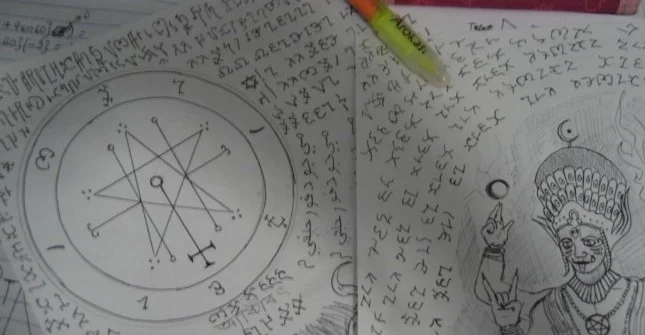
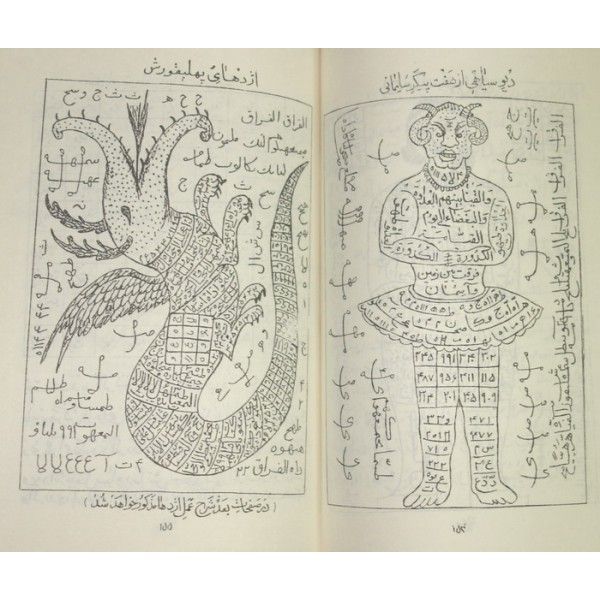
Pages from the Iran Islam Temtem-e Hendi Pictorial Book on Talisman, Charm & Mysterious Sciences in Persian (Farsi ): Instructions on What to Do to Put Demons & Genie ( Jinni ) Under Your Control & Info About How to Make Brass Plates to …

Pages from the Iran Islam Temtem-e Hendi Pictorial Book on Talisman, Charm & Mysterious Sciences in Persian (Farsi ): Instructions on What to Do to Put Demons & Genie ( Jinni ) Under Your Control & Info About How to Make Brass Plates to Avoid Black Magic & Use White Magic


Spells, Prayers and Protective incantations

A lot of the sites I found during my research focused on prayers to Allah for protection, such as this one:

“I seek refuge in Allah from you. I curse you with the curse of Allah.”

That seems a bit extreme — maybe it’s best to keep that one as backup if things get particularly dire.

This is one you recite upon leaving your house:

“In the name of Allah, I place my trust in Allah. There is no solution, no way out and no power except by Allah.”

There’s even one to recite, ahem, before you have sex:

“In the name of Allah, O Allah! Keep us away from Shaytaan [Satan] and keep Shaytaan away from what you bestow upon us.”

This assures that if a baby is conceived, Satan will never dare harm it. It also prevents a djinni from “taking part in a man’s sexual intercourse with his wife,” according to IdealMuslimah.

Here’s a nice general-purpose prayer that works all day long. Say this upon rising in the morning, and you’re said to be protected from djinns until you retire in the evening:

“I seek refuge in Allah from Satan the outcast. Allah! There is none worthy of worship but he, the ever-living, the one who sustains and protects all that exists. Neither slumber nor sleep overtakes him. To him belongs whatever is in the heavens and whatever is on the Earth. Who is he that can intercede with him except with his permission? He knows what happens to them in this world, and what will happen to them in the hereafter. And they will never encompass anything of his knowledge except that which he wills. His throne extends over the heavens and the Earth, and he feels no fatigue in guarding and preserving them. And he is the Most High, the Most Great.”

Here it is in Arabic:

أَعُوذُ بِاللهِ مِنَ الشَّيْطَانِ الرَّجِيمِ "اللهُ لَا إِلَهَ إِلَّا هُوَ الْحَيُّ الْقَيُّومُ لَا تَأْخُذُهُ سِنَةٌ وَلَا نَوْمٌ لَهُ مَا فِي السَّمَاوَاتِ وَمَا فِي الْأَرْضِ مَنْ ذَا الَّذِي يَشْفَعُ عِنْدَهُ إِلَّا بِإِذْنِهِ يَعْلَمُ مَا بَيْنَ أَيْدِيهِمْ وَمَا خَلْفَهُمْ وَلَا يُحِيطُونَ بِشَيْءٍ مِنْ عِلْمِهِ إِلَّا بِمَا شَاءَ وَسِعَ كُرْسِيُّهُ السَّمَاوَاتِ وَالْأَرْضَ وَلَا يَئُودُهُ حِفْظُهُمَا وَهُوَ الْعَلِيُّ الْعَظِيمُ

'A 'oothu billaahi minash-Shaytaanir-rajeem. Allaahu laa 'ilaaha 'illaa Huwal-Hayyul-Qayyoom, laa ta'khuthuhu sinatun wa laa nawm, lahu maa fis-samaawaati wa maa fil-'ardh, man thai-lathee yashfa'u 'indahu 'illaa bi'ithnih, ya'lamu maa bayna 'aydeehim wa maa khalfahum, wa laa yuheetoona bishay'im-min 'ilmihi 'illaa bimaa shaa'a, wasi'a kursiyyuhus samaawaati wal'ardh, wa laa ya'ooduhu hifdhuhumaa, wa Huwal- 'Aliyyul- 'Adheem

This is the one Duke and I ended up reciting every morning before we left the riad. And we didn't have one bad djinni experience! It works!

Here's another, though, to play it safe:

“In the name of Allah, the Beneficent, the Merciful. All praise is due to Allah, the Lord of the Worlds, the Beneficent, the Merciful. Master of the Day of Judgment, thee do we serve and thee do we beseech for help. Keep us on the right path. The path of those upon whom thou has bestowed favors — not of those upon whom thy wrath is brought down, nor of those who go astray.”

And one more for good measure:

“I seek refuge in the Lord of the Dawn from the evil of what he has created. And from the evil of the utterly dark night when it comes. And from the evil of those who blow on knots. And from the evil of the envious when he envies.”

Wonder what that blowing on knots is all about? It appears to be a term for (and practice of) the secrets arts of sorcery.

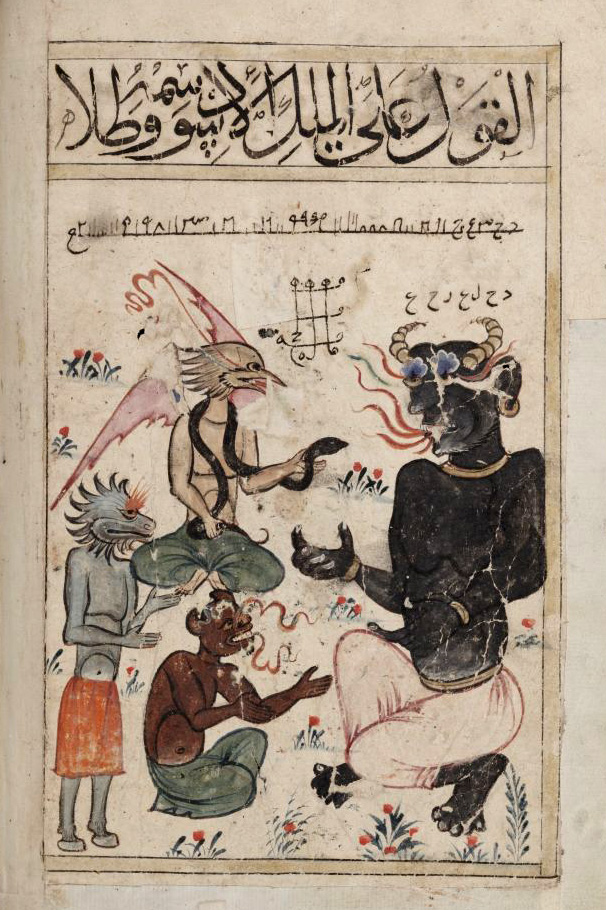
The black king of the djinns, Al-Malik al-Aswad, in the late 14th century Kitab al-Bulhan or Book of Wonders

The black king of the djinns, Al-Malik al-Aswad, in the late 14th century Kitab al-Bulhan or Book of Wonders


Other Means of Protection

Finally, I found some types of protection aside from spoken prayers or spells:

dates

The Prophet (peace and blessing upon him) said, “Whoever eats seven pressed dates every morning before eating any food, will not be affected by poison or sihr [witchcraft]!”

Preferably, you’re eating ajwa, a kind of date grown in Madinah, Saudi Arabia.

This is from Al-Bukhari, one of the major collections of Sunni Islam: 10/249, the Book of Medicine, Chapter: Treatment of Sorcery With 'Ajwah.)


ablution (wudu)

First think about your niyyah (intention) in performing ablution to cleanse yourself of impurities.

Say, “Bismillah,” which means “in the name of Allah.”

Wash your right hand up to the wrist (and between the fingers) three times.

Repeat with the left hand.

Rinse your mouth and spit out the water three times and rub the teeth with a miswak, a teeth-cleaning twig.

This site has a more elaborate form of wudu that includes putting water up your nose and washing your feet.

Do this and you’ll be protected by an angel and therefore immune to black magic.


potty prepping

Apparently, Satan likes to lurk in bathrooms. So before you go in, you might want to say, “O Allah! I seek refuge in you from the male/female Satans.” The Devil apparently likes to hide in “this filthy place, which is the home of Satanic jinn,” according to Al-Bukhari


I'm not saying I'll follow all of this advice…but I do feel that I'm going back onto the djinns' turf better-armed. –Wally


Haint Blue Porch Paint

My parents painted the ceiling of their front porch haint blue, a tradition in the Lowcountry

My parents painted the ceiling of their front porch haint blue, a tradition in the Lowcountry

Tired of evil spirits raiding your home? Victim of vengeful ghosts? Try haint blue! 

No one wants to share their home with angry, vengeful spirits. And that's exactly what haints are.

These ghosts are trapped somewhere between the worlds of the living and the dead. Needless to say, that makes them grumpy.

Gullahs paint the ceilings of their porches a pale blue to keep away pesky poltergeists.

Gullahs, the descendants of African slaves who worked the plantations of Georgia and South Carolina, found a clever way to exploit the spirits' one weakness: They cannot cross water.

Rather than digging a moat around every one of their homes, they decided to trick the haints. 

By taking lime, milk and some odd pigments, and mixing them up in a pit, the Gullahs ended up with a pale blue color. They used to this to paint the ceilings of their porches to keep away the pesky poltergeists.

Sure enough, it fooled the haints, who believed they couldn't cross the threshold and found another home to haunt. 

As a bonus, wasps, too, get tricked, local superstition has it. They supposedly mistake haint blue for the sky and build their nests elsewhere.

The tradition lives on today in the South. My mother has painted the ceiling of her front porch and sunroom a lovely haint blue.

As for sinister spirits of the dead? Haint no spirits here! –Wally