Planning a family trip to Spain and Portugal? Discover the best kid-friendly destinations in Iberia, from Barcelona and Valencia to Lisbon, Porto and Seville, with practical tips for stress-free family travel.
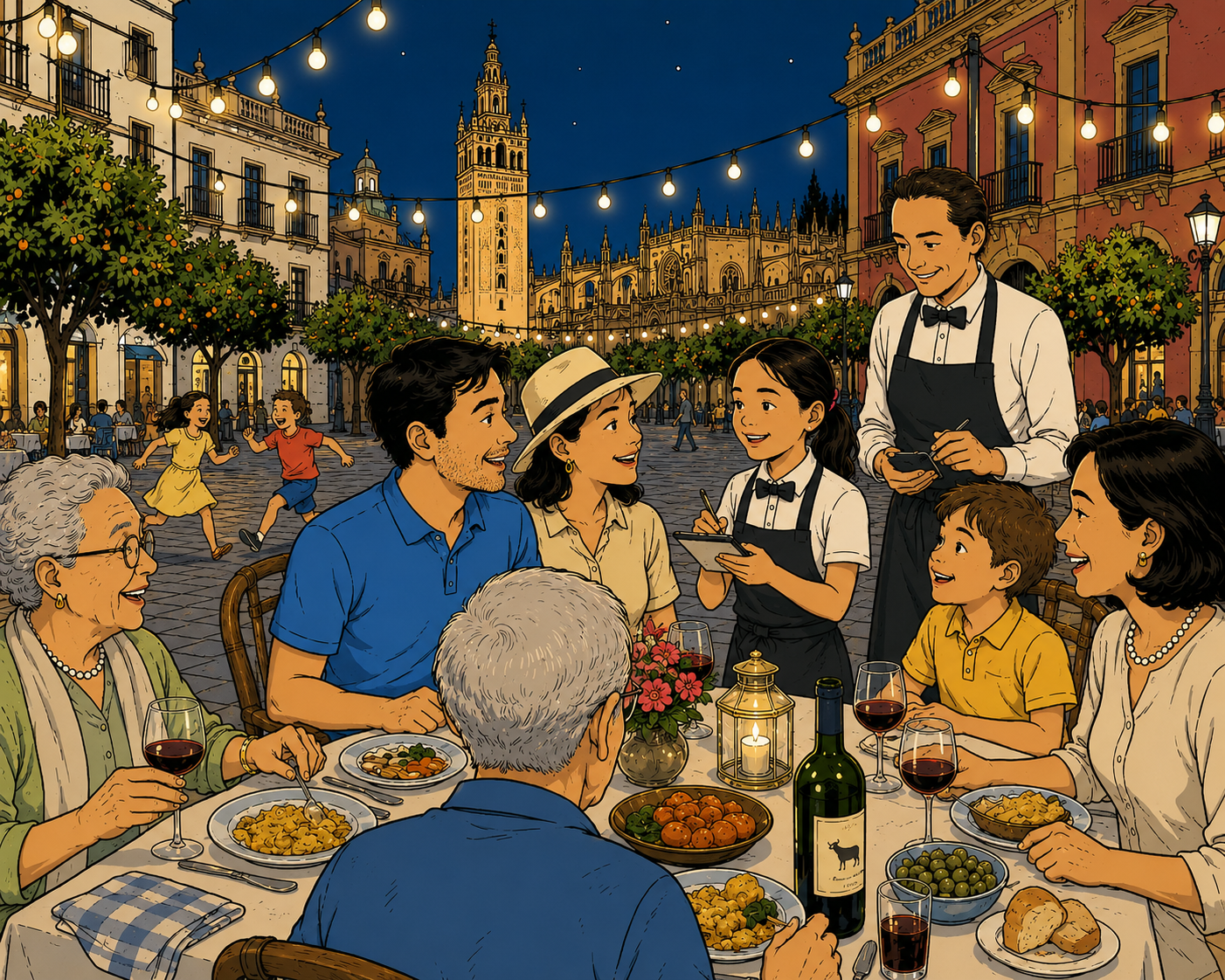
Traveling with children on the Iberian Peninsula involves a recalibration that most parents figure out within the first couple of days. Spain and Portugal are deeply family-friendly, not because every attraction caters to children but because children are welcomed into everyday life. Families gather in plazas after sunset, children join restaurant meals and multiple generations often share the same table.
You don’t have to embrace 9 p.m. dinners to benefit from the culture. The real adjustment is recognizing that children are expected to be present, included and engaged. Once you lean into that mindset, the trip often becomes easier for everyone.
Barcelona: Walkable Neighborhoods and Kid-Friendly Adventures
One of the advantages of Barcelona for families is structural — the city has enough variety within walking distance of most central neighborhoods that a bad afternoon doesn’t require a car journey to fix.
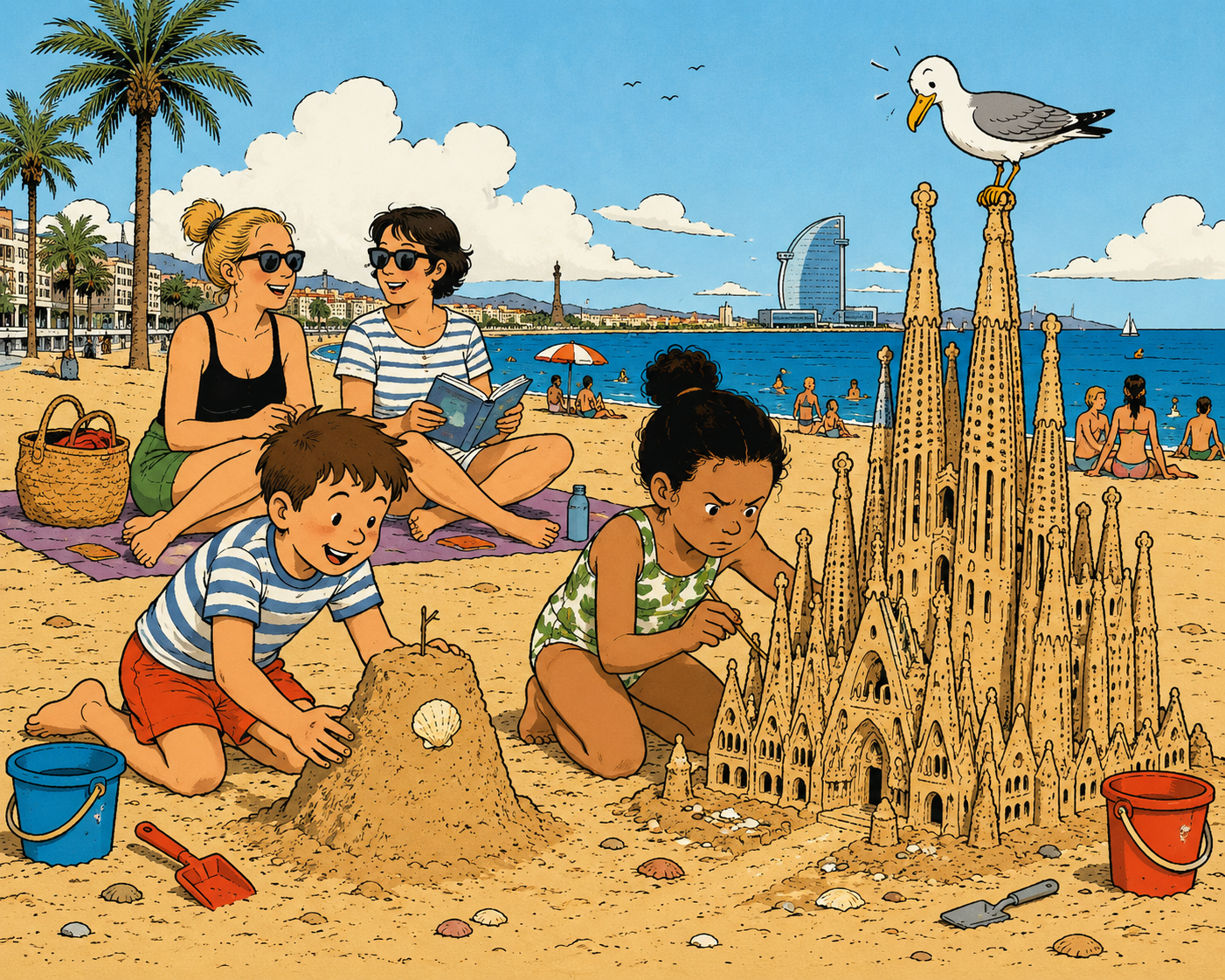
The beaches at Barceloneta are 15 minutes by metro from the Gothic Quarter, and the water is calm enough in summer for children who are confident swimmers.
The playgrounds along the Passeig Marítim are well equipped and shaded in the morning.
Even sightseeing can feel like playtime: Antoni Gaudí’s whimsical buildings, from the colorful mosaics of Park Güell to the fantastical towers of Sagrada Família, will capture your children’s imaginations.
The Barcelona to Valencia train on the Euromed service takes around three hours and 20 minutes along the Mediterranean coast, and the journey is manageable with children. The seats are wide, the café car sells snacks, and the coastal stretches through the Castellón countryside give enough visual interest to carry the middle section. Booking two facing seats with a table between them (the paired configurations available on most long-distance Spanish trains) makes the journey considerably more civilized with young children who need somewhere to spread out.
Valencia: Where the River Became a Park
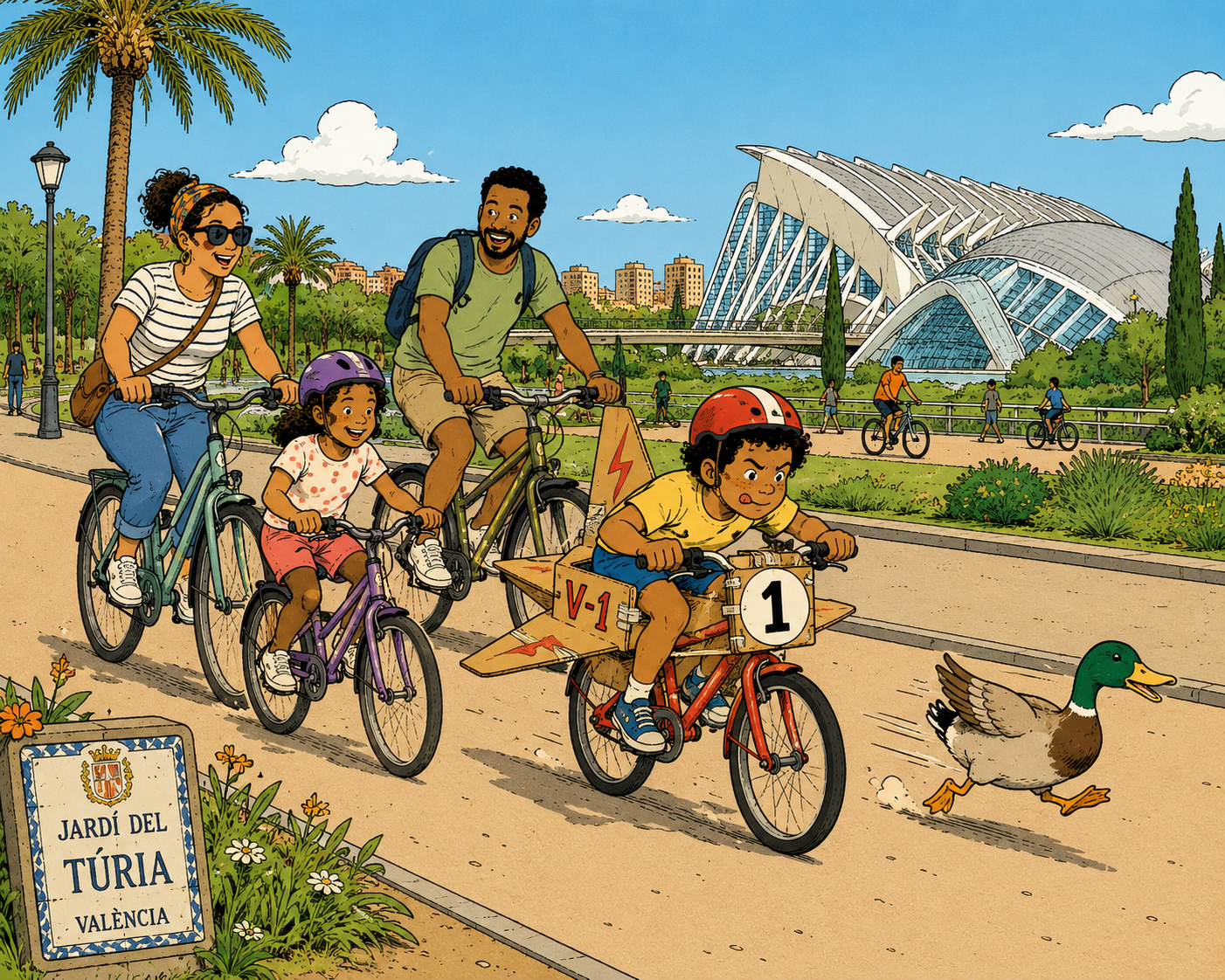
The Turia Gardens running through the center of Valencia are one of the more remarkable urban planning decisions in Europe: After the catastrophic Turia flood of 1957, the river was diverted south of the city and the old riverbed — five and a half miles (nine kilometers) of it — was converted into a continuous park that now connects the historic center to the sea.
Children navigate it by bicycle, rollerskate or foot. The park has playgrounds distributed along its length, a bioparc at the western end, and the Gulliver playground near the eastern section — a 230-foot (70-meter) reclining figure of the fictional giant with slides running down his limbs, an attraction children describe years afterward.
The Ciudad de las Artes y las Ciencias at the eastern end of the Turia Gardens is where families tend to concentrate, and the Museo de las Ciencias Príncipe Felipe, an interactive science museum, and the L’Oceanogràfic, Europe’s largest aquarium, are both standout attractions, offering substance as well as scale.
Lisbon: Hills, Trams and the Age of Discovery
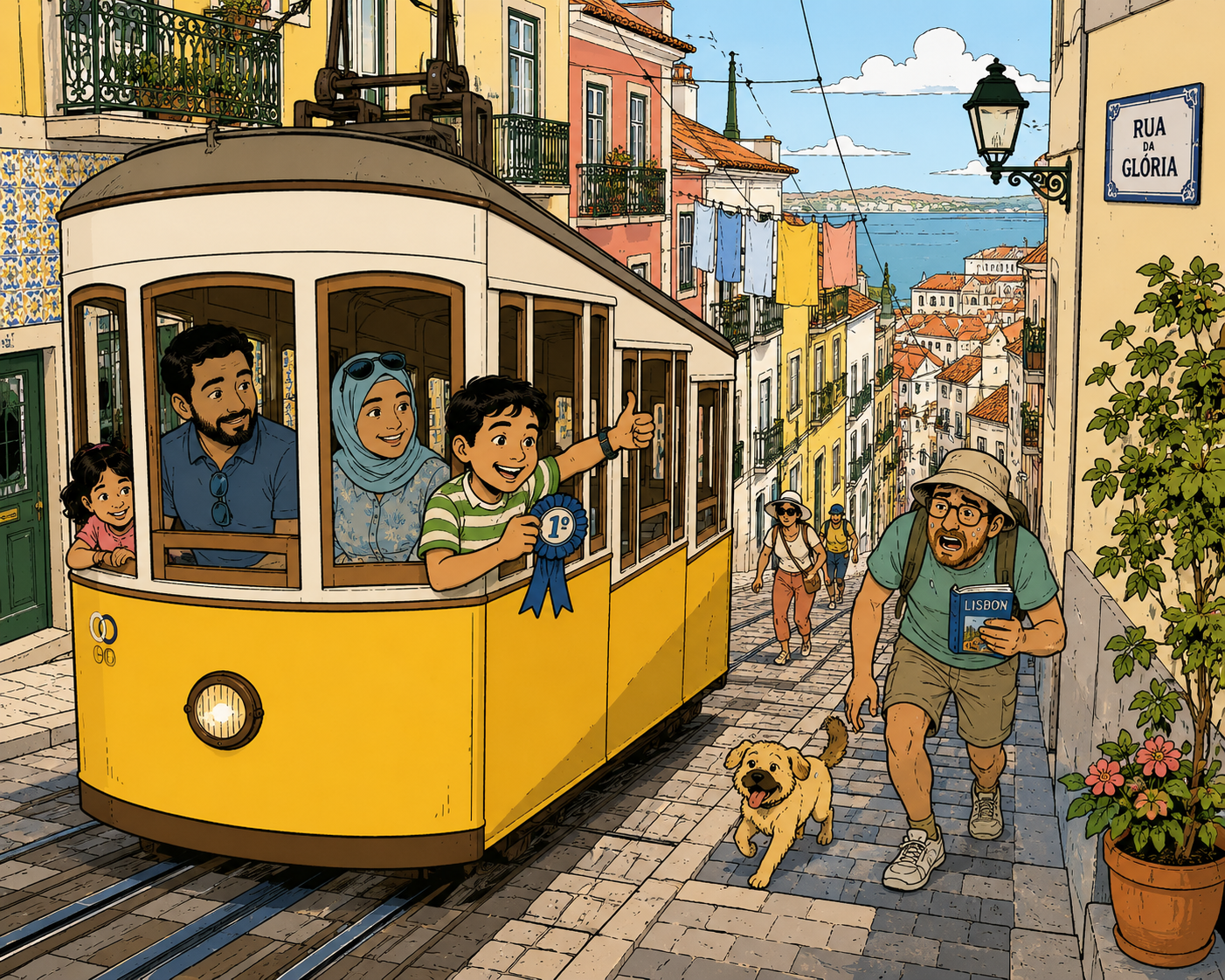
Lisbon with children is primarily a question of logistics. The city’s hills and cobblestoned streets are beautiful and genuinely hard going with a stroller or very small children who tire quickly.
The solution most families arrive at is to use the historic trams (the 28E in particular, running through the Alfama and Chiado districts) as a form of transport that doubles as entertainment, and to concentrate activity in the flatter Belém district to the west, where the major child-friendly sites are accessible without significant climbing.
The train from Lisbon to Porto on the Alfa Pendular service takes around two hours and 50 minutes and is one of the more manageable long-distance rail journeys in Iberia with children. The trains are smooth and quiet, the seats comfortable, and the stations at both ends are central enough that no additional transfer is typically required before reaching your accommodation.
For families combining both cities in a single trip, the train is the obvious spine of the itinerary; flying between cities this close together makes little sense in terms of total journey time once airport transfers are factored in, and the rail journey gives children the experience of moving through the country rather than skipping over it.
Porto: Compact, Walkable and Charming
Porto works for families partly because of its scale. The historic center is compact enough to cover on foot over two days and easy to navigate because the Douro River gives children a constant geographic reference point.
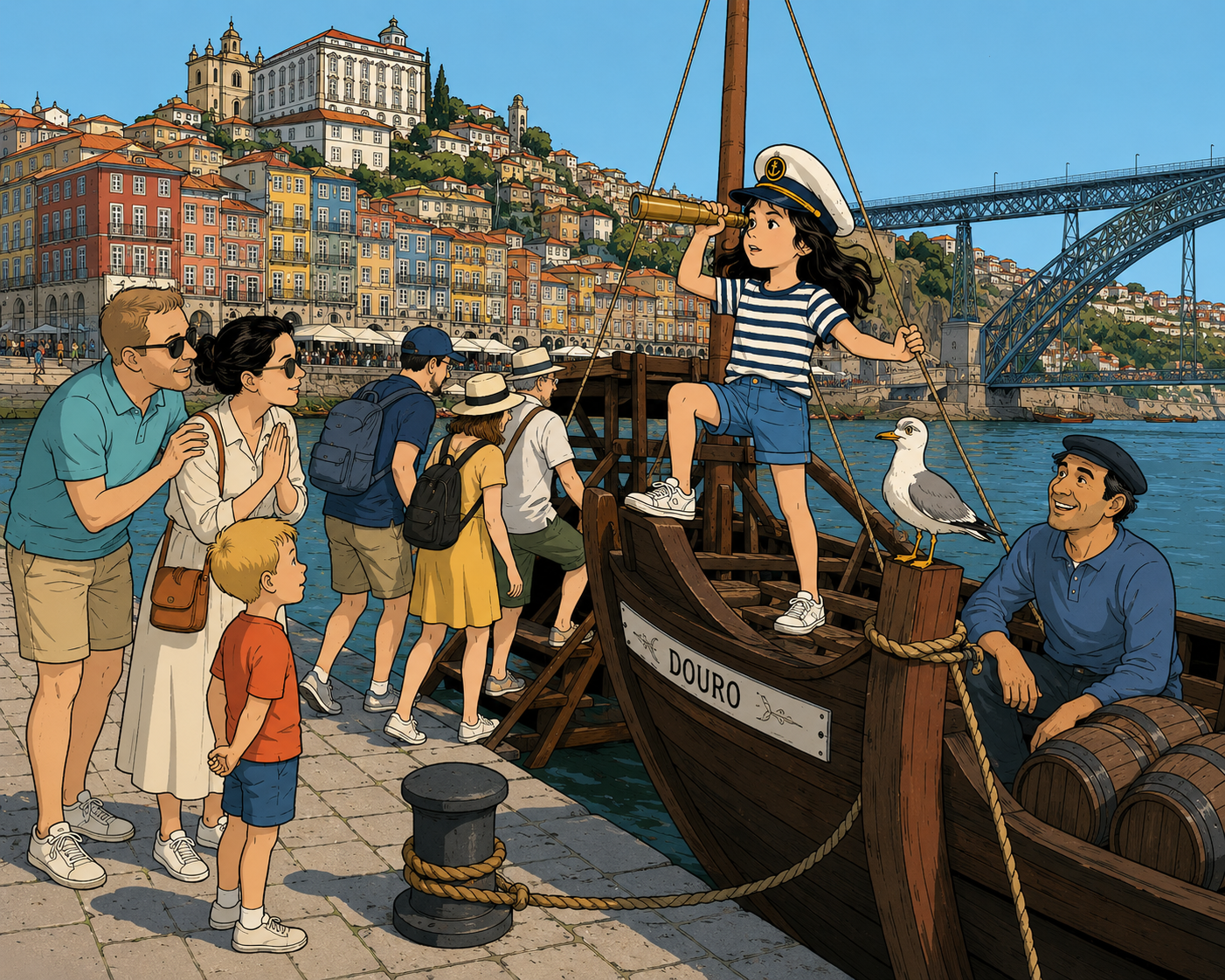
The Ribeira waterfront is where most activity concentrates: The rabelo boats moored along the quay, the cable car crossing to Vila Nova de Gaia, and the boat trips up the Douro through the port wine country offer hours of low-effort sightseeing without requiring much planning.
The cable car from the Ribeira to the Dom Luís I Bridge upper deck takes three minutes, and the view from the top is worth the wait. Combine it with a walk across the upper bridge deck and down the Gaia side.
The Serralves Foundation in the west of Porto has a contemporary art museum that’s less child-focused than some alternatives, but grounds its exhibitions in a park that’s excellent for families — 44.5 acres (18 hectares) of formal gardens, woodland and a farm area with animals accessible at the park’s perimeter.
The park ticket is cheaper than the combined museum entry, and for families with children under 8, the park alone is sufficient to fill a morning.
The Matosinhos seafood restaurants north of the park, reachable by metro from Serralves, are a food spot to eat lunch — fresh fish from the Atlantic grilled simply, at prices that make feeding a family manageable.
Seville: Flamenco, Horses and a Cool Palace
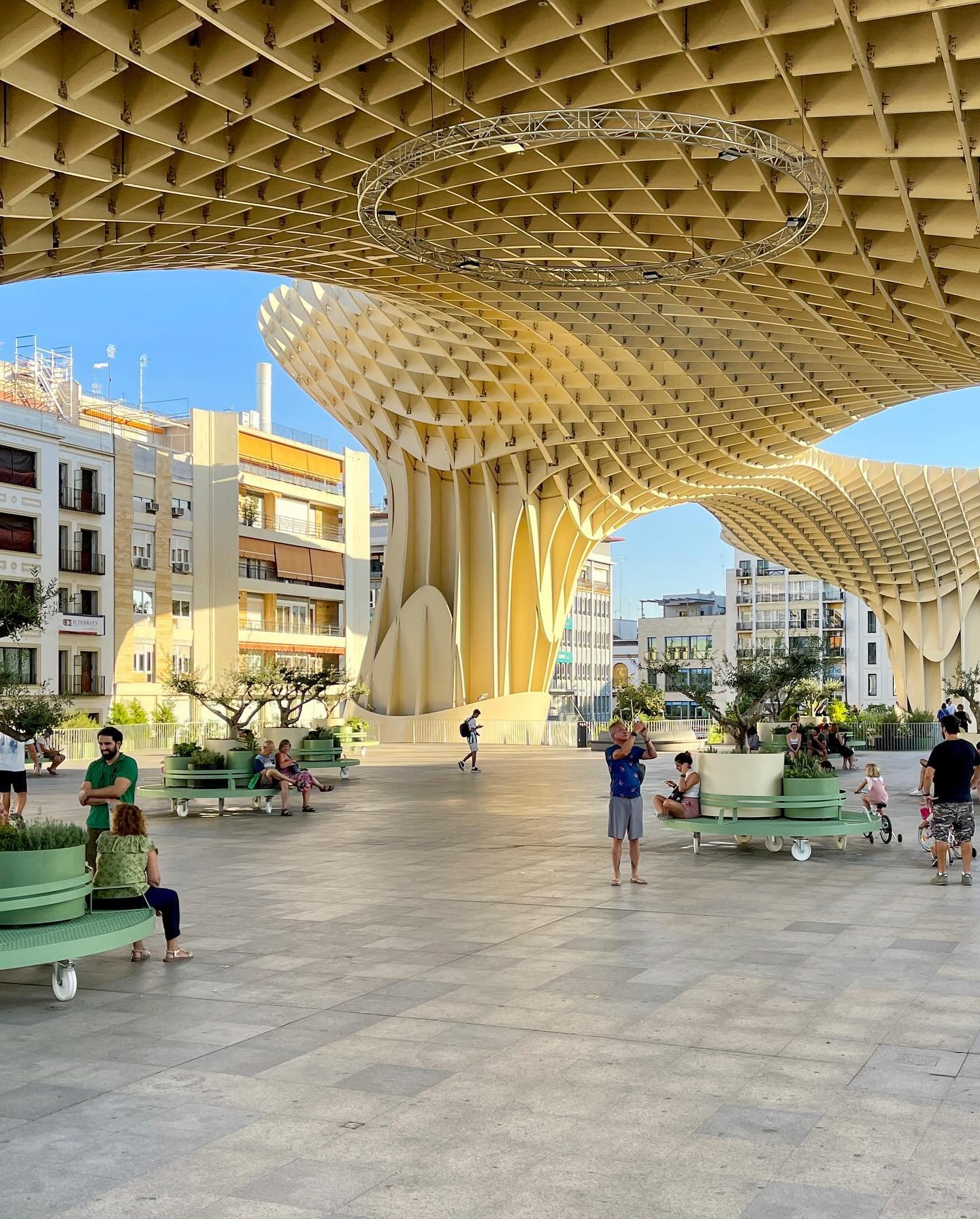
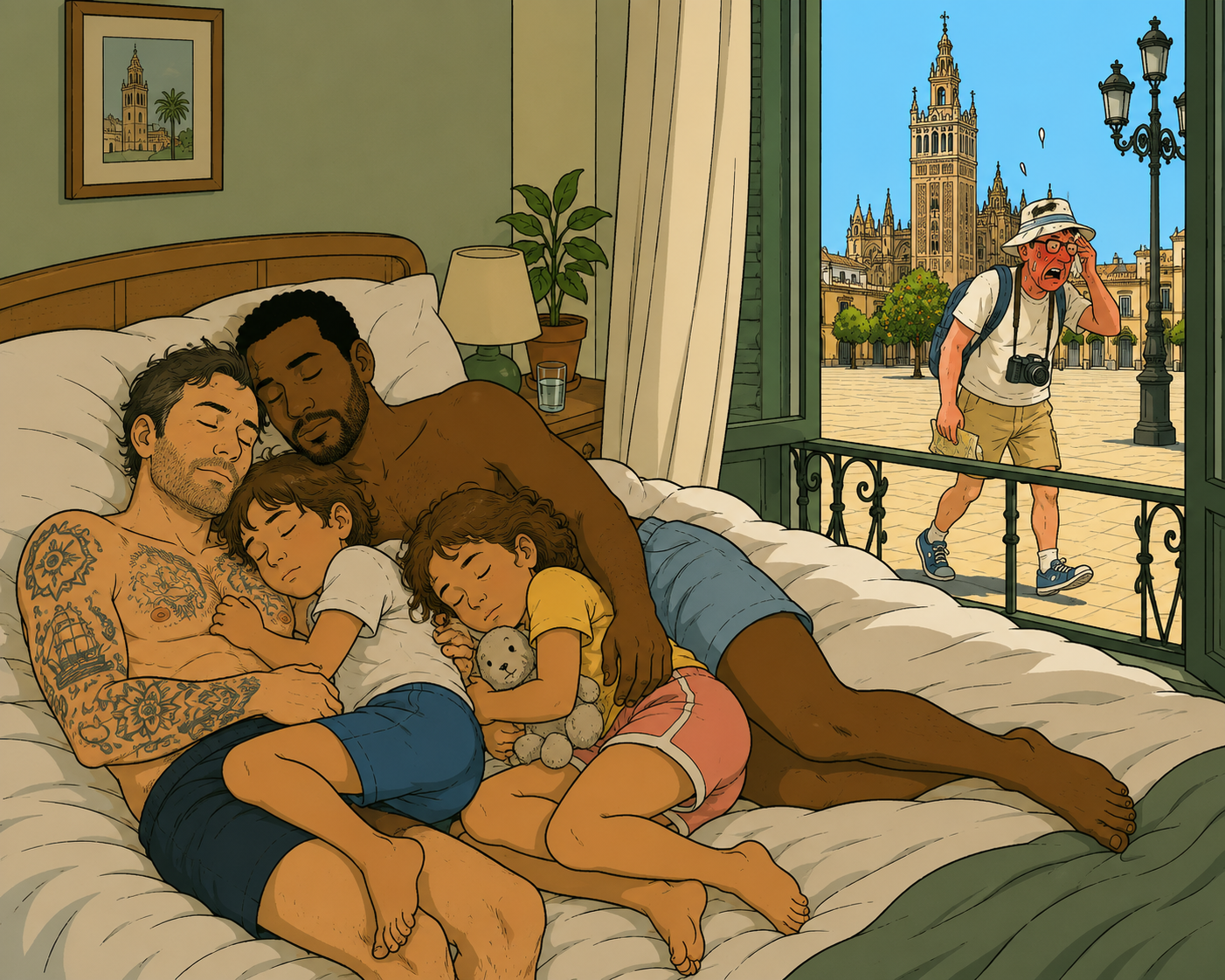
Seville can be one of the easiest cities in Spain for family travel, provided you work with the climate rather than against it. Summer temperatures regularly exceed 104 degrees Fahrenheit (40 degrees Celsius), making early mornings and evenings the best times for exploring. Plan major sightseeing before lunch, retreat indoors during the hottest hours of the afternoon and save parks, plazas and outdoor dining for later in the day.
Children who have had a proper midday rest are considerably better company for the evening paseo and the tapas bars than those who’ve been dragged through monuments in the afternoon heat.
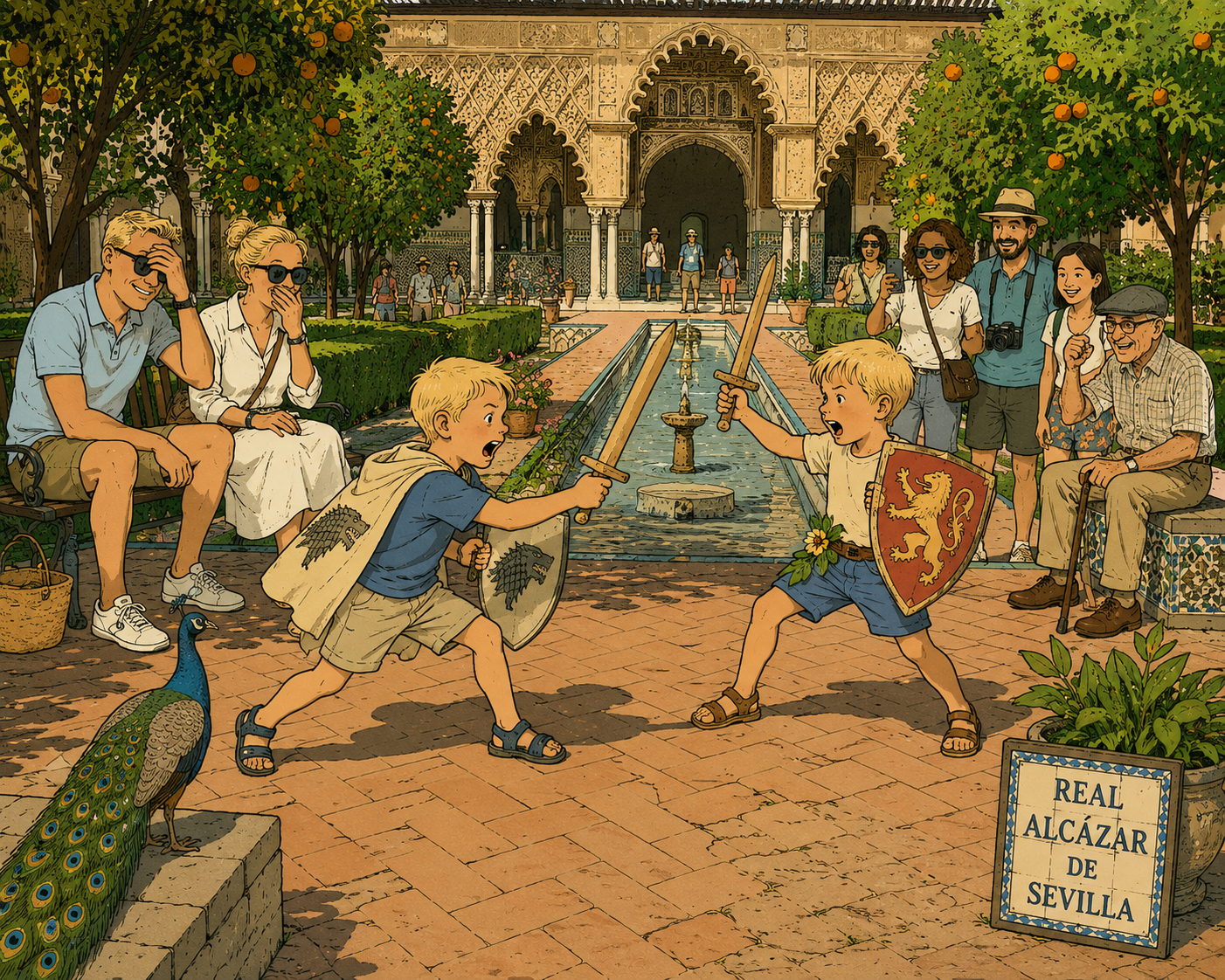
The Real Alcázar is the family visit that most consistently works in Seville because the combination of the Mudéjar palace rooms, the Baroque gardens, and the Game of Thrones filming locations gives different members of the family reasons to be interested. The garden section in particular — with its pools, grottos and the Mercury Pond, named for the statue that overlooks it — gives children enough to explore that adults can linger over the architecture while the kids remain happily occupied.
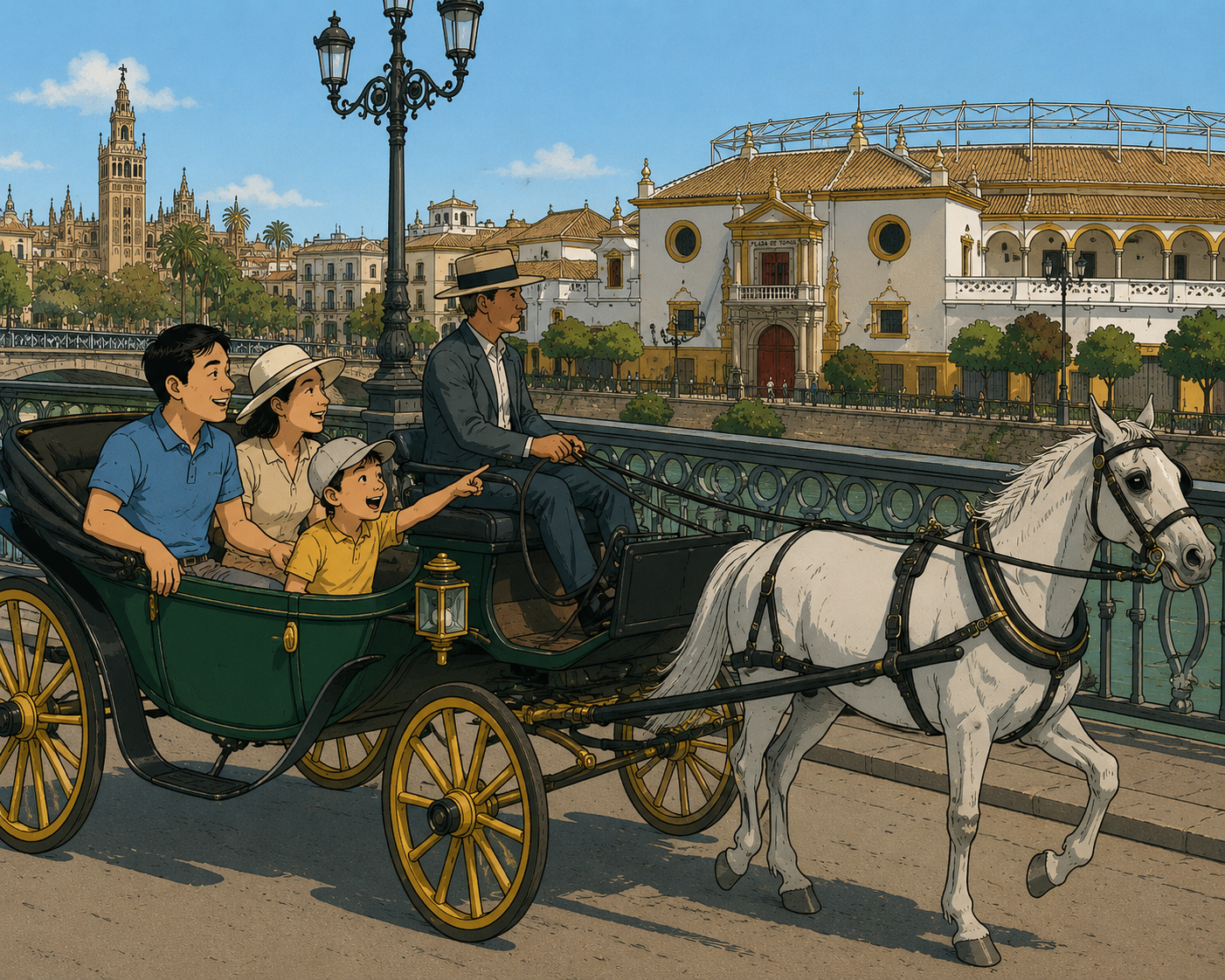
The horse carriages that depart from the Puerta de Jerez for tours of the historic center aren’t the most morally defensible experience in Spain but are almost universally successful with young children.
How to Travel Spain and Portugal With Children
Iberia with children rewards the families who adjust to the local rhythm rather than imposing their own. The late evenings, the long lunches, and the cities that treat public space as genuinely shared between all ages make Spain and Portugal among the more welcoming destinations in Europe for family travel.
Give each city three nights minimum, build in time for nothing in particular, and accept that the afternoon nap isn’t a failure of itinerary planning but the reason the evening works.