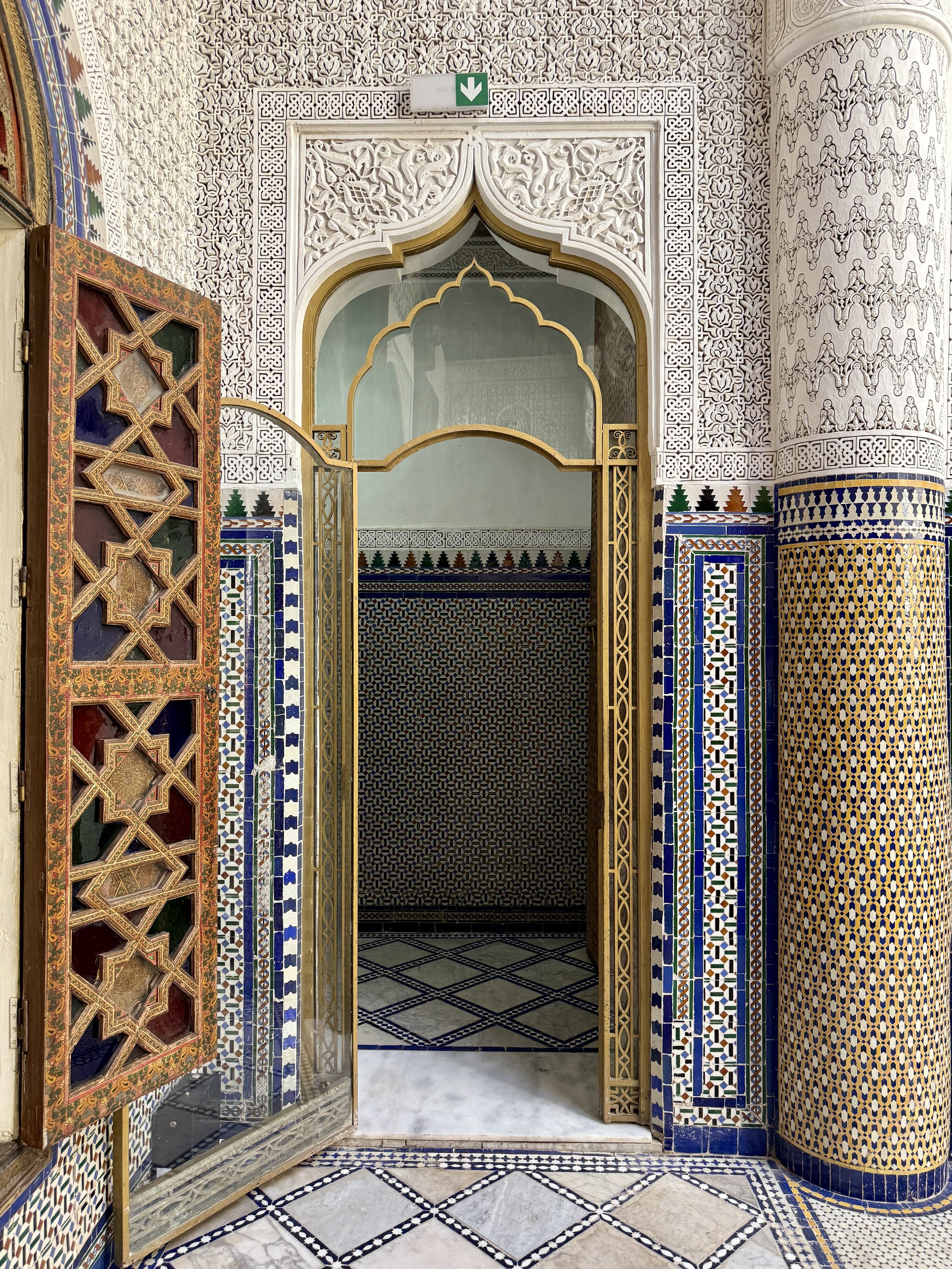
Originally built in 1910 for Thami El Glaoui, the Pasha of Marrakech, Dar el Bacha: Musée des Confluences is one of Marrakech’s most captivating museums, a true architectural gem and a must-see. Plus: Is the trendy Bacha Coffee worth the wait?
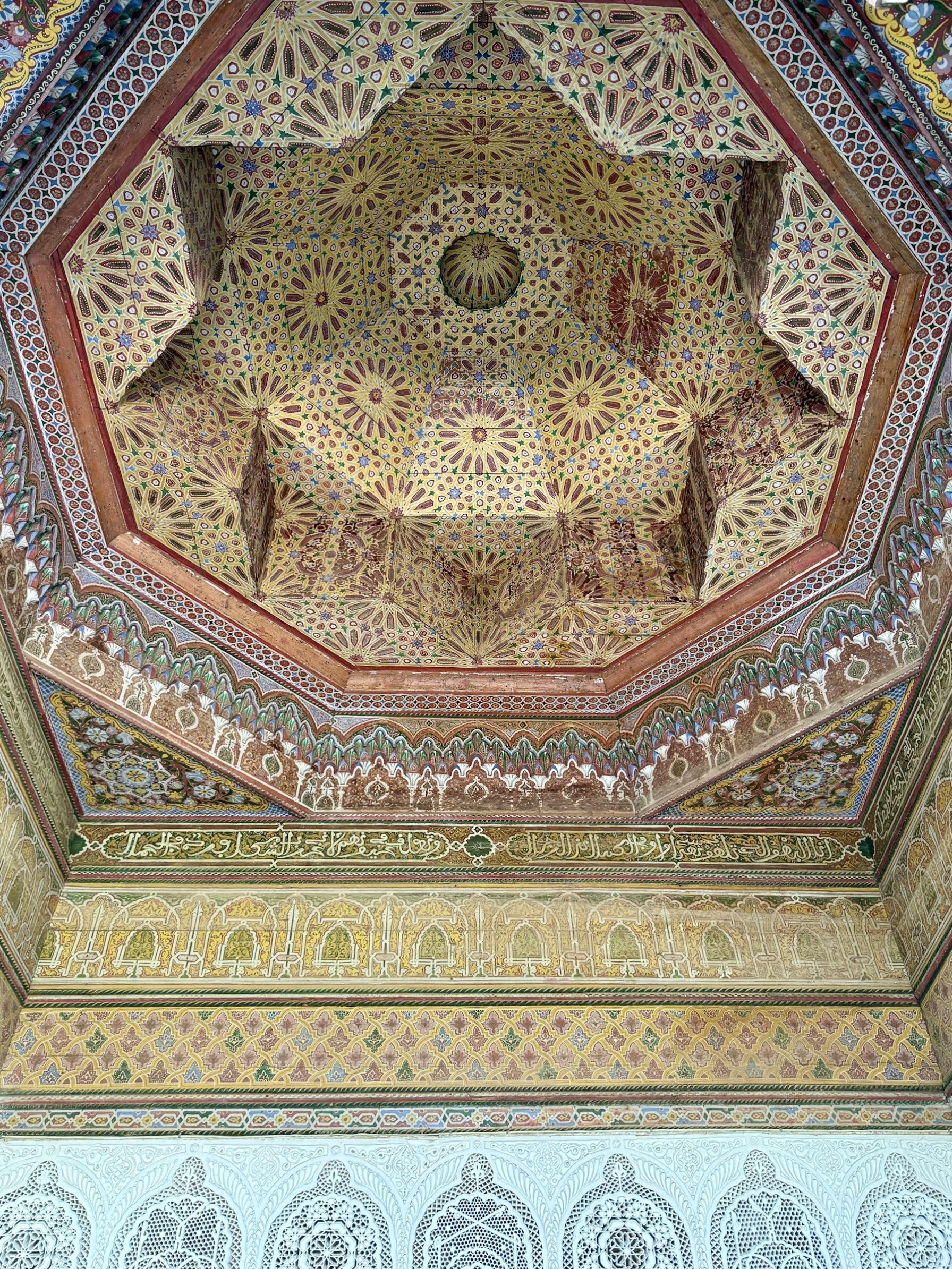
One of the landmarks that was new to us on our return trip to Marrakech was Dar el Bacha, a meticulously restored Moroccan mansion-turned-museum.
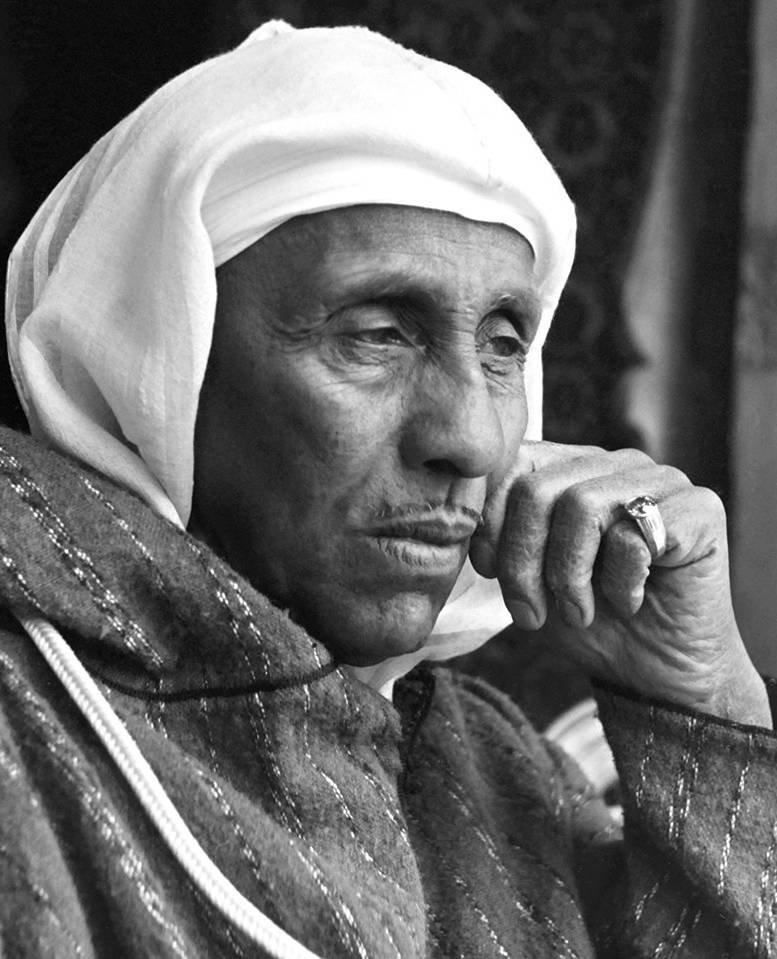
Thami El Glaoui, the powerful pasha who owned Dar el Bacha before it became a museum
Located in the lively medina, the estate was commissioned by Thami El Glaoui, a Berber chieftain born in 1879 into the Glaoua tribe of the High Atlas Mountains. He allied early with the French, lending troops to Resident General Lyautey’s “pacification” campaign — a sanitized colonial label for the military suppression of Moroccan resistance.
In 1912 Sultan Moulay Youssef rewarded El Glaoui with the post of pasha, a role he held until 1956, bacha being the French transliteration of the same title. The partnership made him “Lord of the Atlas” to Europeans and, in time, one of the wealthiest and most divisive men in Morocco.
The Rise and Fall of Marrakech’s Most Powerful Pasha
The grand residence dates to 1910, and its scale was meant to impress the steady stream of international celebrities and politicians who passed through El Glaoui’s court. Among them were UK Prime Minister Winston Churchill, the writer Colette, the composer Maurice Ravel and the filmmaker Charlie Chaplin.
The estate included a reception hall, a hammam (a traditional steam bathhouse), a courtyard shaded by orange trees, fountains, a harem (the private quarters reserved for the bacha’s family) and a douiria (servants’ quarters).
In 1953, El Glaoui helped engineer the forced exile of Sultan Mohammed V. It’s one of the reasons he’s remembered for his lavish excess, his ruthless suppression of rivals and dissidents, and a justice system widely regarded as arbitrary and self-serving. After his death in 1956, the same year Morocco achieved independence, the compound was shuttered and left to fall into disrepair.
From Crumbling Estate to Museum of Confluences
The first attempt at conversion began around 2006, led by the Paris- and Casablanca-based firm Oualalou+Choi. They were commissioned to transform the former seat of the pasha into the Musée des Arts Premiers (Museum of Tribal Arts).
The project grew out of a partnership between Morocco’s Ministry of Culture and Patti Cadby Birch, an American philanthropist and honorary trustee of the Metropolitan Museum of Art. Birch had previously funded the 1990s restoration of the Koutoubia minbar (the pulpit from which the imam delivers the sermon) and envisioned transforming Dar el Bacha into an arts museum to properly showcase her vast personal collection. That effort stalled, and Birch died in 2007 without seeing her vision realized.
The ruined mansion’s fortunes changed in 2014, when it was placed under the stewardship of the Fondation Nationale des Musées (National Foundation of Museums). After several more years of restoration, it finally opened to the public in 2017 as Dar el Bacha: Musée des Confluences (House of the Pasha: Museum of Confluences) with a mission to showcase the various aspects of cultural heritage that shaped the country’s identity. It was inaugurated by King Mohammed VI, with a dedicated room honoring Birch’s collection.
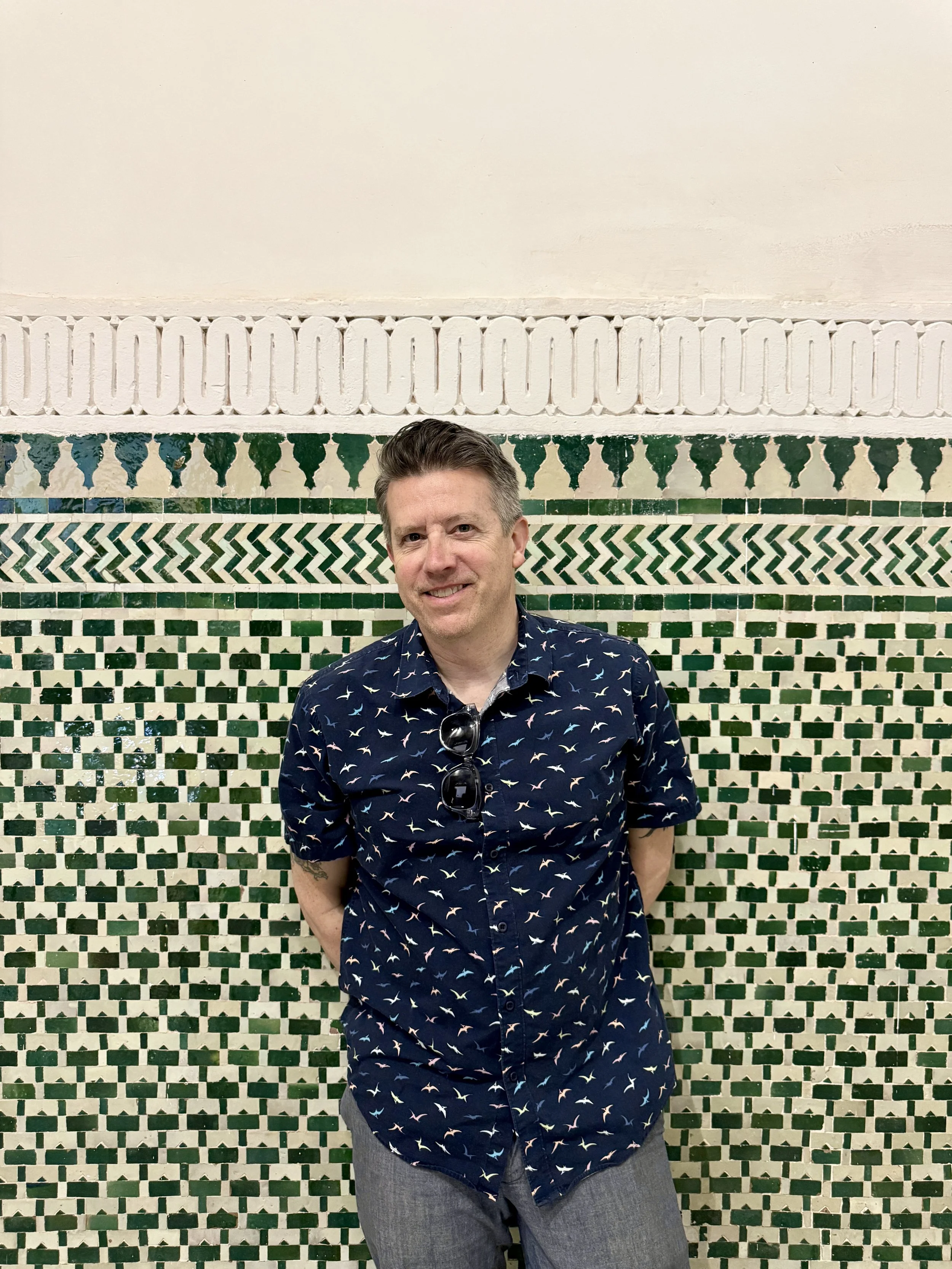
After exploring the nearby Ben Youssef Madrasa, we arrived around 10:30 a.m. on a Sunday morning and found ourselves at the end of a rather long line.
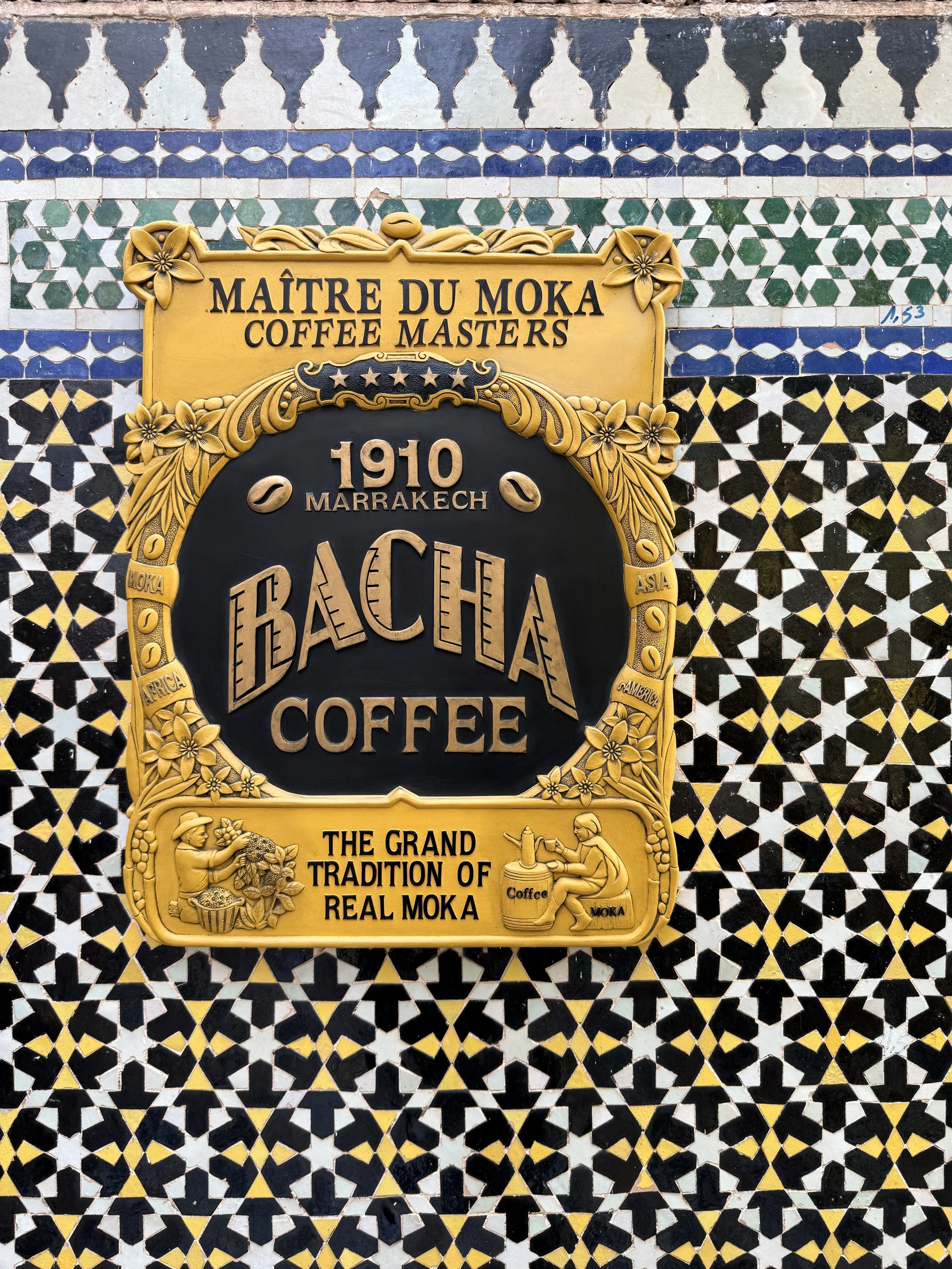
Bacha Coffee: Worth the Wait?
Note: If you’re interested in going to the ultra-trendy Bacha Coffee, which is housed in an Art Deco-style salon inside the museum, you’ll need to purchase either a café-only ticket (10 dirhams, about $1) or a combined ticket (60 MAD, about $6) that also includes museum entry.
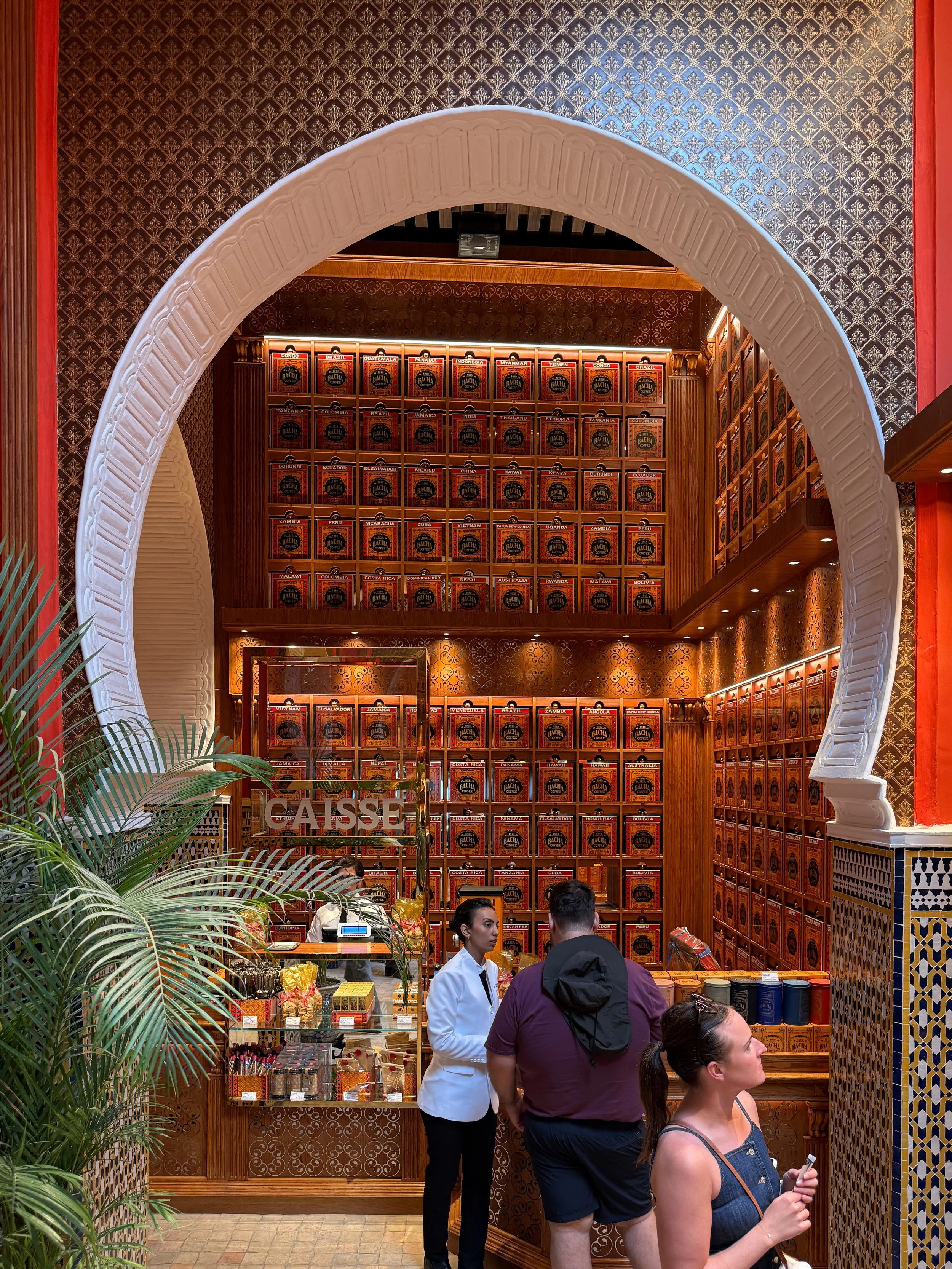
When we got to the ticket counter, we were told the wait time for the café was already pushing three hours — roughly the flight time from Marrakech to London — and agreed to get our caffeine fix elsewhere.
“We were told the wait for Bacha Coffee was already pushing three hours — roughly the flight time from Marrakech to London.”
The concept was inspired by the lavish receptions where Arabica coffee was served to guests from glittering golden gooseneck pots at El Glaoui’s home. In 2017, French-Moroccan entrepreneur Taha Bouqdib attended the ceremony marking the museum’s opening and was invited to bring the legendary coffee tradition back to life.
We did, however, stop by the Bacha Coffee boutique, just beyond the ticket counter. The irresistible aroma of freshly ground coffee filled the air, and library-style shelves were stocked floor to ceiling with neat rows of orange canisters bearing gold lettering, organized by growing region.
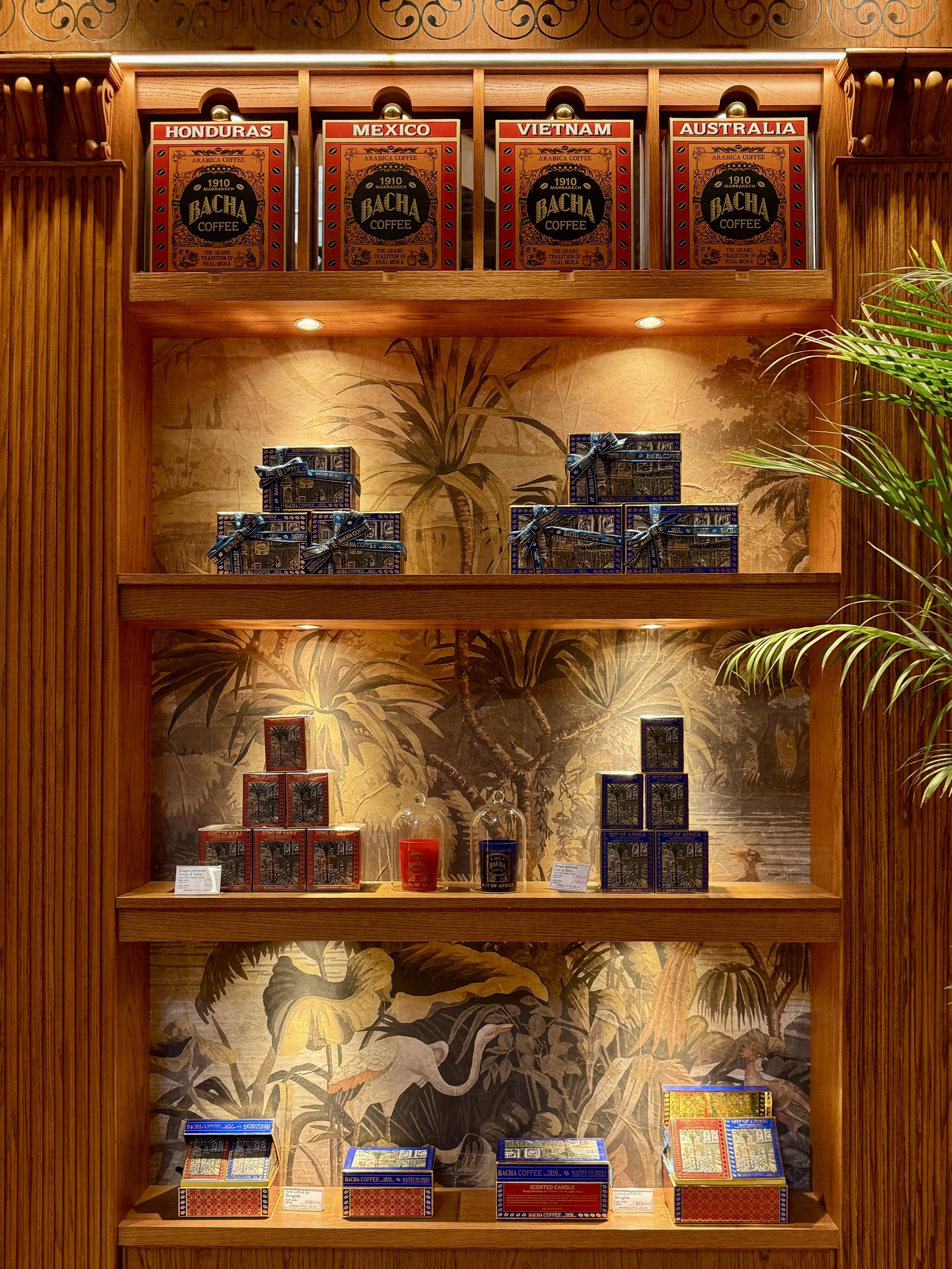
The walls that didn’t display coffee held gift sets, scented candles and serviceware, set against wallpaper depicting tropical flora and exotic birds. They also sold a book titled Marvelous Moroccan Moka, detailing the origins of the brand’s 200-plus coffee varieties, which I debated buying but ultimately didn’t.
Pro tip: The airport also has a shop, where I bought an airtight tin and a 200 gram (7 ounce) bag of Cuba Turquino, a single-origin, medium roast coffee, ground for French press.
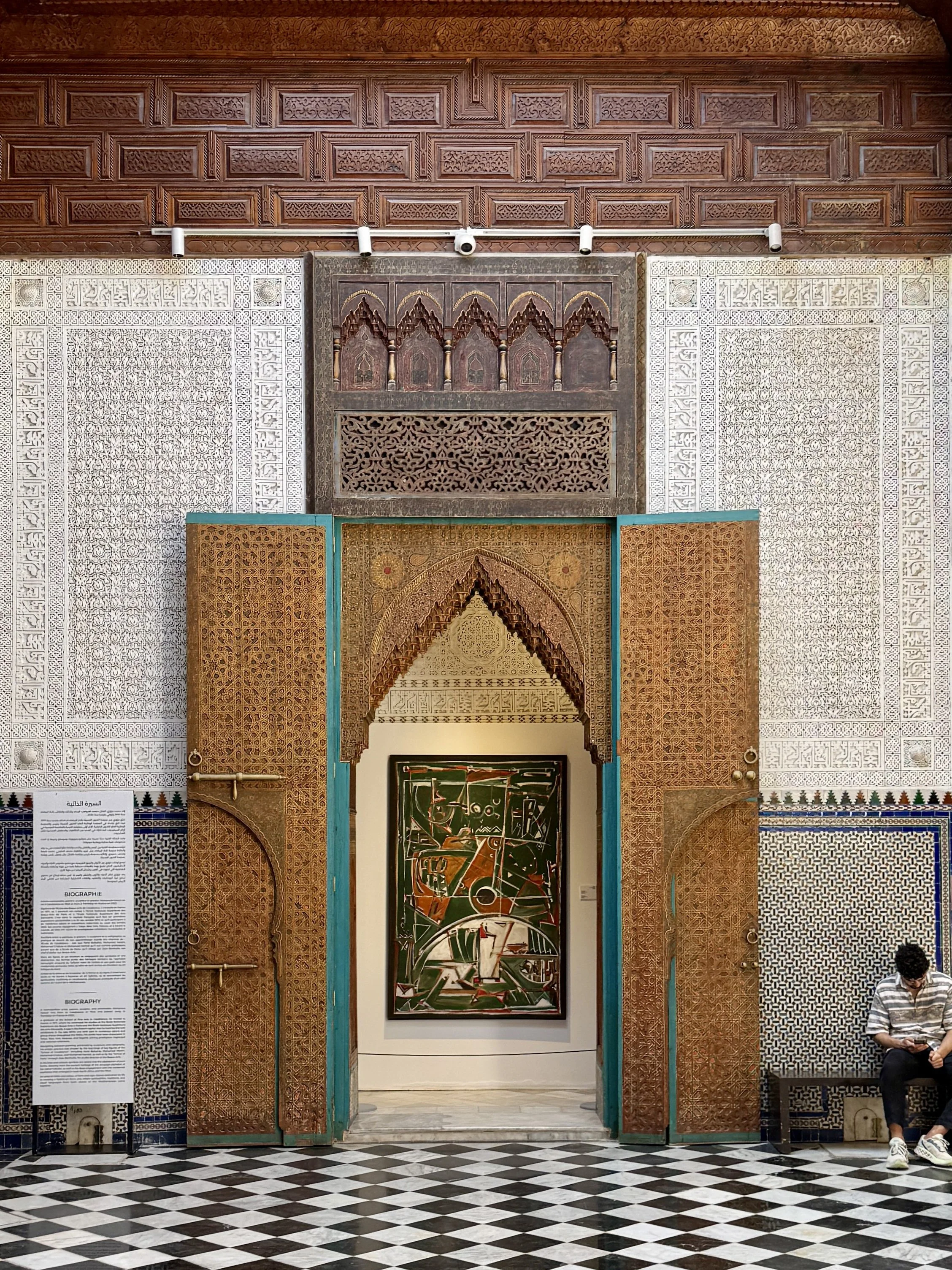
The meticulously restored reception hall of El Glaoui’s former residence now hosts temporary exhibitions.
Dar el Bacha’s Reception Hall
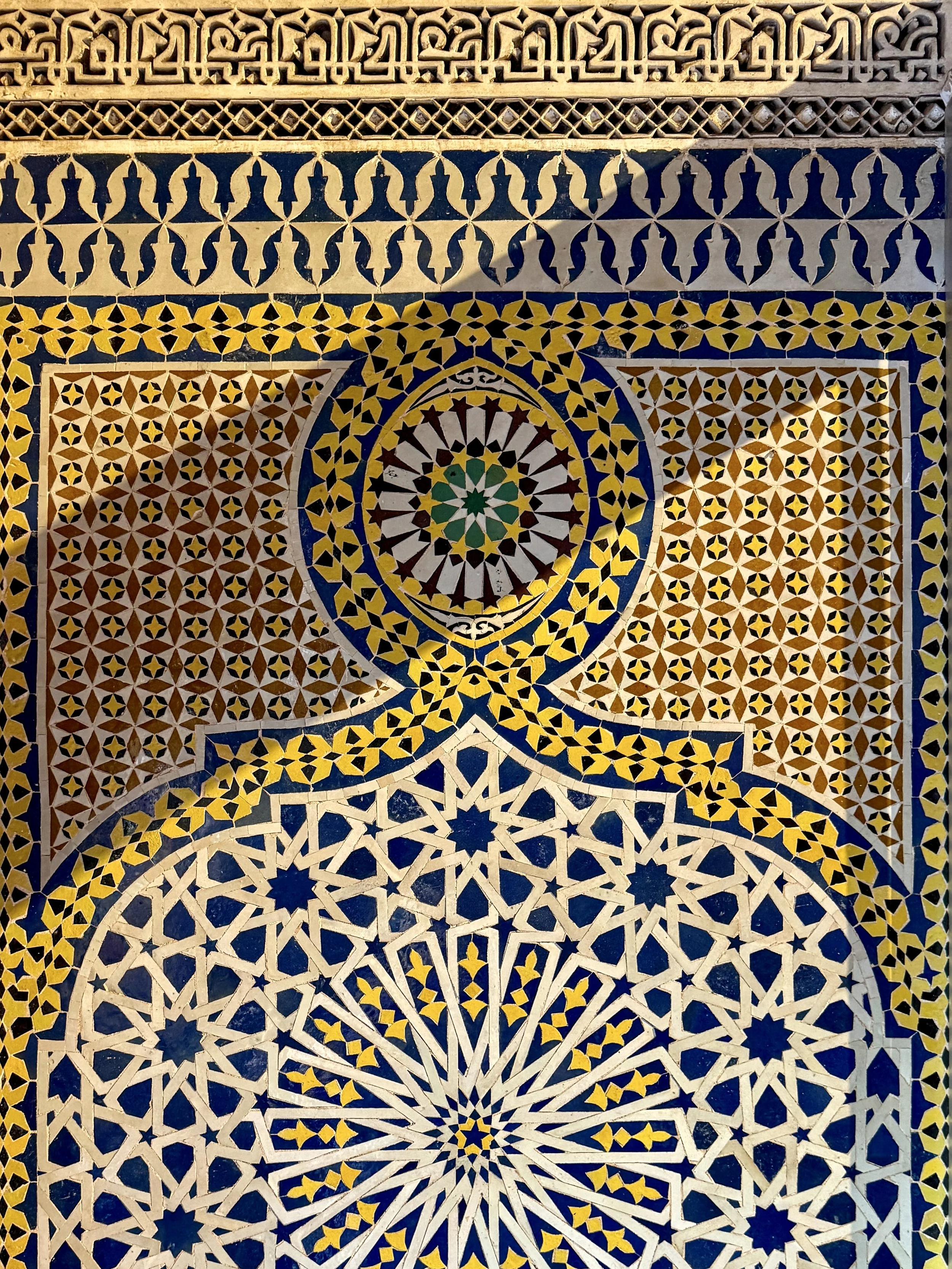
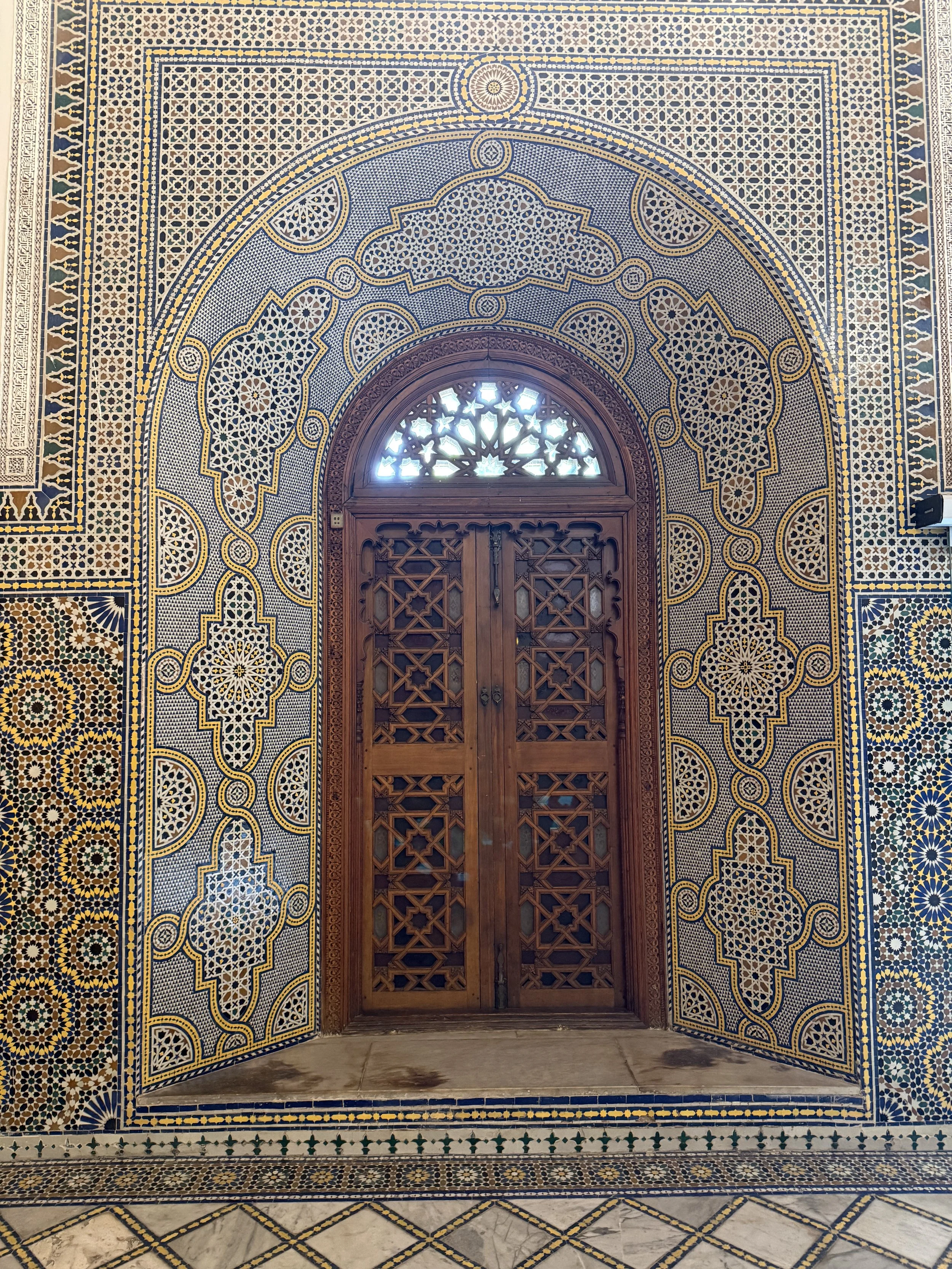
One of the first rooms we entered was the grand reception hall, where columns covered in geometric zellige tile rose toward a ceiling of carved cedarwood.
The building has been meticulously restored, with several details of the stately home’s history preserved.
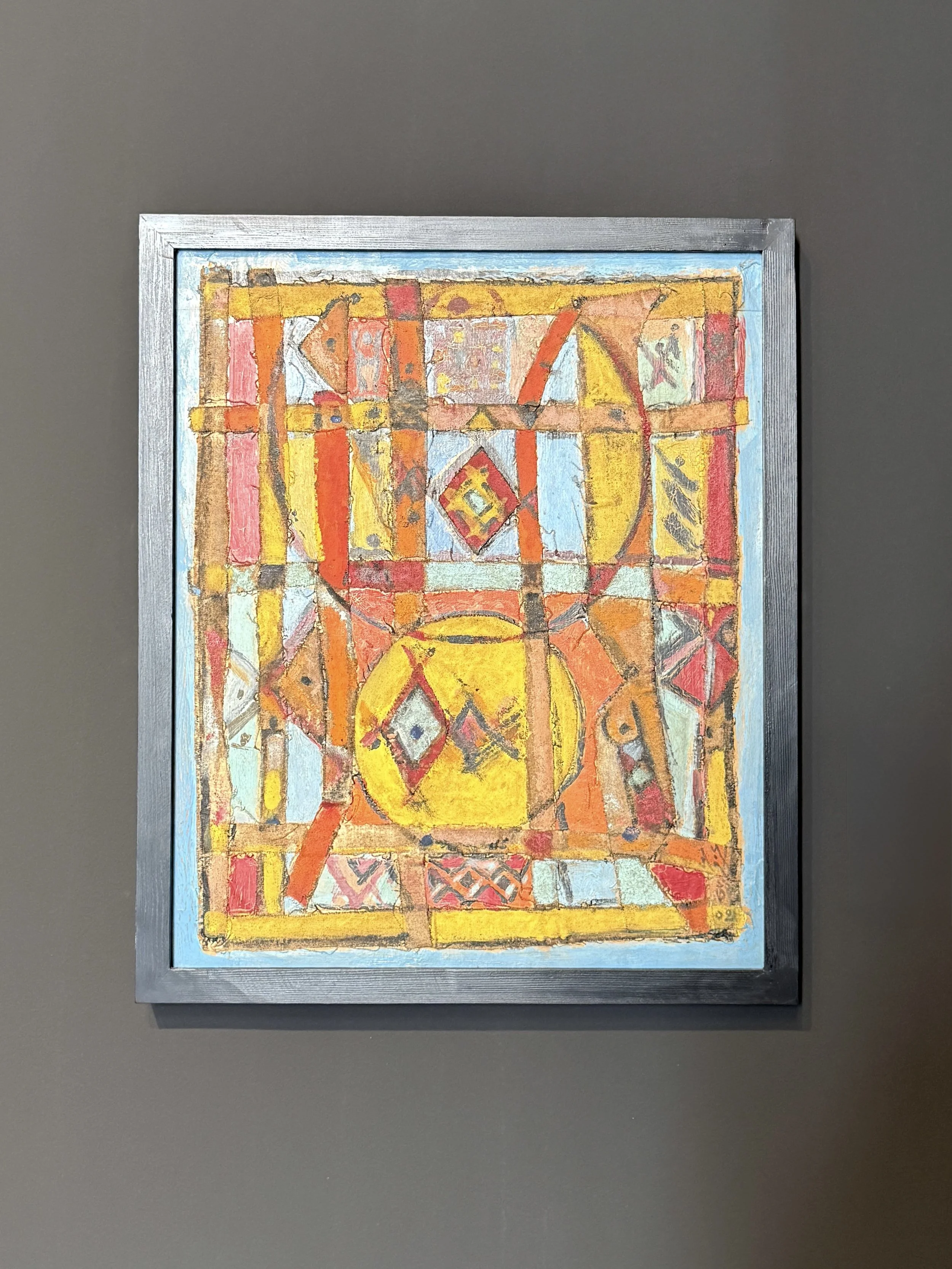
Mosaïque (Mosaic) by Mohamed Azouzi, 2002
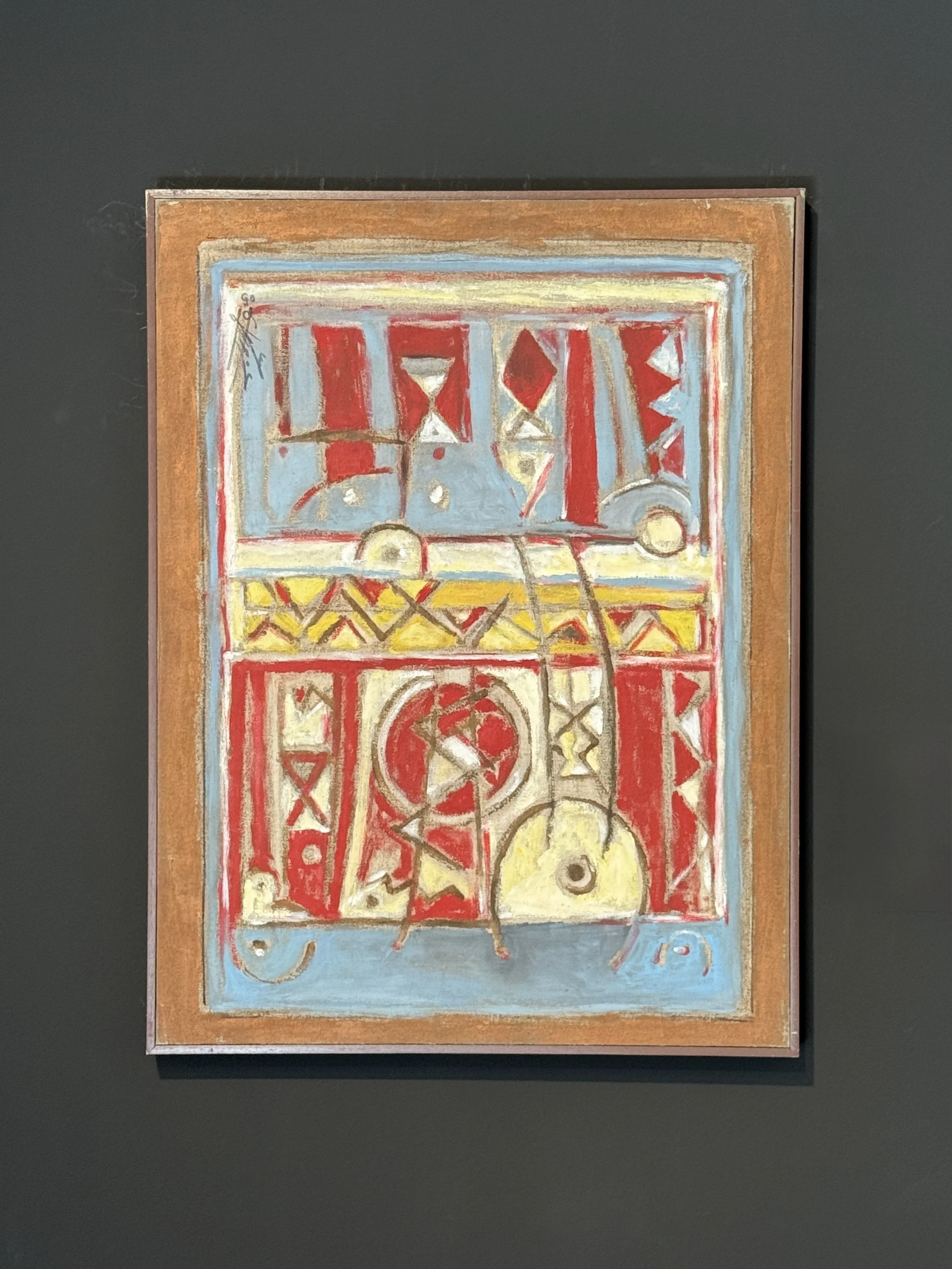
Le soulèvement (The Uprising) by Mohamed Azouzi, 2005
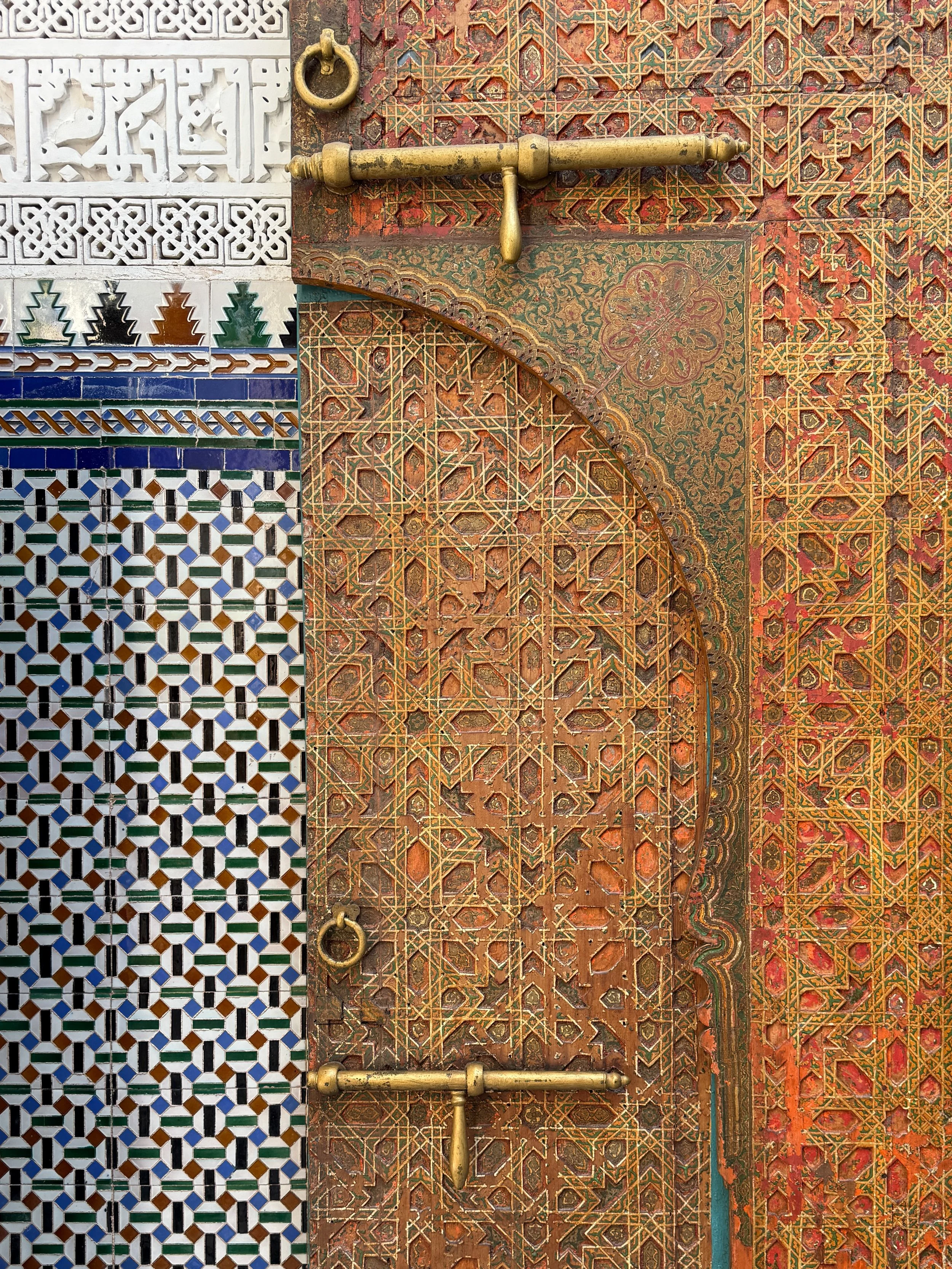
Smaller adjoining chambers, fitted with handcarved cedarwood doors, held the temporary exhibit Sous le signe du Noun (Under the Sign of Noun), a retrospective featuring the vibrant abstract canvases of Mohamed Azouzi (1946–2022), a Moroccan painter who trained at the École des Beaux-Arts de Casablanca (Casablanca School of Fine Arts) before moving to Paris to continue his studies at the École des Arts Décoratifs (School of Decorative Arts).
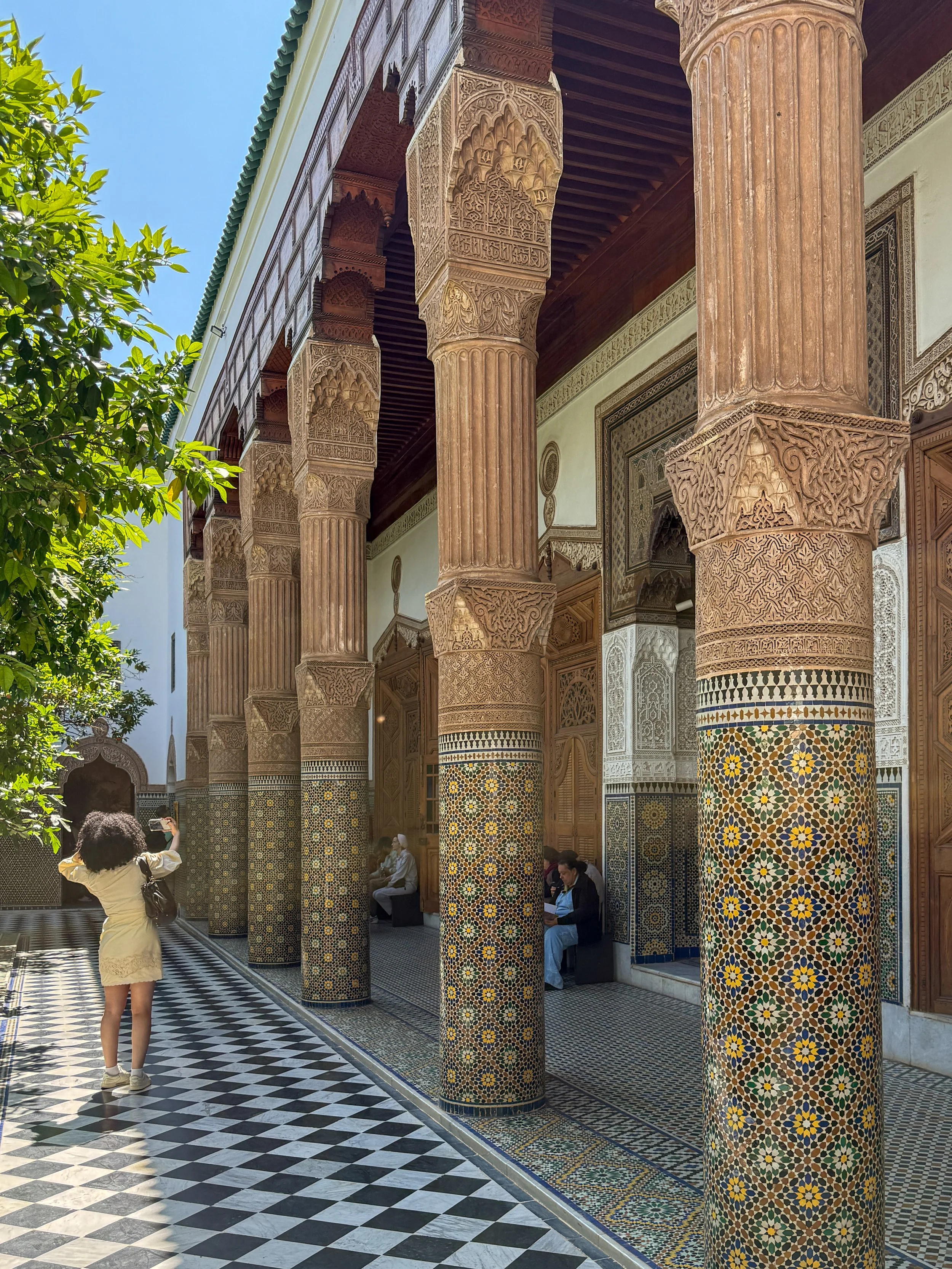
Interior Courtyard
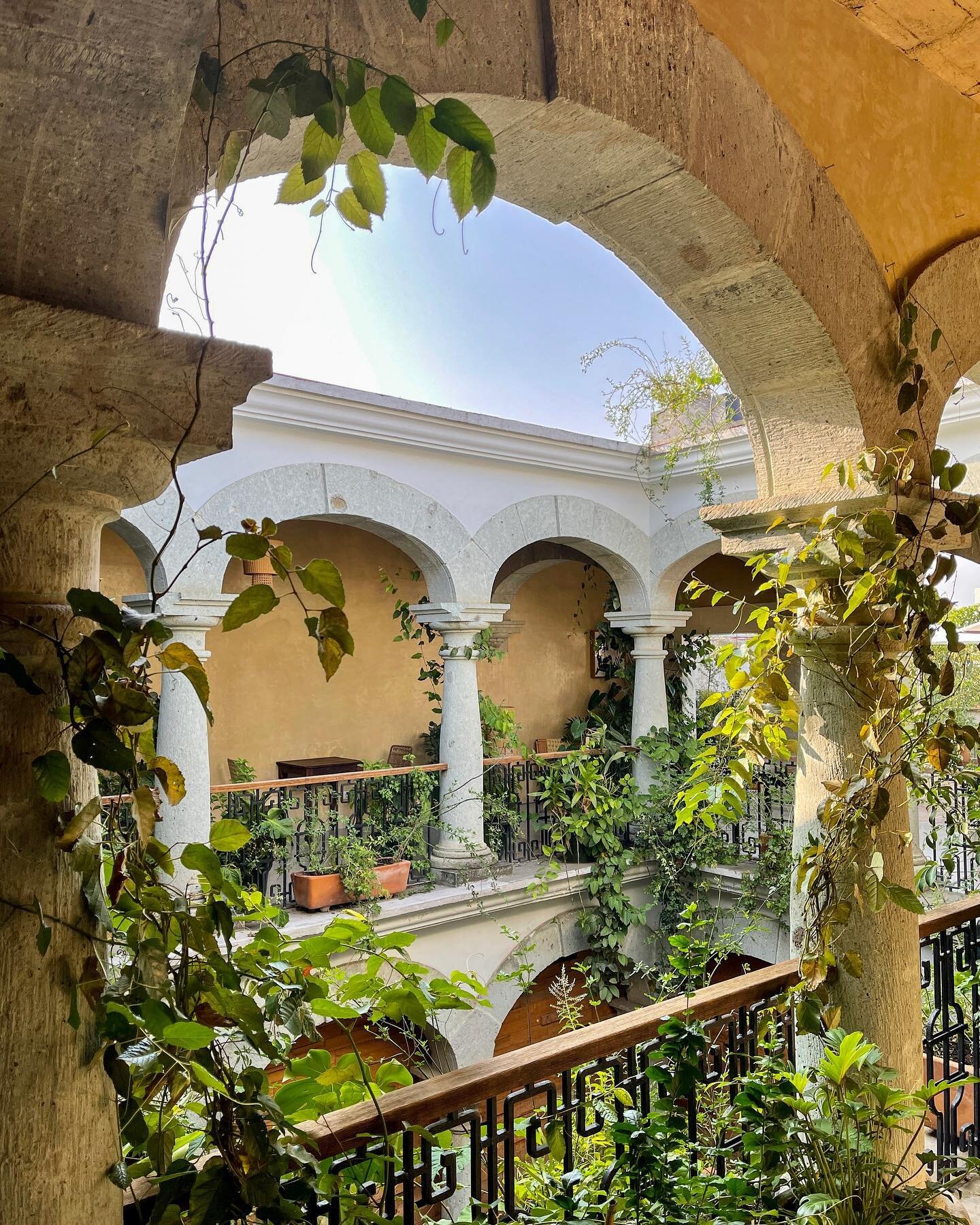
From there, we made our way to the palatial interior courtyard, the heart of the museum. Framed by an arcade of tiled columns with sculpted capitals and set against carved cedarwood shutters and doors, the open-air enclosure and its six surrounding chambers now serve as galleries featuring a diverse collection of traditional Islamic art.
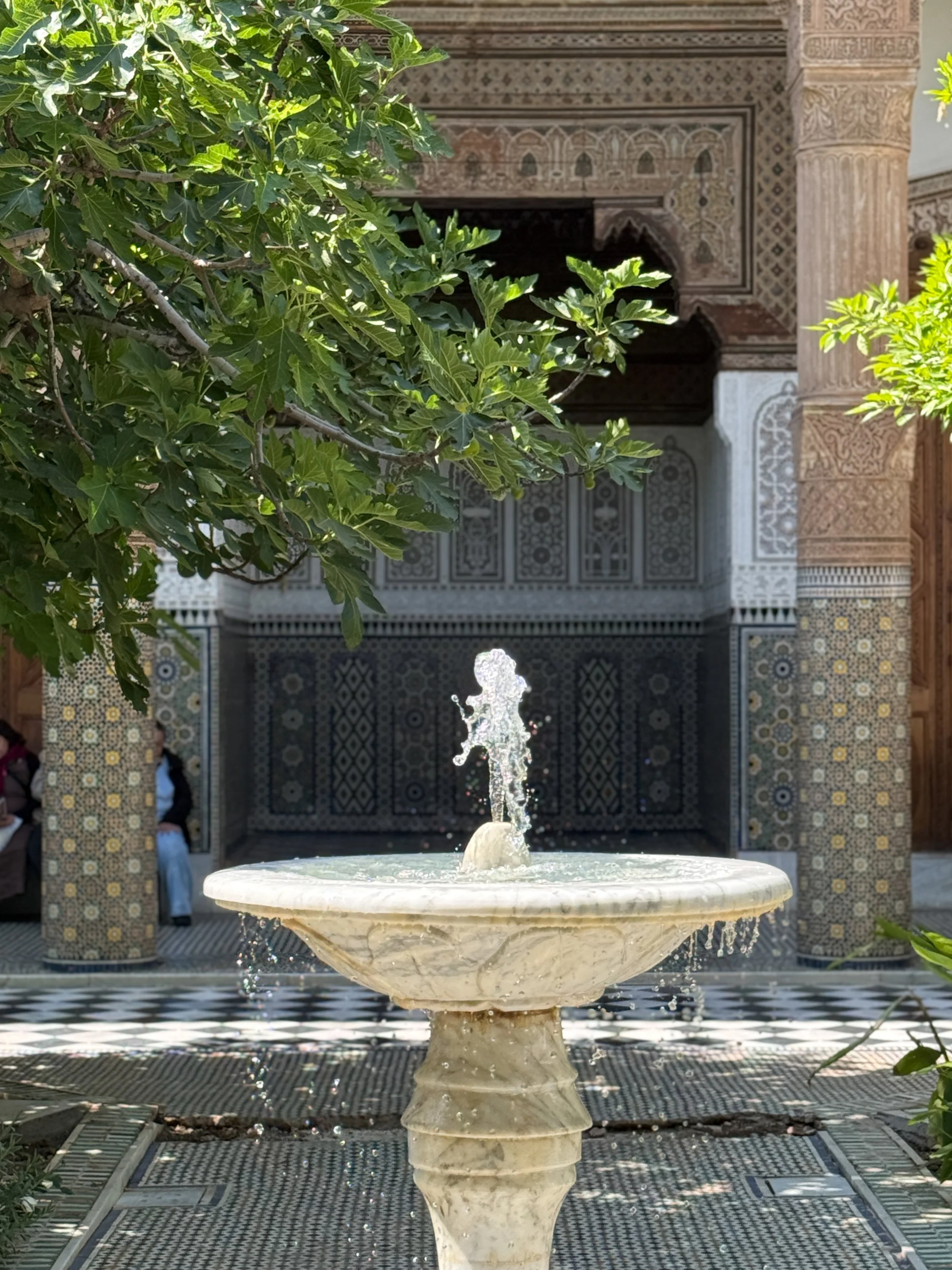
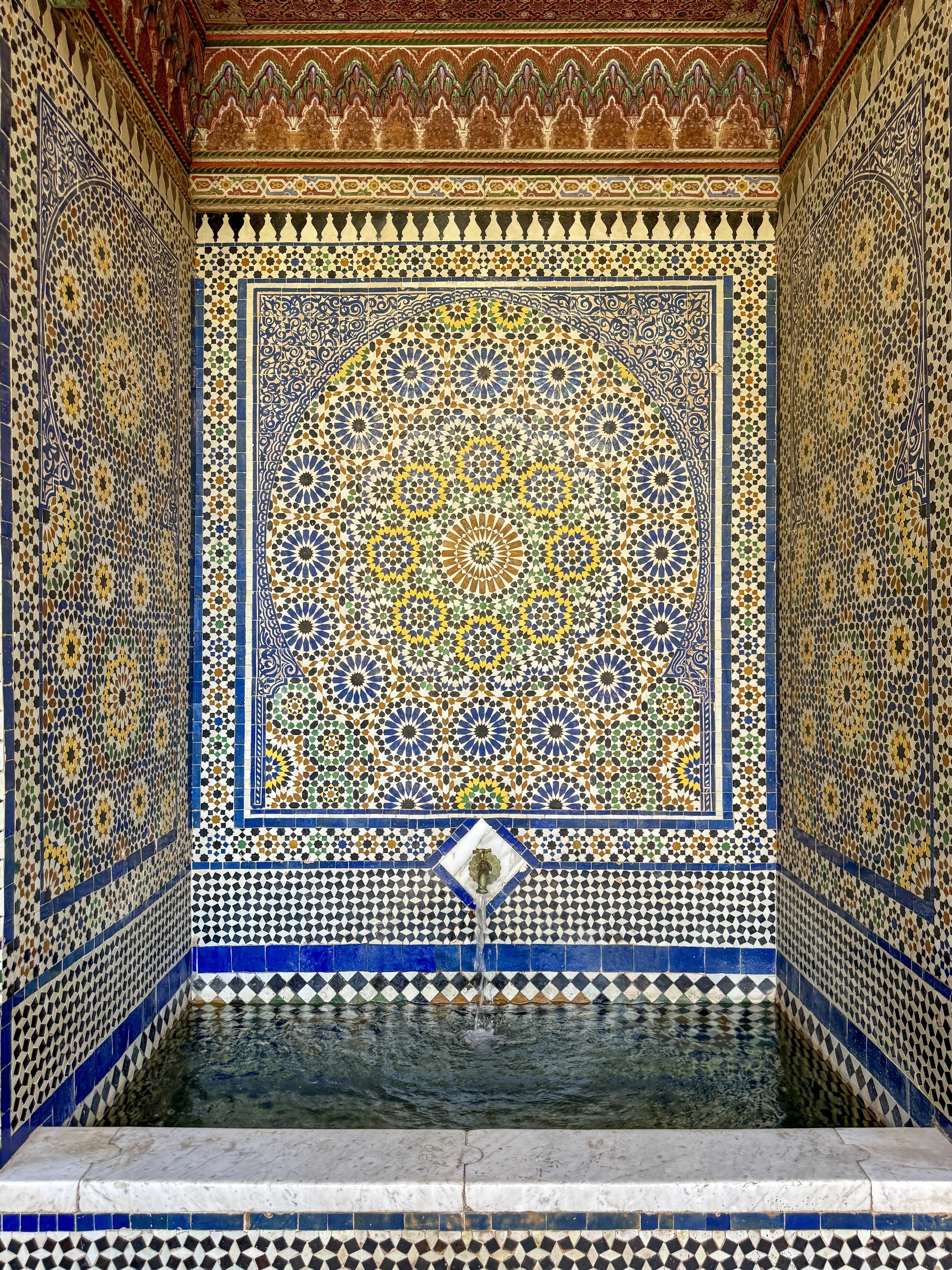
The garden is divided into four sections, planted with manicured orange trees throughout, a design evoking the garden of paradise described in the Qur’an.
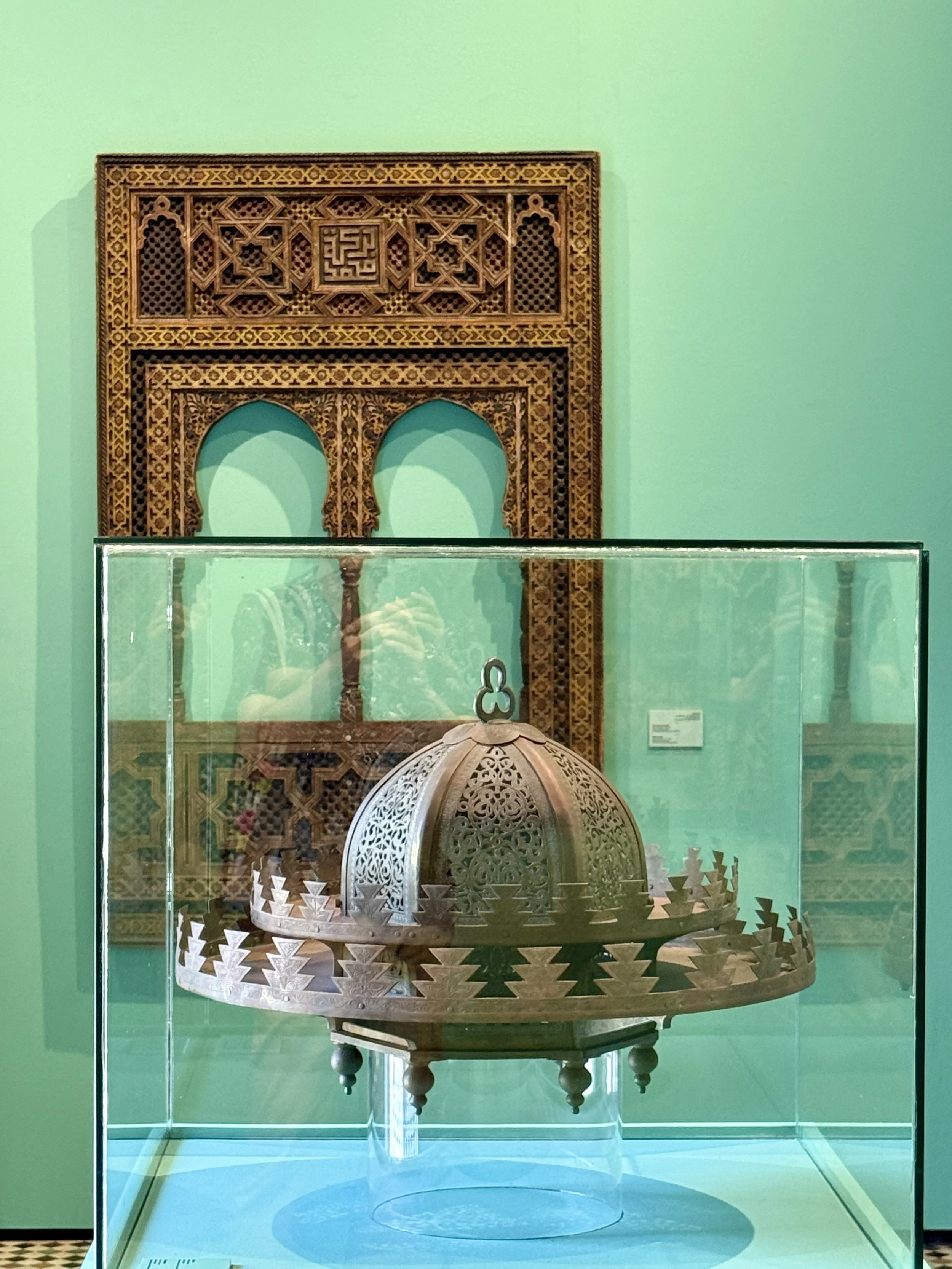
One of the salons holds religious artifacts, including a cast bronze chandelier and a cedar window frame bearing the maze-like barakah Muhammad (blessings of Muhammad).
The first room displayed a collection of religious artifacts associated with the expression of faith among Muslim artisans, including a carved and painted cedar window frame with a square Kufic inscription bearing the blessings of Muhammad from Meknès; a painted and carved wood corbel with floral patterns and muqarnas (stalactite vaulting) from Fès; and a hammered and cast bronze thrayya (chandelier) used for illuminating prayer halls in mosques and madrasas.
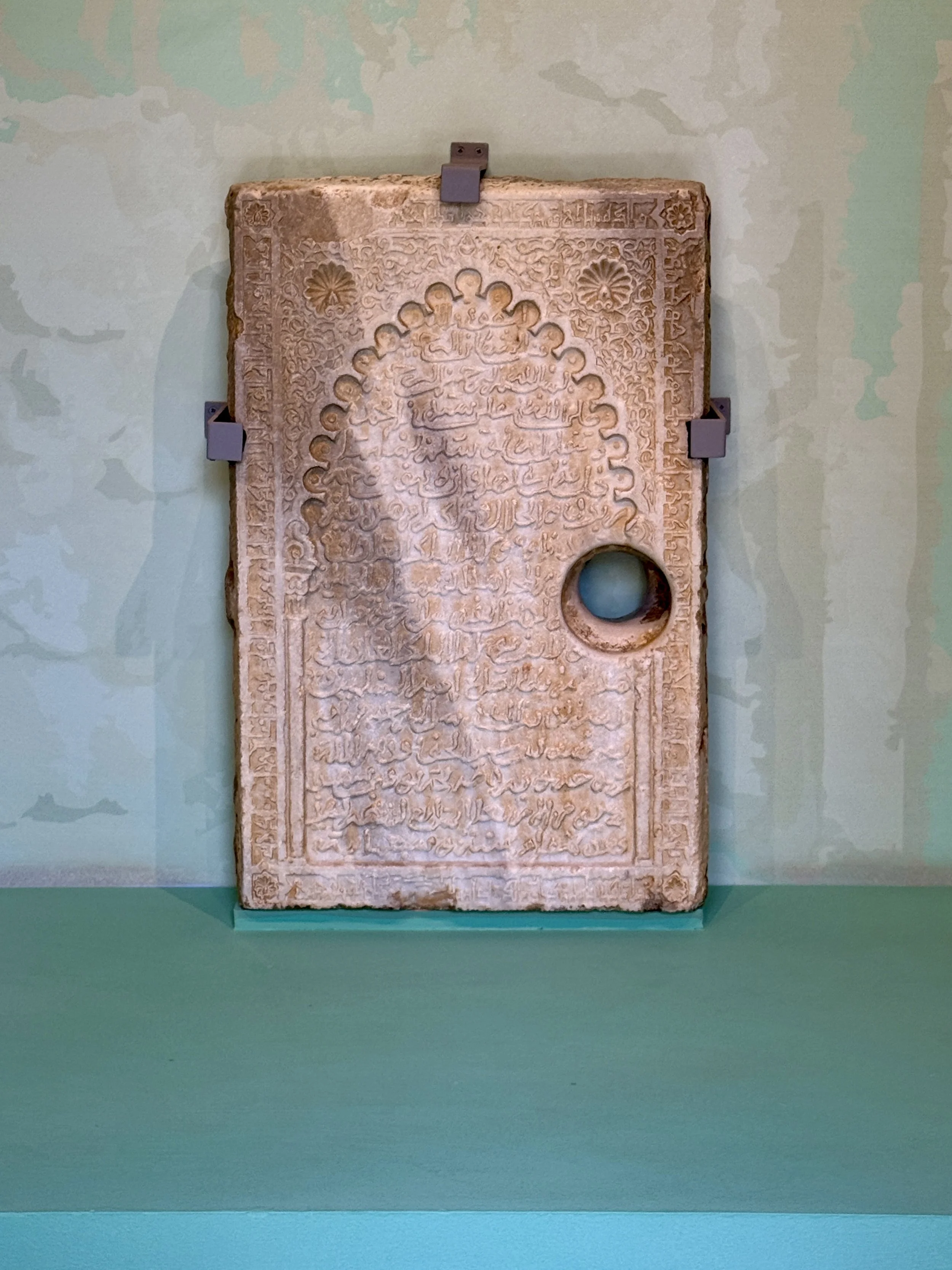
The marble funerary stele of Sultan Abu Ya’qub Yusuf. Its front is inscribed with Latin, and its back was used for his epitaph.
Another room held the white marble funerary stele of Marinid Sultan Abu Ya’qub Yusuf (ruled 1286–1307), son and successor of Abu Yusuf Ya’qub. The marker has a curious history: It began as a Roman tombstone from Hispania Baetica, dedicated to a 3rd century governor, Aulus Caecina Tacitus. It was later repurposed as a fountain basin in Umayyad Córdoba, Spain, and centuries later was brought to Morocco, where Marinid carvers turned its blank face into the sultan’s epitaph.
The stone features a poly-lobed arch reminiscent of a mihrab, the wall niche marking the holiest place in a mosque, and a circular opening, likely a drainage hole from its former life as a fountain.
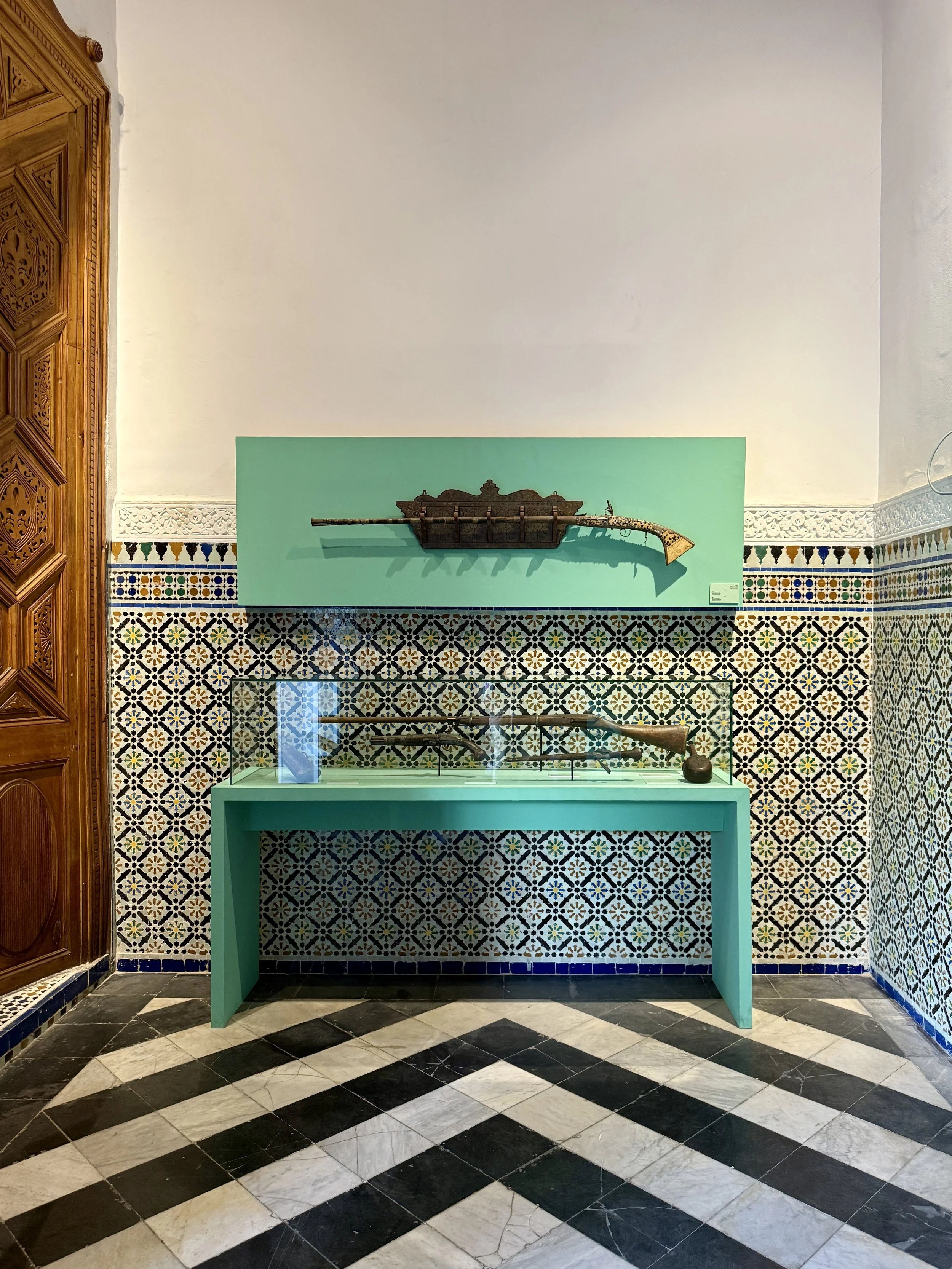
Known for his piety and prowess in warfare, Sultan Abu Ya’qub Yusuf faced revolts within his own territories in Morocco, alongside a prolonged siege against the Zayyanids of Tlemcen (Algeria) and military campaigns in Spain. He was assassinated in the Tlemcen siege camp in May 1307 (706 AH), after which he was laid to rest in the Chellah necropolis in Rabat.
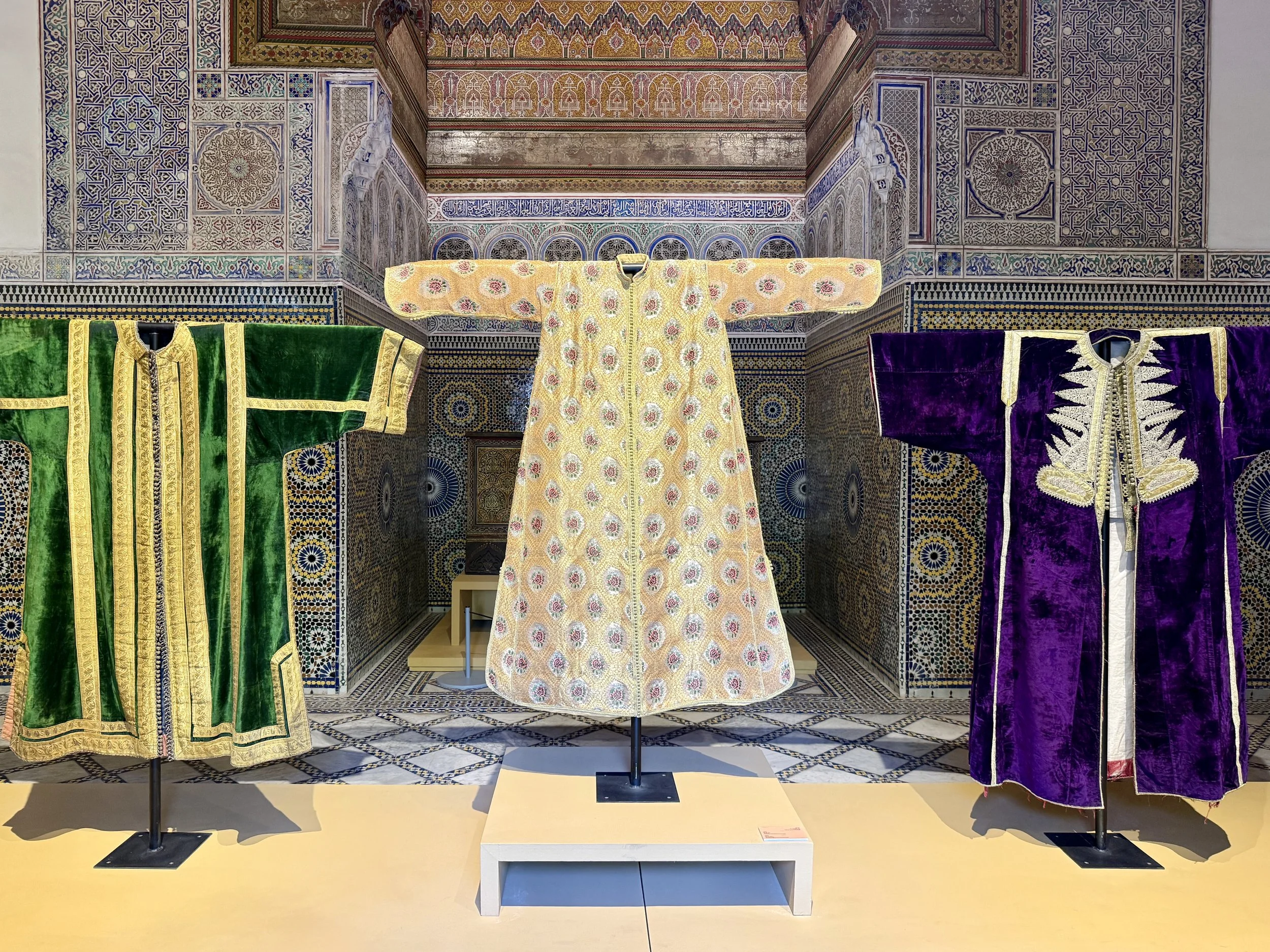
One of the larger halls displayed a grouping of robe-like caftans. The pale yellow silk brocade caftan is embroidered using the khrib technique, which loosely translates to “the one who ruins,” a nod to how costly and exclusive this fabric once was.
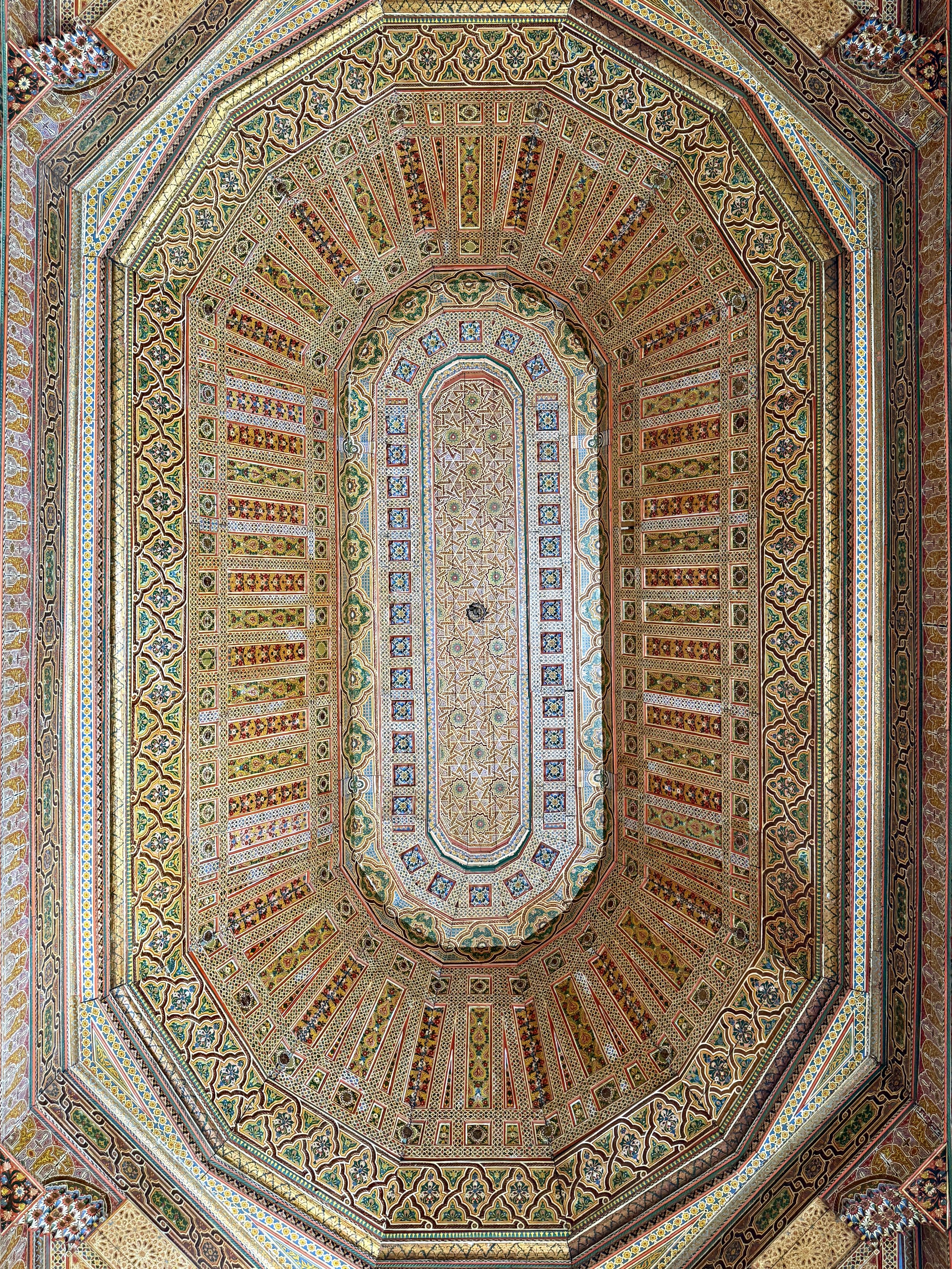
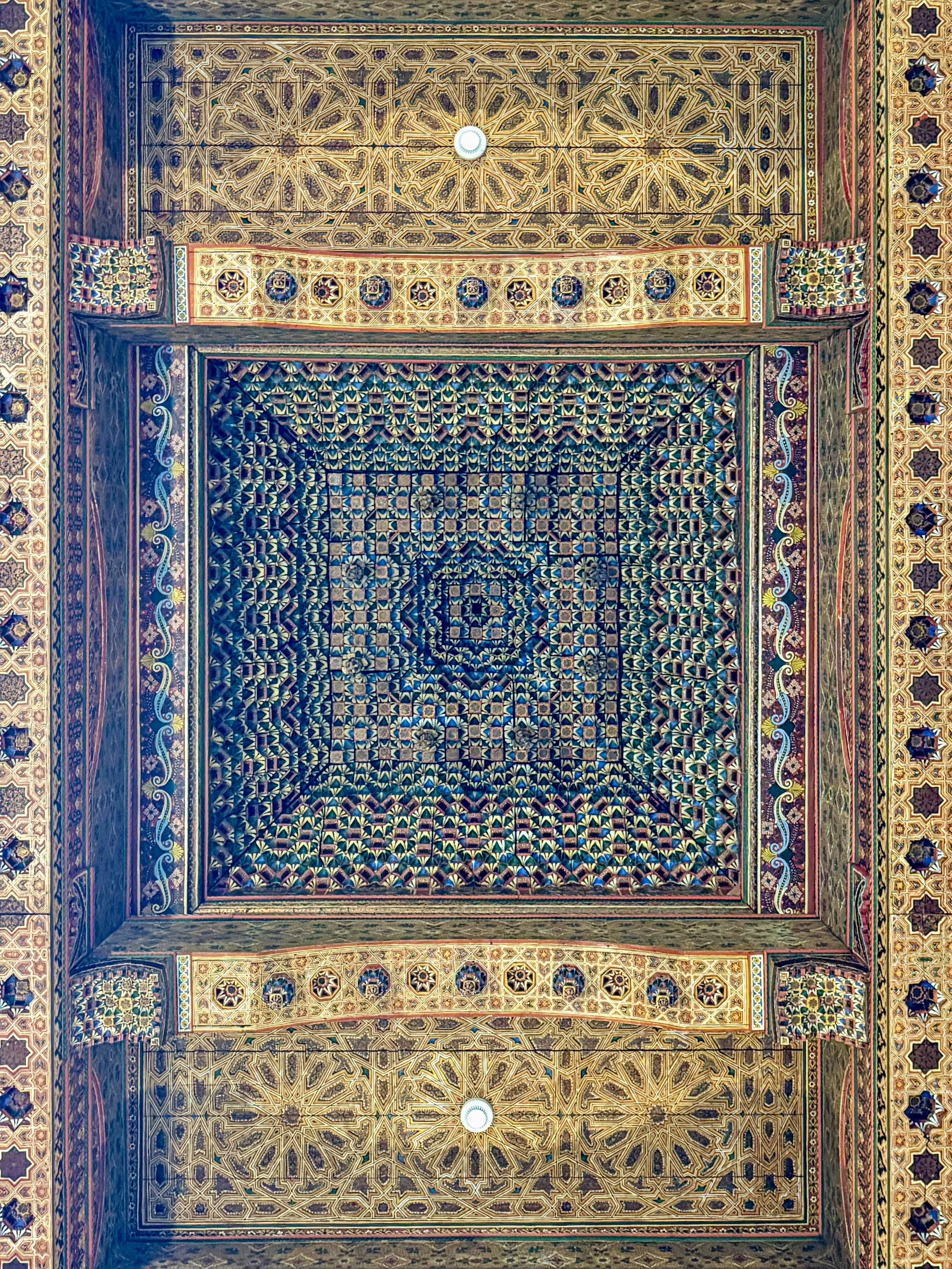
We ventured into a larger exhibition hall with an elaborate coffered ceiling, featuring traditional silk brocade and embroidered velvet caftans from Fès and Tetouan. Of the trio, the pale yellow silk brocade caftan with raised rose medallions caught my eye and was labeled as a bencherif-style bridal costume from the Alawite period. Developed by the Bencherif family in Fès, this luxurious woven textile is known as khrib, which loosely translates to “the one who ruins,” a nod to how costly and exclusive this fabric once was.
Originally reserved for nobility, the collarless, robe-like garment is thought to have reached Morocco via Andalusian Spain, carried by the Marinid dynasty following their ties to al-Andalus. Under the Saadian dynasty, it spread more widely and became a celebrated symbol of Moroccan identity and heritage.
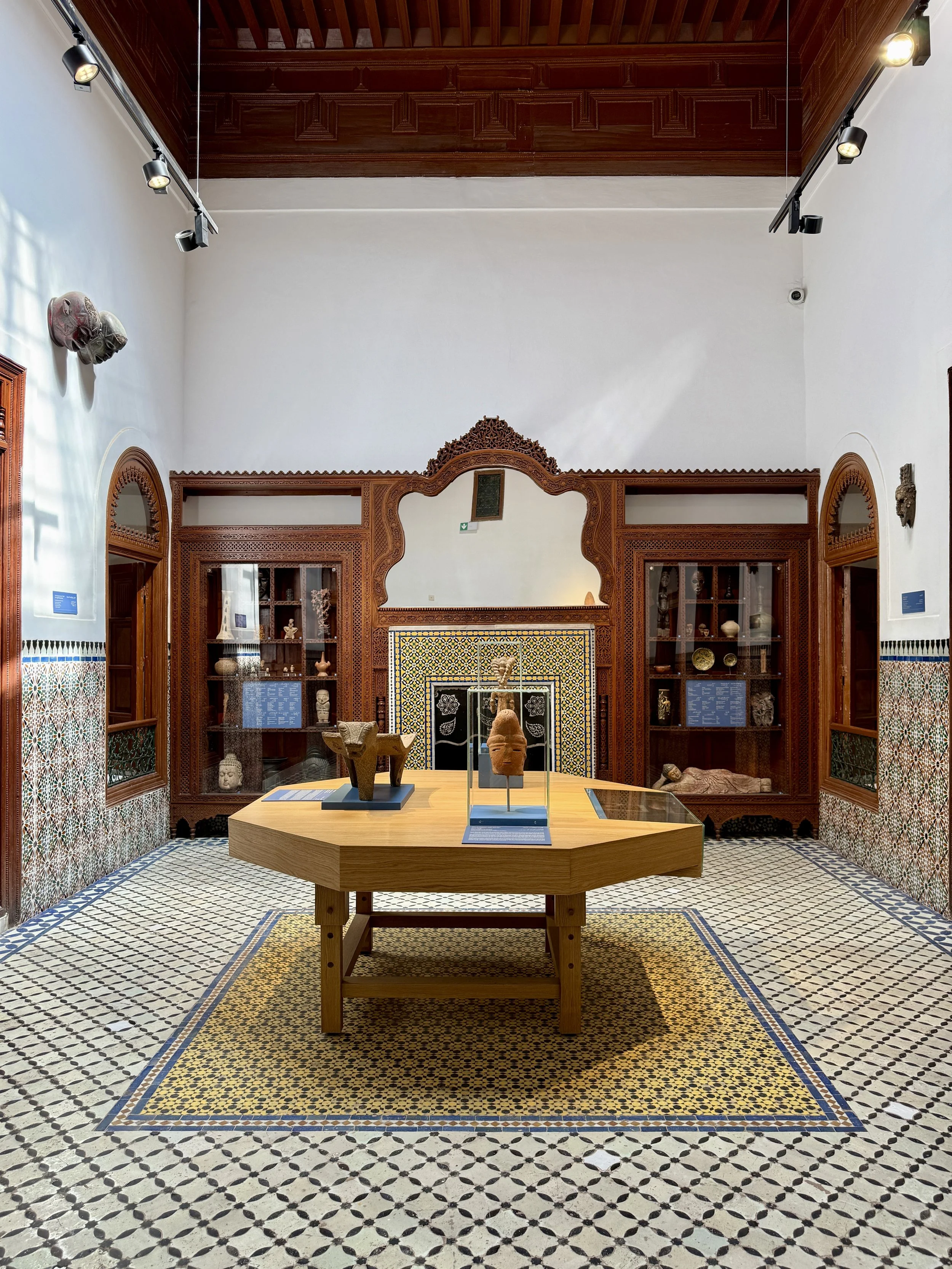
Objects from Birch’s personal collection come from across Africa, Asia, Europe and the Americas.
Birch, Please: The Patti Birch Collection
The final space held a selection of pieces from the Patti Birch collection and featured an introductory wall panel accompanied by a striking black-and-white portrait of its patroness taken by Man Ray in 1948. The permanent exhibition is the work of curator Hadia Temli and French scenographer Christophe Martin, whose résumé also includes the Museé Berbère at the Jardin Majorelle and the Yves Saint Laurent Museum across town. Temli runs Galerie Siniya28 in Gueliz, a showcase for emerging artists.
We learned more about the remarkable Ms. Birch. She was born in New York City in 1923, the daughter of sculptor S. Tobias Garnell. After an education in Paris, Birch returned to the United States, where a short-lived stint at the University of Virginia gave way to a growing fascination with art. That pull eventually led her to a job at the Philadelphia Museum of Art, where she met her future husband, Everett Birch, in 1952.
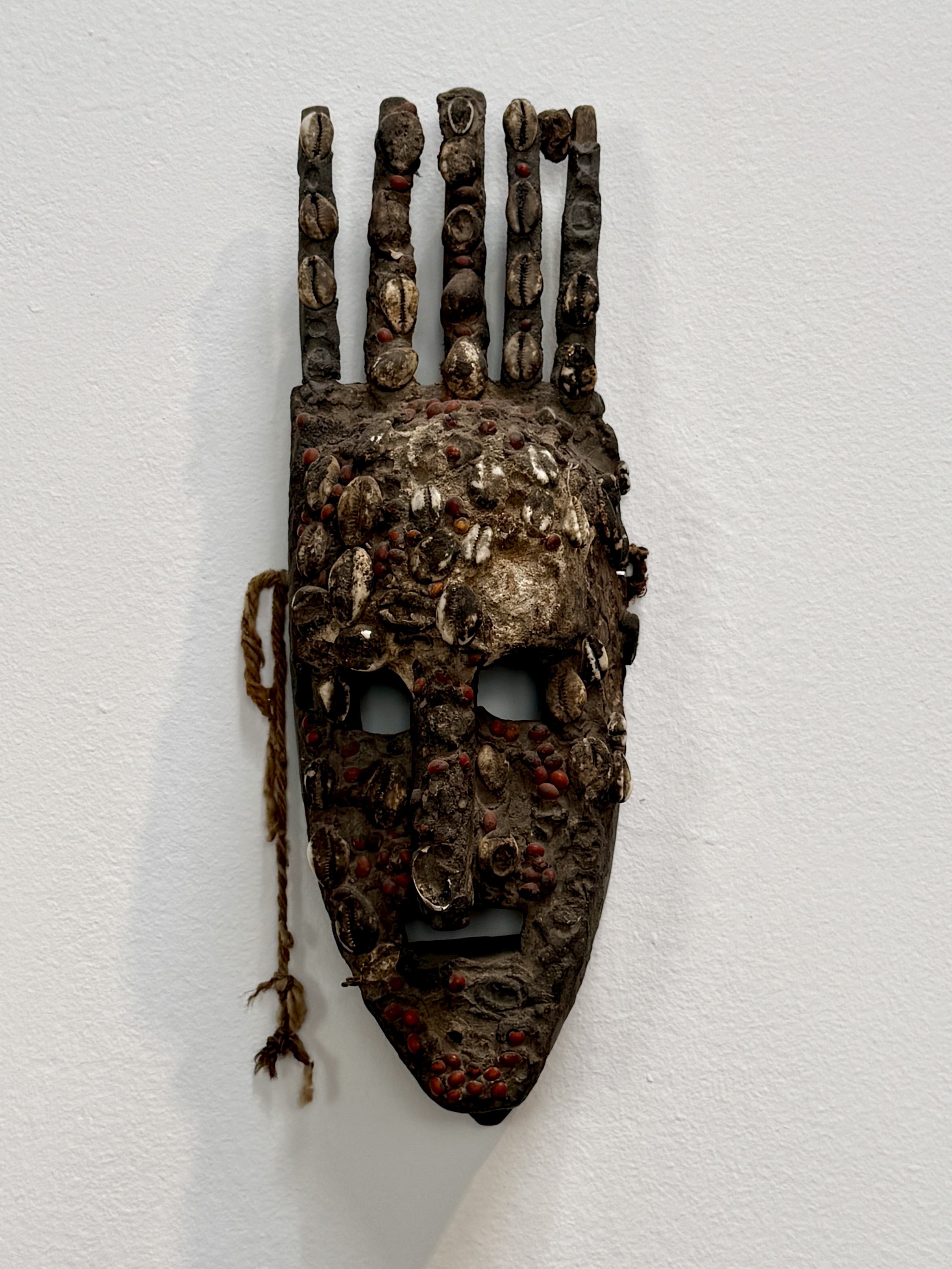
An Ndomo mask made of wood, wax, shells and seeds from Mali, mid-20th century
Together, they built a wide-ranging collection, amassing artworks that ranged from jewelry to antiquities to contemporary art. Having traveled extensively in Morocco, Birch was a generous supporter of the Met’s Islamic collections. The Patti Cadby Birch Court, also known as the Moroccan Court, was funded in her memory by the Patti and Everett B. Birch Foundation after her death.
Objects from her personal collection, gifted to the kingdom of Morocco in 1999, are on display at Dar el Bacha, drawn from across Africa, Asia, Europe and the Americas. The room is a high-ceilinged gallery with a single overhead skylight and an octagonal wooden table at its center, holding a terracotta head, a stone ceremonial stool in the shape of an animal, and a carved wooden tribal fertility statue. The back wall is anchored by a zellige-tiled fireplace, flanked by a pair of built-in glass display cabinets holding smaller ceramics, masks and figurines, each labeled with an ice blue placard.
The assemblage pays tribute to Birch’s commitment to cultural preservation and stands as a testament to humanity’s shared history.
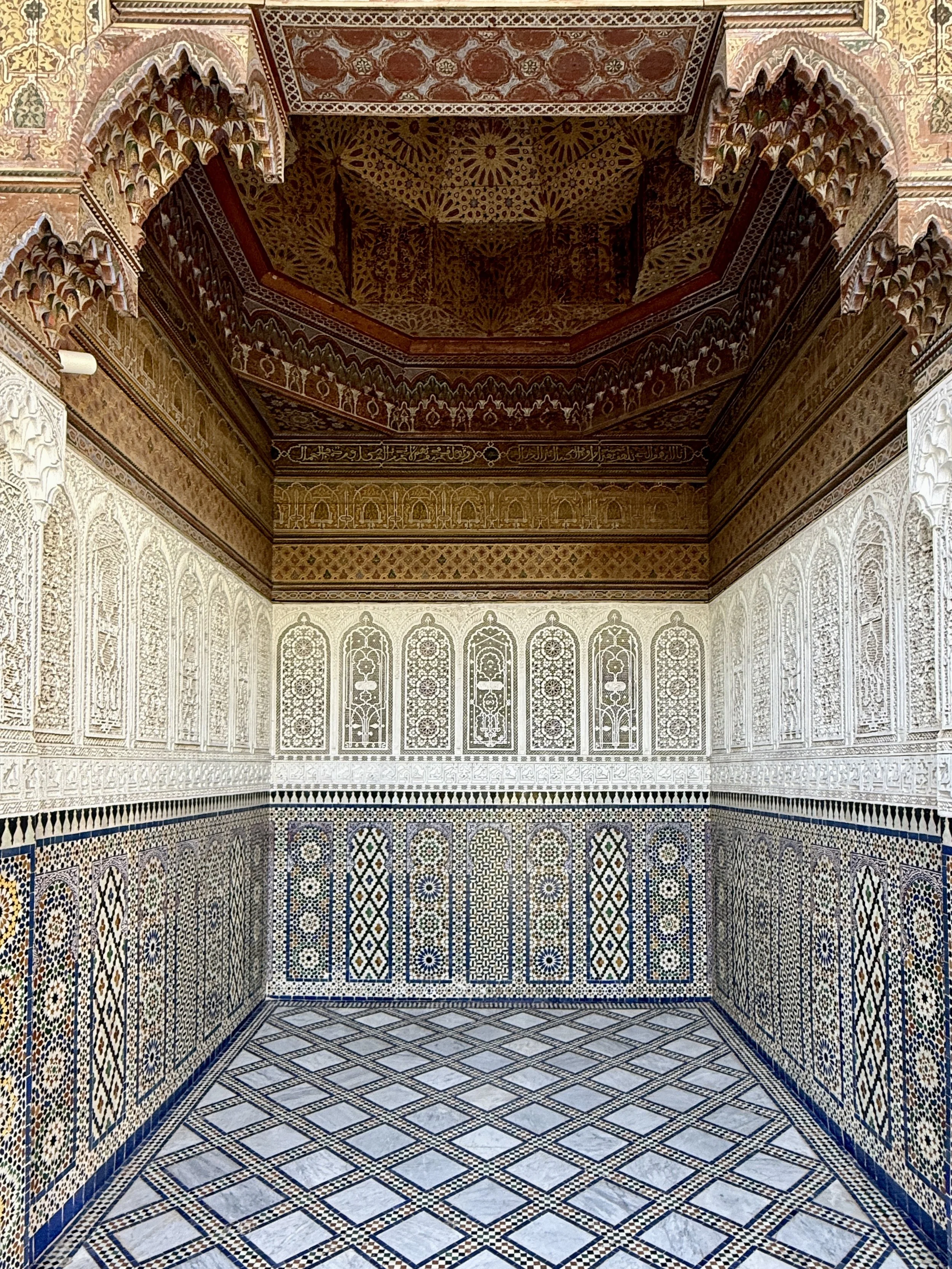
Why Dar el Bacha Is One of Marrakech’s Best Museums
The Dar el Bacha’s holdings reflect the estate’s history and its role as a point of interconnection between Marrakech and the wider world, bridging different cultures, religions and artistic traditions.
We spent about two hours wandering through its rooms and admiring its artifacts. Floors are laid with marble, and rooms unfold in a skillful blend of Islamic and Andalusian splendor with European design influences. It felt less like an exhibition hall and more like a conversation between cultures, which is exactly what the Musée des Confluences promises. –Duke
VISITOR INFORMATION
Address
65–69 Riad Laârous
Route Dar el Bacha, Medina
Marrakech, Morocco
Hours
Tuesday–Sunday, 10 a.m.–6 p.m.
Closed Mondays
Admission
60 MAD (about $6) for foreign visitors
A café-only ticket (10 MAD) is available if you're just visiting Bacha Coffee.
Time Needed
Plan for 1½–2 hours to explore the museum.
If Bacha Coffee is on your itinerary, budget significantly longer for the wait.
Tips
- Arrive early, especially if you want to visit Bacha Coffee — waits of several hours are common.
- You can skip the wait at Bacha Coffee and just visit the store (or the shop at the airport).
- Pair your visit with nearby Ben Youssef Madrasa and Le Jardin Secret.
- Take your time. The palace itself is as much the attraction as the museum's collections.