INDONESIA

Candi Mendut: A Peaceful Borobudur Side Trip

Explore this ancient Buddhist temple and go for a swing on the massive banyan out back.
mendut.JPG

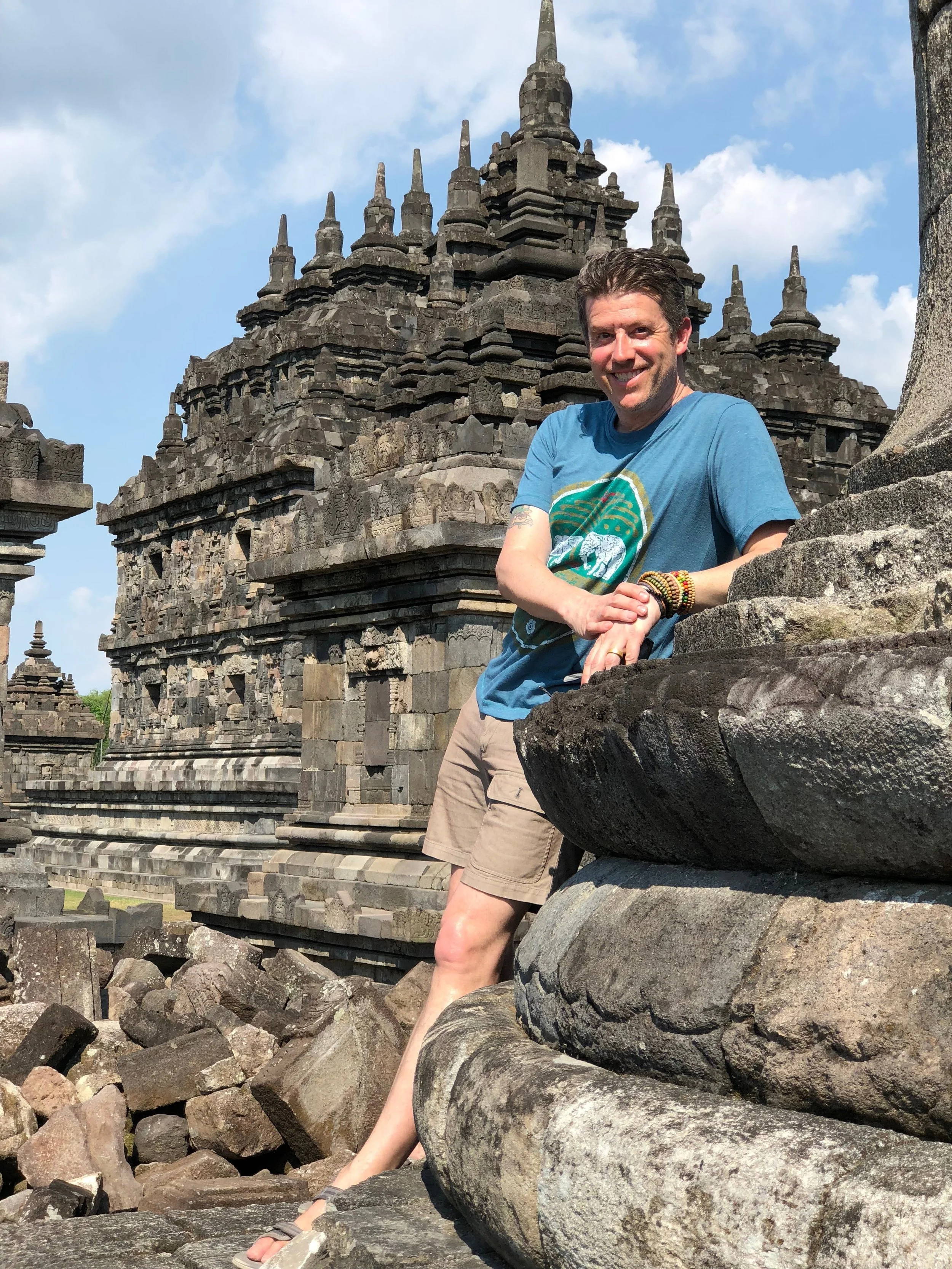
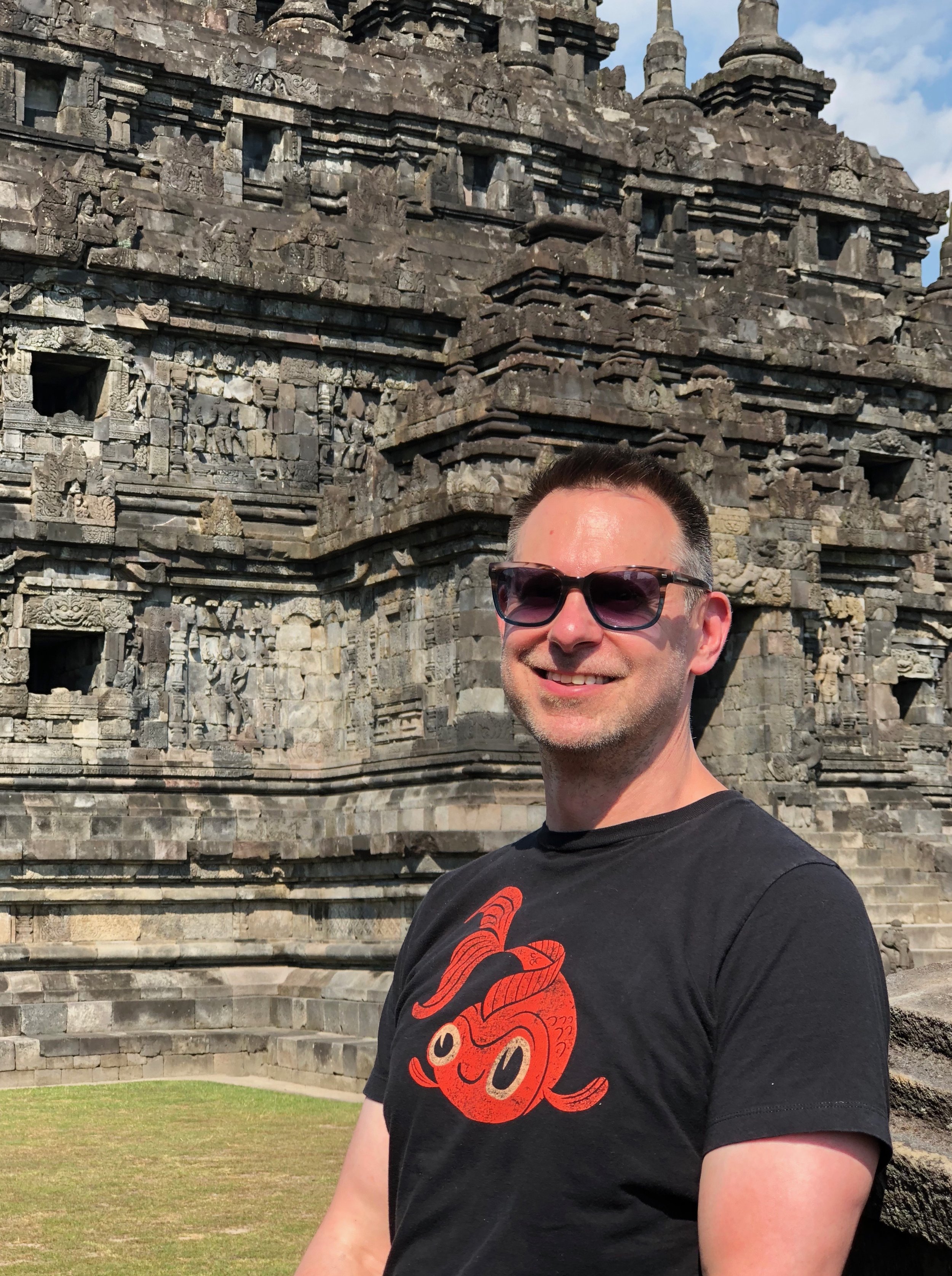
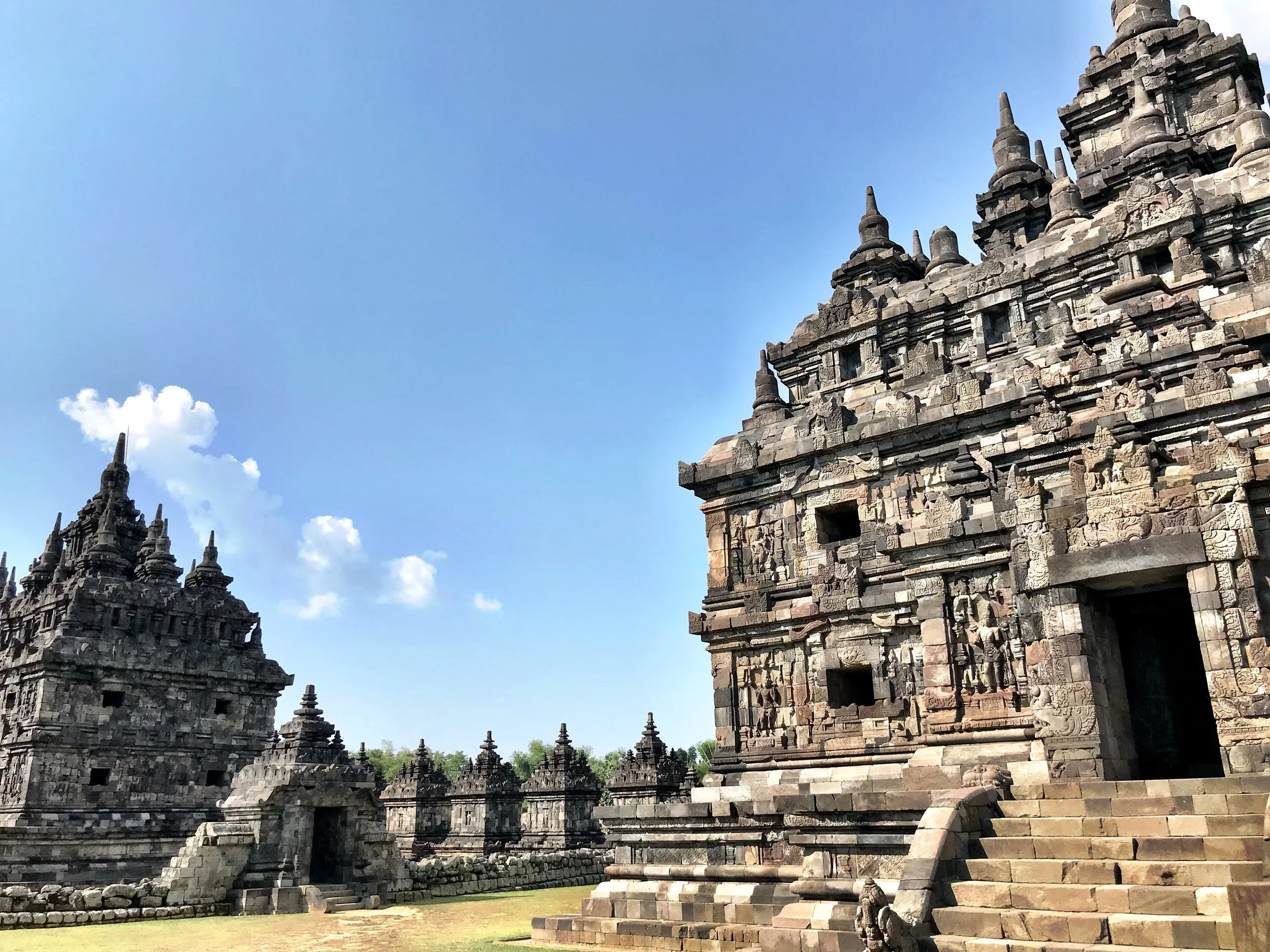
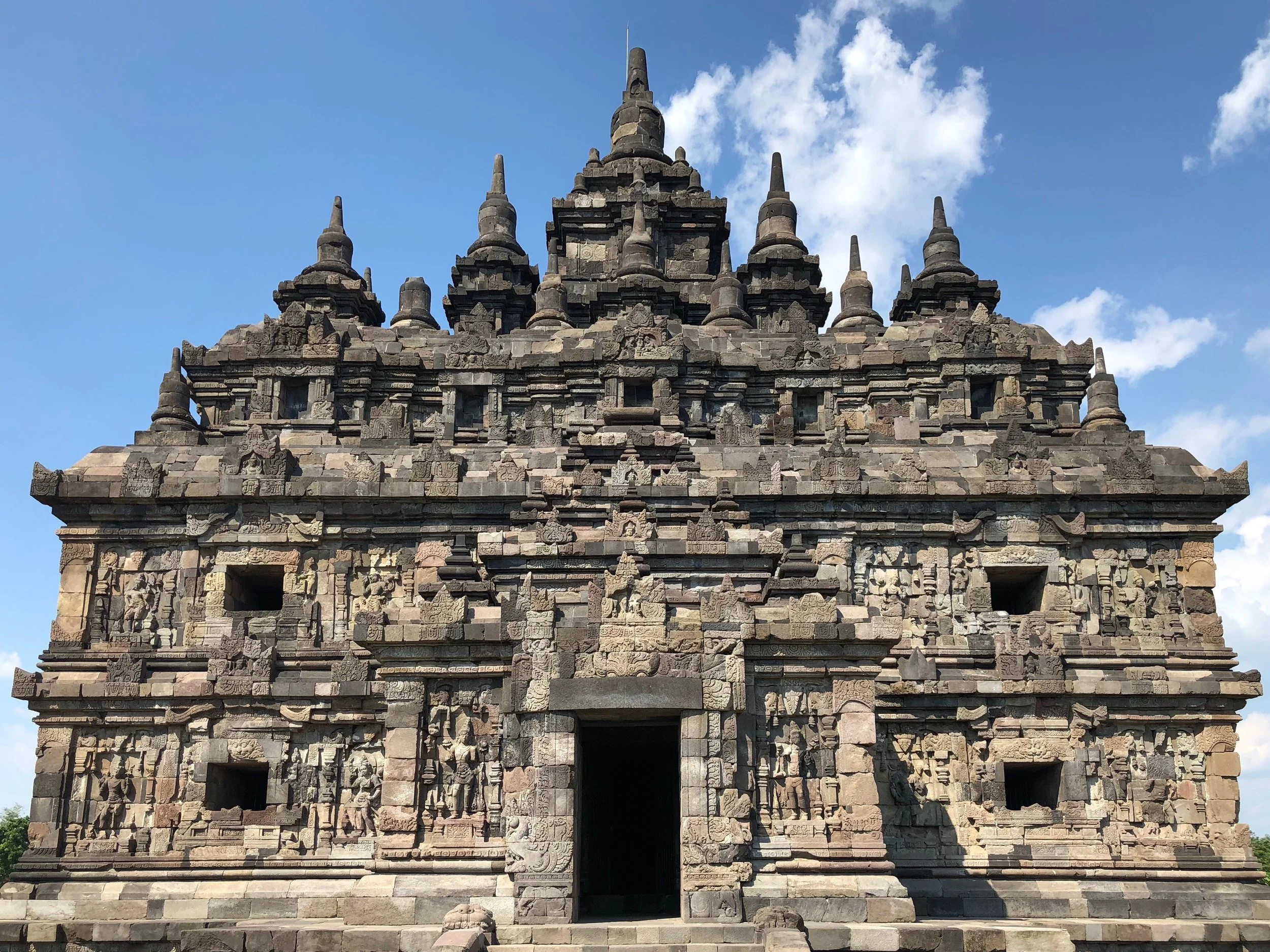
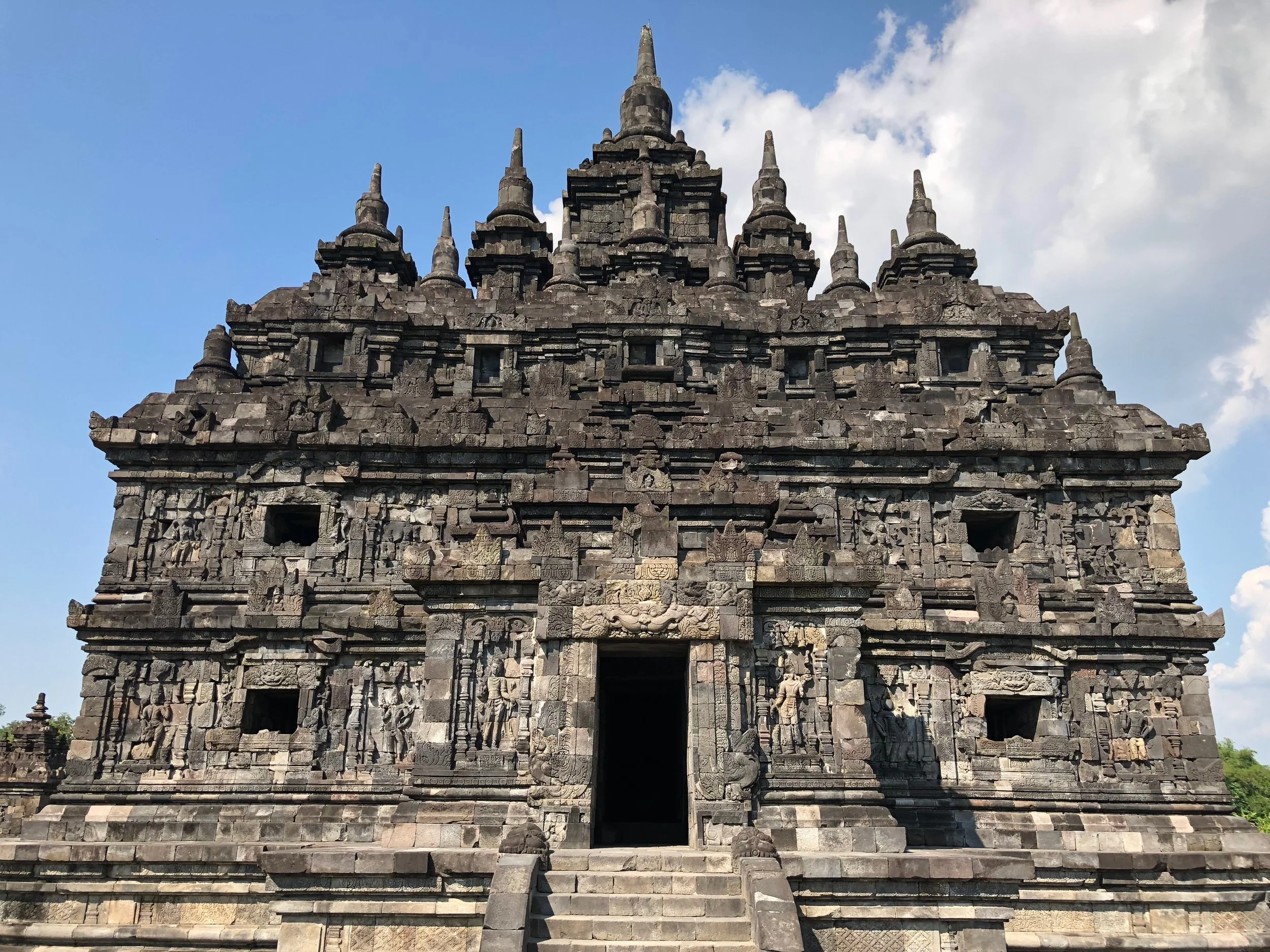
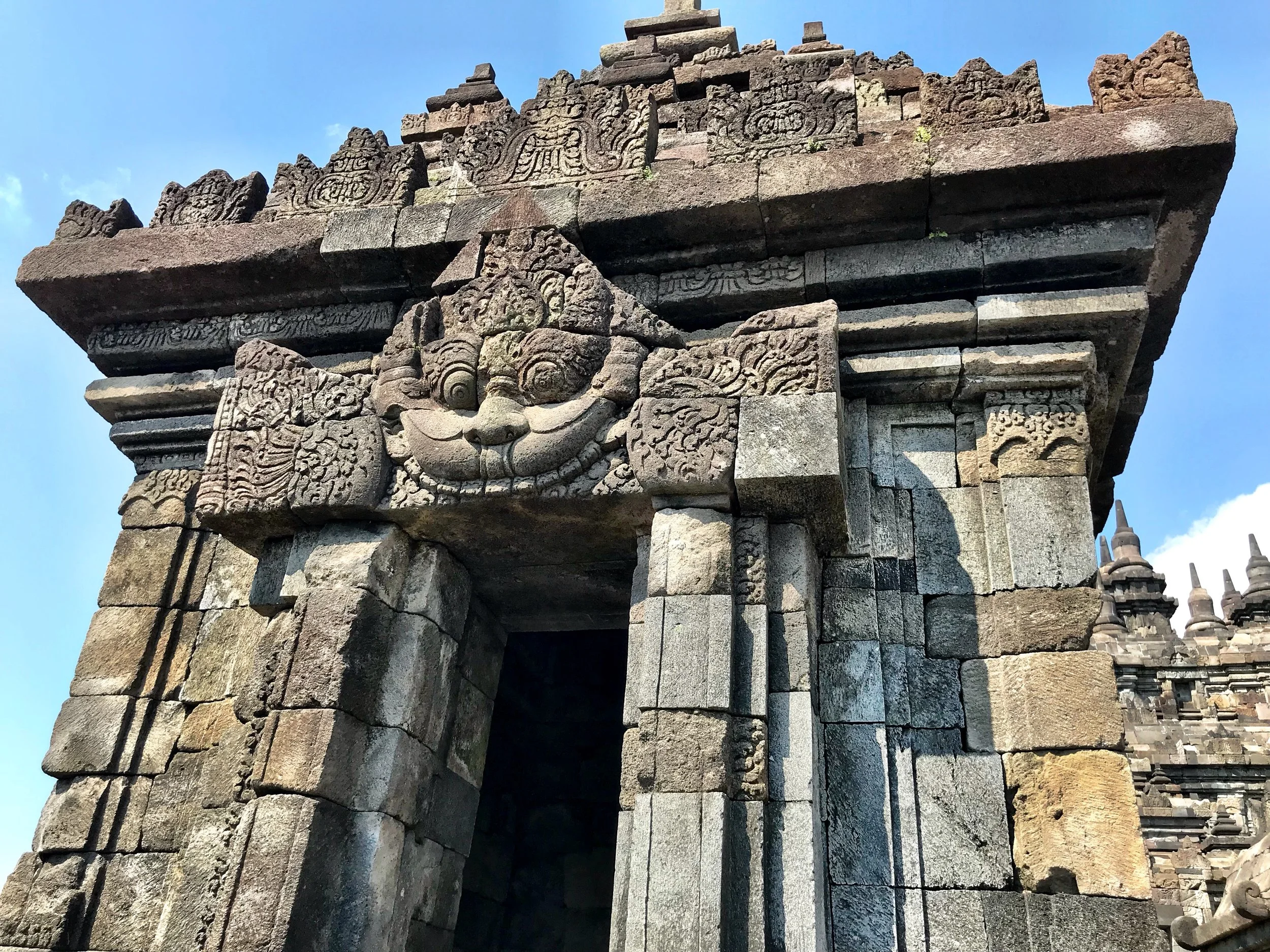
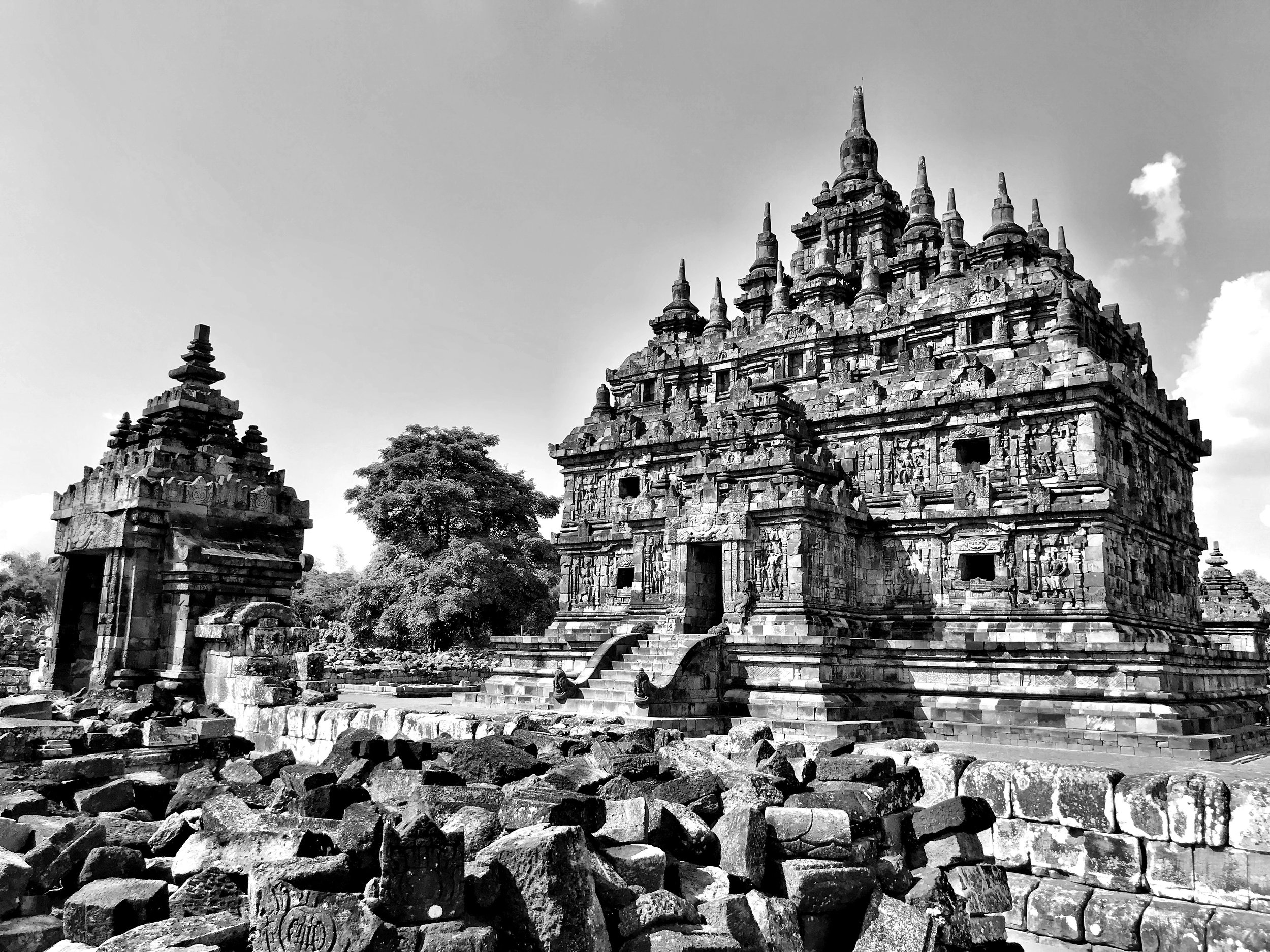
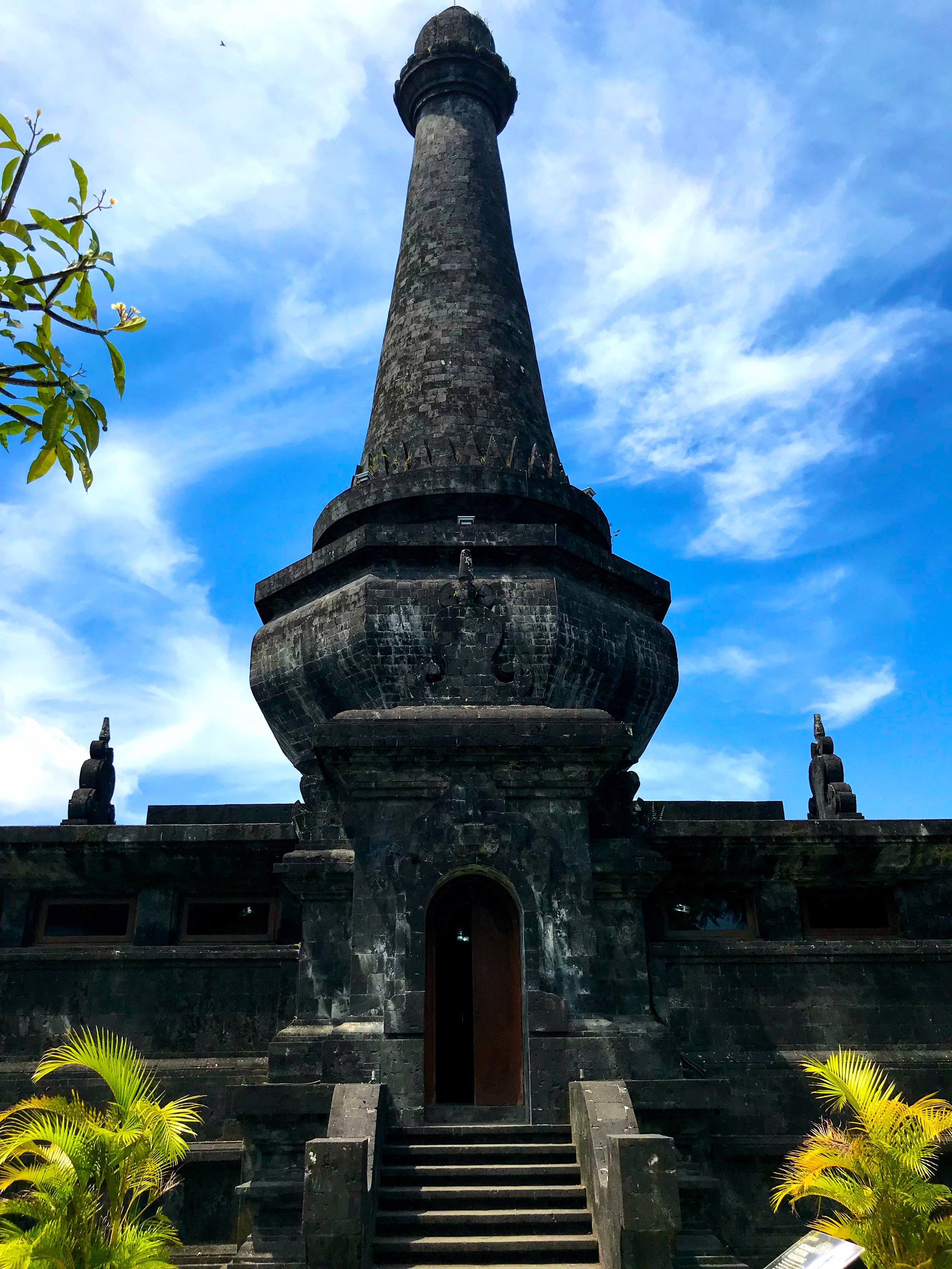
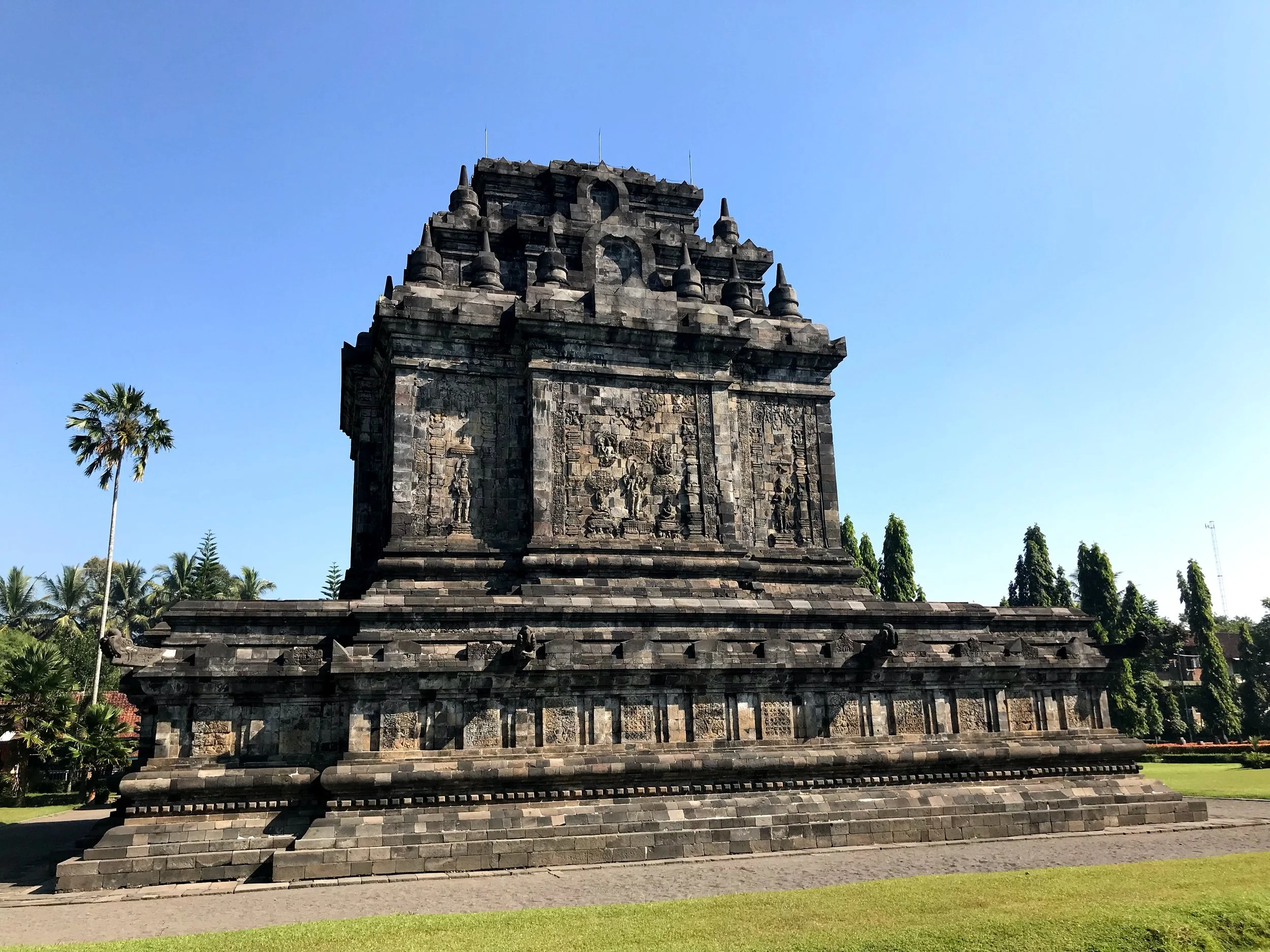
It may be small, but it’s an exquisite ancient temple. Located a short distance from Borobudur, the largest Buddhist shrine in the world, Candi Mendut was the third and final stop on our day’s itinerary. The clear blue sky was a stunning backdrop for the structure, composed of gray andesite volcanic rock.

We also visited the small (and rather unimpressive) Candi Pawon, where Wally and I bought a replica of the bell-shaped stupas that line Borobudur, carved of the same stone as the temple.

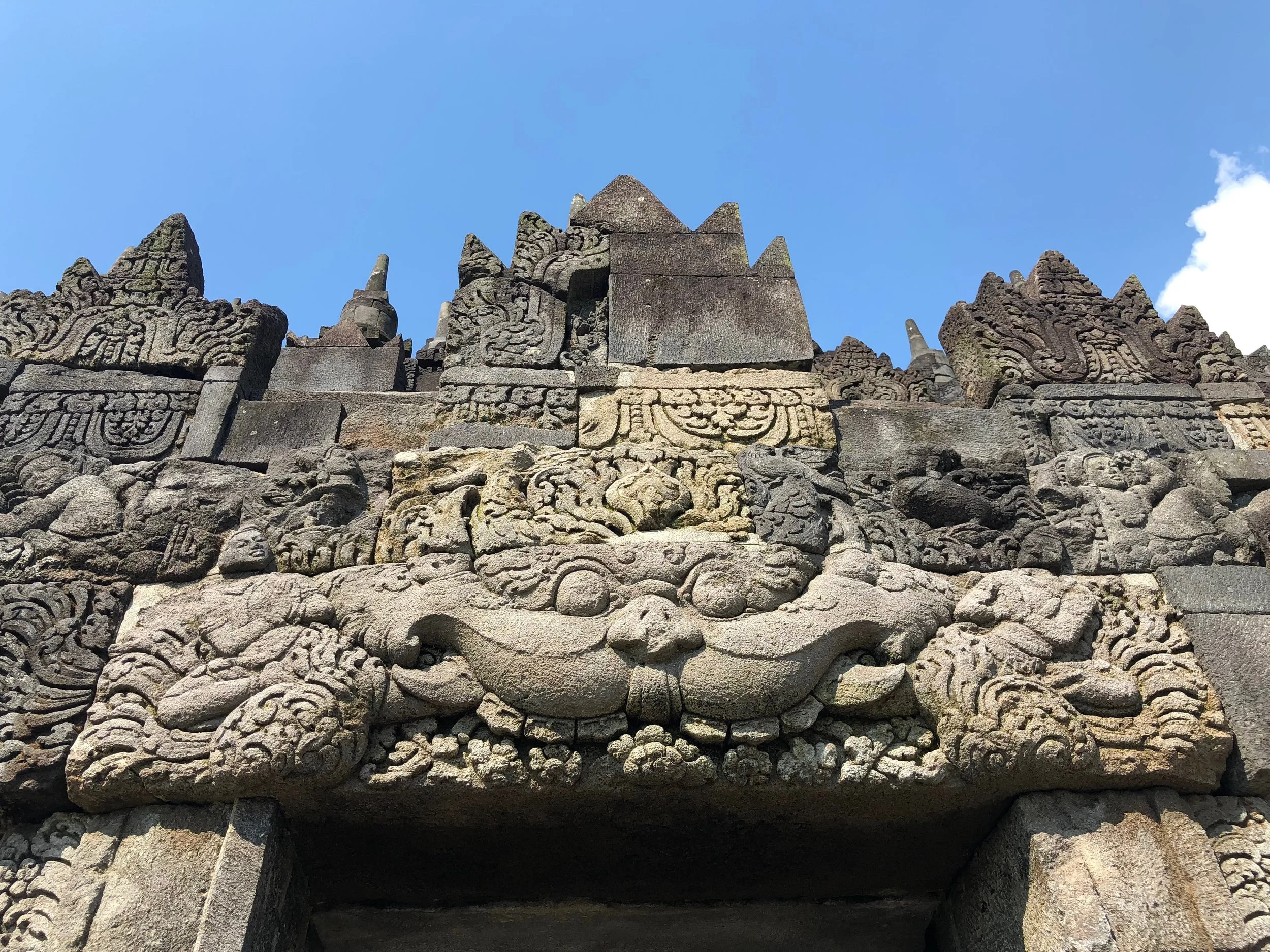
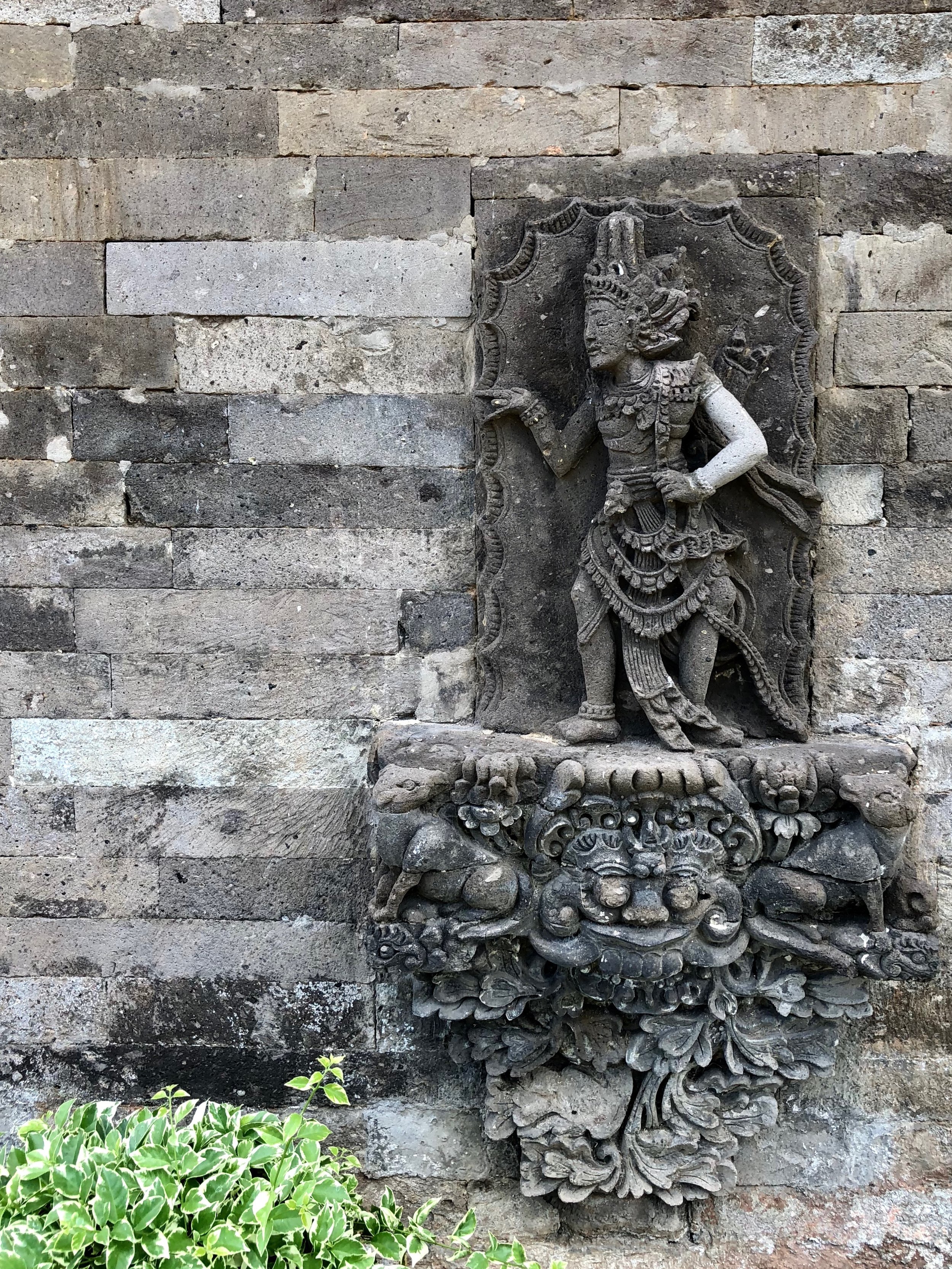
The southern façade of Mendut has a bas-relief of Hariti, patroness of motherhood, who was once a child-eating ogress.

The Dutch discovered this sacred structure by chance in 1836, while cutting through thick foliage to clear the plot for a coffee plantation. After careful inspection, overseen by colonial engineering officer Theodore Van Erp, the ruins were eventually uncovered. Conservation efforts began in 1897 but weren’t completed until 1925.

Candi is the word for a Hindu or Buddhist temple or shrine in Bahasa, the Indonesian language. The lone structure stands atop a stone plinth and shares a peaceful green clearing with an enormous sacred banyan tree. A remnant of the Sailendra dynasty, the temple is believed to have been built sometime around 824 CE, during the reign of King Indra.

Its roof is a succession of staggered tiers, decreasing in size, with the first and second encircled by votive stupika, small dome-shaped shrines. At the summit, the central stupa is absent, most likely due to the passage of time or, perhaps damage caused by earthquakes.
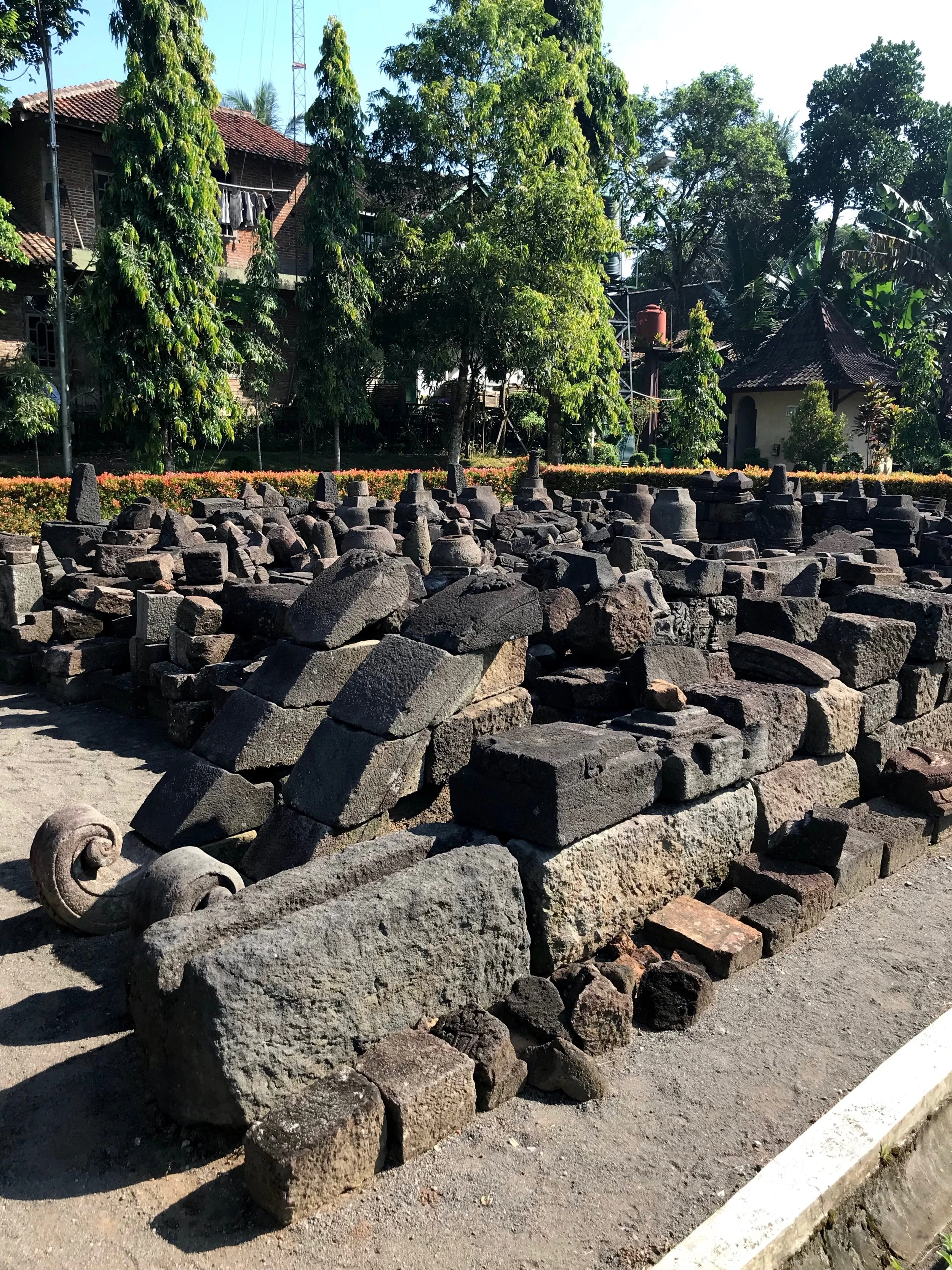
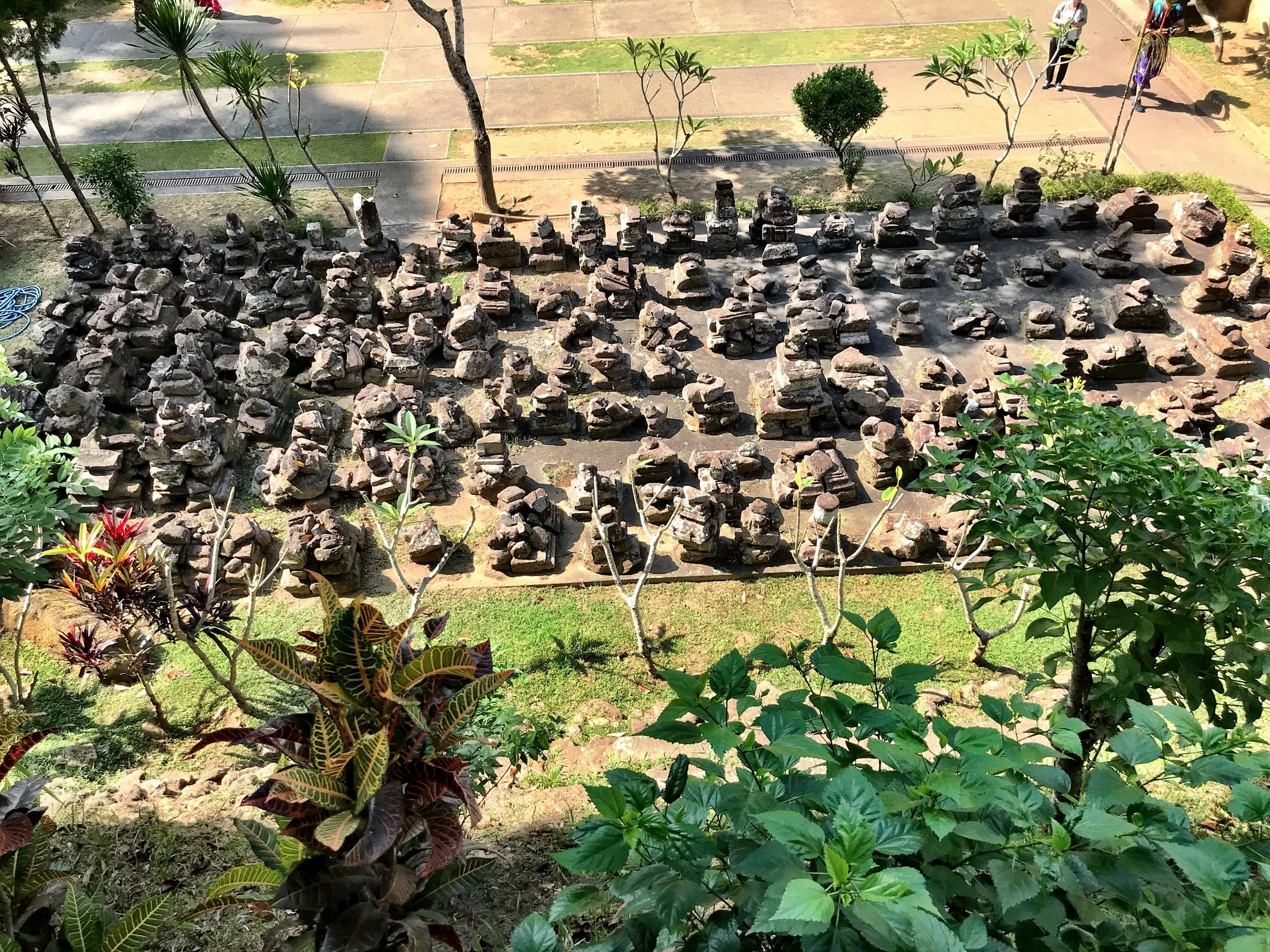
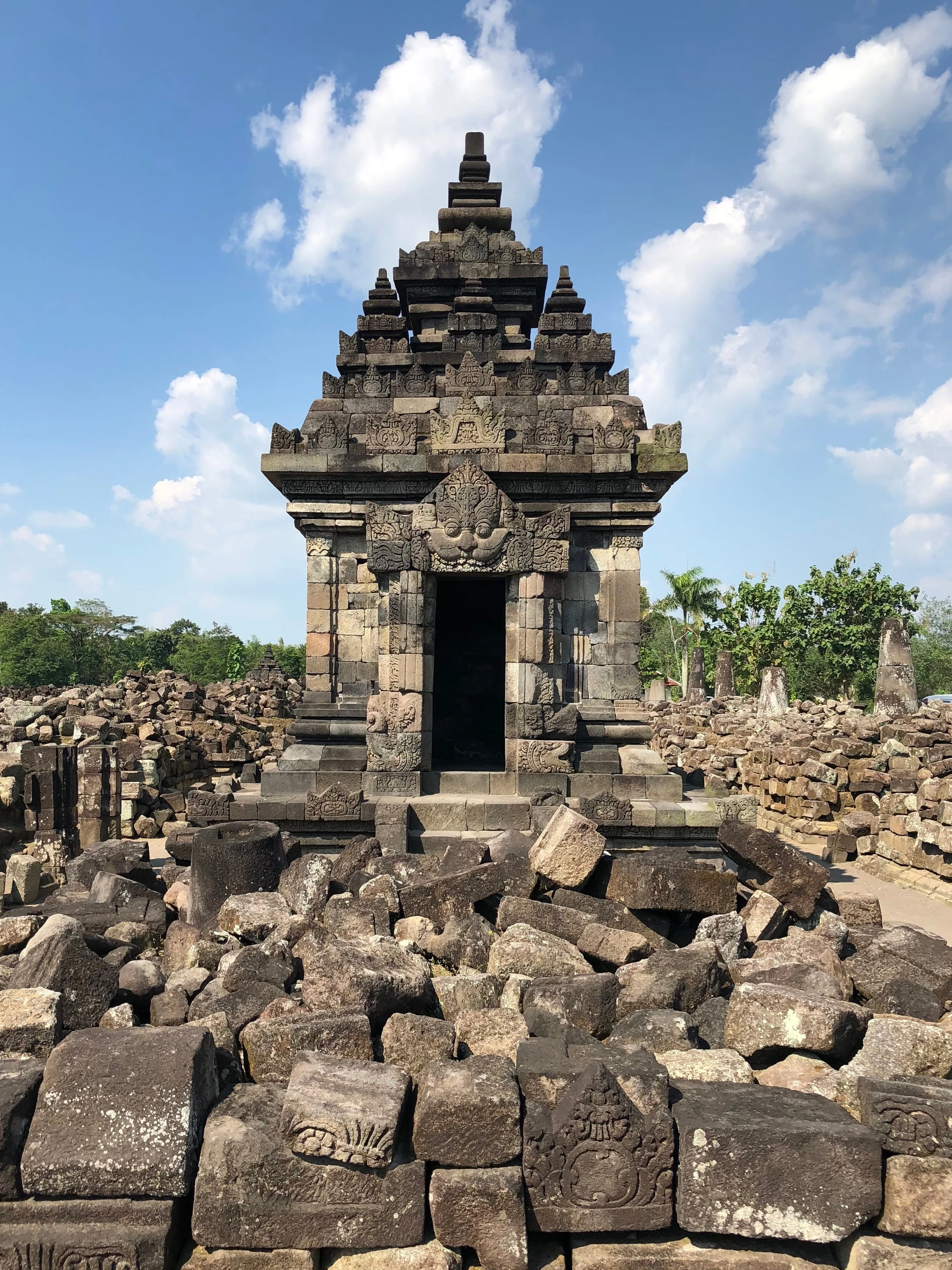
Parts of the temple have been excavated but not rebuilt, as they’re missing pieces

Parts of the temple have been excavated but not rebuilt, as they’re missing pieces

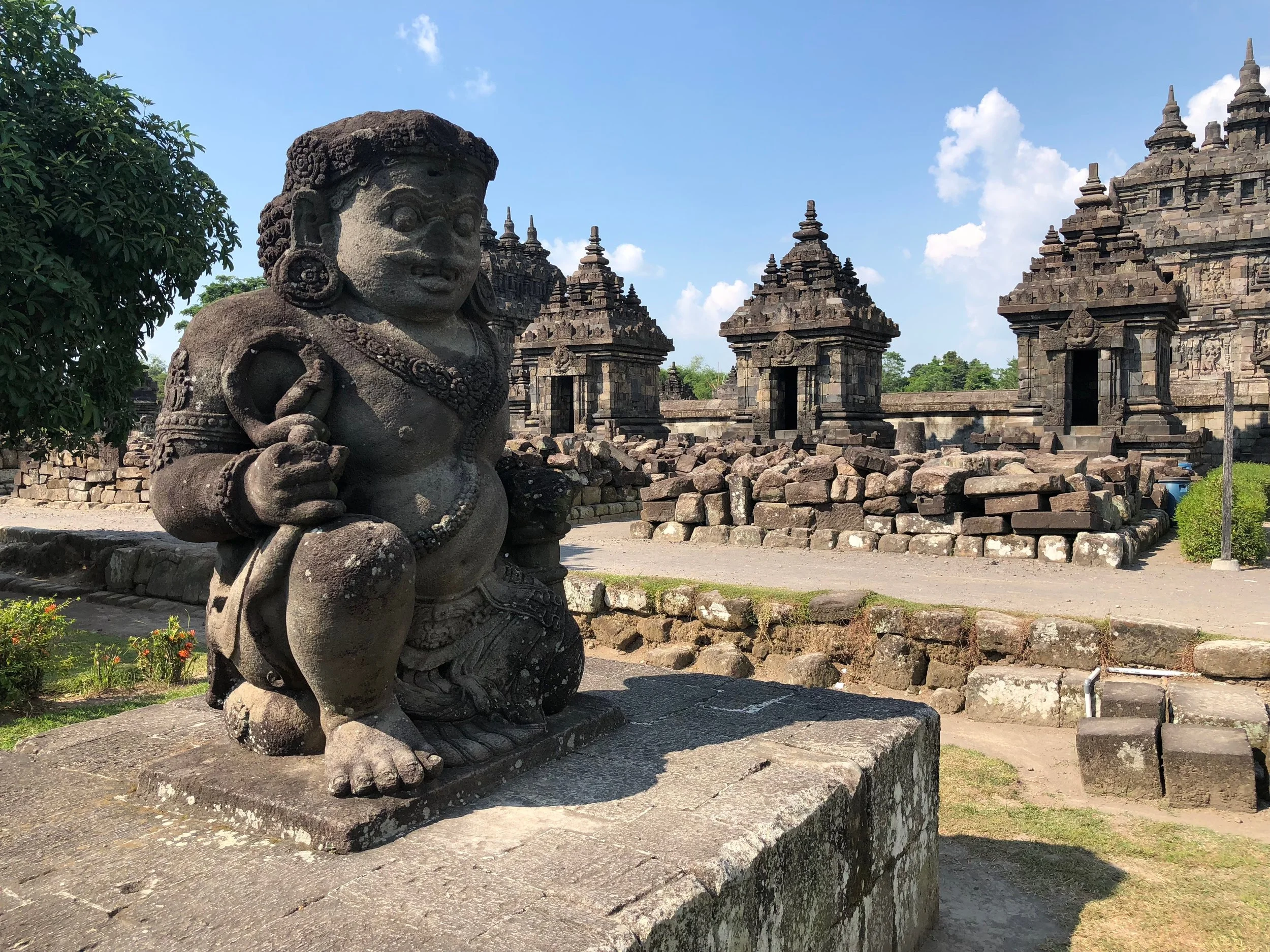
Off to the side of Mendut, a field of sculptures and fragments are laid out in the order they would fit had the missing pieces been found.

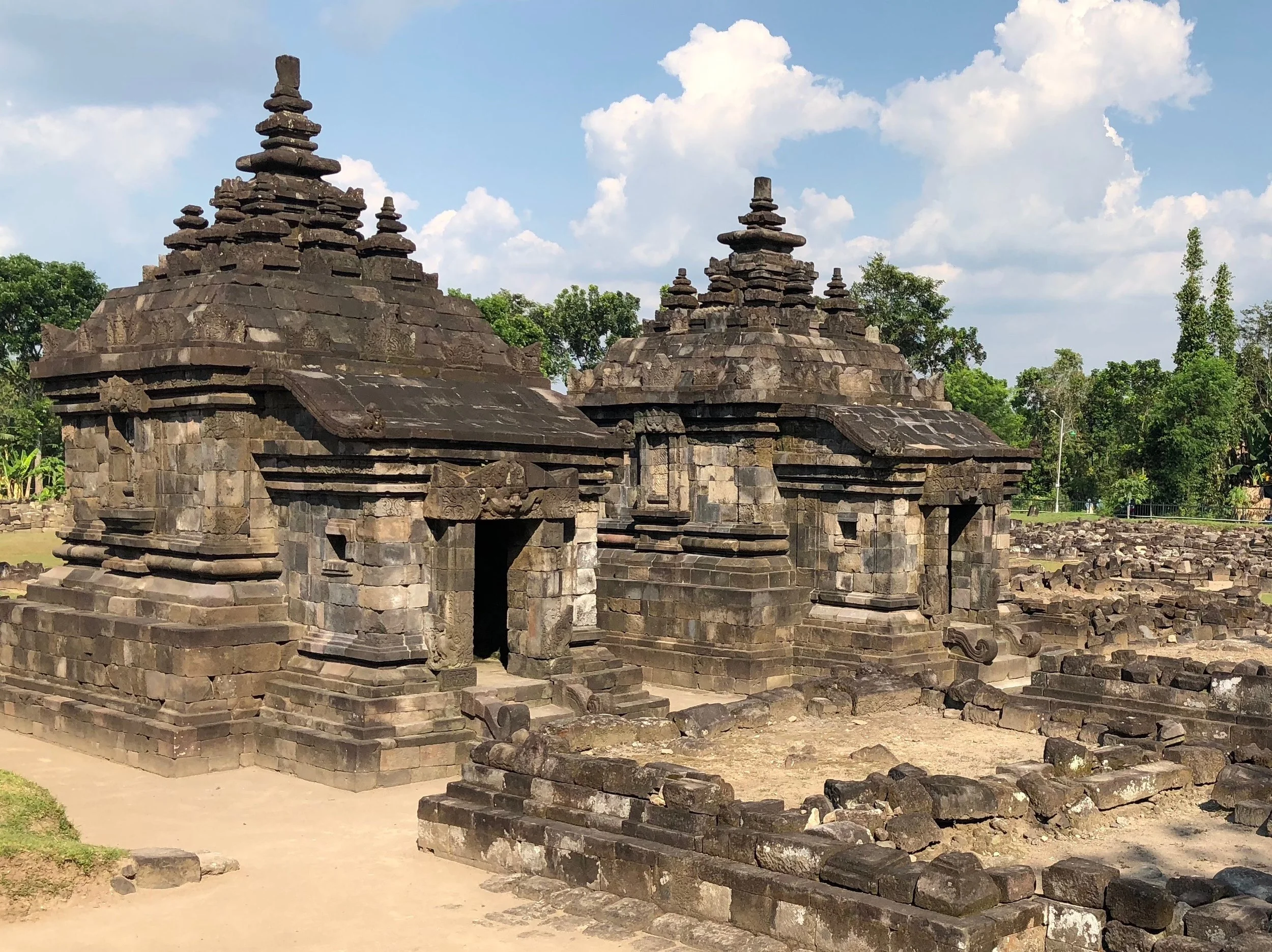
Candi Mendut is one of three temples connected along a nearly direct line, leading historians to speculate that it was part of a grand design and most likely an important pilgrimage stop en route to Borobudur. Of the three, Mendut is the oldest, having been built about 10 years before Borobudur.

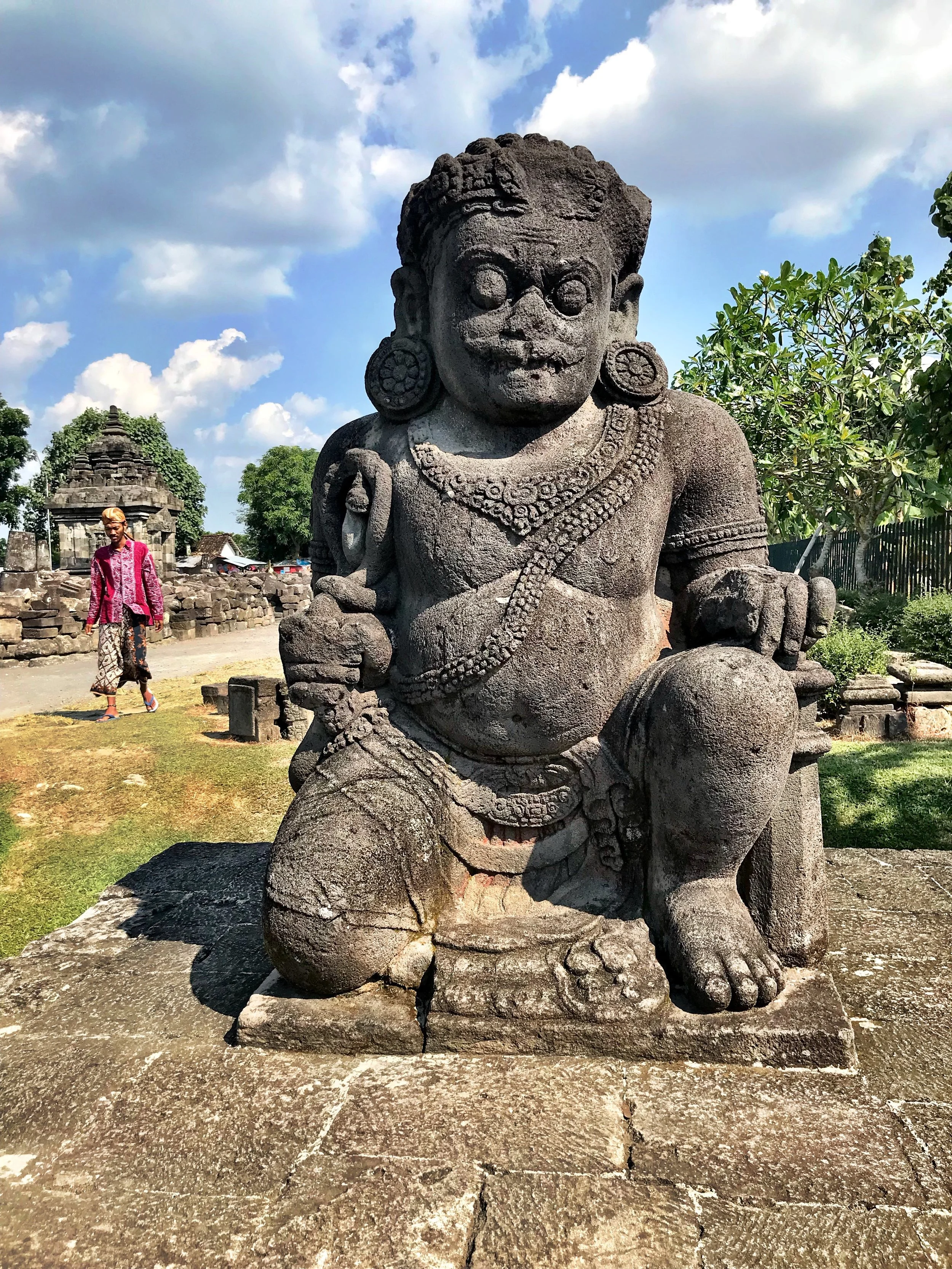
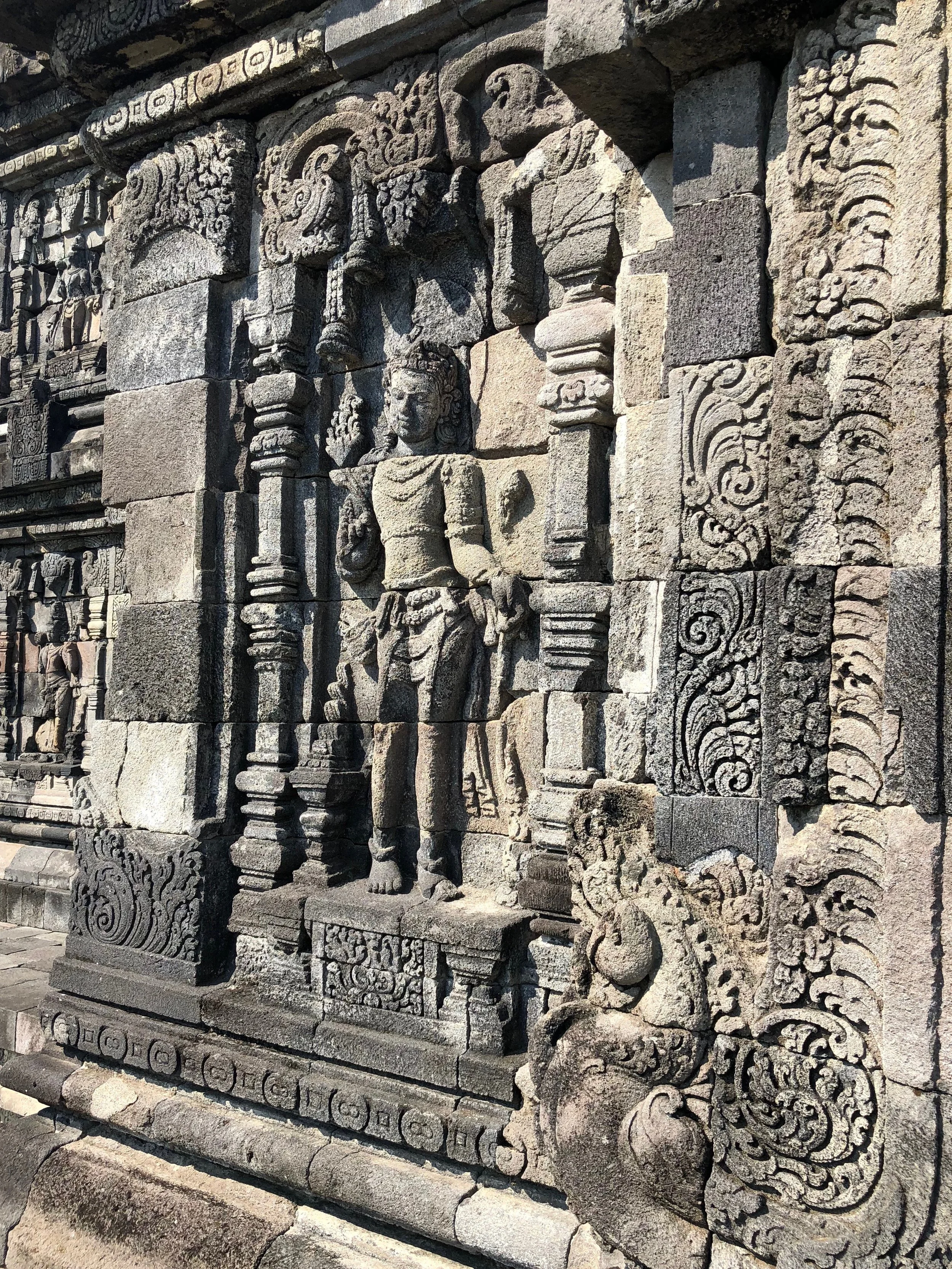
On the west side, a staircase leads up to a broad terrace, designed for circumambulating or ritualistically walking clockwise around the temple. Wally and I climbed the worn stone steps, flanked by a pair of makara, mythological Buddhist sea creatures, each with lion standing within its gaping mouth. Narrative scenes from the Jataka tales, which tell of the Buddha’s previous incarnations as both humans and animals, are carved into the balustrade.
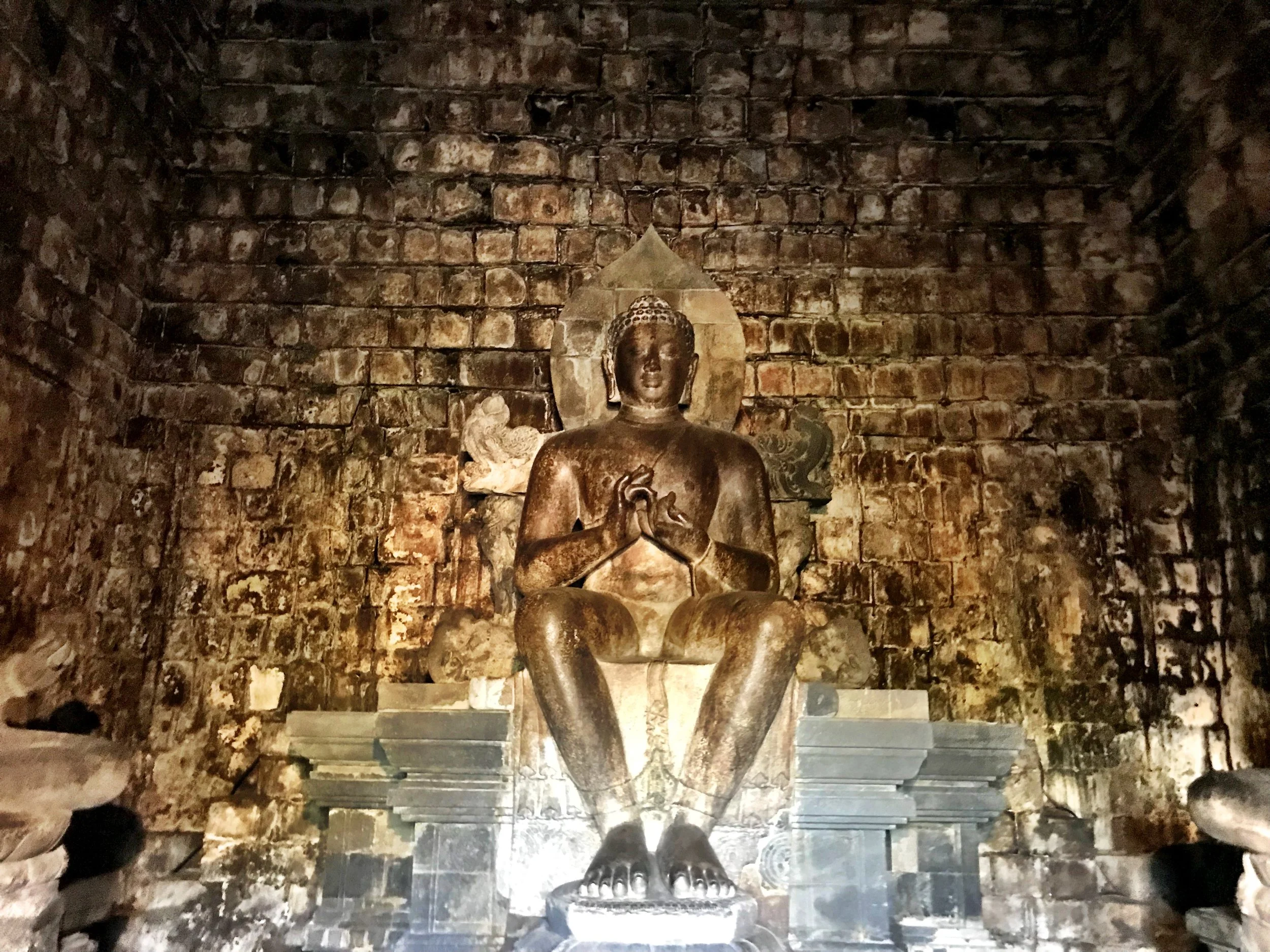
I know it doesn’t seem like a big deal, but it’s very unusual that the Buddha’s feet are both touching the ground

I know it doesn’t seem like a big deal, but it’s very unusual that the Buddha’s feet are both touching the ground

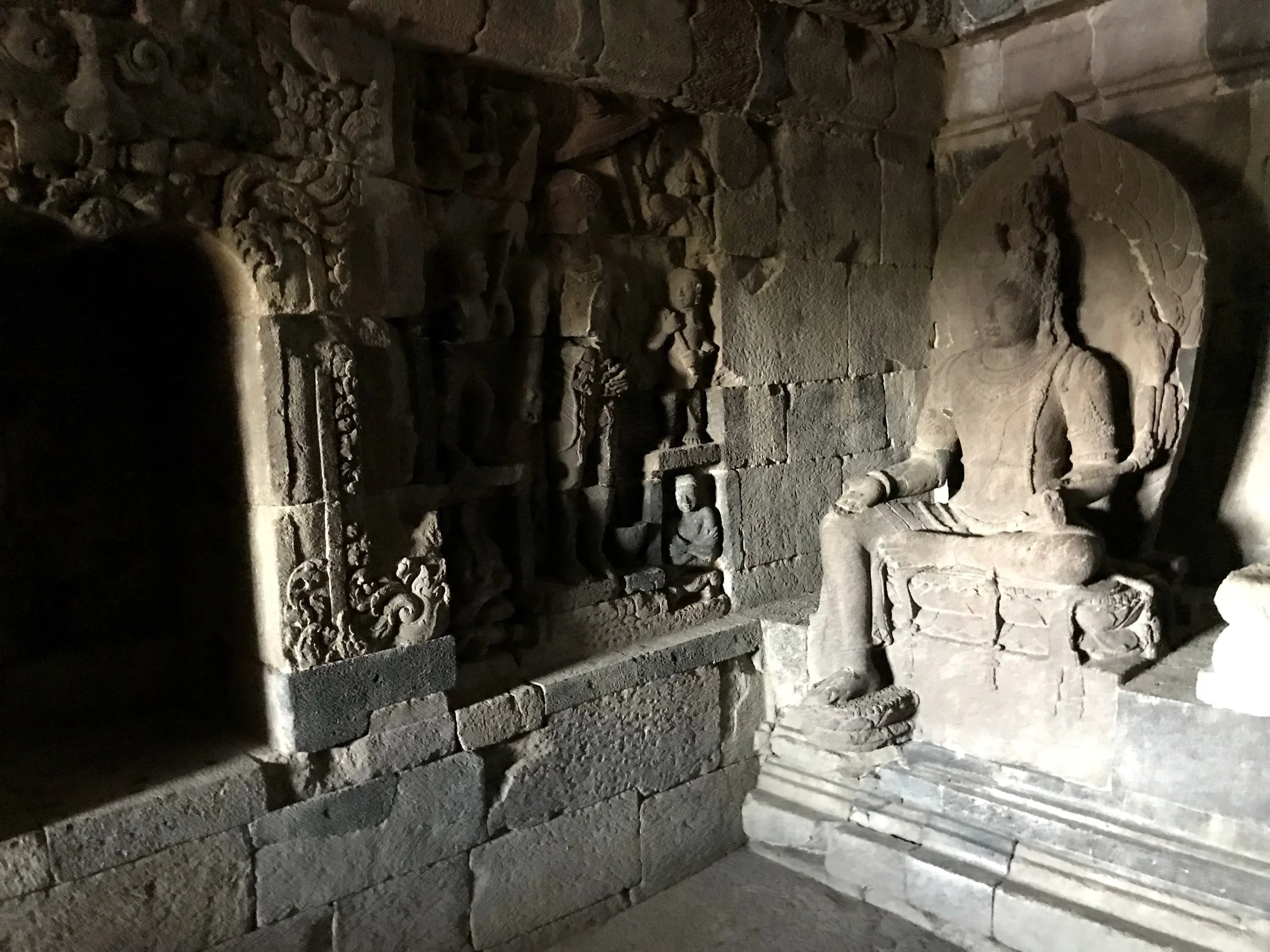
After we passed through the structure’s single entrance into the inner sanctuary chamber, we were greeted by three remarkably well-preserved figures. The formidable central figure is the Buddha Vairocana, depicted in a seated position, atypical for having both feet touching the ground. His hands are in Dharmachakra mudra, a gesture used by Buddha during his first sermon after enlightenment, representing the continuous flow of energy.
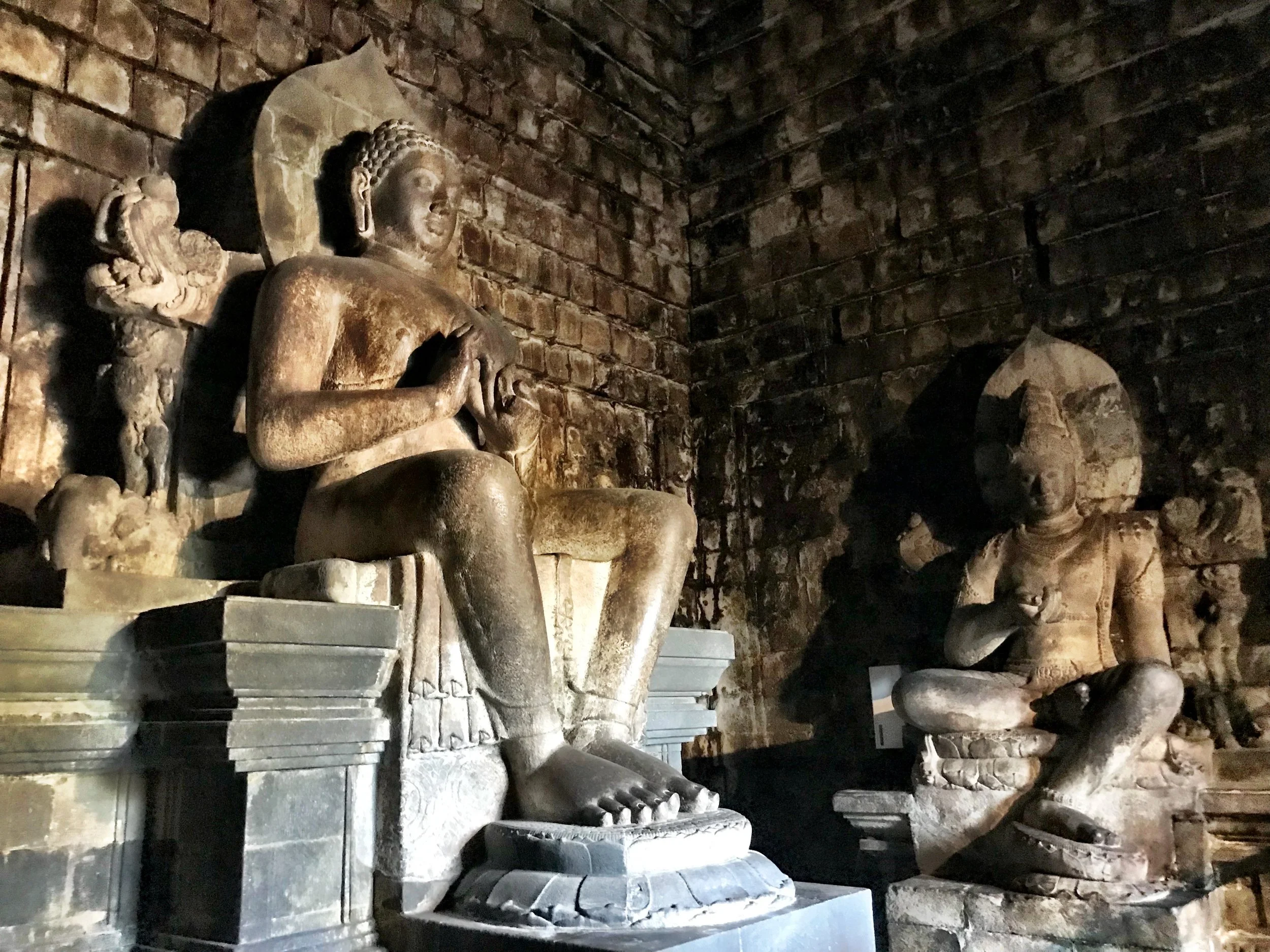
Inside the small temple is a statue of Buddha and two bohisattvas, including Vajrapani, a protector and guide

Inside the small temple is a statue of Buddha and two bohisattvas, including Vajrapani, a protector and guide

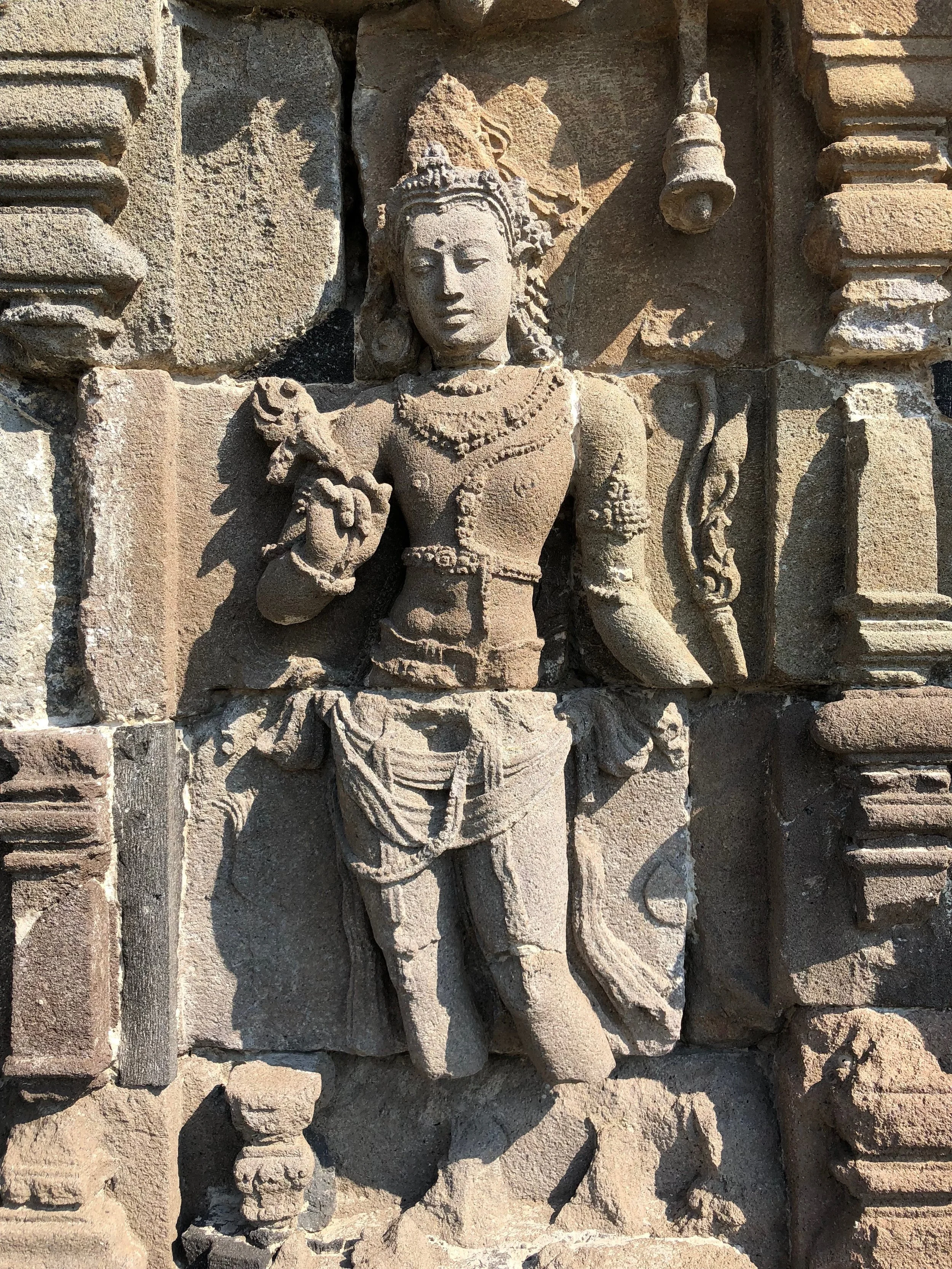
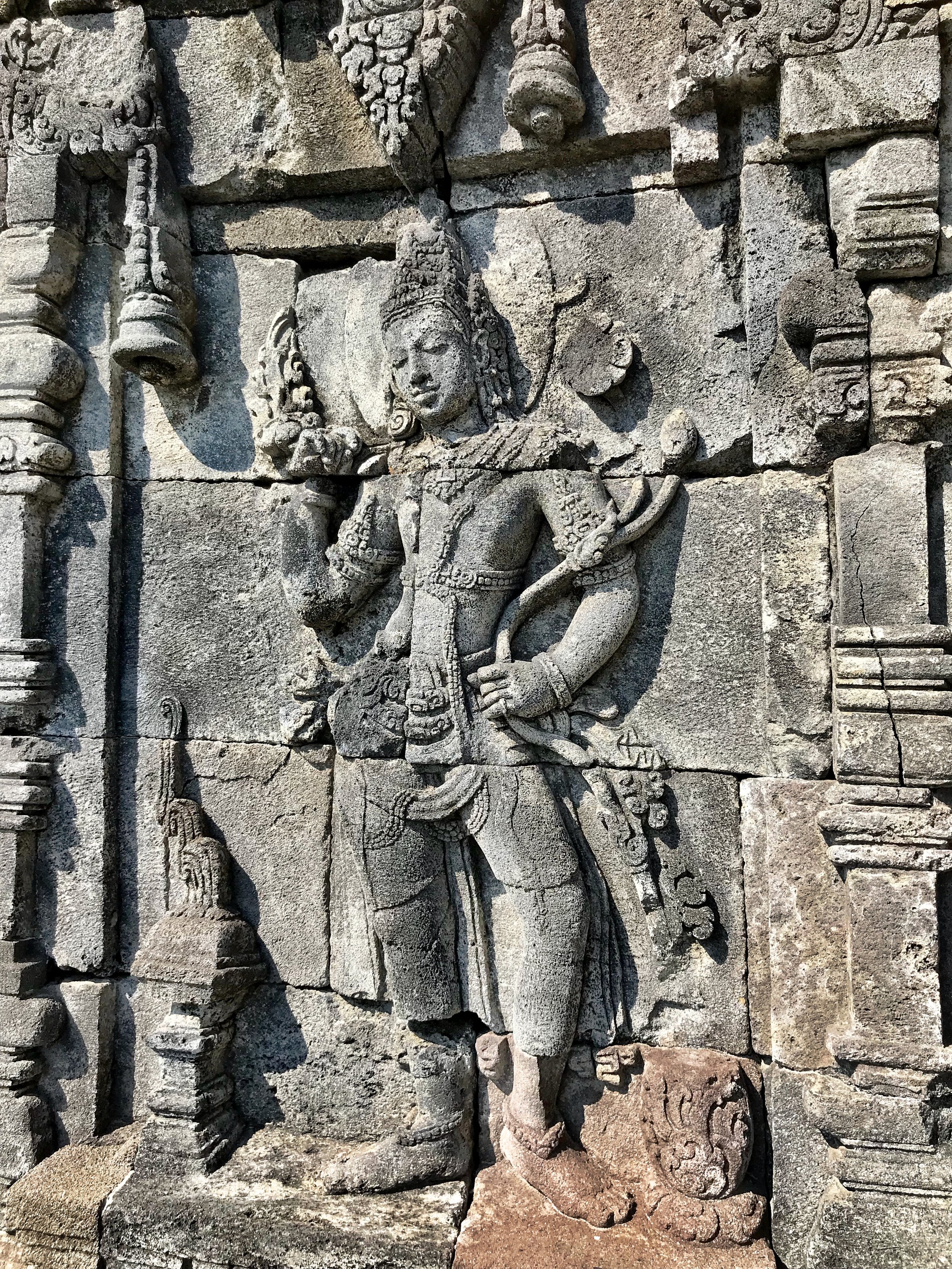
On either side sit two bodhisattvas, compassionate individuals who postpone nirvana to teach others enlightenment. To the left is Avalokitesvara, the One Who Hears the Cries of the World, who represents compassion and liberates devotees from the destructive power of speech. To the right is Vajrapani, the protector and guide of the Buddha, symbolizing the energy of the enlightened mind, his right leg folded and right hand raised.

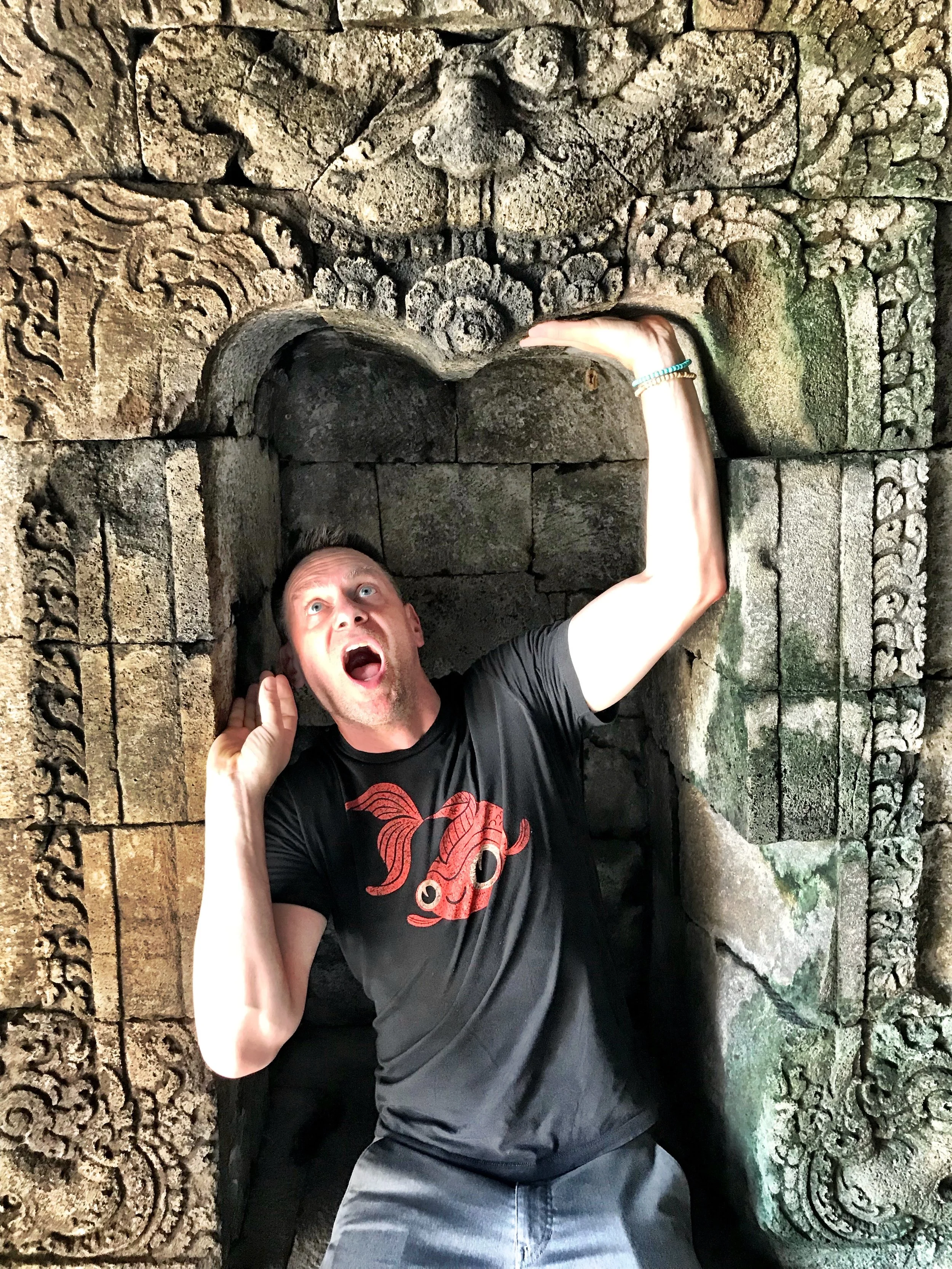
Standing in the chamber among the ancient sentinels, I could almost feel the presence of the invisible dead. Make sure to look closely at the feet, which are black from being touched by devotees.
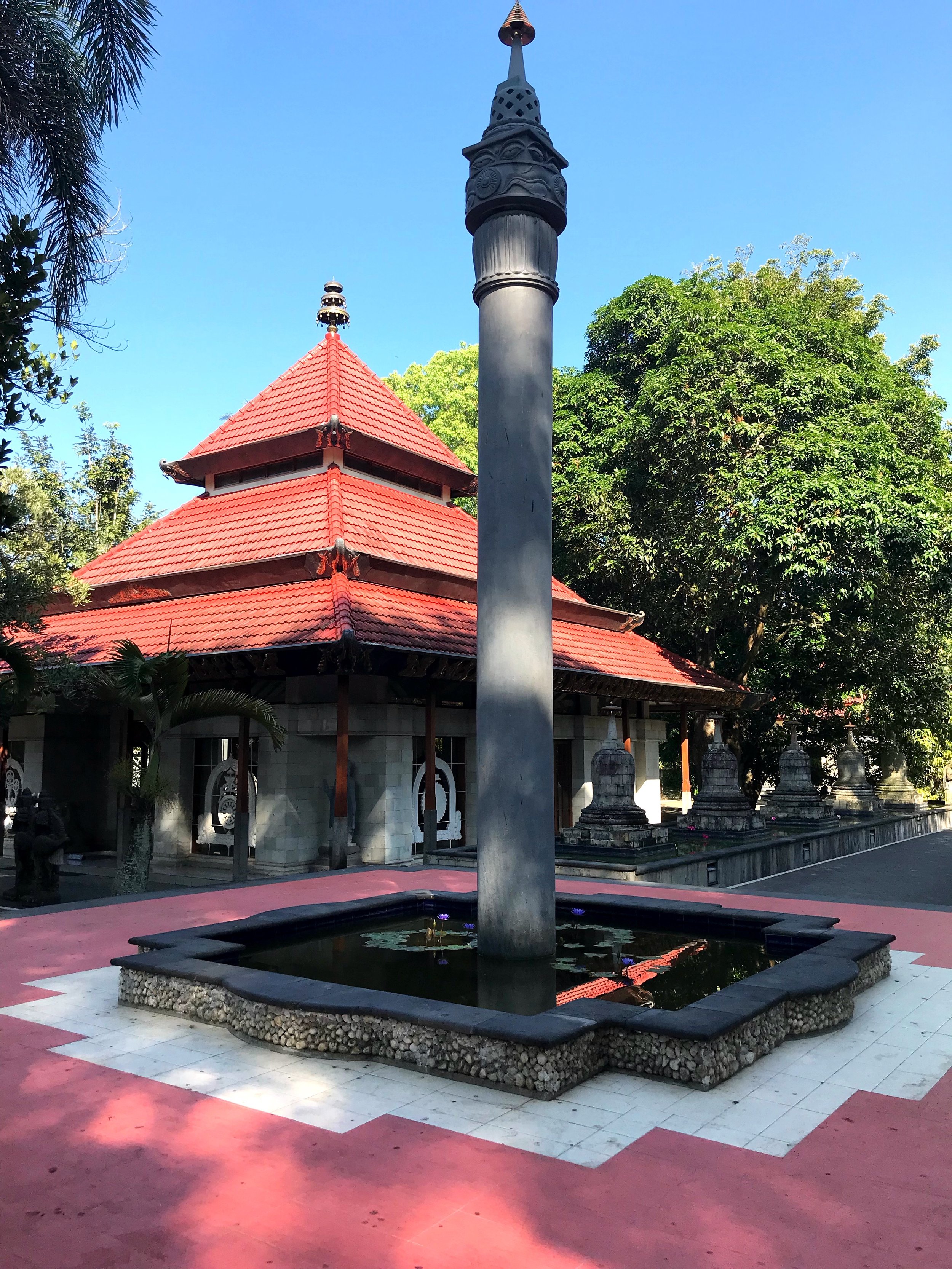
You’ll pass Mendut Monastery en route to the temple
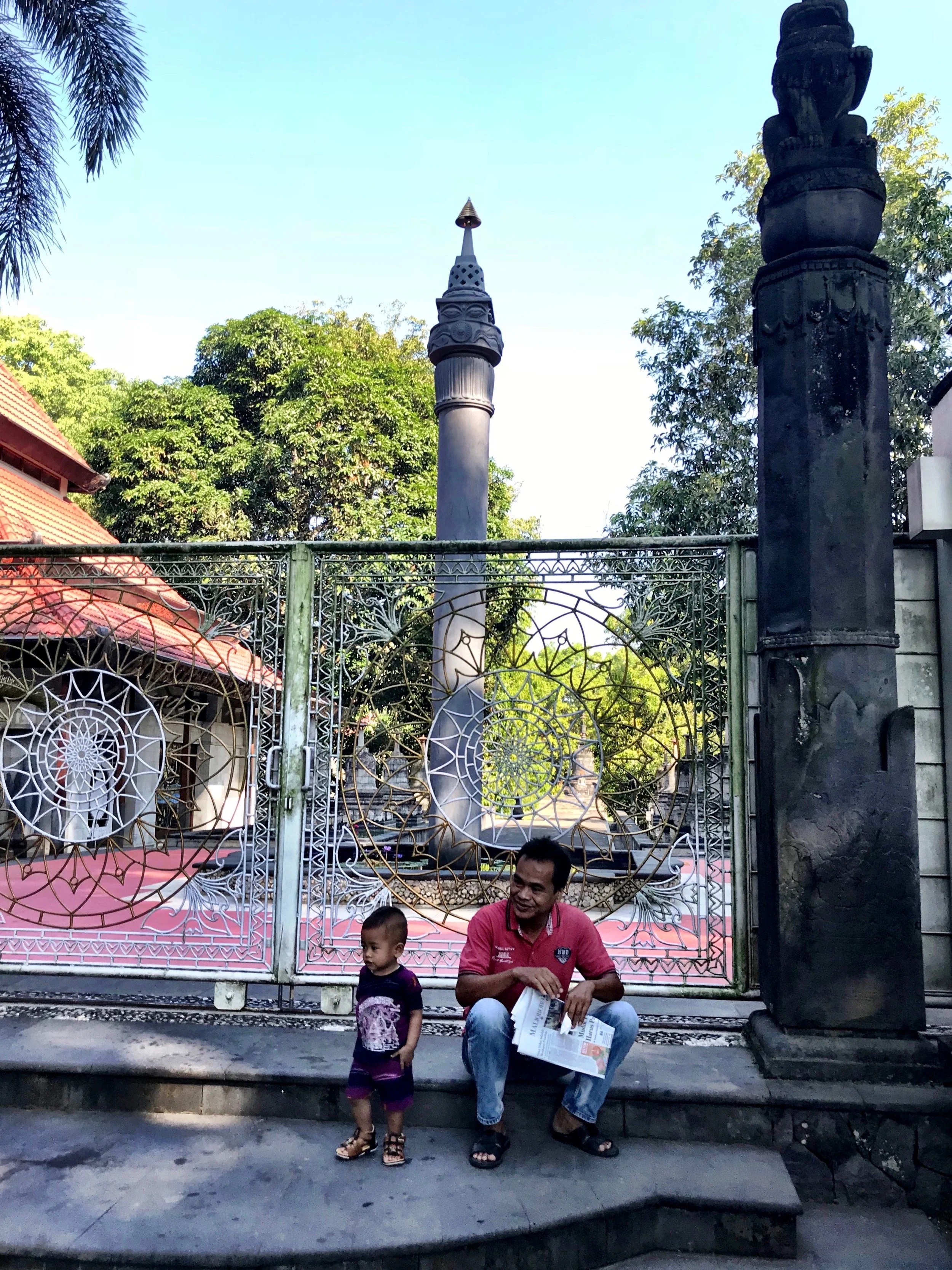
You’ll pass Mendut Monastery en route to the temple

Apparently, the monastery is open to visitors, though the gates were closed when we passed by
Apparently, the monastery is open to visitors, though the gates were closed when we passed by

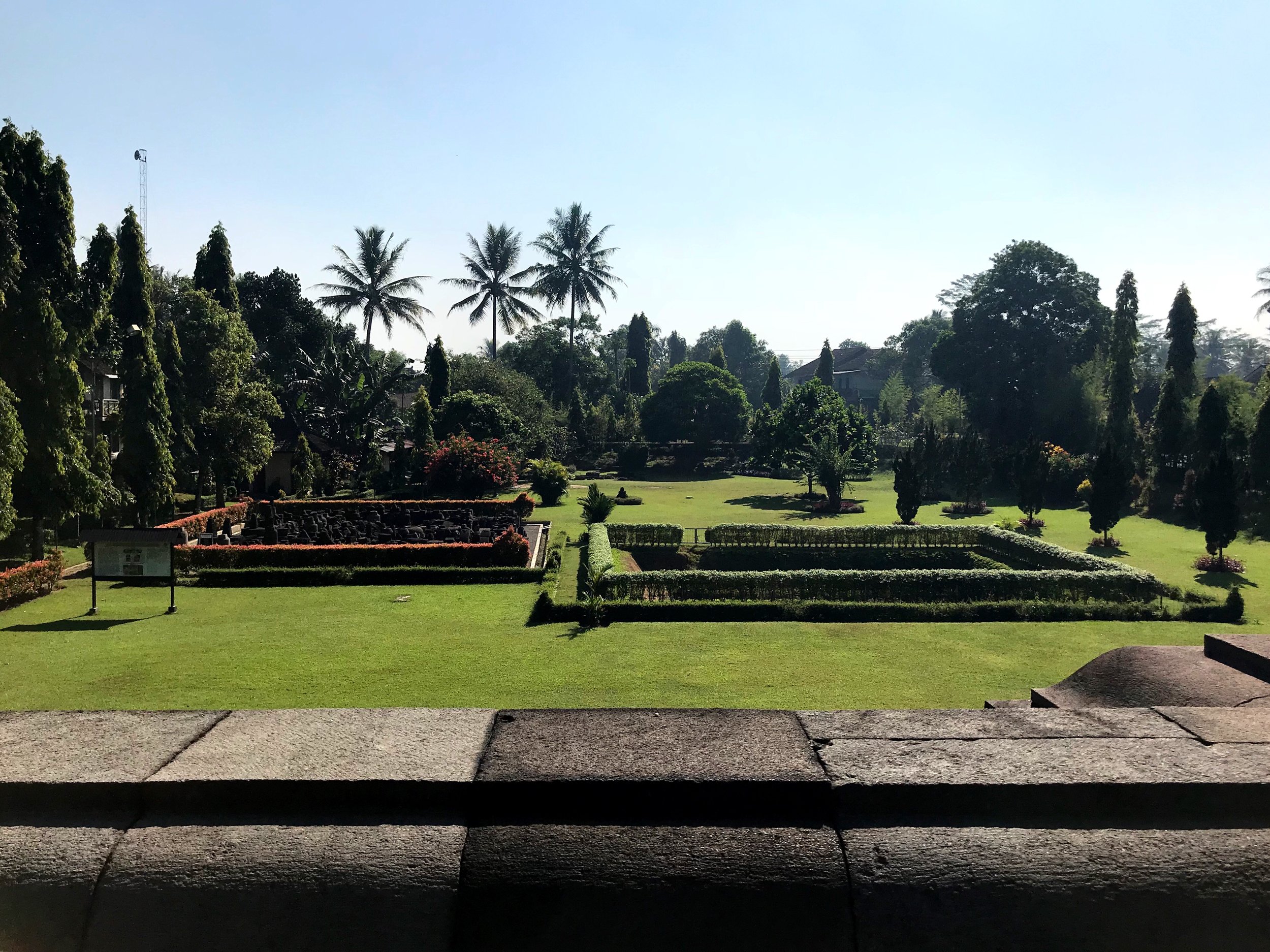
Looking out at the temple grounds from Mendut’s raised platform

Looking out at the temple grounds from Mendut’s raised platform

The Legend of Hariti: From Ogress to Protectress

The southern façade of Mendut has a bas-relief of Hariti, who, according to myth, was once a child-eating ogress. To feed herself and her 500 children, she took to cannibalism, snatching kids from the village of Rajagriha. This led to great fear among locals, who came to the Buddha and pleaded with him to save their children.

In one variation of the tale, the Buddha waited for Hariti to leave her dwelling and kidnapped her youngest and most beloved son, hiding him beneath his begging bowl. Upon her return home, Hariti found her son missing and searched for him in vain. Grief-stricken, the ogress in turn sought the Buddha’s aid in finding him.

The Buddha agreed to help, providing she give up her wicked ways. He explained how she was causing great suffering to the villagers. Hariti agreed to abstain from cannibalism and promised to consume only pomegranates from then on. The Buddha returned her son and ordained her the protector of children.

This statue is of particular importance to childless Javanese couples, who pray to Hariti as a symbol of fertility and patroness of motherhood.
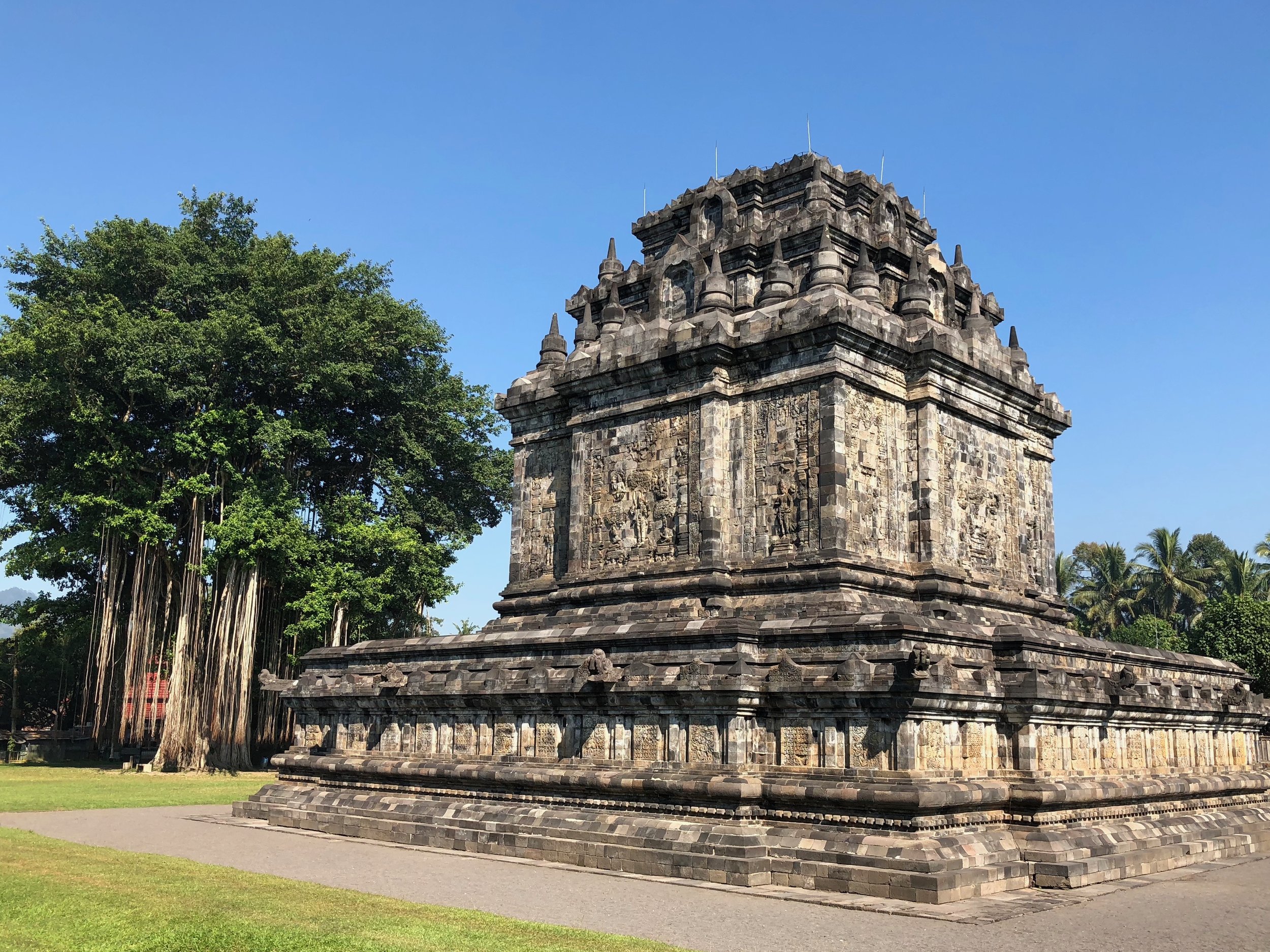
You can see the banyan behind the temple, though its immense size is still hard to grasp

You can see the banyan behind the temple, though its immense size is still hard to grasp

The Sacred Banyan Tree

Like the witch Rangda’s mane of unkempt hair, multiple root streamers descend from the banyan behind the temple. After some minor coaxing from our driver, Wally was swinging from one. Our photos can't begin to relay the enormity of the banyan. It was the second-largest tree I’ve ever seen, the first being the ancient banyan at Pura Kehen on Bali.
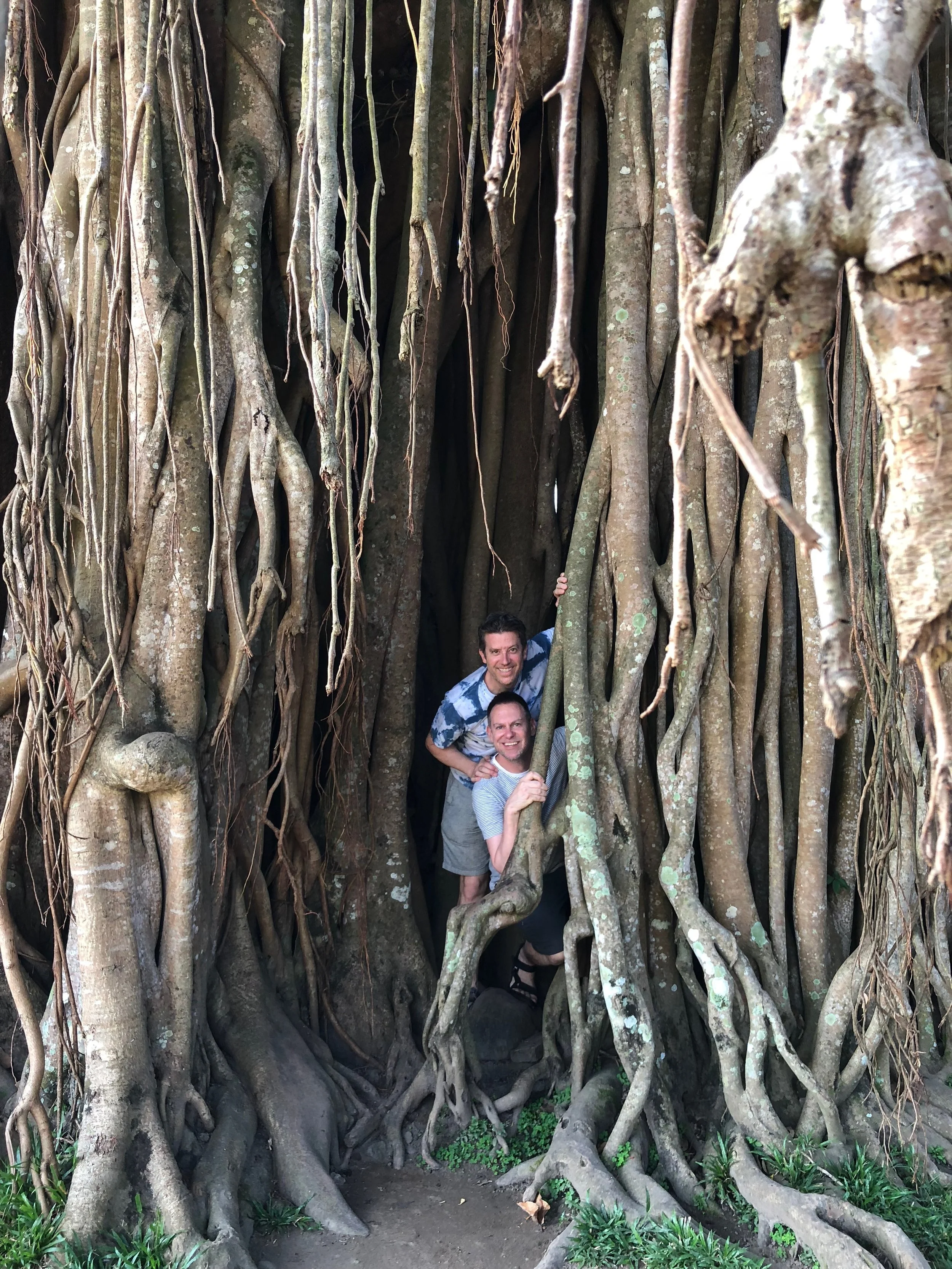
Banyan roots grow down from branches and become as solid as trunks, forming a cave of sorts
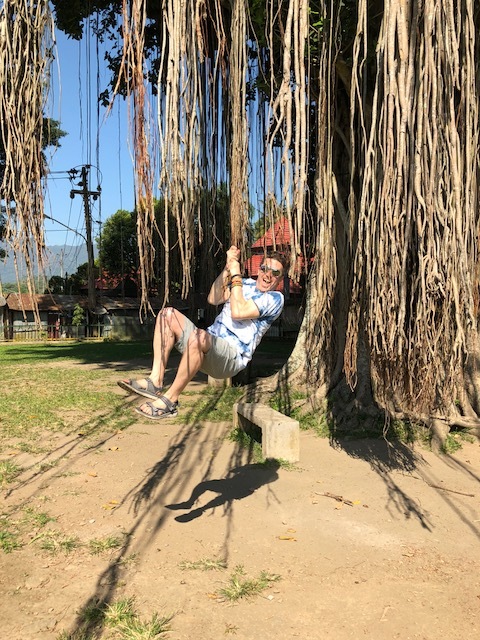
Banyan roots grow down from branches and become as solid as trunks, forming a cave of sorts

The staff at our resort later told us that our driver had been sharing this photo of Wally swinging on the sacred banyan roots

The staff at our resort later told us that our driver had been sharing this photo of Wally swinging on the sacred banyan roots

Mendut may be less well-known and unassuming than Borobudur, but it has some beautiful bas-reliefs and stone carvings. If you are planning on visiting Borobudur, you should definitely add Candi Mendut to your visit. It’s worth walking around the complex to take in its peaceful atmosphere — and have a swing on the banyan out back. –Duke
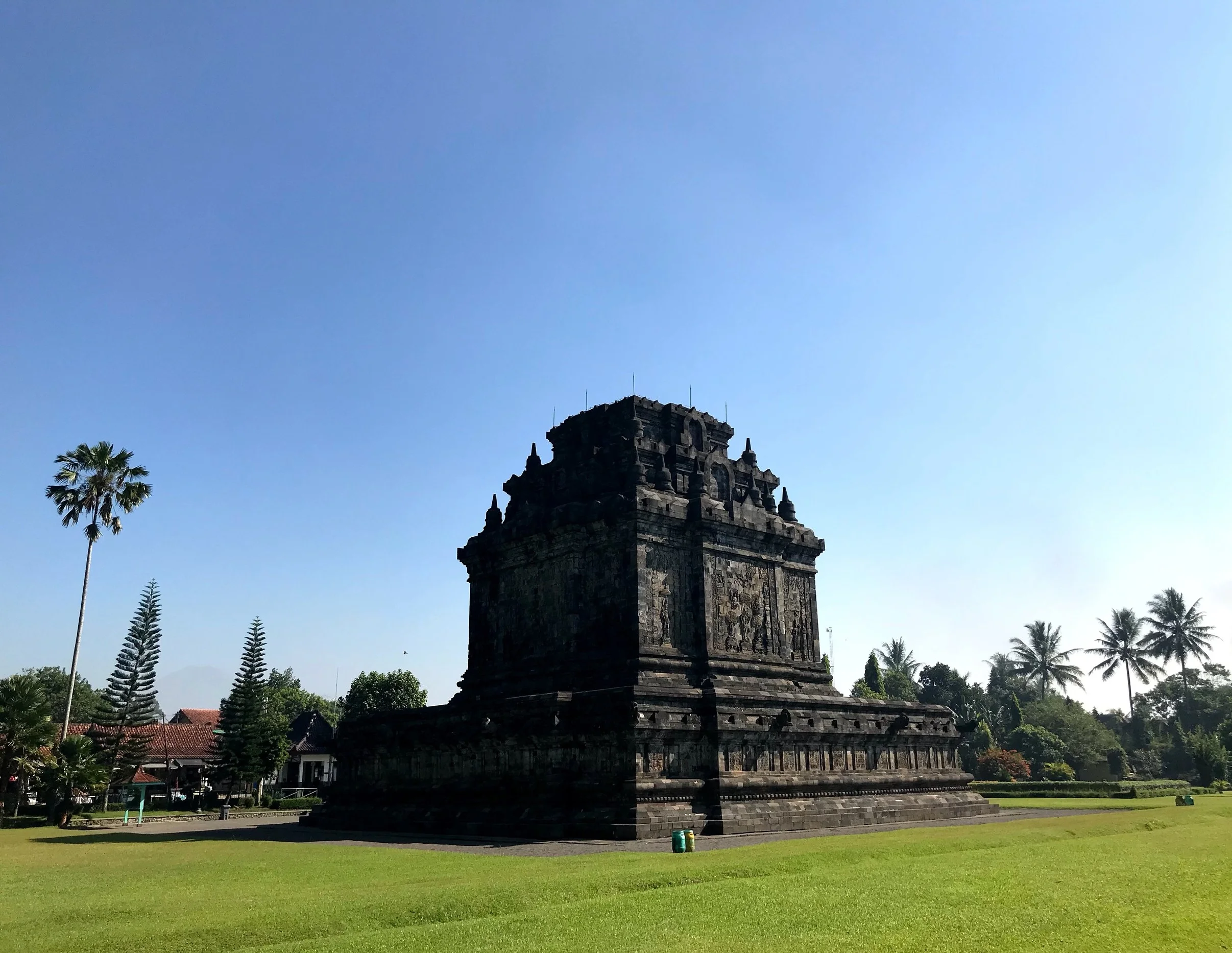
Pair Candi Mendut with a trip to Borobudur

Pair Candi Mendut with a trip to Borobudur

Mendut Temple

Jalan Magelang Sumberrejo
Mendut
Mungkid
Magelang
Jawa Tengah 56501
Indonesia

Pura Gunung Kawi Sebatu Water Temple, Bali: An Off-the-Beaten-Path Oasis

Bathe in and explore this calm and cool ancient holy spring near the Tegalalang Rice Terrace.

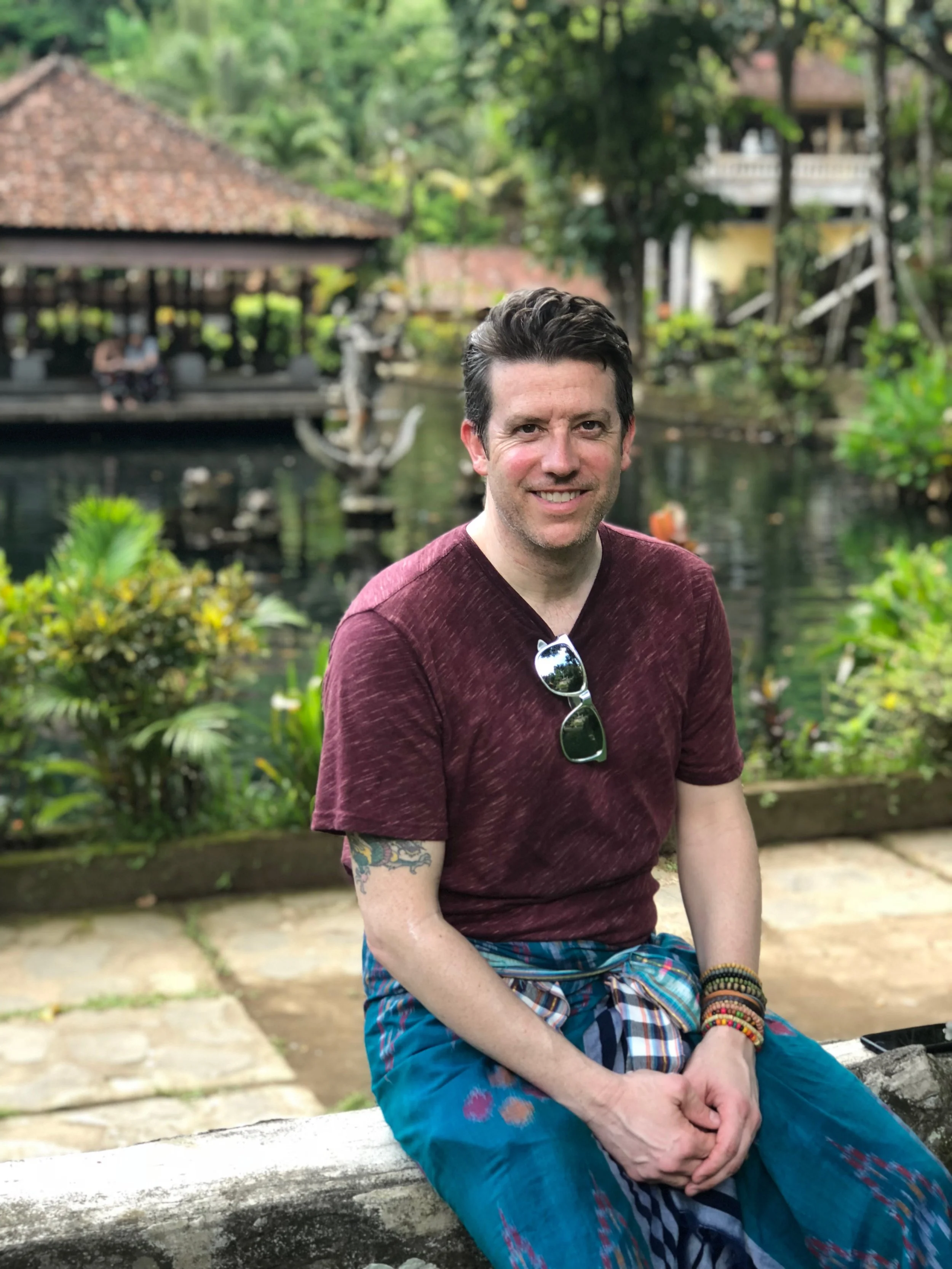
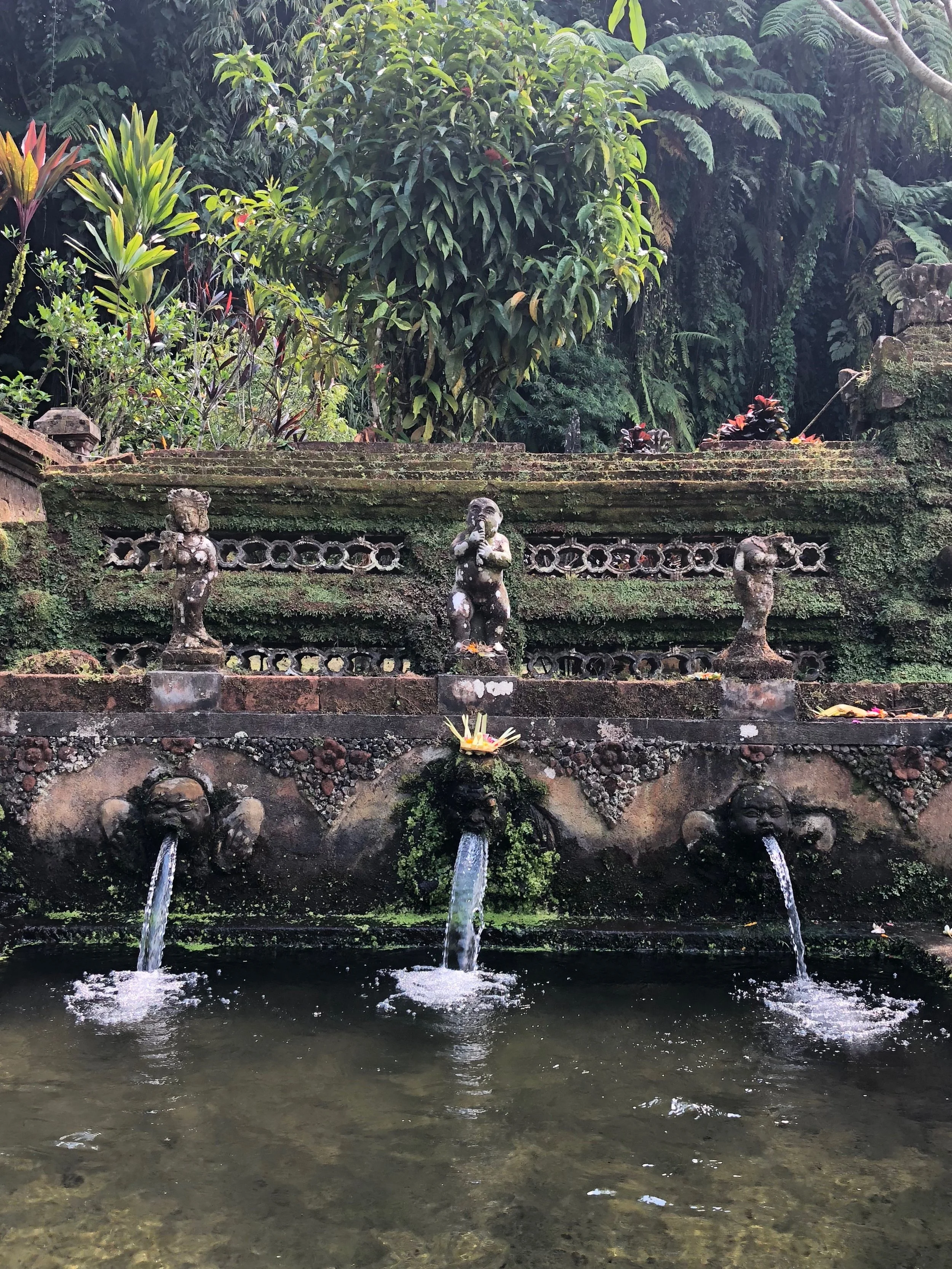
Balinese people bathe in the holy fountains at water temples, like Pura Gunung Kawi in the village of Sebatu

Balinese people bathe in the holy fountains at water temples, like Pura Gunung Kawi in the village of Sebatu

Wally and I arrived at the water temple of Gunung Kawi in what seemed like a relatively short distance from the Tegallalang Rice Terrace. I’ve mentioned the traffic-choked roads we experienced during our time on Bali in previous posts, which make destinations feel farther away than they really are.

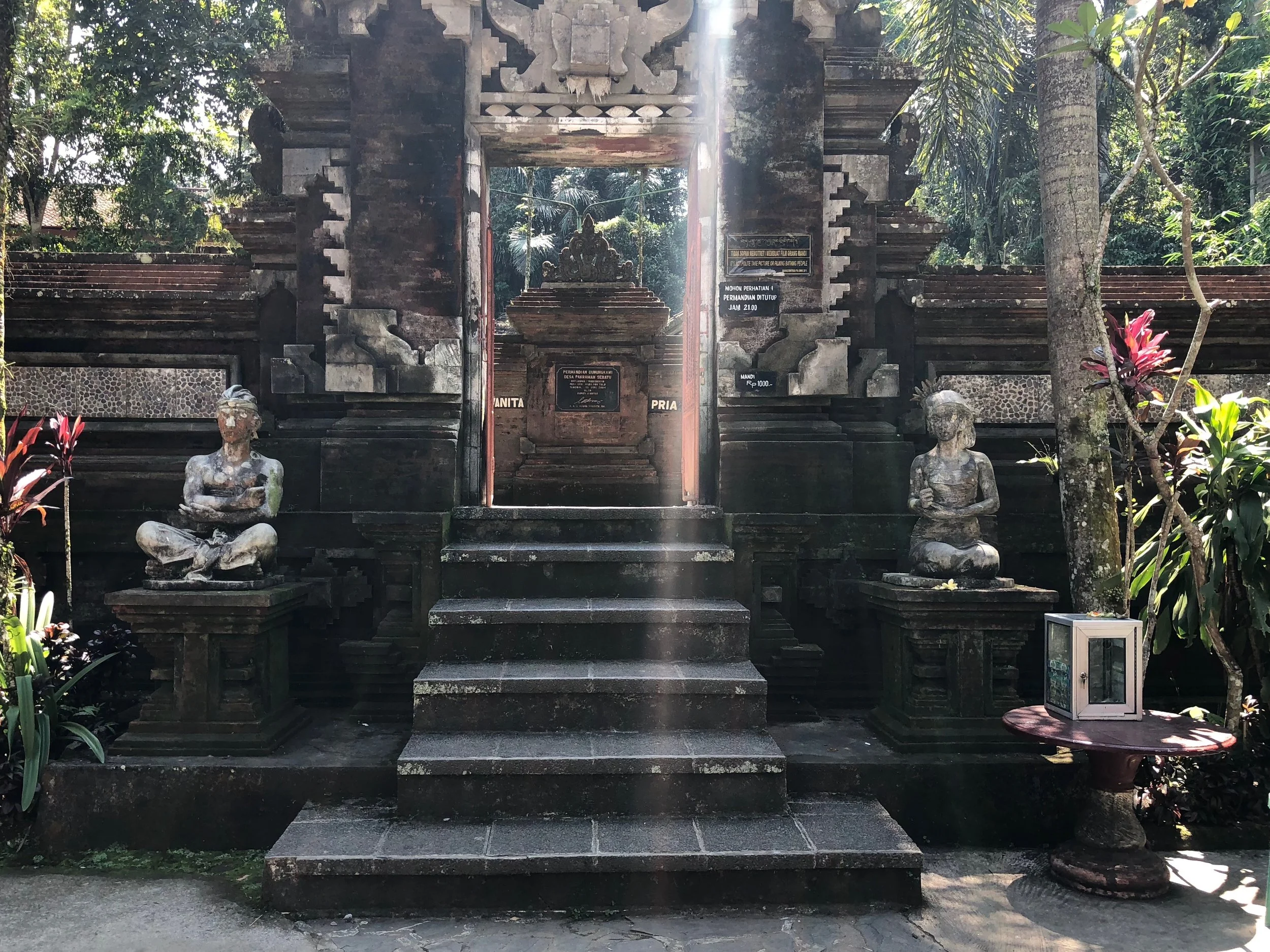
Our driver Made parked his vehicle and adjusted our sarongs before sending us off to cross the road and purchase tickets to the sacred site.

Wally peeked over the wall and was surprised to see a naked old man peeing into one of the holy pools.
Wally didn’t get all the way in the bathing pool — he and Duke just poured water over their heads

Wally didn’t get all the way in the bathing pool — he and Duke just poured water over their heads

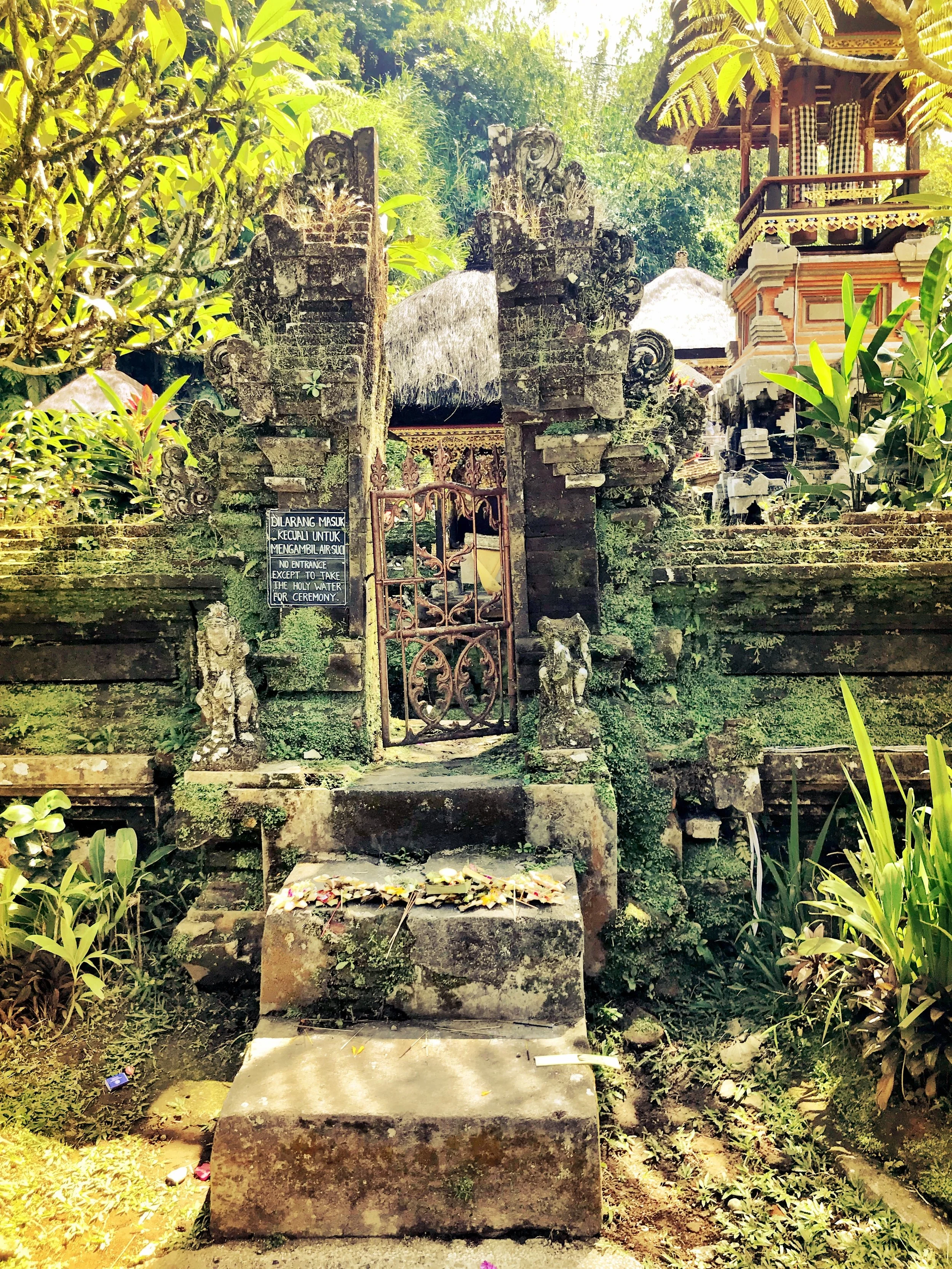
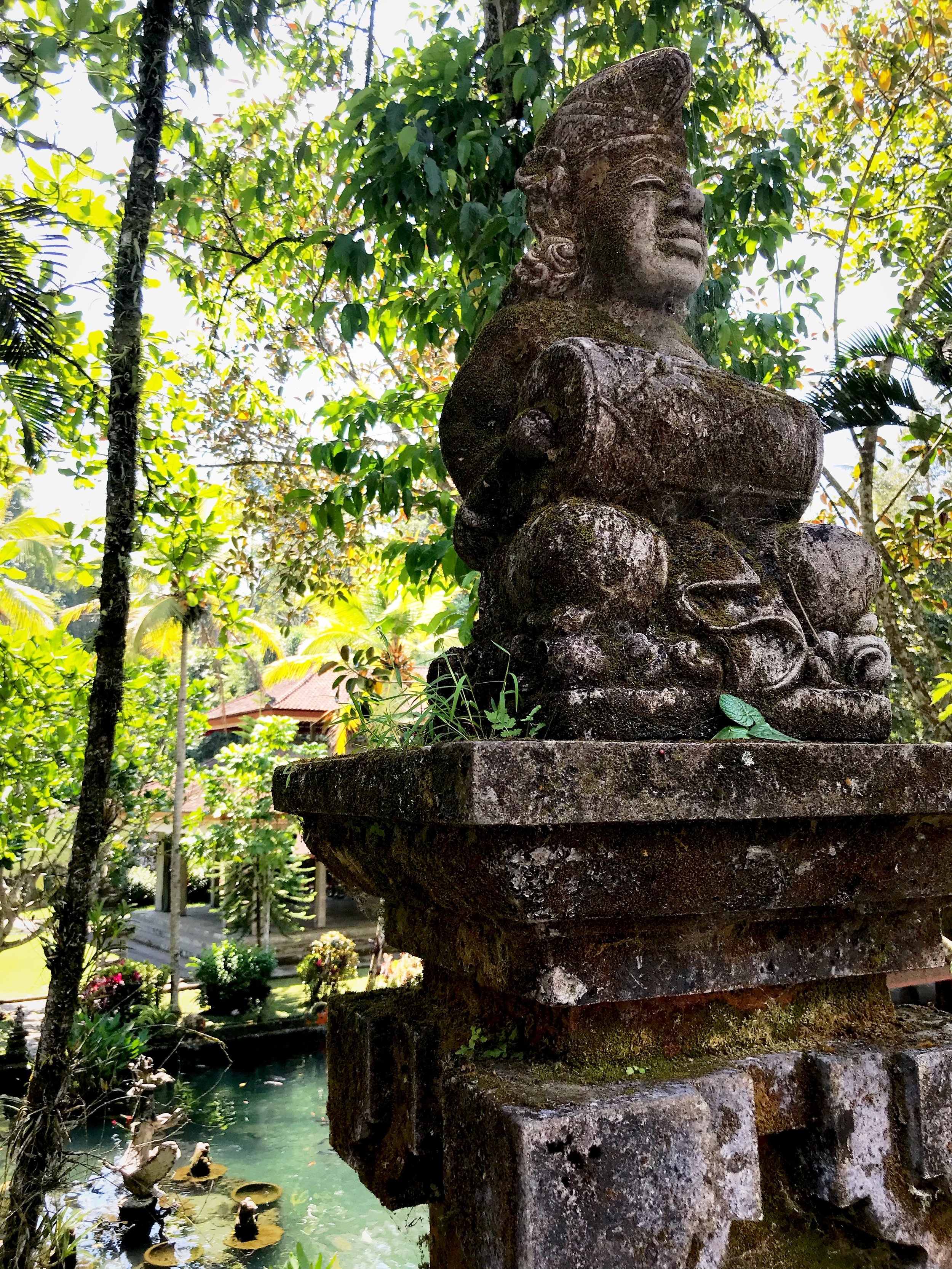
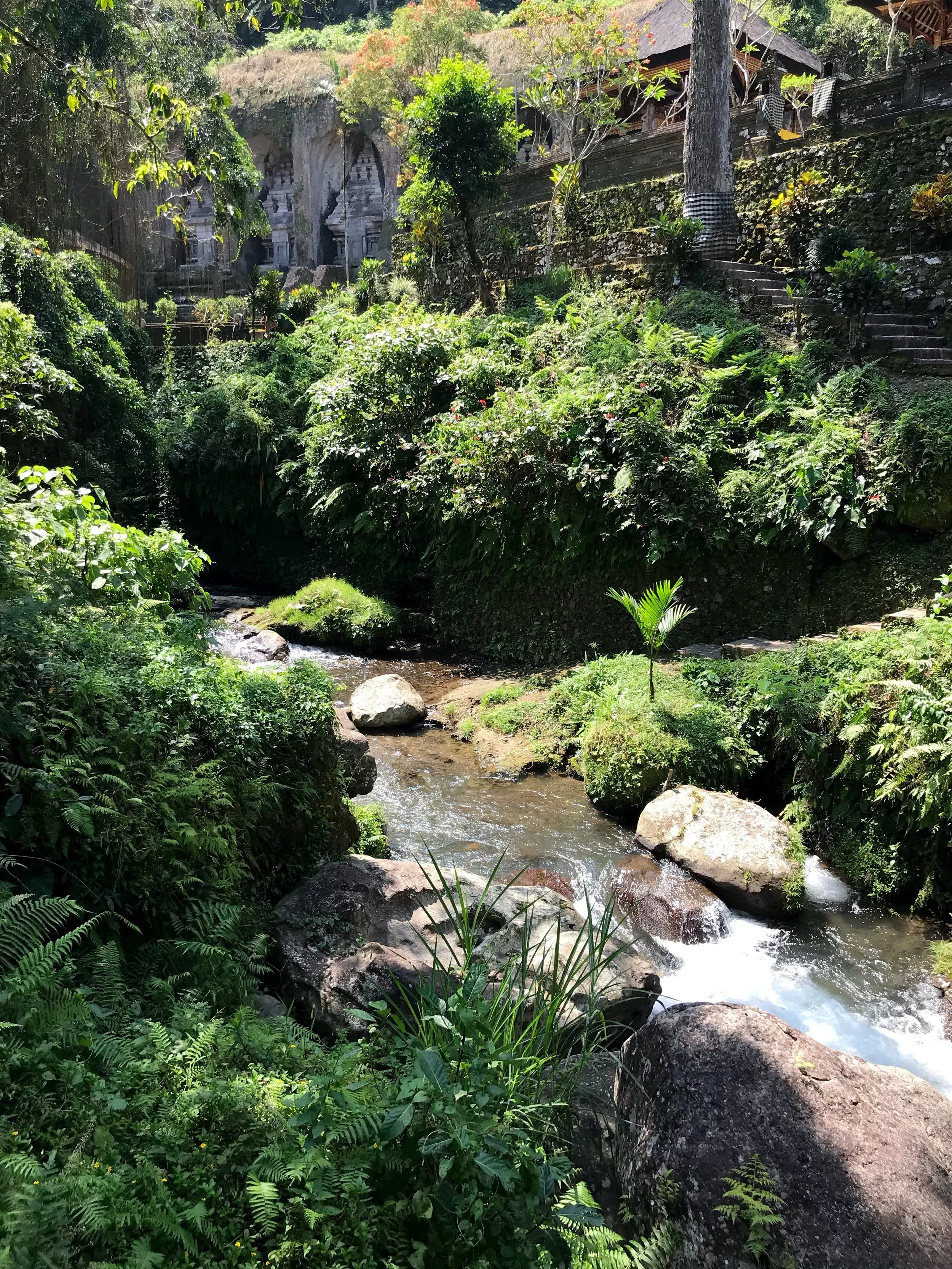
The lichen-covered stones lend Balinese temples an ancient air

The lichen-covered stones lend Balinese temples an ancient air

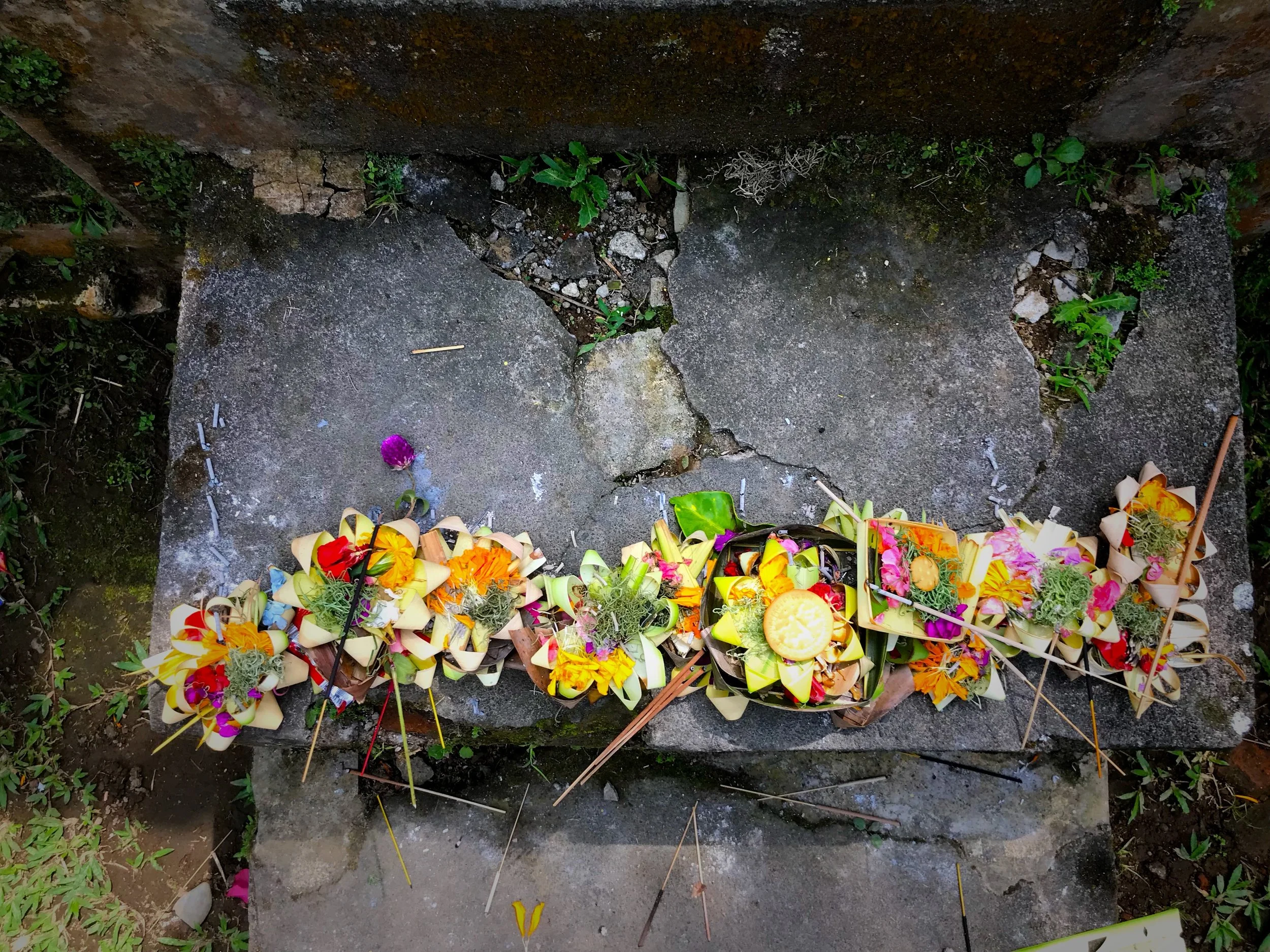
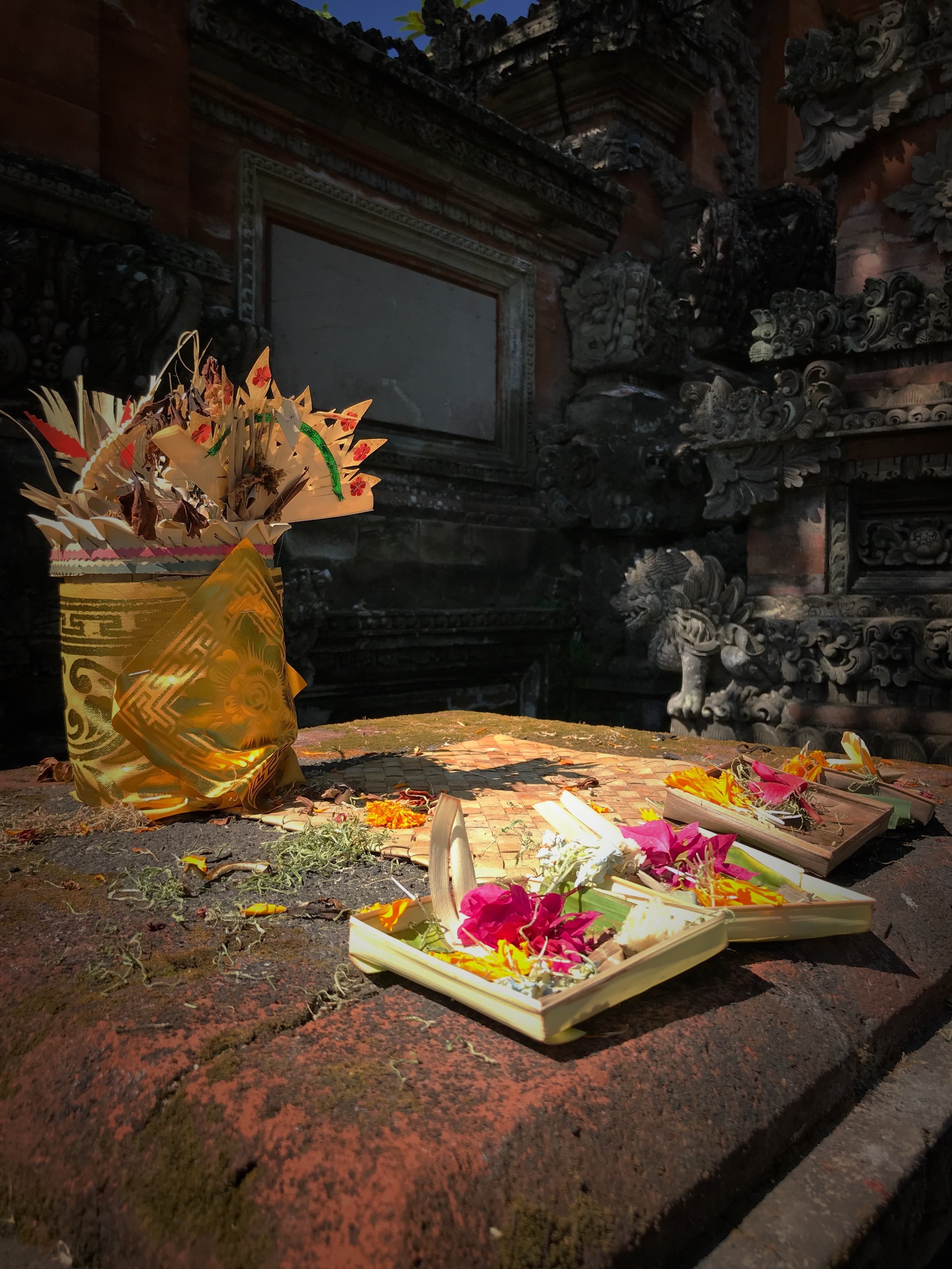
An assortment of daily offerings placed at the threshold of the bathing pools are filled with flowers and sticks of incense

An assortment of daily offerings placed at the threshold of the bathing pools are filled with flowers and sticks of incense

The complex was established during the reign of King Udayana in the 11th century and is referred to by locals as Pura Tirta Dawa Gunung Kawi Sebatu. Not to be mistaken with the stone monoliths of Gunung Kawi in the neighboring town of Tampaksiring, this smaller, less-visited holy spring temple dedicated to one of the principal Hindu deities, Vishnu, is located in the highland village of Sebatu.

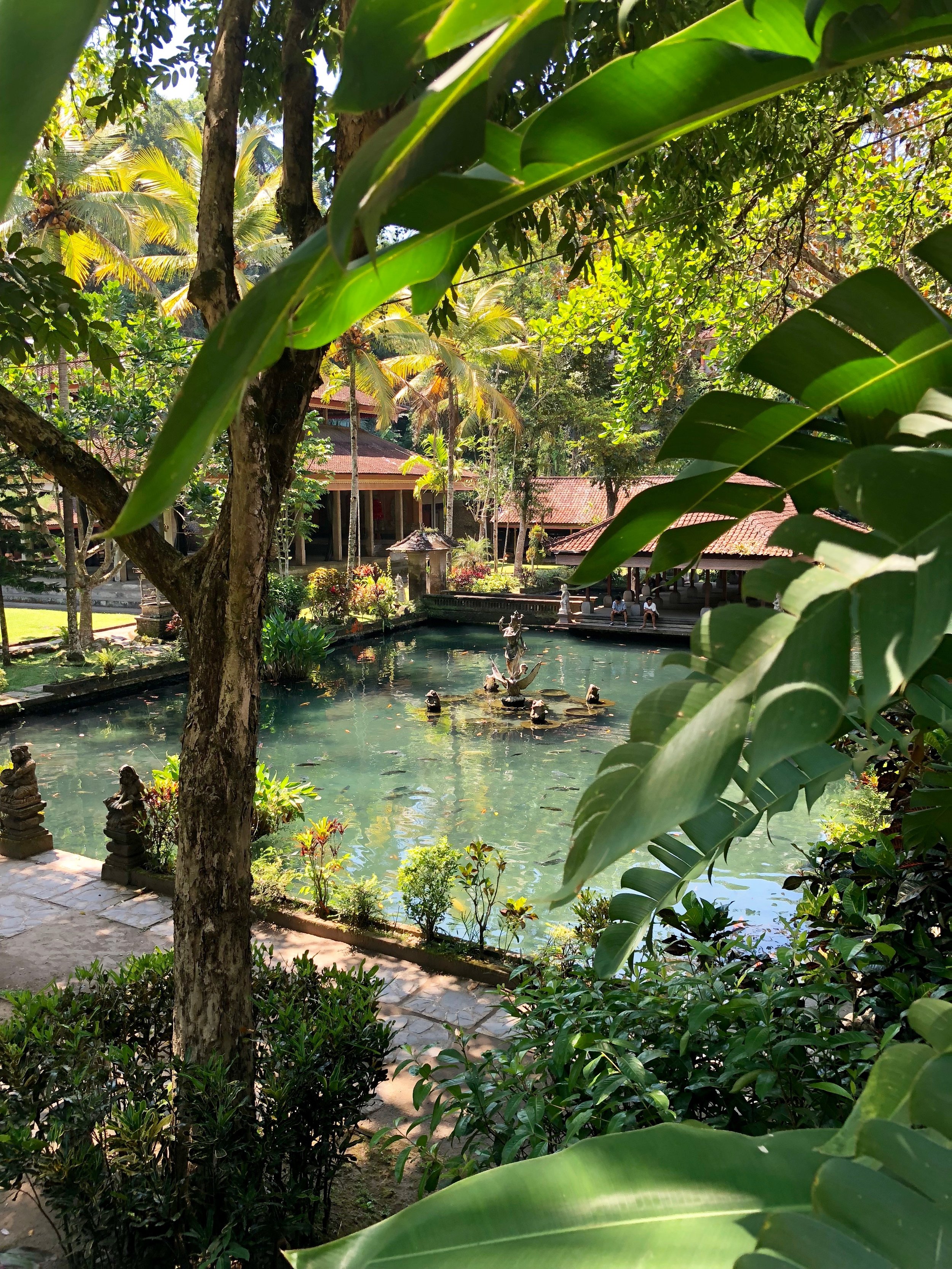
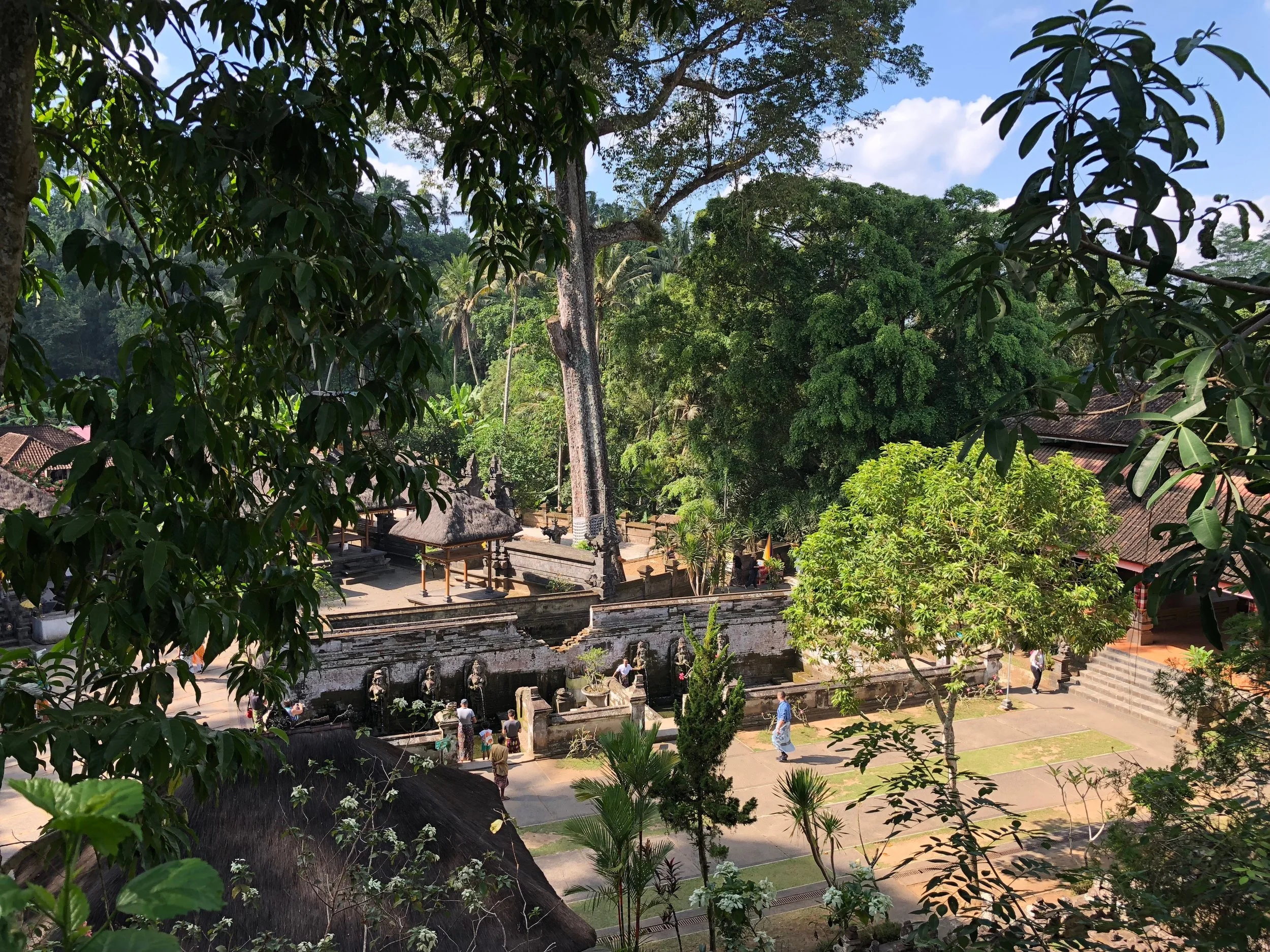
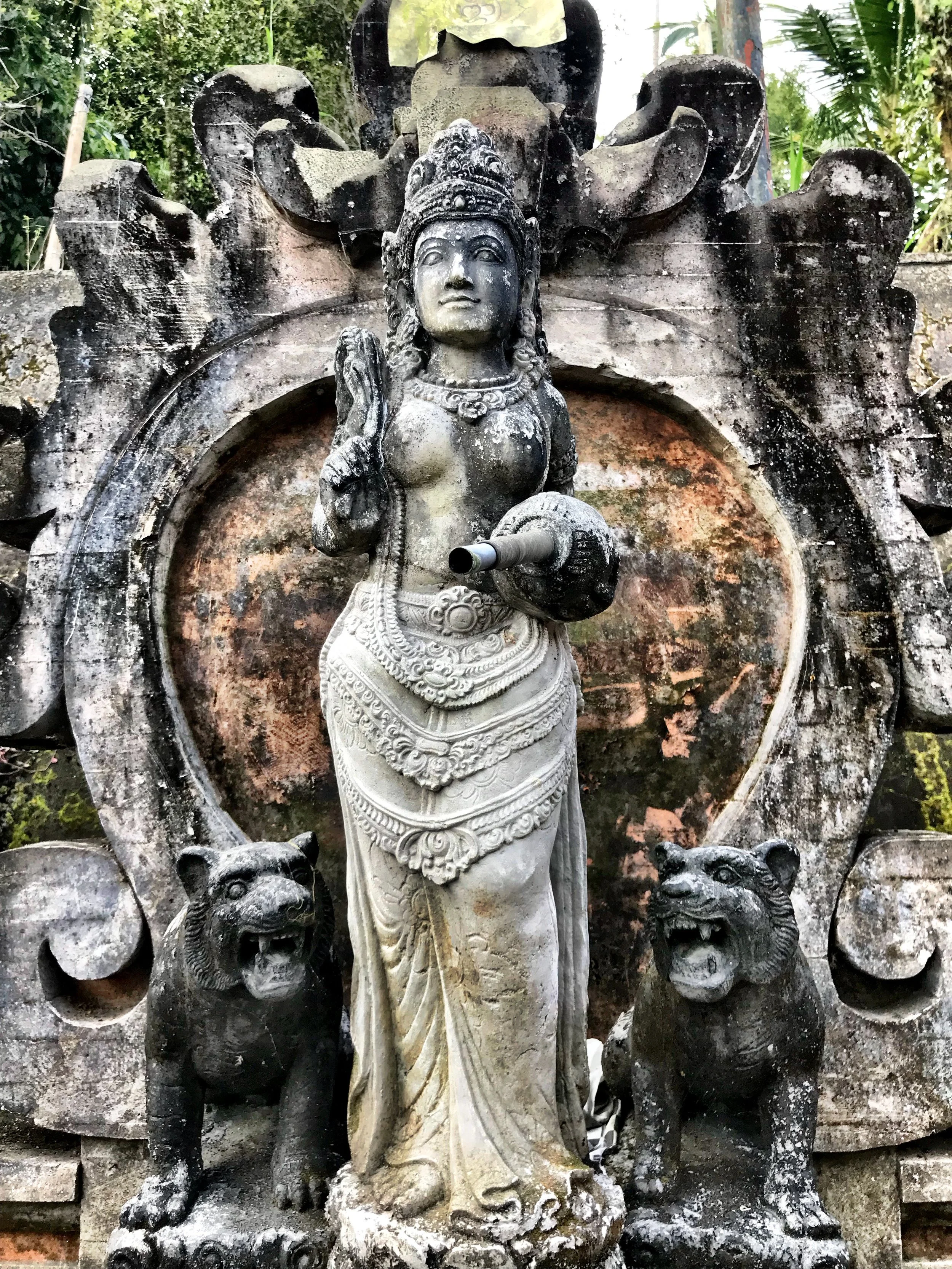
Looking down upon the complex, with its central pool and fountain of the goddess Saraswati

Looking down upon the complex, with its central pool and fountain of the goddess Saraswati

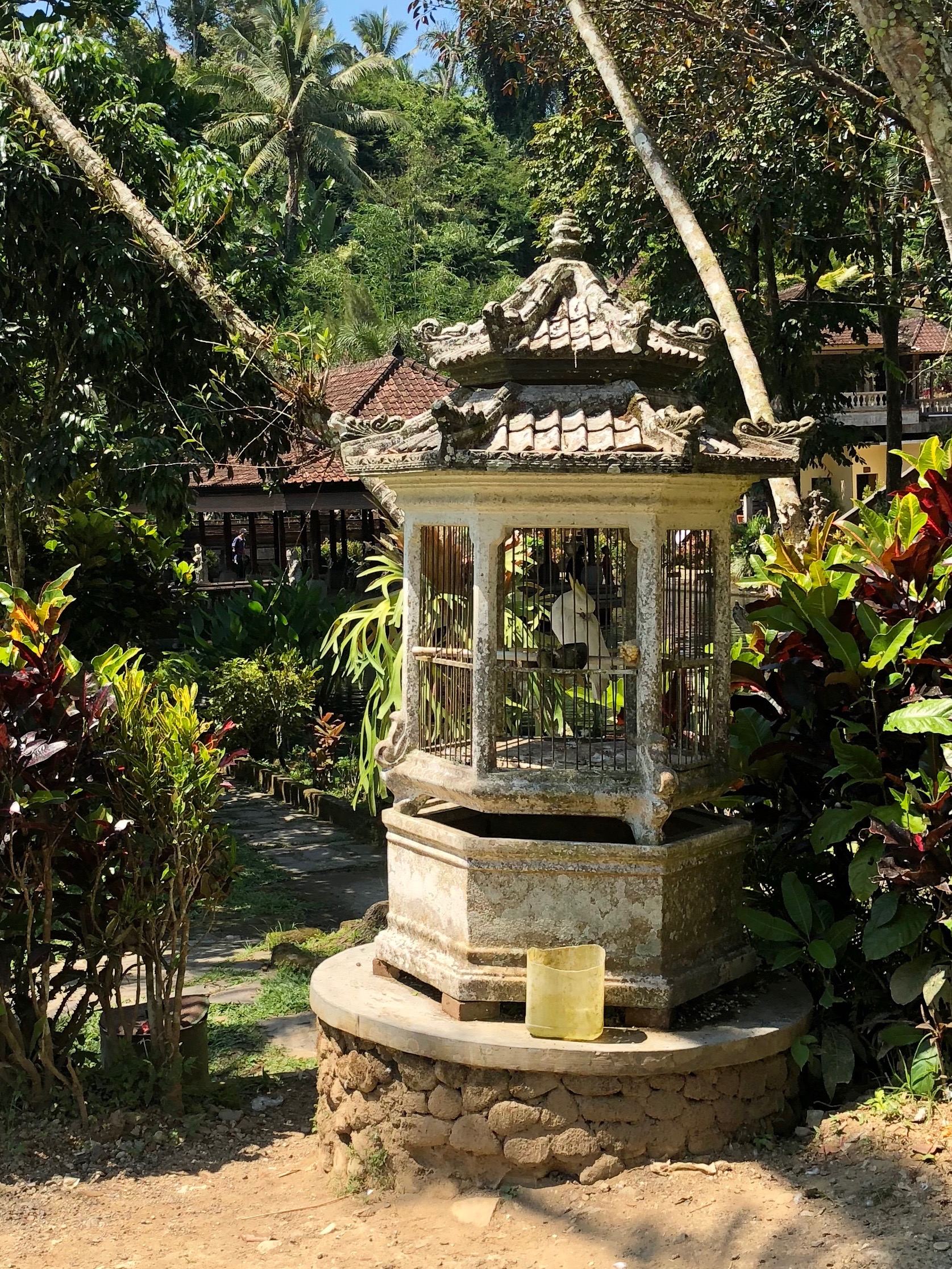
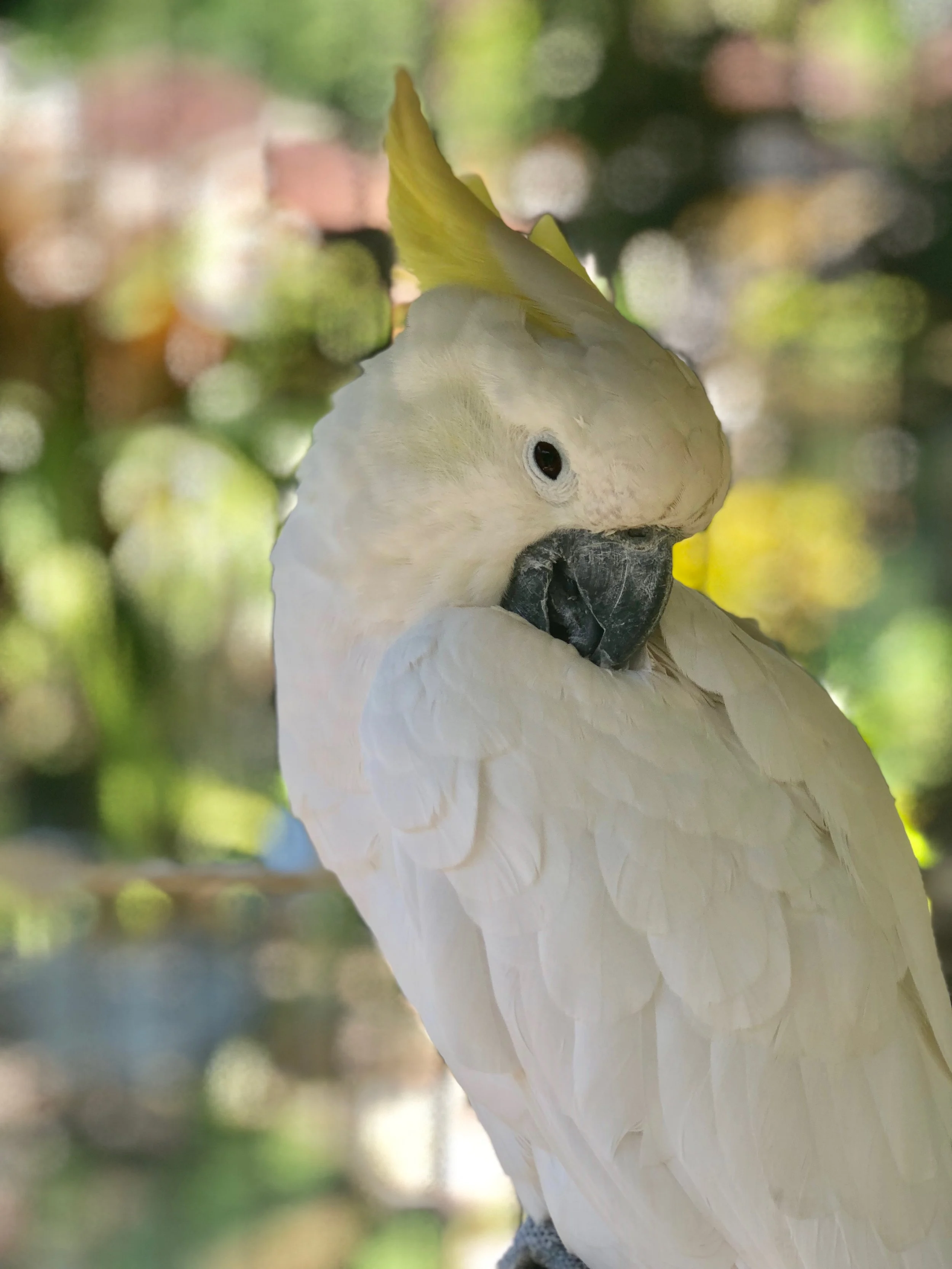
Walking alongside the road, you can take in a sweeping bird’s-eye view of its immediate surroundings. We made our way down a set of steps and arrived at a meandering path that led us past a few elegant pagoda-style cages, one of which housed a striking yellow-crested cockatoo preening itself.

Pagoda-like birdcages line the main pool

Pagoda-like birdcages line the main pool

A striking cockatoo with a sulphur-yellow crest

A striking cockatoo with a sulphur-yellow crest

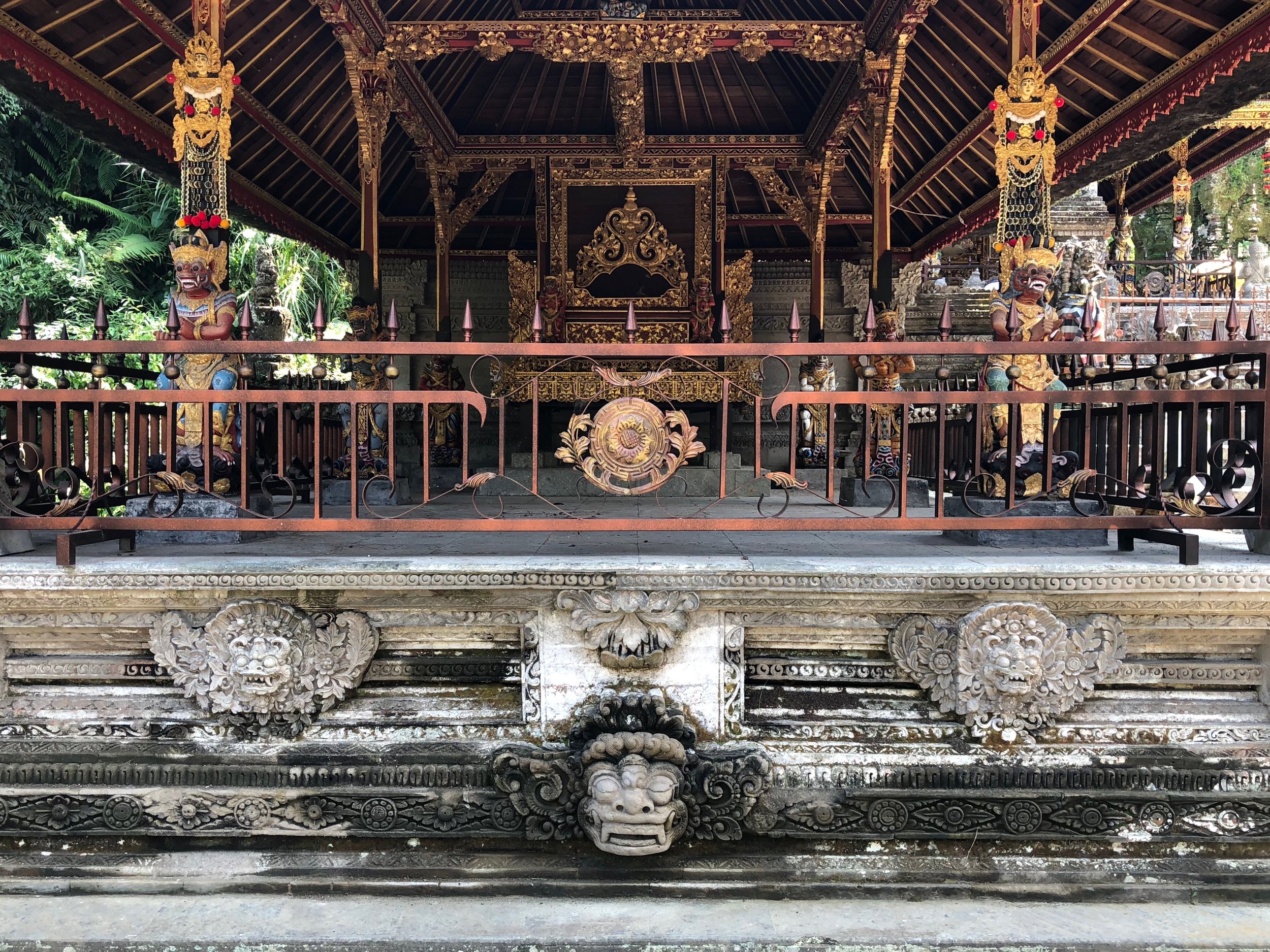
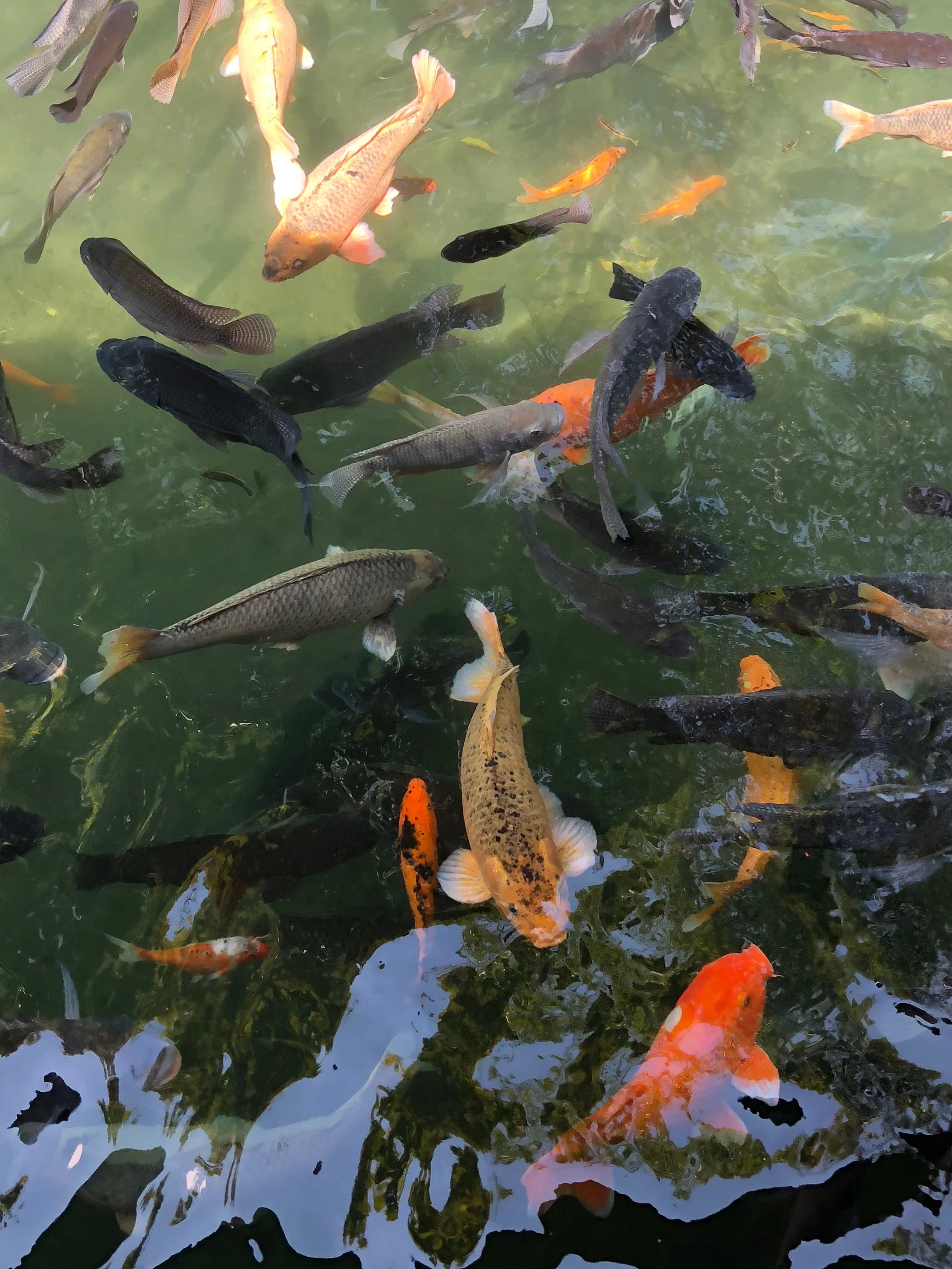
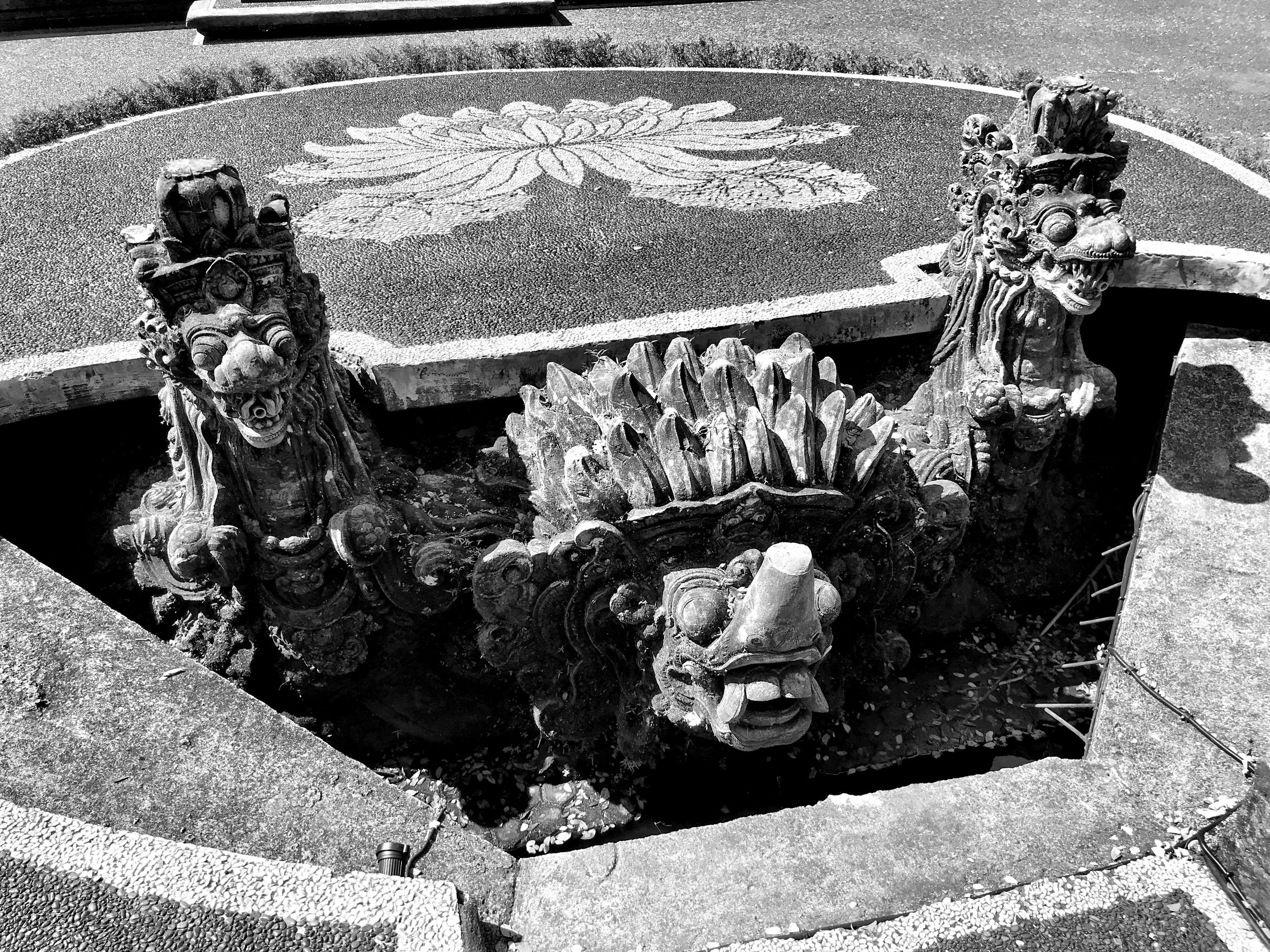
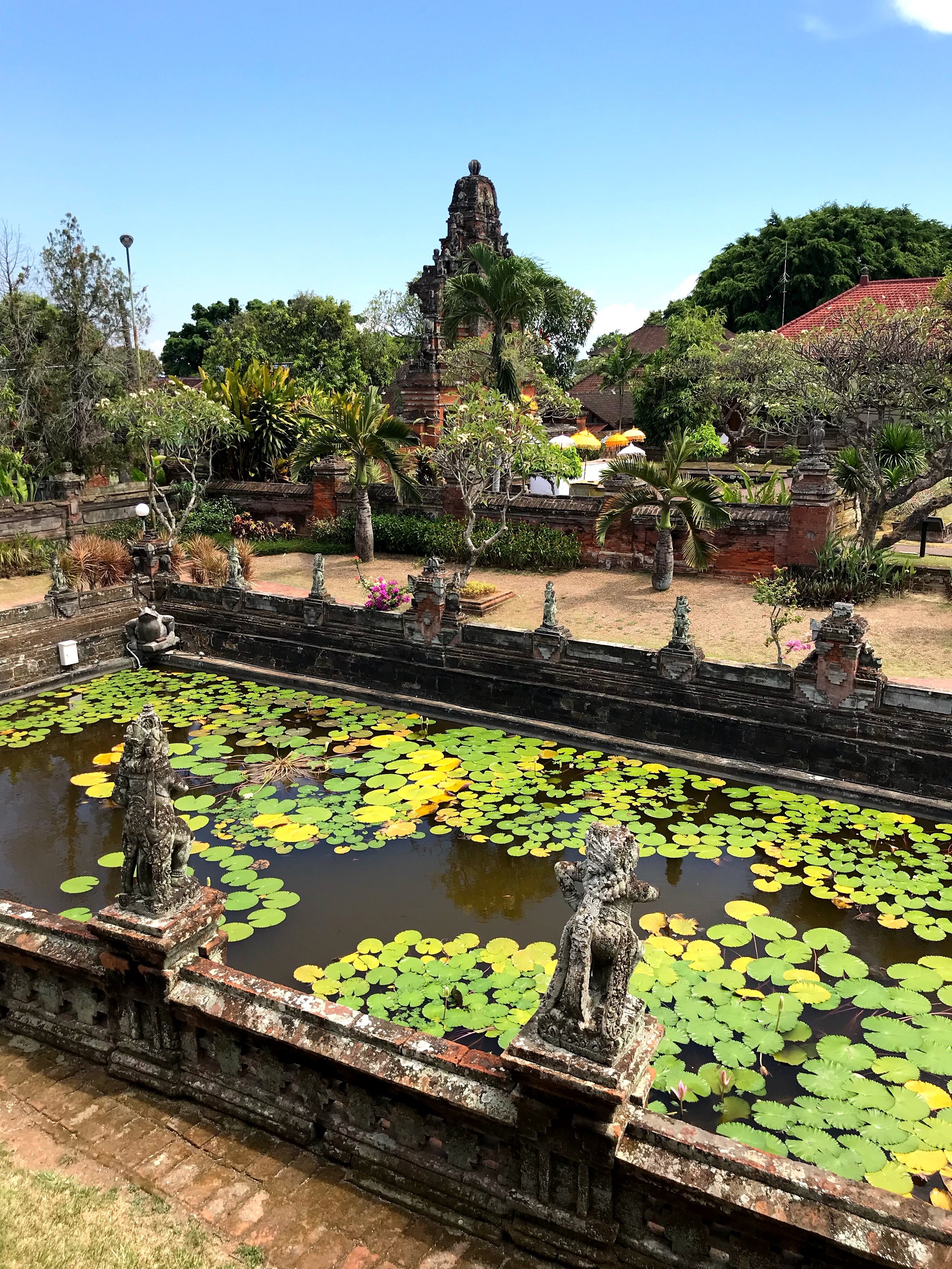
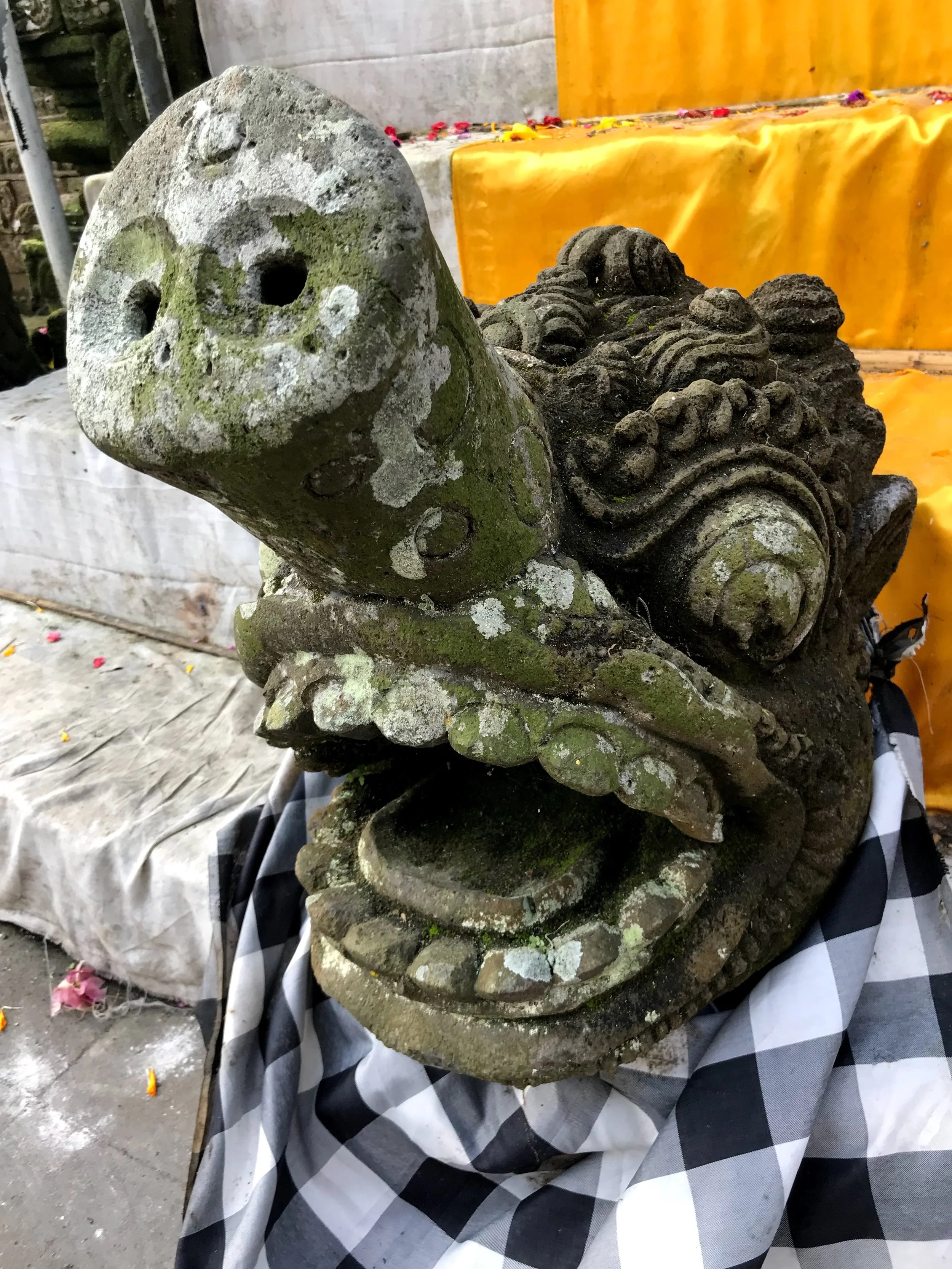
The aviary lines the large reflecting pool with four whimsical stone frogs peeking above the waterline, I suspect they are meant to be fountains, but were either not working, or on when we visited. Surrounding the frogs is the formal pools centerpiece, an ornamental statue of the goddess Saraswati standing atop the back of a swan. The crystal clear waters are filled with well-fed koi fish and overlooked by a grand open-air pavilion with a hipped terra cotta tiled roof.

This platform overlooks the central pool

This platform overlooks the central pool

Holy carp! The pool is filled with koi and isn’t a place for bathing

Holy carp! The pool is filled with koi and isn’t a place for bathing

Not far beyond are a series of small spring-fed pools where locals ritually bathe. Wally and I didn’t feel right entering them, so we improvised by cupping our hands to collect water, which we splashed upon our heads. It was cool and clear and felt refreshing in the early afternoon heat.

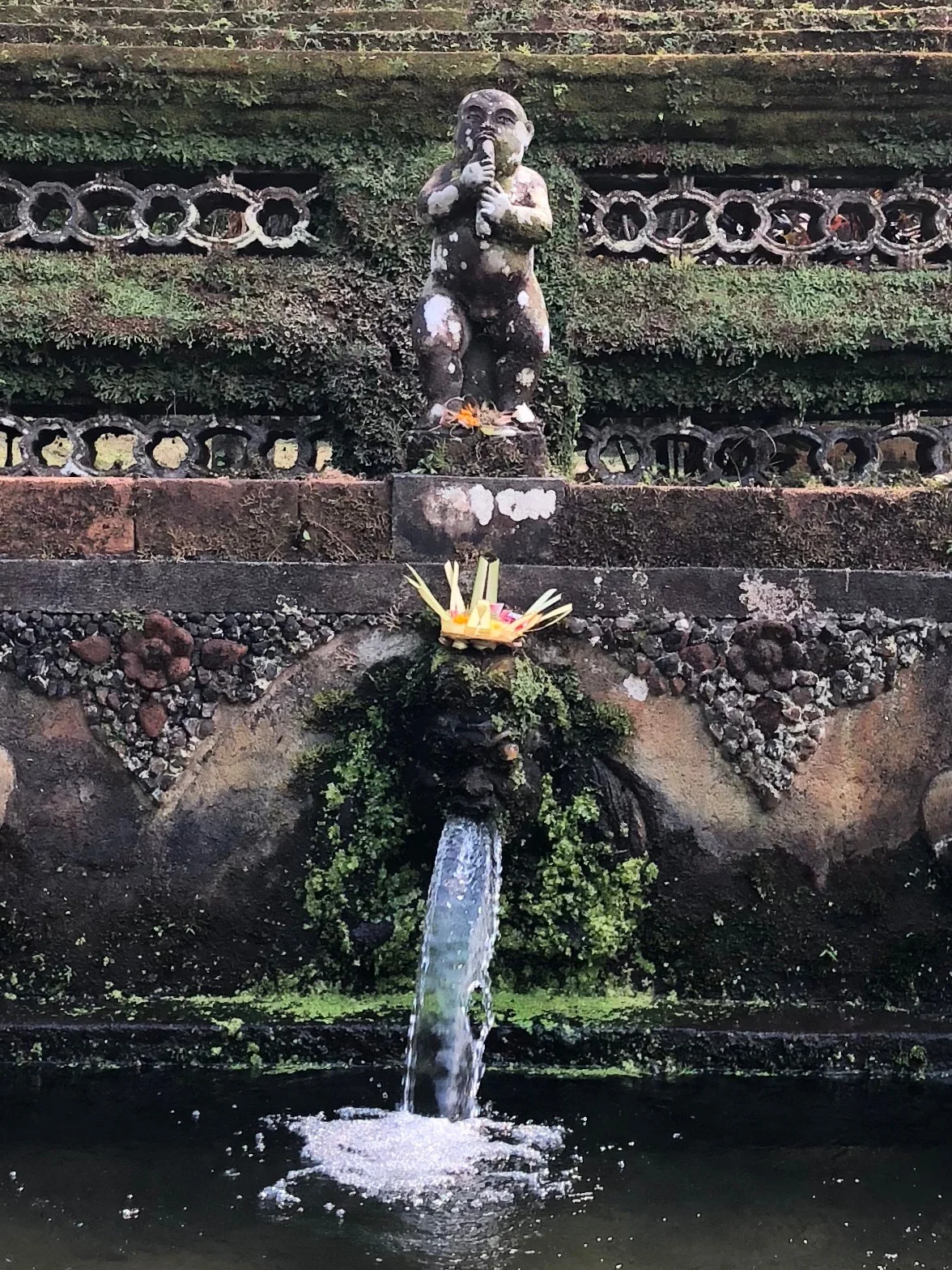
Water pours from the weatherworn carved faces in the bathing pools

Water pours from the weatherworn carved faces in the bathing pools

While I was taking a picture of one of the lichen-covered faces spewing water from its mouth, Wally peeked over the wall and was surprised to see a completely naked old man peeing into one of the holy pools.

Before you cross the threshold of this sacred space, make sure you’re wearing a sarong

Before you cross the threshold of this sacred space, make sure you’re wearing a sarong

Slippery Rock: The Story Behind the Name

According to legend, there once was a man named Mayadenawa, a descendant of the powerful Daitya, a race of demons, and the primordial goddess Danu. He was a practitioner of the dark arts and possessed supernatural powers that allowed him to shapeshift.

When he ascended to the throne, King Mayadenawa regarded himself as a deity, and under this pretense, commanded his subjects to worship him. His behavior angered the storm god Indra, who watched from afar and ordered his celestial armies to attack.

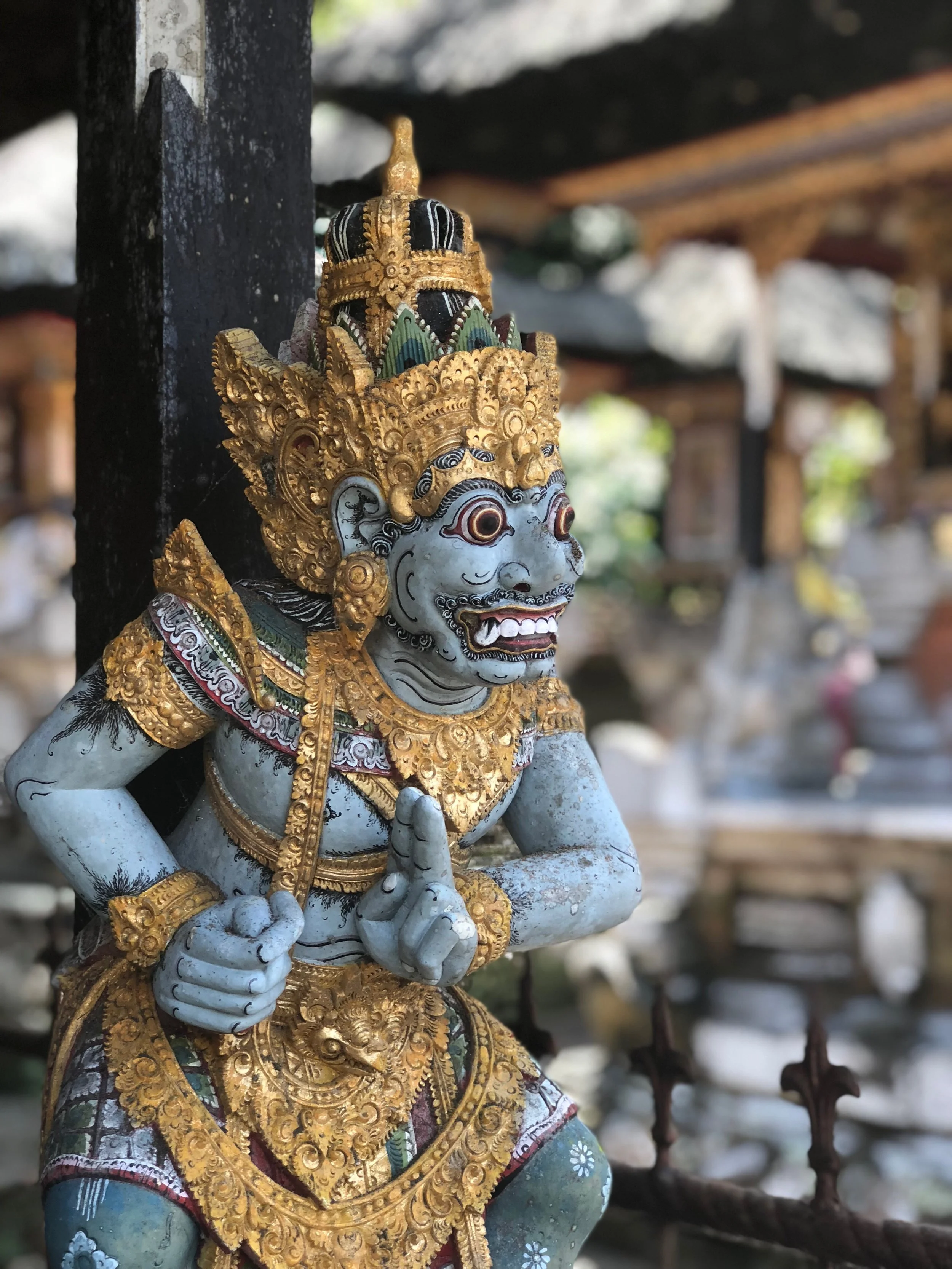
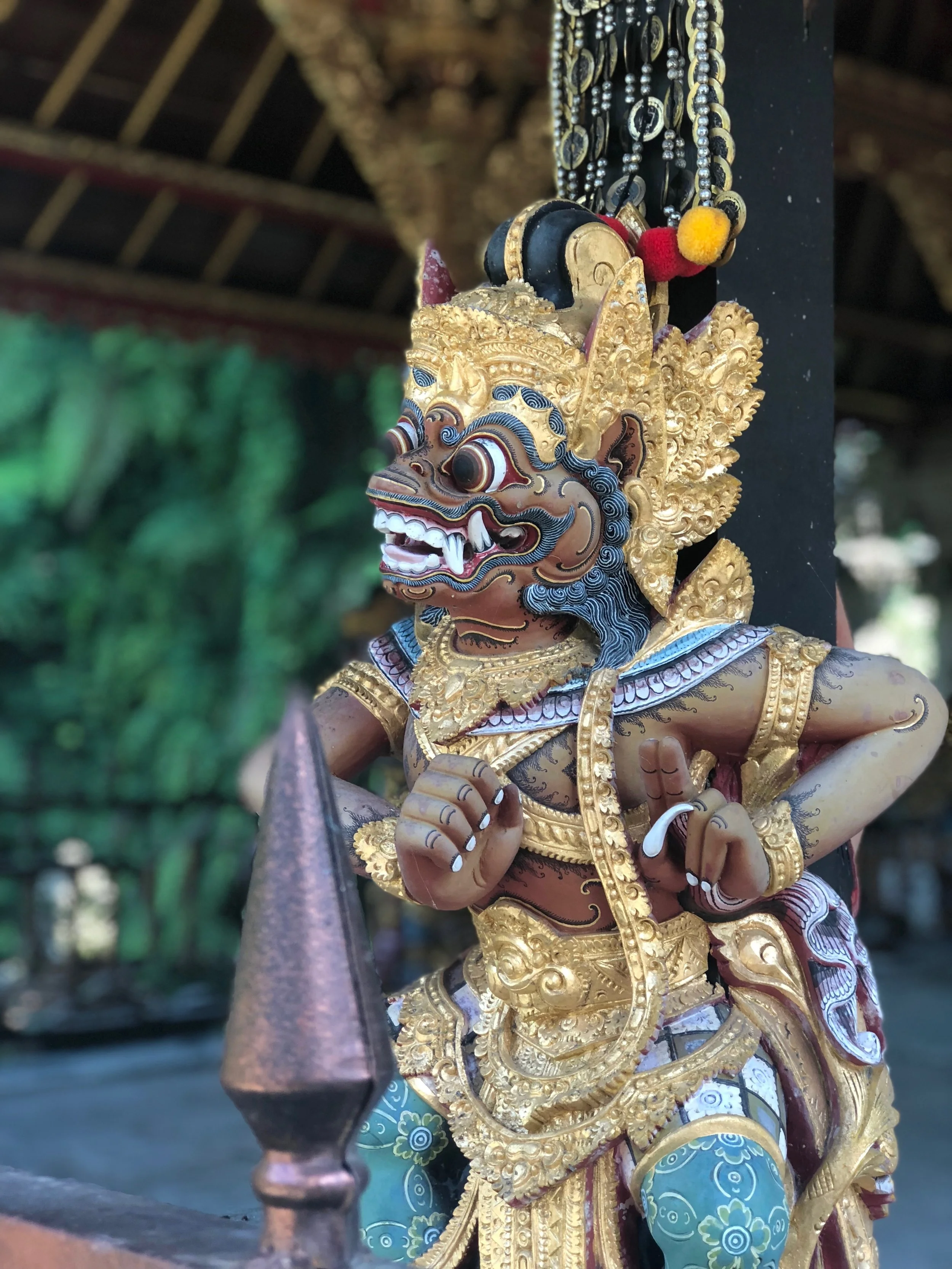
Most temples on Bali have statues of demons

Most temples on Bali have statues of demons

Statues act as guardian spirits

Statues act as guardian spirits

King Mayadenawa knew he was no match for Indra’s troops and manifested a great pool of poisonous water near their encampment. When the army woke, they drank and bathed in the pool. Hundreds fell ill. Seeing this, Indra drove a stake deep into the earth from which a sacred spring emerged. The fleet was immediately reinvigorated as the purified water touched their lips.

To avoid capture, Mayadenawa cunningly morphed into several creatures. Each time, he barely escaped. He transformed into the great bird manuk raya, immortalized in the village of Manukaya. He also appeared as a bulbous green-skinned breadfruit, buah timbul, in what became Timbul village.

Exhausted, Mayadenawa fled and transformed himself into a huge rock. Indra saw droplets of blood forming on the surface of the rock, drew his bowstring back and shot his magical arrow into the boulder. Blood flowed from the stone, forming the Petanu River, which was cursed for a period of 1,000 years.

Sebatu, the village where the temple is located, derives from the Balinese words sauh (meaning “slip”) and batu (“rocks”) or Slippery Rock. As Indra’s troops chased the king, many innocent people lost their footing, giving Sebatu its name.

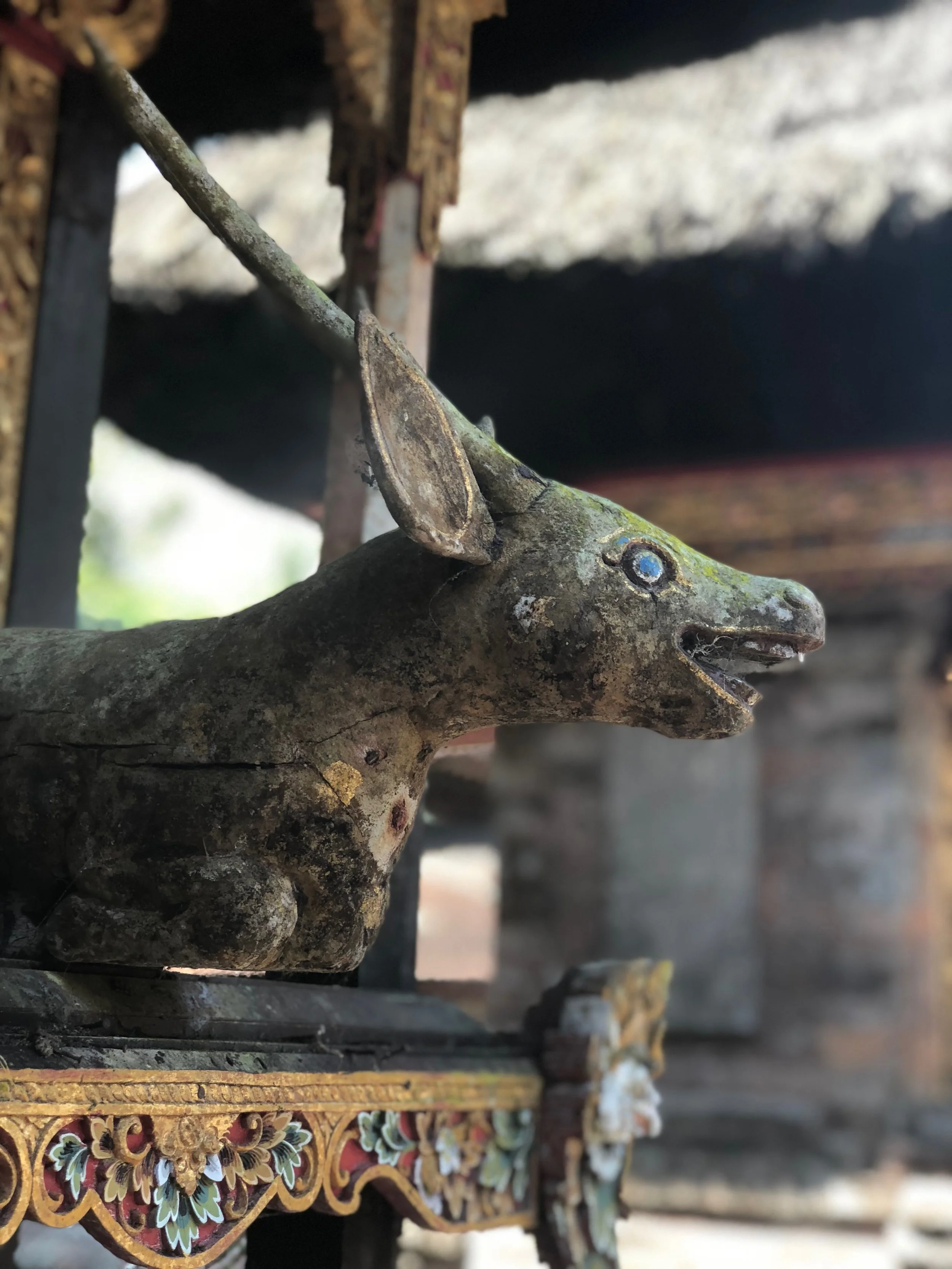
A wooden effigy of a deer

A wooden effigy of a deer

A Quiet Oasis

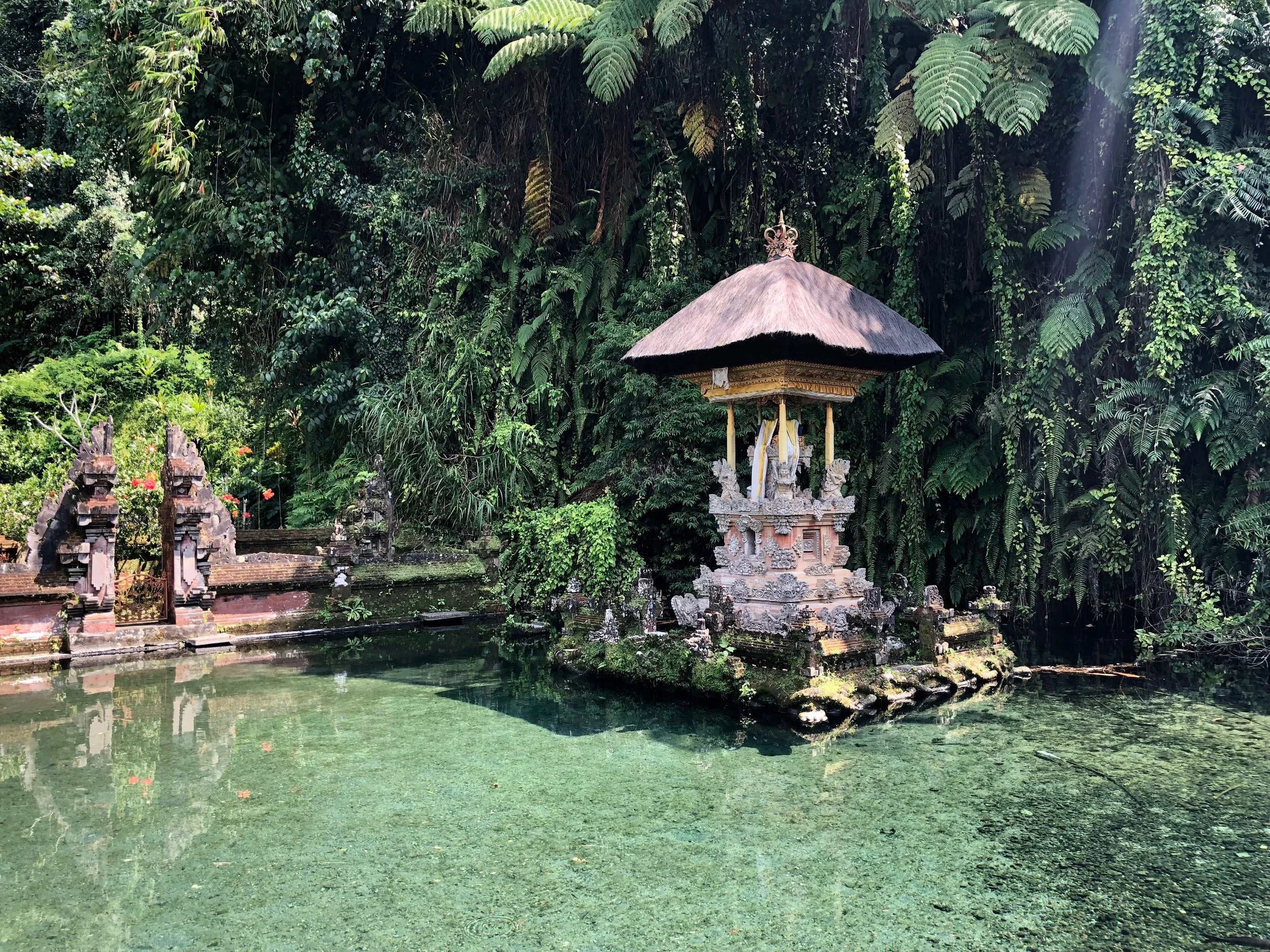
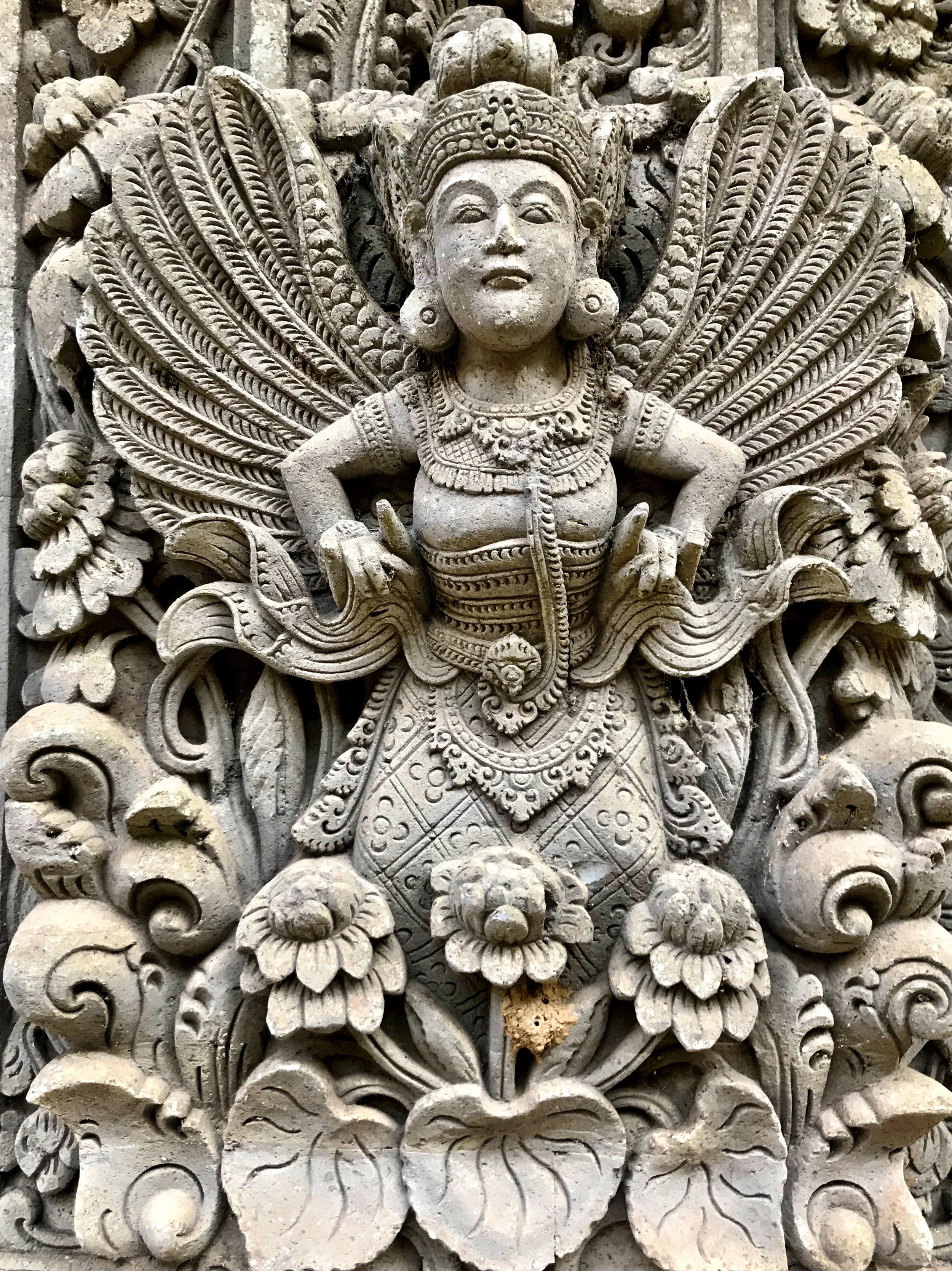
As we wandered farther into the complex, we discovered a second rectangular pool with a small, palm-thatch roof shrine on a man-made island embellished on four sides with winged apsara. The backdrop of dense foliage lent a mystical aura to the singular structure.

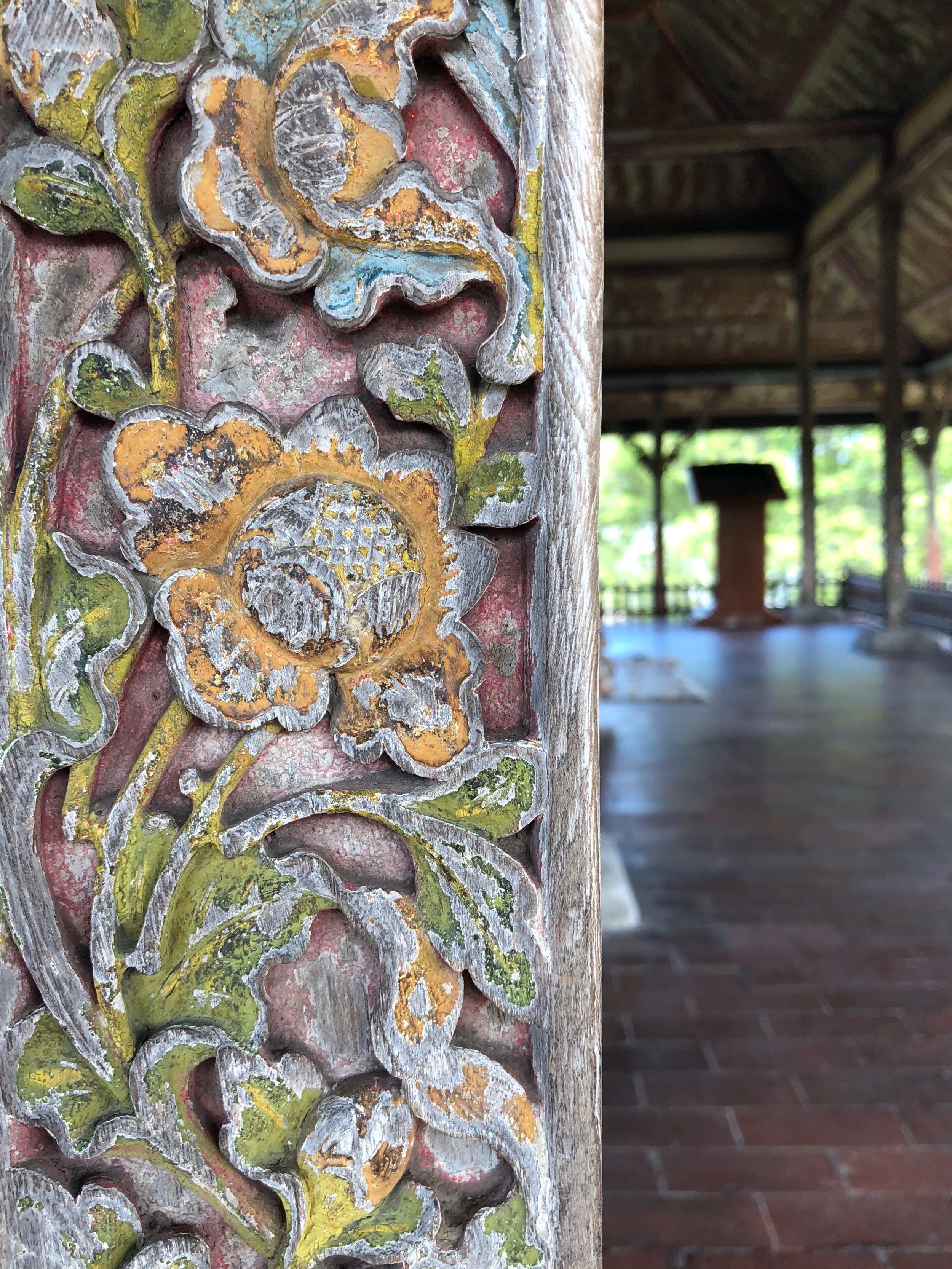
The main temple was beautiful, but off limits. However, there are a few pavilions and ancillary shrines reserved for ancestral spirits worth exploring. Artisans of this village are known for their woodcarving skills and expressively painted sculptures which can be seen in the intricately carved beams and depictions of otherworldly benevolent and demonic beings.

Taking in the calm surroundings of this unusual, untouched sacred site made us feel like we were our own special world. With the exception of a few locals, Wally and I had Gunung Kawi Sebatu to ourselves. –Duke

Pair a trip to this water temple with the cliff shrines of the same name and the Tegallalang Rice Terrace

Pair a trip to this water temple with the cliff shrines of the same name and the Tegallalang Rice Terrace

Pura Gunung Kawi
Sebatu
Tegallalang
Gianyar
Bali 80511
Indonesia

Weird Bali: 7 Crazy Balinese Customs

Cat poop coffee, temples of death and Balinese names are a few of the unusual aspects of Bali culture.

What makes islands so interesting is that they act as closed environments and often adopt their own distinct cultures. It’s curious that Bali is a Hindu island in the midst of the most populous Muslim nation in the world. Its unique religion permeates daily life.

Here’s a sampling of seven unusual things we observed or learned about on our trip to Bali.

The passage of the beans through the civet’s digestive tract, pressed against their anal scent glands makes the resulting coffee to die for.
Kopi luwak, made from the excrement of a cute wild cat, has become a craze. But we recommend boycotting it

Kopi luwak, made from the excrement of a cute wild cat, has become a craze. But we recommend boycotting it

1. A popular coffee on Bali is made from animal poop — and it’s the most expensive coffee on Earth.

Known as kopi luwak, this is essentially coffee beans that have been eaten, digested and shat out by the palm civet, a cute animal that looks like a cross between a wild cat and a mongoose. You’ll see signs for kopi luwak all over Bali, and Duke and I were like, no thank you. The British couple next to us at dinner one night said they quite enjoyed it, though, that the beans were a honeyed color, that the coffee was smooth, and they’d have gotten some if it wasn’t so bloody expensive.

Many poor civets are kept in cages and mistreated to make sure there’s a steady supply of luwak coffee

Many poor civets are kept in cages and mistreated to make sure there’s a steady supply of luwak coffee

Civets are shy, nocturnal creatures that roam coffee plantations at night, eating ripe coffee cherries. They can’t digest the pits, or beans, and poop them out. Somehow locals got it into their heads that the passage through the civet’s digestive tract, pressed against their anal scent glands, somehow makes the resulting coffee to die for.

One of the many places we were offered civet shit coffee. We declined each time

One of the many places we were offered civet shit coffee. We declined each time

What’s sad, though, is that the novelty of kopi luwak has turned into a booming industry, with many coffee farms mistreating the animals. They “suffer greatly from the stress of being caged in proximity to other luwaks, and the unnatural emphasis on coffee cherries in their diet causes other health problems too; they fight among themselves, gnaw off their own legs, start passing blood in their scats, and frequently die,” writes Tony Wild, the man who blames himself for bringing the kopi luwak craze to the West, in The Guardian. Treating an animal like that is just crappy.

There’s a very good chance that half the people in this photo are named Wayan. Seriously!

There’s a very good chance that half the people in this photo are named Wayan. Seriously!

2. All the kids have the same names, depending on their birth order.

As you become acquainted with more and more Balinese locals, you’ll notice something strange: They all seem to have the same name. And it’s not just that certain names are popular, like John and Jennifer in the States — there literally seem to be only a few names on the island to choose from. As bizarre as that seems, that is indeed the tradition on Bali.

In most cases, Balinese parents from the lower caste (that is to say, most of the population) give their children the same names, depending on their birth order — whether or not they’re boys or girls. Firstborns are named Wayan, Putu or Gede; the second-born is Made or Kadek; the third-born is Nyoman or Komang; and the fourth-born is Ketut. What happens if you have five kids? The cycle repeats itself, with the addition of Balik. So the fifth-born would be Waylan Balik, which basically means Waylan Returns.

You’ll meet tons of Wayans and Mades (this last one is pronounced Mah-deh), so how do people know who’s who? Most Balinese add a nickname or middle name. Our driver, for instance, was Made Ada.

Temples of death on Bali feature frightening statues out front

Temples of death on Bali feature frightening statues out front

3. Every village has at least one temple of death.

Known as pura dalem, every village has at least one death temple, often located in the lowest part of town, facing the sea, which is considered the gateway to the underworld. Bodies are buried in the nearby cemetery, awaiting the purification of a cremation ceremony. Pura dalem, not surprisingly, are typically dedicated to the most gruesome gods and goddesses of the Hindu pantheon: Shiva the Destroyer, Kali, Durga or Rangda.

Many temples of death are dedicated to the demoness Rangda, who has a long tongue, droopy breasts, phallic dreadlocks and a fondness for eating babies

Many temples of death are dedicated to the demoness Rangda, who has a long tongue, droopy breasts, phallic dreadlocks and a fondness for eating babies

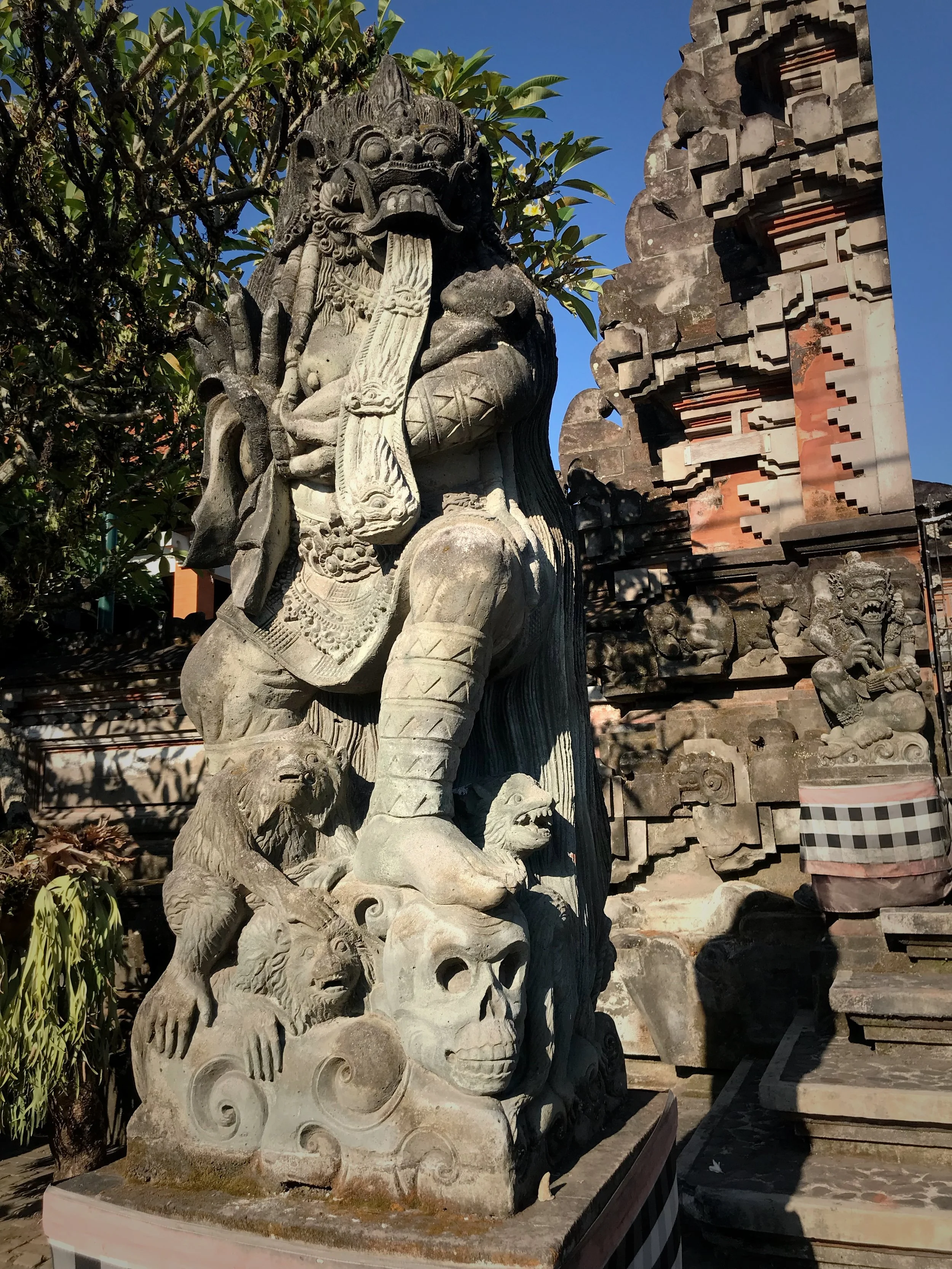
Monstrous demonic statues line the entrance — many featuring bulging bug eyes, fierce fangs and large, saggy breasts. Some hold innocent babies in their arms as they stand atop a pile of skulls. These serve as a vivid reminders of what awaits the wicked.


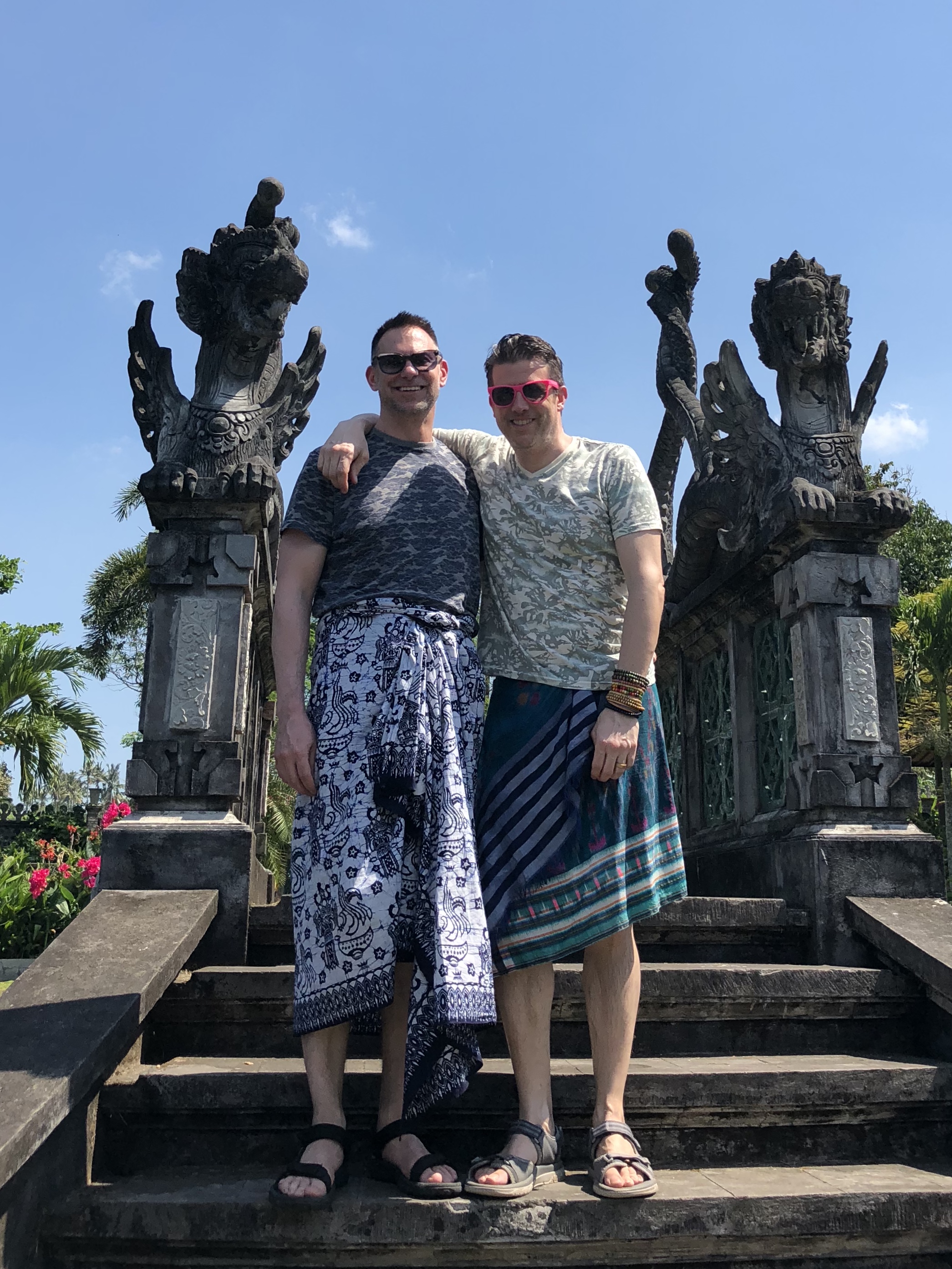
The only thing that would make Duke and Wally even more macho than these sarongs is if they had flowers behind their ears, too

The only thing that would make Duke and Wally even more macho than these sarongs is if they had flowers behind their ears, too

4. Wearing a skirt and tucking a flower behind your ear is thought of as the epitome of masculinity.

At temples on Bali you have to wear a sarong, wrapping these bright cloths around your waist like a long skirt. When I first visited Bali almost two decades ago, I’d wear a sarong every day, and it was common to see local men doing the same. On this visit, though, we only saw one young man wearing a sarong in Ubud (and that’s why I approached him to be our driver for the week).

I’d also pluck a flower and put it behind my ear, having seen temple priests do so. When men on Bali would see me with my sarong and flower, they’d exclaim, “Look at you! You are so masculine!” Bali has got to be the only place on Earth where a man is considered macho for wearing what’s essentially a skirt and a flower behind his ear.

Newborns on Bali are so holy they aren’t allowed to crawl on the ground

Newborns on Bali are so holy they aren’t allowed to crawl on the ground

5. Babies on Bali aren’t allowed to touch the ground for the first three months or so.

Being Hindus, Balinese believe in reincarnation — more specifically, newborns are thought to be the spirit of an ancestor returning to live another life. Because babies are still so close to the sacred realm they came from, they should be venerated. And in a culture where the ground represents all that is demonic and impure, that means newborns aren’t allowed to touch the earth for at least 105 days after birth, and up to 210 in some communities. That’s when the soul officially becomes a part of the child.

At this time, there’s a ceremony called nyabutan or nyambutin, where the baby’s hair is cut off and he or she touches the ground for the first time. It’s often at this time that the child is given its name.

You’ll be a total baller in Bali!

You’ll be a total baller in Bali!

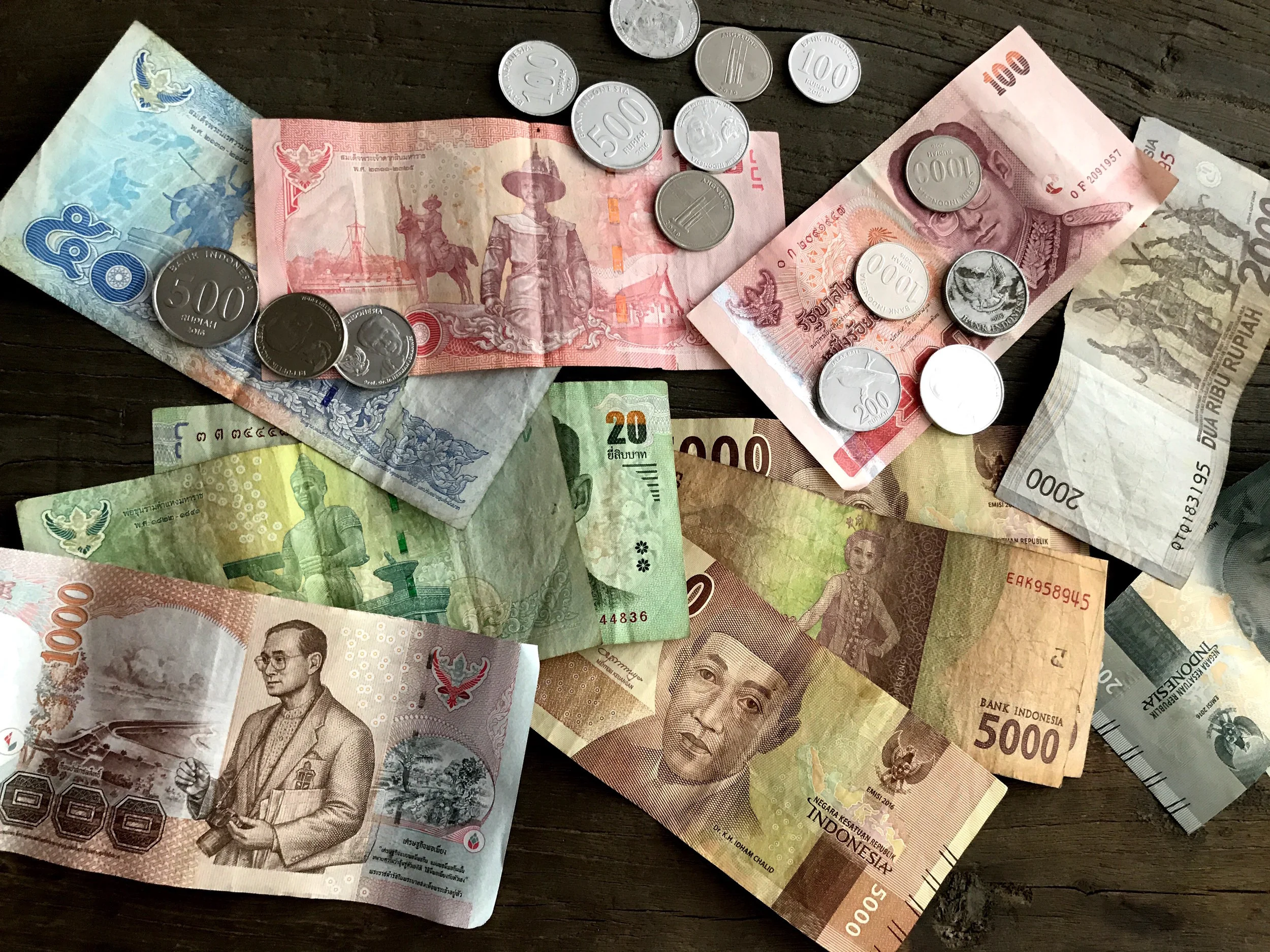
6. In Indonesian currency, you’ll be a multimillionaire.

Literally every time we hit the ATM, we got out the maximum amount: 1.5 million rupiah, which, at the time we visited, was only about $100.

We passed at least four Polo stores in Ubud — and they all seemed to be having a 70% off sale

We passed at least four Polo stores in Ubud — and they all seemed to be having a 70% off sale

Are these officially licensed Ralph Lauren stores? Probably not

Are these officially licensed Ralph Lauren stores? Probably not

7. There are Ralph Lauren Polo stores everywhere.

The preppy look is huge on Bali, at least among tourists. The island is lousy with Polo stores — though they might be of dubious affiliation with the brand. Walking through Ubud, we passed at least six Polo stores. Let the buyer beware: The online consensus is that these deals are too good to be true and are most likely knock-offs. –Wally


Pura Taman Saraswati: The Heart of Ubud

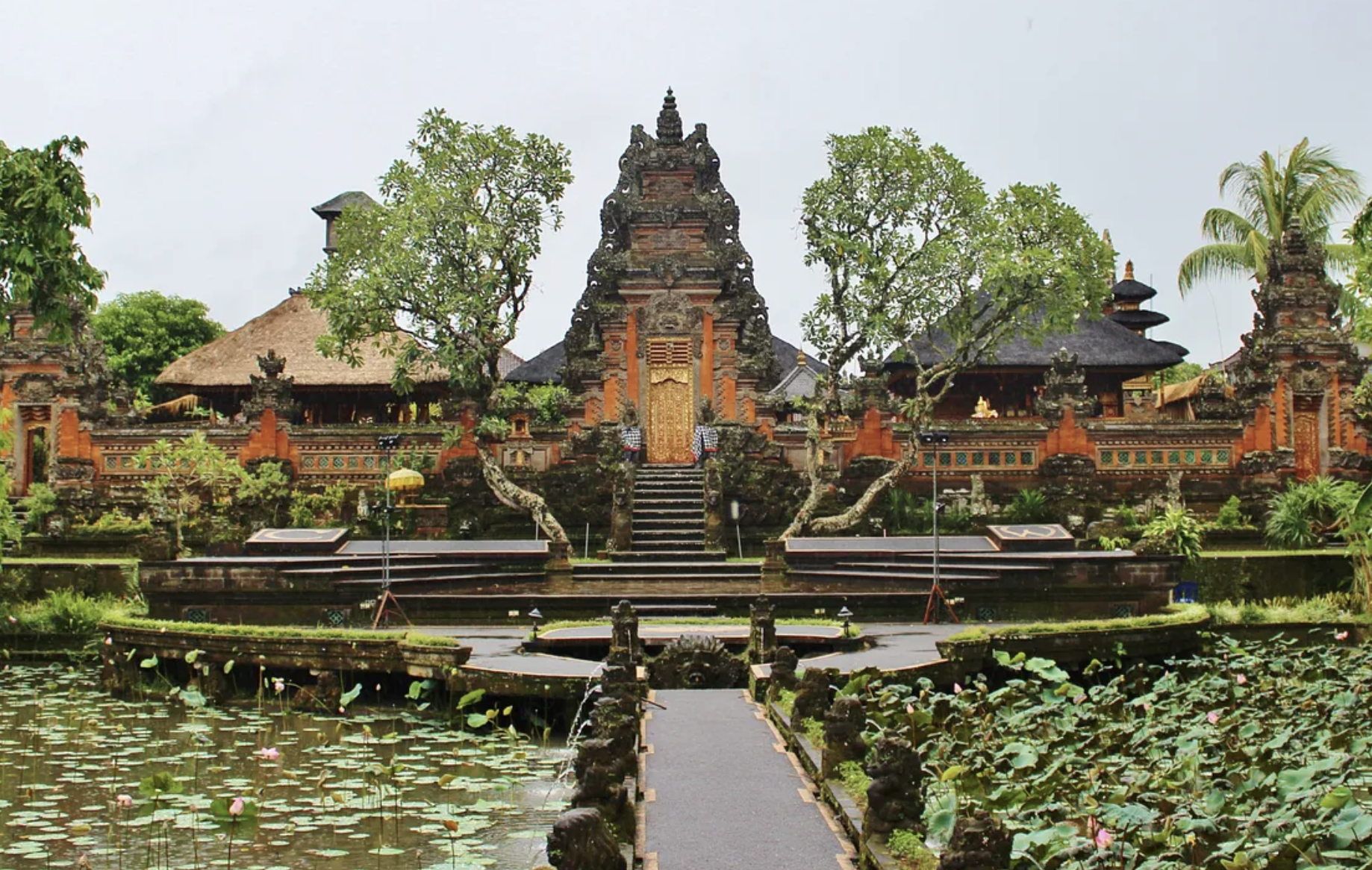
You can’t miss the Saraswati Temple, famous for its lotus pond and dedicated to the Hindu goddess of learning.

The Saraswati Temple is a peaceful oasis in Ubud

The Saraswati Temple is a peaceful oasis in Ubud

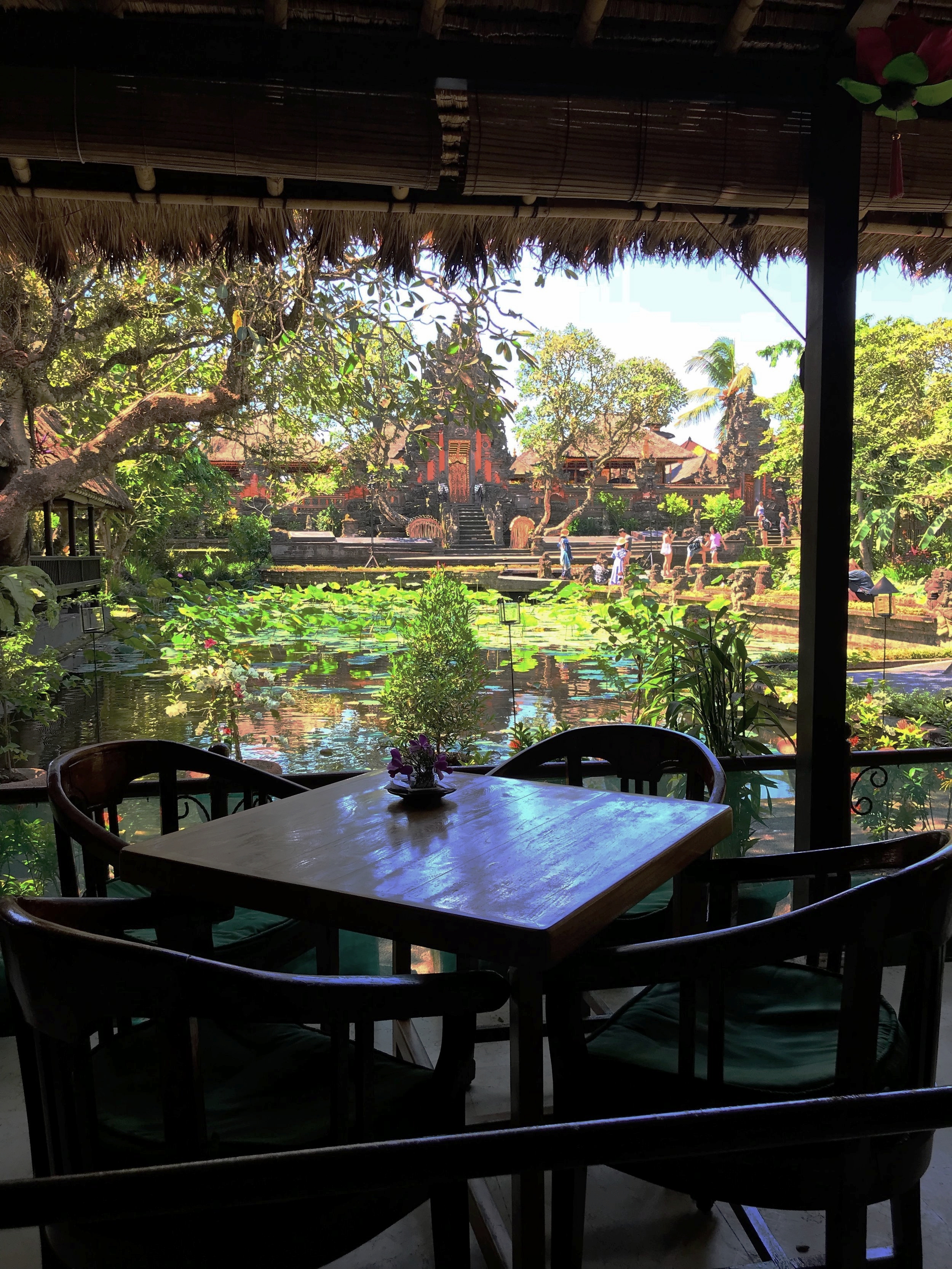
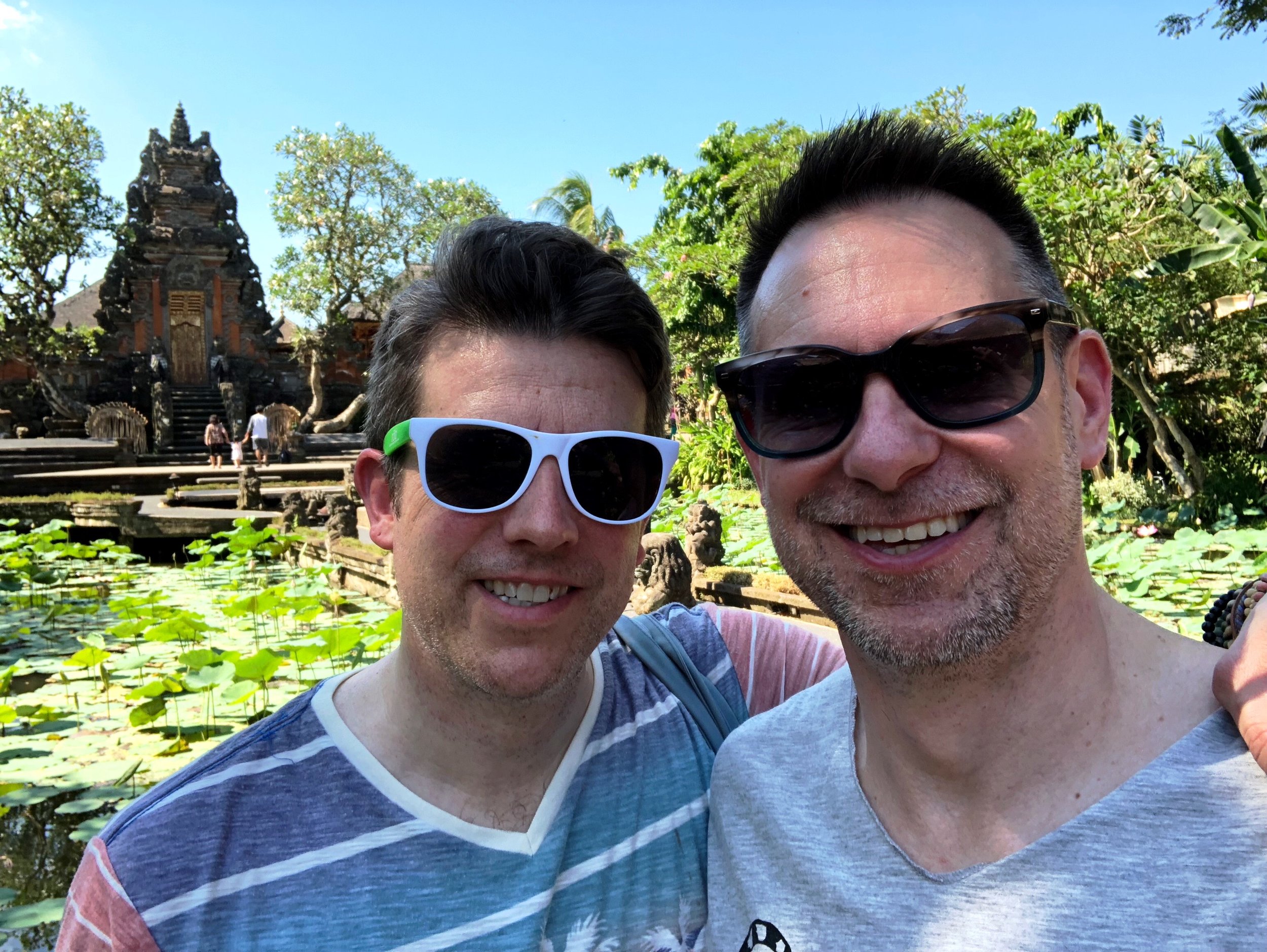
On our first afternoon exploring Ubud, Wally and I decided to grab a bite at Cafe Lotus. Our table within the café’s open-air dining pavilion had a lovely view of the pond in front of the temple. There’s an undeniably magical quality to the multitudes of vibrant pink buds rising upon their stems above the murky waters, with the bricks of the temple beyond glowing orange.

Grab a bite at Cafe Lotus and admire the view

Grab a bite at Cafe Lotus and admire the view

The temple is dedicated to Saraswati, who, according to Hindu mythology, is the divine consort of Brahma, the four-faced creator deity. Her name is a combination of two Sanskrit words, “sara,” a lake or pool, and “vati,” to possess. Loosely translated, her name means She Who Has an Abundance of Water. Originally, she took the form of the sacred Saraswati River in India. That river has since dried up, and over time, she transformed to become the patroness of knowledge, literature and the arts, the creative essence flowing within the human heart and soul.

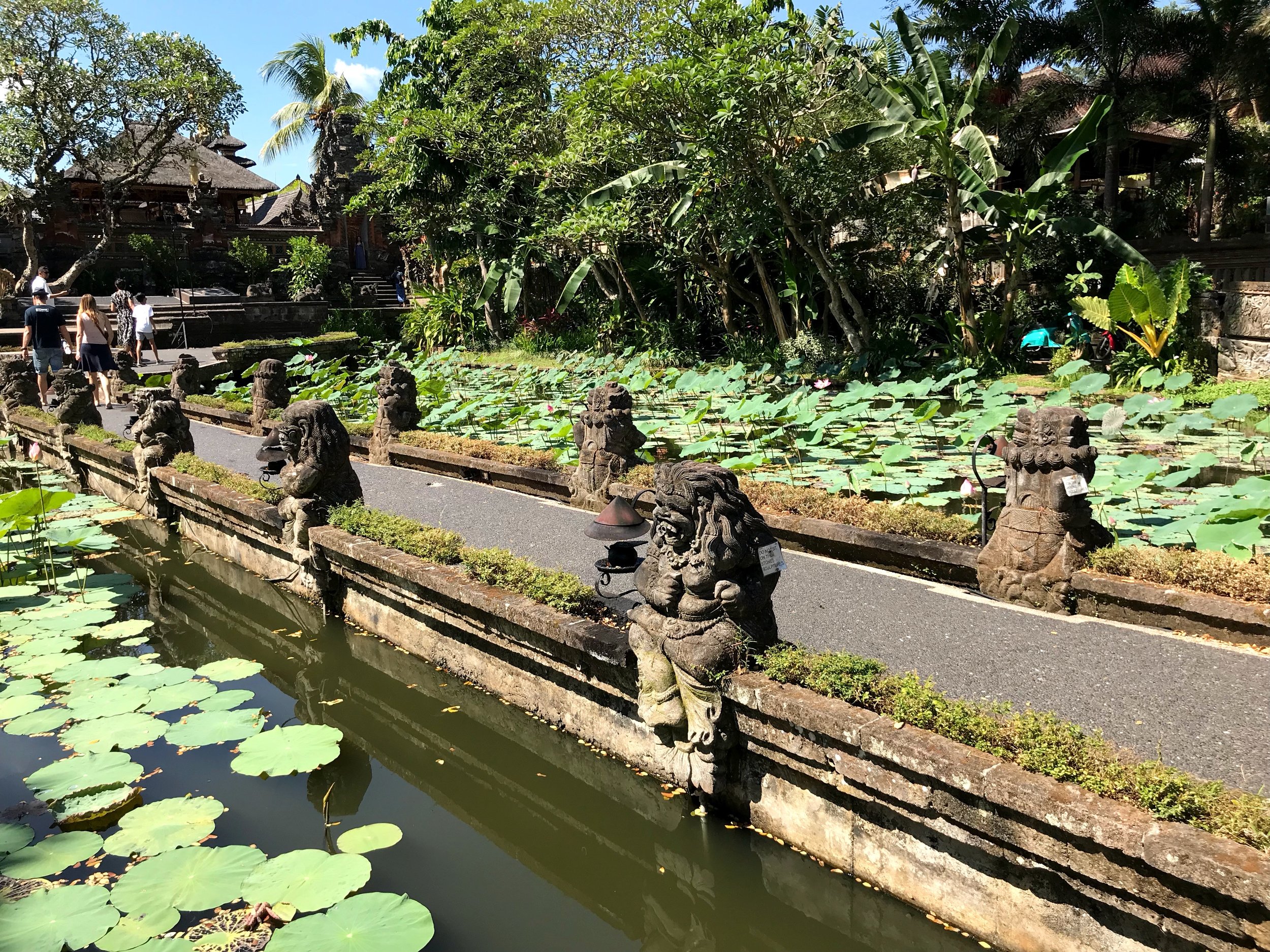
This pathway bisects the lotus pond and leads to the temple

This pathway bisects the lotus pond and leads to the temple

Who doesn’t love a lotus?

Who doesn’t love a lotus?

It is believed that Saraswati lives on the tip of the tongue and is present whenever words are spoken. She is the goddess of speech, and her blessings are invoked through the mantras written on sacred traditional palm leaf manuscripts, known as lontar. She is often depicted with four arms, seated upon a swan or lotus flower. In her hands she holds a lute, prayer beads and a lontar, representing the intellect, alertness and ego.

The temple is dedicated to the Hindu goddess Saraswati, patroness of learning and the arts

The temple is dedicated to the Hindu goddess Saraswati, patroness of learning and the arts

Pura Taman Saraswati

Prince Tjokorda Gede Agung Sukawati commissioned the temple, which was designed by the Balinese artist Gusti Nyoman Lempad. Construction began in 1951 and was completed the following year. Under patronage of the royal family, Lempad played an important role in the design and construction of palaces and temples throughout Ubud and its neighboring villages. When Lempad died in 1978, he was believed to have been 116 years old.

Wally and Duke in front of the temple and pond

Wally and Duke in front of the temple and pond

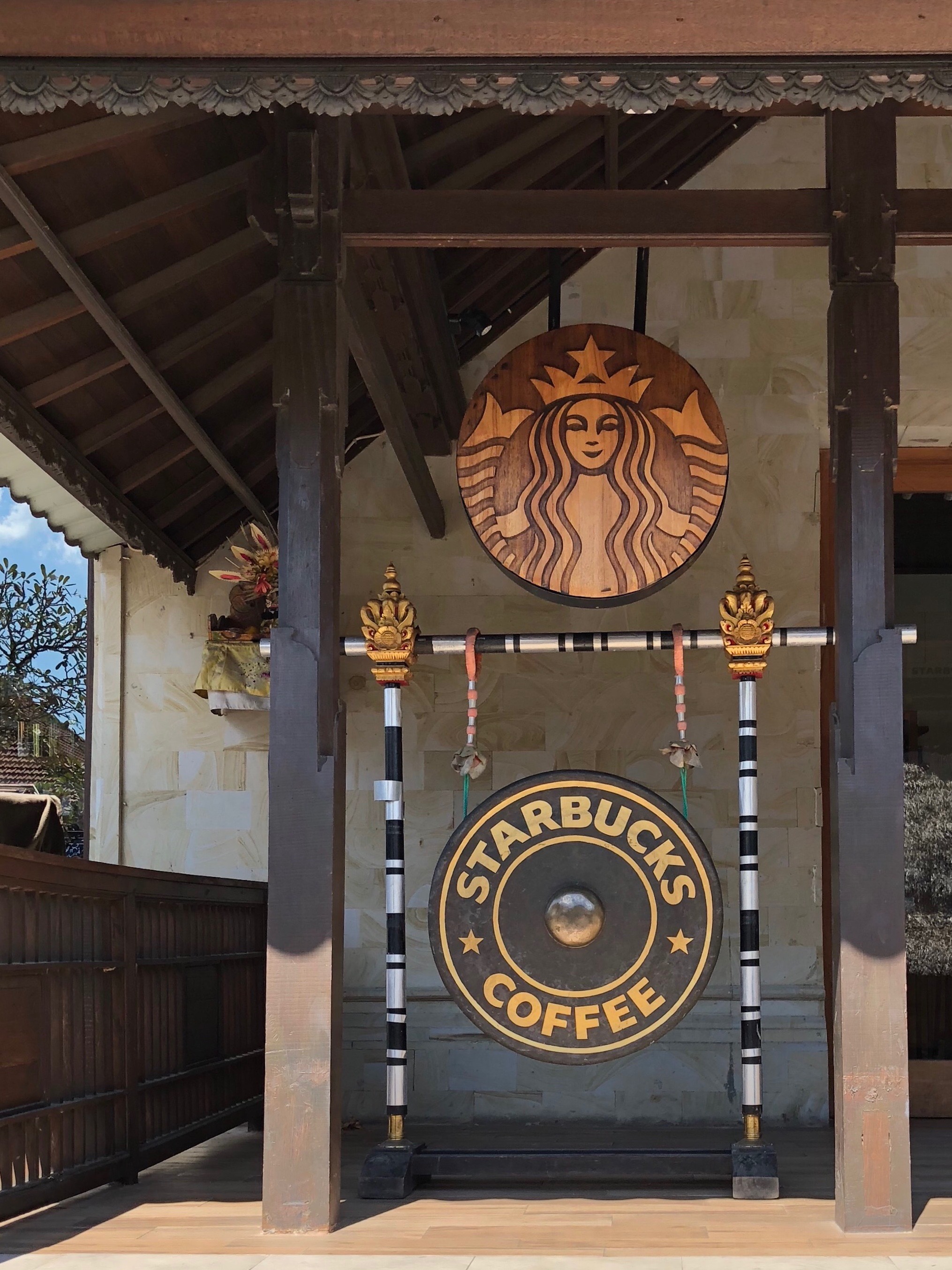
There’s a Starbucks right in front of the temple. Grab a venti iced latte on the way out!

There’s a Starbucks right in front of the temple. Grab a venti iced latte on the way out!

The temple is easy to find, sandwiched between Cafe Lotus and a Starbucks off the main thoroughfare of Ubud. To enter the grounds, cross a footbridge that bisects the scenic lotus ponds. The path is flanked by theatrical and grotesque sculptures of Hindu mythological figures, many of which are the original works of Lempad himself.

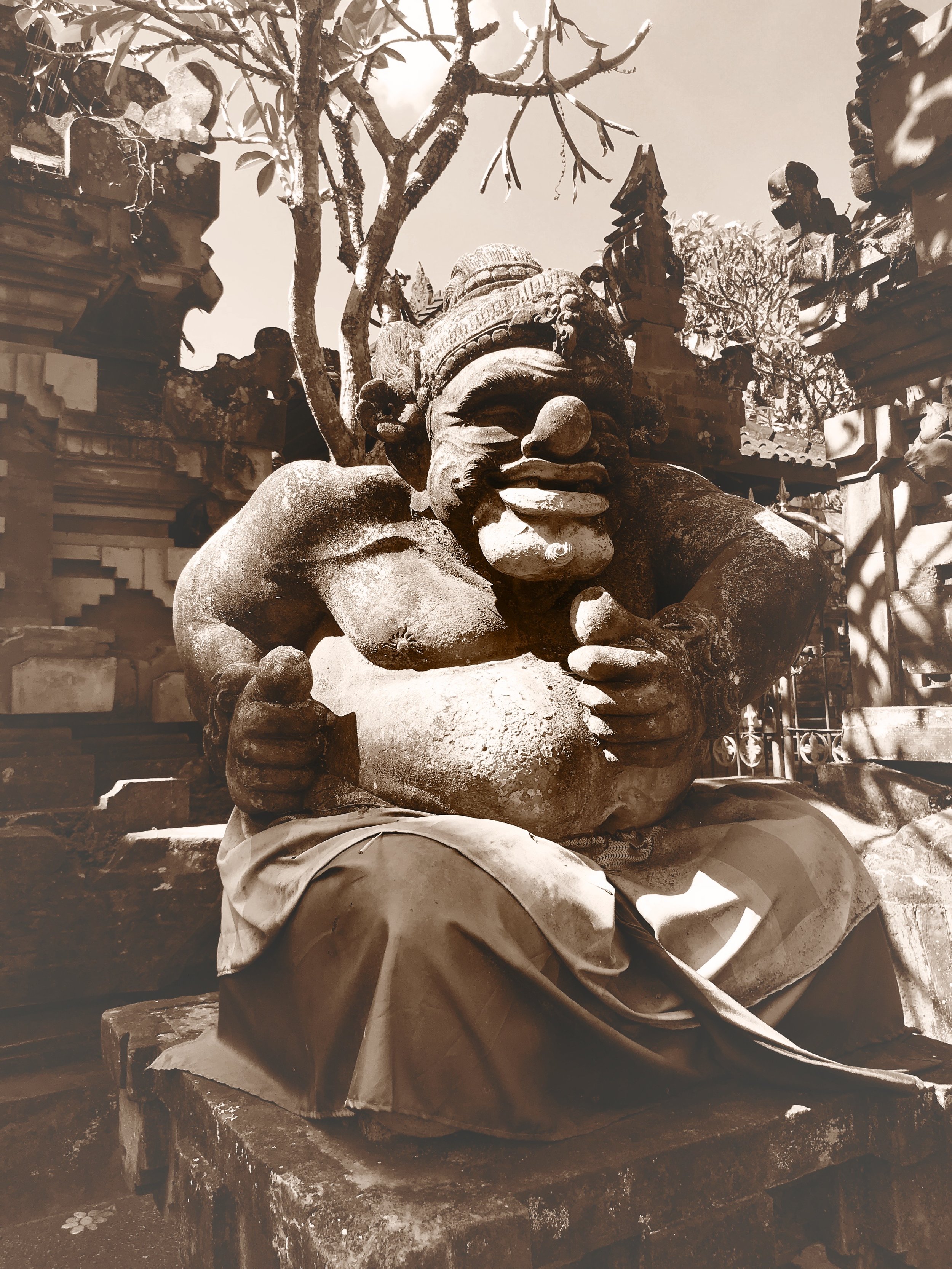
Grotesque statues like this one are characteristic of Gusti Nyoman Lempad’s style

Grotesque statues like this one are characteristic of Gusti Nyoman Lempad’s style

Lempad carved many of the statues and was the architect of the temple

Lempad carved many of the statues and was the architect of the temple

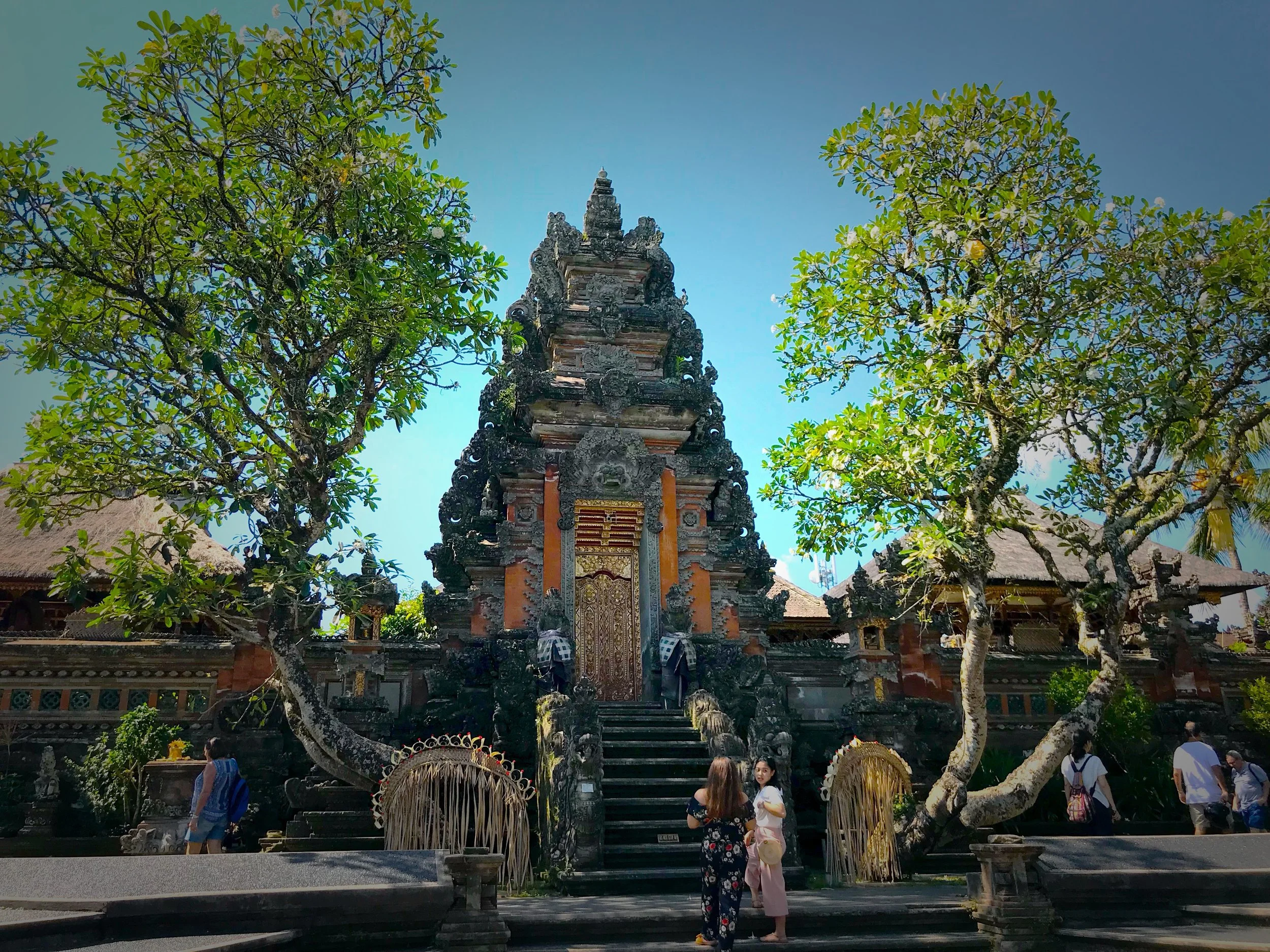
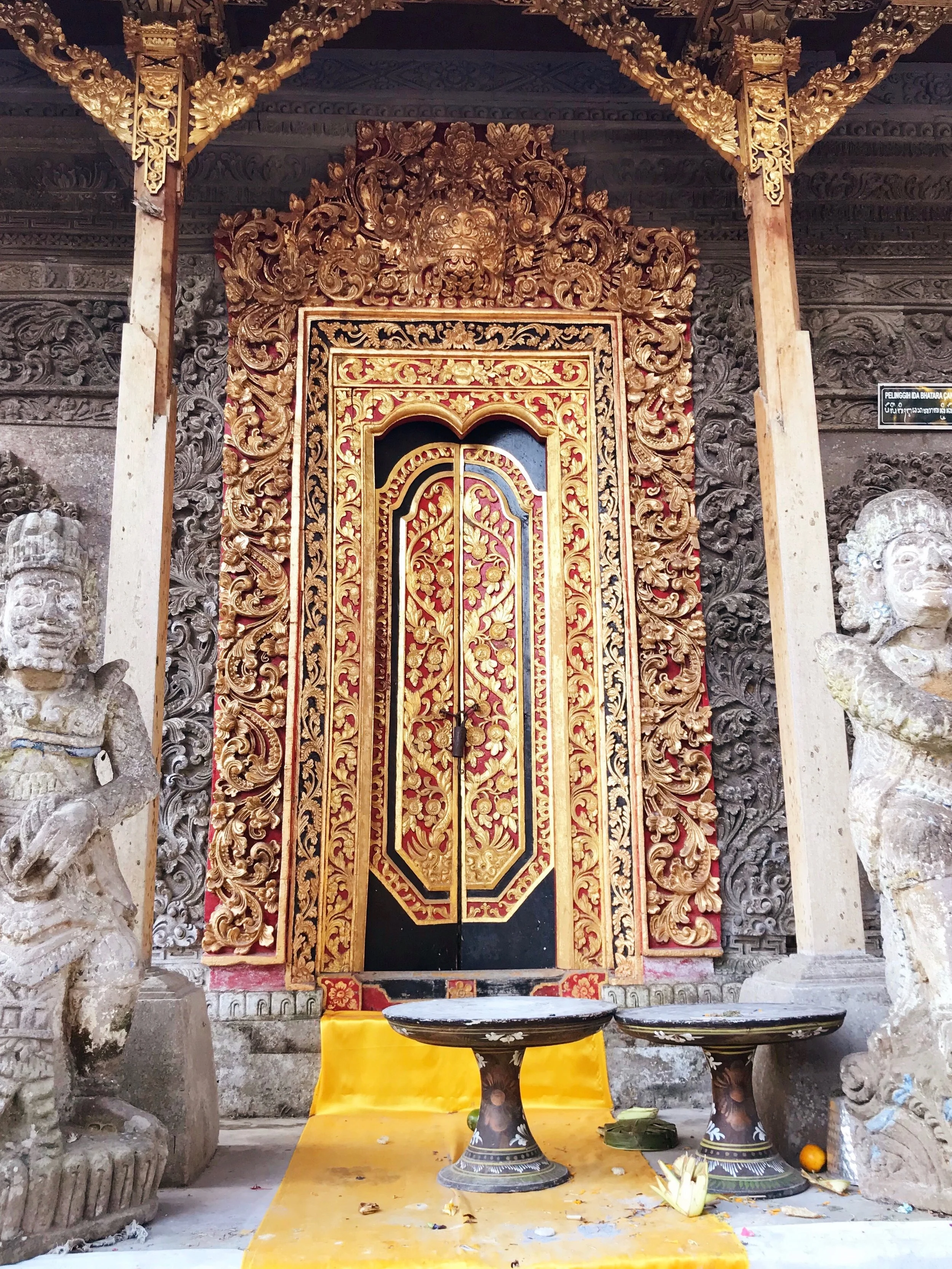
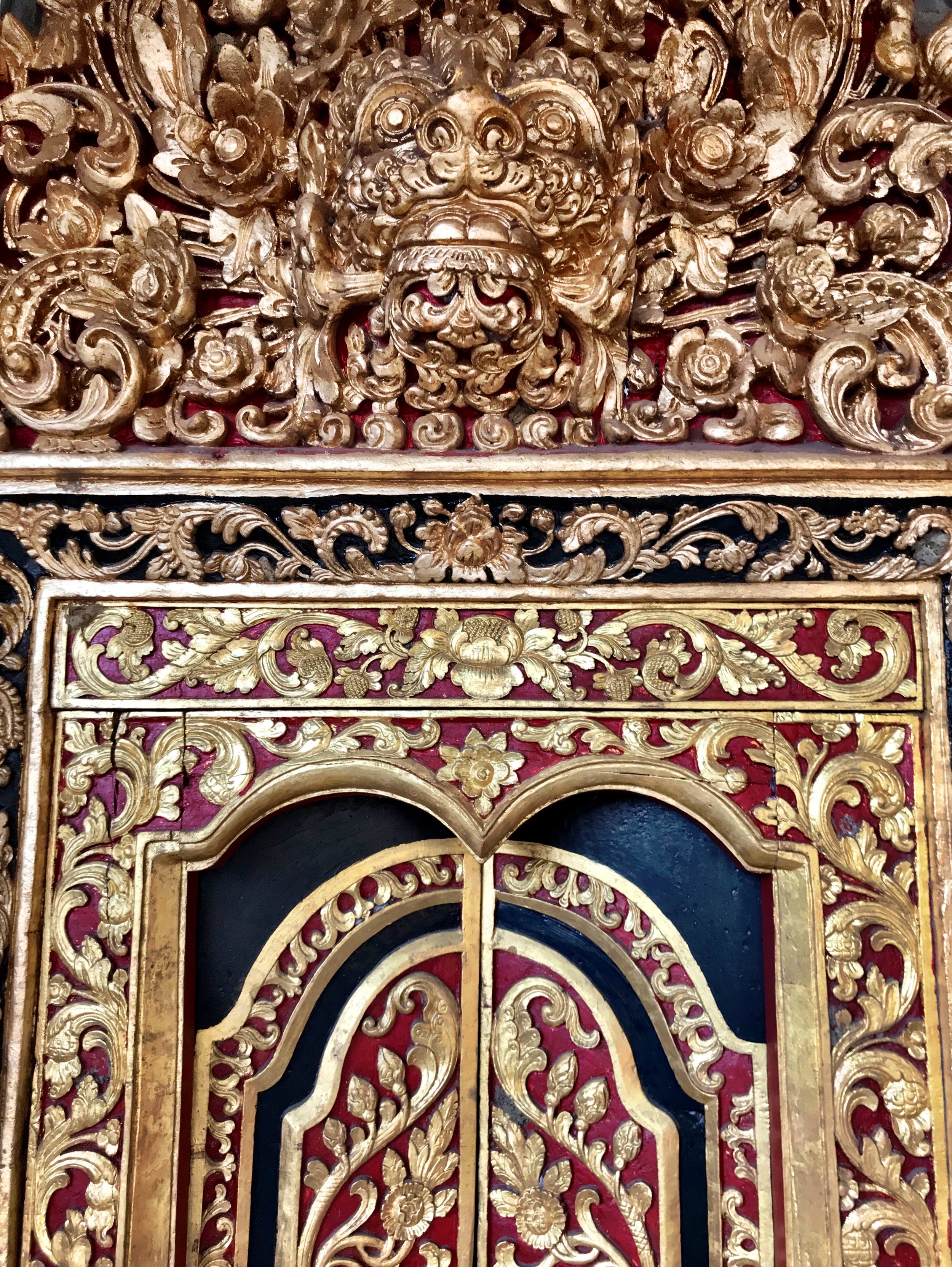
Wally and I were only able to explore the front platform of Pura Taman Saraswati, as the inner courtyard was closed to visitors. The temple exterior is a traditional assemblage of orange-red bricks embellished with gray volcanic stone ornamentation. A towering central gate known as a paduraksa stands at its center. A pair of intricately carved wooden doors functions as a symbolic boundary marker between the outer world and the temple’s sacred interior.

The central gate into the sacred interior of the temple was locked every time we visited

The central gate into the sacred interior of the temple was locked every time we visited

Gold detailing on the temple doors features heads of guardian spirits

Gold detailing on the temple doors features heads of guardian spirits

On either side of the main gate at Pura Taman Saraswati are two tall frangipani trees whose gnarled branches and dark green leaves grow outwards and upwards like a pair of wings. When in bloom, these trees produce small, fragrant white flowers with yolk-yellow centers. The flowers are called jepun in Bali and are commonly used in the daily devotional offerings to the gods known as canang sari.

People leave offerings of flowers for Saraswati

People leave offerings of flowers for Saraswati

As Saraswati is associated with the arts, it’s fitting that the courtyard serves as an open-air stage for nightly kecak performances, traditional stories depicting the constant struggle between good and evil, told through dance.

W is for Wally

W is for Wally

Duke branches out at Pura Taman Saraswati

Duke branches out at Pura Taman Saraswati

On a platform in front of the temple, a spiny-backed turtle flanked by two dragon-looking creatures emerge from below

On a platform in front of the temple, a spiny-backed turtle flanked by two dragon-looking creatures emerge from below

On the couple of occasions we visited, we entered directly from Jalan Raya, the main street that runs through the center of Ubud. The water temple is apparently also accessible from Jalan Kajeng, which runs perpendicular to Jalan Raya. No matter how you arrive there, it’s a peaceful oasis amid the throngs of tourists and worthy of a quick visit. –Duke

The Saraswati Temple in Ubud

The Saraswati Temple in Ubud

Pura Taman Saraswati
Jalan Kajeng
Ubud
Kabupaten Gianyar
Bali 80571
Indonesia

The Mysterious Cliff Shrines of Candi Gunung Kawi

Make the long trek down to the enigmatic “Valley of the Kings” in Tampaksiring on Bali.

When the king died, his wives were ceremoniously killed — and they were all honored with these memorial shrines

When the king died, his wives were ceremoniously killed — and they were all honored with these memorial shrines

After paying the admission fee of 15,000 rupiah (just $1), Wally and I made our way down the hundreds of steep stone steps leading to the 11th century funerary complex of Gunung Kawi. Its name literally translates as Mountain of the Poets, taken from an ancient literary language used by poets and Brahmin high priests.

When we finally arrived at the the river valley below, after a long walk through the sweltering heat, we entered a lush, green oasis — the colors all the more vibrant against the contrast of the gray basalt cliffs.

A mighty giant warrior named Kebo Iwa is said to have carved out the entire group of shrines in one night with his fingernails.
A typical split gate found at many Balinese temples

A typical split gate found at many Balinese temples

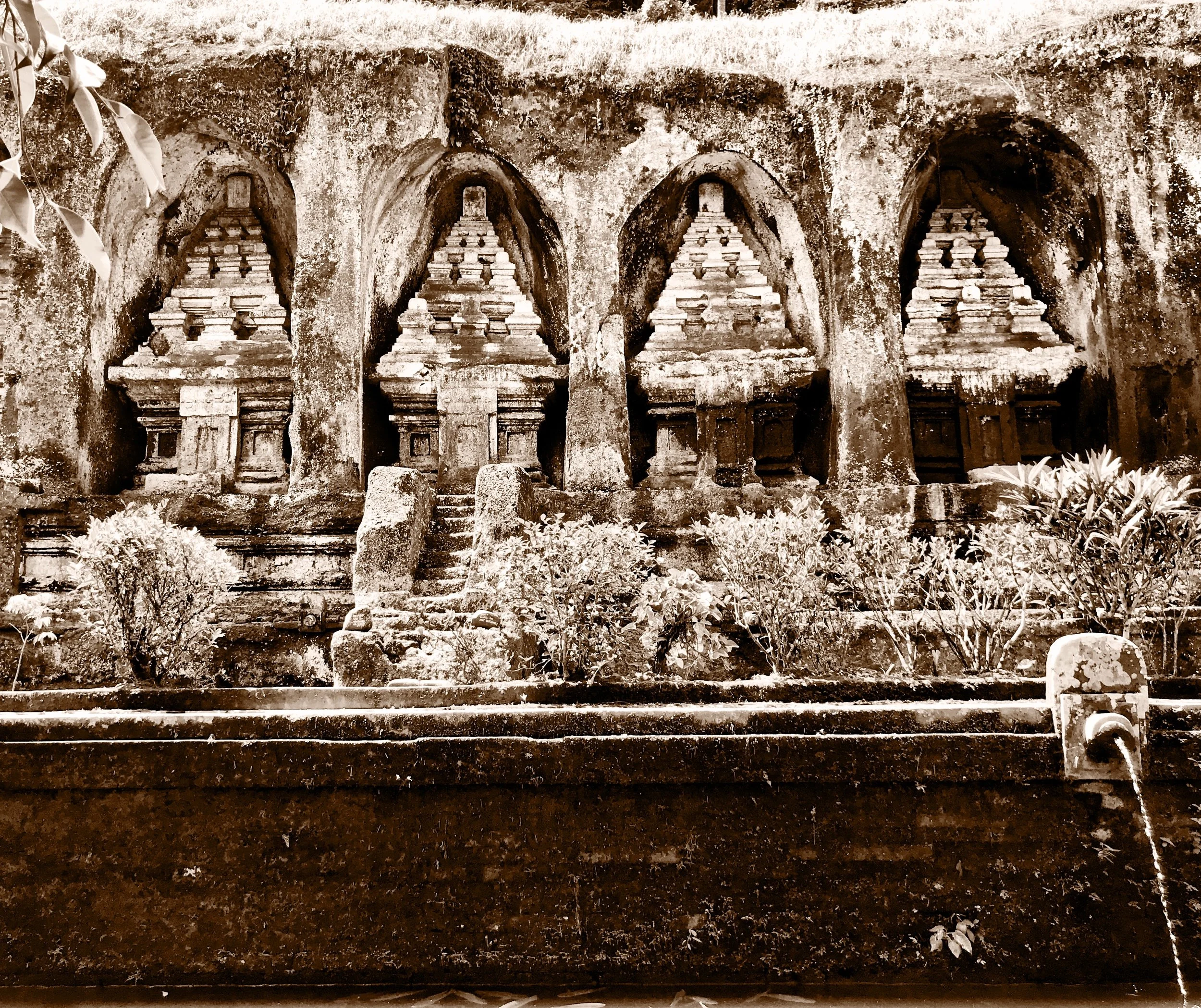
The 10 memorials were created for royal family members — and their concubines

The 10 memorials were created for royal family members — and their concubines

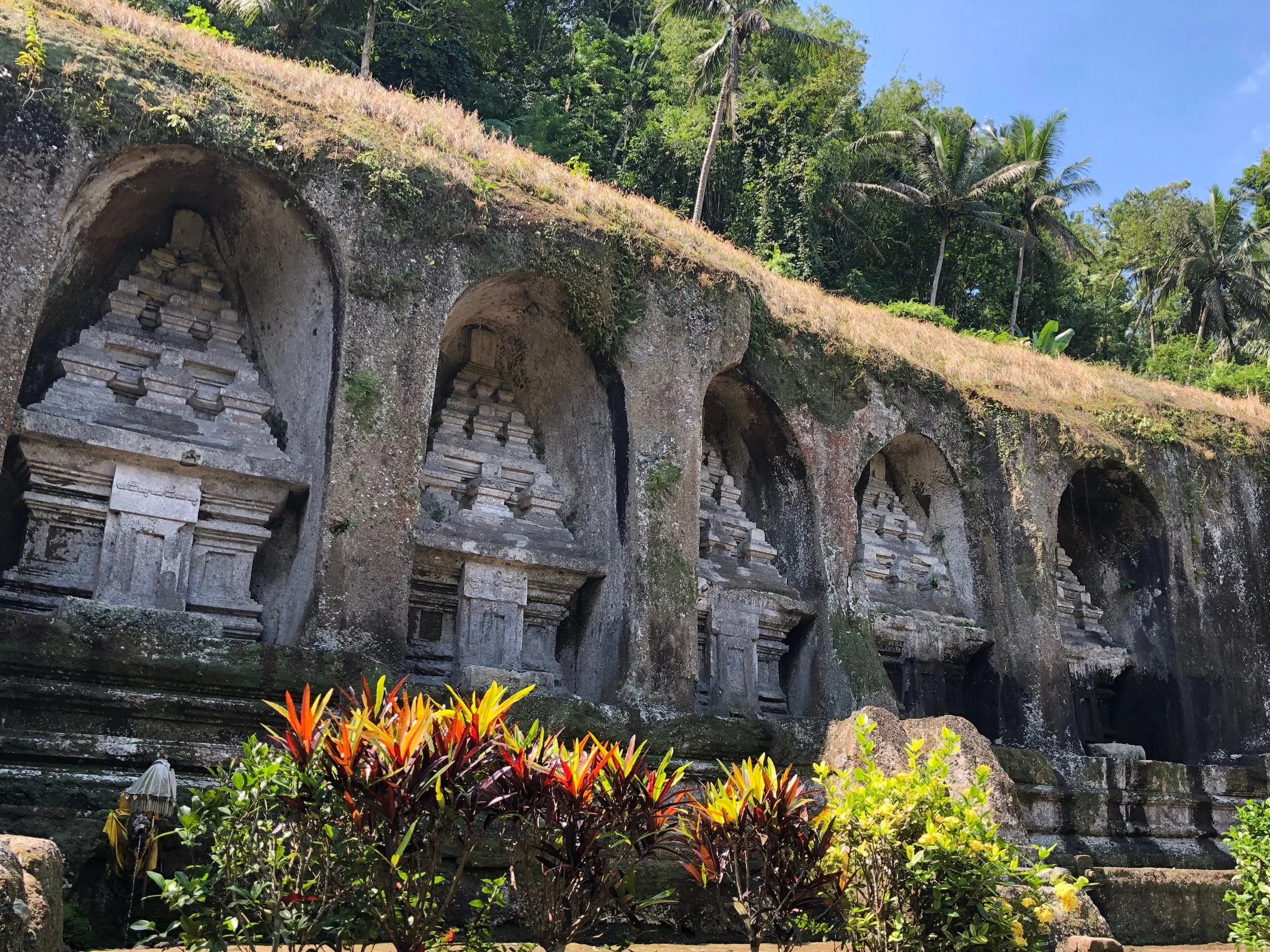
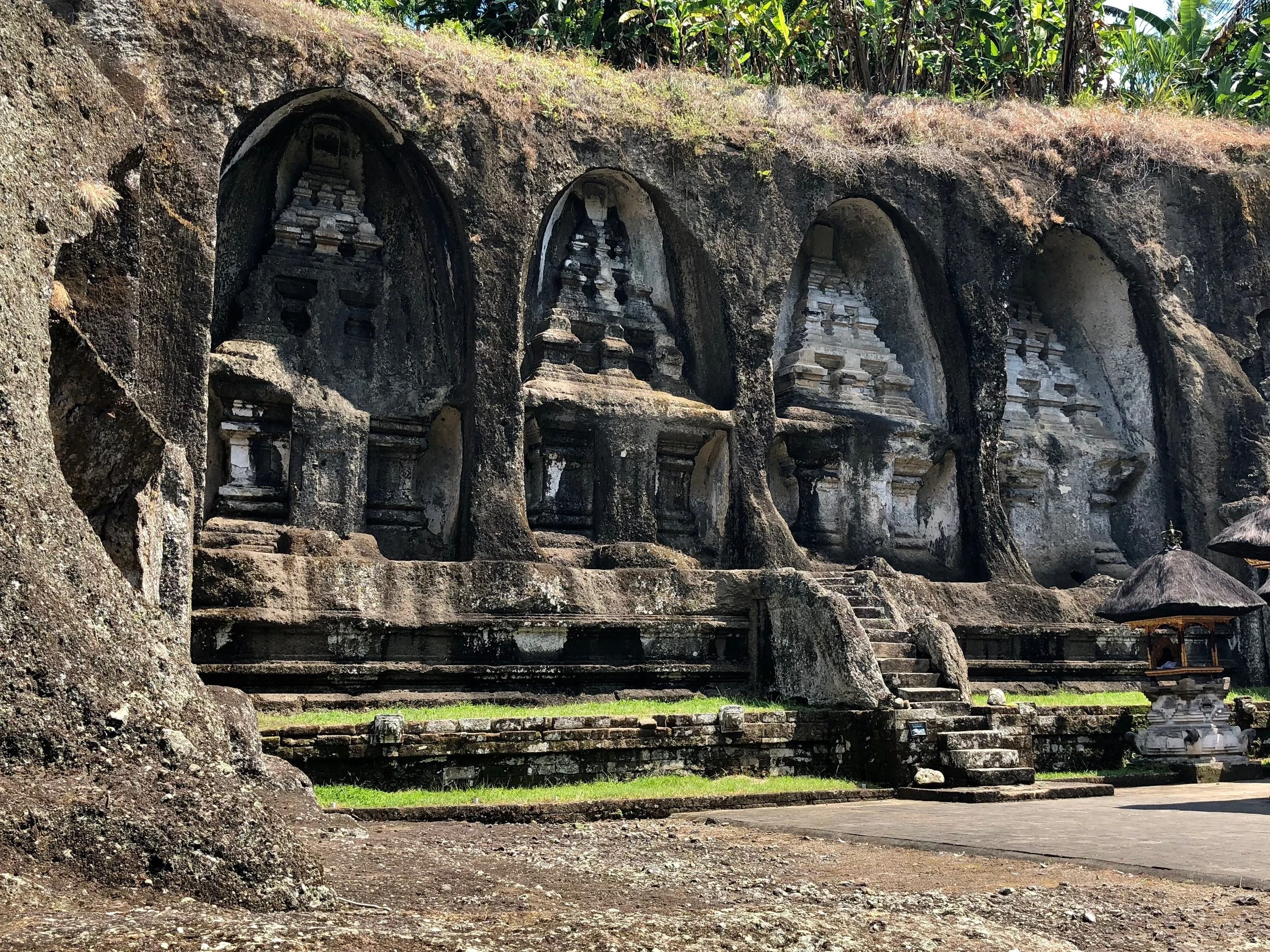
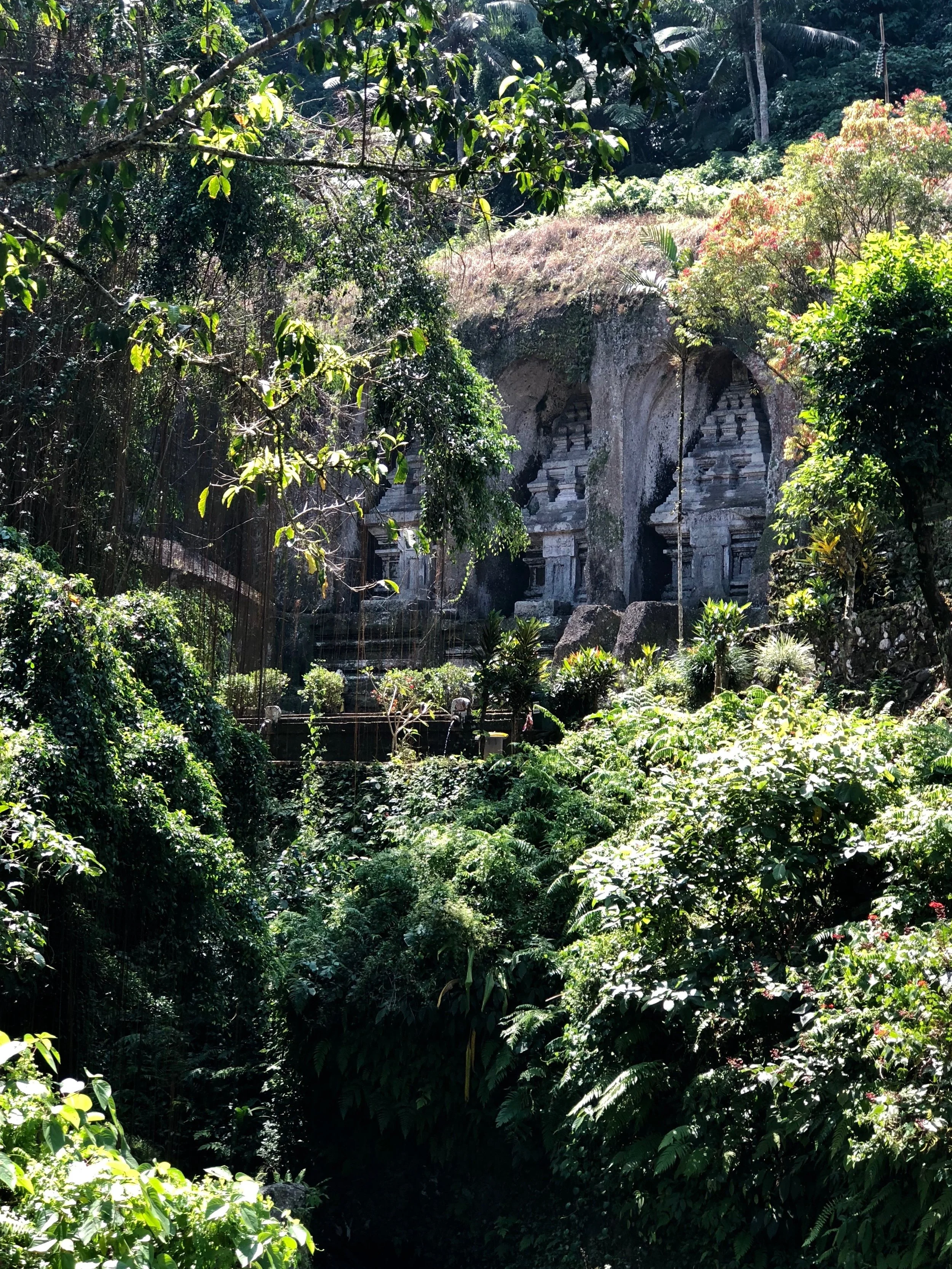
The complex consists of 10 slender 23-foot-high memorials shaped like candi, ancient burial towers, which have been carved directly into the igneous rock face. Each temple façade is framed within an arched niche: Four stand on the west side and five on the east, separated by the sacred Pakerisan River.

An interesting Balinese folktale attributes the entire group to a mighty, mythical giant warrior named Kebo Iwa, who, according to legend, carved out the entire group in one night with his fingernails. He’s also credited with the creative of the monster mouth cave of Goa Gajah. In reality, these magnificent structures were sculpted from the top down by hand, most likely using only pickaxes, hammers and chisels.

The shrines were carved right into the cliffs

The shrines were carved right into the cliffs

Candi Land

Although the monuments remain a mystery, it has been speculated that they were built to honor King Anak Wungsu, who ruled in Tampaksiring from 1049 to 1077. An inscription found above the central shrine on the east side mentions that the king, whose name isn’t given, made a temple here. The additional shrines were for his favorite wives, who would have ceremonially committed suicide after his death.

Another theory amongst historians is that the candi were commissioned by Anak Wungsu to honor his father, King Udayana, his mother, Queen Mahendradatta, and his brothers Airlangga and Marakata (along with himself), with the remaining four dedicated to his concubines.

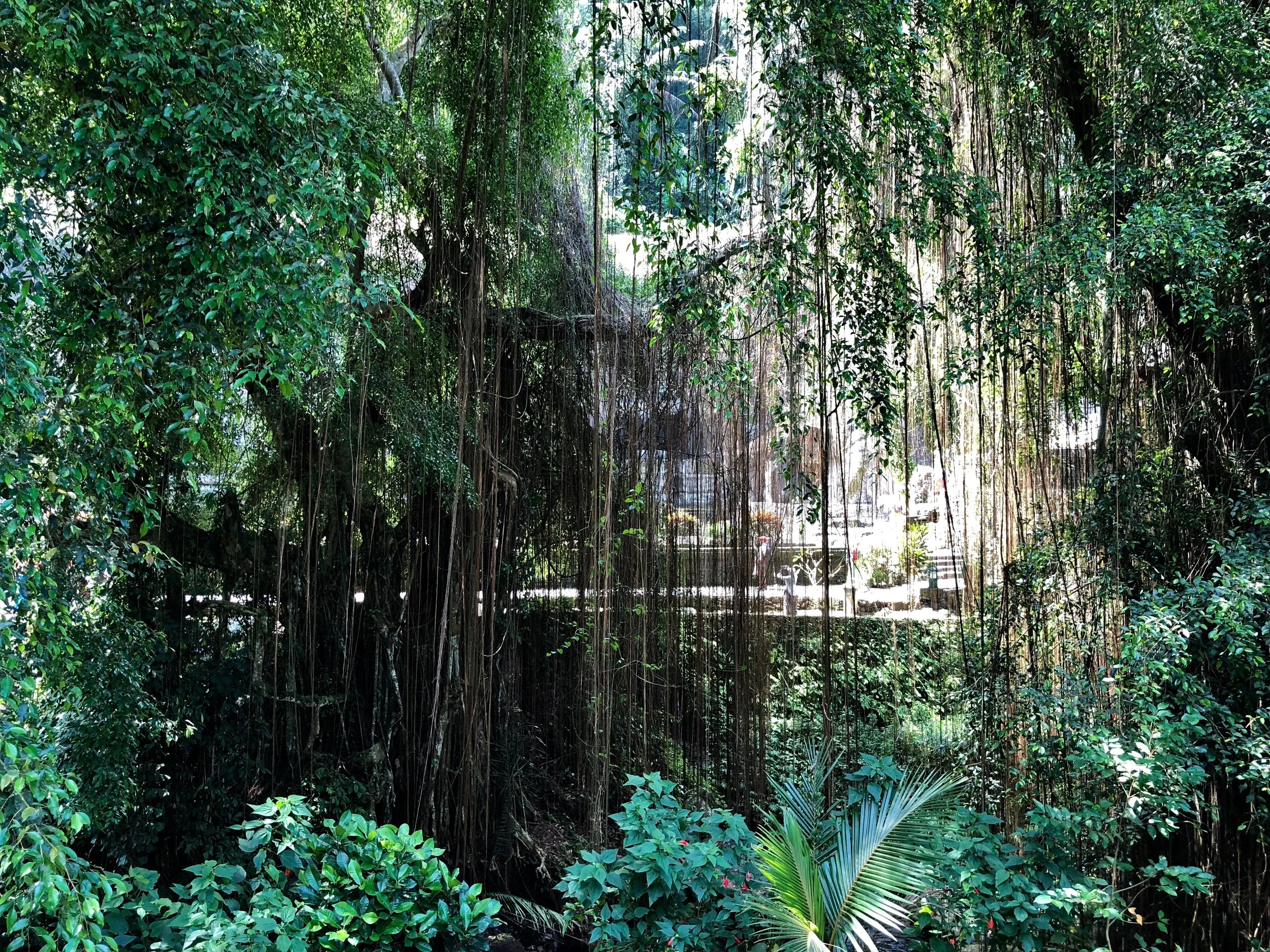
The other side of the river can be seen through curtains of banyan roots

The other side of the river can be seen through curtains of banyan roots

When so little is known for certain, anything is possible. In any event, the candi at Gunung Kawi resemble the free-standing shrines of East Java and were built as an abode for the souls of deceased royalty. Their residences have steps leading to false doors. To the right of the monuments are five cells carved into the rock, where the caretakers formerly stayed.

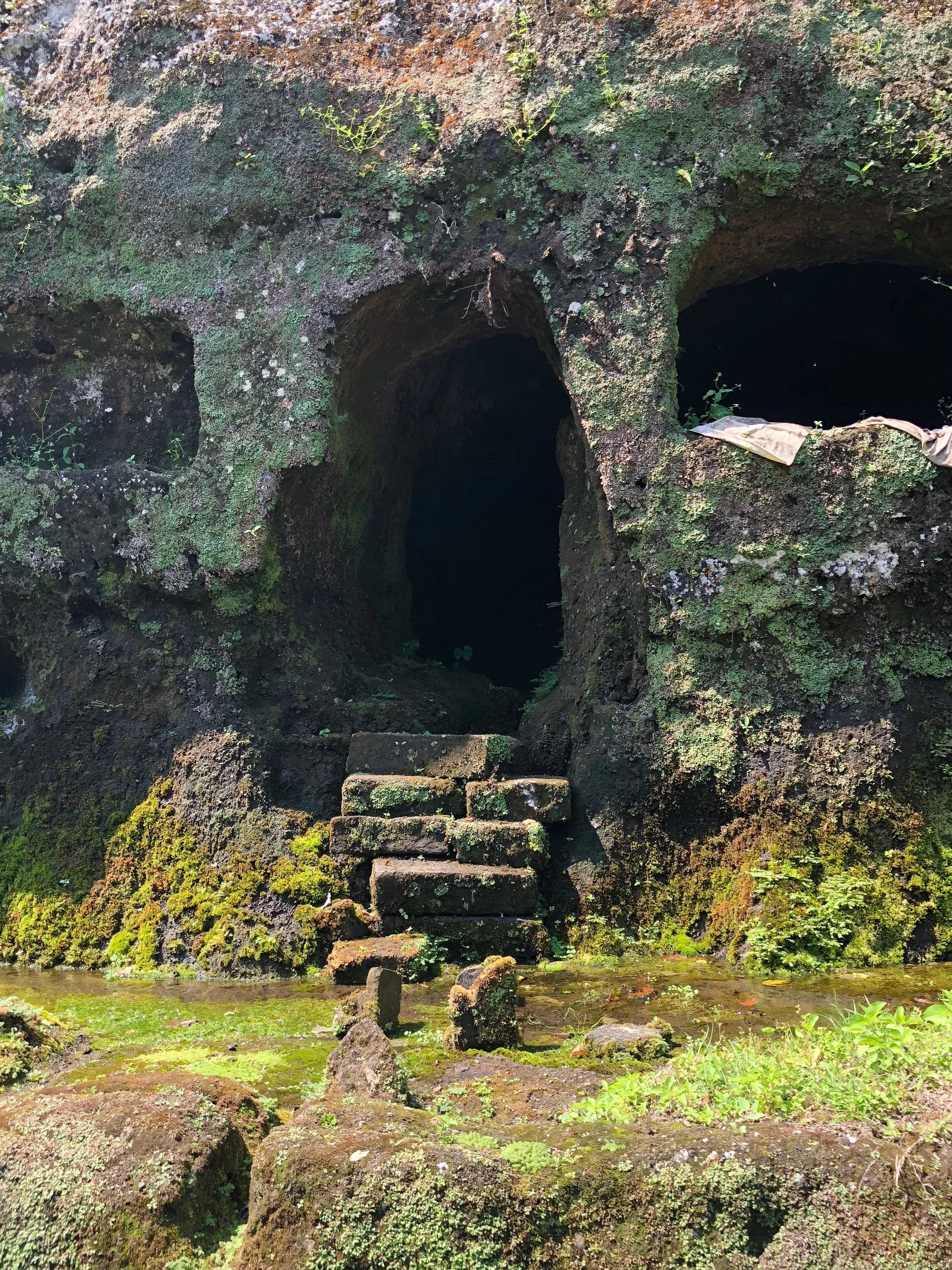
The caretakers didn’t get the best digs — they lived in these caves

The caretakers didn’t get the best digs — they lived in these caves

Eye Candi

Wally and I followed the stone bridge across the Pakerisan River, which gurgles and flows through the center of the complex. The five main funerary monuments remained partly obscured by a copse of trees and gradually came into full view.

A river separates the two sides of Gunung Kawi

A river separates the two sides of Gunung Kawi

The Pakerisan River is considered sacred on Bali

The Pakerisan River is considered sacred on Bali

The location felt like the setting for an Indiana Jones adventure. Whatever its origin, I found myself gazing up at the five rock-hewn memorial shrines before us, taken in by the mystical atmosphere of ancient legends and long-lost tales of forgotten Balinese kings.

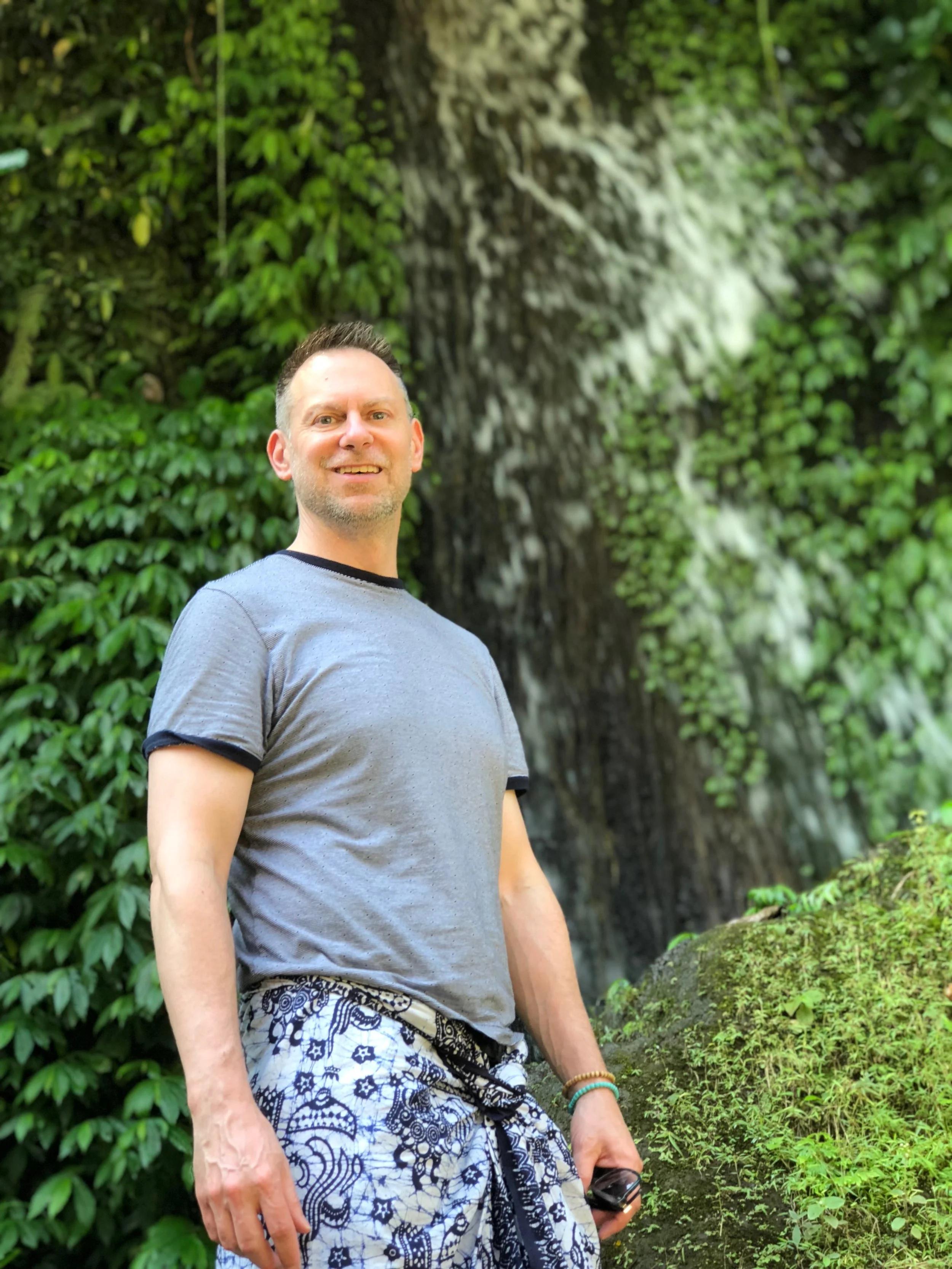
Behind Duke is the waterfall that’s across the river at one end of the complex

Behind Duke is the waterfall that’s across the river at one end of the complex

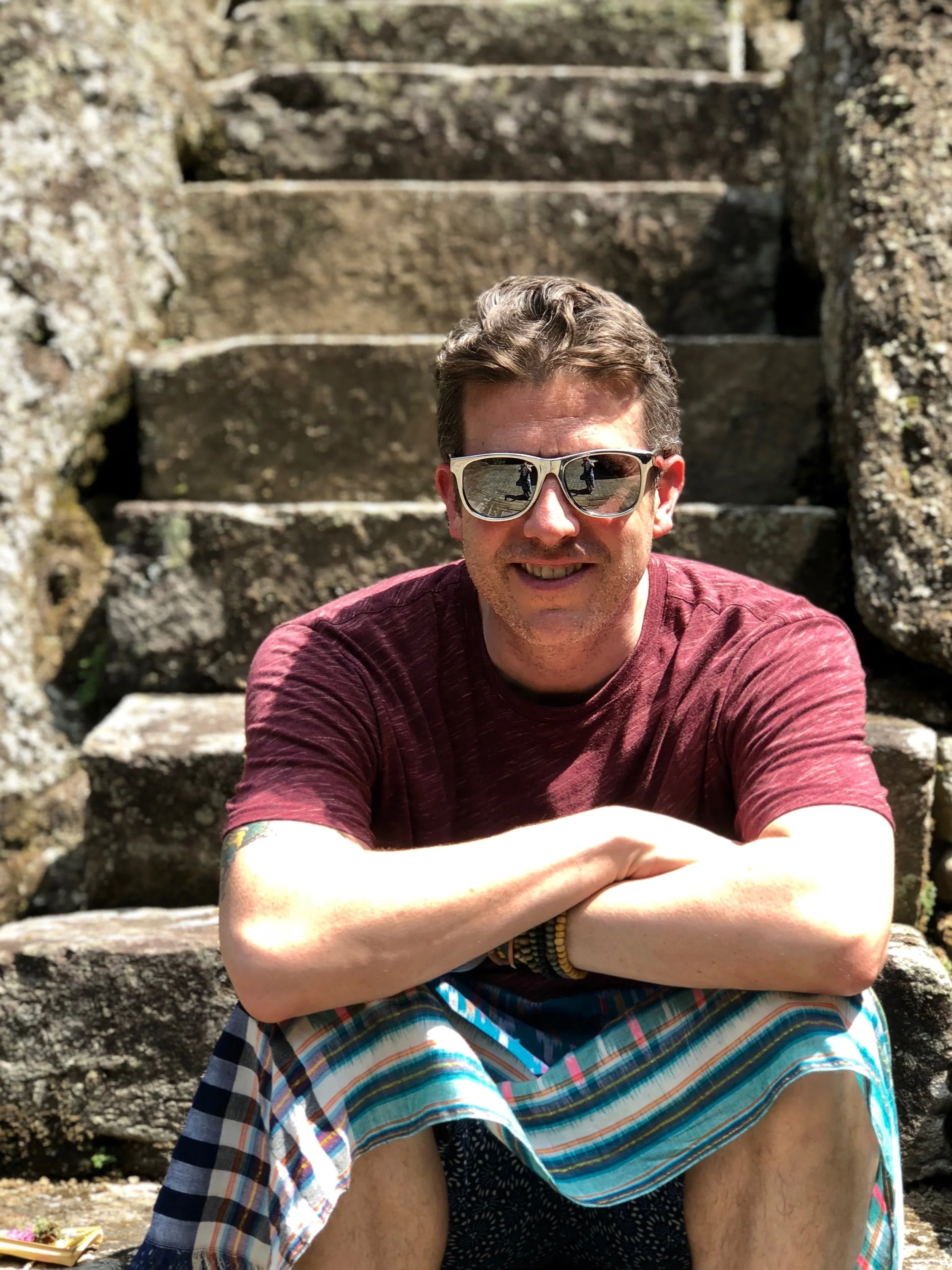
Wally takes a break on all those damn stairs!

Wally takes a break on all those damn stairs!

What was not so magnificent was the brutal climb back up to the parking lot. Suffice to say, that it would not be accessible to anyone who is mobility impaired.

Because this is a sacred site, be sure to bring a sarong. If you don’t have one, they’re available for rent at the ticket kiosk. –Duke

gunungkawisepia.JPG

Candi Gunung Kawi
Banjar Penaka
Tampaksiring
Gianyar, Bali 80552
Indonesia

Goa Gajah: An Easy Ubud Day Trip

The so-called Elephant Cave has an iconic and demonic gaping cave mouth.

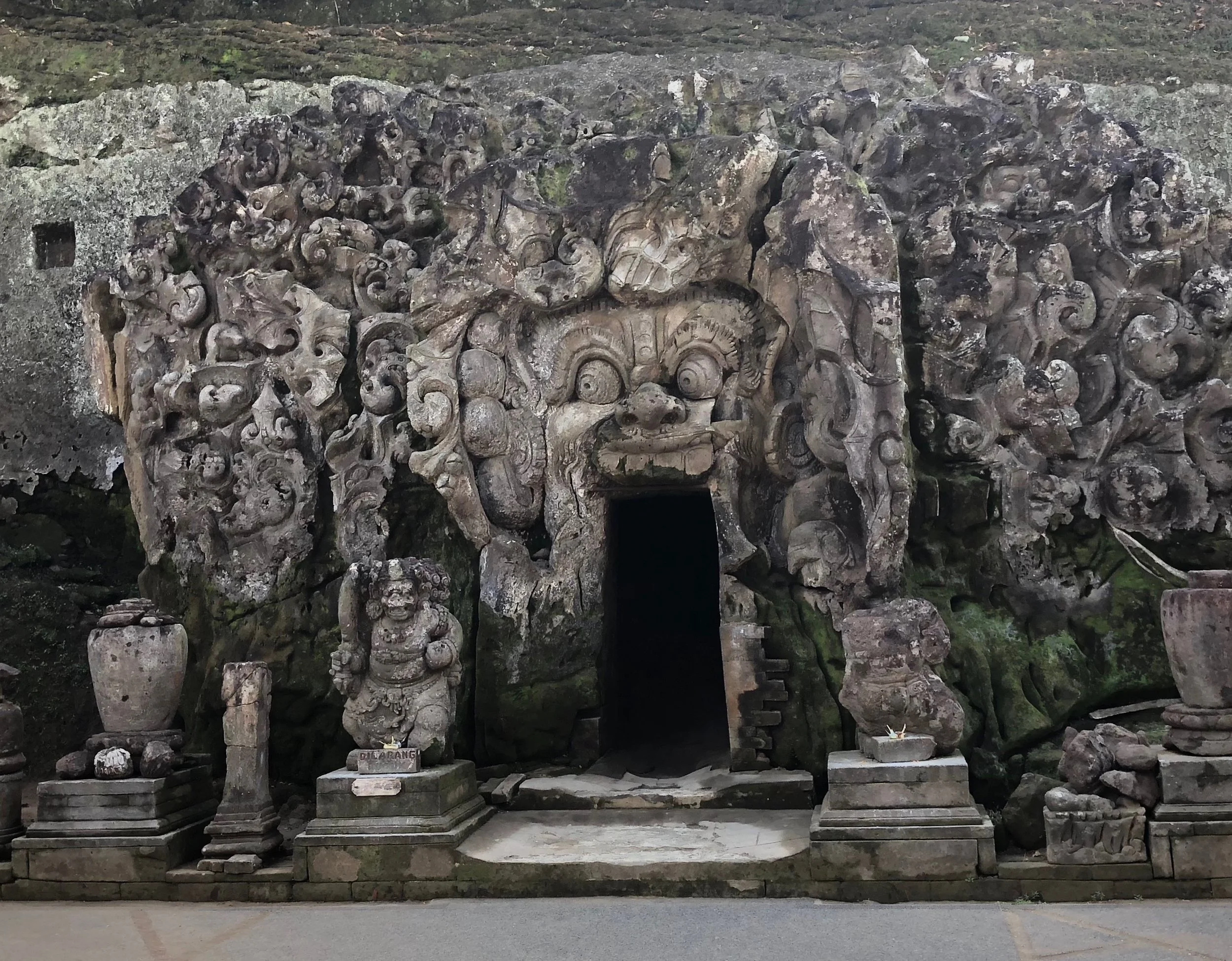
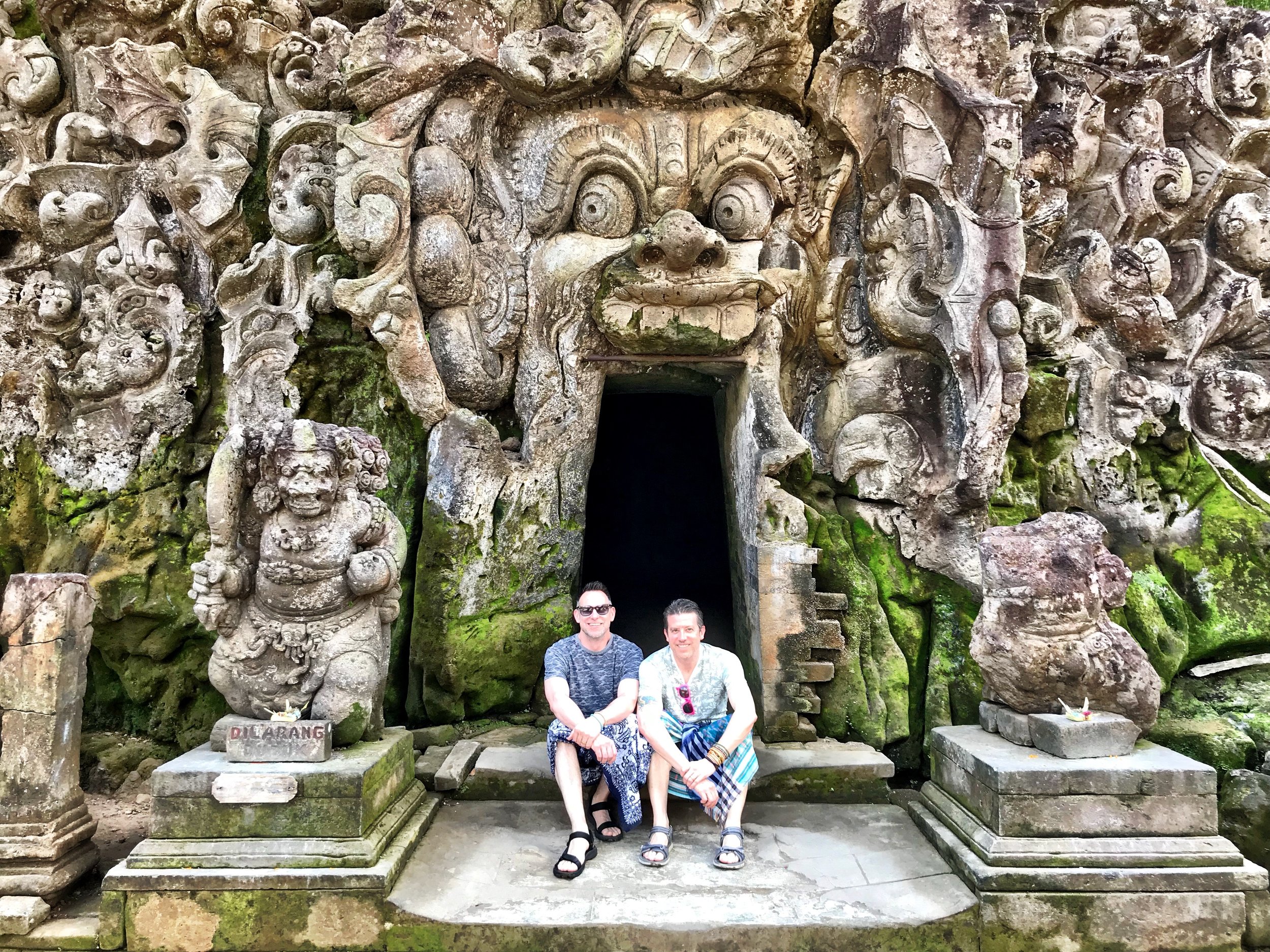
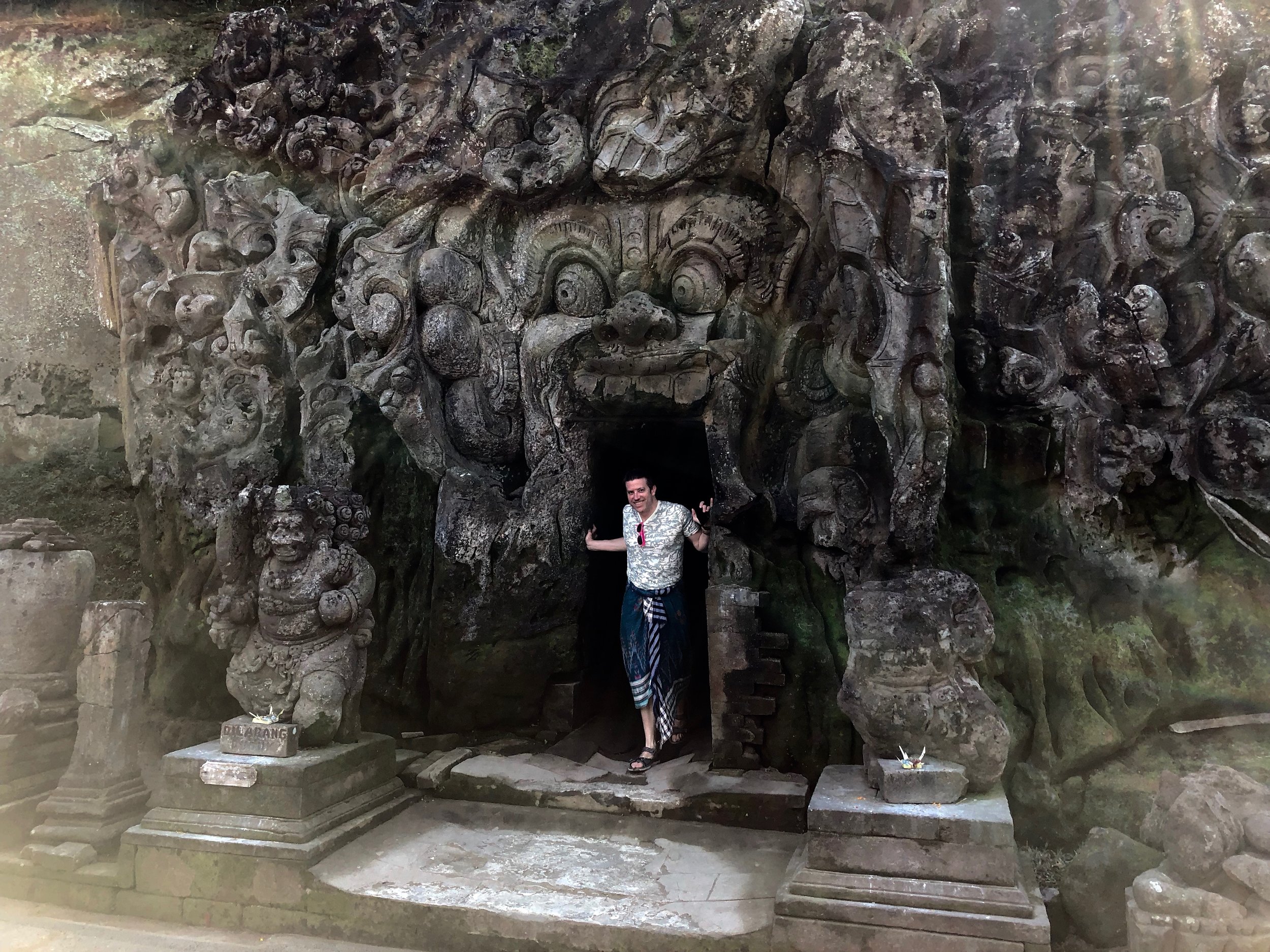
When staying in Ubud, make a quick stop to see the monster mouth at Goa Gajah

When staying in Ubud, make a quick stop to see the monster mouth at Goa Gajah

Balinese words can be so fun to pronounce. You’ve got the water palaces of Klungkung and Tirta Gangga. And just outside of Ubud is a small temple complex called Goa Gajah that dates from the 9th to 11th centuries.

Turns out Goa Gajah has been mistranslated to Elephant Cave, but you won’t find even the remotest hint of a pachyderm anywhere on the small temple complex — aside from a stone statue of the elephant-headed Hindu god Ganesh inside the cave. And, perhaps, the tusk-like fangs that adorn the demonic mouth that forms the cave entrance.

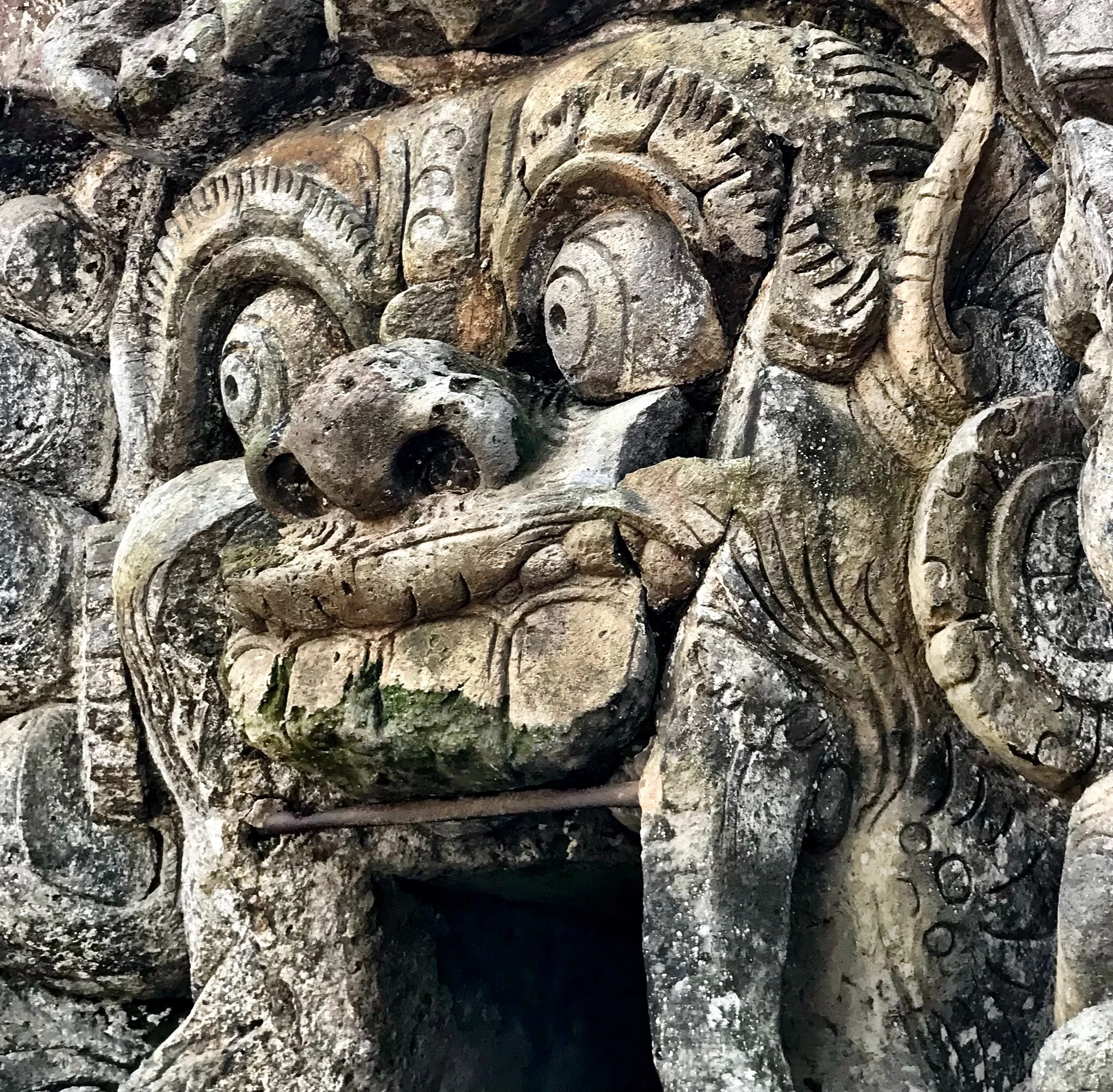
Those bulging eyes and elongated mouth are a familiar sight in Indonesian temple architecture.
Flights of stairs lead down to the Goa Gajah complex

Flights of stairs lead down to the Goa Gajah complex

The first thing you’ll come across are these ruins

The first thing you’ll come across are these ruins

Goa Gajah’s a good stopover to pair with other sites. Excavated in 1954, there are a few buildings in the complex, but it’s really all about the giant mouth cave. Wait for the tourists to clear out, snap the money shot — and you’ll be good to go.

Those bulging eyes and elongated mouth stretching into an entrance are a familiar sight in Indonesian temple architecture. As scary as they look, they’re depictions of Bhoma, a nature god who symbolically cleanses visitors as they enter the most sacred part of holy sites.

What mysteries await Duke and Wally inside the Elephant Cave?

What mysteries await Duke and Wally inside the Elephant Cave?

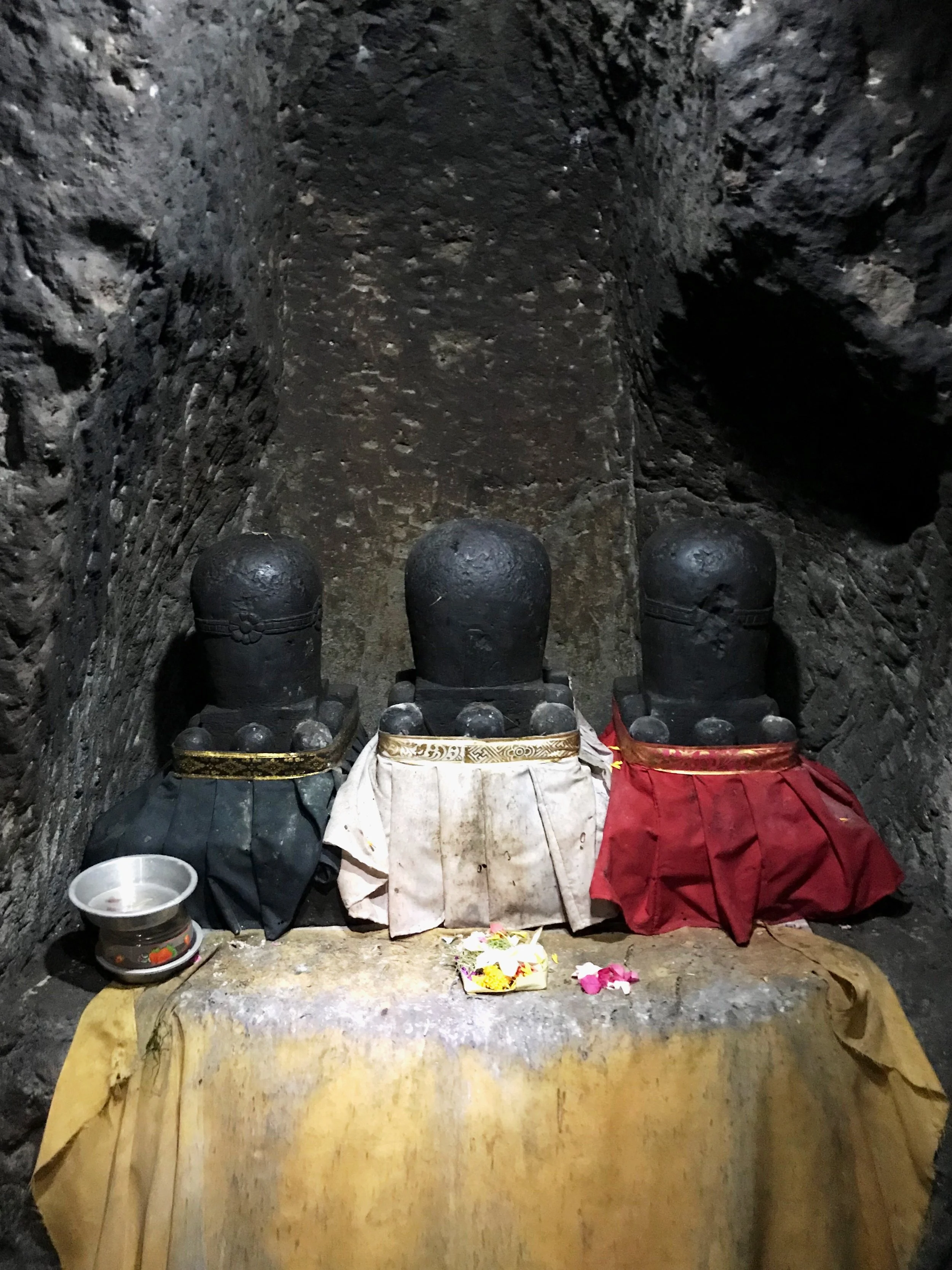
Inside the cave, a narrow T-shaped passageway forks to the left and right, the walls blackened from incense smoke. You can make out small niches in the darkness, some with worn-away statues, including a trio of phallic linga wearing black, white and red skirts. The adorable palm-woven square offering baskets I love so much are placed at the base of the statues.

Inside the cave are three phallic linga in honor of the Hindu deity Shiva the Destroyer

Inside the cave are three phallic linga in honor of the Hindu deity Shiva the Destroyer

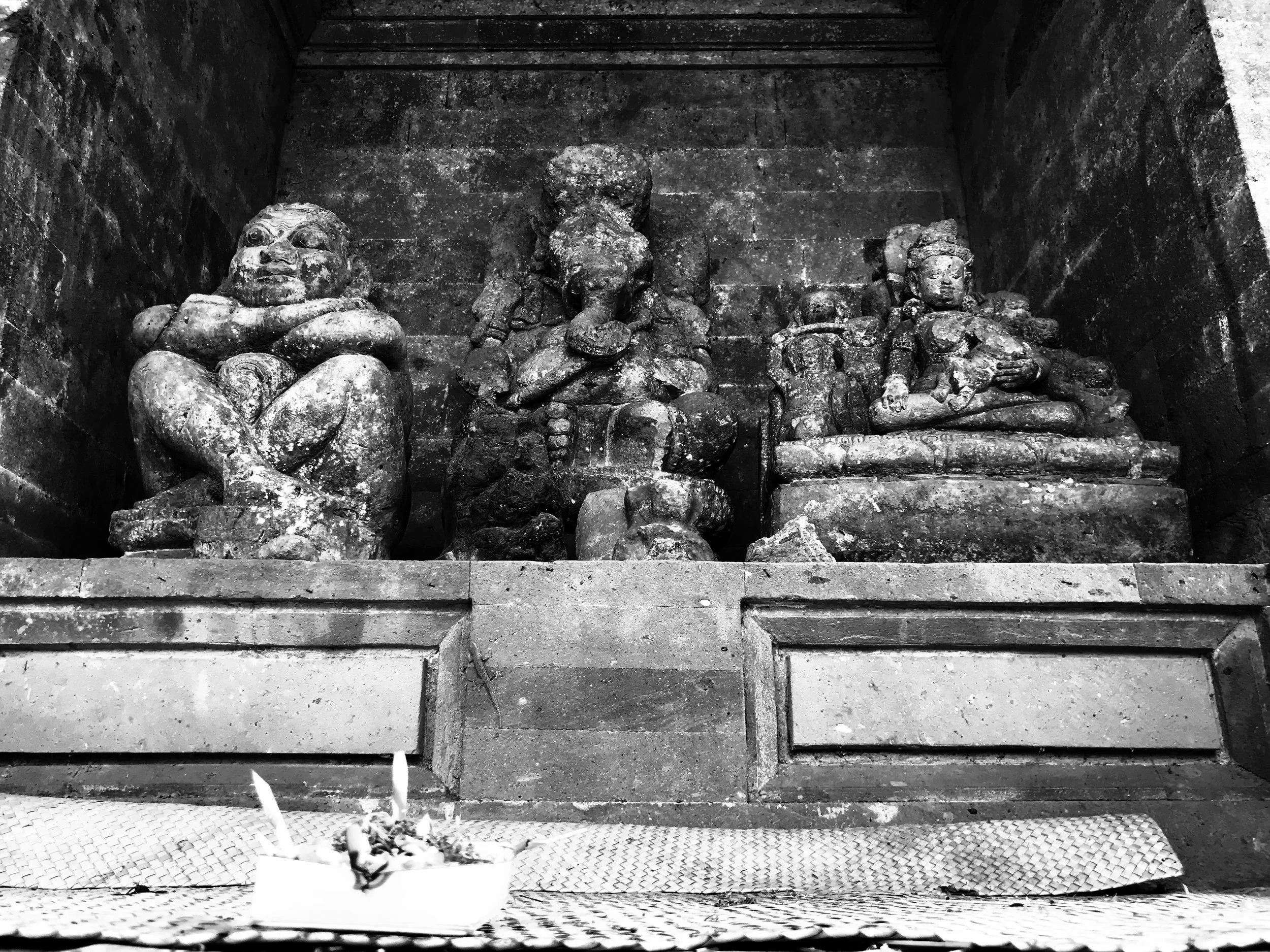
The only elephant you’ll see at the Elephant Cave is this statue of Ganesha

The only elephant you’ll see at the Elephant Cave is this statue of Ganesha

Statues fill a niche. Compared to other holy sites on Bali, Goa Gajah is quite small

Statues fill a niche. Compared to other holy sites on Bali, Goa Gajah is quite small

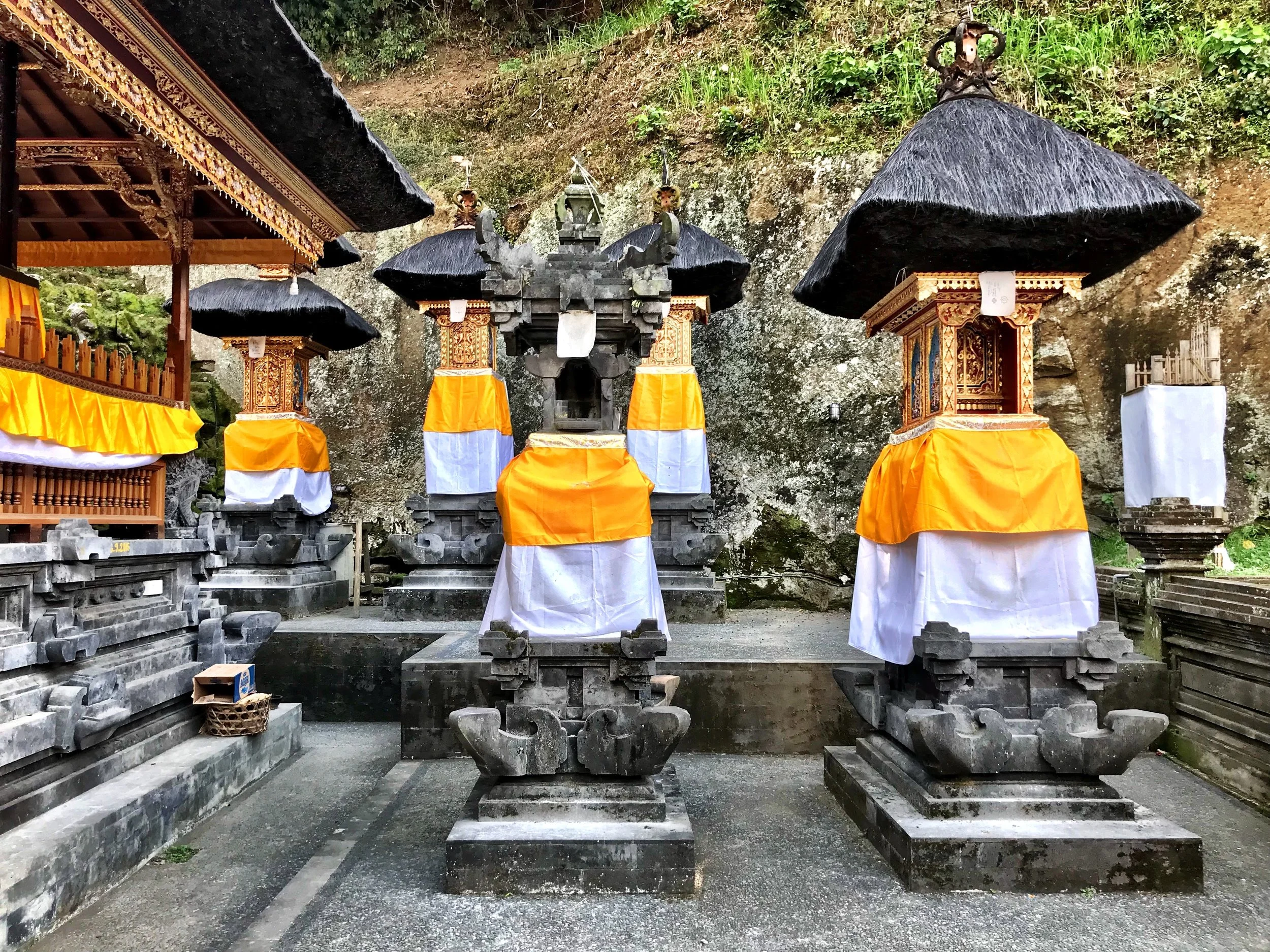
At the back of the complex are colorfully decorated shrines

At the back of the complex are colorfully decorated shrines

It’s thought that Buddhist monks would meditate in the quiet confines of the cave.

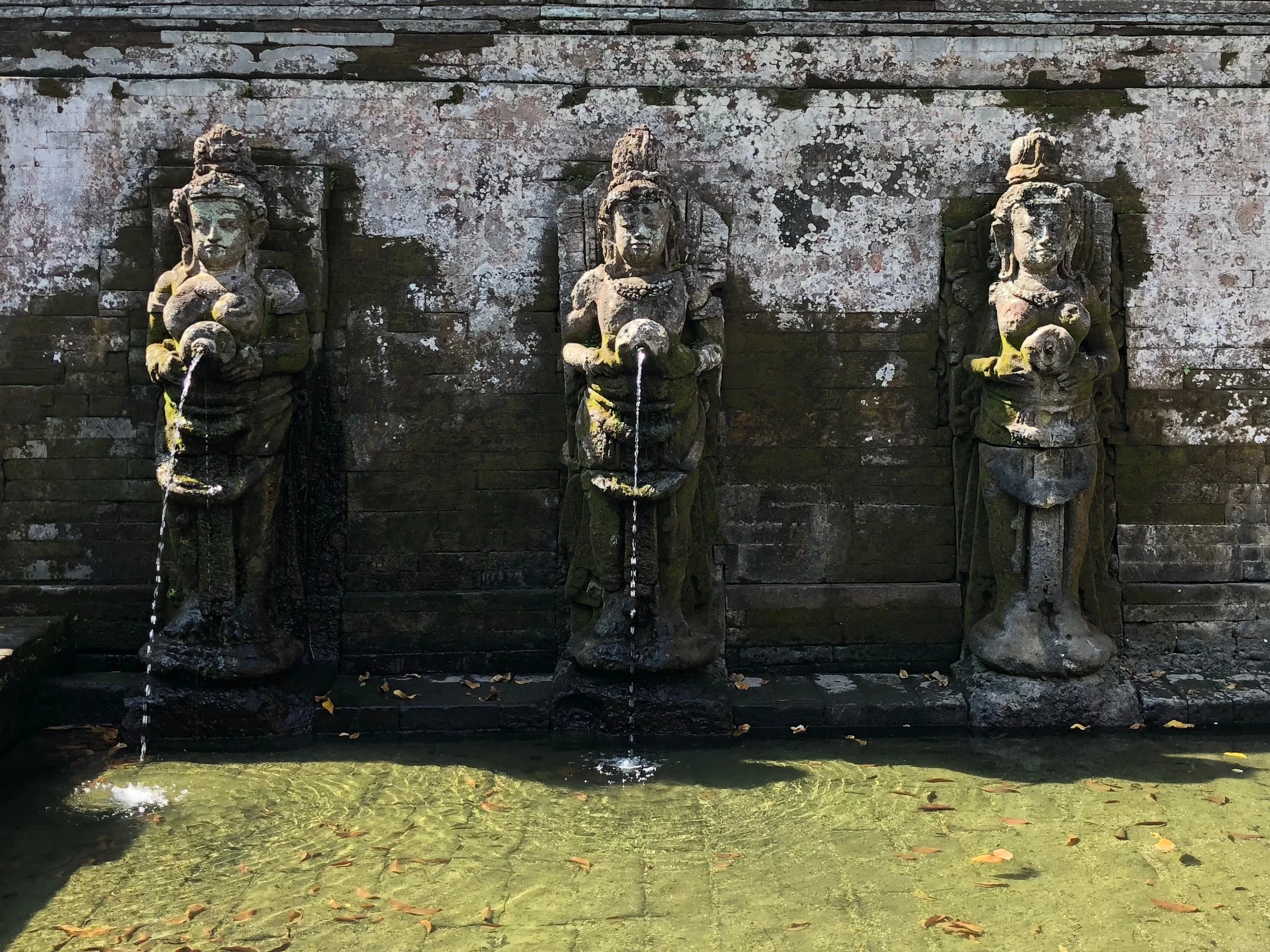
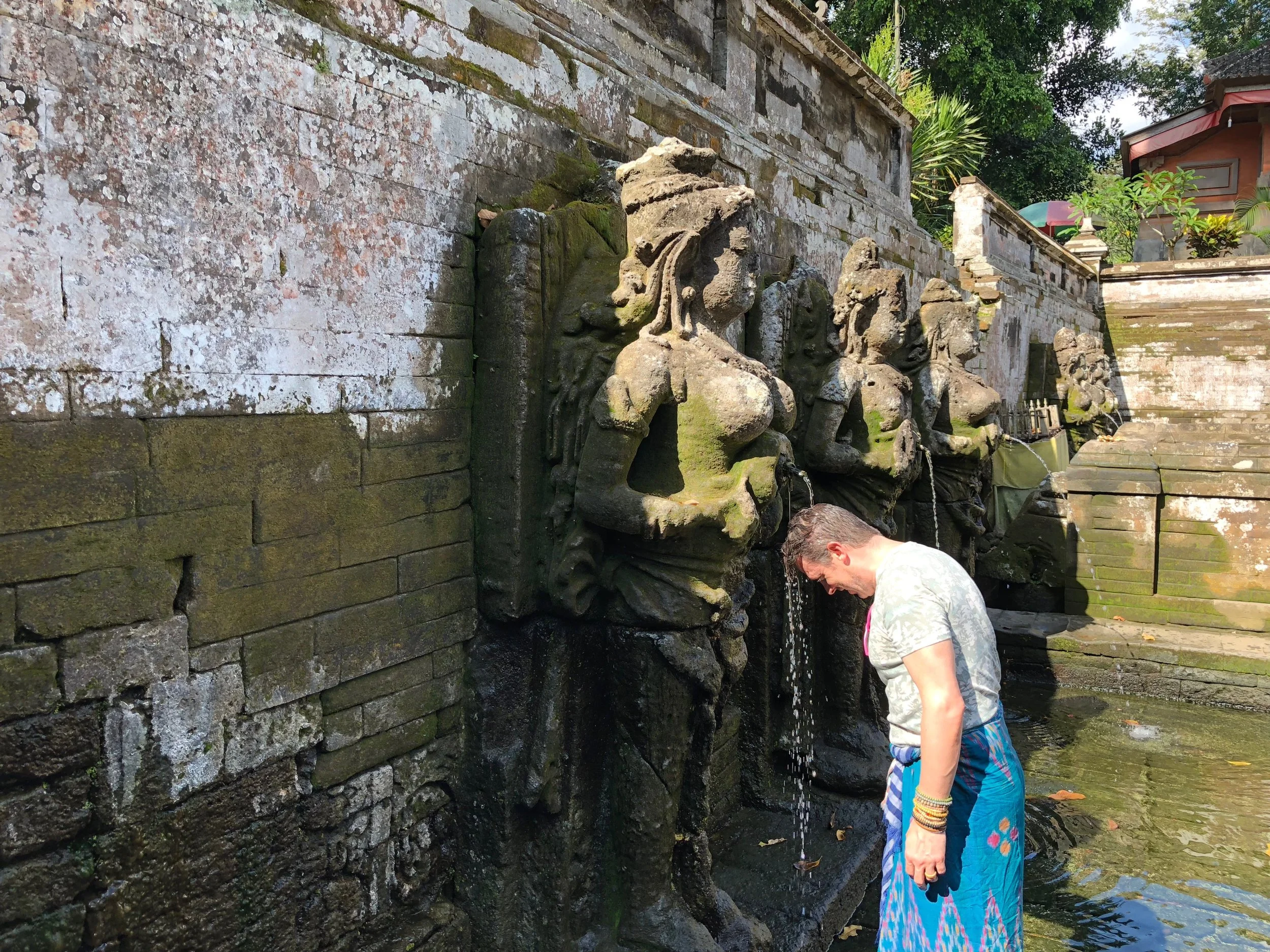
The other notable site at Goa Gajah is the bathing pool, where water pours from the urns held by statues of busty Hindu divine spirits. The holy site was chosen because it’s the spot where two rivers converge.

Female Hindu spirits form the fountains

Female Hindu spirits form the fountains

Wally bathes in the holy water

Wally bathes in the holy water

Get to Goa Gajah as early as possible to avoid the inevitable tourist buses that show up later in the day. It’s a fun place to visit, and you can be in and out in about half an hour. –Wally

goagajahwally.JPG

Goa Gajah
Ubud, Bedulu
Blahbatuh
Kabupaten Gianyar
Bali, Indonesia
Gaya Ceramic: Italy Meets Bali

If you’re interested in handmade pottery, stop in this charming Ubud boutique.

An Italian couple took their native country’s dedication to quality and paired it with Balinese craftsmanship

An Italian couple took their native country’s dedication to quality and paired it with Balinese craftsmanship

It's true, Wally and I have a shared fascination with folklore, history and handicrafts which ultimately drives most of our travel destinations, and is why we decided to stay in Ubud, the cultural heart of Bali. The island has a special energy all its own, but if you want to enjoy it and have only a few days, you may find that seeing everything you would like to on your itinerary is logistically impossible. However, one of the places I refused to cut was the Gaya Ceramic showroom.

Gaya Ceramic has formed a perfect marriage of Italian design and Balinese craftsmanship.
Stop by Gaya Ceramic to pick up some gifts for family and friends — and treat yourself while you’re at it

Stop by Gaya Ceramic to pick up some gifts for family and friends — and treat yourself while you’re at it

The boutique is located on Jalan Raya, the main thoroughfare that passes through the center of Ubud, in the village of Sayan. If you’re hiring a taxi or driver, make sure to let them know that it’s not the smaller branch of the road, as our driver took us to the Ceramic Arts Center by mistake. While this educational division with classes, workshops and a residency program for artists from around the globe is certainly interesting, I wanted to see the goods for sale at the shop.

The duo behind the craft are husband and wife Marcello Massoni and Michela Foppiani. Both passionate creatives who caught the attention of Gaya Fusion's director, Stefano Grande. After meeting with Stefano, they made the decision to move from Italy to Bali and established Gaya Ceramic. It should come as no surprise then, that their aesthetic is the perfect union of Italian design and Balinese craftsmanship.

One of the first things we noticed when we arrived at the showroom were exotic, climbing vines with pale lavender blooms. The dense growth framed and partially concealed the façade, lending the exterior an air of curiosity, as if letting you know you’re about to enter somewhere enchanting.

Marcello Massoni, the CEO of Gaya Ceramic, still throws the original prototype for each new piece

Marcello Massoni, the CEO of Gaya Ceramic, still throws the original prototype for each new piece

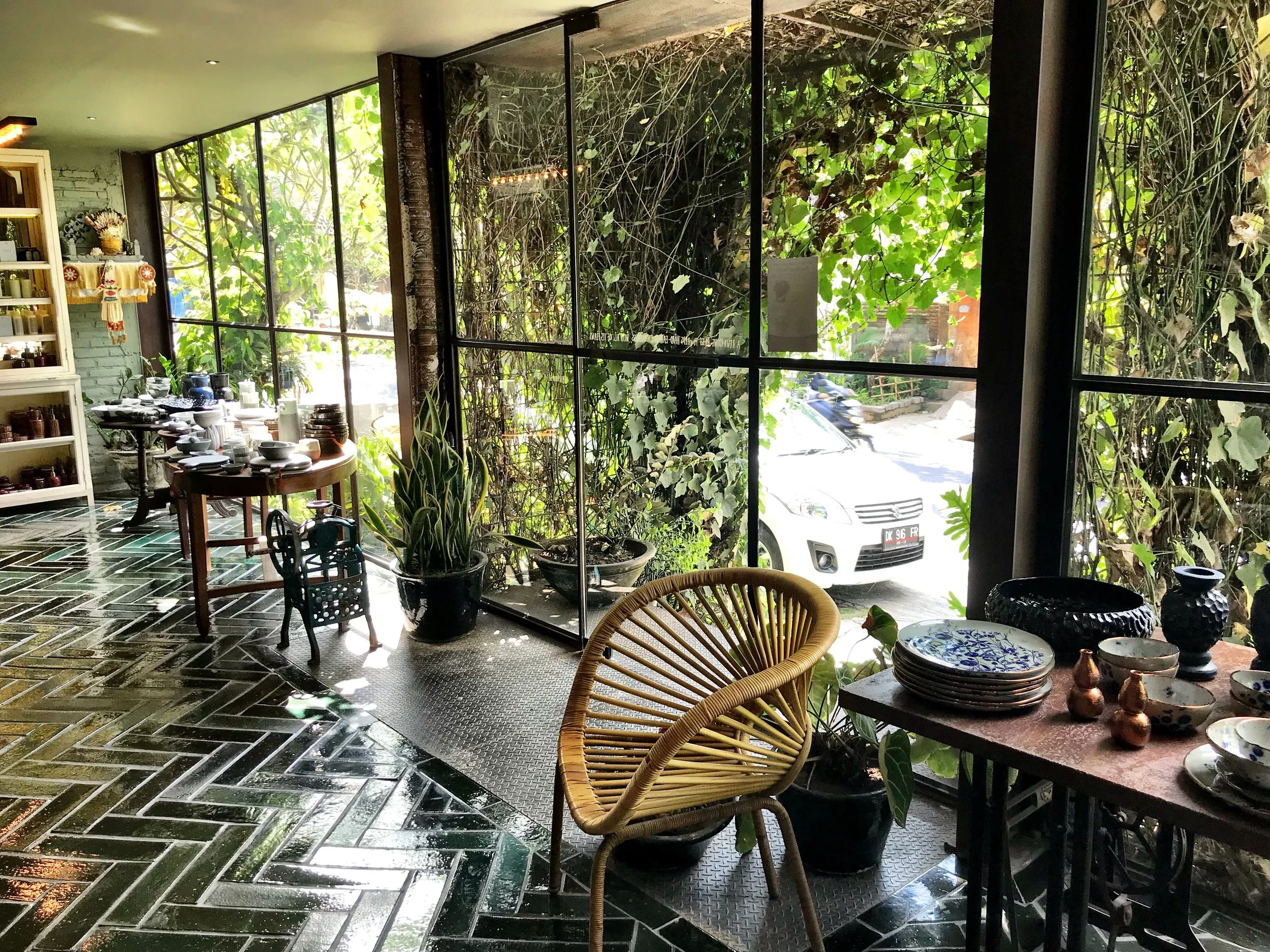
The Gaya Ceramic shop is like walking through an art exhibit

The Gaya Ceramic shop is like walking through an art exhibit

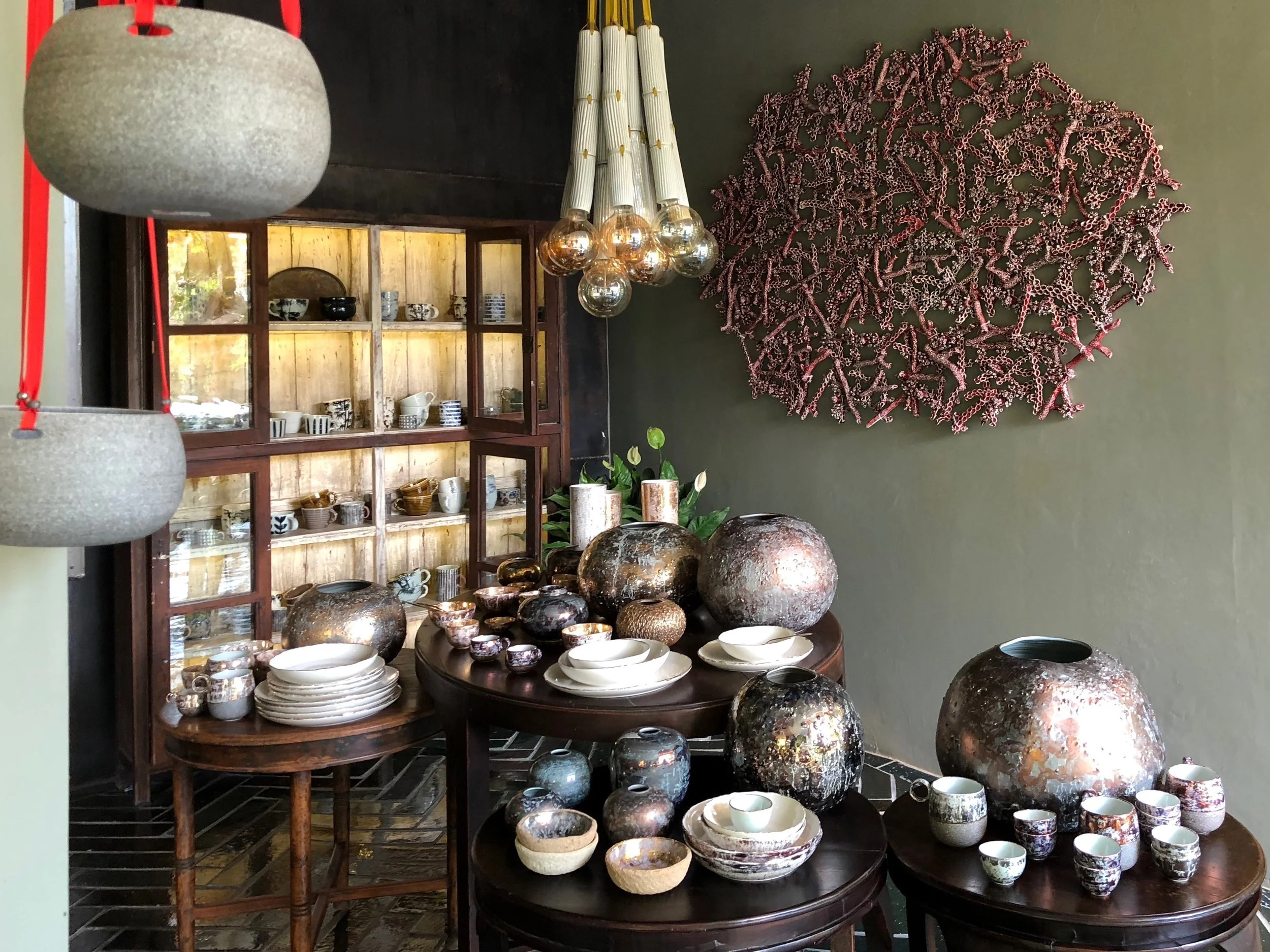
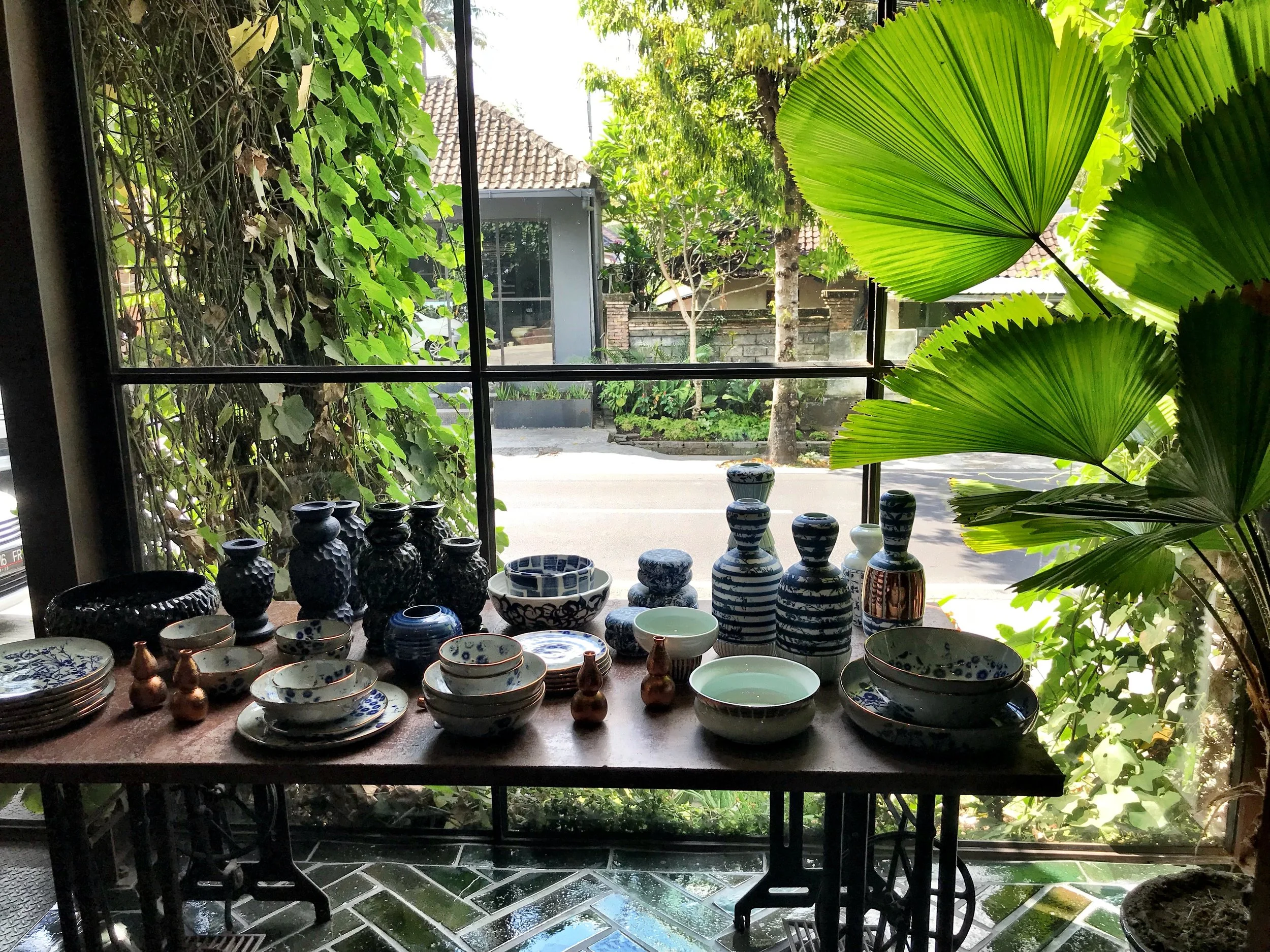
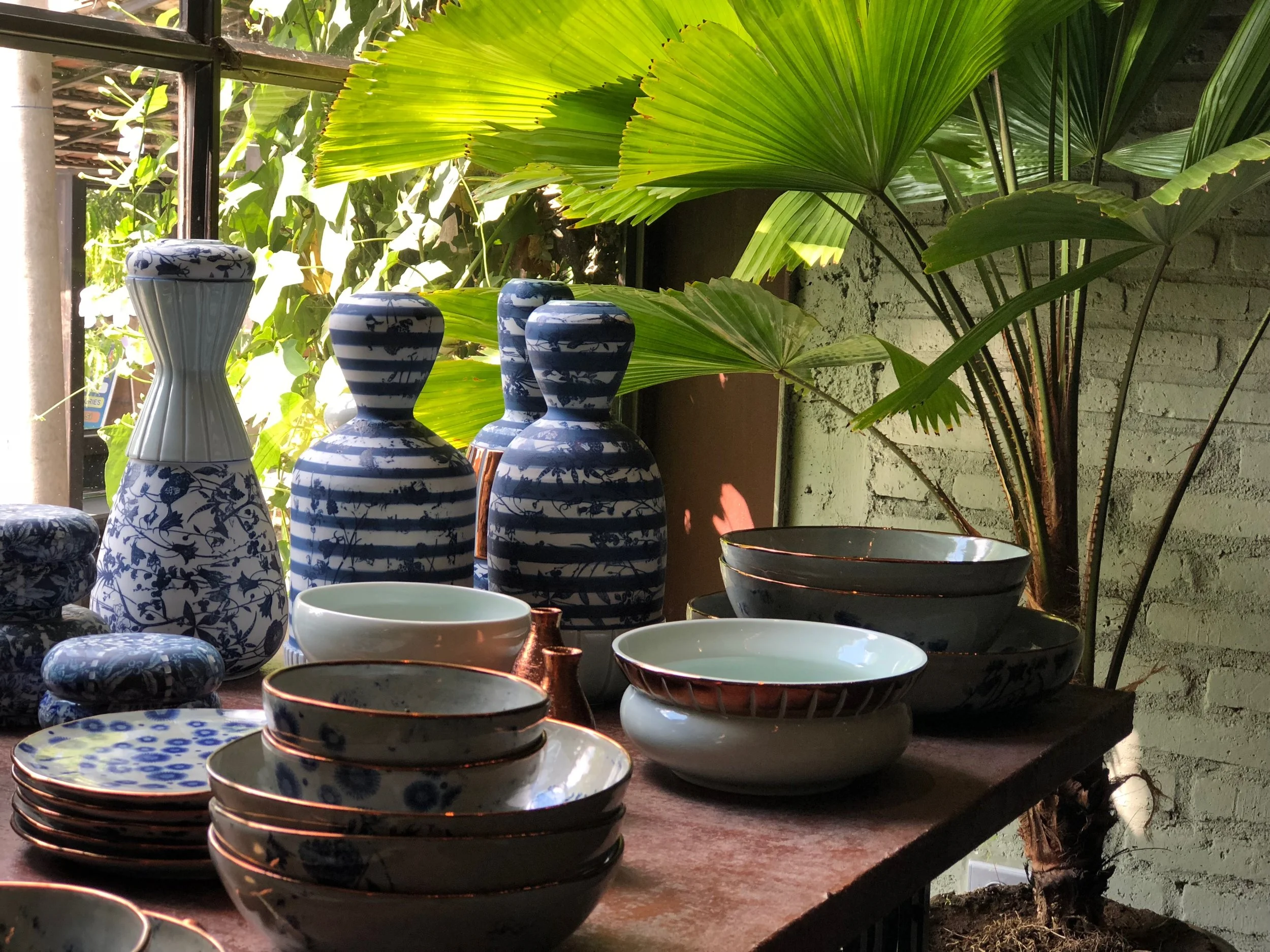
Inside, a rich, jewel-tone malachite green tile covers the floors. The boutique contains an array of luxurious, refined hand-crafted objects. Gaya’s designs include sculptural porcelain and lava sand mortar and pestles, to more elaborate ceramic coral wall art, bowls, plates and one of my personal favorites, “tattoo” vases embellished with a deconstructed pattern of twining cobalt blue chinoiserie flowers, all handmade in Bali.

What’s most impressive, though, is the relationship Marcello and Michela have fostered within the village of Sayan, where the company is based. Villagers who have mastered the intensive hands-on apprenticeship program have gone on to become fully vested employees, ensuring that these skills live on for generations to come.

Gaya makes up to 9,000 pieces a month!

Gaya makes up to 9,000 pieces a month!

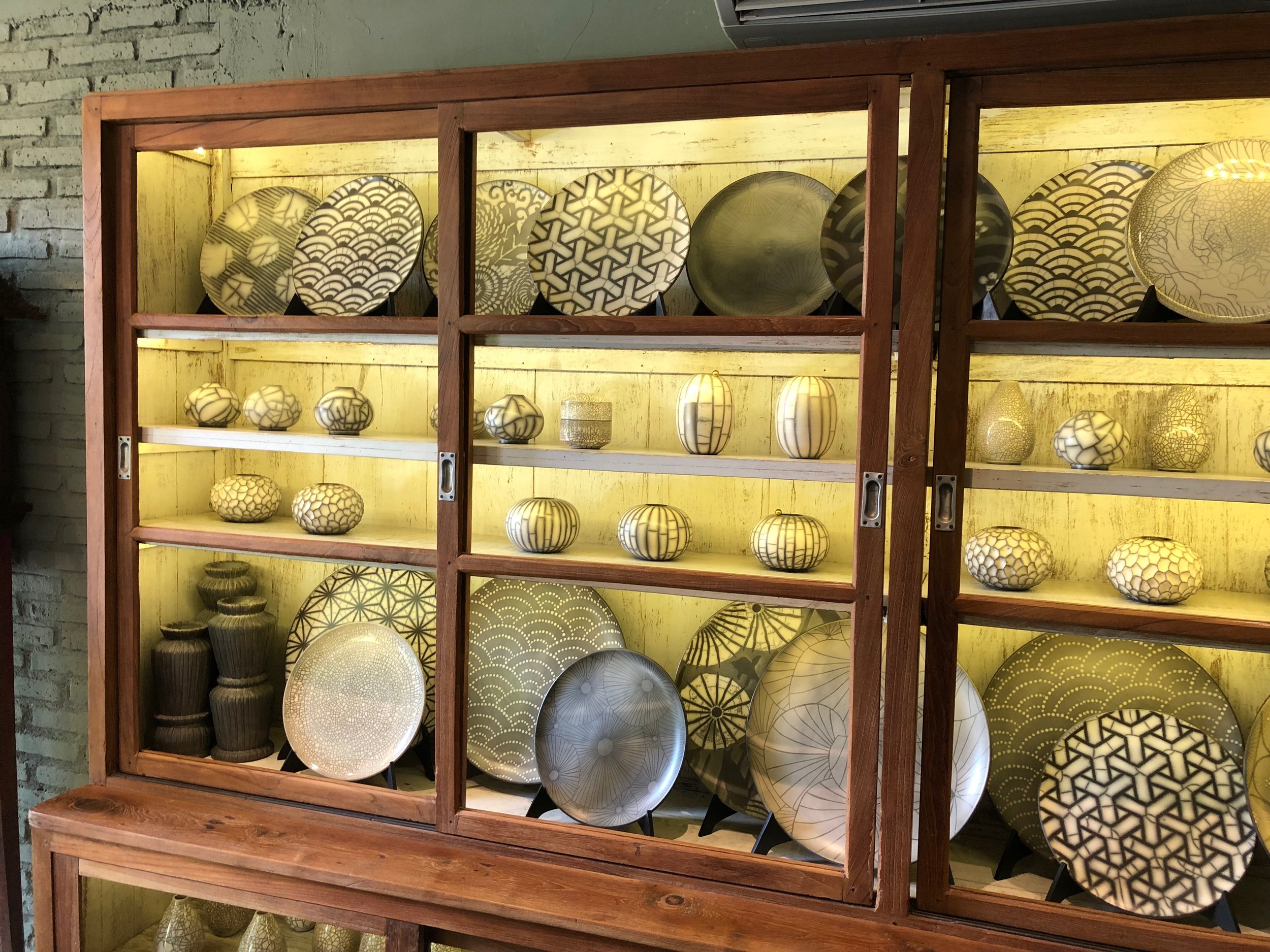
Intricately patterned Raku ware pottery pieces are grouped together

Intricately patterned Raku ware pottery pieces are grouped together

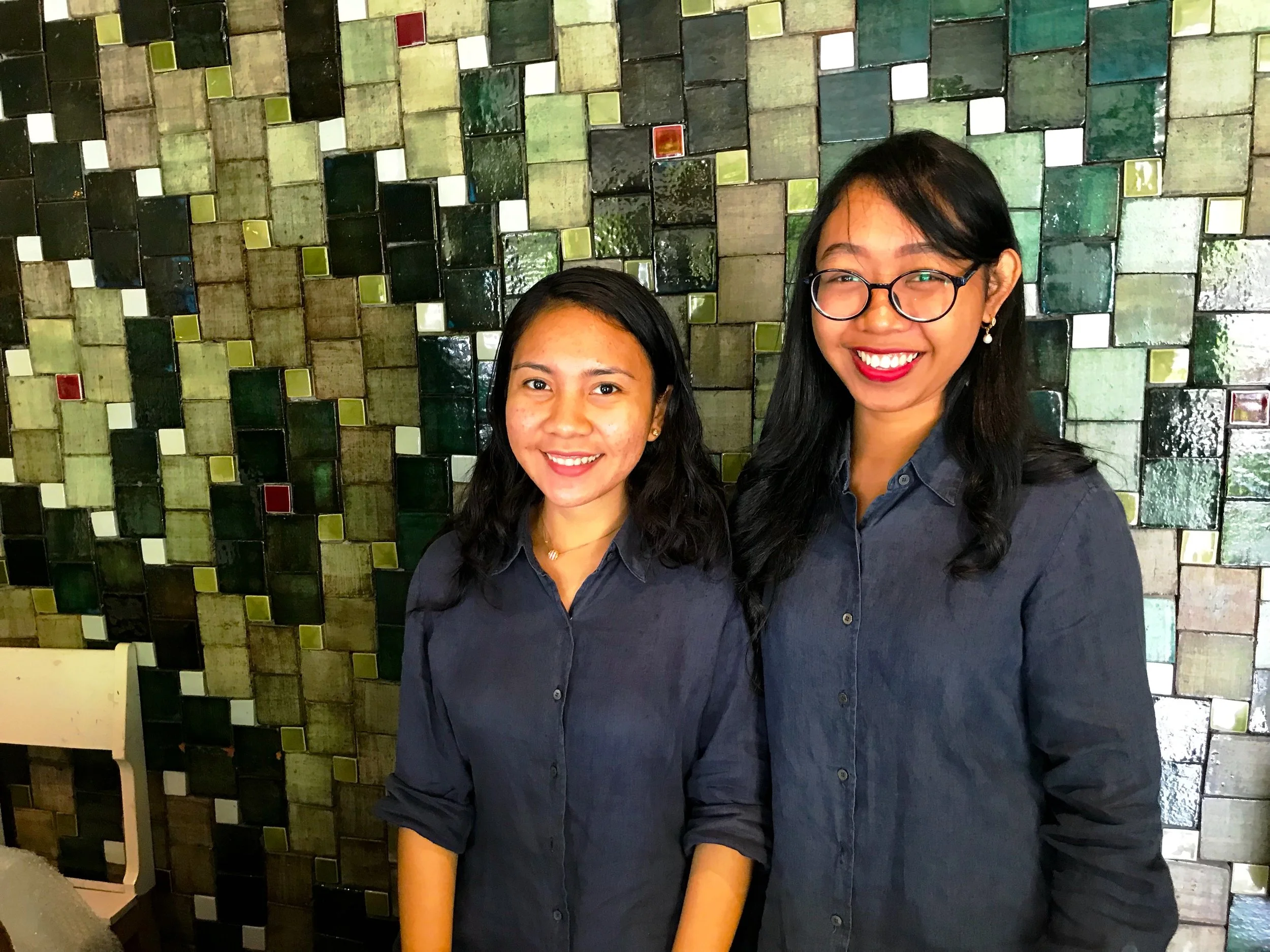
A couple of the delightful employees who work at Gaya

A couple of the delightful employees who work at Gaya

Every element, from the wireless radio — they even have a Spotify playlist — to the small circular clay tokens with their logo stamped into them that adorn their shopping bags, has been thoughtfully considered.

Visit their showroom and take your time to admire the beauty of each piece. And if your suitcase isn’t big enough, they ship.


Q&A with Marcello Massoni, owner of Gaya Ceramic

How has your cultural background been incorporated into Gaya?
We always put a bit of Italian flavor into our ceramics. The innovation and attention to detail that Italians are well known for is embedded in all our creations.


How has the culture of Bali influenced you?
Balinese culture helped us to reach a high level of craftsmanship and inspires us every day with its architecture, nature and ceremonies.


Tell about us your process. How does a lump of clay become a beautiful object?

All of our pieces begin their life in the studio. I still throw the original piece from which a prototype is made. For our hospitality projects, we custom create ceramic collections based on a client’s functional and aesthetic needs. We use different clays, glazes and diverse firing techniques (gas, raku, wood firings). All of our processes are handmade.


On average, how many pieces are produced per month?

Between 7,000 to 9,000.


Now for a few fun non-business related questions. What are a couple of your and Michela’s favorite local restaurants?  

Locavore or the restaurant at Bambu Indah.


Where’s the best place to get a cup of coffee?  

My house.


Favorite place to visit on Bali?

Pura Gunung Kawi or Geger Beach in Nusa Dua.


Best place to get gelato (and we know you’re biased)?

Gaya Gelato :)

gayaubud

Gaya Ceramic
Jalan Raya Satan No. 105
Sayan, Ubud
Bali, Indonesia 80571
Beyond Prambanan: The Love Temples of Plaosan

Explore the twin temples of Candi Plaosan, built by a Hindu prince for his Buddhist bride in Central Java.

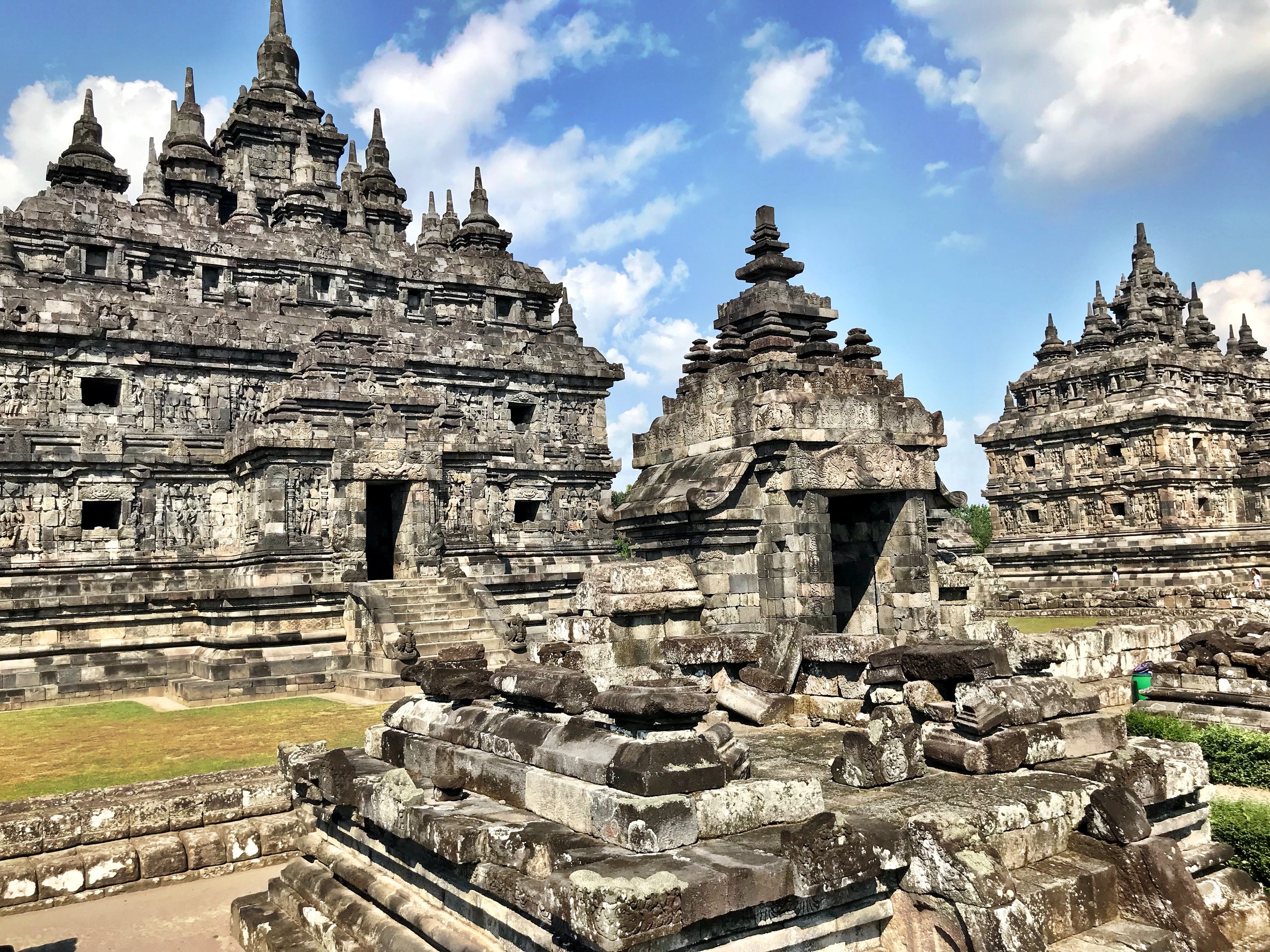
Plaosan is an often-overlooked addition to a day trip to Prambanan

Plaosan is an often-overlooked addition to a day trip to Prambanan

Our Borobudur guide, Wishnu, was showing us a few pictures that other tourists and guides had shared with him, when he paused to play us footage taken from a drone, soaring above a couple of stunning temples.

“What’s that?” I asked, and then, “Can we visit it?”

Wishnu replied that locals call these the Love Temples, and of course we could visit them — we just needed to let our driver for the Prambanan trip know that we’d like to add it to our itinerary.

The great love story began with an interfaith union between a Buddhist princess and a Hindu prince.
The northern complex is the one worth exploring

The northern complex is the one worth exploring

In the Name of Love

The site is officially called Candi Plaosan, a complex of Buddhist temples located in Klaten, Yogyakarta, a short distance north of the Hindu temples of Prambanan. What makes it truly unique is that both complexes were built by the same Javanese king.

Plaosan is a testament to the love that brought a Hindu prince and Buddhist princess together

Plaosan is a testament to the love that brought a Hindu prince and Buddhist princess together

Wally climbs over the stones at Plaosan

Wally climbs over the stones at Plaosan

Duke on the temple complex

Duke on the temple complex

Looking toward the female viharn (monastery) from the one for males

Looking toward the female viharn (monastery) from the one for males

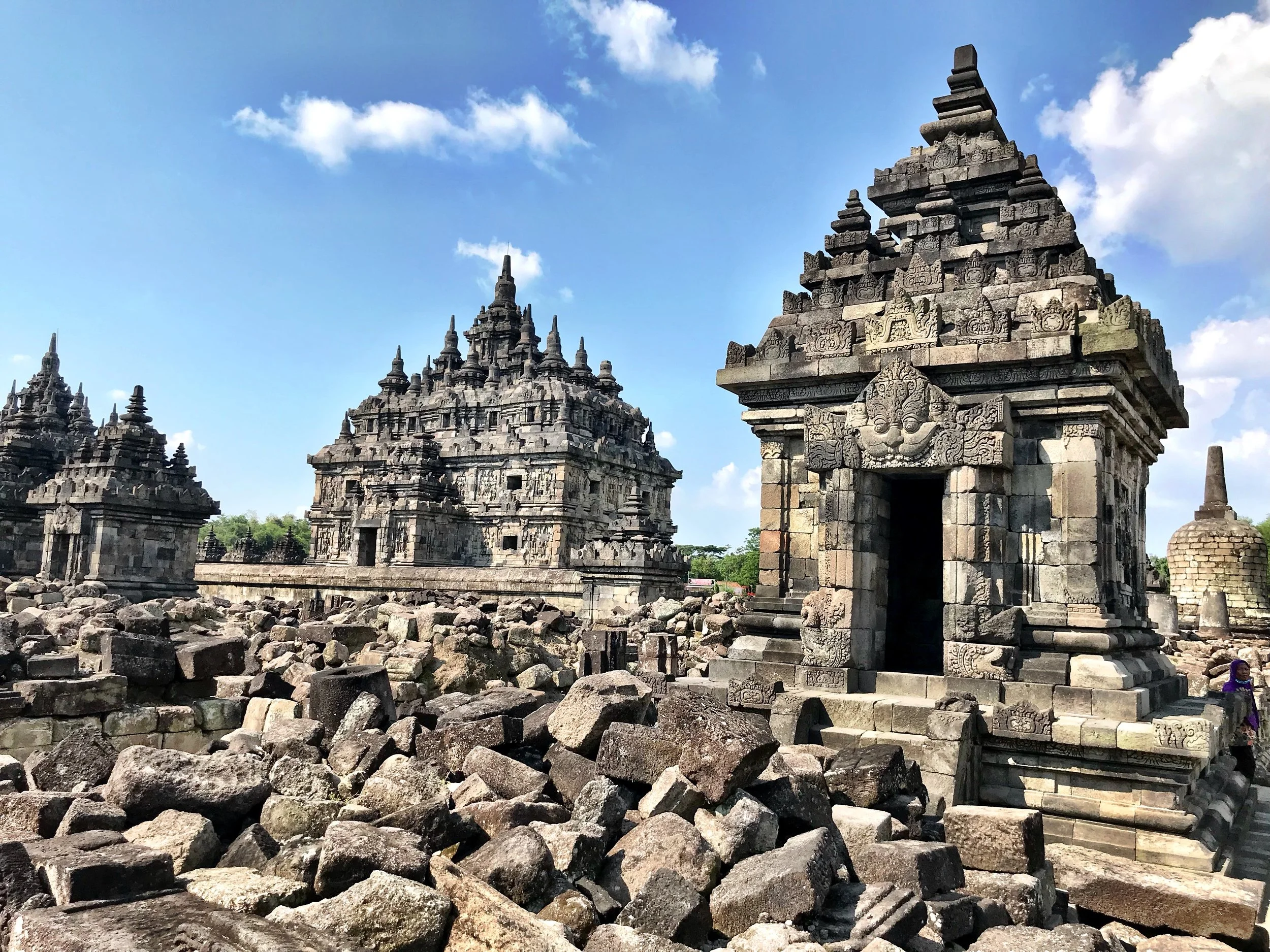
There are piles of rubble all over Plaosan, testifying that there’s still a lot of restoration work to be done

There are piles of rubble all over Plaosan, testifying that there’s still a lot of restoration work to be done

There were once many more of these smaller shrines

There were once many more of these smaller shrines

The great love story behind Plaosan began with an interfaith union between the two ruling dynasties of Central Java during the 9th century. Pramodhawardhani, a Buddhist princess and daughter of Samaratungga, the last known king of the Sailendra Dynasty, married Prince Rakai Pikatan, from the Hindu Sanjaya family. When Pikatan ascended to the throne, Pramodhawardhani became his queen and was given the name Sri Kuhulunan. Religious differences didn’t separate the couple, and together they played a significant role in building some of the finest Hindu and Buddhist temples of Central Java.

Plaosan is a 9th century complex built at the height of the Mataram Kingdom. Once part of a single site, Plaosan Lor, the northern main temples and the smaller Plaosan Kidul to the south are now separated by a public road.

Because Plaosan isn’t too well known, you could have the temple grounds virtually to yourself

Because Plaosan isn’t too well known, you could have the temple grounds virtually to yourself

A Temple for Men, A Temple for Women

One of the first things Wally and I noticed as we entered the temple grounds of Plaosan Lor were four imposing stone ogres. Known as dwarapala, the stocky and squat semi-kneeling guardians grip a short thick club in their right hand, while the other rests upon a bent left knee.

Creatures known as dwarapala guard the entrance to the temple

Creatures known as dwarapala guard the entrance to the temple

This giant will fight to protect Plaosan

This giant will fight to protect Plaosan

Like Prambanan, the sanctuary follows a square grid system with groups of smaller ancillary shrines laid out in orderly rows. The buildings were constructed without mortar, their stones quarried and precisely cut. A small number have been reconstructed, standing amongst piles of gray andesite blocks yet to undergo restoration.

The temples are quite similar —but we’re pretty sure this is the one for men

The temples are quite similar —but we’re pretty sure this is the one for men

And this is the temple for women (actually living quarters for female monks)

And this is the temple for women (actually living quarters for female monks)

At the center of Plaosan Lor, the two nearly identical structures were viharas, meaning they were designed as Buddhist monasteries.

Above the arched gate portal leading to the temple is a Kala head whose gaping mouth symbolically swallows our mortal impediments and permits passage into the sacred inner courtyard.

Some entryways in the inner temple are shaped as the mouth of the deity Kala

Some entryways in the inner temple are shaped as the mouth of the deity Kala

Legend has it that Kala’s mouth crushes those impure of heart. Poor Duke!

Legend has it that Kala’s mouth crushes those impure of heart. Poor Duke!

Towering stalagmite-like spires crown the multistory vihara, rising like the jagged peaks of Mount Meru, the holy mountain abode of the gods, and a pair of mythical serpentine makara form the railings of the staircase leading to the monastery — a small Kewpie-doll like dwarf figure stands within the creature’s gaping jaws.

The monument sits on a high rectangular stone podium with an apron that extends several feet outward, forming a porch where visitors can circumambulate the structure. Its exterior walls feature false windows, an architectural element meant to maintain symmetry on the façade. These are embellished with distinctive Kala-makara ornamentation, but unlike the ones above the gateways, these depictions of include a lower jaw with a wide mischievous grin similar to the Cheshire Cat in Lewis Carroll’s Alice’s Adventures in Wonderland.

Kala is a giant who was born from Shiva’s sperm

Kala is a giant who was born from Shiva’s sperm

Enshrined within the central hall are a pair of headless seated Bodhisattva statues, one that is more or less a torso, presumably plundered and decapitated by relic thieves. An empty pedestal between the pair possibility held an enthroned bronze Buddha.

There’s not a whole lot to see inside the temples — mostly seated statues of Bodhisattva, those who have reached enlightenment but remain behind to instruct others

There’s not a whole lot to see inside the temples — mostly seated statues of Bodhisattva, those who have reached enlightenment but remain behind to instruct others

Some of the statues inside the temples are now decapitated

Some of the statues inside the temples are now decapitated

Intricately detailed reliefs of various demigods and deities adorn the exterior walls. According to a theory presented by Nicholas Johannes Krom, head of the early 20th century Dutch Archeological Society, the two vihara were sponsored by influential patrons and built for male and female monastics — not as a tribute to love, as locals prefer to believe.

Bas-reliefs line the exterior of Plaosan

Bas-reliefs line the exterior of Plaosan

The south-facing vihara depicts male figures, while the north depicts female figures. The south temple was probably a monastery for Bhikkhu monks, while the north housed Bhikkhuni nuns.

You can see the construction style in action: squares of interlocking stone

You can see the construction style in action: squares of interlocking stone

Deities and demigods adorn the outer walls, which you can circumambulate on a platform

Deities and demigods adorn the outer walls, which you can circumambulate on a platform

In the distance, behind the vihara, a celebration complete with multicolored garlands made of balloons was taking place. We passed through a side gate in the low wall separating the two temples and explored the second vihara.

Whether or not Plaosan was constructed as a symbol of Pikatan’s devotion to Sri Kuhulunan or as a display of political reconciliation to placate the Buddhist Sailendra Dynasty, it certainly makes for an interesting story. –Duke

plaosan5.JPG

Candi Plaosan

Jalan Candi Plaosan
Plaosan Lor
Bugisan
Kecamatan Prambanan
Kabupaten Klaten
Jawa Tengah 57454
Indonesia

Klungkung, the Hellish Comic-Paneled Water Palace of Bali

Head to Semarapura to see a monument to a mass suicide and illustrated ceilings that depict gruesome demons.

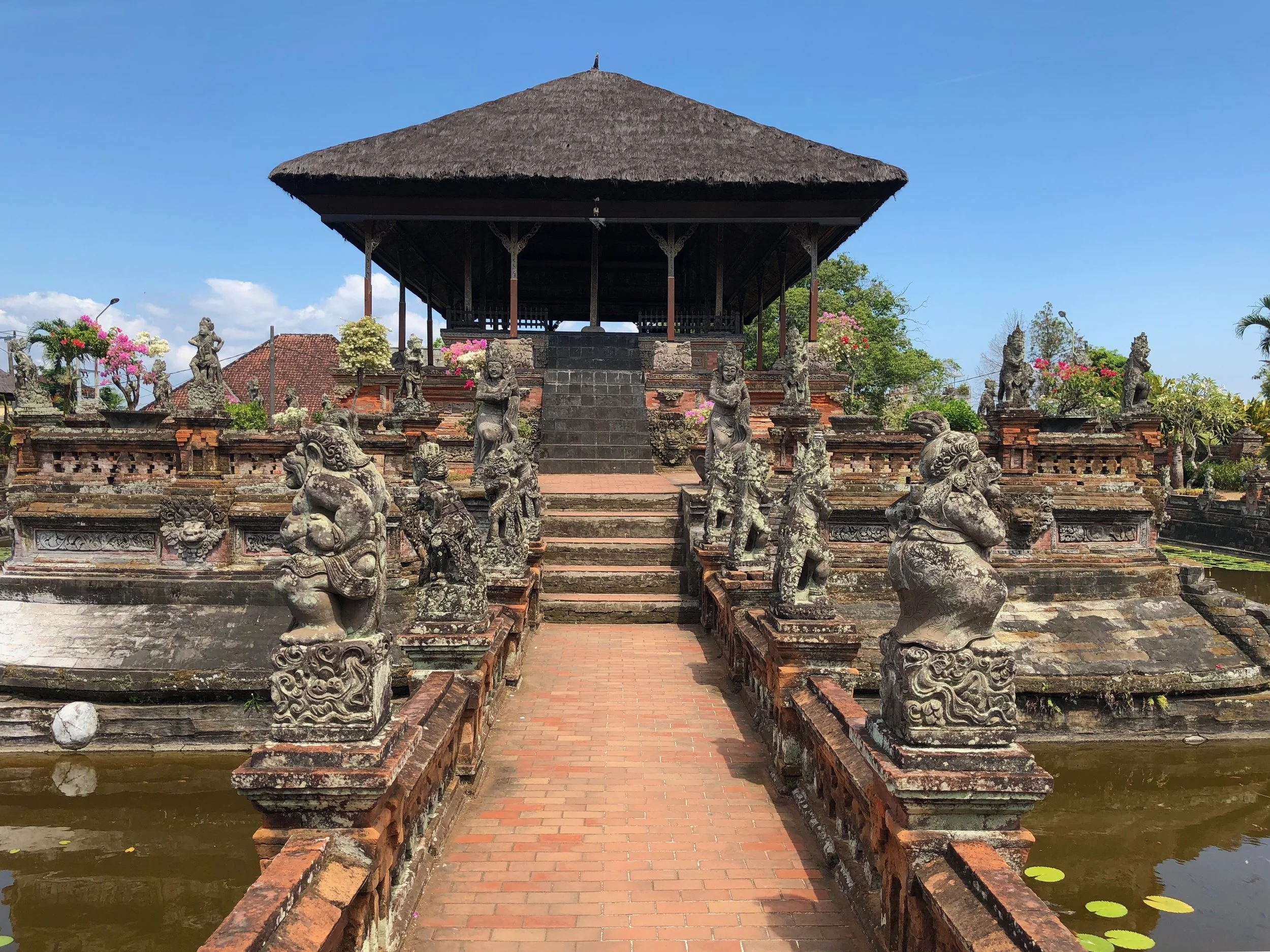
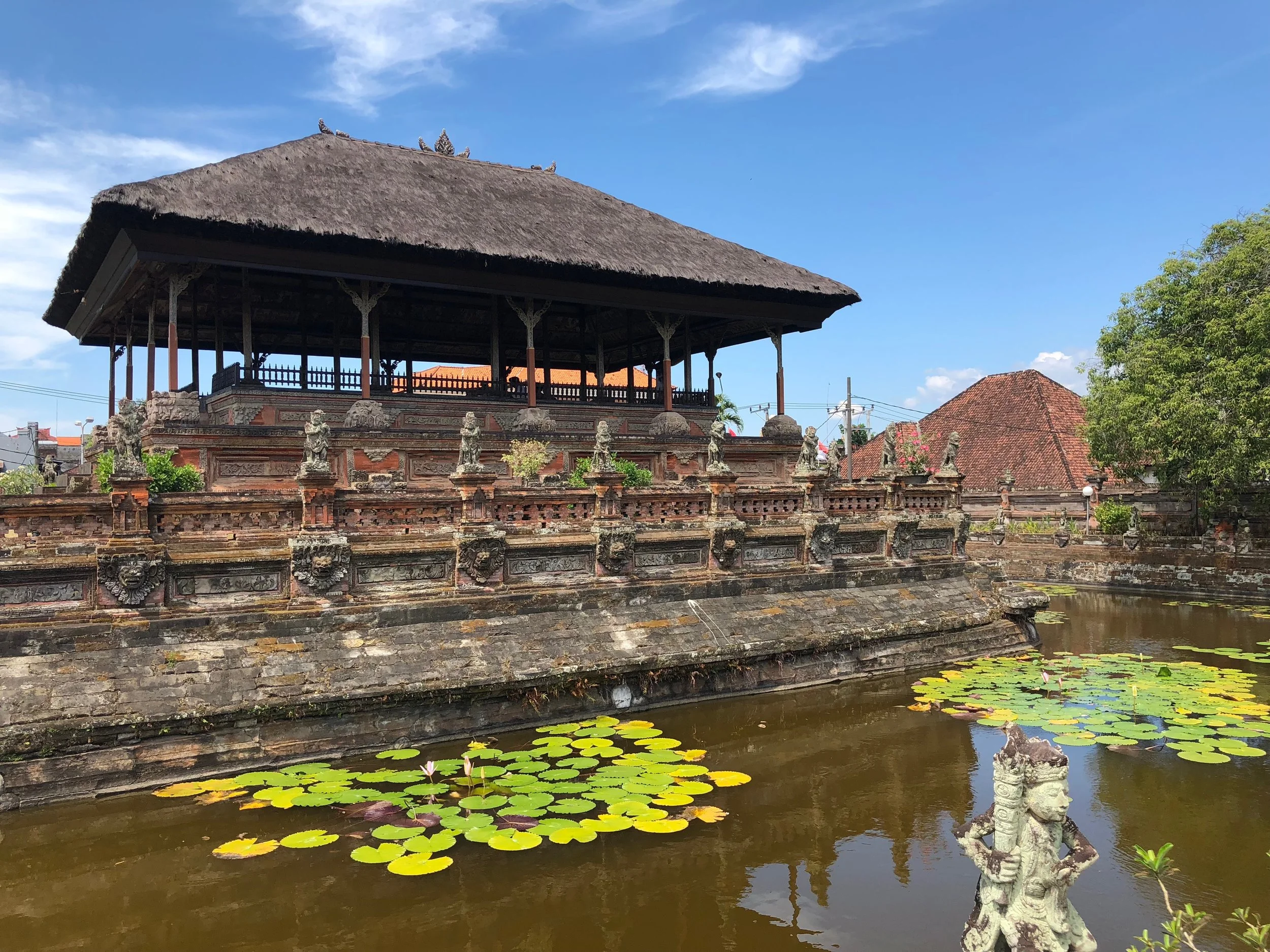
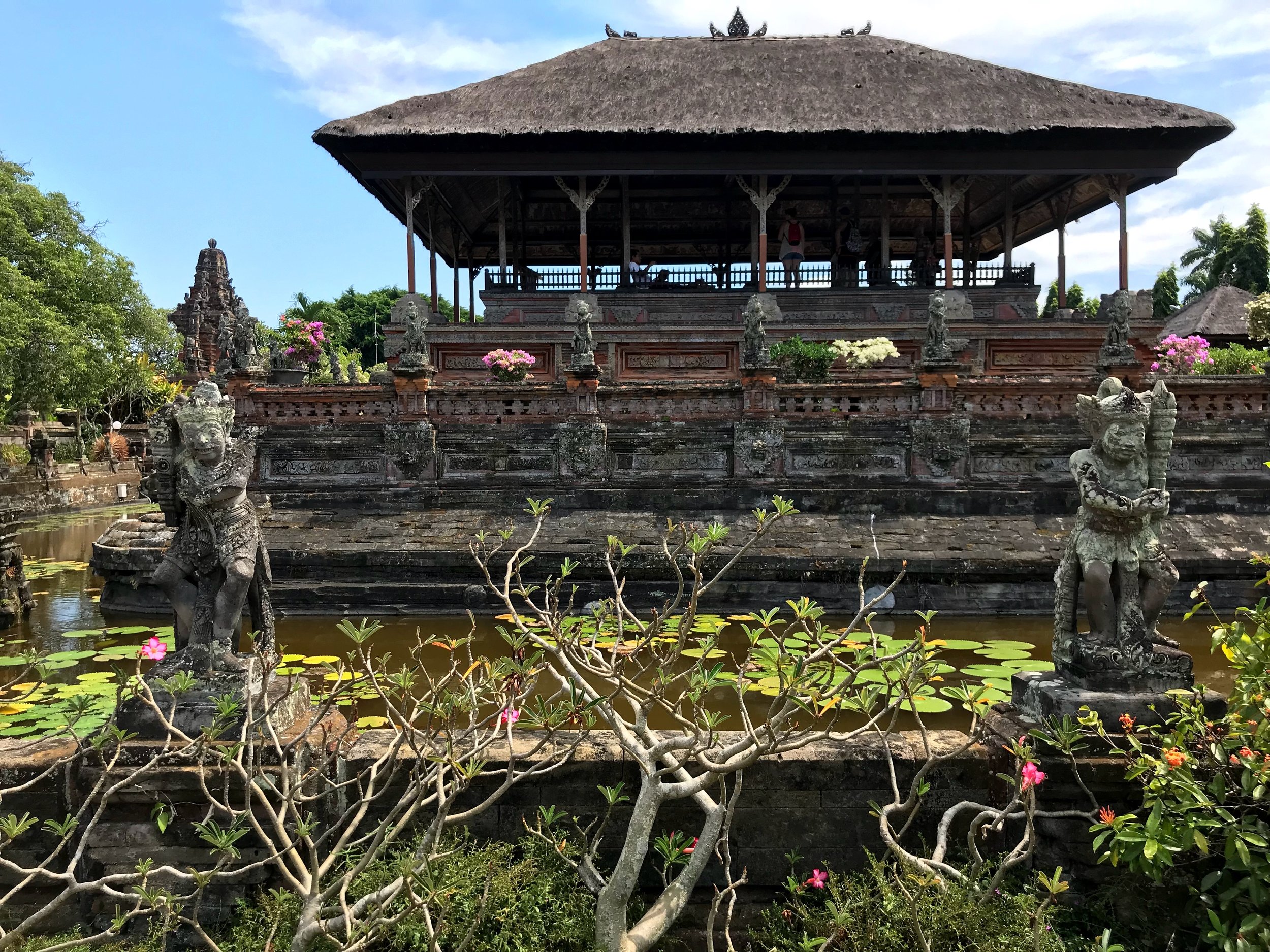
Monstrous statues, lily-covered pools of water and pavilions filled with comic book-like artwork come together at Klungkung

Monstrous statues, lily-covered pools of water and pavilions filled with comic book-like artwork come together at Klungkung

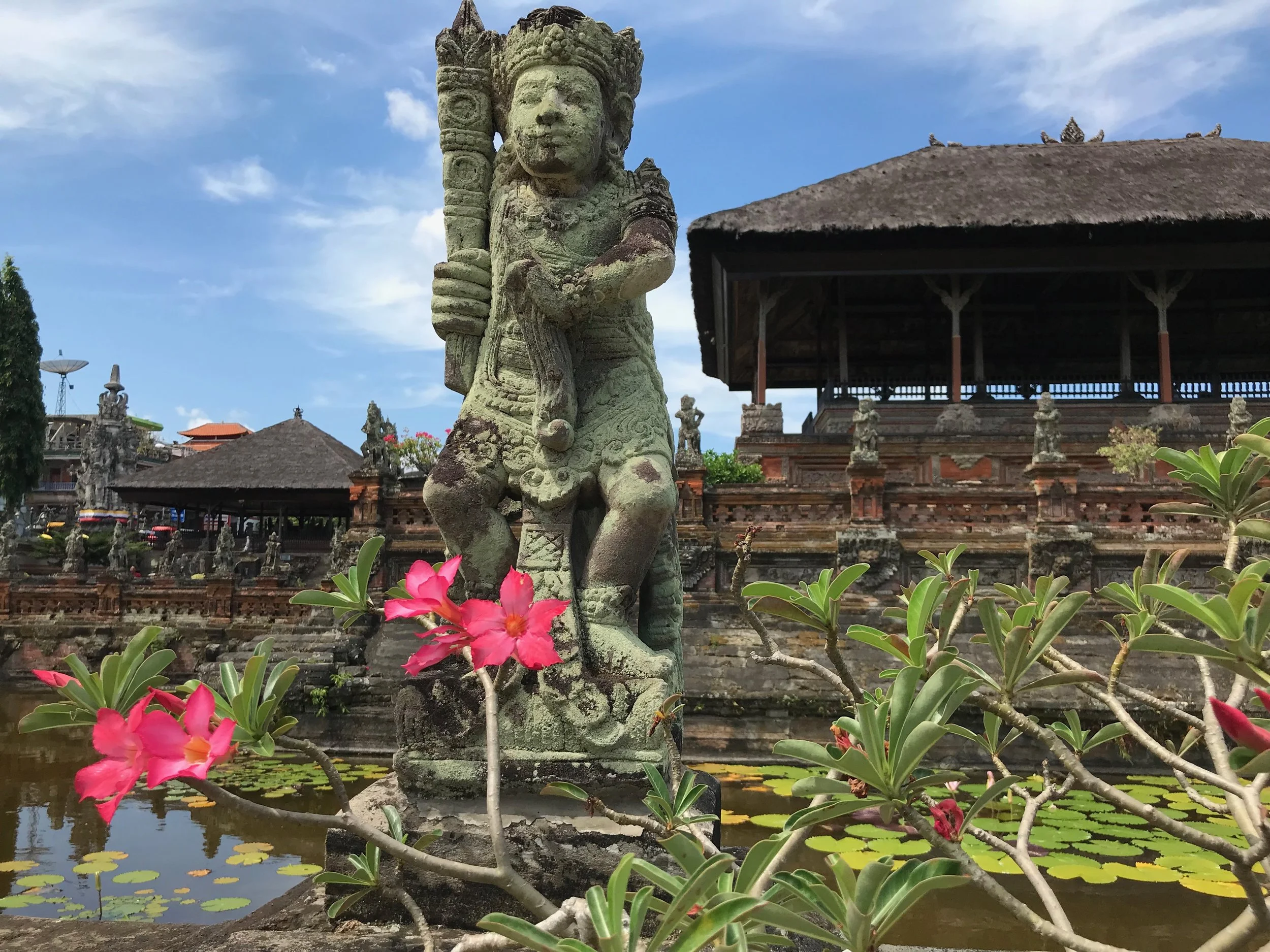
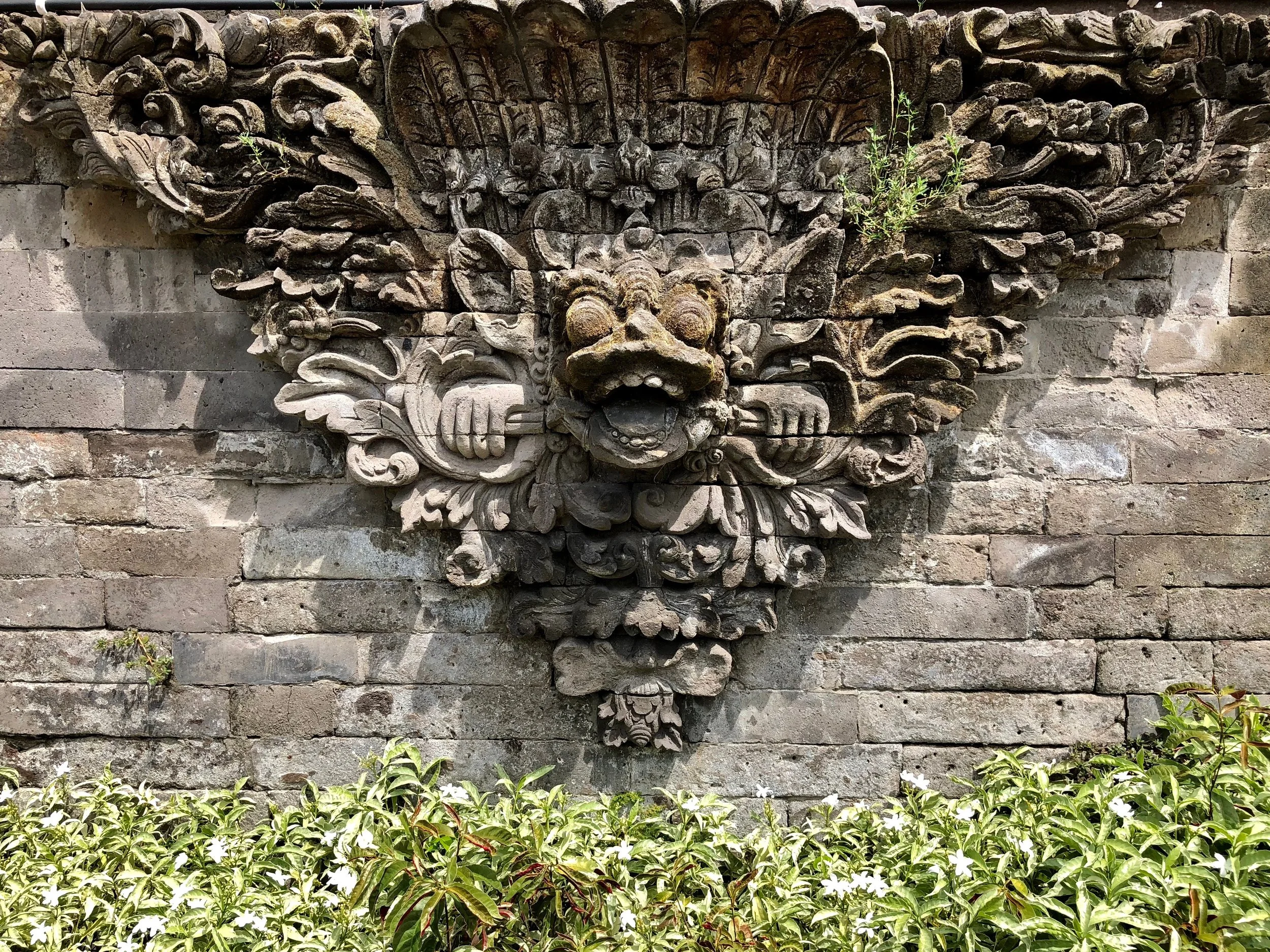
A mythic creature watches over the pavilion

A mythic creature watches over the pavilion

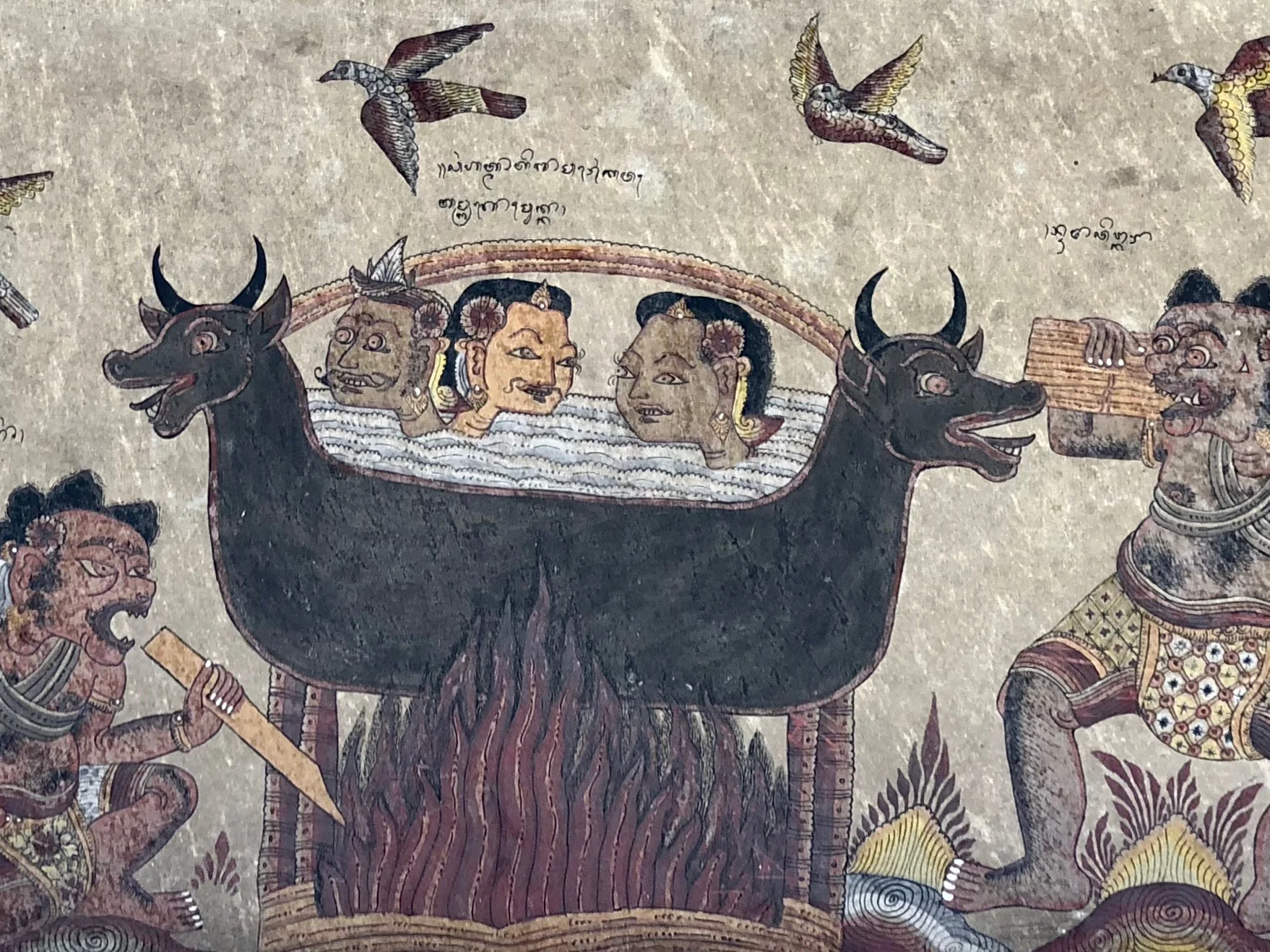
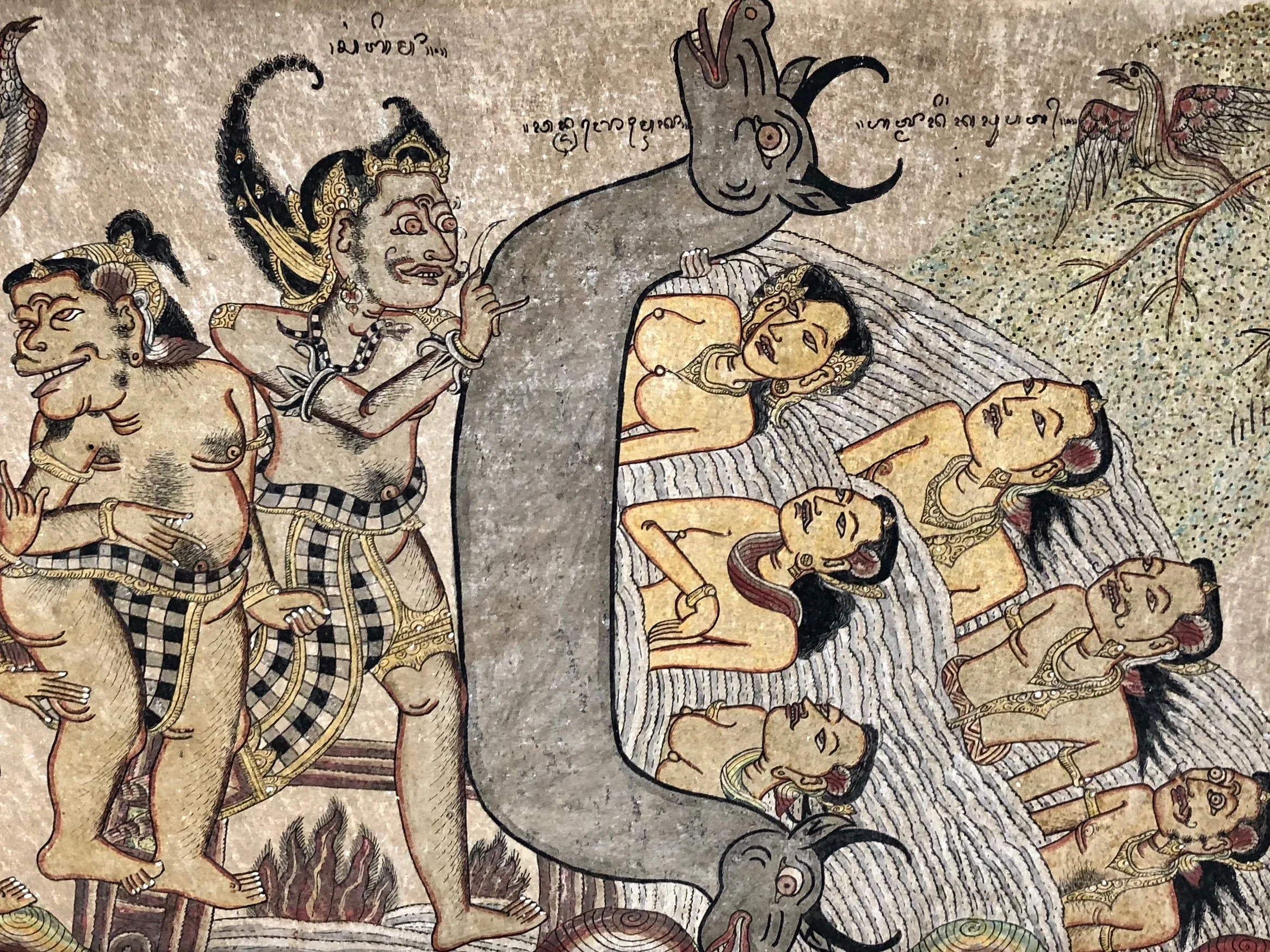
The Hall of Justice depicts various torments — like having your nether regions scorched

The Hall of Justice depicts various torments — like having your nether regions scorched

I had always been intrigued by one of the photos Wally had taken when he first visited Bali 17 years ago. The image is a detail shot of a small naked one-eyed male creature with a high ponytail. 

I later discovered that he took this photo at the Klungkung Palace. This was my first time to Bali, but Wally’s second and I was truly excited to have found more than a few places he hadn’t been to. Klungkung wasn’t one of those places, but was so different from the other sites in our itinerary that we simply had to visit. Of course Wally didn't mind, which is one of the many reasons we make a great couple — we’re both drawn to the unusual and fantastic mythology of other cultures.

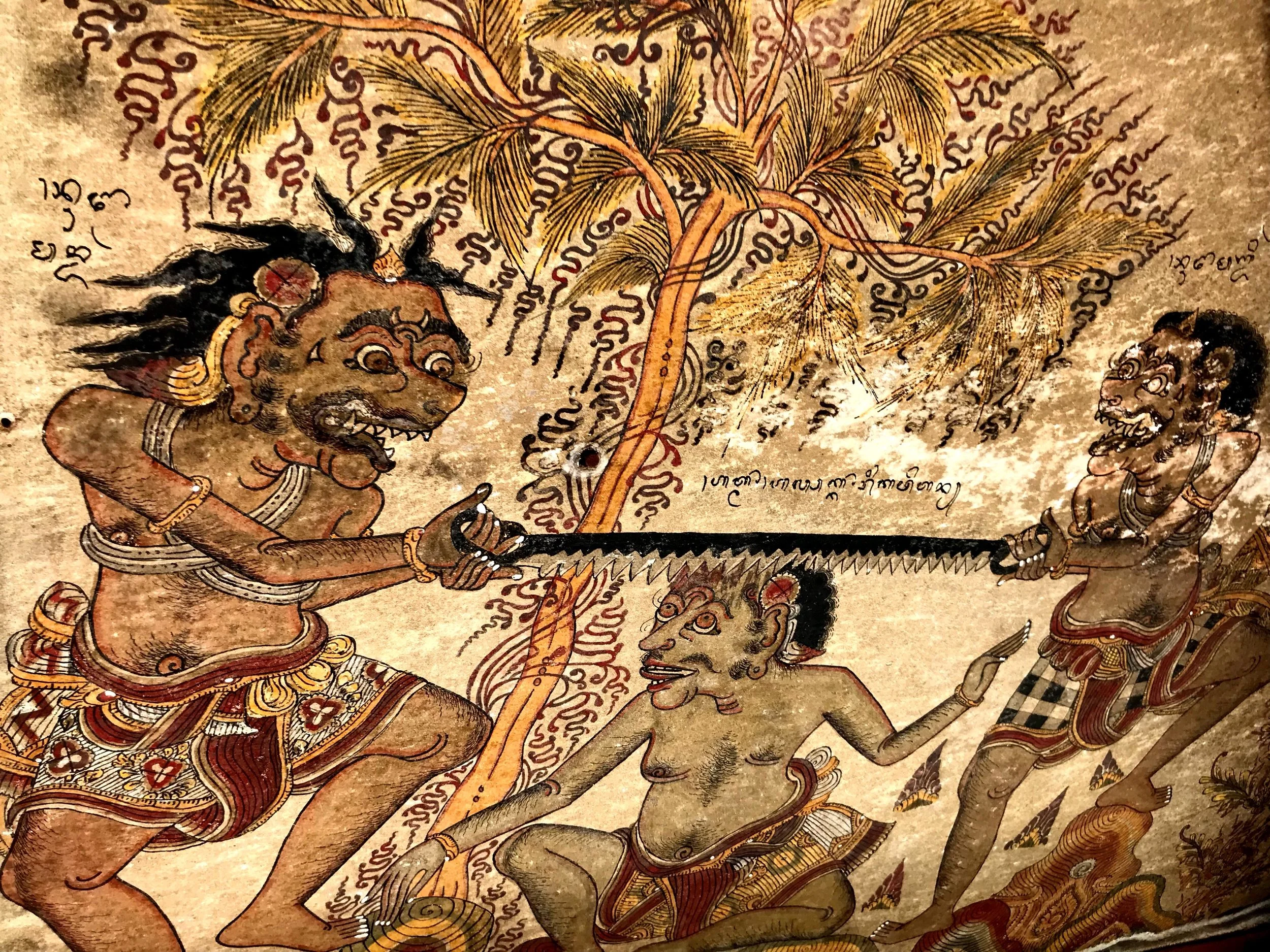
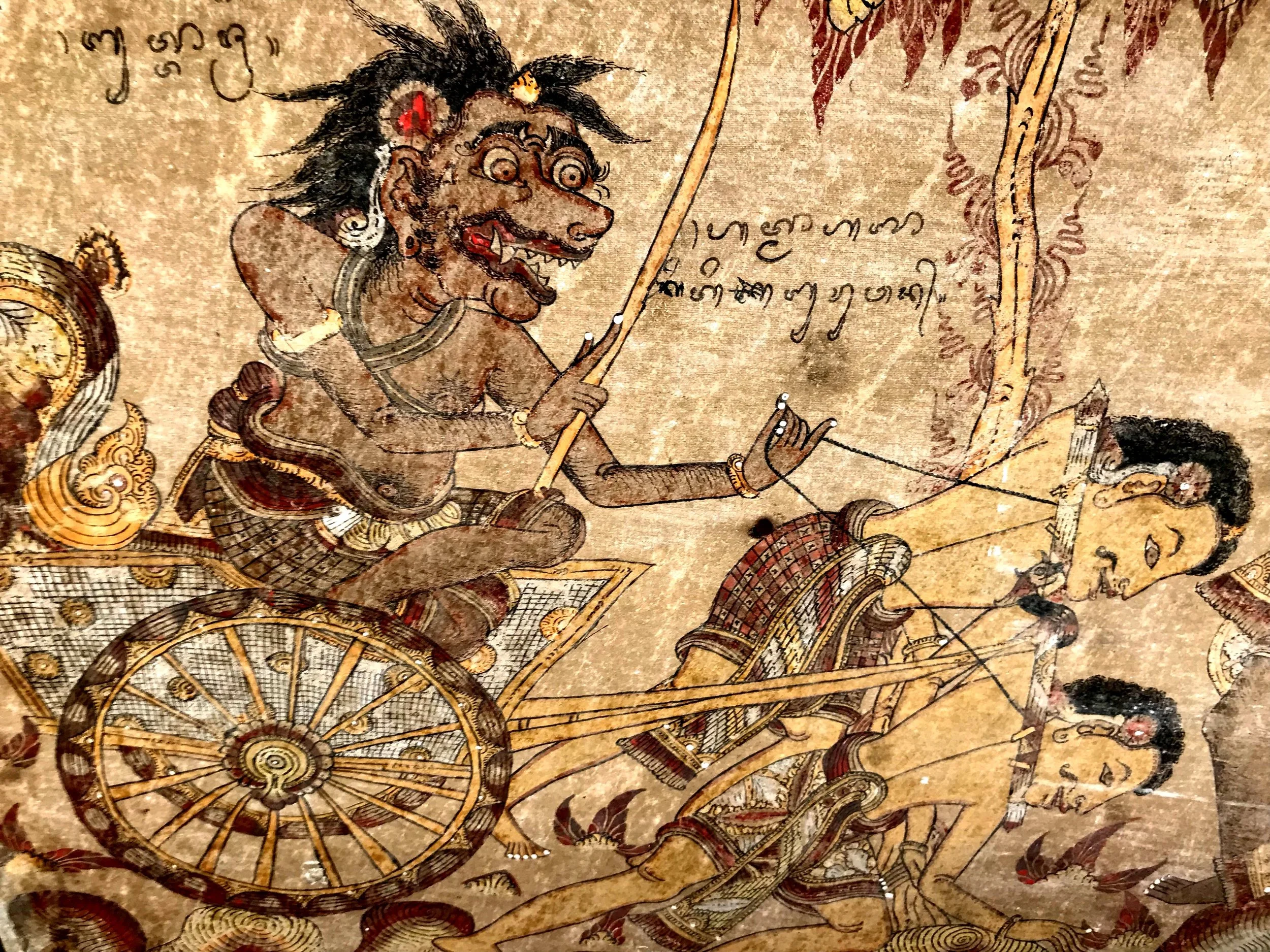
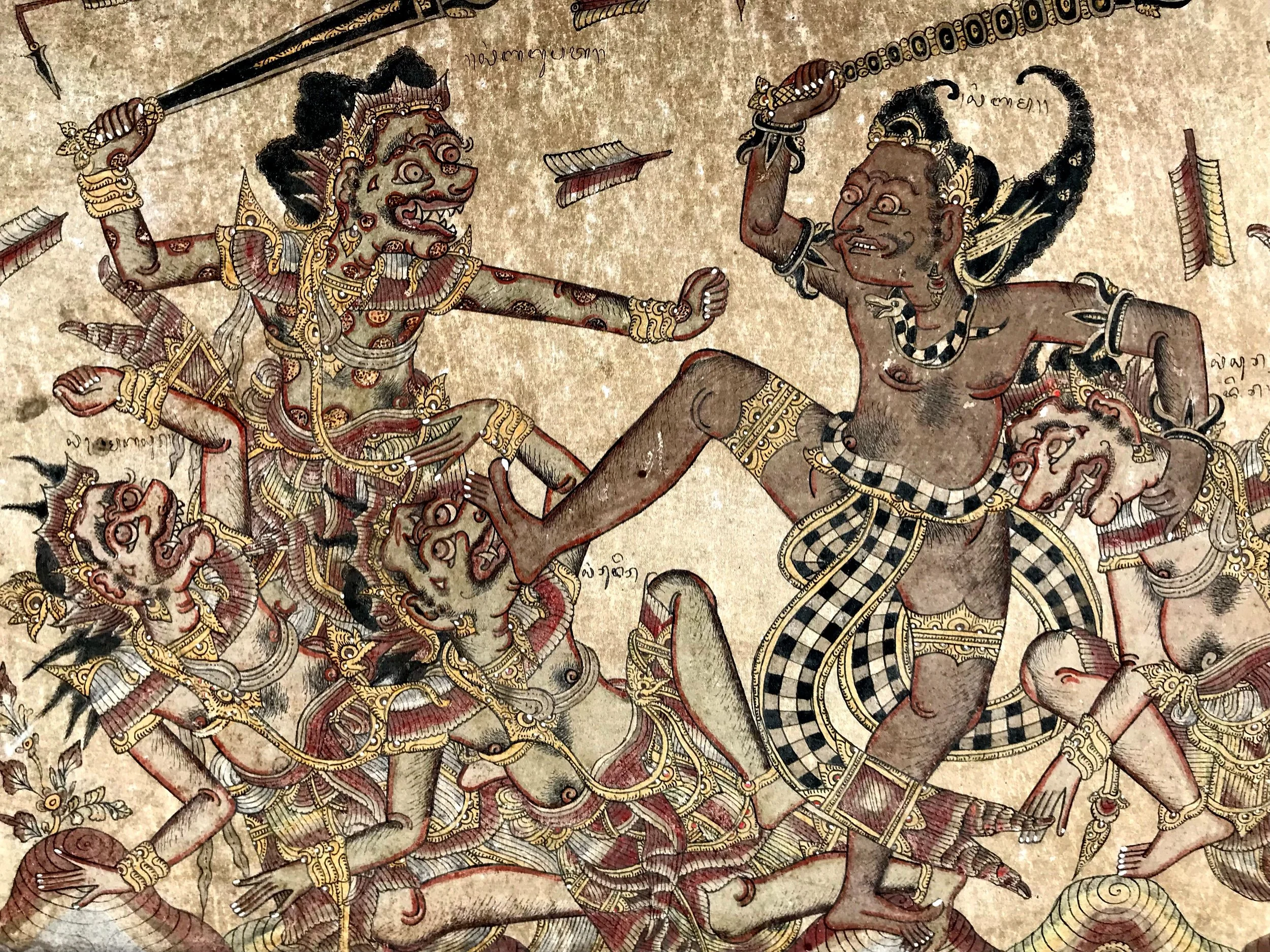
The panels portray the various forms of hellish punishment awaiting those who are found guilty in the afterlife.

We arrived in Semarapura, the capital of the Klungkung Regency and purchased our tickets to enter across the busy thoroughfare from the pavilions.

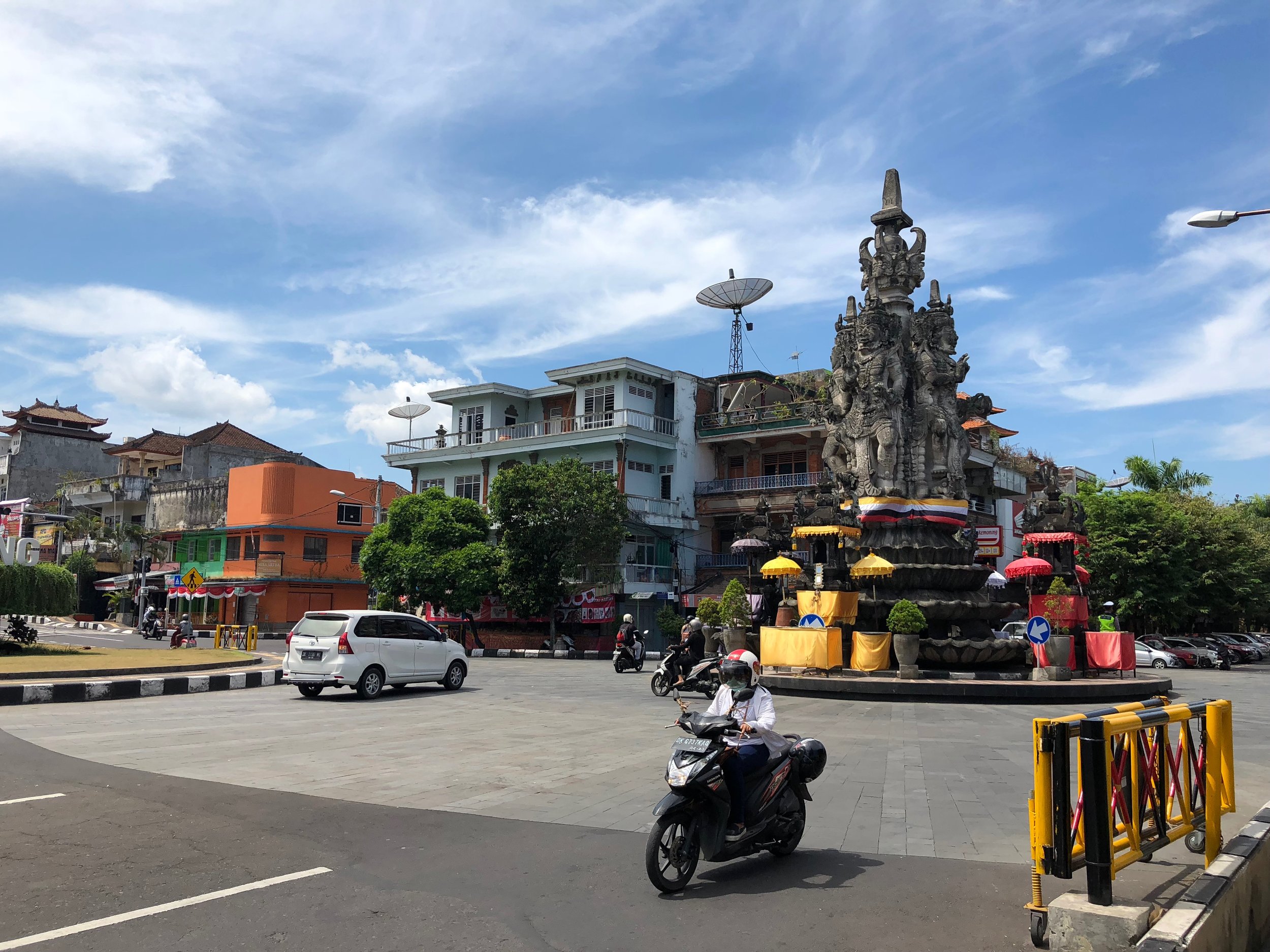
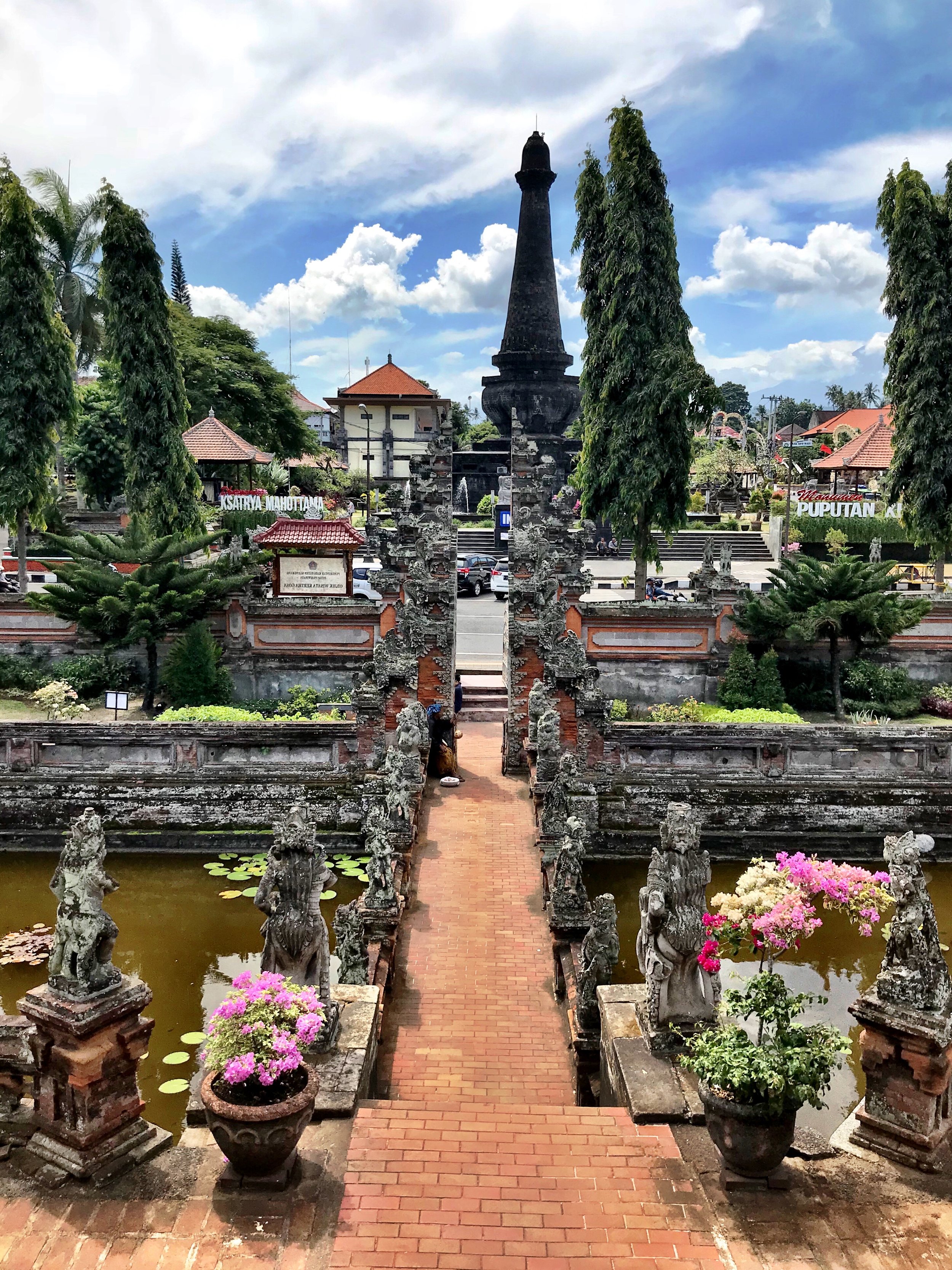
If the Puputan monument looks like a giant phallus, that’s because it kinda is! This memorial is a linga-yoni, a representation of the Hindu god Shiva’s, er, divine energy

If the Puputan monument looks like a giant phallus, that’s because it kinda is! This memorial is a linga-yoni, a representation of the Hindu god Shiva’s, er, divine energy

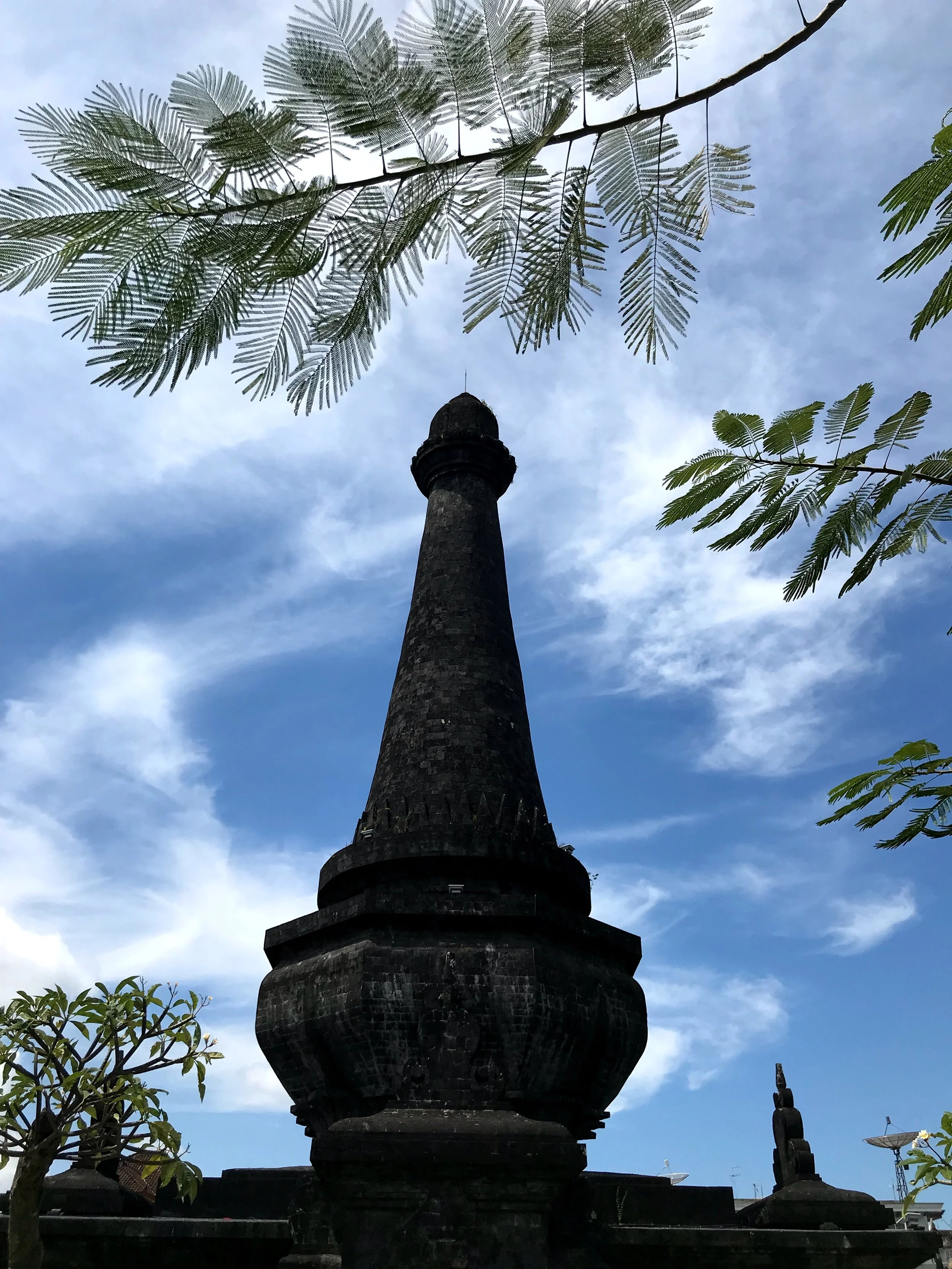
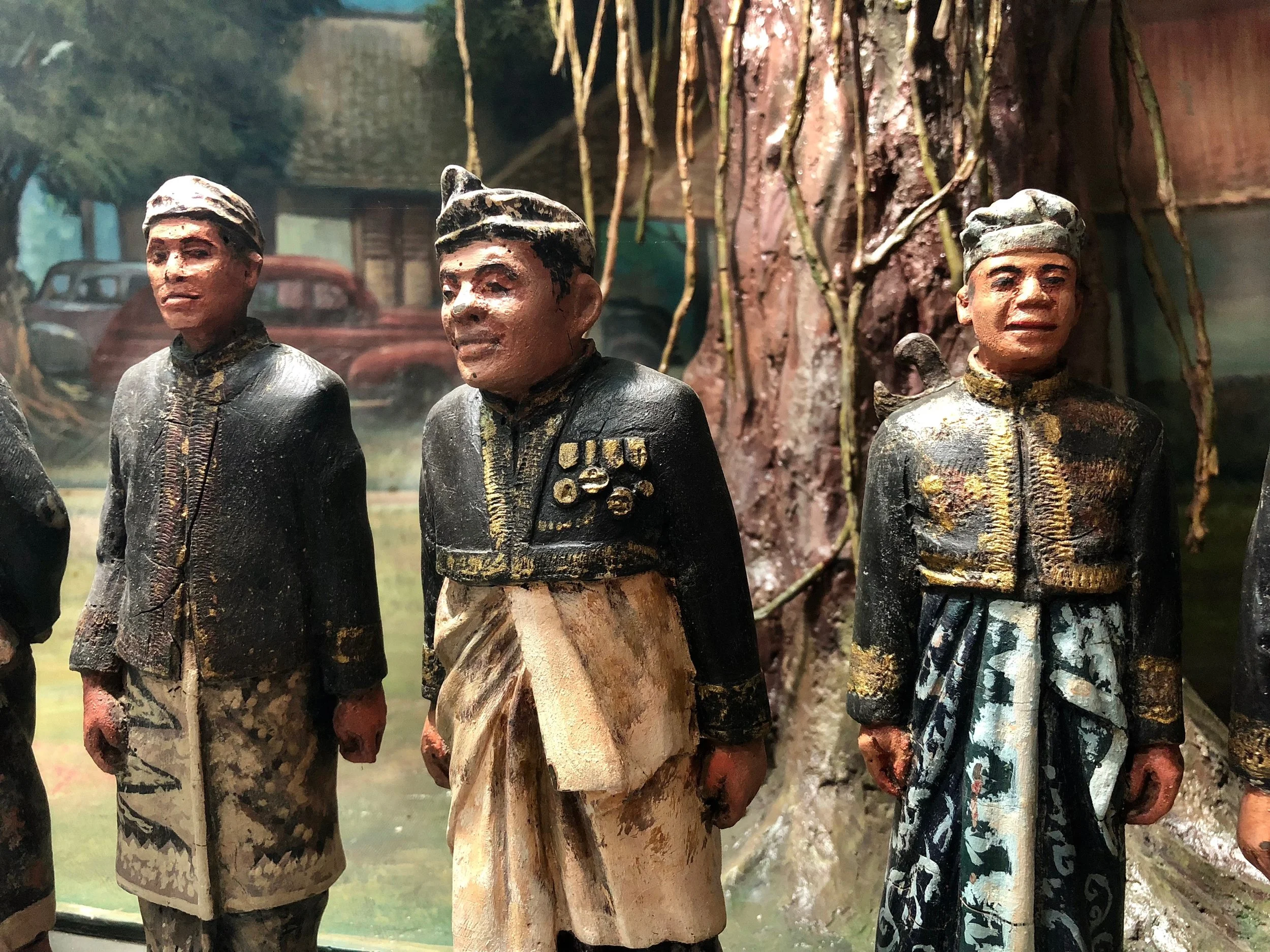
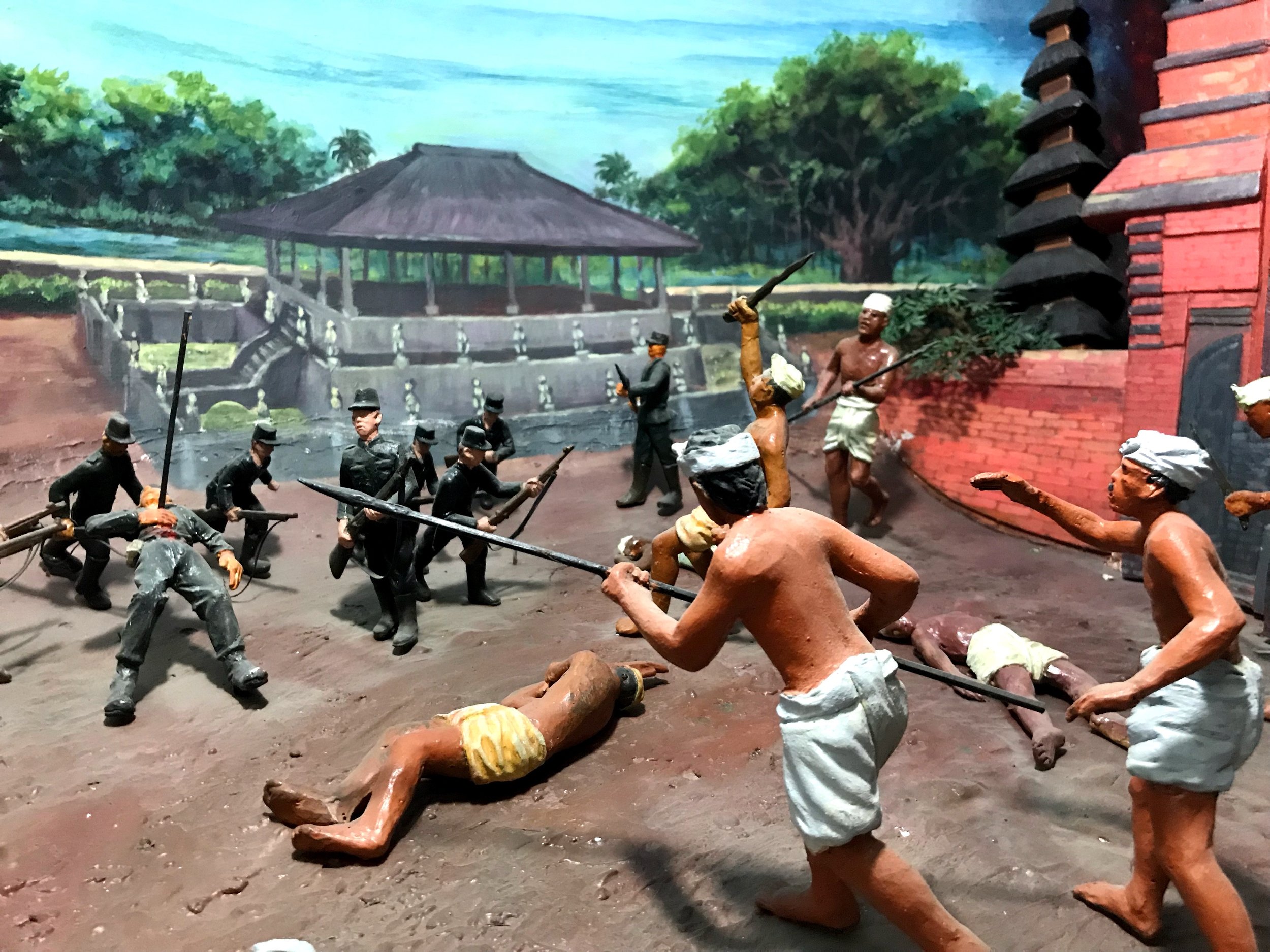
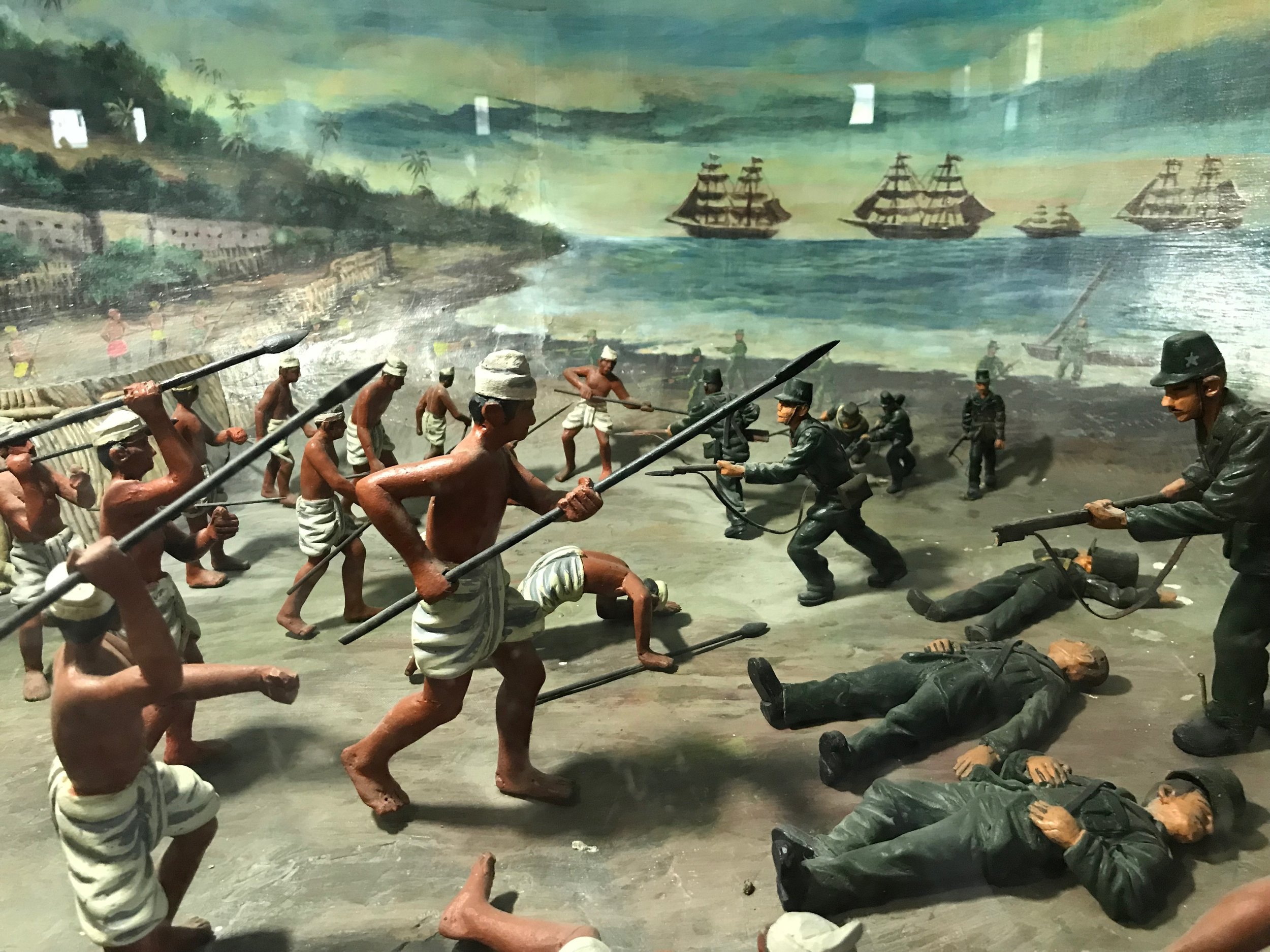
Overlooking the town’s main intersection is a towering memorial resembling an upside-down cannon barrel constructed of black volcanic stone. The monument is known as the Puputan Klungkung and commemorates the ceremonial mass ritual suicides known as puputan. The word comes from the Balinese puput, meaning “to finish” or “end.” And that’s exactly what occurred when the Dutch invaded Semarapura in 1908 and brought the entire island of Bali under colonial domination. Miniature dioramas inside the memorial depict scenes from historic local events, including the battles with the Dutch.

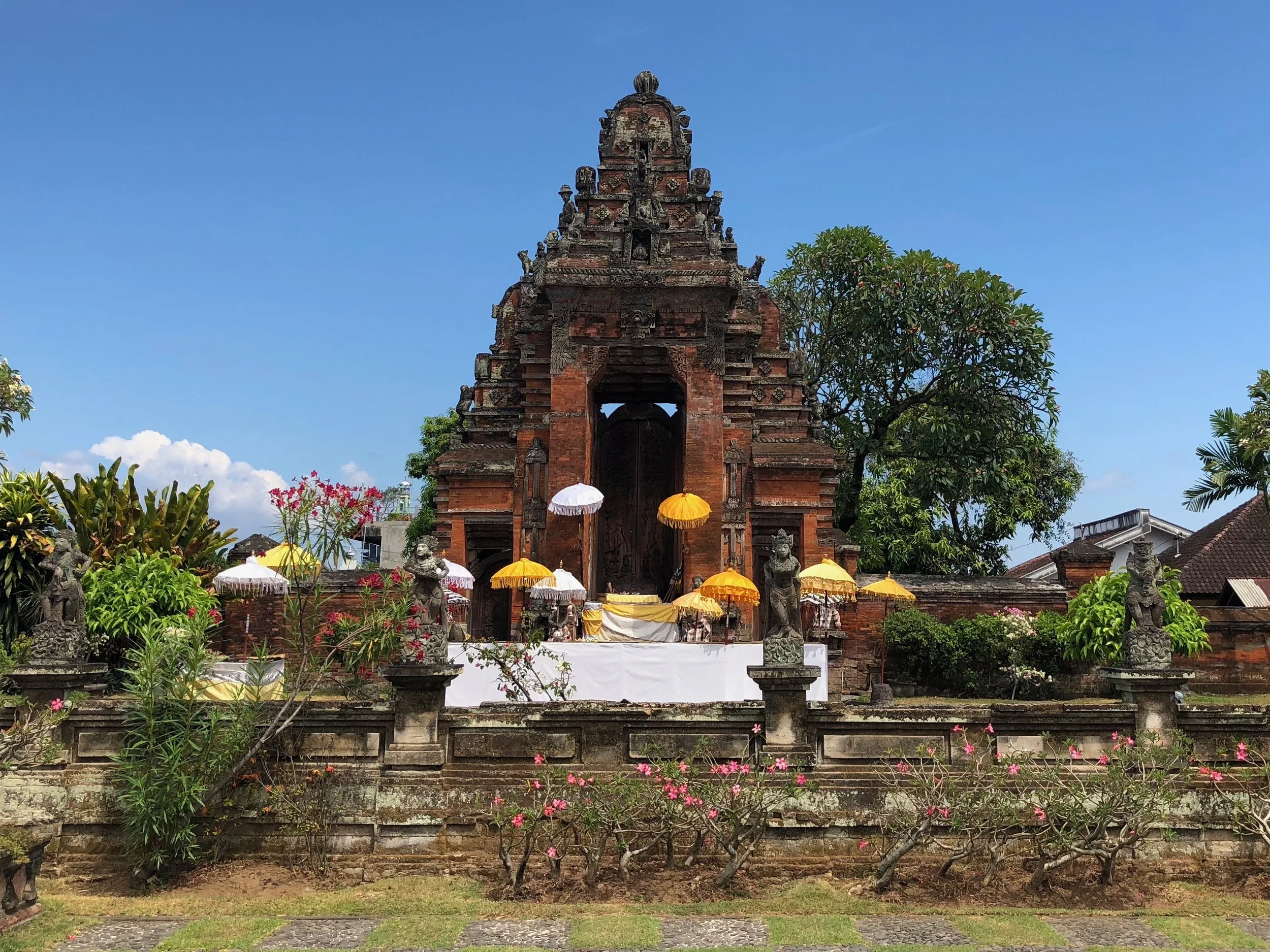
Two pavilions and a ceremonial gate are all that remain of a former palace in Semarapura

Two pavilions and a ceremonial gate are all that remain of a former palace in Semarapura

Klungkung Royal Palace

Across the street from the Puputan monument are what remains of the former royal palace complex of Puri Agung Semarapura. Built at the end of the 17th century, sadly many of its structures were destroyed during the Dutch conquest.

A brick path forms a bridge to access the Floating Pavilion

A brick path forms a bridge to access the Floating Pavilion

Wally and I entered the Klungkung grounds through a side gate where a group of three women, ready to pounce upon unsuspecting tourists, were attempting to sell a variety of clothing, from sarongs to short-sleeved men’s dress shirts. We politely told them we weren’t interested and walked to the restroom located on the opposite side of the complex. When we emerged, one of the women who had split from the group awaited us and followed us around, trying to sell us an extra-large men’s batik shirt. Honestly, it was a cool shirt and we would have bought it from her if she had the right size.

The Hall of Justice is literally covered with illustrated panels

The Hall of Justice is literally covered with illustrated panels

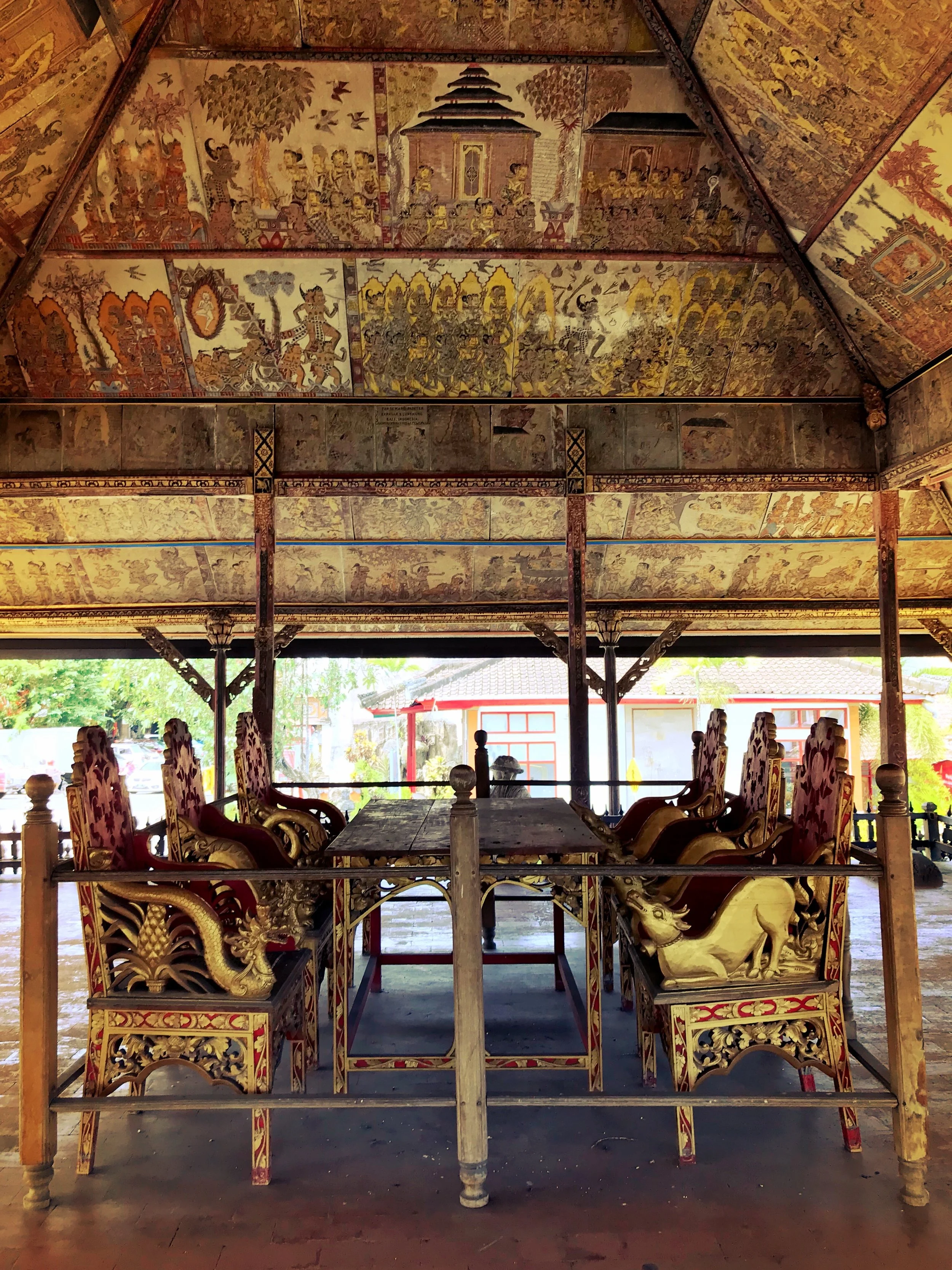
Justice was once meted out from this table

Justice was once meted out from this table

The Kertha Gosa Hall of Justice: Fantastic Beasts and Where to Find Them

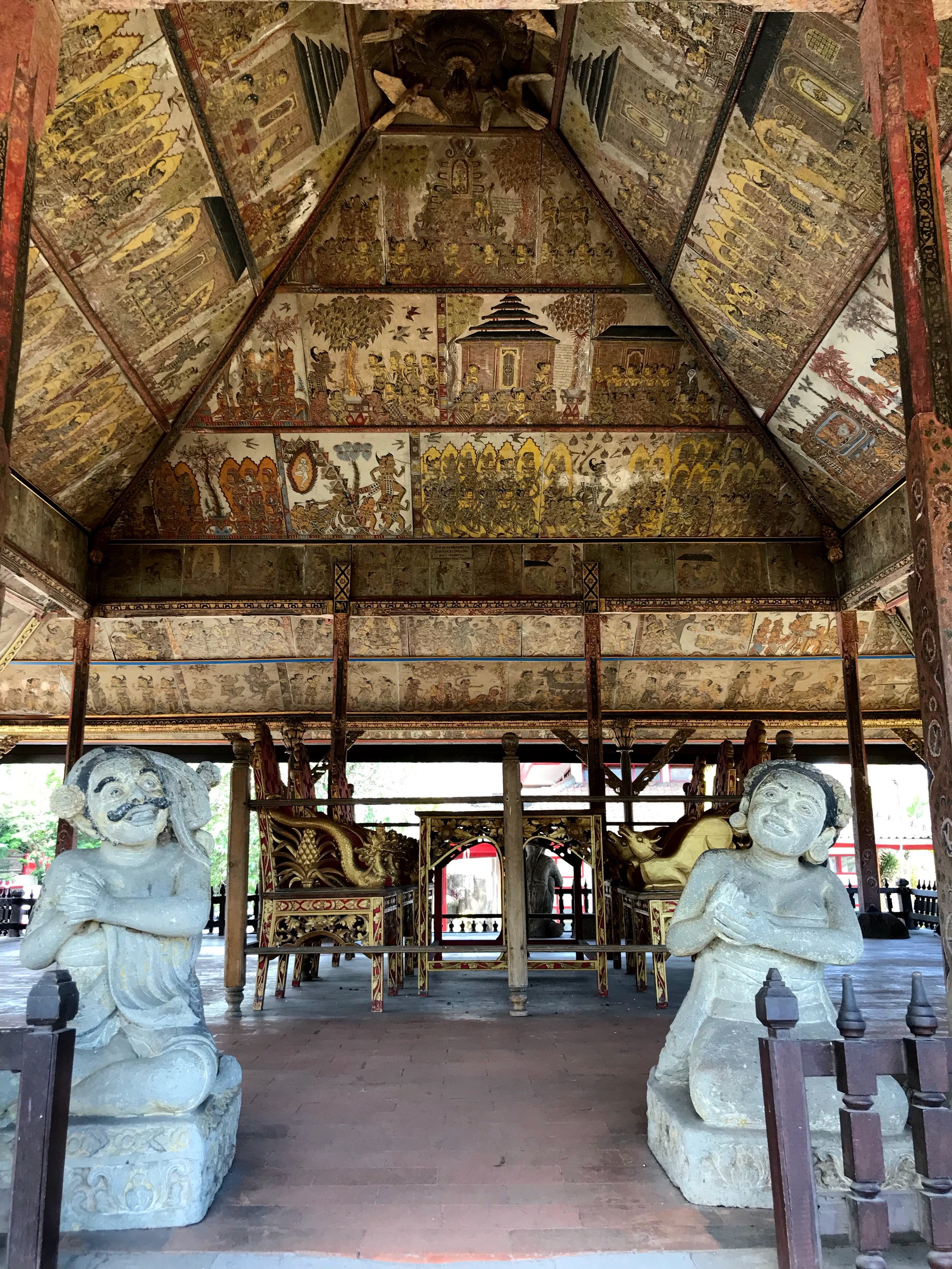
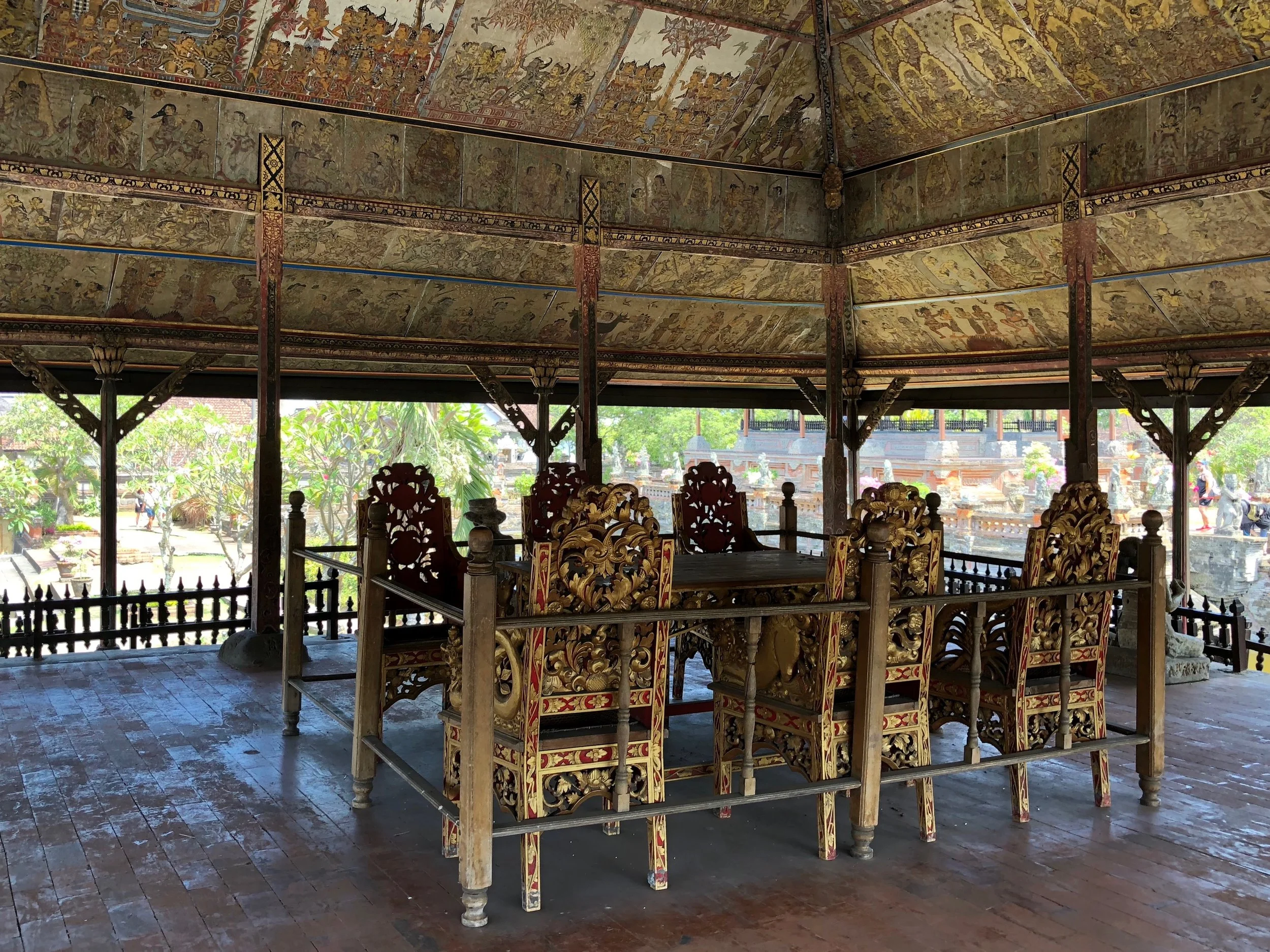
Among the few buildings that remain is the Kertha Gosa. Situated in the northeast corner of the compound, the raised pavilion served as the kingdom’s Hall of Justice. Inside sits a table and six elaborately carved wooden chairs. Painted in red and gold, the raja’s chair features the image of a lion, symbolizing his position as chief of court. A second has a cow image and was used by a Brahman priest who served as both lawyer and advisor to the raja. A third chair bearing a dragon, was for the secretary.

A lion, dragon and cow decorate the chairs in the Hall of Justice

A lion, dragon and cow decorate the chairs in the Hall of Justice

Here, the raja met visiting dignitaries and presided over a court comprised of himself and three Brahman priests. Disputes that could not be reconciled at the village level were heard and mediated within the Kertha Gosa Pavilion.

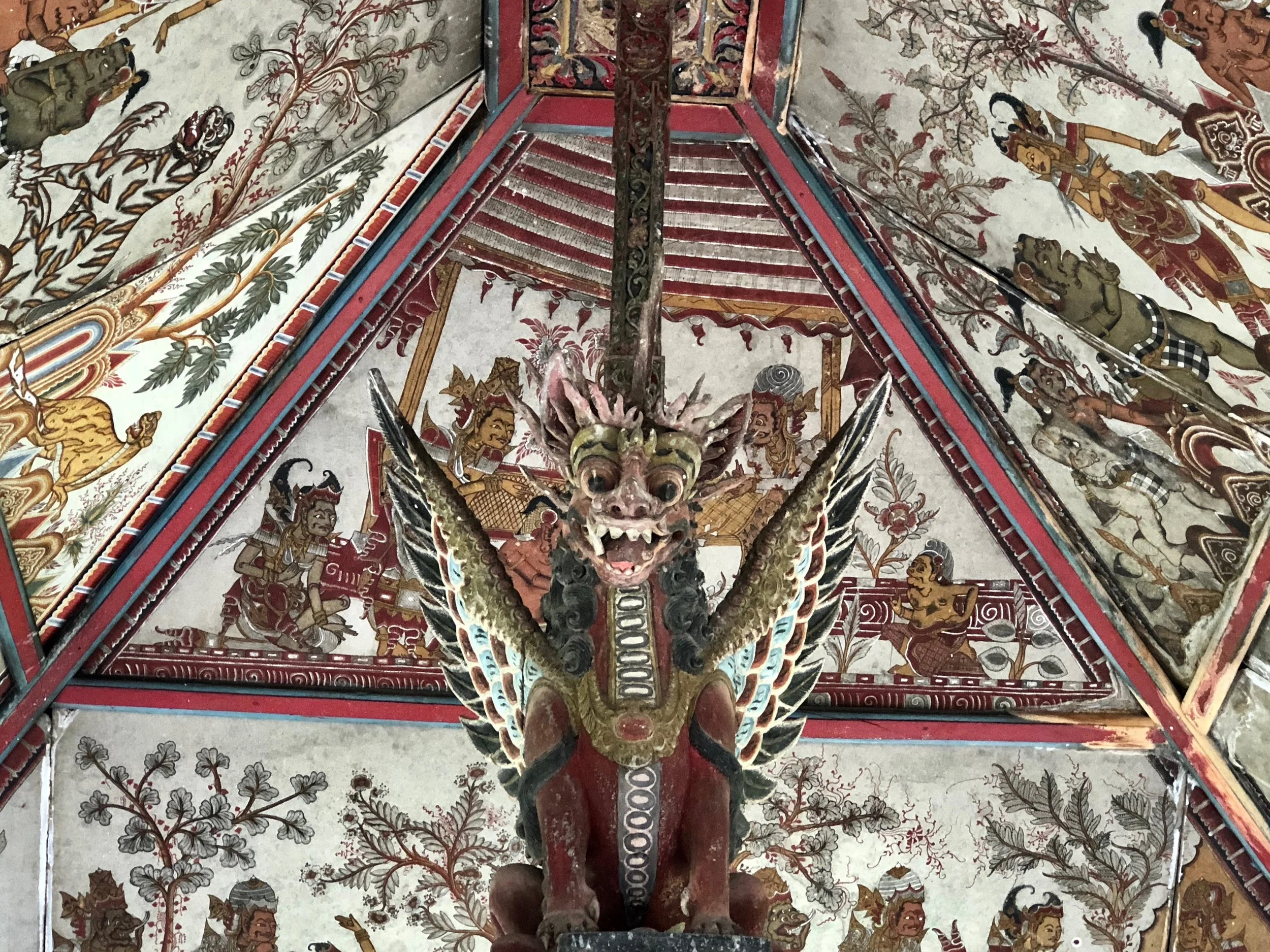
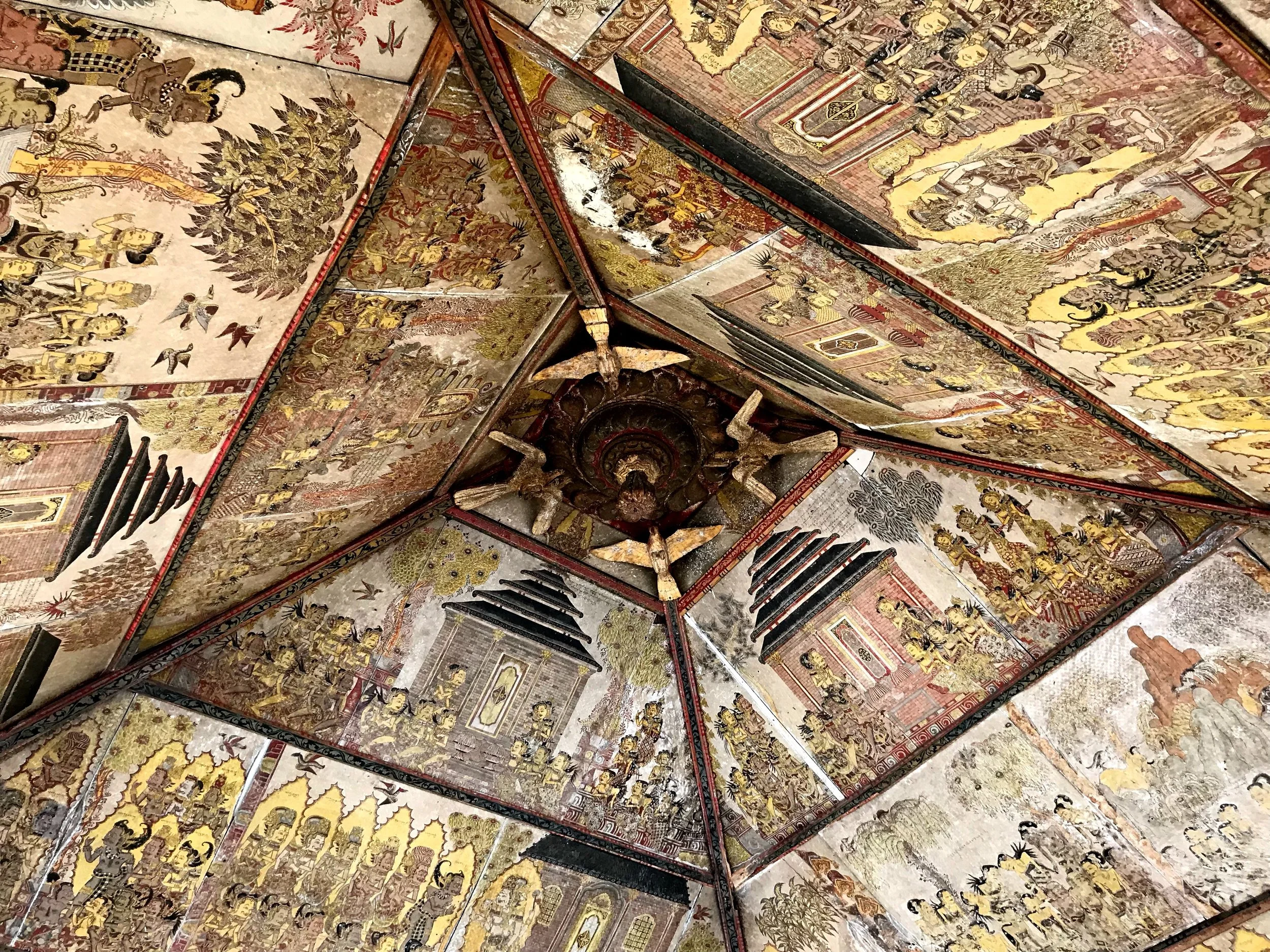
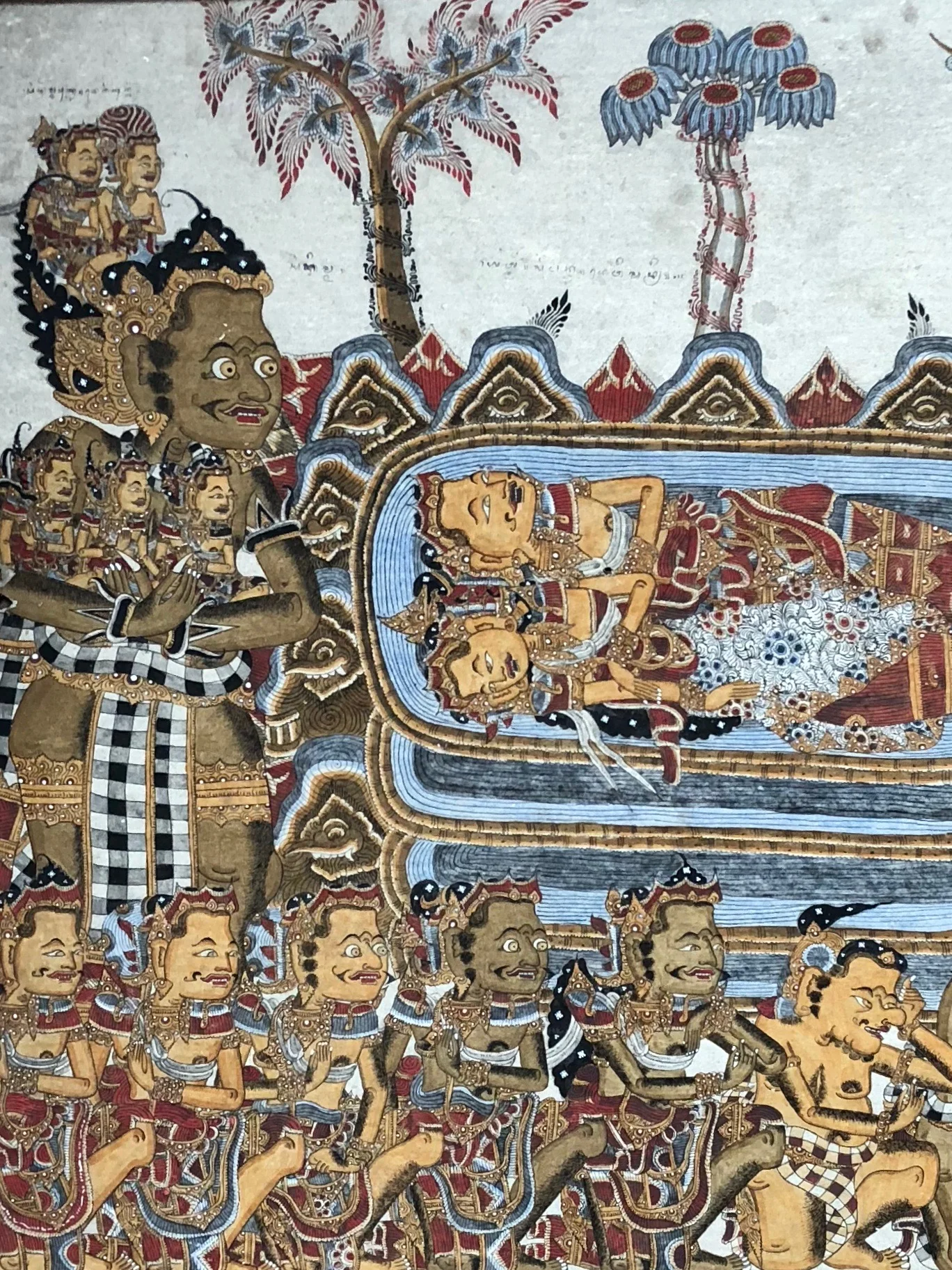
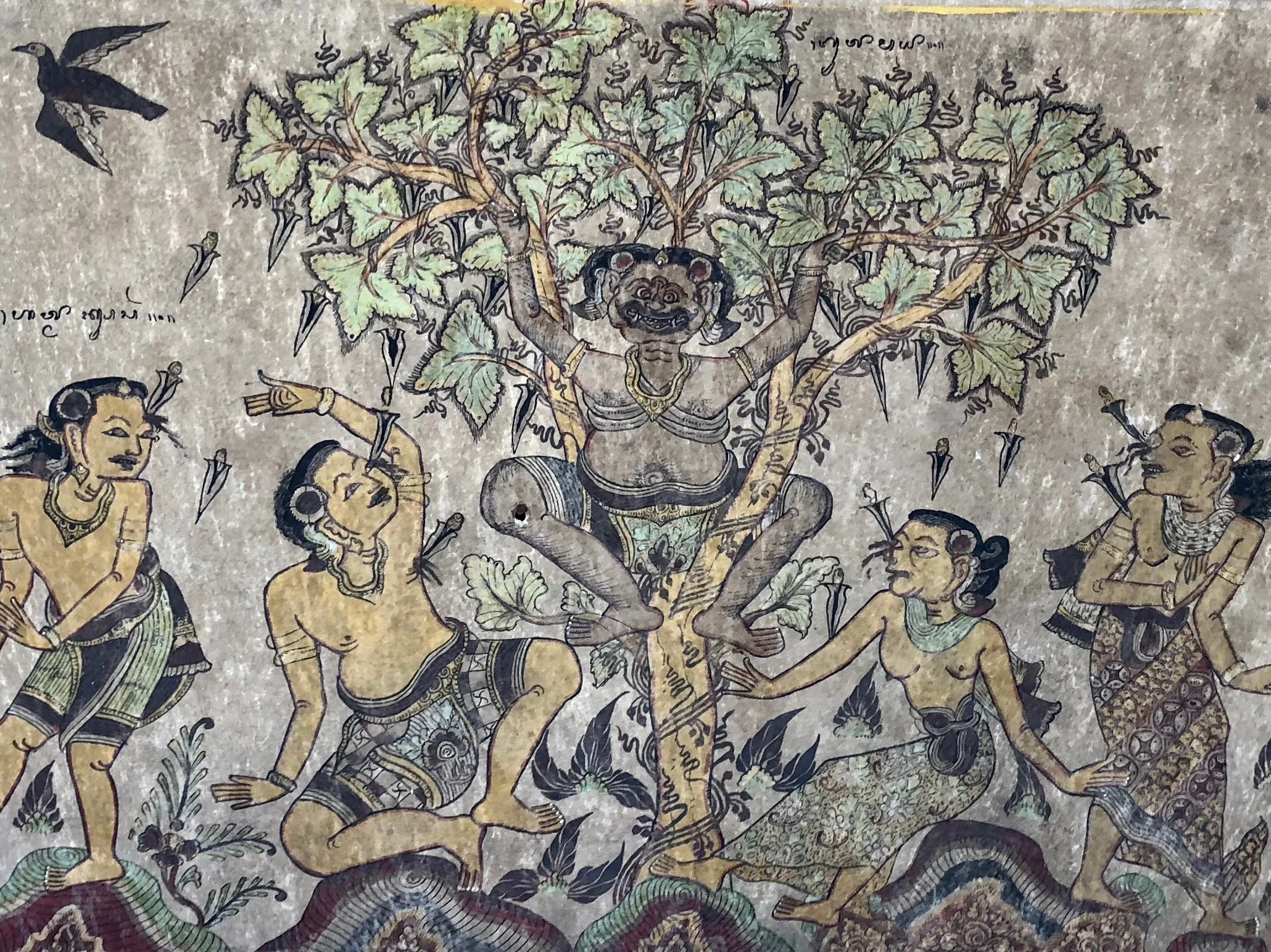
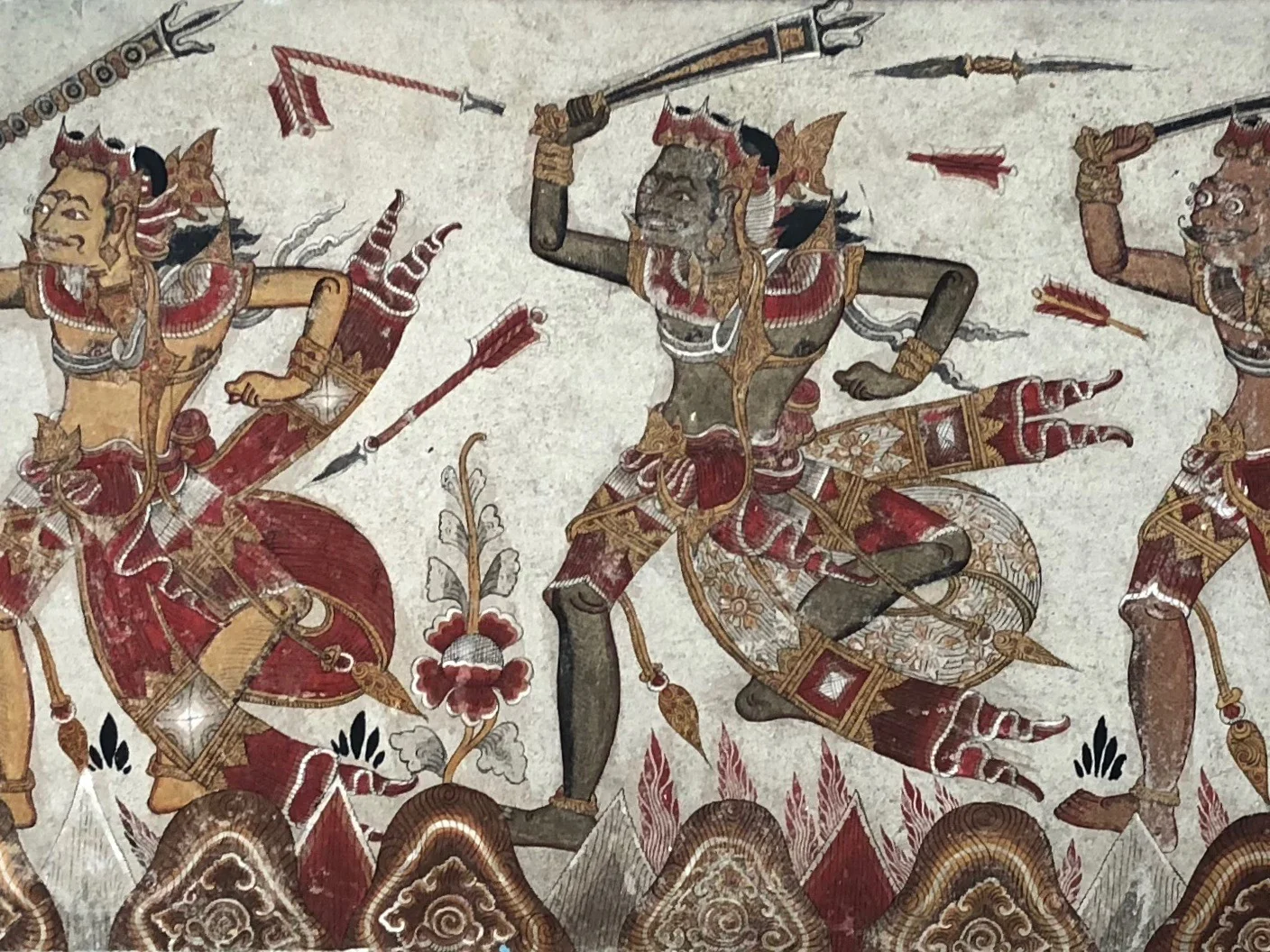
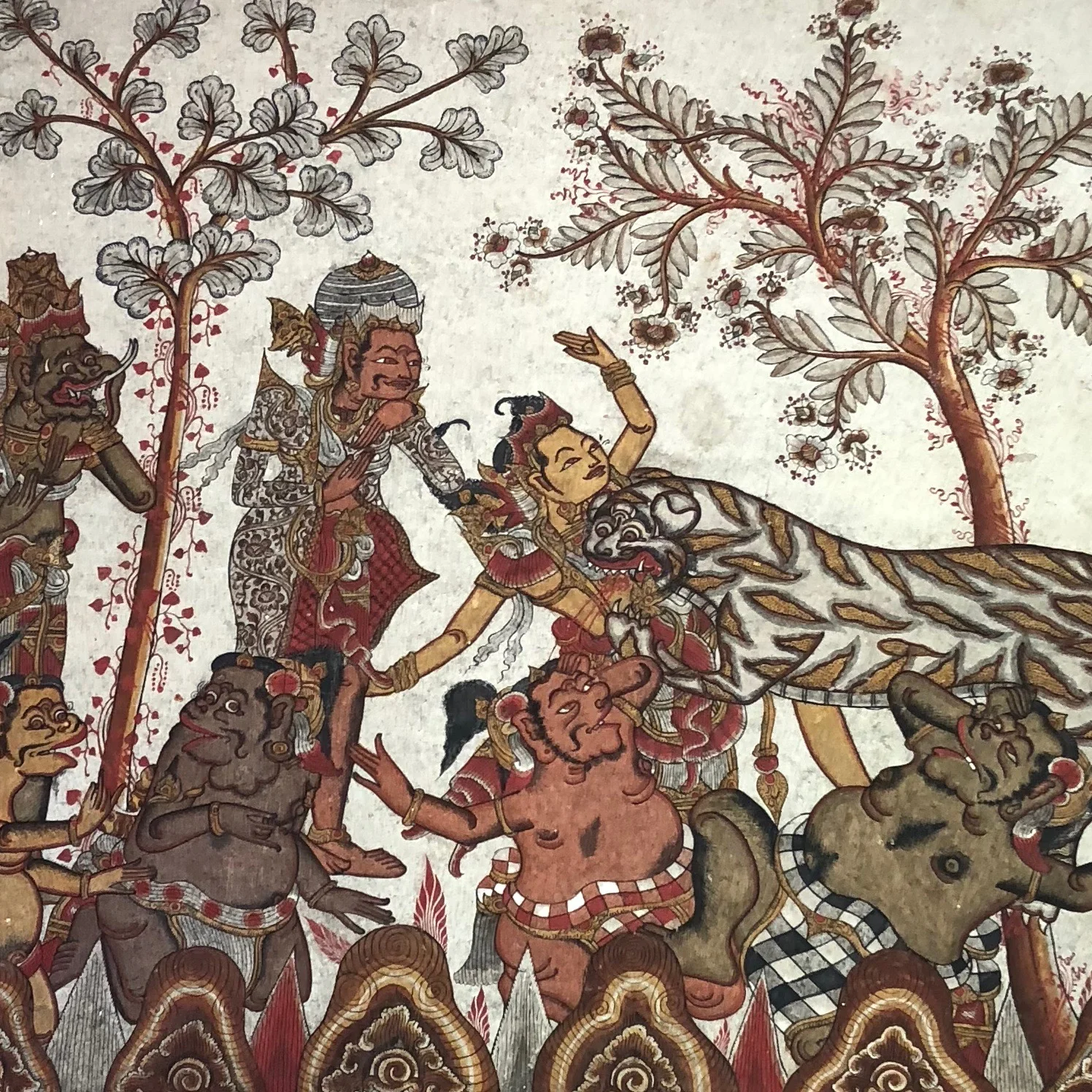
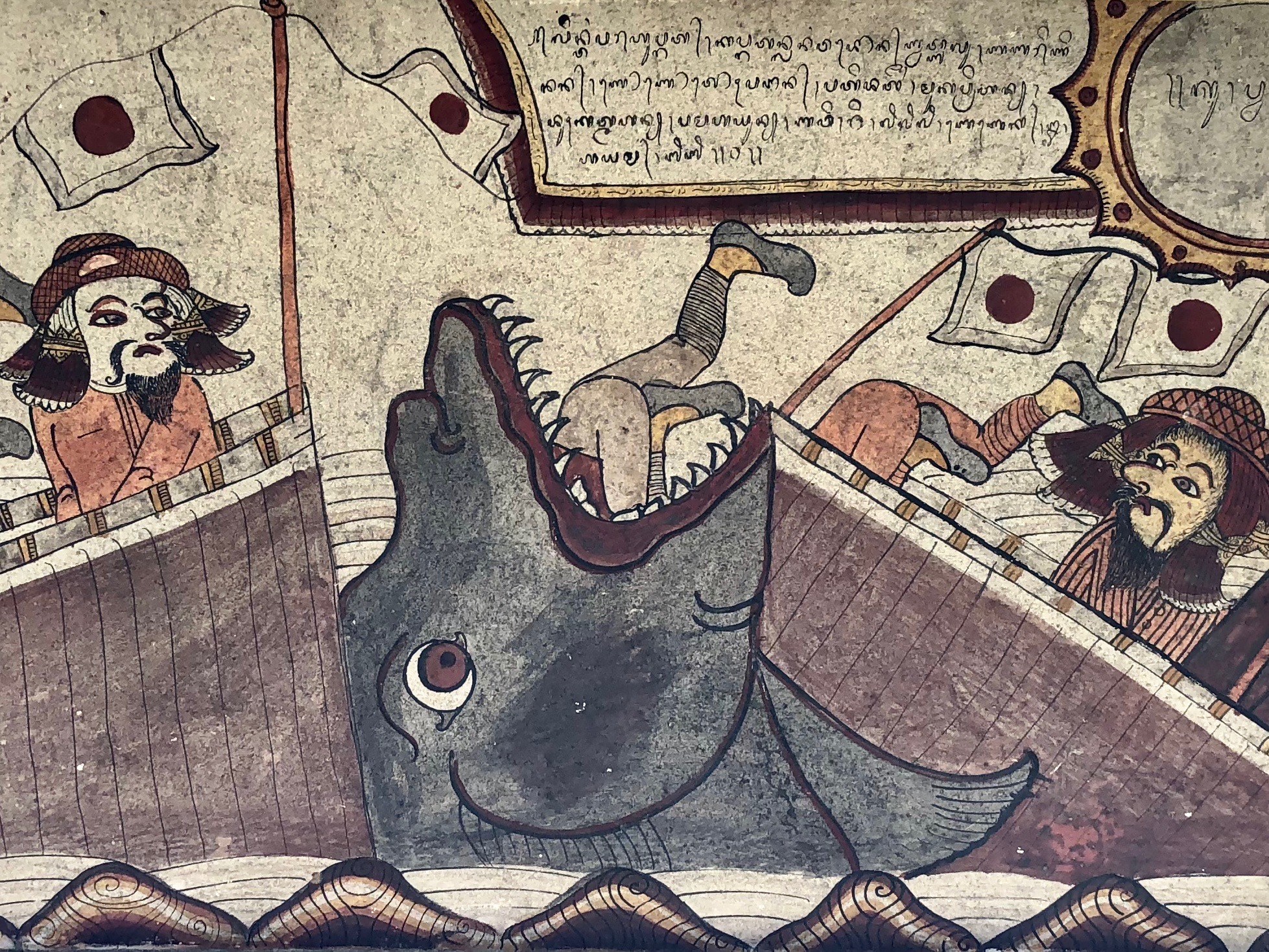
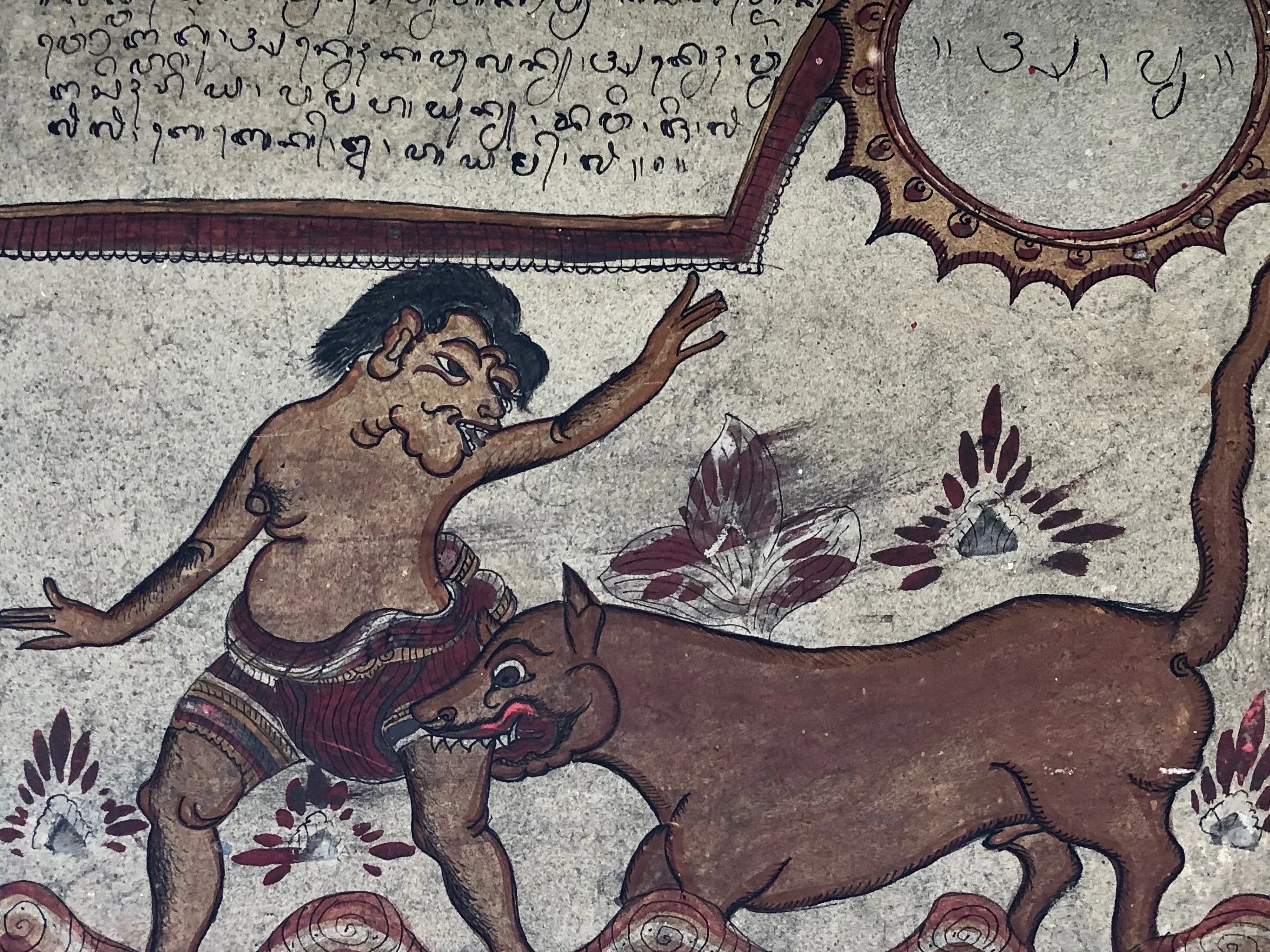
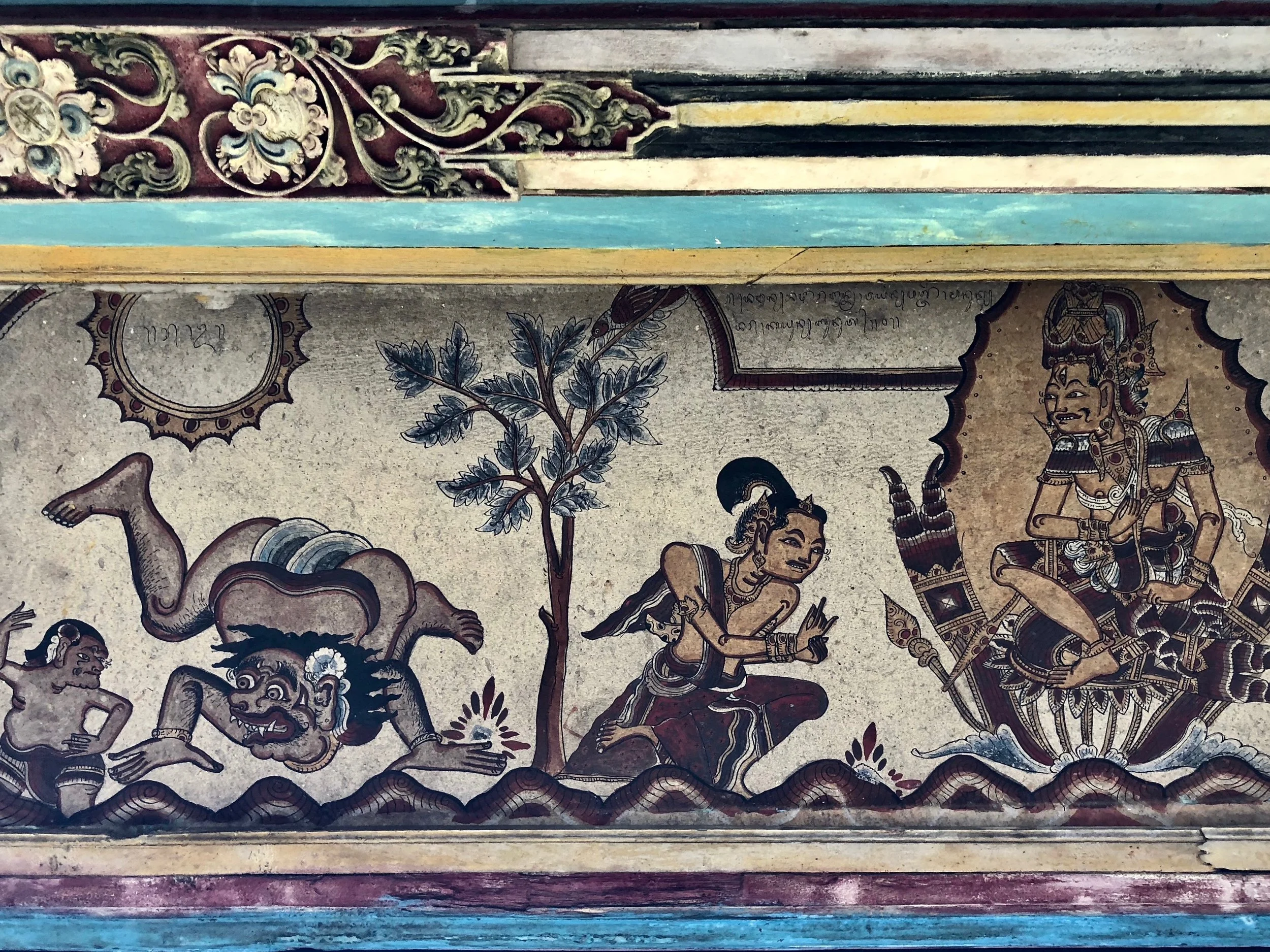
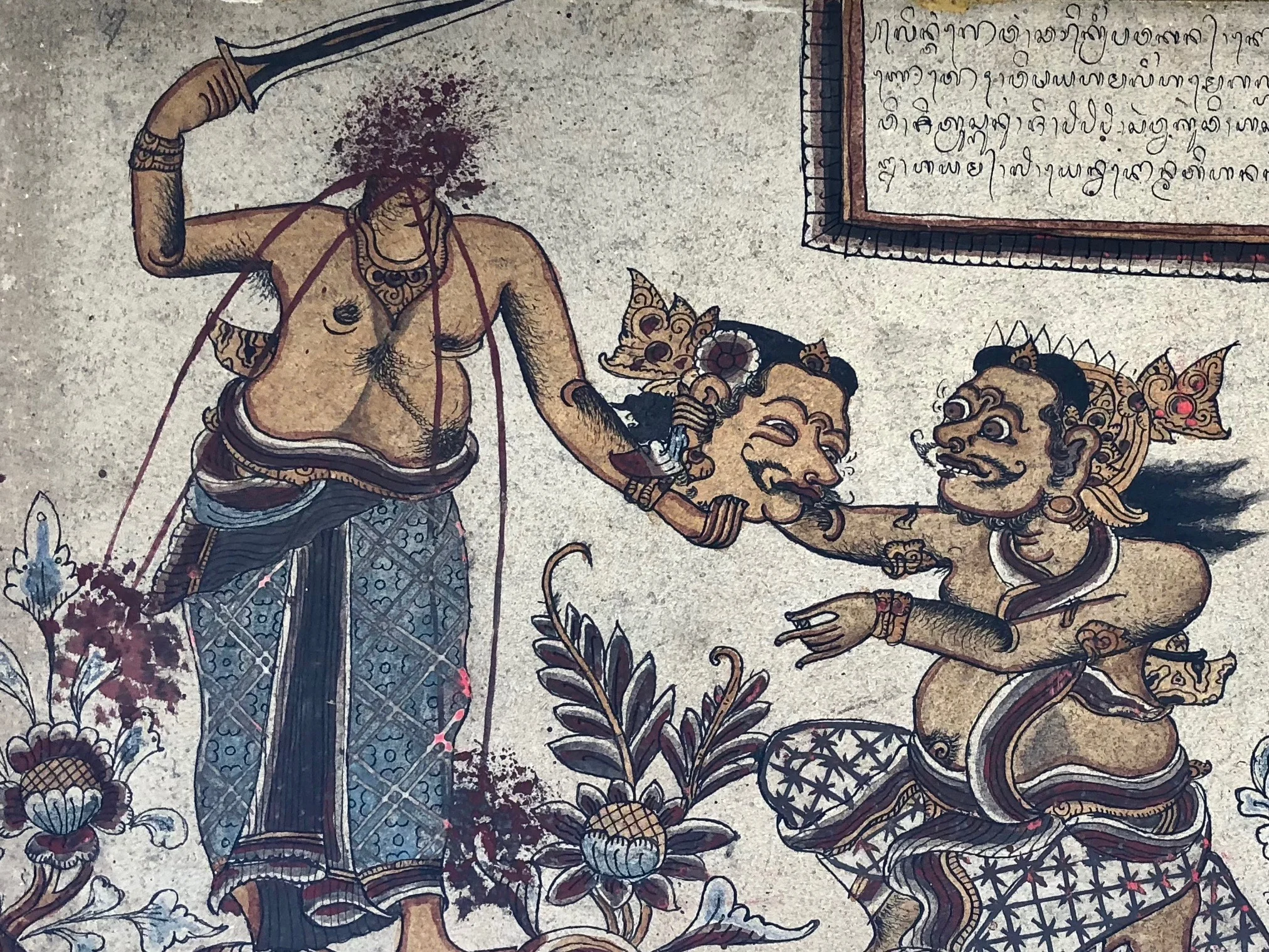
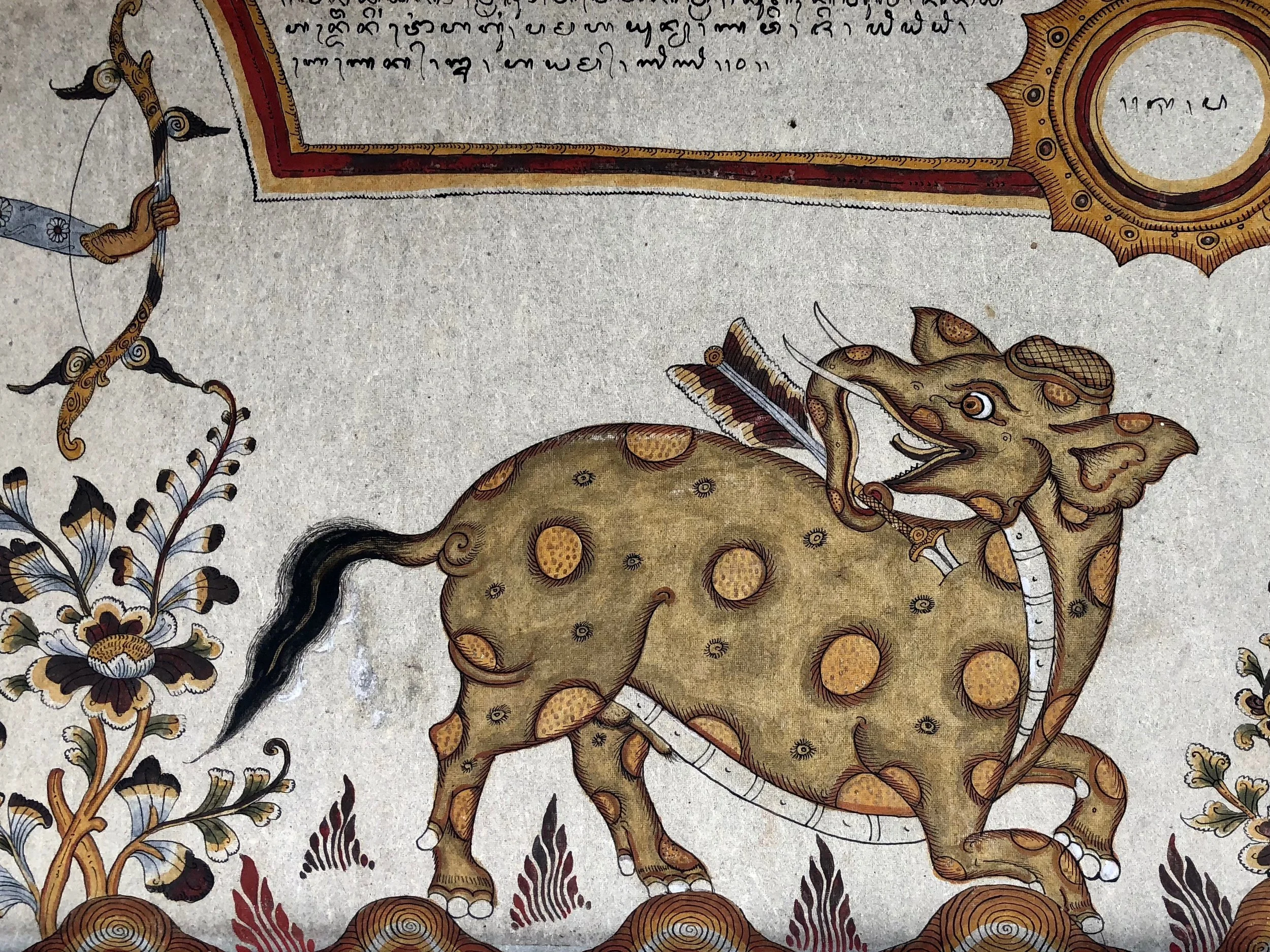
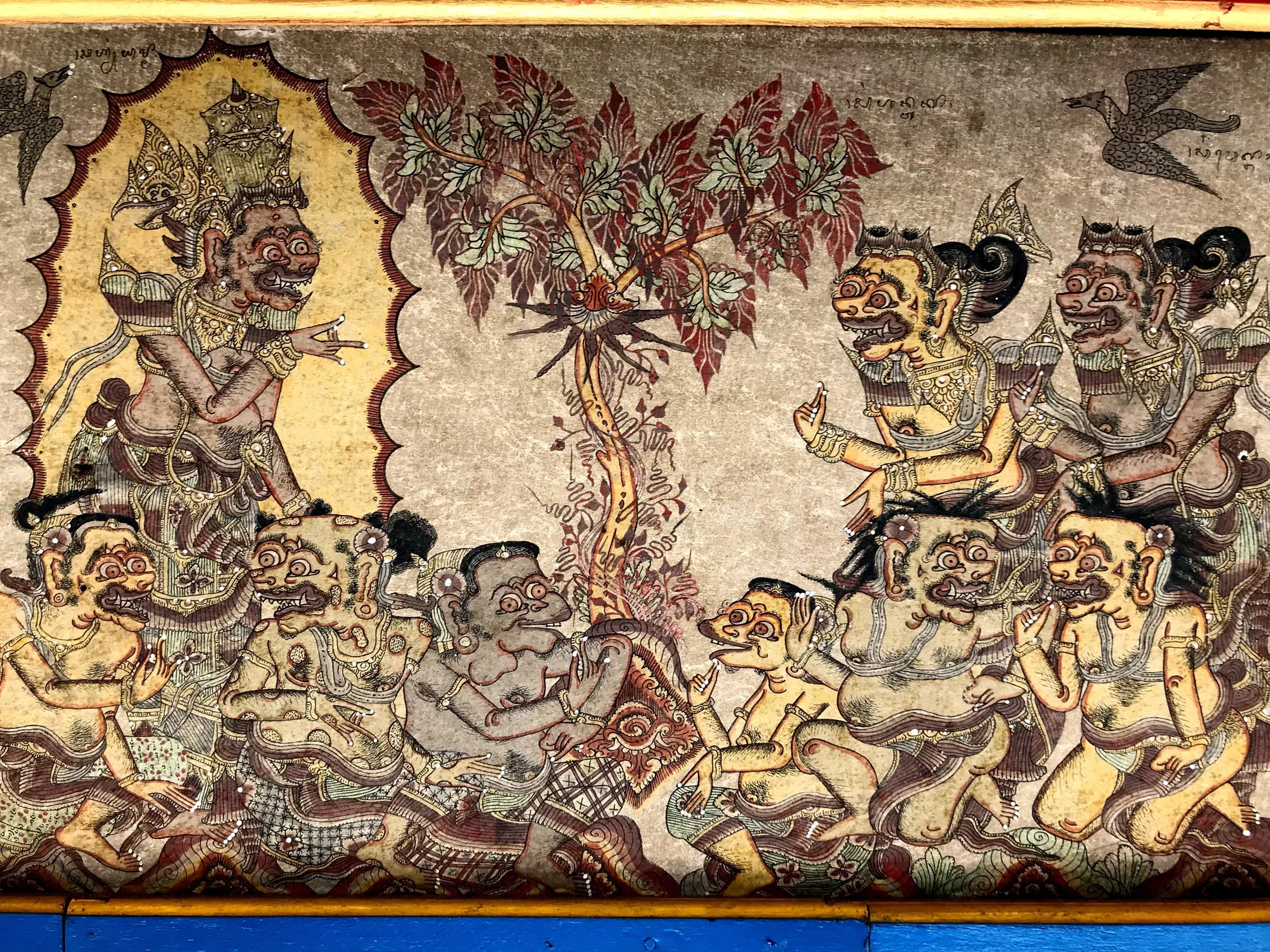
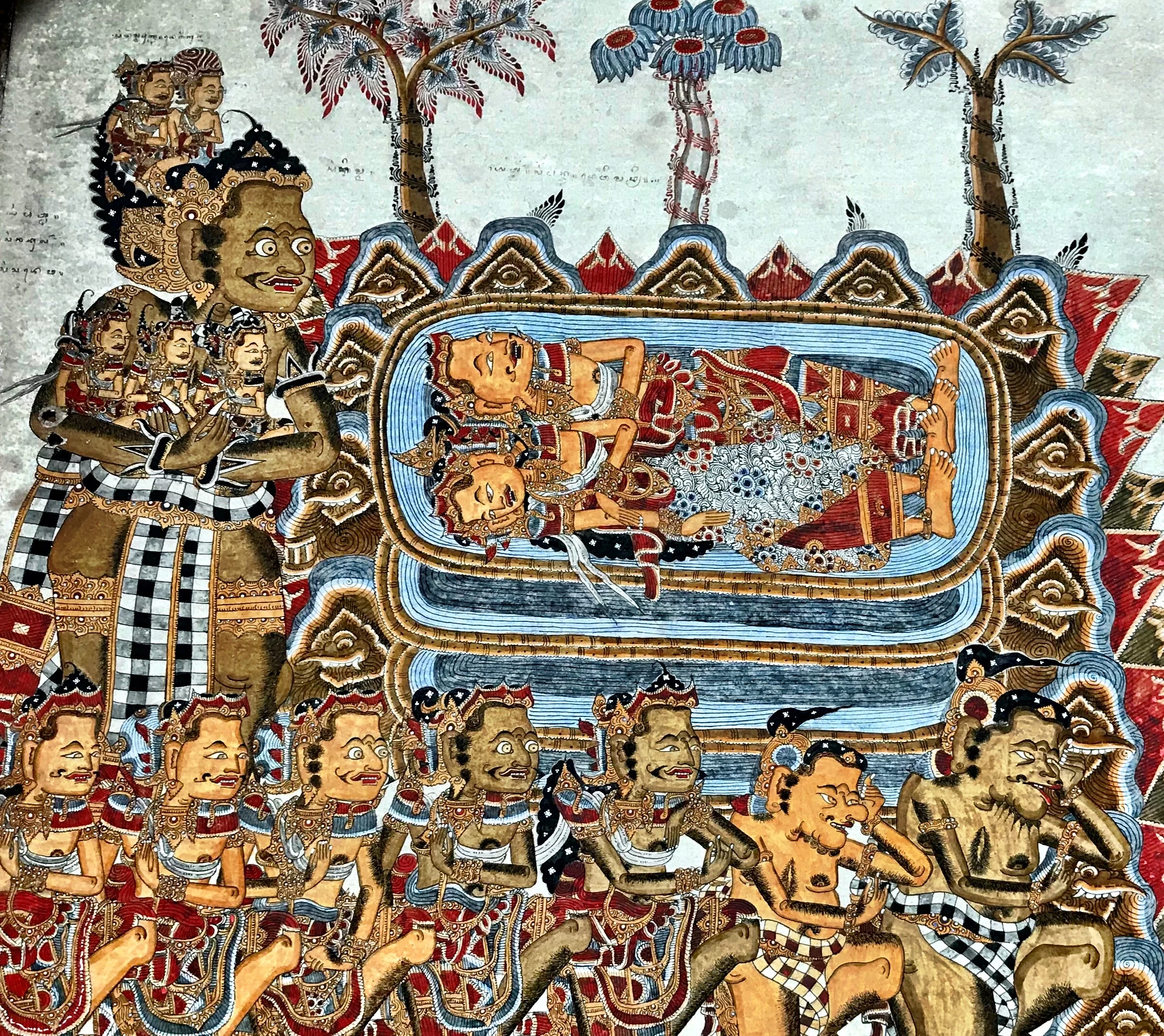
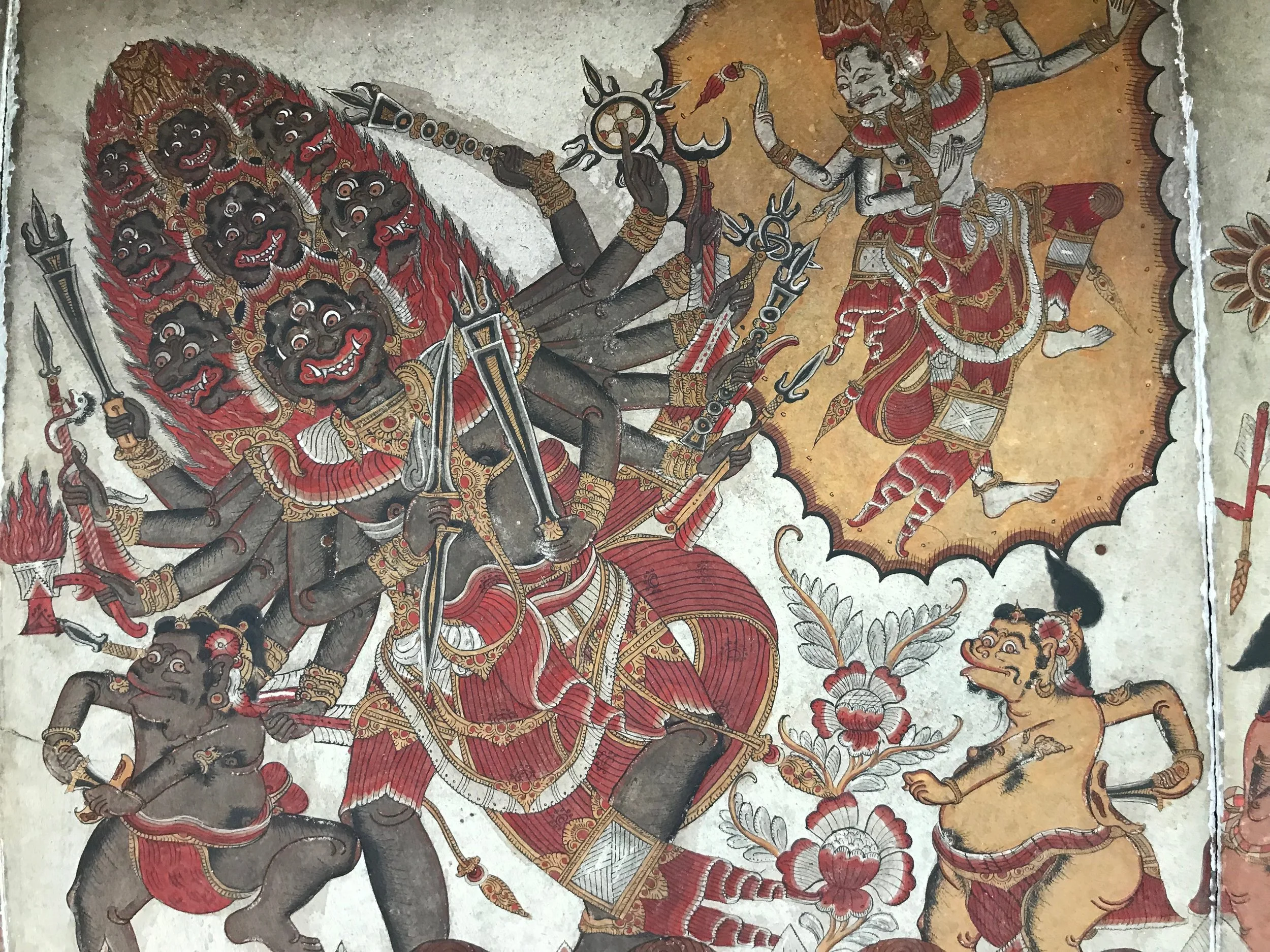
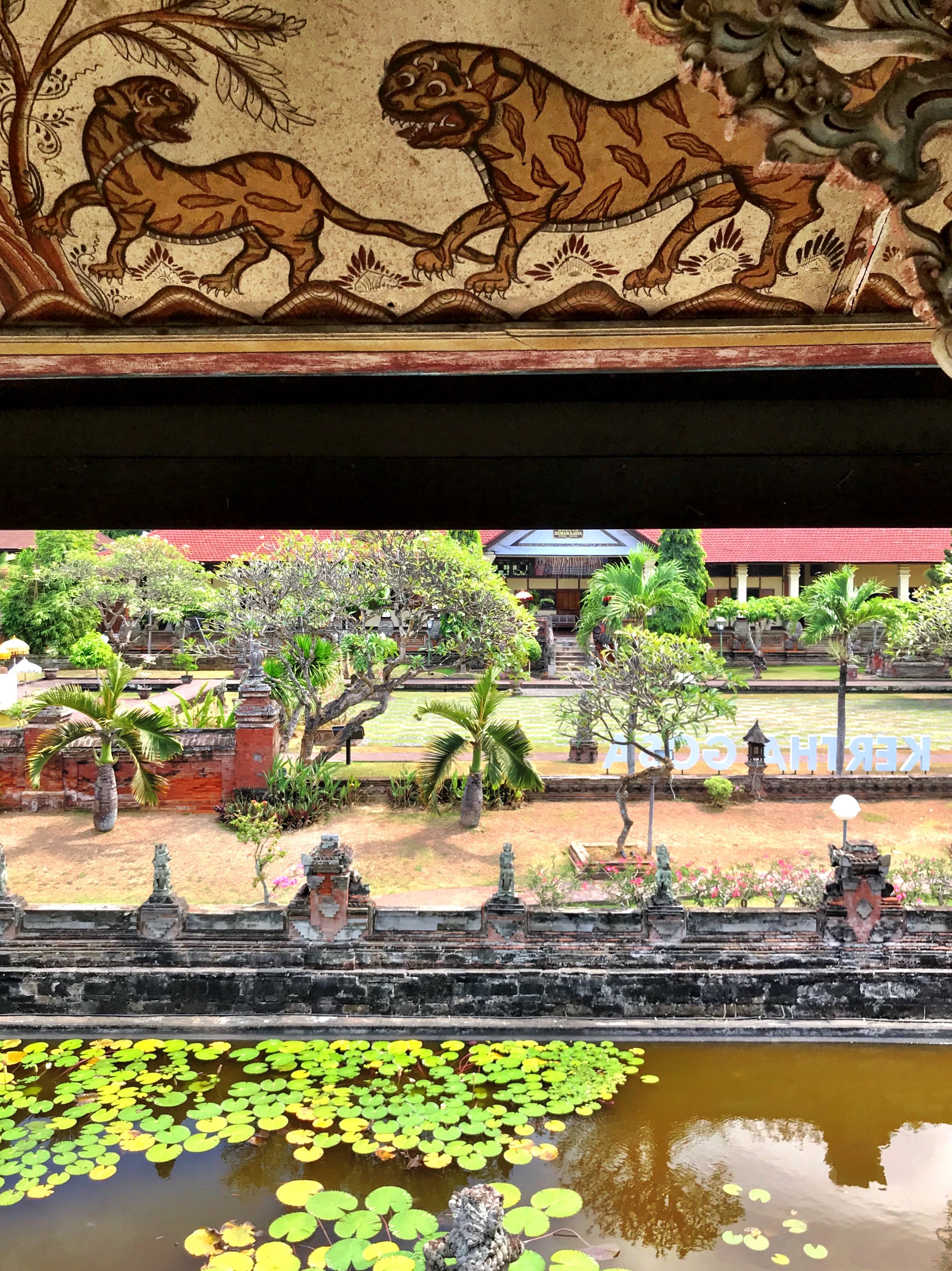
Looking up, the vaulted ceiling is covered with highly detailed narrative stories painted on wood panels, many of which are popular tales from shadow puppet theater. Their traditional style of visual storytelling is known as Kamasan or Wayang painting and were produced by generations of artists from the nearby village of Kamasan, who served as artisans to the royal court.

The ceiling is covered with illustrations — it’s like a Balinese comic book about a trip to Hell

The ceiling is covered with illustrations — it’s like a Balinese comic book about a trip to Hell

Highly detailed images of gods, humans and demons rendered in red, indigo, ochre and white are arranged to illustrate the coexistence of the natural and supernatural.

The main subject of the paintings is Bima, a strong warrior from the Mahabharata, who journeys to the underworld to save the souls of his parents. Scenes portrayed in these panels are associated with the various forms of hellish punishment awaiting those who are found guilty in the afterlife.

Klungkung consists of two main structures, but golly, they’re fun to visit

Klungkung consists of two main structures, but golly, they’re fun to visit

The Floating Pavilion of Bale Kembang

After gawking at the ceiling and taking numerous photos, Wally and I continued on to the Floating Pavilion of Bale Kembang. Surrounded by guardian statues, the structure rises from the middle of a pond in the center of the complex. The pavilion was greatly expanded by the Dutch in the 1940s and was originally a smaller, lower structure which served as the base for the raja’s guards.

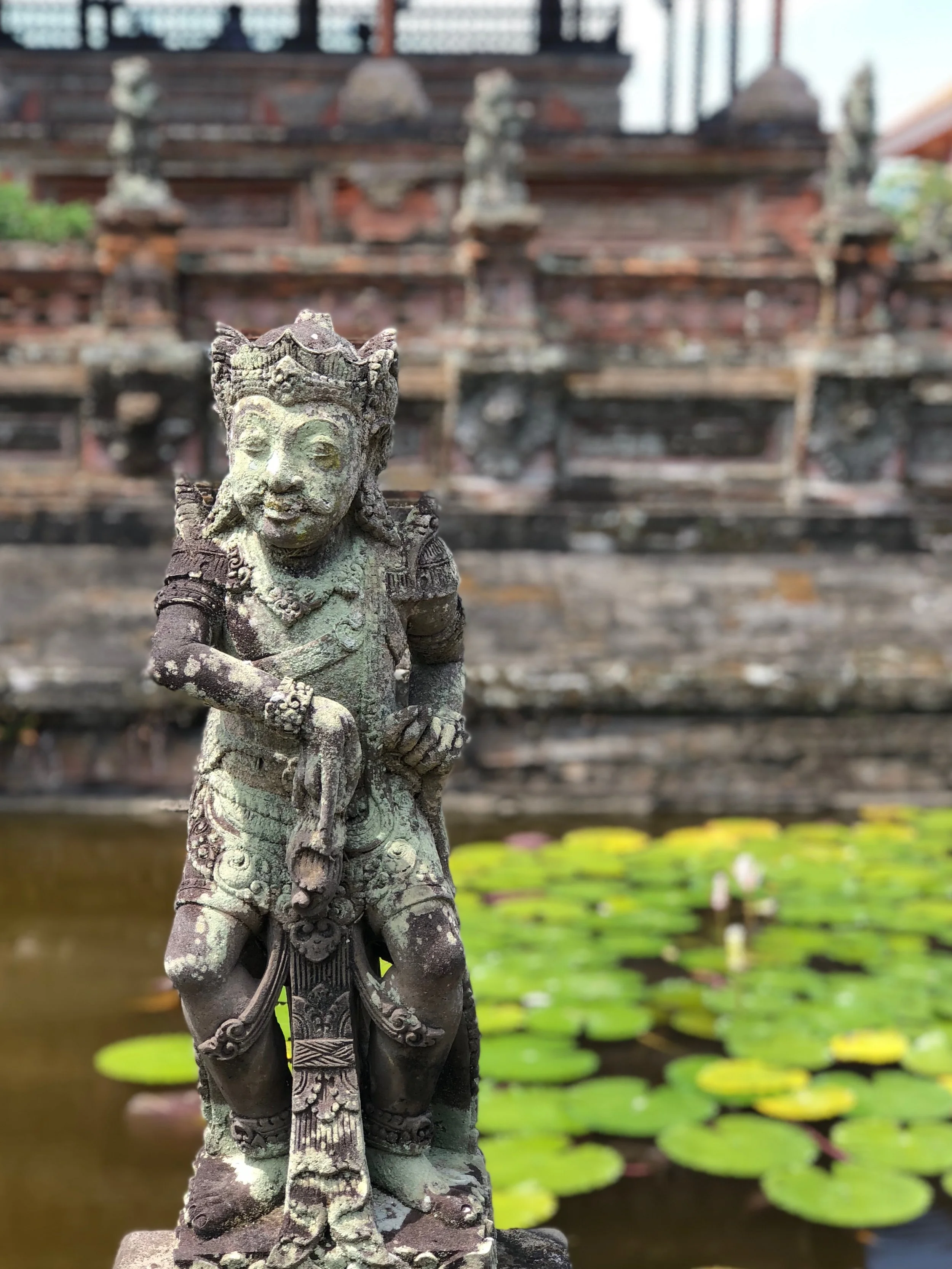
One of the guardians of Klungkung. Too bad they couldn’t have saved the local kingdom from colonization by the Dutch

One of the guardians of Klungkung. Too bad they couldn’t have saved the local kingdom from colonization by the Dutch

Lichen covers many of the statues on Bali, lending an ancient otherworldly air to them

Lichen covers many of the statues on Bali, lending an ancient otherworldly air to them

One of the narratives within the Bale Kembang depicts episodes from the story of the Buddhist king Sutasoma, who defeated his enemies through passive resistance. Also portrayed is the rags-to-riches folktale of the humble Pen and Men Brayut and their 18 children, who through their tireless labor, no pun-intended, achieve wealth. Bordering these panels is the palindon, an earthquake calendar foretelling the indirect effects of divine power should seismic activity occur during the corresponding month.

Overwhelmed by the variety of demon and exotic fauna before me, I barely noticed the male and female artists seated on the floor of the pavilion who were putting the finishing touches on single-scene Kamasan paintings. The man was doing the drawing and the woman filling in the color with a small brush. Stacks of these paintings and hand-painted fans, for sale as souvenirs were placed nearby.

Two artists create Kamasan style paintings, fans and Balinese calendars

Two artists create Kamasan style paintings, fans and Balinese calendars

In a bit of a daze by what we had just seen (or perhaps it was just hunger and the heat), Wally and I left the Floating Pavilion. One of the aforementioned women we had passed upon entering the complex approached us, delicately extracting several hand-painted eggs from a white plastic bag. Our resistance worn down, we purchased a few as gifts, agreeing to keep one for ourselves. We were glad we did, as we now have a souvenir of our experience at this magical place. –Duke

klungkungfloating2.JPG

Klungkung Royal Palace
Jalan Diponegoro
Semarapura Kangin
Central Semarapura
Klungkung Sub-District
Klungkung Regency
Bali 80761
Indonesia

Pura Kehen: The Fire Temple of Bali

The parts of a Bali temple explained, from the bentar to padmasana to kulkul, in this most sacred of temples, which sports a truly giant banyan.

Pura Kehen is dedicated to the Hindu god of fire

Pura Kehen is dedicated to the Hindu god of fire

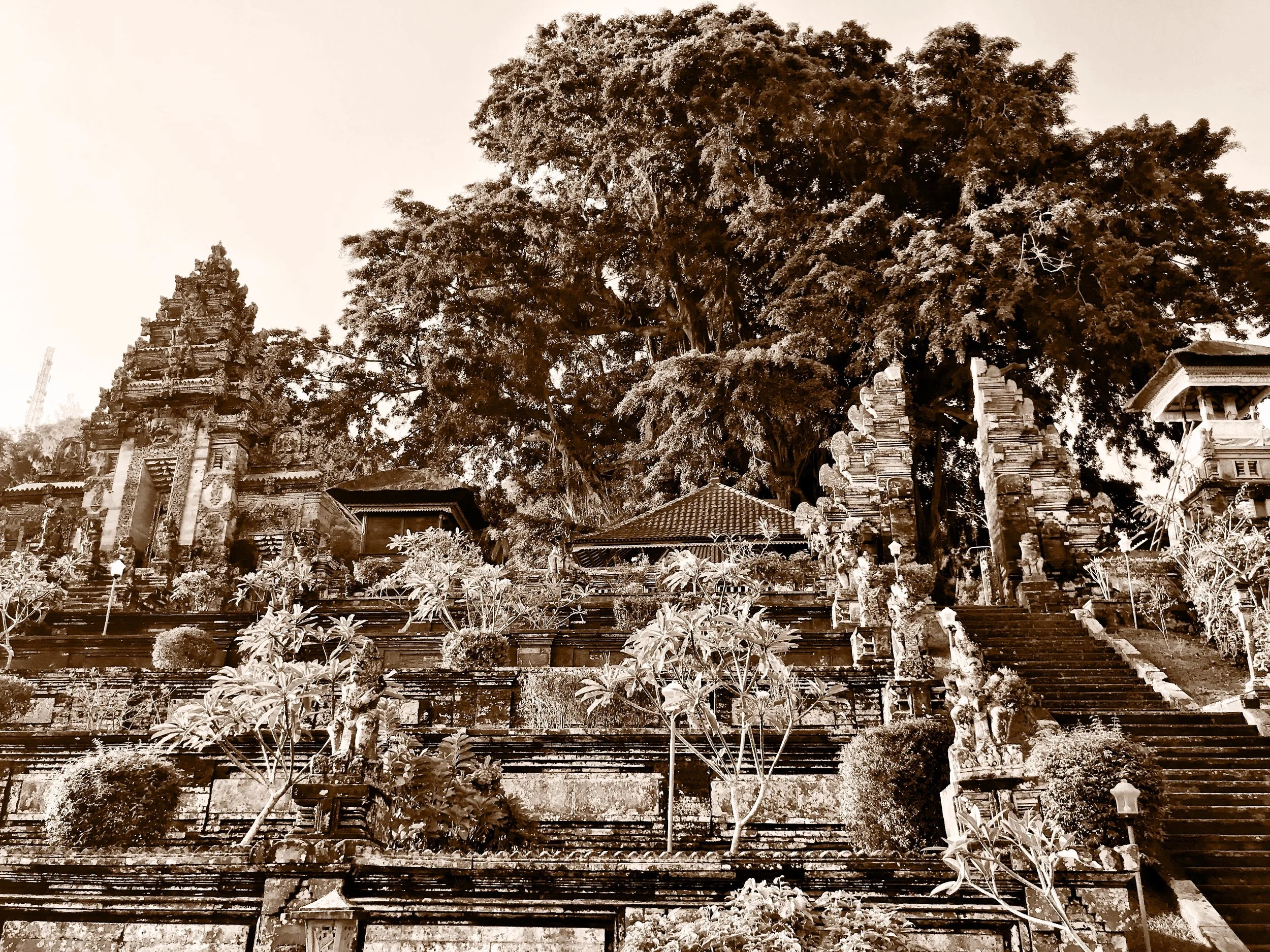
On our fourth day in Bali, we arrived at Pura Kehen, an impressive state temple located in the village of Cempaga in the Bangli Regency. Although it’s the largest and most sacred of the region, the temple was blissfully beyond the tourist radar and appealed to our desire to experience the quieter side of Bali.

A glimpse of the village down the hill through the main entrance of Pura Kehen

A glimpse of the village down the hill through the main entrance of Pura Kehen

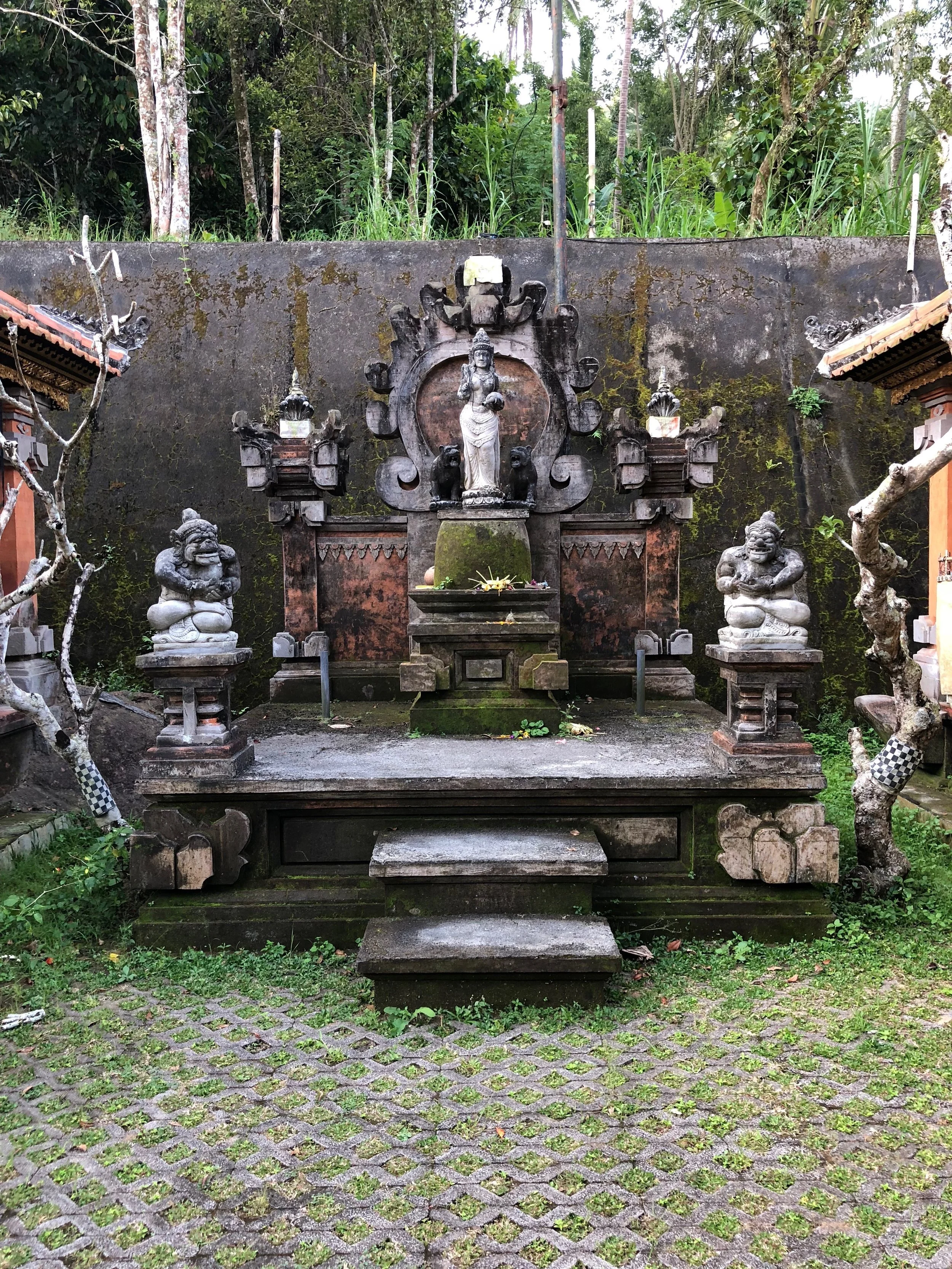
Smaller shrines on the temple complex are resting places for ancestral spirits during temple ceremonies

Smaller shrines on the temple complex are resting places for ancestral spirits during temple ceremonies

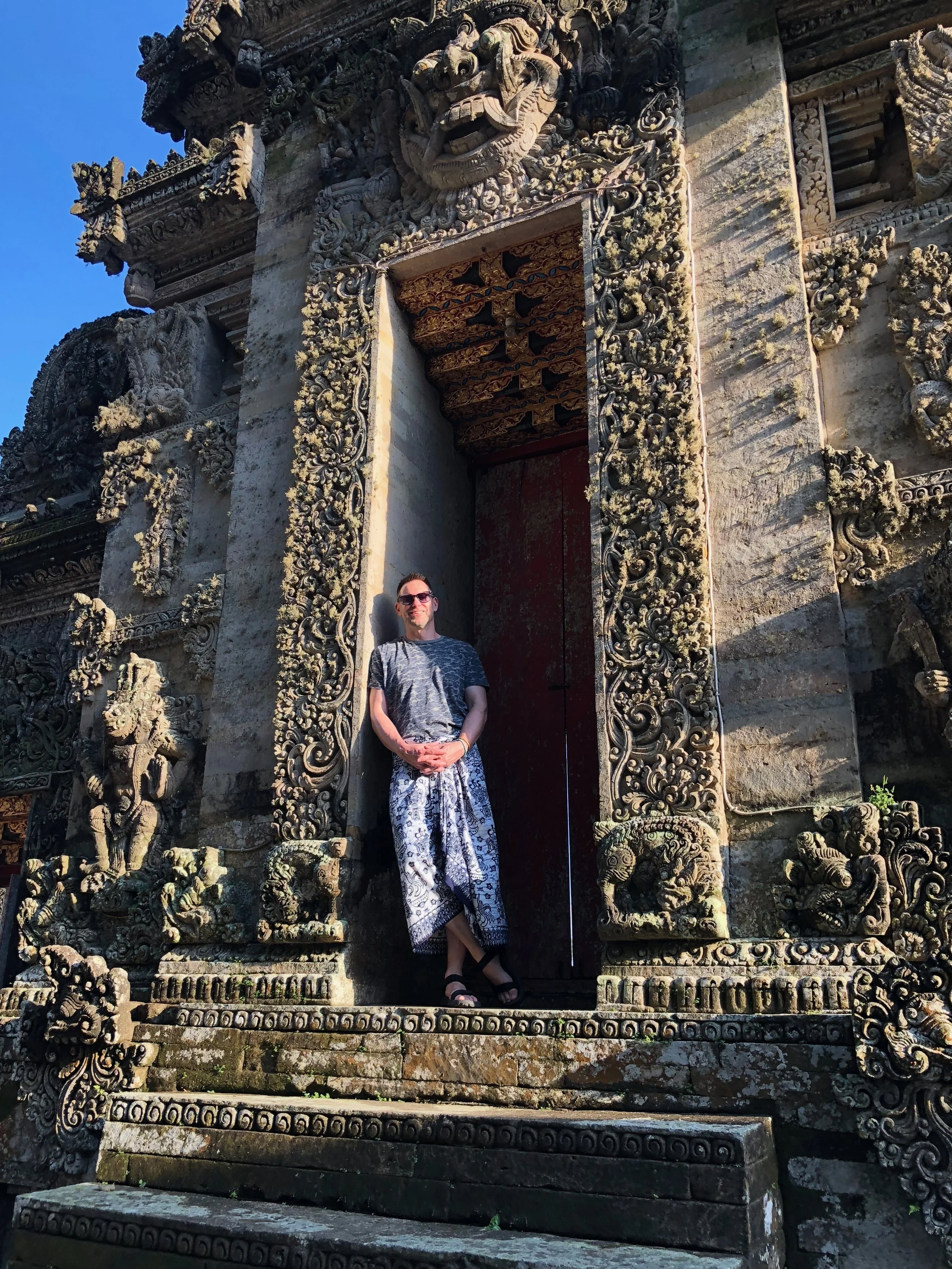
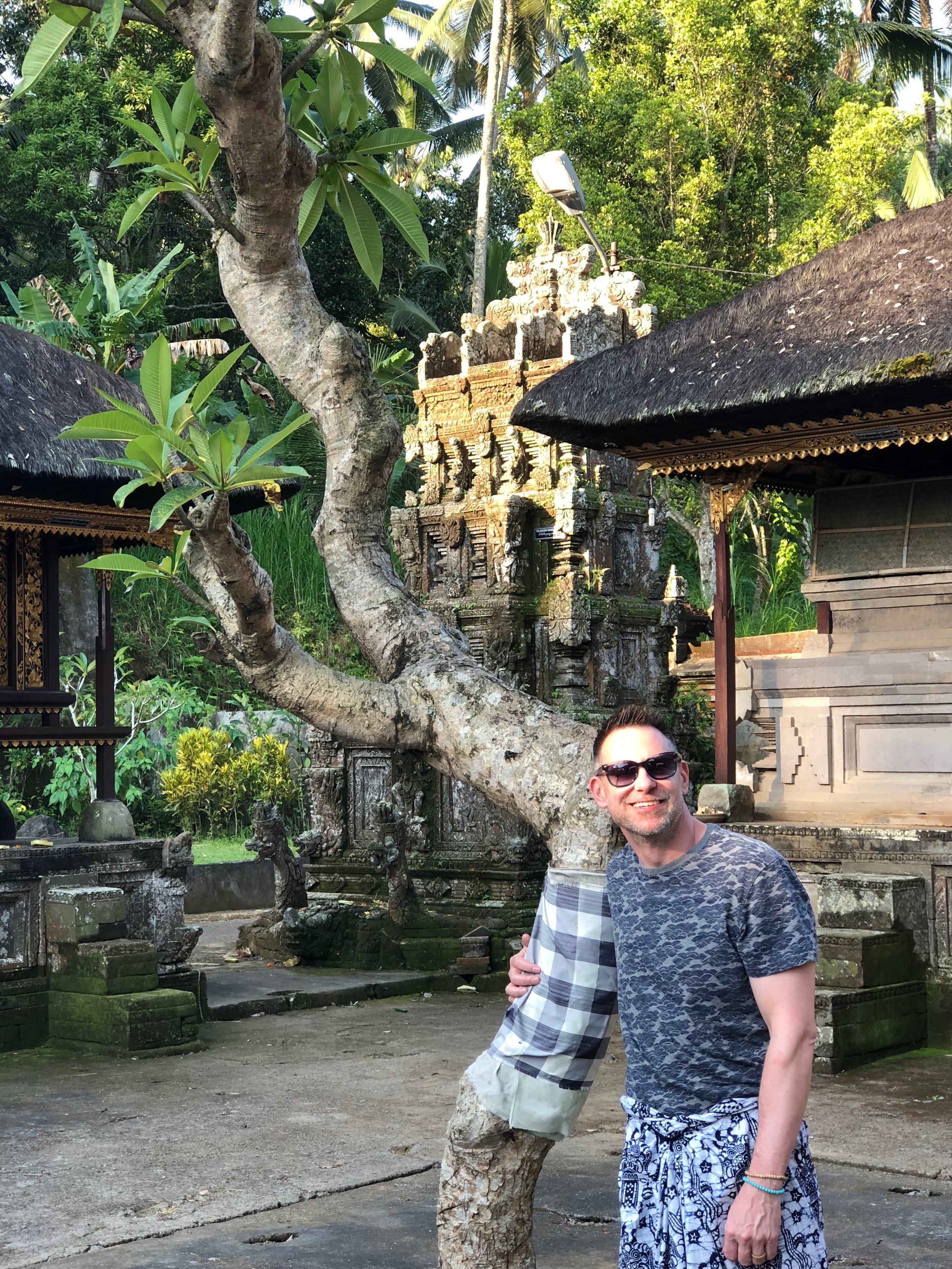
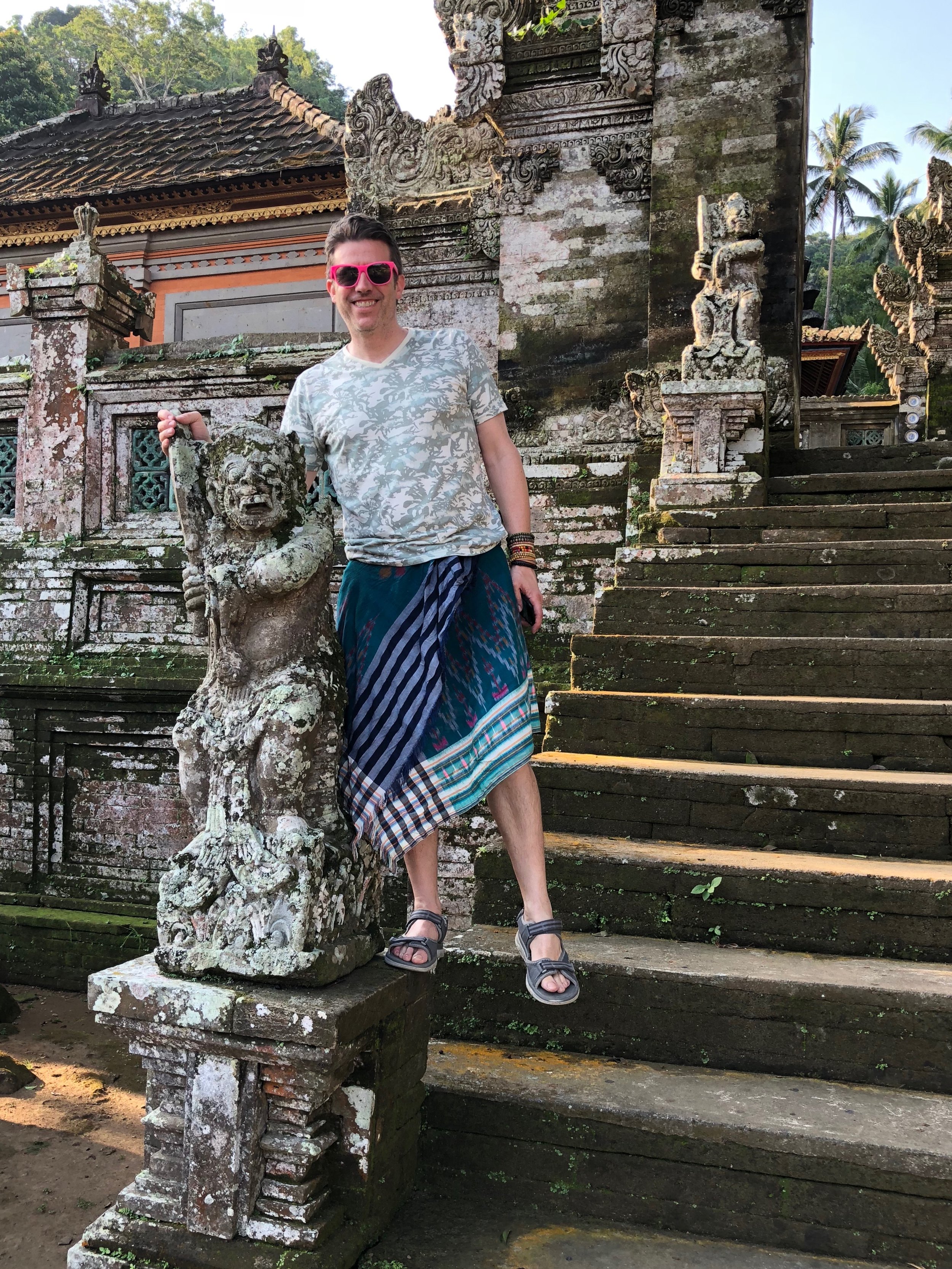
You have to wear a sarong like Duke when visiting a temple on Bali

You have to wear a sarong like Duke when visiting a temple on Bali

The ancient temple compound was erected during the 9th century and was known as Pura Hyang Api, dedicated to the supreme being Agni, the Hindu god of fire. When sages moved from one ashram to another, it was customary to carry fire along. A couple of centuries later, the temple was renamed Pura Hyang Kehen, derived from the Balinese word keren, which translates to “flame.”

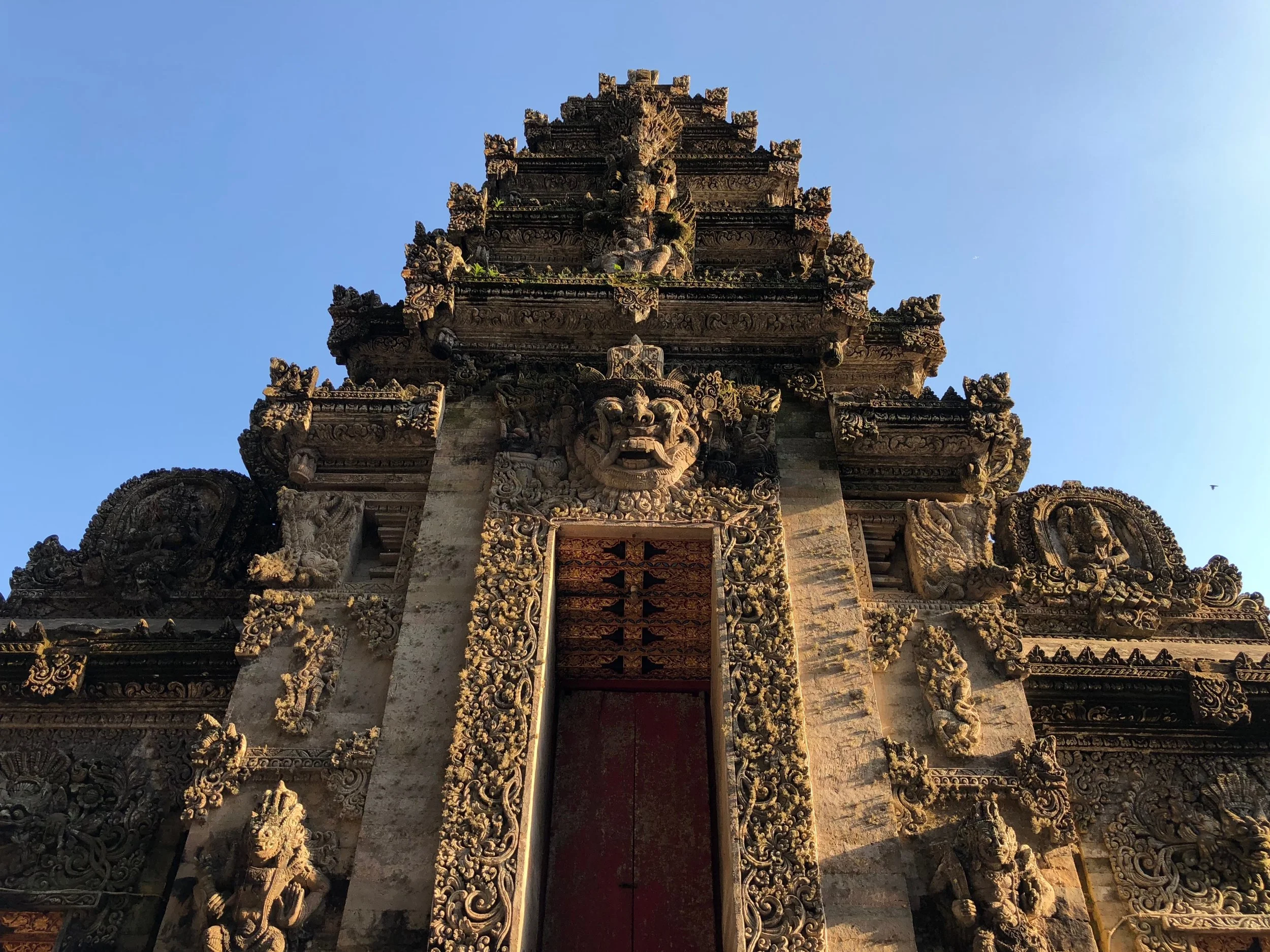
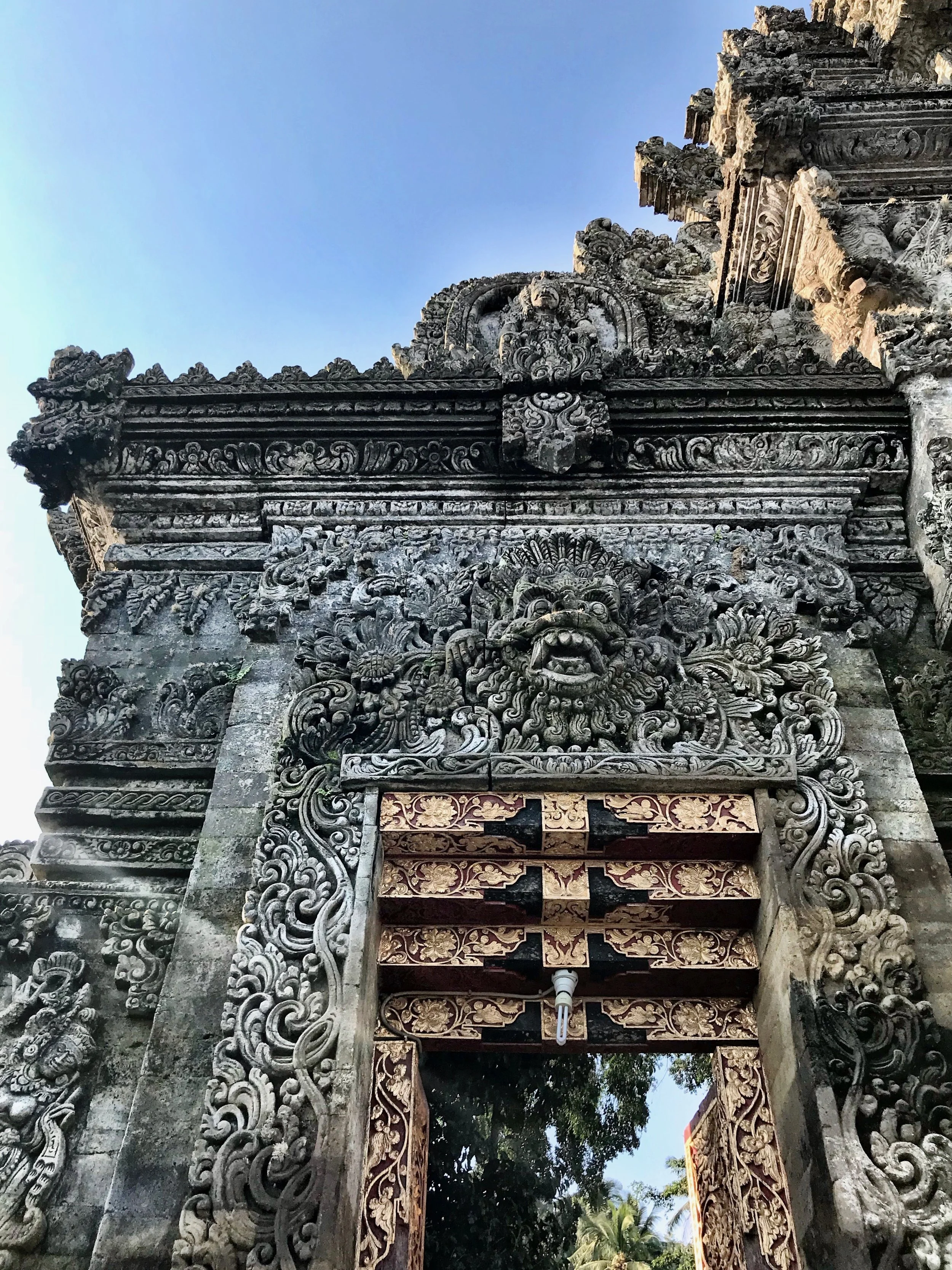
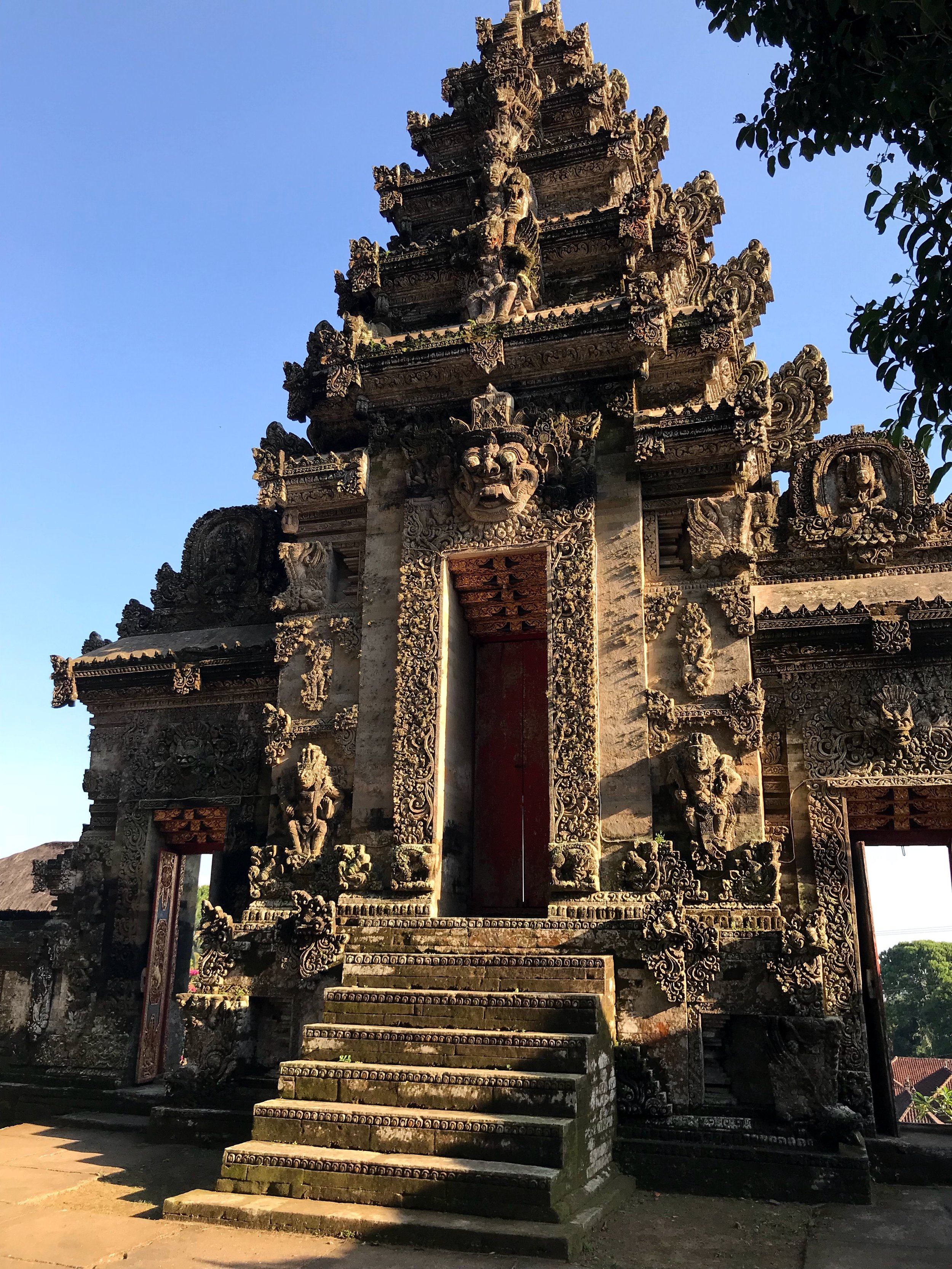
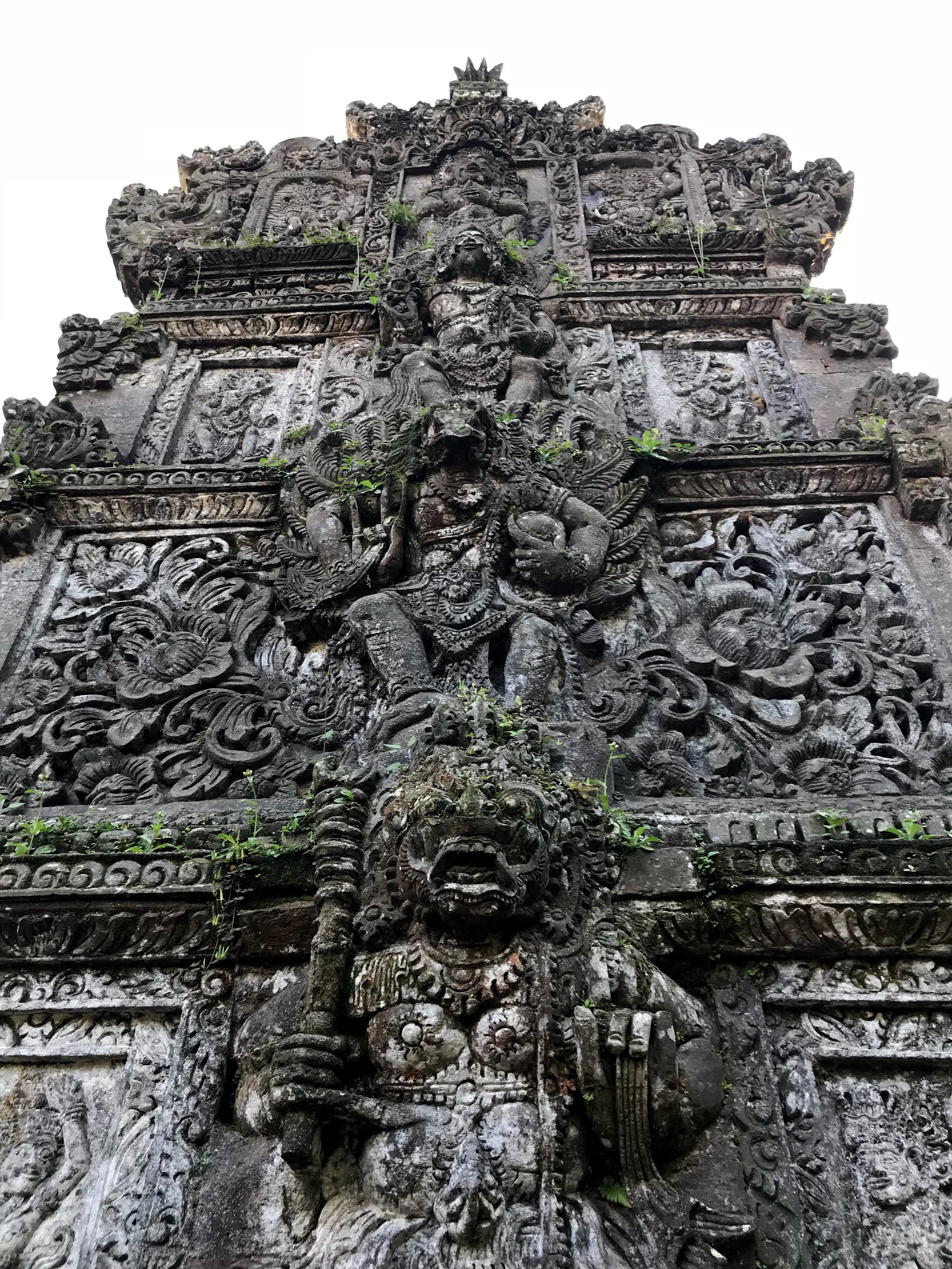
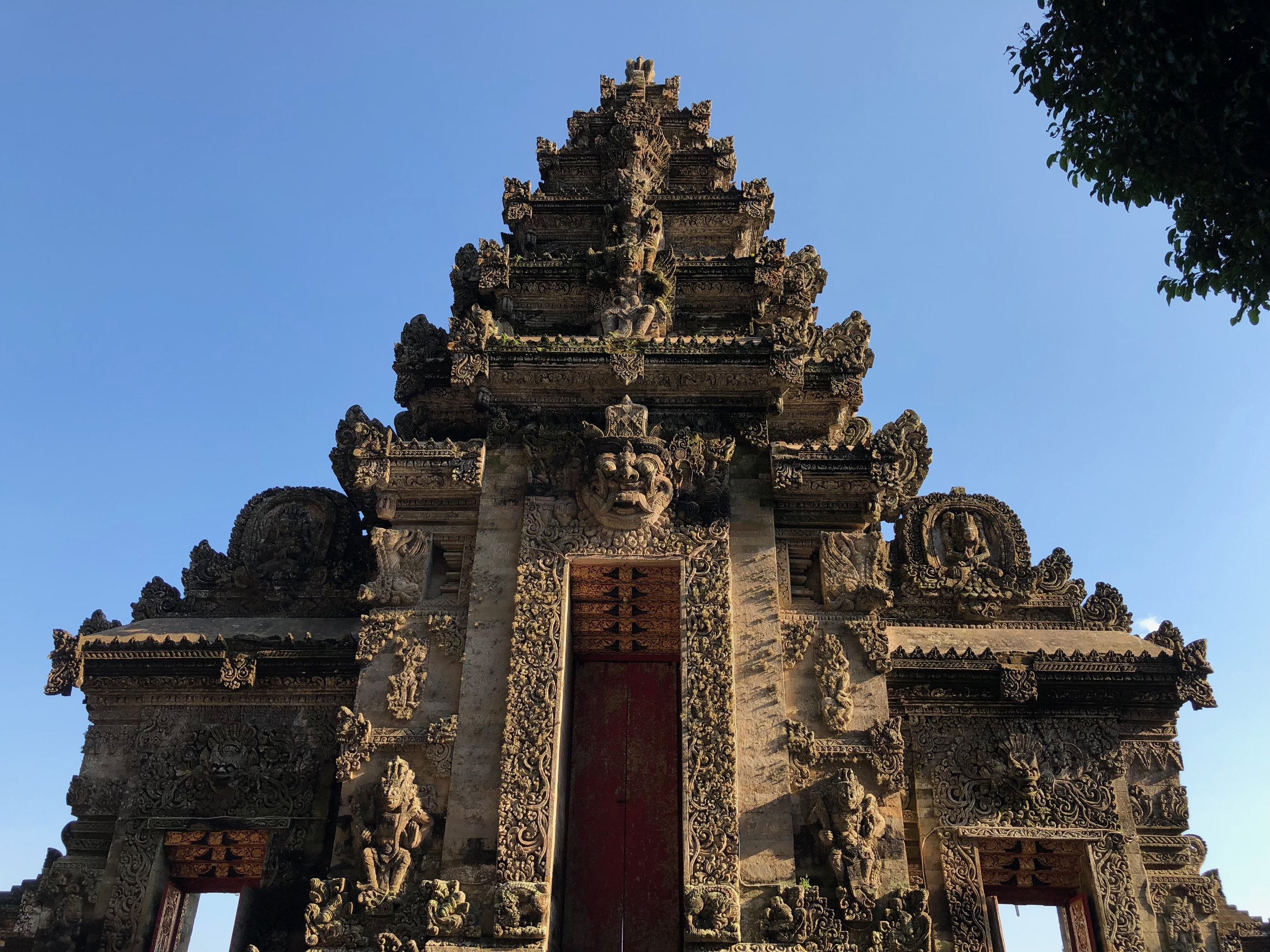
The bug-eyed, fang-baring disembodied head of Bhoma prevents malevolent spirits from entering the temple grounds.
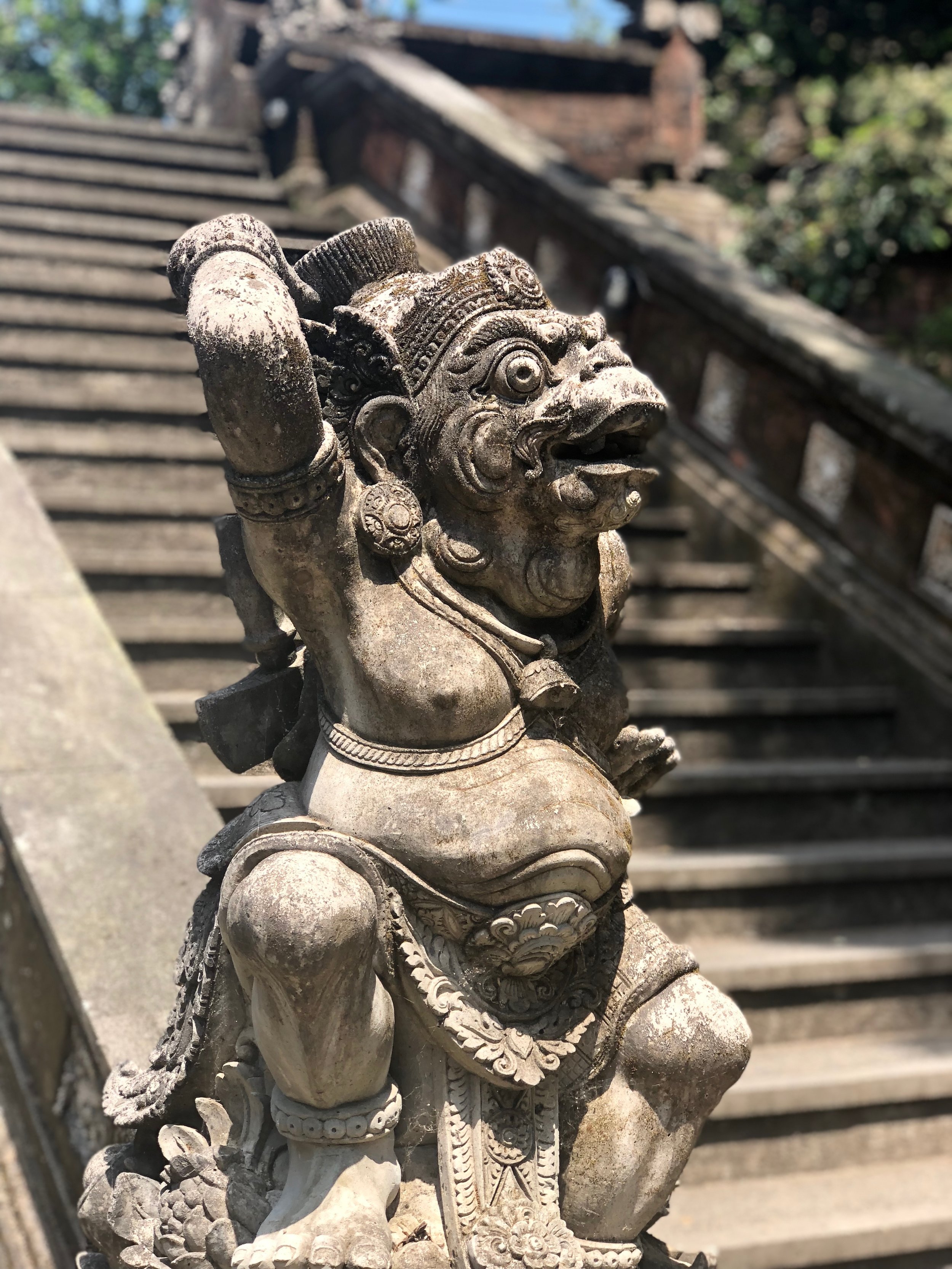
The main staircase of Pura Kehen features frightening guardian statues from the Hindu epic, the Ramayana

The main staircase of Pura Kehen features frightening guardian statues from the Hindu epic, the Ramayana

Duke was enamored with Pura Kehen, though Wally would say it’s B-list

Duke was enamored with Pura Kehen, though Wally would say it’s B-list

Built upon the slope of a hill, the temple is reached from the street by a steep 38-step staircase flanked by a pantheon of stone guardian statues from the Hindu epic the Ramayana. At the top, overlooking the grand gateway, is the bug-eyed, fang-baring disembodied head of Bhoma, whose purpose is to prevent malevolent spirits from entering the temple grounds. We were sure to follow proper etiquette and wore our sarongs, which our driver Made (Mah-deh) expertly tied for us several times throughout our trip.

We loved spotting Bhoma’s head at temples. He’s the offspring of the deity Vishnu as Vahana, a wild boar, and Dewi Pertiwi, the Earth goddess

We loved spotting Bhoma’s head at temples. He’s the offspring of the deity Vishnu as Vahana, a wild boar, and Dewi Pertiwi, the Earth goddess

Bhoma, with only his head left, guards temple entrances

Bhoma, with only his head left, guards temple entrances

Smaller candi bentar gates divide courtyards on the temple complex

Smaller candi bentar gates divide courtyards on the temple complex

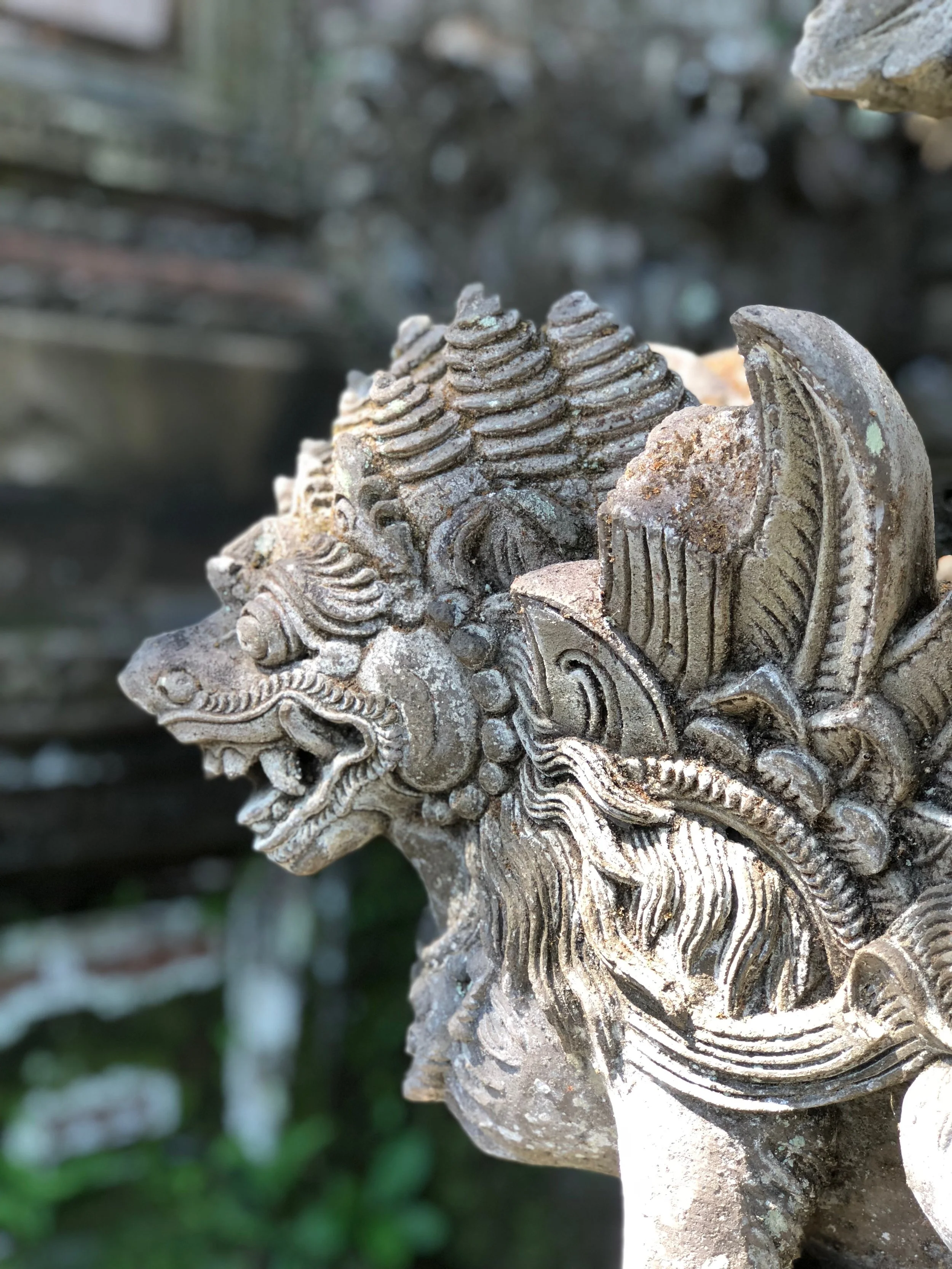
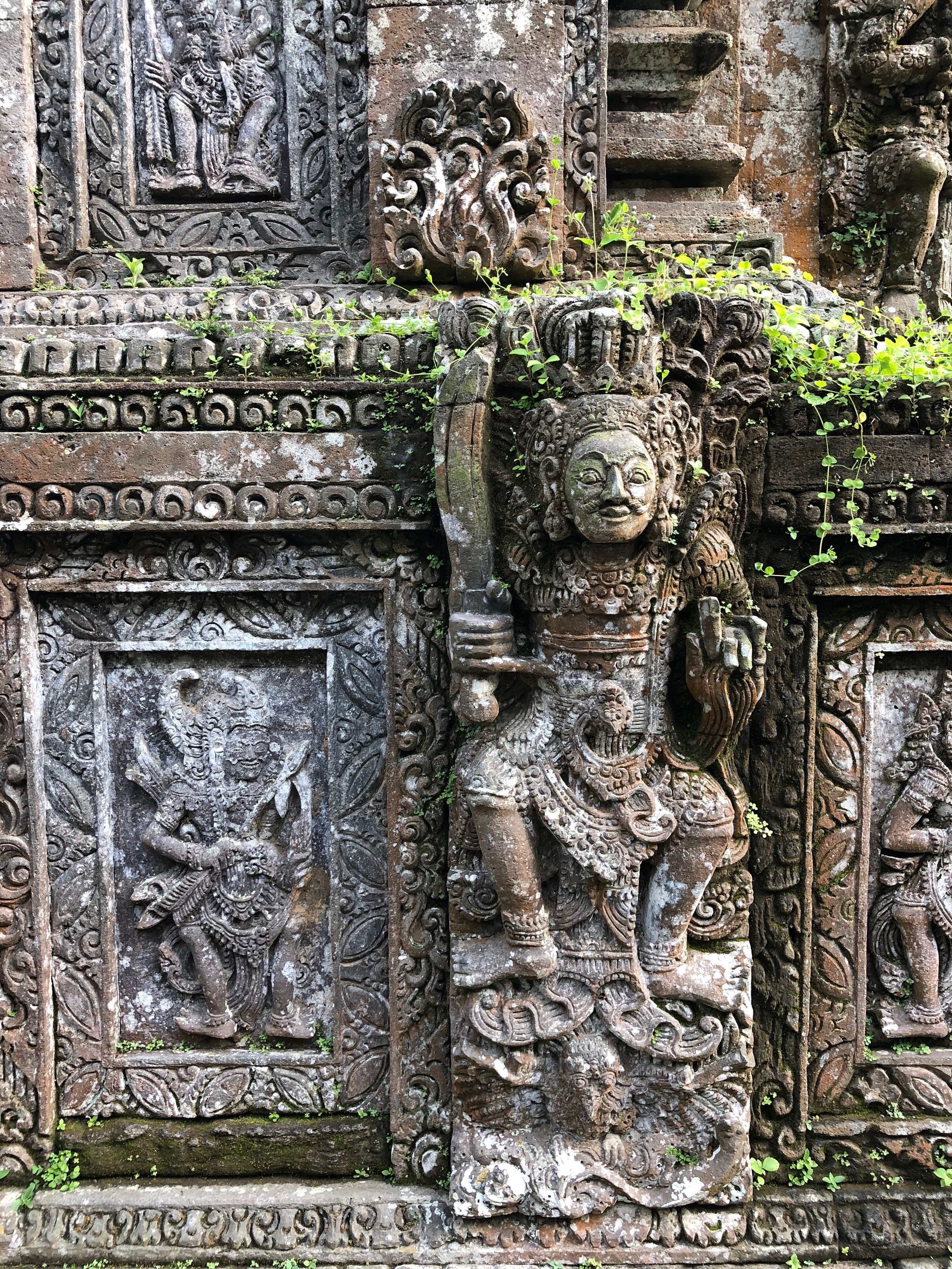
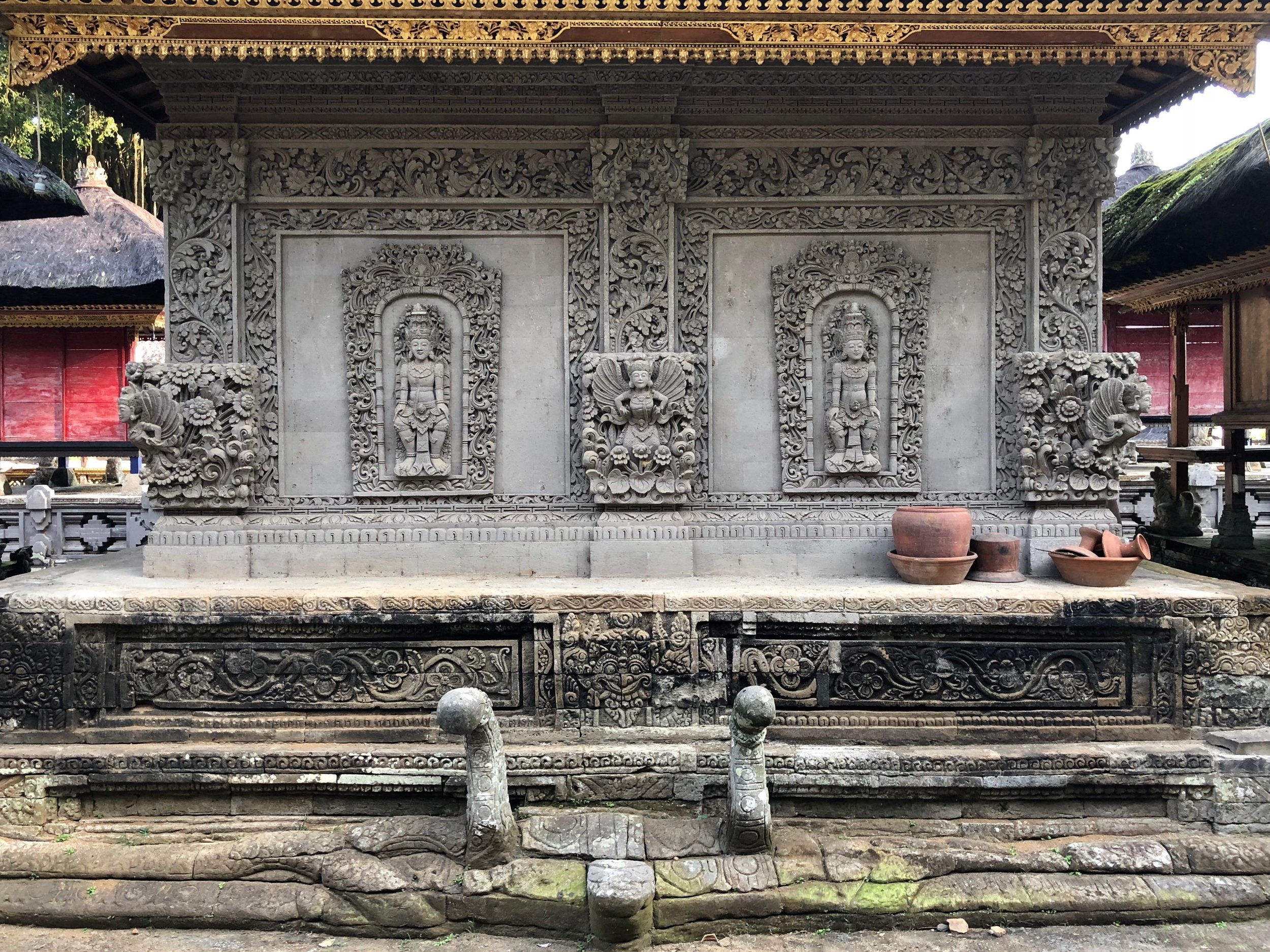
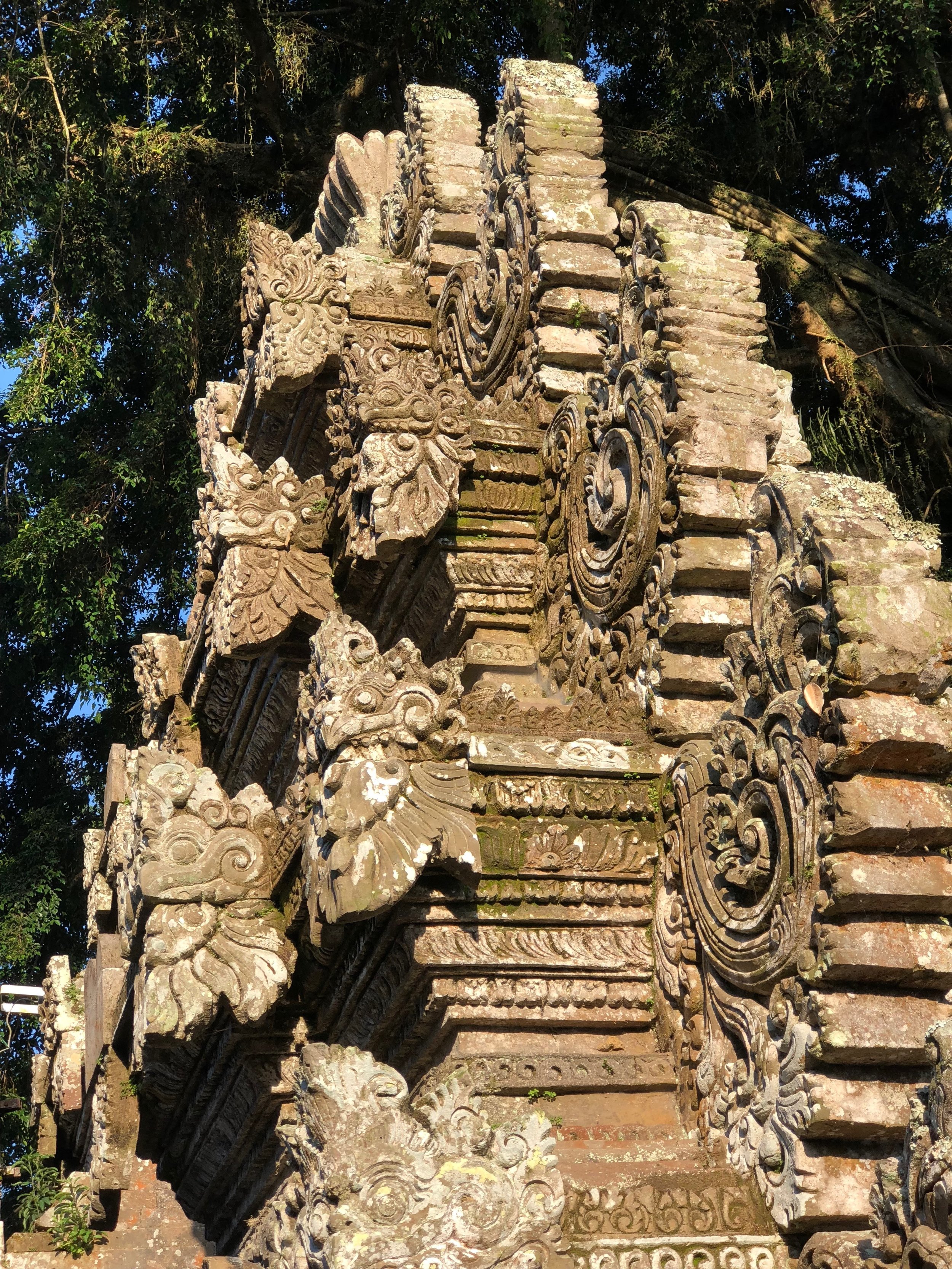
Weather-worn statues, ornate detailing and lichen-covered stone are typical at Balinese temples

Weather-worn statues, ornate detailing and lichen-covered stone are typical at Balinese temples

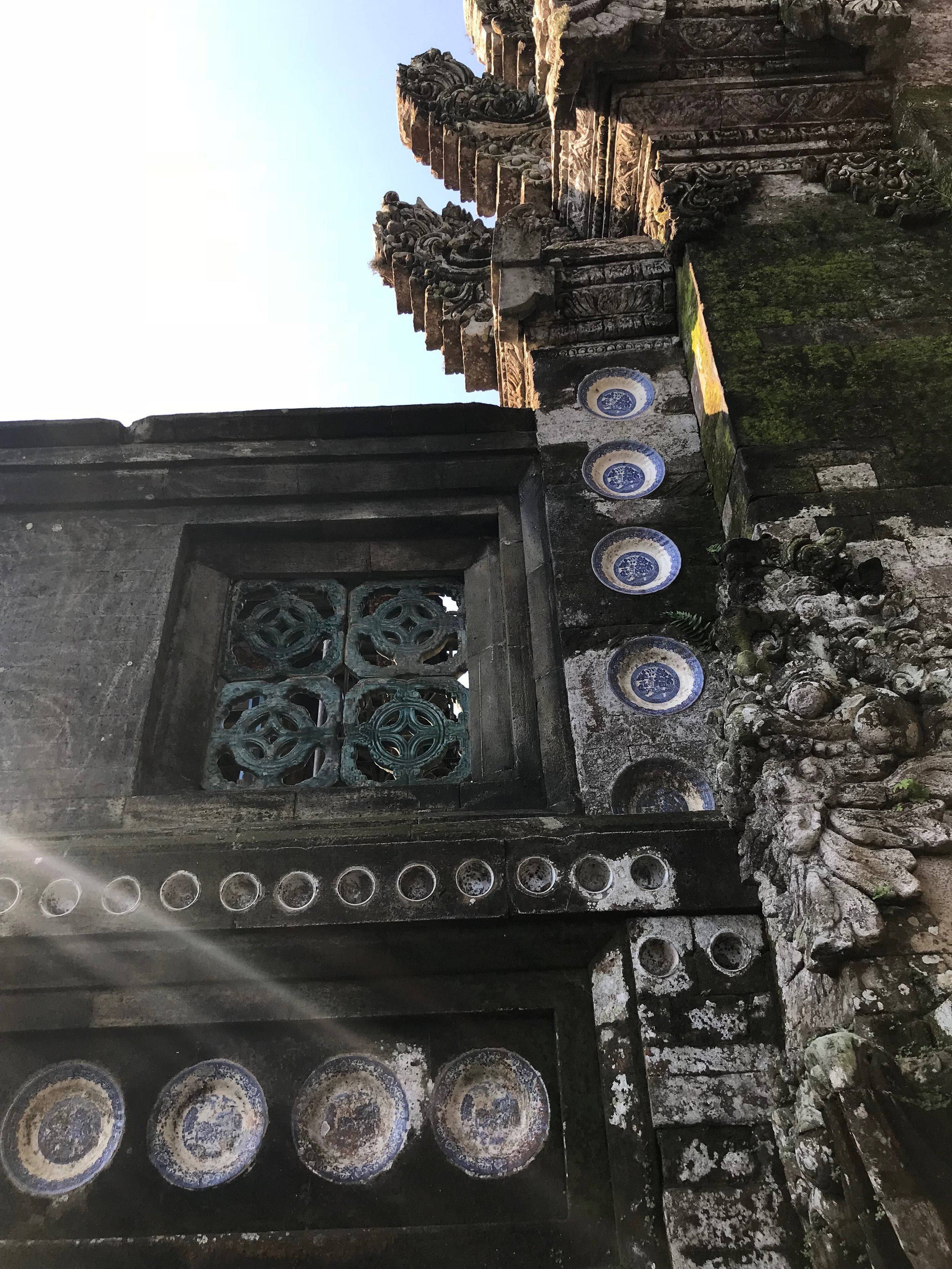
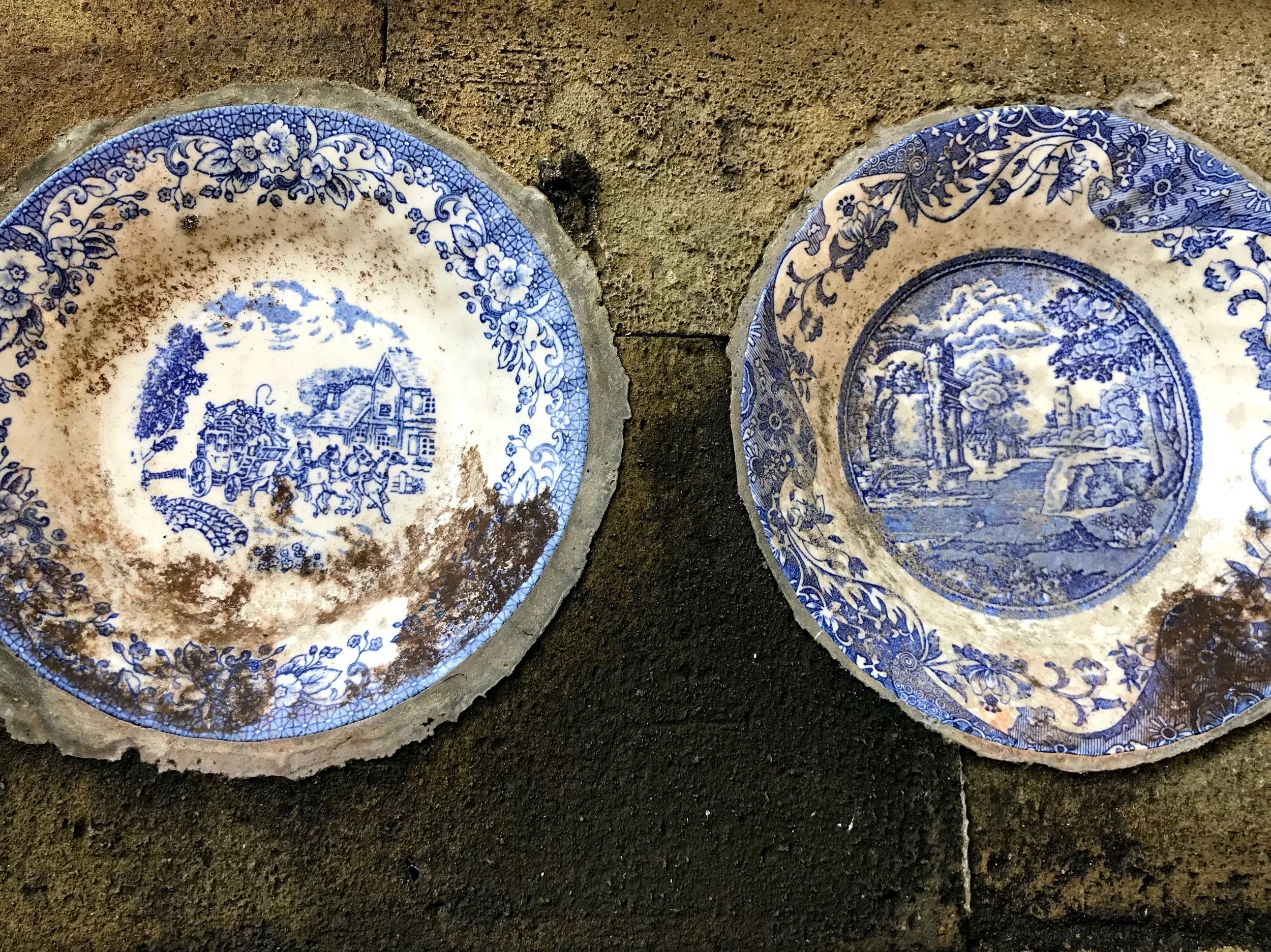
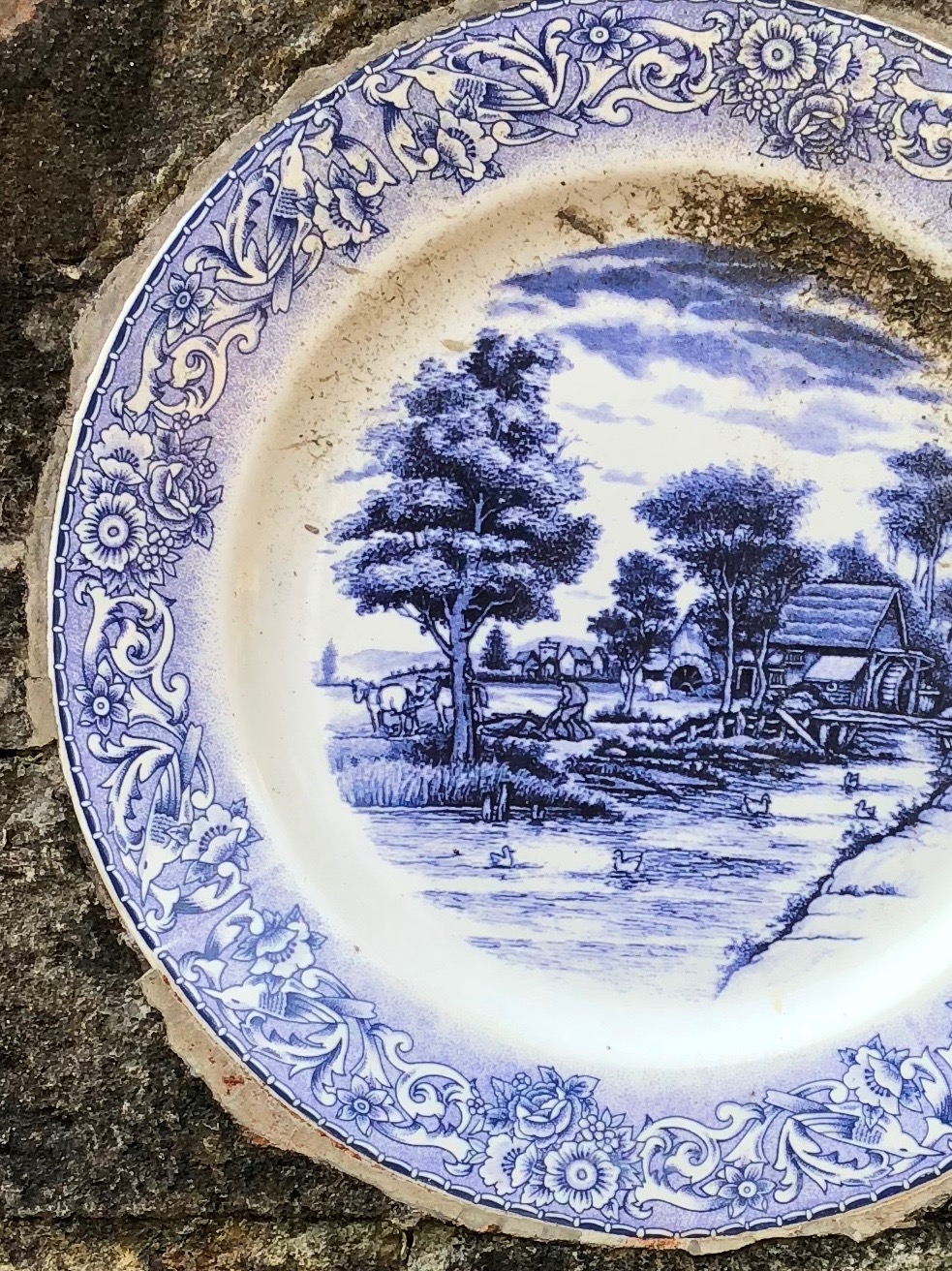
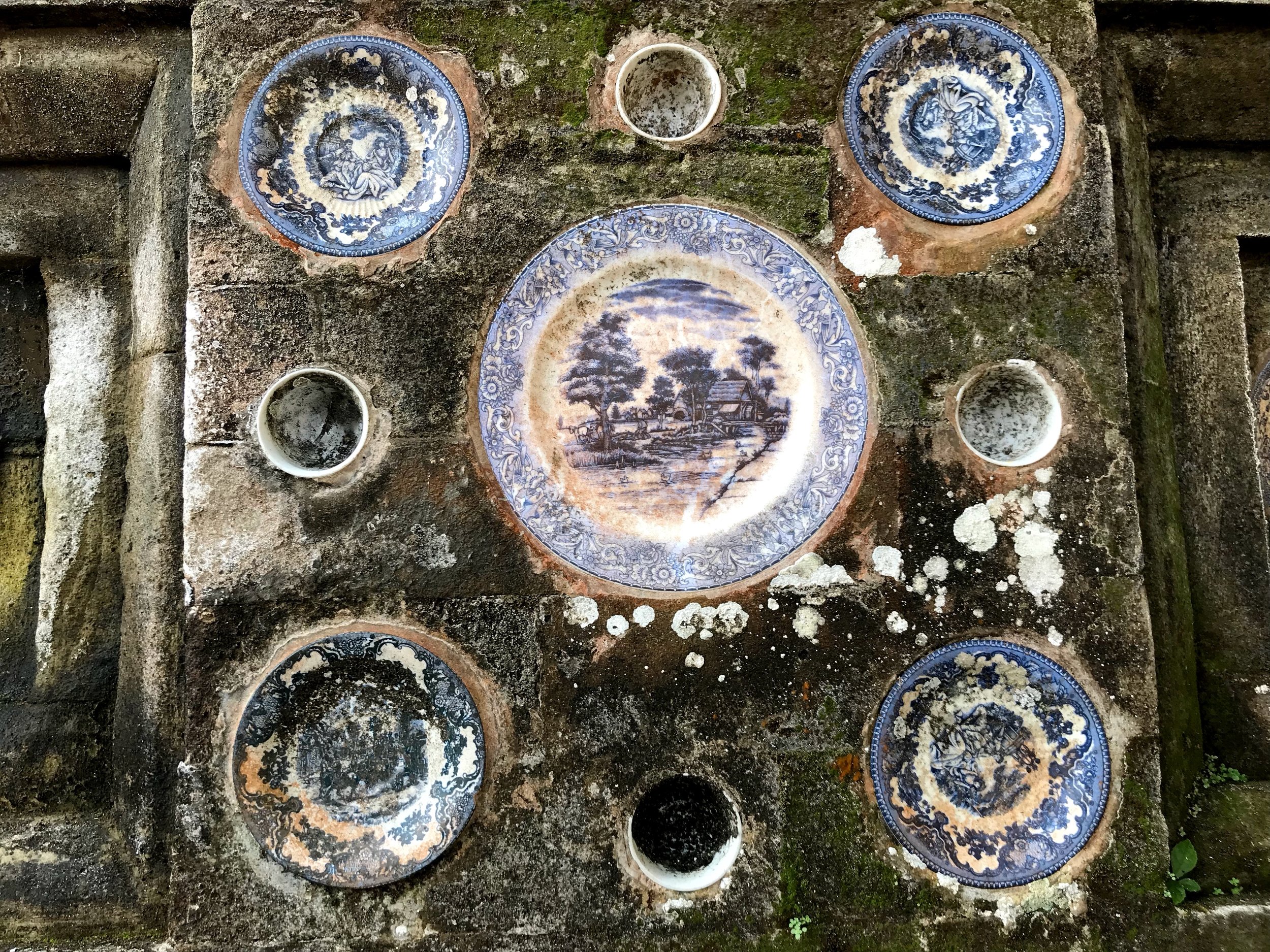
Just beyond the entrance, you’ll find an assortment of blue and white Dutch Delftware pottery, including plates and bowls, embedded in the exterior walls surrounding the second courtyard — a relic of the Dutch occupation of the island. I paused to admire one that depicted an idyllic farm scene, including a watermill, ducks and oak tree.

This wall, like the main gate, is designed to deter menacing ground-dwelling spirits from gaining entry. The enclosed courtyard beyond includes a pavilion for gamelan musicians and is used for traditional dance, feasts and puppet performances during festivals.

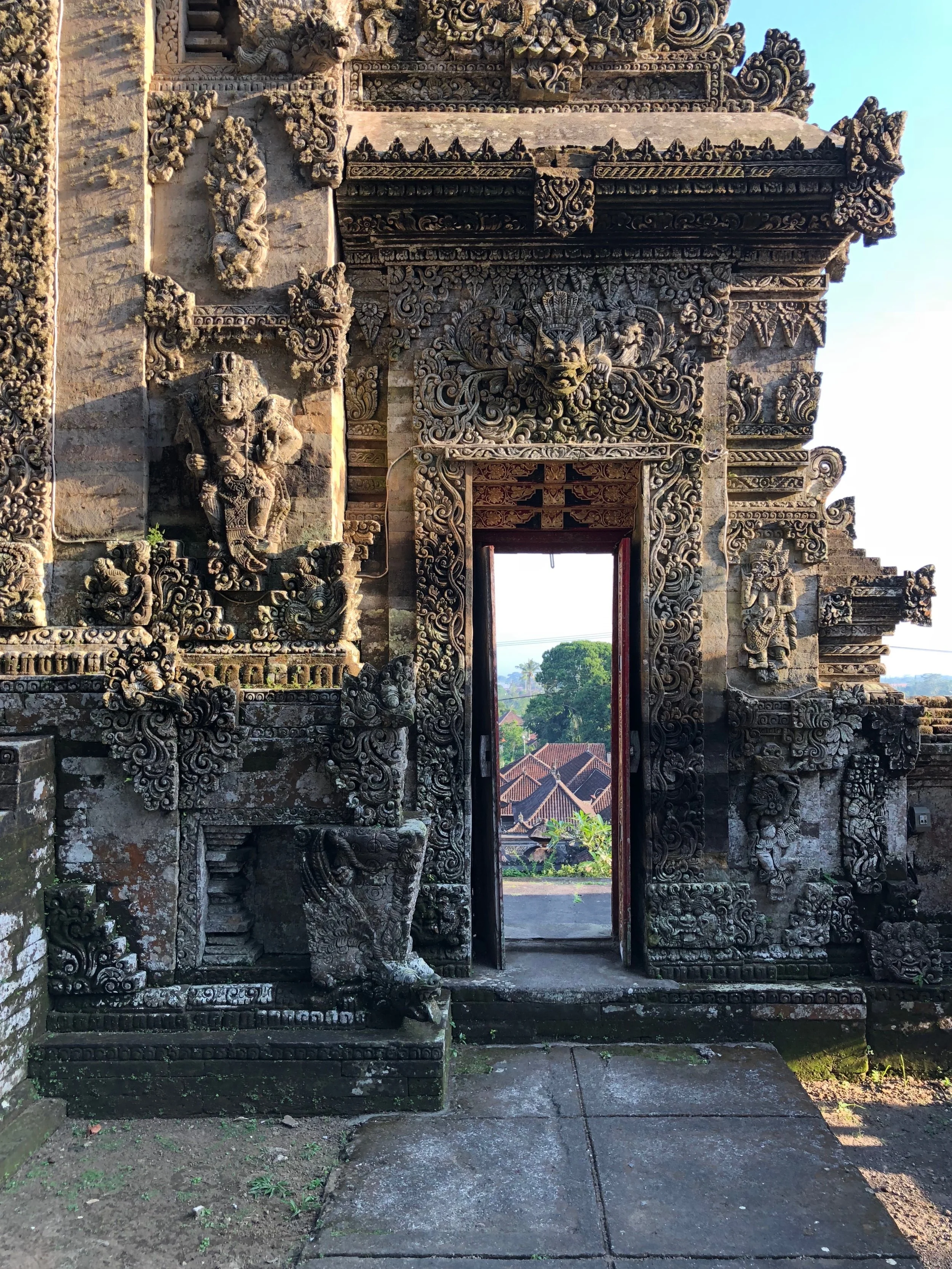
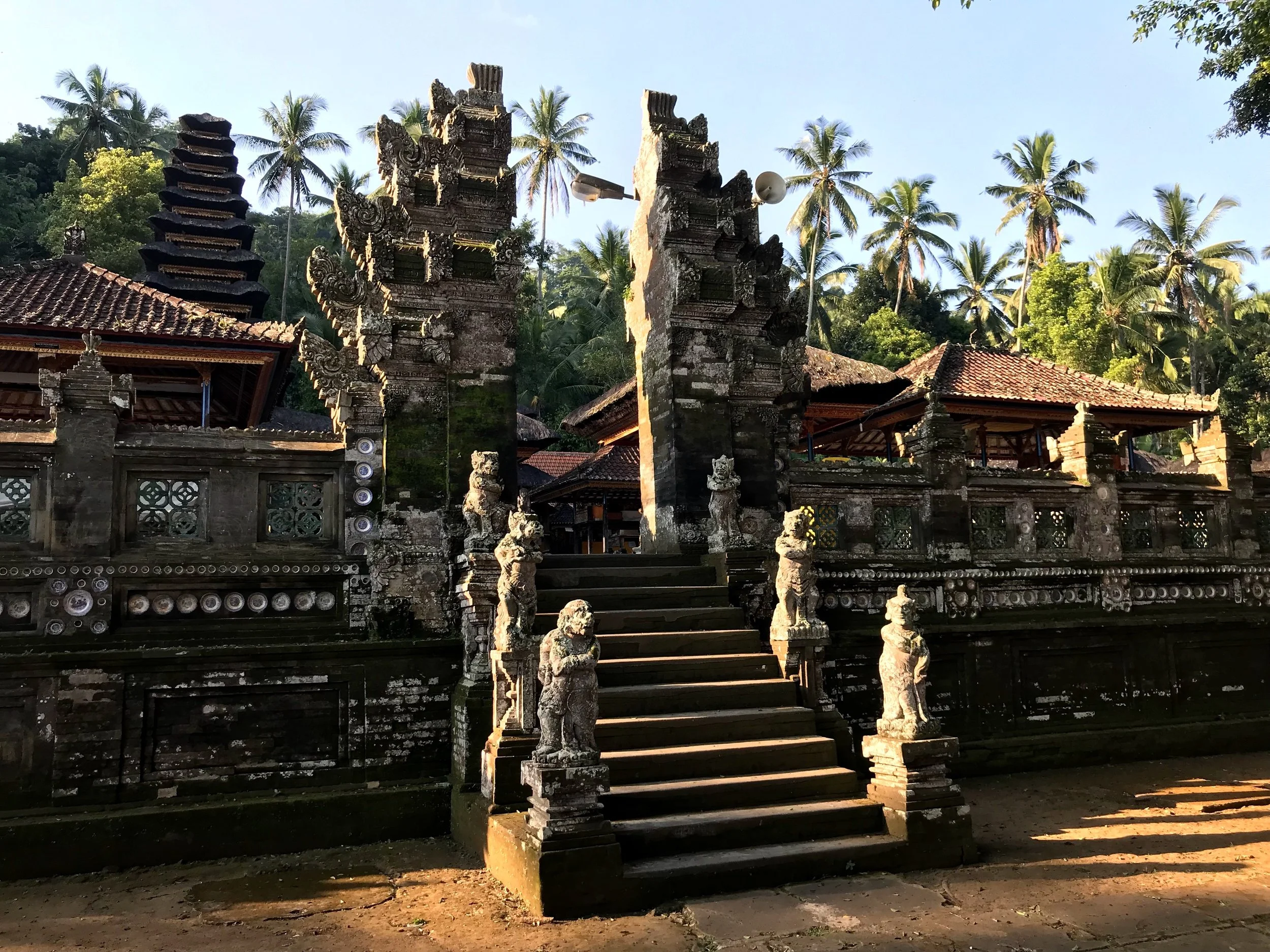
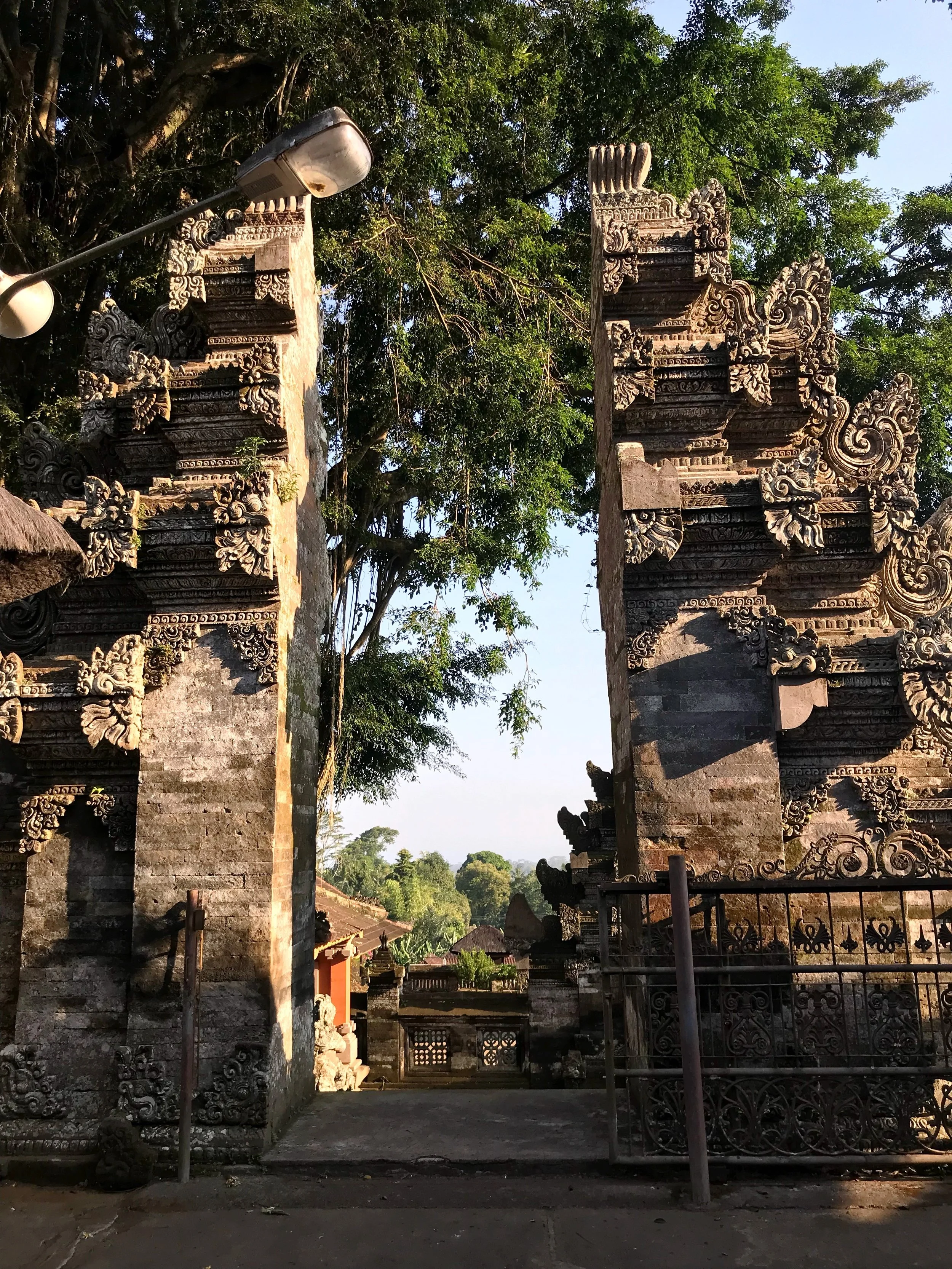
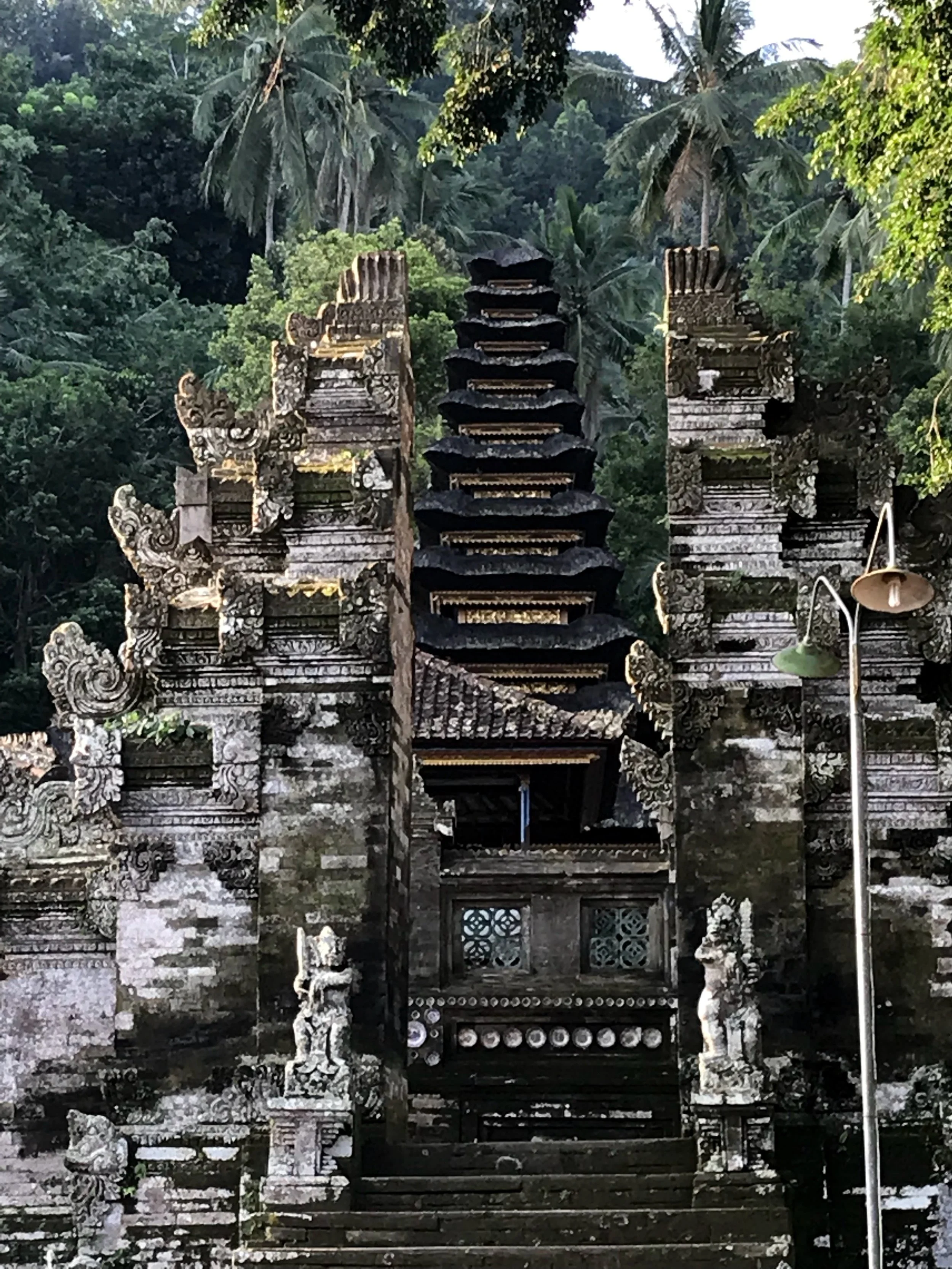
We entered the third and most sacred courtyard through an elaborate symmetrically split gate known as a candi bentar. The gate resembles a jagged triangle separated vertically and split in two. Its sides symbolize the balance between the positive and negative forces of the universe. There’s no decoration on the inner parts of the gate.

Candi bentars are dramatic features of many Balinese temples, and represent the split halves of Mount Meru

Candi bentars are dramatic features of many Balinese temples, and represent the split halves of Mount Meru

Candi bentars are, not surprisingly, also called split gates

Candi bentars are, not surprisingly, also called split gates

There’s no ornamentation on the interior of these gates

There’s no ornamentation on the interior of these gates

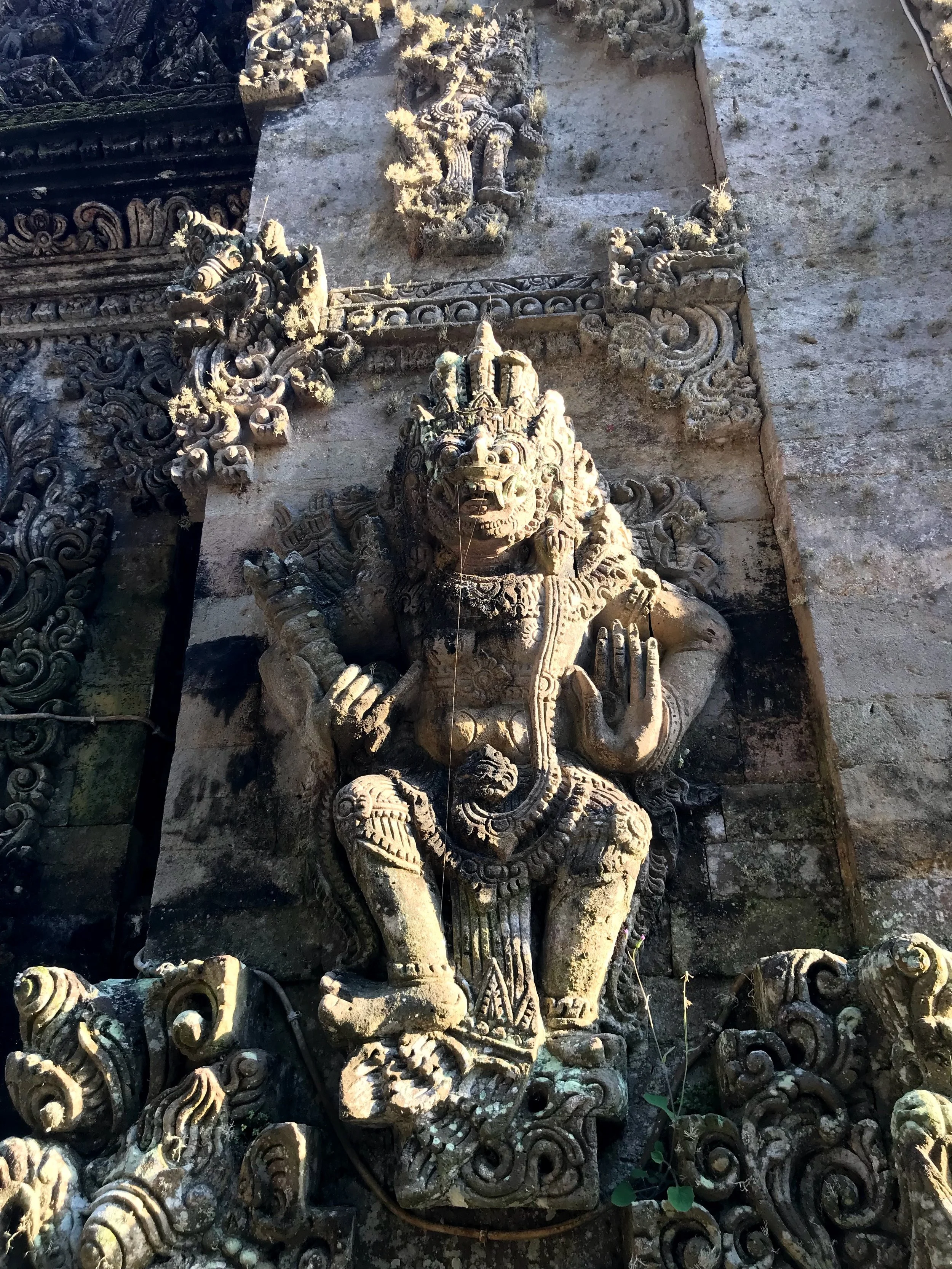
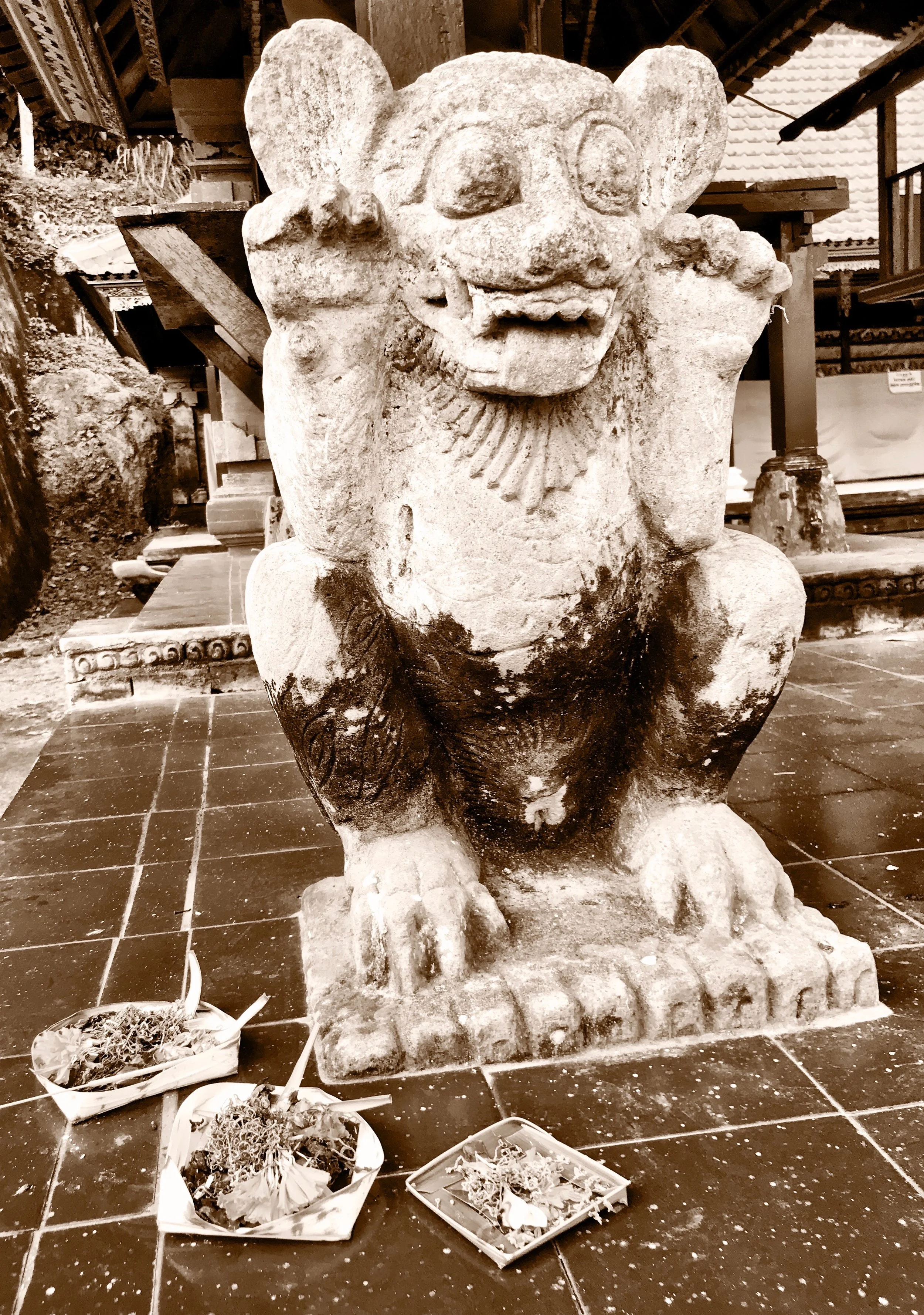
The gateway is flanked by fearsome sword-bearing bedogol, the Balinese name for the guardian statues standing on either side of the entrance. Of course Wally was immediately drawn to these diabolical figures. I later learned that the pair are typically characters that complement each other, such as younger and older brothers.

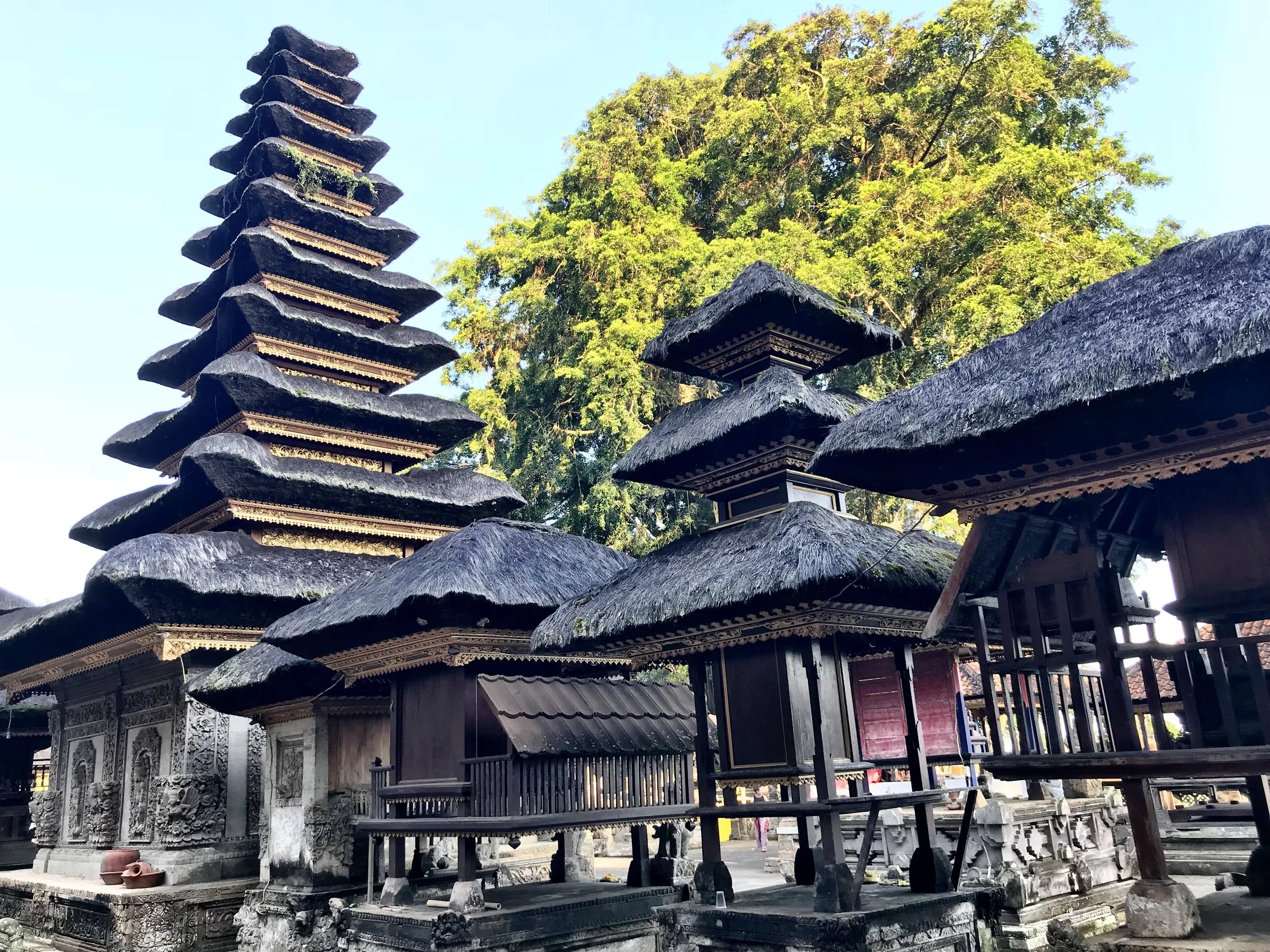
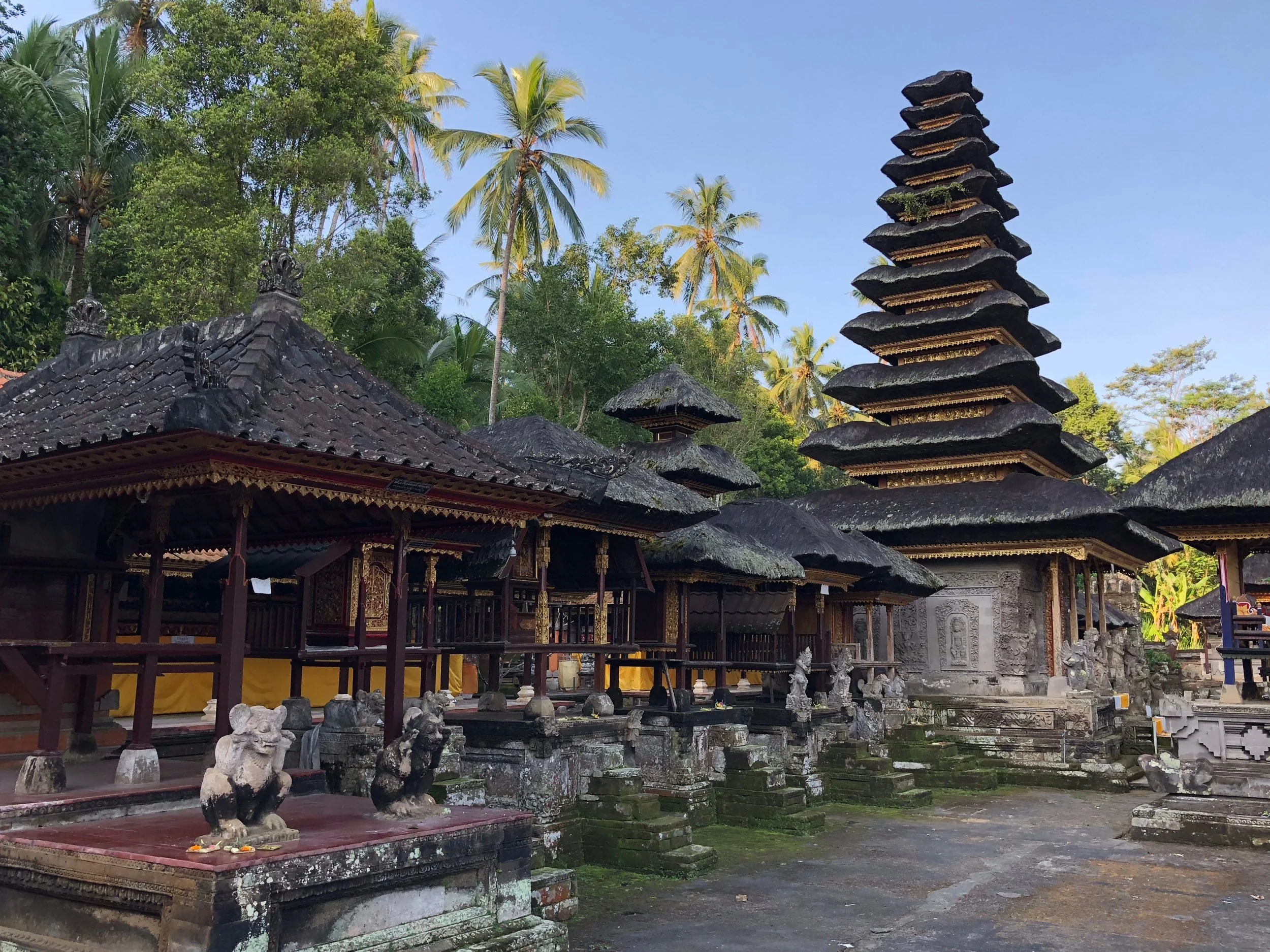
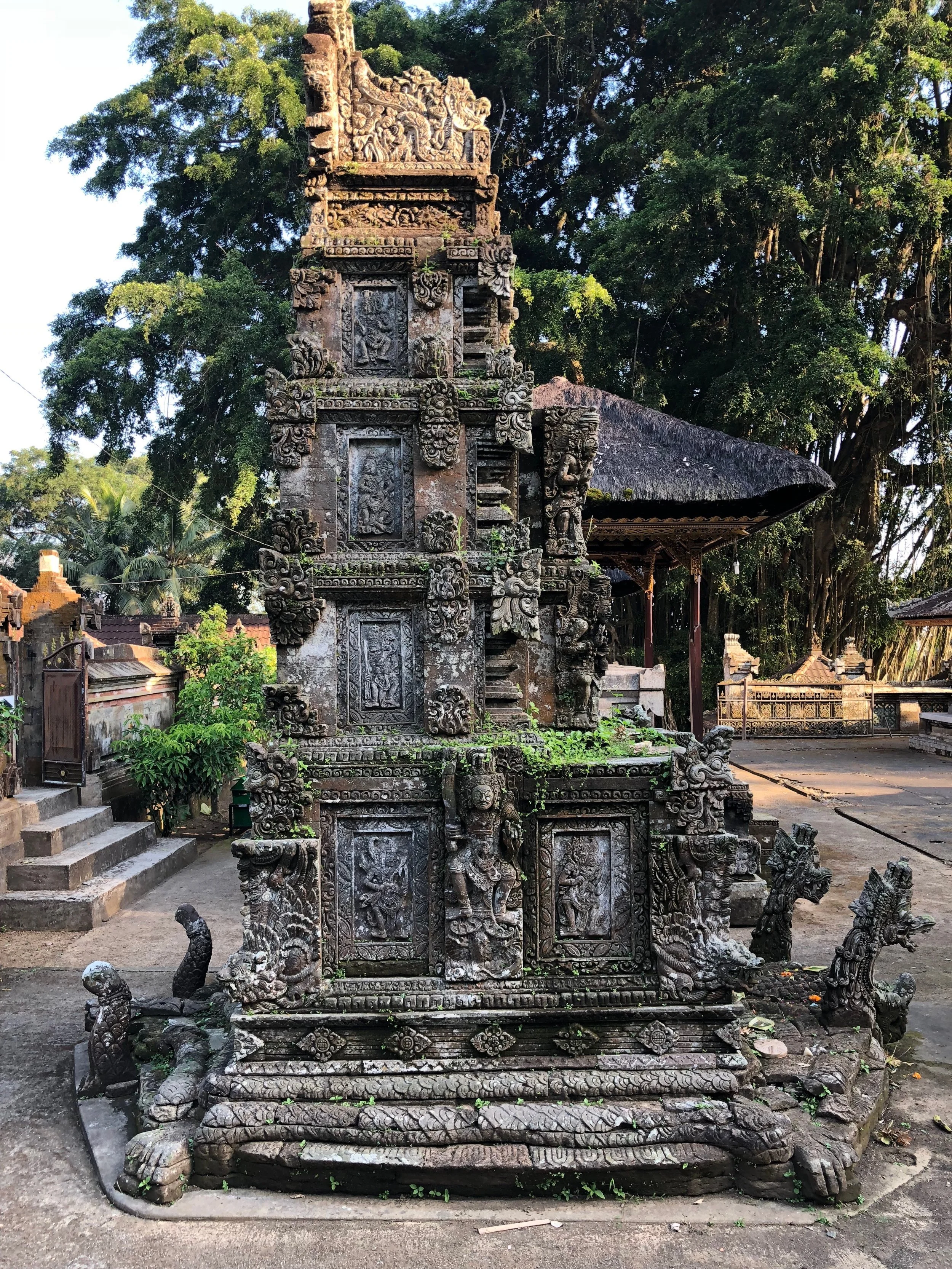
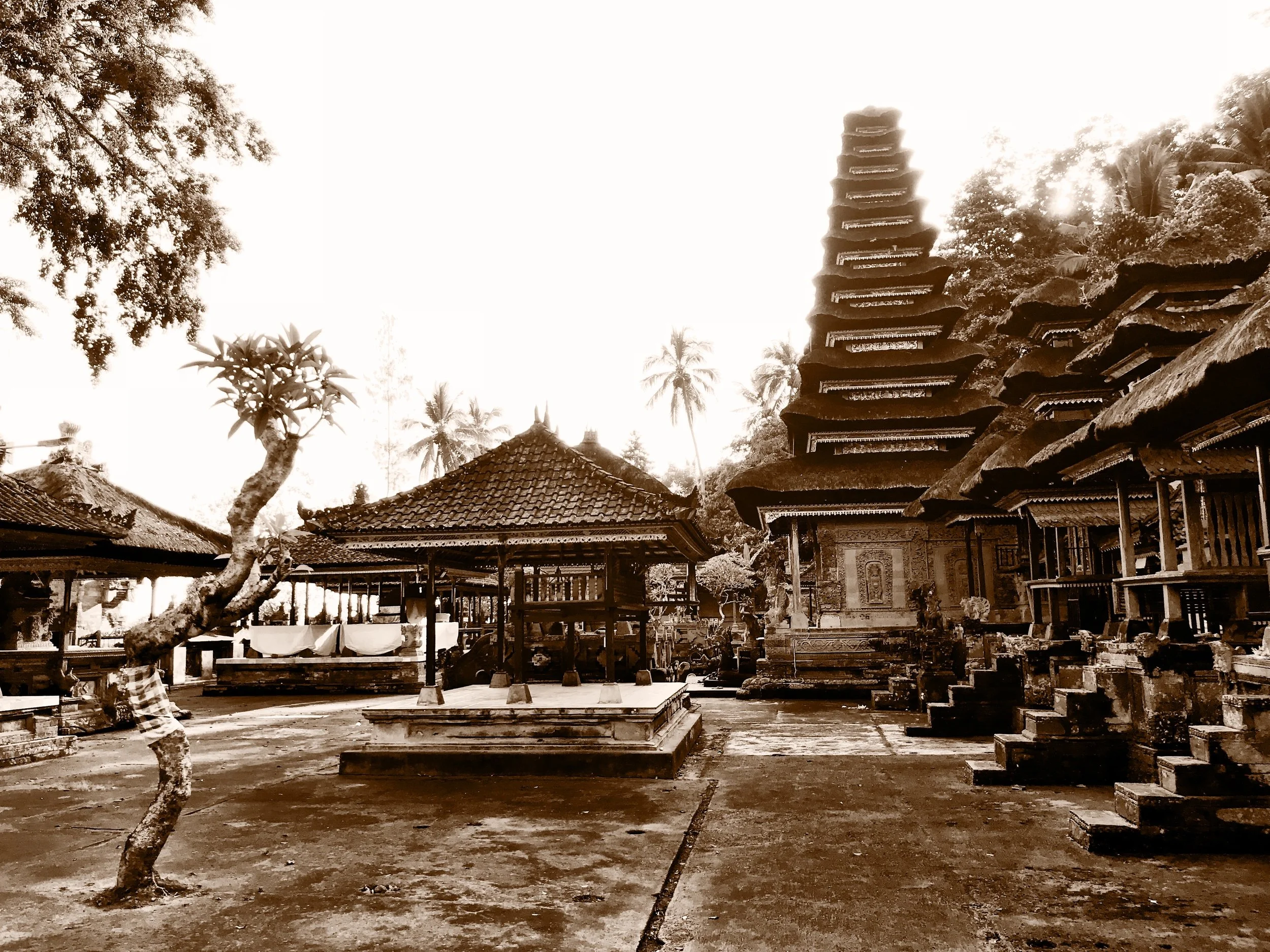
The impressive principal shrine of Pura Kehen is located here. Known as a Meru tower, the elaborate 11-tiered pagoda symbolizes the mythical Mount Meru, the Hindu holy mountain where the gods dwell. The number of levels are always odd, three, five, seven, nine or 11, and reflect the importance of the patron deity. Eleven is associated with the highest order or supreme being. Mountain gods enter and inhabit the Meru through an opening in the top when visiting the Earth during temple ceremonies. Each tier is covered with thatched black hair-like fibers obtained from the trunks of arena palms. According to Indonesian folklore, the spirit known as Wewe Gombel nests in this type of palm, where she keeps children she has stolen away from neglectful parents.

The taller the Meru, the more significant the deity

The taller the Meru, the more significant the deity

Adjacent to the Meru tower in the northeastern corner of Pura Kehen is another sacred monument known as a padmasana, dedicated to the Hindu trinity of Brahma, Vishnu and Shiva. The uppermost feature is an empty stone throne, known as a lotus throne, which reminded me of a holy version of the plastic booster seats used to elevate small children at a restaurant table. This seat is reserved for the immeasurable and formless Widhi Wasa, the All-in-One God. The entire structure is covered with bas-relief and rests atop the stone shell of a cosmic world-carrying tortoise, Bedawang Nala, whose perpetual movement is thought to be the cause of the island’s frequent earthquakes. A pair of snakes coiled around the turtle’s body represent our earthly needs: safety, food, shelter and clothing.

This intricately carved padmasana shrine, or lotus throne, is dedicated to the Hindu trinity of Brahma, Vishnu and Shiva

This intricately carved padmasana shrine, or lotus throne, is dedicated to the Hindu trinity of Brahma, Vishnu and Shiva

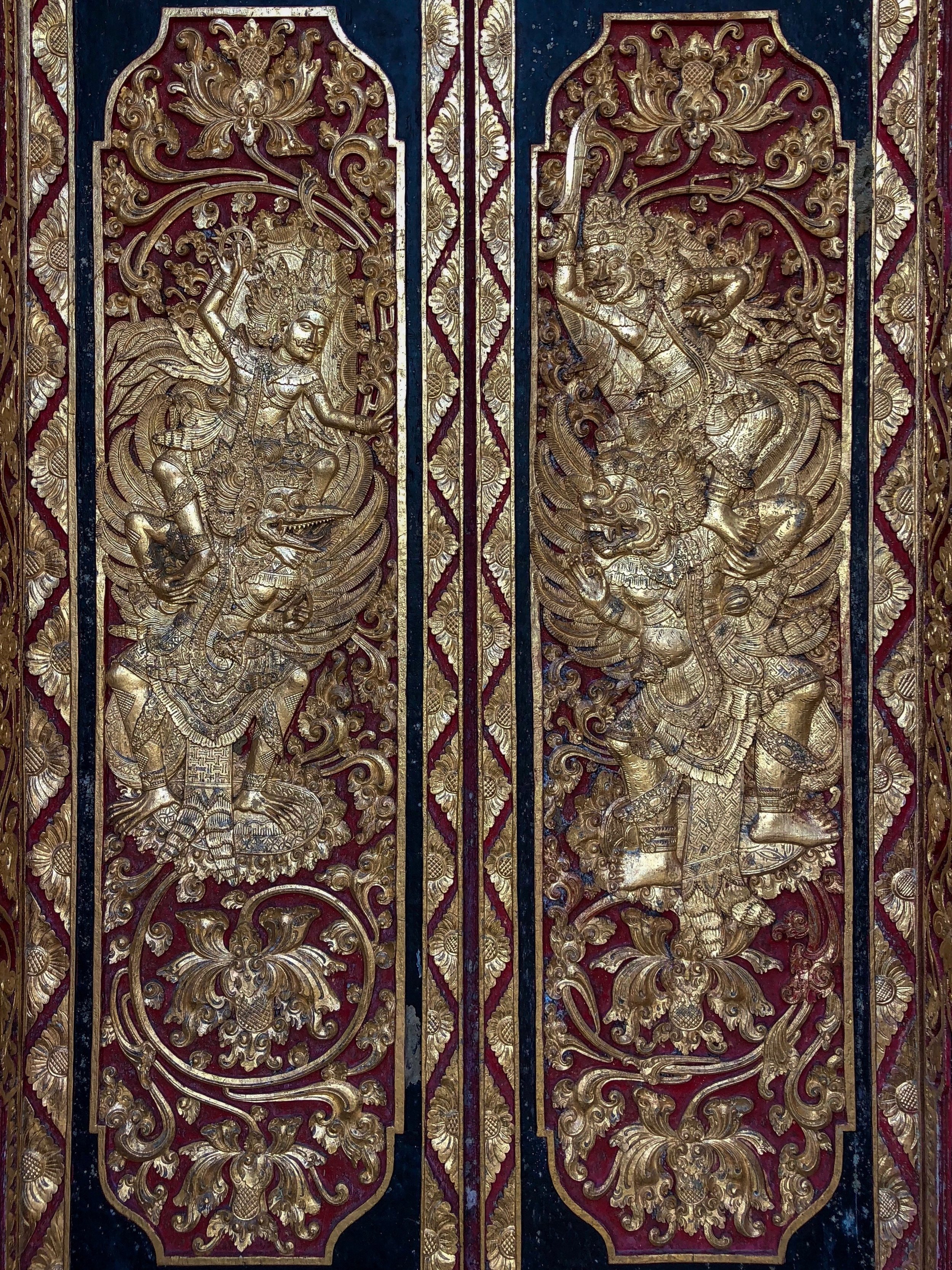
The door detail on the entrance gate shows the god Vishnu, riding his eagle mount Garuda and battling a pair of rakshasa demons

The door detail on the entrance gate shows the god Vishnu, riding his eagle mount Garuda and battling a pair of rakshasa demons

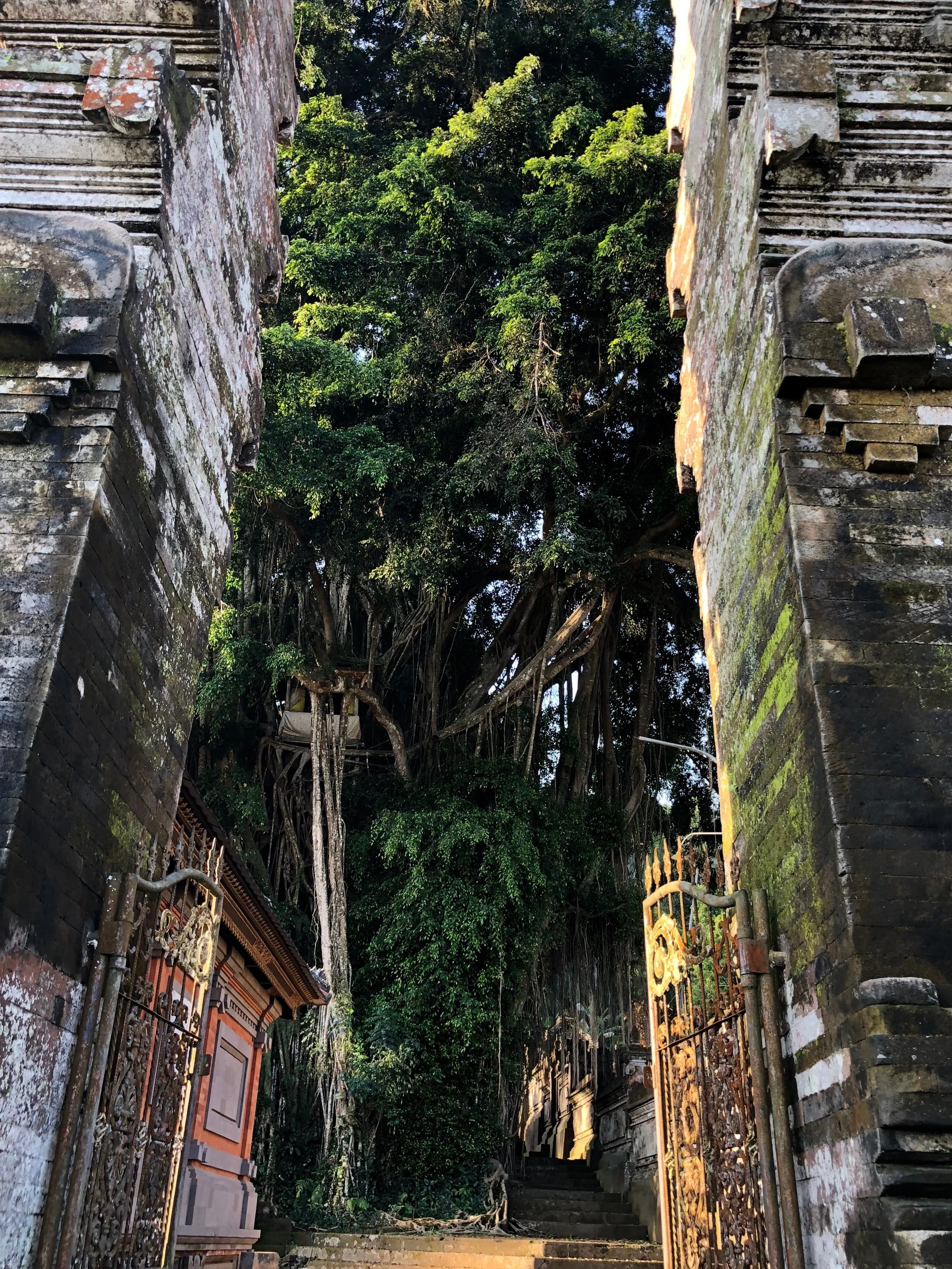
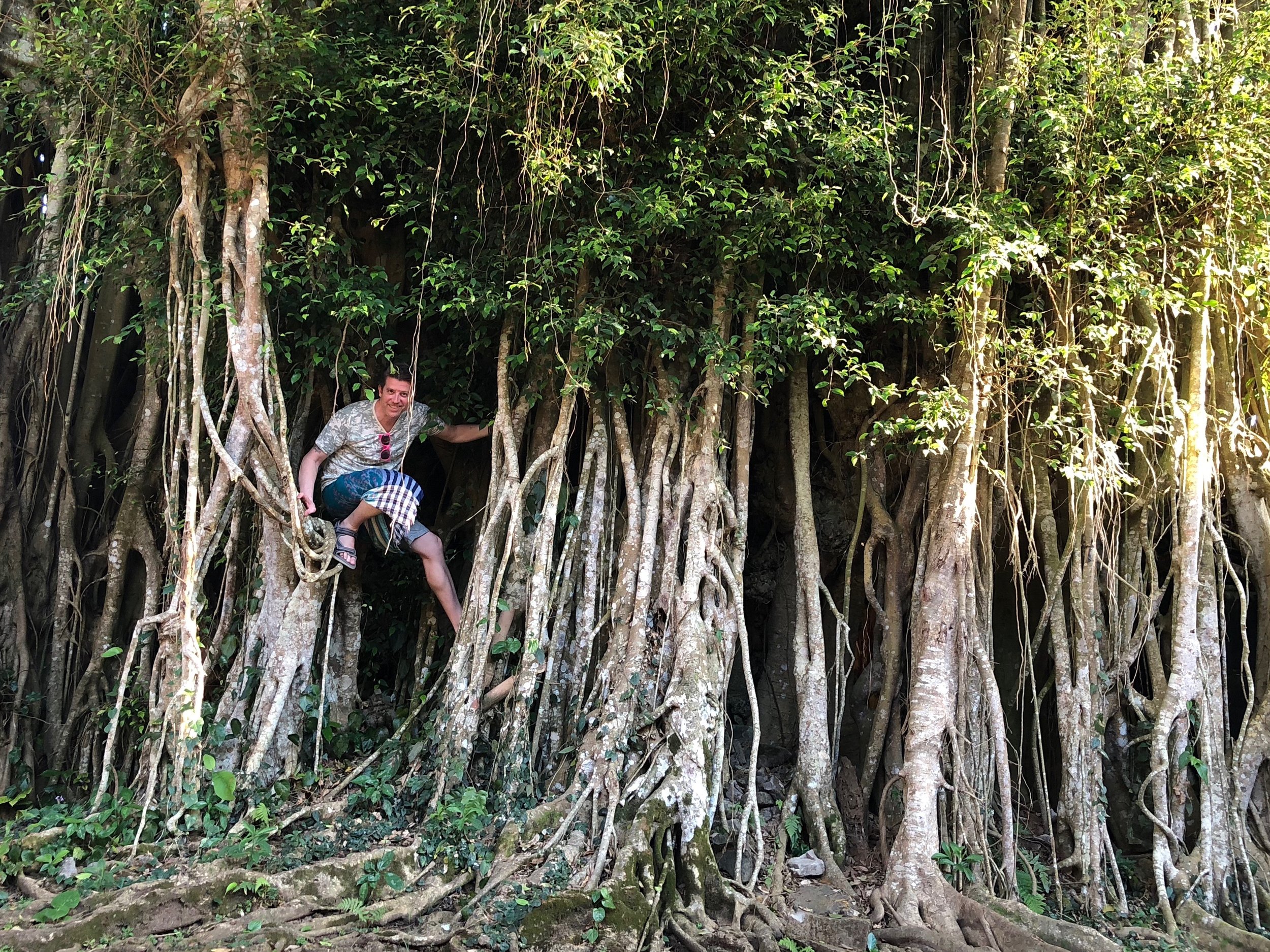
A curious feature of the pura is its unusual drum tower. The kulkul, a slit, hollowed log that resonates like a drum when struck, is suspended high upon a platform amongst the intertwined branches of the largest ancient banyan tree we’ve ever seen.

Wally climbs in the roots of the largest banyan tree he’s ever seen

Wally climbs in the roots of the largest banyan tree he’s ever seen

This no-longer-working fountain might bear the icon of Dewi Sri, the Balinese rice goddess

This no-longer-working fountain might bear the icon of Dewi Sri, the Balinese rice goddess

A shrine surrounded by bidadari, celestial female spirits, emerging from clusters of lotus flowers

A shrine surrounded by bidadari, celestial female spirits, emerging from clusters of lotus flowers

One of the most beautiful temples of our visit, it’s well worth venturing out to. We arrived about an hour before Pura Kehen closed, and we were alone, aside from two other foreign couples wandering through — and an elderly local woman whose insistent calls tried, unsuccessfully, to draw us over to see what she was selling. –Duke

The spirit Wewe Gombel nests in arena palms, where she keeps children she has stolen away from neglectful parents.
purakehensepia.JPG

Pura Kehen
Cempaga
Bangli Sub-District
Bangli Regency
Bali 80613
Indonesia