UK

How Walking Holidays Help You See a Different Side of the UK

Explore the UK on foot, from Hadrian’s Wall and the South West Coast Path to the West Highland Way, Cotswold Way and more unforgettable routes. The UK looks different at 3 mph.
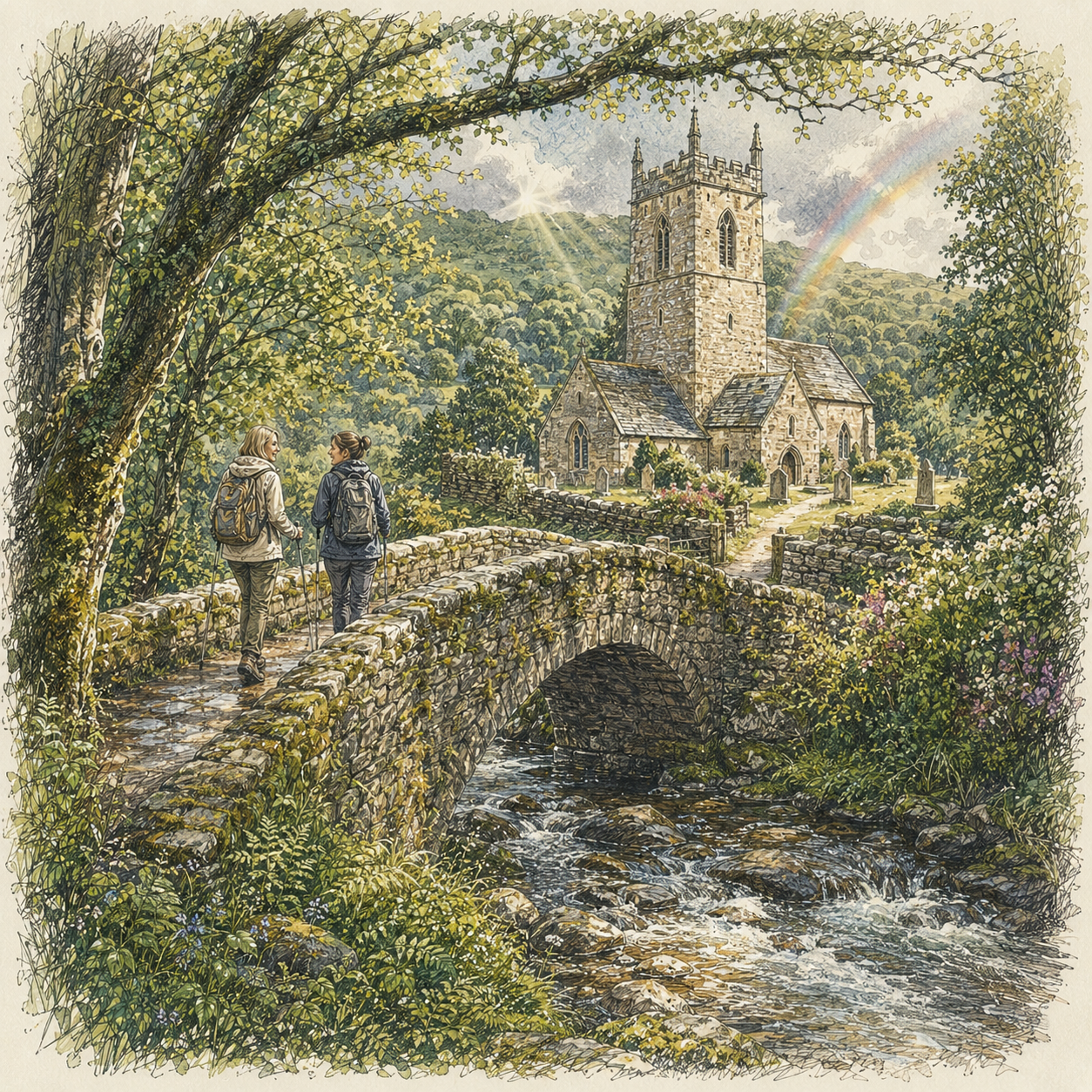
Two women walk across an old stone bridge by a church with a rainbow in the sky in a charming UK landscape

Most of us experience the UK at speed. We rush along motorways, watch the countryside blur past train windows or hop between attractions on a tightly planned itinerary. It’s an efficient way to travel — but it often means we miss the details that make a place memorable.

Walking holidays turn that approach on its head. Instead of racing towards a destination, the journey itself becomes the experience. Travelers choosing walking holidays in the UK through specialists such as Mickledore often discover that slowing down reveals a side of Britain that’s easy to overlook. Suddenly, the hidden valley, the village bakery, the centuries-old footpath and the unexpected conversation become just as important as the landmark at the end of the route.

You may not cover as much ground, but you’ll often gain something far more valuable: a deeper understanding of the places you visit.

The beauty of walking is that it changes your perspective. Distances feel more meaningful, landscapes become more immersive, and even familiar parts of the country begin to look different. Whether you’re following a famous long-distance trail or exploring a lesser-known route, traveling on foot offers a deeper connection to the places you pass through.
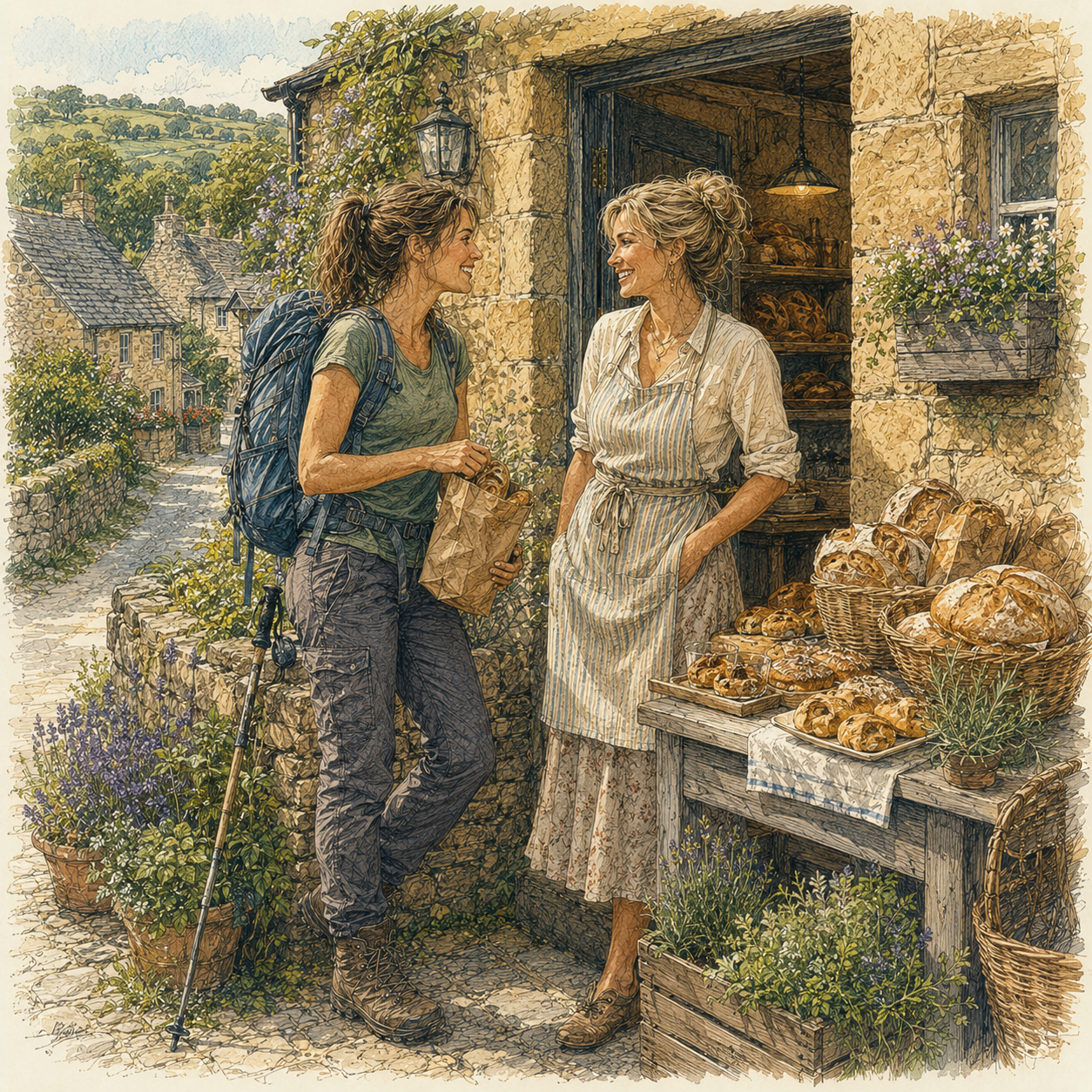
A hiker holds a bag and talks to a baker in the doorway of her bakery with baked goods on a table out front in a UK village

Why Walking Reveals a Side of the UK Most Travelers Miss

The UK is full of extraordinary places, but many of them aren’t visible from the motorway or listed among the country’s biggest tourist attractions. Walking naturally takes you away from the obvious and into landscapes that feel more authentic and personal.

You begin to notice things that would otherwise pass unnoticed. A stone bridge hidden beneath woodland, a church that has stood for centuries, a flock of sheep moving across a hillside or the changing colors of the countryside throughout the day. Walking creates space for observation, and that often transforms a trip from a sightseeing exercise into something far more memorable.

Perhaps more importantly, walking encourages curiosity. There’s no rush to reach the next destination. Instead, you have time to stop, explore and appreciate the journey itself. That slower pace is often what people remember most.

The Best Walking Holidays in the UK for First-Time Walkers

If you’re new to walking holidays, starting with the right route can make all the difference. Fortunately, the UK offers several trails that provide rewarding experiences without feeling overwhelming.
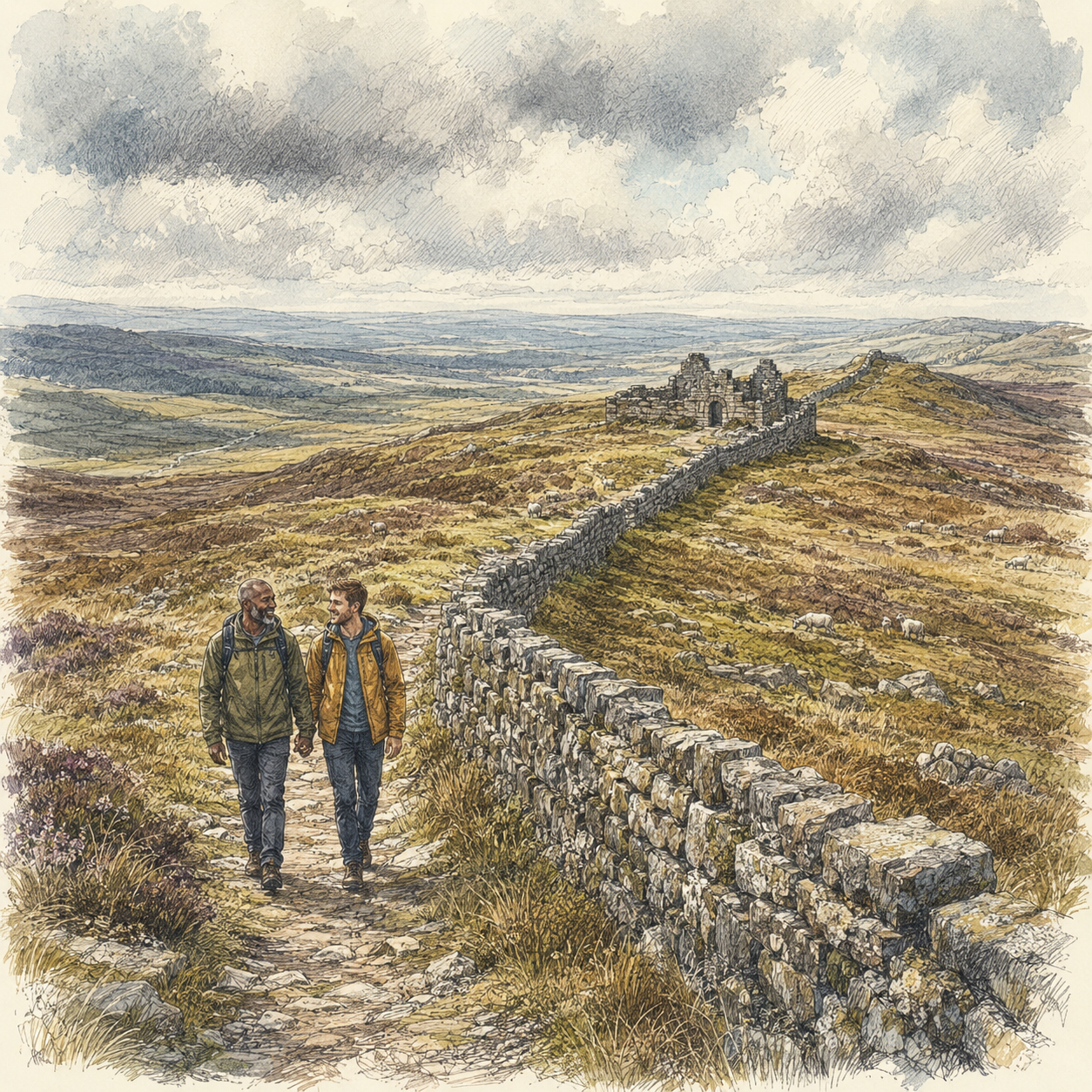
A gay couple holds hands and walks along Hadrian's Wall Path in the UK

Hadrian’s Wall Path

Hadrian’s Wall Path is one of the country’s most iconic long-distance routes, stretching from coast to coast across northern England. The trail combines beautiful countryside with fascinating Roman history, creating a journey that feels both scenic and culturally rich. Walking alongside the remains of one of the Roman Empire’s most ambitious engineering projects adds a unique dimension to every stage of the route.

For first-time walkers, it offers an excellent balance of challenge and accessibility. The terrain varies throughout the walk, but it remains manageable for those with a reasonable level of fitness and a sense of adventure.
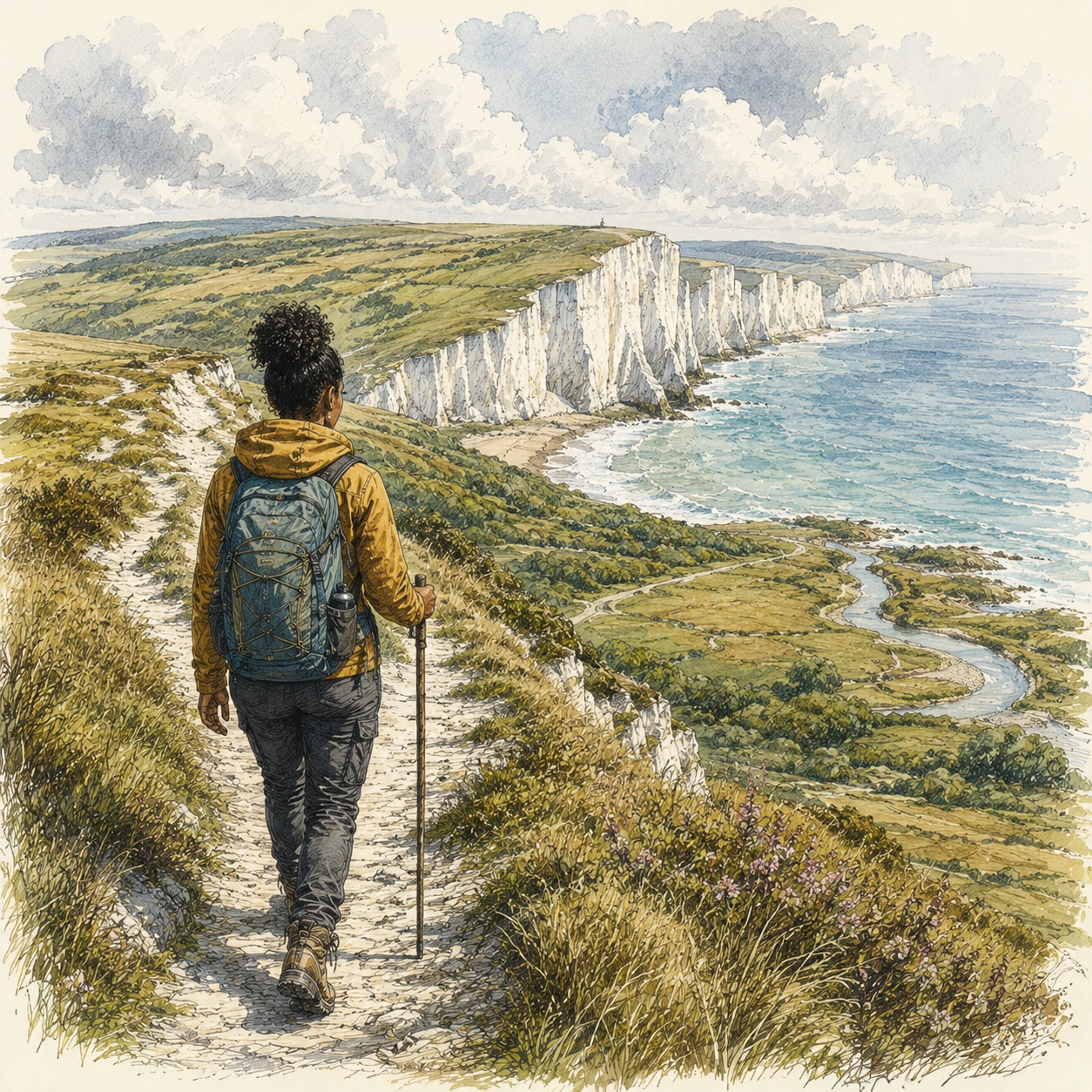
A woman hikes along South Downs Way in the UK, with the cliffs of Dover in the distance

South Downs Way

The South Downs Way provides a gentler introduction to long-distance walking. Rolling hills, picturesque villages and expansive views make it one of England’s most enjoyable walking routes.

 The trail’s relatively straightforward terrain allows walkers to focus on the scenery rather than constantly watching their footing. It’s also a wonderful example of how walking can reveal the quieter side of southern England, far removed from the busy towns and cities nearby.

The Best Walking Holidays in the UK for Coastal Scenery

Britain’s coastline is one of its greatest assets, and walking offers one of the best ways to experience it. Coastal paths reveal dramatic landscapes that are impossible to appreciate fully from a car or viewpoint.
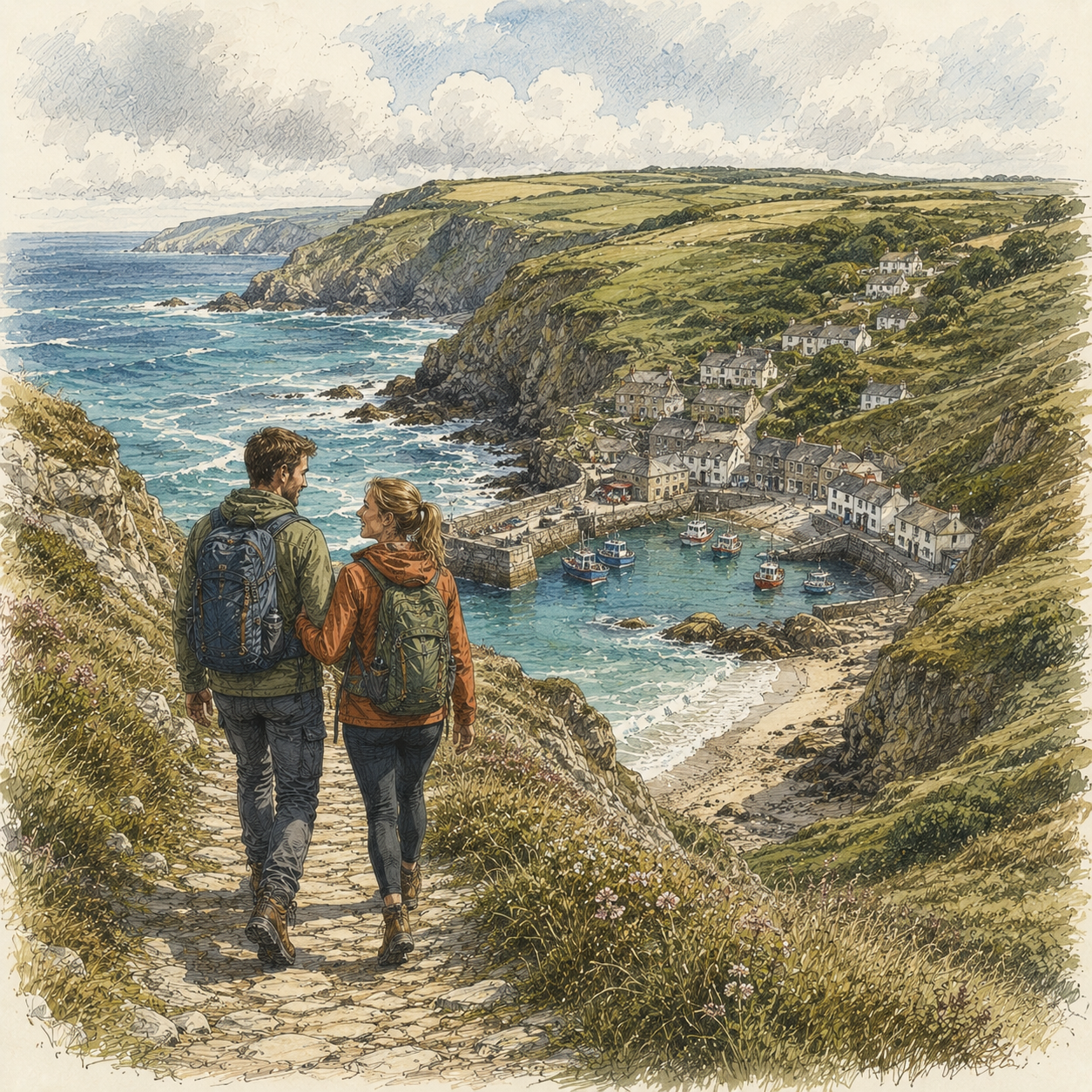
A straight couple walk along South West Coast Path, with a seaside village down the hill

South West Coast Path

Stretching for over 600 miles, the South West Coast Path is England’s longest national trail and arguably one of its most spectacular. The route winds through Cornwall, Devon, Dorset and Somerset, showcasing towering cliffs, secluded coves, sandy beaches and charming fishing villages.

Every day feels different. One moment you’re walking high above crashing waves, and the next you’re descending into a harbor where fresh seafood and a well-earned cup of tea await. The sea is rarely out of sight, and neither is the temptation to stop for yet another photograph.
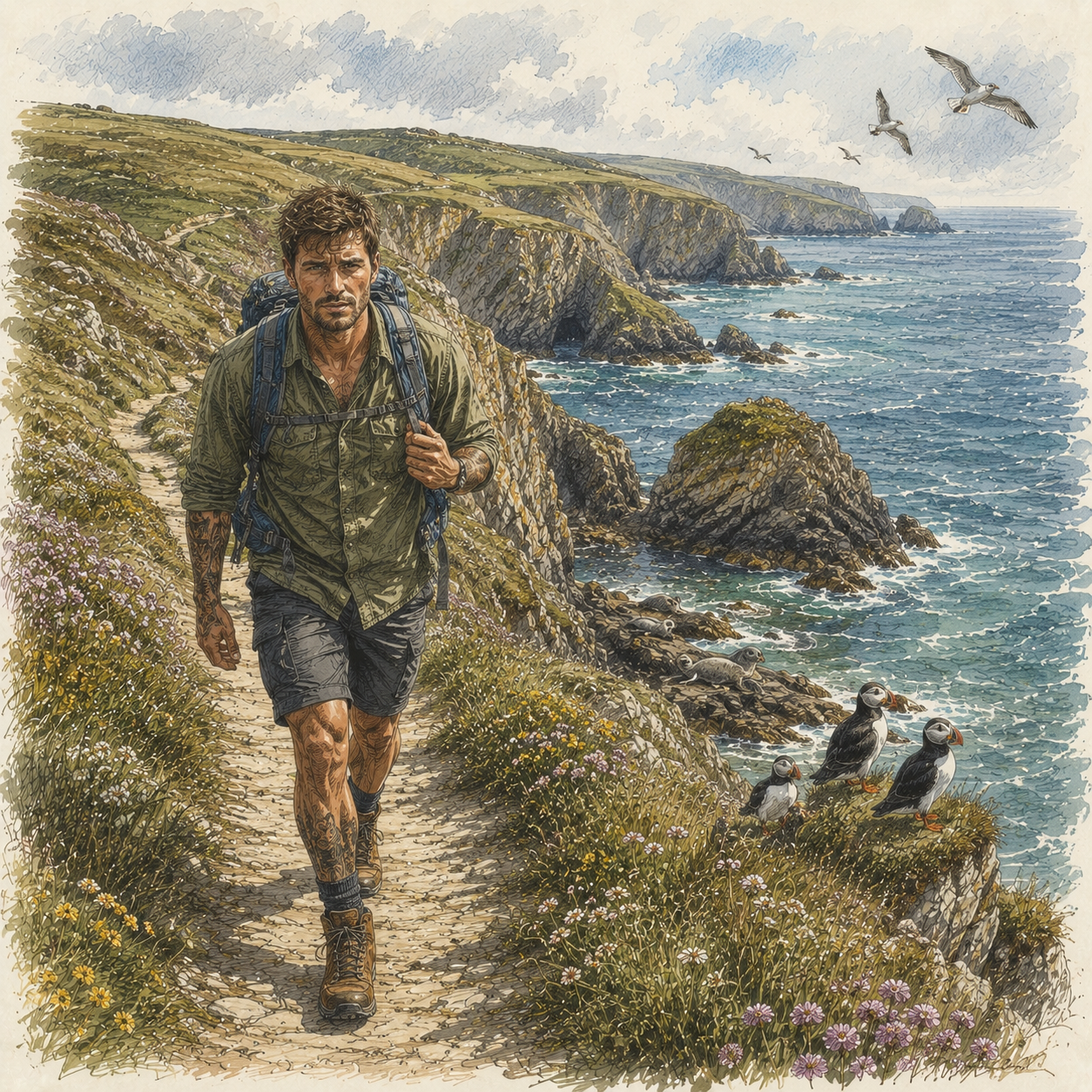
A ruggedly handsome man walks along Pembrokeshire Coast Path by puffins and seagulls

Pembrokeshire Coast Path

Wales offers its own coastal masterpiece in the Pembrokeshire Coast Path. This route combines dramatic scenery with abundant wildlife, including seabirds, seals and, if you’re lucky, dolphins.

Compared with some of the UK’s better-known walking trails, Pembrokeshire often feels quieter and less crowded. That sense of space only adds to its appeal, allowing walkers to immerse themselves in the landscape without distraction.

The Best Walking Holidays in the UK for Mountain and Highland Views

For those who enjoy bigger landscapes and a stronger sense of adventure, Scotland’s walking routes offer some of the most rewarding experiences in the country.
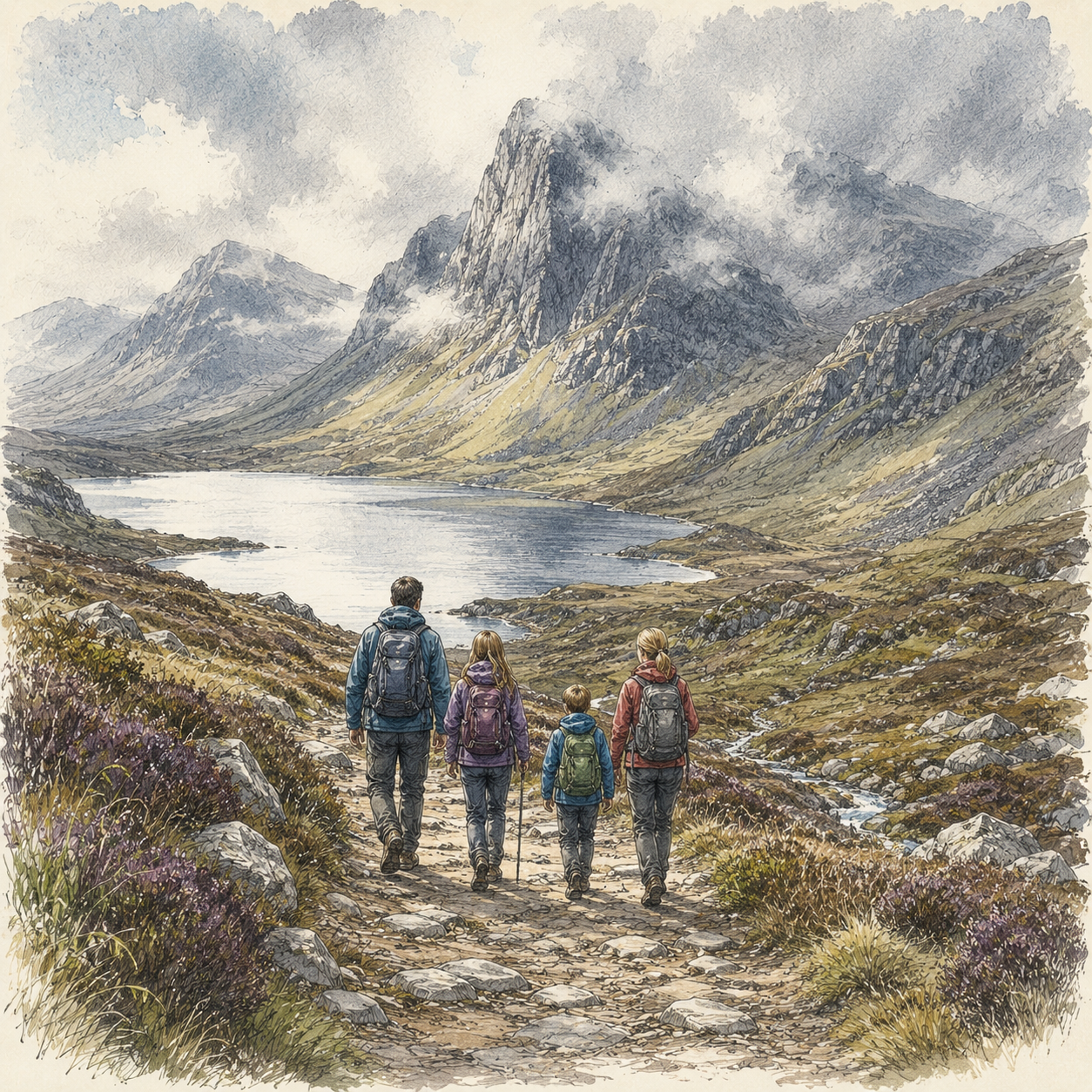
A family goes on a walking tour by misty mountains on West Highland Way in Scotland

West Highland Way

The West Highland Way is Scotland’s most famous long-distance trail, and for good reason. Beginning near Glasgow and heading north into the Highlands, the route passes lochs, mountains and some of Scotland’s most iconic scenery.

There’s a growing sense of wilderness as the walk progresses. The landscapes become more dramatic, the settlements more remote and the feeling of escape more complete. It’s a route that frequently exceeds expectations, even for experienced walkers.
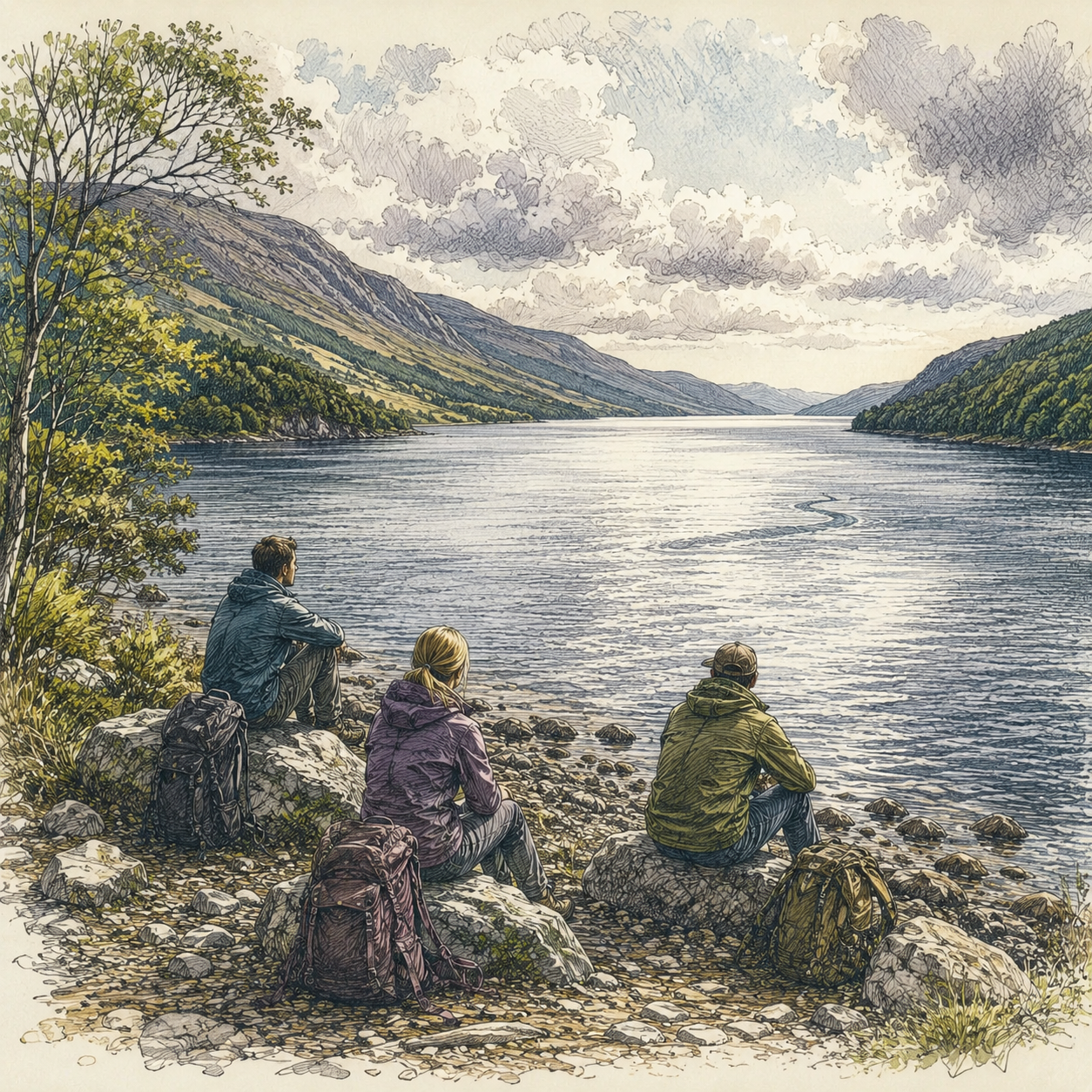
Three hikers pause at Loch Ness on Great Glen Way in Scotland to look at a mysterious shape in the water

Great Glen Way

The Great Glen Way provides another excellent Highland experience while remaining slightly more accessible. Following a route between Fort William and Inverness, it passes through a spectacular valley that includes Loch Ness and a succession of smaller lochs.

The scenery is impressive throughout, yet the trail remains approachable for a wide range of walkers. It offers a perfect introduction to the beauty of the Scottish Highlands without requiring advanced hiking experience.

The Best Walking Holidays in the UK for Classic Countryside Charm

Sometimes, the most rewarding walking holidays aren’t about dramatic mountains or rugged coastlines. Instead, they’re about discovering landscapes that feel quintessentially British.
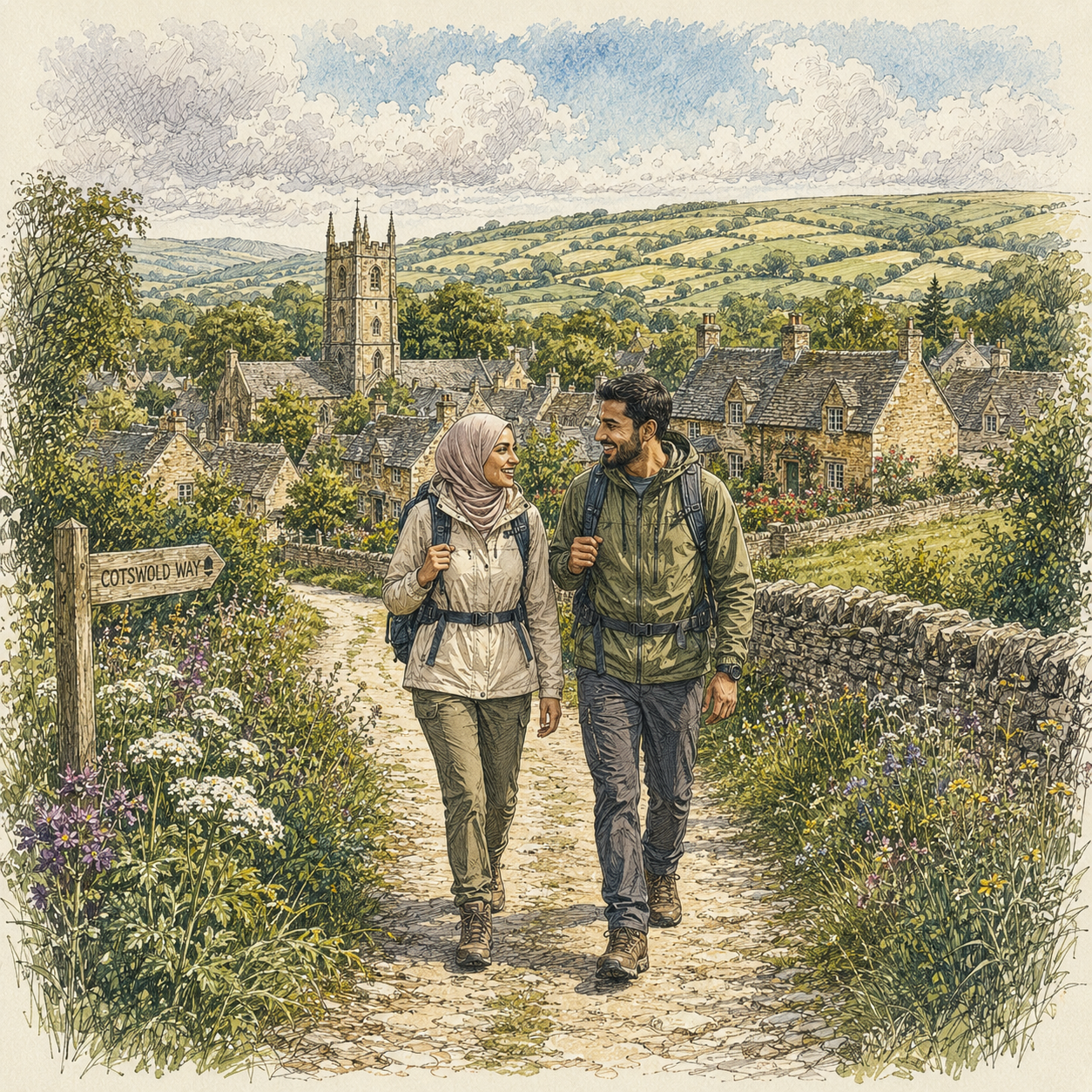
A woman in a headscarf and a bearded man walk along Cotswold Way in the UK, with a picturesque village behind them

Cotswold Way

The Cotswold Way showcases one of England’s most beloved regions. Honey-colored villages, rolling hills and peaceful countryside create a setting that feels almost timeless.

Walking through the Cotswolds allows travelers to experience the region at a much gentler pace. Instead of driving from village to village, you move through the landscape naturally, appreciating how each community fits into the wider countryside.
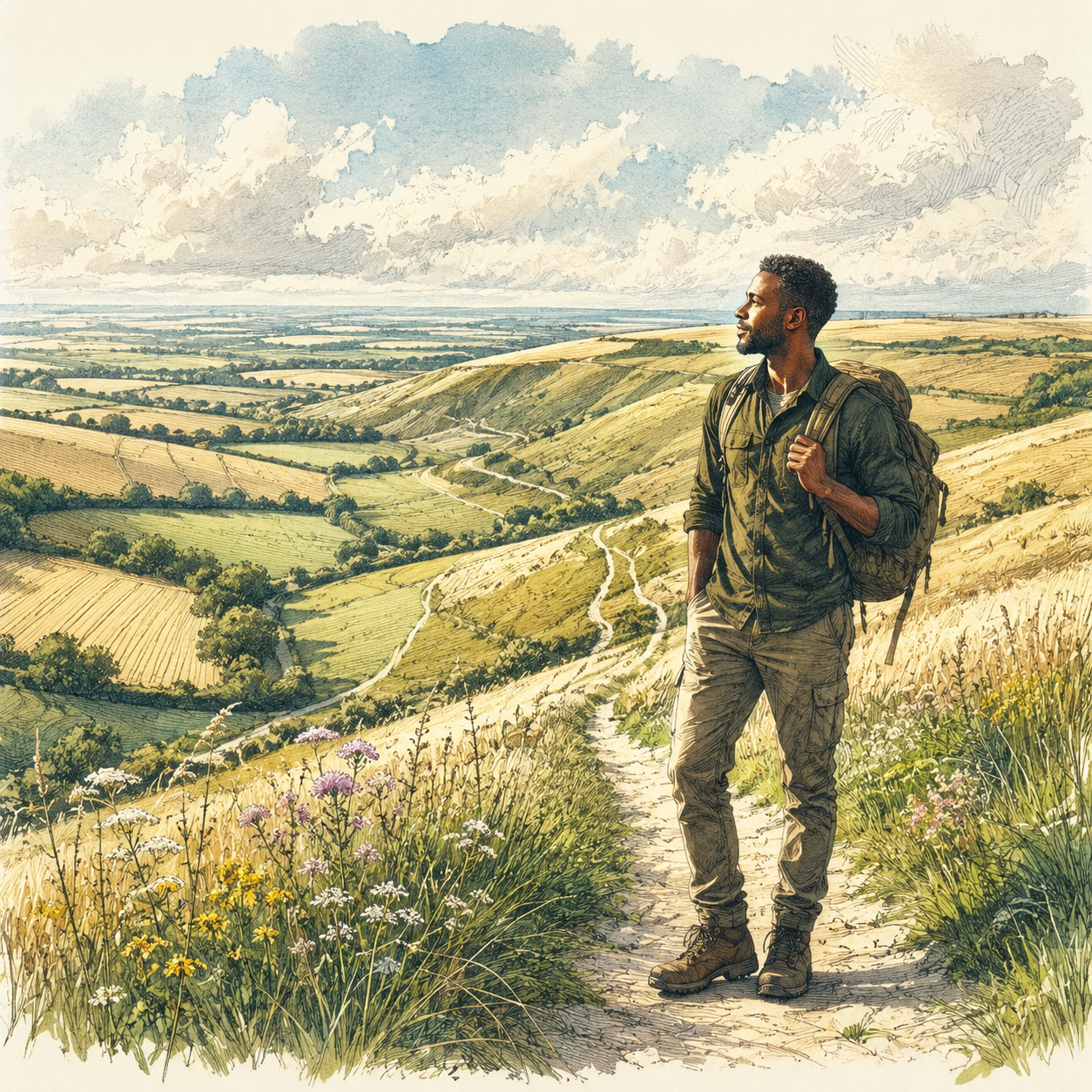
A man on a walking tour stops to admire the green landscape of the UK countryside

Yorkshire Wolds Way

The Yorkshire Wolds Way remains one of England’s most underrated national trails. It lacks the fame of some better-known routes, but that’s part of its charm.

Quiet valleys, open farmland and a strong sense of tranquility make it ideal for walkers seeking space and solitude. It’s proof that some of the UK’s most rewarding landscapes aren’t necessarily the most famous.
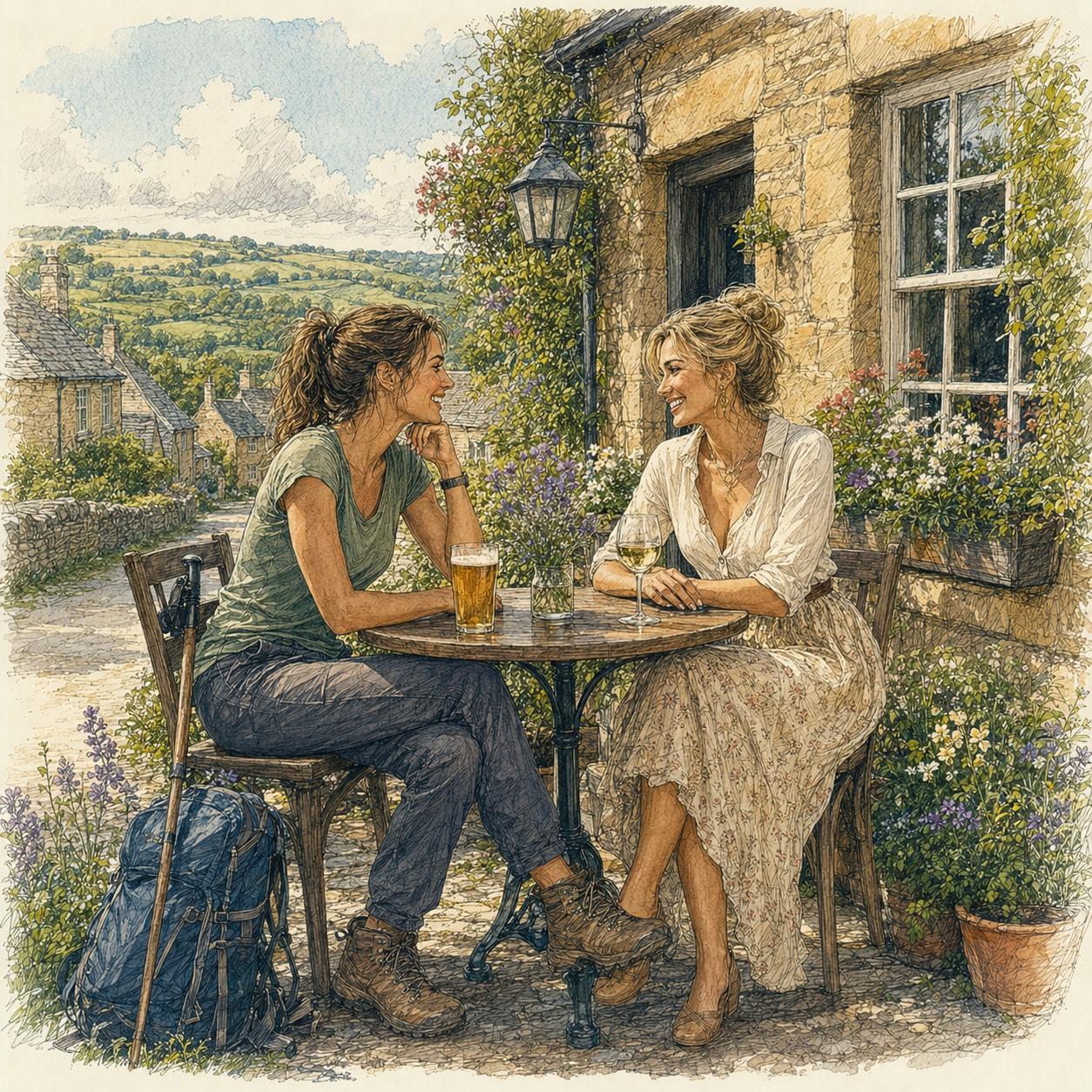
A hiker drinking a beer chats with another woman drinking white wine at an outdoor table at a British pub

Why Villages Become Part of the Adventure

One of the unexpected joys of a walking holiday is the way villages become integral to the journey. They’re no longer quick stops for fuel or refreshments but destinations in their own right.

A village pub becomes a welcome place to rest after a long day and sample traditional British cuisine. A local café provides an opportunity to chat with residents and fellow walkers. Small independent shops, historic churches and community events offer glimpses into local life that many travelers would otherwise miss.

These encounters often become some of the most memorable parts of the trip. Long after the exact mileage has been forgotten, people remember the friendly conversation, the excellent meal or the hidden village they discovered along the way.

What Walking Teaches You About the Landscape

Walking has a remarkable way of helping you understand a landscape. Distances feel different when you cover them on foot. Hills appear larger, rivers feel more significant, and geographical features begin to make sense in relation to one another.

You also notice how landscapes change gradually. The transition from farmland to woodland, from moorland to coastline or from valley to upland becomes part of the experience. These subtle shifts are often invisible when traveling by car, but they become fascinating when experienced step by step. 

In many ways, walking provides context. It helps travelers understand not just where places are, but how they connect.

Practical Tips for Your First Walking Holiday

Preparation can significantly improve your experience, particularly if you’re new to long-distance walking. One of the most important decisions is choosing a route that matches your fitness level. Starting with a manageable trail is far more enjoyable than attempting something overly ambitious.

Comfortable footwear is equally important. A good pair of walking boots or shoes can make the difference between a rewarding holiday and several days of discomfort. Packing lightly also helps. Many first-time walkers carry far more than they need, only to regret it after a few hours on the trail.

Finally, be realistic about daily distances. Walking 10 miles through rolling countryside feels very different from walking 10 miles through a city. Build flexibility into your itinerary and allow time to enjoy the journey rather than simply completing it.
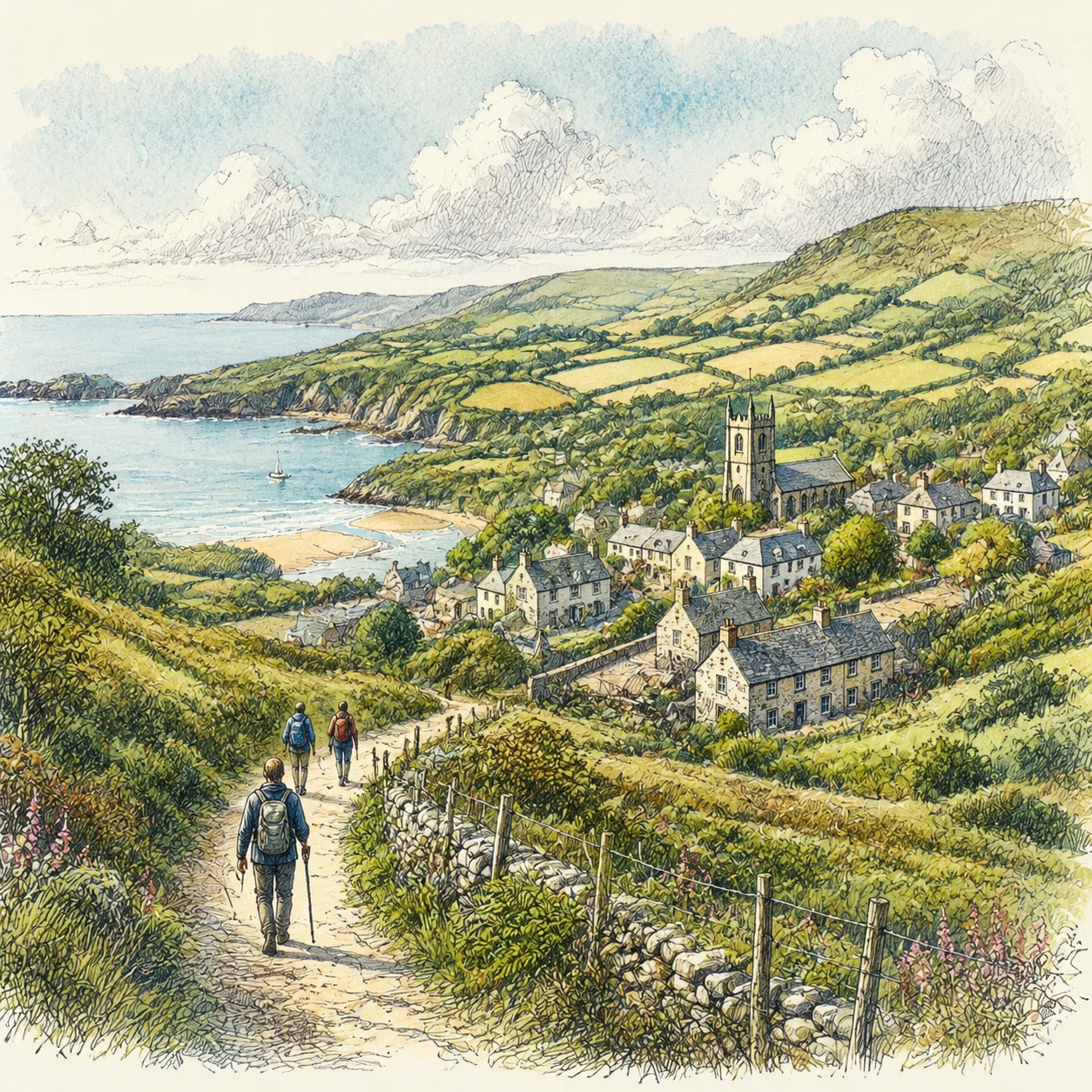
Walkers hike along a trail to a quintessential seaside village in the UK

Common Mistakes First-Time Walkers Make

Perhaps the most common mistake is trying to do too much too quickly. Enthusiasm is wonderful, but overly ambitious daily targets can turn an enjoyable holiday into an exhausting challenge.

Another frequent error is packing for every possible scenario. The temptation to bring extra clothing, gadgets and supplies is understandable, but every additional item feels heavier as the day progresses. Most experienced walkers eventually learn that less is usually more.

And then there’s the weather. British weather has a personality all its own. It can provide sunshine, wind and rain within the same afternoon. Accepting that reality — and packing accordingly — is an important part of the adventure.

Why Walking Holidays Create Stronger Travel Memories

There’s something uniquely satisfying about reaching a destination under your own steam. The sense of achievement is real, but it’s only part of the appeal. Walking holidays also create a deeper connection to the places you visit.

You notice more. You engage more. You remember more. The landscape becomes something you experience rather than simply observe. Even ordinary moments feel more significant because you have taken the time to appreciate them.

That’s why walking holidays often leave such a lasting impression. They encourage a different style of travel — one that values experience over speed and connection over convenience.

Slow Down and See More

The UK is packed with remarkable landscapes, fascinating history and characterful communities. But many of its most rewarding experiences reveal themselves slowly. Walking creates opportunities to discover places and perspectives that are easy to miss when traveling at speed.

Whether you’re exploring the Roman history of Hadrian’s Wall, the dramatic cliffs of Cornwall, the Highlands of Scotland or the villages of the Cotswolds, traveling on foot changes the way you experience a destination. You may not cover as much ground, but you’ll often gain something far more valuable: a deeper understanding of the places you visit and memories that stay with you long after the journey ends. –Kyle Mirage


Renting a Car in the UK: What Overseas Drivers Need to Know Before They Book

Thinking about driving in England, Scotland or Wales? From overseas licences and age limits to insurance excess and London congestion charges, here’s what to know before you rent a car in the UK.

There’s a moment, somewhere between the third cup of airport coffee and your first sight of a hedgerow, when the UK begins to whisper: Just imagine how awesome it’d be to drive through me.

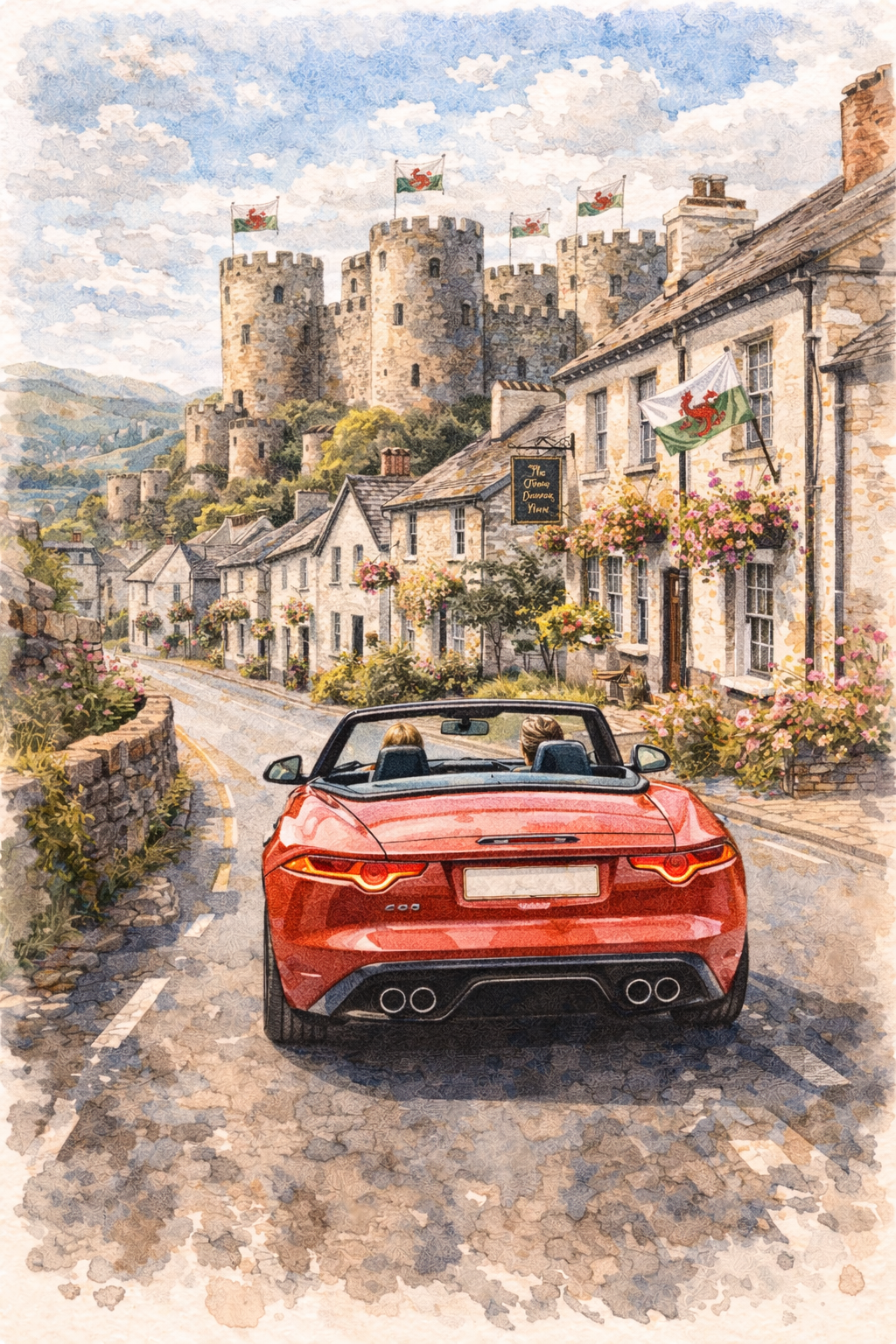
You picture yourself winding through the Cotswolds, stone cottages glowing honey-gold in the setting sun. Or hugging the cliffs of Cornwall while the Atlantic throws a mild tantrum below. Or blasting across the Scottish Highlands with mist rising like something out of a broody BBC drama.

Public transport in the UK is solid. The trains are efficient. The Tube is iconic. But renting a car? That’s freedom. That’s pulling over for a ruined abbey you didn’t plan to see. That’s making a detour because a brown sign promised a “historic folly” and you are nothing if not curious.

Before you book, though, there are a few practicalities — because nothing kills romance like arguing with a rental desk agent about your insurance.

Let’s make sure you glide out of that airport car park like a pro.

Can You Drive in the UK on an Overseas Licence?

If you’re visiting the UK for a holiday, you can usually drive on your full, valid overseas licence for up to 12 months from the date you enter the country (or become a resident).

Translation: If you’re visiting from the U.S., Canada, Australia and most other countries, you’re generally fine.

A few key caveats:

  • Your licence must be full — not provisional or learner.

  • You can typically drive vehicles up to 3,500 kilograms (standard cars and small vans).

  • You can’t drive vehicles with more than eight passenger seats, unless your licence category allows it.

If your licence isn’t in English, you may need an International Driving Permit or an official translation. Some rental companies will request it at pickup. Some won’t. You don’t want to discover which kind you have after a red-eye flight.

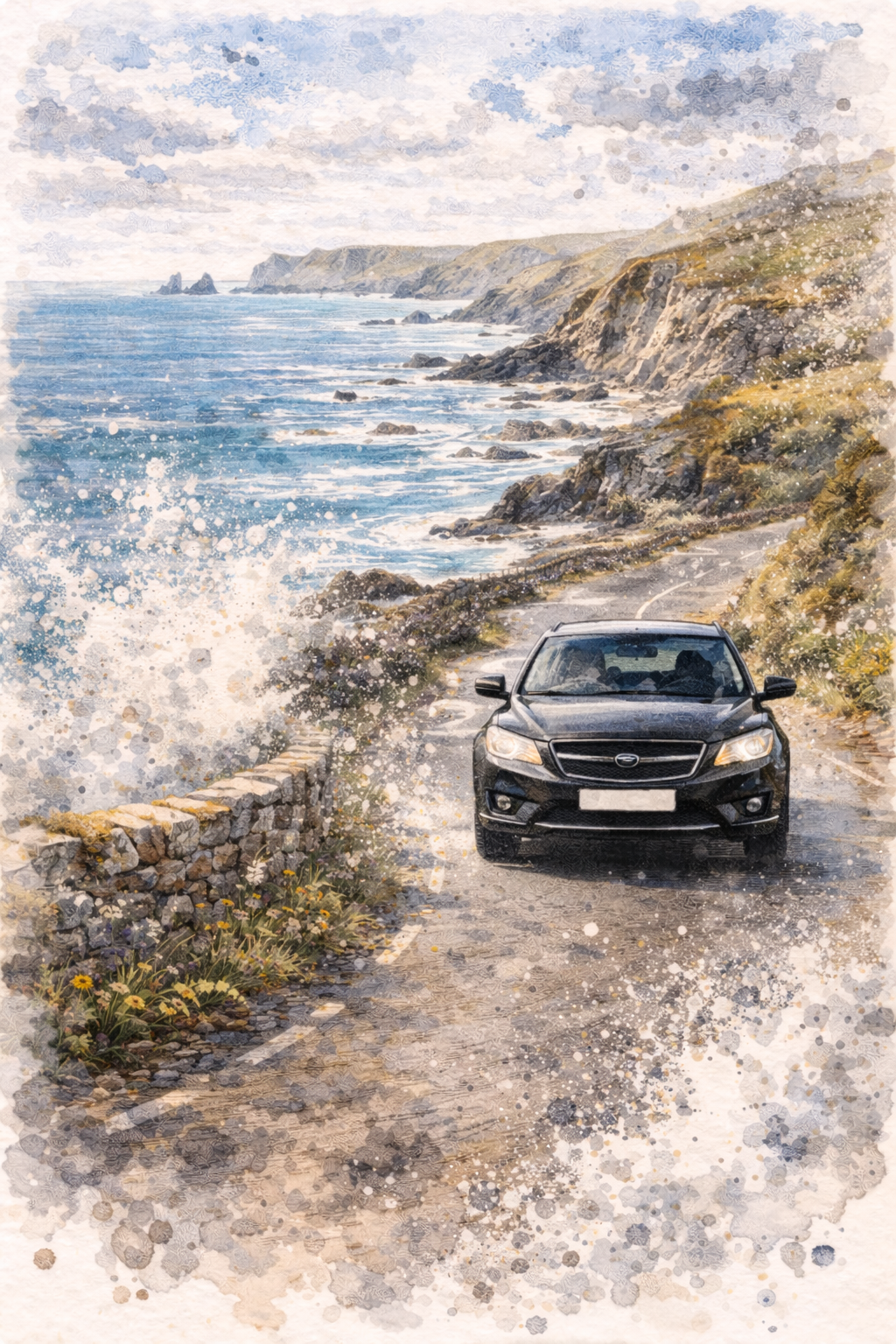
Waves crash, causing spray as a black car drives along the Cornwall coastline

Age Requirements for Renting a Car in the UK

In the UK, the minimum age to rent a car is usually 21. However, many companies prefer drivers to be 23 or 25. If you’re younger than that, expect:

  • A “young driver surcharge”

  • Restrictions on vehicle categories (you’re not gonna be able to cruise the countryside in a Range Rover at 22)

  • A requirement that you’ve held your full licence for 1–4 years

Luxury cars often come with stricter rules — sometimes requiring drivers to be 30 or older.

On the other end of the spectrum, some companies impose upper age limits starting around 70–75. Policies vary, so read the fine print before you click “confirm booking.”

Understanding UK Car Rental Insurance

Insurance is mandatory in the UK. Rental cars typically include basic coverage in the advertised price — usually collision damage waiver and third-party liability.

But here’s where things get spicy: car rental excess insurance.

What’s that? The excess is the amount you agree to pay if the vehicle is damaged or stolen. It can range from roughly $500 to $2,000 or more, depending on the policy.

So yes, you’re insured — but you’re not fully protected unless you reduce that excess.

Many travelers choose to arrange separate excess cover before arriving in the UK. It can be cheaper than what’s offered at the rental counter and gives you peace of mind when navigating:

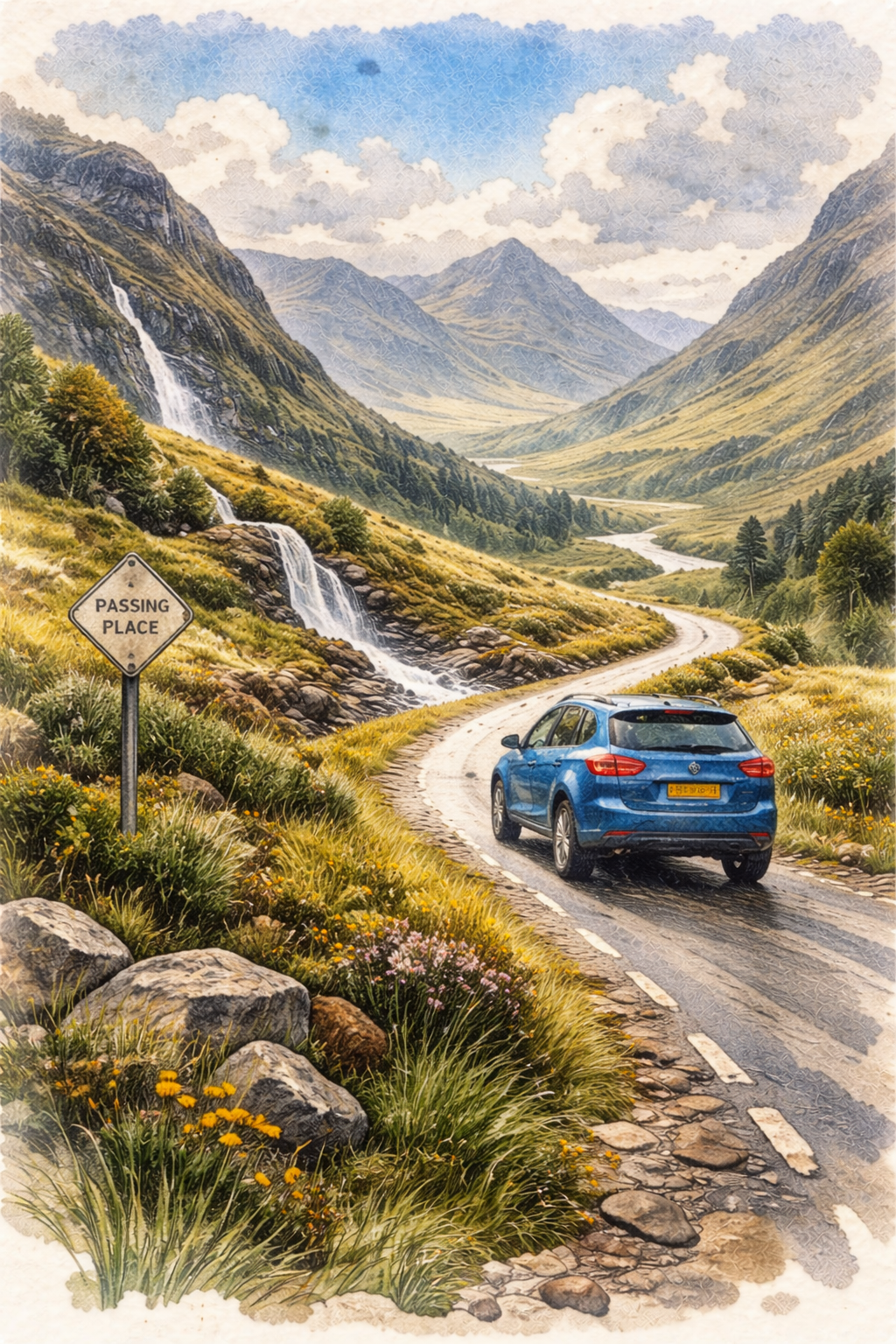
  • Narrow country lanes bordered by ancient stone walls

  • Multi-lane roundabouts that appear without warning

  • Driving on the left (which feels charming until you momentarily space out)

When comparing policies, focus on:

  • The excess amount

  • Whether windscreens and tires (“tyres”) are included

  • Any exclusions

Lower premium often equals higher excess. Decide how much risk you’re comfortable carrying while you’re out chasing castles.

Hidden Fees to Watch Out for When Renting a Car in the UK

The advertised daily rate is rarely the final number. Consider this your gentle warning before your budget gets cheeky.

Fuel policy

Most companies operate on a full-to-full system: You collect the car full and return it full. This is usually the simplest and most transparent option.

Some companies charge you up front for fuel at inflated rates. Tourists who don’t read the fine print often pay for convenience with regret.

One-way rental fees

Picking up in London and dropping off in Edinburgh? There may be a one-way charge.

Sometimes it’s worth it. Sometimes it’s eye-watering. Just know it exists before you build your itinerary around it.

London congestion charge

Driving into central London? There’s a congestion charge.

As of recent rates, it’s £18 per day and applies:

  • Monday–Friday: 7 a.m.–6 p.m.

  • Saturday–Sunday: 12 p.m.–6 p.m.

Some rental companies handle registration and pass the charge on to you. Others expect you to pay it yourself. Don’t assume. Ask. Because nothing says “welcome to Britain” like a fine arriving in your inbox three weeks later.

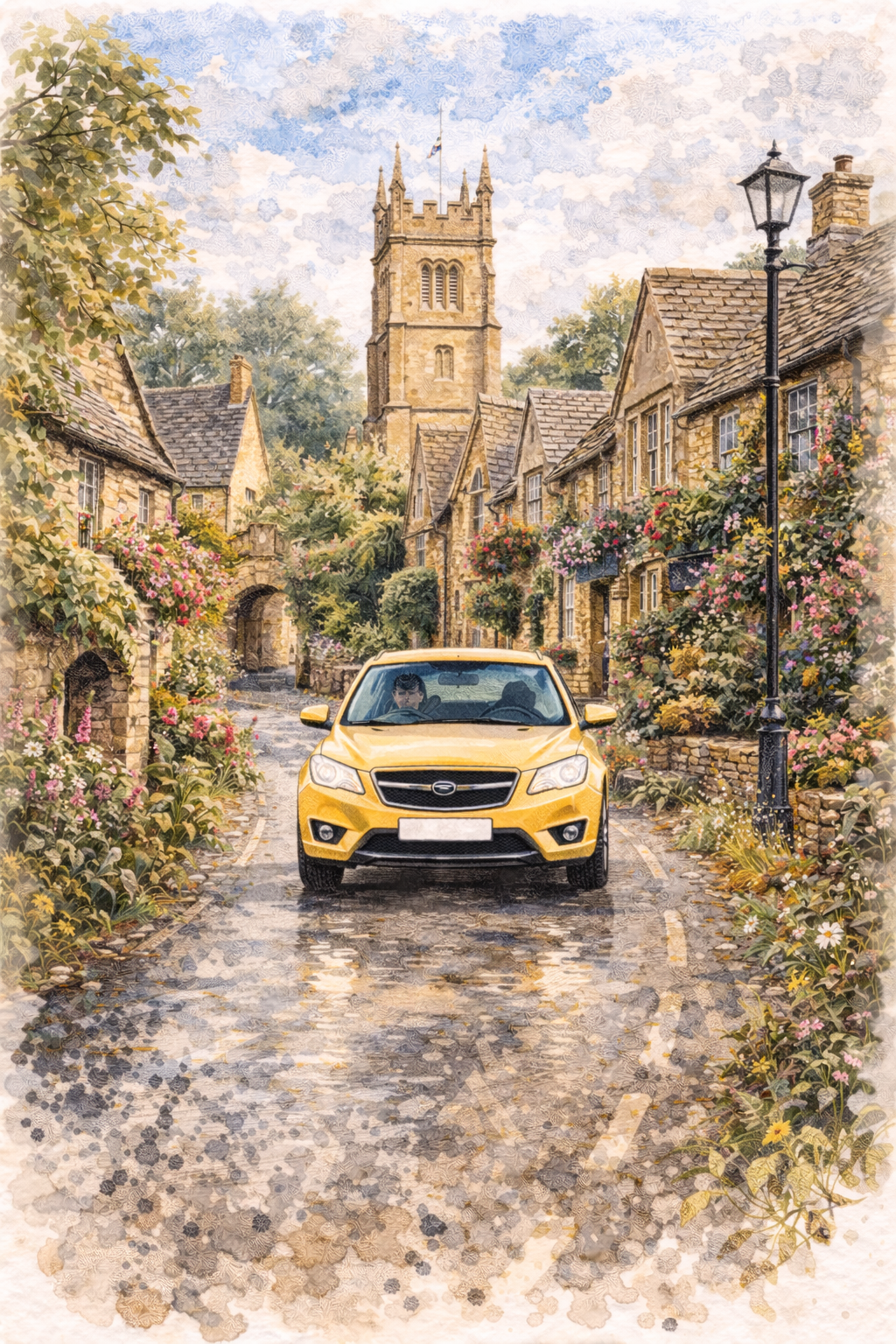
A yellow car drives through a charming Cotswolds village with flowers and warm stone buildings, including a church with a square tower

UK Car Rental Add-ons That Add Up

  • Extra driver fees

  • GPS hire

  • Child seats

  • Cross-border charges if heading into Scotland or Wales from certain locations

They’re not dramatic individually. Together? They can be.

Is Renting a Car in the UK Worth It?

If you’re staying in the city the entire time, exploring London’s coolest neighborhoods? Probably not. The Tube and trains will serve you well.

But if your trip includes:

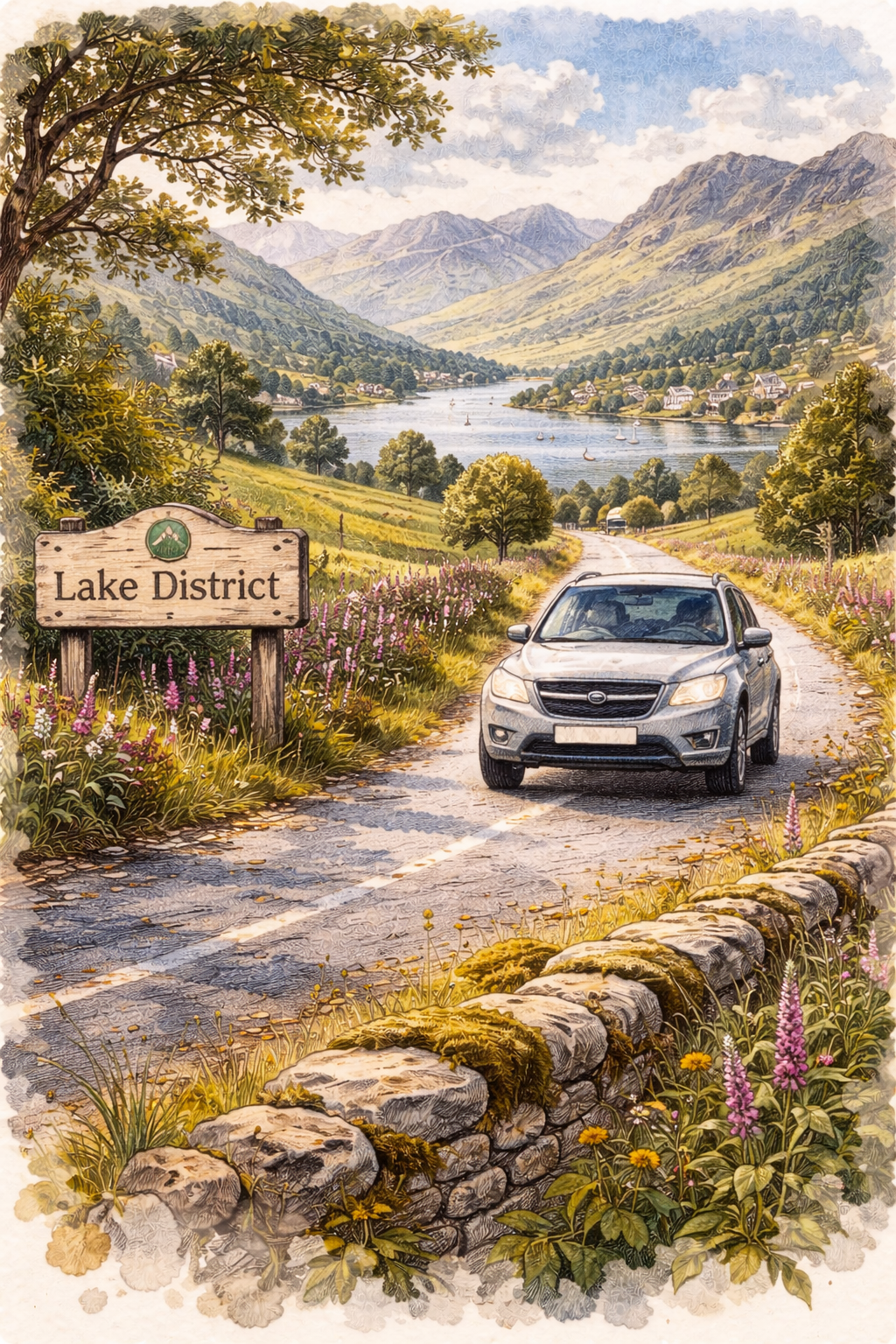
  • The Lake District

  • The Scottish Highlands

  • Cornwall’s coastline

  • Tiny Welsh villages

  • The Cotswolds’ winding lanes

Then yes — renting a car unlocks the version of the UK found in films and romantic travel essays.

Just remember:

  • Drive on the left.

  • Roundabouts aren’t a personal attack.

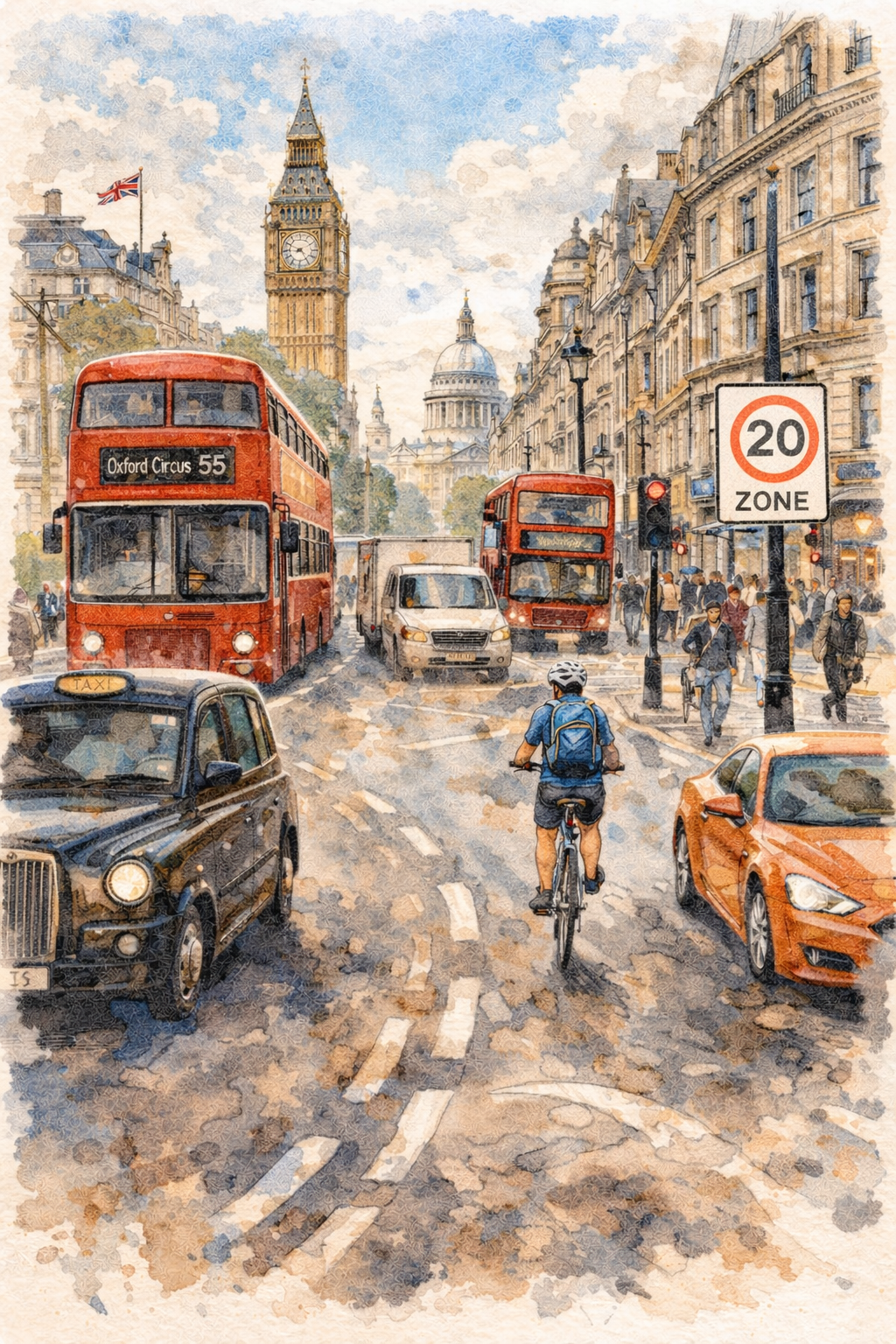
  • Always check your mirrors before opening the door — cyclists in the UK move like they’re in the Tour de France.

Renting a car in the UK isn’t complicated. It just rewards the prepared traveler.

And once you’re out there — windows down, radio low, hedgerows blurring past — you’ll forget the paperwork ever existed.

Almost. –Lucy Mitchell

Setting a Timeline for Your UK Wedding: What to Plan and When

Planning a UK destination wedding? This month-by-month wedding timeline breaks down exactly what to do — from venues and vendors to visas and veils.

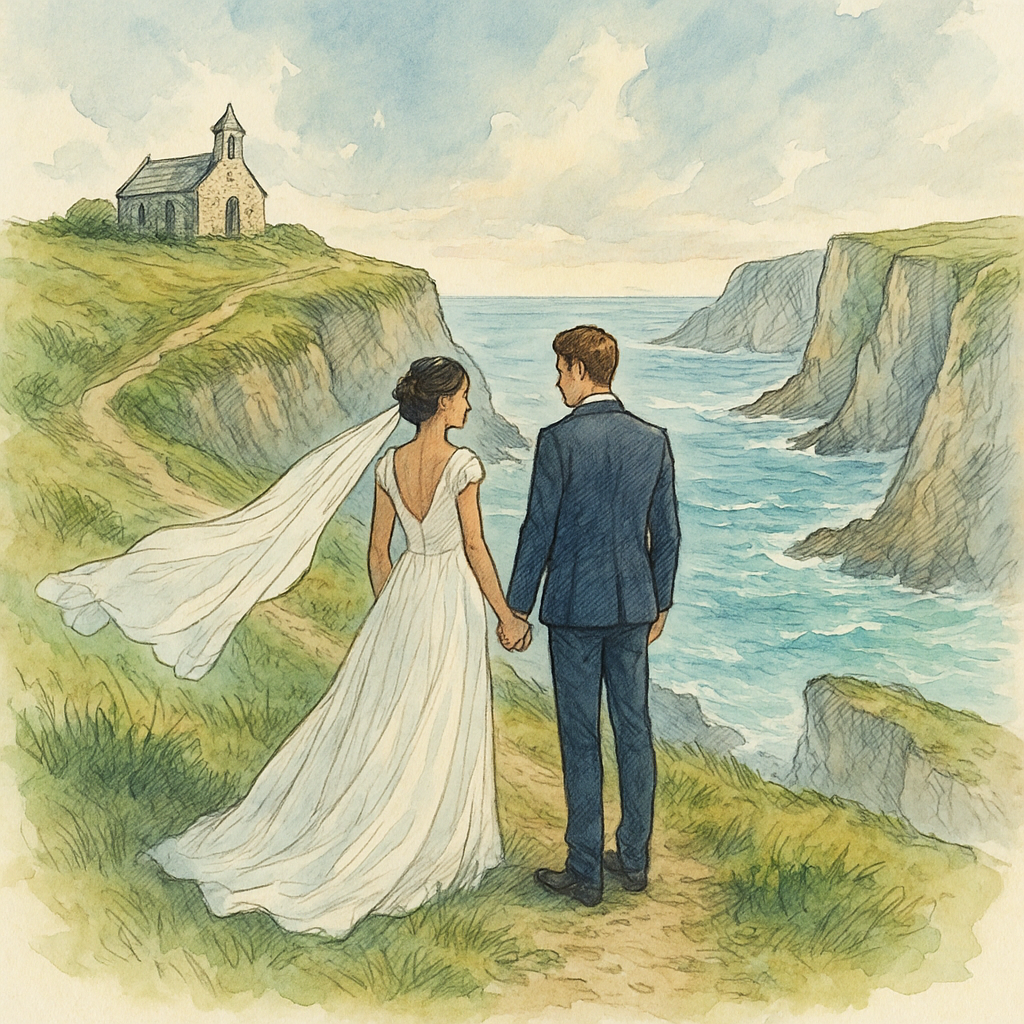
A bride and groom hold hands atop a windy cliffside in the UK, with a chapel up the hill

Let’s face it — planning a wedding can feel like juggling flaming torches while trying not to spill your prosecco. Add in the glorious chaos of a destination wedding in the UK, and you’re suddenly Googling “how to politely elope.” But take a breath. With a little organization and the right timeline, your British bash can be as magical as a Colin Firth rom-com.

Here’s your month-by-month guide to pulling off a UK wedding that’s as smooth as clotted cream.

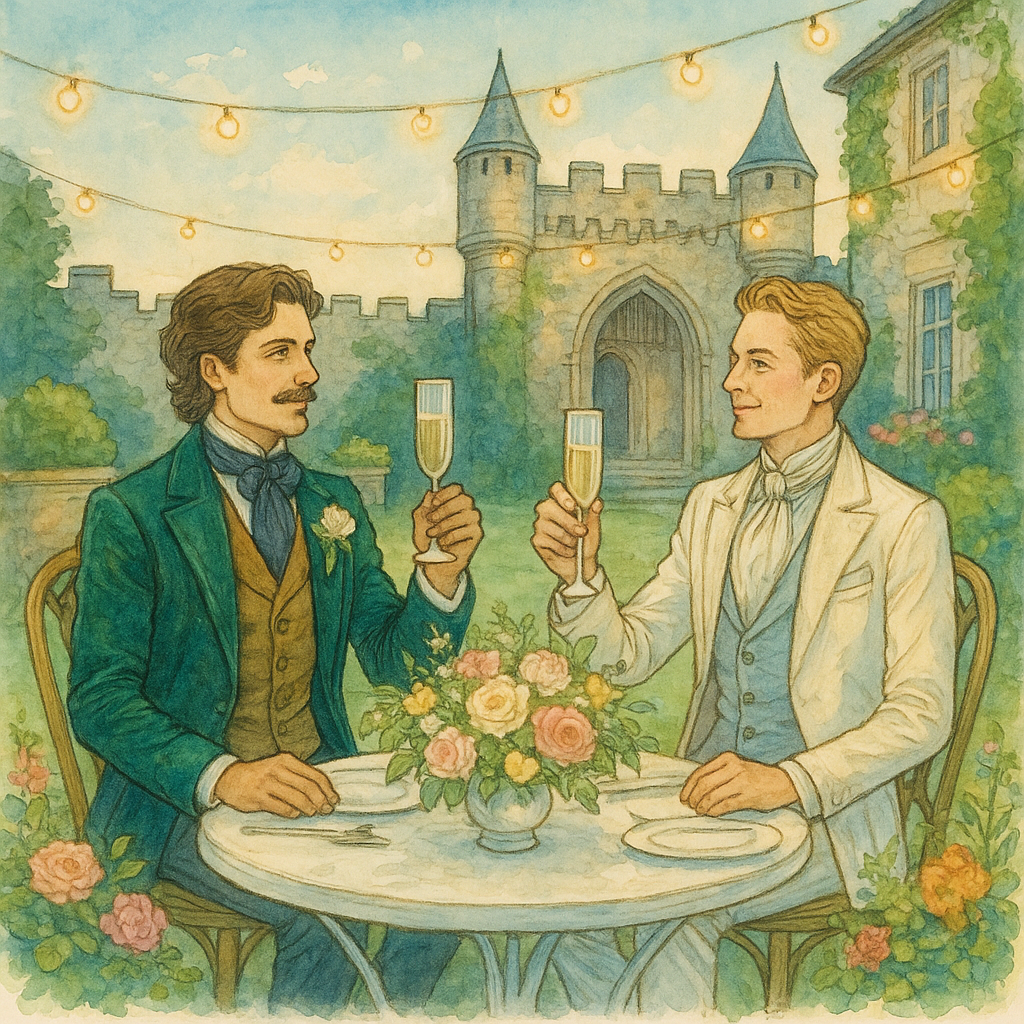
A gay couple in period dress toast champagne at their wedding at a castle in the UK

12–18 Months Before: Book It Like Beckham

If your engagement is longer than waiting for a new season of Bridgerton, congrats — you’ve got time to breathe. But not too deeply, because your venue? It’s already halfway booked up by couples named Pippa and Giles. Top UK venues fill up fast — we’re talking two years in advance — so don’t dawdle.

Before you get lost in the Pinterest black hole of table décor, lock down your guest count and budget. (Yes, even your third cousin’s new boyfriend who won’t stop talking about his pet rats might need a seat.)

The average cost of a wedding venue in the UK will run you £9,000–£11,000 ($12,200–$14,900), and that’s before you’ve added a single sausage roll.

If you’re hiring a planner, bring them on now. This is your co-captain for the chaos. Choose wisely.

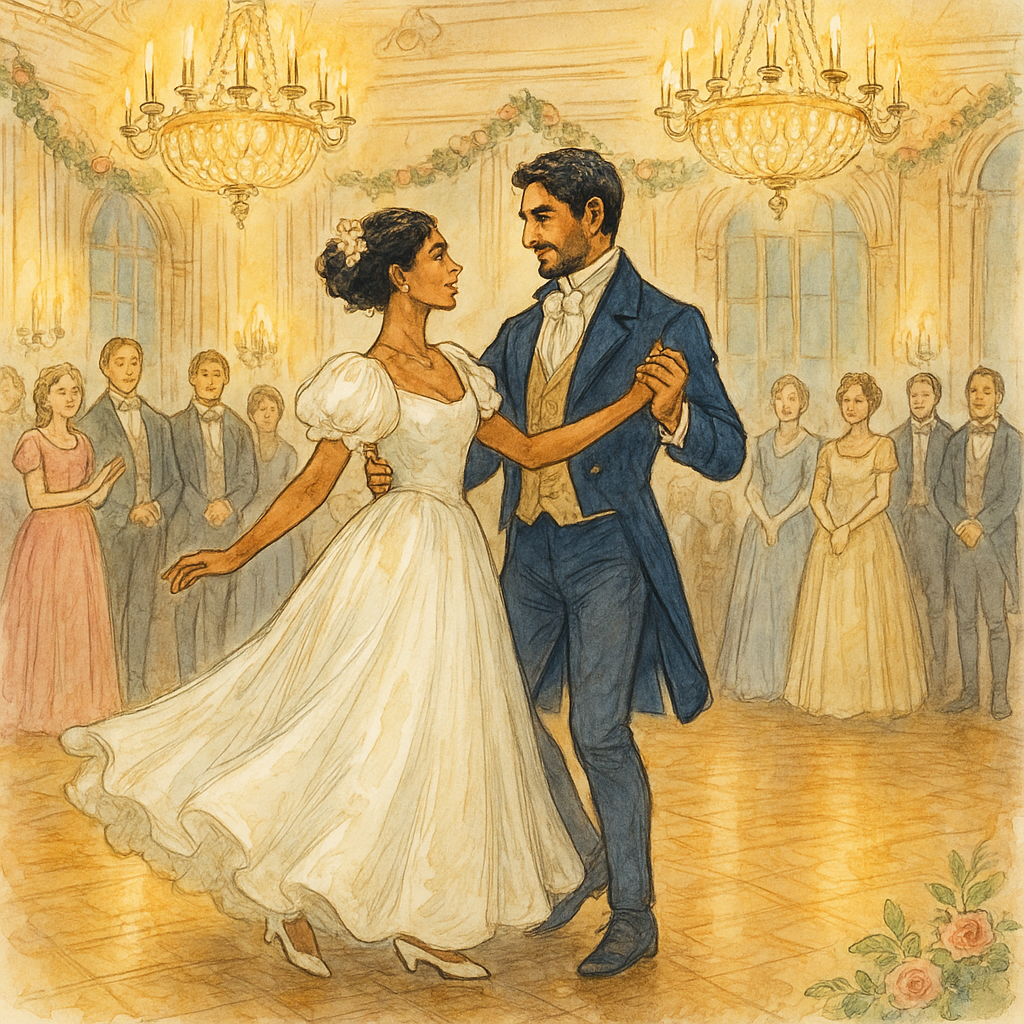
A bride and groom dance while guest circle them at a Bridgerton-themed wedding

9–12 Months Before: Lights, Camera, Catering

You’ve got a venue. You’ve got a date. You’re practically Kate and Wills. Now it’s time to book your VIPs: the caterer (pies or posh?), photographer (editorial or soft focus?), and entertainment (string quartet or DJ who refuses to play “Wonderwall”).

This is also dress/suit time, especially if you’re going bespoke or need major alterations. Same goes for glam — book your hair and makeup artists now, before they’re swept away by another bride who planned everything six years ago.

And please — make a wedding website. Especially for a UK wedding, where guests may need to navigate train timetables, weird voltage plugs, and the eternal mystery of what “half board” means. Include local hotels, transportation options, and even a pub recommendation or two.

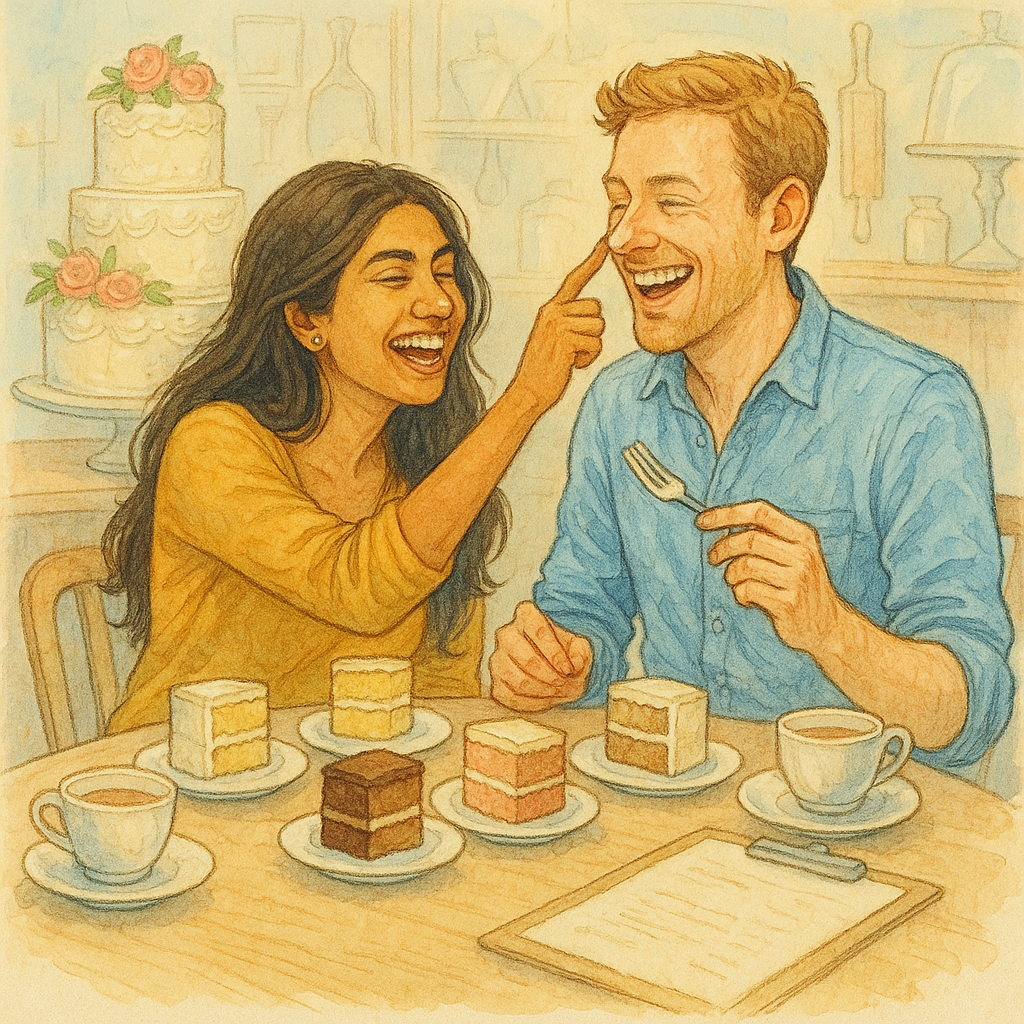
At a wedding cake tasting, a woman puts frosting on a man's nose while both laugh

6–9 Months Before: Cake It ’Til You Make It

Now we’re in the fun zone. Cake tastings, flower choices, table décor — all the frilly bits that make your day feel like you.

If you can swing a planning trip to the UK, do it now. You’ll get to sniff the blooms, taste the cake, and remember that your wedding is happening in a real, actual place and not just a shared Google doc.

Also: honeymoon planning time! Whether you’re heading straight to the Cotswolds for a cozy fireside escape or hitting up Edinburgh for whisky-fueled romance, start mapping it out. There are so many beautiful places to explore in the UK that are just a train ride away.

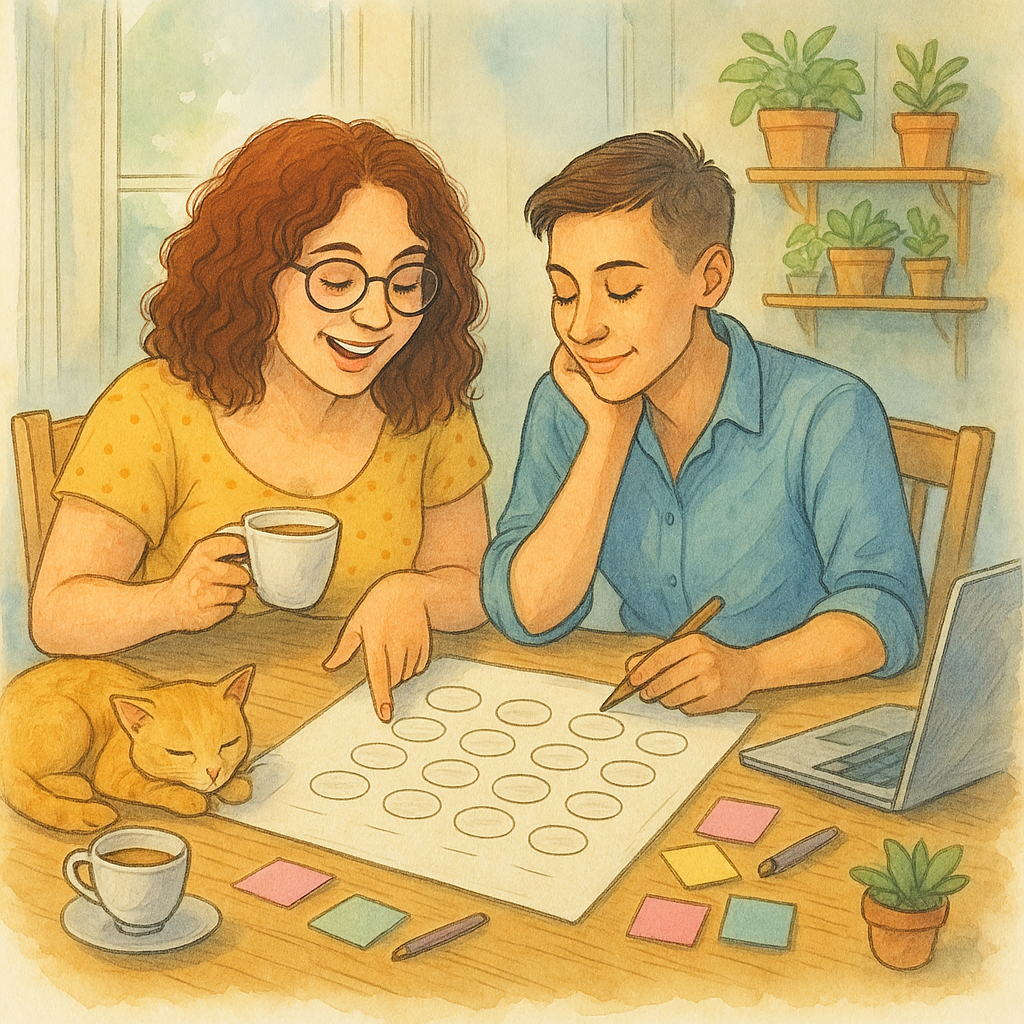
A lesbian couple finalize their wedding seating chart, while a cat sleeps nearby

The Final 6 Months: Legal Stuff and Last Touches

Planning to legally marry in the UK? If you’re not a British citizen, you’ll need a marriage visa — and no, it doesn’t come gift-wrapped. Apply for a marriage visa exactly three months before your wedding. You can’t do it earlier, and processing can take up to three weeks, so time it right.

Beyond bureaucracy, this is final-touch time:

  • Confirm the seating chart (yes, Uncle Barry is still coming)

  • Break in your wedding shoes (or suffer the hobble of regret)

  • Get the rings cleaned

  • Make a packing list

  • Panic briefly, then remember: You’ve got this

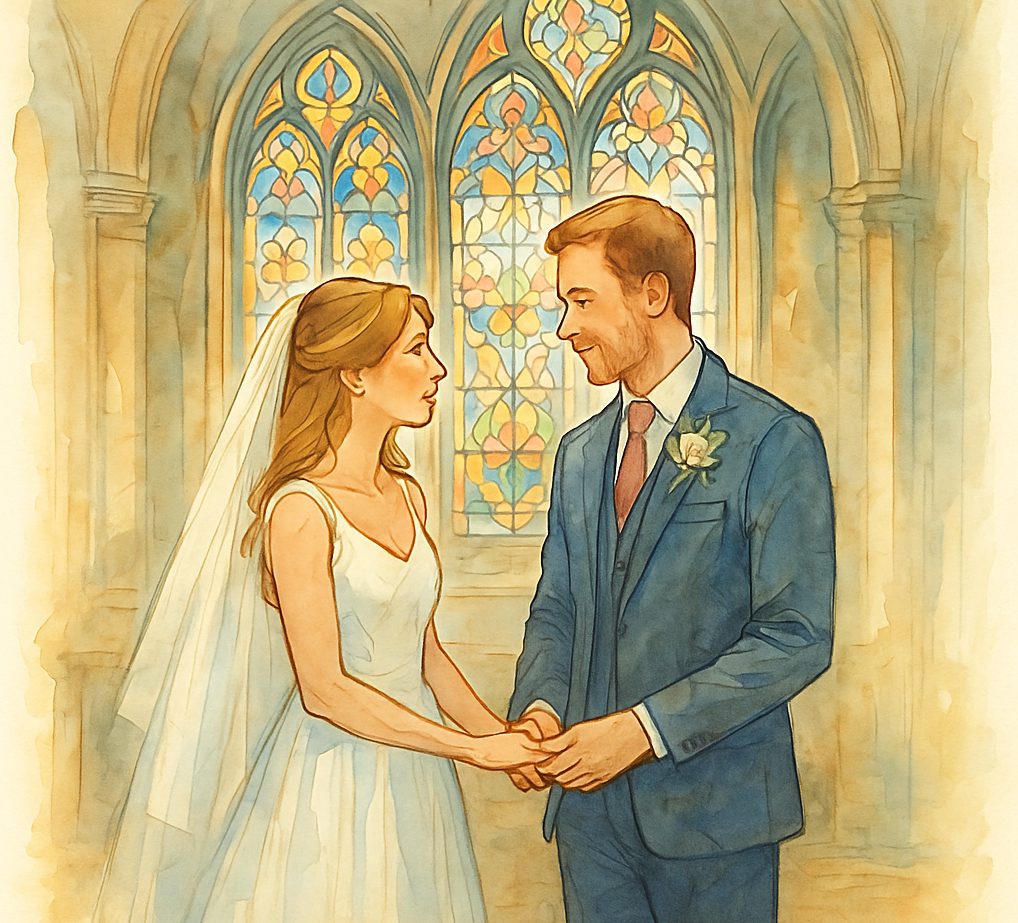
A bride and groom hold hands and face each other by a stained glass window

Tie the Knot in the UK

From misty moors to manor houses, cliffside chapels to converted cinemas, the UK has a venue for every vibe — and a wedding industry that knows its stuff. Whether you’re dreaming of kilts, castles, or a seaside knees-up with fish and chips, your British wedding can be anything but basic.

So here’s to love, as well as legal paperwork and logistics. You bring the vision. The UK has plenty to make your dreams a reality. –Melanie Huff

Licking Legends: The UK’s Myths and Legends Stamps

The stories behind the UK’s magical new stamps are sure to enchant you: the Loch Ness Monster, Beowulf and Grendel, Cornish piskies, selkies and more.

The entire Royal Mail’s Myths and Legends stamp series

Eight stamps. Eight legends. A whole world of magic compressed into miniature artwork — and honestly? I’ve never wanted to send more mail in my life.

Each one of these beautifully illustrated postage stamps from the Royal Mail is a tiny portal into the legends that have haunted the British Isles for centuries. They’re wild and eerie. I was hooked.

This 2025 Myths and Legends series was brought to life by British illustrator Adam Simpson, whose crisp, almost woodcut-like style feels like it could adorn a high-end gallery wall — or illustrate a children’s book. 

It’s perfect for a set of stamps that spans the heroic, the heartbreaking and the downright horrid. The collection draws from English, Scottish, Welsh and Irish folklore, and features not just the obvious icons (yes, Nessie makes an appearance) but some deeper, darker cuts too. Why hello, Grindylow.

Each stamp is a love letter to the past, a celebration of story, and a reminder that folklore isn’t dead — it’s just waiting for the right delivery system. Consider this your guided tour through the tales behind the stamps, complete with monsters, magic, betrayal … and brine.

Beowulf fights Grendel in the Royal Mail’s Myths and Legends stamp series

Beowulf and Grendel

Hero vs. horror in the original monster story

Long before superheroes wore capes, they wore chainmail and boasted a mead hall’s worth of swagger. Beowulf is the OG epic hero — the kind of guy who crosses the sea just to fight your monsters for you. His most famous foe? A grotesque creature named Grendel, who spent his nights tearing warriors limb from limb at the hall of Heorot. The king, Hrothgar, was helpless. Enter Beowulf.

This story comes from the Old English poem Beowulf, thought to have been composed between the 8th and 11th centuries, set in Scandinavia but recorded in a single surviving manuscript from Anglo-Saxon England (now safely stored at the British Library). It’s the oldest known epic in English literature — and it doesn’t pull punches. Beowulf doesn’t just defeat Grendel; he rips his arm clean off and hangs it like a trophy. Brutal. Poetic. Metal.

Grendel himself is one of literature’s great monsters — described as a descendant of Cain, that fratricidal son of Adam and Eve, shunned by God, and tormented by the joy he hears in Hrothgar’s hall. He’s more than beast; he’s a symbol of alienation and rage, a product of exile and pain. Some later interpretations even paint him as a tragic figure. Not that Beowulf cared.

Simpson’s stamp captures the legendary fight with clean lines and mythic energy: Beowulf wrestles the monstrous figure of Grendel in a composition that feels part medieval tapestry, part comic book panel. It’s dynamic, dramatic — and faithful to the grit of the tale.

This is the legend that launched a thousand English Lit classes, inspired everything from The Lord of the Rings to The Witcher, and proved that even a millennium ago, people loved a good monster fight.

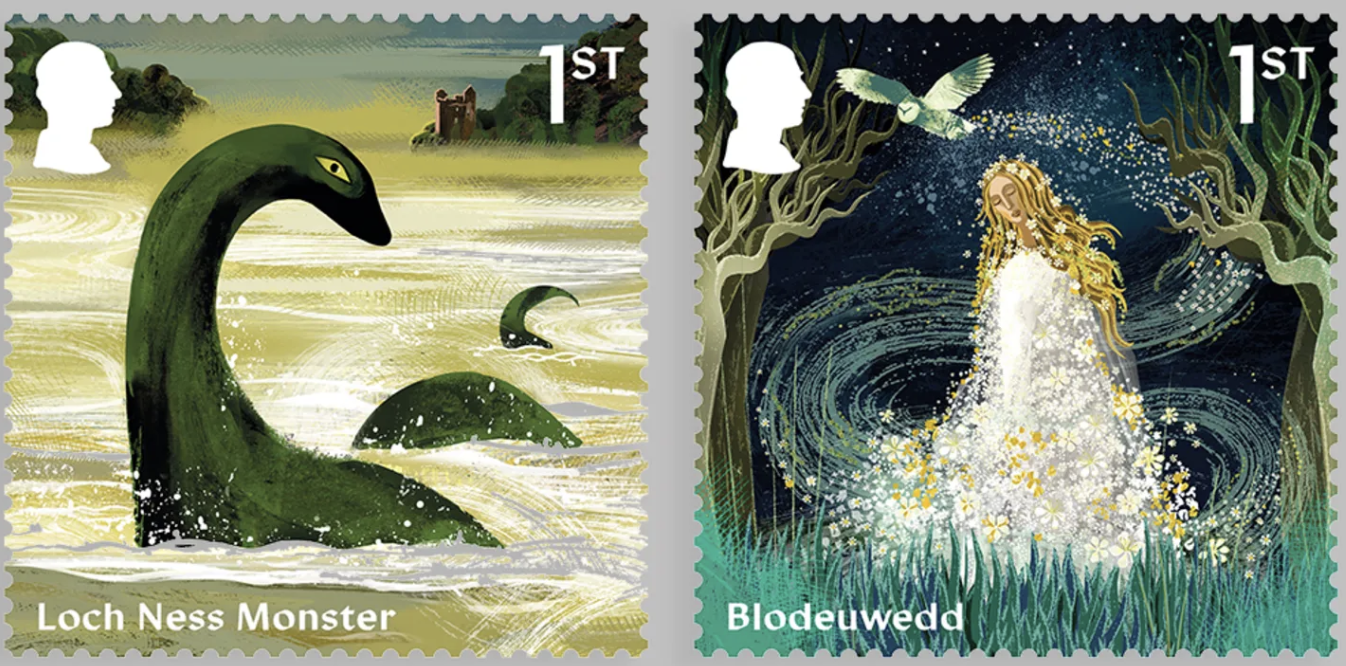
Blodeuwedd, the flower maiden who turned into an owl in the Royal Mail’s Myths and Legends stamp series

Blodeuwedd

The flower bride who became an owl

Once upon a time in the mythic heart of Wales, a woman was conjured — not born, but created. The magicians Math and Gwydion, meddling in mortal matters (as wizards are wont to do), wove her from the blossoms of oak, broom and meadowsweet. Her name was Blodeuwedd, meaning Flower Face, and she was made for one purpose: to be the wife of a man cursed never to marry a woman of earthly origin.

You can probably guess how well that turned out.

This tale comes from the Mabinogion, a collection of Welsh medieval stories first written down in the 12th and 13th centuries but based on oral traditions that are far older. It’s one of the most bewitching episodes in the Fourth Branch, a saga steeped in magic, betrayal and transformation.

Though crafted to be the perfect bride, Blodeuwedd had her own ideas. She fell in love with another man, Gronw Pebr, and together they plotted to kill her husband, Lleu Llaw Gyffes. The murder attempt failed, and the consequences were swift and strange (this is myth, after all): Gronw was killed with a spear through a standing stone, and Blodeuwedd was transformed into an owl — a creature of the night, cursed to never show her face in daylight again.

Her story is tragic and richly symbolic. Depending on your lens, Blodeuwedd is either a femme fatale born of male hubris or a wild spirit trapped by expectation who seized a sliver of freedom. Either way, she’s unforgettable.

Simpson’s stamp channels the tale’s eerie beauty with a stylized woman caught mid-transformation — petals swirling into feathers as she takes her owl form. It’s the kind of image that lingers, much like the legend itself.

The Loch Ness Monster in the Royal Mail’s Myths and Legends stamp series

The Loch Ness Monster (Nessie)

The queen of cryptids surfaces again

You can’t talk about UK folklore without invoking Nessie, the shadowy shape that launched a thousand blurry photos and conspiracy theories. She’s the most famous resident of Loch Ness, a deep, cold freshwater lake tucked into the Scottish Highlands — and she’s been allegedly living there since at least the 6th century.

The earliest written mention comes from The Life of St. Columba, penned in the 7th century by Adomnán. According to the account, the saint encountered a “water beast” in the River Ness and performed a miracle to save a man from its jaws. And just like that, Nessie swam her way into the margins of history.

But her modern fame really took off in the 1930s, after a couple driving near the loch claimed to see a massive creature cross the road and slip into the water. Headlines dubbed it a “monster,” and the tabloids never looked back. Since then, Nessie’s been spotted, debunked, photographed, hoaxed and even hunted with sonar. (Spoiler: She remains elusive.)

While scientists say the sightings are likely otters, logs or wishful thinking, the legend endures. Nessie is more than just a maybe-dinosaur. She’s a symbol of mystery, of nature keeping secrets, of something just out of reach. And let’s face it: Everyone wants her to be real.

In Simpson’s stamp, Nessie arches out of stylized waters, distant and dreamlike, framed by curling waves and Highland mist. There’s no need to explain her. She just is.

She’s proof that sometimes, the most powerful legends are the ones we can’t quite catch.

Cornish Piskies

Mischief, mayhem and magic in miniature

If you ever find yourself turned around on a familiar path in the southwest of England, don’t blame your GPS — blame the piskies. These pint-sized pranksters from Cornish folklore are legendary for leading travelers astray, stealing shiny things, and generally causing low-level chaos with high-level charm.

Piskies (sometimes spelled pixies) have been part of Cornish oral tradition for centuries, possibly even tied to pre-Christian beliefs in nature spirits or ancestral ghosts. They’re native to the moors, tors and coastal cliffs of Cornwall, often dressed in ragged green and red, with pointy ears and a love of laughter at your expense.

But unlike fairies who might hex you or goblins who’ll rob you blind, piskies are mostly harmless. Annoying? Yes. Dangerous? Rarely. They’ve been known to braid horses’ manes, move your keys, and lure people into marshes with giggles and flickering lights. The only remedy if you’ve been “piskie-led”? Turn your coat inside out. That supposedly confuses them (and maybe earns you their grudging respect).

In Victorian times, Cornish tourism latched onto piskies as whimsical local mascots — think of them as the original chaotic neutral brand ambassadors. But in older tellings, they’re wild, weird, and deeply tied to the landscape.

Simpson’s stamp captures that dual nature perfectly. The piskies glide through a moonlit glade, wide-eyed and impish, carrying the evidence of their mischief-making: a lost key, a frayed rope. There’s joy here, but also a touch of the uncanny.

In a world that often takes itself far too seriously, the piskies remind us that a little chaos can be good for the soul.

Irish folk hero Fionn mac Cumhaill in the Royal Mail’s Myths and Legends stamp series

Fionn mac Cumhaill

The Irish giant whose legend spans countries

Fionn mac Cumhaill (pronounced roughly like  “Finn mac Cool”) is Ireland’s answer to Hercules, with a bit of that trickster Hermes thrown in. A warrior, leader, poet and occasional giant, depending on who’s telling it, Fionn is the towering figure at the heart of the Fenian Cycle of Irish mythology, a body of tales passed down orally for centuries before being written in Middle Irish texts around the 12th century.

He’s best known as the leader of the Fianna, a band of noble warrior-hunters who roamed Ireland getting into gloriously poetic trouble. But the story that often gets the spotlight — especially on tourist brochures — is the one where Fionn creates the Giant’s Causeway, that eerie, hexagonal rock formation on the northern coast of Ireland. According to legend, Fionn built it as a bridge to Scotland so he could fight a rival giant, Benandonner.

The punchline? When he saw how massive Benandonner really was, Fionn panicked. His wife, Oonagh, disguised him as a baby in a cradle. When Benandonner saw the size of the baby, he assumed the father must be terrifying and fled back to Scotland, tearing up the bridge behind him. One of those mythic traditions where wit — and a good partner — wins the day.

Fionn also gained prophetic wisdom by burning his thumb on the Salmon of Knowledge, which, yes, is exactly what it sounds like. (It has a role in the tradition of Mabon, the Wiccan holiday celebrating the Autumnal Equinox.) From that day on, sucking his thumb gave Fionn bursts of insight — a sort of mythic precursor to Google, if Google required seafood and pain.

Simpson’s stamp goes bold: Fionn stands enormous against the rising Causeway, cloak billowing, face stoic. The stones stretch beneath him in their perfect geometric strangeness, while his gigantic foe stands silhouetted across the way.

Fionn mac Cumhaill is the kind of figure who straddles legend and landscape — literally — and he still looms large today.

The black shuck, a shaggy black doglike monster howling by a church in the Royal Mail’s Myths and Legends stamp series

Black Shuck

The devil dog that stalks the coast

If you ever find yourself walking alone through the misty lanes of East Anglia — especially near a windswept churchyard — and feel the prickle of something behind you … it might be Black Shuck. Described as a massive, ghostly black dog with glowing red (or sometimes green) eyes, Shuck is one of the U.K.’s most enduring pieces of spectral folklore. He’s part omen, part legend, and all menace.

The name “Shuck” is believed to come from the Old English scucca, meaning “demon” or “fiend.” Reports of this supernatural hound go back centuries, but his most infamous appearance took place on August 4, 1577, during a thunderstorm that ripped through the churches of Bungay and Blythburgh in Suffolk. According to terrified witnesses, the beast burst into the churches during the storm, killing or injuring several people before vanishing in a flash of fire. To this day, scorch marks on the church doors in Blythburgh are said to be Shuck’s claw marks.

But like many creatures of folklore, Shuck’s meaning has shifted over time. In some tales, he’s a harbinger of death, like the Grim Reaper with paws. In others, he’s a protective spirit, quietly walking beside lone travelers to keep them safe. 

Simpson’s stamp leans into the fearsome version: a shaggy, howling beast with glowing eyes, set against a backdrop of a castle in a thunderstorm. It’s the kind of image that makes you instinctively glance over your shoulder. 

Whether he’s a ghost, a guardian or something in between, Black Shuck reminds us that the line between safety and terror can be as thin as a shadow in the mist.

The grindylow, a scary monster emerging from the water, in the Royal Mail’s Myths and Legends stamp series

Grindylow

The creature in the water who waits for misbehaving children

The Grindylow isn’t interested in riddles or redemption. This creature — slimy, long-fingered and lurking just beneath the surface — is the reason your grandmother told you not to go too close to the pond. Native to the folklore of Yorkshire and Lancashire, the Grindylow is a water-dwelling bogeyman whose sole hobby appears to be grabbing children by the ankle and dragging them to a watery doom.

Pleasant, right?

The tale likely began as a cautionary myth, passed through generations in England’s misty north as a way to keep kids away from dangerous pools, marshes and millponds. But the Grindylow isn’t just a PSA in monster form; it’s a creature of genuine nightmare fuel. Often described as having green skin, long, spindly arms and razor teeth, the Grindylow hides in shallow waters, waiting for a ripple, a footstep or a foolish dare.

While it rarely ventures beyond regional lore, the Grindylow got a boost in popular imagination thanks to fantasy literature and modern media — most notably showing up as a minor monster in Harry Potter and the Goblet of Fire, where it menaces underwater champions during the Triwizard Tournament. But the original version? Far less CGI-friendly, and far more chilling.

Simpson’s stamp leans into the fearsome. You see the Grindylow emerging from the water — alarmingly sharp claws and teeth just waiting to tear into its next victim. There’s no question what will happen next if you take one more step closer to the edge.

More obscure than Nessie and more vicious than the piskies, the Grindylow doesn’t want your attention. It wants your ankles.

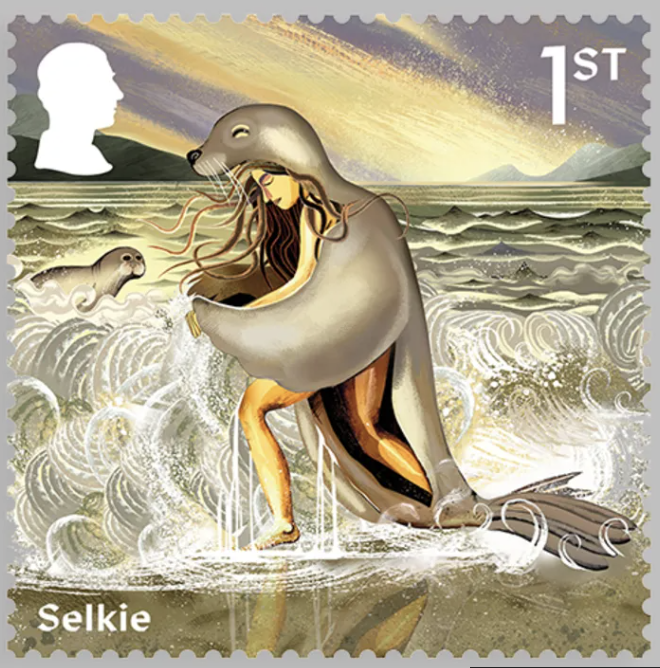
A selkie mid-transformation in the waves, half-woman, half-seal in the Royal Mail’s Myths and Legends stamp series

Selkie

The seal who loved and left

The selkie’s story is one of yearning: for freedom, for the sea and for a life that can never fully belong to land. These shape-shifting beings come from Orkney and Shetland folklore, where the wind howls and the sea sings. Selkies are seals in the water — but when they come ashore, they shed their sleek skins and become beautiful humans, often just long enough to fall in love, or be taken.

And that’s where the heartbreak begins.

The most common version of the tale? A fisherman (or crofter, or lonely islander) spies a selkie woman dancing on the shore in her human form. He steals her seal skin so she can’t return to the sea, and convinces her — sometimes gently, sometimes not — to become his wife. They live together, raise children, and for a time, there’s a strange sort of peace. But the selkie always gazes longingly at the waves. And when she finds her hidden seal skin at last, she returns to the ocean without a backward glance.

Other versions flip the roles — selkie men seduce mortal women, especially those with “the yearning,” and disappear when the tide calls. Regardless of who leaves, the ending is rarely happy. Selkie stories are salt-soaked with longing, freedom and loss. They’re metaphors for desire, captivity and returning to one’s true self — even if it hurts.

These tales date back centuries, passed down orally in Scotland’s far northern islands and coastal fishing communities. And while they’ve inspired everything from poetry to films (The Secret of Roan Inish and Song of the Sea, for instance), the root myth remains as fluid and mysterious as the tide itself.

Simpson’s stamp is pure melancholy magic: a selkie woman caught mid-transformation, cloak of seal skin slipping from her shoulders, hair trailing like seaweed. The horizon behind her is misted, the waves beckoning. You can almost hear them whispering her name.

The selkie doesn’t roar or bite. She simply leaves — and that’s what makes her legend linger.

The Loch Ness Monster and Blodeuwedd from the Royal Mail’s Myths and Legends stamp series

Stamped, Sealed, Enchanted

The Royal Mail’s Myths and Legends series doesn’t just celebrate folklore; it resurrects it. These aren’t dusty old tales tucked away in textbooks — they’re living, breathing stories full of monsters, mischief, heartbreak and heroism. And thanks to artist Adam Simpson’s stunning illustrations, they feel both timeless and vividly alive.

From the brute strength of Beowulf to the quiet sorrow of the selkie, each stamp invites you to pause and dive deeper. To trace the origins. To hear the whispers of ancient moors, haunted coastlines and flower-strewn spells. They remind us that storytelling is a kind of magic.

So yes, I’ll be collecting these. But more importantly, I’ll be sharing their stories — because folklore, like a good letter, was meant to be passed on. –Wally