Wondering what to buy in Lisbon? Skip the forgettable trinkets and seek out authentic Portuguese souvenirs, including tinned fish at Conserveira de Lisboa, Arcádia chocolates, Claus Porto soaps and Bordallo Pinheiro ceramics.
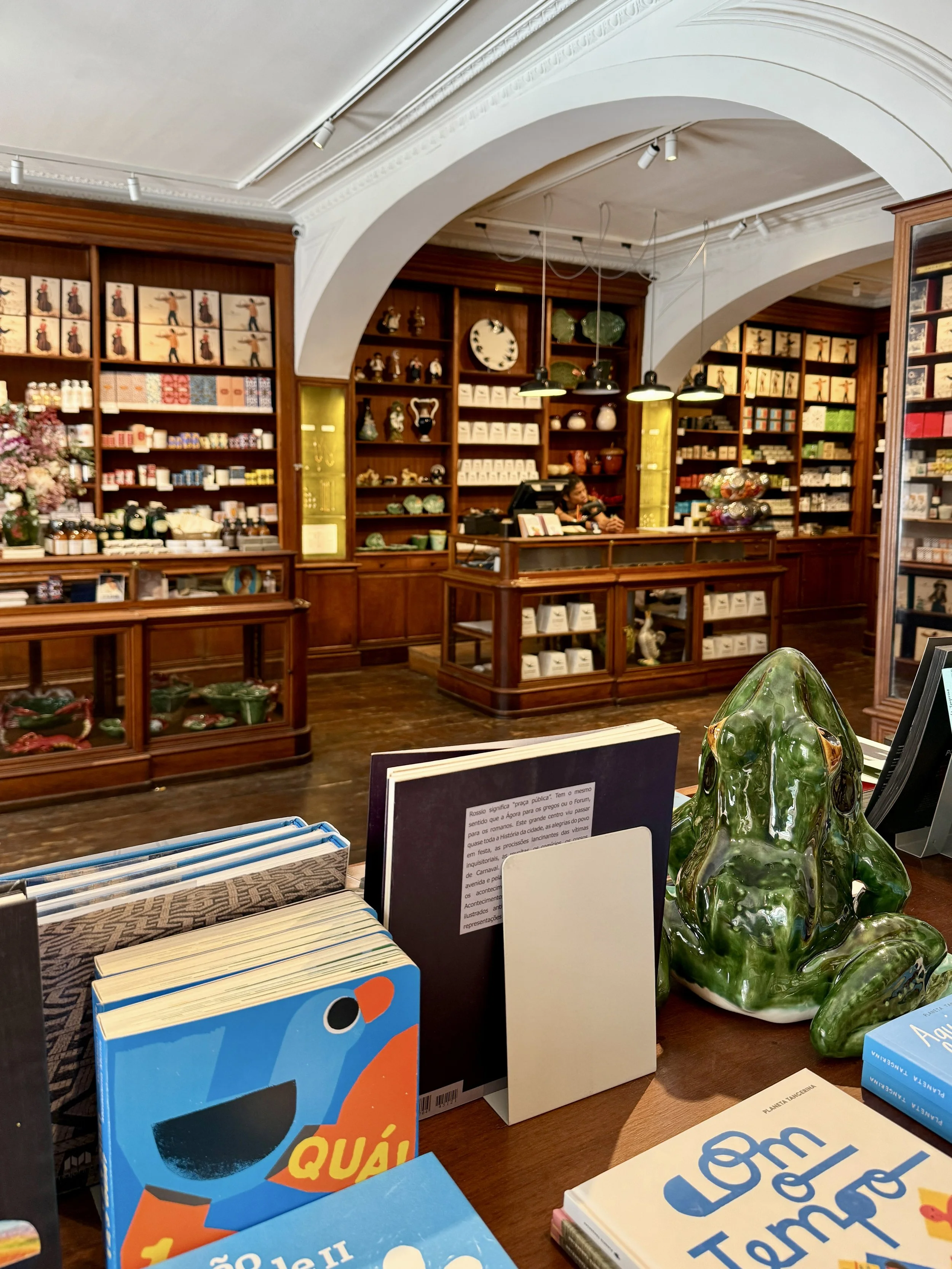
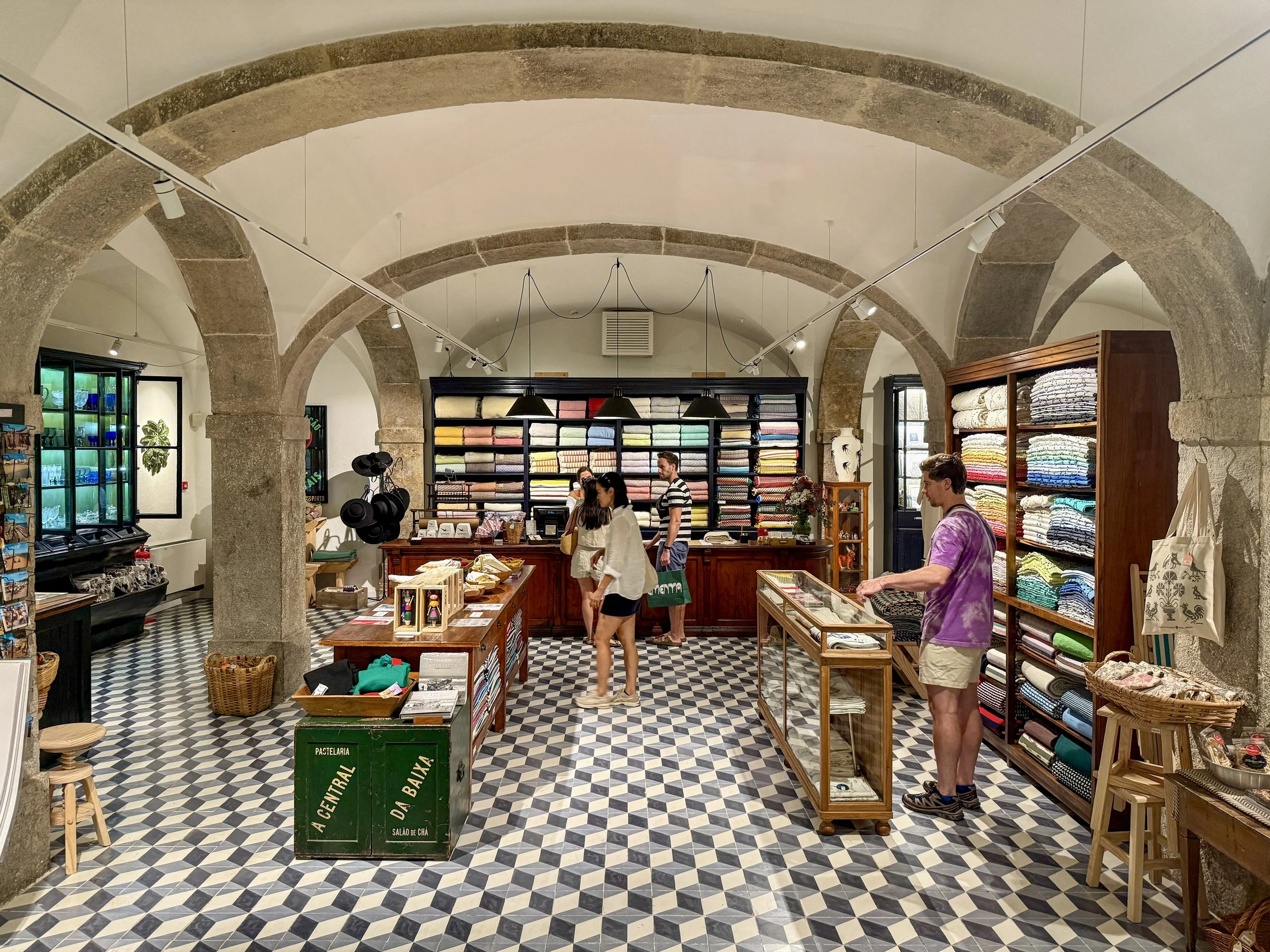
Lisbon has plenty of great shops, but A Vida Portuguesa is one of our faves, with a large selection of heritage brands from around the country in a historic space.
If you’re like Wally and me, you understand there’s something special about a souvenir that captures the spirit of a place. These can take many forms, from humble refrigerator magnets to regional crafts. We also collect foreign coins and currency, which we’ve found to offer a small but meaningful link to the places we’ve been.
That said, we have one rule: We won’t buy it unless it adds something of value to our home — though chocolate, clothing and spices enjoy a generous loophole. With that in mind, our Lisbon itinerary focused on shops emblematic of Portugal itself: A Vida Portuguesa, Arcádia Chocolates, Claus Porto, Conserveira de Lisboa and Oficina Marques — places that celebrate heritage, craftsmanship and national identity.
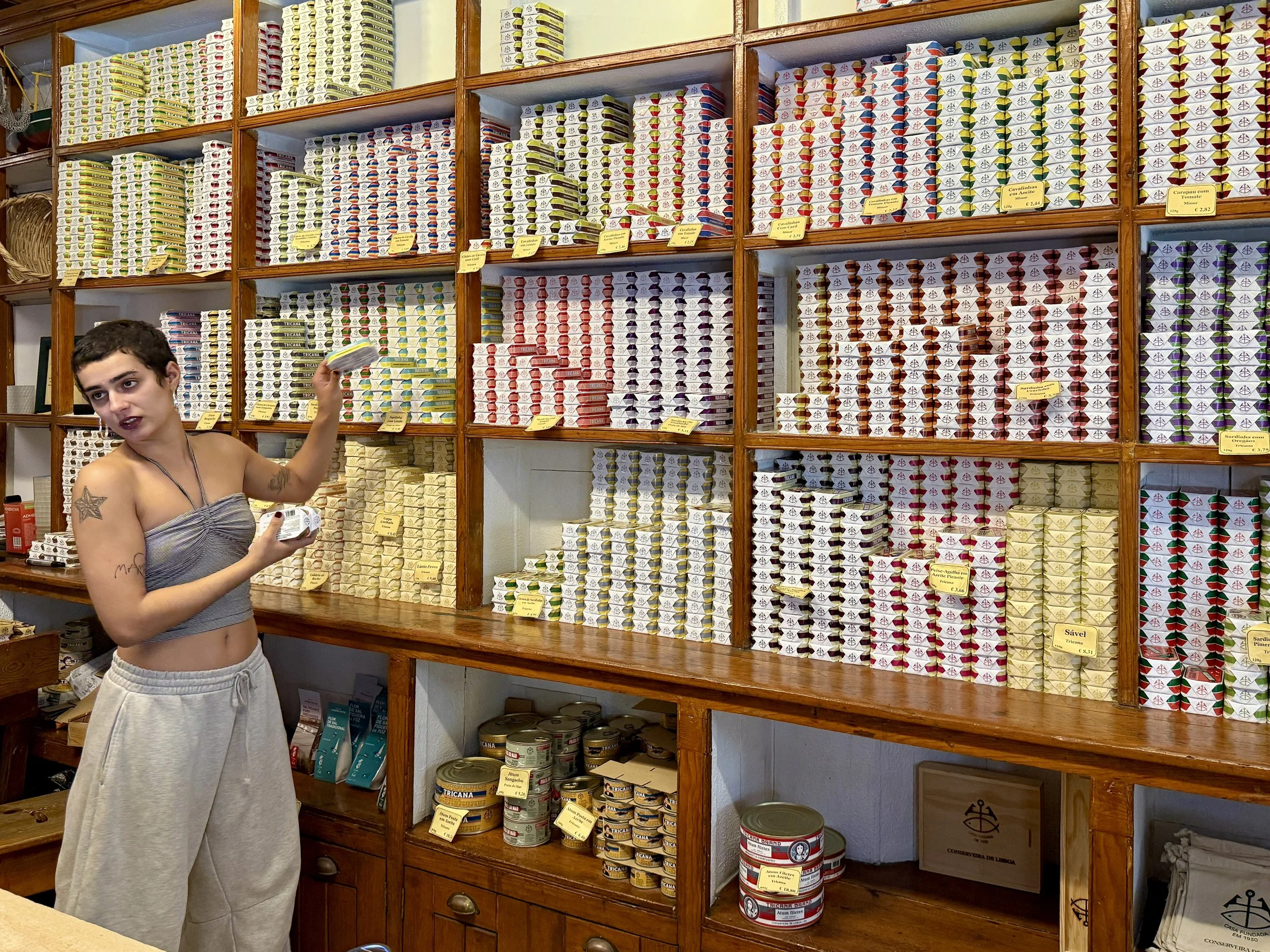
If you’re unsure what to get at Conserveira de Lisboa, the patient and knowledgeable staff is happy to help.
Conserveira de Lisboa
For: Portuguese tinned fish, vintage packaging, sardines, tuna, mackerel and other edible souvenirs
My earliest memory of canned seafood is of my dad prying open tins of Neptune-brand sardines in olive oil and eating them straight from the can. As a kid, I turned up my nose and swore I’d never touch the stuff. That changed years later in Málaga, when Wally and I visited our friends Jo and José, and I began not only eating sardines (fresh and preserved), but genuinely enjoying them.
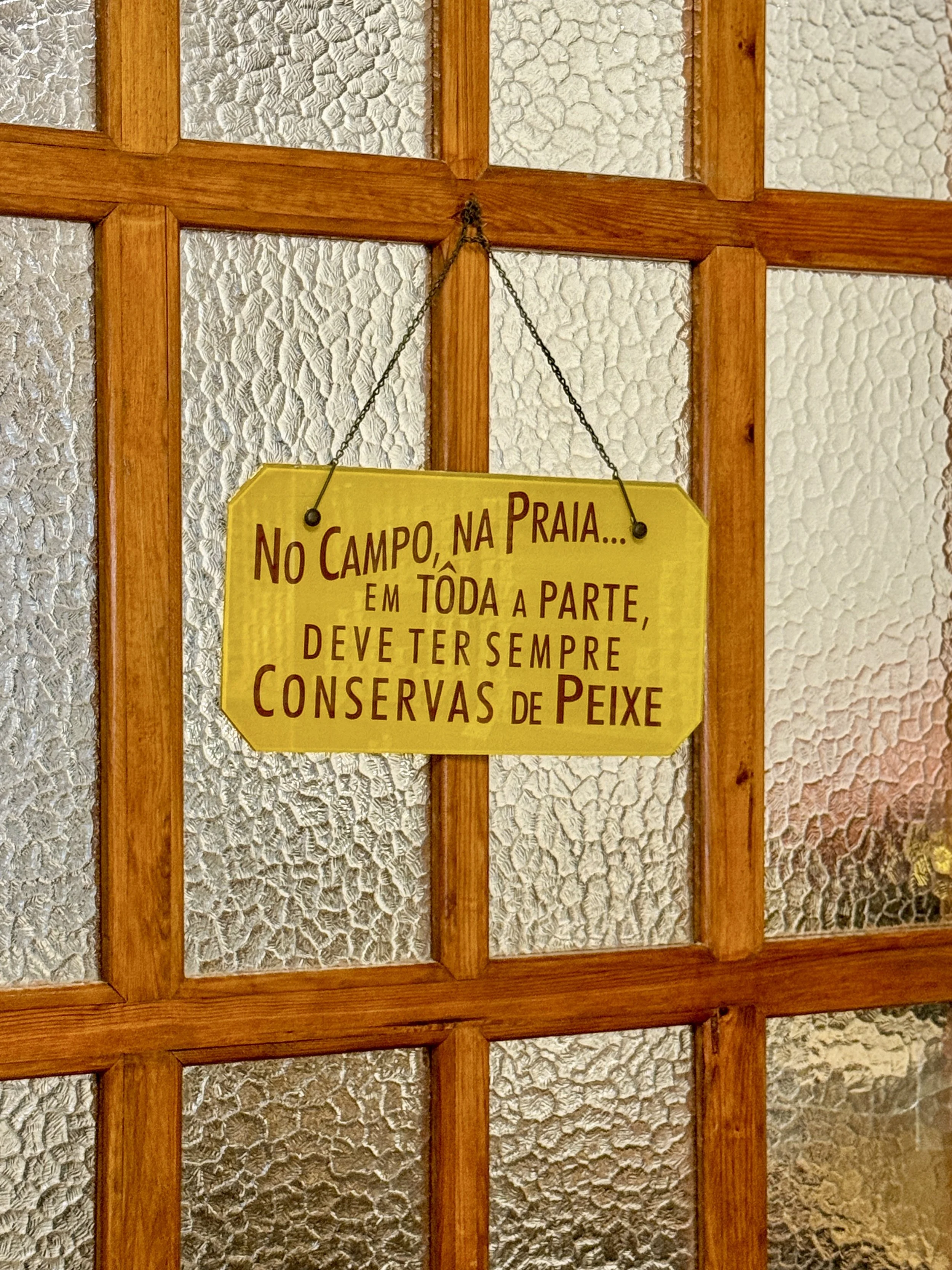
A sign at the store reads, “In the countryside, on the beach… everywhere you should always have canned fish.”
Today, specialty grocery stores and supermarkets offer a broader selection of tinned fish than ever before, but none rival the variety found in Portugal’s conserveiras, shops dedicated primarily to preserved seafood. Sardines, mackerel, cod, anchovies, tuna and more fill their shelves. Like bacalhau (salted codfish), the humble sardinha (sardine) is woven into the country’s cultural and economic fabric, its image appearing everywhere from market shelves to souvenir shops.
After visiting Praça do Comércio, in the Baxia neighborhood, we made our way to Conserveira de Lisboa, one of the city’s most historic tinned seafood shops. Founded in 1930 as Mercearia do Minho, it began as a general grocery carrying sweets, beans, sausages and an assortment of tinned goods before narrowing its focus to canned fish. One of its earliest employees, Fernando da Silva Ferreira, had arrived from Figueiró dos Vinhos, a small hill town in the Leiria district some 90 miles north of Lisbon, at age 15 to work as a shop boy. He saved money through his mandatory military service, sold land back home, and by the late 1930s had acquired a third of the business. By 1942 the shop had taken the name it carries today. It has remained family-run ever since, still operating from its original address on Rua dos Bacalhoeiros (Codfish Sellers Street) and is celebrated for its house brands: Tricana, Prata do Mar and Minor.
Inside, the interior feels largely unchanged, its shelves stacked high with colorful, paper-wrapped tins. The space is small and fills quickly, but the wait is part of the experience — and well worth it. Everything is sold by the tin from a compact counter, where the focus remains squarely on what made the shop famous: high-quality preserved seafood from Portuguese waters.
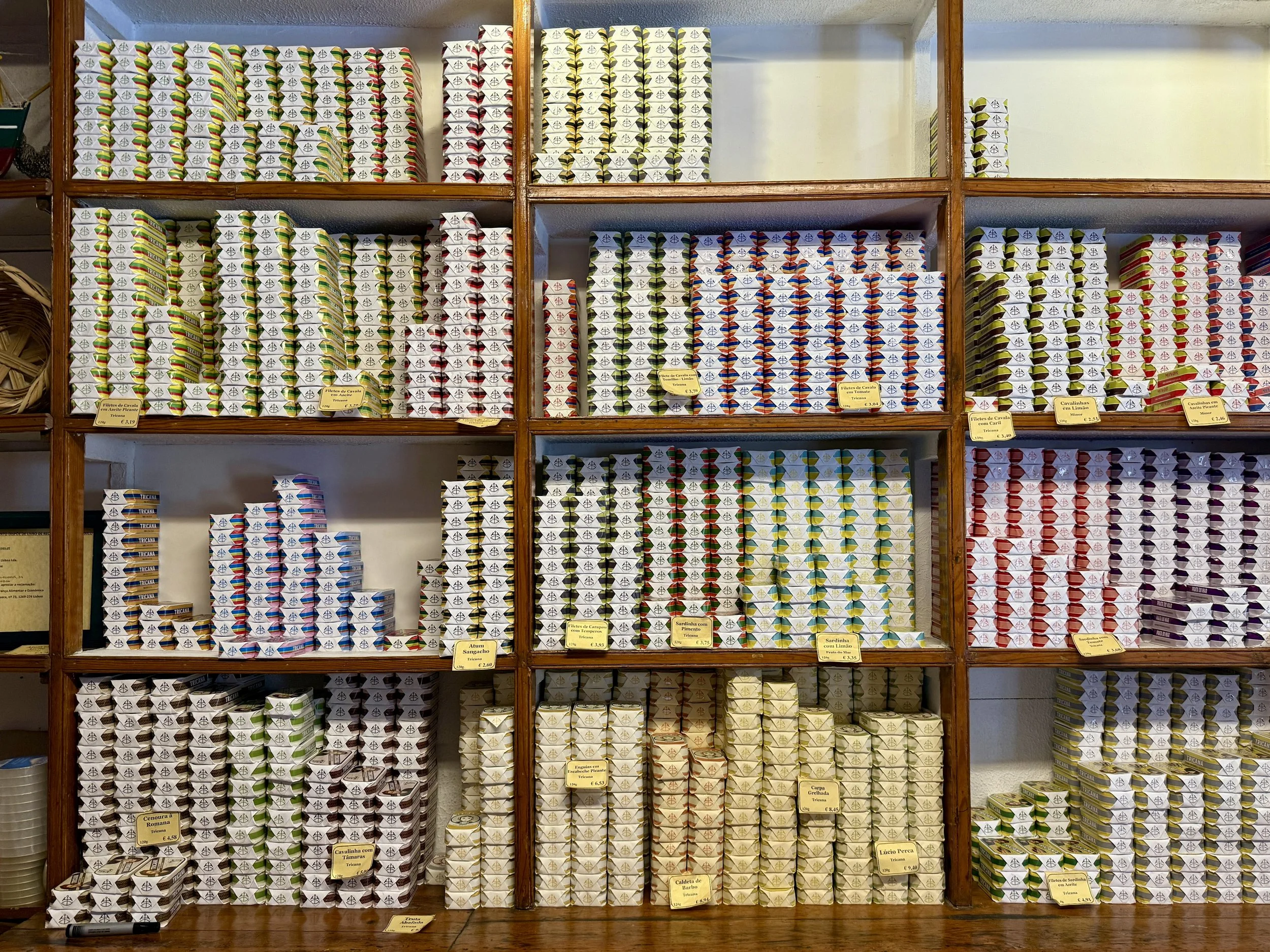
The shelves of Conserveira de Lisboa are lined with a dazzling array of colorfully packaged tins of sardines, mackerel, tuna and more.
The young woman behind the counter was unhurried and patient, guiding us through the dizzying array of options. Left to our own devices, we likely would have walked out with tins featuring a wide-eyed, Felix-like black cat, its tongue hanging out in anticipation of devouring what’s inside, only to learn that the brand, Minor, specializes primarily in mackerel — decidedly not my jam.
Instead, we chose several tins from the Tricana line, including sardines and tuna packed in spicy olive oil. The label depicts a tricana poveira dressed in the traditional shawl and apron of Póvoa de Varzim, a nod to the distinctive attire of this northern Portuguese fishing town. Our selections were wrapped neatly in brown paper and tied with red and white string, ready for easy transport and feeling more like a gift than a purchase.
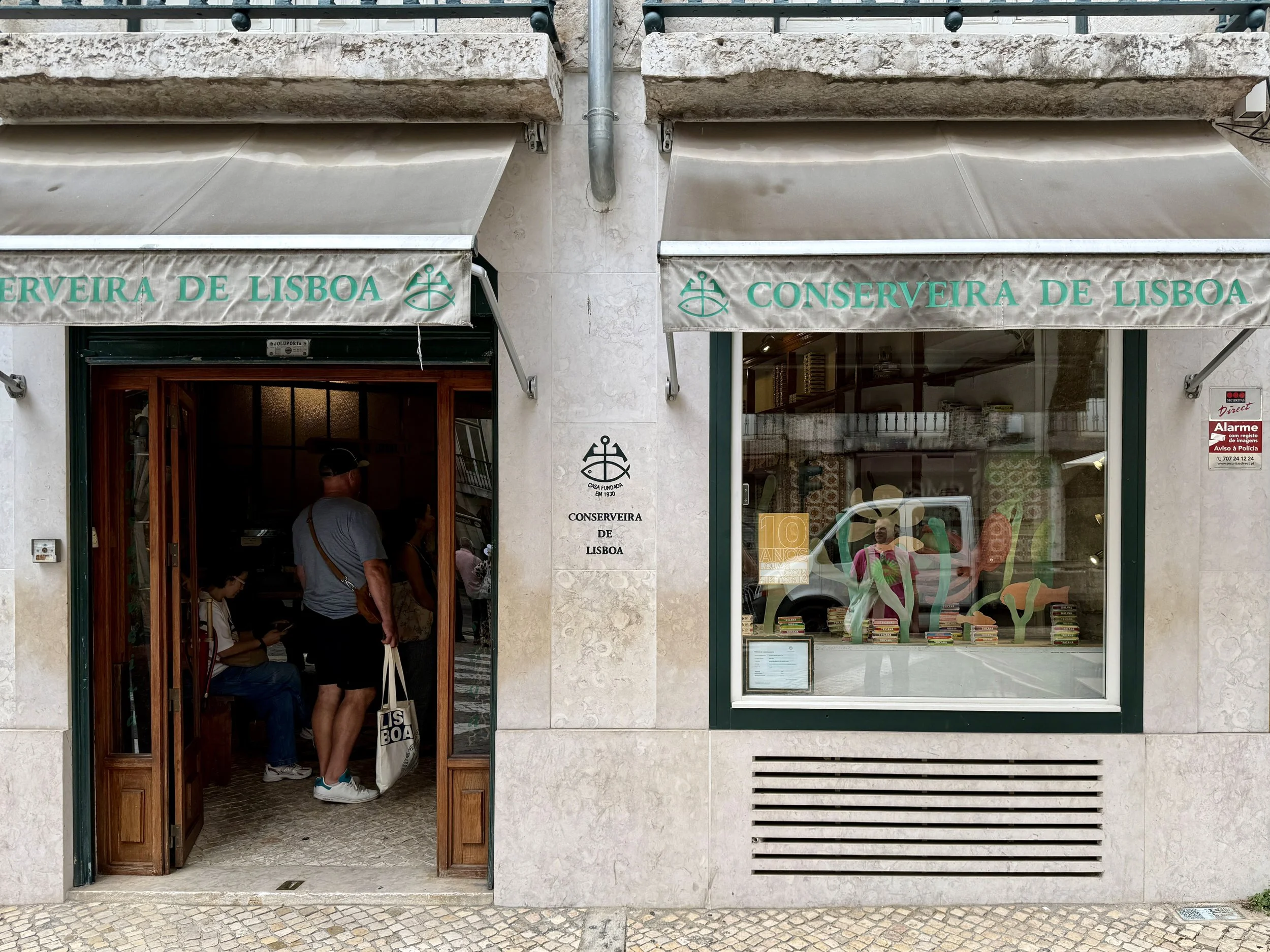
The shop took the name Conserveira de Lisboa in 1942 and has been a fixture in the Baixa neighborhood ever since. It's been in the same family — the Ferreiras — for three generations.
📍Conserveira de Lisboa
Rua dos Bacalhoeiros 34
1100-071 Lisboa
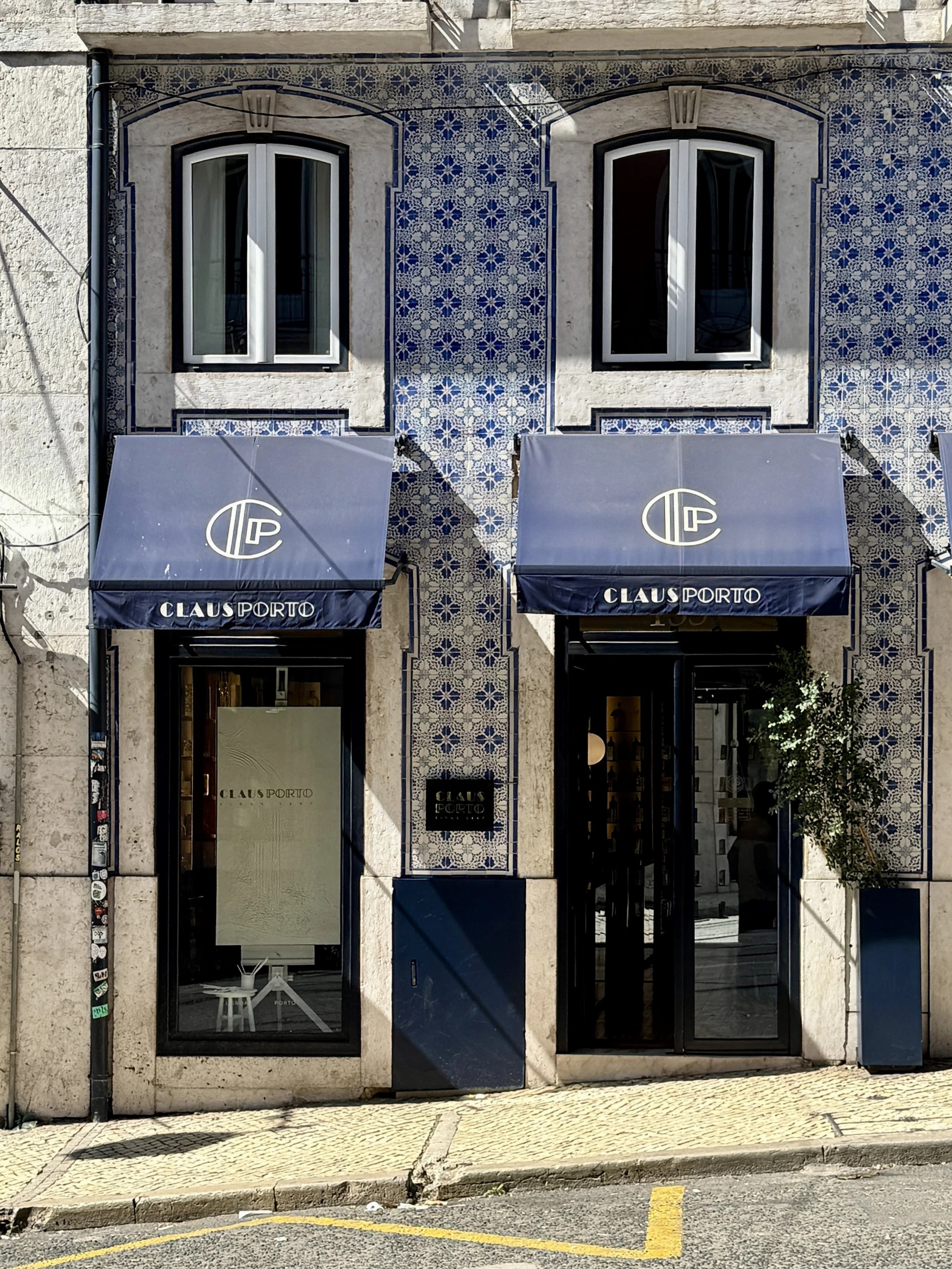
You’ll know you’ve arrived at the Lisbon location of Claus Porto by the blue and white azulejo tiles and matching awnings adorning its façade.
Claus Porto
For: Portuguese soaps, fragrances, candles, body care and gloriously designed packaging you’ll want to display at home
Our next stop was the Chiado boutique of Claus Porto, a heritage soap and fragrance house founded in Porto in 1887 as Claus & Schweder by two German entrepreneurs, Ferdinand Claus and Georges Schweder, who built Portugal’s first soap and fragrance factory.
I’m a sucker for good design and had fallen for their Banho Citron Verbena soap years ago — its vivid orange and blue packaging inspired by Portugal’s azulejo tiles, and of course the scent itself. So when I learned Claus Porto had a boutique in Lisbon, it went straight onto our itinerary.
Their guiding idea was progressive for the time: to create well-made products for everyday use, rather than luxuries reserved for a select few. When Schweder stepped down in 1903 for health reasons, Achilles de Brito joined the company as a bookkeeper, becoming a partner five years later. Claus departed in March 1916 as Portugal entered World War I. In 1918, de Brito founded his own company, Ach Brito, acquired what remained of Claus & Schweder, and chose to run both brands in parallel: Claus Porto as the luxury line; Ach Brito for the domestic market. Under his stewardship, artisanal production and richly illustrated packaging became the brand’s hallmark.
Now guided by Aquiles de Brito, the founder’s great-grandson, the brand has expanded into perfumes, colognes, hand creams, body care and candles, each crafted with the same careful balance of heritage and contemporary refinement.
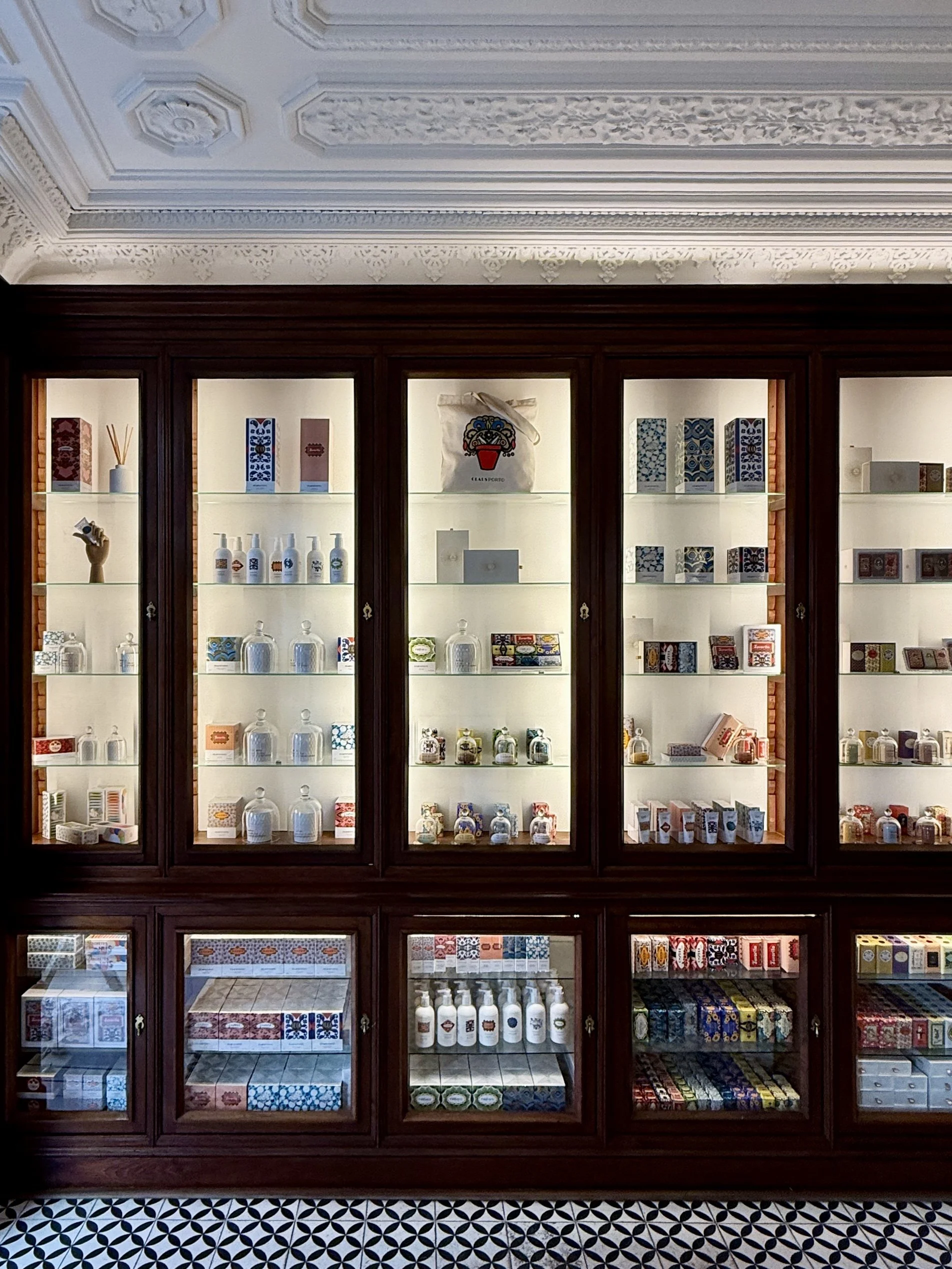
The original wood and glass cabinets that line the walls are a remnant of the space’s former life as a pharmacy, now showcasing Claus Porto’s distinctive soaps and toiletries.
Its Lisbon boutique on Rua da Misericórdia occupies a former pharmacy, designed by architect João Mendes Ribeiro, who preserved the original wood and glass vitrines lining the walls and a stucco ceiling adorned with geometric and botanical motifs. A gleaming brass cube anchors the space, reflecting its surroundings and serves as the checkout counter. Interior designer Joana Astolfi contributed site-specific archival installations including historic photographs, vintage objects and original packaging that invite shoppers to spend time learning about Claus Porto’s history.
Soaps, candles and diffusers are grouped by collection, their bright, varied colors and handwrapped vintage packaging creating a richly layered visual experience. The Musgo Real men’s range goes a step further, wrapped in rough-textured paper designed to evoke the tactile feel of unshaven skin.
Each bar is 100% plant-based, enriched with shea butter, and milled a minimum of five times, resulting in a dense, long-lasting bar. I left with two from the Deco line: Banho Citron Verbena and Deco Encens Eucalyptus.
📍Claus Porto
Rua da Misericórdia 135
1200-272 Lisboa
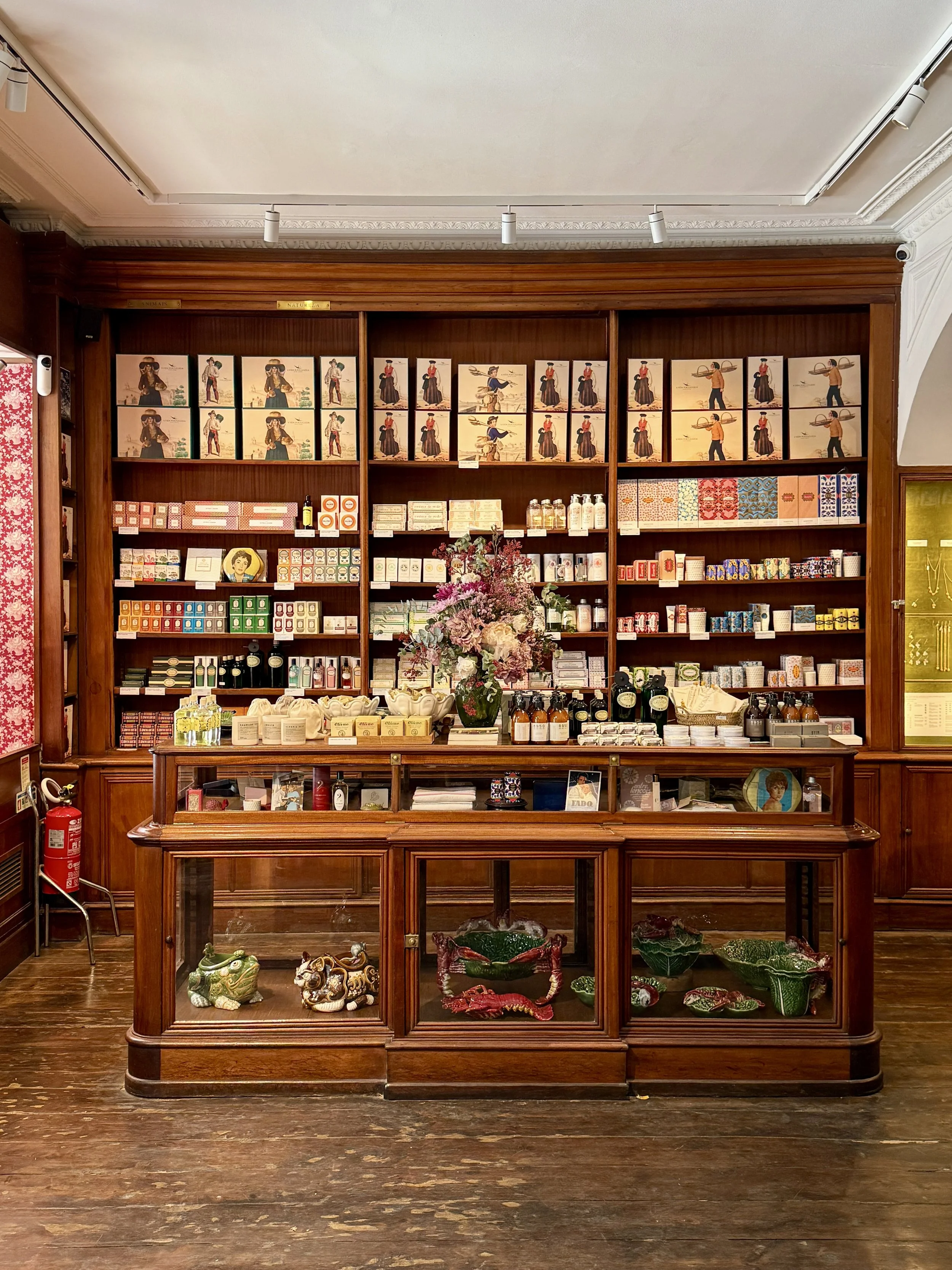
A Vida Portuguesa’s flagship location occupies the former Livraria Férin, Lisbon’s second-oldest bookshop, preserving its original wooden display cases and cabinetry.
A Vida Portuguesa
For: Classic Portuguese products, Bordallo Pinheiro ceramics, pantry goods, textiles, books, stationery and one-stop souvenir shopping
Like the Claus Porto boutique, A Vida Portuguesa inhabits a historic space in Lisbon’s Chiado district — the former Livraria Férin, founded in 1840 and what was the city’s second-oldest bookshop, which closed in 2023. The flagship store retains original cabinetry and architectural details from that era.
The concept was launched by journalist-turned-entrepreneur Catarina Portas, who, while researching historic Portuguese brands, realized many were at risk of disappearing. What began as a pioneering effort to champion legacy goods culminated in the opening of the first A Vida Portuguesa shop in Chiado in 2007, preserving traditional Portuguese craftsmanship while introducing heritage brands to a new audience.
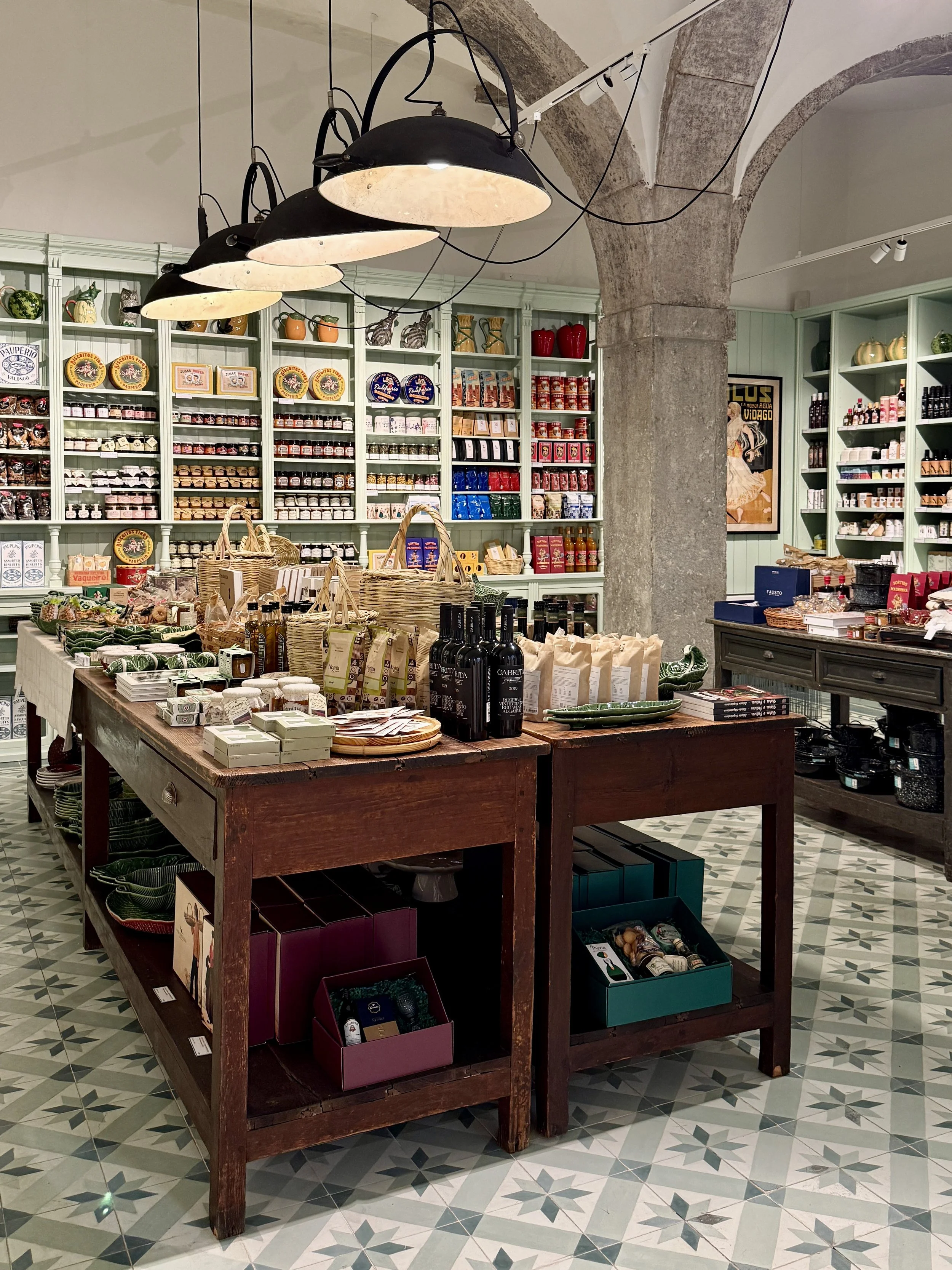
Beyond stationery, textiles, toiletries and tableware, you’ll find an extensive assortment of artisanal olive oils, wines, liqueurs, jams, cookies and traditional pantry items from across Portugal.
In addition to helping traditional brands thrive, Portas serves on the advisory council for Lojas com História, a city-backed initiative dedicated to preserving the historic shops and commercial spaces that give Lisbon its distinctive character.
Inside, you’ll find a carefully curated mix of Portuguese-made goods — from playful yet functional Bordallo Pinheiro ceramics and toiletries (including Claus Porto) to food, books and design objects — all presented with meticulous attention to detail. The upper floor focuses on books, stationery and personal care, while the ground floor houses textiles, homeware, tableware and a grocery section featuring products from across Portugal.
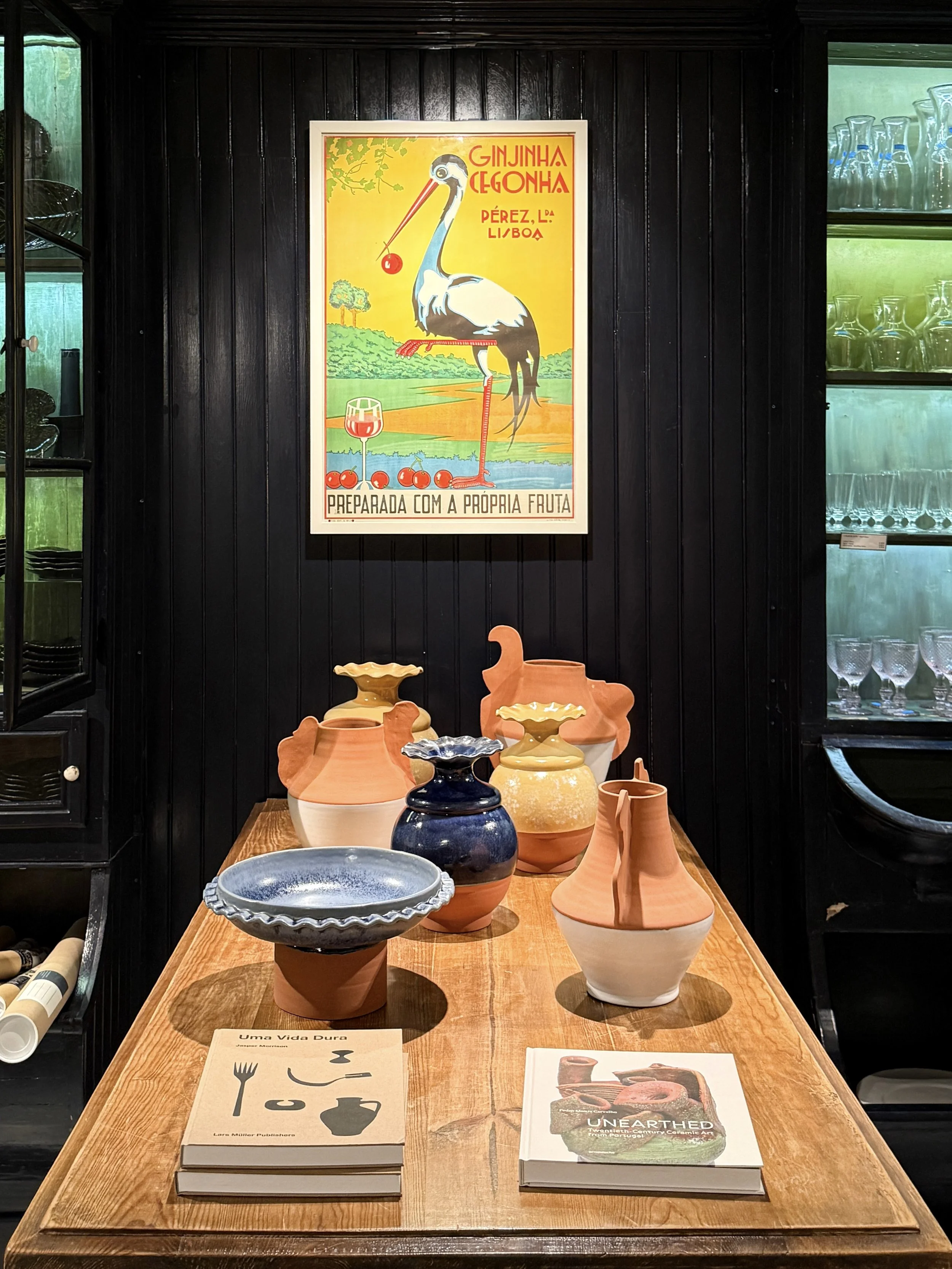
A wooden table displays terracotta and glazed pottery by Sam Baron x Maria, from the Porto de Mós region of Portugal.
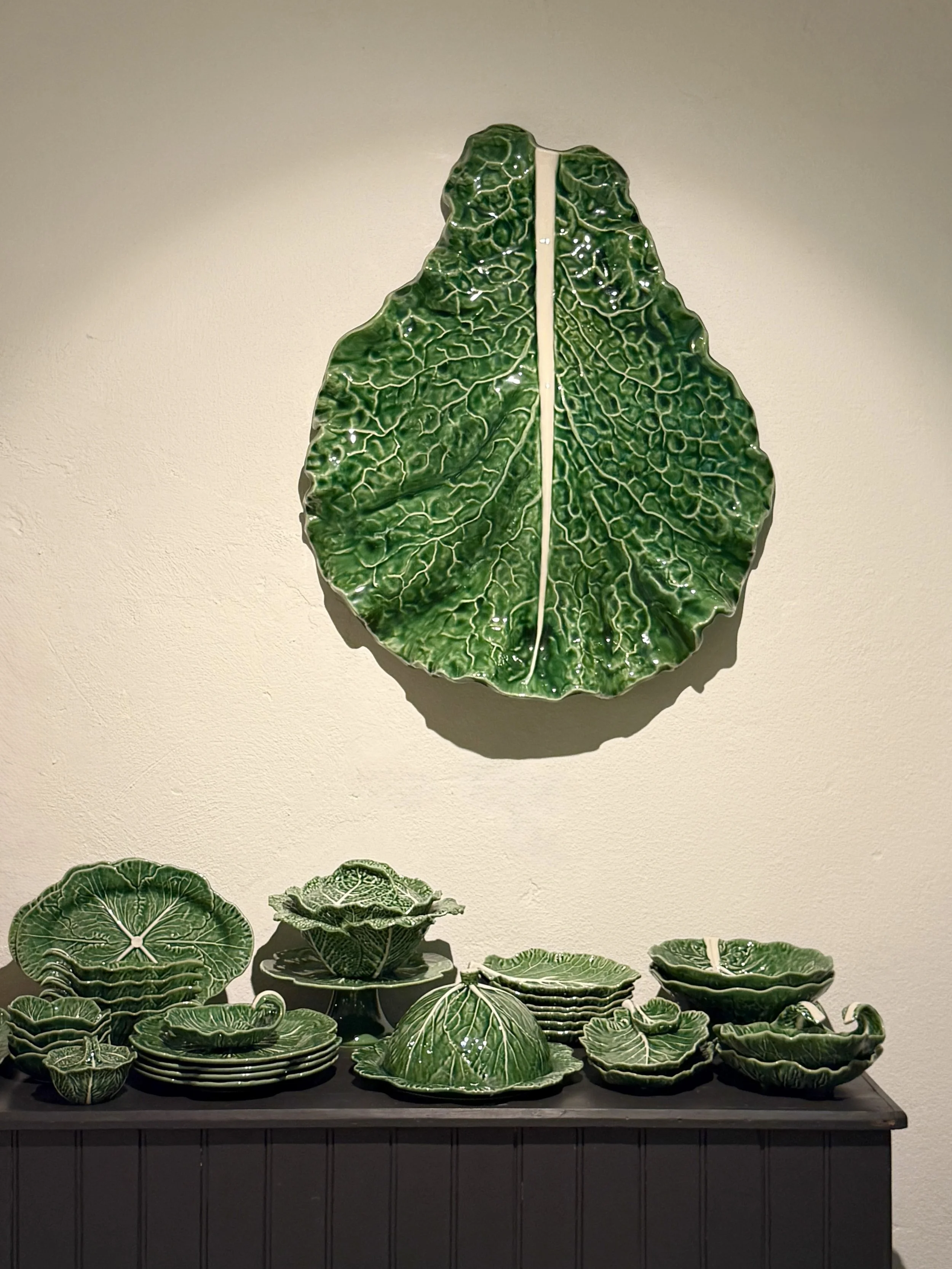
These cabbage designs, created by Rafael Bordalo Pinheiro, have been produced in the same factory in Portugal for nearly 140 years.
It’s the perfect place to find authentic, high-quality souvenirs and a must-visit for anyone wanting to experience Portuguese culture beyond the usual tourist shops.
We picked up an assortment of packaged cookies from Paupério and a tube of Príncipe Real Antiga Barbearia do Bairro shaving cream, which I’ve since become mildly obsessed with.
I regret not buying a set of Bordallo Pinheiro ceramic swallows, but I’m well aware that our luggage can only hold so much.
📍A Vida Portuguesa
Rua Anchieta, 11
1200-023 Lisboa
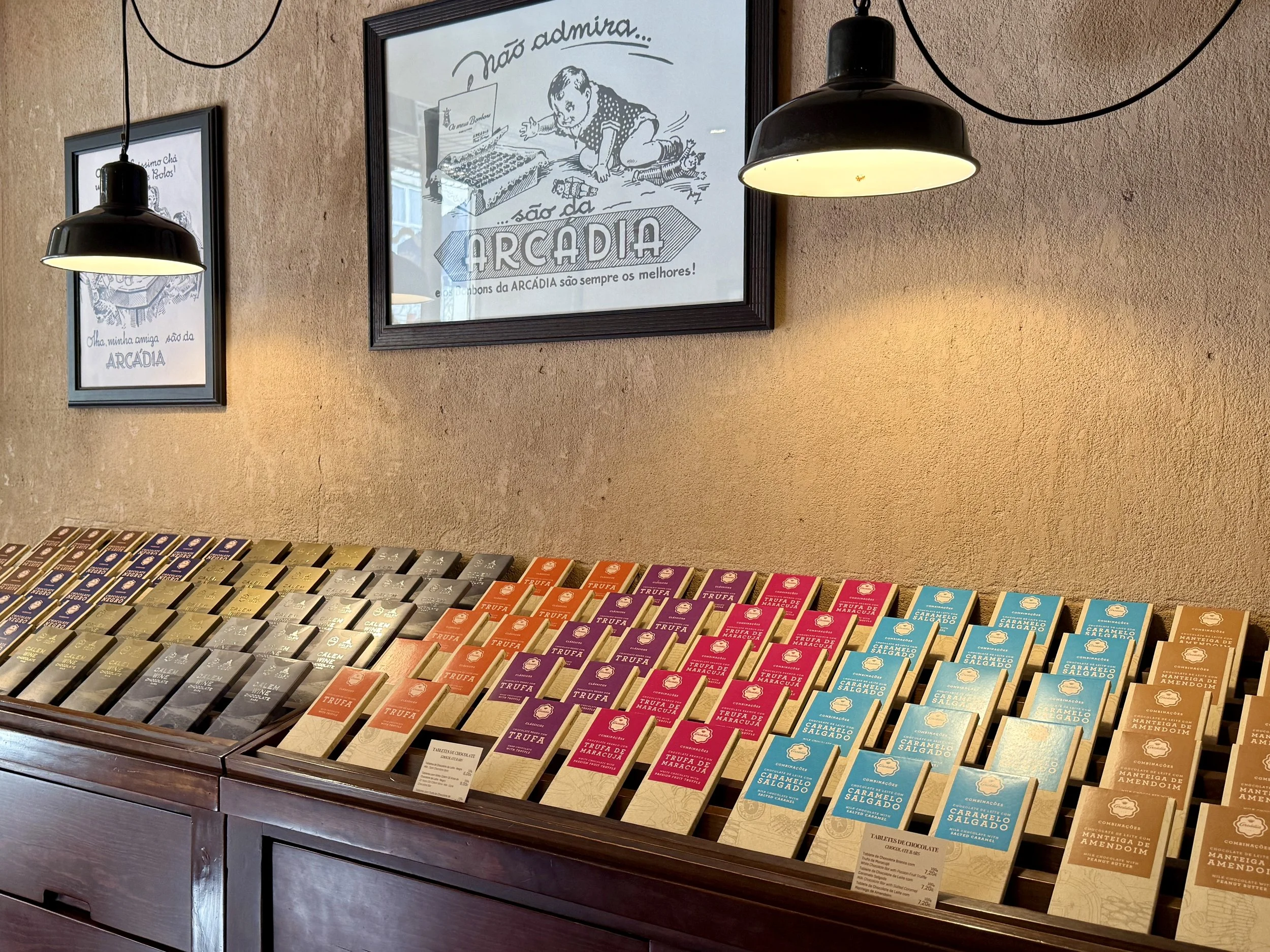
An inviting display of chocolate bars arranged by color and flavor at Arcádia Chocolates’ Chiado confectionery
Arcádia Chocolates
For: Portuguese chocolate, Línguas de Gato, port wine bonbons, truffles and edible gifts that won’t survive long after the trip
As mentioned earlier, chocolate enjoys a generous loophole, and when I read about a chocolatier whose speciality was a confection known as Línguas de Gato — cat’s tongues — we had to go.
Long before it became a stop for chocolate lovers in Lisbon, Arcádia began its story in 1933, when Manuel Pereira Bastos opened Confeitaria Arcádia on Praça da Liberdade in Porto. From those early days crafting sweets and pastries, the chocolatier has grown into one of Portugal’s most enduring chocolatemakers and remains family-owned, with the third and fourth generations of the Bastos family still overseeing production and preserving the traditional recipes and methods that have defined the brand from its beginning.
Aside from its dark blue awnings bearing Arcádia’s logo, the shop on Rua da Misericórdia was unassuming from the outside but warmly inviting within. Our eyes were first drawn to a tiered display of chocolate bars, their wrappers arranged by color and flavor in neat rows beneath a framed vintage advertisement of a toddler abandoning their toys for a box of Arcádia bonbons — a whimsical nod to the irresistible pull of chocolate.
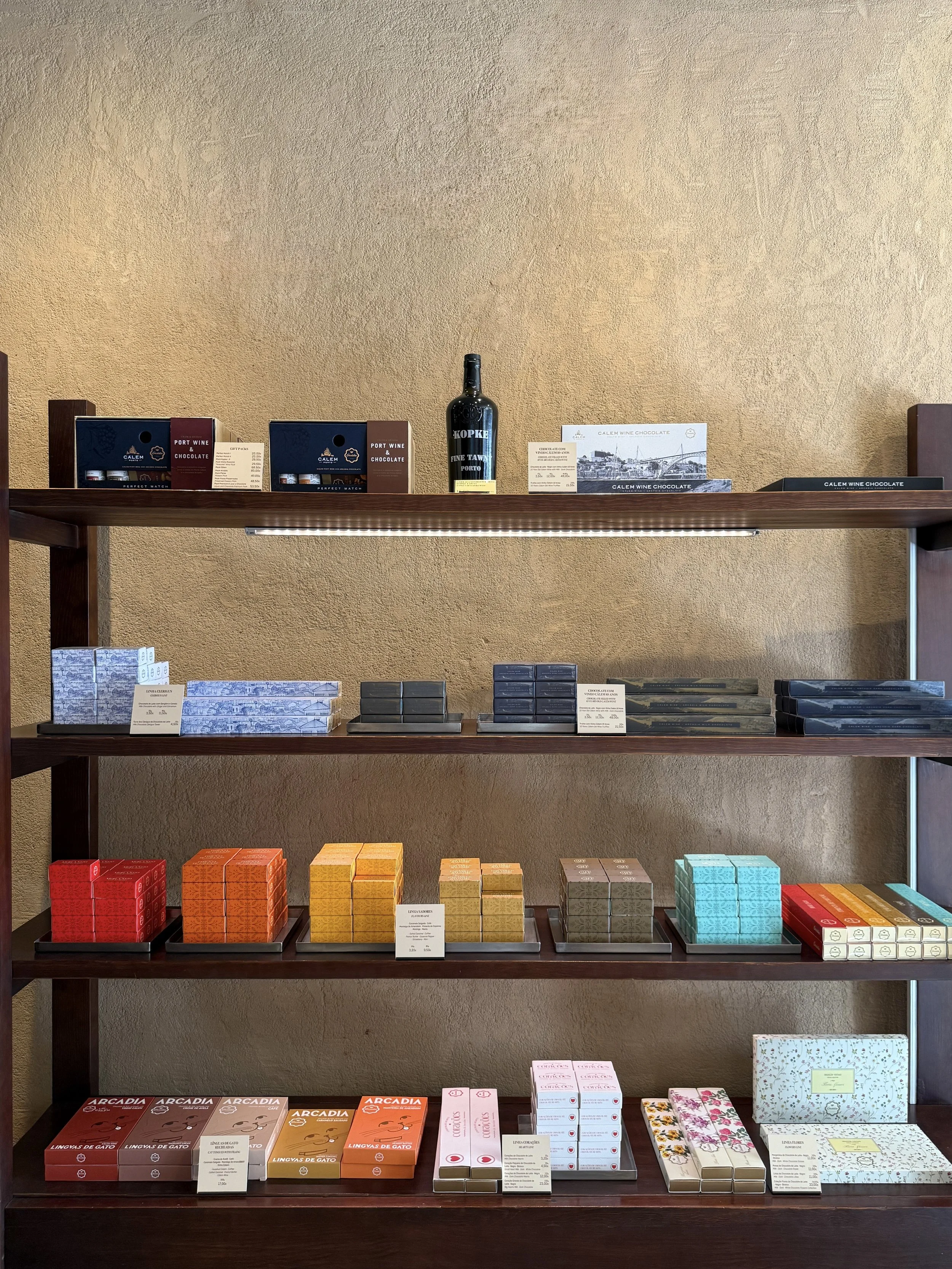
Wooden shelves hold an array of packaged chocolates filled with Cálem port wine, artisanal truffles and Línguas de Gato (cat tongues).
Opposite the display, wooden shelves held a tempting array of beautifully packaged chocolates — from milk and dark chocolate bonbons filled with Cálem port wine to boxes of artisanal truffles and the curiously named Línguas de Gato. These delicate, paddle-shaped chocolates, which sort of looked like cat tongues, were filled with flavors from peanut butter to salted caramel and hazelnut cream. I like peanut butter, but I like Wally more, so I compromised on caramel.
I was the very definition of a kid in a candy store — wide-eyed and indecisive — but managed to exercise restraint. We left with one chocolate bar, a box of Línguas de Gato and a box of truffles chosen as a gift.
📍Arcádia Chocolates
Rua da Misericórdia 72
1200-334 Lisboa
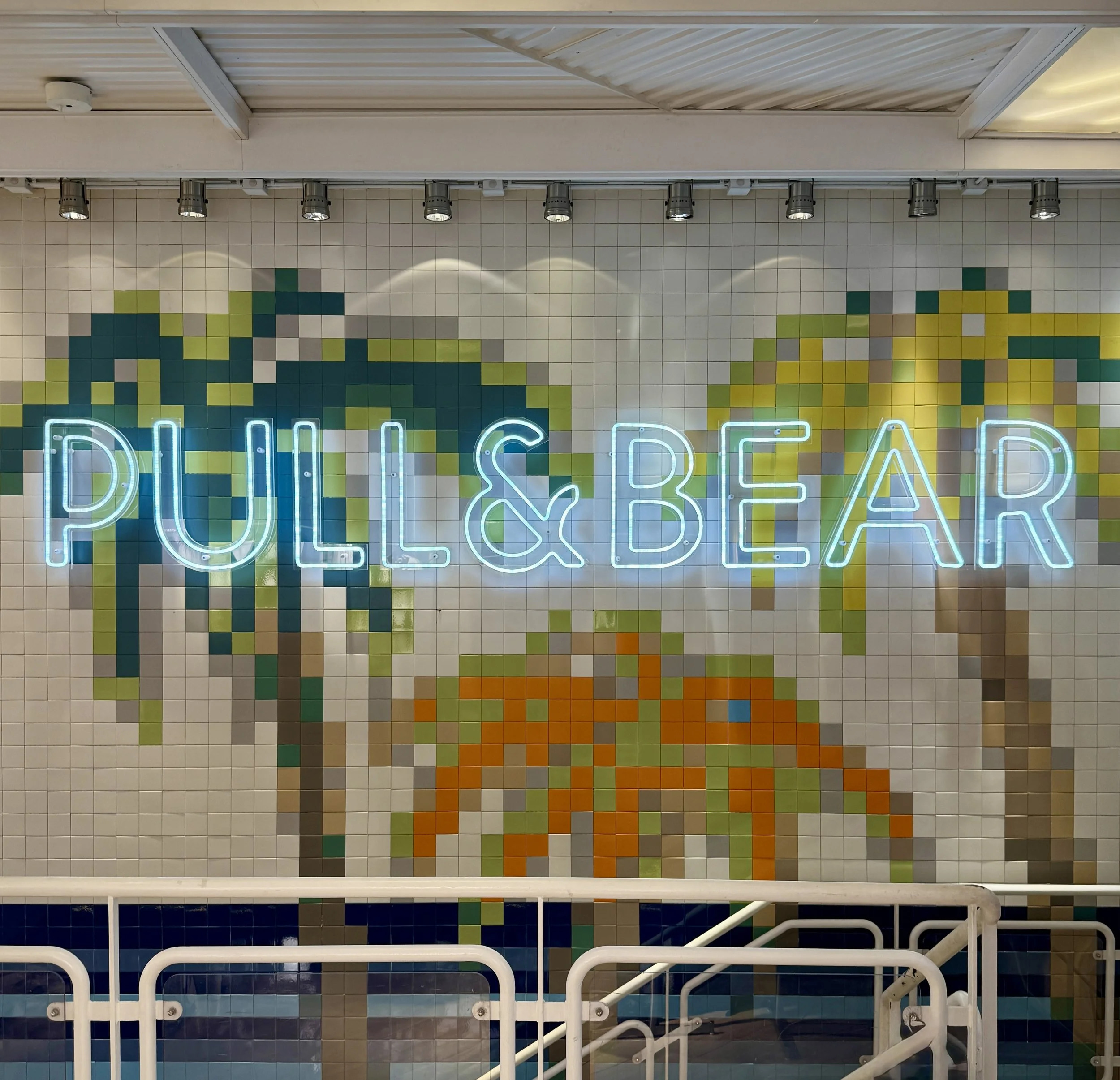
We took a detour to Pull & Bear where Wally purchased a marled cardigan sweater that came in handy during the morning hours when the air was cool.
The Best Lisbon Souvenirs Come With a Sense of Place
In a world fueled by instant gratification and same-day delivery, Lisbon still feels wonderfully unhurried, a city where artisans still thrive and a deep respect for craft endures. –Duke