SPAIN

La Tranca: Kick Off a Day of Malaga Tapas at This Local Hangout

Famous for its empanadas and other tapas treats, this neighborhood bar has many a story to tell.

The local haunt La Tranca is full of character — and serves up delicious empanadas

Whenever possible, Wally and I try to visit cities where we have friends. That way you can visit the places they know and love — and you can be more of a traveller than a tourist.

When we stayed with our good friends Jo and José in Málaga, Spain, we started off one day’s excursion with a stopover at one of their favorite local haunts: La Tranca, an Argentinian-owned tapas bar. Which makes sense that they’re famous for their empanadas.

“Only tourists drink sangria,” Jo cut in. “Locals drink tinto de verano instead.”

The name La Tranca has a few interesting translations:

  1. A metal bar or latch to secure something, a deadbolt

  2. A drunken bender

  3. Slang for a penis

Wonder which one they were thinking of when they named the joint.

Carmen Amaya is considered to be one of the best flamenco dancers ever

Even though it was early in the day, the bar was already crowded. Faded photos of faded celebrities covered the walls. A bistro table in the corner opened up, and we pounced. A lithograph on the wall behind us showed Carmen Amaya in a matador-inspired dress. José told us she’s considered by many to have been one of the greatest flamenco dancers who ever lived.

“Carmen Amaya is hail on a windowpane, a swallow’s cry, a black cigar smoked by a dreamer, thunderous applause; when she and her family sweep into town, they cause ugliness, torpor and gloom to evaporate just as a swarm of insects strips the trees of its leaves.” –Jean Cocteau

The walls of La Tranca are covered with memorabilia, many of them album covers. José pointed to one with the image of an artist, Isabel Pantoja, who is serving a two-year sentence for money laundering. She was linked to the Malaya case, a massive real estate and bribery scandal in the nearby oceanfront Spanish city of Marbella. The state court of Málaga convicted Pantoja of helping her boyfriend Julian Muñoz, the former mayor of Marbella, launder funds he embezzled while in office.


Jo, Wally and José enjoy drinks and tapas at one of their favorite bars in Málaga, La Tranca

Empanadas, Beer, Gossip — and the Great Debate Over Sangria vs. Tinto de Verano

We ordered empanadas, and Wally considered getting a sangria.

“Only tourists drink sangria,” Jo cut in. “Locals drink tinto de verano instead.”

The name translates to “red wine of summer” and is an even mix of wine and citrus soda. Wally took her advice.

Meanwhile, over beers, José regaled me with more great stories. He pointed to a black and white photo of a man dressed as a matador. He explained that the man, Latin pop artist Miguel Bosé, wore the costume as a nod to his father, the famous bullfighter Luis Miguel Dominguín.

Dominguín had a passionate affair with American actress Ava Gardner. The story goes that after the first time he had sex with her, as he was putting on his trousers, Ava asked, “Where are you going?” and he replied, “Out to tell my friends.”

La Tranca is the kind of carefree place where you feel like you’re among friends and you can stay as long as you like without feeling rushed. –Duke
Cafe Central: The 9 Ways to Order Coffee in Malaga

What’s the difference between a solo corto and a mitad? How about a sombra and a nube? We’ll help you learn how to get the perfect cup of coffee in Málaga, Spain.

Wally enjoys a coffee at Café Central in Málaga, Spain. For the record, he’s pretty much a mitad kind of guy

Málaga is notable for its numerous cafés where you can enjoy the unhurried ceremony of savoring a cup in a leisurely way. In Spain it’s not unusual to drink several coffees a day (our kind of country!).

Whether you take your coffee black or with milk, when executed perfectly, the outcome yields a cup exacted to your personal taste.

In 1954, import products, including coffee, were rationed and expensive to obtain. As a result, the owner of Café Central, devised nine different ways to order a customized cup of coffee.

The legendary Café Central, located in the palm-dotted Plaza de la Constitución, is famous for its unique method for ordering coffee that characterizes Malagueños.

In 1954, import products, including coffee, were rationed and expensive to obtain. As a result, José Prado Crespo, the owner of Café Central, devised a coffee menu adapted to suit the varied tastes of his clientele. That led to nine different ways to order a customized cup of coffee — putting Crespo well ahead of the consistent customer experience one expects from a Starbucks.

From that moment on, the residents of Málaga became accustomed to ordering their coffee exactly the way they wanted.

Inside the café on one of the walls, a tile mosaic created by the famous Málaga ceramic artist Amparo Ruiz de Luna, illustrates the options. The name used for each is based on the ratio of coffee to milk.


If you’re not sure how to order a coffee at Café Central, there’s a helpful picture menu on the back wall

9 Ways to Order Coffee in Málaga

Solo: A short single espresso without milk.

Largo: A double espresso with a little milk.  

Semi Largo: 70% coffee, 30% milk.

Solo Corto: 60% coffee, 40% milk

Mitad: Half coffee, half milk.

Entrecorto: 40% coffee, 60% milk

Corto: Just under half a glass, or “short” on coffee

Nube (“cloud”): 25% coffee, 75% milk

Sombra (“shadow”): 20% more coffee than a nube


Enjoy a customized cup of coffee and people-watch at Café Central’s sidewalk seating, situated on the beautiful Plaza de la Constitución in Málaga

The café has outdoor seating where you can relax and sit with the perfect cup of joe and gaze out upon urban life within the historic square. –Duke
El Pimpi: A Famous Malaga Restaurant in the Courtyard of Antonio Banderas’ Building

A Picasso-inspired mural at the entrance to El Pimpi, a popular Málaga restaurant

Dine alfresco in the heart of Málaga, Spain, at this popular bodega bar, where they roll out the barrel.


The city where the legendary artist Picasso was born is also home to another famous Malagueño: the actor Antonio Banderas.

Upon arriving in Málaga, Wally and I were famished. We told our friend and gracious hostess Jo we wanted tapas, ASAP.

“That’s Antonio’s place,” she said, referring to the entire top floor, which he purchased and renovated a few years ago.

She led us to El Pimpi, where we sat amidst the crowd outside and ordered up plate after plate of tapas.

The tapas at El Pimpi aren’t the best — but the setting makes up for it

Some sources claim that the name comes from a colloquialism ascribed to the young men who worked at the docks doing odd jobs and acted as unofficial tour guides. Another, less politically correct, source claims that these dock workers facilitated the transport of sailors to the local brothels.

At one point, Jo pointed to the expansive six-story building opposite from the terrace of El Pimpi.

“That’s Antonio’s place,” she said, referring to the entire top floor, which he purchased and renovated a few years ago.

Antonio Banderas’ penthouse in his hometown of Málaga, Spain

Appropriately enough, the actor will be portraying Picasso in the French and Spanish language movie 33 Días, opposite Gwyneth Paltrow, who will play Dora Maar, the painter's muse and lover of nearly a decade. The story is based upon the emotional creation of the artist’s great anti-war, mural-sized painting, Guernica.


Kicking off their visit to España: Jo takes Wally and Duke to the local staple, El Pimpi

Barrels of Fun

We were excited to order Alhambra Reserva, which we enjoyed on a previous visit to Granada, Spain. Wally insisted on ordering croquetas. These are bite-sized, lightly breaded and deep-fried mashed potato fritters with diced ham mixed in. We asked Jo if she would like to share them with us and she replied haughtily, “No thank you. They’re disgusting and have a gummy mouthfeel like fried baby food.”

The restaurant proper contains a warren of rooms that were originally the stables of the Palacio de Buenavista. The walls are decorated with framed photographs and historic Feria and bullfighting festival posters. The Barrel Hall is the first room you pass through entering from the terrace and contains enormous wine barrels autographed by famous politicians, artists and, of course, Antonio Banderas. –Duke
No thank you. They’re disgusting and have a gummy mouthfeel like fried baby food.

A Brief History of Málaga, Spain

The Málaga Lighthouse sits on the harbor of this modern city with ancient origins

Fun facts about this city on Spain’s Costa del Sol that combines cosmopolitan chic with classic cool.
 

Worth Its Salt

As the adage goes, Rome wasn’t built in a day, and neither was Málaga. One of the oldest cities in the world, it was inhabited and settled by the Phoenicians around 770 BCE. They gave the modest port city the name Malaka, which was likely derived from malaha, the Phoenician word for salt.

The Phoenicians maintained a prosperous sea trade, and one of their primary exports was salt, obtained from evaporated seawater. Salt was prized for its ability to preserve food as well as seasoning. In fact, in Ancient Rome, soldiers were paid in salt — a salarium, the Latin origin of the word “salary.”

Like a game of hot potato, Málaga was besieged and conquered several times.


Hooked on Phoenics

The Phoenician alphabet is the oldest verified alphabet. Derived from Egyptian hieroglyphics, the 22 letters are simplifications of hieroglyphic symbols. This alphabet eventually evolved into modern Arabic. Eventually the Greeks, who had become familiar with the Phoenician alphabet through trade, added vowels — and that’s what became the foundation of the standardized Latin alphabet we use today.
 

History Repeating  

Like a game of hot potato, Málaga was besieged and conquered several times. Under the reign of Caesar Augustus, the Romans invaded and renamed the city Malaca.

After the decline and subsequent fall of the Roman Empire, the city was briefly occupied by the Visigoths, who were then defeated by the Moors. It remained under Islamic rule for 800 years as Mālaqa and became an important center of commerce.

The Crown of Castile later overtook the region in 1487, selling virtually the entire Muslim population into slavery, prior to the fall of Granada five years later.
 

Culture Club

Turbulent history aside, the archeological ruins make the historic city center a cultural open-air museum campus. This heritage earned Málaga a nomination for the European Capital of Culture (which was instead awarded to San Sebastián.) –Duke
 

The Gilded Glory of the Iglesia de los Santos Mártires in Málaga, Spain

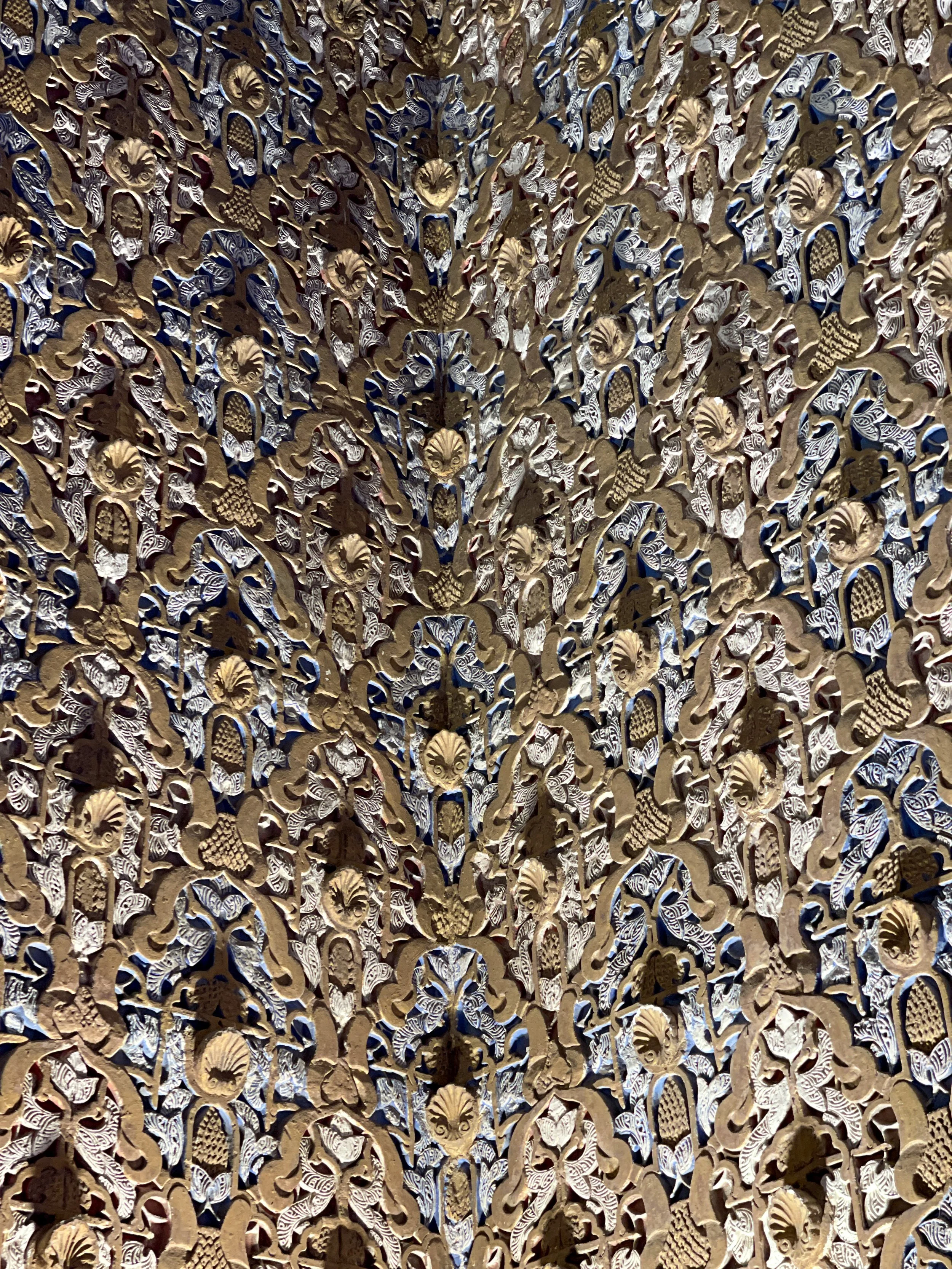
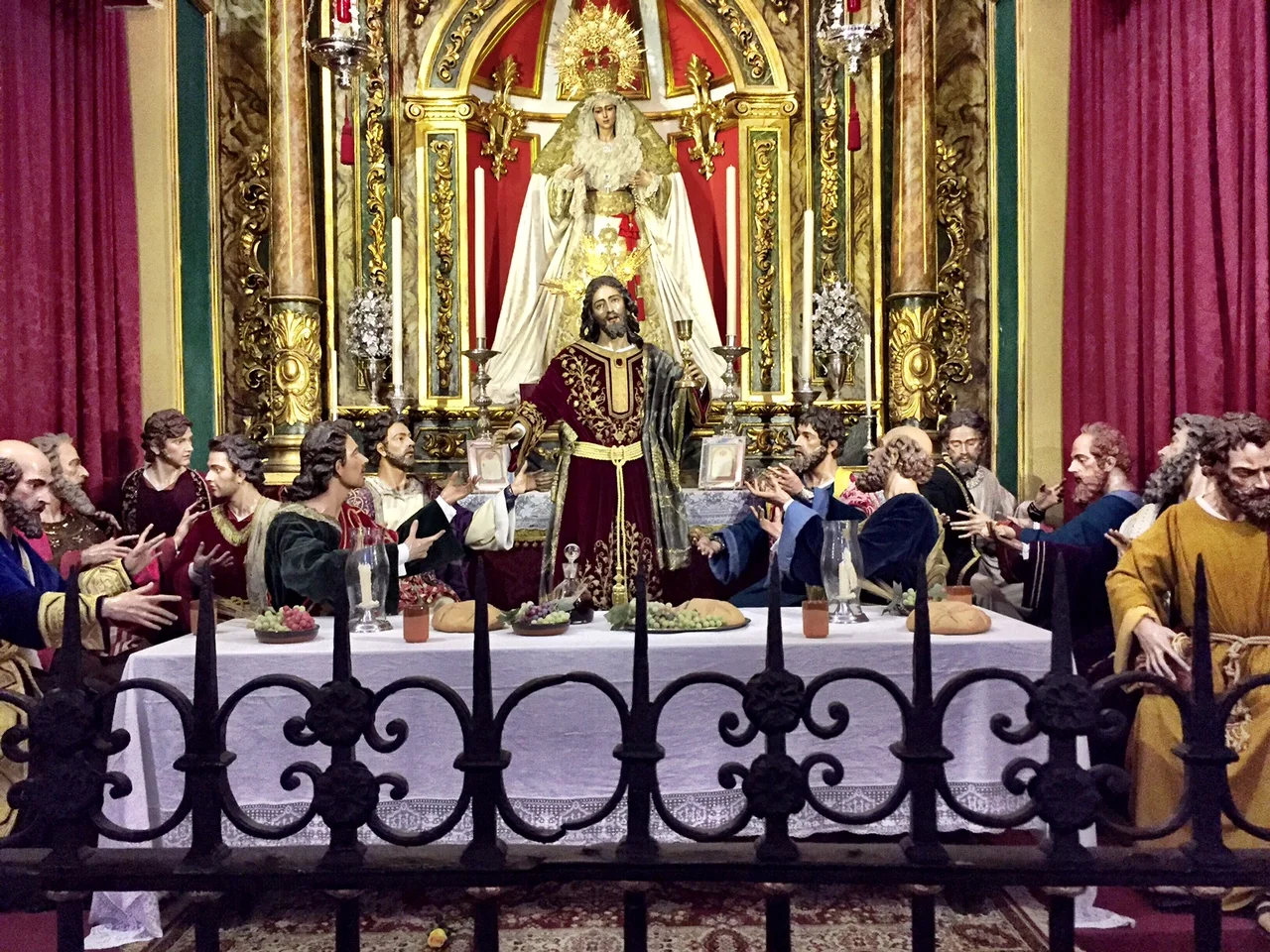
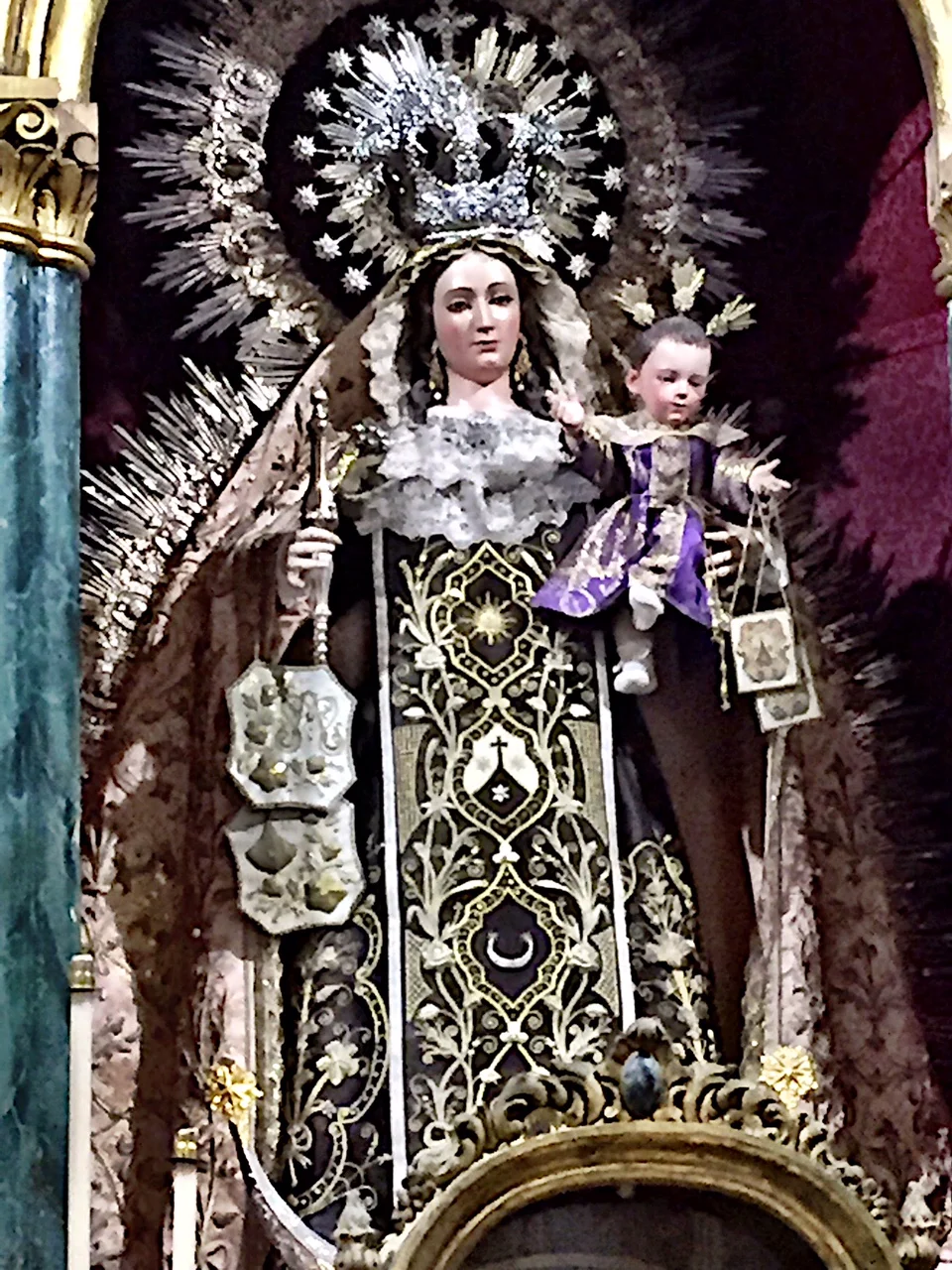
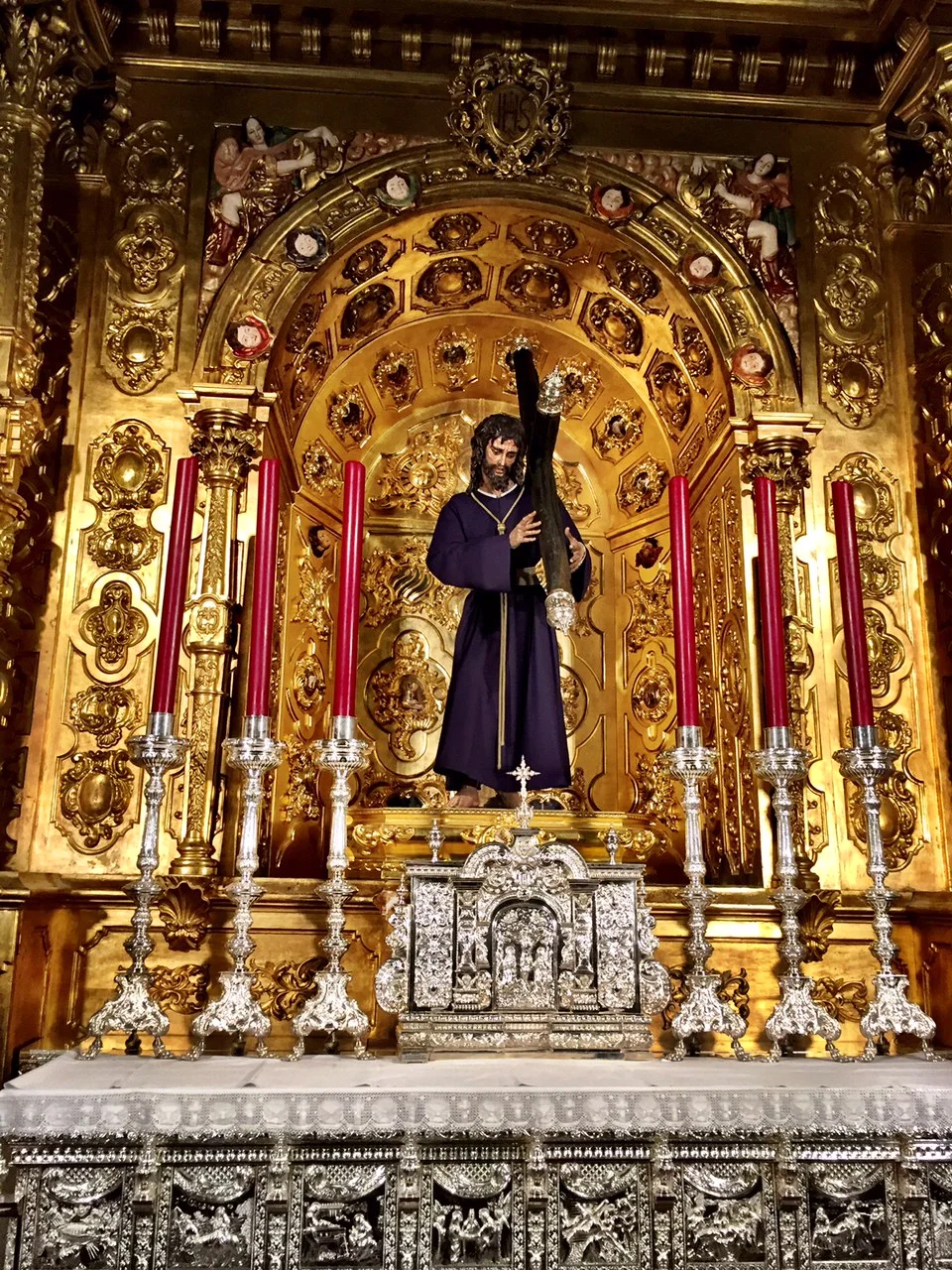
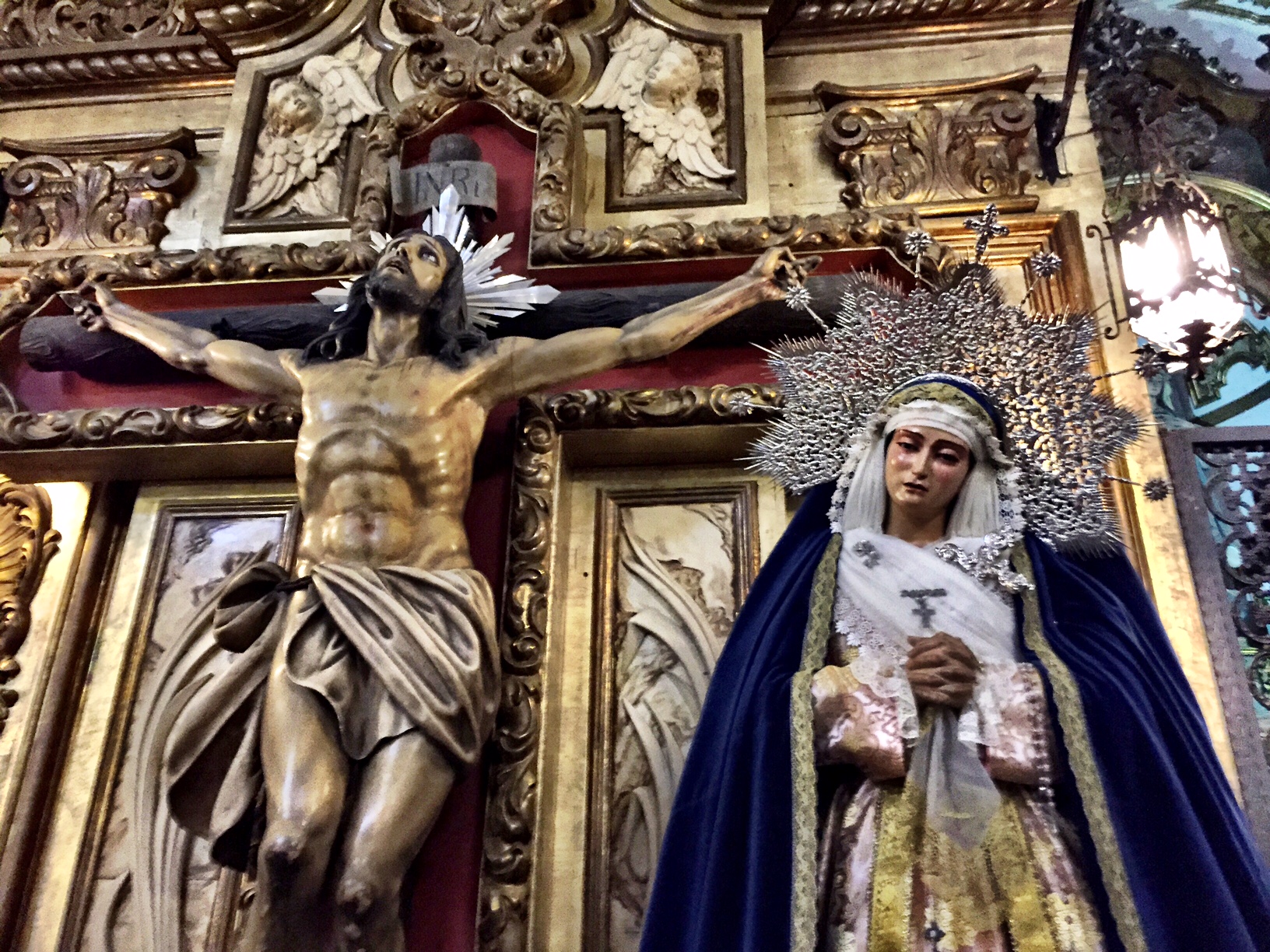
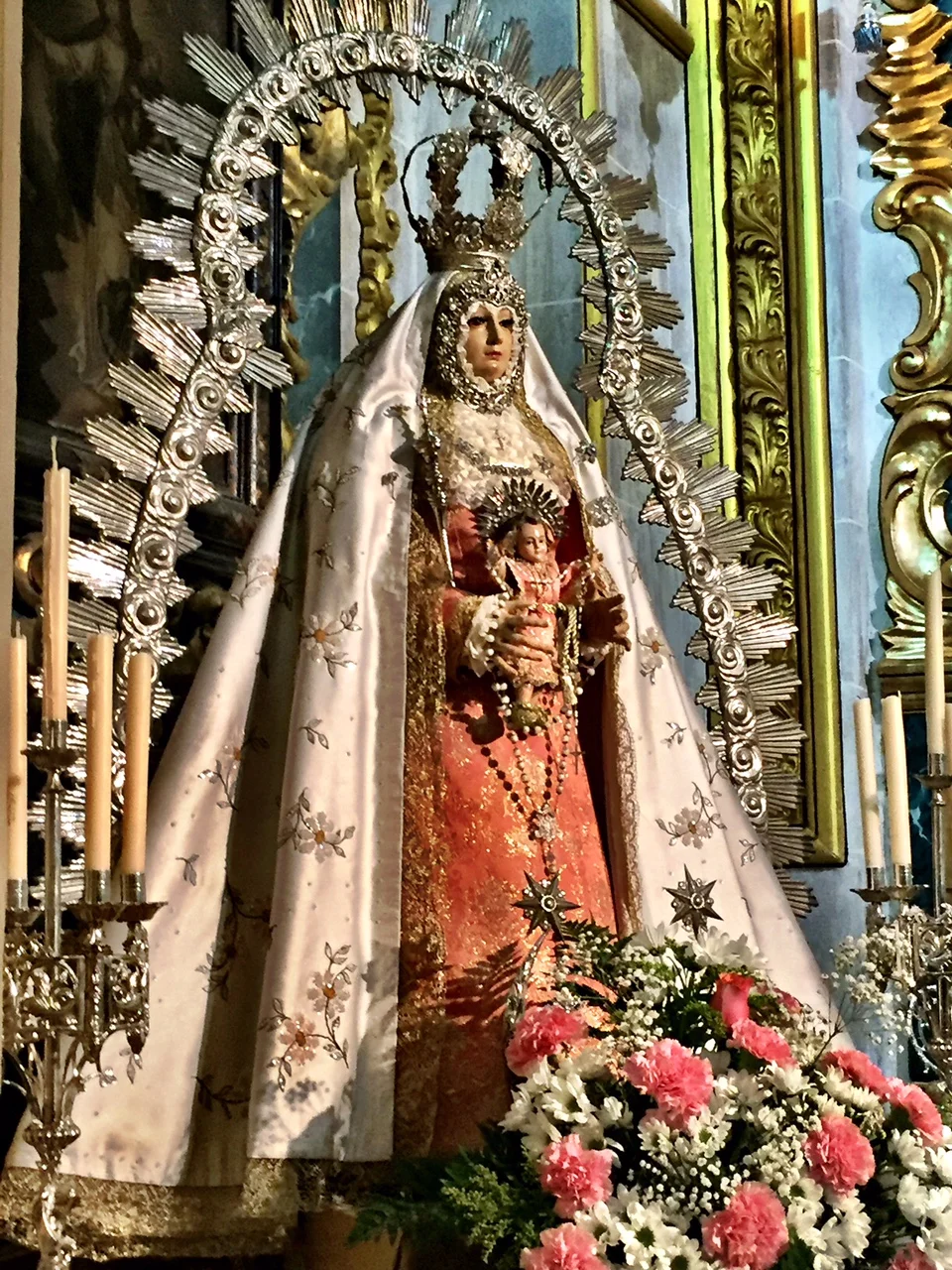
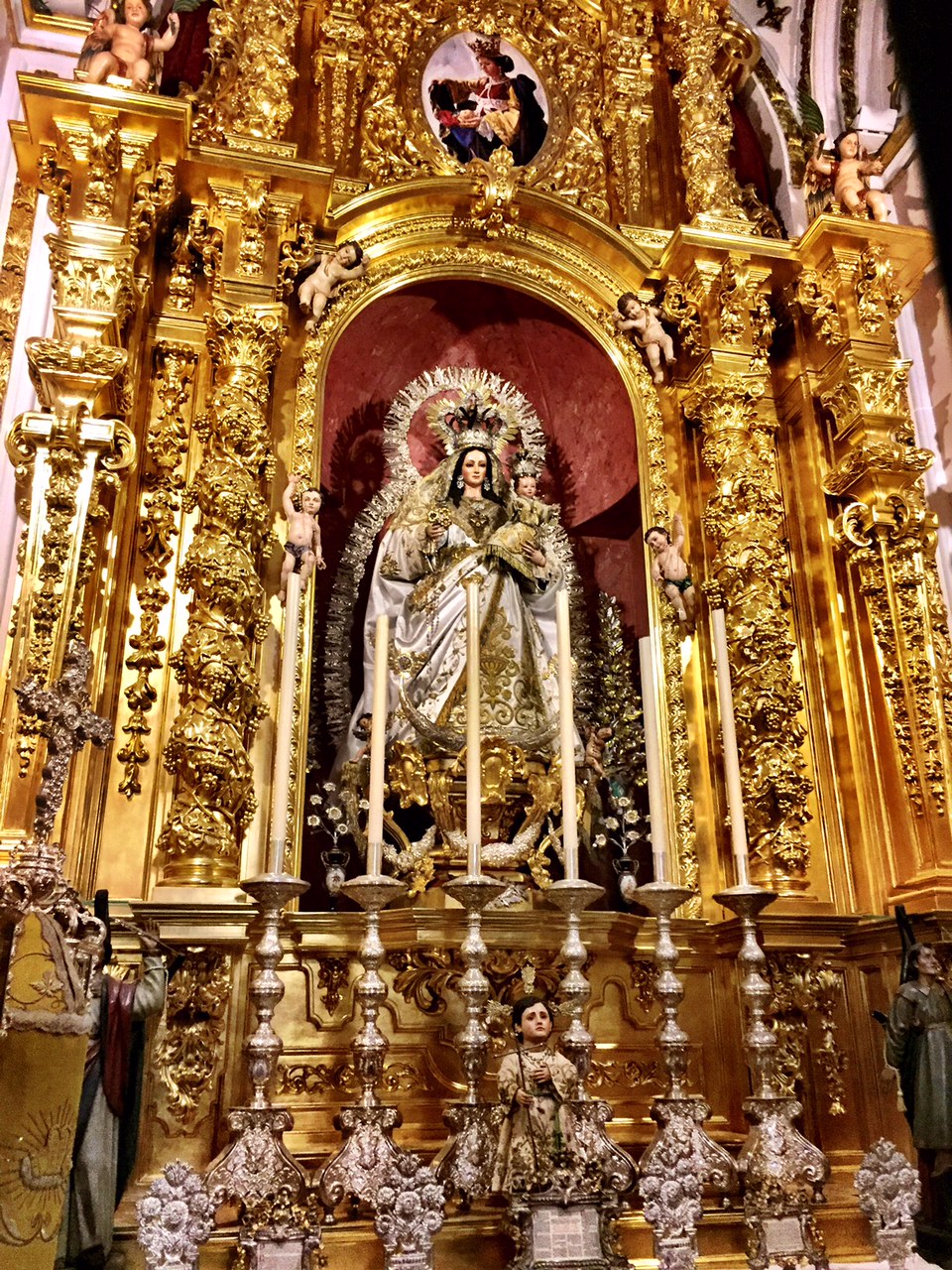
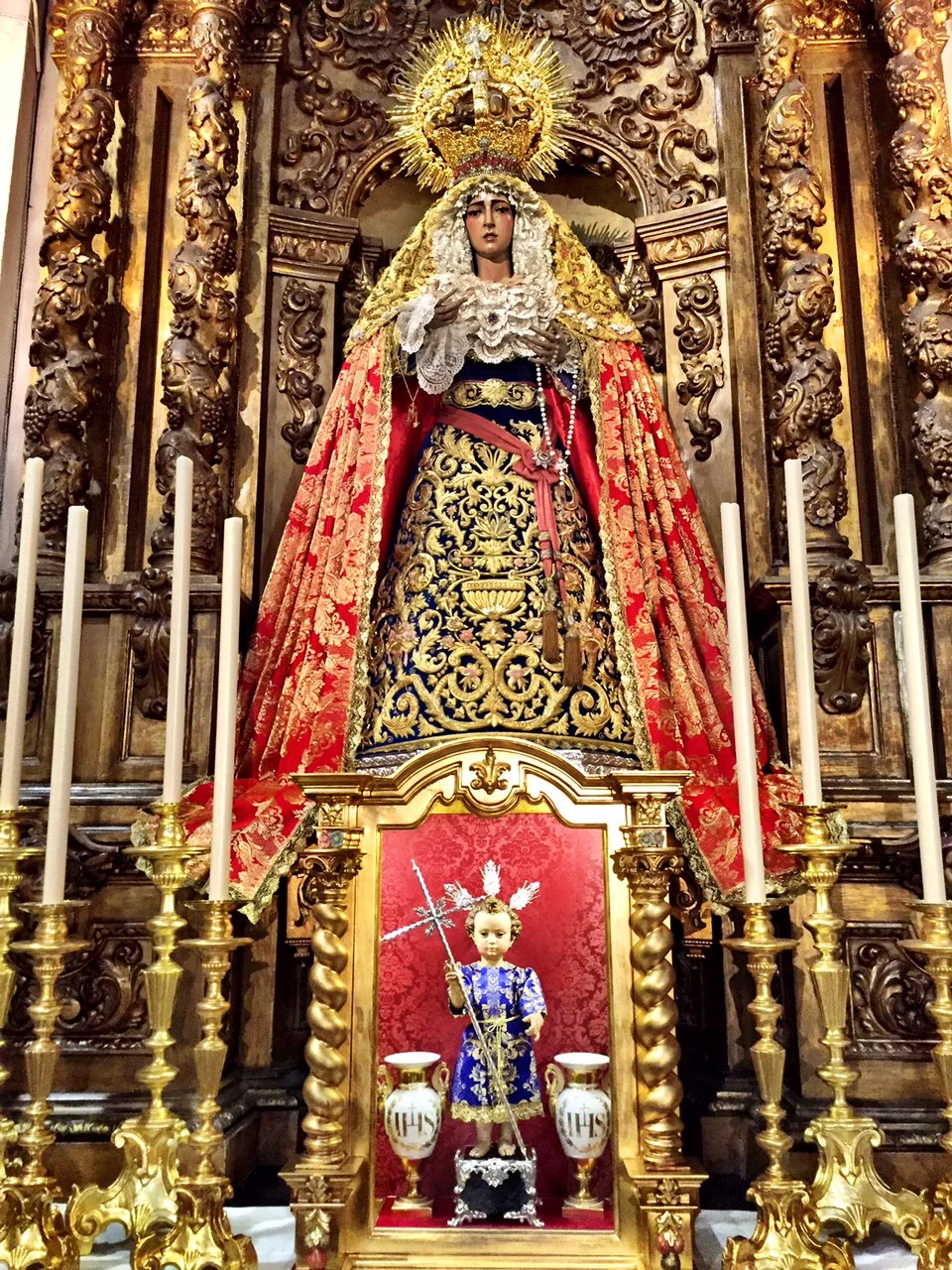
The ornate interior of the Iglesia de los Santos Mártires in Málaga, Spain

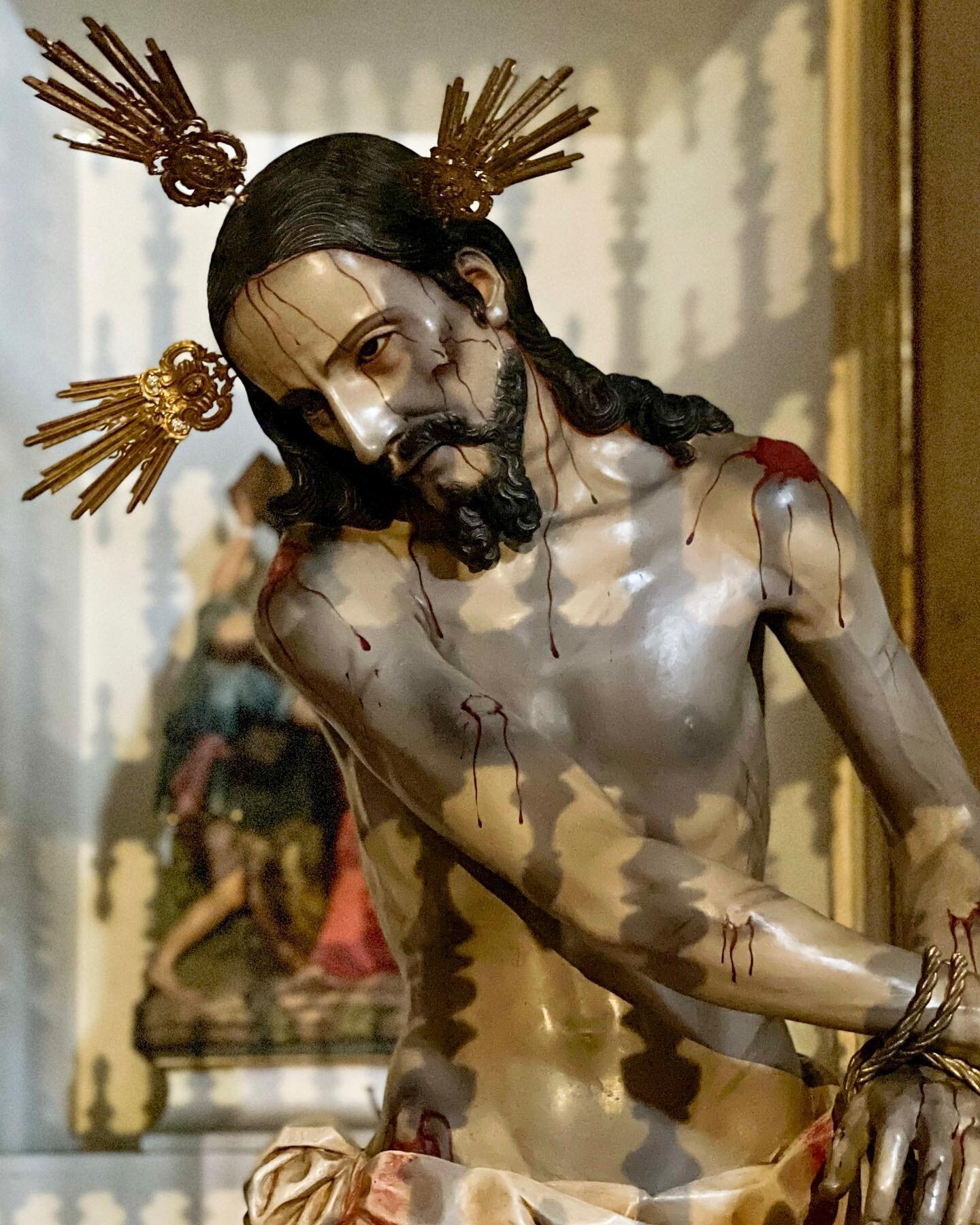
As our photos attest, this church, dedicated to Ciriaco and Paula, the patron saints of Málaga, is a wonderment of Catholic excess.


It's quite unassuming from the outside. A trio of Mudejar-inspired brick-lined arches, devoid of ornamentation, carved into the side of the structure. No steps leading up to a grand entrance. You'd think it was a side entrance, situated as it is on a jag of a narrow street.

But inside! The Iglesia de los Santos Mártires (the Church of the Holy Martyrs) is utterly dazzling, white arches everywhere, lined in gold, gilded and glittering. Altars accented with slabs of marble, one a deep crimson niche. The style could be considered Rococo Loco.

The Iglesia de los Santos Mártires is utterly dazzling. The style could be considered Rococo Loco.

We entered, overwhelmed. Your eyes don't know where to focus. So we turned to our right and began to work our way around the edges of the church.

The first thing we saw was a lifesize statue depiction of the Last Supper behind a wrought iron fence. We couldn’t help but giggle. Sometimes the ostentatiousness of Catholics is astounding. But it makes for a fun exploration.

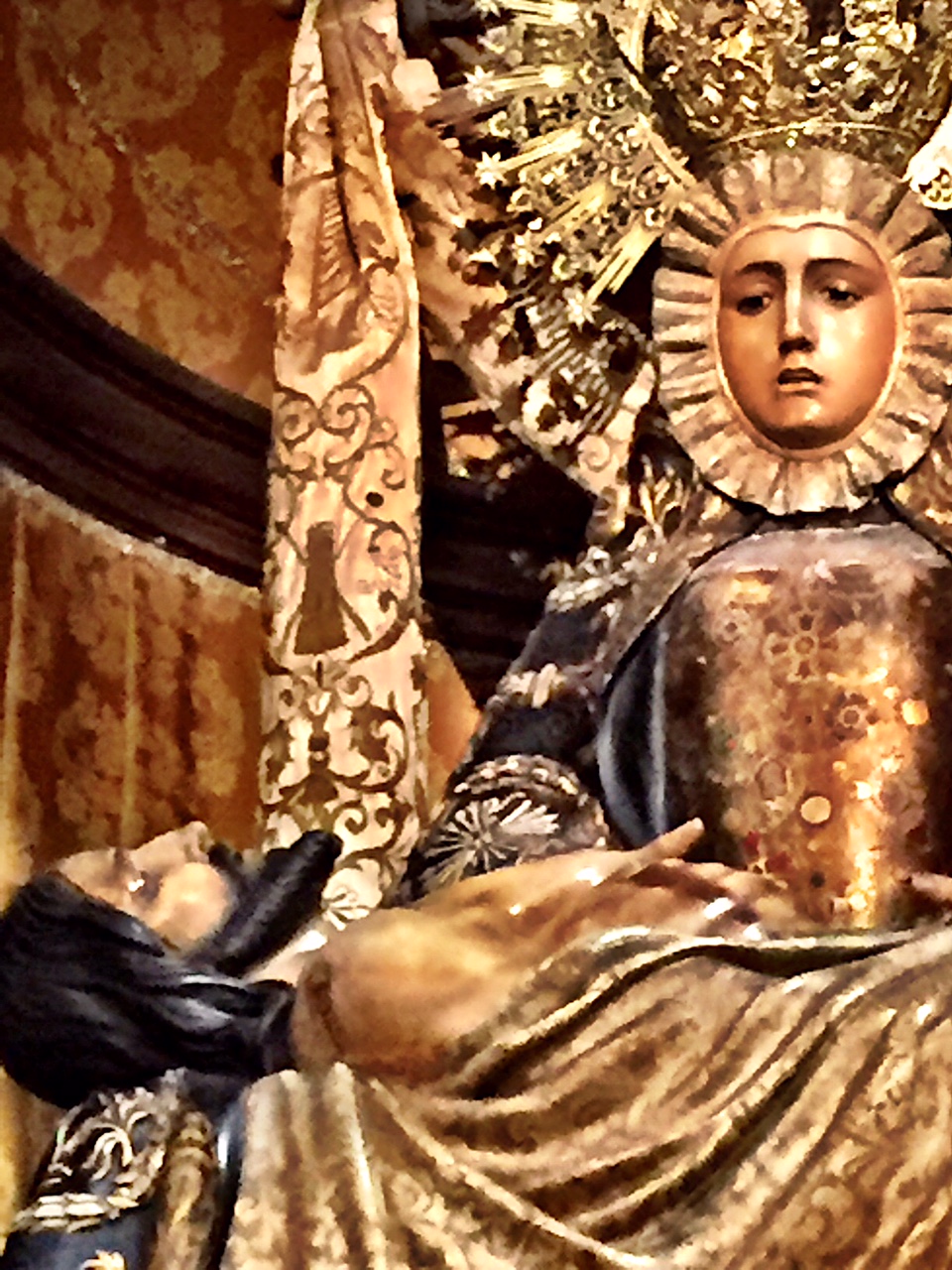
We walked the periphery of the sizable space, snapping away photos of the various niches, each with its own interpretation of the Virgin Mary and/or Jesus.

And unlike the city’s main cathedral, photography is allowed here.


The Patron Saints of Málaga

The church is dedicated to the two patron saints of Málaga: St. Ciriaco and St. Paula. These two were part of a Christian sect forbidden by the Roman Emperor Diocletian. The Christian community had a secret meeting place in Málaga. But on June 18, 303, Roman soldiers learned of the spot and raided it. Ciriaco and Paula were among those captured.

Even though they were tortured, the pair refused to renounce Christ. So they were tied to trees along the banks of the Guadalquivir River and stoned to death.

Not wanting anything that could be venerated, the soldiers built a massive bonfire to destroy the remains. But the skies opened up with a torrential downpour and doused the flames. When the soldiers left, the surviving Christians took the bodies and buried them in an unknown locale.

Fast forward to the Reconquista, when the Catholics started taking back the Iberian Peninsula from the Muslim rulers. A monk named Fray Juan de Carmona told the Catholic kings of a vision he had: Build a church dedicated to Ciriaco and Paula — and they would be victorious in the battle for Málaga in 1487.

It seems just the promise was good enough, for they did end up winning. They then dispatched a letter to Pope Innocent VIII, who approved construction of the Iglesia de los Santos Mártires.

Thus began a cycle of destruction and rebuilding from incidents including a cannonball (1854), earthquake (1884) and looting (1936).

In 1490, Ferdinand and Isabella appointed Ciriaco and Paula the official patron saints of Málaga.

Every June 18, there's a solemn procession through the historic quarter to honor the martyrs.

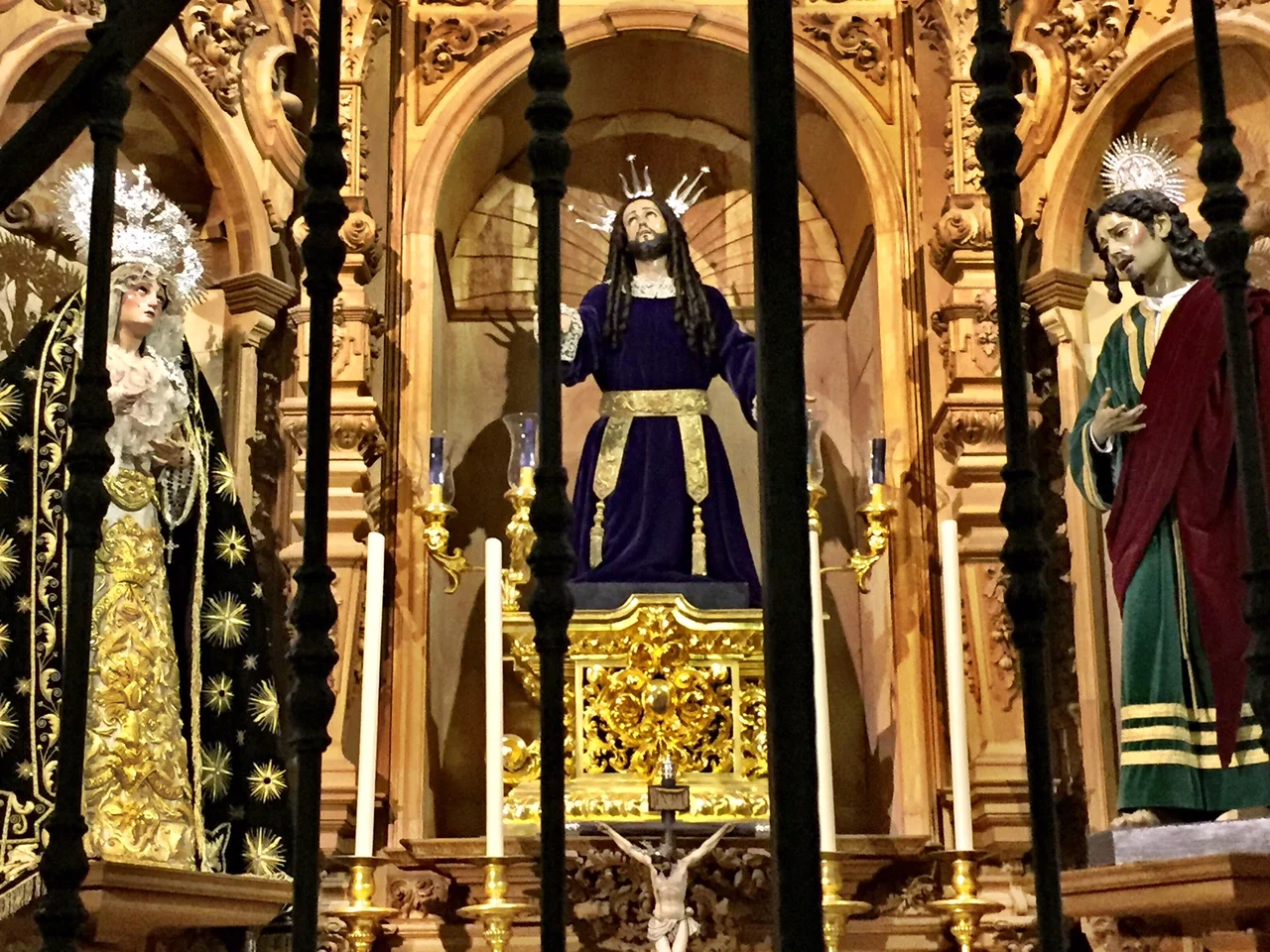
The church is home to four Semana Santa (Holy Week) brotherhoods.

Iglesia de los Santos Mártires, located in the city center, is certainly worth exploring. –Wally


RELATED: How to Enjoy Feria, Southern Spain’s Springtime Festival


How to Enjoy Feria

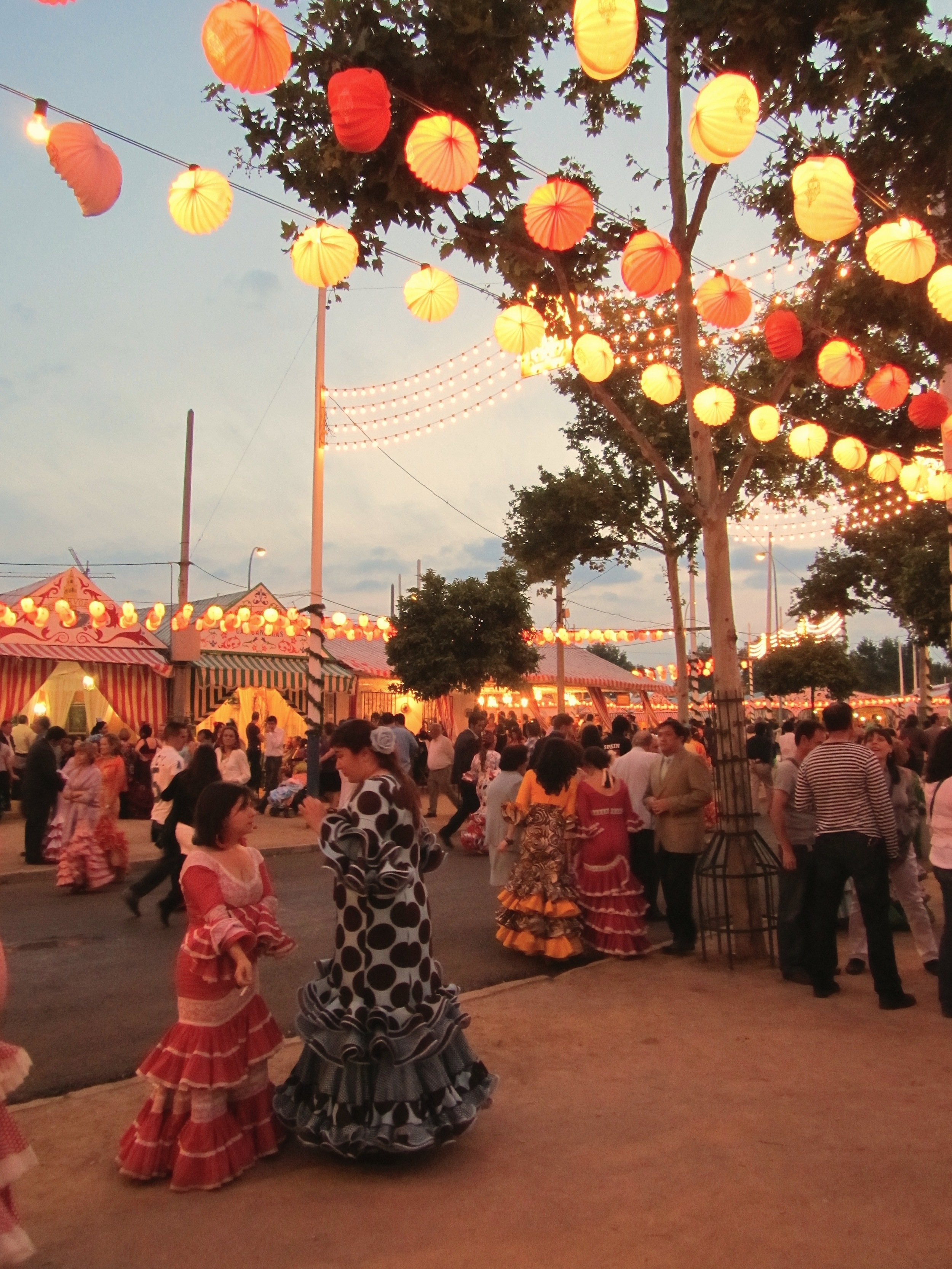
The fairgrounds in Sevilla, Spain during Feria are filled with women in flamenco dresses

The fairgrounds in Sevilla, Spain during Feria are filled with women in flamenco dresses

The annual spring festival is one of the most fun things to do in Seville, Spain. Follow these seven tips.


Our first clue was the flamenco dresses. They were everywhere.

Duke and I happened to be in Sevilla, Spain for its spring festival, Feria. The six-day celebration takes place two weeks after Semana Santa, Easter Holy Week. Instead of creepy parades of men in colored robes with pointy hats, Feria is a nonstop party.
You can drink all night, maintaining a steady but slight buzz, without getting so drunk you pass out.

Here’s how best to take part in the festivities of Feria:

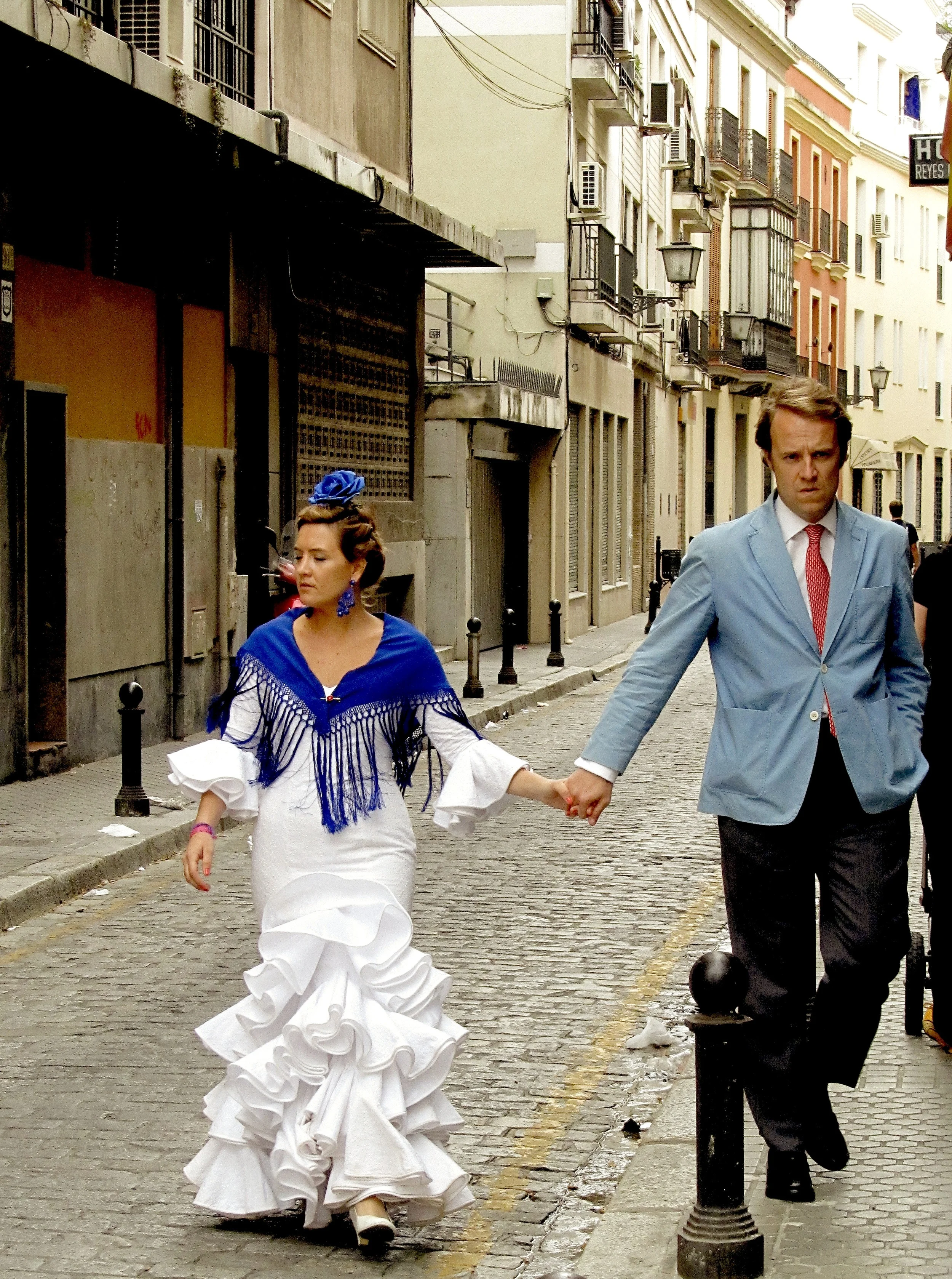
Couples all dolled up for Feria walk the streets of Sevilla

Couples all dolled up for Feria walk the streets of Sevilla


Treat yourself to a flamenco dress.

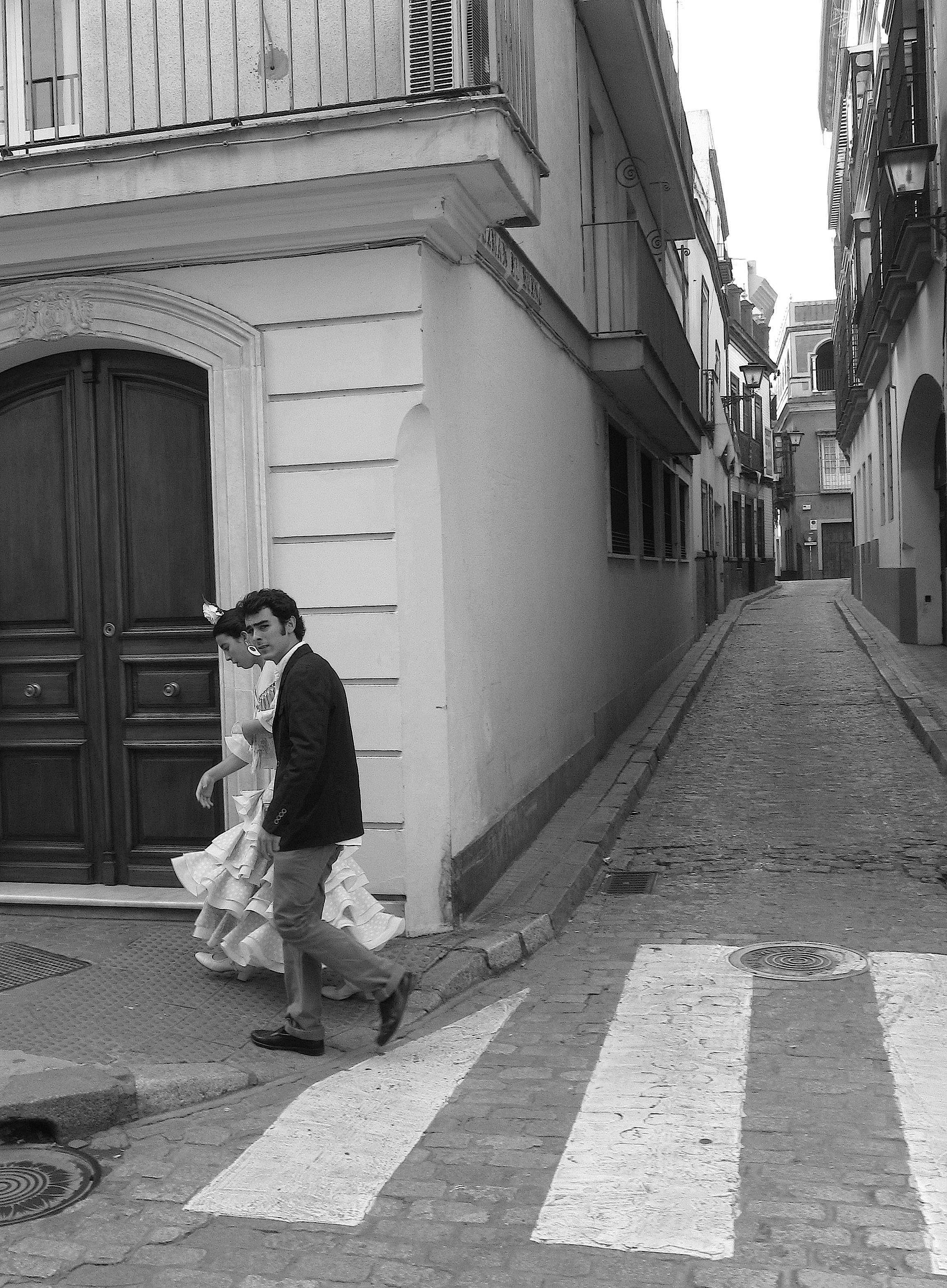
As I mentioned, anywhere you go in Sevilla during this time, you’ll see women and girls of all ages wearing flamenco dresses. The traditional flamenco is black, white and/or red with polka dots (traje de lunares), finished with dramatic ruffles that start above the knees and cascade down to the hem. While there are modern versions in all sorts of colors, the basic silhouette doesn’t change.

The dress originated in the Gypsy, or Roma, community in Andalusia in the south of Spain.

To complete the outfit, some women put their hair into a bun, drape a fringed shawl over their shoulders, and place a flower behind their ear or atop their head. And don’t forget the fans that can be opened with a dramatic snap!

I thought it was great to see all sorts of people respecting their local heritage and donning a flamenco dress. You can imagine kids in the United States being too cool for school and not wanting to play along. But it seemed as if in Sevilla, everyone joined in the fun.

Women in flamenco dresses are common sights in Sevilla during Feria

Women in flamenco dresses are common sights in Sevilla during Feria


Befriend some locals.

Easier said than done, I know. But it’s your only ticket into the most exclusive parties during Feria, the casetas.

We lucked out. Our friend Dan was living in Sevilla and hooked us up with a caseta party.

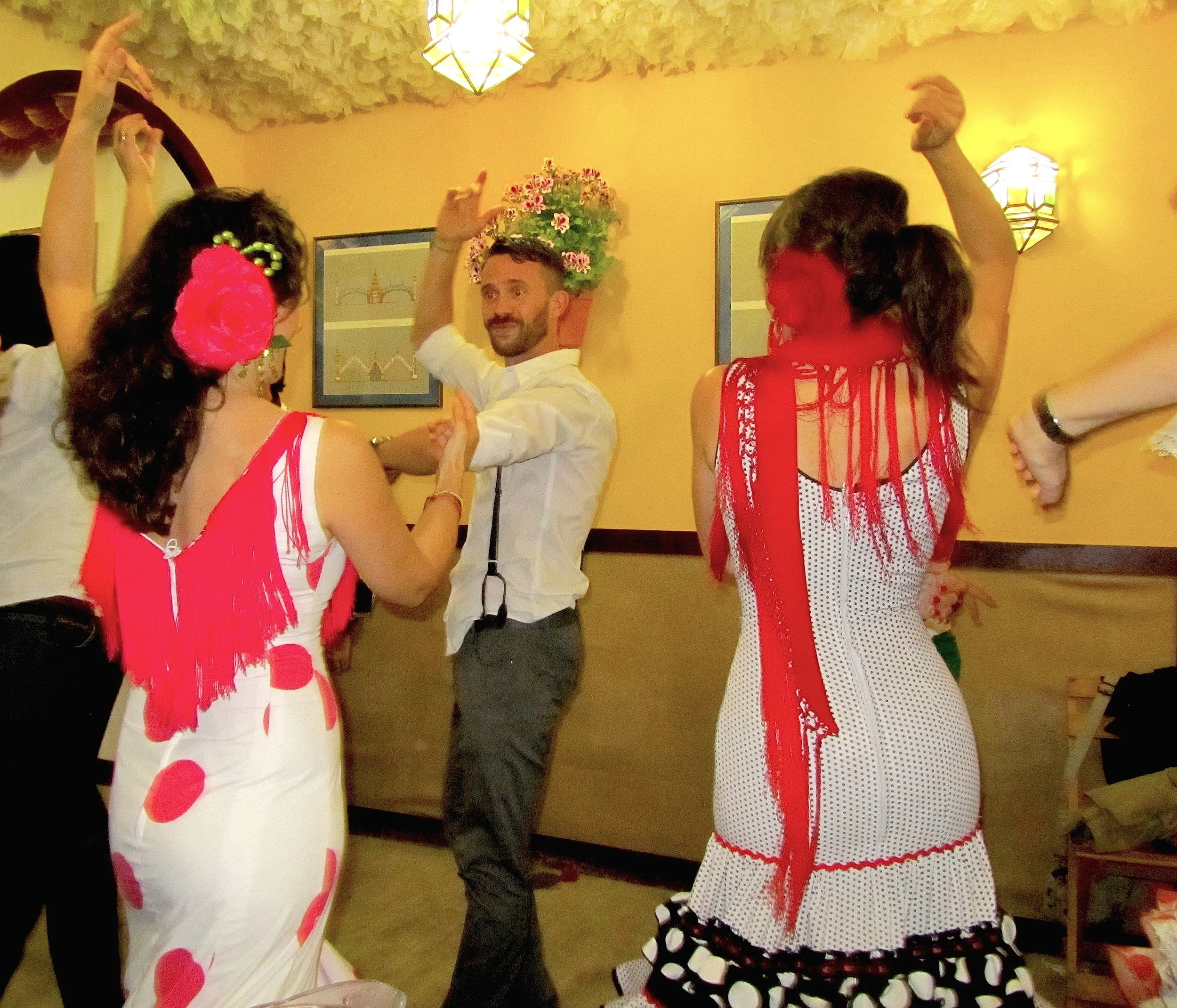
This is what happens inside those Feria casetas. All night long

This is what happens inside those Feria casetas. All night long

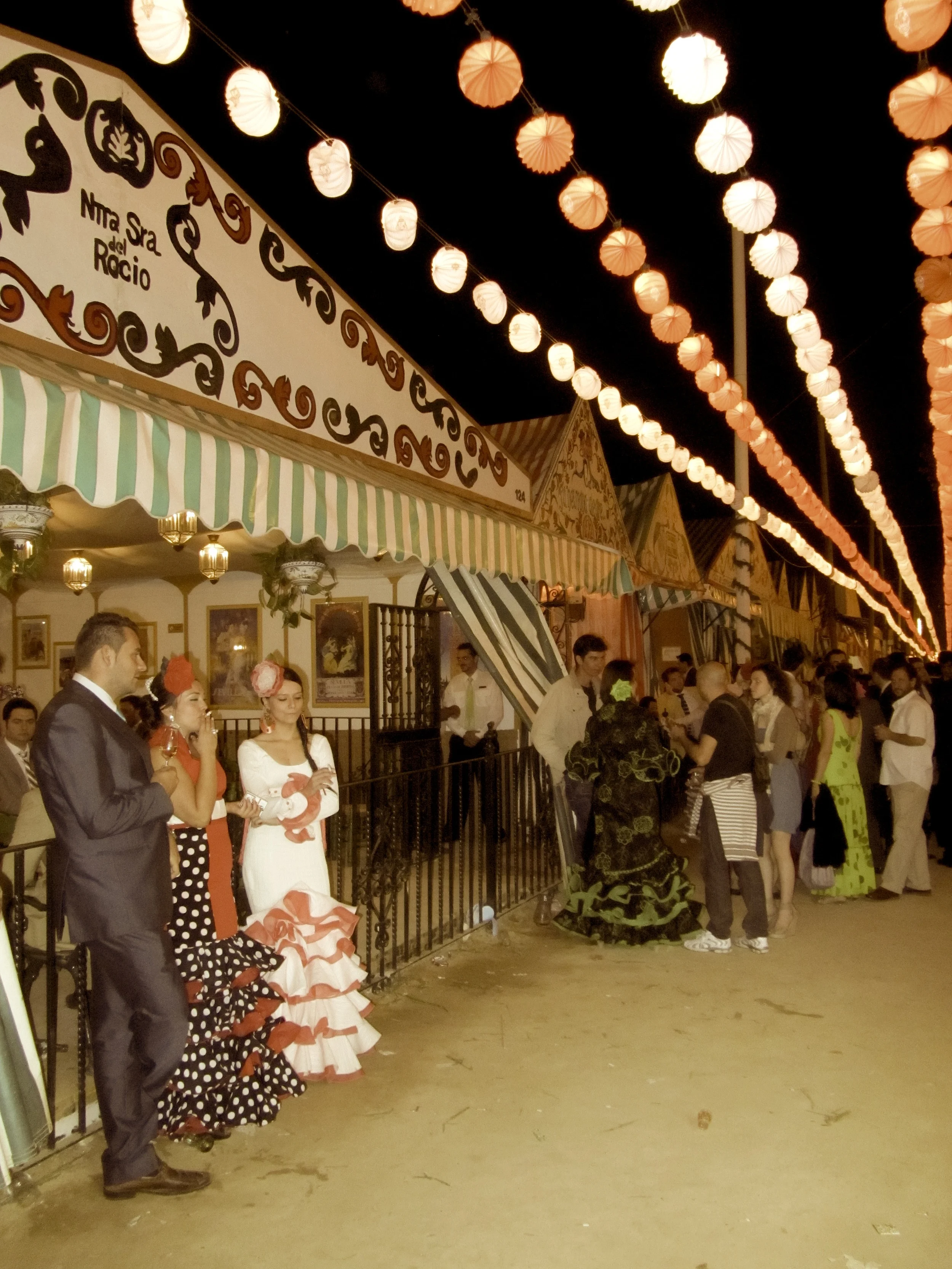
Lined up along the extensive fairgrounds, beneath strands of colored lights are more than 1,000 tent-like structures known as casetas, literally, “little houses.”

Prominent families, groups of friends, businesses and other groups own these coveted temporary structures.

People pay a great deal for a caseta, so they want to make sure they get their money’s worth, Dan told us.

The Feria fairgrounds, with a line of casetas, where the real parties take place

The Feria fairgrounds, with a line of casetas, where the real parties take place


Be ready to stay up late.

Dan and his friends partied every night during Feria, dancing until the wee hours — and then going to work with very little to no sleep.


Try the official drink.

At the back of the tents are a small bar and kitchenette.

We drank a refreshing concoction call rebujito — a mixture of a lemon-lime soft drink and the sherry the region is famous for. (“This isn’t your grandmother’s cooking sherry,” our friend Jo assured us.)

Where does rebujito get its name? When I asked at the party, someone twirled his finger in the air and said it meant “round and round.”

It actually comes from the diminutive of the verb rebujar. So technically I suppose it means something like “little messes”?

No matter its origin, the 50/50 ratio means you can drink all night, maintaining a steady but slight buzz, without getting so drunk you pass out. After all, participants need to dance till dawn — and then put in a day’s work.


Be sure to eat the tapas — even if it's pig cheeks.

The only food that was passed around was a tapa in a brown sauce covering a mystery meat. When we asked what it was, someone said, “pig” and grabbed their cheek.

We might not necessarily be inclined to try pig cheek, but hunger can work wonders to lower one’s culinary inhibitions. Duke and I grabbed a toothpick each and plopped the app into our mouths.
We gave each other the raised-eyebrow, not-bad nod and grabbed some more.

It wasn't until we had returned to the States and I stopped into Publican Quality Meats one lunch break that I discovered what exactly pig cheek looks like when it’s not drowning in sauce.
The butcher pointed at a thick strip of fat.
“That’s pig cheek?” I asked.

He nodded, adding that the restaurant often uses it instead of bacon.

I honestly couldn't see even a thin vein of meat within all that fat.

“Well, no wonder we liked it so much,” I sighed.

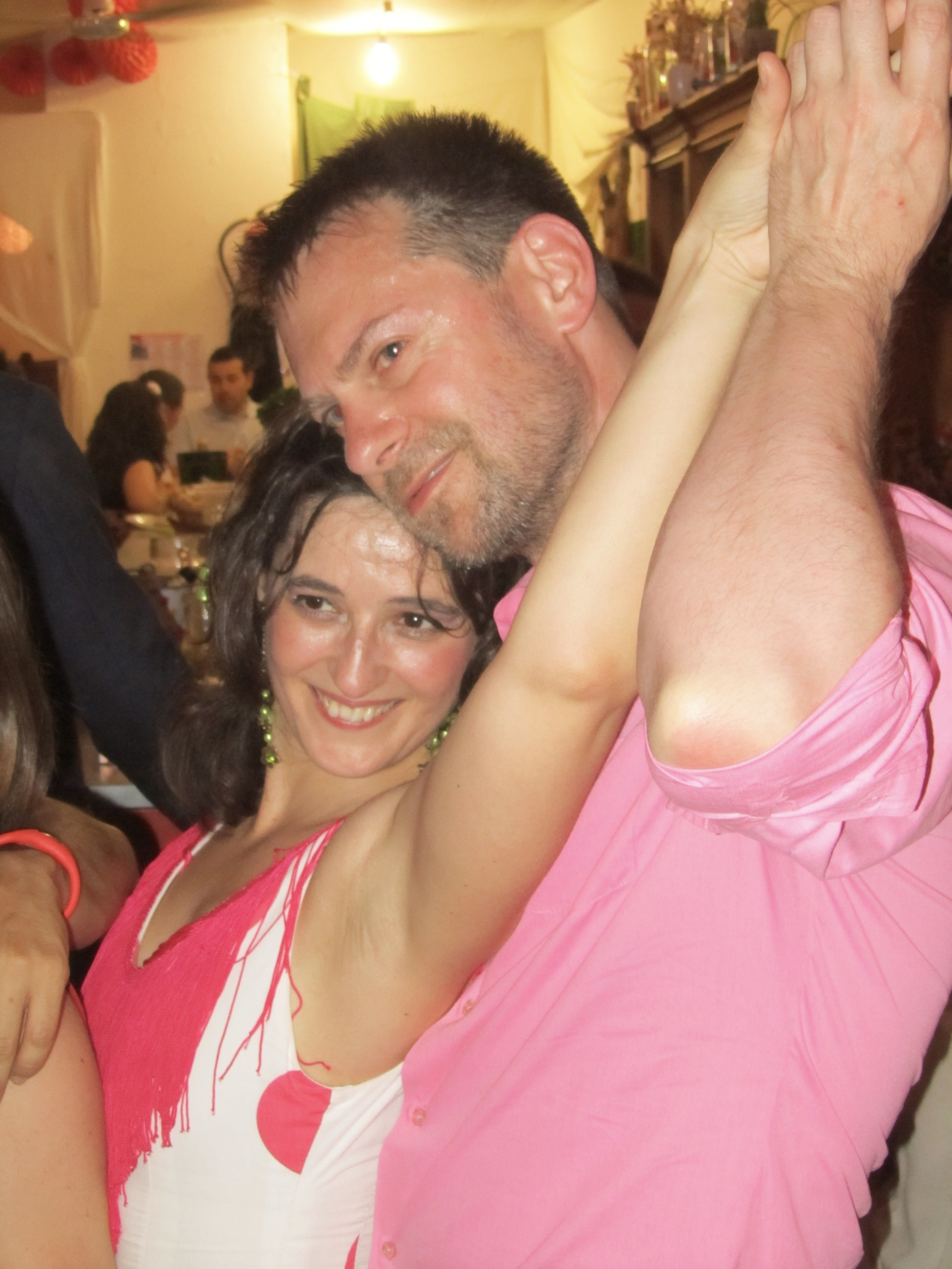
Cristina and Duke dance the Sevillana

Cristina and Duke dance the Sevillana


Learn the local dance.

Even though we hardly spoke any Spanish, and hardly any of them spoke English, we found most people in our caseta friendly. Cristina, a gorgeous woman who was there with her girlfriend, taught Duke how to dance the Sevillana, the city’s local dance.

She somehow led Duke while also giving him directional hints with a simple nod of her head. Watching them twirl around the dance floor, you’d never know it was Duke’s first go at a Sevillana. He and Cristina seemed to have a psychic link.


Wander the carnival.

After too many pig cheeks and not enough rebujitos, Duke and I decided to take our leave. We left the caseta to wander the fairgrounds. One whole section houses amusement park rides and a midway with games. This area, for some reason, is called Calle de Infierno, or Hell Street.


If you find yourself in Sevilla in early spring, try to time your visit to coincide with Feria. It’s a spectacle worth being a part of — if only for the flamenco dresses. –Wally